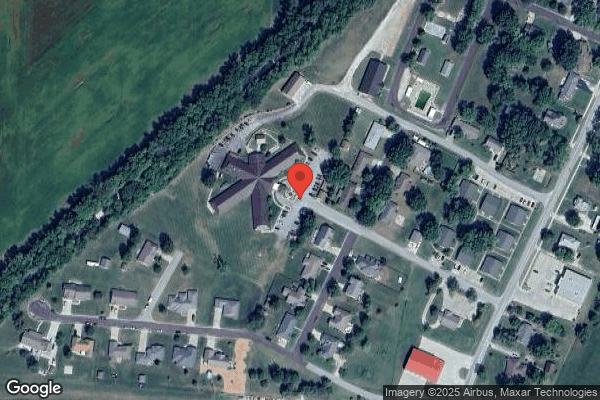
KATY MANOR

205 PROSPECT, PILOT GROVE, MO 65276 (660) 834-3111
Government - County 60 Beds Independent Data: November 2025
Trust Grade
85/100
#24 of 479 in MO
Last Inspection: March 2025

Within standard 12-15 month inspection cycle. Federal law requires annual inspections.

Overview

Katy Manor has a Trust Grade of B+, which indicates it is above average and recommended for families considering care options. It ranks #24 out of 479 nursing homes in Missouri, placing it in the top half of facilities statewide, and #1 out of 4 in Cooper County, making it the best local option. However, the facility is experiencing a troubling trend, as the number of issues identified has worsened from 2 in 2024 to 4 in 2025. Staffing is generally a strength with a rating of 4 out of 5 stars and a turnover rate of 51%, which is better than the state average of 57%. On the downside, there have been 19 reported issues, including serious concerns like failing to safely store hazardous chemicals, which could pose risks to residents, and a concerning medication error rate of 64.8%, affecting multiple residents. Additionally, an ice machine was not properly maintained, raising potential health risks. While the absence of fines is a positive aspect, these specific incidents highlight areas that need immediate improvement.

Trust Score
B+
85/100
In Missouri
#24/479
Top 5%
Safety Record
Low Risk
No red flags
Inspections
Getting Worse
2 → 4 violations
Staff Stability
⚠ Watch
51% turnover. Above average. Higher turnover means staff may not know residents' routines.
Penalties
✓ Good
No fines on record. Clean compliance history, better than most Missouri facilities.
Skilled Nurses
⚠ Watch
Each resident gets only 28 minutes of Registered Nurse (RN) attention daily — below average for Missouri. Fewer RN minutes means fewer trained eyes watching for problems.
Violations
⚠ Watch
19 deficiencies on record. Higher than average. Multiple issues found across inspections.
★★★★★
5.0
Overall Rating
★★★★☆
4.0
Staff Levels
★★★☆☆
3.0
Care Quality
★★★★★
5.0
Inspection Score
Stable
2024: 2 issues
2025: 4 issues

The Good

  • 4-Star Staffing Rating · Above-average nurse staffing levels
  • Full Sprinkler Coverage · Fire safety systems throughout facility
  • No fines on record

Facility shows strength in staffing levels, fire safety.

The Bad

Staff Turnover: 51%

Near Missouri avg (46%)

Higher turnover may affect care consistency

The Ugly 19 deficiencies on record

Mar 2025 2 deficiencies
CONCERN (D)

Potential for Harm - no one hurt, but risky conditions existed

Deficiency F0658 (Tag F0658)

Could have caused harm · This affected 1 resident

**NOTE- TERMS IN BRACKETS HAVE BEEN EDITED TO PROTECT CONFIDENTIALITY** Based on interview, and record review, facility staff failed to maintain professional standards of practice when staff failed to...

Read full inspector narrative →
**NOTE- TERMS IN BRACKETS HAVE BEEN EDITED TO PROTECT CONFIDENTIALITY** Based on interview, and record review, facility staff failed to maintain professional standards of practice when staff failed to transcribe a wound treatment order for one resident (Resident #2) and failed to obtain an order for Lyrica upon admission for one resident (Resident #156). The facility census was 47. 1. Review of the facility's Wound Treatment Management Policy, undated, showed wound treatments will be provided in accordance with physician orders, including the cleansing method, type of dressing, and frequency of dressing change. 2. Review of Resident #2's admission Minimum Data Set (MDS), a federally mandated assessment, dated 02/26/25, showed staff assessed the resident as follows: -Substantial/maximal assistance with lower body dress, and put on/off footwear; -Partial/moderate assistance with sit to lying, and sit to stand; -Resident at risk for pressure ulcer; -No suspected deep tissue injury. Review of the resident's nurses note, dated 03/20/2025 at 12:35 P.M., showed the Assistant Director of Nursing (ADON) documented the resident's right heel assessed by the wound nurse and noted a new dark purple area with clearly defined edges, closed, no drainage, no foul odor. A new treatment order received for skin prep daily. Review of the resident's Physician Order Sheet (POS), dated 03/2025, showed the record did not contain an order of skin prep to the heel. Review of the resident's Treatment Administration Record (TAR), dated 03/2025, showed the record did not contain a treatment for skin prep to the heel. During an interview on 03/26/25 at 3:17 P.M., Registered Nurse (RN) E said the resident does not have a treatment order for the right heel, they are just watching it. During an interview on at 03/26/25 at 9:12 A.M., the family nurse practitioner (FNP) said he/she is monitoring the right heel, it appears to be a deep tissue injury. The FNP said he/she ordered skin prep to the heel last week when he/she seen the resident. During an interview on 03/27/25 at 12:45 P.M., the DON said he/she is not sure why the treatment order is not on the POS or TAR, but orders given are to be added to the residents chart. The DON said he/she is sure it it his/her responsibility to monitor it is being done. During an interview on 03/27/25 at 1:10 P.M., the ADON said he/she rounds with the wound nurse when they come to the facility, and if any changes or additions to treatments are made he/she is responsible for adding it to the POS and TAR. The ADON said he/she missed this order for treatment, but knows it is important so there is no decline to the wound. During an interview on 03/27/25 at 1:52 P.M., the Administrator said when a new order is given, she would expect it to be put in that same day. The administrator said she is not sure why it was missed, but would expect it to be on the POS and TAR. 3. Review of the facility's Medication Orders Policy, dated 10/2024, showed a transfer order without further validation, if is signed and dated by the resident's current attending physician, unless the order is unclear or incomplete, or the date it signed is different from the date of admission. If the order is unsigned, or signed by another physician, or the date is other than the date of admission, the receiving nurse should verify the order with the current attended physician before medications are administered. The nurse should document verification on the admission order record, by entering the time, date and signature. 5. Review of Resident #156's admission MDS, dated [DATE], showed staff assessed the resident as follows: -admission date 03/20/25; -Cognitively intact; -Has frequently pain. Review of the resident's hospital discharge paperwork, dated 03/20/25, contained a medication order sheet with Lyrica (to treat nerve pain) 100 MG twice a day. Review of the resident's Medication Administration Record (MAR), dated March 2025, showed facility staff documented the Lyrica not administered from 03/20/25 through 03/24/25. During an interview on 03/24/25 at 2:15 P.M., the resident said they arrived at the facility on Thursday 03/20/25, and has not received their Lyrica for his/her restless leg syndrome, and his/her legs have hurt and they are having trouble sleeping. During an interview on 03/26/25 at 7:58 A.M., RN E said the first dose of the Lyrica did not get to facility until 03/25/25. During an interview on 03/27/25 at 12:44 P.M., RN F said sometimes the pharmacy sends medications at different times, so he/she was just waiting to see if it would come. RN F said he/she should have called the discharging doctor from the hospital to get the medication. During an interview on 03/27/25 at 12:56 P.M., the DON said she is not sure how the medication got missed. The DON said the expectation is the nurse on duty call to get the medication by the next day after admission, and then they should contact the pharmacy to see if they can get it to the facility. During an interview on 03/27/25 at 1:48 P.M., the administrator said the charge nurse would be responsible to put in and submit them to the pharmacy. Even if the order came from the discharging doctor at the hospital it would still need to be signed by the doctor because it is a narcotic, and the charge nurse would be responsible for getting that signature.
CONCERN (D)

Potential for Harm - no one hurt, but risky conditions existed

Deficiency F0761 (Tag F0761)

Could have caused harm · This affected 1 resident

Based on observation, interview, and record review, facility staff failed to remove and destroy expired tube feedings and intravenous (IV) supplies from one of one medication storage room, and failed ...

Read full inspector narrative →
Based on observation, interview, and record review, facility staff failed to remove and destroy expired tube feedings and intravenous (IV) supplies from one of one medication storage room, and failed to discard expired insulin from one of one sampled insulin storage cart. The facility's census was 47. 1. Review of the facility's policy titled, Medication Storage, undated, showed the pharmacy and all medication rooms are routinely inspected by the consultant pharmacist for discontinued, outdated, defective, or deteriorated medications with worn, illegible or missing labels. These medications are destroyed in accordance with our destruction of unused drugs policy. 2. Observation on 03/24/25 at 9:38 A.M., showed the medication storage room contained: -24 cartons of Jevity 1.2 Calories/8 Fluid oz (ounce) (a fiber-fortified therapeutic nutrition that provides complete, balanced nutrition for long or short-term tube feeding) with an expiration date of 01/11/25; -Four IV primer tubing kits for infusion pump (used to administer fluids, medications, and nutrients directly into a vein) with an expiration date of 02/12/2024. During an interview on 03/24/25 at 9:51 A.M., the Assistant Director of Nursing (ADON) said the Certified Medication Technicians (CMT) are responsible to check the medication storage room for expired medications, Jevity, and IV tubings on the 20th of each month. He/She said he/she double checks once at the beginning of each month that expired medications, Jevity, and IV supplies are removed from the medication room. He/She said he/she must have just overlooked Jevity and IV tubings in February and had not yet checked for March because it has just been busy. During an interview on 03/27/25 at 10:49 A.M., CMT B said the CMTs are responsible to check the medication storage room on the 20th of each month for expired over the counter (stock) medications. The CMT said the nurses are responsible to check for expired Jevity and IV supplies. During an interview on 03/26/25 at 10:59 A.M., the Director of Nursing (DON) said the CMTS are responsible to check for expired Jevity and there was not a process in place to check for expired IV supplies, but it is ultimately his/her responsibility to ensure all expired medications, Jevity and IV supplies are removed from the medication storage room. He/She said he/she spot checks the medication storage room for expired items about every two months, and the Jevity and IV supplies just got missed. 3. Review of the facility's policy titled, Storage of Medications Requiring Refrigeration, undated, showed staff were directed to date label of any multi-dose vial when the vial is first accessed (needle punctured), and discard within 28 days unless the manufacturer specifies a different (shorter or longer) date for that opened vial. 4. Observation on 03/25/25 at 9:26 A.M., showed the 100 hall insulin storage cart contained one multi-dose vial of Humalog Insulin with an open date of 12/12/24, and instructions to discard 28 days after first dose. During an interview on 03/25/25 at 9:28 A.M., Registered Nurse (RN) E said the nurses are responsible to remove expired insulin from the insulin storage cart. The RN said the ADON audits for expired medications and insulin roughly every two weeks, the pharmacy representative routinely checks the carts also and was just at facility about a week prior. During an interview on 03/27/25 at 1:32 P.M., the DON said the nurses are responsible to check and discard expired insulin prior to administration, after a resident is discharged , and monthly. He/She said the pharmacist checks once a month also, and was at the facility about a week prior. 5. During an interview on 03/27/25 at 1:54 P.M., the administrator said he/she expects the nursing staff to discard of expired medications, tube feedings and IV supplies from the medication storage room and carts, and he/she expects the DON to ensure it gets done.
Feb 2025 2 deficiencies
CONCERN (D) 📢 Someone Reported This

A family member, employee, or ombudsman was alarmed enough to file a formal complaint

Potential for Harm - no one hurt, but risky conditions existed

Notification of Changes (Tag F0580)

Could have caused harm · This affected 1 resident

Based on interview and record review, facility staff failed to notify one resident's (Resident #1) physician after a significant medication error. The facility census was 56. 1. Review of the facility...

Read full inspector narrative →
Based on interview and record review, facility staff failed to notify one resident's (Resident #1) physician after a significant medication error. The facility census was 56. 1. Review of the facility's Notification of Change policy, undated, showed staff are directed to promptly consult the resident's physician when there is a change requiring notification. This includes adverse drug reaction and potential to require physician intervention. These may include adverse consequences, acute condition and exacerbation of chronic condition. The primary physician will be notified regardless of whether the resident is receiving Hospice Services. 2. Review of Resident #1's Significant Change Minimum Data Set (MDS), a federally mandated assessment tool, dated 11/29/24, showed staff assessed the resident received opioid seven days of the seven day look back period. Review of the resident's Physician Order Sheet (POS), dated February 2025, showed a physician order for Fentanyl 25 micrograms (mcg)/per hour and change every 72 hours. Review of the resident's Medication Administration Record (MAR), dated 01/07/25 through 02/06/25, showed staff documented they placed the Fentanyl patch on 01/31/25 on the resident's left upper back. Review of the facility's controlled log, undated, showed staff documented they signed out and administered the resident's Fentanyl patch on 01/31/25. Review showed Licensed Practical Nurse (LPN) B signed out a Fentanyl patch on 02/01/25. Review of the resident's Progress Note, dated 02/03/25, showed LPN A documented resident observed on 2/3/25 with two Fentanyl patches with two different dates, hospice and family were made aware. Review showed the progress not did contain documentation staff notified the residents primary physician. During an interview on 02/06/25 at 11:26 A.M., LPN A said he/she found the two Fentanyl patches on the resident on 02/03/25. LPN A said one Fentanyl patch was dated 01/31/25 and the other Fentanyl patch was dated 02/01/25. LPN A said he/she notified the Director of Nursing (DON). LPN A said he/she did not notify the Medical Director. During an interview on 02/06/25 at 11:52 A.M., the Medical Director said he/she was not notified about the resident getting an extra dose of Fentanyl. The Medical Director said he/she would want to be notified. During an interview on 02/06/25 at 1:20 P.M., the DON said he/she had been notified on 02/03/25 the resident received two doses of Fentanyl by LPN A. The DON said he/she would consider this a significant medication error. The DON said he/she did not notify the Medical Director of the medication error. MO00249068
CONCERN (D) 📢 Someone Reported This

A family member, employee, or ombudsman was alarmed enough to file a formal complaint

Potential for Harm - no one hurt, but risky conditions existed

Deficiency F0760 (Tag F0760)

Could have caused harm · This affected 1 resident

**NOTE- TERMS IN BRACKETS HAVE BEEN EDITED TO PROTECT CONFIDENTIALITY** Based on interview, and record review, facility staff failed to ensure one resident (Resident #1) remained free from significant...

Read full inspector narrative →
**NOTE- TERMS IN BRACKETS HAVE BEEN EDITED TO PROTECT CONFIDENTIALITY** Based on interview, and record review, facility staff failed to ensure one resident (Resident #1) remained free from significant medication errors, when facility staff administered double the prescribed dosage of Fentanyl to the resident. The census was 56. 1. Review of the facility's Medication Administration policy, undated, showed staff are directed as follows: -Ensure right dosage, right time and right documentation; -Review Medication Administration Record (MAR) to identify medication to be administered; -Administer within 60 minutes prior to or after scheduled time; -Sign MAR after administered; -If medication is a controlled substance, sign narcotic book; -Correct any discrepancies and report to nurse manager. 2. Review of the facility's Controlled Substance policy, undated, showed staff are directed as follows: -The controlled drug record serves the dual purpose of recording both narcotic disposition and patient administration; -Two licensed staff must witness any disposal or destruction of a controlled substance and document same on the Drug Disposition Record; -All controlled drug patches removed from resident are disposed of in such a manner as to prevent diversion; -After removing the patch, the used patch is folded in half so that the sticky side sticks to itself and placed in a Drug Enforcement Agency (DEA)-compliant drug disposal system, so the controlled substance is non-retrievable; -Disposal of patches is witnessed and cosigned on the MAR in the blanks provided with each controlled drug patch order; -Two signatures are required for documentation of controlled drug patch disposal. -Any discrepancies which can not be resolved must immediately reported to Director of Nursing (DON), charge nurse and pharmacy; -Staff may not leave area until discrepancies are resolved or reported as unresolved discrepancies. 3. Review of the facility's Medication Error policy, undated, showed staff are directed as follows: -Ensure medications are administered according to physician's orders; -Medication error once identified, will be evaluated to determine if considered significant or not by resident's condition, drug category, frequency of error; -Nurse examines the resident's condition; -Document action taken in the medical record; -Nurse reports the incident to appropriate supervisor and completes incident or occurrence report. 4. Review of Resident #1's Significant Change Minimum Data Set (MDS), a federally mandated assessment tool, dated 11/29/24, showed staff assessed the resident as followed: -Moderate cognitive impairment; -Received Opioid seven days of the seven day look back period; -Received oxygen therapy; -Diagnoses of Alzheimer's Disease (progressive disease that destroys memory and other important mental functions), Chronic Obstructive Pulmonary Disease (COPD)(a group of lung diseases that cause airflow obstruction and breathing problems), Respiratory Failure Failure and Renal Failure. Review of the resident's Physician Order Sheet (POS), dated February 2025 , showed physician orders for Fentanyl 72 hour patch, 25 micrograms (mcg)/per hour, change every 72 hours. Review of the resident's MAR, dated 01/07/25 through 02/06/25, showed staff documented they placed the Fentanyl patch on 01/31/25 on the resident's left upper back. Review of the facility's controlled log, undated, showed staff documented they signed out and administered the resident's Fentanyl patch on 01/31/25. Review showed Licensed Practical Nurse (LPN) B signed out a Fentanyl patch on 02/01/25. Review of the resident's MAR, dated 2/01/25 through 02/06/25, did not contain documenation staff administered the Fentanyl patch on 02/01/25. Review of the Resident's Progress Note, dated 02/03/25, showed LPN A documented resident observed on 2/3/25 with two Fentanyl patches with two different dates, hospice and family were made aware. LPN A documented resident appears to have increased confusion, and did not recognize family. Resident was often found sitting in recliner. During an interview on 02/06/25 at 9:35 A.M., LPN A said the resident told the LPN, the resident's arms feel tingly. The LPN said the resident needs his/her Fentanyl patch changed today and the Fentanyl patch, dated 02/03/25, had been placed by him/her on the resident's left shoulder. The LPN said the resident had a fall last night, after midnight. During an interview on 02/06/25 at 11:26 A.M., LPN A said he/she found the two Fentanyl patches on the resident on 02/03/25. The LPN said one Fentanyl patch was dated 01/31/25 and the other Fentanyl patch was dated 02/01/25. The LPN said at first he/she thought the staff just left the old Fentanyl patch on the resident when they placed the new Fentanyl patch LPN A said he/she started to get concerned when he/she noticed the two Fentanyl patches were dated only one day apart. He/She said the resident had one Fentanyl patch on his/her left upper shoulder and another Fentanyl patch on his/her spine, at the base of his/her neck, right below the resident's Lidocaine patch. He/She said when he/she found the two Fentanyl patches on the resident, the resident did not seem out of it, or he/she would of sent the resident out to the emergency room. LPN A said he/she thought hospice should know, because the two Fentanyl patches was an obvious error. LPN A said hospice asked if they needed to come to the facility on [DATE] and he/she said, he/she actually did not think the resident was acting any different. LPN Asaid he/she made the Director of Nursing (DON) aware of the two Fentanyl patches. LPN A said he/she did not contact the Medical Director, it was technically a medication error, but it was not his/her error, so he/she thought the DON would notify the Medical Director. LPN A said he/she is aware the resident vomited this morning. During an interview on 02/06/25 at 11:52 A.M., the Medical Director said he/she was not notified about the resident getting an extra dose of Fentanyl. The Medical Director said he/she would want to be notified. The Medical Director said his/her concern with an extra dose of Fentanyl, is the resident could have respiratory depression, weakness, falls, confusion and hypotension. The Medical Director said he/she would consider a resident getting an extra Fentanyl Patch a significant medication error, the resident gets double the dose and Fentanyl is a strong medication. The Medical Director said staff have to look to see where the Fentanyl Patches are placed. During an interview on 02/06/25 at 12:58 P.M., LPN B said he/she did not place the second Fentanyl patch on the resident. LPN B said he/she has been told during report on 02/01//24, the resident did not have a Fentanyl patch on him/her. The LPN said he/she signed the 02/01/24 Fentanyl patch out of the controlled log, but did not administer the patch. LPN B said Registered Nurse (RN) D actually administered the Fentanyl patch to the resident. LPN B said LPN C is the nurse who told him/her in report, the resident did not have a Fentanyl patch on. LPN B said RN D told him/her that they needed to get a Fentanyl patch on the resident. LPN B said he/she did not watch RN D place the patch on 02/01/25. LPN B said he/she thinks the resident receiving two Fentanyl patches is a significant medication error. LPN B said the resident had influenza like symptoms over the weekend, muscle weakness and cough. LPN B said he/she is not aware of the resident having any low oxygen saturation levels. LPN B said he/she should not sign out a Fentanyl patch and let another nurse administer the medication. LPN B said the nurse who signs for the controlled medication, is the only nurse who should have control of the medication. During an interview on 02/06/25 at 1:20 P.M., the DON said he/she had been notified on 02/03/25 the resident received two does of Fentanyl by LPN A. The DON said LPN A told him/her, when the LPN went to put the 02/03/25 Fentanyl patch on the resident, the LPN seen two Fentanyl patches on the resident, one dated 01/31/25 and the other date 02/01/25. The DON said the LPN told him/her hospice and the resident's family has been notified. The DON said he/she would consider this a significant medication error. The DON said he/she did not notify the Medical Director of the medication error. The DON said the resident had been a little more confused on 01/31/25, so he/she got a urine analysis (UA) done on the resident and tested the resident for influenza, as there has been influenza in the building. The resident tested negative for influenza. The DON said the resident has been running a fever this morning and is flushed. The DON said if nursing staff was checking placement of the patch on every shift over the weekend, the staff would have found the resident had two Fentanyl patches on. The DON said a nurse should not sign the controlled log and let another nurse administer the medication. The DON said the nurse who administered the Fentanyl patch, should have signed the MAR. The DON said if RN D would have signed the electronic MAR, it would have gave a prompt that tells the nurse, the administration was to soon. During an interview on 02/07/25 at 8:42 A.M., RN D said he/she administered a Fentanyl patch to the resident, the morning of 02/01/25. RN D said he/she was told in report, by LPN C, the resident did not have a Fentanyl patch on, because the facility was out of Fentanyl patches and new Fentanyl patches came in over night. RN D said he/she told LPN B, they needed to get a Fentanyl patch on the resident, for the resident's pain. RN D said he/she looked and did not see a Fentanyl patch, before he/she administered the Fentanyl patch. RN D said he/she is not supposed to have control of the Fentanyl patch without signing for the Fentanyl patch. RN D said he/she is aware, he/she did not sign the MAR, he/she was just trying to be helpful to the other staff and get the day started. RN D said he/she was not aware the resident had two Fentanyl patches on. During an interview on 02/07/25 at 8:54 A.M., the administrator said he/she found out about the resident receiving two Fentanyl patches on 02/04/25, by the resident's family. The administrator said the nurse who signed for the controlled medication, should administer the controlled medication. The administrator said he/she would expect staff to inspect the resident's back, before placing a Fentanyl patch. The administrator said the nurse should check the resident's whole back. The administrator said he/she is not sure how the nurses did not see the second Fentanyl patch for two days, when the nurses are supposed to check for Fentanyl patch placement every shift. The administrator said it can be dangerous for a resident to receive double the daily dose of Fentanyl, but the resident's dose was low enough, he/she doesn't think it would cause significant harm. The administrator said if the nurse can't find the resident's Fentanyl patch, the nurses should notify the DON, and go find the Fentanyl patch with another nurse. The administrator said staff should try to find the Fentanyl patch, before placing a new Fentanyl patch. MO00249068
Jul 2024 1 deficiency
CONCERN (D) 📢 Someone Reported This

A family member, employee, or ombudsman was alarmed enough to file a formal complaint

Potential for Harm - no one hurt, but risky conditions existed

Deficiency F0658 (Tag F0658)

Could have caused harm · This affected 1 resident

**NOTE- TERMS IN BRACKETS HAVE BEEN EDITED TO PROTECT CONFIDENTIALITY** Based on interview, and record review, facility staff failed to meet professional standards when staff did not obtain orders for...

Read full inspector narrative →
**NOTE- TERMS IN BRACKETS HAVE BEEN EDITED TO PROTECT CONFIDENTIALITY** Based on interview, and record review, facility staff failed to meet professional standards when staff did not obtain orders for catheter care for three residents (Resident #1, #2, and #3) out of three sampled residents, and did not obtain orders for a colostomy (a surgical operation in which a piece of the colon is diverted to an artificial opening in the abdominal wall) and colostomy care for one resident (Resident #3) out of one sampled resident. The facility census was 53. 1. Review of the facility's Medication and Treatment Orders Policy, undated, showed medications, treatments, and care tasks shall be administered only upon the written order of a person duly licensed and authorized to prescribe such medications in this state. Review of the facility's Routine Catheter Care Policy, undated, showed catheter care is to be provided once a shift and as needed. Catheters and drainage bags are to be changed every month and as needed. This order will be placed in the chart by the admitting nurse or nurse who has received the order for the catheter. 2. Review of Resident #1's admission Minimum Data Set (MDS), a federally mandated assessment tool, dated 6/25/24, showed staff assessed the resident as: -Cognitively intact; -Indwelling catheter. Review of the resident's care plan, dated 7/2/24, showed staff documented staff are instructed the resident's foley catheter is in place due to urinary retention. Keep foley bag below the level of abdomen and covered with dignity bag. Empty and record output every shift, do not let bag get more than half full. Review showed foley catheter care every shift and with each incontinent episode. Review of the resident's Physician's Order Sheet (POS), dated July 2024, showed the POS did not contain an order for catheter care every shift and as needed. Review of the resident's Treatment Administration Record (TAR), dated July 2024, showed the TAR did not contain orders for catheter care every shift and as needed. 3. Review of Resident #2's admission MDS, dated [DATE], showed staff assessed the resident as: -Cognitively intact; -Indwelling catheter. Review of the resident's care plan, dated 5/31/24, showed staff documented staff are instructed the resident's foley catheter is in place due to urinary retention. Keep foley bag below the level of abdomen and covered with dignity bag. Empty and record output every shift, do not let bag get more than half full. Review showed foley catheter care every shift and with each incontinent episode. Review of the resident's POS, dated July 2024, showed the POS did not contain an order for catheter care every shift and as needed. Review of the resident's TAR, dated July 2024, showed the TAR did not contain orders for catheter care every shift and as needed. 4. Review of Resident #3's Quarterly MDS, dated [DATE], showed staff assessed the resident as: -Cognitively intact; -Indwelling catheter; -Colostomy. Review of the resident's care plan, dated 6/27/24, showed staff are instructed the resident has a suprapubic 9catheter is a surgically created connection between the urinary bladder) catheter. Keep collection bag below the level of abdomen and covered with dignity bag. Empty and record output every shift, do not let bag get more than half full. Do suprapubic catheter care every shift. Review showed the care plan did not contain instruction or intervention for the resident's colostomy. Review of the resident's POS, dated July 2024, showed POS did not contain an order for catheter care every shift and as needed. Review showed the POS did not contain an order for the resident's colostomy or colostomy care every shift and as needed. Review of the resident's TAR, dated July 2024, showed the TAR did not contain orders for catheter care every shift and as needed and did not contain orders for the resident's colostomy or colostomy care every shift and as needed. During an interview on 7/11/24 at 1:00 P.M., the ADON said the charge nurse is responsible to put in orders and he/she audits to make sure completed. He/She would expect there to be orders for the resident's catheter care, colostomy, and colostomy care. He/She would expect staff to mark on the TAR when cares were completed. He/She said he/she knew the resident had a colostomy on admission but did not think to check if there was an order. He/She is not sure why orders for these cares have not been obtained. 5. During an interview on 7/11/24 at 12:53 P.M., Licensed Practical Nurse (LPN) A said when orders are received or there's a new admission, nurses are responsible for putting them in the system. He/She said the Assistant Director of Nursing (ADON) and the Director of Nursing (DON) are responsible for reviewing orders and making sure they are in the system. He/She would expect there to be an order for the resident's catheter care, colostomy, and colostomy care and is unaware of why they are not in the system or on the TAR. During an interview on 7/11/24 at 1:00 P.M., the ADON said the charge nurse is responsible to put in orders and he/she audits to make sure completed. He/She would expect there to be orders for the resident's catheter care, colostomy, and colostomy care. He/She is not sure why orders for these cares have not been obtained. During an interview on 7/11/24 at 1:10 P.M., the DON said the charge nurse is responsible to put orders in and ultimately he/she is responsible to make sure orders are in. He/SHe would expect orders for catheter care, colostomy, and colostomy care. He/She would expect staff to mark on the TAR when cares were completed. He/She was not aware these orders were not in the system and is new to the position. During an interview on 7/11/24 at 1:27 P.M., the administrator said charge nurses are responsible for putting orders in and the DON reviews to make sure all orders are in. He/She was not aware the resident's orders were not in the system. MO00238035
Mar 2024 1 deficiency
CONCERN (D) 📢 Someone Reported This

A family member, employee, or ombudsman was alarmed enough to file a formal complaint

Potential for Harm - no one hurt, but risky conditions existed

Deficiency F0678 (Tag F0678)

Could have caused harm · This affected 1 resident

**NOTE- TERMS IN BRACKETS HAVE BEEN EDITED TO PROTECT CONFIDENTIALITY** Based on interview and record review, facility staff failed to ensure one resident (Resident #1) out of three sampled residents ...

Read full inspector narrative →
**NOTE- TERMS IN BRACKETS HAVE BEEN EDITED TO PROTECT CONFIDENTIALITY** Based on interview and record review, facility staff failed to ensure one resident (Resident #1) out of three sampled residents code status (the level of medical interventions a resident wishes to have if their heart or breathing stops) was documented correctly throughout the medical record. The facility census was 54. 1. Review of the facilty's resident rights policy, dated 2022, showed staff are directed as follows: -Each resident has the right to make choices about aspects of his or her life in the facility that are significant to the resident; -Each resident has the right to choose health care services consistent with his or her interests. Review of the facility's Advanced Directive policy, dated 2020, showed staff are directed as follows: -An advanced directive is defined as a written instruction, such as a living will or durable power of attorney for health care, recognized under state law (whether statutory or as recognized by the courts of the state), relating to the provision of health care when the individual is incapacitated; -The facility shall document in a prominent part of the resident's current medical record whether or not the resident has executed an advanced directive. 2. Review of Resident #1's medical record showed the resident as: -admitted to the facility on [DATE]; -Diagnosis of spinal fracture, sacral fracture, heart failure, urinary tract infection, and diabetes; -Did not have a completed Minimum Data Set (MDS), a federally mandated assessment tool completed by facility staff. Review of the face sheet, undated, showed advanced directive of Do Not Resuscitate (DNR). Review of the physician order report dated 2/16/24 through 3/16/24 showed an order on 03/08/24 for Full Code, check face sheet for banner accuracy. Review of the baseline care plan, undated, showed staff documented the resident to be resuscitated. During an interview on 3/16/24 at 11:06 A.M., the Administrator in Training (AIT) said the administrator goes over the admission packet including advanced directives or living wills since the facility is currently without a social service designee. This resident chose to be a full code. The MDS nurse puts a large green sticker on the baseline care plan and hangs it inside the closet door in the resident room. He/She said in December the facility switched to a new electronic charting system and was not aware until 3/15/24 there was a discrepancy with the code status banner on the face sheet with the orders and have reached out to the company to have it fixed since discrepancies could lead to the resident's wishes not being followed. During an interview on 3/16/24 at 11:06 A.M., the DON said staff are expected to follow the residents orders and care plan. He/She has been with the facility for about five weeks and still learning and tailoring the charting system to their facility, but would expect everything to match to prevent delays in treatments or potentially providing unwanted care. During an interview on 3/16/24 at 10:47 A.M., the administrator said all current resident records were reviewed on 3/15/24 and if incorrect were corrected to match the resident's wishes. MO00233222
Dec 2023 4 deficiencies
CONCERN (D)

Potential for Harm - no one hurt, but risky conditions existed

Deficiency F0658 (Tag F0658)

Could have caused harm · This affected 1 resident

**NOTE- TERMS IN BRACKETS HAVE BEEN EDITED TO PROTECT CONFIDENTIALITY** Based on observation, interview and record review, facility staff failed to maintain professional standards of documentation whe...

Read full inspector narrative →
**NOTE- TERMS IN BRACKETS HAVE BEEN EDITED TO PROTECT CONFIDENTIALITY** Based on observation, interview and record review, facility staff failed to maintain professional standards of documentation when staff failed to complete weekly skin assessment per physican orders for one residents (Resident #3) and failed to ensure safe medication administration for three residents (Resident #18, #31, and #35). The facility census was 51. 1. Review of the facility's Skin Ulcer-Wound policy, undated, showed: -All caregivers are responsible for preventing, caring for, and providing treatment for skin ulcerations; -Measurements must be completed weekly by the same licensed person when at all possible; -A wound assessment should be documented in the nurse's notes (or other documentation location) with each dressing change. 2. Review of Resident #3's Quarterly Minimum Data Set (MDS), a federally mandated assessment tool, dated 11/10/23, showed staff assessed the resident as: -Cognitively intact; -At risk for developing pressure wounds; -Had moisture associated skin damage (MASD); -Had applications of medications/ointments to areas other than feet; -Limited range of motion to both lower extremities; -Diagnosis of Traumatic Brain Injury (TBI). Review of the care plan, dated 10/31/23, showed staff assessed the resident at risk for skin breakdown related to impaired mobility and incontinence. Review showed staff interventions are to evaluate skin integrity, skin care per facility guidelines and as needed. Review of the resident's physicians order sheet (POS), dated 11/30/23, showed an order on 12/12/22 for a skin assessment to be completed weekly on Monday during the day shift. Review of the resident's weekly skin assessments showed staff did not document a completed weekly skin assessment as ordered by the physician for: -08/07/23; -08/14/23; -08/21/23; -09/25/23; -10/02/23; -10/09/23; -10/30/23; -11/13/23; -11/27/23. During an interview on 11/30/23 at 1:42 P.M., Registered Nurse (RN) O said skin assessments are completed weekly by the charge nurse. During an interview on 12/01/23 at 10:22 A.M., the Director of Nursing (DON) said skin assessments are completed weekly by the charge nurse. He/She said if the assessments are not documented, then they are not done. The DON said documentation will show new issues, old issues that are improving or not improving and should include measurements. He/She said having someone from outside the facility (wound nurse/podiatry) completing weekly skin assessments should not substitute for the staff completing their assessments. 3. Review of the facility's Administering Medications policy, undated, showed: -The DON services supervises and directs all personnel who administer medications and/or have related funcitons; -A resident may self-administer their own medications only if the Attending Physician, in conjunction with the Interdisciplinary Care Planning Team, has determined that they have the decision making capacity to do so safely. 4. Review of Resident #18's quarterly MDS, dated [DATE], showed staff assessed the residents as follows: -Cognitively intact; -Independent eating. Review of the resident's care plan, dated 10/10/23, showed the record did not contain direction for self administration of medications. Review of the resident's POS, dated 8/25/23, showed the record did not contain an order for self administration of medications. Observation on 11/29/23 at 9:30 A.M., showed the resident bedside table with a small paper cup on his/her bedside table with medications inside. During an interview on 11/29/23 at 9:32 A.M., the resident said staff often leave his/her medications for him/her to take and he/she will take the medication when he/she gets around to it. 5. Review of Resident #31's Quarterly MDS dated [DATE], showed staff assessed the resident's as follows: -Cognitively intact; -Independent with eating. Review of the resident's care plan, revised 09/02/23, showed the resident may self adminster his/her Albuterol (used to prevent and treat wheezing or difficulty breathing caused by lung disease) inhaler. Review showed the care plan did not contain direction for self-administration of medications. Review of the resident's POS, dated 11/30/23, showed the record it did not contain orders for self-administration of medications except for his/her Albuterol inhaler. Observation on 11/28/23 at 11:43 A.M., showed Certified Medication Technician (CMT) E placed a paper cup with the residents medications on the dining room table with the resident. Observation showed the CMT walked away from the table and did ensure the resident took his/her medication. 6. Review of Resident #35's quarterly MDS, dated [DATE], showed staff assessed the resident as follows: -Cognitively intact; -Independent eating. Review of the resident's care plan, dated 10/10/23, showed the record did not contain direction for self administration of medications. Review of the resident's POS, dated 8/25/23, showed the record did not contain an order for self administration of medications. Observation on 11/29/23 at 9:30 A.M., showed the resident bedside table with a small paper cup on his/her bedside table with medications inside. 7. During an interview on 11/30/23 at 1:36 P.M., CMT E said staff should not leave medications at bedside or in the dining room without watching resident's take them unless they are care planned to do so. During an interview on 12/01/23 at 9:51 A.M., the administrator said medications should not be left at bedside or in the dining room and he/she expects staff to watch the resident's take their medications. He/She said if staff don't watch a resident take their medication there is a risk the medications could be taken by the wrong resident or not taken correctly. During an interview on 12/01/23 at 10:23 A.M., the DON said he/she expects staff to watch the resident take their medications. The DON said staff should not leave the medication sitting unattended on a bedside table or in the dining room unless the resident has an order to do so. The DON said a safe self-administration assessment needs to be done to ensure the resident is safe to take the medication on their own. He/She said the reason staff should not leave medications unattended is a resident may forget to take them, they may drop a pill, or another resident may get access to them and take them.
CONCERN (E)

Potential for Harm - no one hurt, but risky conditions existed

Accident Prevention (Tag F0689)

Could have caused harm · This affected multiple residents

**NOTE- TERMS IN BRACKETS HAVE BEEN EDITED TO PROTECT CONFIDENTIALITY** Based on observation, interview, and record review, facility staff failed to ensure the residents environment remained free of a...

Read full inspector narrative →
**NOTE- TERMS IN BRACKETS HAVE BEEN EDITED TO PROTECT CONFIDENTIALITY** Based on observation, interview, and record review, facility staff failed to ensure the residents environment remained free of accident hazards when staff failed to store hazardous chemicals, safely propel one resident (Resident #34) in a wheelchair, lock unattended medication carts, and provide safe mechanical lift transfers for two residents (Resident # 5, and #14). The facility census was 51. 1. Review of the facility's policy titled, Hazardous Chemical Inventory Listing, revised April 2013, showed staff are directed to the following: -A hazardous chemical is any chemical which is classified as a (an): -Physical hazard; -Health hazard; -Simply asphyxiant; -Combustible dust; -Pyrophoric gas; -Hazard not otherwise classified. 2. Observation on 11/30/23 at 8:42 A.M., showed the housekeeping cart unattended and unlocked on the 100 hallway. The cart contained a bottle of toilet bowl cleaner on top of the cart with resident's nearby. During an interview on 11/30/23 at 8:43 A.M., Housekeeper N said the toilet bowl cleaner should be locked up on his/her cart for the resident's safety. He/She said he/she just forgot to lock it up. 3. Observation on 11/29/23 at 9:04 A.M., showed the activity office open and unlocked with a tube of fire sealant on the table inside the door. with residents nearby. Observation on 11/30/23 at 10:17 A.M., showed the activity office open and unlocked with a tube of fire sealant on the table inside the door with residents nearby. Observation on 12/01/23 at 8:43 A.M., showed the activity office open and unlocked with a tube of fire sealant on the table inside the door with residents nearby. During an interview on 11/30/23 at 12:56 P.M., the Activity Director/Dietary Manager/Housekeeping supervisor said the activity office is his/hers. He/She said chemicals are not to be left out and should always be locked up for resident's safety. He/She said a resident could ingest chemicals or get burns from them. During an interview on 12/01/23 at 9:51 A.M., the Administrator said all chemicals should be locked up or within eye sight at all times. He/She said chemicals should never be left unlocked or unattended because it could be dangerous to the resident's as they could spill them or ingest them. During an interview on 12/01/23 at 10:23 A.M., the Director of Nursing (DON) said all chemicals should be locked up away from residents. He/She said this is for the resident's safety so they don't consume them. 4. Review of the facility's policy titled, Wheel Chair and Leg Rest, undated, showed staff are directed when pushing a resident in a wheelchair make sure leg rest are in place. 5. Review of Resident #34's Quarterly Minimum Data Set (MDS), a federally mandated assessment tool, dated 11/08/23, showed staff assessed the resident as follows: -Severe cognitive impairment; -Required partial or moderate assistance of one staff for transfers; -Independent with wheelchair mobility. Observation on 11/29/23 at 9:04 A.M., showed Licensed Practical Nurse (LPN) B propelled the resident in his/her wheelchair without foot pedals while his/her feet touched the floor from the activity room to the main lobby. Observation on 11/30/23 at 11:52 A.M., showed the Activities Assistant pushed the resident in his/her wheelchair without foot pedals while his/her feet touched the floor. During an interview on 11/30/23 at 1:20 P.M., the Activity Assistant said staff should not push resident's in wheelchairs without foot pedals because this could cause a resident injury. During an interview on 11/30/23 at 1:44 P.M., LPN B said staff should not push a resident in their wheelchair without foot pedals because this could cause an injury by dragging their feet. During an interview on 12/01/23 at 9:51 A.M., the Administrator said staff should never push residents in their wheelchairs without foot pedals because this could cause an injury to the resident. During an interview on 12/01/23 at 10:23 A.M., the DON said staff should never push a resident's wheelchair without foot pedals because this could cause a risk of the resident getting their feet tangle up and risk injury to the resident. 6. Review of the facility's policy titled, Administering Medications, undated, showed during administration of medication the cart is kept closed and locked when out of sight of the medication nurse/aide. Observation on 11/29/23 at 8:40 A.M., showed Certified Medication Tech (CMT) D walked away from the medication cart and left the cart unlocked and unattended with multiple residents in the area. Observation on 11/29/23 at 11:53 A.M., showed CMT D left the medication cart unlocked and unattended. During an interview on 11/29/23 at 1:56 P.M., CMT D said medication carts should never be left unlocked and unattended for the resident's safety. During an interview on 12/01/23 at 9:51 A.M., the Administrator said the medication carts should never be left unlocked or unattended for resident safety. He/She said a resident could get into an unlocked cart and take medications. During an interview on 12/01/23 at 10:23 A.M., the DON said the medication cart should never be left unlocked and unattended. 7. Review of the facility's policy titled, Mechanical Lift , undated, showed staff will lock resident wheelchair brakes and spread mechanical lift base of support for stabilization prior to transfer. Do not lock the lift brakes. 8. Review of Resident #5's Annual MDS, dated [DATE], showed facility staff assessed the resident as follows: -Toileting dependent; -Showering required substantial/maximal assistance; -Transfers required substantial/maximal assistance ; -Dressing lower body required substantial/maximal assistance; Observation on 11/29/23 at 09:26 A.M., showed Certified Nurse Aid (CNA) T and Nursing Assistant (NA R) used a mechanical lift to transfer the from a wheelchair to the resident's bed. CNA T operated the lift while NA R supported the resident. CNA T moved the lift away from the wheelchair, he/she closed the legs of the lift and turned the it towards the bed, pushed the resident to the bed and lowered the resident into the bed. During an interview on 11/29/23 at 09:44 A.M., NA R said the lift legs should be opened the entire time the resident is in the sling to prevent the lift from tipping over, but forgot when he/she maneuvered the hoyer in the tight space. 9. Review of Resident #14's MDS, dated [DATE], showed facility staff assessed the resident as follows: -Toileting dependent; -Showering dependent; -Transfer dependent; -Dressing lower body dependent. Observation on 11/29/23 at 9:19 A.M., showed CNA Q and CNA R used a mechanical lift to transfer the resident from a wheelchair to the resident's bed. CNA R operated the lift while CNA Q supported the resident. CNA R moved the lift away from the wheelchair and closed the legs of the lift and turned the it towards the bed, pushed the resident to the bed and lowered the resident into the bed. During and interview on 11/29/23 at 9:30 A.M., CNA Q said two staff are needed for a mechanical lift, one staff guides the resident and the other operates the lift. The legs of the lift should be open when the resident is supported on it. CNA Q said they did not know why they forgot to open the legs. During and interview on 11/29/23 at 9:35 A.M., CNA R said two staff are needed for a mechanical lift, one staff guides the resident for support, and the other operates the lift. The legs of the lift should be open when the resident is suspended on it. CNA R said they did not know why they forgot to open the legs. During an interview on 12/01/23 at 9:51 A.M., the administrator said when doing a mechanical lift there should be two staff, one operates the lift and the other stabilizes the resident. The legs of the lift should remain open at all times during the transfer. During an interview on 12/01/23 at 10:45 A.M., the DON said two staff perform a mechanical lift, one of them operates the lift and the other stays with the resident. The legs should be open during the transfer. If the legs are not open it could cause an injury.
CONCERN (E)

Potential for Harm - no one hurt, but risky conditions existed

Unnecessary Medications (Tag F0759)

Could have caused harm · This affected multiple residents

**NOTE- TERMS IN BRACKETS HAVE BEEN EDITED TO PROTECT CONFIDENTIALITY** Based on observation, interview, and record review, facility staff failed to maintain a medication error rate less than five per...

Read full inspector narrative →
**NOTE- TERMS IN BRACKETS HAVE BEEN EDITED TO PROTECT CONFIDENTIALITY** Based on observation, interview, and record review, facility staff failed to maintain a medication error rate less than five percent (%) out of 37 opportunities observed, 24 errors occurred, which resulted in a 64.8% error rate which effected five resident's (Resident #7, #12, #17, #18, and #42) of the five sampled resident's. The facility census was 51. 1. Review of the facility's Administering Medications policy, undated, showed the Director of Nursing (DON) Services supervises and directs all personnel who administer medications. Review showed: -Medications are administered in accordance with prescribed orders, including any time frame; -Medication administration times are determined by the resident need and benefit, not staff convenience; -Medication errors are documented, reported, and reviewed by Quality Assurance and Performance Improvement (QAPI) committee to inform process changes and/or the need for additional staff training; -Medications are administered within one hour of their prescribed time. Review of the facility's Administering Medications/Medication Errors/Medication Times policy, undated, showed medications are administered in accordance with prescriber orders, including any required time frame. Review showed medication administration times are determined by the resident need and benefit, not staff convenience and medications are administered within one hour of their prescribed time. Review of the facility's policy, Procedure for Eye Drops/Ointment Administration, undated, showed staff were directed to do the following: -Eye drops and eye ointments will be administered according to physician orders; -Perform hand hygiene and apply gloves; -Have the resident tilt their head backwards and look up; -Using your finger, hold the eye lid down and apply the drops/ointment along inside the eye; -With your finger apply pressure to the inside corner of the eye for one minute; -Wait five minutes before installing another eye medication. 2. Review of Resident #7's Quarterly Minimum Data Set (MDS), a federally mandated assessment tool, dated 11/14/23, showed staff assessed the resident as moderate cognitive impairment. Review of the resident's Medication Administration Record (MAR), dated November 2023, showed a physician order directed staff to administer Levothyroxine (a medication used to treat an underactive thyroid gland) 112 micrograms (mcg), give one tablet daily at 6:00 A.M. Observation on 11/30/23 at 8:10 A.M., showed Certified Medication Technician (CMT) E administered the resident's Levothyroxine 112 mcg. Two hours and ten minutes after the ordered time. 3. Review of Resident #12's Annual MDS, dated [DATE], showed staff assessed the resident as cognitively intact. Review of the resident's MAR, dated November 2023, showed a physician order directed staff to administer levothyroxine 100 mcg one table daily at 6:00 A.M. and refresh liquid gel (medication used to lubricate the eye) 1%, instill one drop in both eyes two times a day at 7:00 A.M. and 4:00 P.M. Observation on 11/30/23 at 8:00 A.M., showed CMT E administered the resident's Levothyroxine 100 mcg. Two hours after the ordered time for administration. Observation showed CMT E administered the Refresh eye drops and did not apply to the corner of the resident's as directed. During an interview on 11/30/23 at 1:36 P.M., CMT E said the proper way to give eye drops is to wash your hands, put on gloves, pull the lower eyelid down and instill the ordered amount of drops, and then hold pressure on the corner of the eye for one minute after. During an interview on 12/01/23 at 10:23 A.M., the DON said apply pressure to the corner of the eye after. 4. Review of Resident #17's Quarterly MDS, dated [DATE], showed staff assessed the resident as cognitively intact. Review of the resident's MAR, dated November 2023, showed an order for the following medications: -Amlodipine (medication used to treat high blood pressure) 10 milligram (mg) give one tablet daily at 7:00 A.M.; -Hydrochlorothiazide (HCTZ) (medication used to treat edema and high blood pressure) 12.5 mg, give one tablet daily at 7:00 A.M.; -Pantoprazole (medication used to reduce the acid in the stomach) 40 mg, give one tablet daily at 7:00 A.M.; -Celecoxib (a medication used to treat pain and arthritis) 200 mg, give one tablet at 7:00 A.M. and 4:00 P.M.; -Bethanechol (medication used to treat disorders of the bladder) 5 mg, give one tablet three times a day at 7:00 A.M., 12:00 P.M., and 8:00 P.M. Observation on 11/30/23 at 8:15 A.M., showed CMT E administered the resident's Amlodipine, HCTZ, Pantoprazole, Celecoxib and Bethanechol. One hour and fifteen minutes after the ordered time. 5. Review of Resident #18's Quarterly MDS, dated [DATE], showed staff assessed the resident as cognitively intact. Review of the resident's MAR, dated 11/01/23 through 11/30/23, showed the resident had an order for the following medications: -Bisoprolol (medication used to treat high blood pressure) 10 mg, give one tablet daily at 7:00 A.M.; -Celecoxib 200 mg, give one tablet daily at 7:00 A.M.; -Celexa (medication used to treat depression) 10 mg, give one tablet daily at 7:00 A.M.; -Diltiazem (medication used to treat high blood pressure) 240 mg, give one tablet daily at 7:00 A.M.; -Omeprazole (medication used to reduce the acid in the stomach) 20 mg, give one tablet daily at 7:00 A.M.; -Apixaban (medication used to treat or prevent a deep vein thrombus) 2.5 mg, give one tablet at 7:00 A.M. and 4:00 P.M.; -I-capsules (medication to help protect the eyes) give one tablet at 7:00 A.M. and 4:00 P.M.; -Oxybutynin (medication used to treat over active bladder) 5 mg, give one tablet at 7:00 A.M. and 4:00 P.M. Observation on 11/30/23 at 8:28 A.M., showed CMT E administered resident's Bisoprolol, Celecoxib, Celexa, Diltiazem, Omeprazole, Apixaban, I-capsules, and Oxybutynin. One hour and twenty-eight minutes after the ordered time. 6. Review of Resident #42's Annual MDS, dated [DATE], showed staff assessed the resident as moderate cognitive impairment. Review of the resident's MAR, dated November 2023, showed an order for the following medications: -Amlodipine 10 mg, give one tablet at 7:00 A.M.; -Lisinopril (medication used to treat high blood pressure) 20 mg, give one tablet daily at 7:00 A.M.; -Sertraline (medication used to treat depression) 25 mg, give one tablet daily at 7:00 A.M.; -Dilantin (medication used to treat seizures) 100 mg, give one tablet at 7:00 A.M. and 8:00 P.M.; -Sennosides (medication used to treat constipation) 8.6 mg, give two tablets BID at 7:00 A.M. and 4:00 P.M.; -Terazosin (medication used to relax the muscle of the bladder and prostate) 4 mg, give one tablet at 7:00 A.M. and 4:00 P.M.; -Baclofen (medication used to treat pain and certain types of spasticity) 5 mg, give one tablet at 7:00 A.M., 12:00 P.M., and 8:00 P.M. -Clonidine (medication used to treat high blood pressure) 0.1 mg, give one table at 7:00 A.M., 12:00 P.M., 4:00 P.M. and 8:00 P.M. Observation on 11/30/23 at 8:35 A.M., showed CMT E administered the resident's Amlodipine, Lisinopril, Sertraline, Dilantin, Sennosides, Terazosin, Baclofen, and Clonidine. One hour and thirty-five minutes after the ordered time. 7. During an interview on 11/30/23 at 1:36 P.M., CMT E said the facility is a time pass (meaning medications are scheduled at a certian time and staff are allowed to give them one hour before, or one hour after) facility. He/She said a medication can be given one hour before or one hour after the scheduled time. He/she said if a medication is given later than one hour after the scheduled time then it is considered a late medication and a medication error. During an interview on 12/01/23 at 9:51 A.M., the administrator said a medication is considered late if it is given after one hour of the scheduled time. He/She said a late medication is considered a medication error. He/She said if a medication error occurs he/she expects staff to document the error, notify the physician, notify the resident or their responsible party, and to follow up with documentation after. During an interview on 12/01/23 at 10:23 A.M., the DON said the facility is on a time pass currently but they are moving to a liberal pass. He/She said currently a late medication would be anything after one hour of the time scheduled. He/She said a late medication is considered a medication error and he/she would expect staff to notify the physician, the resident or their responsible party, and to monitor the resident and document.
CONCERN (E)

Potential for Harm - no one hurt, but risky conditions existed

Deficiency F0761 (Tag F0761)

Could have caused harm · This affected multiple residents

**NOTE- TERMS IN BRACKETS HAVE BEEN EDITED TO PROTECT CONFIDENTIALITY** Based on observation, interview, and record review, facility staff failed to store and label medication in a safe and effective ...

Read full inspector narrative →
**NOTE- TERMS IN BRACKETS HAVE BEEN EDITED TO PROTECT CONFIDENTIALITY** Based on observation, interview, and record review, facility staff failed to store and label medication in a safe and effective manner in one of one medication storage rooms, and one of one medication carts. The facility census was 51. 1. Review of the facility's policy titled, Storage of Medications, undated, showed staff were directed as follows: -Drugs and biological's shall be stored in the packaging, containers or other dispensing systems in which they are received; -The nursing staff shall be responsible for maintain medication storage and preparation areas in a clean, safe, and sanitary manner; -The facility shall not use discontinued, outdated, or deteriorated drugs or biological's. All such drugs shall be returned to the dispensing pharmacy or destroyed; -Compartments (including, but not limited to , drawers, cabinets, rooms, refrigerators, carts, and boxes.) containing drugs and biologicals shall be locked when not in use, and trays or carts used to transport such items shall not be left unattended if open or otherwise potentially available to others. 2. Observation on [DATE] at 11:07 A.M., showed the medication storage room contained: -Eight bottles of 8 ounce (oz) TWOCAL HC with an expiration date of [DATE]; -29 Benzonatate (to treat cough) 100 milligram (mg) capsules with an expiration date of [DATE]. 3. Observation on [DATE] at 11:15 A.M., showed the medication cart contained two round loose. During an interview on [DATE] at 11:16 A.M., Certified Medication Technician (CMT) E said out of date medication should be destroyed as well as loose medications. The CMT said he/she does not know who is responsible for monitoring medication. During an interview on [DATE] at 10:00 A.M., the administrator said expired medication or loose medications should be destroyed.
Dec 2022 3 deficiencies
CONCERN (D) 📢 Someone Reported This

A family member, employee, or ombudsman was alarmed enough to file a formal complaint

Potential for Harm - no one hurt, but risky conditions existed

Comprehensive Care Plan (Tag F0656)

Could have caused harm · This affected 1 resident

**NOTE- TERMS IN BRACKETS HAVE BEEN EDITED TO PROTECT CONFIDENTIALITY** Based on observation, interview, and record review, facility staff failed to develop measurable goals and interventions for comp...

Read full inspector narrative →
**NOTE- TERMS IN BRACKETS HAVE BEEN EDITED TO PROTECT CONFIDENTIALITY** Based on observation, interview, and record review, facility staff failed to develop measurable goals and interventions for comprehensive care plans for three sampled residents (Residents #1, #2 and #3) related to falls, fall interventions, behavioral health, and behavioral health approaches to care. The facility census was 56. 1. Review of the Resident Assessment Instrument (RAI) Manual, dated 10/1/17, showed the facility must develop a comprehensive care plan for each resident that includes measurable objectives and timetables to meet a resident's medical, nursing, and mental and psychosocial needs that are identified in the comprehensive assessment. The comprehensive care plan is an interdisciplinary communication tool. The services that are to be furnished to attain or maintain the resident's highest practicable physical, mental, and psychosocial well-being and any services that would otherwise be required but are not provided due to the resident's exercise of rights including the right to refuse treatment. The Care Area Assessments (CAA)'s provide a link between the Minimum Data Set (MDS), a federally mandated assessment tool, completed by facility staff, and care planning. The care plan should be revised on an ongoing basis to reflect changes in the resident and the care that the resident is receiving. 2. Review of the facility's Care Plan Policy, dated 11/19/2021, showed each resident will have an individualized interdisciplinary plan of care in place. The comprehensive care plan will be resident centered and have the individual resident as the center of control. The comprehensive care plan will be ongoing, focusing on each individual resident as a unitary being. Review showed residents and their representative will play an active role in the development of goals and implementation of the resident's care plan. Each resident care plan shoud be designed to incorporate identified problem areas, incorporate risk factors associated with identified problems, build on the resident's strengths, reflect treatment goals and objectives in measurable outcomes, identify the professional services that are responsible for each element of care, aid in preventing or reducing declines in the resident's functional status and or functional levels, and care plans are revised as changes in the resident's condition dictate. 3. Review of the facility's Fall Policy, dated 12/2018, showed the Care Plan team will review residents that have had a fall for further care plan interventions and update as necessary. 4. Review of the facility's Behavioral Health Services Policy, undated, showed staff are directed that the Care Plan team will evaluate behavioral symptoms in residents to determine the degree of severity, distress, and potential safety risks to the resident, and develop a plan of care accordingly. Safety interventions will be implemented immediately if necessary to protect the resident and others from harm. 5. Review of Resident #1's Significant Change MDS, dated [DATE], showed staff assessed the resident as: -Mild cognitive impairment; -At risk for falls; -History of falls; -Two or more falls since last review; -Feels down, depressed, or hopeless at least one day out of seven; -Trouble to fall asleep or stay asleep at least one day out of seven; -Verbal behavior toward others occurred daily; -Other behaviors like scream, hit, yell not towards others occurred daily; -Diagnosis of anxiety (intense, excessive, and persistent worry), depression (a group of conditions associated with the elevation or lowering of a person's mood), and dementia (a condition characterized by progressive or persistent loss of intelectual function). Review of the resident's plan of care, undated, showed the plan did not contain direction for staff regarding falls, fall interventions, or behavioral health approaches. During an interview on 12/15/22 at 3:20 P.M., the Administrator said it is also hard to stay up on Resident #1's interventions because his/her interventions may only work once and then not work again, so it is hard to keep up with them. 6. Review of Resident #2's quarterly MDS, dated [DATE], showed staff assessed the resident as: -Cognitively intact; -At risk for falls; -History of falls; -Two or more non-injury falls since last review; -Diagnoses including Cerebrovascular Accident (damage to the brain from interruption of its blood supply) and hemiplegia (paralysis of one side of the body). Review of the resident's plan of care, undated, showed it did not contain direction for staff regarding falls, or fall interventions. 7. Review of Resident #3's Annual MDS, dated [DATE], showed staff assessed the resident as: -Severe cognitive impairment; -At risk for falls; -History of falls; -One fall since last review; -Little interest or pleasure in doing things 7-11 days; -Physical behavior symptoms 1-3 days; -Rejects care 1-3 days; -Worsened behaviors this review; -Diagnosis of dementia. Review of the resident's care plan undated, showed it did not contain direction for staff regarding falls, fall interventions, or behavioral health approaches. 8. During an interview on 12/15/22 at 2:27 P.M., Certified Nurse Assistant (CNA) A said typically fall and behavior interventions should be in the resident's care plan which is kept in their wardrobe, but said they did not have any for Resident #1, 2, or 3's care plans. During an interview on 12/15/22 at 2:35 P.M., Licensed Practical Nurse (LPN) B said he/she would expect to find falls, fall interventions, behaviors, and behavior interventions to be listed on the care plans. During an interview on 12/15/22 at 2:45 P.M., the Director of Nurses (DON) said he/she would expect the falls, fall interventions, behaviors, and behavior interventions to be updated on the resident's care plans by the Care Plan Coordinator. He/She the Care Plan Coordinator should be the one to assure the information is updated and added to the resident's care plans and did not know why the information had not been updated on Resident #1, 2, or 3's care plans. During an interview on 12/15/22 at 3:20 P.M., the Administrator said that he/she would expect the Care Plan Coordinator to add falls, fall interventions, behaviors, and behavior interventions on the residents' plans of care. He/She said the updates would be done by the Care Plan Coordinator and said they had a new software program so he/she is probably just still trying to figure that out as they are having to do new care plans for all residents. During an interview on 12/20/22 at 2:57 P.M., the Care Plan Coordinator said he/she thought his/her interventions such as, I am incontinent check my brief frequently and assist me to the toilet, directed staff on how to handle resident behaviors. He/She said on the care plan for falls he/she thought they were acceptable and he/she thought his/her care plans reflected the residents appropriately. He/She said, but, I guess they are not if you are asking me these questions, I try to do a good job and work hard on them. MO00210630
CONCERN (D) 📢 Someone Reported This

A family member, employee, or ombudsman was alarmed enough to file a formal complaint

Potential for Harm - no one hurt, but risky conditions existed

Deficiency F0740 (Tag F0740)

Could have caused harm · This affected 1 resident

**NOTE- TERMS IN BRACKETS HAVE BEEN EDITED TO PROTECT CONFIDENTIALITY** Based on observation, interview, and record review, the facility failed to provide adequate behavioral health services for one r...

Read full inspector narrative →
**NOTE- TERMS IN BRACKETS HAVE BEEN EDITED TO PROTECT CONFIDENTIALITY** Based on observation, interview, and record review, the facility failed to provide adequate behavioral health services for one resident (Resident #1) who exhibited behaviors. The facility census was 56. 1. Review of the facility's Behavioral Health Services policy, undated, showed behavioral symptoms will be identified using behavioral screening tools and the comprehensive assessment. Review showed the resident will have minimal complications associated with the management of altered or impaired behavior. As part of the comprehensive assessment, staff will evaluate, based on input from the resident and family/caregivers, review of the medical record and general observations: the resident's usual pattern of cognition, mood and behavior, the resident's usual method of communicating things like pain, hunger, thirst, and other physical discomforts; and the resident's typical or past responses to stress, fatigue, fear, anxiety, frustration and other triggers. The care plan team will evaluate behavioral symptoms in residents to determine the degree of severity, distress and potential safety risk to the resident, and develop a plan accordingly. Safety interventions will be implemented immediately if necessary to protect the resident and others from harm. 2. Review of Resident #1's Significant Change Minimum Data Set (MDS), dated [DATE], showed staff assessed the resident as: -admitted to the facility on [DATE]; -Mild cognitive impairment; -Feels down, depressed, or hopeless at least one day out of seven; -Trouble to fall asleep or stay asleep at least one day out of seven; -Verbal behavior toward others occurred daily; -Other behaviors like scream, hit, yell not towards others occurred daily; -Diagnosis of anxiety, depression and dementia; -Antipsychotic, and Antianxiety medications. Review of the resident's plan of care, dated 11/30/22, showed staff assessed the resident yells out when he/she needs something, use foul /derogatory language towards staff and uses his/her strong arm to swing at staff, behaviors have escalated, and he/she will call 911 several times per week. Review showed staff documented the doctor has ordered medication to help with agitation. Review showed the plan of care did not contain direction or guidance for staff in regard to the resident's behaviors. Review of the resident's progress notes, dated December 2022, showed staff documented: -On 12/2/22 at 10:47 A.M., received notification from the office that 911 was called by resident this morning and that they called the office to confirm need for emergency services; -On 12/5/22 at 3:44 A.M., Resident has been yelling all night, Help! very demanding, rude, taking his/her cane and banging it on the bedside table all the while his call light is in his/her hand. Once staff enter the room then resident quickly thinks of something to keep staff in the room. When informed he/she is waking the entire hall he/she laughs and states, I don't care. It has started at 7:00 P.M. and at 3:50 A.M. he/she is still yelling. He/She declines to take any antianxiety medication; -On 12/8/22 at 5:38 A.M. Resident has yelled out consistently throughout the shift. Verbally abusive toward staff. Uses a cane to hit the wall above his/her bed and bedside table. When informed that his/her neighbors are unable to sleep due to the noise from his room, he/she states I don't care, I want someone in here, now. Informed resident that staff cannot stay in his/her room and the resident states, You're being mean to me, and you need to come in here and be loving and caring to me, make this a loving environment. Attempted multiple times to redirect resident without success. Currently continuing to scream out Help into the halls and hit the wall with his cane; -On 12/9/22 at 12:50 A.M., Lorazepam (anti anxiety medication) administered due to resident yelling, screaming, and banging the wall with his/her cane and the bedside table; -On 12/10/22 at 9:43 P.M., Resident has been yelling, screaming, taking cane and banging the wall and bedside table. Lorazepam administered with no effect. Resident informed this nurse and three aids that if no one stays in the room then he/she would throw himself/herself out of bed; -On 12/10/22 at 10:00 P.M., Resident found on the floor next to his/her bed. Resident said, See I told you I was going to do it; -On 12/11/22 at 8:59 A.M., Resident found on the floor this morning stated he/she fell out of a tree stand. Stated he/she wanted to go to the hospital as he/she doesn't like any of the staff here. Voice hoarse possibly from continued yelling over the past several days. Family notified and said they would come sit with resident due to the behaviors; -On 12/12/22 at 2:31 P.M., Resident continues to bang on tables and walls to get attention, unable to yell at this time due to his/her voice being hoarse. Shortly after being laid in bed, approximately twenty minutes, resident stated if the aids didn't get him/her back up then he/she would throw himself/herself in bed; -On 12/12/22 at 7:58 P.M., Resident has been yelling out consistently this shift, stating I'm going to put myself in the floor if you don't stay in here with me. Attempted to redirect resident multiple times without success. At approximately 2330, received a phone call from, the local emergency services that resident was requesting assistance at that time. Staff checked on the resident who said he/she wanted staff to sit with him/her and when he/she was told they could not do that then he/she said, Then I will throw myself in the floor again. Redirected resident at that time, and at approximately 2350, resident was noted on the floor beside the bed on his/her side. When asked, resident stated, I put myself down here carefully, because you wouldn't sit with me. After assessment assisted back to bed, where he/she is currently screaming out, and hitting grab tool against bedside table and says he/she will put himself/herself in the floor if no one sits in there; -On 12/14/22 at 4:16 P.M., resident has been yelling out all afternoon and uses his/her grab bar to bang on the walls and over bed table, unable to redirect behaviors; -On 12/14/22 at 6:05 P.M., Continues to have behaviors throughout the evening, has been using a bag of wipes to bang on the nurses station to get staff to get him/her an ice pack; -On 12/15/22 at 8:10 A.M., resident has been yelling out so far this shift. He/She is opening and slamming cabinet doors repeatedly. Unable to redirect behaviors and is verbally abusive; -On 12/15/22 at 8:24 A.M., resident emptied his/her drawers in his/her room and put things on the floor. When asked why this was being done he/she stated, I had to empty the drawers to get attention; -On 12/15/22 at 10:17 A.M., Nurse went to pt room and noted that he/she had called 911 on his/her cell phone. The resident was talking on speaker phone and 911 operator asked to speak to this nurse. The resident handed nurse the phone. This nurse spoke with the operator and notified them the resident was okay and that he/she was at a nursing home. The operator said a report would be made and hung up. Resident yelled at the nurse to call the police because staff were beating him/her. This nurse told him/her that no one was beating him/her and the resident said no not you but all the other staff are. Observation on 12/15/22 at 10:20 A.M., showed the resident in bed with his/her reacher as he/she used it to bang on the wall and bed. Further observation showed he/she had just called 911 and reported the staff at the facility had beat him/her up. Observations showed the resident yelled at staff and called them names as they walked past his/her door. During an interview on 12/15/22 at 10:20 A.M., the Administrator said they received the resident from the hospital and did not know about his/her behaviors until he/she got to the facility. He/She said they can't reach out for placement because everyone wants their medical issues fixed before they consider acceptance and he/she currently has a urinary tract infection they have started treatment for. The Administrator said the resident is very hard to handle and what works now may not work in five minutes or at all the next time tried. Observation and Interview on 12/15/22 at 10:35 A.M., showed the resident in his/her bed and yelled help me as staff passed the room. The resident said, I want out of here, no one here helps me, and they won't let me order eggs over easy at breakfast. They just ignore me here, and won't help me because I hit the walls and the bed rails. He/She said they are always outside the door but no one comes in here to help me. Observation on 12/15/22 at 1:00 P.M., showed the resident up in a wheelchair. Observation showed staff assisted the resident and the resident continued to yell he/she wanted to lay down. Staff assisted him/her to lay down and immediately the resident began to yell Get Me Up, Damn it, I want up. Observation showed staff told the resident, you just layed down, and they left the room and did not assist the resident back up. During an interview on 12/15/22 at 2:20 P.M., the resident's family said he/she sustained a stroke about two and a half years ago and since has struggled with behaviors. They had him/her at home with multiple sitters at one point but he has just. The family said they have scheduled his/her medications recently but that he/she has reactions to a lot of medications so it is a struggle. He/She said the resident always wants someone in there, wants up and down constantly, and is either hot then cold. They are called in frequently to sit with the resident because staff can't be in there all the time. During an interview on 12/15/22 at 2:30 P.M., Certified Nurse Assistant (CNA) A said they try to talk to the resident or help him/her but the resident just gets angry no matter what they do. He/She said there is no guidance given on how to handle the resident to include on the care plan. CNA A said, I honestly don't feel like we are able to meet the resident's needs. During an interview on 12/15/22 at 2:35 P.M., Licensed Practical Nurse (LPN) B said the Nurse Practitioner (NP) recently ordered the resident scheduled Ativan and Olanzapine, and the family comes to sit with him/her, and they offer activities but the resident won't go. He/She said, No I don't feel like we are able to meet the residents' needs. It also doesn't help the family is reluctant frequently with what medications they allow the resident to receive. During an interview on 12/15/22 at 2:45 P.M., the Director of Nursing (DON) said they have tried activities with the resident but he/she doesn't stay in there long. They just got new orders for Zyprexa and scheduled Ativan. The DON said the resident wants someone in there all the time and they just can't do that. He/She said physically they are able to meet his/her needs but that emotionally he/she feels the resident would be better suited in a facility with a sitter. Observation on 12/19/22 at 7:36 P.M., showed the resident in his/her bed. The resident yelled and said, I will do it again too because staff ignore me and if my call light falls then I have no way to get help, so I will either scream or hit things until they help me. During an interview on 12/19/22 at 4:00 P.M., the Social Worker said he/she was not in the social worker position when the resident was accepted to the facility. He/She said, I believe we could meet the resident's needs once we get his/her psychiatric consult done which has been scheduled and there are medications on board. During an interview on 12/19/22 at 7:50 P.M., Nurse Assistant (NA) C said the resident screams all night, bangs on the wall or bed with a cane, and keeps his/her neighbors up. There is one resident near his/her room that is fearful of the resident. NA C said, No I do not believe we are able to meet the resident's needs because he/she expects one on one care and we just can't drop everything and attend to him/her so he/she will act out like throw himself/herself in the floor. During an interview on 12/19/22 at 7:56 P.M., LPN D said the resident has a lot of behaviors such as he/she yells and screams, hits, is verbally abusive and aggressive, and hits the wall and bed with his/her cane. He/She said there is no guidance given and they have reported the behaviors, he/she does not feel they are able to meet the resident's needs. During an interview on 12/19/22 at 8:52 P.M., the Activity Director said the resident is a hard one. They try to involve him/her in activities but he/she quickly becomes disruptive. They are only able to occupy the resident for short periods before he/she will scream, yell, or hit the wall with his/her cane, He/She said the resident has not adjusted to the facility and is generally only satisfied for a few minutes before he/she begins to scream for someone else. MO00210630
CONCERN (D) 📢 Someone Reported This

A family member, employee, or ombudsman was alarmed enough to file a formal complaint

Potential for Harm - no one hurt, but risky conditions existed

Deficiency F0741 (Tag F0741)

Could have caused harm · This affected 1 resident

**NOTE- TERMS IN BRACKETS HAVE BEEN EDITED TO PROTECT CONFIDENTIALITY** Based on interview and record review the facility failed to train staff to adequately care for one resident (Resident #1) with b...

Read full inspector narrative →
**NOTE- TERMS IN BRACKETS HAVE BEEN EDITED TO PROTECT CONFIDENTIALITY** Based on interview and record review the facility failed to train staff to adequately care for one resident (Resident #1) with behavioral health care needs. The facility census was 56. 1. Review showed the facility did not have a policy that directs staff on how to properly handle residents with behavioral health needs. 2. Review of Resident #1's Significant Change MDS, dated [DATE], showed staff assessed the resident as: -Mild cognitive impairment; -At risk for falls; -History of falls; -Two or more falls since last review; -Feels down, depressed, or hopeless at least one day out of seven; -Trouble to fall asleep or stay asleep at least one day out of seven; -Verbal behavior toward others occurred daily; -Other behaviors like scream, hit, yell not towards others occurred daily; -Diagnosis of anxiety (intense, excessive, and persistent worry), depression (a group of conditions associated with the elevation or lowering of a person's mood), and dementia (a condition characterized by progressive or persistent loss of intellectual function). Review of facility inservices, dated 9/01/22 through 12/20/22, showed the facility did not provide training for staff on non-pharmacological interventions for residents with mental or psychosocial disorders including for Resident #1. During an interview on 12/15/22 at 2:30 P.M., Certified Nurse Assistant (CNA) A said there was no guidance or training offered to him/her on how to handle the resident and he/she said, I honestly don't feel like we are able to meet the resident's needs. During an interview on 12/15/22 at 2:35 P.M., Licensed Practical Nurse (LPN) B said No there was no training given on how to handle the resident's behaviors and he/she said, No I don't feel like we are able to meet the residents' needs. During an interview on 12/15/22 at 2:45 P.M., the Director of Nursing (DON) said they have not done any training on behaviors for the resident they just tell staff to try things like redirection and medications. During an interview on 12/19/22 at 4:00 P.M., the Social Worker (SW) said, No he/she had not received training on how to handle the resident's behaviors. During an interview on 12/19/22 at 7:50 P.M., Nurse Assistant (NA) C said No we have not received training or guidance on how to handle the resident's needs and, No I do not believe we are able to meet the resident's needs. During an interview on 12/19/22 at 7:56 P.M., LPN D said the resident has a lot of behaviors and no guidance or training has been given to them on how to handle him/her. During an interview on 12/19/22 at 8:52 P.M., the Activity Director said the resident is hard to handle, and they haven't received direction, guidance, or training on what to do with his/her behaviors. During an interview on 12/22/22 at 10:37 A.M., the Administrator said the facility does not have a policy for resident's in regards to behavioral health. MO00210630
Oct 2022 6 deficiencies
CONCERN (D)

Potential for Harm - no one hurt, but risky conditions existed

Deficiency F0740 (Tag F0740)

Could have caused harm · This affected 1 resident

Based on interview and record review, staff failed to provide necessary behavioral health services and/or contact the physician to support one resident's (Resident #49) psychosocial well-being after t...

Read full inspector narrative →
Based on interview and record review, staff failed to provide necessary behavioral health services and/or contact the physician to support one resident's (Resident #49) psychosocial well-being after the resident had voiced concerns with new hallucinations and depression, and when the resident's family member voiced concerns to staff in regard to the resident's mental status and history of self harm. The facility census was 51. 1. Review of the facility's Notification of Physician policy, dated September 2017, showed: -It is the policy of the facility that they must immediately inform the resident's physician when there is an accident/incident involving the resident which results in injury and has the potential for requiring physician intervention and a significant change in the resident's physical, mental or psychological status (i.e. significant change in mood or behavior); -Immediately means as soon as possible, but ought not to exceed 24 hours after discovery of the incident. Review of the facility's Behavioral Health Services policy, undated, showed: -Behavioral symptoms will be identified using behavioral screening tools and the comprehensive assessment; -The resident will have minimal complications associated with the management of altered or impaired behavior; -As part of the comprehensive assessment, staff will evaluate, based on input from the resident and family/caregivers, review of the medical record and general observations: the resident's usual pattern of cognition, mood and behavior, the residents usual method of communicating things like pain, hunger, thirst, and other physical discomforts; and the residents typical or past responses to stress, fatigue, fear, anxiety, frustration and other triggers; -The care plan team will evaluate behavioral symptoms in residents to determine the degree of severity, distress and potential safety risk to the resident, and develop a plan accordingly; -Safety interventions will be implemented immediately if necessary to protect the resident and others from harm. Review of Resident #49's care plan, dated 6/25/22, showed staff documented: -Diagnoses of depression and conversion disorder; -Received medications for depression and anxiety; -Let the nurse know if he/she seems down or depressed; -Moods are very labile (change frequently and dramatically); -Will see Meditelecare for psychiatric needs. Review of the resident's Significant Change of Status (SCSA) Minimum Data Set (MDS), a federally mandated assessment tool completed by facility staff, dated 7/14/22, showed: -Had inattention, disorganized thinking, and altered Level of Consciousness that fluctuated; -Felt down, depressed or hopeless never or rarely; -Felt tired or had little energy seven to eleven days (several days in the look back period); -Had trouble falling or staying asleep, or sleeping too much; -Had hallucinations; -Had diagnosis of depression and conversion disorder with mixed symptoms (physical and sensory problems with no underlying neurological cause). Review of the resident's progress notes, dated July 2022, showed staff documented: -On 7/11/22 at 12:18 A.M., the resident was upset stating he/she had always had auditory hallucinations such as music playing in his/her head, however tonight he/she hears dogs barking outside and girls giggling outside in the hallway. He/she stated he/she got up out of bed to see who was giggling and nobody would be there. Assured he/she was safe and suggested Melatonin (a sleep aide) to help him/her fall asleep. He/she was agreeable. After administration of Melatonin, the resident appeared to relax and was ready for bed; -On 7/14/22 at 6:29 A.M., the resident approached the nurse's station at approximately 12:00 A.M., upset, tearful. Stated family member had been to apartment and packed some of his/her things and had no right to do that. Resident reports he/she packed their things and will be moving home in the morning. He/she voiced he/she was very upset with his/her family member and stated, I just want my life back. Notified Administrator; -On 7/15/22 at 4:00 P.M., the resident went to a doctor's appointment and when he/she came back he/she stated to the nurse he/she had taken an extra Metoprolol (blood pressure medication) at his/her apartment because the doctor told him/her the headaches may be coming from his/her elevated blood pressure. Instructed resident he/she should not take any medications on his/her own. Physician was notified and orders received to check blood pressure daily for a week. Also received a call from the resident's family member that resident had called the police on family member for taking medications and other belongings from the resident's apartment and was very upset and crying and that the facility should keep an eye on him/her through the weekend that he/she may try to do something to themselves, he/she has done this several times. Alerted staff to behaviors; -On 7/16/22 at 11:36 P.M., the resident is attention seeking at times, speaking in a monotone voice, reports he/she was tired. Staff will continue to monitor and follow plan of care; -On 7/17/22 at 12:03 A.M., the resident watching television and eating Oreo's as he/she stated he/she was depressed. No depression signs or symptoms noted; Further review of the progress notes showed staff did not document they notified the resident's physician of his/her new hallucinations on 7/11/22 or on 7/15/22 when the resident's family member verbalized the resident was at risk for self-harm. Additionally, staff did not document they notified the physician when the resident verbalized he/she was depressed on 7/17/22. Review of the resident's care plan, dated 6/25/22, showed it did not contain direction or guidance for staff in regard to the resident's new hallucinations reported on 7/11/22, potential for self-harm as indicated via phone conversation on 7/15/22, or verbalizations of increased depression on 7/17/22. Further review showed staff did not put any new interventions or monitoring in place for these incidents. During an interview on 10/19/22 at 10:56 A.M., the Administrator said he/she expects staff to report changes in condition to the physician immediately. He/she said he/she considers a change in condition a change in behavior or verbalizations of increased depression. He/she said he/she was not aware resident #49 verbalized new hallucinations or increased depression to staff until after the resident was sent to the hospital. During an interview on 10/26/22 at 10:28 A.M., the Physician said concerns of new hallucinations, increased depression, and serious family concerns should be reported to him/her. He/she said this resident expressed depression daily and then would say it comes and goes. He/she said the resident refused the facility psychiatrist and wanted to use a private one, but would only call them on the phone and not go see them directly. He/she said that the facility staff did what they could for this resident, but would also expect to see specific direction on behavior management in the care plans to help staff know how to deal with the resident's depression.
CONCERN (E)

Potential for Harm - no one hurt, but risky conditions existed

ADL Care (Tag F0677)

Could have caused harm · This affected multiple residents

**NOTE- TERMS IN BRACKETS HAVE BEEN EDITED TO PROTECT CONFIDENTIALITY** Based on observation, interview, and record review, facility staff failed to ensure residents who were unable to complete their ...

Read full inspector narrative →
**NOTE- TERMS IN BRACKETS HAVE BEEN EDITED TO PROTECT CONFIDENTIALITY** Based on observation, interview, and record review, facility staff failed to ensure residents who were unable to complete their own activities of daily living (ADL), received the necessary care and services to maintain good personal hygiene when staff failed to provide hair care and nail care, change dirty clothing, and provide showers to seven residents (Residents #24, #28, #32, #34, #35, #40, #42, #198). The facility census was 51. 1. Review of the facility's Policy for Activities of Daily Living, dated January 2019, showed: -ADLs refers to the residents' daily self-care activities. The ability or inability of the resident to perform ADLs is a measurement of their functional status; -A resident who cannot perform essential ADLs may have poorer quality of life or be unsafe in their environment; -Residents will be assisted with ADLs as needed based on their functional status; -Common ADLs include eating, bathing, dressing, grooming, toileting and mobility. 2. Review of Resident #24's Annual Minimum Data Set (MDS), a federally mandated assessment tool, dated 8/3/22, showed staff assessed the resident as: -Cognitively intact; -Required extensive assistance of one staff member for personal hygiene; -Required the help of one staff member for bathing; -Had diagnoses of Parkinson's disease (progressive disorder that affects the nervous system and can cause tremors) and dementia (disease that can cause memory loss). Review of the resident's care plan, undated, showed staff were directed to offer the resident a whirlpool bath, wash his/hair, and trim his/her nails as needed. Further review showed it did not contain direction for staff in regard to the resident's facial hair preferences. Review of the resident's bath schedule, unlabeled and undated, showed the resident was scheduled to receive a bath on Mondays and Thursdays. Review of the resident's bath sheets, dated July 2022, showed staff documented they assisted the resident with a bath on 7/29/22. The resident missed 4 showers. Review of the resident's bath sheets, dated August 2022, showed staff only documented they assisted the resident with a bath on the following days: -8/15/22; -8/21/22; -8/27/22; -The resident missed 5 showers. Review of the resident's bath sheets, dated September 2022, showed staff only documented they assisted the resident with a bath on the following days: -9/12/22; -9/15/22; -9/16/22; -9/22/22; -9/26/22; -9/29/22; -The resident missed two showers. During an interview on 10/3/22 at 12:33 P.M., the resident's family member said the resident was due for a shower. He/She was concerned because the resident only received a shower once a week. He/She said showers used to be given two times per week. Observation on 10/4/22 at 10:37 A.M., showed the resident had unkempt facial hair and long finger nails. Observation on 10/5/22 at 9:01 A.M., showed the resident had unkempt facial hair and long finger nails. During an interview on 10/5/22 at 9:01 A.M., the resident said he/she gets shaved once a week when he/she gets a shower. Observation on 10/6/22 at 6:28 A.M., showed the resident had unkempt facial hair and long finger nails. 3. Review of Resident #28's admission MDS, dated [DATE], showed staff assessed the resident as: -Mild Cognitive Impairment; -Required extensive assistance of two staff members for toilet use; -Had limited range of motion (ROM) an upper and lower extremity; -Always incontinent of bowel; -Had diagnoses of stroke and hemiplegia (paralysis on one side of body); -Received hospice care. Review of the resident's care plan, undated, showed staff documented the resident was frequently incontinent of bowel and bladder and staff were directed to check and change the resident's brief every two to three hours. Observation on 10/3/22 at 11:06 A.M., showed a strong urine odor lingered in the hallway outside the resident's room. Further observation, showed Certified Nurse Aide (CNA) B and CNA C entered the resident's room to assist him/her out of bed. Neither CNA B or CNA C checked the resident for incontinence before they got the resident out of bed. Additional observation showed CNA B and CNA C changed the resident's bed linens because they were wet. During an interview on 10/3/22 at 11:06 A.M., the resident said it takes staff a while to get to him/her if he/she needs to be changed. 4. Review of Resident #32's Quarterly MDS, dated [DATE], showed staff assessed the resident as: -Severe cognitive impairment; -Required extensive assistance from two staff members for dressing; -Required extensive one person assistance from one staff member for personal hygiene; -Did not reject care. Review of the resident's care plan, printed 10/4/22, showed staff are directed to trim nails as needed and the resident was to be clean and odor-free daily. Further review showed it did not contain direction for staff in regard to facial hair. Observation on 10/3/22 at 3:05 P.M., showed the resident had long nails, unkempt facial hair and debris on his/her shirt. Observation on 10/4/22 at 9:05 A.M., showed the resident had long nails and unkempt facial hair. Observation on 10/5/22 at 9:46 A.M., showed the resident had long nails, unkempt facial hair, debris on his/her shirt, and mucus dripped from his/her nose into the facial hair on his/her upper lip. Further observation, showed an unidentified staff member adjusted the resident's foot pedal on his/her wheelchair, but did not clean his/her face. Observation on 10/5/22 at 11:24 A.M., showed the resident had long nails, unkempt facial hair and a white debris on his/her shirt. Observation on 10/6/22 at 6:31 A.M., showed the resident had long nails and unkempt facial hair. 5. Review of Resident #34 admission MDS, dated [DATE], showed staff assessed the resident as: -Comatose; -Totally dependent on one staff member for personal hygiene, and bathing; -Totally dependent on two staff members for toilet use; -Had impairment in range of motion to all extremities; -Had diagnoses of non-traumatic brain dysfunction (injury to the brain that is not caused by external force) and quadriplegia (paralysis that affects all limbs and body from the neck down). Review of the resident's care plan, undated and printed on 10/4/22, showed staff were directed to bathe the resident and wash his/her hair and trim his/her nails. Further review showed the plan did not contain direction for staff in regard to the resident's facial hair preferences. Observation on 10/3/22 at 12:27 P.M., showed the resident's eyes were matted. Further observation showed the resident had facial hair on his/her upper lip. Observation on 10/4/22 at 10:49 A.M., showed the resident's eyes were matted. Further observation showed the resident had greasy hair and facial hair on his/her upper lip. Observation on 10/5/22 at 8:55 A.M., showed the resident's eyes were matted. Further observation showed the resident had facial hair on his/her upper lip. Observation on 10/5/22 at 11:15 A.M., showed the resident's eyes were matted. Further observation showed the resident had greasy hair and facial hair on his/her upper lip. Observation on 10/5/22 at 1:38 P.M., showed the resident had greasy hair and facial hair on his/her upper lip. Observation on 10/6/22 at 6:32 A.M., showed the resident had greasy hair, and facial hair to his/her upper lip and chin. During an interview on 10/6/22 at 6:42 A.M., CNA A shook his/her head no when asked if he/she felt staff were able to meet the needs of the residents. Observation on 10/6/22 at 7:25 A.M., showed the resident had greasy hair and facial hair on his/her upper lip and chin. 6. Review of Resident #35's admission MDS, dated [DATE], showed staff assessed the resident as: -Severe Cognitive Impairment; -Required extensive assistance of one staff member for personal hygiene; -Had diagnoses of dementia and traumatic brain injury. Review of the resident's care plan, undated and printed on 10/6/22, showed staff were directed to notify the nurse if his/her nails were in need of a trim. Observation on 10/4/22 at 11:40 A.M., showed the resident with brown debris under his/her long finger nails. During an interview on 10/4/22 at 11:40 A.M., the resident's family member said he/she told staff the resident's finger nails were long and dirty over a week ago. He/She said the nails still needed to be cleaned and trimmed. 7. Review of Resident #40's Quarterly MDS, dated [DATE], showed staff assessed the resident as: -Severe cognitive impairment; -Required extensive assistance from two staff members for dressing; -Required extensive assistance from one staff member for personal hygiene; -Did not reject care. Review of the resident's care plan, printed 10/4/22, showed staff were directed to trim the resident's nails when needed and to groom his/her facial hair to upper lip. Observation on 10/3/22 at 3:15 P.M., showed the resident had long nails and unkempt facial hair. Observation on 10/4/22 at 11:49 A.M., showed the resident had long nails with dark debris under them and unkempt facial hair. Observation on 10/5/22 at 9:50 A.M., showed the resident had long nails with dark debris under them and unkempt facial hair. Observation on 10/6/22 at 6:34 A.M., showed the resident had long nails with dark debris under them and unkempt facial hair. 8. Review of Resident #42's admission MDS, dated [DATE], showed staff assessed the resident as: -Cognitively intact; -Required limited assistance from one staff member for dressing and personal hygiene; -Did not reject care. Review of the resident's care plan, printed 10/4/22, showed staff documented the resident used an electric shaver between showers, but he/she was supposed to be shaved with a razor. Observation on 10/3/22 at 1:12 P.M., showed the resident with unkempt facial hair. Observation on 10/4/22 at 12:11 P.M., showed the resident with unkempt facial hair. Observation on 10/5/22 at 10:03 A.M., showed the resident with unkempt facial hair. Observation on 10/6/22 at 8:42 A.M., showed the resident with unkempt facial hair. During an interview on 10/3/22 at 1:12 P.M., the resident said he/she prefers to have a clean shaven face, but staff only shave him/her once a week when he/she receives a shower. During an interview on 10/5/22 at 10:03 A.M., the resident said the staff had not asked him/her if he/she would like to have his/her facial hair shaved. During an interview on 10/6/22 at 8:42 A.M., the resident said the staff have not offered to shave him/her. He/She said he/she did have a working electric razor, but it does not work that well, so he/she did not use it. 9. Review of Resident #198's admission MDS, dated [DATE], showed staff assessed the resident as: -Severe Cognitive Impairment; -Required extensive assistance from one staff member for dressing; -Required limited assistance from one staff member for personal hygiene; -Did not have behaviors. Observation on 10/3/22 at 10:54 A.M., showed the resident had long nails, unkempt facial hair, and unbrushed hair. Observation on 10/4/22 at 8:01 A.M., showed the resident had long nails, unkempt facial hair, and unbrushed hair. Observation on 10/5/22 at 9:57 A.M., showed the resident had long nails, unkempt facial hair, and unbrushed hair. Observation on 10/6/22 at 6:40 A.M., showed the resident had long nails, unkempt facial hair, and unbrushed hair. 10. During an interview on 10/6/22 at 1:47 P.M., CNA C said residents are showered two times a week by a bath aide or an aide. He/She said there have been instances when residents only received one shower a week. He/She said there was not enough staff to give the residents showers. CNA C said he/she was aware there are residents with unwanted facial hair, and the residents are supposed to be shaved and nails should be trimmed on their shower days. He/She said he/she would not consider Resident #32 and #40 well-groomed, due to their long nails, and unkempt facial hair. The residents nails and facial hair were not taken care of, because there was not enough staff. During an interview on 10/6/22 at 2:10 P.M., Licensed Practical Nurse (LPN) D said residents are showered twice a week, if there was enough staff. He/She said he/she did not feel there was enough staff to shower the residents twice a week. He/She said the aides are responsible for showers, nail care and shaving and it should be completed during the resident's shower. He/She said he/she would not consider Residents #32, #40, or #34 well-groomed because of facial hair and nails. Additionally, he/she said if a resident refused care, it would be documented in the care plan or in a progress note. He/She said staff are directed to attempt to provide care at a later time or have another staff member reapproach if a resident refuses. He/She said he/she did not feel there was enough staff to shower the residents twice a week. He/She said the aides are responsible for showers, nail care and shaving and it should be completed during the resident's shower. During an interview on 10/6/22 at 3:01 P.M., the MDS Coordinator said residents are showered twice a week if there was enough staff available. He/She said there is enough staff when people do not call in. MDS Coordinator said he/she had noticed residents' facial hair unkempt. He/She said the aides are responsible for showers, nail care, and shaving facial hair, which should be done during the residents shower or as needed. He/She said if a resident refused care, it should be addressed in the care plan and progress notes. He/She said staff are directed to stop care, get another staff member, or reapproach if a resident refused care. During an interview on 10/19/22 at 10:56 A.M., the Administrator said he/she expects nursing staff to follow the residents plan of care and preferences for bathing, shaving, and clothing changes. He/she said residents should be given the choice to change their clothes daily, and asked during showers if they would like to be shaved. He/she said staff are expected to offer showers to each resident at least twice a week.
CONCERN (E)

Potential for Harm - no one hurt, but risky conditions existed

Accident Prevention (Tag F0689)

Could have caused harm · This affected multiple residents

**NOTE- TERMS IN BRACKETS HAVE BEEN EDITED TO PROTECT CONFIDENTIALITY** Based on observation, interview, and record review, facility staff failed to ensure razors/sharps and hazardous chemicals were s...

Read full inspector narrative →
**NOTE- TERMS IN BRACKETS HAVE BEEN EDITED TO PROTECT CONFIDENTIALITY** Based on observation, interview, and record review, facility staff failed to ensure razors/sharps and hazardous chemicals were stored in a safe manner, and failed to lock an unattended treatment and medication cart. Additionally, staff failed to properly propel an unidentified resident and one additional resident (Resident #9) in wheelchairs in a manner to prevent accidents, and failed to safely transfer three residents (Resident #1, #26, and #28). The facility census was 51. 1. The facility did not provide a Hazardous Chemicals/Sharps Storage Policy. Observation on 10/6/22 at 7:05 A.M., showed 300 hall Spa unlocked and unattended as residents walked down the hallway and sat in the day room. Further observation showed an unlocked and unattended cabinet that contained: -Two pairs of scissors; -One can of Ultrasure Deodorant spray, labeled Contact Poison Control if ingested; -One container of Sani-Cloth Germicidal Wipes, labeled Contact Poison Control if ingested; -Three razors; -One bottle of Nystatin powder (prescription for yeast infections), labeled Contact Poison Control if ingested; -One box of Vitamin A and Vitamin D ointment packets (barrier cream), labeled Contact Poison Control if ingested. Observation on 10/6/22 at 6:20 A.M., showed two unattended and unlocked treatment carts at the nurse's station as residents walked by and sat in the day room. The carts contained insulin, lancets, and prescription medications. Survey staff waited at the carts for three minutes, when the Director of Nursing (DON) walked up. During an interview on 10/6/22 at 6:23 A.M., the DON said she left the carts to check residents blood sugars. She said the carts should be locked at all times if not being used because they contain insulin, needles, and prescription medications. During an interview on 10/6/22 at 1:47 P.M., Certified Nurse Aide (CNA) C said the treatment carts and shower rooms should be locked if unattended. He/She said if the treatment cart is not locked, he/she would notify a nurse. During an interview on 10/6/22 at 2:10 PM., Licensed Practical Nurse (LPN) D said the treatment carts should be locked when unattended. He/She said the charge nurse is responsible for ensuring the carts are locked. He/She said all staff should check to ensure the shower room doors are locked. He/She said if a resident had access to the shower room, the resident could fall or get into something that my harm them. During an interview on 10/6/22 at 3:01 P.M., the Minimum Data Set (MDS), a federally mandated assessment tool, Coordinator said the treatment carts should be locked when unattended. He/She said the charge nurse is responsible for ensuring the carts are locked. He/She said all staff are responsible for making sure the shower rooms are locked. He/She said there could be razors and chemicals, the resident could get a hold of. 2. The facility did not provide a Wheelchair Safety/Mobility Policy. 3. Review of Resident #9's Quarterly Minimum Data set (MDS), a federally mandated assessment completed by facility staff, dated 6/28/22, showed staff assessed the resident as: -Cognitively intact; -Did not require assistance with locomotion; -Used a walker. Observation on 10/3/22 at 12:50 P.M., showed the Assistant Activities Director propelled the resident in a wheelchair to the activity room without foot pedals. Further observation showed the resident's feet dragged on the floor. 4. Observation on 10/3/22 at 12:46 P.M., showed LPN E propelled an unidentified resident in a wheelchair. Further observation showed the resident's feet dragged on the floor. During an interview on 10/6/22 at 1:47 P.M., CNA C said staff are directed to use foot pedals when propelling residents in their wheelchairs. He/She said staff are supposed to ensure the resident's feet are on the pedals before they propel the resident, and are to ensure they remain on the foot pedals at all times. He/She said if foot pedals are not used the resident could get hurt. During an interview on 10/6/22 at 2:10 PM., LPN D said staff are directed to use foot pedals when propelling residents in their wheelchairs. He/She said staff are supposed to ensure the residents' feet are on the pedals. He/She said the resident could be injured if not properly propelled. During an interview on 10/6/22 at 3:01 P.M., the MDS Coordinator said staff are directed to use foot pedals when propelling residents. He/She said they are supposed to make sure the residents' feet and legs are properly positioned. During an interview on 10/19/22 at 10:56 A.M., the Administrator said he/she expects staff to ensure the residents' feet are placed on the the foot pedals before they propel them in their wheelchairs. 5. Review of the facility' Mechanical Lift Policy, dated January 2017, showed staff were directed to: -Spread the mechanical lift base of support for stabilization prior to transfer; -One staff member will operate the controls of the mechanical lift while the second staff member stands by the resident to assure resident of safe transfer, assure that resident remains safely placed in sling and help safely guide resident to destination. Review of the Mechanical Lift Invacare Owner's Manual, dated 2018, stated that the legs of the lift must be in the maximum open position for optimum stability and safety. 6. Review of Resident #1's Quarterly MDS, dated [DATE], showed staff assessed the resident as: -Required extensive assistance from two staff members for bed mobility; -Required total assistance from two staff members for transfers; -Required total assistance from one staff member for locomotion on and off the unit; -Used a wheelchair. Observation on 10/4/22 at 8:25 A.M showed the DON and LPN E transferred the resident with a Hoyer lift. Additional observation, showed staff did not open the legs of the lift to the widest position and did not guide the resident from the bed to the wheelchair. During an interview on 10/4/22 at 8:41 A.M., the DON said LPN E should have guided the resident from the bed to the wheelchair during the transfer with the Hoyer lift. He/She did not know the manufacturer recommendation for the operation of the Hoyer lift. He/She was trained to keep the legs closed while moving the resident, and then open them when the resident was lowered into the wheelchair. During an interview on 10/4/22 at 8:41 A.M., LPN E said the mechanical lift legs should have been opened during the transfer. He/She said a staff member should guide the resident to the preferred position during the transfer because the straps could fail and the resident could be injured if they fell. 7. Review of Resident #28's admission MDS, dated [DATE], showed staff assessed the resident as: -Mild Cognitive Impairment; -Required total dependence on two staff members for transfers. Observation on 10/5/22 at 1:51 P.M., showed CNA H transferred the resident from the bed to the wheelchair with the legs of the Hoyer lift closed. During an interview on 10/5/22 at 2:28 P.M., CNA H said the legs of the lift are usually open under the bed, but space was limited. He/She said the legs should be open so the lift does not tip. 8. Review of the facility's Gait Belt Policy, updated December 2014, showed staff are directed to use a gait belt (transfer device that goes around waist for support) during ambulation and/or transferring of patients as stated in the resident's plan of care. Further review showed the purpose of the gait belt is to provide increased security for the patient and staff and prevent injury during gait training and transferring of the patient. Review of Resident #26's Quarterly MDS, dated [DATE], showed staff assessed the resident as: -Mild Cognitive Impairment; -Required extensive assistance of two staff members for transfers; -Had diagnoses of stroke, hemiplegia (muscle weakness or partial paralysis on one side of the body), and dementia (memory loss). Review of the resident's care plan, undated and printed on 10/6/22, showed staff were directed to use two staff members and a gait belt for transfers to be free of injury from falls. Observation on 10/6/22, at 6:45 A.M., showed CNA A and CNA J transferred the resident from the bed to the wheelchair. The CNAs lifted the resident by his/her underarms and did not use a gait belt. During an interview on 10/6/22 at 7:29 A.M., CNA A said he/she did not like to use a gait belt because he/she was afraid it would tear the resident's skin. 9. During an interview on 10/19/22 at 10:56 A.M., the administrator said he/she expects there to be two staff members present during Hoyer lift transfers and for staff to use a gait belt during pivor tranfers and ambulation. He/She said staff should not leave medicaton carts and shower rooms unlocked and unattended because residents should not have access to chemicals or medictaions for their own safety.
CONCERN (E)

Potential for Harm - no one hurt, but risky conditions existed

Deficiency F0838 (Tag F0838)

Could have caused harm · This affected multiple residents

Based on interview, and record review, facility staff failed to follow their Facility-Wide assessment to ensure a sufficient number of qualified staff were available to meet the needs of their residen...

Read full inspector narrative →
Based on interview, and record review, facility staff failed to follow their Facility-Wide assessment to ensure a sufficient number of qualified staff were available to meet the needs of their residents. Additionally, facility staff failed to review and update the assessment when their resident population increased from 37 to 51. The facility census was 51. 1. Review of the facility's Facility-Wide Assessment, dated 3/1/22, showed staff documented the assessment occurred with a census of 37 residents. Additionally, staff documented the following staff requirements to meet the needs of the residents: -Day Shift: -Three Registered Nurses (RN); -Two Licensed Practical Nurses (LPN); -Six Nurse Aides (NA); -One Restorative Aide (RA); -One Certified Mediation Technician (CMT); -Night Shift: -One LPN; -Three NA's. 2. Review of the facility's Daily Staff Posting's, dated September 2022, showed staff documented the working shift hours as Day Shift 7:00 A.M., to 7:00 P.M., and Night Shift 7:00 P.M., to 7:00 A.M. Additionally staff documented: -9/1/22: Census- 51; -Day Shift: --One RN; --Four NA's; -9/4/22: Census 51; -Day Shift: --One RN; --Two NA's; -9/6/22: Census- 51; -Day Shift: --One RN; --Four NA's; -9/7/22: Census- 51; -Day Shift: --One RN; --Five NA's; -9/8/22: Census- 51; -Day Shift: --One RN; --Four NA's -9/9/22: Census- 51; -Day Shift: --One RN; --Four NA's; -9/10/22: Census- 48; -Day Shift: --One RN; --One LPN; --Five NA's; -Night Shift: --Two NA's; -9/11/22: Census- 48 -Day shift: --One RN; --Three NA's; -Night Shift: --Two NA's; -9/13/22: Census- 49; -Day Shift: --One RN; --Five NA's; -9/14/22: Census- 49; -Day Shift: -One RN; -Four NA's; -Night Shift: --Two NA's; -9/16/22: Census- 47; -Day Shift: --One RN; --Five NA's; -Night Shift: --Two NA's; -9/17/22: Census- 47; -Day Shift: --One RN; --Five NA's; -Night Shift: --Two NA's; -9/18/22: Census- 47; -Day Shift: --One RN; --Five NA's; -9/21/22: Census- 48; -Day Shift: --One RN; --Five NA's; -9/23/22: Census- 48; -Day Shift: --One RN; -9/24/22: Census- 48; -Day Shift: --One RN; --Five NA's; -9/25/22: Census- 48; -Day Shift: --One RN; --Five NA's; -9/27/22: Census 49; -Day Shift: --One RN; --Five NA's; -9/28/22: Census 50; -Day Shift: --One RN; --Five NA's; -9/29/22: Census- 51; -Day Shift: --One RN; --One LPN; --Five NA's; -9/30/22: Census- 51; -Day Shift: --One RN; --Five NA's; -Night Shift: -Two NA's Review showed the facility did not meet assessed staffing requirements to meet the needs of 37 residents. 3. During the entrance conference on 10/3/22 at 9:46 A.M., the Administrator said the facility's current resident census was 51. Review of the facility's Nursing Staffs Actual Working Schedule, dated 10/2/22 to 10/8/22, showed: -10/2/22: -Day Shift: --One RN; --Four NA's; -10/3/22: -Day Shift: --One RN; --Five NA's; -10/4/22: -Day Shift: --One RN; --Three NA's; -10/5/22: -Day Shift; --One RN; -10/6/22: -Day Shift: --One RN; --Five NA's -10/7/22: -Day Shift: --One RN; --Four NA's; -10/8/22: -Day Shift: --One RN; --Five NA's; -Night Shift: --Two NA's and one NA in Training. 4. During an interview on 10/3/22 at 12:33 P.M., Resident #24's family member said the resident was due for a shower. He/She said he/she was concerned because the resident only received a shower once a week. He/She said showers used to be given two times per week. During an interview on 10/3/22 at 11:06 A.M., Resident #28 said it takes staff a while to get to him/her if he/she needs to be changed. During an interview on 10/6/22 at 6:42 A.M., CNA A shook his/her head no when asked if he/she felt staff were able to meet the needs of the residents. 5. During an interview on 10/06/22 1:19 P.M., the Administrator said he/she thought the care had stayed consistent, and the facility was staffed according to resident acuity. He/She said the facility-wide assessment should have been updated. He/She said he/she updated the emergency section, but there are too many places to update. During an interview on 10/6/22 at 1:31 P.M., the Administrator said the facility uses agency staff to fill in gaps. He/She said they do have staff members who call in, and they try to supplement where they can. He/She said he/she feels the staff do a good job trying to keep up with resident care.
CONCERN (E)

Potential for Harm - no one hurt, but risky conditions existed

Infection Control (Tag F0880)

Could have caused harm · This affected multiple residents

Based on observation, interview and record review, facility staff failed to use hand hygiene and provide perineal care in a manner to reduce the risk of infection for two residents (Resident #1 and #2...

Read full inspector narrative →
Based on observation, interview and record review, facility staff failed to use hand hygiene and provide perineal care in a manner to reduce the risk of infection for two residents (Resident #1 and #28). Additionally, facility staff failed to clean a mechanical lift (mechanical device used to lift and transfer a resident) between resident uses. The facility census was 51. 1. Review of the facility's Hand Hygiene Policy and Procedure, dated March 2020 showed the purpose is to reduce the risk of the incidence of Healthcare-associated infections. Further review showed: -Indications for handwashing and hand rubbing include: -When hands are visibly dirty or are visibly soiled with blood or other bodily fluids; -After contact with a resident's intact skin; -After contact with body fluids or excretions, mucous membranes, non-intact skin, and wound dressings, even if hands are not visibly soiled; -When moving from a contaminated body site to a clean body site during resident care; -After contact with inanimate objects (including medical equipment) in the immediate vicinity of the resident; -After removing gloves. -Indications for Handrubbing if the hands are not visibly soiled, an alcohol based rub may be used for routinely decontaminating hands in the following clinical situations: -Before having contact with residents; -After contact with a residents intact skin; -After contact with body fluids or excretions, mucous membranes, non-intact skin, and wound dressings; -When moving from a contaminated body site to a clean body site during resident care; -After contact with inanimate objects (including medical equipment) in the immediate vicinity; -Wear gloves when contact with blood or other potentially infectious materials, mucus membranes, non-intact skin and contaminated items will or could occur; -Change gloves during resident care if moving from a contaminated body site to a clean body site; -Remove gloves promptly after use, before touching non-contaminated items and environmental surfaces, and before caring for another resident; -Decontaminate hands after removing gloves. Review of the facility's Perineal Care Policy, dated 9/1/22 showed the purpose is to provide cleanliness and comfort to the resident, to prevent infection and skin irritation and directs staff to: -Wash and dry hands thoroughly and apply gloves; -Wash perineal area without using the same washcloth or wipe to clean different areas of the body; -Wash and dry hands thoroughly and apply gloves; -Apply clean brief. Review of the Mechanical Lift Policy, dated January 2017, showed it did not contain direction on when to clean the lift. 2. Observation on 10/4/22 at 8:25 A.M., showed the Director of Nursing (DON) and Licensed Practical Nurse (LPN) E provided perineal care for Resident #1. LPN E finished care, removed one glove, adjusted the resident in bed, and touched the clean brief, without performing hand hygiene. During an interview on 10/4/22 at 8:41 A.M., the DON said LPN E should have used hand hygiene after touching a dirty area and before he/she touched the clean area. He/She said LPN E should have washed his/her hands after performing perineal care and before touching the resident or the clean brief. During an interview on 10/4/22 at 8:41 A.M., LPN E said staff are directed to use hand hygiene when going from a dirty to clean area and after removing gloves. He/She should have removed gloves and used hand hygiene, after providing care, and before he/she touched the resident's side and brief. 3. Observation on 10/3/22 at 11:06 A.M., showed Certified Nurse Aide (CNA) C applied gloves, and dressed and transferred Resident #28. CNA C touched his/her mask and clothes with the same gloves, and did not perform hand hygiene when he/she left the resident's room. Observation on 10/5/22 at 1:51 P.M., showed CNA I and CNA H entered the resident's room to provide care. CNA H applied gloves, without performing hand hygiene, and performed perineal care on Resident #28. CNA I placed the Hoyer lift (mechanical lift) sling under the resident, with the same soiled gloves on. CNA H touched the Hoyer lift with the same soiled gloves on. CNA I then touched the resident's perineal care supplies, and dressed the resident while he/she wore the same gloves. Additional observation, showed CNA H placed the Hoyer lift in the 200 hall shower room for storage. During an interview on 10/5/22 at 2:38 P.M., CNA H said gloves should be changed after performing perineal care. The CNA did not say why he/she did not change his/her gloves during perineal care. He/She said there are wipes on the back of the Hoyer lift to clean it. He/She said the lift should be cleaned between each resident, and he/she forgot to clean it. Observation on 10/6/22 at 6:56 A.M., showed CNA H performed perineal care on Resident #28. With the same gloves on the CNA applied clean linens to the resident's bed. During an interview on 10/6/22 at 1:47 P.M., CNA A said staff are directed to remove their gloves and use hand hygiene after providing care and before moving to another task. 4. During an interview on 10/19/22 at 10:56 A.M., the Administrator said he/she expects staff to wash their hands upon entering a resident's room, between dirty and clean tasks, and before leaving a resident's room. He/she said equipment such as Hoyer lifts should be cleaned between all resident uses.
CONCERN (F)

Potential for Harm - no one hurt, but risky conditions existed

Food Safety (Tag F0812)

Could have caused harm · This affected most or all residents

Based on observation, interview, and record review, the facility staff failed to ensure the ice machine drained through an air gap. Facility staff also failed to thaw meat in a manner to prevent the g...

Read full inspector narrative →
Based on observation, interview, and record review, the facility staff failed to ensure the ice machine drained through an air gap. Facility staff also failed to thaw meat in a manner to prevent the growth of food-borne pathogens and food-borne illness. The facility census was 51. 1. Review of the facility's Policy for Care and Maintenance of Ice Machine, undated, showed staff were directed to check the drain line weekly and clean as needed. Observation on 10/4/22 at 11:50 A.M., showed an outside company technician serviced the ice machine. Further observation showed the ice machine drained into the floor drain without an air gap. The ice machine drainpipe contained a black substance on the lower quarter inch of the pipe which hung below floor level. During an interview on 10/4/22 at 11:52 A.M., the service technician said the ice storage bin did not drain and water backed-up into the ice storage area. He/she said the ice machine should drain through a gap into the floor drain. The service technician said the drainpipe should not contain any black substances. During an interview on 10/5/22 at 9:18 A.M., the maintenance director said he was responsible to ensure the ice machine is inspected and maintained according to regulations. He inspects the ice machine every month, and an outside company services the ice machine every three months. The maintenance director was unaware the ice machine was not draining from the ice storage bin, and he did not know whether the ice machine should drain through an air gap. The maintenance director said the drainpipe should not have any black substance on it. During an interview on 10/5/22 at 12:47 P.M., the administrator said the maintenance director is responsible to ensure the ice machine is inspected and maintained according to regulations. She said the maintenance director checks the ice machine weekly, and they utilize an outside company to service the machine. The administrator said the facility has a policy for the ice machine, and the maintenance director is trained on the policy. She was not aware the drain for the ice machine was clogged, black, or did not drain through an air gap. The administrator said it is expected the maintenance director would inspect and maintain the ice machine according to regulations. 2. Review of the facility's Food Preparation and Service policy, dated 10/2017, showed: - Foods will not be thawed at room temperature. Thawing procedures include: - Thawing in the refrigerator in a drip-proof container; - Submerging the item in cold running water; - Thawing in a microwave oven and then cooking and serving immediately; - Thawing as part of a continuous cooking process. - The danger zone for food is between 41 degrees (°) Fahrenheit (F) and 135° F. This temperature range promotes the rapid growth of pathogenic microorganisms that cause foodborne illness; - Potentially hazardous foods includes meats. Observation on 10/4/22 at 11:45 A.M., showed a 10 pound roll of hamburger and a plastic zip-type bag of a half 10 pound roll of hamburger sat in a pan of water with cold running water. Further observation showed half of the ten pound roll not submerged in the cold water in the pan, and the plastic zip-type bag which contained a half 10 pound roll floated with half of the roll not submerged in the cold water. The hamburger was soft and cool to the touch. Observation on 10/4/22 at 1:20 P.M., showed staff rotated the 10 pound roll of hamburger in the two vat sink in a pan of water. Further observation showed the thawed half of the ten pound roll not submerged in the cold water in the pan. The plastic zip-type bag which contained a half 10 pound roll floated with half of the roll was not submerged in the cold water. The hamburger was soft and cool to the touch. Observation on 10/4/22 at 2:10 P.M., showed a 10 pound roll of hamburger and a plastic zip-type bag of a half 10 pound roll of hamburger sat in a pan of water with cold running water. Further observation showed half of the ten pound roll was not submerged in the cold water in the pan, and the plastic zip-type bag which contained a half 10 pound roll floated with half of the roll not submerged in the cold water. During an interview on 10/4/22 at 2:12 P.M., the dietary manager said the hamburger in the sink is for sloppy joes for the resident's lunch. She said the meat should be thawed in the refrigerator or under cool running water. The dietary manager did not know if the meat should be submerged in the water. She said the meat should probably be submerged in the cool water to keep the temperature of the meat out of the danger zone. The dietary manager said meat that is not thawed correctly should be discarded and not used. During an interview on 10/5/22 at 12:47 P.M., the administrator said the dietary manager is responsible for ensuring food is thawed according to regulations. She said the facility has a policy for thawing food, and the dietary manager is trained on the policy. The administrator said it is expected dietary staff would thaw food according to regulations.
Understanding Severity Codes (click to expand)
Life-Threatening (Immediate Jeopardy)
J - Isolated K - Pattern L - Widespread
Actual Harm
G - Isolated H - Pattern I - Widespread
Potential for Harm
D - Isolated E - Pattern F - Widespread
No Harm (Minor)
A - Isolated B - Pattern C - Widespread

Questions to Ask on Your Visit

  • "Can I speak with families of current residents?"
  • "What's your RN coverage like on weekends and overnight?"

Our Honest Assessment

Strengths
  • • Grade B+ (85/100). Above average facility, better than most options in Missouri.
  • • No major safety red flags. No abuse findings, life-threatening violations, or SFF status.
  • • No fines on record. Clean compliance history, better than most Missouri facilities.
Concerns
  • • 19 deficiencies on record. Higher than average. Multiple issues found across inspections.
Bottom line: Generally positive indicators. Standard due diligence and a personal visit recommended.

About This Facility

What is Katy Manor's CMS Rating?

CMS assigns KATY MANOR an overall rating of 5 out of 5 stars, which is considered much above average nationally. Within Missouri, this rating places the facility higher than 99% of the state's 100 nursing homes. This rating reflects solid performance across the metrics CMS uses to evaluate nursing home quality.

How is Katy Manor Staffed?

CMS rates KATY MANOR's staffing level at 4 out of 5 stars, which is above average compared to other nursing homes. Staff turnover is 51%, compared to the Missouri average of 46%.

What Have Inspectors Found at Katy Manor?

State health inspectors documented 19 deficiencies at KATY MANOR during 2022 to 2025. These included: 19 with potential for harm.

Who Owns and Operates Katy Manor?

KATY MANOR is owned by a government entity. Government-operated facilities are typically run by state, county, or municipal agencies. The facility operates independently rather than as part of a larger chain. With 60 certified beds and approximately 51 residents (about 85% occupancy), it is a smaller facility located in PILOT GROVE, Missouri.

How Does Katy Manor Compare to Other Missouri Nursing Homes?

Compared to the 100 nursing homes in Missouri, KATY MANOR's overall rating (5 stars) is above the state average of 2.5, staff turnover (51%) is near the state average of 46%, and health inspection rating (5 stars) is much above the national benchmark.

What Should Families Ask When Visiting Katy Manor?

Based on this facility's data, families visiting should ask: "Can I visit during a mealtime to observe dining assistance and food quality?" "How do you handle medical emergencies, and what is your hospital transfer rate?" "Can I speak with family members of current residents about their experience?"

Is Katy Manor Safe?

Based on CMS inspection data, KATY MANOR has a clean safety record: no substantiated abuse findings (meaning no confirmed cases of resident harm), no Immediate Jeopardy citations (the most serious violation level indicating risk of serious injury or death), and is not on the Special Focus Facility watch list (a federal program monitoring the lowest-performing 1% of nursing homes). The facility has a 5-star overall rating and ranks #1 of 100 nursing homes in Missouri. While no facility is perfect, families should still ask about staff-to-resident ratios and recent inspection results during their visit.

Do Nurses at Katy Manor Stick Around?

KATY MANOR has a staff turnover rate of 51%, which is about average for Missouri nursing homes (state average: 46%). Moderate turnover is common in nursing homes, but families should still ask about staff tenure and how the facility maintains care continuity when employees leave.

Was Katy Manor Ever Fined?

KATY MANOR has no federal fines on record. CMS issues fines when nursing homes fail to meet care standards or don't correct problems found during inspections. The absence of fines suggests the facility has either maintained compliance or corrected any issues before penalties were assessed. This is a positive indicator, though families should still review recent inspection reports for the full picture.

Is Katy Manor on Any Federal Watch List?

KATY MANOR is not on any federal watch list. The most significant is the Special Focus Facility (SFF) program, which identifies the bottom 1% of nursing homes nationally based on persistent, serious quality problems. Not being on this list means the facility has avoided the pattern of deficiencies that triggers enhanced federal oversight. This is a positive indicator, though families should still review the facility's inspection history directly.