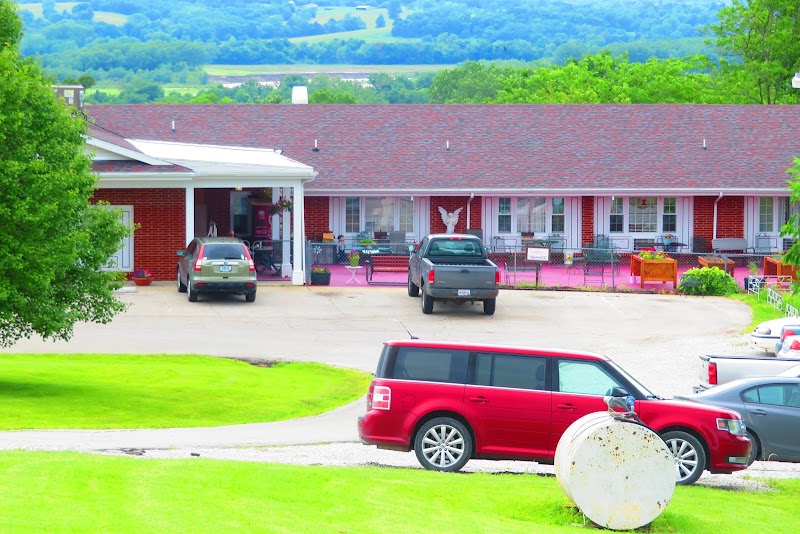
PEARL'S II EDEN FOR ELDERS

611 NORTH COLLEGE, PRINCETON, MO 64673 (660) 748-4407
For profit - Corporation 60 Beds Independent Data: November 2025
Trust Grade
35/100
#440 of 479 in MO
Last Inspection: August 2024

Within standard 12-15 month inspection cycle. Federal law requires annual inspections.

Overview

Pearl's II Eden for Elders has a Trust Grade of F, indicating significant concerns about the quality of care provided. Ranking #440 out of 479 facilities in Missouri places it in the bottom half, and while it is the only nursing home in Mercer County, that does not reflect positively on its overall performance. The facility is worsening, with the number of reported issues increasing from 18 in 2023 to 20 in 2024. Staffing is average, with a 3/5 rating and a turnover rate of 59%, which aligns closely with the state average. However, there have been specific concerns, such as the absence of a full-time Director of Nursing for the past two years and failures in providing consistent RN coverage, which can impact resident care. On a positive note, the facility has not accrued any fines, and it boasts more RN coverage than 81% of other facilities in Missouri, which is a strength in catching potential issues early.

Trust Score
F
35/100
In Missouri
#440/479
Bottom 9%
Safety Record
Low Risk
No red flags
Inspections
Getting Worse
18 → 20 violations
Staff Stability
⚠ Watch
59% turnover. Above average. Higher turnover means staff may not know residents' routines.
Penalties
✓ Good
No fines on record. Clean compliance history, better than most Missouri facilities.
Skilled Nurses
○ Average
Each resident gets 31 minutes of Registered Nurse (RN) attention daily — about average for Missouri. RNs are the most trained staff who monitor for health changes.
Violations
⚠ Watch
61 deficiencies on record. Higher than average. Multiple issues found across inspections.
★☆☆☆☆
1.0
Overall Rating
★★★☆☆
3.0
Staff Levels
★☆☆☆☆
1.0
Care Quality
★★☆☆☆
2.0
Inspection Score
Stable
2023: 18 issues
2024: 20 issues

The Good

  • Full Sprinkler Coverage · Fire safety systems throughout facility
  • No fines on record

Facility shows strength in fire safety.

The Bad

1-Star Overall Rating

Below Missouri average (2.5)

Significant quality concerns identified by CMS

Staff Turnover: 59%

13pts above Missouri avg (46%)

Frequent staff changes - ask about care continuity

Staff turnover is elevated (59%)

11 points above Missouri average of 48%

The Ugly 61 deficiencies on record

Aug 2024 20 deficiencies
CONCERN (D)

Potential for Harm - no one hurt, but risky conditions existed

Deficiency F0568 (Tag F0568)

Could have caused harm · This affected 1 resident

**NOTE- TERMS IN BRACKETS HAVE BEEN EDITED TO PROTECT CONFIDENTIALITY** Based on interview and record review, the facility failed to establish and maintain a system that assured a full and complete, s...

Read full inspector narrative →
**NOTE- TERMS IN BRACKETS HAVE BEEN EDITED TO PROTECT CONFIDENTIALITY** Based on interview and record review, the facility failed to establish and maintain a system that assured a full and complete, separate accounting, according to generally accepted accounting principles, for one deceased resident's account (Resident #92). When the facility charged the resident's account incurred bank fees from [DATE] to [DATE]. This affected one resident out of the sampled 12 residents. The facility census was 40. The facility was asked to provide a resident trust and banking policy, and the facility did not provide the policy. 1. Record Review on [DATE] at 1:35 P.M. showed: - The facility charged Resident #92 bank service fees of five dollars per month from [DATE] to [DATE] and applied that cost to the closed Resident account without reimbursement for a total cost of $20.00 to the Resident's guardian or responsible party. During an interview on [DATE] at 9:20 A.M., the Administrative Assistant said: -He/She mailed a check on [DATE] on behalf of the closed Resident Record's account since the Resident had expired on [DATE]. -The check for $1,765.69 included the deduction of the unauthorized bank fees. -The check was never cashed and the Administrative Assistant contacted the Department of Social Services (Mo Health Unit) to submit another check with the $20.00 bank charges refunded. -The services charges were due to an account balance below the threshold established by the bank ($2,000). During an interview on [DATE] at 11:56 A.M., the Administrator said he/she would not expect a resident's personal funds account to be charged for bank fees.
CONCERN (D)

Potential for Harm - no one hurt, but risky conditions existed

Deficiency F0602 (Tag F0602)

Could have caused harm · This affected 1 resident

Based on interviews and record review, the facility failed to protect the residents right to be free from misappropriation of property for one of the 12 sampled residents, (Resident #28) when the resi...

Read full inspector narrative →
Based on interviews and record review, the facility failed to protect the residents right to be free from misappropriation of property for one of the 12 sampled residents, (Resident #28) when the resident reported missing $1300. The facility census was 40. Review of the facility's policy for abuse or neglect of a resident, dated 4/12/23 showed, in part: - The purpose is to establish protocol for reporting abuse (physical or verbal) or neglect of a resident, or misappropriation of funds; - Misappropriation of funds is any misuse of the resident's money; - Once the investigation is completed and the complaint has been validated, the Department of Health and Senior Services will be notified. Review of the facility's policy for reporting abuse, dated 2/5/13, showed, in part: - As established by Section 6703 (b) (3) of the Patient Protection and Affordable Care act of 2010, responsible suspicion of crime must be reported to both the State Agency and local law enforcement; - Centers for Medicare and Medicaid Services (CMS) recommends documenting your submission TO THE ADMINISTRATOR for your records. (In other words, keep a copy of the report that you write for the Administrator/Director of Nursing (DON); - Section 1150B establishes two time limits for reporting of reasonable suspicion of a crime, depending on the seriousness of the event that leads to the reasonable suspicion: serious bodily injury and all others - within 24 hours: If the events that cause the reasonable suspicion do not result in serous bodily injury to a resident, the covered individual shall report the suspicion immediately, not later than 24 hours after forming the suspicion. Review of the facility's policy for abuse prevention program, revised December, 2016, showed, in part: - Our residents have the right to be free from abuse, neglect, misappropriation of resident property and exploitation. This includes but is not limited to freedom from corporal punishment, involuntary seclusion, verbal, mental, sexual or physical abuse, and physical abuse, and physical or chemical restraint not required to treat the resident's symptoms; - As part of the resident abuse prevention, the administration will: protect our residents from abuse by anyone including, but not necessarily limited to : facility staff, other residents, consultants, volunteers, staff from other agencies, family members, legal representatives, friends, visitors, or any other individual; - Conduct employee background checks and will not knowingly employ or otherwise engage any individual who has: have been found guilty of abuse, neglect, exploitation, misappropriation of property, or mistreatment by a court of law; have had a finding entered into the State nurse aide registry concerning abuse, neglect, exploitation, mistreatment of residents or misappropriation of their property: or have a disciplinary action in effect against his/her professional license by a state licensure body as a result of a finding of abuse, neglect, exploitation, mistreatment of residents or misappropriation of resident property; - Develop and implement policies and procedures to aid our facility in preventing abuse, neglect, or mistreatment of our residents; - Require staff training/orientation programs that include such topics as abuse prevention, identification and reporting of abuse, stress management , and handling verbally or physically aggressive resident behavior; - Implement measures to address factors that may lead to abusive situations; - Identify and assess all possible incidents of abuse; -Investigate and report any allegations of abuse within timeframes as required by federal requirements; - Protect residents during abuse investigations; - Establish and implement a Quality Assurance and Performance Improvement (QAPI) review and analysis of abuse incidents; and implement changes to prevent future occurrences of abuse; - Involve the resident council in monitoring and evaluating the facility's abuse prevention program. 1. Review of Resident #28's annual Minimum Data Set (MDS), a federally mandated assessment instrument completed by facility staff, dated 5/1/24 showed: - Cognitive skills intact; - Required supervision or touch assistance with toilet use and transfers; - Required partial to moderate assistance with showers and dressing; - Diagnoses included diabetes mellitus, dementia (inability to think), thyroid disorder (medical condition that keeps your thyroid from making he right amount of hormone) and depression. The facility did not provide a copy of the resident's care plan. Review of the handwritten statement, dated 7/20/24 by Registered Nurse (RN) A showed: - The statement was addressed to Social Services and the Administrator; - The resident reported to a Certified Nurse Aide (CNA) and him/herself that he/she was missing a large amount of money; - The resident stated once a month, he/she received a check, would cash it and keep the money in an envelope in his/her purse; - The resident looked in his/her purse and noticed the envelopes were missing and he/she had between $1000 - $2000 missing but was not sure of the exact amount; - The resident was unaware when the money went missing; - RN A did not know if it was real or if the resident was confused since it was almost 10:00 P.M.; - RN A assured the resident it would be reported; - RN A asked the resident if there was anywhere else he/she might have placed the envelope and the resident said he/she only kept the envelopes in his/her purse. Review of a typed written statement signed by the Administrator, dated 7/20/24 showed: - Resident #28 has told staff that he/she is missing a large amount of money from his/her purse. It was in a bank envelope and had been there since around 7/4/24. He/she missed it around 7/20/24; -Social Services had looked diligently through the resident's room to ensure it had not been misplaced; - The resident's family is aware that the resident had this money and has been notified that it is missing; - The resident has been encouraged to NOT keep money in his/her room; Review of the typed statement dated 7/24/24 by Social Services showed: - RN A left Social Services a note stating Resident #28 had $1,000 - $2,000 missing and was not sure if this was the correct since it was around 10:00 P.M. on Sunday, 7/20/24; - This writer called the resident's daughter to see if this was possible and the resident's daughter said, yes it could be possible due to the resident gets a monthly check and she takes the resident to get it cashed and the resident keeps the cash in an envelope in his/her purse. She has tried to tell the resident he/she did not need to keep it with him/her; - The writer asked if he/she could look through the resident's purse and drawers and the daughter agreed; - The writer asked the resident if he/she could look in his/her purse and in his/her drawers for the missing envelopes and the resident agreed; - The resident said there were two envelopes, one had ten $100 dollar bills and the second envelope had three $100 dollar bills in it; - This writer looked in the resident's purse and drawers and was unable to locate the missing envelopes; - The resident told the Administrator when he/she cashed the monthly check, he/she would put it in his/her safe; - Social Services signed the statement; During an interview with the resident on 7/29/24 at 11:29 A.M., the resident said: - He/she had approximately $1500 in his/her purse; - Around Friday, 7/19/24, the resident noticed the envelopes with the money were missing from his/her purse; - The staff were not aware the resident had the money; - The resident was not for sure which CNA she reported it to. During an interview on 7/31/24 at 2:25 P.M., Social Services said: - When a resident had something missing, they would notify a CNA or Charge Nurse (CN) and they would report it to him/her; - Resident #28 is missing $1,300. He/she received a note from RN A on 7/20/24 and it said the resident was missing $1,000-$2,000; - He/she talked to the resident and the resident said it was two envelopes, one had ten $100 dollar bills in it and the second envelope had three $100 dollar bills in it; - He/she talked to the resident's daughter because the daughter is the one who took the resident to cash the check; - The resident has a safe in his/her room and the resident keeps his/her jewelry in it but did not keep his/her money in it; During an interview on 8/1/24 at 11:56 A.M., the Administrator said: - She did not see any sense in doing an interview with each individual person; - She had talked to the staff and to the family; - The facility did not know the resident had money in his/her purse or had a safe in his/her room but the family was aware of it; - She did not interview any staff because she did not know what day it happened; - The daughter was able to give a date when she took the resident to the bank, but it was still a week or 2.5 weeks since the resident had been taken to the bank; - She should have contacted the police and filed a report.
CONCERN (D)

Potential for Harm - no one hurt, but risky conditions existed

Report Alleged Abuse (Tag F0609)

Could have caused harm · This affected 1 resident

Based on interviews and record review, the facility failed to report an allegation of missaporpriation for one of the 12 sampled residents, (Resident #28) when staff did not notify law enforcement or ...

Read full inspector narrative →
Based on interviews and record review, the facility failed to report an allegation of missaporpriation for one of the 12 sampled residents, (Resident #28) when staff did not notify law enforcement or the state survey agency after the resident reported missing $1,300. The facility census was 40. Review of the facility's policy for abuse or neglect of a resident, dated 4/12/23 showed, in part: - The purpose is to establish protocol for reporting abuse (physical or verbal) or neglect of a resident, or misappropriation of funds; - Misappropriation of funds is any misuse of the resident's money; - Once the investigation is completed and the complaint has been validated, the state survey agency will be notified. Review of the facility's policy for reporting abuse, dated 2/5/13, showed, in part: - As established by Section 6703 (b) (3) of the Patient Protection and Affordable Care act of 2010, responsible suspicion of crime must be reported to both the State Agency and local law enforcement; - Centers for Medicare and Medicaid Services (CMS) recommends documenting your submission TO THE ADMINISTRATOR for your records. (In other words, keep a copy of the report that you write for the Administrator/Director of Nursing (DON); - Section 1150B establishes two time limits for reporting of reasonable suspicion of a crime, depending on the seriousness of the event that leads to the reasonable suspicion: serious bodily injury and all others - within 24 hours: If the events that cause the reasonable suspicion do not result in serous bodily injury to a resident, the covered individual shall report the suspicion immediately, not later than 24 hours after forming the suspicion. Review of the facility's policy for abuse investigation and reporting, revised July, 2017, showed, in part: - Reporting: All alleged violations involving abuse, neglect, exploitation, or mistreatment, including injuries of an unknown source and misappropriation of property will be reported by the facility Administrator to the following persons or agencies. The State licensing/certification agency responsible for surveying/licensing the facility; the local/State Ombudsman; the resident's representative; Adult Protective Services (where state law provides jurisdiction in long-term care); the resident's Attending Physician and the facility's Medical Director; - An alleged violation of abuse, neglect, exploitation or mistreatment (including injuries of unknown source and misappropriation of resident property) will be reported immediately, but not later than: two hours if the alleged violation involves abuse OR has resulted in serious bodily injury or 24 hours if the alleged violation does not involve abuse AND has not resulted in serious bodily injury; - Verbal/written notices to agencies may be submitted via special carrier, fax, e-mail, or by telephone; - Notices will include, as appropriate: the name of the resident, the resident's room number; the type of abuse that was committed; the date and time the alleged incident occurred; the name(s)of all persons involved in the alleged incident and what immediate action was taken by the facility; - The Administrator, or designee, will provide the appropriate agencies or individuals listed above with a written report of the findings of the investigation within five working days of the occurrence of the incident; - If the investigation reveals findings of abuse, such findings will be reported to the State Abuse Registry; - If the investigation reveals that the allegation(s) of abuse are founded, the employee(s) will be terminated; - If the investigation reveals that the allegation(s) of abuse are unfounded, the employee(s) will be reinstated to his/her/their former position with back pay; - Any allegations of abuse will be filed in the accused employee's personnel record along with any statement by the employee disputing the allegation, if the employee chooses to make one. Records concerning unfounded allegations will be destroyed; - Appropriate professional and licensing boards will be notified when an employee is found to have committed abuse; - The resident and/or representative will be notified of the outcome immediately upon conclusion of the investigation. 1. Review of Resident #28's annual Minimum Data Set (MDS), a federally mandated assessment instrument completed by facility staff, dated 5/1/24 showed: - Cognitive skills intact; - Diagnoses included diabetes mellitus, dementia (inability to think), thyroid disorder (medical condition that keeps your thyroid from making he right amount of hormone) and depression. Review of a typed written statement signed by the Administrator, dated 7/20/24 showed: - Resident #28 has told staff that he/she is missing a large amount of money from his/her purse. It was in a bank envelope and had been there since around 7/4/24. He/she missed it around 7/20/24; - The Administrator expressed to the resident that most of the staff are very honest and would not even consider taking anything that is not their own. HOWEVER, IT SEEMS THAT SOMEONE HAS DONE THIS. Social Services has looked diligently through the resident's room to sure it had not been misplaced; - The resident's family is aware that the resident had this money and has been notified that it is missing; - The resident has been encouraged to NOT keep money in his/her room; - STAFF, PLEASE BE AWARE OF EVERYONE THAT WORKS HERE AND LET'S SEE IF WE CAN SOLVE OR PREVENT THIS AGAIN; - It was initiated by the Administrator and cc'd to the nurses and aides. During an interview with the resident on 7/29/24 at 11:29 A.M., the resident said: - He/she had approximately $1,500 in his/her purse; - Around Friday, 7/19/24, the resident noticed the envelopes with the money were missing from his/her purse; - The staff were not aware the resident had the money; - The resident was not for sure which CNA she reported it to. During an interview on 8/1/24 at 11:56 A.M., the Administrator said: - She did not notify the police, did not notify the state survey agency. She never thought about notifying law enforcement; - She should have contacted the police and filed a report.
CONCERN (D)

Potential for Harm - no one hurt, but risky conditions existed

Investigate Abuse (Tag F0610)

Could have caused harm · This affected 1 resident

Based on interviews and record review, the facility failed to follow facility policy and investigate an allegation of misappropriation when one of the 12 sampled residents, (Resident #28) reported mis...

Read full inspector narrative →
Based on interviews and record review, the facility failed to follow facility policy and investigate an allegation of misappropriation when one of the 12 sampled residents, (Resident #28) reported missing $1,300. The facility census was 40. Review of the facility's policy for abuse prevention program, revised December, 2016, showed, in part: - Our residents have the right to be free from abuse, neglect, misappropriation of resident property and exploitation. This includes but is not limited to freedom from corporal punishment, involuntary seclusion, verbal, mental, sexual or physical abuse, and physical abuse, and physical or chemical restraint not required to treat the resident's symptoms; - As part of the resident abuse prevention, the administration will: protect our residents from abuse by anyone including, but not necessarily limited to : facility staff, other residents, consultants, volunteers, staff from other agencies, family members, legal representatives, friends, visitors, or any other individual; - Develop and implement policies and procedures to aid our facility in preventing abuse, neglect, or mistreatment of our residents; -Investigate and report any allegations of abuse within timeframe's as required by federal requirements; - Protect residents during abuse investigations; Review of the facility's policy for abuse investigation and reporting, revised July, 2017, showed, in part: - Role of the Administrator: If an incident or suspected incident of resident abuse, mistreatment, neglect or injury of unknown source is reported, the Administrator will assign the investigation to an appropriate individual. The Administrator will keep the resident and his/her representative informed of the progress of the investigation. The Administrator will ensure that any further potential abuse, neglect, exploitation or mistreatment is prevented. The Administrator will inform the resident will inform the resident and his/her representative of the status of the investigation and the measures taken to protect the safety and privacy of the resident; - Role of the Investigator: The individual conducting the investigation will, as a minimum: review the completed documentation forms; review the resident's medical record to determine events leading up to the incident; interview the person reporting the incident; interview any witnesses to the incident; interview the resident;interview staff members (on all shifts) who have had contact with the resident during the period of the alleged incident; interview the resident's room mate, family members and visitors; the investigator will notify the Ombudsman (helps to resolve issues between parties through various types of informal mediation) that an abuse investigation is being conducted. The Ombudsman will be invited to participate in the review process; the investigator will consult daily with the Administrator concerning the progress/findings of the investigation; upon conclusion of the investigation, the investigator will record the results of the investigation on approved documentation forms and provide the completed documentation to the Administrator; 1. Review of Resident #28's annual Minimum Data Set (MDS), a federally mandated assessment instrument completed by facility staff, dated 5/1/24 showed: - Cognitive skills intact; - Required supervision or touch assistance with toilet use and transfers; - Required partial to moderate assistance with showers and dressing; - Diagnoses included diabetes mellitus, dementia (inability to think), thyroid disorder (medical condition that keeps your thyroid from making he right amount of hormone) and depression. Review of the handwritten statement, dated 7/20/24 signed by Registered Nurse (RN) A showed: - It was addressed to Social Services and the Administrator; - The resident reported to a Certified Nurse Aide (CNA) and RN A that he/she was missing a large amount of money; - The resident stated once a month, he/she received a check, would cash it and keep the money in an envelope in his/her purse; - The resident looked in his/her purse and noticed the envelopes were missing and he/she had between $1000 - $2000 missing but was not sure of the exact amount; - The resident was unaware when the money went missing; - RN A did not know if it was real or if the resident was confused since it was almost 10:00 P.M.; - RN A assured the resident it would be reported; - RN A asked the resident if there was anywhere else he/she might have placed the envelope and the resident said he/she only kept the envelopes in his/her purse. Review of a typed written statement from the Administrator, dated 7/20/24 showed: - Resident #28 has told staff that he/she is missing a large amount of money from his/her purse. It was in a bank envelope and had been there since around 7/4/24. He/she missed it around 7/20/24; - Social Services has looked diligently through the resident's room to sure it had not been misplaced; - The resident has been encouraged to NOT keep money in his/her room; Review of the typed statement dated 7/24/24 by Social Services showed: - RN A left Social Services a note stating Resident #28 had $1,000 - $2,000 missing and was not sure if this was the correct since it was around 10:00 P.M. on Sunday, 7/20/24; - This writer called the resident's daughter to see if this was possible and the resident's daughter said, yes it could be possible due to the resident gets a monthly check and she takes the resident to get it cashed and the resident keeps the cash in an envelope in his/her purse. She has tried to tell the resident he/she did not need to keep it with him/her; - The writer asked if he/she could look through the resident's purse and drawers and the daughter agreed; - The writer asked the resident if he/she could look in his/her purse and in his/her drawers for the missing envelopes and the resident agreed; - The resident said there were two envelopes, one had ten $100 dollar bills and the second envelope had three $100 dollar bills in it; - This writer looked in the resident's purse and drawers and was unable to locate the missing envelopes; - The resident told the Administrator when he/she cashed the monthly check, he/she would put it in his/her safe; - Social Services signed the statement; - Social Services said he/she did not file a police report and did not know if the Administrator filed one or not; - He/she did not have any statements from the staff who worked. During an interview with the resident on 7/29/24 at 11:29 A.M., the resident said: - He/she had approximately $1,500 in his/her purse; - Around Friday, 7/19/24, the resident noticed the envelopes with the money were missing from his/her purse; - The staff were not aware the resident had the money; - The resident was not for sure which CNA she reported the missing money it to. During an interview on 7/31/24 at 2:25 P.M., Social Services said: - When a resident had something missing, they would notify a CNA or Charge Nurse (CN) and they would report it to him/her; - He/she would talk to the resident, document it and talk to the Administrator; - Resident #28 is missing $1,300. He/she received a note from RN A on 7/20/24 and it said the resident was missing $1,000-$2,000; - He/she talked to the resident and the resident said it was two envelopes, one had ten $100 dollar bills in it and the second envelope had three $100 dollar bills in it; - He/she talked to the resident's daughter because the daughter is the one who took the resident to cash the check; - The resident has a safe in his/her room and the resident keeps his/her jewelry in it but did not keep his/her money in it; - When asked if an investigation had been completed, he/she gave me a copy of the statement from the Administrator. During an interview on 8/1/24 at 11:56 A.M., the Administrator said: - She did not see any sense in doing an interview each individual person; - She had talked to the staff and to the family; - The facility did not know the resident had money in his/her purse or she had a safe in his/her room but the family was aware of it; - She did not notify the police, did not notify the state survey agency. She never thought about notifying law enforcement; - She did not interview any staff because she did not know what day it happened; - She should have contacted the police and filed a report.
CONCERN (D)

Potential for Harm - no one hurt, but risky conditions existed

Deficiency F0657 (Tag F0657)

Could have caused harm · This affected 1 resident

Based on observations, interviews, and record reviews, the facility failed to revise the comprehensive person centered care plans, when the facility failed to revise a care plan to reflect one residen...

Read full inspector narrative →
Based on observations, interviews, and record reviews, the facility failed to revise the comprehensive person centered care plans, when the facility failed to revise a care plan to reflect one resident (Resident #3) who had his/her left leg amputated above the knee. The facility census was 40. The facility did not provide a comprehensive care plan policy. 1. Review of Resident #3's Annual minimum data set (MDS), a federally mandated assessment tool completed by facility staff, dated 5/19/24, showed: -He/She was cognitively intact; -He/She had impairment to one side of lower extremities; -He/She was dependent on wheelchair; -He/She required set up or clean up assistance with eating, oral hygiene; -He/She was dependent with toileting, showering, upper and lower body dressing, going from sitting to lying, lying to sitting on side of bed, tub transfers and wheelchair mobility; -He/She required substantial to maximal assistance with personal hygiene, rolling left and right -He/She had no current pressure ulcers, but had open lesions other than ulcers, rashes, cuts, and he/she had surgical wounds; -He/She had application of nonsurgical dressings other than to feet; -Diagnoses included encounter for orthopedic aftercare following surgical amputation, anemia, atrial fibrillation, heart failure, high blood pressure, gastroesophageal reflux disease, renal failure, diabetes, hyponatremia, thyroid disorder, respiratory failure, , high blood pressure, lung nodules (a small single mass in the lung that is usually benign) , heart valve disease, venous insufficiency (improper function of vein valves in the leg causing swelling or skin changes), respiratory failure, stage 3 pressure ulcer (sores that have reached past skin's second layer and reached fat layer beneath) of sacral region (area of spine between lower back and tail bone), unstageable pressure ulcer of left buttock, and encounter for surgical aftercare following surgery on the skin and subcutaneous tissue (deepest layer that lies closest to the muscle). Review of care plan, revised 5/24/23, showed: -He/She was at risk of potential pressure ulcer development due to limited mobility and incontinence; -He/She currently have a surgical incision from a skin tag removal; -Educate the resident/family/caregivers as to causes of skin breakdown; including: transfer/positioning requirements; importance of taking care during ambulating/mobility, good nutrition and frequent repositioning; -Follow facility policies/protocols for the prevention/treatment of skin breakdown; -Teach resident/family the importance of changing positions for prevention of pressure ulcers. Encourage small frequent position changes. -He/She had chronic venous hypertension -Give meds as ordered for pain; -Monitor/document/report PRN for signs and symptoms of infection: [NAME] drainage, foul odor, redness and swelling, red lines coming from the wound, excessive pain, fever; -Notify nurse if drainage noted to left lower extremities for dressing change. -He/She had edema of the bilateral lower extremities. Elevate legs as much as possible; -Keep his/her heels kept off bed by placing two pillows under his/her legs when supine and prevent direct pressure -relief to his/her heels to make sure they are not against anything; -His/Her ulcers are managed by wound care, they complete treatment documentation to include measurement of each area of skin breakdown's width, length, depth, type of tissue and drainage and any other notable change or observations. -Care plan was not updated to include resident's amputation of left lower extremities from above knee down. Review of physician's orders showed: -Ordered 3/4/24, started 3/10/24, skin assessment every day shift every Sunday for prophylaxis (action taken to prevent disease); Review of Treatment Administration Record, dated July 2024, showed: -Order start date 7/12/24 at 7:51 A.M., Place a folded 4 x 4 in crease at end of left stump to keep skin from touching. Change dressing dailyto keep area dry. Order changed to discontinued on 7/12/24. Review of skin monitoring: comprehensive CNA shower review showed: -On 4/6/24, staff circled left knee on body chart and wrote scabbed and some redness on left side lf leg stump; -On 4/21/24, on body diagram staff crossed off lower portion of diagram's left leg; Observation on 7/29/24 at 11:09 A.M. showed resident's left leg had been amputated above knee. During an interview on 7/29/24 at 11:09 A.M. resident said: -He/she had had a venous insufficiency ulcers prior to moving into the facility; -The facility could not get his/her ulcer to heal up and that was how he/she lost his/her leg as his/her tendon was showing; -When he/she had his/her amputation surgery back in October or November the surgeon found that his/her knee was so bad that they had to remove his/her knee as well; -He/She had dealt with venous insufficiency ulcers prior for a few years prior to moving into the facility. During an interview on 7/31/24 at 1:52 P.M., MDS Coordinator said: -Care plans should be updated every ninety days and with significant changes;; -He/She conducted care plan meetings; -Facility utilized a contract consolidator who wrote the care plans; -He/She communicated with contract consolidator on care plan updates via email and consolidator comes on site to facility every six months; -He/She expected a resident who had his/her leg amputated to have that included in his/her care plan. During an interview on 8/1/24 at 11:56 A.M., Administrator said: -Care plans should be updated every time something significant happened and quarterly; -He/She expected a resident's care plan to be updated when an amputation occurred.
CONCERN (D)

Potential for Harm - no one hurt, but risky conditions existed

Accident Prevention (Tag F0689)

Could have caused harm · This affected 1 resident

**NOTE- TERMS IN BRACKETS HAVE BEEN EDITED TO PROTECT CONFIDENTIALITY** Based on observation, interviews and record review the facility failed to ensure an environment free of accident hazards when on...

Read full inspector narrative →
**NOTE- TERMS IN BRACKETS HAVE BEEN EDITED TO PROTECT CONFIDENTIALITY** Based on observation, interviews and record review the facility failed to ensure an environment free of accident hazards when one resident (Resident #1) was not served a physician ordered mechanical soft diet and was served a regular hamburger on a bun, placing resident at risk for choking hazards. The facility census was 40. Review of facility policy, diet orders, dated 2020, showed: -Each resident will have a diet order prescribed by the physician and documented in health record; -Diet orders are checked for accuracy regularly, at the quarterly care plan meeting, by comparing diet orders on file in dining services with physician order sheet in health record. If diet order is not consistent, the dining services manager or designee will make the necessary changes to ensure the correct diet is on the physician order sheet and resident meal card. Review of facility policy, dental soft (mechanical soft), dated 2022, showed: -The consistency modified diet is for individuals with limited or difficulty in chewing regular textured foods. -The diet consists of food of nearly regular textures but eliminates very hard, sticky, crunchy or hard to chew foods; -Foods should be moist and fork tender; -Meat is ground or chopped into 'bite-sized' pieces (1/2 inch or smaller) and should be held with a minimal amount of prepared broth, gravy, or other type of moistening agent to keep the product moist. -Hot ground meats should be topped with gravy or other type of moistening point of service. 1. Review of Resident #1's Quarterly Minimum Data Set (MDS), a federally mandated assessment tool completed by facility staff, dated 5/28/24, showed: -He/She was severely cognitively impaired; -He/She was dependent on a walker for mobility; -He/She had a mechanically altered diet; -He/She required set up or clean up assistance with eating; -Diagnoses included: Heart failure, Alzheimer's disease (a progressive disease that destroys memory and other important mental functions), aphasia (a language disorder that affects a person's ability to communicate), psychotic disorder (a mental disorder characterized by a disconnection from reality), [NAME]-[NAME] syndrome (a genetic disorder that causes obesity, intellectual disability, and shortness in height with hormonal symptoms including constant hunger), mild intellectual disability , gastro-esophageal reflux disease without esphagitis (GERD) (a digestive disease in which stomach acid or bile irritates the food pipe lining) Review of physician's orders, dated 7/30/24, showed: -Order started 7/18/23, Diet orders: No salt added diet, mechanical soft texture, regular consistency, for double eggs and meat at breakfast Review of care plan, revised 3/7/24, showed: -He/She was able to eat independently with set up assistance; -He/She was on a planned weight loss program due to morbid severe obesity; -Serve him/her a mechanical soft diet; -Monitor and record meal intake; -No bread and butter at lunch and supper; -He/She had oral/dental health problems due to lack of teeth; -Diet as ordered. Consult with dietician and change if chewing/swallowing problems were noted; -He/She had GERD; -Dietary: avoid foods or beverages that tend to irritate esphageal lining like alcohol, chocolate, caffeine, acidic or spicy foods, fried or fatty foods; -Avoid lying down for at least 1 hour after eating. Keep head of bed elevated. Encouraged to stand/sit upright after meals; -Avoid snacks that aggravate the condition; -Monitor/document/report as needed signs and symptoms of GERD including belching, coughing/choking when lying down, heartburn, dyspepsia, indigestion, regurgitation, increased salivation, swallowing problems, bitter taste in mouth, dysphagia, substernal chest pain, increased gag response. Review of electronic medical record showed: -On 7/27/24 at 7:58 A.M., Registered Dietician wrote he/she reviewed resident due to an open area on lower left leg. Diet was no added salt mechanical soft diet. Resident's weight was down three pounds in thirty days. Resident had decline in meal intake and had refused liquid protein supplement. Resident's meal intake had declined. Resident had increased nutrient need due to skin issues but was refusing recommendation. The goal was to consume adequate amounts of calories with protein to help heal resident's wound. Current diet provided adequate calories and protein for wound healing but resident was not eating enough. Due to refusal of residents protein supplement and poor intake of food try ensure plus 8 oz. Adjust diet and oral supplements as resident will accept. -On 6/10/24 at 3:26 P.M., Registered dietician wrote resident was reviewed due to open area on lower left leg. Diet is no added salt mechanical soft diet. Resident had increased nutrition needs due to area on left leg. Current diet provided adequate calories and protein for wound healing but resident did not eat enough. He/She added 30 ml of liquid protein and additional 15 grams protein. When resident refused meal staff to offer a oral nutritional supplement. Observation on 7/30/24 at 1:33 P.M. showed resident was eating a hamburger on a bun from fast food restaurant in the dining room behind kitchen after he/she returned from out of facility doctor appointment. During an interview on 7/30/24 at 1:38 P.M., Dietary Manager said that resident was motivated to leave facility only by receiving fast food meal after his appointment. Resident fed himself and was eating in back dining room with other men. Current weight was down 2. During an interview on 7/31/24 at 1:52 P.M., MDS Coordinator said: -He/She expected mechanical soft diet to be followed; -Resident #1 should not have been served a regular hamburger, he/she should have had the meat ground up. During an interview on 8/1/24 at 8:32 A.M., Certified Nurse Aide (CNA) F said: -Resident is on a mechanical soft diet; -Mechanical soft diet makes it easier for resident to chew his/her food; -Resident will sometimes eat chips. During an interview on 8/1/24 at 9:01 A.M., CNA G said: -He/She was not aware of resident being on a special diet; -He/She had never served resident his/her food. During an interview on 8/1/24 at 9:21 A.M., Registered Dietician said: -Mechanical soft diets are served with ground meat and soft cooked vegetables; -A regular hamburger patty should not be served for resident who is on a mechanical soft diet; -He/She expected physician ordered diets should be followed. During an interview on 8/1/24 at 11:56 A.M., MDS Coordinator said: -He/She expected staff to follow physician ordered diets; -Facility had served resident regular happy meals for years; -He/She had not observed resident display any swallowing issues. During an interview on 8/1/24 at 11:56 A.M., Administrator said: -He/She expected staff to follow physician ordered diets; -Hamburgers and french fries is what motivated resident to get to his/her wound clinic appointments.
CONCERN (D)

Potential for Harm - no one hurt, but risky conditions existed

Deficiency F0699 (Tag F0699)

Could have caused harm · This affected 1 resident

**NOTE- TERMS IN BRACKETS HAVE BEEN EDITED TO PROTECT CONFIDENTIALITY** Based on observation, interview and record review, the facility failed to provide Trauma Informed Care for one of the 12 sampled...

Read full inspector narrative →
**NOTE- TERMS IN BRACKETS HAVE BEEN EDITED TO PROTECT CONFIDENTIALITY** Based on observation, interview and record review, the facility failed to provide Trauma Informed Care for one of the 12 sampled residents who had a diagnosis of Post-Traumatic Stress Disorder (PTSD, a condition of persistent mental and emotional stress occurring as a result of injury or severe psychological shock). The facility census was 40. The facility did not provide a policy for trauma informed care. 1. Review of Resident #6's quarterly Minimum Data Set, (MDS), a federally mandated assessment instrument completed by facility staff, dated [DATE] showed: - Cognitive skill intact; - Upper and lower extremity impaired on one side; - Required substantial to maximum assistance from staff for toilet use, showers and transfers; - Occasionally incontinent of urine; - Always continent of bowel; - Diagnoses included hemiplegia (paralysis affecting one side of the body), depression, bipolar disorder ( episodes of mood swings ranging from depressive lows to manic highs), anxiety, psychotic disorder (mental illness characterized by psychotic symptoms which can generally be described as a loss of contact with reality) and post traumatic stress disorder (PTSD, a condition of persistent mental and emotional stress occurring as a result of injury or severe psychological shock). Review of the resident's care plan, revised [DATE] showed it did not address the resident's diagnosis of PTSD, including triggers and interventions. Review of the resident's medical record showed the resident did not have a Trauma Informed Care Assessment completed. Observation and interview on [DATE] at 11:09 A.M., showed: - The resident sat in his/her wheelchair in his/her room; - The resident said he/she had trauma in the past; - In 1977, he/she was involved in a single car accident. He/she hit a pothole and rolled several times. He/she died twice on the way to the hospital and was in a coma (a state of deep unconsciousness where a person is unresponsive and cannot be awakened, even by strong stimuli) for 47 days. His/her right side is paralyzed (loss of ability to move all or part of the body) and his/her right eye does not work. During an interview on [DATE] at 1:11 P.M., Registered Nurse (RN) B said: - He/she was not for sure if they had any resident's who had a diagnosis of PTSD; - Resident #6 had a diagnosis of bipolar disorder so he/she might have PTSD, but not for sure; - He/she was not aware of the facility providing any training for residents with a diagnosis of PTSD. During an interview on [DATE] at 1:29 P.M., RN C said: - He/she did not think they had any residents with a diagnosis of PTSD; - He/she had only worked in the facility for about a month and has not had any training on PTSD. During an interview on [DATE] at 1:46 P.M., Certified Nurse Aide (CNA) B said: - He/she had not had any training with residents who have PTSD. During an interview on [DATE] at 2:12 P.M., the MDS/Care Plan Coordinator said: - He/she had to look in the electronic records to determine if Resident #6 had a diagnosis of PTSD; - He/she was not aware of any training with the staff related to PTSD and what the triggers would be; - The care plan should address the resident's diagnosis of PTSD and what the triggers were. During an interview on [DATE] at 2:25 P.M., Social Services said: - She was aware Resident #6 had a brain injury and had a diagnosis of PTSD. During an interview on [DATE] at 11:56 A.M., the MDS/Care Plan Coordinator said: - Trauma Informed Care Assessments were completed by Social Services; - CNAs can chart behaviors and alert the Charge Nurse (CN) who is supposed to discuss it with the CNA. The nurse documents any behaviors; - Resident #6 has not had any behaviors in a long time.
CONCERN (D)

Potential for Harm - no one hurt, but risky conditions existed

Deficiency F0760 (Tag F0760)

Could have caused harm · This affected 1 resident

Based on observations, interviews, and record review, the facility failed to ensure staff provided a safe and effective medication administration system that was free of significant medication errors ...

Read full inspector narrative →
Based on observations, interviews, and record review, the facility failed to ensure staff provided a safe and effective medication administration system that was free of significant medication errors when staff failed to prime an insulin pen prior to administering insulin, which affected one of the 12 sampled residents, ( Resident #22). The facility census was 40. The facility did not provide a policy for administration of insulin or administration of medications. 1. Review of the website, https://humalog.lilly.com for Humalog (fast acting) (Lispro insulin) pen showed: - Wipe the rubber seal with an alcohol wipe and attach a new needle; - Priming your pen means removing the air from the needle and cartridge that may collect during normal use and ensures that the pen is working correctly; - If you do not prime before each injection, you may get too much or too little insulin; - To prime your pen, turn the dose knob to select two units. Hold your pen with the needle pointing up. Tap the cartridge holder gently to collect air bubbles at the top; - Continue holing your pen with the needle pointing up. Push the dose knob in until it stops and 0 is seen in the dose window. You should see insulin at the tip of the needle. If you do not see insulin at the tip of the needle, repeat priming; - Insert the needle into the skin. Push the dose knob all the way in. Continue to hold the dose knob in and slowly count to five before removing the needle. Review of Resident #22's physician's order sheet (POS), dated August, 2024, showed: - Start date: 6/28/24 - Insulin Lispro insulin pen, four units before meals for diabetes mellitus; - Start date: 6/28/24 - Insulin Lispro insulin pen, inject per sliding scale. If blood sugar is 150 - 200, give two units of Lispro insulin for diabetes mellitus. Review of the Resident's medication administration record (MAR), dated, August, 2024, showed: - Insulin Lispro insulin pen, four units before meals for diabetes mellitus; - Insulin Lispro insulin pen, inject per sliding scale. If blood sugar is 150 - 200, give two units of Lispro insulin for diabetes mellitus. Observation on 7/31/24 at 11:36 A.M., showed: - Registered Nurse (RN) B cleaned the port of the insulin pen, attached the needle and did not prime the insulin pen; - RN B dialed the dose knob to six units. The resident's blood sugar was 195; - When RN B administered the insulin in the resident's right upper arm, he/she did not leave it in the skin. During an interview on 7/31/24 at 1:11 P.M., RN B said: - He/she should have primed the insulin pen with two units; - He/she thought you should leave the needle in the skin for five seconds. During an interview on 8/1/24 at 11:56 A.M., the MDS/Care Plan Coordinator said: - Staff should prime the insulin pen with two units; - The staff should leave the insulin pen in the skin for three to five seconds.
CONCERN (E)

Potential for Harm - no one hurt, but risky conditions existed

Deficiency F0565 (Tag F0565)

Could have caused harm · This affected multiple residents

Based on interviews and record review, the facility failed to consider the views of the resident council and act promptly upon grievances and recommendations made by the group concerning issues of res...

Read full inspector narrative →
Based on interviews and record review, the facility failed to consider the views of the resident council and act promptly upon grievances and recommendations made by the group concerning issues of resident care and life in the facility when the facility failed to demonstrate their response and rationale for such responses. Additionally, the facility failed to maintain documentation of the facility's attempt to resolve concerns, or address the facility's communication with the council on the follow up actions. This affected all the residents serving on the resident counsel and potentially other residents of the facility. The facility census was 40. Review of the facility's Resident Rights Policy ,dated 12/2016, showed: -Resident's have rights to voice grievances to the facility, or other agency that hears grievances, without discrimination or reprisal and without fear of discrimination or reprisal; have the facility respond to his or her grievances; be supported by the facility in exercising his or her rights; Residents and their representatives have the right to file grievances, either orally or in writing, to the facility staff or to the agency designated to hear grievances (e.g., the State Ombudsman). The administrator and staff will make prompt efforts to resolve grievances to the satisfaction of the resident and/or representative. Review of the facility's Grievance/Complaint policy,dated 4/2017, showed: - Any resident, family member, or appointed resident representative may file a grievance or complaint concerning care, treatment, behavior of other residents, staff members, theft of property, or any other concerns regarding his or her stay at the facility. Grievances also may be voiced or filed regarding care that has not been furnished. - All grievances, complaints or recommendations stemming from resident or family groups concerning issues of resident care in the facility will be considered. Actions on such issues will be discussed with family or a written response whichever is appropriate. - The administrator will review the findings with the grievance officer to determine what corrective actions, if any, need to be taken. 1. During a group interview on 7/30/24 at 9:15 A.M., five resident council participants said: -They did not know how to complete a grievance; -Did not have access to grievance forms; -Did not know where they would submit a grievance form to; -They did not know that they could hold the meeting without staff present; -They had concerns regarding showers not being given which makes them feel dirty and embarrassed; -They often must wait over 15 minutes for call lights to be answered for toileting assistance and other needs. -The facility is slow to make changes or respond back to the council on planned solutions. Review of the resident council minutes, dated March 2024- June 2024, showed: -On 3/28/24: No old business documented or reviewed; no council president assigned, and the meeting was led by one staff member. New Business showed: lack of showers and crowded living area. Review of undated and unsigned Resident Council Resolution for 3/28/24 recapped the meeting minutes but did not provide a formal response to the resident council on their requests. -On 4/23/24: No old business was addressed from the March resident council meeting; no council president assigned, and the meeting was led by one staff member. Open position was not addressed. New Business showed: Several suggestions for improvements to Activities, housekeeping issues, lack of food variety, and a report of one resident missing a pair of jeans. Review of Resident Council Resolution minutes for 4/23/24 meeting dated 4/23/24 from the Administrator recapped the meeting but did not provide a formal response to the resident council on their requests. -On 5/30/24: No old business documented or reviewed. no council president assigned, and the meeting was led by Activity Director A. Open position was not addressed. New business showed: More outside activities requested, ice cream service should be increased, showers are not being conducted on time, call lights are not answered timely, increased laundry service is requested, improvement on some meals is needed and the temperature is too cool in the dining room. Review of undated and unsigned Resident Council Resolution minutes for 5/30/24 from the Administrator recapped the meeting but did not provide a formal response to the resident council on their requests. -There was no documentation of a Resident Council meeting for the month of June 2024. During an interview on 7/31/24 at 09:45 A.M., Activity Director A said: - He/She received online training for Activity Director and has been in the role since March 2024. He/She has been at the facility for seven years. - Has led the resident council meeting for a couple years and has received in service training for the Resident Council and acquired some information from the Activities Director course. - Resident grievances or recommendations are given to the Administrator from the meeting minutes that Activity Director takes. These are forwarded on to each department to address but he/she is unsure how the residents are notified. - Meetings are advertised the Monday before each meeting which is held the last Thursday of every month. They are advertised through word of mouth, the activities calendar and with posters. He/she is unsure how families are notified of the resident council meetings. - Did not know that there was a President position for the resident council. - It was expected from the facility that the Activity Director A always attends the resident council meeting though the residents never gave their approval for him/her to attend. During an interview on 7/31/24 at 11:10 A.M., Activity Director B said: - He/She conducts resident council meetings to bring up issues and then speaks to the Administrator before the conclusion of the meeting so concerns can be addressed before concluding that's month's meeting; - Asked the residents if it's okay to sit in on their meetings and they approved. - Families are not notified about the meeting and Activity Director B did not know they could attend; - The reason there is no council President because there are not enough higher functioning residents to serve in that role. Staff has stepped in to fill the void of not having a President and that Activity Director A normally conducts the meeting. The President position has been open for at least 18 months. During an interview on 8/1/24 at 11:56 A.M., the Administrator said: - She would not necessarily expect a Resident President to lead the Resident Council meeting even though they have offered the position to be filled to the residents. The Activity Directors run the monthly meetings. - Resident grievances or concerns from the Resident Council meeting are discussed immediately with the residents at the meeting. - She would expect the residents to be satisfied with the explanation that their concerns could not be met due to staffing issues. - She would expect residents to know how to file a formal grievance, but they cannot do it anonymously. It would be expected that residents would know their rights since it is talked about at the start of every meeting.
CONCERN (E)

Potential for Harm - no one hurt, but risky conditions existed

Comprehensive Care Plan (Tag F0656)

Could have caused harm · This affected multiple residents

**NOTE- TERMS IN BRACKETS HAVE BEEN EDITED TO PROTECT CONFIDENTIALITY** Based on observation, record review, and interview, the facility failed to develop and implement a comprehensive person-centered...

Read full inspector narrative →
**NOTE- TERMS IN BRACKETS HAVE BEEN EDITED TO PROTECT CONFIDENTIALITY** Based on observation, record review, and interview, the facility failed to develop and implement a comprehensive person-centered care plan for four of 12 sampled residents (Residents #3, #19, #21, and #6) by not addressing care areas of resident side rail usage (Resident #3 and #19), shower preferences (Resident #3), weight loss (Resident #21), and post traumatic stress disorder (PTSD) (Resident #6). The facility census was 40. The facility did not provide a policy on care plans. 1. Review of Resident #3's Annual minimum data set (MDS), a federally mandated assessment tool completed by facility staff, dated 5/19/24, showed: -He/She was cognitively intact; -He/She had impairment to one side of lower extremities; -He/She was dependent on wheelchair; -He/She was dependent with toileting, showering, upper and lower body dressing, going from sitting to lying, lying to sitting on side of bed, tub transfers and wheelchair mobility; -He/She required substantial to maximal assistance with personal hygiene, rolling left and right -Diagnoses included: Surgical amputation, heart failure, high blood pressure, gastroesophageal reflux disease, renal failure, diabetes (too much sugar in the blood), venous insufficiency (improper function of vein valves in the leg causing swelling or skin changes), Review of care plan, dated 5/24/23, showed: -He/She was independent with physical limitations; -Bed Mobility: He/She was able to move independently to reposition self; -Side rails were not care planned; -He/She had an activities of daily living self-care performance deficit due to limited mobility; -Bathing and showering: Avoid scrubbing & pat dry sensitive skin. Check nail length and trim and clean on bath day and as necessary. Report any changes to the nurse. He/She required extensive assistance by 1 staff with showering; Use short, simple instructions such as hold your washcloth in your hand; Put soap on your washcloth; Wash your face; to promote independence. -Care plan did not address resident's preferred shower preferences to include frequency and time of day. Review of physician's orders showed dated July 30, 2024: -Order started on 12/5/23, side rails to bed as requested by patient for repositioning. Review of Bed Rail/Assist Bar Evaluation showed quarterly evaluations were completed: -On 12/5/23, Bed rails, Bilateral, resident requested to have bed rails/assist bar while in bed and bed rails/assist bar were indicated to serve as an enabler to promote independence; -On 5/19/24, Bed rails, Bilateral, resident requested to have bed rails/assist bar while in bed and bed rails/assist bar were indicated to serve as an enabler to promote independence; -On 7/19/24, Bed rails, Bilateral, resident requested to have bed rails/assist bar while in bed and bed rails/assist bar were indicated to serve as an enabler to promote independence; Observation on 7/29/24 at 11:01 A.M. showed resident had u-shaped side rails on both sides of his/her bed that were in the up position. During an interview on 7/29/24 at 11:01 A.M., resident said: -He/She used the side rails to reposition him/herself while in bed. -He/She preferred to get a shower twice a week if possible; -He/She sometimes did not get a shower as he/she preferred due to facility not having enough staff; During an interview on 7/30/24 at 2:18 P.M., Certified Nurse Aide (CNA) D said: -Resident used side rails to help him/her roll; -He/She would hold onto side rail and wiggle him/herself up in bed; During an interview on 7/30/24 at 3:03 P.M., Licensed Practical Nurse (LPN) A said: -Side rails have to have a physician's order and have to be care planned; -MDS Coordinator and outsourced staff member was responsible for updating care plans. During an interview on 7/31/24 at 1:52 P.M., MDS Coordinator said: -Resident had side rails for repositioning and helping self turn. During an interview on 8/1/24 at 8:32 A.M., CNA F said: -Resident had side rails so he/she did not roll out of his/her bed. During an interview on 8/1/24 at 9:01 A.M., CNA G said: -He/She did not know why resident had side rails on his/her bed. 2. Review of Resident #19's Quarterly minimum data set (MDS), dated [DATE], showed: -He/She was severely cognitively impaired; -He/She was dependent on a walker for mobility; -He/She required substantial/maximal assistance with toileting, bathing, upper and lower body dressing, taking off footwear, personal hygiene, going from lying to sitting on side of bed, sit to stand chair/bed to chair transfer, toilet and tub shower; -He/She required supervision or touching assistance for rolling left and right, or going from sit to lying position, -Diagnoses included: high blood pressure, dementia (a condition characterized by impairment of at least two brain functions such as memory loss and judgement), tachycardia (a rapid heart beat that may be regular or irregular, but is out of proportion to age and level of exertion or activity). Review of care plan, dated 3/1/24, showed: -He/She was able to transfer self independently -He/She used walker to maximize independent with transferring; -He/She had limited physical mobility due to weakness; -He/She was able to ambulate with walker independently; -He/She was able to move and reposition self independent in bed; -He/She was at increased risk for falls due to history of attempts to leave facility unattended, impaired safety awareness, and dementia; -He/She has impaired cognitive function or impaired though processes due to dementia with behavioral disturbances; -Side rails were not care planned. Review of physicians orders, dated July 2024, showed, -No orders for side rail on bed. Review of Bed Rail/Assist Bar Evaluation showed quarterly evaluations were completed: -On 11/12/23, bed rails/assist bar were not indicated at that time. Observation on 7/30/24 at 10:16 A.M. showed: -A u-shaped side rail was up on right side of bed. Observation on 7/31/24 at 8:10 A.M. showed resident was lying in bed with his/her right side rail up. During an interview on 7/30/24 at 10:16 A.M., resident was not able to verbalize why he/she had side rail on his/her bed. During an interview on 7/30/24 at 2:18 P.M., Certified Nurse Aide (CNA) D said: -Resident used side rails to maneuver self in and out of bed. During an interview on 7/31/24 at 1:52 P.M., MDS Coordinator said: -Resident was not supposed to have side rails on his/her bed. During an interview on 8/1/24 at 8:32 A.M., CNA F said: -He/She saw resident use side rail to help pull self up to a sitting position. During an interview on 8/1/24 at 9:01 A.M., CNA G said: -Resident had side rails because he/she fell and broke his/her pelvis and used side rail to pull self up in bed; -Resident had been mobile prior to fall. During an interview on 7/31/24 at 1:52 P.M., MDS Coordinator said: -He/She assisted with writing care plans; -Care plans should be updated every 90 days and with significant changes; -The facility used a contract consolidator to assist with writing care plans; -He/She communicated care plan changes to contract consolidator via email; -Contract consolidator came on-site to facility every six months; -Side rails should be included in resident's care plans. During an interview on 8/1/24 at 11:56 A.M., MDS Coordinator said: -Post traumatic stress disorder should be care planned; 3. Review of Resident #6's quarterly MDS, dated [DATE] showed: - Cognition Intact; - Upper and lower extremity impaired on one side; - Diagnoses included hemiplegia (paralysis affecting one side of the body), depression, bipolar disorder ( episodes of mood swings ranging from depressive lows to manic highs), anxiety, psychotic disorder (mental illness characterized by psychotic symptoms which can generally be described as a loss of contact with reality) and post traumatic stress disorder (PTSD, a condition of persistent mental and emotional stress occurring as a result of injury or severe psychological shock). Review of the resident's care plan, revised 1/3/24 showed it did not address the resident's diagnosis of PTSD, including triggers and interventions. 4. Review of Resident #21's care plan revised, 3/30/24 showed: - It did not address the resident's weight gain. Review of the resident's quarterly MDS, dated [DATE], showed: - Cognitive skills severely impaired; - Rejected care one to three days; - Dependent on the assistance of staff for eating; - Diagnosis included: Cancer, dementia (inability to think), renal insuffiency (RI, a condition in which the kidneys lose the ability to remove waste and balance fluids), pneumonia (a serious infection that causes inflammation and fluid or pus to fill the air sacs, of one or both lungs), anxiety and depression. Review of the resident's medical record showed the following weights for the resident: - 1/6/24 - 223.2 pounds; - 2/6/24 - 221.8 pounds; - 3/11/24 - 221.0 pounds; - 4/3/24 - 212.6 pounds; - 5/8/24 - 198.8 pounds; - 6/6/24 - 195.8 pounds; - 7/8/24 - 195.6 pounds. During an interview with the resident on 7/29/24 at 1:35 P.M., the resident said: - He/she has lost weight recently because he/she was not hungry. During an interview on 7/31/24 at 2:12 P.M., The MDS/Care Plan Coordinator said: - The care plans can be updated by the nurses if they have time, her/himself or the MDS/Care Plan Consulting group; - The care plans should address the resident's weight loss and their diagnosis of PTSD. During an interview on 8/1/24 at 11:56 A.M., Administrator said: -He/She expected care plans to be updated every time something significant happened and quarterly; -Care plan use should be care planned
CONCERN (E)

Potential for Harm - no one hurt, but risky conditions existed

ADL Care (Tag F0677)

Could have caused harm · This affected multiple residents

**NOTE- TERMS IN BRACKETS HAVE BEEN EDITED TO PROTECT CONFIDENTIALITY** 4. Review of Resident #37's Quarterly Minimum Data Set (MDS), ,dated, 6/26/24, showed: - admitted on [DATE]; - Brief interview f...

Read full inspector narrative →
**NOTE- TERMS IN BRACKETS HAVE BEEN EDITED TO PROTECT CONFIDENTIALITY** 4. Review of Resident #37's Quarterly Minimum Data Set (MDS), ,dated, 6/26/24, showed: - admitted on [DATE]; - Brief interview for mental status (BIMS) score of 03, indicating the resident was cognitively impaired; - Impairment on one side of lower extremity, use a wheelchair for mobility; - Partial/Moderate assistance required for eating; - Substantial/Maximum assistance for oral hygiene, toileting, showering, dressing, footwear and personal hygiene - Frequently incontinent of Urine, occasionally incontinent of bowel - Diagnoses included: Anemia, hypertension (high blood pressure), hip fracture, Alzheimer's disease, dementia Review of the resident's care plan, dated 4/10/24, showed: - Dependent on staff for meeting emotional, intellectual, physical, and social needs; - ADL self-care performance deficit. Requires one person physical assist for all Activities of Daily Living (ADL). Staff to encourage Resident to participate to the fullest extent possible with each ADL interaction. Review of completed shower documentation on 7/31/24, at 9:14 A.M., showed: - In the Month of July 2024, resident received 5 showers out of 8 opportunities; - In the Month of June 2024, resident received 7 showers out of 8 opportunities; - In the Month of May 2024, resident received 7 showers out of 8 opportunities; - Resident went 10 days without a shower from 7/1-7/11. During an interview on 8/1/24 at 11:56 A.M., the MDS/Care Plan Coordinator said: - There is a position for a shower aide on the day shift; - They assign a designated member to do the showers every day; - She has had residents complain about not getting their showers and when they complain, they do try to get them completed. 2. Review of Resident #3's Annual minimum data set (MDS), a federally mandated assessment tool completed by facility staff, dated 5/19/24, showed: -He/She was cognitively intact; -He/She had impairment to one side of lower extremities; -He/She was dependent on wheelchair for mobility; -He/She was dependent on nursing staff to assist with toileting, showering, upper and lower body dressing, going from sitting to lying, lying to sitting on side of bed, tub transfers and wheelchair mobility; -He/She required substantial to maximal assistance of nursing staff with personal hygiene, rolling left and right -Diagnoses included: Surgical amputation, heart failure, high blood pressure, gastroesophageal reflux disease, renal failure, diabetes (too much sugar in the blood), venous insufficiency (improper function of vein valves in the leg causing swelling or skin changes), Review of care plan, dated 5/24/23, showed: -Bathing and showering: Avoid scrubbing & pat dry sensitive skin. Check nail length and trim and clean on bath day and as necessary. Report any changes to the nurse. He/She required extensive assistance by 1 staff with showering; Use short, simple instructions such as hold your washcloth in your hand; Put soap on your washcloth; Wash your face; to promote independence. -Care plan did not address resident's preferred shower preferences to include frequency and time of day. During an interview or 7/29/24 at 11:16 A.M., Resident said: -The shower aide did not show up frequently or he/she got pulled to floor as he/she did not receive his/her showers; -He/She wanted showers to occur twice a week; -He/She had to go without receiving a shower because facility did not have enough staff to complete his/her showers; -He/She felt dirty when he/she did not receive showers. Review of shower schedule, updated 7/10/24, showed: -Resident was scheduled to receive showers on Sundays and Wednesdays. Review of shower logs from 4/1/24 - to 7/30/24 showed: -Resident missed 17 of 34 scheduled opportunities for showers; -He/She did not receive a shower on 4/24, 5/15, 5/22, 5/29, 6/2, 6/5, 6/9, 6/23, 6/26, 6/30, 7/3, 7/7, 7/10, 7/14, 7/17, 7/24, and 7/28. He/She received a shower on 4/6, 4/7, 4/10, 4/14, 4/17, 4/21, 4/28, 5/1, 5/5, 5/8, 5/12, 5/19, 5/26, 6/12, 6/16, 6/19, and 7/21 -He/She went 31 days without a shower from 6/19/24 to 7/21/24. 3. Review of Resident #19's Quarterly minimum data set (MDS), dated [DATE], showed: -He/She was severely cognitively impaired; -He/She was dependent on a walker for mobility; -He/She required substantial/maximal assistance with toileting, bathing, upper and lower body dressing, taking off footwear, personal hygiene, going from lying to sitting on side of bed, sit to stand chair/bed to chair transfer, toilet and tub shower; -He/She required supervision or touching assistance for rolling left and right, or going from sit to lying position, -Diagnoses included: High blood pressure, dementia (a condition characterized by impairment of at least two brain functions such as memory loss and judgement), tachycardia (a rapid heart beat that may be regular or irregular, but is out of proportion to age and level of exertion or activity). Review of care plan, revised 3/1/24, showed: -He/She had an activities of daily living self-care performance deficit due to abnormal gait, mobility, aggressive behavior and dementia. -Bathing/Showering: Avoid scrubbing & pat dry sensitive skin. Check nail length and trim and clean on bath day and as necessary. He/She required Moderate assistance by 1 staff with showering twice a week and as necessary. Provide sponge bath when a full bath or shower could not be tolerated. Use short, simple instructions such as hold your washcloth in your hand; Put soap on your washcloth; Wash your face; to promote independence. Observation on 7/29/24 at 2:03 P.M. showed resident's hair was matted down on one side and sticking out. Resident was sitting on side of bed with no pants on. Shirt had crumbs and stains of food across the chest. Observation 07/30/24 at 8:26 A.M. showed resident was asleep in bed. Resident was wearing a night gown that had food stains on it and food crumbs. Review of shower schedule, updated 7/10/24, showed: -Resident was scheduled to receive showers on Tuesdays and Fridays. Review of shower logs from 5/1/24 - to 7/29/24 showed: -Resident missed 8 of 25 opportunities for showers; -He/She did not receive a shower on 5/21, 5/24, 5/31, 6/7, 6/25, 7/5, 7/23, 7/26 He/She received a shower on 5/3, 5/7, 5/10, 5/14, 5/17, 5/28, 6/4, 6/11, 6/14, 6/18, 6/21, 7/9, 7/12, 7/16, 7/18 -He/She refused a shower opportunities on 6/28 and 7/2; -Resident went 18 days without a shower from 6/19 to 7/9. During an interview on 7/29/24 at 11:42 A.M., Certified Nurse Aide (CNA) B said: -He/She got pulled from working as shower aide three to four times a week to cover the floor due to staffing shortages; -Residents did not receive showers twice a week due to staffing shortages; -Multiple staff assist with showers. During an interview on 7/30/24 at 2:18 P.M. CNA D said: -He/She had two residents that take showers on evening shift; -There was issues getting showers done on evening shift due to staffing; -There was times that he/she was only CNA working with one or two nurse aides; -When he/she gave showers he/she would fill out a shower sheet to include his/her date and initials and he/she submitted shower sheets to the nurse. During an interview on 7/31/24 at 9:21 A.M., CNA B said: -He/She stated was pulled from shower aide due to state surveyors being in building; -Another staff member was called in to complete some showers for the day. During an interview on 8/1/24 at 8:32 A.M., CNA F said: -Showers were not completed when facility did not have shower aide. During an interview on 8/1/24 at 9:01 A.M., CNA G said: -Residents have had to go without showers due to staffing shortages; -Shower aide gets pulled from completing showers nine times out of every ten days when short staffed. Based on observations, interviews and record review, the facility failed to ensure dependent residents who were unable to carry out activities of daily living (ADLs) received the necessary services to maintain good personal hygiene when staff failed to ensure showers were completed for four of the 12 sampled residents, (Resident #3, #6, #19 and #37). The facility census was 40. The facility did not provide a policy for showers. 1. Review of the resident #6's quarterly Minimum Data Set, (MDS), a federally mandated assessment instrument completed by facility staff, dated 6/4/24 showed: - Cognitive skill intact; - Upper and lower extremity impaired on one side; - Required substantial to maximum assistance from staff for toilet use, showers and transfers; - Occasionally incontinent of urine; - Always continent of bowel; - Diagnoses included hemiplegia (paralysis affecting one side of the body), depression, bipolar disorder ( episodes of mood swings ranging from depressive lows to manic highs), anxiety, psychotic disorder (mental illness characterized by psychotic symptoms which can generally be described as a loss of contact with reality) and post traumatic stress disorder (PTSD, a condition of persistent mental and emotional stress occurring as a result of injury or severe psychological shock). Review of Resident #6's care plan, revised 1/3/24 showed: - The had an ADL self-care performance deficit relate to right sided weakness; - The resident required the assistance of one staff with showers, once a week and as needed. Review of the resident's shower sheets for May showed the resident had a shower on the following dates: - 5/1/24, 5/4/24, 5/8/24, 5/12/24, 5/22/24, 5/25/24. Review of the resident's showers sheets for June, 2024, showed the resident had a shower on the following dates: - 6/5/24, 6/12/24, 6/19/24, 6/26/24 and 6/29/24. Review of the resident's showers sheets for July, 2024, showed the resident had a shower on the following dates: - 7/20/24 and 7/24/24. Observation and interview on 7/31/24 at 12:45 P.M., showed: - The resident's hair appeared dull; - The resident said when he/she did not get his/her showers twice weekly, it made him/her feel dirty. During an interview on 7/31/24 at 1:11 P.M., Registered Nurse (RN) B said: - They were better at getting showers completed about a month ago but due to call ins and people quitting, they have had to pull whoever was working in showers to the floor to work; - They do not have a designated shower aide. During an interview on 7/31/24 at 1:29 P.M., RN C said: - They do not have a designated shower aide; - They assign a staff member to do the showers, but they usually end up getting pulled to the floor to work and the showers do not get done. During an interview on 7/31/24 at 1:46 P.M., Certified Nurse Aide (CNA) B said: - They have trouble getting the showers done because of the call ins and people getting sick.
CONCERN (E)

Potential for Harm - no one hurt, but risky conditions existed

Pressure Ulcer Prevention (Tag F0686)

Could have caused harm · This affected multiple residents

**NOTE- TERMS IN BRACKETS HAVE BEEN EDITED TO PROTECT CONFIDENTIALITY** 2. Review of Resident #39's Quarterly MDS dated [DATE]., showed: -Cognition impaired with a BIMS (Brief Interview of Mental Stat...

Read full inspector narrative →
**NOTE- TERMS IN BRACKETS HAVE BEEN EDITED TO PROTECT CONFIDENTIALITY** 2. Review of Resident #39's Quarterly MDS dated [DATE]., showed: -Cognition impaired with a BIMS (Brief Interview of Mental Status) score of eight. -Resident was at risk for pressure ulcers. -Resident had no unhealed pressure ulcers at the time of the assessment. -Resident required moderate assistance with mobility and repositioning. -Diagnoses: Rhabdomyolysis (breakdown of muscle tissue that results in the release of a protein into the blood that can damage the kidneys.Symptoms include dark, reddish urine, a decreased amount of urine, muscles aches and weakness); Covid-19; Depression, Unspecified; Traumatic Ischemia of Muscle; Subsequent Encounter; Unspecified Fall, Subsequent Encounter. Review of resident clinical records for the month of July showed: -Resident was at risk for pressure ulcers. -Required assistance of two nursing staff for turning, repositioning, and mobility. -Resident's treatment record showed no wound care was documented on 7/5, 7/9, 7/23, 7/25. -POS ( Physician's Order Sheet ) showed: cleanse wounds, apply collagen/collagen dressing, cover with cushioned dressing change every other day and as needed if soiled, until healed. During an interview on 8/12/2024 LPN A., said: - Treatments should be documented when completed. - Physician orders should be followed and documented when completed. Based on interview, observation and record review the facility failed to ensure preventative skin risk measures where in place for one resident (Resident #17) and additionally failed to ensure that treatements to pressure ulcers were documented as completed for four days for one resident (Resident #39). This affected two out of the 12 sampled residents. The facility census was 40. The facility was asked to provide a wound care policy did not provide a wound care policy. 1. Review of resident #17's quarterly Minimum Data Set, (MDS< a federally mandated assessment completed by the facility staff), dated 7/2/24 showed: -The resident had a Brief Interview for Mental Status (BIMS) score of 0, indicating severe cognitive impairment; - He/She required the assistance of staff to transfer, reposition him/herself, toilet and shower; - The resident was incontinent of bowel and bladder; - The resident was identified as having a stage II pressure ulcer (PU, a wound that is caused by consistent pressure and is open); - The resident used pressure reducing devices (PRD) on his/her bed and wheel chair. Review of the resident's skin care plan dated 10/13/23 showed: - The resident had the potential for PU development because of his/her immobility; - The care plan goal was the resident would have intact skin, free of redness; - The staff were supposed to frequently reposition the resident; - The staff were supposed to notify the charge nurse of any new skin break down. Review of the Physician Order Sheet (POS) dated July 2024 showed: - 7/4/23, Order for a skin assessment to be completed weekly on Saturday nights; - 2/29/24, Order for Calmozine and zinc (cream to use for Stage I PU and as a moisture barrier), apply every night to the resident's coccyx (bony area of the very low back), until healed; - There were no further orders addressing the resident's PU progression form a stage I to a stage II. Review of the skin assessment showed: -6/29/24 Braden Scale (a scoring system to determine the likelihood a resident can develop a PU), showed a score of 13, indicating the resident was at moderate risk for the development of a PU; -7/7/24 Skin assessment showed an open area to the resident's coccyx that was 0.5 centimeter (CM) length and width; -7/13/24 Skin assessment showed the residnet did not have an open area to his/her coccyx; -7/21/24 Skin assessment showed the resident now had a open area to his/her coccyx that measured 1 CM long and 1 CM wide. Observation showed on 7/30/24 the following: -7/30/24 at 8:24 A.M. The resident was in his/her wheel chair sitting on a lift sling in the dining room sleeping; -7/30/24 at 9:25 A.M. The resident remained in his/her wheel chair in the dining room still sitting on a lift sling and asleep; - 7/30/24 at 10:30 A.M. The resident remained in his/her wheel chair, sitting on a lift sling in the dining room sleeping; -7/30/24 at 11:21 A.M. The resident was in his/her wheel chair, sitting on the lift sling at the dining room table with his/her eyes closed; -7/30/24 at 12:17 P.M. The resident remains in his/her wheel chair, sitting on his/her lift sling with his/her meal in front of him/her; -7/30/24 at 1:30 P.M. The resident remained in his/her wheel chair, sitting on the lift sling in his w/c in the dining room. -7/30/24 at 1:40 P.M. Nurses Aide (NA) A pushed the resident to his/her room from the dining room and exited the resident's room; - NA A returned to the residents room with the mechanical lift and Certified Nurses Aide (CNA) A entered the resident's room; - CNA A and NA A lay the resident in bed with the mechanical lift and removed the resident's pants and brief; - The resident's brief and pants were saturated with urine, the resident's ' right side of groin was bright red in color, CNA A applied barrier cream to the resident's groin; - CNA A rolled the resident to his/her side and the resident's coccyx was red in color with an open area that measured approximately 1 CM wide and 1.5 CM long. - CNA A and NA A rolled the resident's to his/her back, did not ensure the resident was on his/her side. During an interview, on 7/30/24 at 2:05 P.M. NA said: - The residents are supposed to be laid down after every meal; - The resident was not laid down after breakfast this A.M.; - He/She thought the staff were supposed to lay the resident's down every four hours; - The resident was supposed to be repositioned every two hours; - The resident was last repositioned at 5:45 A.M.; - He/She should have laid the resident down and repositioned the resident sooner than he/she did today. Observation on 7/31/24 showed the following: - 7:55 A. M. The resident was sitting in his/her wheel chair on the lift sling in the dining room; - 9:51 A.M. CNA E and CNA B take the resident from the dining room to his/her room and lay the resident's in bed; - The resident was saturated with urine through his/her pants, CNA E and CNA B pull the resident's pants and brief down and the resident was saturated with urine through his/her brief; - The resident's groin was bright red in color, neither CNA applied moisture barrier cream to the resident's groin; - The resident had a dark purple area to his/her coccyx, oval in shape that measured approximately 3 CM wide and 4 CM long sacrum oval in shape, approximately 4 cm long X 3 CM wide. - The CNA's raise the resident's head of bed to approximately 45 degrees and left the resident lying on his/her back; -The resident remained on a non pressure reducing mattress; During an interview on 7/31/24 at 10:11 A.M. CNA E said: - He/She was supposed to position the resident on his/her side when in bed; - The resident was not currently on a pressure reducing mattress; During an interview on 7/31/24 at 10:19 A.M. Registered Nurse (RN) C said: - The resident has an open area to his/her coccyx and the resident's coccyx was purple in color; - The resident was not on a pressure reducing mattress; - He/She expected staff to reposition the resident every two hours; - The resident should not have been up in his/her chair without being toileted or repositioned for over 5 hours on 7/30/24; - HE/she expected staff to position resident's with a purple coccyx on their side and not on their back; - He/She expected staff to provide perineal care to the resident every two hours; During an interview on 7/31/24 at 2:24 P.M. the MDS Coordinator said: - When the nurse identified a wound, there should be some kind of intervention put in place; - He/She has taught the staff to lay the resident down first and get him/her up last because he/she had a PU; - The resident should not been up in his/her wheelchair for more than five hours and not repositioned.
CONCERN (E)

Potential for Harm - no one hurt, but risky conditions existed

Deficiency F0700 (Tag F0700)

Could have caused harm · This affected multiple residents

**NOTE- TERMS IN BRACKETS HAVE BEEN EDITED TO PROTECT CONFIDENTIALITY** Based on observation, record review, and interviews, the facility failed to ensure they assessed residents for risk of entrapmen...

Read full inspector narrative →
**NOTE- TERMS IN BRACKETS HAVE BEEN EDITED TO PROTECT CONFIDENTIALITY** Based on observation, record review, and interviews, the facility failed to ensure they assessed residents for risk of entrapment from bed rails prior to installation, failed to review the risk and benefits with the resident or the resident's representative , failed to obtain informed consent prior to installation, and additionally failed to ensure the bed's dimensions were appropriate for the resident's size and weight for four of 16 residents sampled (Residents #3, #19, #1, and #192). The facility census was 40. Facility did not provide a policy on entrapment or side rails. 1. Review of Resident #3's Annual minimum data set (MDS), a federally mandated assessment tool completed by facility staff, dated 5/19/24, showed: -He/She was cognitively intact; -He/She had impairment to one side of lower extremities; -He/She was dependent on wheelchair; -He/She was dependent with toileting, showering, upper and lower body dressing, going from sitting to lying, lying to sitting on side of bed, tub transfers and wheelchair mobility; -He/She required substantial to maximal assistance with personal hygiene, rolling left and right -Diagnoses included surgical amputation, heart failure, high blood pressure, gastroesophageal reflux disease, renal failure, diabetes (too much sugar in the blood), venous insufficiency (improper function of vein valves in the leg causing swelling or skin changes), Review of care plan, dated 5/24/23, showed: -He/She was independent with physical limitations; -Bed Mobility: He/She was able to move independently to reposition self; -Side rails were not care planned; Review of physician's orders showed dated July 30, 2024: -Order started on 12/5/23, side rails to bed as requested by patient for repositioning. Review of Bed Rail/Assist Bar Evaluation showed quarterly evaluations were completed: -On 12/5/23, Bed rails, Bilateral, resident requested to have bed rails/assist bar while in bed and bed rails/assist bar were indicated to serve as an enabler to promote independence; -On 5/19/24, Bed rails, Bilateral, resident requested to have bed rails/assist bar while in bed and bed rails/assist bar were indicated to serve as an enabler to promote independence; -On 7/19/24, Bed rails, Bilateral, resident requested to have bed rails/assist bar while in bed and bed rails/assist bar were indicated to serve as an enabler to promote independence; Observation on 7/29/24 at 11:01 A.M. showed resident had u-shaped side rails on both sides of his/her bed that were in the up position. During an interview on 7/29/24 at 11:01 A.M., resident said: -He/She used the side rails to reposition him/herself while in bed. -He/She preferred to get a shower twice a week if possible; -He/She sometimes did not get a shower as he/she preferred due to facility not having enough staff; During an interview on 7/30/24 at 2:18 P.M., Certified Nurse Aide (CNA) D said: -Resident used side rails to help him/her roll; -He/She would hold onto side rail and wiggle him/herself up in bed; During an interview on 7/30/24 at 3:03 P.M., Licensed Practical Nurse (LPN) A said: -Side rails have to have a physician's order and have to be care planned; -MDS Coordinator and outsourced staff member was responsible for updating care plans. During an interview on 7/31/24 at 1:52 P.M., MDS Coordinator said: -Resident had side rails for repositioning and helping self turn. During an interview on 8/1/24 at 8:32 A.M., CNA F said: -Resident had side rails so he/she did not roll out of his/her bed. During an interview on 8/1/24 at 9:01 A.M., CNA G said: -He/She did not know why resident had side rails on his/her bed. 2. Review of Resident #19's Quarterly minimum data set (MDS), a federally mandated assessment tool completed by facility staff, dated 5/13/24, showed: -He/She was severely cognitively impaired; -He/She was dependent on a walker for mobility; -He/She required substantial/maximal assistance with toileting, bathing, upper and lower body dressing, taking off footwear, personal hygiene, going from lying to sitting on side of bed, sit to stand chair/bed to chair transfer, toilet and tub shower; -He/She required supervision or touching assistance for rolling left and right, or going from sit to lying position, -Diagnoses included: high blood pressure, dementia (a condition characterized by impairment of at least two brain functions such as memory loss and judgement), tachycardia (a rapid heart beat that may be regular or irregular, but is out of proportion to age and level of exertion or activity). Review of care plan, dated 3/1/24, showed: -He/She was able to transfer self independently; -He/She used walker to maximize independent with transferring. -He/She had limited physical mobility due to weakness; -He/She was able to ambulate with walker independently. -He/She was able to move and reposition self independent in bed; -He/She was at increased risk for falls due to history of attempts to leave facility unattended, impaired safety awareness, and dementia; -He/She has impaired cognitive function or impaired though processes due to dementia with behavioral disturbances; -Side rails were not care planned. Review of physicians orders, dated July 2024, showed, -No orders for side rail on bed. Review of Bed Rail/Assist Bar Evaluation showed quarterly evaluations were completed: -On 11/12/23, bed rails/assist bar were not indicated at that time. Observation on 7/30/24 at 10:16 A.M. showed: -A u-shaped side rail was up on right side of bed. Observation on 7/31/24 at 8:10 A.M. showed resident was lying in bed with his/her right side rail up. During an interview on 7/30/24 at 10:16 A.M., resident was not able to verbalize why he/she had side rail on his/her bed. During an interview on 7/30/24 at 2:18 P.M., Certified Nurse Aide (CNA) D said: -Resident used side rails to maneuver self in and out of bed. During an interview on 7/31/24 at 1:52 P.M., MDS Coordinator said: -Resident was not supposed to have side rails on his/her bed. During an interview on 8/1/24 at 8:32 A.M., CNA F said: -He/She saw resident use side rail to help pull self up to a sitting position. During an interview on 8/1/24 at 9:01 A.M., CNA G said: -Resident had side rails because he/she fell and broke his/her pelvis and used side rail to pull self up in bed; -Resident had been mobile prior to fall. 3. Review of Resident #1's Quarterly MDS, dated [DATE], showed: -He/She was severely cognitively impaired; -He/She was dependent on a walker for mobility; -He/She required substantial/maximal assistance for toileting, personal hygiene, and bathing; -He/She was dependent for lower body dressing and shoes; -He/She required partial/moderate assistance for upper body dressing, sit to lying position; -He/She was independent with mobility rolling left and right, and lying to sitting, sit to stand, chair to bed transfer -Diagnoses included: Heart failure, Alzheimer's disease (a progressive disease that destroys memory and other important mental functions), aphasia (a language disorder that affects a person's ability to communicate), psychotic disorder (a mental disorder characterized by a disconnection from reality), [NAME]-[NAME] syndrome (a genetic disorder that causes obesity, intellectual disability, and shortness in height with hormonal symptoms including constant hunger), mild intellectual disability , gastro-esophageal reflux disease without esphagitis (GERD) (a digestive disease in which stomach acid or bile irritates the food pipe lining) Review of physician's orders, dated 7/30/24, showed: -He/She had no orders for side rails. Review of care plan, revised 3/7/24, showed: -He/She had an activities of daily living self-care performance deficit due to Alzheimer's, down syndrome and mild intellectual disabilities; -He/She used walker with all transfers for ambulation for safety; -Bed Mobility: He/She required assistance of one staff to move and reposition self in bed; -Transfer: He/She was able to transfer independent, used a walker to maximize independence with transferring. -He/She was at high risk for falls. Observation on 7/29/24 at 10:46 A.M. showed resident had u-shaped cane rails on both sides of his/her bed that were raised. Review of physician's orders, dated July 30, 2024, showed: -No orders for side rails. Review of care plan, dated 6/10/24, showed: -He/She had an activities of daily living self-care performance deficit due to Alzheimer's, down syndrome, and mild intellectual disabilities; -Bed mobility: He/She required an assist of 1 staff to move and reposition self in bed; -Transfer: He/She was able to transfer independently; -He/She used a walker to maximize independence with transferring; -He/She was high risk for falls; Review of Bed Rail/Assist Bar Evaluation showed: -On 2/26/24, a bed rail/assist bar assessment was completed which showed bed rails/assist bar were not indicated at that time. During an interview on 7/30/24 at 2:18 P.M., CNA D said: -He/She believed residents side rails are just built onto the bed itself; -He/She used side rails when he/she was in bed; -He/She did not think resident's side rails were care planned. During an interview on 7/31/24 at 1:52 P.M., MDS Coordinator said: -Resident was not supposed to have side rails up on his/her bed. During an interview on 8/1/24 at 8:32 A.M., CNA F said: -He/She had side rails due to resident being a mover when he/she slept. During an interview on 8/1/24 at 9:01 A.M., CNA G said: -He/She did not know why resident had side rails. 4. Review of Resident #192's admission MDS, dated [DATE], showed: -He/She had moderately impaired cognition; -He/She was dependent on a wheelchair and/or walker for mobility; -He/She required partial to moderate assistance with dressing, bathing, and toileting; -He/She required supervision or touching assistance with personal hygiene, rolling left and right, moving from sitting to lying position, chair to bed transfers, moving from sitting to lying positions, and toilet/tub transfers; -Diagnoses included ischemic cardiomyopathy (a damaged heart from lack of blood flow); renal failure (condition when the kidneys lose the ability to filter waste and balance fluids), arthritis (swelling and tenderness of one or more joints), dementia, shortness of breath, and stroke (damage to the brain from interruption of its blood supply). Review of baseline care plan, dated 7/8/24, showed: -He/She was high risk for falls; -Ensure call light in reach and remind resident to ask for assistance with getting up; -He/She was stand by assist with walker until he/she was evaluated by therapy. Review of care plan, dated 12/5/22, showed: -He/She was at risk for falls due to gait/balance problems, recent back problems, and a fall at home. -Ensure that he/she wore appropriate footwear when ambulating and mobilizing; -He/She had an activities of daily living self-care performance deficit due to impaired balance, recent pelvis fracture; -He/She needed one staff to assist him/her with activities. Review of physician's orders, dated July 31, 2024, showed: -No orders for side rails. -Diagnosis included stroke (damage to the brain from an interruption of its blood supply), dementia, anxiety, gout (a form of arthritis that causes severe pain, swelling, redness, and tenderness in joints), aortic valve stenosis (narrowing of the valve in the large blood vessel branching off the heart). Review of bed rail/assist bar evaluation showed: -On 7/12/24, a bed rail/assist bar assessment was completed which showed bed rails/assist bar were not indicated at that time. Observation on 7/29/24 at 2:32 P.M. showed resident had u-shaped side rails on both sides of his/her bed that were in an up position. During an interview on 7/29/24 at 2:32 P.M. said he/she did not know why he/she had side rails on his/her bed but the side rails were on his/her bed when he moved into facility. During an interview on 7/30/24 at 2:18 P.M., CNA D said: -He/She did not know why resident had side rails as he/she was mostly impendent as he/she walked and got dressed on his/her own. -He/She was in facility for physical therapy. During an interview on 7/31/24 at 1:52 P.M., MDS Coordinator said: -He/She was not to have side rails on his/her bed; -Therapy did not assess resident for side rails. 5. During an interview on 7/30/24 at 3:01 P.M., Administrator said: -He/She was pretty sure the nurses completed side rail assessments and entrapment assessments on residents. During an interview on 7/30/24 at 3:03 P.M., Licensed Practical Nurse (LPN) A said: -He/She did not do side rail or entrapment assessments; -He/She thought MDS Coordinator may complete assessments; -A physician's order was required for side rails; -Side rails had to be care planned. During an interview on 7/30/24 at 3:10 P.M., Registered Nurse (RN) B said: -He/She believed entrapment and side rail assessments were completed by MDS Coordinator and a part of the quality assurance improvement plan process -This facility only used less restrictive u shaped cane rails During an interview on 7/31/24 at 1:52 P.M., MDS Coordinator said: -Previously the Director of Therapy would start side rail process by assessing if residents needed the side rails to use, but that position had recently been vacated; -Therapy would tell him/her when resident required side rails and he/she would contact resident's physician; -He/She completed quarterly assessments for residents who used side rails along with the resident's quarterly MDS assessments; -He/She also assessed residents for side rail use upon admission or annually; -Residents with side rails should have a physician's orders for them; -He/She did not do entrapment assessments for residents; -Maintenance had done entrapment assessments in the past; -He/She had been told by Administrative Assistant over a year ago that Maintenance measured side rails, mattresses, and bed frames. During an interview on 8/1/24 at 11:56 A.M., MDS Coordinator said: -Areas of entrapment should be measured on all beds with side rails installed. During an interview on 8/1/24 at 11:56 A.M., Administrator said: -Entrapment areas should be measured on all beds; -His/Her maintenance staff was responsible for measuring areas of entrapments; -A year or so ago maintenance staff checked and measured all side rails.
CONCERN (E)

Potential for Harm - no one hurt, but risky conditions existed

Deficiency F0725 (Tag F0725)

Could have caused harm · This affected multiple residents

**NOTE- TERMS IN BRACKETS HAVE BEEN EDITED TO PROTECT CONFIDENTIALITY** 7. Review of Resident #36's Quarterly MDS, dated [DATE], showed: -admission date 12/18/23; -Brief interview for mental status (B...

Read full inspector narrative →
**NOTE- TERMS IN BRACKETS HAVE BEEN EDITED TO PROTECT CONFIDENTIALITY** 7. Review of Resident #36's Quarterly MDS, dated [DATE], showed: -admission date 12/18/23; -Brief interview for mental status (BIMS) score of 10, indicating the resident is moderately cognitively impaired; -Resident has lower extremity impairment on one side; -Resident uses a walker and a wheelchair for mobility; -Resident is independent for eating and minimal assistance for oral hygiene and personal hygiene; -Resident requires substantial/maximal assistance with toileting, bathing, upper and lower body dressing including footwear; -Resident requires supervision or touching assistance for rolling left and right; -Resident requires partial/moderate assistance going from lying to sitting position, sit to stand, chair/bed to chair transfer, and toilet transfer. -Resident requires substantial/maximal assistance for tub/shower transfer; -Resident is occasionally incontinent of Urine and Bowel; -Diagnoses included: anemia (deficiency of red blood cells in the blood), high blood pressure, anxiety disorder, and depression; Review of care plan, revised 5/25/24, showed: -Resident is dependent on staff for emotional, intellectual, physical, and social needs; -Resident has an Adult Daily Living (ADL) self-care performance deficit due to recent fractures. Resident requires one staff for assistance for showers, dressing, personal hygiene. Resident requires two staff for assistance for bed repositioning and toilet use. -Resident is at a risk for falls and requires that the call light is within reach and needs prompt response to all requests for assistance. During an interview on 8/1/24 at 07:57 A.M., The Resident's family member said: -Resident only receives a shower once a week; -Resident has experienced long wait times for call light response for toileting. Family member has observed staff talking instead of answering call lights. The issue has been ongoing for the last 7 months, family member has notified staff, but no improvement has been seen; -Family members feels extremely frustrated over the level of care their relative is receiving;3. Review of Resident #3's Annual MDS. dated 5/19/24, showed: -He/She was cognitively intact; -He/She had impairment to one side of lower extremities; -He/She was dependent on a wheelchair; -He/She had clear speech, made self understood and clear comprehension of others; -He/She was dependent with toileting, showering, dressing, and transfers and mobility; -He/She required substantial to maximal assistance with personal hygiene, rolling left and right -He/She was frequently incontinent of urine; -Diagnoses included surgical amputation, heart failure, high blood pressure, gastroesophageal reflux disease, renal failure, diabetes (too much sugar in the blood), venous insufficiency (improper function of vein valves in the leg causing swelling or skin changes), Review of care plan, revised 5/24/23, showed: -He/She had an ADL self-care performance deficit due to limited mobility; -He/She required assistance by one staff for toileting; -He/She required assistance by one staff with transfers; -He/She was encourage to use call bell to call for assistance; -He/She was at risk of potential pressure ulcer development due to limited mobility and incontinence; -Follow facility policies/protocols for the prevention/treatment of skin breakdown; -He/She was incontinet of bowel and bladder; -He/She will be taken to bathroom as requested; -He/She was aware when incontinent, change as needed per resident request; -He/She required extensive assistance by 1 staff with showering; During an interview on 7/29/24 at 11:18 A.M., resident said: -Staff were awfully busy in facility; -Staff frequently wait to lay him/her down until last because he/she used hoyer lift; -He/She often had to wait thirty to forty minutes on his/her call light to be answered; -He/She had felt forgotten when he/she had to wait so long for staff to respond to his/her call light. -The shower aide did not show up frequently or he/she got pulled to floor as he/she did not receive his/her showers; -He/She wanted showers to occur twice a week; -He/She had to go without receiving a shower because facility did not have enough staff to complete his/her showers; -He/She felt dirty when he/she did not receive showers. Review of call light report times, dated 6/30/24, to 7/30/24, showed: -7/1/24 at 1:28 P.M. the call light was on for 18 minutes and 33 seconds; -7/1/24 at 2:50 P.M. the call light was on 19 minutes and 19 seconds; -7/1/24 at 3:13 P.M., the call light was on 27 minutes and 32 seconds; -7/1/24 at 3:57 P.M., the call light was on 17 minutes and 12 seconds; -7/2/24 at 6:17 A.M. the call light was on 18 minutes and 6 seconds; -7/2/24 at 9:16 A.M., the call light was on 20 minutes and 19 seconds; -7/4/24 at 7:44 P.M., the call light was on 21 minutes and 20 seconds; -7/4/24 at 9:31 P.M. the call light was on 16 minutes and 58 seconds; -7/5/24 at 12:59 P.M. the call light was on 58 minutes and 1 second; -7/5/24 at 8:30 P.M., the call light was on 20 minutes and 3 seconds; -7/6/24 at 6:19 A.M., the call light was on 16 minutes and 1 second; -7/6/24 at 12:51 P.M., the call light was on 28 minutes and 10 seconds; -7/6/24 at 7:24 P.M., the call light was on 26 minutes and 17 seconds; -7/6/24 at 9:31 P.M., the call light was on 22 minutes and 8 seconds; -7/7/24 at 10:22 A.M., the call light was on 25 minutes and 32 seconds; -7/8/24 at 8:48 P.M., the call light was on 23 minutes and 30 seconds; -7/9/24 at 1:25 P.M., the call light was on 15 minutes and 56 seconds; -7/10/24 at 8:55 P.M., the call light was on 22 minutes and 18 seconds; -7/11/24 at 8:45 P.M., the call light was on 21 minutes and 50 seconds; -7/12/24 at 6:30 A.M., the call light was on 15 minutes and 53 seconds; -7/13/24 at 12:51 P.M., the call light was on 25 minutes and 6 seconds; -7/13/24 at 7:55 P.M., the call light was on 23 minutes and 38 seconds; -7/13/24 at 8:09 P.M., the call light was on 21 minutes and 24 seconds; -7/14/24 at 6:48 A.M., the call light was on 60 minutes and 20 seconds; -7/14/24 at 8:01 A.M., the call light was on 87 minutes and 15 seconds; -7/15/24 at 11:15 A.M., the call light was on 20 minutes and 17 seconds; -7/15/24 at 1:46 P.M., the call light was on 15 minutes and 17 seconds; -7/16/24 at 11:08 A.M., the call light was on 20 minutes and 30 seconds; -7/16/24 at 9:37 P.M., the call light was on 20 minutes and 27 seconds; -7/17/24 at 9:09 A.M., the call light was on 17 minutes and 7 seconds; -7/17/24 at 12:11 P.M., the call light was on 20 minutes and 44 seconds; -7/17/24 at 7:42 P.M., the call light was on 32 minutes and 21 seconds; -7/18/24 at 9:46 P.M., the call light was on 30 minutes and 23 seconds; -7/19/24 at 6:31 A.M., the call light was on 19 minutes and 56 seconds; -7/19/24 at 8:02 P.M., the call light was on 22 minutes and 59 seconds; -7/20/24 at 11:55 A.M., the call light was on 17 minutes and 9 seconds; -7/20/24 at 1:44 P.M., the call light was on 20 minutes and 49 seconds; -7/20/24 at 2:19 P.M., the call light was on 19 minutes and 13 seconds; -7/20/24 at 7:37 P.M., the call light was on 17 minutes and 53 seconds; -7/21/24 at 10:56 A.M., the call light was on 33 minutes and 11 seconds; -7/21/24 at 11:34 A.M., the call light was on 22 minutes and 12 seconds; -7/21/24 at 7:35 P.M., the call light was on 23 minutes and 41 seconds; -7/22/24 at 7:26 A.M., the call light was on 36 minutes and 37 seconds; -7/22/24 at 10:41 A.M., the call light was on 18 minutes and 22 seconds; -7/22/24 at 8:10 P.M., the call light was on 24 minutes and 48 seconds; -7/23/24 at 7:11 A.M., the call light was on 18 minutes and 20 seconds; -7/23/24 at 6:35 P.M., the call light was on 16 minutes and 53 seconds; -7/24/24 at 7:00 A.M., the call light was on 25 minutes and 44 seconds; -7/25/24 at 6:25 A.M., the call light was on 23 minutes and 46 seconds; -7/25/24 at 6:14 P.M., the call light was on 29 minutes and 5 seconds; -7/25/24 at 8:20 P.M., the call light was on 22 minutes and 54 seconds; -7/26/24 at 7:05 A.M., the call light was on 20 minutes and 48 seconds; -7/26/24 at 8:51 A.M., the call light was on 20 minutes and 19 seconds; -7/26/24 at 7:12 P.M., the call light was on 20 minutes and 42 seconds; -7/26/24 at 7:47 P.M., the call light was on 29 minutes and 15 seconds; -7/26/24 at 8:33 P.M., the call light was on17 minutes and 37 seconds; -7/27/24 at 7:37 A.M., the call light was on 18 minutes and 42 seconds; -7/27/24 at 8:42 A.M., the call light was on 21 minutes and 13 seconds; -7/27/24 at 11:14 A.M., the call light was on 19 minutes and 11 seconds; -7/27/24 at 2:33 P.M., the call light was on 20 minutes and 10 seconds; -7/27/24 at 3:09 P.M., the call light was on 51 minutes and 31 seconds; -7/28/24 at 2:35 P.M., the call light was on 41 minutes and 56 seconds; -7/28/24 at 4:31 P.M., the call light was on 18 minutes and 12 seconds; -7/28/24 at 8:54 P.M., the call light was on 16 minutes and 50 seconds; -7/29/24 at 7:00 A.M., the call light was on 32 minutes and 24 seconds; -7/29/24 at 3:41 P.M., the call light was on 22 minutes and 55 seconds; Review of shower schedule, updated 7/10/24, showed: -Resident was scheduled to receive showers on Sundays and Wednesdays. Review of shower logs from 4/1/24 - to 7/30/24 showed: -Resident missed 17 of 34 scheduled opportunities for showers; -He/She did not receive a shower on 4/24, 5/15, 5/22, 5/29, 6/2, 6/5, 6/9, 6/23, 6/26, 6/30, 7/3, 7/7, 7/10, 7/14, 7/17, 7/24, and 7/28. He/She received a shower on 4/6, 4/7, 4/10, 4/14, 4/17, 4/21, 4/28, 5/1, 5/5, 5/8, 5/12, 5/19, 5/26, 6/12, 6/16, 6/19, and 7/21 -He/She went 31 days without a shower from 6/19/24 to 7/21/24. Observation on 7/30/24 at 9:04 A.M. showed resident's call light was already on, Certified Nurse Aide (CNA) A and Nurse Aide (NA) A observed going into resident's room to answer call light at 9:21 A.M., 17 minutes after observation started. During an interview on 7/30/24 at 9:04 A.M. Resident's family member said resident was waiting to be laid down by staff. During an interview on 7/30/24 at 9:07 A.M. resident said he/she had turned his/her call light on because he/she was waiting to go the bathroom. He/She had turned light on several minutes ago. 4. Review of Resident #19's Quarterly MDS, dated [DATE], showed: -He/She was severely cognitively impaired; -He/She was dependent on a walker for mobility; -He/She required substantial/maximal assistance with toileting, bathing, upper and lower body dressing, taking off footwear, personal hygiene, going from lying to sitting on side of bed, sit to stand chair/bed to chair transfer, toilet and tub shower; -He/She required supervision or touching assistance for rolling left and right, or going from sit to lying position, -Diagnoses included: high blood pressure, dementia (a condition characterized by impairment of at least two brain functions such as memory loss and judgement), tachycardia (a rapid heart beat that may be regular or irregular, but is out of proportion to age and level of exertion or activity). Review of care plan, revised 3/1/24, showed: -He/She had an activities of daily living self-care performance deficit due to abnormal gait, mobility, aggressive behavior and dementia. -Bathing/Showering: Avoid scrubbing & pat dry sensitive skin. Check nail length and trim and clean on bath day and as necessary. He/She required Moderate assistance by 1 staff with showering twice a week and as necessary. Provide sponge bath when a full bath or shower could not be tolerated. Use short, simple instructions such as hold washcloth in your hand; Put soap on washcloth; Wash face; to promote independence. Observation on 7/29/24 at 1:58 P.M. showed resident's room had food crumbs and sticky spots on over the bed table and floors. Food particles were observed in chair beside the bed. Resident was observed laying in his/her bed with no pants, his/her shirt had food stain on it. Resident's hair was observed uncombed and matted to head on one side with the other side of hair sticking straight out. Observation on 7/30/24 at 8:26 A.M. showed resident asleep in bed. Resident was laying in bed in night gown that was covered in food stains and food crumbs. Resident's room was observed to have food crumbs and wrappers scattered across teh floor. Observation on 7/30/24 at 10:16 A.M. showed room [ROOM NUMBER] had not been cleaned when a plastic spoon was on ground , cheerio pieces and food crumbs were scattered around floor. During an interview on 7/30/24 at 9:37 A.M., Housekeeper A said: -He/She did not cleaned resident's room until approximately 2:30 on 7/29/24 due to resident being on isolation precautions; Observation on 7/31/24 at 8:18 A.M. showed room had not been cleaned, the floor had crumbs scattered about. Review of shower schedule, updated 7/10/24, showed: -Resident was scheduled to receive showers on Tuesdays and Fridays. Review of shower logs from 5/1/24 - to 7/29/24 showed: -Resident missed 8 of 25 opportunities for showers; -He/She did not receive a shower on 5/21, 5/24, 5/31, 6/7, 6/25, 7/5, 7/23, 7/26 He/She received a shower on 5/3, 5/7, 5/10, 5/14, 5/17, 5/28, 6/4, 6/11, 6/14, 6/18, 6/21, 7/9, 7/12, 7/16, 7/18 -He/She refused a shower opportunities on 6/28 and 7/2; -Resident went 18 days without a shower from 6/19 to 7/9. 5. Review of Resident #1's Quarterly MDS, dated [DATE], showed: -He/She was severely cognitively impaired; -He/She was dependent on a walker for mobility; -He/She had a mechanically altered diet; -He/She required set up or clean up assistance with eating; -Diagnoses included heart failure, alzheimer's disease (a progressive disease that destroys memory and other important mental functions), aphasia (a language disorder that affects a person's ability to communicate), psychotic disorder (a mental disorder characterized by a disconnection from reality), [NAME]-[NAME] syndrome (a genetic disorder that causes obesity, intellectual disability, and shortness in height with hormonal symptoms including constant hunger), mild intellectual disability , gastro-esophageal reflux disease without esphagitis (a digestive disease in which stomach acid or bile irritates the food pipe lining) Review of resident's care plan, dated 3/2/23, showed: -He/She was dependent on staff for meeting emotional, physical, and social needs; -He/She had an ADL self-care performance deficit due to alzheimer's, down syndrome, and mild intellectual disabilities. Observation on 7/29/24 at 10:44 A.M. showed resident had food cups on his/her floor, food crumbs, and old plastic spoon. [NAME] had crumbs all across the tray that sat on top of walker handles. Resident's over the bed table had been covered in food crumbs. A smashed up apple peel was laying on floor, the floor was sticky as walked across it causing shoes to stick to it as walked. An empty cup was observed on the floor along with magazing and paper pieces. Observation on 7/29/24 at 1:03 P.M. showed resident's room had not been cleaned. Food containers on floor, empty cup, trash was full, magazine, papers, and fruit pieces remain scattered across the floor. Resident's over bed table and walker tray remains covered in food crumbs and sticky spots. Observation on 7/29/24 at 11:45 A.M. showed CNA C said he/she had asked Housekeeper A to go into resident's room three hours ago and staff had still not made it into the room to clean resident's floor. Observation on 7/30/24 at 8:20 A.M. showed resident in room eating a honey bun off tray. Food scraps, spoon, magazine pages were on the floor around resident. Observation on 7/30/24 at 9:25 A.M. showed CMT A asked Housekeeper A if he/she had time to go and clean up resident's floor and sweep it. Housekeeper A said he/she would go do it. During an interview on 7/30/24 at 9:37 A.M., Housekeeper A said: -He/She had cleaned resident's room on 7/29, but resident had tore up room since then; -He/She found it easier to clean resident's room when he was out of facility or out of room. 6. Review of Resident #15's Annual MDS, dated [DATE], showed: -He/She had moderately impaired cognition; -He/She had clear speech; -He/She was able to make self-understood and understand others; -He/She was dependent on walker and wheelchair for mobility; -He/She required substantial/maximal assistance for bathing, toileting, lower body dressing, putting on footwear; -He/She required partial to moderate assistance with personal hygiene, eating, and walking 10 -50 feet; -He/She was independent with rolling left and right, moving from sitting to lying, lying to sitting, chair to bed transfers, -He/She required supervision or touching assistance with toilet and tub transfers; -Diagnosis included: diabetes (too much sugar in the blood), Parkinson's disease (disorder of the central nervous system that affects movement), schizophrenia (a disorder that affects a person's ability to think, feel, and behave clearly), mild mental retardation (deficit in intellectual functioning). Review of resident's care plan, dated 5/26/24, showed: -He/She was dependent on staff for meeting physical, intellectual, emotional, and social needs; -He/She had an ADL self-care performance deficit due to parkinson's, impaired balance, and activity tolerance. Observation on 7/29/24 at 1:45 P.M. showed resident laying in his/her bed with a dirty shirt that had spilled food on it. Room was observed with food crumbs throughout floor of the room. The over the bed table in room had sticky stuck on food, sticky spilled substances, and food crumbs. Observation on 7/30/24 at 8:36 A.M. showed environment had not been cleaned with scraps of food crumbs scattered around floor. The over the bed table had sticky spilled substances and food rumbs still on it. During an interview on 7/30/24 at 9:37 A.M., Housekeeper A said: -He/She did not clean resident's room on 7/29. Observation on 7/31/24 at 8:29 A.M. showed resident's room floor had not been cleaned. Shoes stuck to the floor as walked across it it. There was spilled food on floor, sticky spots on over bed tables, and food crumbs scattered across the floor in the room. During an interview on 7/29/24 at 11:42 A.M., CNA B said: -He/She got pulled from working as shower aide three to four times each week due to staffing shortages; -Residents did not receive two showers per week due to staffing shortages. During an interview on 7/30/24 at 9:37 A.M., Housekeeper A said: -He/She was new in his/her position; -He/She had been trained by the Administrator on how to clean resident rooms; -He/She cleaned each resident's room everyday starting on north hall, then south hall, and finished on west hall; -He/She cleaned COVID positive rooms at the end of his/her shift; -He/She cleaned each resident's room every day; -He/She had cleaned Resident # (LARRY's) room on 7/29, resident had tore up room since then; -He/She found it easier to clean Resident # (Larry's) room when he was out of facility or out of room. -He/She did not cleaned REsident (Margaret's) room approximately 2:30 on 7/29/24; -He/She did not remember to clean Resident (Randall's) room on 7/29. During an interview on 7/30/24 at 2:18 P.M., CNA D said: -He/She worked evening shifts; -The facility had only had two staff working during the evening shift hours recently, they used to have three aides; -He/She was often the only Certified Nurse Aide (CNA) working night shift with only one or two other aides; -In the last 30 days he/she had worked with just two aides during evening shift at least 1-2 out of every four shifts worked; -Due to staffing sometimes showers would not get done as the nurse aides could not do showers and he/she had to be available to assist with transfers for residents; -Due to staffing some residents are not got into bed before night shift arrived; -South hall residents did not get laid down in their beds until 9:00 P.M. or after; -Call lights take longer when facility was short staffed; -When he/she worked sometimes call lights were on for thirty minutes before he/she could get to them. During an interview on 7/31/24 at 1:52 P.M., MDS Coordinator said: -10 minutes was a reasonable response time for call lights; -He/She was aware of issues with getting call lights answered timely; -Facility was short staffed which made getting call lights answered in reasonable time almost impossible. During an interview on 7/31/24 at 2:15 P.M., CNA E said: -There was not enough aides to do his/her job properly due to level of care of residents; -There was supposed to be two staff present to complete hoyer transfers; -He/She had to transfer residents on his/her own due to not having enough staff to assist with the hoyer transfer; During an interview on 8/1/24 at 9:01 A.M., CNA G said: -He/She worked at facility two to three times per week -Due to staffing shortages there was extended call light wait time for residents; -He/She knew that a resident had waited 59 minutes for his/her call light to be answered; -Residents have had to have accidents due to staff not responding fast enough to their call lights; -He/She had to work with only one other aide on the halls nine times out of ten; -The shower aide was pulled from doing showers nine times out of ten when he/she worked in the facility; -Residents did not receive the care they deserved due to the facility staffing. During an interview on 8/1/24 at 11:56 A.M., MDS Coordinator said: -He/She had a position for a shower aide on day shift; -There was designated shower person but not same person every day; -He/She expected resident's to receive two showers every week; -He/She was aware of resident complaints regarding not getting showers; -He/She did not have sufficient staff to met resident needs every day; -When facility was short staffed showers and call lights were the main problem; -It was difficult to get residents toileted and repositioned when short staffed; -Wait times were longer due to staffing; -He/She was aware residents at times had to wait thirty minutes for their call lights to be answered; -He/She expected call lights to take a maximum of ten minutes to be answered; -He/She did not have enough nurse aides to meet residents needs; During an interview on 8/1/24 at 11:56 A.M., Administrator said: -He/She expected residents to receive two showers per week; -He/She did not have enough facility trained staff; -Staffing had been a challenge for a long time; -He/She had difficult time finding and keeping housekeeping staff; -He/She expected residents to live in a clean and sanitary environment. Based on observation, record review and interviews, the facility failed to maintain enough staff to meet the needs of the residents when call light times when call lights were not answered timely, for four of the 12 residents (Resident #3, #17, #28 and #142), the facility failed to provide showers two times weekly for two residents (Resident #3 and #19), and when the facility failed to maintain resident rooms in a clean and sanitary manner (Resident #1#15 and #19). The facility census was 40. The facility did not provide a staffing policy. 1. Review of resident #142's admission Minimum Data Set, (MDS, a federally mandated assessment completed by the facility staff) dated 5/28/24 showed: - The resident had a Brief Interview for Mental Status (BIMS) score of 11, indicating minimal cognitive impairment; Diagnoses included: High blood pressure, COVID-19, and abdominal aortic aneurysm ( a weakening of the aortic artery that could burst). - The resident was independent with dressing, toileting and hygiene, but used a walker and wheel chair; - The resident was continent of bowel and used intermittent urinary cathereterization. During an interview on 7/29/24 at 3:00 P.M. the resident said: - The staff take to long to answer his/her call light; - Sometimes he/she has to wait longer than an hour; - He/She would like his/her call light answered in 15 or 20 minutes. Review of the call light logs showed the following: -7/30/24 at 7:25 A.M. the call light was on for 34 minutes and 6 seconds. -7/30/24 at 6:28 A.M. the call light was on for 32 minutes and 53 seconds -7/30/24 at 2:49 A.M. the call light was on for 18 minutes and 44 seconds. -7/29/24 at 9:20 P.M. the call light was on for 26 minutes and 33 seconds. - 7/29/24 at 7:28 P.M. the call light was on for 40 minutes and 12 seconds. - 7/29/24 at 5:45 P.M. the call light was on for 93 minutes and 47 seconds. - 7/29/24 at 4:40 P.M. the call light was on for 32 Minutes and 47 seconds - 7/28/24 at 2:55 P.M. the call light was on for 34 minutes and 52 seconds. - 7/28/24 at 7:48 A.M. the call light was on for 63 minutes and 5 seconds. - 7/28/24 at 6:21 A.M. the call light was on for 45 minutes and 46 seconds. - 7/27/24 at 1:10 P.M. the call light was on for 27 minutes and 23 seconds - 7/26/24 at 6:01 P.M. the call light was on for 38 minutes and 11 seconds. - 7/25/24 at 7:51 A.M. the call light was on for 27 minutes and 4 seconds. - 7/23/24 at 7:32 P.M. the call light was on for 37 minutes and 53 seconds. -7/23/24 at 12:12 P.M. the call light was on for 65 minutes and 30 seconds. - 7/23/24 at 11:19 A.M. the call light was on for 42 minutes and 9 seconds. - 7/22/24 at 7:28 P.M. the call light was on for 41 minutes and 40 seconds -7/22/24 at 11:17 A.M. the call light was on for 106 minutes and 47 seconds. - 7/22/24 at 7:53 A.M. the call light was on for 91 minutes and 39 seconds - 7/21/24 at 5:57 P.M. the call light was on for 80 minutes and 15 seconds. - 7/1/24 at 6:32 P.M. the call light was on for 95 minutes and 38 seconds. - 7/1/24 at 10:43 A.M. the call light was on for 78 minutes and 9 seconds. 2. Review of Resident #17's quarterly MDS dated [DATE] showed: -The resident had a BIMS score of 0, indicating severe cognitive impairment; - Diagnoses included: Stroke, glaucoma (a disease of the eyes that renders the resident blind) and kidney disease; - The resident was dependent on the staff to help him/her get dressed, eat, toilet use, and transfer. During an interview Family member A said: - He/She visited the resident daily; - Often the staff are slow to answer the resident's call light; - He/she expected the call light to be answered within 10 to 15 minutes. Review of the call light log showed on 7/12/24 at 1:42 P.M. the call light was on for 22 minutes and 44 seconds. During an interview on 7/30/24 at 3:00 P.M. the Infection Preventionist said: - He/She was unable to complete infection control tasks because he/she was often called to work taking care of the residents because of no staff working. During an interview on 7/31/24 at 10:10 A.M. Certified Nurses Aide (CNA) B said the facility did not have enough staff working in the facility to provide showers like they are supposed to be and answer call lights in a timely manner. During an interview on 7/31/24 at 2:24 P.M. The MDS coordinator said: - The facility did not have enough people working to meet the needs of the residents; - Call lights do not get answered timely; - The residents don't get turned every two hours like they are supposed to; - The showers are not getting done; - Staffing has never been as bad as it is now; - The facility can't rely on agency staff either because they call in often and don't work their shifts, then the facility was left scrambling to find replacement staff. 8 . Review of Resident #28's Annual MDS, dated [DATE], showed: - Cognitive skills intact; - Required supervision or touch assistance with for oral care, toilet use, personal hygiene and transfers; - Required partial to moderate assistance with showers and dressing; - Occasionally incontinent of urine; - Continent of bowel; - Diagnoses included high blood pressure, diabetes mellitus, dementia (inability to think), thyroid disorder (medical condition that keeps your thyroid from making he right amount of hormone) and depression. The facility did not provide the resident's care plan. Review of the resident's call light log times showed: - 7/3/24 at 7:38 A.M., the call light was on for 27 minutes and 57 seconds; - 7/10/224 at 7:42 A.M., the call light was on for 23 minutes and six seconds; - 7/11/24 at 7:31 A.M., the call light was on for 27 minutes and 11 seconds; - 7/11/24 at 9:48 P.M., the call light was on for 17 minutes and 15 seconds; - 7/12/24 at 8:59 P.M., the call light was on for 16 minutes and 12 seconds; - 7/13/24 at 7:12 A.M., the call light was on for 28 minutes and six seconds; - 7/13/24 at 9:22 P.M., the call light was on for 23 minutes and 50 seconds; - 7/14/24 at 6:13 A.M., the call light was on for 62 minutes and 41 seconds; - 7/14/24 at 6:04 P.M., the call light was on for 40 minutes and 54 seconds; - 7/15/24 at 5:57 P.M., the call light was on for 17 minutes and 21 seconds; - 7/18/24 at 6:06 A.M., the call light was on for 45 minutes and five seconds; - 7/18/24 at 7:33 A.M., the call light was on for 24 minutes and 31 seconds; - 7/22/24 at 7:55 A.M., the call light was on for 30 minutes and 25 seconds; - 7/22/24 at 9:30 P.M., the call light was on for 41 minutes and 22 seconds; - 7/23/24 at 12:00 P.M., the call light was on for 31 minutes and nine seconds; - 7/25/24 at 6:37 A.M., the call light was on for 17 minutes and 10 seconds; - 7/26/24 at 7:58 A.M., the call light was on for 19 minutes and one second; - 7/29/24 at 7:16 A.M., the call light was on for 21 minutes and 37 seconds. During an interview on 7/29/24 at 11:33 A.M., the resident said: - He/she has had to wait 30 minutes or longer for staff to take him/her back to his/her room after a meal; - The resident now eats lunch and dinner in his/her room because he/she does not like to wait that long before going back to his/her room after meals; - He/she would like to eat all the meals in the dining room but does not like the long wait afterwards; - Sometimes the call lights take a while to get answered. During an interview on 7/31/24 1;11 P.M., RN B said: - The call lights should be answered within ten minutes; - Most of the time they have enough staff to meet the resident's needs, but it's mainly on the weekends they don't have enough staff due to staff calling in. During an interview on 7/31/24 at 1:29 P.M., RN C said: - They do not have enough staff to meet the resident's needs; - It takes longer for the call lights to get answered, showers do not get done and it takes longer to get the charting completed. During an interview on 7/31/24 at 1:46 P.M., CNA B said: - They do not have enough staff to meet the resident's needs; - Showers do not always get done, all the residents who need to be turned and repositioned or toileted every two hours does not always get completed and it takes longer to get the call lights answered.
CONCERN (E)

Potential for Harm - no one hurt, but risky conditions existed

Deficiency F0728 (Tag F0728)

Could have caused harm · This affected multiple residents

Based on interviews and record review the facility failed to ensure five Nurse Aides (NA) completed a competency evaluation program approved by the state within four months of hire. Facility census wa...

Read full inspector narrative →
Based on interviews and record review the facility failed to ensure five Nurse Aides (NA) completed a competency evaluation program approved by the state within four months of hire. Facility census was 40. The facility did not provide an NA certification policy. 1. Review of NA A employee record showed: - He/She was hired as an NA on 4/24/24; - He/She was not enrolled in a state approved certification program. During an interview on 7/29/24 at 10:00 A.M. NA A said: - He/She was not enrolled in a Certified Nurses Aide (CNA) course; - He/She started working for the facility in April 2024; - He/She was supposed to talk with the administrator about getting enrolled in a CNA course and had not done that yet. 2. Review of NA B Employee record showed he/she was hired as an NA 3/9/24. Review of the state CNA registry showed NA B was not registered as a CNA. 3. Review of NA C employee file showed he/she was hired 3/19/24 as an NA. Review of the state CNA registry showed NA C was not registered as a CNA. 4. Review of the date of hire list showed NA D was hired 4/1/24 as an NA. Review of the state CNA registry showed NA D was not registered as a CNA. 5. Review of the date of hire list showed NA E was hired 4/18/24 as an NA. Review of the state CNA registry showed NA E was not registered as a CNA. 6. During an interview on 7/31/24 at 11:12 A.M. the Administrative Assistant said: - The facility waited for 30 day's after hiring an NA to see if the NA will stay at the facility; - The nurse completes an evaluation form based to determine if the NA is ready to go to class; - The form has information such as the staff members quality of work and how often they do not report for duty; - NA B and NA C have both completed the certification course, but are awaiting testing; - NA A, NA D and NA E have not been enrolled in the certification course yet; - We should make sure the NA's are certified within four moths of hire. During an interview on 8/1/24 at 11:56 A.M. the Administrator said the NA's should be certified within four months of hire.
CONCERN (E)

Potential for Harm - no one hurt, but risky conditions existed

Unnecessary Medications (Tag F0759)

Could have caused harm · This affected multiple residents

Based on observation, interview and record review, the facility failed to ensure staff administered medications with a medication rate of less than five percent when facility staff made three medicati...

Read full inspector narrative →
Based on observation, interview and record review, the facility failed to ensure staff administered medications with a medication rate of less than five percent when facility staff made three medication errors out of 30 opportunities for error resulting in a medication error rate of 30%, which affected three of the 12 sampled residents, (Resident #6, #22 and #30). The facility census was 40. The facility did not provide a policy for medication administration, administration of nasal sprays, administration of eye drops or administration of insulin. 1. Review of Resident #30's physician order sheet (POS), dated August, 2024, showed: - Start date: 4/23/24 - Flonase Allergy Relief Nasal Suspension, one spray in each nostril daily for allergies. Review of the resident's medication administration record (MAR), dated August, 2024, showed: - Flonase Allergy Relief Nasal Suspension, one spray in each nostril daily for allergies. Observation on 7/31/24 at 8:22 A.M., showed: - Registered Nurse (RN) B shook the bottle, administered one spray in the left nostril then administered one spray in the right nostril; - RN B did not have the resident blow his/her nose and did not close one side of the nostril. Review of the package leaflet for Flonase nasal spray, revised March 2016, showed, in part: - Shake the bottle gently; - Blow your nose to clear the nostrils; - Close one side of the nostril. Tilt your head forward slightly and carefully insert the nasal applicator into the other nostril; - Start to breathe in through your nose, and while breathing in press firmly and quickly down one time on the applicator to release the spray; - Repeat in the other nostril; - Wipe the nasal applicator with a clean tissue and replace the cap. During an interview on 7/31/24 at 1:11 P.M., RN B said: - He/she should have followed the manufacturer's guidelines when administering the nasal spray. During an interview on 8/1/24 at 11:56 A.M., the MDS/Care Plan Coordinator said: - He/she expected the staff to follow the manufacturer's guidelines. 2. Review of Resident #6's POS, dated August, 2024, showed: - Start date: 6/26/19 - Systane Balance Solution, instill two drops in both eyes three times daily for dryness. Review of the resident's MAR, dated August, 2024, showed: - Systane Balance Solution, instill two drops in both eyes three times daily for dryness. Observation on 7/31/24 at 8:46 A.M., showed: - RN B administered two drops in each eye; - The tip of the eye dropper touched the resident's eye lashes and RN B gave the resident a Kleenex to wipe his/her eyes; - RN B did not apply lacrimal pressure and did not give the resident instructions. Review of the website webmd.com for Systane eye drops showed; - Do not touch the dropper tip or the tube tip to the eye or any other surface; - Tilt your head back, look up, and pull down the lower eyelid to make a pouch; - Place the dropper directly over the eye and squeeze our one or two drops as ordered; - Look down and gently close your eye for one or two minutes; - Place one finger at the corner of the eye near the nose and apply gently pressure. During an interview on 7/31/24 at 1:11 P.M., RN B said: - The tip of the eye dropper should not touch the resident's eye lid or eye lashes; - If it said to apply lacrimal pressure (gentle pressure applied to the inner corner of the eye by the nose), then he/she should do it. During an interview on 8/1/24 at 11:56 A.M., the MDS/Care Plan Coordinator said: - Staff should apply lacrimal pressure for one minute and the tip should not touch the eye lid or eye lashes. 3. Review of Resident #22's POS, dated August, 2024, showed: - Start date: 6/28/24 - Insulin Lispro insulin pen, four units before meals for diabetes mellitus; - Start date: 6/28/24 - Insulin Lispro insulin pen, inject per sliding scale. If blood sugar is 150 - 200, give two units of Lispro insulin for diabetes mellitus. Review of the Resident's MAR, dated, August, 2024, showed: - Insulin Lispro insulin pen, four units before meals for diabetes mellitus; - Insulin Lispro insulin pen, inject per sliding scale. If blood sugar is 150 - 200, give two units of Lispro insulin for diabetes mellitus. Observation on 7/31/24 at 11:36 A.M., showed: - RN B cleaned the port of the insulin pen, attached the needle and did not prime the insulin pen; - RN B dialed the dose knob to six units. The resident's blood sugar was 195; - When RN B administered the insulin in the resident's right upper arm, he/she did not leave it in the skin. Review of the website, https://humalog.lilly.com for Humalog (fast acting) (Lispro insulin) pen showed: - Wipe the rubber seal with an alcohol wipe and attach a new needle; - Priming your pen means removing the air from the needle and cartridge that may collect during normal use and ensures that the pen is working correctly; - If you do not prime before each injection, you may get too much or too little insulin; - To prime your pen, turn the dose knob to select two units. Hold your pen with the needle pointing up. Tap the cartridge holder gently to collect air bubbles at the top; - Continue holing your pen with the needle pointing up. Push the dose knob in until it stops and 0 is seen in the dose window. You should see insulin at the tip of the needle. If you do not see insulin at the tip of the needle, repeat priming; - Insert the needle into the skin. Push the dose knob all the way in. Continue to hold the dose knob in and slowly count to five before removing the needle. During an interview on 7/31/24 at 1:11 P.M., RN B said: - He/she should have primed the insulin pen with two units; - He/she thought you should leave the needle in the skin for five seconds. During an interview on 8/1/24 at 11:56 A.M., the MDS/Care Plan Coordinator said: - Staff should prime the insulin pen with two units; - The staff should leave the insulin pen in the skin for three to five seconds.
CONCERN (E)

Potential for Harm - no one hurt, but risky conditions existed

Deficiency F0761 (Tag F0761)

Could have caused harm · This affected multiple residents

**NOTE- TERMS IN BRACKETS HAVE BEEN EDITED TO PROTECT CONFIDENTIALITY** Based on observation, interview and record review, the facility failed to store medications in a locked storage area to ensure m...

Read full inspector narrative →
**NOTE- TERMS IN BRACKETS HAVE BEEN EDITED TO PROTECT CONFIDENTIALITY** Based on observation, interview and record review, the facility failed to store medications in a locked storage area to ensure medications were inaccessible to unauthorized staff and residents when medications were left at bedside for three residents (Resident #15, #192, and #27) and when the medication cart was left unlocked and unattended. The facility census was 40. Facility provided no policy on medication storage. Review of facility policy, administering medications, dated 2001, showed: -Medications are administered in a safe and timely manner, and as prescribed. -During administration of medications, the medication cart is kept closed and locked when out of sight of the medication nurse or aide. -Residents may self-administer their own medication only if the attending physician, in conjunction with the interdisciplinary care planning team, had determined that they have decision-making capacity to do so safely. 1. Review of Resident #15's annual MDS, dated [DATE], showed: -He/She had moderately impaired cognition; -He/She had clear speech; -He/She was able to make self-understood and understand others; -He/She was dependent on walker and wheelchair for mobility; -He/She required substantial/maximal assistance for bathing, toileting, lower body dressing, putting on footwear; -He/She required partial to moderate assistance with personal hygiene, eating, and walking 10 -50 feet; -He/She was independent with rolling left and right, moving from sitting to lying, lying to sitting, chair to bed transfers, -He/She required supervision or touching assistance with toilet and tub transfers; -Diagnosis included: diabetes (too much sugar in the blood), Parkinson's disease (disorder of the central nervous system that affects movement), schizophrenia (a disorder that affects a person's ability to think, feel, and behave clearly), mild mental retardation (deficit in intellectual functioning). Review of care plan dated 5/21/24 showed: -Resident had impaired cognitive function/dementia or impaired thought processes due to disease process and Parkinson's. -Administer medications as ordered. Monitor/document for side effects and effectiveness. Review of physician's orders, dated July 30, 2024, showed: -He/She did not have order to self-administer his/her medications. -Ordered 7/25/24 - Combivent Respimat inhalation aerosol solution 20-100 MCG/ACT - 1 puff inhale orally four times a day for COVID-19 for 7 days and 1 puff inhale orally every 6 hours as needed for shortness of breath. Review of electronic medical record showed no assessment for self-administration of medications. Observation on 7/29/24 at 1:45 P.M. showed resident's combivient-bivent-inhaler-20mg/100 mcg medication was sitting inside a pharmacy labeled box with resident's name on it at bedside night stand. Observation on 7/30/24 at 8:36 A.M. showed resident's combivent-bivent-inhaler was sitting on bedside night stand. Observation on 7/31/24 at 8:28 A.M. showed resident's combivent inhaler remained on bedside night stand. Resident was observed sitting up in his/her bed. During an interview on 7/30/24 at 2:18 P.M., Certified Nurse Aide (CNA) D said the Resident did not administer his/her own medications. During an interview on 7/31/24 at 1:52 P.M., MDS Coordinator said: -He/She could not self-administer his/her medications; -His/Her rooms were not able to be removed from his/her room because of the Covid-19 virus; 2. Review of Resident #192's admission MDS, dated [DATE], showed: -He/She had moderately impaired cognition; -He/She was dependent on a wheelchair and/or walker for mobility; -He/She required partial to moderate assistance with dressing, bathing, and toileting; -He/She required supervision or touching assistance with personal hygiene, rolling left and right, moving from sitting to lying position, chair to bed transfers, moving from sitting to lying positions, and toilet/tub transfers; -Diagnoses included ischemic cardiomyopathy (a damaged heart from lack of blood flow); renal failure (condition when the kidneys lose the ability to filter waste and balance fluids), arthritis (swelling and tenderness of one or more joints), dementia, shortness of breath, and stroke (damage to the brain from interruption of its blood supply). Review of baseline care plan, dated 7/8/24, showed: -He/She admitted to facility to get stronger and to return home; -His/Her admitting medications included metoprolol succinate ER oral tablet,, allopurinol oral tablet 100 mg, atorvastatin calcium oral tablet, ticagrelor oral tablet, and gabapentin oral capsule; -He/She had drug allergies or intolerance's to pseudoephedrine, sudafet, idonated diagnostic agents Review of care plan, dated 7/22/24, showed: -He/She was dependent on staff for meeting emotional, intellectual, physical, and social needs due to physical limitations; -He/She had impaired cognitive function; -Administer medications as ordered. Monitor/document for side effects and effectiveness; -He/She had potential fluid deficit as I have been vomiting some since readmission; -Administer treatments as ordered and monitor for effectiveness. -Monitor/document/report as needed changes in skin status: appearance, color, wound healing, signs and symptoms of infection, wound size (length x width x depth), stage. Review of physician's orders dated 7/30/24, showed start date 7/8/24, Clobestasol Propionate External Cream 0.05%, apply to affected area topically every 12 hours as needed for itchy skin. Review of electronic medical record showed he/she had no self administration of medication assessment. Observation on 7/29/24 at 2:22 P.M. showed resident had medication box labeled with his/her name sitting clobestasol propionate external cream 0.05 % on hand washing sink in his/her room. Observation on 7/30/24 at 9:53 A.M. showed resident had clobestasol propionate external cream 0.05 % sitting on his/her bedside table in his/her room. During an interview on 7/30/24 at 2:18 P.M., Certified Nurse Aide (CNA) D said the resident did not self-administer his/her own medications. During an interview on 7/31/24 at 1:52 P.M., MDS Coordinator said his/her medication was left at his/her bedside due to resident being Covid-19 positive. 3. During an interview on 7/31/24 at 1:52 P.M., MDS Coordinator said when the resident received eye drops or inhalers and they had COVID-19 then medications were left in resident's room. During an interview on 8/1/24 at 11:56 A.M., Administrator said when resident was in a room by themselves and in Covid-19 isolation he/she did not see harm in leaving medication in resident's room. 4. Review of resident #27's Annual MDS dated [DATE] showed: - BIMS score of 13, indicating no cognitive impairment; - Diagnoses included: Heart failure, Vascular dementia (Loss of memory, and impairment to the resident's reasoning caused by a stroke that impedes the blood flow to the brain), and anxiety; - He/She was independent with his/her cares. Review of the resident's care plan dated 5/8/23 showed the resident required assistance with showers and dressing and was independent with eating. The resident did not have a care plan addressing medications at the bedside. During an interview and observation on 7/29/24 at 10:08 A.M. the resident: - The resident was sitting in his/her recliner; - He/She had a stack of plastic medicine cups sitting on a table next to the resident; - There was a round light pink tablet in the top plastic medication cup; - Sitting next to the stack of medication cups was a single paper medication cup; - There was 1 oval, pink tablet, 1 orange capsule, 1 round light green tablet, and 1 round dark pink tablet inside the paper medication cup; - The resident said oh, I forgot to take those, picked up the paper medication cup, looked inside it and then placed it back on the table; - The resident said he/she did not remember when he/she received the medication. During an interview on 7/30/24 at 2:18 P.M., Certified Nurse Aide (CNA) D said he/she had seen some certified medication technicians that left medications in resident rooms. During an interview on 7/31/24 at 1:52 P.M., MDS Coordinator said medications should not be left at resident's bedside. During an interview on 8/1/24 at 11:56 A.M., Administrator said he/she expected that medications never be left at bedside. 5. During an observation on 7/31/24 at 7:40 A.M. showed the medication cart was located on south hall outside resident room [ROOM NUMBER]-B was left unattended and unlocked. No staff was observed in sight. At 7:44 A.M., Registered Nurse (RN) B exited 21 at end of hall and returned to the medication cart. During an interview on 7/31/24 at 7:45 A.M., RN B said: -He/She did leave the medication cart unlocked and unattended; -He/She should not have left the cart unlocked and unattended. During an interview on 7/31/24 at 1:52 P.M., MDS Coordinator said medication carts should not be left unlocked or unattended by staff. During an interview on 8/1/24 at 11:56 A.M., Administrator said medication cart should never be left unlocked and unattended.
CONCERN (E)

Potential for Harm - no one hurt, but risky conditions existed

Food Safety (Tag F0812)

Could have caused harm · This affected multiple residents

**NOTE- TERMS IN BRACKETS HAVE BEEN EDITED TO PROTECT CONFIDENTIALITY** Based on observation, record review, and interview the facility failed to prepare and serve food in accordance with professional...

Read full inspector narrative →
**NOTE- TERMS IN BRACKETS HAVE BEEN EDITED TO PROTECT CONFIDENTIALITY** Based on observation, record review, and interview the facility failed to prepare and serve food in accordance with professional standards for food service safety when staff failed to label and date all foods, cover all foods being refrigerated, prepare food items from a menu, use proper hand washing and gloving, test the dishwasher for proper sanitation before running dishes, properly sanitize all food preparation surfaces in kitchen and dining room, failed to temperature check foods before serving food from steam table, and have a fully operational and working stove. The facility census was 40. 1. Review of facility policy, labeling and dating foods (date marking), dated 2020, showed: -All foods stored will be properly labeled according to following guidelines: -Dry storage food items: -Once case is opened, the individual food items from the case are dated with the date the item was received into the facility and placed in/on the proper storage unit utilizing the 'first in-first out' method of rotation. -Expiration dates on commercially prepared, dry storage food items will be followed. -Refrigerated storage food items: -Once opened, all ready to eat, potentially hazardous food will be re-dated with a use by date according to the current safe food storage guidelines or by the manufacturers expiration date. -Prepared food or opened food items should be discarded when: -The food item does not have a specific manufacturer expiration date and has been refrigerated for 7 days; -The food item is leftover for more than 72 hours; -The food item is older than the expiration date. Review of facility policy, handling leftover food, dated 2021, showed: -Leftover food items to be re-used are checked at the end of meal service to ensure they are less than 41 degrees for cold food and greater than 135 degrees, or per state specific regulations for hot food. Foods that are outside the correct range shall be discarded for food safety. -All leftover food that meets these safety and quality parameters shall immediately started in the cooling process. Food is loosely covered and placed in the refrigerator or on ice bath. The temperatures are recorded and documented on the food cover. Once the food has correctly cooled to 41 degrees or less it is sealed tightly and labeled to identify the contents and has a use by date that is clearly visible. Foods that are removed from hot service during the evening shift and cannot be monitored during the cooling process before staff close the department are discarded to ensure food safety. -Leftover foods stored in the refrigerator shall be wrapped, dated, labeled with a use by date that is no more than 72 hours from the time of first use. -Refrigerated leftovers stored beyond 72 hours shall be discarded. Observation during initial tour of kitchen on 7/29/24 at 9:48 A.M., showed: -There was three glasses of orange juice on a tray in the fridge was open to air with no covering; -Undated and opened gallon of whole milk; -Undated and opened 24 oz chocolate syrup; -Illegible date and opened container of 22 oz caramel syrup; -Opened and undated loaf of bread. During a continuous observation of the kitchen on 7/30/24 at 11:02 A.M.-12:29 P.M., showed: -Refrigerator showed there was a tray of resident drinks including tea and lemonade that was uncovered; During an interview on 7/29/24 at 10:04 A.M., Dietary Manager said: -He/She dated leftover food items six days out; -He/She dated condiments for one month; During an interview on 7/31/24 at 8:31 A.M., Dietary Aide A said: -Food should be labeled and dated when it was opened, when it came into stock; -Leftovers can remain in refrigerator for up to six days before being thrown out; During an interview on 8/1/24 at 9:15 A.M., Dietary Manager said: -Leftovers could be kept for six days before discarding; -Drinks in the refrigerator should be covered. During an interview on 8/1/24 at 9:21 A.M, Registered Dietician said: -He/She expected staff to throw out leftover food items in 5-7days; -He/She expected food items to have a label and date of expiration. During an interview on 8/1/24 at 11:56 A.M., Administrator said: -He/She expected staff to date food according to guidelines; -Food that was not dated should be thrown out; -He/She expected staff to date items three days from when it was cooked so that staff knew when they could no longer use item and it needed thrown out. 2. Review of facility policy, handling leftover food, dated 2021, included standardized recipes and production charts shall be utilized to minimize overproduction and waste. Review of facility policy, menus, revised October 2008, included menus shall meet the nutritional needs of residents, be prepared in advance, and be followed. During a continuous observation of the kitchen on 7/30/24 at 11:02 A.M.-12:29 P.M., showed: -11:02 A.M. showed meal was already prepped and on the steam table covered. Food to included mashed potatoes with butter, buttered carrots, country fried steaks, cherry cobbler, observation of menu showed it was resident's choice was 3 oz protein, two grains, two vegetables, and beverage; -11:23 A.M., Dietary Manager prepped pureed meal by breaking up pieces of bread and adding it to the robot coupe. He/She then added country friend steak that was already prepared to mechanical soft consistency to robot coupe and did not measure but poured beef broth from pitcher directly into robot coupe. During an interview on 7/30/24 at 11:18 A.M., Dietary Manager said he/she did not use any recipes to prepare today's resident choice lunch. During an interview on 7/30/24 at 11:23 A.M., Dietary Manager said: -He/She knew how much to add to make pureed foods just by looking at the consistency; -He/She would just add thickener to the food if he/she got the food too thin by pouring in too much broth. During an interview on 8/1/24 at 9:15 A.M., Dietary Manager said: -He/She did not follow facility recipes; -He/She should follow a recipe book to prepare facility meals; During an interview on 8/1/24 at 9:21 A.M, Registered Dietician said: -He/She expected the cook to follow facility menus according to recipe unless it was a holiday or meal of month and the meal was on the substitution log and he/she would review and sign off on meal when he/she was in the facility; -He/She expected puree meals to be prepared following a recipe; 3. Review of facility policy, proper hand washing and glove use, dated 2020, showed: -All employees will use proper hand washing procedures and glove usage in accordance with state and Federal sanitation guidelines. -The proper procedure for washing hands is as follows: a. Turn on water as hot as comfortable. b. Wet hands and apply soap. c. Scrub 15 to 20 seconds or more: getting under nails, between fingers, and all exposed areas, such as back of hands and forearms. d. Rinse hands thoroughly. e. Dry hands with paper towel or air dryer. f. Turn off faucet with paper towel. -All employees will wash hands upon entering the kitchen from any other location, after all breaks (including bathroom and smoking breaks) and between all tasks. Hand washing should occur at a minimum of every hours. -Employees will wash hands before and after handling foods, after touching any part of the uniform, face, or hair, and before and after working with an individual resident. -Gloves are to be used whenever direct food contact is required. -Hands are washed before donning gloves and after removing gloves. -Gloves are changed any time hand washing would be required. This includes when leaving the kitchen for a break, or to go to another location in the building; after handling potentially hazardous raw food; or if the gloves become contaminated by touching the face, hair, uniform, or other non-food contact surface, such as door handles and equipment. -When gloves must be changed, they are removed, hand washing procedure is followed, and a new pair of gloves is applied. Gloves are never placed on dirty hands; the procedure is always wash, glove, remove, rewash, and re-glove. Review of facility policy, Food Preparation and Service, Revised November 2022, showed: -Food and nutrition service employees prepare, distribute, and serve food din a manner that complies with safe food handling practices. -Cross-contamination can occur when harmful substances, i.e, chemical or disease -causing microorganisms are transferred to food by hands (including gloved hands) food contact surfaces, sponges, cloth towels, or utensils that are not adequately cleaned. Cross-contamination can also occur when raw food touches or drips onto cooked or ready-to-eat foods. -Food preparation staff adhere to proper hygiene and sanitary practices to prevent the spread of foodborne illness. Continuous observation of the kitchen on 7/30/24 at 11:02 A.M.-12:29 P.M., showed: -11:09 A.M., [NAME] A washed his/her hands and then used bare hands to turn off faucet before drying his/her hands; -11:17 A.M., Dietary Aide A entered kitchen from dining room, and he/she did not wash his/her hands; -11:21 A.M., [NAME] A opened trash can lid, removed gloves, did not wash hands, and goes to apply new set of gloves, then remove items from clean side of dishwasher bay; -11:23 A.M. Dietary Manager dropped glove to the floor, pick up glove from floor with bare hand, placed glove in trash can, did not wash his/her hands, then added new glove to hand. He/She did not was his/her hands. -11:30 A.M. [NAME] A observed washing hands, turned faucet off with clean bare hands before drying his/her hands. -11:33 A.M. Dietary Manager washed his/her hands, turned water faucet off with his/her clean bare hands before drying hands with a paper towel. -11:38 A.M. [NAME] A removed his/her gloves, went to hand washing sink to start washing hands. He/She turned off faucet with bare hands then grabbed paper towels to dry his/her hands. -11:41 A.M. showed [NAME] A washed hands, turned faucet off with his/her bare clean hands, then grabbed paper towel to dry his/her hands off; -11:41 A.M., [NAME] A touched his/her glasses with hands, did not wash hands; -11:42 A.M., [NAME] A pushed dirty dishes into dishwasher and came to clean/dry side and removed clean pans, he/she did not wash hands. -11:46 A.M., Dietary Manager washed his/her hands and turned off the faucet with his/her bare hand; -12:01 P.M., Dietary Aide A re-entered kitchen and did not wash his/her hands; -12:01 P.M., [NAME] A washed hands, shut faucet off with bare hands, then grabbed paper towels; -12:12 P.M., Dietary Manager left kitchen, re-entered kitchen and did not wash hands, he/she then applied gloves; -12:13 P.M., [NAME] A washed his/her hands, dropped paper towel on floor, picked paper towel up off floor and threw paper towel away he/she had picked up off floor, he/she did not wash hands again; -12:17 P.M., Dietary Aide A observed applying gloves, first tray served to resident; -12:19 P.M., Dietary Aide A served second plate to resident, he/she did not change gloves; -12:19 P.M., Dietary Manager provided Dietary Aide A buttered piece of bread served on a glove to take to and serve to resident due to not having a plate to serve bread on; -12:20 P.M., Dietary Aide A had not changed gloves and was assisting resident he/she had just served to cut up his/her food on their plate; -12:21 P.M., Dietary Aide A served a different resident his/her meal and was wearing same set of gloves; -12:22 P.M., Dietary Aide A obtained a new plate to serve, did not change his/her gloves, assisted fifth resident served with cutting up his/her food using resident's silverware that was on the table; -12:23 P.M., Dietary Aide A patted resident on back wearing same gloves he/she had been wearing since 12:17 P.M., then cut up different resident's food; -12:26 P.M., Dietary Aide A served last resident his/her meal in dining room. Twelve residents were observed in dining room and Dietary Aide A served all residents their food in the dining room and did not change his/her gloves. He/She then began to pass out desserts to all residents with same gloves on. During an interview on 7/31/24 at 8:31 A.M., Dietary Aide A said: -Hand washing should occur when you enter kitchen, every time you switch tasks, and frequently; -He/She should wash hands between serving residents their room trays; -He/She should sanitize hands between residents; -He/She did not wash hands while serving residents in dining room because he/she jumped from resident to resident. During an interview on 7/31/24 at 8:39 A.M., [NAME] A said: -He/She should wash hands when he/she first entered kitchen, as he/she changed job, and went from one task to another; -It was not sanitary to touch the faucet handle after he/she washed her hands with his/her bare hands, he/she should use a towel to shut off faucet. -He/She should apply gloves after he/she washed his/her hands. -He/She did not realize he/she was supposed to change his/her gloves when went from dirty side of dishwasher to the clean side of dishwasher and when/he she went between different types of foods until dietary manager explained that to him/her this morning. During an interview on 8/1/24 at 9:15 A.M., Dietary Manager said: -He/She expected staff to wash their hands after they touch every surface; -It was not sanitary for staff to touch the faucet with their bare hands after hand washing to turn off the faucet handle, he/she expected staff to use a paper towel to turn the faucet off; -Staff should wash hands between glove changes; -Gloves should be changed between every task. During an interview on 8/1/24 at 9:21 A.M, Registered Dietician said: -He/She expected staff to wash their hands anytime they go in and out of the kitchen, between tasks; -It was not sanitary for staff to wash hands and use their bare hands to turn off faucet handles; -He/She had observed facility using gloves inappropriately -He/She expected staff to not use same set of gloves for entire meal service; -He/She would expect staff to change gloves or sanitize their hands between assisting resident to cut up their foods and continue passing trays. During an interview on 8/1/24 at 11:56 A.M., Administrator said: -He/She expected staff to wash hands when they entered kitchen and in between tasks; -It was not sanitary for staff to shut off faucet handle with bare hands after hand washing. -He/She did not expect staff to change gloves or sanitize between residents when serving them their meals; -He/She did not expect dietary staff to cut up residents food; -He/She expected staff to wash their hands when going from dirty side of dishwasher to clean side. 4. Review of facility policy, Sanitation, dated 2001, showed: -Sanitizing of environmental surfaces must be performed with one of the following solutions: -50-100 ppm chlorine solution; -150-200 ppm quaternary ammonium compound; or -12.5 ppm iodine solution. Between uses, cloths and towels used to wipe kitchen surfaces will be soaked in containers with approved sanitizing solution. Sanitizing solution will be changed at least once per shift or if solution becomes cloudy or visibly dirty. -Dishwashing machines must be operated using the following specifications: Low-Temperature Dishwasher (chemical sanitation) -Wash temperature (120 degrees Fahrenheit); -Final rinse with 50 parts per million (ppm) hypochlorite (chlorine) for at least 10 seconds. Review of facility policy, Dishwashing Machine Use, revised 2010, showed: -Food service staff required to operate the dishwashing machine will be trained in all steps of dishwashing machine use by their supervisor or a designee proficient in all aspects of proper use and sanitation. -A supervisor will check the dishwashing machine for proper concentrations of sanitizer solution (measured as parts-per-million (PPM)) after filling the dishwashing machine and once a week thereafter. Concentrations will be recorded in a facility approved log. Observation on 7/29/24 at 10:04 A.M. showed: -Two clean trays of dishes that had come out of dishwasher on clean side of dishwasher bay; -Dishwasher sanitization log had only been completed for the AM shift, no PM entries were on log. -A test strip was ran by dietary manager showed 100 Parts Per Million (PPM). During an interview on 7/29/24 at 10:04 A.M., Dietary Manager said: -He/She had not tested the dishwasher machine for proper sanitation or temperature yet; -He/She usually tested the dishwasher middle of the morning after he/she had ran all the breakfast dishes; -He/She just tested the dishwasher one time during the day after the breakfast dishes were ran; During a continuous observation of the kitchen on 7/30/24 at 11:02 A.M.-12:29 P.M., showed: -11:23 A.M., Dietary manager used a paper towel to dry the inside of robot coupe container, did not allow item to air dry. During an interview on 7/31/24 at 8:31 A.M., Dietary Aide A said: -He/She did not know how to test the dishwasher for proper sanitation levels as that was the dietary manager's job role; During an interview on 7/31/24 at 8:39 A.M., [NAME] A said: -He/She worked part time doing dishes; -He/She had not been trained on how to test the dishwasher for proper sanitation -Dietary manager was the one who tested to ensure the dishwasher as sanitizing properly -He/She did not know what time the dishwasher was tested. During an interview on 8/1/24 at 9:15 A.M., Dietary Manager said: -He/She checks dishwasher for proper sanitation one time daily after breakfast; -The pink bucket was used to wash dishes, all items will still go through the dishwasher after they are washed. During an interview on 8/1/24 at 9:21 A.M, Registered Dietician said: -He/She expected dishwasher to be tested for proper sanitation twice daily; -Staff should test the dishwasher in the morning to ensure it was dispensing proper sanitation levels and the afternoons. During an interview on 8/1/24 at 11:56 A.M., Administrator said: -He/She expected dietary staff to dishwasher sanitation checks on a daily basis and document when it was done; -He/She expected staff to check it before they ran dishes through the dishwasher for the day. -Cookware and dishware should be air dried after they were washed. 5. Review of facility policy, Food Preparation and Service, Revised November 2022, showed: -Food and nutrition service employees prepare, distribute, and serve food din a manner that complies with safe food handling practices. -Cross-contamination can occur when harmful substances, examples of chemical or disease -causing microorganisms are transferred to food by hands (including gloved hands) food contact surfaces, sponges, cloth towels, or utensils that are not adequately cleaned. Cross-contamination can also occur when raw food touches or drips onto cooked or ready-to-eat foods. -Appropriate measures are used to prevent cross contamination. These include: -Sanitizing towels and cloths used for wiping surfaces in containers filled with approved sanitizing solutions (at concentrations specified by the manufacturer of the solution used); and -Cleaning and sanitizing work surfaces (including cutting boards) and food-contact equipment between uses, following food code guidelines. During a continuous observation of the kitchen on 7/30/24 at 11:02 A.M.-12:29 P.M., showed: -There was no sanitation buckets out in the kitchen; -A quart sized spray bottle of comet disinfect cleaner with bleach 3-40 on label sat on the sink by dishwasher and rinsing sink beside a bottle of dish soap; -11:36 A.M. dishwasher sanitizer log had no readings on 7/27/24 and 7/28/24 morning; -11:44 A.M., pink bucket by sink noted with washcloth in water. Staff observed using washcloth to pre-wash dishes and wipe surfaces; -12:10 P.M. Dietary Aide A observed refilling pink bucket and adding dish soap Observation on 7/30/24 at 1:49 P.M., showed: -Cleaner used in kitchen was Comet disinfecting cleaner with bleach 3-40 degrees. Observation of comet cleaner with bleach 3-40 label, showed: -Directions for use: To clean and disinfect: for hard porous surfaces clean before disinfecting. Spray product on surface. Treated surface must remain wet for 60 seconds, then rinse and wipe clean. Review of comet disinfecting cleaner with bleach, safety data sheet, dated January 2015, showed: -Restrictions on use: Do not mix with other cleaning products or chemicals as irritating fumes may be formed; -Keep only original container; -Ingredients included: sulfuric acid, monnooctyl [NAME], sodium salt, sodium hypochlorite During an interview on 7/30/24 at 12:10 P.M., Dietary Aide A said: -He/She used bucket to wipe down everything in kitchen; -He/She added dish soap to the bucket of water -He/She had recently started adding five sprays of comet 3-40 to the pink bucket as well; During an interview on 7/31/24 at 8:31 A.M., Dietary Aide A said: -He/She used dish soap and comet spray to sanitize surfaces in the kitchen by adding water and dish soap to pink bucket and then applying four or five sprays of comet to the soapy dishwater in the bucket; -He/She sanitized room trays by spraying comet straight on; -He/She did not know what the required contact surface time was for the comet cleaner to be on a surface to sanitizer; -He/She used the yellow container of wipes to wipe off tables in the dining room of the facility. Observation on 8/1/24 at 9:15 showed: -Wipes used were lemon scent which contained benzalonium chloride .13 percent, label on yellow container said killed 99.9 percent of germs; During an interview on 8/1/24 at 9:15 A.M., Dietary Manager said: -He/She used generic bleach wipes to wipe off tables in the dining room; -He/She used a comet spray to clean surfaces in kitchen; -The pink bucket was used to wash dishes, all items will still go through the dishwasher after they are washed. During an interview on 8/1/24 at 9:21 A.M, Registered Dietician said: -He/She would expect staff to wash surfaces with dish soap, then spritz to sanitize surfaces; -He/She felt it was appropriate to use wipes to clean surfaces in dining room; -He/She would not have expected staff to spray comet into dawn dish soap and used that to sanitize surfaces in kitchen. During an interview on 8/1/24 at 11:56 A.M., Administrator said: -He/She felt it was appropriate to use dish soap and comet cleanser to sanitize food preparation surfaces in kitchen. -He/She felt it was appropriate to use bleach wipes to sanitize dining room tables. 6. Review of facility policy, Food Preparation and Service, Revised November 2022, showed: -Food and nutrition service employees prepare, distribute, and serve food in a manner that complies with safe food handling practices. -Food distribution and service: -Proper hot and cold temperatures are maintained during food distribution and service. -The temperatures of foods held in steam tables are monitored throughout the meal service by food and nutrition services staff. Continuous observation of the kitchen on 7/30/24 at 11:02 A.M.-12:29 P.M., showed: -11:02 A.M. showed meal was already prepped and on the steam table covered. Food to included mashed potatoes with butter, buttered carrots, country fried steaks, cherry cobbler, observation of menu showed it was resident's choice was 3 oz protein, two grains, two vegetables, and beverage; -11:49 A.M. first plate being dished off steam table for room trays, no food temperature had been taking off foods on steam table that had been on steam table prior to entry to kitchen 47 minutes prior; -11:54 A.M., first room tray cart leaves kitchen for north hall; -11:58 A.M., second room tray cart left kitchen for south hall; -12:11 P.M., third room tray cart left kitchen for west hall; -12:16 P.M., no foods have been temperature checked on steam table; -12:17 P.M., steam table pushed out into entry of facility next to dining room. During an interview on 7/31/24 at 8:39 A.M., [NAME] A said: -Food in the kitchen was temperature checked periodically on steam table and when he/she cooked the food. During an interview on 8/1/24 at 9:15 A.M., Dietary Manager said: -Food temperatures were taken when items were taken out of the oven; -He/She expected temperatures to be documented on temperature log; -He/She did not take temperatures of food right before serving food; -He/She temperature checked the food on 7/30/24 at 10:45 A.M. During an interview on 8/1/24 at 9:21 A.M, Registered Dietician said he/she expected food items to be temperature checked when it was cooked and right before it was served; During an interview on 8/1/24 at 11:56 A.M., Administrator said: -He/She expected food to be temperature checked to ensure it reached proper temperature; -He/She did not know if food should be temperature checked on steam table. 7. During an interview on 7/29/24 at 10:04 A.M., Dietary Manager said: -His/Her oven did not work, they had been unable to find the parts for the oven after contacting three different suppliers; -He/She had difficult time juggling food preparation and cooking of food items without stove. During an interview on 7/31/24 at 8:39 A.M., [NAME] A said: -The oven under the griddle side of the stove did not work; -He/She used the griddle side a lot for breakfast meal preparation of eggs; During an interview on 8/1/24 at 9:15 A.M., Dietary Manager said: -He/She had not had a fully operational stove for two years since it quit in April; -It was hard to get all foods prepared without a fully functional stove; -Administrator had tried three places to obtain parts for stove, but had not obtained parts to fix stove or replaced the stove. During an interview on 8/1/24 at 11:56 A.M., Administrator said: -Kitchen should have a fully functional and working stove; -The stove in kitchen had not been fully operational for two to three years; -The stove was only 7-8 years old and he/she had contacted two to three different suppliers to locate parts and the parts could not be found; -Facility could not afford to purchase a new stove; -He/She felt that everything else functioned on the stove and dietary staff could make do. 8. During an interview on 8/1/24 at 9:15 A.M., Dietary Manager said: -He/She obtained his/her dietary manager certification on 10/16/2023 as a food protection manager; -He/She had worked in kitchen for 18 years and had served as a supervisor for 7 years; During an interview on 7/31/24 at 8:31 A.M., Dietary Aide A said: -He/She had not received any formal in-services from dietary manager; -Dietary manager has always told him/her what he/she needed to do; -Facility did have online clinics that were dietary related that he/she could watch. During an interview on 7/31/24 at 8:39 A.M., [NAME] A said: -He/She had been working in the kitchen part time with cooking and dishes; -He/She had been watching Dietary Manager as part of his/her training and he/she had guided him/her through the cooking and kitchen processes; -Here had been online training through the facility, but he/she had not had any dietary specific in-services or online training.
CONCERN (E)

Potential for Harm - no one hurt, but risky conditions existed

Infection Control (Tag F0880)

Could have caused harm · This affected multiple residents

**NOTE- TERMS IN BRACKETS HAVE BEEN EDITED TO PROTECT CONFIDENTIALITY** 6. Review of Resident #37's quarterly MDS, dated [DATE], showed: - admitted to the facility on [DATE]; - Was cognitively impaire...

Read full inspector narrative →
**NOTE- TERMS IN BRACKETS HAVE BEEN EDITED TO PROTECT CONFIDENTIALITY** 6. Review of Resident #37's quarterly MDS, dated [DATE], showed: - admitted to the facility on [DATE]; - Was cognitively impaired; - Impairment on one side of lower extremity, dependent on wheelchair for mobility - Partial to moderate staff assistance for eating; - Substantial to maximum assistance for oral hygiene, toileting, showering, dressing, footwear and personal hygiene; - Frequently incontinent of urine, occasionally incontinent of bowel; - Diagnoses included: Anemia, hypertension (high blood pressure), hip fracture, Alzheimer's disease, and dementia. Review of the resident's care plan, dated 4/10/24, showed: - Dependent on staff for meeting emotional, intellectual, physical, and social needs; - ADL self -care performance deficit. Requires one person physical assist for all Activities of Daily Living (ADL). Staff are to encourage the resident to participate to his/her fullest extent possible with each ADL interaction. Observation on 7/30/24 at 3:52 P.M., showed: -Resident was receiving foot physical therapy from therapist for 20 minutes. RN B entered the room used hand sanitizer, donned (applied) gloves, and started to perform wound care on the resident's right elbow abrasion. Physical therapist stopped therapy and assisted in wound care with RN B without washing or sanitizing their hands and did not apply gloves. 3. Review of facility policy, laundry and bedding, soiled, revised September 2022, showed: -Clean linen is protected from dust and soiling during transport and storage to ensure cleanliness. Observation on 7/30/24 at 8:59 A.M. showed Laundry Aide A transporting laundry cart down west hallway with clean cloth gowns. The cart was uncovered. He/She was observed adding isolation gowns to the containers outside of isolation rooms. Observation on 7/30/24 at 10:02 A.M. showed Laundry Aide A transporting an uncovered cart of bedding including sheets and blankets down the hallway on west hall. Pillows were also observed on the cart. There was a sheet that had been used to cover items outside that was observed hanging off the side of the cart. Observation on 7/31/24 at 8:05 A.M. showed a cart of bed spreads, washcloths, towels, and sheets was in hallway outside of room [ROOM NUMBER]. Items were uncovered. Laundry Aide A was observed going to assist CNA B with resident cares. During an interview on 7/30/24 at 10:04 A.M., Laundry Aide A said: -He/She had been taught he/she did not have to cover laundry when it was inside the building; -He/She only needed to cover laundry cart items when he/she was transporting them outside from one building to the other. During an interview on 8/1/24 at 11:56 A.M., Administrator said: -He/She expected laundry to be covered while being transported inside the facility. Review of facility policy, standard precautions, revised December 2007, showed: -Standard precautions will be used in the care of all residents regardless of their diagnoses, or suspected or confirmed infection status. -Hand hygiene -Hand hygiene refers to handwashing with soap (anti-microbial or non-antimicrobial) or using alcohol-based hand rubs (gels, foams, rinses) that do not require access to water. -Hands shall be washed with soap and water whenever visibly soiled with dirt, blood, or body fluids, or after direct or indirect contact with such, and before eating and after using the restroom. -In the absence of visible soiling of hands, alcohol-based hand rubs are preferred for hand hygiene. -Wash hands after removing gloves. -Gloves: -Wear gloves (clean, non-sterile) when you anticipate direct contact with blood, body fluids, mucous membranes, non-intact skin, and other potentially infected material -Wear gloves when in direct contact with a resident who is infected or colonized with organisms that are transmitted by direct contact; -Wear gloves when handling or touching resident-care equipment that is visibly soiled or potentially contaminated with blood, body fluids, or infectious organisms; -Remove gloves promptly after use, before touching non-contaminated items and environmental surfaces and before going to another resident and wash hands immediately to avoid transfer of microorganisms to other residents or environments. -Masks, Eye Protection, Face Shields: -Wear a mask and eye protection or a face shield to protect mucous membranes of the eyes, nose, and mouth during procedures and resident-care activities that are likely to generate splashes or sprays of blood, body fluids, secretions, and excretions. -Gowns -Wear a gown (clean, non -sterile) to protect skin and prevent soiling of clothing during procedures and resident care activities that are likely to generate splashes or sprays of blood, body fluids, secretions, or excretions or cause soiling of clothing -Remove gown and perform hand hygiene before leaving the resident's room. -Environmental control -Ensure that environmental surfaces, beds, bedrolls, bedside equipment and other frequently touched surfaces are appropriately cleaned. Observation on 7/29/24 12:18 P.M. of hall trays being passed showed Certified Nurse Aide (CNA) A applied gown, N-95 mask to enter resident's room who was on isolation precautions for Covid-19. CNA A did not apply face shield or goggles. CNA C stood in doorway to room and handed food tray items to CNA A who had went inside room, CNA A closed resident's room door as took items into room. Trays were not taken into the room. CNA C passed things through door way and CNA A closed doorway each time he/she came to grab additional food items from CNA C in hallway. CNA C did not sanitize after passing food tray items to CNA A who was inside isolation room. Observation on 7/29/24 at 12:24 P.M. showed Registered Nurse (RN) C offered to take resident's meal tray into room [ROOM NUMBER], a covid isolation room, as he/she had medications to pass to resident. RN C sat medication cup on top of supply cart and applied gloves, then a cloth gown, then N-95 mask. A phone rang from inside RN C's pocket, and RN C was observed reaching inside pocket with gloved hand to answer phone. He/She completed call and put phone back inside his/her pocket of scrubs. RN C did not change gloves or sanitize. He/She then entered Resident #192 isolation room. Observation on 7/30/24 at 8:54 A.M. showed Certified Medication Technician (CMT) delivering medications to resident on isolation precautions. He/She applied gown, gloves, and N95 mask. When he/she exited room [ROOM NUMBER], a covid isolation room, he/she was still wearing a cloth gown. He/She removed gown in hallway and opened room [ROOM NUMBER]'s door and threw gown inside doffing barrel inside room. He/She then sanitized his/her hands. Observation on 7/30/24 at 9:58 A.M. showed Housekeeper A loading cleaning cart and setting paper towels, Kleenex boxes, soap refills, and hand sanitizer directly on floor as he/she was loading items into bottom level of cleaning cart. Continuous observation of the kitchen on 7/30/24 at 11:02 A.M.-12:29 P.M., showed: -11:21 A.M. Dietary manager observed wearing cloth mask under his/her chin and [NAME] A wearing mask over his/her face. -11:45 A.M., Dietary aide A wearing his/her mask below his/her nose. Observation on 7/30/24 at 2:48 P.M.-2:57 P.M. showed Housekeeper A preparing to clean room [ROOM NUMBER]: -room [ROOM NUMBER] was on COVID Isolation precautions; -2:48 A.M. Housekeeper A applied personal protective equipment of gown, gloves, and face shield prior to entering COVID isolation room. He/She took a hand full of cleaning supplies into room with him/her. He/She did not have on a N95 mask when he/she entered room. -2:51 P.M., Housekeeper A observed sticking hand out of room [ROOM NUMBER] and dropping dust mop head directly on floor of hallway outside of room [ROOM NUMBER]; -2:52 P.M., Housekeeper A opened door and threw a washcloth directly on floor outside of room [ROOM NUMBER]; -2:53 P.M., Housekeeper A opened door and threw a second washcloth directly on floor outside of room [ROOM NUMBER]: -2:54 P.M., Housekeeper A opened door and threw a third washcloth directly floor on floor on top of dust mop and other wash clothes. -2:55 P.M., Housekeeper A observed opening room door and throwing a clear trash bag out of room [ROOM NUMBER] and directly onto floor on top of other items laying directly on floor in hallway. -2:57 P.M., Housekeeper A exited room [ROOM NUMBER], he/she then placed a dust pan from the room onto the floor in hallway. He/She then obtained gloves from cart and picked up 3 washcloths, floor mop, and trash bag off the floor. Housekeeper A exited room wearing only surgical mask; During an interview on 7/29/24 at 9:48 A.M., Dietary Manager said: -Dietary staff did not wear masks in the kitchen, they only mask when they go around residents; During an interview on 7/30/24 at 9:37 A.M., Housekeeper A said: -He/She had been working in housekeeping since June 2024; -He/She received training from administrator on how to clean room, what he/she needed to take into room, and how to clean and sanitize COVID precaution rooms; -He/She cleaned COVID positive resident rooms at end of shift; -When he/she cleaned a COVID positive room he/she had to carry all his/her cleaning items into room with him/her and close the door; -He/She cannot stand with door open while cleaning COVID positive rooms; -He/She cleaned each resident room daily starting on north hall, then south hall, and then west halls; -He/She put cleaner in water to disinfect everything; -When he/she cleaned rooms he/she used a washcloth and wiped down cabinets, door handles, and toilets to ensure all areas were disinfected; -He/She did not know how long disinfectant had to sit on surface before he/she wiped it; -He/She poured the disinfectant into a bucket of water and added ounces from the container. During an interview on 7/30/24 at 2:58 P.M., Housekeeper A said: -The supply cart did not have any N95 masks on it so she was unable to don a mask before entering room [ROOM NUMBER]; -He/She placed items from COVID isolation rooms in same basket as other items to be laundered as all items went straight from his/her dirty bucket to laundry after he/she had completed cleaning all resident rooms; -He/She placed trash from COVID positive rooms with other trash and he/she did not keep those items separate. Observation on 7/31/24 at 9:13 A.M. showed CNA E entered room [ROOM NUMBER], a covid isolation room, wearing a cloth gown only and cloth facial mask. He/She did not apply gloves or N95 mask. Observation on 7/31/24 at 10:39 A.M.-10:48 A.M. showed CNA E entered room [ROOM NUMBER], a covid isolation room wearing no gown, no gloves to deliver water cups. He/She exited room and did not sanitize. CNA E then entered room [ROOM NUMBER], a room not on isolation precautions, and delivered water cup. He/She was observed touching Resident #1 on his/her shoulder as he/she asked resident if they had still been sleeping or if they wanted to get up. He/She did not sanitize. CNA E then entered room [ROOM NUMBER], a non-isolation room, and removed old water cup and replaced with fresh water cup from his/her cart. CNA E then was observed applying gown that he/she did not tie up, no gloves and no N95 mask, and entered room [ROOM NUMBER], a covid isolation room, and delivered a Styrofoam cup of water and ice. CNA E removed gown in resident's room. He/She exited room and used hand sanitizer outside of room. CNA E then applied a new gown from supply cart that he/she did not tie up, did not apply gloves, and did not apply an N95 mask, and entered room [ROOM NUMBER], a covid isolation room. CNA E exited room having removed his/her gown inside the resident's room. CNA E entered room [ROOM NUMBER], a non-isolation room, without knocking and took in cup of water. CNA E then entered room [ROOM NUMBER], a non-isolation room, and delivered water cup. CNA E was not observed sanitizing between resident rooms. CNA E then applied gown that he/she did not tie in back, did not apply gloves, and did not apply N95, and entered room [ROOM NUMBER], a covid positive room with two Styrofoam glasses of water. He/She exited room without gown, did not sanitize. CNA E then arrived to room [ROOM NUMBER] where he/she applied a gown that he/she did not tie up, did not apply gloves, and did not apply N95 mask and took in a Styrofoam glass of water to resident. He/She exited room without a gown and he/she did not sanitize. During an interview on 7/31/14 at 1:52 P.M., MDS Coordinator said: -He/She expected a gown, gloves, N95 mask with a surgical mask over the N95, and eye protection to be applied prior to staff entering resident rooms that were on COVID precautions; -He/She had issues with getting staff to comply with infection control measures, especially agency staff members. During an interview on 7/31/24 at 2:15 P.M., CNA E said: -He/She had no training at facility on infection control; -Prior to entering a COVID positive room he should apply gloves and a mask; -He/She should sanitize before entering COVID positive rooms; -He/She did enter rooms in facility that were COVID positive without wearing proper personal protective equipment; -He/She entered resident rooms who were COVID positive wearing just a regular mask; -He/She was not told he/she should wear an N95 mask when entering Covid positive resident rooms; -He/She should wash hands before he/she entered resident rooms and after leaves; -He/She should wash hands before providing cares and applying gloves and after providing per-care. During an interview on 8/1/24 at 8:32 A.M., CNA F said: -He/She should apply personal protective equipment (PPE) of gown, gloves, and N95 mask prior to entering a COVID positive room; -He/She had just been wearing an N95 mask when in COVID positive resident rooms, when out on the floor he/she wore a cloth mask; -Doffing of personal protective equipment should occur inside resident's rooms; -He/She should wash his/her hands after every patient care. During an interview on 8/1/24 at 9:01 A.M., CNA G said: -He/She should don gown, glove, then N95 mask prior to entering COVID positive room; -He/She should doff inside resident's room by taking off gown, sliding gown down over arms, sliding gloves off without touching outside of gloves and put doffed materials in barrels in resident rooms; -Cross contamination would occur if staff members entered a COVID positive room without proper PPE and exited resident room and entered another resident room without proper PPE; -Staff should don PPE prior to entering a resident room that was on isolation or barrier precautions; -He/She should wash his/her hands after providing patient care and taking off gloves. During an interview on 8/1/24 at 11:56 A.M., MDS Coordinator said: -He/She expected staff to wear surgical mask over their nose, not under the bridge of their nose or under their chin when facility was in COVID outbreak status; -He/She expected staff to don gloves, gown, eye protection, and N95 with a surgical mask over the N95 when entering COVID positive rooms; -Staff had clear plastic bags to store N95 masks at each resident room; -Staff should remove their PPE inside resident rooms and sanitize inside rooms; -He/She expected staff to wash their hands when visibly soiled; -Staff could use hand sanitizer up to five times between washes; -Staff should wash hands when entered resident rooms, before leaving resident rooms, and after cleaning bowel, and in between glove changes; -Staff could use hand sanitizer in between glove changes. -He/She expected COVID isolation trash and laundry to be bagged to ensure laundry knew it was Covid laundry -He/She expected housekeeping staff to not throw items directly on floor outside resident's room when cleaning the resident's room. During an interview on 8/1/24 at 11:56 A.M., Administrator said: -He/She had told employees they could pull their masks down when they were away from other people inside the building; -He/She had told dietary staff that when they were in the kitchen and if they were not afraid of each other they could be in kitchen without their mask on; -He/She did the same thing while in his/her office. -He/She expected housekeeping staff to not throw items such as dust mops, washcloths, and trash directly on floor in hallway after cleaning covid isolation rooms. Based on observation, interview and record review the facility failed to ensure infection prevention measures where followed when the facility staff failed to ensure resident's who were positive for Covid 19 and required intermittent urinary catheterization (Resident #142), had open wounds (Resident #17) were placed on Enhanced Barrier Precautions. The facility additionally failed to ensure staff were trained on use of personal protective equipment and the infection control procedures for handling soiled laundry, and failed to use proper handwashing guidelines when administering medications for Residents #30, #6, #37. This effected five residents out the 12 sampled residents. The facility census was 40. 1. Review of Resident #142's admission Minimum Data Set, (MDS, a federally mandated assessment completed by the facility staff) dated 5/28/24 showed: - The resident had a Brief Interview for Mental Status (BIMS) score of 11, indicating minimal cognitive impairment; Diagnoses included: High blood pressure, COVID-19, and abdominal aortic aneurysm ( a weakening of the aortic artery that could burst). - The resident was independent with dressing, toileting and hygiene, but used a walker and wheel chair; - The resident was continent of bowel and used intermittent urinary cathereterization. Review of the of the facility record showed the following the resident tested positive for COVID-19 on 7/22/24. Review of the care plan dated 6/5/24 showed: - The resident did not require Enhanced Barrier Precautions (EBP) for intermittent catheterization; - The staff were supposed to use universal precautions when providing cares to the resident; - The care plan did not address the resident's care needs when he/she became positive for COVID-19 infection. During an interview on 7/29/24 at 10:38 A.M. Nurse Aide (NA) A said: - The resident had COVID-19; - The staff were supposed to use precautions when providing care to the resident. 2. Review of resident #17's quarterly Minimum Data Set, (MDS a federally mandated assessment completed by the facility staff), dated 7/2/24 showed: -The resident had a Brief Interview for Mental Status (BIMS) score of 0, indicating severe cognitive impairment; - He/She required the assistance of staff to transfer, reposition him/herself, toilet and shower; - The resident was incontinent of bowel and bladder; - The resident was identified as having a stage II pressure ulcer (PU, a wound that is caused by consistent pressure and is open); - The resident used pressure reducing devices (PRD) on his/her bed and wheel chair. Review of the resident's skin care plan dated 10/13/23 showed: - The resident had the potential for PU development because of his/her immobility; - The care plan goal was the resident would have intact skin, free of redness; - The staff were supposed to frequently reposition the resident; - The staff were supposed to notify the charge nurse of any new skin break down. Observation on 7/29/24 at 11:25 A.M. showed: - The resident had an open wound and there was no signage indicating the the staff were supposed to use EBP; - NA A and Certified Nurses Aide (CNA) A entered the resident's room; - Neither aide washed or sanitized their hands upon entering the room; - Both aides attached the resident to the mechanical lift, placed the resident in bed, then put on gloves; - Both aides participated in providing incontinent care to the resident; - NA A sanitized his/her hands upon leaving the resident's room; - CNA A did not wash or sanitize his/her hands upon leaving the resident's room; - CNA A went to another resident's room, did not wash or sanitize his/her hands and began combing that resident's hair; - The resident did not have Personal Protective Equipment (PPE) available and did not have disposable receptacles inside the resident room for garbage and used PPE. 4. Review of Resident #30's annual MDS, dated [DATE], showed: - Cognitive skills severely impaired; - Required supervision or touch assistance from staff with eating; - Partial to moderate assistance from staff for transfers; - Diagnoses included high blood pressure, anxiety and depression. Review of the resident's physician order sheet (POS), dated August, 2024, showed: - Start date: 11/27/23 - Bupropion Hydrochloride (HCL), 100 milligrams (mg.), one tablet three times a day for anxiety; - Start date: 11/2/22 - Abilify tablet, 2 mg. daily for depression; - Start date: 3/30/23 - Celebrex 200 mg., one capsule twice daily for pain; - Start date: 2/28/24 - Fluoxetine HCL 10 mg. one tab daily for depression; - Start date: 12/4/23 - Famotidine 20 mg., one tab daily for gastroesophageal reflux disease (GERD, a chronic condition that occurs when stomach contents move back up into the esophagus); - Start date: 1/19/23 - Claritin 10 mg. tablet daily for seasonal allergies. Review of the resident's medication administration record (MAR), dated August, 2024, showed: - Bupropion HCL 100 mg., one tablet three times a day for anxiety; - Abilify tablet, 2 mg. daily for depression; - Celebrex 200 mg., one capsule twice daily for pain; - Fluoxetine HCL 10 mg. one tab daily for depression; - Famotidine 20 mg., one tab daily for GERD; - Claritin 10 mg. tablet daily for seasonal allergies. Observation on 7/31/24 at 8:22 A.M., showed: - Registered Nurse (RN) B did not wash his/her hands and used his/her bare hands and picked the pills out and put them in a clear plastic bag and crushed them; - He/she used his/her bare hands and pulled the capsule apart; - He/she placed the crushed medication in a plastic medication cup and added yogurt and administered it to the resident. 5. Review of Resident #6's quarterly MDS, dated [DATE], showed: - Cognitive skills intact; - Independent with eating and transfers; - Diagnoses included hemiplegia (paralysis affecting one side of the body), depression, bipolar disorder ( episodes of mood swings ranging from depressive lows to manic highs), anxiety, psychotic disorder (mental illness characterized by psychotic symptoms which can generally be described as a loss of contact with reality) and post traumatic stress disorder (PTSD, a condition of persistent mental and emotional stress occurring as a result of injury or severe psychological shock). Review of the resident's POS, dated August, 2024, showed: - Start date: 5/3/17 - Enteric Coated Aspirin tablet 81 mg. one daily for prevention of stroke. Review of the resident's MAR, dated August, 2024, showed: - Enteric Coated Aspirin (ECASA) tablet 81 mg. one daily for prevention of stroke. Observation on 7/31/24 at 8:46 A.M., showed: - RN B poured the ECASA tablets in the lid of the bottle then used his/her bare hands and picked a tablet up and put in the medication cup. During an interview on 7/31/24 at 1:11 P.M., RN B said: - He/she should not have touched the medication with his/her bare hands. During an interview on 8/1/24 at 11:56 P.M., the MDS/Care Plan Coordinator said: - Staff should not handle medications with their bare hands.
CONCERN (F)

Potential for Harm - no one hurt, but risky conditions existed

Deficiency F0727 (Tag F0727)

Could have caused harm · This affected most or all residents

Based on observation and interviews, the facility failed to designate a registered nurse to serve as the Director of Nursing (DON) on a full time basis for the past two years. The facility census was ...

Read full inspector narrative →
Based on observation and interviews, the facility failed to designate a registered nurse to serve as the Director of Nursing (DON) on a full time basis for the past two years. The facility census was 40. The facility did not provide a DON policy. Observation for the duration of the survey showed the facility did not have a DON. During an interview on 7/30/24 at 10:00 A.M. The Administrator said: - They have not had a DON for the past two years; - They have advertised the open position in the local paper several times and placing posters. During an interview on 7/31/24 at 3:00 P.M. The Administrative Assistant said: - The facility has not had a DON for a couple of years; - Advertising the open position has not brought in candidates; - The facility was supposed to have a DON. During an interview on 8/1/24 at 11:56 A.M. The Minimum Data Set (MDS) Coordinator and Administrator said the facility should have a DON.
Jun 2023 17 deficiencies
CONCERN (D)

Potential for Harm - no one hurt, but risky conditions existed

Comprehensive Care Plan (Tag F0656)

Could have caused harm · This affected 1 resident

Based on observation, interview, and record review, the facility failed to ensure they developed a comprehensive person-centered plan of care consistent with measurable objectives and timeframe to mee...

Read full inspector narrative →
Based on observation, interview, and record review, the facility failed to ensure they developed a comprehensive person-centered plan of care consistent with measurable objectives and timeframe to meet the residents medical, nursing, mental, and psychosocial needs for one (Resident #12) of twelve residents sampled residents. The facility census was 37. Review of the facility care plan policy, revised October 2010 showed: -Within 48 hours of admission all residents will have a baseline care plan which included the instructions needed to provide effective and person-centered care that meets professional standards of quality of care. - During the care plan process, the facility will include the resident and or resident representative and the assessment will include residents' strengths and needs and residents' personal and cultural preferences will be used in developing care plan goals. - All nursing/dietary staff will be educated regarding the residents' baseline care plans to ensure that all residents' choices will be followed. - Residents or representatives will participate in establishing goals, outcomes of care and type/amount /frequency/ duration of care. Review of Resident #12's quarterly Minimum Data Set (MDS), a federally mandated assessment completed by facility staff, dated 5/28/23 showed: - Dependent upon staff for all mobility and transfers. - Cognitively Intact with a BIMS (Brief Interview for Mental Status) of 15 indicating cognition is intact. - Diagnoses: Skin injuries to right lower leg, diabetes, high blood pressure, weakness. Review of Resident #12's care plan, dated 7/24/22 showed: - Resident uses a wheelchair for mobility and is dependent on staff of two for all activities of daily living and transfers. - No care plan documentation to support that a mechanical hoyer transfer is to be used for transfers from bed to reclining chair. - He/she is at risk for falls and skin injury. During an interview on 6/12/23 at 10:10 A.M., the resident said: - He/she normally does not get up because of the wait time to get laid back down is long. - He/she doesn't use a wheelchair, and only sits in a reclining chair with legs elevated when out of bed. - He/she only transfers with a mechanical hoyer lift, and with two nursing staff. - He/she stated that he/she would like to be out of bed more often, as he he feels lonely at times laying in bed in front of the television most of the day. During an interview on 6/13/23 at 4:55 P.M., the Administrator said she expects every resident's care plan to reflect the current physical, emotional and psychosocial needs of every resident.
CONCERN (E)

Potential for Harm - no one hurt, but risky conditions existed

Deficiency F0570 (Tag F0570)

Could have caused harm · This affected multiple residents

Based on record review and interviews, the facility failed to ensure they maintained a Department of Health and Senior Services (DHSS) approved surety bond in an amount to cover any loss of theft to r...

Read full inspector narrative →
Based on record review and interviews, the facility failed to ensure they maintained a Department of Health and Senior Services (DHSS) approved surety bond in an amount to cover any loss of theft to residents' money held in the facility's Resident Trust Fund (RTF) account which affected all residents who had money held in their RTF account. The facility census was 37. The facility did not have a policy for surety bonds. Review of the facilities approved escrow bond identified as number 122874 showed on 6/14/23 as an approved amount of $2,000.00 Review of the Resident Funds Bond Worksheet on 06/14/2023 showed: - An facility's average balance of the last 12 months as $ 4,145.09 - The required bond amount needed as $ 6,000.00 - The facility needed an additional bond amount of $ 4,000.00 to cover costs or loss. During an interview on 06/14/23 at 10:20 A.M. the Business Office staff member said: -He/She does not do anything with the bond. -The Administrator reviews the bond. -He/She did not know if the Administrator's Assistant had reviewed the bond. During an interview on 6/14/23 at 1:23 P.M., the Administrator said: - He/She was not aware of a bond issue.
CONCERN (E)

Potential for Harm - no one hurt, but risky conditions existed

Deficiency F0574 (Tag F0574)

Could have caused harm · This affected multiple residents

Based on interview and record review the facility failed to provide accessible information on the location of the State Long-Term Care Ombudsman program or the State Survey Agency that was readily ava...

Read full inspector narrative →
Based on interview and record review the facility failed to provide accessible information on the location of the State Long-Term Care Ombudsman program or the State Survey Agency that was readily available and could be read by residents in the facility without assistance. The facility census was 37. 1. Reviewed the Resident Council notes from January, 2023 through May, 2023 which showed the staff did not document going over the location of the Ombudsman information or the State Survey Agency information. During a group interview on 6/13/23 at 10:18 A.M., the eight residents said: - They did not know where the information about the Ombudsman was located; - They did not know where the information about the State Survey Agency or hotline number was located. During an interview on 6/13/23 at 4:22 P.M., the Administrator said: - He/She thought the residents should know where the information was located. During an interview on 6/14/23 at 8:20 A.M., the Activity Assistant said: - He/She assisted with setting up the resident council meetings; - He/She had been doing the resident council meetings for the last three to four months; - He/She did not know where the Ombudsman or the State Survey Agency information was located and had not gone over it with the residents in their meetings.
CONCERN (E)

Potential for Harm - no one hurt, but risky conditions existed

Deficiency F0576 (Tag F0576)

Could have caused harm · This affected multiple residents

Based on interviews the facility failed to ensure residents received mail all days of the week that mail was delivered to the facility, including Saturdays. The facility census was 37. 1. During a gr...

Read full inspector narrative →
Based on interviews the facility failed to ensure residents received mail all days of the week that mail was delivered to the facility, including Saturdays. The facility census was 37. 1. During a group meeting on 6/13/23 at 10:18 A.M., the eight residents said they did not receive any mail on Saturdays but if it was delivered to the facility, they would like to have their mail. During an interview on 6/13/23 at 12:24 P.M., the Social Services Designee said: - The mail gets delivered to the facility on Saturdays but the staff do not pass the mail out until Monday. During an interview on 6/13/23 at 1:43 P.M., Licensed Practical Nurse (LPN) A said: - He/She worked every other weekend; - He/She did not deliver any mail to the residents on Saturdays. During an interview on 6/13/23 at 4:22 P.M., the Administrator said: - The mail is delivered to the facility on Saturdays; - She found that too many people handled the mail so they wait until Monday and have the mail sorted and delivered to the residents. During an interview on 6/14/23 at 8:20 A.M., the Activity Assistant said: - He/She has worked on Saturdays but they do not pass the mail out on Saturdays; - The mail is delivered to the facility, but it is not passed out to the residents until Monday morning.
CONCERN (E)

Potential for Harm - no one hurt, but risky conditions existed

Deficiency F0577 (Tag F0577)

Could have caused harm · This affected multiple residents

Based on observations and interviews, the facility failed to post the most recent survey results in a prominent place readily accessible to residents. This had the potential to affect all the resident...

Read full inspector narrative →
Based on observations and interviews, the facility failed to post the most recent survey results in a prominent place readily accessible to residents. This had the potential to affect all the residents. The facility census was 37. 1. Review of the Federal regulations 483.10 (g) (10) showed: - The resident has the right to examine the results of the most recent survey of the facility conducted by Federal or State surveyors and any plan of correction in effect with respect to the facility. During the resident council meeting on 6/13/23 at 10:18 A.M., eight of the residents said: - They did not know where the State survey book which contained the most recent survey results was located. Observation on 6/13/23 at 4:15 P.M., showed: - A three legged wooden table in the entry way with a sign which said the State survey book was in the drawer; - When attempting to open the drawer the table wobbled and it was difficult to open the drawer where the survey book was located. During an interview on 6/13/23 at 4:22 P.M., the Administrator said: - The State survey book is located in the front lobby; - She thought the Activity Assistant went over with the residents where the book was located during the resident council meetings. During an interview on 6/14/23 at 8:20 A.M., the Activity Assistant said: - He/She helped set up the resident council meetings; - He/She has only been doing the resident council meetings for the last three to four months; - He/She did not know where the State survey book was located.
CONCERN (E)

Potential for Harm - no one hurt, but risky conditions existed

Deficiency F0658 (Tag F0658)

Could have caused harm · This affected multiple residents

Based on observation, interview and record review, the facility failed to follow acceptable standards of practice when they failed to obtain a physician's order for foley catheter care and to ensure t...

Read full inspector narrative →
Based on observation, interview and record review, the facility failed to follow acceptable standards of practice when they failed to obtain a physician's order for foley catheter care and to ensure that foley catheter care was provided and documented on one resident (Resident #12) out of the 12 sampled residents. The facility census was 37. Review of the facility's urinary foley catheter policy, dated August of 2022., showed: - Urinary catheters should be evaluated, assessed, and documented for ongoing need and clinical use. - Assess and maintain unobstructed urine flow, monitor urinary output. - Documentation to support urinary catheter care should include name, title, and date that catheter care was done. No policy regarding professional standards of practice provided. Review of Resident #12's Quarterly Minimum Data Set (MDS), A federally mandated comphrensive assessment completed by facility staff, on 4/5/23 showed: - (BIMS) A Behavior Interview for Mental Status, with a score of 15, indicating cognitively intact. - Diagnoses: neurogenic bladder, (The bladder is unable to receive the message from the brain to empty the bladder.) depression, diabetes, high blood pressure. - Two person assistance for for all hygiene, grooming, turning, positioning, and transfers. - Recent Urinary Tract Infection in the last 7 days. Review of Resident #12's May and June 2023 physician orders and treatment record showed: -No order for urinary foley catheter care. -No documentation in clinical record to show that nursing staff provided urinary foley catheter care. -Resident was treated for a urinary tract infection in the last 30 days. During an interview on 6/13/23 at 2:11 P.M., Resident #12 stated: - He/she frequently has urinary tract infections. - That he/she could not recall the last time catheter care was provided unless the catheter was clogged, then it was changed. - That he/she would like to have catheter care, because he/she can smell that he/she is not clean and this makes him/her feel frustrated and upset. During an interview on 6/13/23 at 11:24 A.M., CNA C said; - He/she provided peri care when the resident asked for it. - Was unaware of documenting or the process of managing catheter care. During an interview on 6/13/23 at 5:30 P.M., the Administrator said: - She was unaware that foley catheter care and the monitoring of the care requires a treatment order. - She was unaware that foley catheter care needs to be documented that it was completed and by whom. -She was unaware that the staff had not been documenting foley catheter care on resident #12. - She was unaware that all residents with foley catheters require care, observation, and management with nursing documentation to support completion.
CONCERN (E)

Potential for Harm - no one hurt, but risky conditions existed

ADL Care (Tag F0677)

Could have caused harm · This affected multiple residents

Review of the facility's Shower/tub bath policy, revised February 2018 showed its purpose is to promote cleanliness, provide comfort to the resident and to observe the condition of the resident's skin...

Read full inspector narrative →
Review of the facility's Shower/tub bath policy, revised February 2018 showed its purpose is to promote cleanliness, provide comfort to the resident and to observe the condition of the resident's skin. - Documentation: - Date and time the shower/tub bath was performed; - Names of those who assisted; - All assessment data obtained during the shower/tub bath; - How the resident tolerated; - If the resident refused, the reasons why and interventions taken; - Signature and title of person recording data. Review of the facility's bed bath policy, revised March 2021 showed its purpose is to promote cleanliness, provide comfort and to observe the condition of the resident's skin. - Documentation: - Date and time the bed bath was performed; - Name and titles of those who performed the bed bath; - All assessment data obtained during the bed bath; - How the resident tolerated; - If the resident refused, the reasons why and interventions taken; - Signature and title of person recording data. 1. Review of resident #35's quarterly Minimum Data Set, a federally mandated assessment instrument completed by staff, dated 5/19/23 showed: - Resident comatose in a persistent vegetative state; - Fully dependent upon staff for bed mobility, transfer, dressing, eating, toileting, personal hygiene and bathing; - Limited range of motion (ROM) in the upper extremity with impairment one side and lower extremity impairment on both sides; - Always incontinent of bowel and bladder; - Diagnosis of stroke and cancer; - Nutritional approach via enteral feeding tube. Review of the resident's physician orders showed: - Nothing by mouth (NPO); - Jevity 1.5 via j-tube via pump 150 millileters/hour for 12 hours with automatic water flush 85 millileters/hour at bed time. Stop feeding at 9:00 A.M. Review of the resident's care plan, dated 4/28/23 showed: - Focus: He/she has an ADL self-care performance deficit related to a stroke; - Interventions: - He/she is totally dependent upon two staff to provide baths/showers; - He/she is totally dependent upon two staff for toileting needs. He/she is incontinent of bowel and bladder; - He/she is totally dependent upon two staff for transferring using hoyer lift. - Focus: He/she requires tube feeding after his/her stroke; - Goal: The resident's insertion site will be free of signs and symptoms of infections through the review date. During observation and an interview with the resident's representative on 6/11/23 at 10:17 A.M., showed: - The resident is supposed to get a bath two to three times a week and a shower on Sunday's; - The resident was supposed to get a shower this morning but has not received one yet; - He/she will try to shave him/her every other day; - Staff can shave him/her but they do not; - He/she observed with facial hair and had slight odor. During an interview on 6/12/23 at 8:45 A.M., the resident representative stated he/she did not believe the resident got his/her shower yesterday. Review of the resident's progress notes showed: - 2/1/23: Resident arrived at facility from hospital. He/she is cancer free per his/her spouse and not under any treatment. He/she has a history of strokes with the last one on 1/29/23. After this last one, resident became unresponsive and does not response or follow verbal commands. His/her only response is facial grimace with painful stimuli. He/she is flaccid on the left side and is no longer able to take anything by mouth as he/she received both medication and meals via peg tube. - 6/11/23: Residents wife called and asked if resident received his/her shower today. The writer stated he/she did not arrive until six so he/she was not sure. Review of the facility's shower schedule list for the resident showed: - Week of 5/29/23 through 6/3/23: He/she received a bath/shower on 5/31, 6/2 and 6/4; - No documentation for the week of 6/5 through 6/11; - Week of 6/11: He/she received bath/shower on 6/13. Review of the facilities shower sheets showed no documentation of a bath or shower given after 6/4 through 6/12. During an interview on 6/13/23 at 8:25am Certified Nursing Assistant (CNA) E said: - The resident is on feeding tube, has had multiple strokes, blind in one eye, takes 2 staff to do cares, his/her spouse comes in every morning around 9:00 A.M; - The resident is non verbal but will make grunting noises; - He/she is responsible for showers. He/she does not give bed baths; - The resident gets three bed baths a week and one shower. Night shift does bed baths and he/she will give him/her a shower; - Shower days depend on what days his/her spouse request for them and then it will be provided the following day; - He/she was not working this past weekend and is unsure if the resident was supposed to get a shower over the weekend; - He/she documents on shower sheets and documents the shower in Point Click Care; - If bed bathes are given, they are documented on the shower sheets as well; - The shower sheet on 6/4 was when he/she gave the resident a shower; - He/she did not know if resident received a shower or bath the since 6/4. 2. Review of Resident #12's Quarterly Minimum Data Set (MDS), A federally mandated comphrensive assessment completed by facility staff, on 4/5/23 showed: - He/she has a BIMS (Behavior Interview for Mental Status), score of 15, indicating cognitively intact. - Diagnoses: neurogenic bladder with a urinary foley catheter, (The bladder is unable to receive the message from the brain to empty the bladder.) depression, diabetes, high blood pressure, Impaired mobility and weakness. - Two person assistance for for all hygiene, grooming, turning, positioning, and transfers. Review of the facilities shower sheets showed no documentation of a bath or shower given after 6/4 through 6/12. Review of the Resident #12's monthly progress notes for June showed no documentation to support why a shower or bath was or wasn't completed. During an interview on 6/12/23 at 9:14 A.M., Resident #12 said: - He/she last sponge bath was over a week ago. - He/she does not want to complain about staff not providing him/her a bath/shower. - He/she does not like to smell and knows that he/she does. - He/she feels angry when his showers or sponge baths are not completed. - He/she would like to be bathed twice a week. - He/she would like to be shaved every morning. During an interview on 6/13/23 at 8:47 AM, MDS Coordinator/Licensed Practical Nurse said: - When showers are given, staff mark on the weekly sheets and they chart in it in Point Click Care; - They also do back up shower sheets and those are kept for 60-90 days; - Obviously the process for documenting showers is not what it should be as this was found out yesterday when staff were looking for stuff; - Resident's should be getting bed baths or showers twice a week unless care planned for one or more; - Staff should be documenting residents are getting bed baths or showers; - Staff should be documenting on the weekly shower list and on the individual shower sheets for now until more facility staff are hired for each shift. During an interview with the Administrator on 6/13/23 at 5:17 P.M., she said: - Some resident's prefer one shower but most like to have two showers; - Her expectations is that residents should be getting their showers or baths; - Showers or baths are done day or night, depending on staffing when they are offered; - Nursing staff should be overseeing that resident's are getting their baths or showers; - Aides and nursing staff can give resident's baths or showers; - Resident #35 does not get a shower, he/she gets bed baths; - Staff should document the shower on the weekly shower list; - The shower sheets are just for skin assessments; - She would not expect residents to have any odors. - She was unable to explain the process of how showers were documented as completed. During an interview on 6/14/23 at 9:45 A.M., Registered Nurse A said: - He/she expects residents to be getting showers or bed baths; - Most residents are two times a week, there are two or three that gets them three times a week and a few that gets only once a week; - Bed baths should be given at least two times a week or or more often on nights if a full bed change is needed; - CNA's will document in paper charting, shower sheets or weekly log where they put the dates in; - Staff should still document on shower sheet itself that shower or bath was given; - Residents should not have a body odor of any kind; - CNA's are responsible for giving showers or bed baths; - Bed baths or showers are on a schedule and residents are split up to preferences, some are during day and some are during evening; - If staff are signing off showers or baths were given, he/she would not expect a resident to have any odors; - Resident #35 gets bed baths on Tuesdays and Fridays; - Showers were requested by his/her family during a care plan meeting about a month ago; - Nursing staff can give showers or baths; - If a residents shower or bath is not done on their scheduled day, they can have it done on the next day. Based on observation, interviews and record review, the facility failed to ensure staff provided showers or baths for those residents who are unable to carry out their own activities of daily living (ADL's) for two out of 12 sampled residents (Resident #35 and Resident #12). The facility census was 37.
CONCERN (E)

Potential for Harm - no one hurt, but risky conditions existed

Accident Prevention (Tag F0689)

Could have caused harm · This affected multiple residents

4. Review of Resident # 9's quarterly Minimum Data Set (MDS), a federally mandated assessment instrument completed by facility staff dated 3/30/23 showed: - Brief interview of mental status (BIMS) sco...

Read full inspector narrative →
4. Review of Resident # 9's quarterly Minimum Data Set (MDS), a federally mandated assessment instrument completed by facility staff dated 3/30/23 showed: - Brief interview of mental status (BIMS) score of 15, which indicates no cognitive impairment; - Supervision with toilet use and independent with bed mobility, transfer, walking, dressing, and eating; - Diagnoses included thyroid disorder and depression; - Use of walker as a mobility device; - Did not indicate use of oxygen therapy. Review of the resident's care plan, revised 6/6/23 showed: - Resident had weakness and had falls at home; - On 1/22/23 Resident lost balance and was found on floor. Review of the resident's physician order sheet (POS), dated 06/12/23 showed: - Oxygen- 2 Liters (L) via Nasal Cannula (NC) as needed to maintain stats above 90% with an order start date of 2/8/23; - Diagnosis of COVID-19. - May use 1/4 bed side rails for repositioning Review of the residents medical record did not show staff evaluated to determine the cause of fall. During an interview on 06/13/23 02:32 P.M., Certified Nurse Aide (CNA) D said: - Resident fell when he/she had COVID-19; - He/she did not know if interventions were put in place after the fall; - Resident was moved to different room after fall. During an interview on 06/13/23 03:18 P.M., Registered Nurse (RN) A said: - Falls are documented and physicians and family are notified; -Vitals, injures, skin assessment, pain assessment, environment, resident clothing and assistive devices should be documented in care plan or progress notes. During an interview on 6/12/23 at 3:00 P.M., the Administrator said she believed they did a good job with documenting the actual fall but it did seem that they were lacking in finding out the causes of the falls. Staff just say to continue the current care plan but that was not enough. They needed to do more to find out why a resident fell and how they could possibly prevent it. 3. Review of the resident #34's significant change MDS, completed by facility staff dated 5/31/23 showed: - BIMS of 9; - Extensive assist with two staff persons for transfers, locomotion on/off unit and in room, dressing, toileting, personal hygiene and bathing with limited assist for bed mobility; - Occasionally incontinent of bowel and bladder; - Diagnosis include heart failure, hypertension, renal failure (A condition in which the kidneys lose the ability to remove waste and balance fluids), dementia (impaired ability to remember, think, or make decisions that interferes with doing everyday activities), hyperlipidemia (an elevated level of lipids (fat) in your blood), nondisplaced fracture of lateral malleolus of right fibula. Review of the active physician orders dated as of 6/12/23 showed: - May re-admit to facility with discharge orders Med A PT/OT/ST - OT clarification order: Skilled OT services five times per week for six weeks, treatment will include self care retraining. Review of resident's care plan, completed by staff, dated 6/3/23 showed: - Focus: He/she has an ADL self-care performance deficit; - Interventions: He she requires one staff with bathing, bed mobility, dressing, toilet use and transfers. - Focus: He/she is at high risk for falls; - Goals: He/she will be free of fall related injury through review date; - Interventions: Anticipate and meet the residents needs, Be sure resident's call light is within reach and encourage resident to use it for assistance as needed. The resident needs prompt response to all requests for assistance, Follow facility fall protocol and Review information on past falls and attempt to determine cause of falls. Record possible root causes. Alter remove any potential causes if possible. Educate resident/family/caregiver/IDT as to causes; - Fall on 10/11/22, 12/28/22 and 5/7/23. - Focus: He/she had an actual fall with left right fibular ankle fracture related to unsteady gait; - Interventions: I fell on 2/27/23 ambulating back from the restroom. The fall resulted in an ankle fracture. Encourage resident to not ambulate without assistance. - Focus: He/she has arthritis: - Interventions: Monitor/document/report to physician as needed for signs/symptoms or complications related to arthritis which include decline in mobility, decline in self care. - Focus: He/she uses psychotropic medications related to behavior management and dementia; - Interventions: Monitor/document/report any adverse reactions of psychotropic medications: unsteady gait and frequent falls. Review of resident's fall scale reports dated 12/5/22, 3/6/23, 4/19/23 and 5/30/23 showed resident is at high risk for falls. During an interview on 6/12/23 at 3:20 P.M., the resident said: - He/she has been to the hospital a couple different times recently. He/she guesses he/she was in bad shape and may have passed out or something. He/she was not for sure what happened. Review of the residents progress notes showed: - 2/7/23: Resident fell in hallway outside room when ambulating back from dining room. Resident stated his/her legs just went out from under him/her. Resident denied hitting his/her head. No apparent injury noted. Physician and resident's emergency contacted notified. - 2/27/23: - Nurse called into room where he/she found the resident sitting on his/her bottom next to her recliner. He/she was noted to have a small injury to the right temple. He/she said he/she was coming back from the bathroom and had a spell and was not sure what he/she hit. The corner of the inn table is the most likely source. Resident was helped back to his/her feet by caregiver. He/she did have a two centimeter laceration to the right temple. Bleeding was controlled. Nurse spoke with resident's son and he was advised of his/her fall and physician wished him/her to be re-evaluated in the emergency room. EMS arrived and resident left facility. Nurse received call from the ED. It was reported the resident has a distal fibular fracture of the right lower extremity. Resident will be placed in a walking boot. - Resident returned. He/she was discharged with an acute non-displaced Fibular Ankle fracture. He/she was placed in an walking boot. He/she is not to remove boot until follow up with ortho. All other labs and x-rays were negative except his/her urine was positive for blood. Resident is to be non wt bearing on the RLE. Resident was reminded of the discharge orders and is not to bear any weight on the RLE. - 4/7/23: Staff went into resident's room and observed him/her not wearing oxygen. Nurse noted bruising by resident's left eye. Resident denied falling. Will continue to monitor. - 4/12/23: - Resident's overall status appears to have declined over the last few days. Resident was extremely confused on previous shifts and believed staff was trying to kill her or poison her with dope. This shift writer notes resident's breathing pattern to be shallow using accessory muscles while breathing. Resident is on 2L oxygen via nasal cannula. Fine crackles noted by writer along with wet cough. Resident's extremities and neck seem to be weak as resident is barely able to balance her head on her shoulders, without letting her head fall back forwards or slumps in posture. Resident's appetite is poor. Resident has not eaten this shift. Resident will reply to her name but is unable to hold a conversation. VS stable. 150/93, 105, 95% on 2L, 22, 97.5. Writer notified PCP of resident's status change. - Writer spoke with resident's guardian regarding resident being transferred to emergency room. Staff attempted to contact physician office without success. Writer opted to fax physician again and notify of transfer and asked facility's MDS to assist with transfer. EMS arrived. - Writer called the hospital to get an update on resident status. the emergency room nurse told writer that resident is being treated for CHS and aspiration pneumonia. He/she stated that resident was admitted for acute stay and would be there for at least 48 hours, - 5/7/23: Nurse was notified the resident had fallen in the dining room. Nurse/writer observed resident getting up and back into his/her wheelchair with medication technician's assistance. Writer/nurse attempted to perform pulls and presses resident refused to cooperate. No external rotation was noted and range of motion was at baseline. There is some redness on the caps of both knees. No bruising at this time. Resident denies injury. Resident is observed to be confused. He/she is only orientated to self at this time. Residents 02 is 89-90 @4l nasal cannula. Prior to this incident resident had been sitting in chair participating in the Sunday bible study. Physician and family member notified. Plan of care ongoing. Review of records only showed a post fall 72 hour monitoring report for 2/27/23. During an interview on 6/14/23 at 12:00 P.M., the MDS Coordinator said: - He/she gave all the documents they had related to the resident's falls; - The facility has realized they are lacking in their fall investigations and are working on putting a plan in place at this time; - He/she believes the policy says if it is a witnessed fall, staff do not need to do neuros if the resident did not hit their head; - He/she states it should say in the progress notes as to whether the resident hit their head; - Some staff chart it on paper and others chart in point click care. Based on interviews and record review, the facility failed to follow policy to assure staff evaluated the cause of residents' falls and implement measures to prevent reoccurrence of falls which affected three of 12 sampled residents, (Resident #9, #30, #34). The facility census was 37. Review of the facility's policy for assessing falls and their causes, revised March 2018, showed, in part: - The purpose of this procedure is to provide guidelines for assessing a resident after a fall and to assist staff in identifying causes of the fall; - Review the resident's care plan to assess for any special needs of the resident; - Identify the resident's current medications and active medical conditions; - After a fall: if a resident has just fallen, or is found on the floor without a witness to the event, evaluate for possible injuries to the head, neck, spine, and extremities. Obtain and record vital signs as soon as it is safe to do so. If there is evidence of injury, provide appropriate first aid and/or obtain medical treatment immediately. If an assessment rules out significant injury, help the resident to a comfortable sitting, lying or standing position, and then document relevant details. Notify the resident's attending physician and family in a appropriate time frame. Observe for delayed complications of a fall for approximately 48 hours after an observed or suspected fall, and document findings in the medical record. Document any observed signs or symptoms of pain, swelling, bruising, deformity, and/or decreased mobility and any changes in level of responsiveness/consciousness and overall function. Note the presence or absence of significant findings; - After an observed or probable fall, clarify the details of the fall, such as when the fall occurred and what the individual was trying to do at the time the fall occurred. For each individual, distinguish falls in the following categories: rolling, sliding, or dropping from and object; falling while attempting to stand up from a sitting or lying position or falling while already standing and trying to ambulate; - Within 24 hours of a fall, begin to try to identify possible or likely causes of the incident. Refer to resident -specific evidence including medical history, known functional impairments etc. Evaluate chains of events or circumstances preceding a recent fall, including: time of day of the fall; time of the last meal; what the resident was doing; whether the resident was standing, walking, reaching, or transferring from one position to another; whether the resident was among other persons or alone; whether the resident was trying to get to the toilet; whether any environmental risk factors were involved (e.g., slippery floor, poor lighting, furniture or objects in the way) and/or whether there is a pattern of falls for this resident; - Continue to collect and evaluate information until the cause of falling is identified or it is determined that the cause cannot be found; - After a first fall, a nurse and/or physical therapist will watch the resident attempt to rise from a chair without using his/her arms, walk several paces, and return to sitting, and will document the results of this effort. If the individual has no difficulty or unsteadiness , no further evaluation is needed at that time. If the individual has difficulty or is unsteady in performing this test, additional evaluation may be initiated; - When a resident falls, the following information should be recorded in the resident's medical record: the condition in which the resident was found. Assessment data, including vital signs and any obvious injuries. Interventions, first aid, or treatment administered. Notification of the physician and family, as indicated. Completion of a falls risk assessment. Appropriate interventions taken to prevent future falls and the signature and title of the person recording the data; - Notify the following individuals when a resident falls: the resident's family, the attending physician, the Director of Nursing (DON) and the the nursing supervisor on duty; - Report other information in accordance with facility policy and professional standards of practice. 1. Review of Resident #30's fall scale dated 4/24/23 showed the resident was a high risk for falling. Review of the resident's admission Minimum Data Set (MDS), a federally mandated assessment instrument completed by facility staff dated 5/1/23 showed: - Cognitive skills moderately impaired; - Required extensive assistance of one staff for bed mobility and toilet use; - Limited assistance of one staff for transfers, dressing and personal hygiene; - Always continent of bowel and bladder; - Diagnosed included coronary artery disease (CAD, caused by the plaque buildup in the wall of the arteries that supply blood to the heart), diabetes mellitus and high blood pressure; - Had one fall with no injury; - In the last seven days, the resident took seven antidepressants, seven anticoagulants, seven diuretics and three opiods. Review of the resident's care plan, revised 5/5/23 showed: - The resident had an activities of daily living (ADLs) self-care performance deficit related to limited mobility; - He/she required assistance of one staff to move between surfaces and as necessary; - Encourage the resident to use bell to call for assistance; - The resident is high risk for falls related to gait/balance problems. Anticipate and meet the resident's needs. Be sure the call light is in reach and encourage to use it for assistance as needed. The resident had a fall on 5/10/23 when returning from the bathroom. Review information on past falls and attempt to determine cause of falls. Record possible root causes. Educate resident/family/caregivers/IDT as to causes. Review of the resident's progress notes dated 5/10/23 showed; - At 11:35 A.M., the resident had an unwitnessed fall. The CNA found the resident sitting on the floor between the recliner and night stand. The resident's son was visiting and said the resident was on the floor when he arrived. The resident had bump to the middle of his/her forehead with an abrasion noted. The resident denied pain; - The note did not indicate who the staff notified of the fall. During an interview on 6/12/23 at 3:00 P.M., the Administrator said: - He/she believed they did a good job with documenting the actual fall but it did seem that they were lacking in finding out the causes of the falls. Staff just say to continue the current care plan but that was not enough, they need to do more to find out why a resident fell and how they could possibly prevent it; - They have not been doing any root cause analysis of the residents' falls.
CONCERN (E)

Potential for Harm - no one hurt, but risky conditions existed

Respiratory Care (Tag F0695)

Could have caused harm · This affected multiple residents

**NOTE- TERMS IN BRACKETS HAVE BEEN EDITED TO PROTECT CONFIDENTIALITY** Based on observations, interviews, and record review the facility failed to ensure staff provided proper respiratory care for tw...

Read full inspector narrative →
**NOTE- TERMS IN BRACKETS HAVE BEEN EDITED TO PROTECT CONFIDENTIALITY** Based on observations, interviews, and record review the facility failed to ensure staff provided proper respiratory care for two of 12 sampled residents (Residents #9 and #88) when staff failed to: properly maintain oxygen concentrator humidifier water levels, properly label and date oxygen concentrator oxygen tubing, and maintain proper observation of resident's oxygen levels. The facility census was 37. Review of the facility's oxygen administration policy, dated October 2010, showed: - Oxygen is administered per a physician's order; - Before administering oxygen, and while the resident is receiving oxygen therapy, assess for the following: Arterial blood gases and oxygen saturation; - Assemble the equipment and supplies as needed, including: nasal cannula, humidifier bottle, etc.; - Periodically re-check water level in humidifying jar; - The policy did not direct staff to verify the equipment in the room belonged to the resident; - The procedures did not include direction on dating and labeling when equipment was put in place. 1. Review of Resident # 9's quarterly Minimum Data Set (MDS), a federally mandated assessment instrument completed by facility staff dated 3/30/23 showed: - Brief interview of mental status (BIMS) score of 15, which indicates no cognitive impairment; - Supervision with toilet use and independent with bed mobility, transfer, walking, dressing, and eating; - Diagnosis included thyroid disorder and depression; - Did not indicate use of oxygen therapy. Review of the resident's care plan, revised 6/6/23 showed: - No indication for oxygen therapy. Review of the resident's physician order sheet (POS), dated 06/12/23 showed: - Oxygen- 2 Liters (L) via Nasal Cannula (NC) as needed to maintain stats above 90% with an order start date of 2/8/23; - Did not direct staff to check oxygen saturations to maintain saturation above 90%; - Diagnosis of COVID-19. Review of the treatment administration record (TAR), dated June 2023, showed: - Oxygen- 2 Liters (L) via Nasal Cannula (NC) as needed to maintain stats above 90% with an order start date of 2/8/23; -Did not direct staff to check oxygen saturations to maintain saturation above 90%. Review of the weights and vitals summary, dated 6/13/23, showed: - Staff did not document any oxygen saturation levels after 5/6/23. Observation on 06/11/23 at, 1:59 P.M., showed: - The oxygen tubing was not dated; - The humidified water canister was not dated and had no water in it; - The plastic set up bag was dated 3-30-23; - The plastic set up bag had a different resident's name written on it. During an interview on 06/13/23 02:19 P.M., Certified Nurse Aide (CNA) A said: - He/she checks to make sure tubing is clean and that water is in the canister if resident needs oxygen; - He/she said CNAs do not chart O2 levels and that nurses check vitals. During an interview on 06/12/23 at 2:28 P.M., Licensed Practical Nurse (LPN) B said: - Resident had an order for oxygen to keep oxygen saturation levels about 90%; - If oxygen was used it would be documented in the treatment administration record; - Resident's oxygen levels were only checked if Resident complains or if something appeared wrong; - Oxygen tubes should be dated and named with the initials of the person who changed the tubing; - It is not normal to have a different resident's name on the oxygen tubing's plastic bag. 2. Review of Resident #88's quarterly MDS, dated [DATE] showed: - Cognitive skills moderately impaired; - Limited assistance of one staff for bed mobility; - Independent with transfers and dressing; - Diagnoses included anemia ( a condition in which the number of red blood cells or the hemoglobin concentration within them is lower than normal), coronary artery disease (CAD, caused by the plaque buildup in the wall of the arteries that supply blood to the heart), diabetes mellitus and high blood pressure. Review of the resident's care plan, revised 3/9/23 showed it did not address the resident's use of oxygen. Review of the physician's order sheet (POS) dated June 2023, showed: - 6/9/23- Oxygen two liters to five liters (2L- 5L) as needed. Observation and interview on 6/11/23 at 2:27 P.M., showed: - The resident had oxygen on at 3L/nasal cannula (NC); - The oxygen tubing was not dated; - The resident said he/she was on oxygen because he/she had pneumonia ( a severe inflammation of the lungs in which the tiny air sacs are filled with fluid). During an interview on 6/13/23 at 1:43 P.M., Licensed Practical Nurse (LPN) A said: - He/she did not know how often the oxygen tubing was supposed to be changed; - The oxygen tubing should be dated when it was changed; - The oxygen concentrator should have a humidified water bottle with water in it. During an interview on 6/13/23 at 4:22 P.M., the Administrator said: - The oxygen tubing should be dated when changed and it should have tape or a tag on it with the date; - Night shift is responsible to change the tubing and date it, and it should be changed monthly; - There should be water in the humidified water bottle; - The set up bag should have the current resident's name on it. During an interview on 6/14/23 at 2:48 P.M., the MDS Coordinator said: - Staff should look on the treatment administration record (TAR) to see when the oxygen tubing should be changed; - The night shift should change the tubing on the 15th of each month. They have orange stickers or tape to date them; - The set up bag should have the current resident's name on it; - There should be water in the humidified water bottle. Any staff can check the bottle to make sure it has water in it.
CONCERN (E)

Potential for Harm - no one hurt, but risky conditions existed

Deficiency F0727 (Tag F0727)

Could have caused harm · This affected multiple residents

Based on observations, interviews and record review, the facility failed to hire or designate a Registered Nurse (RN) to serve as the Director of Nursing (DON) on a full time basis and failed to ensur...

Read full inspector narrative →
Based on observations, interviews and record review, the facility failed to hire or designate a Registered Nurse (RN) to serve as the Director of Nursing (DON) on a full time basis and failed to ensure they employed an RN for eight consecutive hours per day, seven days per week. The facility census was 37. Review of the facility's policy for Director of Nursing Services (DNS), revised August 2022, showed, in part: - The nursing department is under the direct supervision of an RN; - The director is an RN, licensed by this state, and has experience in nursing service administration, rehabilitative and geriatric nursing; - The director is employed full time (40 hours per week) and is responsible for, but is not necessarily limited to: developing and periodically updating the nursing service objectives and statements of philosophy; overseeing standards of nursing practice; developing and maintaining nursing policy and procedure manuals; developing and maintaining written job descriptions for each level of nursing personnel; providing direct resident care when needed; coordinating nursing services with other resident services; recruiting and retaining the number and skill levels of nursing personnel necessary to meet the nursing care needs of each resident; ensuring sufficient and competent staffing levels to meet the needs of the residents as indicated by the facility assessment and resident care plans; developing staff training programs for nursing service personnel; participating in the planning and budgeting for nursing services; ensuring complete and accurate documentation; participating in the completion of the resident assessment instruments (MDS) and care area assessments; assisting the interdisciplinary team in assessing, planning, implementing and monitoring resident care; and assuring that nursing care personnel are administering care and services in accordance with the resident's assessment and care plan; - The DNS may serve as the charge nurse (CN) only when the facility has an average daily occupancy of 60 or fewer residents. 1. Observations from 6/11/23 through 6/14/23 at various times showed the facility had charge nurses (CNs) available, but did not have a DON. 2. Review of the staffing sheets for April 2023 showed: - No RN scheduled for eight consecutive hours on 4/1/23, 4/2/23, 4/6/23, 4/9/23, 4/12/23, 4/13/23, 4/19/23, 4/23/23, 4/29/23, and 4/30/23. Review of the staffing sheets for May 2023 showed: - No RN scheduled for eight consecutive hours on 5/5/23, 5/6/23, 5/7/23, 5/8/23, 5/11/23, 5/12/23, 5/13/23, 5/14/23, 5/15/23, 5/16/23, 5/17/23, 5/18/23, 5/20/23, 5/21/23, 5/22/23, 5/23/23, 5/24/23, 5/25/23, 5/26/23, 5/27/23, 5/28/23, 5/30/23 and 5/31/23. Review of the staffing sheets for June 2023 showed: - No RN scheduled for eight consecutive hours on 6/1/23, 6/2/23, 6/3/23, 6/5/23, 6/12/23, 6/17/23, and 6/18/23. During an interview on 6/13/23 at 1:43 P.M., Licensed Practical Nurse (LPN) A said: - The facility did not have RN coverage every single day for eight consecutive hours; - The facility did not have RN coverage on the weekends. During an interview on 6/13/23 at 4:22 P.M., the Administrator said: - We have applied for a waiver for RN coverage and have advertised for a DON. During an interview on 6/14/23 at 8:33 A.M., the MDS Coordinator said: - The facility did not have RN coverage eight hours a day, seven days a week. The staff try but he/she knew there was a gap without an RN working; - The facility had not had a DON since he/she returned to work in November or December 2022; - He/she thought there had not been a DON since May 2022.
CONCERN (E)

Potential for Harm - no one hurt, but risky conditions existed

Unnecessary Medications (Tag F0759)

Could have caused harm · This affected multiple residents

2. Review of Resident #12's Quarterly Minimum Data Set (MDS), A federally mandated comphrensive assessment completed by facility staff, on 4/5/23 showed: -He/she is an insulin dependent diabetic . Rev...

Read full inspector narrative →
2. Review of Resident #12's Quarterly Minimum Data Set (MDS), A federally mandated comphrensive assessment completed by facility staff, on 4/5/23 showed: -He/she is an insulin dependent diabetic . Review of Resident #12's physician order sheet (POS) dated June, 2023 showed: - Order date 4/19/23- Lispro flexpen, inject 5 units with meals for diabetes mellitus; - Order date 9/13/22- Lantus Pen, inject 17 units one time daily. Review of the resident's medication administration record (MAR) dated June, 2023 showed: - Order date 4/19/23- Lispro flexpen, inject 5 units with meals for diabetes mellitus; - Order date 9/13/22- Lantus Pen, inject 17 units one time daily. Observation on 6/14/23 at 11:46 A.M., showed: - Licensed Practical Nurse (LPN) A washed his/her hands, applied gloves, cleaned an area on the resident's abdomen with an alcohol wipe; - He/she did not clean the port of the Lispro flexpen and attached the needle; - He/she dialed the Lispro flexpen to 5 units and without priming the pen, injected the insulin into the resident's abdominal skin; During an interview on 6/14/23 at 11:55 A.M., LPN A said: - She realized she should have cleaned the port and primed the pen prior to administration of the insulin to the resident. Based on observations, interviews and record review, the facility failed to ensure staff maintained a medication error rate of less than five percent. Staff made three medication errors out of 29 opportunities for error, which resulted in a medication error rate of 10.34%, which affected two of 12 sampled residents, (Resident #15 & Resident #12). The facility census was 37. Review of the facility's policy administering medications, revised April 2019, showed, in part: - Medications are administered in a safe and timely manner, and as prescribed; - The Director of Nursing (DON) services supervises and directs all personnel who administer medications and/or have related functions. Review of the facility's policy for insulin administration, revised September 2014, showed, in part: - The purpose is to provide guidelines for the safe administration of insulin to residents with diabetes; - Did not address the use of insulin pens. Review of the Novolog flexpen ( a fast acting insulin contained in a pen that should be given five to ten minutes before a meal ) guidelines, revised 12/18, showed, in part: - Pull off the pen cap; - Wipe the rubber stopper with an alcohol swab; - Attach the needle; - Before each injection small amounts of air may collect in the cartridge during normal use. To avoid injecting air and to ensure proper dosing: turn the dial selector to two units; - Hold the Novolog flexpen with the needle pointing up. Tap the cartridge gently with your finger a few times to make any air bubbles collect at the top of the cartridge; - Keep the needle pointing upwards, press he push button all the way in. The dose selector returns to zero; - A drop of insulin should appear at the needle tip. Review of the Levemir flexpen (a long-acting insulin that should be given at the last meal of the day or at bedtime) guidelines, revised 12/22, showed, in part: - Pull off the pen cap; - Wipe the rubber stopper with an alcohol swab; - Attach the needle; - Before each injection small amounts of air may collect in the cartridge during normal use. To avoid injecting air and to ensure proper dosing: turn the dial selector to two units; - Hold the Levemir flexpen with the needle pointing up. Tap the cartridge gently with your finger a few times to make any air bubbles collect at the top of the cartridge; - Keep the needle pointing upwards, press he push button all the way in. The dose selector returns to zero; - A drop of insulin should appear at the needle tip. 1. Review of Resident #15's physician order sheet (POS) dated June, 2023 showed: - Order date 2/24/22- Novolog flexpen, inject 12 units with meals for diabetes mellitus; - Order date 2/24/22- Levemir flexpen 32 units daily for diabetes mellitus. Review of the resident's medication administration record (MAR) dated June, 2023 showed: - Novolog flexpen, inject 12 units with meals for diabetes mellitus; - Levemir flexpen 32 units daily for diabetes mellitus. Observation on 6/13/23 at 7:46 A.M., showed: - Licensed Practical Nurse (LPN) A washed his/her hands, applied gloves, cleaned an area on the resident's abdomen with an alcohol wipe; - He/she did not clean the port of the Novolog flexpen and attached the needle; - He/she dialed the Novologl flexpen to 12 units and without priming the pen, injected the insulin into the resident's abdominal skin; - At 8:02 A.M., LPN A removed gloves, washed hands and applied new gloves; - He/she cleaned a different area of the resident's abdomen with an alcohol wipe; - He/she did not clean the port of the Levemir flexpen and attached the needle; - He/she dialed the Levemir flexpen to 32 units and without priming the pen, injected the insulin into the resident's abdominal skin. During an interview on 6/13/23 at 1:43 P.M., LPN A said: - He/she should have cleaned the port on the insulin pens with an alcohol wipe before attaching the needle; - He/she should have primed the insulin pens with two units of insulin before administering the insulin. During an interview on 6/13/23 at 4:22 P.M., the Administrator said: - The staff should know they should clean the insulin ports with an alcohol wipe before the needle was attached; - The staff should prime the insulin pens with two units of insulin before it was administered.
CONCERN (E)

Potential for Harm - no one hurt, but risky conditions existed

Deficiency F0760 (Tag F0760)

Could have caused harm · This affected multiple residents

2. Review of Resident #12's Quarterly Minimum Data Set (MDS), A federally mandated comprehensive assessment completed by facility staff, on 4/5/23 showed: -He/she is an insulin dependent diabetic Rev...

Read full inspector narrative →
2. Review of Resident #12's Quarterly Minimum Data Set (MDS), A federally mandated comprehensive assessment completed by facility staff, on 4/5/23 showed: -He/she is an insulin dependent diabetic Review of Resident #12's physician order sheet (POS) dated June, 2023 showed: - Order date 4/19/23- Lispro flexpen, inject 5 units with meals for diabetes mellitus; - Order date 9/13/22- Lantus Pen, inject 17 units one time daily. Review of the resident's medication administration record (MAR) dated June, 2023 showed: - Order date 4/19/23- Lispro flexpen, inject 5 units with meals for diabetes mellitus; - Order date 9/13/22- Lantus Pen, inject 17 units one time daily. Observation on 6/14/23 at 11:46 A.M., showed: - Licensed Practical Nurse (LPN) A washed his/her hands, applied gloves, cleaned an area on the resident's abdomen with an alcohol wipe; - He/she did not clean the port of the Lispro flexpen and attached the needle; - He/she dialed the Lispro flexpen to 5 units and without priming the pen, injected the insulin into the resident's abdominal skin; During an interview on 6/14/23 at 11:55 A.M., LPN A said: - She realized she should have cleaned the port and primed the pen prior to administration of the insulin to the resident. Based on observations, interviews and record review, the facility failed to ensure staff did not make significant medication errors when they failed to follow the guidelines for the use of insulin pens when they did not prime the insulin pens prior to administering insulin to two of 12 sampled residents, (Resident #15, #12). The facility census was 37. Review of the facility's policy administering medications, revised April 2019, showed, in part: - Medications are administered in a safe and timely manner, and as prescribed; - The Director of Nursing (DON) services supervises and directs all personnel who administer medications and/or have related functions. Review of the facility's policy for insulin administration, revised September 2014, showed, in part: - The purpose is to provide guidelines for the safe administration of insulin to residents with diabetes; - Did not address the use of insulin pens. Review of the Novolog flexpen ( a fast acting insulin contained in a pen that should be given five to ten minutes before a meal ) guidelines, revised 12/18, showed, in part: - Pull off the pen cap; - Wipe the rubber stopper with an alcohol swab; - Attach the needle; - Before each injection small amounts of air may collect in the cartridge during normal use. To avoid injecting air and to ensure proper dosing: turn the dial selector to two units; - Hold the Novolog flexpen with the needle pointing up. Tap the cartridge gently with your finger a few times to make any air bubbles collect at the top of the cartridge; - Keep the needle pointing upwards, press he push button all the way in. The dose selector returns to zero; - A drop of insulin should appear at the needle tip. Review of the Levemir flexpen (a long-acting insulin that should be given at the last meal of the day or at bedtime) guidelines, revised 12/22, showed, in part: - Pull off the pen cap; - Wipe the rubber stopper with an alcohol swab; - Attach the needle; - Before each injection small amounts of air may collect in the cartridge during normal use. To avoid injecting air and to ensure proper dosing: turn the dial selector to two units; - Hold the Levemir flexpen with the needle pointing up. Tap the cartridge gently with your finger a few times to make any air bubbles collect at the top of the cartridge; - Keep the needle pointing upwards, press he push button all the way in. The dose selector returns to zero; - A drop of insulin should appear at the needle tip. 1. Review of Resident #15's physician order sheet (POS) dated June, 2023 showed: - Order date 2/24/22- Novolog flexpen, inject 12 units with meals for diabetes mellitus; - Order date 2/24/22- Levemir flexpen 32 units daily for diabetes mellitus. Review of the resident's medication administration record (MAR) dated June, 2023 showed: - Novolog flexpen, inject 12 units with meals for diabetes mellitus; - Levemir flexpen 32 units daily for diabetes mellitus. Observation on 6/13/23 at 7:46 A.M., showed: - Licensed Practical Nurse (LPN) A washed his/her hands, applied gloves, cleaned an area on the resident's abdomen with an alcohol wipe; - He/she did not clean the port of the Novolog flexpen and attached the needle; - He/she dialed the Novologl flexpen to 12 units and without priming the pen, injected the insulin into the resident's abdominal skin; - At 8:02 A.M., LPN A removed gloves, washed hands and applied new gloves; - He/she cleaned a different area of the resident's abdomen with an alcohol wipe; - He/she did not clean the port of the Levemir flexpen and attached the needle; - He/she dialed the Levemir flexpen to 32 units and without priming the pen, injected the insulin into the resident's abdominal skin. During an interview on 6/13/23 at 1:43 P.M., LPN A said: - He/she should have cleaned the port on the insulin pens with an alcohol wipe before attaching the needle; - He/she should have primed the insulin pens with two units of insulin before administering the insulin. During an interview on 6/13/23 at 4:22 P.M., the Administrator said: - The staff should know they should clean the insulin ports with an alcohol wipe before the needle was attached; - The staff should prime the insulin pens with two units of insulin before it was administered.
CONCERN (E)

Potential for Harm - no one hurt, but risky conditions existed

Food Safety (Tag F0812)

Could have caused harm · This affected multiple residents

**NOTE- TERMS IN BRACKETS HAVE BEEN EDITED TO PROTECT CONFIDENTIALITY** Based on observation, interview and record review, the facility failed to maintain the kitchen in a sanitary manner when staff f...

Read full inspector narrative →
**NOTE- TERMS IN BRACKETS HAVE BEEN EDITED TO PROTECT CONFIDENTIALITY** Based on observation, interview and record review, the facility failed to maintain the kitchen in a sanitary manner when staff failed to ensure the ceiling light fixtures and ceiling air vents were free from dust build up and when staff failed to store dishes inverted to remain free from dust and food particles. Additionally, the facility failed to ensure food items were properly dated and labeled and failed to ensure dented cans were removed from the shelves. These have the potential to affect all residents residing in the facility. The facility census was 37. Review of the facility's sanitation policy, with a revision date of November 2022 showed: - Policy Statement: The food service area is maintained in a clean and sanitary manner. - Policy Interpretation & Implementation: - All kitchen areas are kept clean and free from garbage and debris; - All equipment, food contact surfaces and utensils are cleaned and sanitized using heat or chemical sanitizing solutions. Review of the facility's food receiving and storage policy, with a revision date of November 2022 showed: - Policy Statement: Foods shall be received and stored in a manner that complies with safe food handling practices. - Policy Interpretation & Implementation: - Food services or other designated staff, maintain clean and temperature/humidity-appropriate food storage areas at all times; - Dry foods and goods are handled and stored in a manner that maintains the integrity of the packaging until they are ready to use; - Dry goods that are stored in bins are removed from original packaging, labeled and dated (use by date); - All foods stored in the refrigerator or freezer are covered, labeled and dated (use by date); - Refrigerated foods are labeled, dated and monitored so they re used by their use-by date, frozen or discarded; Observation on 6/11/23 at 8:42 A.M. during the initial kitchen tour showed: - Deep freezer located in the facility basement: - Ice build up; - [NAME] Spunkmeyer frozen cookie dough opened and not dated; - [NAME] O Turkey Breast & Thigh Roast packaging not dated; - Seven bags of broccoli not dated; - Eight bags of cauliflower not dated; - A bag of peas with a date of 1/15/21 printed on package with ice build up on the inside of the packaging and was not dated; - Sunsource Merit Whole IQF Strawberries with a blue bag of frozen strawberries, opened and not dated; strawberries appear to be freezer burned and has ice build up; - Bag of donuts not labeled or dated; - Two bags of riblet meat not labeled or dated; - Four bags of french fries not dated labeled or dated; - Two bags of unknown meat product not labeled or dated; - Three, five pound rolls of ground beef, not labeled or dated (states to freeze or use by 6/17; - Eleven bags of onion rings not labeled or dated; - Metal bowls in cabinet and plastic bowls on top of metal shelving not stored inverted; - Freezer in the kitchen showed sausage links and two bags of fillet not labeled or dated; - Dry storage room: - Two large dented cans of tapioca pudding sitting on upper shelving with other can goods; - Color mist food color sprays with no expiration dates, opened and not dated; - Almond extract opened, not dated; - Several containers of Great Value sprinkles, opened not dated; - Two dented cans of Lucky Leaf six pound twelve ounce Tapioca pudding; - Upright freezer by dry storage room showed a five pound roll of ground beef and bag of french fries not labeled or dated. During observation and interview on 6/13/23 at 9:05 A.M., the dietary supervisor said: - Delivery food trucks come once a week; - Dietary aide A and he/she both put things away when the truck delivery arrives; - Air vent cover over dishwasher area caked with dust; - The black cord to steam table and light fixtures have dust on them. During an interview on 6/13/23 at 1:00 P.M., Dietary Aide A said: - He/she and the dietary supervisor both, will label and date items when delivered; - Items should be labeled and dated when the truck comes in; - Items should be dated when they are opened; - If they observe a can dented they can return it before the delivery truck leaves. If not, they put it in the storage room; - Sometimes the food company they use, will not take it back but they can sometimes get credit for things; - They should not use dented cans; - Sprinkles or cake/cookie making supplies should be dated when opened as he/she believes it is only good for one year; - He/she believes maintenance changes the filter and cleans the grates in the kitchen and thinks he/she documents it on the list of things he/she needs to do. Observation and interview on 6/13/23 at 2:30 P.M., with the maintenance supervisor showed: - He/she believes the last time the filters in the kitchen were changed was last month; - Changing of the filters are done every month and he/she writes it in the log book; - He/she last cleaned the light fixtures and vent cover several months ago; - Cleaning of the vent cover and light fixtures is not currently on his list of things to do; - Monthly maintenance logs for April, May and June did not show anything listed regarding the cleaning of the lights or vent covers in the kitchen area; - He/she then wrote it on his/her list of monthly things to do after it was brought to his/her attention. During an interview on 6/13/23 at 5:15 P.M. the Administrator said: - Staff should date food items when delivered; - She does not know about a regulation where items should be labeled; - Staff should date food items when opened as they can only keep them until they are expired; - The registered dietician was here on Monday and did not identify any issues according to his/her report, Did he/she miss something? - Food items should be labeled and dated, if they are not dated; - She knows sprinkles have expiration dates on them but they should be dated when opened; - Kitchen staff should not use something if it is questionable of when an item is opened and not dated; - If food items are not expired and opened last week, the items should be dated; - If cans are dented, they can send them back or get credit for them; - Kitchen staff should not use dented cans because of concerns for minuscule bacteria; - It is the responsibility of the dietary manager to ensure the kitchen is cleaned; - Maintenance has the cleaning of the light fixtures and vent covers on his/her list of things to do. She does not know if it is monthly or quarterly; - The vents or light fixtures should not be caked with dust or have dust build up and these should be cleaned as needed; - She believed they had discussed these issues a few months ago. During an interview on 6/14/23 at 8:50 A.M., the dietary supervisor said: - Items should be labeled and dated upon delivery and when opened; - Leftovers should also be dated; - Items should be dated and labeled in the refrigerators and freezers; - The unknown bag of meat product is chicken [NAME] and it should have been labeled and dated; - The new registered dietician educated them on ensuring things are labeled and dated; - He/she is aware the items in the deep freezer downstairs and freezer upstairs are not labeled or dated; - He/she is aware spices and/or cake making supplies should be labeled/dated when opened and received as some of these things are only good for a year; - He/she has a place for dented cans on the lower shelf; - They send the dented cans back if they see them before the truck leaves; - Dented cans should not be used; - Dishes should be inverted; - Maintenance is responsible for cleaning the vents and lights; - He/she is not sure when maintenance last cleaned the lights and vents; - The lights and vents should not have a build up of dust like they currently do; - The registered dietician was in on Monday but was in only in for a very short time.
CONCERN (E)

Potential for Harm - no one hurt, but risky conditions existed

Deficiency F0865 (Tag F0865)

Could have caused harm · This affected multiple residents

Based on observations, interviews, and record review, the facility failed to have a Quality Assurance and Performance Improvement (QAPI) plan and failed to have a plan that contained all required elem...

Read full inspector narrative →
Based on observations, interviews, and record review, the facility failed to have a Quality Assurance and Performance Improvement (QAPI) plan and failed to have a plan that contained all required elements. Facility census was 37. During the entrance conference on 06/11/2023 at 11:20 A.M. the facility's QAPI plan was requested. The policy provided on 6/13/23. Review of the facility's Quality Assurance and Performance Improvement Program, dated April 2014., showed: - This facility shall develop, implement and maintain an ongoing facility-wide quality assurance program that builds on the quality assessment and assurance program to actively pursue quality of care and quality of life goals. -The quality assurance and performance improvement program has been developed with five strategic elements in mind: Design and scope, governance and leadership, feedback with data systems/ monitoring, performance improvement projects, and root cause analysis. - The QUAPI committee will work in tandem with the facility leadership. Review of the facility's minutes from the most current quality assurance meeting held on 6/6/23., showed: - The facility wanted to focus on concerns related to fire, tornado safety and falls. - No process improvement plan for concerns was identified. - No training plan for concerns identified. - No facility triggers or action items focused on for concerns or improvements addressed in the meeting notes. - No current or previous QUAPI meeting minutes were available to review. - No attendance records of who would have attended meetings. During an interview on 6/13/23 at 5:24 P.M., the Administrator said: - Meetings are not held monthly for QUAPI but quarterly. - The Emergency and Safety Coordinator manages the QUAPI meetings. - There is no Director of Nursing, so department heads and CNAs attend when possible. During an interview on 6/14/23 at 11:47 A.M., the Emergency and Safety Coordinator said: - He/she had been in the position as the QUAPI coordinator since December 2022. - He/she had no formal training related to QUAPI or Emergency/Safety. - He/she is not notified of falls, medication errors, or negative outcomes, and did not know how these are reported and discussed during QUAPI meetings. - He/she was not able to state how often QUAPI meetings should be held or who should attend.
CONCERN (E)

Potential for Harm - no one hurt, but risky conditions existed

QAPI Program (Tag F0867)

Could have caused harm · This affected multiple residents

Based on interview and record review, the facility failed to develop a comprehensive, data-driven quality assessment and assurance (QAA) activities and a quality assurance performance improvement (QAP...

Read full inspector narrative →
Based on interview and record review, the facility failed to develop a comprehensive, data-driven quality assessment and assurance (QAA) activities and a quality assurance performance improvement (QAPI) program that focused on outcomes of care and quality of life when they failed to provide documentation and evidence of its ongoing QAA/QAPI program. The facility census was 37. Review of the facility's Quality Assurance and Performance Improvement Program, dated April 2014., showed: - This facility shall develop, implement and maintain an ongoing facility-wide quality assurance program that builds on the quality assessment and assurance program to actively pursue quality of care and quality of life goals. -The quality assurance and performance improvement program has been developed with five strategic elements in mind: Design and scope, governance and leadership, feedback with data systems/ monitoring, performance improvement projects, and root cause analysis. -The QUAPI committee will work in tandem with the facility leadership. The facility did not provide QAA committee information. The facility did not provide a QAPI plan. Record review of QAPI meeting sign in sheets showed: -The facility medical director did not participate in meetings; -On 6/6/23 showed participation from the Administrator, Maintenance, Dietary Manager, MDS Coordinator, CNA, Environmental Services, and Social Services on the signature page and there was no meeting minutes available. -No participation from pharmacy. -No prior documentation to support any other QUAPI meetings. Review of the facility's minutes from the most current quality assurance meeting held on 6/6/23., showed: - The facility wanted to focus on concerns related to fire, tornado safety and falls. - No process improvement plan for concerns was identified. - No training plan for concerns identified. - No facility triggers or action items focused on for concerns or improvements addressed in the meeting notes. - No current or previous QUAPI meeting minutes were available to review. - No attendance records of who would have attended meetings. During an interview on 6/13/23 at 5:24 P.M., the Administrator said: - Meetings are not held monthly for QUAPI but quarterly. - The Emergency and Safety Coordinator manages the QUAPI meetings. - There is no Director of Nursing, so department heads and CNA's attend when possible. - She was unsure where the minutes for QUAPI were located. During an interview on 6/14/23 at 11:47 A.M., the Emergency and Safety Coordinator said: - He/she had been in the position as the QUAPI coordinator since December 2022. - He/she had no formal training related to QUAPI or Emergency/Safety. - He/she is not notified of falls, medication errors, or negative outcomes, and did not know how these are reported and discussed during QUAPI meetings. - He/she was not able to state how often QUAPI meetings should be held or who should attend.
CONCERN (E)

Potential for Harm - no one hurt, but risky conditions existed

Deficiency F0868 (Tag F0868)

Could have caused harm · This affected multiple residents

Based on interviews and record review, the facility failed to maintain a quality assessment and assurance (QAA) committee that meets at least quarterly and as needed and contains the minimum required ...

Read full inspector narrative →
Based on interviews and record review, the facility failed to maintain a quality assessment and assurance (QAA) committee that meets at least quarterly and as needed and contains the minimum required members. The facility census was 37. Review of the facility's Quality Assurance and Performance Improvement Program, dated April 2014., showed: - This facility shall develop, implement and maintain an ongoing facility-wide quality assurance program that builds on the quality assessment and assurance program to actively pursue quality of care and quality of life goals. -The quality assurance and performance improvement program has been developed with five strategic elements in mind: Design and scope, governance and leadership, feedback with data systems/ monitoring, performance improvement projects, and root cause analysis. - The QUAPI committee will work in tandem with the facility leadership. The facility did not provide a policy regarding their QAA committee. The facility was unable to provide any record or minutes of the QAA program. Review of the facility's minutes from the most current quality assurance meeting held on 6/6/23., showed: - The facility wanted to focus on concerns related to fire, tornado safety and falls. - No process improvement plan for concerns was identified. - No training plan for concerns identified. - No facility triggers or action items focused on for concerns or improvements addressed in the meeting notes. - No current or previous QUAPI meeting minutes were available to review. - No attendance records of who would have attended meetings. During an interview on 6/13/23 at 5:24 P.M., the Administrator said: - Meetings are not held monthly for QUAPI and try to meet quarterly. - The Emergency and Safety Coordinator manages the QUAPI meetings. - There is no Director of Nursing, so department heads and CNAs attend when possible. During an interview on 6/14/23 at 11:47 A.M., the Emergency and Safety Coordinator said: - He/she had been in the position as the QUAPI coordinator since December 2022. - He/she had no formal training related to QUAPI or Emergency/Safety. - He/she is not notified of falls, medication errors, or negative outcomes, and did not know how these are reported and discussed during QUAPI meetings. - He/she was not able to state how often QUAPI meetings should be held or who should attend.
CONCERN (E)

Potential for Harm - no one hurt, but risky conditions existed

Infection Control (Tag F0880)

Could have caused harm · This affected multiple residents

**NOTE- TERMS IN BRACKETS HAVE BEEN EDITED TO PROTECT CONFIDENTIALITY** Based on record review and interview, the facility failed to implement their water management policy and procedures to reduce th...

Read full inspector narrative →
**NOTE- TERMS IN BRACKETS HAVE BEEN EDITED TO PROTECT CONFIDENTIALITY** Based on record review and interview, the facility failed to implement their water management policy and procedures to reduce the risk of growth and spread of Legionella (bacteria that causes Legionnaires' disease, a serious type of pneumonia) and failed to develop and implement a water management plan. The facility census was 37 Review of the CMS Quality Safety and Oversight (QSO), dated 6/2/17 and revised on 7/6/18, showed: - Facilities must have water management plans and documentation that, at a minimum, ensure each facility: Conducts a facility risk assessment to identify where Legionella (a [NAME] of pathogenic Gram-negative bacteria that includes the species L. pneumophila, causing legionellosis, all illnesses caused by Legionella, and other opportunistic waterborne pathogens (e.g. Pseudomonas, Acinetobacter, Burkholderia, Stenotrophomonas, nontuberculous mycobacteria, and fungi) could grow and spread in the facility water system. - The facility should develop and implement a water management program that considers the American Society of Heating Refrigerating and Air Conditioning Engineers (ASHRAE) industry standard and the Center for Disease Control and Prevention (CDC) toolkit. 1. Review of the facility's policy titled Legionella Water Management Program, revised July 2017, included the following: - Our facility is committed to the prevention, detection and control of water borne contaminants, including Legionella; - As part of the infection prevention and control program, our facility has a water management program, which is overseen by the water management team; - The water management team will consist of at least the following personnel: o Infection preventionist; o Administrator; o Medical Director (or designee) o Director of Maintenance; and o Director of environmental services; - The purposes of the water management program are to identify areas in the water system where Legionella bacteria can grow and spread, and to reduce the risk of Legionnaire's disease; - The water management program used by our facility is based on the CDC and ASHRAE recommendations for developing a Legionella water management program; - The water management program includes the following elements: o An interdisciplinary water management team; o A detailed description and diagram of the water system in the facility, including the following: - Receiving - Cold water distribution; - Heating; - Hater water distribution; and - Waste; o The identifications of areas in the water system that could encourage the growth and spread of Legionella or other waterborne bacteria, including: -Storage tanks; - Water heaters; - Filters; - Aerators; - Shower heads and hoses; - Misters, atomizers, air washer and humidifiers - Hot tubs; - Fountains and; - Medical devices such as continuous position airway pressure (CPAP) machines, hydro therapy equipment; o The identification of situations that can lead to Legionella growth, such as: - Construction; - Water main breaks; - Changes in municipal water quality; - The presence of biofilm, scale, or sediment; - Water temperature fluctuations; - Water pressure changes; - Water stagnation and; - Inadequate disinfection; o Specific measures used to control the introduction and/or spread of legionella (temperature, disinfectants; o The control limits or parameters that are acceptable and that are monitored; o A diagram of where control measures are applied; o A system to monitor control limits and the effectiveness of control measures; o A plan for when control limits are not met and/or measures are not effective and o Documentation of the program; - The Water Management program will be reviewed at least once a year, or sooner if any of the following occur: o Control limits are consistently not met; o There is a major maintenance or water service change; o There are any disease cases associated with the water system, or; o There are changes in laws, regulations, standards or guidelines. Review of the facility's undated water management plan on 6/13/23 showed the following: - The plan had a detailed diagram and a description of the water system; - The plan did not include the following: o An assessment of the facility and water system to identify the risks of legionella growth in the facility; o Control measures in place used to control the introduction and/or spread of legionella; o Control limits and parameters and a system of monitoring; o A plan for when control measures were not meat and/or were not effective; o There was no record of the water management team meeting and reviewing the water management plan; o There was no other documentation of the program. During an interview on 6/13/23 3:41 P.M. the Maintenance Director said: - What he provided was he had for the plan; - He did not know what else needed to be in the plan; - He checked water temps monthly to ensure safety of the residents; - He was familiar with what Legionella was, it was a bacteria grows from stagnant water; - He does not remember ever having a meeting to review the water management plan. During an phone interview on 6/14/23 at 9:25 A.M. the Administrator said: - The facility had not had a case of Legionella; - The facility had a new infection preventions but all the nurses had taken the CDC course; - The facility had not had a water management team meeting to review the plan; - She had contacted the city to talk to them about a water management plan and Legionella but they did not know anything about it.
Apr 2023 1 deficiency
CONCERN (D) 📢 Someone Reported This

A family member, employee, or ombudsman was alarmed enough to file a formal complaint

Potential for Harm - no one hurt, but risky conditions existed

Deficiency F0563 (Tag F0563)

Could have caused harm · This affected 1 resident

Based on observation, interview, and record review, the facility failed to ensure one resident's visitation rights were not restricted when Resident #5 had a visitor that was asked to leave and not pe...

Read full inspector narrative →
Based on observation, interview, and record review, the facility failed to ensure one resident's visitation rights were not restricted when Resident #5 had a visitor that was asked to leave and not permitted to continue visits. This affected one of five sampled residents (Resident #5). The facility census was 35. Review of the facility policy, Resident's Rights, dated 12/16 showed: -Employees shall treat all residents with kindness, respect, and dignity; -Federal and state laws guarantee certain basic rights to all residents of this facility. These rights include the resident's right to: a visit and be visited by others from outside the facility. Review of the facility policy, Visitation, dated 2/21 showed: -Our facility permits residents to receive visitors subject to the resident's wishes and the protection of the rights of other residents in the facility; -Residents are permitted to have visitors of their choosing at the time of their choosing; -The facility provides 24-hour access to individuals visiting with the consent of the resident. Some visitation may be subject to reasonable restrictions that protect the safety, security, and/or rights of the facility's residents such as: a. denying or providing limited supervised visits from persons who are known or suspected to be abusing, exploiting, or coercive to the resident' until an investigation into the allegation has been completed; b.denying access to individuals who are found to have committed criminal acts; c. denying access to visitors who are inebriated or disruptive; and/or; d. protecting residents from a community-associated infection or communicable disease outbreak in the community; -Visitors may include, but are not limited to: a. spouses (including same-sex and transgender spouses); b. domestic partners (including same-sex and transgender domestic partners)'; c. other family members; and; d. friends; -The facility does not restrict visitors based on the request of family members or the health care power of attorney. If a family member or (HPOA) requests that a certain individual be denied access to resident based on safety or security concerns, the staff will protect resident safety while allowing visitor access until the allegations are investigated; -The resident has the right to deny visitation at any time. If a resident chooses to withdrawal consent for visitation by a particular individual, the name of the person and the date of withdrawn consent are documented in the resident's medical record; -The facility reserves the right to change the location of a visit if such visit infringes upon the rights of resident's roommate or other residents in facility; -Space is available in the lobby/lounge for residents to receive guests in reasonable comfort and privacy. Review of facility policy, Staff Who Are Dismissed or Quit Without Notice, dated 4/5/23 showed: -Staff who are dismissed from service or who quit without proper notice are not allowed to return to the building for any reason; -Charge nurses will be instructed to take notice and have authority to ask such persons to leave immediately if they do come in. 1. Review of Resident #5's, quarterly Minimum Data Set (MDS), a federally mandated assessment completed by facility staff, dated 4/5/23, showed: -Resident is cognitively intact with a Brief Interview Mental Status (BIMS) of 15, a mandatory tool used to screen and identify cognitive condition of residents; -Diagnoses included peripheral vascular disease (reduced circulation of blood to a body part other than brain or heart), unspecified dementia, and diabetes; -Resident requires substantial maximal assistance with mobility, is dependent from sitting to lying, and dependent from sitting to standing positions; -Resident is totally dependent by two people for transfers. Review of the resident's electronic medical records showed: -Resident is his/her own/person and has no guardian; -Resident does have a DPOA (Durable Power of Attorney), his/her family member for healthcare decisions that has not been invoked. During an interview on 4/14/23 at 11:30 A.M., Resident #5 said: -His/her friend, a former caregiver at another facility he/she had previously resided within, had come to this facility to visit him/her four or five times since moving; -The Administrator asked his/her friend to leave the facility during his/her last visit due to him/her being a former employee that was terminated from this facility over a year ago; -His/her visitor left the facility crying after the administrator told him/her to leave; -He/she felt he/she should be allowed to have visitors of his/her choosing; -The Administrator advised him/her he/she could call the visitor on the phone if he/she wanted to go off the premises to meet with him/her; -The Administrator did not offer to provide him/her transportation off site to meet his/her visitor; -He/she had debated whether he/she should leave this facility or not; -He/she did not get a lot of visitors, family member had come twice to see him/her in the last month and he/she had another family member visit one time; -Administration was a little bit too controlling; -He/she would like his/her friend to be able to return to visit him/her in the facility; -It hurt him/her to see tears in his/her friend's eyes and it made him/her feel sad that he/she cannot see him/her. During an interview on 4/14/23 at 1:00 P.M., the Administrator said: She did ask Resident #5's visitor to leave the facility when she learned the former employee was in the building; -It is the family's job to provide the resident with transportation to have visits with this former employee; -She would not provide a place on facility grounds for the resident to have a visit with someone that had been dismissed from employment with the facility even if that was the resident's choice; -She would make accommodations if it was the resident's family member; she thought that kind of kinship made accommodation necessary; -She would not want a former employee back in the building that had broke plasterboard; -She was concerned that Resident #5 had money in his/her room and that the former employee may take advantage of him/her; -Resident #5 was his/her own person; -She believed she was protecting residents in her building; -She did not think it was right to have former employees visit residents in the facility; -She was trying to protect the standards she had set, if she allowed one former employee to return then other former employees would find out then she would have to allow those former employees in to visit residents as well; -No other residents had recently requested to see former employees. During an interview on 4/14/23 at 1:33 P.M., the Administrative Assistant said: -The former employee who visited Resident #5 was terminated from the facility on 9/16/21; -There was no documentation in the employees file regarding reason of termination; -He/she assisted the administrator with asking Resident #5's visitor to leave; the visitor was not being disruptive or causing any issues within the facility. During an interview on 4/14/23 at 2:15 P.M., Licensed Practical Nurse (LPN) A said: -The facility did have a registered nurse recently terminated that made a scene of yelling and shouting before departing facility; -He/she was made aware upon hire that he/she was not allowed to come back to facility if he/she was dismissed; -He/she had returned to former employer facilities in the past to visit residents he/she had established a relationship with but knew he/she could not do that at this facility. MO216758
Sept 2021 23 deficiencies
CONCERN (D)

Potential for Harm - no one hurt, but risky conditions existed

Deficiency F0582 (Tag F0582)

Could have caused harm · This affected 1 resident

Based on record review and interviews, the facility failed to ensure they have gave an appropriate notice of changes to one (Resident #13) of three residents sampled for beneficiary protection notific...

Read full inspector narrative →
Based on record review and interviews, the facility failed to ensure they have gave an appropriate notice of changes to one (Resident #13) of three residents sampled for beneficiary protection notifications. The facility census was 30. Review of Resident #13's medical record showed the resident received Medicare Part A skilled services beginning on 3/30/21 and was discharged from Medicare Part A skilled services on 4/26/21. The facility initiated this discharge. Review of the Notice of Medicare Non-Coverage (NOMNC) CMS (Centers for Medicare and Medicaide Services) 10123 form showed the resident's responible party signed the form on 4/26/21, the same date the facility discharged the resident from skilled services. Review of the Skilled Nursing Facility Advanced Beneficieary Notice of Non-coverage (SNFABN) CMS 10055 form showed the resident's responsible party signed the form on 4/26/21, the same date the facility discharged the resident from skilled services. During an interview on 9/16/21 at 10:57 A.M., the Administrative Assistant said they did not have a policy addressing when to have residents or their respresentative sign the forms, just what she learned in Medicare training. They are to give them two to three days before they are discharged from skilled services. If the resident cannot sign (due to unable or if they have been declared incompetent) then the Durable Power of Attorney (DPOA) or their guardian is to sign it. If the DPOA or guardian is not available to sign then we call and note that they were notified. She did out when they can come sign or if they request, they can mail it to them. Since the pandemic several families are doing things by email, so they have begun sending them that way.
CONCERN (D)

Potential for Harm - no one hurt, but risky conditions existed

Abuse Prevention Policies (Tag F0607)

Could have caused harm · This affected 1 resident

**NOTE- TERMS IN BRACKETS HAVE BEEN EDITED TO PROTECT CONFIDENTIALITY** Based on observation, interviews and record review, the facility failed to ensure they followed their policy regarding investiga...

Read full inspector narrative →
**NOTE- TERMS IN BRACKETS HAVE BEEN EDITED TO PROTECT CONFIDENTIALITY** Based on observation, interviews and record review, the facility failed to ensure they followed their policy regarding investigation of allegations of abuse or neglect when they did not investigate allegations made by one of 12 sampled residents (Resident #26) that his/her roommates had sexually assaulted him/her in his/her sleep. The facility census was 30. Review of the facility's Abuse Investigation and Reporting policy, revised July 2017, showed all reports of resident abuse, neglect, exploitation, misappropraition of resident propery, mistreatment and/or injuries of unknown source (abuse) shall be promptly reported to local, state and federal agencies (as defined by current regulations) and thoroughly investigated by facility management. Findings of abuse investigations will also be reported. The policy listed out the following: Role of the Administrator * If an inicent of suspected incident of resident abuse, mistreatment, neglect or injury of unknown source is reported, the administrator will assign hte investigation to an appropriate individual; * The adminsitrator will provide any supporitng documents relative to the alleged incident ot the person in charge of the investigation; *The admininistrator will ensure that any further potential abuse, neglect, exploitation or mistreatment is prevented; *The administrator will inform the resident and his/her representative of hte status of the investigation and measures taken to protect the safety and privacy of the resident. Role of the Investigator: The individual conducting the investigation will as a mininum: * Review the completed documentation forms * Review the resident's medical record to determine the events leading up the the incident * Interview the person(s) reporting the incident * Interview any witnesses to the incident * Interview the resident as medically appropriate * Interivew the resident's attending physician as needed to determine the resident's current level of cognitive function and medical condition * Interiew staff members on all shifts who have had contact with the resident during the period of the alleged incident * Interview the resident's roommate, family members, and visitors * Review all events leading up to the alleged incident Reporting: - All alleged violation involving abuse, neglect, exploitation or mistreatment, will be reported by the facility administrator or his/her designed to the following persons or agencies: * The State licensing/certification agency responsible for surveying/licensing the facility; * The local/State Ombudsman * The resident's represenative of record * Adult Protective Services (where state law provides jurisdiction in long-term care) * Law enforcement officials * The resident's attending physician * The facility's Medical Director. - All alleged violations of abuse, neglect, exploitation or mistreatment will be reported immediately but no later than: * Two (2) hours if the alleged violation involves abuse or has resulted in serious bodily injury * Twenty-four (24) hours if the alleged violation does not involve abuse AND has not resulted in serious bodily injury - Notices will include: resident's name, room number, type of abuse (i.e. verbal, physical, sexual, neglect, etc.), the date and time the aleged incident occured, the name of all persons involved in the alleged incident, and what immediate action was taken by the facility. - The administrator or his/her designee will provide the appropriate agenciens or individuals listed above with a written report of the findings of the investigation within five (5) working days of the occurrence of the incident. 1. Review of Resident #26's significant change in condition Minimum Data Set (MDS), a federally mandated assessment instrument completed by facility staff, dated 8/12/21, showed: - A Brief Interview for Mental Status (BIMS) score of 15, indicating no cognitive impairment; - Scored a 10 on the mood severity screening, indicating moderate depresssion; - Experienced hallucinations and delusions; no behaviors noted on assessment; staff indicated the resident's behaviors had improved compared to prior assessment; - Extensive staff assistance with bed mobility, transferring, dressing, toileting and personal hygiene; - Occasionally incontinent of bowel and bladder; no indwelling catheter; - Diagnoses of stroke, cancer, anemia, diabetes, peripheral vascular disease (PVD), enlarged prostate, paralysis on one side of the body, depression, psychotic disorder, restless leg syndrome, and pain in unspecified joints; - Takes antipsychotic and antidepressant medications seven out of the previous seven days; an antianxiety medication one day out of the previous seven days. Review of the resident's undated care plan showed: - The resident has chronic pain: Give Restless leg medication as ordered by phyisican; Monitor/document for side effects of pain medication. Observe for constipation; new onset or increased agitation, restlessness, confusion, hallucinations, dysphoria; nausea; vomiting; dizziness and falls. Report occurrences to the physician. - The resident has impaired thougth processes related to dementia with behaviorial disturbances and hallucinations. Administer medications as ordered and monitor for side effects and effectiveness. Ask yes/no questions in order to determine needs. Cue, reorient and supervise as needed. Engate resident in simple structured activities that avoid overly demanding tasks. Keep routine consistent nd try to provide consistent caregivers as much as possible in order to decrease confusion. Present just one thought, idea, question or command at a time, provide a homelike environment - The resident has hallucination episodes: he/she will have less s/sx of hallucinations (changes in behavior, mood, cognitive function, communication, level of consciousness, restlessness) through the review date. Check urine as needed for volume, color, clarity and odor. Use the resident's preferred name. Identify yourself at each interaction. Face him/her when speaking and make eye contact. Reduce any distractions- turn off TV, radio, close door etc. He/she understands consistent, simple, directive sentences. Provide him/her with necessary cues- stop and return if agitated. Discuss concerns about hallucinations with the resident. Monitor the resident's safety while having hallucinations. Hallucinations increase his/her safety risk. Monitor/record/report new onset s/sx of hallucinations: changes in behavior, altered mental status, wide variation in cognitive function throughout day, communication decline, disorientation, lethargy, restlessness and agitation. Altered sleep cycle, dehydration, infection, delusions, hallucinations. Redirect and provide gentle reality orientation as required. Reorient to person, place, time, situation as required. - The resident uses psychotropic medications related to behavior management. He/she will be/remain free of psychotropic drug related complications, including movement disorder, discomfort, hypotension, gait disturbance, constipation/impaction or cognitive/behavioral impairment through review date. Administer psychotriopic medications as ordered by physician. Monitor for side effects and effectiveness every shift. Monitor/document/report PRN (as needed) any adverse reactions of psychotropci medications: unsteady gait, tardive dyskinesia, shuffling gait, rigid muscles, shaking, frequent falls, refusal to eat, difficulty swallowing, dry mouth, depression, suicidal ideations, social isolation, blurred vision, diarrhea, fatigue, insomnia, loss of appetite, weight loss, muscle cramps nausea, vomiting, behavior symptoms not usual to the person. - The resident has diabetes mellitus with neuropathy. Avoid exposure to extreme heat or cold. Inspect feet daily for open areas, sores, pressure areas, blisters, edema or redness. Monitor/document/report PRN any psychosocial problem areas or financial problems with paying for special food or medications. Refer to social services or community resources as needed. Refer to podiatrist/foot care nurse to monitor/document foot care needs and to cut long nails. - The care plan did not address any specific information surrounding the resident's allegations of being sexually assaulted by his/her roommates. Review of the resident's progress notes showed: - 6/1/21 1:18 A.M. Behavior Note: resident at this time was using a reaching pole with [NAME] to hit/stab the bed in a vertical motion repeatedly over and over. Write heard the noise and went to check on the resident. The resident stated they are bothering my toes! This nurse stated, I do not see anyone here but myself, you and your roommate. The resident then stated, You can't see them. Writer asked, Who is 'them'? The resident replied there is a gilr over there and she is [AGE] years old. Write assured the resident that we are close by and not to worry. The resident then stated, They have not been as bad, but I am trying to keep them away from me, pushing on my butt. - 6/3/21 3:09 A.M. Behavior Note: Staff heard a TV really loud-it had just been turned on- went to chek where it was coming from. Found out the resident had turned his TV on and the volume was way up. Tried to get him/her to let me turn the TV down so we could talk. He/she did not allow me to have the remote. Writer unplugged the TV so we could take and the ersident started yelling Somebody help me! When asked what he/she needed, he/she yelled out they are raping me! Stop them! Then went on to say they are under my bed. Looked under the bed and the bathtroom and other side of the room and confirmed no one other than his/her roommate was in the room and he/she was in his/her bed sleeping. The resident then stated I know who it is, it is Resident #18. Writer explained that Resident #18 was in his/her room sleeping also. The resident did calm down after that, TV was plugged back in and he/she turned the volumn down then stated, Is this my medicine causing this? Write stated, I don't know but I will be back to check on you, Resident thanked writer. - 6/3/21 at 9:02 P.M. Behavior Note: Resident refused his/her HS (bedtime) medications. This nurse went to see if he/she would take them for him/her. He/she refused stating that the medicine does soemthing to him/her and then they have their way with him/her. Writer tried to reassure the resident that we lock the doors at night and that we would not let anyone in that would hurt him/her. He/she said that he/she did not think writer would, but they are already in here, they are residents. He/she said he/she knows who it is and they have sex with men and women. He/she said that he/she is going ot get proof before he/she tells the name or we won't believe him/her. He/she refused his/her medications again. Review of the resident's medical record showed no investigation after the resident made allegations of someone having their way with him/her. Review of the progress notes showed: - 6/4/21 at 3:30 A.M. Behavior Note: Resident yelling out, Go ahead, laugh why don't you? Writer stepped in room to check on resident. Resident at this time stated, The auctioneer is under me and I told him if he didn't get out he was going to get pissed and shit on. Writer attempted to assure resident that no one was in the room. Resident continues to believe someone was trying to bother his/her toes and his/her buttocks. Resident was trying to pull his/her body over in the bed as if trying to get away from the feeling he/she was having. Resident requested to get out ofbed at this time. Writer noted resident to have had a large bowel movement and staff assisted reisdent toget up at this time per resident request. - 6/14/21 at 6:13 P.M. Behavior Note: Resident states Residents #18 and #81 not only are they putting their dicks up his/her butthold but now they are putting them in his/her mouth. He/she knows this because he/she keeps pulling pubic hair out of his/her mouth. Resident #18 goes in through room [ROOM NUMBER] and goes in the bathroom and him and Resident #81 have sex while the night crew stands outside the window and watches. Also he/she is going to sue the administrator and a lot of other people are going down also. This nurse and the certified nurse technician (CMT) have tried to explain to resident that his/her allegations are physically impossible to have occured. Resident raises his/her voice and starts cussing at this nurse, telling me that it is true and I'm just trying to protect them. Review of the resident's medical record showed no investigation after the resident made allegations of Residents #18 and #81 putting their dicks in his/her butthole and mouth. Observation on 9/7/21 at 12:00 P.M., showed the resident sat in his/her room, fully dressed, eating lunch and able to have a cooherant conversation. The resident appeared alert, answered questions appropriately and did not mention any allegations of abuse. Observation and interview on 9/8/21 at 1:56 P.M., the resident said two residents, Resident #81 and Resident #18, sexually abused him/her. He/she said it happened a few months ago and he/she was abused about two to three times a week, the last time was last week before Friday. He/she dreaded going to bed. Both residents were his/her roommates at one time. Resident #81 passed away but Resident #18 was moved to another room. The resident appeared scared when talking about this but his/her sentences were very disorganized when he/she spoke. The resident said if it did not happen why would they have moved Residents #18 and 81? During in interview on 9/10/21 at 8:32 A.M., the Director of Nursing said the resident had been in a room with two other roommates, Residents #18 and #81 when he began making allegations of sexual assault. In his/her hear, he/she believes it happened. He/she talks lucid then becomes delusional. They sent him to a psychiatric in-patient hospital and complained of people sucking on his/her toes, giving him/her injections in his/her knees and sticking a hose up his/her rectum. They found out he/she had air in his/her colon. Staff have tried to explain this time him/her when he/she has lucid times but they cannot reason with him/her. They did not do a full investigation but did look into the allegations.
CONCERN (D)

Potential for Harm - no one hurt, but risky conditions existed

Report Alleged Abuse (Tag F0609)

Could have caused harm · This affected 1 resident

**NOTE- TERMS IN BRACKETS HAVE BEEN EDITED TO PROTECT CONFIDENTIALITY** Based on observation, interviews and record review, the facility failed to ensure they followed their policy regarding reporting...

Read full inspector narrative →
**NOTE- TERMS IN BRACKETS HAVE BEEN EDITED TO PROTECT CONFIDENTIALITY** Based on observation, interviews and record review, the facility failed to ensure they followed their policy regarding reporting allegations of abuse or neglect when they did not report allegations made by one of 12 sampled residents (Resident #26) that his/her roommates had sexually assaulted him/her in his/her sleep. The facility census was 30. Review of the facility's Abuse Investigation and Reporting policy, revised July 2017, showed all reports of resident abuse, neglect, exploitation, misappropraition of resident propery, mistreatment and/or injuries of unknown source (abuse) shall be promptly reported to local, state and federal agencies (as defined by current regulations) and thoroughly investigated by facility management. Findings of abuse investigations will also be reported. The policy listed out the following: Role of the Administrator * If an incident or suspected incident of resident abuse, mistreatment, neglect or injury of unknown source is reported, the administrator will assign hte investigation to an appropriate individual; * The adminsitrator will provide any supporitng documents relative to the alleged incident ot the person in charge of the investigation; *The admininistrator will ensure that any further potential abuse, neglect, exploitation or mistreatment is prevented; *The administrator will inform the resident and his/her representative of hte status of the investigation and measures taken to protect the safety and privacy of the resident. Role of the Investigator: The individual conducting the investigation will as a mininum: * Review the completed documentation forms * Review the resident's medical record to determine the events leading up the the incident * Interview the person(s) reporting the incident * Interview any witnesses to the incident * Interview the resident as medically appropriate * Interivew the resident's attending physician as needed to determine the resident's current level of cognitive function and medical condition * Interiew staff members on all shifts who have had contact with the resident during the period of the alleged incident * Interview the resident's roommate, family members, and visitors * Review all events leading up to the alleged incident Reporting: - All alleged violation involving abuse, neglect, exploitation or mistreatment, will be reported by the facility administrator or his/her designed to the following persons or agencies: * The State licensing/certification agency responsible for surveying/licensing the facility; * The local/State Ombudsman * The resident's represenative of record * Adult Protective Services (where state law provides jurisdiction in long-term care) * Law enforcement officials * The resident's attending physician * The facility's Medical Director. - All alleged violations of abuse, neglect, exploitation or mistreatment will be reported immediately but no later than: * Two (2) hours if the alleged violation involves abuse or has resulted in serious bodily injury * Twenty-four (24) hours if the alleged violation does not involve abuse AND has not resulted in serious bodily injury - Notices will include: resident's name, room number, type of abuse (i.e. verbal, physical, sexual, neglect, etc.), the date and time the aleged incident occured, the name of all persons involved in the alleged incident, and what immediate action was taken by the facility. - The administrator or his/her designee will provide the appropriate agenciens or individuals listed above with a written report of the findings of the investigation within five (5) working days of the occurrence of the incident. Review of the facility's Reporting Abuse to Facility Management policy, revised December 2013, showed it is the responsibility of our employees, facility consultants, attending physicians, family members, visitors, etc., to promplty report any incident or suspected incident of neglect or resident abuse, to facilty management. The policy included the following interpretations: - Our facility does not condone resident abuse by anyone, including staff members, physicians, consultants, volunteers, staff of other agencies serving the resident, family members, legal guardians, sponsors, other residents, friends or other individuals. - Sexual abuse is defined as but not limited to sexual harrassment, sexual coercion, or sexula assualt. - All personnel, residents, family members, visitors, etc. are encouraged to report incidents of resident abuse or suspected incidents of abuse. Such reports may be made without fear of retaliation form the facility or its staff. - Employees, facility consultants and/or attending physicians must immediately report any suspected abuse or incidents or abuse to the director of nursing (DON). In the absense of the DON such reports may be made to the nurse supervisor on duty. - The administrator or DON must be immediately notified of suspected abuse or incidents of abuse. If such incidents occure or are discovered after hours, the administrator or DON must be called at home or must be paged and informed of such incident. - Upon receiving reports of physical or sexual abuse, a licensed nurse or physician shall immediately examine the resident. Findings of the examination must be recorded in teh resident's medical record. 1. Review of Resident #26's significant change in condition Minimum Data Set (MDS), a federally mandated assessment instrument completed by facility staff, dated 8/12/21, showed: - A Brief Interview for Mental Status (BIMS) score of 15, indicating no cognitive impairment; - Scored a 10 on the mood severity screening, indicating moderate depresssion; - Experienced hallucinations and delusions; no behaviors noted on assessment; staff indicated the resident's behaviors had improved compared to prior assessment; - Extensive staff assistance with bed mobility, transferring, dressing, toileting and personal hygiene; - Occasionally incontinent of bowel and bladder; no indwelling catheter; - Diagnoses of stroke, cancer, anemia, diabetes, peripheral vascular disease (PVD), enlarged prostate, paralysis on one side of the body, depression, psychotic disorder, restless leg syndrome, and pain in unspecified joints; - Takes antipsychotic and antidepressant medications seven out of the previous seven days; an antianxiety medication one day out of the previous seven days. Review of the resident's undated care plan showed: - The resident has chronic pain: Give Restless leg medication as ordered by phyisican; Monitor/document for side effects of pain medication. Observe for constipation; new onset or increased agitation, restlessness, confusion, hallucinations, dysphoria; nausea; vomiting; dizziness and falls. Report occurrences to the physician. - The resident has impaired thougth processes related to dementia with behaviorial disturbances and hallucinations. Administer medications as ordered and monitor for side effects and effectiveness. Ask yes/no questions in order to determine needs. Cue, reorient and supervise as needed. Engate resident in simple structured activities that avoid overly demanding tasks. Keep routine consistent nd try to provide consistent caregivers as much as possible in order to decrease confusion. Present just one thought, idea, question or command at a time, provide a homelike environment - The resident has hallucination episodes: he/she will have less s/sx of hallucinations (changes in behavior, mood, cognitive function, communication, level of consciousness, restlessness) through the review date. Check urine as needed for volume, color, clarity and odor. Use the resident's preferred name. Identify yourself at each interaction. Face him/her when speaking and make eye contact. Reduce any distractions- turn off TV, radio, close door etc. He/she understands consistent, simple, directive sentences. Provide him/her with necessary cues- stop and return if agitated. Discuss concerns about hallucinations with the resident. Monitor the resident's safety while having hallucinations. Hallucinations increase his/her safety risk. Monitor/record/report new onset s/sx of hallucinations: changes in behavior, altered mental status, wide variation in cognitive function throughout day, communication decline, disorientation, lethargy, restlessness and agitation. Altered sleep cycle, dehydration, infection, delusions, hallucinations. Redirect and provide gentle reality orientation as required. Reorient to person, place, time, situation as required. - The resident uses psychotropic medications related to behavior management. He/she will be/remain free of psychotropic drug related complications, including movement disorder, discomfort, hypotension, gait disturbance, constipation/impaction or cognitive/behavioral impairment through review date. Administer psychotriopic medications as ordered by physician. Monitor for side effects and effectiveness every shift. Monitor/document/report PRN (as needed) any adverse reactions of psychotropci medications: unsteady gait, tardive dyskinesia, shuffling gait, rigid muscles, shaking, frequent falls, refusal to eat, difficulty swallowing, dry mouth, depression, suicidal ideations, social isolation, blurred vision, diarrhea, fatigue, insomnia, loss of appetite, weight loss, muscle cramps nausea, vomiting, behavior symptoms not usual to the person. - The resident has diabetes mellitus with neuropathy. Avoid exposure to extreme heat or cold. Inspect feet daily for open areas, sores, pressure areas, blisters, edema or redness. Monitor/document/report PRN any psychosocial problem areas or financial problems with paying for special food or medications. Refer to social services or community resources as needed. Refer to podiatrist/foot care nurse to monitor/document foot care needs and to cut long nails. - The care plan did not address any specific information surrounding the resident's allegations of being sexually assaulted by his/her roommates. Review of the resident's progress notes showed: - 6/1/21 1:18 A.M. Behavior Note: resident at this time was using a reaching pole with [NAME] to hit/stab the bed in a vertical motion repeatedly over and over. Write heard the noise and went to check on the resident. The resident stated they are bothering my toes! This nurse stated, I do not see anyone here but myself, you and your roommate. The resident then stated, You can't see them. Writer asked, Who is 'them'? The resident replied there is a gilr over there and she is [AGE] years old. Write assured the resident that we are close by and not to worry. The resident then stated, They have not been as bad, but I am trying to keep them away from me, pushing on my butt. - 6/3/21 3:09 A.M. Behavior Note: Staff heard a TV really loud-it had just been turned on- went to chek where it was coming from. Found out the resident had turned his TV on and the volume was way up. Tried to get him/her to let me turn the TV down so we could talk. He/she did not allow me to have the remote. Writer unplugged the TV so we could take and the ersident started yelling Somebody help me! When asked what he/she needed, he/she yelled out they are raping me! Stop them! Then went on to say they are under my bed. Looked under the bed and the bathtroom and other side of the room and confirmed no one other than his/her roommate was in the room and he/she was in his/her bed sleeping. The resident then stated I know who it is, it is Resident #18. Writer explained that Resident #18 was in his/her room sleeping also. The resident did calm down after that, TV was plugged back in and he/she turned the volumn down then stated, Is this my medicine causing this? Write stated, I don't know but I will be back to check on you, Resident thanked writer. - 6/3/21 at 9:02 P.M. Behavior Note: Resident refused his/her HS (bedtime) medications. This nurse went to see if he/she would take them for him/her. He/she refused stating that the medicine does soemthing to him/her and then they have their way with him/her. Writer tried to reassure the resident that we lock the doors at night and that we would not let anyone in that would hurt him/her. He/she said that he/she did not think writer would, but they are already in here, they are residents. He/she said he/she knows who it is and they have sex with men and women. He/she said that he/she is going ot get proof before he/she tells the name or we won't believe him/her. He/she refused his/her medications again. - 6/4/21 at 3:30 A.M. Behavior Note: Resident yelling out, Go ahead, laugh why don't you? Writer stepped in room to check on resident. Resident at this time stated, The auctioneer is under me and I told him if he didn't get out he was going to get pissed and shit on. Writer attempted to assure resident that no one was in the room. Resident continues to believe someone was trying to bother his/her toes and his/her buttocks. Resident was trying to pull his/her body over in the bed as if trying to get away from the feeling he/she was having. Resident requested to get out ofbed at this time. Writer noted resident to have had a large bowel movement and staff assisted reisdent toget up at this time per resident request. - 6/14/21 at 6:13 P.M. Behavior Note: Resident states Residents #18 and #81 not only are they putting their dicks up his/her butthold but now they are putting them in his/her mouth. He/she knows this because he/she keeps pulling pubic hair out of his/her mouth. Resident #18 goes in through room [ROOM NUMBER] and goes in the bathroom and him and Resident #81 have sex while the night crew stands outside the window and watches. Also he/she is going to sue the administrator and a lot of other people are going down also. This nurse and the certified nurse technician (CMT) have tried to explain to resident that his/her allegations are physically impossible to have occured. Resident raises his/her voice and starts cussing at this nurse, telling me that it is true and I'm just trying to protect them. Review of the resident's medical record showed staff documented they completed a physical examination of the resident after he/she made allegations of Residents #18 and #81 putting their dicks in his/her butthole and mouth. Observation on 9/7/21 at 12:00 P.M., showed the resident sat in his/her room, fully dressed, eating lunch and able to have a cooherant conversation. The resident appeared alert, answered questions appropriately and did not mention any allegations of abuse. Observation and interview on 9/8/21 at 1:56 P.M., the resident said two residents, Resident #81 and Resident #18, sexually abused him/her. He/she said it happened a few months ago and he/she was abused about two to three times a week, the last time was last week before Friday. He/she dreaded going to bed. Both residents were his/her roommates at one time. Resident #81 passed away but Resident #18 was moved to another room. The resident appeared scared when talking about this but his/her sentences were very disorganized when he/she spoke. The resident said if it did not happen why would they have moved Residents #18 and 81? During an interview on 9/10/21 at 8:32 A.M., the Director of Nursing said the resident had been in a room with two other roommates, Residents #18 and #81 when he began making allegations of sexual assault. In his/her hear, he/she believes it happened. He/she talks lucid then becomes delusional. They sent him to a psychiatric in-patient hospital and complained of people sucking on his/her toes, giving him/her injections in his/her knees and sticking a hose up his/her rectum. They found out he/she had air in his/her colon. Staff have tried to explain this time him/her when he/she has lucid times but they cannot reason with him/her. They did not notify the State of the allegations of sexual abuse made by Resident #26 because they were certain this did not happen. During an interview on 9/10/21 at 5:00 P.M., the administartor said she did not see that it was necessary to report allegations of sexual assault if they were certain the allegations did not occur. Review of Aspen Complaints/Incidents Tracking System, used by CMS to track any allegations made either about a facility or by a facility for reports of abuse, neglect, exploitation and injuries of unknown origin, showed as of the date of exit from the facility's annual survey, 9/10/21, the facility had not reported the resident's allegations of sexual assault.
CONCERN (D)

Potential for Harm - no one hurt, but risky conditions existed

ADL Care (Tag F0677)

Could have caused harm · This affected 1 resident

Based on observation, interviews and record review, the facility failed to ensure residents who were unable to carry out activities of daily living (ADLs) received the necessary services to maintain g...

Read full inspector narrative →
Based on observation, interviews and record review, the facility failed to ensure residents who were unable to carry out activities of daily living (ADLs) received the necessary services to maintain good personal hygiene and grooming when they relied on hospice to provide one of the two showers a week and did not ensure someone trimmed one of 12 sampled residents' (Resident #26) nails. The facility census was 30. Review of the ADL, Supporting policy, revised March 2018, showed: - Resident will be provided with care, treatment and services as appropriate to maintain or improve their ability to care out ADLS. - Residents who are unable to carry out ADLs independently will receive the services necessary to maintain good nutrition, grooming and personal and oral hygiene. The policy directed the following: - Appropriate care and services will be provided for residents who are unable to carry out ADLs independently, with the consent of the resident and in accordance with the plan of care, including appropriate support and assistance with: hygiene (bathing, dressing, grooming, and oral care). Review of the Bath, Shower/Tub policy, revised February 2018, showed: - The purposes of this procedure are to to promote cleanliness, provide comfort to the resident and to observe the condition of the resident's skin. - The steps in the procedure did not direct staff to observe, clean or clip residents' finger or toenails as a part of the bathing process. - The documentation procedure directed staff to document all assessment data (e.g. any reddened areas, sores, etc., on the resident's skin) but did not direct staff to document the condition of a resident's nails. Review of the Bath, Bed policy, revised March 2021, showed: - The purposes of this procedure are to promote cleanliness, provide comfort and to observe the condition of the resident's skin. - The steps in the procedure Arms and Hands directed staff to check the resident's fingernails, nail beds and between the fingers. Provide nail care only when instructed. - The documentation procedure directed staff to document date, time and how performed the bed bath, all assessment data obtained during the bed bath, how the resident tolerated the bed bath, if the resident refused the bed bath, why and the intervention taken, and the signature of who is recording the data. Review of the Skin Monitoring: Comprehensive CNA Shower Reviews, provided by the facility as shower sheets, showed: - Perform a visual assessment of a resident's skin when giving the resident a shower. Report any abnormal looking skin to the charge nurse immediately. Forward any problems to the DON for review. Use this form to show the exact location and description of the abnormality using the body chart below. - Does the resident need his/her toenails cut? listed out a box for YES and a box for NO; did not have a place to indicate if a resident needed to have their fingernails cut. 1. Review of Resident #26's significant change in condition Minimum Data Set (MDS), a federally mandated assessment instrument completed by staff, dated 8/12/21, showed: - A Brief Interview for Mental Status (BIMS) score of 15, which indicated no cognitive impairment; - Extensive staff assistance with bed mobility, transfers, dressing, toilet use and personal hygiene; - No indwelling catheter; occasionally incontinent of bowel and bladder; - Diagnoses of stroke, cancer, anemia, coronary artery disease (CAD), deep venous thrombosis (DVT), heart failure, high blood pressure, peripheral vascular disease (PVD), enlarged prostate, renal insufficiency, diabetes mellitus, paralysis on one side of the body; Review of the resident's undated care plan showed the resident had an ADL self-care performance deficit due to left sided weakness from History of stroke. The plan included the following interventions: - The resident will work with restorative certified nurse aide (CNA) and wishes to gain strength and be able to have safe transfers with two staff and gait belt; - Assist resident with keeping fingers extended on cushion to avoid clinching fist. - BATHING/SHOWERING: Resident is able to: wash part of his/her body. Encourage to wash and do as much on his/her own as possible. - BATHING/SHOWERING: requires assistance by one staff with shower two times weekly and as necessary. - SKIN INSPECTION: requires skin inspection weekly to observe for redness, open areas, scratches, cuts, bruises and report changes to the nurse. - The resident has Diabetes Mellitus with neuropathy; - The resident will have no complications related to diabetes; - Inspect feet daily for open areas, sores, pressure areas, blisters, edema or redness. - Monitor/document/report PRN (as needed) any signs and symptoms of infection to any open areas: Redness, Pain, Heat, swelling or pus formation. - Refer to podiatrist/foot care nurse to monitor/document foot care needs and to cut long nails. - The care plan did not address the resident receiving hospice and what service hospice staff provided nor the frequency of those services. Review of the resident's current order summary report showed an order for hospice with diagnosis of dementia with psychosis, starting on 7/26/21. Review of the Hospice/Long-Term Care Coordinated Task Plan of Care, dated 8/5/21, showed the form did not indicate when hospice CNAs would visit the resident or what care they would provide. The form included a policy which read: - The Hospice agency will coordinate services with each long-term care (LTC) provider. The hospice and LTC Provider will jointly ensure collaborative efforts between the LTC provider and the Hospice, by documenting which services will be provided, by whom, the frequency of services, updates when changes occur, dated signatures of both LTC provider and Hospice staff. - The Coordinated Task Plan will be initiated by the Hospice provider upon start of care in the LTC and will be continuously updated with any changes as needed. - At a minimum, the Coordinated Task Plan will be reviewed with recertification of the hospice resident. - The procedure included: Circle the days of the week the hospice aides plan to visit. Update any on-going schedule changes on the next line. - The form did not indicate when Hospice aides would visit and what their tasks would be. Review of the Hospice Aide (HA) Care Plan, dated 8/5/21, showed: - HA number of visits per week: one time per week; - Duties to be performed at each visit: Shower, mouth care/dentures, shampoo/hair care, shave, assisted with dressing, assist transfers; - The form did not indicate HA would perform fingernail care. Review of the resident's provided shower sheets showed: - 7/30/21 nothing marked to indicate the resident needed his/her fingernails trimmed; - 8/3/21 nothing marked to indicate he/she needed fingernails trimmed; - 8/17/21 nothing marked to indicate he/she needed fingernails trimmed; - 8/31/21 nothing marked to indicate he/she needed fingernails trimmed; - 9/3/21 nothing marked to indicate he/she needed fingernails trimmed; - 9/7/21 nothing marked to indicate he/she needed fingernails trimmed; staff indicated bruising to his/her abdomen and swelling in his/her left lower extremity. Review of the Daily Shower Sheet, used by facility staff to indicate who received a shower, who provided the shower, and the date and day of the week the shower was given, showed facility staff provided two showers per week for the resident unless he/she refused between 6/8/21 through 7/30/21. The week of 8/2/21, the resident received one shower total for the week, given by facility staff. Between 8/10/21 and 9/3/21, facility staff provided one shower per week for the resident every Tuesday. Hospice staff provided the resident's second shower of the week, every Friday. During an interview on 9/10/21 at 10:30 A.M., the DON said they have just been allowing Hospice to come in to do showers. They have been having HA do showers for those residents on Hospice once a week to ensure the residents get two. She did not realize that Hospice's showers were to be supplemental in addition to what the facility provided. Observation and interview on 9/10/21 at 11:58 A.M. the resident said: - He/she gets two showers a week and is supposed to have them Tuesday and Friday. Facility staff usually do not do any exercises with his/her contractured hand. He/she does them sometimes. The resident pulled his/her fingers away from the inside of his/her hand, revealing his/her fingernails. The resident's nails measured about 1/2 to 3/4 inches long. The resident said staff trim them about every three or four months. Sometimes they get too long and cut into his/her hand. During an interview on 9/10/21 at 2:22 P.M. CNA C said: -He/she works evenings and does not usually give showers. They do nail care as a part of the showers unless the resident is diabetic, if so the nurses do that. They do tell the nurses if the resident needs a nail trim but there is not anyplace for them to document it on the bath sheet, only toenail care. During an interview on 9/10/21 at 2:30 P.M. Registered Nurse (RN) A said: -CNAs will chart on the bath sheet if a resident needs their nails trimmed. He/she, thinks it says both toe and fingernails. If a resident is diabetic, he/she has always been told to not trim their nails because of the risk of bleeding and to have the podiatrist do it. He/she had not thought about fingernails, but he/she would not feel comfortable doing it since he/she has not had a lot of experience with it. During an interview on 9/10/21 at 2:50 P.M. the DON said: - CNAs mark on the shower sheet if a resident needs nails both finger and toes trimmed. Yes, the form only shows toenails, but staff indicate out to the side if the fingernails need trimmed as well. Nurses should trim diabetics' nails. They really do not have a way to monitor if staff do not report it needs to be done.
CONCERN (D)

Potential for Harm - no one hurt, but risky conditions existed

Deficiency F0688 (Tag F0688)

Could have caused harm · This affected 1 resident

**NOTE- TERMS IN BRACKETS HAVE BEEN EDITED TO PROTECT CONFIDENTIALITY** Resident #229 Based on observation, interview and record review, the facility failed to provide and care plan restorative servic...

Read full inspector narrative →
**NOTE- TERMS IN BRACKETS HAVE BEEN EDITED TO PROTECT CONFIDENTIALITY** Resident #229 Based on observation, interview and record review, the facility failed to provide and care plan restorative services for a resident with contracture to assist the resident to reach his/her highest practicable well-being for one out of 12 sampled residents, (Resident #229). The facility census was 30. Review of the restorative nursing services policy dated 2001 and with a revision date of July 2017 showed: - Restorative nursing care consists of nursing interventions that may or may not be accompanied by occupational therapy or physical therapy. - Residents may be started on a restorative nursing program upon admission, during the course of the stay, or when discharged from rehabilitative care. - Restorative goals and objectives are individualized and resident-centered, and part of the resident's care plan. - The resident or representative will be included in determining the plan of care. Review of Resident #229 facesheet dated 9/2/21 showed: move this up to introduce the resident - admitted to the facility on [DATE] - Diagnosis: traumatic brain injury (TBI), an injury that causes damage to the brain, dysphasia (difficulty swallowing), and post traumatic seizure, (seizure activity after a brain injury). Review of resident's baseline careplan dated 9/7/21 showed: - He/she is dependent on staff for all activities of daily living (ADL's). - The resident has the potential to become physically aggressive. - Administer medications as ordered. - Assess and anticipate the resident's needs. - There is no notation addressing the resident's contracture. Review of residents physician order sheet (POS) dated September 2021 showed: - No order for hand splint - No order for occupational therapy assessment. Observation on 9/7/21 at 11:45 A.M. showed: - Contracture (stiffening of the affected joints making them immobile without intervention), to the right hand, no splint is on the hand. - The resident's fingers of his/her right hand lay flat against the palm the the thumb folded over the index and middle finger. - The resident is unable to open his/her hand. During an interview on 9/10/21 at 9:40 A.M. Certified Restorative Aide (CRA) A said: - The resident is assessed by physical therapy and occupational therapy and then the CRA A is notified to provide restorative nursing services. - CRA A is directed to provide restorative therapy after Occupational Therapy/Physical Therapy (OT/PT) have assessed the resident. -He/she was unaware of the resident's need for RA and hand splint. During an interview on 9/10/21 at 9:45 A.M. Occupational Therapy Assistant A said: - The facility staff are to contact the regional manager for the therapy department 24 hours a day to notify of therapy evaluation orders and new admissions. - The therapy department assesses resident's within 24 to 48 hours after the resident has been admitted to the facility. - OT/PT were not notified that the resident had been admitted to the facility. -OT had not evaluated the resident at that point. During and interview on 9/10/21 at 9:48 A.M. the director of nursing (DON) said: - Resident's are usually admitted with an (OT/PT) order for an evaluation. - If OT/PT determines the resident would benefit from restorative services, OT/PT will write a program depicting the services that the CRA is to provide for the resident. - The nurse obtains a physician's order for an evaluation for OT/PT for resident's that are admitted with a contracture and notifies OT/PT within 24 to 48 hours. - The facility staff did not obtain a physicians order for OT/PT to evaluate the resident for restorative services and a hand splint. - The facility staff did not notify OT/PT of the resident's admission. Position, Mobility
CONCERN (D)

Potential for Harm - no one hurt, but risky conditions existed

Respiratory Care (Tag F0695)

Could have caused harm · This affected 1 resident

**NOTE- TERMS IN BRACKETS HAVE BEEN EDITED TO PROTECT CONFIDENTIALITY** Resident #4 Based on observation, interviews and record review, the facility failed to assure staff provided proper respiratory ...

Read full inspector narrative →
**NOTE- TERMS IN BRACKETS HAVE BEEN EDITED TO PROTECT CONFIDENTIALITY** Resident #4 Based on observation, interviews and record review, the facility failed to assure staff provided proper respiratory care when they failed to date the oxygen tubing and failed to properly clean the oxygen concentrator filter which affected 2 of 12 sampled residents (Resident #4 and #25). The facility census was 30. Review of the oxygen concentrator policy dated 1/27/2006 showed: - Clean oxygen concentrator filters once per week by rinsing and drying with a towel. - Replace the nasal cannula tubing monthly and as needed. Keep stored in a clean, dry plastic bag when not in use. 1. Review of Resident #4 quarterly Minimum Data Set (MDS), a federally mandated assessment instrument completed by the facility staff, dated 6/2/21 showed: - Brief Interview for Mental Status (BIMS) score of 15 which indicates minimal impaired cognitive status. - Requires two staff for transfers, bed mobility, toilet use, personal hygiene, and bathing. - Resident is frequently incontinent of urine and occasionally incontinent of bowel. - Diagnoses includes: Non-traumatic brain dysfunction, ( the brain is not functioning as it should), anxiety, chronic obstructive pulmonary disease (COPD, chronic disease of the lungs that makes it difficult to breathe. shortness of air upon exertion with movement). Review of the resident's care plan updated on 6/15/21 showed: - He/she has an activities of daily living (ADL's), self-care performance difficulty due to his/her right side is weak. - Positioning rails on bed to help with positioning and safety. - Will improve current level of function in ADL's through the review date. - He/she will be free from signs and symptoms of respiratory infections. - He/she will have less shortness of air. - Monitor for difficulty breathing with movement. Review of the Residents Physician Order Sheet (POS) dated September 2021 showed: - Resident has a Do Not Resuscitate (DNR), if the resident's heart stops and stops breathing, measures are not to be taken to start the resident's heart and breathing again, order. - Fluid restriction if 2000 milliliters in a 24 hour period. - Quarter side rails for positioning - Oxygen at 2 liters per nasal cannula at night. - Apply oxygen every 8 hours as needed for low oxygen level. - Apply oxygen as needed, titrate to keep oxygen saturations above 90%. Observation on 9/7/21 at 11:04 A.M. showed: - Oxygen concentrator in the resident's room with oxygen tubing coiled and placed on top of the machine. - The oxygen tubing is not dated and not covered. During an interview on 9/7/21 at 11:04 A.M. Resident #4 said: -He/she sometimes use my oxygen. -He/she does know when they change the tubing. Observation on 9/8/21 at 8:12 A.M. showed: - The oxygen concentrator tubing is not dated or placed in a clean bag. · 2. Review of Resident #25's quarterly MDS, dated [DATE], showed: - Cognitive skills for daily decision making moderately impaired; - Required extensive assistance of two staff for bed mobility and dressing; - Dependent on the assistance of two staff for transfers and toilet use; - Lower extremity impaired on both sides; - Always incontinent of bowel and bladder; - Diagnoses included anemia (deficiency of red blood cells or of hemoglobin in the blood), high blood pressure and dementia. Review of Resident #25'sPOS dated September, 2021, showed: - Order date: 8/27/20; continuous oxygen, titrate to keep oxygen saturation greater than 90%; - The order did not specify why the oxygen was being used. Observation and interview on 9/7/21 at 11:32 A.M. showed: - The resident had an oxygen concentrator in his/her room; - The humidified water bottle was not connected to the oxygen concentrator and had water in the bottle; - A filter was missing from one side of the oxygen concentrator and the filter on the other side was dirty with gray lint; - The bag hanging from the oxygen concentrator had oxygen tubing in it and was dated 5/23/21; - The resident said he/she has not used the oxygen concentrator since he/she was admitted . Review of the resident's undated care plan showed it did not address the resident's use of oxygen. During an interview on 9/10/21 at 8:46 A.M. the director of nursing (DON) said: - The night shift certified nurse aides (CNA), are to check the oxygen concentrators filters weekly on Sunday nights. - The oxygen tubing should be dated and placed in a clean bag when the tubing is opened. - The oxygen tubing in changed monthly and as needed. During an interview on 9/10/21 at 11:11 A.M., Licensed Practical Nurse (LPN) A said: - The oxygen tubing should be changed the 15th of every month by the night shift nurse and it should be dated; - The filters are cleaned on the night shift; - If the oxygen concentrator was not being used, there should not be any water in the humidified water bottle; - If the oxygen was being used continuously, the humidified water bottle should be checked every night.
CONCERN (D)

Potential for Harm - no one hurt, but risky conditions existed

Deficiency F0742 (Tag F0742)

Could have caused harm · This affected 1 resident

**NOTE- TERMS IN BRACKETS HAVE BEEN EDITED TO PROTECT CONFIDENTIALITY** Based on observation, record review and interviews, the facility failed to ensure they provided appropriate care and treatment f...

Read full inspector narrative →
**NOTE- TERMS IN BRACKETS HAVE BEEN EDITED TO PROTECT CONFIDENTIALITY** Based on observation, record review and interviews, the facility failed to ensure they provided appropriate care and treatment for one (Resident #26) of 12 residents once the resident began to display delusions and hallucinations of someone sexually assaulting him/her, someone pulling on his/her legs and biting his/her toes, someone tying the end of his/her genitals and someone shoving an air hose up his/her rectum. The facility census was 30. Review of the facility's Behavior Assessment, Intervention and Monitoring policy, revised 2019, showed: - The facility will provide and the residents will receive behavioral health services as needed to attain or maintain the highest practicable physical, mental and psychological well-being in accordance with the comprehensive assessment and care plan. - Behavioral symptoms will be identified using facility-approved behavioral screening tools and the comprehensive assessment. - Behavioral health services will be provided by qualified staff who have the competencies and skills necessary to provide appropriate services to the residents. - Residents will have minimal complications associated with the management of altered or impaired behavior. - Behavior is a response of an individual to a wide variety of factors. These factors may include medical, physical, functional, psychosocial, emotional, psychiatric or environmental causes: behavior is regulated by the brain and is influenced by past experiences, personality traits environment and interactions with other people; can be a way for an individual in distress to communicate unmet needs, indicate discomfort, or express thoughts that cannot be articulated. - The interdisciplinary team (IDT) will thoroughly evaluate new or changing behavioral symptoms in order to identify underlying causes and address any modifiable factors that may have contributed to the residents change in conation including physical or medical changes (infection, dehydration, pain or discomfort, constipation, changes related to medications, worsening of or a complication related to other conditions); emotional, psychiatric and/or psychological stressors (depression, boredom, loneliness, anxiety, fear); functional, social or environmental factors (alteration in routine, change in caregivers, sleep disturbance, etc.); - The IDT will evaluate behavior symptoms in residents to determine the degree of severity, distress and potential safety risk to the resident and develop a plan of care accordingly. Safety strategies will be implemented immediately if necessary to protect the resident and others from harm. - The care plan will incorporate findings from the comprehensive assessment, and be consistent with current standards of practice; - The resident and family/representative will be involved in the development and implementation of the care plan; involvement or attempts to involve will be documented; the resident and family/representatives will be informed of the resident's condition; - If the resident lacks decision-making capacity and does not have effective family support, the IDT will contact social services to provide assistance to the resident. - Interventions will be individualized and part of an overall care environment that supports physical, functional and psychosocial needs, and strives to understand, prevent or relieve the resident's distress or loss of abilities; - Interventions and approaches will be based on a detailed assessment of physical, psychological and behavioral symptoms and their underlying causes as well as the potential situational and environmental reasons for the behavior. The care plan will include as a minimum: a description of the behavioral symptoms; targeted and individualized interventions for the behavioral and/or psychosocial symptoms; the rationale for the interventions and approaches; specific and measurable goals for targeted behaviors; and how the staff will monitor for effectiveness of the interventions; - Non-pharmacological approaches will be utilized to the extent possible to avoid or reduce the use of anti-psychotic medications to manage behavioral symptoms; - The director of nursing (DON) will evaluate whether the staffing needs have changed based on acuity of the residents and their plans of care. Additional staff and/or staff training will be provided if it is determined that the needs of the residents cannot be met with the current level of staff or staff training. Review of the facility's Aggressive Residents policy, dated 12/23/14, showed: -It will be our policy to identify aggressive residents in the following manner: residents who hit or kick staff will be considered aggressive; residents who verbally swear at or threaten staff or other residents will be considered aggressive residents. The following procedure: - Residents will be assessed upon admission and in an ongoing manner to identify those who have an aggressive nature. For this assessment, we will use physician's notes, diagnoses, conversations with families and the resident, information from hospitals, etc. as well as personal observation for inappropriate language or behavior; - The DON will be responsible for training staff to observe residents and provide tips on possible interventions. She will do this with memos as needed, but also has access (for training) to the entire staff at mandatory staff meetings once monthly for all staff and once monthly for nursing only. Review of the care plan, comprehensive person-centered policy, revised December 2016, showed: - The interdisciplinary team (IDT) with the resident and or representative, develops and implements a comprehensive, person-centered care plan for each resident. - Assessments are ongoing and care plans are revised as the resident's condition changes. Review of the care planning IDT team policy, revised September 2013, showed: - The resident and/or the responsible party are encouraged to participate in the development and revisions of the resident's care plan. - Effort will be made to schedule care plan meetings at the best time of day for the resident and family. - The care plan is based on the resident comprehensive assessment and is developed by the IDT/ care planning team. - A comprehensive care plan is developed within seven days of the completion of the Minimum Data Set (MDS), a federally mandated assessment tool that is completed by the facility staff. 1. Review of Resident #26's significant change in condition MDS dated [DATE], showed: - A Brief Interview for Mental Status (BIMS) score of 15, indicating no cognitive impairment; - Scored a 10 on the mood severity screening, indicating moderate depression; - Experienced hallucinations and delusions; no behaviors noted on assessment; staff indicated the resident's behaviors had improved compared to prior assessment; - Extensive staff assistance with bed mobility, transferring, dressing, toileting and personal hygiene; - Occasionally incontinent of bowel and bladder; no indwelling catheter; - Diagnoses of stroke, cancer, anemia, diabetes, peripheral vascular disease (PVD), enlarged prostate, paralysis on one side of the body, depression, psychotic disorder, restless leg syndrome, and pain in unspecified joints; - Takes antipsychotic and antidepressant medications seven out of the previous seven days; an antianxiety medication one day out of the previous seven days. Review of the resident's undated care plan showed: - The resident hallucination episodes; goal is to have less signs and symptoms of hallucinations (changes in behavior, mood, cognitive function, communication, level of consciousness, restlessness) through the review date. - Interventions included: · Check Urine as needed for volume, color, clarity and odor. · COMMUNICATION: Use the resident's preferred name. Identify yourself at each interaction. Face the resident when speaking and make eye contact. Reduce any distractions- turn off TV, radio, close door etc. Resident understands consistent, simple, directive sentences. Provide resident with necessary cues- stop and return if agitated. · Discuss concerns about hallucinations with the resident. · Monitor safety while having hallucinations. Hallucinations increase safety risk. · Monitor/record/report new onset signs or symptoms of hallucinations: changes in behavior, altered mental status, wide variation in cognitive function throughout day, communication decline, disorientation, lethargy, restlessness and agitation. Altered sleep cycle, dehydration, infection, delusions, hallucinations. · Redirect and provide gentle reality orientation as required. Reorient to person, place, time, situation as required. - The resident uses psychotropic medications related to behavior management. Goals included the resident will be/remain free of psychotropic drug related complications, including movement disorder, discomfort, hypotension, gait disturbance, constipation/impaction or cognitive/behavioral impairment through review date. - Interventions included: · Administer psychotropic medications as ordered by physician. Monitor for side effects and effectiveness every shift. · Monitor/document/report PRN (as needed) any adverse reactions of psychotropic medications: unsteady gait, tardive dyskinesia, shuffling gait, rigid muscles, shaking, frequent falls, refusal to eat, difficulty swallowing, dry mouth, depression, suicidal ideations, social isolation, blurred vision, diarrhea, fatigue, insomnia, loss of appetite, weight loss, muscle cramps nausea, vomiting, behavior symptoms not usual to the person. - The care plan had not been updated to include interventions for the resident's specific hallucinations of residents sexually assaulting him/her, did not address the resident's belief that someone bites his/her toes due to neuropathy and his/her hitting his/her feet to stop the biting, did not address the resident's hallucination that someone had placed an air hose up his rectum, did not address the resident's hallucinations that someone is under his/her bed pulling on his/her leg and did not address the resident's hallucination that someone had tied off the end of his/her genitals. Review of the resident's progress notes showed: - 6/1/21 1:18 A.M. Behavior Note: resident at this time was using a reaching pole with handle to hit/stab the bed in a vertical motion repeatedly over and over. Writer heard the noise and went to check on the resident. The resident stated they are bothering my toes! This nurse stated, I do not see anyone here but myself, you and your roommate. The resident then stated, You can't see them. Writer asked, Who is 'them'? The resident replied there is a girl over there and she is [AGE] years old. Write assured the resident that we are close by and not to worry. The resident then stated, They have not been as bad, but I am trying to keep them away from me, pushing on my butt. - 6/3/21 3:09 A.M. Behavior Note: Staff heard a TV really loud, it had just been turned on- went to check where it was coming from. Found out the resident had turned his TV on and the volume was way up. Tried to get him/her to let me turn the TV down so we could talk. He/she did not allow me to have the remote. Writer unplugged the TV so we could take and the resident started yelling Somebody help me! When asked what he/she needed, he/she yelled out they are raping me! Stop them! Then went on to say they are under my bed. Looked under the bed and the bathroom and other side of the room and confirmed no one other than his/her roommate was in the room and he/she was in his/her bed sleeping. The resident then stated I know who it is, it is Resident #18. Writer explained that Resident #18 was in his/her room sleeping also. The resident did calm down after that, TV was plugged back in and he/she turned the volume down then stated, Is this my medicine causing this? Write stated, I don't know but I will be back to check on you, Resident thanked writer. - 6/3/21 at 9:02 P.M. Behavior Note: Resident refused his/her HS (bedtime) medications. This nurse went to see if he/she would take them for him/her. He/she refused stating that the medicine does something to him/her and then they have their way with him/her. Writer tried to reassure the resident that we lock the doors at night and that we would not let anyone in that would hurt him/her. He/she said that he/she did not think writer would, but they are already in here, they are residents. He/she said he/she knows who it is and they have sex with men and women. He/she said that he/she is going to get proof before he/she tells the name or we won't believe him/her. He/she refused his/her medications again. - 6/4/21 at 3:30 A.M. Behavior Note: Resident yelling out, Go ahead, laugh why don't you? Writer stepped in room to check on resident. Resident at this time stated, The auctioneer is under me and I told him if he didn't get out he was going to get pissed and shit on. Writer attempted to assure resident that no one was in the room. Resident continues to believe someone was trying to bother his/her toes and his/her buttocks. Resident was trying to pull his/her body over in the bed as if trying to get away from the feeling he/she was having. Resident requested to get out of bed at this time. Writer noted resident to have had a large bowel movement and staff assisted resident to get up at this time per resident request. - 6/14/21 at 6:13 P.M. Behavior Note: Resident states Residents #18 and #81 not only are they putting their dicks up his/her butthole but now they are putting them in his/her mouth. He/she knows this because he/she keeps pulling pubic hair out of his/her mouth. Resident #18 goes in through room [ROOM NUMBER] and goes in the bathroom and him and Resident #81 have sex while the night crew stands outside the window and watches. Also he/she is going to sue the administrator and a lot of other people are going down also. This nurse and the certified nurse technician (CMT) have tried to explain to resident that his/her allegations are physically impossible to have occurred. Resident raises his/her voice and starts cussing at this nurse, telling me that it is true and I'm just trying to protect them. - 6/15/21 at 4:37 A.M. Behavior Note: Resident lying in bed, kicking heels on the bed. Resident yelling, Get away Resident #81 you chicken shit bastard! This nurse asked resident what is wrong? Resident stated, They are sticking it up my ass! This nurse attempted to redirect resident that no one is in his/her room besides his/her roommate who is asleep in his/her own bed. Resident then stated, Don't tell me to shut up, you are all chicken shit bastards! No one told the resident to shut up. Unable to redirect resident. Resident becoming more agitated. This nurse exited room to get CNA. This nurse and CNA assisted resident to wheelchair. Resident self-propelled wheelchair to dining room watching TV. Attempted to administer PRN Seroquel (can treat schizophrenia, bipolar disorder, and depression). Resident refused and stated, you guys are just drugging me up so they can stick it in my ass. - 6/15/21 12:50 P.M. Behavior Note: Resident out in hallway hitting him/herself in the foot with his/her reacher/grabber, yelling to quit it and groaning. This nurse asked resident what was wrong and he/she stated, he is holding my foot down. This nurse stated that there was no one there. Resident stated, well he was and he was hitting my foot. - 6/15/21 at 12:53 P.M. Behavior Note: Physician's Assistant (PA) saw resident in facility. Resident told PA the situation he/she had been seeing and feeling. Also stated that he/she had been under the use of magic that he/she had been seeing women in flowy clothing and that they had been doing magic and would disappear behind the door. This nurse notified PA that the resident is often refusing medications and insulin. PA educated resident on the importance of taking his/her medications as prescribed. Resident stated that they were not helping and only making it worse. PA recommended that the resident go to the hospital for treatment. Resident state that he/she would think about it. PA further education resident on the importance of getting helped. Resident stated that he/she could not today because he/she had a lot to do today. PA asked what the resident needed to do and he/she stated that he/she needed a telephone to make some calls in regards to his/her house in (a near by city) to get it ready to sell or rent. Resident began to cry. After conversation was over resident began crying again stating that he/she didn't want us to be mad at him/her. This nurse assured him/her that no one was mad at him/her, that we were only trying to get him/her to feel better and that we did not want him/her to continue to feel and see things that he/she is. Resident requested to go back to his/her room. PA asked this nurse to express the importance of getting the ball rolling on getting the resident a guardian as soon as possible. This nurse notified social services via note. - 6/15/21 at 1:14 P.M. Behavior Note: aide reports that while giving resident a shower this morning he/she stated that he/she was farting because they are shoving an air hose up my butt while I was being cornholed. The last time I took a shower I had to pull chords out of my butt. Aide also reports that he/she heard the resident yelling stop that! don't poke me! and when he/she entered the resident's room he/she was sitting in a wheelchair swinging his/her urinal around his/her head/behind him/her trying to hit someone because they keep moving my wheelchair. - 6/15/21 at 8:17 P.M. Behavior Note: Resident demanding to go to the hospital, states he/she can not take this any more. He/she cannot take them doing this to him/her anymore. Writer tried to explain to the resident that there is no one in his/her room. His/her roommate was moved to another room. The resident stated there are little people under his/her bedspread moving it, See it? Have explained to the resident that it was not moving. The resident started to cuss at writer and stated he/she wants to go to the hospital so they can run their test and they will see that they have been doing this to his/her butthole and sticking their dicks in his/her mouth. Writer told the resident he/she would notify physician and he/she wants to be sent to the area hospital. Resident is sure he/she can get one of them to get him/her a phone, because the facility will not get him/her one. - 6/18/21 at 4:40 A.M. Behavior Note: Resident heard yelling, let go of that! This nurse went in to see resident holding his/her catheter while yelling at the 'thing' to let go of it. The resident stated that 'he' aka as the 'thing' is always crawling under his/her wheelchair. This nurse told resident that maybe if we put the cover over the catheter, it won't get pulled. He/she complied. - 6/23/21 at 10:46 A.M. Behavior Note: This nurse heard resident yelling from his/her room. Resident noted to be lying in bed with head of bed elevated. The resident stated that he/she had a cramp in his/her leg. The nurse attempted to reposition the resident. The resident then stated he did it. This nurse asked who 'he' was. The resident stated to this nurse that another resident walked by and my leg started cramping and then when he walked by the other way it started cramping again so I know he's doing it. Resident then stated that there was something trying to get to his/her butthole and asked this nurse to help him/her turn to the side. This nurse stated that the was not anything there at this time and the resident stated that it was down between his/her thighs and knee. Brief was noted to be pulled down and resting between his/her thighs and knees. This nurse told resident that it was his/her brief there. Resident stated well he pulled it down there then. This nurse helped the resident get comfortable on his/her side, resident denies any further need. - 6/23/21 at 11:01 A.M. Behavior Note: Aide reports that he/she entered the resident's room with another aide to help raise him/her up comfortably in bed and the resident was sitting on the edge of the bed with feet on the floor attempting to get up on his/her own. Aides assisted him/her with gaitbelt to wheelchair without incident. One aide left the room while the other aide was getting ready to dump the resident's catheter. Aide moved the dresser from in front of the bathroom door (resident requested the dresser be placed there so that the resident next door could not keep coming into his/her room and messing with his/her butt and feet), when aide moved dresser the resident attempted to hit the aide and missed stating don't you move that dresser the aide attempted to explain that he/she has to get into the bathroom to get the cylinder to drain his/her catheter in and dump urine out. - 6/28/21 at 10:24 A.M. Behavior Note: Aide reported resident called him/her into room. Asked for crackers off table. There were none. Resident stated, Is Resident #18 down here? Resident then stated, I am not saying he/she stole my crackers but it's a possibility because I know for a fact he/she is screwing my ex - 7/4/21 at 12:44 P.M. Behavior Note: This nurse heard resident yelling get out! get away from me! repeatedly. This nurse entered resident's room to find him/her lying in bed eating lunch. Resident reports that he/she saw someone in a wheelchair down by the foot of his/her bed and states he or she was trying to reach up to my butt with their hand. This nurse reassured resident that there was no one there and that he/she was seeing things again. Resident stated well it felt real. This nurse reassured resident that there was no one there and encouraged him/her to continue eating his/her lunch. - 7/5/21 at 3:47 A.M. Behavior Note: Resident had call light on at this time. Write heard staff say, there is nobody here but you and me. Staff then came to nurse and said, He told there were people over there having a beer party and I was going to get it if something wasn't done about it. Writer at this time went to assess the resident. Resident lying in bed and stated, There is a guy over the pushing on the door and men over there with a bunch of beer bottles. Writer reassured the resident that we were the only two people in the room. Writer suggested he/she could try to watch TV. Resident said he/she would then said he/she could not watch that and he/she was not touching the remote and to turn it off. - 7/5/21 at 3:55 A.M. Behavior Note: Writer overheard resident yelling, Get that out! Get that plastic hose out of my hind end! Writer went to resident's room to assure him/her of his/her safety with us. Resident stated, There goes that wheelchair, right through the door. Resident then stated, Everyone is against me. - 7/7/21 at 8:57 A.M. Communication: Called and spoke with public administrator (PA) in regards to order to send to psychiatric hospital once guardianship was in place. Gave update on resident's behaviors; PA agreeable with sending resident. - 7/8/21 at 9:38 A.M. Communication: Notified resident that he/she would be going to psychiatric hospital today to get help in regards to hallucinations. Resident tolerated very well and seemed hopeful for the situation. - 7/20/21 at 5:25 P.M. Behavior Note: This nurse entered resident's room for accucheck and evening meds. Resident sitting in wheelchair holding an empty cup. This nurse knocked and announced why I was in there. Resident began yelling momma, I want my momma. This nurse attempted to redirect resident and remind him/her he/she was at the facility. Resident said ok and then began yelling momma I want my momma again. Resident took medications and accucheck without difficulty. Resident sitting in wheelchair with call light in reach. denies any further needs. - 7/21/21 at 7:47 A.M. Behavior Note: resident lying in bed when this nurse entered his/her room. Resident yelling out mine are due when yours are due repeatedly. This nurse asked resident who he/she was talking to. Resident stated that guy over there. This nurse asked if he/she was talking about the guy on the TV. Resident stated no, the guy with the loud mouth over there while gesturing his/her head towards the wall. This nurse stated to resident that there was no one else in the room with us. Resident stated no there's a guy with a loud mouth in here too. This nurse notified resident that he/she was hallucinating and that there was in fact no one else in the room with us. Resident then started complaining of pain to his/her lower back stating both of my kidneys hurt. This nurse asked if he/she wanted Tylenol to which he/she replied yes and this nurse notified medication nurse. - 7/21/21 at 9:02 A.M. Behavior Note: Resident upset over not receiving french toast this am. This nurse explained that French toast was not on the menu this am. Resident refused all medications. Resident would not answer simple question. Writer noticed resident was intentionally ignoring any question asked this am. - 7/25/21 at 5:15 P.M. Behavior Note: Staff came to this nurse at this time to report that resident stated, They have messed with my toes and blew air up my ass. They are trying to play with my butthole. - 7/25/21 at 5:15 P.M. Behavior Note: Resident stated, He is here. Writer stated, Who is here? I do not know, he is in the bathroom. Writer assured resident that it was probably the person in the room next door shutting the bathroom door. - 7/25/21 at 7:25 P.M. Behavior Note: When doing resident's blood sugar, resident stated, I'm sick of it. Every night someone comes in here, and blows air up my ass, and rapes me. Instructed resident that no one was harming him/her, and he/she was alone in room. Resident became adamant that there is someone in his/her room, and stated, I'm going to have to file a lawsuit against the administrator for allowing me to get raped up the ass. Instructed resident that no one was harming him/her. Attempted to redirect the resident, but the resident ordered this registered nurse (RN) out of room. Stated he/she would not take anymore medications this shift. Resident in bed. Bed in lowest position, refused non-skid footwear. Call light and belongings in reach. Staff updated on behaviors, and instructed to report behaviors to charge RN. - 8/1/21 at 1:00 A.M. Behavior Note: resident. turned call light on; when staff answered light; he/she wanted them to get the wires out; staff reported it to me and I went to talk with resident. Resident states they put wires here on my legs and ran it into my butt. Assured resident that we would be the only ones in his/her room tonight and resident did go to sleep. Was on call light again asking for bed pan; bedpan was placed under resident. - 8/8/21 at 7:15 A.M. Behavior Note: Resident this AM told aide there was wires coming out of his/her stomach and butt. Writer noted small amount of redness noted to abdominal fold, moisture barrier cream applied. - 8/15/21 at 5:00 A.M. Behavior Note: Resident. told staff that he/she was not going to bed. States I have to keep an eye on the guy who puts something up my butt and pumps air into my gut - 9/3/21 at 12:41 P.M. Behavior Note: Aide reported to this nurse that aide answered call light. Resident stated I should have kept my damn mouth shut because there was a guy in there that wrapped that damn stuff around the end of my (genitals) so I couldn't pee. Then I told him to take it off or I was going to push the call light to have aide take it off for him. The guy removed everything so I could pee. - 9/7/21 at 10:51 A.M. Behavior Note: Resident being very vocal stating that he/she doesn't know how the hell I'm supposed to do anything without my grabber. Resident's grabber was removed from his/her room because he/she had been hitting him/herself and other objects in his/her room with it because he/she was having hallucinations. Resident was reminded that he/she cannot have it for his/her and others' safety. Review of the resident's current, September 2021 physician's order sheet, showed: - Diagnoses which included: other muscle spasms; restless leg syndrome (a condition characterized by a nearly irresistible urge to move the legs, typically in the evenings), other idiopathic peripheral autonomic neuropathy (is when nerve damage interferes with the functioning of the peripheral nervous system or PNS. When the cause cannot be determined, it is called idiopathic neuropathy), constipation, benign prostatic hyperplasia without lower urinary tract symptoms (enlarged prostate gland), unspecified psychosis not due to a substance or known physiological condition (when people lose some contact with reality), malignant neoplasm of prostate (cancer in the prostate, a small walnut-sized gland that produces seminal fluid), unspecified dementia with behavioral disturbance. - May straight catheterize as needed (PRN) if not voided in 8 hours, every 8 hours PRN urinary retention; - Metamucil 1 teaspoon in the morning for stool bulking; start date 7/21/21; - Docusil capsule 100 milligrams (mg), give one capsule by mouth in the mornings for constipation, start date 7/21/21; - Olanzapine tablet, 5 mg, give one tablet by mouth at bedtime for behaviors, start date 7/20/21; - Polyethylene glycol, 1450 powder, give 17 grams by mouth in the morning for constipation, start date 7/21/21; - Haleperidol Lactate concentrate, 2 mg/ml (milliliters), give 0.25 ml by mouth every 4 hours as needed for mild to moderate delirium, nausea, vomiting, not to exceed 30 mg in 24 hours, start date 7/29/21; - Haleperidol Lactate concentrate, 2 mg/ml, give 0.5 ml by mouth every four hours as needed for high delirium, nausea, vomiting, not to exceed 30 mg in 24 hours, start date 7/29/21; - Sennosides tablet 8.6 mg, give one tablet by mouth every 12 hours as needed for constipation; - Simethicone tablet chewable 80 mg, give one tablet by mouth two times a day for gas, start date 8/6/21. Observation and interview on 9/7/21 at 11:52 A.M., showed the resident fully dressed sitting in a wheelchair with his/her lunch. The resident answered questions appropriately with no mention of anyone attempting to hurt him/her anymore. The resident said staff took his grabber a few months ago and he/she had no idea why. The resident appeared bright-eyed and lucid and making eye contact when spoken to. Observation and interview on 9/8/21 at 1:56 P.M., the resident said two residents, Resident #81 and Resident #18, sexually abused him/her. He/she said it happened a few months ago and he/she was abused about two to three times a week, the last time was last week before Friday. He/she dreaded going to bed. Both residents were his/her roommates at one time. Resident #81 passed away but Resident #18 was moved to another room. The resident appeared scared when talking about this but his/her sentences were very disorganized when he/she spoke. He/she lay in bed only wearing a brief with a sheet pulled up to his/her waist. His/her eyes darted from side to side as he/she spoke and had a hollow appearance to them. The resident said if it did not happen why would they have moved Residents #18 and 81? The resident appeared to relax a bit when he/she hear
CONCERN (D)

Potential for Harm - no one hurt, but risky conditions existed

Deficiency F0757 (Tag F0757)

Could have caused harm · This affected 1 resident

Based on record review and interview, the facility failed to ensure residents remained free from unnecessary drugs when they failed to ensure one (Resident #26) of 12 sampled residents' PRN (as needed...

Read full inspector narrative →
Based on record review and interview, the facility failed to ensure residents remained free from unnecessary drugs when they failed to ensure one (Resident #26) of 12 sampled residents' PRN (as needed) opioid order did not exceed 14 days. The facility census was 30. The facility did not provide a policy which addressed the use of PRN opioids for periods longer than 14 days. 1. Review of Resident #26's significant change in condition Minimum Data Set (MDS) a federally mandated assessment instrument completed by staff, dated 8/12/21, showed: - A Brief Interview for Mental Status (BIMS) score of 15, which indicated no cognitive impairment; - Extensive staff assistance with bed mobility, transfers, dressing, toilet use and personal hygiene; - No indwelling catheter; occasionally incontinent of bowel and bladder; - Diagnoses of stroke, cancer, anemia, coronary artery disease (CAD), deep venous thrombosis (DVT), heart failure, high blood pressure, peripheral vascular disease (PVD), enlarged prostate, renal insufficiency, diabetes mellitus, paralysis on one side of the body; - Did not receive any opioid medications in the previous seven days; - Occasional pain; - Received Hospice services. Review of the resident's September 2021 physician's order sheet (POS) showed: - Morphine sulfate (concentrate) solution 20 milligrams/milliliters (mg/ml) *Controlled Drug;* Order date 7/29/21; Give 0.25 ml by mouth every 1 hours as needed for mild pain (1-2) or air hunger - Morphine sulfate (concentrate) solution 20 milligrams/milliliters (mg/ml) *Controlled Drug;* Order date 7/29/21; Give 0.5 ml by mouth every 1 hours as needed for moderate pain (3-6) or air hunger - Morphine sulfate (concentrate) solution 20 milligrams/milliliters (mg/ml) *Controlled Drug;* Order date 7/29/21; Give 1 ml by mouth every 1 hours as needed for severe pain (7-10) or air hunger. Review of the resident's pharmacist consult notes showed on 8/25/21 at 11:41 A.M.: - Medication Regimen Review (MRR) completed; - Note regarding fall risk and side effect increase alert since beginning additional hospice protocol PRN psychotropic medications; - The note did not address the use of PRN opioids without renewing the order. Review of the resident's medication administration record on 9/9/21 showed staff had not administered the morphine sulfate to the resident since the order date of 7/29/21. During an interview on 9/10/21 8:32 A.M., the Director of Nursing said PRN opioids are looked at the same as PRN psychotropic medications. PRN orders should not be for longer than 14 days at a time. They probably rely on the pharmacist too much to catch those things.
CONCERN (E)

Potential for Harm - no one hurt, but risky conditions existed

Resident Rights (Tag F0550)

Could have caused harm · This affected multiple residents

**NOTE- TERMS IN BRACKETS HAVE BEEN EDITED TO PROTECT CONFIDENTIALITY** 6. Review of Resident #21's quarterly MDS, dated [DATE], showed: - BIMS score of 15; - Walks independently - Has occasional inco...

Read full inspector narrative →
**NOTE- TERMS IN BRACKETS HAVE BEEN EDITED TO PROTECT CONFIDENTIALITY** 6. Review of Resident #21's quarterly MDS, dated [DATE], showed: - BIMS score of 15; - Walks independently - Has occasional incontinence of bowel - Diagnoses include: Type 2 Diabetes with polyneuropathy (damage to peripheral nerves), long term use of insulin, malignant neoplasm of ampulla of [NAME] (small opening where the pancreatic and bile ducts connect to the first part of the small intestine), morbid obesity, obstructive sleep apnea (intermittent airflow blockage during sleep) high blood pressure, GERD, hyperlipidemia,COPD, atherosclerotic heart disease (a buildup of cholesterol plaque in the walls of arteries causing obstruction of blood flow), major depression, diarrhea, pain, chronic kidney disease. Review of resident's care plan from [DATE] showed the resident had an ADL self-care performance deficit related to Activity intolerance. Staff developed the following goals and interventions: - Goal is to maintain current level of function through next review date; - Requires one assist with shower (prefers two showers per week); - Requires set up assist with oral care; - Bed mobility, dressing, eating, toileting is independent. Review of resident's POS dated [DATE] showed: - An order dated [DATE], Do Not Resuscitate (DNR) if the resident's heart stops and stops breathing, measures are to be taken to start the resident's heart and breathing again; - Six small meals daily of modified diabetic, no added salt diet. Observation on [DATE] at 1:15 P.M. showed a laminated sign posted on the resident's wall above his/her bed with the following acronyms: - DNR (Do Not Resuscitate); - I (incontinent); - SC; - IPF (incontinent, push fluids); - W; - P-L (Pullups- Large). 7. During an interview on [DATE] at 10:59 A.M. CNA B said every resident has a poster. The Care plan coordinator makes them up. They are hung up so CNAs can see them when helping the resident. During an interview on [DATE] at 8:46 A.M., the director of nursing (DON) said: - The laminated sheets of paper hanging in the residents' rooms are miniature cares plans. - They have been hanging up since he/she has been employed at the facility. - The care plans help the staff to know what the resident needs without speaking the words. - She could see where it is a dignity issue displaying the resident's care needs on his/her wall in plain view of all who enter the room. Based on observation, interview and record review, the facility failed to ensure staff treated the residents in a manner to maintain his/her dignity when the staff posted an informational care plan regarding the residents specific care needs in plain view to the public in the resident's room which affected six of 12 sampled residents (Residents #2, #4, #13, #21, #26, and #27). The facility census was 30. Review of the facility's dignity policy revised February 2021, showed: - Residents are treated with dignity and respect at all times. - Staff protect confidential clinical information. - Signs indicating the residents' clinical status or care needs are not openly posted in the residents' room. - Staff promote, maintain and protect resident privacy. Review of the facility's undated wall care plan abbreviations showed: - G- glasses - DN- dentures - HA- hearing aides - BA- body alarm - CA- chair alarm - BDA- bed alarm - TED- ted hose - LP- leg protectors - AP- arm protectors - TG- tubigrip - B- briefs (size) - Pull up (size) - Pad - IPF- incontinent, pericare, fluids - CPF- continent, pericare, fluids - CA- catheter - OS- ostomy - GB - gait belt - W- walker - W/C- wheelchair - DNR- no cardiopulmonary resuscitation (CPR) - D- dependent - I- independent - x1- one assist - x2- two assist - HL- Hoyer lift (mechanical lift) - STS- sit to stand lift - SC- self care - NWB- non weight bearing - TTW- toe touch weight bearing - FC- full code - WG- wander guard - MAT- fall mat - SR - side rails (for positioning only) - HLB- high low bed - BP- body pillow - HOB- head of bed raised - O2- oxygen all the time - O2 PRN- oxygen as needed - FR- fluid restriction Review of the facility's residents' rights policy revised [DATE], showed: - The resident will have a dignified existence. - The resident will be treated with respect, kindness and dignity. - The right to exercise his/her right's as a resident or citizen of the United States. 1. Review of Resident #4's quarterly Minimum Data Set (MDS), a federally mandated assessment instrument completed by the facility staff, dated [DATE], showed: - Brief Interview for Mental Status (BIMS) score of 15 which indicates minimal impaired cognitive status. - Requires two staff for transfers, bed mobility, toilet use, personal hygiene, and bathing. - Frequently incontinent of urine and occasionally incontinent of bowel. - Diagnoses included: Non-traumatic brain dysfunction, (the brain is not functioning as it should), anxiety, chronic obstructive pulmonary disease (COPD, chronic disease of the lungs that makes it difficult to breathe. shortness of air upon exertion). Review of the resident's care plan updated on [DATE] showed: - He/she has an activities of daily living (ADLs) self-care performance difficulty due to his/her right side is weak. - Positioning rails on bed to help with positioning and safety. - Will improve current level of function in ADLs through the review date. Review of the resident's physician order sheet (POS), dated [DATE], showed: - An order for Do Not Resuscitate (DNR, if the resident's heart stops and stops breathing, measures are not to be taken to start the resident's heart and breathing again) order; - Fluid restriction if 2000 milliliters (ml) in a 24 hour period; - Quarter side rails for positioning; - Oxygen at 2 liters per nasal cannula at night. Observation on [DATE] at 11:55 A.M. showed: - A laminated sheet of paper posted on the resident's wall above his/her bed with the following acronyms: DNR (do not resuscitate), IPF (incontinent, peri care and fluids), GB (gait belt, a belt placed around the waist to assist in transfers), W/C (wheel chair), 1/4 SR (quarter side rails), O2 PRN 2-3 LPNC( oxygen at 2 - 3 liters per nasal cannula as needed), FR 2000 ML/D (fluid restriction 2000 milliliters per day), TG (tubi-grip, cotton sleeve that fits snugly around the arm to protect the skin), B-XL (briefs, extra large). - The laminated paper could be seen in clear view from the hallway. 2. Review of Resident #27's annual MDS, dated [DATE], showed: - BIMS score of 00, which indicates severely diminished cognitive function; - Dependent on staff for bed mobility, transfers, toilet use, personal hygiene, eating, and bathing; - He/she frequently incontinent of urine and always incontinent of bowel. Review of the updated care plan, dated [DATE], showed: - Dependent on staff for ADLs and the resident will maintain current level of function in ADLs through the review date. - Dependent on two staff for bed mobility, repositioning, and turning. Review of the POS, dated [DATE], showed: - DNR order; - Apply tubigrips to both arms to protect the skin. Observation on [DATE] at 11:53 A.M., showed: - A laminated sheet of paper posted on the resident's wall above his/her recliner that read; DNR (do not resuscitate), WG (Wanderguard, a device to alert staff if a resident wanders out of the facility), X1 (assist with one staff) Dn-U (dentures- upper), B-L ( briefs size large), IPF (incontinent, peri care, and fluids), HLB (high/low bed), TG (tubi-grips). 3. Review of Resident #13's annual MDS, dated [DATE], showed: - The resident had continuous disorganized thinking and inattention; - Physical and verbal behavior directed at others occurred one to three days; - Rejection of care occurred every one to three days; - Required extensive assistance of two staff for bed mobility, dressing toilet use and personal hygiene; - Limited assistance of two staff for transfers; - Lower extremity impaired on both sides; - Frequently incontinent of bowel and bladder; - Diagnoses included high blood pressure and dementia. Review of the resident's undated care plan showed: - The resident had an ADL self care performance deficit related to dementia; - The resident ambulated independently; - Able to move independently in bed; - Required the assistance of one staff for dressing; - Able to eat independently; - The resident required the assistance of one staff for all personal and oral hygiene. Observation on [DATE] at 2:07 P.M., showed the resident had a laminated card hanging on his/her wall with the following abbreviations but did not have the definitions posted on the wall care plan: - T - (no definition noted on wall care plan abbreviations); - DN - (dentures- upper and lower); - TG - tubi grips (provides tissue support in the treatment of conditions such as edema, soft tissue injuries and weak joints); - P - (pad); - IPF - (incontinent, peri care, fluids); - DNR - (NO CPR); - I x1 - (independent with one assist); - WG - (wander guard); - The laminated card was in plain view as you entered the resident's room and was visible from the hall way. During an interview on [DATE] at 11:11 A.M., Licensed Practical Nurse (LPN) A said: - The mini care cards are hung up on the most visible wall in the resident's room; - Did not consider it a dignity issue because most people do not know what the abbreviations stand for.4. Review of Resident #2's quarterly MDS, dated [DATE], showed: - Staff did not complete a BIMS with the resident; Rarely/never understood; had short- and long-term memory loss; about to recall his/her own room and names/faces; severely impaired with daily decision making, rarely or never made decisions; - Limited assistance with bed mobility, transfers, toileting, dressing and personal hygiene; supervision only with moving on and off the nursing unit, and eating; - Frequently incontinent of bowel and bladder; - Diagnoses included: heart failure, Alzheimer's disease, enlarged prostate, gastroesophageal reflux disorder (GERD), psychotic disorder, morbid obesity, constipation, conduct disorder, and mild intellectual disabilities. Review of the resident's undated care plan showed: - Wishes to be a DNR; if his/her heart stops beating, Do Not start CPR (cardiopulmonary resuscitation); On palliative which was requested by family; resident wishes to be a DNR; - ADL self-care performance deficit related to Alzheimer's disease, Down syndrome, and mild intellectual disabilities; use walker with all transfers and ambulation for safety; assist resident to chose simple comfortable clothing that enhances ability to dress him/herself; he/she is able to help dress upper body but is dependent with lower body; dependent with perineal care and oral care; resident is able to go to bathroom but needs assistance with perineal care and brief change; needs encouragement to use bathroom every two hours and prevent incontinence; - Has functional bladder incontinence related to enlarged prostate, impaired mobility, history of urinary tract infections (UTIs), cognitive impairments such as Down syndrome; will be assisted to bathroom every 2 hours and PRN, check and change pull-up as needed, perineal care provided; uses disposable pull-ups. Review of the resident's [DATE] POS showed: - DNR, order date [DATE]; - Oxygen at 2 liters/minute via nasal cannula as needed for dyspnea (shortness of breath can have causes that aren't due to underlying disease); - Palliative care, order dated [DATE]; - Tubi-grips on every morning and off every evening; order dated [DATE]. Observations on all days of the survey, [DATE] through [DATE] at various times throughout the day showed a laminated sign above the resident's bed with the following abbreviations listed: - DNR; - XL (not listed specifically on the list of wall care plan abbreviations); - TG; - P-XL; - D; - IPF; - O2 PRN@2L/NC; - Palliative Care; - HLB. During an interview on [DATE] at 3:00 P.M., Certified Nurse Aide (CNA) C said staff used the laminated sheets to know how to care for residents. He/she did not know specifically what the XL meant but thought possibly the resident's brief size. 5. Review of Resident #26's significant change in condition MDS, dated [DATE], showed: - A BIMS score of 15, which indicated no cognitive impairment; - Extensive staff assistance with bed mobility, transfers, dressing, toilet use and personal hygiene; - No indwelling catheter; occasionally incontinent of bowel and bladder; - Diagnoses of stroke, cancer, anemia, coronary artery disease (CAD), deep venous thrombosis (DVT), heart failure, high blood pressure, peripheral vascular disease (PVD), enlarged prostate, renal insufficiency, diabetes mellitus, paralysis on one side of the body; - Hospice care; - Bed rails used daily. Review of the resident's undated care plan showed: - ADL self-care performance deficit due to left sided weakness from history of stroke; will maintain current level of function in ADLs; will improve current level of function; will work with restorative CNA and wishes to gain strength and be able to have safe transfers with two staff and gait belt; propels self in wheelchair, unable to ambulate related to paralytic gait (abnormal gait); uses a 1/4 positioning rail for positioning while in bed; the resident's preference is to be transferred with one staff assistance but is transferred with two staff for safety measures; preferred dressing/grooming routine is to set on the toilet first thing, then wash face, hands, underarms, and peri area before dressing from the top down; requires assistance by two staff to dress, especially with ted hose and lower garments; requires assistance by two staff for transfers for toileting; transfers with assist of two staff and gait belt. - Limited physical mobility; will demonstrate the appropriate use of wheelchair to increase mobility; will increase level of mobility by propelling self in wheelchair to and from meals; requires no assistance by staff for locomotion after transfer to wheel chair. Review of the resident's [DATE] POS showed no current order for an indwelling catheter (tube inserted into the bladder to drain urine). The resident had an order for Hospice dated [DATE]. Observation on all days of the survey, [DATE] through [DATE] at various times of the days showed a laminated sign posted above the resident's bed and visible from the hallway which read: - DNR; - X2; - SR; - O2 PRN@2L/NC; - DN; - TG; -CATH; - Elevate legs -Heels up; - W/C w/air cushion.
CONCERN (E)

Potential for Harm - no one hurt, but risky conditions existed

Deficiency F0567 (Tag F0567)

Could have caused harm · This affected multiple residents

Based on record review and interviews, the facility failed to ensure they held residents' monies in an interest-bearing account for any balances over $50.00 for residents who received Medicaid, which ...

Read full inspector narrative →
Based on record review and interviews, the facility failed to ensure they held residents' monies in an interest-bearing account for any balances over $50.00 for residents who received Medicaid, which affected all three sampled residents who held monies in the facility's Resident Trust Fund (RTF) account (Residents #5, #7, and #22) and failed to ensure residents or their representatives signed consents to allow the facility to hold money, either in a petty cash envelop or in the RTF account, which affected four sampled residents (#5, #7, #17 and #22). The facility's census was 30. The facility did not have a policy addressing the RTF accounts. Review of the facility's bank statements for the past 12 calendar months, September 2020 through August 2021, showed the facility held money in the account for three residents (Residents #5, #7, and #22). The average balance for this period was $10,264.53. The bank statements did not show the bank paid out any interest to any of the three residents. 1. Review of Resident #5's RTF checking account register showed the following monthly balances: - November 2020 a balance of $1,976.00; - December 2020 a balance of $3,952.00; - January 2021 a balance of $77.00; - February 2021 a balance of $4,077.00; - March 2021 a balance of $264.50; - April 2021 a balance of $3,664.50; - May 2021 a balance of $1,789.50; - June 2021 a balance of $3,789.50; - July 2021 a balance of $5,789.50; - August 2021 a balance of $1,977.00; - The account register did not show any interest added for the resident at any point during the previous 12 months. 2. Review of Resident #7's RTF checking account register showed the following monthly balances: - September 2020 a balance of $3,333.00; - October 2020 a balance of $3,323.00; - November 2020 a balance of $3,303.50; - December 2020 a balance of $3,624.00; - January 2021 a balance of $3,343.00; - February 2021 a balance of $3,604.00; - March 2021 a balance of $1,740.50; - April 2021 a balance of $3,471.50; - May 2021 a balance of $3,389.50; - June 2021 a balance of $3,699.50; - July 2021 a balance of $4,020.50; - August 2021 a balance of $3,767.00; - The account register did not show any interest added for the resident at any point during the previous 12 months. 3. Review of Resident #22's RTF checking account register showed the following monthly balances: - September 2020 a balance of $1,836.50; - October 2020 a balance of $1,859.00; - November 2020 a balance of $2,979.00; - December 2020 a balance of $5,234.00; - January 2021 a balance of $2,581.78; - February 2021 a balance of $3,716.78; - March 2021 a balance of $2,690.78; - April 2021 a balance of $5,162.80; - May 2021 a balance of $3089.74 - June 2021 a balance of $4,224.74 - July 2021 a balance of $5,359.74; - August 2021 a balance of $3,203.24; - The account register did not show any interest added for the resident at any point during the previous 12 months. 5. Review of the facility's admission packet showed no consents for residents or their responsible parties to sign giving consent for the facility to hold money in an RTF. The packet contained an Authorization to hold Resident Funds form which read: - I wish to have (the facility) staff hold petty cash funds for me so it will be readily available for me and kept safely. - I understand that this amounty must be no more than $50.00 and may be used at will by me for anything I wish. - I understand that I must sign a receipt when I take money out, so staff can keep track of and be resposnible for the cash. - The form included a line for the resident to sign and a line for their responsible party to sign. Review of all residents who had money in the RTF accounts, Residents #5, #7, and #22, showed no consents signed by the residents or their responsible parties giving them permission to hold monies in the facility's RTF account. Observation and record review on 9/9/21 at 3:00 P.M., showed Resident #17 had an envelop with $20 in it inside the RTF binder in the Administrator's office. Review of Resident #17's petty cash documentation, in the RTF binder showed no consent signed by the resident or his/her representative to allow the facility to hold petty cash at the facility. 4. Observation and interview on 9/9/21 at 3:00 P.M. the Administrative Assistant (AA) and the Administrator said: - Does not know if they have the residents' money in interest-bearing account, but thought the statements should say on the statement. - The Administrator called the bank to verify if the account was an interest bearing account. She said after the telephone call that the bank confirmed the account was not an interest-bearing account. - AA said she did not know where the consents are for them to hold fund for the residents. During an interview on 9/16/21 at 10:57 A.M., AA said: - She does not have an official policy for RTF accounts or keeping petty cash. - She did not have consents for the residents they are currently holding funds for but she did have consents to hold petty cash for those three residents. - She did not have a consent for the facility to hold Resident #17's petty cash. The resident had had money in that account since 2012 and either they did not have them sign one at that time or the guardian did not return it when sent for a signature.
CONCERN (E)

Potential for Harm - no one hurt, but risky conditions existed

Deficiency F0568 (Tag F0568)

Could have caused harm · This affected multiple residents

**NOTE- TERMS IN BRACKETS HAVE BEEN EDITED TO PROTECT CONFIDENTIALITY** Based on record review and interviews, the facility failed to ensure they maintained a system to assure a full, complete and sep...

Read full inspector narrative →
**NOTE- TERMS IN BRACKETS HAVE BEEN EDITED TO PROTECT CONFIDENTIALITY** Based on record review and interviews, the facility failed to ensure they maintained a system to assure a full, complete and separate accounting, according to generally accepted accounting principles, of each resident's personal funds which affected two of three residents the facility held money for in a Resident Trust Fund (RTF) account (Residents #7 and #22) and failed to ensure they did not commingle resident funds with facility funds which affected four residents (Residents #79, #80, #81, and #82). The facility's census was 30. The facility did not provide a policy for holding money in a RTF or for commingling residents' money with facility money. 1. Review of the facility's accounts receivable aging summary, dated 9/8/21, showed: - A booking adjustment of -$68,601.00 over 90 days old; - Resident #79 -$4,142.34 over 90 days old; - Resident #80 -$824.65 over 90 days old; - Resident #81 -$4,324.84 over 31-60 days old; - Resident #82 -$1,132.00 over 90 days old. Review of the facility's electronic medical records showed: - Resident #79 discharged on 12/30/17; - Resident #80 discharged on 5/12/21; - Resident #81 discharged on 8/6/21; - Resident #82 discharged on 1/30/21. 2. Review of Resident #22's Resident Checking Account register showed: - 1/25/21 Walmart $10.72; - 4/16/21 [NAME], $62.98; - 5/18/21 movies $254.13; - 5/18/21 clothing $682.65; - 5/18/21 clothing $110.28; - 8/5/21 cash to go out with sister $50.00. Review of the RTF account binder, held in the AA's office, showed now receipts signed by the resident for the withdrawals of the $1,170.76 from the resident's account in the past 12 months. 3. Review of Resident #7's Resident Checking Account register showed the resident received $10.00 in quarters on the following dates: - 9/20/20; - 10/20/20; - 11/6/20; - 11/19/20; - 12/31/20; - 2/8/21; - 2/23/21; - 3/25/21; - 5/3/21; - 5/21/21; - 6/10/21; - 6/30/21; - 7/9/21; - 8/13/21. Review of the RTF account binder, held in the AA's office, showed now receipts signed by the resident for the withdrawals of the $140.00 from the resident's account in the past 12 months. 4. During an intervview on 9/9/21 at 3:00 P.M., the administrative assistant (AA) said: - The booking adjustment reflected a large balance the facility wrote off for a resident who no longer resided at the facility. - She sent the checks for those residents on the AR report, but she will have to find them. She could not remember the date she sent those checks. - She did not have residents sign individual receipts for money they withdrawal from their account. - She does not give separate receipts for withdraws from the resident trust account; she just has the residents sign the back of the checks. - She does not give receipts if they withdraw cash
CONCERN (E)

Potential for Harm - no one hurt, but risky conditions existed

Deficiency F0569 (Tag F0569)

Could have caused harm · This affected multiple residents

Based on record review and interviews, the facility failed to convey within 30 days of death of any resident with personal funds deposited with the facility, the resident's funds, and a final accounti...

Read full inspector narrative →
Based on record review and interviews, the facility failed to convey within 30 days of death of any resident with personal funds deposited with the facility, the resident's funds, and a final accounting of those funds to the individual or probate in accordance with State Law. 1. Review of the facility's electronic medical record showed Resident #81 passed away on 8/6/21. Review of Resident # 81's accounts receivable aging summary, dated 9/8/21, showed the resident still had $4,324.84 in the facility's operating account. During an interivew on 9/9/21, at 3:00 P.M., the Administrative Assistant said she did not know the facility had to send the letter to Third Party Liability (TPL) unit with the Department of Social Services for all residents who had money remaining in the facility. She thought it was only those on Medicaid.
CONCERN (E)

Potential for Harm - no one hurt, but risky conditions existed

Deficiency F0570 (Tag F0570)

Could have caused harm · This affected multiple residents

Based on record review and interviews, the facility failed to ensure they purchased a surety bond in a large enough amount to cover any loss or theft of the money held by four of four sampled resident...

Read full inspector narrative →
Based on record review and interviews, the facility failed to ensure they purchased a surety bond in a large enough amount to cover any loss or theft of the money held by four of four sampled residents (Residents #5, #7, #17 and #22) in their resident trust fund account. The facility census was 30. Review of the facility's surety bond showed the facility had an escrow account, approved by the Department of Health & Senior Services (DHSS) on 8/26/19 in the amount of $2,000.00. Review of the facility's previous 12 month bank account balances and petty cash held in the facility showed an average monthly balance of $10,264.53, which would require a bond or escrow amounty of at least $15,450.00 to cover the residents' losses in the event of a loss or theft of their money. During an interview on 9/9/21 at 3:00 P.M., the Administrative Assistant and Administrator said they did not realize their bond was not sufficienty. They have only been holding funds for about two years so not very familiar with it. They have a bond of $2,000 as of 2019 when they started holding fund.
CONCERN (E)

Potential for Harm - no one hurt, but risky conditions existed

Deficiency F0577 (Tag F0577)

Could have caused harm · This affected multiple residents

F577 Based on observation and interview, the facility failed to post the most recent survey results in an accessible location for residents and families to examine. This had the potential to affect a...

Read full inspector narrative →
F577 Based on observation and interview, the facility failed to post the most recent survey results in an accessible location for residents and families to examine. This had the potential to affect all residents. The facility census was 30. Observation on 9/10/21 at 11:24 A.M. showed a small half-moon type table in entryway to facility. Above the table was a small note reading survey results are in the drawer. On top of the table were some papers and an electric candle warmer with hot wax. The table wobbled as the drawer was opened. The survey results were found underneath other papers and folders. During a resident council meeting on 9/8/21 at 10:00 A.M. all eight residents who attended the meeting said they did not know anything about the survey results availability or where to find them. During an interview on 9/9/21 at 11:40 A.M., Resident #1 said he/she did not know where to find the survey results. During an interview on 9/10/21 at 10:49 A.M., the Administrator said the survey results have been located in its current location for years and it had never been a problem. She thought the survey results were accessible to all residents and families there.
CONCERN (E)

Potential for Harm - no one hurt, but risky conditions existed

Transfer Notice (Tag F0623)

Could have caused harm · This affected multiple residents

**NOTE- TERMS IN BRACKETS HAVE BEEN EDITED TO PROTECT CONFIDENTIALITY** 3. Review of Resident #11's comprehensive MDS, dated [DATE], showed the following: - Date admitted [DATE]; - Severely cognitivel...

Read full inspector narrative →
**NOTE- TERMS IN BRACKETS HAVE BEEN EDITED TO PROTECT CONFIDENTIALITY** 3. Review of Resident #11's comprehensive MDS, dated [DATE], showed the following: - Date admitted [DATE]; - Severely cognitively impaired. Review of the resident's medical record showed the following: - A nurse note dated 6/19/21 showed the resident was sent to the hospital when the resident became unresponsive at the breakfast table; received antibiotics and returned on antibiotics. Facility did have the bed hold policy; - There was no documentation that showed the resident and/or representative had a received a notice of discharge. 4. During an interview on 9/10/21 at 8:31 A.M., the Social Services Director said she sends a bed hold policy when staff send residents to the hospital and she will call the family to get a consent. She did not send a discharge notice when staff send a resident to the hospital. She did not know they needed to send a discharge notice when someone goes to the hospital. 5. During an interview on 9/10/21 at 8:32 A.M., the Director of Nursing (DON) said: - The facility did not send a letter with the residents when they are transferred to the hospital in plain language they could understand. Based on record review and interviews, the facility failed to ensure staff provided a written notice of transfer or discharge to residents and their representative before transferring or as soon as practicable, including the reason for the transfer, in writing and in a language they understood. This affected three of 12 sampled residents (Resident #11, #13, and #26). The facility census was 30. Review of the facility's Transfer or Discharge Notice policy, revised December 2016, showed our facility shall provide a resident and/or the resident's representative (sponsor) with a thirty-day (30) written notice of an impending transfer or discharge. The policy did not address situations where the facility would discharge the resident to an acute care hospital in an emergent situation. 1. Review of Resident #13's annual Minimum Data Set (MDS), a federally mandated assessment instrument completed by facility staff, dated 7/3/21, showed: - The resident had continuous disorganized thinking and inattention; - Physical and verbal behavior directed at others occurred one to three days; - Rejection of care occurred every one to three days; - Required extensive assistance of two staff for bed mobility, dressing toilet use and personal hygiene; - Limited assistance of two staff for transfers; - Lower extremity impaired on both sides; - Frequently incontinent of bowel and bladder; - Diagnoses included high blood pressure and dementia. Review of the resident's progress notes from 3/4/21 through 3/29/21 showed: - The resident was hitting the staff, refusing activities of daily living (ADLs), refusing medications and treatments, and attempted to hit another resident. Review of the resident's behavioral health services inquiry form, dated 3/30/21, showed: - The pre-admission assessment showed the reason for the referral was because the resident was hitting staff, refusing ADLs, refusing medications, threw a glass of water at another resident, not sleeping and had a poor appetite; - The resident was admitted to the behavioral unit on 3/30/21. Review of the resident's progress notes dated 3/30/21 showed: - Staff did not document they provided a written transfer/discharge notice to the resident and his/her representative. 2. Review of Resident #26's significant change in condition Minimum Data Set (MDS), a federally mandated assessment instrument completed by facility staff, dated 8/12/21, showed: - A Brief Interview for Mental Status (BIMS) score of 15, indicating no cognitive impairment; - Scored a 10 on the mood severity screening, indicating moderate depresssion; - Experienced hallucinations and delusions; no behaviors noted on assessment; staff indicated the resident's behaviors had improved compared to prior assessment; - Extensive staff assistance with bed mobility, transferring, dressing, toileting and personal hygiene; - Occasionally incontinent of bowel and bladder; no indwelling catheter; - Diagnoses of stroke, cancer, anemia, diabetes, peripheral vascular disease (PVD), enlarged prostate, paralysis on one side of the body, depression, psychotic disorder, restless leg syndrome, and pain in unspecified joints; - Takes antipsychotic and antidepressant medications seven out of the previous seven days; an antianxiety medication one day out of the previous seven days. Review of Aspen MDS Viewer, a system used by Centers for Medicare & Medicaid Services (CMS) to track residents' MDS information transmitted to them by facilities, showed: - A discharge- return anticipiated MDS transmitted on 6/15/21; - An entry tracking record MDS transmitted on 6/16/21. Review of the resident's progress notes showed: - 6/15/21 at 7:56 P.M. Health Status Note Note Text: at 7:00 P.M. received telephone order from physician's assistant, transferred the resident to emergency room for psychological evaluation and possible treatment. At 7:50 P.M., spoke to hospital staff and report given, ambulance notified of need of transport. At 8:00 P.M., report given to ambulance staff, resident loaded into ambulance via stretcher. - 6/16/21 at 8:12 P.M. Health Status Note: at 7:50 P.M., residetn arrived to this facility via facilty van and entered via wheelchair. Resident was discharged from emergency room with diagnosis of chronic paranoid psychosis with delusions and hallucinations associated with senile dementia. Review of Aspen MDS Viewer showed: - A discharge-return anticipiated MDS transmitted on 7/8/21; - An entry tracking record MDS transmitted on 7/20/21. Review of the resident's progress notes showed: - 7/8/21 at 9:38 A.M.: notified the resident that he/she would be going to an in-patient psychiatric hospital today to get help in regards to his/her hallucinations. The resident tolerated very well and seemed hopeful for the situation - 7/8/21 at 9:41 A.M. Transfer to Hospital Summary Note: resident transferred to in-patient psychiatric hospital via facility transportation accompanied by social service designee (SSD); - 7/8/21 at 9:48 A.M. Health Status Note Note Text: Gave report on resident to staff at in-patient psychiatric hospital. Review of the resident's medical record showed no evidence staff provided the resident with an emergency discharge letter prior to either transfer to the hospitals.
CONCERN (E)

Potential for Harm - no one hurt, but risky conditions existed

Deficiency F0658 (Tag F0658)

Could have caused harm · This affected multiple residents

**NOTE- TERMS IN BRACKETS HAVE BEEN EDITED TO PROTECT CONFIDENTIALITY** Based on observation, interview and record review, the facility failed ensure they met professional standards of quality when st...

Read full inspector narrative →
**NOTE- TERMS IN BRACKETS HAVE BEEN EDITED TO PROTECT CONFIDENTIALITY** Based on observation, interview and record review, the facility failed ensure they met professional standards of quality when staff failed to follow physician order for nectar thick liquids when staff gave the resident thin water to take medications, failed to obtain oxygen saturation and failed to ensure they accurately documented if a resident wore tubigrips (compression socks) as ordered which affected three of 12 sampled residents (Residents #2, #25 and #229). The facility census was 30. The facility did not provide a policy pertaining to the adherence of physician orders. Review of the facility's medication and treatment orders policy, revised July, 2016, showed, in part: - Orders for medications and treatments will be consistent with principles of safe and effective order writing; - Orders for medications must include: name and strength of the drug; number of doses, start and stop date, and /or specific duration of therapy; dosage and frequency of administration; route of administration; clinical condition or symptoms for which the medication is prescribed. Review of the facility's medication orders policy, revised November 2014, showed, in part: - The purpose of this procedure is to establish uniform guidelines in the receiving and recording of medication orders; - When recording orders oxygen, specify the rate of flow, route and rationale; - The policy did not specify how often the staff should obtain the resident's oxygen saturation. 1. Review of Resident #229's facesheet dated 9/2/21 showed: - Admit on 9/2/21 - Diagnoses: traumatic brain injury (TBI, an injury that causes damage to the brain), dysphagia (difficulty swallowing), and post traumatic seizure (seizure activity after a brain injury). Review of resident's initial care plan dated 9/7/21 showed: - Dependent on staff for all activities of daily living (ADLs). - He/she is dependent on staff for bathing, eating, dressing, transfers, personal hygiene, turning and repositioning; - The resident has the potential to become physically aggressive; - Administer medications as ordered; - Assess and anticipate the resident's needs; - Resident has difficulty swallowing and often coughs or chokes during meals or while swallowing medications; - Staff are to be informed of his/her special dietary and safety needs. Review of resident's physician order sheet (POS) dated September 2021 showed: - Nectar thick liquids. Observation on 9/9/21 at 11:17 A.M., showed Licensed Practical Nurse (LPN) B did the following: - Prepared the resident's medication and poured 4 ounces of water from the water pitcher on the medication cart into a cup. - Gave the resident thin water with his/her medication. - The resident coughed when he/she drank the water. During an interview on 9/9/21 at 11:36 A.M. LPN B said: - If there is a thickened liquids order, it shows up in a clickable box that we have to click. During an interview on 9/9/21 at 11:39 A.M. LPN A said: - On the resident's medication administration record (MAR), the special instructions are located at the top in the demographic area. - Some of the MARs have a clickable box; some of the MARs have the special instructions typed into the demographic area. - He/she expects the person passing medications to follow the special instructions. During an interview on 9/10/21 at 8:46 A.M. the director of nursing (DON) said: - Residents that have an order for nectar thickened liquids should not have thin water with their medications. - There has been some confusion with communicating about thickened liquids because the instructions are put in different places of the electronic medical record (EMR) by different nurses.2. Review of Resident #25's physician order sheet (POS) dated September 2021, showed: - Order date 8/27/20; continuous oxygen, titrate to keep oxygen saturation greater than 90%; - The order did not specify why the oxygen was being used. Review of the resident's oxygen saturation for August 2021 and September 2021, showed: - 8/4/21: Oxygen saturation at 95% on room air; - 9/6/21: Oxygen saturation at 94% on room air; - The oxygen saturation was not obtained each shift. Observation and interview on 9/7/21 at 11:32 A.M., showed: - The resident had an oxygen concentrator in his/her room; - The humidified water bottle was not connected to the oxygen concentrator and had water in the bottle; - A filter was missing from one side of the oxygen concentrator and the filter on the other side was dirty with gray lint; - The bag hanging from the oxygen concentrator had oxygen tubing in it and was dated 5/23/21; - The resident said he/she has not used the oxygen concentrator since he/she was admitted . Review of the resident's undated care plan showed it did not address the resident's use of oxygen. During an interview on 9/10/21 at 8:32 A.M., the Director of Nursing (DON) said: - If the resident had an order for continuous oxygen, staff should monitor the oxygen saturation shiftly and if there's any fluctuation, more often. During an interview on 9/10/21 at 11:11 A.M., Licensed Practical Nurse (LPN) A said: - If a resident had an order for continuous oxygen, we would monitor the oxygen saturation shiftly.3. Review of Resident #2's quarterly MDS, dated [DATE], showed: - Staff did not complete a BIMS with the resident; Rarely/never understood; had short- and long-term memory loss; about to recall his/her own room and names/faces; severely impaired with daily decision making, rarely or never made decisions; - Limited assistance with bed mobility, transfers, toileting, dressing and personal hygiene; supervision only with moving on and off the nursing unit, and eating; - Frequently incontinent of bowel and bladder; - Diagnoses included: heart failure, Alzheimer's disease, enlarged prostate, gastroesophageal reflux disorder (GERD), psychotic disorder, morbid obesity, constipation, conduct disorder, and mild intellectual disabilities. Review of the resident's undated care plan showed the resident had impaired circulation related to edema. They implemented the following interventions: - Administer medications as ordered; - Apply tubigrips on in the morning and off in the evening; - Elevate legs when resting. Review of resident's current physician's order sheet (POS) showed an order dated 10/2/18 for tubigrips on every morning and off every evening. Review of the Documentation Survey Report (a print out of CNA charting) for August 2021 and September 2021, showed staff documented in the facility's electronic medical record system that staff applied the resident's tubigrips daily from 8/1/21 through 9/10/21. Observations on all days of the survey, 9/7/21 through 9/10/21 at various times during the day showed the resident did not have his/her tubigrips on at any time. During an interview on 9/10/21 at 2:10 P.M. CNA C said he/she usually worked evenings. The resident does not always want to wear the tubigrips. He/she refuses them a lot of time. The resident can be cantacorance. They document on the kiosk to show if he/she has refused but they cannot see a pattern. The nurse may be able to. During an interview on 9/10/21 at 3:00 P.M., the DON said staff should accurately document if the resident is or is not wearing the tubigrips.
CONCERN (E)

Potential for Harm - no one hurt, but risky conditions existed

Deficiency F0700 (Tag F0700)

Could have caused harm · This affected multiple residents

**NOTE- TERMS IN BRACKETS HAVE BEEN EDITED TO PROTECT CONFIDENTIALITY** Based on observation, interview and record review, the facility failed to follow their policy, failed to assess for safety for b...

Read full inspector narrative →
**NOTE- TERMS IN BRACKETS HAVE BEEN EDITED TO PROTECT CONFIDENTIALITY** Based on observation, interview and record review, the facility failed to follow their policy, failed to assess for safety for bed rail usage and failed to obtain consent from the resident or his/her responsible party prior to bed rail usage. This affected four out of 12 sampled residents (Resident #24, #25, #27 and #229). The facility census was 30. Review of the side rail policy revised December 2016 showed: - Side rails are only permissible if they are used to assist with the resident's mobility and transfer of the resident. - An assessment will be done to determine the resident's risk of entrapment; including the review of the resident's bed mobility, ability to change positions and that the resident's bed dimensions are of the right size for the resident. - The use of side rails will be addressed in the care plan. - Consent for using side rails will be obtained from the resident or the resident's representative. - The facility will assess the space between the mattress and the side rails to reduce the risk of entrapment. Review of the care plan, comprehensive person-centered policy dated 2001, revised Decemeber 2016 showed: - The interdisciplinary team (IDT) with the resident and or representative, develops and implements a comprehensive, person-centered care plan for each resident. - Assessments are ongoing and care plans are revised as the resident's condition changes. 1. Review of Resident #229's facesheet, dated 9/2/21, showed: - Admit on 9/2/21 - Diagnoses: traumatic brain injury (TBI, an injury that causes damage to the brain), dysphagia (difficulty swallowing), and post traumatic seizure, (seizure activity after a brain injury). Review of resident's initial careplan dated 9/7/21, showed: - Dependent on staff for all activities of daily living (ADLs). - Dependent on staff for bathing, eating, dressing, transfers, personal hygiene, turning and repositioning. - The resident has the potential to become physically aggressive. - Administer medications as ordered. - Assess and anticipate the resident's needs; - The initial care plan did not indicate the use of side rails. Review of resident's physician order sheet (POS) dated September 2021 showed: - No order of side rail usage. Review of resident's Morse Fall Scale, a scale that determines the likelihood that a resident is a fall risk, dated 9/2/21 showed: - Score of 30, which means the resident is at a moderate risk for falling. Review of resident's medical record showed: - The facility did not complete a side rail assessment for the appropriateness of using the side rails prior to putting them on the resident's bed. - The facility did not do an entrapment assessment before putting side rails on the resident's bed. - The facility did not obtain consent from the resident's guardian before putting siderails on the bed. Observation on 9/7/21 at 11:45 A.M. showed: - Quarter side rails to resident's bed in the down position. Observation on 9/9/21 at 2:45 P.M. showed: - Resident in bed with the quarter siderails in the up position. - Resident is lying crooked in bed with his/her legs hanging from the right lower corner of the mattress and feet are touching the floor and the upper half of his/her body at the top left hand corner. 2. Review of Resident #27's annual Minimum Data Set (MDS), a federally mandated instrument that is completed by the facility staff, dated 8/15/21, showed: - Brief Interview for Mental Status (BIMS) score of 00, which indicates severely diminished cognitive function. - Dependent on staff for bed mobility, transfers, toilet use, personal hygiene, eating, and bathing. - Frequently incontinent of urine and always incontinent of bowel. Review of the updated care plan dated 8/15/21 showed: - He/she is dependent on staff for ADLs and the resident will maintain current level of function in ADLs through the review date. - Resident is dependent on two staff for bed mobility, repositioning, and turning. - Quarter bed rails are not on the resident's care plan. Review of the POS dated September 2021 showed: - A Do Not Resusitate (DNR) order; - Apply tubigrips (cotton sleeve that fits snugly around the arm to protect the skin) to both arms to protect the skin; - No order for the use of side rails. Review of the residents medical record showed: - No consent from the resident or his/her responsible party to use side rails; - No assessment for the appropriateness for the side rails prior to applying them to the resident's bed; - No entrapment assessment completed. Observation on 09/7/21 at 10:50 A.M. showed: - Quarter side rails on the resident's bed in the down posittion while resident was in his/her recliner. 4. Review of Resident #24's quarterly Minimum Data Set (MDS), a federally mandated assessment tool completed by facility staff, dated 8/11/21, included the following: - Date admitted [DATE]; - Cognitively intact; - Was independent with bed mobility; - Did not use a bed rail. Review of the resident's undated care plan showed the resident was able to move and reposition in bed independently. Review of the resident's September 2021 physician orders sheet (POS) showed it did not include an order for a hand rail. Review of the resident's medical record showed no assessment for the need for use of hand rails. Observation on 9/7/21 at 2:00 P.M. showed the resident had a hand rail on the right side of his/her bed. During an interview on 9/08/21 at 9:06 A.M. the resident said he/she used the hand rail to pull him/herself up. 5. During an interview on 9/10/21 at 8:46 A.M. the director of nursing (DON) said: - He/she did not do side rail assessments prior to implementing side rail usage. - Side rails should have an order and a care plan. 3. Review of Resident #25's quarterly MDS, dated [DATE], showed: - Cognitive skills moderately impaired; - Required extensive assistance of two staff for bed mobility; - Dependent on the assistance of two staff for transfers; - Lower extremity impaired on both sides; - Always incontinent of bowel and bladder; - Diagnoses included dementia (impaired ability to remember, think, or make decisions that interferes with doing everyday activities) and seizure disorder. Review of the resident's POS, dated September, 2021, showed: - An order for 1/4 bed rails to aide in repositioning. Review of the resident's undated care plan showed: - The resident had an ADL self-care performance deficit related to activity intolerance and pain; - 1/4 rails up as per physician's order to assist with bed mobility and repositioning; - Observe for injury or entrapment related to side rail use; - Reposition every two hours and as necessary to avoid injury. Review of the resident's medical echart showed staff did not complete an assessment for the appropriateness of side rails prior to use and did not document any consent from the resident or representative to use side rails. Observation and interview on 9/7/21 at 11:34 A.M., showed: - The resident had half rails on each side of his/her bed and they were in the up position; - The resident said when the staff put him/her in bed they put the side rails down and he/she used them to reposition him/herself in bed. Observation on 9/7/21 at 4:35 P.M., showed: - The resident lay in bed with the half side rails down on each side of the bed.
CONCERN (E)

Potential for Harm - no one hurt, but risky conditions existed

Deficiency F0725 (Tag F0725)

Could have caused harm · This affected multiple residents

**NOTE- TERMS IN BRACKETS HAVE BEEN EDITED TO PROTECT CONFIDENTIALITY** Based on interviews and record review, the facility failed to provide adequate staffing to meet the needs of residents due to ex...

Read full inspector narrative →
**NOTE- TERMS IN BRACKETS HAVE BEEN EDITED TO PROTECT CONFIDENTIALITY** Based on interviews and record review, the facility failed to provide adequate staffing to meet the needs of residents due to extended call light response times, which affected three of 12 sampled residents (Resident #4, #5, and #28) and failed to respond to the North shower room call light in a timely manner. The facility census was 30. Review of the facility's answering call light policy, revised March 2021 showed in part: - The purpose of this procedure is to ensure timely responses to the resident's requests and needs; - The policy did not specify how long a call light should go off before it was answered. During the Resident Council meeting on 9/8/21 at 9:58 A.M., the residents said that there was not enough help and they had to wait a long time when they put their call light on. The evening staff are rushed. They are short on staff especially in the evenings. They have advertised for help but no one wants to work. Sometimes residents have to wait a long time for help; sometimes more so in the evenings. Call lights do not get answered quick enough. One resident said the other night, his/her power chair quit working. He/she had to slide out and then the CNA came and helped him/her. Another resident said it takes forever, sometimes 30 min to an hour for staff to answer a call light. Other residents present also said call lights take too long for staff to respond. They believe the evening shift is staffed with two CNAs for two halls, but they added a float recently to answer call lights. 1. Review of Resident #4's annual Minimum Data Set (MDS), a federally mandated assessment instrument completed by facility staff, dated 8/31/21, showed: - Cognitively intact; - Required the assistance of two staff for bed mobility, dressing, toilet use and personal hygiene; - Dependent on the assistance of two staff for transfers; - Upper and lower extremity impaired on one side; - Frequently incontinent of urine; - Always continent of bowel; - Diagnoses included high blood pressure, anxiety, depression, and bipolar (a brain disorder that causes changes in a person's mood, energy, and the ability to function). Review of the resident's undated care plan showed: - The resident has an activities of daily living (ADL) self-care performance deficit related to right sided weakness; - Required assistance of one staff to turn and reposition in bed as necessary; - The resident is unable to complete toilet hygiene at this time due to his/her non-weight bearing status on right lower extremity. The resident has requested to lay in bed and use the bed pan. Staff is to check and change his/her brief and provide peri care. Review of the resident's call log showed the call light was on for the following amount of time: - 8/1/21 at 8:38 A.M., 22 minutes, 25 seconds; - 8/1/21 at 12:51 P.M., 20 minutes, 33 seconds; - 8/1/21 at 4:01 P.M., 23 minutes, two seconds; - 8/1/21 at 7:40 P.M., 21 minutes, 51 seconds; - 8/2/21 at 6:46 P.M., 42 minutes, four seconds; - 8/4/21 at 6:27 A.M., 27 minutes, 20 seconds; - 8/4/21 at 6:59 P.M., 48 minutes, 34 seconds; - 8/5/21 at 6:04 P.M., 25 minutes, 22 seconds; - 8/9/21 at 6:10 A.M., 27 minutes, 12 seconds; - 8/10/21 at 1:17 P.M., 21 minutes, 20 seconds; - 8/10/21 at 2:33 P.M., 33 minutes, 32 seconds; - 8/11/21 at 3:11 P.M., 38 minutes, ten seconds; - 8/12/21 at 6:02 A.M., 21 minutes, 58 seconds; - 8/12/21 at 7:05 P.M., 25 minutes, 27 seconds; - 8/13/21 at 8:46 A.M., 24 minutes, 27 seconds; - 8/15/21 at 2:35 P.M., 20 minutes, three seconds; - 8/16/21 at 3:28 P.M., 30 minutes, 15 seconds; - 8/16/21 at 6:26 P.M., 30 minutes, 15 seconds; - 8/17/21 at 7:45 A.M., 61 minutes, 11 seconds; - 8/18/21 at 7:30 A.M., 39 minutes, 39 seconds; - 8/18/21 at 6:31 P.M., 47 minutes, 41 seconds; - 8/19/21 at 12:46 P.M., 30 minutes, 31 seconds; - 8/19/21 at 6:33 P.M., 25 minutes, 31 seconds; - 8/20/21 at 8:48 A.M., 24 minutes, 15 seconds; - 8/20/21 at 3:10 P.M., 32 minutes, 42 seconds. 2. Review of Resident #5's quarterly MDS, dated [DATE], showed: - Cognitive skills not addressed; - Dependent on the assistance of two staff for bed mobility, transfers, dressing and toilet use; - Dependent on the assistance of one staff for personal hygiene; - Upper extremity impaired on one side; - Lower extremity impaired on both sides; - Frequently incontinent of urine; - Always continent of bowel; - Diagnoses included cancer, stroke, dementia (impaired ability to remember, think, or make decisions that interferes with doing everyday activities) and hemiplegia (paralysis affecting one side of the body). Review of the resident's undated care plan showed: - The resident had an ADL self-care performance deficit related to dementia and right sided hemiplegia; - The resident is dependent on the assistance of two staff to check for incontinence and to provide peri care with every encounter and incontinent episode; - The resident required assistance of two staff to turn and reposition in bed every two hours and as necessary; - Dependent on the assistance of two staff to dress, provide oral care and personal hygiene. Review of the resident's call log showed the call light was on for the following amount of time: - 8/1/21 at 11:26 A.M., 24 minutes, 43 seconds; - 8/1/21 at 3:24 P.M., 55 minutes, 32 seconds; - 8/1/21 at 6:37 P.M., 50 minutes, 12 seconds; - 8/1/21 at 10:56 P.M., 24 minutes, one second; - 8/2/21 at 7:37 A.M., 21 minutes, 43 seconds; - 8/2/21 at 3:06 P.M., 37 minutes, two seconds; - 8/4/21 at 7:17 A.M., 50 minutes, 54 seconds; - 8/4/21 at 2:46 P.M., 22 minutes, 34 seconds; - 8/5/21 at 6:23 P.M., 32 minutes, 12 seconds; - 8/6/21 at 11:27 A.M., 37 minutes, 13 seconds; - 8/8/21 at 2:44 P.M., 40 minutes, eight seconds; - 8/9/21 at 10:06 P.M., 24 minutes, 31 seconds; - 8/12/21 at 6:56 A.M., 49 minutes, 28 seconds; - 8/13/21 at 7:28 A.M., 34 minutes, 10 seconds; - 8/14/21 at 11:56 P.M., 26 minutes, 36 seconds; - 8/18/21 at 6:06 A.M., 23 minutes, 46 seconds; - 8/19/21 at 5:56 A.M., 23 minutes, 49 seconds. 3. Review of Resident #28's quarterly MDS, dated [DATE], showed: - Cognitive skills intact; - Required extensive assistance of two staff for bed mobility; - Required extensive assistance of one staff for transfers, dressing, and toilet use; - Upper extremity impaired on one side; - Lower extremity impaired on both sides; - Frequently incontinent of urine; - Always continent of bowel; - Diagnoses included depression, high blood pressure, osteoarthritis of both knees (degeneration of joint cartilage and the underlying bone) and anemia (deficiency of red blood cells or hemoglobin in the blood). Review of the resident's undated care plan showed: - The resident had an ADL self-care deficit related to limited mobility; - The resident is able to move independently to reposition self; - Required extensive assistance of one staff for dressing; - Required limited assistance of one staff for personal hygiene, oral care, toilet use and transfers. Review of the resident's call log showed the call light was on for the following amount of time: - 8/2/21 at 9:36 A.M., 22 minutes, 16 seconds; - 8/3/21 at 8:01 A.M., 20 minutes, 39 seconds; - 8/4/21 at 9:19 A.M., 30 minutes, 56 seconds; - 8/4/21 at 1:10 P.M., 42 minutes, 21 seconds; - 8/7/21 at 6:53 P.M., 46 minutes, 21 seconds; - 8/8/21 at 7:11 A.M., 42 minutes; 34 seconds; - 8/10/21 at 6:53 P.M., 27 minutes, 34 seconds; - 8/11/21 at 8:09 A.M., 28 minutes, 11 seconds; - 8/12/21 at 10:22 A.M., 22 minutes, 52 seconds; - 8/14/21 at 8:08 P.M., 22 minutes, 34 seconds; - 8/17/21 at 8:12 A.M., 34 minutes, 33 seconds; - 8/18/21 at 7:01 P.M., 31 minutes, 15 seconds; - 8/21/21 at 7:35 A.M., 44 minutes, 56 seconds. 4. Review of the North shower room call log showed the call light was on for the following amount of time: - 8/9/21 at 2:29 P.M., 20 minutes, 20 seconds; - 8/13/21 at 9:12 A.M., 37 minutes, 54 seconds. 5. During an interview on 9/10/21 at 8:32 A.M., the Director of Nursing (DON) said: - When the call lights go off, they go to the marquee at the end of each hall and to the certified nurse aide's (CNA's) pager, after so long it then goes to the Charge Nurse's (CN's) pager; - Call lights should not go off for more than five minutes; - If call lights are going off longer than 20 minutes, that would not be an acceptable time frame; - They have some residents who are heavy care; - They have had some staffing issues on the evening and night shift but especially on the evening shift. During an interview on 9/10/21 at 10:49 A.M., the Administrator said: - When the call lights go off, it goes to the marquee at the end of each hall and to the CNA's pager, after six minutes, it goes to the screen in the nurse's station and to the CN's pager; - At six minutes, staff should be looking at their pagers; - The call lights should be answered within ten minutes. During an interview on 9/10/21 at 11:11 A.M., Licensed Practical Nurse (LPN) A said: - The call lights should be answered in less than six minutes; - It may take longer because of staffing and we have some residents who are heavier care.
CONCERN (E)

Potential for Harm - no one hurt, but risky conditions existed

Medication Errors (Tag F0758)

Could have caused harm · This affected multiple residents

**NOTE- TERMS IN BRACKETS HAVE BEEN EDITED TO PROTECT CONFIDENTIALITY** 4. Review of Resident #12 quarterly MDS dated [DATE] showed: - Brief interview for mental status (BIMS) score of 00, which indic...

Read full inspector narrative →
**NOTE- TERMS IN BRACKETS HAVE BEEN EDITED TO PROTECT CONFIDENTIALITY** 4. Review of Resident #12 quarterly MDS dated [DATE] showed: - Brief interview for mental status (BIMS) score of 00, which indicates severe cognitive impairment. - Resident is dependent on staff for transfers, toilet use, personal hygiene, and bathing. - Resident is frequently incontinent of bladder and bowel. - Diagnosis of colon cancer, Alzheimer's, and dementia with behavior's. - Antipsychotic and antidepressant use seven out of seven days of the look back period. Review of resident #12 significant change MDS dated [DATE] showed: - Dependant on staff for transfers, personal hygiene, dressing, eating, toilet use, and bathing. - Diagnosis colon cancer, Alzheimer's, dementia with behaviors, depression. - Resident is receiving hospice care. - Resident has used antipsychotic and antidepressants seven out of seven days of the look back period. Review of the updated care plan dated 7/18/21 showed: - He/she has impaired cognitive function or impaired thought processes related to the diagnosis of Alzheimer's and dementia. - He/ she will maintain current level of cognitive function through the review date. - Administer medications as ordered and monitor and document resident for side effects and medication effectiveness. - Keep the resident's routine consistent with consistent care givers as much as possible. - Review medications and record possible causes of cognitive defect. Review of the resident's medical record showed: - 8/25/21 medication regimen review (MRR) completed, with no recommendations. - 7/26/21 MRR completed with no recommendations. - 6/18/21 MRR completed with no recommendations. - 5/19/21 MRR completed with no recommendations. - 4/13/21 MRR completed with no recommendations. - No documentation of a gradual dose reduction being attempted. Review of the resident's POS dated September 2021 showed: - An order for Haloperidol Lactate, two milligram (mg) a unit of medication measurement per one ml give 0.25 milliliter (ml), unit of medication measurement, under the tongue every four hours as needed for anxiety, restlessness, negative behaviors. Order date 9/7/21 - Lorazepam concentrate two mg per ml, give 0.25 ml by mouth every 4 hours as needed for anxiety. Order date 6/24/21. - No stop date documented limiting the medications to 14 days. - Quetiapine Fumarate tablet 25 mg, give one tablet by mouth in the morning for Alzheimer's disease. Order dated 3/5/21 - Quetiapine Fumarate tablet 50 mg, give one tablet by mouth at bedtime for Alzheimer's disease. Order dated 3/4/21 - Trazodone tablet 50mg, give one tablet by mouth two times daily for Alzheimer's disease. Order dated 3/5/21 5. Review of Resident #27 annual MDS dated [DATE] showed: - BIMS score of 00, which indicates severely diminished cognitive function. - He/she is dependent on staff for bed mobility, transfers, toilet use, personal hygiene, eating, and bathing. - He/she frequently incontinent of urine and always incontinent of bowel. - Diagnosis of dementia, delirium and non-traumatic brain injury. Review of the updated care plan dated 8/15/21 showed: - He/she is dependent on staff for ADL's and the resident will maintain current level of function in ADL's through the review date. - Resident is dependent on two staff for bed mobility, repositioning, and turning. Review of the resident's medical record shows: - 8/25/21 MRR Completed with no recommendations. - 7/26/2021 MRR completed with no recommendations. - 6/18/2021 MRR completed with no recommendations. - 5/19/2021 MRR completed with no recommendations. - 4/28/2021 Primary Physician responded to recommendation. Exam was done and continue current medications. - 4/13/2021 MRR completed; prn note written to the primary physician regarding the lorazepam and haldol. The not was not provided by the facility. - 3/16/2021 MRR completed with no recommendations. Review of the POS dated September 2021 showed: - Haloperidol Lactate Concentrate two mg per ml, give 0.25 ml by mouth every 4 hours as needed for nausea, vomiting or restlessness. Not to exceed 30 mg in 24 hours. Order dated 2/11/21 - Haloperidol Lactate Concentrate two mg per ml, give 0.5 ml by mouth every 4 hours as needed for nausea, vomiting or restlessness. Not to exceed 30 mg in 24 hours. Order dated 2/11/21 - Lorazepam Intensol Concentrate two mg/ml give 0.25 ml by mouth every 4 hours as needed for mild to moderate anxiety, agitation or restlessness. Not to exceed 30 mg in 24 hours. Order dated 2/12/21 - Lorazepam Intensol Concentrate two mg/ml give 0.5 ml by mouth every 4 hours as needed for mild to moderate anxiety, agitation or restlessness. Not to exceed 30 mg in 24 hours. Order dated 2/12/21 - Lorazepam Intensol Concentrate two mg/ml give one ml by mouth every 4 hours as needed for seizure for one dose than call the provider. Order dated 2/12/21 - Morphine Sulfate 20 mg per one ml, give 0.25 ml by mouth every 1 hour as needed for air hunger and mild pain. Order date 2/11/21. - Morphine Sulfate 20 mg per one ml, give 0.5 ml by mouth every 1 hour as needed for air hunger and moderate pain. Order date 2/11/21. - Morphine Sulfate 20 mg per one ml, give one ml by mouth every 1 hour as needed for air hunger and severe pain. Order date 2/11/21. - No stop date documented limiting the medications to 14 days. - Quetiapine Fumarate tablet 50 mg, give one tablet by mouth in the morning for Alzheimer's disease. Order dated 2/9/21. - Quetiapine Fumarate tablet 25 mg, give one tablet by mouth in the afternoon for Alzheimer's disease. Order dated 2/9/21. - Quetiapine Fumarate tablet 25 mg, give one tablet by mouth in the morning for Alzheimer's disease. Order dated 2/9/21. - Trazodone tablet 50 mg, give one tablet by mouth two times daily for Alzheimer's disease. Order dated 11/10/20. 6. During an interview on 9/10/21 at 8:46 A.M. the Director of Nursing (DON) said: - He/she know that the residents are supposed to be reevaluated every 14 days for the continued use of PRN psychotropic and there is no exception for hospice care. - The nursing staff should be monitoring the reevaluation or discontinuation of PRN psychotropic medications. - He/ she said that there is a way to enter a stop date within the electronic medical record (EMR) to alert the staff of the 14 day expiration date. 2. Review of Resident #24's quarterly MDS dated [DATE], included the following: - Date admitted [DATE]; - Cognitively intact; - Received antipsychotic (used to manage psychosis, including delusions, hallucinations, paranoia or disordered thought, principally in schizophrenia but also in a range of other psychotic disorders) and antidepressant (used to treat depression) medications. Review of the resident's undated care plan showed the resident received psychotropic medication (any drug that affects behavior, mood, thoughts, or perception), including antidepressants. Review of the resident's September 2021 physician orders sheet (POS) included the following orders: - Olanzapine Solution Reconstituted (antipsychotic, used to treat mental/mood conditions such as schizophrenia and bipolar disorder) 10 mg. Inject 5 mg intramuscularly every four hours as needed (PRN) for behaviors, waste remaining 5 mg. Order date 3/2/21 with no end date; - Olanzapine Tablet disintegrating 5 mg. Give 5 mg by mouth every four hours PRN for behaviors. Order date 3/2/21 with no end date. Review of the resident's nurse notes showed the following: - 3/16/21- Pharmacist note- The pharmacist recommended the PRN orders for Olanzapine be discontinued; - 3/18/21- DON's note-The physician responded negatively to the pharmacist's recommendation, stating to continue the current orders as the resident's mood is stable; - 4/13/21 Pharmacist note- Nursing not written to follow up on Zyprexa (Olanzapine) PRN, recommended to discontinue; - There were no other notes regarding a discontinuation for the resident's psychotropic PRN medication. There was also no evaluation documented by the physician that the resident had been re-evaluated after the first 14 days of the Olanzapine PRN orders. 3. Review of Resident #11's comprehensive MDS dated [DATE] included the following: - Date admitted [DATE]; - Severely cognitively impaired; - Received antipsychotic and antidepressant medications. Review of the resident's undated care plan included the following: - The resident received PRN anti-anxiety medication with regard hospice for pain/air hunger; - The resident used psychotropic medication with regard to agitation; - The resident used antidepressant medication Review of the resident's September 2021 POS included the following orders: - Haloperidol Lactate Concentrate (antipsychotic used to treat mood and behavior) 2 mg/milliliters(mL). Give .2 by mouth every four hours PRN for anxiety, nausea/vomiting, restlessness, hallucinations. Start date 6/24/21 with no end date; - Haloperidol Lactate Concentrate 2mg/mL. Give 0.25 ml by mouth every four hours PRN for anxiety, nausea/vomiting, restlessness, hallucinations. State date 6/24/21 with no end date; - Lorazepam Intensol Concentrate (used to treat anxiety) 2mg/mL. Give .25mL by mouth every four hours PRN for agitation/restlessness. State date 7/13/21 with no end date; - Lorazepam Intensol Concentrate 2 mg/mL. Give .5mg/mL by mouth every four hours PRN for sleep/anxiety. Start date 7/13/21 with no end date; - Seroquel Tablet (Quetiapine Fumarate) (antipsychotic used to treat schizophrenia, bipolar disorder, and depression). Give 12.5mg by mouth every 12 hours PRN for agitation. Order date 5/11/21 with no end date. Review of the resident's nurse notes where the Medication Regimen Review was document by the pharmacist showed there were no recommendations from March 2021 to 8/25/21. There was no documentation to show the resident was re-evaluated by the physician after the first 14 days that the PRN psychotropic medications were ordered. Based on record review and interviews, the facility failed to assure that five of 12 sampled residents (resident #11 #12, #24, #26 and #27), who used psychotropic medications received gradual dose reduction (GDR) in an effort to stop the use of these medications and to ensure that as needed (PRN) psychotropic medications were limited to 14 days. The facility census was 30. Review of the antipsychotic medication use policy dated 2001, revised December 2016 showed: - Residents will only receive antipsychotic medications when necessary to treat specific conditions for which the medications are indicated. - The attending physician and other staff will document information the resident's behavior, mood, function, and mental condition. - Diagnosis of conditions that require the use of antipsychotic medications will be based on a comprehensive assessment of the resident. - Resident's will not receive PRN doses of psychotropic medications unless the medication is necessary to treat a specific condition that is documented in the medical record. - Psychotropic medications need for continued PRN use beyond 14 days, requires that the reactionary documents an evaluation of the resident with rationale for the continued use of the medication in the resident's medical record. - PRN orders for psychotropic medications will not be renewed beyond 14 days unless the practitioner has evaluated the resident and documented rationale in the resident's medical record. No policy was provided for gradual dose reduction. 1. Review of Resident #26's significant change in condition Minimum Data Set (MDS), a federally mandated assessment instrument completed by staff, dated 8/12/21, showed: - A Brief Interview for Mental Status (BIMS, a tool used used to determine cognitive status) score of 15, which indicated no cognitive impairment; - Extensive staff assistance with bed mobility, transfers, dressing, toilet use and personal hygiene; - No indwelling catheter; occasionally incontinent of bowel and bladder; - Diagnoses of stroke, cancer, anemia, coronary artery disease (CAD), deep venous thrombosis (DVT), heart failure, high blood pressure, peripheral vascular disease (PVD), enlarged prostate, renal insufficiency, diabetes mellitus, paralysis on one side of the body; - Received antipsychotic medications seven out of seven days; antidepressants seven out of seven days; - Received Hospice services. Review of the resident's undated care plan showed: - Resident uses antidepressant medication related to depression; will be free from discomfort or adverse reactions related to antidepressant therapy through the review date; Administer antidepressant medications as ordered by physician. Monitor/document side effects and effectiveness every shift; Monitor/document/report PRN adverse reactions to antidepressant therapy: change in behavior/mood/cognition; hallucinations/delusions; social isolation, suicidal thoughts, withdrawal; decline in ADL ability, continence, no voiding; constipation, fecal impaction, diarrhea; gait changes, rigid muscles, balance problems, movement problems, tremors, muscle cramps, falls; dizziness/vertigo; fatigue, insomnia; appetite loss, weight loss, nausea and vomiting, dry mouth, dry eyes; - Resident uses psychotropic medications related to Behavior management; ·will be/remain free of psychotropic drug related complications, including movement disorder, discomfort, hypotension, gait disturbance, constipation/impaction or cognitive/behavioral impairment through review date. Administer psychotropic medications as ordered by physician. Monitor for side effects and effectiveness every shift. Monitor/document/report PRN any adverse reactions of psychotropic medications: unsteady gait, tardive dyskinesia, extra (EPS -shuffling gait, rigid muscles, shaking, commonly referred to as drug-induced movement disorders are among the most common adverse drug effects), frequent falls, refusal to eat, difficulty swallowing, dry mouth, depression, suicidal ideation's, social isolation, blurred vision, diarrhea, fatigue, insomnia, loss of appetite, weight loss, muscle cramps nausea, vomiting, behavior symptoms not usual to the person. Review of the resident's September 2021 physician's order sheet showed: - Haloperidol lactate concentrate 2 milligrams/milliliter (mg/ml) order date 7/29/21; Give 0.25 ml by mouth every 4 hours as needed for mild to moderate delirium, nausea, vomiting not to exceed (NTE) 30 mg in 24 hours; - Haloperidol lactate concentrate 2 milligrams/milliliter (mg/ml) order date 7/29/21; Give 0.5 ml by mouth every 4 hours as needed for high delirium, nausea, vomiting NTE 30 mg in 24 hours; - Lorazepam Intensol Concentrate 2 mg/ml (Lorazepam) *Controlled Drug* Order date 7/29/21; Give 0.25 ml by mouth every 4 hours as needed for mild to moderate anxiety, agitation, restlessness NTE 30 mg per 24 hours; - Haloperidol lactate concentrate 2 milligrams/milliliter (mg/ml) order date 7/29/21; Give 0.5 ml by mouth every 4 hours as needed for high anxiety, agitation, restlessness NTE 30 mg in 24 hours - Haloperidol lactate concentrate 2 milligrams/milliliter (mg/ml) order date 7/29/21; Give 2 ml by mouth as needed for seizure x 1 and then call provider - Nortriptyline HCl Capsule 10 MG Order date 9/29/20; Give 1 capsule by mouth at bedtime for depression. Review of the resident's pharmacist consult notes showed on 8/25/21 at 11:41 A.M.: - Medication Regimen Review (MRR) completed; - Note regarding fall risk and side effect increase alert since beginning additional hospice protocol PRN psychotropic medications; - The note did not address the use of PRN psychotropic without renewing the order.
CONCERN (E)

Potential for Harm - no one hurt, but risky conditions existed

Unnecessary Medications (Tag F0759)

Could have caused harm · This affected multiple residents

Based on observation, interviews and record review, the facilty failed to administer medications with a medication error rate of less than 5%. Facility staff made three errors out of 25 opportunities ...

Read full inspector narrative →
Based on observation, interviews and record review, the facilty failed to administer medications with a medication error rate of less than 5%. Facility staff made three errors out of 25 opportunities for error, which resulted in a 12% medication error rate. This affected two of 12 sampled residents (Resident #4 and #229). The facility census was 30. Review of the administering medications policy dated 2001, revised April 2019, showed: - Only persons licensed or permitted by the state may prepare, administer, and document the administration of the medications. - Medications are administered according to the prescribes orders. - Medication errors are documented, reported and reviewed by the quality assurance and performance improvement (QAPI) committee for process changes and or the need for additional staff training. - The person administering the medication is to check the label three times to verify the right resident, right medication, dosage, route, and time prior to giving the medication. 1. Review of Resident #229 resident's face sheet dated 9/2/21 showed: - Admit on 9/2/21; - Diagnosis: traumatic brain injury (TBI), an injury that causes damage to the brain, dysphagia (difficulty swallowing), and post traumatic seizure, (seizure activity after a brain injury). Review of resident initial care plan dated 9/7/21 showed: - He/she is dependent on staff for all activities of daily living (ADL's). - He/she is dependent on staff for bathing, eating, dressing, transfers, personal hygiene, turning and repositioning. - The resident has the potential to become physically aggressive. - Administer medications as ordered. - Assess and anticipate the resident's needs. - He/ she requires a puree diet with nectar thick liquids due to dysphagia (difficulty swallowing). - Crush medications as appropriate. Review of residents physician order sheet (POS) dated September 2021 showed: - May crush medications as appropriate. Order is dated 9/2/21. - Regular diet with puree texture and nectar thickened liquids, choking precautions. Order is dated 9/6/21. - Baclofen (a medication taken to relax the muscles), tablet 20 milligrams (mg, a unit of measurement for medications), give one table by mouth four times daily. Order is dated 9/2/21. - Requip (a medication used to treat restless leg syndrome), for tablet 0.25 mg, give one tablet by mouth four times daily Order is dated 9/2/21. Observation on 9/9/21 at 11:17 AM showed: - Licensed Practical Nurse (LPN) B prepare Baclofen and Requip for resident at the medication cart. - LPN B verifies the medication card and the order on the medication administration record (MAR). - The notation, crush all medications, is visible on the demographics portion of the MAR. - LPN B places the medications in 2 tablespoons of yogurt. - LPN B pours three ounces of thin water from the pitcher on the medication cart. - LPN B takes the medications and the thin water to the resident's room. - LPN B administers the medications to the resident whole and in yogurt. - LPN B gives the resident three ounces of thin water to take the medications with. - The resident coughs with the medication administration. - LPN B stays with the resident until he/she stops coughing and then leaves the room. During an interview on 9/9/21 at 11:36 A.M. LPN B said: - When there is a crush order, there is a box to click on the MAR. During an interview on 9/9/21 at 11:39 A.M. LPN A said: - Some of the MARs have a clickable box for crushed medications. - Some of the MARs have special instructions in the demographic area. - The facility is transitioning to placing special instructions on the demographic area to alert the LPN during the medication pass of special instructions such as crush orders. - He/she has the expectation that the LPN passing the medications would follow the physicians orders. During an interview on 9/10/21 at 8:46 A.M. the Director of Nursing (DON) said: - Whole medications should not be given to the resident with an order to crush medications. - There has been some confusion with communicating about thickened liquids because the instructions are put in different places of the electronic medical record (EMR) by different nurses. 2. Review of the website, www.webmd.com for Systane Balance Solution eye drops showed: - Tilt your head back, look up and pull down the lower eyelid to make a pouch; - Place the dropper directly over the eye and squeeze out the drops as needed; - Look down and gently close your eye for one to two minutes; - Place one finger at the corner of the eye near the nose and apply gentle pressure. Review of Resident #4's POS, dated September, 2021 showed: - An order for Balance Solution, instill two drops in both eyes three times a day for dryness. Review of the resident's MAR, dated September, 2021 showed: - Systane Balance Solution instill two drops in both eyes three times a day for dryness. Observation on 9/9/21 at 8:35 A.M., showed: - The resident sat in his/her wheelchair; - LPN B administered two eye drops in each eye; - LPN B placed a Kleenex across the bridge of the resident's nose and applied pressure for 12 seconds. During an interview on 9/10/21 at 8:32 A.M., the DON said: - When staff administer eye drops they should apply lacrimal pressure for one minute. During an interview on 9/10/21 at 10:15 A.M., LPN B said: - He/she should have applied lacrimal pressure for one minute.
CONCERN (E)

Potential for Harm - no one hurt, but risky conditions existed

Deficiency F0761 (Tag F0761)

Could have caused harm · This affected multiple residents

Based on observation, interviews and record review, the facility failed to properly discard expired medications and controlled substances within the manufacturer guideline once the medication is opene...

Read full inspector narrative →
Based on observation, interviews and record review, the facility failed to properly discard expired medications and controlled substances within the manufacturer guideline once the medication is opened. This affected four of 12 sampled residents, (Resident #27, #129, #250 and #251) and failed to ensure there were no loose pills in the medication cart. The facility census was 30. Review of the discarding and destroying medications policy dated 2001, revised April 2019, showed: - All unused controlled substances will be retained in a securely locked area with restricted access until disposed of. - Schedule two, three and four controlled substances will be disposed of in accordance with the state regulations and federal guidelines. Review of the manufacturer insert of Lorazepam Intensol (Liquid form of the medication to treat anxiety) showed: - After opening, the medication is to be discarded at 90 days. 1. Review of Resident #27 annual Minimum Data Set (MDS), a federally mandated assessment tool completed by the facility staff, dated 8/15/21 showed: - Brief interview for mental status (BIMS , an assessment tool used to determine the cognitive ability of the resident) score of 00, which indicates severely diminished cognitive function. - He/she is dependent on staff for bed mobility, transfers, toilet use, personal hygiene, eating, and bathing. - He/she frequently incontinent of urine and always incontinent of bowel. Review of the updated care plan dated 8/15/21 showed: - He/she is dependent on staff for Activities of Daily Living (ADL's) and the resident will maintain current level of function in ADL's through the review date. - Resident is dependent on two staff for bed mobility, repositioning, and turning. - Resident has impaired cognitive function and thought process. - He/she will maintain the current level of cognitive function through the review date. - Administer medications as ordered. Review of the physician order sheet (POS) dated September 2021 showed: - Lorazepam Intensol Concentrate two milligram, (a unit of measurement for medications) per ml, (milliliter, a unit of measurement for medications) give 0.25 ml by mouth every 4 hours as needed for mild to moderate anxiety, agitation or restlessness. Not to exceed 30 mg in 24 hours. Order dated 2/12/21; - Lorazepam Intensol Concentrate two mg per ml give 0.5 ml by mouth every 4 hours as needed for mild to moderate anxiety, agitation or restlessness. Not to exceed 30 mg in 24 hours. Order dated 2/12/21; - Lorazepam Intensol Concentrate two mg per ml give one ml by mouth every 4 hours as needed for seizure for one dose than call the provider. Order dated 2/12/21. Observation on 9/8/21 at 2:22 P.M. showed: - An opened bottle of Lorazepam Intensol stored in the locked box of the refrigerator among other resident's Lorazepam Intensol. - The bottle was dated as opened on 5/15/21. - The label does not match the order on the POS. The label reads: Lorazepam Intensol 2 mg per ml, give 0.5 to 1 ml under the tongue or orally every 4 hours as needed for anxiety, agitation, seizer activity. During an interview on 9/10/21 at 8:46 A.M. the director of nursing (DON) said: - The narcotics are destroyed with a registered nurse two registered nurses (RN) or one RN and one licence practical nurse (LPN). - The narcotics should be destroyed more frequently than the non narcotic medications. - We try not to let the narcotics pile up before they get destroyed. - Lorazepam Intensol should be destroyed 30 days after opening. - The nurses monitor when the Lorazepam Intensol bottles are opened. 2. Observation on 9/8/21 at 2:22 P.M., showed the following in the [NAME] hall medication cart: - An opened container of ear wax removal drops, opened 5/4/21, expired 8/21. Observation and interview on 9/8/21 at 2:50 P.M., showed the following in the South hall medication cart: - An opened container of anti-diarrheal capsules, 2 mg. opened 5/20/21, expired 6/21/21; - Three white pills loose in the drawer of the cart; - One pink pill loose in the drawer of the cart; - One half of a white pill loose in the drawer of the cart; - One half of a tan colored pill loose in the drawer of the cart; - LPN B said expired medications should not be used and should destroyed; - The DON said there should not be any loose pills in the medication cart; - All the nurses check the medication room and the medication carts for expired medications but there's not set time to do it. Observation on 9/8/21 at 3:06 P.M., showed: - The resident's narcotics were in a locked drawer at the nurse's station which had a door the staff could close and lock but there was an opening in the wall with a wooden accordion style curtain staff could pull down but was unable to lock; - The locked narcotic drawer contained the following controlled medications: Resident #27 had a container of Morphine Sulfate, opened on 5/18/21; - Resident #250 was on Hospice care and passed away on 8/6/21. He/she had an opened bottle of liquid Dilaudid for pain and had 5.75 ml. left in the bottle and had an opened bottle of Lorazepam with 26 ml left in the bottle and did not have a date when it was opened on the bottle; - Resident #251 was on Hospice care and passed away around July 30th, 2021. He/she had an opened bottle of Lorazepam for anxiety and had 22.25 ml. left in the bottle. He/she had an opened bottle of Morphine Sulfate and had six ml, left in the bottle; - Resident #129 was discharged on 7/14/21. He/she had card of Hydrocodone, 10-325 mg with 23 tabs in it. During an interview on 9/10/21, 8:32 A.M., the DON said: - She thought Hospice should have destroyed the narcotics after the resident passed away; - The narcotics have been locked in the drawer since she has been working in the facility for the last 2.5 years; - Since they have the window at the nurse's station and it is usually open, and even when it is shut, it doesn't lock, she would not consider the narcotics not to be behind two locked doors; - Expired medications should not be used, they should be destroyed.
CONCERN (F)

Potential for Harm - no one hurt, but risky conditions existed

Deficiency F0727 (Tag F0727)

Could have caused harm · This affected most or all residents

Based on interview and record review, the facility failed to provide the services of a Registered Nurse (RN), other than the Director of Nursing (DON), for eight consecutive hours per day, seven days ...

Read full inspector narrative →
Based on interview and record review, the facility failed to provide the services of a Registered Nurse (RN), other than the Director of Nursing (DON), for eight consecutive hours per day, seven days a week. This deficient practice had the potential to affect all residents. The facility census was 30. The facility did not provide a policy for RN coverage. Review of the facility's daily assignment sheets, dated 8/1/21 through 8/31/21 showed nine days where the facility did not have an RN working. Review of the facility's daily assignment sheets, dated 9/1/21 through 9/9/21 showed two days where the facility did not have an RN working. During an interview on 9/10/21 at 8:32 A.M., the DON said: - The facility did not have an RN work on the day shift on the weekends; - She thought as long as the RN worked the night shift it would count as RN coverage.
CONCERN (F)

Potential for Harm - no one hurt, but risky conditions existed

Food Safety (Tag F0812)

Could have caused harm · This affected most or all residents

Based on observation, record review and interview, the facility failed to prepare and serve food in accordance with professional standards for food service safety when staff failed to label seasonings...

Read full inspector narrative →
Based on observation, record review and interview, the facility failed to prepare and serve food in accordance with professional standards for food service safety when staff failed to label seasonings when it was opened, label repackaged foods, failed to keep the ice maker clean and ensure the ice makers drained through an air gap, and failed to maintain the air vents in the kitchen in clean condition. The facility also failed to maintain the kitchen ceiling in a sanitary condition. The facility census was 30. Review of the facility policy titled Food Receiving and Storage, dated July 2014, included the following: - Foods shall be received and stored in a manner that complies with safe food handling practices; - All foods stored in the refrigerator or freezer will be covered, labeled and dated (use by date). 1. Observation on 97/21 at 10:21 A.M. during the initial tour of the kitchen showed the following: - In the dry food storage was an undated, opened 14.5 ounce (oz) Smuckers syrup bottle with no date; - Stand up refrigerator/freezer outside the dry storage room had two single serve bowls of ice cream with no date; - Stand up refrigerator/freezer against the North wall had an opened 10 oz bottle of hot sauce with the expiration date of 11/14/19, a condiment bottle of barbeque sauce, condiment bottle of oil and a condiment bottle that appeared to be ranch dressing that were not dated; - Refrigerator with three Ziploc bags with sandwich meat that were not date; - Stand up Freezer against the South wall had the following with no date: o Repackaged hot dogs; o Six packages of frozen bananas; o One Ziploc bag of six tenderloins; o A bag of frozen strawberries. - The Ice machine and water/ice machine drains were plugged directly in to the drain, it did not have an air gap. There was a black substance on the ice machine gasket that was removed with a paper towel. During an interview on 9/7/21 at 10:30 A.M. the Dietary Manager said an outside company came in and cleaned the ice machine. She was not sure how often. 2. Observation on 09/09/21 at 10:37 A.M. showed the following in the kitchen: - The following seasonings were opened and were not dated and did not have an expiration date on them: o 20 oz-Salt-Free 17 Seasoning; o 1 pound (lb) Pure Ground Black Pepper; o 1 lb Ground Cinnamon; o 19 oz Garlic Powder; - All eight vents in the kitchen had a large collection of dust and debris; - Two areas on the ceiling where the drywall tape was separating from the ceiling. One was approximately 24 inches and one was approximately 30 inches long. 3. During an interview on 9/09/21 at 12:33 P.M. the Dietary Manager said: - Maintenance cleans the vents; -Staff should date opened and repackaged food one month out to be cooked within one month; - They should not have expired food; -Seasoning was usually dated when they were opened, if it did not have and expiration date. 4. During an interview on 9/9/21 at 3:15 P.M. the Maintenance Director said: - The ice machine was a rental, he was not sure it it was cleaned on a regular schedule; - He did not know the ice machines needed to be drained through an air gap; - He cleaned the kitchen vents about monthly; - The roof had a leak over the kitchen that they recently repaired. He wanted to make sure the leak was repaired before he repaired the ceiling in the kitchen.
Understanding Severity Codes (click to expand)
Life-Threatening (Immediate Jeopardy)
J - Isolated K - Pattern L - Widespread
Actual Harm
G - Isolated H - Pattern I - Widespread
Potential for Harm
D - Isolated E - Pattern F - Widespread
No Harm (Minor)
A - Isolated B - Pattern C - Widespread

Questions to Ask on Your Visit

  • "Why is there high staff turnover? How do you retain staff?"
  • "Can I speak with families of current residents?"
  • "What's your RN coverage like on weekends and overnight?"

Our Honest Assessment

Strengths
  • • No major safety red flags. No abuse findings, life-threatening violations, or SFF status.
  • • No fines on record. Clean compliance history, better than most Missouri facilities.
Concerns
  • • 61 deficiencies on record. Higher than average. Multiple issues found across inspections.
  • • Grade F (35/100). Below average facility with significant concerns.
  • • 59% turnover. Above average. Higher turnover means staff may not know residents' routines.
Bottom line: Trust Score of 35/100 indicates significant concerns. Thoroughly evaluate alternatives.

About This Facility

What is Pearl'S Ii Eden For Elders's CMS Rating?

CMS assigns PEARL'S II EDEN FOR ELDERS an overall rating of 1 out of 5 stars, which is considered much below average nationally. Within Missouri, this rating places the facility higher than 0% of the state's 100 nursing homes. A rating at this level reflects concerns identified through health inspections, staffing assessments, or quality measures that families should carefully consider.

How is Pearl'S Ii Eden For Elders Staffed?

CMS rates PEARL'S II EDEN FOR ELDERS's staffing level at 3 out of 5 stars, which is average compared to other nursing homes. Staff turnover is 59%, which is 13 percentage points above the Missouri average of 46%. High turnover can affect care consistency as new staff learn residents' individual needs.

What Have Inspectors Found at Pearl'S Ii Eden For Elders?

State health inspectors documented 61 deficiencies at PEARL'S II EDEN FOR ELDERS during 2021 to 2024. These included: 61 with potential for harm. While no single deficiency reached the most serious levels, the total volume warrants attention from prospective families.

Who Owns and Operates Pearl'S Ii Eden For Elders?

PEARL'S II EDEN FOR ELDERS is owned by a for-profit company. For-profit facilities operate as businesses with obligations to shareholders or private owners. The facility operates independently rather than as part of a larger chain. With 60 certified beds and approximately 37 residents (about 62% occupancy), it is a smaller facility located in PRINCETON, Missouri.

How Does Pearl'S Ii Eden For Elders Compare to Other Missouri Nursing Homes?

Compared to the 100 nursing homes in Missouri, PEARL'S II EDEN FOR ELDERS's overall rating (1 stars) is below the state average of 2.5, staff turnover (59%) is significantly higher than the state average of 46%, and health inspection rating (2 stars) is below the national benchmark.

What Should Families Ask When Visiting Pearl'S Ii Eden For Elders?

Based on this facility's data, families visiting should ask: "How do you ensure continuity of care given staff turnover, and what is your staff retention strategy?" "Can I visit during a mealtime to observe dining assistance and food quality?" "How do you handle medical emergencies, and what is your hospital transfer rate?" "Can I speak with family members of current residents about their experience?" These questions are particularly relevant given the facility's high staff turnover rate.

Is Pearl'S Ii Eden For Elders Safe?

Based on CMS inspection data, PEARL'S II EDEN FOR ELDERS has a clean safety record: no substantiated abuse findings (meaning no confirmed cases of resident harm), no Immediate Jeopardy citations (the most serious violation level indicating risk of serious injury or death), and is not on the Special Focus Facility watch list (a federal program monitoring the lowest-performing 1% of nursing homes). The facility has a 1-star overall rating and ranks #100 of 100 nursing homes in Missouri. While no facility is perfect, families should still ask about staff-to-resident ratios and recent inspection results during their visit.

Do Nurses at Pearl'S Ii Eden For Elders Stick Around?

Staff turnover at PEARL'S II EDEN FOR ELDERS is high. At 59%, the facility is 13 percentage points above the Missouri average of 46%. High turnover means new staff may not know residents' individual needs, medications, or preferences. It can also be disorienting for residents, especially those with dementia who rely on familiar faces. Families should ask: What is causing the turnover? What retention programs are in place? How do you ensure care continuity during staff transitions?

Was Pearl'S Ii Eden For Elders Ever Fined?

PEARL'S II EDEN FOR ELDERS has no federal fines on record. CMS issues fines when nursing homes fail to meet care standards or don't correct problems found during inspections. The absence of fines suggests the facility has either maintained compliance or corrected any issues before penalties were assessed. This is a positive indicator, though families should still review recent inspection reports for the full picture.

Is Pearl'S Ii Eden For Elders on Any Federal Watch List?

PEARL'S II EDEN FOR ELDERS is not on any federal watch list. The most significant is the Special Focus Facility (SFF) program, which identifies the bottom 1% of nursing homes nationally based on persistent, serious quality problems. Not being on this list means the facility has avoided the pattern of deficiencies that triggers enhanced federal oversight. This is a positive indicator, though families should still review the facility's inspection history directly.