HIDDEN LAKE HEALTH CARE CENTER

11728 HIDDEN LAKE DRIVE, SAINT LOUIS, MO 63138 (314) 355-8833
For profit - Limited Liability company 67 Beds Independent Data: November 2025 1 Immediate Jeopardy citation
Trust Grade
0/100
#394 of 479 in MO
Last Inspection: August 2024

Within standard 12-15 month inspection cycle. Federal law requires annual inspections.

Overview

Hidden Lake Health Care Center has received a Trust Grade of F, indicating significant concerns and a poor overall standing. Ranked #394 out of 479 facilities in Missouri, they are in the bottom half, and at #58 of 69 in St. Louis County, they have limited competition for quality care. Although the facility is improving, with issues decreasing from 33 in 2024 to 2 in 2025, there are still serious problems, including $123,610 in fines, which is higher than 94% of Missouri facilities. Staffing is a positive aspect, as the turnover rate is 0%, well below the state average, and there is average RN coverage, which is important for addressing potential health issues. However, recent inspections revealed alarming incidents, such as a resident falling from their bed due to inadequate supervision, resulting in serious injuries, and failures in infection control practices that could impact all residents.

Trust Score
F
0/100
In Missouri
#394/479
Bottom 18%
Safety Record
High Risk
Review needed
Inspections
Getting Better
33 → 2 violations
Staff Stability
○ Average
Turnover data not reported for this facility.
Penalties
○ Average
$123,610 in fines. Higher than 70% of Missouri facilities. Some compliance issues.
Skilled Nurses
⚠ Watch
Each resident gets only 22 minutes of Registered Nurse (RN) attention daily — below average for Missouri. Fewer RN minutes means fewer trained eyes watching for problems.
Violations
⚠ Watch
80 deficiencies on record. Higher than average. Multiple issues found across inspections.
★☆☆☆☆
1.0
Overall Rating
★☆☆☆☆
1.0
Staff Levels
★☆☆☆☆
1.0
Care Quality
★☆☆☆☆
1.0
Inspection Score
Stable
2024: 33 issues
2025: 2 issues

The Good

  • Full Sprinkler Coverage · Fire safety systems throughout facility
  • No fines on record

Facility shows strength in fire safety.

The Bad

1-Star Overall Rating

Below Missouri average (2.5)

Significant quality concerns identified by CMS

Federal Fines: $123,610

Well above median ($33,413)

Significant penalties indicating serious issues

The Ugly 80 deficiencies on record

1 life-threatening 5 actual harm
Feb 2025 2 deficiencies
CONCERN (D) 📢 Someone Reported This

A family member, employee, or ombudsman was alarmed enough to file a formal complaint

Potential for Harm - no one hurt, but risky conditions existed

Deficiency F0658 (Tag F0658)

Could have caused harm · This affected 1 resident

Based on observation, interview and record review, the facility failed to meet professional service standards when staff did not investigate the case of an injury after the discovery for one resident ...

Read full inspector narrative →
Based on observation, interview and record review, the facility failed to meet professional service standards when staff did not investigate the case of an injury after the discovery for one resident (Resident #1) after the resident had a right foot fracture. Facility staff did not notify the family of the resident change in condition. In addition, the facility did not completely transcribe or clarify orders from hospital emergency room. The sample was four. The census was 53. Review of the facility's Accident and Incident Investigation Guidelines policy, undated, showed: -An accident/incident investigation is not designed to find fault or blame, it is an analysis to determine causative factors that can be controlled or eliminated to prevent future occurrences, potential injuries, or abuse; -Investigation Process: As soon as an incident is known a licensed nurse, or other department director(s) will investigate causative factors and, as soon as possible, remove any person or item which would cause further harm or injury; -A nurse should begin the initial investigation of the incident, as soon as possible, by: -Determining if an injury occurred, performing appropriate assessments, and providing emergency care and seeking medical intervention when necessary; -Determining the extent of the injury and the medical intervention necessary to prevent further physical injury or mental pain; -Securing the names of all individuals present at the time of the occurrence - or description of individuals un-named; -Requesting a written statement of what occurred from the nurse and Certified Nurse Assistant (CNA) assigned to the resident's care; -Interviewing individuals present at the time of the incident or similar incidents: other residents, other employees, visitors, others in the building at the time of the occurrence; -Determining the location, date, and time of the occurrence; -Determining how the incident could have occurred; -Obtain written statements from other individual(s) present before they leave the building, look for differences between what witnesses say occurred; -Inspection of the environment for causative factors; -Reviewing the actual use of assistive devices per care plan and physician order; -Reviewing staff adherence to care plan in transferring residents from one location to another or other mobility issues; -Reviewing staff adherence to CNA assignment for Activities of Daily Living (ADL) assistance; -Determine caregiver knowledge of how to identify an accident/incident; -If an injury occurred, the resident must be assessed promptly; -Appropriate emergency care provided; -Notification made to physician, administrator, Director of Nursing (DON), police, ambulance, family/sponsor, other caregivers; -Ensure resident is properly protected during investigation; -Place information on the 24-hour report; -Scheduling appropriate timely assessments; -Follow up on effectiveness of interventions. Review of the facility's Notification of Change Guideline, dated 10/01/2021, showed: -Purpose: It is the practice of this facility that changes in a resident condition or treatment are immediately shared with the resident and/or the resident representative, according to their authority, and are reported to and consulted with the attending physician. The resident and/or the resident representative will be educated about treatment options and supported to make an informed decision; -Objective of the notification of change guideline is to ensure facility staff make appropriate notification to the physician or delegated Non-Physician Practitioner and immediate notification to the resident and/or the resident representative when there is a change in condition; -Requirements for notification of resident, the resident representative, and their physician include: -A significant change in the resident's physical, mental, or psychosocial status; -An accident involving the resident, which results in injury and has the potential for requiring physician intervention; -Procedure: The facility shall promptly notify the resident and/or the resident representative and consult with the physician with changes in the resident's condition or status by: -Obtain orders for appropriate treatment and monitoring and promote the resident's right to make choices about treatment and care preferences; -Document the notification and record any new orders in the resident's medical record; -Educate the resident and/or representative about the proposed plan to treat, manage or monitor the resident's change in condition; -Educate the resident and/or resident representative about the risks and benefits of the proposed treatment change and provide an opportunity for the resident to make an informed choice of treatment; -Update the resident's care plan, transcribe, and implement the provider's orders; -Communicate the changes to the care team and pharmacy. Review of Resident #1's medical record, showed: -Diagnoses included stroke, dementia, unspecified psychosis, and high blood pressure; -Brief Interview for Mental Status (BIMS), dated 12/30/24, showed severe cognitive impairment; -A diagnostic x-ray dated 2/1/25 at 2:37 P.M., showed right foot two view results. The bones appear diffusely demineralized (widespread loss of minerals from bones resulting in fragile bones). Acute non-displaced fifth metatarsal (foot bone) base fracture. Review of the resident's hospital after visit summary note, dated 2/1/25, showed: -Diagnoses: acute bilateral (both side) ankle pain, closed nondisplaced fracture of fifth metatarsal bone of the right foot; -Schedule an appointment as soon as possible in one week with the follow-up physician; -Schedule an appointment for follow-up in three weeks with an orthopedic specialty; -Medium Boot applied; -Home Care: -You may be given a splint, cast, shoe, or boot to keep the injured area from moving. Unless you were told otherwise, use crutches or a walker. Don't put weight on the injured foot until your healthcare provider says you can do so; -Keep your leg elevated to reduce pain and swelling. When sleeping, put a pillow under the injured leg. When sitting, support the injured leg so it is above your heart; -Put an ice pack on the injured area. Do this for 20 minutes every one to two hours the first day for pain relief. Continue using the ice pack three to four times a day for the next two days. Then use the ice pack as needed to ease pain and swelling; -Keep the splint, cast boot, or shoe dry; -You may use acetaminophen (Tylenol) or ibuprofen to control pain unless another pain medicine was prescribed. Review of the resident's physician order sheet, showed: -An order dated 2/1/24, cast care boot to right foot on while up for pain, watch for skin breakdown; -An order dated 2/11/24, tape great right toe to second toe for alternative healing measures two times a day; -No order for ice pack to injured foot; -No order for elevation with pillow to injured foot. Review of the resident's Treatment Administration Record (TAR), dated February 2025, showed: -Treatment scheduled to tape great right toe to second toe for alternative healing measures two times a day, dated 2/11/25, and marked as completed two times a day from start date; -Scheduled cast care boot to right foot while up for pain, watch for skin breakdown scheduled seven times a day from start date 2/3/25; -No schedule for ice pack or elevation to injured foot. Review of the resident's care plan, initiated 2/4/25, showed: -Focus: Resident has a bone fracture to his/her right foot. He/She is at risk for slow, delayed healing to the foot related to removal of boot cast. Removal of tape from toes; -Goal: The resident will not develop complications or permanent loss of mobility related to fracture through review date; -Interventions included: -Apply cast boot to right lower extremity and remind resident to leave the cast boot on especially if ambulation; -Encouragement and/or reminders to leave tape in place to the toes; -Give pain, anti-inflammatory medications as ordered. Monitor/document side effects and effectiveness; -Monitor/document/report as needed for edema (swelling), bruising/discoloration of skin, skin temperature changes, loss of sensation distal to fracture, presence/absence of pulses distal to fracture. If cast is present, skin breakdown or trauma at cast edges; -Support injured area with pillows and immobilize part as appropriate. Review of the resident's progress notes, showed: -On 1/31/25 at 6:37 P.M., resident complains of pain to top of right foot. Call placed to physician's exchange. Awaiting a call back for possible new orders; -On 1/31/25 at 10:32 P.M., received return call from Medical Doctor (MD) new order for two view STAT (right now/immediate) x-ray of right foot and ankle; -On 2/1/25 at 6:12 A.M., contacted x-ray for estimated time of arrival. Stated exam scheduled for today. Will put a call out to technician to contact facility with a time. Resident lying in bed resting at this time. Shows no signs or symptoms of pain or discomfort. No redness or swelling observed; -On 2/1/25 at 1:15 P.M., x-ray technician here at this time, all x-rays of right foot and ankle completed. Resident tolerate x-ray without difficulty; -On 2/1/25 at 2:00 P.M., grandchild here at this time to take resident out on leave of absent (LOA) requesting wheelchair related to resident complaint of right foot pain. Explained that we are waiting on x-ray results. Resident currently LOA; -On 2/1/25 at 3:09 P.M., received call from the resident's family, related to resident having to have x-rays taken of right foot. Informed that this writer would notify him/her once x-ray results were obtained. Family also states that he/she will call on 2/3/25 related to not being notified that resident needed x-rays to be obtained; -On 2/1/25 at 5:33 P.M., resident remains LOA currently; -On 2/1/25 at 7:35 P.M., call received from family, informed this writer that grandchild has taken resident to the emergency room (ER) for evaluation and that resident does have fracture to right foot and they are not sure if resident is going to be admitted . Will call facility with further information and update if resident is to be admitted . Family would like to be notified if x-ray results are sent to facility; -Administrator's note on 2/1/25 at 8:08 P.M., spoke with family about the resident's ER visit and he/she is updating other family, of our conversation. He/She informed the administrator that the resident's grandchild came to get the resident for their routine LOA visit but noted the resident in the wheelchair and the staff informed him/her of the pain and x-ray. The grandchild ended up taking the resident to the ER because he/she was concerned about the resident having difficulty walking. He/She verbally reported that the resident has a fracture of a toe which one he/she is not certain. The administrator informed him/her staff noticed he/she had no signs of injury like bruising or swelling. Records and staff communication revealed no fall, and nothing was in his/her room that could be considered heavy and would have fallen on his/her foot; -On 2/1/25 at 10:08 P.M., resident transported to facility from Hospital in a car accompanied by family. Wheelchair used to transport resident to room and place in bed. Resident is alert to self, skin warm and dry, respiration even and unlabored, right foot fracture, cast boot for comfort; -On 2/11/25 at 12:30 P.M., call placed to physician to request orders related to resident continuously removing boot from right foot. New order to tape great right toe (large toe) to second toe right toe for alternative healing measures two times a day. Updated in electronic medical record; -No note the care instructions from the ER visit for ice and elevation was reviewed with the physician; -No clarification regarding the residents 5th toe being broken and why the order specified taping the big toe to the second toe and not the 4th toes to the 5th toe. Observation on 2/24/25 at 8:55 A.M., showed the resident walked around in his/her room and was unable to say his/her name or answer questions. He/She wore a nightgown with no socks or shoes on, no boot on and no tape on the resident's toes. A black walking boot was present in the room next to nightstand under the window. At 9:50 A.M., the resident sat in the dining room eating breakfast, dressed in clothes with sock and boot on the right foot and a sock and shoe on the left foot. Observation on 2/25/25 at 10:03 A.M., showed the resident sat in the common area next to the dining room with a boot on his/her right foot. Licensed Practical Nurse (LPN) A walked the resident down to his/her room and removed the boot. Observation showed all toes taped together and the LPN said the orders are confusing because he/she thought the injury was to the little toe not the big toe, which is what the order has, big toe tape to second toe, so he/she tapped them all together. During an interview on 2/24/25 at 10:05 A.M., LPN E said the staff must tape the resident's toe for support because he/she will not leave his/her boot on. During an interview on 2/24/25 at 12:50 P.M., the Administrator said if a resident is having pain or a change in condition, the physician and family should be notified immediately and orders from physician obtained if necessary. They cannot order STAT x-rays or labs because they do not have access to these services immediately. If the physician requires STAT to an order the resident should be sent to the ER for evaluation. The facility does not have a policy and procedure for STAT orders and they need to call the medical director for clarification and understanding of time frame for STAT orders. During an interview on 2/24/25 at 6:40 A.M., LPN B said he/she worked 1/31/25 at 7:00 P.M. to 2/1/25 at 7:00 A.M. and when he/she arrived to work the resident was in bed. LPN A reported to him/her that the resident had been complaining of right foot pain and to call the physician for an x-ray order. He/She called the physician for a STAT x-ray order of the resident's right foot. He/She checked on the resident several times through the night and the resident slept all night in bed and when he/she palpitated the resident's foot, the resident did not grimace or move his/her foot. There were no signs or symptoms of swelling or bruising. The Administrator calls in every morning around 4:00 A.M. to check on the facility, staff, and residents. When she called, LPN B informed her about the resident's foot and the STAT x-ray order. That is when he/she found out the facility does not have a STAT order for labs and x-rays and if a STAT order is needed then the resident needs to be sent to the ER. The Administrator said the day shift will follow up with x-ray for the resident. He/She never called the family because he/she assumed LPN A had done that. The resident remained in bed all night on his/her shift. When the next shift came in, he/she told them to check on the status of the x-ray. During an interview on 2/24/25 at 7:00 A.M., RN C said he/she did not get a report on the resident from the off going shift and was not aware the resident had an issue with his/her foot until staff got the resident up for breakfast and told him/her they had to use a wheelchair because he/she could not walk to the dining room. He/She looked in the computer and saw an x-ray had been ordered. He/She followed up on x-ray to see when they would arrive. The x-ray happened after lunch. The grandchild came in after the x-ray to pick the resident up for a LOA, this is routine for this grandchild, and asked why the resident was in a wheelchair and he/she said he/she is complaining of foot pain and an x-ray has just been done and we are waiting on the results. He/She did not know he/she was taking the resident to the ER until the family called and said the resident has a toe fracture. He/She never heard what caused the fracture, but assumed the resident walks around all the time, and hit his/her toe on something. A STAT order means as soon as possible, about two to three hours. How long it took for the resident to receive the x-ray was not a STAT order. He/She did not know the family had not been notified but they should have been notified immediately that the resident was having foot pain. During an interview on 2/25/25 at 7:26 A.M., LPN A said it was at the end of his/her shift and he/she had already reported off to the nurse coming on when he/she was told by staff the resident was limping and complaining of pain. He/She went to the resident's room and assessed the foot, and resident had no signs or symptoms of pain upon palpitation, swelling, redness, or bruising. Only when he/she got up to walk did he/she limp and grimace in pain. He/She told the oncoming nurse that he/she had not done anything because he/she was just told by the aide that the resident was having issues. During an interview on 2/25/25 at 11:25 A.M., the Administrator said the family should be notified as soon as possible if a resident has a change in condition, including limping or pain in the foot. She would expect an investigation following an injury of unknown origin to be completed when a resident has a fractured toe so staff can determine what may have caused the fracture to make sure an avoidable issue does not exist. The outcome of the investigation should be followed up with the family. She expected all staff to follow physician orders, make sure they are correct before they give medication or complete treatment and if orders are unclear, she expects them to call for clarification. Nursing staff should never document an order as completed if it was not completed as written. All dressings should be initialed, dated, and timed with completion of treatment. STAT orders mean as soon as possible. She has discussed with facility staff the need for clarification from physicians as to orders that can be completed STAT at the facility and orders that if a STAT reading is needed the resident will need to be sent to the ER. STAT orders need parameters clarification and education completed with physician and staff. The order for STAT x-ray should have been clarified with the physician to see if the resident needed to be sent to ER, or a time frame for completion. The resident's family should have been notified as soon as the resident started limping and complaining of pain. MO00248941
CONCERN (D) 📢 Someone Reported This

A family member, employee, or ombudsman was alarmed enough to file a formal complaint

Potential for Harm - no one hurt, but risky conditions existed

Pressure Ulcer Prevention (Tag F0686)

Could have caused harm · This affected 1 resident

**NOTE- TERMS IN BRACKETS HAVE BEEN EDITED TO PROTECT CONFIDENTIALITY** Based on observation, interview and record review, the facility failed to ensure a resident with pressure ulcers (injury to the ...

Read full inspector narrative →
**NOTE- TERMS IN BRACKETS HAVE BEEN EDITED TO PROTECT CONFIDENTIALITY** Based on observation, interview and record review, the facility failed to ensure a resident with pressure ulcers (injury to the skin and/or underlying tissue, as a result of pressure or friction) receives necessary treatment and service to promote healing when staff did not provide wound care to one resident (Resident #4) according to physician orders and facility policy and procedures. Four residents were sampled. The census was 53. Review of the facility's policy and procedure for Dressing Non-Sterile Aseptic Technique, undated, showed: -The purpose of this procedure is to provide guidelines for the application of non-sterile dressings: -Preparation: -Verify that there is a physician's order for this procedure; -Review the resident's care plan, current orders, and diagnoses to determine if there are special resident needs; -Check the treatment record; -Procedure: -Bring supplies into resident's room. Cut strips of tape adequate for securing dressing and add date and initials or if adhesive dressing used, label dressing at this time; -Documentation: The following information should be recorded in the resident's medical record or Treatment Administration Record (TAR): -The date and shift the dressing was changed; -The initials of the individual changing the dressing; -The type of dressing used, and wound care given. Review of Resident #4's medical record, showed: -Hemiplegia (paralysis on one side of the body) and hemiparesis (weakness or paralysis on one side of the body) following cerebral infarction (stroke) affecting right dominant side of body, acute upper respiratory infections, aphasia (difficulty speaking), high blood pressure, epilepsy (seizure disorder), dysphagia (swallowing difficulty), diabetes, and unhealed pressure ulcers; -Brief Interview for Mental Status (BIMS) assessment dated [DATE], showed severe cognitive impairment. Review of the resident's physician orders, showed: -An order, dated 12/11/23, for Prevalon boots (cushion boot designed to help reduce the risk of heel pressure injury), on at all times while in bed for offloading every shift for pressure injury; -An order dated 1/23/24, for Skintegrity 2 (foam dressing with border tape) apply to left heel topically every day shift for skin protection, apply border foam dressing and heel protectors; -An order dated 2/24/25, for Cavilon (skin prep, protective barrier wipe). Apply to affected area (area not specified) topically every eight hours as needed for skin protection; -No orders to cleanse left heel wound with cleanser. Review of the Wound Company progress visit report, dated 1/8/25 at 5:45 A.M., completed by the wound company Nurse Practitioner (NP), showed: -Patient presents with suspected deep tissue injury (DTI, a type of pressure injury that occurs when prolonged pressure or shear forces damage the underlying soft tissues, such as muscles, tendons, and bones) to left heel; -The wound is a 2 by 3 (no unit of measurement) area of deep purple. The skin is currently intact; -Wound Care Orders: -Cleanse wound with cleanser, protect peri-wound (skin surrounding wound) with skin prep, cover wound with bordered foam dressing, change daily and as needed for soiling or saturation; -Pressure Relief/Offloading: -Resident on low air loss mattress, offload heels with Prevalon boots. Patient should always have on heel protectors when in bed. Review of the resident's wound weekly observation tool, dated 1/8/25 at 10:37 A.M., showed wound to left heel, DTI, unstageable, measured 2 centimeters (cm) long by 3 cm wide. Continue skin prep with border foam dressing. Review of the resident's progress note, dated 1/8/25 at 10:31 A.M., written by Registered Nurse (RN) C, showed wound care completed per wound company NP. The residents physician/medical director and resident family notified of resident being seen and evaluated by wound NP with orders to continue with skin prep and border foam dressing to left heel. DTI measures 2 by 3 (no unit of measurement), resident to have protective boots on at all times. Observation and interview on 2/24/25 at 10:29 A.M., showed the resident lay in bed awake with both heels flat on the bed, no pillow support to off load heels and no heel protector boots on the resident's heels. The resident said he/she is doing fine and denied having a dressing to his/her heel. At 10:32 A.M. Certified Nursing Assistant (CNA) H entered the resident's room to check on the resident. CNA H asked the resident if he/she is ready to get up and the resident replied yes. Observation showed no dressing to left heel, and a quarter size black and deep purple spot on his/her left heel. CNA H said the resident does not have a dressing to the heel and is supposed to wear heel protecting boots all the time to help protect his/her heels. He/She does not know why the boots were not on the resident's feet. During an interview on 2/24/25 at 1:55 P.M., Licensed Practical Nurse (LPN) G said the resident's order for the left heel is to apply skin prep and he/she completed the task earlier in the day. When asked if the heel receives any kind of dressing, he/she replied the resident has heel boots to help protect the heel and skin prep, no dressing. During an interview on 2/24/25 at 2:20 P.M., LPN G said he/she checked the resident's orders prior to completing the task. After checking the order, LPN G said he/she did not know the order had changed to apply a dressing. He/She has only been using skin prep to the heel and has never applied a dressing. He/She said all orders should be verified prior to completing the treatment. He/She looked up the order and said the order changed on 1/23/25. He/She was not aware of the change and has not completed the order correctly since 1/23/25. Observation on 2/25/25 at 12:26 P.M., showed RN C removed the resident's left heel boot and pulled back the intact foam dressing with border from the heel. The dressing was dated 2/25/25 with nursing initials present. RN C measured the wound at 2 cm long by 1.5 cm wide. He/She reapplied the dressing. During an interview on 2/25/25 at 12:45 P.M., the Administrator said all nursing staff should review all orders prior to administering medications and treatments. She expected nursing staff to check the order prior to completing the treatment or administering the medications. She also expected all nurses to check the orders and if they need clarification to call the physician for clarification. Nursing staff should check progress notes daily to review continuity of care. Progress notes are a form of communication between the resident's medical providers and nursing staff. On 3/3/25 at 10:33 A.M., the Administrator said all wounds are measured and recorded in centimeters. MO00249248
Dec 2024 2 deficiencies
CONCERN (E) 📢 Someone Reported This

A family member, employee, or ombudsman was alarmed enough to file a formal complaint

Potential for Harm - no one hurt, but risky conditions existed

Deficiency F0567 (Tag F0567)

Could have caused harm · This affected multiple residents

Based on record review and interview, the facility failed to ensure resident funds were placed in an account separate from the facility operating account. The facility did not provide residents with r...

Read full inspector narrative →
Based on record review and interview, the facility failed to ensure resident funds were placed in an account separate from the facility operating account. The facility did not provide residents with refunds of their personal funds from the operating account in a timely manner for 26 residents (Resident #1, #2, #3, #4, #5, #7, #8, #9, #10, #11, #12, #13, #14, #16, #17, #18, #19, #20, #21, #22, #23, #24, #25, #26, #27 and #28). The facility census was 50. 1. Record review of the facility maintained Accounts Receivable (A/R) Aging Report, dated 11/22/24, showed the following residents with personal funds held in the facility operating account. Resident Amount Held in Operating Account #1 $8,139.85 #2 $5,896.30 #3 $1,200.00 #4 $6,559.70 #5 $3,439.81 #7 $148.90 #8 $381.49 #9 $6,362.00 #10 $2,625.00 #11 $34,606.68 #12 $3,354.86 #13 $4.37 #14 $75.00 #16 $59,357.03 #17 $4,260.00 #18 $631.67 #19 $3,035.54 #20 $4,696.00 #21 $2,338.06 #22 $4,829.96 #23 $641.89 #24 $3,508.81 #25 $1,459.04 #26 $4,846.00 #27 $2,363.48 #28 $1.90 Total $164,763.34 During email correspondence on 11/26/24 at 2:13 P.M., 2:52 P.M., 3:41 P.M. and 4:24 P.M., the Business Office Manager (BOM) said Residents #3, #8, #9, #10, #13, #14, #19, #23, #25 and #28 are valid credits and should be refunded. The BOM said more research would need to be completed for Residents #1, #2, #4, #5, #7, #11, #16, #17, #18, #20, #21, #22, #26 and #27 to verify if they are valid credits. Resident #12 owes a private co-insurance balance and the BOM is checking to see if the credit can be applied. Resident #24 has a valid credit and the money should be refunded to the resident trust account. During an interview on 12/11/24 at 4:24 P.M., the Administrator said the facility was not aware of the credit balances in the Accounts Receivable Account. MO00245395
CONCERN (E) 📢 Someone Reported This

A family member, employee, or ombudsman was alarmed enough to file a formal complaint

Potential for Harm - no one hurt, but risky conditions existed

Deficiency F0570 (Tag F0570)

Could have caused harm · This affected multiple residents

Based on record review and interview, the facility failed to maintain a surety bond sufficient to ensure the protection of resident funds. The facility census was 50. Review of the facility maintained...

Read full inspector narrative →
Based on record review and interview, the facility failed to maintain a surety bond sufficient to ensure the protection of resident funds. The facility census was 50. Review of the facility maintained Resident Trust Bank Statements for the period 06/2024 through 11/2024, showed an average monthly balance of $19,158.19. Review of the facility maintained Accounts Receivable (A/R) Aging Report, dated 11/22/24, showed the facility held a balance of resident funds in the amount of $164,763.34. Review on 12/11/24 of the Department of Health and Senior Services approved bond list showed the facility had a $30,000 approved bond, making the bond insufficient by $246,000.00. During an interview on 12/11/24 at 4:24 P.M., the Administrator said the facility was not aware of the credit balances in the Accounts Receivable Account and the credits will be corrected, or the bond will be increased. MO00245395
Oct 2024 1 deficiency
CONCERN (D) 📢 Someone Reported This

A family member, employee, or ombudsman was alarmed enough to file a formal complaint

Potential for Harm - no one hurt, but risky conditions existed

Grievances (Tag F0585)

Could have caused harm · This affected 1 resident

See the deficiency cited at F585 under Event ID 7J5Q12. Based on observation, interview, and record review, the facility failed to follow their grievance policy for one sampled resident (Resident #43)...

Read full inspector narrative →
See the deficiency cited at F585 under Event ID 7J5Q12. Based on observation, interview, and record review, the facility failed to follow their grievance policy for one sampled resident (Resident #43). The facility failed to provide prompt resolution of Resident #43's grievance regarding the family member's concern of how the resident was transferred. The facility did not follow up on the grievance recommendation to resolve the issue by therapy evaluating the resident to determine the correct device for transferring. The sample was 22. The census was 51. Review of the facility's grievance policy, undated, showed: -Policy: The facility will assist residents, their representatives such as, other interested family members or other resident advocates in filing grievances or complaints when such requests are made; -Policy Specifications: -1. Any resident, their representative, family member, or other advocate may file a grievance or complaint concerning treatment, medical care, behavior of other residents, staff members, theft of property, etc., without fear of threat or reprisal in any form. -2. Upon admission, residents are provided with written information on how to file a grievance or complaint. A copy of the facility's grievance/complaint procedures is posted in prominent locations throughout the facility. -3. Grievance postings will include the contact information of the grievance official including name, business address, e-mail, and phone number. A copy of this grievance policy will be given upon request. The facility Administrator is the designated grievance official. -4. Grievances and/or complaints may be submitted orally or in writing. Written complaints or grievances must be signed by the resident or the person filing the grievance or complaint on behalf of the resident. -5. The administrator may delegate investigation of the grievance to the relevant individual or department head. -6. Upon receipt of a written grievance and/or complaint, the designated individual will investigate the allegations and submit a written report of such findings to the administrator within 5 working days of receiving the grievance and/or complaint. -7. The administrator will review the findings with the person investigating the complaint to determine what corrective actions, if any, need to be taken. -8. The resident, or person filing the grievance and/or complaint on behalf of the resident including grievances filed anonymously, will be informed of the findings of the investigation and the actions that will be taken to correct any identified problems. Such report will be made orally by the administrator, or his or her designee, within 5 working days of the filing of the grievance or complaint with the facility. A written decision of the report will also be provided upon request, and a copy will be filed in the business office. -9. Consistent with 483.12(c)(1), by anyone furnishing services on behalf of the provider, all alleged violations involving neglect, abuse, including injuries of unknown source and/or misappropriation of resident property will be immediately reported to the administrator of the provider as required by state law. -10. Written grievance decisions will include: -a. the date the grievance was received, -b. a summary statement of the resident grievance, -c. steps taken to investigate the grievance, -d. a summary of the pertinent findings or conclusions regarding the resident's concern(s), -e. a statement as to whether the grievance was confirmed or not confirmed, -f. any corrective action taken or to be taken by the facility as a result of the grievance -g. the date the written decision was issued. -11. The facility will take appropriate corrective action in accordance with State law if the alleged violation of the residents' right is confirmed by the facility as a result of the grievance, and the date the written decision was issued. -12. The facility will maintain the results of all grievances for a period of no less than 3 years from the issuance of the grievance decision. -13. A grievance may also be filed with the State agency, Quality Improvement Organization, State Survey Agency, and the State Long-Term Care Ombudsman program or protection and advocacy system. Review of Resident #43's annual Minimum Data Set (MDS), a federally mandated assessment instrument completed by facility staff, dated 7/5/24, showed: -Severe cognitive impairment; -Incontinent of bowel and bladder; -Mobility: -Roll left and right-Substantial/maximal assistance; -Sit to lying-Substantial/maximal assistance (Helper does more than half the effort); -Lying to sitting on side of the bed-Substantial/maximal assistance (Helper does more than half the effort); -Sit to stand-Substantial/maximal assistance (Helper does more than half the effort); -Chair/bed-to-bed transfer-Substantial/maximal assistance (Helper does more than half the effort); -Toilet transfer-Substantial/maximal assistance (Helper does more than half the effort); -Diagnoses included high blood pressure, end stage renal disease (ESRD) and dementia. Review of the resident's electronic Physician Order Sheet (ePOS), showed: -No orders related to the resident's transfer status. Review of the facility provided grievances for the resident, showed: -A grievance, dated 8/31/24, related to nursing care by the resident's family member. -Description: Stand up lift versus Hoyer lift (mechanical full body transfer). The resident is in severe pain and using the stand lift affects his/her knees. Would you please not allow the use of stand lift? Due to the resident's condition, the Hoyer lift is more suitable and less stress on the resident's armpit, waist, and his/her knees. -Summary/Findings: Therapy department will evaluate the resident to make sure he/she is appropriate for either stand up lift versus Hoyer lift. -Recommendations/Action Taken: Therapy will evaluate resident for correct device for transferring. -Date resolved: 8/31/24. Review of the facility provided Nursing Grievances, dated 9/3/24, showed: -9/3/24 Resident #43. Downgrade to Hoyer lift per Director of Therapy (DOT). Check right side Hoyer lift. In-service staff on 9/4/24. Review of the resident's medical record showed: - The resident's care plan, in use at the time of the resident's discharge, did not show how to transfer the resident. - The resident was discharged from the facility to the hospital on 9/11/24 and did not return to the facility. During an interview on 10/8/24 at 9:45 A.M., the DOT said with the resident's cognitive status and resistance to care, the Hoyer was not safe for the resident. The sit-to-stand was hard because of the resident's mobility. The resident had received therapy while a resident at the facility but was discharged from therapy around May. The resident was not getting therapy when the resident left the facility. The resident was not evaluated for the use of a Hoyer lift because therapy thought the resident would be too shaky for it, but the resident was too weak for the sit-to-stand. During an interview on 10/8/24 at 11:05 A.M., the DOT provided the resident's admission and discharge Occupational Therapy records, dated April and May 2024. He said that was the last time therapy evaluated the resident. He said therapy never put the resident in a Hoyer. As far as he knew, the facility did not reach back out to the resident's family member to say the evaluation was not done. He does not remember if he told Social Services the evaluation was not done. The resident's transfer status is 2-4 staff assistance with the gait belt. The order should be in the chart and care planned. There would have been an assessment note if therapy evaluated the resident. During an interview on 10/8/24 at 11:26 A.M., Social Services said the DOT told her the resident was not appropriate for the Hoyer lift or the sit-to stand. The Social Worker said therapy evaluated the resident. When informed, the DOT said the resident was never evaluated, the Social Worker said she was not aware of that. She thought the DOT evaluated the resident. The DOT told her the resident was not appropriate for either type of transfer, so she assumed he evaluated the resident. During an interview on 10/8/24 at 12:45 P.M., Certified Nursing Assistant (CNA) E said the resident was a two person transfer with a gait belt (prior to discharge). During an interview on 10/8/24 at 2:45 P.M., the Administrator said she expected the evaluation to be done if that is what therapy said they would do. MO00243151
Aug 2024 2 deficiencies 1 Harm
SERIOUS (G) 📢 Someone Reported This

A family member, employee, or ombudsman was alarmed enough to file a formal complaint

Actual Harm - a resident was hurt due to facility failures

Accident Prevention (Tag F0689)

A resident was harmed · This affected 1 resident

**NOTE- TERMS IN BRACKETS HAVE BEEN EDITED TO PROTECT CONFIDENTIALITY** Based on observation, interview and record review, the facility failed to ensure adequate supervision and assistance to prevent...

Read full inspector narrative →
**NOTE- TERMS IN BRACKETS HAVE BEEN EDITED TO PROTECT CONFIDENTIALITY** Based on observation, interview and record review, the facility failed to ensure adequate supervision and assistance to prevent accidents for two residents. Staff failed to follow safe practices, respond to request for additional assistance and be aware of the resident's surroundings for one resident (Resident #1) when moving the resident in the bed. The resident fell off the raised bed, onto the floor, sustaining three spinal compression fractures (break in a vertebra (spinal bone) that then collapses), a tooth avulsion (complete displacement of a tooth from its socket due to trauma) and a contusion (bruise) of the face. Staff also failed to complete a safe gait belt (assistive device used to help prevent falls during transfers) transfer for one resident (Resident #2). The sample size was three. The census was 53. Review of the facility's Safety and Supervision of Residents policy, dated July 2017, showed: -Policy Statement: The facility strives to make the environment as free from accident hazards as possible. Resident safety and supervision and assistance to prevent accidents are facility-wide priorities; -Safety risks and environmental hazards are identified on an ongoing basis through a combination of employee training, employee monitoring, and reporting processes; -Employees shall be trained on potential accident hazards and demonstrate competency on how to identify and report accident hazards, and try to prevent avoidable accidents; -The individualized, resident-centered approach to safety addresses safety and accident hazards for individual residents; -The interdisciplinary care team shall analyze information obtained from assessments and observations to identify any specific accident hazards or risks for individual residents; -The care team shall target interventions to reduce individual risks related to hazards in the environment, including adequate supervision and assistive devices; -Implementing interventions to reduce accident risks and hazards shall include the following: -Communicating specific interventions to all relevant staff; -Assigning responsibility for carrying out interventions; -Providing training, as necessary; -Ensuring that interventions are implemented; -Documenting interventions. -Monitoring the effectiveness of interventions shall include the following: -Ensuring that interventions are implemented correctly and consistently; -Evaluating the effectiveness of interventions; -Modifying or replacing interventions as needed; -Evaluating the effectiveness of new or revised interventions; -The facility-oriented and resident-oriented approaches to safety are used together to implement a systems approach to safety, which considers the hazards identified in the environment and individual resident risk factors, and then adjusts interventions accordingly; -Resident supervision is a core component of the systems approach to safety. The type and frequency of resident supervision is determined by the individual resident's assessed needs and identified hazards in the environment. Review of the facility's Gait Belt Use Guideline, dated February 2023, showed: -Purpose: A gait belt is a safety device made of cloth that buckles securely around a resident's waist. The device provides a secure grasping surface to aid during transfer and ambulation. Commonly used for residents who are at risk for falls and those who require assistance during transfer; -If the resident has one-sided weakness, position the destination surface (wheelchair, commode, or chair) on the resident's unaffected side; -Position yourself close to the resident to face each other; -Grasp both sides of the gait belt using an underhand grip; -While firmly gripping the gait belt, keep your back straight, bend your knees slightly, position your feet in a wide stance to maintain proper body mechanics and begin rocking back and forth to overcome forces resisting transfer. Instruct the resident on a count of three to push off of the surface to encourage independence; -Allow the resident to stand for a moment to ensure balance; -Instruct the resident to pivot and to bear as much weight as possible on the unaffected side. Support the affected side because the resident will tend to lean to this side; -Pivot on your back foot, guiding the resident to the destination surface. Maintain contact between the destination surface and the resident's legs to ensure proper positioning prior to the resident sitting; -Flex your knees and hips while assisting the patient onto the destination surface. Using good body mechanics prevents back injury by supporting weight with large muscle groups; -After reaching the destination surface, keep a firm grip on the gait belt and gently lower the patient onto the surface. Tell the patient to reach and grasp the arm resets using them to bear some weight if possible; -If the resident loses weight bearing ability during ambulation or transfer, maintain your grip on the gait belt, pull the resident as close to your body as possible and gently slide them to the floor using the large muscles in your upper leg; -Alert the nurse immediately. 1. Review of Resident #1's significant change Minimum Data Set (MDS), a federally mandated assessment instrument completed by facility staff, dated 7/27/24, showed: -Cognitively intact; -Impairment on both sides of upper and lower body; -Dependent for toileting and bed mobility; -Always incontinent of bowel and bladder; -Diagnoses included debility (physical weakness), dementia, diabetes mellitus, atrial fibrillation (a-fib, irregular heart rhythm), depression and psychotic disorder; -Used a pressure reducing device for bed. Review of the resident's physical therapy Discharge summary, dated [DATE], showed: -Dependent for all mobility; -Dependent for all bed mobility, including rolling left to right; -There was no documentation showing if bed mobility required a one or two person assist. Review of the Primary Care Provider's (PCP) progress note, dated 8/13/24, showed: -Chief complaint was skilled therapy evaluation; -The resident was overweight; -The resident reported limited range of motion, muscle stiffness and stiffness localized to one or more joints; -The resident reported confusion, gait abnormality, difficulty with balance and poor coordination; -The resident's motor strength of his/her arms was normal; -The resident had lower body weakness, lack of coordination and impaired balance; -There was no documentation showing the resident's bed mobility status and/or an order for therapy to evaluate the resident. Review of the resident's progress notes, showed: -8/19/24 at 9:30 P.M., the nurse was alerted to come to the resident's room. Upon arrival the nurse saw the resident was on the floor, on the side of his/her bed lying close to the wall on his/her stomach. The resident's arms were straight at his/her sides and his/her legs were stretched out straight. The resident was rolled over to his/her back by multiple staff members. The resident had a small amount of blood on his/her lips and on the side of his/her face, and a hematoma (collection of blood that pools under the skin) on the right side of his/her forehead. The PCP, resident's responsible party (RRP), Nursing Supervisor and Director of Nursing (DON) were notified. The resident was ordered to go out to the emergency room for evaluation. Review of the hospital discharge documents, dated 8/19/24, showed: -The resident was seen for a fall and head injury; -Diagnoses included fall, compression fracture of T7 vertebra, compression fracture of T10 vertebra, compression fracture of T12 vertebra, tooth avulsion and contusion of face. Review of Certified Nurse Assistant (CNA) D's written statement, dated 8/19/23, showed: -He/She was providing perineal care (peri-care, washing the front and back of the hips, genitals, anal area and buttocks) for the resident; -He/She rolled the resident to the left side of the bed, reached for wipes with one hand and held the resident in place with his/her other hand; -The resident rolled closer to the edge of the bed and CNA D was not able to catch the resident or bring the resident back towards him/her; -The resident rolled out of the bed, face down on the floor; -He/She called out for help and the nurse came to assess the resident; -The resident was sent out to the hospital. Review of CNA D's written statement, dated 8/21/24, showed: -He/She was cleaning the resident and the resident was actively incontinent of bowel, so the CNA went to get more wipes; -The bed started moving and the resident fell over so fast the CNA was unable to catch him/her; -He/She did not remember the resident calling out he/she was falling; -It all happened so fast; -He/She did not get assistance because the resident had always been a one person assist. Review of the resident's progress notes, dated 8/20/24 at 4:10 A.M., showed the resident returned from the hospital to the facility. The resident had new diagnosis of fall, compression fractures of thoracic vertebrae (located on the spine at mid-back) at T7, T10 and T12, a tooth avulsion and a contusion of the face. Review of the resident's care plan, dated 8/23/24, showed: -Problem: Activities of Daily Living (ADLs) self-care performance deficit related to activity intolerance, fatigue and impaired balance; -Interventions included the resident requires max assist of two staff for repositioning and turning in the bed frequently and as necessary -There was no documentation showing bed mobility transfer status prior to the updated care plan on 8/23/24. Review of the resident's [NAME] (summary of resident's information, such as medications, care instructions, and follow ups), dated 8/27/24, showed no documentation regarding one or two person assist for bed mobility. Observation of the resident on 8/27/24 at 8:15 A.M., showed: -The resident lay on a low air loss mattress (LALM), breathing in short, shallow breaths, with his/her eyes closed and grimacing in pain; -The resident had a raised lump located above his/her bruised right eye and a brown dried substance trailed out of the right side of his/her mouth; -The resident's left arm had a dark, raised bruise located above the elbow and a dark bruise located on his/her lower forearm. During an interview on 8/27/24 at 8:16 A.M., the resident said: -He/She was in a lot of pain; -His/Her right eye was painful and felt heavy; -His/Her back and left shoulder really hurt; -He/She sometimes felt like he/she wanted it all to end; -Sometimes two people moved him/her in the bed, sometimes it was only one; -He/She remembered telling CNA D to get help to move him/her in the bed because he/she did not feel safe with the CNA doing it by him/herself; -CNA D did not listen to the resident's request and replied he/she could do it by him/herself; -The resident asked CNA D again to get a second person to help move him/her in the bed, as it would make the resident feel more comfortable, safer; -CNA D proceeded to roll the resident over towards the wall and then all hell broke loose; -The resident could not remember if the CNA was holding him/her; -The resident called out that the bed was moving and he/she was sliding; -CNA D replied Hold on, hold on but there was nothing for the resident to hold on to; -The resident fell partly off the bed to the floor hitting his/her left shoulder and head on the floor; -The resident thinks his/her lower body was still on the bed and must have slid off after his/her upper body hit the floor; -The resident couldn't remember anything else but excruciating pain; -Staff did not always listen to the resident when he/she asked for a second staff member to help with transfers. Sometimes staff got a second person to help but most of the time they did not. During an interview on 8/27/24 at 10:32 A.M., Licensed Practical Nurse (LPN) C said: -He/She was just coming on assignment on 8/19/24 when he/she was called to the room to assist the resident off the floor; -The bed was up pretty high, as CNA D was rather tall, and the resident was lying face down on the floor between the bed and the wall; -He/She helped roll the resident over and saw the resident had a bruise in the middle of his/her forehead, a little blood on his/her lips and the resident's face looked pale and swollen; -He/She was not sure what the resident's bed mobility transfer status was before the incident on 8/19/24; -He/She expected CNA D to get a second person to help move the resident in his/her bed for safety as the resident was weak and on a LALM which was slick and increased the risk of the resident falling off the bed. During an interview on 8/28/24 at 12:39 P.M. and at 1:48 P.M., the Director of Therapy said: -When a resident rolls to one side on a LALM, the mattress would deflate underneath the body pressure which would increase the risk of falling off the bed, especially if there was not another person on the side of the resident to support them; -It was not safe practice to roll a resident on a LALM unassisted; -He expected two nursing staff to assist the resident with bed mobility before the incident on 8/19/24; -He was not sure if that was ever told to nursing staff; -The therapy documentation only specifies maximum assist or moderate assist which did not specify if one or two staff members were required. During an interview on 8/30/24 at 11:45 P.M., the Administrator said: -She did not know what the resident's transfer status for bed mobility was prior to the accident that occurred on 8/19/24; -Therapy verbally told her the resident was a one person transfer for bed mobility and the nursing staff agreed; -She expected the resident's transfer status for bed mobility to show if it was one or two person assist and be documented in the resident's care plan, [NAME] and therapy screen so all staff knew how to safely transfer the resident; -CNA D did not make the correct decision to move the resident by him/herself. It was not a safe or good decision, and regardless if the CNA thought he/she could move the resident independently, the resident asked for a second person; -She expected CNA D to stop his/her care, put the resident in a safe position on the bed and to go get a second person to assist for safety. Review of the facility's final summary, dated 8/23/24, showed: -The employee failed to obtain assistance even after the resident requested and failed to ensure bed wheels were in locked position; -The resident did fall out of the bed; -The incident occurred but it was an accident; -The employee failed to follow safe practices, respond to request for additional assistance and be aware of the resident's surroundings. 2. Review of Resident's #2's hospice (specialized care for those with anticipated life expectancy of six months or less) documents, showed: -admitted to hospice on 2/8/24; -Long-term Care/Hospice Coordination of Care Form, dated 2/8/24, showed medical equipment required by the patient included a Broda chair (a specialized reclining chair propelled by staff). Review of the resident's physician orders, showed an order, dated 3/22/24, for Occupational Therapy (OT, treatment to improve ability to perform daily tasks) evaluation and treatment as indicated for transfer status and positioning. Review of the resident's electronic medical record (EMR), showed there was no documentation showing OT evaluated the resident following the 3/22/24 order. Review of the resident's quarterly MDS, dated [DATE], showed: -Severe cognitive deficit; -Impairment on one side of upper body; -Required maximal assistance for bed mobility and transfers; -Diagnoses included kidney failure and dementia; -Received hospice services. Review of the resident's care plan, dated 6/3/24, showed: -Problem: activities of daily living (ADL) self-care performance deficit related to cognitive impairment, gait and balance impairment, generalized weakness and decreased mobility; -Interventions included monitor resident/document/report any changes, reasons for self-care deficit, declines in function; Pad sit to stand lift (mechanical lift used to transfer resident from one seated surface to another) with soft pad to prevent skin issues. Review of the Morse Fall scale (fall risk assessment tool), dated 7/29/24, showed the resident had a high risk of falling. Review of the resident's hospice documents, showed: -A nursing recertification assessment, dated 7/30/24, showed the resident required two assist for all transfers; -A nursing visit, dated 8/8/24, showed the resident required maximal assistance with transfers and care; -There was no documentation of a therapy evaluation found. Review of the resident's [NAME], dated 8/27/24, showed the resident was able to transfer with a gait belt and one staff assist. Observation on 8/27/24 at 8:23 A.M., showed the resident lay in his/her bed while CNA A dressed the resident in clean clothes. The resident did not respond to any directions, did not speak, open his/her eyes or move his/her body independently during CNA A's care. Observation on 8/27/24 at 8:55 A.M., showed: -CNA A and CNA B provided care to the resident while he/she lay in his/her bed; -CNA A placed his/her hands under the resident's shoulders and pulled the resident up from a lying position to a seated position, then swung the resident's legs from on top of the bed, to the side of the bed; -CNA A held the resident upright with his/her left arm encircling around the resident's back while trying to put the gait belt in place around the resident's waist with his/her right hand; -CNA B helped secure the resident's gait belt around his/her waist while CNA A held onto the resident's left shoulder to keep the resident upright; -The resident did not support his/her own body in an upright position and did not respond to directions or open his/her eyes while the CNAs put the gait belt in place; -The gait belt was very loose, hanging off the resident's waist to his/her lap; -CNA A positioned him/herself on the resident's left side, looped his/her right arm under the resident's left underarm and reached behind the resident to grab on to the resident's gait belt and the back of the resident's pants with his/her left hand; -CNA B positioned him/herself on the resident's right side, looped his/her left arm under the resident's right underarm and reached behind the resident to grab on to the back of the resident's pants with his/her right hand; -Both CNAs lifted the resident up from his/her seated position on the bed and, without the resident's feet touching flat on the floor, put the resident into his/her Broda chair; -The resident did not support his/her own weight when standing, did not pivot, speak or open his/her eyes during the transfer. During an interview on 8/27/24 at 11:18 A.M. and at 12:27 P.M., CNA A said: -He/She knew a resident's transfer status from the EMR under task charting for ADLs; -The resident was a two person gait belt transfer; -Gait belts were placed around a resident's waist with a two finger gap between the gait belt and the resident's body to avoid the resident slipping out of the gait belt during transfer; -When two staff members transfer a resident with a gait belt, one staff member should be on each side of the resident, hook one arm under the resident's underarms while using their opposite hands to grasp the side of the resident's gait belt to assist the resident to a standing position; -Residents are expected to support their own weight during a gait belt transfer; -Pulling a resident up by their shoulders, a loose gait belt and/or the back of the resident's pants increases the risk of a resident falling to the ground, injury to their body or trauma to their skin; -He/she did not know why he/she did not use safe gait belt technique for the resident. During an interview on 8/27/24 at 12:48 P.M., CNA B said: -Gait belts were used to transfer a resident safely; -Gait belts were placed around the resident's chest with a gap large enough to put a hand between the gait belt and the resident's body; -Nursing staff were expected to hook their hands under the gait belt at the back of the resident and in the front of the resident when pulling them up to a standing position; -Pulling a resident up by their shoulders, a loose gait belt and/or the back of the resident's pants increases the risk of a resident falling to the ground, injury to their body or trauma to their skin; -He/she did not know why he/she did not use safe gait belt technique for the resident; -He/She found out transfer status from the nurse at the beginning of his/her assignment and did not know where else to find the information; -He/She was asked by CNA A to assist in the resident's transfer; -He/She did not know if the resident was safe to transfer with a gait belt with two staff member assist. During an interview on 8/27/24 at 12:56 P.M., LPN C said: -He/She expected nursing staff to follow the gait belt policy to ensure resident's safety; -Pulling a resident up by the back of their pants or holding them up by their shoulders puts the resident at risk of injury and did not respect a resident's dignity; -The resident was a two person assist with gait belt according to the resident's chart. During an interview on 8/27/24 at 1:31 P.M., the Administrator said: -She expected nursing staff to place a gait belt at the resident's chest, with a two finger gap, put one hand under the gait belt at the back of the resident and one hand under the gait belt at the side of the resident to assist the resident to a standing position; -Residents were at risk of falling if a gait belt was too loose or not used appropriately; -Residents were at risk of injury to their joints and/or trauma to their skin if nursing staff pulled residents up by their limbs or the back of their pants; -Residents were expected to stand, supporting their own weight, and pivot to transfer from one surface to another with a gait belt; -She expected nursing staff to alert the nurse if a resident was not able to support their own weight and then use a mechanical lift to transfer the resident for safety; -She expected nursing staff to know resident's transfer status and to inquire of their supervisors or the therapy department if there were any questions. During an interview on 8/28/24 at 12:39 P.M. and at 1:48 P.M., the Director of Therapy said: -He expected nursing staff to place a gait belt between a resident's waist and chest and the best practice was placement under the belly button; secured with a couple of fingers' gap between the belt and the resident's body; -He expected during a two person gait belt assist for staff members to stand one on each side of the resident, hook their arms under the resident's arm and then grab the back of the gait belt to assist the resident to a standing position; -Residents needed to be able support their own weight and pivot during a gait belt transfer; -It was not appropriate for nursing staff to lift and move a resident from one surface to another. It increased the risk of injury to the resident, increased fall risk and increased risk of injury to staff; -The nursing staff increased the risk of the resident falling off the bed when the resident had no trunk control, and was not able to support him/herself in an upright seated position; -He expected nursing staff to report any declines or changes in mobility to their nurses in charge, the supervisors or the therapy department; -When the resident went on hospice, his department was told to defer to the hospice team and their evaluations of the resident's ADL capabilities; -He believed the last time the resident was evaluated by his department was in April or March and the resident was appropriate for a gait belt transfer. He could not recall if the resident was appropriate for a one or two person gait belt transfer at that time. 3. During an interview on 8/27/24 at 10:10 A.M., LPN C said: -Nursing staff was informed of residents' transfer status by the therapy department, either verbally or by putting transfer status in the residents' EMR; -Nurses relay residents' transfer status at the beginning of the shift and CNAs could also access residents' transfer status by looking at the [NAME]; -Two staff members were sometimes needed for bed mobility or transfers if the resident was immobile, especially if the CNA was not able to move/support the resident's weight on their own; -He/She expected therapy to designate if a resident was a one or two person assist when a resident was dependent with any ADLs; -He/She expected CNAs to ask for help during any type of care, including moving residents in bed or during transfers, in order to keep residents safe. During an interview on 8/30/24 at 11:39 A.M., the Administrator said: -She expected nursing staff to have knowledge of and to follow facility policies; -The therapy department evaluated new admissions and readmits, and after a new event. They screen to determine if further therapy was needed and made the determination how the resident would transfer; -Therapy educated clinical staff on residents' transfer status; -She expected nurses to report transfer status of residents to other staff and update the care plan if needed; -She expected MDS staff to include residents' transfer status in their care plan and on their [NAME]; -She expected therapy to notify nursing staff of specific directions for transfers, bed mobility and to signify if a one person or two person assist was necessary for safety. MO00240878
CONCERN (D) 📢 Someone Reported This

A family member, employee, or ombudsman was alarmed enough to file a formal complaint

Potential for Harm - no one hurt, but risky conditions existed

Medical Records (Tag F0842)

Could have caused harm · This affected 1 resident

Based on observation, interview and record review, the facility failed to grant access to the facility's electronic medical records (EMR) in a timely manner (i.e. before the end of the first day of th...

Read full inspector narrative →
Based on observation, interview and record review, the facility failed to grant access to the facility's electronic medical records (EMR) in a timely manner (i.e. before the end of the first day of the survey) to the Surveyor during an on-site investigation. The facility also failed to provide hospice (specialized care for those with anticipated life expectancy of six months or less) providers access to a resident's EMR for one resident (Resident #2). The sample size was three. The census was 53. Review of the facility's hospice skilled nursing and respite facility agreement, dated 9/11/23, showed: -Hospice administers a program of palliative and supportive services, including interdisciplinary care services to meet the physical, psychological, social and spiritual needs of terminally ill persons and their families; and -Hospice is duly licensed hospice care provider in the State of MO and duly certified by the federal government to provide comprehensive hospice services to Medicare and Medicaid eligible person as delineated under applicable law; -Hospice and the facilities are duly licensed, long-term care facilities providing nursing Facility Services to its residents, and desires to make Hospice Services available to such residents; -Hospice and the facilities desire to provide the highest quality and level of services to Hospice Patients and residents of the facilities with respect to the care and management of their terminal illness; -The facilities and Hospice, in consideration of the mutual advantages occurring to each, and to eligible residents and their families, do hereby agree with each with the others as follows: -Attending Physician: a doctor of medicine or osteopathy (treats musculoskeletal framework) who is identified by the individual, at the time he or she elects to receive Hospice Care, as having the most significant role in determination and delivery of the individual's medical care; -Interdisciplinary Team: a team at a minimum of duly licensed doctor of medicine or osteopathy, a registered nurse, a social worker and a counselor, and such other personnel as Hospice deems necessary, who provide or supervise the care and services offered by Hospice; -The Medical Director: a doctor of medicine or osteopathy who assumes overall responsibility for the medical component of the Hospice's Patient Care Program. -The Case Manager: a registered nurse designated by the HOSPICE to coordinate the implementation of the Plan of Care for each patient. 1. Observations on 8/27/24, showed: -The Surveyor entered the facility at approximately 8:00 A.M.; -The receptionist informed the Surveyor that the Director of Nursing (DON) and the Administrator were not in building; receptionist called them to make them aware of Surveyor's arrival; -At 8:41 A.M., the DON arrived to facility and the Surveyor gave her entrance papers with the request for EMR access; -At 11:09 A.M., the DON gave the Surveyor passwords to log in to the EMR system. The Surveyor was not able to log in using the passwords and informed the DON; -At 12:05 P.M., the DON gave the Surveyor another password to log in to the EMR. The Surveyor was locked out of all resident records and only able to read resident progress notes and physician orders. The DON was informed; -The facility disabled that password, saying they would get the Surveyor a new password that would allow access to residents' full EMR; -At 1:15 P.M., the DON said she was unable to get the Surveyor a new password to access EMR and their Information Technology (IT) representative was coming to the building at 2:00 P.M. to address the issue. During an interview on 8/27/24 at 1:45 P.M., the Administrator was informed the Surveyor entered the facility at approximately 8:00 A.M. that morning and had not had access to residents' EMR for the entirety of the Surveyor's work day, as the Surveyor had to leave the facility at 2:00 P.M. in order to stay within her scheduled work day hours. The Administrator apologized, stating there was nothing else they can do. 2. Review of Resident's #2's election of Hospice Medicare benefit and patient authorization documents, showed: -admitted to hospice on 2/8/24; -The resident chose the Hospice Physician as their attending physician to oversee his/her care. The attending physician would work in collaboration with Hospice to provided care related to his/her terminal illness and related conditions; -The resident gave the hospice company consent to treat and authorized the agency to carry out procedures as order by physician on the plan of treatment; -The resident consented to the use and disclosure of his/her personal health information for the purpose of carrying out treatment, obtaining payment, evaluating the quality of services provided and any administrative operations related to treatment or payment. Review of the resident's hospice election statement, dated 2/8/24, showed the resident requested services from the Hospice company and authorized release of all medical records and/or information to or from Hospice as required to act on the request. Review of the resident's Long-Term Care/Hospice Coordination of Care form, dated 2/8/24, showed: -The name of the Hospice Registered Nurse Manager, the name of the primary Hospice Nurse and the name of the primary Hospice Aide; -A schedule of hospice nurse visits to take place on Mondays and Wednesdays; -A schedule of the hospice aide to provide baths/showers to take place on Tuesdays and Thursdays Review of the resident's quarterly Minimum Data Set (MDS), a federally mandated assessment instrument completed by facility staff, dated 5/14/24, showed: -Severe cognitive deficit; -Diagnoses included kidney failure and dementia; -Received hospice services. Review of the resident's hospice documents, showed: -On 7/17/24 at 3:05 P.M., the Hospice Nurse Care Coordination note: the facility nurse printed out a copy of the resident's current weights and medication orders. The facility nurse went to retrieve the printed medical records and was told by the Administrator that the Hospice Nurse was not allowed to have the printed copies of the resident's medical record. The Hospice Nurse called the Hospice Director and informed her of the situation; -On 8/16/24 at 12:05 P.M., the Hospice Nurse Care Coordination note: the DON told the Hospice Nurse she was not able to give the resident's current physician orders or recent weights upon request. The DON asked for a copy of the contract between the facility and hospice. The Hospice Nurse gave the information to send the facility/hospice agreement contract to the Hospice Director and Hospice Office Manager. The contract was sent to the facility via fax; -On 8/19/24 at 11:04 A.M., a Care Coordination note: a request was sent to the facility for the resident's current medication list and they were waiting to receive records via fax; -On 8/21/24 at 2:40 P.M., the Hospice Nurse Care Coordination note: the DON told the Hospice Nurse she was not able to give the Hospice Nurse the resident's medical records until after a care plan meeting was set up with the facility. The Hospice Nurse informed the Hospice Director; -On 8/23/24, no time annotated, the Hospice Nurse set up a care plan meeting with the facility staff for 8/27/24 at 10:30 A.M. During an interview on 8/30/24 at 10:41 A.M., the Hospice Nurse said: -He/She was refused access to the resident's EMR sometime in July; -He/She was told by the Administrator they would not release the resident's medical record until they had a care meeting with the Hospice team, including the Hospice Nurse, Hospice Director and Hospice Social Worker; -The Hospice care team arrived for their scheduled care plan meeting with the facility on 8/27/24 at 10:00 A.M. but was told it was canceled. During a interview on 8/30/24 at 11:00 A.M., the Director of Hospice said: -She was informed by the Hospice Nurse the facility Administrator refused to give him/her copies of the resident's EMR upon request; -She was not sure why the Administrator was blocking access to the resident's EMR; -The Hospice Physician needed the resident's medical record in order to coordinate care with the facility; -Lack of access to the resident's EMR affected the plan of care because the hospice staff could not tell if there were missing orders, if the resident was receiving medications/treatments as ordered, if the plan of care was appropriate or needed changed; -The Hospice company had a contract with the facility before they even accepted the resident into their care. During an interview on 8/30/24 at 11:39 A.M., the Administrator said: -The facility coordinated resident care with the hospice team by setting up care plan meetings to discuss care needs, any new interventions needed and to make sure they were providing continuity of care. The facility and hospice team would meet at a minimum quarterly; -A facility and hospice company contract was put in place at start of hospice care. There was a blanket contract for whenever a resident was referred to the hospice company. The Social Services Designee (SSD) was responsible for keeping the contracts/agreement in his/her office; -The resident's hospice team had access to his/her EMR both onsite and offsite; -He/She was not able to provide dates when the hospice team was given access to the facility's EMR and did not send proof of the hospice team logging into the resident's EMR; -She required the hospice team to send an email request for a copy of the resident's EMR; -She refused to allow the facility nurses to give the Hospice Nurse copies of the resident's EMR; -She asked the Hospice Nurse for an email address to send the resident's EMR to him/her. The Hospice Nurse gave the Administrator an email address that was not specific to the company so she refused to send the resident's EMR; -The SSD had an email address in which he/she was communicating to the hospice team to set up a care plan meeting; -She required the hospice team to come in for a care plan meeting because she did not know how the hospice team was caring for the resident, why the resident was on hospice, who was working with the resident or when they were coming in to care for the resident; -The hospice team communicated with the staff by documenting their visits in a binder specific to the hospice company and the residents they cared for. During an interview on 9/9/24 at 11:09 A.M., the Director of Hospice said: -Hospice staff could only get information about the resident's electronic medical records by asking the nurse or administrative staff to print off the medical records; -The hospice staff did not have access to the resident's EMR while onsite or offsite; -She was not sure the last time the Hospice Nurse was able to obtain the resident's medical records from the facility. During an interview on 8/30/24 at 10:41 A.M. and on 9/9/24 11:47 A.M., the Hospice Nurse said: -He/She was not able to access the EMR while onsite or off site; -He/She only received printed records upon request from the nurse; -He/She would ask the nurse if there were any new orders or changes of condition and the facility nurse would answer. He/She had a good working relationship with the nursing staff; -He/She was told by the nursing staff they were not allowed to give him/her the resident's printed medical record due to the Administrator's instructions; -He/She could not remember the last time the facility gave him/her the resident's printed physician order sheets or weights; -The Hospice Physician asks for the resident's medical records and he/she was not able to provide them due to the facility refusing access; -He/She was never given access, tutorials or instructions on how to access resident's EMR while onsite or offsite; -He/She still does not have access to the resident's EMR and it affected coordination of care.
Aug 2024 25 deficiencies 2 Harm
SERIOUS (G) 📢 Someone Reported This

A family member, employee, or ombudsman was alarmed enough to file a formal complaint

Actual Harm - a resident was hurt due to facility failures

Quality of Care (Tag F0684)

A resident was harmed · This affected 1 resident

**NOTE- TERMS IN BRACKETS HAVE BEEN EDITED TO PROTECT CONFIDENTIALITY** Based on interview and record review, the facility failed to thoroughly and accurately assess, document, and notify the physicia...

Read full inspector narrative →
**NOTE- TERMS IN BRACKETS HAVE BEEN EDITED TO PROTECT CONFIDENTIALITY** Based on interview and record review, the facility failed to thoroughly and accurately assess, document, and notify the physician of a change in condition sustained by two of 14 sampled residents (Residents #44 and #36) and one closed record (Resident #306). Resident #44 had a diagnosis of congestive heart failure and history of fluid retention. The facility failed to monitor and report the resident's weight gain and respiratory changes. Resident #44 was transported to the hospital and administered intravenous Lasix (diuretic). Resident #306 experienced symptoms of confusion and inability to use a motorized wheelchair. The facility received orders for lab work on 6/6/24 and critical lab results were sent to the facility on 6/7/24. Resident #306 continued to experience a change in condition that included inability to use utensils and increased confusion. Between 6/7 and 6/9/24, nursing staff failed to notify the physician of the critical labs and the resident's worsening status until 6/10/24. The resident was transported to the hospital with diagnoses of acute kidney failure and urinary tract infection. The facility also failed to order a urinalysis for Resident #36, who went to the hospital one week later with a diagnosis of kidney infection. The census was 53. Review of the facility's Change in Resident's Condition or Status policy, revised August 2008, showed: -The Director of Nursing (DON) or designee will notify the resident's Attending Physician or On-Call Physician when there has been: -An accident, incident, unusual occurrences, abuse situation, or allegation of abuse involving the resident (ex: choking episodes and etc.); -A discovery of any injury - with cause known or unknown; -A reaction to medication/medication error; -A significant change in the resident's physical/emotional/mental condition; -A need to alter the resident's medical treatment significantly; -Refusal of treatment or medications as clinically appropriate; -A need to transfer the resident to a hospital/treatment center; -A discharge without proper medical authority (Against Medical Advice); and/or -Instructions to notify the physician of changes in the resident's condition; -A significant change of condition is a decline or improvement in the resident's status that: -Will not normally resolve itself without intervention by staff or by implementing standard disease-related clinical interventions (is not selflimiting); -Impacts more than one area of the resident's health status; -Requires interdisciplinary review and/or revision to the care plan; -The final decision regarding what constitutes a significant change in status is based on the judgment of the clinical staff and the guidelines outlined in the Resident Assessment Instrument; -DON or designee will notify the resident/ legal representative when: -The resident is involved in any accident, incident or unusual occurrence with or without injury including injuries of an unknown source; -Abuse situations, or allegations of abuse; -There is a significant change in the resident's physical. mental. or psychosocial status; -There is a need to change the resident's room assignment; -A decision has been made to discharge the resident from the facility; -It is necessary to transfer the resident to a hospital/treatment center; -Notification will be made as soon as possible (within twenty-four (24) hours of a change occurring in the resident's medical/mental condition or status.). In medical emergencies notification should be made as soon as possible after occurrence of the event; -The DON or designee will record in the resident's medical record information relative to changes in the resident's medical/mental condition or status; -If a significant change in the resident's physical or mental condition occurs, a comprehensive assessment of the resident's condition will be conducted as required by current Omnibus Budget Reconciliation Act (OBRA) regulations governing resident assessments and as outlined in the Minimum Data Set (MDS) 2.0 RAI Instruction Manual; -A representative of business office/ social service will verify the address and telephone number of the resident's family or legal representative on a quarterly basis. Any noted changes will be reported to the Director of Nursing Services to ensure that such information is changed in the resident's medical record; -A representative of the business office will notify the resident, his/her family, or legal representative when there is a change in resident's billing status. 1. Review of Resident #306's medical record, showed: -admitted on [DATE]; -Diagnoses of hypertension (HTN, high blood pressure), chronic kidney disease, constipation, gastroenteritis and colitis (a digestive disease that causes inflammation of the colon's mucosal lining). Review of the resident's quarterly Minimum Data Set (MDS), a federally mandated assessment instrument completed by facility staff, dated 6/10/24, showed: -No cognitive impairment; -Diagnoses included hypertension, renal failure, depression, anemia, and asthma; -Always incontinent of bowel and bladder; -Independent with eating at admission; -Uses motorized wheelchair. Review of the resident's care plan, dated 2/2/24, showed: -Focus: Has an Activity of Daily Living (ADL) self-care performance deficit related to weakness and limited mobility. He/She is non-ambulatory and uses a motorized wheelchair for mobility; -Goal: The resident will improve current level of function in transfers; -Interventions: Monitor/document/report PRN (as needed) any changes, any potential for improvement, reasons for self-care deficit, expected course, declines in function. Review of the resident's progress notes, showed: -On 6/6/24 at 2:50 P.M., Resident exhibiting increased confusion and inability to bear weight. Resident displays difficulty navigating in his/her motorized wheelchair due to gross bilateral lower extremity (BLE), edema and weakness. Informed DON, Physical therapy (PT) assessed and provided regular wheelchair. Resident's transfer status changed to Hoyer lift (mechanical lift) at this time. Call placed to physician's office to report and request order for lab work. Call placed to power of attorney (POA), message left; -On 6/6/24 at 3:44 P.M., Call back from physician's office. Order obtained for complete blood count (CBC, determines general health status and screens for and monitors for a variety of disorders) and basic metabolic panel (BMP, measures several important aspects of your blood). Call placed to lab and informed of need for draw. Phlebotomist will be out on next business day. Requisition completed. Call placed to responsible party (RP), message left; -On 6/7/24 at 11:21 A.M., late entry: lab here for blood draw. Results pending. Review of the resident's vital signs, showed no documentation of the resident's temperature on 6/6 through 6/9/24. No documentation of the resident's respirations on 6/6 through 6/9/24. Review of the resident's critical lab results, showed: -Collection date: 6/7/24 at 10:40 A.M.; -Received date: 6/7/24 at 4:00 P.M.; -Glucose showed 48, critical low (reference range/cut off 82-115); -BUN showed 59, critical high (reference range/cut off 8-23); -Bicarbonate (CO2) showed 13, critical low (reference range/cut off 22-29); -Originally reported on 6/7/24 at 5:25 P.M. Review of the resident's progress notes, showed: -On 6/8/24 at 7:28 P.M., resident requires assists with feeding. He/She not able to use utensils. Resident has increased confusion, able to answer simple yes or no answers. RP informed of changes. Continue on antibiotic therapy for cellulitis (a bacterial infection that affects the deeper layers of the skin and the tissue underneath). Encourage fluids; -No documentation of acknowledgement of critical lab results or notification of change in condition to physician between 6/7 through 6/9/24; -No documentation of an assessment or monitoring the resident's change in condition on 6/9/24; -On 6/10/24 at 7:00 A.M., patient remains on close observation for antibiotic related to cellulitis. Zero complaints of pain or discomfort. Patient was resting in bed all night with eyes closed. Patient appeared to be asleep but easily awaken with call light in reach; -On 6/10/24 at 4:06 P.M., resident exhibits listlessness (a state of having little to no interest in anything, or a lack of energy), malaise (a general feeling of discomfort, uneasiness, or lack of well-being), and disorientation. Final lab results received. Many high and low values as well as critical results. Labs faxed and called to physician's office. Call back received from Physician L. Telephone orders received to send to emergency room for evaluation and treatment for abnormal labs. Call placed to daughter and informed. DON made aware. Call placed to local 911 for transport. Ambulance service had no available units; -On 6/10/24 at 5:02 P.M., Emergency Medical Service (EMS) in facility. Assumed care of resident. Report given. Exited facility in route to emergency room. Report called to nurse. Review of the resident's vital signs, showed: -On 6/10/24 at 4:44 P.M., the resident's temperature was 97.3 degrees Fahrenheit (F). -On 6/10/24 at 4:44 P.M., the resident's respirations were 20 breaths per minute. -No documentation of the resident's blood sugar on 6/6 through 6/10/24; -No documentation of the resident's oxygen saturation on 6/6/ through 6/10/24. Review of the resident's Physician Order Sheets (POS), showed an order, dated 6/10/24, to send to the hospital for evaluation and treatment for abnormal lab values. During an interview on 8/15/24 at 11:48 A.M., the Administrator said they were looking into the resident's labs from 6/6/24, to see when it was reported. They had notes during their clinical meeting about the resident's change in condition. They ordered the labs and they were the ones who sent the resident out as well. They noticed the change in condition. During an interview on 8/15/24 at 1:17 P.M., Licensed Practical Nurse (LPN) M said the results were faxed from the lab and he/she had access to look at the labs as well. The lab company would call the facility and fax any critical labs. If there was a critical lab, he/she would call the physician immediately and give the results. Physician L wanted the resident sent out. LPN M received a verbal order to send the resident out and he/she faxed the lab results. During an interview on 8/15/24 at 1:26 P.M., Receptionist O from the lab company said there was a phone call to the facility attempted on 6/7/24 between 5:30 P.M. and 5:45 P.M. with no answer. The facility has three fax numbers on file, and the lab faxed the lab results to all three fax numbers between 5:26 P.M. and 5:27 P.M. The lab results were uploaded to the online portal as soon as the results were completed. It was instant. There was also an email on file and the lab results were also emailed. He/She read the email address that belonged to RN B. The only confirmation he/she was able to see was the system showed a status of completed. During an interview on 8/16/24 at 8:40 A.M., the DON said if there were critical labs, the lab would call the facility. Critical labs were also faxed and emailed. When she spoke to the lab company, they said they would call and send results to the three fax numbers they had. Nursing was expected to call the physician and fax the lab results to the physician. If they did not get the physician right away, she expected nursing to call back and relay a message. The DON did not have any knowledge of what happened with the lab results for the resident. She expected nursing to contact the physician if a resident had a change in condition. She expected nursing to contact the physician if the resident had a change in condition during the weekend. The resident's oxygen saturation should have been checked and blood sugar as well, regardless if diabetic or not. The DON said the resident's glucose on the lab result would be considered low. The resident's lab results should have been addressed immediately. If staff could not reach the physician, they could call the family and send the resident out to the emergency room for evaluation. During an interview on 8/16/24 at 10:14 A.M., the Social Worker for Physician L said on 6/6/24, the Nurse Practitioner ordered a BMP/comprehensive metabolic panel (CMP, measurement of blood sugar, electrolyte, fluid balance, kidney and liver function). The nurse reported the resident had increased confusion, safety concerns using a manual wheelchair and would be transferred in a Hoyer lift. On 6/10/24, it was reported to the physician there were critical labs. They received labs at 3:15 P.M. Physician L ordered to send the resident to hospital due to critical labs. Staff were expected to call the physician for critical labs. There was no documentation the facility contacted Physician L between 6/7 and 6/9/24, but he/she could not say the facility did not call or if they tried to contact the physician. But they could call the exchange on the weekends. Sometimes there was not a quick turn around with labs, they were seeing a trend. Labs results were not coming in from the lab like they used to. The facility should follow their policy in regards to monitoring and assessment for a change in condition, but the facility had a plan in place and notified the office. They had a safety plan for the resident and the labs were reported to them. If staff continued to have concerns regarding the resident's symptoms, staff could call the exchange on the weekend. During an interview on 8/16/24 at 9:41 A.M., medical assistant for Physician K said the resident had diagnoses of colitis, chronic obstructive pulmonary disease (COPD, a chronic inflammatory lung disease that causes obstructed airflow from the lung), and a skin ulcer on the right heel. The resident was last seen by Physician K on 5/23/24. There was documentation positive for leg swelling, but no chest pain or palpitations. There was no documentation the facility contacted the physician between 6/7 through 6/10/24. The medical assistant read the documentation from the emergency room on 6/10/24. The resident was admitted for acute renal failure and urinary tract infection (UTI). It was documented the resident was discharged back to the facility and eventually went home for hospice care. During an interview on 8/18/24 at 9:36 A.M., LPN T vaguely remembered the weekend of 6/7 through 6/9/24. He/She remembered the resident started to decline. He/She could not recall anything about 6/7/24, but in general, the resident's condition declined more. He/She had more confusion, and already had weakness on one side. He/She did get to a point he/she could not hold utensils. LPN T did not recall receiving any critical labs that weekend or the resident's labs in general. LPN T was not aware of any labs. The resident was definitely slowly declining and had wounds on his/her lower leg. At baseline, the resident was alert, he/she was up, and used a mobilized wheelchair. His/Her left side was weaker than the other side. He/She went to the hospital and was not really the same when he/she came back. He/She had a lot of incontinent episodes of stool and constant bowel movement. LPN T spoke with the resident's POA about the decline. The POA noticed a decline as well and wanted another opinion from Physician K. He/She had started to decline at that point. They had to feed the resident when he/she declined. When he/she had loose stools, the resident stayed in bed. They put the resident in the regular wheelchair. LPN T did not remember notifying anyone at that point during that weekend. They continued to monitor his/her blood pressure and temperature. During an interview on 8/18/24 at 4:32 P.M., LPN U said he/she remembered the resident. In general, he/she remembered working the weekend of 6/7 through 6/9/24. The resident was in the hospital at one point prior to that weekend. The resident was not herself when he/she came back. LPN U remembered that the resident was unsafe in the mobile chair, so they suggested a Hoyer for his/her safety and staff safety. LPN U remembered the resident had labs done, but it was toward the end, right before the resident was sent to the hospital. He/She remembered they were monitoring the resident closely, as they would with a change in condition. They were doing full assessments, mental and physical, and vitals. The resident was alert and oriented and could have a conversation. The nurse did not remember what happened in specifics of assessments on the weekend of 6/7, but they were monitoring the resident every hour. He/She did not have his/her light on, but the rounds were done hourly. He/She could not recall if anyone was notified. If he/she called, it would have been documented. During an interview on 8/16/24 at 12:29 P.M., the Administrator said she expected staff to contact the physician if the resident had a change in condition on 6/8 that showed he/she could not use utensils or required assistance with feeding. Staff should have called the exchange. The change in condition policy was referring to the condition, but a baseline was needed. Staff should get vitals and any assessments that were appropriate for the change that resident was having. Staff should always have baseline vitals so they can compare previous to current. Blood sugar should be checked if they were on dialysis or diabetic, but she would have to see new protocols on that. Oxygen saturation, blood pressure, respirations, and temperature should be obtained. She expected nursing to notify the physician timely for the labs. The Administrator said the resident's critical labs should have been addressed immediately. The only thing that was mentioned to her was the resident had frequent stools. They were discussing the resident having a private room, but it was related to frequent stools. It was the last month before he/she went out. She expected staff to routinely check labs because the resident could become dehydrated due to the loose stools. She expected the resident to be hydrated and receive fluids. They had a plan in place for the frequent stools, as it was discussed in the clinical meeting. The Administrator was not aware of the resident being sent to the hospital prior to 6/10/24. From 6/7 through 6/11/24, the Administrator did not receive any information on the resident. 2. Review of Resident #44's admission MDS dated [DATE], showed: -Severe cognitive impairment; -Required set-up for eating and oral hygiene; -Required supervision for showering and personal hygiene; -Mobility: independent; -Diagnoses included heart failure, high blood pressure, dementia and COPD. Review of the resident's care plan, last revised on 6/5/24 and in use during the survey, showed: -Focus: Resident has congestive heart failure (CHF, a chronic condition that occurs when the heart can't pump blood efficiently enough to meet the body's needs and can cause fluid build up in the body's organs); -Goal: The resident will have clear lung sounds, hear rate and rhythm within normal limits; -Interventions included: -Monitor lab work: Potassium (K+, measures amount of potassium in the blood), Sodium (NA, measures amount of sodium in the blood), blood urea nitrogen (BUN, measures amount of urea nitrogen in the blood), creatinine (measures how well the kidneys are filtering waste form the blood); -Monitor/document PRN any signs/symptoms of CHF: weight gain unrelated to intake, shortness of breath (SOB) upon exertion, dependent edema (swelling that occurs in areas of the body affected by gravity, happens when extra fluid gets trapped in the body's tissues) of legs and feet, perioribital edema (swelling around the eyes due to fluid buildup and inflammation), weakness and/or fatigue. Review of the resident's Physician Orders, showed: -An order, dated 5/3/24, Albuterol Sulfate Inhalation Nebulization Solution (treats sudden episodes of difficulty breathing) (2.5 milligrams (mg)/3 milliliter (mL)), 3 mL inhale orally via nebulizer PRN for SOB/wheezing. Administer one vial four times a day PRN for wheezing/SOB; -An order, dated 5/3/24, apply oxygen (O2) per nasal canula (a device that delivers extra oxygen through a tube into the nose) PRN and check O2 (saturation (sat, amount of oxygen in the blood) every shift PRN for SOB. Notify physician if below 90%; -The order did not specify the flow rate of oxygen; -An order, dated 6/14/24, Advair Diskus Inhalation Aerosol Powder Breath Activated (medication used to prevent SOB and wheezing) 250-50 microgram (mcg)/act, two puff inhale orally, every 12 hours related to other emphysema (COPD); -An order, dated 6/13/24, Albuterol-Budesonide Inhalation Aerosol (used as needed to treat and help prevent asthma (inflammation and narrowing of the small airways in the lungs) symptoms, 90-80 mcg/act, two inhalations inhale orally every four hours as needed for shortness of breath; Dyspnea (feeling like you cannot get enough air, air hunger). Review of the resident's weights, showed: -5/3/24, 127.6 pounds (lbs); -5/16/24, 130.2 lbs; -5/21/24, 128.8 lbs; -5/31/24, 128.5 lbs. Review of the resident's progress notes, showed: -A Nutrition/Dietary note dated 5/31/24 at 11:59 A.M., New Admit Note; Resident able to make needs known. Resident on a low-calorie sweeteners (LCS, sugar substitutes used), no added salt (NAS) diet. Regular texture. Thin consistency. Resident is particular about diet and practices a vegetarian lifestyle. Resident has no concerns of chewing or swallowing. Resident has a moderate appetite--consumes 75-100% of meals. Resident is independent with meals. 5/31: 128.5 lbs. Will continue to follow and intervene as needed. Review of the resident's weights, showed: -6/12/24, 134.8 lbs. Review of the resident's progress notes, showed: -A Weight Change note, dated 6/21/24 at 4:38 P.M., Weight Change Warning: Value: 134.8 lbs. Vital Date: 6/12/24 3:38 P.M., +5.0% change. Registered Dietician (RD) recommends notifying the physician of weight gains with history of fluid retention. Follow as needed; -No documentation staff contacted the resident's physician regarding the increase in weight; -A Nurses note, dated 6/26/24 at 2:21 A.M., Weekly weight obtained, 138.8 lbs standing; -No documentation staff contacted the resident's physician regarding the increase in weight. Review of the resident's weights, showed: -6/26/24, 138.8 lbs; -7/3/24, 138.8 lbs. Review of the resident's progress notes, showed: -A Weight Change note, dated 7/10/24 at 11:54 A.M., Weight Warning: Value: 138.8. Triggered for previous weight gain trends, remains stable with no new recommendations, follow as needed; -No documentation staff contacted the resident's physician regarding the increase in weight; -An Order note, dated 7/22/24 at 2:26 P.M., Nurse Practitioner (NP) in to see patient. New orders received for labs: CMP, CBC, thyroid stimulating hormone (TSH, indicates how the thyroid gland is functioning), hemoglobin A1C (HgBA1c, measures the average amount of blood sugar), lipid panel (measures for cardiovascular disease), Vitamin D and B12; -An Order note, dated 7/22/24 at 2:28 P.M., Lab tech in to draw labs today; -A Nurses note, dated 7/24/24 at 11:38 A.M., Labs faxed to resident's physician's office with the following abnormals noted: mean corpuscular hemoglobin concentration 31.9 low (MCHC, blood test that measures average concentration of hemoglobin red blood cells. Normal range is 32-36), HgBA1c 6.0 high (normal range is below 5.7%), Creatinine 1.35 high (normal range is 0.6-1.1) and eGFR 39 low (a test that measures how well the kidneys filter waste and toxins in the blood, normal range is 90 or higher). Review of the resident's vital signs for August 2024, showed: -On 8/6/24, respiration 18 breaths per minute; -On 8/6/24, O2 saturation of 96% at room air. Review of the resident's weights, showed: -8/7/24, 143.8 lbs; -The resident had an 11.9% weight gain in three months. Observation and interview on 8/12/24 at 11:50 A.M., showed the resident sat on his/her rollator in the hallway. He/She said he/she was resting. The resident said he/she just finished a breathing treatment. A nebulizer mask (a device that allows a person to inhale liquid medicine in the form of a mist that goes directly into their lungs) was observed on the resident's bed. The resident said he/she received treatments when out of breath. An O2 concentrator (a medical device that takes in air from the room and filters out nitrogen to provide higher concentrations of oxygen for breathing) sat next to the resident's bed. The resident said he/she used it at night and whenever he/she was out of breath. He/She said it should be set on two liters (L, flow rate). Observation showed the concentrator was set at 2 L. Observation and interview on 8/13/24 at 8:55 A.M., showed the resident lay in bed on his/her side and wore a nebulizer mask. He/She said he/she felt weak today. The nurse was aware and that's why he/she was doing a breathing treatment. Observation on 8/13/24 at 2:08 P.M., showed the resident lay in bed on his/her side. He/She wore the nasal canula to receive oxygen. The concentrator was set at 2 L. Review of the resident's progress notes, dated 8/13/24 at 2:31 P.M., showed the resident was complaining of weakness and SOB when walking. Vital signs (VS) are 127/82 (blood pressure, normal range is 90/60 - 120/80), 78 (pulse, normal ranges is 60-100 beats per minute), 20 (breathing, normal range is 12-18 breaths per minute), 98.6% (oxygen saturation, normal range is 95% -100% while resting) on room air, lung sounds. Medical doctor (MD) made aware and verbal order given for chest x-ray. X-ray, vendor called and scheduled. Observation on 8/14/24 at 9:18 A.M., showed the resident lay in bed on his/her side. The resident's nasal canula was next to him/her on the bed. Review of the resident's August 2024 Medication Administration Record (MAR), showed staff did not document administering the PRN nebulizer treatments, PRN oxygen or PRN O2 saturation. Review of the resident's vital signs for August 2024, showed: -No other documentation regarding the resident's respiratory status. Review of the resident's progress notes, showed: -On 8/14/24 at 2:32 P.M., a Weight Change note, Weight Warning: Value 143.8 lbs. +7.5% change, +10.0% change. Resident reviewed by RD for weight gain trends., recommend contacting the physician to notify of gains with history fluid retention and cardiac concerns; -On 8/14/24 at 5:39 P.M., a Nurses note, Skilled received orders to send patient to emergency room for evaluation and treatment related to SOB, increased activity intolerance and decreased endurance, productive cough green and brown sputum (phlegm), noted and reported signs and symptoms; -On 8/15/24 at 6:30 A.M., Nurses note, Patient was admitted to hospital with diagnosis of CHF exacerbation. During an interview on 8/15/24 at 9:04 A.M. and 1:05 P.M., Registered Nurse (RN) B said the resident went out to the hospital at 6:06 P.M. on 6/14/24. There was a chest x-ray ordered, but the results hadn't been received. Yesterday the resident had increased SOB when walking and green/brown sputum. The MD saw the resident the day before. The resident did not have a lot of edema, it was more SOB. The resident's condition was getting progressively worse. If a resident felt lethargic or had SOB, RN B would check the resident's O2 saturation. He/She was not sure what the facility's standard was for checking O2, but he/she would check it to make sure it was within range. RN B was not sure how dietician recommendations were processed or who put them in place. RN B saw nutritional notes in the resident's record. If he/she received an order for labs, he/she would make a progress note and put the order in and then fax it to the lab. Once the lab results were received, if they were critical, the doctor should be called. If they were not critical, then they would be faxed. There should be a follow up note on the lab results to say if the doctor gave new orders or not. During an interview on 8/15/24 at 9:51 A.M., the RD said she had concerns about the resident's elevated weight caused by fluid retention. She provided her feedback within 48 hours of reviewing a resident. She did not receive any response from facility staff regarding her June recommendation to notify the doctor of the resident's significant weight increase. RD recommendations were sent to the Administrator and DON, who then contact the physician. Usually nursing would follow through if there's an order. During an interview with the Administrator and DON on 8/16/24 at 9:37 A.M., the Administrator said the nurse should have contacted the doctor regarding the resident's increased weight especially since he/she had CHF. If the resident became more labored with breathing, staff should have monitored him/her more frequently. If the resident used continuous O2, it should have been documented somewhere. Staff should have documented their monitoring and observations of the resident. The resident's vitals should have been documented. There could have been additional monitoring and interventions with the resident's change in condition. 3. Review of Resident #36's quarterly MDS, dated [DATE], showed: -Severe cognitive impairment; -Moderate to total staff assistance needed for hygiene, toileting, mobility and transfers; -Always incontinent of bowel and bladder; -Had a urinary tract infection (UTI) in the last 30 days; -Diagnoses included diabetes, stroke, paralysis, heart failure and Alzheimer's disease. Review of the care plan, in use during the survey, showed: -Focus: Bladder incontinence; -Goal: the resident will remain free of UTI's; -Interventions: encourage fluid throughout the day, keep skin clean and dry, labs/diagnostics as ordered and report to the physician, monitor and document for a UTI such as pain, burning, blood tinged urine, foul smelling urine, fever and change in mental status. Review of the progress notes, dated 7/14/24 at 2: 50 P.M., showed the resident complained of burning upon urination. Upon assessment, hematuria (blood in the urine) noted. Physician notified and new order given to obtain a urinalysis (UA) and culture. Staff may straight catheterize (a procedure that involves inserting a hollow, soft-tipped urinary catheter into the urethra and into the bladder to drain urine) if needed. Review of the POS, showed no documented orders for the urinalysis and culture. Review of the progress notes from 7/14/24 through 7/22/24, showed no documentation regarding the ordered UA testing or resident urinary status. Review of the progress notes, showed: -On 7/23/24 at 10:12 A.M., the resident placed into the bed to obtain the UA sample. Staff attempted twice. No UA sample obtained; -On 7/23/24 at 12:35 P.M., NP notified the resident had a mental status change. Staff attempted twice to obtain UA sample with no results. [TRUNCATED]
SERIOUS (G) 📢 Someone Reported This

A family member, employee, or ombudsman was alarmed enough to file a formal complaint

Actual Harm - a resident was hurt due to facility failures

Pressure Ulcer Prevention (Tag F0686)

A resident was harmed · This affected 1 resident

**NOTE- TERMS IN BRACKETS HAVE BEEN EDITED TO PROTECT CONFIDENTIALITY** Based on observation, interview and record review, the facility failed to ensure one resident who re-admitted to the facility wi...

Read full inspector narrative →
**NOTE- TERMS IN BRACKETS HAVE BEEN EDITED TO PROTECT CONFIDENTIALITY** Based on observation, interview and record review, the facility failed to ensure one resident who re-admitted to the facility with an identified Stage II pressure wound (a partial thickness loss of the skin epidermis and dermis that appears as an open wound or blister) to the coccyx (tailbone) did not develop worsening or additional skin wounds. The facility failed to conduct re-admission wound measurements, transcribe hospice wound care orders, and notify the physician of the wound. As a result, the wound the resident had on admission got larger and appeared to have slough (moist dead tissue) that developed which is consistent with a Stage III pressure injury (full tissue loss) (Resident #9). The sample size was 14. The census was 53. Review of the state operations manual, showed the following definitions for staging pressure ulcers: -Stage 2 Pressure Ulcer: Partial-thickness skin loss with exposed dermis Partial-thickness loss of skin with exposed dermis, presenting as a shallow open ulcer. The wound bed is viable, pink or red, moist, and may also present as an intact or open/ruptured blister. Adipose (fat) is not visible and deeper tissues are not visible. Granulation tissue, slough and eschar are not present; -Stage 3 Pressure Ulcer: Full-thickness skin loss Full-thickness loss of skin, in which subcutaneous fat may be visible in the ulcer and granulation tissue and epibole (rolled wound edges) are often present. Slough and/or eschar may be visible but does not obscure the depth of tissue loss. Review of the facility's undated pressure/skin breakdown protocol, showed: -Policy specifications: -Document the significant risk factors for developing pressure sores, such as immobility, weight loss and history of pressure wounds; -The nurse shall assess and document/report the following: -Full assessment of the skin condition including but not limited to the location, stage, partial (extends partially into the muscle) or full (extends through all muscle tissue) thickness, length, width, depth and presence of exudate (drainage) or necrotic (black, dead) tissue; -Pain assessment; -The resident mobility status; -Current treatments, including supportive devices; -All active diagnoses; -Examine the skin of any new admission for any alterations of skin integrity; -The physician will assist staff define the type of ulceration; -Identify the factors contributing or predisposing residents to skin breakdown, such as medical comorbidities and macerated (breakdown caused by frequent wetness) or friable (thin, delicate) skin; -Document any signs/symptoms of infection, skin condition assessment, the impact of other diagnoses on wound healing; -The physician will give orders related to wound treatments, including pressure redistribution surfaces, wound cleansing and debridement (surgical removal of dead tissues) approaches, dressing and application of topical agents; -The physician will help identify medical interventions related to the wound management; -The physician will help staff characterize the likelihood of wound healing; -As needed, the physician will help identify medical and ethical issues influencing wound healing. Review of Resident #9's quarterly Minimum Data Set (MDS) a federally mandated assessment instrument completed by facility staff, dated 5/4/24, showed: -Moderate cognitive impairment; -Does not resist care; -Physical impairment one side upper extremity; -Staff provided substantial to maximum assistance: toileting, bathing, dressing, repositioning, and bed mobility; -Diagnoses included: heart failure, diabetes, stroke, paralysis, depression and malnutrition; -At risk to develop pressure injury; -Had moisture associate skin damage (MASD, inflammation or skin erosion caused by prolonged exposure to moisture); -No pressure injury; -Used a pressure reducing device on the bed; -Application of ointments other than to feet. Review of the resident's care plan, in use during the survey, showed: -Focus: potential for impaired skin integrity and pressure ulcer development related to bowel and bladder incontinence, and requiring assistance for daily care; -Goal: The resident will have intact skin, and be free of redness; -Interventions: Staff administer treatments as ordered, assist with repositioning, follow facility protocol for prevention of skin breakdown, monitor skin with routine care and immediately notify the nurse of changes, and weekly skin assessments. Review of the facility wound report, dated 6/7/24 through 8/7/24, showed the resident not listed. Review of the progress notes, showed on 8/9/24 at 9:49 A.M., a nurse note: the resident re-admitted to the facility from. He/She had a Stage II to the sacrum (tailbone) and a dressing in place. He/She is awaiting hospice evaluation. Review of the resident's re-admission Braden scale (assessment tool commonly used in health care to assess and document a client's risk for developing pressure ulcer) risk assessment, dated 8/9/24, showed a score of 9 or very high risk to develop pressure injury Review of the resident's progress notes, showed on 8/9/24 at 10:40 A.M., a nurse documented the resident was assessed and admitted into hospice services. Currently awaiting orders. Review of the resident's hospice admission assessment, dated 8/9/24, showed: -Wound protocol: -Wound #1: Pressure injury, lower back-tailbone; -Skin prep (protective barrier wipe); -Cover with foam border dressing; -Change every day and as needed (PRN). Review of the resident's electronic Physician Order Sheet (ePOS), reviewed on 8/12/24 at 4:17 P.M., showed no orders for wound care or wound treatments. During observation and interview on 8/14/24 at 7:42 A.M., Certified Nurse Aide (CNA) J entered the resident's room and assisted the resident to stand at the bathroom grab bars and removed the resident's pants and brief. CNA J said the resident had an open wound on the left buttock and added the resident recently returned from the hospital. CNA J said the wound had a treatment yesterday morning, and the dressing fell off yesterday afternoon, he/she told the nurse yesterday. He/She started the shift today at 6:30 A.M. and he/she did not see a treatment in place at morning care. Observation of the resident's left upper buttock and the left mid-buttock showed two open, uncovered wounds. The wounds appeared red and approximately nickel sized. CNA J cleaned and dried the wounds. CNA J applied skin barrier ointment to the wounds and buttock area. CNA J reapplied the brief, and pulled up the resident's pants. CNA J assisted the resident into the main dining room and did not notify the nurse of the open areas. Review of the resident's medical record, reviewed on 8/14/24 at 11:53 A.M., showed no documentation of wound care orders, wound assessment, or wound measurements. During an observation and interview on 8/14/24 at 1:09 P.M., Licensed Practical Nurse (LPN) C said he/she re-admitted the resident to the facility on 8/9/24. The resident was admitted to the facility with a small open area close to his/her coccyx area. The resident was admitted to hospice services on 8/9/24. He/She was the nurse on duty and he/she spoke to the hospice nurse after the admission. He/She last worked at the facility on 8/9/24. LPN C said he/she was not notified of any additional wounds by any nurse or aide and added the resident did not have current wound care orders in the medical records. LPN C entered the resident's room [ROOM NUMBER]/14/24 and removed the sheet and exposed the resident's buttocks. LPN C said there were multiple open wounds to the resident's left inner upper and midline buttock. The two wound measurements noted: -Left upper, inner buttock: Stage II pressure ulcer (PU): 2.0 centimeter (cm) x 0.8 cm x 0 cm. Skin gray and slough noted, surrounding tissue red and inflamed; -Left midline buttock: Stage II PU: Measured 0.5 cm x 0.4 cm x 0.0 cm. Surrounding tissue red, inflamed. When LPN C cleaned the area, the resident said Ouch, stop, it hurts. -In addition, there were approximately 6 additional open wounds scattered across the left buttocks, LPN C said the wounds appeared from shearing. LPN C said the resident had more wounds since he/she returned to the facility. The wound near the tailbone, that he/she had assessed upon re-admission, had gotten larger and appeared to have slough. LPN C said he/she did not notify the physician of the wound near the tailbone when the resident re-admitted to the facility. The resident was admitted to hospice services, and LPN C assumed the hospice provider would obtain wound care orders. The hospice provider did not notify LPN C of any wound care orders after admission into hospice. On 8/14/24 at 2:21 P.M., LPN C reviewed the hospice plan of care binder. He/She noted the wound care orders and said the wound care orders did not get entered into the medical records. The aides should have reported the changes in the skin since the resident's re-admission. If aides notice a change in the skin or no treatments, they should notify the nurse immediately so an assessment and treatment can be applied. The resident should have an air mattress, the resident currently had a standard mattress. LPN C would notify the hospice provider of the skin condition and obtain orders. Review of the resident's medical record, reviewed on 8/15/24 at 6:50 A.M., showed no wound measurements from 8/14/24 and no physician or hospice notifications. Observation on 8/15/24 at 7:48 A.M., showed the resident asleep in bed, on his/her back on a standard mattress, with a brief noted in place. During an interview on 8/15/24 at 7:49 A.M., LPN C said he/she had forgotten to document the wound assessment from 8/14/24. He/She called the hospice provider on 8/14/23 and requested wound care orders. The hospice provider had not responded before he/she left work after 7:00 P.M., on 8/14/24. LPN C did not call the physician to obtain wound care orders and continued to wait for the hospice provider to respond with orders as of the time of the interview. LPN C said hospice should obtain orders for the wound care. During an interview on 8/15/24 at 7:55 A.M., the Director of Nursing (DON) said she had been employed at the facility since July 2024. the facility did not have a wound care nurse, and the DON was recently notified by the Administrator that she was responsible for tracking wounds. She expected aides to immediately notify the nurse of any skin changes. The nurse should immediately assess the resident's skin, obtain measurements, and notify the physician for orders. The nurses should notify the DON of any wounds and she would add the resident to the wound report. The facility wound report is two weeks behind, and she used the wound reports for wound identification. The wound report is based off staff reporting skin issues to her. If a resident is admitted with a wound, the admitting nurse should measure and document the wound. The physician should be notified and orders given. If the resident received hospice services, the same procedure should apply. Wounds need an initial measurement at the time of discovery, and then measured weekly after to monitor changes. The resident should get a weekly skin assessment by the charge nurses and this should be documented in the medical record. She was not notified of the resident's original wound on 8/9/24. LPN C notified her of the skin assessment from 8/14/24 on the morning of 8/15/24. LPN C should have documented measurements, started a wound event in the medical record, and contacted the physician. Nurses should not rely on hospice to obtain orders, that is the responsibility of the facility. The resident should have had wound care orders since the time of re-admission since a wound was noted at that time. It is the nurse's responsibility to ensure all hospice orders are documented in the medical record. During an interview on 8/15/24 at 1:35 P.M., the hospice director said the resident admitted on hospice services on 8/9/24. The admitting Registered Nurse (RN) documented a wound to the upper left buttock and documented wound care orders onto the start of care. Wound orders were obtained and verbally given to the facility charge nurse, LPN C. LPN C called the hospice provider on 8/15/24 and requested additional wound care orders and notified the hospice provider of additional wounds. The hospice director instructed LPN C to begin the treatments and the orders would be faxed over once the physician signed them. She expected facility staff to implement hospice orders when given, orders should be started when given to prevent a delay in care and treatment. The hospice nurses provide orders both verbally and written to the facility staff. Hospice staff also write orders in the hospice binder for additional information. During an interview on 8/16/24 at 8:45 A.M., the Administrator said all wounds should be measured, physician orders obtained, wound measurements and the type documented. If the resident received hospice care, the hospice nurse should give an oral report to the facility nurse. Hospice orders should be immediately transcribed into the medical record. If aides notice a change in skin condition, they should report it to the charge nurse or nurse supervisor immediately. MO00239868
CONCERN (D)

Potential for Harm - no one hurt, but risky conditions existed

Deficiency F0582 (Tag F0582)

Could have caused harm · This affected 1 resident

Based on interview and record review, the facility failed to provide a Skilled Nursing Facility Advance Beneficiary Notice (SNF-ABN - form CMS-10055) or a denial letter at the initiation, reduction, o...

Read full inspector narrative →
Based on interview and record review, the facility failed to provide a Skilled Nursing Facility Advance Beneficiary Notice (SNF-ABN - form CMS-10055) or a denial letter at the initiation, reduction, or termination of Medicare Part A benefits for two out of two sampled residents who remained in the facility upon discharge from Medicare Part A services (Residents #2 and #25). The facility census was 53. Review of the Centers for Medicare and Medicaid Services Survey and Certification memo (S&C -09-20), dated 1/9/09, showed the following: -The Notice of Medicare Provider Non-Coverage (NOMNC - form CMS-10123) is issued when all covered Medicare services end for coverage reasons; -If the skilled nursing facility (SNF) believes on admission or during a resident's stay that Medicare will not pay for skilled nursing or specialized rehabilitative services and the provider believes that an otherwise covered item or service may be denied as not reasonable or necessary, the facility must inform the resident or his/her legal representative in writing why these specific services may not be covered and the beneficiary's potential liability for payment for the non-covered services. The SNF's responsibility to provide notice to the resident can be fulfilled by use of either the SNFABN (form CMS-10055) or one of the five uniform denial letters; -The SNF-ABN provides an estimated cost of items or services in case the beneficiary had to pay for them his/herself or through other insurance they may have; -If the SNF provides the beneficiary with either the SNF-ABN or a denial letter at the initiation, reduction, or termination of Medicare Part A benefits, the provider has met its obligation to inform the beneficiary of his/her potential liability for payment and related standard claim appeal rights. Issuing the NOMNC to a beneficiary only conveys notice to the beneficiary of his/her right to an expedited review of a service termination. 1. Review of Resident #2's medical record, showed the resident currently resided in the facility. Review of the resident's Skilled Nursing Facility Beneficiary Protection Notification Review, showed: -Last covered day of Medicare Part A service as 3/18/24; -The facility initiated the discharge from Medicare Part A services when benefit days were not exhausted; -Facility staff did not provide the resident or his/her legal representative the SNF-ABN form CMS-10055 or alternative denial letter. 2. Review of Resident #25's medical record, showed the resident currently resided in the facility. Review of the resident's Skilled Nursing Facility Beneficiary Protection Notification Review, showed the following: -Last covered day of Medicare Part A service as 5/30/24; -The facility initiated the discharge from Medicare Part A services when benefit days were not exhausted; -Facility staff did not provide the resident or his/her legal representative the SNF-ABN form CMS-10055 or alternative denial letter. During an interview on 8/16/24 at 7:40 A.M., Social Service Director (SSD) said she only had handled NOMNCs in this building. She was aware of what SNF-ABNs were, but was not aware of them being given out in this building. She had never given one. The Minimum Data Set (MDS, a federally mandated assessment instrument completed by facility staff) Coordinator also handled Med A discharges and may know more. During an interview on 8/16/24 at 7:46 A.M., the MDS Coordinator said the SSD was responsible for giving out NOMNCs and SNF-ABNs. She handled them when the SSD was away. She was not aware of the SNF-ABN being used in the facility. She did not know who was giving them out, but knew they should be provided. During an interview on 8/16/24 at 9:49 A.M., the Administrator said she was not aware staff were not providing the SNF-ABNs and was aware they should be provided.
CONCERN (D) 📢 Someone Reported This

A family member, employee, or ombudsman was alarmed enough to file a formal complaint

Potential for Harm - no one hurt, but risky conditions existed

Grievances (Tag F0585)

Could have caused harm · This affected 1 resident

Based on observation, interview, and record review, the facility failed to follow their grievance policy for one sampled resident (Resident #43). The facility failed to provide prompt resolution of Re...

Read full inspector narrative →
Based on observation, interview, and record review, the facility failed to follow their grievance policy for one sampled resident (Resident #43). The facility failed to provide prompt resolution of Resident #43's grievance regarding the family member's concern of how the resident was transferred. The facility did not follow up on the grievance recommendation to resolve the issue by therapy evaluating the resident to determine the correct device for transferring. The sample was 22. The census was 51. Review of the facility's grievance policy, undated, showed: -Policy: The facility will assist residents, their representatives such as, other interested family members or other resident advocates in filing grievances or complaints when such requests are made; -Policy Specifications: -1. Any resident, their representative, family member, or other advocate may file a grievance or complaint concerning treatment, medical care, behavior of other residents, staff members, theft of property, etc., without fear of threat or reprisal in any form. -2. Upon admission, residents are provided with written information on how to file a grievance or complaint. A copy of the facility's grievance/complaint procedures is posted in prominent locations throughout the facility. -3. Grievance postings will include the contact information of the grievance official including name, business address, e-mail, and phone number. A copy of this grievance policy will be given upon request. The facility Administrator is the designated grievance official. -4. Grievances and/or complaints may be submitted orally or in writing. Written complaints or grievances must be signed by the resident or the person filing the grievance or complaint on behalf of the resident. -5. The administrator may delegate investigation of the grievance to the relevant individual or department head. -6. Upon receipt of a written grievance and/or complaint, the designated individual will investigate the allegations and submit a written report of such findings to the administrator within 5 working days of receiving the grievance and/or complaint. -7. The administrator will review the findings with the person investigating the complaint to determine what corrective actions, if any, need to be taken. -8. The resident, or person filing the grievance and/or complaint on behalf of the resident including grievances filed anonymously, will be informed of the findings of the investigation and the actions that will be taken to correct any identified problems. Such report will be made orally by the administrator, or his or her designee, within 5 working days of the filing of the grievance or complaint with the facility. A written decision of the report will also be provided upon request, and a copy will be filed in the business office. -9. Consistent with 483.12(c)(1), by anyone furnishing services on behalf of the provider, all alleged violations involving neglect, abuse, including injuries of unknown source and/or misappropriation of resident property will be immediately reported to the administrator of the provider as required by state law. -10. Written grievance decisions will include: -a. the date the grievance was received, -b. a summary statement of the resident grievance, -c. steps taken to investigate the grievance, -d. a summary of the pertinent findings or conclusions regarding the resident's concern(s), -e. a statement as to whether the grievance was confirmed or not confirmed, -f. any corrective action taken or to be taken by the facility as a result of the grievance -g. the date the written decision was issued. -11. The facility will take appropriate corrective action in accordance with State law if the alleged violation of the residents' right is confirmed by the facility as a result of the grievance, and the date the written decision was issued. -12. The facility will maintain the results of all grievances for a period of no less than 3 years from the issuance of the grievance decision. -13. A grievance may also be filed with the State agency, Quality Improvement Organization, State Survey Agency, and the State Long-Term Care Ombudsman program or protection and advocacy system. Review of Resident #43's annual Minimum Data Set (MDS), a federally mandated assessment instrument completed by facility staff, dated 7/5/24, showed: -Severe cognitive impairment; -Incontinent of bowel and bladder; -Mobility: -Roll left and right-Substantial/maximal assistance; -Sit to lying-Substantial/maximal assistance (Helper does more than half the effort); -Lying to sitting on side of the bed-Substantial/maximal assistance (Helper does more than half the effort); -Sit to stand-Substantial/maximal assistance (Helper does more than half the effort); -Chair/bed-to-bed transfer-Substantial/maximal assistance (Helper does more than half the effort); -Toilet transfer-Substantial/maximal assistance (Helper does more than half the effort); -Diagnoses included high blood pressure, end stage renal disease (ESRD) and dementia. Review of the resident's electronic Physician Order Sheet (ePOS), showed: -No orders related to the resident's transfer status. Review of the facility provided grievances for the resident, showed: -A grievance, dated 8/31/24, related to nursing care by the resident's family member. -Description: Stand up lift versus Hoyer lift (mechanical full body transfer). The resident is in severe pain and using the stand lift affects his/her knees. Would you please not allow the use of stand lift? Due to the resident's condition, the Hoyer lift is more suitable and less stress on the resident's armpit, waist, and his/her knees. -Summary/Findings: Therapy department will evaluate the resident to make sure he/she is appropriate for either stand up lift versus Hoyer lift. -Recommendations/Action Taken: Therapy will evaluate resident for correct device for transferring. -Date resolved: 8/31/24. Review of the facility provided Nursing Grievances, dated 9/3/24, showed: -9/3/24 Resident #43. Downgrade to Hoyer lift per Director of Therapy (DOT). Check right side Hoyer lift. In-service staff on 9/4/24. Review of the resident's medical record showed: - The resident's care plan, in use at the time of the resident's discharge, did not show how to transfer the resident. - The resident was discharged from the facility to the hospital on 9/11/24 and did not return to the facility. During an interview on 10/8/24 at 9:45 A.M., the DOT said with the resident's cognitive status and resistance to care, the Hoyer was not safe for the resident. The sit-to-stand was hard because of the resident's mobility. The resident had received therapy while a resident at the facility but was discharged from therapy around May. The resident was not getting therapy when the resident left the facility. The resident was not evaluated for the use of a Hoyer lift because therapy thought the resident would be too shaky for it, but the resident was too weak for the sit-to-stand. During an interview on 10/8/24 at 11:05 A.M., the DOT provided the resident's admission and discharge Occupational Therapy records, dated April and May 2024. He said that was the last time therapy evaluated the resident. He said therapy never put the resident in a Hoyer. As far as he knew, the facility did not reach back out to the resident's family member to say the evaluation was not done. He does not remember if he told Social Services the evaluation was not done. The resident's transfer status is 2-4 staff assistance with the gait belt. The order should be in the chart and care planned. There would have been an assessment note if therapy evaluated the resident. During an interview on 10/8/24 at 11:26 A.M., Social Services said the DOT told her the resident was not appropriate for the Hoyer lift or the sit-to stand. The Social Worker said therapy evaluated the resident. When informed, the DOT said the resident was never evaluated, the Social Worker said she was not aware of that. She thought the DOT evaluated the resident. The DOT told her the resident was not appropriate for either type of transfer, so she assumed he evaluated the resident. During an interview on 10/8/24 at 12:45 P.M., Certified Nursing Assistant (CNA) E said the resident was a two person transfer with a gait belt (prior to discharge). During an interview on 10/8/24 at 2:45 P.M., the Administrator said she expected the evaluation to be done if that is what therapy said they would do. MO00243151
CONCERN (D)

Potential for Harm - no one hurt, but risky conditions existed

Assessment Accuracy (Tag F0641)

Could have caused harm · This affected 1 resident

**NOTE- TERMS IN BRACKETS HAVE BEEN EDITED TO PROTECT CONFIDENTIALITY** Based on interview and record review, the facility failed to ensure the Minimum Data Set (MDS, a federally mandated assessment i...

Read full inspector narrative →
**NOTE- TERMS IN BRACKETS HAVE BEEN EDITED TO PROTECT CONFIDENTIALITY** Based on interview and record review, the facility failed to ensure the Minimum Data Set (MDS, a federally mandated assessment instrument completed by facility staff) assessment accurately reflected the resident's status, in all required sections for two of 14 sampled residents (Residents #28 and #106). The census was 53. Review of the facility's Resident Assessment Instrument (MDS 3.0) policy, effective 10/2016, showed: -Policy: The facility follows the Resident Assessment Instrument (RAI) process, which includes the MDS version 3.0, Care Area Assessments (CAA), and RAI Utilization Guidelines. This will provide information about a resident's functional status, strengths, weaknesses, and preferences, as well as offering guidance on further assessment once problems have been identified. This process will include coordinating, scheduling, assessing, decision-making, care planning as needed, completing, submitting, correcting, evaluating and maintaining the data for each resident; -Policy Specifications included: All persons who have completed any portion of the MDS 3.0 Resident Assessment Form MUST sign such document attesting to the accuracy of such information. 1. Review of Resident #28's medical record, showed: -admission date 3/21/24; -Diagnoses included: vascular dementia (brain damage caused by multiple strokes causing memory loss), psychotic disturbance (a collection of symptoms that can affect a person's mind and cause them to lose touch with reality), mood disturbance, anxiety and hypertension (high blood pressure). Review of the resident's admission MDS, dated [DATE], showed: -Active Diagnoses: -Alzheimer's disease; -No other diagnoses selected; -Staff put a check mark for: None of the above active diagnoses within the last seven days. Review of the resident's quarterly MDS, dated [DATE], showed: -Active Diagnoses: -Alzheimer's disease; -No other diagnoses selected; -Staff did not put a check mark for: None of the above active diagnoses within the last seven days. 2. Review of Resident #106's medical record, showed: -Diagnosis of end stage renal disease; -Care plan focus: Resident received hemodialysis (a treatment that removes waste products and excess fluid from the blood when the kidneys aren't working properly) three times a week; -An order dated 12/11/23, Check site of dialysis catheter (a flexible tube that's used to access a patient's bloodstream during dialysis treatment) every shift for drainage and condition of dressing. Review of the resident's quarterly MDS, dated [DATE], showed: -Diagnoses included end stage renal disease; -Special Treatments and Programs: Dialysis, staff left blank. 3. During an interview on 8/16/24 at 9:37 A.M., the Administrator said she expected the MDS to reflect accurate information about the resident. -
CONCERN (D)

Potential for Harm - no one hurt, but risky conditions existed

Deficiency F0655 (Tag F0655)

Could have caused harm · This affected 1 resident

Based on observation, interview and record review, the facility failed to implement a baseline care plan (the minimum healthcare information necessary to properly care for a resident) upon admission w...

Read full inspector narrative →
Based on observation, interview and record review, the facility failed to implement a baseline care plan (the minimum healthcare information necessary to properly care for a resident) upon admission with specific interventions for one resident (Resident #305) of one resident sampled who was a new admission. The facility census was 53. Review of the facility's policy titled, Care Plan - Preliminary, revised August 2006, showed: -To assure that the resident's immediate care needs are met and maintained, a preliminary care plan will be developed within twenty-four (24) hours of the resident's admission; -The Admitting Nurse will review the Attending Physician's order (e.g., dietary needs, medications, and routine treatments, etc.), and implement a care plan to meet the resident's immediate care needs; -The preliminary care plan will be used until the staff can conduct the comprehensive assessment and develop an interdisciplinary care plan. Review of Resident #305's medical record, showed: -An admission date of 8/6/24; -No documentation of a baseline care plan. Review of the resident's Physician's Orders Sheet (POS), dated August 2024, showed: -An order, dated 8/6/24, Hospice evaluate and treatment; -An order, dated 8/6/24, Metronidazole (antibiotic) external gel 0.75% (Topical). Apply to right groin topically every day and night shift for open area; -An order, dated 8/6/24, Radiation Oncology follow up on Thursday, August 29, 2024; -An order, dated 8/7/24 for Juven oral powder (nutritional supplement). Give one packet by mouth two times a day for wound heeling; -An order, dated 8/7/24, Vashe Cleansing External Solution (Wound Cleansers). Apply to right groin topically every day shift for open area; -An order, dated 8/7/24, Vashe Cleansing External Solution (Wound Cleansers). Apply to sacrum topically every day shift every 3 days for open area, clean area with Vashe, pat dry and then Cavilon Advanced Skin Protectant (protects intact or damaged skin from irritation) and place an Allevyn foam (dressing); -An order, dated 8/7/24, Vashe cleanse right groin. Place Mepitel (silicone dressing) contact layer and Aquacel AG (antimicrobial wound dressing) cover with gauze and secure with Medipore (soft cloth surgical tape) tape daily and as needed (PRN), everyday shift for open area. Review of the resident's progress notes, showed on 8/13/24 at 6:18 A.M., resident continues to be followed by hospice. Denies pain during this time. Reminded to utilize call light for assistance and that it is not a problem. Call light is in reach. Observation and interview, showed: -On 8/12/24 at 12:50 P.M., the resident was able to get out of bed and sit in his/her wheelchair independently. Staff was overheard saying hospice was there earlier to see the resident; -On 8/13/24 at 7:45 A.M., the resident sat in his/her wheelchair and said he/she was comfortable and wanted to talk about the food. The resident received a regular diet and did not have difficulty eating. He/She preferred pancakes and waffles like he/she received in the hospital. At 8/13/24 at 11:35 A.M., the resident lay in bed. The bed lowered to the floor; -On 8/14/24 at 9:15 A.M., the resident was served a regular diet of scrambled eggs, biscuit and gravy, and orange juice. During an interview on 8/15/24 at 9:31 A.M., Minimum Data Set (MDS) Coordinator said the baseline care plans are expected to be completed on admission. He/She was not here last week, so he/she was not familiar with the resident. The baseline care plan was not done. There is usually a meeting and they go through all the new admissions. The admitting nurse or another nurse could do the 48 hour care plan or baseline care plan. She would expect the resident's activities of daily living (ADL) care needs, behaviors, hospice, and nutrition be included in the baseline care plan. The baseline care plan is expected to have information on the health and wellness of the resident and how to provide care. During an interview on 8/16/24 at 8:40 A.M., the Director of Nursing (DON) said the MDS Coordinator is responsible for completing the baseline care plans. She would expect it to be completed within the first 48 hours. During an interview on 8/16/24 at 1:01 P.M., the Administrator said she would expect the baseline care plan to be completed within 24-48 hours of admission.
CONCERN (D)

Potential for Harm - no one hurt, but risky conditions existed

Comprehensive Care Plan (Tag F0656)

Could have caused harm · This affected 1 resident

**NOTE- TERMS IN BRACKETS HAVE BEEN EDITED TO PROTECT CONFIDENTIALITY** Based on observation, interview and record review, the facility failed to ensure residents had complete, accurate and individual...

Read full inspector narrative →
**NOTE- TERMS IN BRACKETS HAVE BEEN EDITED TO PROTECT CONFIDENTIALITY** Based on observation, interview and record review, the facility failed to ensure residents had complete, accurate and individualized care plans to address specific needs of the residents for three of 14 sampled residents (Residents #28, #44 and #106). The census was 53. Review of the facility's Care Planning-Interdisciplinary Team (ITD) policy, revised 8/2006, included: -Our facility's Care Planning/ITD is responsible for the development of an individualized comprehensive care plan for each resident; -The care plan is based on the resident's comprehensive assessment and is developed by a Care Planning/ITD which may include, but is not necessarily limited to the following personnel: -The resident's Attending Physician; -The Dietary Manager/Dietician; -The Director of Nursing (DON); -The nurse responsible for the care of the resident; -Nursing Assistants responsible for the resident's care; -Others appropriate or necessary to meet the needs of the resident. 1. Review of Resident #28's quarterly Minimum Data Set (MDS), a federally mandated assessment instrument completed by facility staff, dated 6/26/24, showed: -admission date of 3/21/24; -Severe cognitive status; -Eating: Helper sets up or cleans up, resident completes activity; -Toileting, shower/bathe, dressing, personal hygiene, sit to stand: Helper does more than half the effort; -Always incontinent of bowel and bladder; -Diagnosis of Alzheimer's disease. Review of the resident's care plan, last revised on 4/2/24 and in use during the survey, showed staff did not address the resident's Activities of Daily Living (ADL's, self-care) needs. Observation on 8/12/24 at 12:09 P.M. showed the resident up in a wheel chair in the dining room during lunch. The resident was dressed appropriately and wore shoes. The resident made several attempts to leave the dining room table and stand up from his/her wheelchair. Staff had to repeatedly redirect and cue the resident to eat his/her lunch. During an interview on 8/12/24 at 2:38 P.M., LPN I said the resident was not steady on his/her feet. The resident sometimes tried to walk, but it was not safe. Observation on 8/13/23 at 7:25 A.M., showed the resident up in his/her wheelchair in the hall. He/She wore clean clothes. The resident smiled at the surveyor and said he/she was ok. No odors were noted and the resident appeared to be well-groomed. Observation on 8/14/24 at 9:15 A.M., showed the resident up in his/her wheelchair. He/She sat at the assist table in the dining room. The resident was able to feed himself/herself. Staff encouraged the resident to eat. During an interview on 8/14/24 at 3:06 P.M., Certified Nurse Aide H said the resident used a wheelchair. The resident would try to get up and walk, but it was unsafe. During an interview on 8/15/24 at 1:31 P.M. Registered Nurse (RN) B said the resident needed assistance with pretty much everything. The resident needed reminder and cues. The resident transferred with a stand by assist of one staff. The resident could walk, but was a fall risk. The resident needed assistance to shower and dress or undress. The resident was incontinent. The resident could not propel himself/herself. 2. Review of Resident #44's admission MDS, dated [DATE], showed: -Severe cognitive impairment; -Required set-up for eating and oral hygiene; -Required supervision for showering and personal hygiene; -Mobility: independent; -Diagnoses included heart failure, high blood pressure, dementia and chronic obstructive pulmonary disease (COPD, a chronic inflammatory lung disease that causes obstructed airflow from the lung). Review of the resident's care plan, last revised on 6/28/24 and in use during the survey, showed staff did not address the resident's dietary preferences. Review of the resident's progress notes, showed: -A Care Plan Meeting Note, dated 5/20/24, Spoke with family on resident adjustment to facility to future outing with family, food preference; A Nutrition/Dietary note, dated 5/31/24 at 2:59 P.M., Resident is particular about diet and practices a vegetarian lifestyle. During an interview on 8/12/24 at 11:50 A.M., the resident said the food at the facility was not good. He/She didn't eat meat and hasn't for 27 years. The resident said staff acted like he/she was trying to be funny or something when he/she asked for non-meat options. 3. Review of Resident #106's quarterly MDS, dated [DATE], showed: -Cognitively intact; -Roll left and right: Partial/moderate assistance; -Lying to sitting on side of bed: Helper does less than half; -Diagnoses included: Heart failure, diabetes, cerebral palsy (a group of neurological disorders that affect a person's ability to move, maintain balance, and posture) and end stage renal disease. Review of the resident's care plan, last revised on 2/9/24 and in use during the survey, showed: -Focus: Resident receives hemodialysis (a process of filtering the blood of a person whose kidneys are not working normally) three times a week for end stage renal disease (ESRD) related to diabetes; -6/14/21 Per dialysis 32 ounce fluid restriction. Four ounces at meals, five ounces with medications; -8/23 (no year noted) Non compliant with 32 ounce fluid restriction; -Interventions included: Re-educate as needed on need for dialysis treatments and fluid restriction, re-educate resident regarding order for fluid restriction, document non-compliance; -Focus: Resident has nutritional problem or potential nutritional problem related to abnormal labs new order given to have two boiled eggs with dinner in addition to his/her planned meals; -Goal: Resident will maintain adequate nutritional status; -Interventions: Resident is encouraged and reinforce the importance of maintaining ordered diet. Review of the resident's August 2024 physician orders, showed: -No order for fluid restrictions; -No order for boiled eggs at dinner. Review of the resident's care plan, last revised on 2/9/24 and in use during the survey, showed: -Focus: The resident is a smoker; -Goal: Resident will not smoke without supervision; -Interventions included instruct resident about the facility policy on smoking, locations, times, safety concerns. During the survey entrance conference on 8/12/24 at 10:41 A.M., the Administrator said the facility was smoke-free. 4. During an interview on 8/15/24 at 1:31 P.M. RN B said staff should be able to go to the care plan to learn about the resident. The care plans are updated based on information shared at the daily clinical meetings. 5. During an interview on 8/16/24 at 9:37 A.M., the Administrator said care plans should include a resident's ADL needs, dietary preferences and should be up to date and reflect the resident's current needs.
CONCERN (D)

Potential for Harm - no one hurt, but risky conditions existed

Accident Prevention (Tag F0689)

Could have caused harm · This affected 1 resident

Based on observation, interview and record review, the facility failed to ensure adequate supervision and assistance to prevent accidents for one resident. Staff allowed the resident to smoke during a...

Read full inspector narrative →
Based on observation, interview and record review, the facility failed to ensure adequate supervision and assistance to prevent accidents for one resident. Staff allowed the resident to smoke during an outside activity (Resident #14). The facility is a nonsmoking facility that does not have smoking safeguards in place. The census was 53. During entrance conference on 8/12/24, the Administrator said the facility is a nonsmoking facility and they do not have current resident smokers. Review of the facility's contract between residents and the facility, showed the resident will be responsible to comply with the facility's smoking policies. Review of Resident #14 medical record, showed: Diagnoses included dementia, anxiety, impaired balance, and major depressive disorder. Review of the resident's smoking safety screen, dated 10/11/22, showed the resident is safe to smoke with supervision. Review of the resident's physician orders dated 11/1/22, showed: The resident can smoke with supervision only and nursing staff will keep cigarettes in medication room. Review of the resident's care plan, revised 4/26/24, showed: -Focus: The resident is a current smoker; -Goal: The Resident will not have a health decline due to smoking; -Intervention: Educate the resident and family on non-smoking policy. During an observation and interview on 8/15/24 at 10:13 AM, the resident sat outside in his/her wheelchair with five additional residents present. The resident held a lighted cigarette in his/her hand. The resident had an opened bag on his/her lap with a lighter and package of cigarettes inside. The resident proceeds to smoke the cigarette. Activity Aide (AA) D outside with residents and said the resident's family member supplies the resident with cigarettes and the resident keeps the cigarette and lighter in his/her bag. AA D said he/she started working at the facility in January and he/she is not aware of the facility being nonsmoking. AA D also said he/she has not been trained on what is involved with supervising a smoking resident. Observation showed no ashtray available for the resident to dispose of the cigarette. The nearest fire extinguisher was located inside the facility and down at the end of the hall. During an interview on 8/15/24 at 10:18 AM, Registered Nurse (RN) said the resident has an order to smoke. He/She is aware the facility is a nonsmoking facility. During an interview on 8/15/24 at 11:33 AM, the Social Worker Director (SW) said the facility has been a nonsmoking facility since April 2024. She just found out now the resident is a smoker. She was not aware the resident had orders to smoke. During an interview on 8/15/24 at 11:48 A.M., the Administrator said they do not have a smoking policy. The only thing they have for smoking is the information in the resident handbook and the signed contract that the facility is a smoke free building. During an interview on 8/16/24 at 12:46 PM, the Director of Nursing (DON) said the facility has been a nonsmoking facility since 7/1/24 and an in-service (training) was completed with staff. The DON is aware of the resident's history of smoking but was not aware AA D allowed the resident to go outside and smoke and she was not aware of the resident having orders to smoke prior to yesterday's incident. During an interview on 8/16/24 at 1:15 PM, the Administrator said the facility became a nonsmoking facility prior to her arrival in March 2024. She has reeducated staff about the facility being a nonsmoking facility. She was also not aware of the resident smoking and having cigarettes and lighter on her person until after it happened yesterday. They do not have a written nonsmoking policy currently, only a verbal policy.
CONCERN (D)

Potential for Harm - no one hurt, but risky conditions existed

Tube Feeding (Tag F0693)

Could have caused harm · This affected 1 resident

Based on observations, interview and record review, the facility failed to ensure that a resident received treatment and care in accordance with professional standards of practice for one resident (Re...

Read full inspector narrative →
Based on observations, interview and record review, the facility failed to ensure that a resident received treatment and care in accordance with professional standards of practice for one resident (Resident #8). The resident was administered the wrong enteral nutritional supplement via enteral tube (feeding tube) for one of one resident investigated for feeding tubes. The census was 53. Review of the facility's undated General Guidelines for Administering Medication Via Enteral Tube, showed: The facility assures the safe and effective administration of enteral formulas and medications via enteral tubes. Selection of enteral formulas, routes and methods of administration, and the decision to administer medications via enteral tubes are based on nursing assessment of the resident's condition, in consultation with the physician, dietitian, and consultant pharmacist. During an interview on 8/14/24, the Administrator said the facility does not have a policy and procedure for physician orders. Review of Resident #8's medical record, showed: -Diagnoses included stroke, dysphagia (difficulty swallowing), and hemiplegia and hemiparesis (weakness and/or paralysis) affecting right dominant side; -An order, dated 8/6/24, for Glucerna 1.5 Cal oral liquid nutritional supplement, administer 237 milliliters (ml) via gastrostomy tub (g-tube, feeding tube) if the resident consumes less than 50% of his/her meal. Observation on 8/14/24 at 10:41 A.M., showed Registered Nurse (RN) B administered 237 ml of Glucerna 1.2 oral liquid nutritional supplement via the resident's feeding tube. During an interview on 8/14/24 at 1:55 P.M., RN B said he/she was not aware he/she had administered the wrong nutritional supplement to the resident. He/She failed to verify the nutritional supplement liquid container with the physician order prior to administering. During an interview on 8/14/24 at 2:00 PM, the Director of Nursing (DON) said that all physician orders should be followed and she was unaware the facility does not have Glucerna 1.5 in stock. An order should be received form the physician before substituting a nutritional supplement.
CONCERN (D)

Potential for Harm - no one hurt, but risky conditions existed

Deficiency F0761 (Tag F0761)

Could have caused harm · This affected 1 resident

Based on observation, interview and record review, the facility failed to ensure drugs and biologicals were labeled and stored in accordance with acceptable standards of practice. The facility identif...

Read full inspector narrative →
Based on observation, interview and record review, the facility failed to ensure drugs and biologicals were labeled and stored in accordance with acceptable standards of practice. The facility identified four medication carts and two medication rooms. Of those medication storage areas one medication room and two carts were reviewed and issues were found in one medication room when two separate gallon Ziplock bags contained resident home medications, not in use at the facility. The census was 53. Review of the undated, pharmaceutical storage policy, showed: -Policy: drugs and biologicals shall be stored in a safe, sanitary and orderly manner; -Specifications: to establish guidelines for the control and storage of drugs; -Standards: -The facility shall not store anywhere on the premises any drug for a resident except those prescribed or ordered for the individual resident; -Drugs prescribed shall be locked in the medication room or locked in the medication cart; -Medications are stored under proper conditions of security; -Medication cabinets shall be locked at all times; -Only authorized persons shall handle drugs; -When space is available, extra drugs maybe stored in a locked cabinet; -The consulting Pharmacist shall inspect drug storage areas monthly. The report shall include: improperly stored drugs, expired drugs and deteriorated drugs. Observation on 8/13/24 at 11:32 A.M., of the 200-unit medication room, showed the following home medications in medication bottles not from the facility pharmacy, sat on the counter in Ziploc bags: -One Ziploc bag of medications contained: -Two bottles of Lasix (used to remove excess fluid) 40 milligram (mg) tablets; -Two bottles of carbidopa/levodopa (used to treat tremors) 25-100 mg; -Farxiga (used to treat heart disease) 10 mg; -Two bottles of Metoprolol (used to treat heart disease) 25 mg; -Folic acid (supplement) 1 mg; -Aspirin 81 mg; -Senna Plus (stool softener) 8.6 mg; -Losartan (used for heart disease) 25 mg; -Potassium Chloride (supplement) 20 Milliequivalents (mEq); -One Ziploc bag of medications contained: -Gabapentin (used to treat nerve pain) 400 mg; -Atorvastatin (used for blood pressure) 80 mg; -Pantoprozole (used to treat stomach acid) 40 mg; -Docusate (stool softener) 50 mg; -Aspirin 81 mg; -Albuterol inhaler (used for shortness of breath) 90 micrograms (mcg); -Tylenol 325 mg; -Multivitamins; -Levothyroxine (used for thyroid deficiency) 100 mcg; -Gabapentin 400 mg; -Clopidogrel (used as a blood thinner) 75 mg. During an interview on 8/13/24 at 11:40 A.M., Certified Medication Technician (CMT) Q said when a resident admitted to the facility with home medications, those medications are used until the medications are received from the facility pharmacy. Upon observation of the bagged medications, CMT Q said both residents had been at the facility for several months. The home medications should no longer be in the medication room. The nurse is responsible to check the medication room for unused medications. During an interview on 8/14/24 at 9:14 A.M., Licensed Practical Nurse (LPN) C said he/she did not know who was responsible to monitor the medication room for excessive medications or home medications. When a resident is admitted , the home medications are used until the facility pharmacy medications are delivered. The home medications should be returned to the family at that time. Upon observation of the bagged medications, LPN C said both of the residents had lived at the facility for several months and he/she was not aware the medications were in the medication room. The medications should have been given to the next of kin. He/She did not know who was responsible to monitor the medication rooms. During an interview on 8/16/24 at 12:41 P.M., the Director of Nursing (DON) said the change nurse should monitor the medication rooms for expired and home medications. Home medications can be used until the facility pharmacy delivered the ordered medications. Once the pharmacy medications are delivered, the home medications should be returned to the family.
CONCERN (D) 📢 Someone Reported This

A family member, employee, or ombudsman was alarmed enough to file a formal complaint

Potential for Harm - no one hurt, but risky conditions existed

Laboratory Services (Tag F0770)

Could have caused harm · This affected 1 resident

**NOTE- TERMS IN BRACKETS HAVE BEEN EDITED TO PROTECT CONFIDENTIALITY** Based on interview and record review, the facility failed to ensure critical lab results were received and reported to the physi...

Read full inspector narrative →
**NOTE- TERMS IN BRACKETS HAVE BEEN EDITED TO PROTECT CONFIDENTIALITY** Based on interview and record review, the facility failed to ensure critical lab results were received and reported to the physician timely. The facility also failed to obtain a urine sample in a timely manner and did not document a reason for the delay in obtaining the sample for one resident (Resident #306). The sample was 14. The census was 53. Review of the facility's undated Lab, Diagnostic Test Results and Change in Resident's Condition policy, showed: -A licensed nurse will review all diagnostic tests results: -If a critical lab result is verbally reported by the lab provider to the nurse, the nurse will record and read back the report result to verify the information; -If the staff member who first receives or reviews lab and diagnostic test results is unable to follow the remainder of this procedure (i.e. reporting and documenting the results and their implications), another nurse in the facility should follow and coordinate procedural compliance; -The person who is to communicate results to a physician will review, compile the information and be prepared to discuss the following: -The individual's current condition and any recent changes in status, including vital signs and mental status; -Major diagnoses, allergies, pertinent current medications, other recent pertinent lab work, actions already taken to address the results and treat the resident, and pertinent aspects of advance directives (i.e. limitations on testing and treatment); -Why the rests were obtained; -How the test results might relate to the individual's current status, treatments, or medications; -Any concerns or issues the physician will be expected to address upon receiving the results; -The attending physician is responsible for responding in a timely manner to nurses regarding prompt notification calls or emergencies. The attending physician is also responsible for communicating the results of assessments and medical plans to a licensed nurse when appropriate; -Nurses should promptly notify the physician of any significant abnormal laboratory results. In such situations, direct communication with the physician is required and may not be faxed. Prompt calls must be made after office hours or when physician offices are closed. The following symptoms, signs and laboratory values should prompt the nurse to notify the physician as soon as possible: -Any laboratory result, normal or abnormal which the physician requested on a stat (immediately) or same day basis; -All panic or critical values; -Any of the following abnormal reports: -Glucose (sugar) < (less than) 60 or > (greater than) 200 in a diabetic or oral hypoglycemic or insulin-dependent or <60 in anyone (diabetic or non-diabetic), unless otherwise directed by the physician; -Blood Urea Nitrogen (BUN, measures how much urea nitrogen is in the blood) >40 without history of chronic evaluation or altered mental status; -Positive urine culture > 100,000 colonies/milliliter (ml) of a pathogen (only if 1). Resident has symptoms and is not on treatment; or 2). The pathogen is not sensitive to the antibiotic which has been prescribed); -Hemoglobin (amount of protein in red blood cells) <9, if not pre-existing and without treatment; -White Blood Count (WBC, blood test that measures the number of white blood cells in the blood) > 12, if not pre-existing; -Potassium (mineral that the body needs to work properly) <3 or >5.6; -Calcium (mineral) > 11; -Calcium > 12 (resident being treated with dialysis); -Abnormal reports when there are signs and symptoms of related illness assessed or outside of physician-ordered parameters, such as Hemoglobin, Hematocrit (measures the percentage of red blood cells), WBC, electrolytes (minerals in the blood and other body fluids that carry an electric charge), Dilantin (anti-epileptic) levels, prothrombin time (average time range for blood to clot), International Normalized Ratio (INR, blood test that measures how long it takes for blood to clot), etc.; -If a response from an attending physician concerning abnormal lab results is not obtained, the designated alternate physician should be called. If a response is still not received, the Director of Nursing/Designee should be notified for further instructions. In situations requiring immediate action (life threatening), 911 should be called first and physician notification second; -Normal test results may be faxed to the physician; -A physician should be notified of the following observations made in the course of routine nursing procedures that might require action: -Poorly controlled blood pressure in a resident on antihypertensive therapy; -Changes in urine or blood sugar values in diabetics (i.e. high blood glucose monitoring (BGM) values in a resident who is normally well controlled); -Poorly controlled blood sugars while on daily injections or sliding scale coverage; -The following documentation should be entered into the resident's clinical record: -Any calls to and from the physician indicating information conveyed or received; -All orders taken from the physician or his designee (i.e. physician extender); -Ongoing conversations with the physician regarding response to notification(s) of changes in condition and/or laboratory/diagnostic test results. Review of Resident #306's medical record, showed: -admitted on [DATE]; -Diagnoses of hypertension (HTN, high blood pressure), chronic kidney disease, constipation, and gastroenteritis and colitis (a digestive disease that causes inflammation of the colon's mucosal lining). Review of the resident's progress notes, showed: -On 5/1/24 at 12:44 P.M., psychiatric Nurse Practitioner (NP) here in facility. New order Duloxetine (anti-depressant) 20 milligram (mg) daily. Responsible party (RP) made aware. RP stated resident was complaining of burning when urinating. This writer stated he/she would talk to resident and obtain urinalysis (UA, urine test) with culture sensitivity (CS); -On 5/3/24 at 12:04 A.M., spoke to resident's daughter about hospital recommendation for hospice. Resident may have a form of colon/rectal cancer. Refused colostomy (a surgical procedure that creates an opening in the large intestine (colon) through the abdominal wall) per hospital recommendation while inpatient. Per daughter they will follow up with previous primary due to relationship history in hopes resident will complete needed test for status confirmation. Will continue to monitor accordingly. In bed at this time. Does continue to have liquid stool frequency. Barrier cream applied after each incontinent episode; -On 5/7/24 at 9:03 P.M., attempted to obtain urine sample, no urine collected at this time; -On 5/8/24 at 3:29 A.M., obtain UA with CS every shift for three days. Strait cath (hollow, flexible tube used to urine from the bladder) attempted and was unsuccessful; -On 5/8/24 at 2:13 P.M., obtain UA with CS every shift for three days; -On 5/10/24 at 4:47 P.M., obtain UA with CS every shift for 3 days. No urine obtained; -On 5/22/24 at 12:48 A.M., attempted to retrieve urine sample via strait cath using 16 French (FR). Patient tolerated well, urine return successful. Urine sample labeled and placed in soiled utility fridge with lab requisition; -On 5/22/24 at 1:02 A.M., noted patient to have white genital discharge, patient denies any pain or discomfort. Call placed to Physician L for possible yeast infection. Also sent over a fax requesting to swab for yeast infection or possibly treatment. Will also pass on in report; -On 5/22/24 at 11:30 A.M., resident continues to have loose/watery stools without relief from as needed (PRN) Loperamide (used to control and relieve the symptoms of acute diarrhea). Previous shift nurse also reports thin, milky white genital discharge. Call placed to physician's office to report. Call back from NP. New orders received for Cholestyramine (used to lower high cholesterol levels in the blood) 4 gram packet by mouth, three times a day, before meals (ac), Lomotil (treats diarrhea) 2.5-0.025 mg, 2 tabs by mouth every six hours PRN, Diflucan (used to treat and prevent fungal infections) 150 mg tablet x 1 dose, Consult to Gastroenterologist (GI) for chronic diarrhea. Noted. Pharmacy faxed and called. Call placed to Power of Attorney (POA) and informed of new orders. Acknowledged and has no questions or concerns at this time. Shift supervisor informed of new orders; -On 5/22/24 at 1:44 P.M., urine specimen picked up by Lab. Results pending. POA informed. Shift supervisor made aware; -No documentation regarding the delay of obtaining the urine sample from 5/2 through 5/7/24 and no documentation the physician was notified that staff were unable to obtain urine sample timely. Review of the resident's urine culture lab results, showed: -Collection date: 5/22/24 at 12:30 P.M.; -Received date: 5/23/24 at 12:00 P.M.; -Result one: Escherichia coli (E. coli, bacteria); -Greater than 100,000 colony forming units per milliliter (mL); -Urine culture final report: Abnormal; -Originally reported on 5/27/24 at 12:05 P.M., -A stamped date, showed received on 5/29/24. Review of the resident's progress notes, dated 5/30/24 at 6:22 A.M., showed started Cipro (antibiotic) 250 mg last evening for a urinary tract infection (UTI). No signs or symptoms of any adverse reactions noted. Fluids encouraged. During an interview on 8/16/24 at 8:20 A.M., Licensed Practical Nurse (LPN) I said if there is an order for a UA, he/she would inform the DON, tell the Certified Nurse Aide (CNA) as well, so they can get the resident to pee in a urinal, hat, or he/she would get it him/herself. When it is collected, they put it in the refrigerator. If the resident was not able to give a urine sample, he/she will contact to the physician to see if they can strait cath. It would be documented. After a couple of tries to obtain the sample naturally, they will call the doctor, but they have to contact the doctor to strait cath. It is all documented. There is no policy for how many attempts or tries, but they try to see if it could be done that day. If not, he/she would pass it on to the next nurse, and they can try to get it that next shift. He/she would assess the resident for symptoms with the Registered Nurse (RN) to get another opinion and notify the physician if he/she saw more than one symptom of a UTI. During an interview on 8/16/24 at 8:40 A.M., the Director of Nursing (DON) said she worked at the facility since 7/1/24. When the nurse receives orders for a UA, nursing will attempt to get the UA. If they are unable to get a clean catch, they can strait cath. After one or two days they will notify the physician if unable to catch the urine. She would expect staff to document if the resident was not able to give a urine sample. The DON would expect the resident to be assessed and monitored for symptoms of pain/burning when urinating, flank pain, and abnormal discharge. If the UA was not completed and the resident has symptoms, the DON would expect nursing the contact the physician. The DON said if a UTI is not treated timely, it can affect the resident's urinary system, mentation, or they can become septic. Review of the resident's progress notes, showed: -On 6/6/24 at 2:50 P.M., resident exhibiting increased confusion and inability to bear weight. Resident displays difficulty navigating in his/her motorized wheelchair due to gross (large amount) bilateral lower extremity (BLE) edema (swelling) and weakness. Informed DON, Physical therapy (PT) to assessed and provide regular wheelchair. Resident's transfer status changed to Hoyer lift (full body mechanical lift) at this time. Call placed to physician's office to report and request order for lab work. Call placed to POA, message left; -On 6/6/24 at 3:44 P.M., call back from physician's office. Order obtained for Complete Blood Count (CBC, a blood test that measures the types and quantities of cells in your blood) and Basic Metabolic panel (BMP, test that measures several important aspects of your blood). Call placed to Lab and informed of need for draw. Phlebotomist will be out on next business day. Requisition completed. Call placed to RP, message left; -On 6/7/24 at 11:21 A.M., late entry: lab here for blood draw. Results pending; -On 6/8/24 at 7:28 P.M., resident requires assist with feeding. He/She is not able to use utensils. Resident has increased confusion, able to answer simple yes or no answers. RP informed of changes. Continue on antibiotic therapy for cellulitis (infection of the skin). Encourage fluids; -On 6/10/24 at 7:00 A.M., patient remains on close observation for antibiotic related to cellulitis. Zero complaints of pain or discomfort. Patient was resting in bed all night with eyes closed. Patient appeared to be sleep but easily awakened with call light in reach; -On 6/10/24 at 4:06 P.M., resident exhibits listlessness (a state of having little to no interest in anything, or a lack of energy), malaise (a general feeling of discomfort, uneasiness, or lack of well-being), and disorientation. Final lab results received. Many high and low values as well as critical results. Labs faxed and called to physician's office. Call back received from Physician L. Telephone orders received to send to emergency room for evaluation and treatment for abnormal labs. Call placed to daughter and informed. DON made aware. Call placed to local 911 for transport. Ambulance service had no available units; -On 6/10/24 at 5:02 P.M., Emergency medical service (EMS) in facility. Assumed care of resident. Report given. Exited facility in route to emergency room. Report called to nurse. Review of the resident's critical lab results, showed: -Collection date: 6/7/24 at 10:40 A.M.; -Received date: 6/7/24 at 4:00 P.M.; -Glucose showed 48, critical low (reference range/cut off 82-115); -BUN showed 59, critical high (reference range/cut off 8-23); -Bicarbonate (CO2) showed 13, critical low (reference range/cut off 22-29); -Originally reported on 6/7/24 at 5:25 P.M. During an interview on 8/15/24 at 11:48 A.M., the Administrator said they are looking into the resident's labs from 6/6/24 to see when it was reported. They ordered the labs and they were the ones that sent the resident out as well. They receive labs two ways, fax or electronic-fax. The e-fax goes to the Social Service Director. He/She will forward it to the person it goes to. During an interview on 8/15/24 at 11:23 A.M., Receptionist N from the lab company said lab results are sent through the portal and sent through email. It can also can be auto fax. The facility had settings for the results to be emailed as well. On the day the labs were completed, the results would be emailed on the day it was completed. The email address on file belonged to RN B. It was in the computer. The facility called earlier today and requested the same labs, so he/she sent them to the facility. During an interview on 8/15/24 at 11:52 A.M., RN B said the lab results used to come to his/her email, but not anymore. It was only for two months. It had been a few months since lab results were sent to his/her email. He/She could not recall if he/she received the resident's lab results via email. It was only a few times he/she was sent lab results, but he/she is always at the facility. Every now and then he/she will check his/her e-mail if he/she is off work. He/she checks his/her email first thing in the morning. Lab results also come to the fax as well. It can be faxed or emailed. Sometimes lab results go to the Assisted Living Facility (ALF) and staff bring them up. Lab results are faxed to the doctor. When critical lab results are received, staff call the physician and fax it to them. During an interview on 8/15/24 at 12:14 P.M., the Social Service Director said he/she receives lab results via electronic-fax. It comes directly to his/her computer and he/she prints them off and gives it to the appropriate department. It is checked daily. If he/she was off, it will come to his/her phone, and he/she sends it to the team. He/She did not receive an e-fax about the resident. Sometimes the results are sent to the Director of Nursing at the ALF and they bring it over to them. During an interview on 8/15/24 at 1:17 P.M., Licensed Practical Nurse (LPN) M said the results are faxed from the lab and he/she had access to look at the labs as well. The lab company will call the facility and fax any critical labs. If there's a critical lab, he/she will call the physician immediately and give the results. Physician L wanted the resident sent out. LPN M received a verbal order to send the resident out and he/she faxed the lab results. During an interview on 8/15/24 at 1:26 P.M., Receptionist O from the lab company said there was a phone call attempted on 6/7/24 between 5:30 P.M. and 5:45 P.M. with no answer. The facility has three fax numbers on file, the lab faxed the lab results to all three fax numbers between 5:26 P.M. and 5:27 P.M. The lab results are also uploaded to the online portal as soon as the results are completed. It is instant. There is also an email on file and the lab results were also emailed. He/she read the email address that belonged to RN B. The only confirmation he/she was able to see was it showed a status of completed. During an interview on 8/16/24 at 8:20 A.M., LPN I said if blood work was ordered, he/she would call the lab; however, they come every day. There is a bin at the nurse's station where the lab forms are kept. Nursing completes the form, what tests are needed, and they put it in the box. Staff will tell the person doing the lab if there is anything new. If they are not able to do the blood work for any reason, they will come back the next day and try again, but it is not usually a problem. Everything is documented. Once the lab test is completed, the facility receives the results via fax. There are no emails. If the lab result is critical, the lab will call, otherwise it is a fax. The fax machine is right outside the DON's office. The DON will document the lab results herself or bring them to nursing. The DON checks the fax or the nurse supervisor will check if the DON is not here. LPN I said he/she would check the fax for lab results when he/she makes copies or sends a fax his/herself. LPN I did not have access to the online portal. On the weekends, LPN I believed labs are faxed. The supervisor on the shift will check the fax. For critical labs, nursing is always expected to contact the physician. During an interview on 8/17/24 at 10:44 A.M., with LPN R, who worked on 6/7 and 6/9/24, he/she said he/she did not remember lab work being done or receiving labs that day. He/She was not told about the resident's lab. There were no lab results or critical labs that came when he/she worked. He/She always checked the printers which are either on the 2nd floor by the DON's office or the one downstairs. If they are waiting on labs that have not come back, they would call the lab. During an interview on 8/17/24 at 3:23 P.M., RN R confirmed he/she did not work on and never heard of any critical labs the weekend of 6/7 through 6/9/24. If they receive a fax, it varies on where it comes from. The lab sent it to different places: the ALF, right outside the door of DON's office, or 2nd floor fax. During an interview on 8/18/24 at 9:36 A.M., LPN T said if there were critical labs, he/she would have called it in. He/She would chart when labs came. Lately they have been e-faxed to the DON. They've had to call the lab to get them to fax results to the second floor nurse's station in the past. If they have not received labs in the appropriate timeframe, normally they will call the lab and wait for them to come. They will also follow up with the DON if they continue to have issues. LPN T did not recall receiving the labs on the weekend of 6/7 through 6/9/24. During an interview on 8/18/24 at 4:32 P.M., LPN U said he/she remembered the resident got labs, but he/she never saw the results. Generally, he/she does not receive results on the night shift, maybe x-ray results. No critical labs came in. He/She would have called them in. The labs that are faxed come across two machines. It is not at the nurse's station, but it is close to the medication room, and maybe one of the larger copy machines. Generally, during the night shift, they do not receive labs. If labs are not received timely, he/she would call over for them. During an interview on 8/19/24 at 8:11 A.M., LPN M said whenever the labs are critical, the lab always calls. He/She did not remember if they called or if he/she accessed the labs online. Once he/she received the labs, he/she called the doctor and there were orders to send the resident out. He/She did not remember if the labs were faxed or if he/she had to print them from the website. He/She left a detailed nurse's note. He/She contacted the physician as soon as there were critical labs. During an interview on 8/16/24 at 8:40 A.M., the DON said If there are orders for blood work, staff will complete the lab requisition, then call the lab, who is responsible for drawing the lab, so they know there is a blood draw when they come out. They do not come daily, so once the facility notifies them of a lab that needed to be drawn, they usually come out the next day. Everything is documented whether it can be done or not. Once the results are in, they are faxed to the facility. Sometimes it is faxed to the machine in reception or the nurse's station on the second floor. The DON does not have a fax. There is an internal fax that goes to an email, but she did not have access to that. There is someone at reception on the weekends. The social worker receives the email. Lab results does not come to the DON's email. The DON is not able to access the online portal. She had a log in, but it did not work, so she is in the process of getting access. Nursing is responsible for checking the fax machine and the receptionist checks the fax too. If there are critical labs, the lab will call. Critical labs are also faxed and emailed. When she spoke to the lab company, they said they will call and send it to the three fax numbers they have. Nursing is expected to call the physician and fax the lab results to the physician. If they do not get the physician right away, she would expect nursing to call back and relay a message. During the week, it is easier, but on the weekend, they would have to call the exchange. There is no formal process to ensure all labs are completed timely. The charge nurse knows who the lab is for and they usually follow up. She would expect for lab orders to be followed. If the UA or blood work was not completed, she would expect nursing to notify the physician. The DON did not have any knowledge of what happened with the lab results for the resident. She would expect nursing to contact the physician if a resident had a change in condition during the weekend. The resident's oxygen saturation should be checked and blood sugar as well, regardless if diabetic or not. The DON said the resident's glucose on the lab result would be considered low. The resident's lab results should had been addressed immediately. If staff cannot reach the physician, they can call the family and send the resident out to the emergency room for evaluation. During an interview on 8/16/24 at 10:14 A.M., the Social Worker for Physician L said on 6/6/24, the nurse practitioner ordered a BMP/CMP. On 6/10/24, it was reported to physician there were critical labs. They received labs at 3:15 P.M. that day. Physician L ordered to send the resident to the hospital due to critical labs. Staff are expected to call the physician for critical labs. During an interview on 8/16/24 at 12:29 P.M., the Administrator said she was not able to find the contract between the facility and the lab. They called the lab and asked for a copy. If staff are unable to catch urine on the first day or within 24 hours, physician notification is made to see what they would like to do. There should be increased assessment and observation for the reason they had a UA in the first place. The same with blood work, they should notify the physician. The results get faxed. The administrator was not aware of three separate fax numbers. She had seen lab results come to the main fax machine which is in reception and she became aware of an e-fax they send results to. Reception is here on the weekends, but checking the fax machine is the responsibility of nursing. She would expect nursing to check the fax at reception. If there are critical labs, the lab will call the facility and fax the results. They should call until they speak to someone. She would expect staff to notify the NP on 5/8/24 that the UA order was not able to be carried out. The NP should have been contacted much sooner and it should be documented. The administrator was not aware of the lab emailing the results, but there is a e-fax. It is a fax number, but it goes to an email. Nurse B was the former DON, but the administrator was not aware the email on file with the lab company belonged to Nurse B. She was not aware it was a routine practice that they were emailed. When the current DON started, the email should have been changed to her email. The Administrator does not receive any results. She would expect nursing to monitor symptoms of a UTI, including any odors, itching, redness, burning, flank pain, or no urine, and their temperature. She would want the resident to be assessed for all signs and symptoms. It should have documented the next day and staff should have notified the physician that next day if urine was not obtained. The administrator was not aware the resident's labs were sent on 6/7/24. She was trying to verify it. The report said reported, but they did not give a name, but she was not aware of the lab until the surveyor mentioned it. She would expect nursing to notify the physician timely for the labs. The administrator said the resident's critical labs should had been addressed immediately. MO00239805
CONCERN (D)

Potential for Harm - no one hurt, but risky conditions existed

Deficiency F0806 (Tag F0806)

Could have caused harm · This affected 1 resident

**NOTE- TERMS IN BRACKETS HAVE BEEN EDITED TO PROTECT CONFIDENTIALITY** Based on observation, interview and record review, the facility failed to provide residents with a nourishing, well-balanced die...

Read full inspector narrative →
**NOTE- TERMS IN BRACKETS HAVE BEEN EDITED TO PROTECT CONFIDENTIALITY** Based on observation, interview and record review, the facility failed to provide residents with a nourishing, well-balanced diet, taking into consideration each resident's preferences. The facility failed to respect each resident's right to make choices about his/her diet and be provided with acceptable alternative choices or substitutions for one sampled resident (Resident #44). The sample was 14. The facility census was 53. Review of Resident #44's admission MDS, dated [DATE], showed: -Severe cognitive impairment; -Required set-up for eating and oral hygiene; -Required supervision for showering and personal hygiene; -Mobility: independent; -Diagnoses included heart failure, high blood pressure, dementia and chronic obstructive pulmonary disease (COPD, a chronic inflammatory lung disease that causes obstructed airflow from the lung). Review of the resident's care plan, last revised on 6/28/24 and in use during the survey, showed staff did not address the resident's dietary preferences. Review of the resident's progress notes, showed: -A Care Plan Meeting Note, dated 5/20/24, Spoke with family on resident adjustment to facility to future outing with family, food preference; A Nutrition/Dietary note, dated 5/31/24 at 2:59 P.M., Resident is particular about diet and practices a vegetarian lifestyle. During an interview on 8/12/24 at 11:50 A.M., the resident said the food at the facility was not good. He/She didn't eat meat and hasn't for 27 years. The resident said staff acted like he/she was trying to be funny or something when he/she asked for non-meat options. Staff mostly gave him/her cheese sandwiches to replace meat, and he/she was tired of them. Sometimes he/she is given fish. His/Her family visited and brought him/her food. Review of the lunch menu for 8/12/24, showed: -Country veal steak and gravy; -Sauteed zucchini; -Homemade mashed potatoes; -No alternates were included. Observation of the lunch meal on 8/12/24 at 12:09 P.M., showed staff served the resident lunch. The resident was served mashed potatoes, zucchini and slice of white bread. Observation and interview on 8/13/24 at 8:55 A.M., showed the resident sat on his/her bed. He/She was waiting for breakfast to be served to him/her. The resident said he/she did not receive a cheese sandwich at lunch yesterday. He/She guessed staff figured he/she was tired of them. His/Her daughter brought an Impossible burger for dinner last night. He/She really liked those. Observation on 8/13/24 at 8:58 A.M., showed staff brought in the resident's room tray. The resident was served breakfast potatoes, scrambled eggs, oatmeal and toast. Review of the breakfast menu for 8/13/24, showed: -Fresh fruit salad; -Hot and cold cereal; -Eggs any style; -Breakfast potatoes; -Sausage patty; -No alternates were included. During an interview on 8/14/24 at 3:12 P.M., Certified Nurse Aide H said the resident was vegetarian and the facility did not offer the resident any vegetarian options. The resident was given bread with cheese for an alternate protein. The resident usually only received the side dishes for lunch and dinner and always ate them. The resident has complained about not getting enough to eat. The facility relied on the family to bring in vegetarian meals for the resident. During an interview on 8/15/24 at 9:50 A.M., the Registered Dietician said she was aware the resident preferred a vegetarian diet. She would expect the facility to make reasonable efforts to accommodate the resident's preferences. During an interview on 8/15/24 at 3:50 P.M., the Director of Nursing said no residents had dietary preferences. During an interview on 8/16/24 at 8:05 A.M., Licensed Practical Nurse (LPN) I said he/she was aware the resident preferred a vegetarian diet. LPN I said the vegetarian options were salad or grilled cheese, but the resident may have received an extra starch or vegetable to replace the protein. The resident was able to make his/her needs known and was very vocal. The resident said he/she was tired of grilled cheese sandwiches. LPN I said the resident had also been served peanut butter and jelly sandwiches and tuna. The resident was usually given extra vegetables to replace the meat options. The Dietary department should provide vegetarian options. During an interview on 8/16/24 at 9:20 A.M., the Administrator said alternate choices should be offered for residents who preferred a vegetarian diet.
CONCERN (D)

Potential for Harm - no one hurt, but risky conditions existed

Deficiency F0810 (Tag F0810)

Could have caused harm · This affected 1 resident

**NOTE- TERMS IN BRACKETS HAVE BEEN EDITED TO PROTECT CONFIDENTIALITY** Based on observation, interview, and record review, the facility failed to provide special eating equipment and utensils for two...

Read full inspector narrative →
**NOTE- TERMS IN BRACKETS HAVE BEEN EDITED TO PROTECT CONFIDENTIALITY** Based on observation, interview, and record review, the facility failed to provide special eating equipment and utensils for two of two residents (Residents #8 and #3) who the facility identified needed specialized equipment to assist with eating and drinking. The facility census was 51. Review of the facility's undated Adaptive Eating Devices policy, showed: -Policy: Adaptive eating devices are available during meal service for resident use; -Policy Specifications: Residents are reviewed upon admission, and at meals, to determine the need for adaptive eating devices. Referrals may be made by a variety of staff including the physician, occupational therapy, nursing, or food service; -A written order will be provided to food service and specific device and/or devices to be used; -Adaptive eating devices will be noted on the meal ticket; -Adaptive eating devices will be cleaned and sanitized after each meal by food service; -Adaptive eating devices available may include: Plate guard, built-up handles or weighted silverware, angled utensils, spout lid, two-handled mugs, non-skid placemat, food serviced separately in bowls, nosey cups/sippy cups. Review of the facility's undated Dietary Services Policy, showed: -Policy: It is the policy of this facility to provide a quality dietetic service using high standards of sanitation that meet the daily nutritional needs of the residents; -Self-help feeding devices will be provided and used for residents in accordance with the care plan. Residents will be assessed for the need for self-help feeding devices by healthcare professionals at the time of admission and periodically thereafter. 1. Review of the Resident #8's quarterly Minimum Data Set (MDS), a federally mandated assessment instrument completed by facility staff, dated 8/31/24, showed: -Cognitively intact; -Diagnoses included diabetes, cerebrovascular accident (CVA, stroke), hemiplegia (paralysis on one side of the body); -Required set up assistance with eating. Review of the resident's care plan, in use during survey, showed: -Focus: Resident has the potential for nutritional problems related to dysphagia (difficulty swallowing), CVA, diuretic therapy (eliminating excess fluid and salt), mechanical altered diet, thickened liquids, non-compliance with dietary restrictions. Diagnosis of diabetes, requires cueing/assistance with eating. He/She uses built-up utensils and a sippy cup to promote independent with self-feeding; -Goal: The resident will maintain adequate nutritional status, no signs/symptoms of malnutrition, and consuming at least 50% of all meals daily; -Interventions: Provide two-handed sippy cup and built-up utensils at meals. Review of the resident's Physician's Orders Sheet (POS), dated October 2024, showed: -An order, dated 2/24/21, regular diet, pureed texture, nectar consistency. Patient to have built- up utensils; -An order, dated 8/23/21, patient to have built-up utensil and sippy cup with each meal in order to promote independence with self-feeding. Observation and interview on 10/8/24 at 12:50 P.M., showed the resident was served a meal in his/her room. He/She received the pureed meal on a divided plate with no built-up utensils provided. The resident's meal ticket showed divided plate, puree diet, built-up utensils, use with left hand. The resident said he/she was not hungry at the moment. He/She confirmed that he/she had only the use of the left hand to feed him/herself and would often just use his/her hand to eat. 2. Review of Resident #3's quarterly MDS, dated [DATE], showed: -Cognitively intact; -Required partial/moderate assistance with eating; -Diagnoses included diabetes, dementia, and malnutrition. Review of the resident's care plan, in use during survey, showed: -Focus: Resident is at risk for potential nutritional problem due to weight loss; -Goal: Resident will have no complications in nutrition and weight status; -Interventions: Built-up utensils, sip cup, divided plate, diet as ordered. Review of the resident's POS, dated October 2024, showed: -An order, dated 4/30/21, regular diet, regular texture, built-up utensils; -An order, dated 7/10/24, patient meal time set up to include divided dish and larger spoon for self feeding to improve intake and decrease spills. Observation on 10/8/24 at 1:30 P.M., showed the resident's meal ticket showed built up utensils. The utensils on the resident's plate were all regular utensils and no large spoon. The resident finished his/her meal, but the utensils remained at the table. 3. During an interview on 10/8/24 at 1:30 P.M., Dietary Aide C said they normally have built-up utensils; they keep them in the kitchen. When asked to see the built up utensils, Dietary Aide C brought out a regular set of utensils out of the kitchenette. The surveyor described what built-up utensils looked like, and Dietary Aide C said, I don't know what those are. During an interview on 10/9/24 at 12:26 P.M., the Administrator she would expect staff to know what built up utensils are and provide them to residents.
CONCERN (E) 📢 Someone Reported This

A family member, employee, or ombudsman was alarmed enough to file a formal complaint

Potential for Harm - no one hurt, but risky conditions existed

Safe Environment (Tag F0584)

Could have caused harm · This affected multiple residents

**NOTE- TERMS IN BRACKETS HAVE BEEN EDITED TO PROTECT CONFIDENTIALITY** Based on observation, interview and record review, the facility failed to provide a safe, clean, comfortable, and homelike envir...

Read full inspector narrative →
**NOTE- TERMS IN BRACKETS HAVE BEEN EDITED TO PROTECT CONFIDENTIALITY** Based on observation, interview and record review, the facility failed to provide a safe, clean, comfortable, and homelike environment. The facility had two floors in which residents resided. Lighting issues were identified in the first-floor spa room and men's restroom. The dining room on the first floor had chipped paint and duck-tape on the floor. One resident (Resident #23) had torn drywall and an unfinished ceiling in the bathroom. In addition, 12 additional resident rooms had a variety of environmental concerns. The sample was 14. The census was 53. Review of the facility's Nursing Home Residents' Rights, provided to residents upon admission to the facility, showed: -No resident shall be deprived of any rights, benefits, or privileges guaranteed by law, the Constitution of the United States solely on account of his or her status as a resident of the Community; -The right to live in an environment that promotes and supports each resident's dignity, individuality, independence, self-determination, privacy, and choice and to be treated with consideration and respect. 1. Observations on 8/14/24 at 8:30 AM and 8/16/24 at 7:33 AM, showed: The spa room, located on Spring Garden Hall, had two out of the three sets of lights, with double fluorescent light bulbs going out and not bright and only gave off a dim pink color. Observations on 8/14/24 at 8:36 AM and 8/16/24 at 8:05 AM, showed: The men's restroom, located on the first floor off the dining room, was dark and had no working light fixtures. During an interview on 8/16/24 at 7:45 AM, Certified Nursing Assistant (CNA) G said the lights in the spa room and men's restroom have been out for a while. It was reported to maintenance. During an interview on 8/15/24 at 7:00 AM, Licensed Practical Nurse (LPN) I said he/she was not aware the men's restroom light does not work 2. Observation on 8/16/24 at 7:33 AM, showed: The dining area and halls on the first floor had numerous areas in need of paint touch up. The area around a door that goes outside off the dining room has paint that buckled and chipped off. In the combined dining and activity area there was baseboard trim missing and an area of grey duct-tape, peeled up from the dining room floor that lead to the halls and resident activity area. 3. Observation on 8/13/24 at 7:26 A.M., of Resident #23's bathroom, showed the bathroom drywall torn, ripped and unfinished at the ceiling. LPN I said the bathroom wall had been in disrepair for months. He/She did not know if the maintenance staff were aware of the issue. He/She was not aware who to report maintenance issues or repair needs to. He/She would report issues to the Director of Nursing (DON). 4. Observations on 8/12/24 at 1:50 PM, 8/14/24 at 8:51 AM, and 8/16/24 8:04 at AM, showed: Resident room [ROOM NUMBER], double occupancy room, had a very strong odor of urine and was in need of paint touch up. 5. Observation and interview on 8/13/24 at 7:26 AM, showed: Resident room [ROOM NUMBER] restroom had drywall torn, ripped and unfinished at the ceiling. Licensed Practical Nurse (LPN) I said the restroom wall had been in disrepair for months. He/She did not know if the maintenance staff were aware of the issue. He/She was not aware who to report maintenance issues or repair needs to. He/She would report issues to the DON. Observations on 8/14/24 at 8:41 AM and 8/16/24 at 8:03 AM, showed: Resident double occupancy room [ROOM NUMBER], with a very strong odor of urine. The resident's area on the right side of room was missing the privacy curtain. In the resident's restroom, the light cover over the vanity fixture was missing and exposed two fluorescent light bulbs. 6. Observation on 8/14/24 at 8:40 AM, showed: Resident room [ROOM NUMBER], had no light cover over the vanity fixture that exposed two fluorescent light bulbs with one bulb not working. The paint on the wall around the air-conditioner chipped off with white patches of drywall exposed. Drywall torn, ripped, and unfinished at the ceiling with an opening approximately 3 feet in length and a half an inch wide, where the wall and the ceiling meet. 7. Observation on 8/14/24 at 8:46 AM, showed: Resident double occupancy room [ROOM NUMBER], with the light cover over the vanity fixture missing and exposed two fluorescent light bulbs with one light bulb not working. The brown wall on the left side of the room around the call light connection had patches of white in was need of paint. 8. Observation on 8/14/24 at 8:51 AM, showed: Resident double occupancy room [ROOM NUMBER], the restroom had a dirty laundry container that overflowed with dirty clothes onto the floor next to the commode. In front of the commode was a black, anti-slip coating peeled off with ragged edges. 9. Observation on 8/16/24 at 7:34 AM, showed: Resident room [ROOM NUMBER], the right side of room with white marks in need of paint touch up. 10. Observation on 8/16/24 at 7:36 AM, showed: Resident double occupancy room [ROOM NUMBER], with areas on the wall around the corners and scattered around the room in need of paint touch up. 11. Observation on 8/16/24 at 7:39 AM, showed: Resident double occupancy room [ROOM NUMBER], did not have individual privacy curtains for the beds in the room. 12. Observation and interview on 8/16/24 at 7:40 AM, showed: Resident double occupancy room [ROOM NUMBER], had multiple scattered areas on the wall in need of paint touch up and the light in the restroom not working. LPN G said the light has been out for at least two weeks and he/she has told maintenance about it a couple times. The residents in the room are confused. 13. Observation on 8/16/24 at 7:41 AM, showed: Resident double occupancy room [ROOM NUMBER], restroom fluorescent light was very dim. The residents in the room were unable to be interviewed. 14. During an observation on 8/16/24 at 7:42 AM, showed: Resident double occupancy room [ROOM NUMBER], had wall repairs completed around the air conditioner in need of touch up paint. 15. During an interview on 8/12/24 at 11:56 A.M., Resident #304 said the carpet is an issue for him/her. The carpets in the hallway and outside the nurse's station and dining room are dirty and stained. 16. During an interview with the resident council, on 8/14/24 at 1:48 P.M., Resident #5, said his/her blinds were worn. Maintenance said he/she was not able to receive new blinds. He/She could not remember the reason. 17. During an interview on 8/16/24 at 12:56 PM, the DON said all rooms should have privacy curtains in them. She was not aware of all the lights being out, strong urine odor in rooms #121 and #124, privacy curtains missing in rooms #124 and #122, duct tape on floor in dining and activity area, and walls needing repairs and painting. Staff are responsibility to fill out a maintenance form, available at all nursing stations, when repairs are needed and give it to the maintenance department or to her so she can give it to them during the morning meeting. All fluorescent light fixtures should have covers over them and the carpets in the rooms with strong urine odor need to be shampooed. 18. During an interview on 8/16/24 at 1:10 PM, the Administrator said all rooms should have privacy curtains. She was not aware of all the lights being out, strong urine odor in rooms, privacy curtains missing in rooms #124 and 122, duct tape on the floor in dining and activity area, and walls needing repairs and painting. All the resident's equipment, clothes and the room's carpet needs to be checked and cleaned to see where the urine odor is coming from. She will check with housekeeping. 19. During an interview on 8/16/24 at 11:32 AM, the Housekeeping Supervisor (HKS) said she has only been in the position for three weeks but has been working at the facility for 17 years in various jobs. She is aware of the strong urine odor in rooms #121 and #124 and said it is down deep in the carpet. She has started a deep cleaning program, and these rooms are on the list. NOTE TO REVIEWER - No resident interviews about the resident room examples or common area examples except for the one about the carpets. MP
CONCERN (E)

Potential for Harm - no one hurt, but risky conditions existed

MDS Data Transmission (Tag F0640)

Could have caused harm · This affected multiple residents

**NOTE- TERMS IN BRACKETS HAVE BEEN EDITED TO PROTECT CONFIDENTIALITY** Based on interview and record review, the facility failed to encode and transmit resident assessment data within 7 days after a ...

Read full inspector narrative →
**NOTE- TERMS IN BRACKETS HAVE BEEN EDITED TO PROTECT CONFIDENTIALITY** Based on interview and record review, the facility failed to encode and transmit resident assessment data within 7 days after a facility completes a resident's assessment for seven of seven residents investigated for Minimum Data Set (MDS, a federally mandated assessment instrument completed by facility staff) assessments for encoding and transmission, as indicated by the MDS showing in progress or ready to export (Residents #10, #28, #16, #23, #30, #45 and #12). The census was 53. Review of the MDS, version 3.0 Resident Assessment Instrument (RAI) User's Manual, showed: -For all non-admission assessments, the MDS completion date must be no later than 14 days after the Assessment Reference Date (ARD); -For the admission assessment, the MDS Completion Date must be no later than 13 days after the entry date; -Encoding Data: Within 7 days after completing a resident's MDS assessment or tracking record, the provider must encode the MDS data (i.e., enter the information into the facility MDS software); -Transmitting Data: Providers must transmit all sections of the MDS 3.0 required for their State-specific instrument, including the Care Area Assessment (CAA) Summary (Section V) and all tracking or correction information. Transmission requirements apply to all MDS 3.0 records used to meet both federal and state requirements. 1. Review of the facility's Electronic Submission of the MDS policy, revised December 2006, showed: -Policy: All MDS assessments (e.g., admission, annual, significant change, quarterly review, etc.) and discharge and reentry records will be completed and electronically encoded into our facility's computer MDS informational system and transmitted to the State database in accordance with current OBRA (Omnibus Budget Reconciliation Act) regulations governing the transmission of MDS data; -MDS electronic submissions shall be conducted in accordance with current OBRA regulations governing the transmission of such data; -The MDS Coordinator is responsible for ensuring that appropriate edits are made prior to transmitting MDS data and that initial feedback and validation reports from each transmission are maintained for historical purposes and for tracking; -All MDS assessment data will be backed up daily. 2. Review of Resident #10's medical record, showed: -admission date of 2/12/22; -A Discharge assessment, dated 10/15/23, ready to export as of 8/14/24; -An Entry assessment, dated 10/20/23, ready to export as of 8/14/24; -A Quarterly assessment, dated 11/10/23, ready to export as of 8/14/24; -An Annual assessment, dated 2/8/24, ready to export as of 8/14/24. 2. Review of Resident #28's medical record, showed: -admission 3/21/24; -An admission MDS assessment, dated 3/28/24, ready to export as of 8/14/24. 3. Review of Resident #16's medical record, showed: -re-admitted [DATE]; -Enrolled into hospice services: 2/8/24 -A Significant Change MDS assessment, with an ARD date 2/12/24, ready to export as of 8/15/24. 4. Resident #23's medical record, showed: -admitted on [DATE]; -A Quarterly assessment, dated 4/3/24, ready to export as of 8/13/24. 5. Resident #30's medical record, showed: -admitted on [DATE]; -A Quarterly assessment, dated 4/3/24, ready to export as of 8/13/24. 6. Resident #45's medical record, showed: -admitted on [DATE]; -A Quarterly assessment, dated 3/30/24, ready to export as of 8/13/24; -An Annual assessment, dated 6/24/24, ready to export as of 8/13/24. 7. Resident #12's medical record, showed: -admitted on [DATE]; -A Quarterly assessment, dated 2/28/24, ready to export as of 8/13/24. 8. During an interview on 8/15/24 at 9:31 A.M., MDS Coordinator said she has been doing MDS since April. There is an alert in the electronic medical record that notifies nursing when an MDS is due. They are done within two weeks of the time of admission. A significant change MDS would be completed if something had been identified that would not improve in two weeks or an admission into hospice services. In the electronic medical record, export ready means it is ready to be transmitted. She is learning more about transmitting in the electronic medical record and it was a different system than what she was used to. There were glitches in the system. The residents who did not have transmitted MDS were prior to her starting. She had to individually find each resident to transmit the MDS, so it is taking her time. She was able to print a list, but it did not appear to be accurate to her. She did not remember what was inaccurate about it; however, she could not use the report and had went to each resident's MDS for transmission. She was not aware if there were issues with transmitting the MDS when she started, but there was a lot to catch up on. The discharge MDS is expected to be completed 14 days after the resident's discharge. 9. During an interview on 8/16/24 at 8:40 A.M., the Director of Nursing (DON) said she would expect the MDS to be accurate and submitted timely. She was not aware MDS's were not transmitted. 10. During an interview on 8/16/24 at 1:01 P.M., the Administrator said the DON oversees the MDS, but there had been changes in that position and issues with the MDS' in the past. The MDS Coordinator could pull up the validation report since the electronic medical record is not always accurate. The report from the electronic medical record may have been the report the MDS Coordinator was not able to use. 11. During an interview on 8/16/24 at 3:11 P.M., the MDS Coordinator pulled up the validation reports and said if the assessment was submitted, the validation report would tell them if it was rejected or accepted. Most of the MDS assessments were submitted and it said it was rejected. In the facility's electronic medical record, it would say exported or export ready. She goes back to each individual resident in the electronic medical record and will try to correlate both. The MDS Coordinator was asked to look into Resident #45 who did not have a Quarterly assessment transmitted. At 4:04 P.M., the MDS Coordinator said the resident's MDS was updated. Resident #45's quarterly assessment, showed the batch was accepted on 6/4/24 and the Quarterly assessment, dated 6/24/24, showed accepted in the electronic medical record.
CONCERN (E)

Potential for Harm - no one hurt, but risky conditions existed

Deficiency F0698 (Tag F0698)

Could have caused harm · This affected multiple residents

**NOTE- TERMS IN BRACKETS HAVE BEEN EDITED TO PROTECT CONFIDENTIALITY** Based on observation, interview and record review, the facility failed to ensure residents who required dialysis (the process of...

Read full inspector narrative →
**NOTE- TERMS IN BRACKETS HAVE BEEN EDITED TO PROTECT CONFIDENTIALITY** Based on observation, interview and record review, the facility failed to ensure residents who required dialysis (the process of filtering toxins from the blood in individuals with kidney failure), received services consistent with professional standards of practice for two of two residents investigated for dialysis services (Residents #107 and #106). In addition, the facility failed to have a policy to address the assessments, monitoring, and communication with dialysis centers for their dialysis residents. The facility identified two residents as receiving dialysis and concerns were identified for both residents. The census was 53. 1. Review of Resident #107's admission Minimum Data Set (MDS), a federally mandated assessment instrument completed by facility staff, dated 7/4/24, showed: -No cognitive impairment; -Diagnoses included stroke, end stage renal disease and diabetes; -Special treatments: dialysis. Review of the resident's care plan, in use during the survey, showed: Resident needs dialysis secondary to end stage renal disease. He/She goes to the dialysis center on Mondays, Wednesdays and Fridays to receive his/her treatments. Review of the resident's August 2024 physician orders, showed: -An order dated 7/4/24, with the name, address, phone number and chair time for dialysis; -No order to assess or monitor the resident pre or post dialysis treatments. Review of the resident's medical record, showed no communication sheets documented between staff and the dialysis center. During an interview on 8/15/24 at 1:37 P.M., Licensed Practical Nurse C said the resident goes to dialysis on Mondays, Wednesdays and Fridays from 8:15 A.M. and returns between 3:00 P.M. and 5 P.M. Observation on 8/16/24 at 8:04 A.M., showed the resident up in his/her wheelchair in the lobby. He/she confirmed he/she was waiting to go to dialysis. 2. Review of Resident #106's quarterly MDS, dated [DATE], showed: -Cognitively intact; -Diagnoses included: Heart failure, diabetes, cerebral palsy (a group of neurological disorders that affect a person's ability to move, maintain balance, and posture) and end stage renal disease; -Special treatments: dialysis. Review of the resident's care plan, in use during the survey, showed: Resident receives hemodialysis three times a week for ESRD related to diabetes; Review of the resident's August 2024 physician orders, showed: -An order dated 12/11/23, Check site of dialysis catheter (a flexible tube that's used to access a patient's bloodstream during dialysis treatment) every shift for drainage and condition of dressing; -No order for dialysis, what days the resident received dialysis or where the resident went for dialysis. Observations of the resident on 8/13/24 at 8:50 A.M. and 8/15/24 at 9:00 A.M., showed the resident up in his/her wheelchair in the lobby. The resident confirmed he/she was waiting to go to dialysis. 3. During an interview 8/16/24 at 9:37 A.M., the Administrator said there did not have to be an order for specific days or places. She thought there never had to be an order for dialysis treatment. There should be an order for the access site. There should be a policy. There should be documentation for communication between the dialysis center and the facility.
CONCERN (E)

Potential for Harm - no one hurt, but risky conditions existed

Deficiency F0700 (Tag F0700)

Could have caused harm · This affected multiple residents

**NOTE- TERMS IN BRACKETS HAVE BEEN EDITED TO PROTECT CONFIDENTIALITY** Based on observation, interview and record review, the facility failed to ensure that seven out of seven residents (Residents #4...

Read full inspector narrative →
**NOTE- TERMS IN BRACKETS HAVE BEEN EDITED TO PROTECT CONFIDENTIALITY** Based on observation, interview and record review, the facility failed to ensure that seven out of seven residents (Residents #43, #20, #22, #5, #254, #10, and #106) reviewed for siderail use, had a comprehensive risk-benefit assessment completed. This failure had the potential for residents at risk for entrapment to become entrapped in the siderail with a risk of severe injury and/or death with bedrail use. The census was 53. Review of the facility's Side Rail Policy, undated, showed: -Regardless of the purpose for which bed rails are being used or considered, a decision to utilize or remove those in current use should occur within the framework of an individual patient assessment; -Use of bed rails should be based on patient's assessed medical needs and should be documented clearly and approved by the interdisciplinary team; -The patient's chart should include a risk-benefit assessment that identifies why other care interventions are not appropriate or not effective if they were previously attempted and determined not to be the treatment of choice for the patient; -The decision to use bedrails should be based on a comprehensive assessment and identification of the patient's needs, which include comparing the potential for injury or death associated with use or non-use of bed rails to the benefits for an individual patient. 1. Review of Resident #43's medical record, showed: -Diagnosis of dementia and a history of falls; -An order, dated 6/6/24, for a 48 inch bariatric bed with bariatric transfer bar; -No comprehensive risk-benefit assessment completed for the resident's use of siderails; -No care plan completed for resident's use of siderails. Observations and interviews, showed: -On 8/12/24 at 1:16 PM, the resident not present in room. The resident had a quarter length siderail attached to the left side of the bed. The resident's roommate said Resident #43 has fallen out of bed and so the facility staff attached the siderails to the resident's bed so he/she will not fall out of the bed; -On 8/14/24 at 2:55 PM, the Resident sat in his/her wheelchair with a family member present in the resident's room. The resident's bed had a quarter rail on the left side of the bed. The resident was unable to answer questions due to confusion. The resident's family member said he/she requested the siderails to help keep the resident from falling out of the bed. 2. Review of Resident #20's medical recorded, showed: -Diagnoses of dementia, history of falling, hemiplegia and hemiparesis (paralysis and/or weakness) affecting the right dominant side, stroke, and brain hemorrhage (bleed); -No orders for the resident's use of siderails; -No comprehensive risk-benefit assessment completed for the resident's use of siderails; -Plan of care revised 12/20/22, showed; -Focus; activities of daily living (ADL) self-care performance deficit related to dementia, stroke and brain hemorrhage; -Goal; The Resident will be encouraged to improve current level of function in activities of daily living through the review date; -Interventions to be completed by nursing staff: -For bed mobility, the Resident requires assistance of one staff to turn and reposition in bed; -For transfer, the Resident requires assistance of one staff to move between surfaces with assistance of bilateral U-rails (a type of siderail shaped like a U, commonly used for mobility). Observations and interviews, showed: -On 8/12/24 at 1:50 PM, the resident sat in a wheelchair in his/her room, and had bilateral U-rails on the bed with controls for the bed attached inside the U- rail. The Resident said he/she does not use the U-rails on the bed; -On 8/14/24 at 1:50 PM, the resident sat in a wheelchair in the resident's room getting ready to go outside for an activity. Activity Aide D said the resident's U-rails are used to hold the resident's bed controls and the resident does not use them to move in bed because the resident requires total assistance to move in bed; -On 8/15/24 at 8:11 AM, the resident not in his/her room. Bilateral U-rails present on the sides of the resident's bed. 3. Review of Resident #22's medical recorded, showed: -Diagnoses of dementia, hemiplegia, and confusion; -No orders for the resident's use of siderails; -No comprehensive risk-benefit assessment completed for the resident' use of siderails; -No care plan completed for resident's use of siderails. Observations and interviews, showed: -On 8/12/24 at 2:37 PM, the resident sat on the side of his/her bed with bilateral U-rails present on sides of the bed. Certified Nurse Assistant (CNA) G and Restorative Aide (RA) E assisted the resident to a standing positioning. CNA G held the resident's hands as RA E stood by for assistance and both staff walked the resident to the resident's restroom. The resident did not use the siderails on the bed to stand; -On 8/14/24 at 2:42 PM, the resident not in his/her room. Bilateral U-rails present on the sides of the resident's bed. 4. Review of Resident #5's medical record, showed: -Diagnosis of history of falling, confusion, and mood disorder; -An order dated 12/12/22 for bilateral U-rails when in bed for use in transfer from bed and self-positioning; -No comprehensive risk-benefit assessment completed for the resident' use of siderails; -Plan of care revised 12/11/22, showed; -Focus: ADL self-care performance deficit; -Goal: The Resident will improve current level of function in ADLs; -Interventions to be completed by nursing staff: -For bed mobility, the resident requires assistance of one staff to turn and reposition in bed as necessary with the assistance of U-rails; -For transfer, the resident is able to self-transfer in and out of bed with the assistance of bilateral U-rails. Observations and interviews, showed: -On 8/12/24 at 2:07 PM, the resident sat in his/her room in a wheelchair. Bilateral U-rails were attached to the sides of the resident's bed. The resident said staff help him/her get up out of bed and to also to move around in bed; -On 8/12/24 at 5:07 PM, the resident not in his/her room. Bilateral U-rails present on sides of the resident's bed. 5. Review of Resident #254's medical records, showed: -Diagnosis of end stage heart failure, repeated falls, urine retention, and anxiety disorder; -No orders for the resident's use of siderails; -No comprehensive risk-benefit assessment completed for the resident' use of siderails; -No care plan completed for resident's use of siderails. Observations and interviews, showed: -On 8/12/24 at 1:50 PM, the resident sat in his/her wheelchair next to his/her bed. The bed had a quarter size bedrail on the left side of the bed; -On 8/14/24 at 1:50 PM, the resident sat in his/her wheelchair in his/her room getting ready to go outside for an activity. The resident said he/she uses the siderail to help him/her change positions in bed; -On 8/15/24 at 8:11 AM, the resident not in his/her room. Quarter sized siderail was present on left side of the resident's bed. 6. Review of Resident #10's quarterly Minimum Data Set (MDS, a federally mandated assessment instrument completed by facility staff) dated 5/10/24, showed: -Severe cognitive impairment; -Lying to sitting on side of bed, sit to stand, chair to bed transfer: Helper does more than half the effort; -Diagnoses included heart failure, dementia and hemiplegia. Review of the resident's physician's orders, showed an order, dated 10/23/23 for: Side Rails: Two U Rails up for safety during care provision, transfers from bed to wheelchair and to assist with bed mobility. Observe for injury or entrapment related to side rail use. Review of the resident's care plan, last revised on 3/19/24 and in use during the survey, showed: -Focus: Resident has an ADL self-care performance deficit related to impaired mobility, hemiplegia; -Goal: Resident will maintain current level of function through the review date; -Interventions included: Siderails: two U RAILS up for safety during care provision, transfers from bed to wheelchair per self and to assist with bed mobility and transfer. Observe for injury or entrapment related to siderail use. Review of the resident's medical record, showed no comprehensive risk-benefit assessment completed for the resident' use of siderails. Observations on 8/13/24 at 2:05 P.M. and 8/15/24, showed the resident's bed with bilateral quarter rails in the upright position. 7. Review of Resident #106's quarterly MDS, dated [DATE], showed: -Cognitively intact; -Roll left and right: Partial/moderate assistance; -Lying to sitting on side of bed: Helper does less than half; -Diagnoses included: Heart failure, diabetes, cerebral palsy (a group of neurological disorders that affect a person's ability to move, maintain balance, and posture) and seizure disorder. Review of the resident's physician's orders, showed an order dated 12/11/23 for bilateral U Rails when in bed for repositioning. Review of the resident's care plan, last revised on 2/9/24 and in use during the survey, showed: -Focus: Resident has an ADL self-care performance deficit related to impaired balance; -Interventions included reposition in bed with use of bilateral U Rail. Review of the resident's medical record, showed no comprehensive risk-benefit assessment completed for the resident' use of siderails. Observations of the resident, showed: -On 8/14/24 at 8:38 A.M., the resident dressed and lay in bed. Both U Rails in the upright position; -On 8/14/24 at 2:56 P.M., both U rails in the upright position. 8. During an interview on 8/14/24 at 12:11 P.M., the Administrator said they do not use siderails. They use positioning mobility devices, which included quarter and U rails. 9. During an interview on 8/16/24 at 10:00 AM, the Director of Therapy Services said he has not completed a specific siderail assessment for current residents. Siderails should only be used to assist with the resident's movement in bed and transitioning in and out of bed. Staff should report a resident who is unsafe for siderails to the therapy department so the resident can be assessed for safety. Therapy should assist with assessing residents for safe bedrail use prior to the resident having siderails and reassessed with each resident's change in condition. He is not familiar with the facility policy for siderail usage. Siderails should never be used to keep a resident in bed. 10. During an interview on 8/16/24 at 12:46 PM, the Director of Nursing (DON) said she is aware that some residents have siderails and they are used for positioning. She is not aware of any systems in place to assess and maintain siderails. Siderails should be assessed quarterly and with resident change in condition. The DON also said she is new to this position and is not up to date on the facility's policy and procedures for siderails. 11. During an interview on 8/16/24 at 1:15 PM, the Administrator said she is not aware of current facility residents using or having siderails. The facility does not have a system in place to monitor and assess for resident siderails. All residents should have an assessment prior to the application and use of siderails to keep resident's safe and free from harm and entrapment. Nursing and therapy should be responsible for this assessment. The assessment should be completed quarterly and upon the resident's change in condition. It is the responsibility of maintenance to supply and attached side rails. The facility does not have a policy and procedure for maintenance to check siderails for safety once installed. She said it a challenging question about whether or not U-rails are considered siderails but regardless, the same assessment should be completed for any type of rail attached to resident side of bed.
CONCERN (E)

Potential for Harm - no one hurt, but risky conditions existed

Deficiency F0727 (Tag F0727)

Could have caused harm · This affected multiple residents

Based on interview and record review, the facility failed to use the services of a registered nurse (RN) for at least 8 consecutive hours a day, 7 days a week during the most recent available quarterl...

Read full inspector narrative →
Based on interview and record review, the facility failed to use the services of a registered nurse (RN) for at least 8 consecutive hours a day, 7 days a week during the most recent available quarterly payroll-based journal (PBJ) staffing report. The sample was 14. The census was 53. Review of the facility's PBJ Staffing Data Report, dated for Quarter 2 2024 (January 1- March 31), showed: -This staffing data report identifies areas of concern that will be triggered (e.g., requires follow-up during the survey); -One star staffing rating: Triggered; -No RN hours: Triggered; -Infraction dates: Tuesday 1/9, Wednesday 1/10, Thursday 1/11, Friday 1/12, Sunday 2/4, Saturday 2/17, Sunday 2/18, Saturday 3/2, Sunday 3/3, Saturday 3/16, Sunday 3/17, Friday 3/29, Saturday 3/30, and Sunday 3/31. During an interview on 8/16/24 at 1:01 P.M., the administrator said the previous Director of Nursing (DON) may not have changed from DON to RN if he/she came in. He/She may have worked 40 hours and came in on the weekend as an RN and did not change it or knew how to change it. Another RN was picking up shifts as well. If he/she did not know how to update the PBJ file, it would not have shown those RN hours.
CONCERN (E)

Potential for Harm - no one hurt, but risky conditions existed

Garbage Disposal (Tag F0814)

Could have caused harm · This affected multiple residents

Based on observation and interview, the facility failed to properly contain waste and refuse to prevent the harboring and/or feeding of rodents and pests when the facility failed ensure the main kitch...

Read full inspector narrative →
Based on observation and interview, the facility failed to properly contain waste and refuse to prevent the harboring and/or feeding of rodents and pests when the facility failed ensure the main kitchen and skilled nursing facility (SNF) dish room trashcans were covered when not in use. The facility census was 53. 1. Observations on 8/12/24 at 10:48 A.M. and 2:58 P.M., 8/13/24 at 9:56 A.M., and 8/15/24 at 10:57 A.M., showed: -The trash cans by the hand sink and by the work table were not in use, uncovered and overflowing with cans and trash; -Flies were observed to be in the kitchen in and around areas where food was prepared; -An insect light was turned off. 2. Observations of the SNF dish room on 8/13/24 at 2:01 P.M., showed the trash can was uncovered and contained trash. There were no staff in the dish room. 3. During an interview on 8/15/24 at 2:25 P.M., the Administrator and Assistant Dietary Manager (ADM) said trash cans should be covered when not in use. The ADM said the insect light had the wrong bulbs, which was why it was not on. She called a pest control company and they were scheduled to come. The ADM said the uncovered trash cans contributed to the flies. The Administrator said trash cans should be covered when not in use and there should not be flies in the kitchen.
CONCERN (E)

Potential for Harm - no one hurt, but risky conditions existed

Deficiency F0849 (Tag F0849)

Could have caused harm · This affected multiple residents

**NOTE- TERMS IN BRACKETS HAVE BEEN EDITED TO PROTECT CONFIDENTIALITY** Based on observation, interview and record review, the facility failed to document hospice orders and to develop a written plan ...

Read full inspector narrative →
**NOTE- TERMS IN BRACKETS HAVE BEEN EDITED TO PROTECT CONFIDENTIALITY** Based on observation, interview and record review, the facility failed to document hospice orders and to develop a written plan of care including both the most recent hospice plan of care and a description of the services furnished by the facility to attain or maintain the resident's highest practicable physical, mental, and psychosocial well-being for one of three residents receiving hospice services at the facility (Resident #9). The sample was 14. The census was 53. Review of the facility's undated Hospice Service policy, showed: -Policy: To honor the advance directive and care alternative the resident may desire when terminally ill and to afford the resident with care that allows for dignity and comfort during the end stage of their lives; -Specifications: To ensure that appropriate hospice services are available to the residents and families, and to outline the responsibilities of the hospice service provider as well as for facility staff; -Standards: -The resident will be provided hospice care upon the physician's order indicating need and related terminal illness diagnosis has been documented. The physician will confirm the need for hospice services at least every sixty days by signing the re-cap physician orders indication of the same; -Hospice service provider will provide services in accordance with a signed agreement with the facility that meets all requirements for state and federal hospice care; -Hospice service professionals and staff will adhere to all facility policies and procedures related to resident rights, care, safety, and infection control when in the facility; -Hospice service will conduct assessments and develop a hospice plan of care which will be integrated with the resident's overall plan of care and maintained in the medical record or other location with the interdisciplinary care plan; -All treatments and services are documented in accordance with the facility medical record policy and nursing procedures. Review of Resident #9's hospital Discharge summary, dated [DATE], showed patient transferring to nursing facility and plan to admit to hospice. Review of the resident's progress notes, showed on 8/9/24 at 10:40 A.M., a nurse note, the resident was assessed and admitted into hospice services. Currently awaiting orders. Review of the resident's hospice start of care record, dated 8/9/24, showed: -Hospice to provide comfort pack medications, gloves, concentrator, briefs and electric bed; -Skilled nurse to visit twice a week; -Facility staff will provide scheduled wound care on days hospice is not scheduled; -Fall risk interventions will remain in place to decrease potential for falls within the certification period. Improvement in pain levels. Review of the resident's hospice admission assessment, dated 8/9/24, showed: -Wound protocol: -Wound #1: Pressure injury, lower back-tailbone; -Skin prep (protective barrier wipe); -Cover with foam border dressing; -Change every day and as needed (PRN). Review of the resident's electronic physician order sheet (ePOS), reviewed on 8/12/24, showed: -No orders for hospice evaluation and treatment; -No orders for wound care or wound treatments. Review of the resident's ePOS, reviewed on 8/13/24, showed and order added to admit to hospice in nursing facility. Review of the resident's care plan, reviewed on 8/14/24 and 8/16/24, and in use during the survey, showed no hospice services addressed on the care plan. During an interview on 8/15/24 at 7:55 A.M., the Director of Nursing (DON) said the physician orders should reflect hospice orders. The facility care plan should reflect the hospice plan of care. The facility does not have a hospice liaison and the facility social worker should work with the hospice providers. During an interview on 8/15/24 at 1:35 P.M., Resident #9's hospice manager provider said the resident admitted into hospice services on 8/9/24. The hospice Registered Nurse documented skin care orders. The facility has not communicated with a hospice liaison and hospice staff provided a verbal report to facility staff. The hospice plan of care should reflect in the facility plan of care. Hospice provides medications, medical equipment, and weekly visits for the resident.
CONCERN (E)

Potential for Harm - no one hurt, but risky conditions existed

Deficiency F0883 (Tag F0883)

Could have caused harm · This affected multiple residents

**NOTE- TERMS IN BRACKETS HAVE BEEN EDITED TO PROTECT CONFIDENTIALITY** Based on interview and record review, the facility failed to offer and/or provide the influenza vaccine (a vaccine that can prot...

Read full inspector narrative →
**NOTE- TERMS IN BRACKETS HAVE BEEN EDITED TO PROTECT CONFIDENTIALITY** Based on interview and record review, the facility failed to offer and/or provide the influenza vaccine (a vaccine that can protect against the flu) as indicated by the current Centers for Disease Control and Prevention (CDC) guidelines for two of five residents sampled for vaccinations (Residents #44 and #1). The facility census was 82. Review of the facility's undated influenza vaccine program policy, showed: -Policy: it is the policy of the facility that annually residents are offered immunizations against influenza. The facility follows the recommendation of the CDC and the state for influenza vaccinations. Each resident is offered an influenza vaccine from October 1st through March 31 annually unless the influenza vaccination is contraindicated; -Purpose: to reduce the incidence of influenza and the morbidity and mortality attributed to the infection; -The vaccine program begin approximately October 1st and extends through March 31st; -Obtain influenza vaccine information before the beginning of each flu season; -A record of vaccination will be placed in the resident's medical record; -Each resident, unless already immunized or if medically contraindicated, will be offered an influenza vaccine between October 1st through March 31st annually; -The resident or the resident's representative has the opportunity to refuse the immunization; -Documentation in the record will include: -The resident or representative was provided education regarding the benefits and potential side effects of the vaccine; -If the resident did not receive the influenza vaccine and the reason such as contraindication, refusal or already received outside the facility. 1. Review of Resident #44's admission Minimum Data Set (MDS, a federally mandated assessment instrument completed by facility staff), dated 3/18/24, showed: -Severe cognitive impairment; -Diagnoses included: heart failure, dementia and seizure disorder; -Did the resident receive the influenza vaccine: No; -If not received, state why: offered and declined. Review of the resident's medical record, showed no education regarding the benefits and potential side effects of the vaccine and no documented refusal of the vaccine. 2. Review of Resident #1's admission MDS, dated [DATE], showed: -Cognitively intact; -Diagnoses included: heart failure, dementia, weakness and kidney disease; -Did the resident receive the influenza vaccine: No; -If not received, state why: offered and decline. Review of the resident's medical record, showed no education regarding the benefits and potential side effects of the vaccine and no documented refusal of the vaccine. 3. During an interview on at 8/15/24 at 11:26 A.M., the infection control (IC) nurse said neither Resident #44 or #1 received the influenza vaccination. The residents were not offered the declination form. She had completed an audit and discovered several residents did not receive the influenza vaccination or option to decline the vaccination. The influenza vaccination is offered to residents October through March. Forms should be sent to residents and families around September. The IC nurse had been at the facility since last influenza season, and she assumed all residents had been offered the vaccinations. The elderly are at risk for respiratory infections in the cooler months, it is important for residents to be offered the vaccination yearly.
CONCERN (F)

Potential for Harm - no one hurt, but risky conditions existed

Menu Adequacy (Tag F0803)

Could have caused harm · This affected most or all residents

Based on observation, interview and record review, the facility failed to follow the menu for lunch on two of two days by not serving the correct meal according to the menu for that day. This practice...

Read full inspector narrative →
Based on observation, interview and record review, the facility failed to follow the menu for lunch on two of two days by not serving the correct meal according to the menu for that day. This practice potentially affected all residents who received food from the kitchen. The facility census was 51. Review of the facility's undated Dietary Services Policy, showed: -Policy: It is the policy of this facility to provide a quality dietetic service using high standards of sanitation that meet the daily nutritional needs of the residents; -All menus for regular or modified diets shall be: Approved by the dietitian; -Prepared in writing in advance; -Clean and legible; -Developed variety of, prepared by diverse methods; -Dated for the current week on the face of the menu; -Posted, to be visually accessible in the preparation area and posted or made available to residents; -Specific as to each kind of food, method of preparation, and amount to be individually served -Followed in the preparation of residents' meals; -Food variances from planned menu shall be of similar nutritive value; -Substitutions shall be noted on the face of the posted copy of the menu and maintained as a permanent record of substitutions including reason for the menu change; -Kept on file for six months. 1. Review of the facility's monthly menu, dated October 2024, showed the following: -On 10/7/24, the lunch menu showed country veal steak and gravy, homemade mashed potatoes, and sauteed zucchini. Observation on 10/7/24 at 12:26 P.M. and 12:35 P.M., showed a daily menu posted on the first and second floor dining room. The monthly menu was posted directly above the daily menu. The daily menu showed lemon and thyme roast chicken, garlic mashed potatoes, steamed mixed vegetables, and fresh baked roll. The residents on the first and second floor were served baked lemon and thyme roast chicken, mashed potatoes and mixed vegetables. During an interview on 10/7/24 at 12:35 P.M., the Dietary Manager (DM) confirmed that lunch was switched with what the residents were supposed to receive for dinner on Saturday. The cook did not show up on Saturday, so the DM came in. The residents were supposed to receive baked chicken on Saturday, but they were served chicken fingers and salad. The baked chicken that was supposed to be served for dinner on Saturday was served for lunch today. 2. Review of the facility's monthly menu, dated October 2024, showed the following: -On 10/8/24, the lunch menu showed ham steak and peach glaze, rice and smoked beans, glazed carrots, and fresh baked roll. Observation on 10/8/24 at 12:45 P.M., showed a daily menu posted on the first and second floor dining room. The monthly menu was posted directly above the daily menu. The daily menu showed country veal steak, rice and beans, and glazed carrots. At 12:50 P.M., the residents on the second floor were served country veal steak, rice and beans, and glazed carrots. 3. During an interview on 10/7/24 at 2:45 P.M., the DM said the previous DM just quit. The previous DM did not order food according to what was on the menu. The DM said he/she was not sure if they would have had the baked lemon and thyme chicken to serve on Saturday evening. The DM will follow the menu and order food according to the menu.
CONCERN (F) 📢 Someone Reported This

A family member, employee, or ombudsman was alarmed enough to file a formal complaint

Potential for Harm - no one hurt, but risky conditions existed

Food Safety (Tag F0812)

Could have caused harm · This affected most or all residents

Based on observation and interview, the facility failed to ensure time/temperature controls for safety food (food that requires time/temperature control for safety to limit the growth of pathogens) we...

Read full inspector narrative →
Based on observation and interview, the facility failed to ensure time/temperature controls for safety food (food that requires time/temperature control for safety to limit the growth of pathogens) were maintained at or below 41 degrees Fahrenheit (F) and freezer temperatures were maintained at a temperature to keep food frozen solid to prevent the potential for foodborne illnesses, failed to ensure the dishwasher in the main kitchen and in the dishwash room of the skilled nursing facility (SNF) were in working order, failed to ensure the sanitizer sink for the three compartment sink in the main kitchen was in working order to allow staff to properly sanitize dishes, and failed to ensure the handwash sinks in the first floor kitchenette and SNF dish room were in working order to allow staff to wash their hands to prevent cross-contamination. In addition, the facility failed to have thermometers available for staff to test the temperature of prepared foods. The facility also failed to maintain the overall cleanliness of the main kitchen and first and second floor kitchenette floors, walls, ceilings and equipment. Staff failed to keep open food items labeled, dated and sealed. Furthermore, the facility also failed to prevent the potential for cross contamination when staff left the flour scoop in the container in the main kitchen and stored the ice scoop on top the top shelf of steamtable in the first floor kitchenette. These deficient practices had the potential to affect all residents who ate at the facility. The census was 53. 1. Observation of the main kitchen on 8/13/24, showed: -At 9:55 A.M., the walk-in cooler door was propped open with an orange bucket. The temperature on the external thermometer read 50 F; -At 10:00 A.M., the walk-in cooler door remained open; -At 10:02 A.M., the Assistant Dietary Manager (ADM) and the Sous Chef (SC) were observed in the walk-in cooler unloading boxes. The door remained propped open. The external thermometer read 52 F; -The walk-in freezer within the walk-in cooler external thermometer read 10 F. Foods inside the walk-in freezer remained frozen solid. During an interview on 8/13/24 at 10:06 A.M., the ADM said it was her second day on the job. She was unsure why the door was propped open, but thought it had not been longer than 10-15 minutes. Observation on 8/13/24 at 10:07 A.M., showed the surveyor requested to take the temperature of an opened gallon of milk located on the bottom shelf, near the door of the walk-in cooler. Staff were unable to locate a thermometer to take the temperature. The ADM poured milk into a cup. The temperature was taken using the surveyor's thermometer and read 41.5 F. The ADM said the temperature should be less than 41 F. The ADM said she would throw out the milk and close the door to the walk-in cooler. Observation of the main kitchen on 8/13/24, showed: -At 10:51 A.M., the door to the walk-in cooler was propped open with an orange bucket; -The SC was inside the cooler with a laundry cart and was putting boxes of food into it; -The SC said they were expecting a food shipment today and needed to move frozen food the secondary freezer to make room. Observation on 8/13/24 at 10:58 A.M., showed the surveyor requested to take temperatures of food items stored in the walk-in cooler. The ADM gathered a small pan of pureed meat, an opened package of ham, and an opened container of cottage cheese. Using the surveyor's thermometer, the food temperatures, showed: -Pureed meat, 42.3 F; -Ham, 42 F; -Cottage cheese, 43.3 F; -During an interview, the ADM said any food items above the threshold of 41 F needed to be tossed out. She would begin temping the foods. Observation of the SNF kitchen on 8/13/24 from 11:11 A.M. to 11:30 A.M., showed: -The door of the walk-in cooler propped open with the laundry cart; -The SC unloaded boxes of frozen food into the cooler; -A reach-in freezer near the stove had a digital thermometer on the outside, which was blank and had no thermometer inside; -Two boxes of bacon. The boxes showed, keep refrigerated; -A box of turkey breakfast patties. The box showed, Keep frozen; -An open box of turkey sausage links. The box showed, Keep frozen. During an interview on 8/13/24 at 11:14 A.M., the SC said he assumed their should be a working thermometer for the reach-in freezer. He opened the door, touched one of the boxes of meat and said they felt cool. He said the Dietary Manager quit three weeks ago and he was in charge until the new Dietary Manager started. He did not know when that would be. He said he unloaded the boxes of food in the walk-in cooler because he did not know where another walk-in freezer was located. He needed to find it. Observation of the SNF walk-in cooler on 8/13/24 at 11:30 A.M., showed: -Two boxes of pasteurized whole eggs. The outside of the box showed Do not freeze; -Four boxes of fully baked yeast rolls. The outside of the box, showed Keep refrigerated' -A box of chocolate chip cookie dough; -Two boxes of hard shell eggs; -A box of white bread. The outside of the box said Never refrigerate. Keep frozen; -Two opened boxes of frozen chicken wings. The box showed, Keep refrigerated or frozen; -Seven boxes of turkey sausage breakfast patties. The box showed, Keep frozen; -Four boxes of beef patties. The box showed, Keep frozen; -A box labeled pork loin. The box showed, Keep refrigerated or frozen; -A box of scrambled egg mix; -The external thermometer read 40 F. There was not an internal thermometer. Observation of the SNF kitchen on 8/13/24 at 1:37 P.M., showed: -The external thermometer on the walk-in cooler read 38 F; -The internal temperature of the walk-in cooler, taken with the surveyor's air thermometer, read 36 F; -The internal temperature of the reach-in cooler, taken with the surveyor's air thermometer, read 43.9 F. During an interview on 8/13/24 at 2:29 P.M. with the Administrator and ADM, the Administrator said she expected food to be stored at the proper temperature. The ADM said the food in the SNF walk-in cooler would be there temporarily. She took temperatures and it was ok. She did not know how long the food would be stored in the SNF. The Administrator said she expected staff to have and use thermometers. If they don't have thermometers, then they wouldn't be able to take food temps. The main kitchen should definitely have thermometers because that's where the residents' food was coming from. During an interview on 8/14/24 at 3:16 P.M., the Administrator said the ADM completed in-services with staff on keeping the cooler doors closed and maintaining proper food temperatures. She purchased thermometers for staff. Observation of the SNF kitchen on 8/15/24 at 10:46 A.M., showed: -The external thermometer of the walk-in cooler read 46 F; -An internal thermometer in the walk-in cooler, placed by the facility, read of 44 F; -An internal temperature in the walk in cooler, taken with the surveyor's air thermometer, read 43 F; -In addition to the food observed in the walk-in cooler on 8/13/24, five boxes of Mighty Shakes (nutritional supplement, which should remain frozen until ready to use) were in the walk-in cooler; -An opened box of turkey sausage breakfast patties were soft to the touch; -An opened box of chicken wings were no longer frozen solid. Observation of the SNF reach-in freezer on 8/15/24 at 10:52 A.M., showed: -The exterior thermometer was blank; -An internal temperature, taken with the surveyor's air thermometer, read 39.6 F; -The boxes of bacon and sausages remained inside. Observation of the main kitchen on 8/15/24 at 10:57 A.M., showed: -Four dietary staff standing by the work table across from the walk-in cooler; -The walk-in cooler propped open with an orange bucket; -Food items on shelves had visible condensation; -Bags of shredded cheese and cartons of liquid eggs appeared to be bulging; -An internal temperature, taken with the surveyor's air thermometer, read 51 F. During an interview on 8/15/24 at 10:59 A.M., the ADM said she was not sure how long the door was propped open, but it shouldn't be. The door should remain closed so that the food coming out of it would not be harmful to anyone. If food was stored above 41 F it would be in the danger zone and not safe for consumption. It was everyone's responsibility to keep the door closed. Observation on 8/15/24 at 11:02 A.M., showed the surveyor requested to take temperatures of food items stored in the walk-in cooler. The ADM gathered a carton of yogurt on a shelf closest to the cooler door and a gallon of milk stored on a shelf approximately 2/3 of the way into the cooler. Using the ADM's thermometer, the food temperatures, showed: -Yogurt: 51.4 F; -Milk: 42.6 F. During an interview on 8/15/24 at 11:16 A.M., the ADM said she spoke with staff who were in the kitchen and no one knew who propped open the walk-in cooler door. During an interview on 8/15/24 at 11:58 A.M., the Administrator said she did two in-services with staff on the door being propped open. The outcome could be the potential to make someone sick. She would throw out the food in the SNF walk-in cooler and reach-in freezer. She would have the ADM throw out any food that exceeded 41 F in the main kitchen's walk-in cooler. 2. Observation of the main kitchen on all days of the survey from 8/12/24 through 8/16/24, showed the dishwash machine with a sign taped to the outside which read Out of Order 5/13/24. During an interview on 8/12/24 at 11:10 A.M., Dietary Aide (DA) V said he/she was responsible for washing the dishes. The dishwash machine had been broken for a while. He/She had to wash everything by hand in the three compartment sink. Observation of the main kitchen on 8/13/24 at 1:50 P.M., showed two DAs at the three compartment sink, washing dishes. DA X stood at the wash sink and after washing dishes, dunked the dishes in the rinse sink then handed to DA W. DA W then took the dishes and ran them under the faucet and a hose which was attached to the sanitizer container mounted on the wall. DA W then placed the dishes on the rack to dry. Review of the container of sanitizer on 8/13/24 at approximately 1:52 P.M., showed: Sanitizer one ounce to 16 gallons. Immerse all utensils for at least two minutes. During an interview on 8/13/24 at approximately 1:55 P.M., DA W said he/she was new and had been trained on how to wash dishes. DA W said the first step was to spray the dishes to remove any debris, then put in soapy water and wash. He/She would then rinse the dishes by running under the faucet and sanitizer hose. He/She would then put the dish on the rack to dry then put away. There was not a way to plug the sanitizer sink, so it could not be filled with sanitizer. Observation of the SNF dish room on 8/13/24 at 2:01 P.M., showed the right side of the dishwash machine with a heavy white and yellow build-up on the exterior. Standing water which was gray with white debris floating on top was inside the machine. There was an approximately half inch wide rust colored ring around the inside of the machine at the surface of the standing water. During an interview on 8/13/24 at 2:29 P.M., the Administrator said she was not aware the dish machine in the main kitchen did not work at all. She only knew staff were having challenges with it. She had asked the former Dietary Manager to obtain bids for repairs. She instructed staff to only wash pots and pans in the three-compartment sink. All other dishes were to be washed in the Assisted Living kitchenette. Staff should wash, rinse then sanitize when using the three-compartment sink. She was not sure how long dishes should be submerged in the sanitizer, but dishes should be submerged. She was not aware there was not a way to plug the sanitizer sink. It was important to sanitize dishes to prevent cross contamination. She was not aware of the condition of the dishwash machine in the SNF. During an interview on 8/14/24 at 3:16 P.M., the Administrator said the ADM completed in-services with staff on the proper way to use the three-compartment sink. The lever on the sanitize sink was repaired, so it could now be filled. A plug was also purchased as a back-up. The dishwash machine in the SNF was emptied and delimed. Observation and interview on 8/15/24 at 11:10 A.M., showed the three compartment- sink in the main kitchen had signs posted: wash, rinse, sanitize. DA V washed dishes. All three compartments were filled with soapy water. DA V said he/she was educated on the three-sink method. He/She said there should be soapy water in the wash first sink and bubbly water in the second and third sinks. 3. Observation of the first-floor kitchenette and dishwash room on 8/13/24, showed: -The kitchenette sink had no running water or soap; -At 7:44 A.M., DA Y entered the kitchenette and donned gloves. He/She then removed pans of food from the hot box and placed them onto the steam table. He/She grabbed a thermometer and then left the kitchenette. At 7:47 A.M., DA Y returned with alcohol wipes. He/She had on gloves. At 7:50 A.M., DA Y again left the kitchenette and returned with gloved hands. He/She then grabbed serving utensils and placed on the steam table. DA Y did not wash his/her hands upon entering the kitchenette; -The dishwash room sink was missing the faucet handle on the right side. The left side handle did not turn on the water. During an interview on 8/13/24 at 2:29 P.M., the Administrator said she expected staff to wash their hands when going from dirty to clean. She was not aware the water was not running in the handwash sinks. It was important for staff to wash their hands to prevent cross contamination and for infection control. Staff should have at least used hand sanitizer. She also expected staff do complete work orders for maintenance so things could be fixed. 4. Observation of the main kitchen on 8/12 through 8/15/24, showed: -Scraps of food, crumbs and debris on the floors; -The floors were slick with grease; -Food scraps ground into the rubber mats in the dish wash area; -Dust on and around seven out of nine ceiling vents; -The ceiling over the steam table had water stains and exposed dry wall that was cracked and chips were in the well of the steam table; -Splatter and dried spills on the walls by the work tables; -Heavy white build up on the floor around the ice-machine; -A thick build up of grease, dust and food particles were visible on the tops, fronts, sides and handles of the warmer, convection oven, stove and flat top; -The interior underneath the well of the deep fat fryer where the grease drain was located, had a brownish sticky build up on the inside of the door and all over the drain; -The table the stand up mixer was on had a reddish spill that was dried and covered with dust; -The floor of the walk in cooler had pieces of lettuce leaves and dried white spills; -The floor of the walk-in freezer had pieces of paper, a piece of cardboard and bits of ice; -The lids to the bulk food containers were sticky and covered in dust. The sides had dried splatter; -The base of the commercial food processor that attached to the bowl had caked on food particles and the sides were grimy; -The floors under the dish machine and the three-compartment sinks had whitish build-up and bits of trash; -Crumbs on the floor in the dry storage room. Observations of the first-floor kitchenette on 8/13 through 8/15/24, showed: -Heavy white and yellow build up around and under the ice machine; -Splatter on the walls; -Dust on the ceiling and around the vents; -Dust and food particles on the shelves under the steam table and work table; -Dried spills on the bottom of the reach-in refrigerator and freezer. Observations of the second-floor kitchenette on 8/14 through 8/16/24, showed a heavy white and yellow build up around and under the ice machine. During an interview on 8/15/24 at 11:20 A.M., the ADM said the floors should be clean. There should not be dust on the vents, but this should be done routinely by maintenance. The commercial food processor should not have food particles caked on it, to prevent cross contamination. The bulk bins should be clean. The large equipment and tables should be cleaned and sanitized. The deep fat fryer should not have a build up of grease because it was a potential fire hazard. The inside of refrigerators and freezers should be clean. The floors in the walk-in cooler and freezer should be clean. 5. Observations of the main kitchen on 8/12 through 8/15/24, showed: -In the dry storage room: -An open bag of muffin mix was not sealed or dated; -An opened bag of chocolate cake mix, wrapped in cling wrap, was not dated; -An opened bag of shredded coconut and an opened bag of powdered sugar, wrapped in cling wrap, were not dated; -An opened bag of yellow cake mix and an opened box of parboiled rice, wrapped in cling wrap, were not dated; -Three opened packages of pasta, wrapped in cling wrap, and undated; -Four wrapped sandwiches in the reach in cooler were undated; -Approximately 20 cups of various condiments in the reach in cooler were undated; -Five opened one gallon containers of various condiments in the walk-in cooler were undated; -A tray with six cups of chocolate ice cream were covered with plastic wrap and undated in the walk in freezer; -A pan with unidentifiable contents was covered in plastic wrap and did not have a label or date. Observations of the SNF kitchenettes, showed: -On 8/13/24 at 7:30 A.M., in the refrigerator, were an opened box with approximately 20 thawed Mighty shakes with a use by date of 8/15/24 and instructions to thaw and use within 14 days were undated and an opened box of thawed Ready Care shakes (nutritional supplement) with instructions to thaw and use in seven days, were undated; -On 8/14/24 at 8:44 A.M., in the reach-in was an undated, opened box of thawed Ready Care shakes. During an interview on 8/15/14 at 11:20 A.M., the ADM said opened food items should be labeled, dated and sealed, preferably in a zip lock bag, to ensure food was safe for consumption. 6. Observation of the main kitchen on 8/12/24 at 10:48 A.M., 8/13/24 at 10:18 A.M., showed a scoop inside the bulk flour container. Observation of the second-floor kitchenette on 8/14/24 at 8:44 A.M., showed the ice scoop on top of the steam table next to a bag of hot dog buns. During an interview on 8/15/24 at 11:20 A.M., the ADM said the scoops should be stored in holders to prevent cross contamination. 7. During an interview on 8/15/24 at 2:25 P.M., the Administrator said the floors, walls, ceilings and vents in all the dietary areas should be clean. All large equipment should be clean. Food should be labeled, dated and sealed.
CONCERN (F)

Potential for Harm - no one hurt, but risky conditions existed

Deficiency F0865 (Tag F0865)

Could have caused harm · This affected most or all residents

Based on interview and record review, the facility failed to develop and implement the Quality Assurance and Performance Improvement (QAPI) program. This had the potential to affect all residents in t...

Read full inspector narrative →
Based on interview and record review, the facility failed to develop and implement the Quality Assurance and Performance Improvement (QAPI) program. This had the potential to affect all residents in the facility. The census was 53. Review of QAPI at a glance: A step by Step Guide to Implementing Quality Assurance and Performance Improvement (QAPI) in Your Nursing Home, created by the Centers for Medicare and Medicaid Services (CMS), showed: -The Affordable Care Act of 2010 requires nursing homes to have an acceptable QAPI plan within a year of the promulgation (declaration of new law) of a QAPI regulation. However, a more basic reason to build care systems based on a QAPI philosophy is to ensure a systematic, comprehensive, data-driven approach to care. During an interview on 8/16/24 at 8:35 AM, the Administrator said the facility has the CMS QAPI at a glance step by step guide to implementing a QAPI plan but has not added any addendums nor has she initiated a facility specific QAPI plan. She started as administrator March 2024 and is unaware of a plan prior to her start date. The facility has had several emergency issues that have come up since she started and she has not had a chance to implement a corrective plan. The QAPI committee should meet quarterly and she had planned on a meeting in July 2024 but unfortunately was unable to organize it.
MINOR (C)

Minor Issue - procedural, no safety impact

Transfer Notice (Tag F0623)

Minor procedural issue · This affected most or all residents

Based on interview and record review, the facility failed to notify a representative of the State Long-Term Care (LTC) Ombudsman of resident transfers and discharges. The census was 53. During an inte...

Read full inspector narrative →
Based on interview and record review, the facility failed to notify a representative of the State Long-Term Care (LTC) Ombudsman of resident transfers and discharges. The census was 53. During an interview on 8/8/24 at 9:02 A.M., the Ombudsman said he/she had not received a monthly transfer report from the facility since March 2024. During an interview on 8/15/24 at 12:14 P.M., Social Services Director said he/she had been in that position since April 2024. He/She had not started sending the monthly transfers to the Ombudsman. He/She wanted to go though and get acclimated by making binders. She was aware it needed to be sent; however, he/she wanted to get his/her binders together to get a process going. During an interview on 8/16/24 at 1:01 P.M., the Administrator said she thought the Social Services Director notified the Ombudsman and it was being completed. It was sent by email at one point as well. The Administrator would expect the Social Services Director to send the monthly transfers to the Ombudsman.
Jun 2024 3 deficiencies 1 Harm
SERIOUS (G) 📢 Someone Reported This

A family member, employee, or ombudsman was alarmed enough to file a formal complaint

Actual Harm - a resident was hurt due to facility failures

Free from Abuse/Neglect (Tag F0600)

A resident was harmed · This affected 1 resident

**NOTE- TERMS IN BRACKETS HAVE BEEN EDITED TO PROTECT CONFIDENTIALITY** Based on interview and record review, the facility failed to ensure one resident (Resident #3) was free from abuse when staff fa...

Read full inspector narrative →
**NOTE- TERMS IN BRACKETS HAVE BEEN EDITED TO PROTECT CONFIDENTIALITY** Based on interview and record review, the facility failed to ensure one resident (Resident #3) was free from abuse when staff failed to appropriately intervene and separate Residents #1 and #3 upon observation of the residents engaging in an increasingly agitated argument over Resident #3's walker. Resident #1 grabbed Resident #3's walker and pushed him/her to the ground, resulting in a fractured femur to Resident #3. The sample was four. The census was 51. Review of the facility's Abuse Prevention policy, undated, showed: -This facility affirms the right of our residents to be free from abuse, neglect, exploitation, misappropriation of property, deprivation of goods and services by staff or mistreatment. This facility therefore prohibits abuse, neglect, exploitation, misappropriation of property, and mistreatment of residents. In order to do so, the facility has attempted to establish a resident sensitive and resident secure environment. The purpose of this policy is to assure that the facility is doing all that is within its control to prevent occurrences of abuse, neglect, exploitation, misappropriation of property, deprivation of goods and services by staff and mistreatment of residents. This will be done by: -Orienting and training employees on how to deal with stress and difficult situations, and how to recognize and report occurrences of abuse neglect, exploitation, and misappropriation of property; -Establishing an environment that promotes resident sensitivity, resident security and prevention of mistreatment; -Immediately protecting residents involved in identified reports of possible abuse, neglect, exploitation, mistreatment, and misappropriation of property; -This facility is committed to protecting our residents from abuse, neglect, exploitation, misappropriation of property and mistreatment by anyone including, but not limited to, facility staff, other residents, consultants, volunteers, staff from other agencies providing services to the individual, family members or legal guardians, friends, or any other individuals; -Orientation and Training of Employees: --During orientation of new employees, the facility will cover at least the following topics: -What constitutes abuse, neglect, exploitation, and misappropriation of resident property; -Dementia management and resident abuse prevention; -How to assess, prevent and manage aggressive, violent and/or catastrophic reactions of residents in a way that protects both residents and staff; -The policy failed to provide written guidance for staff on how to correct and intervene in situations in which abuse is more likely to occur. Review of Resident #1's admission Minimum Data Set (MDS), a federally mandated assessment instrument completed by facility staff, dated 3/26/24, showed: -Moderate cognitive impairment; -Behaviors not exhibited; -Diagnoses included Alzheimer's disease, dementia, and anxiety. Review of the resident's care plan, revised 5/24/24, showed: -Focus: Behavior: The resident is an elopement risk/wanderer related to history of attempts to leave facility unattended and impaired safety awareness; -Interventions include distract resident from wandering by offering pleasant diversions, structured activities, food, conversation, television, book. Distract resident by talking about his/her minister days and how God saved him/her. Talk about his/her boxing days and who he/she fought. -Focus: Resident has a behavior problem of verbal aggression; -Goal: Resident will not have a decline due to aggression until next review date; -Interventions included: Anticipate and meet the resident's needs. Caregivers to provide opportunity for positive interaction, attention. If reasonable, discuss the resident's behavior and explain/reinforce why behaviors are inappropriate and/or unacceptable to the resident. Monitor behavior episodes and attempt to determine underlying cause. Praise any indication of the resident's progress/improvement in behavior; -Focus: Resident is/has potential to be verbally aggressive related to dementia, ineffective coping skills, and poor impulse control; -Goal: Resident will have less than three episodes per day of verbal aggression through the review date; -Interventions included: Analyze key times, places, circumstances, triggers, and what de-escalates behavior and document. Assess resident's understanding of the situation and allow time for the resident to express self and feelings toward the situation. Monitor behaviors (specify frequency) and document observed behavior and attempted interventions. When the resident becomes agitated, intervene before agitation escalates, guide away from source of distress, engage calmly in conversation, and if response is aggressive, staff to walk calmly away and approach later. Review of the resident's nurse's note, dated 5/24/24 at 5:09 P.M., showed the resident was witnessed attempting to remove front-wheeled walker (FWW) from another resident. Resident then pushed the other resident before staff was able to intervene. Assessed at the time. Alert and oriented times one (to person). Increased aggression and agitation noted at the time. Non-compliant with redirection at the time, triggers unknown. Resident to be transported to hospital related to safety towards self and others, psychiatric evaluation, and treatment. Review of Resident #3's annual MDS, dated [DATE], showed: -Moderate cognitive impairment; -Use of walker; -Diagnoses included arthritis. Review of the resident's care plan, revised 5/24/24, showed the resident at risk for falls related to gait/balance problems, incontinence, wandering, and history of falls. Review of the resident's nurse's note, dated 5/24/24 at 5:00 P.M., showed the nurse documented he/she was made aware another resident was attempting to claim the resident's FWW. When he/she attempted to remove his/her FWW, the resident was pushed onto the floor before staff was able to intervene. Resident assessed at the time. Resident lying on left side, alert and oriented times one to two (to person and place) at times with periods of pleasant confusion noted. Complained of pain, voiced 10 out of 10 to left hip, left side of head noted. Call placed to emergency services related to transport to hospital. Review of the resident's hospital record, dated 5/28/24, showed the resident diagnosed with closed fracture (fracture with the skin intact) of neck of left femur (thighbone). Surgery performed on 5/26/24. During an interview on 6/4/24 at 11:24 A.M., Resident #3 said his/her hip was broken by Resident #1. The residents were in the dining room and when Resident #3 was standing up, Resident #1 snapped. He/She picked up Resident #3 and threw him/her down on the floor. Resident #3 was not sure why this happened. He/She went to the hospital and had surgery. He/She cannot walk right now and uses a wheelchair. During an interview on 6/4/24 at 1:28 P.M., Resident #1 said he/she did not have any issues with other residents. He/She denied hitting or pushing anyone. During an interview on 6/4/24 at 12:42 P.M., Certified Nurse Aide (CNA) I said Resident #1 has a history of verbal and physical aggression toward other residents and staff. On the day of the incident involving Residents #1 and #3, both residents were sitting on the couch in the sitting area next to the dining room. CNA I was walking other residents to the dining room for dinner and heard Residents #1 and #3 talking about Resident #3's walker. Resident #1 started getting angry, raising his/her voice and getting mad. As CNA I continued to walk residents to the dining room, he/she told Resident #1 the walker was not his/hers and told Resident #3 to move away from Resident #1. While Resident #3 tried to move away, Resident #1 stood up and tried to grab Resident #3's walker. CNA I saw this as he/she was walking with another resident, and again told Resident #1 the walker was not his/hers. Resident #1 hopped up in Resident #3's face and pushed Resident #3 hard, using both hands. Resident #3 fell onto the floor and started crying. The Certified Medication Technician (CMT) was also in the area passing medications at the time of the incident. Neither CNA I nor the CMT physically approached Residents #1 and #3 to intervene during the disagreement before Resident #1 pushed Resident #3. During an interview on 6/4/24 at 1:02 P.M., CMT E said on the day of the incident involving Residents #1 and #3, the residents were sitting on the couch in the sitting area next to the dining room. CMT E was passing medications at the cart in the dining room. He/She heard the residents getting agitated. Resident #1 was very, very agitated. He/She is a former boxer, so when he/she gets agitated, people can't get too close to him/her. The CNA who was walking by tried saying something to Resident #1. Resident #3 stood up and Resident #1 kept saying Resident #3's walker belonged to Resident #1. Resident #3 kept saying no, the walker belonged to him/her. Resident #1 grabbed the walker and Resident #3 pulled it back. CMT E turned his/her head toward the resident standing next to him/her at the medication cart, and when he/she turned back around, Resident #3 was on the ground with his/her head against the coffee table. Neither CMT E nor the CNA physically approached the residents to intervene during the disagreement, before Resident #3 was observed on the ground. Looking back at the incident, CMT E does not believe he/she could or should have done anything differently. Review of the facility's list of active employees and in-service trainings on resident to resident interactions, resident behavior, and cognitive impaired behaviors, provided on 5/30/24 and 6/4/24, showed: -74 staff employed by facility; -30 facility staff not documented as in attendance of in-service trainings; -CMT E not documented as in attendance of in-service trainings. During an interview on 6/4/24 at 4:31 P.M., Licensed Practical Nurse (LPN) C said he/she was working on the day of the incident involving Resident #1 and Resident #3, but he/she was in another resident's room and did not witness the altercation. The CNA informed LPN C of what occurred, and LPN C went to the sitting area and found Resident #3 on the floor, crying and hysterical. Staff said Resident #1 pushed Resident #3 after arguing over a walker. Resident #1 has dementia and can be aggressive toward other residents and staff. It is unknown what triggers him/her. He/She has dementia and likes to help with laundry and housekeeping tasks. Staff need to keep him/her busy with something before he/she gets triggered. Staff should redirect him/her as soon as he/she starts getting agitated. During an interview on 6/6/24 at 2:31 P.M., LPN J said Resident #1 likes to help staff and is easily redirected when given tasks he/she enjoys, like folding towels, sweeping, and wiping tables. Staff were expected to anticipate the resident's needs and observe his/her behavior. If they notice the resident is becoming anxious or agitated, they should intervene and redirect the resident. Staff should not wait for the resident to exhibit a behavior before they approach and redirect the resident. During an interview on 6/4/24 at 2:29 P.M., the Director of Nurses (DON) said Resident #1 is cognitively impaired and requires reality orientation. The DON has not seen the resident demonstrate the aggressive behaviors reported by staff. The resident sundowns (demonstrates increased confusion, restlessness, agitation, or irritability as night approaches) and the DON has observed at around 2:00 P.M., he/she jumps up and says he/she has to go to work. The DON is able to redirect him/her and finds the resident is easily redirectable. The resident likes to help clean things and likes working with his/her hands. He/She likes to sing, dance, and watch television, and he/she has preferred television shows. If staff are observing the resident being aggressive, they need to document their observations in the resident's record so she can try to look for what staff are seeing. She needs to see if the resident really has aggressive behaviors, or if staff are afraid of him/her because he/she was a boxer in the past. The resident feeds off staff's energy. Staff should respond to the resident in a calm manner. Administration has been doing in-service training with staff on resident behaviors and communication with residents who are cognitively impaired. During an interview on 6/4/24 at approximately 2:45 P.M., the Administrator said the facility is still relatively new for Resident #1. Prior to moving to the facility, the resident had a routine. Staff are still learning his/her patterns and behaviors, and trying to see what works and what doesn't when addressing him/her. They identified that the resident likes snacks and likes to help staff clean. He/She seemed more relaxed when sitting in one of the chairs in the sitting area, rather than on the couch. He/She did not respond well to overstimulation or people talking to him/her aggressively. Staff seem like they are afraid of the resident. It could be that his/her behavior was exacerbated by staff's response to him/her. During her investigation, the Administrator found that when Residents #1 and #3 started arguing, there was an opportunity where staff should have physically intervened and immediately separated the residents when they started getting agitated. When a resident becomes agitated or exhibits behaviors, the Administrator expected staff to redirect the resident using the identified interventions. MO00236799
CONCERN (D) 📢 Someone Reported This

A family member, employee, or ombudsman was alarmed enough to file a formal complaint

Potential for Harm - no one hurt, but risky conditions existed

Report Alleged Abuse (Tag F0609)

Could have caused harm · This affected 1 resident

**NOTE- TERMS IN BRACKETS HAVE BEEN EDITED TO PROTECT CONFIDENTIALITY** Based on interview and record review, facility staff failed to follow the facility's policy to immediately notify the Administra...

Read full inspector narrative →
**NOTE- TERMS IN BRACKETS HAVE BEEN EDITED TO PROTECT CONFIDENTIALITY** Based on interview and record review, facility staff failed to follow the facility's policy to immediately notify the Administrator of a physical altercation involving two residents (Residents #1 and #4) after Resident #1 demonstrated physical aggression toward Resident #4, and facility staff failed to report the incident to the residents' physicians and responsible parties. The failure to notify the Administrator resulted in a delayed investigation and delayed implementation of interventions to prevent further incident. The following day, Resident #1 went back to the room of Resident #4 and exhibited physical aggression requiring staff intervention. The sample was four. The census was 51. Review of the facility's Abuse Prevention policy, undated, showed: -This facility affirms the right of our residents to be free from abuse, neglect, exploitation, misappropriation of property, deprivation of goods and services by staff or mistreatment. This facility therefore prohibits abuse, neglect, exploitation, misappropriation of property, and mistreatment of residents. In order to do so, the facility has attempted to establish a resident sensitive and resident secure environment. The purpose of this policy is to assure that the facility is doing all that is within its control to prevent occurrences of abuse, neglect, exploitation, misappropriation of property, deprivation of goods and services by staff and mistreatment of residents. This will be done by: -Orienting and training employees on how to deal with stress and difficult situations, and how to recognize and report occurrences of abuse neglect, exploitation, and misappropriation of property; -Immediately protecting residents involved in identified reports of possible abuse, neglect, exploitation, mistreatment, and misappropriation of property; -Orientation and Training of Employees: --During orientation of new employees, the facility will cover at least the following topics: -What constitutes abuse, neglect, exploitation, and misappropriation of resident property; -Procedures for reporting incidents/allegations of abuse, neglect, exploitation or the misappropriation of resident property; -Internal Reporting Requirements and Identification of Allegations: --Employees are required to report any incident, allegation or suspicion of potential abuse, neglect, exploitation, mistreatment or misappropriation of resident property they observe, hear about, or suspect to the Administrator immediately, to an immediate supervisor who must then immediately report it to the Administrator or to a compliance hotline or compliance officer. In the absence of the Administrator, reporting can be made to an individual who has been designated to act in the Administrator's absence; -Supervisors shall immediately inform the Administrator or person designated to act in the Administrator's absence of all reports of incidents, allegations or suspicion of potential abuse, neglect, exploitation, mistreatment or misappropriation of resident property. Upon learning of the report, the Administrator or a designee shall initiate an incident investigation; -Any allegation of abuse or any incident that results in serious bodily injury will be reported to the State Department of Public Health immediately, but not more than two hours of the allegation of abuse. Any incident that does not involve abuse and does not result in serious bodily injury shall be reported within 24 hours; -The resident's physician and representative, if necessary, shall be notified of any incident or allegation of abuse, neglect, exploitation, mistreatment or misappropriation of resident property. -Protection of Residents --The facility will take steps to prevent potential abuse while the investigation is underway. -Residents who allegedly abused another resident shall be immediately evaluated to determine the most suitable therapy, care approaches, and placement, considering his or her safety, as well as the safety of other residents and employees of the facility. In addition, the facility shall take all steps necessary to ensure the safety of residents including, but not limited to, the separation of the residents; -Internal Investigation: -All incidents will be documented, whether or not abuse, neglect, exploitation, mistreatment or misappropriation of resident property occurred, was alleged or suspected; -Any incident or allegation involving abuse, neglect, exploitation, mistreatment or misappropriation of resident property will result in an investigation; -External reporting: --Initial Reporting of Allegations. When an allegation of abuse, exploitation, neglect, mistreatment or misappropriation of resident property has been made, the administrator, or designee, shall notify Department of Public Health's regional office immediately by telephone or fax. Public Health shall be informed that an occurrence of potential abuse, neglect, exploitation, mistreatment or misappropriation of resident property has been reported to the administrator and is being investigated; --This report shall be made immediately; --The resident or resident's representative will also be immediately informed of the report of an occurrence of potential abuse, neglect, exploitation, mistreatment or misappropriation of resident property and that an investigation is being conducted; --The term immediately as it is used in this policy in relation to reporting abuse, neglect, exploitation, mistreatment, misappropriation of resident property, and suspicion of a crime shall be defined as, following management of the immediate risk to the resident or residents, including the administration of necessary medical attention, and establishing the safety of the resident or residents involved or not later than two hours after forming the suspicion, if the events that cause the suspicion result in serious bodily injury, or not later than 24 hours if the events that cause suspicion do not result in serious bodily injury. Review of Resident #1's admission Minimum Data Set (MDS), a federally mandated assessment instrument completed by facility staff, dated 3/26/24, showed: -Moderate cognitive impairment; -Behaviors not exhibited; -Diagnoses included Alzheimer's disease, dementia, and anxiety. Review of the resident's care plan, revised 5/24/24, showed: -Focus: Resident has a behavior problem of verbal aggression; -Goal: Resident will not have a decline due to aggression until next review date; -Interventions included monitor behavior episodes and attempt to determine underlying cause; -Focus: Resident is/has potential to be verbally aggressive related to dementia, ineffective coping skills, and poor impulse control; -Goal: Resident will have less than three episodes per day of verbal aggression through the review date; -Interventions included: Analyze key times, places, circumstances, triggers, and what de-escalates behavior and document. Monitor behaviors (specify frequency) and document observed behavior and attempted interventions. Review of the resident's progress note, dated 6/3/24 at 12:59 P.M., showed: -Staff documented behavior observed. Resident observed entering another resident's room. Redirected with compliance noted at the time. Separated, at lunch table eating lunch at this time with no agitation or aggression noted. Will communicate in report; -The progress note did not indicate physical aggression demonstrated toward the other resident or staff. The progress note did not indicate the resident's physician or responsible party was notified. Review of the Resident #4's annual MDS, dated [DATE], showed: -Severe cognitive impairment; -Lower extremity impairment on both sides; -Use of wheelchair; -Substantial/maximal assistance required for sit to stand and chair/bed-to-chair transfer; -Walking not attempted due to medical condition of safety concerns; -Diagnoses included arthritis, hemiplegia (paralysis on one side of the body) or hemiparesis (weakness on one side of the body), seizures, aphasia (language impairment), dementia, anxiety, depression, and psychotic disorder (mental disorders that cause abnormal thinking and perceptions). Review of the resident's medical record, showed no documentation regarding another resident attempting to hit him/her on 6/3/24. During an interview on 6/4/24 at 10:45 A.M., Resident #4 said yesterday, another resident was in his/her room trying to hit people. An employee was in the room at the time. Resident #4 did not know why the other resident was trying to hit people. He/She was afraid of the other resident. He/She felt safe in the facility, but was scared of the other resident. During an interview on 6/4/24 at 10:20 A.M., Restorative Aide (RA) B said Resident #1 is aggressive and has a history of beating up other residents. Nursing management was aware of these behaviors, but won't do anything about it. Yesterday, Resident #1 went into Resident #4's room and blocked Certified Nurse Aide (CNA) A in there. Resident #1 was trying to hit Resident #4 while CNA A was in between the two residents. During an interview on 6/4/24 at 10:40 A.M., RA H said he/she worked day shift yesterday, but did not work on the unit with Residents #1 and #4. He/She heard that during the shift, Resident #1 went after Resident #4, swinging on him/her while the CNA was in between the residents to block Resident #1 from hitting Resident #4. Resident #4 has a hard time expressing some words, but he/she is alert and knows what is going on. During an interview on 6/4/24 at 11:06 A.M., CNA A said yesterday, he/she entered the room of Resident #4 to deliver a lunch tray to the resident's roommate. Resident #4 was in the room at the time. While delivering the lunch tray, CNA A turned around and saw Resident #1 enter the room and close the door behind him/her. Resident #4 told Resident #1 it was not his/her her room. Resident #1 started swinging at Resident #4. Resident #1 was swinging his/her fist upward in order to hit Resident #4, who was seated in his/her wheelchair. CNA A quickly moved Resident #4's wheelchair back before Resident #1 could make contact. Resident #1 picked up a tote and tried to throw it. He/She kept swinging at Resident #4 while CNA A stood between them, yelling for help. Resident #1 exited the room and other staff came to the door, asking what happened. One of the management staff talked to CNA A about the incident, but CNA A could not identify the management staff due to being a newer employee to the facility. During an interview on 6/4/24 at 1:28 P.M., Resident #1 said he/she did not have any issues with other residents. He/She denied hitting or pushing anyone. During an interview on 6/4/24 at 1:33 P.M., CNA G said yesterday, Resident #1 went into Resident #4's room, closed the door, and was swinging on Resident #4. An hour ago, Resident #1 went into Resident #4's room again and Resident #4 was yelling. Licensed Practical Nurse (LPN) C went to the room and Resident #1 swung on him/her. Other staff responded and got Resident #1 out of the room. Resident #4 is scared of the other resident and said Resident #1 was trying to kill him/her. Resident #1 has not been on increased monitoring today. During an interview on 6/4/24 at 1:48 P.M., Resident #4 said Resident #1 tried to hit him/her again today. Resident #4 was on the toilet in his/her room when it happened. The nurse got involved and Resident #1 charged at the nurse and tore his/her glasses off. During an interview on 6/4/24 at 1:54 P.M., Certified Medication Technician (CMT) D said he/she worked day shift yesterday. Yesterday, Resident #1 went into Resident #4's room and lashed out to him/her. CMT D did not see this happen, but heard about it from CNA A, who was in Resident #4's room when it happened. Resident #1 was not on increased monitoring after the incident. Earlier today, there was hollering that Resident #1 was back in Resident #4's room. CMT D ran down to the room and LPN C was blocking Resident #1 from entering the room. Resident #1 was trying to get at Resident #4 and hit the nurse. The Director of Nurses (DON) came to the room and Resident #1 was brought out to the sitting area by the dining room. Resident #1 is currently on 15-minute checks, where staff have to keep an eye on him/her every 15 minutes. The resident can be unsupervised in between the 15-minute checks. During an interview on 6/4/24 at 4:31 P.M., LPN C said yesterday, he/she was sitting at the nurse's station around lunchtime when CNA A came to him/her and said Resident #1 went into Resident #4's room, throwing punches at Resident #4, and CNA A had to dodge a bunch of shots. LPN C documented the incident in Resident #1's record as a behavior, but did not document the incident in Resident #4's record. LPN C reported the incident to the DON. Resident #1 was not placed on increased monitoring. Earlier today, LPN C was in Resident #4's room assisting him/her to the toilet. LPN C was going to step out to give the resident some privacy and when he/she opened the door to leave, Resident #1 was standing in the doorway. LPN C attempted to close the door, but Resident #1 got halfway inside and struck at LPN C. LPN C told the DON about the incident. When an incident like this occurs, the nurse is responsible for charting on it and notifying the physician, family, and management. During an interview on 6/4/24 at approximately 2:40 P.M., the DON and Administrator were asked if they were aware of an incident occurring on 6/3/24 involving Resident #1 and Resident #4. The DON would not answer the question about her knowledge of the incident. The Administrator said she was not aware of the incident. The Administrator said earlier today, she heard CNA A speaking loudly on the unit. The Administrator went to the unit and saw LPN C exiting Resident #4's room, stating someone hit him/her. The Administrator instructed LPN C to fill out an incident report. No one notified the Administrator that Resident #1 was trying to hit Resident #4. Anytime a resident becomes physically aggressive toward another resident, it should be reported to management, including the Administrator. The nurse should notify the physician and family for both residents. The nurse should get statements, check on other residents, see if other people can corroborate the details, and initiate onsite interventions. If Resident #1 attempted to hit Resident #4 yesterday, the nurse should have initiated 15-minute checks. Resident #1 has not been on 15-minute checks today. The Administrator should have been notified of the incident. She needs to be made aware of incidents of abuse or attempted abuse so she can investigate. There are cameras throughout the facility and it would be helpful to review surveillance footage during an abuse investigation, but the Administrator does not have access to the surveillance footage.
CONCERN (D) 📢 Someone Reported This

A family member, employee, or ombudsman was alarmed enough to file a formal complaint

Potential for Harm - no one hurt, but risky conditions existed

Deficiency F0742 (Tag F0742)

Could have caused harm · This affected 1 resident

**NOTE- TERMS IN BRACKETS HAVE BEEN EDITED TO PROTECT CONFIDENTIALITY** Based on in interview and record review, the facility failed to ensure staff consistently documented and detailed specific behav...

Read full inspector narrative →
**NOTE- TERMS IN BRACKETS HAVE BEEN EDITED TO PROTECT CONFIDENTIALITY** Based on in interview and record review, the facility failed to ensure staff consistently documented and detailed specific behaviors exhibited by one resident with dementia who displayed psychosocial adjustment difficulty (Resident #1). This failure resulted in insufficient information available for consideration by the interdisciplinary team (IDT) when determining resident-specific non-pharmacological interventions to address the resident's behaviors and to assist the resident in attaining his/her highest practicable mental and psychosocial well-being. The facility failed to ensure psychosocial follow-up was provided to one resident (Resident #3) who expressed feelings of fearfulness following an incident in which his/her femur was fractured when another resident (Resident #1) pushed him/her down. The sample was 4. The census was 51. Review of the facility's Problematic Behavior Management policy, revised August 2008, showed: -Identify individuals with a history of impaired cognition (for example, dementia), problematic behavior, or mental illness; -The staff will identify, document, and inform the physician about an individual's mental status, behavior, and cognition; -This will include details about any problematic behavior such as onset, frequency, and precipitating factors; -Nursing staff will document the nature, duration, and associated features of any changes over time in behavior, cognition, or mood; -The staff will use protocols to identify pertinent interventions, other than medications, for the nature and causes of the individual's problematic behavior. 1. Review of Resident #1's admission Minimum Data Set (MDS), a federally mandated assessment instrument completed by facility staff, dated 3/26/24, showed: -admission date 3/18/24; -Moderate cognitive impairment; -Behaviors not exhibited; -Diagnoses included Alzheimer's disease, dementia, and anxiety. Review of the resident's nurse order administration notes and progress notes, showed: -On 4/4/24 at 4:32 A.M., behavior observed. No additional information; -On 4/5/24 at 8:21 P.M., behavior observed. No additional information; -On 4/5/24 at 11:43 P.M., behavior observed. No additional information;. -On 4/7/24 at 8:21 P.M., behavior observed. No additional information; -On 4/8/24 at 12:22 A.M., behavior observed. No additional information; -On 4/9/24 at 4:15 A.M., behavior observed. No additional information; -On 4/12/24 at 1:08 A.M., behavior observed. No additional information; -On 4/18/24 at 12:10 A.M., behavior observed. No additional information; -On 4/20/24 at 12:08 P.M., behavior observed. No additional information; -On 4/24/24 at 9:48 P.M., behavior observed. No additional information; -On 4/25/24 at 12:46 A.M., behavior observed. No additional information; -On 4/25/24 at 10:14 P.M., behavior observed. No additional information; -On 4/26/24 at 2:50 A.M., behavior observed. No additional information; -On 4/26/24 at 5:30 P.M., behavior observed. No additional information; -On 5/4/24 at 6:36 P.M., behavior observed. No additional information; -On 5/7/24 at 12:01 A.M., behavior observed. No additional information; -On 5/8/24 at 9:56 P.M., behavior observed. No additional information; -On 5/9/24 at 2:18 A.M., behavior observed. No additional information; -On 5/9/24 at 8:57 P.M., behavior observed. No additional information; -On 5/10/24 at 12:43 A.M., behavior observed. No additional information; -On 5/11/24 at 6:47 A.M., behavior observed. No additional information; -On 5/22/24 at 6:44 A.M., behavior observed. No additional information; -On 5/22/24 at 7:55 P.M., behavior observed. No additional information. Review of the resident's Certified Nurse Aide (CNA) behavior charting from April and May 2024, showed no behaviors documented. Review of the resident's care plan, revised 5/24/24, showed: -Focus: Behavior: the resident is an elopement risk/wanderer related to history of attempts to leave facility unattended and impaired safety awareness; -Interventions include distract resident from wandering by offering pleasant diversions, structured activities, food, conversation, television, book. Resident prefers: Distract resident by talking about his/her minister days and how God saved him/her. Talk about his/her boxing days and who he/she fought; -Focus: Resident has a behavior problem of verbal aggression; -Goal: Resident will not have a decline due to aggression until next review date; -Interventions included: Anticipate and meet the resident's needs. Caregivers to provide opportunity for positive interaction, attention. If reasonable, discuss the resident's behavior and explain/reinforce why behaviors are inappropriate and/or unacceptable to the resident. Monitor behavior episodes and attempt to determine underlying cause. Praise any indication of the resident's progress/improvement in behavior; -Focus: Resident is/has potential to be verbally aggressive related to dementia, ineffective coping skills, and poor impulse control; -Goal: Resident will have less than three episodes per day of verbal aggression through the review date; -Interventions included: Analyze key times, places, circumstances, triggers, and what de-escalates behavior and document. Assess resident's understanding of the situation and allow time for the resident to express self and feelings toward the situation. Monitor behaviors (specify frequency) and document observed behavior and attempted interventions. When the resident becomes agitated, intervene before agitation escalates, guide away from source of distress, engage calmly in conversation, and if response is aggressive, staff to walk calmly away and approach later. During an interview on 6/4/24 at 10:20 A.M., Restorative Aide (RA) B said the resident is aggressive and has a history of beating up other residents. He/She goes into the rooms of other residents. In one incident, he/she broke another resident's fingernails. Yesterday, he/she went into a different resident's room and tried to hit the other resident. It is unknown what triggers the resident's behaviors and staff are still trying to figure out what calms him/her down. RA B approaches the resident by talking to him/her from the side and the resident has always been calm toward him/her. During an interview on 6/4/24 at 11:06 A.M., Certified Nurse Aide (CNA) A said he/she has worked with the resident for about a week. Yesterday, CNA A was passing lunch trays when Resident #1 entered the room of another resident and started swinging at the resident. Resident #1 seems triggered when he/she feels like someone is lying to him/her. It is unknown what calms him/her down. It is hard to watch him/her. Nurses do behavior charting on residents. During an interview on 6/4/24 at 12:42 P.M., CNA I said the resident has a history of verbal and physical aggression toward other residents and staff. He/She hopped up in another resident's face and pushed him/her down. He/She yells at other residents and wanders into other resident rooms. CNA I just keeps his/her distance from the resident. When he/she sees the resident wandering, he/she tries to redirect the resident. He/She tries to keep other residents away from Resident #1. He/She is unsure of how else to redirect the resident. He/She is not sure what the resident's triggers are or what helps calm him/her down. Nurses do the behavior charting on residents. During an interview on 6/4/24 at 1:02 P.M., Certified Medication Technician (CMT) E said the resident is a former boxer, so when he/she gets agitated, people can't get too close to him/her. CMT E observed the resident argue with another resident over a walker. Next thing CMT E knew, the other resident was on the ground. Prior to this incident, the resident had no history of aggression of which CMT E was aware. Since the incident, CMT E has not been informed of any new approaches or interventions to take with the resident. During an interview on 6/4/24 at 1:33 P.M., CNA G said the resident is very aggressive. An hour ago, he/she went into another resident's room and swung on staff. He/She tries to attack other residents and nothing diffuses him/her. When he/she gets in another resident's face, staff are supposed to be firm when speaking with him/her and approach him/her at an angle, but that doesn't work because the resident is still in attack mode. It seems like visits with his/her spouse trigger him/her and then he/she is ready to strike. CNAs report behaviors and incidents of aggression to the nurses. During an interview on 6/4/24 at 1:54 P.M., CMT D said yesterday, the resident went into another resident's room and lashed out at him/her. Earlier today, there was hollering. Resident #1 was back in the other resident's room and was trying to hit the nurse. CMT D has no clue what triggers the resident or what interventions effectively address his/her behavior. The resident has always been sweet to him/her. During an interview on 6/4/24 at 4:31 P.M., Licensed Practical Nurse (LPN) C said the resident is physically aggressive toward other residents and staff. There is nothing in particular that sets him/her off. He/She has dementia and he/she is unpredictable. He/She goes out to the hospital frequently for behaviors, but keeps being sent to a hospital that does not have a psych department and then ends up back at the facility with no medication changes. Nursing staff is supposed to chart on resident behaviors and they should specify what the behaviors were. During an interview on 6/4/24 at 4:16 P.M., LPN F said he/she pulled the behavior charting from the resident's electronic medical record (EMR). No behaviors were documented in the CNA behavior charting. In the behavior charting screens, it allows staff to choose the specific type of behaviors exhibited by the resident. He/She uses the behavior charting from all nursing staff when he/she completes the behavior portion of the resident MDS. He/She also assists with updating care plans. The IDT meets every morning and they discuss and determine resident-specific interventions. Once an intervention is identified, it is added to the resident's care plan. Review of Resident #'1's nurse's note, dated 5/24/24 at 5:09 P.M., showed resident was witnessed attempting to remove front-wheeled walker (FWW) from another resident. Resident then pushed the other resident before staff was able to intervene. Assessed at the time. Alert and oriented times one (to person). Increased aggression and agitation noted at the time. Non-compliant with redirection at the time, triggers unknown. Resident to be transported to hospital related to safety towards self and others, psych evaluation, and treatment. Review of the resident's Social Services (SS) evaluation, dated 5/30/24, showed: -Reason for evaluation: Admission/readmission; -Information source: Resident; -Ability to express ideas and wants: Sometimes understood; -Change in cognitive status (within last six months): Deteriorated; -Does the resident have history of or current episodes of or risk of the following: -Physical behaviors toward others: Not checked; -Verbal behavior toward others: Not checked; -Other behavior symptoms not directed toward others: Not checked; -Wandering: Not checked; -Behavior care plan: Not checked; -Signed by Social Services Director (SSD). Review of the resident's medical record, showed no further documentation from SSD following incident on 5/24/24. Review of the resident's care plan, revised 6/4/24, showed: -Focus: Resident has a behavior problem of verbal and physical aggression; -Goal: Resident will not have a decline due to aggression until next review date; -The care plan failed to identify the resident engaging in a physical altercation with another resident on 5/24/24, resulting in a serious injury to the other resident. 2. Review of Resident #3's annual MDS, dated [DATE], showed: -Moderate cognitive impairment; -Use of walker; -Diagnoses included arthritis. Review of the resident's nurse's note, dated 5/24/24 at 5:00 P.M., showed the nurse documented he/she was made aware another resident was attempting to claim the resident's FWW. When he/she attempted to remove his/her FWW, the resident was pushed onto the floor before staff was able to intervene. Resident assessed at the time. Resident lying on left side, alert and oriented times one to two (to person and place) at times with periods of pleasant confusion noted. Complained of pain, voiced 10 out of 10 to left hip, left side of head noted. Call placed to emergency services related to transport to hospital. Review of the resident's hospital record, dated 5/28/24, showed the resident diagnosed with closed fracture (fracture with the skin intact) of neck of left femur. Surgery performed on 5/26/24. Review of the resident's SS evaluation, dated 5/30/24, showed: -Reason for evaluation: Admission/readmission; -Ability to express ideas and wants: Understood; -Does the resident have a history of traumatic event(s) which the facility needs to take into consideration when developing the resident's plan of care: Yes; -If yes, describe traumatic event, possible triggers for resident, and interventions implemented on behalf of the resident: Resident mentioned he/she thought he/she would die at an early age; -Post-traumatic stress/trauma informed care plan: Blank; -Does the resident have any mental health concerns/issues: No. Review of the resident's medical record, showed no further documentation from SSD following the incident on 5/24/24. Review of the resident's care plan, revised 6/4/24, showed: -Focus: Resident has limited physical mobility related to weakness and recent hip fracture; -Interventions included provide supportive care, assistance with mobility as needed; -Focus: Resident has pain related to osteoarthritis and hip fracture; -The care plan failed to identify the cause of the fracture due to being pushed to the floor by another resident, and to identify the resident's fearfulness of the other resident and being left alone, with interventions to support the resident's psychosocial well-being. During an interview on 6/4/24 at 11:24 A.M., Resident #3 said his/her hip was broken by Resident #1. The residents were in the dining room and when Resident #3 was standing up, Resident #1 snapped. He/She picked up Resident #3 and threw him/her down on the floor. Resident #3 was not sure why this happened. He/She went to the hospital and had surgery. He/She cannot walk right now and uses a wheelchair. He/She is scared of Resident #1 and feels unsafe around him/her. Resident #3 does not want to be left alone without other people around anymore. The resident became tearful when talking about being scared. During an interview on 6/4/24 at 1:28 P.M., Resident #1 said he/she did not have any issues with other residents. He/She denied hitting or pushing anyone. 3. During an interview on 6/4/24 at 2:03 P.M., the SSD said she started working with the facility on 4/8/24. She is not too familiar with Resident #1 and is still getting to know him/her. She met with the resident during her first week of employment to introduce herself. On 5/24/24, Resident #1 pushed Resident #3 down, resulting in a fracture to Resident #3. The SSD did not work on the day of the occurrence, but heard about it the next day. She was not asked to complete an assessment on either resident. She completed routine SS evaluations on both residents on 5/30/24. Resident #1 was unable to answer most questions, so SSD got most of the information from the resident's family member. For SS evaluations, she also talks to nursing staff about the residents. The SS evaluation should reflect the resident's status at the time of assessment. She was not aware Resident #1 was having ongoing behaviors. She was aware of the incident on 5/24/24, but did not know about any other incidents of physical aggression. She wants to be notified of such occurrences so she can have a conversation with the resident and assist in determining interventions. If made aware of the resident's behaviors, she would want to try to see what triggers the resident and would consider having weekly or biweekly meetings with the resident. Or, she would consider linking him/her to counseling services through an outside agency. After the incident on 5/24/24, Resident #3 was sent out to the hospital. SSD met with the resident when he/she returned to the facility and he/she seemed fine. SSD has not met with Resident #3 since then. She was not aware Resident #3 had feelings of fearfulness following the incident with Resident #1. 4. During an interview on 6/4/24 at 2:29 P.M., the Director of Nurses (DON) said she knew Resident #1 from his/her previous placement in the other building on the facility's campus. The resident was pleasantly confused. He/She thought he/she worked at the facility and wanted to help out. He/She is cognitively impaired and requires reality orientation. He/She moved to his/her current placement a couple of months ago. Nursing staff reports the resident exhibits physically aggressive behavior. The DON has not seen the resident demonstrate the aggressive behaviors reported by staff. The resident sundowns (demonstrates increased confusion, restlessness, agitation, or irritability as night approaches) and the DON has observed at around 2:00 P.M., he/she jumps up and says he/she has to go to work. The DON is able to redirect him/her and finds the resident is easily redirectable. The resident likes to help clean things and likes working with his/her hands. He/She likes to sing, dance, and watch television, and he/she has preferred television shows. If staff are observing the resident being aggressive, they need to document their observations in the resident's record so she can try to look for what staff are seeing. She needs to see if the resident really has aggressive behaviors, or if staff are afraid of him/her. Administration has been doing in-service training with staff on resident behaviors and communication with residents who are cognitively impaired. 5. During an interview with the DON and Administrator on 6/4/24 at approximately 2:40 P.M., the Administrator said the facility is still relatively new for Resident #1. Prior to moving to the facility, the resident had a routine. Staff are still learning his/her patterns and behaviors, and trying to see what works and what doesn't when addressing him/her. They have identified that the resident likes snacks and likes to help staff clean. He/She seems more relaxed when sitting in one of the chairs in the sitting area, rather than on the couch. He/She does not respond well to overstimulation or people talking to him/her aggressively. Staff seem like they are afraid of the resident. It could be that his/her behavior is exacerbated by staff's response to him/her. The resident has had some adjustments to his/her psychotropic medications since he/she was admitted to the facility. When the incident occurred on 5/24/24, the resident was supposed to go out to a hospital with a psychiatric department for a possible medication reconciliation, but he/she was sent to a different hospital instead, and then returned to the facility. When he/she came back to the facility, staff should have had the resident sent back out to the other hospital with the psychiatric department for the medication reconciliation. When the Administrator started investigating the incident on 5/24/24, she became more aware of the ongoing behaviors exhibited by the resident. The full extent of his/her behaviors had not been reported to her before this. She started looking into the resident's medications, the times of events, and who was involved during the events. The documentation of behaviors lack detail surrounding some behaviors and the DON and Administrator expect nursing staff to be more descriptive when charting behaviors. Descriptive notes on behaviors are necessary for the IDT to identify triggers and resident-specific non-pharmacological interventions. Identified interventions should be reflected on the resident's care plan. The SSD should be involved and she needs to know about the resident's behaviors so she can focus on person-centered care and education with staff. Documentation of specific behaviors would also be helpful in determining whether or not the facility is an appropriate placement for the resident. Following the incident on 5/24/24, the SSD should have followed up with Resident #3. The Administrator was not aware Resident #3 expressed fearfulness following the incident and it is expected that he/she receive follow-up to address his/her concerns. She expects SS evaluations to be completed accurately and to indicate the resident's status at the time of assessment.
Aug 2023 2 deficiencies
CONCERN (D) 📢 Someone Reported This

A family member, employee, or ombudsman was alarmed enough to file a formal complaint

Potential for Harm - no one hurt, but risky conditions existed

Comprehensive Care Plan (Tag F0656)

Could have caused harm · This affected 1 resident

**NOTE- TERMS IN BRACKETS HAVE BEEN EDITED TO PROTECT CONFIDENTIALITY** Based on interview and record review, the facility failed to ensure three of three sampled residents had complete, accurate and ...

Read full inspector narrative →
**NOTE- TERMS IN BRACKETS HAVE BEEN EDITED TO PROTECT CONFIDENTIALITY** Based on interview and record review, the facility failed to ensure three of three sampled residents had complete, accurate and individualized care plans completed timely and to include post fall interventions after experiencing falls (Residents #1, #2 and #3). The census was 44. Review of the care plan policy, updated 10/2022, showed: -Policy: an individualized comprehensive care plan that includes measurable objectives and timetables to meet the resident's medical, nursing, mental and/or psychological needs is developed for each resident; -Specifications: each resident's care plan is designed to: -Incorporate identified problem areas; -Incorporate risk factors associated with identified problems; -Build on resident strengths; -Reflect treatment goals and objectives in measurable outcomes; -Identify professional services that are responsible for each element of care; -Aid in preventing or reducing declines in the resident's functional status and/or functional levels; -Enhance optimal functioning of the resident by focusing on a rehabilitative program as needed; -Be respectful of a resident's health beliefs, practices and cultural and linguistic needs; -Reflect the resident's needs and preferences and align with the resident's cultural identity; -Recognize the effects of past trauma on residents and collaborate with the resident, family and friend of the resident to identify and implement individualized interventions; -The comprehensive care plan is developed within seven days for the completion of the comprehensive assessment; -Care plans are revised as changes in the resident's condition dictates. 1. Review of Resident #1's medical record, showed: -admitted on [DATE]; -Alert and oriented to person, place and time; -Used a wheeled walker to ambulate; -Received hospice services; -Diagnoses included atrial fibrillation (irregular heart beat) and diabetes. Review of the admission fall scale, dated 6/21/23 at 11:31 A.M., showed: -Has the resident fallen before: yes; -Does the resident have more than one diagnoses on the chart: yes; -What ambulatory aides does the resident use: uses walker; -Does the resident use intravenous therapy: no; -Gait: Weak, stopped but is able to lift head without losing balance. Steps are short and the resident may shuffle; -Mental status: overestimates or forgets limits; -Score: 80.0, high risk for falling. Review of the progress notes, showed: -On 6/21/23 at 2:47 P.M., the resident arrived at the facility. Alert and oriented to self and time, he/she is able to make needs known. Some confusion noted. Abnormal heart rate noted. Skin is intact. The resident has a wheelchair, a wheeled walker and a cane. He/She ambulates without difficulty and gait is steady; -On 6/23/23 at 11:53 A.M., the resident reported he/she had fallen in his/her bedroom last night around 11:00 P.M., at the end of the bed. He/She was assisted off the floor by two staff members. At this time, the resident is noted to have a contusion (bruising) to his/her left outer eye bone, is tender to the touch. Neurological checks started. The resident does not voice any other complaints, staff will continue to monitor. Review of the baseline care plan, dated 7/3/23, showed: -Self care: Walk in the room: one person, physical assist. Walk in the corridor: one person, physical assist. Locomotion on the unit: one person, physical assist; -Safety risks: -Does the resident have a history of falls: yes; -Plan of care: the resident is admitted with hospice services; -The care plan did not list fall interventions. 2. Review of Resident #2's medical record, showed: -admitted : 7/12/23; -Diagnosis: dementia; -Received hospice services. Review of the admission progress notes, dated 7/12/23 at 10:29 P.M., showed an admission note: the resident admitted to the facility. He/She is alert and oriented to person and place and occasionally time (A and O x 2-3). Has noted confusion and forgetfulness, able to make most needs known. Review of the care plan, updated on 7/14/23, showed: -Focus: the resident has limited physical mobility related to weakness; -Goal: He/She will demonstrate use of the right outer U-shaped rail to increase mobility; -Interventions: provide assistance with mobility and care. Review of the fall assessment, dated 7/25/23 at 8:25 A.M., showed: -Has the resident fallen before: yes; -Does the resident have more than one diagnoses: yes; -What ambulatory aids in use: none, bedrest, wheelchair, nurse assist; -Does the resident have IV in use: no; -Gait: impaired-difficulty rising from chair, uses chair arms to get up, bounces to rise, keeps head down when walking, watches the ground. Grabs furniture, person or aid when ambulating and cannot walk unassisted; -Mental status: overestimates or forgets limits; -Score: 75, high risk of falling. Review of the progress notes, dated 8/4/23 at 6:15 A.M., showed the resident noted laying on his/her right side with a pillow under his/her head. He/She said his/her hip started to hurt, and he/she slid to the floor. Assessment showed no unusual findings. Physician notified. Review of the care plan on 8/9/23, showed no fall updates or interventions listed. 3. Review of Resident #3's medical record, showed: -admitted [DATE]; -Diagnoses included dementia, kidney failure, stroke and heart failure. Review of the care plan, revised 6/18/23, showed: -Focus: the resident is at risk for falls related to confusion, incontinence and unaware of safety needs: -On 6/17/23: non injury fall, staff to monitor resident bed positioning while in bed; -On 6/18/23: non injury fall, staff to provide frequent checks while in bed and offer toileting at each encounter; -Goal: the resident will not sustain serious injuries; -Interventions: anticipate and meet the resident's needs, follow facility fall policy, ensure the environment is free from spills, clutter, has adequate light and the bed is in low position at night. Review of the progress notes, showed: -On 7/20/23 at 8:40 A.M., the resident had a non-injury related fall from the bed. The resident placed on frequent checks by staff with toileting needs met with each encounter; -On 8/7/23 at 1:03 A.M., notified by the aide, the resident observed on the floor beside his/her bed lying on his/her stomach. Assessment completed with no abnormal findings. The resident's physician and responsible party notified. Review of the care plan on 8/9/23, showed no updated information regarding the falls on 7/20/23 and 8/7/23. 4. During an interview on 8/14/23 at 10:45 A.M., the Director of Nursing said she is responsible to develop and update the residents' care plans. She has been busy and struggles to update and develop the care plans timely. If a resident experiences a change or fall, the care plan should be updated that day or the next business day. Comprehensive care plans should be completed timely and all care plans should reflect the resident's current conditions and needs.
CONCERN (D) 📢 Someone Reported This

A family member, employee, or ombudsman was alarmed enough to file a formal complaint

Potential for Harm - no one hurt, but risky conditions existed

Accident Prevention (Tag F0689)

Could have caused harm · This affected 1 resident

**NOTE- TERMS IN BRACKETS HAVE BEEN EDITED TO PROTECT CONFIDENTIALITY** Based on interview and record review, the facility failed to follow the facility's policy after an unwitnessed fall when staff d...

Read full inspector narrative →
**NOTE- TERMS IN BRACKETS HAVE BEEN EDITED TO PROTECT CONFIDENTIALITY** Based on interview and record review, the facility failed to follow the facility's policy after an unwitnessed fall when staff did not document the fall and assessment when it occurred. On 6/23/23, staff discovered the resident with facial bruising. The resident said he/she fell the night before and staff picked him/her up off the floor and put him/her into bed. Staff failed to ensure neurological assessments were completed. Staff also failed to develop the baseline care plan and fall interventions (Resident #1). Additionally, staff failed to ensure neurological assessments were completed for an unwitnessed fall (Resident #2). This affected 2 of 3 residents sampled for falls. The census was 44. Review of the facility fall clinical protocol, revised 8/2008, showed: -Assessment and recognition: the staff will evaluate and document falls that occur while the individual is in the facility, for example, when and where they happen, any observations of the events; -Monitoring and follow-up: the staff with the physician's guidance, will follow up on any fall with associated injury until the resident is stable and delayed complications such as a late fracture or subdural hematoma (brain bleed) have been ruled out; -Delayed complications such as late fractures and major bruising may occur hours or several days after a fall, while signs of subdural hematoma or other intracranial bleeding could occur up to several weeks after a fall. -After a fall: -If a resident has fallen, or observed on the floor without a witness to the event, nursing staff will record vital signs and evaluate for possible injuries to the head, neck, spine and extremities; -If there is injury, nursing staff will provide first aid; -Nursing staff will notify the resident's physician and family in an appropriate time frame. When the fall results in significant injury or condition change, the staff will notify the physician by phone immediately. When the fall does not result in significant injury the staff will notify the physician routinely by fax or phone the next office business day; -Nursing staff will observe for delayed complications of a fall for approximately 72 hours after an observed or suspected fall and will document in the medical record. 1. Review of Resident #1's medical record, showed: -admitted on [DATE]; -Alert and oriented to person, place and time; -Used a wheeled walker to ambulate; -Received hospice services; -Diagnoses included atrial fibrillation (irregular heart beat) and diabetes. Review of the admission fall scale, dated 6/21/23 at 11:31 A.M., showed: -Has the resident fallen before: yes; -Does the resident have more than one diagnoses on the chart: yes; -What ambulatory aides does the resident use: uses walker; -Does the resident use intravenous therapy: no; -Gait: Weak, stopped but is able to lift head without losing balance. Steps are short and the resident may shuffle; -Mental status: overestimates or forgets limits; -Score: 80.0, high risk for falling. Review of the progress notes, showed: -On 6/21/23 at 2:47 P.M., the resident arrived at the facility. Alert and oriented to self and time, he/she is able to make needs known. Some confusion noted. Abnormal heart rate noted. Skin is intact. The resident has a wheelchair, a wheeled walker and a cane. He/She ambulates without difficulty and gait is steady; -On 6/22/23 at 1:46 A.M., admission follow up note: quiet admission night, he/she is alert to self, is pleasant and cooperative with care. Ambulates to the bathroom without difficulty; -On 6/23/23 at 11:53 A.M., the resident reported he/she had fallen in his/her bedroom last night around 11:00 P.M., at the end of the bed. He/She was assisted off the floor by two staff members. At this time, the resident is noted to have a contusion (bruising) to his/her left outer eye bone, is tender to the touch. Neurological checks started. The resident does not voice any other complaints, staff will continue to monitor. Review of the neurological flow sheet, showed: -Vital signs and neuro checks: -every 15 minutes for an hour; -every 30 minutes for an hour; -every 1 hour for 4 hours and then; -every 4 hours for 24 hours; -Date: 6/23/22; -Time: blank; -Level of consciousness (LOC, alertness level): 1- fully conscious, alert and oriented; -Movement: 1-all extremities move; -Hand grasps: 1- equal and strong; -Pupil size right: 3- or 3 millimeters (mm) (normal size is 2-4 mm in adults); -Pupil size left: 3 mm; -Pupil reaction right (reaction to bright light): 3-fixed (no response) (normal reaction the pupils quickly and symmetrically constrict to a bright light directed into either of the eyes and when the bright light swings between the two eyes); -Pupil reaction left: 3; -Speech: 1-clear; -Blood pressure (B/P) 160 (systolic, under pressure)/94 (diastolic, at rest) (normal systolic: less than 120/diastolic: less than 80); -Pulse: 68 beats per minute (bpm, normal range 50-90); -Respiration: 18 (R, normal range 12-22); -Temperature: 98.0 degrees Fahrenheit (F) (normal range 97.1-99.1); -See nurse note: blank; -Initialed: yes; -No documentation of the physician notification or documentation regarding the abnormal pupil reaction in the right eye; -Date: 6/23/23; -Time: 7:00 P.M. to 7:00 A.M., -LOC: 1; -Movement: 1; -Hand grasps: 1; -Pupil size right: 3; -Pupil size left: 3; -Pupil reaction right: 1 (brisk, normal fast response to light); -Pupil reaction left: 1; -Speech: 1; -B/P: 128/64; -Pulse: 66; -Respirations: 18; -Temperature: 97.6 degrees F; -See nurse notes: 94% (oxygen saturation, normal range 90-100%); -Nurse initials: yes; -No documented 15 minute neurological assessments for an hour, no 30 minute neurological assessments for an hour, no 1 hour assessments for four hours; -No neurological assessment documented on 6/24/23 or 6/25/23 at any shift. Review of the progress notes, dated 6/24/23 at 6:10 P.M., showed the resident was alert with confusion. He/She ambulated with a rollator walker. He/She appeared to be adjusting to the facility, appetite was good and the hospice provider was noted with the resident. Review of the physician order sheet, showed an order, dated 6/26/23 at 12:50 P.M., high fall risk, frequent checks every shift, assist with toileting. Every two hours visual checks. Review of the neurological flow sheet, showed: -Date: 6/26/23; -Time: 11:00 P.M., to 7:00 A.M.; -LOC: 1; -Movement: 1; -Hand grasps: 1; -Pupil size right: 3; -Pupil size left: 3; -Pupil reaction right: 1 (brisk, normal fast response to light); -Pupil reaction left: 1; -Speech: 1; -B/P: 125/70; -Pulse: 69; -Respirations: 16; -Temperature: 97; -See nurse notes: 93%; -Initials: yes. Review of the baseline care plan, dated 7/3/23, showed: -Self care: Walk in the room: one person, physical assist. Walk in the corridor: one person, physical assist. Locomotion on the unit: one person, physical assist; -Safety risks: -Does the resident have a history of falls: yes; -Plan of care: the resident is admitted with hospice services; -The care plan did not list fall interventions. 2. Review of Resident #2's medical record, showed: -admitted : 7/12/23; -Diagnosis: dementia; -Received hospice services. Review of the admission progress notes, dated 7/12/23 at 10:29 P.M., showed an admission note: the resident admitted to the facility. He/She is alert and oriented to person and place and occasionally time (A and O x 2-3). Has noted confusion and forgetfulness, able to make most needs known. Review of the care plan, updated on 7/14/23, showed: -Focus: the resident has limited physical mobility related to weakness; -Goal: He/She will demonstrate use of the right outer U-shaped rail to increase mobility; -Interventions: provide assistance with mobility and care. Review of the fall assessment, dated 7/25/23 at 8:25 A.M., showed: -Has the resident fallen before: yes; -Does the resident have more than one diagnoses: yes; -What ambulatory aids in use: none, bedrest, wheelchair, nurse assist; -Does the resident have IV in use: no; -Gait: impaired-difficulty rising from chair, uses chair arms to get up, bounces to rise, keeps head down when walking, watches the ground. Grabs furniture, person or aid when ambulating and cannot walk unassisted; -Mental status: overestimates or forgets limits; -Score: 75, high risk of falling. Review of the progress notes, dated 8/4/23 at 6:15 A.M., showed the resident noted laying on his/her right side with a pillow under his/her head. He/She said his/her hip started to hurt, and he/she slid to the floor. Assessment showed no unusual findings. Physician notified. Review of the care plan, showed no fall updates or interventions listed. Review of the neurological flow sheet, showed: -Vital signs and neuro checks: -every 15 minutes for an hour; -every 30 minutes for an hour; -every 1 hour for 4 hours and then; -every 4 hours for 24 hours; -Date: 8/4/23; -Time: 6:45 A.M.; -LOC: 1; -Movement: 1; -Hand grasps: 1; -Pupil size right: 3; -Pupil size left: 3; -Pupil reaction right: 1; -Pupil reaction left: 1; -Speech: 1; -B/P: 128/72; -Pulse: 76; -Respiration: 18; -Temperature: 97.7 F.; -See nurse notes: blank; -Initialed: yes; -Date: 8/4/23; -Time: 7:00 A.M., to 7:00 P.M.,: -LOC: 1; -Movement: 1; -Hand grasps: 1; -Pupil size right: 3; -Pupil size left: 3; -Pupil reaction right: 1; -Pupil reaction left: 1; -Speech: 1; -B/P: 146/78; -Pulse: 86; -Respiration: 20; -Temperature: 97.6 F; -See nurse notes: blank -Initial: yes; -No documented 15 minute neurological assessments for an hour, no 30 minute neurological assessments for an hour, no 1 hour assessments for four hours; Review of the progress note, dated 8/4/23 at 11:19 A.M., showed hospice onsite and discussed interventions of a fall mat and bed rails per facility policy. Review of the neurological flow sheet, showed: -Date: 8/4/23: -Time: 7:00 P.M., to 7:00 A.M.; -LOC: blank; -Movement: blank; -Hand grasps: blank; -Pupil size right: blank; -Pupil size left: blank; -Pupil reaction right: blank; -Pupil reaction left: blank; -Speech: blank; -B/P: blank; -Pulse: blank; -Respiration: blank; -Temperature: blank; -See nurse notes: blank; -Initial: blank; -Date: 8/5/23; -Time: 7:00 A.M., to 7:00 P.M.; -LOC: 1; -Movement: 1; -Hand grasps: 1; -Pupil size right: 3; -Pupil size left: 3; -Pupil reaction right: 1; -Pupil reaction left: 1; -Speech: 1; -B/P: 136/76; -Pulse: 76; -Respiration: 18; -Temperature: 97.4 F; -See nurse notes: blank; -Initial: yes. Review of the progress notes, dated 8/5/23 at 5:17 P.M., showed hospice ordered fall mats for each side of the bed, low bed ordered. Review of the neurological flow sheet, showed: -Date: 8/5/23: -Time: 7:00 P.M., to 7:00 A.M.; -LOC: blank; -Movement: blank; -Hand grasps: blank; -Pupil size right: blank; -Pupil size left: blank; -Pupil reaction right: blank; -Pupil reaction left: blank; -Speech: blank; -B/P: blank; -Pulse: blank; -Respiration: blank; -Temperature: blank; -See nurse notes: blank; -Initial: blank; -Date 8/6/23: -Time: 7:00 A.M., to 7:00 P.M.; -LOC: 1; -Movement: 1; -Hand grasps: 1; -Pupil size right: 3; -Pupil size left: 3; -Pupil reaction right: 1; -Pupil reaction left: 1; -Speech: 1; -B/P: 138/82; -Pulse: 86; -Respiration: 18; -Temperature: 97.7 F; -See nurse note: blank; -Initial: yes; -Date: 8/6/23: -Time: 7:00 P.M., to 7:00 A.M.; -LOC: 1; -Movement: 1; -Hand grasps: 1; -Pupil size right: 3; -Pupil size left: 3; -Pupil reaction right: 1; -Pupil reaction left: 1; -Speech: 1; -B/P: 142/76; -Pulse: 90; -Respiration: 18; -Temperature: 97.9 F; -See nurse notes: blank; -Initial: yes. 3. During an interview on 8/9/23 at 11:45 A.M., Licensed Practical Nurse (LPN) A said if a resident experienced an unwitnessed fall or a witnessed fall with head involvement, the nurse should perform neurological assessments over the next several days. LPN A said he/she was unsure of the frequency of the assessments. The facility has a neurological assessment form that is completed. He/She was not aware neurological assessments were to be completed at frequent intervals. 4. During an interview on 8/9/23 at 1:22 P.M., the Director of Nursing (DON) said if a resident experienced an unwitnessed fall or a witnessed fall with head involvement, a neurological assessment should be immediately started. The neurological assessment consists of a full neurological assessment every 15 minutes for one hour after the fall, then every 30 minutes then next hour, then every hour for the next four hours and then every four hours for 24 hours. If a neurological assessment is blank, the assessment was not completed. Fall interventions should be put in place immediately and documented in the notes and on the care plan. All falls should be documented in the progress notes. The DON said she is to develop the care plan and the charge nurse is responsible to update the care plan with the incident and interventions. She is behind on development of care plans due to other duties. MO00220552
Oct 2022 25 deficiencies 1 IJ (1 affecting multiple)
CRITICAL (K)

Immediate Jeopardy (IJ) - the most serious Medicare violation

Infection Control (Tag F0880)

Someone could have died · This affected multiple residents

Based on observation, interview, and record review, the facility failed to follow proper infection control practice when they failed to implement their water management program to prevent the spread o...

Read full inspector narrative →
Based on observation, interview, and record review, the facility failed to follow proper infection control practice when they failed to implement their water management program to prevent the spread of waterborne pathogens, such as Legionella. The facility failed to sanitize shared medical equipment between resident use, follow proper infection control practices when handling resident laundry, and offer residents hand hygiene prior to meal service. This deficient practice has the potential to affect all residents who reside in the facility. The census was 51. 1. Review of the facility's Water Management Program, dated 10/1/17, showed: -Policy explanation and compliance guidelines: -The maintenance director will maintain documentation that describes the facility's water system; -A risk assessment of water system components will be conducted to identify where Legionella and other opportunistic waterborne pathogens could grow and spread in the facility's water system; -The risk assessment will be completed by the facility leadership and the infection preventionist with collaboration from other facility team members, such as maintenance employees, safety officers, risk and quality management staff and the director of nursing (DON); -Based on the risk assessment, control measures will be established to address potential hazards. A variety of measures may be used, including physical controls, temperature management, disinfectant level control, visual inspections, or environmental testing for pathogens; -Testing protocols and acceptable ranges will be established for each control measure; -The facility will conduct an annual review of the water management program as part of the annual review of the infection prevention and control program, and as needed; -The infection preventionist will maintain documentation of all the activities related to the water management program. 1. During an interview on 10/25/22 at 8:56 A.M., the administrator said the facility had a water management policy, but the program had not been implemented. The maintenance director had only been at the facility for two months and had not done anything with this program. The water management team had not been selected. He will double check for any facility flow diagrams or any other parts of the program and provide what he finds. He would expect the water management program to have been implemented. During an interview on 10/25/22 at 4:36 P.M., the DON verified she was the infection preventionist and said she is not involved in the water management program. During an interview on 10/26/22 at 8:54 A.M., the Plant Operations Director said he had no responsibilities as it relates to the water management program. Review of all documents provided by the facility as of survey exit on 10/28/22 showed no further information or documents provided for the facility's water management program. 2. Review of the facility's Hand-Washing/Handy Hygiene policy, dated March 2020, showed: -It is the policy of the facility to assure staff practice recognized hand-washing/hand hygiene procedures as a primary means to prevent the spread of infections among residents, personnel and visitors. Alcohol based hand rug (ABHR) can be used for hand hygiene when hands are not visibly soiled or contaminated with blood or body fluids; -Facility staff should perform handwashing using antimicrobial or non-antimicrobial soap under the following conditions: -When hands are visibly soiled; -Blowing your nose, coughing or sneezing; -Before eating; -After using the restroom; -When hands are no visibly soiled employees may use an ABHR containing at least 60% alcohol in all of the following situations: -Before direct contact with residents; -After direct contact with a resident but before direct contact with another resident; -Before donning (applying) gloves; -Before and after putting on and upon removal of personal protective equipment, including gloves; -After contact with a resident's intact skin; -After contact with objects such as medical devices or equipment in the immediate vicinity of a resident that may be potentially contaminated; -During resident meal service: In-between tray pass if contact with resident is made hand hygiene should be used; when removing trays hand hygiene should be used before contact with a residents tray or with a resident. 3. Review of the facility's undated Multi-Use Equipment Cleaning Policy/Procedure showed: -Individual equipment will be provided for each resident on the Renewal Hall (used as the isolation unit) to keep in their rooms, which include: -Blood pressure cuff/Stethoscope; -Thermometer; -Gait belt; -The policy did not address the process to sanitize shared medical equipment between resident use if they do not reside on the Renewal Hall. Observation on 10/26/22 at 8:14 A.M., showed Certified Medication Technician (CMT) D took the blood pressure of residents in the second floor dining room. He/she set the blood pressure machine on the table in front of a resident, applied the cuff to the left arm, and measured the resident's blood pressure. He/she then documented the results on a piece of paper, picked up the blood pressure cuff, went to another resident, set the machine on the table, and applied the cuff to the resident's left arm. When done, he/she documented the results on his/her piece of paper, removed the blood pressure cuff, picked up the machine and went to another resident at the table. He/she set the machine on the table in front of the resident and applied the blood pressure cuff to the resident's left arm. When done, he/she documented the results on his/her paper, removed the cuff and picked up the machine from the table. He/she then went to a different resident, set the machine on the table, and applied the cuff to the resident's right arm. He/she documented the results on his/her paper, removed the cuff and picked up the machine. CMT D went to a different table, set the machine on the table, applied the cuff and measured the resident's blood pressure in the right arm. When done, he/she documented the results on his/her paper and went to another resident at the same table, applied the cuff to the left arm. When done, he/she document the results on his/her paper, removed the cuff, and returned to the medication cart. CMT D never sanitized or washed his/her hands. He/she set the cuff and machine on the cart, logged into the computer and began to document. CMT D never cleaned the blood pressure cuff or his/her hands between residents. Observation showed ABHR available on the wall in the dining room. During an interview on 10/28/22 at 7:52 A.M., CMT D said he/she had never been trained on the requirement to cleanse the blood pressure cuff between residents. He/she does have access to alcohol wipes and Sani-wipes with the purple lid that is kept at the nurse's station, medication room and on the halls. During an interview on 10/27/22 at 8:27 A.M., the Director of Nursing (DON) said shared medical equipment should be cleaned with alcohol or disinfectant wipes with the purple lid. Staff should clean the blood pressure cuff between each resident. The disinfectant wipes are kept in all medication carts, medication room and nurses station. If the machine was set on the table, it should be cleaned after each use. During an interview on 10/28/22 at 7:42 A.M., Licensed Practical Nurse (LPN) F said he/she has his/her own blood pressure wrist cuff he/she uses to get blood pressures. Staff are expected to clean shared medical equipment between resident use. He/she uses the Sani-wipes with the purple lid. 4. Observation on 10/25/22 at 2:14 P.M., of the basement level laundry room, showed an entrance that lead to a wash machine and a soiled linen laundry chute with a linen cart positioned under, approximately half full with soiled linen. Through a doorway, a dryer positioned against the wall. On top of the dryer a stack wet resident clothing placed on the dryer lid. Three bags of wet linen sat on the floor in the clean/sort area, each with appeared to contain rags and each with at least one rag that lay on the top of the bag, not inside the bag. Two racks with clean folded facility linen next to where the bags lay. During an interview at this time Housekeeper V said housekeeping staff are responsible for washing their own rags. They bring it to the laundry room, and put them in the wash themselves. He/she was not sure what the resident linen was doing there. It should not be there. During an interview on 10/25/22 at 2:21 P.M., the Director of Nursing (DON) said resident clothes should not to be done downstairs because of the contaminated machines. The downstairs machine is not for resident use, only for housekeeping. Resident linen is outsourced to a company and is stored in the clean area of the housekeeping laundry room. She was not sure if the bags of wet linen on the floor in the clean storage area and clothes on top of the dryer were clean or dirty. There are wash machines on each floor for resident clothes. Observation showed the DON picked through the stack of wet clothes on top of the dryer lid and said this should not be there. During an interview on 10/25/22 at 2:57 P.M., the DON said the facility does not have a policy specific to resident laundry. 5. Observation of the first floor dining room on 10/24/22 at 7:14 A.M., showed residents sat in the dining room and waited for meal service. A resident was observed to self-propel his/her wheelchair around other residents and to a seat on the far side of the dining room. At 8:02 A.M., staff began to serve residents breakfast. No staff offered residents hand hygiene. Observation on the first floor dining room on 10/24/22 at 11:57 A.M., showed residents sat in the dining room as staff played music and engaged with the residents. At 12: 23 P.M., staff began to pass drinks to the residents. At 12:27 P.M., staff began to serve resident their lunch trays. No staff offered residents hand hygiene. Observation of the second floor dining room on 10/26/22 at 6:37 A.M., showed three residents up and sat in the dining room. One of the residents sat in a wheelchair and propelled the wheelchair closer to the table by grabbing the handles adjacent to the wheels. The palm of his/her hands rested directly on the wheels when moving the wheelchair. At 6:40 A.M., staff started to assist residents to the dining room. At 6:52 A.M., a staff person began to pass coffee to residents in the dining room. No hand hygiene was offered to the residents. The resident who had repositioned his/her wheelchair at the table held a cup of coffee and drank it. At 7:20 A.M., a staff person walked around the dining room and offered clothing protectors to the residents. No hand hygiene offered. A resident self-propelled down the hall, into the dining room, and asked for coffee. Staff informed the resident more coffee was brewing. At 7:30 A.M., the resident was provided a cup of coffee. No hand hygiene was offered. At 8:14 A.M., showed several residents sat in the dining room. Some resident were assisted by staff, other resident self-propelled up to the tables at 8:29 A.M., 14 residents sat in the dining room as meal service started. Staff passed trays to residents and no hand hygiene offered. Observation of the first floor lunch service on 10/26/22 at 11:35 A.M., showed nursing staff helped residents to the dining room for lunch and some residents arrived independently in their wheelchair or ambulating. Lunch service started at 12:00 P.M. and staff did not offer residents hand sanitizer prior to delivering their meals to their tables. During an interview on 10/28/22 at 11:46 A.M., with the administrator, DON, and Dietary Manager, they said residents should be offered hand sanitizer before they eat, or wipes so they can wash their hands. Staff serving the residents are responsible to do this. There is no policy to address this process. During an interview on 10/28/22 at 7:42 A.M., Licensed Practical Nurse (LPN) F said the certified nursing assistants (CNAs) should offer residents hand hygiene before meals. During an interview on 10/28/22 at 7:52 A.M., Certified Medication Technician (CMT) D said when CNAs do morning care and bring the resident to the table, they should be washing their hands in their rooms. If the resident self-propels to the dining room, staff should be offering hand hygiene after they arrive. During an interview on 10/28/22 at 8:02 A.M., CNA G said when serving meals, residents should be offered hand gel to sanitize their hands before meal service.
CONCERN (D)

Potential for Harm - no one hurt, but risky conditions existed

Abuse Prevention Policies (Tag F0607)

Could have caused harm · This affected 1 resident

Based on interview and record review, the facility failed to report or investigate an injury of unknown origin, provide a written report of the investigation outcome, including resident response and/o...

Read full inspector narrative →
Based on interview and record review, the facility failed to report or investigate an injury of unknown origin, provide a written report of the investigation outcome, including resident response and/or condition, final conclusion and actions taken to prevent reoccurrence, for one resident (Resident #46). In addition, the facility's abuse and neglect policy failed to define an injury of unknown origin or direct staff to report or investigate an injury of unknown origin. The census was 51. Review of the facility's Abuse Prevention Program Facility Procedures, updated 4/7/17, showed: -Facility will provide a comfortable and safe environment; -The policy failed to define an injury of unknown origin or direct staff on the reporting, investigating, training or prevention of injuries of unknown origins. Review of Resident #46's significant change Minimum Data Set (MDS), a federally mandated assessment instrument completed by facility staff), dated 5/2/22, showed: -Resident is unsteady but can stabilize using staff; -Extensive assistance required for bathing, grooming, transfers and positioning; -Resident uses a walker; -No hallucinations or behaviors assessed. Review of the residents care plan, dated 8/16/22, showed: -Resident has impaired cognitive function; -Resident has delirium or an acute confusion episode related to Alzheimer's disease; -Resident is dependent on staff for meeting emotional, intellectual, physical, and social needs due to cognitive deficit. Review of resident's nurse note, dated 9/11/22 at 11:44 A.M., showed hospice aide made Licensed Practical Nurse (LPN) M aware of a bruise on the residents left thumb and inside of the left wrist. Review of the resident's medical notes, showed no further documentation of the bruise. During an interview on 10/26/22 at 10:31 A.M., the Director of Nursing (DON) said she was not aware of the bruise to thumb and wrist of Resident #46 reported by the hospice aid. No one told her. She would expect the injury of unknown origin to have been investigated. During an interview on 10/26/22 at 11:55 A.M., LPN M said the hospice staff reported he/she saw a bruise on the resident's arm while giving a bath. LPN M called the DON and made her aware the same day. LPN M said he/she did not think the facility did an investigation because Resident #46 is a frequent wanderer. For injuries of unknown origin, the facility is supposed to do an incident report, and notify the physician, family and DON . He/she does not remember being told to do an investigation.
CONCERN (D)

Potential for Harm - no one hurt, but risky conditions existed

ADL Care (Tag F0677)

Could have caused harm · This affected 1 resident

**NOTE- TERMS IN BRACKETS HAVE BEEN EDITED TO PROTECT CONFIDENTIALITY** Based on observation, interview and record review, the facility failed to ensure staff provided and/or assisted three of three r...

Read full inspector narrative →
**NOTE- TERMS IN BRACKETS HAVE BEEN EDITED TO PROTECT CONFIDENTIALITY** Based on observation, interview and record review, the facility failed to ensure staff provided and/or assisted three of three residents who were assessed to require assistance with activities of daily living (ADLs) including personal hygiene and bathing (Residents #8, #37 and #35). The census was 51. Review of the facility's undated Activities of Daily Living policy, provided as the A.M. care policy, showed grooming: Maintaining personal hygiene, including planning the task and gathering supplies, combing and/or styling hair, face and hands, brushing teeth, shaving or applying makeup, oral hygiene, self-manicure, and/or application of deodorant or powder. 1. Review of Resident #8's quarterly Minimum Data Set (MDS), a federally mandated assessment instrument completed by facility staff, dated 8/3/22, showed: -Adequate hearing; -Highly impaired vision - object identification in question, but eyes appear to follow objects; -Makes self understood: Understood; -Ability to understand others: Understands; -Clear speech - distinct intelligible words; -Moderately impaired cognition; -No behavior symptoms; -Does not reject care; -Required extensive assistance of one person for personal hygiene; -Diagnoses of anemia (a lack of healthy red blood cells to carry oxygen to the bodies tissues), high blood pressure, diabetes mellitus (high blood sugar), hyperlipidemia (high cholesterol), dementia and malnutrition. Review of a dental summary report, dated 6/23/22, showed: -Resident was seen today for dental services in a nursing home setting/long-term care facility where they reside; -Recommendation: Assistance from staff for daily hygiene. Review of the resident's care plan, dated 8/19/22, showed: Focus: -Impaired cognitive function related to dementia; -At risk for falls related to gait/balance problems; -Impaired visual function related to left eye blindness, limited vision to right eye; Interventions/Tasks: -Ask yes/no questions in order to determine the resident's needs; -Cue, reorient and supervise as needed; -Anticipate and meet the resident's needs; -The care plan did not identify the resident's personal hygiene needs. Observation on 10/24/22 at 5:30 A.M., showed the resident lay in bed. His/her face was unshaven. Certified Nursing Assistant (CNA) K completed the resident's morning care, but did not offer or provide the resident with oral care, or shave the resident. During an interview, the resident said staff do not offer him/her oral care. He/she said he/she wanted oral care because it world make his/her mouth feel better. He/she has all but three of his/her own natural teeth. He/she also like to be shaved. They are supposed to shave him/her on shower days. He/she is supposed to get about three showers a week, but he/she has not received a shower lately and has not been shaved. Observation of the resident's nightstand drawers and bathroom, showed no toothbrush or toothpaste. Observation on 10/25 at 6:14 A.M., 10/27/22 at 6:49 A.M., and 10/28/22 at 8:34 A.M., showed the resident was still unshaven. The resident said he/she is blind and can only see spots of light. Review of the facility shower schedule, showed the resident is to receive a shower every Wednesday and Saturday on the day shift. Review of the resident's shower sheets, for September and October 2022 and completed by facility staff on shower days, provided by the Director of Nursing (DON), showed the resident received showers on: 9/3/22, 9/19/22, 10/8/22 and 10/12/22. During an interview on 10/28/22 at 6:32 A.M., CNA K said he/she did not offer the resident oral care on 10/24/22, but he/she should have. During observation and interview on 10/28/22 at 6:52 A.M., the DON entered the resident's room. He/she looked in the resident's drawers and bathroom and found a bottle of mouthwash, but no toothbrushes, toothpaste or toothettes (a small sponge on a stick that is sometimes soaked in mouthwash and used to clean out a resident's mouth). She said staff should complete or offer oral care every morning while providing care. The resident should receive two showers a week. Staff are supposed to shave the resident on shower days. If the resident refuses a shower, staff should still complete a shower sheet and write refused on it. She could only find four completed shower sheets for September and October. She does not know why the resident has not received his/her showers as scheduled. 2. Review of Resident #37's quarterly MDS, dated [DATE], showed: -Makes self understood: Understood; -Ability to understand others: Understands; -Clear speech - distinct intelligible words; -Intact cognition; -No behavior symptoms; -Does not reject care; -Supervision - oversight, encouragement or cueing required for personal hygiene; -Falls since admission or last assessment: Yes; -Diagnoses of anemia, high blood pressure and malnutrition. Review of the resident's care plan, dated 9/23/22, showed: Focus: -Activity of daily living self-care performance deficit related to confusion and needing assistance; -Impaired cognitive function related to long term memory loss, short term memory loss; Interventions/Tasks: -Encourage the resident to participate to the fullest extent possible with each interaction; -Ask yes/no questions to determine resident's needs; -Cue, reorient and supervise as needed; -Anticipate and meet the resident's needs; -The care plan did not identify the resident's personal hygiene needs. Observation on 10/24/22 at 5:48 A.M., showed the resident sat in a wheelchair in his/her room. CNA K said he/she did not get the resident up that morning. The resident gets up and down on his/her own. CNA K wheeled the resident into the bathroom and completed the resident's morning care before wheeling the resident to the dining room, without offering or providing oral care. During an interview on 10/24/22 at 12:50 P.M., the resident said CNA K did not offer him/her oral care. Staff do not usually offer to provide oral care, but he/she would like oral care in the morning. During an interview on 10/28/22 at 6:32 A.M., CNA K said he/she was not sure if the resident has his/her own teeth or not, but he/she should have provided oral care to the resident on 10/24/22. During observation and interview on 10/28/22 at 6:52 A.M., the DON entered the resident's room. He/she looked in the resident's drawers and bathroom and found a bottle of mouthwash, but no toothbrushes, toothpaste or toothettes. She said staff should complete or offer oral care every morning while providing care. 3. Review of resident #35's, quarterly MDS, dated [DATE], showed: -Has slurred or mumbled words; -Makes self understood: Understood; -Ability to understand others: Understands; -Required extensive assistance with personal hygiene; -Diagnosis included: stroke, hemiplegia (weakness of one side of the body), dementia and depression. Review of the resident's care plan, in use at the time of survey, did not reflect the resident's personal hygiene needs. Review of the resident's progress notes by the facility dentist, dated 6/23/22, showed: -Moderate calculus (a hard, calcified deposit that forms and coats the teeth and gums); -Moderate plaque (a sticky film that coats teeth and contains bacteria); -Recommendations: Assistance from staff to provide daily oral care. During an observation on 10/24/22 at 6:29 A.M. CNA R and CNA S assisted the clothed resident out of his/her bed by holding the resident under his/her arms. The resident stood and reached for the handle on the wheelchair and took one unsteady step to his/her electric wheelchair and sat down. CNA R and CNA S adjusted the resident's clothing and footwear. CNA R assisted resident with applying deodorant. CNA S had cleared a path in the resident's room and opened the door to the hallway so the resident could propel him/herself to the dining room in his/her electric wheelchair. No observations were made of staff providing the resident oral care. During an interview on 10/27/22 at 10:35 A.M., the resident said staff never assists him/her with oral care and he/she would like to have assistance with it. During an interview on 10/28/22 at 6:35 A.M., CNA S said he/she provides oral care every day to the residents. On his/her shift, he/she usually does it when providing morning care. He/she did not remember if he/she provided oral care to the resident on the morning on 10/24/22 because he/ she was just helping the other staff member with his/her assignment and getting residents out of bed. 4. During an interview on 10/28/22 at 8:07 A.M., Licensed Practical Nurse F said oral care should definitely be offered by the CNAs during morning care. 5. During an interview on 10/28/22 at 8:32 A.M., Certified Medication Technician D said if a resident is getting up in the morning, he/she would offer the resident oral care. MO00205573
CONCERN (D)

Potential for Harm - no one hurt, but risky conditions existed

Unnecessary Medications (Tag F0759)

Could have caused harm · This affected 1 resident

Based on observation, interview and record review, the facility failed to ensure a medication error rate of less than 5%. Out of 35 opportunities observed, two errors occurred resulting in a 5.71% err...

Read full inspector narrative →
Based on observation, interview and record review, the facility failed to ensure a medication error rate of less than 5%. Out of 35 opportunities observed, two errors occurred resulting in a 5.71% error rate (Resident #32). The census was 51. Review of the facility's Administration Procedures for all Medications policy, revised 1/2018, showed: -Policy: To administer medication in a safe and effective manner. -Procedures: - Review 5 rights (3) times (a recommendation to reduce medication errors; right resident; right drug; right dose; right route; right time). -Prior to removing the medication package/container from the cart/drawer; - Check the medication administration record (MAR) and treatment administration record (TAR) for order; -Note any allergies or contraindications the resident may have prior to drug administration; -Prepare the resident for medication administration; -Prior to removing the medication from the container; -Check the label against the order on the MAR; -After administration, return to cart, replace medication container and document administration in the MAR or TAR. Review of Resident #32's physician order sheets (POS), dated 10/2022, showed: -An order, dated 2/25/21, Megace Acetate Suspension (appetite stimulant) 40 milligrams (mg) per milliliter (ml), give 7.8 mls per gastrostomy tube (g-tube, a tube placed in the abdomen that is used for medications and tube feedings) one daily; -An order, dated 2/25/21, Atenolol (blood pressure medication) 25 mg, give once daily per g-tube. Observation on 10/24/22 at 9:00 A.M., showed Licensed Practical Nurse (LPN) U administered medications to the resident per g-tube. Megace and Atenolol were not administered as ordered. Review of the resident's MAR, dated 10/24/22, showed Megace and Atenolol was documented as administered. During an interview on 10/25/22 at 1:12 P.M., LPN U said he/she only went back and gave the Oxybutin (used for bladder urgency) and no other medications after the medication pass was observed. During an interview on 10/28/22 at 10:35 A.M., the Director of Nursing (DON) said it is expected for nursing staff to follow all physician orders and administer all medications that are listed on the MAR. The medication is expected to be checked against the MAR and then administer the medication to the resident. After the medication is given, the medication is signed off on the MAR. MO00184931
CONCERN (D)

Potential for Harm - no one hurt, but risky conditions existed

Deficiency F0810 (Tag F0810)

Could have caused harm · This affected 1 resident

Based on observation, interview, and record review, the facility failed to offer special dietary equipment, if ordered by the physician and to assist each resident to attain and or maintain their indi...

Read full inspector narrative →
Based on observation, interview, and record review, the facility failed to offer special dietary equipment, if ordered by the physician and to assist each resident to attain and or maintain their individual highest most practicable functional level of independence and well-being, for a resident (Resident #32). The sample was 14. The census was 51. Review of Resident #32's quarterly Minimum Data Set (MDS), a federally mandated assessment instrument completed by facility staff, dated 6/1/22, showed the resident needs extensive assistance, supervision, set-up cue with eating. Review of the resident's physician order sheet, showed an order dated 10/25/21, for the resident to have built-up utensil and sippy cup with each meal in order to promote independence with self-feeding. Review of the resident's lunch mealtime ticket, on 10/27/22 at 12:40 P.M., showed: -Pureed diet; -Physician's order sippy cup, built-up utensil, no fish/shellfish (allergy). Observation on 10/25/22 at 2:25 P.M., showed staff served the resident apple juice and lemonade, both drinks had white flex straws in regular cups. Observation on 10/26/22 at 9:02 A.M., showed staff served the resident a divided food tray on his/her bedside table with a small regular spoon and two regular cups that contained liquids with white flexible straws. Observation on 10/27/22 at 12:40 P.M., showed the resident's lunch sat on the bedside table with a regular spoon and two regular cups with straws. During an interview on 10/26/22 at 9:16 A.M., Dietary Aide P said he/she knows what the resident's diets are by looking at a list behind the food serving counter and by looking at the meal tickets. The facility does not have sippy cups, just regular cups. The sippy cups they have are used to hold cheese and other things. Sometimes the nurse may give sippy cups. During an interview on 10/26/22 at approximately 9:20 A.M., Speech Pathologist Q said he/she would expect staff to follow the physician order for sippy cup and built-up utensil. During an interview on 10/26/22 at 9:59 A.M., the Director of Nursing (DON) said dietary is responsible for providing the built-up utensil and sippy cups. He/she would expect staff to follow the physician order to provide built-up utensil and sippy cup to Resident #32. During an interview on 10/27/22 at 12:45 P.M., Licensed Practical Nurse (LPN) M said he/she was not aware of anyone on the 1st floor needing adaptive equipment for meals and that if there was an order, he/she would have seen it and followed it. He/she would expect that a physician order would be followed. He/she looked up the order and said he/she was not aware of it. During an interview on 10/28/22 at 10:50 A.M., the Dietary Manager said she was not sure if it was dietary or nursing responsibility to provide sippy cups or built-up utensils. She will have to look into that. She knows they have at least one set up built-up utensils that could be provided if needed.
CONCERN (E)

Potential for Harm - no one hurt, but risky conditions existed

Deficiency F0570 (Tag F0570)

Could have caused harm · This affected multiple residents

Based on interview and record review, the facility failed to ensure they maintained a surety bond for the resident trust fund accounting in the amount of one and one-half times the average monthly bal...

Read full inspector narrative →
Based on interview and record review, the facility failed to ensure they maintained a surety bond for the resident trust fund accounting in the amount of one and one-half times the average monthly balance for the last 12 months. The census was 51. Record review of the resident trust account for the past 12 months, showed an average monthly balance of 14,000. This would yield a required bond of 21,000. Review of the Department of Health and Senior Services (DHSS) approved bond records, showed an approved bond of 15,000. Review of the resident trust, showed 6 months (October 2021 to September 2022) where their balance was over 15,000. During an interview on 10/26/22 at 12:37 P.M., the business office manager said there is a consultant company who oversees the bond. During an interview on 10/28/22 at 11:46 A.M., the administrator said ultimately it is the responsibility of the administrator and corporate office for making sure the bond is adequate and increasing if not.
CONCERN (E)

Potential for Harm - no one hurt, but risky conditions existed

Transfer Notice (Tag F0623)

Could have caused harm · This affected multiple residents

**NOTE- TERMS IN BRACKETS HAVE BEEN EDITED TO PROTECT CONFIDENTIALITY** Based on interview and record review, the facility failed to provide residents a transfer notice upon transfer to the hospital, ...

Read full inspector narrative →
**NOTE- TERMS IN BRACKETS HAVE BEEN EDITED TO PROTECT CONFIDENTIALITY** Based on interview and record review, the facility failed to provide residents a transfer notice upon transfer to the hospital, for two of two residents investigated for hospital transfers (Residents #18 and #43). In addition, the facility failed to submit a monthly list of transferred residents to the office to the Long-Term Care Ombudsman office. The census was 51. Review of the facility's Transfer and Discharge policy, undated, showed: -To assure resident transfers and discharges will be conducted in accordance with residents' rights, physician's orders, and in such a manner as to maintain continuity of care for the resident; -When the facility transfers or discharges a resident under any circumstances, the resident/authorized legal representative must be notified verbally and in writing at least 30 days prior to the intended discharge unless the resident waves the notification period or in an emergency situation; -The policy failed to identify the requirement to notify the Ombudsman monthly of all emergency transfers. 1. Review of Resident #18's quarterly Minimum Data Set (MDS), a federally mandated assessment instrument completed by facility staff, dated 7/25/22, showed: -admission date 4/18/22; -Moderately impaired; -Diagnoses included high blood pressure, diabetes mellitus, end stage renal (kidney) disease, low iron, high cholesterol, dementia, asthma and hemiplegia (paralysis of one side of the body). Review of the resident's electronic medical record (EMR), showed: -Transfer out to hospital on 6/24/22; -Transfer in from hospital on 6/27/22; -Transfer out to hospital on 7/3/22; -Transfer in from hospital on 7/6/22. Further review of the resident's EMR, showed no notice of transfer to the hospital provided to the resident and/or his/her representative. 2. Review of Resident #43's annual MDS, dated [DATE], showed: -admitted [DATE]; -Cognitively intact; -Diagnoses included high blood pressure, depression, end stage kidney disease, congestive heart failure, low iron, cataracts, seizures, diabetes, low potassium and high cholesterol. Review of the resident's EMR, showed: -Transfer out to hospital on 7/29/22; -Transfer in from hospital on 8/4/22. Further review of the resident's medical record, showed no notice of transfer to the hospital provided to the resident and/or his/her representative. 3. During an interview on 10/28/22 at 7:45 A.M., the Director of Nursing verified no notice could be found and said she would expect a transfer notice to be completed when a resident is sent to the hospital. She and the charge nurse are responsible for completing the notice and she did not know why the notice was not completed. 4. During an interview on 10/20/22 at 10:00 A.M., Long-Term Care (LTC) Ombudsman J said the facility has not been consistently sending the monthly hospital transfer log. During an interview on 10/28/22 at 11:46 A.M., the administrator said the social service director is responsible to send the monthly hospital transfer log to the LTC Ombudsman office. The social service director changed a couple of weeks ago. He was not sure if they had been done. He will see if he can locate evidence that they have been sent for the past three months and will send them if found, but he doubted he will find anything. Review of the information provided by the facility, as of 11/3/22, showed no documentation of the monthly hospital transfer log provided to the LTC Ombudsman office.
CONCERN (E)

Potential for Harm - no one hurt, but risky conditions existed

Deficiency F0625 (Tag F0625)

Could have caused harm · This affected multiple residents

**NOTE- TERMS IN BRACKETS HAVE BEEN EDITED TO PROTECT CONFIDENTIALITY** Based on interview and record review, the facility failed to provide residents a bed hold notice upon transfer to the hospital, ...

Read full inspector narrative →
**NOTE- TERMS IN BRACKETS HAVE BEEN EDITED TO PROTECT CONFIDENTIALITY** Based on interview and record review, the facility failed to provide residents a bed hold notice upon transfer to the hospital, for two of two residents investigated for hospital transfer (Residents #18 and #43). The census was 51. Review of the facility's bed hold and readmission policy, dated November 2016, showed: -It is the policy of this facility to readmit residents after hospitalization or temporary therapeutic leave when the resident requires services which can be provided by the facility. This may be accomplished by holding a specific bed or by making available the next semi-private accommodations in the event a resident does not desire to hold the specific bed; -Residents, or their designated representative, shall be informed of this policy at the time of admission and at the time of transfer to a hospital, or for therapeutic leave which extends beyond 24 hours. The facility provides written notification at the time of transfer as included in the designated state form. The notice to the resident or their representative will specify the facility's policy, the duration of the state bed hold policy and the reserve bed payment policy. 1. Review of Resident #18's quarterly Minimum Data Set (MDS), a federally mandated assessment instrument completed by facility staff, dated 7/25/22, showed: -admission date 4/18/22; -Moderately Impaired cognition; -Diagnoses included high blood pressure, diabetes mellitus, end stage renal (kidney) disease, low iron, high cholesterol, dementia, asthma and hemiplegia (paralysis of one side of the body). Review of the resident's electronic medical record (EMR), showed: -Transfer out to hospital on 6/24/22; -Transfer in from hospital on 6/27/22; -Transfer out to hospital on 7/3/22; -Transfer in from hospital on 7/6/22. Further review of the resident's EMR, showed no bed hold notice provided to the resident and/or his/her representative. 2. Review of Resident #43's annual MDS, dated [DATE], showed: -admitted [DATE]; -Cognitively intact; -Diagnoses included high blood pressure, depression, end stage kidney disease, congestive heart failure, low iron, cataracts, seizures, diabetes, low potassium and high cholesterol. Review of the resident's EMR, showed: -Transfer out to hospital on 7/29/22; -Transfer in from hospital on 8/4/22. Further review of the resident's medical record, showed no bed hold notice provided to the resident and/or his/her representative. 3. During an interview on 10/28/22 at 7:45 A.M., the Director of Nursing verified no notice could be found and said she would expect a bed hold notice to be completed when a resident is sent to the hospital. She and the charge nurse are responsible for completing the notices and she did not know why the notice was not completed.
CONCERN (E)

Potential for Harm - no one hurt, but risky conditions existed

Deficiency F0645 (Tag F0645)

Could have caused harm · This affected multiple residents

**NOTE- TERMS IN BRACKETS HAVE BEEN EDITED TO PROTECT CONFIDENTIALITY** Based on interview and record review, the facility failed to ensure residents with a mental disorder and individuals with intell...

Read full inspector narrative →
**NOTE- TERMS IN BRACKETS HAVE BEEN EDITED TO PROTECT CONFIDENTIALITY** Based on interview and record review, the facility failed to ensure residents with a mental disorder and individuals with intellectual disability had a DA-124 level I screen (used to evaluate for the presence of psychiatric conditions to determine if a preadmission screening/resident review (PASARR) level II screen is required) as required, for three of three residents investigated for the PASARR requirement (Residents #33, #34, #38). The census was 51. 1. Review of the Resident #33's level one nursing facility pre admission screening for mental illness/mental retardation or related condition(DA-124C) dated 4/12/19, showed: -The resident was not diagnosed as having a major mental disorder; -The resident was not known or suspected to have a related condition. Review of the resident's admission Minimum Data Set (MDS), a federally mandated assessment instrument completed by facility staff, dated 4/19/19, showed: -Date of admission on [DATE]; -The resident was not determined to have a serious mental illness or intellectual disability; -Diagnosis included end stage renal disease (kidney failure); -The resident used a wheelchair; -The resident required one person assistance with bed mobility, movement to and from off unit locations and transfers. Review of the resident's electronic medical record (EMR), showed: -Diagnosis: Spastic diplegic cerebral palsy (a form of cerebral palsy, a neurological condition which usually appears in infancy or early childhood), present at admission; -Diagnosis: Schizoaffective disorder (a mental health condition including schizophrenia and mood disorder symptoms), present at admission; -No documentation of a PASARR Level II screening. During an interview on 10/28/22 at 7:45 A.M., the Director of Nursing (DON) said she was told the hospital completed the PASARR before admission and if a Level II is required, the hospital completed it. She said she was not employed at the facility when the PASARR was completed and a Level II PASARR should have been initiated based on the resident's diagnoses. 2. Record review of Resident #34's EMR admission MDS, dated [DATE], showed: - Date of admission on [DATE]; - Diagnoses: bipolar disorder and anxiety disorder. Further record review, showed no DA-124C completed for resident. 3. Record review of Resident #38's quarterly MDS, dated [DATE], showed: - Date of admission on [DATE]; - Diagnosis of major depressive disorder. Further record review, showed resident' DA-124C form was incomplete. Sections 4 and 5 were not filled out. The physician signed the form as being complete and correct on 6/11/21. 4. During an interview on 10/25/22 at 4:47 P.M., the DON said that it would be expected for a DA-124C to be completed before the physician signs. The DA-124C would not be considered complete if sections are not filled out. 5. During an interview on 10/28/22 at 7:45 A.M., the DON said she would expect the PASARRs to completed and accurate.
CONCERN (E)

Potential for Harm - no one hurt, but risky conditions existed

Comprehensive Care Plan (Tag F0656)

Could have caused harm · This affected multiple residents

**NOTE- TERMS IN BRACKETS HAVE BEEN EDITED TO PROTECT CONFIDENTIALITY** Based on observation, interview and record review, the facility failed to develop person centered care plans based on resident's...

Read full inspector narrative →
**NOTE- TERMS IN BRACKETS HAVE BEEN EDITED TO PROTECT CONFIDENTIALITY** Based on observation, interview and record review, the facility failed to develop person centered care plans based on resident's current needs and/or follow residents' existing care plans. The care plans of three of four residents, observed during transfers, did not identify the type of assistance the residents required, or identify gait belts (a belt applied snuggly around the resident's waist to provide stability during a transfer) as interventions. One showed a sit to stand lift should be used to transfer the resident, and staff failed to use the lift during the observation (Residents #8, #35, #37 and #45). One resident's care plan showed a call light should be left within the resident's reach, but did not address an order for the resident's pressure relieving boots, which were not observed on during observations (Resident #8). In addition, one resident's care plan did not address an order for built-up utensils and an adaptive sippy cup (a cup with a lid) and another resident's orders for a hand roll/splinting devices (Residents #32 and #25). The sample was 14. The census was 51. 1. Review of Resident #8's quarterly Minimum Data Set (MDS), a federally mandated assessment instrument completed by facility staff, dated 8/3/22, showed: -Adequate hearing; -Highly impaired vision - object identification in question, but eyes appear to follow objects; -Makes self understood: Understood; -Ability to understand others: Understands; -Clear speech - clear intelligible words; -Moderately impaired cognition; -No behavior symptoms; -Does not reject care; -Required extensive assistance of one person for bed mobility and transfers; -Moving from seated to standing position: Not steady, only able to stabilize with human assistance; -Surface to surface transfers (transfer between bed and chair or wheelchair) : Not steady, only able to stabilize with human assistance; -Diagnoses of anemia (a lack of healthy red blood cells to carry oxygen to the bodies tissues), high blood pressure, diabetes mellitus (high blood sugar), hyperlipidemia (high cholesterol) and dementia; -No falls since admission or previous assessment; -At risk of developing pressure ulcers?: Yes; -Applications or dressings to feet?: Yes. Review of the resident's care plan, dated 8/19/22, showed: Focus: -Impaired cognitive function related to dementia; -At risk for falls related to gait/balance problems; -Impaired visual function related to left eye blindness, limited vision to right eye; -Limited physical mobility related to foot wound and left and right foot drop; -Wound right foot. By mouth and intravenous antibiotics for osteomylitis (bone infection); -Impaired cognitive function related to dementia; Interventions/Tasks: -Ask yes/no questions in order to determine the resident's needs; -Cue, reorient and supervise as needed; -Wound clinic weekly; -The resident needs a safe environment including a reachable call light; -The care plan did not address the type of transfer assistance the resident required, identify a gait belt as an intervention during transfers, and that pressure relieving boots should be worn. Review of the resident's physician's order sheet (POS), located in the electronic medical record, showed an order dated 7/31/21 and active (current), for the resident to wear boots while in bed or in reclining position to provide offloading and prevent pressure to heels. Review of the wound clinic progress notes, dated 9/1/22, showed boots should be worn while in bed or in a reclining position to provide offloading and to prevent pressure to heels. Review of the resident's electronic medical record, showed: Progress notes 8/22/22 thru 10/5/22: -No documentation the resident refused his/her boots; Weekly observation tool, dated 10/6/22: -Special equipment/preventative measures: Heel off-loading boots which he/she refuses at times; -Location: Distal right heel: Healed. Review of the resident's treatment administration record (TAR), showed a treatment for the distal (outer part) right heel had been discontinued because the wound healed. The order for the boots was not discontinued. Observation on 10/24/22 at 5:30 A.M., showed the resident lay in bed. Certified Nurse Aide (CNA) K assisted the resident to stand, then sit back down on the bed, and stood again and transferred from the bed to the wheelchair. The CNA did not place a gait belt on the resident, while the resident stood or transferred. The resident struggled to stand both times and was unsteady on his/her feet while standing and transferring. The CNA left the resident in his/her wheelchair in his/her room approximately 3 or 4 feet away from his/her call light, which was attached to his/her side rail. The resident said he/she would use his/her call light if it were in reach and he/she needed assistance. During an interview on 10/24/22 at 6:18 A.M., the resident said he/she would use the call light if it were in reach and he/she needed assistance. Observations on the following dates and times, showed the resident lay in bed without the boots on: 10/24/22 at 5:30 A.M. (CNA K was observed providing morning care at this time) and 10/25/22 at 6:14 A.M. Observation on 10/27/22 at 6:49 A.M., showed the resident sat in a wheelchair in his/her room with no staff in the room. He/she was a few feet away from his/her bed where his/her call light was attached to the side rail and out of his/her reach. The resident said he/she is blind and can only see spots of light. During an interview on 10/28/22 at 6:32 A.M., CNA K said he/she worked at the facility for 14 months. The resident is blind. He/she should have used a gait belt on 10/24/22 when he/she transferred the resident from the bed to the wheelchair. The resident used to wear pressure relieving boots, but he/she is not sure if the resident still wears them. He/she does not recall the resident refusing the boots in the past. Observation on 10/28/22 at 6:43 A.M., showed the resident had two blue specialized boots on the bottom of his/her closet. During an interview on 10/28/22 at 6:52 A.M., the Director of Nurses (DON) said she knew the resident had an order for the protective boots, but thought the resident refuses the boots. If he/she does refuse the boots, she expected there to be documentation in the progress notes, the physician notified, and the boots to be discontinued. If he/she doesn't refuse the boots, they should be worn and on the care plan. The call light should be accessible to the resident. 2. Review of Resident #35's quarterly MDS, dated [DATE], showed: -Makes self-understood: Understood; -Ability to understand others: Understands; -Requires extensive assistance with bed mobility, transfers, dressing and toilet use; -Balance through transition or walking: Moving from bed to chair or wheelchair: Not steady, only able to stabilize with human assistance; -Uses manual or electric wheelchair; -Diagnoses included stroke, hemiplegia (paralysis of one side of the body) and or hemiparesis (weakness and tingling on one side of the body), dementia and depression. Review of the resident's care plan, in use at the time of the survey, showed: Focus: The resident has limited physical mobility related to a stroke; locomotion via an electric wheelchair and uses sit to stand for transfers; Interventions: Provide supportive care, assistance with mobility as needed; Document assistance as needed. Observation on 10/24/22 at 6:29 A.M., showed CNA R and CNA S assisted the resident to the side of his/his her bed. CNA R and CNA S positioned the resident's electric wheelchair next to the resident's bed and assisted the resident to stand from the bed by holding the resident under his/her arms. The resident stood and reached for the handle on the wheelchair and took one unsteady step to his/her electric wheelchair and sat down. Both CNAs adjusted the resident's clothing and slipper socks. CNA S had cleared a path in the resident's room and opened the door to the hallway so the resident could propel him/herself to the dining room in his/her electric wheelchair. During an interview on 10/28/22 at 6:35 A.M., CNA R said he/she would normally use a gait belt during the transfer but he/she was helping CNA S with his/her assignment. He/she doesn't normally work with the resident. The care plan is where staff would locate how the resident is to be assisted with transfers. During an interview on 10/28/22 at 10:30 A.M., the DON said she wasn't sure if the resident was still using the sit to stand during transfers. She expected any changes in the transfer status of the resident to be updated on the care plan. 3. Review of Resident #37's quarterly MDS, dated [DATE], showed: -Makes self understood: Understood; -Ability to understand others: Understands; -Cognitively intact; -One person physical assistance required for bed mobility and transfers. Supervision - oversight, encouragement or cueing; -Moving from seated to standing position: Not steady, only able to stabilize with human assistance; -Surface to surface transfers (transfer between bed and chair or wheelchair) : Not steady, only able to stabilize with human assistance; -Falls since admission or last assessment: Yes; -Diagnoses of anemia, high blood pressure and malnutrition. Review of the resident's care plan, dated 9/23/22, showed: Focus: -Activity of daily living self-care performance deficit related to confusion and needing assistance; -Impaired cognitive function related to long term memory loss, short term memory loss; -At risk for falls related to confusion. 7/10/22: Actual fall with no injury; Interventions/Tasks: -Encourage the resident to participate to the fullest extent possible with each interaction; -Ask yes/no questions to determine resident's needs; -Cue, reorient and supervise as needed; -Ensure resident safety during times of altered muscle coordination and/or altered mental status; -Anticipate and meet the resident's needs; -The care plan did not address the type of transfer assistance the resident required, if a gait belt should be used as an intervention, or the resident's call light. Observation on 10/24/22 at 5:48 A.M., showed CNA K entered the room and propelled the resident into the bathroom. The CNA, standing behind the resident's wheelchair, instructed the resident to grab onto the safety bar next to the commode and stand up. The resident struggled and was unsteady while standing. The CNA physically helped the resident stand. The CNA did not use a gait belt during the observation. During an interview on 10/28/22 at 6:32 A.M., CNA K said the resident really can't stand anymore independently. He/she should have used a gait belt during the observed transfer on 10/24/22. During an interview on 10/28/22 at 8:07 A.M., Licensed Practical Nurse (LPN) F said staff should use a gait belt when transferring the resident. 4. Review of Resident #45's quarterly MDS, dated [DATE], showed: -Cognition moderately impaired; -Requires extensive assistance with bed mobility, transfers, locomotion off the unit, dressing and toileting; -Balance during transitions and walking: Moving from bed to chair or wheelchair: Not steady, only able to stabilize with human assistance; -Uses manual or electric wheelchair; -Diagnoses included diabetes, dementia, hemiplegia and or hemiparesis and traumatic brain injury (results from a violent blow or jolt to the head). Review of the resident's care plan, in use at the time of the survey, showed: -Focus: The resident has limited physical mobility related to an old stroke; -Interventions: Provide supportive care, assistance with mobility as needed; Document assistance as needed. -The care plan did not address how staff are to transfer the resident. Observation on 10/24/22 at 5:55 A.M., showed CNA R and CNA S assisted the resident get dressed and proceeded to assist the resident from lying to sitting at the side of the bed. CNA R placed the resident's shoes on and adjusted his/her clothing. The resident's wheelchair was positioned next to his/her bed. CNA S asked CNA R, Where is (his/her) gait belt? and CNA R did not respond. CNA R and CNA S positioned themselves in front of the resident and held the resident under his/her arms and the back of his/her pants and pivoted the resident to his/her wheelchair. During an interview on 10/28/22 at 6:35 A.M., CNA R said he/she would normally use a gait belt during the transfer but he/she was helping CNA S with his/her assignment. He/she doesn't normally work with the resident. The care plan is where staff would locate how the resident is to be assisted with transfers. 5. Review of Resident #32's quarterly MDS, dated [DATE], showed: -Supervision, oversight, encouragement, or cueing, and set-up help only for meals. Review of the resident's care plan, dated 9/7/22, showed: -Goal: The resident has a swallowing problem related to post stroke. Has difficulty with swallowing and difficulty with thin liquids; -Focus: Resident will not have injury related to aspiration (occurs when food/fluid enters the airway or lungs which could cause serious complications including pneumonia); -Intervention: All staff to be informed of resident's dietary and safety needs. Review of the resident's POS, showed: -Order dated 10/25/21 at 7:00 A.M.: Patient to have built up utensil and sippy cup with each meal in order to promote independence with self-feeding. Observation on 10/25/22 at 2:35 P.M., showed the resident had one regular cup of apple juice and one regular cup of lemonade with white flex straws on his/her bedside table. Observation on 10/26/22 at 9:02 A.M., showed the resident had a divided food tray, with one small regular spoon inside of the divided plate, and two regular cups with a flex straw on his/her bedside table. Observation on 10/27/22 at 12:40 P.M., showed the resident's lunch was placed on his/her bedside table with two regular cups, straws, and a small spoon. During an interview on 10/26/2022 at 9:16 A.M., Dietary Aide P said dietary does not have sippy cups, just regular cups. He/she said the sippy cups the facility had are used to hold cheese and other things. During an interview on 10/27/22 at 12:45 P.M., LPN M said he/she was not aware of anyone on the first floor needing adaptive utensils or equipment for meals and if there was an order, he/she would have seen and followed it. He/she expected a physician's order would be followed. LPN M looked up the order and said he/she was not aware of it. During an interview on 10/28/22 at 11:46 A.M., the DON said assistive devices, such as built-up utensils and sippy cups, should be included on the care plan. 6. Review of Resident #25's quarterly MDS, dated [DATE], showed: -Makes self understood: Sometimes understood - responds adequately to simple, direct communication only; -Ability to understand others: Sometimes understands - responds adequately to simple, direct communication only; -No behaviors; -Does not reject care; -Total dependence of one person required for dressing; -Diagnoses of cancer, high blood pressure, aphasia (partial or total loss of the ability to articulate ideas or comprehend spoken or written language) and hemiplegia/hemiparesis. Review of the resident's POS, showed: -3/5/21 - active (the order is current): Left hand and elbow splint for contracture management; -5/14/21 - active: Wash left hand with soap and water and dry. Apply dry dressing roll (a roll of gauze) to the palm of hand daily. Review of the resident's occupational therapy discharge summary, showed: -Dates of service: 8/26/22 thru 9/26/22; -Short term goal: Resident to wear left resting hand splint/palm protector for 30 minutes to increase left hand hygiene; -Long term goal: Resident to wear left resting hand splint/palm protector for four hours to increase left hand hygiene and contracture management. Review of the resident's care plan, dated 9/24/22, showed: Focus: -Dependent on staff for meeting emotional, intellectual, physical, and social needs related to cognitive deficits and physical limitations; -Limited physical mobility related to left hand contracture, history of stroke and left side hemiparesis; -Communication problem related to aphasia and stroke; -Impaired cognitive function related to stroke; Interventions/Tasks: -Provide supportive care, assistance with mobility as needed; -Document assistance as needed; -Physical therapy and occupational therapy as ordered; -Ask yes/no questions; -Cue, reorient and supervise as needed; -Anticipate and meet the resident's needs; The care plan did not address: -The resident's gauze roll to the left hand, left resting hand splint/palm protector, or left hand/elbow splint; -When the devices should be worn and for how long; -Who is responsible to ensure the devices are being worn. Observations of the resident, showed: -10/24/22 at 6:30 A.M. and 12:13 P.M.: The resident lay in bed with no gauze roll to his/her contracted left hand, and no left hand/elbow splint on; -10/25/22 at 5:43 A.M. and 5:50 P.M.: The resident lay in bed with no gauze roll to his/her contracted left hand, and no left hand/elbow splint on; -10/27/22 at 7:29 A.M. and 1:12 P.M.: The resident lay in bed with no gauze roll to his/her contracted left hand, and no left hand/elbow splint on; -1/28/22 at 6:26 A.M.: The resident lay in bed with no gauze roll to his/her contracted left hand, and no left hand/elbow splint on. During an interview on 10/25/22 at 5:43 A.M., LPN E said the resident is not supposed to have a hand roll or left hand/elbow splint that he/she is aware of. During an interview on 10/27/22 at 7:29 A.M., LPN M said he/she has worked at the facility a couple of months and usually works this floor. The resident is supposed to have a splint on his/her left hand. He/she asked the previous Therapy Director, who said there was something wrong with it. He/she did not know anything about a left elbow splint. During an interview on 10/28/22 at 6:18 A.M., CNA T said he/she has worked at the facility for ten years. He/she does not know anything about the resident having a hand roll or a left hand/elbow splint. He/she looked in the CNAs' section of the electronic medical record and found no information for the resident to have a left hand roll or a left hand/elbow splint. During an interview on 10/28/22 at 11:30 A.M., the DON said she expected staff to follow the physician's order for hand rolls and splint wearing. 7. During an interview on 10/28/22 at 11:30 A.M., the DON said currently, she is responsible to complete and update the care plans. The care plan should reflect the current needs of a resident, including what type of assistance and/or interventions a resident requires.
CONCERN (E)

Potential for Harm - no one hurt, but risky conditions existed

Accident Prevention (Tag F0689)

Could have caused harm · This affected multiple residents

**NOTE- TERMS IN BRACKETS HAVE BEEN EDITED TO PROTECT CONFIDENTIALITY** Based on observation, interview and record review, the facility failed to ensure padding was added to side rails as ordered for ...

Read full inspector narrative →
**NOTE- TERMS IN BRACKETS HAVE BEEN EDITED TO PROTECT CONFIDENTIALITY** Based on observation, interview and record review, the facility failed to ensure padding was added to side rails as ordered for one resident who had experienced an injury from the side rails (Resident #22). The facility failed to ensure staff used gait belts (a belt applied around a resident's waist to provide stability during a transfer or while ambulating (walking)) during observations of residents assessed to need a sit to stand lift (a machine used to transfer a resident that is capable of bearing weight) and/or one person physical assistance during transfers for four of four residents observed during transfers. In addition, call lights were observed being left out of two resident's reach while staff were not present. (Residents #35, #37, #8 and #45). The census was 51 Review of the facility Bed Safety policy, dated 2001 and revised on 8/2009, showed: -Policy Statement: Our facility shall strive to provide the safest possible sleeping environment for the resident that prevents/reduces hazards such as resident entrapment with hospital beds; -Policy Interpretation and Implementation: 1. The resident's sleeping environment shall be designed based on an interdisciplinary assessment of the resident's safety, medical, comfort, and freedom of movement needs, as well as input from the resident and family regarding previous sleeping and bed environment; 2. In an effort to reduce/prevent deaths/injuries from entrapment associated with hospital bed systems (including the frame, mattress, side rails, headboard, footboard, and accessories), the Director of Nursing Services (or designee) and Maintenance Director (or designee) shall: a. Inspect all hospital bed systems at least quarterly as part of our regular bed safety program to identify potential areas of possible entrapment (areas that exceed FDA (Food and Drug Administration) hospital bed dimensional limits); b. Ensure that no gaps within the bed system exceed the dimensional limits for hospital beds established by the FDA. (Note: Observations must include when the resident is in the bed to observe situations that could be caused by the resident's weight, movement or bed position); c. Reassess the dimensional limits when components of the bed system appear worn, when accessories are added, and/or when components are replaced; d. Ensure that when bed system components are worn and need to be replaced, only manufacturer-identified replacement components are used; e. Ensure that bed side rails are properly installed using the manufacturer's instructions to ensure proper fit (e.g., avoid bowing, ensure proper distance from the headboard and footboard, etc.); and F. Impose additional safety measures for residents who have been identified as high risk for entrapment (e.g., altered mental status, restlessness, etc.); 3. Inspection results shall be reviewed by the QA (Quality Assurance) Committee for appropriate action, Copies of the inspection results and QA Committee recommendations shall be maintained in the business office; 4. Direct care and ancillary staff will be oriented upon hire and will attend in-service training on recognizing the risk factors for resident entrapment in the bed system, including how to identify potential zones of entrapment, residents most at risk for entrapment, key body parts at risk, and strategies for reducing risk factors for entrapment. 1. Review of Resident #22's quarterly Minimum Data Set (MDS), a federally mandated assessment instrument completed by facility staff, dated 8/11/22, showed: -Diagnoses included Alzheimer's disease and dementia; -Bed positioning and transfer extensive assistance with one staff physical assist. Review of the resident's progress note, dated 7/3/22 at 6:47 A.M., showed: -This nurse made aware by the certified nursing assistant (CNA) that the resident has a bruise on his/her forehead. Upon assessment, the resident noted seated in wheelchair in the dining room. Resident noted with soft 5.0 centimeters (cm) by 4.7 cm raised area to the mid line top of the head at the hairline. Green/purple discolorations noted to the mid forehead at the hair line. Review of a Risk Management report for the resident, dated 7/3/22 at 6:30 A.M., showed: -Injury of unknown cause; -Not a fall; -Staff to cushion the rails on both sides and position the resident away from the rails to the center of the bed. Review of a nursing progress note, dated 8/1/22 at 1:13 P.M., showed staff to monitor location in bed and keep positioning rails padded when in bed. Review of the resident's care plan, dated 8/23/22, showed: -Focus: Potential for impairment to skin integrity related to: 7/3/22 - Bruise mid forehead. Staff to cushion positioning (side) rails to keep resident from sleeping against them in bed; -Focus: Resident at risk for falls related to gait/balance problems; -Goal: Resident will not sustain serious injury through review period; -Intervention: Anticipate resident needs, call light in reach, wear appropriate footwear when ambulating, evaluate, and treat as needed; -Interventions: Pad bed rails, wheelchair arms or any other source of potential injury if possible. Observation on 10/24/22 at 6:20 A.M., showed two unpadded quarter length bedrails raised at the head of the bed. The resident sat in the dining room at a dining room table at the time of the observation. Observation on 10/27/22 at 1:20 P.M., showed the resident lay in bed, with his/her eyes closed and two unpadded quarter length bedrails raised at the head of the bed. During an interview on 10/25/22 at 5:00 P.M., the Director of Nursing (DON) said the quarter length bedrails are not used as a restraint, but the resident would not be able to get out of bed without staff assistance. She expected the bedrails to have padding. During an interview on 10/25/22 at 6:15 P.M., Licensed Practical Nurse (LPN) F said he/she did not know the resident was supposed to have padded bedrails. Padded bedrails are used to prevent the resident from being injured. Had he/she known the care plan showed the resident's bedrails should be padded, he/she would have padded them. 2. Review of the facility's Gait Belt Instructions, policy, undated, showed: -A gait belt, also frequently referred to as a transfer belt, is a safety device used by caregivers to assist residents with sitting, standing, and walking; They are usually made out of durable material such as nylon, leather, or canvas and have a buckle on one end; -Types of gait belts: Standard: A standard gait belt has a metal buckle on the end. To secure it, run the belt through the grooves in the buckle and then through the loop; -How to use a gait belt: -Clear the area and intended path of any obstacles; -Tell the resident that you're going to use a gait belt and explain the process to them so they're prepared; -Fasten the gait belt. Align the buckle just off center on the resident's stomach; -Check before you tighten the belt to ensure that at least one layer of clothing is in between the resident's skin and the belt. This will prevent chafing; -Tighten the gait belt around the resident's waist, being sure to leave enough room for two fingers to fit between the belt and their body; -Move to stand facing the resident. Bend down using your knees while keeping your back completely straight. Remember that practicing proper form is key to reducing your risk of injury; -Place your arms around the resident's waist, sliding one hand under the belt and resting the other on their back. Your grip should be underhanded with your palm up, not palm down; -Lift up using your knees, maintaining a firm grip on the belt with one hand and steady presence on their back with the other. As you prepare to lift, it can be helpful to count down with the resident so they prepared to move in sync with you; -Closing Thoughts: Knowing how to use a gait belt is a valuable skill. Following the best practices outlined above, you should be more prepared to assist your residents with limited mobility. Review of the facility Activity of Daily Living Skills policy, undated, showed: -Transfers (Standing Pivot): -Lock wheelchair brakes prior to starting the transfer; -Apply gait belt per policy; -Position resident to assist with further transfer (lean forward, come to edge of chair); -Place hands correctly (DO NOT hold under arms); -Provide cues to resident to let them know what you are doing; -Have them count with you; -Assist resident to stand, using appropriate body mechanics; -Pivot resident to the chair or bed, then lower slowly asking them to reach back for the chair; -Once they are in the chair, make sure they are positioned safely and comfortably. 3. Review of Resident #35's quarterly MDS, dated [DATE], showed: -Has slurred or mumbled words; -Makes self-understood: Understood; -Ability to understand others: Understands; -Requires extensive assistance with bed mobility, transfers, dressing and toilet use; -Balance through transition or walking: Moving from bed to chair or wheelchair: Not steady, only able to stabilize with human assistance; -Uses manual or electric wheelchair; -Diagnosis include: stroke, hemiplegia (paralysis of one side of the body) and or hemiparesis (weakness and tingling on one side of the body), dementia and depression. Review of the resident's care plan, in use at the time of the survey, showed: -Focus: The resident has limited physical mobility related to a stroke; locomotion via an electric wheelchair and uses sit to stand lift for transfers; -Interventions: Provide supportive care, assistance with mobility as needed; Document assistance as needed. Review of the residents Morse scale fall risk (method of assessing a resident's risk of falling), dated 6/8/22, showed: The resident is at a moderate risk of falling. During an observation of the resident on 10/24/22 at 6:29 A.M., showed CNA R and CNA S assisted the resident to the side of his/her bed. CNA R and CNA S positioned the resident's electric wheelchair next to the resident's bed and assisted the resident to stand from the bed by holding under the resident's arms. The resident stood and reached for the handle on the wheelchair, took one unsteady step to his/her electric wheelchair, and sat down. Both CNAs adjusted the residents clothing and yellow slipper socks. CNA S had cleared a path in the resident's room and opened the door to the hallway so the resident could propel him/herself to the dining room in his/her electric wheelchair. 4. Review of Resident #37's quarterly MDS, dated [DATE], showed: -Makes self-understood: Understood; -Ability to understand others: Understands; -Cognitively intact; -One person physical assistance required for bed mobility and transfers. Supervision - oversight, encouragement or cueing; -Moving from seated to standing position: Not steady, only able to stabilize with human assistance; -Surface to surface transfers (transfer between bed and chair or wheelchair): Not steady, only able to stabilize with human assistance; -Falls since admission or last assessment: Yes; -Diagnoses of anemia and high blood pressure. Review of the resident's care plan, dated 9/23/22, showed: -Focus: -Activity of daily living self-care performance deficit related to confusion and needing assistance; -Impaired cognitive function related to long term memory loss, short term memory loss; -At risk for falls related to confusion. 7/10/22: Actual fall with no injury; -Bladder incontinence related to impaired mobility; -Interventions/Tasks: -Encourage the resident to participate to the fullest extent possible with each interaction; -Ask yes/no questions to determine resident's needs; -Cue, reorient and supervise as needed; -Ensure resident safety during times of altered muscle coordination and/or altered mental status; -Anticipate and meet the resident's needs; -The care plan did not address what type of transfer assistance the resident required, if gait belts should be used or the resident's call light in reach. Observation on 10/24/22 at 5:48 A.M., showed the resident sat in a wheelchair in his/her room prior to CNA K entering the room to assist the resident with morning care. The resident's bed against the wall and his/her call light attached to the side rail nearest the wall and out of the resident's reach. The CNA entered the room and wheeled the resident into the bathroom. The CNA, stood behind the resident's wheelchair, instructed the resident to grab onto the safety bar next to the commode and stand up. The resident struggled and appeared unsteady while standing. The CNA had to physically help the resident stand. Once the resident stood, the CNA washed the resident's buttocks, placed a new incontinence brief on the resident, pulled his/her pants up and assisted the resident to sit back down in the wheelchair. The CNA did not use a gait belt during the observation. The CNA said he/she did not know what was wrong with the resident, because he/she usually stands better than that. The resident has not fallen that he/she is aware of. Observation on 10/24/22 at 12:50 P.M., showed the resident sat in a wheelchair in his/her room. No staff were present. His/her call light remained attached to the side rail next to the wall and out of the resident's reach. The resident said he/she would use his/her call light if it were in reach. He/she has had a couple of falls in the past. Observation on 10/25/22 at 6:08 A.M., showed the resident sat in a wheelchair in his/her room. No staff present. His/her call light remained attached to the side rail next to the wall and out of the resident's reach. During an interview on 10/28/22 at 6:32 A.M., CNA K said the resident really cannot stand anymore independently. He/she should have used a gait belt during the observed transfer on 10/24/22, but he/she does not have a gait belt. The facility never gave him/her one. During an interview on 10/28/22 at 6:52 A.M., the Director of Nursing entered the room. She said the resident's call light should be accessible to the resident when staff are not in the room assisting him/her. During an interview on 10/28/22 at 8:07 A.M., LPN F said staff should use a gait belt when transferring the resident. 5. Review of Resident #8's quarterly MDS, dated [DATE], showed: -Adequate hearing; -Highly impaired vision - object identification in question, but eyes appear to follow objects; -Makes self-understood: Understood; -Ability to understand others: Understands; -Clear speech - clear intelligible words; -Moderately impaired cognition; -No behavior symptoms; -Does not reject care; -Extensive assistance of one person required for bed mobility and transfers; -Moving from seated to standing position: Not steady, only able to stabilize with human assistance; -Surface to surface transfers (transfer between bed and chair or wheelchair): Not steady, only able to stabilize with human assistance; -Diagnoses of high blood pressure, diabetes mellitus, high cholesterol, dementia, and malnutrition; -No falls since admission or previous assessment. Review of the resident's care plan, dated 8/19/22, showed: -Focus: -Impaired cognitive function related to dementia; -At risk for falls related to gait/balance problems; -Impaired visual function related to left eye blindness, limited vision to right eye; -Interventions/Tasks: -Ask yes/no questions in order to determine the resident's needs; -Cue, reorient and supervise as needed; -The resident needs a safe environment with bed in low position at night; -The resident needs a safe environment including a reachable call light; -The care plan did not address what type of transfer assistance the resident required, or if gait belts should be used. Observation on 10/24/22 at 5:30 A.M., showed the resident lay in bed as CNA K completed the resident's bathing and began helping the resident to dress. The CNA assisted the resident to a sitting position on the bed. The CNA, stood on the far side of the wheelchair next to the bed, and not directly in front of the resident, instructed the resident to place his/her hands on the wheelchair armrests and use the armrests to stand as the CNA pulled the resident's pants up. The resident struggled to stand and appeared unsteady while attempting to stand. The CNA asked the resident to sit back down on the bed, then assisted the resident with putting on his/her shirt. The CNA asked the resident to stand again using the wheelchair armrests for support. The resident stood once again, took a small step, and the CNA held the wheelchair steady as the resident sat in wheelchair. Again, the resident struggled and appeared unsteady during the transfer. The CNA did not have or use a gait belt to assist the resident. During an interview, the CNA said the resident is blind and has not had any falls that he/she is aware of. Observation after the transfer, showed a gait belt in the top drawer of the resident's night stand. After the transfer, the CNA left the resident in his/her wheelchair in his/her room approximately three or four feet away from his/her call light which was attached to the side rail. The resident said he/she would use his/her call light if it were in reach and he/she needed assistance. Observation on 10/27/22 at 6:49 A.M., showed the resident sat in a wheelchair in his/her room with no staff in the room. He/she was a few feet away from his/her bed where his/her call light was attached to the side rail and out of his/her reach. The resident said he/she is blind and can only see spots of light. During an interview on 10/28/22 at 6:32 A.M., CNA K said the resident is blind. He/she usually will put his/her hands on the wheelchair handle and stand ok. He/she should have used a gait belt during the transfer on 10/24/22, but he/she did not have a gait belt. The facility never gave him/her one. During an interview on 10/28/22 at 8:07 A.M., LPN F said staff should use a gait belt when transferring the resident. During an interview on 10/28/22 at 6:52 A.M., showed the Director of Nursing (DON) entered the room. She said the resident's call light should be accessible to the resident when staff are not in the room assisting him/her. 6. Review of Resident #45's quarterly MDS, dated [DATE], showed: -Cognition moderately impaired; -Required extensive assistance with bed mobility, transfers, locomotion off the unit, dressing and toileting; -Balance during transitions and walking: Moving from bed to chair or wheelchair: Not steady, only able to stabilize with human assistance; -Uses manual or electric wheelchair; -Diagnosis include: diabetes, dementia, hemiplegia and/or hemiparesis, and traumatic brain injury (results from a violent blow or jolt to the head). Review of the resident's care plan, in use at the time of the survey, showed: -Focus: The resident has limited physical mobility related to an old stroke; -Interventions: Provide supportive care, assistance with mobility as needed; Document assistance as needed. Review of the residents Morse scale, dated 8/22/22, showed the resident is at high risk for falling. During an observation with the resident on 10/24/22 at 5:55 A.M., CNA R and CNA S assisted the resident to get dressed and proceed to assist the resident from lying to sitting at the side of the bed. CNA R placed the resident's shoes on and adjusted his/her clothing. The resident's wheelchair was positioned next to his/her bed and CNA S asked CNA R where the resident's gait belt was. CNA R did not respond. CNA R and CNA S positioned themselves in front of the resident and held the resident under his/her arms and the back of his/her pants and pivoted the resident to his/her wheelchair. During an interview on 10/28/22 at 6:35 A.M., CNA R said he/she would have normally used a gait belt during the transfer but she was helping CNA S with his/her assignment. He/she does not normally work with the resident. The care plan is where staff would located how the resident is to be assisted with transfers. 7. During an interview on 10/28/22 at 7:54 A.M., Certified Medication Technician D said if a resident requires hands on assistance for a transfer then a gait belt is required. Call lights should be within the resident's reach. 8. During an interview on 10/28/22 at 10:50 A.M., the DON said the CNAs should have used a gait belt to transfer the residents. The facility has gait belts and there are gait belts in the therapy department as well. Gait belts should be part of the uniform. 9. During an interview on 10/26/22 at 9:30 A.M., the Therapy Director said gait belts should be used during transfers for any resident that requires assistance with transfers. The care plan should show the type of transfer assistance needed, and that a gait belt is required. MO00205573
CONCERN (E)

Potential for Harm - no one hurt, but risky conditions existed

Deficiency F0726 (Tag F0726)

Could have caused harm · This affected multiple residents

**NOTE- TERMS IN BRACKETS HAVE BEEN EDITED TO PROTECT CONFIDENTIALITY** Based on observation, interview and record review, the facility failed to ensure staff had appropriate competencies and skill se...

Read full inspector narrative →
**NOTE- TERMS IN BRACKETS HAVE BEEN EDITED TO PROTECT CONFIDENTIALITY** Based on observation, interview and record review, the facility failed to ensure staff had appropriate competencies and skill sets to provide nursing and related services to attain or maintain the highest practicable well-being of each resident. Staff failed to competently provide AM care, cleanse shared medical equipment between resident use, and transfer residents using acceptable standards of practice. Staff voiced not receiving the required training and/or could not demonstrate competency during observed care. The facility could not produce documentation of in-service training provided that addressed identified concerns. The census was 51. 1. During an interview on 10/28/22 at 9:02 A.M., the Human Resource (HR) Director said the Director of Nursing (DON) is responsible for in person training. HR is only responsible for tracking training hours and the online training. 2. Review of Resident #8's care plan, dated 8/19/22, showed the care plan did not identify the resident's personal hygiene needs. Observation on 10/24/22 at 5:30 A.M., showed the resident lay in bed. Certified Nursing Assistant (CNA) K completed the resident's morning care, but failed to offer or provide the resident with oral care. During an interview, the resident said staff do not offer him/her oral care. He/she wanted oral care because it would make his/her mouth feel better. He/she has all but three of his/her own natural teeth. During an interview on 10/28/22 at 6:32 A.M., CNA K said he/she did not offer the resident oral care on 10/24/22, but he/she should have. Review of Resident #37's care plan, dated 9/23/22, showed the care plan did not identify the resident's personal hygiene needs. Observation on 10/24/22 at 5:48 A.M., showed the resident sat in a wheelchair in his/her room. CNA K propelled the resident into the bathroom and completed the resident's morning care before propelling the resident to the dining room, without the CNA offering or providing oral care. During an interview on 10/28/22 at 6:32 A.M., CNA K said he/she is not sure if the resident has his/her own teeth or not, but he/she should have provided oral care to the resident on 10/24/22. Review of Resident #35's care plan, in use at the time of survey, showed the care plan did not reflect the residents personal hygiene needs. During an observation of the resident on 10/24/22 at 6:29 A.M., showed CNA R and CNA S assisted the resident with morning care. Staff did not provide the resident with oral care. During an interview on 10/28/22 at 6:35 A.M., with CNA S said he/she provides oral care every day to the residents. On his/her shift he/she usually does it when providing morning care. He/she did not remember if he/she provided oral care to the resident on the morning on 10/24/22 because he/ she was just helping the other staff member with his/her assignment and getting residents out of bed. During an interview on 10/28/22 at 6:52 A.M., the DON said staff should complete or offer oral care every morning while providing care. Review of the facility's in-service binder, showed in-service records dated as far back as 2020. No in-service provided for AM care expectations. 3. Observation on 10/26/22 at 8:14 A.M., showed Certified Medication Technician (CMT) D took the blood pressure of residents in the second floor dining room. He/she set the blood pressure machine on the table in front of a resident, applied the cuff to the left arm, and measured the resident's blood pressure. He/she then documented the results on a piece of paper, picked up the blood pressure cuff, went to another resident, set the machine on the table, and applied the cuff to the resident's left arm. When done, he/she documented the results on his/her piece of paper, removed the blood pressure cuff, picked up the machine and went to another resident at the table. He/she set the machine on the table n front of the resident and applied the blood pressure cuff to the resident's left arm. When done, he/she documented the results on his/her paper, removed the cuff and picked up the machine from the table. He/she then went to a different resident, set the machine on the table, and applied the cuff to the resident's right arm. He/she documented the results on his/her paper, removed the cuff and picked up the machine. CMT D went to a different table, set the machine on the table, applied the cuff and measured the resident's blood pressure in the right arm. When done, he/she documented the results on his/her paper and went to another resident at the same table, applied the cuff to the left arm. When done, he/she documented the results on his/her paper, removed the cuff, and returned to the medication cart. CMT D never sanitized or washed his/her hands. He/she set the cuff and machine on the cart, logged into the computer and began to document. Observation showed ABHR available on the wall in the dining room. During an interview on 10/28/22 at 7:52 A.M., CMT D said he/she had never been trained on the requirement to cleanse the blood pressure cuff between residents. During an interview on 10/27/22 at 8:27 A.M., the DON said shared medical equipment should be cleaned with alcohol or disinfectant wipes with the purple lid. Staff should clean the blood pressure cuff between each resident. The disinfectant wipes are kept in all medication carts, medication room and nurses station. If the machine is set on the table, it should be cleaned after each use. Review of the facility's in-service binder, showed in-service records dated as far back as 2020. No in-service provided for cleansing of shared medical equipment. 4. Review of the facility's Gait Belt Instructions, policy, undated, showed: -A gait belt, also frequently referred to as a transfer belt, is a safety device used by caregivers to assist residents with sitting, standing, and walking; They are usually made out of durable material such as nylon, leather, or canvas and have a buckle on one end; -Types of gait belts: Standard: A standard gait belt has a metal buckle on the end. To secure it, run the belt through the grooves in the buckle and then through the loop; -How to use a gait belt: -Clear the area and intended path of any obstacles; -Tell the resident that you're going to use a gait belt and explain the process to them so they're prepared; -Fasten the gait belt. Align the buckle just off center on the resident's stomach; -Check before you tighten the belt to ensure that at least one layer of clothing is in between the resident's skin and the belt. This will prevent chafing; -Tighten the gait belt around the resident's waist, being sure to leave enough room for two fingers to fit between the belt and their body; -Move to stand facing the resident. Bend down using your knees while keeping your back completely straight. Remember that practicing proper form is key to reducing your risk of injury; -Place your arms around the resident's waist, sliding one hand under the belt and resting the other on their back. Your grip should be underhanded with your palm up, not palm down; -Lift up using your knees, maintaining a firm grip on the belt with one hand and steady presence on their back with the other. As you prepare to lift, it can be helpful to count down with the resident so they prepared to move in sync with you; -Closing Thoughts: Knowing how to use a gait belt is a valuable skill. Following the best practices outlined above, you should be more prepared to assist your residents with limited mobility. Review of Resident #35's quarterly Minimum Data Set (MDS), a federally mandated assessment instrument completed by facility staff, dated 9/10/22, showed: -Requires extensive assistance with bed mobility, transfers, dressing and toilet use; -Balance through transition or walking: Moving from bed to chair or wheelchair: Not steady, only able to stabilize with human assistance. During an observation of the resident on 10/24/22 at 6:29 A.M., showed Certified Nursing Assistant (CNA) R and CNA S assisted the resident to the side of his/her bed. CNA R and CNA S positioned the resident's electric wheelchair next to the resident's bed and assisted the resident to stand from the bed by holding under the resident's arms. The resident stood and reached for the handle on the wheelchair, took one unsteady step to his/her electric wheelchair, and sat down. Both CNAs adjusted the residents clothing and yellow slipper socks. CNA S had cleared a path in the resident's room and opened the door to the hallway so the resident could propel his/herself to the dining room in his/her electric wheelchair. Review of Resident #37's quarterly MDS, dated [DATE], showed: -One person physical assistance required for bed mobility and transfers. Supervision - oversight, encouragement or cueing; -Moving from seated to standing position: Not steady, only able to stabilize with human assistance; -Surface to surface transfers (transfer between bed and chair or wheelchair): Not steady, only able to stabilize with human assistance. Observation on 10/24/22 at 5:48 A.M., showed CNA K stood behind the resident's wheelchair, instructed the resident to grab onto the safety bar next to the commode and stand up. The resident struggled and appeared unsteady while standing. The CNA had to physically help the resident stand. Once the resident stood, the CNA washed the resident's buttocks, placed a new incontinence brief on the resident, pulled his/her pants up and assisted the resident to sit back down in the wheelchair. The CNA did not use a gait belt during the observation. The CNA said he/she did not know what was wrong with the resident, because he/she usually stands better than that. The resident has not fallen that he/she is aware of. Review of Resident #8's quarterly MDS, dated [DATE], showed: -Extensive assistance of one person required for bed mobility and transfers; -Moving from seated to standing position: Not steady, only able to stabilize with human assistance; -Surface to surface transfers (transfer between bed and chair or wheelchair): Not steady, only able to stabilize with human assistance. Observation on 10/24/22 at 5:30 A.M., showed CNA K assisted the resident to a sitting position on the bed. The CNA, stood on the far side of the wheelchair next to the bed, and not directly in front of the resident, instructed the resident to place his/her hands on the wheelchair armrests and use the armrests to stand as the CNA pulled the resident's pants up. The resident struggled to stand and appeared unsteady while attempting to stand. The CNA asked the resident to sit back down on the bed, then assisted the resident with putting on his/her shirt. The CNA asked the resident to stand again using the wheelchair armrests for support. The resident stood once again, took a small step, and the CNA held the wheelchair steady as the resident sat in wheelchair. Again, the resident struggled and appeared unsteady during the transfer. The CNA did not have or use a gait belt to assist the resident. During an interview, the CNA said the resident is blind and has not had any falls that he/she is aware of. Observation after the transfer, showed a gait belt in the top drawer of the resident's night stand. Review of Resident #45's quarterly MDS, dated [DATE], showed: -Required extensive assistance with bed mobility, transfers, locomotion off the unit, dressing and toileting; -Balance during transitions and walking: Moving from bed to chair or wheelchair: Not steady, only able to stabilize with human assistance. During an observation with the resident on 10/24/22 at 5:55 A.M., showed CNA R and CNA S assisted the resident to get dressed and proceed to assist the resident from lying to sitting at the side of the bed. CNA R placed the resident's shoes on and adjusted his/her clothing. The resident's wheelchair was positioned next to his/her bed and CNA S asked CNA R where the resident's gait belt was. CNA R did not respond. CNA R and CNA S positioned themselves in front of the resident and held the resident under his/her arms and the back of his/her pants and pivoted the resident to his/her wheelchair. Review of the facility's in-service binder, showed in-service records dated as far back as 2020. No in-service provided for resident transfers. 5. During an interview on 10/28/22 at 9:22 A.M., the DON said when staff are hired, there is classroom computer trainings that HR is responsible to schedule. Then staff are trained on the floor by peers. She is responsible for in person training, but does not train new employees. She will do one on one trainings on incidental training needs, identified by incidents that occur. She would expect staff to know how to do their job competently. Competency is evaluated by YouTube competency videos. This includes hand washing. There would then be an in-person skills check off. She was not sure the last time in-service training was provided to staff regarding cleansing blood pressure cuffs, proper transfers, or AM care. All in-person in-service training is in the training binder.
CONCERN (E)

Potential for Harm - no one hurt, but risky conditions existed

Deficiency F0727 (Tag F0727)

Could have caused harm · This affected multiple residents

Based on interview and record review, the facility failed to use the services of a registered nurse for at least 8 consecutive hours a day, 7 days a week over the three most recent quarters, to includ...

Read full inspector narrative →
Based on interview and record review, the facility failed to use the services of a registered nurse for at least 8 consecutive hours a day, 7 days a week over the three most recent quarters, to include weekends and week days. The census was 51. Review of the facility's list of current employees, provided on 10/24/22, showed a director of nursing (DON). No other registered nurse (RN) employed. Review of the facility's payroll based journal (PBJ) report for quarter 2 and resident census, showed: -No RN hours in the month of January 2022, on: -Saturday 1/1/22 with a census of 45; -Sunday 1/2/22 with a census of 44; -Saturday 1/8/22 with a census of 46; -Sunday 1/9/22 with a census of 46; -Saturday 1/22/22 with a census of 48; -Sunday 1/23/22 with a census of 47; -Saturday 1/29/22 with a census of 46; -No RN hours in the month of February 2022, on: -Saturday 2/5/22 with a census of 48; -Sunday 2/6/22 with a census of 48; -Saturday 2/12/22 with a census of 52; -Sunday 2/13/22 with a census of 52; -Saturday 2/19/22 with a census of 53; -Sunday 2/20/22 with a census of 53; -Saturday 2/26/22 with a census of 50; -No RN hours in the month of March 2022, on: -Saturday 3/5/22 with a census of 51; -Sunday 3/6/22 with a census of 50; -Wednesday 3/9/22 with a census of 52; -Saturday 3/12/22 with a census of 53; -Sunday 3/13/22 with a census of 53; -Tuesday 3/15/22 with a census of 53; -Sunday 3/20/22 with a census of 54; -Saturday 3/26 22 with a census of 54; -Sunday 3/27/22 with a census of 55. Review of the facility's PBJ report for quarter 3 and resident census, showed: -No RN hours in the month of April 2022, on: -Saturday 4/2/22 with a census of 57; -Sunday 4/3/22 with a census of 57; -Saturday 4/9/22 with a census of 52; -Sunday 4/10/22 with a census of 52; -Saturday 4/16/22 with a census of 53; -Sunday 4/17/22 with a census of 53; -Saturday 4/23/22 with a census of 53; -Sunday 4/24/22 with a census of 54; -Saturday 4/30/22 with a census of 55; -No RN hours in the month of May 2022, on: -Sunday 5/1/22 with a census of 55; -Saturday 5/7/22 with a census of 56; -Sunday 5/8/22 with a census of 56; -Saturday 5/14/22 with a census of 56; -Sunday 5/15/22 with a census of 55; -Saturday 5/21/22 with a census of 58; -Sunday 5/22/22 with a census of 58; -Saturday 5/28/22 with a census of 56; -Sunday 5/29/22 with a census of 56; -Monday 5/30/22 with a census of 56; -No RN hours in the month of June 2022, on: -Saturday 6/4/22 with a census of 53; -Sunday 6/5/22 with a census of 53; -Saturday 6/11/22 with a census of 54; -Sunday 6/12/22 with a census of 53; -Saturday 6/18/22 with a census of 53; -Sunday 6/19/22 with a census of 54; -Saturday 6/25/22 with a census of 56; -Sunday 6/26/22 with a census of 56; Review of the facility's PBJ report for quarter 4 and resident census, showed: -No RN hours in the month of July 2022, on: -Friday 7/2/22 with a census of 54; -Saturday 7/3/22 with a census of 53; -Sunday 7/4/22 with a census of 52; -Saturday 7/10/22 with a census of 52; -Sunday 7/11/22 with a census of 54; -Saturday 7/17/22 with a census of 55; -Sunday 7/18/22 with a census of 55; -Saturday 7/24/22 with a census of 57; -Sunday 7/25/22 with a census of 55; -No RN hours in the month of August 2022, on: -Friday 8/20/22 with a census of 52; -Sunday 8/22/22 with a census of 54; -Monday 8/23/22 with a census of 54; -Wednesday 8/25/22 with a census of54; -Thursday 8/26/22 with a census of 54; -Friday 8/27/22 with a census of 53; -Saturday 8/28/22 with a census of 52; -Sunday 8/29/22 with a census of 52; -No RN hours in the month of September 2022, on: -Friday 9/3/22 with a census of 53; -Sunday 9/5/22 with a census of 53; -Monday 9/6/22 with a census of 53; -Saturday 9/11/22 with a census of 53; -Sunday 9/12/22 with a census of 53; -Monday 9/13/22 with a census of 54; -Tuesday 9/14/22 with a census of 54. During an interview on 10/26/22 at 11:28 A.M., the Human Resource (HR) Director said she is responsible to submit the PBJ reports. She has not yet summited any of the current report for quarter 1, October through December 2022. The days listed as having no RN should be accurate. She will verify the days listed. At 12:25 P.M., the HR manager verified the RN coverage days listed as having no RN coverage.
CONCERN (E)

Potential for Harm - no one hurt, but risky conditions existed

Deficiency F0761 (Tag F0761)

Could have caused harm · This affected multiple residents

Based on observation, interview and record review, the facility failed to ensure drugs and biologicals are labeled in accordance with currently accepted practices. These practices affected two of thre...

Read full inspector narrative →
Based on observation, interview and record review, the facility failed to ensure drugs and biologicals are labeled in accordance with currently accepted practices. These practices affected two of three medication carts reviewed. The sample was 14. The census was 51. Review of the facility's administration procedures for all medications policy, revised 1/2018, showed: -Policy: To administer medications in a safe and effective manner; -Procedure: Check expiration date on package/container before administering any medication; When opening a multi dose container, place the date on the container. Review of the facility vials and ampules of injectable medications, revised 1/2018, showed: -Policy: ampules of injectable medications are used in accordance with the manufacturer's recommendations or the provided pharmacy directions for storage, use and disposal; -Procedures: -Expiration dates: Unopen vials expire on the manufacturer's expiration date; Opening a vial triggers a shortened expiration date that is unique for that product. The date opened and this triggered expiration date are both important to be recorded on multidose vials (on the vial label or an accessory label affixed for that purpose). At a minimum, the date opened must be recorded. These labels are not required on single-use vials or ampules; Triggered expiration dates may be founded in the manufacturing's package insert, on the package, provided, or on a reference chart by the pharmacy, or by contacting the pharmacist. -Medications in multidose vials may be used (until the manufacturer's expiration date/for the length of time allowed by state law/ according to facility policy/for 30 days) if inspection reveals no problems during that time; Guidelines recommend discarding multidose vials (other than some insulins) at 28 days after opening; The date opened and the triggered expiration date should be recorded on a label for such purpose affixed to the vial. Review of the manufacturer's directions for Advair inhaler (a medication used to treat symptoms of lung disease), showed: - Once opened, may be used 30 days after removal from the foil pouch. Review of the manufacturer's directions for Wixela inhaler (a medication used to treat symptoms of lung disease), showed: - Once opened, may be used 30 days after removal from the foil pouch. Review of the manufacturer's directions for Ventolin inhaler (a medication used to treat symptoms of lung disease), showed: - Once opened, may be used 12 months after removal from the foil pouch. Review of the manufacturer's directions for polymixin eye drops (a medication used to treat eye infections), showed: - Once opened, may be used until manufacturers expiration date. Review of the manufacturer's directions for albuterol inhaler (a medication used to treat symptoms of lung disease), showed: - Once opened, may be used 12 months after removal from the foil pouch. Review of the manufacturer's directions for Symbicort inhaler (a medication used to treat symptoms of lung disease), showed: - Once opened, may be used three months after removal from the foil pouch. Review of the manufacturer's directions for Breo-Ellipta inhaler (a medication used to treat symptoms of lung disease), showed: - Once opened, may be used six weeks after removal from the foil pouch. Review of the manufacturer's directions for prednisolone eye drops (a medication used to treat eye inflammation), showed: -Once opened, may be used up to four weeks after opening. Review of the manufacturer's directions for timolol eye drops (a medication to treat high pressures in the eye), showed: -Once opened, may be used up to four weeks after opening. Review of the manufacturer's directions for olopatadrine eye drops (a medication used to relieve eye itching), showed: -Once opened, may be used up to four weeks after opening. Observation of Renewal Hall, second floor medication cart, on 10/24/22 at 12:01 P.M., showed: -One Advair 250/50 micrograms (mcg) inhaler not labeled with the date the medication was opened or with the expiration date from opening; -One Wilexa 250/50 mcg inhaler, not labeled with the date the medication was opened or with the expiration date from opening; -One Ventolin 90 mcg inhaler, not labeled with the date the medication was opened or with the expiration date from opening; -One Polymyxin eye drops, not labeled with the date the medication was opened or with the expiration date from opening. During an observation of Summer Breeze Hall, second floor medication cart, on 10/24/22 at 12:14 P.M. showed: -Two Advair 250/50 mcg inhalers, not labeled with the date the medication was opened or with the expiration date from opening; -One Albuterol 108 mcg inhaler, not labeled with the date the medication was opened or with the expiration date from opening; -One Symbicort 160/4.5 mcg inhaler, not labeled with the date the medication was opened or with the expiration date from opening; -One Wixela 250/50 mcg inhaler, not labeled with the date the medication was opened or with the expiration date from opening; -One Breo-Ellipta 100/25 mcg not labeled with the date the medication was opened or with the expiration date from opening; -One bottle of Prednisolone 1% eye drops, not labeled with the date the medication was opened or with the expiration date from opening; -One bottle of timolol 0.5%: not labeled with the date the medication was opened or with the expiration date from opening; -One bottle of olopatadrine 0.1% eye drops, not labeled with the date the medication was opened or with the expiration date from opening. During an interview on 10/24/22 at 12:30 P.M., Certified Medication Technician (CMT) D said the eyes drops and inhalers were currently in use and should be labeled with the opened date and expiration date. He/she thought the expiration date was always 28 days from opening on all eye drops and inhalers. The CMTs are responsible to label and date the eye drops and inhalers when opened. During an interview on 10/28/22 at 10:35 A.M., the Director of Nursing (DON) said all eye drops and inhalers are to have an open date and an expiration date from opening. The staff person opening the medications is responsible to label the medication.
CONCERN (E)

Potential for Harm - no one hurt, but risky conditions existed

Deficiency F0806 (Tag F0806)

Could have caused harm · This affected multiple residents

**NOTE- TERMS IN BRACKETS HAVE BEEN EDITED TO PROTECT CONFIDENTIALITY** Based on observation, interview and record review, the facility failed to offer alternative menu items to residents who preferre...

Read full inspector narrative →
**NOTE- TERMS IN BRACKETS HAVE BEEN EDITED TO PROTECT CONFIDENTIALITY** Based on observation, interview and record review, the facility failed to offer alternative menu items to residents who preferred not to eat the meal served, for seven residents observed during meal service (Residents #26, #18, #16, #29, #33, #34 and #43). This failure had the potential to affect all residents in the facility who were not being provided a meal they preferred. The census was 51. 1. Review of the Resident Council Meeting minutes, dated 8/18/22, showed: -Dietary: A resident said meal tickets are not being read. I eat in my room and have a mechanical soft diet and they send food I am not supposed to have. Residents asked why an alternate meal was not available and if they did not like the alternate meal, could the ala carte menu be utilized. Residents requested the food services director to come around and get their likes and dislikes for meals and drinks; -No documentation of staff in attendance during meeting. Review of the Resident Council Meeting minutes, dated 9/22/22, showed: -Dietary: Milk was not available to residents. Residents requested soup be offered with their meals; -Staff in attendance included the director of dining services (DODS); -No documentation any of the dietary concerns mentioned during the 8/18/22 meeting were addressed. Review of the Resident Council Meeting minutes, dated 10/20/22, showed: -Dietary: Remind staff to read meal tickets daily so preferred items were being sent out with meals. Residents requested Jell-O, fresh fruit and sweet/unsweet tea offered daily; -Staff in attendance included activity aide, social worker, administrator, and maintenance director; -No documentation any of the dietary concerns mentioned during the 9/22/22 meeting were addressed. During an interview on 10/26/22 at 1:45 P.M., four of five residents in attendance at the resident council meeting said they received a monthly menu, but they had never seen the ala carte menu. The kitchen did not offer alternate meals. If they did not like what was being served, they just ate it. The DODS has not met with the residents to discuss food preferences. 2. Review of the ala carte menu, undated, showed: -Please submit your substitution choice to dining services one meal prior to being served. Example: If you want to submit a substitution for dinner, submit the change request at lunch; -Alternate Options: -Pancakes; -French toast; -Eggs (circle) scrambled, over easy, or fried; -Cottage cheese and fruit plate; -Hotdog; -BLT; -Hamburger; -Grilled cheese; -French fries; -Deli sandwich (turkey/ham); -Chicken tenders; -Fish; -Pick up time; -Turn this form into staff or call with your request (phone number listed). Review of the facility's breakfast, lunch and dinner menus in use during survey, showed no alternative meal options listed. During an interview on 10/28/22 at 10:50 A.M., the DODS said if the residents want an alternate meal they are supposed to submit a request. The nursing or dietary staff should provide the ala carte menu to the residents and educate them on how to order. The kitchen receives on average two ala carte menu request per day. The kitchen staff can prepare every item on the ala carte menu. She would expect staff to give the residents an alternate meal if they do not like what is served and residents should never go without a meal. The facility is working on having an alternate menu option on the cart for each meal. They were not doing that when she first got to the facility a couple months ago. 3. Review of Resident #26's quarterly Minimum Data Set (MDS), a federally mandated assessment instrument completed by facility staff, dated 8/17/22, showed: -Moderately impaired cognition; -Diagnoses included low iron levels, diabetes and high cholesterol. Observation of the first floor breakfast meal service on 10/24/22 at 8:42 A.M., showed staff served the resident grits, donuts, eggs, orange juice and coffee. He/she told a nursing staff member I am not happy with my food and I am not going to eat this shit. The staff member asked the resident if he/she was going to eat his/her food and he/she said no. The staff member continued to serve other residents. The resident was not offered an alternate meal and he/she did not eat the meal. 4. Observation and interview on 10/26/22 at 11:57 A.M., showed food arrived to the first floor kitchenette. Dietary staff began to set up the food on the steam cart. At 12:01 P.M., the lunch meal was on the steam table and consisted of corn on the cob, turkey slices, mashed potatoes, creamed corn, and ground turkey. At 12:15 P.M., showed staff served residents corn, mashed potatoes with gravy and turkey. A resident told a nursing staff member he/she did not want what was being served and asked for biscuits instead. The nursing staff member walked into the kitchenette and told dietary staff the resident wanted biscuits. The dietary staff member whispered something to the nursing staff member, he/she returned to the resident's table and placed a plate with corn, mashed potatoes with gravy and turkey in front of the resident. The resident did not eat the meal. During an interview on 10/26/22 at 12:01 P.M., Dietary Aide (DA) P said there is no alternate today. If residents wanted something from the ala carte menu, they have to order it before meal service. 5. Review of Resident #18's quarterly MDS, dated [DATE], showed: -Moderately impaired cognition; -Diagnosis included high blood pressure, diabetes mellitus, end stage renal disease (kidney failure), low iron levels and high cholesterol. During an interview on 10/24/22 at 7:07 A.M., the resident said the food was terrible and residents were served the same meal every day. If residents wanted an alternate meal they had to buy it from a restaurant. During an interview on 10/24/22 at 7:10 A.M., the resident's representative said the resident gets what the facility serves and they do not offer alternatives. 6. Review of Resident #16's quarterly MDS, dated [DATE], showed: -Severely impaired cognition; -Diagnoses included diabetes, moderate protein-calorie malnutrition and vitamin D deficiency. During an interview on 10/24/22 at 12:30 P.M., the resident said he/she was not happy with the food selection or taste and it was not always hot. The hot cereal was lumpy, thick and did not taste good. 7. Review of Resident #29's quarterly MDS, dated [DATE], showed: -Cognitively intact; -Diagnoses of anemia and acute kidney failure. During an interview on 10/24/22 at 11:06 A.M., the resident said substitutes were not given during meals. If he/she did not like something he/she did not eat it. 8. Review of Resident #33's annual MDS, dated [DATE], showed: -Cognitively intact; -Diagnoses included low iron, congestive heart failure, high blood pressure, acid reflux, end stage kidney disease, and diabetes. During an interview on 10/28/22 at 8:50 A.M., the resident said if he/she wanted a different meal, he/she could not get it. The kitchen did not have alternate meals. His/her family member brought him/her food. 9. Review of Resident #34's admission MDS, dated [DATE], showed: -Cognitively intact; -Diagnoses included diabetes mellitus. During an interview on 10/25/22 at 10:06 A.M., the resident said alternate meals were not provided during meals. 10. Review of Resident #43's annual MDS, dated [DATE], showed: -Cognitively intact; -Diagnosis included high blood pressure, end stage kidney disease, congestive heart failure, low iron levels, diabetes, low potassium and high cholesterol. During an interview on 10/28/22 at 8:43 A.M., the resident said the food is nasty and the facility did not have alternate meals. His/her family brought him/her food. 11. During an interview on 10/28/22 at 7:42 A.M., Licensed Practical Nurse F said if a resident says they do not like what is served, staff should call the kitchen and get an alternate, or ask the resident what they like and see if it can be accommodated. The servers would be responsible to go get the alternate. He/she does not do this often. 12. During an interview on 10/28/22 at 7:52 A.M., Certified Medication Technician D said if a resident does not like the food served, staff should offer something else. Residents are given a menu monthly, if they do not like what is on the menu, they can fill out an alternate menu and send it to dietary. If they voice they do not like what is served at the time of meal service, staff should call the kitchen to see what the alternate is. 13. During an interview on 10/28/22 at 8:02 A.M., Certified Nursing Assistant G said if a resident says they do not like what is served, staff should tell the kitchen, but sometimes, they do not have anything else for them. 14. During an interview on 10/28/22 at 12:10 P.M., the administrator and Director of Nursing said the facility has not identified any issues with food alternatives and the ala carte menus as part of their quality assurance and performance improvement (QAPI) program. They do continuously have to educate staff about residents not eating and receiving alternate meals.
CONCERN (F)

Potential for Harm - no one hurt, but risky conditions existed

Deficiency F0688 (Tag F0688)

Could have caused harm · This affected most or all residents

**NOTE- TERMS IN BRACKETS HAVE BEEN EDITED TO PROTECT CONFIDENTIALITY** Based on observation, interview, and record review, the facility failed to provide a restorative nursing program that would assi...

Read full inspector narrative →
**NOTE- TERMS IN BRACKETS HAVE BEEN EDITED TO PROTECT CONFIDENTIALITY** Based on observation, interview, and record review, the facility failed to provide a restorative nursing program that would assist residents in attaining or maintaining their highest most functional level. The facility identified eight residents that could benefit from a restorative nursing program that provided ambulation and/or transfer training, 16 residents with contractures that may benefit from range of motion (joint exercises) and/or splints/braces, and 11 residents that may benefit from a restorative dining program. Three sampled residents were among those identified that could benefit from a restorative nursing program. One for ambulation (Resident #13), one for contracture management (Resident #25), and one for dining assistance and transfer training (Resident #8). The census was 51. Review of the facility's Restorative Nursing Program policy, undated, showed: Intent: -It is the policy of the facility to assist each resident to attain and/or maintain their individual highest most practicable functional level of independent and well-being, in accordance to state and federal regulations; Procedure: 1. Each resident will be screened and/or evaluated by the nurse designated to oversee the restorative nursing process for inclusion into the appropriate facility restorative nursing program(s) when it has been identified by the interdisciplinary team that the resident is in need or may benefit from such program(s); 2. The screening will include the resident or their representative's input, choices, and expectations related to participating in the restorative nursing program; 3. The facility restorative nursing program will include, but not be limited to the following programs: a.) Hygiene - bathing, dressing, grooming, and oral care; b.) Mobility - transfer and ambulation, including walking, prosthetic and/or splint application with or without active (the resident can move/exercise the joints independently) and/or passive (the resident requires assistance and/or is dependent on staff to move/exercise the joints) range of motion (ROM/exercising the joints), bed mobility; c.) Elimination - toileting, bowel and bladder; d.) Dining - eating, including meals and snacks; e.) Communication, including: Speech, language, and other functional communication systems; 4. The above programs will be documented on the facility designated restorative care forms/tools in the resident's electronic medical record; 5. Based on clinical evaluation and on-going consideration, residents may be placed in one or more of the above listed programs at one time; 6. The designated nurse will be responsible for the following: a.) Obtaining orders for the resident's restorative program; b.) Documentation on a monthly basis (at a minimum), and; c.) Initiation and updating restorative care plans; 7. Once in an appropriate restorative nursing program, the designated nurse will continue to monitor the resident's progress; 8. The designated nurse will evaluate the restorative documentation monthly to determine if there are any changes needed to the existing program and make a monthly progress note, in the resident's electronic medical record related to the evaluation; 9. For active programs, the resident would normally be expected to reflect progress within a four-week period; 10. For maintenance programs, the resident would normally be expected to have already reached their highest level of potential and therefor be supported to maintain their level and if clinically possible [NAME] off further decline; 11. In the event that it is clinically contraindicated for a resident to participate in a restorative care program, the designated nurse will discuss with the physician or extender and if that is medically determined, the physician or extender will provide an order to direct the staff accordingly; Point of Emphasis: -It is recognized that there are occasions when residents may have unavoidable declines which may not be reversible, which may not be under the control of the facility; -Furthermore, it is recognized that some residents may not wish to participate in restorative care programming which will be respected as election of choice and determined accordingly. Review of the facility's Contract Between Resident and Facility, given to residents during the admission process showed: Facility Agreement: -The facility shall offer personal care, room, board, dietary services and laundry services; -The facility will also offer nursing care, activities, restorative and rehabilitative services and psychosocial care. 1. Review of Resident #13's electronic medical record, showed no order on the physician's order sheet (POS), for the resident to receive restorative nursing services. Review of the resident's physical therapy progress and Discharge summary, dated [DATE], showed: -Treatment diagnoses: Other abnormalities of gait (walking) and mobility; -Start of care: 6/15/21; -End of care: 8/27/21; -End of goal status as of 8/27/21: Goal met. The resident ambulates up to 300 feet on level surfaces and on carpet requiring modified independence (assistive device or extra time needed) verbal cues to pick feet up and use of wheeled walker for safety. Review of the resident's quarterly Minimum Data Set (MDS), a federally mandated assessment instrument completed by facility staff, dated 10/29/21, showed: -Required extensive assistance of one person for transfers; -Walk in room,/corridor: Limited assistance of one person. Resident highly involved in activity, staff provide guided maneuvering of limbs or other non-weight bearing assistance; -Diagnoses of heart failure, high blood pressure, renal (kidney) insufficiency, and diabetes mellitus (high blood sugar); -Number of days the following restorative programs were performed (for at least 15 minutes a day in the last 7 calendar days): Transfers: 0, walking: 0. Review of the resident's quarterly MDS, dated [DATE], showed: -Required extensive assistance of one person for transfers; -Walk in room/corridor: One person physical assistance required. Activity occurred only once or twice - activity did occur, but only once or twice; -Number of days the following restorative programs were performed (for at least 15 minutes a day in the last 7 calendar days): Transfers: 0, walking: 0. Review of the resident's annual MDS, dated [DATE], showed: -Required extensive assistance of two (+) persons for transfers; -Walk in room/corridor: Activity did not occur; -Number of days the following restorative programs was performed (for at least 15 minutes a day in the last 7 calendar days): Transfers: 0, walking: 0. Review of the resident's quarterly MDS, dated [DATE], showed: -Makes self understood: Understood; -Ability to understand others: Understands; -Clear speech - distinct intelligible words; -Cognitively intact; -Transfers: One person physical assistance required. Activity occurred only once or twice - activity did occur, but only once or twice; -Walk in room/corridor: Activity did not occur; -Number of days of the following restorative programs was performed (for at least 15 minutes a day in the last 7 calendar days): Transfers: 0, walking: 0. Review of the resident's care plan, dated 8/17/22, showed: Focus: -At risk for fall related to weakness and impaired physical mobility; -Limited physical mobility related to hand contracture and a history of a stroke; Interventions/Tasks: -Anticipate and meet the resident's needs; -Provide supportive care, assistance with mobility as needed; -Physical therapy and occupational therapy referrals as needed; -The care plan did not address a restorative nursing program for ambulation. Review of the resident's occupational therapy evaluation and plan of treatment, dated 10/18/22, showed: Functional Skills Assessment-Functional Mobility: -Transfers: Supervision or touching assistance; -Ambulation: Walk 10 feet with supervision and touching assistance. Observation from 10/24/22 through 10/26/22, showed the resident was in the hospital and did not return until 10/27/22 at 2:00 P.M. During observation and interview on 10/28/22 at 8:18 A.M., the resident sat in a wheelchair in his/her room. He/she said when he/she first came to the facility, he/she was able to walk a good distance. If staff wanted to walk with him/her, he/she would not have a problem with that. During an interview on 10/28/22 at 8:30 A.M. Licensed Practical Nurse (LPN) F said he/she had worked at the facility for about 20 months. It's been several months since he/she had seen the resident walk. 2. Review of Resident #25's quarterly MDS, dated [DATE], showed: -Makes self understood: Sometimes understood - responds adequately to simple, direct communication only; -Ability to understand others: Sometimes understands - responds adequately to simple, direct communication only; -No behaviors; -Does not reject care; -Required extensive assistance on two (+) persons for bed mobility and transfers; -Required extensive assistance of one person for personal hygiene and bathing; -Total dependence of one person required for dressing; -Diagnoses of cancer, high blood pressure, aphasia (partial or total loss of the ability to articulate ideas or comprehend spoken or written language) and hemiplegia (severe or complete loss of strength or paralysis on one side of the body)/hemiparesis (mild or partial weakness on one side of the body); -Number of days of the following restorative programs was performed (for at least 15 minutes a day in the last 7 calendar days): ROM passive: 0, ROM active: 0, splint or brace assistance: 0. Review of the resident's physician's order sheet, located in the electronic medical record, showed: -3/5/21 - active (the order is current): Left hand and elbow splint for contracture management; -5/14/21 - active: Wash left hand with soap and water and dry. Apply dry dressing roll (a roll of gauze) to the palm of hand daily. Review of the resident's occupational therapy discharge summary, showed: -Dates of service: 8/26/22 through 9/26/22; -Short term goal: Resident to wear left resting hand splint/palm protector for 30 minutes to increase left hand hygiene; -Long term goal: Resident to wear left resting hand splint/palm protector for four hours to increase left hand hygiene and contracture management. Review of the resident's care plan, dated 9/24/22, showed: Focus: -Dependent on staff for meeting emotional, intellectual, physical, and social needs related to cognitive deficits and physical limitations; -Limited physical mobility related to left hand contracture, history of stroke and left side hemiparesis; -Communication problem related to aphasia and stroke; -Impaired cognitive function related to stroke; Interventions/Tasks: -Provide supportive care, assistance with mobility as needed; -Document assistance as needed; -Physical therapy and occupational therapy as ordered; -Ask yes/no questions; -Cue, reorient and supervise as needed; -Anticipate and meet the resident's needs; -The care plan did not address: -The resident's gauze roll to the left hand, left resting hand splint/palm protector, or left hand hand and elbow splint; -When the devices should be worn and for how long; -Who is responsible to ensure the devices are being worn. Observations of the resident showed: -10/24/22 at 6:30 A.M. and 12:13 P.M.: The resident lay in bed with no gauze roll to his/her contracted left hand, and no left hand/elbow splint on; -10/25/22 at 5:43 A.M. and 5:50 P.M.: The resident lay in bed with no gauze roll to his/her contracted left hand, and no left hand/elbow splint on; -10/27/22 at 7:29 A.M. and 1:12 P.M.: The resident lay in bed with no gauze roll to his/her contracted left hand, and no left hand/elbow splint on; -1/28/22 at 6:26 A.M.: The resident lay in bed with no gauze roll to his/her contracted left hand, and no left hand/elbow splint on. During an interview on 10/25/22 at 5:43 A.M., LPN E said the resident was not supposed to have a gauze hand roll, left resting hand splint/palm protector, or left hand and elbow splint that he/she was aware of. During an interview on 10/27/22 at 7:29 A.M., LPN M said he/she has been at the facility a couple of months and usually works this floor. The resident was supposed to have a splint on his/her left hand. He/she asked the previous Therapy Director, who said there was something wrong with it. He/she did not know anything about a left elbow splint. During an interview on 10/28/22 at 6:18 A.M., Certified Nursing Assistant (CNA) T said he/she has worked at the facility for ten years. He/she does not know anything about the resident having a hand roll or a left hand/elbow splint. He/she looked in the CNA's section of the electronic medical record and found no information for the resident to have a left hand roll or a left hand/elbow splint. During an interview on 10/28/22 at 11:30 A.M., the Director of Nursing (DON) said she expected staff to follow the physician's order for hand rolls and splint wearing. 3. Review of Resident #8's quarterly MDS, dated [DATE], showed: -Adequate hearing; -Highly impaired vision - object identification in question, but eyes appear to follow objects; -Makes self understood: Understood; -Ability to understand others: Understands; -Clear speech - distinct intelligible words; -Moderately impaired cognition); -No behavior symptoms; -Did not reject care; -One person physical assistance required for eating. Supervision - oversight, encouragement or cueing; -Diagnoses of anemia, high blood pressure, diabetes mellitus (high blood sugar), malnutrition and dementia; -No falls since admission or previous assessment; -Height: 5'4; -Weight: 168 pounds; -Weight loss: No; -Restorative nursing program: Number of days each of the following restorative programs was performed (for at least 15 minutes a day in the last 7 calendar days): Eating: 0 days. Review of the resident's care plan, dated 8/19/22, showed: Focus: -Impaired cognitive function related to dementia; -At risk for falls related to gait/balance problems; -Impaired visual function related to left eye blindness, limited vision to right eye; Interventions/Tasks: -Ask yes/no questions in order to determine the resident's needs; -Cue, reorient and supervise as needed; -Anticipate and meet resident's needs; -Encourage good nutrition and hydration in order to promote healthier skin; -The care plan did not address a restorative nursing program for meal/dining assistance. Observation of the resident during meals on 10/25/22 showed: -At 12:34 P.M., the resident sat in his/her wheelchair at a dining room table. Staff served the resident his/her meal which included: one glass of tea, a cup of coffee, a taco salad with an unopened package of sour cream and taco sauce, and one small bowl of three-bean salad. His/her silverware was wrapped in a napkin to the left of his/her plate. Staff informed the resident where his/her food items were on the plate before walking away. The resident, began feeling around his/her plate and found the package of sour cream. He/she could not open the package with his/her fingers and used his/her teeth to open it. The resident began eating the taco salad with his/her fingers. The silverware remained rolled up in the napkin. At 12:51 P.M., the resident finished his/her meal. He/she ate only a few bites of his/her taco salad, He/she drank 100% of the coffee and ate 100% of the three-bean salad. He/she ate the food items using his/her fingers. No staff were observed sitting next to the resident to provide assistance with the meal including cueing, guidance or encouragement; -At 6:01 P.M., showed the resident was being removed from the dining room by staff. The resident ate half of a fish sandwich, a few french fries, a couple of bites of his/her potato salad, and 100% of his/her peaches. During an interview on 10/27/22 at 6:49 A.M., the resident said he/she was blind and can only see spots of light. Observation of the resident during meals on 10/27/22 showed: -At 8:36 A.M., showed the resident sat at the dining room table in his/her wheelchair. Staff served the resident scrambled eggs, tater tots, half of a peeled banana, a small bowl of oatmeal, a hard boiled egg, a cup of coffee, a glass of apple juice and a carton of supplement with a straw in it. Staff told the resident where his/her food items were and placed a fork on the plate. The resident used his/her fingers to feel around the plate and did not use the fork during the meal. At 8:46 A.M., the resident was finished. No staff were observed sitting next to the resident to provide assistance with the meal including cueing, guidance or encouragement. He/she ate half of the banana and hard boiled egg, none of the scrambled eggs, tater tots, or oatmeal. He/she drank 100% of the coffee and approximately 70% of the supplement. -At 1:07 P.M., the resident was finished at the observation time, but his/her plate showed the resident ate all of his/her baked chicken and none of the sweet potatoes or green beans. He/she drank 60% of his/her pink lemonade. During an interview on 10/27/22 at 8:09 A.M., the surveyor described the meal observation on 10/27/22 at 8:36 A.M. Based on the observation, the Therapy Director said the resident would benefit from a restorative dining program. Observation on 10/28/22 at 8:34 A.M., showed the resident sat in his/her wheelchair at the dining room table. The DON asked Certified Medication Technician (CMT) D to offer the resident meal assistance. The resident was served an omelet, a biscuit, a bowl of grits, a cup of coffee, and a carton of supplement. The CMT put butter and jam on the resident's biscuit and cut the omelet up in bite size pieces. The CMT told the resident where the food items were relating each item to a clock face. The resident said he/she would like a glass of juice and the CMT got the resident a glass of apple juice. The resident started to pick up the omelet with his/her fingers. The CMT stopped the resident and placed a fork in the resident's hand and helped the resident insert the fork into the pieces of omelet. The resident reached for his/her glass of juice but couldn't find it. The CMT guided his/her hand to the glass of juice. At 8:47 A.M., the Human Resources Director (HRD) replaced the CMT and provided assistance. At the end of the meal, the resident ate, with his/her utensils, and ate and/or drank: 100% of the omelet, grits, biscuit, apple juice, coffee, and glass of water the HRD gave the resident. During an interview, at the end of the breakfast observation, the resident said he/she is not used to getting that type of meal assistance from staff. It really helped him/her. He/she knows he/she ate more than normal because of the assistance. He/she did not like to eat with his/her fingers and would prefer using the utensils, but he/she cannot always locate the utensils or the food with the utensils. He/she would welcome the type of assistance he/she received this morning all the time. The HRD said she had to assist the resident during the meal and the resident would benefit from a restorative dining program. During an interview on 10/28/22 at 11:30 A.M., the DON said the resident needs assistance at meals and would benefit from a restorative dining program. 4. During an interview on 10/26/22 at 9:30 A.M., the Therapy Director reviewed her resident records, and said if the facility had a restorative nursing program, there are currently 16 residents with contractures, including Resident #25, that may benefit from a restorative nursing program. There are also eight residents, including Residents #13 and #8, who may benefit from a restorative nursing program for ambulation and/or transfer training. 5. During an interview on 10/27/22 at 8:09 A.M., the Therapy Director said this was her third week at the facility. The facility did not offer a restorative nursing program. A restorative nursing program was an important part of therapy services especially when a resident was discharged from skilled therapy services. A restorative nursing program helps a resident to maintain their physical abilities and functioning. She spoke to the Speech Therapist, who said any resident on a mechanical soft diet would qualify for a restorative dining program. There are 10 residents on mechanical soft diets. Resident #8 would also benefit from a restorative dining program for cueing and guidance due to his/her blindness. She did not know why the facility did not have a restorative nursing program and had not discussed it with the Administrator or DON yet. 6. During an interview on 10/27/22 at 8:09 A.M., Physical Therapy Assistant L said he/she had been at the facility for a couple of years. He/she thought the facility used to have a restorative nursing program prior to COVID. He/she heard talk about starting a restorative nursing program again, but nothing has come from it. 7. During an interview on 10/28/22 at 11:30 A.M., with the Administrator and the DON, the DON said she would the person responsible to ensure there was a restorative nursing program, but she has not had the time. There has not been a restorative nursing program in the two years she has been here. They have discussed the need for a restorative nursing program and considered hiring a restorative aide for the program, but they have not found one yet, although it was not necessary as the current CNAs can provide restorative nursing. Training can be done in-house.
CONCERN (F)

Potential for Harm - no one hurt, but risky conditions existed

Deficiency F0700 (Tag F0700)

Could have caused harm · This affected most or all residents

**NOTE- TERMS IN BRACKETS HAVE BEEN EDITED TO PROTECT CONFIDENTIALITY** Based on observation, interview and record review, the facility failed to assess residents for risk of entrapment from bed rails...

Read full inspector narrative →
**NOTE- TERMS IN BRACKETS HAVE BEEN EDITED TO PROTECT CONFIDENTIALITY** Based on observation, interview and record review, the facility failed to assess residents for risk of entrapment from bed rails prior to installation and review the risks and benefits of bed rails with the resident or resident representative prior to installation, for 11 of 14 sampled residents and two expanded sampled residents (Residents #8, #15, #18, #22, #25, #29, #32, #33, #35, #37, #38, #41, and #43). The census was 51. Review of the facility Bed Safety policy, dated 2001 and revised on 8/2009, showed: -Policy Statement: Our facility shall strive to provide the safest possible sleeping environment for the resident that prevents/reduces hazards such as resident entrapment with hospital beds; -Policy Interpretation and Implementation: 1. The resident's sleeping environment shall be designed based on an interdisciplinary assessment of the resident's safety, medical, comfort, and freedom of movement needs, as well as input from the resident and family regarding previous sleeping and bed environment; 2. In an effort to reduce/prevent deaths/injuries from entrapment associated with hospital bed systems (including the frame, mattress, side rails, headboard, footboard, and accessories), the Director of Nursing Services (or designee) and Maintenance Director (or designee) shall: a. Inspect all hospital bed systems at least quarterly as part of our regular bed safety program to identify potential areas of possible entrapment (areas that exceed FDA (Food and Drug Administration) hospital bed dimensional limits); b. Ensure that no gaps within the bed system exceed the dimensional limits for hospital beds established by the FDA. (Note: Observations must include when the resident is in the bed to observe situations that could be caused by the resident's weight, movement or bed position); c. Reassess the dimensional limits when components of the bed system appear worn, when accessories are added, and/or when components are replaced; d. Ensure that when bed system components are worn and need to be replaced, only manufacturer-identified replacement components are used; e. Ensure that bed side rails are properly installed using the manufacturer's instructions to ensure proper fit (e.g., avoid bowing, ensure proper distance from the headboard and footboard, etc.); and; F. Impose additional safety measures for residents who have been identified as high risk for entrapment (e.g., altered mental status, restlessness, etc.); 3. Inspection results shall be reviewed by the QA (Quality Assurance) Committee for appropriate action, Copies of the inspection results and QA Committee recommendations shall be maintained in the business office; 4. Direct care and ancillary staff will be oriented upon hire and will attend in-service training on recognizing the risk factors for resident entrapment in the bed system, including how to identify potential zones of entrapment, residents most at risk for entrapment, key body parts at risk, and strategies for reducing risk factors for entrapment. 1. Observation on 10/28/22 showed 44 of 51 residents with side rails applied to their beds. 2. Review of Resident #8's quarterly Minimum Data Set (MDS), a federally mandated assessment instrument completed by facility staff, dated 8/3/22, showed: -Extensive assistance of one person required for bed mobility and transfers; -Diagnoses of dementia. Review of the resident's care plan, located in the electronic medical record showed: -Focus: -Impaired cognitive function related to dementia; -At risk for falls related to gait/balance problems; -Impaired visual function related to left eye blindness, limited vision to right eye; -Interventions/Tasks: -Cue, reorient and supervise as needed; -The resident needs a safe environment with bed in low position at night; -The care plan did not address the resident's quarter length side rails. Review of the resident's medical record showed no assessment to assess risk of entrapment from bed rails prior to installation and review the risks and benefits of bed rails with the resident or resident representative prior to installation. Observations on on 10/24/22 at 5:30 A.M. and 10/25/22 at 6:14 A.M., showed the resident lay in bed with two quarter length side rails up, one on each side of the bed. 3. Review of Resident #15 annual MDS, dated [DATE], showed: -Moderately impaired; -Bed positioning and transfer limited assistance with one staff physical assist. Review of the resident's medical record showed no assessment to assess risk of entrapment from bed rails prior to installation and review the risks and benefits of bed rails with the resident or resident representative prior to installation. Observation on 10/24/22 at 6:46 A.M., showed the resident sat in bed and both quarter bedrails raised, one on each side of the bed. 4. Review of Resident #18's quarterly MDS, dated [DATE], showed: -Moderately Impaired; -Diagnosis included dementia and hemiplegia (paralysis of one side of the body) -The resident used a wheelchair. Review of the resident's medical record showed no assessment to assess risk of entrapment from bed rails prior to installation and review the risks and benefits of bed rails with the resident or resident representative prior to installation. Observation on 10/25/22 at 5:38 P.M., showed the resident lay in bed asleep, with quarter length side rails attached to both sides of the bed, in the down position. 5. Review of Resident #22 quarterly MDS, dated [DATE], showed: -Alzheimer's disease and Dementia; -Bed positioning and transfer extensive assistance with one staff physical assist. Review of the resident's medical record showed no assessment to assess risk of entrapment from bed rails prior to installation and review the risks and benefits of bed rails with the resident or resident representative prior to installation. Observation on 10/27/22 at 1:20 P.M., showed the resident lay in bed, with his/her eyes closed and two quarter length bedrails raised at the head of the bed. 6. Review of Resident #25's quarterly MDS, dated [DATE], showed: -Extensive assistance of two (+) persons required for bed mobility and transfers; -Diagnoses included hemiplegia/hemiparesis (mild or partial weakness on one side of the body). Review of the resident's care plan, dated 9/4/22, showed: -Focus: -Limited physical mobility related to left hand contracture, history of stroke and left side hemiparesis; -Impaired cognitive function related to stroke; -At risk for falls related to gait/balance problems and unable to ambulate; -Interventions/Tasks: -Provide supportive care, assistance with mobility as needed; -Anticipate and meet the resident's needs; -The care plan did not address the resident's quarter length side rails. Review of the resident's medical record showed no assessment to assess risk of entrapment from bed rails prior to installation and review the risks and benefits of bed rails with the resident or resident representative prior to installation. Observations on on 10/24/22 at 6:30 A.M. and 12:13 P.M., 10/25/22 at 5:43 A.M. and 1:12 P.M., 10/27/22 at 7:29 A.M., and 10/28/22 at 6:26 A.M., showed the resident lay in bed with two quarter length side rails up, one on each side of the bed, 7. Review of Resident #29's quarterly MDS, dated [DATE], showed: -Cognitively intact; -Diagnoses included anxiety disorder and major depressive disorder. Review of the resident's care plan, dated 9/10/22, showed the care plan did not address the resident's half-length side rails. Review of the resident's medical record showed no assessment to assess risk of entrapment from bed rails prior to installation and review the risks and benefits of bed rails with the resident or resident representative prior to installation. Observation on 10/26/22 at 6:40 A.M., showed the resident lay in bed with two half side rails up, one on each side of the bed. 8. Review of Resident #32 quarterly MDS, dated [DATE], showed: -Diagnoses included stroke; -Bed position and transfer extensive assistance with one staff physical assist. Review of the resident's medical record, showed no assessment to assess risk of entrapment from bed rails prior to installation and review the risks and benefits of bed rails with the resident or resident representative prior to installation. Observation on 10/27/22 at 12:40 P.M., showed the resident in bed with both quarter bedrails raised, one on each side of the bed. 9. Review of resident #33's annual MDS, dated [DATE], showed: -The resident required extensive assistance with bed mobility and toileting; -The resident was totally dependent on staff with transfers; -Diagnoses included cerebral palsy (a neurological disorder) and epilepsy (seizure disorder). Review of the resident's medical record showed no assessment to assess risk of entrapment from bed rails prior to installation and review the risks and benefits of bed rails with the resident or resident representative prior to installation. Observations on 10/24/22 at 7:40 A.M. and 10/28/22 at 7:10 A.M., showed the resident lay in his/her bed asleep, with both half-length side rails in the down position. 10. Review of Resident #35's quarterly MDS, dated [DATE], showed: -The resident required extensive assistance for bed mobility, transfers and toileting; -Diagnoses included stroke, hemiplegia, dementia, and epilepsy. Review of the resident's medical record showed no assessment to assess risk of entrapment from bed rails prior to installation and review the risks and benefits of bed rails with the resident or resident representative prior to installation. Observation on 10/24/22 at 7:25 A.M., showed the resident lay in bed with two half-length side rails down on both sides. 11. Review of Resident #37's quarterly MDS, dated [DATE], showed: -One person physical assistance required for bed mobility and transfers. Supervision - oversight, encouragement or cueing; -Diagnoses included high blood pressure and malnutrition. Review of the resident's care plan, located in the electronic medical record, showed: -Focus: -Activity of daily living self-care performance deficit related to confusion and needing assistance; -Impaired cognitive function related to long term memory loss, short term memory loss; -At risk for falls related to confusion. 7/10/22: Actual fall with no injury; -Bladder incontinence related to impaired mobility; -Interventions/Tasks: -Encourage the resident to participate to the fullest extent possible with each interaction; -Ensure resident safety during times of altered muscle coordination and/or altered mental status; -The care plan did not address the resident's quarter length side rails. Review of the resident's medical record showed no assessment to assess risk of entrapment from bed rails prior to installation and review the risks and benefits of bed rails with the resident or resident representative prior to installation. Observations on 10/27/22 at 6:50 A.M. and 10/28/22 at 8:07 A.M., showed the resident lay in bed with two quarter length side rails up, one on each side of the bed. 12. Review of Resident #38's admission MDS, dated [DATE], showed: -Moderately impaired cognition; -Diagnoses included dementia and major depressive disorder. Review of the resident's care plan, dated 9/15/22, showed the care plan did not address the resident's quarter length side rails. Review of the resident's medical record showed no assessment to assess risk of entrapment from bed rails prior to installation and review the risks and benefits of bed rails with the resident or resident representative prior to installation. Observation on 10/27/22 at 3:29 P.M., showed the resident lay in bed asleep with two quarter length side rails up, one on each side of the bed. 13. Review of Resident #41's quarterly MDS, dated [DATE], showed: -Cognitively intact; -Diagnoses included high cholesterol. Review of the resident's care plan, dated 9/18/22, showed the care plan did not address the resident's half- length side rails. Review of the resident's medical record showed no assessment to assess risk of entrapment from bed rails prior to installation and review the risks and benefits of bed rails with the resident or resident representative prior to installation. Observation on 10/25/22 at 3:32 P.M., showed the resident lay in bed with two half rails up, one on each side of the bed. 14. Review of Resident #43's annual MDS, dated [DATE], showed: -The resident required extensive assistance with bed mobility, transfers and toileting; -Diagnosis included depression and seizures. Review of the resident's medical record showed no assessment to assess risk of entrapment from bed rails prior to installation and review the risks and benefits of bed rails with the resident or resident representative prior to installation. Observations on 10/24/22 at 7:40 A.M. and 10/28/22 at 7:10 A.M., showed the resident lay in his/her bed sleep, with both half-length side rails down. 15. During an interview on 10/25/22 at 3:12 P.M., the Administrator said he was not aware side rails had to be assessed for safety. He knows maintenance was not doing the assessments. He would assume if anyone was doing the assessments it would be nursing's responsibility. 16. During an interview on 10/25/22 at 3:24 P.M., the Director of Nursing said she has been at the facility for a couple of years. All of the residents that have side rails are for positioning purposes only. She did not know that side rail assessments were required when the side rail is used for positioning only. There are no side rail assessments.
CONCERN (F)

Potential for Harm - no one hurt, but risky conditions existed

Deficiency F0809 (Tag F0809)

Could have caused harm · This affected most or all residents

Based on observation, interview, and record review, the facility failed to ensure no more than 14 hours separated supper/dinner from the next morning's breakfast time, without providing a substantial,...

Read full inspector narrative →
Based on observation, interview, and record review, the facility failed to ensure no more than 14 hours separated supper/dinner from the next morning's breakfast time, without providing a substantial, nourishing snack at bedtime. The facility served supper/dinner at 5:00 P.M., and breakfast 15 hours later at 8:00 A.M. Although snacks were served at bedtime, they were not substantial and/or nourishing. The census was 51. Review of the facility meal time list, presented to the survey team on 10/25/22, showed: Breakfast 8:00 A.M., lunch 12:00 P.M., and supper/dinner 6:00 P.M. Observation on 10/25/22 at 5:34 P.M., of the first floor dining room, showed the dinner service had been completed. No dietary staff were in the kitchenette. Only two residents continued to eat their meal as staff were observed cleaning the tables were other residents had eaten. During an interview on 10/25/22 at 5:38 P.M., Certified Nursing Assistant (CNA) I, working on the first floor, said dinner was served at 5:00 P.M. During an interview on 10/25/22 at 5:47 P.M., Dietary Aide H said dinner is served at 5:00 P.M. daily. Breakfast is at 8:00 A.M. During an interview on 10/26/22 at 1:45 P.M., with five residents who regularly attend the resident council meetings, four said the facility offered snacks in the evening, but their choices were ice cream cakes, sweets and stuff. One resident said he/she doesn't receive any snacks. During an interview on 10/28/22 at 10:50 A.M., the Director of Dining Services said she started at the facility on 8/24/22. Breakfast, lunch and supper have always been served at 8:00 A.M., 12:00 P.M., and 5:00 P.M. She was not aware there could not be more than 14 hours between supper and breakfast unless a substantial snack was served. She did not have a policy defining what a substantial snack is. They do offer bed time snacks that include chips, crackers, cookies and they have recently started offering sandwiches, granola bars, bananas and oranges. The snacks are brought up daily with the breakfast carts and placed in the refrigerators in the kitchenettes. She assumes nursing staff are passing the snacks. Sandwiches are supposed to be in the refrigerators. During an interview on 10/28/22 at 1:21 P.M., CNA N said they keep sandwiches in the refrigerator in the kitchenettes for snacks at night, but the dietary aides lock the kitchenette doors when they leave after dinner. The nurses have the keys to unlock the kitchenettes. The facility also has refrigerators at the end of the halls on both floors, but they do not keep sandwiches in those refrigerators. During an interview on 10/28/22 at 1:25 P.M., Licensed Practical Nurse F said he/she had worked at the facility for a couple of years. He/she does have a key to the kitchenette, but she/she had never seen sandwiches left for residents in the kitchenette refrigerators for a bedtime snack. The refrigerators at the ends of the halls are for resident's personal items.
CONCERN (F)

Potential for Harm - no one hurt, but risky conditions existed

Food Safety (Tag F0812)

Could have caused harm · This affected most or all residents

Based on observation, interview and record review, the facility failed to store food brought in by residents and visitors, which was stored in the facility's refrigerators on the first and second floo...

Read full inspector narrative →
Based on observation, interview and record review, the facility failed to store food brought in by residents and visitors, which was stored in the facility's refrigerators on the first and second floor, stored per acceptable standards of practice, failed to ensure dietary staff dated food items in the walk in cooler and freezer after opening the items, including a one gallon jar of mustard past the manufacturer's use by date, and failed to obtain food temperatures on steam tables on the first and second floor. In addition, the facility failed to ensure staff used proper handling techniques to prevent contamination during meal service. The census was 51. Review of the facility's undated Use and Storage of Outside Foods in Resident's Room policy, showed: -Attention residents, resident representatives and visitors: To ensure that food brought in to the facility is stored, handled and consumed safely, these instructions must be followed: -Refrigerator in Resident's room: Resident responsibilities: -The resident is permitted to have a small refrigerator in the room; -The maintenance department must check, tag, label and approve of any electronic device to ensure safety guidelines are met; -Check with nurse to verify that food is allowed within resident's diet order; -The resident is responsible to ensure the refrigerator is clean at all times; -Date and label all food items. If applicable, discard perishable or leftover foods not consumed after 3 days. Manufacturer's use by date, best by date, expiration date will be followed as discard date; -Food must be stored in a sealed container or food storage bag; -The policy did not address refrigerators that belong to and are provided by the facility in the resident unit and that are not in the individual resident rooms. Observation on 10/24/22 at 8:46 A.M., of the second floor resident refrigerator, showed: -In the door of the refrigerator: -An aerosol can of whipped cream, with a manufacturer's expiration date of 8/14/22; -A half empty bottle of cola not labeled with a resident's name; -A garlic butter dipping sauce from a pizza restaurant, with a manufacturer's expiration date of 8/14/22; -On the bottom shelf: -Three Styrofoam take out containers not labeled with a resident's name or expiration date; -One opened pre-packaged container of noodles, not labeled with a resident's name and the end peeled away. The food visible under the peeled edge; -One package of Muenster cheese with a manufacturer's expiration date of 3/14/22. The cheese with a thick, black, fuzzy substance on the lower half of the cheese; -One tub of an unidentified local store brand dip labeled with a resident's name and no date; -On the top shelf: -A bottle of fruit punch, half empty and not labeled with a resident's name; -A bottle of lemon lime soda almost empty and not labeled with a resident's name; -A cup of local store brand grapes with a sell by date of 11/22/21. The grapes appeared mushy and fuzzy; -A tub of potato salad from a local grocery store labeled with a resident's name and a sell by date of 4/2/22. The potato salad with a greenish coloration; -A pot pie with directions on the box keep frozen and a hole torn in the package; -A Styrofoam plate wrapped in plastic with what appeared to be a pulled pork sandwich, peas and carrots, and baked beans, not labeled. Observation on 10/24/22 at 9:11 A.M., of the first floor resident refrigerator, showed: -On the bottom shelf: -An opened, half empty can of lemon lime soda, not labeled with a resident's name and open to air; -On the middle shelf: -A Tupperware container with noodles, not labeled with a resident's name or date; -A bag of fast food sliders, not labeled with a resident's name or date; -A 3/4 full loaf of wheat bread, with a hand written date on the package of 8/12/22. During an interview on 10/24/22 at 9:19 A.M., Licensed Practical Nurse (LPN) A said the refrigerators at the ends of the hall are for both resident and staff use. Night shift is responsible to check the refrigerator and dispose of any expired food. During an interview on 10/24/22 at 9:24 A.M., Certified Nursing Assistant (CNA) B said the refrigerators at the end of the halls are resident refrigerators. Nursing staff have no responsibility with for it. That is housekeeping's responsibility. During an interview on 10/24/22 at 9:25 A.M., Housekeeper C said the housekeeping department does nothing with the refrigerator. That is nursing staff's responsibility. During an interview on 10/24/22 at 10:29 A.M., the administrator said if residents or resident representatives bring in food from home, they are responsible to mark it by adding the resident's name and place it in the refrigerators. The refrigerators at the end of the hall are for resident use. The facility does not require it to have a date when opened or when it was brought in. If there is a date written on it, he was not sure what that date would be. Nursing staff is responsible to check for expired food, but there is no set routine for this. Observation with the administrator on 10/24/22 at 10:44 A.M., showed the refrigerators on both floors had been cleaned out. The administrator said nursing staff check it regularly, but this is a process that needs to be fine-tuned. During an interview on 10/27/22 at 8:30 A.M., the Director of Nursing (DON) said the refrigerators at the ends of the halls are facility refrigerators, provided by the facility for staff and resident use. Staff are responsible for proper food storage on those refrigerators. During an interview on 10/28/22 at 10:50 A.M., the Dietary Manager said when a food item is opened and not completely used, staff should put the date that they opened the item. After opened, perishable items should be discarded no more than a couple weeks later. If staff are not dating them, they would not know when it was opened. She expected the nursing staff to follow the same food storage standards for the refrigerators on the units. Evening snacks provided by the facility should be stored in the refrigerators on the halls, because nursing staff is not allowed behind the steam table in the kitchenette to access those refrigerators. 2. Review of the facility Storage of Food and Supplies policy, undated, included the following: Policy: -Food and supply areas shall be maintained in a clean, safe, and sanitary manner; Procedure: -Food service will maintain clean food storage areas; -Prepared foods stored in the refrigerator until service will be covered, labeled, and dated with use by date or expiration date; -All foods will be covered, labeled, and dated. Observation of the walk in cooler and freezer in the kitchen on 10/24/22 at 6:47 A.M., showed the following opened, undated items: Refrigerator: -Two pieces/chunks of smoked ham wrapped with cellophane wrap; -Four one gallon jars of condiments: One hamburger dill pickles, one cole slaw, one sweet relish, and one mustard with an expiration date of 4/10/20; -Two large bags of mozzarella shredded cheese; -A few slices of American cheese wrapped in cellophane; -One metal pan of peaches, covered with cellophane; -Soft tortillas wrapped in cellophane; -A half of a cantaloupe and a wedge of watermelon; -One bag of ciabatta rolls; Freezer: -One bag of tater tots; -A build-up of ice was noted on the ceiling. During an interview on 10/24/22 at 7:07 A.M., Dietary Aide (DA) Y walked into the cooler, observed the opened food containers and packages and said he/she could not say when those items had been opened, but he/she did not think it was more than a day or two. During an interview on 10/24/22 at 10:33 A.M., the Dietary Manager (DM) said she had worked at the facility two months. She did not know when the containers and packages had been opened. Staff are supposed to write the date on the items when they are opened. Perishable food items should be discarded within two weeks after the food item is opened. She is going to have all of the opened, undated perishable food items thrown out now. She does not think anyone has used the mustard as all of their condiments are pre-packaged. She does not know why the mustard was still in the cooler. The build-up of ice in the freezer has been there since she started. She is going to have the freezer company to come and find out why. 3. Review of the facility Hot Food Service Temperature policy, undated, included the following: Policy: -Foods will be served to the residents at a temperature that is palatable to prevent injury such as burned mouth/lips; Policy Specifications: -Food will be prepared in methods that maintain nutritional integrity and palatability; -Food will be held in the steam table at 135 degrees Fahrenheit (F) or above during tray assembly; -Hot foods will be held at or above 135 degrees F. Once the food is plated for serving, the food temperature will begin to drop. By the time the hot food reaches the resident, it may be less than 135 degrees F. During an interview on 10/24/22 at 6:20 A.M., CNA Z said the kitchen is located in another building. They cook the food in the kitchen and send it to the kitchenettes on the first and second floor where it is placed on steam tables prior to being served to residents. Observation on 10/25/22 at 7:42 A.M., showed DA AA plated food from the steam table on the second floor/care center 2. He/she said dietary aides are required to obtain the food's temperature every meal and record the temperatures on the food temperature log before serving the food to residents. He/she provided the food temperature log. Review of the food temperature log showed the last food temperature recorded was on 8/24/22. The DA did not know why the food temperatures were not being recorded. He/she said meat should be 180 degrees F and vegetables at least 178 degrees F. Observation on 10/25/22 at 8:23 A.M., showed DA BB was plating food from the steam table on the first floor/care center 1. He/she said dietary aides are required to obtain the foods temperatures every meal and record the food temperature on the food temperature log. He/she does not check the food temperature until all the residents have been served. Review of the food temperature log showed the last food temperature was recorded on 9/2/22. During an interview on 10/28/22 at 10:50 A.M., the DM said food temperatures should be obtained prior to serving residents the first plate, not after serving the residents. Food temperatures should be recorded every meal. She did not know staff were not doing that. 4. Review of the facility's Hand-Washing/Hand Hygiene policy, dated March 2020, showed: -It is the policy of the facility to assure staff practice recognized hand-washing/hand hygiene procedures as a primary means to prevent the spread of infections among residents, personnel and visitors. Alcohol based hand rub (ABHR) can be used for hand hygiene when hands are not visibly soiled or contaminated with blood or body fluids; -Facility staff should perform handwashing using antimicrobial or non-antimicrobial soap under the following conditions: -When hands are visibly soiled; -Blowing your nose, coughing or sneezing; -Before eating; -After using the restroom; -When hands are no visibly soiled employees may use an ABHR containing at least 60% alcohol in all of the following situations: -Before direct contact with residents; -After direct contact with a resident but before direct contact with another resident; -Before donning gloves; -Before and after putting on and upon removal of personal protective equipment, including gloves; -After contact with a resident's intact skin; -After contact with objects such as medical devices or equipment in the immediate vicinity of a resident that may be potentially contaminated; -During resident meal service: In-between tray pass if contact with resident is made hand hygiene should be used; when removing trays hand hygiene should be used before contact with a residents tray or with a resident. Observation on 10/24/22 at 12:48 P.M., showed CNA S fed a resident in the first floor dining room without sanitizing his/her hands after he/she pulled at the upper part of his/her shirt to adjust the positioning. CNA S continued to feed several other residents after adjusting his/her shirt without sanitizing his/her hands. Observation on 10/26/22 at 8:14 A.M., showed Certified Medication Technician (CMT) D took the blood pressure of a resident at a table in the second floor dining room, took a different resident's coffee cup from the table to the kitchenette, then served it to the resident. The resident picked up the cup to take a drink. CMT D went to the drink cart for sugar and creamer, passed creamer to one resident and the sugar to another resident. CMT D then fixed his/her hair on both sides with both hands, scratched the outside of his/her nose, then handed a resident utensils rolled in a napkin. CMT D unrolled the utensils and set them out one by one on the napkin in front of the resident. He/she then uncovered the juice on the drink cart and handed a resident a glass of orange juice, handed a different resident an apple juice and handed another resident an orange juice at a different table. He/she then patted a resident on the shoulder and offered them a drink, picked up an orange juice from the drink cart and an apple juice and handed them to two different residents. CMT D moved the drink cart to a different area of the dining room and handed three different residents glasses of orange juice. CMT D fixed his/her hair on both sides by using both hands and brushing his/her hair behind his/her ears. He/she then placed his/her hands on his/her hips before walking up to a resident, rubbed the resident's right arm and again fixed his/her hair. Observation in the dining room, showed ABHR available on the wall. Observation on 10/26/22 at 8:20 A.M., showed CNA G wheeled a resident into the second floor dining room and held the handles of the resident's wheelchair with gloves on his/her hands. The CNA picked up a napkin with the gloves still on his/her hands and gave it to the resident to use. At 8:24 A.M., CNA G picked up a clean clothing protector with the same gloves and put it on the resident. The CNA then walked out of the kitchen and down the hallway, grabbed onto the medication cart as a support with the same gloves on. The CNA pulled a new pair of gloves and put them in his/her pocket while the old pair of gloves were still on his/her hands. At 8:26 A.M., CNA G observed to have gloves on, delivered a plate to a resident, touched the resident's wheelchair handles, went and grabbed the drink cart handle, came back to the resident and delivered silverware to the resident. The CNA unrolled the silverware and touched both the napkin and silverware. At 8:28 A.M. CNA G went into the kitchen, picked up two plates from the top of the steam cart, still with the same gloves on his/her hands. He/she brought two plates to two different residents and opened the silverware for the residents and touched the resident's plates. The CNA opened sugar packets and put them into the resident's coffee. He/she leaned on the wheelchair of a resident at a second table, and touched the resident's wheelchair handle as he/she walked by the table. Observation on 10/26/22 at 11:57 A.M., showed CNA G transported several residents to the first floor dining room by grabbing the handles of their wheelchairs and then got a resident some water without washing or sanitizing his/her hands. Observation on 10/26/22 at 12:10 P.M., showed CNA G in the first floor dining room. CNA G washed his/her hands, donned gloves, propelled a resident's wheelchair by grabbing the handles, and then moved a chair from one table to another for a resident to sit in for lunch meal service. CNA G then served drinks to multiple residents with the same gloved hands and then sat down at the table to feed a resident who needed assistance, without changing gloves or santizing his/her hands. CNA G opened a supplement for Resident #8 with the same gloved hands and then placed a gloved hand over the mouth of the resident's water cup. CNA G used the same gloved hands to open Resident #15 napkin, remove the utensils, and place on the resident's plate. Observation on 10/26/22 at 12:38 P.M., showed CNA G finished feeding a resident in the first floor dining room and then opened a carton of supplement for another resident, Resident #8 and put his/her soiled gloved hand over the mouth of the resident's drink. He/she did not wash or sanitize his/her hands after feeding one resident and before serving a drink to Resident #8. During an interview on 10/28/22 at 7:42 A.M., LPN F said when serving meals, he/she wears gloves, so he/she does not have to worry about hand sanitizing. He/she does not know when staff should sanitize their hands during meal service. He/she changes his/her gloves after each table. During an interview on 10/28/22 at 7:52 A.M., CMT D said when serving meals, staff should either wash or sanitize their hands between each resident. During an interview on 10/28/22 at 8:02 A.M., CNA G said when serving meals, staff should wash or sanitize their hands before serving meals. Staff should change gloves after each resident and sanitize after removing gloves. During an interview on 10/28/22 at 11:46 A.M., the Administrator, DON and DM, said during meal service, staff should sanitize their hands before and after each resident. If wearing gloves, gloves should be changed after touching something contaminated. Their hands should be sanitized. MO00205506
CONCERN (F)

Potential for Harm - no one hurt, but risky conditions existed

Deficiency F0865 (Tag F0865)

Could have caused harm · This affected most or all residents

**NOTE- TERMS IN BRACKETS HAVE BEEN EDITED TO PROTECT CONFIDENTIALITY** Based on observation, interview and record review, the facility failed to implement their Quality Assurance Performance Improvem...

Read full inspector narrative →
**NOTE- TERMS IN BRACKETS HAVE BEEN EDITED TO PROTECT CONFIDENTIALITY** Based on observation, interview and record review, the facility failed to implement their Quality Assurance Performance Improvement plan (QAPI), which describes the process for identifying and correcting quality deficiencies as well as opportunities for improvement, by failing to implement their water management program to prevent the spread of waterborne pathogens, such as Legionella; providing a restorative nursing program to assist residents in attaining or maintaining their highest most functional level, offering alternative menu items to residents who preferred not to eat the meal served, and assessing the residents for risks of entrapment and/or harm before installing and/or utilizing the bedrails. This deficient practice has the potential to affect all residents who reside in the facility. The census was 51. Review of the facility's QAPI policy, undated, showed: -Our organization provides services across the continuum of care. These services have an impact on the clinical care and quality of life for residents living in our community. All departments and services will be involved in QAPI activities and the organization's efforts to continuously improve services; -Our QAPI plan includes the policies and procedures used to: -Identify and use data to monitor our performance; -Establish goals and thresholds for our performance measurement; -Utilize resident, staff and family input; -Identify and prioritize problems and opportunities for improvement; -Systematically analyze underlying causes of systemic problems and adverse events; -Develop corrective action or performance improvement activities; -The principles of QAPI will be taught to all staff, volunteers, and board members on an ongoing basis. QAPI activities will aim for the highest levels of safety, excellence in clinical interventions, resident and family satisfaction and management practices. All organizational decisions involving residents will be focused on their autonomy, individualized choices and preferences, and to minimize unplanned transitions of care. Review of the facility's QAPI plan, undated, showed: -Our organization's written QAPI plan provides guidance for our overall quality improvement program. Quality assurance performance improvement principles will drive the decision making within our organization. Decisions will be made to promote excellence in quality of care, quality of life, resident choice, person directed care, and resident transitions. Focus areas will include all systems that affect resident and family satisfaction, quality of care and services provided, and all areas that affect the quality of life for persons living and working in our organization; -The QAA committee will review data from areas the organization believes it needs to monitor on a monthly basis to assure systems are being monitored and maintained to achieve the highest level of quality for our organization; -All department managers, the administrator, the director of nursing (DON), infection control and prevention officer, medical director, consulting pharmacist, resident and/or family representatives (if appropriate), and three additional staff will provide QAPI leadership by being on the QAA committee. The three general staff members will be chosen from staff that have direct care and/or service responsibilities, including nursing assistants, nurses, housekeeping aides, maintenance workers, and dietary aides. The three general staff will serve a one year commitment and the positions will be rotated among staff to ensure as many persons as possible have the opportunity to serve on the committee. Participating residents and/or family members will receive confidentiality training prior to participating in any QAPI activity; -The QAA committee will meet monthly, QAPI activities and outcomes will be on the agenda of every staff meeting and shared with residents and family members through their respective councils and monthly newsletter. The minutes from all meetings will be posted throughout the organization. The QAA committee will report all activities to the board of directors during their regularly scheduled meetings; -Our QAA committee will prioritize topics for PIPS based on the current needs of the residents and our organization. Priority will be given to areas we define as high-risk to residents and staff, high-prevalence, or high-volume areas, and problem prone areas. The QAA committee will use the CMS Prioritizing Worksheet/or Performance Improvement Projects (PIP) to prioritize PIPs. Consideration will be given to include staff most affected by the PIP. Anticipated training needs will be discussed as well as other resources to complete the PIP. The QAA committee will provide guidance on how to address issues that arise and need immediate corrective action; -Results of PIPs will be communicated via (choose from these): -Dashboards; -QAPI interdisciplinary meetings; -Board meetings; -Posters; -Bulletin boards; -Newsletters; -Other; -The team will report their progress to the QAPI committee on a regular basis. The QAPI committee will ensure that the following groups are informed of PIPs and other QAPI activities (choose from these) -Board member; -Staff; -Residents; -Families; -Volunteers; -Community members; -Others. 1. Review of the facility's Water Management Program, dated 10/1/17, showed: -Policy explanation and compliance guidelines: -The maintenance director will maintain documentation that describes the facility's water system; -A risk assessment of water system components will be conducted to identify where Legionella and other opportunistic waterborne pathogens could grow and spread in the facility's water system; -The risk assessment will be completed by the facility leadership and the infection preventionist with collaboration from other facility team members, such as maintenance employees, safety officers, risk and quality management staff and the DON; -Based on the risk assessment, control measures will be established to address potential hazards. A variety of measures may be used, including physical controls, temperature management, disinfectant level control, visual inspections, or environmental testing for pathogens; -Testing protocols and acceptable ranges will be established for each control measure; -The facility will conduct an annual review of the water management program as part of the annual review of the infection prevention and control program, and as needed; -The infection preventionist will maintain documentation of all the activities related to the water management program. During an interview on 10/25/22 at 8:56 A.M., the administrator said the facility has a water management policy, but the program has not been implemented. The maintenance director has only been at the facility for two months and has not done anything with this program. The water management team has not been selected. He would expect the water management program to have been implemented. 2. Review of the facility's Restorative Nursing Program policy, undated, showed: -Intent: It is the policy of the facility to assist each resident to attain and/or maintain their individual highest most practicable functional level of independent and well-being, in accordance to state and federal regulations; -Procedure: 1. Each resident will be screened and/or evaluated by the nurse designated to oversee the restorative nursing process for inclusion into the appropriate facility restorative nursing program(s) when it has been identified by the interdisciplinary team that the resident is in need or may benefit from such program(s); 2. The screening will include the resident or their representative's input, choices, and expectations related to participating in the restorative nursing program; 3. The facility restorative nursing program will include, but not be limited to the following programs: a.) Hygiene - bathing, dressing, grooming, and oral care; b.) Mobility - transfer and ambulation, including walking, prosthetic and/or splint application with or without active (the resident can move/exercise the joints independently) and/or passive (the resident requires assistance and/or is dependent on staff to move/exercise the joints) range of motion (ROM/exercising the joints), bed mobility; c.) Elimination - toileting, bowel and bladder; d.) Dining - eating, including meals and snacks; e.) Communication, including: Speech, language, and other functional communication systems; 4. The above programs will be documented on the facility designated restorative care forms/tools in the resident's electronic medical record; 5. Based on clinical evaluation and on-going consideration, residents may be placed in one or more of the above listed programs at one time; 6. The designated nurse will be responsible for the following: a.) Obtaining orders for the resident's restorative program; b.) Documentation on a monthly basis (at a minimum), and c.) Initiation and updating restorative care plans; 7. Once in an appropriate restorative nursing program, the designated nurse will continue to monitor the resident's progress; 8. The designated nurse will evaluate the restorative documentation monthly to determine if there are any changes needed to the existing program and make a monthly progress note, in the resident's electronic medical record related to the evaluation; 9. For active programs, the resident would normally be expected to reflect progress within a four-week period; 10. For maintenance programs, the resident would normally be expected to have already reached their highest level of potential and therefore be supported to maintain their level and if clinically possible [NAME] off further decline; 11. In the event that it is clinically contraindicated for a resident to participate in a restorative care program, the designated nurse will discuss with the physician or extender and if that is medically determined, the physician or extender will provide an order to direct the staff accordingly; Point of Emphasis: -It is recognized that there are occasions when residents may have unavoidable declines which may not be reversible, which may not be under the control of the facility; -Furthermore, it is recognized that some residents may not wish to participate in restorative care programming which will be respected as election of choice and determined accordingly. During an interview on 10/26/22 at 9:30 A.M., the Therapy Director reviewed her resident records, and said if the facility had a restorative nursing program, there are currently 16 residents with contractures that may benefit from a restorative nursing program. There are also eight residents who may benefit from a restorative nursing program for ambulation and/or transfer training. During an interview on 10/28/22 at 11:30 A.M., the DON said there has not been a restorative nursing program in the two years she has been there. They have discussed the need for a restorative nursing program and considered hiring a restorative aide for the program, but they have not found one yet, although it is not necessary as the current CNAs can provide restorative nursing. Training can be done in-house. 3. Review of the Resident Council Meeting minutes, dated 8/18/22, showed: -Dietary: A resident said meal tickets are not being read. I eat in my room and have a mechanical soft diet and they send food I am not supposed to have. Residents asked why an alternate meal was not available and if they did not like the alternate meal, could the ala carte menu be utilized. Residents requested the food services director to come around and get their likes and dislikes for meals and drinks; -No documentation of staff in attendance during meeting. Review of the Resident Council Meeting minutes, dated 9/22/22, showed: -Dietary: Milk was not available to residents. Residents requested soup be offered with their meals; -Staff in attendance included the director of dining services (DODS); -No documentation any of the dietary concerns mentioned during the 8/18/22 meeting were addressed. Review of the Resident Council Meeting minutes, dated 10/20/22, showed: -Dietary: Remind staff to read meal tickets daily so preferred items were being sent out with meals. Residents requested Jell-O, fresh fruit and sweet/unsweet tea offered daily; -Staff in attendance included activity aide, social worker, administrator, and maintenance director; -No documentation any of the dietary concerns mentioned during the 9/22/22 meeting were addressed. Observation and interview on 10/26/22 at 11:57 A.M., showed food arrived to the first floor kitchenette. Dietary staff begin to set up the food on the steam cart. At 12:01 P.M., the lunch meal was on the steam table and consisted of corn on the cob, turkey slices, mashed potatoes, creamed corn, and ground turkey. At 12:15 P.M., showed staff served residents corn, mashed potatoes with gravy and turkey. A resident told a nursing staff member he/she did not want what was being served and asked for biscuits instead. The nursing staff member walked into the kitchenette and told dietary staff the resident wanted biscuits. The dietary staff member whispered something to the nursing staff member, he/she returned to the resident's table and placed a plate with corn, mashed potatoes with gravy and turkey in front of the resident. The resident did not eat the meal. During an interview on 10/26/22 at 12:01 P.M., Dietary Aide (DA) P said there is no alternate today. If residents wanted something from the ala carte menu, they have to order it before meal service. During an interview on 10/26/22 at 1:45 P.M., four of five residents in attendance at the resident council meeting said they received a monthly menu, but they had never seen the ala carte menu. The kitchen did not offer alternate meals. If they did not like what was being served, they just ate it. The DODS has not met with the residents to discuss food preferences. During an interview on 10/28/22 at 12:10 P.M., the administrator and DON said the facility has not identified any issues with food alternatives and the ala carte menus as part of their QAPI program. They do continuously have to educate staff about residents not eating and receiving alternate meals. 4. Review of the facility Bed Safety policy, dated 2001 and revised on 8/2009, showed: -Policy Statement: Our facility shall strive to provide the safest possible sleeping environment for the resident that prevents/reduces hazards such as resident entrapment with hospital beds; -Policy Interpretation and Implementation: 1. The resident's sleeping environment shall be designed based on an interdisciplinary assessment of the resident's safety, medical, comfort, and freedom of movement needs, as well as input from the resident and family regarding previous sleeping and bed environment; 2. In an effort to reduce/prevent deaths/injuries from entrapment associated with hospital bed systems (including the frame, mattress, side rails, headboard, footboard, and accessories), the Director of Nursing Services (or designee) and Maintenance Director (or designee) shall: a. Inspect all hospital bed systems at least quarterly as part of our regular bed safety program to identify potential areas of possible entrapment (areas that exceed FDA (Food and Drug Administration) hospital bed dimensional limits); b. Ensure that no gaps within the bed system exceed the dimensional limits for hospital beds established by the FDA. (Note: Observations must include when the resident is in the bed to observe situations that could be caused by the resident's weight, movement or bed position); c. Reassess the dimensional limits when components of the bed system appear worn, when accessories are added, and/or when components are replaced; d. Ensure that when bed system components are worn and need to be replaced, only manufacturer-identified replacement components are used; e. Ensure that bed side rails are properly installed using the manufacturer's instructions to ensure proper fit (e.g., avoid bowing, ensure proper distance from the headboard and footboard, etc.); and F. Impose additional safety measures for residents who have been identified as high risk for entrapment (e.g., altered mental status, restlessness, etc.); 3. Inspection results shall be reviewed by the QA (Quality Assurance) Committee for appropriate action, Copies of the inspection results and QA Committee recommendations shall be maintained in the business office; 4. Direct care and ancillary staff will be oriented upon hire and will attend in-service training on recognizing the risk factors for resident entrapment in the bed system, including how to identify potential zones of entrapment, residents most at risk for entrapment, key body parts at risk, and strategies for reducing risk factors for entrapment. Observation on 10/28/22, showed 44 of 51 residents with side rails in use. During an interview on 10/25/22 at 3:24 P.M., the DON said she has been at the facility for a couple of years. All of the residents that have side rails are for positioning purposes only. She did not know that side rail assessments were required when the side rail is used for positioning only. There are no side rail assessments completed for the residents. During an interview on 10/28/22 at 11:50 A.M., the administrator and DON said bed rails and safety were not identified as an issue during the QAPI meeting and they were not aware assessments were a part of the bed safety policy. 5. During the entrance conference interview, on 10/24/22 at 7:42 A.M., the administrator said he has been the administrator at the facility for the past two years. QAPI meetings are held quarterly. They have no restorative aide. 6. During an interview on 10/28/22 at 11:50 A.M., the administrator and DON said they were aware of two unvaccinated employees, but did not identify any other infection control issues. They were aware of issues with the restorative program and the therapy department attends QAPI meetings monthly. They did not identify any issues with food alternatives/ala carte menu. The resident council meeting minutes are used at QAPI meetings. The dietician attends QAPI meetings quarterly and there has been two or three new dieticians in the last two years. They did not identify any issues with bed rail use and safety. They were not aware entrapment assessments were a part of the bed safety policy and the Plant Operations Manager is responsible for ensuring the beds are safe. There is not currently a PIP for the restorative program, infection control, bed rail use and safety, food alternatives/ala carte menus and there should be.
CONCERN (F)

Potential for Harm - no one hurt, but risky conditions existed

Deficiency F0882 (Tag F0882)

Could have caused harm · This affected most or all residents

Based on interview and record review, the facility failed to ensure their infection preventionist was trained and had completed specialized training in infection prevention and control. The census was...

Read full inspector narrative →
Based on interview and record review, the facility failed to ensure their infection preventionist was trained and had completed specialized training in infection prevention and control. The census was 51. Review of the facility's Job Description Job Title: Long Term Care Infection Preventionist job summary, showed: -The infection preventionist (IP) is responsible for the development, direction, implementation, management and operation of the infection prevention in the long-term care facility; -Qualified candidate: Candidate must have the following minimum qualifications: Has completed specialized training in infection prevention. During an interview on 10/25/22 at 8:58 A.M., the administrator said the Director of Nursing (DON) is the infection preventionist. She has been in the IP role for about a year and nine months, with an approximate two to three month break in the middle. She has started the specialized IP training but has not completed it During an interview on 10/26/22 at 2:10 P.M., the DON said she knows she is behind on getting her infection preventionist training done. She has only completed five modules. She has not been provided any guidance or a time frame to complete the infection preventionist training.
CONCERN (F)

Potential for Harm - no one hurt, but risky conditions existed

Deficiency F0883 (Tag F0883)

Could have caused harm · This affected most or all residents

**NOTE- TERMS IN BRACKETS HAVE BEEN EDITED TO PROTECT CONFIDENTIALITY** Based on interview and record review, the facility failed to vaccinate eligible residents with the pneumococcal vaccine as indic...

Read full inspector narrative →
**NOTE- TERMS IN BRACKETS HAVE BEEN EDITED TO PROTECT CONFIDENTIALITY** Based on interview and record review, the facility failed to vaccinate eligible residents with the pneumococcal vaccine as indicated by the current Centers for Disease Control and Prevention (CDC) guidelines, unless the resident had previously received the vaccine, refused, or had a medical contraindication present for six of 10 residents sampled for vaccination requirements (Residents #26, #37, #38, #41, #43, and #204). This had the potential to affect all residents admitted who would qualify for the pneumonia vaccination. The census was 51. Review of the facility's pneumonia, bronchitis and lower respiratory infections clinical protocol, provided by the facility as their pneumonia vaccination policy, showed: -Treatment/management: The staff and physician will identify measures to try to prevent recurrent lower respiratory infections (for example, provide pneumococcal pneumonia vaccination); -The policy failed to identify the process to offer or administer the pneumonia vaccination to residents upon admission or during their stay. 1. Review of Resident #26's quarterly Minimum Data Set (MDS), a federally mandated assessment instrument completed by facility staff, dated 8/17/22, showed: -Moderately impaired cognition; -Diagnoses of type two diabetes mellitus and postcholecystectomy syndrome (persistent right upper abdominal pain); -Section O: resident documented as not up to date on pneumonia vaccine. The reason was that the vaccine was not offered at the facility. Review of the resident's medical record showed no documentation the resident was offered or refused the pneumonia vaccine. 2. Review of Resident #37's quarterly MDS, dated [DATE], showed: -Cognitively Intact; -Diagnoses of anemia, high blood pressure and malnutrition; -Section O: resident documented as not up to date on pneumonia vaccine. The reason was that the vaccine was not offered at the facility. Review of the resident's medical record showed no documentation the resident was offered or refused the pneumonia vaccine. 3. Review of Resident #38's admission MDS, dated [DATE], showed: -Moderately impaired cognition; -Diagnoses of type two diabetes mellitus, dementia, and major depressive disorder; -Section O: resident documented as not up to date on pneumonia vaccine. The reason was that the vaccine was not offered at the facility. Review of the resident's medical record showed no documentation the resident was offered or refused the pneumonia vaccine. 4. Review of Resident #41's quarterly MDS, dated [DATE], showed: -Cognitively intact; -Diagnoses of type two diabetes mellitus, and high cholesterol; -Section O: resident documented as not up to date on pneumonia vaccine. The reason was that the vaccine was not offered at the facility. Review of the resident's medical record showed no documentation the resident was offered or refused the pneumonia vaccine. 5. Review of Resident #43's annual MDS, dated [DATE], showed: -Cognitively intact; -Diagnoses of end stage kidney disease, congestive heart failure, and diabetes; -Section O: resident documented as not up to date on pneumonia vaccine. The reason was that the vaccine was not offered at the facility. Review of the resident's medical record showed no documentation the resident was offered or refused the pneumonia vaccine. 6. Review of Resident #204's admission MDS, dated [DATE], showed: -Cognitively intact; -Diagnoses of high cholesterol and type two diabetes mellitus;. -Section O: resident documented as not up to date on pneumonia vaccine. The reason was that the vaccine was not offered at the facility. Review of the resident's medical record showed no documentation the resident was offered or refused the pneumonia vaccine. 7. During an interview on 10/27/22 at 10:35 A.M., the Director of Nursing (DON) said that he/she had not been providing the pneumonia vaccination to residents. It was his/her responsibility to document resident's vaccinations. She did not document if a resident refuses a vaccine and that it would be expected to document this in the resident's chart.
CONCERN (F)

Potential for Harm - no one hurt, but risky conditions existed

Deficiency F0909 (Tag F0909)

Could have caused harm · This affected most or all residents

**NOTE- TERMS IN BRACKETS HAVE BEEN EDITED TO PROTECT CONFIDENTIALITY** Based on observation, interview and record review, the facility failed to ensure staff completed routine inspections of bed fram...

Read full inspector narrative →
**NOTE- TERMS IN BRACKETS HAVE BEEN EDITED TO PROTECT CONFIDENTIALITY** Based on observation, interview and record review, the facility failed to ensure staff completed routine inspections of bed frames, mattresses and bed/side rails as part of a regular maintenance program to identify areas of possible entrapment for 13 of 14 sampled residents, (Residents #8, #15, #18, #22, #25, #29, #32, #33, #35, #37, #38, #41, and #43). The census was 51. Review of the facility Bed Safety policy, dated 2001 and revised on 8/2009, showed: -Policy Statement: Our facility shall strive to provide the safest possible sleeping environment for the resident that prevents/reduces hazards such as resident entrapment with hospital beds; -Policy Interpretation and Implementation: 1. The resident's sleeping environment shall be designed based on an interdisciplinary assessment of the resident's safety, medical, comfort, and freedom of movement needs, as well as input from the resident and family regarding previous sleeping and bed environment; 2. In an effort to reduce/prevent deaths/injuries from entrapment associated with hospital bed systems (including the frame, mattress, side rails, headboard, footboard, and accessories), the Director of Nursing Services (or designee) and Maintenance Director (or designee) shall: a. Inspect all hospital bed systems at least quarterly as part of our regular bed safety program to identify potential areas of possible entrapment (areas that exceed FDA (Food and Drug Administration) hospital bed dimensional limits); b. Ensure that no gaps within the bed system exceed the dimensional limits for hospital beds established by the FDA. (Note: Observations must include when the resident is in the bed to observe situations that could be caused by the resident's weight, movement or bed position); c. Reassess the dimensional limits when components of the bed system appear worn, when accessories are added, and/or when components are replaced; d. Ensure that when bed system components are worn and need to be replaced, only manufacturer-identified replacement components are used; e. Ensure that bed side rails are properly installed using the manufacturer's instructions to ensure proper fit (e.g., avoid bowing, ensure proper distance from the headboard and footboard, etc.); and F. Impose additional safety measures for residents who have been identified as high risk for entrapment (e.g., altered mental status, restlessness, etc.); 3. Inspection results shall be reviewed by the QA (Quality Assurance) Committee for appropriate action, Copies of the inspection results and QA Committee recommendations shall be maintained in the business office; 4. Direct care and ancillary staff will be oriented upon hire and will attend in-service training on recognizing the risk factors for resident entrapment in the bed system, including how to identify potential zones of entrapment, residents most at risk for entrapment, key body parts at risk, and strategies for reducing risk factors for entrapment. 1. Observation on 10/28/22, showed 44 of 51 residents with side rails applied to their beds. 2. Review of Resident #8's quarterly Minimum Data Set (MDS) a federally mandated assessment instrument completed by facility staff, dated 8/3/22, showed: -Extensive assistance of one person required for bed mobility and transfers; -Diagnoses of dementia. Observations on the following dates and times, showed the resident lay in bed with two quarter length side rails up, one on each side of the bed, on 10/24/22 at 5:30 A.M. and 10/25/22 at 6:14 A.M. 3. Review of Resident #15 annual MDS, dated [DATE], showed: -Moderately impaired; -Bed positioning and transfer limited assistance with one staff physical assist. Observation on 10/24/22 at 6:46 A.M., showed the resident sat in bed and both quarter bedrails raised, one on each side of the bed. 4. Review of Resident #18's quarterly MDS, dated [DATE], showed: -Moderately Impaired; -Diagnosis included dementia and hemiplegia (paralysis of one side of the body); -The resident used a wheelchair. Observation on 10/25/22 at 5:38 P.M., showed the resident lay in bed asleep, with quarter length side rails attached to both sides of the bed, in the down position. 5. Review of Resident #22 quarterly MDS, dated [DATE], showed: -Alzheimer's disease and Dementia; -Bed positioning and transfer extensive assistance with one staff physical assist. Observation on 10/27/22 at 1:20 P.M., showed the resident lay in bed, with his/her eyes closed and two quarter length bedrails raised at the head of the bed. 6. Review of Resident #25's quarterly MDS, dated [DATE], showed: -Extensive assistance of two (+) persons required for bed mobility and transfers; -Diagnoses included hemiplegia/hemiparesis (mild or partial weakness on one side of the body). Observations on the following dates and times, showed the resident lay in bed with two quarter length side rails up, one on each side of the bed, on 10/24/22 at 6:30 A.M. and 12:13 P.M., 10/25/22 at 5:43 A.M. and 1:12 P.M., 10/27/22 at 7:29 A.M., and 10/28/22 at 6:26 A.M. 7. Review of Resident #29's quarterly MDS, dated [DATE], showed: -Cognitively intact; -Diagnoses included anxiety disorder and major depressive disorder. Observation on 10/26/22 at 6:40 A.M., showed the resident lay in bed with two half side rails up, one on each side of the bed. 8. Review of Resident #32 quarterly MDS, dated [DATE], showed: -Diagnoses included stroke; -Bed position and transfer extensive assistance with one staff physical assist. Observation on 10/27/22 at 12:40 P.M., showed the resident in bed with both quarter bedrails raised, one on each side of the bed. 9. Review of resident #33's annual MDS, dated [DATE], showed: -The resident required extensive assistance with bed mobility and toileting; -The resident was totally dependent on staff with transfers; -Diagnoses included cerebral palsy (a neurological disorder) and epilepsy (seizure disorder). Observations on 10/24/22 at 7:40 A.M. and 10/28/22 at 7:10 A.M., showed the resident lay in his/her bed asleep, with both half-length side rails in the down position. 10. Review of Resident #35's quarterly MDS, dated [DATE], showed: -The resident required extensive assistance for bed mobility, transfers and toileting; -Diagnoses included stroke, hemiplegia, dementia, and epilepsy. Observation on 10/24/22 at 7:25 A.M., showed the resident lay in bed with two half-length side rails down on both sides. 11. Review of Resident #37's quarterly MDS, dated [DATE], showed: -One person physical assistance required for bed mobility and transfers. Supervision oversight, encouragement or cueing; -Diagnoses included high blood pressure. Observations on the following dates and times showed the resident lay in bed with two quarter length side rails up, one on each side of the bed, on 10/27/22 at 6:50 A.M. and 10/28/22 at 8:07 A.M. 12. Review of Resident #38's admission MDS, dated [DATE], showed: -Moderately impaired cognition; -Diagnoses included dementia and major depressive disorder. Observation on 10/27/22 at 3:29 P.M., showed the resident lay in bed asleep with two quarter length side rails up, one on each side of the bed. 13. Review of Resident #41's quarterly MDS, dated [DATE], showed: -Cognitively intact; -Diagnoses included high cholesterol. Observation on 10/25/22 at 3:32 P.M., showed the resident lay in bed with two half rails up, one on each side of the bed. 14. Review of Resident #43's annual MDS, dated [DATE], showed: -The resident required extensive assistance with bed mobility, transfers and toileting; -Diagnosis included depression and seizures. Observations on 10/24/22 at 7:40 A.M. and 10/28/22 at 7:10 A.M., showed the resident lay in his/her bed sleep, with both half-length side rails down. 15. During an interview on 10/27/22 at 7:48 A.M., the Plant Operations Director said he/she does not conduct regular inspection of any bed frames, mattresses, and bed rails, as part of a regular maintenance program to identify areas of possible entrapment.
MINOR (C)

Minor Issue - procedural, no safety impact

Staffing Information (Tag F0732)

Minor procedural issue · This affected most or all residents

Based on interview and record review, the facility failed to post the Nurse Staffing Information on a daily basis to include the total number and the actual hours worked for both licensed and unlicens...

Read full inspector narrative →
Based on interview and record review, the facility failed to post the Nurse Staffing Information on a daily basis to include the total number and the actual hours worked for both licensed and unlicensed staff, per shift and total facility census. In addition, the facility failed to maintain 18 months of Nurse Staffing Information. The census was 51. Observation on 10/26/22 at 10:19 A.M., of the first floor, second floor, front lobby and elevator, showed no Nurse Staffing Information posted to include the total facility census, total registered nurse (RN) hours per shift, licensed practical nurse (LPN) hours per shift, and/or certified nursing assistant (CNA) hours per shift listed. Review of the staffing sheet, located at the first floor and second floor nurse's stations, showed: -The census listed only for the floor and not the total facility census; -The charge nurse name listed for the individual floors; -The CNAs assigned to the floor listed for the individual floors; -No RN, LPN, or CNA hours listed. During an interview on 10/26/22 at 10:26 A.M., the Director of Nursing (DON) said the facility has not been posting Nurse Staffing Information and they should be. She would expect it to include all the required information and be posted daily. At 11:00 A.M., the DON said the facility does not have the required 18 months of nurse staffing information.
MINOR (C)

Minor Issue - procedural, no safety impact

Deficiency F0888 (Tag F0888)

Minor procedural issue · This affected most or all residents

**NOTE- TERMS IN BRACKETS HAVE BEEN EDITED TO PROTECT CONFIDENTIALITY** Based on interview and record review, the facility failed to develop and implement policies and procedures to request and grant ...

Read full inspector narrative →
**NOTE- TERMS IN BRACKETS HAVE BEEN EDITED TO PROTECT CONFIDENTIALITY** Based on interview and record review, the facility failed to develop and implement policies and procedures to request and grant staff exemptions for the COVID-19 vaccination, when they failed to maintain documentation of staff exemption requests and failed to have a process to review and grant exemptions when applicable, once requested. The facility had no COVID-19 resident cases in the past four weeks. The census was 51. Review of the facility's undated Vaccination, Testing, and Face Covering policy, showed: -Vaccination is a vital tool to reduce the presence and severity of COVID-19 cases in the workplace, in communities, and in the nation as a whole. The facility encourages all employees to receive a COVID-19 vaccination to protect themselves and other employees; -All employees are required to report their vaccination status and, if vaccinated, provide proof of vaccination; -Employees may request an exception from vaccination requirements if the vaccine is medially contraindicated for them or medical necessity requires a delay in vaccination. Employees also may be legally entitled to a reasonable accommodation if they cannot be vaccinated and/or wear face coverings with a sincerely held religious belief, practice or observance; -Requests for exceptions and reasonable accommodations must be initiated by the employee and reviewed with the Director of Human Resources. All such request will be handled in accordance with applicable laws and regulations; -Unvaccinated employees will be required to sign a declination form recording health/religious exemption and/or refusal to receive the vaccine to be maintained in the employee's personnel file. During an interview on 10/25/22 at 1:35 P.M., the Human Resources (HR) Director provided the staff COVID-19 matrix and said there is one employee with a questions mark. That staff person said they are vaccinated, but they have not provided evidence of it yet, so for now they have them down as refused. At 4:19 P.M., the HR Director provided an updated staff COVID-19 vaccine matrix and said two [NAME] staff provided their documentation, today. Both she and the Director of Nursing (DON) are working to update the staff matrix. Review of the facility's COVID-19 staff vaccination matrix, showed: -64 total staff; -21 refused vaccination; -32.8125% of staff unvaccinated; -The matrix did not identify is staff had a religious or medical exemptions approved. During an interview on 10/25/22 at 4:36 P.M., the DON said she would expect the COVID-19 staff vaccination matrix to be updated and accurate. It was both HR and her responsibility. She could not find a blank copy of a medical exemption request and she did not know how staff would go about to get a medical exemption. The matrix should specify what the exemption was for, religious or medical. Refused listed on the matrix means the staff person did not get the vaccine. She believed all staff have a religious exemption. Further review of the facility's COVID-19 staff vaccination matrix, showed the following staff document as refused: -Employee AAA; -Employee BBB; -Employee CCC; -Employee DDD; -Employee EEE; -Employee FFF; -Employee GGG; -Employee HHH; -Employee III; -Employee JJJ; -Employee LLL; -Employee MMM; -Employee NNN; -Employee OOO; -Employee PPP; -Employee QQQ; -Employee RRR; -Employee SSS; -Employee TTT; -Employee UUU; -Employee VVV. Review of the facility's Request for Religious Exemption/Accommodation Related to COVID-19 Vaccine, updated 11/30/21, showed: -This facility is committed to providing equal employment opportunities with regard to any protected status and a work environment that is free from unlawful harassment, discrimination and retaliation. As such, the company is committed to complying with all laws protecting employees' sincerely held religious beliefs, practices, and observances. When requested, the company will provide an exemption/reasonable accommodation for employees' sincerely held religious beliefs, practices, and observances which prohibit the employee from receiving a COVID-19 vaccine, provide the requested accommodation is reasonable and does not create an undue hardship for the company or pose a direct threat to the health/or safety of others in the workplace and/or the requesting employee; -To request an exemption/accommodation related to the company's COVID-19 vaccination policy, please complete this form and return it to human recourses representative or administrator. This information will be used by the HR department to engage in an interactive process to determine eligibility for, and to identify possible accommodations; -Part 1 to be completed by employee; -Part 2 to be completed by company: -Date request received by HR representative; -Exemption/Accommodation granted: Yes/No; -Describe exemption/accommodation; -If exemption/accommodation granted, list required alternative safety precautions required; -If exemption/accommodation not granted, explain why; -Name of representative; -Signature of representative; -Date. Review of the facility's exemption and vaccination binder, showed: -No exemption request for Employee AAA; -No exemption request for Employee BBB; -No exemption request for Employee CCC; -No exemption request for Employee DDD; -An undated religious exemption request filled out by Employee EEE. Part 2 to be completed by the company, blank; -No exemption request for Employee FFF; -No exemption request for Employee GGG; -No exemption request for Employee HHH; -A religious exemption request, dated 2/9/22, and filled out by Employee III. Part 2 to be completed by the company, blank; -No exemption request for Employee JJJ; -No exemption request for Employee LLL; - A religious exemption request, dated 2/16/22, and filled out by Employee MMM. Part 2 to be completed by the company, blank; -No exemption request for Employee NNN; -No exemption request for Employee OOO; -No exemption request for Employee PPP; - A religious exemption request, dated 2/11/22, and filled out by Employee QQQ. Part 2 to be completed by the company, blank; -No exemption request for Employee RRR; -No exemption request for Employee SSS; -No exemption request for Employee TTT; -No exemption request for Employee UUU; -No exemption request for Employee VVV. During an interview on 10/25/22 at 4:36 P.M., the DON verified all exemption requests and vaccination records the facility has is in the binder. She would expect the facility's part of the exemptions request to be filled out and for all staff not vaccinated to have a request in the binder. She and HR would be responsible to approve the exemptions and to keep the matrix up-to-date. When she was gone for a while, the other DON misplaced the records. During an interview on 10/27/22 at 8:11 A.M., the DON said all staff are required to wear a mask, regardless of vaccination status. She is not aware of what exemption/accommodation steps unvaccinated staff are required to follow to reduce the risk of spreading COVID-19. The DON verified that the binder is all they have. Everyone listed as refused should have a corresponding exemption.
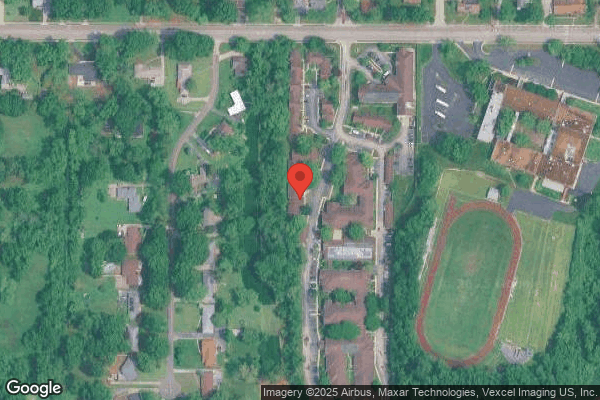
Aug 2019 18 deficiencies 1 Harm
SERIOUS (G)

Actual Harm - a resident was hurt due to facility failures

Pressure Ulcer Prevention (Tag F0686)

A resident was harmed · This affected 1 resident

**NOTE- TERMS IN BRACKETS HAVE BEEN EDITED TO PROTECT CONFIDENTIALITY** Based on observation, interview and record review, the facility failed to prevent one resident (Resident #42) from developing an...

Read full inspector narrative →
**NOTE- TERMS IN BRACKETS HAVE BEEN EDITED TO PROTECT CONFIDENTIALITY** Based on observation, interview and record review, the facility failed to prevent one resident (Resident #42) from developing an unstageable pressure ulcer (full thickness tissue loss in which the base of the ulcer is covered by slough (dead tissue, separating from living tissue) and/or eschar (dry, dark scab or falling away of dead skin) in the wound bed) by failing to monitor the resident's skin, failing to report new wounds, failing to obtain treatment orders in a timely manner and failing to follow the facility's wound policy. The sample size was 13. The facility census was 49. Review of the facility's Pressure Injury and Skin Condition Assessment Policy, dated 11/28/12 and last updated 1/17/18, showed the following: -Purpose: To establish guidelines for assessing, monitoring and documenting the presence of skin breakdown, pressure injuries and other ulcers and assuring interventions are implemented. Pressure (injury to the skin and/or underlying tissue usually over a bony prominence, as a result of pressure or friction) and other ulcers (diabetic, arterial, venous) will be assessed and measured at least every seven days by a licensed nurse and documented in the resident's record; -A skin condition assessment and pressure ulcer risk assessment (Braden) will be completed at time of admission/readmission. The pressure ulcer risk will be updated quarterly and as necessary; -Residents identified will have a weekly skin assessment by a licensed nurse; -A wound assessment will be initiated and documented in the resident chart when pressure or other ulcers are identified by a licensed nurse; -Each resident will be observed for skin breakdown daily during care and on the Certified Nurses Assistant (CNA's) assignment. Changes shall be promptly reported to the charge nurse who will perform a skin assessment; -If the resident receives a shower, it will be necessary to have the resident stand or be returned to bed to visualize the buttocks and groin; -At the earliest sign of a pressure injury or other skin problem, the resident, legal representative and attending physician will be notified. The initial observation of the ulcer or skin breakdown will also be described in the nursing notes; -Prior to performing the skin assessment, the nurse is to have a sufficient supply of clean disposable gloves, a disposable measuring device and a clean cotton tipped applicator to measure wound tunneling (channels that extend from a wound into and through subcutaneous (SQ, beneath the skin) tissue or muscle, usually extends in just one direction)/undermining (occurs in all directions beneath the wound opening, affecting a larger area of SQ tissue); -Pressure injuries and other ulcers (arterial, venous, diabetic) will be measured at least weekly and recorded in the resident's medical record; -The wound assessment should include the location, size, stage, odor, drainage, description and date and initials of the person performing the assessment; -Measure the length vertically in relation to head to toe and the width horizontally from hip to hip. Measure straight down into the deepest part of the wound for the depth. *If the wound is necrotic and the base of the wound bed is not visible or tunneling, the stage cannot be determined and must be recorded as an non-stageable with an undetermined depth; -When there are weekly changes which require physician and responsible party notification, documentation of findings will be made in the clinical record. These changes include, but are not limited to: a) New onset of purulent drainage; b) New onset of odor; c) Cellulitis (deep inflammation of the tissues just under the skin, caused by infection); d) Increased pain related to the wound; e) Significant increase in the wound size; f) New onset of ulcers; -Update the care plan accordingly; -Record the treatment on the treatment administration record; -The attending physician will be notified within seven to 14 days of the lack of response to the treatment. 1. Review of Resident #42's admission Minimum Data Set (MDS), a federally mandated assessment instrument completed by facility staff, dated 8/4/19, showed the following: -admitted to the facility on [DATE]; -No cognitive impairment; -Unable to ambulate; -Dependent on staff for bed mobility and transfers; -Extensive assistance required for personal hygiene, dressing and toileting; -Frequently incontinent of bowel and bladder; -No skin issues; -No risk of developing pressure ulcers; -No special treatments or programs; -Height 65 inches and weight 117 pounds; -Diagnoses included high blood pressure and end stage renal disease. Review of the resident's electronic (e) chart, showed additional diagnoses included altered mental status, osteoarthritis (breakdown of cartilage or cushion between joints leading to pain, stiffness, swelling and pain), chronic lung disease, lack of coordination and diabetes. Review of the admission progress note, dated 7/28/19 at 1:14 P.M., showed the following: -Diagnoses included lung cancer with metastasis (spread) to the bone; -Receives dialysis on Tuesday, Thursday and Saturday; Review of the care plan, dated 7/28 and last updated 8/6/19 and in use during the survey, showed the following: -Problem: Potential for impairment to skin integrity related to weakness; -Goal: Resident will not develop further alteration in skin integrity; -Interventions: Avoid scratching and keep hands and body parts from excessive moisture, keep fingernails short, avoid shearing, use a lift sheet for positioning, avoid skin to skin contact, ensure linens are wrinkle free, minimize pressure over bony prominences and use caution during transfers and bed mobility to prevent striking arms, legs and hands against any sharp or hard surface. Review of the Registered Dietician's (RD's) nutrition assessment, dated 8/7/19, showed the resident had a diagnosis of cancer with potential for metastatic disease, weight barely within normal limits and skin intact. Diet appropriate at that time for nutritional needs but would follow if nutritional supplements were needed. Review of the resident's weekly skin observations, showed the following: -8/4 and 8/11/19, showed resident's skin intact-no concerns; -No other weekly skin assessments found. Review of the facility's wound reports, dated 8/2, 8/9, 8/16 and 8/23/19, showed the resident's name not listed. Observation on 8/23/19 at 7:50 A.M., showed the resident in bed on his/her right side. CNA A present at the bedside and had just provided incontinence care. Resident had an open area to his/her coccyx (tailbone) approximately 2 centimeters (cm) long by 0.1 cm wide, open and deep pink in color. CNA A applied moisturizing cream and said to his/her knowledge, the nurse didn't use any other treatment on the area. He/she said the moisturizing ointment was what he/she used because the open area on the resident's coccyx had been there for a couple of days. During an interview and observation on 8/26/19 at 11:24 A.M., Licensed Practical Nurse (LPN) B said she was not aware of any skin breakdown on the resident. LPN B entered the resident's room and removed the resident's brief. LPN B turned the resident to his/her left side, exposed a triangle shaped area, with a black area in the center, on the resident's coccyx . The area measured approximately 1.5 cm by 1.5 cm, enclosed on all three sides by a yellowish colored substance that measured approximately 0.2 cm in width. LPN B initially said the area was not a wound, then said it was actually an unstageable pressure ulcer. He/she then dressed the resident in a clean brief and said he/she would call the physician. LPN B said he/she was not informed by the CNAs of any skin breakdown. During an interview and observation on 8/26/19 at 11:45 P.M. the Director of Nursing (DON) evaluated the resident's skin. She removed the resident's brief and said Where did this come from? She initially said the wound was a Stage II (partial thickness loss of dermis presenting as a shallow open ulcer with a red or pink wound bed, without slough. May also present as an intact or open/ruptured blister) pressure ulcer. After further assessment, the DON said the wound bed was covered with 100% eschar tissue, and the wound was an unstageable pressure ulcer to the coccyx. She measured the pressure ulcer as 4 cm by 4 cm with 2.5 cm depth and said she was not informed by the charge nurse or CNAs of the skin breakdown. She said licensed nurses do weekly skin assessments and document in the chart and on shower days, the CNAs observe the skin and notify the charge nurse of any skin issues. CNAs should have notified the charge nurse when they initially saw the open area, and an order should have been obtained at that time. Moisturizing lotion was not effective, and they should have used an ointment with zinc oxide because that is a barrier ointment. She said the pressure ulcer should have been covered, and the nurse needed to contact the wound team. Review of the physician's order sheet (POS), showed an order, dated 8/26/19, no time noted, to apply a wet to dry dressing to the unstageable wound daily until seen by the wound team. Further review of the care plan, last updated on 8/26/19, showed the following: -Problem: Resident has an ulcer, unstageable to the coccyx related to immobility; -Goal: Pressure ulcer will show signs of healing and remain free from infection through the review date; -Interventions: Follow facility policies/protocols for prevention/treatment of skin breakdown, monitor nutritional status, serve diet as ordered, monitor intake and record, weekly treatment documentation to include measurement of each area of skin breakdown's width, length, depth and type of tissue and exudate. Review of the skin assessment, completed by the DON on 8/26/19 and recorded at 11:05 P.M., showed the following: -Unstageable pressure ulcer to the coccyx; -Wound acquired in-house; -Type of wound is pressure and unstageable; -No tunneling or undermining present; -Odor present; -No pain. Observation and interview on 8/27/19 at 9:35 A.M., showed CNA A and LPN C placed a gait belt around the resident's waist and assisted him/her to bed. LPN C cleansed the bedside table with a bleach wipe, lay a barrier on the table, and opened and prepared dressing supplies. He/she removed the dressing from the resident's coccyx and said It has a little odor and then said I don't know how that got so bad so fast. The wound, completely covered in black eschar, showed an open area below the wound and an open area to the left of the wound. LPN B said the large wound was an unstageable pressure ulcer and the other two wounds were Stage II pressure ulcers. He/she measured the unstageable pressure ulcer as 4 cm in length by 3 cm in width. He/she said the wound has some depth, but he/she did not measure the depth. He/she measured the Stage II pressure ulcer below the unstageable pressure ulcer as 2 cm in length and 1 cm in width and the Stage II pressure ulcer to the left measured 1 cm long by 1.5 cm in width. He/she cleansed the unstageable pressure ulcer with normal saline (NS, sterile solution used to clean wounds) then wet gauze with NS and placed it in the wound bed, covered it with a telfa pad (non-adherent and sterile dressing, which is good for direct wound contact for small to medium sized wounds to help absorb light wound fluid) and applied tape. He/she said he/she would have to contact the physician to get a new order for the Stage II pressure ulcers. Review of LPN C's progress note, dated 8/27/19 at 10:28 A.M., showed a dressing change completed. Removal of wet to dry dressing and serous fluid (typically pale yellow and transparent) found on packing to coccyx wound. Scant amount of serosanguineous fluid (yellow with small amounts of blood) found on dressing from stage 2, measuring 2 cm in length by 1 cm in width just below coccyx wound. Stage 2 wound to left medial buttock measuring 1 cm by 0.5. DON, physician and power of attorney (POA) made aware. Physician notified for new treatment order for stage 2 wound. Review of POS on 8/27/19 at 11:00 A.M., showed no new orders. During an interview on 8/27/19 at 1:00 P.M., the DON said she would expect the CNA to let the charge nurse know of any open areas. The nurse should then do a skin assessment and place a note in the progress notes. She said the charge nurse did tell her of the resident's wound, but not before the survey team did. She said the nurse was supposed to do a skin assessment weekly and as needed. A nurse did apparently do a skin assessment on 8/18/19, but scratched it out, and the DON did not know why that was done. She said the nurse informed her that the resident refused a shower on 8/25/19, so she was unable to do a skin assessment, and the DON told her that was not a legitimate reason to not perform a skin assessment. She said had the skin assessments been performed per policy and had the CNA informed the nurse of the initial skin issue, this whole situation may well have been prevented. She said she recently provided in-services to the staff regarding several different areas of care. Skin care and the prevention and treatment of pressure ulcers was included in the training, which was completed on 5/20 and 6/6/19. She said the resident will now be on an air mattress, have a cushion in his/her wheelchair and be turned and repositioned at least every two hours. When asked, the DON said the staff had not provided adequate and effective care to this resident. During an interview on 8/28/19 at 12:29 P.M., the resident's primary physician said first of all, a CNA should never decide what treatment to use, and the nurse should be instruct the CNAs to always report any kind of skin issue. The physician said the resident's condition was very poor and given his/her condition, wounds were almost unavoidable, but they could not be ignored either. If the skin breakdown had been reported to the nurse when first noticed, the wound may not have progressed to the point it had.
CONCERN (D)

Potential for Harm - no one hurt, but risky conditions existed

Deficiency F0697 (Tag F0697)

Could have caused harm · This affected 1 resident

**NOTE- TERMS IN BRACKETS HAVE BEEN EDITED TO PROTECT CONFIDENTIALITY** Based on observation, interview and record review, the facility failed to adequately assess pain, record the degree and location...

Read full inspector narrative →
**NOTE- TERMS IN BRACKETS HAVE BEEN EDITED TO PROTECT CONFIDENTIALITY** Based on observation, interview and record review, the facility failed to adequately assess pain, record the degree and location of pain and notify the physician of ineffective pain control, which allowed severe, unnecessary discomfort. This deficient practice affected two residents (Resident's #42 and #19) out of 13 sampled residents. The census was 49. Review of the facility's Pain Assessment Policy, dated 11/28/19 and last revised on 7/6/18, showed the following; -Purpose: -To establish guidelines for appropriate assessment and intervention to manage pain; -To respect and support the resident's right to optimal pain management; -To measure and document the effectiveness of the plan using objective and subjective assessments; -Responsibility: -Licensed Nurse; -Guidelines: -A pain assessment tool will be used as indicated as a guide in determining a resident's pain in addition to their descriptive words and/or physical behaviors; -A pain assessment will be performed as part of the admission assessment. A pain assessment will be completed as indicated by diagnosis and other events during the resident's stay may require additional assessments, such as post falls or new diagnosis of fractures; -Prior to administration of as needed (PRN) medications, non pharmacological interventions will be attempted if resident is responsive and willing. Medications will be administered at the resident's request and when the resident refuses other such interventions; -Pain control effectiveness will be measured after PRN pain medications is administered and with each medication pass; -Once pain rate scale of verbal or cognitive is determined, all staff members are instructed on the resident's identified scale for all assessments; -Interventions for pain will be balanced with adequate response to provide comfort while maintaining functional status, when possible, in accordance with the resident's wishes; -The resident's physician will be notified when assessment reveals inadequate pain control and implementation of an appropriate plan of care; -Pain is considered the fifth vital sign; -Resident, family and legal representative will be part of the management program and the programs' effectiveness, medication changes when the resident permits or condition warrants; -Input and suggestions will be considered by the interdisciplinary team and appropriately addressed on the plan of care. 1. Review of Resident #42's admission Minimum Data Set (MDS), a federally mandated assessment instrument completed by facility staff, dated 8/4/19, showed the following: -admitted to the facility on [DATE]; -No cognitive impairment; -Unable to ambulate; -Dependent on staff for bed mobility and transfers; -Extensive assistance required for personal hygiene, dressing and toileting; -Frequently incontinent of bowel and bladder; -Received PRN pain medication: YES; -Received non medication intervention: NO; -Difficulty sleeping due to pain: NO; -Difficulty performing day to day activities due to pain: NO; -Indicators of pain in the last five days: NO; -Frequency of pain in the last five days: Not addressed; -Mode of expressing pain: Verbal description; -Level of pain: Moderate; -No special treatments or programs; -Diagnoses included high blood pressure and end stage renal disease. Review of the resident's electronic (e) chart, showed additional diagnoses included altered mental status, osteoarthritis (breakdown of cartilage or cushion between joints leading to pain, stiffness, swelling and pain), chronic lung disease, lack of coordination and diabetes. Review of the admission progress note, dated 7/28/19 at 1:14 P.M., showed the following: -admitted from an acute care hospital; -Diagnoses included lung cancer with metastasis (spread) to the bone and altered mental status; -Received dialysis on Tuesday, Thursday and Saturday; -Back pain rated as a 3 on a 0-10 scale. Review of the care plan, dated 7/28/19 and last updated on 8/6/19, showed the following: -Problem: Acute (short duration) pain related to osteoarthritis; -Goal: Will not have an interruption in normal activities due to pain; -Interventions: The resident's pain will be alleviated/relieved by rest and pain medication, monitor/record/report to nurse any resident complaints of pain or requests for pain treatment. Review of the treatment administration record (TAR), dated 7/31 through 8/12/19, showed an undated order for Hydrocodone (narcotic analgesic) 5/325 milligrams (mg) one tablet every six hours PRN for pain. Staff administered the medication 11 times during that period, and the physician discontinued the medication on 8/13/19. Review of the progress notes, dated 8/13/19, showed no documentation to explain why the Hydrocodone had been discontinued. Review of the TAR, dated 8/13 through 8/15/19, showed an undated order to administer Hydrocodone 5/325 mg one tablet four times a day. The physician discontinued the medication on 8/15/19. Review of the progress notes, dated 8/15/19, showed no documentation to explain why the Hydrocodone had been discontinued. Review of the TAR, dated 8/15 through 8/19/19, showed an undated order to administer Morphine Sulfate (narcotic analgesic) ER extended release (MS ER) 15 mg one tablet twice a day. The physician discontinued the medication on 8/19/19. Review of the progress note, dated 8/19/19, showed the resident transferred to the hospital due to a change in mental status. The notes continued to read that the specialist discontinued the MS ER due to the possibility that it caused the change in mental status. Review of the TAR, dated 8/20 through 8/22/19, showed the following: -An order, dated 8/20/19, to administer Oxycodone (narcotic analgesic) ER 10 mg one tablet every 12 hours. Received a total of four doses. The last dose administered at 8:00 A.M. on 8/22/19; -An order, dated 8/20/19, to administer Oxycodone (rapid acting) 5 mg one tablet every four hours PRN for pain. He/she received one dose of Oxycodone PRN on 8/20/19 at 5:20 P.M. Review of the progress notes, dated 8/22/19 at 6:00 P.M., showed a nurse contacted the physician and asked that the Oxycodone medications be discontinued due to a change in his/her mental status. The physician discontinued the Oxycodone. Review of the electronic physician's orders sheet (ePOS) in use during the survey, showed an order for Tylenol (analgesic) 325 mg two tablets every four hours PRN. Observation on 8/23/19 at 7:50 A.M., showed Certified Nurse Aid (CNA) A removed the covers from the resident's legs and placed a pull up brief and slacks over his/her feet. With his/her legs inches off of the bed, he/she said That hurts, that hurts. When the surveyor asked the resident what hurt, the resident said his/her buttocks, legs and back hurt and then added I just hurt all over. CNA A left the room to obtain assistance, and the resident looked at the surveyor and said Please help me, please help me ma ' am, I've never had pain like this before in my life. CNA A returned to the room with Certified Medication Technician (CMT) K and they both assisted the resident to a seated position at the side of the bed and placed a gait belt around his/her waist. He/she repeated Ow, oh my God my back, my legs and without stopping or summoning a nurse, the staff pivot transferred the resident to the wheelchair. CNA A then asked the resident if he/she still had pain, and he/she responded again My legs, my back. Observation on 8/23/19 at 10:32 A.M., showed the resident lay in bed and said he/she received some Tylenol and It still hurts, but it might be a little better. His/her face showed grimacing. Review of the medication administration record (MAR), showed Tylenol 650 mg administered at 9:33 A.M. Observation on 8/23/19 at 12:20 P.M., showed the resident lay in bed and a family member was at the bedside. When asked about pain, the resident said Oh it's ok when describing the discomfort. Then he/she tried to reposition in bed, his/her facial muscles clenched, and he/she said Sometimes it's excruciating. The family member said prior to admission to the facility, the resident took Hydrocodone, and it always helped if he/she took it on time. During an interview on 8/23/19 at 12:30 P.M., Licensed Practical Nurse (LPN) L said he/she would put a call out to the physician because all the resident had for pain was Tylenol, which he/she has administered and it provided no relief. Review of the POS in use during the survey, showed an order, dated 8/23/19, to administer Oxycodone 5 mg one tablet every four hours PRN for pain relief. Review of the TAR, dated 8/1 through 8/31/19, showed Oxycodone 5 mg one tablet administered on 8/23/19 at 12:55 P.M. Observation on 8/26/19 at 5:29 A.M., showed the resident lay in bed, awake and said he/she had pain in his/her butt, hip and Really I just hurt all over, I guess I didn't take a pain pill. Further review of the TAR, dated 8/1 through 8/31/19, showed Oxycodone 5 mg administered twice on 8/24 for pain levels of eight and nine. No further Oxycodone administered after 6:01 P.M. on 8/24/19. Observation on 8/26/19 at 11:24 A.M., showed he/she lay in bed with a pained expression on his/her face and when asked said his/her pain level is an eight. He/she tried to reposition in bed and repeated Ow, ow, ow. Observation on 8/27/19 at 9:35 A.M., showed CNA A and LPN C placed a gait belt around the resident's waist and assisted him/her to bed. He/she grunted and had a pained expression on his/her face and said The pain is real bad. The surveyor asked the resident where the pain was, and he/she said his legs, back and buttocks hurt. The resident said he/she received some pain pills but they didn't do any good. The resident said the pain level was a 10. LPN C said he/she gave him/her a pain pill about 10 minutes ago, and it would take about 30 minutes to take effect. LPN C proceeded to change the dressing on the coccyx wound and the resident repeated Ow, ow. Review of the TAR on 8/27/19 at 11:00 A.M., showed no administrations of Oxycodone administered for the date of 8/27/19. Further review of the TAR, dated 8/1/ through 8/19/19, showed the following: -Pain assessments recorded as completed daily at midnight 8/1 through 8/19 and 18 of those entries, showed a zero pain level; -Pain assessments recorded as completed daily at 8:00 A.M. 8/1 through 8/19 and five of those entries, showed a zero pain level; -Pain assessments recorded as completed daily at 4:00 P.M. 8/1 through 8/19 and 10 of those entries, showed a zero pain level; -Pain assessment three times a day discontinued on 8/19/19. During an interview on 8/27/19 at 1:00 P.M. the Director of Nursing (DON) said the nurses use the TAR to record the narcotics and treatments that they administer, and the CMTs use the MAR. They find it to be less confusing that way. She said she was aware of how uncomfortable the resident was, and he/she should be evaluated for pain at least every two hours. She said a zero for a pain assessment on this resident was false, and the resident was not fully evaluated. It was not always what the resident said, but also how they behave was a part of determining pain level. When asked how the nurses would know the full extent of the resident's diagnosis since it was not on the MDS or the facility diagnosis sheet, she said the staff may not know the full extent of the diagnosis. She said they know he/she was always in pain and could not answer why the staff didn't give him/her pain medicine. When asked, the DON said staff had not provided adequate and effective care to this resident. The care plan was also incorrect because the pain was associated with far more than osteoarthritis. During an interview on 8/28/19 at 12:29 P.M., the resident's primary physician said the resident was sent to the hospital by the specialist on two different occasions due to a change in mental status, and both of those times, the specialist discontinued the pain medication. He said now the resident's specialist has signed off of the case, and he, the primary physician, was aware of the resident's pain. He said nursing staff should always pay attention to pain because no one liked to see someone in pain, and no one should have to be in pain. He said staff should do something no matter what and should contact the physician. 2. Review of Resident #19's admission MDS, dated [DATE], showed the following: -admitted to the facility on [DATE]; -Moderate cognitive impairment; -Unable to ambulate; -Extensive assistance required for bed mobility, transfers, dressing, tilting and personal hygiene; -Pain assessment not completed due to impaired cognition; -Received opioid four of seven days; -Diagnoses included high blood pressure and chronic non pressure ulcer. Review of the resident's e chart, showed additional diagnoses included diabetes and lymphedema (swelling that occurs usually in the arms, legs or both). Review of the care plan, in use during the survey, showed the following: -Problem: Acute pain due to sacral ulcers (wounds) and insufficient venous return (poor blood flow in the legs); -Goal: Resident will not have an interruption to normal activities due to pain; -Interventions: Will verbalize adequate relief of pain or ability to cope with incompletely relieved pain, administer analgesia as per order, administer pain medicine 1/2 hour before treatments or care, anticipate the resident's need for pain relief, and respond immediately to any complaint of pain, evaluate the effectiveness of pain interventions, review for compliance, alleviating of symptoms, dosing schedules and resident's satisfaction with results, impact on functional ability and impact on cognition. -Problem: Self care deficit related to wound and feet/leg pain, impaired physical mobility and weakness; -Goal: Resident's activities of daily living will improve; -Interventions: Resident requires extensive assistance for bathing, bed mobility, dressing and transfers. Encourage resident to participate to fullest extent possible, encourage to use the call light, monitor/document/report PRN any changes, any potential improvement, reasons for self-care deficit, expected course, declines in function. Observation on 8/23/19 at 10:39 A.M., showed he/she lay flat in bed with his/her brow furrowed. He/she refused to say why his/her brow was furrowed. Observation on 8/23/19 at 11:12 A.M., showed CNAs A and J entered the resident's room where the resident lay in bed on a mechanical lift (Hoyer) sling. The CNAs connected the top hooks of the Hoyer to the sling, then reached between his/her legs and pulled the lower section of the sling to connect the sling to the Hoyer. He/she responded Oh Lord, please stop it hurts so bad. CNA's A and J lifted the resident from the bed and transferred him/her to the chair. They then positioned him/her in the chair and while doing so, the resident repeated Oh Lord it hurts. Review of the POS in use during the survey, showed an order, dated 7/12/19, to administer Hydrocodone 5/325 mg one tablet every six hours PRN for pain relief. Review of the TAR, dated 7/12 through 7/31/19, showed Hydrocodone administered 13 times. Review of the TAR, dated 8/1 through 8/31/19, showed the following: -No administration of Hydrocodone on 8/23/19; -Hydrocodone administered 19 times between 8/1 and 8/26/19; -Pain assessments recorded as completed daily at midnight on 8/1 through 8/26 and all levels recorded as zero pain; -Pain assessments recorded as completed daily at 8:00 A.M. 8/1 through 8/26 and 14 of those entries showed zero pain level; -Pain assessments recorded as completed daily at 4:00 P.M. 8/1 through 8/26 and 16 of those entries showed a zero pain level. Observation on 8/26/19 at 12:38 P.M., showed the resident lay in bed, expression flat, and said he/she did not feel well and did not want to get out of bed. He/she would not say what was wrong. Observation and interviews on 8/27/19 at 6:32 A.M., showed the resident lay in bed, eyes open, affect flat. When the surveyor asked if the resident had any pain, he/she said he/she had pain in the legs and knees. The surveyor asked if he/she would prefer for the nurses to just give him/her pain medicine instead of asking for it, and the resident responded Yes, yes it really would. During an interview on 8/27/19 at 1:00 P.M., the DON said this resident had initially been on scheduled Hydrocodone twice a day, and the physician discontinued it. She said she had no idea why. When asked if the DON believed someone with cognitive impairment was able to articulate the need for pain medicine and describe what that pain felt like, she said no. The DON said the number of times the resident received a PRN was a lot, and he/she should be re-evaluated. The DON said this resident did not ask for pain medicine, but if someone asked him/her, he/she did respond. She also said if the care plan said to give pain medicine one half hour before the dressing change, then she expected the nurse to do that.
CONCERN (E)

Potential for Harm - no one hurt, but risky conditions existed

Safe Environment (Tag F0584)

Could have caused harm · This affected multiple residents

**NOTE- TERMS IN BRACKETS HAVE BEEN EDITED TO PROTECT CONFIDENTIALITY** Based on observation and interview, the facility failed to provide a safe, clean, comfortable and homelike environment, by not e...

Read full inspector narrative →
**NOTE- TERMS IN BRACKETS HAVE BEEN EDITED TO PROTECT CONFIDENTIALITY** Based on observation and interview, the facility failed to provide a safe, clean, comfortable and homelike environment, by not ensuring walls, carpets and floors were clean and in good repair on the first and second floors. The census was 49. 1. Observation of the first floor dining room on 8/22/19 at 12:30 P.M., 8/23/19 at 12:46 P.M., 8/26/19 at 9:05 A.M. and 1:49 P.M. and 8/27/19 at 9:12 A.M. and 11:00 A.M., showed the following: -A chair-height white scrape approximately 3/4 inches wide on the column near the medication cart; -Black scuff marks at chair-height, on the white wood trim approximately 10 inches wide, on the west dining room wall; -Gouges in the walls, approximately 1/8 inch deep, to the left and right of the doorway leading outside; -An approximate 12 inch white gouge in the wall to the right of the doorway at chair-height; -Multiple gouges in the wall to the right of the door, under the window and above the cove base, all along the west wall; -A large amount of tiny black bugs on cobwebs on each side of the door frame, on top of the wood trim, and a build-up of dead, tiny, black bugs in the threshold of the door. 2. Observations of the second floor on 8/22 through 8/23/19 and 8/26 through 8/27/19, showed the following: -Numerous areas of chipped drywall and horizontal black marks on the exterior of the nurses' station; -The walls below the windows in the dining room with numerous scratches in the paint and horizontal black marks approximately 36 inches from the floor and an approximately 24 inch long piece of silver tape attached the cove base to the wall by the fire place; -Ground in dirt and visibly worn and darkened carpet in the space between the nurses' station and dining room and extended towards the fire doors on both halls; -Paint chips and scratches covering the bottom third on the exterior door frames of every resident room and elevator; -Several vertical black marks, areas of exposed drywall and divots of various sizes and lengths, along the walls below the hand rails and approximately 12 inches above the hand rails, along the walls of both resident halls on the second floor; -An area of exposed drywall and peeling paint measuring approximately 18 inches by 1 inch above the fire extinguisher outside of room [ROOM NUMBER]. 3. During an interview on 8/27/19 at 10:59 A.M. the Director of Housekeeping said all staff have been trained to notify maintenance when the walls or floors needed to be repaired. There has been only one person in the maintenance department for several months and as a result, resident areas have not been maintained. Housekeeping staff vacuum the carpet and clean the floors every day. The carpet is deep cleaned twice a month. The carpet is pretty worn out so it is difficult to tell it has been cleaned. 4. During an interview 8/27/19 at 1:00 P.M., the administrator said he was aware of the condition of the walls and carpets on the first and second floors. Maintenance had been short staff for several months, and the maintenance director has not been able to keep up. He expected housekeeping staff to clean away cobwebs and dead bugs.
CONCERN (E)

Potential for Harm - no one hurt, but risky conditions existed

Deficiency F0657 (Tag F0657)

Could have caused harm · This affected multiple residents

**NOTE- TERMS IN BRACKETS HAVE BEEN EDITED TO PROTECT CONFIDENTIALITY** Based on interview and record review, the facility failed to ensure care plans reflected residents' current needs by not updatin...

Read full inspector narrative →
**NOTE- TERMS IN BRACKETS HAVE BEEN EDITED TO PROTECT CONFIDENTIALITY** Based on interview and record review, the facility failed to ensure care plans reflected residents' current needs by not updating them to include falls and new/additional fall interventions for two (Residents #2 and #9) of 13 sampled residents, and failed to remove hospice information for one resident (Resident #14) when discharged from hospice. The census was 49. 1. Review of Resident #2's quarterly Minimum Data Set (MDS), a federally mandated assessment instrument completed by facility staff, dated 8/25/19, showed the following: -Short and long term memory problems; -Severely impaired cognitive skills for daily decision making; -Extensive assistance of staff required for most activities of daily living (ADLs); -Incontinent of bowel and frequently incontinent of bladder; -Two falls; -Received antipsychotic, antidepressant and opioid medication the last seven days; -Diagnoses included anemia, heart failure, Alzheimer's disease, dementia and depression. Review of the resident's care plan, updated on 12/10/18 and in use at the time of the survey, showed the following: -Focus: Actual or potential psychosocial well-being problem related to repeated accidents/falls; -Goal: Will effectively cope with his/her feelings of unhappiness by the review date; -Interventions: Allow the resident time to answer questions and to verbalize feelings perceptions, and fears daily, provide opportunities for the resident and family to participate in care, when conflict arises, remove resident to a calm safe environment and allow to vent/share feelings. Review of the resident's progress notes, showed on 2/24/19 at 2:11 P.M., the resident had a witnessed fall in the dining room television area, was leaning forward in the wheelchair and fell on his/her right side to the floor. Vitals were taken, and the resident did not strike his/her head so neurological checks were not indicated. The resident was alert and disoriented per usual baseline. No changes in range of motion noted from normal baseline. No injuries were observed. The resident was assisted to the wheelchair with assistance of two staff, then assisted to bed. Intervention: None shown. Review of a fall risk assessment, dated 5/24/19, showed the following: -Intermittent confusion; -No falls in the past three months; -Chair bound; -Balance problem while standing and walking; -Takes one to two of anesthetic, antihistamine, antihypertensive, antiseizure, benzodiazepine, cathartic, diuretic, hypoglycemic, narcotic, psychotropic or sedative medications; -One to two predisposing diseases present; -Score of 13, indicated at risk for falls. Further review of the resident's progress notes, showed the following: -6/24/19 at 11:00 P.M., the resident had an un-witnessed fall in his/her room, noted in room on floor on his/her left side in front of the bathroom door. Resident was unable to make a statement. Vital signs were taken and neurological checks were initiated. The resident was alert and disoriented per usual baseline. There were no changes in range of motion from normal baseline. There were no injuries observed. The resident was assisted to bed with and will be monitored every hour; -7/3/19 at 9:12 P.M., the resident had an un-witnessed fall in the activity area. The resident was found sitting straight up on the floor in front of his/her wheelchair. The resident was unable to express what he/she was trying to do. Vital signs were taken and neurological checks were initiated. The resident was alert and disoriented per usual baseline. There were no changes in range of motion from normal baseline. Range of motion was completed without noted or voiced discomfort. There were no injuries observed. Staff returned the resident to the wheelchair and then to bed with a floor mat in place. Intervention: Possibly put to bed earlier; -8/20/19 at 7:25 A.M., the resident had an un-witnessed fall in his/her room. The housekeeper made this nurse aware that the resident was on the floor. When this nurse arrived to the resident's room, the resident was on the floor in a fetal position at the foot of his/her wheelchair in between the foot pedals. The resident was unable to provide a statement. Vital signs were taken and neurological checks were initiated. The resident was alert and disoriented per usual baseline. There were no changes in range of motion from normal baseline. There was a new injury observed. A pinkish area to the lower left torso was noted. The skin was intact, and staff assisted the resident to bed. Intervention: Educated aide not to leave resident in room alone. Further review of the care plan, showed it was not updated with the incidents or fall interventions to be implemented, following the falls on 2/24/19, 6/24/19, 7/3/19 and 8/20/19. 2. Review of Resident #9's admission MDS, dated [DATE], showed the following: -Moderate cognitive impairment; -Extensive assistance of staff required for most ADLs; -Not steady when walking, moving from seated to standing, turning, moving on and off the toilet and transferring between bed to chair or wheelchair; -Upper and lower extremity impairments on both sides; -Frequently incontinent; -No falls; -Short of breath at rest and when lying flat; -Diagnoses included atrial fibrillation (a-fib, irregular heartbeat), heart failure, high blood pressure, depression and chronic obstructive pulmonary disease (COPD-difficulty breathing). Review of the resident's care plan, updated on 12/10/18 and in use at the time of the survey, showed the following: -Focus: At risk for falls related to gait/balance problems due to poor safety awareness and increased risk due to antidepressant medication; -Goal: Will be free of falls through the review date; -Interventions: Anticipate and meet the resident's needs, be sure the resident's call light is within reach and encourage the resident to use it for assistance as needed. The resident needs prompt response to all requests for assistance, dycem (non-slip material) under the wheelchair cushion, educate staff on proper gait belt use during transfers, educate the resident/family/caregivers about safety reminders and what to do if a fall occurs, encourage the resident to participate in activities that promote exercise, physical activity for strengthening and improved mobility, ensure that the resident is wearing appropriate footwear, brake extender on wheelchair for safety, evaluate and treat as ordered or as needed, physical therapy evaluation status post fall, urinalysis with culture and sensitivity. Review of the resident's progress notes, showed the following: -4/27/2019 at 4:33 P.M., the resident stated he/she was trying to put him/herself in bedside recliner and lost balance, landing on his/her right side. The root cause of the fall: Trying to transfer without assistance. A new injury was noted on assessment: a skin tear to the right pinkie finger, no pain, no changes noted in the range of motion, the bed was in the lowest position, steri-strips were intact and there was no swelling noted. Intervention and care plan updated: Resident to be assisted into chair after meals; -8/15/19 at 6:40 P.M., the resident had an un-witnessed fall in the bathroom, observed in bathroom on floor with pants around his/her calves, lying perpendicular to the door opening. The resident was unable to state what happened, but the bathroom light was off, and there was stool on the toilet and clothing. The resident had no complaints of pain or discomfort. Neurological checks were initiated. The resident was alert and disoriented per usual baseline. There were no changes in range of motion from normal baseline and no injuries were observed. Intervention: Scheduled toileting. Further review of the care plan, showed it was not updated with the incidents of 4/27/19 and 8/15/19, or the noted fall interventions of assisting resident into the chair after meals and scheduled toileting. 3. Review of Resident #14's quarterly MDS, dated [DATE], showed the following: -Severe cognitive impairment; -Extensive assistance required for all care; -Life expectancy less than six months: No; -Diagnoses included diabetes and repeated falls. Review of the electronic physician's order sheet (ePOS) in use during the survey, showed an order, dated 12/10/18, for hospice care. Review of the miscellaneous section of the chart, showed a hospice POS, dated 7/11/19, to discontinue hospice services effective 7/11/19. Review of the care plan, dated 7/26/16 and last updated on 7/29/19, showed the following: -Problem: Resident has a terminal condition and is receiving hospice services; -Goal: Resident will be free from unrelenting pain and discomfort; -Interventions: Arrange visits with social services as needed, encourage family to visit if this is comfortable for the resident, hospice aide to visit per scheduled days and provide services such as pain management, support and psychological support as needed, hospice nurse provides support per scheduled days, maintain good communication with hospice, notify physician and hospice if pain or discomfort is not alleviated by current medication or treatment regimen and/or change in condition. 4. During an interview on 8/27/19 at 1:00 P.M., the Director of Nurses (DON) said care plans should be updated following falls and should include the interventions implemented. The MDS coordinator was responsible for updating care plans. Information regarding hospice care should have been removed from the resident's care plan when the resident was discharged from hospice care.
CONCERN (E)

Potential for Harm - no one hurt, but risky conditions existed

Deficiency F0658 (Tag F0658)

Could have caused harm · This affected multiple residents

**NOTE- TERMS IN BRACKETS HAVE BEEN EDITED TO PROTECT CONFIDENTIALITY** Based on observation, interview and record review, the facility failed to ensure all physician orders were followed by not notif...

Read full inspector narrative →
**NOTE- TERMS IN BRACKETS HAVE BEEN EDITED TO PROTECT CONFIDENTIALITY** Based on observation, interview and record review, the facility failed to ensure all physician orders were followed by not notifying the physician regarding a resident's weight gain, not discontinuing hospice care services on the current physician's order sheet, not obtaining laboratory tests and by not obtaining orders for oxygen usage for six of 13 sampled residents (Residents #46, #44, #14, #13, #4 and #9). The census was 49. 1. Review of Resident #46's quarterly Minimum Data Set (MDS), a federally mandated assessment instrument completed by facility staff, dated 8/18/19, showed the following: -No cognitive impairment; -Extensive assistance of staff required for transfers, toileting and personal hygiene; -Occasionally incontinent of bowel and bladder; -Not steady when walking, moving from seated to standing, turning, moving on and off the toilet and transferring between bed to chair or wheelchair; -Diagnoses include heart failure, high blood pressure, pneumonia, diabetes and respiratory failure. Review of the resident's care plan, updated 8/6/19 and in use at the time of the survey, showed the following: -Focus: Congestive heart failure (CHF-impaired heart function); -Goal: Will have clear lung sounds, heart rate and rhythm within normal limits through the review date; -Interventions: Daily weight, notify physician or nurse practitioner if resident has a weight gain of 3 pounds in a day or five pounds in a week, give cardiac medications as ordered, monitor lab work, monitor vital signs as ordered, monitor/document/report as needed any signs or symptoms of CHF- dependent edema (swelling) of legs and feet, periorbital edema (puffy eyes) shortness of breath upon exertion, cool skin, dry cough, distended neck veins, weakness, weight gain unrelated to intake, crackles and wheezes upon auscultation (listening to sounds from the heart, lungs, or other organs, with a stethoscope), orthopnea (shortness of breath when lying flat), weakness and or fatigue, increased heart rate, lethargy and disorientation. Review of the resident's physician's order sheet (POS) dated 8/1/19 through 8/31/19, showed an order, dated 3/16/19, for daily weight, notify physician or nurse practitioner if resident has a weight gain of three pounds in a day or five pounds in a week. Review of the resident's treatment administration record (TAR), dated 8/1/19 through 8/31/19, showed the following: -Daily weight, notify physician or nurse practitioner if resident has a weight gain of three pounds in a day or five pounds in a week; -8/2/19 weight recorded at 157.2 pounds, and on 8/3/19 weight recorded at 164.4 pounds (an increase of 7.2 pounds in one day); -8/8/19 weight recorded as 162 pounds, and on 8/9/19 weight recorded as 167 pounds (an increase of 5 pounds in one day). Review of the resident's progress notes, found no documentation of contact with the physician or the nurse practitioner on 8/3/19 or 8/9/19 regarding the resident's weight increases. During an interview on 8/27/19 at 1:00 P.M., the Director of Nurses (DON) said she expected all physician's orders to be followed. There should be a communication note to show staff notified the doctor or nurse practitioner regarding weight changes. If there wasn't a note, then the information was not communicated. 2. Review of Resident #44's medical record, showed the following: -admission date of 9/18/14; -Diagnoses included diabetes. Review of the resident's POS, dated August 2019, showed an active order dated 10/14/15, to obtain a Hemoglobin A1c (HgbA1c, test to screen, diagnose or monitor diabetes and prediabetes) every three months. Review of the laboratory section of the medical record, showed the following: -HgbA1c test result dated 11/19/18; -No HgbA1c test results dated February and/or May 2019. During an interview on 8/27/19 at 1:00 P.M., the DON said the charge nurses were responsible for completing the laboratory requisition and responsible to ensure the resident's HgbA1c laboratory tests were obtained every three months as ordered. The DON verified the resident's HgbA1c tests were not obtained in February and/or May 2019. 3. Review of Resident #14's quarterly MDS, dated [DATE], showed the following: -Severe cognitive impairment; -Extensive assistance required for all care; -Life expectancy less than six months: No; -Diagnoses included diabetes and repeated falls. Review of the electronic (e) POS, in use during the survey, showed an order, dated 12/10/18, for hospice care. Review of the miscellaneous section of the chart, showed a hospice physician order sheet, dated 7/11/19, to discontinue hospice services effective 7/11/19. During an interview on 8/27/19 at 1:00 P.M., the DON said the resident had been discharged from hospice services on 7/11/19, and the order should have been removed from the POS. 4. Review of Resident #13's quarterly MDS, dated [DATE], showed the following: -Severe cognitive impairment; -Extensive assistance required for all mobility and personal care; -Special treatment: Dialysis; -Diagnoses included heart failure, dementia, malnutrition and chronic lung disease. Review of the care plan, dated 2/27/19 and last revised 8/5/19, showed the following: -Problem: Oxygen therapy, jaw pain; -Goal: Resident will have no signs or symptoms of poor oxygen absorption through the review date; -Interventions: Monitor for signs/symptoms of respiratory distress and report to the physician, oxygen (O2) settings, O2 via nasal canula (NC, device for delivering oxygen by way of two small tubes that are inserted into the nares) @ Liter (L) (no L flow entered). Observations of the resident showed the following: -On 8/22/19 at 10:26 A.M., he/she lay in bed and oxygen infused at 4 L via NC; -On 8/22/19 at 3:20 P.M., he/she sat in a wheelchair at the foot of the bed with eyes closed, O2 infused at 2 L via NC; -On 8/23/19 at 6:45 A.M., he/she lay in bed with eyes closed and O2 infused at 2 L via NC; -On 8/26/19 at 5:19 A.M. and 8:33 A.M., he/she sat in a wheelchair and O2 infused at 2 L via NC; -On 8/27/19 at 6:42 P.M., he/she sat in a wheelchair and O2 infused at 2 L via NC. Review of the ePOS, in use during the survey, showed no order for O2. 5. Review of Resident #4's medical record, showed the following: -admission date of 10/17/18 and readmission date of 6/25/19; -Diagnoses included chronic obstructive pulmonary disease (COPD, lung disease). Review of the resident's care plan, dated 10/17/18 and in use during the survey, showed the following: -Problem: Resident has altered respiratory status/difficulty in breathing related to COPD; -Goal: Resident will maintain normal breathing pattern as evidenced by normal respirations, normal skin color, and regular respiratory rate/pattern through next review; -Interventions: Oxygen settings and O2 per NC as ordered. Observations of the resident during the survey, showed the following: -On 8/22/19 at 11:49 A.M., the resident lay in bed with oxygen infused at 3 liters per oxygen concentrator (medical device that concentrates oxygen from environmental air and delivers it to a patient in need of supplemental oxygen); -On 8/23/19 at 7:05 A.M. and 12:45 P.M., the resident lay in bed with oxygen infused at 3 liters per oxygen concentrator. Review of the resident's POS, dated August 2019, showed no active order for oxygen administration. 6. Review of Resident #9's admission MDS, dated [DATE], showed the following: -Moderate cognitive impairment; -Extensive assistance of staff required for most activities of daily living; -Not steady when walking, moving from seated to standing, turning, moving on and off the toilet and transferring between bed to chair or wheelchair; -Upper and lower extremity impairment on both sides; -Frequently incontinent; -No falls; -Short of breath at rest and when laying flat; -Diagnoses included atrial fibrillation (a-fib, irregular heartbeat), CHF, high blood pressure, depression and COPD. Review of the resident's care plan, updated 10/22/2018 and in use at the time of the survey, showed the following: -Focus: Shortness of breath related to CHF and decreased lung expansion; -Goal: Will have no complications related to shortness of breath through the review date; -Interventions: As needed oxygen at 2 L per nasal cannula three times a day during day, evening, night. Review of the resident's POS, dated 8/1/19 through 8/31/19, showed no order for the administration of O2. Observations of the resident showed the following: -On 8/22/19 at 12:16 P.M. and 2:20 P.M., the resident sat in a recliner in his/her room, with feet up, eyes closed and O2 administered at 2 L via NC; -On 8/23/19 at 6:40 A.M., the resident lay in bed on his/her back with eyes closed and O2 administered at 2 L via NC; -On 8/26/19 at 9:13 A.M., the resident sat in a wheelchair at the dining room table with an O2 tank on the back of the wheelchair and O2 administered at 2 L via NC; -On 8/26/19 at 1:48 P.M., the resident sat in a recliner in his/her room, with feet up, eyes closed and O2 administered at 2 L via NC; -On 8/27/19 at 9:36 A.M., the resident sat in a recliner in his/her room, with feet up, eyes closed and O2 administered at 2 L via NC. 7. During an interview on 8/27/19 at 1:00 P.M., the DON said she expected all physician's orders to be followed. There should be orders for oxygen use, to include the level, how it was received, tubing changes and an order to monitor O2 saturation (percent of oxygen in the blood) level every shift. The care plan should reflect whether the oxygen was used continually or as needed.
CONCERN (E)

Potential for Harm - no one hurt, but risky conditions existed

Accident Prevention (Tag F0689)

Could have caused harm · This affected multiple residents

**NOTE- TERMS IN BRACKETS HAVE BEEN EDITED TO PROTECT CONFIDENTIALITY** Based on observation and interview, the facility failed to prevent resident access to harmful chemicals and razors in three of f...

Read full inspector narrative →
**NOTE- TERMS IN BRACKETS HAVE BEEN EDITED TO PROTECT CONFIDENTIALITY** Based on observation and interview, the facility failed to prevent resident access to harmful chemicals and razors in three of four unlocked spa rooms and one unlocked laundry room. This had the potential to affect all residents who could move about freely in the facility. The sample was 13. The census was 49. 1. Observation of the spa room on the first floor near room [ROOM NUMBER], showed the following: -On 8/23/19 at 7:15 A.M. and 8:16 A.M. and on 8/26/19 at 7:44 A.M., one disposable razor lay in the vanity drawer, and a one gallon plastic container of whirlpool disinfectant cleaner, approximately one half full, with no lid, sat in the unlocked vanity cabinet. The label on the container read: DANGER Keep out of the reach of children. Corrosive. Causes irreversible eye damage and skin burns. Do not get in eyes, on skin or on clothing. Wear goggles, face shield, rubber gloves and protective clothing. Harmful if absorbed through skin. Harmful if swallowed. Wash thoroughly with soap and water after handling. Remove contaminated clothing and wash before reuse; -On 8/27/19 at 6:28 A.M. and 9:42 A.M., a disposable razor lay on top of the vanity, and the same one gallon plastic container of whirlpool disinfectant cleaner sat in the unlocked vanity cabinet; at 12:54 P.M., the razor remained on top of the vanity, the whirlpool disinfectant cleaner sat in the unlocked vanity cabinet and one opened bottle of Chlorhexidine with 4 percent acetone antiseptic (germicidal cleaner) sat on the sink. 2. Observation on 8/27/19 at 7:15 A.M., of the second floor laundry room adjacent to the dining room, showed a one gallon container of bleach sat on the dryer. Five residents were seated in the dining room with no staff present. The door was unlocked and slightly open. At 10:35 A.M., the laundry room door was propped open, with two residents in the dining room unsupervised, and the container of bleach still on the dryer. 3. Observation of the second floor spa room by the therapy department, showed the following: -On 8/22/19 at 11:25 A.M. and 3:25 P.M., 8/26/19 at 6:37 A.M. and 8/27/19 at 7:10 A.M., five disposable razors in the unlocked drawer and one disposable razor in the unlocked cabinet; -On 8/27/19 at 12:05 P.M., two disposable razors sat on the bottom shelf of the upper unlocked cabinet and nine razors lay in the unlocked vanity drawer. 4. Observation of the second floor spa room near room [ROOM NUMBER], showed the following: -On 8/26/19 at 6:37 A.M., five razors lay on top of the sharps container; -On 8/27/19 at 7:10 A.M., six disposable razors sat next to the sink. 5. During an interview on 8/27/19 at 1:00 P.M., the Director of Nurses (DON) said the spa rooms on the first and second floor did not have locks. Disinfectants and other chemicals, and razors should be locked up at all times. It was her responsibility to make sure they were locked up.
CONCERN (E)

Potential for Harm - no one hurt, but risky conditions existed

Deficiency F0698 (Tag F0698)

Could have caused harm · This affected multiple residents

**NOTE- TERMS IN BRACKETS HAVE BEEN EDITED TO PROTECT CONFIDENTIALITY** Based on interview and record review, the facility failed to routinely assess, monitor and document on three residents receivin...

Read full inspector narrative →
**NOTE- TERMS IN BRACKETS HAVE BEEN EDITED TO PROTECT CONFIDENTIALITY** Based on interview and record review, the facility failed to routinely assess, monitor and document on three residents receiving dialysis (process for removing toxins from the blood for individuals with kidney failure) regarding their shunts (artificial link between an artery and a vein) and/or fistulas (a real connection between an artery and a vein). The facility identified four residents as receiving routine dialysis treatments, and problems were found with all four residents (Residents #28, #13, #42 and #15). Furthermore, the facility failed to obtain a contract for one of two dialysis centers utilized by residents. The sample was 13. The census was 49. 1. Review of Resident #28's quarterly Minimum Data Set (MDS), a federally mandated assessment instrument completed by facility staff, dated 7/19/19, showed the following: -admission date of 4/12/19 -No cognitive impairment; -Required limited assistance with bed mobility, transfers, dressing, toileting and personal hygiene; -Diagnoses included high blood pressure, diabetes, seizures, anxiety and end stage renal disease; -Special treatments while a resident: Dialysis. Review of the resident's care plan, last updated on 8/26/19 and in use during the survey, showed the following: -Problem: Resident receives dialysis three times a week; -Goal: Resident will remain free of complications related to dialysis; -Interventions included check the bruit (sound heard through a stethoscope) and thrill (a vibratory movement or resonance heard through a stethoscope) every shift and record, check capillary refill of extremity and notify doctor of significant changes, do not use shunt arm for blood pressure, intravenous lines or blood draws. Review of the electronic (e) physician's orders sheet (POS), in use during the survey, showed staff did not obtain orders for the resident to receive dialysis, assess the resident's site or location of site. Further review of the resident's electronic medical record (EMR), showed staff documented communication with the dialysis center on the following dates: -4/23/19, 4/25/19, 5/16/19 and 7/19/19; -Staff failed to document any further communication with the dialysis center; -Staff could not provide any further documentation when requested. During an interview on 8/27/19 at 9:22 A.M., the resident said his/her port was on his/her chest on the left side. He/she went to dialysis three times a week. During an interview on 8/27/19 at 9:25 A.M., Nurse C said staff take vitals and assess the access site before and after every dialysis session. Staff document on a communication form, which was then uploaded into the resident's EMR. 2. Review of Resident #13's quarterly MDS, dated [DATE], showed the following: -Severe cognitive impairment; -Extensive assistance required for all mobility and personal care; -Special treatment: Dialysis; -Diagnoses included heart failure, dementia, malnutrition and chronic lung disease. Review of the care plan, dated 2/27/19 and last reviewed 5/30/19, showed the following: -Problem: Resident receives hemodialysis three times a week; -Goal: Will remain free of complications related to hemodialysis; -Interventions included : Check capillary refill of extremity and notify physician of significant changes, encourage compliance with diet as ordered and have ready for dialysis treatment. Review of the POS, in use during the survey, showed staff did not obtain orders for the resident to receive dialysis, assess the resident's site or location of the site. Further review of the resident's EMR, showed the following: -No information in the progress notes regarding dialysis or assessment of the dialysis shunt; -Last documentation of communication with the dialysis company, dated May 2019; -Staff could not provide any further documentation when requested. 3. Review of Resident #42's admission MDS, dated [DATE], showed the following: -admitted to the facility on [DATE]; -No cognitive impairment; -Unable to ambulate; -Dependent on staff for bed mobility and transfers; -Extensive assistance required for personal hygiene, dressing and toileting; -Frequently incontinent of bowel and bladder; -No special treatments or programs; -Diagnoses included high blood pressure and end stage renal disease. Review of the admission progress note, dated 7/28/19 at 1:14 P.M., showed the following: -admitted from an acute care hospital; -Receives dialysis on Tuesday, Thursday and Saturday. Review of the care plan, dated 7/28/19 and last reviewed on 8/6/19, showed the following: -Problem: Receives hemodialysis three times a week; -Goal: Resident will remain free of complications related to hemodialysis; -Interventions: Check bruit and thrill every shift and record, do not use shunt arm for blood pressure, intravenous lines or to draw blood, and observe pain, numbness, tingling and change in color or temperature of extremity. Review of the POS, in use during the survey, showed staff did not obtain orders for the resident to receive dialysis, assess the resident's site or location of site. Further review of the resident's EMR, showed the following: -No information in the progress notes regarding dialysis or assessment of the dialysis shunt; -No recorded documentation of communication with the dialysis company; -Staff could not provide any documentation when requested. During an interview on 8/27/19 at 1:00 P.M., the DON said there should be an order for dialysis and to assess the site. This should be done before and after dialysis and documented in either the medical administration record (MAR) or treatment administration record (TAR). If there are any issues, this should be documented in the progress notes. Staff use communication forms to stay in contact with the dialysis provider which includes vital signs, weight and any recent lab results. The dialysis provider returns the form with any pertinent information. This form is then scanned into the resident's EMR. The DON and the human resources manager were responsible for scanning the forms, but they were currently backlogged. The resident's medical record should be complete and up to date. 4. Review of Resident #15's quarterly MDS, dated [DATE], showed the following: -No cognitive impairment; -Extensive assistance of staff required for bed mobility, dressing, toilet use, personal hygiene and bathing; -Upper and lower extremity impairment on one side; -Received dialysis; -Diagnoses included anemia, kidney disease, high blood pressure, peripheral vascular disease (PVD-poor circulation), diabetes, seizures, depression and hemiplegia (paralysis on one side of the body). Review of the resident's POS, dated 8/1/19 through 8/31/19, showed an order, dated 12/15/18, for dialysis every Monday, Wednesday and Friday. Review of the resident's care plan, updated on 12/26/18, showed the following: -Focus: Limited involvement with activities due to spending time outside the community at dialysis; -Focus: Limited physical mobility related to renal dialysis and amputation of leg; -Focus: At risk for social self-isolation related to low energy due to renal disease and dialysis; -Days dialysis received, pre and post dialysis care and care of dialysis site were not found on care plan. Review of the resident's dialysis communication forms, showed the following: -June 2019, communication forms completed and returned for six of 12 dialysis visits; -July 2019, communication forms completed and returned for ten of 14 dialysis visits; -August 2019, communication forms completed and returned for two of 11 dialysis visits. 5 .Review of a dialysis communication form, used by the facility, showed the facility nurse should complete the top portion and the dialysis nurse should complete the bottom portion. The form should be sent back to facility with the resident after each dialysis treatment. The form included vital signs prior to transfer, new orders/changes since last dialysis treatment, medical concerns/issues since last dialysis, time of last meal and amount consumed, pre-dialysis weight, and additional information and a nurse's signature. The bottom portion of the form included any problems during dialysis, lab values, vital signs after treatment, post-dialysis weight, any new orders and a dialysis nurse's signature. During an interview on 8/27/19 at 1:00 P.M., the Director of Nurses (DON) said staff used dialysis communication forms to record vitals, weights and lab results. Residents take the form to dialysis and dialysis staff fill out the bottom portion. The resident was supposed to bring the form back to staff, but sometimes they did not get the form back. She was responsible for following up on the forms. 6. Review of the facility's Dialysis Monitoring and Observation policy, last reviewed on 2/13/18, included the following: -Purpose: To ensure residents receiving hemodialysis are monitored for complications; -Monitoring: -Listen using a stethoscope for the bruit and thrill of the fistula once each shift; -Document the presence or absence of the bruit and thrill on the MAR or TAR each shift; -While listening for the bruit and thrill, observed the skin condition for any increased redness and notify the doctor and dialysis center. Document abnormal findings; -Document notification of the doctor and dialysis center in the resident's record; -Documentation: -Obtain vital signs following dialysis treatment. Blood pressure to be done on unaffected arm; -Assessment of fistula site for presence or absence of bruit and thrill every shift; -Document and notify the doctor of any signs or symptoms of complications. Observe assessment such as bleeding, swelling, infection, redness, warmth, etc. 7. Review of the dialysis centers utilized by resident's showed the following: -Two centers provided dialysis; -The facility had a contract for dialysis center E; -The facility did not have a contract for dialysis center F; -The facility requested a contract with dialysis center F on 8/22/19, the first day of the annual survey. During an interview on 8/27/19 at 1:00 P.M., the administrator said there should be a contract for each vendor used.
CONCERN (E)

Potential for Harm - no one hurt, but risky conditions existed

Deficiency F0730 (Tag F0730)

Could have caused harm · This affected multiple residents

Based on interview and record review, the facility failed to have a system in place to ensure certified nurse assistants (CNAs) received the required 12 hours of in-service training based on performan...

Read full inspector narrative →
Based on interview and record review, the facility failed to have a system in place to ensure certified nurse assistants (CNAs) received the required 12 hours of in-service training based on performance reviews, for four of five CNA employee files reviewed who worked in the facility more than one year. The facility showed they currently had 11 CNAs, who worked in the facility more than one year. The census was 49. 1. Review of CNA G's training record, showed the following: -Date of hire, 5/12/14; -Total hours of training completed for the last full year of employment, 7 hours. 2. Review of CNA H's training record, showed the following: -Date of hire, 4/18/16; -Total hours of training completed for the last full year of employment, 7 hours and 45 minutes. 3. Review of CNA I's training record, showed the following: -Date of hire, 4/18/17; -Total hours of training completed for the last full year of employment, 9 hours and 30 minutes. 4. Review of CNA J's training record, showed the following: -Date of hire, 2/11/18; -Total hours of training completed for the last full year of employment, 5 hours and 15 minutes. 5. During an interview on 8/27/19 at 11:07 A.M., the administrator said the human resource manager was responsible for ensuring CNA hours were completed as required and covered required topics. He expected CNAs to complete the required 12 hours of in-service training.
CONCERN (E)

Potential for Harm - no one hurt, but risky conditions existed

Pharmacy Services (Tag F0755)

Could have caused harm · This affected multiple residents

Based on interview and record review, the facility failed to establish a system of records of receipt and disposition of all controlled drugs, in sufficient detail, to enable an accurate reconciliatio...

Read full inspector narrative →
Based on interview and record review, the facility failed to establish a system of records of receipt and disposition of all controlled drugs, in sufficient detail, to enable an accurate reconciliation for two of two floors. The census was 49. 1. Review of the shift change controlled record, dated August 2019 and provided 8/23/19 for the first floor, showed the following: -Did not specify type of narcotic, who prescribed the narcotic and/or for which resident; -Illegible narcotic count, a total of six days at the beginning and end of each shift; -Number of narcotic packages counted, but not the number of pills; -No on-coming nurse's signature for a total of 13 out of 67 opportunities; -No off-going nurse's signature for a total of 34 out of 67 opportunities. 2. Review of the shift change controlled record, dated August 2019 and provided 8/23/19, for the second floor, showed the following: -No recorded narcotic count a total of 13 shifts; -No on-coming nurse's signature for a total of 18 out of 67 opportunities; -No off-going nurse's signature for a total of 28 out of 67 opportunities. During an interview on 8/23/19 at 7:45 A.M., Nurse D said each licensed nursing staff should count narcotics at the beginning and end of each shift. The on coming and off going nursing staff and should always sign the narcotic count sheet in the narcotic book when they count narcotics. 3. Review of the facility's Policy and Procedure for Counting Narcotic/Controlled Substances, dated 11/26/17, showed the following: -Purposes: -To count controlled substances with a partner and verify the accuracy of the log sheets; -Knowledge of correct response should an error be discovered in the controlled substance count; -General Guidelines: 1.) Always participate in the counting of the controlled substances at the beginning and end of each shift; General Procedure for Counting Controlled Substances: 1.) Follow your facility's specific guideline and use their specific log sheet; 2.) Obtain sign-out records/logs and keys to the controlled storage compartment; 3.) Have partner to assist with the count; 6.) Select container and read the label, state the medications name and strength; 7.) Count the remaining doses; 8.) Observe the number of spaces for medications to ensure no medications have been punched out or are out of sequence, thus altering the count; 12.) Verbally state medication count to person with sign-out record; 16.) Sign name, time and date of completed count. 4. During an interview on 8/27/19 at 1:00 P.M., the Director of Nurses (DON) said she expected nursing staff to correctly count and reconcile the narcotic count at the beginning and end of each nursing shift. She expected the nursing staff signatures and count of the narcotics to be legible. She verified the shift change narcotic/controlled substance sheets for the first and second floors were not an accurate reconciliation of controlled substances. The DON said she was responsible for reviewing the controlled substance narcotic count/shift change records monthly to ensure nursing staff were counting the narcotics correctly and signing their initials and signature at the beginning and end of each shift. When reviewing the narcotic/controlled substance shift change records, she has found problems with nursing staff not counting and/or not signing their initials at the beginning and/or end of each shift. The DON provided inservices to nursing staff regarding the problem with inaccurate reconciliation of controlled substances.
CONCERN (E)

Potential for Harm - no one hurt, but risky conditions existed

Medication Errors (Tag F0758)

Could have caused harm · This affected multiple residents

**NOTE- TERMS IN BRACKETS HAVE BEEN EDITED TO PROTECT CONFIDENTIALITY** Based on observation, interview and record review, the facility failed to ensure two residents (Residents #35 and #2), who recei...

Read full inspector narrative →
**NOTE- TERMS IN BRACKETS HAVE BEEN EDITED TO PROTECT CONFIDENTIALITY** Based on observation, interview and record review, the facility failed to ensure two residents (Residents #35 and #2), who received antipsychotic medications, had appropriate diagnoses, and as needed (PRN) use of psychotropic drugs were limited to 14 days for one resident (Resident #14) of 13 sampled residents. The census was 49. 1. Review of Resident #35's quarterly Minimum Data Set (MDS), a federally mandated assessment instrument completed by facility staff, dated 8/3/19, showed the following: -Moderate cognitive impairment; -Extensive assistance of staff required for transfers, dressing, toilet use and personal hygiene; -Total dependence on staff for bed mobility and bathing; -Incontinent of bowel and bladder; -Received antipsychotic and hypnotic medications in last seven days; -Diagnoses included orthostatic hypotension (blood pressure drop when standing), dementia and diabetes. Review of the resident's care plan, updated on 12/17/18 and in use at the time of the survey, showed the following: -Focus: Impaired cognitive function related to dementia; -Goal: Maintain current level of cognitive function through the review date; -Interventions: Administer medications as ordered, monitor/document for side effects and effectiveness, ask yes/no questions in order to determine the resident's needs, cue, reorient and supervise as needed. Review of the resident's physician's order sheet (POS), dated 8/1/19 through 8/31/19, showed an order, dated 4/27/19, for risperidone (generic of Risperdal, antipsychotic medication) 0.25 milligrams (mg) at bedtime for schizophrenia (breakdown in relation between thought, emotion and behavior leading to faulty perception, inappropriate actions and feelings). Review of the resident's medication administration record (MAR), dated 8/1/19 through 8/31/19, showed the resident received risperidone 0.25 mg every night at 8:00 P.M. Review of a consent for psychotropic medications form, signed on 9/20/18 by the resident's power of attorney, showed the resident's primary care physician recommended the resident be prescribed Risperdal. The indicators and side effects for the antipsychotic: Schizophrenia, delusional disorder, schizoaffective disorder, acute psychotic episodes, schizophreniform disorder, acute/brief psychotic episodes, Tourette's disorder, Huntington's chorea, psychotic mood disorder and OMS (inflammatory neurological disorder) including dementia, Alzheimer's and delirium, with associated psychotic and or/agitated behavior. Review of a psychiatrist note, dated 9/5/18, showed the following: -Risperdal 0.5 mg every bedtime; -Assessment: Diagnosis of dementia without behavioral disturbance. 2. Review of Resident #2's quarterly MDS, dated [DATE], showed the following: -Short and long term memory problems; -Severely impaired cognitive skills for daily decision making; -Extensive assistance of staff required for most activities of daily living (ADLs); -Incontinent of bowel and frequently incontinent of bladder; -Two falls; -Received antipsychotic medication the last seven days; -Diagnoses included anemia, heart failure, Alzheimer's disease, dementia and depression. Review of the resident's care plan, updated on 12/10/18 and in use at the time of the survey, showed the use of antipsychotic medication not on the care plan. Review of the resident's POS, dated 8/1/19 through 8/31/19, showed the following: -An order, dated 10/18/18, for risperidone 0.25 mg, give one tablet in the morning related to dementia; -An order, dated 10/17/18, for risperidone 0.75 mg by mouth at bedtime related to dementia. Review of the resident's MAR, dated 8/1/19 through 8/31/19, showed the resident received risperidone 0.25 mg each morning and risperidone 0.75 mg each bedtime. Review of a nurse practitioner note, dated 4/24/19, showed the following: -Diagnoses of Alzheimer's disease, dementia without behavioral disturbance and dementia with behavior disturbance; -If patient were to discharge from facility prior to return visit, it is recommended that they follow up with an outpatient psychiatrist at discharge. If possible, an appointment should be made prior to the patient leaving the facility; -Continue current medications. Review of a physician's progress note, dated 7/1/19, showed the following: -Diagnosis of Alzheimer's dementia with behavioral issues; -On Risperdal 0.25 mg a.m., and 0.75 mg p.m. for behaviors, per psychiatry. Review of the resident's medical record, showed no documentation of a psychiatrist evaluation or ongoing care. Observations of the resident, showed the following: -On 8/23/19 at 10:22 A.M., the resident sat in a wheelchair in the television area with head down and eyes closed; -On 8/23/19 at 12:57 P.M., the resident lay in a low bed on his/her back with eyes closed and sang; -On 08/26/19 at 7:35 A.M., the resident sat at the dining room table with head down and eyes closed, wore headphones and sang; -On 8/26/19 at 9:07 A.M., the resident sat in front of the television in a wheelchair with head down, eyes closed and wore headphone; -On 8/26/19 at 1:49 P.M., the resident lay in a low bed with eyes closed. 3. Review of Resident #14's quarterly MDS, dated [DATE], showed the following: -Severe cognitive impairment; -Extensive assistance required for all care; -Life expectancy less than six months: No; -Diagnoses included diabetes and repeated falls. Review of the POS in use during the survey, showed an order, dated 1/3/19, for Lorazepam (anti-anxiety) 2 mg per milliliter (ml), administer .25 ml every four hours PRN for anxiety. Review of the medication administration records, dated 6/1 through 6/30, 7/1 through 7/31 and 8/1 through 8/25/19, showed no administrations of Lorazepam. 4. During an interview on 8/27/19 at 1:00 P.M., the Director of Nursing (DON) said she was not aware that PRN Lorazepam needed to be renewed by the physician every 14 days. She said staff should just discontinue Resident #14's order since the resident was not taking the medication. The DON said she was not familiar with the consent for psychotropic medications form. It might be in the admission packet but did not think it came from the doctor. An acceptable diagnosis for someone on an antipsychotic medication would be bipolar disorder and sometimes depression. Residents on antipsychotic medications should be seeing a psychiatrist. She was not aware of the acceptable diagnoses for the use of antipsychotic medications.
CONCERN (E)

Potential for Harm - no one hurt, but risky conditions existed

Deficiency F0761 (Tag F0761)

Could have caused harm · This affected multiple residents

**NOTE- TERMS IN BRACKETS HAVE BEEN EDITED TO PROTECT CONFIDENTIALITY** Based on observation, interview and record review, the facility failed to date insulin flex pens (prefilled insulin pens) once o...

Read full inspector narrative →
**NOTE- TERMS IN BRACKETS HAVE BEEN EDITED TO PROTECT CONFIDENTIALITY** Based on observation, interview and record review, the facility failed to date insulin flex pens (prefilled insulin pens) once opened, and failed to discard an outdated insulin pen on two of two medication carts for three of nine insulin pens observed. The census was 49. 1. Observation on [DATE] at 12:30 P.M., of the medication cart on the second floor, showed the following: -One Lantus (long acting insulin) flex pen, with an opened date of 7/20 /19; -One Levemir (long acting insulin) flex pen with no date opened or date expired. During an interview on [DATE] at approximately 12:40 P.M., Licensed Practical Nurse (LPN) C said after an insulin flex pen was opened, it was good for 15 to 30 days, depending on the brand. He/she said if the flex pen was expired, it should go in the cart in the medication room to be returned to the pharmacy. 2. Observation on [DATE] at 12:45 P.M., of the medication cart on the first floor, showed the following: -One Lantus flex pen with no date opened or date expired. During an interview on [DATE] at approximately 12:50 P.M., LPN B said the residents used up the insulin so fast that it didn't really matter how long they were good for. Staff just used the vials until they were empty. 3. Review of the undated participating pharmacy's Insulin Injection Administration Policy, provided by the facility, showed the following: -Discard Levemir insulin 42 days after opening; -Lantus insulin not addressed on the policy. 4. During an interview on [DATE] at 1:00 P.M., the Director of Nursing said to her knowledge, insulin flex pens were good for about 28 days after opening. Regardless, each pen in use should have the resident's name and the date opened. They were not just good until they were empty.
CONCERN (E)

Potential for Harm - no one hurt, but risky conditions existed

Food Safety (Tag F0812)

Could have caused harm · This affected multiple residents

Based on observation and interview, the facility failed to maintain the cleanliness of the vent in the first floor dish room, which could blow air on all clean utensils, glassware, dishware and cookwa...

Read full inspector narrative →
Based on observation and interview, the facility failed to maintain the cleanliness of the vent in the first floor dish room, which could blow air on all clean utensils, glassware, dishware and cookware in the dish room. This deficient practice affected all residents who ate at the facility. The census was 49. 1. Observations of the dish room on the first floor on 8/22/19 at 10:43 A.M. and on 8/27/19 at 7:51 A.M., showed a ceiling vent perpendicular to the only door of the dish room. The vent had a heavy build up of dark gray dust on the grates of the vent. The dust extended approximately three feet away from the vent on the walls and ceiling. 2. During an interview on 8/27/19 at 10:19 A.M., the dietary manager said the the maintenance department was responsible for cleaning the vent. There had only been one person in the maintenance department for six to seven months, so the vent has not been cleaned. It should be cleaned regularly. 3. During an interview on 8/27/19 at 11:08 A.M., the administrator said the vent should be cleaned routinely. It was the dietary manager's responsibility to ensure all areas of the dish room were kept clean.
CONCERN (F)

Potential for Harm - no one hurt, but risky conditions existed

Deficiency F0727 (Tag F0727)

Could have caused harm · This affected most or all residents

Based on observation, interview and record review, the facility failed to provide a Registered Nurse (RN) for eight consecutive hours during the day shift on the weekends from 5/1/19 through 8/25/19. ...

Read full inspector narrative →
Based on observation, interview and record review, the facility failed to provide a Registered Nurse (RN) for eight consecutive hours during the day shift on the weekends from 5/1/19 through 8/25/19. This deficient practice had the potential to affect all residents in the facility. The census was 49. Observation on 8/26/19 at 5:30 A.M., of the daily staffing schedule located on the second floor nursing unit, showed no RN scheduled for Saturday 8/24/19 or Sunday 8/25/19. Licensed Practical Nurse's (LPN)s were scheduled for all three shifts on both days. Review of the facility's daily nursing staffing schedule dated 8/24/19 and 8/25/19, provided by the facility on 8/27/19, showed no RN scheduled for Saturday 8/24/19 or Sunday 8/25/19. LPNs were scheduled for all three shifts on both days. During an interview on 8/27/19 at 1:00 P.M., the administrator and Director of Nurses (DON) verified the facility did not have an RN on duty for eight consecutive hours during the day shift on Saturday, 8/24/19 and Sunday, 8/25/19. The DON said since she started work at the facility in May 2019, the facility did not have RN coverage on the weekends, only eight consecutive hours during the day shift Monday through Friday. The administrator said the facility was in the process of attempting to hire more RNs for the RN coverage on the weekends.
CONCERN (F)

Potential for Harm - no one hurt, but risky conditions existed

QAPI Program (Tag F0867)

Could have caused harm · This affected most or all residents

Based on interview and record review, the facility failed to implement an effective quality assurance (QA)/quality assurance performance improvement (QAPI) program when they did not implement appropri...

Read full inspector narrative →
Based on interview and record review, the facility failed to implement an effective quality assurance (QA)/quality assurance performance improvement (QAPI) program when they did not implement appropriate interventions to correct on-going, systemic issues. This deficient practice had the potential to affect all residents. The facility census was 49. Review of the facility's annual statement of deficiencies (SOD), dated 11/20/18 and the current SOD, dated 8/27/19, showed the facility received the following citations consecutively: -F657, failure to develop and revise comprehensive care plans; -F689, failure to provide an environment free of accidents hazards/supervision/devises; -F698, failure to provide dialysis care (process for removing toxins from the blood for individuals with kidney failure) using acceptable nursing practices; -F730, failure to ensure certified nurse aides received the required 12 hours of in-service training based on performance reviews; -F868, failure to have a QA committee in place. The facility received a citation on 5/2/19 and on the current SOD for F686, failure to treat/services to prevent/heal pressure ulcers (breakdown in skin integrity due to pressure). The facility received citations on 3/29/19 and 5/2/19 for failing to maintain accurate and complete resident records. Based on multiple deficiencies cited in resident assessment and care plans, quality of care, nursing services, and staff education, the facility failed have an effective quality assessment and assurance program to ensure staff identify issues and develop and implement appropriate plans of action to correct identified quality deficiencies that affect the residents' health, safety and quality of life. During the entrance conference on 8/22/19 at 10:30 A.M., the administrator said he has been at the facility for four weeks. The facility had not been holding QA meetings. There is a QA meeting with the medical director scheduled next week. A request for any documentation regarding the QA committee and QAPI policy and procedure was requested. As late as 8/27/19 at 4:00 P.M., the facility had not provided any information.
CONCERN (F)

Potential for Harm - no one hurt, but risky conditions existed

Deficiency F0868 (Tag F0868)

Could have caused harm · This affected most or all residents

Based on interview and record review, the facility failed to provide documentation showing the quality assurance and assessment (QAA) committee met quarterly for a quality assurance performance improv...

Read full inspector narrative →
Based on interview and record review, the facility failed to provide documentation showing the quality assurance and assessment (QAA) committee met quarterly for a quality assurance performance improvement (QAPI) meeting. This deficient practice had the potential to affect all residents. The census was 49. During the entrance conference on 8/22/19 at 10:30 A.M., the administrator said he had been at the facility for four weeks. There was not a functioning QA/QAPI program or committee. There was a meeting scheduled next week. A request for any documentation regarding the QAA committee and QAPI policy and procedure was requested. As late as 8/27/19 at 4:00 P.M., the facility had not provided any information.
MINOR (B)

Minor Issue - procedural, no safety impact

Transfer Notice (Tag F0623)

Minor procedural issue · This affected multiple residents

Based on interview and record review, the facility failed to provide written transfer/discharge notices to residents or their legal representatives for four of 13 sampled residents who were transferre...

Read full inspector narrative →
Based on interview and record review, the facility failed to provide written transfer/discharge notices to residents or their legal representatives for four of 13 sampled residents who were transferred to the hospital for medical reasons (Residents #4, #200, #9 and #35). The census was 49. 1. Review of Resident #4's Minimum Data Set (MDS), a federally mandated assessment instrument completed by facility staff, admission and discharge assessments, showed the following: -admission date of 10/17/18; -Discharge to hospital 4/23/19; -readmission to facility 5/14/19; -Discharge to hospital 6/14/19; -readmission to facility 6/20/19; -discharged to hospital 6/22/19; -readmission to facility 6/25/19; -No documentation the resident and/or their representative received written notice of the resident's transfers. 2. Review of Resident #200's MDS admission and discharge assessments showed the following: -admission date of 12/20/17; -Discharge to hospital 8/6/19; -readmission to facility 8/11/19; -No documentation the resident and/or their representative received written notice of the resident's transfer. 3. Review of Resident #9's MDS admission and discharge assessments showed the following: -admission date of 8/1/16; -Discharge to hospital 5/23/19; -readmission to facility 6/1/19; -No documentation the resident and/or their representative received written notice of the resident's transfer. 4. Review of Resident #35's MDS admission and discharge assessments, showed the following: -admission date of 5/30/18; -Discharge to hospital 4/23/19; -readmission to facility 4/26/19; -No documentation the resident and/or their representative received written notice of the resident's transfer. 5. During an interview on 8/27/19 at 1:00 P.M., the administrator and Director of Nurses (DON) verified the facility had not provided the residents and/or their representative letters prior to transferring to the hospital. The administrator and DON said they were not aware of the regulation.
MINOR (B)

Minor Issue - procedural, no safety impact

Deficiency F0625 (Tag F0625)

Minor procedural issue · This affected multiple residents

Based on interview and record review, the facility failed to follow their policy and provide written notice of the facility's bed hold policy to residents or their legal representatives, at the time o...

Read full inspector narrative →
Based on interview and record review, the facility failed to follow their policy and provide written notice of the facility's bed hold policy to residents or their legal representatives, at the time of the transfers, for four of 13 sampled residents who were transferred to the hospital for medical reasons (Residents #9, #35, #4 and #200). The census was 49. Review of the facility's Bed Hold and Return to Facility policy, revised on 9/16/17, showed the following: Purpose: To ensure that residents and/or resident representatives are notified of the facility bed-hold conditions for return to facility upon admission and at time of transfer from the facility. Guidelines: The facility's bed-hold policies apply to all residents. The facility bed hold policy will be given to the resident and/or representative as follows: Upon admission and at the time of a transfer from the facility. 1. Review of Resident #9's Minimum Data Set (MDS), a federally mandated assessment instrument completed by facility staff, admission and discharge assessments, showed the following: -admission date of 8/1/16; -Discharge to hospital 5/23/19; -readmission to facility 6/1/19; -No documentation the resident and/or their representative received written notice of the facility's bed hold policy at the time of the transfer. 2. Review of Resident #35's MDS admission and discharge assessments, showed the following: -admission date of 5/30/18; -Discharge to hospital 4/23/19; -readmission to facility 4/26/19; -No documentation the resident and/or their representative received written notice of the facility's bed hold policy at the time of the transfer. 3. Review of Resident#4's MDS admission and discharge assessments, showed the following: -admission date of 10/17/18; -Discharge to hospital 4/23/19; -readmission to facility 5/14/19; -Discharge to hospital 6/14/19; -readmission to facility 6/20/19; -discharged to hospital 6/22/19; -readmission to facility 6/25/19; -No documentation the resident and/or their representative received written notice of the facility's bed hold policy at the time of the transfers. 4. Review of Resident #200's MDS admission and discharge assessments, showed the following: -admission date of 12/20/17; -Discharge to hospital 8/6/19; -readmission to facility 8/11/19; -No documentation the resident and/or their representative received written notice of the facility's bed hold policy at the time of the transfer. 5. During an interview on 8/27/19 at 1:00 P.M., the administrator and Director of Nurses (DON) verified the facility had not provided the residents and/or their representative with bed-hold notifications at the time of the transfers. The administrator and DON said they were not aware of the regulation.
MINOR (C)

Minor Issue - procedural, no safety impact

Deficiency F0575 (Tag F0575)

Minor procedural issue · This affected most or all residents

Based on observation and interview, the facility failed to ensure the state abuse/neglect hotline phone number was posted in a prominent location for all residents, visitors and staff to view. The cen...

Read full inspector narrative →
Based on observation and interview, the facility failed to ensure the state abuse/neglect hotline phone number was posted in a prominent location for all residents, visitors and staff to view. The census was 49. 1. Observations of the first floor locked unit and second floor on all days of the survey, from 8/22/19 through 8/23/19 and 8/26/19 through 8/27/19, showed no posted information for the state abuse/neglect hotline. 2. During an interview on 8/27/19 at 10:00 A.M., the administrator said he was not sure where the abuse/neglect hotline was posted, but agreed it should be posted. He was responsible to ensure it was posted in resident areas. 3. During an observation and interview on 8/27/19 at 3:00 P.M., the administrator showed one posting of the abuse/neglect hotline in an 8 inch by 10 inch frame hung approximately 5 feet from the floor in the facility lobby. The lobby was not accessible to all residents.
Understanding Severity Codes (click to expand)
Life-Threatening (Immediate Jeopardy)
J - Isolated K - Pattern L - Widespread
Actual Harm
G - Isolated H - Pattern I - Widespread
Potential for Harm
D - Isolated E - Pattern F - Widespread
No Harm (Minor)
A - Isolated B - Pattern C - Widespread

Questions to Ask on Your Visit

  • "What changes have you made since the serious inspection findings?"
  • "Can I speak with families of current residents?"
  • "What's your RN coverage like on weekends and overnight?"

Our Honest Assessment

Strengths
  • • Licensed and certified facility. Meets minimum state requirements.
Concerns
  • • Multiple safety concerns identified: 1 life-threatening violation(s), 5 harm violation(s), $123,610 in fines, Payment denial on record. Review inspection reports carefully.
  • • 80 deficiencies on record, including 1 critical (life-threatening) violation. These warrant careful review before choosing this facility.
  • • $123,610 in fines. Extremely high, among the most fined facilities in Missouri. Major compliance failures.
  • • Grade F (0/100). Below average facility with significant concerns.
Bottom line: Trust Score of 0/100 indicates significant concerns. Thoroughly evaluate alternatives.

About This Facility

What is Hidden Lake Health's CMS Rating?

CMS assigns HIDDEN LAKE HEALTH CARE CENTER an overall rating of 1 out of 5 stars, which is considered much below average nationally. Within Missouri, this rating places the facility higher than 0% of the state's 100 nursing homes. A rating at this level reflects concerns identified through health inspections, staffing assessments, or quality measures that families should carefully consider.

How is Hidden Lake Health Staffed?

CMS rates HIDDEN LAKE HEALTH CARE CENTER's staffing level at 1 out of 5 stars, which is much below average compared to other nursing homes.

What Have Inspectors Found at Hidden Lake Health?

State health inspectors documented 80 deficiencies at HIDDEN LAKE HEALTH CARE CENTER during 2019 to 2025. These included: 1 Immediate Jeopardy (the most serious level, indicating potential for serious harm or death), 5 that caused actual resident harm, 68 with potential for harm, and 6 minor or isolated issues. Immediate Jeopardy findings are rare and represent the most serious regulatory concerns. They require immediate corrective action.

Who Owns and Operates Hidden Lake Health?

HIDDEN LAKE HEALTH CARE CENTER is owned by a for-profit company. For-profit facilities operate as businesses with obligations to shareholders or private owners. The facility operates independently rather than as part of a larger chain. With 67 certified beds and approximately 50 residents (about 75% occupancy), it is a smaller facility located in SAINT LOUIS, Missouri.

How Does Hidden Lake Health Compare to Other Missouri Nursing Homes?

Compared to the 100 nursing homes in Missouri, HIDDEN LAKE HEALTH CARE CENTER's overall rating (1 stars) is below the state average of 2.5 and health inspection rating (1 stars) is much below the national benchmark.

What Should Families Ask When Visiting Hidden Lake Health?

Based on this facility's data, families visiting should ask: "What changes have been made since the serious inspection findings, and how are you preventing similar issues?" "Can you walk me through typical staffing levels on day, evening, and night shifts?" "Can I visit during a mealtime to observe dining assistance and food quality?" "How do you handle medical emergencies, and what is your hospital transfer rate?" These questions are particularly relevant given the facility's Immediate Jeopardy citations and the below-average staffing rating.

Is Hidden Lake Health Safe?

Based on CMS inspection data, HIDDEN LAKE HEALTH CARE CENTER has documented safety concerns. Inspectors have issued 1 Immediate Jeopardy citation (the most serious violation level indicating risk of serious injury or death). The facility has a 1-star overall rating and ranks #100 of 100 nursing homes in Missouri. Families considering this facility should ask detailed questions about what corrective actions have been taken since these incidents.

Do Nurses at Hidden Lake Health Stick Around?

HIDDEN LAKE HEALTH CARE CENTER has not reported staff turnover data to CMS. Staff turnover matters because consistent caregivers learn residents' individual needs, medications, and preferences. When staff frequently change, this institutional knowledge is lost. Families should ask the facility directly about their staff retention rates and average employee tenure.

Was Hidden Lake Health Ever Fined?

HIDDEN LAKE HEALTH CARE CENTER has been fined $123,610 across 2 penalty actions. This is 3.6x the Missouri average of $34,315. Fines at this level are uncommon and typically indicate a pattern of serious deficiencies, repeated violations, or failure to correct problems promptly. CMS reserves penalties of this magnitude for facilities that pose significant, documented risk to resident health or safety. Families should request specific documentation of what issues led to these fines and what systemic changes have been implemented.

Is Hidden Lake Health on Any Federal Watch List?

HIDDEN LAKE HEALTH CARE CENTER is not on any federal watch list. The most significant is the Special Focus Facility (SFF) program, which identifies the bottom 1% of nursing homes nationally based on persistent, serious quality problems. Not being on this list means the facility has avoided the pattern of deficiencies that triggers enhanced federal oversight. This is a positive indicator, though families should still review the facility's inspection history directly.