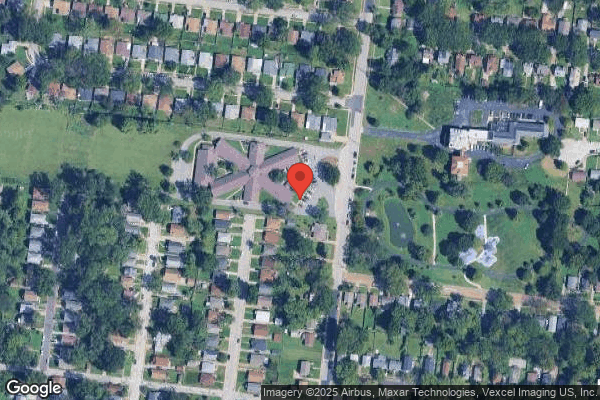
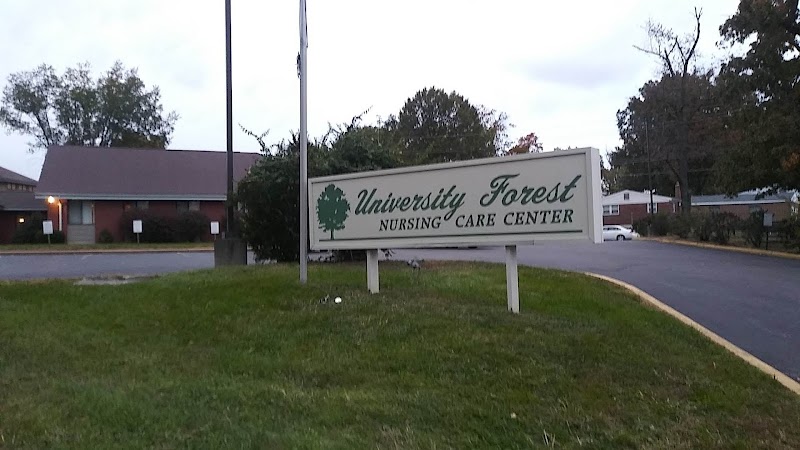
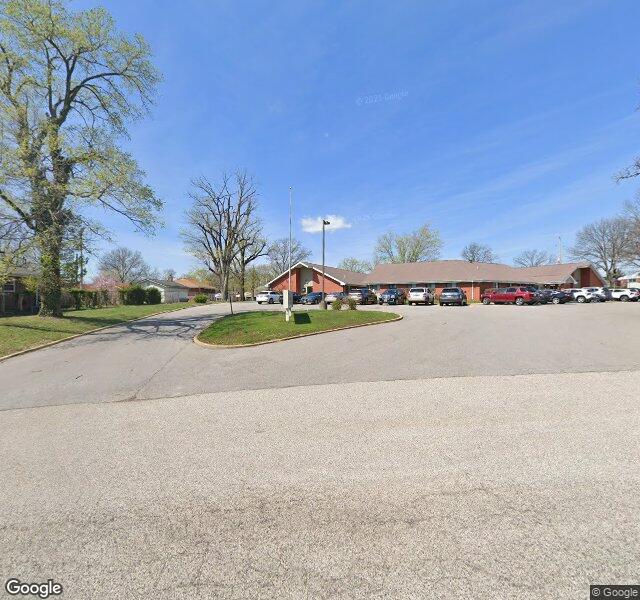
U-CITY FOREST MANOR

1301 PARTRIDGE AVENUE, SAINT LOUIS, MO 63130 (314) 862-5556
For profit - Limited Liability company 120 Beds PALLADIAN HEALTHCARE Data: November 2025 1 Immediate Jeopardy citation
Trust Grade
21/100
#472 of 479 in MO
Last Inspection: May 2024

Within standard 12-15 month inspection cycle. Federal law requires annual inspections.

Overview

U-City Forest Manor has received a Trust Grade of F, indicating significant concerns regarding its quality of care. It ranks #472 out of 479 nursing homes in Missouri, placing it in the bottom half of the state, and #67 out of 69 in St. Louis County, suggesting very few local options are worse. The facility has shown an improving trend, reducing issues from 22 in 2024 to just 1 in 2025, but still has serious weaknesses, including a staffing rating of 1 star and a high turnover rate of 68%, which is concerning compared to the state average of 57%. Specific incidents include a resident choking during lunch due to inadequate supervision, resulting in a tragic death, and a failure to provide a Registered Nurse for required hours, which could jeopardize resident safety. While they have made some progress, families should weigh these serious concerns against any positives when considering this facility for their loved ones.

Trust Score
F
21/100
In Missouri
#472/479
Bottom 2%
Safety Record
High Risk
Review needed
Inspections
Getting Better
22 → 1 violations
Staff Stability
⚠ Watch
68% turnover. Above average. Higher turnover means staff may not know residents' routines.
Penalties
○ Average
$15,949 in fines. Higher than 71% of Missouri facilities. Some compliance issues.
Skilled Nurses
⚠ Watch
Each resident gets only 11 minutes of Registered Nurse (RN) attention daily — below average for Missouri. Fewer RN minutes means fewer trained eyes watching for problems.
Violations
⚠ Watch
73 deficiencies on record. Higher than average. Multiple issues found across inspections.
★☆☆☆☆
1.0
Overall Rating
★☆☆☆☆
1.0
Staff Levels
★★★☆☆
3.0
Care Quality
★★☆☆☆
2.0
Inspection Score
Stable
2024: 22 issues
2025: 1 issues

The Good

  • Full Sprinkler Coverage · Fire safety systems throughout facility
  • No fines on record

Facility shows strength in fire safety.

The Bad

1-Star Overall Rating

Below Missouri average (2.5)

Significant quality concerns identified by CMS

Staff Turnover: 68%

21pts above Missouri avg (46%)

Frequent staff changes - ask about care continuity

Federal Fines: $15,949

Below median ($33,413)

Minor penalties assessed

Chain: PALLADIAN HEALTHCARE

Part of a multi-facility chain

Ask about local staffing decisions and management

Staff turnover is elevated (68%)

20 points above Missouri average of 48%

The Ugly 73 deficiencies on record

1 life-threatening
Feb 2025 1 deficiency
CONCERN (D) 📢 Someone Reported This

A family member, employee, or ombudsman was alarmed enough to file a formal complaint

Potential for Harm - no one hurt, but risky conditions existed

Quality of Care (Tag F0684)

Could have caused harm · This affected 1 resident

Based on interview, and record review, the facility failed to ensure Resident #2's change of condition (nose bleed) was properly assessed and documented across all shifts and failed to ensure physicia...

Read full inspector narrative →
Based on interview, and record review, the facility failed to ensure Resident #2's change of condition (nose bleed) was properly assessed and documented across all shifts and failed to ensure physician orders were followed by not administering saline nasal spray at the prescribed time. The sample was six. The census was 79. Review of the facility's change in condition policy, dated 2/2012, showed: -Policy: It is the policy that resident change in condition will be assessed promptly and follow up activity will occur as appropriate and in a timely manner; -Definition: Change of condition is defined as an improvement or decline in the resident's physical, mental, or psychosocial status that effects less than two areas of activities of daily living; -Procedure: The staff person who first notices the change reports the resident change in condition immediately to the licensed nurse. The licensed nurse assesses the resident including vital signs and notes signs and symptoms, regarding physical and mental changes in condition. The results of the assessment, including the vital signs, signs, symptoms and any physical and/or mental changes in condition are documented in the resident's medical record. The resident's primary physician or designated alternate will be notified immediately of any change in resident's physical or medical condition, this includes: Deterioration in health, mental, or psychosocial status or need to alter treatment (i.e. need to discontinue an existing form of treatment due to adverse consequences or to commence new form of treatment). The resident's designated medical contact or guardian will also be notified. Nursing judgment should be used given the time of day and the severity of the resident change. Notification of physician and/or responsible parties shall be documented in the clinical record as well as on the 24 hour report form. Status changes, which are not significant enough to be reported, must also be documented in the medical record. All changes of condition must be completely and objectively documented in the clinical chart. It is the responsibility of the nursing staff to inform the resident's medical contact of any change of condition. Appropriate follow through from shift to shift is imperative for all residents with any change in condition. The nursing staff must utilize the tools provided for formal communication from shift to shift. Review of Resident #2's record showed: -Diagnoses included hypertension, diabetes, and major depressive disorder; -Moderately impaired cognition. Review of the resident's care plan, in use at the time of the investigation, showed: -Problem: Resident is at risk for hemorrhage (bleeding) due to receiving anticoagulant (AC) medication for history of stroke with cognitive deficits; -Goal: Resident will maintain cognitive abilities by making needs known through next review date; -Approach: See orders for current medication regimen. Document and notify the provider, family/responsible party for changes as needed. Observe for changes in condition such as black tarry stool, bruising, hematuria (blood in the urine), nose bleeds. Observe for conditions or medications which could enhance or inhibit anticoagulation such as thyroid medications or other anticoagulant. Pharmacy review of medications monthly or per facility protocol and PRN (as needed). Protect from falls and injury as much as possible. Review of the resident's physician's orders sheet (POS) included: -An order, dated 1/4/25, for Aspirin (anti-inflammatory that also is an anti-coagulant) 325 milligram (mg) once per day; -An order, dated 1/4/25, for Clopidogrel (Plavix, anticoagulant) 75 mg once per day; -An order,dated 2/7/25, for saline nose spray to be given at 9 A.M., 12:00 P.M., and 9:00 P.M. Review on 2/11/25, of the resident's progress notes showed: -A progress note, from 2/7/25 at 12:35 P.M.,written by Licensed Practical Nurse (LPN) C, resident had nose bleed. He/She has tissue in his/her nose. Advised resident not to put anything in his/her nostrils. Cold compress place on bridge of nose and asked him/her to put pressure on it and hold head forward. Heat in room also turned down. Explained that the dry heat can cause the membrane to dry out and can cause nose bleeds. After 10 minutes bleeding has stopped. He/She did ask where he/she could get a humidifier and LPN C explained to the resident to ask his/her sister if she can get him/her a small one; -A progress note from 2/7/25 at 5:43 P.M., written by LPN C, the resident requested to go to the hospital; says his/her nose keeps bleeding. The nurse called the physician's exchange; -A progress note from 2/7/25 at 6:17 P.M., written by LPN C, the physician ordered saline nose spray three times a day and to hold Plavix 75 mg and aspirin 325 for two days, restart medications on 2/10/25; -No notes during the 7 PM to 7 AM shift on 2/7/25 to 2/8/25; -A progress note from 2/8/25 at 8:00 A.M., written by LPN A, staff found the resident with blood on his/her face. Dried blood was visible on the bed. The resident's nose was still bleeding slightly. petroleum jelly and a 4x4 (gauze) was applied inside the nostril. Vital signs taken: Blood pressure 90/62 (normal 120/80), pulse 56 (normal 60-100), respirations 18 (normal 12-20), temperature 96.5 (normal 98.6) degrees Fahrenheit (F). Physician called and made aware, order given to send resident out to the hospital for evaluation and treatment; -A progress note from 2/8/25 at 8:09 A.M., written by LPN A, the nurse called an ambulance for transport to the hospital. The resident was in the wheelchair and responsive; -A progress note from 2/8/25 at 8:17 A.M., written by LPN A, this writer notified per Certified Nursing Assistant (CNA) that resident had attempted to get back into bed, but only his/her upper half was in the bed. This writer went back into resident's room, resident's body completely in bed. While this writer was speaking with the resident, he/she began turning from side to side in bed. The resident's skin was clammy and resident was lethargic but continued to respond when name was called. 911 called and LPN A and Certified Medication Technician (CMT) B at the resident's bedside until Emergency Medical Services (EMS) arrived. Review on 2/11/25, of the resident's February Medication Administration Record (MAR) showed: -Saline nasal spray not listed on the MAR; -No documentation to show staff administered the saline nasal spray. During an interview on 2/11/25 at 12:22 P.M., LPN C said on 2/7/25 around 12:35 P.M., the resident came to the nurse's station and said his/her nose was bleeding. He/She gave the resident a cold compress and observed that the resident had placed tissue in his/her nose. LPN C explained to the resident why he/she should not do that. He/She then turned the resident's heat down in the room The nosebleed stopped after around 10 minutes. The resident then came back around 5:45 P.M. and said that he/she wanted to go to the hospital because his/her nose was still bleeding. LPN C called the resident's responsible party who at first said they would take the resident to the hospital but then decided not to. He/She also contacted the resident's physician to inform them of the resident's nose bleed, that the resident was putting tissue in his/her nose, and the resident's request to go to the hospital. The physician called around 6:00 P.M., and told him/her to not administer the resident's AC medication until 2/10/25 and ordered nasal saline solution to be given three times a day. The physician did not give an order to send the resident out to the hospital. LPN C then called the resident's responsible party to give him/her updates. The CMT administered the nasal saline solution to the resident after it was ordered. LPN C did not complete a change in condition assessment. When he/she left around 7 P.M., the resident was alert. During an interview on 2/14/25 at 7:13 A.M., LPN E said he/she was told by the day shift nurse that the resident was having on and off nose bleeds and that the physician ordered saline solution and to hold the resident's AC medication until 2/10/25. He/She did see a few drops of blood on the floor leading to the resident's bathroom during his/her shift. He/She thought the blood was from the day shift nose bleed. He/She also saw blood on the resident's pillow the size of a golf ball and two golf ball sized spots of blood on the resident's fitted sheet. Two hour checks were performed on the resident, and the resident slept all night and did not get up or report another nose bleed. LPN E conducted rounds on the resident around 4:00 A.M. and did not see the resident having a bloody nose. CNA F never reported any issues with the resident to him/her. LPN E did not witness the resident bleeding. LPN E did not administer the resident's nasal saline solution. LPN E did not document anything in the chart for the resident during his/her (7 P.M. to 7 A.M.) shift on 2/7/25 to 2/8/25. During an interview on 2/14/25 at 12:07 P.M., CNA F said he/she worked the 7:00 P.M. to 7:00 A.M. shift on 2/7/25 to 2/8/25. He/She was told that the resident had a nose bleed earlier in the day but was not given any further instructions. The resident is independent with care needs, so he/she does not need to provide the resident a lot of care on his/her night shifts. CNA F did not witness the resident having a bloody nose. CNA F was not sure if he/she saw blood in the resident's room. During an interview on 2/11/25 at 9:52 A.M., LPN A said on the morning of 2/8/25, he/she went to the resident's room to tell him/her it was time for breakfast. The resident said he/she did not feel well. LPN A turned on the resident's lights and saw that the resident had blood on his/her pillow and bed sheet. The resident said his/her nose had been bleeding on and off since the day before. LPN A transferred the resident to his/her wheelchair from the bed. He/She packed the resident's nose with gauze and petroleum jelly. He/She called the physician who said to send the resident out to the hospital non-emergent. He/She went to perform other tasks and was then told by the CNA that the resident was not doing good. LPN A went back to resident's room. The resident had tried to transfer himself/herself back into bed and was holding onto the side of the bed. The resident's skin was clammy, and the resident was lethargic. LPN A called 911 for emergent transport to the hospital. The resident did not report any swallowing of blood to him/her. LPN A said this would have been a huge cause for concern and he/she would have called the doctor and sent the resident to the hospital 911 if he/she had been swallowing blood. LPN A said staff conduct rounds on residents every two hours. He/She was told by the overnight nurse that there was an order to hold the resident's AC medication and to administer nasal saline spray three times a day. He/She would expect all changes in condition to be reported to the Director of Nursing (DON), physician, and the resident's responsible party. During an interview on 2/11/25 at 11:29 A.M., CMT B said he/she was working on 2/8/25 on the resident's assignment. He/She assisted the nurse in getting the resident's vital signs. He/She stayed with the resident while the nurse called 911. The resident was alert but just barely. The resident was lying in bed and appeared uncomfortable. Right around the time EMS arrived, the resident's eyes became fixed. The resident's nose was bleeding a small amount. There was not a lot of blood in the resident's room or on the resident. On the resident's pillow there was a golf ball size amount of blood and two golf ball sized amounts of blood on the resident's fitted sheet. There were a few drops of blood leading to the resident's bathroom. CMT B did not witness the resident swallowing or spitting up blood. During an interview on 2/14/25 at 1:35 P.M., the Physician said she feels that the facility did their due diligence with the resident. She was contacted four times with updates on the resident's nose bleeds. She said if the nose bleed had been posterior, the resident would have been spitting up blood, and that was not reported to her. During an interview on 2/18/25 at 12:30 P.M., the Assistant Director of Nursing (ADON) and Administrator said they do not consider a nose bleed to be a change in condition. They would not have expected staff to complete a change in condition assessment. They said the resident was on blood thinners and was care planned to watch for nose bleeds. They both believed the nose bleed to be a side effect of the resident's AC medication. They would expect all nursing staff to document any care given to residents or changes in condition during their shifts. MO00249241
Dec 2024 2 deficiencies 1 IJ
CRITICAL (J) 📢 Someone Reported This

A family member, employee, or ombudsman was alarmed enough to file a formal complaint

Immediate Jeopardy (IJ) - the most serious Medicare violation

Accident Prevention (Tag F0689)

Someone could have died · This affected 1 resident

**NOTE- TERMS IN BRACKETS HAVE BEEN EDITED TO PROTECT CONFIDENTIALITY** Based on interview and record review, the facility failed to provide adequate supervision, by not ensuring staff were within arm...

Read full inspector narrative →
**NOTE- TERMS IN BRACKETS HAVE BEEN EDITED TO PROTECT CONFIDENTIALITY** Based on interview and record review, the facility failed to provide adequate supervision, by not ensuring staff were within arm's reach of a resident with a diagnosis of dysphasia (trouble swallowing) and a history of choking (Resident #1). On 11/21/24, the resident choked during lunch while eating alone at a table in the dining room. Staff intervened and were unsuccessful with clearing the resident's airway and performed lifesaving measures until emergency medical staff (EMS) arrived. EMS staff were eventually able to dislodge a large piece of broccoli, a food that was not served on the resident's lunch tray. Resident #1 expired. The sample size was 5. The census was 81. The Administrator was notified on 12/6/24 at 4:00 P.M., of an Immediate Jeopardy (IJ) which began on 11/21/24. The IJ was removed on 12/8/24, as confirmed by surveyor onsite verification. Review of the facility's Change in Condition policy, revised 2/2012, showed: Definition: -Change in condition is defined as an improvement or decline in the resident's physical, mental or psychosocial status that effects two or more areas of activities of daily living (ADL); -Significant change is defined as an improvement or decline in the resident's physical, mental or psychosocial status that effects two or more areas of ADL; Procedure: -The staff person who first notices the change reports resident change in condition immediately to the licensed nurse; -The resident's primary physician or designated alternate will be notified immediately of any change in resident's physical or medical condition, this includes: -Accident involving the resident; -Deterioration in health, mental, or psychosocial status; -Need to alter treatment (i.e. need to discontinue an existing form of treatment due to adverse consequences or to commence new form of treatment); -Notification of physician and/or responsible parties shall be documented in the clinical record as well as on the 24-hour report form. Status changes, which are not significant enough to be reported, must also be documented in the medical record; -All changes of condition must be completely and objectively documented in the clinical chart; -Appropriate follow through from shift to shift is imperative for all residents with any change in condition. The nursing staff must utilize the tools provided for formal communication from shift to shift. Review of the facility's Safety and Supervision of Residents policy, (no date), showed: -Our facility strives to make the environment as free from accident hazards as possible. Resident safety and supervision and assistance to prevent accidents are facility-wide priorities. Procedure: -Our facility-oriented approach to safety risks for groups of residents; -Safety risks and environmental hazards are identified on an ongoing basis through a combination of employee training, employee monitoring, and reporting processes; reviews of safety and incident/accident reports; and a facility-wide commitment to safety at all levels of the organization; -When accident hazards are identified, the facility shall evaluate and analyze the cause(s) of the hazards and develop strategies to mitigate or remove the hazards to the extent possible; -Employees shall be trained and in-serviced on potential accident hazards and how to identify and report accident hazards and try to prevent avoidable accidents; -The facility shall monitor interventions to mitigate accident hazards in the facility and modify as necessary; -Staff shall use various sources to identify risk factors for residents, including the information obtained from the medical history, physical exam, observation of the resident, and the Minimum Data Set (MDS, a federally mandated assessment instrument required to be completed by facility staff); -The interdisciplinary care team shall analyze information obtained from assessments and observations to identify any specific accident hazards or risks for that resident. The care team shall target interventions to reduce the potential for accidents; -The facility-oriented and resident-oriented approaches to safety are used together to implement a systems approach to safety, which considers the hazards identified in the environment and individual resident risk factors, and then adjusts interventions accordingly; -Resident supervision is a core component of the system approach to safety. The type and frequency of resident supervision is determined by the individual resident's assessed needs and identified hazards in the environment; -The type and frequency of resident supervision may vary among residents and over time for the same resident. For example, resident supervision may need to be increased when there are temporary hazards in the environment (such as construction) or if there is a change in the resident's condition. Review of the facility's Interdepartmental Notification of Diet (including changes and reports), dated 2001, revised 10/2017, showed: Policy Interpretation and Implementation: Nursing services shall notify the Physician and Dietitian when a nutritional problem (e.g., eating problem) has been identified and shall collaborate with the Dietitian and Physician to initiate an appropriate process of clinical review for causes of the nutritional problem. Review of the facility's Consistency Modified Diets policy, revised 12/2024, showed: -The following diets are modified in texture to promote ease of chewing and swallowing. No two patients/residents are alike; therefore, diets must be individualized based on their chewing/swallowing ability; -Please have your staff Registered Dietitian (RD) and/or Speech Therapist review these diets to assure appropriateness for each patient/resident. Based on individual patient/resident tolerance and community standards, some menu items, including liquids, may need to be altered; -Mechanical Soft: This diet is used for patients/residents with limited chewing ability. Foods menus include ground moist meats, poultry, and fish (without bones), canned fruits and vegetables, well-cooked, soft vegetables, finely chopped fresh fruits and vegetables as tolerated, soft breads and desserts. Recipes with the abbreviation NRV (No Raw Vegetables) at the end indicate they need to be made without raw vegetables. These food and others may or may not be allowed based on individual patient/resident tolerance; -Pureed: This diet consists of pureed, homogenous, and cohesive foods. Food should be pudding-like, no coarse textures, raw fruits or vegetables, nuts, etc., are allowed. Any foods that require bolus (the process of breaking down food into a soft, ball-like mass that can be swallowed), controlled manipulation, or mastication (chewing) are excluded. This diet is designed for people who have moderate to severe dysphagia, with poor oral phase abilities and reduced ability to protect their airway. Close or complete supervision and alternate feeding methods may be required. Thin liquids should be thickened as ordered as this diet was written assuming no modification for liquids (i.e. liquids of regular consistency are modified). Review of the facility's Diet spreadsheet, showed: -11/20/24, Dinner: Mechanical Soft - Ground chicken croquet, mashed potatoes, broccoli, cornbread, mixed melon, gravy, margarine, 2% milk, coffee/Tea; -11/21/24, Lunch: Mechanical Soft - Ground Cod, potato wedges, cooked cabbage, wheat bread, snickerdoodle cookie, margarine, coffee/tea; -Diet spreadsheet showed no broccoli on 11/21/24. Review of Resident #1's Quarterly Review MDS, dated [DATE], showed: -Severe cognitive impairment; -Diagnoses included: anxiety disorder (intense, excessive, and persistent worry and fear about everyday situations), aphasia (a language disorder that affects a person's ability to speak), stroke, Transient Ischemic Attack (TIA, a brief episode of stroke-like symptoms that occurs when blood flow to the brain is temporarily cut off); -Coughing or choking during meals or when swallowing medications, mechanically altered diet, and therapeutic diet. Review of the resident's progress notes, showed: -6/19/24 at 1:51 P.M., resident eats in Courtyard dining room. Feeds himself/herself. In a wheelchair, will move about on his/her own; -6/22/24 at 12:31 P.M., appetite usually good. Sometimes he/she will try and eat off other residents' plates; -8/24/24, while eating dinner, resident begin to choke. Heimlich maneuver and mouth sweep performed. Was able to remove half of the bread stick that was served with dinner. Resident never lost consciousness and was encouraged to cough. Vital signs within normal limit. States it scared him/her; -8/26/24 at 11:13 A.M., new verbal order received from Nurse Practitioner. Speech Therapy (ST) evaluation and treat related to choking incident. Review of the resident's physician order sheet, showed: -Received and started: 8/26/24, ST evaluation and treat as indicated. Resident evaluation and treatment completed at this time. Resident to receive ST services 3 times a week for two weeks for oral dysphagia; -Start date: 8/26/24, ST evaluate and treat related to choking incident; -Start date: 8/29/24, ST evaluate and treat as needed; -Start date: 8/31/24, thin liquids with mechanical soft diet. NO BREAD. Review of the resident's ST treatment encounter note, dated 8/26/24, showed: -Dysphagia therapy: 30 minutes; -Swallowing evaluation: 30 minutes; -Resident referred to ST services per nursing staff based on choking incident 8/24/24. Resident choked on a breadstick and the Heimlich maneuver was performed with mouth sweep. Reported that staff was able to remove half of a bread stick that was served with dinner. Resident never lost consciousness and was encouraged to cough. Resident has oral dysphagia, staff training is necessary at this time, assessment of current diet, and safe swallowing strategies required. Resident demonstrates unsafe swallowing with large bites, poor attention to task, and attempts to communicate with food in his/her oral cavity. Review of the resident's ST notes, dated 8/28/24, showed resident challenged with safe swallowing compensatory strategies and ST discussed safety risks associated with aspiration/choking, etc. Resident stated, I need to slow down. Nursing and nursing aides on unit are aware of resident complex needs and cues needed regarding rate of intake and amount of meal consumed when discussed. Resident followed compensatory strategies with 60% accuracy independently and 100% with moderate/maximum verbal cues. Review of the resident's progress notes, showed: -8/29/24 at 12:43 P.M., resident eats very fast and does not chew food up. Gulps liquids. He/She has to be redirected frequently at meals. New order per physician for speech to evaluate and treat as needed; -8/31/24 at 1:25 P.M., resident is a mechanical soft diet. Received whole slice of pizza for lunch meal and began to choke on pizza. Most of pizza cut up for resident to eat. New order added to diet for no bread. Diet slip made out and given to dietary staff. Review of the care plan, showed staff did not address the resident's choking incident on 8/31/24. Review of a ST note, dated 9/3/24, showed resident was reported to have had increased difficulty consuming pizza over the weekend, additional choking episode. Resident orders are mechanical soft without bread. ST to continue monitoring for signs and symptoms of aspiration/choking of mechanical soft. Resident may need downgrade to puree. Continue with plan of care. Review of the ST discharge recommendations, dated 9/5/24, included: -Supervision: Close supervision; -Recommendations: To facilitate optimal cognitive-communicative performance, the following strategies are recommended: Training in use of concrete, one step directions by speaker to increase comprehension; -Solids: Soft/Ground/Chopped textures; -Strategies: To facilitate safety and efficiency, it is recommended the resident use the following strategies and/or maneuvers during oral intake: General swallow techniques/precautions, bolus size modifications, rate modification and alternation of liquids/solids upright posture during meals. Review of the resident's care plan, showed staff did not address any of the ST discharge recommendations. Review of the resident's progress notes, showed: -9/8/24, at 12:36 P.M., the resident has been on a regular mechanical soft diet with thin liquids. He/She had a choking incident on 8/24/24 on a bread stick, another choking incident on chopped pizza; -11/21/24 at 12:40 P.M., edited 11/21/24 at 2:42 P.M., called to assist resident who was in the dining room eating lunch. Resident was choking. Resident alert and is coughing. Did Heimlich maneuver on resident, but unable to get food out. Resident had baked fish, mashed potatoes, and diced peaches for lunch. Assistant Director of Nursing (ADON) notified and Yankauer suction catheter (a ridged, hollow, plastic, or stainless-steel tube used to remove mucus or saliva from the mouth or throat) to try and remove food without success. 911 called and made dispatcher aware resident was choking while eating lunch and had food lodged in throat. Made dispatch aware Heimlich was used several times without success. Also used Yankauer suctioning catheter without success. Made dispatch aware the resident was alert and still responding, but food was still lodged in his/her throat. Dispatch stated they had already dispatched paramedics. Resident remains sitting up in wheelchair. After approximately 5-7 minutes resident became very anxious. Taking very shallow breaths. Had Certified Nurse Assistant (CNA) run up front to make ADON aware and if 911 was here to have them hurry to resident. Licensed Practical Nurse (LPN) C and Certified Medication Technician (CMT) assisted resident to floor to start using Ambu bag (bag valve mask, a handheld device that provides positive pressure ventilation to patients who are not breathing or not breathing adequately) when paramedics x2 came in and we were instructed by them to get resident up to bed. Paramedic attempted to check airway, unable and asked that the resident be laid back on the floor. Resident assisted back on floor and no pulse palpated and Cardiopulmonary Resuscitation (CPR, an emergency life saving procedure that is done when someone's breathing or heartbeat has stopped) started. Paramedic again went to check airway and removed food. Removed a very large piece of unchewed broccoli that was not on resident's plate. Even after broccoli was removed CPR was continued with resident being suctioned. Resident was assisted with CPR continued to stretcher and leave of absence (LOA) to hospital. ADON made aware resident choked on broccoli that wasn't on his/her plate. The resident had to have taken it from someone else. Notified physician and emergency contact. Review of the resident's hospital Death Summary, dated 12/1/24 at 3:05 P.M., showed: -Past medical history significant for CVA (stroke) with residual dysarthria (a motor speech disorder that makes it difficult to speak clearly), and left sided weakness, and vascular dementia (a condition that affects the brain's ability to think, remember, and behave, caused by damage to blood vessels from reduced blood flow). He/She presented to emergency department for evaluation of choking status post (s/p) cardiac arrest (occurs when the heart suddenly stops beating, preventing blood from flowing to the brain and other vital organs) and return of spontaneous circulation (ROSC). Per EMS, patient choked on broccoli at lunch in the nursing home. Nursing home staff called EMS and started Heimlich maneuver which EMS continued on arrival. The resident subsequently went into cardiac arrest for which he/she received CPR for thirty-two minutes, two doses of epinephrine (a hormone and medication that plays a key role in the body's fight-or-flight response) and was intubated ( insert a tube into a person or a body part, especially the trachea for ventilation) with subsequent removal of the obstructing piece of broccoli in the field. Antibiotics were initiated for aspiration pneumonia; -As per family wishes, he/she was transitioned to comfort only with plan for terminal extubation (removal of tube from a patient's throat and windpipe); -At 4:38 P.M., the resident was pronounced (dead). During interviews on 12/3/24 at 1:28 P.M. and 12/6/24 at 9:04 A.M., the Speech Therapist said she knew the resident. He/She was on a mechanical soft diet, nectar thick liquids, and no bread. She said the resident wasn't compliant with his/her diet. The resident coughed when he/she ate things outside of his/her diet and would aspirate as well. Mechanical soft was the most appropriate diet for the resident. The resident had a history of choking. She talked to the nurses and aides about the resident needing extra help with feeding. She would sit with the resident at the assist table, cue him/her to slow down. As she was providing cues, she would educate staff at that time. Nursing provided staff with their own education, from a nursing standpoint. She defined close supervision as being arm's length away. She expected staff to be arm's length away from the resident when eating. A staff member would need to be with him/her. The resident needed to be at the assist table and couldn't be at a table without staff. If the resident was seated at the assist table, there would have been someone sitting at the table with him/her during the meal. She didn't know the resident sat at a separate table to keep him/her from taking food from other residents' plates. She said she remembered him/her choking on a breadstick and he/she sometimes took food from other residents' plates. After the breadstick choking incident, she talked to the kitchen staff about what was appropriate for mechanical soft diet. She wasn't aware the resident had gotten a whole slice of pizza. She said pizza was appropriate for mechanical soft diet, because it had sauce on it, but should have been cut up into bite sizes. The resident had swallowing issue, but he/she could chew. The resident needed a lot of cues to slow down at meals. She said the resident was impulsive and would wheel himself/herself up to other residents' trays and take their food. The Speech Therapist said staff had to make sure the resident's food was cut up appropriately, the resident was to be under supervision and was not allowed to eat in his/her room. Broccoli was acceptable for mechanical soft diet as long as it was the right size and right consistency of softness. She was told kitchen staff would get specific training on diets by someone to show what appropriate consistency, right size, right texture, and how to thicken liquids. The training the kitchen staff received would be passed on to the nursing staff so they could recognize when residents were not getting appropriate food texture, size, and/or consistency of food. During a telephone interview on 12/4/24 at 10:02 A.M., CNA A said meal set up for residents included passing the tray, taking off the plastic, placing silverware and drinks on the table in front of the resident. Some residents needed help with eating, and some didn't. If a resident needed help eating, the resident got his/her tray last. The tray was supposed to come from dietary in the right diet food texture for the resident. Dietary knew what the residents were supposed to have. He/She knew the resident and was worked with the resident on the last day CNA A was at the facility. The resident was on a mechanical soft diet. Sometimes you had to tell the resident to slow down. The resident didn't sit by other residents and was at a separate table from the other residents. The resident had to be at a table by himself/herself, because he/she would take food off the other residents' plate. The resident didn't eat in his/her room at all. CNA A didn't deliver the resident's tray that day, but was the one who caught him/her choking. CNA A said the resident got baked fish, broccoli, cauliflower, peaches, and mashed potatoes. The resident had no broccoli on his/her plate and CNA A said he/she wasn't sure if the resident ever had broccoli on his/her plate, because when CNA A cleaned up there wasn't any broccoli remnants on the resident's plate. That day, the resident had to be told several times to go back to his/her table. CNA A said he/she turned around and saw the resident choking and told him/her to spit out the food and called the nurse because the resident was choking. When CNA A saw the resident coughing, the resident had mashed potatoes, fish, and peaches in his/her mouth, all at once. He/She told the resident to spit it out and said, You ate all of that at one time? The CMT and nurse came. The CMT put a spoon down the resident's throat to make him/her spit up/vomit. The nurse started the Heimlich maneuver. Someone went to get the suction. The nurse sent him/her to see if the ambulance had arrived. The nurse was suctioning the resident. EMS put a camera down the resident's throat. They saw broccoli and pulled it out. The resident was still unresponsive. He/She thought the resident was already dead. CNA A said that was the first time he/she knew the resident didn't chew the food up. He/She didn't know the resident was just swallowing the food. He/She had teeth, so CNA A didn't know. There were no special instructions for staff to do after the resident's mealtime. Staff would check on the resident after meals. He/She didn't know the resident's care plan said to check him/her for pocketing food in his/her mouth. CNA A said pocketing was when a resident put food in his/her pocket to eat later. The Diet Spreadsheet dated 11/21/24, showed coleslaw for regular diets and cooked cabbage for mechanical soft diets. There was no documentation of what the substitution for cabbage was. CNA A mentioned broccoli as a vegetable the resident may have gotten, but said there was no sign of broccoli on his/her plate, so he/she wasn't sure. During a telephone interview on 12/6/24 at 11:13 A.M., LPN C said he/she was called by the Certified Medication Technician (CMT) or CNA and was told the resident was choking, but able to talk. The resident was sitting at a table by himself/herself. He/She did the Heimlich several times and swept the resident's mouth but he/she was biting down, so was difficult to do. LPN C sent the aide to get the Assistant Director of Nursing (ADON). He/She was still doing the Heimlich on the resident. LPN C said he/she looked down at the resident's plate and saw baked fish, mashed potatoes, and diced peaches. They tried to suction the resident with a Yankauer. The resident was alert and still talking. He/She called 911 after they couldn't get the food out of the resident's throat and was still doing the Heimlich. They took the resident to his/her room and continued the Heimlich and suctioning. The resident made some kind of noise and LPN C thought that was when the food went down his/her throat. He/She couldn't breathe. The resident was laid on the floor and CPR was started. They had just gotten the resident to the floor when one of the paramedics said to get the resident onto his/her bed. The paramedic was trying to get a tube down the resident's throat, but couldn't do it with the resident on his/her bed. The resident was moved back to the floor. The paramedics were still trying to get an airway. The resident was suctioned again, because a lot of mucus was coming out. Paramedics had a scope with a camera to look into the resident's mouth. Forceps were used to pull broccoli out. Afterwards, the paramedic was able to get the tube down the resident's throat. When the Fire Department came, they put the chest compression machine on the resident. The paramedics continued CPR while putting the resident on the stretcher. LPN C said he/she had no idea where the resident got broccoli from. LPN C said the CNA (CNA A) said he/she usually passed the resident's meal tray but didn't that day. LPN C asked the CNA if the resident had broccoli on his/her plate and the CNA said no. It was a nice size piece of broccoli, and it was hard. It would have been something he/she would have had to cut up. LPN C said he/she didn't know how the resident was even able to swallow it whole like that. It's mainly the same staff working back in the Courtyard dining area, so they know what diets residents have and the diets are on the mealtime cards that come with the trays. LPN C said he/she was aware the resident pocketed and held food in his/her mouth. He/She told Dietary about the breadstick the resident choked on. He/She was able to get the bread out, but told Dietary not to send the resident bread. LPN C said close supervision was for the ones you knew had problems with swallowing and needed to be watched. He/She said staff were to be in proximity as possible. While staff did other things, they just looked over to check on the resident as best they could. Normally there was a nurse, two CNAs and a CMT. LPN C said he/she was aware the resident was supposed to take small bites during meals. He/She would assist another resident during mealtime, but would tell the resident to slow down and take a drink. He/She said the resident ate like someone was going to snatch his/her food, so the resident always had to be redirected. The resident always ate in the dining room. LPN C said all of the swallow strategies and close level of supervision should have been on the resident's care plan. During a interview on 12/4/24 at 11:42 A.M., LPN B said he/she knew the resident and he/she was a fast eater. The resident used to cough, but ST started working with him/her. LPN B said he/she tried to keep the resident within his/her line of sight when the resident ate, because he/she ate fast. The resident ate in the dining room. LPN B said the only instructions after meals was the resident was not allowed to get in bed right after his/her meal. LPN B wasn't working the day the resident choked on broccoli. LPN B had seen the resident hold food in his/her mouth before, but it had been quite some time ago. LPN B said nursing would let the CNAs know about diet changes, but didn't know if the information was in the CNA's system. He/She said the diet change was care planned. Once the diet was changed, the order was given to dietary, and a new meal ticket was generated. He/She didn't know pocketing/holding food in mouth was in the resident's care plan. During and interview on 12/6/24 at 11:58 A.M., the Assistant Administrator said the facility didn't complete an investigation related to the resident's choking incident. She said the resident expired on 11/30/24. She said close supervision was staff being within the vicinity of the resident to watch and oversee. Staff should have been close enough to observe and assist. The Assistant Administrator and ADON both said they were not aware of the ST's mealtime strategies and/or close supervision discharge recommendations. The ADON said the resident was in a secure area, so he/she always had direct supervision in the dining room. She was aware the resident would take food from other resident's plates and had to be redirected back to his/her table. She wasn't aware of the resident sitting at his/her own separate table. As she helped ST recommendations through the facility's regular communication process, she would have expected staff to follow the recommendations. During an interview on 12/6/24 at 3:59 P.M., both the Administrator and ADON said they expected staff to know what pocketing food was. They expected staff check the resident's mouth for pocketing/holding food in his/her mouth. Note: At the time of the survey, the violation was determined to be at the immediate jeopardy level J. Based on observation, interview and record review completed during the onsite visit, it was determined the facility had implemented corrective actions to remove the IJ violation at the time. A final revisit will be conducted to determine if the facility is in substantial compliance with participation requirements. At the time of the exit, the deficiency was lowered to the D level. This statement does not denote the facility has complied with state law (section 198.026.1 RSMO) requiring that prompt remedial action to be taken to address Class I violation(s). MO00245954
CONCERN (D) 📢 Someone Reported This

A family member, employee, or ombudsman was alarmed enough to file a formal complaint

Potential for Harm - no one hurt, but risky conditions existed

Deficiency F0657 (Tag F0657)

Could have caused harm · This affected 1 resident

Based on interview and record review, the facility failed to ensure resident care plans reflected current needs when staff failed to include speech therapy recommended choking strategies for one resid...

Read full inspector narrative →
Based on interview and record review, the facility failed to ensure resident care plans reflected current needs when staff failed to include speech therapy recommended choking strategies for one resident with a history of choking (Resident #1). The sample was five and issues were found with one. The census was 81. Review of the facility's Baseline Plan of Care policy, last revised 08/2017, showed: -The baseline care plan must reflect the resident's stated goals and objectives and include interventions that address his or her current needs. Because the baseline care plan documents the interim approaches for meeting the resident's immediate needs, professional standards of quality care would dictate that it must also reflect changes to approaches, as necessary. Facility staff must implement the interventions to assist the resident to achieve care plan goals and objective; -If the comprehensive assessment and comprehensive care plan identified a change in the resident's goals, or physical, mental, or psychosocial functioning, which are not identified in the baseline care plan, those changes must be incorporated into an update summary provided to the resident and his or her representative; -Additional changes will be made to the comprehensive care plan based on the assessed needs of the resident, however, these subsequent changes will not need to be reflected in the summary of the baseline care plan. Review of Resident #1's quarterly Minimum Data Set (MDS), a federally mandated assessment instrument completed by facility staff, dated 9/17/24, showed: -Severe cognitive impairment; -Diagnoses included: anxiety disorder (intense, excessive, and persistent worry and fear about everyday situations), aphasia (a language disorder that affects a person's ability to speak), stroke, Transient Ischemic Attack (TIA, a brief episode of stroke-like symptoms that occurs when blood flow to the brain is temporarily cut off); -Coughing or choking during meals or when swallowing medications, mechanically altered diet, and therapeutic diet. Review of the resident's care plan, in use during the survey, showed: -Problem: Resident is at risk for choking/swallowing issues related to dysphasia diagnosis. On 8/24/24 choked on a breadstick, chest x-ray negative; -Goal: Resident will not suffer serious injuries related to aspiration and intake of nutrients will meet metabolic needs; -Approaches included: -Speech therapy (ST) to evaluate and treat related to choking incident; -Diet: mechanical soft diet with thin liquids, super cereal (nutritional supplement) and whole milk at breakfast. Health shake (nutritional supplement) with each meal. NO BREAD!!; -Please check face, hands, nails, clothes, mouth for hygienic needs before and after each meal and as needed; -Resident eats in Courtyard dining room or room as desired/needed; -Monitor/document signs/symptoms of dysphasia: Pocketing (hold food in mouth instead of swallowing), choking, coughing, drooling, holding food in mouth. Several attempts at swallowing; -Resident can feed self after set up. Assist with tray set up and eating as needed; -Make sure resident is in the proper position for all meals. Review of the resident's progress notes, showed: -8/24/24, while eating dinner, resident began to choke. Heimlich maneuver and mouth sweep performed. Was able to remove half of the bread stick that was served with dinner. Resident never lost consciousness and was encouraged to cough. Vital signs within normal limit. States it scared him/her; -8/26/24 at 11:13 A.M., new verbal order received from Nurse Practitioner. ST evaluation and treat related to choking incident; -8/29/24 at 12:43 P.M., resident eats very fast and does not chew food up. Gulps liquids. He/She has to be redirected frequently at meals. New order per physician for speech to evaluate and treat as needed; -8/31/24 at 1:25 P.M., resident is on a mechanical soft diet. Received whole slice of pizza for lunch meal and began to choke on pizza. Most of pizza cut up for resident to eat. New order added to diet for no bread. Diet slip made out and given to dietary staff. Review of the resident's ST notes, showed: -8/28/24, resident challenged with safe swallowing compensatory strategies and ST discussed safety risks associated with aspiration/choking, etc. Resident stated, I need to slow down. Nursing and nursing aides on unit are aware of resident complex needs and cues needed regarding rate of intake and amount of meal consumed when discussed. Resident followed compensatory strategies with 60% accuracy independently and 100% with moderate/maximum verbal cues; -9/3/24, showed resident was reported to have had increased difficulty consuming pizza over the weekend, additional choking episode. Resident orders are mechanical soft without bread. ST to continue monitoring for signs and symptoms of aspiration/choking of mechanical soft. Resident may need downgrade to puree. Continue with plan of care. Review of the ST discharge recommendations, dated 9/5/24, included: -Supervision: Close supervision; -Recommendations: To facilitate optimal cognitive-communicative performance, the following strategies are recommended: Training in use of concrete, one step directions by speaker to increase comprehension; -Solids: Soft/Ground/Chopped textures; -Strategies: To facilitate safety and efficiency, it is recommended the resident use the following strategies and/or maneuvers during oral intake: General swallow techniques/precautions, bolus size modifications, rate modification and alternation of liquids/solids, upright posture during meals. Review of the resident's care plan, revised on 9/25/24, showed: -Problem: Resident receives ST therapy three times a week for two weeks related to two choking incidents. Therapy sessions are held in the therapy area; -Goal: Resident will accomplish goals as specified on his/her therapy treatment plan; -Approaches included: Monitor progress. Therapist and nursing to collaborate care and services to maximize resident's accomplishments; -Did not address any of the ST discharge recommendations. During interviews on 12/3/24 at 1:28 P.M. and 12/6/24 at 9:04 A.M., the Speech Therapist said she knew the resident. He/She was on a mechanical soft diet, nectar thick liquids, and no bread. She said the resident wasn't compliant with his/her diet. The resident coughed when he/she ate things outside of his/her diet and would aspirate as well. The resident had a history of choking. She remembered the resident choking on a breadstick and he/she sometimes took food from other residents' plates. The resident needed a lot of cues to slow down at meals. The resident was impulsive and would wheel himself/herself up to other residents' trays and take their food. The Speech Therapist said staff had to make sure the resident's food was cut up appropriately, the resident was to be under supervision, and was not allowed to eat in his/her room. She talked to the nurses and aides about the resident needing extra help with eating. She would sit with the resident at the assist table and cue him/her to slow down. As she was providing cues, she would educate staff at that time. Nursing provided staff with their own education, from a nursing standpoint. She defined close supervision as being arm's length away. She expected staff to be arm's length away from the resident when eating. A staff member would need to be with him/her. He/She needed to be at the assist table and couldn't be at a table without staff. If the resident was seated at the assist table, there would have been someone sitting at the table with him/her during the meal. During an interview on 12/4/24 at 10:02 A.M., Certified Nurse Aide (CNA) A said meal set up for residents included passing the tray, taking off the plastic and placing silverware and drinks on the table in front of the resident. Some residents needed help with eating, and some didn't. If a resident needed help eating, the resident got his/her tray last. He/She knew the resident and worked with the resident on the last day CNA A was at the facility. The resident was on a mechanical soft diet. Sometimes you had to tell the resident to slow down. The resident didn't sit by other residents and was at a separate table from the other residents. The resident had to be at a table by himself/herself, because he/she would take food off the other residents' plates. There were no special instructions for staff on what to do after the resident's mealtime. Staff would check on the resident after meals. He/She didn't know the resident's care plan said to check him/her for pocketing food in his/her mouth. CNA A said pocketing was when a resident put food in his/her pocket to eat later. During a telephone interview on 12/6/24 at 11:13 A.M., Licensed Practical Nurse (LPN) C said he/she was aware the resident was supposed to take small bites during meals. LPN C would assist another resident during mealtime, but would tell the resident to slow down and take a drink. He/She said the resident ate like someone was going to snatch his/her food, so the resident always had to be redirected. The resident always ate in the dining room. LPN C said all of the swallowing strategies and close level of supervision should have been on the resident's care plan. During a telephone interview on 12/4/24 at 11:42 A.M., LPN B said he/she knew the resident and he/she was a fast eater. The resident used to cough, but ST started working with him/her. LPN B said he/she tried to keep the resident within his/her line of sight when the resident ate, because he/she ate fast. The resident ate in the dining room. LPN B said the only instructions after meals was the resident was not allowed to get in bed right after his/her meal. He/She said pocketing was when a resident held food inside of his/her cheek and/or mouth. LPN B had seen the resident hold food in his/her mouth before, but it had been quite some time ago. He/She didn't know pocketing/holding food in mouth was in the resident's care plan. During an interview on 12/10/24 at 12:18 P.M., the MDS Coordinator said she was responsible for updating resident care plans. She said she wasn't aware to the Speech Therapy recommendations for the resident. Speech Therapy was supposed to bring her a notice related to the changes in a resident's care plan. She didn't receive a notice from Speech Therapy regarding changes for the resident. The MDS Coordinator said if she had known about the recommendations, she would have updated the resident's care plan. She expected the resident's care plan to be updated. During an interview on 12/6/24 at 11:58 A.M., the Assistant Administrator and Assistant Director of Nursing (ADON) both said they were not aware of the ST discharge summary recommendations. They both said the ST strategies and close supervision should have been care planned. They both said it was rare for the MDS Coordinator to miss things. The Assistant Administrator said she, the ADON, and the MDS Coordinator normally looked over the ST notes but the MDS Coordinator was responsible for updating resident care plans. The ADON said the MDS Coordinator said she read over the recommendations, but wasn't sure why they were not added to the resident's care plan. They both expected the ST recommendations to be added to the resident's care plan. MO00245954
Aug 2024 4 deficiencies
CONCERN (D) 📢 Someone Reported This

A family member, employee, or ombudsman was alarmed enough to file a formal complaint

Potential for Harm - no one hurt, but risky conditions existed

Resident Rights (Tag F0550)

Could have caused harm · This affected 1 resident

**NOTE- TERMS IN BRACKETS HAVE BEEN EDITED TO PROTECT CONFIDENTIALITY** Based on observation, interview and record review, the facility failed to treat each resident with respect and dignity when they...

Read full inspector narrative →
**NOTE- TERMS IN BRACKETS HAVE BEEN EDITED TO PROTECT CONFIDENTIALITY** Based on observation, interview and record review, the facility failed to treat each resident with respect and dignity when they failed to obtain proper Power of Attorney (POA, allows someone else to act on a resident's behalf) forms for two residents (Residents #2 and #1). The facility also failed to exercise patient rights of non-seclusion when they moved Resident #2 to a restricted environment without seeking alternative behavior interventions, assessments, or notifying a doctor. The sample size was three. The census was 77. Review of the facility's Resident Rights policy, revised [DATE], showed: -Policy: Employees shall treat all residents with kindness, respect and dignity; -Residents had a right to be free from corporal punishment or involuntary seclusion, and physical or chemical restraints not required to treat the resident's symptoms; -The unauthorized release, access or disclosure of resident information is prohibited. All release, access, or disclosure of resident information must be in accordance with current laws governing privacy of information issues. Review of the facility's Notification of Change policy, dated [DATE], showed: -Policy: The purpose of this policy is to ensure the facility promptly informs the resident, consults the resident's physician; and notifies, consistent with his or her authority, the resident's representative when there is a change requiring notification; -Circumstances requiring notification include: Significant change in the resident's physical, mental, or psychosocial condition such as deterioration in health, mental or psychosocial status; A change of room; A change in Resident's Rights; -Competent Individuals: The facility must still contact the resident's physician and notify resident's representative, if known; A family that wishes to be informed would designate a member to receive calls; When a resident is mentally competent, such a designated family member should be notified of significant changes in the resident's health status because the resident may not be able to notify them personally, especially in the case of sudden illness or accident; -Residents incapable of making decisions: The representative would make any decisions that have to be made;The resident should still be told what is happening to him or her. 1. Review of Resident #2's POA forms, dated [DATE], showed: -The facility's former employee was named as the resident's durable power of attorney on [DATE]; -The POA form did not show the county, and was not signed or notarized by a Notary Public. Review of the resident's psychiatric progress note, dated [DATE], showed: -The resident was alert and oriented times 2-3 (person, place and time) with memory limited/poor immediate, recent past and remote memory; Attention and concentration were limited; Fund of general information was limited; Comprehension and understanding were limited; Judgment, insight and reliability appeared to be poor. Review of the resident's care plan, dated [DATE], showed: -Problem: Impaired cognitive function/dementia or impaired thought processes related to severe vascular dementia (problems with reasoning, planning, judgment, memory and other thought processes caused by brain damage) with behavioral disturbances. Interventions included: Communicate with resident/family/POA regarding any capabilities and needs; Cue, reorient and supervise as needed; Discuss concerns with confusion, disease process and nursing home placement with the resident /family/POA as needed; Keep the resident's routine consistent and try to provide consistent care givers as much as possible in order to decrease confusion. Review of the resident's annual Minimum Data Set (MDS), a federally mandated assessment instrument completed by facility staff, dated [DATE], showed: -admitted on [DATE]; -Moderate cognitive impairment -Impairment on both sides of lower body; -Independently used wheelchair for locomotion; -Diagnoses included anxiety, non-traumatic brain dysfunction, depression, dementia and bipolar disease (psychiatric illness characterized by both manic and depressive episodes, or manic ones only). Review of the resident's Provider Orders for Life-Sustaining Treatment (POLST) Model Form: A portable medical order, undated, showed: -Full Cardiopulmonary resuscitation (CPR): attempt resuscitation, including mechanical ventilation (insert a tube in the throat to aide in breathing), defibrillation (electrical shock to start heart or change heart rhythm) and cardioversion (electrical shock to attempt to change heart rhythm) was selected; -Full Treatment to attempt to sustain life by all medically effective means was selected; -The former Admissions employee signed the form, failing to write his/her authority to sign or date the signature; -On [DATE], the Primary Care Physician (PCP) signed the form to accept as an order. Review of the facility's incident and accident report, dated [DATE] through [DATE], showed no incident documented for the resident on [DATE]. Review of the resident's Medication Administration Record (MAR), dated [DATE] through [DATE], showed no aggressive/combative behavior documentation. Review of the resident's progress notes, showed: -On [DATE] at 8:05 P.M., the resident's family member was at the facility, upset that the resident was in the locked memory unit. The Assistant Director of Nursing (ADON) was notified and gave an order to transfer the resident back to his/her previous room; -There was no other documentation found showing why or when the resident was transferred to the locked memory unit, who made the decision, or any notification to the PCP, Psychiatrist or resident's family member. Observation on [DATE] at 8:22 A. M., showed the resident sat in a wheelchair in the dining room, alone at a table with a cup of juice and a cup of water. The resident drank all the water out of his/her cup, then would take a drink of the juice and spit it out into the empty water cup. The resident did this several times. During an interview on [DATE] at 8:25 A.M., the resident said: -He/She wanted to go home; -He/She could not answer any questions regarding a room change or how it made him/her feel; -He/She could not remember peeling wallpaper off the wall. During an interview on [DATE] at 2:40 P.M., Graduate Practical Nurse (GPN) E said; -Nurses were expected to document in a resident's electronic medical record (EMR) when a resident had a behavior that was out of the ordinary. They were expected to document what happened, who was involved, what staff did to stop the behavior, the assessment of the resident, and to call the PCP to get new orders, if applicable. They would also call the POA or emergency contact and inform their supervisors; -Nurses were expected to document when residents moved rooms, and contact the POA or resident's responsible party in the resident's EMR; -He/She was the nurse assigned to the resident's care on [DATE]; -He/She did not know what happened to cause the resident to get moved from his/her regular room to the locked memory unit; -He/She was told by the Social Services Designee (SSD) that he/she was moving the resident to the locked memory unit without any explanation; -He/She expected the SSD to document the details of what happened and why the resident was moved the locked memory unit and whom she notified on [DATE]; -He/She made the ADON aware the note was missing in the resident's EMR and the ADON said she would look into it; -The resident had a POA, who was a family member. During an interview on [DATE] at 3:28 P.M., Certified Nurse Assistant (CNA) B said: -On [DATE], he/she was assigned to care for the resident; -He/She was told to move the resident's belongings to a new room in the locked memory unit; -He/She could not remember who gave the direction, just that it was a manager; -He/She did not know why the resident was moved to the locked memory unit but heard it was because the resident was peeling wallpaper off the wall; -He/She expected the facility to notify the resident's family member of the room change, especially since the resident had a POA previously. During an interview on [DATE] at 3:49 A.M., the SSD said: -The resident had a facility employee listed as his/her POA for the last two years; -It was discovered a month or so ago the former facility employee did not have the appropriate POA forms filled out; -The facility acted as if the former employee was the resident's POA for almost two years with out appropriate documentation; -The resident's family member turned in POA forms approximately two weeks ago but they were not correct. The family member was informed and given the opportunity to come back in and fill out the correct form using the Nurse Practitioner as the notary. The family member never came back in to fill out the POA forms; -The resident was then responsible for self; -The resident was not always able to make safe decisions for him/herself or understand his/her medical condition due to his/her cognitive status and diagnosis of dementia; -On [DATE], she was in an office with the ADON, located in the front entry, when a staff member came and informed them the resident was in his/her wheelchair, peeling wallpaper off the wall in the entry way; -She could not recall who notified them the resident was peeling wallpaper off the wall; -Both she and the ADON went out to investigate and saw the resident was peeling wallpaper off the wall with about five or six strips peeled off; -SSD asked the resident why he/she was doing that and the resident responded to help the maintenance men because they were painting walls; -The resident stopped the behavior when the SSD asked. The resident was not upset or angry; -The ADON made the decision to move the resident to the facility's locked memory care unit, because the resident's act was a behavior; -The SSD defined a behavior as a resident acting out to hurt themselves or others, repeating the behavior and staff not able to redirect the resident; -The resident was redirectable and was not peeling the wallpaper off the wall in an angry or spiteful manner; -SSD removed the resident from the entryway, took him/her to the locked memory unit and informed both the nurse on duty in the locked memory unit and the nurse originally assigned to the resident, the resident was to move to a new room in the locked memory unit; -The resident was quiet, did not seem upset and did not ask any questions about what was happening; -The SSD did not inform the PCP or the resident's emergency contact. It was an error not to inform them and she was not sure why she didn't call them; -The SSD did not write a note in the resident's EMR detailing the event, what exactly happened, how the resident was easily redirected to stop peeling off the wallpaper, was educated why it was not okay to peel off the wallpaper, who made the decision to move the resident to the locked memory unit and why; -The resident's typical behavior was to propel him/herself in his/her wheelchair around the facility, visiting different rooms and interacting with staff and other residents; -The resident was not a threat to him/herself or others; -Placing the resident in the locked memory unit was a restriction on the resident's rights. During an interview on [DATE] at 4:28 P.M., the ADON said: -When the resident was originally admitted to the facility, a former employee said the resident's family member asked him/her to be the resident's POA. The former employee filled out the POA forms, as he/she was working as Admissions at the time; -The facility acted in good faith that the former Admissions employee was the resident's POA for almost two years; -She was not sure when she found out the former employee did not have the appropriate POA forms filled out, it might have been a month or so ago; -The former employee was terminated on [DATE] for lack of job performance; -The resident was then made his/her own responsible party; -The resident's family member brought in POA paperwork approximately two weeks ago and submitted it to the ADON; -Upon review, the ADON found the POA forms were not filled out correctly and the resident's family member was informed they could not accept it until it was corrected; -The resident was made his/her own responsible party; -An incident or accident was an occurrence of some sort like a resident to resident altercation, a fall, an injury of unknown origin or a behavior by a resident if it was causing an uproar of the environment; -She expected staff to notify the PCP of any new behaviors for new orders. She also expected staff to notify the resident's Psychiatrist if a resident was exhibiting any new behaviors; -She expected staff to document the details of the incident in residents' EMR, including the nature of the behavior, how they tried to redirect the resident, what interventions were tried and what were the results. She also expected staff to notify management, the PCP and the resident's POA or family member; -She expected staff to notify the POA of any change of condition, change of medication, any falls, behaviors, or room changes and to document when they notified the POA, what was said and the results of the conversation; -Residents were moved to the locked memory unit when they were not able to make safe decisions for themselves, were in danger of hurting themselves or others, were exit seeking, an elopement risk or at risk for wandering. The locked memory care unit was not there to use to deter residents from behaviors that did not harm themselves or others; -On [DATE], the SSD came and told her the resident was peeling wallpaper off the wall and decided to move the resident to the locked memory care unit; -The resident was destructive to property because he/she tore wallpaper off the wall when staff was not present; -She did not question why the SSD made that decision and she did not ask; -She was not aware the resident was easily re-directed and the resident thought he/she was helping the maintenance staff by pulling the off the wallpaper so they could paint; -The resident was safe with others, would sometimes create disturbances by yelling for things, like he/she needed a band aid; -She expected the SSD to report what happened to the nurse so the nurse could notify the PCP and Psychiatrist for new orders before moving the resident to a restricted environment; -The resident was considered his/her own responsible party so there was no need to notify the family of a room change; -She could not answer why the resident was put in the locked memory unity when he/she could not make safe decisions for self due to peeling wallpaper off wall but still was considered her own responsible party with a Brief Interview of Mental Status (BIMS, a brief screener of cognition) of 8 out of 15 and a diagnosis of dementia; -She expected both the SSD and the nurse to document all details of the incident and the resulting room change in the resident's EMR, so the management team could follow up on the event to make sure all parts of the incident report were completed and the care plan updated; -She was not sure why the incident was not included in the facility incident/accident report; -She was responsible to make sure the facility incident/accident report was updated and proper documentation was included in the resident's EMR; -She had not checked documentation on the event since it occurred; -She was responsible to check nursing documentation daily; -The entire procedure was not done correctly; -Residents had a right to be in the least restrictive environment; -Before moving to the locked memory unit, the PCP and Psychiatrist were notified to see if there are any new orders, such as a pharmacy review, labs or counseling were necessary and the Interdisciplinary Team (IDT) would meet to see if all appropriate interventions were tried, if new interventions were necessary and then a meeting between the family and the resident would place to involve them of the decision; -The resident's family member was very upset the resident was moved to the locked memory unit without notification to him/her and had made a report to the police; -The ADON told the family member the facility did not have to notify him/her of the resident's room change because the family member had not filled out the POA forms correctly and therefore the resident was responsible for self. During an interview on [DATE] at 12:21 P.M., the Assistant Administrator said: -She was not sure why the resident was moved from his/her regular room back to the locked memory unit. She heard in the morning meeting the next day it was because the resident was pulling wallpaper off of the wall in the entryway of the building; -She did not know what interventions the staff tried before making the decision to move the resident to the locked memory unit; -She expected the SSD to talk to the nurse, explain what she saw the resident doing in terms of tearing wallpaper off the wall, the nurse to assess the resident and to call the PCP to get an order for the resident to get moved to the locked memory unit as it was a more restrictive environment. Failure to do so was against Resident Rights; -She expected the SSD to document in the resident's EMR the description of the behavior, what interventions she tried, whom she told and the conclusion of the event; -She expected the nurse to document in the resident's EMR the description of the behavior, the assessment of the resident, notification to the PCP and what the PCP said or any new orders; -She expected staff to document when the resident was moved from his/her regular room to the locked memory unit and when he/she was moved back into his/her regular room; -She expected the staff to follow the change of condition policy as the behavior was outside of the resident's normal baseline behaviors; -She did not expect staff to contact the resident's family member because the resident was responsible for self, even though the resident had a BIMS of 8 and the family member was seeking to complete POA forms prior to the event. 2. Review of Resident #1's care plan, dated [DATE], showed: -Problem: Impaired cognitive function/dementia or impaired thought processes related to moderate dementia. Interventions included communicate with resident/family/POA regarding capabilities and needs; Discuss concerns with confusion, disease process and nursing home placement with the resident/family/POA as needed. Review of the resident's annual MDS, dated [DATE], showed: -admitted on [DATE]; -Severe cognitive impairment; -Diagnoses included non-traumatic brain dysfunction, stroke and dementia. Observation on [DATE] at 9:18 A.M., showed the resident lying in his/her bed covered with a sheet and blanket. Review of the resident's face sheet (a document that gives resident's information at a quick glance), dated [DATE], showed the resident's family member was the resident's Financial and Health Care POA. During an interview on [DATE] at 5:06 P.M., the ADON said the resident's family member was his/her POA. Review of a faxed document received on [DATE], showed the ADON documented the resident did not have a POA according to the resident's master in the house file. 3. During an interview on [DATE] at 3:49 A.M., the SSD said: -She was responsible for reviewing the POA forms for completeness and to upload them into resident's EMR; -When a resident had a POA, it was the facility's procedure to notify the POA of any change of condition, medication change, incidents and accidents, and/or room changes and to document in resident's EMR when they were notified and what was said. During an interview on [DATE] at 4:28 P.M., the ADON said the Admissions employee was responsible for ensuring POA forms were filled out correctly, uploaded into the residents' EMR and documented on the residents' face sheet. During an interview on [DATE] at 12:21 P.M., the Assistant Administrator said: -She expected the facility to have the correct POA forms uploaded in resident's EMR; -She expected staff to know when a resident had a POA or was responsible for self. MO00240191
CONCERN (D) 📢 Someone Reported This

A family member, employee, or ombudsman was alarmed enough to file a formal complaint

Potential for Harm - no one hurt, but risky conditions existed

ADL Care (Tag F0677)

Could have caused harm · This affected 1 resident

Based on observation, interview and record review, the facility failed to ensure activities of daily living (ADL) care needs were met for dependent residents. The facility failed to provide perineal c...

Read full inspector narrative →
Based on observation, interview and record review, the facility failed to ensure activities of daily living (ADL) care needs were met for dependent residents. The facility failed to provide perineal care (peri-care, washing the front and back of the hips, genitals, anal area and buttocks) timely and appropriately after an incontinence episode for one resident (Resident #1) out of three sampled residents. The census was 77. Review of the facility Activities of Daily Living (ADL), Supporting policy, revised March 2018, showed: -Policy statement: Residents will be provided with care, treatment and services as appropriate to maintain or improve their ability to carry out activities of daily living (ADLs). Residents who are unable to carry out activities of daily living independently will receive the services necessary to maintain good nutrition, grooming, and personal and oral hygiene; -Residents will be provided with care, treatment and services to ensure that their activities of daily living (ADLs) do not diminish unless the circumstances of their clinical condition(s) demonstrate that diminishing ADLs are unavoidable; -Appropriate care and services will be provided for residents who are unable to carry out ADLs independently, with the consent of the resident and in accordance with the plan of care, including appropriate support and assistance with hygiene and elimination. Review of Resident #1's annual Minimum Data Set (MDS), a federally mandated assessment instrument completed by facility staff, dated 5/29/24, showed: -Cognitively impaired; -Impairment on both sides of lower body; -Dependent for toileting and transfers; -At risk for pressure ulcers; -Always incontinent of bladder and bowel; -Diagnoses included diabetes mellitus, stroke and dementia. Review of the resident's care plan, dated 6/3/24, showed: -Problem: Risk of skin breakdown related to total incontinence of bowel and bladder; -Interventions included: Requires total assist of one staff for toileting hygiene; Provide incontinence care and barrier cream after each incontinent episode and as needed. Observation on 8/21/24 at 9:18 A.M., showed the resident lay in his/her bed, with the head of the bed raised slightly, and covered with a blanket. During an interview on 8/21/24 at 9:25 A.M., the resident said: -The last time staff had cleaned him/her up after an incontinence issue was sometime last night; -Staff had not attended to his/her incontinence needs that morning. During an interview on 8/21/24 at 9:50 A.M., Certified Nursing Assistant (CNA) A said: -CNAs were expected to make rounds every two hours for ADL dependent residents, checking them for incontinence needs, repositioning to prevent skin breakdown, ensuring residents had fresh water and asking them if all their needs were met; -CNAs were informed of residents who were ADL dependent from other CNAs during shift change report or by the residents' chart. Observation on 8/21/24 at 10:01 A.M., showed: -CNA B and CNA C in the resident's room, both wearing gloves and standing near a sink of running water with a bath towel half submerged in the water; -The resident lay flat in his/her bed, covered with a sheet; -CNA B removed the sheet from the resident, exposing the resident's bare legs and brief; -The brief was soaked with urine; -CNA B and CNA C worked together to roll the resident back and forth in order to remove the urine soaked brief from the resident's person; -The resident's perineal area was visibly wet from the urine soaked brief; -CNA B threw the urine soaked brief in the trash; -CNA B and CNA C removed their gloves and discarded them in the trash; -CNA C covered the resident with a blanket, raised the head of the bed to a 90 degree angle and clipped the resident's call light on his/her blanket, within reach; -CNA B and CNA C stood in the room, chatting about how warm the room was before exiting room at 10:17 A.M.; -CNA B and CNA C failed to perform perineal care after the resident was incontinent of bladder and failed to put a clean brief on the resident. Observation on 8/21/24 at 10:26 A.M., showed: -CNA A and CNA D entered the resident's room, sanitized their hands and donned gloves; -The resident lay in his/her bed, covered with a blanket; -CNA D removed the blanket from on top of the resident, exposing the resident's bare perineal area and bare legs; -CNA A retrieved a clean brief and put it on the resident's bed; -CNA A and CNA D worked together to roll the resident back and forth in order to place the clean brief on the resident; -CNA A and CNA D dressed the resident and, using a mechanical lift, transferred the resident to his/her wheelchair; -CNA A removed the dirty linen and trash, and left the room; -CNA A and CNA D failed to perform perineal care before putting a new, clean brief on the resident. During an interview on 8/21/24 at 11:03 A.M., CNA A said: -He/She did not perform perineal care on the resident before putting a new clean brief on him/her because CNA B and CNA C told him/her they had already cleaned up the resident; -Cleaned up the resident meant they had performed perineal care; -He/She expected staff to perform perineal care on residents after an incontinence episode to prevent skin breakdown, infection, and to respect the residents' dignity. During an interview on 8/21/24 at 1:24 P.M., the resident said: -He/She did not feel clean when the CNAs did not wash him/her after he/she was incontinent of his/her bladder; -He/she felt uncared for and treated like trash by the CNAs; -He/She often was left wet and unwashed after incontinence episodes. During an interview on 8/21/24 at 2:40 P.M., Graduate Practical Nurse (GPN) E said: -He/She expected CNAs to perform perineal care on residents after an incontinence episode, washing every area that came in contact with urine and/or bowel movement; -The residents were at higher risk of skin breakdown if they were not cleaned appropriately after incontinence; -Failure to give residents basic care was a form of neglect. During an interview on 8/21/24 at 3:01 P.M., CNA C said: -He/She would perform perineal care after a resident was incontinent, before putting on a clean brief, to prevent skin breakdown; -He/She did not know why he/she did not perform perineal care on the resident, washing away any urine on the resident's skin after he/she removed the urine soaked brief from the resident; -He/She should have cleaned up the resident after he/she was found with a urine soaked brief to prevent skin breakdown. During an interview on 8/21/24 at 3:17 P.M., CNA B said: -He/She would wash up a resident after they were incontinent of bladder or bowel by using a no rinse soap, drying the resident, applying any barrier creams to protect residents' skin before putting a clean brief on the resident; -Failure to perform perineal care after incontinent episodes put the residents at a higher risk of skin break down, burning of the skin and development of open sores; -He/She did not know why he/she did not perform perineal care on the resident after removing the urine soaked brief; -He/She put the resident at risk of skin breakdown and probably made him/her feel pretty bad when perineal care was not performed. During an interview on 8/26/24 at 12:21 P.M., the Assistant Administrator said: -She expected staff to care for residents who were dependent for ADLs by rounding on them every two hours, checking on incontinence and providing care as needed; -She expected staff to perform perineal care after a resident was incontinent of bladder or bowel, to change the brief, change sheets if needed, and replace the resident's call light in reach before leaving the room; -Failure to perform perineal care after incontinence increased the resident's risk of skin breakdown, infection and also did not respect a resident's right to dignity. MO00239876
CONCERN (D) 📢 Someone Reported This

A family member, employee, or ombudsman was alarmed enough to file a formal complaint

Potential for Harm - no one hurt, but risky conditions existed

Deficiency F0925 (Tag F0925)

Could have caused harm · This affected 1 resident

Based on observation, interview and record review, the facility failed to maintain an effective pest control program to control the presence of cockroaches in the facility when a cockroach was crawlin...

Read full inspector narrative →
Based on observation, interview and record review, the facility failed to maintain an effective pest control program to control the presence of cockroaches in the facility when a cockroach was crawling on a resident's blanket while the resident was lying in his/her bed (Resident #1). This had the potential to affect all residents. The census was 77. Review of pest control company service report, dated 8/19/24, showed: -Service provided: Roach clean out in the kitchen and in the rooms for roaches. This service will continue to reduce and eliminate German roaches (a small, tan to black cockroach commonly found indoors) throughout the area, kitchen, therapy room and the room; -Treated with an ultra-low volume sprayer to knock down German Roach infestation. Review of Resident #1's annual Minimum Data Set (MDS), a federally mandated assessment instrument completed by facility staff, dated 5/29/24, showed: -Cognitively impaired; -Impairment on both sides of lower body; -Dependent for toileting and transfers; -Always incontinent of bladder and bowel; -Diagnoses included diabetes mellitus, stroke and dementia. Observation on 8/21/24 at 9:18 A.M., showed: -The resident lay in his/her bed covered with a sheet and blanket; -A small, tan cockroach crawled on top of the resident's blanket, scuttling across the blanket from the resident's waist towards the resident's feet. Observation on 8/21/24 at 9:21 A.M., showed the Housekeeping Supervisor (HKS) entered the resident's room, saw the cockroach running across the resident's blanket towards the foot board of his/her bed. The HKS flicked the cockroach off of the resident's blanket on to the floor with his/her fingers. The HKS then stomped on the cockroach, killing it. She then wiped up the smashed cockroach off of the floor with a paper towel. During an interview on 8/21/24 at 9:25 A.M., the resident said: -He/She was in a different room a few weeks ago that was infested with cockroaches, so the facility moved him/her to his/her present room; -He/She had not seen cockroaches in his/her present room. During an interview on 8/21/24 at 9:50 A.M., Certified Nurse Assistant (CNA) A said: -He/She started working at the facility three years ago; -The facility had cockroaches in the building since he/she first started working; -The facility had a pest control company come in once a month to spray for cockroaches but there were still cockroaches in the building. During an interview on 8/21/24 at 10:57 A.M., the HKS said: -She confirmed there was a cockroach crawling on the resident's blanket earlier that morning, which she flicked off the bed and smashed it on the ground; -There was an on-going problem with cockroaches in the facility; -The facility was sprayed for cockroaches on the other hall recently and she wondered if the cockroaches just traveled to a new area of the facility. During an interview on 8/26/24 at 12:21 P.M., the Assistant Administrator said: -She expected staff and/or residents to report any cockroaches in the building; -She had not had any complaints of cockroaches since 8/1/24; -A pest control company came in at least once a month to treat; -She expected the residents' beds and rooms to be free of cockroaches. MO00239876
CONCERN (F) 📢 Someone Reported This

A family member, employee, or ombudsman was alarmed enough to file a formal complaint

Potential for Harm - no one hurt, but risky conditions existed

Deficiency F0727 (Tag F0727)

Could have caused harm · This affected most or all residents

Based on interview and record review, the facility failed to provide a Registered Nurse (RN) for eight consecutive hours per day, seven days a week. This deficiency had the potential to affect all res...

Read full inspector narrative →
Based on interview and record review, the facility failed to provide a Registered Nurse (RN) for eight consecutive hours per day, seven days a week. This deficiency had the potential to affect all residents. The census was 75. Review of the facility's daily assignment sheets, showed there was no RN in the facility on 8/16, 8/17, 8/18, 8/20, 8/23, 8/27, 8/28 and 8/30/24, for a total of 8 out of 15 days. During an interview on 8/30/24 at 12:46 P.M., the Assistant Director of Nursing (ADON) said the facility only had one RN on staff who worked full time. The ADON is aware the facility is required to have an RN in the facility for eight consecutive hours per day, seven days a week. During an interview on 8/30/24 at 12:46 P.M., the Assistant Administrator (AA) was aware the facility has not had continuous RN coverage. He/She said they have been actively recruiting, offering a $5000.00 sign on bonus but have been unsuccessful. The AA said the facility had to have RN coverage eight hours a day, seven days a week.
May 2024 12 deficiencies
CONCERN (D)

Potential for Harm - no one hurt, but risky conditions existed

Deficiency F0578 (Tag F0578)

Could have caused harm · This affected 1 resident

**NOTE- TERMS IN BRACKETS HAVE BEEN EDITED TO PROTECT CONFIDENTIALITY** Based on interview and record review, the facility failed to ensure code statuses were accurate, signed and updated in medical r...

Read full inspector narrative →
**NOTE- TERMS IN BRACKETS HAVE BEEN EDITED TO PROTECT CONFIDENTIALITY** Based on interview and record review, the facility failed to ensure code statuses were accurate, signed and updated in medical records for three of 18 sampled residents (Residents #52, #48 and #19). The census was 73. Review of the facility's Advance Directives policy, dated February 2012, showed: -Policy; -Advance directives will be respected in accordance with state and facility policy; -Procedure; -Prior to or upon admission of a resident to the facility, the Social Services Director or designee will provide written information to the resident concerning his/her right to make decisions concerning medical care, including the right to accept or refuse medical or surgical treatment, and the right to formulate advance directives; -Prior to or upon admission of a resident, the Social Services Director or designee will inquire of the resident, and/or his/her family members, about the existence of any written advance directive; -Information about whether or not the resident has executed an advance directive shall be displayed prominently in the medical record; -The interdisciplinary team will review annually with the resident his/her advance directives to ensure that such directives are still the wishes of the resident. Such reviews will be made during the annual assessment process and recorded on the resident's assessment instrument. 1. Review of Resident #52's code status form, dated [DATE], showed a code status of Do Not Resuscitate (if heart stops beating or breathing stops, there will be no measures taken to restart the heart and breathing). Review of the resident's care plan, updated [DATE], showed: -Problem: The resident has a full code status; -Goal: The resident will continue to have advance directive full code status known and respected through next review date; -Approach: Initiate cardiopulmonary resuscitation (CPR) per policy. Review of the resident's physician's order sheet, dated [DATE], showed an order, dated [DATE] for a full code (full resuscitation). Review of the resident's quarterly Minimum Data Set (MDS), a federally mandated assessment instrument completed by facility staff, dated [DATE], showed: -Cognitively intact; -No behaviors; -Diagnoses included high blood pressure, renal disease, dementia and anxiety. During an interview on [DATE] at 12:24 P.M., the resident said he wanted to be a DNR. He/She could not recall discussing this with the Social Worker. During an interview on [DATE] at 12:04 P.M., Licensed Practical Nurse (LPN) E said the resident was a full code, according to the electronic medical record (EMR). LPN E looked in the paper chart and said the resident had a signed DNR sheet as well. The Social Worker was responsible for updating code statuses and should have done so in [DATE]. The resident's code status was confusing. However, if the resident was to code, he/she would treat the resident as if he/she were a full code. 2. Review of Resident #48's code status form, dated [DATE], showed Full Code. Review of the resident's care plan, edited [DATE], showed: -Problem: The resident has a full code status; -Goal: The resident will continue to have advance directive full code status known and respected through next review date; -Approach: Complete or update Advance Directives document on admission, readmission, annually, and as needed. Review of the resident's physician's order sheet, dated [DATE], showed full code. Review of the resident's quarterly MDS, dated [DATE], showed: -admission date of [DATE]; -Rarely or never understood; -No speech; -Diagnoses included anemia (low levels of healthy red blood cells to carry oxygen throughout the body), high blood pressure and cerebral palsy (congenital disorder of movement, muscle tone, or posture). During an interview on [DATE] at 12:04 P.M., LPN E said the resident's code status was full code according to paper and electronic charts and were dated more than a year ago. He/She said they should be updated yearly and signed by the residents or responsible parties. 3. Review of Resident #19's code status form, dated [DATE], showed Full Code. Review of the resident's care plan, edited [DATE], showed: -Problem: The resident has a full code status; -Goal: The resident will continue to have advance directive full code status honored and followed appropriately through next review date; -Approach: Complete or update Advance Directives document on admission, readmission, annually, and as needed. Review of the resident's annual MDS, dated [DATE], showed: -admission date of [DATE]; -Adequate hearing and clear speech; -Moderately impaired cognition; -Diagnoses included high blood pressure, diabetes, high cholesterol, thyroid disease and arthritis. During an interview on [DATE] at 12:04 P.M., LPN E said the resident's code status was full code according to paper and electronic charts and were dated more than a year ago. He/She said they should be updated yearly and signed by the residents or responsible parties. 4. During an interview on [DATE] at 11:27 A.M., the Social Worker said she thought the Nursing Manager was responsible for updating code statuses for residents. At 2:52 P.M., she clarified she was the one responsible for updating code statuses and they should be clear and indicate if a resident was a full code or DNR, and should be reviewed at least annually, and if there was a change. 5. During an interview on [DATE] at 1:47 P.M., the Administrator, Assistant Director of Nursing (ADON) and Director of Nursing (DON) said the Social Worker was responsible for updating code statuses and they should be clear, accurate and updated yearly, and as needed.
CONCERN (D)

Potential for Harm - no one hurt, but risky conditions existed

Deficiency F0582 (Tag F0582)

Could have caused harm · This affected 1 resident

Based on interview and record review, the facility failed to provide a Skilled Nursing Facility Advance Beneficiary Notice (SNFABN-form CMS-10055) or a denial letter at the initiation, reduction, or t...

Read full inspector narrative →
Based on interview and record review, the facility failed to provide a Skilled Nursing Facility Advance Beneficiary Notice (SNFABN-form CMS-10055) or a denial letter at the initiation, reduction, or termination of Medicare Part A benefits for two of two sampled residents who remained in the facility upon discharge from Medicare Part A services (Residents #44 and #34). The sample size was 18. The census was 73. Review of the Centers for Medicare and Medicaid Services Survey and Certification memo (S&C-09-20), dated 1/9/09, showed the following: -If the skilled nursing facility (SNF) believes on admission or during a resident's stay that Medicare will not pay for skilled nursing or specialized rehabilitative services and the provider believes that an otherwise covered item or service may be denied as not reasonable or necessary, the facility must inform the resident or his/her legal representative in writing why these specific services may not be covered and the beneficiary's potential liability for payment for the non-covered services. The SNF's responsibility to provide notice to the resident can be fulfilled using either the SNFABN (form CMS-10055) or one of the five uniform denial letters; -The SNFABN provides an estimated cost of items or services in case the beneficiary had to pay for them him/herself or through other insurance they may have; and -If the SNF provides the beneficiary with either the SNFABN or a denial letter at the initiation, reduction, or termination of Medicare Part A benefits, the provider has met its obligation to inform the beneficiary of his/her potential liability for payment and related standard claim appeal rights. 1. Review of Resident #44's medical record, showed: -Medicare Part A skilled services start date of 11/1/23 and end date of 11/17/23; -No SNFABN form issued. 2. Review of Resident #34's medical record, showed: -Medicare Part A skilled services start date of 4/3/24 and end date of 4/25/24; -No SNFABN form issued. 3. During an interview on 5/3/23 at 10:06 A.M., the Regional Business Office Manager (BOM) said the facility provided residents with a SNFABN when they discharged off Medicare part B, not Medicare Part A. 4. During an interview on 5/7/24 at 1:47 P.M., the Administrator, Director of Nursing (DON), Assistant Director of Nursing (ADON) and the Regional Operational Director said they would expect for the beneficiary SNFABN to be completed after a resident discharge from Medicare Part A.
CONCERN (D)

Potential for Harm - no one hurt, but risky conditions existed

Deficiency F0645 (Tag F0645)

Could have caused harm · This affected 1 resident

**NOTE- TERMS IN BRACKETS HAVE BEEN EDITED TO PROTECT CONFIDENTIALITY** Based on interview and record review, the facility failed to ensure residents with a mental disorder had a DA-124 Level I screen...

Read full inspector narrative →
**NOTE- TERMS IN BRACKETS HAVE BEEN EDITED TO PROTECT CONFIDENTIALITY** Based on interview and record review, the facility failed to ensure residents with a mental disorder had a DA-124 Level I screen (Pre-admission Screening and Resident Review (PASARR) used to evaluate for the presence of psychiatric conditions to determine if a PASARR Level II screen is required) as required, for three of eight residents sampled for the PASARR requirement (Residents #8, #41 and #3). The census was 73. 1. Review of Resident #8's significant change Minimum Data Set (MDS), a federally mandated assessment instrument completed by facility staff, dated 3/25/24, showed: -Date of admission on [DATE]; -Moderate cognitive impairment; -Diagnoses included seizures disorder, depression, dementia (a group of thinking and social symptoms that interferes with daily functioning) and schizophrenia (serious mental illness that affects how a person thinks, feels, and behaves). Review of the resident's medical record, showed no PASARR Level I on file. During an interview on 5/6/24 at 1:50 P.M., the Corporate Nurse said the resident had a PASRR. The old owners used a different computer system, and the facility did not have access to the old computer system. 2. Review of Resident #41's quarterly MDS, dated [DATE], showed: -Date of admission on [DATE]; -Cognitively impaired; -Exhibited verbal behaviors, such as screaming and cursing one to three days per week; -Exhibited behaviors such as rejection of care four to six days per week; -Diagnoses included dementia and schizophrenia. Review of the resident's medical record, showed no PASARR Level I on file. 3. Review of Resident #3's quarterly MDS, dated [DATE], showed: -Date of admission on [DATE]; -Cognitively intact; -Diagnoses included dementia, bipolar disorder (a disorder associated with episodes of mood swings ranging from depressive lows to manic highs) and schizophrenia. Review of the resident's medical record showed, no PASARR Level I on file. 4. During an interview on 5/7/24 at 9:42 A.M., Social Services said she was aware the residents should have a PASARR completed within 30 days of admission. She was unable to locate the residents' PASARRs. 5. During an interview on 5/7/24 at 1:47 P.M., the Administrator, Assistant Director of Nursing (ADON) and Director of Nursing (DON) said the DA-124s should have been requested within 30 days of admission to the facility.
CONCERN (D)

Potential for Harm - no one hurt, but risky conditions existed

Deficiency F0661 (Tag F0661)

Could have caused harm · This affected 1 resident

**NOTE- TERMS IN BRACKETS HAVE BEEN EDITED TO PROTECT CONFIDENTIALITY** Based on interview and record review, the facility failed to ensure a discharge summary was completed, including a recapitulatio...

Read full inspector narrative →
**NOTE- TERMS IN BRACKETS HAVE BEEN EDITED TO PROTECT CONFIDENTIALITY** Based on interview and record review, the facility failed to ensure a discharge summary was completed, including a recapitulation of the resident's stay and a final summary of the resident's status at the time of discharge, for one of three residents investigated for discharge (Resident #74). The census was 73. Review of Resident #74's medical record, showed: -admitted [DATE]; -Diagnoses included high blood pressure, depression and stroke; -discharged on 2/5/24. Review of the resident's progress notes, showed: -On 2/2/24 at 1:26 P.M., the nurse was informed by the Social Worker of resident needing a discharge order. The physician was at the facility today and given report on resident. Resident given order to discharge home and will be receiving services from Home Health. Appointment information given to resident's emergency contact. Assistant Director of Nursing (ADON) and Social Worker informed. Resident scheduled to discharge 2/5/24; -On 2/5/24 at 12:38 P.M., the resident discharged home with his/her significant other in stable condition. Medications with a copy of face sheet and medication orders sent. Resident has his/her clothing and items he/she took upon departure from the facility. ADON and Director of Nursing (DON) informed. Review of the resident's medical record, showed no discharge summary including a recapitulation of the resident's stay, was completed. During an interview on 5/6/24 at 3:01 P.M., the Regional Clinical Director said the discharge summaries were not done on the resident and should have been done prior to the resident's discharge from the facility.
CONCERN (D) 📢 Someone Reported This

A family member, employee, or ombudsman was alarmed enough to file a formal complaint

Potential for Harm - no one hurt, but risky conditions existed

ADL Care (Tag F0677)

Could have caused harm · This affected 1 resident

**NOTE- TERMS IN BRACKETS HAVE BEEN EDITED TO PROTECT CONFIDENTIALITY** Based on observation, interview and record review, the facility failed to provide Activities of Daily Living (ADL) care for two ...

Read full inspector narrative →
**NOTE- TERMS IN BRACKETS HAVE BEEN EDITED TO PROTECT CONFIDENTIALITY** Based on observation, interview and record review, the facility failed to provide Activities of Daily Living (ADL) care for two of 18 sampled residents who were dependent on staff for personal care (Residents #27 and #67). The census was 73. Review of the facility Activities of Daily Living (ADL) Policy, dated 1/2024, showed: -The facility will ensure a resident's abilities in ADLs do not deteriorate unless deterioration is unavoidable. This includes the resident's ability to; -Bathe, dress, and groom; -Policy Explanation and Compliance Guidelines: -Conditions which may demonstrate unavoidable decline in ADLs include natural progression of the resident's disease state; - Deterioration of the resident's physical condition associated with the onset of a physical or mental disability while receiving care to restore or maintain functional abilities; -Refusal of care and treatment by the resident or his/her surrogate to maintain functional abilities; -A resident who-is-unable to carry out activities of daily living will receive the necessary services to maintain good nutrition, grooming, and personal and oral hygiene; -The facility will identify resident triggers through the Care Area Assessment (CAA) process to assess causal factors for decline, potential decline or lack of improvement; -The facility will maintain individual objectives of the care plan and periodic review and evaluation. 1. Review of Resident #27's quarterly Minimum Data Set (MDS), a federally mandated assessment instrument completed by facility staff, dated 2/10/24, showed; -Cognitively impaired; -Dependent on staff with for all ADLs, except setup for eating; -Wheelchair for mobility; -Diagnoses included dementia, heart disease, kidney failure and diabetes. Review of the resident's care plan, dated 2/28/24, showed: -Problem: Category: ADLs Functional Status/Rehabilitation Potential, receives restorative therapy 2-3 times a week; -Goal: Will accomplish goals as specified on his/her restorative therapy treatment plan next review date; -Approach: Monitor progress, restorative and nursing to collaborate care and services to maximize accomplishments. Observation on 5/1/24 at 10:03 A.M. through 5/7/24 at 11:28 A.M., showed his/her fingernails were extremely long, extending past his/her fingertips approximately ¼ inch to ½ inch, with a dark substance under his/her nails. During an interview on 5/7/24 at 11:29 A.M., the resident said he/she wanted his/her nails cut. He/she gets his/her showers okay, but his/her nails are long and dirty. During an interview on 5/7/24 at 11:30 A.M., Certified Nursing Assistant (CNA) L said CNAs can't cut residents nails if they are diabetic. CNAs should tell the nurse and find out if is it okay to trim the resident's nails or let them know they need to trim their nails if they are diabetic. During an interview on 5/7/24 at 11:34 A.M., CNA M said they have to tell the nurse the resident needs their nails trimmed if the resident is diabetic. 2. Review of Resident #67's admission MDS, dated [DATE], showed; -Cognitively impaired; -Independent with all ADLs; -Ambulatory; -Diagnoses included dementia, malnutrition and depression. Review of the resident's care plan, dated 2/21/24, showed: -Problem: ADLs Functional, at risk for poor hygiene due to unspecified dementia; -Goal: Will be clean, odor free and dressed appropriately daily through next review date; -Approach: BATHING/SHOWERING: Check nail length and trim and clean on bath day and as necessary, discreetly remind of personal hygiene needs if needed and assist as needed. Observation on 5/1/24 at 10:10 A.M. through 5/7/24 at 11:20 A.M., showed the resident's fingernails to be extremely long, extending approximately 1/4 inch past his/her fingertips. During an interview on 5/7/24 at 11:21 A.M., the resident held up his/her hand and said he/she needed these fingernails cut. They are too long. During an interview on 5/7/24 at 11:28 A.M., Licensed Practical Nurse (LPN) G said activities staff or a CNA normally trims the resident's nails. He/She said the resident does not refuse care. 3. During an interview on 5/7/24 at 12:10 A.M., Activities Aide N said trimming the resident's nails is part of ADL care. Activities will trim the resident's nails and/or add polish if the resident requests their nails done. The CNA is supposed to check to make sure their nails are okay, cleaned and trimmed. The nurse trims the nails on the diabetic residents. 4. During an interview on 5/7/24 at 2:27 P.M., the Assistant Director of Nursing (ADON) said ultimately it is the nurse's responsibility to ensure the residents' nails are trimmed as part of ADL care. She expected staff to ensure residents were clean and groomed. 5. During an interview on 5/7/24 at 1:50 P.M., the Administrator said he expected the residents to be clean and ADL care provided. MO00235205
CONCERN (D)

Potential for Harm - no one hurt, but risky conditions existed

Deficiency F0698 (Tag F0698)

Could have caused harm · This affected 1 resident

Based on observation, interview and record review, the facility failed to ensure a resident who received routine dialysis (a treatment that helps remove extra fluid and waste products from the blood w...

Read full inspector narrative →
Based on observation, interview and record review, the facility failed to ensure a resident who received routine dialysis (a treatment that helps remove extra fluid and waste products from the blood when the kidneys are not able to) treatment had accurate physician's orders in place, consistent communication and a dialysis contract with the dialysis provider. This affected one of one resident sampled for dialysis review (Resident #41). The sample size was 18. The census was 73. Review of the facility's Care of a Resident with end-stage renal disease (ESRD) policy, updated November 2017, showed: -Policy Statement; -Residents with ESRD will be cared for according to currently recognized standards of care; -Policy Interpretation and Implementation; -Staff caring for residents with ESRD, including residents receiving dialysis care outside the facility, shall be trained in the care and special needs of these residents; -Education and training of staff includes, specifically; -The nature and clinical management of ESRD; -The type of assessment data that is to be gathered about the resident's condition on a daily or per shift basis; -Timing and administration of medications, particularly those before and after dialysis; -Education and training of staff in the care of dialysis residents may be managed by the contracted dialysis facility or by a clinician with special training in ESRD and dialysis care; -Agreements between this facility and the contracted ESRD facility include all aspects of how the resident's care will be managed, including; -How the care plan will be developed and implemented; -How information will be exchanged between the facilities; -Responsibility for waste handling, sterilization and disinfection of equipment Review of Resident #41's Dialysis Communication Form, dated 7/17/23, showed a form with no information filled out. Review of the resident's medical record, showed no dialysis contract, no further dialysis communication forms since July 2023 and no information regarding the monitoring of the resident's arteriovenous fistula (AVF, a connection between an artery and a vein) dialysis site. Review of the resident's quarterly Minimum Data Set (MDS), a federally mandated assessment instrument completed by facility staff, dated 4/14/24, showed: -Cognitively impaired; -Exhibited behaviors such as rejection of care four to six days per week; -Diagnoses included heart failure, ESRD and dementia. Review of the resident's care plan, updated 4/18/24, showed: -Problem: The resident has end stage renal disease and received hemodialysis via right AVF every Monday, Wednesday and Friday at 12:00 P.M., chair time; -Goal: The resident will have immediate interventions should any signs and symptoms of complications from dialysis occur through next review date; -Approach: Obtain and document vital signs per orders/per protocol. Monitor/document signs and symptoms of bleeding, hemorrhage and septic shock. Monitor/document signs and symptoms of infection to right AVF. Encourage resident to go for the scheduled dialysis appointments. Obtain and document weights per orders. Monitor significant changes. Document and notify the provider for changes, as needed. Monitor right AVF dialysis site every shift and as needed. Review of the resident's Treatment Administration Record (TAR), for the months of February 2024, March 2024 and April 2024, showed no order to check for vital signs, weight or AVF prior to, or after receiving dialysis. Review of the resident's May 2024 physician's orders, showed an order, dated 12/14/22, for transportation to transport the resident to dialysis on Tuesday, Thursday and Saturdays; -No order to check the dialysis site. During an interview on 5/6/24 at 10:23 A.M., Licensed Practical Nurse (LPN) A said the last dialysis communication from the provider was done 7/17/23. The communication forms were supposed to be completed each time the resident returned from dialysis. They were often lost so they were not done. During an interview on 5/6/24 at 1:31 P.M., the Assistant Director of Nursing (ADON) said there should have been a dialysis communication form with the resident's vitals and status that went with the resident to the dialysis center. The resident's weight is also entered onto the form and should have been done every time the resident attended dialysis. The nurse should have been checking the resident's dialysis site every shift. The information should have been documented in the progress notes and on the TAR. She also expected the information to be accurate on the physician's orders and reflect the days the resident attended dialysis. There should have been an order to check the resident's dialysis site. There should have been a dialysis contract but they were unable to obtain it from the dialysis provider. During an interview on 5/7/24 at 1:47 P.M., the ADON, Director of Nursing (DON) and Administrator said the dialysis communication forms should have been done each time the resident attended dialysis. There should have been a dialysis contract available at the facility. There should have been an order to check the resident's site. The information should have been documented in the resident's medical record.
CONCERN (D)

Potential for Harm - no one hurt, but risky conditions existed

Unnecessary Medications (Tag F0759)

Could have caused harm · This affected 1 resident

**NOTE- TERMS IN BRACKETS HAVE BEEN EDITED TO PROTECT CONFIDENTIALITY** Based on observation, interview and record review, the facility failed to ensure a medication error rate of less than 5%. Out of...

Read full inspector narrative →
**NOTE- TERMS IN BRACKETS HAVE BEEN EDITED TO PROTECT CONFIDENTIALITY** Based on observation, interview and record review, the facility failed to ensure a medication error rate of less than 5%. Out of 27 opportunities observed, two errors occurred, resulting in a 7.41% error rate (Residents #44 and #20). The census was 73. Review of the Novolog FlexPen U-100 Insulin (rapid-acting insulin that helps lower mealtime blood sugar spikes in adults and children with diabetes) insulin pen injection; 100 unit per milliliters (unit/mL) (3 mL), manufacturer's instructions for use, revised 2/2023, showed: -Pull off the pen cap. Wipe the rubber stopper with an alcohol swab; -Remove the protective tab from a disposable needle. Screw the needle tightly onto the insulin pen. It is important that the needle is put on straight. Never place a disposable needle on the pen until ready for injection; -Pull off the big outer cap; -Pull off the inner needle cap and throw it away; -Before each injection small amounts of air may collect in the cartridge during normal use. To avoid injecting air and ensure proper dosing, turn the dose selector to select 2 units; -Hold the Novolog FlexPen with the needle pointing up. Tap the cartridge gently with the finger a few times to make any air bubbles collect at the top of the cartridge; -Keep the needle pointing upwards, press the push-button all the way in. The dose selector returns to 0. A drop of insulin should appear at the needle tip. If not, change the needle and repeat the procedure no more than 6 times. Review of the Humalog Kwikpen Insulin (fast-acting insulins used to control high blood sugar in adults and children with diabetes), injection, 3 mL single-patient-use pen (100 units per mL), manufacturer's instructions for use, revised 8/2023, showed: -Pull the per cap straight off; -Wipe the rubber seal with an alcohol swab; -Check the liquid in the pen (should look clear); -Select a new needle, pull off the paper tab from the outer needle shield; -Push the capped needle straight onto the pen and twist the needle on until it is tight; -Pull off the outer needle shield, do not throw it away, pull off the inner needle shield and throw it away; -Priming the insulin pen: Priming the pen means removing the air from the needle and cartridge that may collect during normal use and ensures that the pen is working correctly. If not priming before each injection, may get too much or too little insulin; -To prime the pen, turn the dose knob to select 2 units; -Hold the pen with the needle pointing up. Tap the cartridge holder gently to collect air bubbles at the top; -Continue holding the pen with needle pointing up. Push the dose knob in until stops, and 0 is seen in the dose window. Hold the dose knob in and count to 5 slowly; -You should see insulin at the tip of the needle. If not, repeat the priming steps, no more than 4 times. If still do not see insulin, change the needle and repeat the priming steps. 1. Review of Resident #44's Minimum Data Set (MDS), a federally mandated assessment instrument completed by the facility staff, dated 1/18/24, showed: -Makes self-understood and understands others; -Moderate cognitive impairment; -Diagnoses included high blood pressure, kidney disease, diabetes and high cholesterol. Review of the resident's Medication Administration Record (MAR), dated May 2024, showed: -Novolog FlexPen U-100 insulin pen; 100 unit/mL (3 mL); -Amount to administer: 20 units; subcutaneous (applied under the skin and fatty tissue); -Blood sugar checks at 8:00 A.M., 12:00 P.M. and 5:00 P.M.; -Lantus Solostar U-100 Insulin (long-acting insulin) insulin pen; 100 unit/mL (3 mL); -Amount to administer: 50 units; subcutaneous. Observation on 5/2/24 at 12:04 P.M., showed Licensed Practical Nurse (LPN) G checked the resident's blood sugar level using a multi-use glucometer. LPN G obtained the Novolog insulin pen for the resident, applied a disposable needle and dialed the 20-units dose and administered it to the resident. He/She did not wipe the insulin pen's rubber seal with alcohol and did not prime the insulin pen prior to administering the medication to the resident. 2. Review of Resident #20's quarterly MDS, dated [DATE], showed: -Makes self-understood and understands others; -Cognitively intact; -Diagnoses included heart disease, high blood pressure, kidney disease, diabetes, high cholesterol and stroke. Review of the resident's MAR, dated May 2024, showed: -Humalog (fast-acting insulins used to control high blood sugar in adults and children with diabetes) injection, 6 units three times a day (TID) with meals at 8:00 A.M.,12:00 P.M., 5:00 P.M.; -Humalog sliding scale: 201-250=1 unit, 251-300=2 units, 301-350= 3 units, greater than 351=4 units. If over 400 call the doctor. Observation on 5/2/24 at 12:12 P.M., showed LPN G checked the resident's blood sugar level using a multi-use glucometer. The resident's blood sugar level was 349. LPN G obtained the Humalog insulin pen for the resident, applied a disposable needle and dialed the 9 units total and administered it to the resident. He/She did not wipe the insulin pen's rubber seal with alcohol and did not prime the insulin pen prior to administering the medication to the resident. 3. During an interview on 5/6/24 at 10:05 A.M., LPN E said the insulin pen's rubber tip should be wiped with alcohol prior to applying the disposable needle. LPN E did not know the priming steps of an insulin pen. 4. During an interview on 5/6/24 at 3:05 P.M., the Director of Nursing (DON) said he expected staff to wipe the rubber tip of the insulin pen with alcohol. He said he was not sure about the pen priming prior to insulin administration. At 3:46 P.M., the DON said the facility has no policy for insulin pen priming, and they would follow the manufacturer's instructions. 5. During an interview on 5/7/24 at 1:47 P.M., the Administrator, DON, Assistant Director of Nursing and Regional Operational Director said they expected staff to be free of medication errors.
CONCERN (D)

Potential for Harm - no one hurt, but risky conditions existed

Infection Control (Tag F0880)

Could have caused harm · This affected 1 resident

**NOTE- TERMS IN BRACKETS HAVE BEEN EDITED TO PROTECT CONFIDENTIALITY** Based on observation, interview and record review, the facility failed to follow acceptable standards of practice for infection ...

Read full inspector narrative →
**NOTE- TERMS IN BRACKETS HAVE BEEN EDITED TO PROTECT CONFIDENTIALITY** Based on observation, interview and record review, the facility failed to follow acceptable standards of practice for infection prevention and control when the facility failed to clean shared medical equipment between resident use with an approved Environmental Protection Agency (EPA)-registered disinfectant for two sampled residents (Residents #44 and #20). In addition, staff failed to remove all gloves and perform hand hygiene when providing wound care for two of two residents sampled for wound care (Residents #14 and #69). The sample was 18. The census was 73. Review of the facility's glucometer's (a device for measuring the concentration of glucose in the blood) manufacturer's instruction, showed: -Cleaning and disinfecting procedures for the meter: The meter should be cleaned and disinfected between each patient; -Cleaning Instructions: Cleaning is the removal of visible dirt and debris. Whenever your glucose meter is dirty, clean the outside of the meter with a new CaviWipes towelette (disposable germicidal cleaner and healthcare disinfecting wipe) or an EPA-registered disinfecting wipe. The cleaning process does not reduce the risk for transmission of infectious diseases; -Disinfection Instructions: The meter must be disinfected between patient uses by wiping it with a CaviWipe towelette or EPA-registered disinfecting wipe in between tests and be cleaned prior to disinfecting; -The Disinfection process reduces the risk of transmitting infectious diseases if it is performed properly. Review of the facility's Infection Prevention and Control Program Policies and Program, revision date August 2018, showed: -Hand hygiene general statement: good hand hygiene is a requirement of standard precautions. Wash or sanitize hands before and after each care contact for which hand hygiene is indicated by acceptable professional practice, utilizing designated time frames and products. Hands should be washed with soap and water when they are visibly soiled, or if they have come in contact with blood or other body fluids, before or after eating or handling food, and times specified by other applicable regulations; -The policy did not address glove use. Review of the facility's Handwashing policy, dated April 2015, showed: -Hands should be thoroughly washed before and after providing resident care; -Hand antiseptic/hand sanitizer is a supplement or alternative to the use of soap and water when hands are not visible soiled; -The policy did not address glove use. 1. Review of Resident #44's Minimum Data Set (MDS), a federally mandated assessment instrument completed by facility staff, dated 1/18/24, showed: -Makes self-understood and understands others; -Moderate cognitive impairment; -Diagnoses included high blood pressure, kidney disease, diabetes and high cholesterol. Review of the resident's Medication Administration Record (MAR), dated May 2024, showed: -Novolog FlexPen U-100 Insulin (rapid-acting insulin that helps lower mealtime blood sugar spikes in adults and children with diabetes) insulin pen; 100 unit per milliliters( unit/mL ) (3 mL); -Amount to administer: 20 units; subcutaneous (applied under the skin and fatty tissue); -Blood sugar checks at 8:00 A.M., 12:00 P.M. and 5:00 P.M.; -Lantus Solostar U-100 Insulin (long-acting insulin) insulin pen; 100 unit/mL (3 mL); -Amount to administer: 50 units; subcutaneous. Review of Resident #20's quarterly MDS, dated [DATE], showed: -Makes self-understood and understands others; -Cognitively intact; -Diagnoses included heart disease, high blood pressure, kidney disease, diabetes, high cholesterol and stroke. Review of the resident's MAR, dated May 2024, showed: -Humalog (fast-acting insulins used to control high blood sugar in adults and children with diabetes) 6 units three times a day (TID) with meals at 8:00 A.M.,12:00 P.M., 5:00 P.M.; -Humalog sliding scale: 201-250=1 unit, 251-300=2 units, 301-350= 3 units, greater than 351=4 units. If over 400 call the doctor. During observation and interview on 5/2/24 at 12:04 P.M., Licensed Practical Nurse (LPN) G checked Resident #44's blood sugar level using a multi-use glucometer. The LPN wiped the glucometer with an alcohol pad. He/She said he/she used the same glucometer for all the residents in the hall. After checking the resident's blood sugar, the LPN wiped the glucometer using an alcohol pad, let it dry and moved on to check Resident #20's blood sugar. At 12:12 P.M., LPN G wiped the glucometer with alcohol pads, applied the test strips and proceeded to check Resident #20's blood sugar. He/She then wiped the glucometer with alcohol pads and placed it in the top drawer of the medication cart. During observation and interview on 5/2/24 at 2:55 P.M., Licensed Practical Nurse (LPN) A said the facility had multiuse glucometers. There are two glucometers on the medication cart. LPN A placed a barrier on top of the medication cart, removed the glucometer from the drawer of the cart, wiped the glucometer with a bleach germicidal wipe, then he/she placed the glucometer on top of the barrier on the medication cart. He/She said the glucometer stays on the barrier until it has air dried. If he/she ran out of bleach wipes he/she would notify the Nurse Supervisor. During an interview on 5/2/24 at 3:05 P.M., Registered Nurse (RN) B said staff should clean the glucometer with a Sani wipe/bleach wipe after each use. If the bleach wipes are not available, the nurse should notify someone. The facility should have Sani wipes available. If they are locked up, staff should ask someone to get them. Staff cannot use alcohol to clean the glucometers. If they used alcohol, the glucometer probably was not clean. RN B was not aware of staff using alcohol to clean the glucometer. During an interview on 5/6/24 at 2:59 P.M., the Nurse Practitioner (NP) said the glucometer should be wiped down between each patient. The NP did not know the facility's policy, but she expected the facility to use a microbacterial product based on the facility's policy. During an interview on 5/6/24 at 3:05 P.M., the Director of Nursing (DON) said the facility used multi-use glucometers. Staff should disinfect the glucometer before and after use with a Clorox wipe. Staff should not use alcohol to clean/disinfect the glucometer. 2. Review of Resident #14's quarterly MDS, dated [DATE], showed: -Severe cognitive impairment; -Diagnoses included: Alzheimer's disease, dementia, anxiety, depression and schizophrenia (serious mental illness that affects how a person thinks, feels, and behaves). Review of the care plan, in use at the time of survey, showed: -Problem: On 4/27/2024 a coccyx (tailbone) wound was discovered; -Interventions: provide wound care to the affected are(s) per orders. Review of the physician order, in use at the time of survey, showed: -Cleanse coccyx wound with dermal wound cleanser, pat dry, apply Medi-honey (used for removing necrotic (dead) tissue and aides in healing) gel to wound bed, cover with border foam dressing. Change every 72 hours. Observation on 5/6/24 at 9:15 A.M., showed the resident lay in bed. LPN E performed hand hygiene and put on gloves. LPN E set up the needed supplies for the resident's treatment. LPN E removed his/her gloves and performed hand hygiene. Then, he/she put on two pair of gloves. The resident was rolled onto his/her side. LPN E removed the old coccyx dressing, and one pair of gloves. With one pair of gloves still on, LPN E cleaned the wound with wound cleanser, and removed the second pair of gloves. LPN E put on new gloves, applied the dressing, then he/she removed his/her gloves and performed hand hygiene. Review of Resident #69's admission MDS, dated [DATE], showed: -Severe cognitive impairment; -Diagnoses included: high blood pressure and dementia; -Number of stage two pressure ulcers (a partial thickness loss of dermis presenting as a shallow open ulcer with a red-pink wound bed without slough, may also present as an intact or open/ruptured blister): one. Review of the physician order sheet, in use at the time of survey, showed: -Clean coccyx wound with wound cleanser, pat dry, apply collagen plus alginate (highly absorbent dressing that promotes healing), cover with border foam dressing, change every 72 hours. Observation on 5/6/24 at 10:40 A.M., showed the resident lay in bed. LPN E washed his/her hands and put two pair of gloves on. LPN E set the needed supplies for the resident's wound care on the over the bed table and removed both pair of gloves. Then, LPN E put three gloves on the right hand and two gloves on the left hand. LPN E prepared the wound supplies and removed one glove from the right hand. LPN E removed the dressing off the resident's buttocks and one pair of gloves, with one pair of gloves still on, LPN E cleaned the area on buttocks with wound cleanser and removed the last pair of gloves. LPN E put new gloves on and dried the wound with gauze and applied the dressing. LPN E removed his/her gloves and performed hand hygiene. During an interview on 5/7/24 at 11:20 A.M., Certified Medication Technician (CMT) F said hand hygiene should be done before and after care. Gloves should be worn while providing personal care and changed when going from a dirty area to a clean area. Staff should not double glove. During an interview on 5/7/24 at 11:35 A.M., LPN G said gloves should be worn when staff provide treatments. Staff should do hand hygiene prior to starting wound care, put gloves on, remove the old dressing, remove their gloves and perform hand hygiene, put new gloves on, apply the medications and dressings, remove their gloves and do hand hygiene. Staff should not double glove because you don't know what could have got down between the gloves and there would be a risk for cross contamination. During an interview on 5/7/24 at 11:50 A.M., LPN H said staff should not double glove when providing care. During an interview on 5/7/24 at 11:30 A.M. the Assistant Director of Nursing (ADON) said staff should not double or triple glove while providing care. If staff put on more than one pair of gloves, they would need to remove all the gloves and perform hand hygiene between dirty and clean. During an interview on 5/7/24 at 1:47 P.M., the Administrator, DON, ADON and Regional Operational Director said they expected staff to follow acceptable infection control standards of practice.
CONCERN (E) 📢 Someone Reported This

A family member, employee, or ombudsman was alarmed enough to file a formal complaint

Potential for Harm - no one hurt, but risky conditions existed

Grievances (Tag F0585)

Could have caused harm · This affected multiple residents

Based on interview and record review, the facility failed to follow their policy by not retaining three years of grievance logs. The sample was 18. The census was 73. Review of the facility's Residen...

Read full inspector narrative →
Based on interview and record review, the facility failed to follow their policy by not retaining three years of grievance logs. The sample was 18. The census was 73. Review of the facility's Resident and Family Grievances policy, undated, showed: -Evidence demonstrating the results of all grievances will be maintained for a period of no less than three years from the issuance of the grievance decision. Review on 5/6/24 at approximately 2:00 P.M., showed the grievance binder with grievance logs from January 2024 to current. There were no grievance logs for 2022 or 2023. During an interview on 5/7/24 at 10:25 A.M., the Assistant Director of Nursing (ADON) said the facility had recently changed the process of how the grievances were logged. The facility had grievance logs from January 2024 to current. The ADON was unable to locate any other grievance binders. Grievance logs should be kept for a couple of years. During an interview on 5/7/24 at 1:47 P.M., the Administrator, the Director of Nursing, ADON and Regional Operational Director said they expected the facility to retain grievance logs for three years. MO00213088
CONCERN (E)

Potential for Harm - no one hurt, but risky conditions existed

Accident Prevention (Tag F0689)

Could have caused harm · This affected multiple residents

**NOTE- TERMS IN BRACKETS HAVE BEEN EDITED TO PROTECT CONFIDENTIALITY** Based on observation, interview and record review, facility staff failed to provide 24 hour protective oversight for two residen...

Read full inspector narrative →
**NOTE- TERMS IN BRACKETS HAVE BEEN EDITED TO PROTECT CONFIDENTIALITY** Based on observation, interview and record review, facility staff failed to provide 24 hour protective oversight for two residents (Residents #42 and #53) with a history of elopements/wandering. The residents resided on a secured behavior unit and staff did not follow physician's orders to monitor the resident's wanderguard (electronic monitoring) devices as ordered, checking and documenting functionality of the wanderguards, when Resident #42 was discovered not wearing his/her wanderguard and Resident #53's wanderguard was not functioning. The facility also failed to ensure smoking assessments were completed for two residents (Residents #41 and #39) who smoked. The sample size was 18. The census was 73. Review of the facility Elopement Policy and Procedure, undated, showed: -Monitoring of the Wander-guard System; -Each time a resident is assigned a wanderguard bracelet the resident's name, identification number of the bracelet, and the date activated will be documented on a log kept at the nurse's station. When the log is full, it will be kept in a file in the Director of Nursing Services office; -When the alarm goes off, everyone in the vicinity should be checking to see who set the alarm off. Once it is determined who set the alarm off, it should be turned off and re-armed. To re-arm an alarm, punch in the reset code 4731 star (*). You should see a green light to indicate that the alarm has been set. A yellow/orange light indicates that the system is not functioning. It should never be left in this mode, and anyone found leaving it in this mode will be terminated immediately. If you are unsure the alarm is reset appropriately, you should notify your charge nurse immediately; -If the alarm is found un-armed, the staff must call a Code Yellow immediately and begin a head count throughout the facility. Visual verification of each resident must be marked on the daily census sheet. The reason for the check must be recorded on the census sheet along with the time the check was done; -When the alarm goes off and there is apparently no one around, the staff must check to see who set the alarm off last. The staff will begin a search for the resident. Upon visual verification that the resident is safe, the staff will notify the charge nurse and the search will be stopped; -Each bracelet will be checked for function every shift by a staff member; -A record will be maintained on the Treatment Administration Record (TAR) of these per-shift checks and kept at the nurse's station. The Charge Nurse will be responsible for assigning a staff member to check bracelet functioning; -A handheld testing device will check the resident's bracelet. 1. Review of Resident #42's quarterly Minimum Data Set (MDS), a federally mandated assessment instrument completed by facility staff, dated 4/7/24, showed; -Cognitively impaired; -Wandering/behavior not exhibited; -Independent with most activities of daily living (ADLs), except supervision/verbal cues when bathing; -Lower extremity, impairment on both sides; -Wheelchair for mobility; -Diagnoses included heart failure, stroke, seizure disorder, and schizophrenia (delusions (false beliefs), hallucinations (seeing or hearing things that don't exist), unusual physical behavior, and disorganized thinking and speech). Review of the resident's physician's orders, showed; -An order dated 8/31/23, for Wanderguard, check every shift for placement/function and check skin every shift. Days 7:00 A.M.-3:00 P.M., Evenings 3:00 P.M. -11:00 P.M., Nights 11:00 P.M.-7:00 A. M. Review of the resident's care plan, dated 4/24/24 showed: -Problem: Cognitive Loss/Dementia, has impaired daily decision making as evidenced by constant redirection to use wheelchair versus walking or pushing wheelchair like a walker; -Goal: Will have positive experiences in daily routine without overly demanding tasks and without becoming overly stressed through next review date; -Approach: Calm if signs of distress develop during the decision-making process (feeling overwhelmed, fatigue, agitation, restlessness, withdrawal). Educate on the importance of using the wheelchair for locomotion. Encourage to verbalize feelings, concerns and fears. Clarify misconceptions; -Problem: Behavioral, is an elopement risk/wanderer and resides on the secured unit; -Goal: Will remain safe and not leave building via elopement through next review date; -Approach: Will remain and reside on secured/alarmed unit for safety. Immediately inform Charge Nurse of any attempts to leave the unit or facility unsupervised. Monitor whereabouts every 2 hours and as needed. Increase monitoring as needed. -No documentation regarding the use of a wanderguard. Review of the resident's TAR, showed no documentation regarding testing of the wanderguard for functionality. Review of the resident's nurse's progress notes, showed; -On 4/30/24 at 11:12 P.M., wanderguard intact and functional to left wrist; -On 5/1/24 at 3:20 P.M., wanderguard intact and functional to left wrist; -On 5/2/24 at 3:14 P.M., wanderguard intact and functional to left wrist; -On 5/3/24 at 1:35 A.M., wanderguard to left wrist intact, no documentation regarding functionality. During an interview on 5/3/24 at 12:25 P.M., Certified Nursing Assistant CNA J said he/she was Resident #42's caregiver and he/she was already up and dressed this morning when he/she arrived. He/She was unaware where the wanderguard was located on his/her body or how to check to see if they work. He/She said the previous aide was already gone when he/she arrived, and he/she did not get report. None of the residents try to go out the door. The ones who wander have wanderguards on them. During observation and interview on 5/3/24 at 12:13 P.M., Licensed Practical Nurse (LPN) G said they do not have a device to check the functionality of the wanderguards. Nursing checks the function of the wanderguards by taking them to the doorway and see if it alarms. He/She walked over to the resident to demonstrate how the wanderguard worked and found the resident had taken his/her wanderguard off. The resident said his/her wanderguard gets caught on his/her clothing and he/she took it off. 2. Review of Resident #53's quarterly MDS, dated [DATE], showed; -Cognitively impaired; -Wandering/behavior not exhibited; -Staff provide substantial/maximal assistance with all activities of daily living (ADLs); -Lower extremity, impairment on both sides; -Wheelchair for mobility; -Diagnoses included traumatic brain injury (TBI), seizure disorder and depression. Review of the resident's physician's orders, showed. -An order dated 8/31/23, May have wanderguard, check daily per shift for function and skin issues every shift. Days, Evenings and Nights. Days 7:00 A.M.-3:00 P.M., Evenings 3:00 P.M.-11:00 P.M., Nights 11:00 P.M.-7:00 A.M. Review of the resident's care plan, dated 3/6/24, showed; -Problem: Behavioral Symptoms, resides on the secured unit, wanders into other resident's room, history of elopement and elopement attempts; -Goal: Resident resides on the secured unit and wanders into other residents' rooms and claims that it's his/her room; history of elopement and elopement attempts. -Approach: Will remain safe and will not leave this facility via elopement through next review date. Wander guard to left ankle at all times. Check skin every shift. Monitor whereabouts at all times throughout the day. Offer tasks/activities such as walking with staff to occupy [NAME] during the day to reduce wandering/elopement chances; -Problem: At risk for epileptic seizures due to history of TBI; -Goal: Will maintain baseline neurological status through next review date; -Approach: Soft helmet on at all times. May be removed for ADLs and as needed. SEIZURE PRECAUTIONS: Do not leave alone during a seizure, protect from injury, if out of bed, help to the floor to prevent injury. Remove or loosen tight clothing, don't attempt to restrain resident during a seizure as this could make the convulsions more severe, protect from onlookers, draw curtain etc.; -Problem: Requires constant monitoring when out of bed due to unsteady gait; needs reminders to sit in wheelchair versus pushing it; has poor insight and history of falls due TBI; -Goal: Will not sustain serious injuries due to falls through next review date; -Approach: Encourage to stay seated in the wheelchair for safety. Keep in the line of sight of when out of bed. Make sure he/she is wearing soft helmet and hip protectors at all times. May be removed for ADLs. Review of the resident's TAR, showed no documentation regarding testing of the wanderguard for functionality. Review of the resident's nurse's progress notes, showed; -On 4/30/24 at 11:11 P.M., wanderguard intact and functional to left ankle; -On 5/1/24 at 3:19 P.M., wanderguard intact and functional to left ankle; -On 5/2/24 at 3:13 P.M., wanderguard intact and functional to left ankle; -On 5/3/24 at 1:36 A.M., wanderguard intact to his/her left ankle, no documentation regarding functionality; Observation and interview on 5/3/24 at 12:13 P.M., Licensed Practical Nurse (LPN) G walked over to the resident and pushed his/her wheelchair over to the doorway. The alarm did not sound when the resident was in close proximity of the door. LPN G said normally, the wanderguard will sound when they are this close, it will actually sound on the other side of the wall. He/She said nursing documents in the location and functionality of the wanderguard devices in the electronic medical record. During an interview on 5/3/24 at 12:30 P.M., CNA K said he/she was the Resident #3's caregiver. The resident was already dressed when he/she arrived and did not know where the wanderguard was located. Residents are not able to take the wanderguards off. They are hard to take off unless you cut the band. He/She was unaware how to check to ensure the wanderguards worked, other than they will sound when the resident wearing them went by the doors. 3. During an observation and interview on 5/3/24 at 1:00 P.M., the Assistant Director of Nurses (ADON) said staff should check the wanderguards every shift to make sure they are working. The device itself will sound when they go close to the door. The ADON attempted to demonstrate the wanderguard, but was not able to locate the wanderguard on Resident #42. The ADON then wheeled Resident #53, whose wanderguard was secured to his/her left ankle, to the doorway and the alarm did not sound. The ADON said she was not made aware of the wanderguards not working or missing until state surveyors made him/her aware. The ADON expected staff to notify him/her immediately. At 1:10 P.M., the ADON said she had located a device to check the functionality of the wanderguards. The device was in the original box the wanderguards arrived in. She then checked Resident #53's wanderguard. It illuminated, then did not. She was not familiar with how the monitoring device functioned. She said the nurses should have the wanderguard monitoring device on their care unit to check functionality. She said they would be placing the residents on 15 minute checks until the new wanderguards arrive. If there is an order for a wanderguard, it should be documented in the medical record as ordered. She expected staff to know how to check functionality on those wanderguards, and they should follow the physicians orders and check for the wanderguards and ensure they are operational. 4. Review of Resident #41's quarterly MDS, dated [DATE], showed: -Cognitively impaired; -Exhibited verbal behaviors such as screaming, threatening and cursing others one to three days per week; -Exhibited behaviors such as rejection of care four to six days per week; -Independent with manual wheelchair; -Diagnoses included heart failure, renal disease, stroke and schizophrenia; -Current tobacco use not indicated. Review of the resident's care plan, undated 4/18/24, showed: -Problem: The resident chooses to smoke cigarettes; -Goal: The resident will continue to smoke as desired in designated area through next review date; -Approach: Monitor during smoke times for safety. Make sure smoke apron is in place at all times during smoking. Conduct smoking safety evaluation on admission, annually and as needed. Review of the resident's May 2024 physician's order, showed an order, dated 11/2/22 for smoke apron on during smoke breaks. Review of the resident's medical record, showed no smoking assessment. Observation on 05/03/24 at 9:27 A.M., showed the resident in the smoking area with a smoking apron on, smoking a cigarette. 5. Review of Resident #39's annual MDS, dated [DATE], showed: -Cognitive impairment; -No behaviors; -Independent with mobility; -Diagnoses included renal disease, hepatitis, stroke and TBI; -Current tobacco use indicated. Review of the resident's care plan, updated 4/18/24, showed: -Problem: The resident chooses to smoke cigarettes; -Goal: The resident will continue to smoke as desired independently in designated area through next review date; -Approach: Allow the resident to smoke in designated area. Check skin and clothes for cigarette burns. All cigarette supplies will be housed at the front desk receptionist area and given out at designated smoke times only. Review of the resident's medical record, showed no smoking assessment. Observation on 05/03/24 at 9:27 A.M., showed the resident in the smoking area smoking a cigarette. 6. During an interview on 5/6/24 at 10:23 A.M., LPN A said smoking assessments had not been completed on the residents. They should be done periodically and upon admission. He/She was not sure who was responsible for completing smoking assessments but thought the Social Worker was responsible. 7. During an interview on 5/6/24 at 11:27 A.M., the Social Worker said she was responsible for completing smoking assessments quarterly, annually and as needed. She had been in the position as the Social Worker for a year and had not completed smoking assessments. 8. During an interview on 5/7/24 at 1:47 P.M., the Administrator, ADON and the Director of Nursing said wanderguards should be monitored and documented as ordered. Smoking assessments should have been completed by the Social Worker and should have been done annually and as needed.
CONCERN (E)

Potential for Harm - no one hurt, but risky conditions existed

Deficiency F0727 (Tag F0727)

Could have caused harm · This affected multiple residents

Based on interview and record review, the facility failed to provide eight hours of Registered Nurse (RN) coverage for 16 out of 92 days. This had the potential to cause unmet health needs for all res...

Read full inspector narrative →
Based on interview and record review, the facility failed to provide eight hours of Registered Nurse (RN) coverage for 16 out of 92 days. This had the potential to cause unmet health needs for all residents. The census was 73. Review of the facility's Staffing policy, dated: 7/19, showed: Policy Statement: Our facility provides adequate staffing to meet needed care and services for our resident population; -Our facility maintains adequate staffing on each shift to ensure that our residents' needs and services are met. Licensed Registered Nursing and licensed nursing staff are available to provide and monitor the delivery of resident care services. Review of the facility's [NAME] Payroll Based Journal (PBJ) Staffing Data Report (data collected by Center for Medicare and Medicare Services (CMS), dated fiscal quarter one, 2023, showed: -On 10/14, 10/15, 10/28, 10/29, 11/4, 11/5, 11/11, 11/12, 11/25, 11/26, 12/1, 12/3, 12/9, 12/10, 12/16 and 12/17/23, there was no RN coverage. During an interview on 5/6/24 at approximately 1:30 P.M., the Assistant Director of Nursing (ADON) said the facility was usually staffed with one RN on the day shift, and two to three Licensed Practical Nurses (LPN) on day and evening shift and two LPNs on the night shift. On 10/14, 10/15, 10/28, 10/29, 11/4, 11/5, 11/11, 11/12, 11/25, 11/26, 12/1, 12/3, 12/9, 12/10, 12/16 and 12/17/23 the facility did not have RN coverage. During an interview on 5/7/24 at 1:47 P.M., the Administrator, Director of Nursing, ADON and Regional Operational Director said they expected the facility to have eight hours of RN coverage daily.
CONCERN (E)

Potential for Harm - no one hurt, but risky conditions existed

Deficiency F0761 (Tag F0761)

Could have caused harm · This affected multiple residents

Based on observation, interview and record review, the facility failed to ensure drugs and biologicals were labeled and stored in accordance with acceptable standards of practice. The facility identif...

Read full inspector narrative →
Based on observation, interview and record review, the facility failed to ensure drugs and biologicals were labeled and stored in accordance with acceptable standards of practice. The facility identified six medication/treatment carts and two medication rooms. Four of the six carts and one medication room were checked for medication storage. Issues were found in the three of four medication carts. Insulin pens were opened and dated more than 28 days. Multiple bottles of over the counter (OTC) medications were undated and expired. The census was 73. Review of the facility's Medication Storage Policy, dated June 2020, showed: -Policy: Medications and biologicals are stored safely, securely, and properly following the manufacture or supplier recommendations. The medication supply is accessible only to licensed nursing personnel, pharmacy personnel, or staff members lawfully authorized to administer medications; -Outdated, contaminated, or deteriorated drugs and those in containers, which are cracked, soiled or without secure closures will be immediately withdrawn from stock by the facility. They will be disposed of according to drug disposal procedures and reordered from the pharmacy if a current order exists. 1. Observation of the nurse's medication cart for Halls 100, 200, 400 on 5/2/24 at 11:25 A.M., showed: -2 pens of Basaglar Kwikpen 3 ml (milliliters) insulin glargine pen (used to treat high blood sugar), opened 3/25/24; -Caldyphen Lotion Clear (used to relieve itching and pain caused by minor skin irritation), opened, undated, expired 3/8/24. 2. Observation of the Certified Medical Assistant's (CMT) medication cart for Halls 100 and odd rooms in 400, on 5/2/24 at 11:35 A.M., showed the following opened OTC medication bottles: -Mucus Relief (cough and cold medicine) 400 mg (milligrams), undated, expired 3/24; -Vitamin-D (used for levels of vitamin D) 10 mcg (micrograms), undated, expired 11/23; -One Daily multivitamin with Iron, undated, expired 2/24; -Allergy Relief 10 mg, dated 2/8/24, expired date not visible or readable; -Allergy Relief 4 mg, dated 2/7/24, expired 1/24; -Several more opened OTC medication bottles were undated, expiration dates were within current date. 3. Observation of the CMT's medication for Halls 200 and even rooms in 400, on 5/2/24 at 11:47 A.M., showed the following opened OTC medication bottles: -One Daily multivitamin, undated, expired 10/23; -Vitamin B12 100 mg, undated, expired 10/23; -Major Heartburn Relief, dated 4/23, expired 3/24; -Allergy Relief 10 mg, undated, expired 1/24; 4. During an interview on 5/2/24 at approximately 11:55 A.M., CMT I said the medications should be dated upon opening. If medications were not dated and expired, he/she would not administer them to the residents. Licensed Practical Nurse A told CMT I to throw away expired medications. 5. During an interview on 5/6/24 at 3:05 P.M., the Director of Nursing (DON) said he expected the staff to date OTC medications once opened and should only be good for 30 days. Insulin pens were also to be dated and should only be used for 28 days. He expected the staff to check expiration dates prior to administering medications to the residents and destroy or discard expired medications properly.
Feb 2024 4 deficiencies
CONCERN (D) 📢 Someone Reported This

A family member, employee, or ombudsman was alarmed enough to file a formal complaint

Potential for Harm - no one hurt, but risky conditions existed

Investigate Abuse (Tag F0610)

Could have caused harm · This affected 1 resident

Based on interview and record review, the facility failed to ensure they followed their abuse and neglect policy by failing to conduct a thorough investigation into one resident's (Resident #3) allega...

Read full inspector narrative →
Based on interview and record review, the facility failed to ensure they followed their abuse and neglect policy by failing to conduct a thorough investigation into one resident's (Resident #3) allegation a Certified Nursing Assistant (CNA) slapped him/her in the face on the day shift of 1/18/24. The resident reported the allegation on 1/20/24. The facility initiated an investigation on 1/20/24, but failed to interview all staff from all departments that worked the day shift on 1/18/24. The census was 76. Review of the facility's Compliance with Reporting Allegations of Abuse/Neglect/Exploitation policy, dated 4/2022 and revised on 9/2022, showed: Policy: It is the policy of this facility to report all allegations of abuse/neglect/exploitation or mistreatment including injuries of unknown sources and misappropriation of resident property are reported immediately to the Administrator of the facility and to other appropriate agencies in accordance with current state and federal regulations within prescribed timeframes; -Compliance Guidelines: The facility will develop and operationalize policies and procedures for screening and training employees, protection of residents and for the prevention, identification, investigation, and reporting of abuse, neglect, mistreatment, and misappropriation of property. The purpose is to assure that the facility is doing all that is within its control to prevent occurrences; -Identification: The facility will identify events, occurrences, patterns and trends that may constitute: Physical Abuse including hitting, slapping, pinching, kicking, and controlling behavior through corporal punishment; -Investigation: The facility will investigate all allegations and types of incidents as listed above in accordance to facility procedure for reporting/response; -Procedure for Response and Reporting Allegations of Abuse/Neglect/Exploitation: When the suspicion of abuse/neglect/exploitation or reports of abuse/neglect/exploitation occur, the Administrator or designee will: Obtain statements from direct care staff. Suspend the accused employee pending the completion of the investigation. Within 5 working days of the incident, report sufficient information to describe the results of the investigation, and indicate and corrective actions taken, if the allegation was verified. Review of Resident #3's quarterly Minimum Data Set (MDS), a federally mandated assessment instrument completed by facility staff, dated 1/13/24, showed: -Hearing: Adequate; -Vision: Highly impaired; -Ability to Express Ideas and Wants: Understood; -Understanding Verbal Content, However Able: Understands, clear comprehension; -Behaviors: Physical behavioral symptoms directed towards others occurred 1 to 3 days; Verbal behavioral symptoms directed towards others occurred 1 to 3 days; -Mobility Devices: Wheelchair; -Stroke, dementia, and hemiplegia (severe or complete loss of strength or paralysis on one side of the body)/hemiparesis (mild weakness or loss of strength on one side of the body), and schizophrenia (a psychotic disorder including delusions, hallucinations, withdrawal from reality, and disorganized patterns of thinking and speech). Review of the resident's care plan, located in the electronic health record, showed: -Problem dated 4/14/22: Requires activities of daily living assistance related to visual deficit (right eye blindness and loss of left eye); -Approach: Requires moderate to maximum assistance with dressing and total assistance with putting on/taking off footwear, toileting hygiene and showers. Use caution during transfers and bed mobility to prevent striking arms, legs, and hands against any sharp or hard surfaces; -Problem dated 4/28/23: Behavioral symptoms, exhibits socially inappropriate disruptive behavioral symptoms. Verbally abusive toward staff; -Approach: Provide one on one sessions as needed. Maintain a calm, slow, understandable approach; -Problem dated 10/2/23: Cognitive loss/dementia. Impaired cognition function/dementia or impaired thought processes related to dementia; -Approach: Resident able to remember one/two/three instructions, find room, read, sit for an hour, do puzzles, but has poor vision. Provide reassurance as needed and do not argue with the resident; -Problem dated 1/23/24: Behavioral symptoms. Resident will make up allegations of abuse toward staff if he/she does not get his/her way. Two staff present at all times during care. Call family for untoward behaviors. Document untoward behaviors. Review of the facility's documentation, showed: -1/20/24 at 5:20 P.M.: Resident reported to staff that he/she was physically struck by CNA A a few days ago, but he/she did not report it at that time. Today, the resident and CNA A got into a verbal dispute. This was when the physical abuse allegation arose. The CNA was immediately suspended and escorted out of the building. The resident denied any pain and/or injury at that time. The resident did not want to be checked out at the hospital; -1/21/24 at 8:17 A.M.: The DON said CNA A is denying the allegation. The DON was still in the process of interviewing staff and residents and would submit the investigation within the required timeframe; -1/23/24: After extensive investigation of the case, the facility found no merit in substantiating the allegation. This conclusion was based on the following facts: The resident said CNA A slapped him/her on the right side of his/her face sometime on Thursday morning, 1/18/24. He/She said this occurred in the hall outside the common bathroom area on the 100 hall. This was close to the main nurse's station, and no one saw the incident. Statements from all staff members verify the assault did not occur. Five separate residents were interviewed and none of those had any problems; -Review of the staff written statements, showed: -Five nursing staff, including CNA A and Nurse E, gave a written statement on 1/20/24. Only one of the five written statements mentioned the resident's allegation of being slapped on 1/18/24, and that was CNA A's statement. The other four statements were about the resident's verbal behavior on 1/20/24, where the resident was cursing CNA A; -The other four statements did not address the resident being slapped on 1/18/24; -Only two of those staff, CNA A and another CNA, worked on 1/18/24; -Review of the staffing sheet from 1/18/24, showed the facility failed to obtain written statements from the nurse, Certified Medication Technician, another CNA, and staff from other departments (housekeeping, maintenance, activities, dietary, and Social Services) who worked that day. Review of CNA A's written statement dated 1/20/24, showed he/she denied hitting the resident. The resident was not on his/her assignment. Today the resident asked him/her to call his/her family. CNA A asked the family if they would ask the resident to stop cursing staff out. The resident started calling him/her bitch. CNA A had not done anything wrong. During an interview on 1/30/24 at 8:15 A.M., the resident said on 1/18/24, he/she was in the hall on his/her way to the bathroom when CNA A, without saying anything to him/her, stopped and slapped him/her on the face. He/She did not know why the CNA did that. He/She did not tell anyone about the CNA slapping him/her that day, but he/she thought a male employee witnessed it. He/She did not know the male employee's name, but said the male employee did not work in the nursing department. He/She did not tell anyone about the male employee witnessing the CNA slapping him/her. Prior to this incident, the resident had not had any problems of abuse by any staff or other residents, and had not had any problems since. A couple of days after this occurred was when he/she told a family member during a telephone conversation. He/She was not afraid of the CNA, but he/she was angry after being slapped. During an interview on 1/30/24 at 12:19 P.M., the Social Service Director said she worked on 1/18/24, but did not witness CNA A slap the resident. The resident would often curse staff out, especially when he/she did not get his/her way. The resident was on aspiration (when something enters the airways or lungs) precautions and he/she often wanted food items he/she cannot have. That could really set him/her off. During an interview 1/31/24 at 8:56 A.M., the Dietary Supervisor said he worked on 1/18/24, but he never saw anyone slap the resident. Had he seen anything like that he would have stopped it, and immediately reported it to the Administrator, DON or Nurse Supervisor. During an interview on 1/31/24 at 9:00 A.M., the Restorative Aide said he was familiar with the resident. He worked on 1/18/24. He did not see anyone slap the resident. Had he witnessed anything like that he would tell a supervisor immediately. During an interview on 1/31/24 at 8:40 A.M., a male housekeeping aide said he worked the day shift on 1/18/24. He did not see anyone slap the resident. He had not seen any staff or residents abuse the resident. If he ever saw anything like that happen, he would report it to a supervisor immediately. During an interview on 1/31/24 at 8:52 A.M., the Maintenance Director said he worked the day shift on 1/18/24. He did not see anyone hit or slap the resident. If he ever witnessed abuse he would intervene and notify the Administrator or Nurse Supervisor immediately. During an interview on 1/31/24 at 10:12 A.M., CNA A said he/she worked on 1/18/24, but was not assigned to care for the resident. The resident was not cursing or yelling on 1/18/24. On 1/20/24, the resident yelled and cursed at CNA A. The resident wanted to speak to his/her family so the nurse called the family member. After the call, Nurse F told CNA A the resident told the family CNA A slapped him/her a couple of days ago. CNA A denied slapping the resident during the interview. Review of Nurse E's written statement dated 1/20/24, showed he/she was at the main nurse's station on 1/20/24 checking in for the evening shift. The resident was calling CNA A bitches. Nurse E asked the resident to stop the name calling. CNA A said I don't know why he/she is going off on me. I was just standing here and the resident started going off. Resident noted on the telephone calling staff fucking bitches. This writer again asked resident to stop name calling. CNA A responded again I haven't done or said anything to him/her. During a telephone interview on 11/31/24 at 10:59 A.M., Nurse E said he/she worked on the evening shift on 1/20/24. He/She was at the nurse's station which was about the time the Nurse Supervisor asked for written statements. He/She provided one and was about what he/she witnessed on 1/20/24. Nurse E was not asked anything about CNA A slapping the resident on 1/18/24. He/She worked on 1/18/24, but was on the back hall. Nurse E did not see or hear anyone say anything about CNA A slapping the resident on 1/18/24. During an interview on 1/31/24 at 11:25 A.M., Nurse Supervisor D said he/she was working on the back hall (300 and 500 halls) on 1/20/24. Nurse F, the front hall (100, 200 and 400 halls) nurse, came to him/her at approximately 3:00 P.M., and said the resident was just on the phone with his/her family and told the family that CNA A slapped him/her across the face on 1/18/24. Nurse Supervisor D said he/she called the DON who directed Nurse D to get statements from all the nursing staff who were working including CNA A. After CNA A wrote his/her statement, he/she was sent home and told not to return to work pending an investigation. He/She did not know if any of the male staff who worked on 1/20/24 also worked on 1/18/24. Nurse D was just told to get statements from the staff working at the time. During an interview on 1/31/24 at 7:27 A.M., the Administrator said she started at the facility 1/29/24. The DON conducted the investigation, but was currently in the hospital. She would have expected the investigation to have included written statements from staff on duty on 1/18/24, when the resident alleged he/she was slapped in the face. She would have expected staff from all departments to have been interviewed, not just the nursing staff. She did not know anything about the resident saying a non-nursing male employee may have witnessed the incident. She provided a list of all the male staff who worked the day shift on 1/18/24. She expected staff to follow the facility policy for abuse and neglect. MO00230574
CONCERN (D) 📢 Someone Reported This

A family member, employee, or ombudsman was alarmed enough to file a formal complaint

Potential for Harm - no one hurt, but risky conditions existed

Transfer Notice (Tag F0623)

Could have caused harm · This affected 1 resident

Based on interview and record review, the facility failed to provide an appropriate immediate discharge notice to Resident #1 who was transported to the hospital for a psychiatric evaluation. An appea...

Read full inspector narrative →
Based on interview and record review, the facility failed to provide an appropriate immediate discharge notice to Resident #1 who was transported to the hospital for a psychiatric evaluation. An appeal was filed on behalf of the resident and the appeals unit determined the discharge notice failed to include the location to which the resident was being discharged to and the facility was ordered to allow the resident to return. The facility did not reevaluate the resident's status to determine if they were able to meet the residents needs after treatment and refused to readmit the resident back pending the appeal hearing. The census was 76. Review of the facility's Resident's Rights: What You Need to Know form, showed: -As a resident of a long-term care facility, you have rights that are guaranteed and protected by law. These residents' rights support the principles of dignity and respect. Every facility must protect and promote these rights for all residents; -Transfer and discharge: You can only be discharged from the facility if: There is a change in your medical needs. You threaten to harm yourself or others. You have not paid your bill. The facility closes; -The written notice you receive must state: The reason for your transfer/discharge. That you have a right to appeal, and how to file an appeal. Where you will go to live if you leave the facility. Review of the facility's Transfer and Discharge policy, dated 2021, showed: -Policy: It is the policy of this facility to permit each resident to remain in the facility, and not transfer or discharge the resident from the facility except in limited situations when the health and safety of the individual or other residents are endangered; -Definitions included: Facility-initiated transfer or discharge is a transfer or discharge which the resident objects to, did not originate through a resident's verbal or written request, and/or is not in alignment with the resident's stated goals for care and preferences; -Policy explanation and Compliance Guidelines included: The facility permits each resident to remain in the facility, and not transfer or discharge the resident from the facility except in limited situations when the health and safety of the individual or other residents are endangered; -The facility may initiate transfers or discharges in the following limited circumstances: The safety of the individuals in the facility is endangered due to the clinical or behavioral status of the resident. Review of the facility's Initiated Discharge Checklist showed: -Appropriate reasons for discharge included: The safety of individuals in the facility is endangered due to the clinical or behavioral status of the resident; -Documentation (includes): -Reason for transfer/discharge in medical record; -Location of transfer/discharge in medical record; -Resident given statement of resident's appeal rights. Review of Resident #1's quarterly Minimum Data Set (MDS), a federally mandated assessment instrument completed by facility staff, dated 10/30/23, showed: -admission date of 7/6/21; -Makes Self Understood: Understood; -Ability to Understand Others: Understands; -Behaviors: Delusions (misconceptions or beliefs that are firmly held, contrary to reality); -Physical behaviors, verbal behaviors and other behaviors: None indicated; -Behaviors that put others at significant risk for physical injury: None indicated; -Diagnoses: Anxiety, psychotic disorder (other than schizophrenia), and schizophrenia (a psychotic disorder including delusions, hallucinations, withdrawal from reality, and disorganized patterns of thinking and speech). Review of the resident's care plan, located in the electronic healthcare record (EHR), showed: -Problem Start Date, 5/5/23: Psychotropic Drug (drug taken to exert an effect on the chemical makeup of the brain and nervous system) Use. Receives antianxiety medication; -Approach: Monitor for signs and symptoms of anxiety. Feeling nervous, restless or tense. Having a sense of impending danger, panic or doom. One on one visits as needed. Provide calm environment. Provide medications as ordered. Psychiatric consult as needed. Social Services to assess as needed; -Problem Start Date, 8/13/21: Psychotropic Drug Use. Resident receives antidepressant medication related to impulse disorder, restless and agitation; -Approach: Monitor/document signs and symptoms of depression including anxiety, verbalizing and negative statements. Observe changes in mood. Provide medications as ordered; -Problem Start Date, 8/13/21: Psychotropic drug use. Resident receives antipsychotropic medications (alters brain chemistry to help reduce psychotic symptoms like hallucinations, delusions and disordered thinking.) related to schizophrenia; -Approach: Psychiatric consult as needed. Monitor/document risk of harm to self and/or others including risk of harming others. Review of the resident's Event Details (progress note), dated 12/4/23 at 6:23 P.M., showed: This writer sitting at nurse's station when someone yelled near the dining room area. Upon going into the dining area another resident was lying on his/her back on the floor with blood coming from above his/her right eye. Per Certified Medication Technician, Resident #1 just walked up to the other resident and punched him/her in the face causing the other resident to fall onto the floor. Resident #1 then went and sat back down. The resident said the other resident had been bothering him/her for the past two and a half years and the other resident finally broke him/her. The resident waited until he/she saw the other resident and attacked him/her before the other resident got him/her. Call placed to physician, Director of Nurses (DON), resident's Public Administrator and psychiatrist and made aware of the event. Order received to send the resident to the hospital for evaluation and treatment. Review of the facility's timeline for the resident's immediate discharge, showed: -12/4/23: At 7:00 P.M., incident occurred; -12/5/23: -At 9:17 A.M., received a call from hospital Social Worker. He/She said the resident's guardian was appealing the immediate discharge; -At 11:07 A.M., spoke to hospital Social Service Worker and told him/her the facility was not going to accept the resident back since the facility could not meet the resident's medical/psychological needs; -At 2:56 P.M., spoke to hospital Social Service Worker who said the facility had to take the resident back until the appeal process was exhausted. Again, advised him/her the facility could not meet the resident's medical and psychological needs. Review of the facility's immediate discharge notice to the resident, dated 12/13/23, showed the notice failed to identify the location where the resident was being discharged to. Review of the Missouri Department of Health and Senior Services appeals unit letter, dated December 14, 2023, showed: On December 13, 2023 the facility (Respondent) notified the resident (Petitioner) and the resident's legal guardian that it was discharging the resident from the facility. The notice failed to meet the requirements for a discharge notice. Specifically it failed to contain the following: The location to which the resident was being transferred or discharged . Respondent's discharge of Petitioner was dismissed due to inadequate notice. Petitioner may remain at Respondent's facility. During an interview on 1/30/24, the facility Social Service Director said the DON and the Administrator gave the resident the immediate discharge. She was not aware the facility lost the discharge appeal because the discharge letter did not identify where the resident was being discharged to. The DON was currently in the hospital, and the Administrator at the time of the immediate discharge no longer worked at the facility. During a telephone interview on 2/1/24 at 9:15 A.M., the Assistant Director of Nurses (ADON) said she expected facility discharge notices to contain all the necessary information to complete resident discharge. The resident did not return after his/her discharge, and was now residing at another facility. Review of a Before the Appeals Unit Missouri DHSS, dated 1/9/24, showed the Petitioner withdrew the discharge notice and the case was dismissed. MO00228724
CONCERN (D) 📢 Someone Reported This

A family member, employee, or ombudsman was alarmed enough to file a formal complaint

Potential for Harm - no one hurt, but risky conditions existed

Pressure Ulcer Prevention (Tag F0686)

Could have caused harm · This affected 1 resident

**NOTE- TERMS IN BRACKETS HAVE BEEN EDITED TO PROTECT CONFIDENTIALITY** Based on interview and record review, the facility failed to follow acceptable standards of nursing practice, when staff failed ...

Read full inspector narrative →
**NOTE- TERMS IN BRACKETS HAVE BEEN EDITED TO PROTECT CONFIDENTIALITY** Based on interview and record review, the facility failed to follow acceptable standards of nursing practice, when staff failed to transcribe a treatment order for one of three residents identified with a pressure ulcer, resulting in the order not being followed for several days (Resident #2). The census was 76. Review of the facility's Wound Management Policy, updated 1/20/23, showed the following: -Policy: It is the policy of the facility to manage resident skin integrity through prevention, assessment and implementation and evaluation of interventions; -Procedure: 1. Physician's order should be obtained and followed for each resident. 2. The facility will use the Braden Scale on each resident at admission, weekly for four weeks post admission and readmission and and quarterly to assess skin breakdown risk. 3. Residents identified at risk on the Braden Scale will have this addressed on their care plan and will have interventions put in place for preventative measure. High risk or residents with pressure ulcers or wounds identified will have skin checks daily. All others will have at least a weekly skin check assigned and documented by the nurse. 5. c. If any new areas are identified, write a nurses note describing the area found. The new area will be noted on the 24 hour report. The nurse will measure the area, call the physician to obtain the appropriate treatment, call the guardian/family member to inform him/her and document the area on the Treatment Administration Record (TAR) and initiate the treatment. 6. The weekly skin assessment should be assigned and completed whenever a new skin condition is noted. 15. Physician and guardian/family member are called after the weekly Wound Committee meeting with an update of the current wound condition. These calls are to be documented in the nurses notes. Review of Resident #2's quarterly Minimum Data Set (MDS), a federally mandated assessment instrument completed by facility staff, dated 7/14/23, showed the following: -Short/Long term memory loss; -Required total staff assistance for all activities of daily living; -Incontinent of bowel and bladder; -Diagnoses of stroke, high blood pressure, renal failure and dementia; -Risk for pressure ulcer: Yes; -No open areas. Review of the resident's Skin Assessment, completed by the nurse, dated 9/5/23 and 9/7/23, showed no abnormality. Review of the resident's Shower and Skin Assessment tool, completed by the Certified Nurse Assessment (CNA), dated 9/8/23, showed the following: -Front and Back of diagram: Blank; -Visual assessment: None marked. Review of the resident's progress notes, showed the following: -9/10/23: Resident stomach breathing with high respiration, vital signs (VS), 104/77 (normal blood pressure, 120/80), temperature (T) 103 degrees Fahrenheit (normal temperature 98.6), pulse (P) 103 (normal pulse 60-80), Oxygen (O2) saturation low (normal, 95-100%); -Applied 8 Liters of oxygen, O2 Sat up to 72%; -911 called, resident sent to the hospital. Review of the resident's reentry MDS, dated [DATE], showed a readmission date of 9/22/23. Review of the resident's hospital Discharge summary, dated [DATE], showed the following: -Diagnoses of aspiration pneumonia, respiratory failure, Stage II (partial thickness loss of dermis presenting as a shallow open ulcer with a red or pink wound bed) sacral (triangular bone in the lower back) wound; -Treatment: Baza protect (topical ointment, protects and treats irritation due to incontinence). Review of the resident's progress note, showed the following: -readmitted [DATE]; -Pressure ulcer to coccyx (tailbone); -No measurement or description of the pressure ulcer; -9/23/23: Dressing to coccyx clean dry and intact -No further documentation regarding the pressure ulcer until 9/27/23; -9/27/23: Seen by wound doctor, new orders received. Review of the resident's Physician's Order Sheet (POS), dated 9/23, showed: -9/26/23: Cleanse pressure ulcer to coccyx with wound cleaner, past dry apply dry dressing daily until healed. Discontinued 9/28/23; -9/27/23: Cleanse pressure ulcer to coccyx/sacrum with dermal wound cleaner, pat dry and apply Santyl (topical ointment used to remove dead skin) ointment to wound bed, cover with border foam and change every 48 hours. Discontinued 9/28/23; -9/30/23: Cleanse pressure ulcer to coccyx/buttock with dermal wound cleanser, pat dry, apply Therahoney (a specialized gel used for partial and full thickness wounds) gel to wound bed, cover with border foam and charge every 48 hours. Review of the resident's Treatment Administration Record (TAR), dated 9/23, showed the following: -9/26/23: Cleanse pressure ulcer to coccyx with wound cleaner, past dry apply dry dressing daily until healed. Discontinued 9/28/23; -9/27/23: Cleanse pressure ulcer to coccyx/sacrum with dermal wound cleaner, pat dry and apply Santyl (topical ointment used to remove dead skin) ointment to wound bed, cover with border foam and change every 48 hours. Discontinued 9/28/23; -9/30/23: Cleanse pressure ulcer to coccyx/buttock with dermal wound cleanser, pat dry, apply Therahoney (a specialized gel used for partial and full thickness wounds) gel to wound bed, cover with border foam and charge every 48 hours. During an interview on 1/31/24 at 10:27 A.M. CNA A said he/she has taken care of the resident. He/She was NPO (nothing by mouth), tube fed, required total care and sat in a Broda chair (tilt in space positioning chair). He/She had a pressure ulcer when he/she returned from the hospital. CNA A took care of the resident prior to him/her going to the hospital. He/She was surprised to see the resident had a pressure ulcer when he/she returned because he/she didn't have one prior. During an interview on 1/31/24 at 1:42 P.M., Nurse G said he/she was the resident's admitting nurse on 9/22/23. He/She assessed the resident's skin but failed to measure and describe the pressure ulcer's appearance. In addition, after he/she received the order for a treatment, Nurse G failed to transcribe the order on the POS and TAR until 9/26/23. Nurse G said it was an oversight. During an interview on 1/31/24 at 2:00 P.M., Nurse Manager D said he/she also does the treatments at the facility. He/She received a treatment order on 9/27/23 from the wound doctor. Nurse Manager D failed to transcribe the order on the POS and TAR until 9/30/23. He/She should have transcribed the order at the time it was received. During an interview on 1/31/24 at 1:01 P.M., the Assistant Director of Nurses (ADON) said when a resident is admitted to the facility, the nurse should verify the orders with the physician. The nurse should transcribe the orders on the POS and Medication administration record (MAR) or the TAR. She expected the nurse to assess, measure and document the appearance of the pressure ulcer in the progress note. During an interview on 2/8/24 at 9:12 A.M., the resident's Physician/Medical Director said he expected staff to transcribe, document and follow physician orders as given. MO00229377
CONCERN (D) 📢 Someone Reported This

A family member, employee, or ombudsman was alarmed enough to file a formal complaint

Potential for Harm - no one hurt, but risky conditions existed

Deficiency F0697 (Tag F0697)

Could have caused harm · This affected 1 resident

Based on observation, interview and record review, the facility failed to ensure as needed (PRN) narcotic pain medication was available and/or administered as ordered for one of 7 sampled residents (R...

Read full inspector narrative →
Based on observation, interview and record review, the facility failed to ensure as needed (PRN) narcotic pain medication was available and/or administered as ordered for one of 7 sampled residents (Resident #6). The facility failed to notify the resident's physician the narcotic pain medication needed a signed prescription and was not delivered. The census was 76. Review of the facility's policy on Controlled Substance Administration and Accountability, undated, failed to address the Charge Nurse's responsibility when a controlled medication required a signed prescription. Review of Resident #6's hospital discharge record, dated 1/23/24, showed the following: -Diagnoses of lower extremity weakness, ankylosing spondylitis (inflammatory arthritis affecting the spine and large joints), lower extremity cellulitis, hamstring injury and hip osteoarthritis; -Discharge medications: Acetaminophen 500 milligrams (mg) 2 tablets every eight hours for pain and fever, Naproxen 500 mg one tablet twice a day with meals, oxycodone (narcotic pain medication used to treat moderate to severe pain) every four hours as needed. Review of the resident's progress notes, dated 1/23/24 at 2:31 P.M., showed admit to facility, bilateral pitting edema 2+ (swelling due to a buildup of fluid in the tissue), orders verified and faxed to the pharmacy. Review of the Physician's Order Sheet (POS), dated 1/23/24, showed the following: -Acetaminophen 500 mg 2 tablets every eight hours for pain and fever; -Ibuprofen 400 mg three times a day as needed for pain; -Naproxen 500 mg twice a day; -Oxycodone 10 mg every four hours as needed for pain. Review of the resident's progress notes, showed the following: -1/24/24 at 8:20 A.M., complain of bilateral lower extremity pain when legs are touched. Pharmacy has not delivered pain medication yet. 9:30 A.M. Call placed to pharmacy regarding Oxycodone. Medication needs authorities to send; -No documentation whether staff notified the physician for the need of prescription for Oxycodone; -1/25/24 at 12:12 A.M., complain of discomfort in back and legs. Oxycodone unavailable. Ibuprofen given. 2:50 A.M., resting in wheelchair. Resident complained of discomfort. Stated he/she was going through withdrawals from medication. Offered to assist resident to bed. Refused assistance, administered Tylenol; -5:20 A.M., Resident yelling, found on floor next to bed on left side. Complained of broken leg. 5:30 A.M., 911 called, resident transported to hospital. Review of the resident's Treatment Administration Record (TAR), dated 1/24, showed the following: -Acetaminophen 500 milligrams (mg) 2 tablets every eight hours for pain and fever. 1/24/24 at 2:00 P.M.: not given refused, 1/25/24: given at 3:00 A.M.; -Ibuprofen 400 mg three times a day as needed for pain. 1/24/24: blank, 1/25/24: 12:24 A.M. given; -Naproxen 500 mg twice a day. 1/23/24 at 5:00 P.M.: unavailable, 1/24/24 at 9:00 A.M.: unavailable, 5:00 P.M.: Blank; -Oxycodone 10 mg every four hours as needed for pain. Blank 1/23/24, 1/24/24, 1/25/24. During an interview on 1/31/24 at 8:10 A.M., Nurse G said when a resident is admitted , the nurse verified the orders with the physician and sends the orders to the pharmacy. Narcotic medications require a prescription from the physician. A call was placed to the pharmacy regarding the resident's Oxycodone. The pharmacy said they sent a request to the doctor for a prescription. He/She did not call the physician regarding the prescription because the pharmacy sent the request. During an interview on 1/31/24 at 11:01 P.M., the Assistant Director of Nurses (ADON) said she expected the nurse to call the resident's physician regarding the prescription. Staff should report when they are unable to get medications so it can be addressed timely. During an interview on 1/31/24 at 2:30 P.M., the Administrator said she expected the nurse to call the physician regarding the resident's prescription. Staff are to advocate for the resident to ensure they have the medications they need. MO00230899
Jun 2023 1 deficiency
CONCERN (E) 📢 Someone Reported This

A family member, employee, or ombudsman was alarmed enough to file a formal complaint

Potential for Harm - no one hurt, but risky conditions existed

Deficiency F0658 (Tag F0658)

Could have caused harm · This affected multiple residents

**NOTE- TERMS IN BRACKETS HAVE BEEN EDITED TO PROTECT CONFIDENTIALITY** Based on interview and record review, the facility failed to ensure three residents (Resident #6, #2 and #3) received treatment ...

Read full inspector narrative →
**NOTE- TERMS IN BRACKETS HAVE BEEN EDITED TO PROTECT CONFIDENTIALITY** Based on interview and record review, the facility failed to ensure three residents (Resident #6, #2 and #3) received treatment and care in accordance with acceptable standards of practice when the facility failed to ensure staff completed post fall follow up, including vital signs, neurological checks (neuro check, pulse, respiration, and blood pressure measurements; assessment of pupil size and reactivity; and equality of hand grip strength) and documentation of pain assessment, fall assessment, skin assessment and failed to complete documented notifications to the physician and residents' family. The sample was 7. The census was 74. Review of the facility's fall management policy, dated 3/1/21, showed the following: -Steps to follow when fall occurs: -Assess resident for injury and provide treatment; -Notify doctor and family; -Complete a post-fall risk assessment and incident report with investigation. Matrix (event-fall and investigation) assessment and neuros if unwitnessed or resident hit head; -John Hopkins fall risk assessment tool (risk stratification tool); -Transfer assessment; -Pain screen; -Skin assessment; -Document incident occurrence in the medical record progress notes; -Post fall assessment and the following assessments are reviewed by the Director of Nursing (DON); -For any resident incidents, vital signs and a note in the resident's medical record, including assessment of the resident's area of injury, should be made every shift by the licensed nurse for 72 hours; -If the resident had any type of head injury or fall is unwitnessed, neuro checks and a note in the medical record should be completed as follows: -Every 15 minutes x 4; -Every 1 hour x 4; -Every 4 hours x 4; -Every shift x 8; -Neuros completed for 72 hours total. 1. Review of Resident #6's admission Minimum Data Set (MDS), a federally mandated assessment instrument completed by facility staff, dated 4/2/23, showed the following: -Severe cognitive impairment; -Required total dependence with two person assist for bed mobility, transfers, dressing, toilet use and personal hygiene; -Impairment on both sides of lower body; -Always incontinent of bladder and bowel; -Diagnoses included congestive heart failure (CHF, impaired heart function), diabetes mellitus, Alzheimer's Disease and renal failure. Review of the resident's medical record, showed: -A progress note, dated 5/29/23 at 9:55 P.M., the resident was found lying on the mat on the floor, unable to confirm how the resident got on the floor but the resident was lying in the same position as the resident was in bed. Hospice and power of attorney (POA) called and made aware, no new orders; -No documentation the physician was notified of fall; -No event created for fall and investigation; -No John Hopkins fall risk assessment completed; -No transfer assessment completed; -No pain screen completed; -No skin assessment completed; -No documentation of neuro checks completed for 72 hours following unwitnessed fall; -No documentation of vital signs completed each shift for 72 hours after fall; -No documentation of progress notes each shift for 72 hours after fall. Review of the resident's care plan, edited 5/31/23, showed: -Problem: Resident is at risk for falls related to non-weight bearing status, receiving antidepressant, antipsychotic and opioid medication. Requires maximum assist with bed mobility and total assist with transfers times two staff members and locomotion with broda chair (reclining wheeled chair), times one staff member; -Approaches: -Charge nurse to conduct neuro checks, vital signs, and head to toe assessment for 7 days after each fall; -Nurse Practitioner (NP) or Physician to conduct a post fall review including head to toe assessment and medication review after each incident/fall; -Follow facility protocol for falls/incidents. Review of the physician's progress note, dated 6/5/23, showed; -No post fall head to toe assessment; -No documentation related to resident having a fall on 5/29/23. 2. Review of Resident #2's quarterly MDS, dated [DATE], showed the following: -Moderate cognitive impairment; -Required extensive assistance of one person assist for bed mobility, transfers, dressing and personal hygiene; -Required total dependence of one person assist for toilet use; -Impairment on both sides of lower body; -Always incontinent of bladder and bowel; -Diagnosis included CHF, hypertension (HTN, high blood pressure), cerebral vascular accident (CVA, stroke) and dementia. Review of the resident's medical record, showed: -A progress note, dated 5/25/23 at 5:30 A.M., showed at 3:00 A.M., resident found on fall mat, feces smeared all over resident, the floor, the oxygen was covered in stool. Cleaned resident up and put back to bed and medication administered; -A progress note, dated 5/28/23 at 3:35 P.M., showed at 3:00 A.M., resident found on fall mat, feces smeared all over resident, the floor, the oxygen was covered in stool. Cleaned resident up and put back to bed and medication administered; -No documentation physician or family was notified of fall; -No John Hopkins fall risk assessment tool completed; -No transfer assessment completed; -No pain screen completed; -No skin assessment completed; -No documentation of neuro checks completed for 72 hours following unwitnessed fall; -No documentation of vital signs completed each shift for 72 hours after fall; -No documentation of progress notes each shift for 72 hours after fall. Review of fall and investigation event, dated 5/25/23, showed: -Creator, Registered Nurse (RN) F; -When occurred, 5/25/23 at 3:00 A.M.; -When recorded, 5/28/23 at 3:34 P.M.; -Evaluation notes, monitor; -Falls prevention program initiated, yes; -Pain is resolved, yes; -Injury is resolved/healing without complications, yes; -Care plan updated, yes; -Notifications: -Physician or NP notified, date notified, blank, time notified, blank; -Resident representative notified, date notified, blank, time notified, blank; -Care plan reviews and revised as needed, date notified, blank, time notified, blank; -Vitals for this event, no vitals have been recorded for this event; -Orders for this event, no orders matched criteria; -Progress notes for this event, 5/28/23 at 3:35 P.M., at 3:00 A.M., resident found on fall mat, feces smeared all over resident, the floor, the oxygen was covered in stool. Cleaned resident up and put back to bed and medication administered. Review of the physician's progress note, dated 6/5/23, showed; -No post fall head to toe assessment; -No documentation related to resident having a fall on 5/25/23. Review of the resident's care plan, edited 6/26/23, showed: -Problem: Resident is at risk for falls related to history of falls and weakness. -Approaches: -Provider will conduct a post fall head to toe assessment and medication review after each incident; -Vital signs and neuro checks for 7 days after each incident. Observe for signs and symptoms of pain/discomfort, new onset mental changes; confusion, agitation, sleepiness every shift and as needed (PRN). During an interview on 6/28/23 at 3:20 P.M., RN F said he/she did not recall the fall from 5/25/23. RN F then looked at the resident's electronic medical record (EMR) and said he/she did recall the fall. The notifications to the physician and responsible party should have been documented for the resident's fall on 5/25/23. RN F said the assessments and vital signs should have also been completed and documented. RN F said he/she was unsure why it was not documented because the facility has a protocol for falls that he/she follows. RN F said he/she would have completed the transfer assessment, John Hopkins assessment, a progress note, notifications, vital signs and neuro checks because it was an unwitnessed fall. RN F was unsure why the event shows it was created on 5/28/23 and the fall occurred on 5/25/23. RN F said he/she could not recall if he/she created the event late. RN F said he/she could not see himself/herself leaving an event not completed for three days. RN F said he/she would create the event timely to make sure the resident is able to be monitored for any type of change of condition. It looked like the duplicate notes from 5/25/23 and 5/28/23 were made because the event was created on 5/28/23. When the event was created on 5/28/23, it also created a progress note. RN F could not recall if the physician and responsible party were notified of the fall since it was not documented. 3. Review of Resident #3's admission MDS, dated [DATE], showed the following: -Moderate cognitive impairment; -Required supervision of one person for bed mobility, walking, dressing, eating and toilet use; -Independent with transfers, personal hygiene, and bathing; -Always continent of bladder and bowel; -Diagnosis included cancer, atrial fibrillation (irregular heart beat), deep vein thrombosis (DVT, a blood clot in one of the deep veins of the body, usually in the legs), HTN and epilepsy (seizure disorder). Review of the resident's medical record, showed: -A progress note, dated 5/17/23 at 10:37 P.M., nurse was called into resident room by Certified Medication Technician (CMT), upon entering room the resident was sitting on the floor next to the restroom. Resident said he/she was just walking when he/she fell. The resident denied feeling dizzy or being light headed. Range of motion (ROM) performed and resident assisted into a standing position and led to bed. Resident voiced no complaints of pain or discomfort. Physician, emergency contact and Assistant Director of Nursing (ADON) made aware; -No documentation of progress notes each shift for 72 hours completed; -No documentation of progress notes for day shift or evening shift on 5/18/23; -No documentation of neuro checks completed for 72 hours following unwitnessed fall on 5/17/23; -No documentation of skin assessment completed after fall on 5/17/23; -A progress note, dated 5/19/23 at 7:20 P.M., nurse notified by receptionists that resident had fallen outside. Upon entering the smoking area, resident sitting in chair and smoking a cigarette. Resident states that he/she tripped over the wheelchair leg of another resident, causing him/her to fall on his/her knees. Call out to physician, new order given to obtain x-ray of both knees. Emergency contact made aware; -No documentation of progress notes each shift for 72 hours completed; -No documentation of progress notes for evening shift on 5/21/23 and 5/22/23; -No documentation of skin assessment completed on 5/19/23 after fall at 7:02 P.M. Review of the resident's care plan, edited 6/26/23, showed: -Problem: Resident is at risk for falls related to neuropathy (abnormality of the nervous system), receiving psychotropic medications and gout (a common form of inflammatory arthritis that is very painful). -Approaches: -Document vital signs, assess for pain per facility protocol or per orders; -NP or Physician will conduct a head to toe body assessment and look over medication list after each incident/fall; -Follow facility protocol for falls and incidents. 4. During an interview on 6/26/23 at 11:01 A.M., Licensed Practical Nurse (LPN) A said if a resident has a fall, the procedure is for the nurse to go and assess the resident for any injuries, take the resident's vital signs, and check the resident's ROM. If the resident has no injuries, he/she would get the resident to a safe position and bring the resident to the nurses station to monitor them. LPN A would then notify the ADON, physician, and the POA/next of kin (NOK) of the resident. The fall would be documented in the resident's EMR under event for fall and investigation. The event for fall and investigation has a list of what needs to be done and it goes in order, what happened, who was notified, if the fall was witnessed or unwitnessed and vital signs including neuro checks if needed. Neuro checks are completed if the resident hits their head or the fall is unwitnessed. After the event is completed, the event continues for three days and it is charted under observation follow up. If a resident is not having neuro checks completed, a full set of vital signs still need to be completed each shift with a progress note to monitor the resident. During an interview on 6/26/23 at 11:41 A.M., LPN B said if a resident falls, the nurse does an assessment on the resident, calls and notifies the resident's family/POA, physician and on call nurse. The fall would be documented in the progress notes and an event for fall and investigation. If the fall was witnessed and the resident did not hit their head, then no neuro checks would need to be completed. If the fall was not witnessed or the resident hit their head, neuro checks would need to be completed. If neuro checks are not being completed for a resident, a full set of vital signs and a progress note each shift needs to be completed for three days after the fall. During an interview on 6/27/23 at 8:24 A.M., the ADON said if a resident has a fall, the facility procedure is to assess the resident after the fall, complete the incident report and notify the physician and responsible party. If a resident is receiving hospice services, the hospice nurse needs to be notified along with the resident's physician. During the week, the nurse would notify the DON or ADON and after hours the nurse would notify the on call nurse. Nurses should notify the DON, ADON or on call nurse of all falls with or without injury. If the resident has an injury or hit their head, neuro checks need to be completed. If the resident has an injury and needs to go to the hospital, the nurse will get orders to send the resident to the hospital. If the resident is not sent to the hospital, the nurse will follow any orders the physician gives to complete inside the facility. All residents are monitored for 72 hours after a fall. The event for falls and investigations need to be completed after the fall along with the John Hopkins report. The nurse also needs to complete a progress note. Neuro checks need to be completed if there is obvious evidence the resident hit their head and if it is witnessed the resident hit their head. If it is an unwitnessed fall, and if the resident said they hit their head, staff would do neuro checks. If the resident said they did not hit their head and it was not witnessed, the nurses would not do neuro checks. The nurses take the resident's vital signs and monitor pain for 72 hours after the fall. The whole assessment has to be completed along with monitoring for cognitive changes and any injuries after the fall. The following morning after the resident has a fall, it is discussed in the facility's morning meeting and therapy is involved to see if the resident would benefit from therapy services. During an interview on 6/27/23 at 9:25 A.M., LPN C said if a resident has a fall, the resident would be assessed. The resident would be asked what they were doing prior to the fall and vital signs along with ROM would be completed during the assessment. The physician, POA/responsible party, and the ADON/DON would be notified of the fall. The assessment and notifications would be documented in a progress note. The John Hopkins fall assessment would also be completed. The resident would be monitored each shift for 3 days after the fall and this would be documented in a progress note. Neuro checks would completed if the resident hit their head and if the fall was unwitnessed. During an interview on 6/27/23 at 9:41 A.M., Certified Nurse Aide (CNA) D said if a resident has a fall, the nurse is notified the resident has fallen. The CNA will assist the nurse with obtaining vital signs and assist with getting the resident up after they are assessed by the nurse. During an interview on 6/27/23 at 11:30 A.M., the ADON said if there is no documentation in the resident's EMR, that indicates that task was not completed. During an interview on 6/27/23 at 12:38 P.M., the ADON said it is the expectation of nurses to follow the facility's fall policy. This includes the documentation and procedures when a resident falls. The nurses work 8 hour shifts and it is the expectation there is documentation for each shift day shift, evening shift and night shift. The documentation for a fall should include a full set of vital signs with a progress note and neuros if indicated per shift. During an interview on 6/27/23 at 1:14 P.M., Certified Medication Technician (CMT) E said if a resident falls, the resident is not to be moved until the nurse comes in and assesses the resident. He/She would ask the resident if they are alright and have someone go and get the nurse. The nurse will assess the resident and monitor for pain. The CMT will assist the nurse with obtaining vital signs and calling 911 if needed. During an interview on 6/28/23 at 1:43 P.M., the DON said if a resident has a fall, he expects the nurses to follow the facility's policy. The nurse would go and assess the resident and determine if the resident has any injuries. If the nurse determines the resident does not have any injuries, the staff will get the resident up from the fall. The nurse will call and notify the physician, the responsible party for the resident and the DON/ADON. If the resident had an unwitnessed fall, neuro checks would need to be completed for 72 hours. If the fall was witnessed and the resident did not hit their head, neuro checks would not need to be completed. The nurse would also need to document the fall in the events for fall and investigation and complete the transfer assessment and the John Hopkins fall assessment. There are a couple of other assessments that also need to be completed but he said he would need to look at the fall policy. After the fall, there should be follow up documentation for 72 hours and the nurses would need to follow the policy if neuro checks are indicated or not. If neuro checks are not being completed, a full set of vital signs and a progress note need to be completed every shift. The nurses work 8 hour shifts so there should be three progress notes and 3 full sets of vital signs per day for 72 hours following a fall. The purpose for monitoring a resident after a fall is to make sure the resident doesn't have a change of condition. If a resident is receiving hospice services and has a fall, the DON expects the nurse to contact the hospice nurse, physician, responsible party and the on call nurse. During an interview on 6/28/23 at 3:20 P.M., RN F said if a resident has a fall, the resident is not moved until the nurse assesses the resident and makes sure the resident is not injured, then the resident is safely moved off the floor. The policy is to notify the DON or on call nurse, physician, and the emergency contact. Any new orders received from the physician are entered and followed. If the resident had a fall, it is witnessed and the resident did not hit their head, neuro checks would not be completed but a full set of vital signs would be obtained. Neuro checks are completed if the fall is unwitnessed or witnessed and the resident hits their head. The events for fall and investigation are completed along with the John Hopkins fall assessment and transfer assessment. The resident is monitored for 72 hours every shift after the fall to look for a change of status. Each shift, a progress note is entered with vital signs and any change of status, including monitoring any injuries or other concerns. If the resident had any change of condition, the physician and POA would be notified. During an interview on 6/30/23 at 2:15 P.M., the DON said he expected the residents' care plans to be followed. The DON was not aware the care plans said the nurses should complete vital signs and neuro checks for 7 days after each incident. It should be for 72 hours, not 7 days. The DON did not believe the NP or the physician were aware they were to document a post fall head to toe assessment and medication review after each fall, because this was the first time he was aware of it being listed in the residents' care plans. The care plans should match the facility fall policy. During an interview on 6/30/23 at 2:51 P.M. the Administrator and DON said they expect staff to follow the facility's policy and procedures. They expect the residents care plans to be followed. MO00219710
May 2023 1 deficiency
CONCERN (D) 📢 Someone Reported This

A family member, employee, or ombudsman was alarmed enough to file a formal complaint

Potential for Harm - no one hurt, but risky conditions existed

Notification of Changes (Tag F0580)

Could have caused harm · This affected 1 resident

See citation in Event ID Z25I12 Based on interview and record review, facility staff failed to notify one resident's representative of a change in the resident's condition when the resident's right br...

Read full inspector narrative →
See citation in Event ID Z25I12 Based on interview and record review, facility staff failed to notify one resident's representative of a change in the resident's condition when the resident's right breast became swollen, firm and warm to the touch (Resident #8). The sample was 11. The census was 76. Review of the facility's Notification of Changes Policy, implemented in 2/2022, showed: -Policy: The purpose of this policy is to ensure the facility promptly informs the resident, consults the resident's physician; and notifies, consistent with his or her authority, the resident's representative when there is a change requiring notification; -Compliance Guidelines: The facility must inform the resident, consult with the resident's physician and/or notify the resident's family member or legal representative when there is a change requiring such notification; -Circumstances requiring notifications include: Circumstances that require a need to alter treatment. This may include: a new treatment. Review of Resident #8's quarterly Minimum Data Set (MDS), a federally mandated assessment instrument completed by facility staff, dated 2/8/23, showed: -Severe cognitive impairment; -Required total assistance of one staff member for transfers, locomotion, dressing, toilet use, personal hygiene and bathing; -Diagnoses included: non-traumatic brain injury, diabetes, Alzheimer's disease and dementia. Review of the progress notes dated 5/1/23 through 5/3/23, showed: -On 5/1/23 at 8:50 A.M., call placed to hospice in regard to right breast swollen the size of a soft ball, firm, warm to touch. The patient states it was painful, no drainage noted, facial grimacing. Awaiting a call back; -On 5/1/23 at 8:56 A.M., Triage Nurse returned call, will send Hospice Nurse to evaluate the resident right breast today; -On 5/1/23 at 11:50 A.M., a Nurse Practitioner (NP) note showed, resident was seen for nursing staff reported right breast was hard. Upon assessment right breast was approximately three times the size of the left breast, hard, and tender to touch, it was also noted that the right breast had some bruising. No discharge from the right breast. No abnormalities noted to the left breast. Hospice nurse will come see the resident. Will order for the resident to start Doxycycline (antibiotic) 100 milligrams (mg) oral daily for seven days, if ok with hospice. Will speak with hospice regarding consult for mammography and oncology; -On 5/2/23 at 5:33 A.M., right breast pain evaluation, per evaluation by Hospice Nurse, a new antibiotic was initiated, Keflex, no adverse reactions noted. No drainage, no redness, mild tenderness, warm to touch. No further evaluation ordered per hospice; -On 5/3/23 at 8:00 A.M., a NP note, resident seen today for follow up for right breast mass. Breast has increased in size since last visit on Monday. Breast is firm, warm to touch, reddened and tender to touch. Resident rates pain 8 out of 10, on a 1 to 10 pain scale and states it hurts. Nurse aware of resident's complaint of pain and will administer pain medication. Resident started on Doxycycline 100 mg oral daily for seven days by this clinician. Will order for resident to be sent out to the emergency room for evaluation and treatment for breast mass; -On 5/3/23 at unable to read: 20 A.M., ambulance here to transport resident to hospital for evaluation; -No documentation showed the family was notified of the swelling in the resident's right breast, the order for antibiotics or the transfer to the hospital for an evaluation. Review of the hospice notes dated 5/1/23 through 5/4/23, showed: -On 5/1/23 at 5:46 P.M., softball sized area discolored, warm to touch and painful to right lower breast. Not open, called NP and antibiotics ordered for delivery tonight; -On 5/2/23 at 10:30 A.M., right breast recently became engorged with redness, bruising, taught and heavy; started on antibiotic 5/1/22; -No documentation showed hospice notified the family of the change in condition. During an interview on 5/10/23 at 10:10 A.M., Licensed Practical Nurse A said the swelling in the resident's right breast was new for the resident. When the swelling was noted, the resident was on hospice. The Hospice Nurse and the NP were notified and the resident was put on antibiotics. During an interview on 5/10/23 at 1:52 P.M., the Resident Representative said he/she did not know the resident's breast was swollen. The facility told him/her they noticed the swelling on Monday (5/1/23) but the facility did not notify him/her until Thursday (5/4/23). During an interview on 5/10/23 at 2:15 P.M. and 5/11/23 at 2:26 P.M., the Director of Nursing said a change in condition can be a change in the resident's vital signs (blood pressure, heart rate, respirations and/or temperature) or a change from the resident's baseline. If a resident had a change in condition, the nurse should call the Medical Doctor, notify nurse management and notify the resident representative once the situation was under control. The swelling in the resident's breast would be considered a change of condition. When the facility contacted the resident representative to notify him/her they were sending the resident to the hospital to be evaluated, the resident representative wanted the facility to wait a day before sending the resident out. But, they could not wait, they had to send the resident out to be evaluated. During an interview on 5/12/23 at 1:14 P.M. the Administrator said he would expect for staff to follow the facility's policy and procedures. MO00218029
Mar 2023 3 deficiencies
CONCERN (D) 📢 Someone Reported This

A family member, employee, or ombudsman was alarmed enough to file a formal complaint

Potential for Harm - no one hurt, but risky conditions existed

Notification of Changes (Tag F0580)

Could have caused harm · This affected 1 resident

Based on interview and record review, facility staff failed to notify one resident's representative of a change in the resident's condition when the resident's right breast became swollen, firm and wa...

Read full inspector narrative →
Based on interview and record review, facility staff failed to notify one resident's representative of a change in the resident's condition when the resident's right breast became swollen, firm and warm to the touch (Resident #8). The sample was 11. The census was 76. Review of the facility's Notification of Changes Policy, implemented in 2/2022, showed: -Policy: The purpose of this policy is to ensure the facility promptly informs the resident, consults the resident's physician; and notifies, consistent with his or her authority, the resident's representative when there is a change requiring notification; -Compliance Guidelines: The facility must inform the resident, consult with the resident's physician and/or notify the resident's family member or legal representative when there is a change requiring such notification; -Circumstances requiring notifications include: Circumstances that require a need to alter treatment. This may include: a new treatment. Review of Resident #8's quarterly Minimum Data Set (MDS), a federally mandated assessment instrument completed by facility staff, dated 2/8/23, showed: -Severe cognitive impairment; -Required total assistance of one staff member for transfers, locomotion, dressing, toilet use, personal hygiene and bathing; -Diagnoses included: non-traumatic brain injury, diabetes, Alzheimer's disease and dementia. Review of the progress notes dated 5/1/23 through 5/3/23, showed: -On 5/1/23 at 8:50 A.M., call placed to hospice in regard to right breast swollen the size of a soft ball, firm, warm to touch. The patient states it was painful, no drainage noted, facial grimacing. Awaiting a call back; -On 5/1/23 at 8:56 A.M., Triage Nurse returned call, will send Hospice Nurse to evaluate the resident right breast today; -On 5/1/23 at 11:50 A.M., a Nurse Practitioner (NP) note showed, resident was seen for nursing staff reported right breast was hard. Upon assessment right breast was approximately three times the size of the left breast, hard, and tender to touch, it was also noted that the right breast had some bruising. No discharge from the right breast. No abnormalities noted to the left breast. Hospice nurse will come see the resident. Will order for the resident to start Doxycycline (antibiotic) 100 milligrams (mg) oral daily for seven days, if ok with hospice. Will speak with hospice regarding consult for mammography and oncology; -On 5/2/23 at 5:33 A.M., right breast pain evaluation, per evaluation by Hospice Nurse, a new antibiotic was initiated, Keflex, no adverse reactions noted. No drainage, no redness, mild tenderness, warm to touch. No further evaluation ordered per hospice; -On 5/3/23 at 8:00 A.M., a NP note, resident seen today for follow up for right breast mass. Breast has increased in size since last visit on Monday. Breast is firm, warm to touch, reddened and tender to touch. Resident rates pain 8 out of 10, on a 1 to 10 pain scale and states it hurts. Nurse aware of resident's complaint of pain and will administer pain medication. Resident started on Doxycycline 100 mg oral daily for seven days by this clinician. Will order for resident to be sent out to the emergency room for evaluation and treatment for breast mass; -On 5/3/23 at unable to read: 20 A.M., ambulance here to transport resident to hospital for evaluation; -No documentation showed the family was notified of the swelling in the resident's right breast, the order for antibiotics or the transfer to the hospital for an evaluation. Review of the hospice notes dated 5/1/23 through 5/4/23, showed: -On 5/1/23 at 5:46 P.M., softball sized area discolored, warm to touch and painful to right lower breast. Not open, called NP and antibiotics ordered for delivery tonight; -On 5/2/23 at 10:30 A.M., right breast recently became engorged with redness, bruising, taught and heavy; started on antibiotic 5/1/22; -No documentation showed hospice notified the family of the change in condition. During an interview on 5/10/23 at 10:10 A.M., Licensed Practical Nurse A said the swelling in the resident's right breast was new for the resident. When the swelling was noted, the resident was on hospice. The Hospice Nurse and the NP were notified and the resident was put on antibiotics. During an interview on 5/10/23 at 1:52 P.M., the Resident Representative said he/she did not know the resident's breast was swollen. The facility told him/her they noticed the swelling on Monday (5/1/23) but the facility did not notify him/her until Thursday (5/4/23). During an interview on 5/10/23 at 2:15 P.M. and 5/11/23 at 2:26 P.M., the Director of Nursing said a change in condition can be a change in the resident's vital signs (blood pressure, heart rate, respirations and/or temperature) or a change from the resident's baseline. If a resident had a change in condition, the nurse should call the Medical Doctor, notify nurse management and notify the resident representative once the situation was under control. The swelling in the resident's breast would be considered a change of condition. When the facility contacted the resident representative to notify him/her they were sending the resident to the hospital to be evaluated, the resident representative wanted the facility to wait a day before sending the resident out. But, they could not wait, they had to send the resident out to be evaluated. During an interview on 5/12/23 at 1:14 P.M. the Administrator said he would expect for staff to follow the facility's policy and procedures. MO00218029
CONCERN (D) 📢 Someone Reported This

A family member, employee, or ombudsman was alarmed enough to file a formal complaint

Potential for Harm - no one hurt, but risky conditions existed

Transfer Notice (Tag F0623)

Could have caused harm · This affected 1 resident

Based on interview and record review, the facility failed to issue an immediate discharge notice for one resident (Resident #1) at the time he/she was discharged to the hospital for behavioral issues....

Read full inspector narrative →
Based on interview and record review, the facility failed to issue an immediate discharge notice for one resident (Resident #1) at the time he/she was discharged to the hospital for behavioral issues. In addition, the immediate discharge notice letter provided later showed the wrong address for the appeals unit. Also, the facility failed to issue written transfer notices to the residents and/or their representative upon transfer to a hospital when their return to the facility was expected. Of the three residents sampled, who had recently been transferred to a hospital for various medical reasons, none of the three had been issued a written transfer notice upon leaving the facility (Residents #1, #2, #3). In addition, the facility did not inform the state long-term care ombudsman of the resident transfers (Residents #2, and #3). The census was 81. Review of the facility's Transfer and Discharge Policy dated February 2022, showed: Policy: -It is the policy of this facility to permit each resident to remain in the facility, and not transfer or discharge the resident from the facility except in limited situations when the health and safety of the individual or other residents are endangered. Definitions: -Transfer: Refers to the movement of a resident from a bed in one certified facility to a bed in another certified facility when the resident expects to return to the original facility; -discharge: Refers to the movement of a resident from a bed in one certified facility to a bed in another certified facility or other location in the community, when return the original facility is not expected; -Facility-initiated transfer or discharge: is a transfer or discharge which the resident objects to, did not originate through a residents' verbal or written request, and/or is not in alignment with the resident's stated goals for care and preferences. Policy Explanation and Compliance Guidelines: -The facility permits each resident to remain in the facility, and not transfer or discharge the resident from the facility except in limited situations when the health and safety of the individual or other resident are endangered; -The facility may initiate transfers or discharges in the following limited circumstances: -The transfer or discharge is necessary for the residents' welfare and the resident's needs cannot be met in the facility -The safety of the individuals in the facility is endangered due to the clinical or behavioral status of the resident; -The health of the individuals in the facility would otherwise be endangered; -For a community discharge, a discharge summary and plan of care should be prepared for the resident. Document in the medical record that written discharge instructions were given to the resident and if applicable, the resident's resident; -For a transfer to another provider, the following information must be provided to the receiving provider: -Contact information of the practitioner responsible for the care of the resident; -Resident representative information including contact information: -Advance directive information; -All special instructions or precautions for ongoing care as appropriate; -Comprehensive care plan goals; -Other necessary information, including a copy of the resident's discharge summary, as applicable, to ensure a safe and effective transition of care; Emergency Transfers/Discharges-initiated by the facility for medical reasons, or for the immediate safety of a resident (nursing responsibilities unless otherwise specified); -Obtain physician orders for emergency transfer or discharge stating the reason the transfer or discharge is necessary on an emergency basis; -Notify resident and resident representative; -Contact an ambulance service and provider hospital, or facility of resident's choice, when possible, for transpiration and admission arrangements; -Complete and send with the resident (or provide as soon as practicable), a transfer form which documents: -Resident status, including baseline and current mental, behavioral and functional status and recent vital signs; -Current diagnosis, allergies and reason for transfer/discharge; -Contact information of the practitioner responsible for the care of the resident; -Current medications (including when last received), treatments, most recent relevant lab and/or radiological findings and recent immunizations; -Special instructions or precautions for ongoing are to include precautions such as isolation or contact; -Special risks, such as risks for falls, elopement, bleeding or pressure injury and or aspiration precautions; -Comprehensive care plan goals; -Any other documentation, as applicable to ensure a safe and effective transient of care; -A copy of any advance directive, durable power of attorney, do not resuscitate (DNR), or withholding, or withdrawing of life sustaining treatment forms should be sent with the resident; -The original copies of the transfer form and advance directive accompany the resident. Copies are retained in the medical record; -Provide orientation for transfer or discharge to minimize anxiety and to ensure safe and orderly transfer or discharge, in a form or manner that the resident can understand; -Document assessment findings and other relevant information regarding the transfer in the medical record; -Provide a notice of the resident's bed hold policy to the resident and representative at the time of transfer, as possible, but no later than 24 hours of the transfer; -Provide transfer notice as soon as practicable to the resident and representative; -Social Services Director, or designee, shall provide notice of transfer to a representative of the State Long-Term Ombudsman via monthly list; -In case of discharge, notice requirements and procedures for facility-initiated discharges shall be followed. 1. Review of Resident #1's progress note dated 2/27/23, showed the resident was discharged to the hospital for a psychiatric evaluation. Staff called the physician for orders and notified the responsible party. The resident returned to the facility on 3/6/23. Review of the resident's record, showed no transfer notice issued to the resident's representative or a copy issued to the state Ombudsman. Review of Resident #1's progress note dated 3/9/23, showed the resident was discharged to the hospital for a psychiatric evaluation. Staff called the physician for orders and attempted to notify the responsible party. The resident was transported to the hospital and returned to the facility. Upon return, the resident, Emergency Medical Services (EMS) personnel, and the police were not allowed in the building. The facility refused to take the resident back. Review of the resident's medical record, showed: -No immediate discharge notice given at the time the resident left the faciity on 3/9/23; -The immediate discharge notice, dated 3/9/23, (provided later on 3/9/23), showed the wrong address to file an appeal. 2. Review Resident #2's progress note dated 2/27/2, showed the resident was discharged to the hospital for a psychiatric evaluation. Staff called the physician for orders and notified the responsible party. The resident returned to the facility on 3/2/23. Review of the resident's record, showed no transfer notice issued to the resident's representative or documented notification to the state Ombudsman. 3. Review of Resident #3's progress note dated 2/19/23, showed the resident was discharged to the hospital for a psychiatric evaluation. Staff called the physician for orders and notified the responsible party. The resident returned to the facility on 2/27/23. Review of the resident's record, showed no transfer notice issued to the resident's representative or documented notification to the state Ombudsman. 4. Review of the facility's discharge report, dated 2/1/23 through 2/28/23, showed an additional nine residents who were discharged to the hospital. During an interview on 3/14/23 at 1:24 P.M. and 3:03 P.M., the ombudsman said he/she was onsite at the facility on Thursday 3/9/23 at approximately 1:30 P.M. doing his/her routine visit. On his/her way out of the door, the Director of Nursing (DON) handed him/her Resident #1's emergency discharge notice. Also, the ombudsman did receive a call from a local area hospital stating they did not receive an emergency discharge notice from the facility. The ombudsman did not receive any notification regarding Residents #2 or Resident #3's emergency transfers in February 2023. Usually at the beginning of the following month, the ombudsman would expect to receive a list of hospital visits from the previous month. The facility normally does not send their list of discharges and/or hospital transfers to the ombudsman. 5. During interviews on 3/13/18 at 2:52 P.M. and 3/14/23 at 2:49 P.M., with the Administrator and the DON, the Administrator said it wasn't initially the plan to issue Resident #1 an immediate discharge. After seeing what the resident had done to his/her room, the destruction of the room, and the hospital not really doing anything for the resident, that is when the facility management came to the decision for the emergency discharge. Typically if a resident is sent out due to the resident being a threat to him/herself and/or others, the Administrator would expect for an immediate discharge notice to be given to the resident and/or resident representative at that time. Typically if a resident is sent out to the hospital and their return is anticipated, he would expect for a transfer notice to be provided at the time. The Administrator would expect for contact/notification to be made to the ombudsman regarding resident transfers/discharges and immediate discharges. The DON said the February list of discharges/transfers was sent to the ombudsman. The Administrator would also expect for the correct address to be on the letter for the appeals unit. MO00215155
CONCERN (D) 📢 Someone Reported This

A family member, employee, or ombudsman was alarmed enough to file a formal complaint

Potential for Harm - no one hurt, but risky conditions existed

Safe Transfer (Tag F0626)

Could have caused harm · This affected 1 resident

**NOTE- TERMS IN BRACKETS HAVE BEEN EDITED TO PROTECT CONFIDENTIALITY** Based on interview and record review, the facility failed to follow their written policy permitting residents to return to the f...

Read full inspector narrative →
**NOTE- TERMS IN BRACKETS HAVE BEEN EDITED TO PROTECT CONFIDENTIALITY** Based on interview and record review, the facility failed to follow their written policy permitting residents to return to the facility after they have been transported to the hospital, for one of three sampled residents (Resident # 1). The census was 81. Review of the facility's Transfer and Discharge policy, dated February 2022, showed: -It is the policy of this facility to permit each resident to remain in the facility, and not transfer or discharge the resident from the facility except in limited situations when the health and safety of the individual or other residents are endangered. Definitions: -Transfer: Refers to the movement of a resident from a bed in one certified facility to a bed in another certified facility when the resident expects to return to the original facility; -discharge: Refers to the movement of a resident from a bed in one certified facility to a bed in another certified facility or other location in the community, when return the original facility is not expected; Facility-initiated transfer or discharge: is a transfer or discharge which the resident objects to, did not originate through a residents' verbal or written request, and/or is not in alignment with the resident's stated goals for care and preferences. Policy Explanation and Compliance Guidelines: -The facility permits each resident to remain in the facility, and not transfer or discharge the resident from the facility except in limited situations when the health and safety of the individual or other resident are endangered; -The facility may initiate transfers or discharges in the following limited circumstances: -The transfer or discharge is necessary for the residents' welfare and the resident's needs cannot be met in the facility -The safety of the individuals in the facility is endangered due to the clinical or behavioral status of the resident; -The health of the individuals in the facility would otherwise be endangered; -For a community discharge, a discharge summary and plan of care should be prepared for the resident. Document in the medical record that written discharge instructions were given to the resident and if applicable, the resident's resident; -For a transfer to another provider, the following information must be provided to the receiving provider: -Contact information of the practitioner responsible for the care of the resident; -Resident representative information including contact information: -Advance directive information; -All special instructions or precautions for ongoing care as appropriate; -Comprehensive care plan goals; -Other necessary information, including a copy of the resident's discharge summary, as applicable, to ensure a safe and effective transition of care; Emergency Transfers/Discharges-initiated by the facility for medical reasons, or for the immediate safety of a resident (nursing responsibilities unless otherwise specified); -Obtain physician orders for emergency transfer or discharge stating the reason the transfer or discharge is necessary on an emergency basis; -Notify resident and resident representative; -Contact an ambulance service and provider hospital, or facility of resident's choice, when possible, for transpiration and admission arrangements; -Complete and send with the resident (or provide as soon as practicable), a transfer form which documents: -Resident status, including baseline and current mental, behavioral and functional status and recent vital signs; -Current diagnosis, allergies and reason for transfer/discharge; -Contact information of the practitioner responsible for the care of the resident; -Current medications (including when last received), treatments, most recent relevant lab and/or radiological findings and recent immunizations; -Special instructions or precautions for ongoing are to include precautions such as isolation or contact; -Special risks, such as risks for falls, elopement, bleeding or pressure injury and or aspiration precautions; -Comprehensive care plan goals; -Any other documentation, as applicable to ensure a safe and effective transient of care; -A copy of any advance directive, durable power of attorney, do not resuscitate (DNR), or withholding, or withdrawing of life sustaining treatment forms should be sent with the resident; -The original copies of the transfer form and advance directive accompany the resident. Copies are retained in the medical record; -Provide orientation for transfer or discharge to minimize anxiety and to ensure safe and orderly transfer or discharge, in a form or manner that the resident can understand; -Document assessment findings and other relevant information regarding the transfer in the medical record; -Provide a notice of the resident's bed hold policy to the resident and representative at the time of transfer, as possible, but no later than 24 hours of the transfer; -Provide transfer notice as soon as practicable to the resident and representative; -Social Services Director, or designee, shall provide notice of transfer to a representative of the State Long-Term Ombudsman via monthly list; -In case of discharge, notice requirements and procedures for facility-initiated discharges shall be followed. Review of Resident #1's medical record, showed: -admitted to the facility on [DATE]; -discharged from the facility on 3/9/23; -Diagnoses included age related cognitive decline, muscle weakness, neurosyphilis (any syphilitic infection of the nervous system) and high blood pressure; -The resident was his/her own responsible party; -A progress note, dated 3/9/23 at 1:14 A.M., the resident walking up and down the hallways attempting to push on exit doors, stating he/she was trying to go home. The resident was redirected to his/her room. He/she began yelling at staff, then slammed the door to his/her room; -A progress note, dated 3/9/23 at 1:17 A.M., showed: -At 12:00 A.M., a loud noise was heard coming from the resident's room. Upon entering the room, the resident was found sitting on the floor, hitting a hole in the wall with a wooden stick from closet. He/she had pulled the closet door off the hinges and the room was destroyed. He/she had began yelling and another resident had walked into the room and began to yell at the resident to stop hitting the walls. Staff was able to redirect the other resident back into his/her room; -At 12:15 A.M., a telephone call was placed to the medical doctor's exchange to make aware of the resident's behaviors. Orders were given to send the resident to the hospital; -At 12:20 A.M., 911 was called and awaiting arrival. The Director of Nursing (DON) was called and made aware that the resident was going to be transported to the hospital for behaviors; -At 12:25 A.M., emergency contact called, call went to voicemail, and message was left to contact the facility; -At 1:00 A.M., the ambulance arrived and the resident was still in his/her room banging on the walls. Emergency Medical Services (EMS) was able to direct the resident onto the stretcher. The charge nurse requested the resident be taken to a particular psychiatric hospital and the paramedic said they didn't do direct admits; they didn't go to that particular area, and that they could transport the resident to the local area hospital. The resident was transported to the area's local hospital for an evaluation; -A progress note, dated 3/9/23 at 5:47 A.M., showed: -At 2:45 A.M., a nurse from the area's local hospital called and stated they were going to return the resident back to the facility. The charge nurse informed the hospital nurse that per the DON, the resident was not to return to the facility. The hospital nurse said they would needed an internal acute care discharge form in order for the resident not to be sent back; -At 3:30 A.M., EMS arrived at the door attempting to return the resident to the facility. The charge nurse explained to the EMS worker that the resident was unable to return to the facility per the DON, due to the resident's combativeness, aggressive behaviors, and jeopardizing the safety of other residents. EMS then stated that without a discharge statement, they could not return the resident to the hospital, and that they would have to call the police concerning the matter; -At 3:45 A.M., the police arrived and attempted to go into the facility. It was explained that the resident had orders per the physician to send the resident to the hospital for a psychiatric evaluation. EMS and the police refused to leave the facility and remained parked outside in front of the facility; -At 4:00 A.M., the Administrator and the DON were notified that the police were at the facility waiting for someone to open the door so they could take the resident into the building; -At 5:00 A.M. EMS with the resident and the police departed from the facility; -A progress note, dated 3/9/23 at 8:00 A.M., showed the resident was not readmitted to the facility because of the safety of the individuals in the facility being endangered, due to the behavioral status of the resident; -A progress note, dated 3/9/23 at 10:45 A.M., showed a call placed to the resident's emergency contact at which time he/she was informed that the resident was transferred to the hospital for behaviors. He/She was advised the resident's needs could not be met by the facility and that the facility would not be accepting the resident back. The resident's emergency contact voiced understanding. During an interview on 3/10/23 at 7:54 A.M., Licensed Practical Nurse (LPN) A said he/she is familiar with Resident #1. He/She had been having behaviors. When LPN A arrived to work that night, the resident was in his/her room pacing back and forth. The staff were trying to talk him/her down. He/she got there at 11:00 P.M., and at 12:00 A.M., the resident had started banging on the walls. The resident was threatening and violent, he/she tore up his/her room, and he/she tore the closet door off, and flipped over the mattress. The resident was insisting on going home. LPN A went in the room and the whole room was destroyed, so he/she decided to send the resident out. LPN A discharged the resident due to behaviors on Thursday 3/9/23 via 911. The paramedics made it the facility at about 1:00 A.M. LPN A requested that the resident be sent to a particular area local hospital for a psychiatric evaluation. EMS said they did not go that far and that they would take him to another local hospital. The resident was taken to the other area local hospital. Later, the hospital nurse called and LPN A spoke to him/her on the phone. The hospital nurse said they were sending the resident back to the facility. LPN A told the hospital nurse that that per the DON, they could not accept the resident back to the facility. The hospital nurse said they needed a particular discharge form and without that, they couldn't keep the resident. They didn't have the form that the nurse was referring to on night shift. The DON said he could type it up in the morning if they needed one. When the resident was sent out, he/she was sent out with his/her face sheet, medication sheet, and order sheet. The hospital nurse said he/she needed some sort of an acute discharge form. LPN A tried to explain to the hospital nurse that they could send the resident to the other hospital. The hospital nurse said he/she would talk to his/her charge nurse but never called back. When LPN A sent the resident out, he/she didn't make the decision for the resident to be a do not return. LPN A just sent the resident out for behaviors and that was it. Had he/she had she been sending him/her out like that, he/she would have put in the chart, do not return or something like that. LPN A had originally put in return pending. When the paramedics came at approximately 2:45 A.M., LPN A explained the same thing to them, that they could not accept the resident back per the DON. He/She told EMS that the resident was a threat to other residents and they couldn't let him/her back into the building. The paramedics said they would have to call the police and get the police involved, and he/she said that was fine. LPN A told them they couldn't bring the resident back; so he/she didn't let them in the building or open the door. The other nurse was on break. LPN A called the DON and said the police were outside the door and they were trying to return the resident, and the DON said LPN A did not have to let them in and the resident was not to be returned to the facility. Then the police called LPN A. He/She had never went up to the door. EMS and the police attempted to talk to LPN A and he/she told them he/she was not allowed to let them in. They would have to talk with the DON. He/She elaborated the resident wasn't his/her patient. They asked him/her who was the supervisor on duty, and he/she told them the DON was on call and they could talk to him. EMS and the police never asked for his number and just insisted on coming in. LPN A was just following orders. He/She was on a locked unit and was the only nurse in the building. The other nurse, LPN B, was on the parking lot. During an interview on 3/10/23 at 8:49 A.M. LPN B said he/she is the charge nurse at the facility and was familiar with the resident. The resident was having behavior issues. The resident had been there a short time but had been sent out multiple times for hallucinations and behaviors. LPN B had worked a double shift on 3/9/23. The resident started acting out on the evening shift on 3/9/23. He/She had pulled his/her pants down and defecated on the floor in his/her room. LPN B was assigned to a different hall so when he/she went back on the resident's hall, he/she was at the nurses' station yelling and cursing. The other nurse called him/her and asked if he/she could bring his family member (who is also a resident at the facility) back there to talk with him/her to see if that would help calm him/her down, but it didn't really help. The resident acted up throughout the evening shift and they were never able to get him/her to calm down. The next time LPN B saw the resident was between 12:00 A.M. and 1:00 A.M., and that was when he/she heard the bangs. LPN B went back on the hall to see what was going on, and at the same time, LPN A called him/her because he/she accidentally locked him/herself outside the building. When they returned, they went into the resident's room and he/she was sitting on the floor in his/her room covered in wall dust. At that point, LPN A said he/she was calling the ambulance. LPN B went back to his/her division to print out the paperwork. When they send a resident out they always send a report, a face sheet, a list of medications, and an order list. EMS arrived somewhere between 12:00 A.M. and 1:00 A.M. LPN B was on his/her division doing his/her work when the EMS and the police arrived. He/She let them in but didn't stick around. They took the resident and left. At about 3:30 A.M., they tried to bring the resident back. LPN A had already told LPN B ahead of time that they were trying to bring the resident back, but he/she LPN A said he/she had already talked to the DON and he said they were not taking the resident back. EMS had already tried to bring him/her back, but EMS was not let into the building. No one let them in. They (facility) couldn't keep the resident safe. LPN A talked to the police and explained to the sergeant that the resident was supposed to have been sent to a different local area hospital, but they sent him/her to another one instead. LPN B was outside the building and the EMS and the police tried to get him/her to let them into the building. He/She told them he/she didn't have a key. He/She stayed outside until the situation was resolved. The resident wasn't given and immediate discharge notice because they didn't have access to it at night. He/She was not familiar with the immediate discharge process. He/She overheard the sergeant asking the EMS if they could take the resident to a different hospital, but EMS insisted on leaving him/her there. EMS and the police didn't leave until 5:30 AM. During an interview on 3/10/23 at 7:40 A.M., Police Officer A said -He/She was dispatched to the facility on 3/9/23 around 4:00 A.M.; -The report was the facility was refusing to accept a resident back from the hospital; -The staff at the facility refused to answer the door, even after the officer identified him/herself; -The officer did speak on the phone to a nurse, who refused to give his/her name, then hung up on Police Officer A; -The nurse would not provide the police, EMS, and/or a private ambulance crew any paperwork, including an immediate discharge notice; -Police Officer A observed a staff person sleeping in his/her car on the parking lot; -The staff person told the police, they were on lockdown and would not open the doors and/or answer phone calls; -The resident was taken back to the hospital. During an interview on 3/9/23 at 2:00 P.M., with the Administrator and the DON, the Administrator said the resident started having behaviors at 12:00 A.M. on 3/9/23. 911 was called at 12:20 A.M., and at 1:00 A.M., EMS arrived and transported the resident to the area's local hospital. The local hospital said they were sending him/her back. The staff said they could not accept him/her back. The resident had only been at the hospital for one and a half hours. The facility couldn't take him/her back due to the risk of him/herself and others. The resident had basically broken a leg off of the commode. He/She was using it as a weapon and he/she had busted through a wall. He/She tore the doors off the cabinets and tore the door off the frame. After staff told the hospital that they could not accept the resident back, at 3:30 A.M., EMS arrived at their front door trying to return the resident. They told EMS that they could not readmit the resident with the reason being he/she was at risk of hurting him/herself and someone else. EMS wasn't happy and said they would have to call the police. At 3:35 A.M., the police arrived and the nurse informed them that he/she had a physician's order to send the resident to the hospital for an evaluation. At approximately 4:00 A.M., the DON and Administrator were notified that the police were there at the facility. At 4:45 A.M., the police and EMS left. At 5:00 A.M., the Administrator arrived at the facility and they started an investigation and interviews. At 9:00 A.M., they had a clinical team meeting. The Administrator called the emergency contact again. The family was called the night before as well. They spoke to the family member at 10:45 A.M. He/She completely understood. The resident's immediate discharge notice wasn't given to him/her at the time of the transfer because they were hoping the hospital would look at him/her and take care of him/her, evaluate, and treat him/her for his/her behaviors. They had already notified his/her next of kin/emergency contact. The doors are always locked at night. The EMS/police were probably not allowed in the building because they would have dumped the resident off if they were allowed in. The DON said he had not talked with the nurse to see if he/she went outside to talk to the EMS and the police or not. MO00215158
Oct 2022 25 deficiencies
CONCERN (D)

Potential for Harm - no one hurt, but risky conditions existed

Deficiency F0561 (Tag F0561)

Could have caused harm · This affected 1 resident

**NOTE- TERMS IN BRACKETS HAVE BEEN EDITED TO PROTECT CONFIDENTIALITY** Based on interview and record review, the facility failed to promote the resident's self-determination through support of reside...

Read full inspector narrative →
**NOTE- TERMS IN BRACKETS HAVE BEEN EDITED TO PROTECT CONFIDENTIALITY** Based on interview and record review, the facility failed to promote the resident's self-determination through support of resident choices when staff failed to follow a resident's choice to be a no code (do not resuscitate [DNR], no life prolonging methods are performed), when staff performed cardiopulmonary resuscitation (CPR, an emergency lifesaving procedure performed when the heart stops beating) when the resident was found not breathing and without a pulse, (Resident #82). The sample size was 24. The census was 77. Review of the Communication of Code Status policy, dated 2/2022, showed: -Policy: It is the policy of the facility to adhere to residents' rights to formulate advance directives. In accordance to these rights, this facility will implement procedures to communicate a resident's code status to those individuals who need to know this information; -Explanation and guidelines: -The facility will follow the policy regarding a resident's right to request, refuse and/or discontinue medical or surgical treatment and to formulate an advance directive; -When an order is written pertaining to a resident's presence or absence of an advance directive, the directions will be clearly documented in the designated sections of the medical record. Examples of directions to be documented include, but not limited to: -Full code; -Do not resuscitate; -Do not intubate; -Do not hospitalize; -The nurse who notates the physician order is responsible for documenting the directions in all relevant sections of the medical record; -In the absence of an advance directive or further direction from the physician, the default direction will be a full code; -The presence of an advance directive or any physician directives related to the absence or presence of an advance directive shall be communicated to the social services; -The social service director shall maintain a list of residents who have an advance directive on file; -The resident's code status will be reviewed at least quarterly and documented in the medical record. Review of the Resident rights regarding treatment and advance directive policy, implemented 6/2022, showed: -Policy: it is the policy of the facility to support and facilitate a resident's right to request, refuse and/or discontinue medical or surgical treatment and to formulate and advance directive; -Definitions: The advance directive is a written instruction, such as a living will or durable power of attorney (DPOA) for health care, recognized under law, relating to the provision of health care when the individual is incapacitated; -Explanation and compliance guidelines: -On admission, the facility will determine if the resident has executed an advanced directive, and if not, determine whether the resident would like to formulate an advance directive; -The facility will provide the resident or resident representative information, in a manner that is easy to understand, about the right to refuse medical or surgical treatment and formulate and advance directive; -Upon admission, should the resident have an advance directive, copies will be made and placed in the chart as well as communicated to the staff; -The facility will periodically assess the resident for decision making abilities and approach the health care proxy or representative if the resident is determined not to have the decision making capacity; -The facility will identify or arrange for an appropriate representative for the resident to serve as primary decision maker if the resident is assessed as unable to make relevant health care decisions; -The facility will define and clarify medical issues and present them to the resident or legal representative as appropriate; -During the care planning process, the facility will identify, clarify and review with the resident or the legal representative whether they desire to make any changes related to any advance directives; -Decisions regarding advance directives and treatment will be periodically reviewed as part of the comprehensive care planning process, the existing care instructions and whether the resident wishes to change or continue these instructions; -Any decision making regarding the resident's choices will be documented in the resident's medical record and communicated to the interdisciplinary team and staff responsible for the resident's care. Review of Resident #82's medical record, showed: -admission date of [DATE], with a readmission date of [DATE]; -Face sheet indicated, Full Code (if the heart stops beating or breathing ceases, all life-saving methods are performed); -An order, dated [DATE], to obtain code status and place in chart, if code status is unknown, resident is a full code. Review of the resident's care plan, dated [DATE], with a revision date of [DATE], showed: -Focus: Advanced Directives, [DATE], Full Code status; -Interventions: Complete/update advanced directives document. Review advanced directives on file, if applicable. Review of the progress notes, showed: -On [DATE] at 5:30 p.m., an admission note: the resident arrived to facility from the hospital accompanied by two attendants. The resident transferred from stretcher to bed with stand by assist. Code status is Full Code due to not having DNR signed by resident and physician. The resident is alert and oriented x 3 (person, place and time), able to make all needs known; -On [DATE] at 8:12 P.M., the nurse documented, Hospice Nurse here for resident evaluation and admitted to hospice. The resident remains full code due to inability to decide if he/she wants to change his/her code status to DNR. Review of the resident's medical record, showed: -An order, dated [DATE], to admit to hospice; -A signed and witnessed code status form, dated [DATE], showed DNR. Review of the progress notes, showed: -On [DATE] 06:00 A.M., The resident was found slumped over to the left, not breathing, and pupils dilated. The hospice provider notified. Next of kin was called and message left asking for a return call; -On [DATE] at 6:03 A.M.: 911 emergency ambulance was notified. CPR was administered until ambulance arrived. The resident was pronounced deceased at 6:37 A.M. During an interview on [DATE] at 7:08 A.M., Licensed Practical Nurse (LPN) Z said he/she was the one who found the resident unresponsive. LPN Z said he/she wasn't able to locate the resident's code status, which should be in the hospice chart. He/she said he/she looked in the hospice binder and didn't see one. He/she didn't see a full code or DNR. LPN Z said usually if the resident is on hospice, they are a DNR. He/she recalled the resident's chart said DNR, but he/she wanted to find the most recent one, which would be in the hospice chart, but the code status wasn't in there. Our policy is if you can't find one, you are supposed to initiate CPR and that is what he/she did. During an interview on [DATE] at 12:35 P.M., the Administrator and Director of Nursing said the resident or the responsible party should review and re-sign a code status annually and reviewed quarterly. The code status should be signed by the resident, or his/her responsible party and the physician. The code status should be accessible, documented as a physician order and match in the electronic system and on paper forms. The resident's code status choice should be honored.
CONCERN (D)

Potential for Harm - no one hurt, but risky conditions existed

Safe Environment (Tag F0584)

Could have caused harm · This affected 1 resident

**NOTE- TERMS IN BRACKETS HAVE BEEN EDITED TO PROTECT CONFIDENTIALITY** Based on observation and interview, the facility failed to ensure the residents' environment was maintained in good repair. The ...

Read full inspector narrative →
**NOTE- TERMS IN BRACKETS HAVE BEEN EDITED TO PROTECT CONFIDENTIALITY** Based on observation and interview, the facility failed to ensure the residents' environment was maintained in good repair. The census was 77. Observations on the 500 hall secured unit, on 10/16/22 through 10/21/22, during the survey, showed the following: -Inside resident room [ROOM NUMBER], a bedside table, next to sink, with a portion of the veneer top missing. The remaining piece of veneer was elevated from the table base, with its jagged edges of broken veneer exposing the top of the wooden table underneath; -Inside room [ROOM NUMBER], the closet to the left of the entrance to the room, a closet door was missing. The resident room sink vanity, of the eight vanity drawers, five were missing, and two broken vanity drawers fronts sat underneath the sink; -Inside room [ROOM NUMBER], the resident room sink vanity, of its eight drawer vanity, one drawer was missing; -Inside room [ROOM NUMBER], the entrance door's knob was hanging, partially attached to the door. The resident room sink vanity, of the eight vanity drawers, five were missing drawers, and a broken drawer sat on the floor under sink. The resident's clothing was packed full into the empty spaces on the sink vanity. A broken blind hung on the window beside the resident's bed, and the horizontal blinds were bent and/or missing. During an interview on 10/24/22 at 3:04 P.M., the administrator said he expected staff to notify maintenance when they notice anything broken. The facility is working with maintenance to get a check list put together where maintenance can routinely check rooms and areas of concern. Some of the furniture is older and they are working on getting new furniture. He expected the furniture to be maintained and in good condition.
CONCERN (D)

Potential for Harm - no one hurt, but risky conditions existed

Deficiency F0602 (Tag F0602)

Could have caused harm · This affected 1 resident

**NOTE- TERMS IN BRACKETS HAVE BEEN EDITED TO PROTECT CONFIDENTIALITY** Based on interview and record review, the facility failed to ensure one resident (Resident #59) was free from exploitation of pr...

Read full inspector narrative →
**NOTE- TERMS IN BRACKETS HAVE BEEN EDITED TO PROTECT CONFIDENTIALITY** Based on interview and record review, the facility failed to ensure one resident (Resident #59) was free from exploitation of property when a staff person admitted to borrowing $100 from the resident then refused to return the money. The census was 77. Review of the Abuse, Neglect, and Exploitation policy, implemented 2/2022, included: -It is the policy of this facility to provide protections for the health, welfare, and rights of each resident by developing and implementing written policies and procedures that prohibit and prevent abuse, neglect, exploitation, and misappropriation of resident property. Review of Resident #59's quarterly Minimum Data Set (MDS), a federally mandated assessment instrument completed by facility staff, dated [DATE], showed the following: -Moderate cognitive impairment; -Independent with bed mobility and eating; -Required limited assistance with transfers, dressing, toilet use and personal hygiene; -Diagnoses include diabetes, depression, traumatic brain injury (TBI, an injury that affects how the brain works) and peripheral vascular disease (PVD, poor circulation). Review of the facility investigation, dated [DATE], showed: -Resident stated the employee, Certified Nursing Assistant (CNA) X saw the resident counting his/her money and stated to the resident a member of the CNA's family died and he/she was trying to purchase a tombstone. CNA X told the resident that he/she needed to borrow $100.00 until his/her next payday which was [DATE] and he/she would pay the resident back. The resident waited for CNA X to show and the CNA never came in. -The staffing coordinator called CNA X who admitted to taking money from the resident and stated that he/she was not bringing the resident any money and the facility could report the CNA to whomever we wanted; he/she did not care. -The Director of Nursing (DON) attempted to call CNA X. CNA X did not answer. A message was sent to this employee to return any money owed to the resident and CNA X did not respond nor did he/she return any money owed to the resident. -Summary: CNA X admitted to taking money from the resident and did not return what he/she took. Abuse allegation substantiated: Yes-Financial Exploitation Corrective action: CNA X is terminated as of [DATE]. Review of the witness statement showed: -A statement from the staffing coordinator, dated [DATE], showed: On [DATE], I called employee CNA X and explained to him/her that the resident says he/she owes the resident $100. CNA X said he/she don't owe the resident shit but $10. CNA X said he/she only took the money to cook the resident some ham hocks and pinto beans when he/she got back to work. I explained to CNA X that if he/she did not return the money the facility would call the policy and the state. CNA X said he/she don't care if we called the [NAME], (he/she) don't owe (him/her) shit. CNA X then hung up the phone; -A progress note from the social services director on [DATE] at 5:30 P.M., showed: Spoke with resident concerning staff member. The resident stated CNA X saw the resident last Wednesday counting his/her money. The resident stated the staff person said, Let me hold some money til my payday next week! Resident said he/she told CNA X yes as long as you can pay me back. CNA X assured the resident he/she was going to pay the resident back. The resident said he/she waited until after 2:00 P.M., for CNA X but the CNA never showed and that was the reason the resident told another staff person of not receiving his/her money back. I told the resident an officer will be called and a report will be made. During an interview on [DATE] at 10:30 A.M., the administrator provided a resolution signed by the resident. The resolution, dated [DATE] showed, Please find the enclosed amount of $100 for Resident #59. This reflects the amount the resident claims is owed from incident on [DATE] involving CNA X. This is noted on the Department of Health and Senior Services self-report. The cash received will be considered debt paid in full. MO00177212
CONCERN (D)

Potential for Harm - no one hurt, but risky conditions existed

Report Alleged Abuse (Tag F0609)

Could have caused harm · This affected 1 resident

**NOTE- TERMS IN BRACKETS HAVE BEEN EDITED TO PROTECT CONFIDENTIALITY** Based on interview and record review, the facility failed to report to the Department of Health and Senior Services (DHSS, the S...

Read full inspector narrative →
**NOTE- TERMS IN BRACKETS HAVE BEEN EDITED TO PROTECT CONFIDENTIALITY** Based on interview and record review, the facility failed to report to the Department of Health and Senior Services (DHSS, the State Survey Agency) an allegation of abuse and an injury of unknown origin for two sampled residents (Residents #52 and #72). The sample was 24. The census was 77. Review of the facility's Compliance with Reporting Allegations of Abuse/Neglect/Exploitation policy, dated 4/27/22, showed: -Policy: It is the policy of this facility to report all allegations of abuse/neglect/exploitation or mistreatment including injuries of unknown sources and misappropriation of resident property are reported immediately to the Administrator of the facility and to other appropriate agencies in accordance with current state and federal regulations within prescribed timeframes; -Injuries of unknown source: Includes circumstances when both the following conditions are met: -The source of the injury was not observed by any person or could not be explained by the resident; -The injury is suspicious because of the extent of the injury, location of the injury, the number of injuries observed at one particular point in time, or the incidence of injuries over time; -Reporting/Response: The facility will report all alleged violations and all substantiated incidents to state agency and to all other agencies as required, and take all necessary corrective actions depending on the results of the investigation. The facility will analyze the occurrences to determine what changes are needed, if any, to policies and procedures to prevent further occurrences; -The Director of Nursing Services, Administrator, or designee will: -Notify the appropriate agencies immediately; as soon as possible, but no later than 24 hours after discovery of the incident. In the case of serious bodily injury, no later than 2 hours after discovery or forming the suspicion; -All staff has the obligation to report any reasonable suspicion of crime as defined by local law, committed against an individual who is a resident of the facility. 1. Review of Resident #52's annual Minimum Data Set (MDS), a federally mandated assessment instrument completed by facility staff, dated 8/30/22, showed the following: -Moderate cognitive impairment; -Total dependence with bed mobility, transfers, dressing and personal hygiene; -Diagnoses included end stage renal disease (ESRD), chronic obstructive pulmonary disease (COPD, lung disease) and cancer. During an interview on 10/16/22 at 10:15 A.M., the resident said he/she had a mean roommate. The roommate is currently in the hospital. He/she said there was an issue but the facility took care of it and he/she currently has no concerns. Review of the resident's medical record, showed: -A progress note, dated 10/11/22 at 5:50 P.M., this writer notified per Nurse Manager W that he/she was informed by Certified Medication Technician (CMT) V that Resident #4 had thrown Resident #52's personal belongings on the floor and also hit him/her on the left hand. Resident assessed per nurse, no bruising nor swelling noted. Resident denies any pain. Call out to power of attorney (POA) made aware of incident. -A hospice note, dated 10/11/22, by the hospice nurse: Visited with patient. Provided wound care and spoke with facility wound nurse. Patient states his/her roommate threw body wash at him/her today. Spoke with licensed practical nurse (LPN) P about resident. Notified registered nurse case manager. No other concerns. Review of Resident #4's quarterly MDS, dated [DATE], showed: -Rarely understood; -Diagnoses included anemia, high blood pressure, cerebral palsy, seizure disorder, depression and schizophrenia; -Extensive assistance with required physical assistance of one person with transfers; -Total dependence with required physical assistance of one person with dressing and hygiene. Review of the resident's progress notes, showed: -10/11/22 at 6:54 A.M., Resident is on readmission observation day 1 of 3. Resident has demonstrated delusional behaviors, yelling outburst, and wheeling around the nursing station in circles. Will continue to monitor; -10/11/22 at 10:27 A.M., Resident refused assessment. -10/11/22 at 3:01 P.M., Resident refused. -10/11/22 at 5:54 P.M., This writer notified by Nurse Manager W that CMT V witnessed Resident #4 hit Resident #52 on the left hand as well as throwing Resident #52's personal items on the floor. Resident removed from room per staff and taken to nurse's station. Call out to physician and made aware of incident. Order given to send resident out to hospital for evaluation. POA and Director of Nursing (DON) made aware. Review of CMT V's statement, dated 10/11/22, showed: On 10/11/22, I walked in Resident #4 and Resident #52's room. I saw Resident #4 hitting Resident #52. Resident #4 started throwing Resident #52's [NAME] and some other things on the floor. Resident #52 was trying to keep Resident #4 from hitting him/her by swinging his/her fly swatter. Resident #4 was calling Resident #52 bad names. Resident #4 hit Resident #52's left hand. During an interview on 10/19/22 at 1:28 P.M., CMT V said on 10/11/22, he/she waited for the nurse to return from lunch. CMT V said he/she had already wrote a statement and Nurse Manager W took the statement to LPN P. CMT V said he/she has not heard from the DON regarding the resident to resident incident. CMT V was told Resident #4 would not be returning to that room once he/she returns from hospital. During an interview on 10/19/22 at 2:20 P.M., LPN P said he/she was at lunch when he/she got call from Nurse Manager W telling LPN P to hurry back because Resident #4 hit Resident #52. LPN P returned from lunch and messaged the Assistant Director of Nursing (ADON) and told her what happened, and they were sending Resident #4 to the hospital. LPN P said Resident #4 does not normally do that. He/she normally just sits in the corner by the nurses' station, so LPN P does not know why Resident #4 was upset and went after Resident #52. Resident #4 returned today from the hospital and is now located on the secured unit. LPN P said Resident #4 is not interviewable. During an interview on 10/19/22 at 8:20 A.M., Nurse Manager W said at the time clock on 10/11/22, he/she heard the CMT around 6:00 P.M. or so, say he/she saw Resident #4 hit Resident #52 on the hand. LPN P was on break so Nurse Manager W assessed the resident's skin. The resident had no injuries. Resident #4 was in his /her room when CMT V came and got his/her attention. LPN P returned from break and took over. Nurse Manager W said CMT V wrote a statement and let the DON know about the incident. Nurse Manager W was not asked to write up a statement about the incident. He/she left CMT V's statement with LPN P. Nurse Manager W is not sure what happened to the statement. During an interview on 10/19/22 at 1:27 P.M., CMT V said no one followed up with him/her. He/she thinks Resident #4 is due to return to the facility. The resident should not go back to his/her old room. During an interview on 10/19/22 at 2:05 P.M., the ADON provided a written statement from the CMT. The ADON said to her knowledge, the incident was not reported to DHSS or investigated in the facility. During an interview on 10/20/22 at 12:30 P.M., the DON and the administrator said they did not hear anything about the incident until the surveyors asked about it. Resident #4 and Resident #52 were roommates at the time of the incident. They said usually the staff call and notify them right away. They were not aware of the hitting until they read the CMT's statement. They said this should have been investigated and reporting immediately. Also, CMT V should not have left the two residents alone to get Nurse Manager W. He/she should have yelled from the doorway for help. Resident #4 will be readmitted to a different room and different hallway. 2. Review of Resident #72's medical record, showed: -re-admitted on [DATE]; -discharged on 10/8/22; -Diagnoses included intellectual disabilities, schizophrenia (a serious mental disorder in which people interpret reality abnormally), muscle weakness and dementia with behavioral disturbance. Review of the resident's care plan, dated 9/23/22, showed: -Focus: Due to falls, resident requires a soft helmet, but frequently removes it, gets agitated and yell at staff when reminded to put the helmet back on at times. Or, when staff tries to assist him/her to put it back on. Resident will either put it back on wrong or refuse to wear it at times. He/she resists care at times; -Interventions: If resident refuses to wear the helmet or is yelling at a staff member, ask another staff member to assist him/her; Resident does not like to wear the helmet all day long, but he/she understands that it is necessary to prevent head injuries due to frequent falls. Review of the resident's progress notes, dated 10/8/22 at 3:16 P.M., showed this morning, resident sitting in the TV area, noted with hematoma to right eye. Right eye noted swollen shut. Noted three cuts to right side of head with scant amount of dried blood. Areas approximately 1 centimeter (cm) x 1 cm. Areas cleansed and dry dressing applied. Ice pack given. Resident sitting in TV area with no noted distress. Resident alert and answering questions with some incoherence. At baseline resident alert and oriented x 1-2. When asked how did this happen, resident stated right here and pointed to right eye. When asked if resident fell, resident stated yes. Resident had no noted falls this morning while this writer was here. When asked if resident was in pain, he/she stated yes. Resident unable to give level of pain, per scale 1-10. As needed (PRN) medication given for pain. Range of motion completed and at resident's baseline. Placed a call to physician to inform and report given. Call placed to nurse practitioner (NP), and he/she was given report. NP gave order for STAT (immediately) skull series, ice pack every six hours, and call him/her back if any changes in condition. Physician called facility back and he/she was given report. Physician wanted resident sent out, and gave order for resident to go to the hospital due to possible fall with new hematoma. This writer informed resident's emergency contact. Emergency Medical Services arrived and transferred resident onto stretcher and escorted him/her out of the facility at approximately 12:00 P.M. During an interview on 10/20/22 at 11:30 A.M., the DON said the resident's injury was investigated. It was likely an unwitnessed fall and the resident did not have on his/her helmet. The resident was able to stand up and get up from the floor independently. Once staff noticed of the hematoma, it was reported and they received statements from staff during the investigation. The resident was transported to the hospital and he/she was admitted to another facility. The incident was not reported, but it should have been reported or an FYI because it was an injury of unknown origin and the resident went to the hospital. During an interview on 10/21/22 at 10:29 A.M., the DON said he expected the resident's injury of unknown origin to be reported. It was investigated, but DHSS should have been notified. He expected staff to follow the facility's abuse and neglect policy and reporting time frames. MO00208603
CONCERN (D)

Potential for Harm - no one hurt, but risky conditions existed

Investigate Abuse (Tag F0610)

Could have caused harm · This affected 1 resident

**NOTE- TERMS IN BRACKETS HAVE BEEN EDITED TO PROTECT CONFIDENTIALITY** Based on interview and record review, the facility failed to follow their policy to thoroughly and timely investigate alleged vi...

Read full inspector narrative →
**NOTE- TERMS IN BRACKETS HAVE BEEN EDITED TO PROTECT CONFIDENTIALITY** Based on interview and record review, the facility failed to follow their policy to thoroughly and timely investigate alleged violations for 1 of 3 residents reviewed for abuse/neglect investigations. The facility failed to thoroughly investigate a resident to resident altercation (Resident #52 and Resident #4). The census was 77. Review of the facility's Compliance with Reporting Allegations of Abuse/Neglect/Exploitation policy, dated 4/27/22, showed: -Policy: It is the policy of this facility to report all allegations of abuse/neglect/exploitation or mistreatment including injuries of unknown sources and misappropriation of resident property are reported immediately to the Administrator of the facility and to other appropriate agencies in accordance with current state and federal regulations within prescribed timeframes; -Injuries of unknown source: Includes circumstances when both the following conditions are met: -The source of the injury was not observed by any person or could not be explained by the resident; -The injury is suspicious because of the extent of the injury, location of the injury, the number of injuries observed at one particular point in time, or the incidence of injuries over time; -Reporting/Response: The facility will report all alleged violations and all substantiated incidents to state agency and to all other agencies as required, and take all necessary corrective actions depending on the results of the investigation. The facility will analyze the occurrences to determine what changes are needed, if any, to policies and procedures to prevent further occurrences; -The Director of Nursing Services, Administrator, or designee will: -Notify the appropriate agencies immediately; as soon as possible, but no later than 24 hours after discovery of the incident. In the case of serious bodily injury, no later than 2 hours after discovery or forming the suspicion; -All staff has the obligation to report any reasonable suspicion of crime as defined by local law, committed against an individual who is a resident of the facility. During an interview on 10/16/22 at 11:50 A.M., the administrator and the Director of Nursing (DON) said there were no resident to resident altercations between Resident #52 and Resident #4. Resident #4 would yell or cry all night sometimes and other residents would complain they could not sleep because of him/her. Resident #4 was sent out to the hospital last week related to behavior changes. Review of Resident #52's annual Minimum Data Set (MDS), a federally mandated assessment instrument completed by facility staff, dated 8/30/22, showed the following: -Moderate cognitive impairment; -Total dependence with bed mobility, transfers, dressing and personal hygiene; -Diagnoses included end stage renal disease (ESRD), chronic obstructive pulmonary disease (COPD, lung disease) and cancer. Review of Resident #52's medical record, showed: -A progress note dated 10/11/22 at 5:50 P.M., this writer notified per Nurse Manager W that he/she was informed by Certified Medical Technician (CMT) V that Resident #4 had thrown Resident #52's personal belongings on the floor and also hit him/her on the left hand. Resident #52 assessed per nurse, no bruising nor swelling noted. Resident #52 denies any pain. Call out to power of attorney (POA) made aware of incident; -A hospice note, dated 10/11/22, by the hospice nurse: Visited with patient. Provided wound care and spoke with facility wound nurse. Patient states his/her roommate threw body wash at him/her today. Spoke with LPN P about resident. Notified registered nurse case manager. No other concerns. Review of Resident #4's quarterly MDS, dated [DATE], showed: -Rarely understood; -Required extensive assistance of one person with transfers; -Total dependence with required physical assistance of one person with dressing and hygiene; -Diagnoses included anemia, high blood pressure, cerebral palsy (a group of disorders that affect a person's ability to move and maintain balance and posture), seizure disorder, depression and schizophrenia (a serious mental disorder in which people interpret reality abnormally). Review of Resident #4's progress notes, showed: -10/11/22 at 6:54 A.M., Resident is on readmission observation day 1 of 3. Resident has demonstrated delusional behaviors, yelling outburst, and wheeling around the nursing station in circles. Will continue to monitor; -10/11/22 at 10:27 A.M., Resident refused assessment; -10/11/22 at 3:01 P.M., Resident refused (Does not say what the resident refused); -10/11/22 at 5:54 P.M., This writer notified by Nurse Manager W that CMT V witnessed Resident #4 hit Resident #52 on the left hand as well as throwing Resident #52's personal items on the floor. Resident removed from room per staff and taken to nurse's station. Call out to physician and made aware of incident. Order given to send resident out to hospital for evaluation. POA and DON made aware. During an interview on 10/16/22 at 10:15 A.M., Resident #52 said he/she had a mean roommate. The roommate is currently in the hospital. During an interview on 10/19/22 at 8:20 A.M., Resident #52 said his/her left wrist was grabbed. He/she used a fly swatter. Resident #4 was sent to the hospital. Resident #52 was not hurt and did not get looked at by the nurse. Review of CMT V's statement, dated 10/11/22 with no time noted, showed: On 10/11/22, I walked in Resident #4 and Resident #52's room. I saw Resident #4 hitting Resident #52. Resident #4 started throwing Resident #52's [NAME] and some other things on the floor. Resident #52 was trying to keep Resident #4 from hitting him/her by swinging his/her fly swatter. Resident #4 was calling Resident #52 bad names. Resident #4 hit Resident #52's left hand. During an interview on 10/19/22 at 1:28 P.M., Certified Medication Technician (CMT) V said he/she thought the incident was last week. The date was on his/her statement. CMT V said Resident #4 went down to his/her room and started swinging at Resident #52, using profound language, throwing things on the floor, like Resident #52's [NAME]. Resident #52 started swatting at Resident #4 with a fly swatter, trying to stop him/her. Resident #4 will normally scream or use foul language but never heard of him/her being physical with anyone. CMT V did not know what provoked Resident #4. The resident just seemed off, wound up. Resident #4 was in his/her wheelchair. CMT V tried to propel Resident #4 backwards but Resident #4 stopped the CMT by placing his/her hands on the wheelchair wheels. CMT V went out of room and found Nurse Manager W and went back to the room. Nurse Manager W removed Resident #4 from the room and took the resident up front. Nurse Manager W stayed with Resident #4 until an ambulance came for the resident. Resident #52 said he/she was ok. Resident #52 said this was not the first time Resident #4 hit him/her. CMT V waited for the nurse to return from lunch. He/she had already written a statement and Nurse Manager W took the statement to licensed practical nurse (LPN) P. CMT V has not heard from the DON regarding the resident to resident incident. CMT V was told that Resident #4 would not be returning to that room once he/she returns from hospital. During an interview on 10/19/22 at 2:20 P.M., LPN P said he/she was at lunch when he/she got call from Nurse Manager W telling LPN P to hurry back because Resident #4 hit Resident #52. LPN P returned from lunch and messaged the Assistant Director of Nursing (ADON) and told her what happened, and they were sending Resident #4 to the hospital. Resident #4 does not normally do that. He/she normally just sits in the corner by the nurses' station so LPN P does not know why Resident #4 was upset and went after Resident #52. Resident #4 returned today from the hospital and is now located on the secured unit. LPN P said Resident #4 is not interviewable. During an interview on 10/19/22 at 8:20 A.M., Nurse Manager W said at the time clock on 10/11/22, he/she heard the CMT around 6:00 P.M. or so, say he/she saw Resident #4 hit Resident #52 on the hand. LPN P was on break so Nurse Manager W assessed the resident's skin. The resident had no injuries. Resident #4 was in his/her room when CMT V came and got his/her attention. LPN P returned from break and took over. CMT V wrote a statement and let the DON know about the incident. Nurse Manager W was not asked to write a statement about the incident. He/she left CMT V's statement with LPN P. Nurse Manager W is not sure what happened to the statement. There was no written follow up questions about the incident. During an interview on 10/19/22 at 2:05 P.M., the ADON provided a written statement from the CMT. The ADON said to her knowledge, the incident was not reported to DHSS or investigated in the facility. During an interview on 10/20/22 at 12:30 P.M., the DON and the administrator said they did not hear anything about the incident until the surveyors asked about it. Resident #4 and Resident #52 were roommates at the time of the incident. Usually, staff call and notify them right away. They were not aware of the hitting until they read the CMT's statement. This should have been investigated and reporting immediately. Also, CMT V should not have left the two residents alone to get Nurse Manager W. He/she should have yelled from the doorway for help. Resident #4 will be readmitted to a different room and different hallway. MO00208603
CONCERN (D)

Potential for Harm - no one hurt, but risky conditions existed

Incontinence Care (Tag F0690)

Could have caused harm · This affected 1 resident

Based on observation, interview and record review, the facility failed to ensure one resident with an indwelling urinary catheter (a sterile tube inserted into the bladder through the urinary tract to...

Read full inspector narrative →
Based on observation, interview and record review, the facility failed to ensure one resident with an indwelling urinary catheter (a sterile tube inserted into the bladder through the urinary tract to drain urine) had current physician orders for their indwelling urinary catheter. Facility staff also failed to monitor the resident's output and perform catheter care as ordered, and failed to address the catheter use on the resident's current care plan. The resident developed a urinary tract infection (UTI). The facility identified one resident with an indwelling urinary catheter. The one resident was sampled and problems were identified with that resident (Resident #52). The census was 77. Review of the facility's Indwelling Catheter Use and Removal policy, dated 2/2022, included: -If an indwelling catheter is in use, the facility will provide appropriate care for the catheter in accordance with currently professional standards of practice and resident care policies and procedures that include but are not limited to: -Timely and appropriate assessments related to the indication for use of an indwelling catheter; -Identification and documentation of clinical indications for the use of the catheter; as well as criteria for discontinuation of the catheter when the indication for use is no longer present; -Insertion, ongoing care and catheter removal protocols that adhere to professional standards of practice and infection prevention and control procedures; -Response of the resident during the use of the catheter; and; -Ongoing monitoring for changes in condition related to potential catheter-associated urinary tract infection, recognizing, reporting and addressing such changes. -Additional care practice include: -Recognition and assessment for complications and their causes; -Securement of the catheter to facilitate flow of urine; -Catheter and drainage bags should be changed based on clinical indications such as infection, obstruction, or when the closed system is compromised. Routine, fixed intervals is not recommended. Review of Resident #52's annual Minimum Data Set (MDS), a federally mandated assessment instrument completed by facility staff, dated 8/30/22, showed the following: -Moderate cognitive impairment; -Total dependence with bed mobility transfer, dressing, and personal hygiene; -Independent with eating; -Always incontinent bowel, urinary catheter; -Diagnoses include end stage renal disease (ESRD), Chronic Obstructive Pulmonary disease (COPD, lung disease), and cancer. -Review of the previous electronic record system showed, an undated care plan, which included: -Focus: Resident has 18 French (F) (catheter size) Foley catheter in place for palliative measures related to hospice status; -Goal: Resident will be/remain free from catheter related trauma through next review date; -Interventions: Change 16 F Foley catheter and tubing every month on the 5th, monitor and document intake and output per facility policy, secure catheter to thigh, position catheter bag and tubing below level of the bladder in privacy bag at all times. Review of the electronic physician order sheet (ePOS) in the previous electronic medical record system showed: -An order, dated 9/5/22, change 18 F Foley catheter with 10 milliliter (ml) balloon (helps keep the catheter in place) on the 5th of every month; -An order, dated 8/18/22, record Foley catheter output every shift; -An order, dated 8/17/22, catheter care every shift and as needed. Review of the August 2022 medication administration record (MAR)/treatment administration record (TAR) showed: -An order, dated 8/17/22, catheter care every shift. Noted as blank and undocumented: -Day: 8/19/22, 8/20/22, and 8/29/22; -Evening: 8/23/22 and 8//27/22; -Night: 8/21/22; -An order, dated 8/18/22, record Foley output every shift. Noted as blank and undocumented: -Day: 8/19/22, 8/20/22, 8/26/22, and 8/29/22; -Evening: 8/20/22, 8/23/22, 8/27/22, and 8/31/22; -Night: 8/21/22 and 8/26/22. Review of the September 2022 MAR and TAR, showed: -An order, dated 8/17/22, catheter care every shift. Noted as blank and undocumented: -Day: 9/4/22, 9/14/22, 9/20/22, 9/21/22, 9/23/22, 9/24/22, 9/27/22, and 9/28/22; -Evening: 9/6/22, 9/7/22, 9/13/22, 9/15/22, 9/20/22, 9/21/22, 9/27/22, 9/28/22, and 9/29/22; -An order, dated 8/18/22, record Foley output every shift. Noted as blank and undocumented: -Day: 9/3/22, 9/4/22, 9/5/22, 9/6/22, 9/8/22, 9/11/22, 9/14/22, 9/15/22, 9/17/22, 9/19/22, 9/20/22, 9/21/22, 9/23/22, 9/24/22, 9/27/22, 9/28/22, and 9/30/22; -Evening: 9/6/22, 9/7/22, 9/8/22, 9/10/22, 9/13/22, 9/15/22, 9/20/22, 9/21/22, 9/24/22, 9/25/22, 9/27/22, 9/28/22, 9/29/22, and 9/30/22; -Night: 9/4/22 and 9/29/22; -An order, dated 9/16/22, Bactrim DS (antibiotic) tablet 800-160 milligram (mg) Give one tablet by mouth twice a day for UTI symptoms for five days until finished. Review of the resident's hospice nurse notes showed: -9/14/22 Urine cloudy and foul odor noted. Notified nurse practitioner and antibiotics ordered. Review of the ePOS in the current electronic medical record system showed: -No orders for Foley catheter care, output, or to change the Foley catheter. Review of the October 2022 MAR, showed: -No orders for Foley catheter care, output, or to change the Foley catheter. Observation on 10/16/22 at 10:15 A.M., showed the resident lay in bed with approximately 100 ml of light green/yellow colored urine in Foley catheter bag. There was no privacy cover on the bag. During an interview on 10/20/22 at 5:30 P.M., the hospice nurse said he/she is scheduled to change the resident's Foley catheter tomorrow. He/she said that it was changed on 9/4/22 and then again on 9/25/22 after the resident developed a urinary tract infection and was put on antibiotics on 9/14/22. The hospice nurse said he/she was waiting for the catheter supplies to come in, but the catheter is not due to be changed until Monday 10/24/22. The hospice nurse also said that the catheter change should have been documented in the resident's progress notes or in the hospice binder. During an interview on 10/20/22 at 10:30 A.M., the administrator and Director of Nursing (DON) said if a resident has a Foley catheter, then there should be orders in the electronic medical record. The catheter should be cleaned as ordered to prevent infection, maintain cleanliness, and hygiene. If there is a blank spot on the medication or treatment administration record, then that means the medicine was not given or the treatment was not done. If something is not documented, it did not happen. The DON would expect a progress note to explain the reason for an order not completed.
CONCERN (D)

Potential for Harm - no one hurt, but risky conditions existed

Deficiency F0698 (Tag F0698)

Could have caused harm · This affected 1 resident

Based on interview and record review, the facility failed to provide thorough assessments, monitoring and ongoing communication with the dialysis (process for removal of waste and excess water from th...

Read full inspector narrative →
Based on interview and record review, the facility failed to provide thorough assessments, monitoring and ongoing communication with the dialysis (process for removal of waste and excess water from the blood due to kidney failure) center for one of two residents who received dialysis (Resident #18). The census was 77. Review of the facility Hemodialysis Policy, dated 1/2022, showed: - Policy: This facility will provide the necessary care and treatment, consistent with professional standards of practice, physician orders, the comprehensive person-centered care plan, and the resident's goals and preferences, to meet the special medical, nursing, mental, and psychosocial needs of residents receiving hemodialysis; -Purpose: The facility will assure that each resident receives care and services for the provision of hemodialysis and/or peritoneal dialysis consistent with professional standards of practice. This will include: -The ongoing assessment of the resident's condition and monitoring for complications before and after dialysis treatments received at a certified dialysis facility; -Ongoing assessment and oversight of the resident before, during and after dialysis treatments, including monitoring of the resident's condition during treatments, monitoring for complications, implementation of appropriate interventions, and using appropriate infection control practices; -Ongoing communication and collaboration with the dialysis facility regarding dialysis care and services; -The facility will coordinate and collaborate with the dialysis facility to assure that the resident's needs related to dialysis treatments are met; -The provision of the dialysis treatments and care of the resident meets current standards of practice for the safe administration of the dialysis treatments; -Documentation requirements are met to assure that treatments are provided as ordered by the nephrologist (medical professionals who diagnose, treat, and manage acute and chronic kidney problems and diseases), attending practitioner and dialysis team; -There is ongoing communication and collaboration for the development and implementation of the dialysis care plan by nursing home and dialysis staff; -The licensed nurse will communicate to the dialysis facility via telephonic communication or written format, such as a dialysis communication form or other form, that will include, but not limit itself to: timely medication administration (initiated, held or discontinued) by the nursing home and/or dialysis facility. Physician/treatment orders, laboratory values, and vital signs. Review of Resident #18's quarterly Minimum Data Set (MDS), a federally mandated assessment instrument completed by facility staff, dated 7/15/22, showed: -Moderate cognitive impairment; -Required one staff person assist with transfers, dressing and personal hygiene; -Upper extremity impairment on one side; -Lower extremity impairment on both sides; -Special treatment/programs, dialysis, blank. -Diagnoses of end stage renal disease (ESRD, chronic irreversible kidney failure) diabetes, stroke and hemiplegia (one-sided paralysis, affects either the right or left side of your body); Review of the resident's electronic physician order sheet (ePOS), dated 10/1/22 through 10/31/22, showed: -An order dated 7/4/22, for a dry weight following dialysis; -No order for frequency of dialysis, dates, location and time; -No order to observe the access site (AV fistula) for signs/symptoms of infection and bleeding every shift. Review of the resident's treatment administration record (TAR), dated 10/1/22 through 10/31/22, showed, no documentation regarding the condition and/or appearance of the AV fistula and no documentation of assessing the AV fistula for signs/symptoms of infection. Review of the resident's nurses notes, dated 8/1/22 through 10/17/22, showed: -No documentation regarding nursing staff providing an on-going, thorough assessment of the resident's AV fistula; -No documentation of assessing the resident's condition before and after dialysis, no documentation of assessing the AV fistula for signs/symptoms of infection or bleeding; -No documentation of communication between the dialysis center or facility regarding the resident's dialysis treatments. During an interview on 10/20/22 at 11:17 A.M., Certified Medication Technician (CMT) A identified him/herself as the resident's nurse and said he/she was familiar with the resident. CMT A said he/she did not know which of the resident's arms had the AV fistula. CMT A said when the resident returns from dialysis, he/she does not bring anything with him/her and he/she was not familiar with any type of communication with the dialysis center. During an interview on 10/20/22 at 11:18 A.M., the resident said he/she does not bring any communication from the dialysis center with him/her when he/she returns. He/she said his/her dialysis AV fistula is on his/her chest. During an interview on 10/21/22 at 9:33 A.M., the Director of Nurses said he expected the resident to have an order for dialysis, to include the location, time and date and follow up care. He expected communication with the dialysis center, and the nurse to observe the resident's dressing for signs of bleeding.
CONCERN (D)

Potential for Harm - no one hurt, but risky conditions existed

Staffing Information (Tag F0732)

Could have caused harm · This affected 1 resident

Based on observation and interview, the facility failed to post the required nurse staffing in a prominent place, readily accessible to residents and visitors on a daily basis. The census was 77. Obs...

Read full inspector narrative →
Based on observation and interview, the facility failed to post the required nurse staffing in a prominent place, readily accessible to residents and visitors on a daily basis. The census was 77. Observations from 10/16 22 through 10/21/22, showed the facility did not post the nurse staff sheet in a prominent place, readily visible and accessible to residents and visitors. There was no information that contained the facility name, date, the total number and the actual hours worked by the following categories of licensed and unlicensed nursing staff directly responsible for resident care per shift: number of registered nurses, licensed practical nurses, certified nurse aides, and the resident census. During an interview on 10/21/22 at 10:29 A.M., the administrator and the Director Of Nursing said they had posted the nurse hours; however, they were painting the lobby, so it was not put back up. The Administrator expected the nurse hours to be posted daily in the visible area.
CONCERN (D)

Potential for Harm - no one hurt, but risky conditions existed

Medication Errors (Tag F0758)

Could have caused harm · This affected 1 resident

**NOTE- TERMS IN BRACKETS HAVE BEEN EDITED TO PROTECT CONFIDENTIALITY** Based on interview and record review, the facility failed to ensure each resident's drug regimen was free from unnecessary psych...

Read full inspector narrative →
**NOTE- TERMS IN BRACKETS HAVE BEEN EDITED TO PROTECT CONFIDENTIALITY** Based on interview and record review, the facility failed to ensure each resident's drug regimen was free from unnecessary psychotropic drugs by failing to complete a gradual dose reduction (GDR) and failing to ensure that as needed (PRN) orders for psychotropic medications were administered for the intended use and limited to 14 days for three of five residents reviewed for unnecessary medications (Residents #46, #47 and #52). In addition, the facility failed to monitor hypnotic medication used to treat insomnia (Resident #46). The sample size was 24. The census was 77. Review of the facility's Use of Psychotropic Medication policy, implemented 2/2022, included: -Residents are not given psychotropic drugs unless the medication is necessary to treat a specific condition, as diagnosed and documented in the clinical record, and the medication is beneficial to the resident, as demonstrated by monitoring and documentation of the resident's response to the medication; -Residents and/or representatives shall be educated on the risks and benefits of psychotropic drug use, as well as alternative treatments/non-pharmacological interventions; -Residents who use psychotropic drugs shall receive gradual dose reductions, unless clinically contraindicated, in an effort to discontinue these drugs; -Residents who use psychotropic drugs shall also receive non-pharmacological interventions to facilitate reduction or discontinuation of the psychotropic drugs; -Residents who receive an antipsychotic medication will have an Abnormal Involuntary Movement Scale (AIMS) test performed on admission, quarterly, with a significant change in condition, change in antipsychotic medication, PRN or as per facility policy; -PRN orders for all psychotropic drugs shall be used only when the medication is necessary to treat a diagnosed specific condition that is documented in the clinical record, and for a limited duration (i.e. 14 days); -If the attending physician or prescribing practitioner believes that it is appropriate for the PRN order to be extended beyond 14 days, he or she shall document their rationale in the resident's medical record and indicate the duration for the PRN order. 1. Review of Resident #46's quarterly Minimum Data Set (MDS), a federally mandated assessment instrument completed by facility staff, dated 8/26/22, showed: -Cognitively intact; -Administered anti-psychotic, anti-depressants, and hypnotic medications; -Diagnoses included high blood pressure, diabetes, stroke, anxiety and bipolar (a disorder associated with episodes of mood swings ranging from depressive lows to manic highs); Review of the resident's care plan, dated 8/26/22, showed: -Focus: Resident is on the following medications that according to current Food and Drug Administration (FDA) guidelines have black box warnings (alerts to serious or life-threatening side effects the drug may have); -Goals: Resident will demonstrate no adverse side effects; -Interventions: Administer medications per orders and monitor for adverse side effects; -It has been determined that the benefits of taking these medications outweigh the risks at this time; -Licensed pharmacist will review medications monthly and as needed; -Notify the physician for adverse side effects; -The physician is aware that resident is receiving medications that have black box warnings. Review of the resident's physician's orders sheet (POS), dated October 2022, showed: -An order, dated 2/18/22, for Duloxetine (anti-depressant) capsule 60 mg, delayed release, take one capsule daily: -An order, dated 9/8/22, for Zolpidem (generic Ambien, hypnotic used to treat insomnia) 6.25 milligrams (mg) extended release multiphase, take one tablet by mouth at bedtime as needed; -The order for Zolpidem did not have an end date. Review of the resident's Medication Administration Record (MAR), dated October 2022, showed: -Staff documented the administration of Zolpidem 6.25 mg was administered on 10/7, 10/8, 10/10, 10/12, 10/14, 10/17 and 10/19/22; -Staff documented the resident refused Duloxetine 60 mg on 10/2/22 through 10/21/22. Review of the resident's medical record, showed no documentation of monitoring for the use of Ambien, history of insomnia or rationale for the use of Ambien, or non-pharmological interventions attempted prior to the administration of Ambien. Review of the resident's pharmacy recommendation, dated 8/19/22, showed: -Duloxetine 60 mg by mouth daily (since 2/17/22); -CMS regulations require that anti-depressants be reviewed for a gradual dose reduction twice during the first year, then yearly thereafter in an attempt to find the lowest effective dose. With this in mind, please consider a dose reduction to Duloxetine 40 mg by mouth daily; -Follow-through: Note written to secondary physician; -No documentation of the physician's decision. 2. Review of Resident #47's quarterly MDS, dated [DATE], showed: -Rarely understood; -Anti-depressants administered; -Diagnoses included renal failure, cerebral palsy (congenital disorder of movement), malnutrition, depression and respiratory failure. Review of the resident's care plan, dated 8/28/22, showed: -Focus: Resident uses anti-depressant medication (Zoloft); -Goals: Resident will be free from discomfort for adverse reactions related to anti-depressant therapy; -Interventions: Administer anti-depressant medications as ordered by physician. Monitor/document side effects and effectiveness every shift; -Monitor/document/report as needed adverse reactions for anti-depressant therapy; -Psych follow up as indicated. Review of the resident's POS, dated 10/1/22 through 10/21/22, showed: -An order, dated 2/22/22, for Sertraline (generic for Zoloft, anti-depressant) 25 mg, take 1/2 tablet by mouth (12.5) daily; -An order, dated 6/29/22, for Olanzapine (anti-psychotic) 5 mg, one tablet every eight hours as needed (PRN) for psychosis. Olanzapine did not have an end date. Review of the resident's MAR, dated 10/1/22 through 10/21/22, showed: -An order, dated 2/22/22, for Sertraline 25 mg, take 1/2 tablet by mouth daily was administered as ordered; -An order, dated 6/29/22, for Olanzapine 5 mg, one tablet every eight hours as needed was not administered. Review of the resident's pharmacy recommendation, dated 8/19/22, showed: -Sertraline 12.5 mg by mouth daily (since 2/21/22); -CMS regulations require that anti-depressants be reviewed for a gradual dose reduction twice during the 1st year, then yearly thereafter in an attempt to find the lowest effective dose. With this in mind, please consider a dose reduction to trial discontinuation; -Follow through: Note written to secondary physician; -No documentation of the physician's decision. Review of the resident's pharmacy recommendation, dated 7/13/22, showed: -Olanzapine 5 mg, by mouth every eight hours as needed for psychosis; -This PRN order requires a duration of therapy; -Under CMS regulations, PRN anti-psychotic orders are limited to 14 days duration and require a new order to be written after a face to face evaluation with the prescriber; -Follow through: blank; -No documentation of the physician's decision. 3. Review of Resident #52's electronic physician order sheet (ePOS) in use at the time of survey, showed an order for alprazolam 0.25 mg to be given PRN for anxiety every 12 hours. The start date for this order was 9/23/22 and the end date was listed as open ended. Review of the resident's progress notes, showed: -On 9/28/22 at 7:50 P.M., A pharmacy drug regime review, No recommendations. The note did not specify what medication the pharmacist was referring to with the review. Review of the resident's September 2022 MAR, showed the following administrations of the medication: -9/22/22 1:08 P.M. Resident experiencing anxiety; -9/27/22 9:49 A.M. Resident was having anxiety; -9/30/22 11:34 A.M. PRN effective. Review of the resident's October 2022 MAR, through 10/20/22, showed the following administrations of the medication: -10/2/22 11:19 A.M. for pain. Resident agitated because of leg pain. Effective; -10/4/22 8:40 A.M. for anxiety. Effective; -10/5/22 8:33 A.M. for agitation. Effective; -10/6/22 10:50 A.M. for behavior issue. (No progress note to state what type of behavior issue) Effective; -10/7/22 11:03 A.M. for pain. Effective; -10/9/22 8:22 A.M. for anxiety. Effective; -10/10/22 10:14 A.M. for behaviors. (No progress note to state what type of behavior issue) Effective; -10/12/22 9:18 A.M. for pain. Effective; -10/13/22 8:12 A.M. for anxiety. Effective; -10/20/22 9:15 A.M. for anxiety. Effective. During an interview on 10/21/22 at 10:30 A.M., the Director of Nursing (DON) said he expected PRN medication orders to have an end date. He also expected them to be reevaluated by the physician or the pharmacist. 4. During an interview on 10/21/22 at 10:29 A.M., the Director of Nursing (DON) said the charge nurse receives the pharmacy reviews and sends it to the physician and the nurse practitioner as well. They expected to receive a response within 24-48 hours. If they do not, they expect the nurse to contact the physician. The DON expected PRN medication orders to have an end date. He expected PRN medication orders and dates to be reevaluated by nursing. During an interview on 10/21/22 at 10:29 A.M., the Assistant Director of Nursing (ADON) said she was not aware of monitoring resident's use of Ambien. If a resident refused a medication, she expected staff to notify the physician after three refusals.
CONCERN (D)

Potential for Harm - no one hurt, but risky conditions existed

Deficiency F0804 (Tag F0804)

Could have caused harm · This affected 1 resident

Based on observation, interview and record review, facility staff failed to follow their puree recipes for two of two purees observed which affected five of five residents receiving pureed diets. In a...

Read full inspector narrative →
Based on observation, interview and record review, facility staff failed to follow their puree recipes for two of two purees observed which affected five of five residents receiving pureed diets. In addition, the facility did not have a policy regarding pureed diets. The census was 77. Observation and interview on 10/19/22 at 9:10 A.M., showed dietary aide S added canned, diced carrots to the food blender. He/she poured an unmeasured amount of hot water into a small container and poured the hot water into the blender. He/she did not measure the water before adding it to the blender. Dietary aide S said the amount of water added depended on the consistency of the carrots. If it was too thick, he/she would add more water. He/she also added Italian seasoning for flavor. The carrots were blended together until it had an applesauce consistency. Observation and interview on 10/19/22 at 9:20 A.M., showed dietary aide S added an unmeasured amount of chicken to the blender. He/she added two slices of bread and an unmeasured amount of hot water from a small container. Dietary aide S said he/she would use chicken base, but they did not have any in stock. He/she seasoned the chicken more when he/she prepared it earlier for flavor. He/she added more hot water into the blender. He/she did not measure the hot water. He/she continued to blend the pureed chicken until it had a thin, cake batter-like consistency. The puree ran off the spoon. The pureed chicken was bland in taste. Dietary aide S said he/she could taste the extra seasoning, but it was not bad. Review of the chicken puree recipe, received 10/21/22, showed 1 1/2 teaspoon of low sodium chicken base added to 1 1/2 cup of hot water to be blended with the chicken. Further review, showed bread was not a listed ingredient in the recipe. Review of the carrot puree recipe, received, 10/21/22, showed 1/4 cup of margarine and 2 2/3 tablespoon of food thickener to be blended with the carrots. Water was not a listed ingredient. During an interview on 10/21/22 at 8:25 A.M., the dietary manager said in general, they use 1/4 cup of water and bread or milk and thickener. They also can use gravy. They do not have a recipe book, but they can get and print out the spreadsheets of recipes. Chicken base was ordered, but not delivered. The dietary manager said he is able to go to the grocery store to purchase chicken base if needed. During an interview on 10/21/22 at 10:29 A.M., the administrator said he would expect staff to follow the puree recipe. He would expect the dietary department to have policies on handling and preparing food.
CONCERN (D)

Potential for Harm - no one hurt, but risky conditions existed

Deficiency F0883 (Tag F0883)

Could have caused harm · This affected 1 resident

**NOTE- TERMS IN BRACKETS HAVE BEEN EDITED TO PROTECT CONFIDENTIALITY** Based on interview and record review, the facility failed to ensure each resident had the opportunity to receive the pneumococca...

Read full inspector narrative →
**NOTE- TERMS IN BRACKETS HAVE BEEN EDITED TO PROTECT CONFIDENTIALITY** Based on interview and record review, the facility failed to ensure each resident had the opportunity to receive the pneumococcal vaccine, unless documentation showed the vaccine was medically contraindicated, refused or the resident was already immunized by failing to offer the pneumococcal vaccine to three residents of 5 residents sampled for the pneumococcal vaccine (Residents #12, #13 and #49). The census was 77. Review of the facility Pneumococcal Vaccine (Series) policy, dated implemented 1/2022, showed: -It is our policy to offer our residents, staff, and volunteer workers immunization against pneumococcal disease in accordance with current CDC guidelines and recommendations. Policy Explanation and Compliance Guidelines: -Each resident will be assessed for pneumococcal immunization upon admission. Self-report of immunization shall be accepted. Any additional efforts to obtain information shall be documented, including efforts to determine date of immunization or type of vaccine received; -Each resident will be offered a pneumococcal immunization unless it is medically contraindicated or the resident has already been immunized. Following assessment for any medical contraindications, the immunization may be administered in accordance with physician-approved standing orders; -Prior to offering the pneumococcal immunization, each resident or the resident's representative will receive education regarding the benefits and potential side effects of the immunization; -The individual receiving the immunization, or the resident representative, will be provided with a copy of CDC's current vaccine information statement relative to that vaccine; -If necessary, the vaccine information statement will be supplemented with visual presentations or oral explanations to assist vaccine recipients in understanding; -The resident/representative retains the right to refuse the immunization. A consent form shall be signed prior to the administration of the vaccine and filed in the individual's medical record; -The type of pneumococcal vaccine (PCVl5, PCV20, or PPSV23/PPSV) offered will depend upon the recipient's age and susceptibility to pneumonia, in accordance with current CDC guidelines and recommendations; -Usually only one (1) pneumococcal polysaccharide vaccination (PPSV) is needed in a lifetime. However, based on an assessment and practitioner recommendation, additional vaccines may be provided; -A pneumococcal vaccination is recommended for all adults 65 years and older and based on the following recommendations: -For adults 65 years or older who have not previously received any pneumococcal vaccine: Give 1 dose of PCV15 or PCV20. 1. Review of Resident #12's quarterly Minimum Data Set (MDS), a federally mandated assessment instrument completed by facility staff, dated 7/10/22, showed: -Diagnoses included stroke, dementia, seizure disorder and schizophrenia (a disorder that affects a person's ability to think, feel and behave clearly); -Section O0300: Pneumococcal Vaccine: -Section A: Is the resident's Pneumococcal vaccination up to date: No -Section B: If Pneumococcal vaccination not received, state reason: 3-not offered. Review of the resident's medical record, showed no documentation the pneumococcal vaccine was offered or received. 2. Review of Resident #13's quarterly MDS, dated [DATE], showed: -Diagnoses included hip fracture, anxiety and depression; -Section O0300: Pneumococcal Vaccine: -Section A: Is the resident's Pneumococcal vaccination up to date: No -Section B: If Pneumococcal vaccination not received, state reason: 3-not offered. Review of the resident's medical record, showed no documentation the pneumococcal vaccine was offered or received. 3. Review of Resident #49's quarterly MDS, dated [DATE] showed: -Section O0300: Pneumococcal Vaccine: -Section A: Is the resident's Pneumococcal vaccination up to date: No -Section B: If Pneumococcal vaccination not received, state reason: 3-not offered. Review of the resident's medical record, showed no documentation the pneumococcal vaccine was offered or received. 4. During an interview on 10/21/22 at 10:33 A.M., the Director of Nursing said residents should be offered the vaccination and the vaccination information should be documented in the system. The Assistant Director of Nursing should offer the vaccine upon admission, and is responsible for overseeing the vaccination.
CONCERN (E)

Potential for Harm - no one hurt, but risky conditions existed

Deficiency F0569 (Tag F0569)

Could have caused harm · This affected multiple residents

Based on interview and record review, the facility failed to ensure residents and/or responsible parties were notified in a timely manner when a resident's account was within the $200 Social Security ...

Read full inspector narrative →
Based on interview and record review, the facility failed to ensure residents and/or responsible parties were notified in a timely manner when a resident's account was within the $200 Social Security (SSI) limit ($5,301.85) or when the resident's account was over the SSI limit ($5,301.85). This affected 6 residents reviewed who received Medicaid benefits (Residents #2, #35, #77, #38, #39 and #58). The census was 77. Review of the facility's undated admission Agreement, showed the facility shall notify each resident that receives Medicaid benefits when the amount of the resident's account reaches $200.00 less than the SSI resource limit for one person and if the amount in the account is addition to the value of the resident's other nonexempt resources, reaches the SSI resource limit for one person, the resident may lose eligibility for Medicaid or SSI. 1. Review of Resident #2's trust account, showed: -On 9/30/22, he/she had $5,859.00 in his/her account; -No letter showing the facility notified the resident or responsible party that he/she was within $200 of the SSI limit or over the limit. 2. Review of Resident #35's trust account, showed: -On 9/30/22, he/she had $5,083.36 in his/her account; -No letter showing the facility notified the resident or responsible party that he/she was within $200 of the SSI limit or over the limit. 3. Review of Resident #77's trust account, showed: -On 9/30/22, he/she had $5,879.79 in his/her account; -No letter showing the facility notified the resident or responsible party that he/she was within $200 of the SSI limit or over the limit. 4. Review of Resident #38's trust account, showed: -On 9/30/22, he/she had $5,508.13 in his/her account; -No letter showing the facility notified the resident or responsible party that he/she was within $200 of the SSI limit or over the limit. 5. Review of Resident #39's trust account, showed: -On 9/30/22, he/she had $6,207.84 in his/her account; -No letter showing the facility notified the resident or responsible party that he/she was within $200 of the SSI limit or over the limit. 6. Review of Resident #58's trust account, showed: -On 9/30/22, he/she had $5,603.64 in his/her account; -No letter showing the facility notified the resident or responsible party that he/she was within $200 of the SSI limit or over the limit. 7. During an interview on 10/19/22 at 11:04 A.M., the Business Office Manager said he/she did not send letters to the residents or responsible party, but he/she called them on the phone. It was not documented. 8. During an interview on 10/21 22 at 10:29 A.M., the administrator said he expected the letters to be sent to the resident and/or responsible party if the account is within $200 of the eligibility limit. If there was a conversation with the resident or family, he expected it to be documented as well.
CONCERN (E)

Potential for Harm - no one hurt, but risky conditions existed

Deficiency F0570 (Tag F0570)

Could have caused harm · This affected multiple residents

Based on interview and record review, the facility failed to maintain a surety bond sufficient to ensure protection of resident funds. The census was 77. Review of the facility's Resident Trust Genera...

Read full inspector narrative →
Based on interview and record review, the facility failed to maintain a surety bond sufficient to ensure protection of resident funds. The census was 77. Review of the facility's Resident Trust General Ledger (cash sheet) for the period of September 2021 through September 2022, showed an average monthly balance of $132,000.00, which would require a bond of $150,000.00. Review of the Department of Health and Senior Services' approved bond list, showed the facility had an approved bond for $100,000.00. During an interview on 10/19/22 at 11:40 A.M., the Business Office Manager said he/she was aware that the bond was not enough. He/she provided an email he/she sent to the paralegal department of the prior owners on 7/19/22; however, he/she did not find a response to the email. The bond was increased on 9/30/22 to $150,000.00. During an interview on 10/21/22 at 10:29 A.M., the administrator said he expected the bond to cover the resident trust. He said the bond was increased on 9/30/22.
CONCERN (E)

Potential for Harm - no one hurt, but risky conditions existed

Deficiency F0730 (Tag F0730)

Could have caused harm · This affected multiple residents

Based on interview and record review, the facility failed to ensure nine of nine certified nurse aides (CNAs) received the required annual 12 hour resident care training. The census was 77. Review of ...

Read full inspector narrative →
Based on interview and record review, the facility failed to ensure nine of nine certified nurse aides (CNAs) received the required annual 12 hour resident care training. The census was 77. Review of the CNA individual service records, showed the following: -CNA G hired 1/18/21, with six hours of in-service education; -CNA H hired 3/15/16, with six hours of in-service education; -CNA I hired 10/25/21, with six hours of in-service education; -CNA J hired 7/14/16, with six hours of in-service education; -CNA K hired 8/19/17, with six hours of in-service education; -CNA L hired 2/19/17, with six hours of in-service education; -CNA M hired 7/18/21, with six hours of in-service education; -CNA N hired 2/24/21, with six hours of in-service education; -CNA O hired 2/18/98, with six hours of in-service education. Review of the undated written statement provided by the administrator, received 10/17/22, showed the facility was unable to receive calculated hours for any of the staff members. Due to accounts not set up properly with prior ownership caused hardship of not having needed information. During an interview on 10/21/22 at 10:29 A.M., the administrator said he expected CNAs to have their training. The facility had issues with the account and they were locked out after the new owners took over. They did not have hard copies of the CNA 12 hours training. It was not printed out. He expected staff to ensure hard copies are printed and kept moving forward.
CONCERN (E)

Potential for Harm - no one hurt, but risky conditions existed

Pharmacy Services (Tag F0755)

Could have caused harm · This affected multiple residents

Based on observation, interview, and record review, the facility failed to establish a system of record for all controlled drugs with sufficient detail to enable an accurate reconciliation for two of ...

Read full inspector narrative →
Based on observation, interview, and record review, the facility failed to establish a system of record for all controlled drugs with sufficient detail to enable an accurate reconciliation for two of two carts reviewed. This had the potential to affect all residents with controlled substance orders. The census was 77. Review of the controlled substance administration and accountability policy, dated 2/2022, showed: -Policy: to promote safe, high quality patient care, compliant with state and federal regulations regarding monitoring the use of controlled substances. The facility will have safeguards in place in order to prevent loss, diversion and accidental exposure; -Explanation and guidelines: -All controlled substances are accounted for in one of the following ways: -All controlled substances obtained from a non-automated medication cart or cabinet are recorded on the designated usage form. Written documentation must be clearly legible with all applicable information provided; -The charge nurse or other designee conducts a daily visual audit of the required documentation of controlled substances. Spot checks are performed; -Ordering and receiving controlled substances: -Daily orders of stock narcotics are filled out by the charge nurse according to the following procedure: -The amount on hand is checked against the amount used daily from the documentation records; -Controlled substances are delivered to and signed for by a licensed nurse; -Inventory verification: -Two licensed nurses account for all controlled substances and access keys at the end of each shift; -Discrepancy resolution: -Any discrepancy in the count of controlled substances or disposition of the narcotic keys is resolved by the end of the shift during which it is discovered; -Resolution can be achieved by review of dispensing and administration records and consulting with all staff with access; -Any discrepancies which cannot be resolved must be reported immediately: -Notify the Director of Nursing (DON), charge nurse, of designee and the pharmacy; -Complete an incident report detailing the discrepancy, steps to resolve, and names of all licensed staff working when the discrepancy occurred; -Staff may not leave the area until the discrepancies are resolved or reported as unresolved discrepancies. 1. Review of the October 2022 400/200 odd Controlled Substance Shift Change Count Sheet, on 10/18/22 at 12:30 P.M., showed: -Signing signifies all doses are recorded on the medication administration record (MAR); -Irregularities must be reported to the DON immediately; -46 out of 102 opportunities were blank; -Only one staff initial 3 out of 102 opportunities; -Staff failed to document the total count for 12 out of 52 opportunities. 2. Review of the October 2022 400/200 even Controlled Substance Shift Change Count Sheet, on 10/18/22 at 12:30 P.M., showed: -Signing signifies all doses are recorded on the MAR; -Irregularities must be reported to the DON immediately; -51 out of 102 opportunities were blank; -Only two staff initialed 30 out of 102 opportunities; -Staff failed to document the count for 15 out of 52 opportunities. During an interview on 10/21/22 at 10:30 A.M., the DON said all on-coming staff who administer medications should count narcotics with the off-going staff. The process ensures accurate narcotic card counts. No staff should leave the building before the count is complete. If a discrepancy occurs, staff should immediately contact the DON. Sometimes staff get careless. That is poor practice for nurses to fail to complete that duty.
CONCERN (E)

Potential for Harm - no one hurt, but risky conditions existed

Unnecessary Medications (Tag F0759)

Could have caused harm · This affected multiple residents

**NOTE- TERMS IN BRACKETS HAVE BEEN EDITED TO PROTECT CONFIDENTIALITY** Based on observation, interview and record review, the facility failed to ensure a medication error rate of less than 5%. Out of...

Read full inspector narrative →
**NOTE- TERMS IN BRACKETS HAVE BEEN EDITED TO PROTECT CONFIDENTIALITY** Based on observation, interview and record review, the facility failed to ensure a medication error rate of less than 5%. Out of 25 opportunities for error, five errors occurred resulting in a 20% medication error rate (Residents #49, #46, and #15). The census was 77. Review of the medication administration policy, dated 6/2022, showed: -Policy: Medications are administered by licensed nurses, or other staff who are legally authorized to do so, as ordered by physician and in accordance with professional standards of practice, in a manner to prevent contamination or infection; -Explanation and guidelines: -Review medication administration record (MAR) to identify medication to be administered; -Compare medication source (bubble pack, vial, etc.) with MAR to verify resident name, medication name, form, dose, route and time; -Remove medication from source, taking care not to touch medication with bare hand. 1. Review of Resident #49's quarterly Minimum Data Set (MDS) a federally mandated assessment instrument completed by facility staff, dated 8/28/22, showed: -Cognitively intact; -Diagnoses: high blood pressure, dementia, seizures and anxiety. Review of the electronic physician order sheet (ePOS), showed the following medications ordered to be administered daily at 4:00 P.M.: -Oyster shell calcium-Vitamin D3 500 milligram (mg), give one tablet (floor stock); -Acetaminophen (pain reliever) 325 mg, give two tablets to equal 650 mg (floor stock); -Senna (stool softener) 8.6 mg, give two tablets (floor stock). During observation and interview on 10/18/22 at 4:40 P.M., Certified Medication Technician (CMT) A opened the top drawer of the medication cart. In the top drawer were 8 individual small medication cups, unlabeled and undated. Each contained various mixed medications. CMT A said he/she pre-popped all of the stock medications for each resident for the 4:00 P.M. medication pass. He/she did not review the individual physician orders and relied on memory. He/she would verify the correct medication in the pre-popped cups at the time of administration to the resident. CMT A removed a pre-filled, unlabeled, undated medication cup from the top drawer and reviewed Resident #49's MAR. CMT A used his/her bare fingers and removed one white circular tablet from the cup and said, this is an extra Tylenol, there should only be two in the cup. CMT A placed the removed white tablet onto the top of the medication cart. CMT A identified the following pre-popped medications in the unlabeled, undated medication cup as Resident #49's 4:00 P.M. medications: 3 Tylenol 325 mg, CMT A used bare fingers to remove one tablet, 2 oyster shell 500 mg and 2 senna 8.6 mg. CMT A said he/she pre-popped the medications so the medication pass would go faster, and all the pre-popped medication cups contained various stock medications. CMT A administered the ordered pre-popped pills to the resident. 2. Review of Resident #46's quarterly MDS, dated [DATE], showed: -Cognitively intact; -Diagnoses of high blood pressure and diabetes; -Received insulin 7 days a week. Review of the ePOS, showed: -Novolog (fast acting insulin) insulin vial 100 units/mL, administer per sliding scale, four times a day: -If blood sugar less than 70, call the physician; -If blood sugar is 151-200, give 3 units; -If blood sugar is 201-250, give 6 units; -If blood sugar is 251-300, give 9 units; -If blood sugar is 301-350, give 12 units; -If blood sugar is 351-400, give 15 units; -If blood sugar is greater than 400, call physician. Observation and interview on 10/18/22 at 4:50 P.M., showed Licensed Practical Nurse (LPN) C obtained the resident's fasting blood glucose test, the result read 258. LPN C exited the room and reviewed the MAR. LPN C withdrew 9 units of Novolog from the vial. LPN C asked the resident where he/she would like the insulin injection administered. The resident wore a sweatshirt and pointed to his/her left upper underarm. LPN C offered to administer the insulin into the resident's abdomen. The resident refused and again stated to the LPN C I would like it in the back of my arm, not in my stomach, my stomach is a little sore. LPN C said I can't get to the back of your arm because of your shirt, I guess you refused your insulin. LPN C exited the room and disposed of the insulin and told surveyor I guess (he/she) refused (his/her) insulin then. (He/she) has the right to do that. LPN C said he/she did not want to remove the resident's arm sleeve to access the back of the upper arm when the insulin could be administered at another area of the body. 3. Review of Resident #15's quarterly MDS, dated [DATE], showed: -Cognitively intact; -Diagnoses include end stage renal disease (ESRD), diabetes, stroke, seizure disorder and depression. Review of Resident #15's ePOS, showed: -An order dated, 5/6/22, for anoro Ellipta (a combination medication used for COPD) blister with device; 62.5-25 microgram/actuation. Inhale 1 puff orally daily every day at 9:00 A.M. Observation on 10/16/22 at 11:15 A.M., showed CMT Y enter the resident's room with the resident's inhaler and medication. CMT Y said he/she had already prepared the resident's medications. CMT Y handed the resident his/her inhaler and instructed the resident to take two puffs. The resident took 2 puffs of his/her inhaler then took a drink of water. 4. During an interview on 10/21/22 at 10:30 A.M., the Director of Nurses (DON) said no medications should be pre-popped. There is no way to verify the correct medication is dispensed and administered to the residents. Insulin should be administered where the resident requests it, and the nurse should assist the resident to access the administration area. It is important to administer medications as ordered to ensure the health of each resident.
CONCERN (E)

Potential for Harm - no one hurt, but risky conditions existed

Deficiency F0761 (Tag F0761)

Could have caused harm · This affected multiple residents

Based on observation and interview, the facility failed to properly store medication by not keeping the treatment cart locked, by not disposing of expired medications, by not properly labeling insulin...

Read full inspector narrative →
Based on observation and interview, the facility failed to properly store medication by not keeping the treatment cart locked, by not disposing of expired medications, by not properly labeling insulin pens and vials, and by not properly disposing medications by leaving a paper bag full of medications in the medication room. The census was 77. Review of the Medication Storage policy, dated 2/2022, included: -It is the policy of the facility to ensure all medications housed on our premises will be stored in the pharmacy and/or medication rooms according to the manufacturer's recommendations and sufficient to ensure proper sanitation, temperature, light, ventilation, moisture control, segregation, and security. -General Guidelines: -All drugs and biologicals will be stored in locked compartments under proper temperature controls. -Only authorized personnel will have access to the keys to locked compartments. -During a medication pass, medications must be under the direct observation of the person administering medications or locked in the medication storage area/cart. -Unused Medications: The pharmacy and all medication rooms are routinely inspected by the consultant pharmacist for discontinued, outdated, defective, or deteriorated medications with worn, illegible, or missing labels. These medications are destroyed in accordance with our Destruction of Unused Drugs Policy. Review of the Destruction of Unused Drugs policy, dated 10/2022, included: -All unused, contaminated, or expired prescription drugs shall be disposed of in accordance with state laws and regulations (refer to any state-specific requirements) Policy Explanation and Compliance Guidelines: -Drugs will be destroyed in a manner that renders the drugs unfit for human consumption and disposed of in compliance with all current and applicable state and federal requirements. -Unused, unwanted, and non-returnable medications should be removed from their storage area and secured until destroyed. -Prescription drugs may not be flushed down the toilet in accordance with EPA regulations. -The actual destruction of drugs conducted by our facility must be witnessed by the consultant pharmacist and one of the following individuals: -An agent of the State Board of Pharmacy; -The facility administrator; or -The director of nursing services. -An inventory of dangerous drugs and controlled substances destroyed will be verified by the consultant pharmacist. -Upon verifications of the dangerous drugs and controlled substances to be destroyed, the consultant pharmacist must seal the container or drugs in the presence of one of the following individuals: -An agent of the State Board of Pharmacy; -The facility administrator; or -The director of nursing services. -The sealed container must be maintained in a secure area in the pharmacy or in a locked cabinet in the medication room until transferred to the waste disposal service or the reverse distributor by the consultant pharmacist, an agent of the state board of pharmacy, the facility administrator, or the director of nursing services. -Inquiries concerning this policy should be directed to the consultant pharmacist or to the director of nursing services. Review of the Labeling of Medications and Biologicals policy, dated 6/2022, included: -All medications and biologicals used in the facility will be labeled in accordance with current state and federal regulations to facilitate consideration of precautions and safe administration of medications. -All medications and biologicals will be labeled in accordance with applicable federal and state requirements and current accepted pharmaceutical principles and practices. -Medication labels must be legible at all times. -Labels for medications designed for multiple administrations (such as inhalers, eye drops), the label will identify the specific resident for whom it was prescribed. -The pharmacy must be informed of any order changes or changes in directions for the use of the medication. Observation on 10/16/22, of the treatment cart by the nurses' station, showed the following: -At 10:55 A.M., the treatment cart by the nurse's station was not locked. There was no staff present at the nurses' station; -At 11:00 A.M., requested to look inside the treatment cart. Licensed Practical Nurse (LPN) T said the treatment cart is supposed to be locked when not being used. The cart is not locked. At 11:18 A.M., LPN T opened the top drawer of the cart. The cart contained the following: -Two packets of Hydrocortisone (topical is used to treat redness, swelling, itching, and discomfort of various skin conditions) packet with expiration date of 8/22; -A unit/vial of Novolog (insulin) 100 for Resident #46 with no open date; -A unit/vial Levemir (insulin) for Resident #46 with no open date; -A Novolin 70/30 pen for Resident #3 with no date, LPN T confirmed there was no date then wrote 9/28/22 on the vial before placing back in the medication cart; -A Novolog pen for Resident #20 with no date; -After reviewing the contents of the cart, LPN T walked away from the cart without locking the cart. -At 12:02 P.M., the treatment cart remained unlocked with no staff present at the nurses' station. -At 12:08 P.M., LPN T stood at the nurse cart. LPN T said he/she is replacing all the undated insulin. Observation of the main Medication room on 10/18/22 at 11:40 A.M., showed: -A brown paper bag on top of a counter. The bag was full of medication that included: -Trazodone (used to treat depression) 50 milligram (mg) tablet for one resident. 6 cards total. Expiration dates include 6/29, 7/28 and 8/11; -Baclofen (used to help relax certain muscles in your body) 10 mg for one resident. 14 doses total. Expiration date of 8/11/22; -Warfarin (blood thinner) 4 mg for one resident. Two cards total with total of 15 pills; -Depakote (used to treat seizures) 250 mg dose 750 mg so 3 pills/dose. Two pill cards. The first has 3 days of the 750 mg dose. The second card has 2 days of the 750 mg dose; -Hydroxyzine (used to help control anxiety and tension) 25 mg for one resident. One card of 15 pills with expiration date of 7/13/22; -Trash bag of vitamins on the chart shelf; -Potassium chloride half full with expiration date of 7/19/22. A second bottle sitting next to it that is not expired; -Stock sodium bicarbonate. 2 bottles. Each full bottle contains approximately 250 pills. 1 bottle full and ½ bottle full with expiration date of 9/2/22. Observation of the treatment cart on 10/18/22 at 12:05 P.M. showed: -4 povidone iodine swabs (antiseptic) with expiration dates of 7/19/22, 4/20/20, and 8/21/22; -2 hydrocortisone packets expired 5/21; -3 hydrocortisone packets expired 8/21; -4 hydrocortisone packets expired 8/22; -3 stoma (an opening in your belly's wall that a surgeon makes in order for waste to leave your body if you can't have a bowel movement through your rectum) cleaner expired 9/18/21 plus box of 50 open; -1 medication chest rub expiration 10/21; -1 hydrogel (wound dressing) expiration 6/22; -1 Dakin's (used to prevent and treat skin and tissue infections) bottle 16 ounces (oz) ½ full with expiration date 10/21; -1 Iodine 16 oz bottle ¾ full with expiration date 6/22; During an interview on 10/21/22 at 10:45 A.M., the Director of Nursing (DON) said there should not be a bag of medication in the medication room. The bag of medications should have been properly disposed of, per the facility policy. He said the insulin pins/vials should be labeled and the carts should be locked at all times when not in use.
CONCERN (E)

Potential for Harm - no one hurt, but risky conditions existed

Food Safety (Tag F0812)

Could have caused harm · This affected multiple residents

Based on observation and interview, the facility failed to maintain kitchen equipment and food related items in a clean and sanitary manner to prevent cross-contamination and outdated use. In addition...

Read full inspector narrative →
Based on observation and interview, the facility failed to maintain kitchen equipment and food related items in a clean and sanitary manner to prevent cross-contamination and outdated use. In addition, the facility failed to have a policy on handling, storing, and labeling food and cleaning kitchen equipment. These deficient practices had the potential to affect all residents who ate at the facility. The census was 77. 1. Observation on 10/17/22 at 11:47 A.M., showed: -Double refrigerator showed one opened container of thickened lemon flavored water, one opened container of golden fruit punch, and one opened container of orange juice. There was no date on the containers. The back of the containers showed to use up to seven days after opening; -Walk in refrigerator showed a box filled with thawed strawberry and chocolate health shakes. There was no date labeled. The back of the health shake showed to use within 14 days in the refrigerator; -The range hood above the stove, fryer and food warmer showed chipped paint above. The paint pieces were approximately 1 inch to 3 inches hanging from the overhead range; -The fryer had a build up of grease and food crumbs; -Lint on the back wall where containers and pans are stored; -Build up of dust and debris on two fans that were mounted in the dish machine room. The fans were turned on and directed towards dishes. 2. Observation on 10/18/22 at 11:55 A.M., showed: -Walk in refrigerator showed a box of thawed strawberry and chocolate health shakes. There was no date labeled. The back of the health shake showed to use within 14 days after refrigerated; -The range hood above the stove, fryer and food warmer showed chipped paint above. The paint pieces were approximately 1 inch to 3 inches hanging from the overhead range; -The fryer had a build up of grease and food crumbs; -Lint on the back wall where containers and pans are stored; -Build up of dust and debris on two fans that were mounted in the dish machine room. The fans were turned on and directed towards dishes. 3. Observation on 10/19/22 at 7:05 A.M. and 9:15 A.M., showed: -Nine chocolate health shakes inside a box in the walk in cooler with no date. The back of the health shake showed to use within 14 days after refrigerated; -The range hood above the stove, fryer and food warmer showed chipped paint above. The paint pieces were approximately 1 inch to 3 inches hanging from the overhead range; -The fryer had a build up of grease and food crumbs; -Lint on the back wall where containers and pans are stored; -Build up of dust and debris on two fans that were mounted in the dish machine room. The fans were turned on and directed towards dishes. 4. Observation on 10/20/22 at 12:40 P.M., showed: -Walk in refrigerator showed a box filled with thawed strawberry health shakes. There was no date labeled. The back of the health shake showed to use within 14 days in the refrigerator; -The range hood above the stove, fryer and food warmer showed chipped paint above. The paint pieces were approximately 1 inch to 3 inches hanging from the overhead range; -The fryer had a build up of grease and food crumbs; -Lint on the back wall where containers and pans are stored; -Build up of dust and debris on two fans that were mounted in the dish machine room. The fans were turned on and directed towards dishes. 5. Observation on 10/21/22 at 7:30 A.M., showed: -Walk in refrigerator showed approximately 2 strawberry health shakes. There was no date labeled. The back of the health shake showed to use within 14 days in the refrigerator. Inside of the box showed three flattened health shakes and dried pink substance inside the box and on other health shakes; -The range hood above the stove, fryer and food warmer showed chipped paint above. The paint pieces were approximately 1 inch to 3 inches hanging from the overhead range; -The fryer had a build up of grease and food crumbs; -Lint on the back wall where containers and pans are stored; -Build up of dust and debris on two fans that were mounted in the dish machine room. The fans were turned on and directed towards dishes. 6. During an interview on 10/21/22 at 8:25 A.M., the dietary manager said he was aware of the paint chipping's from the range hood. The previous owners re-painted it and when they cleaned the range hood, the paint started to chip. All dietary staff are responsible for cleaning, but not the fans. That was assigned to sanitation, but they've quit. The dietary would expect the kitchen equipment, fans, and wall to be free from dust, grease, and food crumbs. The health shakes never been dated because they go through them so fast. They have 25 residents that receive three health shakes a day, so they go through a box quick. He would expect all opened food to be labeled with a date. 7. During an interview on 10/21/22 at 10:29 A.M., the administrator said he would expect staff to date health shakes and other food related items. He would expect the dietary staff to clean all kitchen equipment to be free of dust and debris. The administrator said there was no policies to address food handling in the kitchen.
CONCERN (E)

Potential for Harm - no one hurt, but risky conditions existed

Deficiency F0813 (Tag F0813)

Could have caused harm · This affected multiple residents

Based on interview and record review, the facility failed to produce an on-site policy regarding the acceptance, usage and storage of foods brought into the facility for residents by family and other ...

Read full inspector narrative →
Based on interview and record review, the facility failed to produce an on-site policy regarding the acceptance, usage and storage of foods brought into the facility for residents by family and other visitors, to ensure the food's safe and sanitary handling and consumption. This deficient practice had the potential to affect all residents who ate food brought in by visitors. The census was 77. Review of the facility's policies provided, showed no documentation of a policy regarding foods brought in for residents by family and other visitors. During an interview on 10/21/22 at 8:25 A.M., the dietary manager said there is no policy for food brought in by visitors; however, the families are aware of the resident's diet. The staff also check the food as well. During an interview on 10/21/22 at 10:29 A.M., the administrator said the facility did not have a policy regarding food brought in by visitors. He would expect the facility to have a policy to address the handling of food brought in by visitors.
CONCERN (E)

Potential for Harm - no one hurt, but risky conditions existed

Infection Control (Tag F0880)

Could have caused harm · This affected multiple residents

**NOTE- TERMS IN BRACKETS HAVE BEEN EDITED TO PROTECT CONFIDENTIALITY** Based on observation, interview and record review, the facility failed to provide care to residents to prevent the spread of inf...

Read full inspector narrative →
**NOTE- TERMS IN BRACKETS HAVE BEEN EDITED TO PROTECT CONFIDENTIALITY** Based on observation, interview and record review, the facility failed to provide care to residents to prevent the spread of infection and provide a safe and sanitary environment for two residents (Residents #22 and #49) when staff did not change gloves during care and failed to appropriately clean dirty bandage scissors prior to use (Resident #52). The census was 77. Review of the Infection and Control Program policy, dated 8/2022, showed: -Policy: The facility has established and maintains an infection prevention and control program designed to provide a safe, sanitary and comfortable environment and to help prevent the development and transmission of communicable diseases and infections as per accepted national standards and guidelines; -Explanation and compliance guidelines: -All staff are responsible for following all policies and procedures related to the program; -Standard precautions: -All staff shall assume that all residents are potentially infected or colonized with an organism that could be transmitted during the course of care; -Hand hygiene shall be performed in accordance with hand hygiene procedures; -All staff shall use personal protective equipment (PPE) as appropriate; -Equipment protocol: -All reusable items and equipment requiring cleaning, disinfection or sterilization shall be cleaned. Review of the Standard Precautions Infection Control policy, dated 8/2022, showed: -Policy: All staff are to assume that all residents are potentially infected or colonized with an organism that could be transmitted during care. Therefore, all staff shall adhere to standard precautions to prevent the spread of infection to residents, staff and visitors; -Definitions: -Standard precautions: the infection prevention practices that apply to all residents, regardless of suspected or confirmed diagnosis or infection status. The includes hand hygiene, selection and use of PPE; -Hand hygiene: general term for cleaning hands by handwashing with soap and water or the use of antiseptic hand rub; -Explanation and compliance guidelines: -Hand hygiene: during the delivery of resident care, after touching blood, body fluids, before and after removing PPE, between resident contacts; -Soiled resident care equipment: handle in a manner that prevents transfer of microorganisms to others and to the environment. 1. Review of Resident #22's quarterly Minimum Data Set (MDS) a federally required assessment instrument completed by facility staff, dated 7/22/22, showed: -Severe cognitive impairment; -Staff provided total care needs; -Always incontinent of bowel and bladder; -Diagnoses of stroke, paralysis, dementia, Parkinson's disease (disorder of the central nervous system that affects movement, often including tremors) and seizure disorder. Observation and interview on 10/18/22 at 1:35 P.M., showed Certified Nurse Aide (CNA) D applied gloves to his/her hands. The resident wore a dark urine saturated brief. CNA D unfastened the brief and tucked the front of the brief in between the resident's front legs. CNA D cleaned the groin and assisted the resident onto his/her side. CNA D cleaned the buttocks. He/she removed the soiled brief and used the same gloved hands to apply a clean, dry brief under the resident. CNA D used the same soiled gloved hands to apply barrier ointment to the buttock and front groin and secured the brief in place. CNA D said gloves should be changed and hands washed before touching clean care items. He/she had forgotten to wash his/her hands and change gloves before handling the clean brief and applying the barrier cream. 2. Review of Resident #49's quarterly MDS, dated [DATE], showed: -Cognitively intact; -Total dependence with transfers, dressing, and personal hygiene; -Extensive assistance with bed mobility; -Independent with eating; -Always incontinent of bowel and bladder; -Diagnoses include dementia, seizure disorder, and anxiety. Review of the current electronic physician order sheet, showed an order, dated 10/5/22, to cleanse coccyx (tailbone) area with wound cleaner. Pat dry, apply collagen pad (aides in wound healing) to wound bed. Cover with border dressing. Change every 24 hours. Scheduled daily at 7:00 A.M., and 3:00 P.M. Observation on 10/17/22 at 10:00 A.M., showed Licensed Practical Nurse (LPN) R and CNA O entered the resident' s room. CNA O and LPN R washed their hands. CNA O donned gloves. LPN R wiped off the bedside table then applied gloves. LPN R prepared the table and uncovered the resident. CNA O performed personal hygiene care on the resident then turned the resident onto his/her right side and cleaned the resident's buttock area. The staff turned the resident onto his/her left side. LPN R removed a dressing, and sprayed the wound cleaner onto the resident's buttock. LPN R wiped the resident's wound with a gauze pad. He/she reached over to the bedside table and took the clean dressing off the bedside table and placed the clean dressing onto the resident's wound. LPN R did not change his/her gloves after cleaning the wound or prior to handling clean wound care supplies. 3. Review of Resident #52's annual MDS, dated [DATE], showed the following: -Moderate cognitive impairment; -Total dependence with bed mobility transfer, dressing, and personal hygiene; -Independent with eating; -Always incontinent bowel, urinary catheter (a sterile tube inserted into the bladder through the urinary tract to drain urine); -Diagnoses included end stage renal disease (ESRD), Chronic Obstructive Pulmonary disease (COPD, lung disease), and cancer. Observation on 10/17/22 at 9:20 A.M., showed LPN P gathered supplies for the resident's dressing change. He/she stood outside the resident's room in front of the treatment cart and then cut four unopened packages of calcium alginate (used to assist in wound healing) in half to make 8 strips. LPN P cleaned the bedside table and placed the supplies on the table. LPN P washed his/her hands. CMT Q entered the resident's room and washed his/her hands and applied gloves. LPN P removed scissors from his/her pocket and removed the old dressing on the resident's right leg. LPN P placed the scissors into his/her pocket without cleaning the scissors. The scissors fell out of his/her pocket and onto the floor and under the resident's bed. LPN P removed his/her gloves and put on new gloves and continued the wound treatment. LPN P looked in his/her pocket then asked, Where are my scissors? LPN P observed the scissors under the bed. LPN P picked up the scissors, removed his/her gloves and applied new gloves. LPN P used the unclean scissors and cut the excess gauze wrap with the scissors and secured the dressing into place. 4. During an interview on 10/20/22 at 10:30 A.M., the Director of Nursing (DON) said scissors should be cleaned before they are reused. He said you do not know what you are getting off the floor. The nursing staff should also change gloves when going from dirty to clean. Staff should always wash hands and change gloves after handling soiled items or areas before moving onto clean items or areas of the resident's body.
CONCERN (F)

Potential for Harm - no one hurt, but risky conditions existed

Deficiency F0578 (Tag F0578)

Could have caused harm · This affected most or all residents

**NOTE- TERMS IN BRACKETS HAVE BEEN EDITED TO PROTECT CONFIDENTIALITY** Based on interview and record review, the facility failed to perform an annual review of code status, full code (if the heart st...

Read full inspector narrative →
**NOTE- TERMS IN BRACKETS HAVE BEEN EDITED TO PROTECT CONFIDENTIALITY** Based on interview and record review, the facility failed to perform an annual review of code status, full code (if the heart stops beating or breathing ceases, all life-saving methods are performed) or no code (do not resuscitate [DNR], no life prolonging methods are performed), for 9 of 24 sampled residents (Residents #47, #53, #56, #6, #75, #18, #1, #52 and #63). The facility also failed to ensure code status elections were available and accessible to staff in the electronic medical record. The census was 77. Review of the Communication of Code Status policy, dated 2/2022, showed: -Policy: It is the policy of the facility to adhere to residents' rights to formulate advance directives. In accordance to these rights, this facility will implement procedures to communicate a resident's code status to those individuals who need to know this information; -Explanation and guidelines: -The facility will follow the policy regarding a resident's right to request, refuse and/or discontinue medical or surgical treatment and to formulate an advance directive; -When an order is written pertaining to a resident's presence or absence of an advance directive, the directions will be clearly documented in the designated sections of the medical record. Examples of directions to be documented include, but not limited to: -Full code; -Do not resuscitate; -Do not intubate; -Do not hospitalize; -The nurse who notates the physician order is responsible for documenting the directions in all relevant sections of the medical record; -In the absence of an advance directive or further direction from the physician, the default direction will be a full code; -The presence of an advance directive or any physician directives related to the absence or presence of an advance directive shall be communicated to the social services; -The social service director shall maintain a list of residents who have an advance directive on file; -The resident's code status will be reviewed at least quarterly and documented in the medical record. Review of the Resident rights regarding treatment and advance directive policy, implemented 6/2022, showed: -Policy: it is the policy of the facility to support and facilitate a resident's right to request, refuse and/or discontinue medical or surgical treatment and to formulate and advance directive; -Definitions: The advance directive is a written instruction, such as a living will or durable power of attorney (DPOA) for health care, recognized under law, relating to the provision of health care when the individual is incapacitated; -Explanation and compliance guidelines: -On admission, the facility will determine if the resident has executed an advanced directive, and if not, determine whether the resident would like to formulate an advance directive; -The facility will provide the resident or resident representative information, in a manner that is easy to understand, about the right to refuse medical or surgical treatment and formulate and advance directive; -Upon admission, should the resident have an advance directive, copies will be made and placed in the chart as well as communicated to the staff; -The facility will periodically assess the resident for decision making abilities and approach the health care proxy or representative if the resident is determined not to have the decision making capacity; -The facility will identify or arrange for an appropriate representative for the resident to serve as primary decision maker if the resident is assessed as unable to make relevant health care decisions; -The facility will define and clarify medical issues and present them to the resident or legal representative as appropriate; -During the care planning process, the facility will identify, clarify and review with the resident or the legal representative whether they desire to make any changes related to any advance directives; -Decisions regarding advance directives and treatment will be periodically reviewed as part of the comprehensive care planning process, the existing care instructions and whether the resident wishes to change or continue these instructions; -Any decision making regarding the resident's choices will be documented in the resident's medical record and communicated to the interdisciplinary team and staff responsible for the resident's care. 1. Review of Resident #47's medical record, showed: -admission date of [DATE]; -An order, dated [DATE], for full code; -No signed code status form. 2. Review of Resident #53's medical record, showed: -admission date of [DATE]; -An order, dated [DATE], for full code; -A signed code status form, dated [DATE], for DNR. 3. Review of Resident #56's medical record, showed: -re-admitted : [DATE]; -Moderate cognitive impairment; -Diagnoses included high blood pressure, stroke, paralysis and schizophrenia (disorder that affects a person's ability to think, feel, and behave clearly). Review of the ePOS on [DATE] and [DATE], showed no code status order. Review of the undated care plan, showed: -Focus: advanced directives: -Goal: the resident's advance directive wishes will be known; -Interventions: Complete, updated and review advance directive on file. 4. Review of Resident #6's DPOA documents, dated [DATE], showed: -Respecting the providing, withholding or withdrawing of death-prolonging procedures at the end of life, I chose: not to prolong life, I do not want my life prolonged. In such a situation, I do not want mechanical respiration (ventilation), or CPR. Review of the medical record, showed: -re-admitted : [DATE]; -Moderate cognitive impairment; -Diagnoses included high blood pressure, kidney failure, diabetes and dementia. Review of the resident's face sheet, showed: full code; Review of the undated care plan, showed: -Focus: Advance directive; -Goal: The resident's advance directive wishes will be known; -Interventions: Staff complete, update and review the advance directive on file if applicable. Review of the ePOS, showed and order dated [DATE] for a Full Code. Further review of the medical record, showed no updated signed code status choices or documented quarterly reviews. 5. Review of Resident #75's medical record, showed: -admission date of [DATE]; -A signed advance directive form, by the resident's guardian, dated [DATE], with I have not executed an advance directive, -Face sheet indicated, Full Code; -No signed code status form. No further code status reviews documented in the medical record were located. 6. Review of Resident #18's medical record, showed: -An admission date of [DATE]; -Face sheet indicated, Full Code; -No signed code status form. 7. Review of Resident #1's, medical record, showed: -admitted : [DATE]; -DNR code noted on the face sheet; -No order for code status on ePOS; -The facility code status form, signed on [DATE], showed DNR; -No further updates or reviews documented in the chart. 8. Review of Resident #52's medical record, showed: -admitted : [DATE]; -Moderate cognitive impairment; -No order for code status on ePOS; -Review of the hospice documentation showed DNR as the resident's code status; -No further updates or reviews documented in the chart. 9. Review of Resident #63's medical record, showed: -An admission date of [DATE]; -An order, dated [DATE], for Full Code; -No signed code status form. 10. During an interview on [DATE] at 2:45 P.M., Certified Nurse Aide (CNA) B said each resident had a hard chart at the nurses' station. The hard chart had a red or green circle sticker on the spine of the chart. The color of the sticker indicated if the resident was a full code for green or a DNR for red colored stickers. CNA B did not know if the stickers were correct or current to the resident wishes. CNA B said the nurse should check inside the chart for the paper form. The CNAs do not have access to the residents' EMR information to identify code status. 11. During an interview on [DATE] at 2:50 P.M., Licensed Practical Nurse (LPN) E said about two weeks ago, the facility changed EMR systems. On the previous system, staff were able to view a signed, scanned code status and next to the photo of the resident, showed the current code status. Since the change over to the new EMR, not all residents have a code status in the new system. LPN E said, luckily, we have not had a resident expire since the change over. The colored stickers on the spine of the hard charts may not be accurate to resident choices, he/she did not know who was responsible to ensure CPR accuracy. 12. During an interview on [DATE] at 3:00 P.M., housekeeper F said he/she did not know how to locate or identify a resident's code status. If he/she found a resident unresponsive, he/she would yell for help and begin CPR until the nurse responded. 13. During an interview on [DATE] at 12:35 P.M., the Administrator and Director of Nursing said the facility changed EMR providers approximately two weeks ago. The corporate offices were responsible to ensure all health information transferred over into the new system. The management team discovered several residents did not have congruent code status choices in the current system. It is the responsibility of the social service department to obtain, update and review code status choices. The resident or the responsible party should review and re-sign a code status annually and reviewed quarterly. The code status should be signed by the resident, or his/her responsible party and the physician. The code status should be accessible, documented as a physician order and match in the electronic system and on paper forms. The resident's code status choice should be honored. .
CONCERN (F)

Potential for Harm - no one hurt, but risky conditions existed

Deficiency F0658 (Tag F0658)

Could have caused harm · This affected most or all residents

**NOTE- TERMS IN BRACKETS HAVE BEEN EDITED TO PROTECT CONFIDENTIALITY** Based on observation, interview, and record review, the facility failed to ensure services were provided to meet professional st...

Read full inspector narrative →
**NOTE- TERMS IN BRACKETS HAVE BEEN EDITED TO PROTECT CONFIDENTIALITY** Based on observation, interview, and record review, the facility failed to ensure services were provided to meet professional standards of quality for one resident who sustained an injury of unknown origin due to not wearing a helmet and did not have physician's orders for a helmet (Resident #72). The facility failed to administer medications and treatment as ordered (Residents #56 and #1). The facility failed ensure an abnormal involuntary movement scale (AIMS) test was completed for one resident administered anti-psychotic medications (Resident #42). In addition, the facility failed to ensure staff document the administration of physician medications and treatments (Residents #9, #41, #46, #52, #79, and #49). The sample size was 24. The census was 77. Review of the facility's medication administration policy, dated February 2022, showed: -Policy: Medications are administered by licensed nurses, or other staff are are legally authorized to do so in this state, as ordered by the physician and in accordance with professional standards of practice, in a manner to prevent contamination or infection; -Review Medication Administration Record (MAR) to identify medication to be administered; -Compare medication source with MAR to verify resident name, medication name, form, dose, route, and time; -Sign MAR after administered. For those medications requiring vitals signs, record the vital signs onto the MAR; -Report and document any adverse side effects or refusals; -Correct any discrepancies and report to nurse manager. Review of the facility's Use of Psychotropic Medication policy, implemented 2/2022, included residents who receive an antipsychotic medication will have an Abnormal Involuntary Movement Scale (AIMS) test performed on admission, quarterly, with a significant change in condition, change in antipsychotic medication, PRN or as per facility policy. 1. Review of Resident #72's medical record, showed his/her diagnoses included intellectual disabilities, schizophrenia (a serious mental disorder in which people interpret reality abnormally), muscle weakness and dementia with behavioral disturbance. Review of the resident's electronic physician orders sheet (ePOS), dated October 2022, showed no orders to wear helmet. Review of the resident's care plan, dated 9/23/22, showed: -Focus: Due to falls, resident requires a soft helmet, but frequently removes it, gets agitated and yell at staff when reminded to put the helmet back on at times. Or, when staff tries to assist him/her to put it back on. Resident will either put it back on wrong or refuse to wear it at times. He/she resist care at times; -Interventions: If resident refuses to wear the helmet or is yelling at a staff member, ask another staff member to assist him/her; Resident does not like to wear the helmet all day long, but he/she understands that it is necessary to prevent head injuries due to frequent falls. Review of the resident's progress notes, dated 10/8/22 at 3:16 P.M., showed this morning, resident sitting in the TV area, noted with hematoma to right eye. Right eye noted swollen shut. Noted three cuts to right side of head with scant amount of dried blood. Areas approximately 1 centimeter (cm) x 1 cm. Areas cleansed and dry dressing applied. Ice pack given. Resident sitting in TV area with no noted distress. Resident alert and answering questions with some incoherence. At baseline resident alert and oriented x 1-2. When asked how did this happen, resident stated right here and pointed to right eye. When asked if resident fell, resident stated yes. Resident had no noted falls this morning while this writer was here. When asked if resident was in pain, he/she stated yes. Resident unable to give level of pain, per scale 1-10. As needed (PRN) medication given for pain. Range of motion completed and at resident's baseline. Placed a call to physician to inform and report given. Call placed to nurse practitioner (NP), and he/she was given report. NP gave order for STAT (immediately) skull series, ice pack every six hours, and call him/her back if any changes in condition. Physician called facility back and he/she was given report. Physician wanted resident sent out, and gave order for resident to go to the hospital due to possible fall with new hematoma. This writer informed resident's emergency contact. EMS arrived and transferred resident onto stretcher and escorted him/her out of the facility at approximately 12:00 P.M. During an interview on 10/20/22 at 11:30 A.M., the Director of Nursing (DON) said the resident's injury was investigated. It was likely an unwitnessed fall and the resident did not have on his/her helmet. He expected for the resident's orders to wear the helmet to be carried over to the new electronic medical record. He expected staff to ensure the resident wore his/her helmet as ordered. 2. Review of Resident #56's annual Minimum Data Set (MDS), a federally mandated assessment instrument completed by facility staff dated 9/3/22, showed: -Moderate cognitive impairment; -No mood or behaviors; -Takes antipsychotic medications daily; -Diagnoses of stroke and schizophrenia; Review of the September 2022 formerly used electronic medical record (EMR) system, showed an order for Abilify (used to treat schizophrenia). Give 10 milligram (mg) once daily. Review of the nurse practitioner visit note, dated 10/6/22, showed: -Care plan: Abilify 20 mg once daily; Review of the October 2022 medication administration record (MAR), showed: -Abilify 10 mg, take once daily at 9:00 A.M. Noted administered 10/1/22 though 10/6/22. Discontinued on 10/6/22; -10/6/22 for Abilify 20 mg, take once daily at 9:00 A.M., documented as discontinued. Not administered from 10/6/22 through 10/21/22. During an interview on 10/21/22 at 10:30 A.M., the DON said the resident's new Abilify order did not get accurately placed into the POS. The nurse accidentally discontinued the new order instead of activating the new 20 mg order. The resident had not received Abilify 20 mg since 10/6/22. 3. Review of Resident #1's quarterly MDS, dated [DATE], showed the following: -Severe cognitive impairment; -Total dependence with bed mobility, transfer, dressing, eating and personal hygiene; -Diagnoses include anemia, stroke, dementia, seizure disorder, and Parkinson's disease (progressive disorder of the nervous system). Review of the resident's electronic medical record (EMR), showed no order for the treatment to the gastrostomy tube (g-tube, a surgical opening into the stomach from the abdominal wall for the insertion of food and fluids). Observation on 10/16/22 at 12:10 P.M., showed Licensed Practical Nurse (LPN) T enter the resident's room to provide care. LPN T raised the resident's gown to flush his/her g-tube The resident's abdominal binder was unsecured and open. The resident's treatment around the g-tube was visible and dated 10/10/22. Observation on 10/18/22 at 1:35 P.M., showed the resident receiving perineal care. The resident's abdominal binder was unsecured and open. The treatment to the g-tube site was dated 10/18/22. During an interview on 10/20/22 at 10:30 A.M., the DON said he expected the dressing to be changed daily if ordered. The dressing should not have been 6 days old. If the MARs/Treatment Administration Record (TARs) have blank spaces, that means the medicine was not given or the treatment was not done. If it is not documented, then it is not done. He expected a progress note in the electronic medical record. If the resident refuses three times, there should be a progress note and the physician should be notified. 4. Review of Resident #42's quarterly MDS, dated [DATE], showed: -Cognitively impaired; -Independent with all activities of daily living; -Diagnoses included diabetes, Alzheimer's disease and anxiety disorder. Review of the resident's electronic physician order sheet (ePOS), showed: -An order dated 5/9/22 for quetiapine tablet (an antipsychotic medication used to treat psychotic disorders, also be used to treat bipolar disorder and depression), 25 mg, oral. Take twice a day for mood, at 9:00 A.M., and 9:00 P.M. Review of the resident's Consultant Pharmacist's Medication Regimen Review, showed: -Dated 6/16/22, an abnormal involuntary movement scale (AIMS) test is due for this resident taking an antipsychotic to assess for movement disorders, signed by the pharmacist with a note, no response; -Date 10/20/22, follow through, blank. Review of the medical record, showed no AIMS test completed. During an interview on 10/21/22 at 11:02 A.M., the DON said pharmacy review recommendations are received by the nurse, then are sent to the nurse practitioner. The expectation, turn around time, whether the recommendations are accepted or denied should be in 24-48 hours, if times passes beyond this, they need to notify the physician. 5. Review of Resident #9's quarterly MDS, dated [DATE], showed: -Moderate cognitive impairment; -Diagnoses included high blood pressure, dementia, seizures and bipolar disorder (episodes of mood swings ranging from depressive lows to manic highs); Review of the August 2022, MAR, showed: -An order for Oxcarbazepine 150 milligram (mg) give one tablet three times daily for seizures, scheduled daily at 9:00 A.M., 2:00 P.M., and 9:00 P.M. -On 8/5/22, 8/15/22 and 8/18/22 at 2:00 P.M., noted blank and undocumented. Review of the October 2022 MAR, showed: -An order for aspirin 81 mg, give one tablet once daily at 9:00 A.M. Noted as blank and undocumented on 10/4/22. -An order for atorvastatin (hyperlipidemia, high fat levels in the blood), give one 40 mg tablet daily at 9:00 P.M. Noted as blank and undocumented on 10/17/22 and 10/19/22; -An order for Vitamin D3 (supplement), give one 600 mg tablet twice daily at 9:00 A.M. and 9:00 P.M. Noted on 10/4/22 at 9:00 A.M., blank and undocumented; -An order for clopidogrel (an antiplatelet), give one 75 mg tablet daily at 9:00 A.M. Noted blank and undocumented on 10/4/22; -An order for folic acid (supplement), give one 1 mg tablet daily at 9:00 A.M. Noted as blank and undocumented on 10/4/22; -An order for medroxyprogesterone (hormone replacement), give one 10 mg tablet twice daily at 9:00 A.M., and 9:00 P.M. Noted blank and undocumented on 10/4/22 at 9:00 A.M. Noted blank and undocumented on 10/17/22 and 10/19/22 at 9:00 P.M.; -An order for oxcarbazepine (use for seizures), give 150 mg tablet three times daily at 9:00 A.M., 1:00 P.M., and 9:00 P.M. Noted blank and undocumented on 10/4/22 at 9:00 A.M., blank and undocumented on 10/17/22 and 10/19/22 at 9:00 P.M.; -An order for potassium chloride (supplement), give 20 milliequivalents (mEq) daily at 9:00 A.M. Noted as blank and undocumented on 10/4/22; -An order for sertraline (used for depression) 50 mg daily at 9:00 A.M. Noted blank and undocumented on 10/4/22. 6. Review of Resident #41's quarterly MDS, dated [DATE], showed: -Severe cognitive impairment; -No mood or behaviors; -Diagnoses included high blood pressure, depression and schizophrenia. Review of the August 2022, treatment administration record (TAR), showed: -An order for Nystatin powder (used to treat fungal skin conditions), apply to abdominal folds daily at 9:00 A.M. Noted on 8/15/22, 8/19/22, 8/20/22 and 8/27/22 as blank. Review of the September 2022 TAR, showed: -An order for Nystatin powder, apply to abdominal folds daily at 9:00 A.M. Noted as blank on 9/2/22, 9/5/22, 9/10/22, 9/11/22, 9/12/22, 9/24/22, 9/25/22, 9/27/22 and 9/30/22. 7. Review of Resident #46's quarterly MDS, dated [DATE], showed: -Cognitively intact; -Diagnoses included high blood pressure, peripheral vascular disease (PVD, poor blood flow in the legs and feet), diabetes, stroke, anxiety, depression and bipolar disorder. Review of the October 2022 MAR, showed: -Atorvastatin (used for high cholesterol), give a 40 mg tablet at 9:00 P.M. Noted as blank on 10/6/22 and 10/4/22; -Levemir (long acting insulin), give 20 units at 9:00 P.M. Noted as blank on 10/4/22; -Melatonin (sleep aid) 3 mg, give one daily at 9:00 P.M. Noted as blank on 10/6/22 and 10/11/22; -Mirtazapine (used to treat depression) 30 mg, give one tablet daily at 9:00 P.M. Noted as blank on 10/6/22 and 10/11/22; -Olanzapine (used for depression) 10 mg, give one tablet at 9:00 P.M. Noted as blank on 10/6/22 and 10/11/22; -Trazodone (used to treat bipolar disorder) 100 mg, give one tablet at 9:00 P.M. Noted as blank on 10/6/22 and 10/11/22; -Zolpidem (used to treat sleep disorder) 10 mg, give one tablet at 9:00 P.M. Noted as blank on 10/1/22, 10/6/22, 10/11/22 and 10/13/22. 8. Review of Resident #52's annual MDS, dated [DATE], showed the following: -Moderate cognitive impairment; -Total dependence with bed mobility transfer, dressing, and personal hygiene; -Always incontinent bowel, urinary catheter (a sterile tube inserted into the bladder through the urinary tract to drain urine); -Diagnoses include end stage renal disease (ESRD), Chronic Obstructive Pulmonary disease (COPD, lung disease), and cancer. Review of the August MAR/TAR showed: -An order, for aspirin 81 mg tablet, give one tablet daily. Noted as blank on 8/20/22 and 8/22/22; -An order for furosemide (water pill) 20 mg, give one tab daily. Noted as blank on 8/20/22 and 8/22/22; -An order for lidocaine pain patch every 12 hours. Noted as blank on 8/20/22 and 8/22/22 at 9:00 A.M. and 8/17/22, 8/24/22, 8/27/22, 8/29/22 and 8/30/22 at 9:00 P.M.; - An order for gabapentin (nerve pain) 300 mg, give one tablet three times daily for nerve pain at 9:00 A.M., 2:00 P.M., and 9:00 P.M. Noted as blank on 8/20/22 and 8/22/22 at 9:00 A.M. 8/20/22, 8/24/22, and 8/29/22 at 2:00 P.M. 8/17/22, 8/24/22, 8/27/22 and 8/29/22 at 9:00 P.M.; -An order dated 8/18/22 to 8/24/22 to clean coccyx (small triangular bone at the base of the spinal column) wound daily until healed. Noted as blank on 8/19/22, 8/20/22, 8/21/22, and 8/24/22; -An order dated 8/18/22 to 8/24/22 to clean upper buttocks wound daily until healed. Noted as blank on 8/19/22, 8/20/22, 8/21/22, 8/23/22, and 8/24/22; -An order dated from 8/25/22 to 9/6/22. Cleanse wound to right lateral leg distal. Every 24 hours, every day shift. Noted as blank on 8/29/22; -An order dated from 8/25/22 to 9/6/22. Cleanse wound to right lateral leg proximal. Every 24 hours, every day shift. Noted as blank on 8/29/22; -An order, dated from 8/18/22 to 8/24/22, skin prep left heel daily every day shift. Noted as blank on 8/19/22, 8/20/22, and 8/24/22; -An order for skin prep right heel daily, leave open to air until healed. Noted as blank on 8/19/22, 8/20/22, and 8/29/22; -An order for offload heels while in bed every shift. Noted as blank on Day: 8/19/22, 8/20/22, and 8/29/22; Evening: 8/23/22 and 8/27/22; Night: 8/21/22. Review of the September 2022 MAR and TAR, showed: -An order for gabapentin 300 mg, give one tablet three times daily for nerve pain at 9:00 A.M., 2:00 P.M., and 9:00 P.M. Noted as blank on 9/7/22 at 2:00 P.M. and 9/7/22, 9/19/22, 9/30/22 at 9:00 P.M.; -An order for lidocaine pain patch every 12 hours. Noted as blank on 9/7/22, 9/19/22, and 9/30/22 at 9:00 P.M.; -An order, dated for 9/16/22 to 9/22/22, for sulfamethoxazole-trimethoprim (antibiotic) 800-160 mg tablets, give one tablet twice a day for 5 days for UTI symptoms. Noted as blank and undocumented on 9/19/22 at 9:00 P.M.; -An order dated from 8/25/22 to 9/6/22. Cleanse wound to right lateral leg distal. Every 24 hours, every day shift. Noted as blank on 9/4/22 and 9/6/22; -An order dated from 8/25/22 to 9/6/22. Cleanse wound to right lateral leg proximal. Every 24 hours, every day shift. Noted as blank on 9/4/22 and 9/6/22; -An order dated from 9/7/22 to 9/9/22. Cleanse wound to right lateral leg proximal. Every 24 hours, every day shift. Noted as blank on 9/8/22; -An order, 9/10/22, Cleanse wound to right lateral leg proximal. Every 24 hours, every day shift. Noted as blank on 9/14/22, 9/19/22, 9/20/22, 9/21/22, 9/23/22, 9/24/22, 9/27/22 and 9/28/22; -An order, dated from 9/2/22 to 9/14/22, skin prep right heel daily every day shift. Noted as blank on 9/3/22, 9/4/22, 9/11/22 and 9/14/22; -An order for skin prep right heel daily, leave open to air until healed. Noted as blank on 9/3/22, 9/4/22, 9/11/22, 9/14/22, 9/20/22, 9/21/22, 9/23/22, 9/24/22, 9/27/22 and 9/28/22; -An order for offload heels while in bed every shift. Noted as blank on Day: 9/4/22, 9/14/22, 9/20/22, 9/21/22, 9/23/22, 9/24/22, 9/27/22, and 9/28/22; Evening: 9/6/22, 9/7/22, 9/13/22, 9/15/22, 9/20/22, 9/21/22, 9/25/22, 9/27/22, 9/28/22, and 9/29/22. Review of the October 2022 MAR, showed: -An order for gabapentin 300 mg, give one tablet three times daily for nerve pain at 9:00 A.M., 1:00 P.M., and 9:00 P.M. Noted as blank on 10/2/22 and 10/4/22 at 9:00 P.M., and 10/16/22 at 1:00 P.M. -An order, dated 10/5/22, for offload heels while in bed every shift. Noted as not on the MAR/TAR. 9. Review of Resident #79's quarterly MDS, dated [DATE], showed the following: -Cognitively intact; -Diagnoses include heart failure, end stage renal disease (ESRD), stroke and depression. Review of the August 2022 MAR and TAR, showed: -An order for protonix (used to treat acid reflux) 40 mg tablet. One tablet twice daily. Noted as blank on 8/20/22 and 8/22/22 at 9:00 A.M., 8/10/22, 8/24/22, and 8/29/22 at 5:00 P.M.; -An order for atorvastatin (used to treat high cholesterol) 40 mg. One tablet daily at bedtime. Noted as blank on 8/1/22, 8/3/22, 8/10/22, 8/24/22 and 8/29/22; -An order for melatonin 5 mg, give one tablet at bedtime. Noted as blank on 8/1/22, 8/3/22, 8/10/22, 8/24/22, and 8/29/22; -An order for Lyrica 150 mg. One capsule by mouth three times daily. Noted as blank on 8/8/22, 8/20/22, and 8/22/22 at 9:00 A.M. 8/1/22, 8/8/22, 8/20/22, 8/24/22, and 8/29/22 at 2:00 P.M. 8/1/22, 8/3/22, 8/10/22, 8/24/22 and 8/29/22 at 9:00 P.M.; -An order for Cymbalta (nerve pain) 30 mg. Give one 30 mg tablet daily with Cymbalta 60 mg capsule to equal 90 mg daily. Noted as blank on 8/20/22 and 8/22/22; -An order for Cymbalta 60 mg. Give one 60 mg tablet daily with Cymbalta 30 mg capsule to equal 90 mg daily. Noted as blank on 8/20/22 and 8/22/22; -An order for aspirin 81 mg daily. Take one tablet daily. Noted as blank on 8/20/22 and 8/22/22; -An order for B-12 1000 mcg daily. Noted as blank and undocumented on 8/20/22 and 8/22/22; -An order for magnesium oxide 400 mg tablet daily. Noted as blank on 8/20/22 and 8/22/22; -An order for miralax 17g powder daily. Noted as blank on 8/20/22 and 8/22/22; -An order for zanaflex (used as a muscle relaxer) 2 mg tablet. One tablet three times daily. Noted as blank on 8/20/2 and 8/22/22 at 9:00 A.M. 8/1/22, 8/8/22, 8/20/22, 8/24/22, and 8/29/22 at 2:00 P.M. 8/1/22, 8/3/22, 8/10/22, 8/24/22 and 8/29/22 at 9:00 P.M.; -An order for hydro-acetaminophen 5-325 mg. One tablet every 6 hours. Noted as blank on 8/4/22, 8/8/22, and 8/9/22 at 12:00 A.M. 8/4/22, 8/8/22, 8/9/22 and 8/27/22 at 6:00 A.M. Review of the September 2022 MAR and TAR, showed: -An order for protonix 40 mg tablet. One tablet twice daily. Noted as blank on 9/7/22 and 9/19/22 at 5:00 P.M.; -An order for atorvastatin 40 mg. One tablet daily at bedtime. Noted as blank on 9/2/22 and 9/20/22; -An order for melatonin 5 mg, give one tablet at bedtime. Noted as blank on 9/7/22, 9/19/22 and 9/30/22; -An order for Lyrica 150 mg. One capsule by mouth three times daily. Noted as blank on 9/7/22 and 9/19/22 at 2:00 P.M., 9/7/22, 9/19/22, and 9/30/22 at 9:00 P.M.; -An order for Advair discus 250-50 mg. Inhale two puffs twice daily. Noted as blank on 9/19/22 and 9/30/22 at 9:00 P.M.; -An order for zanaflex 2 mg tablet. One tablet three times daily. Noted as blank on 9/7/22 and 9/19/22 at 2:00 P.M., 9/7/22, 9/19/22 and 9/30/22 at 9:00 P.M.; -An order for hydro-acetaminophen 5-325 mg. One tablet every 6 hours. Noted as blank on 9/11/22 at 12:00 P.M. and 9/27/22 at 6:00 P.M. Review of the October 2022 MAR, showed: -An order for melatonin 5 mg, give one tablet at bedtime. Noted as blank on 10/2/22 and 10/20/22; -An order for Lyrica 150 mg. One capsule by mouth three times daily. Noted as blank on 10/2/22 and 10/20/22 at 9:00 P.M., 10/16/22 at 1:00 P.M.; -An order for Advair discus 250-50 mg. Inhale two puffs twice daily. Noted as blank on 10/2/22 and 10/20/22 at 9:00 P.M.; -An order for zanaflex 2 mg tablet. One tablet three times daily. Noted as blank on 10/16/22 at 2:00 P.M., 10/2/22 and 10/20/22 at 9:00 P.M.; 10. Review of Resident #49's quarterly MDS, dated [DATE], showed the following: -Cognitively intact; -Diagnoses include dementia, seizure disorder and anxiety. Review of the August 2022, MAR/TAR showed: -An order for Advair discus 250-50 mg. Inhale two puffs twice daily. Noted as blank on 8/20/22 at 9:00 A.M. and 8/13/22, 8/24/22 and 8/29/22 at 9:00 P.M.; -An order for celecoxib 100 mg tablet. One tablet daily. Noted as blank on 8/20/22; -An order for a daily vitamin. Noted as blank on 8/20/22; -An order for diltiazem hcl 120 mg. Noted as blank on 8/20/22; -An order for Exelon patch 13.3 mg every 24 hours. Noted as blank on 8/20/22; -An order for furosemide 20 mg. Noted as blank on 8/20/22; -An order for miralax. Noted as blank on 8/20/22; -An order for levetiracetam (used to treat seizure disorders) 500 mg. Noted as blank on 8/20/22; -An order for losartan (used to treat high blood pressure) 25 mg. Noted as blank on 8/20/22; -An order for memantine 10 mg. One tablet twice a day. Noted as blank on 8/20/22 at 9:00 A.M. and 8/13/22, 8/24/22 and 8/29/22 at 9:00 P.M.; -An order for Vitamin D-Calcium. One tab twice a day. Noted as blank on 8/20/22 at 9:00 A.M. and 8/24/22 and 8/29/22 at 5:00 P.M.; -An order for Tylenol 650 mg twice a day. Noted as blank on 8/20/22; -An order for Potassium Chloride. One tab daily. Noted as blank on 8/20/22; -An order for sennosides tablet 8.6 mg. Two tabs daily. Noted as blank on 8/20/22 at 9:00 A.M. and 8/24/22 and 8/29/22 at 5:00 P.M.; -An order dated 7/16/22 to 8/17/22, medihoney wound/burn dressing gel. Apply to coccyx every day shift for wound healing. Noted as blank 8/1/22, 8/12/22, 8/15/22 and 8/17/22; -An order dated 8/18/22 to 8/24/22, medihoney wound/burn dressing gel. Apply to coccyx every day shift for wound healing. 8/22/22 and 8/24/22 noted to be blank; -An order dated 8/25/22, cleanse coccyx area with dermal wound cleaner. Pat dry, apply collagen pad to wound bed. Cover with border dressing. Change every 24 hours. Once a day 7:00 A.M. -3:00 P.M. Noted as blank on 8/25/22, 8/27/22 and 8/30/22; Review of the September 2022 MAR, showed: -An order dated, 12/9/21, roho cushion or equivalent air cushion for offloading when in wheelchair every shift for offloading. Noted blank for day shift on 9/1/22, 9/3/22, 9/17/22. Noted blank for evening shift on 9/3/22, 9/6/22, 9/13/22, 9/20/22, 9/25/22, 9/29/22 and 9/30/22; -An order dated 8/25/22, cleanse coccyx area with dermal wound cleaner. Pat dry, apply collagen pad to wound bed. Cover with border dressing. Change every 24 hours. Once a day 7:00 A.M. -3:00 P.M. Noted as blank on 9/1/22, 9/3/22, 9/12/22, 9/17/22 and 9/30/22; Review of the October 2022 MAR through 10/20/22, showed: -An order for Advair discus 250-50 mg. Inhale two puffs twice daily. Noted as blank on 10/2/22 at 7:30 A.M.; -An order for celecoxib 100 mg tablet. One tablet daily. Noted as blank on 10/2/22; -An order for a daily vitamin. Noted as blank on 10/2/22; -An order for diltiazem hcl 120 mg. Noted as blank on 10/2/22; -An order for Exelon patch 13.3 mg every 24 hours. Noted as blank on 10/2/22; -An order for furosemide 20 mg. Noted as blank on 10/2/22; -An order for miralax. Noted as blank on 10/2/22; -An order for levetiracetam 500 mg. Noted as blank on 10/1/22 at 9:00 P.M. and 10/2/22 at 9:00 A.M.; -An order for losartan 25 mg. Noted as blank on 10/2/22; -An order for memantine 10 mg. One tablet twice a day. Noted as blank on 10/1/22 at 9:00 P.M. and 10/2/22 at 9:00 A.M.; -An order for Vitamin D-Calcium. One tab twice a day. Noted as blank on 10/2/22 at 7:30 A.M.; -An order for Tylenol 650 mg twice a day. Noted as blank on 10/2/22 at 9:00 A.M.; -An order for Potassium Chloride. One tab daily. Noted as blank on 10/2/22; -An order for sennosides tablet 8.6 mg. Two tabs daily. Noted as blank on 10/2/22; -An order dated 10/5/22, cleanse coccyx area with dermal wound cleaner. Pat dry, apply collagen pad to wound bed. Cover with border dressing. Change every 24 hours. Once a day 7:00 A.M. -3:00 P.M. Noted blank on 10/6/22, 10/16/22 and 10/17/22; During an interview on 10/21/22 at 10:35 A.M., the DON said if the MAR or TAR is blank, it would mean the medication or treatment was not completed. The MAR and TAR should not be blank, if the resident refuses a medication or treatment, the staff should write a progress note. MO00208107 MO00175453 MO00175087
CONCERN (F)

Potential for Harm - no one hurt, but risky conditions existed

Menu Adequacy (Tag F0803)

Could have caused harm · This affected most or all residents

Based on observation, interview and record review, the facility failed to utilize recipes approved by a registered dietician (RD) for the residents' dietary needs and preferences and failed to obtain ...

Read full inspector narrative →
Based on observation, interview and record review, the facility failed to utilize recipes approved by a registered dietician (RD) for the residents' dietary needs and preferences and failed to obtain RD approval to ensure menu is of equal nutritive value after switching food items on the menu. The facility failed to have a system in place for food not in stock. The census was 77. 1. Review of the facility's regular menu, dated 10/17/22, showed: -Lunch: Beef barley casserole, corn, tossed salad, and red velvet cookie; -Dinner: Three bean soup, saltines, egg salad sandwich, and mixed melon salad. Observation on 10/17/22 at 11:47 A.M., showed the residents were served pork chops, augratin potatoes, green peas, and fruit crisp for lunch. 2. Review of the facility's regular menu, dated 10/18/22, showed: -Lunch: Roast pork, scalloped potatoes, and lima beans; -Dinner: Chicken and broccoli pot pie and red bliss potatoes. Observation on 10/18/22 at 11:55 A.M., showed the residents were served roast pork with gravy, lima beans, and scalloped potatoes for lunch. During an interview on 10/18/22 at 12:47 P.M., the dietary manager said they will not be able to serve the chicken and broccoli pot pie for dinner because they did not have broccoli, so he will have to substitute it for something else. Observation on 10/18/22 at 5:25 P.M., showed the residents were served chicken Alfredo, steamed mixed vegetables, and pudding. 3. Review of the facility's regular menu, dated 10/20/22, showed: -Lunch: Chicken a la king, tossed salad, and biscuit; -Dinner: Chicken corn chowder soup, hot ham and cheese sandwich, and green beans. 4. During a group meeting on 10/18/22 at 10:37 A.M., the resident council said they are served pork chops and fish, over and over. 5. During an interview on 10/18/22 at 11:55 A.M., Dietary aide U said their food distributor had been out of a lot of things. It could be anything, not just meat or a certain food group. They have to substitute the menu a lot. The dietary manager orders the food, but the distributor said they are out of stock. They could not prepare the beef barley casserole because it was not delivered. They do have enough food for the residents, but they have to switch the menu. 6. During interviews on 10/18/22 at 12:47 P.M. and on 10/21/22 at 8:25 A.M., the dietary manager said they switched to a new food distributor on 10/1/22. The new company delivers food twice a week on Mondays and Wednesdays. The dietary director orders the food, but the company may or may not have it. It happened with the previous company as well. If they ordered eggs, and they did not receive them, they would try to substitute the eggs for something else. Sometimes the dietary manager will go to the grocery store. On 10/17/22, the residents were not served the three bean soup and egg salad sandwich dinner. The food was ordered, but it was not in stock. The dietary manager said he could purchase eggs from the grocery store and boil them to make the egg salad, but they did not do that. They did not have beef for the beef barley casserole for lunch on 10/17/22, so they served pork chops. They did not serve chicken corn chowder for dinner on 10/20/22. It was not delivered on Wednesday, so the residents were served vegetable soup instead. If there was something on the menu they did not have in stock, they would switch it with something they had in stock or scrap the menu. They do not have an official protocol if certain foods are not delivered or if they run out. The dietary manager did not notify the RD to ensure the meal served had an equal nutritive value. The dietary manager has an account with food supply stores. He could purchase food and get reimbursed. 7. During an interview on 10/21/22 at 10:29 A.M., the administrator said they do not have a policy to address food not in stock or not delivered or when to notify the RD. The dietary manager looks at what he has available and makes a switch at the time. He tries to match it as much as possible to something similar. He will switch up the dish if need be. The dietary manager is expected to go to the grocery store, and he would expect him to have a system in place to purchase from the grocery store if they need items that are were not in stock.
CONCERN (F)

Potential for Harm - no one hurt, but risky conditions existed

Deficiency F0838 (Tag F0838)

Could have caused harm · This affected most or all residents

Based on interview and record review, the facility failed to have a complete and thorough facility-wide assessment to determine what resources are necessary to care for the residents competently durin...

Read full inspector narrative →
Based on interview and record review, the facility failed to have a complete and thorough facility-wide assessment to determine what resources are necessary to care for the residents competently during both day-to-day operations and emergencies. The census was 77. Review of the facility's facility's assessment policy, dated August 2022, showed: -Policy: This facility conducts and documents a facility-wide assessment to determine what resources are necessary to care for our residents competently during both day to day operation and emergencies. The purpose of this policy is to establish responsibilities and procedures for the facility assessment process; -The facility's assessment will, at a minimum, address or include: -The care required by the resident population considering the types of diseases, conditions, physical and cognitive disabilities, overall acuity and other pertinent facts that are present within that population; -The staff competencies that are necessary to provide the level and types of care needed for the resident population; -The facility's resources, including but not limited to: -All personnel, including manager, staff (both employees and those who provide services under contract), and volunteers, as well as their education and/or training and any competencies related to resident care; -Equipment (medical and non-medical); -The administrator is responsible for ensuring the completion of the facility assessment and maintaining all documents that pertain to the assessment. He/she serves as the leader of the facility assessment process, or may designate someone to lead the process; -The completed facility assessment will be organized according to resident population, staffing, physical resources, and risk assessments; -Based on the assessment of resident characteristics, the facility will determine what care/services and staff competencies are required to meet the needs of our residents. This will be compared to the specific care/services, including by contract, and training that we provide. Action plans will be implemented as necessary. Review of the facility's Resident Census and Condition of Residents form, dated 10/17/22, showed the following resident characteristics: -Indwelling or external catheters: one resident; -Residents with contractures: five residents; -Pressure ulcers (excludes stage I): two residents; -Intellectual and/or developmental disability: two residents; -Documented signs and symptoms of depression: 42 residents; -Documented psychiatric diagnosis (excludes dementia and depression): 25 residents; -Dementia or Alzheimer's disease: 34 residents; -Behavioral healthcare needs: 27 residents; -Hospice care: one resident; -Dialysis: two residents; -Tube feedings: two residents; -Injections: 16 residents; -Receiving psychoactive medications: 54 residents; -On a pain management program: five residents. Review of the facility's Facility Assessment, updated 10/18/22, showed: -Resident acuity affecting licensed nurses: -Respiratory treatments: yes; -Mental health: yes; -Dialysis care: yes; -Ostomy care: yes; -Hospice care: yes; -Respite care: yes; -Isolation: yes; -Wound care: yes; -Tube feedings/parenteral nutrition: yes; -Drain/tube management: yes; -Resident acuity affecting nurse aides: -Assistance provided with dressing: yes; -Assistance provided with bathing: yes; -Assistance provided with transfers: yes; -Assistance provided with eating: yes; -Assistance provided with toileting: yes; -Assistance provided with mobility: yes; -Assistance provided with splints/braces: yes; -Specific care or practices: -Activities of daily living: yes; -Mobility and fall prevention: yes; -Bowel/bladder: yes; -Skin integrity: yes; -Mental health and behavior: yes; -Medication management: yes; -Pain management: yes; -Infection prevention and control: yes; -Management of medical conditions: yes; -Specialized rehabilitation services: yes; -Special care needs: yes; -Nutrition: yes; -Psychosocial/spiritual support: yes; -Recreation therapy/activities: yes; -Medical social services: yes; -Discharge planning: yes; -Further review of the facility assessment, showed no documentation of the approximate number of residents who required care or assistance and staff responsibility and competencies that are necessary to provide the level and types of care needed for the resident population. During an interview on 10/21/22 at 10:29 P.M., the administrator said the facility assessment is completed as a group during the Quality Assessment and Assurance (QAA) meeting. The administrator is responsible for ensuring the facility assessment contains accurate information that reflects resident care and staff competencies.
CONCERN (F)

Potential for Harm - no one hurt, but risky conditions existed

Medical Records (Tag F0842)

Could have caused harm · This affected most or all residents

**NOTE- TERMS IN BRACKETS HAVE BEEN EDITED TO PROTECT CONFIDENTIALITY** Based on interview and record review, the facility failed to maintain medical records on each resident that are complete and rea...

Read full inspector narrative →
**NOTE- TERMS IN BRACKETS HAVE BEEN EDITED TO PROTECT CONFIDENTIALITY** Based on interview and record review, the facility failed to maintain medical records on each resident that are complete and readily accessible in accordance with accepted professional standards and practices. The facility implemented a new electronic medical records (EMR) system on October 1, 2022, which failed to transfer all of the residents' medical records, leaving portions of the residents' EMR inaccessible to staff. This affected all residents admitted to the facility prior to October 1, 2022 (Residents #4, #13, #18, #1, #55, #41, #38, #43, #42, #46, #47, #49, #52, #59, #79 and #81). The sample size was 24. The census was 77. 1. Review of Resident #4's quarterly Minimum Data Set (MDS), a federally mandated assessment instrument completed by facility staff, dated 7/2/2, showed: -Rarely understood; -Required extensive assistance of one person with transfers; -Total dependence of one person with dressing and hygiene. -Diagnoses included anemia, high blood pressure, cerebral palsy (a group of disorders that affect a person's ability to move and maintain balance and posture), seizure disorder, depression and schizophrenia (a serious mental disorder in which people interpret reality abnormally). Review of the resident's previous EMR, showed a care plan with focus areas and interventions which included activities, dietary, nursing, social services and therapy. Review of the resident's new EMR, showed no care plan, indicating focus areas, identifying the resident's medical care, treatments and needs, with interventions directing staff on how to provide care for the resident. 2. Review of Resident #13's quarterly MDS, dated [DATE], showed: -Cognitively impaired; -Required one staff person assist for bed mobility, dressing and personal hygiene; -Required two staff person assist for transfers; -Lower extremity impairment on one side; -Diagnoses included hip fracture, anxiety and depression. Review of the resident's previous EMR, showed a care plan with focus areas and interventions which included activities, dietary, nursing, social services and therapy. Review of the resident's new EMR, showed no care plan, indicating focus areas, identifying the resident's medical care, treatments and needs, with interventions directing staff on how to provide care for the resident. 3. Review of Resident #18's quarterly MDS, dated [DATE], showed: -Moderate cognitive impairment; -Required one staff person assist with transfers, dressing and personal hygiene; -Upper extremity impairment on one side; -Lower extremity impairment on both sides; -Special treatment/programs, dialysis, blank. -Diagnoses of end stage renal disease (ESRD, chronic irreversible kidney failure), diabetes, stroke and hemiplegia (one-sided paralysis, affects either the right or left side of the body). Review of the resident's previous EMR, showed a care plan with focus areas and interventions which included activities, dietary, nursing, social services and therapy. Review of the resident's new EMR, showed no care plan, indicating focus areas, identifying the resident's medical care, treatments and needs, with interventions directing staff on how to provide care for the resident. 4. Review of Resident #1's quarterly MDS, dated [DATE], showed the following: -Severe cognitive impairment; -Total dependence with bed mobility transfer, dressing, eating and personal hygiene; -Always incontinent of bowel and bladder; -Diagnoses included anemia, stroke, dementia, seizure disorder and Parkinson's disease (a progressive disorder that affects the nervous system and the parts of the body controlled by the nerves). Review of the resident's previous EMR, showed a care plan with focus areas and interventions which included activities, dietary, nursing, social services and therapy. Review of the resident's care plan in the new system, showed it was blank. 5. Review of Resident #55's quarterly MDS, dated [DATE], showed the following: -Moderate cognitive impairment; -Independent with bed mobility, transfers, eating, toilet use and personal hygiene; -Required limited assistance with dressing; -Always continent of bowel and bladder; -Diagnoses included stroke, diabetes, depression, dementia and hemiplegia. Review of the resident's previous EMR, showed a care plan with focus areas and interventions which included activities, dietary, nursing, social services and therapy. Review of the resident's care plan in the new system, showed it was blank. 6. Review of Resident #41's quarterly MDS, dated [DATE], showed: -Severe cognitive impairment; -No mood or behaviors; -Received antipsychotic and diuretic (used to removed excess fluids from the body) medications daily; -Diagnoses included high blood pressure, depression and schizophrenia. Review of the previous EMR, showed focus care areas that involved elopement risk, hygiene needs, medications, mobility and bowel and bladder habits. Record review all days of the survey 10/16/22 through 10/21/22, showed the current EMR did not contain the care plan. 7. Review of Resident #38's quarterly MDS, dated [DATE], showed: -Cognitively intact; -Required extensive assistance of one person with hygiene; -Diagnoses included coronary artery disease (CAD, Damage or disease in the heart's major blood vessels), high blood pressure and dementia. Review of the resident's previous EMR, showed a care plan with focus areas and interventions which included activities, dietary, nursing, social services and therapy. Review of the resident's new EMR, showed no care plan, indicating focus areas, identifying the resident's medical care, treatments and needs, with interventions directing staff on how to provide care for the resident. 8. Review of Resident #43's quarterly MDS, dated [DATE], showed: -Severe cognitive impairment; -Total dependence with transfers, bed mobility, dressing and personal hygiene; -Required supervision with eating; -Always incontinent of bowel and bladder; -Diagnoses included diabetes, dementia, seizure disorder and anemia. Review of the resident's previous EMR, showed a care plan with focus areas and interventions which included activities, dietary, nursing, social services and therapy. Review of the resident's care plan in the new system, dated 10/8/22, showed only: Problem: Resident is at risk for skin breakdown or pressure ulcers related to decreased mobility; Goal: Resident will be free of skin breakdown by next review date; Approach: Encourage fluids, keep skin clean and dry as possible, keep linens clean and dry as possible, observe skin condition during daily care. 9. Review of Resident #42's quarterly MDS, dated [DATE], showed: -Cognitively impaired; -Independent with all activities of daily living; -Ambulatory; -Diagnoses included diabetes, Alzheimer's disease (a progressive disease that destroys memory and other important mental functions) and anxiety disorder. Review of the resident's previous EMR, showed a care plan with focus areas and interventions which included activities, dietary, nursing, social services and therapy. Review of the resident's new EMR, showed no care plan, indicating focus areas, identifying the resident's medical care, treatments and needs, with interventions directing staff on how to provide care for the resident. 10. Review of Resident #46's quarterly MDS, dated [DATE], showed: -Cognitively intact; -Diagnoses included high blood pressure, peripheral vascular disease (PVD, a circulatory condition in which narrowed blood vessels reduce blood flow to the limbs), diabetes, hyperlipidemia (high cholesterol), stroke, anxiety disorder, depression and manic depression; -Independent with bed mobility, transfers, dressing, toileting and hygiene. Review of the resident's previous EMR, showed a care plan with focus areas and interventions which included activities, dietary, nursing, social services and therapy. Review of the resident's new EMR, showed no care plan, indicating focus areas, identifying the resident's medical care, treatments and needs, with interventions directing staff on how to provide care for the resident. 11. Review of Resident #47's quarterly MDS, dated [DATE], showed: -Rarely understood; -Total dependence of one person with bed mobility, dressing, eating and hygiene; -Total dependence of two people with transfers; -Diagnoses included renal failure, cerebral palsy, malnutrition, depression and respiratory failure. Review of the resident's previous EMR, showed a care plan with focus areas and interventions which included activities, dietary, nursing, social services and therapy. Review of the resident's new EMR, showed no care plan, indicating focus areas, identifying the resident's medical care, treatments and needs, with interventions directing staff on how to provide care for the resident. 12. Review of Resident #49's quarterly MDS, dated [DATE], showed: -Cognitively intake; -Required extensive assistance of one person with bed mobility, -Total dependence of one person with dressing and hygiene. -Total dependence of two people with transfers; -Diagnoses included high blood pressure, dementia, seizure disorder and anxiety. Review of the resident's previous EMR, showed a care plan with focus areas and interventions which included activities, dietary, nursing, social services and therapy. Review of the resident's new EMR, showed no care plan, indicating focus areas, identifying the resident's medical care, treatments and needs, with interventions directing staff on how to provide care for the resident. 13. Review of Resident #52's annual MDS, dated [DATE], showed the following: -Moderate cognitive impairment; -Total dependence with bed mobility, transfers, dressing and personal hygiene; -Independent with eating; -Always incontinent of bowel, urinary catheter (a sterile tube inserted into the bladder through the urinary tract to drain urine); -Diagnoses included ESRD, chronic obstructive pulmonary disease (COPD, lung disease) and cancer. Review of the resident's previous EMR, showed a care plan with focus areas and interventions which included activities, dietary, nursing, social services and therapy. Review of the resident's care plan in the new system, showed it was blank. 14. Review of Resident #59's quarterly MDS, dated [DATE], showed the following: -Moderate cognitive impairment; -Independent with bed mobility and eating; -Required limited assistance with transfers, dressing, toilet use and personal hygiene; -Occasionally incontinent of bowel and bladder; -Diagnoses included diabetes, depression, traumatic brain injury (TBI, an injury that affects how the brain works) and PVD. Review of the resident's previous EMR, showed a care plan with focus areas and interventions which included activities, dietary, nursing, social services and therapy. Review of the resident's care plan in the new system, showed it was blank. 15. Review of Resident #79's quarterly MDS, dated [DATE], showed the following: -Cognitively intact; -Independent with bed mobility, transfers, dressing, eating, toilet use and personal hygiene; -Always continent of bowel and bladder; -Diagnoses include heart failure, ESRD, stroke and depression. Review of the resident's previous EMR, showed a care plan with focus areas and interventions which included activities, dietary, nursing, social services and therapy Review of the resident's care plan in the new system, showed it was blank. 16. Review of Resident #81's closed medical record, showed: -Nurse practitioner visit note, dated 4/3/20: -Complaint: abnormal labs; -Diagnoses included: heart failure and weakness; -Continue medications as ordered and add iron 325 milligrams twice daily and Vitamin D 50,000 units every two weeks for supplements. During an observation and interview on 10/20/22 at approximately 1:43 P.M., the Administrator and Director of Nursing (DON) produced a large cardboard box that contained the resident's incomplete medical records. The records were dated 2018 and 2019. There were no other medical records for 2020. The administrator said the files were returned from legal counsel earlier in the week. He did not know why the records were incomplete or why the resident's medical records were not in either EMR system. The facility should have complete medical records for every resident onsite and available. 17. During an interview on 10/21/22 at 11:35 P.M., Certified Nurse Aide (CNA) D said the facility changed to a new EMR on 10/1/22. Staff no longer had access to the old system records. He/she could not view or access the care plan under aide tasks. The aide tasks are generated from the care plan and the nurse. He/she currently knew the residents' care needs because he/she had been caring for them. New staff would not have that information in the current system. 18. During an interview on 10/21/22 at 10:30 A.M., the DON said he expected the MDS coordinator to update the care plans whenever there are significant changes and quarterly. The DON said they were waiting for the care plans to be moved over to the new electronic medical record and they should have printed the care plans so staff could still have access to them while the records transfer. Staff have been without care plans since 10/1/22.
Aug 2019 20 deficiencies
CONCERN (D)

Potential for Harm - no one hurt, but risky conditions existed

Resident Rights (Tag F0550)

Could have caused harm · This affected 1 resident

Based on observation, interview and record review, the facility failed to treat each resident with respect and dignity and care for each resident in a manner and in an environment that promotes mainte...

Read full inspector narrative →
Based on observation, interview and record review, the facility failed to treat each resident with respect and dignity and care for each resident in a manner and in an environment that promotes maintenance or enhancement of his or her quality of life. One resident was treated in an undignified manor when a staff person yelled and attempted to grab a plate from their hands. In addition, staff failed to promote maintenance or enhancement of quality of life for residents who receive tube feedings when facility staff maintained rules of when residents with tube feedings could get up (Resident #93). The census was 98. The sample was 21. 1. Observation of the locked unit dining area, on 8/18/19 at 12:50 P.M., showed a resident walked with a plate of food through the dining room and past the nurse's station. Licensed Practical Nurse (LPN) I grabbed the plate and attempted to yank it from the resident without saying anything. The resident started to yell and yanked back. LPN I and the resident continued to tug back and forth on the plate as LPN I yelled let go! Other staff at the nurse's station laughed out loud. During an interview on 8/23/19 at 10:00 A.M., the facility owner said if a resident were to pick up and carry a plate of food that they were not supposed to have, staff should redirect. This situation should have been handled differently. 2. Review of Resident #93's the care plan, updated 3/2019, showed: -Problem: The resident is nonverbal and will respond to questions by nodding head yes or no; -Goal: The resident's needs will be met daily; -Interventions: Use short phrases and questions which require yes and no answers; -Problem: The resident has poor hygiene, dependent for dressing, and needs assistance with bathing; -Goal: No body odor, will be dressed daily; -Interventions: Assist the resident with dressing and changing clothes, assist with personal hygiene as needed and assist with showers/bathing twice a week. Review of the resident's annual Minimum Data Set (MDS), a federally mandated assessment instrument completed by facility staff, dated 6/30/19, showed: -Severe cognitive impairment; -Received tube feedings (hollow tube inserted into the stomach used to supply liquid nutrition) for more than 51 percent of nutritional needs; -Total staff care needed for all activities of daily living (ADLs, how a person performs daily self-care tasks); -Diagnoses: stroke, paralysis and depression. During an interview on 8/22/19 at 8:03 A.M., Certified Nurse Aide (CNA) A said all the residents who have a feeding tube get only out of bed three times a week, every Monday, Wednesday and Friday. He/she did not know why the residents got up three times a week, but 'that is how it is done'. The residents that have a feeding tube, do not usually get up over the weekend unless the resident requested to get up. Resident #93 can nod his/her head in a yes/no manner and let staff know if he/she wants to get up, but staff would have to ask him/her. Staff should be asking him/her daily if he/she wanted to get up. During an interview on 8/22/19 at 8:05 A.M., the resident nodded his/her head in a yes manner when asked by the surveyor if he/she wanted to get up. He/she shook his/her head in a no manner when asked by the surveyor if he/she is asked daily by the staff if he/she wanted to get up. He/she shook his/her head in a no manner when asked if he/she knew why he/she could not get up. During an interview on 8/22/19 at 8:13 A.M., CNA B said the aides only get up the residents that have a feeding tube three times a week. The residents are gotten out of bed every Monday, Wednesday and Friday. He/she did not know why the residents do not get up the other days. The tube feeding residents remain in bed over the weekends. Review of the facility's resident census and condition of residents form, dated 8/18/19, showed the facility identified five residents as receiving tube feedings. During an interview on 8/23/19 at 9:56 A.M., the owner said that the facility management is trying to retrain all the aides to offer or get up the residents who have a feeding tube daily. The practice is an old practice used in the facility and all residents should be asked daily if they want to get up, and staff need to provide the opportunity for psychosocial involvement to those dependent residents.
CONCERN (D)

Potential for Harm - no one hurt, but risky conditions existed

Deficiency F0576 (Tag F0576)

Could have caused harm · This affected 1 resident

Based on observation, interview and record review, the facility failed to protect and facilitate resident's right to communicate with individuals and entities within and external to the facility, incl...

Read full inspector narrative →
Based on observation, interview and record review, the facility failed to protect and facilitate resident's right to communicate with individuals and entities within and external to the facility, including reasonable access to a telephone, for one resident (Resident #14) who was refused the right to use the telephone. The census was 98. The sample was 21. Review of Resident #14's Annual Minimum Data Set (MDS), a federally mandated assessment instrument, completed by facility staff, dated 4/15/19, showed: -Cognitively intact; -Diagnoses included: Heart failure, high blood pressure, stroke or transient ischemic attach (TIA, symptoms of stroke caused by poor blood flow to the brain, that resolve), dementia, anxiety disorder, depression, and psychotic disorder. Observation on 8/18/19 at 2:43 P.M., showed the resident sat in a wheelchair at the nurses station. The resident yelled towards the nurse's station and asked to use the phone to call his/her brother. Two staff at the nurses station, Licensed Practical Nurse (LPN) I and Certified Medication Technician (CMT) J, failed to acknowledge the resident. The resident said I hate how they don't have a phone for me to use. The two staff at the nurse's station whispered to each other. The resident yelled I want to talk to my damn brother! The resident continued to yell loudly as other residents in the area yelled at the resident to shut up! At this time, five staff located at the nurses station failed to acknowledge the resident. The resident stood from his/her wheelchair, picked up a basket and started hitting the nurse's station repeatedly with the basket and yelling that he/she wanted to use the phone. LPN I argued back with the resident that he/she is not allowed to use the phone unless supervised. During an interview on 8/18/19 at 2:47 P.M., CMT J said staff have to watch the resident's phone use because he/she calls 911, it is a behavior. Staff have to watch his/her calls. The social worker monitors the resident's phone calls, but it is weekend and the social worker is not at the facility. The facility does have a resident's phone upfront but staff will sometimes have to take it away because some residents will call the police. During an interview on 8/19/19 at 7:45 A.M., the resident said staff are mean. Yesterday, when they would not let him/her call his/her family, he she was upset. During an interview on 8/22/19 at 2:00 P.M., the social service designee said the resident does have behaviors related to the use of the phone. The resident says he/she wants to call his/her brother but then he/she will call different extensions in the facility. He/she will think he/she is talking to the police but he/she is talking to a nurse at the nurse's station. Other than that, he/she uses it to call apartment complexes and does try to call his/her brother and family members. Staff are told they can't tell the resident not to call, staff cannot restrict residents from calling. The resident is allowed to use the phone when social services is not at the facility. Any staff can assist the resident any time of the day. The resident should have phone access on the weekend.
CONCERN (D)

Potential for Harm - no one hurt, but risky conditions existed

Deficiency F0658 (Tag F0658)

Could have caused harm · This affected 1 resident

**NOTE- TERMS IN BRACKETS HAVE BEEN EDITED TO PROTECT CONFIDENTIALITY** Based on observation, interview and record review, the facility failed to ensure services provided or arranged by the facility, ...

Read full inspector narrative →
**NOTE- TERMS IN BRACKETS HAVE BEEN EDITED TO PROTECT CONFIDENTIALITY** Based on observation, interview and record review, the facility failed to ensure services provided or arranged by the facility, meet professional standards of quality by failing to document diagnoses on the physician order sheets (POS) for residents medications and the facility also failed to administer medications as ordered. This affected two of 21 sampled residents (Residents #61 and #24). The census was 98. 1. Review of Resident #61's quarterly Minimum Data Set (MDS), a federally mandated assessment instrument completed by facility staff, dated 5/25/19, showed diagnoses included traumatic brain injury (TBI), diabetes, cellulitis (skin infection) of left foot, hypertension (high blood pressure), peripheral vascular disease, and amputee below knee (BKA, right leg). Review of the resident's August 2019 POS, showed: -An order for dated 2/15/19, Lisinopril (used to treat high blood pressure) 20 milligram (mg). Take one tablet by mouth daily; -An order dated 4/16/19, for Gabapentin (used to treat nerve pain) 100 milligrams (mg). Take one capsule by mouth three times a day; -An order dated 5/10/19, for Levemir (long acting insulin) 100 units per milliliter (ml). Inject 18 units subcutaneously (under the skin) at bedtime; -No diagnoses or indication for use for the Gabapentin and Lisinopril. Review of the resident's June 2019 medication administration record (MAR), showed the following: -Staff did not sign they administered the resident's Gabapentin and Lisinopril on multiple days; -Staff did not sign they administered the resident's Levemir on 6/3/19 and 6/17/19. Review of the resident's July 2019 MAR, showed the following: -Staff did not sign they administered the resident's Levemir on 7/2/19. 2. Review of Resident #24's quarterly MDS, dated [DATE], showed diagnoses included high blood pressure, dementia, and psychotic disorder (other than schizophrenia). Review of the resident's August 2019 POS, showed: -An order dated 9/7/17, for Amlodipine (generic Norvasc, used to treat high blood pressure) 10 mg. Take one once capsule by mouth daily; -An order dated 1/24/18, for Memantine HCL (generic for Namenda, used to treat dementia) 10 mg. Take one tablet by mouth twice daily. Review of the resident's June 2019 MAR, showed staff did not sign they administered the resident's Amlodipine nor Memantine on multiple days. 3. During an interview on 8/23/19 at 10:30 A.M., the facility owner said she would expect the POS to reflect the diagnoses for the resident's medications. They would also expect for residents medications to be given as ordered. The daily round nurse is responsible for ensuring the MARs are accurate. They would expect for the MARs to be filled out accurately.
CONCERN (D)

Potential for Harm - no one hurt, but risky conditions existed

ADL Care (Tag F0677)

Could have caused harm · This affected 1 resident

**NOTE- TERMS IN BRACKETS HAVE BEEN EDITED TO PROTECT CONFIDENTIALITY** Based on observation, interview and record review, the facility failed to ensure residents who are unable to carry out activitie...

Read full inspector narrative →
**NOTE- TERMS IN BRACKETS HAVE BEEN EDITED TO PROTECT CONFIDENTIALITY** Based on observation, interview and record review, the facility failed to ensure residents who are unable to carry out activities of daily living receives the necessary services to maintain good grooming and personal hygiene by failing to provide timely toileting opportunities for one resident (Resident #76), ensure proper perineal care (peri-care, cleansing between the hips and buttocks) for one resident (Resident #60) and provide nail care for one resident (Resident #93), of 21 sampled residents. The census was 98. Review of the facility's undated incontinent care competency audit, provided by the facility as the perineal care policy, showed: -Use a clean wipe and clean the resident's groin. Use a downward motion, and wipe only once. Repeat the procedure until the groin is clean; -Use a gloved hand to separate the groin skin folds. Use a clean wipe to clean each side of the groin and the center groin; -Use a clean wipe for each swipe and discard the soiled wipes into a plastic bag; -Clean the buttocks, use one wipe per swipe. Clean each buttock and the anal area. 1. Review of Resident #76's annual Minimum Data Set (MDS), a federally mandated assessment instrument completed by facility staff, dated 5/30/19, showed: -Rarely/never understood. Resident has both long and short term memory loss; -Needed total assist (full staff performance every time) for grooming, bathing, and hygiene; Needs extensive (resident involved in activity, staff provided weight-bearing support) of 1 staff for bed mobility and 2 staff for transfers between surfaces. The resident has functional limitation in range of motion in both lower extremities; -Bowel and Bladder: The resident is always incontinent of Bowel and Bladder. The resident needs total assist of 2 staff for toileting; -Diagnosis: Cancer, anemia, hypertension (high blood pressure), hyperlipidemia (high cholesterol), diabetes, and dementia. Observation of the resident on 8/20/19, showed: -At 6:00 A.M., he/she was up and dressed and sat in his/her Geri-chair. Eyes closed; -At 6:58 A.M., he/she was awake and looked around. He/she sat in Geri-chair with knees bent and feet flat on the elevated foot rest of the Geri-chair; -At 7:12 A.M., staff took the resident off the unit briefly to get weighed and returned to the unit. He/she sat up in a Geri-chair, feet and legs rested on the leg rest portion of the Geri-chair. The resident awake; -At 7:52 A.M., the resident asleep in the Geri-chair and leaned to the right; -At 8:15 A.M., the staff assisted the resident with breakfast; -At 9:08 A.M., staff propelled the resident into his/her room and the Geri-chair position changed to the upright position. The staff left the room; -At 9:13 A.M., Certified Nurse Assistant (CNA) B and Certified Medication Technician (CMT) L entered the resident's room with the Hoyer lift (mechanical lift) and transferred the resident to bed. CMT L held the Hoyer lift pad that had been under the resident and said this pad needs to go to the laundry. Staff said they placed the resident on the right side so the nurse can do the resident's treatment. The resident had a padded side rail on the left side of the bed near the head of the bed and an air mattress on the bed. CNA B assisted with pulling the residents pants down. The staff said the hospice nurse comes on Tuesdays and Thursdays. Hospice staff gives the resident his/her bath. The staff facility staff do not give baths to residents on hospice. If the resident is incontinent facility staff will clean him/her up. Night shift gets the resident up in the morning. They are unsure of what the time the resident gets up but thought it may be around 5:30 A.M. The staff look on the outside of resident's brief and slightly peeled back the edge of the brief in the back to expose the buttocks said he/she is dry, but he/she is going now. The staff put up the other half side rail, near the head of the bed. Staff covered the resident up and said the nurse will come in to do the residents treatment. CNA B and CMT L removed their gloves and washed their hands. They applied the pad to other side rail. No peri-care was provided. Licensed Practical Nurse (LPN) K said the wound nurse comes today so he/she will do the treatment after lunch; -At 10:07 A.M., LPN K entered the resident's room and said he/she was checking the residents dressing and that he/she was going to take the resident's diaper off. LPN K peeked under the brief and said the dressing was on. Then, LPN K removed his/her gloves and washed his/her hands. No care was provided. LPN K said the wound nurse comes every Tuesday and he/she is coming after lunch; -At 11:54 A.M., the resident lay in bed on the right side. No personal care had been provided. CNA B and CNA M entered the resident's room. The resident in the same position and lay slightly on his/her right side. CNA M, without looking, said he/she ain't wet. CNA M put on his/her gloves and pulled the resident up in bed. CNA M then secured the resident's brief, took the resident's heel protectors off, put the resident's pants on and placed the resident on a Hoyer (mechanical lift) pad. CNA B and M transferred the resident into the Geri-chair. The resident was brought to the dining room; -At 12:30 P.M., the resident sat in the Geri-chair at the table in an upright position. The resident leaned slightly to the right; -At 1:50 P.M., staff propelled the resident to his/her room. LPN K and CMT L transferred the resident to bed. LPN K said resident was given morphine (narcotic pain medication) before the treatment to prevent pain. CMT L unsecured the residents brief. LPN K assisted with positioning the resident and took the residents pants off. The wound nurse removed the old dressing. The dressing was saturated with urine. The wound on the sacrum appeared deep, approximately the size of a ping pong ball. The wound nurse provided treatment to resident's wound. CMT L placed the resident brief in the trash can. CMT L was asked if the resident was wet; initially the CMT L replied yes then CMT L said the resident was wet from the drainage from the wound. The wound nurse described the wound as a stage III (full thickness tissue loss, subcutaneous fat may be visible but the bone, tendon or muscle is not exposed) Slough may be present but does not obscure the depth of tissue loss. May include undermining or tunneling). The wound nurse said the wound initially was unstageable then restaged at stage III. The wound nurse measured the wound as 3.4 centimeters (cm) X 2.0 cm x 0.9 cm. After the treatment was completed, the wound nurse positioned the resident in bed and put the residents heel protectors on. No peri-care was provided. LPN K stated the resident goes to bed after each meal. During interview on 8/23/19, the owner said any resident with pressure ulcer should be repositioned frequently and residents who have a history of incontinence should be checked frequently. The owner would expect staff to provide peri-care to residents who are laying down after meals. Care provided by hospice should be in addition to the care provided by staff. Staff should still provide baths to the resident even though the hospice company provides their own baths. 2. Review of Resident #60's quarterly MDS, dated [DATE], showed: -Cognitively intact; -Total staff assistance needed for personal hygiene and toileting; -Diagnoses of diabetes and dementia. Review of the care plan, updated 5/2019, showed: -Problem: The resident is at risk for poor hygiene. The resident is dependent on staff for dressing, personal hygiene and bathing; -Goal: The resident will not have body odor and will be dressed appropriately; -Approach: Allow choice in care timing, respect preferences, dress and change clothes daily and as needed, monitor for personal hygiene needs, provide daily as needed. During an observation and interview on 8/19/19 at 7:30 A.M., CMT C and CMT D entered the resident's room, explained care to the resident and applied gloves. CMT C placed two washcloths in the room sink and turned on the water. He/she removed the covers and unfastened the brief and tucked the urine saturated brief in between the resident's front legs. CMT D assisted the resident to turn onto his/her side and exposed the buttocks. The brief noted to have moderate amount of stool. CMT C used the front section of the brief and wiped off the excessive stool from the buttocks and tucked the brief onto itself. He/she obtained a water saturated wash cloth from sink and cleaned the buttocks and anal area in a back and forth motion. He/she did not use or apply any cleanser to the wash cloth or the resident's skin. CMT C applied a clean brief under the resident and removed the dirty brief. He/she assisted the resident to lay on to the clean brief. CMT C obtained a second washcloth from the sink and cleaned the front thigh folds in a back and forth motion. He/she did not clean the resident's groin or in between the resident's legs. CMT C and D assisted the resident onto his/her side and exposed the buttocks and applied Vaseline. CMT C and D assisted the resident to lay back on his/her back and applied Vaseline to the thigh folds. CMT C and D removed their gloves and pulled the brief up between the resident's legs and secured the brief into place. CMT C and D said cleaning should be performed in a front to back motion. Soap or skin cleanser should be used when care is provided. During an interview on 8/23/19 at 9:56 A.M., the owner said soap should be used when providing perineal care. 3. Review of Resident #93's the care plan, updated 3/2019, showed: -Problem: The resident is nonverbal and will respond to questions by nodding head yes or no manner; -Goal: The resident's needs will be met daily; -Interventions: Use short phrases and questions which require yes and no answers; -Problem: The resident has poor hygiene, dependent for dressing, and needs assistance with bathing; -Goal: No body odor, will be dressed daily; -Interventions: assist the resident with dressing and changing clothes, assist with personal hygiene as needed and assist with showers/bathing twice a week. Review of the resident's annual MDS, dated [DATE], showed: -Severe cognitive impairment; -Total staff care needed for ADL's; -Diagnoses: stroke, paralysis and depression. Observations of the resident during the survey, showed: -On 8/18/19 at 2:58 P.M., the resident lay in bed, and had long finger nails on both hands, and a dark brown substance under seven of the nails; -On 8/19/19 at 7:24 A.M., 10:00 A.M., and 1:45 P.M., the resident was up out of bed. His/her nails remained long and a dark brown substance noted under multiple nails; -On 8/20/19 at 7:22 A.M., 10:45 A.M., and 3:15 P.M., the resident noted to remain in bed, his/her nails remained long and dark brown substance noted under multiple nails; -On 8/21/19 at 9:45 A.M., 11:45 A.M., and 2:21 P.M., resident sat up in Geri chair. His/her nails remained long and dark brown substance under the nails; -On 8/22/19 at 6:45 A.M., the resident in bed. His/her nails remained long and multiple nails noted to have a dark brown substance under eight nails. During an interview on 8/22/19 at 9:10 A.M., the surveyor asked the resident if he/she would like to have his/her nails trimmed and cleaned. The resident nodded his/her head up and down. During an interview on 8/23/19 at 9:56 A.M., the owner and Director of Nursing said that nails should be checked daily for cleanliness. Nails are cleaned and trimmed on the resident's shower or bath days. Aides should be checking nails when providing care to the resident. MO000159382
CONCERN (D)

Potential for Harm - no one hurt, but risky conditions existed

Pressure Ulcer Prevention (Tag F0686)

Could have caused harm · This affected 1 resident

**NOTE- TERMS IN BRACKETS HAVE BEEN EDITED TO PROTECT CONFIDENTIALITY** Based on observation, interview and record review, the facility failed to ensure a resident receives care, consistent with profe...

Read full inspector narrative →
**NOTE- TERMS IN BRACKETS HAVE BEEN EDITED TO PROTECT CONFIDENTIALITY** Based on observation, interview and record review, the facility failed to ensure a resident receives care, consistent with professional standards of practice, to prevent pressure ulcers and does not develop pressure ulcers unless the individual's clinical condition demonstrates that they were unavoidable and a resident with pressure ulcers receives necessary treatment and services, consistent with professional standards of practice, to promote healing, prevent infection and prevent new ulcers from developing. This resulted in one resident developing a pressure ulcer and having no treatment or new interventions implemented for four days, at which time the wound required sharp debridement. In addition, the facility failed to implement all interventions identified in the wound report and failed to update the care plan with new intervention after the identification of the wound (Resident #76). The facility identified one resident as having pressure ulcers. In addition, the survey team identified one resident as having a pressure ulcer that had not been identified by the facility (Resident #56). The census was 98. Review of the facility's Resident Census and Condition of Residents form, dated 8/18/19, showed the facility identified one resident as having pressure ulcer(s) (injury to the skin and/or underlying tissue, as a result of pressure or friction). 1. Review of Resident #76 annual Minimum Data Set (MDS), a federally mandated assessment instrument completed by facility staff, dated 5/30/19, showed: -Cognition: Resident has both long and short term memory loss; -Activities of daily living: Needs total assist (full staff performance) for grooming, bathing and hygiene. Needs extensive assist (resident involved but staff does weight bearing) for bed mobility and transfers; -Bowel and bladder: is always incontinent of bowel and bladder; -Is receiving hospice services; -Diagnosis: cancer, anemia, hypertension (high blood pressure), Hyperlipidemia (high cholesterol), diabetes and dementia; -Pressure ulcers: has one unstageable (full-thickness skin and tissue loss in which the extent of tissue damage within the ulcer cannot be confirmed because the wound bed is obscured by slough or eschar) pressure ulcer; -Interventions: A pressure reducing device for chair/bed; -On a turning/repositioning program; -Nutrition interventions; -Is receiving pressure ulcer/injury care. Review of the resident's hospice shower sheets, showed: -On 7/13/19, the diagram of the back view had a line drawn to the sacrum (tail bone) area. Written on the line, open wound; -On 7/17/19, diagram of the back view had the buttocks circled and open smells need care written next to the circle area; -On 7/24/19, the back view had a circle on the buttocks and treated written in; -On 7/31/19, the back diagram the buttocks was circled and applied cream written in; -On 8/15/19, had shower/bath was completed, the back view diagram with a circle drawn around the buttocks; -On 8/20/19, the diagram of the back view had a circle around the buttocks and writing next to it, unable to read writing. Review of the facility's skin assessments, showed: -On 7/18/19, any open lesions, cuts, lacerations, or skin tears (Indicate even if being treated): Yes. No comment was written in nor was anything marked on the diagram; -On 7/25/19, any open ulcers (indicate even if being treated): Yes. Comments: coccyx (tail bone); -On 8/4/19, any open ulcers (indicate even if being treated): Yes. Comments: coccyx; -On 8/11/19, any open ulcers (indicate even if being treated): Yes. Comments: coccyx TX (treatment) order in progress. On the diagram, a circle was drawn on the coccyx; -On 8/18/19, any open ulcers (indicate even if being treated): Yes. Comments: coccyx. A circle was marked on the coccyx on the diagram of the back and coccyx wound written in. Review of resident's Physician Order sheet (POS), showed: -An order dated 7/17/19, to clean wound at coccyx with normal saline, apply Santyl ointment (sterile enzymatic debriding ointment) nickel thick and apply dry dressing. Have specialized wound management see resident. In reference to this wound; -An order dated 7/23/19, order changed to cleanse wound at sacrum with normal saline. Apply santyl to wound bed and pack with calcium alginate (a highly absorbent, biodegradable alginate dressing derived from seaweed, used for wounds with large amounts of drainage). Cover with foam dressing change daily; -An order dated 8/20/19, discontinue Santyl ointment to sacrum wound. Clean wound to sacrum with normal saline and pack with calcium alginate and cover with foam dressing daily; -No order for wound treatment for the wound identified by hospice on 7/13/19, prior to 7/17/19, four days later. Review of the residents Specialized Wound Management notes, showed: -On 7/23/19, facility staff observed an unstageable pressure ulcer to sacrum on 7/17/19 and initiated treatment of Santyl, gauze/then and foam dressing, changed daily and as needed. Requesting evaluation of treatment; -Wound location: Sacrum; -Wound onset 7/23/19; wound: 100% necrotic (dead tissue); -Size: (length, width, and depth measured in centimeters, cm) 3.0 x 2.0 x UTD (unable to determine); -Undermining (the destruction of tissue or ulceration extending under the skin edges (margins) so that the pressure ulcer is larger at its base than the skin surface. Undermining often develops from shearing forces and is differentiated from tunneling by the larger extent of the wound involved in undermining and the absences of a channel or tract extending from the pressure under the adjacent intact skin) 7 to 10 o'clock (location based on the face of a clock) 0.3 cm; -Peri-wound: (area around the wound) normal; -Exudate (any fluid that has been forced out of the tissues or its capillaries because of the inflammation or injury; it may contain serum, cellular debris, bacteria, and leukocytosis) large amount; -Color: purulent (containing puss), serous (clear to straw colored); -Wound received sharp debridement (cutting and removing non-viable tissue); -Treatment: Normal Saline apply to wound santyl, pack with calcium alginate dry dressing foam, daily and as needed; -Intervention: Specialty Mattress, Supplements as ordered; -Positive for odor; -On 7/30/19: -Size of Sacrum Wound: 2.6 x 2.0 x 2.0 (length, width, depth measured in cm); -Tunneling (a passageway of tissue destruction under the skin surface that has an opening at the skin level from the edge of the wound): 1.6 cm at 5 o' clock; -Granulation (the pink-red moist tissue that fills an open wound when it starts to heal; contains new blood vessels, collagen, fibroblasts, and inflammatory cells) 80%; -Slough (moist dead tissue): 20%; -Normal exudate: moderate amount color: serosanguineous (slightly bloody, pink colored). Treatment: unchanged; -Stage III (full thickness tissue loss. Subcutaneous fat may be visible but bone, tendon or muscle is not exposed. Slough may be present, but does not obscure the depth of the tissue loss); -Interventions: same; -Healing status: healing; On 8/6/19: -Size of Sacrum Wound: 3.4 x 1.8 x 1.0; -Granulation: 80%; -Slough: 20%; -Exudate: moderate amount; -Color: serosanguineous; -Intervention: Same; -Healing status: healing; -Stage III; -Treatment same; -On 8/13/19: -Size of sacrum wound: 3.4 x 2.0 x 1.0; -Granulation 70%; -Slough 30%; -Peri-wound: normal; -Exudate: moderate amount; -Color: Serosanguineous; -Treatment same; -Intervention: Same; -Healing status: healing; -Stage III. Review of the facilities wound report for the resident showed: -No documentation of the wound when identified by hospice on 7/13/19; -No documentation of the wound or measurements when the first treatment order obtained on 7/17/19; -On 7/25/19: -Onset of wound: 7/23/19; -Location: sacrum; -Size of sacrum wound: 3.0 x 2.0 x UTD; -Status: new; -Interventions: Multivitamin with minerals 1 by mouth daily. LiquaCel protein supplement 30 milliliters (mL) daily. Low air loss mattress; -Wound was 100% necrotic with large amount of purulent and serous drainage with an odor present. The wound was debrided (surgical removal of dead tissue). Necrotic tissue along with slough was removed; -On 8/8/19: Pressure, stage III: -Onset: 7/23/19; -Location: sacrum; -Last measurement of the wound: 2.6 x 2.0 x 2.0; -Current size of wound: 3.4 x 1.8 x 1.0; -Status: D (decline); -Granulation: 80%; -Slough 20%; -Exudate: Moderate amount; -Color: Serosanguineous; -Interventions: Same with the addition a gel cushion was provided for wheelchair; -On 8/15/19: Pressure, stage III: -Onset 7/23/19; -Last measurement of the wound: 3.4 x 1. 8 x 1.0; -Current size of wound: 3.4 x 2.0 x 1.0; -Status: D (decline)-Granulation: 70 %; -Slough: 30 %; -Exudate: Moderate amount; -Color: Serosanguineous; -Intervention: Same as 8/ 8/19 with the addition of gel cushion for wheelchair. Review of the resident's Physician Progress notes, showed: -On 8/7/19, has a sacral decubitus (pressure ulcers) with pain during dressing changes, for which he/she gets morphine as a premedication; -No further documentation of the wound to the resident's coccyx/tail bone area. Review of the resident's care plan, last reviewed/revised 8/19/18, showed: -Risk for skin breakdown/pressure ulcers related to incontinence and impaired mobility; -Goal: Remain free of skin breakdown/pressure ulcers; -Interventions: -Administer diet, medications and supplements; -Encourage/assist with position change at least every 2 hours; -Monitor for changes in skin integrity, notify physician with follow up as indicated; -Pressure relieving devices as ordered; -Provide prompt care after each incontinence episode; -Apply moisture barrier; -The care plan failed to show the resident currently had a pressure ulcer and was currently receiving a treatment for the wound. Observation of the resident, showed: -On 8/18/19 at 12:12 P.M., the resident sat in the dining room in a Geri-chair (medical reclining chair). No gel cushion in the chair. Hoyer (mechanical lift) pad under resident. The resident had a low air loss mattress on the bed in his/her room; -On 8/18/19 at 2:00 P.M., The resident sat in the Geri-chair at the nurses' station and appeared to be sleeping, no gel cushion in the chair; -On 8/19/19 at 7:22 A.M., the resident sat at the dining room table in the Geri-chair. No gel cushion in the chair. The resident appeared to be sleeping, eye closed. The resident positioned in the chair slightly forward and to the right. The Hoyer lift pad under resident; -On 8/20/19 at 6:00 A.M., the resident sat in the Geri-chair with the Hoyer lift cloth under him/her. No gel cushion in the chair; -On 8/20/19 at 7:52 A.M., the resident sat in the Geri-chair and leaned to the right. No gel cushion in the chair; -On 8/20/19 at 9:13 A.M., Staff lay the resident down in bed without providing perineal care (peri-care, the surface area between the thighs, extending from the pubic bone to the tail bone); -On 8/20/19 at approximately 11:30 A.M., staff got the resident up for lunch without providing peri-care. The resident was placed in the Geri-chair without a gel cushion; -On 8/20/19 at 1:50 P.M., staff lay the resident down in bed, removed the brief so the wound nurse could provide care to the wound on the sacrum. The wound nurse reported the size of the wound was 3.4 cm X 2.0 cm x 0.9 cm. The wound is a Stage III, the wound nurse said the wound previously was an unstageable, then restaged. After wound care was provided, staff left the room without providing peri-care; -No observation of a pressure relieving device such as a gel cushion noted in resident's chair. Review of the resident's Braden Scale Score (for predicting pressure score risk), showed: -Dated 3/1/19, total 6 (<9 indicates severe risk); -Dated 5/21/19, total 15 (at risk); -Dated 8/13/19, total 11 (high risk). Review of the facility's Policy for Intervention on Braden Scale Assessment Score for High Risk Braden score of 10-12, showed: -Ongoing skin assessment with weekly documentation of status; -Frequent turning and repositioning with a turning schedule implemented; -Supplement with small shifts; -Use of foam wedges for 30 degree lateral positioning; -Elevate head of bed no more than 30 degrees; -Manage moisture (skin and incontinence management); -Manage nutrition; -Reduce friction/shear through pressure-reduction support surface; -Written plan of care. Review of the facility's Interventions Based on Wound Status (Pressure Ulcer), showed: -Establish a repositioning schedule and avoid positioning on ulcer; -Avoid prolonged sitting; -Use appropriate cushion for pressure reduction in sitting position. Review of the facility's Wound Management Program, updated 2016, showed: -Responsibility: The Director of Nursing (DON) is responsible for the wound management program. All nursing staff are involved in the prevention of skin related issues. The treatment nurse and licensed nurses are responsible for all skin related issues. The expectation of all care givers is to observe resident skin integrity during the daily provision of the resident's care; -Ongoing wound assessment: -Skin assessment weekly by a licensed nurse; -Braden scale completed upon admission, readmission, quarterly and significant change; -Any wounds discovered will be documented in the nurse's notes, skin assessments, 24 hour report sheet and on a wound communication sheet; -Wound assessment should include: location of wound, size, length, width, depth; -Direction and length of tunneling and undermining; -Appearance of the wound base; -Type and percentage of the tissue in wound (eschar, slough, granulation, epithelia); -Drainage amount and description; -Appearance of wound edges-description of the periwound; -Wound complications such as signs of infection (e.g. redness, swelling); -Type of wound; -Progress toward healing (if the wound shows no signs of healing within 2-4 weeks the plan of care is re-evaluated and it determined whether to continue or modify the plan of care). Review of the residents Nurses Notes, showed no documentation of a start date for the wound and no documentation of wound stage or measurements. During an interview on 8/20/19, Licensed Practical Nurse (LPN) K said the procedure for wounds is, if a certified nursing assistant (CNA) would notice a skin issue, the CNA would report the skin issue to the nurse. Then, the nurse would go look at the resident and call the doctor. The night shift does the weekly skin assessments. If the resident is on hospice, the hospice CNA should report the skin issue to the nurse at the facility and notify the hospice nurse. During an interview on 8/22/19 at 8:57 A.M., the hospice representative said the CNA that comes to the facility to give a shower/bath should complete a bath/shower form at each visit. The CNA notifies facility nurse and hospice case manager of any skin issues. During an interview with the hospice CNA on 8/22/19, he/she said hospice staff do provide the resident with their bath/shower. He/she did notice a wound on the resident's coccyx. The wound was open and had an odor. He/she reported the open area to the nurse or certified medication technician. During an interview with the owner, administrator, DON and Assistant DON on 8/23/19 at 10:00 A.M., the facility owner said she would expect a resident who has a pressure ulcer to be repositioned frequently and would expect staff to utilize pressure relieving devices such as a cushion in the chair. She would expect the wound to be on the wound report the week after the wound was noted and would expect the wound report to be accurate. Wound measurements should be done when the wound is first observed and documented in the nurses' notes. The nurse is responsible for doing the measurements and documentation of the wound in the nurses notes. The nurse is to fill out a form and turn it in to the office. Then, the DON follows up on the wound. 2. Review of Resident #56's Annual MDS, dated [DATE], showed: -Rarely or never understood; -Rejection of care: Behavior not exhibited; -Total dependence for bed mobility, transfers, dressing, toilet use and personal hygiene; -Diagnoses included high blood pressure, diabetes and dementia; -At risk for pressure ulcers; -No unhealed pressure ulcers. Review of the resident's care plan, updated on 2/19/19, showed: -Problem: At risk for pressure ulcers/skin breakdown due to impaired mobility and incontinence. Dependent on staff for bed mobility, transfers and incontinence care; -Goal: No pressure ulcers/no skin breakdown; -Approach: Diet, medication and supplements as ordered; -Encourage/assist with position changes as needed; -Monitor for changes in skin integrity, notify physician with follow up as indicated; -Pressure relieving devices as ordered; -Provide prompt care after each incontinent episode, apply moisture barrier; -Problem: At risk for poor hygiene. Dependent on staff for dressing, personal hygiene and bathing; -Goal: No body odor/will be dressed appropriately daily: -Approach: Assist with dressing and changing clothes as needed; -Assist with personal hygiene as needed; -Assist with showers/bathing, two times weekly as needed. Review of the resident's Braden scale, dated 5/22/19, showed a score of 17. A score of 12 or less represented a high risk. During a skin assessment observation and interviews on 8/21/19 at 10:58 A.M., LPN E and CNA F assisted the resident into bed. CNA F assisted the resident onto his/her side and exposed the buttocks. An open wound noted to the coccyx. The wound had no treatment in place. The wound appeared oval in shape, and red. The wound bed noted to be moist and pale yellow. LPN E said he/she had not been notified of the wound and had cared for the resident the last several days. LPN E obtained wound measurements of 3 cm long x 1 cm wide. He/she said the wound is a stage II (a partial thickness loss of dermis presenting as a shallow open ulcer with a red-pink wound bed without slough, may also present as an intact or open/ruptured blister) caused from pressure and it probably had been present for several days. The resident is incontinent and staff provide incontinence care. LPN E said he/she will clean the area with wound cleanser, apply a dry dressing and call the physician to get an order for treatment. LPN E said usually the same staff work with the same residents, so both the staff and the resident are familiar with each other. The aides should immediately report any changes in the skin to the nurse, then the nurse would assess the area, apply a temporary treatment and contact the physician for new orders. During an interview on 8/23/19 at 9:56 A.M., the DON said that the CNAs should be looking at the resident's skin when providing care. If a change in skin is found, the aide should tell the charge nurse immediately, so the nurse can provide a skin assessment and temporary treatment until the physician can be notified. Residents should be toileted or offered to be toileted frequently and repositioned during the day. Repositioning helps to off load pressure. 3. Review of the facility's wound management program policy, updated 2016, showed: -Policy: -The facility is committed to providing a comprehensive wound management program, focused on promoting the resident's highest practicable level of physical, mental and psychosocial function and well-being and minimizing the development of in house acquired pressure ulcers, unless the clinical condition demonstrates otherwise, based on the comprehensive assessment and plan of care; -It is the policy of the facility to identify residents at risk for development of pressure ulcers upon admission to the facility, readmission, quarterly and with any significant change in condition. This is performed through a structured risk assessment that is used in conjunction with clinical judgement. Through the process, preventative measures will be implemented on all residents in accordance with assessment outcomes; -It is also the policy of the facility that any resident admitted to the facility without pressure ulcers will not develop pressure ulcers unless the clinical condition demonstrates the development was unavoidable as assessed by the structured risk assessment and based on clinical judgement; -It is the policy of the facility that a resident having pressure ulcers receive necessary treatment and services to promote healing, prevent infection and prevent new sores from developing; -Definitions: -Pressure ulcer is any lesion caused by unrelieved pressure that results in damage to the underlying tissue; -Avoidable pressure ulcer: the resident developed a pressure ulcer and that the facility did not do one or more of the following: evaluate the resident's clinical condition and pressure risk factors, defined and implemented interventions that are consistent with the resident's needs, resident goals and recognized standards of practice, monitored and evaluated the impact of the interventions, and revised the approaches as appropriate; -Stages of pressure ulcers: -Stage II: partial thickness loss of skin with exposed dermis. The wound bed is viable, pink or red, moist and may also present as an intact or ruptured serum-filled blister. Adipose (fat) is not visible and deeper tissues are not visible. Granulation tissue (grainy red, pink healing tissue), slough (yellow or tan thick dead tissue) and eschar (thick, black dead tissue) are not present. These injuries commonly result from adverse microclimate and shear in the skin over the pelvis and shearing. -Stage III: full thickness loss of skin in which adipose is visible in the ulcer and granulation tissue and epibole (rolled wound edges) are often present. Slough and eschar may be visible. The depth of the tissue damage varies by location, areas of significant loss can develop. Undermining (tissue under the wound edges becomes eroded) and tunneling (channels that extend from a wound into and through subcutaneous tissue or muscle) may occur. Fascia, muscle, tendon, ligament, cartilage and bone are not exposed; -Unstageable: full thickness skin and tissue loss in which the extent of tissue damage within the ulcer cannot be confirmed because it is obscured by slough of eschar. If the slough or eschar is removed, a stage III or IV will be revealed.
CONCERN (D)

Potential for Harm - no one hurt, but risky conditions existed

Accident Prevention (Tag F0689)

Could have caused harm · This affected 1 resident

**NOTE- TERMS IN BRACKETS HAVE BEEN EDITED TO PROTECT CONFIDENTIALITY** Based on observation, interview and record review, the facility failed to ensure the resident environment remains as free of acc...

Read full inspector narrative →
**NOTE- TERMS IN BRACKETS HAVE BEEN EDITED TO PROTECT CONFIDENTIALITY** Based on observation, interview and record review, the facility failed to ensure the resident environment remains as free of accident hazards as is possible by failing to ensure equipment used for residents had been assessed and maintained for one resident when the back of a wheelchair broke (Resident #16), failed to assess and maintain bed side rails for one resident (Resident #9) and facility staff failed to clean a spill on the dining room floor timely. The census was 98. 1. Review of the facility's undated living space inspection policy and procedure, showed: -Policy: It is the policy of the facility to ensure the personal living space of all the residents is as safe as possible. The facility will use the Vanderbilt living space inspection (LSI) to inspect resident rooms and wheelchairs; -Procedure: Inspections of all beds and side rails should be performed routinely so that parts, mattresses and side rails may be modified or replaced to ensure safety; -Inspection: -Floors: Inspect the floor and verify if the floor is dry; -Equipment: Look for wheelchairs. For all the wheelchairs found, note on the inspection list. Inspect the seat and back of the wheelchair. Residents must have a firm seat and back for good posture and support during transfers. Tighten any screws. If the back fabric is loose tighten it or replace it. 2. Review of Resident #16's quarterly Minimum Data Set (MDS), a federally required assessment instrument completed by facility staff, dated 4/21/19, showed: -Severe cognitive impairment; -Extensive staff assistance needed with transfers; -Independent in locomotion on and off the unit; -Uses a wheelchair for mobility. During an observation and interview on 8/18/19 at 1:45 P.M., the resident sat in his/her wheelchair in his/her room. The resident said that his/her wheelchair back had been broken, and it caused his/her lower back to hurt. Observation showed the back support of the resident's wheelchair attached to the upper four screws of the wheelchair's metal frame. The lower screws were loose and unattached to the metal frame. The back support appeared to be attached at the level of the resident's upper mid back. The resident added he/she had told staff about the wheelchair and it had not been repaired. He/she needed staff to help him/her into his/her wheelchair daily. Observations of the resident during the survey, showed on 8/19/19 at 9:10 A.M. and 12:30 P.M., on 8/20/19 at 7:10 A.M., 11:32 A.M. and 1:44 P.M., on 8/21/19 at 6:59 A.M. and 1:30 P.M. and on 8/23/19 at 8:00 A.M., he/she sat in his/her wheelchair. The back of the wheelchair continued to be unattached from frame except for the top four screws. During an interview on 8/22/19 at 10:29 A.M., the director of maintenance said nursing should report equipment and wheelchair issues. Nursing cleans the residents' wheelchairs at night and damages or needed repairs should be noted at that time. Staff have a maintenance repair form to fill that out and return the form to the maintenance box outside the administration office. Maintenance will receive the request and fix the equipment. During an observation and interview on 8/22/19 at 10:45 A.M., the surveyor showed the maintenance director the back of the resident's wheelchair. The maintenance director said he had not been notified of the problem. The current back of the wheelchair does not offer good support to the resident's back. The nursing department should have notified him/her of the issue. He examined the back of the wheelchair and added the resident's current wheelchair is not repairable. He will obtain a new wheelchair for the resident. During an interview and observation on 8/23/19 at 8:00 AM, showed the resident outside in the smoking courtyard. He/she used the same broken wheelchair and added that the current wheelchair had been broken for quite a while. He/she had been told yesterday that the facility is supposed to bring him/her a new wheelchair today. The current wheelchair hurts his/her back and his/her bottom felt like it slipped out the back of the wheelchair all the time. 3. Review of Resident #9's significant change MDS, dated [DATE], showed: -Severe cognitive impairment; -Diagnoses included high blood pressure, hyperlipidemia (high level of fat in the blood), stroke, dementia, seizure disorder, anxiety, depression and manic depression (disorder associated with episodes of mood swings ranging from depressive lows to manic highs); -No behaviors; -Total staff assistance needed with bed mobility, transfers, dressing, eating, toileting and hygiene; -Weight of 232 pounds; -Bed rails x 2, used daily. Review of the resident's care plan, dated 6/10/18, showed: -Problem: Bilateral side rails to define parameters of bed/bed mobility; -Goal: Resident will remain safe without injury; -Approach: Fully inform resident/family member of risk and benefits of all options being considered. Obtain signed consent before using side rails. Staff to ensure rails are up at all times when resident is in bed with mobility. Review of the resident's physician's orders sheet (POS), dated 8/1/19 through 8/31/19, showed a standing order to use side rails x 2 to promote independence with mobility. Observations on 8/18/19 at 12:30 P.M. and 3:04 P.M. and on 8/20/19 at 12:32 P.M., showed the resident in bed. He/she grabbed the left side rail and continued to pull it back and forth. The side rails appeared to be loose. Observation on 8/20/19 at 1:32 P.M., showed the resident's side rails loose. The left side rail loose with a bolt missing from the rail. The right side rail was also loose. The resident held on to the left side rail. Observation on 8/21/19 at 10:11 A.M., showed the resident not in bed. Both side rails down. The right side had a bolt not secured in the rail. During an interview on 8/22/19 at 10:09 A.M., the maintenance director said the condition of the side rails are checked quarterly for function, looseness, or any other mechanical issues. Maintenance is responsible for completing the checks. The maintenance director checked the resident's side rails and confirmed that the side rails and bolts to secure them were loose. He would expect the nursing staff to report loose side rails because they have daily interaction with the resident and would be the first to see it. He would expect the equipment to be maintained. 4. Observation on 8/18/19 at 1:22 P.M., showed a resident drank liquid from a mug. After filling his/her mouth with liquid, the resident turned, leaning to his/her right side slightly and spit the liquid onto the floor. A staff person watched as the resident spit the liquid from his/her mouth onto the floor. The staff person did not clean the contents up nor did he/she call for anyone to clean the contents up off the floor. Other residents ambulated through the area. At 1:25 P.M., a resident accidentally knock his/her health shake onto the floor, causing a spill between his/her wheelchair and another resident's wheelchair. The same staff person observed the spill, picked up the carton and placed the carton onto the table, He/she left the spill on the floor between the two residents. The staff proceeded on to other tasks and left the spilled health shake on the floor. During an interview on 8/23/19 at 10:30 A.M., the facility owner said they would expect for the staff person to clean up the spill or whatever it is that is wasted.
CONCERN (D)

Potential for Harm - no one hurt, but risky conditions existed

Deficiency F0692 (Tag F0692)

Could have caused harm · This affected 1 resident

**NOTE- TERMS IN BRACKETS HAVE BEEN EDITED TO PROTECT CONFIDENTIALITY** Based on observation, interview and record review, the facility failed to consistently offer a resident therapeutic diet when th...

Read full inspector narrative →
**NOTE- TERMS IN BRACKETS HAVE BEEN EDITED TO PROTECT CONFIDENTIALITY** Based on observation, interview and record review, the facility failed to consistently offer a resident therapeutic diet when there is a nutritional problem and the health care provider orders a therapeutic diet for one resident with an order for pureed meals in addition to tube feeding and failed to address the refusal of meals for one resident who had a significant weight loss (Resident #9). The facility also failed to follow the dietician recommendation timely to add an additional can of supplement for a resident who had experienced a significant weight loss (Resident #62). The census was 98. 1. Review of the facility's nutrition policy, dated November 2001, showed: -Purpose: To provide between meal and bedtime nourishment for residents as needed and desired. To provide nutritional interventions to residents as indicated; -Equipment: Nourishment within resident's dietary restrictions. Special nourishments as ordered by the resident's physician. Adaptive feeding equipment as necessary; -Procedure: -At the scheduled times, be familiar with scheduling of nourishments and time delivered to the nursing station; -The charge nurse is responsible to monitor that supplemental nourishments are served to the residents; -Each nursing staff is responsible for obtaining and serving nourishment(s) to the residents on his/her assignments; -Be familiar with residents on therapeutic or restricted diets. Do not serve supplemental nourishments to residents unless specifically ordered by the physician; -Supplemental nourishments ordered by a resident's attending physician must be served. If the resident is not in his/her room, the nursing assistant should find the resident and serve the nourishment. 2. Review of Resident #9's significant change Minimum Data Set (MDS), a federally mandated assessment instrument completed by facility staff, dated 4/10/19, showed: -Brief Interview of Mental Status (BIMS, a screening tool used to detect cognitive impairment) score of 4 out of 15; -A BIMS score of 4 shows severe cognitive impairment; -Diagnoses included high blood pressure, hyperlipidemia (high cholesterol), stroke, dementia, seizure disorder, anxiety, depression and manic depression; -Rejection of care: Behavior not exhibited; -Total dependence on staff for eating; -Weighs 232 pounds (lb); -Weight loss of more than 5% in the last month or 10% in the last three months and not on a physician prescribed weight loss regimen; -No swallowing issues; -Nutritional approach: Feeding tube and mechanically altered diet. Review of the resident's quarterly MDS, dated [DATE], showed: -BIMS score of 4; -Rejection of care: Behavior not exhibited; -Total dependence on staff for eating; -Weight loss of 5% or more in the last month or loss of 10% more in last 6 months: No; -Nutritional approach: Feeding tube and mechanically altered diet; -Weight: 220 lb. Review of the resident's care plan, dated 6/10/18, showed: -Problem: Dependent for eating, he/she receives a mechanical soft diet; -Goal: Will consume meals with assistance as needed. Will receive adequate nutrition and hydration; -Approach: -Staff to provide diet as ordered and feed meals as needed (monitor texture tolerance); -Staff to promote divided plate during mealtime to help maintain independence with eating; -Staff will remain patient and allow extra time for eating as needed; -Problem: Risk for aspiration related to disease process/mechanically altered diet; -Goal: Resident will remain free from aspiration; -Approach: -Diet: Per orders; -Elevate head of bed or position resident upright before feeding; -Encourage resident to eat slowly; -Monitor and report difficulties swallowing; -Monitor consumption and tolerance; -Monitor for signs and symptoms of aspiration pneumonia; -Observe resident closely for signs of choking and/or aspiration; -Serve meals in a non-distracting, pleasant environment; -No documentation of the resident's weight loss, interventions, and goals to address weight loss; -No documentation of the resident's bolus, interventions, or goals; -No documentation of refusal of care or food. Review of the resident's weight log, showed: -January 2019: blank; -February 2019: 234.2 lb; -March 2019: 234.1 lb; -April 2019: 232.4 lb; -May 2019: 233 lb; -June 2019: blank; -July 2019: blank Review of the resident's nutritional progress notes, showed: -On 6/19/19: Continue puree diet. On Jevity (liquid nutrition) 1.2 calorie, 240 milliliter (mL), five times daily with 150 mL water five times daily and flushes. Weight 230 pounds, gradual loss as desired; -On 8/16/19: Continue puree diet and tube feeding Jevity 1.2, 5 cans/daily with 150 mL water. Weight 220 lbs. Will continue tube feeding and follow. No complaints of intolerance. Review of the resident's physician's orders sheet (POS), dated 8/1/19 through 8/31/19, showed: -A standing diet order, showed: -Divided plate at meal time; -Puree diet with thin liquids; -Tube feeder, Jevity 1.2 calorie, five cans daily; -Follow dietician recommendations; -An order, dated 3/21/19, for Remeron 7.5 milligram (mg), take one tab per g-tube at bedtime (HS) for unintentional weight loss; -An order, dated 4/4/19, for Jevity 1.2 liquid calorie. Give 240 mL per g-tube five times daily. Review of the resident's Medication Administration Record (MAR), dated 8/1/19 through 8/31/19, showed the Jevity 1.2 calorie administered five times a day at 2:00 A.M., 6:00 A.M., 10:00 A.M., 2:00 P.M., and 6:00 P.M., daily. Observation and interview on 8/18/19 at 3:04 P.M., showed the resident in his/her bed. He/she said he/she declined the lunch. He/she was not hungry, but did eat breakfast this morning. During an interview on 8/19/19 at 8:40 A.M., the resident said he/she did not receive breakfast this morning and he/she was hungry. He/she was not offered and did not receive a meal. Observation and interview on 8/20/19 at 12:18 P.M., showed the resident in bed. He/she had not been served a meal or beverage. At 12:32 P.M., the staff served the other residents lunch in the dining room. A large lunch food cart exited the dining room. Staff transported the food cart to the 400 unit. At 1:11 P.M., the food cart was transported by staff to the 100 unit. At 1:18 P.M., the food cart was transported by staff off the 100 unit. Several other residents on the unit were served their meal. The resident did not receive a tray. He/she confirmed he/she was hungry, but did not receive food. The resident's beverage cup sat on top of the cabinet. The resident was not able to get out of bed and reach the cup. At 1:32 P.M., the resident had not received a meal for lunch. At 2:21 P.M., the resident had not received a meal. The beverage cup sat on top of the cabinet. At 5:53 P.M., the resident was in bed. He/she said he/she was hungry. The resident's lips appeared dry and cracked. At 6:02 P.M., the dinner food cart exited the dining room and was transported by staff to the 200 unit. At 6:17 P.M., the food cart arrived to the 100 unit. At 6:25 P.M., the food cart exited the 100 unit. The resident did not receive a meal. Observation and interview on 8/21/19 at 8:34 A.M., showed the resident in his/her room and said he/she had not received breakfast yet, but he/she was really hungry. The resident's beverage cup sat on top of the cabinet. At 8:36 A.M., the breakfast food cart exited the dining room and arrived to the 100 unit. At 8:55 A.M., the food cart exited the 100 unit. The resident did not receive a meal. At 9:41 A.M., the dietary meal tickets showed a ticket for the resident. Puree diet was documented on the meal ticket. At 10:11 A.M., Nurse E said it was time for the resident's tube feeding. He/she received a bolus feeding at 10:00 A.M. At 10:21 A.M., Restorative Aide G arrived at the scale with the resident. The resident sat in a tilted Geri chair (reclining wheeled chair). Restorative Aide G confirmed that the weight written on the chair was 112.2 pounds. The resident was weighed while he/she sat in the Geri chair. The resident's combined weight with the Geri chair measured 328.6 lbs (Resident weight = 216.4 lb). The restorative aide confirmed the weight. After the resident's weight was obtained, he/she was transported to the common area. At 12:09 P.M., the resident continued to sit in the common area and watched television. At 1:24 P.M., the lunch food cart had arrived to the 100 unit and staff served hall trays. The resident sat in the common area. The resident did not receive a meal. Dietary staff did not go to the common room and offer a meal. At 1:31 P.M., Nurse E said the resident was not going back to his/her bed because he/she just got up prior to lunch. During an interview on 8/21/19 at 1:55 P.M., the Director of Nursing (DON) said the dietician comes to the facility monthly and recommendations are e-mailed. The DON prints the recommendations and ensures it is on the POS. When there is a new diet order, it is entered in the electronic health system. It can also generate meal tickets. The dietary staff prints the meal tickets. The DON and dietary are responsible for ensuring the residents are served their appropriate diet. The DON would expect each resident to be served their correct diet per physician's orders. The restorative aide is responsible for obtaining weights. It is documented in the resident's chart as well as the DON's weight record. He was aware there were missing weights as of one week ago. There were a lot of problems keeping restorative aides. There were five in the last year. If the restorative aide was not able to obtain the resident's weights, he would expect the certified medication technicians (CMTs) to obtain the weights. The CMTs may not know they need to obtain weights, but if the DON had known about it, the CMTs would have been made aware. The DON is responsible for ensuring the weights are obtained as ordered. The resident is weighed weekly because he/she is a tube feeder. There are no orders for residents to have weekly weights. The restorative aide would only be aware of weekly weights when they receive the list from the DON. The DON said the resident is on a pureed diet. He confirmed that the resident does eat. He/she receives bolus tube feedings when he/she eats less than a certain amount, but the DON was not sure and would have to confirm that. The DON was aware that the resident was not NPO (nothing by mouth) and could receive puree food and beverages. The resident had weight loss because he/she was not eating. The family agreed to allow the resident to have bolus feedings. The DON said he was not aware that the resident was not receiving meals. The resident does not eat anyway, but he would expect staff to serve a tray to the resident. The resident is confused, so if he/she was asked are you hungry, the resident would say yes. If he/she was asked if he/she wanted to throw a Frisbee, the resident would say yes because it's all subjective. The DON would expect the resident's beverage cup to be in reach. He would expect staff to offer fluids at least once a shift and with meals. Review of the resident's weekly weight record, provided on 8/21/19, showed: -On 6/10/19: 230 lb; -On 6/20/19: 231 lb; -On 6/27/19: 235 lb; -On 7/4/19: 230 lb; -On 7/9/19: 232 lb; -On 7/11/19: 232 lb; -On 7/18/19: 232 lb; -On 7/25/19: 226 lb; -On 8/1/19: 220 lb; -On 8/8/19: 221 lb; -On 8/9/19: 220 lb; -On 8/15/19: 218 lb, weekly weights remain stable, discontinue weekly weights. Review of the resident's weights, showed a 7.52% weight loss from 6/27/19 to 8/21/19. Review of the resident's meal refusal log, showed: -On 8/18/19, the resident refused breakfast, lunch, and dinner; -On 8/19/19, showed the resident refused breakfast, lunch, and dinner; -On 8/20/19, showed the resident refused breakfast, lunch, and dinner; -On 8/21/19, showed the resident refused breakfast and lunch. Review of the resident's behavioral log, dated 8/18/19 through 8/21/19, showed: -Rejected evaluation or care that is necessary to achieve resident's goals for health and well-being: -On 8/18/19, staff documented X for day and evening shift and O for night shift; -On 8/19/19, staff documented X for day and evening shift and night shift was blank; -On 8/20/19, staff documented X for day and evening shift and O for night shift; -On 8/21/19, staff documented O evening and night shift and day shift was blank; -Hallucinations and delusions: -On 8/18/19, staff documented O for day, evening, and night shift; -On 8/19/19, staff documented O for day shift and evening and night shift was blank; -On 8/20/19, staff documented O for day, evening, and night shift; -On 8/21/19, staff documented O evening and night shift and day shift was blank; -Note: When behavior is present, mark with X and document behavior witnessed on the back. When no behavior present, mark O. During an interview on 8/22/19 at 9:47 A.M., the DON confirmed that if X is documented on the behavioral log under rejected evaluation or care, this showed that the resident refused the meal and 0 documented showed the resident did not refuse. Staff attempted to feed the resident this morning and he/she yelled that he/she did not want it. The DON said the Assistant Director of Nursing (ADON) confirmed that staff offered the resident water every time they do personal care on him/her. The DON confirmed that the resident was not alert and oriented enough to know what he/she was referring to. The DON was asked by the surveyor, if the resident was not alert and oriented, what was the rationale of accepting the resident's refusal of meals but not accepting the resident's statement of being hungry? The DON could not clarify or give a rationale. The ADON said there could be more education provided on staff offering meals to residents and what to do if the resident refuses. He would expect the resident's refusal of meals and bolus feedings to be care planned. The dietician was not notified about the refusal of meals, but the dietician was recently at the facility and did not have any concerns. 3. Review of Resident #62's quarterly MDS, dated [DATE], showed: -Resident rarely/never understood; -Assistance of two staff for bed mobility, toileting and transfers; -Assistance of one staff for dressing, eating and hygiene; -Upper/lower impairment on one side; -Wheelchair for mobility; -Diagnoses included heart failure, high blood pressure, diabetes, aphasia (loss of ability to understand or express speech, caused by brain damage), stroke and hemiplegia (paralysis of one side of the body). Review of the resident's physician's orders, showed: -Check gastrostomy tube (G-tube, a tube inserted through the belly that brings nutrition directly to the stomach) placement every shift with auscultation (listening to the internal sounds of the body, usually using a stethoscope) and aspiration (a condition in which food, liquids, saliva, or vomit is breathed into the airways); -Diet, nothing by mouth (NPO); -Osmolite (complete liquid nutrition for tube feeding), 1.2 concentrated calories per mL; -Give 240 mL five times daily with 200 mL flush; -Follow Dietician recommendations; -An order dated 9/13/17, to check and record intake every shift. Review of the resident's care plan, showed: -Problem, at risk for aspiration, dehydration, malnutrition due to feeding tube; -Approach, administer tube feeding and flushes as ordered. Assess bowel/lung sounds every shift. Elevate head of bed per physician's order; -Monitor for signs of dehydration, assess skin turgor and mucous membranes, report abnormal findings to physician and follow up as indicated; -Monitor intake, output, temperature, and weight as ordered, notify physician of abnormal findings and follow up as indicated; -Verify feeding tube placement/check gastric residuals as ordered. Review of the resident's monthly weight/vitals record for 2019, showed: -January, no weight recorded; -February, 174.2 lb; -March, 170.2 lb; -April, May, June, July and August, no weights recorded. Review of the resident's 2019 weekly weight log, showed: -January, February, March, April, May, June, no weights recorded; -July: week one 165 lb, week two 158 lb, week three 161.2 lb and week four 158.4 lb; -August: week one 154.6 lb. Review of the resident's recorded weights, showed the recorded weight for February 174.2 lb compared to the August's weight of 154.6 lb, indicated a significant weight loss of 11.25% in 6 months. Review of the resident's registered dietician (RD) progress notes, dated 8/16/19, showed to continue with tube feeding/flush. Weight down 15 pounds. Would increase by 1 can, six times daily to provide 1728 calories. Further review of the resident's medical record, showed no documentation regarding the increase of an additional can of nutritional feeding per the RD's recommendation. During an interview with the owner on 8/23/19 at 10:28 A.M., she said the dietician's recommendation should be implemented within 72 hours.
CONCERN (D)

Potential for Harm - no one hurt, but risky conditions existed

Deficiency F0700 (Tag F0700)

Could have caused harm · This affected 1 resident

**NOTE- TERMS IN BRACKETS HAVE BEEN EDITED TO PROTECT CONFIDENTIALITY** Based on observation, interview and record review, the facility failed to ensure residents used side rails only when they had be...

Read full inspector narrative →
**NOTE- TERMS IN BRACKETS HAVE BEEN EDITED TO PROTECT CONFIDENTIALITY** Based on observation, interview and record review, the facility failed to ensure residents used side rails only when they had been assessed as appropriate, for 2 of the 11 residents investigated for accidents and/or restraints (Residents #9 and #76). Census was 98. 1. Review of the facility's undated restraints and enabler policy, showed: -It is the policy of this facility that residents have the right to be free from any physical or chemical restraints used for the purpose of discipline or convenience to allow the resident to attain and maintain the highest practicable well-being possible. Restraints will also not be utilized if not used to treat a medical symptom; -The responsible party cannot give permission to use restraints for the sake of discipline or staff conveniences or when the restraint is unnecessary to treat the resident's medical symptoms; -Procedure: During the admission process, the resident and/or responsible party will receive a brochure regarding the facility's restraint-free practice; -Upon admission, it will be determined if there are any medical symptoms that may lead to possible use of restraints; -Complete the Device Decision Guide to determine if it is appropriate to place the resident in a restraint or enabler; -In the event it is determined there is a need for a restraint or an enabler, the resident and/or the responsible party will meet for a care plan meeting to allow for informed consent regarding the type of device to be used, when the device will be used, what medical symptom is being treated, and in what way the device will improve the resident's quality of life; -A physician order will be obtained in the event a restraint is determined to be appropriate that will specify where the restraint will be used, when the device will be used, what medical symptom is being treated, and in what way device will improve the resident's quality of life; -The Minimum Data Set coordinator will review all new orders for restraints and enablers to ensure there is a care plan in place to address the use of the device; -On a quarterly basis, the care plan team will meet to determine if a restraint reduction and elimination is appropriate. The Device Decision Guide will be repeated during this time. The care plan will be updated during this time; -Any trial reductions will be addressed in the care plan and the nursing department will document the resident's response to the reduction a minimum of daily until the care plan team determines the success or failure of the reduction attempt. 2. Review of Resident #9's significant change Minimum Data Set (MDS), a federally mandated assessment instrument completed by facility staff, dated 4/10/19, showed: -Brief Interview of Mental Status (BIMS, a screening tool used to determine cognitive impairment) score of 4 out of 15; -A BIMS score of 4 shows severe cognitive impairment; -Diagnoses included high blood pressure, hyperlipidemia (high level of lipids), stroke, dementia, seizure disorder, anxiety, depression and manic depression; -Bed rail x 2, used daily. Review of the resident's care plan, dated 6/10/18, showed: -Problem: Bilateral side rails to define parameters of bed/bed mobility; -Goal: Resident will remain safe without injury; -Approach: Fully inform resident/family member of risk and benefits of all options being considered; -Obtain signed consent before using side rails; -Staff to ensure rails are up at all times when resident is in bed. Review of the resident's side rail screen, dated 12/26/18, showed two side rails will be raised as an enabler to promote independence. Review of the resident's physician's orders sheet (POS), dated 8/1/19 through 8/31/19, showed a standing order to use side rails x 2 to promote independence with mobility. Review of the resident's side rail screen, dated 7/6/19, showed no side rails will be raised at this time. Review of the resident's device decision guide, dated 7/6/19, showed: -Does the resident have the functional ability to alter position: No; -Does the resident have cognitive and functional ability to remove device: No; -No restraints or devices needed. Observations on 8/18/19 at 12:30 P.M., 8/19/19 at 8:40 A.M., 8/20/19 at 12:32 P.M. and 8/21/19 at 8:34 A.M., showed the resident in bed with side rails up on both sides of the bed. 3. Review of Resident #76 medical record, showed: -No order for a side rails; -A side rail Assessment, dated 8/13/19, showed no side rail will be raised at this time; -Side rail is not addressed on the care plan. Review of the resident's annual MDS, dated [DATE], showed: -BIMS not conducted; -The resident rarely/never understood. Resident has both long and short term memory loss; -Activities of daily living: Resident needs total assist (full staff performance every time) for grooming, bathing and hygiene. Needs extensive assist (resident involved in activity, staff provided weight bearing status) for bed mobility and transfer between surfaces; -Diagnoses: dementia, cancer, anemia, high blood pressure, hyperlipidemia and diabetes; -Bed rails used daily. Observation on 8/20/19 at 10:07 A.M., showed the resident in bed with the top two side rails pulled up. Both side rails padded. Resident's head of bed slightly raised (to about 30 degrees) and the resident positioned slightly on their right side. The resident's call light was attached to the side rail on the right side of the bed. During an interview on 8/21/19, Licensed Practical Nurse (LPN) K said the side rails are not used for mobility, nor do the side rails prevent the resident from doing anything, such as attempting to get up on his/her own. The side rails are padded because staff are afraid he/she will bump his/ her legs on the rails and he/she has done this in the past. 4. During an interview on 8/23/19 at 10:00 A.M., the owner said side rail screening is done by the nurse every year, significant change and quarterly. If the order for side rails is discontinued, this information would be communicated to the staff. If it was determined that the resident was no longer appropriate for side rails, the nurse would communicate that to the department heads and maintenance would remove the side rails. If the side rail was not used for mobility, she would consider it a restraint.
CONCERN (D)

Potential for Harm - no one hurt, but risky conditions existed

Deficiency F0742 (Tag F0742)

Could have caused harm · This affected 1 resident

Based on observation, interview and record review, the facility failed to ensure a resident who displays or is diagnosed with a mental disorder or psychosocial adjustment difficulty receives appropria...

Read full inspector narrative →
Based on observation, interview and record review, the facility failed to ensure a resident who displays or is diagnosed with a mental disorder or psychosocial adjustment difficulty receives appropriate treatment and services to correct the assessed problem or to attain the highest practicable mental and psychosocial well-being by failing to assess the resident's expressions of distress to determine if services were needed, provide services and individualized care approaches that address the assessed needs of the resident, assure that staff consistently implement the care approaches, and monitor and provide ongoing assessment as to whether the care approaches are meeting the emotional and psychosocial needs of the resident for one resident (Resident #14) who expressed distress at the nurse's station and staff ignored the resident. A nurse yelled at the resident and declined to allow staff to intervene per the care plan and per the facility's behavior management policy. This resulted in one resident to have escalated behaviors and voice emotional distress. In addition, staff failed to documented the behaviors and triggers for the behaviors and/or notify social services so follow-up could be provided. The census was 98. The sample was 21. Review of the facility's documentation tips sheet, located at the nurse's station in the resource binder, showed: -Behaviors: If the resident is experiencing behaviors, document the behavior in the nurse's notes, as well as behavior book, document intervention both non-pharmacological and pharmacological in nurse's notes. Review of the facility's Behavior Management policy, located at the nurse's station in the resource binder, showed: -As part of the initial assessment, the nursing staff and attending physician will identify individuals with a history of impaired cognition, altered behaviors or mental illness; -As part of the comprehensive assessment, staff will evaluate, based on input form the resident, family and care givers, review of medical record and general observation, the following: -The resident's usual patterns of cognition, mood and behaviors; -The resident's usual method of communicating things like pain, hunger, thirst or other physical discomforts; -The resident's typical or past responses to stress, fatigue, fear, anxiety, frustration and other triggers; -The nursing staff will identity, document and inform the physician about specific details regarding changes in an individual's mental status, behavior and cognition; including: -Onset, duration, intensity and frequency of behavior symptoms; -Any precipitating or relevant factors or environment triggers; -Appearance and alertness of the resident and related observations; -New onset of changes in behaviors will be documented regardless of degree of risk to the resident or others; -The interdisciplinary team (IDT) will thoroughly evaluate new or changing behavior symptoms in order to identify underlying causes and address any modifiable factors that may have contributed to the resident change in condition, including but not limited to: -Physical or medical changes such as: Infection, dehydration, pain or discomfort, constipation, changes related to medications and/or worsening of or complications related to other conditions; -Emotional, psychiatric and/or psychological stressors, such as: depression, boredom, loneliness, anxiety and/or fear; -Functional, social or environmental factors such as: alteration in routine, changes in caregivers, sleep disturbances, decline in ability to perform self-care or tasks that he or she could previously complete without help, poor or excessive lighting, noises and/or uncomfortable temperatures; -The IDT will evaluate behavior symptoms in resident to determine the degree of severity, distress and potential safety risks to the resident and develop a plan of care accordingly. Safety strategies will be implemented immediately if necessary to protect the resident and others from harm; -The care plan will incorporate findings from the comprehensive assessment and be consistent with current standards of practice; -The resident representative will be involved in the development and implementation of the care plan. Resident and resident representative involvement, or attempts to include the resident and resident representative in care planning and treatment will be documented; -The resident and resident representative will be informed of the resident condition as well as the potential risks and benefits or proposed interventions; -Interventions will be individualized and part of an overall care environment that supports physical, functional and psychosocial needs and strives to understand, prevent or relieve the resident distress or loss of ability; -Interventions and approaches will be based on detailed assessment of physical, psychosocial needs and strives to understand, prevent or relieve the resident distress or loss of abilities; -Interventions and approaches will be based on a detailed assessment of physical, psychological and behavior symptoms and their underlying causes, as well as the potential situations and environmental reasons for the behavior. The care plan will include as a minimum: -A description of the behavior symptoms including: frequency, intensity, duration, outcomes, location, environment and presenting factors or situations; -Targeted and individualized interventions for the behavior and or psychosocial symptoms; -The rationale for the interventions and approaches; -Specific and measurable goals for targeted behavior; -How the staff will monitor for effectiveness of the interventions; -The Director of Nursing (DON) or designee will evaluate whether the staffing needs have changed based on the acuity of the resident and their plans of care. Additional staff and/or staff training will be provided if it is determined that the needs of the resident cannot be met with the current level of staff or staff training; -If the resident is being treated for altered behavior or mood, the IDT will seek and document any improvements or worsening in the resident behavior, mood and function; -The IDT will monitor the progress of individuals with impaired cognition and behaviors until stable. New or emergent symptoms will be documented and reported; -Intervention will be adjusted based on the impact on behavior and other symptoms including any adverse consequences related to treatment. Review of Resident #14's Annual Minimum Data Set (MDS), a federally mandated assessment instrument completed by facility staff, dated 4/15/19, showed: -Cognitively intact; -Disorganized thinking: Behavior present, fluctuates; -Verbal behavioral symptoms directed toward others (e.g., threatening others, screaming at others, cursing at others): Behavior of this type occurred daily; -How important is it to you to choose what clothes to wear; take care of your personal belongings or things; choose between a tub bath, shower, bed bath or sponge bath; have snacks available between meals; chose your own bedtime; to do your favorite activities; to go outside to get fresh air when weather is good: Very important; -Diagnoses included: Heart failure, high blood pressure, stroke or transient ischemic attach (TIA, symptoms of stroke caused by poor blood flow to the brain, that resolve), dementia, anxiety disorder, depression, and psychotic disorder; -Antidepressant medication received in seven of the past seven days. Review of the resident's care plan, in use at the time of the survey, showed: -Problem start date 4/28/18- No family or friends active in the resident's care at this time. Frequently voiced desire to leave facility and return to the community to live on his/her own. 1/13/19, At times the resident will call the police and voice desire to leave facility. Goal: Accept current living situation until other options are available. Approach: Continue to invite to care plan meetings. Nursing and social service to explain why care is needed. Social Service Designee to explore realistic options and discuss with resident. Staff to provide reminders of why care is needed. 1/13/19, provide redirection as needed; -Problem start date 4/28/18- Episodes of verbal abusive behavior towards others. Goal: Will not display aggressive behaviors towards others. Will communicate effectively with others. Approach: Administer medications as ordered, monitor for adverse side effects, notify physician if ineffective. Allow to vent frustrations in a controlled manner, address concerns as needed. Attempt to determine cause of aggressive behaviors, resolve when possible. Notify physician if resident is not easily redirected or if behaviors interferes with functioning. Psychiatric consult as ordered/indicated. Redirect if becomes aggressive towards another resident. Staff to observe for situations that my induce anxiety, intervene as needed. Staff to redirect focus from self by providing diversional activity; -Problem start date 4/28/18- Alteration in thought process/impaired memory and decision making ability related to dementia with behavior disturbances/psychosis. Goal: Needs will be met daily. Will remain safe. Approach: Allow highest level of participation in daily decision making, provide simple choices, assist with decision making as needed. Explain why care is needed before performing. Make sure calendar is visible. Provide reminders, reality orientation, demonstration, cues and validate as needed; -Problem start date 4/28/18- At risk for altered mood related to episodes of depression/anxiety. Goal: Will not decrease in functioning due to altered moods/will display effective coping ability. Approach: Administer medications as ordered and monitor for adverse side effects. Allow to voice feelings, address concerns/provide reassurance and validation as needed. Encourage activity participation. Notify physician if behavior interferes with functioning. Review of the resident's psychological service company progress note, dated 7/26/18, showed: -Diagnosis of major depressive disorder recurrent, mild, major neurological disorder with behavior disturbances; -Most recent noted, dated 7/26/18- Interventions: Clinician provide cognitive behavior, life review, validation and supportive therapy to address symptoms of depression and suspiciousness. Encourage resident to share thoughts and feelings about recent community outing and increased social interactions. Encourage resident to share thoughts and feelings about lack of family contact. Validated resident's sharing feelings of grief in remembering death of roommate. Plan: continue to gather history and encourage resident to reminisce. Session schedule: 4 per month; -No further documentation the resident was seen by the psychological service company. During an interview on 8/23/19 at 10:00 A.M., the facility owner said the psychological service company did not come back to see the resident because they discontinued the use of the service at the facility. Review of the resident's social service notes, showed: -On 1/4/19- resident remains on unit and although voices to interact with family, family has stated that they will not be helping and then stated that resident refused to cooperate when out on leave and they cannot handle at home. Social service designee has also asked brother about possible circumstances if resident was to obtain his/her own place if approved. Brother stated, no he could not handle the resident; -On 6/14/19- resident remains at baseline condition remains the same. Resident will stay at facility; -On 8/19/19- resident spoke with social service designee this morning about moving to Kentucky with sons, one of whom is in jail and the other states has their own apartment. Resident just recently had a request to move into a new room and that was granted. Resident states he/she understood that moving to Kentucky was a big step and proper discharge planning would have to occur; -No further documentation of discharge planning; -No documentation of behaviors, related to phone use or verbally abusive behaviors. Review of the resident's nurses notes, showed: -On 3/23/19- resident called a cab stating he/she wants to go look at some apartments. Explained to resident he/she cannot allow him/her to leave in a cab alone. The resident began screaming and hollering. States my family ain't shit. They won't help me do shit. States you all just want is my mother fucking money. Resident continued this behavior for a while and finally settled down. certified nurse's aide (CNA) took resident to smoke at 11:30 A.M. and resident returned with no problem. He/she went to his/her room and did eat lunch; -On 3/28/19- resident asked to have someone take him/her to the social security office today. Explained having no way of doing that. Resident became very angry and began cursing loudly. He/she did tell the resident he/she can call them but expect to be on hold for a long time. States he/she didn't understand why he/she would be on hold for a long time. Stated that he/she is a hostage. In 15-20 minutes the resident finally calmed down and did eat lunch; -On 5/29/19- resident said he/she needs to make an appointment to go to the social security office and to look at some apartments. Told resident he/she needs to call one of his/her children to see if they can take the resident. Resident said they don't want to help him/her; -On 6/12/19- resident called cab, states he/she is going to put a deposit on an apartment. Explained again that he/she cannot go by him/herself. Resident began crying and hollering. Refused medications, staff instructed not to interact with this behavior. Further review of the resident's social service notes, showed no documented follow-up after the incidents on 3/23/19, 3/28/19, 5/29/19 and 6/12/19. Review of the resident's psychiatric follow up, dated 7/11/19, showed: -Hostile/angry, decreased motor activity, non-ambulatory, alert and oriented, cooperative, motivated for treatment, medication management. Review of the resident's July 2019 behavior log, showed: -Verbal symptoms directed towards others (e.g., threatening others, cussing at others, shouting etc.): Documentation for every shift daily, documented that behavior did not occur; -Physical behaviors symptoms directed towards other (e.g., hitting, kicking grabbing etc.): Documentation for every shift daily, documented that behavior did not occur; -Rejected evaluation or care that is necessary to achieve resident goals for health and well-being: Documentation for every shift daily, documented that behavior did not occur; -Other behavioral symptoms not directed towards other (hitting/scratching self, pacing, rummaging, etc.): Documentation for every shift daily, documented that behavior did not occur; -Hallucination or delusion: Documentation for every shift daily, documented that behavior did not occur; -Wandering: Documentation for every shift daily, documented that behavior did not occur. Review of the resident's August 2019 behavior log, reviewed on 8/20/19, showed: -Verbal symptoms directed towards others (e.g., threatening others, cussing at others, shouting etc.); -Physical behaviors symptoms directed towards other (e.g., hitting, kicking grabbing etc.); -Rejected evaluation or care that is necessary to achieve resident goals for health and well-being; -Other behavioral symptoms not directed towards other (hitting/scratching self, pacing, rummaging, etc.); -Hallucination or delusion; -Wandering: -No documentation of behaviors, several shifts blank on multiple days. Review of the resident's Behavior Management Monthly Summary, dated August 2019, showed: -Current psychoactive medications and dates ordered: Risperdal (antipsychotic) 0.25 milligram (mg) two times a day, oxcarbazepine (anti-seizure medication) 150 mg, sertraline (used to treat depression) 100 mg at bedtime; -Dates of previous reeducation attempts: (blank); -Summary of behavior this month- resident continues to have outbursts causing upset, states getting the hell out of here; -Non-pharmacological interventions utilized: (blank); -Interventions added: No; -Were these interventions successful in redirecting adverse behavior: No; -Is the resident currently seeing a psychiatrist: Yes, last seen 7/11/19. Observation on 8/18/19 at 2:43 P.M., showed the resident in a wheelchair at the nurses station. The resident yelled towards the nurse's station and asked to use the phone to call his/her brother. Two staff located at the nurses station, Licensed Practical Nurse (LPN) I and Certified Medication Technician (CMT) J, failed to acknowledge the resident. The resident said I hate how they don't have a phone for me to use. The two staff at the nurse's station whispered to each other. The resident yelled I want to talk to my damn brother! That is my fucking blood! The resident continued to yell loudly as other residents in the area yelled at the resident to shut up! The resident yelled I am god damn sick and tired of not being able to use the phone! It makes me sick, I can't stand it! Observation of the resident showed he/she was visibly and audibly upset. At this time, five staff located at the nurses station failed to acknowledge the resident. The resident yelled I have been asking since this morning! CMT J walked around the nurses and calmly approached the resident. LPN I yelled at CMT J to stop and said no, that is now how it works! He/she cannot get what (he/she) wants acting that way. CMT J said he/she was going to take the resident to smoke and LPN I turned to the resident, leaned over the chest high nurses station and yelled at the resident you have to stop! You can't go smoke acting like that! The resident stood from his/her wheelchair, picked up a basket and started hitting the nurse's station repeatedly with the basket and yelling that he/she wanted to use the phone. LPN I argued back with the resident that he/she is not allowed to use the phone unless supervised and said he/she will not allow the resident to smoke while acting like that. A maintenance staff person walked onto the unit and approached the resident calmly. He/she talked to the resident about his/her concerns and encouraged the resident to talk calmly. The resident relaxed, sat in his/her wheelchair and propelled away. During an interview on 8/18/19 at 2:47 P.M., CMT J said staff have to watch the resident's phone use because he/she calls 911, it is a behavior. Staff have to watch his/her calls. The social worker monitors the resident's phone calls, but it is the weekend and the social worker is not at the facility. The facility does have a resident use phone up front but staff will sometimes have to take it away because some residents will call the police. Further review of the resident's nurse's notes, reviewed on 8/19/19, showed no documentation of the resident's behaviors or desire to use the phone. No documentation social service followed up with the resident or that the physician was notified. No follow-up documented after the behavior on 8/18/19. Further review of the resident's behavior log, reviewed on 8/19/19, showed staff documented the resident had no behaviors on 8/18/19. During an interview on 8/19/19 at 7:45 A.M., the resident said staff are mean. Yesterday, when they would not let him/her call his/her family, he she was upset. He/she never got to use the phone and he/she cried so badly. He/she had never in his/her life been locked up like this. There is no one he/she can talk to. Observation showed the resident started to cry. He/she said he/she does not need someone telling him/her what to do. Staff are just so mean. They treat him/her like a criminal. They tell him/her what he/she can do, what he/she can't and when he/she can do it. The resident continued to cry and said he/she was just glad someone was willing to talk to him/her and treat him/her like a human being because the staff here don't do that. The resident looked at LPN I, shook his/her head and said, they just mean. During an interview on 8/22/19 at 2:00 P.M., the social service designee said the resident does have behaviors related to the use of the phone. The resident says he/she wants to call his/her brother but then he/she will call different extensions in the facility. He/she will think he/she is talking to the police but he/she is talking to a nurse at the nurse's station. Other than that, he/she uses it to call apartment complexes and does try to call his/her brother and family members. Staff are told they can't tell the resident not to call, staff cannot restrict residents from calling. The resident is allowed to use the phone when social services is not at the facility. Any staff can assist the resident any time of the day. The resident should have phone access on the weekend. He/she was not made aware the resident was upset over the weekend, and he/she was even in the building. Staff should inform him/her of behaviors so he/she can follow up. During an interview on 8/23/19 at 10:00 A.M., the facility owner and DON said the CNAs are responsible to fill out the behavior logs. They should be accurate. Behaviors should be documented in the nurse's notes, that is how patterns of behaviors are identified. Staff should not ignore the resident or yell at the resident. The nurse should not have instructed other staff to ignore the resident or stop staff from intervening when there are behaviors. Staff should follow the care plan regarding behaviors.
CONCERN (D)

Potential for Harm - no one hurt, but risky conditions existed

Drug Regimen Review (Tag F0756)

Could have caused harm · This affected 1 resident

Based on interview and record review, the facility failed to assure the attending physician documented timely in the resident's medical record that the irregularity identified during the drug regimen ...

Read full inspector narrative →
Based on interview and record review, the facility failed to assure the attending physician documented timely in the resident's medical record that the irregularity identified during the drug regimen review has been reviewed and what, if any, action has been taken to address it, for two residents (Residents #14 and #24) of 21 sampled residents. In addition, the facility failed to develop and maintain policies and procedures for the monthly drug regimen review that include, but are not limited to, time frames for the different steps in the process and steps the pharmacist must take when he or she identifies an irregularity that requires urgent action to protect the resident. This has the potential to affect all residents who have pharmacist recommendations as a result of the monthly drug regimen review. The census was 98. 1. Review of Resident #14's medical record, showed to please file all signed pharmacy recommendations behind this page, the following monthly medication reviews (MMR) available: -On 2/13/18- recommend to discontinue donepezil (medication used to treat Alzheimer's disease) 10 milligram (mg) daily and oxybutynin (bladder relaxant, used to treat overactive bladder) 10 mg daily. Accepted by the physician 7/11/19; -On 8/21/18- recommend a gradual dose reduction (GDR) for oxcarbazepine (anti-seizure) 300 mg three times a day. Under the Centers for Medicare and Medicaid Services (CMS) regulations regarding psychoactive drug use, all psychoactive medications are subject to attempts at GDR twice during the first year of therapy then once yearly thereafter. Please review the following meds for possible dose reduction and or discontinuation. Accepted by the physician 7/11/19; -On 12/5/18- unnecessary medication, multiple psychotropic medication dose evaluation due at the same time. Sertraline (used to treat depression) 75 mg by mouth four times a day (4/15/18) and oxcarbazepine 300 mg three times a day (5/17/17). CMS regulations require that psychotropic be reviewed for a GDR in an attempt to find the lowest effective dose. The above meds are all due for evaluation on the same schedule due to the date they were started and or last reduced. With this in mind, please consider a dose reduction. Accepted by the physician 7/11/19. 2. Review of Resident #24's quarterly Minimum Data Set (MDS), a federally mandated assessment instrument completed by facility staff, dated 5/13/19, showed the following: -Severe cognitive impairment; -Independent with bed mobility and transfers; -One person physical assist from staff for dressing, toileting, personal hygiene and bathing; -Set up help only from staff with eating; -Diagnoses included high blood pressure, dementia and psychotic disorder (other than schizophrenia). Review of the resident's medical record, showed the following: -admission date of 12/13/17; -A MMR, dated 4/10/19, showed resident is receiving an antihypertensive medication. Please add a daily blood pressure and pulse check to the mediation administration record (MAR) and physician order sheet (POS); -May 2019 MAR, not in hard chart. Review of the current POS, showed the following: -An order, dated 12/01/17, to check and record blood pressure daily. Hold blood pressure meds if systolic blood pressure (SBP, measures the pressure in your blood vessels when your heart beats) is less than 110 or diastolic blood pressure (DBP, measures the pressure in your blood vessels when your heart rests) is less than 60; -No order for a daily pulse check. Review of the resident's June and July 2019 MARs, showed the recommendation to add daily pulse checks not done. Staff hand wrote in pulse checks on random medication dose times. 3. During an interview on 8/23/19 at 10:00 A.M., the facility owner, administrator, Director of Nursing, and Assistant Director of Nursing said they would expect monthly medication reviews to be followed thru on. The facility currently does not have a drug regimen review policy. If there is a MMR recommendation, staff would expect the physician to follow up within 7 days.
CONCERN (D)

Potential for Harm - no one hurt, but risky conditions existed

Deficiency F0761 (Tag F0761)

Could have caused harm · This affected 1 resident

Based on observation and interview, the facility failed to ensure drugs and biologicals used in the facility are stored in accordance with currently accepted professional principles by failing to ensu...

Read full inspector narrative →
Based on observation and interview, the facility failed to ensure drugs and biologicals used in the facility are stored in accordance with currently accepted professional principles by failing to ensure the refrigerators in the secured unit medication room did not contain expired thickened liquids and personal food. This effected one of two medication rooms. The census was 98. Observation and interview on 8/20/19 at 6:54 A.M., of the 500/300 unit medication room, showed: -An upper small refrigerator contained: -One unopened 46 ounce (oz.) bottle of thickened water, dated 3/18/19; -One unopened 46 oz. bottle of thickened cranberry cocktail; dated 12/28/18; -One open 16 fluid oz. of plus 2-protein energy shake undated when opened; -A lower small refrigerator contained: -One unopened box of Tylenol suppositories and one unopened box of Bisacodyl (stool softeners) suppositories; -A large take out box of food inside a plastic bag. During an interview on 8/20/19 at 7:09 A.M., Licensed Practical Nurse I said he/she had worked on the secured unit and the area is his/her normal scheduled work area. He/she does not go into the medication room often and he/she thought the Certified Medication Technician was responsible to monitor and check the medication room refrigerators. He/she did not know of any medication room policy or practices. During an interview on 8/23/19 at 9:35 A.M., the administrator said she had searched the facility's policies for the medication room and medication storage. The facility did not have a policy to address medication rooms. During an interview on 8/23/19 at 9:56 A.M., the Director of Nursing said the charge nurse is responsible to check the medication room refrigerators for cleanliness and for expired medications, foods and the refrigerator temperature.
CONCERN (D)

Potential for Harm - no one hurt, but risky conditions existed

Infection Control (Tag F0880)

Could have caused harm · This affected 1 resident

Based on observation, interview and record review, the facility failed to establish and maintain an infection prevention and control program designed to provide a safe, sanitary and comfortable enviro...

Read full inspector narrative →
Based on observation, interview and record review, the facility failed to establish and maintain an infection prevention and control program designed to provide a safe, sanitary and comfortable environment and to help prevent the development and transmission of communicable diseases and infections by failing to ensure antibiotics were administered as ordered (Resident #14). The facility also failed to ensure appropriate hand hygiene practices were used during perineal care (peri-care, cleansing from the hips, in between the legs and buttocks) for one resident (Resident #60) out of two residents observed during perineal care and failed to implement infection control practices while assisting a resident to eat. The sample was 21. The census was 98. 1. Review of Resident #14's medical record, showed: -An order dated 7/29/19, for Septra DS (antibiotic) two times a day for seven days; -A medication administration record (MAR) for July 2019, showed Septra DS administered two time a day on 7/30 and 7/31/19; -A MAR for August 2019 showed no documentation the final five days of the Septra DS as administered. Further review of the resident's medical record, showed antibiotic charting forms: -On 7/30/19, day shift: Urinary tract infection (UTI), urine dark in color. Evening and night shift, blank; -On 7/31/19, day shift: UTI, urine dark in color. Evening and night shift, blank; -On 8/1/19, day shift: UTI, urine dark in color. Evening and night shift, blank; -On 8/2/19, all shifts blank; -On 8/3/19, day shift: UTI, amber color urine. Evening and night shift, blank; -On 8/4/19, day shift: UTI, no symptoms of infection. Evening and night shift, blank; -On 8/5/19, day shift: UTI, no symptoms of infection. Evening and night shift, blank. Review of the facility's infection control tracking log, showed the following for the resident: -Treatment: Septra DS two times a day for seven days; -UTI; -Staph Aureus (form of bacteria); -Date resolved: 8/6/19. Review of the facility's undated Antibiotic Stewardship policy and procedure, showed: -It is the policy of this facility to establish and adhere to an antibiotic stewardship program, which shall include antibiotic use protocols and systems for monitoring antibiotic use; -The antibiotic stewardship committee shall be established within the facility to oversee antimicrobial stewardship functions; -The policy failed to identify a process to assure antibiotics are administered as ordered and antibiotic charting forms are completed. During an interview on 8/23/19 at 10:00 A.M., the facility owner said medications should be administered as ordered. The Director of Nursing (DON) is responsible to oversee the antibiotic stewardship program. Audits are done to see if antibiotics were completed as ordered. Staff should document on all shifts of the antibiotic charting forms. 2. Review of the facility's hand hygiene policy, reviewed 2016, showed: -It is the policy of this facility to practice proper hand hygiene to prevent the spread of infection; -Procedure: All employees must wash hands for at least 15 seconds using soap and water in the following conditions: -When hands are visibly soiled; -Before and after assisting a resident with meals; -Before and after assisting a resident with personal care; -Before and after coming in contact with a resident's intact skin; -After contact with a resident's body fluids or secretions; -After removing gloves. 3. Review of Resident #60's quarterly Minimum Data Set (MDS), a federally mandated assessment instrument completed by facility staff, dated 5/24/19, showed: -Cognitively intact; -Total staff assistance needed for personal hygiene and toileting; -Diagnoses of diabetes and dementia. Review of the resident's care plan, updated 5/2019, showed: -Problem: The resident is at risk for poor hygiene. The resident is dependent on staff for dressing, personal hygiene and bathing; -Goal: The resident will not have body odor and will be dressed appropriately; -Approach: Allow choice in care timing, respect preferences, dress and change clothes daily and as needed, monitor for personal hygiene needs, provide daily as needed. During an observation and interview on 8/19/19 at 7:30 A.M., Certified Medication Technician (CMT) C and CMT D entered the resident's room, explained care to the resident and applied gloves. The resident lay on his/her back. CMT C placed two washcloths in the room sink and turned on the water. He/she approached the resident with gloved hands, lowered the head of the bed and unfastened the urine saturated brief and tucked the brief between the resident's legs. CMT D used the same gloved hands and assisted the resident to turn onto his/her side and exposed the buttocks. The brief was noted to have moderate amount of stool. CMT C used the front section of the brief and wiped off the excess stool from the buttocks and tucked the brief onto itself. He/she used the same gloved hands and obtained a water saturated wash cloth from sink. CMT C held one hand under the wash cloth. He/she provided care. CMT C used the same gloved hands and applied a clean brief under the resident and removed the soiled brief. He/she assisted the resident to lay on to the clean brief. CMT C removed his/her gloves and without sanitizing his/her hands, reapplied clean gloves and obtained a second washcloth from the sink. He/she provided care. CMT C and CMT D assisted the resident onto his/her side and exposed the buttocks. Staff used the same gloves hands and applied Vaseline to the buttocks. CMT C assisted the resident to his/her back and used the same gloved hands and applied Vaseline to the front thigh folds. CMT C and CMT D removed their gloves, pulled the brief up between the resident's legs and secured brief into place. CMT C and CMT D said gloves should be changed and hands washed between tasks. Dirty or soiled gloves should not touch clean areas. During an interview on 8/23/19 at 9:56 A.M., the facility owner said hands should be washed before care starts, and when moving from a dirty tasks to a clean task. Handwashing and changing gloves help prevent the spread of infection for residents and staff. 4. Observation on 8/21/19 at 12:48 P.M., showed a dining room staff member fed a resident a hamburger bun with his/her bare hand. During an interview on 8/23/19 at 10:30 A.M., the facility owner said she would expect the staff to use a napkin or a fork for assisting the resident with eating.
CONCERN (D)

Potential for Harm - no one hurt, but risky conditions existed

Deficiency F0919 (Tag F0919)

Could have caused harm · This affected 1 resident

**NOTE- TERMS IN BRACKETS HAVE BEEN EDITED TO PROTECT CONFIDENTIALITY** Based on observation and interview, the facility failed to ensure the resident call light system remained functional for two res...

Read full inspector narrative →
**NOTE- TERMS IN BRACKETS HAVE BEEN EDITED TO PROTECT CONFIDENTIALITY** Based on observation and interview, the facility failed to ensure the resident call light system remained functional for two resident rooms. This affected three residents. The census was 98. Observations on 8/18/19 at 1:45 P.M., 3:31 P.M., and 4:00 P.M., showed resident room [ROOM NUMBER] beds A and B and resident room [ROOM NUMBER] bed A with residents who resided in the beds. Residents attempted to activate the call light and the call system failed to light up and/or alarm at the nurses station. On 8/18/19 at 4:15 P.M., the surveyor informed Licensed Practical Nurse H that the call lights in room [ROOM NUMBER] beds A and B and room [ROOM NUMBER] bed A were nonfunctional. He/she said maintenance staff were in the building and he/she would tell them right away. Observation on 8/19/19 at 7:20 A.M. and 1:04 P.M., and on 8/20/19 at 8:25 A.M., showed resident rooms 401 beds A and B and room [ROOM NUMBER] bed A continued to have nonfunctional call lights. Residents were provided no other way to call for assistance. Observation on 8/20/19 at 9:09 A.M., showed the call light room in 401 bed A continued to be nonfunctional. The resident was provided no other way to call for assistance. Observation on 8/21/19 at 7:05 A.M., showed all call lights as functional. During an interview on 8/22/19 at 10:29 A.M., the director of maintenance said nursing should report equipment and call light issues. It is important to have call lights fixed quickly, so a resident has a way to call for assistance. Staff have a maintenance repair form to fill that out and return the form to the maintenance box outside the administration office. Maintenance will receive the request and fix the equipment. Any call light issues should be reported the same way. If it is the weekend, staff should call and get the maintenance staff person in to fix the issue. Staff should provide another way for residents to call for help if the call lights are broken.
CONCERN (E)

Potential for Harm - no one hurt, but risky conditions existed

Deficiency F0578 (Tag F0578)

Could have caused harm · This affected multiple residents

Based on interview and record review the facility failed to implement written policies and procedures regarding the resident's right to formulate an Advanced Directive and refuse medical treatment by ...

Read full inspector narrative →
Based on interview and record review the facility failed to implement written policies and procedures regarding the resident's right to formulate an Advanced Directive and refuse medical treatment by failing to ensure resident's code status matched code status listed on the physician order sheet and failed to update code status annually for 4 of 21 residents sampled. (Resident #76, #94, #70, and #62). The census was 98. Review of the facility's Advanced Directive policy, Revised 7/99, showed: -Individuals have the right to make decisions concerning their care, including the right to accept or refuse medical or surgical treatment and right to formulate Advanced Directives permitted under state and/or case law; -It is the policy of the facility to strictly follow the directions given by each resident with regards of accepting or refusing medical or surgical treatment to extent permitted by law. Residents give such directions in the form of Advance Directives; -Upon admission, each resident will be informed, verbally and in writing, of the purpose and nature of an Advance Directive, including and executing an Advance Directive is not a requirement, but a choice the resident may make. Each resident will also be clearly informed upon admission that if he or she chooses not to execute an Advance Directive, the facility will take reasonable and prudent action to preserve their life; -If the resident has an existing Advance Directive, the facility will secure a copy of it. If the resident wishes to create a new Advance Directive, he or she wills free to do so, and the facility staff may assist if necessary; -A copy of the Advance Directive or its acknowledgement will be posted in the residents chart with identification on the cover. 1. Review of Resident #76's medical recorded, showed the name label on the outside of the chart was colored green. The code status form in the front of the resident's medical record, dated 10/23/18 revealed full code (all life saving measures wanted). The physician order sheet highlighted in orange, full code. Review of the facility's hospice binder, showed the resident's purple outside the hospital do not resuscitate (DNR, no life saving measures wanted) sheet signed 10/24/18. The do not resuscitate sheet located in the front of the binder. During an interview on 8/21/19 at approximately 11:30 AM, Licensed Practical Nurse (LPN) K said the resident is a full code. If staff did not know a residents code status, staff can look at the name tag on the side of the chart. Names colored in green are full code and residents with a red name label are residents who are a no code. Also, in the front of each chart is a code status sheet with the resident's code status. In addition, the code status is located on the physician order sheet. During an interview on 8/22/19 at 10:00 A.M., the social services designee said she was unaware the resident had a signed purple out of the hospital do not resuscitate form in the hospice binder. Social services said they did not check the hospice binders for code status information. The nurse or hospice nurse should have brought the information to the front office for the records to get updated. During an interview on 8/24/19, the social service designee said they did reach out to the family and hospice after the interview on 8/23/19. The resident's code status is to be updated next week. For now, the resident will remain a full code until code status can be reviewed and updated. 2. Review of Resident #94's medical record, showed the following: -admission date of 2/12/13; -A facility code status form, signed on 5/7/15, showed full code; -readmission date of 4/25/17; -No updated code status form for the resident's readmission or annually. During an interview on 8/22/19 at 2:00 P.M., the social service director said she had updated code status forms for residents in her office that had not been filed. Review of a binder provided by the social service director, showed, a codes status form, dated 6/27/19, full code. 3. Review of Resident #70's medical record, showed the following: -admission date of 9/16/16; -A code status form, signed on 6/21/17, full code; -No updated code status sheets completed annually. 4. Review of Resident #62's medical record, showed the following: -admission date of 9/13/17; -A facility code status form, signed on 9/13/17, showed full code; -No updated code status sheets completed annually. During an interview on 8/23/19 at 9:09 A.M., the social service director provided the resident's updated advance directive, dated 6/27/19. She stated the record was in her office, she had been on vacation and hadn't gotten around to putting the records in the charts. 5. During an interview on 8/22/19 at 10:00 A.M., the social services designee said staff are responsible for going over the advance directive information with residents. This is done on admission and annually. The facility is in the process of updating the advance directives. The code status information is known to the staff by the color of the name label on the side of the chart. In addition, the code status sheet is located in the front of the chart and on the physician order sheet.
CONCERN (E)

Potential for Harm - no one hurt, but risky conditions existed

Comprehensive Assessments (Tag F0636)

Could have caused harm · This affected multiple residents

**NOTE- TERMS IN BRACKETS HAVE BEEN EDITED TO PROTECT CONFIDENTIALITY** Based on interview and record review, the facility failed to make a comprehensive assessment of a resident's needs, strengths, g...

Read full inspector narrative →
**NOTE- TERMS IN BRACKETS HAVE BEEN EDITED TO PROTECT CONFIDENTIALITY** Based on interview and record review, the facility failed to make a comprehensive assessment of a resident's needs, strengths, goals, life history and preferences, using the resident assessment instrument (RAI) specified by the Centers for Medicare and Medicaid Services (CMS) not less than once every 12 months for five of 11 residents reviewed for resident assessment completion (Resident #1, #8, #6, #5 and #211). The census was 98. 1. Review of Resident #1's Minimum Data Set (MDS), a federally mandated assessment instrument completed by facility staff), showed: -readmitted [DATE]; -An annual MDS, dated [DATE]; -No comprehensive MDS completed 6/2019. 2. Review of Resident #8's MDS records, showed: -readmitted [DATE]; -An annual MDS, dated [DATE]; -No comprehensive MDS completed 6/2019. 3. Review of Resident #6's MDS records, showed: -readmitted [DATE]; -An annual MDS, dated [DATE]; -No comprehensive MDS completed 6/2019. 4. Review of Resident #5's MDS records, showed: -readmitted [DATE]; -An annual MDS, dated [DATE]; -No comprehensive MDS completed 7/2019. 5. Review of Resident #211's MDS records, showed: -admitted [DATE]; -An annual MDS, dated [DATE]; -No comprehensive MDS completed 6/2019. 6. During an interview on 8/23/19 at 10:00 A.M., the facility owner said the Director of Nursing is responsible for MDS assessments. Comprehensive MDS assessments are to be completed annually. For the MDS assessments missing, there was a section not completed and they are now being completed and transmitted.
CONCERN (E)

Potential for Harm - no one hurt, but risky conditions existed

Assessment Accuracy (Tag F0641)

Could have caused harm · This affected multiple residents

**NOTE- TERMS IN BRACKETS HAVE BEEN EDITED TO PROTECT CONFIDENTIALITY** Based on interview and record review, the facility failed to ensure that each resident receives an accurate assessment, reflecti...

Read full inspector narrative →
**NOTE- TERMS IN BRACKETS HAVE BEEN EDITED TO PROTECT CONFIDENTIALITY** Based on interview and record review, the facility failed to ensure that each resident receives an accurate assessment, reflective of the resident's status at the time of the assessment, by staff qualified to assess relevant care areas and are knowledgeable about the resident's status, needs, strengths, and areas of decline for five residents (Resident #76, #62, #83, #16, and #14) of 21 sampled resident's. The census was 98. 1. Review of Resident #76 medical record, showed the resident: -Received hospice services; -No order for a side rails; -Side rail Assessment, dated 8/13/19, showed no side rail will be raised at this time. Review of the resident's annual Minimum Data Set (MDS), a federally mandated assessment instrument completed by the facility staff, dated 5/30/19, showed: -Does the resident have a condition or chronic disease that may result in a life expectancy of less than 6 months: No; -Hospice care: While a resident; -Physical restraints: Bed rail used daily. Review of the facility's policy for Restraints and Enablers, showed it is important to note that the same device may be considered a restraint for one resident and an enabler for another resident. The difference is dependent on the individual resident's condition and circumstances. It is important for the facility to assess for proper use of restraints and side rails as well as make attempts to reduce restraints in a systematic and gradual way while ensuring that the resident is kept safe, especially when treating a medical condition. Observation 8/20/19 at 10:07 A.M., showed the resident lay in bed with the top two side rails up. The side rails approximately half the length of the bed. Both side rails padded. During an interview on 8/21/19, Licensed Practical Nurse (LPN) K said the side rails are not used for mobility, nor do the side rails prevent the resident from doing anything, such as attempting to get up on his/her own. The side rails are padded because staff are afraid he/she will bump his/her legs on the rails and he/she has done this in the past. 2. Review of Resident #62's care plan, in use during the survey, showed: -Problem: Use of side rails for bed mobility and to help define parameters of the bed; -Goal: Will move in bed as desired/no falls, no injury; -Approach: Ensure side rails are up when in bed. Monitor frequently (does not use call light). Review of the resident's side rail assessment, dated 9/20/17, showed two side rails will be raised as an enabler to promote independence. Review of the resident's quarterly MDS, dated [DATE], showed physical restraints: Bed rail, two/used daily. 3. Review of Resident #83's care plan, in use during the survey, showed: -Problem: Bilateral ½ side rails for bed mobility and to help define parameters of the bed; -Goal: Will move in bed as desired/no falls, no injury; -Approach: Call light available with prompt response to requests. Ensure side rails are up when in bed. Review of the resident's device/enabler decision guide, used to determine when a device is an enabler or a restraint, dated 6/5/19, showed the resident had the cognitive and functional ability to remove the device and was determined not a restraint. Review of the resident's annual MDS, dated [DATE], showed physical restraints: Bed rail, two/used daily. 4. During an interview with the owner, administrator, Director of Nursing (DON) and Assistant DON on 8/23/19 at 10:00 A.M., the owner said, for these residents they would not code the side rails as a restraint. The side rail screening is done by the nurse every year, significant change and quarterly. If the order for side rails is discontinued this information should be communicated to the staff. 5. Review of Resident #16's medical records, showed: -A facility safe smoking assessment form signed on 3/19 by the facility staff and the resident; -A resident and facility smoking agreement signed by the resident on 4/4/19. Review of the resident's quarterly MDS, dated [DATE], showed: -admitted to the facility on [DATE]; -Diagnoses included Dementia; -Section J1300 current tobacco use: blank. Review of the care plan, updated 4/2019, showed: -Problem: The resident smokes cigarettes; -Goal: The resident will not receive an injury while smoking and he/she will comply with the smoking policy; -Interventions: Inform the resident of the smoking policy and the designated smoking areas. Observation on 8/18/19 at 12:57 P.M., showed the resident propelled in his/her wheelchair in the hallway. He/she had an unlit cigarette in his/her mouth. During an observation and interview on 8/18/19 at 2:40 P.M., the resident said the facility allowed him/her to keep his/her cigarettes but the staff had to keep the lighter. He/she is allowed to go smoke outside when he/she wants. He/she purchases his/her own cigarettes. 6. Review of Resident #14's care plan, in use at the time of the survey, showed: -Problem start date 4/28/18: Resident smokes cigarettes; -Goal: No injury, will comply with smoking policy; -Approach: Educate on location of designated smoke areas as needed. Educate on smoking policy as needed. Supervised when smoking. Review of the resident's annual MDS, dated [DATE], showed current tobacco use: No. 7. During an interview on 8/23/19 at 9:56 A.M., the owner and the Director of Nursing (DON) said that the MDS should be accurate. The facility was in the process of auditing the MDSs and was aware of inaccuracies. If the resident smokes, that should be noted on the MDS. The facility is working on updating the MDS assessments.
CONCERN (E)

Potential for Harm - no one hurt, but risky conditions existed

Comprehensive Care Plan (Tag F0656)

Could have caused harm · This affected multiple residents

**NOTE- TERMS IN BRACKETS HAVE BEEN EDITED TO PROTECT CONFIDENTIALITY** Based on observation, interview and record review, the facility failed to ensure residents had complete, accurate and individual...

Read full inspector narrative →
**NOTE- TERMS IN BRACKETS HAVE BEEN EDITED TO PROTECT CONFIDENTIALITY** Based on observation, interview and record review, the facility failed to ensure residents had complete, accurate and individualized care plans, to address the specific needs of the residents, for five of 21 sampled residents (Residents #9, #83, #73, #70, and #61). The census was 98. 1. Review of Resident #9's significant change Minimum Data Set (MDS), a federally mandated assessment instrument completed by facility staff, dated 4/10/19, showed: -Severe cognitive impairment; -Diagnoses included hypertension (HTN, high blood pressure), hyperlipidemia (high level of lipids), stroke, dementia, seizure disorder, anxiety, depression, and manic depression; -No behaviors; -Total assistance required with bed mobility, transfers, dressing, eating, toileting, and hygiene; -Weighs 232 pounds (lb.); -Weight loss of more than 5% in the last month or 10% in the last three months and not on a physician prescribed weight loss regimen; -No swallowing issues; -Feeding tube; -Mechanically altered diet. Review of the resident's care plan, dated 6/10/18, showed: -Problem: Dependent for eating, he/she received a mechanical soft diet; -Goal: Will consume meals with assistance as needed. Will receive adequate nutrition and hydration; -Approach: Staff to provide diet as ordered and feed meals as needed (monitor texture tolerance); -Staff to provide divided plate during mealtime to help maintain independence with eating; -Staff will remain patient and allow extra time for eating as needed; -Problem: Risk for aspiration related to disease process/mechanically altered diet; -Goal: Resident will remain free from aspiration; -Approach: Diet: per orders; -Elevate head of bed or position resident upright before feeding; -Encourage resident to eat slowly; -Monitor and report difficulties swallowing; -Monitor consumption and tolerance; -Monitor for signs and symptoms of aspiration pneumonia; -Observe resident closely for signs of choking and/or aspiration; -Serve meals in a non-distracting, pleasant environment. Further review of the resident's care plan, showed no documentation of the resident's weight loss, interventions, and goals to address weight loss. There was no documentation of the resident's bolus, interventions, or goals. No documentation of a behavior of refusing food or what interventions staff should implement if this behavior were to occur. During an interview on 8/21/19 at 9:47 A.M., the Director of nursing (DON) said he would expect the resident's care plan to address the resident's bolus diet and weight loss. It should include goals and interventions. The resident has a behavior of refusing food. 2. Review of Resident #83's annual MDS, dated [DATE], showed: -Cognitively intact; -Assistance of two staff for bed mobility, toileting and transfer; -Assistance of one staff for dressing and hygiene; -Lower extremity impairment on both sides; -Wheelchair for mobility; -Care area assessment summary triggered for activities of daily living (ADL) functional/Rehabilitation potential; -Diagnoses included high blood pressure, dementia, seizure disorder and Schizophrenia (psychotic disorder marked by severely impaired thinking, emotions, and behaviors). Review of the resident's care plan, in use during the survey, showed: -ADL functional/rehab potential; -On the following medications that have a black box warning according to the current FDA guidelines (Ferrous sulfate (iron), valproic acid (seizure medication) and enalapril maleate (used to treat high blood pressure); -Will demonstrate no adverse side effects related to the previously listed medications through the next review; -Will be administered medications as ordered by attending physician and monitored for side effects; -Will have medications reviewed by a licensed pharmacist every month; -It has been determined that the benefits of taking these medications outweigh the risks at this time; -No ADL functional/rehabilitation potential defined and/or identified. No direction to staff as to ADL care or the level of assistance required for bed mobility, toileting, transfer, dressing and hygiene. 3. Review of Resident #73's admission MDS, dated [DATE], showed: -Cognitively intact; -Diagnoses of stroke, traumatic brain injury, and manic depression; -Supervision with transfers; -Limited assistance with dressing and hygiene; -Uses wheelchair; -Range of motion (ROM) impairment on one side of the upper extremity; -ROM impairment on both sides of the lower extremity. Review of the resident's care plan, dated 6/14/19, showed: -Problem: Impaired cognition/memory related to traumatic brain injury; -Risk for high blood pressure; -Potential for further decline related to late effects of stroke; -Potential for mood swing due to manic depression; -At risk for pressure ulcers (injury to the skin and/or underlying tissue usually over a bony prominence, as a result of pressure or friction) as evidenced by Braden score (assessment used to determine pressure ulcer risk) of (blank); -Not able to provide care to self. Required extensive assistance with dressing, personal hygiene, and bathing. He/she is not compliant with asking for assistance at times; -Risk for falls related to amputation of the right lower extremity. Observation on 8/18/19 at 12:40 P.M., 8/19/19 at 9:00 A.M., 8/20/19 at 12:24 P.M., and 8/21/19 at 11:05 A.M., showed the resident wore a brace on his/her right arm. Further review of the care plan, showed no documentation of the resident's brace, goals and interventions that addressed the brace and diagnosis that required an arm brace. 4. Review of Resident #70's annual MDS, dated [DATE], showed: -Cognitively intact; -Assistance of two staff for bed mobility, toileting and transfer; -Assistance of one staff for dressing, eating and hygiene; -Lower extremity impairment on both sides; -Pressure reducing device in chair and bed; -Care area assessment summary triggered for ADL functional/Rehabilitation potential; -Diagnoses included atrial fibrillation (a-fib, irregular heartbeat), high blood pressure, Alzheimer's disease and arthritis. Review of the resident's care plan, updated 5/19/19, showed: -ADL functional/rehab potential; -On the following medications that have a black box warning according to the current FDA guidelines (Eliquis (anticoagulant), metformin hcl (used to lower blood sugar levels), levothyroxine (thyroid medication), quetiapine fumarate (antipsychotic) and meloxicam (anti-inflammatory)); -Will demonstrate no adverse side effects related to the previously listed medications through the next review; -Will be administered medications as ordered by attending physician and monitored for side effects; -Will have medications reviewed by a licensed pharmacist every month; -It has been determined that the benefits of taking these medications outweigh the risks at this time; -No ADL functional/rehabilitation potential defined and/or identified. No direction to staff as to ADL care or the level of assistance required for bed mobility, toileting, transfers, dressing, eating and hygiene. 5. Review of Resident #61's quarterly MDS, dated [DATE], showed: -Cognitively intact; -Physical assist of one from staff with bed mobility, dressing, toileting, personal hygiene, and bathing; -Independent with transfers; -Limb prosthesis (artificial limb); -Diagnoses included high blood pressure, peripheral vascular disease (PVD, poor blood flow to the extremities), diabetes, and traumatic brain injury (TBI). Observation of the resident during the survey, showed the resident had a right below the knee amputation with the use of a prosthetic limb. Review of the resident's care plan, in use at the time of the survey, showed below the knee amputation not listed on the care plan with goals and interventions. 6. During an interview on 8/22/19 at 9:53 A.M., the facility owner said they were in the process of auditing the care plans. They were aware there were some inaccuracies. Staff had a shared responsibility with updating the care plans. If a resident triggered for rehabilitation potential, it should be identified on the care plan. She would expect the use of an arm brace to be addressed on the care plan.
CONCERN (E)

Potential for Harm - no one hurt, but risky conditions existed

Deficiency F0657 (Tag F0657)

Could have caused harm · This affected multiple residents

**NOTE- TERMS IN BRACKETS HAVE BEEN EDITED TO PROTECT CONFIDENTIALITY** Based on observation, interview and record review, the facility failed to ensure each resident care plan was reviewed and revise...

Read full inspector narrative →
**NOTE- TERMS IN BRACKETS HAVE BEEN EDITED TO PROTECT CONFIDENTIALITY** Based on observation, interview and record review, the facility failed to ensure each resident care plan was reviewed and revised by the interdisciplinary team after each assessment, including both the comprehensive and quarterly review assessments for four of 21 sampled residents (Residents #97, #94, #92, and #98). The census was 98. 1. Review of Resident #97's quarterly Minimum Data Set (MDS), a federally mandated assessment instrument completed by facility staff, dated 7/5/19, showed the following: -admission date of 4/2/15; -Moderate cognitively intact; -Independent with bed mobility, transfers, personal hygiene, and bathing; -One person physical assist from staff with dressing and toileting; -Diagnosis of hypertension (high blood pressure), peripheral vascular disease (PVD, poor blood flow to the extremities), hyperlipidemia (high cholesterol), dementia, seizure disorder, and depression. Review of the resident's care plan in use during the survey showed: -The care plan had not been updated nor revised since January 2019. 2. Review of Resident #94's annual MDS, dated [DATE], showed the following: -admission date of 4/2/15; -readmission date of 4/27/17; -Severe cognitive impairment; -Independent with bed mobility and transfers; -One person physical assist from staff with dressing, eating, toileting, personal hygiene, and bathing; -Diagnosis of hypertension, hyperlipidemia, dementia, depression, Alzheimer's disease, anxiety disorder, schizophrenia (breakdown in relation between thought, emotion, and behavior leading to faulty perception, inappropriate actions and feelings), and chronic obstructive pulmonary disease (COPD, lung disease). Review of the resident's care plan in use during the survey showed: -The care plan had not been updated nor revised since January 2019. 3. Review of Resident #92's quarterly MDS, dated [DATE], showed the following: -readmission date of 4/27/17; -Severe cognitive impairment; -Independent with bed mobility and transfers; -One person physical assist from staff with dressing, toileting, personal hygiene, and bathing; -Set-up help only from staff with eating; -Diagnoses of high blood pressure, PVD, diabetes, hyperlipidemia, dementia, depression, psychotic disorder, schizophrenia, and stroke. Review of the resident's care plan in use during the survey showed: -The care plan had not been updated nor revised since January 2019. 4. Review of Resident #98's quarterly MDS, dated [DATE], showed the following: -admission date of 12/27/18; -readmission date of 1/28/19; -Rarely/never understood; -One person physical assist from staff with bed mobility, transfers, dressing, eating, toileting, personal hygiene, and bathing; -Diagnoses of anemia, PVD, Alzheimer's disease, and anxiety disorder. Review of the resident's care plan in use during the survey showed: -The care plan had not been updated nor revised since March 2019. 5. During an interview on 8/22/19 at 9:53 A.M., the facility owner said they were in the process of auditing the care plans. They were aware there were some inaccuracies. Staff had a shared responsibility with updating the care plans.
CONCERN (E)

Potential for Harm - no one hurt, but risky conditions existed

Deficiency F0688 (Tag F0688)

Could have caused harm · This affected multiple residents

**NOTE- TERMS IN BRACKETS HAVE BEEN EDITED TO PROTECT CONFIDENTIALITY** Based on observation, interview and record review, the facility failed to ensure residents with limited mobility receive appropr...

Read full inspector narrative →
**NOTE- TERMS IN BRACKETS HAVE BEEN EDITED TO PROTECT CONFIDENTIALITY** Based on observation, interview and record review, the facility failed to ensure residents with limited mobility receive appropriate services, equipment, and assistance to maintain or improve mobility with the maximum practicable independence by failing to implement their restorative therapy program and assess and/or provide restorative services to further decrease in range of motion for four of 21 sampled residents (Residents #55, #93, #62 and #73). The census was 98. Review of the undated restorative nursing policy and procedure, showed: -Maintaining independence in activities of daily living and mobility are critically important to most people. Functional decline can lead to negative outcomes, such as depression, withdrawal, social isolation and complications of immobility, such as incontinence and pressure ulcers (injuries to skin and underlying tissue resulting from prolonged pressure on the skin); -A restorative nursing program refers to nursing interventions that promote the resident's ability to adapt and adjust to living as independently and safely as possible based on a specific approach that is organized, planned, documented, monitored and evaluated. Restorative nursing actively focuses on achieving and maintaining optimal physical, mental and psychosocial functioning; -Restorative nursing has many positive impacts on a resident's life. These include: increased independence, safety promotion, preservation of function, increased self-esteem, promotion of improvement in function, minimized deterioration, encouragement of the resident to focus on areas of potential or actual strengths and improvement, and not just on weakness; -The ultimate goal of restorative nursing is to not only return or maintain a resident's highest practicable physical, mental and psychosocial functioning level and wellbeing but also to assist the resident in utilizing skills and expertise of each discipline of the interdisciplinary team to plan, implement and facilitate all pathways for the best individual outcomes; -An effective restorative nursing program entails instituting an individualized, effective program that is implemented in a manner that assures the resident will not deteriorate of diminish unless circumstances, such as a progressive, deteriorating condition, makes the decline unavoidable; -A resident may be considered for a restorative nursing program under the following circumstances: -The resident was admitted to the facility with restorative needed, but is not a candidate for formalized rehabilitation therapy; -Restorative needs arise during the course of a longer term stay or in conjunction with formalized rehabilitation therapy; -The resident was discharged from therapy services, but could benefit from restorative or maintenance service; -Residents that will benefit from a restorative nursing include: -Residents who experience a gradual decline in functional status, especially in regard to activities of daily living (ADLs, daily self-care activities) and eating; -Residents who are assessed with a potential to benefit from restorative nursing; -Residents coming off skilled therapy with continuing needs for restorative nursing interventions; -Residents who are assessed with the potential to benefit from a combination of skilled therapy and restorative nursing services; -Restorative nursing should have goals that are resident driven and individualized; -Restorative nursing requirements include: -Assessment of the resident's current functional level; -Individual resident specific care plan based on current assessment; -Measurable resident specific goals for restorative nursing; -Periodic documentation of the resident's response to their individualized care plan; -Program supervision provided by a licensed nurse; -Evidence of periodic evaluation; -Reevaluation a minimum of quarterly; -Person(s) providing interventions must be trained in skills and techniques identified in the restorative nursing program; -Programs can be either individual or group of four format offered for a minimum of 15 minutes per 24 hour period; -Restorative nursing will assist with passive and active range of motion, splint of brace assistance, bed mobility, walking, transfers, dressing and grooming, amputation and prosthesis care, and urinary and bowel toileting programing; -Restorative nursing must have measurable objectives and interventions that must be documented in the care plan and in the resident's medical record. Evidence of periodic evaluation by a licensed nurse must be present in the resident's clinical record. It is important to note that care planning is an essential component to an effective restorative program due to the fact that it serves as an outline for the care provided. The documentation that is associated with the problem that restorative nursing is treating should track the progress or the regression of the resident. Narrative restorative nursing notes should include restorative needs, specifics in regard to the restorative program, the date the program was started and the resident's regard to the restorative program, the date the program was started, and the resident's response to the treatment modalities selected. In the event the resident is not responding to the treatment plan as expected, the plan should be changed, with new goals and approaches developed, or the plan should be discontinued; -Restorative nursing should be documented daily on a flow sheet. In the event the resident refuses, the restorative nurse aide (RNA) should circle the day the resident does not participate in restorative nursing, noting the reason on the back of the flow sheet. The nurse responsible for the restorative nursing program chart monthly a summary of the resident's treatment modalities and progress as well as any reason for the resident not participating in restorative nursing; -Restorative nursing must begin with the admission process and be ongoing. The interdisciplinary team must include assessment of the resident's current and past functional level, potential for decline and the belief that the resident or staff feel the resident can do more. Restorative nursing should be considered in the following scenarios: weight loss, pain, positioning concerns, eating or swallowing difficulties, decrease in ADL functions such as range of motion, eating, ambulation, transfer ability, teaching and training needs and communication limitations; -The interdisciplinary team should determine the resident's need for a restorative program after an assessment is performed. They should include any need for resources, adaptive equipment and training for both the resident and staff, referral to the therapy department when indicated and development of an individualized restorative nursing program; -When a resident is determined to be a candidate of restorative nursing services, the interdisciplinary team is responsible for developing measurable objectives and interventions, which must be documented in the care plan and in the medical record. As the resident is periodically reassessed for progress, goals and duration/frequency of restorative nursing, the plan of care should be revisited to reflect the resident's status. Reassessment of the resident in regard to the restorative nursing should be performed, at a minimum quarterly and with significant change in status; -Procedure: -The Director of Nursing (DON) or designee is responsible for overseeing the restorative nursing program and evaluating it's overall effectiveness. The DON or designee is also responsible for making modifications or improvements to the overall program, as indicated; -A Registered Nurse (RN) is to be designated as the facility restorative nurse to oversee the restorative program; -The RNA will meet with the restorative nurse a minimum of monthly to review all residents receiving restorative nursing care services; -The RNA will document the restorative nursing care process; -Monitoring tools will be put into place to evaluate the effectiveness of the restorative program; -Restorative staff members are prohibited from being used as replacements for absent workers, except during defined emergencies; -Residents with declines in Minimum Data Set scores are appropriate for a restorative nursing program as well as a formalized therapy program. These areas include: -Prevalence of falls; -Bladder and bowel incontinence; -Indwelling catheter; -Bedfast residents; -Decline in late-loss ADL's; -Decline in range of motion (ROM); -Pressure ulcers; -In the event these areas are triggered, request a therapy screen under the nursing request. If the therapist believes a completed evaluation is necessary, a physician order would be requested; -Program overview: -Residents are assessed by a nurse, who write program orders and plans the program; -Care is provided by RNA's and the resident's status is monitored closely by the restorative nurse and therapist, as applicable; -An active restorative care plan is in place; -Restorative care is documented daily by RNA's; -Program follows special instructions from therapists if the resident was recently discharged from or concurrently in a skilled therapy program; -Restorative nurse (or licensed therapist, when applicable) monitors care and documentation; -Daily documentation: -Flow sheet or signed NA daily care plan; -Daily documentation notes; -Treatment; -Outcome (distance, repetitions, percentage of food eaten, etc.) -Minutes and initials or signature if daily care plan is used; -Weekly documentation: Narrative review of progress by licensed nurse that briefly describes the resident's current ability and summarizes the progress (or lack of progress) in the past month; -Quarterly documentation: -Relevant assessments: Falls, pressure ulcers, weight loss, hydration, range of motion, balance, bowel and bladder, cognitive status. Contains a narrative review (usually with the MDS), RN analysis, review of the program, progress, interventions and ongoing need for the program, summarize the quarter and note continuing plans and plan revision. 1. Review of Resident #55 medical record, showed: -A restorative therapy treatment order sheet, dated 4/17/19 for right upper extremities 25 reps x 2 with two pound weights on as tolerated; -Left upper extremity passive range of motion 25 reps x 2 all planes; -Right upper extremity range of motion exercises with 2 pounds for 20 repetitions; -Passive range of motion exercises of left lower extremity for 20 repetitions; -Perform exercises three times a week. Review of the resident's quarterly Minimum Data Set (MDS), a federally mandated assessment instrument completed by facility staff, dated 5/21/19, showed: -Cognitively intact; -Total assist with care; -Diagnoses: diabetes, stroke, paralysis, anxiety and depression; -Received no restorative therapy services. Review of the resident's care plan, in use during the survey, showed: -Problem: At risk for poor hygiene. The resident is dependent on staff for dressing, hygiene and bathing; -Goal: The resident will not have body odor and be dressed appropriately; -Interventions: Staff to assist with dressing and changing clothes, assist with showering and bathing twice a week and as needed and monitor for personal hygiene needs; -The care plan did not address ordered restorative therapy services. Observations during the survey, showed: -On 8/18/19 at 2:37 P.M., a hand written sign hung on the wall across from the resident's bed, showed resident to wear left hand brace. A left hand brace noted on top of the VCR player. At 3:05 P.M., the resident noted to be outside smoking. He/she wore no brace to his/her left hand; -On 8/19/19 at 7:08 A.M., 10:10 A.M., and 1:15 P.M., the resident up in his/her wheelchair. He/she did not have a brace to his/her left hand. Review of the Restorative Nursing Program 2019 binder, showed no nursing restorative program monthly sheets for the residents. During an interview on 8/21/19 at 9:30 A.M., the Director of Physical Therapy said the resident was to be receiving restorative therapy services. 2. Review of Resident #93's Annual MDS, dated [DATE], showed: -Severe cognitive impairment; -Unable to make personal preferences known; -Staff completed activity choices to include: cared for personal belongings, received showers, place to lock personal belongings and listen to music; -Total staff care needed for ADL's; -Received no restorative therapy since the last assessment -Diagnoses: stroke, paralysis and depression. Review of the resident's care plan updated 3/2019, showed: -Problem: At risk for falls related to paralysis. The resident is dependent on staff for transfers and mobility; -Goal: No falls or injury; -Interventions: Staff to assist with all transfers, monitor for proper positioning while the resident in the wheelchair; -Problem: The resident is dependent on staff for hygiene, dressing and bathing; -Goal: The resident will have no body odor and be dressed appropriately; -Interventions: Staff to assist with dressing and personal hygiene, provide bathing twice a week and as needed. Review of a physician visit note, dated 7/19/19, showed: -The resident had muscle weakness, muscle stiffness and stiffness located to one or more joints; -A contracture (loss of movement/flexibility of an extremity) to the left upper extremity; -Paralysis following a stoke affected the left non-dominate side. Review of the resident's medical record during the survey, showed no restorative therapy nursing assessments or referral to therapy for a restorative therapy assessment. During an interview on 8/23/19 at 8:23 A.M., Licensed Practical Nurse (LPN) H said the resident would benefit from restorative therapy services. The resident is usually bed bound and had some contractures. Review of the Restorative Nursing Program 2019 binder during the survey, showed no nursing restorative program monthly sheets for the residents. During an interview on 8/21/19 at 9:30 A.M., the Director of Physical Therapy said he/she had not received a referral for the resident. 3. Review of Resident #62's quarterly MDS, dated [DATE], showed: -Severe cognitive impairment; -Assistance of two staff for bed mobility, toileting and transfers; -Assistance of one staff for dressing, eating and hygiene; -Upper/lower extremity impairment on one side; -Received no restorative therapy since the last assessment -Diagnoses included heart failure, high blood pressure, diabetes, aphasia (loss of ability to understand or express speech, caused by brain damage), stroke and hemiplegia (paralysis of one side of the body). Review of the resident's care plan, updated on 5/19/19, showed: -Problem: At risk for complications related to stroke. Potential for further decline related to late effects of stroke; -Approach: Anticipate needs, provide assistance as needed. Medications as ordered, monitor for adverse side effects; -Problem: At risk for pressure ulcers/skin breakdown related to incontinence and impaired mobility. Dependent on staff for hygiene, bed mobility and transfers; -Approach: Encourage/assist with position changes as needed. Monitor for changes in skin integrity. Pressure relieving devices as ordered; -Problem: Side rails to assist with bed mobility and to help define parameters of the bed; -Approach: Ensure side rails are up when in bed; -Monitor frequently (does not use call light); -No physical or rehabilitation identified or defined for physical rehabilitation. Review of the resident's physician's assessment, dated 8/2/19, showed: -Contractures to the right elbow, right hand and right knee; -Judgement was impaired, aphasia, paralysis of the right side and gait/stance were abnormal. Review of the resident's medical record during the survey, showed no restorative therapy nursing assessments or referral to therapy for a restorative therapy assessment. Observations of the resident during the survey, 8/18/19 through 8/21/19, showed the resident lay in his/her bed with full side rails raised on both sides of the bed. During an interview on 8/23/19 at 10:27 A.M., the owner said all bed bound residents would benefit from a therapy of passive range of motion. Residents who receive tube feedings get up three days a week, it was an old practice they have not been able to break. If bed bound, residents require socialization and need to get up every day. 4. Review of Resident #73's admission MDS, dated [DATE], showed: -Cognitively intact; -Diagnoses of stroke, traumatic brain injury and manic depression; -Supervision with transfers, -Limited assistance with dressing and hygiene; -Uses wheelchair; -Range of motion impairment on one side of the upper extremity; -Range of motion impairment on both sides of the lower extremities. Review of the resident's care plan, dated 6/14/19, showed: -Problem: Impaired cognition/memory related to traumatic brain injury; -Potential for further decline related to late effects of stroke; -Not able to provide care to self. Required extensive assistance with dressing, personal hygiene, and bathing. He/she is not compliant with asking for assistance at times; -Risk for falls related to amputation of the right lower extremity. Review of the resident's physician order sheet (POS), dated 8/1/19 through 8/31/19, showed no orders for an arm brace. Observation on 8/18/19 at 12:40 P.M., 8/19/19 at 9:00 A.M., 8/20/19 at 12:24 P.M., and 8/21/19 at 11:05 A.M., showed the resident wore a brace on his/her right arm. The left arm rest of the wheelchair contained a huge piece of padding around it. The resident leaned against the padding and rested his/her arm. During an interview on 8/23/19 at 8:03 A.M., the therapy program manager said residents are screened for therapy upon admission. The nursing staff notes if there were any obvious deficits and refers the resident to therapy to be evaluated. Therapy is unable to do an evaluation unless there is a written order from the physician. If a resident is admitted with an arm brace, nursing refers the resident to therapy to ensure the resident is wearing the correct brace and wearing it properly. If the nursing staff see that the brace was not worn properly, they will give an order to evaluate. The resident is expected to be admitted with that order. The resident was never on skilled therapy. There was no assessment to ensure padding on the wheelchair or the arm brace were appropriate or worn correctly. 5. During an interview on 8/21/19 at 9:30 A.M., the director of physical therapy said that when a resident received therapy and the therapy ended, the therapy department will usually evaluate the resident to see if restorative therapy would be a benefit. If the evaluation showed the resident would benefit from restorative services, the therapist will complete a restorative treatment order sheet and give that to the nursing department. Nursing can also request the therapy department to provide an assessment for restorative therapy services. 6. During an interview on 8/23/19 at 8:23 A.M., Licensed Practical Nurse H said any resident that had experienced a decline in movement could benefit from restorative therapy. A physician order is not needed and any staff member can refer the resident to the therapy department for an evaluation. The therapy department would perform an assessment and develop the restorative therapy plan of care for the restorative aide. Residents who are in bed often would benefit from the restorative therapy and it could also prevent development of contractures and pain. The facility had not employed a consistent restorative aide and a new restorative aide had just recently started. If a resident has a restorative plan in place, the program should be completed as ordered. 7. During an interview on 8/23/19 at 9:27 A.M. the Administrator said the facility restorative aide called in for the day. The administrator added that they have no other staff to provide restorative services when the facility restorative aide is not at the facility. The facility has had a difficult time maintaining restorative aides.
MINOR (C)

Minor Issue - procedural, no safety impact

Staffing Information (Tag F0732)

Minor procedural issue · This affected most or all residents

Based on observation, interview and record review, the facility failed to ensure the nurse staffing information was posted daily, to include the census and total number and actual hours worked by lice...

Read full inspector narrative →
Based on observation, interview and record review, the facility failed to ensure the nurse staffing information was posted daily, to include the census and total number and actual hours worked by licensed and unlicensed staff. In addition, the facility failed to maintain staffing sheets to include the census, and total numbers and actual hours worked by categories of licensed and unlicensed staff for the staffing sheets requested. The census was 98. Review of the staffing sheets, requested for the past 30 days, showed the following: -No census, no total number and actual number or hours worked by categories of licensed and unlicensed staff on 8/2 through 8/6/19; -No total number or actual hours worked by categories of licensed and unlicensed staff on 8/13/19; -No actual hours worked by categories of licensed and unlicensed staff on 7/22 through 7/28, 7/30, 7/31, and 8/14 through 8/19/19. Observation on 8/18/19 at 12:00 P.M., upon entrance to the facility, showed the staffing sheet posted at the front entrance dated 8/15/19. During an interview on 8/23/19 at 10:00 A.M., the facility owner said the staff person responsible for nurse staffing sheets works during the week. On the weekend, sometimes the assistant director of nursing or charge nurses are responsible to post the nurse staffing information.
Understanding Severity Codes (click to expand)
Life-Threatening (Immediate Jeopardy)
J - Isolated K - Pattern L - Widespread
Actual Harm
G - Isolated H - Pattern I - Widespread
Potential for Harm
D - Isolated E - Pattern F - Widespread
No Harm (Minor)
A - Isolated B - Pattern C - Widespread

Questions to Ask on Your Visit

  • "What changes have you made since the serious inspection findings?"
  • "Why is there high staff turnover? How do you retain staff?"
  • "Can I speak with families of current residents?"
  • "What's your RN coverage like on weekends and overnight?"

Our Honest Assessment

Strengths
  • • Licensed and certified facility. Meets minimum state requirements.
Concerns
  • • Multiple safety concerns identified: 1 life-threatening violation(s). Review inspection reports carefully.
  • • 73 deficiencies on record, including 1 critical (life-threatening) violation. These warrant careful review before choosing this facility.
  • • $15,949 in fines. Above average for Missouri. Some compliance problems on record.
  • • Grade F (21/100). Below average facility with significant concerns.
Bottom line: Trust Score of 21/100 indicates significant concerns. Thoroughly evaluate alternatives.

About This Facility

What is U-City Forest Manor's CMS Rating?

CMS assigns U-CITY FOREST MANOR an overall rating of 1 out of 5 stars, which is considered much below average nationally. Within Missouri, this rating places the facility higher than 0% of the state's 100 nursing homes. A rating at this level reflects concerns identified through health inspections, staffing assessments, or quality measures that families should carefully consider.

How is U-City Forest Manor Staffed?

CMS rates U-CITY FOREST MANOR's staffing level at 1 out of 5 stars, which is much below average compared to other nursing homes. Staff turnover is 68%, which is 21 percentage points above the Missouri average of 46%. High turnover can affect care consistency as new staff learn residents' individual needs. RN turnover specifically is 80%, which is notably high. RNs provide skilled clinical oversight, so turnover in this role can affect medical care quality.

What Have Inspectors Found at U-City Forest Manor?

State health inspectors documented 73 deficiencies at U-CITY FOREST MANOR during 2019 to 2025. These included: 1 Immediate Jeopardy (the most serious level, indicating potential for serious harm or death), 71 with potential for harm, and 1 minor or isolated issues. Immediate Jeopardy findings are rare and represent the most serious regulatory concerns. They require immediate corrective action.

Who Owns and Operates U-City Forest Manor?

U-CITY FOREST MANOR is owned by a for-profit company. For-profit facilities operate as businesses with obligations to shareholders or private owners. The facility is operated by PALLADIAN HEALTHCARE, a chain that manages multiple nursing homes. With 120 certified beds and approximately 76 residents (about 63% occupancy), it is a mid-sized facility located in SAINT LOUIS, Missouri.

How Does U-City Forest Manor Compare to Other Missouri Nursing Homes?

Compared to the 100 nursing homes in Missouri, U-CITY FOREST MANOR's overall rating (1 stars) is below the state average of 2.5, staff turnover (68%) is significantly higher than the state average of 46%, and health inspection rating (2 stars) is below the national benchmark.

What Should Families Ask When Visiting U-City Forest Manor?

Based on this facility's data, families visiting should ask: "What changes have been made since the serious inspection findings, and how are you preventing similar issues?" "How do you ensure continuity of care given staff turnover, and what is your staff retention strategy?" "Can you walk me through typical staffing levels on day, evening, and night shifts?" "Can I visit during a mealtime to observe dining assistance and food quality?" These questions are particularly relevant given the facility's Immediate Jeopardy citations, the facility's high staff turnover rate, and the below-average staffing rating.

Is U-City Forest Manor Safe?

Based on CMS inspection data, U-CITY FOREST MANOR has documented safety concerns. Inspectors have issued 1 Immediate Jeopardy citation (the most serious violation level indicating risk of serious injury or death). The facility has a 1-star overall rating and ranks #100 of 100 nursing homes in Missouri. Families considering this facility should ask detailed questions about what corrective actions have been taken since these incidents.

Do Nurses at U-City Forest Manor Stick Around?

Staff turnover at U-CITY FOREST MANOR is high. At 68%, the facility is 21 percentage points above the Missouri average of 46%. Registered Nurse turnover is particularly concerning at 80%. RNs handle complex medical decisions and coordinate care — frequent RN changes can directly impact care quality. High turnover means new staff may not know residents' individual needs, medications, or preferences. It can also be disorienting for residents, especially those with dementia who rely on familiar faces. Families should ask: What is causing the turnover? What retention programs are in place? How do you ensure care continuity during staff transitions?

Was U-City Forest Manor Ever Fined?

U-CITY FOREST MANOR has been fined $15,949 across 1 penalty action. This is below the Missouri average of $33,238. While any fine indicates a compliance issue, fines under $50,000 are relatively common and typically reflect isolated problems that were subsequently corrected. Families should ask what specific issues led to these fines and confirm they've been resolved.

Is U-City Forest Manor on Any Federal Watch List?

U-CITY FOREST MANOR is not on any federal watch list. The most significant is the Special Focus Facility (SFF) program, which identifies the bottom 1% of nursing homes nationally based on persistent, serious quality problems. Not being on this list means the facility has avoided the pattern of deficiencies that triggers enhanced federal oversight. This is a positive indicator, though families should still review the facility's inspection history directly.