BAPTIST HOMES OF SHELBINA

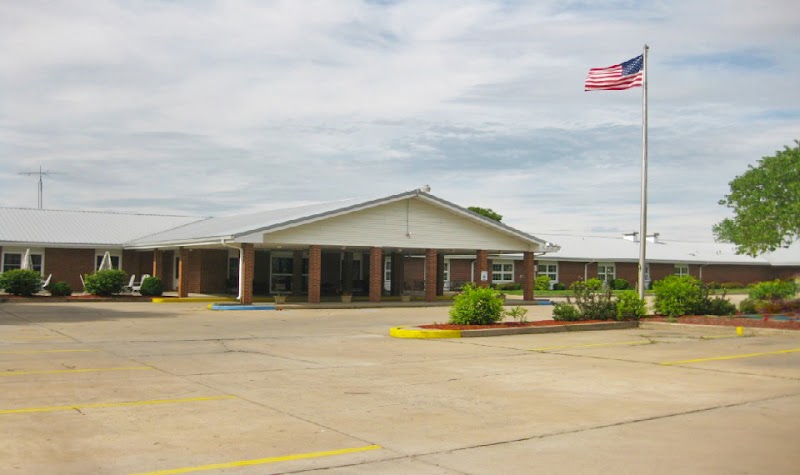
142 SHELBY PLAZA ROAD, SHELBINA, MO 63468 (573) 588-4175
Government - County 120 Beds Independent Data: November 2025 2 Immediate Jeopardy citations
Trust Grade
6/100
#227 of 479 in MO
Last Inspection: September 2023

Over 2 years since last inspection. Current conditions may differ from available data.

Overview

Baptist Homes of Shelbina has a Trust Grade of F, indicating significant concerns about the quality of care provided. They rank #227 out of 479 nursing homes in Missouri, placing them in the top half, and #1 out of 2 in Shelby County, meaning they are the best local option despite their overall poor rating. The facility is showing some improvement, with issues decreasing from 4 in 2024 to 3 in 2025. Staffing is a strength, with a turnover rate of 0%, which is much better than the state average of 57%, suggesting that staff are stable and familiar with the residents' needs. However, the facility has accumulated $81,159 in fines, which is concerning as it is higher than 83% of Missouri facilities, indicating possible compliance problems. Regarding specific incidents, there were critical findings where staff failed to protect a resident from abuse by recording them without consent while they were in distress, and another resident with dementia did not receive proper care for their anxiety, leading to emotional distress. Additionally, there was a serious incident where a resident was transferred improperly, resulting in a fall and injuries. These findings highlight both the troubling issues present and the need for families to weigh the strengths and weaknesses when considering this facility for their loved ones.

Trust Score
F
6/100
In Missouri
#227/479
Top 47%
Safety Record
High Risk
Review needed
Inspections
Getting Better
4 → 3 violations
Staff Stability
○ Average
Turnover data not reported for this facility.
Penalties
○ Average
$81,159 in fines. Higher than 64% of Missouri facilities. Some compliance issues.
Skilled Nurses
○ Average
Each resident gets 31 minutes of Registered Nurse (RN) attention daily — about average for Missouri. RNs are the most trained staff who monitor for health changes.
Violations
⚠ Watch
38 deficiencies on record. Higher than average. Multiple issues found across inspections.
★★☆☆☆
2.0
Overall Rating
★★★☆☆
3.0
Staff Levels
★★★☆☆
3.0
Care Quality
★★☆☆☆
2.0
Inspection Score
Stable
2024: 4 issues
2025: 3 issues

The Good

  • Full Sprinkler Coverage · Fire safety systems throughout facility
  • No fines on record

Facility shows strength in fire safety.

The Bad

2-Star Overall Rating

Near Missouri average (2.5)

Below average - review inspection findings carefully

Federal Fines: $81,159

Well above median ($33,413)

Moderate penalties - review what triggered them

The Ugly 38 deficiencies on record

2 life-threatening 2 actual harm
May 2025 1 deficiency
CONCERN (D) 📢 Someone Reported This

A family member, employee, or ombudsman was alarmed enough to file a formal complaint

Potential for Harm - no one hurt, but risky conditions existed

Deficiency F0658 (Tag F0658)

Could have caused harm · This affected 1 resident

Refer to FL1K12. Based on observation, interview, and record review, the facility failed to obtain an order for port-a-catheter (device connected to a vein in the chest or neck by a small, thin tube/...

Read full inspector narrative →
Refer to FL1K12. Based on observation, interview, and record review, the facility failed to obtain an order for port-a-catheter (device connected to a vein in the chest or neck by a small, thin tube/catheter with an injectable disc that can be accessed for administration of IV (intravenous) medications or fluid) care for one resident (Resident #1), in a review of one resident with a port-a-catheter, per the discharge instructions after the placement of the device. The census was 58. Review of the facility policy, IV Therapy: Central Line Management Protocol, effective 03/11/21, showed the following: -Purpose: To outline the nursing management of residents who have a central line catheter and to specify nursing responsibilities in obtaining samples; -Interdependent (requires physician order to implement); -Flushes: Flush all unused or intermittently used IV ports with ten milliliters (ml's) of normal saline as follows: -Every 12 hours; -After the infusion of any medications; -Flush used port with five ml Heparin (blood thinner) after each infusion; -Flush other unused ports with five milliliters of heparin daily (10 units/ml). Review of Resident #1's physician order sheet, dated June 2024, showed an order for the following: Port: left chest, access port and flush with ten milliliters (mls) normal saline and five mls Heparin (blood thinner) monthly (once a day on the 13th of the month) 6:00 A.M. - 2:00 P.M. Deaccess once complete. Review of the resident's hospital discharge instructions, Implanted Port Insertion (procedure to put in a port and catheter), dated 06/14/24, obtained from the resident's facility medical record, showed the following: -Hand written note on front of sheet: Left side port removed and new port placed on the right side; -The implanted port is used as a long term intravenous (IV) access; -The port will need to be flushed and checked as told by your health care provider, usually every few weeks; -No documentation staff acknowledged reviewing these instructions. Review of the resident's progress notes showed there was no documentation staff communicated with any physician regarding the care of the resident's right sided chest port-a-cath as the hospital discharge instructions of 06/14/24 instructed. Review of the resident's physician order sheets (POS), Medication Administration Record (MAR), Treatment Administration Record (TAR) and Injectable Administration History, dated June 2024, showed no orders for the care of a right sided chest port-a-cath. Review of the resident's POS, MAR, TAR and Injectable Administration History, dated July 2024, showed no orders for the care of a right sided chest port-a-cath. Review of the resident's POS, MAR, TAR and Injectable Administration History, dated August 2024 through October 2024, showed no orders for the care of a right sided chest port-a-cath. Review of the resident's POS, dated 10/17/24 to 10/31/24, showed the following: -An order dated 10/18/24, procedure to verify patency (unobstructed) of subclavian (large vein in the upper chest) port; no specific location documented; -An order dated 10/22/24, portogram procedure (diagnostic imaging used to assess the function of a port) to verify patency of port; no specific location documented. Physician requesting dye test to ensure patency of port; no specific location documented. Review of the resident's portogram result from the hospital, dated 10/28/24, showed the impression read: Contrast readily flows through the tip of the port device (no specific location of port indicated) with no reflux along the margins of the distal catheter that would suggest presence of a fibrous plug. The port freely draws blood as was demonstrated clinically prior to injecting the contrast. No evidence of thrombosis (blood clot) or fibrosis (formation of fibrous tissue) (define). There was no suggested follow up care or orders for the port listed. Review of the resident's POS, MAR, TAR, Injectable Administration History and progress notes, dated November 2024, showed no orders for the care of a right sided chest port-a-cath or communication to the physician related to the resident's right sided chest port. Review of the resident's POS, MAR, TAR and Injectable Administration History, dated December 2024 thru January 2025, showed no orders for the care of a right sided chest port-a-cath. Review of the resident's POS, MAR, TAR and Injectable Administration History, dated February 2025 thru April 2025, showed no orders for the care of a right sided chest port-a-cath. Review of the resident's POS, MAR, TAR and Injectable Administration History, dated May 2025, showed no orders for the care of a right sided chest port-a-cath. Observation on 05/16/25 at 1:00 P.M., showed the resident sat in his/her wheelchair at the nursing desk. He/She had a small nodule located on the right upper chest area with an approximate four-centimeter incision line directly above it. The resident acknowledged the area was his/her port-a-cath. During interviews on 05/15/25 at 2:02 P.M. and 05/16/25 at 1:09 P.M., Licensed Practical Nurse (LPN) C said the following: -He/She believed there was only one resident (not Resident #1) who had a port-a-cath; -He/She believed Resident #1's port-a-cath had been discontinued; -He/She would know if a resident had a port-a-cath if there was an order to do something with it as it would show up on the POS and MAR. It would be specific to a Registered Nurse (RN), who would be qualified to ensure the order was completed; -Staff should be aware if a resident has a port-a-cath present; -The MAR/TAR would list the correct location of the port. During an interview on 05/16/25 at 2:07 P.M., RN B said the following: -He/She was aware the resident had had a port-a-cath a few weeks ago, but had assumed it had been discontinued as there were no orders to flush it; -Normally, a port was flushed monthly despite usage; -Flushing the port kept it open in case it would need to be used in the future; -The physician should know if a port was not being used; -He/She would have expected the resident to have orders for flushing the port after the patency was checked at the hospital. During an interview on 05/23/25 at 2:39 P.M., RN D said the following: -He/She was aware the resident had a port-a-cath (was not specific to location) and had flushed it in the past; -At one time they were flushing the port-a-cath monthly and at some point he/she thought the flush had been missed; He/She phoned Physician I's office and was told by the Physician Assistant not to do anything with the port as the office would be handling the care of the port (flushes, blood draws). During an interview on at 05/23/25 at 3:07 P.M. and 05/30/25 at 2:04 P.M., RN E said the following: -Port-a-caths are usually flushed monthly, but they would follow the physician's orders; -Physician orders should be followed; -He/She recalled receiving an order to discontinue the flushes for the resident's port-a-cath and he/she discontinued it from the electronic record; -He/She could not recall why he/she had received that order; -He/She could not recall which side the resident's port was located. During an interview on 05/16/25 at 2:15 P.M , the Director of Nursing (DON) said the following: -Staff should be aware of the presence of a resident's port-a-cath; -The presence of the device (implanted device) should be in the medical record; -She would expect there to be documentation in the medical record to show the care of a port or at least the presence of it; -Ports should be flushed timely and as ordered; -Her experience with ports was that they should be flushed every four to six weeks if maintaining patency; -She expected nursing to document any conversation they had with the physician who said there was no longer a need to flush the port so there would not be a situation like this; -Staff call the physician and go over orders upon a resident's return from the hospital, but the nurse who received the resident back may not have known why the resident was sent out due to staffing being moved around in the building; -If hospital discharge instructions noted the port would need to be flushed and checked as told by the health care provider, usually every few weeks, she would have expected staff to call the provider at that time to obtain an order. She thought they had, but there was no documentation of that; -She was aware the resident had a right sided chest port; -When staff are are a resident has an implanted port-a-cath, they should ensure facility policy is followed and orders obtained for care of the port-a cath; again, she thought that had been addressed with the resident's physician and no orders for care had been given; -She was not aware of any staff being responsible for reviewing physician orders to ensure proper care was provided. During an interview on 05/16/25 at 2:31 P.M., the Administrator said the following: -She would expect staff to be aware of the presence of the resident's port-a-cath; -She would expect any conversations with the physician regarding the care of the port to be documented in the progress notes. During an interview on 05/16/25 at 11:11 A.M., Physician G said the following: -He would expect a port-a-cath to be flushed monthly to keep it patent; -Missed flushes could cause the catheter to clot off making it un-useable; -He would recommend for staff to follow the recommendation of the facility/physician which placed the catheter. During an interview on 05/22/25 at 9:32 A.M., the resident's current primary physician, Physician H, also the facility medical director, said the following: -Port-a-caths were normally flushed every 30 days with heparin to keep the port patent; -If a port-a-cath was left in place and not flushed, it would clog from non-use; -If a resident returned from the hospital with an incision/port-a-cath, he would expect staff to inquire about care of the port if no orders were were received. MO253801
Apr 2025 2 deficiencies
CONCERN (D) 📢 Someone Reported This

A family member, employee, or ombudsman was alarmed enough to file a formal complaint

Potential for Harm - no one hurt, but risky conditions existed

Deficiency F0658 (Tag F0658)

Could have caused harm · This affected 1 resident

Based on observation, interview, and record review, the facility failed to obtain an order for port-a-catheter (device connected to a vein in the chest or neck by a small, thin tube/catheter with an i...

Read full inspector narrative →
Based on observation, interview, and record review, the facility failed to obtain an order for port-a-catheter (device connected to a vein in the chest or neck by a small, thin tube/catheter with an injectable disc that can be accessed for administration of IV (intravenous) medications or fluid) care for one resident (Resident #1), in a review of one resident with a port-a-catheter, per the discharge instructions after the placement of the device. The census was 58. Review of the facility policy, IV Therapy: Central Line Management Protocol, effective 03/11/21, showed the following: -Purpose: To outline the nursing management of residents who have a central line catheter and to specify nursing responsibilities in obtaining samples; -Interdependent (requires physician order to implement); -Flushes: Flush all unused or intermittently used IV ports with ten milliliters (ml's) of normal saline as follows: -Every 12 hours; -After the infusion of any medications; -Flush used port with five ml Heparin (blood thinner) after each infusion; -Flush other unused ports with five milliliters of heparin daily (10 units/ml). Review of Resident #1's physician order sheet, dated June 2024, showed an order for the following: Port: left chest, access port and flush with ten milliliters (mls) normal saline and five mls Heparin (blood thinner) monthly (once a day on the 13th of the month) 6:00 A.M. - 2:00 P.M. Deaccess once complete. Review of the resident's hospital discharge instructions, Implanted Port Insertion (procedure to put in a port and catheter), dated 06/14/24, obtained from the resident's facility medical record, showed the following: -Hand written note on front of sheet: Left side port removed and new port placed on the right side; -The implanted port is used as a long term intravenous (IV) access; -The port will need to be flushed and checked as told by your health care provider, usually every few weeks; -No documentation staff acknowledged reviewing these instructions. Review of the resident's progress notes showed there was no documentation staff communicated with any physician regarding the care of the resident's right sided chest port-a-cath as the hospital discharge instructions of 06/14/24 instructed. Review of the resident's physician order sheets (POS), Medication Administration Record (MAR), Treatment Administration Record (TAR) and Injectable Administration History, dated June 2024, showed no orders for the care of a right sided chest port-a-cath. Review of the resident's POS, MAR, TAR and Injectable Administration History, dated July 2024, showed no orders for the care of a right sided chest port-a-cath. Review of the resident's POS, MAR, TAR and Injectable Administration History, dated August 2024 through October 2024, showed no orders for the care of a right sided chest port-a-cath. Review of the resident's POS, dated 10/17/24 to 10/31/24, showed the following: -An order dated 10/18/24, procedure to verify patency (unobstructed) of subclavian (large vein in the upper chest) port; no specific location documented; -An order dated 10/22/24, portogram procedure (diagnostic imaging used to assess the function of a port) to verify patency of port; no specific location documented. Physician requesting dye test to ensure patency of port; no specific location documented. Review of the resident's portogram result from the hospital, dated 10/28/24, showed the impression read: Contrast readily flows through the tip of the port device (no specific location of port indicated) with no reflux along the margins of the distal catheter that would suggest presence of a fibrous plug. The port freely draws blood as was demonstrated clinically prior to injecting the contrast. No evidence of thrombosis (blood clot) or fibrosis (formation of fibrous tissue) (define). There was no suggested follow up care or orders for the port listed. Review of the resident's POS, MAR, TAR, Injectable Administration History and progress notes, dated November 2024, showed no orders for the care of a right sided chest port-a-cath or communication to the physician related to the resident's right sided chest port. Review of the resident's POS, MAR, TAR and Injectable Administration History, dated December 2024 thru January 2025, showed no orders for the care of a right sided chest port-a-cath. Review of the resident's POS, MAR, TAR and Injectable Administration History, dated February 2025 thru April 2025, showed no orders for the care of a right sided chest port-a-cath. Review of the resident's POS, MAR, TAR and Injectable Administration History, dated May 2025, showed no orders for the care of a right sided chest port-a-cath. Observation on 05/16/25 at 1:00 P.M., showed the resident sat in his/her wheelchair at the nursing desk. He/She had a small nodule located on the right upper chest area with an approximate four-centimeter incision line directly above it. The resident acknowledged the area was his/her port-a-cath. During interviews on 05/15/25 at 2:02 P.M. and 05/16/25 at 1:09 P.M., Licensed Practical Nurse (LPN) C said the following: -He/She believed there was only one resident (not Resident #1) who had a port-a-cath; -He/She believed Resident #1's port-a-cath had been discontinued; -He/She would know if a resident had a port-a-cath if there was an order to do something with it as it would show up on the POS and MAR. It would be specific to a Registered Nurse (RN), who would be qualified to ensure the order was completed; -Staff should be aware if a resident has a port-a-cath present; -The MAR/TAR would list the correct location of the port. During an interview on 05/16/25 at 2:07 P.M., RN B said the following: -He/She was aware the resident had had a port-a-cath a few weeks ago, but had assumed it had been discontinued as there were no orders to flush it; -Normally, a port was flushed monthly despite usage; -Flushing the port kept it open in case it would need to be used in the future; -The physician should know if a port was not being used; -He/She would have expected the resident to have orders for flushing the port after the patency was checked at the hospital. During an interview on 05/23/25 at 2:39 P.M., RN D said the following: -He/She was aware the resident had a port-a-cath (was not specific to location) and had flushed it in the past; -At one time they were flushing the port-a-cath monthly and at some point he/she thought the flush had been missed; He/She phoned Physician I's office and was told by the Physician Assistant not to do anything with the port as the office would be handling the care of the port (flushes, blood draws). During an interview on at 05/23/25 at 3:07 P.M. and 05/30/25 at 2:04 P.M., RN E said the following: -Port-a-caths are usually flushed monthly, but they would follow the physician's orders; -Physician orders should be followed; -He/She recalled receiving an order to discontinue the flushes for the resident's port-a-cath and he/she discontinued it from the electronic record; -He/She could not recall why he/she had received that order; -He/She could not recall which side the resident's port was located. During an interview on 05/16/25 at 2:15 P.M , the Director of Nursing (DON) said the following: -Staff should be aware of the presence of a resident's port-a-cath; -The presence of the device (implanted device) should be in the medical record; -She would expect there to be documentation in the medical record to show the care of a port or at least the presence of it; -Ports should be flushed timely and as ordered; -Her experience with ports was that they should be flushed every four to six weeks if maintaining patency; -She expected nursing to document any conversation they had with the physician who said there was no longer a need to flush the port so there would not be a situation like this; -Staff call the physician and go over orders upon a resident's return from the hospital, but the nurse who received the resident back may not have known why the resident was sent out due to staffing being moved around in the building; -If hospital discharge instructions noted the port would need to be flushed and checked as told by the health care provider, usually every few weeks, she would have expected staff to call the provider at that time to obtain an order. She thought they had, but there was no documentation of that; -She was aware the resident had a right sided chest port; -When staff are are a resident has an implanted port-a-cath, they should ensure facility policy is followed and orders obtained for care of the port-a cath; again, she thought that had been addressed with the resident's physician and no orders for care had been given; -She was not aware of any staff being responsible for reviewing physician orders to ensure proper care was provided. During an interview on 05/16/25 at 2:31 P.M., the Administrator said the following: -She would expect staff to be aware of the presence of the resident's port-a-cath; -She would expect any conversations with the physician regarding the care of the port to be documented in the progress notes. During an interview on 05/16/25 at 11:11 A.M., Physician G said the following: -He would expect a port-a-cath to be flushed monthly to keep it patent; -Missed flushes could cause the catheter to clot off making it un-useable; -He would recommend for staff to follow the recommendation of the facility/physician which placed the catheter. During an interview on 05/22/25 at 9:32 A.M., the resident's current primary physician, Physician H, also the facility medical director, said the following: -Port-a-caths were normally flushed every 30 days with heparin to keep the port patent; -If a port-a-cath was left in place and not flushed, it would clog from non-use; -If a resident returned from the hospital with an incision/port-a-cath, he would expect staff to inquire about care of the port if no orders were were received. MO253801
CONCERN (E) 📢 Someone Reported This

A family member, employee, or ombudsman was alarmed enough to file a formal complaint

Potential for Harm - no one hurt, but risky conditions existed

Deficiency F0558 (Tag F0558)

Could have caused harm · This affected multiple residents

**NOTE- TERMS IN BRACKETS HAVE BEEN EDITED TO PROTECT CONFIDENTIALITY** Based on interview and record review, the facility failed to ensure staff responded to call lights timely for five residents (Re...

Read full inspector narrative →
**NOTE- TERMS IN BRACKETS HAVE BEEN EDITED TO PROTECT CONFIDENTIALITY** Based on interview and record review, the facility failed to ensure staff responded to call lights timely for five residents (Residents #1, #2, #3, #4 and #6), in a review of six sampled residents. Staff failed to accommodate the residents' needs for assistance, including assistance with toileting, which resulted in episodes of incontinence. The facility census was 59. Review of the facility policy titled, Nurse Call System, revised 11/15/2023, showed the following: Call escalation: -Call made, activates Certified Nurse Aide (CNA) pagers; -Repeat call goes out to CNA, at seven minutes; -Call escalates to Restorative Nurse and Certified Medication Technician (CMT) if call is not responded to within 14 minutes; -Call escalates to charge nurse at the 21 minute mark; -Director of Nursing (DON) cell phone activated at the 28 minute mark. 1. Review of Resident #3's care plan, revised 12/31/24, showed the following: -The resident was continent of bowel and bladder; -The resident needed assistance to complete the majority of his/her activities of daily living (ADLs); -The resident needed staff assistance with toileting and transfers; -Please check on him/her at least every two hours and ensure he/she was dry and clean; Review of the resident's quarterly Minimum Data Set (MDS), a federally mandated assessment instrument completed by facility staff, dated 02/17/25 showed the following: -Cognitively intact; -Understands others; -Makes self understood; -Required substantial/maximal assistance for toileting hygiene and toilet transfers; -Required partial/moderate assistance for sit to stand; -Required supervision or touching assistance for walking 10 feet; -Used a wheelchair; -Occasionally incontinent of bladder; -Continent of bowel; -Diagnoses of heart failure and diabetes; -Takes a diuretic. During an interview on 04/03/25 at 7:24 A.M., Resident #3 said the following: -He/She required staff assistance of one for ambulation and use of his/her walker; -He/She used his/her call light for staff assistance to toilet; -He/She took a fluid pill, needed to urinate a lot and when he/she needs to go, he/she needed to go; -He/She had been incontinent several times when waiting for staff assistance for toileting; -He/She felt bad when he/she was incontinent and staff had to clean up after him/her. 2. Review of Resident #1's quarterly MDS dated [DATE] showed the following: -Cognitively intact; -Makes self understood; -Required substantial/maximal assistance for toileting hygiene, sitting to standing, toilet transfers and for walking 10 feet; -Uses a wheelchair; -Occasionally incontinent of bladder; -Always continent of bowel; -Diagnoses of urinary tract infection (an infection in any part of the urinary system) last 30 days, diabetes and dementia. Review of the resident's care plan, revised 01/07/25, showed the following: -The resident had a fall prior to admission to the facility that resulted in a left femur (leg bone) fracture that was surgically repaired in the hospital; -The resident was at high risk for falls; -The resident was occasionally incontinent of bowel and bladder; -The resident needed extensive assistance of one staff with toileting; -The resident ambulated with a walker, gait belt (a sturdy strap with a buckle, typically made of canvas, nylon, or leather, used by healthcare providers to safely support and guide residents who have difficulty walking or standing, and to assist with transfers) and staff assist of one. Review of the resident's call light logs, dated 03/10/25 to 04/03/25, showed the following: -On 03/24/25 the call light was activated at 6:19 P.M. and remained on for 24 minutes before being deactivated; -On 03/26/25 the call light was activated at 6:07 P.M. and remained on for 23 minutes before being deactivated; -On 03/26/25 the call light was activated at 6:36 P.M. and remained on for 22 minutes before being deactivated; -On 03/29/25 the call light was activated at 7:34 A.M. and remained on for 28 minutes before being deactivated; -On 03/30/25 the call light was activated at 1:05 P.M. and remained on for 30 minutes before being deactivated; -On 03/31/25 the call light was activated at 6:05 P.M. and remained on for 22 minutes before being deactivated; -On 04/2/25 the call light was activated at 12:20 P.M. and remained on for 21 minutes before being deactivated. During an interview on 04/03/25 at 8:25 A.M., the resident said the following: -He/She needed help from staff getting to the bathroom; -He/She had been incontinent waiting for staff to answer his/her call light; -It made him/her feel bad when he/she has an accident (was incontinent). During an interview on 04/03/25 at 8:25 A.M., the resident's family member said the following: -He/She visited the resident daily; -The resident needed staff assistance for toileting and personal care; -The resident has had to wait 30 minutes to an hour for his/her call light to be answered by staff. 3. Review of Resident #4's care plan, revised 12/31/24, showed the following: -The resident was alert and able to make his/her needs known to staff; -The resident has left sided weakness; -The resident needs assist of one staff member with transfers using a gait belt; -Remind the resident frequently to ask for assistance for his/her safety; -The resident was continent of bowel and bladder; -The resident required substantial assistance with toileting hygiene. Review of the resident's call light logs, dated 03/10/25 to 03/20/25, showed the following: -On 03/10/25 the call light was activated at 5:35 P.M. and remained on for 38 minutes before being deactivated; -On 03/14/25 the call light was activated at 8:52 P.M. and remained on for 29 minutes before being deactivated; -On 03/15/25 the call light was activated at 10:33 A.M. and remained on for 24 minutes before being deactivated; -On 03/15/25 the call light was activated at 6:29 P.M. and remained on for 40 minutes before being deactivated; -On 03/17/25 the call light was activated at 5:39 P.M. and remained on for 41 minutes before being deactivated; -On 03/17/25 the call light was activated at 5:53 P.M. and remained on for 27 minutes before being deactivated; -On 03/19/25 the call light was activated at 8:14 A.M. and remained on for 24 minutes before being deactivated; -On 03/19/25 the call light was activated at 10:29 A.M. and remained on for 24 minutes before being deactivated; -On 03/20/25 the call light was activated at 4:10 P.M. and remained on for 31 minutes before being deactivated; -On 03/20/25 the call light was activated at 5:45 P.M. and remained on for 24 minutes before being deactivated. Review of the resident's quarterly MDS, dated [DATE], showed the following: -Cognitively intact; -Made self understood; -Used a walker and a wheelchair; -Required supervision and touching assistance for toileting hygiene, toilet transfers, sitting to standing and for walking; -Always continent of bladder and bowel; -Diagnoses of cancer and seizure disorder; -Takes a diuretic (also called water pills, medication designed to increase the amount of water and salt expelled from the body as urine). Review of the resident's call light logs, dated 03/21/25 to 04/03/25 showed the following: -On 03/23/25 the call light was activated at 11:24 A.M. and remained on for 20 minutes before being deactivated; -On 03/24/25 the call light was activated at 12:52 P.M. and remained on for 22 minutes before being deactivated; -On 03/24/25 the call light was activated at 7:28 P.M. and remained on for 22 minutes before being deactivated; -On 03/26/25 the call light was activated at 6:06 A.M. and remained on for 26 minutes before being deactivated; -On 03/26/25 the call light was activated at 10:29 A.M. and remained on for 32 minutes before being deactivated; -On 03/27/25 the call light was activated at 10:12 A.M. and remained on for 22 minutes before being deactivated; -On 03/27/25 the call light was activated at 3:59 P.M. and remained on for 20 minutes before being deactivated; -On 03/28/25 the call light was activated at 5:46 P.M. and remained on for 22 minutes before being deactivated; -On 03/30/25 the call light was activated at 7:55 P.M. and remained on for 21 minutes before being deactivated; -On 03/31/25 the call light was activated at 5:58 P.M. and remained on for 28 minutes before being deactivated; -On 03/31/25 the call light was activated at 8:30 P.M. and remained on for 29 minutes before being deactivated; -On 04/01/25 the call light was activated at 7:22 P.M. and remained on for 20 minutes before being deactivated; -On 04/02/25 the call light was activated at 1:30 P.M. and remained on for 30 minutes before being deactivated; -On 04/02/25 the call light was activated at 4:32 P.M. and remained on for 21 minutes before being deactivated; -On 04/02/25 the call light was activated at 7:57 P.M. and remained on for 28 minutes before being deactivated; -On 04/03/25 the call light was activated at 11:13 A.M. and remained on for 22 minutes before being deactivated; -On 04/03/25 the call light was activated at 2:08 P.M. and remained on for 27 minutes before being deactivated. During an interview on 04/03/25 at 2:28 P.M., the resident said the following: -He/She had left side weakness and a history of seizures and falls; -He/She needed staff assist of one for ambulation to and from the bathroom; -He/She has had to wait 25 minutes or more for staff to answer his/her call light; -He/She has a cloth incontinence pad in his/her bed and in his/her recliner, but he/she would rather go to the bathroom and use the toilet; -He/She did not want to urinate in his/her bed or his/her chair. 4. Review of Resident #2's care plan,, revised 11/26/24 showed the following: -The resident has a diagnosis of bipolar disorder (disorder associated with episodes of mood swings ranging from depressive lows to manic highs), anxiety and depression; -The resident takes a fluid pill daily that can increase his/her risk of dehydration; -The resident was frequently incontinent of bowel and bladder; -The resident needed total assistance with using a bedpan; -The resident used a urinal and at times needed assistance using it; -The resident will use his/her call light for staff to assist him/her with toileting; -The resident had both lower limbs amputated due to diabetes; -The resident requires extensive assistance with using a mechanical lift. Review of the resident's call light logs, dated 03/10/25 to 03/28/25, showed the following: -On 03/11/25 the call light was activated at 7:01 A.M. and remained on for 25 minutes before being deactivated; -On 03/13/25 the call light was activated at 7:01 A.M. and remained on for 33 minutes before being deactivated; -On 03/13/25 the call light was activated at 1:52 P.M. and remained on for 26 minutes before being deactivated; -On 03/13/25 the call light was activated at 9:22 P.M. and remained on for 58 minutes before being deactivated; -On 03/14/25 the call light was activated at 4:00 P.M. and remained on for 22 minutes before being deactivated; -On 03/14/25 the call light was activated at 5:16 P.M. and remained on for 21 minutes before being deactivated; -On 03/14/25 the call light was activated at 6:00 P.M. and remained on for 21 minutes before being deactivated; -On 03/17/25 the call light was activated at 3:12 P.M. and remained on for 31 minutes before being deactivated; -On 03/17/25 the call light was activated at 4:01 P.M. and remained on for 29 minutes before being deactivated; -On 03/18/25 the call light was activated at 1:42 P.M. and remained on for 24 minutes before being deactivated. Review of the resident's quarterly MDS dated [DATE] showed the following: -Cognitively intact; -Made self understood; -Dependent on staff for toileting hygiene and chair/bed to chair transfers; -Used a motorized wheelchair; -Occasionally incontinent of bladder and bowel; -Diagnoses of diabetes, stroke and hemiplegia (muscle weakness or partial paralysis on one side of the body); -Functional limitation in range of motion for lower extremities, both sides; -Takes a diuretic. Review of the resident's call light logs, dated 03/29/25 through 04/03/25, showed the following: -On 03/29/25 the call light was activated at 10:27 A.M. and remained on for 25 minutes before being deactivated; -On 03/30/25 the call light was activated at 9:25 A.M. and remained on for 32 minutes before being deactivated; -On 04/01/25 the call light was activated at 9:09 P.M. and remained on for 33 minutes before being deactivated; -On 04/02/25 the call light was activated at 6:24 A.M. and remained on for 25 minutes before being deactivated; -On 04/02/25 the call light was activated at 11:48 A.M. and remained on for 29 minutes before being deactivated; -On 04/02/25 the call light was activated at 1:39 P.M. and remained on for 22 minutes before being deactivated; -On 04/02/25 the call light was activated at 7:13 P.M. and remained on for 21 minutes before being deactivated; -On 04/03/25 the call light was activated at 6:57 A.M. and remained on for 25 minutes before being deactivated; -On 04/03/25 the call light was activated at 9:10 A.M. and remained on for 30 minutes before being deactivated. During an interview on 04/03/25 at 11:25 A.M., the resident said the following: -He/She needed staff assistance for toileting and transfers; -Sometimes it took up to an hour to get assistance from staff. 5. Review of Resident #6's quarterly MDS, dated [DATE], showed the following: -Severely impaired cognition; -Usually understood-difficulty communicating some words or finishing thoughts but is able if prompted or given time; -Required substantial/maximal assistance for toileting hygiene, toilet transfers and sit to stand; -Unable to walk; -Used a wheelchair; -Always incontinent of bladder; -Frequently incontinent of bowel; -Diagnoses of heart failure and dementia; -Takes a diuretic. Review of the resident's call light logs, dated 03/10/25 to 04/03/25, showed the following: -On 03/14/25 the call light was activated at 11:18 A.M. and remained on for 23 minutes before being deactivated; -On 03/18/25 the call light was activated at 5:32P.M. andd remained on for 22 minutes before being deactivated; -On 03/19/25 the call light was activated at 7:57 P.M. and remained on for 21 minutes before being deactivated; -On 03/23/25 the call light was activated at 1:36 P.M. and remained on for 22 minutes before being deactivated; -On 03/29/25 the call light was activated at 9:50 A.M. and remained on for 21 minutes before being deactivated; -On 04/01/25 the call light was activated at 1:23 P.M. and remained on for 20 minutes before being deactivated; -On 04/02/25 the call light was activated at 7:59 P.M. and remained on for 25 minutes before being deactivated. Review of the resident's care plan, revised 04/08/25, showed the following: -The resident required extensive assistance with his/her ADLs due to poor mobility and cognitive deficit; -Staff will ensure the resident is toileted at least every two hours; -The resident was frequently incontinent of bowel and bladder; -The resident was a fall risk due to impaired cognition and mobility as well as use of diuretics; -Staff will ensure the resident's call light was within reach and frequently remind him/her to use if for assistance as needed. During an interview on 04/03/2025 at 3:20 P.M. and 4/16/25 at 1:36 P.M. the Director of Nurses said the following: -She prefers for staff to answer call lights within 10 minutes; -She and the Administrator received a daily and weekly report of call light logs and review what happened the day prior; -She was unaware Resident #3 had been incontinent due to waiting for staff assistance to toilet; -They had not identified longer call light response times for any residents other than Resident #2; -She receives alerts on her cell phone for call lights on greater than 28 minutes; -When she receives the alerts, she talked to staff to figure out the reason for the longer call light response times; -If they see a pattern of a resident's call light on for an excessive amount of time, she talked to the staff on duty during those times. During an interview on 04/08/25 at 11:20 A.M. and 4/16/25 at 12:21 P.M. the Administrator said the following: -She would expect staff to answer call lights within seven minutes; -More than 20 minutes to answer a call light would be too long; -She and the DON monitored call light response times daily; -She reviewed the call light logs for longer call light response times; -She discussed the longer call light response times in morning meeting to try to figure out why the response times were longer; -She looks at the time of the longer response times and talks with staff on duty during that time. MO 251821
Feb 2024 4 deficiencies 2 Harm
SERIOUS (G) 📢 Someone Reported This

A family member, employee, or ombudsman was alarmed enough to file a formal complaint

Actual Harm - a resident was hurt due to facility failures

Accident Prevention (Tag F0689)

A resident was harmed · This affected 1 resident

Based on interview and record review, the facility failed to ensure staff transferred one resident (Resident #6), in a review of seven sampled residents, who required staff assistance and use of a gai...

Read full inspector narrative →
Based on interview and record review, the facility failed to ensure staff transferred one resident (Resident #6), in a review of seven sampled residents, who required staff assistance and use of a gait belt (belt used to help safely transfer a person from a bed to a wheelchair, assist with sitting and standing, and ambulation). Both staff and the resident fell. The resident had a history of falls and a left hip fracture. The resident sustained a skin tear, muscle/ligament tears, and had increased pain after the fall. The facility census was 59. Review of the facility policy Gait Belt for Transfer dated 10/10/12 showed gait belts are provided to assist staff to safely transfer or ambulate residents. 1. Review of Resident #6's hospital discharge orders dated 12/8/23 showed the following: -Fracture of left hip; -Past medical history of stroke; -Discharge activity included non-weight bearing to left hand. Can use platform walker and bear weight on the forearm. 75% weight bearing to the left leg. Review of the resident's admission Minimum Data Set (MDS), a federally mandated assessment instrument completed by facility staff, dated 12/14/23 showed the following: -admitted to the facility 12/8/23; -Cognitively intact; -Required partial to moderate assistance for toileting hygiene, sit to stand transfer, chair-bed to chair transfer and toilet transfer; -Required supervision or touching assistance for walking; -Used a wheelchair; -Always continent of bladder and bowel; -Diagnoses of hemiplegia (one-sided paralysis)/hemiparesis (muscle weakness or partial paralysis on one side of the body that can affect the arms, legs, and facial muscles) and depression; -Frequent pain; -Pain almost constantly affects sleep; -Pain intensity 9 (scale 0-10); -History of fall in the last month prior to admission; -Had a fracture related to a fall in six months prior to admission. Review of the resident's progress notes dated 12/21/23 at 4:45 P.M. showed the following: -Called into resident's room by staff; -Witnessed resident and a staff member both on the ground; -Resident reported usual 5/10 left hip pain; -Rotation of left hip noted which resident reports has been normal since recent fracture and repair to left hip; -Resident had left elbow skin tear. Pressure applied. Steri-stips applied with non-adherent dressing and gauze wrap applied after bleeding was controlled. Review of the resident's fall incident report dated 12/21/23 at 5:16 P.M. showed range of motion (ROM): ROM painful/limited in lower extremity. Review of the resident's bilateral hip X-Ray results dated 12/21/23 showed the following: -Increasing pain of the left hip after recent fall, hip fracture repaired five weeks ago; -There is proximal distraction (separated by a gap) of the lesser trochanteric fragment from the previous hip fracture. Review of the resident's progress notes dated 12/22/23 at 9:25 A.M. showed X-Ray faxed to orthopedic physician's office. Review of the resident's physician orders dated 12/24/23 showed the following: -Non-weight bearing (NWB) left lower extremity (LLE); -Hoyer lift (full body mechanical lift); -MRI (magnetic resonance imaging)(medical imaging technique used in radiology to form pictures of the anatomy and the physiological processes inside the body) left hip; -Norco (narcotic pain medication) 5-325 milligrams (mg) three times daily. Review of the resident's progress notes dated 12/25/23 at 9:25 P.M. showed the resident requires extensive assist of two for transfers with Hoyer lift (mechanical lift) since hip injury. Review of the resident's care plan revised 1/17/24 showed the following: -The resident has reported frequent chronic pain in his/her left hip and lower extremity; -He/She has interventions for pain. Administer or apply as needed and ordered; -He/She had a fall and broke his/her left hip. He/she is working with therapy; -He/She needs assistance with toileting and dressing; -The resident scored as being a high risk for falls; -He/She has had falls in the last six month; -He/She has weakness/deficits to his/her left side due to a stroke; -He/She has an unsteady gait; -On 12/21/23 he/she was ambulating with staff and fell. Staff was not using a gait belt. Staff was educated on gait belt use and it's importance for both staff and his/her safety; -Please keep his/her call light within reach; -He/She transfers with two staff members using a gait belt. Review of the resident's MRI of the left hip dated 1/30/24, showed left gluteus minimus (smallest muscle of the glute) and medius (primary hip abductor) tendon partially torn with diffuse left gluteal muscle edema (swelling). Review of the resident's orthopedic physician's notes dated 2/6/24 showed the following: -Left lateral hip and iliotibial band (ITB) (a painful inflammation of the iliotibial band, a thick, tendon-like portion of a muscle that travels from the hip down the outer side of the thigh to the knee. Iliotibial band pain syndrome (ITBS) results in pain, aggravated by activity, that is usually felt on the outer side of the knee) pain after second fall; -Tender to palpation (TTP) over left hip fracture bolt and ITB; -Orders for ultrasound guided left greater trochanter (GT) (located at the top of the thighbone (femur) and is the most prominent and widest part of the hip) bursa (small fluid filled sacs found near joints) and gluteal tendon injection. During an interview on 2/20/24 at 9:51 A.M. the resident said the following: -When he/she was admitted to the facility he/she was walking with a walker and staff assist of one; -Currently he/she required staff assist of two for transfers and ambulation; -He/She has had a stroke, fell and broke his/her hip a few months ago and had a fall in December which has caused him/her increased pain; -Certified Nurse Aide (CNA) H was walking him/her to the bathroom, he/she lost his/her balance and both he/she and CNA H fell in the bathroom; -He/She doesn't remember CNA H putting a belt around his/her waist when he/she fell in December; -He/She suffered torn ligaments and muscles from the fall in December; -He/She has had to return to the orthopedic physician and the plan is for him/her to receive a steroid injection in his/her left hip to hopefully help relieve the pain. If the injection does not work he/she will have to another surgery. During an interview on 2/20/24 at 4:50 P.M. CNA H said the following: -He/She walked the resident to the bathroom; -He/She stood behind the resident and held onto the sides of the resident's waist with his/her hands; -The resident lost his/her balance; -He/She tried to catch the resident and tripped over the resident's walker; -Both he/she and the resident fell; -He/She did not use a gait belt; -He/She was supposed to use a gait belt. During an interview on 2/22/24 at 10:42 A.M. the MDS Coordinator said the following: -He/She was called to the resident's room the day he/she fell; -CNA H and the resident both laid on the bathroom floor; -The resident told CNA H just to grab around his/her waist during the transfer and ambulation to the bathroom so no gait belt was used; -Since the fall the resident has been having increased pain and has required further testing; -The resident also sustained a skin tear to his/her arm during the fall. During an interview on 2/27/24 at 10:20 A.M. Physical Therapist K said the following: -The resident has experienced a muscle injury and increased pain after the 12/21/23 fall; -The resident also has a surgical issue in which the screw is sticking of the rod in the resident's hip which was probably jolted by the fall; -She would have expected staff to use a gait belt for transfers and ambulation. During an interview on 2/22/24 at 4:04 P.M. the Director of Nursing (DON) said staff should use a gait belt for all transfers and ambulation needing hands-on staff assistance. Not using a gait belt for a resident that needs hands-on assistance for transfers and ambulation could increase a resident's risk for falls.
SERIOUS (G) 📢 Someone Reported This

A family member, employee, or ombudsman was alarmed enough to file a formal complaint

Actual Harm - a resident was hurt due to facility failures

Deficiency F0760 (Tag F0760)

A resident was harmed · This affected 1 resident

Based on interview and record review, the facility failed to ensure one resident (Resident #7). in a review of seven sampled residents, remained free of significant medication error. The resident had ...

Read full inspector narrative →
Based on interview and record review, the facility failed to ensure one resident (Resident #7). in a review of seven sampled residents, remained free of significant medication error. The resident had an order for a Fentanyl patch (a powerful opiod medication for pain control). The resident became nauseated and unresponsive requiring two doses of Narcan (a medication used to reverse opioid overdose) before becoming responsive again. The resident was then transferred to the hospital for evaluation where hospital records showed the resident had two Fentanyl (narcotic pain medication) patches on the resident's skin (the resident's physician order was for one patch). The facility census was 59. The facility did not provide a policy for following physician's orders. Review of www.drugs.com showed the following regarding Fentanyl patch usage: -Opioid medication can slow or stop breathing, and death may occur. Seek emergency medical attention if you have slow breathing with long pauses, blue colored lips, or if you are hard to wake up; -Remove the skin patch and call your physician at once if you have confusion, severe drowsiness, feeling like you might pass out; -Never use Fentanyl in larger amounts, or for longer than prescribed; -Wear the Fentanyl skin patch around the clock, removing and replacing the patch every 72 hours (3 days). Do not wear more than one patch at a time unless your physician has told you to. 1. Review of Resident #7's care plan dated 10/5/23 showed the following: -The resident reports having pain all over but mostly in his/her bilateral legs and feet; -The resident is diabetic and has neuropathy (weakness, numbness, and pain from nerve damage, usually in the hands and feet); -The resident has a pain patch that is applied and changed every three days. Review of the resident's quarterly Minimum Data Set (MDS), a federally mandated assessment instrument completed by facility staff, dated 12/1/23 showed the following: -Cognitively intact; -No acute mental status changes; -Diagnoses of heart failure and anxiety. Review of the resident's January 2024 physician's orders showed an order for Fentanyl 25 micrograms (mcg)/hour (hr) every 72 hours transdermal (through the skin) (start date 10/6/23). Review of the resident's January 2024 Medication Administration Record (MAR) dated 1/4/24 showed staff applied Fentanyl25 mcgg/hour transdermal patch. Review of the resident's January 2024 MAR showed no documentation regarding the removal of a Fentanyl patch on 1/4/24. Review of the resident's progress notes dated 1/5/24 at 10:57 A.M. showed the following: -This nurse and aide assisted the resident to the bathroom, transferring from wheelchair to toilet and back to his/her wheelchair, while propelling wheelchair to recliner, resident said I feel nauseous; -This nurse and aide again transferred the resident to the recliner; -After the resident sat in the recliner, resident had dazed look on his/her face, eyes open and unable to respond to nurse calling his/her name x 3; -Emergency Medical Services (EMS) and physician were notified via phone; -Family was present and agreed to send resident to the hospital. Review of the resident's progress notes dated 1/5/24 at 11:00 A.M. showed the following: -Resident went unresponsive upon his/her return transfer to recliner so event was witnessed; -Resident was leaned forward in chair with agonal gasps (when someone who is not getting enough oxygen is gasping for air); -The resident's teeth were falling out of his/her mouth and his/her lips were blue; -Resident sat back in chair; -Absence of vital signs while staff spoke loudly to the resident and did sternal rub (a commonly used method of assessing response to painful stimuli in assessing the neurological status of an individual); -After a period of apnea (breathing stops) lasting 25 seconds, resident gasped and opened eyes; -Physician notified with orders to remove Fentanyl patch and give a dose of Narcan; -Patch removed and 0.4 milligrams (mg) of Narcan administered; -Resident continued to dry heave; -Paramedic initiatedintravenouss (IV) (a soft, flexible tube placed inside a vein) while in the facility to administer IV Zofran (medication for nausea) and another dose of Narcan. Review of the resident's progress notes dated 1/6/24 at 12:11 A.M. showed the resident was admitted to the hospital with congestive heart failure and urinary tract infection (UTI). Review of the resident's hospital progress note dated 1/9/24 showed on presentation to the hospital, resident was noted to have two Fentanyl patches in place which was reversed with Narcan x 2. During an interview on 2/21/24 at 1:47 P.M. and 2/22/24 at 11:32 A.M. Licensed Practical Nurse (LPN) F said the following: -Staff had just taken the resident to the bathroom; -The resident was sitting in the recliner; -The resident had a blank look and went unresponsive; -He/She called for help, contacted the physician and gave the resident Narcan; -When staff were getting the resident ready to go to the hospital they pulled two Fentanyl patches off the resident. During an interview on 2/21/24 at 2:00 P.M. the paramedic said the following: -He/She was told in report by the facility staff that the resident's Fentanyl patch was removed; -He/She did not see a Fentanyl patch, but he/she did not examine the resident's chest or back; -The resident was alert but very drowsy during the ambulance ride. During an interview on 2/20/24 at 1:20 P.M. the resident's family member said the following: -The day the resident was transferred to the hospital the resident acted like he/she was drugged; -Hospital staff said the resident had two Fentanyl patches on when he/she arrived at the hospital. During an interview on 2/22/24 at 4:04 P.M. the Director of Nursing (DON) said the following: -She would expect staff to follow physician's orders; -If a resident had an order for one Fentanyl patch she would expect only one Fentanyl patch to be on the resident; -Having two Fentanyl patches on could increase the resident's risk of altered mental status/decreased responsiveness unless one of the patches was at the end of the three days then it would not be as potent. MO 231008
CONCERN (E) 📢 Someone Reported This

A family member, employee, or ombudsman was alarmed enough to file a formal complaint

Potential for Harm - no one hurt, but risky conditions existed

Deficiency F0558 (Tag F0558)

Could have caused harm · This affected multiple residents

**NOTE- TERMS IN BRACKETS HAVE BEEN EDITED TO PROTECT CONFIDENTIALITY** Based on observation, interview, and record review, the facility failed to ensure staff responded to call lights timely for four...

Read full inspector narrative →
**NOTE- TERMS IN BRACKETS HAVE BEEN EDITED TO PROTECT CONFIDENTIALITY** Based on observation, interview, and record review, the facility failed to ensure staff responded to call lights timely for four residents (Residents #1, #2, #3 and #4), in a review of seven sampled residents. Staff failed to accommodate the residents' needs for assistance, including assistance with toileting, which resulted in episodes of incontinence for four residents (Resident #1, #2, #3 and #4). The facility also failed to ensure one resident (Resident #6)'s call light was within reach which resulted in the resident not being able to call for staff assistance when he/she hadpain. Thee facility census was 59. The facility did not provide a policy regarding call light response time. 1. Review of the Residents' Council meeting notes dated 12/5/23 showed the following: -13 residents attended; -One resident said he/she had his/her light on for over an hour during supper and wanted to know why there wasn't someone on the floor answering lights; -One resident said his/her light has not been answered in a timely manner. He/she said sometimes it has been on for 30 minutes to an hour. Review of the Residents' Council meeting notes dated 1/2/24 showed the following: -11 residents attended; -One resident said his/her light has not been answered in a timely manner. He/She said sometimes it has been on for 30 minutes to an hour; -A couple of residents said that their call lights are not being answered in a timely manner. 2. Review of Resident #1's annual Minimum Data Set (MDS) a federally mandated assessment instrument, completed by facility staff, dated 1/11/24, showed the following: -The resident was cognitively intact; -He/She required moderate assistance by two or more staff for toileting; -He/She required moderate assistance by two or more staff for transfers; -He/She used a wheelchair. Review of the resident's Face Sheet, undated, showed the resident's diagnoses included congestive heart failure, depression, osteoarthritis, muscle weakness, and history of methicillin-resistant staphylococcus aureus in the urine (MRSA) infection caused by a type of staph bacteria that's become resistant to many of the antibiotics used to treat ordinary staph infections. Review of the resident's care plan, updated on 1/17/24, showed the following: -He/She was continent of bowel and bladder but needed extensive assistance with toileting. -He/She would use his/her call light for staff to assist him/her with toileting. Review of the resident's call light logs, dated 12/01//23 through 02/20/24 showed the following: -On 12/11/23 at 4:51 P.M., 34 minutes; -On 12/15/23 at 7:34 A.M., 37 minutes; -On 12/16/23 at 7:13 P.M., 56 minutes; -On 12/22/23 at 8:25 P.M., 34 minutes; -On 12/25/23 at 7:34 A.M., 54 minutes; -On 12/25/23 at 7:53 P.M., 58 minutes; -On 12/29/23 at 9:50 A.M., 1 hour and 37 minutes; -On 12/31/23 at 11:20 A.M., 1 hour and 3 minutes; -On 01/06/24 at 7:39 A.M., 32 minutes; -On 01/08/24 at 10:43 P.M., 37 minutes; -On 01/17/24 at 6:40 P.M., 44 minutes; -On 01/20/24 at 8:09 A.M., 36 minutes; -On 02/10/24 at 7:09 P.M., 31 minutes; -On 02/11/24 at 7:27 P.M., 32 minutes; -On 02/12/24 at 7:02 P.M., 39 minutes; -On 0213/24 at 10:02 A.M., 40 minutes; -On 02/13/24 at 4:08 P.M., 46 minutes. During an interview on 02/20/24 at 08:43 A.M., the resident said the following: -He/She needs staff assistance to go to the bathroom; -He/She has had episodes of bladder incontinence in the past, due to waiting for staff to answer his/her call light. 3. Review of Resident # 2's quarterly MDS, dated [DATE], showed the following: -The resident was cognitively intact; -He/She Required maximum assistance from two or more staff members for transfers and toileting; -He/She was frequently incontinent of bowel and bladder; -He/She used wheelchair with moderate assistance Review of the resident's Face Sheet, undated, showed the resident's diagnosis included peripheral vascular disease, Parkinson's disease (movement disorder), chronic obstructive pulmonary disease, and a history of urinary tract infection. Review of the resident's care plan, updated 01/04/24, showed the following: -He/She was frequently incontinent but required maximum assistance for toileting; -He/She would use call light for assistance with toileting Review of the resident's call light logs, dated 12/20/23 through 02/20/24, showed the following: -On 12/13/23 at 12:40 P.M., 30 minutes; -On 12/15/23 at 12:32 P.M., 46 minutes; -On 12/16/23 at 6:02 P.M., 1 hour and 18 minutes; -On 12/18/23 at 8:10 A.M., 36 minutes; -On 12/23/23 at 12:50 P.M., 37 minutes; -On 12/29/23 at 12:15 P.M., 36 minutes; -On 01/04/24 at 11:07 P.M., 46 minutes; -On 01/06/24 at 3:36 P.M., 1 hour and 9 minutes; -On 01/06/24 at 6:41 P.M., 1 hour and 18 minutes; -On 01/10/24 at 12:48 P.M., 32 minutes; -On 01/12/24 at 12:20 P.M., 34 minutes; -On 01/15/24 at 5:52 P.M. 37 minutes; -On 01/22/24 at 6:47 P.M., 39 minutes; -On 01/24/24 at 8:59 P.M., 40 minutes -On 02/11/24 at 6:05 P.M., 41 minutes; -On 02/14/24 at 6:08 P.M., 52 minutes. During interview on 02/20/24 at 09:00 A.M., the resident said the following: -They need more staff after supper; -He/She needs assistance with getting up and transferring; -He/She has had bowel and bladder incontinence due to staff not answering his/her call light timely. 5. Review of Resident # 3's quarterly MDS, dated [DATE], showed the following: -The resident had mild cognitive impairment; -He/She required maximum assistance for transfers and toilet use; -He/She was occasionally incontinent of bladder and bowel; -He/She used wheelchair. Review of the resident's Face Sheet, undated, showed the resident's diagnosis included muscle weakness, hemiplegia, hemiparesis (paralysis on one side) following cerebral infarction, chronic obstructive pulmonary disease and depression. Review of the resident's care plan, last updated 02/15/24, showed the following: -The resident was occasionally incontinent of bladder and bowel; -He/She needed extensive staff assistance for transfers and toileting; -The staff were to keep the call light within the resident's reach. Review of the resident's call light logs, dated 12/01/23 through 02/20/24, showed the following: -On 12/01/23 at 8:11 P.M., 21 minutes; -On 12/03/23 at 4:09 P.M., 24 minutes; -On 12/03//23 at 5:43 P.M., 24 minutes; -On 12/05/23 at 5:43 A.M., 24 minutes; -On 12/18/23 at 2:56 P.M., 23 minutes; -On 01/02/24 at 4:24 P.M., 21 minutes; -On 01/04/24 at 2:59 P.M., 24 minutes; -On 01/17/24 at 12:24 P.M., 24 minutes; -On 01/18/24 at 11:16 A.M., 21 minutes; -On 02/01/24 at 8:41 P.M., 30 minutes; -On 02/06/24 at 7:27 A.M., 33 minutes; -On 02/11/24 at 2:01 P.M., 22 minutes. During an interview on 02/20/24 at 09:55 A.M., the resident said the following: -His/Her call light is on for more than fifteen minutes throughout the day; -He/She transferred without assistance because he/she could not wait any longer; -The resident had sat in his/her recliner all night; the recliner was urine soaked and had to be removed and deep cleaned. Staff did not check on him/her during the night. 6. Review of Resident #4's quarterly MDS dated [DATE] showed the following: -Cognitively intact; -Lower extremity limitation in functional range of motion on both sides; -Required partial/moderate assistance for toileting hygiene, sit-to-stand transfers, chair transfers and toilet transfers; -Used a wheelchair; -Always incontinent of urine; -Frequently incontinent of stool; -Diagnoses of diabetes and heart failure; -Taking diuretic medication. Review of the resident's call light logs dated 12/1/23 through 1/7/24 showed the following: -On 12/1/23 at 4:13 P.M., 32 minutes 44 seconds; -On 12/2/23 at 1:07 P.M., 1 hour 21 minutes; -On 12/11/23 at 4:10 P.M., 51 minutes 42 seconds; -On 12/12/23 at 4:10 P.M., 44 minutes 56 seconds; -On 12/18/23 at 4:00 P.M., 49 minutes 7 seconds; -On 12/19/23 at 9:00 A.M., 57 minutes 26 seconds; -On 12/20/23 at 9:00 A.M., 47 minutes 23 seconds; -On 12/26/23 at 7:00 P.M., 55 minutes 41 seconds; -On 12/27/23 at 9:31 A.M., 40 minutes 1 second; -On 1/1/24 at 6:59 P.M., 46 minutes 16 seconds; -On 1/6/24 at 9:20 A.M., 1 hour 6 minutes; -On 1/7/24 at 8:38 A.M., 48 minutes 30 seconds; -On 1/7/24 at 7:02 P.M., 1 hour 23 minutes. Review of the resident's annual MDS dated [DATE] showed the following: -Cognitively intact; -Required partial/moderate assistance for toileting hygiene, sit-to-stand transfers, chair transfers and toilet transfers; -Used a wheelchair; -Occasionally incontinent of urine; -Diagnosis of urinary tract infection (UTI) in the last 30 days. Review of the resident's care plan dated 1/18/24 showed the following: -The resident is intermittently incontinent of bladder; -He/She needs extensive assistance with toileting; -He/She takes a fluid pill which increases his/her urinary urgency and frequency. Review of the resident's call light logs dated 1/22/24 through 2/20/24 showed the following: -On 1/22/24 at 11:28 A.M., 53 minutes 41 seconds; -On 1/23/24 at 4:09 P.M., 53 minutes 25 seconds; -On 1/27/24 at 12:49 P.M., 52 minutes 20 seconds; -On 2/1/24 at 4:40 P.M., 48 minutes 7 seconds; -On 2/5/24 at 4:56 P.M., 40 minutes 21 seconds; -On 2/13/24 at 7:38 P.M., 59 minutes 58 seconds. During an interview on 2/20/24 at 8:40 A.M. the resident said following: -Sometimes it takes 30 minutes to an hour for staff to answer his/her call light; -He/She takes a water pill (diuretic); -30 minutes to an hour was too long when he/she has to go to the bathroom; -Sometimes he/she doesn't make it to the bathroom on time. 7. Review of Resident #5's quarterly MDS dated [DATE] showed the following: -Cognitively intact; -Lower extremity limitation in functional range of motion on both sides; -Used a wheelchair; -Dependent on staff for chair to bed transfer and toileting hygiene; -Occasionally incontinent of urine; -Diagnoses of heart failure and diabetes; -Weight 351 pounds; -Taking diuretic medication. Review of the resident's care plan dated 1/4/24 showed the following: -The resident has had both his/her lower limbs amputated due to diabetes; -He/She needs extensive assist with activities of daily living (ADLs); -He/She uses the Hoyer lift (full body mechanical lift); -The resident is mostly continent of bowel and bladder, but he/she needs total assist with using a bed pan; -He/She will use his/her call light for staff to assist with toileting; Review of the resident's call light logs dated 1/30/24-2/8/24 showed the following: -On 1/31/24 at 8:46 A.M., 39 minutes 30 seconds; -On 2/2/24 at 8:28 A.M., 20 minutes 40 seconds; -On 2/2/24 at 6:51 A.M., 29 minutes 20 seconds. During an interview on 2/20/24 at 11:00 A.M. the resident said the following: -He/She needs staff to hold the urinal when he/she uses it; -He/She turns on the call light and if staff don't come promptly it's too late and he/she is incontinent; -He/She has been incontinent when waiting for staff to assist him/her with toileting and he/she doesn't like being incontinent. 8. Review of Resident #6's admission Minimum Data Set (MDS) dated [DATE] showed the following: -Cognitively intact; -Required partial to moderate assistance for toileting hygiene, sit to stand transfer, chair-bed to chair transfer and toilet transfer; -Required supervision or touching assistance for walking; -Used a wheelchair; -Always continent of bladder and bowel; -Diagnoses of hemiplegia/hemiparesis and depression; -Frequent pain; -Pain almost constantly affects sleep; -Pain intensity 9 (scale 0-10). Review of the resident's care plan revised 1/17/24 showed the following: -The resident has reported frequent chronic pain in his/her left hip and lower extremity; -He/She has interventions for pain. Administer or apply as needed and ordered; -He/She had a fall and broke his/her left hip. He/she is working with therapy; -He/She needs assistance with toileting and dressing; -He/She has weakness/deficits to his/her left side due to a stroke; -He/She has an unsteady gait; -Please keep his/her call light within reach; -He/She transfers with two staff members using a gait belt. During an interview on 2/20/24 at 9:51 A.M. the resident said the following: -A couple of nights ago he/she hurt so bad; -He/She reported his/her pain to the two night Certified Nurse Aides (CNAs) around 1:00 A.M.; -The two CNAs said they would tell the charge nurse about his/her complaints of pain but no one ever came; -The staff dropped his/her call light down on the floor and he/she couldn't reach the call light and call for help; -He/She told the staff around 1:00 A.M. that he/she was having pain, but he/she didn't receive any pain medication until day shift staff came on duty the next morning; -He/She couldn't call for help because he/she couldn't reach his/her call light; -The pain hurt real bad; -The resident was tearful during the interview. During an interview on 2/24/24 at 3:43 P.M. Nurse Aide (NA) I said the following: -The resident required assist of two and use of a gait belt for transfers and ambulation; -The resident had his/her call light on around 1:30-2:00 A.M.; -He/She and CNA J provided care to the resident and he/she left the room before CNA J; -He/She did not know whether the resident had his/her call light within reach because he/she left the room first; -The resident complained of pain around 1:30-2:00 A.M. and he/she reported the resident's complaints to Certified Medication Technician (CMT) G; -He/She assisted the resident up out of bed the next morning (Monday morning); -The resident complained of pain that morning and he/she told the charge nurse; -That morning the resident acted like he/she was having pain because he/she was grimacing, and making pain like noises, his/her mood was different. During an interview on 2/22/24 at 9:50 A.M. CNA J said the following: -The resident has left side weakness, he/she can't use his/her left hand too much and he/she requires assist of 1-2 staff for all activities of daily living (ADLs); -During the night the resident used his/her call light, went to the bathroom and he/she and NA H assisted the resident back to bed; -He/She went into the resident's room around 6:30 A.M. the next morning and the resident told them he/she didn't have his/her call light from around 1:30 A.M. to that time; -As he/she was covering the resident up in bed the resident's call light might have slipped or he/she might have knocked the call light off onto the floor; -He/She usually lays the call light over the bedside table or clips the call light on the pillow but he/she guesses he/she didn't that night; -He/She does not enter the resident's room unless the resident pushes his/her call light. During an interview on 2/22/24 at 10:49 A.M. CMT G said the following: -The resident is continent; -The resident is not checked every two hours; -The resident is cognitively intact and is able to make his/her needs known to staff; -The resident should have his/her call light within reach at all times; -He/She is dependent on staff for ADL assistance; -No one reported to him/her that the resident had increased pain and requested pain medication that night. During an interview on 2/21/24 at 3:20 P.M. the Assistant Director of Nursing (ADON) said the following: -The resident told CNA J he/she was hurting, CNA J left his/her room and said he/she would tell the nurse and be right back. No one came into his/her room until day shift staff came on duty; -She was not aware the resident couldn't access his/her call light; -Call lights should be within reach at all times. During an interview on 02/20/24 at 1:16 P.M., Certified Medication Technician (CMT) A said the following: -The ideal time frame is to respond to call lights within five minutes. -If call lights continue to go off on other halls and they have time and adequate staff for their hall, they should respond to call lights going off on other halls. During an interview on 02/20/24 at 4:00 P.M., the director of nursing said the following: -She expected call light response time to be as soon as possible, realistically it will take a few minutes; -She was not sure if anyone is monitoring call light logs; -If the call light alert is on after 20 minutes it will ring to his/ her cell phone, then he/she calls the facility to check on why it is not being answered; -She was aware there were some lengthy call light response times, and have had a staff meeting to discuss; -She was not aware of residents in resident's council meeting complained of lengthy call light response times.
CONCERN (F) 📢 Someone Reported This

A family member, employee, or ombudsman was alarmed enough to file a formal complaint

Potential for Harm - no one hurt, but risky conditions existed

Administration (Tag F0835)

Could have caused harm · This affected most or all residents

**NOTE- TERMS IN BRACKETS HAVE BEEN EDITED TO PROTECT CONFIDENTIALITY** Based on interview and record review, the facility failed to ensure a licensed nursing home administrator was employed by the fa...

Read full inspector narrative →
**NOTE- TERMS IN BRACKETS HAVE BEEN EDITED TO PROTECT CONFIDENTIALITY** Based on interview and record review, the facility failed to ensure a licensed nursing home administrator was employed by the facility and was responsible for the management of the facility to ensure effective and efficient use of resources to attain or maintain the highest practicable physical, mental, and psychosocial well-being of each resident. The facility census was 59. Review of the facility's undated job description for Job Title: Administrator showed the following: -General Statement of Duties: Responsible for the general health, welfare and safety of the residents, for maintaining sufficient personnel care of residents, and for keeping the facility in a clean and orderly condition at all times. Responsible for maintaining a cheerful homelike atmosphere;- -Supervision Received: Reports directly to the Board of Directors; -Supervision Exercised: Supervises all departments within the facility; Nursing Home Administrator Duties: This list may not include all duties assigned; but not be limited to: 1. Administer all functions of the Nursing Home following applicable laws and regulations; 2. To be the liaison officer between the Board of Directors, facility staff, residents, families, the community, physicians, and all other facilities or persons who have reason to do business with the facility; 3. Make decisions regarding the operation of the facility and to carry out the requirements of the Department of Health and Senior Services necessary to comply with current regulations; 4. To select all Department Heads and coordinate and provide leadership to each department and ensure that they work together effectively; 5. Be responsible for the selection and firing of personnel and arranging for consultation services as required so that the needs of residents are met; 6. To attend all board meetings and provide current resident census, employee and financial information; 7. To inform the board of any major repairs or expenses needed in the operation of the facility; 8. To prepare an annual budget and make recommendations to the Board regarding rate increases or changes needed to maintain the facility financially solvent and also prepare the board budget annually; 9. Maintain morale among staff; 10. Maintain high standards of resident care. 11. Establish written policies and procedures regarding all aspects of the operation of the facility and regarding the rights and responsibilities of the residents; 12. Maintain records and reports as required and submitting of records and reports as may be required by the Department of Health and Senior Services and other agencies; 16. Be responsible for residents receiving continuing medical supervision, medications, and treatments. 1. Observation on [DATE] at 8:50 A.M. in the facility's front foyer showed the following: -A black board with a list of the facility's department heads; -The List noted an Interim Administrator: Interim Administrator/Human Resources (HR) Director. During an interview on [DATE] at 10:17 A.M. the Dietary Manager said she goes to the Interim Administrator/HR Director for day-to-day issues. During an interview on [DATE] at 10:15 A.M. the Director of Nursing (DON) said the following: -She goes to the Interim Administrator/HR Director for day-to-day issues; -She discusses hospital referrals, problems with staff, open staffing positions, etc. with the Interim Administrator/HR Director; -She has only seen the facility Administrator once since she assumed the DON position at the end of [DATE]. During an interview on [DATE] at 8:54 A.M. and 10:40 A.M. the Interim Administrator/HR Director said the following: -She started as Interim Administrator last week; -The previous Administrator quit in [DATE]; -Corporate Staff K was at the facility September-[DATE]; -Corporate Staff L came in [DATE] and stayed until February 12, 2024; -The Administrator is in the facility 3-4 times/month; -She doesn't have an administrator's license; -Her administrator's license is expired; -The corporation asked her to fill in as Interim Administrator; -The Administrator works for the corporation; -The facility is under a consulting agreement with the corporation; -Full time employee status is at least 30 hours a week; -The Administrator is employed by the corporation, not the facility; -The Administrator does not have an employee file; -She reports to the Corporate VP of Health Care Administration as she has been more involved in the facility. The Corporate VP of Health Care Administration is her day-to-day contact. During an interview on [DATE] at 2:30 P.M. the Corporate [NAME] President (VP) of Health Care Administration said the following: -She is not employed by the facility; -She is employed by the corporation; -The corporation is in an advisory agreement with the facility at this time; -She is currently interim administrator at another facility; -She tries to visit the facility 1-2 times/week; -The Interim Administrator/HR Director's title is HR director but she is currently sitting in as Interim Administrator; -She did not ask the Interim Administrator/HR Director to assume the role of Interim Administrator, she can't do that; -Only the facility's Board of Directors can appoint an Interim Administrator or Administrator. During an interview on [DATE] at 9:11 A.M. the Administrator said the following: -She is the corporation's Assistant [NAME] President of Operations; -On paper she is the facility's Administrator; -Her company is in a consulting agreement with the facility's Board of Directors; -She is not a paid employee of the facility; -She visits the facility every 15-20 days to meet the 30 day requirement; -The Corporate VP of Health Care Administration is coming to the facility on Mondays and Fridays; -Corporate Staff K is also coming to the facility occasionally; -Corporate Staff K tried to get a temporary administrator's license but could not as he already had one in the past; -Corporate Staff L was considered administrator when she was in the facility; -Corporate Staff L was supposed to get a Missouri Nursing Home Administrator license but she never did; -She is would not say she is aware of the day-to-day activities of the facility as she does not get a lot of communication from the facility; -She thinks the facility communicates a lot with the Corporate VP of Health Care Administration as she is more of the hands-on person; -She is not aware of the job duties in regards to being the facility's Administrator; -The facility has not provided her with the job duties of Administrator; -She has not attended any Quality Assurance (QA) meetings or board meetings; -Corporate Staff K attends the QA meetings; -She is not at the facility full time because that is not her job. She was only supposed to be filling in as the facility's Administrator until the position could be filled.
Sept 2023 11 deficiencies
CONCERN (D)

Potential for Harm - no one hurt, but risky conditions existed

Deficiency F0637 (Tag F0637)

Could have caused harm · This affected 1 resident

**NOTE- TERMS IN BRACKETS HAVE BEEN EDITED TO PROTECT CONFIDENTIALITY** Based on observation, interview, and record review, the facility failed to complete a significant change status assessment (SCSA...

Read full inspector narrative →
**NOTE- TERMS IN BRACKETS HAVE BEEN EDITED TO PROTECT CONFIDENTIALITY** Based on observation, interview, and record review, the facility failed to complete a significant change status assessment (SCSA) Minimum Data Set (MDS), a federally mandated assessment, required to be completed by facility staff, for two residents (Resident #1 and #53), in a review of 18 sampled residents. This assessment should have been completed within 14 days after the facility determined, or should have determined, there had been a significant change (major decline or improvement in the resident's status) in the resident's physical or mental condition which had an impact on more than one area of the resident's health status and required interdisciplinary review and/or revision of the care plan. The facility census was 58. Review of the Long-Term Care Facility Resident Assessment Instrument (RAI) User's Manual, version 3.0, showed the following: -A significant change is a decline or improvement in a resident's status that: -Will not normally resolve itself without intervention by staff or by implementing standard disease-related clinical interventions, is not self-limiting; -Impacts more than one area of the resident's health status; -Requires interdisciplinary review and/or revision of the care plan. -A Significant Change in Status Assessment (SCSA) is appropriate if there is a consistent pattern of changes, with either two or more areas of decline, or two or more area of improvement. This may include two changes within a particular domain (e.g. two areas of activities of daily living (ADL) decline or improvement). -Guidelines for determining significant change in resident status included the following: -Any decline in an ADL physical functioning area where a resident is newly coded as 3, 4, or 8; -Any improvement in an ADL physical functioning area where a resident is newly coded as 0, 1, or 2 since the last assessment; -Resident's decision-making changes; -Presence of a resident mood item not previously reported by the resident or staff and/or an increase in the symptom frequency; -Increase in the number of areas where behavioral symptoms are coded as being present and/or the frequency of a symptom increase; -Resident's incontinence pattern changes from 0 or 1 to 2, 3, or 4 or there was a placement of an indwelling catheter; -Overall improvement or deterioration of the resident's condition. 1. Review of Resident #53's quarterly MDS, dated [DATE], showed the following: -Required no help or staff oversight for locomotion on the unit; -Required limited assistance from one staff for locomotion off the unit; -Required no help or staff oversight for eating; -Required limited assistance from one staff for personal hygiene; -Cognition was intact. Review of the resident's quarterly MDS, dated [DATE], showed the following: -Required extensive assistance of one staff member for locomotion on the unit; -Required extensive assistance of one staff member for locomotion off the unit; -Required supervision for eating; -Required extensive assistance of one staff member for personal hygiene; -Moderately impaired cognition. Review of the resident's quarterly MDS, dated [DATE], compared to his/her quarterly MDS, dated [DATE], showed the resident required increased staff assistance with locomotion on and off the unit, eating, personal hygiene, and had a decline in metal status. Observation on 9/11/23 at 10:10 A.M. showed Certified Nurse Assistant (CNA) N and CNA O transferred the resident from bed to wheelchair. CNA N combed the resident's hair, and put the resident's glasses on the resident's face, and pushed the resident in the wheelchair to the dining room. Observation on 9/11/23 at 10:30 A.M. showed the following: -The resident sat in a wheelchair at the dining room table; -Licensed Practical Nurse (LPN) M administered oral medications to resident. He/She held the cup and straw for the resident and verbally directed the resident to swallow; -CNA N fed the resident breakfast. During interview on 9/11/23 at 10:10 A.M., CNA N said the resident was totally dependent with ADLs and has had a pretty significant decline recently. 2. Review of Resident #1's annual MDS, dated [DATE], showed the following: -Required limited assistance of two or more staff for bed mobility and transfers; -Required no staff assistance for eating; -Required limited assistance of two or more staff for personal hygiene; -Always continent. Review of resident's quarterly MDS, dated [DATE], showed the following: -Required extensive assistance of two or more staff for bed mobility, transfers, and personal hygiene; -Required supervision for eating; -Occasionally incontinent. Review of the resident's quarterly MDS, dated [DATE], compared to his/her annual MDS, dated [DATE], showed the resident required increased staff assistance for bed mobility, transfers, eating, personal hygiene, and had a decline in continence. 3. During interview on 9/13/23 at 3:50 P.M., the MDS Coordinator said the following: -A significant change MDS should be completed within 14 days of a significant change; -A significant change MDS should occur when there are at least three ADL changes, an increase in falls, infections, weakness, incontinence changes, pain, wounds, mental status changes, weight loss of 5% or more in one month or 10% or more in 6 months, hospice admission or discharge; -She met with the team during weekly Medicare meetings and monthly quality assurance meetings to discuss updates and changes in residents. During an interview on 9/13/23 at 5:00 P.M., the Director of Nursing said the following: -Staff should update the MDS to reflect significant changes; -Staff should update the MDS as soon as the change has been identified; -Staff should complete the MDS per the resident assessment instrument (RAI) manual; -Significant changes were communicated to the team during the routine Wednesday meeting where the staff go over all residents with weight changes, significant change, falls, etc.
CONCERN (D)

Potential for Harm - no one hurt, but risky conditions existed

Accident Prevention (Tag F0689)

Could have caused harm · This affected 1 resident

Based on observation and interview, the facility failed to safely transfer one resident (Resident #51), in a review of 18 sampled residents with a gait belt. Staff identified the resident required ass...

Read full inspector narrative →
Based on observation and interview, the facility failed to safely transfer one resident (Resident #51), in a review of 18 sampled residents with a gait belt. Staff identified the resident required assistance with transfers and was at risk for falls. The facility census was 58. Review of the facility's policy, Gait Belt for Transfer, dated 10/10/12, showed the following: -Gait belts are provided to assist staff to safely transfer or to ambulate residents; -To transfer, assist the resident to a standing position by grasping the belt at the waist from underneath. Pivot the resident into the chair or bed. 1. Review of Resident #51's significant change Minimum Data Set (MDS), a federally mandated assessment instrument, completed by facility staff, dated 06/20/23, showed the following: -The resident was cognitively impaired; -He/She required limited assistance from one staff for transfers; -He/She used a wheelchair and a walker; -He/She had had two or more non-injury falls since his/her admission or prior assessment. Review of the resident's Continuity of Care Document (CCD), undated, showed the resident had a diagnoses of fracture of left femur (thigh bone) and muscle weakness. Review of the resident's care plan, updated on 04/20/23, showed he/she had a history of falls. Observation on 09/10/23 at 11:15 A.M. showed the following: -The resident sat on the toilet while Certified Nurse Aide (CNA) H stood by the resident's left side; -The resident's wheelchair was parked in front of the toilet; -CNA H hooked his/her left arm under the resident's left arm and assisted the resident to a semi-standing position in front of his/her wheelchair; -The resident leaned forward and gripped each of the wheelchair arms while CNA H assisted the resident to pivot into his/her wheelchair; -A gait belt hung behind the resident's door; -CNA H did not use a gait belt when he/she transferred the resident. During an interview on 09/10/23 at 11:40 A.M., CNA H said the following: -The resident usually did pretty well with stand-by transfers; -He/She didn't necessarily use a gait belt if the resident can help with the transfer; -He/She was not sure if the resident had any falls; -Gait belts were usually available in the residents' rooms. Observation on 09/12/23 at 6:35 A.M. showed the following: -The resident sat on the toilet while CNA I stood by the resident's left side; -The resident's wheelchair was parked in front of the toilet; -CNA I assisted the resident to a semi-standing position; -The resident leaned forward and gripped each of the wheelchair arms while CNA I provided personal care; -CNA I pulled up the resident's pant, and held onto the top of the pants to guide and assist the resident to pivot into his/her wheelchair; -A gait belt hung behind the resident's door. -CNA I did not use a gait belt when he/she assisted the resident to transfer. During an interview on 09/12/23 at 6:40 A.M., CNA I said the following: -The resident required stand-by assistance for transfers; -He/She might use a gait belt for stand-by transfers, it depended on the stability of the resident; -He/She was not sure if the resident had a history of falls, but he/she probably did; -He/She probably should have used a gait belt; -Gait belts were usually hung behind each resident's door. During an interview on 09/18/23 at 9:47 A.M., the director of therapy said the following: -He/She always used a gait belt for a stand-by transfer; -He/She was aware the resident had had several falls since his/her admission to the facility and had declined; -He/She would expect all staff to use a gait belt for all transfers, especially if there was a risk the resident might fall; -Gait belts were usually kept in the residents' rooms. During an interview on 09/13/23 at 5:00 P.M., the director of nurses (DON) said staff should use gait belts every time they transfer a resident.
CONCERN (E)

Potential for Harm - no one hurt, but risky conditions existed

Deficiency F0558 (Tag F0558)

Could have caused harm · This affected multiple residents

**NOTE- TERMS IN BRACKETS HAVE BEEN EDITED TO PROTECT CONFIDENTIALITY** Based on observation, interview, and record review, the facility failed to ensure staff responded to call lights timely for five...

Read full inspector narrative →
**NOTE- TERMS IN BRACKETS HAVE BEEN EDITED TO PROTECT CONFIDENTIALITY** Based on observation, interview, and record review, the facility failed to ensure staff responded to call lights timely for five sampled residents (Residents #7, #16, #22, #45, and #59), in a review of 18 sampled residents. Staff failed to accommodate the residents' needs for assistance, including assistance with toileting, which resulted in episodes of incontinence. The facility census was 58. The facility did not provide a policy regarding call light response time. 1. During the group interview on 9/12/23 at 11:18 A.M., residents in attendance said the following: -Resident #43 said he/she slipped and fell in the bathroom and got up and went back to bed because he/she knew it might take 30 minutes or more for staff to answer his/her call light; -Resident #4 said staff's response to call lights depended on how many staff were working. Staff couldn't always answer the call light quickly if they are doing resident care in another room. -Resident #28 said he/she had heard other residents complain about going to the restroom on themselves because staff didn't answer the call light timely. 2. Review of Resident #22's annual Minimum Data Set (MDS) a federally mandated assessment instrument, completed by facility staff, dated 6/09/23, showed the following: -The resident was cognitively intact; -He/She required extensive assistance by two or more staff for toileting; -He/She was totally dependent on two or more staff for transfers; -He/She used a wheelchair. Review of the resident's Continuity of Care Document (CCD), undated, showed the resident's diagnoses included cerebral vascular accident (CVA, a stroke), acquired absence of right leg above knee, and acquired absence of left leg above knee. Review of the resident's care plan, updated on 07/04/23, showed the following: -He/She was mostly continent of bowel and bladder but needed total assist with using a bed pan; -He/She would use his/her call light for staff to assist him/her with toileting. Review of the resident's call light logs, dated 08/07/23 through 09/12/23 showed the following: -On 8/07/23 at 7:01 A.M., 30 minutes; -On 8/21/23 at 8:02 A.M., 40 minutes; -On 8/24/23 at 6:55 A.M., 35 minutes; -On 8/24/23 at 1:13 P.M., 33 minutes; -On 8/31/23 at 3:51 P.M., 34 minutes; -On 9/01/23 at 6:51 P.M., 40 minutes; -On 9/01/23 at 8:56 P.M., 59 minutes; -On 9/02/23 at 7:01 A.M., 57 minutes; -On 9/02/23 at 6:51 P.M., 34 minutes; -On 9/02/23 at 8:59 P.M., 47 minutes; -On 9/05/23 at 8:29 P.M., 48 minutes; -On 9/10/23 at 6:10 A.M., 44 minutes; -On 9/10/23 at 3:51 P.M., 30 minutes; -On 9/12/23 at 1:43 A.M., 34 minutes. During an interview on 09/10/23 at 2:49 P.M., the resident said the following: -He/She uses a bedpan and needs staff assistance for his/her toileting needs; -He/She has had episodes of bladder incontinence in the past, about a dozen times, due to waiting for staff to answer his/her call light; -One time, he/she waited for at least an hour and finally just wet the bed; -When this occurred, he/she felt embarrassed. 3. Review of Resident #16's quarterly MDS, dated [DATE], showed the following: -Moderately impaired cognition; -Required extensive assistance from two or more staff members for transfers and toileting; -Frequently incontinent of bowel and bladder. Review of the resident's care plan, updated 5/22/23, showed the following: -The resident required extensive assistance for most of his/her activities of daily living (ADLs); -Staff educated the resident to use his/her call light for assistance for his/her safety. Review of the resident's call light logs, dated 8/3/23 through 9/3/2323, showed the following: -On 8/4/23 at 5:41 A.M., 40 minutes; -On 8/4/23 at 3:59 P.M., 29 minutes; -On 8/4/23 at 8:51 P.M., 31 minutes; -On 8/9/23 at 10:00 A.M., 37 minutes; -On 8/9/23 at 1:43 P.M., 52 minutes; -On 8/10/23 at 7:06 P.M., 37 minutes; -On 8/21/23 at 7:28 P.M., 54 minutes; -On 8/22/23 at 1:47 P.M., 30 minutes; -On 9/3/23 at 4:44 P.M., 28 minutes; -On 9/3/23 at 7:56 P.M., 1 hour 6 minutes. During interview on 9/10/23 at 10:30 A.M., the resident said the following: -Staff want him/her to use his/her call light for assistance, but they don't answer it in a timely manner; -He/She needs assistance with getting up and transferring; -He/She has had bowel and bladder incontinence due to staff not answering his/her call light timely. 4. Review of Resident #45's quarterly MDS, dated [DATE], showed the following: -The resident was cognitively intact; -He/She required extensive assistance with one staff for transfers and toilet use; -He/She was frequently incontinent of bladder and bowel. Review of the resident's care plan, last updated 8/21/23, showed the following: -The resident was frequently incontinent of bladder and bowel; -He/She needed staff assistance for transfers and toileting; -The staff were to keep the call light within the resident's reach. Review of the resident's call light logs, dated 8/2/23 through 8/31/23, showed the following: -On 8/2/23 at 6:54 P.M., 29 minutes; -On 8/3/23 at 5:25 A.M., 41 minutes; -On 8/6/23 at 7:02 A.M., 39 minutes; -On 8/6/23 at 7:56 A.M., 31 minutes; -On 8/6/23 at 9:42 A.M., 37 minutes; -On 8/6/23 at 6:48 P.M., 30 minutes; -On 8/8/23 at 1:32 P.M., 32 minutes; -On 8/11/23 at 10:15 A.M., 39 minutes; -On 8/18/23 at 8:58 A.M., 1 hour 7 minutes; -On 8/18/23 at 5:46 P.M., 29 minutes; -On 8/19/23 at 6:15 P.M., 47 minutes; -On 8/21/23 at 12:42 P.M., 29 minutes. During an interview on 9/10/23 at 1:30 P.M., the resident said the following: -The staff made the resident wait long periods of time to answer his/her call light; -He/She transferred without assistance because he/she could not wait any longer; -The resident was unable to wait half an hour to an hour for help because he/she needed the commode quickly; -The resident had been incontinent from waiting too long for staff to answer his/her call light. 5. Review of Resident #59's care plan, dated 7/11/23, showed the following: -The resident's cognition was intact. He/She had a diagnosis of Parkinson's disease (neurological disease); -The resident required limited assistance with some of his/her activities of daily living (ADLs); -The resident was continent of bowel and occasionally incontinent of bladder; -The resident needed extensive assistance with transfers and toileting; -The resident's gait was unsteady related to Parkinson's disease; -The resident was weak and took medication that increased his/her right for falls; -Keep his/her call light within reach. Review of the resident's admission MDS, dated [DATE], showed the following: -Cognitively intact; -Required extensive assistance from two or more staff for transfers; -Did not walk in his/her room; -Occasionally incontinent of bladder. Record review of the resident's call light response time log, dated 8/28/23 through 9/11/23, showed the following: -On 8/29/23 at 6:10 A.M., 37 minutes; -On 8/29/23 at 9:09 P.M., 29 minutes; -On 8/30/23 at 11:09 A.M., 29 minutes; -On 8/30/23 at 6:26 P.M., 46 minutes; -On 9/1/23 at 5:05 P.M., 46 minutes; -On 9/3/23 at 6:32 A.M., 45 minutes; -On 9/3/23 at 8:05 P.M., 32 minutes; -On 9/3/23 at 9:28 P.M., 52 minutes; -On 9/5/23 at 4:56 P.M., 46 minutes; -On 9/7/23 at 6:24 A.M., 30 minutes; -On 9/9/23 at 12:45 P.M., 31 minutes; -On 9/11/23 at 9:28 P.M., 51 minutes. Observation on 9/12/23 of the 200 hall call light kiosk showed at 5:48 A.M., the resident's room number was highlighted red, call time 9/12/23 at 5:48 A.M.; two repages. During an interview on 9/12/23 at 6:24 A.M., the resident said the following: -He/She needed assistance from one staff to walk and toilet; -At times, it takes longer for staff to answer his/her call light; -He/She needed to go to the bathroom now and has needed to for a while. Observation on 9/12/23 of the 200 hall call light kiosk showed at 6:33 A.M. the resident's room number was highlighted red, call time 9/12/23 at 6:18 A.M., two repages. 6. Review of Resident #7's quarterly MDS, dated [DATE], showed the following: -Cognitively intact; -Totally dependent on two or more staff for transfers; -Required extensive assistance from one staff for toilet use; -Occasionally incontinent of bowel and bladder. Review of the resident's care plan, dated 7/20/23, showed the following: -The resident required extensive to total assistance for most of his/her activities of daily living (ADLs); -The resident took a water pill which caused some urgency to urinate. Answer his/her call light promptly when sounding. Review of the resident's call light logs (which identified call-light response time), dated 8/1/23 through 9/11/23, showed the following: -On 8/8/23 at 5:53 P.M., 34 minutes; -On 8/14/23 at 12:39 P.M., 1 hour 9 minutes; -On 8/14/23 at 6:32 P.M., 1 hour 8 minutes; -On 8/16/23 at 5:31 P.M., 44 minutes; -On 8/17/23 at 6:12 P.M., 51 minutes; -On 8/22/23 at 7:51 P.M., 2 hours 8 minutes; -On 8/28/23 at 8:34 P.M., 49 minutes; -On 9/10/23 at 5:43 P.M., 46 minutes; -On 9/11/23 at 3:28 P.M., 36 minutes. During an interview on 9/10/23 at 10:10 A.M., the resident said at times it takes longer for staff to respond to his/her call light. 7. During an interview on 09/13/23 at 5:00 P.M., the director of nursing said the following: -Staff should answer call lights in a timely fashion; -Anything over 30 minutes was just far too long to wait.
CONCERN (E)

Potential for Harm - no one hurt, but risky conditions existed

Deficiency F0657 (Tag F0657)

Could have caused harm · This affected multiple residents

**NOTE- TERMS IN BRACKETS HAVE BEEN EDITED TO PROTECT CONFIDENTIALITY** Based on observation, interview, and record review, the facility failed to develop and update a plan of care consistent with res...

Read full inspector narrative →
**NOTE- TERMS IN BRACKETS HAVE BEEN EDITED TO PROTECT CONFIDENTIALITY** Based on observation, interview, and record review, the facility failed to develop and update a plan of care consistent with resident specific conditions, needs, and risks for four residents (Residents #22, #35, #42, and #51), in a review of 18 sampled residents. The facility census was 58. Review of the facility's Care Plans policy, dated 3/14/17, showed the following: -Care plan meetings will be held for each resident every 90 days, or whenever there is a change, a problem, or an event that makes more frequent planning expedient; -Care plan problems/needs, goals, and approaches and the results will be documented in the resident's charts in the discipline's progress notes. Review of the facility's Technique/Transmission Based Precautions policy, undated, showed the charge nurse will document plans for implementing policies and procedures in the Nurses Notes and communicate to Care Plan Coordinator to make changes to the care plan. 1. Review of Resident #22's annual Minimum Data Set (MDS), a federally mandated assessment instrument completed by facility staff, dated 6/09/23, showed the following: -The resident was cognitively intact; -He/She required extensive assistance by two or more staff for bed mobility and toileting; -He/She was totally dependent on two or more staff for transfers; -He/She had impairment of both lower extremities; -He/She used a wheelchair; -He/She had a lower extremity limb prosthesis; -He/She weighed 351 pounds and was 48 inches tall; -He/She was at risk for developing pressure ulcers. Review of the resident's Continuity of Care Document (CCD), undated, showed diagnoses including diabetes mellitus (DM, too much sugar in the bloodstream), cerebral vascular accident (CVA, a stroke), acquired absence of right leg above knee, and acquired absence of left leg above knee. Review of the resident's care plan, updated on 07/04/23, showed the following: -He/She had a history of skin breakdown due to having diabetes; -He/She had both legs amputated so he/she was unable to stand to relieve pressure from his/her bottom; -He/She preferred to sleep in his/her recliner which increased his/her risk of skin breakdown. Review of the resident's physician order report, dated 08/22/23, showed Medihoney (a specialized dressing used for acute and chronic wounds and burns) to sheared area on left inner groin. Change daily until healed. Review of the resident's nursing progress notes, dated 09/05/23 at 5:29 P.M., showed the wound specialist documented the resident continues with discolored area and two small open spots to the left groin. Top shear wound is 1 centimeter (cm) by 0.5 cm, bottom shear wound is 0.2 cm by 0.3 cm. Continue with medihoney dressing. During an interview on 09/10/23 at 03:24 P.M., the resident said the following: -He/She has had a sore just beneath the left buttocks onto the left thigh; -He/She thought it has been a shearing wound; -He/She was seeing the wound nurse routinely. During an interview on 09/12/23 at 10:45 A.M., the wound specialist said the following: -The resident has had a wound for about ten weeks; -The resident's wound was healed at one time but opened up again; -He/She thought the wound was secondary to the resident being a bilateral amputee, his/her weight, and pressure to this area when he/she is sitting up. Review of the resident's care plan showed staff did not update the care plan with identification, goals and approaches of the resident's wound to the left ischial tuberosity (the sit bones), or interventions to prevent development of pressure ulcers with the change in the resident's skin integrity. 2. Review of Resident #51's significant change MDS, dated [DATE], showed the following: -The resident was cognitively impaired; -He/She required limited assistance from one staff for bed mobility and transfers; -He/She was occasionally incontinent of bladder and frequently incontinent of bowel; -He/She was at risk for developing pressure ulcers; -He/She had one unstageable pressure ulcer with slough (the yellow or white material in the wound bed) or eschar (dead tissue); -He/She had one unstageable pressure ulcer with deep tissue injury (an injury to the soft tissue under the skin due to pressure and is usually over boney prominence). Review of the resident's Continuity of Care Document (CCD), undated, showed diagnoses of pressure-induced deep tissue injury of left buttock and muscle weakness. Review of the resident's care plan, updated on 04/20/23, showed the following: -He/She had an unstageable pressure ulcer to his/her gluteal fold; -He/She had deep tissue injury to his/her right heel; -He/She was encouraged to sleep on his/her left side; -His/Her skin was to be assessed daily and as needed, and staff were to report to the nurse if there was redness, bruising or open areas. Review of the resident's current physician order report for September 2023 showed the following: -The resident may wear new shoes provided by family only due to wound on toe; check daily to ensure no new breakdown noted (original order dated 06/01/23); -Apply skin prep (a liquid film forming dressing that provides a barrier to protect the skin) to medial left great toe until healed (original order dated 07/27/23); -Apply skin prep to right hip two times daily (original order dated 08/02/23); -Dakin's Solution (sodium hypochlorite, over-the-counter, OTC solution 0.25%, a strong topical antiseptic used to clean infected wounds, ulcers and burns), coat packing strip, cleanse gluteal wound with normal saline (NS), soak packing strip with Dakin's solution (remove excess Dakin's solution from strip), pack gluteal wound with Dakin's coated strip, cover with absorbent dressing, daily and prn (as needed) until healed. Review of the resident's nursing progress notes on 09/06/23 showed the wound specialist documented the following: -Wound to the left buttock tunneling at 12 o'clock is 7 cm and at 9 o'clock is 2 cm. Undermining is beginning to present between the two tunnels but is shallow at this time. Drainage continues in moderate amounts. Odor is not as strong as has been previously; -Wound to right second toe is scabbed over and has increased in size. It is tender to touch. Redness present but not warm to touch. Hospice notified and they will be here today or tomorrow; -Wound to right heel measures 0.6 cm x 1.2 cm and is currently treated with calcium alginate. Wound bed is dry and measures a depth of 0.1cm. Review of the resident's physician's orders, dated 09/07/23, showed the following: -Mupirocin ointment 2% (a topical antibiotic ointment), small amount topical, apply to right second toe open area daily and cover with foam dressing; -Cleanse wound on right heel with normal saline (NS), dry completely, apply hydrogel (a specialized wound dressing that quickly absorbs and retains fluid) to wound bed, cover with gauze, wrap with kerlix (a specialized type of bandage that provides a wicking action, aeration and absorbency), change daily. Review of the resident's care plan showed staff did not update the care plan with goals and approaches of the resident's unstageable pressure ulcer to his/her gluteal fold, deep tissue injury to his/her right heel, new pressure ulcer to the right second toe, potential for skin breakdown on the right hip, or the resident's skin breakdown on the left great toe. 3. Review of Resident #35's nurse progress note, dated 4/7/23 at 3:10 P.M., showed urinalysis resulted in ESBL Klebsiella pneumonia (common bacteria often living in the intestines that can be dangerous if found in other parts of the body) urinary tract infection (UTI). Review of the resident's quarterly MDS, dated [DATE], showed the following: -The resident had severe cognitive impairment; -He/She required extensive assistance of two staff members for toilet use; -He/She was always incontinent of bladder. Review of the resident's care plan, dated 8/16/23, showed the following: -The resident had frequent and urgent urination and was usually incontinent of urine; -The staff provided the resident with total assist with incontinence care; -No documentation the staff placed the resident in contact isolation for a urinary tract infection (UTI) with extended spectrum beta-lactamase (ESBL) (an enzyme making the germ harder to treat with antibiotics); Review of the resident's physician orders, dated September 2023, showed the following: -Cefpodoxime (an antibiotic) 200 mg, administer one tablet orally twice a day with meals; -Contact precautions for ESBL in urine. Remind staff to wear gown and gloves when providing toileting assist. Special instructions: gown/gloves outside room with trash container kept in room until 2 negative specimens have been collected. Observation in the hallway on 9/10/23 at 10:13 A.M., showed the following: -A personal protective equipment cart sat in the hallway outside of the resident's room -A sign hung on the doorframe with a red hand (meaning stop before going into room). During an interview on 9/10/23 at 10:13 A.M., Registered Nurse (RN) A said the resident had ESBL in his/her urine. 4. Review of Resident #42's physician's orders, dated 5/29/23, showed an order to remove Foley catheter (a thin, sterile tube inserted into the bladder to drain urine). Review of the resident's quarterly MDS, dated [DATE], showed the following: -Cognitively intact; -Occasionally incontinent of urine. Review of the resident's care plan, dated 7/18/23, showed the following: -The resident is incontinent of bladder; -Change his/her catheter as ordered; -Empty and document his/her urine output every shift and as needed; -Provide catheter care every shift and as needed. Review of the resident's annual MDS dated [DATE] showed the resident was always incontinent of bladder. Review of the resident's care plan showed it was not updated to reflect removal of the urinary catheter on 5/30/23. 5. During an interview on 9/25/23 at 1:20 P.M ., the Care Plan Coordinator said the following: -Care plans should be updated daily and should include any changes in resident status or care; -He/She tries to update care plans within 24 hours of a change; -He/She is responsible for implementing new interventions and/or re-evaluating current interventions; -All interventions should be documented on the care plan. During an interview on 09/13/23 at 05:00 P.M., the director of nurses (DON) said the following: -Care plans should be updated to reflect changes in a resident's care and/or status; -Care plans should be updated if there is a status change, Monday through Friday, if staff learns about it on those days, or if the staff are going through an assessment; -The care plan coordinator is responsible for implementing new interventions and/or re-evaluating current interventions; -These interventions should be documented on the care plan.
CONCERN (E)

Potential for Harm - no one hurt, but risky conditions existed

Deficiency F0658 (Tag F0658)

Could have caused harm · This affected multiple residents

**NOTE- TERMS IN BRACKETS HAVE BEEN EDITED TO PROTECT CONFIDENTIALITY** Based on observation, interview and record review, the facility failed to follow physician's order for five residents (Resident ...

Read full inspector narrative →
**NOTE- TERMS IN BRACKETS HAVE BEEN EDITED TO PROTECT CONFIDENTIALITY** Based on observation, interview and record review, the facility failed to follow physician's order for five residents (Resident #23, #34, #42, and #56), in a review of 18 sampled residents. The facility census was 58. Review of the facility's Vital Signs, Weights, and Flow Sheet policy, dated 10/18/16, showed the following: -Weights are monitored regularly and recorded on the individual flow sheet; -Variation in weights are reported to the attending physician following charge nurse assessment; -Weight changes of 5 percent in 30 days or 10 percent in 180 days are reported to the physician, and nurse's note is written, physician plan is indicated when applicable. 1. Review of Resident #45's significant change Minimum Data Set (MDS), a federally mandated assessment instrument completed by facility staff, dated 9/6/23, showed the following: -The resident was cognitively intact; -He/She weighed 66 pounds and was not on a physician prescribed weight loss regimen. Review of the resident's care plan, last updated 8/9/23, showed the following: -The resident had chronic pancreatitis and history of gastric bypass surgery in 2004; -The staff weighed and documented the resident's weight per physician order. Review of the resident's physician orders, dated August 2023, showed an order for daily weight related to moderate protein-calorie malnutrition. Review of the resident's vital signs log, dated August 2023, showed the following: -On 8/17/23, the resident weighed 72 pounds; -Staff did not document the resident's weight on 8/19/23 and 8/20/23 (two days); -On 8/21/23, the resident weighed 68 pounds: -Staff did not document the resident's weight on 8/22/23 through 8/26/23 (five days); -On 8/27/23, the resident weighed 69 pounds; -Staff did not document the resident's weight on 8/28/23; -On 8/29/23, the resident weighed 65 pounds; -Staff did not document the resident's weight on 8/30/23; -On 8/31/23, the resident weighed 65 pounds. Review of the resident's vital signs log, dated September 2023, showed the following: -Staff did not document the resident's weight on 9/1/23 and 9/2/23; -On 9/3/23, the resident weighed 66 pounds. (Staff documented the resident's weight on 9/3/23 through 9/8/23); -Staff did not document the resident's weight on 9/9/23 and 9/10/23; -On 9/12/23, the resident weighed 62 pounds. 2. Review of Resident #42's quarterly MDS, dated [DATE], showed the following: -Cognitively intact; -Weight was 208 pounds. Review of the resident's care plan, dated 7/18/23, showed the following: -The resident was on a regular, no added salt diet; -Monitor his/her weight as ordered and document. Review of the resident's Vital Results showed the following: -On 8/1/23, the resident weighed 206 pounds; -On 8/14/23, the resident weighed 185 pounds (loss of 21 pounds in 13 days). Review of the resident's physician's orders, dated 8/15/23, showed the following: -The resident's diagnoses included diabetes, edema and dehydration; -An order for weekly weights. Review of the resident's Vitals Results showed the following: -Staff did not document a weekly weight for the resident during the week of 8/20/23 through 8/26/23; -On 9/1/23, the resident weighed 188 pounds; -Staff did not document a weekly weight for the resident during the week of 9/3/23 through 9/9/23. 3. Review of Resident #23's quarterly MDS, dated [DATE], showed the following: -Diagnosis of diabetes; -Weight was 263 pounds. Review of the resident's physician's orders, dated 4/25/23, showed an order for weekly weights. Review of the resident's Vitals Report showed the following: -No documentation staff obtained the resident's weight on 6/4/23 through 6/10/23 (one week); -No documentation staff obtained the resident's weight on 6/25/23 through 7/1/23 (one week); -No documentation staff obtained the resident's weight on 8/6/23 through 9/2/23 (four weeks). Review of the resident's care plan, dated 8/23/23, showed the following: -The resident was on a regular, no added salt, low concentrated sweets diet; -He/She had a diagnosis of diabetes; -Weigh him/her as ordered and document. 4. Review of Resident #56's care plan, updated 6/19/23 showed to weight the resident as ordered and document. Review of the resident's quarterly MDS, dated [DATE], showed the following: -Severely impaired cognition; -Required extensive assistance of one staff member for eating; -He/She weighed 152 pounds and was not on a physician prescribed weight loss program. Review of the resident's physician orders for August 2023 showed an order for weekly weights. Report to physician and family and make a nurse note if gained/lost more than 5 pounds in a week (original order dated 6/25/23). Review of the resident's weekly weights, dated 8/1/23, showed a weight of 155.8 pounds (a 7.4 pound increase from previous weekly weight). Review of the resident's electronic health record and nurse's notes showed no documentation staff followed the resident's physician's orders to notify the resident's physician and family of the resident's weight gain of more than 5 pounds in one week. Review of the resident's weekly weight, dated 8/10/23, showed the resident weighed 148.8 pounds (a 7 pound decrease from previous weekly weight). Review of the resident's electronic health record and nurse's notes showed no documentation staff followed the resident's physician's orders to notify the resident's physician and family of the resident's weight loss of more than 5 pounds in one week. 5. Review of Resident #34's care plan, updated 6/2/23, showed the following: -He/She had a history of compromised skin on his/her feet; -He/She now has a foot board across his/her wheelchair pedals to prevent injury; -He/She wore a doughnut around his/her left and right ankle at all times to decrease pressure off of heels. Review of the resident's quarterly MDS, dated [DATE], showed the following: -Moderately impaired cognition; -Required extensive assistance of two or more staff members for transfers; -He/She used a wheelchair; -He/She was at risk for developing pressure ulcers. Review of the resident's face sheet showed the resident's diagnoses included diabetes mellitus due to underlying condition with diabetic neuropathy, muscle weakness, and acquired absence of right great toe. Review of the resident's physician orders for September 2023 showed the following: -Place the offloading donut (a cushion placed on the leg to provide pressure relief) on the left lower extremity at all times; -Sage boot (pressure relieving boot) to right lower extremity when up in wheelchair; -Place heel suspension boots (boot designed to relieve pressure from the heel) while in wheelchair for protection. Observation on 9/10/23 at 12:30 P.M. showed the following: -The resident sat in his/her wheelchair at the dining room table and ate his/her lunch; -The resident's right foot was in a sage boot; -The resident did not have an offloading donut or heel suspension boots on his/her left lower extremity as ordered. Observation on 9/11/23 at 12:45 P.M. showed the following: -The resident sat in his/her wheelchair at the dining room table and ate his/her lunch; -The resident's right foot was in a sage boot; -The resident did not have an offloading donut or heel suspension boots on his/her left lower extremity as ordered. Review of the resident's physician orders, dated 9/11/23, showed an order for the resident to use a foot board on his/her wheelchair at all times. Observation on 9/13/23 at 8:10 A.M. showed the following: -The resident sat in his/her wheelchair at the nurse's station; -The resident's right foot was in a sage boot, and an offloading donut was on the resident's lower left extremity; -The resident did not have a foot board on his/her wheelchair foot petals. During interview on 9/10/23 at 11:00 A.M., the resident's family member said the resident has a physician's order for a foot rest to be on the wheelchair pedals at all times, but often times it wasn't on. When he/she asked staff about it, staff said they didn't know anything about it. (The resident's care plan, dated 6/2/23, identified the resident was to have a foot board on his/her wheelchair.) 6. During an interview on 9/12/23 at 2:30 P.M., Licensed Practical Nurse (LPN) F said the following: -The facility had one staff who could be counted on to complete the weights and notify the charge nurse if there was a gain or loss in the resident's weight; -The other staff were either too busy to pay attention or were careless about getting it done; -The charge nurse was either so busy he/she forgot to check or was unfamiliar with who to depend on or assumed it was done. During interview on 9/13/23 at 3:00 P.M., Medical Director said he expected staff to follow physician orders and to notify him if orders were not being followed. During an interview on 9/13/23 at 5:00 P.M., the Director of Nursing (DON) said the following: -She expected the nursing staff to follow physician orders; -She expected the staff to document daily weights in the electronic medical record; -She expected the staff to notify the physician/nurse practitioner of a weight discrepancy as ordered.
CONCERN (E)

Potential for Harm - no one hurt, but risky conditions existed

ADL Care (Tag F0677)

Could have caused harm · This affected multiple residents

**NOTE- TERMS IN BRACKETS HAVE BEEN EDITED TO PROTECT CONFIDENTIALITY** Based on observation, interview, and record review, the facility failed to ensure staff provided three residents (Residents #35,...

Read full inspector narrative →
**NOTE- TERMS IN BRACKETS HAVE BEEN EDITED TO PROTECT CONFIDENTIALITY** Based on observation, interview, and record review, the facility failed to ensure staff provided three residents (Residents #35, #39 and #44), in a review of 18 sampled residents, and one additional resident (Resident #37) the necessary care and services to maintain good personal hygiene and prevent body odor. The facility census was 58. Review of the facility policy, Care for the Incontinent Resident, dated 1/27/16, showed the following: -Peri-care will be provided to those residents who are incontinent of bladder and to maintain skin integrity and to promote good hygiene practices in a manner which is conducive to the resident's self-esteem while maintaining privacy; -Beginning in the folds of the thighs, washing front to back, wash one inner thigh with warm soapy wash cloth or disposable wipe; -Fold cloth using clean area to wash other inner thigh or use a new wipe for each wipe; -Wash one side of outer labia, front to back; -Fold wash cloth and wash other side of out labia, front to back; -Replace wash cloth wetting with soap and clean warm water or obtain a new wipe; -Expose labia and wash one side in front to back manner; -Fold cloth and wash out side of labia, front to back; -Wash thighs and buttocks with warm soapy wash cloth or disposable wipe; -Rinse if needed and dry resident's peri-area using clean dry towel beginning at cleanest area and moving outward if using wash cloths. 1. Review of Resident #37's care plan, dated 6/28/23, showed the following: -His/Her cognition was severely impaired; -He/She needed total assistance with most activities of daily living (ADLs); -Change the resident in bed after incontinent episodes; -The resident was always incontinent of bladder and bowel. Review of the resident's annual Minimum Data Set (MDS), a federally mandated assessment instrument completed by facility staff, dated 8/3/23, showed the following: -Totally dependent on two or more staff for toileting; -Always incontinent of bowel and bladder. Observation on 9/12/23 at 6:15 A.M. showed the following: -The resident lay in bed; -He/She was incontinent of urine and had a strong urine odor; -Certified Nurse Assistant (CNA) G and CNA K removed the resident's wet incontinence brief; -Without cleansing the resident's periarea, CNA G and CNA K applied a clean incontinence brief, dressed the resident and transferred him/her to his/her wheelchair. 2. Review of Resident #35's quarterly MDS, dated [DATE], showed the following: -The resident had severe cognitive impairment; -He/She required extensive assist from one staff for personal hygiene and toilet use; -He/She was always incontinent of bladder. Review of the resident's care plan, last updated on 8/16/23, showed the following: -The staff needed to make sure the resident was clean and dry; -He/She was incontinent of urine; -He/She was dependent with incontinence care. Observation on 9/10/23 at 10:48 A.M., showed the following: -The resident's pants were wet on the creases of the groin and on the buttocks; -CNA C removed the resident's urine soiled incontinence brief and cleaned the resident's buttocks and inner posterior thighs with disposable wipes; -CNA C did not clean the resident's genitals, groin, and lower abdomen which had been in contact with the urine and urine soiled incontinence brief. 3. Review of Resident #39's significant change MDS, dated [DATE], showed the following: -The resident had severe cognitive impairment; -He/She was dependent on two staff for toilet use; -He/She was always incontinent of bladder and bowel. Review of the resident's care plan, dated 8/11/23, showed the following: -He/She was incontinent of bladder and bowel; -He/She required total assistance to be cleaned after an incontinent episode. Observation on 9/11/23 at 10:07 A.M., showed the following: -The resident lay in bed; -CNA E removed the resident's urine soiled incontinence brief, and CNA A cleaned the resident's buttocks and posterior thighs with disposable wipes; -Staff did not clean the resident's genitals, groin, or lower abdomen which had been in contact with the urine soiled incontinence brief. During an interview on 9/11/23 at 10:55 A.M., CNA E said he/she did not clean the resident's front peri area or groin because he/she was performing the clean tasks. During an interview on 9/12/23 at 1:10 P.M., CNA B said the following: -He/She cleaned the genitals, buttocks, and groin when providing peri care; -He/She thought CNA E cleaned the resident's genital area and groin (on 9/11/23). 4. Review of Resident #44 quarterly MDS, dated [DATE], showed the following: -The resident was cognitively intact; -He/She required extensive assistance of two staff for bed mobility, transfers, and toilet use; -He/She was always incontinent of bladder and bowel. Review of the resident's care plan, last updated 8/13/23, showed the following: -He/She required extensive assistance with transfers and was not ambulatory; -He/She was incontinent of bladder and bowel and wore briefs for wetness protection; -He/She required limited assist with bed mobility and used the Hoyer lift (mechanical lift). Observation on 9/10/23 at 11:20 A.M., showed the following: -The resident lay in bed; -CNA C removed the resident's urine soiled incontinence brief; -CNA C cleaned both sides of the resident's groin and the outside portion of the genitals, then rolled the resident onto his/her left side; -The resident was incontinent of bowel and was soiled with feces; -CNA C cleaned the resident's buttocks, gluteal cleft and bottom of the perineum using disposable wipes; -CNA C did not clean the genitals surrounding and including the urinary meatus (opening where urine leaves the body). During an interview on 9/10/23 at 11:50 A.M., CNA C said he/she performed peri care just like he/she did every day and did not think he/she missed cleaning anything. 5. During an interview on 9/13/23 at 5:00 P.M., the Director of Nursing said the following: -She expected staff to clean all private areas (perineal area) during peri care; -She expected staff to perform peri care for an incontinent resident and not just put on a clean incontinence brief.
CONCERN (E)

Potential for Harm - no one hurt, but risky conditions existed

Deficiency F0688 (Tag F0688)

Could have caused harm · This affected multiple residents

**NOTE- TERMS IN BRACKETS HAVE BEEN EDITED TO PROTECT CONFIDENTIALITY** Based on interview and record review, the facility failed to provide physician ordered restorative services to assist two reside...

Read full inspector narrative →
**NOTE- TERMS IN BRACKETS HAVE BEEN EDITED TO PROTECT CONFIDENTIALITY** Based on interview and record review, the facility failed to provide physician ordered restorative services to assist two residents (Residents #23 and #39), in a review of 18 sampled residents, and one additional resident (Resident #37) with mobility and/or limited range of motion to attain or maintain their highest level of functioning. The facility census was 58. The facility did not provide a policy for restorative nursing therapy. 1. Review of Resident #39's significant change Minimum Data Set (MDS), a federally mandated assessment instrument completed by facility staff, dated 8/1/23, showed the following: -The resident had severe cognitive impairment; -He/She had functional limitations in range of motion in bilateral upper and lower extremities; -Diagnoses of cerebral palsy (group of neurological disorders affecting motor and developmental skills), central pain syndrome (chronic condition where there is ongoing pain because of an issue with the nervous system), and contracture; -The resident received passive range of motion with restorative therapy. Review of the resident's care plan, dated 8/11/23, showed the following: -Diagnoses of cerebral palsy, muscle weakness, and club foot; -He/She had contractures of the arms/hands and feet/legs; -He/She had a history of having pain in his/her hands, arms, legs, and feet; -He/She was working with therapy to help with his/her contractures; Review of the resident's physician's orders dated July 2023 showed an order for restorative therapy to perform passive stretching to the resident's bilateral lower and upper extremities three to four times per week (original order dated 3/14/23). Review of the resident's restorative administration history, dated July 2023, showed the following: -The resident received therapy two times during the week of 7/8 through 7/14. Staff documented restorative was not available on two days during this week; -The resident received therapy one time during the week of 7/15 through 7/21; -The resident received therapy one time during the week of 7/22 through 7/28. Staff documented restorative was not available on one day during this week. Review of the resident's physician's orders for August 2023 showed an order for restorative therapy to perform passive stretching to the resident's bilateral lower and upper extremities three to four times per week (original order dated 3/14/23). Review of the resident's restorative administration history, dated August 2023, showed the following: -The resident received therapy two times during the week of 8/5 through 8/11; -The resident received therapy one time during the week of 8/12 through 8/18. Staff documented restorative was not available on two days during this week. -No therapy was provided the week of 8/19 through 8/25; -No therapy was provided the week of 8/26 through 9/1. Review of the resident's physician orders, dated September 2023, showed restorative therapy to perform passive stretching to the resident's bilateral lower and upper extremities three to four times per week (original order dated 3/14/23). Review of the resident's restorative administration history, dated September 2023, showed no therapy was provided 9/2 through 9/12. Staff documented restorative was not available on one day during this week. 2. Review of Resident #37's face sheet showed the resident had diagnoses of unspecified dementia with behavioral disturbance, stiffness of unspecified joint, cognitive communication deficit, and muscle weakness. Review of the resident's quarterly MDS, dated [DATE], showed the following: -The resident did not reject care; -Received passive range of motion (PROM) five of the last seven days. Review of the resident's physician's orders, dated June 2023, showed an order for passive range of motion (PROM) to left upper extremity (LUE) and right upper extremity (RUE) once daily (original order dated 9/1/22). Review of the resident's Restorative Administration History, dated 6/1/23-6/30/23, showed no documentation the resident received PROM LUE and RUE daily on 6/2, 6/3, 6/5, 6/9 through 6/13, 6/15 through 6/17, 6/22 through 6/26, and 6/28 through 6/30. Review of the resident's care plan, dated 6/28/23, showed the following: -The resident had a car accident that resulted in a traumatic brain injury; -His/Her cognition was severely impaired; -He/She needed total assistance with most ADLs. (The resident's care plan did not identify the resident was to received PROM daily.) Review of the resident's physician's orders, dated July 2023, showed an order for PROM to LUE and RUE once daily (original order dated 9/1/22). Review of the resident's Restorative Administration History, dated 7/1/23-7/31/23, showed the following: -No documentation the resident received PROM LUE and RUE daily on 7/1, 7/5 through 7/11, 7/13, 7/14, 7/16 through 7/18, -On 7/19 and 7/20, staff documented not administered: other: restorative unavailable. -No documentation the resident received PROM LUE and RUE on 7/21 through 7/24, 7/27 and 7/28; Review of the resident's physician's orders, dated August 2023, showed an order for PROM to LUE and RUE once daily (original order dated 9/1/22). Review of the resident's Restorative Administration History, dated 8/1/23-8/31/23, showed on 8/3/23, staff documented that PROM was not administered. Review of the resident's annual MDS, dated [DATE], showed the following: -The resident did not reject care; -No documentation the resident received PROM. Review of the resident's Restorative Administration History, dated 8/1/23-8/31/23, showed no documentation the resident received PROM LUE and RUE daily on 8/7, 8/8, 8/11, 8/14, 8/16, 8/24, 8/25, 8/28, 8/30, and 8/31. Review of the resident's physician's orders, dated September 2023, showed an order for PROM to LUE and RUE once daily (original order dated 9/1/22). Review of the resident's Restorative Administration History, dated 9/1/23-9/12/23, showed no documentation the resident received PROM LUE and RUE daily on 9/4/23 through 9/12/23. Observation on 9/13/23 at 9:08 A.M. at the nurses' station showed the following: -The resident sat in his/her wheelchair; -His/Her left hand lay curled inward in his/her lap. 3. Review of Resident #23's quarterly MDS, dated [DATE], showed the following: -The resident did not reject care; -Required extensive assistance for transfers; -Walking did not occur. Review of the resident's physician's orders, dated 7/17/23, showed the following: -Restorative nursing program as follows: two to three times/week in therapy room; 1. Pulleys two to three minutes; 2. Upper extremity (UE) wand two to three pounds three sets/10; 3. Sit to stand three sets/five repetitions working up to eight repetitions; 4. Stand four to five minutes. Review of the resident's Restorative Administration History, dated July 2023, showed the following: -No documentation the resident received restorative nursing on 7/17/23 and 7/18/23; -On 7/19/23 and 7/20/23, staff documented restorative unavailable; -No documentation the resident received restorative nursing on 7/21/23 through 7/24/23; -On 7/25/23 and 7/26/23, staff documented restorative not administered due to condition; -No documentation the resident received restorative nursing on 7/27/23 and 7/28/23; -On 7/29/23, staff documented restorative not administered due to condition, not feeling well; -On 7/30/23, staff documented restorative unavailable; -On 7/31/23, staff documented restorative refused. Review of the resident's physician's orders, dated August 2023, showed the following: -Restorative nursing program as follows: two to three times/week in therapy room; 1. Pulleys two to three minutes; 2. UE wand two to three pounds three sets/10; 3. Sit to stand three sets/five repetitions working up to eight repetitions; 4. Stand four to five minutes. Review of the resident's Restorative Administration History, dated August 2023, showed the following: -On 8/1/23, staff documented resident unavailable; -On 8/2/23 and 8/3/23, staff documented restorative not administered: other; -On 8/4/23, staff documented restorative not administered due to condition; -On 8/5/23, staff documented restorative refused; -On 8/6/23, staff documented resident unavailable; -No documentation the resident received restorative nursing on 8/7/23 and 8/8/23; -On 8/9/23, staff documented restorative unable; -On 8/10/23, staff documented restorative not available; -No documentation the resident received restorative nursing on 8/11/23; -On 8/12/23, staff documented not administered, not available; -On 8/13/23, staff documented the resident received restorative therapy; -No documentation the resident received restorative nursing on 8/14/23; -On 8/15/23, staff documented not administered, unavailable; -No documentation the resident received restorative nursing on 8/16/23; -On 8/17/23, staff documented restorative not available. Review of the resident's annual MDS, dated [DATE], showed the following: -Cognitively intact; -Required extensive assistance from one staff for bed mobility and transfers; -Walking did not occur; -No restorative therapy minutes documented. Review of the resident's Restorative Administration History, dated August 2023, showed the following: -On 8/18/23 and 8/19/23, staff documented the resident received restorative therapy; -On 8/20/23, staff documented no restorative; -On 8/21/23, staff documented restorative not available; -On 8/22/23, staff documented restorative refused; -On 8/23/23, staff documented no restorative. Review of the resident's care plan, dated 8/23/23, showed the following: -The resident has a history of falls; -The resident will complete restorative therapy at least once a week; -Restorative Nursing Program as follows: two to three times per week; 1. Propel wheelchair to/from meals. *Seated long arc quad (LAQ) and marching three sets/10; 2. Pulleys two to three minutes; 3. UE wand two to three pounds three sets/10; 4. Sit to stand three sets/eight repetitions up to eight repetitions start with five; 5. Be able to stand four to five minutes; 6. Ambulate 50 feet three to four times/week. Review of the resident's Restorative Administration History, dated August 2023, showed the following: -On 8/24/23 ,staff documented the resident received restorative therapy; -No documentation the resident received restorative nursing on 8/25/23; -On 8/26/23, staff documented restorative not administered; -No documentation the resident received restorative nursing on 8/27/23 and 8/28/23; -On 8/29/23, staff documented restorative not administered due to condition. Review of the resident's physician's orders, dated September 2023, showed the following: -Restorative nursing program as follows: two to three times/week in therapy room; 1. Pulleys two to three minutes; 2. UE wand two to three pounds three sets/10; 3. Sit to stand three sets/five repetitions working up to eight repetitions; 4. Stand four to five minutes. Review of the resident's Restorative Administration History, dated 9/1/23 through 9/6/23, showed the following: -On 9/1/23, staff documented restorative not administered; -On 9/2/23, staff documented restorative not available. -On 9/3/23, staff documented the resident received restorative therapy; -No documentation the resident received restorative nursing on 9/4 through 9/6. 4. During interviews on 9/13/23 at 8:05 A.M. and 5:00 P.M., the Director of Nursing said the following: -She expected staff to offer restorative nursing services to residents who have shown a decline in function; -She expected residents with an order for restorative nursing therapy to receive that therapy; -CNA/Restorative Aide (RA) L was the only staff doing restorative. CNA/RA L had been off work for approximately one month and recently returned to work on light duty (unable to perform restorative duties); -CNA/RA L also frequently was pulled to help on the floor; -No other staff member was responsible for providing restorative services while CNA/RA L was on light duty.
CONCERN (E)

Potential for Harm - no one hurt, but risky conditions existed

Medication Errors (Tag F0758)

Could have caused harm · This affected multiple residents

**NOTE- TERMS IN BRACKETS HAVE BEEN EDITED TO PROTECT CONFIDENTIALITY** Based on observation, interview, and record review, the facility failed to ensure three residents (Resident #8, #23, and #56), w...

Read full inspector narrative →
**NOTE- TERMS IN BRACKETS HAVE BEEN EDITED TO PROTECT CONFIDENTIALITY** Based on observation, interview, and record review, the facility failed to ensure three residents (Resident #8, #23, and #56), with orders for as needed (PRN) psychotropic medications, in a review of 18 sampled residents, were limited to 14 days as required, except if an attending or prescribing physician believed that it was appropriate for the PRN order to be extended beyond 14 days. The facility census was 58. Review of the facility's Psychotropic Medication policy, dated 4/26/17, showed the following: -The facility will make every effort to comply with state and federal regulations related to the use of psychotropic medications in the long-term care facility to include regular review for continued need, appropriate dosage, side effects, risks and/or benefits; -Efforts to reduce dosage or discontinue psychotropic medications will be ongoing, as appropriate, for the clinical situation; -PRN orders for psychotropic drugs are limited to 14 days. If the attending physician or prescribing practitioner believes that it is appropriate for the PRN order to be extended beyond 14 days, he/she should document their rationale in the resident's medical record and indicate the duration for the PRN order; -PRN orders for antipsychotic drugs are limited to 14 days and cannot be renewed unless the attending physician or prescribing practitioner evaluates the resident for the appropriateness of that medication; -The pharmacist and/or consulting pharmacist monitors psychotropic drug use in the facility to ensure that medications are not used in excessive doses or for excessive duration. 1. Review of Resident #8's face sheet showed he/she had diagnoses of unspecified dementia, unspecified severity, without behavioral disturbance, psychotic disturbance, mood disturbance and anxiety. Review of the resident's physician's orders dated 7/12/23 showed an order for Seroquel (anti-psychotic medication) 25 milligrams (mg), give half tablet as needed (PRN) daily at bedtime (HS). (The order was open ended and did not include a 14-day stop date.) Review of the resident's July 2023 Medication Administration Record (MAR) showed staff administered Seroquel 25 mg half tablet on 7/12/23 at 7:52 P.M. Review of the resident's admission Minimum Data Set (MDS), a federally mandated assessment instrument completed by facility staff, dated 7/18/23, showed the following: -Severely impaired cognition; -Received antipsychotic medication one of the last seven days. Review of the resident's care plan, dated 7/20/23, showed the following: -The resident's cognition score indicates severe impairment, and his/her memory is poor; -The resident takes a medication at night as needed to help him/her sleep; -Administer his/her medication as ordered and directed. Review of the resident's physician's orders August 2023 showed an order for Seroquel 25 mg, give half tablet PRN daily at HS (original order dated 7/12/23). (The order was open ended and did not include a 14-day stop date). Review of the resident's August 2023 MAR showed no documentation staff administered PRN Seroquel on 8/1/23 through 8/31/23. Review of the resident's physician's orders September 2023 showed an order for Seroquel 25 mg, give half tablet PRN daily at HS (original order dated 7/12/23). (The order was open ended and did not include a 14-day stop date). Review of the resident's September 2023 MAR showed no documentation staff administered PRN Seroquel on 9/1/23 through 9/12/23. 2. Review of Resident #23's physician's orders for July 2023 showed an order for clonazepam (anti-anxiety medication) 0.5 mg, can have one PRN dose in a 24-hour period (original order dated 5/18/23). (The order was open ended and did not include a 14-day stop date). Review of the resident's record showed no documentation the physician provided a rationale for extending the order beyond 14 days, and no indication for the duration for the PRN order. Review of the resident's Medication Administration History, dated 7/1/23 through 7/31/23, showed the following: -Staff documented the resident received PRN clonazepam on 7/1, 7/2, 7/4, 7/5, 7/6, 7/8, 7/10 and 7/11 for anxiety; -Staff documented the resident received PRN clonazepam on 7/9/23 for air hunger. Staff documented the PRN was somewhat effective. Review of the resident's physician's orders for August 2023 showed an order for clonazepam 0.5 mg, can have one PRN dose in a 24-hour period (original order dated 5/18/23). (The order was open ended and did not include a 14-day stop date). Review of the resident's record showed no documentation the physician provided a rationale for extending the order beyond 14 days, and no indication for the duration for the PRN order. Review of the resident's Medication Administration History, dated 8/1/23 through 8/31/23, showed staff documented the resident received PRN clonazepam on 8/3, 8/20 and 8/30. Review of the resident's annual MDS, dated [DATE], showed the following: -Cognitively intact; -Diagnoses of anxiety and depression. Review of the resident's care plan, dated 8/23/23, showed the resident has issues with anxiety and takes medication to help with it. Review of the resident's physician's orders for September 2023 showed an order for clonazepam 0.5 mg, can have one PRN dose in a 24-hour period (original order dated 5/18/23). (The order was open ended and did not include a 14-day stop date). Review of the resident's record showed no documentation the physician provided a rationale for extending the order beyond 14 days, and no indication for the duration for the PRN order. Review of the resident's Medication Administration History dated 9/1/23 through 9/12/23 showed no documentation staff administered PRN clonazepam 9/1/23 through 9/12/23. 3. Review of Resident #56's face sheet showed he/she had diagnoses of unspecified dementia with other behavioral disturbance, major depressive disorder, and anxiety disorder. Review of the resident's care plan, updated 6/19/23, showed the following: -The resident had severe impairment; -Due to increased restlessness, his/her psychotropic medication was increased. Review of the resident's physician order for July 2023 showed haloperidol lactate solution (antipsychotic medication), 5 mg/ml injection, give PRN (original order dated 6/15/23). (The order was open ended and did not include a 14-day stop date). Review of the resident's July 2023 MAR showed staff administered haloperidol 1 mg tablet on 7/1/23 at 11:50 P.M. Review of the resident's physician order for August 2023 showed haloperidol lactate solution (antipsychotic medication), 5 mg/ml injection, give PRN (original order dated 6/15/23). (The order was open ended and did not include a 14-day stop date). Review of the resident's August 2023 MAR showed no documentation staff administered PRN haloperidol. Review of the resident's Quarterly MDS, dated [DATE], showed the following: -Severely impaired cognition; -Received antipsychotic medication seven of the last seven days (the resident also received scheduled haloperidol). 4. During an interview on 9/13/23 at 5:00 P.M., the Director of Nursing said she expected PRN psychotropic medications to have a specified stop date.
CONCERN (E)

Potential for Harm - no one hurt, but risky conditions existed

Deficiency F0868 (Tag F0868)

Could have caused harm · This affected multiple residents

Based on interview and record review, the facility failed to ensure the Quality Assessment and Assurance (QAA) committee included the required members, including the Medical Director. The facility cen...

Read full inspector narrative →
Based on interview and record review, the facility failed to ensure the Quality Assessment and Assurance (QAA) committee included the required members, including the Medical Director. The facility census was 58. Review of the undated facility policy Quality Assurance and Performance Improvement Plan (QAPI) did not provide information regarding members required to attend QAA meetings. Review of the facility's undated QAA Committee Information showed the following: -Meetings are held monthly (except May and December); Attendees: -Medical Director (usually attends via cell/speaker phone and is provided paperwork to follow along); -Administrator; -DON; -Therapy Director; -Infection Control Nurse/QAPI Team Coordinator; -Minimum Data Set (a federally mandated assessment instrument completed by facility staff) (MDS) Coordinator; -Care Plan Coordinator; -Activity Director; -Maintenance/Housekeeping/Laundry Supervisor; -Business Office Manager; -Social Service Designee; -Dietary Manager; -Dietitician; -Pharmacy Consultant; -A nursing staff member when available; -A staff member from another department when available. Review of the facility QA Attendance Rosters dated 4/13/22 through 7/12/23 showed the following: -On 4/13/22, there was no documentation the Medical Director attended; -On 6/8/22, there was no documentation the Medical Director attended; -On 8/10/22, there was no documentation the Medical Director attended; -On 9/21/22, there was no documentation the Medical Director attended; -On 10/12/22, there was no documentation the Medical Director attended; -On 11/9/22, there was no documentation the Medical Director attended; -On 1/11/23, there was no documentation the Medical Director attended; -On 2/8/23, there was no documentation the Medical Director attended; -On 4/19/23, there was no documentation the Medical Director attended; -On 5/24/23, there was no documentation the Medical Director attended; -On 6/14/23, there was no documentation the Medical Director attended; -On 7/12/23, there was no documentation the Medical Director attended. During an interview on 09/13/23 at 3:00 P.M., the facility's Medical Director said the following: -He was aware the facility had held quality assurance (QA) meetings that he should have attended; -He missed several meetings this past year as his family member had been ill and he was spending time with him/her. During an interview on 9/10/23 at 11:00 A.M., the DON said the following: -The Medical Director usually sees facility residents on the weekend; -The Medical Director did not usually attend QA meetings in person, sometimes he attended by telephone; -The Medical Director does not have a nurse practitioner or designee to attend QA meetings in his absence.
CONCERN (E)

Potential for Harm - no one hurt, but risky conditions existed

Deficiency F0919 (Tag F0919)

Could have caused harm · This affected multiple residents

**NOTE- TERMS IN BRACKETS HAVE BEEN EDITED TO PROTECT CONFIDENTIALITY** Based on observation, interview, and record review, the facility failed to maintain the wireless call light system to ensure an ...

Read full inspector narrative →
**NOTE- TERMS IN BRACKETS HAVE BEEN EDITED TO PROTECT CONFIDENTIALITY** Based on observation, interview, and record review, the facility failed to maintain the wireless call light system to ensure an audible alarm was annunciated with activation of the call light at the monitor, and staff carried pagers to alert them to residents' calls for staff assistance. The facility census was 58. Review of the facility's letter to the Missouri Department of Health and Senior Services regarding the facility's wireless nurse call paging system, dated 8/13/20, showed the wireless nurse call system will function in the following manner: -The resident initiates a call from their room or bathroom; -The notification is received at the nurses' station on the system computer, and a visual and audible alarm of the call is annunciated at the monitor at the computer located at the nurses' station; -The computer records the call, and sends it to the paging encoder, initiating a notification via the pagers carried by the primary care providers; -Pager notification is both audible and visual. The visual notification of the pager will indicate the resident room from which the call was initiated, as well as the type of call (bed or bath). Observation on 9/12/23 at 5:52 A.M., showed the following: -The call light monitor screen located in the hallway listed Resident #45's light was activated at 5:36 A.M.; -There was no audible sound from the monitor nor from the nurses' station to alert staff the call light was activated; -There was no light or visible notification on the outside of the room to show the call light was activated. During an interview on 09/12/23 at 6:15 A.M., Certified Nurse Assistant (CNA) K said the following: -He/She knew when a call light was on because the room number would light up on the computer monitor at the main nurses' station; -He/She was not sure if there was a sound on the computer monitor at the nurses station when the call light was activated; -He/She was not aware staff should wear pagers that would indicate when a call light was activated. During an interview on 09/12/23 at 6:40 A.M., CNA I said the following: -Some staff carry pagers but he/she did not have one; -He/She wasn't even sure if the pagers worked; -He/She usually just walked through the halls and checked on residents. Observation on 09/13/23 at 09:15 A.M. showed the following: -A computer monitor was positioned on the wall above and behind the nurses' station for the resident rooms on the 100 and 200 hall; -A green light came on for room [ROOM NUMBER] and highlighted a resident's last name, but no sound was emitted from the monitor. During an interview on 09/13/23 at 5:00 P.M., the director of nursing (DON) said the following: -All direct care staff should wear a pager that indicates when a call light is activated; -She was not aware not all of the staff were carrying pagers.
CONCERN (F)

Potential for Harm - no one hurt, but risky conditions existed

Infection Control (Tag F0880)

Could have caused harm · This affected most or all residents

**NOTE- TERMS IN BRACKETS HAVE BEEN EDITED TO PROTECT CONFIDENTIALITY** Based on observation, interview, and record review, the facility failed to develop and implement policies and procedures for the...

Read full inspector narrative →
**NOTE- TERMS IN BRACKETS HAVE BEEN EDITED TO PROTECT CONFIDENTIALITY** Based on observation, interview, and record review, the facility failed to develop and implement policies and procedures for the inspection, testing, and maintenance of the facility water systems to inhibit the growth of waterborne pathogens and reduce the risk of an outbreak of Legionnaire's Disease (LD). The facility failed to ensure nursing staff performed appropriate hand hygiene during care for four residents (Residents #23, #35, #39, and #42); failed to ensure staff wore proper personal protective equipment (PPE) when providing care to one resident in isolation (Resident #39); failed to properly clean and disinfect a mechanical lift between residents with a transmissible conditions; and failed to store respiratory and oxygen equipment in a manner to protect it from contamination when not in use for four residents (Residents #1, #14, #33, and #35), in a review of 18 sampled residents and four additional residents. The facility census was 58. Review of the facility's undated handwashing policy showed all personnel working in the facility are required to wash their hands before and after resident contact, before and after performing any procedure, after sneezing or blowing nose, after using the toilet, before handling food, and when hands become obviously soiled. Review of the facility's undated policy, Technique/Transmission Based Precautions, showed the following: -The director of nursing (DON), registered nurse supervisor, and charge nurse educate and supervise the staff in the maintenance of isolation techniques; -Charge nurse will post Red Hand on resident doorway, informing visitors to inquire at nurse's station before entering room; -Protective apparel and supplies will be placed immediately inside the resident room for donning (putting on) upon entrance; A. Supplies include but are not limited to: a) Disposable gown; b) Masks; c) Gloves. -Gowns are indicated when providing care to a resident on isolation precautions if clothes are likely to be soiled with secretions or excretions: A. Water resistant disposable gowns are used; B. Gowns are worn once and discarded in the proper receptacle; C. If gown becomes wet while caring for a resident, it is discarded immediately. -Wearing gloves does not replace the need for hand washing; -Hand washing is the single most important means of preventing the spread of infection. Wash hands before and after providing resident care. Review of the facility's undated policy, Using Gloves, showed the following: -Gloves should be used: 1. When touching excretions, secretions, blood, body fluid, mucus membranes or non-intact skin; 2. When handling potentially contaminated items; 3. When it is likely that hands will come in contact with blood, body fluids, or other potentially infectious material; -Wash hands after removing gloves. Gloves do not replace handwashing. Review of the facility's Nebulizer Maintenance policy, dated 10/1/12, showed equipment should be stored in a plastic bag to prevent contamination. Review of the facility's undated policy for Portable Oxygen Concentrator, showed no instructions regarding storage or oxygen tubing and nasal cannulas when not in use. 1. Review of Resident #35's nurse progress note, dated 4/7/23 at 3:10 P.M., showed urinalysis resulted in extended spectrum beta-lactamase (ESBL) (an enzyme making the germ harder to treat with antibiotics) Klebsiella pneumonia (common bacteria often living in the intestines that can be dangerous if found in other parts of the body) urinary tract infection (UTI). Review of the resident's quarterly Minimum Data Set (MDS), a federally mandated assessment instrument completed by facility staff, dated 7/6/23, showed the following: -The resident had severe cognitive impairment; -He/She required extensive assistance of two staff members for transfers and toilet use; -He/She was always incontinent of bladder; -He/She received supplemental oxygen. Review of the resident's care plan, dated 8/16/23, showed the following: -The resident had an order for breathing treatments (use medication to fight infections, remove mucus, dilate parts of the respiratory system, and improve breathing). -The nursing staff transferred the resident with extensive assistance using the stand-up lift; -The resident was usually incontinent of urine; -The resident required total assist with incontinence care; -No documentation the staff placed the resident in contact isolation for a UTI with ESBL. Review of the resident's physician orders, dated September 2023, showed the following: -Ipratropium-albuterol solution [bronchodilator (relaxes the muscles in the lungs and widens the airways) combination] for nebulization 0.5 milligrams (mg)-3 mg/3 milliliter (ml), administer one vial per nebulizer inhalation four times a day for wheezing; -Ipratropium-albuterol solution for nebulization 0.5 mg-3 mg/3 ml, administer one vial per nebulizer inhalation three times a day as needed. -Cefpodoxime (an antibiotic) 200 mg, administer one tablet orally twice a day with meals; -Contact precautions for ESBL in urine. Remind staff to wear gown and gloves when providing toileting assist. Special instructions: gown/gloves outside room with trash container kept in room until 2 negative specimens have been collected. Observation on 9/10/23 at 10:13 A.M., showed the following: -Personal protective equipment cart sat in the hallway outside of the resident's room; -A sign hung on the resident's doorframe with a red hand (meaning stop before going into room). Observation on 9/10/23 at 10:13 A.M., showed the nebulizer kit and mask sat on the nebulizer machine on the resident's bedside table, and were open to air. During an interview on 9/10/23 at 10:13 A.M., Registered Nurse (RN) A said the resident had ESBL in his/her urine. Observation on 9/10/23 at 10:48 A.M., showed the following: -Certified Nurse Assistant (CNA) A and CNA B entered the resident's room and did not put on a disposable gown for contact isolation; -The staff told the resident to grab the handles of the stand-up lift. (The resident did not perform hand washing nor use hand sanitizer prior to grabbing the handles of the lift); -The resident's pants were wet on the creases of the groin and on the buttocks; -CNA B cleaned the resident's buttocks and posterior inner thighs with disposable wipes; -CNA B removed his/her gloves, washed his/her hands, and left the room; -CNA A removed his/her gloves and left the room, without washing his/her hands; -CNA A returned to the resident's room, did not wash his/her hands, and put on clean gloves. He/She assisted the resident to put on clean incontinence brief and clean pants, and then took the stand-up lift from the resident's room to the storage room. CNA A did not clean or sanitize the lift prior to taking it out of the resident's room. During an interview on 9/11/23 at 9:49 A.M., CNA A said the facility had one stand-up lift for residents on the 400 and 600 halls. Observation on 9/11/23 at 1:58 P.M., showed the resident sat in the recliner in his/her room. The nebulizer kit and mask, connected to the nebulizer machine, was left open to air on the resident's bedside table. Observation on 9/12/23 at 6:50 A.M., showed CNA A took the stand-up lift out of another resident's room (the resident was on contact isolation for vancomycin-resistant Enterococcus (VRE) (type of bacteria that is resistant to many antibiotics, including vancomycin) in the urine) and put it back in the storage area. CNA A did not clean the lift prior to placing it back in storage. Observation on 9/12/23 at 7:00 A.M., showed the following: -CNA D took the stand-up lift to the resident's room (after using it to transfer the resident on contact isolation for VRE); -CNA D and CNA A used the stand-up lift to transfer the resident from his/her bed to wheelchair. During an interview on 9/12/23 at 11:54 A.M., CNA D said the staff did not clean the stand-up lift after leaving a contact isolation room, but should have since the resident had VRE infection in the urine and staff had assisted the resident to toilet. During an interview on 9/12/23 at 1:10 P.M., CNA A said the following: -He/She washed his/her hands before resident contact and after removing gloves; -He/She was not aware he/she did not change gloves or wash hands between clean and dirty tasks, but said he/she should have done both; -He/She forgot to wear an gown in Resident #35's room (the isolation room for ESBL); -He/She did not clean the stand-up after use in an isolation room, but probably should have since the resident and staff touched it. 2. Review of Resident #39's significant change MDS, dated [DATE], showed the following: -The resident had severe cognitive impairment; -He/She was dependent on two staff for bed mobility, transfers, and toilet use; -He/She was always incontinent of bladder and bowel. Review of the resident's care plan, dated 8/11/23, showed the following: -The resident required total assist with bed mobility; -He/She was incontinent of bladder and bowel and did not use the toilet anymore; -He/She required total assist to be cleaned after an incontinent episode; -He/She required a mechanical lift with transfers. Observation on 9/11/23 at 10:07 A.M., showed the following: -CNA E unfastened the resident's wet incontinence brief and pushed it down between the resident's legs; -CNA A wiped the resident from mid-perineum down through the gluteal cleft (the groove between the buttocks that runs from just below the tail bone to the perineum) using disposable wipes; -CNA A grabbed ahold of the wipes package with his/her gloved hands as he/she pulled out disposable wipes from the package between each wipe; -CNA E removed the resident soiled incontinence brief, and without removing his/her gloves, pulled the right side of the clean brief out from under the resident. During an interview on 9/12/23 at 11:15 A.M., Licensed Practical Nurse (LPN) F said the staff were to wash hands after removing gloves, when hands were visibly dirty, and before leaving an isolation room. 3. Review of Resident #14's quarterly MDS, dated [DATE], showed the following: -The resident was cognitively intact; -He/She received oxygen therapy. Review of the resident's care plan, updated 7/5/23, showed the following: -The resident completed most of his/her ADLs independently; -No documentation the resident received supplemental oxygen. Review of the resident's physician orders, dated September 2023, showed an order for oxygen at 2 liters (L)/nasal cannula (NC) to keep saturation above 92%. Observation on 9/10/23 at 10:16 A.M., showed the resident's nasal cannula was wrapped up and stuffed between the resident's recliner cushion and the left arm of the recliner. The cannula was not covered or stored in a bag. During an interview on 9/10/23 at 10:16 A.M., the resident said the following: -He/She wore the oxygen at night; -He/She kept the oxygen cannula next to him/her so it was easy to find at bedtime; -If the staff offered something to store the nasal cannula, then he/she would use it. Observation on 9/11/23 at 10:40 A.M., showed the resident sat in recliner chair with the nasal cannula wrapped up between him/her and the arm of the recliner. The nasal cannula was not covered or stored in a bag. 4. Review of Resident #1's face sheet, undated, showed the resident's diagnoses included chronic respiratory failure with hypoxia (a condition that occurs when the lungs cannot get enough oxygen into the blood or eliminate enough carbon dioxide from the body) and chronic obstructive pulmonary disease (a condition involving constriction of the airways and difficulty or discomfort in breathing). Review of the resident's quarterly MDS, dated [DATE], showed the following: -The resident has severely impaired cognition; -No documentation the resident received oxygen therapy. Review of the resident's physician orders, dated September 2023, showed the following: -Apply oxygen at 2 L/NC to maintain oxygen saturation greater than 92%; -Ipratropium-albulterol solution for nebulization, 0.5 mg-3 mg, 1 vial, inhalation, as needed. Observation on 9/11/23 at 9:15 A.M. showed the resident was asleep in the recliner and was covered with a blanket. The resident's nasal cannula lay on top of the blanket and was not covered or in a bag. Observation on 9/11/23 at 9:50 A.M. showed the following: -The oxygen concentrator in the resident's room was not on. The tubing lay across the top of the machine and was not in a storage bag; -The resident's nebulizer mask dangled across the bedside table and was not covered or in a storage bag. 5. Review of Resident #33's face sheet, undated, showed the resident's diagnoses included obstructive sleep apnea (intermittent airflow blockage during sleep), acute bronchitis due to other specified organisms (caused by infection of the large airways commonly due to viruses) and dementia. Review of the resident's care plan, updated 7/13/23, showed the resident has a continuous positive airway pressure (CPAP; a machine that uses mild air pressure to keep breathing airways open while you sleep) that he/she is to wear at bedtime and when he/she is napping. Review of the resident's physician orders, dated September 2023, showed an order to wear CPAP when sleeping and with any daytime naps. Observation on 9/11/23 at 9:43 A.M. showed the resident sat in wheelchair. The resident's CPAP mask lay face down on the bedside table. The mask was not covered or stored in a bag. Observation on 9/13/23 at 8:16 A.M. showed the resident's CPAP mask lay on the bedside table and was not covered or stored in a bag. During an interview on 9/12/23 at 11:15 A.M., Licensed Practical Nurse (LPN) F said the following: -The nurse was to put the nebulizer kit back in the individual resident box with a lid when not in use; -The staff were to put oxygen cannula/tubing in a box or bag when not in use. 6. Observation on 09/11/23 at 11:15 A.M. showed the following: -Certified Medication Technician (CMT) J opened and emptied an albuterol sulfate solution (a medication that helps to open the airways of the lungs) vial into a nebulizer mask (a specialized mask that has a device attached to allow a liquid medication to become a mist that is easily inhaled) and assisted Resident #42 to place it over his/her face, left the room and entered Resident #23's room; -He/She did not wear gloves and did not wash his/her hands or use hand sanitizer before or after the medication administration for Resident #42; -CMT J entered Resident #23's room, placed the resident's oxygen nasal tubing into the resident's nose, assisted the resident to reposition in bed by lifting his/her feet into the bed, checked the resident's oxygen level with the pulse oximeter, picked up the resident's Bipap mask (a specialized mask that helps to deliver pressurized air into the airways of the lungs), placed it on the resident's head, adjusted it, and left the room; -He/She did not wear gloves or wash his/her hands or use hand sanitizer before or after assisting Resident #42 with his/her care; -CMT J said he/she probably should have used hand sanitizer between resident care. 7. Review of the facility's Legionnaire's Policy, dated September 2018, showed the following: -Potential hazards/Areas where Legionella can grow and spread: -City water; -Decorative fountain (outside); -Ice machine in the kitchen; -Sinks (in every resident room, public bathrooms, shower rooms, kitchenettes, and main kitchen); -Whirlpool tubs (shower room on [NAME] Creek and Crooked Creek); -Water heaters-three in boiler room; -Water heater-in the special needs units (SNU) kitchen; -Water storage tank (boiler room); -Sewer; -Hydrocollator (a liquid heating device that is used in physical therapy to heat and store hot packs for therapeutic uses) (therapy room); Water Management Team: -Maintenance Supervisor; -Administrator; -Director of Nursing (DON); -Infection Preventionist Nurse; -Monitoring: -Water quality should be measured throughout the system to ensure that changes that may lead to Legionella growth are not occurring; -Water heaters should be maintained at appropriate temperatures; -Decorative fountains should be kept free of debris and visible biofilm; -Disinfectant and other chemical levels in cooling towers and hot tubs should be maintained and regularly monitored. Whirlpools are cleaned with disinfectant between resident uses; -Surfaces with any visible biofilm (slime) should be cleaned. Shower rooms, sinks and whirlpools are cleaned at least daily; -Staff should inform the maintenance supervisor when disinfectants are running low or when there are changes in the equipment or changes in the appearance of the water. During an interview on 09/13/23 at 11:20 A.M., the maintenance supervisor said the following: -He was not aware of or responsible for the facility's assessment or monitoring for Legionnaire's Disease (LD); -The administrator was responsible for the water management program; -He records water temperatures in one room on each side of the resident halls after allowing the water to run for two minutes, one time each week and he alternates the rooms each week; -Hot water temperatures should register between 105-120 degrees Farenheit; -He did not check water temperatures in the resident shower rooms, staff bathrooms or kitchen. 8. During an interview on 9/13/23 at 10:00 A.M. and 5:00 P.M., the Director of Nursing said the following: -The maintenance supervisor was responsible for the facility's water management program regarding Legionella; -She expected all staff to wash their hands prior to and after removing gloves when providing personal care to a resident; -She expected the medication nurse to use hand sanitizer or wash his/her hands between dispensening medication to each resident; -She expected staff to wipe down/clean the Hoyer lift and/or stand-up lift in between use with residents, including residents with a communicable infection; -She expected staff to wear a gown and gloves when toileting residents with VRE and ESBL infections; -Staff was to store oxygen tubing, nebulizer and CPAP masks and tubing in a container or in a plastic bag.
Jul 2023 1 deficiency
CONCERN (D) 📢 Someone Reported This

A family member, employee, or ombudsman was alarmed enough to file a formal complaint

Potential for Harm - no one hurt, but risky conditions existed

Deficiency F0604 (Tag F0604)

Could have caused harm · This affected 1 resident

**NOTE- TERMS IN BRACKETS HAVE BEEN EDITED TO PROTECT CONFIDENTIALITY** Based on observation, interview, and record review, the facility failed to ensure one resident (Resident #1), in a review of fiv...

Read full inspector narrative →
**NOTE- TERMS IN BRACKETS HAVE BEEN EDITED TO PROTECT CONFIDENTIALITY** Based on observation, interview, and record review, the facility failed to ensure one resident (Resident #1), in a review of five sampled residents, was free from physical restraints when staff utilized a dining room chair and a wheelchair to prevent the resident from being able to get out of a recliner. The facility census was 60. Review of the facility's policy, Restraint Use, dated 01/19/17, showed the following: -The long-term facility has a goal to achieve a restraint-free environment. Whenever it is necessary to use selective restraints, the purpose is to enhance resident quality of life by assuring safety and promoting an optimal level of function; -The need of each resident for restraint use is assessed on admission, quarterly (during care plan reviews) and as needed. The Device Decision Guide will be used to determine whether or not a device is a restraint and if it should be used. If it is determined not to be a restraint, it will be care planned for its purpose. If it is a restraint, weekly during the interdisciplinary team meeting; -The family of each resident is informed of the plan of care for restraint use at the time of the initial need for restrain and when a change is instituted; -A physician's order is required to apply any type of restraint. A medical diagnosis and rationale for the restraint must be included with the order; -Physical restraints should not be used if the restraint poses a threat to the safety or well-being of the resident; -Resident, family or responsible person signs the Informed Consent Form for restraint use; -The restraint method selected for the resident must appear in resident care plan; -The date the family was contacted about signing the informed consent form is reflected on the form; -Informed consent form is placed in the admission record section of the resident charts. 1. Review of Resident #1's undated Continuity of Care Document (CCD) showed the following: -He/She was admitted to the facility on [DATE]; -The resident's family member was his/her durable power of attorney (DPOA) and responsible party; -Diagnoses included a history of a left hip fracture, unspecified dementia with other behavioral disturbance, anxiety and chronic pain. Review of the resident's quarterly Minimum Data Set (MDS), a federally mandated assessment instrument, dated 06/01/23, showed the following: -Impaired cognition; -Behavior issues, both physical and verbal; -Required extensive assistance from two staff for transfers, dressing and toileting; -Required extensive assistance from one staff for locomotion on and off the unit; -Impairment in range of motion to both lower extremities; -Required a wheelchair for mobility; -Two, non-injury falls in the look back period; -Scheduled and as-needed pain medication in the previous five days; -The MDS did not address restraint use. Review of the resident's Care Plan, dated 06/19/23, showed the following: -Behavioral Symptoms - if he/she seems restless and tries to remove his/her pants, staff should remove long pants and put shorts on the resident; -Urinary Incontinence - the resident is not always able to communicate with words to staff, his/her need to void. If he/she is restless, this can be an indication that he/she needs to use the bathroom; -Pain - assess the resident's pain level every shift and as needed. The resident is not always able to communicate to the staff if he/she is in pain. He/She may be in pain if he/she is restless; -Falls - keep the resident's environment clean and clutter free; -The care plan did not address what type of device the resident was to sit in or that staff was to place him/her in a tilted back or reclined recliner; -The care plan did not address restraint use. Review of the resident's July 2023 physician order sheets showed no order for a restraint. Review of the resident's medical record showed no documentation of a family or responsible party signed Informed Consent Form for restraint use. Review of previously recorded video footage, provided by the facility, recorded on 07/19/23 at 01:07 A.M., showed the resident lay tilted back in a recliner in the special care unit (SCU) community room. The resident's feet were elevated on the foot rest of the recliner. A wheelchair was pushed up to and under the elevated foot rest of the recliner. Certified Medication Technician (CMT) B walked through the SCU. Review of previously recorded video footage, provided by the facility, recorded on 07/19/23 at 02:00 A.M., showed the resident lay tilted back in a recliner in the SCU community room with his/her feet elevated on the foot rest of the recliner. A wheelchair was pushed up to and under the elevated foot rest of the recliner. Observation on 07/19/23 at 11:30 A.M., in the SCU, showed the resident lay tilted back in a recliner in the community room with his/her feet elevated on the foot rest of the recliner. The resident was restless, attempting to pull his/her pants off and moving his/her legs up and around in the air. Licensed Practical Nurse (LPN) C approached the resident and asked him/her what was wrong. Resident #1's speech was mumbled and unintelligible. LPN C and another staff member applied a gait belt to the resident's waist and both helped assist the resident to a standing position and pivoted him/her into the wheelchair that was beside the recliner. The resident was unsteady. The two staff assisted with the transfer as the resident was unable to get him/herself up out of the tilted recliner. During an interview on 07/20/23 at 10:05, the resident's family member, who was his Durable Power of Attorney (alternate) said the following: -He/She was not aware the facility staff had used a wheelchair or a dining room chair to prevent the resident from getting out of a recliner; -He/She was not sure that he/she or any other family member had signed a consent for the use of a restraint. During an interview on 07/19/23 at 6:50 P.M., CMT B said the following: -He/She worked on the night shift on 07/19/23 and cared for the resident; -The resident tried to get up by himself/herself; -Staff have used the wheelchair to keep the recliner elevated because the resident has tried to get up and can slam the foot rest down. The resident broke a footrest on a recliner in the past; -He/She was not sure who told him/her that staff could use a wheelchair to keep the recliner elevated; -Other staff told him/her that the wheelchair helps to keep the resident from falling; -He/She did think this was a form of a restraint since the resident could not put the foot rest down on his/her own but other staff told him/her to use it anyway; -He/She did not think the facility allowed the use of restraints. During an interview on 07/19/23 at 4:45 P.M., CMT A said the following: -He/She knew Resident #1 to be pretty busy all of the time and is restless sometimes when he/she is in his/her recliner; -He/She was not sure if the resident had ever fallen out of his/her recliner, but thought he/she heard staff say the resident had fallen in the past; -The resident could probably get out of the recliner on his/her own, but would probably fall; -He/She had not seen staff place a chair under the resident's foot rest, but had seen a wheelchair pushed under and against the recliner footrest. During an interview on 07/31/23 at 9:43 A.M., LPN E said the following: -Staff have placed the resident in the recliner for his/her comfort or when he/she becomes restless in his/her bed; -He/She had used a chair beneath the elevated foot rest of the recliner in the past to keep the resident from sliding out because he/she was so tall; -The resident would not be able to get in and out of the recliner safely on his/her own; -The resident required two staff with a gait belt to get in and out of the recliner; -A recliner with the footrest elevated would be considered a restraint if the resident was unable to lower the footrest. During an interview on 07/19/23 at 2:55 P.M. and 07/31/23 at 10:08 A.M., the Director of Nurses (DON) said the following: -She was not aware the staff were using a wheelchair under the resident's recliner foot rest to keep the resident in his/her recliner; -She did see a dining room chair kind of in front and to the side of the resident's recliner on 07/18/23 during her review of the real-time video footage. She called the SCU and told the staff that they could not use a chair there and to move it; -If the staff used a dining room chair or wheelchair to prevent the resident from getting out of the recliner, then this was a form of a restraint and was not allowed; -Resident #1 does not have a physician order or family consent for restraints; -Facility staff used the recliner for the resident because he/she can get restless in his/her bed and having him/her in the recliner in the day room allowed staff to keep a closer eye on him/her; -Anything that prohibits a resident's ability to be mobile or to be able to continue to perform his/her Activities of Daily Living (ADLs) would be considered a restraint; -A recliner with the footrest up would be considered a restraint if the resident was unable to lower the footrest; -She knew this resident could not lower the footrest on his/her own because of his/her dementia. During an interview on 07/19/2023 at 5:50 P.M., the Administrator said the following: -He considered a wheelchair pushed up and under a recliner's foot rest, with a resident in it, a form of restraint, because it would be blocking his/her egress; -He was not aware the staff had used a wheelchair to prevent the resident from getting out of his/her recliner; -Restraints of this type were not appropriate for the staff to use; -He expected the staff to assess for the reasons why a resident was restless; assess his/her needs and for any issues that could be occurring instead of using a restraint. During an interview on 07/25/23 at 09:57 A.M., the resident's physician said the following: -He was not aware the facility staff had used a wheelchair to prevent the resident from climbing out of the recliner; -He knew the resident was a high risk for falls and he would rather not have the resident try to climb out of the recliner; -He would expect the facility staff to assess a resident for any underlying needs if they were restless; -He would expect the facility to follow their restraint policy if a restraint is needed. MO00220797 MO00221667
Apr 2023 6 deficiencies 2 IJ
CRITICAL (J) 📢 Someone Reported This

A family member, employee, or ombudsman was alarmed enough to file a formal complaint

Immediate Jeopardy (IJ) - the most serious Medicare violation

Free from Abuse/Neglect (Tag F0600)

Someone could have died · This affected 1 resident

Based on observation, interview, and record review, the facility failed to protect one resident (Resident #1) in a review of five sampled residents, from abuse and neglect with care when Certified Med...

Read full inspector narrative →
Based on observation, interview, and record review, the facility failed to protect one resident (Resident #1) in a review of five sampled residents, from abuse and neglect with care when Certified Medication Technician (CMT) A recorded the resident on his/her personal cellular phone without the resident's consent while the resident cried out and attempted to get out of bed, wearing only a shirt, incontinence brief and pants up to his/her knees. The resident's arm was through the middle of the grab bar of the bed and his/her legs hung off the side of the bed. CMT A did not provide the resident any assistance or care for approximately three minutes and continued to record as the resident cried out and struggled to get up in an unsafe situation. CMT A could be heard speaking to the resident in a demeaning manner. The resident said he/she had overheard staff say to each other they were not going to put up with him/her and were not going to break their backs over him/her. This made the resident feel he/she was not good enough and hurt his/her feelings. The resident said staff threatened him/her with the use of the mechanical lift (a mobile transfer device used to move a resident from one surface to another with the resident placed in a sling, elevated off the surface and lowered onto another surface) to coerce the resident into activities he/she did not want to do. The resident was fearful of the mechanical lift and said it caused him/her pain and emotional anguish. The facility census was 57. The administrator was notified of the Immediate Jeopardy (IJ) on 4/26/23 at 2:00 P.M. which began on 4/17/23. The IJ was removed on 4/26/23 7:00 P.M. as confirmed by surveyor onsite verification. Review of the facility Abuse Prevention Policy, dated February 2018, showed the following in part: -The facility had a zero tolerance of physical, verbal, sexual, and mental abuse, neglect by employees, family members, visitors or other residents; ms--Abuse was defined as the willful infliction of injury, unreasonable confinement, intimidation or punishment with resulting physical harm, pain, or mental anguish. Abuse also included the deprivation by an individual, including a caretaker, of goods or services that were necessary to attain or maintain physical, mental and psychosocial well-being. It included verbal abuse, sexual abuse, physical abuse and mental abuse, including abuse facilitated or enabled through the use of technology. Willful, as used in this definition, meant the individual must have acted deliberately, not that the individual must have intended to inflict injury or harm; -Verbal abuse was defined as any use of oral, written, or gestured language that willfully included disparaging and derogatory terms to a resident or within hearing distance, regardless of age, ability to comprehend, or disability. Examples of verbal abuse included, but not limited to, threats of harm, saying things to frighten a resident, such as telling a resident they would never see their family again; -Mental abuse included but was not limited to, humiliation, harassment, threats of punishment or deprivation; -Neglect was the failure of the facility, its employees or service providers to provide goods and services to a resident that were necessary to avoid physical harm, pain, mental anguish, or emotional distress; -Verbal or Nonverbal abuse was any conduct that could cause mental abuse, including but not limited to, nursing home staff taking photographs or recordings of resident that were demeaning or humiliating using any type of equipment, (camera, smart phones and other electronic devices) and keeping or distributing them through multimedia messages or on social media networks; -Mistreatment meant inappropriate treatment or exploitation of a resident; -The facility would have a system in place to prevent abuse and would ensure that all resident's responsible parties and staff understood there was zero tolerance of mistreatment, abuse, and neglect by an employee or any other person know to the resident. Review of the facility Cell Phone policy dated 3/17/23 showed the following: -It was the facility's policy to provide a health care environment and customer service that were not disrupted by distractions of personal cell phone or hand held communication devices; -Because of Health Insurance Portability and Accountability Act (HIPPA) (a federal law to protect sensitive patient health information from being disclosed without the resident's consent or knowledge) privacy practices, employees were not allowed to post or communicate any form of personally identifiable information about residents including photographs or any other information about a resident. 1. Review of Resident #1's Care Plan, dated 3/13/23, showed the following: -Diagnoses of dementia with anxiety, anxiety disorder, chronic pain, and history of falling; -The resident had dementia and moderate anxiety. Staff should report to the nurse if the resident was anxious or had changes in mental status; -The resident was known to become very anxious and emotional and at times scream. Staff should redirect as needed; -The resident was cognitively intact. Staff should orient the resident as needed and report any confusion or changes in cognition to the nurse; -The resident had an overall decline in Activities of Daily Living (ADLs). Staff should provide assistance with transfer, the resident transferred better with one staff member due to anxiety. He/She had chronic knee pain, staff should be patient as he/she moved slowly. Review of the resident's quarterly Minimum Data Set (MDS) a federally mandated assessment instrument, completed by facility staff, dated 4/13/23, showed the following: -Cognitively intact; -Physical and verbal behavioral symptoms directed toward others was not exhibited; -Other behavioral symptoms not directed toward other (such as hitting or scratching self, verbal/vocal symptoms like screaming, disruptive sounds) occurred in the previous four to six days but less than daily; -Required extensive assistance of two staff members with bed mobility and dressing; -Required total assistance of two staff members with transfers and toileting. Review of the resident's nurses' notes showed the following: -On 4/13/23 at 1:30 P.M. staff documented the resident was very upset and sobbing at 6:00 A.M. that morning, was not able to verbalize what he/she was upset about but said, I'd be better off dead. Spoke with the resident at length but was only able to comfort him/her enough to get him/her to stop crying. The resident eventually laid his/her head on his/her arms on the breakfast bar and continued to cry until about 7:30 A.M. when the resident finally agreed to eat some breakfast. After breakfast the resident gradually returned more to his/her normal self; -On 4/14/23 at 4:58 P.M. staff documented the resident was tearful that morning at 6:00 A.M., crying quietly at his/her table alone. Spoke with the resident who declined to discuss why he/she was crying. The resident agreed to coffee and orange juice. He/She eventually stopped crying and received his/her breakfast; -On 4/17/23 at 6:49 A.M. CMT A documented at 5:00 A.M. he/she went into the resident's room to get the resident's blood sugar (finger stick blood test). The resident became very snarky and mumbled under his/her breath that CMT A did not need to check anything. CMT A asked the resident if he/she could check the resident's blood sugar and the resident started screaming, crying and smacked everything out of CMT A's hands. CMT A asked the resident what was wrong and why he/she was being hateful that morning. The resident responded he/she liked to be hateful. The resident started screaming at CMT A. CMT A told the resident that was uncalled for and inappropriate, the resident screamed he/she did not care. CMT A then called the charge nurse Licensed Practical Nurse (LPN) D over to observe the resident's behavior. LPN D tried to obtain the resident's blood sugar. The resident still refused and was very vulgar and hateful, while he/she laid there kicking his/her legs out of the bed and continued to scream at the top of his/her lungs and cried out. CMT A then again asked the resident what was wrong, the resident said he/she was playing. CMT A asked the resident what he/she was playing, the resident said playing house. CMT A repeated to the resident you are playing house? The resident replied yes then continued to scream and cry. During interview on 4/21/23 at 9:00 A.M. the administrator said on 4/17/23 at about 5:00 A.M., CMT A took a video recording of Resident #1 with his/her personal cellular phone in order to show the Director of Nursing (DON) the resident's behaviors. CMT A videoed Resident #1 and sent the video from his/her personal cellular phone to the facility's cellular phone on the other side of the building. CMT A wanted the charge nurse to see the resident's behavior. The administrator felt the recording was nothing. He had not watched the video but the DON saw the video on 4/17/23 and decided the video was not abuse. The resident was upset, yelling and throwing himself/herself out of bed. The resident had increased anxiety and behaviors at night. CMT A agitated the resident. The day shift charge nurse, LPN B, saw the video and wrote up CMT A. Review of the warning notice dated 4/17/23 showed LPN B wrote the following: -Type of violation was unsatisfactory performance and violation of facility policy and procedures; -Date of incident was 4/17/23 at 5:00 A.M.; -Description of violation was CMT A woke the resident at 4:00 A.M. to check fasting blood sugar (FBS). When the resident became angry about being awakened so early the resident began yelling out. CMT A did not check the resident's FBS, gave as needed Tylenol at 4:03 A.M., and videoed the resident on his/her personal cellular phone; -DON follow up action taken was a warning, no malicious intent. Spoke with CMT A by telephone and informed not to use personal phone. During interview on 4/21/23 at 9:15 A.M. the DON said she saw the video, the resident was upset, yelling and trying to throw his/herself out of the bed. The resident had increased anxiety and behaviors at night. Night shift was responsible to get the resident up before the end of the shift (6:00 A.M.). During the night the resident refused to get up, he/she was difficult to get up. On day shift the resident did better. Staff used the mechanical lift in the night to transfer the resident. Review of the facility's cellular phone saved video on 4/21/23 at 10:00 A.M. showed the following: -CMT A videoed from the resident's doorway as the resident lay in bed next to the window, cried out and attempted to get out of bed, wearing only a shirt, incontinence brief and pants up to his/her knees. The resident's arm was through the middle of the grab bar of the bed and his/her legs hung off the side of the bed. CMT A did not provide the resident any assistance or care for approximately three minutes and continued to record as the resident cried out and struggled to get up in an unsafe situation. Staff could be heard speaking to the resident in a demeaning manner; - CMT A called the resident's name three times and said what are you doing? what are we playing, playing house?. The resident continued to struggle, pulling at the grab bar and his/her pants while crying out and screaming; -CMT A walked over to the edge of the resident's bed and said you don't care laying here screaming and carrying on keeping every one awake? that's not very nice. The resident said I'm not very nice. CMT A said so what's going on this morning? the resident said nothing and continued to cry out struggle, pulling at the grab bar and his/her pants while crying out and screaming; -CMT A said you are going to end up in the floor, the resident moaned and cried out. CMT A called the resident's name and asked the resident to put his/her legs up you are gonna be on the floor, the resident said I don't care; -CMT A said why are you being hateful? the resident said I like being hateful and continued to cry out; -CMT A said you aren't hateful, why are you being like this? During interview on 4/21/23 at 10:50 A.M. LPN C said the following: -He/She was the care plan coordinator and charge nurse; -The resident was cognitively intact and very much alert and oriented, he/she had dementia with anxiety and lived on the locked special care unit (SCU); -The resident hollered out frequently and had fear with transfers and fear of falling. He/She required one staff member assistance with transfers. The resident hollered out and was anxious during when transfers; -LPN C saw the video taken by CMT A. The video was abusive to the resident. Staff should approach the resident calmly and help the resident rest and remain calm. CMT A's behavior would make the resident's anxiety worse. Night shift staff woke the resident early in the morning and got the resident up for the day before the end of the night shift (6:00 A.M.) During interview on 4/21/23 at 11:00 A.M. the resident said the following: -He/She worried at night, about going home and what will happen. Staff get him/her up by 6:00 A.M. every day and use the mechanical lift to get out of bed. He/She hated the thing (mechanical lift). Staff say to each other they are not going to put up with him/her. He/She heard what staff said. He/She did not like it. Staff would not let him/her sleep any longer, they have to dress him/her. Staff put his/her pants on about to the knee, put the sling underneath him/her and then transfer him/her to the wheelchair. The mechanical lift was painful and stressful, made him/her feel like he/she was not good enough and staff did not want to work with him/her; -He/She had fallen a lot at home; -The staff were pretty awful and say they were not going to break their backs over him/her. Staff woke him/her between 3:00 A.M. and 4:00 A.M. for a blood sugar, he/she hollered out after that and said, I'm not ready for this. Staff tell him/her to be quiet, you don't have to be like this; -What staff say hurts his/her feelings and his/her thoughts. He/She did not want to hear staff talking about him/her; -Two night shift staff treat him/her this way and it usually happened every night. During interview on 4/21/23 at 11:20 A.M. CMT G said the following: -On 4/17/23 at 1:30 A.M. he/she came to work. Resident #1 was sleeping at that time; -Sometime after 3:30 A.M. CMT A said the resident was hollering and yelling. CMT G entered the resident's room and found the resident in bed, turned on his/her side yelling with legs out of the bed towards the window. The resident wore a night shirt and an incontinence brief and was exposed. The resident denied pain; -CMT A said she videoed Resident #1 with his/her cellular phone while the resident laid in bed screaming and yelling; -CMT G saw the video. The video showed the resident struggled in the bed, exposed while he/she screamed and cried out. CMT A did nothing to help the resident while he/she videoed. The video was mental and emotional abuse; -There was no reason staff had to wake the resident and staff should not force the resident to get out of bed. Staff now used a mechanical lift transfer in the early mornings, the rest of the day one or two staff could assist the resident with a pivot transfer. The resident did not usually holler unless staff was getting her up. The resident was visibly upset. During interview on 4/21/23 at 2:25 P.M. the DON said the following: -LPN B informed her on 4/17/23 CMT A took a video of Resident #1; -He/She viewed the video and expected staff to have more concern for the resident, and contact the charge nurse for help if unable to calm the resident. Staff should not video residents in distress and should not say the things CMT A said to the resident; -Staff should not obtain a FBS at 3:00 A.M. to 4:00 A.M., this was way too early. Staff should let the resident rest and if asleep do not wake the resident; -Staff were concerned about the resident's transfer status. The resident could transfer with one or two staff member assisting during the day. Night shift requested the mechanical left for early morning because of the resident's behaviors and problems with transfers; -After talking with LPN B, she informed the Administrator CMT A should be terminated for abuse. During interview on 4/21/23 at 3:40 P.M. LPN B said the following: -He/She was the SCU day shift charge nurse on 4/17/23; -On 4/17/23 at change of shift (6:00 A.M.) CMT A pulled out his/her personal cellular phone and showed LPN B a video CMT A took of Resident #1 in the night. LPN B told CMT A he/she was not supposed to video residents, he/she should have called the charge nurse and gotten some help; -CMT A taunted and provoked the resident on the video making the situation worse; -The resident usually had behaviors in the early mornings. He/She did not like the mechanical lift or getting up early. There was no reason for night shift to wake the resident; -He/She informed the DON around lunch time about the video and abuse. On 4/21/23 at 4:20 P.M. CMT A said the following: -He/She worked the night shift usually on the SCU; -The usual routine was bed checks every two hours for incontinence and turn or reposition those who require assistance. Staff usually get Resident #1 and the feeders (residents who require assistance with eating) up out of bed by 5:00 A.M.; -Resident #1 had behaviors of screaming and crying especially at night. The resident liked to cry or be hateful and try to throw his/herself on the floor. During bed checks staff woke Resident #1 every two hours, say the resident's name, turn the lights on and check the resident for incontinence. If the resident was soiled staff provided incontinence care and then turned the lights off. At about 5:00 A.M. staff transferred the resident to the wheelchair with a mechanical lift. The resident hated the mechanical lift; -On 4/17/23 at about 4:00 A.M. or 5:00 A.M. (unsure of exact time) he/she woke the resident and attempted to check the resident's blood sugar. The resident slapped things out of CMT A's hands. The resident was in bed, screaming, yelling, and tried to throw his/herself out of the bed. CMT A grabbed his/her personal cellular phone and recorded the resident's behavior for approximately three minutes while the resident continued to scream and yell, legs hanging off the side of the bed. CMT A texted the video to the facility cellular phone to show the charge nurse how the resident behaved. During interview on 4/25/23 at 5:03 P.M. CNA F said the following: Resident #1 was hard to deal with, he/she screamed, yelled, and cried when staff woke him/her in the night. The resident was alert and oriented, aware of his/her surroundings and got anxious and agitated in the early morning. When staff asked if the resident was ready to get up, he/she usually said no; -At 3:30 A.M. staff routinely woke the resident for bed check and put the resident's pants partially on, up to the knees. When staff woke the resident in the night, the resident screamed and said no he/she did not want to get up; -Staff did say to the resident if you cannot stand up to transfer we will have to get the lift (mechanical lift). Staff tell the resident he/she is going to hurt their backs; -At 5:00 A.M. to 6:00 A.M. staff got the resident dressed and up out of bed. CNA F did not know what the resident's deal was; -CNA F worked on 4/17/23 from 2:00 A.M. to 2:00 P.M.; -He/She was not present when the video was taken but saw part of the video while watching over another staff members shoulder. CMT A should not have taken the video. The video was not appropriate and CNA F did not approve of the video. During interview on 4/25/23 at 3:15 P.M. the resident's family member said the following: -The resident cried out when he/she was afraid and had anxiety with transfers. Staff should be calm with the resident and not rush him/her. The resident was modest and would not want videos or pictures taken, he/she would not approve of that. The resident's family member was unaware staff videoed the resident for approximately three minutes in distress, screaming and crying, while exposed in an incontinence brief and trying to get out of bed. The resident would not like being videoed and being videoed would upset the resident; -The resident hated the mechanical lift, the lift made the resident anxious, he/she cried and was afraid; Staff needed to be calm with the resident, not demanding and not rush him/her; -A couple of staff told the resident if he/she did not stand during the transfer or do what staff wanted him/her to do, staff would get the lift. Staff threaten the resident with the use of the mechanical lift and used the mechanical lift to get the resident to do something. The resident hated the lift. During interview on 4/25/23 at 3:30 P.M. the DON said he/she saw the video on 4/17/23 taken by CMT A that morning. The video was abuse. She informed the administrator CMT A should be terminated at that time. She expected staff to follow the facility abuse policy and should not abuse residents. Videoing residents on personal phones and taking pictures of residents without consent was abuse. During interview 4/26/23 at 2:00 P.M. the Administrator said the following: -He was not aware other staff had seen the video other than CMT A and charge nurse LPN D. Other staff should not have access to the video; -CMT A should have provided the resident assistance and not let the resident remain in distress; -Staff should not use their personal cellular phones for any purpose regarding residents; -He did not think the video was abusive or malicious. MO 00217324 NOTE: At the time of the survey, the violation was determined to be at the immediate and serious jeopardy level J. Based on observation, interview, and record review completed during the onsite visit, it was determined the facility had implemented corrective action to address and lower the violation at the time. A final revisit will be conducted to determine if the facility is in substantial compliance with participation requirements. At the time of exit, the severity of the deficiency was lowered to the D level. This statement does not denote that the facility has complied with State law (Section 198.026.1 RSMo.) requiring that prompt remedial action be taken to address Class I violations(s).
CRITICAL (J) 📢 Someone Reported This

A family member, employee, or ombudsman was alarmed enough to file a formal complaint

Immediate Jeopardy (IJ) - the most serious Medicare violation

Deficiency F0740 (Tag F0740)

Someone could have died · This affected 1 resident

**NOTE- TERMS IN BRACKETS HAVE BEEN EDITED TO PROTECT CONFIDENTIALITY** Based on observation, interview, and record review, the facility failed to ensure one resident (Resident #1), in a review of fiv...

Read full inspector narrative →
**NOTE- TERMS IN BRACKETS HAVE BEEN EDITED TO PROTECT CONFIDENTIALITY** Based on observation, interview, and record review, the facility failed to ensure one resident (Resident #1), in a review of five residents, a resident with diagnosis of dementia and anxiety ,received the necessary behavioral health care services to maintain the highest practicable physical, mental and psychosocial well-being. Staff failed to investigate underlying causes of the resident's agitation and anxiety. Staff failed to develop and implement individualized interventions for the resident which caused the resident emotional distress when staff routinely woke him/her prior to 6:00 A.M. against the resident's wishes and for the purpose of staff convenience. Staff administered an antipsychotic medication on two occasions due to the resident's increased anxiety and subsequent behaviors following an incident when staff woke the resident against his/her wishes. The facility also failed to obtain the resident's history and prior level of functioning on admission to identify appropriate goals and interventions and create a plan of care for the resident and failed to identify his/her response to stressors, including waking the resident from sleep early in the morning and the resident's fear of transferring with the mechanical lift (a device used to move a resident from one surface to another). This caused the resident continued anxiety and emotional stress. The resident worried during the night, was fearful of the mechanical lift and staff documented he/she cried and was tearful in the mornings and required time to calm down after getting out of bed. On two occasions staff documented administration of an antipsychotic injectable medication not appropriate for residents with dementia for increased anxiety and agitation as a result of staff transferring the resident with the mechanical lift. The facility census was 57. The administrator was notified of the Immediate Jeopardy (IJ) on 4/26/23 at 2:00 P.M. which began 3/2/23. The IJ was removed on 4/26/23 7:00 P.M. as confirmed by surveyor onsite verification. During interview on 4/25/23 at 5:40 P.M. the administrator said the facility did not have a policy regarding dementia care and treatment or behavioral health care treatment and services. 1. Review of Resident #1's significant change Minimum Data Set (MDS) a federally mandated assessment instrument completed by facility staff, dated 1/19/23 showed the following: -Moderately impaired cognition; -No hallucinations or delusions; -Physical and verbal behavioral symptoms directed toward others was not exhibited; -Other behavioral symptoms not directed toward others (such as hitting or scratching self, verbal/vocal symptoms like screaming, disruptive sounds) occurred in the previous four to six days; -Required extensive assistance of two staff members with bed mobility and dressing; -Required total assistance of two staff members with transfers and toileting; -Required a wheelchair for mobility; -Very important for the resident to choose what clothes to wear and chose his/her own bedtime. Review of the resident's Physician Order Sheet (POS) dated February 2023 showed the following: -Diagnosis of dementia with anxiety, anxiety disorder, chronic pain. and history of falling; -On 2/1/23 check blood sugar before meals three times daily at 6:00 A.M., 11:30 A.M. and 4:30 P.M.; -On 2/3/23 Buspar (medication used to treat anxiety) 15 milligrams (mg) three times daily for anxiety; -On 2/27/23 Remeron (medication used to treat depression) 15 mg daily at bed time for depression. Review of the resident's Care Plan dated 3/1/23 showed the following: -The resident had dementia and moderate anxiety. Staff should report to the nurse if the resident was anxious or had changes in mental status; -The resident was known to become very anxious and emotional and at times scream when working with staff. Staff should redirect as needed; -The resident was cognitively intact. Staff should orient the resident as needed and report any confusion or changes in cognition to the nurse; -The resident had an overall decline in Activities of Daily Living (ADLs). Staff should provide assistance with transfer, the resident transferred better with one staff member due to anxiety. He/She had chronic knee pain, staff should be patient as he/she moved slowly; -The resident was a high risk for falls. Staff should keep the resident's call light in reach. - The care plan did not include the use of Haldol as a intervention or the parameters for its use. Review of the resident's nurses' note dated 3/2/23 at 6:54 A.M., showed staff documented the resident threw things, ripped up a magazine, screamed and attempted to throw himself/herself on the floor from the wheelchair. The resident was currently on the mechanical lift sling (a mobile transfer device used to move a resident from one surface to another with the resident placed in a sling, elevated off the surface and lowered onto another surface) due to refusing to stand on the previous shift. Two staff attempted to lift the resident back in the chair to prevent a fall, the resident screamed, kicked, hit and pinched the staff. Additional staff assistance was called, required five staff members to transfer the resident to the recliner. The physician was notified and order received for Haldol (antipsychotic medication) 5 milligrams (mg) injection now. Haldol was administered, the resident remained combative, called staff names and screamed for everyone to go to hell. The resident required one on one care and told staff she did not care if he/she got hurt or hurt anyone else. Review of the resident's Physician Order Sheets dated 3/2/23 showed Haldol 5 mg injection now for one dose. Review of the resident's Medication Administration Record dated 3/2/23 showed staff documented Haldol 5 mg injection administered. Review of Drugs.com showed the following regarding Haldol: -An antipsychotic medication used to treat schizophrenia (a mental illness causing hallucinations and delusions); -Not approved for use in older adults with dementia-related psychosis; -Might increase the risk of death in older adults with dementia-related psychosis; -Common side effects might include drowsiness, headache, dizziness, feeling restless or anxious, and sleep problems. Review of the resident's nurses' showed staff documented the following: -On 3/2/23 at 1:56 P.M., the resident rested with eyes close in recliner most of the day after 8:00 A.M. and then he/she ate lunch. Staff transferred the resident to the wheelchair with the mechanical lift and assisted him/her to the table. The resident remained sharp and short with staff but sat at the table in the wheelchair with no current negative behaviors; -On 3/3/23 at 4:59 A.M. the resident would not stand on 3/1/23 or 3/2/23. Staff had to use the mechanical lift. He/She would not stand up with the walker, yelled and screamed and carried on. The resident would not put his/her legs in a position where it was safe to transfer with the walker and gait belt (canvas belt placed around the resident's waist to assist with ambulation, transfer, and positioning in a chair). Review of the resident's POS dated 3/7/23 showed and order to decrease Buspar to 15 mg twice daily at breakfast and bedtime. Review of the resident's nurses' notes showed staff documented the following: -On 3/14/23 at 5:50 P.M. at the start of the shift, another resident picked up a plant that Resident #1 believed was his/hers. The plant was returned. This started aggression and irritation. At supper he/she refused the meal and refused drinks, the resident would not eat. He/She began to say there were more cars coming and going and something bad was happening. He/She said it's something deadly, began to yell, and had extreme agitation and delusional thoughts with visual hallucinations. Refused all care and was suspicious of all staff. The physician was notified and orders received for Haldol 5 mg injection for one dose. Review of the resident's Physician Order Sheets dated 3/14/23 showed Haldol 5 mg injection now for one dose. Review of the resident's Medication Administration Record dated 3/14/23 showed staff documented Haldol 5 mg injection administered. Review of the resident's nurses' notes showed staff documented the following: -On 3/24/23 at 5:27 A.M., staff transferred the resident to get out of bed and he/she would not stand up, pulling buttocks in. The staff had to turn the resident without the resident's help. This was happening most every morning to get the resident out of bed. It was a hard transfer. Used the mechanical lift to get resident up to wheelchair that morning; -On 4/3/23 at 5:57 A.M., the resident laid in bed crying around 5:30 A.M. staff asked the resident what was wrong. The resident said he/she just wanted to get up so staff tried to dress the resident and he/she still cried and screamed. Staff asked what was wrong and why the resident still cried. The resident said he/she liked to cry. As three staff members tried to get the resident to stand, the resident cried and screamed and would not stand with three staff trying to help. Instead the resident pushed himself/herself backwards, bent over while holding onto the walker and about hit his/her face on the walker. The resident propelled himself/herself down the hall to the dining area and continued to scream and cry, then yelled at other residents to shut up; -On 4/6/23 at 11:14 A.M., night shift staff reported that morning the resident refused to allow staff to get him/her up that morning and requested to remain in bed. Staff also reported they attempted to stand the resident and the resident became agitated and refused to get up. The resident required maximum staff assistance of three staff members and a gait belt to get up and into the wheelchair. The resident refused medications and breakfast initially but eventually took the medications and ate breakfast; -On 4/10/23 at 2:21 P.M., the resident was pleasant with staff all day. Pivot transferred multiple times in the bathroom with stand by assistance to minimal assistance of one staff member. He/She continued to be a difficult transfer from bed to wheelchair in the mornings when night shift attempted to get the resident up for breakfast. The resident verbalized that he/she was afraid he/she would be forced to use the mechanical lift for transfers. The charge nurse assured the resident they would continue to work on his/her confidence as well as strength and endurance with transfers and would not use a mechanical lift unless the resident's safety or staff safety was an issue; -On 4/11/23 at 5:46 A.M., staff requested the charge nurse witness the resident's transfer. The resident screamed no I can't do it, dropped his/her buttocks below the level of his/her knees and refused to stand for the transfer. The charge nurse educated the resident this method of transfer was unsafe for the resident and the staff; -On 4/11/23 at 3:54 P.M., the resident continued to be a very difficult bed to wheelchair transfer in the mornings putting both resident and staff safety at risk. The physician witnessed the resident transfer from wheelchair to the toilet. The resident stood, held the grab bars in the bathroom with verbal cues from the staff to look up. The resident stood and supported his/her own weight with no needed physical assistance and sat on the toilet without difficulty. The resident did not have grab bars near the bed. The physician ordered nursing to collaborate with therapy to transition from mechanical sling lift to mechanical sit to stand lift (a mechanical transfer device with a strap secured around the resident's chest and fastened to a movable bar with legs and feet strapped to the base. The resident is lifted to a standing position as the bar is raised turned and lowered to another surface) if appropriate. Review of the resident's POS dated 4/11/23 showed mechanical sit to stand lift for bed to wheelchair transfers in the mornings. Review of the resident's care plan showed no updated interventions or staff direction regarding the resident's transfer status and behavior management. Review of the resident's nurses' notes showed staff documented the following: -On 4/12/23 at 5:27 A.M., staff attempted to use the mechanical sit to stand lift for transfer into the wheelchair from bed. The resident yelled and screamed out during the entire transfer and hung by his/her arms and could not hold himself/herself up onto the lift. Staff asked the resident if it hurt to use this lift and the resident said no, he/she yelled out because he/she could; -On 4/13/23 at 1:30 P.M., staff documented the resident was very upset and sobbing at 6:00 A.M. that morning, was not able to verbalize what he/she was upset about but said, I'd be better off dead. Spoke with the resident at length but was only able to comfort him/her enough to get him/her to stop crying. The resident eventually laid his/her head on his/her arms on the breakfast bar and continued to cry until about 7:30 A.M. when the resident finally agreed to eat some breakfast. After breakfast the resident gradually returned more to his/her normal self. Review of the resident's quarterly MDS dated [DATE] showed the following: -Cognitively intact; -Other behavioral symptoms not directed toward others (such as hitting or scratching self, verbal/vocal symptoms like screaming, disruptive sounds) occurred in the previous four to six days but less than daily. Review of the resident's nurses' notes showed staff documented the following: -On 4/14/23 at 4:58 P.M., staff documented the resident was tearful that morning at 6:00 A.M., crying quietly at his/her table alone. Spoke with the resident who declined to discuss why he/she was crying. The resident agreed to coffee and orange juice. He/She eventually stopped crying and received his/her breakfast; -On 4/17/23 at 6:49 A.M., Certified Medication Technician (CMT) A documented at 5:00 A.M. he/she went into the resident's room to get the resident's blood sugar (finger stick blood test). The resident became very snarky and mumbled under his/her breath that CMT A did not need to check anything. CMT A asked the resident if he/she could check the resident's blood sugar and the resident started screaming, crying and smacked everything out of CMT A's hands. CMT A asked the resident what was wrong and why he/she was being hateful that morning. The resident responded he/she liked to be hateful. The resident started screaming at CMT A. CMT A told the resident that was uncalled for and inappropriate, the resident screamed he/she did not care. CMT A then called the charge nurse Licensed Practical Nurse (LPN) D over to observe the resident's behavior. LPN D tried to obtain the resident's blood sugar, the resident still refused and was very vulgar and hateful, while he/she laid there kicking his/her legs out of the bed and continued to scream at the top of his/her lungs and cried out. CMT A then again asked the resident what was wrong, the resident said he/she was playing. CMT A asked the resident what he/she was playing, the resident said playing house. CMT A repeated to the resident you are playing house? The resident replied yes then continued to scream and cry; -On 4/18/23 at 4:58 A.M., staff bed checked the resident and told the resident he/she was wet and staff needed to change the resident's soiled brief. Staff began to roll the resident and he/she yelled out and said I can't. Staff continued to change the resident as he/she continued to yell out the entire time; -On 4/18/23 at 8:14 A.M., the resident was in his/her wheelchair after a mechanical stand up lift transfer. The resident continued to yell out. When asked what was the matter the resident said nothing. Staff continued to get the resident ready for the day and he/she continued to yell out; -On 4/18/23 at 8:55 A.M., the Director of Nurses (DON) documented the night shift reported the resident was agitated and yelled out since Buspar was decreased in March. The resident refused to use the mechanical stand up lift. The physician was notified and orders received to increase Buspar back to three times daily and therapy evaluate and treat for transfers. Review of the resident's POS dated 4/18/23 showed Buspar 15 mg three times daily for anxiety. Review of the resident's care plan showed no updated interventions or staff direction regarding the resident's transfer status and behavior management. Review of the resident's nurses' notes showed staff documented the following: -On 4/18/23 at 2:22 P.M., the resident was quiet and tearful at 6:00 A.M. that morning. He/She did not offer a reason and would not answer when asked what was wrong. Staff gave the resident time to have coffee alone and sob. At 7:00 A.M. the resident ate breakfast. Pleasant throughout the rest of the day, bathroom transfers with stand by staff assistance; -On 4/20/23 at 10:42 A.M., the resident was very upset and angry early that morning, would not talk with staff or make needs known. Gradually became more pleasant and interactive with staff. During interview on 4/21/23 at 9:15 A.M. the DON said the resident had increased anxiety and behaviors at night. Night shift was responsible to get the resident up before the end of the shift (6:00 A.M.) During the night the resident refused to get up, he/she was difficult to get up. On day shift the resident did better. Staff used the mechanical lift in the night to transfer the resident. During interview on 4/21/23 at 10:50 A.M. LPN C said the following: -He/She was the care plan coordinator and charge nurse; -The resident was cognitively intact and very much alert and oriented, he/she had dementia with anxiety and lived on the locked special care unit (SCU); -The resident hollered out frequently and had fear with transfers and fear of falling. He/She required one staff member assistance with transfers. The resident hollered out and was anxious during transfers; -Staff should approach the resident calmly and help the resident rest and remain calm. Night shift staff woke the resident early in the morning and got the resident up for the day before the end of the night shift (6:00 A.M.). The resident had increased anxiety during the night, but night shift staff woke the resident and got him/her up early. Breakfast was at 7:00 A.M.; -He/She did not know how night shift approached the resident. There was no specific care plan interventions for night shift regarding the resident's anxiety and fear with transfers; -The resident's Buspar was increased for the anxiety; -No new interventions were added to the resident's care plan following the increase in Buspar and therapy evaluation and no new interventions for staff to allow the resident to remain in bed if he/she was resting. Observation on 4/21/23 at 10:55 A.M. showed the resident sat in a wheelchair in the common dining area of the SCU near the front windows. During interview on 4/21/23 at 11:00 A.M. the resident said the following: -He/She worried at night, about going home and what will happen. Staff get him/her up by 6:00 A.M. every day and used the mechanical lift to get out of bed, he/she hated the thing (mechanical lift). Staff say they can use the lift even if he/she does not like the lift. Staff say to each other they are not going to put up with him/her. He/She heard what staff said. He/She did not like it. Staff would not let him/her sleep any longer, they have to dress him/her. Staff put his/her pants on about to the knee during the night, until they get the lift. Then they put the sling underneath him/her and transfer him/her to the wheelchair. They pull his/her pants up after getting in the wheelchair. Staff stand him/her up and pull up his/her pants. The mechanical lift was painful and stressful, it made him/her feel like he/she was not good enough and staff did not want to work with him/her; -He/She had fallen a lot at home; -The staff were pretty awful, they said they were not going to break their backs over him/her. Staff woke him/her between 3:00 A.M. and 4:00 A.M. for blood sugar checks, he/she hollered out after that and said I'm not ready for this. Staff tell him/her to Be quiet, you don't have to be like this; -He/She preferred not to use the mechanical lift, it usually happened every night. During interview on 4/21/23 at 11:20 A.M. CMT G said staff woke the resident between 4:45 A.M. and 5:00 A.M. and checked the resident's blood sugar. There was no reason staff had to wake the resident and staff should not force the resident to get out of bed. Staff now use a mechanical lift transfer in the early mornings, the rest of the day one or two staff could assist the resident with a pivot transfer. The resident did not usually holler unless staff was getting her up. During interview on 4/21/23 at 11:45 A.M. LPN I said the resident was tearful through breakfast that morning and tearful most mornings. The resident wanted to sleep in and night shift staff did not let her sleep in. After breakfast the resident laid his/her head on the table. It took a while after the resident got up in the morning for him/her to calm down. During interview on 4/21/23 at 3:40 P.M. LPN B said the following: -He/She was the SCU day shift charge nurse; -The resident usually had behaviors in the early mornings. The resident did not like the mechanical lift or getting up early. There was no reason for night shift to wake the resident. Observation on 4/25/23 at 10:05 A.M. showed the resident asked to use the toilet. The resident sat on a mechanical lift sling pad in the wheelchair. The resident grabbed the bathroom grab bar and stood with one staff member assistance and pivoted to the toilet. The resident remained on the toilet and yelled out when finished. The resident stood with one staff member assistance and pivoted back to the wheelchair. The resident hollered I can't during the transfers. During interview on 4/25/23 at 10:45 A.M. LPN H said early mornings were rough for the resident. Staff started getting residents up between 5:00 A.M. and 6:00 A.M. every morning. Resident #1 struggled in the mornings. It mattered how staff approached the resident; some went in and told the resident what they wanted or planned to do,. If the resident hollered staff should wait, switch staff and let the resident settle down. The resident got anxious. Staff started getting residents up early to work for the nurses' schedules. If staff check the resident's blood sugars early it was because of the need to get everything done by the end of the shift. The resident's behavior depended on how the staff approached the resident. During interview on 4/25/23 at 11:15 A.M. the Physical Therapist said the resident could transfer with a walker when secured by staff for stability. He/She was not sure why night shift staff could not transfer the resident or why the resident had to get up so early. The resident hollered, but hollering did not mean the resident could not do the transfer. Staff should be consistent. The resident hated the mechanical lift, it hurt the resident and the resident did not like being made to do something. During interview on 4/25/23 at 3:00 P.M. the resident said it was a bad morning, he/she had a hard time in the mornings. Staff woke him/her at 4:00 A.M. or so to check his/her blood sugar, he/she preferred not to wake up that early. He/She liked his/her bed and wanted to get up around 6:00 A.M. or so. He/She did not want staff to use the mechanical lift, he/she hated the lift. Staff used the mechanical lift this morning because he/she was upset after they woke him/her. Finally he/she told the staff go ahead just get the mechanical lift and they got him/her up with the lift. Staff talk about him/her and he/she could hear them. Staff don't do what he/she asks and today he/she finally just said fine, get the lift. During interview on 4/25/23 at 5:03 P.M. CNA F said the following: -Resident #1 was hard to deal with, he/she screamed, yelled, and cried when staff woke him/her in the night. The resident was alert and oriented, aware of his/her surroundings and got anxious and agitated in the early morning. When staff asked if the resident was ready to get up, he/she usually said no; -Night shift bed checks were between 10:30 P.M. to 11:30 P.M. and 1:30 A.M. to 3:30 A.M. During bed checks staff woke the resident, turned the lights on, changed the resident if soiled and turn the lights off; -At 3:30 A.M., staff routinely woke the resident for bed check and put the resident's pants partially on, up to the knees or thighs. Partially dressing the resident helped the staff with the 5:00 A.M. routine of getting residents up for the day. There were three residents night shift got up every day before 6:00 A.M. on the SCU; -When staff woke the resident in the night, the resident screamed and said no he/she did not want to get up. When the resident cried or yelled, he/she went in frequently and checked on the resident asking what the resident needed. It was hard to figure out why the resident was crying and upset; -If the resident was upset he/she would not do anything for the staff or try to help his/herself. Early in the morning the resident screamed and cried saying I can't with his/her buttocks stuck out and bent at the waist when night shift staff attempted a pivot transfer. The resident was grouchy. It was a morning thing, morning was not a good time for the resident; -Staff did say to the resident if you cannot stand up to transfer we will have to get the lift (mechanical lift). Staff tell the resident he/she is going to hurt their backs; -At 5:00 A.M. to 6:00 A.M. staff got the resident dressed and up out of bed. The resident usually laid flat in bed and cried while staff got him/her up. CNA F said he/she did not know what the resident's deal was. If the resident liked the staff member, he/she tried harder to please the staff member; -CNA F did not know the resident was afraid of the mechanical lift and afraid of falling; -There was no direction on how to care for the resident, no one had shown staff how to transfer the resident with a gait belt and the walker; -No one had directed CNA F on interventions for the resident, the resident just needed to be up by 6:00 A.M. During interview on 4/25/23 at 3:15 P.M. the resident's family member said the following: -The resident cried out when he/she was afraid and had anxiety with transfers. Staff should be calm with the resident; -He/She was anxious in the mornings and was that way before the resident came to the facility. If staff let the resident sit and settle down, he/she did better; -Staff had not asked him/her about the resident and how to care for him/her. He/she cared for the resident at home prior to facility admission; -The resident hated the mechanical lift, the lift made the resident anxious, he/she cried and was afraid. Using the lift caused the resident increased anxiety and fear; -At home, the resident sat on the side of the bed for awhile before he/she tried transferring the resident to the chair. Sometimes for fifteen to thirty minutes. The resident would be calmer and the transfer was easier and caused less anxiety; -The resident was a 6:00 A.M. to 7:00 A.M. riser most of his/her life. It was not necessary to check the resident's blood sugar at 4:00 A.M. Staff should not wake the resident for a blood sugar unless they were concerned the blood sugar might be low. Staff needed to be calm with the resident, not demanding and not rush him/her; -A couple of staff told the resident if he/she did not stand during the transfer or do what staff wanted him/her to do, staff would get the lift. Staff threaten the resident with the use of the mechanical lift and used the mechanical lift to get the resident to do something. The resident hated the lift. During interview on 4/21/23 at 2:25 P.M. and 4/25/23 at 3:30 P.M. the DON said the following: -Staff should not obtain a fasting blood sugar at 3:00 A.M. to 4:00 A.M., this was way too early. Staff should let the resident rest and if asleep do not wake the resident; -Staff was concerned about the resident's transfer status. The resident could transfer with one or two staff member assistance during the day. Night shift staff requested the mechanical lift for early morning because of the resident's behaviors and problems with transfers; -Staff had some dementia care training, but were not appropriately trained and were not aware of dementia care and how to approach residents with dementia. Staff needed dementia care and behavior management education; -Staff should implement individualized care plans for all residents and educate staff regarding the resident's care plans, treatments and interventions. Each resident's care plan should reflect the resident's condition and current needs; -Staff should not put the resident's pants on half way during the night, this was restrictive to the resident's movements; -Pre-dressing the resident and checking the resident's blood sugar at 4:00 A.M. was task oriented to staff needs instead of resident oriented. Getting residents up early was for the convenience of staff; -Staff should allow residents to sleep as late as they wanted; -The resident had anxiety before facility admission. Staff did not know specifically the resident's normal morning wake time and what the family did for the resident at home; -On admission the resident yelled a lot early in the morning. It was decided to move the resident to the SCU because the resident yelled and woke other residents. During interviews on 4/21/23 at 1:30 P.M. and 4/26/23 at 2:00 P.M. the administrator said the following: -All residents should have individualized care plans; -He expected staff to evaluate residents on admission for needs and implement resident centered care to meet the resident's needs. The care plan interventions should be individualized and direct the resident's care; -Staff should not pre-dress residents during the night and should not check blood sugars in the night, this was not appropriate. Staff should not provide care based on staff convenience; -All staff should be aware of the resident's needs, anxiety and how to respond to calm the resident and not make the anxiety worse; -He was concerned about the resident's anxiety with transfers, the staff wanted to use the mechanical lift for safety; -Staff should have direction on how to care for each resident and how to respond to changes in care needs; -The resident's transfer status should be included on the resident's care plan. No residents should be required to get up before the end of night shift. It should be the individual's choice when to get up for the day; -Staff were educated yearly on dementia care; -The facility had a SCU for residents with dementia, but the facility did not have a specific program and treatment plan for residents with dementia or behavior issues. The facility should provide increased staff education and a treatment program for residents with dementia and behavior issues. During interview on 5/11/23 at 1:30 P.M. the resident's physician said waking the resident every two hours for incontinence care and pre-dressing the resident caused the resident increased anxiety and confusion. There was no reason to wake the resident for early morning blood sugars before 6:00 A.M. Staff should allow the resident to rest to keep the resident's sleep cycle consistent. He preferred the resident saw the sun in the morning and avoid a night time of confusion. The resident had dementia with behaviors and became very anxious easily. Staff should provide consistent care and a consistent routine. He saw the resident stand and pivot transfer a couple of weeks ago and was aware the resident did not like the mechanical lift. The charge nurse informed him the resident hated the mechanical lift. Staff should not transfer the resident with the mechanical lift. He directed staff about two weeks ago to no longer utilize the mechanical lift as it caused the resident increased anxiety. Night shift needed direction on how to [TRUNCATED]
CONCERN (D) 📢 Someone Reported This

A family member, employee, or ombudsman was alarmed enough to file a formal complaint

Potential for Harm - no one hurt, but risky conditions existed

Report Alleged Abuse (Tag F0609)

Could have caused harm · This affected 1 resident

Based on interview and record review the facility failed to ensure allegations of abuse and neglect were reported immediately, but not later than two hours after the allegation was made, if the events...

Read full inspector narrative →
Based on interview and record review the facility failed to ensure allegations of abuse and neglect were reported immediately, but not later than two hours after the allegation was made, if the events that caused the allegation involved abuse to the State Survey Agency (SA) for one resident (Resident #1) in a review of five sampled residents. Certified Medication Technician (CMT) A recorded the resident on his/her personal cellular phone without the resident's consent while the resident cried out and attempted to get out of bed, wearing only a shirt, incontinence brief and pants up to his/her knees. The resident's arm was through the middle of the grab bar of the bed and his/her legs hung off the side of the bed. CMT A did not provide the resident any assistance or care for approximately three minutes and continued to record as the resident cried out and struggled to get up in an unsafe situation. Staff could be heard speaking to the resident in a demeaning manner. The facility census was 57. Review of the facility Abuse Prevention Policy dated February 2018 showed the following in part: -Abuse was defined as the willful infliction of injury, unreasonable confinement, intimidation or punishment with resulting physical harm pain or mental anguish. Abuse also included the deprivation by an individual, including a caretaker, of goods or services that were necessary to attain or maintain physical, mental and psychosocial well-being. It included verbal abuse and mental abuse including abuse facilitated or enabled through the use of technology. Willful, as used in this definition, meant the individual must have acted deliberately, not that the individual must have intended to inflict injury or harm; -Verbal abuse was defined as any use of oral, written, or gestured language that willfully included disparaging and derogatory terms to a resident or within hearing distance, regardless of age, ability to comprehend, or disability. Examples of verbal abuse included, but not limited to, threats of harm, saying things to frighten a resident, such as telling a resident they would never see their family again; -Mental abuse included but was not limited to, humiliation, harassment, threats of punishment or deprivation; -Neglect was the failure of the facility, its employees or service providers to provide goods and services to a resident that were necessary to avoid physical harm, pain mental anguish or emotional distress; -Verbal or Nonverbal abuse was any conduct that could cause mental abuse, including but not limited to, nursing home staff taking photographs or recordings of resident that were demeaning or humiliating using any type of equipment, (camera, smart phones and other electronic devices) and keeping or distributing them through multimedia messages or on social media networks; -Mistreatment meant inappropriate treatment or exploitation of a resident; -All allegations of abuse and neglect should be reported to the State Agency (SA) within two hours after the allegation was made, if the events that caused the allegation involved abuse or resulted in serious bodily injury, or not later than 24 hours if the event that caused the allegation did not involve abuse and did not result in serious bodily injury. Report to the SA and local law enforcement (if a crime was suspected); -Any person observing or having reason to suspect mistreatment, abuse, or neglect was to report the findings to either their supervisor or charge nurse immediately. If the report was made to a supervisor who was not the nurse assigned to the resident, the resident's charge nurse would be informed; -The charge nurse was to notify the Director of Nurses or designee, of the report. The DON shall inform the Administrator. 1. Review of Resident #1's Care Plan dated 3/13/23 showed the following: -Diagnosis of dementia with anxiety, anxiety disorder, chronic pain, history of falling; -The resident was known to become very anxious and emotional and at times scream. Staff should redirect as needed; -The resident was cognitively intact. Staff should orient the resident as needed and report any confusion or changes in cognition to the nurse; -The resident had an overall decline in Activities of Daily Living (ADLs). Staff should provide assistance with transfer, the resident transferred better with one staff member due to anxiety. He/She had chronic knee pain, staff should be patient as he/she moved slowly. Review of the resident's quarterly Minimum Data Set (MDS) a federally mandated assessment instrument, completed by facility staff, dated 4/13/23 showed the following: -Cognitively intact; -Physical and verbal behavioral symptoms directed toward others was not exhibited; -Required extensive assistance of two staff members with bed mobility, and dressing; -Required total assistance of two staff members with transfers and toileting. Review of the resident's nurses' notes dated 4/17/23 at 6:49 A.M. showed Certified Medication Technician (CMT) A documented the following: -At 5:00 A.M. CMT A went into the resident's room to get the resident's blood sugar (finger stick blood test). The resident became very snarky and mumbled under his/her breath that CMT A did not need to check anything. CMT A asked the resident if he/she could check the resident's blood sugar and the resident started screaming, crying and smacked everything out of CMT A's hands. CMT A asked the resident what was wrong and why he/she was being hateful that morning. The resident started screaming at CMT A. CMT A told the resident that was uncalled for and inappropriate, the resident screamed he/she did not care. CMT A then called the charge nurse LPN D over to observe the resident's behavior. Licensed Practical Nurse (LPN) D tried to obtain the resident's blood sugar, the resident still refused and was very vulgar and hateful, while he/she laid there kicking his/her legs out of the bed and continued to scream at the top of his/her lungs and cried out. CMT A then again asked the resident what was wrong, the resident said he/she was playing. CMT A asked the resident what he/she was playing, the resident said playing house. CMT A repeated to the resident you are playing house? The resident replied yes then continued to scream and cry. During interview on 4/21/23 at 9:00 A.M. the administrator said on 4/17/23 at about 5:00 A.M., CMT A took a video recording of Resident #1 with his/her personal cellular phone in order to show the Director of Nursing (DON) the resident's behaviors. CMT A videoed Resident #1 and sent the video from his/her personal cellular phone to the facility's cellular phone on the other side of the building. CMT A wanted the charge nurse to see the resident's behavior. He had not watched the video but the DON saw the video on 4/17/23 and decided the video was not abuse. The resident was upset, yelling and throwing his/herself out of bed. The resident had increased anxiety and behaviors at night. CMT A agitated the resident. When the day shift charge nurse, LPN B, saw the video, he/she wrote up CMT A. Review of the warning notice dated 4/17/23 showed Licensed Practical Nurse (LPN) B wrote the following: -Type of violation was unsatisfactory performance and violation of facility policy and procedures; -Date of incident was 4/17/23 at 5:00 A.M.; -Description of violation was CMT A woke the resident at 4:00 A.M. to check fasting blood sugar (FBS). When the resident became angry about being awakened so early the resident began yelling out. CMT A videoed the resident on his/her personal cellular phone; -DON's follow up action taken was a warning, no malicious intent. Spoke with CMT A by telephone and informed him/her not to use personal phone. Review of the facility's cellular phone saved video on 4/21/23 at 10:00 A.M. showed the following: -CMT A videoed from the resident's doorway as the resident lay in bed near the window, cried out and attempted to get out of bed, wearing only a shirt, incontinence brief and pants down to his/her knees. The resident's arm was through the middle of the grab bar of the bed and his/her legs hung off the side of the bed. CMT A did not provide the resident any assistance or care for approximately three minutes and continued to record as the resident cried out and struggled to get up in an unsafe situation. Staff could be heard speaking to the resident in a demeaning manner; - CMT A called the resident's name three times and said what are you doing? what are we playing, playing house?. The resident continued to struggle, pulling at the grab bar and his/her pants while crying out and screaming; -CMT A walked over to the edge of the resident's bed and said you don't care laying here screaming and carrying on keeping every one awake? that's not very nice. The resident said I'm not very nice. -CMT A said so what's going on this morning? the resident said nothing and continued to cry out struggle, pulling at the grab bar and his/her pants while crying out and screaming; -CMT A said you are going to end up in the floor, the resident moaned and cried out. CMT A called the resident's name and asked the resident to put his/her legs up you are gonna be on the floor, the resident said I don't care; -CMT A said why are you being hateful? the resident said I like being hateful and continued to cry out. During an interview on 4/21/23 at 10:50 A.M. LPN C said the following: -He/She was the care plan coordinator and charge nurse; -The resident was cognitively intact and very much alert and oriented, he/she had dementia with anxiety; -LPN C saw the video taken by CMT A. The LPN said taking a video was abusive to the resident. Staff should approach the resident calmly and help the resident rest and remain calm. CMT A's behavior would make the resident's anxiety worse. During interview on 4/21/23 at 11:00 A.M. the resident said the following: -He/She worried at night, about going home and what will happen. Staff get him/her up by 6:00 A.M. every day and use the mechanical lift to get out of bed, he/she hated the thing (mechanical lift). Staff say to each other they are not going to put up with him/her. He/She heard what staff said. He/She did not like it. Staff would not let him/her sleep any longer, they have to dress him/her. Staff put his/her pants on about to the knee, put the sling underneath him/her and then transfer him/her to the wheelchair. The mechanical lift was painful and stressful, made him/her feel like he/she was not good enough and staff did not want to work with him/her; -He/She had fallen a lot at home; -The staff were pretty awful, said they were not going to break their backs over him/her. Staff woke him/her between 3:00 A.M. and 4:00 A.M. for blood sugar checks, he/she hollered out after that and said I'm not ready for this. Staff tell him/her to be quiet, you don't have to be like this; -Staff hurt his/her feelings and his/her thoughts. He/She did not want to hear staff talking about him/her; -Two night shift staff treat him/her this way and it usually happened every night usually. During interview on 4/21/23 at 3:40 P.M. LPN B said the following: -He/She was the SCU day shift charge nurse on 4/17/23; -On 4/17/23 at change of shift (6:00 A.M.) CMT A pulled out his/her personal cellular phone showed LPN B a video CMT A took of Resident #1 in the night. LPN B told CMT A he/she was not supposed to video residents, he/she should have called the charge nurse and gotten some help; -CMT A taunted and provoked the resident on the video making the situation worse; -The resident usually had behaviors in the early mornings. He/She did not like the mechanical lift or getting up early. There was no reason for night shift to wake the resident; -He/She informed the DON around lunch time about the video and abuse. On 4/21/23 at 4:20 P.M. CMT A said the following: -He/She worked the night shift usually on the SCU; -Resident #1 had behaviors of screaming and crying especially at night. The resident liked to cry or be hateful and try to throw his/herself on the floor. During bed checks staff woke Resident #1 every two hours, say the resident's name, turn the lights on and check the resident for incontinence. If the resident was soiled staff provided incontinence care and then turned the lights off. At about 5:00 A.M. staff transferred the resident to the wheelchair with a mechanical lift. The resident hated the mechanical lift; -On 4/17/23 at about 4:00 A.M. or 5:00 A.M. (unsure of exact time) he/she woke the resident and attempted to check the resident's blood sugar. The resident slapped things out of CMT A's hands. The resident was in bed, screaming, yelling, and tried to throw his/herself out of the bed. CMT A grabbed his/her personal cellular phone and recorded the resident's behavior for approximately three minutes while the resident continued to scream and yell, legs hanging off the side of the bed. CMT A texted the video to the facility cellular phone to show the charge nurse how the resident behaved. During interview on 4/21/23 at 2:25 P.M. the Director of Nurses (DON) said the following: -LPN B informed her on 4/17/23 around 2:30 P.M., CMT A took a video of Resident #1; -She viewed the video and expected staff to have more concern for the resident, and contact the charge nurse for help if unable to calm the resident. Staff should not video residents in distress and should not say the things CMT A said to the resident; -After talking with LPN B, she informed the Administrator CMT A should be terminated for abuse; -She did not report the allegation of abuse to the SA. During interviews on 4/21/23 at 1:30 P.M. and 4/26/23 at 2:00 P.M. the administrator said the following: -He became aware of the video taken by CMT A on 4/17/23 sometime in the afternoon. The incident was not investigated; -On 4/17/23 when the DON saw the video, the DON should have talked with him at that time if she thought the video was inappropriate or abusive; -Staff should follow the abuse policy and protect the resident, start an investigation and report the any allegation of abuse to the SA within two hours of the allegation; -The allegation of abuse was not reported to the SA.
CONCERN (D) 📢 Someone Reported This

A family member, employee, or ombudsman was alarmed enough to file a formal complaint

Potential for Harm - no one hurt, but risky conditions existed

Investigate Abuse (Tag F0610)

Could have caused harm · This affected 1 resident

Based on interview and record review, the facility failed to investigate an allegation of abuse and neglect and failed to prevent further potential abuse when Certified Medication Technician (CMT) A c...

Read full inspector narrative →
Based on interview and record review, the facility failed to investigate an allegation of abuse and neglect and failed to prevent further potential abuse when Certified Medication Technician (CMT) A continued to work the remainder of the shift and three additional 12 hour shifts after staff reported an allegation of abuse by CMT A towards one resident (Resident #1) in a review of five sampled residents. CMT A recorded the resident on his/her personal cellular phone without the resident's consent while the resident cried out and attempted to get out of bed, wearing only a shirt, incontinence brief and pants up to his/her knees. The resident's arm was through the middle of the grab bar of the bed and his/her legs hung off the side of the bed. CMT A did not provide the resident any assistance or care for approximately three minutes and continued to record as the resident cried out and struggled to get up in an unsafe situation. Staff could be heard speaking to the resident in a demeaning manner. The facility census was 57. Review of the facility Abuse Prevention Policy dated February 2018 showed the following in part: -Abuse was defined as the willful infliction of injury, unreasonable confinement, intimidation or punishment with resulting physical harm pain or mental anguish. Abuse also included the deprivation by an individual, including a caretaker, of goods or services that were necessary to attain or maintain physical, mental and psychosocial well-being. It included verbal abuse and mental abuse including abuse facilitated or enabled through the use of technology. Willful, as used in this definition, meant the individual must have acted deliberately, not that the individual must have intended to inflict injury or harm; -Verbal abuse was defined as any use of oral, written, or gestured language that willfully included disparaging and derogatory terms to a resident or within hearing distance, regardless of age, ability to comprehend, or disability. Examples of verbal abuse included, but not limited to, threats of harm, saying things to frighten a resident, such as telling a resident they would never see their family again; -Mental abuse included but was not limited to, humiliation, harassment, threats of punishment or deprivation; -Neglect was the failure of the facility, its employees or service providers to provide goods and services to a resident that were necessary to avoid physical harm, pain mental anguish or emotional distress; -Verbal or Nonverbal abuse was any conduct that could cause mental abuse, including but not limited to, nursing home staff taking photographs or recordings of resident that were demeaning or humiliating using any type of equipment, (camera, smart phones and other electronic devices) and keeping or distributing them through multimedia messages or on social media networks; -If an incident occurred or there was any reason to suspect an incident might have occurred of mistreatment, abuse and neglect, the Administrator would investigate; -The person doing the investigation would complete an Injury of Unknown Origin Report Form; -The Administrator would sign and maintain all competed forms and investigations. Investigation would remain confidential, except that findings and actions would be reported according to state requirement; -Any witnessed incidents or allegations of incidents, suspected incidents were to be reported to a supervisor immediately or the charge nurse who would report to the administrator; -The charge nurse and/or Director of Nursing ( DON) would immediately assess the resident and determine and provide for any care needed; -While the investigation was on-going, accused individuals or those suspected of being responsible for mistreatment, abuse or neglect and who were employees of the facility would be place on suspension pending the results of the investigation; -All individuals participating in the investigation would report their findings in writing to the Administrator. The Administrator would compile the investigation; -Should the investigation reveal that abuse occurred or there was reasonable cause to believe that an employee failed to follow the facility's Abuse Prevention Plan and or current standards of practice in resident management the employee was subject to termination. 1. Review of Resident #1's Care Plan dated 3/13/23 showed the following: -Diagnosis of dementia with anxiety, anxiety disorder, chronic pain, history of falling; -The resident was known to become very anxious and emotional and at times scream. Staff should redirect as needed; -The resident was cognitively intact. Staff should orient the resident as needed and report any confusion or changes in cognition to the nurse; -The resident had an overall decline in Activities of Daily Living (ADLs). Staff should provide assistance with transfer, the resident transferred better with one staff member due to anxiety. He/She had chronic knee pain, staff should be patient as he/she moved slowly. Review of the resident's quarterly Minimum Data Set (MDS) a federally mandated assessment instrument, completed by facility staff, dated 4/13/23 showed the following: -Cognitively intact; -Physical and verbal behavioral symptoms directed toward others was not exhibited; -Other behavioral symptoms not directed toward other (such as hitting or scratching self, verbal/vocal symptoms like screaming, disruptive sounds) occurred in the previous four to six days but not daily; -Required extensive assistance of two staff members with bed mobility, and dressing; -Required total assistance of two staff members with transfers and toileting. Review of the resident's nurses' notes dated 4/17/23 at 6:49 A.M. showed CMT A documented the following: -At 5:00 A.M. CMT A went into the resident's room to get the resident's blood sugar (finger stick blood test). The resident became very snarky and mumbled under his/her breath that CMT A did not need to check anything. CMT A asked the resident if he/she could check the resident's blood sugar and the resident started screaming, crying and smacked everything out of CMT A's hands. CMT A asked the resident what was wrong and why he/she was being hateful that morning. The resident started screaming at CMT A. CMT A told the resident that was uncalled for and inappropriate, the resident screamed he/she did not care. CMT A then called the charge nurse LPN D over to observe the resident's behavior. Licensed Practical Nurse (LPN) D tried to obtain the resident's blood sugar while he/she laid there kicking his/her legs out of the bed and continued to scream at the top of his/her lungs and cried out. CMT A then again asked the resident what was wrong, the resident said he/she was playing. CMT A asked the resident what he/she was playing, the resident said playing house. CMT A repeated to the resident you are playing house? The resident replied yes then continued to scream and cry. Review of the warning notice dated 4/17/23 showed Licensed Practical Nurse (LPN) B wrote the following: -Type of violation was unsatisfactory performance and violation of facility policy and procedures; -Date of incident was 4/17/23 at 5:00 A.M.; -Description of violation was CMT A woke the resident at 4:00 A.M. to check fasting blood sugar (FBS). When the resident became angry about being awakened so early the resident began yelling out. CMT A videoed the resident on his/her personal cellular phone; -Director of Nurses (DON) follow up action taken was a warning, no malicious intent. Spoke with CMT A by telephone and informed not to use personal phone. During interview on 4/21/23 at 9:00 A.M. the administrator said on 4/17/23 at about 5:00 A.M., CMT A took a video recording of Resident #1 with his/her personal cellular phone in order to show the DON the resident's behaviors. CMT A videoed Resident #1 and sent the video from his/her personal cellular phone to the facility's cellular phone on the other side of the building. CMT A wanted the charge nurse to see the resident's behavior. The administrator felt the recording was nothing. He had not watched the video but the DON saw the video on 4/17/23 and decided the video was not abuse. The resident was upset, yelling and throwing him/herself out of bed. The resident had increased anxiety and behaviors at night. CMT A agitated the resident. The day shift charge nurse, LPN B, saw the video and wrote up CMT A. CMT A continued to work and an abuse investigation was not done. Review of the facility's cellular phone saved video on 4/21/23 at 10:00 A.M. showed the following: -CMT A videoed from the resident's doorway as the resident lay in bed near the window, cried out and attempted to get out of bed, wearing only a shirt, incontinence brief and pants up to his/her knees. The resident's arm was through the middle of the grab bar of the bed and his/her legs hung off the side of the bed. CMT A did not provide the resident any assistance or care for approximately three minutes and continued to record as the resident cried out and struggled to get up in an unsafe situation. Staff could be heard speaking to the resident in a demeaning manner; - CMT A called the resident's name three times and said what are you doing? what are we playing, playing house?. The resident continued to struggle, pulling at the grab bar and his/her pants while crying out and screaming; -CMT A walked over to the edge of the resident's bed and said you don't care laying here screaming and carrying on keeping every one awake? that's not very nice. CMT A said so what's going on this morning? the resident said nothing and continued to cry out struggle, pulling at the grab bar and his/her pants while crying out and screaming; -CMT A said you are going to end up in the floor, the resident moaned and cried out. CMT A called the resident's name and asked the resident to put his/her legs up you are gonna be on the floor, the resident said I don't care; -CMT A said why are you being hateful? the resident continued to cry out; -CMT A said you aren't hateful, why are you being like this? During interview on 4/21/23 at 10:50 A.M. LPN C said the following: -He/She was the care plan coordinator and charge nurse; -The resident was cognitively intact and very much alert and oriented, he/she had dementia with anxiety and loved on the locked special care unit (SCU); -The resident hollered out frequently and had fear with transfers and fear of falling. He/She required one staff member assistance with transfers. The resident hollered out and was anxious during when transfers; -LPN C saw the video taken by CMT A. The video was abusive to the resident. Staff should approach the resident calmly and help the resident rest and remain calm. CMT A's behavior would make the resident's anxiety worse. Night shift staff woke the resident early in the morning and got the resident up for the day before the end of the night shift (6:00 A.M.) During interview on 4/21/23 at 11:00 A.M. the resident said the following: -He/She worried at night, about going home and what will happen. Staff get him/her up by 6:00 A.M. every day and use the mechanical lift to get out of bed, he/she hated the thing (mechanical lift). Staff say to each other they are not going to put up with him/her. He/She heard what staff said. He/She did not like it. Staff would not let him/her sleep any longer, they have to dress him/her. Staff put his/her pants on about to the knee, put the sling underneath him/her and then transfer him/her to the wheelchair. The mechanical lift was painful and stressful, made him/her feel like he/she was not good enough and staff did not want to work with him/her; -He/She had fallen a lot at home; -The staff were pretty awful, said they were not going to break their backs over him/her. Staff woke him/her between 3:00 A.M. and 4:00 A.M. for blood sugar, he/she hollered out after that and said I'm not ready for this. Staff tell him/her to be quiet, you don't have to be like this; -Staff hurt his/her feelings and his/her thoughts. He/She did not want to hear staff talking about him/her; -Two night shift staff treat him/her this way and it happened every night usually. During interview on 4/21/23 at 3:40 P.M. LPN B said the following: -He/She was the SCU day shift charge nurse on 4/17/23; -On 4/17/23 at change of shift (6:00 A.M.) CMT A pulled out his/her personal cellular phone showed LPN B a video CMT A took of Resident #1 in the night. LPN B told CMT A he/she was not supposed to video residents, he/she should have called the charge nurse and gotten some help; -CMT A taunted and provoked the resident on the video making the situation worse; -The resident usually had behaviors in the early mornings. He/She did not like the mechanical lift or getting up early. There was no reason for night shift to wake the resident; -He/She informed the DON around lunch time about the video and abuse; -CMT A continued to work after the allegation of abuse was reported to the DON. Review of the facility staff working schedule on 4/21/23 showed the following: -On 4/17/23 CMT A worked the night shift (6:00 P.M. to 6:00 A.M.) on Resident #1's unit; -On 4/18/23 CMT A was scheduled to work the night shift (6:00 P.M. to 6:00 A.M.) on Resident #1's unit and was no call no show (did not show up for work); -On 4/19/23 CMT A worked the night shift (6:00 P.M. to 6:00 A.M.) on Resident #1's unit; -On 4/20/23 CMT A worked the night shift (6:00 P.M. to 6:00 A.M.) on Resident #1's unit; -On 4/21/23 CMT A was scheduled to work the night shift (6:00 P.M. to 6:00 A.M.) on Resident #1's unit. During interview on 4/21/23 at 2:25 P.M. the DON said the following: -LPN B informed her on 4/17/23 around 2:30 P.M., CMT A took a video of Resident #1; -She viewed the video and expected staff to have more concern for the resident, and contact the charge nurse for help if unable to calm the resident. Staff should not video residents in distress and should not say the things CMT A said to the resident; -After talking with LPN B, she informed the Administrator that CMT A should be terminated for abuse; -No investigation was started regarding the video and allegation of abuse; -CMT A was not suspended during the investigation into the allegations. CMT A continued to work following the allegation of abuse on 4/17/23. During interviews on 4/21/23 at 1:30 P.M. and 4/26/23 at 2:00 P.M. the Administrator said the following: -He became aware of the video taken by CMT A on 4/17/23 sometime in the afternoon. The incident was not investigated; -On 4/17/23 when the DON saw the video, the DON should have talked with him at that time if she thought the video was inappropriate or abusive. CMT A should have been suspended on 4/17/23 and not allowed to continue to work; -Staff should follow the abuse policy and protect the resident, start an investigation, and suspend the employee until the investigation was completed; -CMT A was suspended on 4/21/23.
CONCERN (D) 📢 Someone Reported This

A family member, employee, or ombudsman was alarmed enough to file a formal complaint

Potential for Harm - no one hurt, but risky conditions existed

Deficiency F0658 (Tag F0658)

Could have caused harm · This affected 1 resident

Based on interview and record review, the facility failed follow professional standards staff failed to obtain and administer Resident #1's physician ordered antihypertensive medication (medication us...

Read full inspector narrative →
Based on interview and record review, the facility failed follow professional standards staff failed to obtain and administer Resident #1's physician ordered antihypertensive medication (medication used to treat high blood pressure) for eight days. Additionally the facility failed to obtain daily weights and perform assessments of edema for one resident (Resident #4) who received physician ordered antidiuretic medication (medication used to treat excessive fluid and heart failure, a medical condition where the heart does not pump blood as effectively as it should). The facility census was 57. Review of the facility policy Administration of Medication dated 3/28/22 showed the following in part: -The standard was all medications administered safely and appropriately to overcome illnesses, relieve symptoms and help in diagnosis; -Responsibility of the nursing professional to be aware of the classification, action, correct dosage and side effects of a medication before administration; -Record the electronic medical record if the medication was not administered and reason; -Any situation that required monitoring required an accompanying note; -If medication was ordered but no present check to ensure the medication was not in another resident's cabinet, check the backup/refill supplies to see if the medication was there and report to the charge nurse and check with the pharmacy to locate and/or obtain the medication; 1. Review of Resident #1's Care Plan dated 3/13/23 showed the following: -Diagnosis of heart murmur and hypertension (high blood pressure). Review of the resident's nurses' notes dated 3/7/23 showed staff documented the following: -At 7:10 P.M. the resident coughed hard, lung sounds were distant in upper lung lobes (upper chest lung area) with crackles (abnormal lung sounds) in lower lung lobes. Blood pressure 209/109 (normal 120/80). The physician was notified, blood pressure rechecked and resident tested for COVID-19 (an infectious disease caused by severe acute respiratory syndrome Coronavirus 2(SARS-CoV-2); -At 7:12 P.M. blood pressure was 168/78 in the left arm and 162/62 in the right arm, the resident shivered and complained of being cold, no fever. New physician orders received for clonidine (blood pressure medication) 0.1 mg dose now only, start amlodipine (blood pressure medication) 5 mg daily. Review of the resident's Physician Order Sheet dated 3/7/23 showed clonidine 0.1 mg administer one dose for high blood pressure. Review of the resident's Medication Administration Record dated 3/7/23 showed staff documented clonidine 0.1 mg not administered as the drug was unavailable. Review of the medical record showed the medication was not received or administered to the resident after it was ordered by the physician. Review of the resident's record showed no documentation the resident's physician was notified the clonidine 0.1 mg was not administered and no documentation staff monitored the resident's blood pressure. Review of the resident's POS dated 3/8/23 showed an order for amlodipine 5 mg daily at bedtime for high blood pressure. Review of the resident's MAR showed staff documented the following: -From 3/8/23 through 3/16/23 amlodipine 5 mg daily at bedtime was not administered as the drug was unavailable; -On 3/16/23 staff contacted the pharmacy to have the medication delivered. Review of the resident's record showed no staff documentation the resident's physician was notified amlodipine 5 mg daily was not administered and no documentation staff monitored the resident's blood pressure. 2. Review of Resident #4's significant change Minimum Data Set (MDS) a federally mandated assessment instrument, completed by facility staff, 3/30/23 showed the following: -Received diuretic (medication used to remove excess fluid from the tissues) medication daily the previous seven days. Review of the resident's Physician Order Sheet (POS) dated 4/1/23 showed the following: -Diagnosis of heart attack, heart failure (a chronic condition where the heart did not pump blood as well as it should resulting in increased fluid in the lungs, lower legs and around the heart. Symptoms include shortness of breath, fatigue, swollen legs (edema) and rapid heart rate), hypertension (high blood pressure) and anxiety; -Torsemide (diuretic medication) 40 milligrams (mg) twice daily; -Daily weight; -Report additional weight gain of more than five pound increase, shortness of breath, abdominal distention (swelling the abdomen usually with fluid) and lower extremity edema (swelling of the legs) to the physician. Review of the resident's care plan updated 4/5/23 showed the following: -The resident had heart failure and took a fluid pill daily resulting in urinary incontinence and increased risk of dehydration (excess fluid loss). Staff should assist with toileting, weigh the resident as ordered, and address any weight gain with the physician. Assess for edema, administer medications as ordered including diuretics; -The resident was mostly independent in Activities of Daily Living (ADLs). Staff should assist the resident as needed. Review of the resident's Medication Administration Record (MAR) dated April 2023 showed staff did not document Resident #4's weight on 4/8/23. Review of the resident's nurses' notes dated 4/9/23 at 9:11 A.M., showed staff documented the previous night (4/8/23), orders were received for spironolactone (diuretic medication used to remove excess fluid from the tissues and lungs, used to treat heart failure and high blood pressure) 25 mg every morning for one week, weigh the resident the day before starting the medication and the last day. Report the weights to the physician. Medication put on the MAR to start on Tuesday (4/11/23) so staff could obtain the medication from the pharmacy. Staff should weigh the resident on Monday (4/10/23) and again when medication completed. Review of the resident's MAR dated 4/10/23 showed staff documented the resident's weight as 199 pounds. Review of the resident's POS dated 4/11/23 showed the following: -Spironolactone 25 mg daily every morning for one week; -Weigh the resident the day before the medication started and again when completed. Report weights to the physician. Review of the resident's record showed no documentation staff assessed the resident for increased edema from 4/11/23 through 4/19/23 as directed in the resident's care plan dated 4/5/23. Review of the resident's nurses' notes dated 4/19/23 at 1:02 P.M., showed staff documented the resident was scheduled to see the cardiologist (heart specialist) on 4/21/23. Review of the resident's MAR showed staff did not document the resident's weight on 4/20/23. Review of the resident's nurses' note dated 4/22/23 at 5:38 A.M. showed staff documented the resident went to the cardiology appointment and returned with new orders for antibiotics and increase torsemide 20 mg to three tablets in the morning and two tablets in the evening due to increased swelling. 3. During interview on 4/25/23 at 3:30 P.M. the Director of Nursing said the following: -Staff should follow the physician orders and administer medications as ordered; -Staff should continue to assess residents and follow up and document assessment findings. Staff should notify the physician of changes in residents' condition; -If the pharmacy was closed when new physician orders were received, staff should notify the physician the medication was not available and obtain alternate treatment and orders. Sometimes the pharmacy will fill the prescription after hours and staff have to go pick up the medication; -Resident #1 did not receive clonidine 0.1 mg as ordered and missed doses of amlodipine as ordered; -Missed medication administration and not following physician orders were staff medication errors. During interview on 4/26/23 at 2:00 P.M. the administrator said the following: -Pharmacy services were available 24 hours per day but required extras time on weekends and after hours to deliver medications; -Staff should notify the physician if medications were not available in the facility emergency supply and obtain an order for an alternative medication or alternative plan of treatment. Staff should not just document the medication was not available on the MAR and not follow up with the physician; -Staff should assess the resident's condition and continue to monitor, notify the physician if the condition changed and obtain the ordered medications as soon as possible for administration; -Staff should administer residents' medications as ordered. During interview on 5/11/23 at 1:35 P.M. Resident #1 and #4's physician said the following: -Staff generally notified him of changes in residents' conditions and if medication was unavailable from the pharmacy for a few days. He asked staff when giving orders if the new medication ordered was available from the facility emergency medication supply, and if not when the medication could be obtained from the pharmacy. If needed he ordered alternative medication available from the emergency supply until the pharmacy could deliver the prescribed medication. It was difficult to obtain medications from the pharmacy on the weekends or holidays; -Staff should administer medications as soon as it was available from the pharmacy and monitor the residents' condition until received for any additional treatment or changes; -He was not aware Resident #1 did not receive clonidine 0.1 mg as ordered and was not aware amlodipine 5 mg was delayed for nine doses. He expected staff to notify him of extended delays in obtaining medication from the pharmacy and to monitor the resident's condition; -Staff should document resident assessments, changes in condition and communication with the physician in the residents' record.
CONCERN (E) 📢 Someone Reported This

A family member, employee, or ombudsman was alarmed enough to file a formal complaint

Potential for Harm - no one hurt, but risky conditions existed

Deficiency F0838 (Tag F0838)

Could have caused harm · This affected multiple residents

Based on interview and record review, the facility failed to review and update their facility-wide assessment at least annually to determine what resources are necessary to care for their residents co...

Read full inspector narrative →
Based on interview and record review, the facility failed to review and update their facility-wide assessment at least annually to determine what resources are necessary to care for their residents competently during day to day operations and emergencies. The facility census was 57. The facility did not provide a policy for the completion of the facility assessment. Review of the Facility Assessment provided by the administrator on 4/26/23 showed the following: -The administrator and Director of Nursing (DON) listed on the assessment were not the current administrator or the current DON; -Last reviewed 5/20/21; -Last reviewed by Quality Assurance Team on 6/9/21. During an interview on 4/27/23 at 2:45 P.M. the administrator said the following: -He became administrator in April 2022; -The facility assessment should be updated at least annually and should reflect the current status and condition of the residents and facility; -The facility assessment should be updated.
Jan 2023 1 deficiency
CONCERN (D) 📢 Someone Reported This

A family member, employee, or ombudsman was alarmed enough to file a formal complaint

Potential for Harm - no one hurt, but risky conditions existed

Transfer Notice (Tag F0623)

Could have caused harm · This affected 1 resident

**NOTE- TERMS IN BRACKETS HAVE BEEN EDITED TO PROTECT CONFIDENTIALITY** Based on interview and record review, the facility failed to have a system in place to provide a written notice of transfer to t...

Read full inspector narrative →
**NOTE- TERMS IN BRACKETS HAVE BEEN EDITED TO PROTECT CONFIDENTIALITY** Based on interview and record review, the facility failed to have a system in place to provide a written notice of transfer to the resident, resident representative and ombudsman for one resident (Resident #1), who was transferred to the psychiatric hospital for evaluation. Additionally, the facility failed to provide a notice of immediate discharge to the resident, or resident representative when the facility determined they could not meet the resident's needs after his/her hospitalization. The facility census was 58. Review of the facility admission Agreement, undated, showed the following: -Bed Hold Policy: In the event resident shall be transferred to a hospital or shall go on therapeutic leave the facility agrees to permit the resident to return to the facility at any time during the bed hold period as set out in Exhibit A provided that the resident's needs can be met by facility; -The facility may terminate this agreement any time resident discharges him/herself voluntarily or at any time the facility discharges a resident involuntarily or terminates this agreement for any of the following reason: 1. The transfer or discharge is necessary for resident welfare and resident's needs cannot be met by facility; 2. The transfer or discharge is appropriate because resident's health has improved sufficiently so resident no longer needs the services provided by facility; 3. The safety or health of individual in the facility is endangered; 4. Resident has failed, after less than ten (10) days prior written notice to pay for or have paid a stay at facility; 5. The facility ceases to operate. -Any termination of this agreement under this subparagraph 31a. by the facility shall be subject to any right which resident may have to appeal such termination in accordance with applicable law and regulations. Review of the facility's policy, Bed Hold Policy/Discharge, last reviewed 2/01/18, showed the following: -Bed hold policy that a bed is held for indefinite period of time while resident is away from facility provided resident shall pay facility at facility current private pay rate each day resident shall be away from facility; -2nd Notice of bed hold policy shall be given to resident, family, surrogate, representative in writing within twenty four (24) hours of transfer or therapeutic leave of absence. Written notice will be included in hospital packet of paperwork sent with resident to hospital in case of emergency hospital leave; -When a resident is transferred to hospital or Emergency Services and admitted he/she is discharged from facility. It is a requirement we inform you that you are discharged at this time does not mean you are not welcome back to facility at end of hospital stay. Notice included with paperwork sent to hospital. 1. Review of Resident #1's face sheet showed the following: -The resident was admitted to the facility on [DATE]; -The resident's diagnoses included dementia with agitation, psychotic features (decline in thinking and problem solving skills of dementia as well as delusions or hallucinations of psychosis), urinary tract infection, and muscle weakness; -The resident had a responsible party. Review of the resident's admission Minimum Data Set (MDS), a federally mandated assessment instrument required to be completed by facility staff, dated 11/18/22, showed the following: -The resident's cognition was severely impaired; -The resident's behaviors included physical behaviors towards others occurred one to three days. Behaviors did not impact or interfere with resident care, no significant impact on physical illness/injury on others, or social interaction; -The resident wandered four to six days, but less than daily; -The resident required assist of one to two staff for activities of daily living; -The resident received antipsychotic medications five days and had two injections. Review of the resident's progress notes, dated 11/12/22 through 11/30/22, showed the following: -On 11/12/22, resident asleep one hour before waking up and wandering around saying let me out, attempted redirection multiple times without success. Will not stay in recliner sits on arm, kneel on recliner, attempts to get up with foot up, been one on one every time awake during shift; -On 11/13/22, resident up all night wandering requiring one on one; -On 11/15/22, unit charge nurse called requested help in unit over there one hour resident eating with fingers, wants to hold hand and walk, not combative or aggressive. Staff trying to give resident a shower, resident smacked and pushed staff hand stating Stop it, Don't. Shower not given; -On 11/16/22, notified physician of resident behavior and mood informed PRN (as needed) Haldol (antipsychotic medication) administered last night; -On 11/18/22, resident one on one with staff; -On 11/19/22, resident in and out of other resident rooms multiple times. Went into another resident's room and attempted to sit on resident, grabbing doors and railing in hallway; -On 11/21/22, resident appears more anxious, exiting seeking behavior, pulling on staff and others, continuously going from chair to chair. Spent much time needing one on one. Attempted take walker and other things from residents. Tripped over other resident's foot, physician and family notified; -On 11/22/22, restless and emotional at times, aggressive with staff and other residents. Requires one on one. Resident has thrown items, refused medications, numerous near falls. Tried sitting on other resident, taking walker and other items, twisted staff members arm attempted to bite nurse. Seroquel (antianxiety medication) given with no results noted. Called physician to report and received order for Haldol 5 milligrams IM (intramuscular) times one little effect, urine sample in hat dip complete. Behaviors continued and escalating pulling resident down hallway in wheelchair grabbing people and things; -On 11/30/22, family member okay with resident going to Geri psych hospital. Review of the resident's transfer sheet dated 11/30/22, showed the resident was transferred to the psychiatric hospital for disruptive, belligerent and combative behaviors, urinary tract infection (UTI) taking antibiotic and mental status confused. Review of the resident's medical record showed no documentation the facility provided a written notice to the resident and the resident representative when the resident was transferred to the hospital on [DATE]. A blank unsigned bed hold form was sent with the resident's paperwork to the hospital and provided to the family member. Review of the resident's progress notes showed the following: -On 12/30/22, resident's family member called to inquire as geri psych hospital was ready to return the resident. Told family member geri psych hospital using geri chair with tray and beside table to prevent resident from getting up. Informed family member facility can't do this. Family states understanding this and would come next week to pick up resident's things. -1/09/23, spoke with family member regarding medicine still at facility and family member will come pick them up. Review of the resident's medical record showed no documentation the facility provided the resident with an immediate discharge notice with the required components, including the reason for the discharge, the effective date of discharge, the resident's appeal rights, the Ombudsman contact information, and the location to which the resident was to be discharged . During an interview on 1/09/23 at 11:45 A.M., the resident's family member said the following: -He/She is the resident's durable power of attorney; -The facility told him/her that the facility couldn't meet the resident's needs because the resident in a geri chair with tray at psych hospital and they could not do that; -The facility did not give him/her a written discharge notice, only a bed hold form when transferred to the geri psych hospital; -Family member was not informed of appeal rights or Ombudsman name and phone number; -The geri psych hospital was trying to find alternate placement for the resident. During an interview on 1/09/23 at 11:51 A.M., Director of Nurses (DON) said the following: -The resident's family member felt resident was ready to return to facility; -She informed the family member facility could not meet resident's needs; -Resident's family member picked up resident's personal belongings; -The facility could not meet resident's needs in his/her current condition and the facility had not discharged the resident; -She communicated with the geri psych hospital staff and was informed resident taking medications but nothing else had really changed; -She did not give written notice to the family member since family member agreed the facility could not meet the resident's needs. During an interview on 1/10/23 at 2:15 P.M., the geri psych hospital social worker said the following: -The facility refused to take the resident back at the end of December 2022; -He/She was going to try and find alternate placement; -The hospital did not receive any discharge paperwork in the resident's paperwork packet; -The resident was not as aggressive or agitated. During an interview on 1/10/23 at 2:50 P.M., business office staff said the facility sent the resident to a geri psych hospital on [DATE] and the resident was discharged out of the facility system on 1/04/23. During an interview on 1/10/23 at 3:06 P.M., the facility social service designee said the following: -The resident's family member was given bed hold paperwork but never signed form or turned it; -SSD communicates with the geri psych hospital who reported resident required assist of two staff with toileting, one staff to hold resident on stool while other provided care; -Family member gathered resident's belongings out of room; -The facility did not send a discharge notice; -SSD contacted other facilities with Alzheimer's unit for placement without success. During an interview on 1/11/23 at the administrator said the resident was not discharged . The facility could not meet the resident's needs. The resident's family member did come pick up resident's belongings on 1/04/23. During an interview on 1/17/23 at 2:20 P.M., the resident's primary care physician (PCP) said the following: -The resident did not have any pre-exiting psychiatric diagnosis; -He/She did not document in the resident's record what needs the facility could not meet; -No one from the facility had talked with him/her about not taking resident back. MO00212298
Dec 2019 5 deficiencies
CONCERN (D)

Potential for Harm - no one hurt, but risky conditions existed

Accident Prevention (Tag F0689)

Could have caused harm · This affected 1 resident

**NOTE- TERMS IN BRACKETS HAVE BEEN EDITED TO PROTECT CONFIDENTIALITY** Based on observation, interview, and record review, the facility failed to safely transfer one resident (Resident #43), in a rev...

Read full inspector narrative →
**NOTE- TERMS IN BRACKETS HAVE BEEN EDITED TO PROTECT CONFIDENTIALITY** Based on observation, interview, and record review, the facility failed to safely transfer one resident (Resident #43), in a review of 20 sampled residents. The facility census was 67. 1. Record review of an undated CNA lesson plan titled, Transferring Residents, showed the following: -While in standing position prior to transfer, the resident's feet should be flat on the floor approximately 12 inches apart. -The gait belt is to be applied snugly around the resident's waist over clothing below the ribs so that the staff's fingers may grasp the belt securely. The belt must be applied securely to prevent the belt from sliding above the resident's waist. -Caution: Avoid twisting a resident's hips during a pivot transfer. Hip fractures may occur when the resident is unable to move his/her feet during the pivot. -Do not attempt to transfer a resident who cannot bear any of his/her own body weight by his or her self; -A mechanical lift is a device used to lift and move residents who are unable to do so on their own. If the resident is non-weight bearing, the staff should transfer him/her by using a mechanical lift. 2. Record review of Resident #43's quarterly Minimum Data Set (MDS), a federally mandated assessment instrument completed by facility staff, dated 12/8/19, showed the following: -Severe cognitive impairment; -The resident had inattention. The resident had difficulty focusing attention, for example, being easily distractible or having difficulty on what was being said. The behavior is present and fluctuates in severity. -Required extensive assistance from two or more staff to transfer. Record review of the resident's care plan, edited on 12/13/19, showed the following: -The resident returned from the hospital on [DATE] with a wound vac (vacuum-assisted closure device that applies negative pressure to a wound) on his/her left heel; -The resident's attention span is short; -The resident has been tired and sleeping more; -The resident is not able to walk in his/her room or the hallway; -The resident transfers with extensive assist with two staff. The resident is non-weight bearing on his/her left side. The resident is weak; -The resident's cognition is severely impaired, with a diagnosis of dementia. The resident has been sleeping more these days; -The resident had a major fall and fractured his/her left hip. The resident's cognition is severe. The resident does not follow directions. The resident in non-weight bearing on his/her left side. The resident sleeps a lot and leans over in her wheelchair. The resident is at high risk for falls. Observation on 12/17/19 at 11:51 A.M., showed Nurse Assistant (NA) N and Certified Nurse Assistant (CNA) C transferred the resident from the recliner to his/her wheelchair with a gait belt. The resident did not bear weight during the transfer. The staff lifted the resident with the gait belt. The resident's right foot barely touched the floor and the left foot did not touch the floor at all. Observation on 12/18/19 at 10:47 A.M., showed CNA A and Certified Medication Technician (CMT) B applied a gait belt to the resident for a transfer from the recliner to his/her wheelchair. Staff applied the gait belt directly to the resident's chest area over his/her ribs. The resident was lethargic and did not wake with tactile or verbal stimuli. The CNAs lifted the resident with the gait belt from the recliner. The resident's knees were bent and his/her feet did not touch the floor. The staff carried the resident from the recliner to the wheelchair with no assistance from the resident. The resident opened his/her eyes briefly during the transfer. Observation on 12/19/19 at 7:15 A.M., showed CMT B and CMT D transferred the resident from his/her bed to the wheelchair utilizing a gait belt. Staff applied the gait belt directly over the resident's chest area. The resident did not assist with standing from the sitting position from his/her bed. The staff pulled the resident up into a standing position using the gait belt. The resident's knees were bent, and the resident's left foot was not touching the ground. The resident's right foot slid on the floor as staff transferred the resident to the wheelchair. During interview on 12/19/19 at 7:15 A.M., CMT B said the resident was non-weight bearing on his/her left leg. CMT D said the resident was hard of hearing and does not follow directions because of cognitive issues. During an interview on 12/19/19 at 8:40 A.M., Physical Therapist (PT) P said the resident was in therapy a couple months ago after a hip fracture and hospitalization. The PT P said therapy ended with no weight bearing to the left leg. The resident had a wound on his/her left heel that had hindered his/her therapy progress along with the resident's poor command following and poor cognition. The PT P said the therapy department revisits functional status of the residents on Wednesdays. Resident #43's name had not come up for a suggested assessment. There were no limiting factors present that would not allow staff to utilize a Hoyer lift (hydraulic or electric powered assistive lifting device) when transferring the resident if needed. The PT and OT agree that if the resident is not bearing his/her own weight this could cause an injury. The PT B said nursing staff have not put in a recommendation for therapy to evaluate and treat the resident. During an interview on 12/19/19 at 11:00 A.M., CMT D said it depended on the resident's day as to if the resident would bear any weight at all. The staff have to instruct the resident throughout the transfer and he/she was not sure if the resident heard the directions, but gestures help to get his/her attention. CMT B did not think the resident bore weight very often during transfers. CMT D and CMT B said the resident had not walked since he/she fractured his/her hip. During an interview on 12/12/19 at 12:08 P.M., Licensed Practical Nurse (LPN) E said he/she has helped transfer the resident and the resident does not bear weight. Staff hold all of the resident's weight during transfers. LPN E said the resident could probably get injured by the gait belt when transferring this way. During an interview on 12/20/19 at 4:30 P.M., the director of nursing (DON) said the CNAs should assess residents for transfers since they are the staff working directly with the residents. The CNAs should report any difficulty or change in status to the charge nurse so he/she can report this to the therapy department. If the transfer is difficult, the CNAs should sit the resident back down and inform the charge nurse the resident is not bearing weight. Staff should then talk the charge nurse about utilizing a sit-to-stand lift (hydraulic assistive lifting device) or a Hoyer lift. The therapy department should evaluate the resident's transfer status.
CONCERN (D)

Potential for Harm - no one hurt, but risky conditions existed

Respiratory Care (Tag F0695)

Could have caused harm · This affected 1 resident

**NOTE- TERMS IN BRACKETS HAVE BEEN EDITED TO PROTECT CONFIDENTIALITY** Based on observation, interview, and record review, the facility failed to ensure two residents (Residents #44 and #64), in a re...

Read full inspector narrative →
**NOTE- TERMS IN BRACKETS HAVE BEEN EDITED TO PROTECT CONFIDENTIALITY** Based on observation, interview, and record review, the facility failed to ensure two residents (Residents #44 and #64), in a review of 20 sampled residents, received oxygen therapy consistent with professional standards of practice and the residents' plans of care. The facility census was 67. 1. Review of the facility's policy Administering Oxygen by Nasal Cannula, dated 1/12/12, showed while administering oxygen by nasal cannula, the oxygen saturation should be monitored as needed or as ordered. 2. Review of Resident #44's Physician's Order Sheet (POS), dated 5/16/19, showed the following: -An order for continuous oxygen at 3 to 4 liters per minute (L/min); -Diagnoses included dyspnea (shortness of breath) and chronic obstructive pulmonary disease (COPD; a group of lung diseases that block airflow and make it difficult to breathe.). Review of the resident's significant change Minimum Data Set (MDS), a federally mandated assessment instrument required to be completed by facility staff, dated 11/7/19, showed the resident had shortness of breath or trouble breathing with exertion, when sitting at rest, and when lying flat. Review of the resident's care plan, dated 11/18/19, showed the resident had shortness of breath due to COPD. The resident had a cough and it could be loose at times. The resident wore oxygen continuously. Observation on 12/17/19 at 11:28 A.M., showed the resident lay on his/her back in bed with oxygen on at 4 L/min per nasal cannula (a device used to deliver supplemental oxygen into the nostrils). Certified Nurse Assistant (CNA) J and Licensed Practical Nurse (LPN) K assisted the resident to sit on the bed. The resident said he/she couldn't breathe. The staff did not acknowledge the resident's complaint. The two staff applied the gait belt and assisted the resident to a standing position, waited for the resident to take a few steps to pivot, and then assisted the resident into his/her wheelchair. CNA J removed the nasal cannula from the resident's nose and unplugged the oxygen concentrator from the outlet. The resident complained he/she could not breathe. The staff did not acknowledge the resident's complaint. CNA L entered the resident's room, gathered the oxygen tubing, oxygen concentrator, and pushed it to the doorway of the resident's room. Staff did not put oxygen on the resident as they took him/her to the dining room. LPN K propelled the resident in his/her wheelchair to the dining room. CNA L followed behind the resident with the oxygen concentrator. The resident had noticeable shortness of breath with intermittent gasping for air as staff transported him/her to the dining room. CNA L applied the oxygen to the resident when he/she arrived at the dining room table. Observation on 12/18/19 at 11:50 A.M., showed staff pushed the resident in his/her wheelchair from his/her room to the dining room. The resident did not have on supplemental oxygen. Staff pushed the oxygen concentrator to the dining room behind the resident. The concentrator was turned off and the resident did not have any other source of supplemental oxygen on and running. The resident showed signs of shortness of breath with intermittent gasping for air. During an interview on 12/19/19 at 9:08 A.M., the resident said he/she was short of breath most of the time. The resident felt really short of breath when the staff took off the oxygen when going to and from meals. The resident said he/she gets panicky, like he/she is gasping for air. During an interview on 12/19/19 at 9:11 A.M., CNA M said staff remove the resident's oxygen when transporting him/her to the dining room. CNA M said it was okay to remove the resident's oxygen as long as someone was following right behind with the oxygen concentrator. CNA M said he/she did not know who said it was alright to remove the oxygen, but all staff did this. During an interview on 12/19/19 at 09:14 A.M., Licensed Practical Nurse (LPN) K said staff turn off the resident's oxygen and take it behind the resident to and from all meals. The oxygen order was for continuous oxygen flow at 3-4 L/min. The resident complains of shortness of breath. The resident should have his/her oxygen on continuously, but staff take it off during transfer to the dining room so there was a lapse of time when the resident went without oxygen. Observation on 12/19/19 at 11:36 A.M., showed staff pushed the resident from his/her room to the dining room. The resident did not have supplemental oxygen during transport to the dining room. Staff checked the resident's oxygen saturation once he/she was in the dining room. The resident's oxygen saturation was 88% (normal is 95-100%). The resident showed signs of shortness of breath with intermittent gasping for air. Observation on 12/19/19 at 12:53 P.M., showed staff pushed the resident in his/her wheelchair from the dining room toward his/her room. The resident's oxygen was off. Staff checked the resident's oxygen saturation as he/she passed by the nurse's desk. The resident's oxygen saturation was at 86%. The resident said he/she could not breathe. Staff continued to push the resident in his/her wheelchair to his/her room. Once in the room, staff applied the resident's oxygen via nasal cannula. During an interview on 12/20/19 at 4:30 P.M., the director of nursing (DON) said staff should follow the resident's physician orders as written. If a resident had an order for continuous oxygen, the resident should have oxygen on continuously. There was absolutely a problem with an 86% oxygen saturation on any resident. 3. Review of Resident #64's physicians order sheet, dated December 2019, showed the following: -Continuous oxygen at or below 2 L/min to keep saturations above 89% (original order dated 12/13/19); -Special Instructions: chart oxygen flow rate three times a day; -Original date of oxygen was 12/13/19. Review of the resident's care plan, dated December 2019, showed the following: -The resident returned from the hospital on [DATE] with a diagnosis of respiratory failure; -He/She is to have continuous oxygen; -Monitor and report signs of respiratory distress. Observations on 12/17/19 showed the following: -At 11:20 A.M., CNA O removed the resident's oxygen per nasal cannula and transferred the resident to his/her wheelchair. Staff took the resident to the shower room for a shower; -At 11:55, the resident was in the shower and was not on supplemental oxygen; -At 12:30 P.M., staff brought the resident back to his/her room from the shower room. Staff transferred the resident to his/her bed and placed oxygen on the resident at 2 L/min. During interviews on 12/18/19 at 10:45 A.M. and on 12/20/19 at 1:45 P.M., the resident said he/she was without oxygen during showers. During an interview on 12/20/19 at 4:19 P.M., LPN G said the following: -The last time the resident returned from the hospital, he/she had orders for continuous oxygen; -The resident is on continuous oxygen except for when he/she goes to the shower. During an interview on 1/2/20 at 9:36 A.M., the administrator said she expected a resident with continuous oxygen orders to have oxygen on at all times unless the physician had orders for the resident to be without oxygen for short periods of time. She said the resident should not be without the oxygen during showers/bathing.
CONCERN (D)

Potential for Harm - no one hurt, but risky conditions existed

Unnecessary Medications (Tag F0759)

Could have caused harm · This affected 1 resident

Based on observation, interview, and record review, the facility failed to administer medications with an error rate of less than five percent (%) for one resident (Resident #37), in a review of 20 sa...

Read full inspector narrative →
Based on observation, interview, and record review, the facility failed to administer medications with an error rate of less than five percent (%) for one resident (Resident #37), in a review of 20 sampled residents and one additional resident (Resident #20). There were 25 opportunities for error with three errors which resulted in a medication error rate of 12%. The facility census was 67. 1. Review of the facility policy Feeding Tube Instilling Medication, dated 10/18/18, showed the following: -Pour medication to be given; -Elevate head of the bed at least 45 degrees; -Measure the length of the tube and confirm length with length on eMar; -Flush tube with syringe filled with prescribed amount of water before administering medications; -Insert medication by syringe slowly into tube. (Note: medications may be diluted if necessary); -Flush with prescribed amount of water after medications are administered; -Medication is administered, as ordered by a physician, by a licensed nurse. The facility's policy did not provide guidance about crushing medications or administering medications individually through the tube. 2. Review of The Journal of Parenteral and Enteral Nutrition, dated March/April 2009, showed the following: -In the same way nurses or pharmacists would not routinely mix different medications in the same intra-venous bag or syringe without assuring drug stability and compatibility, the same should be said about the preparation of medication for administration through enteral feeding tubes. -Practice Recommendations: 1. Do not add medication directly to an enteral feeding formula. 2. Avoid mixing together medications intended for administration through an enteral feeding tube given the risks for physical and chemical incompatibilities, tube obstruction, and altered therapeutic drug responses (i.e., do not mix medications together, but do dilute them appropriately prior to administration). 3. Each medication should be administered separately through an appropriate access. Liquid dos-age forms should be used when available and if appropriate. Only immediate-release solid dosage forms may be substituted. Grind simple compressed tablets to a fine powder and mix with sterile water. Open hard gelatin capsules and mix powder with sterile water. 3. Record review of the facility policy on priming insulin pens, dated 9/7/18, showed the following: -Priming the pen means removing the air from the needle and cartridge that may collect during normal use and ensures the pen is working correctly. -If you do not prime before each injection, you may get too much or too little insulin. -To prime the pen, turn the dose knob to select two units. -Hold the pen with the needle pointing up. Tap the cartridge holder gently to collect air bubbles at the top. -Continue holding the pen with needle point up. Push the dose knob in until it stops, and 0 is seen in the dose window. Hold the dose knob in and count to five slowly. -You should see insulin at the tip of the needle. -If you do not see insulin, repeat the priming steps, but not more than four times. -If you still do not see insulin, change the needle and repeat the priming steps. Small air bubbles are normal and will not affect your dose. 4. Review of the Novolog (rapid-acting insulin) Flexpen manufacture's guide to using the Novolog Flexpen showed the following: -Remove cap; -Attach a new needle; -Prime the pen; -Turn the dose selector to select two units; -Press and hold the dose button; -Make sure a drop appears; -Select the dose; -Give the injection; -Remove the needle and place in a sharps container and replace cap. 5. Review of Resident #37's physician orders, dated December 2019, showed the following: -An order for acetaminophen (Tylenol) 500 milligrams (mg), two tablets per gastrostomy tube (g-tube) three times a day (TID) as needed (PRN); -An order for isosorbide dinitrate (a medication used for heart failure, esophageal spasms, and to treat and prevent chest pain from not enough blood flow to the heart) 10 mg per g-tube TID. Observation on 12/18/19 at 3:30 P.M. showed the following: -Registered Nurse (RN) H crushed two Tylenol 500 milligram tablets and one isosorbide dinitrate 10 milligram tablet together in a pill crusher; -RN H dissolved the tablets in approximately 180 milliliters (ml) of tap water; -RN H administered combined medications through the resident's g-tube. During an interview on 12/18/19 at 3:50 P.M., RN H said he/she probably should have crushed the resident's medications separately. During an interview on 12/19/19 at 12:45 P.M., the director of nursing (DON) said she expected staff to administer medications through a g-tube one at a time and to flush between each medication. 3. Review of Resident #20's physician orders, dated December 2019, showed the following: -The resident was diagnosed with Type II diabetes mellitus with diabetic nephropathy (diabetic kidney disease); -An order for Novolog Flexpen (rapid-acting insulin) 100 units per milliliter (ml); -Amount to be administered subcutaneously (under the skin) per sliding scale; -If blood sugar is 150 to 199, give 4 units; -If blood sugar is 200 to 249, give 6 units; -If blood sugar is 250 to 299, give 8 units; -If blood sugar is 300 to 349, give 10 units; -If blood sugar is greater than 349, give 12 units; -If blood sugar is greater than 400, call the physician. Observation on 12/19/19 at 5:40 A.M. showed the following: -Licensed Practical Nurse (LPN) I obtained the resident's blood sugar level. The resident's blood sugar was 167; -LPN I obtained the resident's Novolog insulin pen, turned the dose selector to 4 units, and administered Novolog insulin from the insulin pen; -LPN I did not prime the insulin pen before administering the insulin. During an interview on 12/19/19 at 11:50 A.M., LPN I said he/she usually primed the insulin pens but he/she did not this time. He/She knew he/she needed to prime the insulin pen. During an interview on 1/2/20 at 9:36 A.M., the administrator said she had never used an insulin pen but the facility has a policy for insulin pen use. She said she would follow the facility policy and would expect the staff to do the same.
CONCERN (E)

Potential for Harm - no one hurt, but risky conditions existed

Deficiency F0658 (Tag F0658)

Could have caused harm · This affected multiple residents

Based on observation, interview, and record review, the facility failed to follow professional standards of practice for two residents (Residents #6 and #30), in a review of 20 sampled residents. The ...

Read full inspector narrative →
Based on observation, interview, and record review, the facility failed to follow professional standards of practice for two residents (Residents #6 and #30), in a review of 20 sampled residents. The facility failed to ensure staff did not administer expired pain medication to Resident #6; and failed to ensure staff followed physician orders for psychotropic medications for Resident #30, and continued to administer as needed (PRN) medication after the medication was discontinued. The facility census was 67. 1. Review of the facility policy for destroying discontinued medication, updated on October 2019, showed the following: -Discontinued medication may be kept in the discontinue cabinet in the medication room for no longer than 30 days. -All discontinued medication will be destroyed by two licensed nurses within 30 days of date of discontinuation. 2. Record review of Resident #6's physician order sheet, dated December 2019, showed the following: -Diagnoses included other chronic pain; -On hospice since January 2019. -An order for morphine concentrate solution 100 milligrams (mg)/5 milliliters (mL) (20 mg/mL). Administer 0.25 to 1 mL per gastric tube every one hour as needed (PRN) (original order dated 1/21/19). Review of the resident's care plan for pain, dated December 2019, showed the following: -The resident is on hospice; -Staff monitors when the resident has pain. Look for facial grimacing, moving head around in pillow, or crying; -The resident is on scheduled pain medication. The resident has as needed (PRN) medication he/she can take for pain. He/She cannot tell staff when he/she is in pain. Observation on 12/20/19 at 1:30 P. M. of the A wing medication room showed a bottle of morphine sulfate concentrate 100 mg/5 ml labeled for Resident #6. The expiration date for the medication was August 2019. During an interview on 12/20/19 at 1:30 P.M., Licensed Practical Nurse (LPN) G said the expired bottle of morphine belonged to Resident #6. He/She said this was the bottle of medication staff would use when administering the resident's PRN morphine. Record review of the resident's electronic medication administration record showed the resident received the morphine concentrate three times after the expired date (9/8/19, 9/11/19 and 10/28/19). During interview on 12/20/19 at 4:25 P.M., the director of nursing (DON) said staff should not administer outdated medication. Night shift nurses were responsible for checking the medication rooms for outdated medications. She was responsible for destroying the expired medications. 3. Review of Resident #30's physician orders sheets (POS), dated 8/1/19 to 8/30/19, showed the following: -Diagnoses included depressive disorder, delusional disorder, dementia with behavioral disturbances, and Alzheimer's disease; -Lorazepam (anti-anxiety medication) 0.5 mg, administer one-half tablet four times a day (QID) as needed (PRN) for anxiety. Review of the resident's psychiatric evaluation progress note, dated 8/14/19, showed the resident is baseline. He/She has an order for PRN lorazepam, will discontinue at this time. Review of the resident's POS, dated 9/1/19 to 9/30/19, showed an order for lorazepam 0.5 mg, administer one-half tablet QID PRN for anxiety. (The order was discontinued on 8/14/19 but remained on the resident's physician orders.) Review of the resident's MAR, dated 9/1/19 to 9/30/19, showed staff administered PRN lorazepam on 9/21/19 at 4:51 P.M. for anxiousness. Review of the resident's POS, dated 10/1/19 to 10/31/19, showed an order for lorazepam 0.5 mg, administer one-half tablet QID PRN for anxiety. (The order was discontinued on 8/14/19 but remained on the resident's physician orders.) Review of the resident's POS, dated 11/1/19 to 11/30/19, showed an order for lorazepam 0.5 mg, administer one-half tablet QID PRN for anxiety. (The order was discontinued on 8/14/19 but remained on the resident's physician orders.) Review of the resident's MAR, dated 11/1/19 to 11/30/19, showed staff administered PRN lorazepam on 11/15/19 at 8:47 P.M. and on 11/21/19 at 2:47 P.M. for anxiousness. Review of the resident's pharmacist consultant note, dated 11/26/19, showed the following: -The resident had an order for lorazepam 0.25 mg four times a day PRN; -The medication was to be discontinued per the resident's psychiatric evaluation in August. Review of the resident's POS, dated 12/1/19 to 12/30/19, showed an order for lorazepam 0.5 mg, administer one-half tablet QID PRN for anxiety. (The order was discontinued on 8/14/19 but remained on the resident's physician orders.) During interviews on 1/7/19 at 8:45 A.M. and 2:15 P.M., the DON said the following: -The psychiatric nurse practitioner was in the facility on 8/14/19 and discontinued the resident's PRN lorazepam. Staff missed the order to discontinue the medication and the resident continued with the PRN order and received three doses (one dose in September and two doses in November) of the PRN lorazepam after it was discontinued; -A nurse sent a message to the resident's primary care physician on 8/14/19 regarding the nurse practitioner's order to discontinue the PRN lorazepam. The resident's physician did not respond and the order got missed. The facility should have followed the nurse practitioner's order to discontinue the medication; -Staff are to include the DON in the messages to the physicians regarding medication orders. She then follows up with the physicians if the facility does not receive a response. She was not included on the message to the resident's physician related to the PRN lorazepam so she did not follow up on the discontinue order.
CONCERN (F)

Potential for Harm - no one hurt, but risky conditions existed

Deficiency F0883 (Tag F0883)

Could have caused harm · This affected most or all residents

**NOTE- TERMS IN BRACKETS HAVE BEEN EDITED TO PROTECT CONFIDENTIALITY** Based on interview and record review, the facility failed to follow policies and procedures for immunization of residents agains...

Read full inspector narrative →
**NOTE- TERMS IN BRACKETS HAVE BEEN EDITED TO PROTECT CONFIDENTIALITY** Based on interview and record review, the facility failed to follow policies and procedures for immunization of residents against pneumococcal disease (an infection caused by bacteria) as required for ten of 20 sampled residents (Resident #1, #2, #12, #16, #30, #43, #45, #54, #55, and #64) and 33 additional residents (Resident #3, #4, #5, #10, #14, #17, #18, #20, #21, #24, #25, #26, #27, #29, #32, #33, #36, #38, #39, #40, #46, #48, #50, #51, #52, #53, #56, #58, #61, #62, #63, #66, #67). The facility failed to document if residents received the pneumococcal vaccine or did not receive the vaccine due to medical contraindications, previous vaccination or refusal, and failed to assess and vaccinate eligible residents with the pneumococcal vaccine with recommended doses of pneumococcal vaccine as indicated by the Centers for Disease Control (CDC) guidelines. The facility census was 67. 1. Review of the facility's policy for pneumococcal vaccinations, dated 10/28/15, showed the following: -Each resident would be provided with the opportunity and encouraged to receive the pneumococcal vaccination for protection from the pneumonia virus; -All residents were vaccinated except those with a history of allergy, previous severe reaction to vaccination, or resident refusal to be vaccinated (which must be documented in the nurse's notes or preventative health care section in Matrix (electronic health record) ; -The charge nurse was responsible to research the resident's medical record and history to determine if the pneumococcal vaccination had been given and this should be documented on the admission assessment; -The Director of Nursing (DON) and Minimum Data Set (MDS) Coordinator were responsible for coordinating the administration of vaccinations; -The person administering the vaccine would document it in the preventative healthcare tab in Matrix, and the MDS Coordinator would keep a current log of the pneumococcal vaccinations; -The current guidelines for administering the pneumococcal vaccines advised the PCV 13 should be given to all people over the age of 65. It was not necessary to know 100% for sure of whether or not the person had been vaccinated in the past. Persons age [AGE] or older were recommended to have the PPSV 23 vaccine at least once after the age of 65 , and if their prescriber felt it was necessary, they may receive the booster every five years (if vaccination status was unknown, the vaccine may be administered); -The vaccines should be given 12 months apart for reimbursement purposes; -It would be the facility's policy to offer the PCV 13 vaccine to all residents this year (2015) unless the resident's physician chose for the resident to have a booster injection (after five years of previous vaccination). The PPSV 23 could be offered to qualifying residents this year (2015), if they had not received the PCV 13 in the last 12 months; -The policy failed to address what the facility did for residents who were under the age of 65. 2. Review of the US Department of Health and Human Services CDC Pneumococcal Vaccine Timing for Adults, dated 11/30/15, showed the following: -Two pneumococcal vaccines were recommended for adults: 13-valent pneumococcal conjugate vaccine (PCV 13, PREVNAR13) and 23-valent pneumococcal polysaccharide vaccine (PPSV 23, Pneumovax 23); -One dose of PCV 13 was recommended for adults 65 years or older who had not previously received PCV 13; -One dose of PPSV 23 was recommended for adults 65 years or older, regardless of previous history of vaccination with pneumococcal vaccines. Once a dose of PPSV 23 was given at age [AGE] years or older, no additional doses of PPSV 23 should be administered; -For those age [AGE] years or older who had not received any pneumococcal vaccines, or those with unknown vaccination history, administer one dose of PCV 13. Administer one dose of PPSV 23 at least one year later for most adults or at least eight weeks later for adults with immunocompromising conditions; -For those age [AGE] years or older who previously received one dose of PPSV 23 and no doses of PCV 13, administer one dose of PCV 13 at least one year after the dose of PPSV 23 for all adults regardless of medical conditions; -One dose of PPSV 23 is recommended for individuals 19 thru [AGE] years of age with certain medical conditions such as chronic heart, lung, and liver disease, diabetes, alcoholism, and cigarette smoking; -For individuals age [AGE] or older with immuno-compromising conditions such as (but not limited to) chronic renal failure, leukemia, lymphoma, and generalized malignancy. it is recommended they receive one dose of PCV 13 followed by one dose of PPSV 23 at least eight weeks later, then another dose PPSV 23 at least five years after previous PPSV 23. 3. Review of Resident #30's vaccination history showed the resident received the pneumococcal vaccine on 12/1/17, but was not specific if he/she received PCV 13 or PPSV 23. Review of the resident's face sheet showed the following: -He/She was admitted on [DATE]; -He/She was over age [AGE]; -His/Her diagnoses included coronary obstructive pulmonary disease (COPD, chronic lung disease), history of viral pneumonia (infection of the lungs), and he/she smoked. Review of the resident's medical record showed no evidence the resident received the PCV 13 or PPSV 23 vaccines, no evidence staff offered the vaccines to the resident or educated the resident on the benefits of the vaccinations. Review of the facility's diagnosis report, dated 11/1/18 to 11/30/19, showed the resident was diagnosed with bacterial pneumonia on 3/14/18 and 8/2/18. Review of the resident's quarterly Minimum Data Set (MDS), a federally mandated assessment to be completed by the facility, dated 10/24/19, showed the following: -Cognition intact; -Pneumococcal vaccination was not up to date and had not been offered. During an interview on 12/19/19 at 1:30 P.M., the resident said he/she thought he/she had both pneumococcal vaccines. He/She would have taken the vaccinations if it had been offered to her/him in the past. Review of the facility's pneumococcal vaccination report, provided on 12/19/19, showed the facility was unaware of the resident's pneumococcal vaccination history. 4. Review of Resident #54's immunization history showed he/she received the PPSV 23 on 10/31/16. Review of the resident's face sheet showed the following: -He/She was admitted on [DATE]; -He/She was over age [AGE]; -His/Her diagnoses included viral pneumonia. Review of the resident's medical record showed no evidence the resident received the PCV 13 vaccine, no evidence staff offered the vaccine to the resident or educated the resident on the benefits of the vaccinations. Review of the resident's quarterly MDS, dated [DATE], showed the resident's cognition was intact and his/her pneumococcal vaccination was up to date. Review of the resident's immunization history showed he/she was hospitalized for viral pneumonia on 11/29/19. Review of the facility's diagnosis report, dated 11/1/18 to 11/30/19, showed the resident was diagnosed with viral pneumonia on 11/29/19. During an interview on 12/19/19 at 11:00 A.M., the resident said he/she did not know if he/she had received the pneumococcal vaccine, but would consent to the vaccination if his/her physician thought he/she needed it. 5. Review of Resident #12's immunization history showed he/she received the PCV 13 out of the facility in 2016. Review of the resident's face sheet showed the following: -He/She was admitted on [DATE]; -He/She was over age [AGE]. Review of the resident's medical record showed no evidence the resident received the PPSV 23 vaccine, no evidence staff offered the vaccine to the resident or educated the resident on the benefits of the vaccinations. Review of the resident's quarterly MDS, dated [DATE], showed the resident's pneumococcal vaccination was not up to date and it had not been offered. Review of the facility's diagnosis report, dated 11/1/18 to 11/30/19, showed the resident was diagnosed with viral pneumonia on 11/29/19. 6. Review of Resident #2's face sheet showed the following: -He/She was admitted on [DATE]; -He/She was over age [AGE]; -His/Her diagnoses included multisystem degeneration of the autonomic system (progressive neurodegenerative disorder). Review of the facility's pneumococcal vaccination report showed the resident received the PCV 13 on 4/25/16. There was no documentation to show the resident had received PPSV 23. Review of the resident's immunization record showed he/she received the PCV 13 in June 2017. There was no documentation to show he/she received PPSV 23. Review of the resident's medical record showed no evidence the resident received the PPSV 23 vaccine, no evidence staff offered the vaccine to the resident or educated the resident on the benefits of the vaccinations. Review of the resident's quarterly MDS, dated [DATE], showed the resident's pneumococcal vaccination was not up to date and it had not been offered. During an interview on 12/19/19 at 11:00 A.M., the resident said he/she would consent to the pneumonia vaccination if he/she needed it and it was offered. 7. Review of Resident #64's quarterly MDS, dated [DATE], showed the following: -admitted [DATE]; -Under age [AGE]; -Cognitively intact; -Diagnoses included sepsis, cerebrovascular accident (stroke), hemiplegia paralysis on one side of the body) and hemiparesis (slight paralysis or weakness on one side of the body) following other cerebrovascular disease (a group of conditions, diseases, and disorders that affect the blood vessels and blood supply to the brain), shortness of breath, and hypertension (high blood pressure); -The resident was offered but declined the pneumococcal vaccination on 12/23/18; -The resident was never offered the pneumococcal vaccination in 2019. Record review of the resident's electronic medical record showed no evidence the resident received a pneumococcal vaccination, no evidence staff offered the vaccination or the resident refused, and no documentation staff provided education to the resident about the risks and benefits of the vaccination. During an interview on 12/19/19, the resident said he/she does not remember if the facility gave him/her any information regarding the risks of not having the vaccination. 8. Review of Resident #1's significant change MDS, dated [DATE], showed the following: -admitted [DATE]; -Over age [AGE]; -Cognitively intact; -admitted with diagnoses of congestive heart failure (a chronic progressive condition that affects the pumping power of the heart muscles), hypertension, pneumonia, cough and history of venous thrombosis (blood clot in veins); -Up to date on his/her pneumococcal vaccinations. Review of the resident's medical record showed the following: -No evidence staff offered the pneumococcal vaccination on admission; -No evidence the resident received the pneumococcal vaccinations; -No evidence the facility provided education to the resident about risks and benefits of the vaccinations. During an interview on 12/19/19 at 10:47 A.M., the resident said he/she thought he/she received a pneumonia vaccine, but not sure if he/she had the second pneumococcal vaccination. He/She did not remember anyone asking him/her about the pneumonia vaccine when he/she was admitted to the facility. During an interview on 12/20/19 at 11:00 A.M., the resident's family member said the facility did not offer the pneumococcal vaccination to the resident on admission. He/She was sure the resident had received the vaccine (in the past), but he/she did not know there was a second pneumococcal vaccine. He/She said the resident would want the pneumococcal vaccination if he/she needed it. 9. Review of Resident #45's face sheet showed the following: -He/She was admitted on [DATE]; -He/She was over age [AGE]; -His/Her diagnoses included acute bronchitis (an inflammation of the bronchial tubes, the airways that carry air to the lungs). Review of the resident's medical record showed no evidence the resident received the PCV 13 or PPSV 23 vaccines, no evidence staff offered the vaccines to the resident or educated the resident on the benefits of the vaccinations. Review of the resident's quarterly MDS, dated [DATE], showed the resident was not up to date on the pneumococcal vaccine and the vaccination was not offered. Review of the facility's pneumococcal vaccination report, provided on 12/19/19, showed no evidence the resident received or refused the PPSV 23 or the PCV 13 pneumococcal vaccinations. 10. Review of Resident #43's face sheet showed the following: -He/She was admitted on [DATE]; -He/She was over age [AGE]. Review of the resident's medical record showed no evidence the resident received the PCV 13 or PPSV 23 vaccines, no evidence staff offered the vaccines to the resident or educated the resident on the benefits of the vaccinations. Review of the resident's quarterly MDS, dated [DATE], showed the resident's pneumococcal vaccines were not up to date and the vaccination was not offered. Review of the facility's pneumococcal vaccination report, provided on 12/19/19, showed no evidence the resident received or refused the PPSV 23 or the PCV 13 pneumococcal vaccinations. During a telephone interview on 12/26/19 at 10:35 A.M., the resident's durable power of attorney (DPOA) said he/she wanted the resident to have the pneumococcal vaccine if the resident needed one. 11. Review of Resident #55's face sheet showed the following: -He/She was admitted on [DATE]; -He/She was over age [AGE]. Review of the facility's pneumococcal vaccination report showed the resident received the PCV 13 on 7/22/16 by a physician outside of facility. Review of the resident's quarterly MDS, dated [DATE], showed the resident's pneumococcal vaccinations were not up to date and vaccinations were not offered. Review of the facility's pneumococcal vaccination report, provided on 12/19/19, showed no evidence the resident received or refused the PPSV 23 pneumococcal vaccination. 12. Review of Resident #4's face sheet showed the following: -He/She was admitted on [DATE]; -He/She was over age [AGE]; -His/Her diagnoses included acute bronchitis, cough, and Parkinson's disease (neurological disorder characterized by uncontrolled movements). Review of the facility's pneumococcal vaccination report showed the resident received the PCV 13 on 1/27/16. There was no documentation to show the resident received or refused the PPSV 23 pneumococcal vaccination. Review of the resident's annual MDS, dated [DATE], showed the resident's pneumococcal was up to date. 13. Review of Resident #33's face sheet showed the following: -He/She was admitted on [DATE]; -He/She was over age [AGE]; -His/Her diagnoses included viral pneumonia. Review of the facility's pneumococcal vaccination report showed the resident received the PCV 13 on 12/8/15. There was no evidence the resident received or refused the PPSV 23 pneumococcal vaccination. Review of the resident's quarterly MDS, dated [DATE], showed the resident's pneumococcal was up to date. 14. Review of the facility's pneumococcal vaccination report showed Resident #48 received a pneumococcal vaccine at an outside facility on 10/1/15, but was not specific as to which vaccination the resident received. Review of the resident's face sheet showed the following: -He/She was admitted on [DATE]; -He/She was over age [AGE]; -His/Her diagnoses included pneumonia. Review of the resident's quarterly MDS, dated [DATE], showed the resident's pneumococcal vaccinations were not up to date and had not been offered. 15. Review of Resident #52's face sheet showed the following: -He/She was admitted on [DATE]; -He/She was over age [AGE]; -His/Her diagnoses included wheezing. Review of the facility's pneumococcal vaccination report showed the resident received the PCV 13 on 8/28/16. There was no documentation to show the resident received or refused the PPSV 23 pneumococcal vaccination. Review of the resident's quarterly MDS, dated [DATE], showed the resident's pneumococcal was not up to date and it had not been offered. 16. Review of the facility's pneumococcal vaccination report showed Resident #39 received a pneumococcal vaccination at an outside facility on 10/1/15, but was not specific as to which vaccination the resident received. Review of the resident's face sheet showed the following: -He/She was admitted on [DATE]; -He/She was over age [AGE]; -His/Her diagnoses included a cough and bronchitis. Review of the resident's annual MDS, dated [DATE], showed the resident's pneumococcal vaccines were not up to date and had not been offered. 17. Review of the facility's pneumococcal vaccination report showed Resident #5 received the PCV 13 on 9/23/15. Review of the resident's face sheet showed the following: -He/She was admitted on [DATE]; -He/She was over age [AGE]; -His/Her diagnoses included a cough. Review of the resident's quarterly MDS, dated [DATE], showed the resident's pneumococcal vaccinations were not up to date and had not been offered. Review of the facility's pneumococcal vaccination report, provided on 12/19/19, showed no evidence the resident received or refused the PPSV 23 pneumococcal vaccination. 18. Review of Resident #38's face sheet showed the following: -He/She was admitted on [DATE]; -He/She was over age [AGE]; -His/Her diagnoses included Parkinson's disease, cough, and influenza with other respiratory manifestations. Review of the resident's quarterly MDS, dated [DATE], showed the resident's pneumococcal vaccinations were not up to date and had not been offered. Review of the facility's pneumococcal vaccination report, provided on 12/19/19, showed no evidence the resident received the PPSV 23 or the PCV 13 pneumococcal vaccinations. 19. Review of the facility's pneumococcal vaccination report showed Resident #25 received the PCV 13 prior to July 2016. Review of the resident's face sheet showed the following: -He/She was admitted on [DATE]; -He/She was over age [AGE]; -His/Her diagnoses included cerebral palsy (congenital disorder of movement, muscle tone, or posture), respiratory failure with hypoxia (deficiency in the amount of oxygen), and wheezing. Review of the resident's quarterly MDS, dated [DATE], showed the resident's pneumococcal vaccinations were not up to date and had not been offered. Review of the facility's pneumococcal vaccination report, provided on 12/19/19, showed no evidence the resident received or refused the PPSV 23 pneumococcal vaccination. 20. Review of Resident #40's face sheet showed the following: -He/She was admitted on [DATE]; -He/She was over age [AGE]; -His/Her diagnoses included viral pneumonia. Review of the resident's quarterly MDS, dated [DATE], showed the resident's pneumococcal vaccinations were up to date. Review of the facility's pneumococcal vaccination report, provided on 12/19/19, showed no evidence the resident received or refused the PPSV 23 or the PCV 13 pneumococcal vaccination. 21. Review of the facility's pneumococcal vaccination report showed Resident #24 received the PCV 13 out of the facility on 1/1/15. Review of the resident's face sheet showed the following: -He/She was admitted on [DATE]; -He/She was over age [AGE]; -His/Her diagnoses asthma (respiratory condition causes difficulty in breathing) and cough. Review of the resident's annual MDS, dated [DATE], showed the resident's pneumococcal vaccinations were not up to date and had not been offered. Review of the facility's pneumococcal vaccination report, provided on 12/19/19, showed no evidence the resident received or refused the PPSV 23 vaccination. 22. Review of the facility's pneumococcal vaccination report showed Resident #27 received the PCV 13 out of the facility on 8/31/16. Review of the resident's face sheet showed the following: -He/She was admitted on [DATE]; -He/She was over age [AGE]; -His/Her diagnoses included cerebral palsy and viral pneumonia. Review of the resident's annual MDS, dated [DATE], showed the resident's pneumococcal vaccinations were not up to date and had not been offered. Review of the facility's pneumococcal vaccination report, provided on 12/19/19, showed no evidence the resident received or refused the PPSV 23 vaccination. 23. Review of the facility's pneumococcal vaccination report showed Resident #58 received the PCV 13 prior to 8/31/16. Review of the resident's face sheet showed the following: -He/She was admitted on [DATE]; -He/She was over age [AGE]; -His/Her diagnoses included COPD and viral pneumonia. Review of the resident's quarterly MDS, dated [DATE], showed the resident's pneumococcal vaccinations were not up to date and had not been offered. Review of the facility's diagnosis report, dated 11/1/18 to 11/30/19, showed the resident was diagnosed with viral pneumonia on 11/29/19. Review of the facility's pneumococcal vaccination report, provided on 12/19/19, showed no evidence the resident received or refused the PPSV 23 vaccination. 24. Review of Resident #29's face sheet showed the following: -He/She was admitted on [DATE]; -He/She was over age [AGE]; -His/Her diagnoses included viral pneumonia and influenza with other respiratory manifestations. Review of the facility's diagnosis report, dated 11/1/18 to 11/30/19, showed the resident was diagnosed with viral pneumonia on 2/18/18 and pneumonia due to an unspecified organism on 7/27/19. Review of the resident's significant change MDS, dated [DATE], showed the resident's pneumococcal vaccinations were not up to date and had not been offered. Review of the facility's pneumococcal vaccination report, provided on 12/19/19, showed no documentation the resident received or refused the PPSV 23 or the PCV 13 pneumococcal vaccination. 25. Review of Resident #3's face sheet showed the following: -He/She was admitted on [DATE]; -He/She was under age [AGE]; -His/Her diagnoses included tobacco use, COPD, cough, and shortness of breath. Review of the resident's quarterly MDS, dated [DATE], showed the resident's pneumococcal vaccinations were not up to date and had not been offered. Review of the facility's pneumococcal vaccination report, provided on 12/19/19, showed no evidence the resident received or refused the PPSV 23 or the PCV 13 pneumococcal vaccination. 26. Review of the facility's pneumococcal vaccination report showed Resident #14 received the PCV 13 on 9/23/15. Review of the resident's face sheet showed the following: -He/She was admitted on [DATE]; -He/She was over age [AGE]; -His/Her diagnoses included unspecified acute lower respiratory infection and pneumonia. Review of the facility's diagnosis report, dated 11/1/18 to 11/30/19, showed the resident was diagnosed with pneumonia of unspecified organism on 7/23/18. Review of the resident's quarterly MDS, dated [DATE], showed the resident's pneumococcal vaccinations were not up to date and had not been offered. Review of the facility's pneumococcal vaccination report, provided on 12/19/19, showed no evidence the resident received or refused the PPSV 23 vaccination. 27. Review of the facility's pneumococcal vaccination report showed Resident #32 received the PCV 13 on 10/17/13 at another facility. Review of the resident's face sheet showed the following: -He/She was admitted on [DATE]; -He/She was over age [AGE]. Review of the resident's quarterly MDS, dated [DATE], showed the resident's pneumococcal vaccinations were not up to date and had not been offered. Review of the facility's pneumococcal vaccination report, provided on 12/19/19, showed no evidence the resident received or refused the PPSV 23 vaccination. 28. Review of the facility's pneumococcal vaccination report showed Resident #17 received the PCV 13 on 1/12/16 at another facility. Review of the resident's face sheet showed the following: -He/She was admitted on [DATE]; -He/She was over age [AGE]; -His/Her diagnoses included pneumonia of unspecified organism. Review of the resident's annual MDS, dated [DATE], showed the resident's pneumococcal vaccinations were not up to date and had not been offered. Review of the facility's pneumococcal vaccination report, provided on 12/19/19, showed no evidence the resident received or refused the PPSV 23 vaccination. 29. Review of the facility's pneumococcal vaccination report showed Resident #62 received the PCV 13 on 2/14/17 at a physician's office. Review of the resident's face sheet showed the following: -He/She was admitted on [DATE]; -He/She was over age [AGE]; -His/Her diagnoses included bacterial pneumonia and cough. Review of the resident's annual MDS, dated [DATE], showed the resident's pneumococcal vaccinations were not up to date and had not been offered. Review of the facility's pneumococcal vaccination report, provided on 12/19/19, showed no evidence the resident received or refused the PPSV 23 vaccination. 30. Review of the facility's pneumococcal vaccination report showed Resident #26 received the PCV 13 on 12/1/16 at another facility. Review of the resident's face sheet showed the following: -He/She was admitted on [DATE]; -He/She was over age [AGE]; -His/Her diagnoses included pneumonia, hypoxemia, acute bronchitis, upper respiratory infections, and wheezing. Review of the resident's quarterly MDS, dated [DATE], showed the resident's pneumococcal vaccinations were not up to date and had not been offered. Review of the facility's pneumococcal vaccination report, provided on 12/19/19, showed no evidence the resident received or refused the PPSV 23 vaccination. 31. Review of Resident #53's face sheet showed the following: -He/She was admitted on [DATE]; -He/She was over age [AGE]; -His/Her diagnoses included bacterial pneumonia. Review of the facility's diagnosis report, dated 11/1/18 to 11/30/19, showed the resident was diagnosed with bacterial pneumonia on 5/30/19. Review of the resident's quarterly MDS, dated [DATE], showed the resident's pneumococcal vaccinations were not up to date and had not been offered. Review of the facility's pneumococcal vaccination report, provided on 12/19/19, showed no evidence the resident received or refused the PPSV 23 or the PCV 13 pneumococcal vaccinations. 32. Review of Resident #51's face sheet showed the following: -He/She was admitted on [DATE]; -He/She was over age [AGE]; -His/Her diagnoses included pneumonia of unspecified organism. Review of the resident's quarterly MDS, dated [DATE], showed the resident's pneumococcal vaccinations were not up to date and had not been offered. Review of the facility's pneumococcal vaccination report, provided on 12/19/19, showed no evidence the resident received or refused the PPSV 23 or the PCV 13 pneumococcal vaccinations. 33. Review of Resident #46's face sheet showed the following: -He/She was admitted on [DATE]; -He/She was over age [AGE]; -His/Her diagnoses included a cough. Review of the resident's significant change MDS, dated [DATE], showed the resident's pneumococcal vaccinations were not up to date and had not been offered. Review of the facility's pneumococcal vaccination report, provided on 12/19/19, showed no evidence the resident received or refused the PPSV 23 or the PCV 13 pneumococcal vaccinations. 34. Review of Resident #20's face sheet showed the following: -He/She was admitted on [DATE]; -He/She was over age [AGE]. Review of the resident's quarterly MDS, dated [DATE], showed the resident's pneumococcal vaccinations were not up to date and had not been offered. Review of the facility's pneumococcal vaccination report, provided on 12/19/19, showed no evidence the resident received or refused the PPSV 23 or the PCV 13 pneumococcal vaccinations. 35. Review of Resident #21's face sheet showed the following: -He/She was admitted on [DATE]; -He/She was over age [AGE]. Review of the resident's significant change MDS, dated [DATE], showed the resident's pneumococcal vaccinations were not up to date and had not been offered. Review of the facility's pneumococcal vaccination report, provided on 12/19/19, showed no evidence the resident received or refused the PPSV 23 or the PCV 13 pneumococcal vaccinations. 36. Review of the facility's pneumococcal vaccination report showed Resident #61 received the PPSV 23 on 9/2/08 at an outside clinic. Review of the resident's face sheet showed the following: -He/She was admitted on [DATE]; -He/She was over age [AGE] -His/Her diagnoses included COPD. Review of the resident's quarterly MDS, dated [DATE], showed the resident's pneumococcal vaccinations were not up to date and had not been offered. Review of the facility's pneumococcal vaccination report, provided on 12/19/19, showed no evidence the resident received or refused the PCV 13 pneumococcal vaccination. 37. Review of Resident #18's face sheet showed the following: -He/She was admitted on [DATE]; -He/She was over age [AGE]; -His/Her diagnoses included a cough. Review of the resident's quarterly MDS, dated [DATE], showed the resident's pneumococcal vaccinations were not up to date and had not been offered. Review of the facility's pneumococcal vaccination report, provided on 12/19/19, showed no evidence the resident received or refused the PPSV 23 or the PCV 13 pneumococcal vaccinations. 38. Review of the facility's pneumococcal vaccination report showed Resident #10 received the PPSV 23 on 10/11/18. Review of the resident's face sheet showed the following: -He/She was admitted on [DATE]; -He/She was over age [AGE]; -His/Her diagnoses included a cough. Review of the resident's significant change MDS, dated [DATE], showed the resident's pneumococcal vaccinations were up to date. Review of the facility's pneumococcal vaccination report, provided on 12/19/19, showed no evidence the resident received or refused the PCV 13 pneumococcal vaccination. 39. Review of the facility's pneumococcal vaccination report showed Resident #36 received the PCV 13 on 8/22/16. Review of the resident's face sheet showed the following: -He/She was admitted on [DATE]; -He/She was over age [AGE]; -His/Her diagnoses included tobacco use and acute pulmonary edema (fluid on the lungs). Review of the resident's significant change MDS, dated [DATE], showed the resident's pneumococcal vaccinations were not up to date and had not been offered. Review of the facility's pneumococcal vaccination report, provided on 12/19/19, showed no evidence the resident received or refused the PPSV 23 pneumococcal vaccination. 40. Review of Resident #50's face sheet showed the following: -He/She was admitted on [DATE]; -He/She was over age [AGE]; -His/Her diagnoses included viral pneumonia and bronchitis. Review of the resident's significant change MDS, dated [DATE], showed the resident's pneumococcal vaccinations were not up to date and had not been offered. Review of the facility's pneumococcal vaccination report, provided on 12/19/19, showed no evidence the resident received or refused the PPSV 23 or the PCV 13 pneumococcal vaccinations. 41. Review of Resident #66's face sheet showed the following:
Nov 2018 7 deficiencies
CONCERN (D)

Potential for Harm - no one hurt, but risky conditions existed

Deficiency F0583 (Tag F0583)

Could have caused harm · This affected 1 resident

**NOTE- TERMS IN BRACKETS HAVE BEEN EDITED TO PROTECT CONFIDENTIALITY** Based on observation interview and record review, facility staff failed to provide privacy during personal care for one resident...

Read full inspector narrative →
**NOTE- TERMS IN BRACKETS HAVE BEEN EDITED TO PROTECT CONFIDENTIALITY** Based on observation interview and record review, facility staff failed to provide privacy during personal care for one resident (Resident #52) in a review of 17 sampled residents and one additional resident (Resident #67). The facility census was 69. 1. Review of the undated facility policy Resident Rights taken from the admission packet showed residents have the right to privacy. 2. Review of Resident #67's significant change Minimum Data Set (MDS), a federally mandated assessment instrument to be completed by the facility and dated 10/5/18, showed the following: -Cognitively intact; -Total dependence of two staff for transfers. Review of the resident's care plan, dated 10/15/18 showed the following: -Problem: Activities of Daily Living (ADLs) I manage some of my own ADL care myself but need extensive to total assist with others; -Approaches: Up in wheelchair, assist of two staff and Hoyer lift (a mechanical lift used to transfer non-weight bearing persons) for transfers; Review of the resident's Physician Order Sheet (POS), dated 10/18 showed the following: -Diagnoses included: bilateral primary osteoarthritis of knee (type of arthritis which occurs when flexible tissue at the ends of bones wears down) and chronic pain; -Up with assist-Hoyer lift for all transfers. Observation on 10/30/18 at 9:40 A.M. showed the following: -Resident sat on a Hoyer sling (a mesh or cloth sling used with a mechanical lift in which the resident sits during transfer) in his/her wheelchair in his/her private room; -Certified Nurse Assistant (CNA) C and CNA G entered the room, closed the door and prepared to transfer the resident from his/her chair to the bed; -Staff attached the sling to the lift and began to lift and move the resident over the bed; -An unknown staff member knocked on the door and opened the door exposing the resident who was suspended in the lift to view from the hallway; -As the resident remained suspended in the lift, another staff member opened the door without knocking first and waiting for a response, entered and exposed the resident to hall view; -CNA C and CNA G finished lowering the resident to the bed. During interview on 11/7/18 at 12 :00 P.M., CNA C said staff should knock and wait for a response before entering a resident's room. 3. Review of Resident #52's quarterly MDS, dated [DATE] showed the following: -Severely impaired cognition; -Total dependence on one staff for eating; -Presence of feeding tube (a tube inserted through the abdomen into the stomach to deliver nutrients). Review of the resident's care plan dated 9/27/18 showed the following: -Problem: Feeding tube. I had a stroke and am no longer able to eat by mouth; -Approaches: Give medications through my feeding tube, give me six bolus feedings per day. Review of the resident's POS, dated October 2018 showed the following: -Diagnoses included quadriplegia (paralysis of torso and all four extremities), dysphagia (difficulty swallowing) and persistent vegetative state (disorder of consciousness in which patients with severe brain damage are in a state of partial arousal rather than true arousal); -Tylenol (analgesic for pain or fever) 325 milligrams (mg) (two tabs/650 mg) per tube four times daily (6/23/16); -Baclofen (muscle relaxant)10 mg (0.5 tablet) per tube three times daily (9/14/17); -Flush gastrostomy tube with 5-10 milliliters (ml) water between each medication administered three times daily; -Nutren One Cal (tube feeding formula)175 ml six times daily/bolus feeding per g-tube; -Flush gastrostomy tube with 100 ml of water every four hours (1/14/18); -Flush tube with 50 ml of diet Coke three times daily (7/12/15); -Tube site care: Apply A & D ointment (skin protectant which seals out wetness) around tube site and cover with a split sponge two times daily. Observation on 11/1/18 at 7:30 A.M., showed the following: -The resident sat in his/her geri-chair in his/her room; -Registered Nurse (RN) B entered with supplies to change the resident's g-tube dressing; -He/she, without closing the door or privacy curtain, raised the resident's shirt which exposed the resident's abdomen, g-tube and incontinence brief. RN B removed the old dressing, cleansed the area around the tube and applied a new dressing. Observation on 11/1/18 at 11:55 A.M. showed the following: -The resident lay in his/her bed with the head elevated; -RN B entered the room and prepared the resident's medications; -He/she, without closing the door or pulling the privacy curtain, exposed the resident's feeding tube, unclamped it, inserted the syringe and administered the resident's Baclofen, Tylenol, Nutren feeding and diet Coke as ordered. During interview on 11/1/18 at 1:55 P.M. RN B said during any treatment or medication administration, privacy should be provided by closing the door and/or pulling the privacy curtain. During interview on 11/2/18 at 1:25 P.M. the Director of Nursing said the following: -Staff should knock on a resident's door and wait for the resident to respond before entering the resident's room; -Staff should ensure privacy curtains are pulled and/or doors closed when administering tube medications, performing treatments and transferring residents via Hoyer lift.
CONCERN (D)

Potential for Harm - no one hurt, but risky conditions existed

Medication Errors (Tag F0758)

Could have caused harm · This affected 1 resident

**NOTE- TERMS IN BRACKETS HAVE BEEN EDITED TO PROTECT CONFIDENTIALITY** Based on interview and record review the facility failed to ensure two residents (Resident #34 and #42) in a review of 17 sample...

Read full inspector narrative →
**NOTE- TERMS IN BRACKETS HAVE BEEN EDITED TO PROTECT CONFIDENTIALITY** Based on interview and record review the facility failed to ensure two residents (Resident #34 and #42) in a review of 17 sampled residents, physician orders for as needed (PRN) psychotropic drugs were limited to 14 days as required except if an attending or prescribing physician believed that it was appropriate for the PRN order to be extended beyond 14 days, then the physician should document their rationale in the resident's medical record and indicate the duration for the PRN order, in a review of 17 sampled residents. The facility census was 69. 1. Review of the facility's policy for Psychotropic Medications dated 4/26/17 showed the following: -Physicians and other providers would use psychotropic medications appropriately while working with the interdisciplinary team to ensure appropriate use, evaluation, and monitoring; - 7) Psychotropic medications included anti-anxiety, hypnotics, antipsychotic, and antidepressants; -As needed (PRN) orders for anti-psychotic drugs were limited to 14 days, except as provided in #8 below; if the attending physician or prescribing practitioner believed that it was appropriate for the PRN order to be extended beyond 14 days, he or she should document their rationale in the resident's medical record and indicate the duration for the PRN order; - 8) PRN orders for anti-psychotic drugs were limited to 14 days and could not be renewed unless the attending physician or prescribing practitioner evaluated the resident for the appropriateness of that particular medication. 2. Review of Resident #42's significant change Minimum Data Set (MDS) a federally mandated assessment instrument, completed by facility staff dated 1/11/18 showed the following: -His/her cognition was severely impaired; -Diagnosis of depression; -No anxiety diagnosis; -No behaviors documented; -He/she received anti-anxiety medication two of the previous seven days. Review of the resident's physician orders 2/1/18 to 2/28/18 showed an order to start Lorazepam (anti-anxiety medication) two milligrams (mg)/milliliter (ml); give 0.25 mls by mouth (PO) or sublingual (under the tongue) every four hours PRN anxiety. Start date 2/27/18-open-ended with no limitation on number of days ordered. Review of the resident's Medication Administration Record (MAR) dated 2/1/18 to 2/28/18 showed staff administered PRN Lorazepam on 2/27/18 at 9:08 P.M. for other reason. Review of the resident's physician orders dated 3/1/18 to 3/31/18 showed: -Lorazepam two mg/ml; give 0.25 mls PO or sublingual every four hours PRN for anxiety; -Start date was 2/27/18, open-ended with no limitation on number of days ordered. Review of the resident's MAR dated 3/1/18 to 3/31/18 showed the resident did not receive PRN Lorazepam. Review of the resident's physician orders dated 4/1/18 to 4/31/18 showed: -Lorazepam two mg/ml; give 0.25 mls PO or sublingual every four hours PRN for anxiety; -Start date was 2/27/18,open-ended with no limitation on number of days ordered. Review of the resident's MAR dated 4/1/18 to 4/31/18 showed the resident did not receive PRN Ativan. Review of the resident's physician orders dated 5/1/18 to 5/30/18 showed: -Lorazepam two mg/ml; give 0.25 mls PO or sublingual every four hours PRN for anxiety; -Start date was 2/27/18, open-ended with no limitation on number of days ordered. Review of the resident's MAR dated 5/1/18 to 5/30/18 showed the following: -Staff administered PRN Lorazepam on 5/1/18 at 6:34 P.M. for other reason; -Staff administered PRN Lorazepam on 5/5/18; at 7:02 P.M. for other reason; -Staff administered PRN Lorazepam on 5/8/18 at 6:08 P.M. for other reason; -Staff administered PRN Lorazepam on 5/9/18 at 7:17 P.M. for behavior issue; -Staff administered PRN Lorazepam on 5/13/18 at 8:03 P.M. for behavior issue; -Staff administered PRN Lorazepam on 5/18/18 at 2:42 A.M. for behavior issue; -Staff administered PRN Lorazepam on 5/19/18 at 3:02 P.M. for behavior issue. Review of the resident's physician orders dated 6/1/18 to 6/30/18 showed: -Lorazepam two mg/ml; give 0.25 mls PO or sublingual every four hours PRN for anxiety; -Start date was 2/27/18, open-ended with no limitation on number of days ordered. Review of the resident's MAR dated 6/1/18 to 6/30/18 showed: -Staff administered PRN Lorazepam on 6/20/18 at 2:42 P.M. for behavioral issues: -Staff administered PRN Lorazepam on 6/22/18 at 12:35 P.M. for behavioral issues. Review of the resident's quarterly MDS dated [DATE] showed the following: -His/her cognition was severely impaired; -No anxiety diagnosis; -No behaviors documented; -He/she received anti-anxiety medication three of the previous seven days. Review of the resident's physician orders dated 7/1/18 to 7/31/18 showed: -Lorazepam two mg/ml; give 0.25 mls PO or sublingual every four hours PRN for anxiety; -Start date was 2/27/18, open-ended with no limitation on number of days ordered. Review of the resident's MAR dated 7/1/18 to 7/31/18 showed: -Staff administered PRN Lorazepam on 7/2/18 at 11:48 A.M. for other reason; -Staff administered PRN Lorazepam on 7/3/18 at 2:06 P.M. for other reason; -Staff administered PRN Lorazepam on 7/3/18 at 8:31 P.M. for other reason; -Staff administered PRN Lorazepam on 7/4/18 at 5:35 A.M. for other reason; -Staff administered PRN Lorazepam on 7/6/18 at 2:42 P.M. for other reason. Review of the resident's physician orders dated 8/1/18 to 8/30/18 showed: -Lorazepam two mg/ml; give 0.25 mls PO or sublingual every four hours PRN for anxiety; -Start date was 2/27/18, open-ended with no limitation on number of days ordered. Review of the resident's MAR dated 8/1/18 to 8/30/18 showed: -Staff administered PRN Lorazepam on 8/17/18 at 6:37 P.M. for other reason; -Staff administered PRN Lorazepam on 8/19/18 at 5:14 A.M. for behavioral issues; -Staff administered PRN Lorazepam on 8/20/18 at 10:55 P.M. for behavioral issues; -Staff administered PRN Lorazepam on 8/29/18 at 10:41 P.M. for other reason; -Staff administered PRN Lorazepam on 8/30/18 at 9:11 P.M. for other reason. Review of the resident's physician orders dated 9/1/18 to 9/30/18 showed: -Lorazepam two mg/ml; give 0.25 mls PO or sublingual every four hours PRN for anxiety; -Start date was 2/27/18, open-ended with no limitation on number of days ordered. Review of the resident's MAR dated 9/1/18 to 9/30/18 showed: -Staff administered PRN Lorazepam on 9/1/18 at 11:03 P.M. for behavioral issues; -Staff administered PRN Lorazepam on 9/3/18 at 10:06 P.M. for behavioral issues; -Staff administered PRN Lorazepam on 9/5/18 at 4:43 P.M. for behavioral issues; -Staff administered PRN Lorazepam on 9/7/18 at 12:26 A.M. for behavioral issues; -Staff administered PRN Lorazepam on 9/16/18 at 10:52 P.M. for behavioral issues; -Staff administered PRN Lorazepam on 9/21/18 at 4:45 A.M. for behavioral issues. Review of the resident's quarterly MDS dated [DATE] showed the following: -His/her cognition was severely impaired; -He/she had a diagnosis of depression; -No anxiety diagnosis; -No behaviors documented; -He/she received anti-anxiety medication one of the last seven days. Review of the resident's care plan last reviewed on 9/17/18 showed the following: -He/she had occasional anxiety; -He/she took anti-anxiety medication for discomfort and anxiety which seemed effective and calmed him/her down. Review of the resident's physician orders dated 10/1/18 to 11/2/18 showed: -Lorazepam two mg/ml; give 0.25 mls PO or sublingual every four hours PRN for anxiety; -Start date was 2/27/18, open-ended with no limitation on number of days ordered. Review of the resident's pharmacy consults for the months of March, April, May, June, July, August, September, and October showed the PRN Lorazepam was not addressed. 2. Review of Resident #34's face sheet showed diagnoses including Alzheimer's disease, delusional disorder and altered mental status. Review of the resident's significant change MDS dated [DATE] showed the following: -Severely impaired cognition; -No anxiety diagnosis; -No antianxiety medications administered in the previous seven days. Review of the resident's Physician's Order Sheet dated 5/21/18 showed the following: -Lorazepam 0.5 mg tablet every six hours PRN for restlessness and agitation; -Start date 5/21/18, open-ended with no limitation on number of days ordered. Review of the resident's MAR dated May 2018 showed the following: -Staff administered Lorazepam 0.5 mg on 5/24/18 at 5:01 P.M. for behavior issue; -Staff administered Lorazepam 0.5 mg on 5/24/18 at 11:18 P.M. for other reason. Review of the resident's MAR dated June 2018 showed the following: -Staff administered Lorazepam 0.5 mg on 6/13/18 at 4:27 P.M. for other reason. -Staff administered Lorazepam 0.5 mg on 6/20/18 at 12:38 A.M. for behavior issue. Review of the resident's progress notes dated 6/28/18 at 3:00 P.M. showed the following: -Pharmacy consult: PRN Lorazepam acceptable resident is on hospice; -No recommendations. Review of the resident's MAR dated July 2018 showed the following: -Staff administered Lorazepam 0.5 mg on 7/3/18 at 12:25 A.M. for behavior issue; -Staff administered Lorazepam 0.5 mg on 7/16/18 at 4:40 P.M. for behavior issue; -Staff administered Lorazepam 0.5 mg on 7/18/18 at 5:29 P.M. for behavior issue. Review of the resident's POS dated 7/18/18 showed discontinue Lorazepam 0.5 mg every six hours PRN. Review of the resident's medical record showed no physician documentation of a rationale or duration for extension of the resident's Lorazepam order beyond 14 days past 5/21/18. Review of the resident's POS dated 8/23/18 showed the following: -Lorazepam Intensol (liquid) concentrate 2mg/milliliter (ml) administer 0.25 ml every 4 hours PRN for anxiety, agitation or insomnia; -Start date 8/23/18, open-ended with no limitation on number of days ordered. Review of the resident's MAR dated August 2018 showed the following: -Staff administered Lorazepam 0.25ml on 8/24/18 at 10:43 A.M. for behavior issues and pain; -Staff administered Lorazepam 0.25ml on 8/28/18 at 2:25 P.M. for behavior issues; -Staff administered Lorazepam 0.25ml on 8/29/18 at 5:54 P.M. for behavior issues. Review of the resident's quarterly MDS dated [DATE] showed the following: -Severely impaired cognition; -No anxiety diagnosis; -Received antianxiety medication three of the previous seven days. Review of the resident's MAR dated September 2018 showed the following: -Staff administered Lorazepam 0.25ml on 9/2/18 at 11:01 P.M for behavior issues; -Staff administered Lorazepam 0.25ml on 9/4/18 at 12:58 A.M. for behavior issues; -Staff administered Lorazepam 0.25ml on 9/6/18 at 1:36 P.M. for behavior issues; -Staff administered Lorazepam 0.25ml on 9/12/18 at 9:39 A.M. for behavior issues; -Staff administered Lorazepam 0.25ml on 9/14/18 at 1:15 P.M. for behavior issues; -Staff administered Lorazepam 0.25ml on 9/21/18 at 5:43 P.M. for behavior issues. Review of the resident's care plan updated 9/25/18 showed the following: -The resident was on hospice care. Staff should adjust care to meet needs; -The resident had occasional negative behaviors. Staff should avoid over stimulation, divert behaviors, alert physician if medications were refused, administer PRN (as needed) Lorazepam when behaviors were present for the next 14 days; -The resident took antipsychotic medications to help control agitation, confusion and anger. Staff should assess for side effects related to antianxiety medications. Review of the resident's MAR dated October 2018 showed staff administered Lorazepam 0.25ml on 10/10/18 at 11:45 A.M. for behavior issues. Review of the resident's medical record showed no physician documentation of a rationale or duration for extension of the resident's Lorazepam order beyond 14 days past 8/23/18. 4. During interview on 11/2/18 at 1:25 P.M. the Director of Nursing said the following: -Staff should attempt to redirect residents, provide assistance with toileting, eating before administering PRN antianxiety medications; -All PRN antianxiety and psychotropic medications should have a 14 day stop date and not extend beyond 14 days without a physician's evaluation for continuation of the medications. -No PRN antianxiety or psychotropic medications should be ordered open-ended.
CONCERN (E)

Potential for Harm - no one hurt, but risky conditions existed

Resident Rights (Tag F0550)

Could have caused harm · This affected multiple residents

**NOTE- TERMS IN BRACKETS HAVE BEEN EDITED TO PROTECT CONFIDENTIALITY** Based on observation, interview and record review, the facility failed to provide care in a manner that enhanced residents' dign...

Read full inspector narrative →
**NOTE- TERMS IN BRACKETS HAVE BEEN EDITED TO PROTECT CONFIDENTIALITY** Based on observation, interview and record review, the facility failed to provide care in a manner that enhanced residents' dignity and ensured full recognition of individuality for three residents (Resident #55, #56 and #9) in a review of 17 sampled residents and for two additional residents (Resident #48 and #60). The facility census was 69. 1. Review of the facility's undated Resident Dignity Policy showed the following: -The facility believed in promoting dignity for all residents; -Residents' requests should be honored whenever possible. 2. Review of Resident #9's care plan dated 8/7/18 showed the following: -Diagnosis of major depressive disorder with severe psychotic features, schizophrenia and bipolar disorder; -The resident ate independently. Review of the resident's quarterly Minimum Data Set (MDS), a federally mandated assessment instrument completed by facility staff, dated 10/19/18 showed the following: -Cognitively intact; -Independent in eating, required staff set up help only. Observations on 10/30/18 showed the following: -At 12:07 P.M. Dietary Aide F rolled the portable buffet cart into the Dementia Care Unit common area. The resident sat at a table in the common dining area with full drink glasses on the table and no silverware; -At 12:16 P.M. Dietary Aide F plated meat with gravy, vegetables and dessert on a rimmed divided plate. Certified Nursing Assistant (CNA) G obtained and sat the full plate of food in front of the resident. The resident said he/she needed silverware; -CNA G served other residents plated foods, obtained silverware from a drawer in the common area kitchenette and rolled the silverware in cloth napkins, left the rolled silverware on the cabinet and passed two desserts to two additional residents; -At 12:23 P.M. the resident sat at the dining table with a full plate of food and no silverware. The resident looked around the room at staff; -At 12:26 P.M. CNA G delivered silverware to the resident, ten minutes after serving the resident's meal. During interview on 10/30/18 at 12:40 P.M. the resident said he/she did not like waiting for silverware. 3. Review of Resident #60's admission MDS dated [DATE] showed the following: -Severely impaired cognition; -Independent in eating, required staff set up help only. Review of the resident's care plan dated 10/10/18 showed the following: -Diagnosis of traumatic brain injury; -The resident required staff oversight and assistance with Activities of Daily Living and ate independently. Observations on 10/30/18 showed the following: - At 12:07 P.M. Dietary Aide F rolled the portable buffet cart into the Dementia Care Unit common area. The resident sat at a table in the common dining area with full drink glasses on the table and no silverware; -At 12:17 P.M. Dietary Aide F plated regular consistency foods on a rimmed divided plate. CNA G obtained and sat the full plate of food in front of the resident. The resident had no silverware; -At 12:23 P.M. the resident picked up his/her full plate of food, looked under the plate, picked up a pen from the table and scraped the bottom of the plate with the pen; -At 12:25 P.M. CNA G delivered silverware to the resident, eight minutes after serving the resident's meal. 4. Review of Resident #56's significant change MDS dated [DATE] showed the following: -Severely impaired cognition; -Independent in eating, required staff set up help only. Review of the resident's care plan dated 9/24/18 showed the following: -Diagnosis of Alzheimer's disease, major depressive disorder with psychotic symptoms; -The resident cycled between total staff assistance with ADLs to cooperating with cares. Eating varied from independent to required total staff assistance. Observation on 10/30/18 showed the following: - At 12:07 P.M. Dietary Aide F rolled the portable buffet cart into the Dementia Care Unit common area, opened small individual size Styrofoam bowls of pureed foods, checked the temperature of the food and reheated the food in the kitchenette microwave. Dietary Aide F replaced the Styrofoam bowl plastic lids and sat the bowl on the portable buffet cart; -At 12:33 P.M. Dietary Aide F stacked three small Styrofoam bowls with lids on top of the resident's rimmed divided plate and handed the plate to CNA G; -CNA G sat the rimmed divided plate in front of the resident, opened each small Styrofoam bowl and poured the pureed food contents onto the resident's divided plate. He/she left the soiled small Styrofoam bowls on the table near the resident's plated food. 5. Review of Resident #48's annual MDS dated [DATE] showed the following: -Severely impaired cognition; -Required extensive assistance of one staff member with eating. Review of the resident's care plan dated 9/13/18 showed the following: -Diagnosis of dementia and psychosis; -The resident had advanced dementia and required total staff assistance with most ADLs. Staff should provide extensive to total assistance with meals at the assist table and cue the resident with each bite and drink. Observation on 10/30/18 showed the following: - At 12:07 P.M. Dietary Aide F rolled the portable buffet cart into the Dementia Care Unit common area, opened small individual size Styrofoam bowls of pureed foods, checked the temperature of the food and reheated the food in the kitchenette microwave. Dietary Aide F replaced the Styrofoam bowl plastic lids and sat the bowl on the portable buffet cart; -At 12:48 P.M. Dietary Aide F stacked three small Styrofoam bowls with lids on top of the resident's rimmed divided plate and handed the plate to CNA G; -CNA G sat the rimmed divided plate in front of the resident, opened each small Styrofoam bowl and poured the pureed food contents onto the resident's divided plate. He/she left the soiled small Styrofoam bowls on the table near the resident's plated food. Observation on 10/31/18 at 8:00 A.M. showed CNA I fed the resident breakfast of pureed foods directly from Styrofoam bowls. The resident's divided plate sat empty on the table. During interview on 11/2/18 at 10:35 A .M. Licensed Practical Nurse (LPN) K said he/she usually was the dementia care unit charge nurse. Staff serving residents meals in Styrofoam cups and pouring pureed foods from the Styrofoam cups onto the resident's plate at the table was a dignity issue. He/she thought dietary staff should plate the residents food at the steam table and then staff serve the plated food. Staff should set the tables with silverware, napkins and drinks prior to serving meals. Staff should not serve residents meals without silverware immediately available. This was also a dignity issue and was not homelike. 6. Review of Resident #55's quarterly MDS dated [DATE] showed the following: -Moderately impaired cognition; -Total dependence of two for bed mobility and transfers. Review of the resident's care plan dated 9/25/18 showed the following: -Problem: ADLs-I had a stroke and my left side was affected. I need total assist with most of my cares. -Approaches: I transfer with total assist of two staff and a Hoyer lift (mechanical lift used to transfer non-weight bearing persons). Review of the resident's POS dated 11/18 showed the following: -Diagnoses included cerebral infarction (an area of necrotic (dead) tissue in the brain resulting from a blockage or narrowing of the arteries supplying blood and oxygen to the brain); -Up with assist-Hoyer lift for all transfers. Observation on 10/31/18 at 5:40 A.M. showed the following: -The resident lay his/her bed with the lights on; -CNA C and Registered Nurse (RN) B were present in the room and reported all personal cares have been completed; -CNA C said We're just slingin' 'em; -CNA C and RN B dressed the resident and placed a Hoyer sling under him/her; -CNA C and RN B transferred the resident to his/her recliner. During interview on 11/7/18 at 12:00 P.M., CNA C said it would be a dignity issue if staff referred to transferring residents per Hoyer lifts as slingin' 'em. During interview on 11/2/18 at 1:25 P.M. the Director of Nursing said the following: -Staff should not pour residents' pureed foods from Styrofoam containers onto the residents' plates at the table in front the residents and then leave the soiled Styrofoam containers on the table next the residents' plates; -Staff should not refer to getting residents out of bed as slinging the residents; -Staff should provide the residents silverware as the meals were served and not leave food in front of residents with no silverware; -These examples were dignity issues and staff not treating residents with dignity and respect.
CONCERN (E)

Potential for Harm - no one hurt, but risky conditions existed

ADL Care (Tag F0677)

Could have caused harm · This affected multiple residents

**NOTE- TERMS IN BRACKETS HAVE BEEN EDITED TO PROTECT CONFIDENTIALITY** Based on observation, interview and record review, the facility failed to ensure facility staff provided three residents (Reside...

Read full inspector narrative →
**NOTE- TERMS IN BRACKETS HAVE BEEN EDITED TO PROTECT CONFIDENTIALITY** Based on observation, interview and record review, the facility failed to ensure facility staff provided three residents (Residents #56, #25, and #34) in a review of 17 sampled residents and two additional residents (Resident #11 and #33), who were unable to do their own activities of daily living, the necessary care and services to maintain good personal hygiene and prevent body odor. The facility census was 69. 1. Review of the facility's Guidelines for Providing Resident Care dated 12/12/12 showed the following: -The purpose of the policy was to provide optimum level of care for the residents, making it a more enjoyable place to live for them and giving reassurance to them and their families for choosing the facility as their home; -All residents unable to adequately do activities of daily living (ADLs) were to have assistance with washing their peri-area (genitalia) each morning; -Residents who refused to lay down after meals were to be toileted on a schedule (for peri-care and position change); -Residents who were bedfast should be given peri-care and turned every two hours, or more often if assessment warranted it. 2. Review of the facility's policy Care for the Incontinent Resident dated 1/27/16 showed the following: -Perineal care would be provided to those residents who were incontinent of bladder and to maintain skin integrity and to promote good hygiene practices in a manner which was conducive to the resident's self esteem while maintaining privacy; -Assessment of skin during perineal care was imperative in maintaining healthy skin; -Wash residents with washcloth, soap and warm water or disposable wipes and perineal wipes. Provide privacy. Begin in the folds of thighs, washing front to back. Fold the cloth using a clean area to wash or a new wipe for each swipe. Wash all skin folds, thighs, buttocks and rinse if needed. Dry the residents perineal areas. 3. Review of the 2001 revision of the Nurse Assistant In A Long Term Care Facility manual, showed the purpose of peri-care was to clean the peri area for the resident who was unable to or had difficulty with adequately cleaning self, prevented itching, burning, and odor, and prevented infections. The manual also showed the resident who was continent should have peri-care daily with morning care, after each voiding or stool, and perineal care was very important in maintaining the resident's comfort. More frequent care was required for residents who were incontinent. Regarding staff providing resident nail care: -Dirt collected under nails was a source of infection; -Clean nails daily; -Keep nails short to prevent scratches; -Soak nails in warm water for a few minutes before cutting them; -NEVER cut the toenails of a person who had diabetes. Report to the charge nurse if nails need cut; -Trim toenails straight across. 4. Review of Resident #34's quarterly Minimum Data Set (MDS) a federally mandated assessment instrument, completed by facility staff, dated 8/30/18 showed the following: -Severely impaired cognition; -Required extensive assistance of two staff members with transfers, dressing and toileting; -Required extensive assistance of one staff member with personal hygiene; -Frequently incontinent of bowel and bladder; -At risk for skin breakdown. Review of the resident's care plan dated 9/25/18 showed the following: -Diagnosis of Alzheimer's disease, altered mental status, restlessness and agitation; -The resident required extensive to total assistance with most Activities of Daily Living (ADLs), and was incontinent of bowel and bladder. Staff should toilet the resident routinely and provide perineal care after each incontinent episode. Staff should check the resident for incontinence through the night; -The resident had severely impaired cognition and poor safety awareness. Staff should toilet the resident routinely in the day and night to avoid increased risk for falls; -The resident was at risk for skin breakdown. Staff should keep linens clean, dry and wrinkle free, provide incontinence care after each incontinent episode, avoid hot water and use a mild cleansing agent that minimizes irritation and dryness of the skin. Staff should avoid friction to the skin. Observation and interview on 10/30/18 showed the following: -From 10:08 A.M. to 12:53 P.M. in the Dementia care unit the resident sat in a recliner chair with his/her feet elevated and his/her eyes closed; -At 12:53 P.M. Licensed Practical Nurse (LPN) M and Certified Nurse Assistant (CNA) G transferred the resident from the recliner chair to a wheelchair. The resident's incontinence brief appeared heavy and hung between the resident's legs. The resident's shirt was stained with food. LPN M rolled the resident's wheelchair into the bathroom; -LPN M and CNA G stood the resident and removed his/her pants and urine and feces saturated incontinence brief. The resident was saturated with urine and soiled with feces from his/her lower abdominal area to the buttocks area, feces soiled the resident's entire perineal area and over his/her inner thighs with feces on the resident's pants. LPN M and CNA G transferred the resident to the toilet. The resident's wheelchair pad was soiled with urine; -LPN M wiped the resident's lower abdominal area and groin areas of feces. The resident's skin was reddened throughout with feces difficult to remove; -LPN M and CNA G said neither had toileted the resident since 9:30 A.M. During interview on 10/30/18 at 1:15 P.M. LPN M said staff toileted the resident before breakfast this A.M. Staff should have toileted the resident sometime after breakfast. 5. Review of Resident #11's care plan dated 8/10/18 showed the following: -The resident was independent to needing extensive staff assistance with ADLs. Licensed nurses should only trim the resident's fingernails and toenails. The resident was diabetic; -The resident was frequently incontinent of bowel and bladder. Staff should assist with toileting, provide routine toileting throughout the day and at night to promote continence and provide perineal care for all incontinent episodes. Review of the resident's quarterly MDS dated [DATE] showed the following: -Diagnosis of dementia and diabetes; -Moderately impaired cognition; -Required limited assistance of one staff member with transfers, dressing, toileting and personal hygiene; -Frequently incontinent of bowel and bladder. Observation on 10/31/18 at 6:42 A .M. showed the following: -CNA H removed the resident's blankets. The resident's toenails on both feet were long and curled under; -CNA H applied the resident's clean incontinence brief and pants and pulled up to the resident's knees. CNA H applied the resident's socks and shoes and sat the resident on the side of the bed. The resident wore a urine soiled incontinence brief; -The resident stood and held the arms of the wheelchair. CNA H removed the resident's urine soiled incontinence brief, reached from behind between the resident's legs and wiped the urine soiled mid perineal area towards the resident's buttocks twice with disposable wet wipes. CNA H did not wash the resident's entire urine soiled perineal area, skin folds and buttocks; -CNA H pulled up the resident's clean incontinence brief and pants, and pivoted the resident to the wheelchair; -CNA H changed the resident's socks and replaced the resident's shoes; -CNA H said the resident needed his/her toenails trimmed. During interview on 11/2/18 at 11:05 A.M. CNA H said he/she should wash all areas soiled with urine while providing resident's incontinence care. He/she did not wash the resident's frontal perineal area of urine. Residents' nails should not be long and turned under. Most residents' toenails were trimmed by the charge nurses. 6. Review of Resident #56's significant change MDS dated [DATE] showed the following: -Diagnosis of Alzheimer's disease; -Severely impaired cognition; -Required staff set up help with eating. Review of the resident's care plan dated 10/1/18 showed the resident's appetite varied from meal to meal. He/she had lost weight and was now gaining weight. Staff should provide the resident meals in the Dementia Care Unit dining room or in the recliner in the common area. Offer food if the resident seemed restless or hungry, provide meals anytime the resident appeared awake and hungry or if meals were missed make adjustments and provide at alternate times ensuring adequate nutrition. Staff should provide the resident a pureed meal and a regular consistency meal. The pureed meal ensured adequate nutritional needs and the regular consistency meal for comfort. Observation on 11/1/18 showed the following: -At 8:10 A .M. the resident sat at the dining room table in the Dementia Care Unit. Two plates of food sat on the table. One plate contained pureed eggs, biscuits and gravy and bread. The second plate contained regular consistency scrambled eggs, biscuits and gravy and a peeled banana. The resident picked up a spoon and took a few bites of pureed foods and sat the spoon down; -LPN K sat next to the resident with a medicine cup of crushed medications mixed with pudding; -LPN K picked up the resident's spoon, fed the resident a bite of pureed food followed by the crushed medication, another bite of pureed food and approximately four ounces of liquids and handed the resident the spoon; -At 8:21 A .M. LPN K walked away from the resident. The resident tapped the spoon on the table; moved pureed foods around on his/her plate and sat the spoon down; -At 8:34 A.M. the resident pushed his/her chair back, stood up and walked to another table and stood holding on to the table. LPN K guided the resident back to his/her table and sat down; -LPN K handed the resident the peeled banana from his/her tray and walked away; -The resident ate two bites of the banana and sat the banana on the table; -At 8:47 A.M. the resident pushed his/her chair back, stood up and CNA I guided the resident to a recliner chair, sat the resident in the chair and covered him/her with a blanket; -Staff did not guide or assist the resident to complete his/her breakfast. The resident ate a few bites of pureed foods and two bites of banana and drank approximately four ounces of fluids. During interview on 11/1/18 at 9:04 A .M. LPN K said the resident could have either regular consistency or pureed foods, sometimes the resident allowed staff to assist him/her with meals and sometimes he/she did not, it depended on the resident's mood. He/she stopped feeding the resident because he/she had medications to pass. Observation on 11/1/18 at 9:30 A.M. showed the resident stood up from the recliner chair and said he/she was hungry, can we get something to eat? CNA N assisted the resident to the dining area table and guided the resident to a chair. No staff obtained any food for the resident. The resident stood up and walked back to the recliner chair and sat down. CNA N sat a glass of orange juice beside the resident, elevated the resident's feet and covered the resident with a blanket. 7. Review of Resident #25's quarterly MDS dated [DATE] showed the following: -Diagnosis of dementia; -Moderately impaired cognition; -Required limited staff assistance with personal hygiene. Review of the resident's care plan dated 8/29/18 showed the resident required extensive assistance with most ADLs. Staff should trim the resident's fingernails and licensed staff should trim the resident's toenails. Observation on 10/30/18 at 3:58 P.M. showed the resident sat in a chair in his/her room. His/her fingernails extended beyond the tips of his/her fingers on both hands, were soiled under the nails and were jagged in appearance. Observation and interview on 10/31/18 at 2:30 P.M. showed the resident sat in a chair in his/her room with his/her lunch tray on the bedside table. His/her fingernails extended beyond the tips of his/her fingers on both hands, were soiled under the nails and were jagged in appearance. The resident said his/her nails needed to be cut, they were long. Observation on 11/1/18 showed the following: -At 7:15 A.M. the resident lay in bed. His/her fingernails extended beyond the tips of his fingers on both hands, were soiled under the nails and were jagged in appearance; -At 9:45 A.M. the resident sat in a chair in his/her room with breakfast tray on the bedside table. The resident ate orange slices from a Styrofoam cup with his/her fingers. The resident's fingernails extended beyond the tips of his/her fingers on both hands, were soiled under the nails and were jagged in appearance. 8. Review of Resident #33's quarterly MDS dated [DATE] showed the following: -Diagnosis of dementia; -Required total assistance of two staff members with dressing; -Required total assistance of one staff member with personal hygiene. Review of the resident's care plan dated 9/4/18 showed the resident required total staff assistance with most ADLs. Staff should trim the resident's fingernails and toenails when needed, monitor nails daily and clean daily if needed. Observation on 10/31/18 at 6:05 A.M. showed the following: -CNA H and CNA I removed the resident's blankets. The resident's toenails on both feet were long and curled under; -CNA H and CNA I applied the resident's socks and shoes, dressed the resident and transferred the resident to a wheelchair. During interview on 11/2/18 at 11:05 A.M. CNA H said the resident's nails should not be so long and should not turn under. He/she thought the charge nurses trimmed the residents' nails. During interview on 11/2/18 at 10:35 A.M. LPN K said he/she was the charge nurse on the Dementia Care Unit. The nurses should trim residents' nails routinely. Sometimes staff had problems trimming residents' nails. During interview on 11/2/18 at 1:25 P.M. the Director of Nursing said the following: -Staff should provide perineal care every time residents were toileted; -Staff should check incontinent residents every two hours and should not wait more than two hours. Residents should not be saturated with urine and feces before staff check on them; -Staff should clean all areas of the resident's skin soiled with urine and feces and wash the front areas before washing the buttocks. A resident sitting in a soiled brief would be soiled all over; -Staff should check residents' nails and trim every two weeks. If a resident's nails were visibly long, staff should trim them. Staff should check and trim residents' nails during showers or inform the charge nurse if the resident was diabetic; -Staff should assist residents with meals until the resident was finished eating and not leave the resident in the middle of the meal without additional assistance.
CONCERN (E)

Potential for Harm - no one hurt, but risky conditions existed

Deficiency F0679 (Tag F0679)

Could have caused harm · This affected multiple residents

**NOTE- TERMS IN BRACKETS HAVE BEEN EDITED TO PROTECT CONFIDENTIALITY** Based on observation, interview and record review, the facility failed to provide an ongoing program of meaningful activities on...

Read full inspector narrative →
**NOTE- TERMS IN BRACKETS HAVE BEEN EDITED TO PROTECT CONFIDENTIALITY** Based on observation, interview and record review, the facility failed to provide an ongoing program of meaningful activities on a daily basis to meet the interests and the physical, mental, and psychosocial well-being of each resident, based on the comprehensive assessment, for one resident (Resident # 34) in a review of 17 residents and for one additional resident (Resident #40) both of which lived on the Dementia Care Unit. The deficient practice had the potential to affect 11 of the 14 residents who lived on the Dementia Care Unit who did not attend activities off the Dementia Care Unit. The facility census was 69. 1. Review of the facility's undated policy for activities showed the following: -Activities were planned to meet the needs of the residents who were in different stages of cognitive impairment, emotional behavioral disturbances, and/or mental illnesses which made it necessary to plan and conduct several types of activities; -There was a variety of activities throughout the day and at times the residents who resided in the unit would be involved in the activity of the day for the building and/or the unit staff on duty involved the residents in activities; -All nursing staff would be involved in activities in the unit in addition to the assigned activities staff, thus all staff assigned to the unit would be working to meet both the psychosocial and medical needs of the residents; -Programs were geared to the cognitive and physical functional levels of the residents in the unit; -Specially selected music and videotapes were used for quiet times during the day and in the evening for residents who had irregular sleep patterns. 2. Review of the facility's Resident Care Guidelines for Nurse Assistants (NA) showed the following: -NAs were to assist residents do things they could no longer do without assistance such as staying involved in social and fun activities; -Staying as involved as possible in social and fun activities; people needed social and fun things to look forward to. NAs should encourage residents to participate in activities in the nursing home like discussion groups, church groups, and other social events. Everyday conversations with the residents about things they did in the past and things that they are going on in the facility that they might be interested in would help their lives more social and enjoyable. The atmosphere needed to be one that residents enjoyed. 3. Review of the Long-Term Care Facility Resident Assessment Instrument User's Manual, dated October 2013, showed the following: -Most residents capable of communicating can answer questions about what they like; -Obtaining information about preferences directly from the resident, sometimes called hearing the resident's voice, is the most reliable and accurate way of identifying preferences; -If a resident cannot communicate, then family or significant other who knows the resident well may be able to provide useful information about preferences; -Quality of life can be greatly enhanced when care respects a resident's choice regarding anything that is important to the resident; -Interviews allow the resident's voice to be reflected in the care plan; -Activities are a way for individuals to establish meaning in their lives, and the need for enjoyable activities and pastimes does not change on admission to a nursing home; -A lack of opportunity to engage in meaningful and enjoyable activities can result in boredom, depression, and behavior disturbances; -Individuals vary in the activities they prefer, reflecting unique personalities, past interests, perceived environmental constraints, religious and cultural background, and changing physical and mental abilities. 4. Review of Resident #40's annual Minimum Data Set (MDS) a federally mandated assessment instrument, completed by facility staff, dated 8/31/18 showed the following: -Severely impaired cognition; -Staff assessment of daily and activity preferences indicated no resident preferences. Review of the resident's care plan note dated 9/4/18 and completed by the Activity Director showed the following: -The resident enjoyed listening to music, folding and visiting with others, enjoyed the dog and cat or talking on the phone that was not hooked up; -Staff would encourage the resident to participate in activities of interest, provide one on ones and ensure the resident was safe. Review of the resident's care plan dated 9/17/18 showed the following: -Diagnosis of dementia with behavioral disturbance, wandering, and anxiety disorder; -The resident enjoyed a variety of activities while awake and alert. Staff should encourage the resident to participate in activities in the dementia care unit. Staff should give the resident the interactive cat to hold. He/she enjoyed looking at cat pictures. Staff should occasionally play classic country music, invite the resident to participate in activities offered even if he/she did not like the activity last time. Staff should offer the resident folding clothes, sort greeting cards, look at jewelry, look at magazines and simple crafts to do when restless. Staff should offer to take the resident to bingo; he/she would occasionally join in. Staff should sit and visit one on one when he/she was anxious and take the resident to special music activities. He/she liked to listen to music. Review of the Activity Calendar for the Dementia Care Unit dated 10/30/18 showed the morning activity was manicures and the afternoon activity was cake. Observation on 10/30/18 showed the following: -At 10:08 A.M. the resident sat in a recliner chair with feet elevated in the Dementia Care Unit. He/she talked and leaned forward in the chair, unable to lower the foot rests. Licensed Practical Nurse (LPN) L said the resident had some behaviors this morning. Rock and roll music played on the common area television. Staff did not provide resident manicures; -At 12:33 P.M. staff toileted the resident and sat the resident at the Dementia Care Unit dining room table for lunch. Following lunch staff transferred the resident back to the common area recliner chair and covered him/her with a blanket. A stuffed dog sat on the table next to the resident's chair. Rock and roll music played on the common area television; -Following lunch until 4:00 P.M. the resident sat in the recliner chair; -No cake was served and no additional activities occurred on the Dementia Care Unit. Review of the Activity Calendar for the Dementia Care Unit dated 10/31/18 showed the morning activity was social hour and the afternoon activity was a Halloween Party. Observation on 10/31/18 showed the following: -At 6:02 A.M. the resident sat in a recliner chair in the Dementia Care Unit common area covered with a blanket. A stuffed dog sat on the table next to the resident's chair; -At 8:00 A.M. staff provided the resident breakfast at the common area dining room table; -Following breakfast staff toileted the resident and transferred him/her to the same recliner chair in the Dementia Care Unit common area and covered him/her with a blanket; -No social hour activity occurred in the morning and no alternate activity occurred. The television was off and no music played; -At 1:45 P.M. following lunch, staff toileted the resident and transferred him/her to the same recliner chair in the Dementia Care Unit common area and covered him/her with a blanket; -At 3:03 P.M. the resident sat in the same recliner chair with feet elevated. Staff did not provide a Halloween party and no alternate activity occurred. 5. Review of Resident #34's significant change MDS dated [DATE] showed the following: -Severely impaired cognition; -Staff assessment of daily and activity preferences indicated the resident preferred listening to music, being around animals such as pets, participating in favorite activities and spending time outdoors. Review of the resident's care plan dated 9/25/18 showed the following: -Diagnosis of Alzheimer's disease, altered mental status, restlessness and agitation; -The resident did not often attend activities with the activities department and was no longer able to crochet due to a decrease in cognition and ability to carry out tasks. He/she loved dogs and cats and liked when they came to visit. Staff should provide the resident the cat or dog that was not real to hold; -The resident was hard of hearing. Staff should be patient and take their time while communicating with him/her; -The resident had occasional behaviors. Staff should hand the resident the interactive cat or dog to calm him/her. Review of the Activity Calendar for the Dementia Care Unit dated 10/30/18 showed the morning activity was manicures and afternoon activity was cake. Observations on 10/30/18 showed the following: -From 10:08 A.M. to 12:53 P.M. the resident sat in a recliner chair with feet elevated in the Dementia Care Unit with eyes closed. A stuffed cat sat on the arm of the resident's chair. Rock and roll music played on the common area television. Staff did not provide resident manicures; -At 12:53 P.M. staff toileted the resident, provided a shower and returned the resident to the Dementia Care Unit common area dining tables for lunch. Rock and roll music played on the common area television; -Following lunch until 4:00 P.M. the resident sat in a recliner chair in the Dementia Care Unit common area; -No cake was served and no additional activities were provided. Review of the Activity Calendar for the Dementia Care Unit dated 10/31/18 showed the morning activity was social hour and the afternoon activity was a Halloween Party. Observation on 10/31/18 showed the following: -At 6:00 A.M. the resident sat in a recliner chair in the Dementia Care Unit common area covered with a blanket; -At 7:40 A.M. staff provided the resident breakfast at the common area bedside table parked near the nurses' desk; -Following breakfast staff toileted the resident and transferred him/her to the same recliner chair in the Dementia Care Unit common area and covered him/her with a blanket; -No social hour activity occurred in the morning and no alternate activity occurred. The television was off and no music played; -At 1:50 P.M. the resident remained in the recliner chair. Staff transferred the resident to a wheelchair, provided lunch, toileted the resident and transferred him/her to the same recliner chair in the Dementia Care Unit common area and covered him/her with a blanket; -At 3:03 P.M. the resident sat in the same recliner chair with feet elevated. Staff did not provide a Halloween party and no alternate activity occurred. 5. Review of the Activity Calendar for the Dementia Care Unit dated 10/30/18 showed the morning activity was manicures and afternoon activity was cake. Observations of the Dementia Care Unit on 10/30/18 showed rock and roll music played on the television. No scheduled activities occurred. Multiple residents sat and slept in recliner chairs located in the common area. Periodically residents were toileted and taken to the common area dining tables for meals. No manicures were completed or cake provided. Observation on 10/30/18 at 1:30 P.M. of the Main Facility Dining Room showed staff provided the residents a Halloween skit and played bingo. Review of the Activity Calendar for the Dementia Care Unit dated 10/31/18 showed the morning activity was social hour and the afternoon activity was a Halloween Party. Observations of the Dementia Care Unit on 10/31/18 showed the following: -No social hour activity occurred in the morning and no alternate activity occurred. The television was off and no music played; -At 1:25 P.M. Certified Nurse Assistant (CNA) J said Resident #11 would attend the Halloween Party in the main dining area of the facility with one other resident who lived on the Dementia Care Unit. The remainder of the residents would stay on the unit and have a Halloween Party at 3:00 P.M. Observation on 10/31/18 at 2:00 P.M. of the main dining room showed staff provided snacks, cupcakes, juice and activities with many residents attending. Several staff members were dressed in costume and some residents were dressed in costume. Observation and interview on 10/31/18 at 3:05 P.M. of the Dementia Care Unit showed the following: -A rolling cart with one plastic Halloween bowl of Chex Mix covered with a paper plate and an opened gallon container of green punch sat in the kitchenette; -One resident held a Halloween cup of Chex Mix and a glass of green punch sat on the table next to him/her; -Multiple residents sat in recliner chairs with feet elevated and no Halloween party snacks or drinks. No staff members were dressed in costume and no activity occurred. The Dementia Care Unit common area was quiet; -CNA J said the Dementia Care Unit Halloween party was a snack and fruit juice left over from the main dining room Halloween party; -Staff did not provide pureed snack foods or other foods or drinks; -CNA J said the Dementia Care Unit had ice cream and pudding available all the time in the kitchenette for residents. Only two or three residents from the Dementia Care Unit could attend the parties in the main dining room. Observation on 11/1/18 at 9:02 A.M. showed activities department staff entered the Dementia Care Unit, posted new activity calendars for the new month and removed the rolling cart containing the same plastic Halloween bowl of Chex Mix covered with a paper plate and the opened gallon container of green punch. The containers remained full of Chex Mix and punch. During interview on 11/2/18 at 10:35 A.M. Licensed Practical Nurse (LPN) K said the following: -He/she was usually the charge nurse on the Dementia Care Unit; -Residents on the Dementia Care Unit are not always provided the same activity and special dietary treats that the other residents received. During interview on 11/1/18 at 10:00 A.M. the Activity Director said the following: -The staff member who provides activities in the Dementia Care Unit was off 10/30/18 and 10/31/18 so no activities occurred on the unit those days; -Another staff member should provide the residents on the Dementia Care Unit activities when he/she was off work; -CNA staff should also provide activities for the residents on the Dementia Care Unit; -The Dementia Care Unit's Halloween party was not the same as the party in the main dining area for all other residents. The parties should have been similar and include snacks, drinks, cupcakes and appropriate activity. He/she picked up the Dementia Care Unit Halloween party snacks this morning and noticed the punch and Chex Mix were not used. No staff attended the Dementia Care Unit is costumes; -Staff should play appropriate music for the age and likes of the residents on the Dementia Care Unit. Rock and roll music was not appropriate to play on television for an entire day; -Staff should talk with the residents, provide activity the residents like and alter activity often. This might help with some behaviors residents exhibit on the Dementia Care Unit. During interview on 11/2/18 at 1:25 P.M. the Director of Nursing said the following: -Activities provided on the Dementia Care Unit should be the same or similar to activities for the remainder of the facility population and appropriate for residents with dementia; -The Halloween party on the Dementia Care Unit should include similar activities as those provided in the main dining room for residents. Chex Mix was not an appropriate snack for all of the Dementia Care Unit residents. Some of the residents required pureed diets and had no teeth; -Staff should look at residents' care plans for activity ideas the residents enjoy and find new interventions and diversional activities. Rock and roll music all day was not appropriate for residents with dementia.
CONCERN (E)

Potential for Harm - no one hurt, but risky conditions existed

Tube Feeding (Tag F0693)

Could have caused harm · This affected multiple residents

**NOTE- TERMS IN BRACKETS HAVE BEEN EDITED TO PROTECT CONFIDENTIALITY** Based on observation, interview and record review, the facility failed to follow their policy and physician's orders by not chec...

Read full inspector narrative →
**NOTE- TERMS IN BRACKETS HAVE BEEN EDITED TO PROTECT CONFIDENTIALITY** Based on observation, interview and record review, the facility failed to follow their policy and physician's orders by not checking placement of the gastrostomy (g-tube) tube (tube inserted through the abdomen to deliver nutrients directly into the stomach) by measuring tube length before administering water flushes, feeding and medications through the tube for three residents (Resident #5, #52 and #55), in a review of 17 sampled residents. The facility census was 69. 1. Review of the facility policy: Tube Feedings/Open System, effective dated 10/18/18 showed the following: Standard: Nasogastric (NG), Gastric (G), Jejunostomy (J) tubes are used to supply nutrition and hydration to residents unable to take liquids or food by normal menus; Policy: Feedings are initiated and monitored by licensed nursing staff that have been trained and approved by the facility to perform tube feeding procedures; Procedures: Identify resident. Place resident in a sitting position and explain procedure. Note if there are any signs of regurgitation or signs of old feeding in the mouth. Wash hands before and after procedure and wear gloves. Shake and open a can of feeding solution. Dilute solution as ordered. Empty desired amount into the feeding set. Measure the length of the tube and compare with the length on the eMAR. Make sure length is correct after proceeding, if unable to assure correct placement, notify physician. 2. Review of the facility policy: Feeding Tube-Instilling Medications, effective date 10/18/18 showed the following: Standard: Medications are administered appropriately and safely when the resident has a feeding tube in place; Policy: Residents on continuous or intermittent tube feedings have tube clamped (one hour before and one hour after giving medication) if medication is incompatible with feedings. Medication is administered, as ordered by a physician, by a licensed nurse; Procedures: 1. Identify resident. 2. Wash hands before and after administration of medication. 3. Pour medication to be given. 4. Explain procedure to resident and provide privacy. 5. Elevated head of bed at least 45 degrees. 6. Measure the length of the tube and confirm length with length on the eMAR (electronic medical record). a.) If tube is not adequately placed, do not give the medication but adjust placement of feeding tube. b.) If unable to adjust contact the physician for orders. 7. Flush tube with syringe filled with prescribed amount of water before administering medications. 8. Insert medication by syringe slowly into tube. (Note: Medications may be diluted if necessary). 9. Flush with prescribed amount of water after medications are administered. 10. After administering medication, leave clamped until next feeding or medication if resident is not on continuous tube feeding. 3. Review of ASPEN (American Society for Parenteral and Enteral Nutrition) Safe Practices for Enteral Nutrition Therapy dated 11/4/2016 showed the following: -Monitor patients for appropriate feeding tube placement at least every four hours or per facility protocol. Monitor visible length of tubing or marking at tube exit site (nare or stoma) and investigate placement when a deviation is noted; -Monitor tube placement and abdominal distention, firmness for stable patients with longstanding enteral therapy. 4. Review of Resident #55's quarterly MDS dated [DATE] showed the following: -Moderately impaired cognition; -Total dependence of one staff for eating; -Presence of feeding tube. Review of the resident's care plan dated 9/25/18 showed the following: -Problem: Feeding tube. I require a feeding tube. I am unable to drink or eat by mouth; -Approaches: Administer feeding as directed. See orders. Check placement and patency of feeding tube before each feeding or medication administration. Licensed nursing only to give me my medication per tube. Review of the resident's physician's orders dated 10/18 showed the following: -Diagnoses included cerebral infarction (an area of necrotic (dead) tissue in the brain resulting from a blockage or narrowing in the arteries supplying blood and oxygen to the brain) and dysphagia (difficulty or discomfort in swallowing); -Diet: tube feeding; -Enteral feeding: check tube placement by measuring from the top of the hub to the start of the purple plug. The tube should measure 12 cm in length. Before meals: (6:30 A.M.-1:00 P.M.), (2:00 P.M.-10:00 P.M.), (10:00 P.M.-6:00 A.M.); -Jevity 1.2 cal (lactose-reduced food with fiber) liquid; one can every fours; -Flush with 50 milliliters (ml) of water before and after feeding; -Isordil (medication used to prevent chest pain (angina) in patients with a certain heart condition (coronary artery disease) 10 milligrams (mg) per tube (crushed) three times daily. Observation on 10/31/18 at 7:52 A.M. showed the following: -The resident sat in his/her recliner in the room; -Registered Nurse (RN) A entered the room and prepared the resident's medication by crushing it and diluting it with approximately 10 ml of water; -He/she exposed the resident's feeding tube, unclamped it, opened the port and administered the water flush of 50 ml, the feeding, another water flush of 50 ml, the medication and flushed with water; -He/she reclamped the tube and closed the port. During interview on 10/31/18 at 8:05 A.M. RN A said the following: -He/she did not measure the tube prior to the administration of medications, flushes and feeding; -It was only ordered to measure the tube shiftly and he/she measured it this morning before the resident was moved from the bed to the chair per mechanical lift; -He/she could not be sure if the tube still measured correctly after the resident had been transferred and the only way to know would have been to measure; -The facility had a new policy to measure the tube, but he/she had not been inserviced; -The tube should be measured every time a medication, feeding or flush was to be done. 5. Review of Resident #5's quarterly MDS dated [DATE] showed the following: -Presence of feeding tube; -Total dependence of one staff for feeding; -Impairment of one side for both upper and lower extremities. Review of the resident's care plan dated 10/31/18 showed the following: -Problem: I had a stroke and I am nothing by mouth (NPO). I am on bolus tube feedings to be administered through my feeding tube; -Approach: Administer my feedings as ordered. I take Isosource 1.5 Jevity per five bolus feedings daily plus my water flushes as well as water flushes following my medications. I take my medications crushed through my feeding tube. Review of the resident's Physician Order Sheet (POS) dated October 2018 showed the following: -Diet: NPO (nothing by mouth); -Diagnoses included hemiplegia (paralysis affecting one side of the body), hemiparesis (weakness on one side of the body) affect left dominant side and dysphagia (difficulty swallowing); -Diet: Liquid (regular) (9/21/18); -Isosource 1.5 Jevity (240 milliliters (ml) per g-tube five times daily per bolus feedings; -Buspar hydrochloride (anti-anxiety medication) 10 milligrams (mg) per tube three times daily; -Check tube placement by measuring tube from top of hub to start of purple plug before meals (tube should measure 15 centimeters (cm) in length (10/18/18); -Flush feeding tube with 150 ml water 11:00 A.M.-1:00 P.M. (7/19/18); -Flush tube with 10 ml water before and after each medication and feeding. Observation on 11/1/18 at 11:40 AM showed the following: -The resident sat up in his/her recliner; -RN B entered the resident's room and prepared to administer medications through the resident's feeding tube. He/she crushed the resident's Buspar 10 mg and mixed it with approximately 10 ml of water; -He/she picked up the bolus syringe, unclamped the resident's feeding tube, opened the port, inserted the syringe into the port and checked for residual feeding; -He/she administered the medication and then flushed with water. He/she administered 240 ml of Isosource and then 150 ml of water. He/she did not look at the tubing at insertion site or read numbers on tube. He/she did not measure the length of the tube. 6. Review of Resident #52's quarterly MDS, dated [DATE] showed the following: -Severe impaired cognition; -Total dependence of one staff for eating; -Presence of feeding tube. Review of the resident's care plan dated 9/27/18 showed the following: -Problem: Feeding tube. I had a stroke and am no longer able to eat by mouth; -Goal: I will not exhibit signs of complications from my feeding tube; -Approaches: Check placement and patency of feeding tube before every feeding, Give medications through my feeding tube, Give me six bolus feedings per day. Review of the resident's POS, dated 10/18 showed the following: -Diagnoses included quadriplegia (paralysis of torso and all four extremities), dysphagia and persistent vegetative state; -Tylenol (analgesic for pain or fever) 325 mg (two tabs/650 mg) per tube four times daily (6/23/16); -Baclofen (muscle relaxant)10 mg (0.5 tab) per tube three times daily (9/14/17); -Flush tube with 5-10 ml water between each medication administered three times daily; -Nutren One Cal (tube feeding formula)175 ml six times daily/bolus feeding per tube; -Flush tube with 100 ml of water every four hours (1/14/18); -Flush tube with 50 ml of diet Coke three times daily (7/12/15). Observation on 11/1/18 at 11:55 A.M. showed the following: -The resident lay in his/her bed with the head elevated; -RN B entered the room, crushed the resident's medications and added water to the medication cups; -He/she exposed the resident's feeding tube, unclamped it, opened the port and without measuring or looking at the insertion site (covered by dressing), inserted the syringe and administered the resident's Baclofen, Tylenol, Nutren feeding and diet Coke as ordered. During interview on 11/1/18 at 1:55 P.M.,RN B said the following: -He/she had measured Resident #5 and Resident #52's tubes this morning after the residents were up in their chairs around 7:15 A.M.; -Prior to administering the medications and feedings he/she glanced at the numbers on the tube. 7. During interview on 11/8/18 at 1:40 P.M. the MDS Coordinator said the following: -He/she measured the tubes on 10/18/18 (after the x-rays confirmed placement) and placed the measurements on the POS and eMAR along with directions on how to measure; -He/she thought staff were measuring the tube each time and they would expect a measurement each time, before something was going to be administered; -The eMARs have been updated to instruct staff to measure the tubes before administering anything. During interview on 11/1/18 at 4:15 P.M. and 11/7/18 at 12:13 P.M. the Director of Nursing (DON) said the following: -Staff no longer check tube placement by auscultation; -The facility had a new policy for checking placement of a feeding tube which is by measuring from the stoma (a surgical opening into the stomach from the abdominal wall) to the end of the tube; -All residents with g-tubes had x-rays to ensure proper placement and then two nurses measured for the first time, documenting the reading on the resident record; -He/she would expect staff to measure each time, before administering anything through the tube and compare it to the reading on the eMAR; -He/she was not sure if staff were inserviced or trained on how to measure the tube; -The time slots noted on the POS and MARs (6-2) (2-10) and (10-6) simply meant the tube should be measured at least shiftly but it should also alert staff to measure anytime administering anything into the feeding tube; -He/she would expect staff to follow the policy for medication instillation when administering bolus feedings, (as ordered) and clamping the tube when finished. During interview on 11/8/18 at 1:48 P.M., the physician said he/she would expect the feeding tube to be measured at least shiftly, (before feedings) if not more often.
CONCERN (E)

Potential for Harm - no one hurt, but risky conditions existed

Infection Control (Tag F0880)

Could have caused harm · This affected multiple residents

**NOTE- TERMS IN BRACKETS HAVE BEEN EDITED TO PROTECT CONFIDENTIALITY** Based on observation, interview, and record review, the facility failed to follow professional standards of practice for infecti...

Read full inspector narrative →
**NOTE- TERMS IN BRACKETS HAVE BEEN EDITED TO PROTECT CONFIDENTIALITY** Based on observation, interview, and record review, the facility failed to follow professional standards of practice for infection control for two residents (Resident #5 and #52) in a review of 17 sampled residents and one additional resident (Resident #43). Facility staff failed to wash hands before medication administration and ensure a contaminated, re-usable plastic medication tray was properly cleaned and stored for one resident (Resident #5), failed to disinfect one resident's (Resident #43) scissors before and after use for a dressing change and failed to properly transport soiled linens for two residents (Resident #43 and #52.) The facility census was 69. 1. Review of the undated facility policy Handwashing showed the following: -Proper handwashing technique is used for the prevention of transmission of infectious disease; -All personnel working in the facility are required to wash their hands before and after resident contact, before and after performing any procedure, after sneezing or blowing nose, after using the toilet, before handling food, and when hands become obviously soiled; PROCEDURE: 1. Stand away from sink. Do not allow uniform to touch front of sink. Do not touch inside of sink during procedure; 2. Eject proper amount of towel from dispenser; 3. Turn on water faucet to a comfortable temperature; 4. Moisten hands with water and apply soap from dispenser; 5. Wash hands for approximately 15 seconds, being careful to cover every area (i.e. between finger, beneath nails) using friction (i.e. one hand rubbing the other); 6. Rinse hands thoroughly under running water; 7. Pull paper towel from dispenser and dry hands; 8. Turn faucet off with paper towel; 9. Discard towel in waste container; 10. If skin is dry, apply hand lotion to prevent cracking; Infection Control: Dressing changes are handled as follows: A. Wash hands thoroughly before and after dressing change; B. Wear a disposable gown if clothing is likely to be soiled with drainage or body fluids; C. Use a mask if microorganisms are likely to be airborne; D. Use disposable equipment; E. Use clean gloves to remove old dressing, dispose of old dressing in a plastic trash bag; F. Wash hands; G. [NAME] clean gloves; H. Apply dressing as prescribed; I. Dispose of remaining supplies and gloves in a plastic bag; J. Wash hands; Special instruments and procedures trays are handles as follows: A. When contaminated with infection material after using divide the items into the following: 1) Disposable items are discarded in the trash bin; 2) Linen is bagged and placed in laundry container; 3) Reusable items are bagged and placed in the soiled utility room for cleaning by nursing staff. 2. Review of Resident #43's quarterly Minimum Data Set (MDS), a federally mandated assessment instrument completed by facility staff, dated 9/6/18 showed the following: -Cognitively intact; -Extensive assist of one for dressing; -No unhealed pressure ulcers (localized injury to the skin and/or underlying tissue usually over a bony prominence, as a result of pressure, or pressure in combination with shear). Review of the resident's care plan, dated 9/17/18 showed the following: -Problem: pressure ulcer; -I have an open area on my left outer ankle. See treatments. Review of the resident's POS, dated October 2018 showed the following: -Diagnoses included atherosclerosis (the build-up of fats, cholesterol. and other substances in and on the artery walls) of native arteries of left leg with ulceration of ankle; -Cleanse wound on left lateral malleolus (the bone on the outside of the ankle joint) ankle with normal saline, apply skin prep (liquid applied to skin to form a protective film or barrier) to surrounding tissue, apply hydrogel (a gel in which the liquid component is water) and Santyl (ointment which removes dead tissue from wounds) to wound bed and cover with gauze pad and wrap with kerlix daily and PRN (as needed) (10/24/18). Observation on 11/1/18 at 8:00 A.M. showed the following: -The resident sat in his/her wheelchair in the room; -Registered Nurse (RN) B entered the room; -RN B sat the treatment supplies on the counter where the resident's personal belongings sat before laying a towel on the resident's walker seat where he/she moved them; -RN B obtained a pair of scissors from the resident's drawer and (without disinfecting them) cut the gauze dressing from the resident's foot and removed it; -He/she opened the bottle of saline to moisten a gauze pad and upon sitting it back down, spilled the saline on the floor; -RN B finished the dressing change, wrapping it with gauze and again used the scissors to cut to size; -He/she discarded trash and (without disinfecting them) placed the scissors back into the resident's drawer; -He/she picked up the towel from the walker seat and wiped the spill from the floor (which had traveled past the walker area) and then laid the soiled towel on the resident's counter (near sink) where the resident's personal belongings sat; -He/she exited the room with the soiled towel, (unbagged) down the hall to the dirty utility room; -RN B said he/she put the scissors back in the drawer as they belonged to the resident and the resident used them all the time for his/her crafts. 3. Review of Resident #5's quarterly MDS dated [DATE] showed the following: -Presence of feeding tube; -Total dependence of one staff for feeding; -Impairment of one side for both upper and lower extremities. Review of the resident's care plan dated 10/31/18 showed the following: -Problem: I had a stroke (damage to the brain from interruption of blood supply) and I am NPO (nothing by mouth). I am on bolus tube feedings to be administered through my peg tube; -Approach: Administer my feedings as ordered. I take Isosource 1.5 Jevity per five bolus feedings daily plus my water flushes as well as water flushes following my medications. I take my medications crushed, through my peg tube (A feeding tube placed through the abdominal wall and into the stomach. A peg tube allows nutrition, fluids and/or medications to be put directly into the stomach, bypassing the mouth and esophagus.) Review of the resident's Physician Order Sheet (POS) dated November 2018 showed the following: -Diagnoses included hemiplegia (paralysis affecting one side of the body), hemiparesis (weakness on one side of the body) affect left dominant side and dysphagia (difficulty swallowing); -Diet: Liquid (regular) (9/21/18) -NPO (11/28/17); -Isosource 1.5 Jevity (240 milliliters (ml) per g-tube five times daily per bolus feedings; -Buspar (anti-anxiety) 10 milligrams (mg) per tube three times daily; -Flush peg tube with 150 ml water 11:00 AM - 01:00 PM (7/19/18). Observation on 11/1/18 at 11:40 AM showed the following: -The resident sat up in his/her recliner; -RN B entered the resident's room with a blue medication tray which held the resident's water flush and feeding. He/she sat the tray on the resident's table and without washing his/her hands, applied gloves and prepared to administer the resident's medication and feeding per g-tube; -He/she picked up the bolus syringe, obtained the g-tube from under the resident's shirt, inserted the syringe into the port and administered the resident's medication, feeding and water flush; -He/she laid the syringe on the blue medication tray (where feeding/water dripped), then picked the syringe up and placed it in the plastic bag. He/she exited the room and carried the blue tray to the nurse's station and sat it on the counter, adjacent to the computer. Observations on 11/1/18 at 12:04 P.M. and 3:00 P.M. showed the medication tray (with dried feeding noted) remained on the nurses' counter near the computer. 4. Review of Resident #52's quarterly MDS, dated [DATE] showed the following: -Severely impaired cognition; -Presence of feeding tube. Review of the resident's care plan dated 9/27/18 showed the following: -Problem: Feeding tube; -Goal: I will not exhibit signs of complications from my feeding tube; -Approaches: Keep my skin clean and dry. Review of the resident's POS, dated 10/18 showed the following: -Diagnoses included quadriplegia (paralysis of torso and all four extremities), dysphagia and persistent vegetative state (a chronic state of brain dysfunction in which a person shows no signs of awareness); -Gauze drain sponge to g-tube site daily after cleaning area daily (4/23/18); Observation on 11/1/18 at 7:30 A.M., showed the following: -The resident sat in his/her geri-chair (reclining wheelchair) at the end of his/her bed; -RN B entered with supplies to change the resident's g-tube dressing; -He/she laid a towel on the over-the-bed table and set supplies on it. He/she removed the old dressing, cleaned the area around the tube and applied a new dressing; -He/she exited the room carrying the towel (unbagged) down the hall and to the dirty utility. Observation on 11/1/18 at 7:50 A.M. showed Certified Nurse Aide (CNA) D walked down the hall to the dirty utility with a large bundle of soiled linens (which touched his/her uniform) and were not bagged. 5. During interview on 11/1/18 at 10 A.M., CNA D said the following: -Soiled linens should be bagged and tied in residents' rooms before carrying them down the hall to the dirty utility; -Soiled linens should not come in contact with staff clothing. During interview on 11/1/18 at 1:55 P.M. and 11/2/18 at 8:45 A.M. RN B said the following: -Hands should be washed when entering a resident's room, when soiled and upon completion of cares; -Scissors used to cut a resident's wound dressing would be contaminated; -Soiled linens including those used to clean the floor should be placed in a bag and not laid on the resident's counter; -Soiled linens should not be carried, unbagged, in the hall. -A soiled medication tray should be placed in the kitchenette for cleansing. During interview on 11/2/18 at 1:25 P.M. the Director of Nurses (DON)said the following: -He/she would expect staff to disinfect a resident's scissors before and after using them to cut a wound dressing; -He/she would expect soiled linens to be bagged before carrying them down the hall; -He/she would not expect staff to lay a soiled towel (used to clean a spill from the floor) on the resident's counter top; -He/she would expect soiled medication trays to be disinfected if they are re-useable and would not expect them to be taken directly from a resident's room and placed on the nursing desk for three hours.
Understanding Severity Codes (click to expand)
Life-Threatening (Immediate Jeopardy)
J - Isolated K - Pattern L - Widespread
Actual Harm
G - Isolated H - Pattern I - Widespread
Potential for Harm
D - Isolated E - Pattern F - Widespread
No Harm (Minor)
A - Isolated B - Pattern C - Widespread

Questions to Ask on Your Visit

  • "What changes have you made since the serious inspection findings?"
  • "Can I speak with families of current residents?"
  • "What's your RN coverage like on weekends and overnight?"

Our Honest Assessment

Strengths
  • • Licensed and certified facility. Meets minimum state requirements.
Concerns
  • • Multiple safety concerns identified: 2 life-threatening violation(s), 2 harm violation(s), $81,159 in fines, Payment denial on record. Review inspection reports carefully.
  • • 38 deficiencies on record, including 2 critical (life-threatening) violations. These warrant careful review before choosing this facility.
  • • $81,159 in fines. Extremely high, among the most fined facilities in Missouri. Major compliance failures.
  • • Grade F (6/100). Below average facility with significant concerns.
Bottom line: Trust Score of 6/100 indicates significant concerns. Thoroughly evaluate alternatives.

About This Facility

What is Baptist Homes Of Shelbina's CMS Rating?

CMS assigns BAPTIST HOMES OF SHELBINA an overall rating of 2 out of 5 stars, which is considered below average nationally. Within Missouri, this rating places the facility higher than 0% of the state's 100 nursing homes. A rating at this level reflects concerns identified through health inspections, staffing assessments, or quality measures that families should carefully consider.

How is Baptist Homes Of Shelbina Staffed?

CMS rates BAPTIST HOMES OF SHELBINA's staffing level at 3 out of 5 stars, which is average compared to other nursing homes.

What Have Inspectors Found at Baptist Homes Of Shelbina?

State health inspectors documented 38 deficiencies at BAPTIST HOMES OF SHELBINA during 2018 to 2025. These included: 2 Immediate Jeopardy (the most serious level, indicating potential for serious harm or death), 2 that caused actual resident harm, and 34 with potential for harm. Immediate Jeopardy findings are rare and represent the most serious regulatory concerns. They require immediate corrective action.

Who Owns and Operates Baptist Homes Of Shelbina?

BAPTIST HOMES OF SHELBINA is owned by a government entity. Government-operated facilities are typically run by state, county, or municipal agencies. The facility operates independently rather than as part of a larger chain. With 120 certified beds and approximately 57 residents (about 48% occupancy), it is a mid-sized facility located in SHELBINA, Missouri.

How Does Baptist Homes Of Shelbina Compare to Other Missouri Nursing Homes?

Compared to the 100 nursing homes in Missouri, BAPTIST HOMES OF SHELBINA's overall rating (2 stars) is below the state average of 2.5 and health inspection rating (2 stars) is below the national benchmark.

What Should Families Ask When Visiting Baptist Homes Of Shelbina?

Based on this facility's data, families visiting should ask: "What changes have been made since the serious inspection findings, and how are you preventing similar issues?" "Can I visit during a mealtime to observe dining assistance and food quality?" "How do you handle medical emergencies, and what is your hospital transfer rate?" "Can I speak with family members of current residents about their experience?" These questions are particularly relevant given the facility's Immediate Jeopardy citations.

Is Baptist Homes Of Shelbina Safe?

Based on CMS inspection data, BAPTIST HOMES OF SHELBINA has documented safety concerns. Inspectors have issued 2 Immediate Jeopardy citations (the most serious violation level indicating risk of serious injury or death). The facility has a 2-star overall rating and ranks #100 of 100 nursing homes in Missouri. Families considering this facility should ask detailed questions about what corrective actions have been taken since these incidents.

Do Nurses at Baptist Homes Of Shelbina Stick Around?

BAPTIST HOMES OF SHELBINA has not reported staff turnover data to CMS. Staff turnover matters because consistent caregivers learn residents' individual needs, medications, and preferences. When staff frequently change, this institutional knowledge is lost. Families should ask the facility directly about their staff retention rates and average employee tenure.

Was Baptist Homes Of Shelbina Ever Fined?

BAPTIST HOMES OF SHELBINA has been fined $81,159 across 2 penalty actions. This is above the Missouri average of $33,890. Fines in this range indicate compliance issues significant enough for CMS to impose meaningful financial consequences. Common causes include delayed correction of deficiencies, repeat violations, or care failures affecting resident safety. Families should ask facility leadership what changes have been made since these penalties.

Is Baptist Homes Of Shelbina on Any Federal Watch List?

BAPTIST HOMES OF SHELBINA is not on any federal watch list. The most significant is the Special Focus Facility (SFF) program, which identifies the bottom 1% of nursing homes nationally based on persistent, serious quality problems. Not being on this list means the facility has avoided the pattern of deficiencies that triggers enhanced federal oversight. This is a positive indicator, though families should still review the facility's inspection history directly.