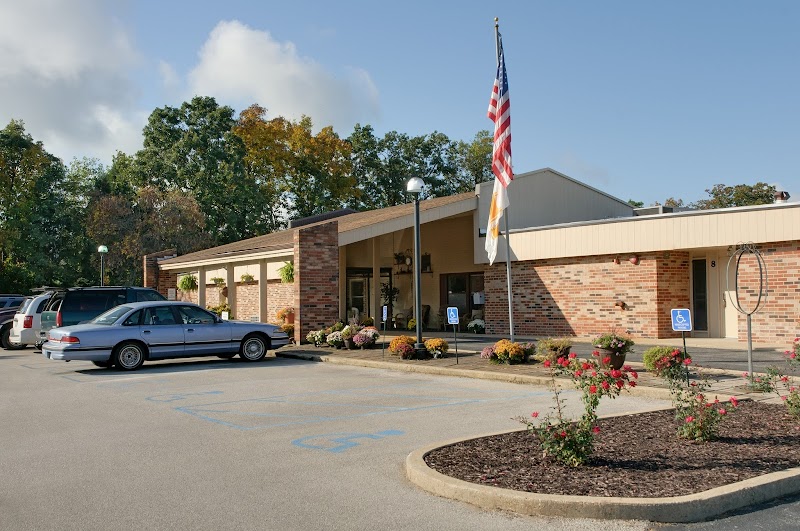
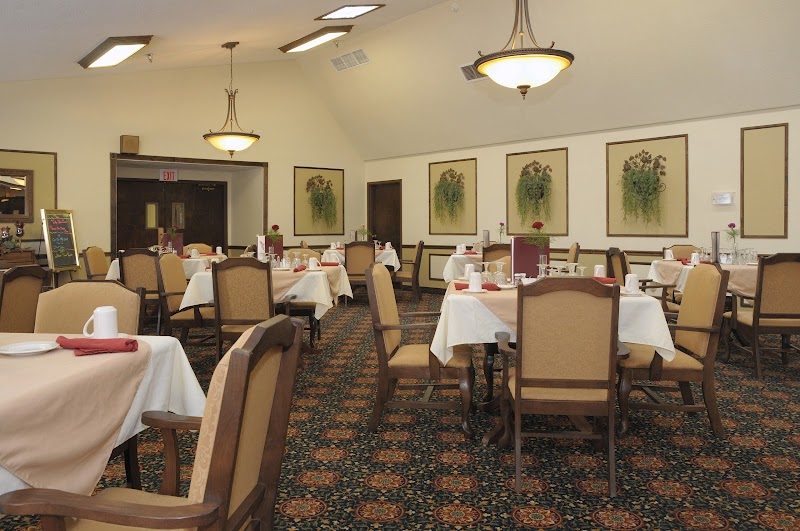
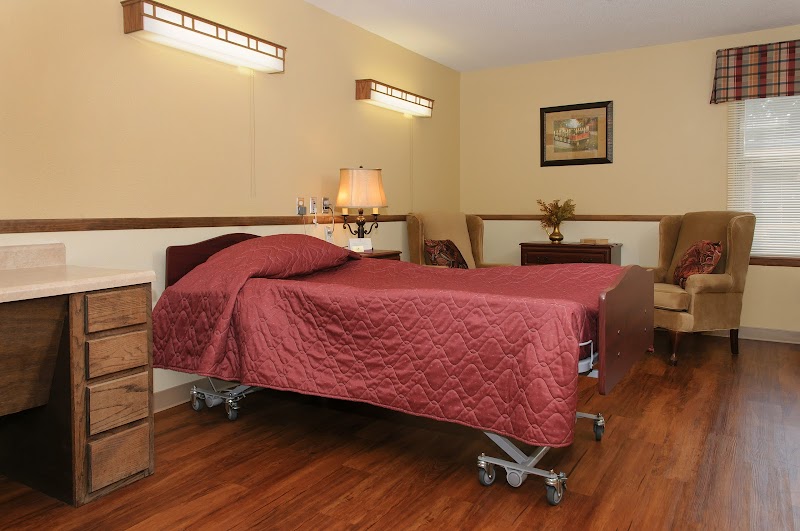
LIFE CARE CENTER OF SULLIVAN

875 DUNSFORD DRIVE, SULLIVAN, MO 63080 (573) 468-3128
For profit - Corporation 120 Beds LIFE CARE CENTERS OF AMERICA Data: November 2025
Trust Grade
50/100
#164 of 479 in MO
Last Inspection: October 2024

Within standard 12-15 month inspection cycle. Federal law requires annual inspections.

Overview

Life Care Center of Sullivan has a Trust Grade of C, indicating an average quality of care that is middle of the pack. It ranks #164 out of 479 facilities in Missouri, placing it in the top half, and #4 out of 7 in Franklin County, meaning only one other local option is better. The facility is improving, as the number of issues reported decreased from 7 in 2024 to 4 in 2025. Staffing is rated at 3 out of 5 stars, with a turnover rate of 62%, which is close to the state average of 57%, showing some stability but room for improvement. Notably, the facility has not incurred any fines, which is a positive sign, and it offers better RN coverage than 83% of Missouri facilities, enhancing overall care. However, there are some concerns. A serious incident was reported where staff failed to provide timely treatment for a burn injury to a resident, with documentation lagging by two days. Additionally, there were issues with hand hygiene protocols and improper sanitation of soiled dishes, which could lead to cross-contamination and potential health risks. While the facility has strengths in staffing and RN coverage, these specific incidents highlight areas that need attention to ensure resident safety and well-being.

Trust Score
C
50/100
In Missouri
#164/479
Top 34%
Safety Record
Moderate
Needs review
Inspections
Getting Better
7 → 4 violations
Staff Stability
⚠ Watch
62% turnover. Above average. Higher turnover means staff may not know residents' routines.
Penalties
✓ Good
No fines on record. Clean compliance history, better than most Missouri facilities.
Skilled Nurses
○ Average
Each resident gets 36 minutes of Registered Nurse (RN) attention daily — about average for Missouri. RNs are the most trained staff who monitor for health changes.
Violations
⚠ Watch
30 deficiencies on record. Higher than average. Multiple issues found across inspections.
★★★☆☆
3.0
Overall Rating
★★★☆☆
3.0
Staff Levels
★★★☆☆
3.0
Care Quality
★★★☆☆
3.0
Inspection Score
Stable
2024: 7 issues
2025: 4 issues

The Good

  • Full Sprinkler Coverage · Fire safety systems throughout facility
  • No fines on record

Facility shows strength in fire safety.

The Bad

3-Star Overall Rating

Above Missouri average (2.5)

Meets federal standards, typical of most facilities

Staff Turnover: 62%

16pts above Missouri avg (46%)

Frequent staff changes - ask about care continuity

Chain: LIFE CARE CENTERS OF AMERICA

Part of a multi-facility chain

Ask about local staffing decisions and management

Staff turnover is elevated (62%)

14 points above Missouri average of 48%

The Ugly 30 deficiencies on record

1 actual harm
Jun 2025 3 deficiencies 1 Harm
SERIOUS (G) 📢 Someone Reported This

A family member, employee, or ombudsman was alarmed enough to file a formal complaint

Actual Harm - a resident was hurt due to facility failures

Quality of Care (Tag F0684)

A resident was harmed · This affected 1 resident

Based on observation, interview and record review, facility staff failed to provide timely treatment to one resident (Resident #1) when he/she sustained a burn injury to his/her right thigh on 06/02/2...

Read full inspector narrative →
Based on observation, interview and record review, facility staff failed to provide timely treatment to one resident (Resident #1) when he/she sustained a burn injury to his/her right thigh on 06/02/25 from hot coffee and staff did not document any treatment interventions for the burn until 06/04/25. The facility's census was 67. 1. Review of the facility's policies showed the facility did not provide a policy for how to address a change in a resident's condition after a burn injury. 2. Review of Resident #1's quarterly Minimum Data Set (MDS), a federally mandated assessment tool, dated 05/23/25, showed staff assessed the resident as moderate cognitive impairment, independent with eating, bed mobility, and transfers. Review of the resident's progress notes, dated 06/02/25 at 5:04 P.M., showed Licensed Practical Nurse (LPN) C documented the resident spilled hot coffee on his/her right leg, no blistering observed but there is a red blotchy area, will continue to monitor for skin changes. Staff did not document they administered any treatment to the resident's leg/thigh. Review of the resident's care plan, revised 06/03/25, showed the care plan did not contain interventions to direct staff on how to provide hot liquids to the resident or how to monitor the resident when hot liquids are provided. Review of the resident's progress notes, dated 06/03/25, did not contain documentation of the burn to the residents thigh. Review of the resident's progress notes, dated 06/04/25 at 12:20 P.M., showed staff documented the resident has reddened area to his/her right inner knee, and right thigh with two fluid-filled blisters, from a coffee spill two days prior, physician and resident representative notified, Silvadene (a topical antimicrobial medication used to prevent and treat infection in second and third-degree burns) applied to his/her right thigh. Review of the resident's shower sheet, dated 06/03/25, showed staff documented the resident refused his/her shower. Review of the resident's Physician's Order, dated 06/05/25, showed an order to apply Silvadene cream to right upper leg topically as needed for burn/blister twice daily. Review of the resident's Electronic Medical Record (EMR), dated 06/16/25, showed staff did not document they assessed the resident regarding his/her consumption of Hot Liquids. During an interview on 06/16/25 at 1:57 P.M., Certified Nursing Assistant (CNA) A said the resident drinks coffee all the time but he/she has not been assigned to him/her for a while. During an interview on 06/30/25 at 8:49 A.M., the Assistant Director of Nursing (ADON) said per LPN C's documentation on 06/02/25, he/she would not have expected LPN C to administer any treatment other than monitoring to the resident's skin after the burn. During an interview on 06/30/25 at 11:33 A.M., the resident's physician said after staff became aware of the burn, he/she would expect staff to apply a cool compress to the resident's thigh to cool the area down, monitor the area for any changes, and notify him/her by the next morning. He/She said he/she would have approved Silvadene treatment for use after the burn injury area had cooled. He/She said after staff notified him/her on 06/04/25, he/she approved treatment with Silvadene, directed NP F to assess the resident on 06/05/25, and the NP recommended to continue treatment with Silvadene and monitor. He/She said based on the NP's assessment and report on 06/05/25, the resident did not experience any ill-effects from the delay in treatment. During an interview on 06/30/25 at 1:44 P.M., CNA B said he/she served the resident coffee directly from the dining room as usual with his/her meal inside his/her room. He/She said he/she went to get milk and on his/her return to the room, he/she witnessed the resident pull the bedside table closer to him/her when the coffee spilled on his/her thigh and the resident yelled ow. The CNA said he/she immediately notified the nurse who assessed the resident. During an interview on 06/30/25 at 1:50 P.M., LPN C said one of the CNAs reported to him/her the resident spilled coffee on himself/herself, he/she assessed the resident's thigh with redness and the resident denied pain. He/She said he/she did not know how hot the coffee was. He/She said he/she did not initiate any treatment to the area and did not contact the physician for a treatment. MO00255369
CONCERN (D) 📢 Someone Reported This

A family member, employee, or ombudsman was alarmed enough to file a formal complaint

Potential for Harm - no one hurt, but risky conditions existed

Notification of Changes (Tag F0580)

Could have caused harm · This affected 1 resident

Based on interview and record review, facility staff failed to notify the physician and resident representative in a timely manner of a change in condition, when one resident (Resident #1) spilled cof...

Read full inspector narrative →
Based on interview and record review, facility staff failed to notify the physician and resident representative in a timely manner of a change in condition, when one resident (Resident #1) spilled coffee on his/her thigh and resulted in a significant burn injury. The facility's census was 67. 1. Review of the facility's policies showed the facility did not provide a policy for when to notify the Physician/Resident Representative of an injury, or change in a resident's condition. Review of the facility's interact Signs and Symptoms guide (an electronic quality improvement communication tool designed to improve the identification, evaluation, and communication about changes in resident status), dated 2014, showed staff are directed to document an immediate entry for any burn other than a minor first degree burn with no significant pain, or a non-immediate entry for minor first degree burn in the past twenty-four hours. 2. Review of Resident #1's quarterly Minimum Data Set (MDS), a federally mandated assessment tool, dated 05/23/25, showed staff assessed the resident as moderate cognitive impairment, independent with eating, bed mobility, and transfers. Review of the resident's progress notes, dated 06/02/25 at 5:04 P.M., showed Licensed Practical Nurse (LPN) C documented the resident spilled hot coffee on his/her right leg, no blistering observed but there is a red blotchy area, will continue to monitor for skin changes. Staff did not document they notified the physician or the resident's responsible party of the burn injury to the resident's right thigh. Review of the resident's progress notes, dated 06/04/25 at 12:20 P.M., showed staff documented the resident has reddened area to his/her right inner knee, and right thigh with two fluid-filled blisters, possibly from coffee spilled the day prior, physician and resident representative notified. During an interview on 06/30/25 at 8:43 A.M., the administrator said he/she would not have expected the nurse to contact the physician or the resident's responsible party after the burn occurred because it was a minor injury without significant pain. During an interview on 06/30/25 at 8:49 A.M., the Assistant Director of Nursing (ADON) said he/she would not have expected the nurse to contact the physician and the resident's responsible party after the burn occurred on 06/02/25 because it was a minor injury without significant pain. He/She said per LPN C's documentation on 06/02/25, he/she would not have expected LPN C to document an immediate interact entry either. During an interview on 06/30/25 at 11:33 A.M., the resident's physician said he/she would expect facility staff to notify him/her shortly after they became aware of the burn injury or within 24 hours. He/She said in this instance, he/she would have expected a notification from staff by the morning of 06/03/25. During an interview on 06/30/25 at 1:50 P.M., LPN C said he/she should have notified the resident's physician and resident representative of the burn on 06/02/25 but he/she got busy and forgot. He/She said he/she notified the resident's representative in-person the following day, and another nurse notified the physician. MO00255369
CONCERN (D) 📢 Someone Reported This

A family member, employee, or ombudsman was alarmed enough to file a formal complaint

Potential for Harm - no one hurt, but risky conditions existed

Deficiency F0657 (Tag F0657)

Could have caused harm · This affected 1 resident

**NOTE- TERMS IN BRACKETS HAVE BEEN EDITED TO PROTECT CONFIDENTIALITY** Based on observation, interview and record review, facility staff failed to review and revise comprehensive care plans to includ...

Read full inspector narrative →
**NOTE- TERMS IN BRACKETS HAVE BEEN EDITED TO PROTECT CONFIDENTIALITY** Based on observation, interview and record review, facility staff failed to review and revise comprehensive care plans to include interventions for one resident (Resident #1) after he/she sustained burns to his/her thigh from hot liquids, and smoking interventions for one resident (Resident #2) out of three sampled residents. The facility's census was 67. 1. Review of the facility's policy titled, Comprehensive Care Plans and Revisions, dated 09/11/24, showed staff are directed as follows: -A Comprehensive Care Plan must be reviewed and revised by the interdisciplinary team (IDT) after each assessment, including both the comprehensive and quarterly review assessments; -The facility should monitor the resident over time to help identify changes in the resident condition that may warrant an update to the person-centered plan of care; -When these changes occur, the facility should review and update the plan of care to reflect the changes to care delivery. 2. Review of Resident #1's quarterly Minimum Data Set (MDS), a federally mandated assessment tool, dated 05/23/25, showed staff assessed the resident as moderate cognitive impairment and independent with eating. Review of the resident's nurse's notes, dated 06/04/25, showed staff documented the resident has reddened area to his/her right inner knee, and right thigh with two fluid-filled blisters, from a coffee spill the day prior, physician and resident representative notified, Silvadene (a topical antimicrobial medication used to prevent and treat infection in second and third-degree burns) applied to his/her right thigh. Review of the resident's care plan, revised 06/03/25, showed the care plan did not contain interventions for hot liquids and/or treatment of the burn to the resident's right thigh. During an interview on 06/16/25 at 12:55 P.M., the Assistant Director of Nursing (ADON) said the nurse should have updated the resident's care plan after the documented coffee spill/burn to the resident's thigh and should have also documented the incident under risk management via the electronic record so the IDT could follow up and ensure interventions were implemented. During an interview on 06/16/25 at 2:19 P.M., the interim Director of Nursing (DON) said the nurse should have added interventions to the resident's care plan after the coffee spill and he/she did not know the care plan was not updated. During an interview on 06/25/25 at 3:12 P.M. the Care Plan Coordinator said he/she was not aware the resident had sustained burns from hot liquids, and the nurse who documented the treatment and notification to the physician was responsible to either add interventions to the care plan or inform the IDT during daily rounds so the team could discuss and implement interventions. He/She said he/she was not sure why that was not done. 3. Review of Resident #2's Quarterly MDS, dated [DATE], showed staff assessed the resident as moderate cognitive impairment, and re-admitted to the facility on [DATE]. Review of the resident's nurse's notes, dated 05/21/25, showed staff documented the resident smokes and likes to attend all scheduled smoke breaks. Review of the resident's care plan, revised 06/06/25, showed the care plan did not contain interventions for smoking. Observation on 06/16/25 at 1:53 P.M., showed the resident outside smoking. During an interview on 06/16/25 at 12:55 P.M., the ADON said the resident smokes and his/her care plan should have interventions for smoking. During an interview on 06/25/25 at 3:12 P.M., the Care Plan Coordinator said the resident smokes, he/she was responsible to add interventions for smoking on the resident's quarterly care plan update but missed it. 4. During an interview on 06/16/25 at 12:55 P.M., the ADON said any nurse or other member of the IDT can update a resident's care plan with changes, and the Care Plan Coordinator is responsible to audit and update care plans at least quarterly or after an event. During an interview on 06/16/25 at 1:38 P.M., the administrator said any nurse or member of the IDT can update residents' care plan with changes. He/She said the Care Plan Coordinator is responsible to update care plans quarterly and in his/her absence, a regional nurse helps to ensure the care plans are up to date. He/She said direct care staff are expected to utilize residents' care plans to help with delivery of care. During an interview on 06/16/25 at 1:57 P.M., Certified Nursing Assistant (CNA) A said the nurses update residents' care plans, the CNAs access the care plans via the electronic point of care system and use the care plans to get information on a resident's specific care needs, how to transfer, and special precautions such as for smoking and hot liquids. During an interview on 06/25/25 at 3:12 P.M., the Care Plan Coordinator said he/she is responsible to update care plans at least quarterly and with changes when he/she is made aware. He/She said all nurses and members on the IDT can and are also responsible to update care plans with changes. MO00255369
Mar 2025 1 deficiency
CONCERN (D) 📢 Someone Reported This

A family member, employee, or ombudsman was alarmed enough to file a formal complaint

Potential for Harm - no one hurt, but risky conditions existed

Free from Abuse/Neglect (Tag F0600)

Could have caused harm · This affected 1 resident

**NOTE- TERMS IN BRACKETS HAVE BEEN EDITED TO PROTECT CONFIDENTIALITY** Based on interview and record review, facility staff failed to ensure one resident (Resident #1) remained free from physical abu...

Read full inspector narrative →
**NOTE- TERMS IN BRACKETS HAVE BEEN EDITED TO PROTECT CONFIDENTIALITY** Based on interview and record review, facility staff failed to ensure one resident (Resident #1) remained free from physical abuse when Resident #2 struck Resident #1 in the face. The facility census was 66. 1. Review of the facility's Abuse prevention policy, dated 6/17/24, showed it is the policy of this facility to prevent and prohibit all types of abuse, neglect, misappropriation of resident property, and exploitation. Identify, assess, and care plan for appropriate interventions and monitor residents with needs and behaviors which might lead to conflict or neglect such as verbally aggressive behaviors and physically aggressive behaviors. 2. Review of Resident #1's Minimum Data Set (MDS), a federally mandated assessment tool, dated 1/13/25, showed staff assessed the resident as: -Cognitively intact; -Diagnoses of Alzheimer's and dementia; -No mood disorders or behaviors. Review of the resident's care plan, reviewed 3/16/25, showed staff assessed the resident at risk for changes in mood or behavior due to medical condition. Staff were directed to separate the resident from other residents if yelling occurs to avoid resident altercation. Review of the nurse's notes, dated 3/16/25 at 8:50 A.M., showed Registered Nurse (RN) A documented staff reported the resident in the hallway and Resident #2 approached him/her yelling. Resident #1 yelled back and Resident #2 slapped him/her. 3. Review of Resident #2's MDS, dated [DATE], showed staff assessed the resident as: -Cognitively intact; -Diagnosis of Alzheimer's and unspecified mental disorder; -No mood disorders or behaviors. Review of the resident's care plan, dated 3/16/25, showed staff assessed the resident experienced behaviors. Staff are directed to separate resident from other residents if yelling occurs to avoid resident altercations and minimize potential for the resident's disruptive behaviors by offering tasks which divert attention. Review of the nurse's notes, dated 3/16/25 at 9:15 A.M., showed RN A charted the resident in the middle of the hallway yelling. Resident #1 yelled at Resident #2, and Resident #2 hit Resident #1. Residents were separated. Review of the nurse's notes, dated 3/20/25 at 8:21 A.M., showed LPN J charted he/she heard yelling at the nurses station. When he/she arrived at the nurses's station, Nurses Aide (NA) D saw Resident #2 slap Resident #1 twice in the face. 4. During an interview on 3/24/25 at 12:18 P.M., the administrator said the incident on 3/16/25 happened at the nurse's station between 200 hall and 400 hall when Resident #2 slapped Resident #1. He/She said staff separated the residents after the altercation but is unsure of what other interventions were put in place to keep Resident #1 safe from Resident #2. During an interview on 3/24/25 at 12:38 P.M., LPN B said the interventions put in place for the residents for their first altercation which occurred on 3/16/25 was to separate them. This was an isolated incident and staff were aware if Resident #2 became agitated he/she was to be redirected. He/She said the care plans were updated to reflect the behaviors. During an interview on 3/24/25 at 12:56 P.M., RN A said Resident #2 is always loud and shouts about smoking time. He/She said on 3/16/25 Resident #2 came up to the nurses station yelling When is it time to smoke and Resident #1 told Resident #2 to shut up. Resident #2 then slapped Resident #1 with an open hand to the face. He/She said staff immediately separated the residents and took Resident #2 to his room. RN A said he/she updated their care plan to move the residents away from each other if they started yelling to avoid an altercation. He/She is unaware of any other interventions put in place at the time to keep Resident #1 safe from Resident #2. During an interview on 3/24/25 at 1:13 P.M., NA D said he/she was present for the second altercation on 3/20/25 and saw Resident #2 as he/she went to hit Resident #1 in the face. NA D said Resident #2 struck Resident#1 twice in the face. He/She said the resident's were immediately separated and staff took Resident and placed him/her one on one until the ambulance arrived. During an interview on 3/24/25 at 1:28 P.M., Certified Nurse Aide (CNA) E said he/she was in a room providing care when the altercation occurred on 3/16/25. CNA E said he/she was not instructed to do anything following the incident to keep Resident #1 safe from Resident #2. During an interview on 3/24/25 at 1:38 P.M., RN C said he/she was not here for the incident but said staff were told to keep Resident #2 away from the nurse's station. During an interview on 3/24/25 at 1:46 P.M., CNA F said he/she was coming back from break on 3/16/25 and heard Resident #2 yelling and moving toward Resident #1. Resident #2 slapped Resident #1 in the face. CNA F said he/she immediately removed Resident #2 and took him/her back to his/her room to deescalate him/her. He/She is unaware of any interventions put in place to keep Resident #1 safe from Resident #2. During an interview on 3/24/25 at 2:09 P.M., CNA G said he/she was not aware of any interventions put in to place to keep Resident #1 safe from Resident #2. During an interview on 3/25/25 at 2:14 P.M., the Director of Nursing (DON) said he/she was made aware of the first altercation on 3/17/25 after the investigation had been started. He/She said staff separated the residents and were instructed to keep them apart to keep from having any more altercations. The DON said he/she is unsure of how the second altercation happened. During an interview on 3/27/25 at 3:30 P.M., LPN J said he/she was present for the altercation on 3/20/25. He/She did not witness it, but came up after Resident #2 had already made contact with Resident #1. He/She said staff separated the residents immediately and he/she took Resident #2 to the activity room. LPN J said he/she did not know of any interventions in place to keep Resident #1 safe from Resident #2. MO00251423
Oct 2024 7 deficiencies
CONCERN (D)

Potential for Harm - no one hurt, but risky conditions existed

Deficiency F0728 (Tag F0728)

Could have caused harm · This affected 1 resident

Based on interview and record review, facility staff failed to ensure two Nurse Aides (NA)'s (NA M and NA N) of fourteen sampled completed the nurse aide training program within four months of his/her...

Read full inspector narrative →
Based on interview and record review, facility staff failed to ensure two Nurse Aides (NA)'s (NA M and NA N) of fourteen sampled completed the nurse aide training program within four months of his/her hire date. The facility census was 69. 1. Review of the facility's policy titled Nurse Aide Requirements, undated, showed the facility must not use any individual working in the facility as a nurse aide for more than four months, on a full-time basis. 2. Review of the facility's Active Payroll for September 2024 showed NA M with a hire date of 02/20/24, and NA N with a hire date of 01/11/24. 3. During an interview on 10/04/24 at 3:04 P.M., the Staffing Coordinator said NA M and NA N were scheduled to re-take the Certified Nurse Aide (CNA) test. The Staffing Coordinator said NA M and NA N were allowed to continue to work until they retook the test. During an interview on 10/04/24 at 4:00 P.M., NA M said he/she failed the CNA test. NA M said he/she is still doing the job of a CNA including providing all cares. NA M said he/she is not aware of any limitations and is doing the same duties as a CNA. During an interview on 10/04/24 at 3:04 P.M., the Staffing Coordinator said NA M and NA N are scheduled to re-take the CNA test. The Staffing Coordinator said NA M and NA N are allowed to continue working as NAs until they retake the test. During an interview on 10/04/24 at 4:37 P.M., the Director of Nursing (DON) said two of the NA's had not passed their CNA test and were given 90 days to retake the test. The DON said NA's had to be with a qualified staff member to provide residents hands-on care until proficient. During an interview on 10/17/24 at 8:14 A.M., the DON said NA M and NA N had completed competencies in all resident care areas, so were proficient and safe caring for residents without supervision. During an interview on 10/17/24 at 8:32 A.M., the administrator said NA's were allowed to perform resident care in all areas they had completed the competency checklists.
CONCERN (E) 📢 Someone Reported This

A family member, employee, or ombudsman was alarmed enough to file a formal complaint

Potential for Harm - no one hurt, but risky conditions existed

Safe Environment (Tag F0584)

Could have caused harm · This affected multiple residents

Based on observation, interview, and record review, facility staff failed to maintain a clean, safe, comfortable, and homelike environment when staff failed to adequately clean and properly maintain t...

Read full inspector narrative →
Based on observation, interview, and record review, facility staff failed to maintain a clean, safe, comfortable, and homelike environment when staff failed to adequately clean and properly maintain three of the four shower rooms. The facility census was 69. 1. Review of the facility's policy titled Housekeeping General Policy, revised 06/12/24, showed it is the responsibility of the Executive Director through the Environmental Service Director to assure that Housekeeping Policies are implemented and followed. The facility must provide housekeeping and maintenance services necessary to maintain a sanitary, orderly, and comfortable interior. Housekeeping personnel are required to attend training classes. Review of the facility's policy titled Housekeeping Services, revised 06/04/24, showed the facility will provide a safe, clean, comfortable, and homelike environment. The facility must follow standard practices for cleaning and disinfection of surfaces and equipment in accordance with Center for Disease and Prevention (CDC) guidelines. The environmental services supervisor will maintain a schedule of cleaning and disinfection tasks, and the employee responsible for these tasks. Resident shower rooms: Clean and disinfect high touch surfaces after each resident use; Housekeeping will clean resident shower/bath area twice daily; Privacy curtains should be laundered routinely and when visibly soiled. Bathrooms and common areas, Clean and disinfect high touch areas at least twice daily; Clean low touch areas on a scheduled basis. 2. Observation on 10/02/24 at 2:45 P.M., showed the 100 hall shower room: -Vent over the toilet contained a thick layer of dust; -Vent over the entry door contained an unknown black substance; -Shower stall contained multiple areas of an unknown black substance; -The wall with cracked and missing tile. Observation on 10/03/24 at 10:08 A.M. showed the 100 hall shower room: -Vent over the toilet contained a thick layer of dust; -Vent over the entry door contained an unknown black substance; -Shower stall contained multiple areas of an unknown black substance; -Wall with cracked and missing tile. 3. Observation on 10/02/24 at 2:45 P.M., showed the 300 hall shower room: -Vent over the toilet contained a thick layer of dust; -Vent over the entry door contained an unknown black substance; -Shower stall contained multiple areas of an unknown black substance. Observation on 10/03/24 at 10:08 A.M., showed the 300 hall shower room: -Vent over the toilet contained a thick layer of dust; -Vent over the entry door contained an unknown black substance; -Shower stall contained multiple areas of an unknown black substance. 4. Observation on 10/02/24 at 2:45 P.M., showed the 400 hall shower room: -The vent over the toilet contained a thick layer of dust; -The vent over the entry door contained an unknown black substance; -The shower stall contained multiple areas of an unknown black substance; -The toilet contained multiple black stains. Observation on 10/03/24 at 10:08 A.M., showed the 400 hall shower room: -The vent over the toilet contained a thick layer of dust; -The vent over the entry door contained an unknown black substance; -The shower stall contained multiple areas of an unknown black substance; -The toilet contained multiple black stains. 5. Review of the maintenance request work logs, undated, showed it did not contain documentation of any shower room requests for work or concern. 6. During an interview on 10/03/24 at 10:25 A.M., Licensed Practical Nurse (LPN) B said staff use all four shower rooms LPN B said if staff find something broken, they are responsible to write it on a work order at the nurse's station. LPN B said maintenance is responsible to check the work orders daily. LPN B said he/she had not put any work orders on the board for the shower rooms. During an interview on 10/03/24 at 11:28 A.M., Nurse Assistant (NA) E said he/she is frequently assigned as the shower aide. NA said residents use all shower rooms. NA E said housekeeping is responsible to deep clean and mop the shower rooms. NA E said if staff notice something broken, they should fill out a work order, that maintenance checks daily. NA E said he/she had not put any work orders on the board for the shower rooms. During an interview on 10/03/24 at 11:34 A.M., Certified Nurse Assistant (CNA) D said he/she staff use all four shower rooms to toilet residents, but staff only shower residents in the 100 hall and 200 hall shower rooms. CNA D said the aide is responsible to clean and sanitize the shower chair, handrails, and shower stall after each use. CNA D said housekeeping is responsible to deep clean, refill supplies, and mop the shower rooms. CNA D said if staff notice something broken, they are responsible to write it on a work order hanging from a clipboard at the nurse's station. CNA D said maintenance is responsible to check the work orders daily. CNA D said he/she had not put any work orders on the board for the shower rooms. During an interview on 10/03/24 at 12:40 P.M., Housekeeper G said he/she did not know of a deep cleaning schedule for the shower rooms. Housekeeper G said he/she did not know the shower rooms had dirty vents or black substances on them. Housekeeper G said if staff notice something broken, they should fill out a work order. Housekeeper G said he/she had not filled out a work order for the shower rooms. During an interview on 10/03/24 at 2:10 P.M., the Housekeeping Supervisor said he/she is responsible to oversee and direct the housekeeping department. The housekeeping supervisor said housekeeping is responsible for cleaning the shower rooms daily including moping, cleaning the vents, replacing supplies, cleaning the toilets, showers, and sinks. The housekeeping supervisor said he/she does not have a deep cleaning schedule for the shower rooms and did not know he/she needed one. The housekeeping supervisor said staff use all four shower rooms. The housekeeping supervisor said he/she did know the shower rooms had black substances in them but did not know the vents were dirty. The housekeeping supervisor said if staff notice something broken, they should fill out a work order at the nurse's station, and maintenance is responsible to check the work orders daily. The housekeeping supervisor said he/she had not filled out any work orders for the shower rooms. During an interview on 10/03/24 at 2:30 P.M., the Maintenance Director said he/she does not have a deep cleaning schedule for the shower rooms and the housekeeping supervisor is responsible for that. The maintenance director said if staff find things needs fixed, they are responsible to log it on a work order at the nurses station. The maintenance director said he/she checks the maintenance log daily for work orders. and he/she did not know about the condition of the shower rooms. During an interview on 10/03/24 at 3:00 P.M., the administrator said housekeeping is responsible for cleaning shower rooms daily. The administrator said he/she expects housekeeping to have a deep cleaning schedule and follow it. The administrator said he/she did not know staff did not have a deep cleaning schedule and deep cleans were not being completed. The administrator said it is the housekeeping supervisor's responsibility to make a deep cleaning schedule and ensure the housekeeping staff follow it. The administrator said housekeeping is responsible to clean the shower rooms daily including the vents, sinks, toilets, shower stalls, and floors. The administrator said he/she did know the shower stalls had a black substance in them but did not know the vents were dirty. The administrator said if staff notice something broken, they are responsible to write it on a work order hanging from a clipboard at the nurse's station, and maintenance is responsible to check the work orders daily. The administrator said he/she had not put any work orders on the board for the shower rooms. The administrator said himself/herself and the housekeeping supervisor both scrubbed the areas with not much result made. The administrator said he/she didn't know what else to use to clean it off except the cleaner the facility had. The administrator said facility had just spent $80,000 on new flooring, so he/she said he/she did not want to ask for them to remodel the other three shower rooms.
CONCERN (E)

Potential for Harm - no one hurt, but risky conditions existed

Deficiency F0688 (Tag F0688)

Could have caused harm · This affected multiple residents

**NOTE- TERMS IN BRACKETS HAVE BEEN EDITED TO PROTECT CONFIDENTIALITY** Based on interview and record review, facility staff failed to document they provide restorative therapy for two residents (Resi...

Read full inspector narrative →
**NOTE- TERMS IN BRACKETS HAVE BEEN EDITED TO PROTECT CONFIDENTIALITY** Based on interview and record review, facility staff failed to document they provide restorative therapy for two residents (Resident #9 and #41). The facility census was 69. 1. Review of the facility's policy titled Restorative Nursing dated 11/30/23, showed staff are instructed to provide interventions that promote the resident's ability to adapt and adjust to living as independently and safely as possible. This concept actively focuses on achieving and maintaining optimal physical, mental, and psychosocial functioning. Restorative indicators may be identified by multiple disciplines utilizing various assessments, physician orders, progress notes, environmental factors, caregiver conversations, and another means of communication. Communicate the restorative care plan and care directives to other members of the interdisciplinary (IDT) team. The trained Certified Nurse Aide (CNA) will document provided techniques per the restorative care plan in the medical record. The licensed nurse will conduct an evaluation on a routine basis, to include progress towards goal and response to the program. Any changes will be documented in the medical record. The restorative care plan and care directive will be reviewed/revised as indicated. 2. Review of Resident #9's Quarterly Minimum Data Set (MDS), a federally mandated assessment tool, dated 09/05/24, showed staff assessed the resident as: -Cognitively intact; -Required partial/moderate assistance to dress and undress the upper body; -Required substantial/maximal assistance to dress and undress the lower body; -Dependent on staff for Toileting; -Required substantial/maximal assistance to move from sitting to standing; -Required substantial/maximal assistance for toilet transfers; -Did not attempt to walk 10 feet. Review of the resident's occupational therapy Discharge summary, dated [DATE], showed therapy assessed the resident: -Required partial/moderate assistance to dress and undress the lower body on 07/26/24; -Required partial/moderate assistance for toileting hygiene task on 08/20/24; -Required partial /moderate assistance for toilet transfers on 08/20/24; -A prognosis to maintain the current level of functioning with consistent staff follow-through. Review of the resident's medical record showed a referral for restorative nursing services, dated 09/16/24, instructed staff to: -Maintain cognitive skills allowing the resident to complete ADL's including upper body dressing, lower body dressing, toileting and toilet transfers with assist as needed; -Assist the resident with walking with a wheeled walker to tolerance approximately 50-100 feet. Review of the resident's care plan, dated 09/30/24, showed staff documented the resident required assistance with Activities of Daily Living (ADL's) (ADL's are tasks related to transfers, bed mobility, toileting, and eating) as needed to maintain or attain highest level of function; resident wishes to attain prior level of function; assist with mobility and ADL's as needed. The resident's medical record did not contain documentation the resident received restorative nursing services. During an interview on 10/04/24 at 4:23 P.M., the resident said he/she would like staff to work with him/her on walking and transfers. The resident said staff does not have time to help him/her and this takes away his/her abilities. 3. Review of Resident #41's medical record showed a referral for restorative nursing, dated 01/05/24, instructed staff to ambulate with wheeled walker to patient tolerance with wheelchair to follow; patient ambulates approximately 20 feet with the wheeled walker and utilize toilet for toileting needs; transfer to/from wheelchair with toilet using grab bars. Review of the resident's Quarterly MDS, dated [DATE], showed staff assessed the resident as: -Moderately cognitively impaired; -Required set-up assistance to dress and undress the upper body; -Required supervision/touching assistance to dress and undress the lower body; -Required supervision/touching assistance for toileting; -Required set-up assistance to move from sit to stand; -Required set-up assistance for toilet transfers; -Required set-up assistance to walk 50 feet with two turns. Review of the resident's occupational therapy Discharge summary, dated [DATE], showed therapy assessed the resident: -Required contact guard/minimal assistance to dress and undress the lower body on 09/15/23; -Required maximal assistance for toileting hygiene task on 09/15/23; -Independent for toilet transfers on 09/15/23; -A prognosis to maintain the current level of functioning with consistent staff follow-through. Review of the resident's physical therapy Discharge summary, dated [DATE], showed therapy assessed the resident: -Required contact guard assistance to transfer on 9/15/23; -Required contact guard assistance to walk 20-56 feet with a wheeled walker on 09/15/24. -A prognosis to maintain the current level of function with consistent staff follow-through. Review of the resident's care plan, dated 10/22/24, showed staff documented the resident required ADL Assistance as needed to maintain or attain highest level of function; resident wishes to attain prior level of function and walk 50 feet with two turns with supervision. The resident's medical record did not contain documentation the resident received restorative nursing services. During an interview on 10/04/24 at 4:19 P.M., the resident stated he/she had previously been able to walk and could still walk but no one will help him/her. The resident's spouse said he/she had been told therapy is paid to walk his/her spouse. 4. During interview on 10/03/24 at 11:15 A.M., the Rehabilitation Director said staff from the therapy department request restorative nursing for appropriate residents in order to maintain or improve function after therapy services end. The Rehabilitation Director said no restorative services had been provided and residents could have lost function. The Rehabilitation Director said recommendations for Residents #9 and #41 were not implemented. During an interview on 10/04/24 at 4:37 P.M., the Director of Nursing (DON) and administrator said at this time the facility does not have an active restorative nursing program. The DON said staff had not been hired and trained for this role. The administrator said restorative nursing should be provided for the residents to maintain or improve their functional mobility.
CONCERN (E)

Potential for Harm - no one hurt, but risky conditions existed

Menu Adequacy (Tag F0803)

Could have caused harm · This affected multiple residents

Based on observation, interview and record review, the facility staff failed to serve food in accordance with the nutritionally calculated recipes and menus to residents who received regular and easy ...

Read full inspector narrative →
Based on observation, interview and record review, the facility staff failed to serve food in accordance with the nutritionally calculated recipes and menus to residents who received regular and easy to chew (EC) diets. The facility census was 69. 1. Review of the facility's Menus, Substitutions, and Alternatives policy, dated 04/30/24, showed Menus are planned in advance and are followed as written in order to meet the nutritional needs of the residents in accordance with established national guidelines. Residents with known dislikes of food and beverage items, who express refusal of the food served or request a different meal choice are offered a substitute of similar nutritive value. 2. Review of the facility menus dated 10/02/24 (Week 4, Day 25), showed the menus directed staff to serve one serving of sweet and sour meatballs, a #8 (four ounce) scoop of steamed rice, and a six ounce portion of Soup Da Jour at the lunch meal to residents who received regular diets. Review of the recipe for the sweet and sour meatballs, dated 03/20/24, showed the recipe directed staff to staff to serve 10 meatballs to make a three ounce edible portion when one half ounce meatballs are used in the preparation of the entree. Observation on 10/02/24 at 10:22 A.M., showed [NAME] O removed a case of meatballs from the walk-in freezer and used the meatballs to prepare the sweet and sour meatballs for service to the residents. Observation of the product label on the case showed the weight of each meatball as one half ounce. Observation on 10/02/24 during the lunch meal service which began at 11:36 A.M., showed [NAME] O served six sweet and sour meatballs (four less than directed by the menus), a #16 (two ounce) scoop of steamed rice (two ounces less than directed by the menus) and four ounces of Soup Da Jour (two ounces less than directed by the menus) to the residents who received regular diets. 3. Review of the facility menus dated 10/02/24 (Week 4, Day 25), showed the menus directed staff to serve a #8 scoop of steamed rice and a six ounce portion of Soup Da Jour at the lunch meal to residents who received EC diets. Observation on 10/02/24 during the lunch meal service which began at 11:36 A.M., showed [NAME] O served a #16 scoop of steamed rice (two ounces less than directed by the menus) and four ounces of Soup Da Jour (two ounces less than directed by the menus) to the residents who received EC diets. 4. During an interview on 10/02/24 at 11:36 A.M., [NAME] O said foods should be served in accordance with the menus. The cook said he/she reviewed the menus before the meal service, but did not know what the menu meant by one serving for the sweet and sour meatballs. The cook said he/she did not review the recipe when he/she prepared the sweet and sour meatballs. The cook said he/she did not realize that he/she had the wrong portion sizes for the meatballs, rice and soup. 5. During an interview on 10/04/24 at 1:01 P.M., the dietary manager (DM) said staff are trained to serve meals in accordance with the menus and recipes and they are expected to review them both during food preparation and before the meal service. 6. During an interview on 10/04/24 at 1:23 P.M., the administrator said staff should serve food in accordance with the recipes and menus and staff are trained on this requirement.
CONCERN (E)

Potential for Harm - no one hurt, but risky conditions existed

Deficiency F0887 (Tag F0887)

Could have caused harm · This affected multiple residents

Based on interview and record review, facility staff failed to educate and offer the Covid-19 (a disease caused by a novel coronavirus) vaccination in accordance with current guidelines and policy for...

Read full inspector narrative →
Based on interview and record review, facility staff failed to educate and offer the Covid-19 (a disease caused by a novel coronavirus) vaccination in accordance with current guidelines and policy for three (Residents #39, #57 and #61) of five sampled residents. The facility census was 69. 1. Review of the facility's policy Resident Vaccination, review dated 12/4/23, showed the facility in conjunction with the Public Health Authorities and CDC (Centers for Disease Control) guidelines will provide immunizations to older adults that are recommended and ordered by a physician once determined to be eligible and without contraindications. The facility should screen individuals prior to offering the COVID-19 vaccination to check for the following: Prior vaccination status; The presence of medical precautions and contraindication. Education must be provided to the resident and/or resident's responsible party regarding benefits and potential side effects of immunization. The resident or resident's representative has the opportunity to refuse immunizations. Review of the Centers for Disease Control (CDC) Interim Clinical Considerations for Use of COVID-19 Vaccines in the United States, dated September 6, 2024, recommends that people receive all recommended COVID-19 vaccine doses. Vaccination is especially important for people at highest risk of severe COVID-19, including people ages 65 years and older; people with underlying medical conditions, including immune compromise; and people living in long-term care facilities. 2. Review of Resident #39's medical record showed staff documented: -Most recent admission date of 3/25/23; -The record did not contain documentation the resident received education or had been offered the Covid-19 vaccine since 11/11/22. 3. Review of Resident #57's medical record showed staff documented: -Most recent admission date of 7/5/23; -The record did not contain documentation the resident received education about, refused or had been offered the Covid-19 vaccine. 4. Review of Resident #61's medical record showed: -Most recent admission date of 6/16/23; -The record did not contain documentation the resident received education about, refused or had been offered the Covid-19 vaccine since 11/11/22. 5. During an interview on 10/04/24 at 5:26 P.M., the Infection Preventionist (IP) stated residents are offered vaccinations each season and he/she does not know why the residents were missed and did not get offered the newest Covid-19 vaccines. During an interview on 10/4/24 at 4:37 P.M., the Director of Nursing (DON) said it is the responsibility of the Infection Preventionist to ensure vaccinations are provided to residents according to the season. During an interview on 10/4/24 at 4:37 P.M., the administrator said he/she expects the vaccination policy to be followed. It is the responsibility of the Infection Preventionist to manage the vaccine policy. The administrator said the residents had missed opportunities to receive Covid-19 vaccines.
CONCERN (F)

Potential for Harm - no one hurt, but risky conditions existed

Food Safety (Tag F0812)

Could have caused harm · This affected most or all residents

Based on observation, interview and record review, the facility staff failed to properly wash and sanitize soiled dishes to prevent cross-contamination. Facility staff failed to allow dishes to air dr...

Read full inspector narrative →
Based on observation, interview and record review, the facility staff failed to properly wash and sanitize soiled dishes to prevent cross-contamination. Facility staff failed to allow dishes to air dry prior to storage and use to prevent the growth of food-borne pathogens. Facility staff also failed to ensure waste containers in food preparation and utensil washing areas were covered when not in actual use. The facility census was 69. 1. Review of the facility's High-Temperature Dish Machine policy, dated 11/30/10, showed direction for the final sanitizing rinse temperature of the machine to be 180 degrees Fahrenheit (dF) and a booster heater is required to reach the 180 dF temperature for the rinse cycle. Review of the facility's Sanitation and Maintenance policy, dated 04/30/24, showed: -Food and Nutrition Services associates are to be trained in the proper use, cleaning and sanitation of all equipment and utensils; -Equipment of the type and in the amount necessary for the proper preparation, serving and storing of food and for proper dishwashing are provided and maintained in good working order; -Staff will be trained on how to operate the high temperature dish machine; -If the dish machine is not washing and sanitizing properly, disposable dinnerware will be used for meals and snacks until the issue has been resolved. Observation on 10/01/24 at 10:04 A.M., showed dietary staff washed dishes in the heat sanitizing mechanical dishwasher. Observation showed water leaked from the booster heater for the dishwasher and puddles of water on the floor around the heater. Observation on 10/02/24 at 2:20 P.M., showed the Dietary Manager (DM) washed dishes in the heat sanitizing mechanical dishwasher. Observation showed the gauges on the dishwasher showed the water temperature of the wash cycle measured 170 dF and the water temperature of the rinse cycle measured 118 dF during two cycles of the machine. Observation showed the heat booster for the dishwasher contained holes and water leaked from the heater and pooled onto the floor. During an interview on 10/02/24 at 2:39 P.M., the DM said the heat booster broke and started leaking about a month ago. The DM said he/she submitted a work order to the maintenance director and administrator at that time to get it fixed. The DM said the maintenance director tried to fix it shortly thereafter, but could not fix and they notified the administrator that they would need a new heater installed. The DM said he/she asks about the status of the repair to the booster heater about once a week in the department head morning meeting with the administrator. The DM said last week the administrator reported the corporation had finally approved for them to buy a new one, but he/she did not know if a new one had been ordered or of any other actions taken to repair the booster heater to day. The DM said the he/she did not know the water temperature for the rinse cycle should be 180 dF and he/she did not know the facility's policy on use of the dishwasher when it did not work as designed. During an interview on 10/04/24 at 1:26 P.M., the administrator said he/she knew the booster heater for the dishwasher in the kitchen was leaking and needed replaced. The administrator said they were working with the corporate office to get a new one, but a new or used booster heater had not been ordered or purchased and no other actions had been made to repair the booster heater to date. The administrator said if the dishwasher is not working as designed, then staff should wash dishes in the three-compartment sink. The administrator said he/she did not know that the water for the dishwasher did not reach the required temperature or that staff continued to use the dishwasher to wash dishes when it did not function properly. 2. Review of the facility's Sanitation and Maintenance policy, dated 04/30/24, showed the policy directed: -Food and Nutrition Services associates are to be trained in the proper use, cleaning and sanitation of all equipment and utensils; -All food grinders, choppers, slicers, mixers, et cetera should be cleaned, sanitized, dried and reassembled after each use; -A three-compartment sink, if available, will be utilized to wash, rinse and sanitize pots, pans and utensils effectively; -Sinks are to be filled as wash with detergent for washing, rinse with clean water to remove all soap residue and sanitize with an appropriate sanitizer using the guidelines noted by the manufacturer; -All items are to be air dried before storing. Observation on 10/02/24 from 10:52 A.M. to 10:58 A.M., showed [NAME] O washed the food processor in the three-compartment sink. Observation showed the cook washed the food processor with soapy water and then, without rinsing it in clean potable water, he/she placed the food processor into the sanitizing solution. Observation showed the cook removed the food processor from the sanitizing solution after 15 seconds to drain and then used the food processor while wet to grind prepared sweet and sour meatballs for service to residents at the lunch meal. Observation showed the cook then rinsed the food processor off with water in the food preparation sink and used the food processor while wet to grind a prepared beef patty for service at the lunch meal. Observation on 10/02/24 at 12:04 P.M., showed [NAME] R washed dishes at the three-compartment sink. Observation showed the cook washed the dishes in soapy water and then without rinsing with clean potable water, placed the dishes into the sanitizing solution. Observation on 10/02/24 at 12:07 P.M., showed [NAME] R washed the food processor in the three-compartment sink. Observation showed the cook washed the food processor with soapy water and then, without rinsing it in clean potable water, he/she placed the food processor into the sanitizing solution and then immediately removed to drain. Observation on 10/02/24 at 12:20 P.M., showed a quaternary ammonium (QUAT) sanitizer used for the sanitizing solution for the three-compartment sink. Observation of the sanitizer's product label, showed instruction to wash food contact surfaces thoroughly with detergent, follow with a clean potable water rinse and then expose all parts to a sanitizing solution with a concentration of 150-400 parts per million (ppm) for at least one minute. Observation on 10/02/24 at 12:26 P.M., showed [NAME] R emptied the QUAT sanitizing solution used in the three-compartment sink and refilled the sink with new QUAT sanitizing solution. Observation showed the cook washed soiled dishes in the three-compartment sink without checking the concentration of the sanitizing solution. Observation showed the cook washed the dishes in soapy water and then without rinsing with clean potable water, placed the dishes into the sanitizing solution and then immediately removed to drain. Observation showed, when tested with a QUAT test strip, the strip turned a deep aqua blue with a concentration greater than 500 ppm as indicated by the test kit's concentration comparison chart. During an interview on 10/02/24 at 12:26 P.M., [NAME] R said the concentration of the sanitizer solution should be 150 ppm. The cook said if the test strip turns blue it means the concentration of the sanitizer solution is greater than 500 ppm. Observation on 10/02/24 at 12:49 P.M., showed [NAME] O removed the dishes washed by [NAME] R from the three-compartment sink area and placed them in storage. Observation on 10/02/24 at 2:46 P.M., showed [NAME] R refilled the QUAT sanitizer solution in the three compartment sink and he/she washed soiled dishes in the three-compartment sink without checking the concentration of the sanitizing solution. Observation showed the cook washed the dishes in soapy water and then without rinsing with clean potable water, placed the dishes into the sanitizing solution and then immediately removed to drain. Observation showed, when tested with a QUAT test strip, the strip turned a deep aqua blue with a concentration greater than 500 ppm as indicated by the test kit's concentration comparison chart. During an interview on 10/02/24 at 2:47 P.M., [NAME] R said staff should check the concentration of the sanitizing solution each time they fill the sink and the concentration should measure 150 ppm. The cook said he/she did not check the concentration of the sanitizer after he/she filled the sink. The cook said the if the test strip turns blue it means the concentration of the solution is higher than it is supposed to be and it should not be used for dishwashing. The cook said he/she had worked at the facility for just over a year and the previous dietary manager trained him/her to wash dishes with soapy water, rinse them with sanitizing solution and then put them on the rack to drain and dry. The cook said he/she had not been told to allow the dishes to be in the sanitizer solution for any specific length of time and he/she had not read the instructions for use on the sanitizer used to make the solution. During an interview on 10/02/24 at 2:53 P.M., the DM said staff should check the concentration of the sanitizing solution when they fill the sink and the concentration of the solution should measure between 200 and 400 ppm. The DM said the previous DM trained all the staff, including him/her, to wash the dishes in the three-compartment sink with soapy water and rinse with the sanitizing solution. The DM said staff should leave the dishes in the sanitizing solution for two and on half minutes and all staff, except [NAME] O who had only worked at the facility for a month, should have been trained on these requirements. The DM said no one had ever told him/her that manually washed dishes should be rinsed with clean water between the soapy water and sanitizing solution. Observation on 10/04/24 at 12:45 P.M., showed Dietary Aide (DA) S filled the third compartment of the three-compartment sink with a QUAT sanitizing solution and then pre-scraped and rinsed soiled dishes in the mechanical dishwashing station. Observation showed, without washing the dishes with detergent, the DA placed the rinsed soiled dishes into the sanitizing solution at the three-compartment sink without checking the concentration of the sanitizing solution. Observation showed, when tested with a QUAT test strip, the strip turned a deep aqua blue with a concentration greater than 500 ppm as indicated by the test kit's concentration comparison chart. Observation on 10/04/24 at 12:53 P.M., showed DA S pre-scraped and rinsed soiled saucers and bowls in the mechanical dishwashing station and then, without washing with detergent, he/she placed the soiled dishes in sanitizing solution in the three-compartment sink. During an interview 10/04/24 at 12:54 P.M., DA S said he/she was told not to use the dishwasher to wash the dishes. The DA said the DM told him/her to rinse the dishes off in the mechanical dishwashing station and then put them in the sanitizing solution in the three-compartment sink. During an interview on 10/04/24 at 12:54 P.M., the DM said dishes should be washed with soap and rinsed before they are sanitized and he/she did not instruct the DA not to use the dishwasher. The DM said since the dishwasher was not hot enough to sanitize the dishes, he/she instructed the DA to wash the dishes in the dishwasher and then put them in the sanitizer at the three-compartment sink to sanitize them. During an interview on 10/04/24 at 1:26 P.M., the administrator said soiled dishes should be washed with soap, rinsed with clean water and then sanitized. The administrator said when dishes are washed at the three-compartment sink, staff should sanitize the dishes in the sanitizing solution for at least two minutes. The administrator said the concentration of the sanitizing solution used in the three compartment sink should be 200 to 400 ppm and staff should check the concentration of the solution before it is used. The administrator said staff are trained on all of these requirements. 3. Review of the facility's Sanitation and Maintenance policy, dated 04/30/24, showed the policy directed: -Food and Nutrition Services associates are to be trained in the proper use, cleaning and sanitation of all equipment and utensils; -All food grinders, choppers, slicers, mixers, et cetera should be cleaned, sanitized, dried and reassembled after each use; -All dishes, pots and pans must be air dried after sanitizing and should not be stored wet to prevent wet-nesting. Observation on 10/02/24 from 10:52 A.M. to 10:58 A.M., showed [NAME] O washed the food processor in the three-compartment sink and then used the food processor while wet to grind prepared sweet and sour meatballs for service to residents at the lunch meal. Observation showed the cook then rinsed the food processor off with water in the food preparation sink and used the food processor while wet to grind a prepared beef patty for service at the lunch meal. Observation on 10/02/24 at 11:44 A.M., showed six insulated plate warmers stacked together wet in the upright position on the plate lowerator. Observation showed the dietary staff used the wet stacked plate warmers for the service of room trays during the lunch meal. Observation on 10/04/24 12:42 PM, showed eight plastic cups stacked together wet on a tray on the storage rack. Observation on 10/04/24 at 12:50 P.M., showed [NAME] R removed a pan from clean side of the three-compartment sink while wet and stacked it on top of other pans in storage. During an interview on 10/04/24 at 12:52 P.M., [NAME] R said dishes should be dry before they are put away and he/she thought the pan was dry. During an interview on 10/04/24 at 12:52 P.M., the DM said all dishes should be air dried before they are used or put away and staff are trained on this requirement. During an interview on 10/04/24 at 1:26 P.M., the administrator said staff should allow dishes to air dry after they are washed and staff are trained on this requirement. 4. Review of the facility's Sanitation and Maintenance policy, dated 04/30/24, showed the policy did not contain direction to staff to cover waste containers in food preparation and storage areas when not in actual use. Observation on 10/02/24 at 11:41 A.M., showed the waste containers, which contained food and paper waste, in the mechanical dishwashing station and by the walk-in refrigerator uncovered and not in use by staff. Observation on 10/04/24 at 12:28 P.M., showed the waste containers, which contained food and paper waste, in the mechanical dishwashing station, by the walk-in refrigerator and by the DM's office uncovered and not in use by staff. During an interview on 10/04/24 at 1:05 P.M., the DM said waste containers should be covered at all times and staff have been trained on this requirement. The DM said he/she had not noticed that staff had left the waste containers uncovered. During an interview on 10/04/24 at 1:35 P.M., the administrator said waste containers should be covered at all times and staff are trained on this requirement.
MINOR (C)

Minor Issue - procedural, no safety impact

Deficiency F0577 (Tag F0577)

Minor procedural issue · This affected most or all residents

Based on observation, interview, and record review, facility staff failed to ensure the three most recent years of survey results were posted and readily accessible to residents, family members or rep...

Read full inspector narrative →
Based on observation, interview, and record review, facility staff failed to ensure the three most recent years of survey results were posted and readily accessible to residents, family members or representatives of residents. The facility census was 69. 1. Review of the facility's policy titled Availability of Survey Results, dated 05/23/19, showed results from the most recent state surveys must be available and easily accessible to the residents and family members within the facility. Place readily accessible. This is a place such as a lobby or other area frequented by most residents, visitors or other individual where individuals wishing to examine survey results do not have to ask to see them. 2. Observation on 10/01/24 at 9:43 A.M., showed the facility did not have a copy of the federal survey results accessible to the residents, family members, or representatives of residents. 3. Observation on 10/02/24 at 5:03 P.M., showed the facility did not have a copy of the federal survey results accessible to the residents, family members, or representatives of residents. 4. Observation on 10/03/24 at 7:46 A.M., showed the facility did not have a copy of the federal survey results accessible to the residents, family members, or representatives of residents. 5. During an interview on 10/04/24 at 3:35 P.M., the administrator said he/she did not realize the survey results needed to be available in an area accessible to residents and visitors. The administrator said he/she did not know why the survey results were kept in the Business Office. During an interview on 10/04/24 at 4:47 P.M., the Director of Nursing said he/she did not know the survey results needed to be out and available in the facility.
Aug 2023 12 deficiencies
CONCERN (D)

Potential for Harm - no one hurt, but risky conditions existed

PASARR Coordination (Tag F0644)

Could have caused harm · This affected 1 resident

**NOTE- TERMS IN BRACKETS HAVE BEEN EDITED TO PROTECT CONFIDENTIALITY** Based on interview and record review, facility staff failed to accurately complete and or update a new diagnosis within the Pre-...

Read full inspector narrative →
**NOTE- TERMS IN BRACKETS HAVE BEEN EDITED TO PROTECT CONFIDENTIALITY** Based on interview and record review, facility staff failed to accurately complete and or update a new diagnosis within the Pre-admission Screening and Resident Review (PASARR) documentation to incorporate the recommendations into resident assessment and care plan for two out of four sampled residents (Resident #12 and #15). The facility census was 69. 1. Review of the facility's policy titled, Pre-admission Screening and Resident Review (PASARR), revised 10/06/2022, showed staff are directed to do the following: -The facility will ensure that potential admissions are to be screened for possible serious mental disorders (MD) or intellectual disabilities (ID) and related conditions. The initial pre-screening is referred to as PASARR Level 1, and is completed prior to admission to a nursing facility. A negative Level 1 screen permits admission to process unless a possible serious MD or ID arises later; -A positive Level 1 screen necessitated an in-depth evaluation of the individual by the state-designated authority, known as PASARR Level II, which must be conducted prior to admission to a nursing facility; -As part of the PASARR process, the facility is required to notify the appropriate state mental health authority or state intellectual disability authority when a resident with a MD or ID has a significant change in their physical or mental condition. This will ensure that resident with a MD or ID continue to receive the care and services they need in the most appropriate setting. Referralto the SMH/ID authority should be made aware as soon as the criteria indicative of a significant change are evident; -Any resident with newly evident or a possible serious mental illness, ID or a related condition must be referred, by the facility to the appropriate state-designed mental health or intellectual disability authority for review; -A resident who exhibits behavioral, psychiatric, or mood related symptoms suggesting the presence of a MD; -A resident whose ID or related condition was not previously identified and evaluated through PASARR. -Referral for Level II resident review evaluation is required for individuals previously identified by PASARR to have a MD, ID, or a related condition who experience a significant change: -A resident who demonstrates increased behavioral, psychiatric, or mood-related symptoms; -A resident with behavioral psychiatric, or mood-related symptoms that have not responded to ongoing treatment; -A resident whose conditions or treatment is or will be significantly different than described in the resident's most recent PASARR Level II evaluation and determination. 2. Review of Resident #12's Quarterly Minimum Data Set (MDS), a federally mandated assessment tool, dated 05/23/23, showed staff assessed resident as: -Cognitively intact; -Diagnoses of schizophrenia; -Unit is Medicaid certified. Review of the resident's PASARR Level I, dated 2014, showed the resident did not trigger for a level II. Review of the resident's medical diagnoses, showed the resident was diagnosed with schizophrenia on 11/6/2018. Review of the resident's medical record showed no updated Level 1 screening with a new diagnosis of a serious mental illness. 3. Review of Resident #15's Quarterly MDS, dated [DATE], showed staff assessed resident as: -Severe cognitive impairment; -admission date of 11/30/22; -Re-Entry date of 2/15/23 from psychiatric hospital; -Diagnoses of anxiety and manic depression (Bipolar disorder is a chronic mood disorder that causes intense shifts in mood, energy levels and behavior). Review of the resident's medical diagnoses, showed the resident was diagnosed with bipolar disorder on 11/30/2022 and anxiety disorder on 11/30/22. Review of the resident's PASARR Level I, dated 12/01/2022, showed the resident did not trigger for a Level II screening. Review of the resident's medical record showed no updated Level I screening with a new diagnosis of a serious mental illness. During an interview on 08/17/23 at 5:00 P.M., the Interim Director of Nursing said PASARRs should be completed prior to admission and should contain all current diagnoses. He/She said if a resident is newly diagnosed with a mental illness/disorder that would possibly trigger for a higher level of care staff should complete a new screening. He/She does not know why the screenings would not be done correctly or updated with a new diagnoses. During an interview on 8/17/23 at 3:00 P.M., the Administrator said the MDS coordinator checks the PASARRs regularly, and is responsible for updating and identifying issues. The administrator said she is unsure why the PASARRs were not done properly or have not been updated if needed.
CONCERN (D)

Potential for Harm - no one hurt, but risky conditions existed

Deficiency F0804 (Tag F0804)

Could have caused harm · This affected 1 resident

Based on observation, interview and record review, facility staff failed to prepare pureed foods in accordance with standardized recipes and in a manner that conserved nutritive value, flavor and appe...

Read full inspector narrative →
Based on observation, interview and record review, facility staff failed to prepare pureed foods in accordance with standardized recipes and in a manner that conserved nutritive value, flavor and appearance. The facility census was 69. 1. Review of the facility's policy titled, Therapeutic and modified diets, showed staff were directed as follows: -Therapeutic diets will be provided as prescribed by the attending physician or per state guidelines; -The intent of this is to ensure the resident receives and consumes food in the appropriate form and/or the appropriate nutrient content as prescribed by a physician to support the treatment and plan of care for each resident and in accordance with his/her goals. A modified texture diet is specifically prepared to alter the consistency of food and/or beverage in order to facilitate oral intake. Food service associates alter foods for modified textures such as grinding or pureeing food before serving to the residents in accordance with facility established guidelines and standardized recipes. Review of the recipe for pureed garlic pepper pork loin, 2 ounce (oz), showed staff were directed to prepare according to regular recipe and for 10 servings place 10 2 oz servings of pork loin in the food processor and process until smooth. Observation on 8/15/23 at 10:30 A.M., showed Dietary Aide (DA) J placed an unmeasured amount of pork loin into the food processor and added an unmeasured amount of water three separate times and blended. Further observation showed DA J did not review the recipe before he/she prepared the pureed pork loin nor did he/she have the recipe out for reference during the preparation. During an interview on 08/15/23 at 10:30 A.M., DA J said it took more water than usual when pureeing pork loin because it was dry. It was not like roast beef. He/She said it probably took two cups of water. During an interview on 08/22/23 at 7:24 A.M., the Dietary Manager (DM) said the facility had a recipe for all pureed items and he/she expected staff to always follow the recipe. The DM said staff had been trained to follow the recipe and he/she did not know why it was not followed. During an interview on 08/22/23 at 11:41 A.M., the administrator said he/she expected kitchen staff to follow the recipe for pureed diets and the staff had been trained on pureed diets. He/She did not know why the recipe was not followed.
CONCERN (E)

Potential for Harm - no one hurt, but risky conditions existed

Safe Environment (Tag F0584)

Could have caused harm · This affected multiple residents

**NOTE- TERMS IN BRACKETS HAVE BEEN EDITED TO PROTECT CONFIDENTIALITY** Based on observation and interview, facility staff failed to provide a clean, homelike and comfortable environment when staff fa...

Read full inspector narrative →
**NOTE- TERMS IN BRACKETS HAVE BEEN EDITED TO PROTECT CONFIDENTIALITY** Based on observation and interview, facility staff failed to provide a clean, homelike and comfortable environment when staff failed to keep resident rooms and common areas clean and in good repair. The facility census was 69. 1. Review of the facility's policy titled, Resident Belongings and Home like Environment, reviewed 7/17/2023, showed it is the responsibility of all facility staff to create a homelike environment and promptly address any cleaning needs. Review of the facility's policy titled, Residents Rights , reviewed 10/6/2023, showed the resident has the right to a safe, clean, comfortable and homelike environment, including but not limited to receiving treatment and support for daily living safety. 2. Observation on 08/14/23 at 12:12 P.M., showed an approximate 12 inch (in) by (x) 12 in broken floor and wall tile in the dining room. Additional observation showed missing trim and chair railing in multiple places. Observations from 08/14/23 through 08/17/23, showed the bathroom wall in room [ROOM NUMBER] had been scraped and chipped. Further observation showed an exposed metal corner bead under the sheetrock. Observations from 08/14/23 at 11:00 A.M., through 08/17/23 at 4:00 P.M., showed the 100 and 300 hall had 19 S patterned gaps throughout the carpet. Further observation showed multiple large stains and discoloration on the carpets throughout the hallways, and strong odors. Observation on 08/17/23 at 3:39 P.M., showed room [ROOM NUMBER] with a hole in the door and scrapes to the bathroom door. Observations from 08/14/23 through 08/17/23, showed dark black stains on the floor at both nurse's stations. Observations from 08/14/23 through 08/17/23, showed multiple large stains and discolorations on the carpets throughout the hallway, and strong odors. Observations from 08/14/23 at 12:43 P.M. through 08/17/23 at 2:43 P.M., showed room [ROOM NUMBER] had large gouges in the sheet rock behind the bed and multiple stains on the walls. Further observation showed the base of the toilet and the bathroom trim had black stains. During an interview on 08/17/23 at 3:52 P.M., the Maintenance Director said if something is broken or damaged staff should fill out a work order or yellow sheet and put it in his/her mailbox, and give a copy to the administrator. He/She said housekeeping staff is all over the building and should help alert him/her to problem areas. He/She said all staff can report issues in common areas. The Maintenance Director said the large hole in the dining room wall, is due to a resident's wheelchair, and it has been fixed multiple times. He/She said at one time the facility had a floor tech to clean and maintain the floors, but he/she did not know if the budget allowed for the position anymore. He/She said the carpets are embarrassing, and have never looked so bad. He/She said staff does not have time to do anything, and the carpets are the main source of the bad odors. He/She said the snake pattern gaps in the carpet is from the way the company seamed it together. He/She said the carpets shrink and leave the gaps. Additionally, the Maintenance Director said he/she thinks the odors are absolutely coming from the old mattresses and poor perineal care. He/She said residents are left soiled because of the lack of staff. He/She said male residents urinate on the floor, and since it's a bodily fluid the nursing staff is supposed to clean it up and they do not have time. During an interview on 08/17/23 at 2:57 P.M., Housekeeping aide M said housekeeping is short staffed. He/She said there was two housekeepers yesterday for the entire building. He/She does not know when or how the carpets are cleaned. He/she said the housekeepers are not supposed to touch urine or feces because it is a bodily fluid, so it sits for a while sometimes because nursing is also short staffed. He/She said he/she has been asked to spray deodorizer because of the foul odors. During an interview on 08/17/23 at 2:38 P.M., Certified Nurse Aide (CNA) B said if something needs fixed staff should fill out a yellow slip and put it in the maintenance mailbox and give a copy to the administrator. The CNA said he/she has never seen anyone shampoo the carpets. He/She said he/she did not know how to clean bodily fluids out of the carpet, and the housekeeping department is short staffed, like all the other departments. The CNA said the foul odors in the building are from the furniture, bed, sheets, and carpets not being properly cleaned in a timely manner. He/She said the staff does their best but every shift is understaffed. During an interview on 08/17/23 at 2:16 P.M., Registered Nurse (RN) A said there are papers to fill out if something requires repairs. He/She said maintenance is responsible for making sure things get fixed and if it does not get done they can notify the administrator. During an interview on 8/17/23 at 2:21 P.M., Certified Medication Technician (CMT) G said staff should report broken or damaged items to their charge nurse and/or maintenance. The RN said staff should fill out a form and turn it in to maintenance. The RN said if the repairs are urgent staff should call maintenance. He/She said housekeeping is responsible for facility odors, and he/she had noticed the odors on the 400 hall. During an interview on 8/17/23 at 2:30 P.M., Licensed Practical Nurse (LPN) H said staff should fill out the maintenance repair log, and include the location of the damages. He/She said staff are to make a copy of the log sheet and turn it in to the administrator. LPN said he/she had noticed the odors but had not seen any broken or damaged walls, tiles, or equipment. During an interview on 8/17/23 at 3:00 P.M., the Administrator said if staff provides care like they are supposed to then the odors would be better. He/She said staff has deodorizer spray they can use as needed. He/she said the walls, stained carpets, and broken tiles should be repaired by maintenance. He/She said the carpet cleaner had been broken for about a month and staff had been using a small sport cleaner. The Administrator said he/she knows the tile around the nurses station is horrible but the night shift maintenance staff had not been trained to use the floor buffer. He/She said the housekeeping department is fully staffed, and if there is a mess or spill in the evening, the nursing staff should clean it up.
CONCERN (E)

Potential for Harm - no one hurt, but risky conditions existed

Deficiency F0658 (Tag F0658)

Could have caused harm · This affected multiple residents

**NOTE- TERMS IN BRACKETS HAVE BEEN EDITED TO PROTECT CONFIDENTIALITY** Based on interview and record review, facility staff failed to obtain labs in a timely manner for one resident (Resident #37), a...

Read full inspector narrative →
**NOTE- TERMS IN BRACKETS HAVE BEEN EDITED TO PROTECT CONFIDENTIALITY** Based on interview and record review, facility staff failed to obtain labs in a timely manner for one resident (Resident #37), and failed to produce documentation for pharmacist recommended interventions for one resident (Resident #60). Additionally, staff failed to perform blood sugar tests in a manner to obtain an accurate reading for four residents (#17, #23, #30, and #32). The facility census was 69. 1. Review of the facility's policy titled, Laboratory services, dated 3/21/23, showed staff are directed to do the following: -The facility will ensure that laboratory services meet the needs of residents, that results are reported promptly to the ordering provider to address potential concerns and for disease prevention, provide for resident assessment, diagnoses, and treatment, and the facility is responsible for the quality and timeliness of services whether services are provided by the facility or an outside source; -The facility will ensure that laboratory reports are present in the residents' medical record and are dated. 2. Review of Resident #37's Annual MDS, dated [DATE], showed staff assessed the resident as: -Cognitively intact; -Diagnoses of coronary artery disease, thyroid disease, arthritis, osteoporosis, stoke, anxiety and depression. Review of the resident's Pharmacist Consultation Report, dated 05/16/23, showed the resident had an elevated Thyroid Stimulating Hormone (TSH) laboratory value on 02/16/23, which resulted in an increase in Levothyroxine and a subsequent TSH laboratory order to recheck the value on 04/16/23. Further review showed the medical record did not contain a TSH level dated 04/16/23. The staff did not order the TSH lab until 06/06/23. During an interview on 08/17/23 at 2:16 P.M., Registered Nurse (RN) A said staff are expected to carry out lab orders and keep the orders in the accordion file so they know what labs need drawn on future days. During an interview on 08/17/23 at 05:00 P.M., the Interim Director of Nursing said labs should be obtained per physician or pharmacist orders. He/She does not know why the labs were not drawn. 3. Review of the facility's policy titled, Pharmacy Services and Medication Regimen Review, reviewed 8/25/22, showed staff are directed to the following: -The pharmacist must report any irregularities to the attending physician and the facility's Medical Director and Director of Nursing, and these reports must be acted upon; -The attending physician must document in the resident's medical record that the identified irregularity has been reviewed and what, if any, action has been taken to address it. If there is to be no change in the medication, the attending physician should document his or her rationale in the residents' medical record. 4. Review of Resident #60's quarterly MDS, 07/11/23, showed staff assessed the resident as: -Severe Cognitive Impairment; -Diagnoses of hip fracture, multiple traumas, renal failure, Alzheimer's disease and dementia. Review of the resident's pharmacy progress notes, dated 04/20/23 and 05/15/23, showed staff were directed to see consult sheet. Review of the facility's pharmacy consult book for April and May 2023 showed no pharmacy consults. Review of the facility's pharmacy consultant exit summary, dated June 2023, showed the pharmacist noted many consults and recommendations from May 2023 did not appear to be completed. Review of the resident's medical record showed no pharmacy consults for April or May 2023. During an interview on 08/16/23 at 3:27 P.M., the Administrator said the resident is on hospice and has been declining medications anyway, so it's just a special case why his/hers wasn't in there. During an interview on 08/16/23 at 03:32 P.M., Licensed Practical Nurse (LPN) P said all pharmacy consults and suggestions are normally in the residents' charts but nothing is normal anymore. He/She said there was no way to see what they were and if they were done if it is not in the chart. During an interview on 08/17/23 at 02:16 P.M., RN A said the pharmacy comes in and does a consult, the doctors agree or decline, the administrator or DON tell them if there was a change and they changed the orders. All the documentation should be in the facility's pharmacy consult book and in the residents' charts. 5. Review of the Assure Prism blood glucose monitoring system manual, not dated, showed the manual directed staff to do the following: -Wash hands and the sample site with soap and warm water; -Rinse and dry thoroughly; -If alcohol wipes were used, make sure the area was dry before taking blood sample. Residual alcohol may lead to inaccurate readings; -Obtain a blood sample using a lancing device. 6. Observation on 8/15/23 at 11:02 A.M., showed Licensed Practical Nurse (LPN) I entered Resident #23's room to check the resident's blood sugar. LPN I wiped the resident's arm with an alcohol pad, used a lancet to obtain a blood sample, and tested the resident's blood with the glucometer. LPN I did not wait for the alcohol to dry before obtaining the blood sample. LPN I exited the resident's room and then entered Resident #30's room to check the resident's blood sugar. LPN I wiped the resident's arm with an alcohol pad, used a lancet to obtain a blood sample, and tested the resident's blood with the glucometer. LPN I did not wait for the alcohol to dry before obtaining the blood sample. LPN I exited the resident's room and then entered Resident #17's room to check the resident's blood sugar. LPN I wiped the resident's arm with an alcohol pad, used a lancet to obtain a blood sample, and tested the resident's blood with the glucometer. LPN I did not wait for the alcohol to dry before obtaining the blood sample. LPN I exited the resident's room and then entered Resident #32's room to check the resident's blood sugar. LPN I wiped the resident's arm with an alcohol pad, used a lancet to obtain a blood sample, and tested the resident's blood with the glucometer. LPN I did not wait for the alcohol to before obtaining the blood sample. During an interview on 8/17/23 at 5:00 P.M., the Interim Director of Nursing said when checking blood sugars, staff should perform hand hygiene, apply gloves, insert the glucose strip into the glucometer, cleanse the resident's skin with an alcohol wipe, wait for the alcohol to dry, stick the resident with a lancet, wipe the first drop of blood with a 2 x 2 gauze pad, and obtain the blood sample.
CONCERN (E)

Potential for Harm - no one hurt, but risky conditions existed

Accident Prevention (Tag F0689)

Could have caused harm · This affected multiple residents

**NOTE- TERMS IN BRACKETS HAVE BEEN EDITED TO PROTECT CONFIDENTIALITY** Based on observation, interview, and record review, facility staff failed to ensure the resident's environment remained free of ...

Read full inspector narrative →
**NOTE- TERMS IN BRACKETS HAVE BEEN EDITED TO PROTECT CONFIDENTIALITY** Based on observation, interview, and record review, facility staff failed to ensure the resident's environment remained free of accident hazards when staff failed to properly store disposable razors in one of two shower rooms and left one resident (Resident #30) alone in the shower room with the disposable razors on the counter. Additionally, staff failed to properly propel five residents (Resident #33, #47, #55, #333, and one unidentified resident) in wheelchairs in a manner to prevent accidents. The facility census was 69. 1. Review of the facility's policy titled, Incident, dated 8/15/23, showed the facility to the best of its ability strives to provide an environment that is free from accident hazards over which the facility has control and provides supervision and assistive devices to each resident to prevent avoidable accidents. 2. Observation on 8/16/23 at 8:17 A.M., showed the spa room doors where left unlocked and unattended with an open box of disposable razors on the counter. Further observation showed four residents sat in wheel chairs alone in the hallway by the spa room doors. Observation on 8/17/23 at 10:39 A.M., showed the spa room doors where left unlocked and unattended with an open box of disposable razors on the counter and an unlocked cabinet with an open box of disposable razors. Further observation showed three residents sat in wheel chairs alone in the hallway by the spa room doors. 3. Review of Resident #30's Quarterly Minimum Data Set (MDS), a federally mandated assessment tool, dated 4/13/23 showed staff assessed the resident as: -Diagnosis of Alzheimer's disease (A progressive disease that destroys memory and other important mental functions), dementia (the loss of cognitive functioning, thinking, remembering, and reasoning, to such an extent that it interferes with a person's daily life and activities), and epilepsy (A disorder in which nerve cell activity in the brain is disturbed, causing seizures). Observation on 8/17/23 at 3:20 P.M., showed the resident was left alone in the spa room with an open box of disposable razors on the counter. During an interview on 8/17/23 at 2:16 P.M., Registered Nurse (RN) A said razors should be locked up but right now the facility does not have a spa, it is just storage. During an interview on 8/17/23 at 2:21 P.M., Certified Medication Technician (CMT) G said disposable razors are kept in a locked box or cabinet away from residents or thrown away in the sharps container. He/She said the spa doors do not lock. During an interview on 8/17/23 at 2:30 P.M., Licensed Practical Nurse (LPN) H said disposable razors should be stored in a locked cabinet or room or if used they should be placed in the sharps box. Spa room does not lock but they have cabinets that do. Residents could cut themselves or harm others with the sharps. During an interview on 8/17/23 at 3:00 P.M., the Administrator said razors are kept locked in the central supply closet which has a door code, or in the clean utility rooms behind the nurse's station. After use staff expected to dispose of razors in the sharps container. She is not sure why they would not be locked up, but they should be. During an interview on 8/17/23 at 5:00 P.M., the Director of Nursing (DON) said disposable razors should be placed in the sharps container immediately after use. He/She said disposable razors should be stored out of reach of the resident in a locked cabinet. He/She said he/she is not sure if the spa room doors lock. He/She said they should lock and it is a safety concern if they do not lock. The DON said he/she was not aware of it. He/She said residents need to be supervised for in spa rooms at all times. 4. Review of the policies provided by the facility showed no policy for wheelchair safety. 5. Review of Resident #33's MDS, dated [DATE] showed staff assessed the resident as: -Severe cognitive impairment; -Required extensive assistance with locomotion on the unit; -Used a wheelchair; -Diagnoses of Alzheimer's disease, abnormal posture, difficulty walking, and generalized muscle weakness. Observation on 8/14/23 at 1:01 P.M., showed certified nurse aide (CNA) C propelled the resident in his/her wheelchair from the dining room, with foot pedals on. Further observation showed both of the resident's feet slid on the floor as he/she was propelled. Observation on 8/15/23 at 2:29 P.M., CNA B propelled the resident in his/her wheelchair down the 400 hall form, with foot pedals on. Further observation showed both of the resident's feet slid on the floor as he/she was propelled. 6. Review of Resident #47's Annual MDS, dated [DATE] showed staff assessed the resident as: -Cognitively intact; -Used a wheelchair; -Diagnoses of progressive neurological condition, Alzheimer's, dementia, Parkinson's, depression, psychotic disorder (not schizophrenia). Observation on 8/17/23 at 2:20 P.M., CNA B propelled the resident in his/her wheelchair from the shower to his/her room, without foot pedals. Further observation showed the resident's feet skimmed the floor, over 25 feet. 7. Review of Resident #55's admission MDS, dated [DATE], showed staff assessed the resident as: -Severely cognitively impaired; -Used a wheelchair; -Diagnoses of cancer, osteoporosis, hip fracture, dementia, malnutrition, depression. Observation on 8/15/23 at 7:35 A.M., the dietary manager propelled the resident in his/her wheelchair from the dining room, without foot pedals. Further observation showed the resident's left foot slid on the floor. 8. Review of Resident #333's medical record showed no MDS assessment. Observation on 8/15/23 at 9:20 A.M., CNA D propelled the resident in his/her wheelchair from the nurse's station to his/her room. Further observation showed the resident's feet drug under his/her foot pedals and did not rest on the pedals. 9. Observation on 8/14/23 at 12:12 P.M., CNA C propelled an unidentified resident from the dining room, without foot pedals. Further observation showed the resident's socks skimmed the floor. During an interview on 8/17/23 at 2:16 P.M., RN A said when propelling residents you must ensure their feet are on the pedals, if they don't have pedals and are cognitive then we will ask them to pick their feet up. During an interview on 8/17/23 at 2:38 P.M., CNA B said it is common sense to always use push pedals for safety. During an interview on 8/17/23 at 2:21 P.M., CMT G said wheel chair should be locked when getting residents up, foot pedals should be used when pushing residents, and feet should be on the pedals before pushing. CMT G said if resident's feet are not properly placed on the foot pedals before propelling the resident, they could break their ankles or injure their toes by having them dragged. During an interview on 8/17/23 at 2:30 P.M., LPN H said residents must have foot pedals on before propelling. He/She said feet should be properly placed on the pedals so that the resident does not become injured. He/She said residents could get abrasions or wounds to their feet, especially if they are not wearing foot wear. He/She said there are several residents who do not like to wear shoes or socks. During an interview on 8/17/23 at 3:00 P.M., the Administrator said residents should be propelled in their wheelchair with foot pedals. During an interview on 8/17/23 at 5:00 P.M., the Director of Nursing (DON) said he/she expected staff to always propel residents forward and never back ward, make sure residents have foot wear on, that they have foot pedals, and their feet are securely on the pedals. He/She said it is never appropriate for staff to propel a resident without foot pedals on. He/She said staff should not expect residents to be able to hold their feet up while propelling. He/She said the risk for not having foot pedals on or resident's feet firmly placed on foot pedals is a safety concern. He/She said feet can drag causing injury, feet can get caught and residents can be thrown from their chair.
CONCERN (E)

Potential for Harm - no one hurt, but risky conditions existed

Deficiency F0698 (Tag F0698)

Could have caused harm · This affected multiple residents

Based on interview and record review, the facility failed to ensure one (Resident #21) of two sampled residents received care and services for the provision of hemodialysis (the clinical purification ...

Read full inspector narrative →
Based on interview and record review, the facility failed to ensure one (Resident #21) of two sampled residents received care and services for the provision of hemodialysis (the clinical purification of blood by dialysis, as a substitute for the normal function of the kidney) consistent with professional standards of practice when staff failed to provide ongoing assessments of the resident's condition, and monitoring for complications after dialysis treatments. The facility census was 69. 1. Review of the facility's dialysis contract, signed 11/13/17, showed both parties shall ensure that there is documented evidence of collaboration of care and communication between long term care facility and End-Stage Renal Disease (ESRD) Dialysis unit. Review of the facility's policy titled, Hemodialysis Offsite, dated 4/17/23, showed staff are directed to do the following: -The facility assures that each resident receives care and services for the provision of offsite hemodialysis consistent with professional standards of practice. This includes: -Ongoing assessment of each residents' condition and monitoring for complications before and after dialysis treatments received at a certified dialysis facility; -Ongoing communication and collaboration with the dialysis facility regarding dialysis care and services; -The facility should provide immediate monitoring and documentation of the status of the residents' access site(s) upon return form dialysis treatment to observe for bleeding or other complications such as redness or edema; -Assess vascular access site for signs of clotting or bleeding every shift; -Monitor for any complaints pf pain or discomfort at vascular access sites; -The care the resident receiving dialysis services must reflect ongoing communication, coordination and collaboration between the facility and the dialysis staff. -Post-Dialysis: -Obtain vital signs of resident upon return from dialysis and complete the pre/post dialysis communication form; -Follow routine dialysis instructions on dialysis transfer form; -Transcribe any diet, medication, and/or orders received with resident from the dialysis facility; -Maintain dialysis transfer form in the resident's medical record- do not destroy. 2. Review of Resident #21's Quarterly Minimum Data Set (MDS), a federally mandated assessment tool, dated 5/19/23, showed staff assessed resident as: -Cognitively intact; -Received dialysis; -Diagnoses of renal failure (kidney failure), anemia (condition that occurs when your blood has a lower-than-normal amount of red blood cells or hemoglobin), and cancer. Review of the resident's Physician Order Sheets (POSs), dated December 2022, showed: -Received dialysis Monday, Wednesday, and Friday; -Assess bruit (whooshing sound near the fistula (surgical connection between an artery and a vein used for dialysis treatment) incision site)/thrill (vibration caused by blood flowing through the fistula) upon return from dialysis; -Monitor for signs and symptoms of bleeding; including black tarry stools, bleeding gums, bruising, nose bleeds due to anticoagulant use; -Assess shunt site for thrill/bruit and bleeding. Review of the resident's care plan, dated 11/9/22, showed the the resident received hemodialysis Mondays, Wednesdays and Fridays. Review of the resident's medical record, showed the record did not contain completed documentation between the facility and dialysis staff, ongoing assessments or monitoring of the resident's condition after dialysis treatments for the following dates: -March 8, 2023; -March 13, 2023; -March 15, 2023; -April 28, 2023; -May 8, 2023; -May 17, 2023; -May 19, 2023; -May 31, 2023; -June 9, 2023; -June 23, 2023; -July 12, 2023; -July 17, 2023; -August 2, 2023; -August 7, 2023; -August 14, 2023. During an interview on 8/14/23 at 12:28 P.M., the resident said he/she went to dialysis that morning. He/She said he/she goes every Monday, Wednesday and Friday. He/She said staff did not assess him or check vital signs when he returned from the dialysis clinic. During an interview on 8/16/23 3:09 P.M., the Administrator said the dialysis communication sheets should be filled out and kept in the resident's hard chart. He/She said there was not a dialysis book or other form of communication. During an interview on 8/16/23 at 3:35 P.M., Licensed Practical Nurse (LPN) Q said the communication form was in the resident's hard chart. He/She said staff were expected to fill out the pre-dialysis assessment portion before they sent the resident, then the dialysis clinic filled it out their portion and sent it back with them. He/She said the nurses were required to then do the post-dialysis portion when they returned. During an interview on 8/16/23 at 4:01 P.M., LPN H said all of the dialysis documentation should be located in the resident's hard chart. He/She said staff should be filling out post-dialysis portion upon returning. During an interview on 08/17/23 at 02:16 P.M., RN A said staff assessed the residents when they came back from dialysis but there was no documentation or charting required. During an interview on 8/17/23 at 2:30 P.M., LPN H said it was important for staff to complete the dialysis communication sheets. He/She said it was important for post-dialysis assessments to be completed because it was important for staff to know how much fluid was taken off during dialysis, how the resident was tolerating the dialysis, and what their current status was. During an interview on 8/17/23 at 3:00 P.M., the Administrator said they tried to encourage residents to use the local dialysis clinic because they had better communications with them, but that did not always happen. They had a post-dialysis communication form that they send with the resident when they leave the facility. Staff were instructed to get to try to get the paperwork back when the resident returned, but it did not always make it back. Sometimes a verbal report was done between the dialysis staff and facility staff, which she would expect it to be documented in the resident's chart. She said staff were to get weight and vital signs completed when the resident returned, and document in the chart. During an interview on 8/17/23 at 5:00 P.M., the Director of Nursing (DON) said he/she expected staff to fill out the dialysis communication sheet prior to leaving to the clinic. He/She said the dialysis clinic then filled out their portion and sent it back with the resident. The DON said staff were expected to do an assessment when the resident returned and completed the last portion of the dialysis communication sheet. The DON said filling out the dialysis communication sheet was important to ensure there was ongoing communication between the clinic and staff. He/She said post-dialysis assessments were important for making sure the resident was not having low blood pressure, bleeding issues, and post weights. He/She was not aware that staff were not doing the post-dialysis assessments on Resident #21.
CONCERN (E)

Potential for Harm - no one hurt, but risky conditions existed

Deficiency F0725 (Tag F0725)

Could have caused harm · This affected multiple residents

**NOTE- TERMS IN BRACKETS HAVE BEEN EDITED TO PROTECT CONFIDENTIALITY** Based on observation, interview, and record review, the facility failed to provide staff in accordance with their Facility Asses...

Read full inspector narrative →
**NOTE- TERMS IN BRACKETS HAVE BEEN EDITED TO PROTECT CONFIDENTIALITY** Based on observation, interview, and record review, the facility failed to provide staff in accordance with their Facility Assessment based on the care needs of their residents. Additionally staff failed to assist seven residents (Resident #15, #30, #54, #57, #58, #63 and #221) with showers, assist one resident (Resident #21) to bed, and provide meal assistance for one dependent resident (Resident #44). The facility census was 69. 1. Review of the Facility Assessment, dated 6/15/23, showed facility staff documented the following staffing requirements are needed on a 24 hour basis to meet the needs of their residents: -Registered Nurse (RN): 6; -Licensed Practical Nurses (LPN): 6; -Certified Nursing Assistant (CNA): 16; 2. Review of the staff schedule, dated 8/14/23 through 8/17/23 showed: -08/14/23: -RN: 3; -LPN: 4; CNA: 14; -08/15/23: RN: 3; LPN: 6; CNA: 15; -08/16/23: RN: 3; LPN: 6; CNA: 12; -08/17/23: RN: 7; LPN: 7; CNA: 15. 3. Review of the policies provided by the facility showed no bathing or shower policy. 4. Review of Resident #15's Quarterly Minimum Data Set (MDS), dated [DATE], showed staff assessed the resident as: -Severe Cognitive Impairment; -Diagnoses of arthritis (inflammation or swelling of one or more joints), and anxiety; -Required physical assistance from one staff member for bathing; -Bathing did not occur during the entire period. Review of the resident's shower sheets showed staff documented: -June 2023: Two showers and one refusal; -July 2023: No showers and one refusal; -August 1st to the 15th, 2023: Two showers. Observation on 08/14/23 at 12:38 P.M., showed the resident had greasy hair. Observation on 08/15/23 at 2:37 P.M., showed the resident had greasy and disheveled hair. 5. Review of Resident #30's Quarterly MDS, dated [DATE], showed staff assessed the resident as: -Cognitively intact; -Diagnoses of stroke (occurs when something blocks blood supply to part of the brain or when a blood vessel in the brain bursts), hemiplegia (paralysis of one side of the body), and depression; -Totally dependent on one staff member for bathing. Review of the residen'ts shower sheets, showed staff documented: -June 2023: Four showers and no refusals; -July 2023: One shower and no refusals; -August 1st to the 15th, 2023: No showers and no refusals. During an interview on 08/15/23 at 10:24 A.M., the resident said getting showers is hit and miss. He/She said he/she and other residents did not get showers in July due to the lack of staff. He/She said it was getting better but last week the shower aide quit and he/she has not had a shower in over a week. 6. Review of Resident #54's admission MDS, dated [DATE], showed staff assessed the resident as: -Cognitively intact; -Diagnoses of non-traumatic spinal cord injury, septicemia, urinary tract infection, diabetes and depression; -Totally dependent on two staff members for bathing. During an interview on 08/16/23 at 1:43 P.M., the resident said yesterday was his/her shower day and he/she did not get one, and tomorrow is one week since he/she has had a shower. He/She thinks showers are not getting done because the facility is short staffed, It makes me feel icky to not get one, especially in certain places. 7. Review of Resident #57's Quarterly MDS, dated [DATE], showed staff assessed the resident as: -Cognitively intact; -Requires extensive assistance for transfers, toileting and personal hygiene; -Totally dependent on staff for bathing; -Diagnoses of stroke, Alzheimer's disease, and dementia. Review of the resident's shower sheets, showed staff documented: -July 2023: One shower and no refusals; -August 1st to the 15th, 2023: One shower and no refusals. 8. Review of Resident #58's Quarterly MDS, dated [DATE], showed staff assessed the resident as: -Severe Cognitive Impairment; -Diagnoses of Alzheimer's disease, dementia, anxiety and depression; -Bathing activity did not occur during the entire period. Review of the resident's shower sheets showed staff documented: -June 2023: Six showers and no refusals; -July 2023: One shower and no refusals; -August 1st to the 15th, 2023: One shower and no refusals. Observation on 08/16/23 at 8:26 A.M., showed the resident sat at the nurses' station in his/her wheelchair with long, disheveled, greasy hair. Further observation showed unkempt facial hair. 9. Review of Resident #63's admission MDS, dated [DATE], showed staff assessed the resident as: -Cognitively intact; -Required limited assistance from staff for toileting, and personal hygiene; -Totally dependent on staff for bathing; -Diagnoses of depression and bipolar disease. Review of the resident's shower sheets showed staff documented: -July 2023: No showers and no refusals; -August 1st to the 15th, 2023: One shower and no refusals. During an interview on 08/16/23 at 3:30 P.M., the resident said most of the time it's my shower day and no one comes to get me, I don't know if I'm supposed to ask about it, but I feel like if it's my day to shower they should know. The resident said it makes him/her feel like he/she is not important or that the staff doesn't really care about him/her when he/she doesn't get a shower. 10. Review of Resident #221's medical record showed no MDS on file. Review of the resident's shower sheet, dated 08/01/23, showed staff documented there was only one aide on 100 and 300 hall and by the time the aide got to the resident, he/she was already in bed. During an interview on 08/14/23 at 11:34 A.M., the resident said he/she missed showers because they were short staffed and the one aide who worked did not get to him/her until after 9:00 P.M., and he/she was already in bed asleep. During an interview on 08/16/23 at 12:38 P.M., the resident said that staff tripled in numbers when surveyors arrived. During an interview on 08/17/23 at 2:38 P.M., CNA B said showers are being missed because of the lack of staff, if there is only one aide for 100 and 300 hall, he/she can not leave the floor to take a resident to the shower. 11. Review of the facility's policy titled, Resident Rights, reviewed 10/6/22 showed staff are directed to do the following: -A facility must treat each resident with respect and dignity and care for each resident in a manner and in an environment that promotes maintenance or enhancement of his or her quality of life, recognizing each resident's individuality. The facility must protect and promote the rights of the resident. -The resident has the right to receive the services and/or items included in the plan of care. 12. Review of Resident #21's Quarterly MDS, dated [DATE], showed staff assessed the resident as: -Cognitively intact; -Diagnoses of muscle weakness and difficulty walking. Review of the resident's care plan, dated 06/5/23, showed the following: -Expressed pain/discomfort with sitting up for extended periods; -Anticipate need for pain relief and respond immediately to any complaint of pain; -Offer to lay down upon return from dialysis due to having to sit up for an extended period. Observation on 08/14/23 at 12:38 P.M., showed the resident sat in his/her wheelchair with a towel wrapped around his/her neck while he/she pulled forward on the towel with his/her hands. During an interview on 08/14/23 at 12:28 P.M., the resident said staff won't put him/her to bed for several hours after he/she gets back from dialysis. He/She said he/she was in pain and uncomfortable in his/her wheel chair. He/She said he/she asked staff to put him/her to bed over thirty minutes ago, but staff told him/her to wait until after lunch because there is not enough staff. The resident's spouse said staff is terrible about answering call lights and that he/she has to ask for help to get the resident to bed and they still do not come for a long time. During an interview on 08/14/23 at 12:29 P.M., LPN F said he/she knows the resident wants to go bed, but he/she will have to wait until after lunch because the staff are busy helping with lunch. Observation on 08/14/23 at 12:49 P.M., showed the resident yelled out for help stating he/she hurt and was uncomfortable. The resident's spouse was in the door way looking down the hall for help when an unknown staff member walked by. The resident's spouse asked if someone could help get him/her to bed. Observation on 08/14/23 at 12:51 P.M., showed the resident continued to yell out for help. An unidentified housekeeper stopped and asked the resident what he/she needed and the resident replied a nurse. The housekeeper then left the room to find a nurse. Observation at 08/14/23 at 12:52 P.M., showed the same housekeeper told LPN F that the resident needed help. LPN F told the housekeeper he/she was aware and that the resident needed to wait. Observation on 08/14/23 at 12:56 P.M., showed an unknown staff member entered the resident's room with a mechanical lift. During an interview in 08/16/23 at 1:40 P.M., the resident said the facility was short staffed on all shifts. He/She said he/she has to wait 30 minutes or more for anyone to come help him/her. He/She said he/she would turn on the call light and no one comes. He/She said he/she had to yell for help and when staff finally come in, they tell him/her they heard him/her yelling but they were too busy to help him/her. The resident said he/she cannot turn over in bed by himself/herself. He/She said his/her back and hips will hurt and it feels like hours before the staff comes to help him/her. He/She said when he/she gets back from dialysis his/her tail bone and neck hurt because he/she doesn't have anything to lean on to get comfortable. He/She said he/she has to wrap a towel around his/her neck and pull himself/herself forward with his/her hands to get relief from holding his/her head up. He/She said he/she is very tired and has a headache after dialysis and wished staff would let him/her go to bed. He/She said he/she has been left in his/her chair, after dialysis, for two hours. He/She said he/she feels like they are a patient person but he/she can only wait so long. The resident said he/she was not getting showers because there was not enough staff. He/She said the staff gave him/her bed baths. He/She said he/she will do the bed baths but he/she would rather have a bath, but will take what he/she can get. He/She said he/she was also afraid that in an emergency, staff won't come for him/her. He/She said if there was a fire his/her bed cannot fit through the door of his/her room. He/She said with staffing, he/she isn't sure he/she would get out in time. 13. Review of Resident #44's Quarterly MDS, dated [DATE], showed staff assessed the resident as: -Cognitively impaired; -Diagnoses of non-traumatic brain injury, Alzheimer's disease, dementia, epilepsy, anxiety and depression; -Required extensive assistance from one staff member for eating. Observation on 08/14/23 at 11:55 A.M., showed the resident in the dining room in his/her broda chair asleep. At 12:12 P.M., staff served the resident lunch. Further observation showed at 12:20 P.M., CNA D sat down and attempted to feed the resident, the CNA stopped feeding the resident on three different occasions to go assist other residents with various things. During an interview on 08/17/23 at 2:16 P.M., RN A said staff should have their attention on the residents they are feeding so the resident can eat in a timely manner. The RN said it was inappropriate for staff to get up in the he middle of feeding a resident multiple times. He/She said there was probably not enough staff to help feed the number of residents who required assistance in the dining room. During an interview on 08/17/23 at 6:17 P.M., the Administrator said he/she did not expect staff to get up multiple times while feeding a resident. 14. During an interview on 08/16/23 at 01:23 P.M., Occupational Therapist O said staff would come get him/her to assist with mechanical lift transfers and other tasks because they were short staffed. During an interview on 08/16/23 at 1:26 P.M., LPN P said he/she only has one aide assisting him/her today on the 100 and 300 hall, which was normal these days. He/She said there was not enough staff to complete care and take care of the residents. The wound nurse and the aide on the 200 and 400 hall both went home sick and there was no one to help take care of the residents. During an interview on 08/16/23 at 6:19 P.M., CNA N said he/she was as needed (PRN) but he/she got called in that morning because the facility was short staffed. The CNA said he/she could help answer call lights and pass water but could not do any heavy lifting. During an interview on 08/17/23 at 2:16 P.M., RN A said the facility has had a lot of staff quit and this was the lowest they have been. He/She said today he/she was the only nurse and he/she only has one aide. Administration took away the CMTs because of low resident census and now the charge nurses have to pass medications as well. Additionally, if the wound nurse was not there, the nurses also had to complete wound treatments. During an interview on 08/17/23 at 02:38 P.M., CNA B said he/she was the only aide on the 100 and 300 hall and that has been their norm lately. This week he/she had seen more as needed (PRN) staff being called in than normal and they had to call scheduled staff in on their days off. During an interview on 08/17/23 at 3:17 P.M., CNA/Central Supply Staff K said he/she should have been off at 2:30 P.M., but was trying to stay to help because the facility was short staffed. He/She said he/she was not supposed to work today, but came in to change a wound VAC (machine that uses negative pressure to assist in wound healing) and the administrator asked him/her to call LPN L to come in. He/She said LPN L had not felt well for a few days, and was now having chest pain, elevated pulse and is vomiting. During an interview on 08/17/23 at 5:00 P.M., the Interim Director of Nursing said staff should not be calling sick staff members to come in to work, because of the vulnerable elderly population in the building and other staff. To limit the spread of germs. Additionally, he/she said he/she is not aware of what the facility assessment projects for staffing numbers. During an interview on 08/17/23 at 6:17 P.M., the Administrator said he/she called in the wound nurse on his/her day off because they were waiting on supplies. He/She was not aware LPN L was sick prior to coming in.
CONCERN (E)

Potential for Harm - no one hurt, but risky conditions existed

Medication Errors (Tag F0758)

Could have caused harm · This affected multiple residents

**NOTE- TERMS IN BRACKETS HAVE BEEN EDITED TO PROTECT CONFIDENTIALITY** Based on interview and record review, facility staff failed to perform Gradual Dose Reductions (GDRs) on psychotropic medication...

Read full inspector narrative →
**NOTE- TERMS IN BRACKETS HAVE BEEN EDITED TO PROTECT CONFIDENTIALITY** Based on interview and record review, facility staff failed to perform Gradual Dose Reductions (GDRs) on psychotropic medications for one resident (Resident #12), and failed to ensure as needed (PRN) psychotropic medication orders were limited to 14 days unless specific duration and clinical rationale were provided for two residents (Resident #13 and #58). The facility census was 69. 1. Review of the facility's policy titled, Pharmacy services and procedures manual, Psychotropic medications use, revised 10/2022, showed staff were directed to do the following: -PRN psychotropic medications should be ordered for no more than 14 days. Each resident who is taking a PRN psychotropic drug will have his or her prescription reviewed by the physician or prescribing practitioner every 14 days and also by a pharmacist every month; -For psychotropic medications, excluding antipsychotics, that the attending physician believes a PRN order for longer then 14 days is appropriate, the attending physician can extend the prescription beyond 14 days for the resident by documenting their rationale in the resident's medical record; -Gradual dose reduction is used in an effort to discontinue antipsychotic; -If Physician/Prescriber orders a psychotropic medication in the absence of a diagnosis the facility should ensure that the ordering Physician/Prescriber reviews the medication plan and considers a GDR of psychotropic medications for the purpose of finding the lowest effective dose unless a GDR is clinically contraindicated. 2. Review of Resident #12's Annual Minimum Data Set (MDS), a federally mandated assessment tool, dated 05/23/23, showed staff assessed resident as: -Cognitively intact; -Diagnoses of stroke, quadriplegia, epilepsy, anxiety, depression and schizophrenia. -Received antianxiety and antidepressant medications seven of seven days in the look back period (period of time used by staff to complete the assessment). Review of the resident's Physician Order Sheets (POSs), dated August 2023, showed the following orders: -05/17/22: Buspirone HCI (antianxiety medication) 15 milligrams (mg) twice a day (BID); -05/16/22: Diazepam (antianxiety medication) 5 mg three times a day (TID); -10/16/22: Cymbalta (antidepressant medication) 90 mg once daily (QD). Review of the resident's medical record showed no documented attempt of a GDR or clinical rationale for the resident's continued use of psychotropic medications. 3. Review of Resident #13's Annual MDS, dated [DATE], showed staff assessed resident as: -Cognitively intact; -Diagnoses of Parkinson's diseases (a progressive disease of the nervous system), anxiety, depression, and manic depression (a disorder associated with episodes of mood swings ranging form depressive lows to manic highs); -Received antipsychotic and antidepressant medications seven out of seven days in the look back period, and antianxiety medication one of seven days. Review of the resident's Physician Order Sheet (POS), dated August 2023, showed the following orders: -7/20/23: Alprazolam (benzodiazepine used for anxiety and panic disorder) 0.25 mg one tablet PRN BID; -07/20/23: Quetiapine Fumarate (antipsychotic) 25 mg one tablet every six hours PRN for agitation. Review of the Medication Administration Record (MAR), dated 8/1/23 thru 8/17/23, showed staff documented the resident received Alprazolam on 8/5/23, 8/6/23, 8/12/23, and 8/16/23. Further review showed staff documented Quetiapine as administered to the resident on 8/1/23. Review of the resident's medical record showed the PRN psychotropic medications did not have a 14 day stop date, or a documented rationale for continued use beyond the 14 days. 4. Review of Resident #58's Quarterly MDS, dated [DATE], showed staff assessed resident as: -Severe cognitive impairment; -Diagnoses of anxiety and depression; -Received antianxiety and antidepressant medication seven out of seven days in the look back period. Review of the POSs, dated August 2023, showed an order dated 4/27/23 for Lorazepam (antianxiety medication) 0.5 mg one tablet every 8 hours PRN. The order had no stop date. Review of the resident's medical record showed no documented rationale for the use of the PRN psychotropic medications beyond 14 days. During an interview on 8/17/23 at 2:30 P.M., Licensed Practical Nurse (LPN) H said the pharmacy regularly checks the residents' medications for recommendations. He/She said the recommendations are sent to the Administrator and Director of Nursing (DON). He/She said the Administrator and DON make copies of the recommendations and have the nursing staff notify the appropriate physician via fax. He/She said he/she believes GDRs and PRN psychotropic medication stop dates should be done every 3 months. During an interview on 8/17/23 at 3:00 P.M., the Administrator said the physician does complete GDRs, and looks at PRN medication use. The Administrator said she was unsure of where the documentation would be if not in the chart. The DON was in charge of the GDRs, but left two weeks ago and the administrator was unsure where all the paperwork went.
CONCERN (E)

Potential for Harm - no one hurt, but risky conditions existed

Deficiency F0761 (Tag F0761)

Could have caused harm · This affected multiple residents

Based on observation, interview, and record review facility staff failed to ensure medications were stored in a safe and effective manner for three out of four medication carts, and failed to discard ...

Read full inspector narrative →
Based on observation, interview, and record review facility staff failed to ensure medications were stored in a safe and effective manner for three out of four medication carts, and failed to discard expired medications from one of two medication storage rooms and one of one over the counter medication storage cabinet. The facility census was 69. 1. Review of the facility's Storage and Expiration Dating of Medications Policy, dated 7/21/22, showed the policy directs staff as follows: -Facility should ensure that medications and biologicals that: (1) have an expired date on the label, (2) have been retained longer then recommended by manufacturer or supplier guidelines, or (3) have been contaminated or deteriorated, are stored separate from other medications until destroyed or returned to the pharmacy or supplier; -Facility should ensure that the medications and biologicals for each resident are stored in the containers in which they were originally received; -Facility personnel should inspect nursing station storage areas for proper storage compliance on a regularly scheduled basis. 2. Observation on 8/14/23 at 9:45 A.M., showed the medication cart on the 100 hall contained the following loose pills: -Half of a small oval white pill; -Half of a small oval tan pill; -One small round tan pill stamped with 283; -One small oval light blue pill. 3. Observation on 8/14/23 at 9:58 A.M., showed the medication cart on the 200 hall contained the following loose pills: -Three round red pills stamped with 44-291; -One oval red pill; -Two round yellow pills; -One large white capsule. 4. Observation on 8/14/23 at 10:13 A.M., showed the medication cart on the 200 hall contained the following loose pills: -One round white pills; -One oval light purple pill; -One round white pills stamped with L150; -One small white stamped 210; -One oval white pill. 5. Observation on 8/14/23 at 10:05 A.M., showed the medication storage room on the 100/200 hall contained the following: -One bottle of Vitamin B12 1000 milligram (MG) that expired on 6/23; -One bottle of Vitamin C 1000 MG that expired on 9/22. 6. Observation on 8/15/23 at 10:29 A.M., showed the over the counter medication storage cabinet in the 400 hall had the following: -Five bottles of Vitamin B12 1000MG that expired on 6/23; -One bottle Vitamin B12 1000MG that expired on 4/22; -One bottle of Aspirin 325 MG that expired on 5/23; 7. During an interview on 8/14/23 at 10:00 A.M., Licensed Practical Nurse (LPN) L said each nurse or certified medication technician (CMT) is responsible for their cart on their shift. He/She said staff should be checking their cart for loose pills and expired medications daily per shift. During an interview on 8/17/23 at 2:21 P.M., CMT G said everyone is responsible for their own carts. He/She said expired medications and loose pills should be checked every shift. CMT G said any loose pills are disposed of in the drug buster if found. He/She said he/she tries to check their medication cart prior to every shift. He/She said the nurses are responsible for maintaining and checking medication storage rooms for expired medications. During an interview on 8/17/23 at 2:30 P.M., LPN H said anyone who is on the shift, with a cart, is responsible for maintaining their cart and looking for expired medications and loose pills. He/She said both CMTs and nurses are responsible for the medication storage rooms and expired medications. He/She said weekly audits were done for medication carts and storage rooms with prior management. He/She is not sure if that is being done anymore. During an interview on 8/17/23 at 5:00 P.M., the Director of Nursing (DON) said the nurses are responsible for making sure the medication rooms are stocked, clean, and for checking for expired prescription and over the counter medications. He/She said he/she expects CMTs and nurses to spot check medications when they are refilling cabinets and carts. He/She would expect staff to check their medication carts every shift, weekly and monthly for loose pills, expired medications. He/She said if he/she was the permanent DON he/she would also be spot checking the medication carts and medication storage rooms. He/She said staff should be assessing why there are loose pills and if the medication carts are too full. The DON said she expects staff to follow their policy. During an interview on 8/17/23 at 3:00 P.M., the Administrator said any loose pills should be destroyed in the sharps container. The CMT should be checking before they leave for the day for expired and loose pills. The nurses who pass medications are also responsible for checking their own cart.
CONCERN (E)

Potential for Harm - no one hurt, but risky conditions existed

Infection Control (Tag F0880)

Could have caused harm · This affected multiple residents

**NOTE- TERMS IN BRACKETS HAVE BEEN EDITED TO PROTECT CONFIDENTIALITY** Based on observation, interview and record review, facility staff failed to use appropriate infection control procedures to prev...

Read full inspector narrative →
**NOTE- TERMS IN BRACKETS HAVE BEEN EDITED TO PROTECT CONFIDENTIALITY** Based on observation, interview and record review, facility staff failed to use appropriate infection control procedures to prevent or reduce the risk of spreading bacteria, when staff failed to wash or sanitize their hands in between glove changes during perineal care and wiped multiple times with the same area of the wipe for two (Resident #2 and #72) of two sampled residents, failed to wash or sanitize their hands in between gloves changes during wound care for one (Resident #59) of two sampled residents, failed to use a barrier for the glucometer and to properly clean and disinfect the glucometer, failed to use appropriate hand hygiene before and after blood sugar checks for four (Resident #17, #23, #30, and #32) of four sampled residents, before and after giving insulin for two (Resident #17 and #30) of two sampled residents, and before and after medication administration for three (Resident #39, #40, and #48) of three sampled residents. The facility census was 69. 1. Review of the facility's Hand Hygiene policy, dated 6/13/23, showed the policy directs staff as follows: -Associates perform hang hygiene (even if gloves are used) in the following situations: i.Before and after contact with the resident; ii.After contact with blood, body fluids, or visibly contaminated surfaces; iii.After contact with objects and surfaces in the resident's environment; iv.After removing personal protective equipment (e.g., gloves, gown, eye protection, facemask); v.Before performing a procedure such as an aseptic task (e.g., insertion of an invasive device such as a urinary catheter, manipulation of a central venous catheter, and/or dressing care). -Ensure the supplies necessary for adherence to hand hygiene are readily accessible in all areas where patient care is being delivered; -The facility will utilize the Lippincott procedure: Hand washing Procedure. Review of Lippincott procedure for Hand Hygiene, dated 8/19/22, showed the policy directs staff as follows: -Using an alcohol-based hand rub is appropriate for decontaminating the hands before direct contact with a patient; when moving from a contaminated body site to a clean body site during patient care; after contact with body fluids, excretions, mucous membranes, non intact skin, or wound dressings (if hands aren't visibly soiled); after removing gloves; and after contact with inanimate objects in the patients environment. Review of the facility's policies and procedures showed the facility did not provide a policy for perineal care. 2. Review of Resident #2's quarterly Minimum Data Set (MDS), a federally mandated assessment tool, dated 6/13/23 showed staff assessed the resident as: -Moderate cognitive impairment; -Required extensive assistance of two staff for bed mobility; -Required extensive assistance of one staff for toileting; -Always incontinent of bowel; -Frequent incontinent of bladder; -Diagnoses of Alzheimer's (A progressive disease that destroys memory and other important mental functions), renal failure (kidney failure), muscle weakness, and difficulty walking. Observation on 8/16/23 at 1:22 P.M., showed certified nurse aide (CNA) C entered the resident's room to provide perineal care. CNA C wiped the resident's back side back to front seven different times with the same portion of the wipe before he/she discarded it into the trash. CNA C used the same portion of the wipe when he/she wiped both sides of the resident's thighs in a back and forth motion. He/She did not change gloves before he/she touched the resident's walker, grabbed more wipes from the package, placed a clean brief, and helped turn resident on to his/her back. He/She used the same gloves to perform perineal care on the resident's front side. He/She wiped the resident's perineal area toward the resident's urethra (the duct by which urine is conveyed out of the body from the bladder) multiple times with the same portion of the wipe before he/she discarded it into the trash. Further observation showed CNA C removed the soiled gloves but did not perform hand hygiene before he/she covered the resident, moved his/her bedside table and touched the resident's remote. 3. Review of Resident #72's entry MDS, dated [DATE] showed the admission date was 6/14/23. Review of the resident's care plan, dated 8/3/23, showed staff were directed as follows: -The resident had an activities of daily living (ADL) self-care performance deficit related to activity intolerance, impaired balance, limited mobility; -Used a diuretic; -Incontinent; -Diagnosis of muscle weakness and over active bladder. Observation on 8/14/23 at 1:16 P.M., showed CNA C entered the resident's room to provide perineal care. CNA C grabbed the trash can and brought it to the bedside and did not wash/sanitize his/her hands or change gloves after he/she touched the trash can or before he/she performed perineal care on the resident. During an interview on 8/17/23 at 2:21 P.M., CMT G said when performing incontinence care staff are expected to use hand hygiene when staff enter the room, before putting on gloves, after taking off gloves and before leaving a resident's room. He/She said staff should always wipe residents front to back, wipes should be used no more than twice, and staff should fold the wipe after the first swipe. He/She said staff should not be using the same portion of the wipe more than once to prevent the spread of germs. He/She said staff should change gloves and use hand hygiene before clean and dirty tasks when taking care of a resident. During an interview on 8/17/23 at 2:30 P.M., Licensed Practical Nurse (LPN) H said staff are expected to use hand hygiene when entering the resident's room, before applying gloves, after taking off gloves, after doing incontinence care, and before leaving the resident's room. He/She said staff are expected to always wipe front to back and use the wipe twice folding in between swipes. He/She said if staff had to touch the trash can during incontinence care, staff should remove gloves, perform hand hygiene and reapply gloves before continuing with resident care. During an interview on 8/17/23 at 3:00 P.M., the Administrator said hand hygiene is to be done between resident interactions. If there is no blood or body fluids involved then staff can use sanitizer. However during perineal care staff should wash their hands in-between glove changes and when going from a clean to dirty task. She said during perineal care staff are to wipe front to back and with a new surface of wipe each time. During an interview on 8/17/23 at 5:00 P.M., the Director of Nursing (DON) said he/she expected staff to perform hand hygiene when they walked into the resident's room, always wipe front to back, discard the wipe after each swipe, perform hand hygiene and change gloves in between clean and dirty tasks, and perform hand hygiene before leaving the resident's room. The DON said staff should change gloves and perform hand hygiene if they were to touch the trash can, before starting resident care. 4. Review of the facility's Assessment, Treatment and Culturing of infected wounds, dated 5/5/23, showed the policy directs staff as follows: Prevent cross-contamination of microorganisms by: -Following body substance isolation; -Using clean gloves; -Using clean dressings; -Keeping dressing clean; -Practice good hand hygiene between resident care. 5. Review of Resident #59's admission MDS, dated [DATE] showed the following: -Cognitively intact; -Diagnosis of wound infection and cellulitis (an acute infection of the skin caused by germs that enter the skin through a cut, scratch, puncture wound etc.) of buttock. Observation on 8/15/23 at 10:47 A.M., showed LPN F did not apply gloves or perform hand hygiene before or after he/she sprayed gauze with wound cleaner and placed it on top of the treatment cart without a barrier. He/She applied gloves and entered the resident's room. LPN F removed the soiled bandages from the left and right armpit and with the same gloves he/she cleaned both wounds with the gauze. LPN F did not change his/her gloves before he/she removed the resident's brief, removed the soiled bandages on the resident's buttocks or before he/she cleaned the buttock wound, cut and placed the wound packing and bandage. He/She touched the outside of the tape with the soiled gloves before he/she placed the tape in his/her treatment cart. During an interview on 8/17/23 at 2:30 P.M., LPN H said staff are expected to perform hand hygiene when entering and exiting the resident's room and always after removing gloves. He/She said staff should perform hand hygiene when apply gloves, remove the resident's dressing, then remove gloves and perform hand hygiene, apply new gloves to clean the wound, then after cleaning the wound staff should remove gloves and perform hand hygiene again, then apply new gloves before applying the clean dressing, and then remove gloves and perform hand hygiene before leaving the room or touching the resident or any surfaces in the resident's room. He/She said staff are expected to place a barrier before placing the wound change supplies. He/She said staff should not touch the clean supplies with soiled gloves. He/She said staff should not prep wound treatments without performing hand hygiene and that gloves should be put on in the resident's room. During an interview on 8/17/23 at 5:00 P.M., the Director of Nursing said she expected staff to perform and hygiene when they walk into the resident's room, before putting on gloves, and if the gloves become soiled. The DON said the wound treatments should be prepped in the resident's room with a barrier underneath. He/She said gloves should not be put on prior to entering the room. The DON said staff should perform hand hygiene and change gloves before starting wound care, after removing the bandages, after cleaning the wound, and after applying the new bandages. 6. Review of the facility's policies showed staff did not provide a policy for cleansing and performing blood glucose tests. Review of the Assure Prism blood glucose monitoring system manual, undated, showed the manual directs staff as follows: -Before testing each patient, a new pair of clean gloves should be worn by the user; -Wash hands thoroughly with soap and water before putting on a new pair of gloves and performing the next patient test; -After use on each patient, the meter should be cleaned and disinfected; -Only wipes with EPA registration numbers listed below have been validated for use in cleaning and disinfecting the meter: i.Clorox Healthcare Bleach Germicidal Wipes; ii.Dispatch Hospital cleaner Disinfectant Towels with Bleach; iii.Super Sani-Cloth Germicidal Disposable Wipes; iv.CaviWipes. Cleaning: -Wear appropriate protective gear such as disposable gloves; -Open the cap to the disinfecting container and pull out one towelette and close the cap; -Wipe the entire surface of the meter 3 times horizontally and 3 times vertically using one towelette to clean the blood and other bodily fluids. Carefully wipe around the test strip port by inverting the meter so that the test strip port is facing down; -Properly dispose of the used towelette. Disinfecting: -Open the cap to the disinfecting container and pull out one towelette and close the cap; -Wipe the entire surface of the meter 3 times horizontally and 3 times vertically using one towelette to clean the blood and other bodily fluids. Carefully wipe around the test strip port by inverting the meter so that the test strip port is facing down; -Properly dispose of the used towelette; -Treated surface must remain wet for the recommended contact time. For all contact times refer to the wipe manufacturers' instructions; -After disinfection, the user's gloves should be removed and thrown away. Wash hands before proceeding to the next patient. Review of the Super Sani-Cloth Germicidal Disposable Wipes General Guidelines for use, date 4/21/20, showed the guideline directs staff as follows: - Check with your internal protocols to ensure that the correct Personal protective equipment (PPE) (PPE is equipment used to prevent or minimize exposure to hazards such as gloves, goggles, and gowns) is used for the product, area and equipment you are about to clean and/or disinfect; -Wipe use instructions - Remove any visible soiling with the first wipe, then use an additional wipe to disinfect; -Remove only one wipe at a time. Open out the wipe; -Wipe direction should be 'dirty to clean', top to bottom, taking care not to go over the same area twice to prevent any cross contamination. Contact Time & Drying Time -One wipe covers an approximate surface area of one (1) meter square. Do not overuse the wipe, if it becomes dry or soiled discard and use another wipe to complete the area; -Allow the disinfected area to air dry; -Dispose of used wipes in the clinical waste bin; -After use ensure the packaging lid is closed. Once empty, dispose of the packaging in the recycling bin, or according to local protocol; -Allow treated surface to remain wet for two (2) minutes. Let air dry. 7. Observation on 8/15/23 at 11:02 A.M., showed LPN I entered Resident #23's room, applied gloves, obtained a blood sugar sample, placed the glucometer on the resident's bed without a barrier, removed his/her gloves, and did not sanitize or wash his/her hands before he/she exited the room. LPN I went to the medication cart and used a 70 % isopropyl alcohol prep pad to clean the glucometer. LPN I did not properly clean and disinfect the glucometer before he/she walked into Resident #30's room and did not sanitize or wash his/her hands when he/she entered the room. He/She applied gloves, obtained a blood sugar sample, placed the glucometer on the resident's bed side table without a barrier, removed his/her gloves and did not sanitize or wash his/her hands before he/she exited the resident's room. LPN I went to the medication cart and cleaned the glucometer with a 70 % isopropyl alcohol prep pad and prepared the supplies for next glucose check. LPN I did not properly clean and disinfect the glucometer before he/she walked into Resident #17's room and did not sanitize or wash his/her hands when he/she entered the room. He/She applied gloves, obtained a blood sugar sample, placed the glucometer on the resident's bed without a barrier, removed his/her gloves and did not sanitize or wash his/her hands before he/she exited the resident's room. LPN I went to the medication cart and cleaned the glucometer with a 70 % isopropyl alcohol prep pad and prepared the supplies for next glucose check. He/She walked into Resident #32's room, applied gloves, obtained a blood sugar sample, placed the glucometer on the resident's bed without a barrier, removed his/her gloves, and did not sanitize or wash his/her hands before he/she exited the room. LPN I went to the medication cart and used a 70 % isopropyl alcohol prep pad to clean the glucometer. LPN I did not properly clean and disinfect the glucometer. During an interview on 8/17/23 at 2:30 P.M., LPN H said staff are expected to perform hand hygiene when entering and exiting a resident's room, before applying gloves and after removing them, during blood sugar checks. He/She said staff should use a barrier before placing the glucometer on surfaces. He/She said staff are expected to clean and disinfect the glucometer after every resident by using the designated sanitation cloth. He/She said staff are expected to wipe the glucometer six times vertically, then six times horizontally and that staff should let it air dry before using it again. During an interview on 8/17/23 at 5:00 P.M., the Director of Nursing said he/she expects staff to clean glucometers with the sanitation towelettes and staff should never use alcohol prep pads to clean the glucometer. He/She said staff should follow the towelettes manufacture label and make sure the glucometer is dry before using it on the next resident. He/She said staff should be using two towelettes because glucometers need to be cleaned first and then disinfected. The DON said staff should be performing hand hygiene before entering the resident's room, place the supplies on a table with a barrier, apply gloves, check the resident's blood sugar, remove gloves and perform hand hygiene before leaving. 8. Review of the facility's Subcutaneous Injection policy, dated 8/26/22, showed the facility will utilize the Lippincott procedure: Subcutaneous Injections. Review of Lippincott procedure for subcutaneous Injections, dated 5/122/23, shows the following: -Perform hand hygiene; -Put on gloves if contact with blood or bodily fluids is likely; -Inject the medication; -Remove and discard your gloves if worn; -Perform hand hygiene. 9. Observation on 8/15/23 at 11:13 A.M., showed LPN I did not perform hand hygiene before he/she took out and prepared two insulin pens for injection. LPN I took out and opened two alcohol pads, and placed the alcohol pads one on top of the other. LPN I took the pens and alcohol pads and walked down the hall and entered Resident #30's room. He/She placed both insulin pens and both opened alcohol pads on the resident's bed side table without a barrier, applied gloves and did not perform hand hygiene, administered the insulin, removed his/her gloves, and did not sanitize or wash his/her hands before he/she exited the room. LPN I walked down the hallway and entered Resident #17's room. He/She placed both insulin pens and the opened alcohol pad on the resident's bed side table without a barrier, applied gloves and did not perform hand hygiene, and administered the insulin. During an interview on 8/17/23 at 2:30 P.M., LPN H said staff are expected to perform hand hygiene when entering and exiting resident's rooms, before applying gloves and after removing them when giving insulin. He/She said staff are expected to use a barrier if placing supplies on a bedside table. During an interview on 8/17/23 at 5:00 P.M., the Director of Nursing said he/she expects staff to check the insulin prior to prepping the insulin. He/She said she expects staff to perform hand hygiene when entering the resident's room, apply gloves, place a barrier under supplies, give the insulin and then remove gloves and perform hand hygiene before leaving the room. 10. Review of Lippincott procedure for Hand Hygiene, dated 8/19/22, showed the policy recommends using either an alcohol-based hand rub or soap and water before handling medication. 11. Observation on 8/15/23 at 9:20 A.M. through 9:31 A.M., showed LPN F did not wash or sanitize his/her hands in between Resident #39, Resident #40, and Resident #48's medication pass. During an interview on 8/17/23 at 2:30 P.M., LPN H said staff are expected to perform hand hygiene before preparing medications and before and after giving the resident medications. During an interview on 8/17/23 at 5:00 P.M., the Director of Nursing said staff are expected to perform hand hygiene prior to preparing medications and before and after they exit a resident's room. During an interview on 8/17/23 at 3:00 P.M., the Administrator said when doing blood sugar checks, a barrier should be laid down or clean the surface before laying down the glucometer. She said staff are to use the Santi wipes and let them air dry, while that is drying use the second glucometer to check the next resident.
CONCERN (E)

Potential for Harm - no one hurt, but risky conditions existed

Deficiency F0909 (Tag F0909)

Could have caused harm · This affected multiple residents

**NOTE- TERMS IN BRACKETS HAVE BEEN EDITED TO PROTECT CONFIDENTIALITY** Based on observation, interview, and record review, facility staff failed to complete entrapment assessments for seven residents...

Read full inspector narrative →
**NOTE- TERMS IN BRACKETS HAVE BEEN EDITED TO PROTECT CONFIDENTIALITY** Based on observation, interview, and record review, facility staff failed to complete entrapment assessments for seven residents (Resident #12, #33, #44, #49, #58, #220 and #221), obtain physicians orders for three residents (Resident #33, #49 and #58), and update care plans for four residents (Resident #33, #44, #49 and #220) who utilized bed rails. Additionally, staff utilized bed rails for one resident (Resident #49) who declined bed rail use due to potential risks. The facility census was 69. 1. Review of the facility's policy titled, Bed inspection and maintenance and bed rail installation, revised 12/12/2022, showed staff were directed to do the following: -When installing or maintaining bed rails, the maintenance department will follow the manufacturer's recommendations and specifications. All resident beds will be maintained according to the schedule and procedures of the preventative maintenance program; -Quarterly inspections of the seven zones of entrapment are required for all beds and when there are any changes to the bedframe, mattress or side rails; -Entrapment may occur in flat or raised bed positions, with the rails fully or partially raised. There are seven entrapment zones: -Within rail; -Under rail, between rail supports or next single rail support; -Between rail and mattress; -Under rail, at ends of rail; -Between split be rails; -Between end of rail and side edge of head or foot board; -Between head or foot board and mattress end. Review of the facility's policy titled Bed rails - safe and effective use of bed rails, revised 12/30/2022, showed staff are directed to do the following; -If bed rails are determined to be appropriate for sure with a resident, a reassessment of bed rails will be assessed at a minimum quarterly and potentially with a change of condition utilizing he evaluation for use of bed rails form (quarterly); -If a bed rail will be utilized, the risks and benefits of bed rails usage will be reviewed the resident and/or resident representative and consent with be obtained prior to installation of the bed rails or as soon as practically possible; -A person centered care plan will be developed within 48 hours of admission to address the bed rails 2. Review of Resident #12's Annual Minimum Data Set (MDS), a federally mandated assessment tool, dated 05/23/23, showed staff assessed resident as: -Cognitively intact; -Diagnoses of stroke, quadriplegia, epilepsy (disorder in which nerve cell activity in the brain is disturbed, causing seizures), anxiety, depression and schizophrenia. -Did not use bed rails. Review of the resident's medical record showed no entrapment assessment. Observation on 08/14/23 at 12:08 P.M., showed the resident in bed with bed rails in the upright position on both sides of the bed. 3. Review of Resident #33's Quarterly MDS, dated [DATE], showed staff assessed the resident as: -Cognition not assessed; -Diagnoses of Alzheimer's disease (A progressive disease that destroys memory and other important mental functions), epilepsy, anxiety, and depression; -Did not use bed rails. Review of the resident's medical record showed no entrapment assessment. Review of the resident's Physician order sheet (POS), dated August 2023, showed no order for bed rails. Review of the resident's care plan, dated 8/16/23, showed no direction for staff in regard to bed rail use for the resident. Observation on 08/15/23 at 10:38 A.M., showed the resident in bed with the bed rails in the upright position on both sides of the bed. Observation on 08/16/23 at 11:57 A.M., showed the resident's bed with the bed rails in the upright position. Observation on 08/17/23 at 2:19 P.M., showed the resident in bed with the bed rails in the upright position on both sides of the bed. 4. Review of Resident #44's Quarterly MDS, dated [DATE], showed staff assessed the resident as: -Cognitively impaired; -Diagnoses of Non-traumatic brain injury, dementia, Alzheimer's, epilepsy, anxiety and depression; -Did not use bed rails. Review of the resident's medical record showed no entrapment assessment. Review of the resident's care plan, 04/27/23, showed no direction for staff in regard to bed rail use for the resident. Observation on 08/14/23 at 3:13 P.M., showed the resident in bed with the bed rails in the upright position on both sides of the bed. 5. Review of Resident #49's Quarterly MDS, dated [DATE], showed staff assessed the resident as: -Moderate cognitive impairment; -Diagnoses of dementia, traumatic brain injury (TBI), anxiety and bipolar disorder (a serious mental illness that causes unusual shifts in mood, ranging from extreme highs to lows); -Did not use bed rails. Review of the resident's medical record showed no entrapment assessment. Review of the resident's POS, dated August 2023, showed no order for bed rails. Review of the resident's consents, dated 11/14/22, showed the resident signed that he/she did not consent to bed rail use. Review of the resident's care plan, 8/11/23, showed no direction for staff in regard to bed rails use for the resident. Observation on 8/16/23 at 3:10 P.M., showed the resident in bed with the bed rails in the upright position on both sides of the bed. Observation on 8/17/23 at 2:21 P.M., showed the resident's bed with the bed rails in the upright position. 6. Review of Resident #58's Quarterly MDS, dated [DATE], showed staff assessed the resident as: -Severe cognitive impairment; -Diagnoses of Post Traumatic Stress Disorder (PTSD) (disorder that develops when a person has experienced or witnessed a scary, shocking, terrifying, or dangerous event), dementia, Alzheimer's disease, anxiety and depression; -Did not use bed rails. Review of the resident's medical record showed no entrapment assessment. Review of the resident's POS, dated August 2023, showed no order for bed rails. Review of the resident's care plan, 7/14/23, showed staff documented the resident used bed rails. Observation on 8/16/23 at 8:27 A.M., showed the resident in bed with the bed rails in the upright position on both sides of the bed. Observation on 8/17/23 at 2:20 P.M., showed the resident's bed with the bed rails in the upright position. 7. Review of Resident #220's admission MDS, 05/23/23, showed staff assessed the resident as: -Cognitively intact; -Diagnoses of coronary artery disease, heart failure, renal failure, diabetes, malnutrition, depression and anxiety; -Did not use bed rails. Review of the resident's medical record showed no entrapment assessment. Review of the resident's care plan, 05/30/23, showed no direction for staff in regard to bed rail use for the resident. Observation on 08/14/23 at 03:10 P.M., showed the resident in bed with the bed rails in the upright position on both sides of the bed. 8. Review of Resident #221's medical record no completed MDS assessment. Review of the resident's medical record showed no entrapment assessment. Observation on 08/16/23 at 12:38 P.M., showed the resident in bed with the bed rails in the upright position on the right side of the bed. During an interview on 8/16/23 at 3:11 P.M., the Maintenance Director said he/she could not get into the TELS system to show the entrapment assessments. He/She said the assessments do not have measurements. He/She said it only has a yes or no on if it was assessed. During an interview on 08/17/23 at 5:00 P.M., the Interim Director of Nursing said bed rails are not used unless the resident or family requested them. Half rails must have an order, a bed rail assessment, and entrapment assessment before used. He/She said if a resident uses half bed rails it should be addressed in the care plan. He/She said it is his/her first week working at the facility, and he/she is used to the therapy department performing the entrapment assessments. During an interview on 8/17/23 at 3:00 P.M., the Administrator said there is a compliance form in the TELS system that was put in by the corporation. The administrator said the expectation is for there to be a consent on file, and an order. She said the maintenance director is responsible for completing entrapment and bed rail assessments. She said As far as I am aware the measurements are supposed to be done with the resident in the bed, and the maintenance director might have done it, or not depending on if it was triggered by the TELS system.
MINOR (C)

Minor Issue - procedural, no safety impact

Staffing Information (Tag F0732)

Minor procedural issue · This affected most or all residents

Based on observation, interview, and record review, facility staff failed to post the required nurse staffing information, which included the total number of both licensed and unlicensed nursing staff...

Read full inspector narrative →
Based on observation, interview, and record review, facility staff failed to post the required nurse staffing information, which included the total number of both licensed and unlicensed nursing staff directly responsible for resident care, per shift, and the resident census on a daily basis. The facility census was 69. 1. Review of the facility's staffing policy, revised 3/9/2021, showed: -The facility posts daily staffing information in a clear readable format in a prominent place that is easily accessible to residents and visitors at any given time. -The daily posting must include: Facility name, current date, total number and actual hours worked by the following categories of licensed and unlicensed staff directly responsible for resident are per shift. i. Registered nurses ii. Licensed practical nurses or licensed vocational nurses iii. Certified nurses aides Review of the facility's Daily Staff Postings from 8/14/23 through 8/17/32 showed the nurse staff posting board at the main entrance and both nurses station did not contain the total number of staff, per shift, licensed or unlicensed. During an interview on 08/17/23 at 02:16 P.M., Registered Nurse (RN) A said the nurse staff posting is up front in the main entrance and the Director of Nursing (DON) is usually in charge of completing it or sometimes the Administrator. During an interview on 8/17/23 at 2:21 P.M., CMT G said there is a board at the nurse's station to fill out the nurse staffing hours, but it has not been filled out. He/She is not sure whose responsibility it is to fill out the board. During an interview on 08/17/23 at 02:38 P.M., Certified Nursing Assistant (CNA) B said he/she does not know what the nurse staff posting is and does not think the facility has one. During an interview on 8/17/23 at 2:30 P.M., LPN H said the only place staffing is located in a binder at the nurse's station. He/She said it is not posted where residents or families can see it. He/She said he/she was not aware that it needed to be posted visible to residents and their families. During an interview on 08/17/23 at 05:00 P.M., the interim director of nursing (IDON) said the activities director is responsible for nurse staff posting because he/she took on the staffing coordinator position, which is like three full time jobs. During an interview on 8/17/23 at 3:00 P.M., the Administrator said there is a staff posting in the front lobby in a picture frame, its updated daily, or should be. She said it is the responsibility of the activities director and DON.

Jun 2023 1 deficiency
CONCERN (D) 📢 Someone Reported This

A family member, employee, or ombudsman was alarmed enough to file a formal complaint

Potential for Harm - no one hurt, but risky conditions existed

Deficiency F0602 (Tag F0602)

Could have caused harm · This affected 1 resident

Based on observation, interview, and record review, facility staff failed to prevent misappropriation of one resident (Resident #1) when Nursing Assistant (NA) A took the resident's fragrance spray an...

Read full inspector narrative →
Based on observation, interview, and record review, facility staff failed to prevent misappropriation of one resident (Resident #1) when Nursing Assistant (NA) A took the resident's fragrance spray and did not return it to the resident. The facility census was 62. The administrator was notified on 5/31/23 of past Non-Compliance which occurred on 5/18/23. On 5/18/23 at 12:19 A.M., Nurse Aide (NA) A entered the resident's room of and took a bottle of fragrance spray from the room and did not return it to the room. Upon discovery the administrator suspended NA A, reviewed video surveillance, searched room and areas outside room, interviewed staff and terminated Nurse Aide A on 5/23/23. Facility conducted in-services on abuse and neglect with focus on theft. Staff corrected the deficient practice on 5/31/23. 1. Review of the facility code of conduct, dated 2020, showed it addressed protecting residents against theft and reporting incidents of theft. Review of the employee associate handbook, revised 2022, showed conduct which could be grounds for corrective action included Misappropriation of resident funds, valuables, or possessions. Review of Resident #1's Minimum Data Set (MDS), a federally mandated assessment instrument required to be completed by staff, dated 3/23/23, showed staff assessed the resident had a diagnosis of Alzheimer's disease and was cognitively impaired. Review of the administrator's typed statement, undated, showed NA A told the administrator he/she took the body spray and sprayed the room and hall because it smelled and then put it back when done. Review showed staff documented they suspended NA A. Item remains missing, video showed Nurse Aide A did not return to the room through the end of her shift. During an interview on 5/31/23 at 10:21 A.M. the administrator said the MDS Coordinator reported a theft based on what he/she observed on a personal, motion-activated, surveillance camera in the room which feeds data to her cell phone. The administrator said the video shows NA A entered the resident's room after midnight, removed a bottle of body spray, put it in his/her pocket, and walked out. The administrator said the MDS Coordinator watched more video through the rest of the shift NA A worked and did not see NA A return the bottle. Police came and observed the video. The administrator said she went down to the room and searched in the closets, drawers and throughout the room as well as outside the room and never found the body spray. They replaced it for the resident. The administrator said NA A said he/she was using the body spray to reduce odor in the hall and she thought she had returned the bottle. The administrator said she watched the video and confirmed it was NA A. Said they conducted abuse and neglect in-services since the incident. During an interview on 5/31/23 at 11:12 A.M., the MDS Coordinator said he/she came to visit his/her family member and noticed a bottle of body spray missing from a basket of toiletries on a sink counter in his/her bedroom. The resident had a motion-activated, surveillance camera in the room and he/she watched it to see a little after midnight NA A came in the resident's bedroom, went straight to the basket, pulled out the body spray, placed in his/her pocket, and left. He/She watched the rest of the shift through the morning and never saw NA A come back in the room to return the body spray. He/She thought maybe NA A had accidentally forgotten the body spray, but after NA A worked again and the body spray was still missing, he/she decided to report it. MO00218819
Feb 2022 6 deficiencies
CONCERN (E)

Potential for Harm - no one hurt, but risky conditions existed

Transfer Notice (Tag F0623)

Could have caused harm · This affected multiple residents

**NOTE- TERMS IN BRACKETS HAVE BEEN EDITED TO PROTECT CONFIDENTIALITY** Based on interview and record review, facility staff failed to notify a representative of the State Long-Term Care Ombudsman of ...

Read full inspector narrative →
**NOTE- TERMS IN BRACKETS HAVE BEEN EDITED TO PROTECT CONFIDENTIALITY** Based on interview and record review, facility staff failed to notify a representative of the State Long-Term Care Ombudsman of resident transfers and/or discharges for four of five sampled residents (Residents #17, #21, #24, and #59). The facility census was 67. 1. Review of the facility's Transfers and Discharges policy, dated 5/6/19, showed: -A copy of the notice of transfer/discharge will be sent to a representative of the Office of the State Long-Term Ombudsman for all facility-initiated transfers or discharges; -Notice to the State LTC (Long-Term Care) Ombudsman must occur at the same time the notice of discharge is provided to the resident and resident representative. 2. Review of Resident #17's medical record showed: -discharged on 11/13/21; -readmission on [DATE]. 3. Review of Resident #21's medical record showed: -discharged on 12/3/21; -readmission on [DATE]. 4. Review of Resident #24's medical record showed: -discharged on 12/22/21; -readmission on [DATE]. 5. Review of Resident #59's medical record showed: -discharged on 1/8/21; -readmission on [DATE]. During an interview on 2/2/22 at 1:30 P.M., the Regional Ombudsman said their office had not received discharge or transfer information in a long time from the facility. During an interview on 2/9/22 at 2:30 P.M., the Business Office Manager (BOM) said she does not notify the ombudsman because she never sees them in the building. During an interview on 2/9/22 at 2:20 P.M., Licensed Practical Nurse (LPN) J said the business office staff notify the ombudsman of transfers and discharges. During an interview on 2/10/22 at 9:53 A.M., the Assistant Director of Nursing (ADON) said the ombudsman is not notified of transfers and discharges. He/She said he/she was not aware it was required. During an interview on 2/10/22 at 10:49 A.M., the social service director said he/she was unaware discharge information needed to be sent to the ombudsman. He/she only sends it to the corporate office. During an interview on 2/10/22 at 11:11 A.M., the administrator said transfers and discharges should be reported to the Ombudsman. He/She said they are not doing it.
CONCERN (E)

Potential for Harm - no one hurt, but risky conditions existed

Deficiency F0625 (Tag F0625)

Could have caused harm · This affected multiple residents

**NOTE- TERMS IN BRACKETS HAVE BEEN EDITED TO PROTECT CONFIDENTIALITY** Based on interview and record review, facility staff failed to provide written information to the resident and/or the resident's...

Read full inspector narrative →
**NOTE- TERMS IN BRACKETS HAVE BEEN EDITED TO PROTECT CONFIDENTIALITY** Based on interview and record review, facility staff failed to provide written information to the resident and/or the resident's representative of their bed hold policy four out of four sampled residents (Resident #17, #21, #24, and #59). The facility's census was 67. 1. Review of the facility's Nursing Facility Bed Hold Policy, undated, showed: -The resident/responsible party will be notified of the rate at the time the resident is temporarily discharged ; -A temporary discharge includes leaving the facility for admission to the hospital or taking therapeutic family leaves. 2. Review of the Facility's admission Agreement, Under Section 14: Bed Holds, undated, showed: -At the time you leave the facility for a temporary stay in the hospital or for therapeutic leave, (or within 24 hours in case of an emergency transfer) you or your Legal Representative will be given a written copy of the Bed Hold Policy; -Private-pay residents and Medicare Beneficiaries will be charged a basic room charge for each day of the bed hold. They will be notified of the rate at the time your temporarily discharged ; -If you are a Medicaid beneficiary and Medicaid agrees to pay for the bed hold, the facility will notify you of eligible Medicaid days. 3. Review of Resident #17's medical record showed staff assessed the resident as cognitively intact. The resident discharged from the facility on 11/13/2021 and readmitted to the facility on [DATE]. Review of the resident's medical record showed it did not contain documentation staff notified the resident or the resident's responsible party of the facility's semi private room rate or bed-hold policy. During an interview on 2/10/22 at 9:07 A.M., the resident said staff did not offer him/her bed hold information when he/she discharged from the facility. 4. Review of Resident #21's medical record showed staff assessed the resident as cognitively intact. The resident discharged from the facility on 12/3/21 and readmitted to the facility on [DATE]. Review of the resident's medical record showed it did not contain documentation staff notified the resident or the resident's responsible party of the facility's semi private room rate or bed-hold policy. During an interview on 2/10/22 at 8:53 A.M., the resident said staff have never provided him/her with bed hold information or room rate information at time of hospital discharges. 5. Review of Resident #24's medical record showed, the staff assessed the resident as cognitively intact. The resident discharged from the facility on 12/22/21 and readmitted to the facility on [DATE]. Review of the resident's medical record showed it did not contain documentation staff notified the resident or the resident's responsible party of the facility's semi private room rate or the bed-hold policy. 6. Review of Resident #59's medical record showed staff assessed the resident as cognitively impaired. The resident discharged from the facility on 1/8/22 and readmitted to the facility on [DATE]. Review of the resident's medical record showed it did not contain documentation staff notified the resident's responsible party of the facility's semi private room rate or bed-hold policy. During an interview on 2/9/22 at 2:15 P.M., (Licensed Practical Nurse) LPN G and LPN H said they do not handle bed hold paperwork. They said they think the office staff does. During an interview on 2/9/22 at 2:18 P.M., LPN I said he/she was not sure who was responsible for ensuring residents received bed hold information. He/She said he/she was not responsible for them. During an interview on 2/9/22 at 2:20 P.M., LPN J said bed holds are completed by the Business Office Manager (BOM). During an interview on 2/9/22 at 2:30 P.M., the BOM said bed holds are completed on admission, and only for private pay residents. During an interview on 2/10/22 at 9:53 A.M., the Assistant Director of Nursing (ADON) said there is a policy in effect for bed holds but it is not followed due to use of agency staff and changing staff in the building. During an interview on 2/10/22 at 11:11 A.M., the Administrator said bed holds should be completed on admission and on discharges but are not being done on discharges.
CONCERN (E)

Potential for Harm - no one hurt, but risky conditions existed

Deficiency F0658 (Tag F0658)

Could have caused harm · This affected multiple residents

**NOTE- TERMS IN BRACKETS HAVE BEEN EDITED TO PROTECT CONFIDENTIALITY** Based on observation, interview and record review, facility staff failed to obtain physician orders for oxygen use for two resid...

Read full inspector narrative →
**NOTE- TERMS IN BRACKETS HAVE BEEN EDITED TO PROTECT CONFIDENTIALITY** Based on observation, interview and record review, facility staff failed to obtain physician orders for oxygen use for two residents (Resident #21 and #57) and failed to label oxygen tubing for two residents (Resident #14 and #57). The facility census was 67. 1. Review of the facility's Oxygen/Administration/Safety/Storage/Maintenance policy, dated 8/2/21, directed staff to: -Staff are to change oxygen supplies weekly and when visibly soiled; -Equipment should be labeled with the patients name, and dated when set up or changed out. 2. Review of the facility's Oxygen Administration procedure, dated 11/19/21, directed staff to: -Verify the practitioner's order for oxygen therapy, because oxygen is considered a medication or therapy and requires a prescription; -All oxygen devices should be changed weekly, labeled with the patients name, dated, and stored in a patient care set up bag when not in use. 3. Review of Resident #21's Quarterly Minimum Data Set (MDS), a federally mandated assessment tool, dated 11/26/21, showed staff assessed the resident as: -Does not utilize oxygen; -Cognitively intact. Review of the resident's care plan, reviewed 12/6/21, showed it did not contain direction for staff in regards to oxygen use. Review of physician orders, dated February 2022, showed they did not contain orders for oxygen use. Observation on 2/7/21 at 2:45 P.M., showed the resident in bed with oxygen on via nasal cannula at 2 liters (L). Observation on 2/9/22 at 8:04 A.M., showed the resident in bed with oxygen on via nasal cannula at 2L. Observation on 2/10/22 at 08:53 A.M., showed the resident in bed with oxygen on via nasal cannula at 2L. During an interview on 2/7/22 at 2:45 P.M., the resident said he/she was recently diagnosed with RSV (Respiratory Syncytial Virus), a virus that leads to cold-like symptoms in adults and older healthy children, and oxygen was applied by a nurse. 4. Review of Resident #57's Five Day MDS, dated [DATE], showed staff assessed the resident as: -Does utilize oxygen; -Cognitively intact. Review of the resident's physician's orders, dated February 2022, showed they did not contain an order for oxygen. Review of the care plan, revised on 1/10/22, showed it did not contain direction for the staff in regards to oxygen use. Observation on 2/7/22 at 11:22 A.M., showed the resident's oxygen tubing laid on the floor. The tubing was not labeled. Observation on 2/7/22 at 2:24 P.M., showed the resident wore oxygen. Observation on 2/8/22 at 3:41 P.M., showed the oxygen tubing was not labeled. Observation on 2/9/22 at 9:06 A.M., showed the oxygen tubing was not labeled. Observation on 2/10/22 at 9:13 A.M., showed the oxygen tubing was not labeled. 5. Review of Resident #14's Quarterly Minimum Data Set (MDS), a federally mandated assessment completed by facility staff, dated 11/18/21, showed staff assessed the resident as: -Requires oxygen; -Mild Cognitive Impairment. Observation on 2/7/22 at 11:56 A.M., showed the resident received oxygen at 2.5 liters. The oxygen tube did not have a label with a date or the resident's name. Observation on 2/8/22 at 3:40 P.M., showed the oxygen tube did not have a label with a date or the resident's name. Observations on 2/10/22 at 9:12 A.M., showed the oxygen tube did not have a label with a date or the resident's name. 6. During an interview on 2/10/22 at 9:53 A.M., the Assistant Director of Nursing (ADON) said oxygen is a medication and requires a physician's order for administration. He/She said the nurse who applies the oxygen is responsible for obtaining the order. He/She also said care plans should be updated to include oxygen orders. During an interview on 02/10/22 at 10:49 A.M., Certified Nursing Assistant (CNA) N said oxygen tubing is changed if dirty, or on Mondays, and labeled with a date. During an interview on 02/10/22 at 11:05 A.M., CNA K said oxygen tubing should be labeled with a date when it is replaced. He/She also said the nurse is responsible for replacing the tubing. During an interview on 2/10/22 at 11:11 A.M., the Administrator said he/she expects oxygen to have a physician orders and care plans to reflect its use. During an interview on 02/10/22 at 11:43 A.M., Licensed Practical Nurse (LPN) I said if residents are administered oxygen, it should have an order. He/she also said tubing should be replaced weekly and labeled with the date the tubing was changed. During an interview on 2/10/22 at 11:16 A.M., LPN O said the staff are to follow doctor's orders. He/She said the staff would notify the doctor if the resident required oxygen and an order would be called in and updated on the physician orders. Further, he/she said oxygen tubing is replaced weekly by the nightshift and labeled with the date it was changed. Additionally, he/she said all nurses, ADON and Director of Nursing (DON) are in charge of updating care plans, which should include oxygen use. During an interview on 2/10/22 at 11:43 A.M., LPN P said the facility staff are required to have a physician order to administer oxygen. Further, he/she said the staff changed the oxygen tubing weekly and labeled it with the date the tubing is changed. Additionally, LPN P said the care plan should list oxygen use.
CONCERN (E)

Potential for Harm - no one hurt, but risky conditions existed

Deficiency F0700 (Tag F0700)

Could have caused harm · This affected multiple residents

**NOTE- TERMS IN BRACKETS HAVE BEEN EDITED TO PROTECT CONFIDENTIALITY** Based on observation, interview, and record review, facility staff failed to accurately complete entrapment assessments for fiv...

Read full inspector narrative →
**NOTE- TERMS IN BRACKETS HAVE BEEN EDITED TO PROTECT CONFIDENTIALITY** Based on observation, interview, and record review, facility staff failed to accurately complete entrapment assessments for five residents (Residents #4, #8, #9, 26, #27, and #9) and failed to update care plans for four residents (Resident #4, #9, #26 and #54) who used bed rails. The facility census was 67. 1. Review of the facility's Bed Rails- Safe and Effective Use of Bed Rails policy, revised 11/16/21, showed to prevent entrapment and other safety hazards associated with bed rail use, bed rails, also known as side rails, are adjustable metal or rigid plastic bars that attach to the bed. Review showed residents will be assessed upon admission, readmission, or upon initiation utilizing the Evaluation for Use of Bed Rails Assessment. 2. Review of Resident #4's Quarterly Minimum Data Set (MDS), a federally mandated tool to assess, dated 2/1/22, showed staff assessed the resident cognitively intact and required supervision from one person for bed mobility. Review of the resident's plan of care, revised on 11/3/21, did not contain documentaion for bed rail use for the resident. Review of the physician order sheet (POS), dated 10/25/21, showed the residents physician ordered the resident to use quarter bed rails for positioning. Review of the resident's medical record showed it did not contain a completed entrapment assessment for the use of bed rails. Observation on 2/7/22 at 11:17 A.M., showed the resident in bed with both quarter bed rails in the upright position. Observation on 2/8/22 at 9:43 A.M., showed the resident in bed with both quarter bed rails in the upright position. Observation on 2/10/22 at 9:07 A.M., showed the resident in bed with both quarter bed rails in the upright position. 3. Review of Resident #8's Quarterly MDS, dated [DATE], showed staff assessed the resident as cognitively intact and required supervision with setup help only for bed mobility, transfers, dressing, eating, toileting and personal hygiene. Review of the resident's plan of care, dated 2/7/21, showed the resident used quarter bed rails to the right side of his/her bed. Review of the resident's most recent POS's, showed the physician ordered the resident to use quarter bed rails for positioning. Review of the resident's medical record showed it did not contain a completed entrapment assessment for the use of bed rails. Observation on 2/7/22 at 11:45 A.M., showed the resident's bed with both quarter bed rails in the upright position. Observation on 2/8/22 at 8:54 A.M., showed the resident's bed with both quarter bed rails in the upright position. Observation on 2/9/22 at 8:05 A.M., showed the resident's bed with both quarter bed rails in the upright position. Observation on 2/10/22 8:57 A.M., showed the resident in bed with both quarter bed rails in the upright position. 4. Review of Resident #9's Significant Change MDS, dated [DATE], showed staff assessed the resident with severe cognitive impairment and required extensive assist of one staff for bed mobility, transfers and toileting. Review of the resident's plan of care, undated, did not contain documentation for bed rail use for the resident. Review of the resident's physician orders, dated 1/30/21, showed the residents physician ordered the resident to use quarter bed rails for positioning. Review of the resident's medical record did not contain a completed entrapment assessment for the use of bed rails. Observation on 2/8/22 at 3:09 P.M., showed the resident in bed with the bed rails in the upright position. 5. Review of Resident #26's Quarterly MDS, dated [DATE], showed staff assessed the resident as: -Cognitively intact; -Required extensive two person assistance for bed mobility, transfers, and toileting; -Required extensive one person assistance for dressing and personal hygiene. Review of the resident's POS, dated 8/26/21, showed the residents physician ordered the resident to use quarter bed rails for positioning. Review of the resident's plan of care, dated 12/15/21, did not contain documentation for bed rail use for the resident. Review of the resident's medical record did not contain a completed entrapment assessment for the use of bed rails. Observation on 2/7/22 at 11:05 A.M., showed the resident in bed with both quarter bed rails in the upright position. Observation on 02/8/22 03:38 P.M., showed the resident' in bed had both quarter bed rails in the upright position. Observation on 2/10/22 at 8:55 A.M., showed the resident's bed had both quarter bed rails in the upright position. 6. Review of Resident #27's Quarterly MDS, dated [DATE], showed staff assessed the resident as cognitively intact and required extensive two person assistance for bed mobility, dressing, toileting and personal hygiene. Review of the resident's plan of care, reviewed 12/13/21, showed staff documented the resident uses quarter bed rails during provisions of care to assist with bed mobility. Review of the resident's medical record showed it did not contain a completed entrapment assessment for the use of bed rails. Observation on 2/7/22 at 2:37 P.M., showed the resident in bed with quarter bed rails up on both sides of the bed. Observation on 2/8/22 at 8:37 A.M., showed the resident in bed with quarter bed rails up on both sides of the bed. Observation on 2/9/22 at 8:09 A.M., showed the resident laid on his/her back in bed with quarter bed rails up on both sides of the bed. 7. Review of Resident #54's admission MDS, dated [DATE], showed staff assessed the resident as cognitively intact and required extensive assist of two staff for bed mobility, transfers and toileting. Review of the resident's POS, dated 1/10/22, showed the residents physician ordered the resident to use quarter bed rails for positioning. Review of the resident's medical record did not contain a plan of care for bed rail use for the resident. Observation on 2/8/22 at 2:04 P.M. showed the resident in bed with bed rails in the upright position. 8. During an interview on 02/10/22 at 09:53 A.M., the Assistant Director of Nursing (ADON) said bed rail assessments should be completed quarterly on all resident and bed rails are never used as a restraint. He/She said once a bed rail is determined a need, physician orders should be obtained by the admitting/assessing nurse and the care plan should be updated. He/She said the MDS nurse re-evaluated the need for bed rails quarterly and with resident changes in assessment. He/she said residents used to sign for consent but they do not now because the forms changed. During an interview on 2/10/22 at 11:11 A.M., the Administrator said residents should be assessed for bed rails, the physician should be notified, and care plans should be updated by the nurses on admission, quarterly and annually. He/She was not aware it wasn't being completed. During an interview on 2/10/22 11:16 A.M., Licensed Practical Nurse (LPN) O said the resident, or the resident's family, have to sign a consent form, the resident is educated about the risk of bed rails and and they offer an alternative. He/She said an assessment is completed by nursing staff. He/She said all nurses, Assistant Director of Nursing (ADON) and Director of Nursing (DON) are in charge of updating the care plans. During an interview on 2/10/22 at 11:43 A.M. LPN P said the use of bed rails requires a consent form, which included the date and who consented to the use of bed rails, to be filled out and entered into the system. He/She said he/she is not aware of any other required orders prior to having the bed rails used, except the resident consent. Additionally, he/she said the care plan should include the use of bed rails.
CONCERN (E)

Potential for Harm - no one hurt, but risky conditions existed

Infection Control (Tag F0880)

Could have caused harm · This affected multiple residents

**NOTE- TERMS IN BRACKETS HAVE BEEN EDITED TO PROTECT CONFIDENTIALITY** Based on observation, interview, and record review, facility staff failed to follow infection control protocols for Coronavirus ...

Read full inspector narrative →
**NOTE- TERMS IN BRACKETS HAVE BEEN EDITED TO PROTECT CONFIDENTIALITY** Based on observation, interview, and record review, facility staff failed to follow infection control protocols for Coronavirus Disease 2019 (COVID-19) when staff failed to perform hand hygiene as directed after they touched their face masks. Additionally, the facility failed to use appropriate infection control procedures to prevent or reduce the risk of spreading bacteria when staff failed to use appropriate hand hygiene during incontinence care for two residents (Residents #24 and #7). The facility census was 67. 1. Review of the facility's Hand Hygiene policy, dated 12/04/20, showed the policy directed staff to perform proper hand hygiene before putting on and after removing personal protective equipment, and after touching their face masks. Observation on 02/07/22 at 1:45 P.M., showed [NAME] A threw trash into the waste can, removed his/her gloves, adjusted his/her face mask, and obtained pans of vegetables prepared for meal service and placed the pans on a service cart. [NAME] A did not perform hand hygiene after he/she removed his/her gloves and touched his/her face mask. Additionally, [NAME] A did not perform had hygiene before he/she touched the pan of vegetables for meal service. Observation on 02/09/22 at 10:20 A.M., showed Certified Medication Technician (CMT) F rested his/her head on the medication cart at the nurses station with his/her face mask worn around his/her neck. The CMT returned the mask to his/her face and then obtained medications from the cart and did not perform hand hygiene. During an interview on 02/09/22 at 10:21 P.M., the CMT F said he/she should wash his/her hands after he/she touched his/her face mask. Observation on 02/09/22 at 11:45 A.M., showed [NAME] C prepared food trays for service at the noon meal with his/her face mask worn around his/her neck. [NAME] D served prepared food items from the steamtable with his/her face mask off worn around his/her neck. Observation showed the cook stopped service to put his/her face mask on over his/her mouth and nose and then continued to prepare trays for service to the residents at the noon meal without performing hand hygiene. During an interview on 02/09/22 at 11:50 A.M., the Certified Dietary Manager (CDM) said he/she has trained staff on proper handwashing and infection control procedures. Staff should wash their hands between tasks and after they touch anything dirty, which would include after they touch their face masks. During an interview on 02/09/22 at 1:47 P.M., the administrator said staff should wash their hands after they touch their face mask. Observation on 2/10/22 at 11:05 A.M., showed CNA K touched his/her face mask. The CNA did not perform hand hygiene after he/she touched his/her facemask. During an interview on 2/10/22 at 11:15 A.M., CNA K said staff should not touch the front of their face mask. If they do touch their facemask they are directed to perform hand hygiene, or apply a new facemask. Staff are directed to perform hand hygiene before they apply a new mask. During an interview on 2/10/22 at 11:16 AM., LPN O said staff are not to touch the outside of their face mask. If staff did touch their facemask, the mask should be discarded, hand hygiene should be performed, and a new mask should be applied. 2. Review of the facility's Hand Hygiene policy, revised 12/4/20, showed staff are directed as follows: -The purpose is to decrease the risk of transmission of infection by appropriate hand hygiene; -Before and after all resident contact; -After contact with potentially infectious material; -After contact with blood, body fluids, or visibly contaminated surfaces; -Before applying gloves; -After removal of gloves; -Before putting on and after removing PPE, including gloves. Hand hygiene after removing PPE is particularly important to remove any pathogens that might have been transferred to bare hands during the removal process. -It is important to make sure that hand hygiene is performed at appropriate times before and after touching a resident, between residents and frequently during care. 3. Review of Resident #24's Quarterly Minimum Data Set (MDS), a federally mandated assessment tool, dated 12/3/21, showed staff assessed the resident as: - Cognitively intact; - Required extensive two person assistance with bed mobility and dressing; - Required total dependence with two person assistance for transfers, toileting, and personal hygiene; - Always incontinent of bowel and bladder. Observation on 02/08/22 at 3:14 P.M., showed CNA M applied gloves and provided incontinence care to the resident. With the same gloves CNA M applied a clean brief, and repositioned the resident. The CNA removed and disposed of the trash from the resident's room, removed his/her gloves, and did not perform hand hygiene. During an interview on 02/08/22 at 3:23 P.M., CNA M said staff are directed to wash their hands upon entering the resident's room, change their gloves when visibly dirty, and change their gloves and perform hand hygiene when going from a dirty to a clean area. He/she realized he/she should have changed gloves after providing incontinence care and before putting on the clean brief, but he/she was busy and got distracted. 4. Review of Resident #7's Quarterly MDS, dated [DATE], showed staff assessed the resident as: - Cognitively intact; - Required total dependence with two person assistance for bed mobility, transfers, dressing, and toileting; - Required total dependence with one person assistance for personal hygiene. Observation on 02/09/22 at 11:54 A.M., showed CNA K and CNA L, transferred the resident from his/her bed to the wheelchair. CNA L removed a soiled incontinence pad from the resident's bed, and with the same gloves touched the bed sheet and linens. During an interview on 02/09/22 at 12:08 P.M., CNA L said staff are expected to wash their hands before putting on gloves, between tasks, before exiting the resident's room, and before and after passing trays. Staff are to perform hand hygiene after transferring a resident and before moving on to another task. He/she knew he/she should have performed hand hygiene after he/she removed the soiled pad and before making the bed. During an interview on 2/10/22 at 11:05 A.M., CNA K said staff are directed to perform hand hygiene when entering and exiting a resident's room, when gloves are visibly soiled and before moving on to another task. 5. During an interview on 2/10/22 at 10:49 A.M., CNA N said staff were to perform hand hygiene upon entry to a resident's room, before moving from a dirty to clean task. Staff should perform hand hygiene after transferring a resident and before exiting the resident's room. During an interview on 2/10/22 at 11:16 A.M., LPN O said staff are directed to perform hand hygiene when entering and exiting a resident's room and between tasks. He/She would not perform hand hygiene during incontinence care. LPN O said he/she would perform hand hygiene after transferring a resident and before moving onto another task. During an interview on 2/10/22 at 11:43 A.M., LPN P said hand hygiene should be performed when entering and upon exiting a resident's room. Hand hygiene should be performed between any treatments on a resident. Staff are required to change their gloves and perform hand hygiene if the gloves are visibly soiled. During an interview on 02/10/22 at 09:53 A.M., the Assistant Director of Nursing (ADON) said if staff touch their face masks, they should remove and discard the mask and wash their hands. Hand hygiene should be performed before and after all care, between clean and dirty tasks, and before and after a Hoyer (a mechanical lift) transfer. During an interview on 2/10/22 at 11:11 A.M., the Administrator said staff should wash their hands between dirty and clean areas or if they change areas during care. If staff touch their face mask, they should wash their hands.
CONCERN (F)

Potential for Harm - no one hurt, but risky conditions existed

Food Safety (Tag F0812)

Could have caused harm · This affected most or all residents

Based on observation, interview and record review, facility staff failed to wash their hands as often as necessary using approved techniques to prevent cross-contamination. Facility staff also failed ...

Read full inspector narrative →
Based on observation, interview and record review, facility staff failed to wash their hands as often as necessary using approved techniques to prevent cross-contamination. Facility staff also failed to allow sanitized dishes to air dry prior to storage and use. The facility census was 67. 1. Review of the facility's Hand Hygiene policy dated 12/04/20, showed the policy directed staff to perform proper hand hygiene after contact with blood, body fluids, or visibly contaminated surfaces, after touching their face mask; before putting on and after removing personal protective equipment, and after removal of gloves. Review also showed the policy directed staff to use the Lippincott procedure (an evidence based reference guide for nursing practices) for hand hygiene. Review of the Lippincott's Manual of Nursing Procedures, 11th edition, published 11/02/18, showed for handwashing, the manual instructed individuals to pat their hands and wrists dry after washing their hands and, if the sink is not equipped with knee or foot controls, to turn off faucets by gripping them with a dry paper towel to avoid recontaminating hands. Observation on 02/07/22 from 1:05 P.M. to 1:38 P.M., showed Dietary Aide (DA) E washed soiled dishes in the mechanical dishwashing station. Further observation showed the DA removed sanitized dishes from the clean side of the station and put the dishes away in storage areas on multiple occasions. Observation showed the DA removed three opened gallons of milk from the food carts and placed the milk in the walk-in refrigerator. Observation showed the DA did not perform hand hygiene between tasks. Additional observation showed the DA dried a rack of plastic bowls with a towel from the dirty side of the station and placed the bowls on a service tray. During an interview on 02/07/22 at 1:30 P.M., the DA said he/she had been trained on handwashing upon hire and staff should wash their hands between each task and after touching anything dirty. The DA said he/she should wash his/her hands between handling dirty and clean dishes and did not know why he/she did not do so. Observation on 02/07/22 at 1:41 P.M., showed [NAME] A washed his/her hands at the handwashing sink. Observation showed the cook turned the faucet off with his/her wet bare hands. Observation on 02/07/22 at 1:45 P.M., showed [NAME] A threw trash into the waste can, removed his/her gloves, adjusted his/her face mask and, without washing his/her hands, obtained pans of vegetables prepared for meal service and placed the pans on a service cart. Observation on 02/09/22 at 11:45 A.M., showed [NAME] C placed food items on trays for service to residents at the noon meal. Further observation showed the cook stopped, placed a mask on his/her face and continued to place food items on the trays and did not wash his/her hands. Observation also showed [NAME] D portioned food items from the steamtable onto plates for service to residents at the noon meal. Observation showed the cook stopped, placed a mask on his/her face continued to serve food from the steamtable and did not wash his/her hands. During an interview on 02/09/22 at 11:46 P.M., [NAME] D said staff should wash their hands after touching any part of their body and after touching their facemask. The cook said he/she got busy and did not think about washing his/her hands. During an interview on 02/09/22 at 11:50 A.M. , the Certified Dietary Manager (CDM) said he/she has trained staff on proper handwashing and infection control procedures. The CDM said staff should wash their hands between tasks and after they touch anything dirty, which would include after they touch their face mask and between handling dirty and clean dishes. The CDM said after they wash their hands, staff should turn the faucet off with a towel not with their bare hands. The CDM also said staff should allow dishes to air dry after they are washed and staff are trained on this requirement. During an interview on 02/09/22 at 1:47 P.M., the administrator said staff should wash their hands in accordance with facility policy. The administrator said he/she would expect staff should wash their hands after they touch anything dirty, which would include dirty dishes and face masks, and staff should turn the faucet off with a towel. The administrator said all dishes should air dry after they are washed and they should never use a towel to dry the dishes.
Understanding Severity Codes (click to expand)
Life-Threatening (Immediate Jeopardy)
J - Isolated K - Pattern L - Widespread
Actual Harm
G - Isolated H - Pattern I - Widespread
Potential for Harm
D - Isolated E - Pattern F - Widespread
No Harm (Minor)
A - Isolated B - Pattern C - Widespread

Questions to Ask on Your Visit

  • "Why is there high staff turnover? How do you retain staff?"
  • "Can I speak with families of current residents?"
  • "What's your RN coverage like on weekends and overnight?"

Our Honest Assessment

Strengths
  • • No fines on record. Clean compliance history, better than most Missouri facilities.
Concerns
  • • 30 deficiencies on record, including 1 serious (caused harm) violation. Ask about corrective actions taken.
  • • Grade C (50/100). Below average facility with significant concerns.
  • • 62% turnover. Above average. Higher turnover means staff may not know residents' routines.
Bottom line: Mixed indicators with Trust Score of 50/100. Visit in person and ask pointed questions.

About This Facility

What is Life Of Sullivan's CMS Rating?

CMS assigns LIFE CARE CENTER OF SULLIVAN an overall rating of 3 out of 5 stars, which is considered average nationally. Within Missouri, this rating places the facility higher than 99% of the state's 100 nursing homes. This mid-range rating indicates the facility meets federal standards but may have areas for improvement.

How is Life Of Sullivan Staffed?

CMS rates LIFE CARE CENTER OF SULLIVAN's staffing level at 3 out of 5 stars, which is average compared to other nursing homes. Staff turnover is 62%, which is 16 percentage points above the Missouri average of 46%. High turnover can affect care consistency as new staff learn residents' individual needs.

What Have Inspectors Found at Life Of Sullivan?

State health inspectors documented 30 deficiencies at LIFE CARE CENTER OF SULLIVAN during 2022 to 2025. These included: 1 that caused actual resident harm, 27 with potential for harm, and 2 minor or isolated issues. Deficiencies causing actual harm indicate documented cases where residents experienced negative health consequences.

Who Owns and Operates Life Of Sullivan?

LIFE CARE CENTER OF SULLIVAN is owned by a for-profit company. For-profit facilities operate as businesses with obligations to shareholders or private owners. The facility is operated by LIFE CARE CENTERS OF AMERICA, a chain that manages multiple nursing homes. With 120 certified beds and approximately 69 residents (about 57% occupancy), it is a mid-sized facility located in SULLIVAN, Missouri.

How Does Life Of Sullivan Compare to Other Missouri Nursing Homes?

Compared to the 100 nursing homes in Missouri, LIFE CARE CENTER OF SULLIVAN's overall rating (3 stars) is above the state average of 2.5, staff turnover (62%) is significantly higher than the state average of 46%, and health inspection rating (3 stars) is at the national benchmark.

What Should Families Ask When Visiting Life Of Sullivan?

Based on this facility's data, families visiting should ask: "How do you ensure continuity of care given staff turnover, and what is your staff retention strategy?" "Can I visit during a mealtime to observe dining assistance and food quality?" "How do you handle medical emergencies, and what is your hospital transfer rate?" "Can I speak with family members of current residents about their experience?" These questions are particularly relevant given the facility's high staff turnover rate.

Is Life Of Sullivan Safe?

Based on CMS inspection data, LIFE CARE CENTER OF SULLIVAN has a clean safety record: no substantiated abuse findings (meaning no confirmed cases of resident harm), no Immediate Jeopardy citations (the most serious violation level indicating risk of serious injury or death), and is not on the Special Focus Facility watch list (a federal program monitoring the lowest-performing 1% of nursing homes). The facility has a 3-star overall rating and ranks #1 of 100 nursing homes in Missouri. While no facility is perfect, families should still ask about staff-to-resident ratios and recent inspection results during their visit.

Do Nurses at Life Of Sullivan Stick Around?

Staff turnover at LIFE CARE CENTER OF SULLIVAN is high. At 62%, the facility is 16 percentage points above the Missouri average of 46%. High turnover means new staff may not know residents' individual needs, medications, or preferences. It can also be disorienting for residents, especially those with dementia who rely on familiar faces. Families should ask: What is causing the turnover? What retention programs are in place? How do you ensure care continuity during staff transitions?

Was Life Of Sullivan Ever Fined?

LIFE CARE CENTER OF SULLIVAN has no federal fines on record. CMS issues fines when nursing homes fail to meet care standards or don't correct problems found during inspections. The absence of fines suggests the facility has either maintained compliance or corrected any issues before penalties were assessed. This is a positive indicator, though families should still review recent inspection reports for the full picture.

Is Life Of Sullivan on Any Federal Watch List?

LIFE CARE CENTER OF SULLIVAN is not on any federal watch list. The most significant is the Special Focus Facility (SFF) program, which identifies the bottom 1% of nursing homes nationally based on persistent, serious quality problems. Not being on this list means the facility has avoided the pattern of deficiencies that triggers enhanced federal oversight. This is a positive indicator, though families should still review the facility's inspection history directly.