SUNNYVIEW NURSING HOME & APARTMENTS

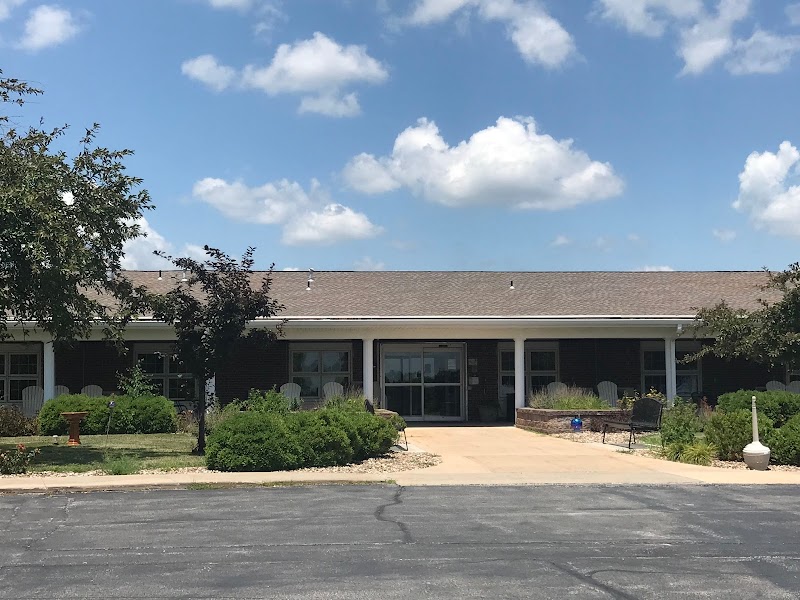
1311 E 28TH STREET, TRENTON, MO 64683 (660) 359-5647
Government - County 94 Beds Independent Data: November 2025 2 Immediate Jeopardy citations
Trust Grade
0/100
#464 of 479 in MO
Last Inspection: July 2024

Within standard 12-15 month inspection cycle. Federal law requires annual inspections.

Overview

Sunnyview Nursing Home & Apartments has received a Trust Grade of F, indicating significant concerns and poor overall performance. It ranks #464 out of 479 in Missouri, placing it in the bottom half of state facilities, and is the second option out of two in Grundy County, meaning there is only one other local choice that is better. While the facility is improving, as the number of issues decreased from 10 in 2024 to just 2 in 2025, it still faces serious challenges. Staffing is average with a 3/5 star rating and a 62% turnover rate, which is close to the state average, meaning staff may not stay long enough to build strong relationships with residents. The facility has faced critical incidents, such as using unsafe electric heaters in resident areas, and failing to protect a cognitively impaired resident from physical abuse, highlighting ongoing safety concerns.

Trust Score
F
0/100
In Missouri
#464/479
Bottom 4%
Safety Record
High Risk
Review needed
Inspections
Getting Better
10 → 2 violations
Staff Stability
⚠ Watch
62% turnover. Above average. Higher turnover means staff may not know residents' routines.
Penalties
○ Average
$19,395 in fines. Higher than 68% of Missouri facilities. Some compliance issues.
Skilled Nurses
⚠ Watch
Each resident gets only 25 minutes of Registered Nurse (RN) attention daily — below average for Missouri. Fewer RN minutes means fewer trained eyes watching for problems.
Violations
⚠ Watch
45 deficiencies on record. Higher than average. Multiple issues found across inspections.
★☆☆☆☆
1.0
Overall Rating
★★★☆☆
3.0
Staff Levels
★☆☆☆☆
1.0
Care Quality
★★☆☆☆
2.0
Inspection Score
Stable
2024: 10 issues
2025: 2 issues

The Good

  • Full Sprinkler Coverage · Fire safety systems throughout facility
  • No fines on record

Facility shows strength in fire safety.

The Bad

1-Star Overall Rating

Below Missouri average (2.5)

Significant quality concerns identified by CMS

Staff Turnover: 62%

16pts above Missouri avg (46%)

Frequent staff changes - ask about care continuity

Federal Fines: $19,395

Below median ($33,413)

Minor penalties assessed

Staff turnover is elevated (62%)

14 points above Missouri average of 48%

The Ugly 45 deficiencies on record

2 life-threatening
Oct 2025 1 deficiency 1 IJ
CRITICAL (J) 📢 Someone Reported This

A family member, employee, or ombudsman was alarmed enough to file a formal complaint

Immediate Jeopardy (IJ) - the most serious Medicare violation

Free from Abuse/Neglect (Tag F0600)

Someone could have died · This affected 1 resident

**NOTE- TERMS IN BRACKETS HAVE BEEN EDITED TO PROTECT CONFIDENTIALITY** Based on observation, record review, and interview, the facility failed to protect one cognitively impaired resident (Resident #...

Read full inspector narrative →
**NOTE- TERMS IN BRACKETS HAVE BEEN EDITED TO PROTECT CONFIDENTIALITY** Based on observation, record review, and interview, the facility failed to protect one cognitively impaired resident (Resident #1) from physical abuse, when Resident #2, who had a history of multiple instances of physical abuse including slapping, grabbing, and pushing Resident #1 and/or staff did not put any interventions in place to prevent further abuse. On 9/26/25, Resident #2 shoved Resident #1 into a bird aviary which caused broken glass to scratch Resident #1's back. Furthermore, the facility failed to provide protection to all other residents, from the potential of physical abuse, when no safety measures were put into place for Resident #2 after the 9/26/25 incident of abuse. The facility census was 58. The Director of Nursing was notified on 10/2/2025 at 2:49 P.M. of an Immediate Jeopardy (IJ) which began on 8/22/25. The IJ was removed on 10/2/2025, as confirmed by surveyor onsite verification. Review of the facility policy Abuse, Neglect, Exploitation, or Misappropriation Prevention Program, dated 3/23/23, showed:-Residents have the right to be free of abuse. This includes but is not limited to freedom from physical abuse;-The resident abuse, neglect, exploitation program consists of a facility wide commitment to: Protect residents from abuse, neglect, exploitation or misappropriation by anyone, including other residents, family members, friends;-Establish and maintain a culture of compassion and caring for all residents and particularly those with behavioral, cognitive or emotional problems.-Provide staff orientation and training programs that include topics such as abuse prevention, and handling verbally or physically aggressive resident behavior. Review of the facility policy Abuse, Neglect, Exploitation or Misappropriation- Reporting and Investigating, dated 4/11/23, showed upon receiving any allegation of abuse, the administrator is responsible for determining what actions are needed for the protection of residents. Review of Resident #1's admission Minimum Data Set (MDS- a federally mandated assessment tool completed by facility staff), dated 8/09/25, showed:-He/She had no cognitive loss; -Needed minimal assistance of staff for activities of daily living (ADLs: things completed in a day to care for oneself);-Diagnoses included: Cognitive communication deficit (a communication challenge resulting from impaired thinking skills, such as memory, attention, and problem-solving, rather than a language disorder), congestive heart failure, muscle weakness, reflux, and use of a cardiac pacemaker. Review of Resident #1's Comprehensive Care Plan, dated 8/21/25, showed: -He/She had a potential for falls;-Needed one staff assistance for ADLs;-Attended activities as he/she chose. Review of Resident #2's Level One Nursing Facility Pre-admission Screening for Mental Illness, Intellectual Disability Evaluation, dated 7/30/25 showed:-He/She was hard to redirect, was verbally and physically aggressive, wandered into others rooms, was 1:1 with staff and was given multiple as needed medications for aggression and anxiety.-He/She had medication orders due to physical aggression.-He/She had received several doses of medication to control verbal/physical aggression. Intervention was needed due to his/her physical aggression, throwing things, spitting, and wandering into others rooms and refusing to leave. Review of Resident #2's admission MDS, dated [DATE], showed:-He/She had significant cognitive loss;-Needed moderate to extensive assistance for ADLs;-Diagnoses included: Down Syndrome, morbid obesity, reflux, and constipation. Review of Resident #2's Comprehensive Care Plan, dated 8/29/25, showed: -He/She used psychotropic medications (medications that affect the brain and alter mental processes, emotions, and behavior) for behaviors due to Down Syndrome and behaviors;-Assess if his/her behaviors present a danger and intervene as needed; -Set expectations and limits for him/her.-No interventions put into place after incidents of aggression/agitation on 8/22, 8/23, 8/25, 8/28, 9/3, 9/5, and 9/11/25.Review of Resident #2's progress notes, dated 8/20/25 to 9/30/25, showed: -On 8/22/25 at approximately 9:30 P.M., staff heard a noise near the end of the hall. When staff responded, they found Resident #1 in Resident #2's room. Resident #2 grabbed Resident #1 by the arm and pushed him/her into a chair. Resident #2 was assisted to his/her room and checked for injuries. Resident #2 became aggressive and slapped at staff when he/she was not allowed to go into Resident #1's room. Resident #2 remained aggressive to staff while attempting to go into other resident's rooms. Resident #2's primary care physician (PCP) was notified and an order was given for Ativan (a prescription medication used for anxiety and sedation) 1 milligram (mg) by mouth one time only; -On 8/23/25 at 5:06 P.M., Resident #2 and Resident #1 were sitting at the nurse's station. Resident #2 became aggressive with Resident #1. Resident #2 pulled Resident #1's hair and slapped him/her in the face with an open hand. Resident #1 was removed to the Activity Room. Resident #2 kept trying to go after Resident #1. The Director of Nursing (DON) sat with Resident #2 and worked on breathing exercises; -On 8/25/25 at 12:58 A.M., Resident #1 was being domineering to Resident #2. Resident #2 lost his/her temper and hit Resident #1 and lunged at him/her. Certified Nurse Aide (CNA) pulled Resident #1 away and Resident #2 was taken to his/her room; -On 8/25/25 at 5:22 P.M., Resident #2's PCP faxed a note to the facility showing an order for Seroquel (a prescription medication used to treat mental and mood conditions) 25mg twice a day. He/She had concerns about Resident #2's behaviors, safety of Resident #1 and if the facility was appropriate for Resident #2; -On 8/28/25 at 12:54 A.M., Resident #2 attempted to leave the facility and was not easily redirected. Resident #2 grabbed staff by the neck and attempted to throw the staff member down. Administrator was notified and instruction was given to call the emergency room for medication order. Nurse Practitioner (NP) A returned the call and ordered Haldol (a medication used to treat behaviors) 5mg Intramuscularly (IM) one time only. Medication was administered to Resident #2;-On 9/3/25 at 9:30 A.M., Resident #2 went to the nurse's station and threw a chair to the floor; -On 9/5/25 at 12:20 A.M., Resident #2 was sitting at the nurse's station with Resident #1. Resident #2 went to nurse's desk and threw the computer at the nurse, ripped papers up from the desk, threw the computer keyboard and the telephone. Staff had given the resident five sandwiches and two [NAME] bars, but the resident was not redirectable. Resident #1 was taken to the other nurse's station. Resident #2 was assisted to his/her room by staff;-On 9/11/25 at approximately 7:30 P.M., Staff were at the nurse's station talking with another resident family member. Resident #2 pushed the family member aside and grabbed the nurse's station computer. Resident #2 grabbed papers off the desk and ripped them up, and threw things from the nurse's desk. On call physician contacted and orders received for Haldol 5mg IM one time only. Resident #2 was administered the medication in the right arm, with the assistance of three staff members. Resident #2 went to Resident #1's room; -On 9/26/25 at approximately 7:00 P.M., staff were at the nurse's station, heard yelling and a loud bang. When staff arrived at the bird aviary, they found Resident #1 sitting on the floor, his/her back against the aviary and the aviary was broken. Resident #2 was sitting on the couch. Resident #1 said Resident #2 hit him/her and pushed him/her into the bird cage. Resident #1 was assisted off the floor and taken to his/her room. He/She was found to have a scratch to his/her back and no other injuries. Resident #2 remained at the nurse's station and was monitored.Observation and interview on 9/30/25 at 10:30 A.M., showed Resident #2 was in the hallway with staff. Resident #2 said he/she pushed Resident #1 into the bird cage. Resident #2 then walked away to Resident #1's room. Observation on 9/30/25 at 12:30 P.M., showed Resident #1 and Resident #2 were sitting at the dining room table with no staff providing any interventions to ensure the residents safety together or any increased monitoring to ensure resident safety. Observation and interview on 9/30/25 at 3:11 P.M., showed:-Resident #2 was sitting on Resident #1's bed with no staff in room with the residents.-Resident #1 said his/her side was sore and he/she was stiff; He/She knew Resident #2 did not mean to hurt him/her; He/She believed Resident #2 was just overwhelmed. During an interview on 9/30/25 at 3:19 P.M., Resident #2 said: -He/She pushed Resident #1 into the bird cage, because Resident #1 would not give him/her food; -He/She hurt Resident #1 when he/she pushed the resident into the bird cage;-He/She pushed Resident #1 into the bird cage and that was a problem. During an interview on 10/6/25 at 5:00 P.M., Licensed Practical Nurse (LPN) A said: -He/She was the charge nurse on the night of 9/26/25; -He/She did not see the incident and only heard yelling and a loud noise; -When he/she arrived at the bird aviary Resident #1 was on the floor and the glass of the aviary was broken; -Resident #1 was taken to his/her room, Resident #2 was taken to the nurse's station; -Resident #1 had a large scratch to his/her back from the left shoulder blade to the middle of his/her back; -Resident #2 was not placed on checks or monitoring that he/she was aware of; -He/She is afraid Resident #2 would hurt another resident. -The DON would tell staff any interventions to put into place for any resident involved in an altercation; -He/She had not had any residents involved in altercations previously.During an interview on 9/30/25 at 3:55 P.M., the DON said: -He/She was notified of the incident between Resident #1 and #2 on 9/26/25;-The residents were separated and Resident #1 was taken to his/her room;-Resident #2 was not officially placed on increased checks or monitoring after he/she pushed Resident #1 into the bird aviary, but staff did not allow Resident #2 to leave the nurse's station;-He/She believed Resident #1 would pick on Resident #2 until Resident #2 would get angry. -He/She said staff were aware that Resident #2 could go to the MDS office to listen to music or use an ipad when Resident #2 was agitated. No other interventions were put into place.During an interview on 10/2/25 at 8:45 A.M., the Primary Care Provider (PCP) said: -He/She was aware Resident #2 had verbal outbursts by yelling at staff and the resident taking objects and throwing them at staff prior to 9/26/25;-He/She was notified of the altercation between Resident #1 and Resident #2 that occurred on 9/26/25; -He/She did not feel that adequate safety measures were in place to protect Resident #1 after the previous incidents and after this last incident;-He/She was concerned Resident #2 would really hurt Resident #1 sometime -He/She did not feel the facility was an appropriate placement for Resident #2 due to his/her diagnosis and previous behaviors;-He/She would expect the staff to put measures into place after each incident that would prevent other residents, including Resident #1 from injury. During an interview on 10/2/25 at 11:29 A.M., Resident #2's Guardian said: -He/She was aware Resident #2 had behaviors before admission to the facility when the facility told him/her when he/she agreed to take the resident.-He/She felt Resident #2 needed a higher level Department of Mental Health facility not long term care; -Resident #2's behaviors occurred when he/she was told no.-He/She would expect staff to put interventions in place after each incident to protect residents after an incident occurred. Note; At the time of the abbreviated survey, the violation was determined to be at the immediate and serious jeopardy level J. Based on observation, interview and record review completed during the onsite visit, it was determined the facility had implemented corrective action to address and lower the violation at the time. A final revisit will be conducted to determine if the facility is in substantial compliance with participation requirements.At the time of exit, the severity of the deficiency was lowered to the D level. This statement does not denote that the facility has complied with State law (Section 198.026.1 RSMo.) requiring that prompt remedial action be taken to address Class I violation(s). Incident 2628901
Sept 2025 1 deficiency
CONCERN (D) 📢 Someone Reported This

A family member, employee, or ombudsman was alarmed enough to file a formal complaint

Potential for Harm - no one hurt, but risky conditions existed

Deficiency F0657 (Tag F0657)

Could have caused harm · This affected 1 resident

Based on record review and interview the facility failed to ensure staff followed facility's policy to timely update one Resident's care plan (Resident #15) out of the 14 sampled residents after the r...

Read full inspector narrative →
Based on record review and interview the facility failed to ensure staff followed facility's policy to timely update one Resident's care plan (Resident #15) out of the 14 sampled residents after the resident eloped from the facility. The facility census was 56. Review of the facilities Emergency Procedure- Missing Resident policy, not dated, showed:-Nursing staff is tasked with updating the care plan after a resident who eloped is found;-The DON is to ensure the care plan is updated. 1.Review of Resident #15's care plan, updated on 08/03/2025, showed:-The resident was at an increased risk for wandering related to repeated attempts to exit the facility;-The resident had impaired decision making related to dementia;-The resident had a diagnosis of depression;-The resident's care plan had not been updated after the resident eloped on 09/13/2025. Review of nursing progress notes, dated 9/19/25 at 8:00 P.M showed the resident eloped out the door on the 100 hall without his/her walker. The resident was then later found behind the facility 25 minutes later without his/her wander guard bracelet ( A device that alarms when getting to close to an exit door. ) on. During an interview on 9/19/2025 at 9:04 A.M., RN A said that he/she was there the night that resident had eloped and had seen him that night on 9/13/25 on the 100 hall around 8:00 P.M. with his/her walker, later that night he/she went to give him his/her medications and could not find him/her. RN A said there was an order on the resident's MAR (Medication Administration Record) to check the wonder guard shiftily and during report he/she was notified that the resident had a wander guard, but he/she had not had a chance to check it that night. During an interview on 09/19/2025 at 10:04 A.M. the DON (Director of Nursing) said no new measures to prevent the resident from eloping again had been put into place on the care plan after the resident eloped on 09/13/2025. The residents care plan should have been updated regarding the resident's new exit seeking behaviors. During an interview on 09/19/2025 at 10:41 A.M. the MDS (Minimum Data Set) Coordinator said:-The care plan was not updated after the resident eloped on 09/13/2025 and should have been;-The charge nurse on duty during the event was responsible for updating the care plan when an elopement occurs.
Sept 2024 1 deficiency
CONCERN (E) 📢 Someone Reported This

A family member, employee, or ombudsman was alarmed enough to file a formal complaint

Potential for Harm - no one hurt, but risky conditions existed

Safe Environment (Tag F0921)

Could have caused harm · This affected multiple residents

**NOTE- TERMS IN BRACKETS HAVE BEEN EDITED TO PROTECT CONFIDENTIALITY** Based on observation and interviews, the facility failed to ensure they maintained a safe, clean, comfortable environment for th...

Read full inspector narrative →
**NOTE- TERMS IN BRACKETS HAVE BEEN EDITED TO PROTECT CONFIDENTIALITY** Based on observation and interviews, the facility failed to ensure they maintained a safe, clean, comfortable environment for the residents, when staff failed to keep all areas of the facility clean and free from mold-like substance throughout areas in the building. The facility census was 46. No policy regarding housekeeping or maintaining the environment was provided. Observation of the facility on 9/10/24 at 6:30 A.M. showed a strong, damp and musty (having a stale, moldy or damp smell) smell outside of a resident room [ROOM NUMBER]. Observation of the facility on 9/10/24 at 11:45 A.M. showed a black, mold-like substance on the outside of the air return vents above the nurse's station on the 300 hall; above the kitchenette on the ceiling of the closed wing; on the return air vents in the kitchen area on the 300 hall; and on the ceiling tile behind kitchen freezer in dry storeroom. Observation of the facility on 9/10/24 at 11:50 A.M. showed there was a strong, damp and musty smell in the dining room adjacent to nursing station number three. Observation of the facility on 9/10/24 at 12:00 P.M. showed a black, mold-like substance was found on the heating/cooling unit in the activity room between the nurse's station's two and three; on the heating/cooling unit between the nurse's stations two and three; and heating/cooling unit in occupied resident rooms #208, #311, #307 , and # 213. Observation of the facility on 9/10/24 at 12:04 P.M. showed a black, mold-like substance was found on the floor against the wall next to nightstand in resident room [ROOM NUMBER] and on the ceiling tile in an unoccupied room [ROOM NUMBER]. During an interview on 9/10/24 at 5:45 A.M., the administrator said she was not aware of any mold but there has been leaks in the roof for sometime and the board approved a new roof to be installed. During an interview on 9/10/24 at 1:00 P.M., CMT 2 said he/she had not noticed mold, but does not look for it. During an interview on 9/10/24 at 1:05 P.M., CMT 1 said he/she has not noticed mold and is not in the habit of looking for mold. During an interview on 9/10/24 at 1:15 P.M., housekeeper 1 said there is no policy that includes mold mitigation or training for staff on the prevention of mold. MO241310
Jul 2024 9 deficiencies
CONCERN (D)

Potential for Harm - no one hurt, but risky conditions existed

Deficiency F0637 (Tag F0637)

Could have caused harm · This affected 1 resident

**NOTE- TERMS IN BRACKETS HAVE BEEN EDITED TO PROTECT CONFIDENTIALITY** Based on record review, interview, and review of the Resident Assessment Instrument (RAI) manual, the facility failed to complet...

Read full inspector narrative →
**NOTE- TERMS IN BRACKETS HAVE BEEN EDITED TO PROTECT CONFIDENTIALITY** Based on record review, interview, and review of the Resident Assessment Instrument (RAI) manual, the facility failed to complete a significant change assessment after a resident was started on hospice services for one of two residents (Resident (R) 7) reviewed for hospice of 16 sample residents. This has the potential to affect all residents with a Minimum Data Set (MDS) assessment ensuring proper care and services. The facility census was 46. Findings include: Review of the undated Minimum Data Set Resident Assessment Instrument (RAI) revealed Guidelines for determining the need for an SCSA [significant change in status assessment] for residents with terminal conditions. The key in determining if an SCSA is required for individuals with a terminal condition is whether or not the change in condition is an expected well-defined part of the disease course and is consequently being addressed as part of the overall plan of care for the individual. If a terminally ill resident experiences a new onset of symptoms or a condition that is not part of the expected course of deterioration, an SCSA assessment is required. Similarly, if the resident enrolls in a hospice (Medicare Hospice program or other structured hospice program), but remains a resident at the facility, an SCSA should be performed if the terminally ill resident experiences a new onset of symptoms or a condition that is not part of the expected course of deterioration. The facility is responsible for providing necessary care and services to assist the resident in achieving his/her highest practicable well-being at whatever stage of the disease process the resident is experiencing. Review of R7's admission Record located in the Profile tab of the electronic medical record (EMR), revealed re-admission to the facility on [DATE] and with diagnosis of mild intermittent asthma. Review of R7's quarterly MDS under the MDS tab of the EMR with an Assessment Reference Date (ARD) of 04/08/24, revealed the Brief Interview for Mental Status (BIMS) could not be completed due to resident rarely being understood. Review of R7's Physician Orders located under the Orders tab of the EMR, dated 07/09/24, revealed an order for hospice. During an interview on 07/25/24 at 11:16 AM, the MDS coordinator (MDSC) stated she was new to the position and has only been doing this for two weeks. She stated a significant change assessment needed to be completed anytime someone went on hospice. She stated she found out on the 11th during a care plan meeting that R7 went onto hospice, and there was a quarterly assessment open, so she was confused if a significant change assessment needed to be completed. During an interview on 07/25/24 at 12:59 PM, the Director of Nursing (DON) stated R7's wife spoke with the provider directly and requested the resident be placed on hospice. She agreed the facility became aware on the 11th and that a significant change assessment should have been completed.
CONCERN (D)

Potential for Harm - no one hurt, but risky conditions existed

Comprehensive Care Plan (Tag F0656)

Could have caused harm · This affected 1 resident

**NOTE- TERMS IN BRACKETS HAVE BEEN EDITED TO PROTECT CONFIDENTIALITY** Based on record review and interview, the facility failed to develop and implement a care plan for a resident receiving hospice ...

Read full inspector narrative →
**NOTE- TERMS IN BRACKETS HAVE BEEN EDITED TO PROTECT CONFIDENTIALITY** Based on record review and interview, the facility failed to develop and implement a care plan for a resident receiving hospice services for one of two residents (Resident (R) 7) reviewed for hospice services of 16 sample residents. This has the potential to affect all residents receiving hospice services. The facility census was 46. Findings include: Review of the facility's policy titled, Care Plans, Comprehensive Person Centered, revised March 2023, revealed the comprehensive, person-centered care plan was developed within seven days of the required MDS [Minimum Data Set] assessment. Review of R7's admission Record located in the Profile tab of the electronic medical record (EMR), revealed re-admission to the facility on [DATE] and with diagnosis of mild intermittent asthma. Review of R7's quarterly MDS under the MDS tab of the EMR with an Assessment Reference Date (ARD) of 04/08/24, revealed the Brief Interview for Mental Status (BIMS) could not be completed due to resident rarely being understood. Review of R7's care plan located under the ''Care Plan'' tab of the EMR and dated 04/10/24, revealed the resident was not care planned for hospice services. Review of R7's Physician Orders located under the Orders tab of the EMR, dated 07/09/24, revealed an order for hospice. During an interview on 07/25/24 at 11:16 AM the MDS coordinator (MDSC) stated she was new to the position and there were two residents who went on hospice. She stated she must have care planned the other resident and forgot to implement R7's care plan for hospice, but it should have been done. She stated it was important to care plan it so that staff were aware he was hospice and did not require any medical treatment if he got sick. During an interview on 07/25/24 at 12:59 PM, the Director of Nursing (DON) stated R7's wife spoke with the provider directly and requested the resident be placed on hospice. But agreed the facility became aware on the 11th and that hospice should have been implemented on the care plan.
CONCERN (D)

Potential for Harm - no one hurt, but risky conditions existed

Deficiency F0700 (Tag F0700)

Could have caused harm · This affected 1 resident

**NOTE- TERMS IN BRACKETS HAVE BEEN EDITED TO PROTECT CONFIDENTIALITY** Based on record review, interview, and facility policy review, the facility failed to ensure residents received alternative meas...

Read full inspector narrative →
**NOTE- TERMS IN BRACKETS HAVE BEEN EDITED TO PROTECT CONFIDENTIALITY** Based on record review, interview, and facility policy review, the facility failed to ensure residents received alternative measures prior to the installation of side rails for one of two residents (Resident (R) 22 and R37) reviewed for side rails of 16 sample residents. The lack of alternative side rail measures could lead to potential restraint or side rail entrapment. The facility census was 46. Findings include: 1. Review of R22's admission Record located in the Profile tab of the electronic medical record (EMR) revealed re-admission to the facility on [DATE] with a diagnosis of muscle weakness. Review of R22's annual Minimum Data Set (MDS) under the MDS tab of the EMR, with an Assessment Reference Date (ARD) of 04/21/24 revealed a Brief Interview for Mental Status (BIMS) score could not be completed due to the resident rarely understood. Review of R22's care plan located under the ''Care Plan'' tab of the EMR and dated 07/08/22, revealed ''The resident had ½ side rails on bed for bed mobility. Review of R22's Physician Orders located under the Orders tab of the EMR, dated 06/29/23, revealed an order for side rails. Review of R22's Side Rail Assessment located under the Observations tab of the EMR, dated 06/16/24, revealed no documentation of alternative measures. Further review revealed only risk and benefits and consent were obtained. 2. Review of R37's admission Record located in the Profile tab of the EMR revealed re-admission to the facility on [DATE] with a diagnosis of chronic kidney disease. Review of R37's quarterly MDS under the MDS tab of the EMR with an ARD of 05/03/24 revealed the BIMS indicated a score of two of 15 which indicated severe cognitive impairment. Review of R37's care plan located under the ''Care Plan'' tab of the EMR and dated 02/02/23, revealed ''The resident had ½ side rails on bed for bed mobility. Further review revealed the resident requested the use of side rails as a fall prevention. Review of R37's Physician Orders located under the Orders tab of the EMR, dated 02/01/23, revealed an order for side rails. Review of R37's Side rail Assessment located under the Observations tab of the EMR, dated 05/01/24, revealed no documentation of alternative measures. Further review revealed only risk and benefits and consent were obtained. During an interview on 07/25/24 at 11:16 AM, the MDS coordinator (MDSC) stated if they identified that a resident would benefit from side rails they would have therapy evaluate the resident and if they decided to go forward they would get a physician order. She stated they would have a side rail assessment completed. But she said she was not aware that staff had to look at alternatives and document those attempts prior to using bedrails for a resident. She stated they were assessing for entrapment, and they had documentation for that. During an interview on 07/24/24 at 5:00 PM, the Administrator stated she was unaware that alternatives had to be attempted prior to installing bedrails and asked what type of alternates could be tried. During an interview on 07/25/24 at 12:59 PM, the Director of Nursing (DON) stated she was unaware staff needed to explore alternatives. She stated she knew to use the least restrictive but did not know about the alternatives. She stated she did not know what to do when a family or resident requested or insisted on having bedrails.
CONCERN (D)

Potential for Harm - no one hurt, but risky conditions existed

Pharmacy Services (Tag F0755)

Could have caused harm · This affected 1 resident

**NOTE- TERMS IN BRACKETS HAVE BEEN EDITED TO PROTECT CONFIDENTIALITY** Based on record review, interview, and facility policy review, the facility failed to ensure residents received the correct medi...

Read full inspector narrative →
**NOTE- TERMS IN BRACKETS HAVE BEEN EDITED TO PROTECT CONFIDENTIALITY** Based on record review, interview, and facility policy review, the facility failed to ensure residents received the correct medication as ordered by the physician for two of eight residents (Resident (R) 20 and R38) reviewed for medications of 16 sample residents. This failure could result in unwarranted medication side effects and mismanaged medical conditions. The facility census was 46. Findings include: Review of the facility's policy titled, Administering Medications, revised April 2019, revealed Medications are administered in a safe and timely manner, and as prescribed. 1. Review of R20's Resident Face Sheet located in the Face Sheet tab of the electronic medical record (EMR) revealed R20 was admitted to the facility on [DATE] with diagnoses which included chronic diastolic (congestive) heart failure and essential (primary) hypertension. Review of R20's quarterly Minimum Data Set (MDS) located in the MDS tab of the EMR, with an Assessment Reference Date (ARD) of 05/28/24, revealed R20 had a Brief Interview for Mental Status (BIMS) score of six out of 15 which indicated the resident had severe cognitive impairment. Review of R20's Care Plan located under the Care Plan tab of the EMR, last revised 06/19/24, revealed a problem category ADLs [activities of daily living] Functional Status/Rehabilitation Potential related to a diagnosis of hypertension. However, this problem category did not include any specific intervention related to medication administration. Review of an Event Report, dated 03/22/24 and provided by the facility, revealed a hospital discharge order for R20 for metoprolol succinate [blood pressure medication] 25 mg [milligrams] 24 hr [hour] tablet, Take 3 tablets (75 mg total) by mouth daily. Review of the Event Report indicated an order for metoprolol tartrate 25 mg (75 mg) Administer 3 tablets twice daily was entered in error. The Type of Error was checked off as Incorrect Dose, Incorrect Medication, and Incorrect Time. Review of R20's Order located under the Orders tab in the EMR, revealed an order with a start date of 03/19/24 and a discontinue date of 03/22/24 for metoprolol tartrate 75 mg twice a day. Review of R20's Medication Administration Record (MAR), dated 03/24 and located under the Reports tab in the EMR, revealed R20 received four days of metoprolol tartrate 75 mg twice daily. During an interview on 07/25/24 at 1:21 PM the Director of Nursing (DON) stated she entered the metoprolol succinate order incorrectly and, as a result, R20 received at least three days of twice daily dosing of metoprolol tartrate instead of once daily of the tartrate. 2. Review of R38's admission Record, located in the Profile tab of the EMR revealed re-admission to the facility on [DATE] with a diagnosis of muscle Parkinson's. Review of R38's quarterly MDS under the MDS tab of the EMR, with an ARD of 06/12/24, revealed the BIMS score of 13 out of 15 which indicated the resident had intact cognition. Review of R38's care plan located under the ''Care Plan'' tab of the EMR and dated 02/04/23, revealed ''The resident had a diagnosis of Parkinson's disease. Review of R38's Progress Note located under the Progress Notes tab of the EMR, dated 05/17/24, written by Registered Nurse (RN) 2, revealed received order to decrease from two tablets to 1.5 tablets QID [four times a day] for carbidopa-levodopa. Review of R38's Physician Order Clarification located under the Documents tab of the EMR, dated 06/11/24, revealed on 05/17/24 that resident's carbidopa-levodopa was decreased from 2 tablets to 1.5 QID but the order was entered wrong and has only been given TID. Review of R38's Medication Administration Record (MAR) located under the Reports tab of the EMR, dated 05/16/24 through 06/17/24, revealed R38 received 1.5 tablets of carbidopa-levodopa three times daily between 05/17/24-06/12/24. During an interview on 07/25/24 at 10:23 AM, RN2 stated when staff received a verbal order, they wrote the order down in their fax orders binder, faxed it to the pharmacy, made a progress note, entered the order in computer and notified the family. RN2 stated she could not recall the progress note she wrote on 05/17/24, but she did remember something about the ear but nothing else. She stated she must have just missed that one piece of the order and did not enter it correctly, but she was not sure what happened. During an interview on 07/25/24 at 12:59 PM, the Director of Nursing (DON) stated they identified an issue with nursing staff taking phone orders which has led to these types of situations where orders were not put into the EMR accurately. She stated their process was a two-step process that required two nurses to sign off for accuracy. The DON stated staff were just taking the orders verbally and putting them directly into the EMR which omitted the 2nd check. She stated she expected staff to input orders accurately and follow them.
CONCERN (D)

Potential for Harm - no one hurt, but risky conditions existed

Medication Errors (Tag F0758)

Could have caused harm · This affected 1 resident

**NOTE- TERMS IN BRACKETS HAVE BEEN EDITED TO PROTECT CONFIDENTIALITY** Based on record review, interview, and facility policy review, the facility failed to ensure there was documented rationale and ...

Read full inspector narrative →
**NOTE- TERMS IN BRACKETS HAVE BEEN EDITED TO PROTECT CONFIDENTIALITY** Based on record review, interview, and facility policy review, the facility failed to ensure there was documented rationale and a stop date for a PRN (as needed) psychotropic medication for one of eight residents (Resident (R) 12) reviewed for medications of 16 sample residents. This failure has the potential to lead to unwarranted medication side effects. The facility census was 46. Findings include: Review of the facility's policy titled, Psychotropic Medication Use, dated July 2022, revealed PRN orders for psychotropic medications are limited to 14 days. (1) For psychotropic medications that are NOT antipsychotics: If the prescriber or attending physician believes it is appropriate to extend the PRN order beyond 14 days, he or she will document the rationale for extending the use and include the duration for the PRN order. Review of R12's Resident Face Sheet located in the Face Sheet tab of the electronic medical record (EMR) revealed R12 was admitted to the facility on [DATE] with diagnoses which included dementia in other diseases classified elsewhere, unspecified severity, without behavioral disturbance, psychotic disturbance, mood disturbance, and anxiety. Review of R12's quarterly Minimum Data Set (MDS) located in the MDS tab of the EMR, with an Assessment Reference Date (ARD) of 06/18/24, revealed R12 had a Brief Interview for Mental Status (BIMS) score of four out of 15 which indicated the resident had severe cognitive impairment. Further review revealed no physical, verbal or other behavioral symptoms directed toward others. Review of R12's Care Plan located under the Care Plan tab of the EMR, last revised 07/07/24, revealed a problem category Psychotropic Drug Use related to antianxiety medication with interventions which included Attempt a gradual dose reduction as needed and ordered by PCP [primary care physician] .monitor for drug use effectiveness and adverse consequences, and pharmacy consultant review as needed and appropriate. Review of R12's Orders located under the Orders tab in the EMR, revealed an order for lorazepam (anti-anxiety medication) tablet 0.5 mg (milligrams) give one tablet by mouth twice daily as needed for anxiety. The order indicated it was started on 03/11/24 and discontinued on 06/07/24. Review of R12's March 2024, April 2024, May 2024, and June 2024 Medication Administration Record (MAR) revealed the lorazepam 0.5 mg give one tablet by mouth twice daily as needed for anxiety order remained active from 03/11/24 to the discontinuation date of 06/07/24. Review of R12's Progress Notes located under the Progress Notes tab in the EMR, revealed three notes by the clinical pharmacist referencing the pharmacy consultation requesting a review and resolution to the lorazepam order, specifically requesting to discontinue or continue the order with justification and a duration of use. The first note was dated 03/24/24, the second follow up note was dated 04/25/24, and the third follow up note was dated 05/21/24. Review of R12's pharmacy consultations revealed a note titled Note to Attending Physician/Prescriber, dated 3/26/24, notifying the prescriber of the lorazepam PRN order and the 14-day limit, with a request to either discontinue the order or extend the order with clinical rationale for a specified duration of use. The prescriber responded on 04/02/24 to continue the lorazepam PRN order but did not provide a rationale or duration of use. During an interview on 07/25/24 at 1:08 PM the Director of Nursing (DON) stated she recalled the issue with R12's lorazepam order. She stated the prescriber insisted on continuing the order. The staff was using the medication to help with giving R12 showers due to R12 becoming combative. The DON stated she asked if the physician would consider changing the order to give 30 minutes before showers, but it was denied. The DON stated during the three months where the PRN order was still in place; the facility was going back and forth with the prescriber trying to have the prescriber document justification and provide a stop date for the order. During an interview on 07/25/24 at 2:07 PM, the consulting Pharmacist stated she had conducted a review for R12 in March and again in May addressing the PRN lorazepam order. She stated the prescriber had not provided a rationale or end date to continue the PRN order.
CONCERN (D)

Potential for Harm - no one hurt, but risky conditions existed

Deficiency F0760 (Tag F0760)

Could have caused harm · This affected 1 resident

**NOTE- TERMS IN BRACKETS HAVE BEEN EDITED TO PROTECT CONFIDENTIALITY** Based on interviews, record review, and review of facility policy, the facility failed to ensure one of one resident (Resident (...

Read full inspector narrative →
**NOTE- TERMS IN BRACKETS HAVE BEEN EDITED TO PROTECT CONFIDENTIALITY** Based on interviews, record review, and review of facility policy, the facility failed to ensure one of one resident (Resident (R) 99) was free from significant medication errors when the facility administered R99 someone else's medication, out of 16 sample residents. This medication error had the potential to cause R99 to become hypotensive (low blood pressure). The facility census was 46. Findings include: Review of the facility's policy titled Administering Medications, dated 04/19, revealed Medications are administered in a safe and timely manner, and as prescribed .9. The individual administering medications verifies the resident's identity before giving the resident his/her medications. Methods of identifying the resident include: (a) checking identification band; (b) checking photograph attached to medical record; and (c) if necessary, verifying resident identification with other facility personnel. Review of a professional reference titled Hypotension, dated 02/19/23 and retrieved from www.ncbi.nlm.nih.gov, revealed hypotension is classified based on the biometric parameters of the blood pressure measurement. It may be absolute with changes in systolic blood pressure to less than 90 millimeters of mercury (mm Hg) or mean arterial pressure less than 65 mm Hg. It may be relative to a decrease in diastolic blood pressure to less than 40 mm Hg. Review of R99's Face Sheet located under the Resident tab of the electronic medical record (EMR), revealed admission to the facility on [DATE] with diagnoses including anxiety disorder, unspecified, acute on chronic combined systolic and diastolic congestive heart failure, and chronic kidney disease, stage three. Review of R99's admission Minimum Data Set (MDS) with an Assessment Reference Date (ARD) of 06/24/24 located under the Resident tab of the EMR, revealed a Brief Interview for Mental Status (BIMS) score of 11 out of 15 indicating moderately impaired cognition. Review of the facility's Event Report located in the EMR under the Resident tab, dated 06/24/24 and time stamped at 8:40 AM, revealed R99 received Amlodipine 5 mg (medication used to treat high blood pressure), Atorvastatin 20 mg (medication used to treat high cholesterol), Hydralazine 50 mg (medication used to treat high blood pressure), Lisinopril 20 mg (medication used to treat high blood pressure and heart failure), Metoprolol 200 mg (a medication used to treat high blood pressure), Omeprazole 20 mg (medication used to treat gastroesophageal reflux disease), and Vitamin D3 125 mcg (supplement used to help the body absorb calcium and phosphorus). R99's blood pressure at 7:59 AM was 110/58. The event report revealed R99 was given another resident's medications during AM med pass. Review of R99's Orders located under the Resident tab of the EMR, revealed a physician order, dated 06/24/24, for lisinopril tablet 2.5 mg; 1 tab, hold if systolic blood pressure (SBP) less than 90 once a day, and metoprolol tartrate tablet; 100 mg, 1 tab, hold if SBP less than 90 and heart rate (HR) less than 50. Review of R99's vital signs report located under the Resident tab of the EMR, revealed the following blood pressure readings: 06/24/2024 at 12:31 AM 120/90 06/24/2024 at 7:35 AM 114/75 06/24/2024 at 7:59 AM 110/58 Review of R99's blood pressure (BP) readings for 06/24/24, between 7:35 AM and 7:59 AM, revealed the systolic blood pressure dropped 15 mm of Hg and the diastolic blood pressure dropped 20 mm of Hg. Review of R99's After Visit Summary (AVS) from [Name] Health System, dated 06/25/24, revealed R99 presented to [hospital name] ED [emergency department] on 06/24 with complaint of accidental medication ingestion. She resides at [Name] nursing home and was incorrectly given someone else's medications. She was given metoprolol 200 mg, lisinopril 20 mg, hydralazine 50 mg, and amlodipine 5 mg. She usually takes only metoprolol 100 mg and lisinopril 2.5 mg. In the ED she received a 500 ml fluid bolus. Work up in the ED revealed .BP 94/43. She was admitted to observation for further evaluation and treatment of hypotension secondary to medication. BP meds were held, and her hypotension resolved without further intervention. During an interview on 07/23/24 at 3:03 PM, the Director of Nursing (DON) stated R99 received R13's morning medications. She stated the medications were administered by a student nurse in the dining room. She stated R99 and R13 sat at the same table in the dining room, and the student nurse got the residents confused. The DON stated the Certified Medication Tech preceptor (CMT) 1 went over the medications with the student nurse and told her which resident needed the medications. The DON stated she was out of the building the day of the incident. The DON stated R99 became symptomatic quickly and was assessed by Registered Nurse (RN) 1. During an interview on 07/24/24 at 8:30 AM, RN1 stated she was notified within ten minutes of the incident regarding R99 receiving the wrong medications. RN1 stated she immediately assessed R99 and notified the physician. RN1 stated she checked R99's blood pressure again while waiting for a return call from the physician. RN1 stated R99's blood pressure was trending down, and she called the physician again. She stated new orders were received to send R99 to the hospital. She stated R99 was kept overnight for observation and received IV (intravenous) fluids. RN1 stated she also notified R99's son and the hospice agency. During an interview on 07/24/24 at 12:00 PM, the DON stated CMT1 was verbally counseled on the situation regarding the medication error.
CONCERN (E)

Potential for Harm - no one hurt, but risky conditions existed

Accident Prevention (Tag F0689)

Could have caused harm · This affected multiple residents

**NOTE- TERMS IN BRACKETS HAVE BEEN EDITED TO PROTECT CONFIDENTIALITY** Based on observation, record review, and staff interview, the facility failed to ensure resident were appropriately assessed and...

Read full inspector narrative →
**NOTE- TERMS IN BRACKETS HAVE BEEN EDITED TO PROTECT CONFIDENTIALITY** Based on observation, record review, and staff interview, the facility failed to ensure resident were appropriately assessed and had documentation to support the use of wander guards for two of two residents (Residents (R) 34 and R12) reviewed for wander guards of 16 sample residents. This failure could result in residents with unwarranted use of wander guards. Findings include: During an interview on 07/25/24 at 2:45 PM, the Director of Nursing (DON) stated the facility did not have a policy related to wander guard use. 1. Review of R34's Resident Face Sheet located in the Face Sheet tab of the electronic medical record (EMR) revealed R34 was admitted to the facility on [DATE] with diagnoses which included unspecified dementia, unspecified severity, without behavior disturbance, psychotic disturbance, mood disturbance, and anxiety. Review of R34's quarterly Minimum Data Set (MDS) located in the MDS tab of the EMR, with an Assessment Reference Date (ARD) of 06/09/24 revealed R34 had short-term and long-term memory problems with cognitive skills for daily decision making rated as severely impaired. Further review of the MDS revealed R34 had not exhibited physical, verbal, or other behavioral symptoms not directed toward others and had not exhibited wandering. The resident was marked as having a wander guard. Review of R34's Care Plan located under the Care Plan tab of the EMR, last revised 06/21/24, revealed a problem category Cognitive Loss/Dementia related to wandering and risk for elopement. Interventions included to equip the resident with a device that alarms when resident wanders and to check for proper functioning of device every shift. Review of R34's Active Orders located under the Orders tab in the EMR, dated 02/08/24, revealed an open-ended order for Wander Guard Special Instructions: Place wander guard on res [resident] d/t [due to] elopement risk. Review of R34's Observations located under the Observations tab in the EMR, from 12/09/22 to 07/24/24, revealed no assessments for elopement risk. Review of R34's Progress Notes located under the Progress Notes tab in the EMR, from 08/22/23 to 07/24/24, revealed no assessments for elopement risk or notes indicating R34 exhibited wandering or elopement behaviors. During an observation on 07/24/24 at 10:37 AM, R34 was observed quietly sitting in a recliner in his room and eating a breakfast bar. R34 smiled pleasantly and appeared in no acute distress. During an observation on 07/24/24 at 11:50 AM, R34 was observed ambulating down the hall to the main dining room, assisted by a male staff member. R34 appeared calm and compliant with going to the dining room. During an observation on 07/24/24 at 1:00 PM, R34 was observed ambulating down the hall from the main dining room back toward his room, assisted by a female staff member. R34 appeared calm and compliant with following staff direction/redirection. During an interview on 07/24/24 at 11:58 AM, the Infection Preventionist (IP) stated the elopement evaluations were located under the Observations tab in the EMR. She stated that was the only place so if there were no elopement evaluations there then there was not one done. During an interview on 07/23/24 at 2:00 PM the MDS Coordinator (MDSC) stated R34 previously lived at the assisted living and had wandered across the street in the middle of the night. It was decided R34 needed to be moved to the nursing facility and the wander guard was placed. The MDS nurse stated R34 had the wander guard in place since admission because of that incident. During an interview on 07/23/24 at 2:30 PM, Licensed Practical Nurse (LPN) 2 stated R34 did not exit seek. During an interview on 07/23/24 at 2:33 PM, Certified Medication Technician (CMT) 3 stated R34 did not exit seek or leave his room. During an interview on 07/23/24 at 2:38 PM, Certified Nurse Aide (CNA) 1 stated R34 did not wander, or exit seek. 2. Review of R12's Resident Face Sheet located in the Face Sheet tab of the EMR revealed R12 was admitted to the facility on [DATE] with diagnoses which included dementia in other diseases classified elsewhere, unspecified severity, without behavioral disturbance, psychotic disturbance, mood disturbance, and anxiety. Review of R12's quarterly MDS located in the MDS tab of the EMR, with an ARD of 06/18/24 revealed R12 had a Brief Interview for Mental Status (BIMS) score of four out of 15 which indicated the resident had severe cognitive impairment. Further review revealed no physical, verbal, or other behavioral symptoms not directed toward others and no presence of wandering. The was marked as having a wander guard. Review of R12's Care Plan located under the Care Plan tab of the EMR, last revised 07/07/24 revealed a problem category Behavioral Symptoms related to R12 wandering and attempting to go outside unsupervised in the past. Interventions included to equip the resident with a device that alarms when resident wanders and to check for proper functioning of device every shift. Review of R12's Active Orders located under the Orders tab in the EMR, dated 03/11/24, revealed an open-ended order for Wander Guard Check Special Instructions: Ensure wander guard is in place, skin is intact surrounding wander guard, check function of wander guard with tool provided in treatment cart. Review of R12's Observations located under the Observations tab in the EMR, from 11/30/22 to 07/24/24, revealed no assessments for elopement risk. Review of R12's Progress Notes located under the Progress Notes tab in the EMR, from 03/01/24 to 07/24/24, revealed no assessments for elopement risk. Review revealed a note dated 03/08/24, indicating R12 attempted to leave the facility by following a visitor out the front door and stated, get me out of here. During an observation on 07/24/24 at 10:10 AM, R12 was observed sitting quietly in her room in no apparent distress. During an observation on 07/24/24 at 11:50 AM, staff were observed assisting R12 to the dining room in her wheelchair. R12 appeared calm and in good spirits. During observation on 07/24/24 at 3:37 PM, R12 was observed sitting calmly in her wheelchair in front of the nurse's station. During an interview on 07/25/24 at 3:30 PM, LPN 1 stated R12 did not exit seek or wander any longer since R12 has been in a wheelchair. During an interview on 07/25/24 at 3:36 PM, CNA2 stated the resident did not exit seek or wander any longer since R12 has been in a wheelchair. During an interview on 07/25/24 at 3:45 PM, CMT2 indicated resident did not exit seek or wander any longer since R12 has been in a wheelchair. She estimated R12 has been in a wheelchair a little over a month ago. The facility census was 46. During an interview on 07/25/24 at 11:47 AM, the Rehabilitation Director stated the rehabilitation staff did not conduct evaluations for wander guard use. During an interview on 07/24/24 at 1:05 PM, the DON stated the facility did not have a formal evaluation for elopement risk or wander guard use. She stated for R34 specifically, the wander guard was placed because R34 had eloped when R34 resided at the assisted living. The DON stated the facility received an Immediate Jeopardy (IJ) for the elopement and it was decided R34 would be safer in long term care with the wander guard. The DON stated the residents with wander guards have them because they either had an elopement, near elopement, or were exit seeking. When asked again about a formal evaluation for elopement she stated they only looked at behaviors. When asked if R34 had behavior monitoring, she stated R34 did not have behavior monitoring because R34 did not exhibit behaviors. The DON stated the wander guard order for R34 was renewed on 02/08/24 because the facility had received an IJ for the elopement before R34 admitted to long term care, and they felt it was best R34 remain with the wander guard. During an interview on 07/25/24 at 5:22 PM, the Administrator stated the facility placed the wander guard on R34 because the facility received an IJ for the elopement incident.
CONCERN (E)

Potential for Harm - no one hurt, but risky conditions existed

Respiratory Care (Tag F0695)

Could have caused harm · This affected multiple residents

**NOTE- TERMS IN BRACKETS HAVE BEEN EDITED TO PROTECT CONFIDENTIALITY** Based on observation, interview, record review, facility policy review, and review of manufacturer's instructions, the facility ...

Read full inspector narrative →
**NOTE- TERMS IN BRACKETS HAVE BEEN EDITED TO PROTECT CONFIDENTIALITY** Based on observation, interview, record review, facility policy review, and review of manufacturer's instructions, the facility failed to provide respiratory care in accordance with professional standards for two of two residents (Residents (R) 3 and R99) reviewed for respiratory care out of 16 sample residents. This failure has the potential for the residents to be subjected to contaminated respiratory equipment and to not receive proper airflow. The facility census was 46. Findings include: Review of the facility's policy titled, Departmental (Respiratory Therapy) - Prevention of Infection, dated 11/11, documented: .8. Keep oxygen cannula and tubing used as needed (PRN) in a plastic bag when not in use. 9. Wash filters from oxygen concentrators every seven (7) days with soap and water. Rinse and squeeze dry. Review of the undated Maintenance instruction sheet, provided by the facility, revealed remove the filter and clean at least once a week depending on environmental conditions. 1. Review of R3's admission Record located under the Resident tab of the electronic medical record (EMR), revealed R3 was admitted on [DATE] with diagnoses of unspecified dementia, nasal congestion, and atherosclerotic heart disease of native coronary artery without angina pectoris. Review of R3's significant change Minimum Data Set (MDS), dated 07/09/24 and located in the EMR under the MDS tab, revealed R3 had a Brief Interview for Mental Status (BIMS) score of zero out of 15, which indicated R3 had severe cognitive impairment. Review of R3's Physician Orders Sheet, located in the EMR under the Orders tab, revealed the following order, dated 07/03/24, oxygen - apply per nasal cannula PRN if oxygen saturation (O2) sats less than 90 %. May titrate as needed. Review of R3's Care Plan, dated 04/24/24 and located in the EMR under the Care Plan tab, revealed the following: At risk for decreased cardiac output related to (R/T) chronic diastolic congestive heart failure (CHF). Interventions included the following, monitor O2 saturation as needed. The care plan and interventions did not include the use of oxygen for R3. During an observation on 07/22/24 at 10:27 AM, the nasal cannula was on the floor beside the resident's bed. During an observation on 07/22/24 at 11:05 AM, the oxygen tubing and cannula were on the floor beside the resident's bed. During an observation on 07/23/24 at 8:18 AM, the date on the tubing indicated it was changed on 07/16/24. The resident was using oxygen at this time. During an interview on 07/23/24 at 12:25 PM, Registered Nurse (RN) 1 verified R3's nasal cannula and tubing and stated it should not have been on the floor. During an interview on 07/23/24 at 12:27 PM, the Director of Nursing (DON) stated oxygen tubing and cannulas should not have been on the floor. The DON stated they should have been stored in a plastic bag when not in use. 2. Review of R99's admission Record, located under the Resident tab of the EMR, revealed R99 was admitted [DATE] with diagnoses of acute on chronic combined systolic (congestive) and diastolic (congestive) heart failure and hypertension. Review of R99's admission MDS located in the EMR under the MDS tab, dated 06/24/24, revealed the resident had a BIMS of 11 out of 15, indicating R99 had moderately impaired cognition. Review of R99's Physician Orders Sheet, located in the EMR under the Orders tab, revealed the following order, dated 06/19/24: apply oxygen 1-5 liters as needed. Review of R99's Care Plan located in the EMR under the Care Plan tab, dated 06/21/24, did not address R99 being on oxygen therapy. During an observation on 07/22/24 at 9:55 AM, R99 had a dirty oxygen filter covered with white dust, and the oxygen tubing and cannula were on the floor. During an observation on 07/22/24 at 12:35 PM, the oxygen tubing was still on the floor, and the oxygen filter was still covered with thick white dust. During an observation on 07/23/24 at 8:11 AM, the oxygen filter was still covered with a thick white dust. During an observation on 07/23/24 at 12:07 PM, the oxygen tubing and cannula were on the floor and the filter still was covered with a build-up of white dust. During an interview on 07/23/24 at 12:22 PM, RN1 verified R99's oxygen concentrator tubing was on the floor and, the oxygen filter was covered with white dust. RN1 stated she thought the filters were supposed to be cleaned weekly when the oxygen tubing was changed. During an interview on 07/23/24 at 12:27 PM, the DON stated the oxygen concentrator filters should have been cleaned monthly on the night shift. During an interview on 07/23/24 at 1:05 PM, the DON verified the filters should have been cleaned weekly during the tubing change. The DON provided manufacturer guidelines for cleaning and maintenance.
CONCERN (E)

Potential for Harm - no one hurt, but risky conditions existed

Infection Control (Tag F0880)

Could have caused harm · This affected multiple residents

**NOTE- TERMS IN BRACKETS HAVE BEEN EDITED TO PROTECT CONFIDENTIALITY** Based on observation, interview, record review, and facility policy review, the facility failed to ensure nursing staff properly...

Read full inspector narrative →
**NOTE- TERMS IN BRACKETS HAVE BEEN EDITED TO PROTECT CONFIDENTIALITY** Based on observation, interview, record review, and facility policy review, the facility failed to ensure nursing staff properly stored nebulizer masks when not in use for two of two residents (Resident (R) 35 and R7) reviewed for nebulizers and ensure proper wound care procedures for one of one resident (R99) reviewed for wound care of 16 sample residents. This failure had the potential to contribute to the potential of contamination and spread of infection. The facility census was 46. Findings include: Review of the facility's policy titled, Wound Care, dated 10/10, under the Steps in Procedure section revealed, 1. Use disposable cloth (paper towel is adequate) to establish clean field on the resident's overbed table. Place all items to be used during the procedure on the clean field. Arrange the supplies so they can be easily reached .3. Position resident. Place disposable cloth next to resident (under the wound) to serve as a barrier to protect the bed linen and other body sites. 1. Review of R35's admission Record located in the Profile tab of the electronic medical record (EMR) revealed admission to the facility on [DATE] and with diagnosis of paroxysmal atrial fibrillation. Review of R35's quarterly Minimum Data Set (MDS) under the MDS tab of the EMR, with an Assessment Reference Date (ARD) of 06/22/24 revealed the Brief Interview for Mental Status (BIMS) score of one out of 15 which indicated severe cognitive impairment. During observations on 07/23/24 at 12:30 PM and on 07/24/24 at 12:05 PM, the resident's nebulizer machine and mask were lying on top of paper towels by the sink in the resident's room, uncovered. 2. Review of R7's admission Record located in the Profile tab of the EMR revealed admission to the facility on [DATE] and with diagnosis of mild intermittent asthma. Review of R7's quarterly MDS under the MDS tab of the EMR with an ARD of 04/08/24 revealed the BIMS could not be completed due to resident rarely being understood. During observations on 07/23/24 at 12:30 PM and on 07/24/24 at 12:05 PM, the resident's nebulizer machine and mask were lying on top of paper towels by the sink and top of dresser by the resident's bed uncovered. During an interview on 07/24/24 at 12:08 PM, Registered Nurse (RN) 1 verified that both residents nebulizer masks were uncovered and not stored properly. RN1 stated nebulizer masks should not be left and they should be covered in a plastic bag. She stated the Certified Medication Technician (CMT) administered the nebulizer treatments, and they were responsible for storing them properly between use. During an interview on 07/24/24 at 3:55 PM, CMT4 stated after she finished administering a nebulizer treatment to a resident she was supposed to wash it, place it on a towel to dry, and place another paper towel over while it was drying. She stated she only tried to leave it to dry for about 15 minutes, but sometimes she forgot to go back. She stated she was just informed today that they should be storing the masks inside a plastic bag and that she did not know that before. During an interview on 07/25/24 at 12:59 PM, the Director of Nursing (DON) stated the nebulizer masks were supposed to be stored in clear plastic bags to keep them from getting dirt or debris on the mask and contain anything the resident had left on the mask. 3. Review of R99's Face Sheet, located under the Resident Tab of the EMR revealed admission to the facility on [DATE] with diagnoses including anxiety disorder, unspecified, acute on chronic combined systolic and diastolic congestive heart failure, and chronic kidney disease, stage three. Review of R99's admission MDS with an ARD of 06/24/24 located under the MDS tab in the EMR revealed a BIMS of 11 out of 15 indicating moderate cognitive impairment. Review of R99's Orders located under the Resident tab of the EMR revealed a physician order, dated 07/02/24,cleanse upper right coccyx wound with normal saline (NS) wound cleanser, apply Xeroform gauze, cover with four-by-four Mepilex and sacral Mepilex once a day. Review of R99's Orders located under the Resident tab in the EMR revealed a physician order, dated 07/03/24, cleanse skin tear to inner areas of right lower extremity (RLE) et left lower extremity (LLE) inner calf with NS wound cleanser, pat dry, cover with Xeroform gauze, cover with supper absorbent dressing, secure with gauze wrap and Coban. Review of R99's Care plan, dated 07/05/24 and located under the Care plan tab in the EMR, revealed I entered the facility with 2 skin tears. one on my right calf and one on my right shin, and a stage one pressure ulcer on my gluteal fold. Interventions in the care plan included monitor and report signs of localized infection, such as localized swelling, redness, pain or tenderness, heat at the infected area, purulent drainage, [or] loss of function. During an observation on 07/24/24 at 10:45 AM, Licensed Practical Nurse (LPN)3 provided wound care to R99. LPN3 placed wound care supplies on the floor. The supplies placed on the floor included: Kerlix, four-by-four gauze pads, wound cleanser, Xeroform dressing, Coban, and scissors. The wound on the right leg was cleansed and covered with a small piece of Xeroform, Kerlix gauze, and Coban. The same procedure and supplies were used on the left leg. A protective barrier was not placed under R99's left heel. LPN3 cleansed the heel wound with wound cleanser, and R99 placed her bare foot on the floor. A protective barrier was not placed under R99's feet. At 11:02 AM, LPN3 placed her scissors on the floor. At 11:07 AM, LPN3 used the scissors to cut a piece of Xeroform dressing and then placed the scissors in a Ziplock bag with unused wound care supplies. LPN3 also placed the Xeroform dressing back in the Ziplock bag. During an observation on 07/24/24 at 11:09 AM, LPN3 placed all wound care supplies in the treatment cart. During an interview on 07/24/24 at 11:10 AM, LPN3 stated she should have placed a protective barrier on the ground under her supplies and under R99's feet. LPN3 stated her scissors should have been cleansed after being on the floor and prior to using them again. LPN3 stated the wound care supplies should not have been placed back in the treatment cart after they were placed on the floor. LPN3 stated she needed to throw away the opened Xeroform dressing that she returned to the treatment cart. During an interview on 07/24/24 1:37 PM, the DON stated nurses should have gathered the wound care supplies, introduced themselves to the resident, washed their hands prior to beginning the treatment, and placed a protective barrier under the supplies and under the resident. The DON stated wound care supplies should never be placed on the floor, dirty supplies should not be placed in a bag with clean supplies, and any contaminated items should not be placed back in the treatment cart.
Aug 2023 1 deficiency
CONCERN (D) 📢 Someone Reported This

A family member, employee, or ombudsman was alarmed enough to file a formal complaint

Potential for Harm - no one hurt, but risky conditions existed

Report Alleged Abuse (Tag F0609)

Could have caused harm · This affected 1 resident

Based on interview and record review, the facility staff failed follow their policy when they failed to immediately notify facility administration after one Certified Medication Technician made a sexu...

Read full inspector narrative →
Based on interview and record review, the facility staff failed follow their policy when they failed to immediately notify facility administration after one Certified Medication Technician made a sexually inappropriate comment to a resident (Resident #1). The facility census was 57. Review of the facility's Abuse, Neglect, Exploitation, and Misappropriation Prevention Program policy, dated April 2021, showed: -Residents have the right to be free from abuse, neglect, misappropriation of resident property and exploitation. This includes, but is not limited to, freedom from corporal punishment, involuntary seclusion, verbal, mental, sexual or physical abuse, and physical or chemical restraint not required to treat the resident's symptoms. -The resident abuse, neglect, and exploitation prevention program consists of a facility-wide commitment and resource allocation to support the following objectives: 1. Protect residents from abuse, neglect, exploitation or misappropriation of property by anyone, including but not necessarily limited to: a. Facility staff 6. Provide staff orientation and training/orientation programs that include topics such as abuse prevention, identification and reporting of abuse, stress management, and handling verbally or physically aggressive resident behavior. Review of the facility's Abuse, Neglect, Exploitation or Misappropriation-Reporting and Investigating policy, dated September 2022, showed: -All reports of resident abuse (including injuries of unknown origin), neglect, exploitation, or theft/misappropriation of resident property are reported to local, state, and federal agencies (as required by current regulations) and thoroughly investigated by facility management. Findings of all investigations are documented and reported. -Reporting Allegations to the Administrator and Authorities 1. If resident abuse, neglect, exploitation, misappropriation of resident property or injury of unknown source is suspected, the suspicion must be reported immediately to the administrator and to other officials according to state law. 1. Review of Resident #1's quarterly Minimum Data Set (MDS, a federally mandated assessment completed by facility staff), dated 6/11/2023, showed: -The resident has the diagnoses of dementia with behaviors ( a group of conditions characterized by impairment of at least two brain functions, such as memory loss and judgment), diabetes mellitus type II (a chronic condition that affects the way the body processes blood sugar), anemia (a condition in which the blood doesn't have enough healthy red blood cells), anxiety disorder (a mental health disorder characterized by feelings of worry, anxiety, or fear that are strong enough to interfere with one's daily activities), psychotic disorder (a mental disorder characterized by a disconnection from reality). -The resident is alert and oriented to self. He/She rarely makes self understood and sometimes understands others. -A score of zero on the Brief Interview for Mental Status (BIMS, a structured evaluation aimed at evaluating aspects of cognition in elderly patients). A score of zero indicates severely impaired cognition. -The resident is totally dependent on facility staff for all activities of daily living, including bathing, dressing, and personal hygiene. Review of the facility investigation, dated 8/15/23, showed: -At 9:30 A.M. on 8/15/2023, Certified Nurses Assistant (CNA) A reported to the Director of Nursing (DON) at approximately 4:30 P.M. on 8/14/2023, CNA A was assisting Certified Medication Technician (CMT) A in changing the resident in the resident's room. As CMT A and CNA A rolled the resident to her side, he/she made a moaning sound. CMT A said to the resident Did you want to fuck me? CMT A and CNA A finished changing the resident and went on to assist other residents on the hall. At approximately 6:10 P.M., CNA A informed Licensed Practical Nurse (LPN) A, the charge nurse, of the comment CMT A made to the resident. -The DON suspended CMT A pending investigation. -When interviewed by the Administrator, CMT A said he/she did make the comment to the resident. He/She stated it was a joke of a dark variety but there was nothing behind it. During an interview on 8/16/2023 at 12:54 P.M., CNA A said: -He/She is an employee of the facility and has worked there for approximately 3 months. -At 4:30 P.M. on 8/15/2023, CNA A was assisting CMT A in changing the resident, in the resident's room. -CNA A and CMT A used the Hoyer lift to transfer the resident from the Broda chair to the bed. Then they rolled the resident to his/her side, and the resident made a moaning sound. -CMT A then bent down to look the resident in the face and said did you say fuck? Do you want to fuck me? -CNA A and CMT A completed cleaning up the resident and went on to assist other resident's on the hall. -At the end of the shift, at approximately 6:10 P.M., CNA A informed the charge nurse, LPN A, of the comment made to the resident by CMT A. LPN A instructed CNA A to inform the DON the next morning of the incident. -CNA A did not inform LPN A or the DON immediately of the comment because he/she did not think it was abuse, just a stupid comment. -He/She has received training about abuse and neglect, and when to report abuse. -He/She knows now he/she should have reported the comment immediately to the charge nurse or DON. -CNA A has not experienced any other issues with CMT A. During an interview on 8/16/2023 at 1:02 P.M., LPN A said: -He/She is an employee of the facility and has worked there for seven years. -He/She was working as the charge nurse on the resident's hall during the day shift, 6:00 A.M. to 6:30 P.M. on 8/14/2023. -CNA A informed LPN A at the end of the shift, approximately 6:15 P.M., about the comment CMT A made to the resident earlier in the shift. -LPN A told CNA A that the comment was highly inappropriate and to inform the DON the next morning. -He/She did not immediately think this was abuse and did not think it was a threat toward the resident. -LPN A has received education on abuse and neglect and when to report abuse, before and after this incident occurred. -He/She has never had an issue when working with CMT A. During an interview on 8/16/2023 at 2:15 P.M., the Administrator said: -It is his/her expectation that facility staff are able to recognize abuse toward residents and to report the allegations of abuse immediately to facility management . During an interview on 8/16/2023 at 2:50 P.M., the DON said: -It is his/her expectation that staff report incidents of abuse to the charge nurse on duty and facility management immediately. MO222960
Apr 2023 1 deficiency
CONCERN (D) 📢 Someone Reported This

A family member, employee, or ombudsman was alarmed enough to file a formal complaint

Potential for Harm - no one hurt, but risky conditions existed

Report Alleged Abuse (Tag F0609)

Could have caused harm · This affected 1 resident

Based on interview and record review, the facility failed to ensure staff immediately reported to the Department of Health and Senior Services (DHSS) and law enforcement any and all allegations of abu...

Read full inspector narrative →
Based on interview and record review, the facility failed to ensure staff immediately reported to the Department of Health and Senior Services (DHSS) and law enforcement any and all allegations of abuse, neglect, exploitation or mistreatment. The facility failed to immediately report an allegation of sexual abuse for one resident (Resident #1). The facility census was 50. Review of the facility's policy, Abuse and Neglect, dated 11/30/22, showed: - Ensure the Administrator reports all alleged violations involving abuse, neglect, exploitation or mistreatment, including injuries of unknown source and misappropriation of resident property, are reported immediately, but no later than two hours after the allegation is made, if the events that cause the allegation involve abuse or result in serious bodily injury, or not later than 24 hours if the events that cause the allegation do not involve abuse and do not result in serious bodily injury, to the Department of Health & Senior Services and to local law enforcement if a suspected crime has occurred in accordance with State law through established procedures. 1. Review of Resident #1's quarterly Minimum Data Set (MDS), a federally mandated assessment, dated 3/23/23 showed: -Diagnoses of Alzheimer's disease, glaucoma (a disease that damages the eye's optic nerve), and blindness of one eye and low vision in other eye. -Severely impaired mental status with a Brief Interview for Mental Status (BIMS) score of 5. Review of the facility's internal investigation showed: -Statement from Certified Nurse Aide (CNA) A showed: -Resident #1 came to CNA A on 4/6/23 between 12:25 A.M.-12:30 A.M. and questioned why he/she had not been seen by the cops yet or examined because he/she was raped. CNA A inquired with Resident #1 when this had happened and by whom and Resident #1 responded 'it happened not too long ago and did not know by whom. Resident #1 also stated if he/she went to hospital now they could still find residue from the person. Resident #1 asked CNA A again why no police or nurse had come to talk to him/her or examined him/her. CNA A notified the Licensed Practical Nurse (LPN) of conversation with Resident #1 - Statement from LPN A showed: - He/she was notified by CNA A of the resident's statement at 12:25 A.M., went and completed a head to toe assessment. The resident was found calmly laying on bed under covers with breathing even and unlabored. LPN A asked Resident #1 if something had happened to him/her and he/she stated 'Someone came in and I was raped. LPN A asked Resident #1 if he/she knew whom had done this to him/her and he/she stated 'I have no idea.' LPN A asked the resident if it was dark or day light and Resident #1 stated 'it wasn't dark. O God, yes it was today.' Resident #1 was able to identify that he/she was at the facility but did not know what day or year it is. Resident #1 described the person who raped him/her as a man who did not choke him/her or hit him/her, but just had sex with him/her. LPN A requested permission to remove the resident's clothes and complete a head to toe skin assessment. Peri area was dry and intact. No bruising, swelling, redness, open areas, drainage, or discharge noted. Coccyx was dry and intact. No bruising, redness, swelling, drainage, or open areas noted. Resident #1 denied pain or discomfort. The Administrator was notified on 4/6/23 at 12:44 A.M. by LPN A; - Administrator investigation notes showed: -12:45 A.M. received call from LPN A; -12:50 A.M. to 1:20 A.M. reviewed medical record; -1:20 A.M. contacted the resident's daughter, Durable Power of Attorney (DPOA) for Health Care to Resident #1; during discussion DPOA in agreement due to the resident's diagnosis, recent delirium, current demeanor, and assessment, reported occurrence did not happen. Camera footage reviewed; -1:30 A.M. left message for primary care provider; -9:30 A.M. received call from nurse at primary care providers office; -9:39 A.M. faxed DHSS; -10:05 A.M. met with DPOA, no concerns; -11:35 A.M. met with Resident #1 completed brief trauma questionnaire; -11:42 A.M. spoke with DHSS to update; -12:29 P.M. spoke with DHSS to make sure faxes received; -12:35 P.M. reviewed reasoning and decision not to report within two hours. See 'Reporting Decision Tool: When to Report to State Agency and Law Enforcement' from MU Coaching for Nursing Home Administrators. Reasoning included A. reasonably related to resident's condition the nurse's assessment with no evidence of recent sexual activity and recent delirium and agitation that is now not this event she was remembering did not invoke any agitation, fear, or anxiety and he/she went right back to sleep. B. It is not unexpected that he/she would have false memories given the recent false memory from 3/30/23. C. Reasonable cause to suspect showed nurse did not nor did the daughter. Conclusion was there was not an immediate need, the resident was safe. Called Regional office during business hours just to have it on file. - Progress notes in electronic medical record showed: - Administrator documented he/she received report at 2:11 A.M. from LPN A, reviewed Resident #1's chart, notified Resident#1's daughter. Daughter reported to administrator that there was no known history of allegations and if situation had occurred her mother would be very upset. Administrator followed up with LPN A who notified Administrator that Resident #1 had returned to sleep. Notes made by Administrator showed 'Given the account of the resident's demeanor during and after report, the resident's diagnosis and the results of the assessment completed by the nurse, the allegation does not appear to be substantiated. Will contact DHSS to report allegation and to speak to primary care provider. Review of the Missouri University (MU) Reporting Decision Tool: When Do I Report to State Agency and Law Enforcement? Problem solving flowchart upon discovery of an incident/allegation dated October 2018 included the following: - The incident is suspected abuse, neglect, exploitation, or misappropriation. You need to immediately take action. This must be reported to the Abuse Hotline immediately and to Local Law Enforcement within TWO HOURS of SUSPICION. For example, (1) a resident tells you another resident hit them or sexually abused them; (2) a family member or visitor hit them or sexually abused them; or (3) a staff member hit them or sexually abused them; or that someone is taking advantage of them financially or you discover that money has been stolen or misappropriated. In addition, an injury of unknown origin that is suspicious in nature i.e., excessive or large bruising, skin tear(s), or broken bones would require immediate reporting to the State Agency (hotline) and Local Law Enforcement. Department of Health and Senior Services was notified on 4/6/23 at 9:45 A.M., nine hours after the initial allegation was made. During an interview on 4/7/23 at 12:30 P.M., the Administrator said: - She waited to report as she did not want to go through the Central Registry Unit (CRU) hotline and wanted to call the Regional office during business hours; - She used the reporting decision tool dated October 2018 titled: When do I report to state agency and law enforcement; - She reviewed facility camera footage and saw nothing; - She did not call law enforcement based on her conversation with the LPN on duty whom examined Resident #1; - She stated Resident #1's family did not want law enforcement called or Resident #1 sent to the hospital. During an interview on 4/7/23 at 1:23 P.M., Resident #1 said: - He/she feels safe in the facility and feels facility has good protection; - No one has ever come into his/her room to hurt him/her; - A man tried to rape him/her, it was dark, and it did not occur this past week but it has been longer than that; - He/she thinks rape occurred in nursing home in his/her room; - The rape was not very violent, as somebody got into bed with him/her and tried to have sex with him/her. During an interview on 4/7/23 at 3:35 P.M., the DPOA of Resident #1 said: - The facility reached out to him/her immediately about 1:30 A.M.; - He/she was not on board with sending Resident #1 to hospital; - He/she did not want law enforcement contacted. Complaint MO216595
Feb 2023 1 deficiency 1 IJ (1 affecting multiple)
CRITICAL (K) 📢 Someone Reported This

A family member, employee, or ombudsman was alarmed enough to file a formal complaint

Immediate Jeopardy (IJ) - the most serious Medicare violation

Accident Prevention (Tag F0689)

Someone could have died · This affected multiple residents

**NOTE- TERMS IN BRACKETS HAVE BEEN EDITED TO PROTECT CONFIDENTIALITY** Based on observation, interview and record review, the facility failed to ensure the resident environment remains as free of acc...

Read full inspector narrative →
**NOTE- TERMS IN BRACKETS HAVE BEEN EDITED TO PROTECT CONFIDENTIALITY** Based on observation, interview and record review, the facility failed to ensure the resident environment remains as free of accident hazards as is possible, when the facility used portable electric heaters in resident use areas. The facility had one space heater plugged in and running in two separate shower rooms. Both of the heaters were placed beside a sink. There was a bottle of cleanser hanging above one of the space heaters. Review of the manufacturer's owner's manual showed: the heaters are hot when in use. To avoid burns, do not let bare skin touch hot surfaces. This heater is not intended for use the bathrooms, laundry areas, or other similar indoor locations. A heater has hot and arcing or sparking parts inside. Residents used the shower rooms unattended. Two confused and wandering residents (Resident #2 and #3) also had access to the shower rooms. The facility census was 52. The administrator was notified on 2/8/23 at 3:40 P.M. of an Immediate Jeopardy (IJ) which began on 2/8/23. The IJ was removed on 2/9/23 as confirmed by surveyor on-site. The facility did not provide a policy on use of space heaters. Review of the ProFusion manufacturer's owner's manual showed: the heaters are hot when in use. To avoid burns, do not let bare skin touch hot surfaces. Extreme caution and supervision are necessary when any heater is used near invalids and whenever the heater is left operating and unattended. This heater is not intended for use in bathrooms, laundry areas, or other similar indoor locations. A heater has hot and arcing or sparking parts inside. Do not use in areas where gasoline, paint or flammable liquids are used or stored. The output of this heater may vary and its temperature may become intense enough to burn exposed skin. Use of this heater is not recommended for persons with reduced sensitivity to heat or an inability to react to avoid burns. 1. Review of Resident #1's quarterly Minimum Data Set (a federally mandated assessment completed by facility staff) dated 1/21/23 showed: -Brief Interview of Mental Status (BIMS) of 13, indicating no cognitive impairment. -Limited assistance from staff for transfers, walking, dressing, toilet use, and personal hygiene. -Diagnosis of : stroke, Diabetes (a chronic (long-lasting) health condition that affects how your body turns food into energy) Hemiplegia (paralysis on one side of the body) and Hemiparesis (weakness or the inability to move and/or feel on one side of the body, making it hard to perform everyday activities like eating or dressing.) During an interview on 2/8/23 Resident #1 said: -Space heaters were used in the shower rooms because there was no heat in there. It was very uncomfortable to take a shower. The heaters have been in use for a few months, before Christmas. Observation of shower room [ROOM NUMBER] on 2/8/23 at 12:14 P.M. showed: -A ProFusion electric heater plugged in and running. -Heat set to high. -Fan set to high. -No staff were in the shower room. -The heater was sitting under the edge of the shower room sink. Observation of shower room [ROOM NUMBER] on 2/8/23 at 12:17 P.M. showed: -A ProFusion electric heater plugged in and running. -Heat set to high. -Fan set to high. -No staff in shower room. -The heater was sitting under the edge of the shower room sink, During an interview on 2/8/23 at 12:25 P.M., Certified Medication Technician (CMT) A said: - Someone came in and did construction work in the building and did not put heaters in shower rooms. - Shower aides turned on the space heaters. - There were three residents who used the bathroom in the shower rooms by themselves. - Space heaters have been used during cold snaps. During an interview on 2/8/23 at 12:30 P.M., Certified Nurse Aide (CNA) B said: - The shower rooms have not had heat since the new construction occurred a couple of months ago. - He/she was aware there were space heaters in the shower rooms. - He/She had not received any guidance on when to use the space heaters. During an interview on 2/8/23 at 2:25 P.M. CNA A said: -The space heaters have been in place since November or December, but he/she was unsure of the exact date. He/she turned the heaters on when he/she came to work to do baths at 5:30 A.M. There have been times when he/she came in at 5:30 A.M. and the heaters were on. There are residents with dementia (Resident's #2 and #3) that also wander who have access to the shower room and also used it for toileting. Review of Resident #2's quarterly MDS dated [DATE] showed: -BIMS of 5: indicating significant cognitive deficit. -Diagnosis of Alzheimer's Disease. -Walks independently. -Wanders. Review of Resident #3's quarterly MDS dated [DATE] showed: -BIMS of 3: indicating significant cognitive deficit. -Diagnosis of Alzheimer's Disease. -Walks independently. -Wanders. During an interview on 2/8/23 at 1:45 P.M. the Maintenance Director said: -He/she was unsure of the exact date that space heater use began, it was during a cold time after Christmas. -He/she notified the Administrator the heaters were in use. During an interview on 2/8/23 at 2:13 P.M., the Administrator said: -She was aware that heaters were in use as a temporary solution so pipes would not freeze. The contractor who completed the Heating Ventilation and Air Conditioning (HVAC) project did not put heating in the shower rooms, bathrooms or kitchen. The Maintenance Director notified her the heaters were in use after the first of the year. She told the Maintenance Director space heaters were not acceptable, but the HVAC contractor told her that was the only alternative. At the time of the abbreviated survey, the violation was determined to be at the immediate and serious jeopardy level K Based on observation, interview and record review completed during the onsite visits, it was determined the facility had implemented corrective action to remove the IJ violation at the time. A final revisit will be conducted to determine if the facility is in substantial compliance with participation requirements. At the time of exit, the severity of the deficiency was lowered to the E level. This statement does not denote that the facility has complied with State law (Section 198.026.1 RSMo.) requiring that prompt remedial action to be taken to address Class I violation. MO213181
Jun 2022 19 deficiencies
CONCERN (D)

Potential for Harm - no one hurt, but risky conditions existed

Deficiency F0582 (Tag F0582)

Could have caused harm · This affected 1 resident

Based on record review and interview, the facility failed to issue the Skilled Nursing Facility (SNF) Advance Beneficiary Notice (ABN) from Centers of Medicare and Medicaid (CMS) form 10055 to each re...

Read full inspector narrative →
Based on record review and interview, the facility failed to issue the Skilled Nursing Facility (SNF) Advance Beneficiary Notice (ABN) from Centers of Medicare and Medicaid (CMS) form 10055 to each resident. The SNF ABN provides information to residents/beneficiaries so that they can decide if they wish to continue receiving the skilled services that may not be paid by Medicare and assume financial responsibility. This affected two of the three sampled residents (Residents #36 and #46). The facility census was 53. The facility did not provide a policy regarding ABN. 1. Review of Resident #36's medical records showed: - The resident's Notice of Medicare Non-Coverage (NOMNC), a notice provided to the resident and/or their responsible party when the resident had skilled benefit days remaining, is being discharged from Part A services and will continue living the in the facility, showed the resident was being discharged from Part A services on 12/16/21 and was signed by the resident's representative on 12/14/21. There was not a record that an ABN had been provided. Records indicated the resident remained in the facility. 2. Review of Resident #46's medical records showed: - The resident's NOMNC showed the resident was being discharged from skilled services on 1/26/22 and was signed by the resident on 1/24/22. There was not a record that an ABN was provided. Records indicated the resident remained in the facility. During an interview on 5/25/22 at 10:44 A.M. the Assistant Social Services Director said: - She did not provide ABN's for Residents #36 and #46. She had been providing Beneficiary notices, but she did not know she was supposed to be providing an ABN when residents remained in the facility after being discharged from Part A services with days remaining.
CONCERN (D)

Potential for Harm - no one hurt, but risky conditions existed

Transfer Notice (Tag F0623)

Could have caused harm · This affected 1 resident

Deficiency Text Not Available

Read full inspector narrative →
Deficiency Text Not Available
CONCERN (D)

Potential for Harm - no one hurt, but risky conditions existed

Deficiency F0625 (Tag F0625)

Could have caused harm · This affected 1 resident

**NOTE- TERMS IN BRACKETS HAVE BEEN EDITED TO PROTECT CONFIDENTIALITY** Based on record review and interview, the facility failed to provide a copy of their bed hold policy before transferring one of ...

Read full inspector narrative →
**NOTE- TERMS IN BRACKETS HAVE BEEN EDITED TO PROTECT CONFIDENTIALITY** Based on record review and interview, the facility failed to provide a copy of their bed hold policy before transferring one of 14 sampled residents (Resident #26) to the hospital when they could not meet the needs of the resident. The facility's census was 52. Review of the facility's undated Bed Hold policy showed: - It is the policy of the facility that during the absence of any resident for any reason, the regular charge herein shall apply until the room is released and all belongings are removed, unless otherwise specified by administration. - The resident or their representative shall notify the facility's social service department regarding whether the resident's bed should be held, or whether the resident should be discharged . If notice is received, the resident's bed will automatically be held and charges will continue to accrue. - Upon a resident's discharge to the hospital, the business office or social service office will contact the resident's family on the 11th day following discharge to clarify if the resident's responsible party will need to pick up the resident's belongings. - The policy did not included providing a copy of the policy to residents or their responsible parties upon transferring the resident to the hospital. 1. Review of Resident #26's Minimum Data Set (MDS), a federally mandated assessment instrument completed by facility staff, available in Aspen Central Office showed the following admissions and discharges from the facility: - admitted [DATE]; - Discharge with return anticipated 5/2/22; - Reentry tracking record 5/4/22. Review of the progress notes showed: - 5/2/22 at 3:09 P.M., Received call from the hospital and they would like the resident evaluated at the emergency department (ED). Resident taken by facility to ED. - 5/3/22 7:56 A.M., Writer contacted the hospital and was informed that the resident was being treated for Influenza A. The physician had not rounded, but staff expected a discharge of this afternoon to return to nursing home. The resident was currently receiving Tamiflu (used to treat the flu) and is resistant with care. - 5/3/22 at 12:00 P.M. Writer was informed by facility director of nursing (DON) the resident would not be returning to facility today. The hospital planned to keep the resident. Writer will pass this on to call for an update tomorrow regarding resident's status/update/plan of care. - 5/4/22 at 3:31 P.M., Resident returned from the hospital per facility transportation via wheel chair. Review of the resident's Electronic Medical Record (EMR) showed no documentation staff provided the discharge notice when they transferred the resident to the hospital. During an interview on 5/26/22 at 3:30 P.M., the administrator and the DON said they do not provide a copy of the bed hold policy to residents or their responsible parties when they transfer to the hospital. They only have them sign the policy upon admission.
CONCERN (D)

Potential for Harm - no one hurt, but risky conditions existed

Deficiency F0637 (Tag F0637)

Could have caused harm · This affected 1 resident

Based on observation, interview, and record review, the facility failed to complete a significant change in condition comprehensive assessment for one of 14 sampled resident's (Resident #9). The facil...

Read full inspector narrative →
Based on observation, interview, and record review, the facility failed to complete a significant change in condition comprehensive assessment for one of 14 sampled resident's (Resident #9). The facility census was 53. The facility did not provide a policy for determining a significant change condition and completing the comprehensive assessment timely after the change had been identified. 1. Review of Resident #9's quarterly Minimum Data Set (MDS), a federally mandated assessment completed by the facility staff, dated 12/16/21, showed: - A brief interview of mental status (BIMS) score of 10, which indicated a moderate cognitive impairment. - Resident required extensive assistance with all activities of daily living (ADLs). - Resident was occasionally incontinent of bowel and bladder. - Resident was at risk of pressure ulcer. Required staff to assist with turning and repositioning. - The resident was not and had not been receiving hospice services. Review of the ADL care plan (CP), dated 12/16/21, showed: - On 01/12/22 the resident returned from emergency room (ER) with diagnosis of abdominal cancer with pain. - admitted to hospice on 1/14/22. Review of the physician's order sheet (POS), dated 05/02/2022 through 06/02/2022, showed: - A 1500 milliliters (ml) fluid restriction per day, initiated 03/10/2022. - Increase in Furosimide, a diuretic medication to remove extra fluid from resident, to 80 milligram (mg) two times a day. New medication of Metolazone 2.5 mg, a diuretic medication, on Monday and Thursday, initiated 03/10/2022. - Oxygen tubing was to be changed weekly, initiated 03/10/2022. - Ace wraps, place in morning and remove at night, to assist with minimizing the extra fluid on residents arms and legs, initiated 03/10/2022. Further record review of the resident's MDS showed facility staff did not complete a significant change MDS after the resident returned from the hospital admitted on hospice. During an interview on 6/1/22 at 4:19 P.M., the Director of Nursing said: - He/She knew the MDSs are not being completed as required. - A significant change in condition MDS should have been completed when the resident was admitted to hospice.
CONCERN (D)

Potential for Harm - no one hurt, but risky conditions existed

Pressure Ulcer Prevention (Tag F0686)

Could have caused harm · This affected 1 resident

Based on observation, interview, and record review, the facility failed implement pressure ulcer precautions for one resident (Resident #46) per physician orders and facility care plan. This affected ...

Read full inspector narrative →
Based on observation, interview, and record review, the facility failed implement pressure ulcer precautions for one resident (Resident #46) per physician orders and facility care plan. This affected one of 14 sampled residents. The facility census was 53. Review of Prevention of Pressure Ulcer policy dated October 2010 showed in part: Purpose of this procedure: Is to provide information regarding identification of pressure ulcer risk factors and interventions for specific risk factors. Preparation: - Review the residents' care plan to assess for any special needs of the resident. - See policy and procedure for specific tasks, such as bathing, incontinence care, and repositioning. General Guidelines: - Pressure ulcers are usually formed when a resident remains in the same position for an extended period of time causing decrease of circulation to that area. - The most common site of pressure ulcer is where the bone is near the surface of the body. - Pressure can also come from splints, casts, bandages, and wrinkles in the bed linen. - Pressure ulcers are often made worse by continual pressure, heat, moisture, irritating substances (i.e. perspiration, feces, urine, wound discharge, soap residue, etc.). Decline in nutrition and hydration status, acute illness and/or decline in residents physical and/or mental condition. - The facility should have a system/procedure to assure assessments are timely and appropriate and changes in condition are recognized, evaluated, reported to the practitioner, and addressed. General Preventive measures: - Identify risk factors for pressure ulcer development - For a person in bed: a) change position at least every 2 hours or more frequently if needed; b) determine if the resident requires a special mattress: c) if a special mattress is needed, use one that contains foam, air, gel, or water; d) raise the head of bed as little and for as short a time as possible, and only as necessary for meals, treatments, and medical necessity. - For the person in a chair: a) change position at least every hour; b) use foam, gel, or air cushion as indicated to relieve pressure. - When repositioning, reduce friction and shear by lifting (using appropriate technique and equipment) rather than dragging. - Do not use donut shaped cushions. - Refer resident to a rehabilitation program, or restorative program as indicated. - Encourage resident to participate in active and passive range of motion exercises to improve circulation. - Ensure that the resident drinks plenty of fluids and eats a well balanced diet. - Routinely assess and document the condition of the residents skin for any signs and symptoms of irritation or breakdown. - Immediately report any signs of a developing pressure ulcer to the supervisor. - The care process should include efforts to stabilize, reduce or remove underlying risk factors; to monitor the impact of the interventions; and to modify the interventions as appropriate. 1. Review of Resident #46's admission Minimum Data Set, (MDS) a federally mandated assessment that the facility staff complete, dated 1/7/22, showed: - Brief interview for mental status, (BIMS) score of 7, indicating severe impairment with resident cognition. - Diagnoses include: Diabetes mellitus type II, (a disease that affects the way the body processes blood sugar), urinary tract infection, and unspecified protein-calorie malnutrition. - He/she used a wheelchair for mobility. - He/she required the assistance of two staff for activities of daily living (ADLs). - He/she was incontinent of bowel. - He/she had suprapubic catheter. - Two, stage I (an observable, pressure-related alteration of intact skin, whose indicators as compared to an adjacent or opposite area on the body may include changes in one or more of the following parameters: skin temperature, tissue consistency, sensation, and/or a defined area of persistent redness in lightly pigmented skin, whereas in darker skin tones, the ulcer may appear persistent red, blue or purple hues) pressure ulcers. - At risk for developing pressure ulcers. Review of the resident's care plan (CP), dated 9/9/21, showed: - Resident was at high risk of pressure ulcers. Charge nurse to assess skin every week. All current wounds are cleaned and treated daily. Staff to report new concerns to nurse ASAP. Staff will encourage frequent repositioning and leg elevation. - Care plan dated 1/6/22: had a scab to right heel from a healed pressure ulcer. Nurse to complete treatment daily and apply heel protectors daily per physicians' orders. - Monitor his/her skin when providing care and notify the nurse of skin changes. Review of the resident's physician order sheets (POS), dated 4/26/22 through 5/26/22, showed the following: - Turn resident every two hours (to off load pressure to bony prominence). - Treatment for right heel wound, cleanse area daily, apply skin prep, apply ammonium lactate lotion. Ensure heel protectors are in place. - Heel protectors on both feet while in bed, as well as feet floated. During an interview on 5/24/22 at 11:00 A.M., Certified Nurses Aide (CNA) I said the settings for mattress are listed in the ADL charting. Observation on 5/26/22 at 9:13 A.M., showed the resident was on a low air loss mattress. The resident was in bed without heel protectors on and heels not floated. Heels protectors were not in the room and available for staff to put on the resident. Observation on 5/31/22 at 3:10 P.M., showed the resident in bed without heel protectors on and heels not floated. The heel protectors were not seen in the resident's room. During an interview on 6/1/22 at 1:04 P.M., Certified Medication Technician (CMT) B said if any repositioning devices are needed staff would know because it should be in the resident's care plan. During an interview on 6/1/22 at 1:14 P.M., CMT A said if repositioning devices are ordered or needed, the care plan would tell them when and how to apply to the resident. During an interview on 6/1/22 at 1:18 P.M. Licensed Practical Nurse (LPN) B said staff communicate during shift report among nurses and the charge nurse were responsible for passing orders and/or needs of residents onto staff each shift. Orders for repositioning devices are under TAR of EMR. The protocol for preventing pressure areas are to off load often, turn/reposition every two hours, and float extremities. Observation on 6/1/22 at 1:23 P.M., showed the resident in bed without heel protectors on and heels not floated. No heel protectors were in the resident's room. During an interview on 6/1/22 at 4:19 P.M., the Director of Nursing said she expected staff to complete assessments and make sure preventive measures were in place. She believes the restorative nurse aide (RA) was to follow if a resident had heel protectors as a preventative measure. She expected the charge nurses to check to be sure staff are placing heel protectors as ordered. Any pressure relieving devices such as heel protectors should be in the care plan. .
CONCERN (D)

Potential for Harm - no one hurt, but risky conditions existed

Accident Prevention (Tag F0689)

Could have caused harm · This affected 1 resident

**NOTE- TERMS IN BRACKETS HAVE BEEN EDITED TO PROTECT CONFIDENTIALITY** Based on observation, record review, and interview, the facility failed to provide an environment free from accident hazards whe...

Read full inspector narrative →
**NOTE- TERMS IN BRACKETS HAVE BEEN EDITED TO PROTECT CONFIDENTIALITY** Based on observation, record review, and interview, the facility failed to provide an environment free from accident hazards when staff did not implement interventions to prevent falls for one of 14 sampled residents (Resident #27) who was at risk for falls and who had both experienced multiple falls. The facility census was 53. The facility did not provide a policy for falls. 1. Review of Resident #27's Minimum Data Set (MDS), a federally mandated assessment instrument completed by facility staff, dated 4/26/22, showed: - A Brief Interview for Mental Status (BIMS) score of 3, indicating severe cognitive impairment; - Extensive assistance with bed mobility; total dependence on staff for transferring, moving on and off the unit, personal hygiene, toilet use, dressing, and eating; - Diagnoses included stroke and one sided paralysis; - No falls in the six months prior to admission, and now falls since admission; - Neurological surgery prior to admission; - No restraints or bed rails in use. Review of the resident's electronic medical record (EMR) showed no baseline or initial care plan. Review of the resident's Fall Risk assessment completed on admission, dated 4/19/22, showed a total fall risk score of 19, or at risk. The form indicated a score of 10 or higher represents a high risk for falls. Staff indicated on the form the resident may be appropriate for the falls prevention program, physical therapy and occupational therapy. Staff indicated the action plan taken was to initiate the plan of care. Review of the resident's care plan showed: - Created on 5/7/22; - Did not include any interventions for falls; - Diagnoses listed included stroke, pain, and seizures. Review of the resident's electronic medical record (EMR) showed no assessment for use of a lift chair (a recliner that will raise to assist the resident to go from a seated position to a standing position without the assistance of a mechanical lift). Review of the resident's nursing progress notes showed: - 4/19/22 at 1:52 P.M. Resident arrived at facility at 1:04 P.M. from acute hospital after stroke and surgery to head. admitted to room [ROOM NUMBER]. Resident transferred to bed by staff. Resident was sleepy, responds to name and knows daughter. Resident had a scar on his/her head. Scar running middle of head at hair line to 2/3 back of head and center top of head to in front of Right ear. Edges well approximated. No signs or symptoms of infection. The resident was to wear a helmet on his/her head at all times when out of bed. Pupils slow to react. Speech clear, will answer yes and no questions. Left side of face was droopy. Left arm and hand are flaccid. Left leg flaccid. Had air boot on Left foot and brace to prevent foot drop on Right. - 4/27/22 11:37 A.M. Writer was called to the resident's room to report the resident being on the floor. Upon writer entering the resident's room, writer noted the resident to be laying on his/her left side, face and arms entangled in the bedside table/half under the bed, and the recliner the resident was setting in was raised all the way up. Writer assessed the resident, noting the resident having no bruising or discoloration. Writer noted no shortening of legs. The resident was unable to move his/her left extremities due to history of stroke. The resident was missing the right side of the skull due to edema of his/her brain. Resident was to wear protective helmet at all times, the resident had a pattern of taking helmet off frequently when up and had to have it reapplied as well as educated by family and staff. Helmet was thrown off on the resident's spare bed, not on head during incident. Writer and staff transferred the resident to the recliner, writer performed neuros noting grip strong in right hand, active range of motion to right extremities. Writer notified family, in facility. Resident and family talked about incident. Writer and resident's family agreed the resident needed to be sent to emergency department (ED) for evaluation of head, just to rule out possible injury. Writer contacted emergency medication services (EMS) via telephone, EMS arrived, writer gave report. The resident exited facility with paperwork. Writer contacted ED to give report on resident. Review of the resident's Safety Events - Fall report, dated 4/27/22 showed: - No injuries from this fall; - Listed no immediate interventions or measures taken. Review of care plan showed staff did not put any interventions put in place after this fall Review of the resident's nursing progress notes showed - 5/15/22 at 8:55 P.M. Aide reported to this nurse the resident was on the floor. Upon entry to the resident room, this nurse noted the resident on floor on left side in front of recliner. The resident stated his/her family was in the chair beside him/her; he/she went to get up and pulled the family member to the floor with him/her. The resident was the only person in the room at time of fall. The resident then told this nurse and aide that his/her head was hurting really bad on the back side of his/her head, and right shoulder and right hip was hurting. Vital signs taken at this time. No open areas noted. The resident denied any other pain. Resident assisted to bed. Spoke with the resident about going to ED to be evaluated for the head injury. He/she agreed and wanted his/her family notified. Aide at bedside while this nurse notified ambulance. Review of the resident's Safety Events - Falls report, dated 5/15/22, showed: - Fall prevention program initiated: No; - What was resident doing just prior to fall: sitting in recliner; - Indicate measure taken: None of the above; no interventions used; - Care plan reviewed and revised as needed all left blank. Review of the resident's care plan on 5/26/22, showed staff did not implement any interventions for falls after this incident. During an interview on 6/1/22 at 1:18 P.M., License Practical Nurse (LPN) B said when a resident falls staff will ask questions about how they fell, look at their extremities for irregularities, take vitals, get the resident up if no change to extremities. They ask orientation questions to see the resident's cognitive level. They do have fall reports they complete in the EMR under events in computer. They notify they physician and check vitals/nueros once a shift for 3 days. Their communication is done in report among nurse. He/she did not update the care plan. During an interview on 6/1/22 at 4:20 P.M., the Director of Nursing said: - With multiple falls, they talk about those residents at risk meetings with nurses and certified nurse aide (CNA) and try to identify the falls. - If a resident has had multiple falls they should have interventions in place. - It is a team approach, including CNAs, charge nurses, administrative nurses, anyone who would have contact with that resident, as well as housekeeping staff, activities, social services and dietary. - We have instructed the staff to monitor the resident really closely; Laying eyes on them and checking frequently. - Staff should answer call lights quickly, keep frequently used items within reach and things they should not have out of sight. -He/she thought the resident was reaching for his/her cup when he/she fell out of his/her chair. - Staff should keep his/her cup out of sight since he/she was NPO (nothing by mouth). - She does expect the charge nurse to add any interventions after a fall. - She did not know there was any type of assessment for the safe use of a lift chair. - Now they are keeping the controller out of his/her reach and he/she has a lot of family who visits. - She did not know if the family put it there. - They believe that one of his/her falls was from trying to raise the legs of the recliner and instead raised it all the way up and fell out.
CONCERN (D)

Potential for Harm - no one hurt, but risky conditions existed

Incontinence Care (Tag F0690)

Could have caused harm · This affected 1 resident

**NOTE- TERMS IN BRACKETS HAVE BEEN EDITED TO PROTECT CONFIDENTIALITY** Based on observation, interview, and record review, the facility failed to ensure staff provided care to prevent urinary tract i...

Read full inspector narrative →
**NOTE- TERMS IN BRACKETS HAVE BEEN EDITED TO PROTECT CONFIDENTIALITY** Based on observation, interview, and record review, the facility failed to ensure staff provided care to prevent urinary tract infections (UTIs) for a resident with a suprapubic catheter (a catheter which enters the bladder through the lower abdomen) which affected one resident (Resident #46) out of 14 sampled residents. The facility census was 53. Review of the facility policy regarding perineal care, dated October of 2010, showed in part: - If the resident has an indwelling catheter, gently wash the junction of the tubing from the urethra down the catheter tubing about 3 inches. Gently rinse and dry area. Hold the tubing to one side and support the tubing against the leg to avoid traction or unnecessary movement of the catheter. -The policy does not show where to place the bedside drainage bag during or after care. 1) Review of resident #46 Minimum Data Set (MDS), a federally mandated assessment instrument completed by facility staff, dated 1/7/22, showed: - Resident was readmitted on [DATE] - A brief interview for mental status (BIMS) of 7, which indicated severe cognitive impairment. - Resident required total assistance by staff for all activities of daily living (ADLs) except that resident can feed self with set up. - Resident had a suprapubic catheter (a catheter which enters the bladder through the lower abdomen). Review of resident's care plan (CP), dated 09/09/2021, showed: - Resident had suprapubic catheter. Goal to maintain a clear flowing passage of urine and be free from infection related to the catheter. Approach was for staff will drain catheter once per shift and as needed, assess urine and notify charge nurse of any signs of infection. Staff will assess catheter site and evaluate site for symptoms of infection. Staff will encourage resident to drink water when in room and at meals. Staff will double check placement of catheter bag following transfers and making sure tubing is not touching the floor or kinked. Review of the physician order sheet (POS), dated 04/26/2022 through 05/26/2022, showed: - Peri care each shift. - Clean around the insertion site, and cover with non stick or nonwoven gauze each shift. - Change catheter as needed. - Flush catheter tube once daily with normal saline or sterile water. - Change catheter once a month. - Change catheter tubing and bedside drainage bag (BSDB) every two weeks to prevent sediment buildup and clogging. Review of resident's electronic medical record (EMR) showed: - On 01/05/2022 the resident had orders for antibiotic (ABT) related to urinary tract infection (UTI). - On 05/02/2022 resident had orders for ABT related to UTI. Observation and interview on 05/24/2022 at 11:00 A.M., showed: - The resident in bed and staff completing peri/catheter care for the resident prior to dressing and transferring him/her from bed to wheelchair before lunch. - Certified Nurse Aide (CNA) I and CNA J provided pericare and catheter care. CNA I did not allow skin to dry before returning skin folds. - CNA I or CNA J did not wipe the catheter tubing. - Both CNAs left BSDB hooked to bed. - While turning the resident the tubing became taught. - The BSDB was about one third full of urine; neither CNA emptied the BSDB. Observations showed: - On 05/26/2022 at 9:13 A.M., the BSDB was attached to the bed and sat directly on floor. - On 05/31/2022 at 3:10 P.M., the BSDB, without dignity bag covering it rested directly on the floor. - On 06/01/2022 at 1:23 P.M., the BSDB, without dignity bag covering, was clipped to the resident's bed and sat directly on the floor. During an interview on 06/01/2022 at 1:14 P.M., CMT A said the protocol for preventing UTI's are to encourage fluids, provide peri care properly, keep resident clean and dry, and check every two hours for dryness. During an interview on 06/01/2022 at 1:18 P.M., LPN B said the protocol for preventing UTI's was to encourage fluids, educate staff and resident on proper peri care, if resident was alert. Staff know how to care for the resident through verbal communication from charge nurse and agency staff try to be educated on residents and their needs on the current day to day things. During an interview on 06/01/2022 at 4:19 P.M., the Director of Nursing said he/she expected staff to keep BSDB below the bladder and off of the floor. Dignity bags should cover BSDB at all times. Staff should move the BSDB with the resident during care and transfers; the catheter tubing should not be tugged.
CONCERN (D)

Potential for Harm - no one hurt, but risky conditions existed

Tube Feeding (Tag F0693)

Could have caused harm · This affected 1 resident

**NOTE- TERMS IN BRACKETS HAVE BEEN EDITED TO PROTECT CONFIDENTIALITY** Based on observation, interview, and record review, the facility failed to ensure one of 14 sampled residents (Resident #27) rec...

Read full inspector narrative →
**NOTE- TERMS IN BRACKETS HAVE BEEN EDITED TO PROTECT CONFIDENTIALITY** Based on observation, interview, and record review, the facility failed to ensure one of 14 sampled residents (Resident #27) received the appropriate treatment and services to prevent complications of enteral feeding when staff failed to enter orders for upgrading the resident's diet, failed to monitor intake and output to ensure the resident received adequate calories when staff upgraded his/her diet, and failed to implement interventions after the resident's diet was upgraded. The facility census was 53. Review of the facility's policy on enteral nutrition, revised December 2011, showed adequate nutritional support through enteral feeding will be provide to residents as ordered. The policy interpretation and implementation included: - The interdisciplinary team (IDT), including the dietitian will conduct a full nutritional assessment within current initial assessment timeframes to determine the clinical necessity of enteral feedings and will include: a. Evaluation of the resident's current nutritional status b. Evaluation of the resident's current clinical status c. Relevant functional and psychosocial factors - If the resident has a feeding tube placed prior to admission or returning to the facility, the physician and the IDT will review the rationale for the placement of the feeding tube, the resident's current clinical nutritional status, and the treatment goals and wishes of the resident. - The decision to continue or discontinue the use of the feeding tube will be made through collaboration between the IDT, the physician and the resident. - The nurse will confirm that there are appropriate orders for oral (PO) intake or restrictions for nothing by mouth (NPO), as appropriate. - Risk of aspiration will be assess by the nurse and the physician and addressed in the individual care plan. Review of the therapeutic diets policy, revised December 2008, showed therapeutic diets shall be prescribed by the attending physician. The policy interpretation and implementation included: - Mechanically altered diets as well as diets modified for medical or nutritional needs will be considered therapeutic diets. - A therapeutic diet must be prescribed by the resident's attending physician. The physician's diet order should match the terminology used by food services. - The clinical dietitian, nursing staff and attending physician will review, along with other orders, the need for, and resident acceptance of, prescribed therapeutic diets. Review of Resident #27's Minimum Data Set (MDS), a federally mandated assessment instrument completed by facility staff, dated 4/26/22, showed: - admitted on [DATE]; - A Brief Interview for Mental Status (BIMS) score of 3, indicating severe cognitive impairment; - Total dependence on staff for transfers, moving on and off the nursing unit, eating, dressing, personal hygiene and toilet use; extensive staff assistance with bed mobility; - Diagnoses included a stroke; - Feeding tube while a resident; 51% or more of total calories received through parenteral or tube feeding during the entire seven days of the assessment period; - 501 cubic centimeters (cc) per day or more average fluid intake per day by tube feeding during the entire seven days of the assessment period; - No natural teeth. Review of the resident's discharge orders from the acute care hospital dated 4/19/22, showed: - Diet: tube feeding, Jevity, 65 milliliters (ml); 30 ml water flush every four hours. Review of the resident's care plan showed the resident has a PEG (percutaneous endoscopic gastrostomy) tube for feeding, hydration and medication, with a start date of 4/19/22 and created on 5/7/22. The approaches included: - I will receive Jevity 1.0 nutrition at 65 ml/hour via feeding pump set to continuously feed me through my PEG tube. Nurses will stop my feedings 30 minutes prior and after medications, then restart the feeding. When they give me my medications they will check for residual, and flush with water 30 ml before and after. - The nurses will flush my PEG tube before and after giving me medications with 30 ml of water. The nurses will do 120 ml water flushes every six hours through my PEG tube. - The nurses will give me my medications as they are ordered through my PEG tube. The nurses will hold my feedings 30 minutes prior to giving me my medications and hold the feedings 30 minutes before restarting my feeding set at 65 ml/hour through my feeding pump. - Staff and family have been educated not to give me anything by mouth. There was also a sign hung up in my room to remind staff, family and visitors. - The nurses will provide my nutrition, hydration, and medication through my PEG tube. Review of the resident's dietary progress note, written by the registered dietitian on 4/30/22, showed: - Resident was at 126 pounds with a height of 65 inches and a regular weight range of 117-143 pounds; - No skin breakdown noted; - Estimated needs = 1740 kcal, 58 grams of protein, 1740 ml of fluids; - Diet order 65 ml Jevity 1.0 every hour continuous with 120 ml water every six hours. - Provides 1495 ml, 1585 kcal, 66 grams protein, 1968 ml fluid. - Needs met on current regimen, but kcal are slightly below needs but necessary to monitor for stable weight. - Would increase kcal if weight does not remain stable. Review of the resident's physician's order sheet (POS), dated 4/19/22 through 5/19/22, showed: - No diet order listed and all medications to be given via PEG tube; - PEG tube: water flushes; flush tube with 120 ml of tepid water every six hours; check residual before to ensure feedings are being tolerated well; order date 5/7/22; - Jevity 1 cal liquid, 0.04 gram-1.05 kilocalories (kcal); amount 80 ml, stop tube feedings 30 minutes before administering medications, flushing 30 ml, give medications, flush again with 30 ml, HOLD feedings another 30 minutes, BEFORE restarting pump/feeding. Pump was set to run 80 ml/hour continuously, check residual before giving medications; order date 5/17/22. Review of the resident's physician's clinic notes, dated 5/17/22, showed: - Patient had extensive medical history including a history of a large stroke on 3/23/22 with left-sided paralysis and difficulty swallowing; later developed severe brain edema that required a large craniotomy (an operation in which a piece of the skull is removed). Patient also had swallowing difficulty and was being fed by PEG tube; on continues tube feeding. Scheduled to have a swallow study later this week. States he/she had been moistening his/her mouth with a sponge and was able to swallow and tolerate his/her secretions with no cough or shortness of breath; - Family and caregiver stating that he/she has been sleeping a lot and it had been difficult to keep his/her weight (stable). - Regarding his/her swallowing difficulty and risk of aspiration, he/she was scheduled for a video swallow-gram later this week and we will make recommendations after that test was done. Meanwhile, he/she will continue daily tube feeding. We are going to increase the amount of calories that he/she had been provided via PEG tube to at least 2000 calories. Review of the resident's video swallow study report, dated 5/19/22, showed: - Recommendations: Follow up treatments: diet tolerance monitoring; initiate PO diet, dysphagia (NDDIII) advanced (able to eat well- moistened breads, cereals, moist desserts without seeds or nuts, all canned and cooked fruits soft and peeled, tender, thin sliced meats and fish, eggs, yogurt, etc.); no liquid consistency restrictions; - Compensatory Swallowing Strategies: Upright as possible for all oral intake; remain upright for 20-30 minutes after meals; small bites/sips; feed/eat slowly; - Recommendation form of medications: No modification needed. Review of the fax sheet, dated 5/19/22 at 12:24 P.M., showed staff sent the swallow study report to the resident's physician and said the following: - Attached is the resident's swallow study results from today. We are currently crushing his/her medications and giving them PO in chocolate pudding. May we discontinue the order for liquid Colace (a laxative) now? Also how would you like to move forward with tube feedings and possible removal of the PEG tube soon? - New order: OK to change liquid meds to pills; start diet and advance slowly. If tolerates PO without problem, and able to eat 1500 cal or more per day, may stop tube feeding and clamp the PEG tube. I could see him/her in the office, in two weeks to decide about the PEG tube. - The physician signed off on the fax on 5/19/22 and the fax was received on 5/20/22 at 7:40 A.M. - Licensed Practical Nurse (LPN) A noted the new orders on 5/20/22. - Registered Nurse (RN) A noted the new orders on 5/24/22. Review of the resident's progress notes showed: - 5/19/22 at 10:11 A.M., physician called this morning related to the resident having his/her swallow study done today and results stated the resident did well and passed. He/she had no liquid restrictions and can do PO intake. Just take small bites at a time and make sure he/she was in an upright position while eating and 20 to 30 minutes after eating. - 5/20/22 at 9:58 A.M., physician returned fax regarding the resident's swallow study results as well as crushed meds and diet plan. Ok to change liquid meds to pills. Start diet and advance slowly, if tolerate PO without problem and able to eat - 1500 calories or more per day may stop tube feeding and clamp off PEG tube. I could see him/her in office in 2 weeks and decide about the PEG tube. Writer changed liquid medication orders as requested to pill form, writer notified dietary staff of diet change as well as sent orders to pharmacy to fill medications that have been changed to whole. Writer notified resident's daughter of these orders also. - 5/20/22 at 12:45 P.M., writer assessed the resident as he/she consumed foods for his/her noon meal. Writer notes the resident consuming several bites of mashed potatoes with butter and all of his/her chocolate ice cream, all of which the resident fed him/herself. Writer retrieved a plate guard to assist with the scooting of food across the plate and onto the spoon. Resident drank 240 cc of sweet tea. Writer notes the resident to consume foods and drinks without issue or choking. Resident was left to set up 30 minutes after finishing his/her meal to prevent risk for possible aspiration. - 5/20/22 at 9:55 P.M., physician returned fax regarding resident receiving crushed medications PO after passing his/her swallow study. Had ordered liquid Iron previously, physician said after this update, Yes, may start ferrous sulfate (iron supplement) 325 milligrams (mg) one per day. Writer placed this order in EMAR. - 5/21/22 at 5:08 P.M., writer had assessed the resident at both meals this shift. Resident tolerated foods at both meals, consuming 75-85% of breakfast meal, cranberry juice and milk without issue or choking. At noon meal, writer and resident's daughter put resident's teeth in for meal, resident did appear to have more issue manipulating the food in his/her mouth and swallowing, writer removed teeth and continued to monitor resident, swallowing did improve with this. Daughter and writer have decided to give resident more time to adjust before allowing resident to wear teeth at this time. - 5/22/22 at 9:45 P.M., Resident consumed breakfast meal without issue. Resident ate 50% of meal and drank 480 ml of juice and milk. Observation on 5/23/22 starting at 12:00 P.M., during the noon meal showed the resident sat in the dining room at a table with other residents. The resident ate a pureed diet at a table with other residents with staff assistance. Some coughing noted as he/she ate. Review of the resident's progress notes showed: - 5/23/22 at 5:56 P.M., Resident consumed approximately 50% of breakfast and drank 240 mL, 25% of lunch and drank 200 mL. Resident was doing well with oral intake, does cough at times with drinks. Writer reinforces to take his/her time and slow down and he/she did fine. Resident was able to protect his/her airway and not get choked up. - 5/24/22 at 3:45 P.M., Resident ate 75% of breakfast, intake of 480 mL liquids. 60% of lunch and intake of 300 mL liquids. Tolerating well, no choking or difficulty noted today. Writer still flushing PEG tube with water as ordered and checking residual. 30 mL of residual this A.M. and 0 mL residual this afternoon. - 5/25/22 at 10:06 A.M., Resident's husband reports resident consuming 75% of breakfast meal this AM. Resident had no issues with choking or swallowing without complaint; - 5/25/22 at 1:19 P.M., Writer notes resident to have consumed 25% of noon meal plus ice cream with daughter's assistance and encouragement. Resident drank 360 cc of fluids at noon meal. - 5/25/22 at 4:20 P.M., Writer faxed physician at dietary supervisor request regarding an order for resident to upgrade to Mechanical Soft diet from Puree. Awaiting response. Review of the resident's POS on 5/25/22, showed no diet order other than the order for Jevity continuously at 80 ml/hour. All medication orders read to administer via tube. Review of the resident's care plan on 5/25/22 showed no updates to include any of the recommendations after the resident's swallowing study, such as an upgrade of the diet to puree then to elevate as tolerated, remaining upright for 20 to 30 minutes after a meal, may stop tube feeding if resident consuming 1500 calories or more a day orally, nothing to monitor intake and outputs. Review of the resident's electronic medical record (EMR) from 5/19/22 through 6/1/22 showed: - No evidence the staff were monitoring the caloric intake of the resident; and were only recording the meal percentages; staff only recorded meal percentages from 5/21/22 through 5/26/22 at breakfast and lunch, but none for the evening meal; - No dietary or registered dietitian notes regarding the resident's tube feedings since admission, the upgrade to a pureed diet, the ability to increase as tolerated and consuming more than 1500 calories per day, or the amount of fluids the resident needed to consume per day. Review of the resident's EMAR showed between 5/19/22 through 5/31/22 showed some staff documented they administered Jevity 1 cal 80 ml/hour, while some staff documented they did not administer the Jevity as it was on hold. Staff documented the following: - Late administration: Charted late; on time eight times; - Not administered: other or on hold 16 times. Review of the resident's May 2022 POS on 5/26/22 showed: - No diet order; - All medications listed with orders to administer via PEG tube; - No order to crush medications and administer the by mouth. Observation on 6/1/22 at 12:30 P.M., showed the resident in the main dining room with his/her spouse sitting next to him/her. The spouse assisted the resident with eating what appeared to be a mechanical soft diet. During an interview on 6/1/22 at 1:41 P.M., LPN A said when they receive new orders staff should place them on the electronic medication administration record and the EMR. If it is medications, they are to call the change in orders to the pharmacy. During an interview on 6/1/22 at 4:20 P.M., the Director of Nursing (DON) said there should be orders on the chart to increase the diet from NPO with a tube feeding to PO intake. Orders should also be in place to change the tube feeding if staff are not administering the tube feeding, because the resident was eating. Staff did get verbal orders to increase the resident's diet, but she did not know why they did not get transcribed. He/She could not say that there were orders for the tube feeding, but do know they were not in the chart. She would expect staff to get an order to change medication administration via the feeding tube to oral, would expect to have orders for PO medications to be crushed if that was what the resident needed. Staff should be charting meal intakes for the resident to be sure he/she is consuming 1500 calories. Staff should update the care plan to include the resident's change in dietary needs. The Registered Dietitian had not seen the resident since right after admission as they have been without one. They have a new one starting soon so she should be assessing the resident's dietary needs soon.
CONCERN (D)

Potential for Harm - no one hurt, but risky conditions existed

Medication Errors (Tag F0758)

Could have caused harm · This affected 1 resident

Based on interview and record review, the facility failed to ensure one resident (Resident #46) of 14 sampled residents received a gradual dose reduction (GDR), and/or a rationale from the physician a...

Read full inspector narrative →
Based on interview and record review, the facility failed to ensure one resident (Resident #46) of 14 sampled residents received a gradual dose reduction (GDR), and/or a rationale from the physician as to why the GDR was not attempted and failed to contact the physician once the resident no longer needed an antipsychotic medication. The facility census was 53. The facility policy titled psychotropic medication use, dated January 2022, showed in part: - Psychotropic medication is prescribed for a diagnosed condition and not being used for convince or discipline. - Facility should not use psychotropic medications to address behaviors without first determining if there is a medical, physical, functional, psychological, social, and environmental cause of the residents behaviors. -Gradual dose reduction is used in an effort to discontinue antipsychotic medications. 1. Review of Resident #46's quarterly Minimum Data Set (MDS), a federally mandated assessment instrument completed by facility staff, dated 01/07/2022, showed in part: - A Brief Interview for Mental Status (BIMS) of 7 indicating severe cognitive impairment; - Resident required extensive staff assistance with activities of daily living (ADLs); - Diagnoses included: unspecified atrial fibrillation, urinary tract infection(s), infection/inflammatory reaction due to urinary catheter, neuropathy, dementia, type II diabetes, and secondary hypertension. - Staff did not indicate if a drug regimen review (DRR) had been completed during the assessment period. Review of resident's care plan, dated 09/09/2021 through 05/26/2022, showed in part, care of pressure areas without mentioning antianxiety medication prior to treatment of wounds. Review of the resident's physician's order sheet (POS), dated 04/26/2022 through 05/26/2022, showed in part: - Alprazolam (a schedule 4 medication due to potential for abuse used to treat anxiety and/or panic disorders) 0.25 milligrams (mg) daily, fifteen minutes prior to wound treatment. Begin 07/01/2021 with an open ended date. - The medication did not have a diagnosis as to why the resident needed it. Review of the resident's progress notes, dated 12/17/2022, showed in part: - Resident no longer had open wounds, intact skin. - No documentation the facility addressed with physician when the resident no longer needed the order for Alprazolam when wound presented intact skin on 12/17/2021. Review of resident's electronic medical record (EMR) on 05/26/2022 showed the pharmacy completed monthly review on 1/11/2022 and 4/18/2022. Further review showed that after the wound was healed on 12/17/2022 no discontinuation or GDR was recommended for the residents alprazolam when the resident no longer needed it, or a rational from the physician why a GDR was not attempted. Review of the resident's May medication administration record (MAR) showed in part: - Alprazolam 0.25 mg given every morning from 05/01/2022 through 05/26/2022. During an interview on 4/27/22 at 4:19 P.M., the Director of Nursing said he/she was aware that as needed (PRN) medications should have stop dates. He/she expected the alprazolam to be discontinued if the resident no longer had open wounds, or at least consult with physician.
CONCERN (D)

Potential for Harm - no one hurt, but risky conditions existed

Deficiency F0849 (Tag F0849)

Could have caused harm · This affected 1 resident

Based on observation, interview, and record review, the facility failed to collaborate with hospice in the development of a coordinated plan of care for residents receiving hospice care. This affected...

Read full inspector narrative →
Based on observation, interview, and record review, the facility failed to collaborate with hospice in the development of a coordinated plan of care for residents receiving hospice care. This affected one of 14 sampled residents (Resident #9). The facility census was 53. Review of the facility's contracted agreement with hospice providers, dated 08/25/2020, under Provision of Services, showed in part: - Hospice plan of care (HPOC) must identify the care and services that are needed and specifically identify which provider is responsible for performing the respective functions that have ben agreed upon and included in the HPOC. - HPOC reflects participation by the hospice, facility, patient and patient's family. - Discussions of changes to the HPOC with the facility or patient. - Design of POC states facility shall coordinate with hospice in developing a POC. Review of facility policy regarding shower/tub baths, dated October 2010, showed in part; - No mention of frequency of showers for residents and when to provide/offer. 1) Review of Resident #9's quarterly Minimum Data Set (MDS), a federally mandated assessment tool completed by facility staff, dated 12/16/21, showed in part: - A brief interview of mental status (BIMS) Resident had a score of 10, suggests resident had moderate cognitive impairment; - Extensive staff assistance with activities of daily living (ADL's). - Facility did not have current, accurate, or timely, MDS for resident since change of condition on 01/12/2022 and hospice admit on 01/14/2022 with diagnosis of abdominal cancer with pain. Review of the resident's current care plan (CP), printed on 12/16/21, showed in part: - Did not indicate the resident elected hospice on 01/14/2022. - Did not show the resident had uncontrolled pain beginning around 01/14/2022. - Did not indicate what services the facility would be responsible for and what the hospice would be responsible for. - Facility CP and Hospice CP were not integrated. Review of the resident's hospice book, located at the nurses' station showed a Interdisciplinary Care Plan, dated 03/23/2022, showed in part; - Hospice CP not updated timely, facility was responsible for requested update, recent hospice CP to have on hand. - Resident pain was not controlled with current medications and facility and hospice are to monitor and record. - Hospice would provide nurse visits twice a week. Hospice aide to offer/provide shower for resident two times a week. - Facility did not have documentation for showers provided and/or offered for resident. During an interview on 06/01/2022 at 4:19 P.M., the Director of Nursing, said he/she was aware CPs are not being completed accurately, timely, and current. He/she expected for the charge nurse to update CPs as needed with resident changes. He/she expected CP needs to be specific to resident, accommodations, likes/dislikes. Expects orders to be changed as resident changes.
CONCERN (E)

Potential for Harm - no one hurt, but risky conditions existed

Deficiency F0578 (Tag F0578)

Could have caused harm · This affected multiple residents

**NOTE- TERMS IN BRACKETS HAVE BEEN EDITED TO PROTECT CONFIDENTIALITY** Based on interview and record review, the facility failed to put measures in place to honor residents' or their responsible part...

Read full inspector narrative →
**NOTE- TERMS IN BRACKETS HAVE BEEN EDITED TO PROTECT CONFIDENTIALITY** Based on interview and record review, the facility failed to put measures in place to honor residents' or their responsible parties' do not resuscitate order when staff allowed a resident who had been deemed incapacitated to sign his/her Outside the Hospital Do Not Resuscitate (OHDNR) form, failed to transcribe physician's orders when the resident signed his/her OHDNR, and allowed a resident with severe cognitive impairment to sign their OHDNR. This failure affected three of 14 sampled residents (Residents #26, #40 and #53). The facility census was 53. 1. Review of the facility's undated Advanced Health Care Directives/Code Status Policy showed in part: - Annual discussion will be handled either in a group or one on one basis, in regards to their current advance directives and code status. In the event the resident is unable to comprehend what he/she is being told and the legal representative is unavailable, information and literature shall be sent to the legal representative and charted in the resident's medical record. - Residents with written advanced health care directives, a copy shall be placed in the resident's medical chart and in the social services office and will be reviewed annually with the resident unless, the resident is determined to be incapacitated and/or advance directives have been invoked by the resident's physician, deeming them incapacitated. - Any resident, at any time, may choose to have a DNR order. At any time, they may choose to revoke a DNR order and become a Full code. Residents making changes in their advance directives and/or code status shall inform facility staff. Facility staff shall report this to their direct supervisor, who shall complete and interdisciplinary communication memo and/or note to social service office or nursing office etc. Changes to the resident's medical record will be made by the medical records clerk/designee. - The policy did not address what staff needed to do after a resident or their representative signed the OHDNR form. 2. Review of the Resident #40's quarterly Minimum Data Set (MDS), a federally mandated assessment instrument completed by staff, dated 4/30/22, showed: - Staff marked the resident was rarely/never understood and they should not attempt to conduct the Brief Interview for Mental Status (BIMS); - Did not answer if staff should conduct a staff assessment for mental status to indicate if he/she could complete the interview but completed the staff assessment; - Staff assessed he/she had short or long-term memory problems; - Could not recall current season, location of his/her own room, staff names and faces, and that he/she was in a nursing home; - Staff indicted the resident was severely impaired and never/rarely made decisions; - Diagnoses included anoxic brain damage (brain damage caused by a lack of oxygen to the brain), stroke, dementia, conduct disorder (a group of behavioral and emotional problems characterized by a disregard for others; have a difficult time following rules and behaving in a socially acceptable way; behavior can be hostile and sometimes physically violent). Review of the resident's care plan for code status, dated 11/22/2021, showed staff included the following: - The resident had a DNR order; - The resident had trouble communicating, ask simple questions requiring yes/no answers. Give simple instructions. - The resident had behavioral symptoms, with medications related to. Review of the resident's physician's orders sheet (POS), dated 4/26/22 through 5/26/22 showed DNR near name and under general flow sheet of POS indicated the resident is a full code. Review of the medication administration record (MAR), dated 5/1/22 through 5/26/22, showed the resident's code status as DNR. Review of the treatment administration record (TAR), dated 5/1/22 through 5/26/22, showed the resident's code status as DNR. Review of the resident's electronic medical record (EMR) showed: - The resident had a letter of guardianship of an incapacitated person and conservatorship of disabled person, dated on 6/18/20. - The resident and his/her physician signed an OHDNR form on 5/18/22. During a telephone interview on 5/25/22 at 4:05 P.M., the resident's legal guardian said staff had just made him/her aware the resident signed an OHDNR form, about an hour or two prior. Staff just had him/her sign the OHDNR today and he/she agrees with this, however he/she was questioning why staff had the resident sign the form. The resident had the cognition of an 8 year old and was rarely verbal. The resident had not signed his/her name since he/she was in [NAME] high school. During an interview on 6/1/22 at 4:19 P.M., the Director of Nursing (DON) said the resident had moments of clarity. The charge nurse at the time was upset and initiated the DNR process. The charge nurse felt the resident needed his/her wishes granted. She expected the binder at the nurses' station to have DNR status of residents, with residents that have been invoked with guardian contact information. 2. Review of Resident #26's admission MDS, dated [DATE], showed: - A brief interview for mental status (BIMS) score of 7, which indicated moderate cognitive impairment; - Diagnoses included anemia, malnutrition, anxiety and pain; - Resident had no involved family or legal guardian. Review of the resident's Outside the Hospital Do-Not-Resuscitate (OHDNR) order showed the resident signed the form on 4/19/22. The resident's physician signed the form on 4/20/22. Review of the resident's care plan showed no plan of care regarding the resident's code status. Review of the resident's physician's order sheet (POS) for May 2022, showed staff had not entered a physician's order to reflect the resident's code status of DNR. At the top of the POS, next to the resident's name, were the letters DNR, but no physician's order. 3. Review of Resident #53's admission MDS, dated [DATE], showed: - A BIMS score of zero, which indicated severe cognitive impairment; - Total staff assistance with all activities of daily living (ADLs); - Diagnoses included a stroke; - Had no guardian or legal representative. Review of the Declaration, signed by the resident on 8/30/1991, showed: - I have a the primary right to make my own decisions concerning treatment that might unduly prolong the dying process; - By this declaration, I express to my physician, family and friends my intent. - If I should have a terminal condition it is my desire that my dying not be prolonged by administration of death-prolonging procedures; - If my condition is terminal and I am unable to participate in decisions regarding my medical treatment, I direct my attending physician to withhold or withdraw medical procedures that merely prolong the dying process and are not necessary to my comfort or to alleviate pain. - It is not my intent to authorize affirmative or deliberate acts or omissions to shorten my life rather only to permit the natural process of dying. - The form did not allow the resident to name an agent to make decisions for him/her if he/she was not able. Review of the resident's OHDNR showed the resident signed the form on 5/5/22, after staff indicated he/she had severe cognitive impairment. The physician signed the form on 5/11/22. Review of the social services progress note dated, 5/12/22 at 2:40 P.M., showed: - Initial/5 day; - Resident was hospitalized (4-13-22) related to a stroke (acute basal ganglia infarct). - Resident had right hemiplegia and dysphagia. - Prior to hospitalization, the resident was living independently in a home. - Resident had family that was supportive and very attentive. - Resident's son lives in town and daughter lives out of state, both are involved. - Plan for resident at this time was to remain long-term, no interest in visiting with anyone from the community regarding discharge. - Resident chose to be DNR code status and does have DPOA (durable power of attorney), family to provide copy. Review of the resident's physician's order sheet (POS) for May 2022, showed staff had not entered a physician's order to reflect the resident's code status of DNR. At the top of the POS, next to the resident's name, were the letters DNR, but no physician's order. 4. During an interview on 6/1/22 at 4:20 P.M., the DON said there should be orders for residents' code status. This should be on the POS in order form to show the physician was in agreement. There was supposed to be a copy of DPOA and if it is invoked in the binder at the nurses' station, but can see where it can be difficult to find in Matrix. Nursing is supposed to ensure the order is added to the EMR once the physician signs the OHDNR.
CONCERN (E)

Potential for Harm - no one hurt, but risky conditions existed

Deficiency F0638 (Tag F0638)

Could have caused harm · This affected multiple residents

Based on record review and interview, the facility failed assess residents using the quarterly assessment review instrument no less than every three months or at least every 92 days after the last ass...

Read full inspector narrative →
Based on record review and interview, the facility failed assess residents using the quarterly assessment review instrument no less than every three months or at least every 92 days after the last assessment which affected four of 14 sampled residents (Residents #1, #2, #3, and #9). The census was 53. The facility did not provide a policy for completing the Minimum Data Set (MDS), a federally mandated assessment instrument completed by facility staff. 1. Review of Resident #3's electronic medical record (EMR) on 5/31/22 showed: - A quarterly MDS assessment date of 3/15/22; - The MDS coordinator signed the MDS assessment on 5/17/22 that she completed sections A ,B, E, G, GG, H, I, K, M, N, P; - The MDS coordinator electronically signed that she completed sections C-Interview, D, D-Interview, J, J-Interview, L, O, Q, Z on 5/20/22; - The Director of Nursing (DON) had not signed the assessment to signify it as accurate and complete. 2. Review of Resident #2's EMR on 5/31/22 showed: - A quarterly assessment date of 3/2/22; - The MDS coordinator signed the MDS assessment on 5/17/22 that she completed sections A ,B, E, G, GG, H, I, K, M, N, P; - The MDS coordinator electronically signed that she completed sections C-Interview, D, D-Interview, J, J-Interview, L, O, Q, Z on 5/20/22; - The DON had not signed the assessment to signify it as accurate and complete. 3. Review of Resident #1's EMR on 5/31/22 showed: - A quarterly assessment date of 3/2/22; - The MDS coordinator signed the MDS assessment on 5/17/22 that she completed sections A, B, E, G, GG, H, I, K, L, M, N, O, P; - The MDS coordinator signed the MDS assessment on 5/20/22 that she completed sections C, C-Interview, D, D-Interview, J, J-Interview, Q, Z; - The DON had not signed the assessment to signify it as accurate and complete. 4. Review of Resident #9's EMR on 5/31/22 showed: - A quarterly assessment date of 3/18/22; - The MDS coordinator signed the MDS assessment on 5/23/22 that she completed sections A, B, C, C-Interview, D, D-Interview, E, G, GG, H, I, J-Interview; - The MDS coordinator electronically signed that she completed sections J, K, L, M, N, O, P, Q, Z on 5/24/22; - The DON had not signed the assessment to signify it as accurate and complete. 5. During an interview on 6/1/22 at 4:20 P.M., the DON said the MDS coordinator had walked into a mess. They have implemented some things such as giving staff a list a month at a time so they can look ahead. The MDS coordinator is now getting the schedule of MDS assessments due to department heads so they can work on their sections. MDS oversees and then lets her know when they are ready for her to sign.
CONCERN (E)

Potential for Harm - no one hurt, but risky conditions existed

Comprehensive Care Plan (Tag F0656)

Could have caused harm · This affected multiple residents

**NOTE- TERMS IN BRACKETS HAVE BEEN EDITED TO PROTECT CONFIDENTIALITY** 2. Review of Resident #9's quarterly MDS, dated [DATE], showed in part: - A BIMS of 10 showed moderate impairment in cognition; ...

Read full inspector narrative →
**NOTE- TERMS IN BRACKETS HAVE BEEN EDITED TO PROTECT CONFIDENTIALITY** 2. Review of Resident #9's quarterly MDS, dated [DATE], showed in part: - A BIMS of 10 showed moderate impairment in cognition; - Dependent on the assistance of two staff for most activities of daily living (ADLs) including bed mobility, dressing and bathing; - No Care Assessment Areas (CAAs) triggered; - Diagnoses included in part; Anxiety disorder, post mastectomy lymphedema syndrome, pain, urinary tract infection (UTI), and shortness of breath. Review of the resident's electronic medical record (EMR) showed in part; - An order for Oxygen at 2 liters per nasal cannula as needed to keep oxygen saturations greater than 90%, initiated on 6/22/21 - An order to change oxygen tubing weekly; - An order for Ace (an elastic bandage is a stretchable bandage used to create localized pressure) wraps in the morning and removed at night related to edema (does not state as to where to place ace wraps), initiated on 3/10/22; - Staff sent the resident to hospital on 1/12/22, returned to facility on 1/12/22 with diagnosis of UTI with ABT; - The resident was placed on hospice on 1/14/22. Review of the resident's progress notes, from January 2022 through April 2022, showed the following: -1/12/22, the resident diagnosed with a urinary tract infection (UTI) treated with antibiotics; -2/23/22, antibiotic ordered for a UTI; -3/1/22, completed an antibiotic for UTI; -4/7/22, completed an antibiotic for UTI. Review of the the resident's current care plan (CP), dated from 10/1/21 through 4/14/22, showed in part: - The CP did not address hospice services or the integration of hospice services with facility services; - The CP did not address the resident's mattress with bolsters; - The CP did not address the resident's needs/new orders for oxygen - The CP did not address the resident's urinary tract infections (UTIs) with antibiotics treatments; - The CP did not address the resident's orders for ACE wraps. Observations on 6/1/22 at 11:03 A.M., showed the resident had oxygen in his/her room and a mattress with bolsters. 3. Review of Resident #35's quarterly MDS, dated [DATE], showed in part: - The resident's BIMS of 10, indicating moderate impairment of cognition; - Required assistance with most ADLs; - Frequently incontinent of bladder and occasionally incontinent of bowel, - Had pain with scheduled pain meds and no as needed (PRN) pain medications, - No CAAs triggers; - Diagnoses included in part; pain, constipation, osteoarthritis, anxiety, type II diabetes. Review of the resident's EMR showed in part: - Orders for Colace 100 milligrams (mg) twice a day, Miralax 17 grams (gm) in 8 ounces (oz) of liquid twice a day, (medications for constipation); - Orders for Duoneb 0.5 mg/3 mg per 3 ml one vial every 6 hours PRN for short of air (SOA), Ipratropium 0.02%/3 ml inhaled four times a day as needed for SOA (Medications given via a nebulizer machine for SOA); - Orders for Albuterol inhaler 90 micrograms (mcg) two puffs every 4 to 6 hours as needed for SOA; -Orders for PRN oxygen for SOA and to maintain sates >90%; - Orders for Norco 5/325 mg one tablet three times a day PRN for pain; - Orders for Fentanyl 25 mcg/hour transdermal patch every 72 hours (a medication for moderate to severe pain). Review of the resident's CP, dated 12/2/21 through 4/5/22, showed the care plan did not address the resident's pain, constipation or any respiratory needs. 4. Review of Resident #39's quarterly MDS, dated [DATE], showed in part: - The resident's BIMS of 5, indicating severe impairment of cognition; - Required extensive assistance with most ADLs. - No CAAs triggers; - Diagnoses included in part dementia, major depressive disorder, gout, and pain. Review of the resident's EMR showed no orders for the use of a bed rail. Review of the resident's CP dated from 1/26/22 through 5/23/22, showed staff did not address the use of a bed rail. Observation on 5/24/22 at 1:15 P.M. showed the resident had bed rails in the up position to the right side of his/her bed. 5. Review of Resident #46's quarterly MDS, dated [DATE], showed in part: - The resident's BIMS of 7, indicating severe impairment of cognition; - Required extensive assistance with most ADLs; - No CAAs triggers; - Diagnoses include in part UTI with ABT treatment, dementia, anxiety, constipation, a suprapubic catheter, at risk for pressure areas. Review of the EMR showed no orders for bed rails. Review of the resident's CP dated 9/9/21 through 5/17/22 showed the care plan did not address the use of bed rails. Observations on 5/26/22 at 9:13 A.M., 5/31/22 at 3:10 P.M., and 6/1/22 at 1:23 P.M., showed the resident in bed with both side rails in the up position. 6. During an interview on 6/1/22 at 4:19 P.M., the facility Director of Nursing (DON) said: - Anything specific to the resident, accommodations, likes/dislikes, should be care planned; - The charge nurse does the baseline care plan on admission. - It is still yet to be determined if admission/baseline care plans are done on paper or computer, nurses did not know. - Fall care plan should be developed on admission; - The care plans should be updated with a change in conditions; - We do involve other departments in developing the care plan as well as involving family in the care planning process; - The previous DON and MDS coordinator left everything in a mess and had not been doing their job. They were trying to get things caught up, but it is a process; - Anyone can update the care plan, but it mostly falls on the MDS coordinator. Based on observation, interview, and record review, the facility failed to develop and implement a comprehensive person-centered plan of care which included measurable objectives and timeframe's to meet each resident's medical, nursing, and mental psychosocial needs identified in the comprehensive assessment for six of 14 sampled residents (Resident #9, #18 #35, #39, #46 and #50). The facility census was 53. Review of the facility's policy for care plan, dated October 2010, showed in part: - An individualized comprehensive care plan that includes measurable objectives and timetables to meet the residents medical, nursing, mental, and psychological needs is developed for each resident. - Our facility's care planning/Interdisciplinary team, in coordination with the resident, his/her family or representative, develops and maintains a comprehensive care plan for each resident that identifies the highest level of functioning the resident may be expected to attain. - The comprehensive care plan is based on a thorough assessment that includes, but is not limited to, the MDS. - Each residents comprehensive care plan (CP) is designed to : a. Incorporate identified problem areas; b. incorporate risk factors associated with identified concerns; c. Build on the residents strengths; d. Reflect the residents expressed wishes regarding care and treatment goals; e. Reflect treatment goals, timetables and objectives in measurable outcomes; f. Identify the professional services that are responsible for each element of care; g. Aid in preventing or reducing declines in the residents functional status and/or functional levels; h. Enhance the optimal functioning of the resident by focusing on a rehabilitative program; and i. Reflect currently recognized standards of practice for problem areas and conditions. - Areas of concern that are triggered during the resident assessment are evaluated using specific assessment tolls (including Care Area Assessments) before interventions are added to the care plan. -Care plan interventions are designed after careful consideration of the relationship between the residents problem areas and their causes. When possible, interventions address the underlying source(s) of the problem areas(s), rather than addressing only symptoms or triggers. It is recognized that care planning individual symptoms or care area triggers in isolation may have little, if any, benefit for the resident. - Identifying problem areas and their causes, and developing interventions that are targeted and meaningful to the resident are interdisciplinary processes that require careful data gathering, proper sequencing of events and complex clinical decision making. No single discipline can manage the task in isolation. The residents physician (or primary healthcare provider) is integral to this process. - The residents comprehensive care plan is developed within seven days of the completion of the residents comprehensive assessment (MDS). -Assessments of residents are on going and care plans are revised as information about the residents and residents condition change. -The care planning/interdisciplinary team is responsible for the review and updating of care plans: a. when there has been a significant change in the residents condition; b. when the desired outcomes is not met; c. when the resident has been readmitted to the facility from a hospital stay; and d. at least quarterly. - The resident has the right to refuse to participate in the development of his/her care plan and medical and nursing treatments. When such refusals are made, appropriate documentation will be entered into the residents clinical records in accordance with established policies. 1. Review of Resident #18's Minimum Data Set (MDS), a federally mandated assessment instrument completed by facility staff, dated 3/14/22, showed: - admitted [DATE]; - A Brief Interview for Mental Status (BIMS) score of 14, which indicated no cognitive impairment; - Limited staff assistance with bed mobility, transfers, moving on and off the nursing unit; ; extensive assistance with dressing and toilet use; - Resident had an indwelling catheter; always continent of bowel; - Diagnoses included a urinary tract infection (UTI) in the past 30 days; - Receiving as needed (PRN) pain medications; occasionally experiences pain making it hard for him/her to sleep and limited his/her day-to-day activities; - Started physical on 3/10/22 and occupational therapy on 3/14/22; - Did not have restraints; - Care areas triggered included: activities of daily living (ADL) functional/rehabilitation potential, urinary incontinence and indwelling catheter; falls; dehydration/fluid maintenance; pressure ulcer; and pain; - Addressed in care plan showed urinary incontinence and indwelling catheter, falls and pain. Review of the resident's Electronic Medical Record (EMR) on 5/26/22 at 4:02 P.M., showed the resident did not have a care plan. Observation and interview on 05/24/22 at 10:37 A.M. showed the resident had 1/3 hand rails on both sides of the bed. The resident said he/she used them for positioning. Review of the care plan provided by the facility on 5/31/22, showed staff developed a plan of care for nutritional status, falls, and ADL functional rehabilitation. The care plan did not address pain or the use of bed rails.
CONCERN (E)

Potential for Harm - no one hurt, but risky conditions existed

Deficiency F0700 (Tag F0700)

Could have caused harm · This affected multiple residents

**NOTE- TERMS IN BRACKETS HAVE BEEN EDITED TO PROTECT CONFIDENTIALITY** Based on observation, interview, and record review, facility staff failed ensure the proper use of bed rails when staff failed t...

Read full inspector narrative →
**NOTE- TERMS IN BRACKETS HAVE BEEN EDITED TO PROTECT CONFIDENTIALITY** Based on observation, interview, and record review, facility staff failed ensure the proper use of bed rails when staff failed to complete assessments for the use of bed rails prior to applying to residents beds, failed to provide education and obtain consents for the use of bed rails from the residents and/or their responsible parties, failed to obtain physician's orders and failed to implement interventions for the use of bed rails for four of 14 sampled residents with bed rails (Residents #27, #39, #40, and #46). The facility census was 53. Review of the facility policy for Proper use of side rails, dated December 2010, showed in part: - The purpose of these guidelines are to ensure the safe use of side rails as resident mobility aids and to prohibit the use of side rails as restraints unless necessary to treat a residents medical symptoms. - Physical restraints is based on the functional status of the resident and not on the device, therefore any device that has the effect on the resident of restricting freedom of movement or normal access to ones body could be considered a restraint. - Side rails are only permissible if they are used to treat a residents medical symptoms or to assist with mobility and transfer residents; - An assessment will be made to determine the residents symptoms or reason for using side rails. When used for mobility or transfer, and assessment will include a review of the residents a) bed mobility and b) ability to change positions, transfer to and from bed or chair, and to stand and toilet. - The use of side rails as an assistive device will be addressed in the resident's care plan (CP). - Consent for using restrictive devices will be obtained from the resident or legal representative per facility protocol. - Documentation will indicate if less restrictive approaches are not successful, prior to considering the use of side rails. - The risks and benefits of side rails will be considered for each resident. - Consent for side rail use will be obtained from the resident or legal representative, after presenting potential benefits and risks. - The resident will be checked periodically for safety relative to side rail use. - When side rail usage is appropriate, the facility will assess the space between the mattress and side rails to reduce the risk for entrapment. - Facility staff, in conjunction with the Attending Physician, will assess and document the residents risk for injury due to neurological disorders or other medical conditions. 1. Review of Resident #39's quarterly Minimum Data Set (MDS), a federally mandated assessment instrument completed by staff, dated 04/28/2022, showed in part: - Brief Interview for Mental Status (BIMS) of 5, shows the resident had severe cognitive impairment; - Resident required moderate to extensive assistance of two staff members for most activities of daily living (ADLs); - Occasionally incontinent of bowel and bladder; - At risk for falls. History of two or more falls without injury and one fall with injury; - At risk for pressure areas, required assistance by staff to turn and/or reposition. Review of the resident's care plans (CP), dated 09/15/2021 through 12/16/2021, showed in part: - Psychosocial well being, potential to exhibit signs and symptoms of depression, little energy, and refusing assistance from staff; - Required two person staff assistance with ADL's- including positioning and transfers; - Resident was incontinent of bowel and bladder. Required staff assistance for cares regarding. - At risk for falls due to transferring him/her self without asking for assistance. - The care plan did not address the use of bed rails. Review of the resident's electronic medical record (EMR) showed no order is in place for the use of the bed rails based upon an identified medical symptom. Observation on 05/23/2022 through 06/01/2022 showed a bed cane (an assistive device that can help get one in and out of bed easily. A U shaped rail made made from tube pipe. It is approximately 6-8 inches wide and a foot tall. It is in an upright position at all times.) attached to the resident's bed. 2. Review of Resident #40's quarterly MDS, dated [DATE], showed in part: - Cognition for daily decision making was severely impaired; - Unclear speech, rarely understood; - Behaviors, being easily annoyed and with occasionally being aggressive; - Resident required extensive assistance of two staff members for most ADLs; - Incontinent of bowel and bladder; - At risk for falls; - At risk for pressure areas, required assistance by staff to turn and/or reposition. Review of the resident's care plans (CP), dated 10/06/2021 through 05/24/2022, showed in part: - Behavioral symptoms, history of repetitive physical movements and constantly need something in my hands to squeeze or chew on, history of physical aggression and agitation toward staff during cars; - Trouble communication due to history of stroke; - Psychotropic drug use, at risk for side effects; - Required two person staff assistance with ADL's. Including postponing and transfers; - Resident was incontinent of bowel and bladder. Required staff assistance for cares regarding. - At risk for falls, fell forward from wheelchair without injury, three documented episodes and an episode of rolling out of bed. Review of the resident's electronic medical record (EMR) showed no order is in place for the use of the bed rails based upon an identified medical symptom. Observations on 05/23/2022 through 06/01/2022, showed the resident had a bed cane to right side of his/her bed. 3. Review of Resident #46's quarterly MDS, dated [DATE], showed in part: - BIMS of 7, showed the resident has severe cognitive impairment; - Resident required extensive assistance of two staff members for most ADLs; - Incontinent of bowel, had a suprapubic catheter; - At risk for falls; - At risk for pressure areas, required assistance by staff to turn and/or reposition; Review of the resident's care plans (CP), dated 09/09/2021 through 05/17/2022, showed in part: - Behavioral symptoms, history of dementia with potential of screaming at others, verbal aggression, and refusing medications; - At times confused due to dementia; - At risk for falls due to the medications for dementia; - Required two person staff assistance with ADL's. Including postponing and transfers; - Resident was incontinent of bowel. - Required staff assistance for care. Review of the resident's EMR showed: - No assessment for bed safety for the side rails. - No physician's orders for side rails. Observations on 05/23/2022 through 06/01/2022 showed the resident had two half side rails in the upright position when the resident was in bed. 4. Review of Review of Resident #27's MDS, dated [DATE], showed: - A Brief Interview for Mental Status (BIMS) score of 3, indicating severe cognitive impairment; - Extensive assistance with bed mobility; total dependence on staff for transferring, moving on and off the unit, personal hygiene, toilet use, dressing and eating; - Diagnoses included stroke and one sided paralysis; - No falls in the six months prior to admission, and now falls since admission; - Neurological surgery prior to admission; - No restraints or bed rails in use. Review of the resident's care plan showed: - Created on 5/7/22; - Did not include any interventions for the use of bed rails; - Diagnoses listed included stroke, pain, and seizures. Observation and interview on 5/23/22 at 2:51 P.M. showed blue foam noodles over both 1/3 bed rails, one on each side of the bed, taped together. One was in two pieces and looked damaged. The resident said he/she thought they may be there so he/she did not get hurt if he/she rolled over them, but was not sure what they were really for. Review of the resident's EMR on 6/1/22 showed no assessments for the use of bed rails, no entrapment assessments to ensure the bed fit the resident correctly, no physician's order for the use of the bed rails and no consents signed by the resident or his/her family for the use of the side rails. 5. During an interview on 6/1/22 at 4:19 P.M., the Director of Nursing (DON) said she expected assessments to be completed. Bed rails should be included in the care plan. Expects to have physician's orders. She expected education to be completed with the resident and family. They only have one resident who had a care plan for bed rails. They currently have five residents that have side rails; a couple have requested them. They do have a policy directing them to do assessments for the use of bed rails. Assessments should be done on admission, quarterly and prior to the rails being placed on the beds.
CONCERN (E)

Potential for Harm - no one hurt, but risky conditions existed

Deficiency F0909 (Tag F0909)

Could have caused harm · This affected multiple residents

**NOTE- TERMS IN BRACKETS HAVE BEEN EDITED TO PROTECT CONFIDENTIALITY** Based on observation, interview, and record review, facility staff failed to complete entrapment assessments for four of 14 samp...

Read full inspector narrative →
**NOTE- TERMS IN BRACKETS HAVE BEEN EDITED TO PROTECT CONFIDENTIALITY** Based on observation, interview, and record review, facility staff failed to complete entrapment assessments for four of 14 sampled residents with side rails and/or therapeutic mattresses (Residents #9, #39, #40, and #46) to ensure the environment remained safe and free of accident hazards. The facility census was 53. Review of the facility policy for Bed Safety, dated December 2007, showed in part: -The resident's sleeping environment shall be assessed by the interdisciplinary team, considering the resident's safety, medical conditions, comfort and freedom of movement, as well a input from the resident and family regarding previous sleeping habits and bed environment; -To try to prevent deaths/injuries from the beds and related equipment (including the frame, mattress, side rails, headboard, footboard, and bed accessories), the facility shall promote the following approaches: -Inspection by maintenance staff of all beds and related equipment as part of our regular bed safety program to identity risks and problems including potential entrapment risks; -Review that gaps within the bed system are within the dimensions established by the FDA; -Ensure that bed side rails are properly installed using the manufacturer's instruction and other pertinent safety guidance to ensure proper fit; -Identify additional safety measures for residents who have been identified as having a higher than usual risk for injury including entrapment (e.g. altered mental status, restlessness, etc.); - The maintenance department shall provide a copy of inspections to the Administrator and report results to the QA committee for appropriate action. Copies of the inspection results and QA committee recommendations shall be maintained by the Administrator and/or Safety Committee; - The facility's education and training activities will include instruction about risk factors for the resident injury due to beds, and strategies for reducing risk factors for injury, including entrapment; - If side rails are used, there shall be an interdisciplinary assessment of the resident, consultation with the Attending Physician, and input from the resident and/or legal representative; - The staff shall obtain consent for the use of side rails from the resident or the resident's legal representative prior to their use; - After appropriate review and consent as specified above, side rails may be used at the resident's request to increase the resident's sense of security; - Side rails may be used if assessment and consultation with the Attending Physician has determined that they are needed to help manage symptoms or conditions, or help the resident reposition or move in bed and transfer, and no other reasonable alternatives can be identified; - Before using side rails for any reason, the staff shall inform the resident and family about the benefits and potential hazards associated with side rails. 1) Review of resident #9's quarterly Minimum Data Set (MDS), a federally mandated assessment instrument completed by staff, dated 12/16/2021, showed in part: -Brief Interview for Mental Status (BIMS, an interview conducted by staff to determine the residents ability to answer questions appropriately and make decisions) of 10, showed the resident had moderate cognitive impairment; - Resident required extensive assistance of two staff members for most activities of daily living (ADL's); - Occasionally incontinent of bowel and bladder; - At risk for pressure areas, required assistance by staff to turn and/or reposition. Review of the resident's care plans (CP), dated 09/15/2021 through 12/16/2021, showed in part: - Psychosocial well being, potential for alteration due to worrying, anxiety, insomnia, hallucinations, and depression; - Required two person staff assistance with ADL's. Including postponing and transfers; - Resident was occasionally incontinent of bowel and bladder. Required staff assistance for cares regarding. - At risk for falls due to diuretics. Observation on 06/01/2022 at 11:03 A.M., showed resident had bolsters on his/her mattress. Review of the resident's medical record showed no assessment for bed safety and entrapment assessment for the use of mattress with bolsters. 2) Review of resident #39's quarterly Minimum Data Set (MDS), a federally mandated assessment instrument completed by staff, dated 04/28/2022, showed in part: -Brief Interview for Mental Status (BIMS) of 5, showed the resident had severe cognitive impairment; - Resident required moderate to extensive assistance of two staff members for most activities of daily living (ADL's); - At risk for falls. History of two or more falls without injury and one fall with injury; - At risk for pressure areas, required assistance by staff to turn and/or reposition. Review of the resident's care plan (CP), dated 3/24/22, showed in part: - Psychosocial well being, potential to exhibit signs and symptoms of depression, little energy, and refusing assistance from staff; - Required two person staff assistance with ADL's. Including positioning and transfers; - Resident was incontinent of bowel and bladder. Required staff assistance for cares regarding. - At risk for falls due to transferring him/her self without asking for assistance. Fall on 3/17/22. Observation on 05/23/2022 through 06/01/2022 showed Resident # 39 had a bed cane attached to bed. Review of the resident's medical record showed no assessment for bed safety and entrapment assessment for the use of bed cane. 3) Review of resident #40's MDS dated [DATE], showed in part: -Brief Interview for Mental Status (BIMS), was left blank, - Unclear speech, rarely understood; - Behaviors, being easily annoyed and with occasionally being aggressive; - Resident required extensive assistance of two staff members for most activities of daily living (ADL's); - At risk for falls; - At risk for pressure areas, required assistance by staff to turn and/or reposition. Review of the resident's care plan, dated 10/06/2021 through 05/24/2022, showed in part: - Behavioral symptoms, history of repetitive physical movements and constantly need something in my hands to squeeze or chew on, history of physical aggression and agitation toward staff during cars; - Trouble communication due to history of stroke; - Psychotropic drug use, at risk for side effects; - Required two person staff assistance with ADL's. Including postponing and transfers; - Resident was incontinent of bowel and bladder. Required staff assistance for cares regarding. - At risk for falls, fell forward from wheelchair without injury x3 documented episodes and an episode of rolling out of bed. Observations of the resident on 05/23/2022 through 06/01/2022 showed the resident had a bed cane to the right side of bed, bed in lowest position, and fall mat both sides of bed. Review of the resident's medical record showed no assessment for bed safety and entrapment assessment for the use of bed cane. 4) Review of resident #46's quarterly MDS, dated [DATE], showed in part: -Brief Interview for Mental Status (BIMS) of 7, showed the resident has severe cognitive impairment; - Resident required extensive assistance of two staff members for most activities of daily living (ADL's); - At risk for falls; - At risk for pressure areas, required assistance by staff to turn and/or reposition. Review of the resident's care plan (CP), dated 09/09/2021 through 05/17/2022, showed in part: - Behavioral symptoms, history of dementia with potential of screaming at others, verbal aggression, and refusing medications; - At times confused due to dementia; - At risk for falls due to the medications for dementia; - Required two person staff assistance with ADL's. Including postponing and transfers; - Resident was incontinent of bowel. Required staff assistance for cares regarding. Observations of resident #46 on 05/23/2022 through 06/01/2022, showed the resident had two half side rails in the up position when resident was in bed. Review of the resident's medical record showed no assessment for bed safety and entrapment assessment for the side rails. 5) During an interview on 06/01/2022 at 4:19 P.M., the Director of Nursing (DON) said there have been no entrapment assessments. She expected the entrapment assessments to be completed. She did not know who was supposed to be doing these, but knew they needed to be done prior to the rails being placed on the resident's bed.
CONCERN (F)

Potential for Harm - no one hurt, but risky conditions existed

Deficiency F0727 (Tag F0727)

Could have caused harm · This affected most or all residents

This deficiency is uncorrected. For previous examples, see the Statement of Deficiencies dated 3/22/22. Based on interview and record review, the facility failed to provide a Registered Nurse (RN) for...

Read full inspector narrative →
This deficiency is uncorrected. For previous examples, see the Statement of Deficiencies dated 3/22/22. Based on interview and record review, the facility failed to provide a Registered Nurse (RN) for eight consecutive hours per day seven days a week. This deficiency had the potential to affect all residents. The census was 53. Review of the May 2022 staffing sheets showed no RN coverage on: -May 14, 2022; -May 21, 2022; -May 22, 2022. Review of clock in times for May 14, May 21 and May 22, 2022 showed: -No clock in times for the Director of Nursing (DON); -No clock in times for RN A; -No clock in times for RN B . Record review of the staffing sheets showed: - 2 RNs: DON and RN A. Review of a letter from the DON, dated 5/24/22, showed: -He/she was available on May 14, May 21 and May 22, 2022 by phone and able to enter the facility as needed. Review of emails between the facility and Contracted Staffing Agency A showed: RN coverage requests for May 14, May 21 and May 22, 2022 were canceled by the DON. During an interview on 5/24/22 at 12:13 P.M., the Administrator said: -The facility employed three RNs currently; the DON; a part-time RN (RN B); and another full-time RN (RN A). -RN B was part time, works as an instructor at the local college, and gives very limited hours to the facility. -There was currently only one RN application for open positions at the facility. - He/she had a job offer out to one RN. -When a RN was needed for staffing, all 3 RNs are notified. If no one picks up the shift, agency staff should be used. -The DON cannot work every other weekend. -Contracted agencies have not been able to supply a RN every other weekend. -There are ads on line and in the newspaper for RNs. -He/she was aware there was not RN coverage on May 14, May 21 and May 22, 2022. -He/she requested a waiver on May 2, 2022 expected it to be granted and couldn't make the DON work all the time. During an interview on 5/24/22 at 9:40 A.M., Contract Staffing Agency A staff said: -The DON was the contact person. -Requests for RN coverage had been sent by the facility. -The DON was the only facility staff able to request or cancel shifts. -RN openings were not staffed on May 14, May 21 and May 22, 2022 because the DON contacted them and canceled.
CONCERN (F)

Potential for Harm - no one hurt, but risky conditions existed

Food Safety (Tag F0812)

Could have caused harm · This affected most or all residents

Based on observation, record review, and interview, the facility failed to maintain the kitchen in sanitary condition and to store food in a sanitary manner. The facility census was 53. Review of the ...

Read full inspector narrative →
Based on observation, record review, and interview, the facility failed to maintain the kitchen in sanitary condition and to store food in a sanitary manner. The facility census was 53. Review of the facility's policy titled, Food Labeling and Storage, dated 2/19/2020, showed it did not include seasonings on the list to be dated. Review of the facility's kitchen cleaning checklists showed the following: - Clean shelves under toaster- weekly; - Clean shelves- weekly. 1. Observation on 5/23/22 beginning at 10:35 A.M., showed the following in the kitchen: - There was a sticky substance on the drying rack that contained clean pots and pans; - The following seasoning containers were opened and did not contain a date: o 12.5 ounce (oz) Ground Ginger; o 16 oz. Ground Nutmeg; o 32 oz. Celery Salt; o 12 oz. Ground Oregano o 5 pound (lb) ground black pepper Observation on 5/25/22 beginning at 9:23 A.M.,showed the following in the kitchen: - Plastic tub containing lids and condiment bottles stored under food preparation table with brown liquid and food particles in the bottom of the plastic tub; - There were food particles on a tray with clean drinking glasses under food preparation table that had the toaster on it; - Dusty vent at entrance to kitchen; - The electrical conduit running from behind the oven was caked with dust and debris. During an interview on 5/23/22 at 10:57 A.M., the Dietary Manager said said she knew the kitchen needed a deep cleaning. During an interview on 5/25/22 at 2:26 P.M., [NAME] A said: - The facility had cleaning daily and weekly cleaning checklists and the kitchen was deep cleaned once per month; - Seasonings should be dated when they were opened. During an interview on 5/25/22 at 2:30 P.M., the Dietary Manager said: - The kitchen was wiped down and sanitized nightly. Plastic tubs and trays containing clean dish and cookware were supposed to be done monthly; - Seasoning should be dated when they were opened; - Maintenance was responsible for cleaning vents. During an interview on 5/31/22 at 3:55 P.M., the Maintenance Director said maintenance staff were required to clean vents. They were supposed to be cleaned every three months.
CONCERN (F)

Potential for Harm - no one hurt, but risky conditions existed

Infection Control (Tag F0880)

Could have caused harm · This affected most or all residents

**NOTE- TERMS IN BRACKETS HAVE BEEN EDITED TO PROTECT CONFIDENTIALITY** Based on observation, interview, and record review, the facility failed to establish and maintain an infection prevention and co...

Read full inspector narrative →
**NOTE- TERMS IN BRACKETS HAVE BEEN EDITED TO PROTECT CONFIDENTIALITY** Based on observation, interview, and record review, the facility failed to establish and maintain an infection prevention and control program (IPCP) designed to help prevent the development and transmission of communicable disease and infections and failed to have written standards, policies and procedures in place for their IPCP. Staff failed to ensure they completed a two step tuberculosis (TB) skin test (TST) accurately for three of five residents sampled for immunizations and TB testing (Residents #27, #53, and #54). The facility's census was 53. 1. Review of the Infections - Clinical Protocol, revised April 2012, showed: - Assessment and Recognition: 1. As part of the initial assessment, the physician will help identify individuals who have had a recent infection or who are at risk for developing an infection. 2. Infections may be suspected based on clinical signs and symptoms and/or temperature. 3. For any individual suspected of having an infection, or who has a change in function, appetite, mental status, etc., that suggest an infection, nursing staff will obtain a complete set of vital signs and will identify and document specific changes in condition, function and mental status. 4. If a possible infection is identified, the nurse or nursing assistant will report immediately to a charge nurse/supervisor who will either perform an additional assessment or verify that an adequate assessment has been done. 5. The nurse will notify the physician of the finding, including all pertinent details about the resident's condition, not just the temperature or lab test results. 6. The nursing staff and physician will identify possible complications of infections such as sepsis and delirium. - The policy did not address a system of surveillance designed to identify possible communicable diseases or infections before they can spread to other persons in the facility; when and to whom possible incidents of communicable disease or infections should be reported; standard and transmission-based precautions to be followed to prevent spread of infections; when and how isolation should be used for a resident; or the circumstances under which the facility must prohibit employees with a communicable disease or infected skin lesions from direct contact with residents or their food, if direct contact will transmit the disease; - The facility's policies did not address a system for recording incidents identified under the facility's IPCP and the corrective actions taken by the facility; - The facility's policies were not signed as reviewed annually. Review of the CMS 672 Resident Census and Conditions of Residents form, completed and signed by facility staff on 5/24/22, showed two residents currently receiving an antibiotic. Review of the Infection Summary Report: 5/1/22 through 5/31/22, form showed the form listed the source of the infection, if it was acquired in-house or of the resident admitted with the infection in a table at the top of the form. The types of infections listed were blood, ear, eye, gastrointestinal (GI), respiratory (URI), skin, urinary (UTI), and other. The form did not indicate the facility had had any blood, ear, eye or GI infections during the month. They indicated the following: - URI one; - Skin one; - UTI eight; - Other, one; the form did not indicate what type of infection this was; - Number of resident who experienced one or more infections for the period reported on: staff wrote 9; - Number of residents on isolation at any time during the period reported on: staff wrote zero; - Number of resident who have had a repeat infection in the previous 90 days: three; - Was it necessary to perform one or more case study reports for the period reported on: No If Yes, list the types of infections: No. - The form did not give any indication what a case study report was, did not allow staff to add what were the repeat infections, did not give a place to provide specific information about incidents identified under the facility's IPCP and the corrective actions taken by the facility; - The form did not allow staff to track infections in order to determine patterns of infections before they can spread to other residents or to try to identify the root causes of a high number of certain infections in an effort to prevent continued infections or the spread. Review of the facility's Resolved Infections by Infection Type reported, dated 3/1/22 through 6/1/22, and printed from their electronic medical record system (EMR) showed the following infections nursing had documented in the EMR: - March six residents on antibiotics for a UTI; - April six residents on antibiotics for a UTI; - May six residents on antibiotic for a UTI; (not the eight reported on the Infection Summary Report); - March one resident on an antibiotic for a URI; - April one resident on an antibiotic for pneumonia from the hospital; - For the three month reporting period, no residents were listed with an antibiotic for a URI; (not the one reported on the Infection Summary Report) - March one resident on an antibiotic for cellulitis; - No residents in May on an antibiotic for a skin infection or other. During an interview on 6/1/22 at 11:21 A.M. and 4:20 P.M., the Director of Nursing (DON) said she had only been the DON since April. They have not been doing any tracking or trending of the infections or antibiotic use. It has been on her list to start, but she has not yet. The Infection Summary Report was all she could find for infection surveillance. The EMR reporting would be one way to know who was currently on an antibiotic if staff entered the information into the system correctly but if they do not, using the infection pathway, antibiotic usage would be missed and not tracked. She knows this does not catch all of the antibiotic use. Being able to track the infection types would help her to see if there are patterns of infections. If she sees a large number of UTI's she would be looking to see if residents are getting good perineal care, if residents have had an increase in incontinence, and are staff toileting residents frequently, cleaned frequently. The team had been talking about UTI's in risk management. She had completed all of the Infection Preventionist training's, but that was before the pandemic started. She had done all of those training, but has forgotten a lot of things. She is looking at how they can track and trend the infections and antibiotic usage. If the facility had a policy, she did not know about it. Whoever did all of this before did not have anything in any rhythm or reason and many people had been involved. She felt as if she needs to just kind of start over. The only policies that she knew they had were the ones provided. She had only been working at the facility for about a month so she had not had time to read through all of the facility's policies to make sure they were complete with all of the required information. 2. The facility did not provide a policy for TB testing for residents. 3. Review of Resident #27's admission Minimum Data Set (MDS), a federally mandated assessment instrument completed by facility staff, dated 4/26/22, showed the resident admitted to the facility on [DATE]. Review of the resident's progress notes, dated 4/22/22 at 9:45 A.M., showed staff documented they administered the resident's 1st Step TB in his/her right forearm using aseptic technique. The resident tolerated procedure without complaint. The writer educated the resident regarding the purpose of the testing being completed. Review of the EMR showed staff documented the following for the resident's TB testing: - 1st TB test date 4/22/22; results Negative; 0.0 mm; did not document the date the test was read; - 2nd TB test date 5/7/22 at 9:04 A.M.; results unknown; did not indicate the mm for the induration and did not indicate the date the test was read. 4. Review of Resident #53's admission MDS, dated [DATE], showed the resident admitted on [DATE]. Review of the resident's progress notes dated 5/10/22 at 4:22 P.M., showed staff administered the resident's 1st TB test in left forearm. The resident tolerated well. Review of the resident's EMR showed no other evidence of any TB testing and no evidence staff read the first TB test they administered on 5/10/22. 5. Review of Resident #54's admission MDS, dated [DATE], showed he/she admitted on [DATE]. Review of the resident's EMR showed staff administered his/her: - TB Test - Step 1 3/28/22 at 4:07 P.M.; Left Forearm; read on 3/30/22 at 6:42 A.M.; a negative result, 0 mm; - TB Test - Step 2 4/13/22 at 4:00 P.M.; site not documented; read on 4/15/22 at 9:51 A.M.; a negative, 0 mm. During an interview on 6/1/22 at 4:20 P.M., the DON said she honestly could not be certain the charge nurses knew the TST needed to be done on admission. This should be done day one. She did not know they did them late.
CONCERN (F)

Potential for Harm - no one hurt, but risky conditions existed

Antibiotic Stewardship (Tag F0881)

Could have caused harm · This affected most or all residents

Based on record review and interview, the facility failed develop and implement policies and procedures and to maintain documentation to show they established an infection prevention and control progr...

Read full inspector narrative →
Based on record review and interview, the facility failed develop and implement policies and procedures and to maintain documentation to show they established an infection prevention and control program (IPCP) which included, at a minimum, an antibiotic stewardship program that included antibiotic use protocols and a system to monitor antibiotic use. The facility census was 53. Review of the facility's polices and procedures addressing infection control showed they did not have a policy and procedure to direct staff how to establish an IPCP, including an antibiotic stewardship program. Review of the Infection Summary Report, dated 5/1/22 through 5/31/22, form showed the form listed the source of the infection, if it was acquired in-house or of the resident admitted with the infection in a table at the top of the form. The types of infections listed were blood, ear, eye, gastrointestinal (GI), respiratory (URI), skin, urinary (UTI), and other. The form did not indicate the facility had had any blood, ear, eye or GI infections during the month. They indicated the following: - URI one; - Skin one; - UTI eight; - Other, one; the form did not indicate what type of infection this was; - Number of resident who experienced one or more infections for the period reported on: staff wrote 9; - Number of residents on isolation at any time during the period reported on: staff wrote zero; - Number of resident who have had a repeat infection in the previous 90 days: three; - Was it necessary to perform one or more case study reports for the period reported on: No If Yes, list the types of infections: No. - The form did not give any indication what a case study report was, did not allow staff to add what were the repeat infections, did not give a place to provide specific information about incidents identified under the facility's IPCP and the corrective actions taken by the facility; - The form did not allow staff to track infections in order to determine patterns of infections before they can spread to other residents or to try to identify the root causes of a high number of certain infections in an effort to prevent continued infections or the spread. Review of the facility's Resolved Infections by Infection Type reported, dated 3/1/22 through 6/1/22, and printed from their electronic medical record system (EMR) showed the following infections nursing had documented in the EMR: - March six residents on antibiotics for a UTI; - April six residents on antibiotics for a UTI; - May six residents on antibiotic for a UTI; (not the eight reported on the Infection Summary Report); - March one resident on an antibiotic for a URI; - April one resident on an antibiotic for pneumonia from the hospital; - No residents with an antibiotic for a URI; (not the one reported on the Infection Summary Report) - March one resident on an antibiotic for cellulitis; - No residents in May on an antibiotic for a skin infection or other. During an interview on 6/1/22 at 11:21 A.M. and 4:20 P.M., the Director of Nursing (DON) said she had only been the DON since April. They have not been doing any tracking or trending of the infections or antibiotic use. It has been on her list to start, but she not yet. The Infection Summary Report was all she could find for infection surveillance. The EMR reporting would be one way to know who was currently on an antibiotic was staff entered the information into the system correctly but if they do not, using the infection pathway, antibiotic usage would be missed and not tracked. She knows this does not catch all of the antibiotic use. Being able to track the infection types would help her to see if there are patterns of infections. If she sees a large number of UTIs she would be looking to see if residents are getting good perineal care, if residents have had an increase in incontinence, and are staff toileting residents frequently, cleaned frequently. The team had been talking about UTIs in risk management. She had completed all of the Infection Preventionist training, but that was before the pandemic started. She had done all of those training, but had forgotten a lot of things. She was looking at how they can track and trend the infections and antibiotic usage. If the facility had a policy, she did not know about it. Whoever did all of this before did not have anything in any rhythm or reason and many people who have been involved. She feels as if she needs to just kind of start over.
Aug 2019 11 deficiencies
CONCERN (D)

Potential for Harm - no one hurt, but risky conditions existed

Deficiency F0676 (Tag F0676)

Could have caused harm · This affected 1 resident

Based on observation, interview and record review, staff failed to assure residents with contractures (arthritic condition of the joints) did not worsen. This affected one of 18 sampled residents (Res...

Read full inspector narrative →
Based on observation, interview and record review, staff failed to assure residents with contractures (arthritic condition of the joints) did not worsen. This affected one of 18 sampled residents (Resident #65). The facility census was 72. 1. Review of Resident #65's Minimum Data Set (MDS), a federally mandated assessment instrument completed by staff, dated 7/6/19, showed: - Total or extensive assistance for activities of daily living (ADLs); - Supervision, set up only for eating; - Unable to make independent decisions; - Diagnoses included diabetes, arthritis, and depression; - Functional limitations both sides, upper and lower extremities. Review of the care plan, dated 7/12/19, showed problems with left side, weakness. The care plan did not contain any interventions related to contractures of the left hand and nothing about palm protectors. Review of Occupational Therapy (OT) pictures and instructions above the head of the resident's bed instructed staff to place palm protectors in both hands when in bed at HS (night) and during naps. The pictures showed what the palm protectors looked like and where/how to place in the resident's hands. Observation and interview on 8/6/19, at 1:51 P.M., showed Certified Nurse Aide (CNA) D assisted the resident to bed. The resident had no palm protectors in either hand. The left hand fingers were turned in and the finger tips touched the palm of his/her hand. The right hand showed fingers turned inward, but not to the palm. CNA D said there was supposed to be a rag or carrot in the resident's left hand. CNA D assisted the resident's roommate and left the room without placing any palm protectors in the resident's hand. During an interview on 8/6/19, at 1:55 P.M., Nurse Aide (NA) B, who assisted CNA D, said he/she had worked here just a few months. He/she thought when the resident was up, put to a rag in his/her hands, not when asleep. Observation on 8/6/19, at 3:00 P.M., showed the resident in bed with no palm protector in either hand. Observation on 8/7/19, at 9:12 A.M., showed the resident in bed napping with washcloth in left hand, but not in the right. During an interview on 8/7/19, at 9:36 A.M., the Restorative Aide (RA) A said he/she provided RA two to three times a week including stretching the hands to prevent contractures. He/she puts a washcloth in the resident's hands, but sometimes the resident can remove them. Review of ADL book used by CNAs to show specific areas/needs for each resident showed for Resident #65, daily grooming, but nothing about fingers, contractures or palm protectors. During an interview on 8/8/19, at 10:41 A.M., the Director of Nursing said staff should use the ADL book to identify specific needs of the residents. The book is kept at the nursing stations.
CONCERN (E)

Potential for Harm - no one hurt, but risky conditions existed

Deficiency F0561 (Tag F0561)

Could have caused harm · This affected multiple residents

Based on observation and interview, the facility failed to assure residents and family provided input prior to the facility making a significant change affecting all residents. Staff moved all residen...

Read full inspector narrative →
Based on observation and interview, the facility failed to assure residents and family provided input prior to the facility making a significant change affecting all residents. Staff moved all residents to the main dining room for each meal instead of having separate dining areas. This had the potential to effect any resident who ate in the main dining room. The census was 72. 1. During an interview on 8/5/19, at 9:30 A.M., Resident #21 said: - He/she did not like the 100 hall dining room being taken away from them; - The main dining room was crowded and it was a long way to go for him/her. During a family interview on 8/5/19, at 4:23 P.M., Resident #59's spouse said: - They used to have the dining rooms separated; - Now the main dining room is crowded and causes confusion, especially for the residents who used to sit together. During the group interview on 8/6/19, at 10:30 A.M., the residents said they were not sure why the change was made regarding all residents eating in the main dining room. Some residents liked eating in the separate 100 hall dining room. Now, the main dining room is too crowded and noisy. During an interview on 8/6/19, at 1:42 P.M., Resident #16 said he/she was unsure why they moved everyone into the main dining room. He/she did not like it now because it's too crowded. No one gave him/her any prior notice or asked for his/her input. During an interview on 8/6/19, at 2:46 P.M., Licensed Practical Nurse (LPN) D said: - They use the 100 hall dining room as a day room now; - They stopped using 100 hall dining room so it didn't get so crowded and congested around the 100 hall nurses' station; - There is plenty of room in the main dining room. During an interview on 8/7/19, at 4:28 P.M., the Administrator said: - On a Friday, the staff went and told the residents they were going to be using the main dining room starting on Monday so the food would be hot and would have more staff available; - Some residents said it was loud; - She had heard several of the staff telling the residents about moving to the main dining room but not for sure if all the residents were told; - It was not presented to the resident council; - They did not give the residents or the family members anything in writing informing them of changing to one dining room; - The families were not notified unless they were in the building when the residents were told. During an interview on 8/8/19, at 10:41 A.M., the Director of Nursing (DON) said: - They moved to the main dining room to make the staffing better; - Staff went and told the residents on Friday and we changed it on noon on Monday; - The families were not notified about it unless they were in the building.
CONCERN (E)

Potential for Harm - no one hurt, but risky conditions existed

Transfer Notice (Tag F0623)

Could have caused harm · This affected multiple residents

**NOTE- TERMS IN BRACKETS HAVE BEEN EDITED TO PROTECT CONFIDENTIALITY** 5. Review of Resident #72's MDS, dated [DATE], showed: - A Brief Interview for Mental Status (BIMS) score of 15; which indicated...

Read full inspector narrative →
**NOTE- TERMS IN BRACKETS HAVE BEEN EDITED TO PROTECT CONFIDENTIALITY** 5. Review of Resident #72's MDS, dated [DATE], showed: - A Brief Interview for Mental Status (BIMS) score of 15; which indicated the resident was cognitively intact and able to make his/her own decisions; - Two staff assist for transfers and mobility - Diagnoses included: diabetes, multiple sclerosis (an unpredictable, often disabling disease of the central nervous system that disrupts the flow of information within the brain), depression, schizophrenia. Review of the nurses' notes showed: - 5/31/19: resident was found to have cold sweats, looking gray, unable to obtain blood pressure, low oxygen reading of 81 percent, oxygen was applied, transferred to emergency room (ER) for evaluation. Legal guardian notified; - 6/1/19: hospital attempted to call the night prior to provide update; Resident passed away on 5/31/19; Director of Nursing (DON) was notified, attempted to notify administrator, faxed notification to physician; - 6/3/19: family called to say the hospital believed resident had a heart attack or pulmonary embolism (blood clot in the lungs). Review of the resident's medical record showed no transfer letter provided to the resident or his/her responsible party with the reason for transfer/discharge to the hospital. 6. During an interview on 8/8/19, at 10:41 A.M., the DON said: - He/She was not aware the facility had to give the resident a letter when they were transferred out of the facility or send a bed hold policy. Based on observations, interviews and record review, the facility failed to ensure staff provided written notice of transfer or discharge to residents or their responsible parties, which included the reasons for the transfer, in writing and in a language they understood. This affected four of 18 sampled residents (Resident #21, #53, #59 and #72). The facility census was 72. 1. The facility did not provide a policy related to transfer and discharge of a resident. 2. Review of Resident #21's quarterly Minimum Data Set (MDS), a federally mandated assessment instrument completed by facility staff, dated 5/27/19, showed: - Cognitive skills intact; - Independent with bed mobility, transfers and toilet use; - Upper extremity impaired on one side; - Had one fall with major injury; - Diagnoses included dementia and glaucoma (increased pressure within the eyeball causing gradual loss of sight). Review of the nurse's notes, dated 4/14/19, at 4:30 P.M., showed: - The resident attempted to keep another resident from going outside; the handle bar grips slipped; the resident lost his/her balance and fell to the right on his/her wrist; - The resident said he/she thought it was broken; - The resident was sent to the local hospital for an x-ray. Review of the nurse's notes, dated 4/14/19, at 11:03 P.M., showed: - The resident returned from the local hospital with a diagnosis of closed fracture of the distal end of the right radius (fracture of the right wrist); - The resident had a splint on the right wrist and a a sling to be worn during the day. Review of the resident's emergency transfer form, dated 4/14/19, showed: - The resident fell and landed on his/her right wrist. Review of the resident's medical chart showed it did not show documentation of a letter of reason for the transfer/discharge to the hospital sent with the resident or to the responsible party. 3. Review of Resident #53's admission MDS, dated [DATE], showed: - Cognitive skills severely impaired; - Independent with bed mobility, transfers; - Required limited assistance of one staff for dressing, toilet use and personal hygiene; - Behaviors directed at others occurred four to six days; - Diagnoses included Alzheimer's disease. Review of the resident's medical record showed: - 6/27/19: the resident was admitted ; - 7/8/19: the resident was transferred to the hospital; - 7/22/19: the resident was readmitted to the facility; - The medical record did not have letter of reason for the transfer /discharge to the hospital sent with the resident or to the responsible party. Review of the resident's scheduled transfer form, dated 7/8/19, showed: - The resident was transferred due to altered mental status; - Events leading to the transfer included non-compliance with care , increased confusion, wandering and behaviors; - The scheduled transfer form did not include advance directives, bed hold, notice of transfer or a transfer sheet. 4. Review of Resident #59's significant change in status MDS, dated [DATE], showed: - Cognitive skills severely impaired; - Physical behavior toward others occurred one to three days; - Rejection of care occurred one to three days; - Required extensive assistance of two staff for bed mobility, transfers, dressing, toilet use and personal hygiene; - Diagnoses included Alzheimer's disease and dementia. Review of the resident's scheduled transfer form, dated 4/23/19, showed: - The reason for the transfer was for behaviors; - The scheduled transfer form did not include advance directives, bed hold, notice of transfer or a transfer sheet.
CONCERN (E)

Potential for Harm - no one hurt, but risky conditions existed

Deficiency F0625 (Tag F0625)

Could have caused harm · This affected multiple residents

**NOTE- TERMS IN BRACKETS HAVE BEEN EDITED TO PROTECT CONFIDENTIALITY** Based on observation, interview and record review, the facility failed to ensure staff provided a bed-hold policy to residents o...

Read full inspector narrative →
**NOTE- TERMS IN BRACKETS HAVE BEEN EDITED TO PROTECT CONFIDENTIALITY** Based on observation, interview and record review, the facility failed to ensure staff provided a bed-hold policy to residents or their responsible party when staff transferred four of eighteen sampled residents (Resident #21, #53, #59 and #72) to the hospital. The facility census was 72 1. Review of the facility's Bed Hold Policy undated, showed: - During absence of any resident for any reason, the regular charge shall apply until the room is released and all belongings removed. - Upon discharge to the hospital, staff will contact family on the 11th day following discharge to clarify if responsible party will need to pick up belongings. - the policy did not direct staff to provide a copy of the bedhold policy upon transfer or discharge. 2. Review of Resident #72's Minimum Data Set (MDS), a federally mandated assessment instrument completed by facility staff, dated 3/11/19, showed: - A Brief Interview for Mental Status (BIMS) score of 15; which indicated the resident was cognitively intact and able to make his/her own decisions. - Two staff assist transfers and mobility - Diagnoses included: diabetes, multiple sclerosis (an unpredictable, often disabling disease of the central nervous system that disrupts the flow of information within the brain), depression, and schizophrenia (a chronic and severe mental disorder that affects how a person thinks, feels, and behaves). Review of the nurses' notes showed: - 5/31/19: resident was found to have cold sweats, looking gray, unable to obtain blood pressure, low oxygen reading of 81 percent, oxygen was applied, transferred to the emergency room (ER) for evaluation; legal guardian notified; - 6/1/19: hospital attempted to call the night prior to provide update; Resident passed away on 5/31/19; Director of Nursing (DON) notified, attempted to notify administrator, faxed notification to physician (PCP); - 6/3/19: family called to say the hospital believed resident had a heart attack or pulmonary embolism (blood clot in the lungs). Review of the resident's medical record showed staff did not document they provided a copy of the bed-hold policy to the resident or his/her responsible party after transfer/discharge to the hospital. 3. Review of Resident #21's quarterly MDS, dated [DATE], showed: - Cognitive skills intact; - Independent with bed mobility, dressing transfers and toilet use; - Upper extremity impaired on one side; - Had one fall with major injury; - Diagnoses included dementia and glaucoma (increased pressure within the eyeball causing gradual loss of sight). Review of the nurse's notes, dated 4/14/19, at 4:30 P.M., showed: - The resident attempted to keep another resident from going outside and the handle bar grips slipped and the resident lost his/her balance and fell to the right on his/her wrist; - The resident said he/she thought it was broken; - The resident was sent to the local hospital for an x-ray. Review of the resident's medical record showed no evidence of the bed hold policy being provided. 4. Review of Resident #53's admission MDS, dated [DATE], showed: - Cognitive skills severely impaired; - Independent with bed mobility, transfers; - Required limited assistance of one staff for dressing, toilet use and personal hygiene; - Behaviors directed at others occurred four to six days; - Diagnoses included Alzheimer's disease. Review of the resident's medical record showed: - 6/27/19: the resident was admitted ; - 7/8/19: the resident was transferred to the hospital; - The medical record did not have evidence of the bed hold policy being provided. Review of the resident's scheduled transfer form, dated 7/8/19, showed: - The resident was transferred due to altered mental status; - Events leading to the transfer included non-compliance with care, increased confusion, wandering and behaviors; - The scheduled transfer form did not include advance directives, bed hold, notice of transfer or a transfer sheet. Review of the resident's medical chart showed: - 7/22/19: the resident was readmitted to the facility. 5. Review of Resident #59's significant change in status MDS, dated [DATE], showed: - Cognitive skills severely impaired; - Physical behavior toward others occurred one to three days; - Rejection of care occurred one to three days; - Required extensive assistance of two staff for bed mobility, transfers, dressing, toilet use and personal hygiene; - Diagnosis included Alzheimer's disease and dementia. Review of the resident's scheduled transfer form, dated 4/23/19, showed: - The reason for the transfer was for behaviors; - The scheduled transfer form did not include advance directives, bed hold, notice of transfer or a transfer sheet. Review of the resident's medical record showed: - The medical chart did not have evidence of the bed hold policy being provided. 6. During an interview on 8/8/19, at 10:41 A.M., the DON said: - They did not provide a letter or the bedhold policy when residents transferred; - She was not aware they were required to provide a transfer letter and bed hold policy.
CONCERN (E)

Potential for Harm - no one hurt, but risky conditions existed

Comprehensive Care Plan (Tag F0656)

Could have caused harm · This affected multiple residents

**NOTE- TERMS IN BRACKETS HAVE BEEN EDITED TO PROTECT CONFIDENTIALITY** 4. Review of Resident #59's significant change in status MDS, dated [DATE], showed: - Cognitive skills severely impaired; - Phys...

Read full inspector narrative →
**NOTE- TERMS IN BRACKETS HAVE BEEN EDITED TO PROTECT CONFIDENTIALITY** 4. Review of Resident #59's significant change in status MDS, dated [DATE], showed: - Cognitive skills severely impaired; - Physical behavior toward others occurred one to three days; - Rejection of care occurred one to three days; - Diagnoses included Alzheimer's disease and dementia; - The assessment did not address the use of side rails. Review of the resident's care plan, dated 7/12/19, showed it did not address the use of side rails. Observation on 8/5/19, at 8:44 A.M., showed: - The resident lay in a low bed with two half rails in the up position on both sides of the bed. Review of the resident's medical record showed there was no documentation for side rail assessments. 5. During an interview on 8/8/19, at 10:41 A.M., the Director of Nursing (DON) said: - The MDS Coordinator updates the care plans daily; - The care plans should address the use of side rails; - The facility used the decision tree from a consulting firm to determine if side rails should be used; - Any type of side rail should be care planned. Based on observation, interview and record review, the facility failed to develop individualized care plans to address the use of side rails and care interventions to address contractures (an arthritc condition). This affected four of 18 sampled residents (Resident #17, #59, #65 and #68). The facility census was 72. Review of the facility's care planning - interdisciplinary team policy, revised December, 2008, showed, in part: - The facility's care planning/interdisciplinary team is responsible for the development of an individualized comprehensive care plan for each resident; - A comprehensive care plan for each resident is developed within seven days of completion of the resident assessment; - The care plan is based on the resident's comprehensive assessment and is developed by a care planning /interdisciplinary team which includes, the resident's attending physician, the registered nurse (RN) who cares for the resident, dietary manager, social services worker, the activity director, therapists, director of nursing (DON), charge nurse (CN) and nursing assistants; - The mechanics of how the interdisciplinary team meets its responsibilities in the development of the interdisciplinary care plan is at the discretion of the care planning committee. 1. Review of Resident #65's Minimum Data Set (MDS), a federally mandated assessment instrument completed by staff, dated 7/6/19, showed: - Total or extensive assistance for activities of daily living (ADLs); - Supervision, set up only for eating; - Unable to make independent decisions; - Diagnoses included diabetes, arthritis, and depression; - Functional limitations both sides, upper and lower extremities. Review of the care plan, dated 7/12/19, showed problems with the left side, weakness. The care plan did not contain any interventions related to contractures of the left hand and nothing about palm protectors. Review of occupational therapy (OT) pictures and instructions above the head of the resident's bed shoed they instructed staff to place palm protectors in both hands when in bed at HS (night) and during naps. The pictures showed what the palm protectors looked like and where/how to place in the resident's hands. Observation and interview on 8/6/19, at 1:51 P.M., showed Certified Nurse Aide (CNA) D assisted the resident to bed. The resident had no palm protectors in either hand. The left hand fingers were turned in and the finger tips touched the palm of his/her hand. The right hand showed fingers turned inward, but not to the palm. CNA D said there was supposed to be a rag or carrot in the resident's left hand. CNA D assisted the resident's roommate and left the room without placing any palm protectors in the resident's hand. During an interview on 8/6/19, at 1:55 P.M., Nurse Aide (NA) B, who assisted CNA D, said he/she had worked here just a few months. He/she thought when the resident was up, they put a rag in his/her hands, not when asleep. Observation on 8/6/19, at 3:00 P.M., showed the resident in bed with no palm protector in either hand. Observation on 8/7/19, at 9:12 A.M., showed the resident in bed napping with a washcloth in his/her left hand, but not in the right. Review of ADL book used by CNAs to show specific areas/needs for each resident showed for Resident #65, daily grooming, but nothing about fingers or contractures or palm protectors. 2. Review of Resident #17's quarterly MDS, dated [DATE], showed diagnosis which included hypertension and Parkinson's disease. The assessment showed bed (side) rails were not used. Review of the care plan, dated 6/21/19, showed nothing related to side rails. During an interview on 8/6/19, at 1:36 P.M., the resident said he/she used one of the side rails for positioning. Observation from 8/6/19 to 8/7/19, at various times showed quarter side rails up on both sides of the bed. 3. Review of Resident #68's admission MDS, dated [DATE], showed diagnoses of fracture and other multiple trauma, and dementia. The assessment showed side rails not used. Review of the care plan, dated 5/9/19, showed staff had care planned for falls, but nothing regarding the use of side rails. Observation on 8/6/19 and 8/7/19, at various times, showed quarter side rails up on both sides of the bed. Observation on 8/7/19, at 9:44 A.M., showed the resident in bed, with side rails up on both sides. The resident opened his/her eyes and attempted to respond to the surveyor but was unable to attempt to use the side rails. His/her legs shifted around in the bed. During an interview on 8/7/19, at 9:42 A.M., CNA E said the side rails are usually up because he/she is afraid of falling and uses the rails when staff transfer him/her.
CONCERN (E)

Potential for Harm - no one hurt, but risky conditions existed

Deficiency F0658 (Tag F0658)

Could have caused harm · This affected multiple residents

**NOTE- TERMS IN BRACKETS HAVE BEEN EDITED TO PROTECT CONFIDENTIALITY** 6. Review of facility's physician orders policy, dated April 2010, showed: - If the medication order is unclear, the charge nur...

Read full inspector narrative →
**NOTE- TERMS IN BRACKETS HAVE BEEN EDITED TO PROTECT CONFIDENTIALITY** 6. Review of facility's physician orders policy, dated April 2010, showed: - If the medication order is unclear, the charge nurse or designee must clarify the order with the physician's office. Review of Resident #30's quarterly MDS, dated [DATE], showed: - BIMS score 8; which indicated the resident's cognitive ability was mildly impaired. - One staff assist with transfers and mobility. - Diagnoses include: Alzheimer's disease, dementia, and chronic obstructive pulmonary disease (COPD, a progressive lung disease that blocks airflow and makes it difficult to breathe). Review of electronic medication order signed by Physician A, dated 7/11/17, showed: - Give 20 milliequivelant (mEq) PO daily; - Do not crush; - Once a day; - Diagnosis: Hypokalemia (low potassium). Observation and interview on 8/5/19, at 12:18 P.M., showed CMT A: - Administered potassium 20 mEq by dissolving the pill in water and applesauce because resident cannot swallow pill and insurance will not cover the liquid form. During an interview on 8/8/19, at 10:41 A.M., the Director of Nursing (DON) said: - Liquid potassium should be ordered if a resident cannot swallow the pill. Based on observations, interviews and record review, the facility failed to ensure staff followed professional standards of care when staff failed to administer saline nasal spray (used to restore moisture to dry nasal passages and sinuses) correctly for one of 18 sampled residents (Resident #17) and failed to obtain an order for oxygen therapy for Resident #17, failed to administer Flonase nasal spray (used to treat seasonal allergies) correctly for Resident #18, failed to administer the correct amount of inhalations for Resident #57, and failed to follow the physician's orders for the administration of insulin which affected Resident # 31 and potassium which affected Resident #30. The facility census was 72. 1. Review of the facility's administering medications policy, revised April, 2010, showed, in part: - Medications shall be administered in a safe and timely manner, and as prescribed; - Medications must be administered in accordance with the orders, including any required time frame; - Staff shall follow established facility infection control procedures (handwashing, antiseptic technique and gloves) when these apply to the administration of medications. The facility did not provide a policy for nasal sprays. 2. Review of the website www.familydoctor.org for how to administer saline nasal spray showed: - Gently blow your nose to clear it of mucus before using the medicine; - Tilt your head forward slightly; - Shake the bottle several times before using it; - Hold the nasal spray bottle in one hand; - Insert the tip in your nose, aiming the tip toward the back of your head; - Use your finger to close the nostril on the other side not receiving the medicine; - Press down or squeeze the bottle as you begin to breathe in through your nose; - Repeat these steps for the other nostril. Review of Resident #17's physician order sheet (POS), dated August, 2019, showed: - An order for saline nasal spray 0.65%, one spray in each nostril twice daily for dry nasal passages; - Did not have an order for oxygen therapy. Review of the medication administration record (MAR), dated August, 2019, showed: - Saline nasal spray 0.65%, one spray in each nostril twice daily; - Did not have an order for oxygen therapy. Observation and interview on 8/7/19, at 9:11 A.M., showed: - The resident removed the oxygen tubing from his/her nose; - The resident blew his/her nose; - Certified Medication Technician (CMT) B shook the bottle of saline nasal spray; - CMT B administered one spray to each nostril; - CMT B did not hold one side of the resident's nostril closed; - CMT B said he/she should have held one side of the resident's nostril closed. 3. Review of the manufacturer's guidelines for Flonase nasal spray, showed, in part: - Blow your nose to clear the nostrils; - Close one nostril. Tilt your head forward slightly and keeping the bottle upright, carefully insert the nasal applicator into the other nostril; - Repeat in the other nostril. Review of Resident #18's POS, dated August, 2019, showed: - An order for Flonase nasal suspension 50 micrograms (mcg), two sprays in each nostril every day. Review of the resident's MAR, dated August, 2019, showed: - Flonase nasal spray, 50 mcg, two sprays in each nostril daily. Observation on 8/7/19, at 8:32 A.M., showed: - CMT A gave the resident the bottle of nasal spray and did not give the resident any instructions on how to use it; - The resident administered two sprays to each nostril and did not close either side of his/her nostril. During an interview on 8/7/19, at 1:51 P.M., CMT A said: - He/she should have had the resident close one side of his/her nostril. During an interview on 8/8/19, at 10:41 A.M., the Director of Nursing (DON) said: - He/she did not have a policy for nasal sprays and would expect staff to follow the manufacturer's guidelines for administration. 4. Review of the facility's administering medications through a metered dose inhaler policy, revised October 2010, showed, in part: - The purpose of this procedure is to provide guidelines for the safe administration of inhaled medications; - Ask the resident to inhale and exhale deeply for a few breath cycles. On the last cycle, instruct the resident to exhale deeply; - Place the mouthpiece in the mouth and instruct resident to close his/her lips to form a seal around the mouthpiece; - Firmly depress the mouthpiece against the medication canister to administer medication; - Instruct the resident to inhale deeply and hold for five seconds; - Remove the mouthpiece from the mouth and instruct the resident to exhale slowly through pursed lips; - Repeat inhalation, if ordered. Allow at one minute between inhalations of the same medication and at least two minutes between inhalations of different medications. Review of Resident #57's POS, dated August, 2019, showed: - An order for ProAir aerosol solution, 90 mcg, two puffs four times daily for asthma. Review of the resident's MAR, dated August, 2019, showed: - ProAir 90 mcg aerosol solution, inhale two puffs four times daily for asthma. Observation on 8/7/19, at 8:43 A.M., showed: - CMT A placed the box with the inhaler inside it on a paper towel on the resident's counter; - The resident removed the inhaler from the box, shook it, exhaled and placed the inhaler in his/her mouth and inhaled once; - The resident rinsed his/her mouth; - The resident did not take two inhalations. During an interview on 8/7/19, at 1:51 P.M., CMT A said: - He/she should have instructed the resident to take two inhalations. During an interview on 8/8/19, at 10:41 A.M., the DON said: - If the order said two inhalations, then staff should have given two inhalations and not one. 5. Review of Resident #31's POS, dated August, 2019, showed: - An order for Accuchecks (finger-stick blood sugar checks) before meals and at bedtime; - An order for Novolog (fast-acting insulin) Flexpen, sliding scale for blood sugars ranging from 301 - 350, give 4 units; - An order for Novolog Flexpen 7 units with meals for diabetes mellitus. Review of the resident's MAR, dated August, 2019, showed: - Novolog Flexpen, for blood sugars ranging from 301 - 350, give 4 units; - Novolog Flexpen 7 units with meals. Observation and interview on 8/7/19, at 11:31 A.M., showed: - CMT C obtained the resident's blood sugar of 311; - CMT C said he/she would wait until the resident ate lunch before he/she administered the insulin because the resident sometimes would only eat soup and his/her blood sugar would drop. He/she would recheck it in an hour. Observation and interview on 8/7/19, at 1:25 P.M., showed: - CMT C said the resident had lunch and ate a slice of cheese, an egg, carrots and tomato soup; - CMT C obtained the resident's blood sugar and it was 318; - CMT C administered Novolog 11 units. During an interview on 8/8/19, at 10:41 A.M., the DON said: - The staff should have administered the insulin when the resident's blood sugar was 311 and not waited.
CONCERN (E)

Potential for Harm - no one hurt, but risky conditions existed

ADL Care (Tag F0677)

Could have caused harm · This affected multiple residents

**NOTE- TERMS IN BRACKETS HAVE BEEN EDITED TO PROTECT CONFIDENTIALITY** Based on observation, interview, and record review, the facility failed to ensure staff provided complete perineal care to three...

Read full inspector narrative →
**NOTE- TERMS IN BRACKETS HAVE BEEN EDITED TO PROTECT CONFIDENTIALITY** Based on observation, interview, and record review, the facility failed to ensure staff provided complete perineal care to three of 18 sampled residents (Resident #4, #53 and #63) when staff reused peri-wipes on multiple areas of the body. The facility census was 72. 1. Review of the facility's perineal care policy, dated October, 2010, showed: - Purpose: To provide cleanliness and comfort to the resident, to prevent infection and skin irritation, and to observe the resident's skin condition; - Wash hands and apply gloves; - Wipe perineal area front to back; - Separate the large skin folds and wash front to back; - Continue to wash the perineum moving from inside outward to and including thighs, alternating from side to side, and using downward strokes; - Rinse perineum thoroughly and dry skin; - Turn the resident and wash the rectal area thoroughly, wiping from base of large skin folds and extending over the buttocks; - Rinse thoroughly and dry skin; - Remove gloves and wash hands. 2. Review of Resident #4's quarterly Minimum Data Set (MDS), a federally mandated assessment instrument completed by facility staff, dated 4/24/19, showed: - A Brief Interview for Mental Status (BIMS) assessment was not conducted; assessment for mental status completed; moderately impaired (decisions are poor, cues/supervision required). - Diagnoses included: dementia, Alzheimer's disease, psychotic disorder, depression, and anxiety. - Required extensive assistance with transfers, toileting, and mobility. Observation on 8/6/19, at 10:54 A.M., showed Certified Nurse's Aide (CNA) B and CNA C performed peri-care as follows: - CNA B and CNA C washed their hands, obtained supplies, and applied gloves. - CNA C wiped once across top of the pubic area from left to right. - CNA C wiped once down the left groin and right groin with the same spot on the same peri-wipe from front to back. - CNA C separated the skin folds and wiped once down the middle from front to back. - CNA B provided each new wipe to CNA C. - Rolled resident over and continued peri-care. During an interview on 8/7/19, at 1:42 P.M., Nurse Aide (NA) A said: - Only one peri-wipe should be used for one wipe and then discarded. - The same wipe should not be used to clean another section on the body. 3. Review of Resident #59's significant change in status MDS, dated [DATE], showed: - Cognitive skills severely impaired; - Physical behavior toward others occurred one to three days; - Rejection of care occurred one to three days; - Required extensive assistance of two staff for bed mobility, transfers, dressing, toilet use and personal hygiene; - Frequently incontinent of urine; - Occasionally incontinent of bowel; - Diagnoses included Alzheimer's disease and dementia. Review of the resident's care plan, reviewed 7/12/19, showed: - The resident required assistance with all activities of daily living (ADLs); - The care plan did not address if the resident was continent or incontinent. Observation on 8/6/19, at 2:48 P.M., showed: - CNA A wiped across the pubic area twice with the same area of the wipe then completed peri-care to the front perineal folds; - CNA A and NA A turned the resident on his/her side; - CNA A said the resident was urinating; - CNA A wiped from the rectal area toward the front perineal folds; - CNA A used a new wipe and wiped front to back; - CNA A used a new wipe each time and wiped each side of the resident's legs; - CNA A used a new wipe each time and wiped from the back of the resident's knees up to the gluteal fold; - CNA A and NA A removed the wet incontinent pad and placed a clean incontinent brief under the resident; - CNA A did not clean the buttocks or all areas of the skin where urine had touched. During an interview on 8/7/19, at 2:00 P.M., CNA A said: - He/she should not use the same area of the wipe to clean different areas of the skin; - He/she should have cleaned all areas of the skin where urine had touched and cleaned the areas again after the resident had urinated; - He/she should have cleaned the buttocks. 4. Review of Resident #63's quarterly MDS, dated [DATE], showed: - Cognitive skills moderately impaired; - Verbal behavior toward others occurred four - six days; - Required extensive assistance of two staff for bed mobility and dressing; - Dependent on the assistance of two staff for transfers and toilet use; - Upper extremities impaired on both sides; - Frequently incontinent of urine; - Always incontinent of bowel; - Diagnoses included schizophrenia (chronic and severe mental disorder that affects how a person thinks, feels and behaves). Review of the resident's care plan, reviewed 7/15/19, showed: - The resident required assistance with ADLs; - The resident was frequently incontinent of bowel and bladder; - Provide incontinence care per CNA standards after each episode. Observation on 8/6/19, at 3:24 P.M., showed: - CNA H provided incontinent care to the front perineal folds; - CNA A turned the resident onto his/her side and the resident yelled, I'm hurting, I'm hurting and CNA A turned the resident back onto his/her back; - CNA H wiped from the front to back; - CNA H used a new wipe each time and wiped down each side of the resident's leg; - CNA H used a new wipe each time and wiped the gluteal folds; - CNA A and CNA H turned the resident on his/her side and removed the wet incontinent pad and placed a clean incontinent brief under the resident; - Did not clean the resident's buttocks or areas of the skin where urine had touched. During an interview on 8/7/19, at 2:00 P.M., CNA A said: - We should have cleaned the buttocks; - We should have cleaned all areas of the skin where urine had touched. 5. During an interview on 8/8/19, at 10:41 A.M., the Director of Nursing (DON) said: - Only one wipe per peri-wipe then it should be discarded; - Staff should not use the same area of the wipe to clean different areas of the skin, it should be one swipe and they are done; - Staff should wipe from front to back; - Staff should separate and clean all areas of the skin where urine has touched; - Staff should clean the area again if the resident had urinated.
CONCERN (E)

Potential for Harm - no one hurt, but risky conditions existed

Accident Prevention (Tag F0689)

Could have caused harm · This affected multiple residents

**NOTE- TERMS IN BRACKETS HAVE BEEN EDITED TO PROTECT CONFIDENTIALITY** Based on observation, interview and record review, the facility failed to ensure staff transferred residents in a safe manner wh...

Read full inspector narrative →
**NOTE- TERMS IN BRACKETS HAVE BEEN EDITED TO PROTECT CONFIDENTIALITY** Based on observation, interview and record review, the facility failed to ensure staff transferred residents in a safe manner when staff did not follow the facility's policy for the use of gait belts (a device to help with transferring) for two of 18 sampled residents (Resident #4 and #59). Additionally, staff did not assess or care plan the safe use of side rails for three sampled residents (Residents #17, #59 and #68). The facility census was 72. 1. Review of the facility's Safe Lifting and Movement of Residents policy, dated October, 2009, showed: - In order to protect the safety and well-being of staff and residents, and to promote quality care, this facility uses appropriate techniques and devices to lift and move residents. - Staff responsible for direct resident care will be trained in the use of manual gait/transfer belts and mechanical lifting devices. - Gait/transfer belts will be used in accordance with current practices/guidelines. - Staff will be observed periodically for adherence to policies and procedures regarding use of equipment and safe lifting techniques. The facility did not provide a policy for the use of side rails. 2. Review of Resident #4's quarterly Minimum Data Set (MDS), a federally mandated assessment instrument completed by facility staff, dated 4/24/19, showed: - A Brief Interview for Mental Status (BIMS) with a score of zero; severe cognitive impairment (which indicated the resident did not make daily decisions). - Diagnoses included: dementia, Alzheimer's disease, psychotic disorder, depression and anxiety. - Required extensive assistance with transfers and mobility Review of the resident's care plan, updated on 8/6/19, showed: - Potential for falls; - Two staff assist for transfers and mobility. Observation on 8/6/19, at 10:54 A.M., with Certified Nurse Aide (CNA) B and CNA C, showed: - CNA B assisted resident up to edge of bed and applied gait belt. - The resident sitting on edge of the bed with gait belt applied. - CNA B and CNA C lifted resident into chair. The resident did not assist in the transfer. - CNA C had one arm hooked under the resident's arm pit and the other hand holding onto the gait belt. During an interview on 8/7/19, at 1:42 P.M., Nurse Aide (NA) A said: - Staff should lift with their hands on gait belt. - Staff should never lift a resident with his/her arm under the armpit. 3. Review of Resident #59's significant change in status MDS, dated nm 7/9/19, showed: - Cognitive skills severely impaired; - Required extensive assistance of two staff for bed mobility, transfers and toilet use; - Diagnoses included Alzheimer's disease and dementia. Review of the resident's care plan, reviewed 7/12/19, showed: - Assistance of two staff with transfers using a gait belt and walker. Observation on 8/5/19, at 8:44 A.M., showed: - The resident lay in bed with two half side rails up on both sides of the bed. Observation on 8/6/19, at 4:09 P.M., showed: - CNA A placed the resident's wheelchair beside the bed and the resident's spouse locked the wheelchair; - CNA A and CNA H placed a clean incontinent brief on the resident and pulled the resident's pants up to his/her upper thighs; - CNA A and CNA H sat the resident on the side of the bed; - CNA H placed the gait belt around the resident's waist; - CNA H grabbed the front and back of the gait belt; - CNA A placed one of his/her arms under the resident's armpit and grabbed the back of the gait belt with the other hand; - CNA A and CNA H stood the resident up; - CNA A kept his/her arm under the resident's armpit and used his/her other hand to pull the resident's pants up; - CNA A and CNA H transferred the resident into his/her wheelchair; - CNA H removed the gait belt. During an interview on 8/7/19, at 2:00 P.M., CNA A said: - Should have one hand on the back of the resident's gait belt; - Should not place his/her arm under the resident's armpit. 4. Review of Resident #17's quarterly MDS, dated [DATE], showed diagnoses which included high blood pressure and Parkinson's disease. The assessment showed bed (side) rails were not used. Review of the care plan, dated 6/21/19, showed nothing related to side rails. During an interview on 8/6/19, at 1:36 P.M., the resident said he/she used one of the side rails for positioning. Observation from 8/6/19 through 8/7/19, showed quarter side rails up on both sides of the bed. 5. Review of Resident #68's admission MDS, dated [DATE], showed diagnoses of fracture and other multiple trauma, and dementia. The assessment showed side rails not used. Review of the care plan, dated 5/9/19, showed staff had care planned for falls, but nothing regarding the use of side rails. Observation on 8/6/19 through 8/7/19, showed quarter side rails up on both sides of the bed. Observation on 8/7/19, at 9:44 A.M., showed the resident in bed, with side rails up on both sides. The resident opened his/her eyes, attempted to respond to the surveyor but was unable to attempt to use the side rails. His/her legs shifted around in the bed. During an interview on 8/7/19, at 9:42 A.M., CNA E said the side rails are usually up because he/she is afraid of falling and uses the rails when staff transfer him/her. 6. During an interview on 8/8/19, at 10:41 A.M., the Director of Nursing (DON) said: - We do not do side rail assessments. - Staff should hold in front and back with fingers under gait belt when transferring. - Staff should not have his/her arm under resident's armpit when transferring.
CONCERN (E)

Potential for Harm - no one hurt, but risky conditions existed

Respiratory Care (Tag F0695)

Could have caused harm · This affected multiple residents

**NOTE- TERMS IN BRACKETS HAVE BEEN EDITED TO PROTECT CONFIDENTIALITY** 3. Review of Resident #20's quarterly MDS, dated [DATE], showed: - A Brief Interview for Mental Status (BIMS) score of 13, which...

Read full inspector narrative →
**NOTE- TERMS IN BRACKETS HAVE BEEN EDITED TO PROTECT CONFIDENTIALITY** 3. Review of Resident #20's quarterly MDS, dated [DATE], showed: - A Brief Interview for Mental Status (BIMS) score of 13, which indicated the resident was cognitively intact; - Independent with care; - Diagnoses include: Chronic obstructive pulmonary disease (COPD, a progressive lung disease that blocks airflow and makes it difficult to breathe) and CHF Review of the POS, dated August, 2019, showed: - Change nebulizer tubing every Sunday. Observation on 8/7/19, at 12:00 P.M., showed: - The tubing was not dated. 4. Review of Resident #30's quarterly MDS, dated [DATE], showed: - BIMS score 8, which indicated the resident was moderately impaired cognitively; - One staff assist with transfers and mobility; - Diagnoses include: Alzheimer's disease, dementia, and COPD. Review of the POS, dated August, 2019, showed: - Change nebulizer tubing every Sunday; - Change oxygen tubing every Sunday. Observation on 8/7/19, at 12:00 P.M., showed: - The oxygen tubing was dated 7-23 with no indication to year. 5. Review of Resident #42's quarterly MDS, dated [DATE], showed: - BIMS score of 2, which indicated the resident was severely impaired cognitively; - One to two staff assist with transfers and mobility; - Diagnoses include: Alzheimer's disease, seizure disorder, anxiety, depression, and psychotic disorder. Review of the resident's care plan, updated on 7/12/19, showed: - No mention of oxygen use. Review of the POS, dated August, 2019, showed: - Change nebulizer tubing every Sunday; - Change oxygen tubing every Sunday. Observation on 8/7/19, at 12:00 P.M., showed: - The oxygen tubing was not dated. 6. Review of Resident #50's quarterly MDS, dated [DATE], showed: - BIMS score of 3 which indicated the resident was severely impaired cogntively; - Requires extensive staff assistance with mobility and transfers; - Diagnoses include: diabetes, dementia, and anxiety. Review of the POS, dated August, 2019, showed: - Change nebulizer tubing every Sunday; - Change oxygen tubing every Sunday. Observation on 8/7/19, at 12:00 P.M., showed: -The oxygen tubing was dated 6-20; 7. During an interview on 8/8/19, at 10:41 A.M., the Director of Nursing (DON) said: - The facility did not have a policy for oxygen therapy; - The oxygen tubing should be changed weekly; - The day shift CMT should change the oxygen tubing on Wednesdays and date it using tape; - Whoever goes into the resident's room should fill the bottle with distilled water; - Any staff can clean the oxygen filters. Based on observations, interviews and record review, the facility failed to assure staff provided proper respiratory care when they failed to dated oxygen and nebulizer tubing, which affected five of 18 sampled residents (Residents #17, #20, #30, #42, and #50), and failed to properly clean the oxygen concentrator filter and ensure the humidified water bottle was filled which affected one sampled resident (Resident #17). The facility census was 72. 1. The facility did not provide a policy for changing and dating oxygen tubing, cleaning oxygen concentrator filters or filling the humidified water bottle. 2. Review of Resident #17's quarterly Minimum Data Set, (MDS), a federally mandated assessment instrument completed by facility staff, dated 5/15/19, showed: - Cognitive skills intact; - Required extensive assistance with bed mobility, transfers, dressing and personal hygiene; - Upper and lower extremities impaired on both sides; - Diagnoses included Parkinson's disease (progressive nervous system disorder that affects movement), congestive heart failure (CHF, a decrease in the ability of the heart to pump blood, resulting in an accumulation of fluid in the lungs and other areas of the body) and anxiety. Review of the resident's care plan, reviewed 5/23/19, showed it did not address the use of oxygen therapy. Review of the resident's physician order sheet (POS), dated August, 2019, showed: - The resident did not have an order for oxygen. Observation on 8/7/19, at 11:38 A.M., showed: - The oxygen tubing was not dated; - The sterile humidified water bottle attached to the oxygen concentrator was empty; - The filter on the oxygen concentrator was covered in gray lint. During an interview on 8/7/19, at 1:51 P.M., Certified Medication Technician (CMT) A said: - The oxygen tubing should be dated; - Did not know who was supposed to clean the oxygen filters; - Any certified staff can add the distilled water to the humidified water bottles.
CONCERN (E)

Potential for Harm - no one hurt, but risky conditions existed

Deficiency F0761 (Tag F0761)

Could have caused harm · This affected multiple residents

4. Observation of the 200 Hall medication storage/cart on 8/6/19, at 3:15 P.M., with CMT C showed: - Fish Oil 500 milligrams (mg) tablet bottle had a discard date of 7/31/19; and a bottle expiration d...

Read full inspector narrative →
4. Observation of the 200 Hall medication storage/cart on 8/6/19, at 3:15 P.M., with CMT C showed: - Fish Oil 500 milligrams (mg) tablet bottle had a discard date of 7/31/19; and a bottle expiration date 3/30/21; the bottle had not been open. - Tamsulosin 0.4 mg expiration date 6/27/19; - Acetaminophen 325 mg use by date 7/18/19; - One yellow pill loose in drawer number two,marked T81; - One package of lemon cough drops expired 2014; - One package of cherry cough drops expired 2014. 5. Observation of the 300 Hall medication storage/carts on 8/7/19,with LPN B and CMT B showed: - Two pill packs of quetiapine (an antipsychotic, used to treat schizoprenia, bipolar disorder and depression) 25 mg with an expiration date of 6/26/19. 6. During an interview on 8/6/19 at 3:15 PM, CMT C stated: - The pharmacy consultant was present yesterday and checked medications and said it was okay. - He/she did not know where the cough drops came from. During an interview on 8/7/19, CMT B stated: - He/she called the pharmacy during the medication cart check regarding expired medications found. - Pharmacy admitted to having a problem of putting the wrong expiration dates on newly filled prescription pill packs. 6. During an interview on 8/8/19, at 10:41 A.M., the Director of Nursing (DON) said: - The charge nurse, DON, and pharmacy consultant are responsible for checking medication storage for expired medication. Checks are done at random. The pharmacy consultant was onsite 8/5/19. - They do not have a set schedule when they check the medication carts and rooms, just whenever there's some down time; - The discard date or expiration date, whichever comes first, should be followed. - There should not be loose pills in the medication drawers. If there are, the director of nursing should be notified and then the medication would be destroyed. - Creams and medications should have a pharmacy label to indicate who they belong to; - The staff do not date morphine bottles or the boxes. Based on observations, record review and interviews, the facility failed to discard expired medications and biologicals stored within the medication cart and medication room, failed to discard medications belonging to a resident who had expired, failed to ensure medications had a pharmacy label on them and failed to ensure there were no loose pills in the medication carts. This had the potential to affect all residents within the facility. The facility census was 72. Review of the facility's administering medications policy, revised April 2010, showed, in part: - Medications shall be administered in a safe and timely manner, and as prescribed; - The expiration date on the medication label must be checked prior to administering; - When opening a multi-dose container, the date shall be recorded on the container. Review of the website https://www.drugs.com/pro/lorazepam-intensol.html showed to discard an opened bottle of lorazepam intensol after 90 days. 1. Observation and interview on 8/6/19, at 10:36 A.M., showed the following in the 100 medication room: - 12 vials of albuterol sulfate for a nebulizer (used to treat wheezing and shortness of breath caused by breathing problems) which belonged to an expired resident; - Certified Medication Technician (CMT) A said it should have been discarded; - Six Tylenol suppositories in a clear plastic bag which did not have a pharmacy label to indicate who it belonged to; - Three opened tubes of tramcinolone acetonide cream (used to treat a variety of skin conditions) which did not have a pharmacy label to indicate who they belonged to; - CMT A said the medications should have a label; - An opened bottle of lorazepam (used to treat anxiety) that did not have a date when it was opened; - Four opened bottles of liquid morphine sulfate (used to relieve moderate to severe pain) that did not have a date when they were opened; - Licensed Practical Nurse (LPN) C said the medications should be dated when opened. 2. Observation and interview on 8/6/19, at 11:25 A.M., showed the following in the evening medication cart: - One loose green and white capsule in the drawer of the cart; - CMT A said it should not be there. 3. Observation and interview on 8/6/19, at 11:27 A.M., showed the following in the medication cart on the 100 hall: - Three round, white pills; 1/2 of a yellow pill; one round, pink pill; and 1/4 of a white pill loose in the drawer of the cart; - LPN A said the night shift nurse usually checks the medication room and carts.
CONCERN (E)

Potential for Harm - no one hurt, but risky conditions existed

Infection Control (Tag F0880)

Could have caused harm · This affected multiple residents

Based on observation, interview and record review, the facility failed to assure staff provided care in a manner to prevent infection or the possibility of infection when staff did not use proper hand...

Read full inspector narrative →
Based on observation, interview and record review, the facility failed to assure staff provided care in a manner to prevent infection or the possibility of infection when staff did not use proper hand hygiene when administering medications which affected five of 18 sampled residents (Resident #6, #20, #25, #30, and #46). The facility census was 72. 1. Review of the facility's Nursing Handwashing/Hand Hygiene policy, dated April, 2012, showed: - The facility considers hand hygiene the primary means to prevent the spread of infection. - All personnel shall follow the handwashing/hand hygiene procedures to help prevent the spread of infections. - Hand hygiene products and supplies shall be readily accessible and convenient for staff to use to encourage compliance with hand hygiene policies. - If hands are not visibly soiled, it is acceptable to use an alcohol-based hand rub for hand hygiene before preparing or handling medications. Review of the facility's Administering Medications policy, dated April 2010, showed: - Staff shall follow established facility infection control procedures when these apply to the administration of medications. Review of the facility's Perineal Care policy, dated October 2010, showed: - The purpose is to provide cleanliness and comfort to the resident, to prevent infections and skin irritation, and to observe the resident's skin condition. 2. Observation of medication administration on 8/5/19, at 11:30 A.M., showed Certified Medication Technician (CMT) A: - Without applying hand sanitizer, he/she reached into the medication cart, popped Resident #6's Gabapentin and Torsemide into a cup and administered to the resident; - Without applying hand sanitizer, he/she reached into the medication cart, popped Resident #20's Torsemide into a cup and administered to the resident; - Without applying hand sanitizer, he/she reached into the medication cart, popped Resident #46's Seroquel into a cup and administered to the resident; - Without applying hand sanitizer, he/she reached into the medication cart, popped Resident #25's Magnesium and L-Lysine into a cup and administered to the resident; - Without applying hand sanitizer, he/she reached into the medication cart, popped Resident #30's Potassium into a cup, dissolved with water and applesauce, and administered to the resident. During an interview on 8/5/19, at 12:29 P.M., CMT A stated: - Hand sanitizer should be used between resident medication passes; - Hand sanitizer can be used three times before you must wash hands; - Hand sanitizer bottle is usually on cart but was missing on 8/5/19. During an interview on 08/08/19 at 10:41 A.M., the Director of Nursing said: -Hand hygiene should occur with medication administration. -Hand sanitizer may be used three times and then hands must be washed. -Hand hygiene should occur between residents.
Understanding Severity Codes (click to expand)
Life-Threatening (Immediate Jeopardy)
J - Isolated K - Pattern L - Widespread
Actual Harm
G - Isolated H - Pattern I - Widespread
Potential for Harm
D - Isolated E - Pattern F - Widespread
No Harm (Minor)
A - Isolated B - Pattern C - Widespread

Questions to Ask on Your Visit

  • "What changes have you made since the serious inspection findings?"
  • "What safeguards are in place to prevent abuse and neglect?"
  • "Why is there high staff turnover? How do you retain staff?"
  • "Can I speak with families of current residents?"
  • "What's your RN coverage like on weekends and overnight?"

Our Honest Assessment

Strengths
  • • Licensed and certified facility. Meets minimum state requirements.
Concerns
  • • Multiple safety concerns identified: Federal abuse finding, 2 life-threatening violation(s). Review inspection reports carefully.
  • • 45 deficiencies on record, including 2 critical (life-threatening) violations. These warrant careful review before choosing this facility.
  • • $19,395 in fines. Above average for Missouri. Some compliance problems on record.
  • • Grade F (0/100). Below average facility with significant concerns.
Bottom line: This facility has a substantiated abuse finding. Extreme caution advised. Explore alternatives.

About This Facility

What is Sunnyview & Apartments's CMS Rating?

CMS assigns SUNNYVIEW NURSING HOME & APARTMENTS an overall rating of 1 out of 5 stars, which is considered much below average nationally. Within Missouri, this rating places the facility higher than 0% of the state's 100 nursing homes. A rating at this level reflects concerns identified through health inspections, staffing assessments, or quality measures that families should carefully consider.
How is Sunnyview & Apartments Staffed?

CMS rates SUNNYVIEW NURSING HOME & APARTMENTS's staffing level at 3 out of 5 stars, which is average compared to other nursing homes. Staff turnover is 62%, which is 16 percentage points above the Missouri average of 46%. High turnover can affect care consistency as new staff learn residents' individual needs. RN turnover specifically is 86%, which is notably high. RNs provide skilled clinical oversight, so turnover in this role can affect medical care quality.

What Have Inspectors Found at Sunnyview & Apartments?

State health inspectors documented 45 deficiencies at SUNNYVIEW NURSING HOME & APARTMENTS during 2019 to 2025. These included: 2 Immediate Jeopardy (the most serious level, indicating potential for serious harm or death) and 43 with potential for harm. Immediate Jeopardy findings are rare and represent the most serious regulatory concerns. They require immediate corrective action.

Who Owns and Operates Sunnyview & Apartments?

SUNNYVIEW NURSING HOME & APARTMENTS is owned by a government entity. Government-operated facilities are typically run by state, county, or municipal agencies. The facility operates independently rather than as part of a larger chain. With 94 certified beds and approximately 49 residents (about 52% occupancy), it is a smaller facility located in TRENTON, Missouri.
How Does Sunnyview & Apartments Compare to Other Missouri Nursing Homes?

Compared to the 100 nursing homes in Missouri, SUNNYVIEW NURSING HOME & APARTMENTS's overall rating (1 stars) is below the state average of 2.5, staff turnover (62%) is significantly higher than the state average of 46%, and health inspection rating (2 stars) is below the national benchmark.

What Should Families Ask When Visiting Sunnyview & Apartments?

Based on this facility's data, families visiting should ask: "What changes have been made since the serious inspection findings, and how are you preventing similar issues?" "What safeguards and monitoring systems are in place to protect residents from abuse or neglect?" "How do you ensure continuity of care given staff turnover, and what is your staff retention strategy?" "Can I visit during a mealtime to observe dining assistance and food quality?" These questions are particularly relevant given the facility's Immediate Jeopardy citations, the substantiated abuse finding on record, and the facility's high staff turnover rate.

Is Sunnyview & Apartments Safe?

Based on CMS inspection data, SUNNYVIEW NURSING HOME & APARTMENTS has documented safety concerns. The facility has 1 substantiated abuse finding (meaning confirmed case of resident harm by staff or other residents). Inspectors have issued 2 Immediate Jeopardy citations (the most serious violation level indicating risk of serious injury or death). The facility has a 1-star overall rating and ranks #100 of 100 nursing homes in Missouri. Families considering this facility should ask detailed questions about what corrective actions have been taken since these incidents.

Do Nurses at Sunnyview & Apartments Stick Around?

Staff turnover at SUNNYVIEW NURSING HOME & APARTMENTS is high. At 62%, the facility is 16 percentage points above the Missouri average of 46%. Registered Nurse turnover is particularly concerning at 86%. RNs handle complex medical decisions and coordinate care — frequent RN changes can directly impact care quality. High turnover means new staff may not know residents' individual needs, medications, or preferences. It can also be disorienting for residents, especially those with dementia who rely on familiar faces. Families should ask: What is causing the turnover? What retention programs are in place? How do you ensure care continuity during staff transitions?

Was Sunnyview & Apartments Ever Fined?

SUNNYVIEW NURSING HOME & APARTMENTS has been fined $19,395 across 1 penalty action. This is below the Missouri average of $33,273. While any fine indicates a compliance issue, fines under $50,000 are relatively common and typically reflect isolated problems that were subsequently corrected. Families should ask what specific issues led to these fines and confirm they've been resolved.

Is Sunnyview & Apartments on Any Federal Watch List?

SUNNYVIEW NURSING HOME & APARTMENTS is not on any federal watch list. The most significant is the Special Focus Facility (SFF) program, which identifies the bottom 1% of nursing homes nationally based on persistent, serious quality problems. Not being on this list means the facility has avoided the pattern of deficiencies that triggers enhanced federal oversight. This is a positive indicator, though families should still review the facility's inspection history directly.