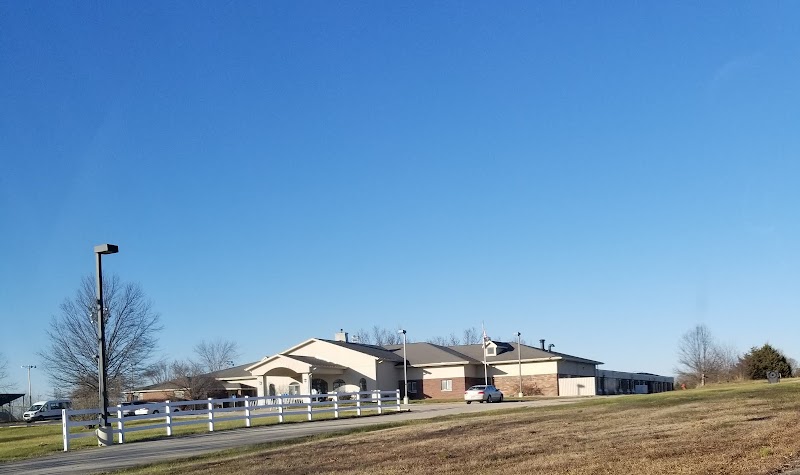

MARIES MANOR

174 BALLPARK ROAD, VIENNA, MO 65582 (573) 422-3177
For profit - Corporation 98 Beds JAMES & JUDY LINCOLN Data: November 2025
Trust Grade
63/100
#170 of 479 in MO
Last Inspection: May 2024

Within standard 12-15 month inspection cycle. Federal law requires annual inspections.

Overview

Maries Manor has a Trust Grade of C+, meaning it is slightly above average in quality compared to other nursing homes. It ranks #170 out of 479 facilities in Missouri, placing it in the top half, and is the only option available in Maries County. The facility's performance has been stable, with six issues reported in both 2023 and 2024, indicating consistent challenges rather than improvement. Staffing is a concern with a rating of 2 out of 5 stars and a turnover rate of 54%, which is better than the state average but still below ideal levels. Additionally, there have been specific incidents such as staff preparing medication cups in advance, which is against protocol, and using expired test strips for blood sugar tests, posing potential health risks. There was also a lack of proper medication storage and a failure to employ a qualified dietitian, which raises concerns about food and nutrition services. While there are some strengths in the quality measures, these weaknesses highlight areas that families may want to consider carefully.

Trust Score
C+
63/100
In Missouri
#170/479
Top 35%
Safety Record
Low Risk
No red flags
Inspections
Holding Steady
6 → 6 violations
Staff Stability
⚠ Watch
54% turnover. Above average. Higher turnover means staff may not know residents' routines.
Penalties
✓ Good
$9,750 in fines. Lower than most Missouri facilities. Relatively clean record.
Skilled Nurses
⚠ Watch
Each resident gets only 9 minutes of Registered Nurse (RN) attention daily — below average for Missouri. Fewer RN minutes means fewer trained eyes watching for problems.
Violations
⚠ Watch
14 deficiencies on record. Higher than average. Multiple issues found across inspections.
★★★☆☆
3.0
Overall Rating
★★☆☆☆
2.0
Staff Levels
★★★★☆
4.0
Care Quality
★★★☆☆
3.0
Inspection Score
Stable
2023: 6 issues
2024: 6 issues

The Good

  • 4-Star Quality Measures · Strong clinical quality outcomes
  • Full Sprinkler Coverage · Fire safety systems throughout facility
  • No fines on record

Facility shows strength in quality measures, fire safety.

The Bad

3-Star Overall Rating

Above Missouri average (2.5)

Meets federal standards, typical of most facilities

Staff Turnover: 54%

Near Missouri avg (46%)

Higher turnover may affect care consistency

Federal Fines: $9,750

Below median ($33,413)

Minor penalties assessed

Chain: JAMES & JUDY LINCOLN

Part of a multi-facility chain

Ask about local staffing decisions and management

The Ugly 14 deficiencies on record

May 2024 6 deficiencies
CONCERN (D)

Potential for Harm - no one hurt, but risky conditions existed

Deficiency F0657 (Tag F0657)

Could have caused harm · This affected 1 resident

**NOTE- TERMS IN BRACKETS HAVE BEEN EDITED TO PROTECT CONFIDENTIALITY** Based on observation, interview, and record review, facility staff failed to review and revise care plan for one resident (Resid...

Read full inspector narrative →
**NOTE- TERMS IN BRACKETS HAVE BEEN EDITED TO PROTECT CONFIDENTIALITY** Based on observation, interview, and record review, facility staff failed to review and revise care plan for one resident (Resident #3) out of one sampled resident with interventions for cellulitis and for one resident (Resident #47) out of one sampled resident with medication noncompliance. The facility census was 64. 1. Review of the facility's policies showed staff did not provide a policy for care plans. 2. Review of the facility's Minimum Data Set (MDS), a federally mandated assessment tool completed by facility staff, 3.0 and Care Planning Policy, undated, showed: -The Comprehensive Care Plan will also be individualized to each resident; -Comprehensive Care Plan will be updated when a change of condition is warranted; -Included in the Comprehensive Care Plan will be the resident's right to refuse treatment, any specialized services the facility will provide, the resident's goals for admission, desired outcomes, and discharge plans; -The Comprehensive Care Plan will be revised on an ongoing basis to reflect changes in the resident and/or changes in the care the resident is receiving including interventions, measurable objectives, goals, and care instructions; -The Comprehensive Care Plan shall be adhered to in caring for the resident and outline the resident's care needs; -All staff will have access to the comprehensive care plan and know that is it located in the resident's chart under the care plan tab. 3. Review of Resident #3's quarterly MDS, dated [DATE], showed staff assessed the resident as: -Severe cognitive impairment; -Diagnoses of peripheral vascular disease (a circulatory condition in which narrowed blood vessels reduce blood flow to the limbs), diabetes, and dementia -Dependent for activities of daily living (ADL)s and putting on/taking off footwear; -Application of dressings to feet. Review of the resident's care plan, dated 12/18/23, showed the care plan did not contain direction or interventions for the use of a compressive boot. Review of the resident's Physician Order Sheet (POS), dated 05/2024, showed an order to check legs daily, apply compression boot to lower left extremity and bilateral, change every three days for cellulitis. Observation on 05/20/24 at 12:30 P.M. showed the resident in his/her wheelchair in the dining room with compression boot to lower left extremity. Observation on 05/21/24 at 8:30 A.M., showed the resident in his/her wheelchair in the hallway by the nurses station with compression boot to lower left extremity . Observation on 05/22/24 at 3:20 P.M., showed the resident in his/her wheelchair in their room with compression boot to lower left extremity. Observation on 05/23/24 at 12:15 P.M., showed the resident in his/her wheelchair in the dining room with compression boot to lower left extremity. 4. Review of Resident #47's quarterly MDS, dated [DATE], showed staff assessed the resident as: -Cognitively intact; -Does not reject care; -Non-traumatic brain injury. Review of the resident's nurses note, dated 12/14/23 at 1:23 P.M., showed staff documented a nurse witnessed the resident attempted to conceal his/her pills when staff administered his/her medication to the resident. Review of the resident's nurses note, dated 03/13/24 at 1:48 P.M., showed staff documented to monitor the resident closely with medications as he/she has been found to conseal and store medications. Review of the resident's care plan, date 03/08/24, showed the care plan did not contain direction for staff in regard to the resident's noncompliant behavior to conceal and store his/her medications in his/her room. During an interview on 05/23/24 at 9:30 A.M., LPN E said the resident has had this behavior before, hiding pills instead of taking them, he/she believes they are poison. The doctor is aware, but he/she is not aware of any specific intervention in place other then watching the resident take their medications. During an interview on 05/23/24 at 10:15 A.M. LPN H said resident specific information is what is expected to be on the residents care plan. LPN H said when staff administer medication they are expected to watch residents take them before they walk away. During an interview on 05/23/24 at 10:19 A.M. MDS Coordinator Registered Nurse said he/she is responsible for MDS and Care plans. The MDS Coordinator said any treatments or interventions should be on the care plan. If they are not on the care plan, it is because he/she was not made aware of it. During an interview on 05/23/24 at 4:58 P.M., the Director of Nursing (DON) said behaviors such as a medication refusals or hoarding pills should be care planned with interventions. The DON said any resident specific treatments and interventions are expected to be on a care plan. During an interview on 05/23/24 at 4:59 P.M. the Administrator said staff are expected to watch medications being given to each resident. The Administrator said she would expect medication issues or concerns, treatment and interventions to be on a residents care plan.
CONCERN (E)

Potential for Harm - no one hurt, but risky conditions existed

Deficiency F0919 (Tag F0919)

Could have caused harm · This affected multiple residents

**NOTE- TERMS IN BRACKETS HAVE BEEN EDITED TO PROTECT CONFIDENTIALITY** Based on observation, interview, and record review, facility staff failed to ensure call lights were within reach for three resi...

Read full inspector narrative →
**NOTE- TERMS IN BRACKETS HAVE BEEN EDITED TO PROTECT CONFIDENTIALITY** Based on observation, interview, and record review, facility staff failed to ensure call lights were within reach for three residents (Resident #18, #44, and #51) out of 16 sampled residents. The facility census was 64. 1. Review of facility's Call Light, Use of policy, undated, showed the following: -Respond promptly to resident's call for assistance; -When providing care to residents, be sure to position the call light conveniently for the resident's use. -Be sure all call lights are placed on the bed at all times, never on the floor or bedside stand. -Check the call light system at regular intervals. 2. Review of Resident #18's Quarterly Minimum Data Set (MDS) a federally mandated assessment tool, dated 02/27/24, showed staff assessed the resident as: -Moderate cognitive impairment; -Diagnoses: Dementia, and Traumatic brain injury (TBI); -Dependent assistance needed for toilet transfers, tub/shower transfers, and personal hygiene. Review of the resident's care plan, last reviewed on 02/23/24, showed staff are directed to keep call light in reach. Observation on 05/21/24 at 1:12 P.M., showed the resident in his/her in his/her broda chair (a type of wheelchair that gives patients the ability to tilt and recline) with the call light on the bed, not within reach. Observation on 05/21/24 2:45 P.M., showed an unidentified staff member pushed the resident to his/her room. The staff member left the resident in the broda chair in front of the TV, with the call light on the bed behind the resident, not within reach. 3. Review of Resident #44's Annual MDS, dated [DATE], showed staff assessed the resident as: -Cognition not assessed; -Diagnoses of dementia and TBI; -Total dependent for activities of daily living (ADL)s and transfers. Review of the resident's care plan, last reviewed on 03/08/24, showed the facility are directed to keep call light within reach. Observation on 05/21/24 1:23 P.M. and 2:48 P.M., showed the resident in his/her room in his/her broda chair in front of the TV with the call light on the bed behind the resident, not within reach. Observation on 05/22/24 3:02 P.M., showed the resident in his/her room in his/her broda chair in front of the TV with the call light on the bed behind the resident, not within reach. Observation on 05/23/24 9:57 A,M, showed the resident in his/her room in his/her broda chair in front of the TV with the call light on the bed behind the resident, not within reach. 4. Review of Resident #51's quarterly MDS, dated [DATE], showed staff assessed the resident as: -Severe cognitive impairment; -Total dependent for activities of daily living (ADL)s and transfers. Review of the resident's care plan, last reviewed on 05/03/24, showed the facility are directed to keep call light within reach. Observation on 05/21/24 at 1:32 P.M., showed the resident in his/her bed with the call light draped over the bedside table next to the recliner not within reach. Observation on 05/22/24 at 9:00 A.M., showed the resident in his/her bed with the call light on the arm of the recliner not within reach. 5. During an interview on 05/23/24 at 3:15 P.M., Certified Nurse Aide (CNA) F and CNA G said resident call lights are to be in reach of residents at all times, and should be placed back into the residents reach after care is provided. CNA G said they make rounds to check for call light placement. During an interview on 05/23/24 at 4:37 P.M., Licensed Practical Nurse (LPN) H said call lights should be in reach of residents, sometimes they are pinned to the resident, or might be on their bed or chair. LPN H said even residents who are confused should still have their call lights within reach. During an interview on 05/23/24 at 4:58 P.M., the Director of Nursing said call lights should be within the resident's reach. During an interview on 05/23/24 at 4:59 P.M., the administrator said call lights should be within reach for all residents and staff should check when doing rounds that they are in place.
CONCERN (F)

Potential for Harm - no one hurt, but risky conditions existed

Deficiency F0658 (Tag F0658)

Could have caused harm · This affected most or all residents

**NOTE- TERMS IN BRACKETS HAVE BEEN EDITED TO PROTECT CONFIDENTIALITY** Based on observation, interview, and record review, facility staff failed to follow professional standards when staff prepared 4...

Read full inspector narrative →
**NOTE- TERMS IN BRACKETS HAVE BEEN EDITED TO PROTECT CONFIDENTIALITY** Based on observation, interview, and record review, facility staff failed to follow professional standards when staff prepared 40 medication cups with medications prior to the timed medication pass and performed resident blood sugar tests with expired test strips for four residents (Resident #14, #58, #61, and #62) out of four sampled residents. The facility census was 64. 1. Review of the facility's policy titled, Medication Administration Guidelines, dated 03/2015, showed facility staff are directed as follows: -The complete act of administration entails removing an individual dose from a previously dispensed, properly labels container, verifying it with the physician's orders, giving the individual dose to the proper resident, and promptly recording the information; -Medications may not be prepared in advance and must be administered within one hour of preparation; -The same person preparing the doses for administration must administer the medications. 2. Observation on [DATE] at 9:08 A.M., showed the east side medication cart contained the following: -One medication cup labeled with a first name contained one pill; -One medication cup labeled with a first name contained half of a pill; -One medication cup labeled with a first name contained two pills; -Two medication cups labeled with a illegible name contained one pill; -Two medication cup labeled with a first name contained two pill; -One medication cup labeled with a first name contained 11 loose pills; -One medication cup labeled with a first name contained seven loose pills; -One medication cup labeled with a first name contained six loose pills; -One medication cup labeled with a first name contained 12 loose pills. During interview on [DATE] at 9:10 A.M., Certified Medication Technition (CMT) C said he/she only pre-pops medications for his/herself. He/She said that at least six of the pre-popped medications are narcotics. He/She said he/she pre-popped the narcotics this morning at 6:45 A.M. because the facility does not have enough cards for both medication carts. He/She said that is why he/she pre-pops the narcotics early. 3. Observation on [DATE] at 11:51 A.M., showed the east side medication cart drawer contained seven medication cups with various pills inside labeled with only first names. At this time, CMT C said he/she will give the medications in a bit. He/She said, actually I will go give them now. Observation showed CMT C went and delivered the pre-popped medications to the residents. 4. Observation on [DATE] at 8:55 A.M., east side medication cart contained the following: -One medication cup labeled with a first name contained four various pills; -One medication cup labeled with a first name contained eight various pills; -One medication cup labeled with a first name contained six various pills. During interview on [DATE] at 9:00 A.M., CMT C said he/she normally does not pre-pop medications. CMT C said risk of pre-popping medications and leaving them in the medication cart could be if cart was left unlocked another resident could get inside cart and take medications. He/She said if something was to happen and he/she had to leave, he/she would make sure the medications were administered before leaving. Is the CMT aware of the faciity policy of pre-popping medication? 5. Observation on [DATE] at 11:06 A.M., showed the memory care unit medication cart top drawer contained 27 medication cups labeled with first names only contained various medications inside each medication cup, stacked inside each other in three different rows. During interview on [DATE] at 11:10 A.M., Licensed Practical Nurse (LPN) D said one row of pre-popped medications were for the noon medication pass, one row was for 2 P.M. medication pass, and the other row were for the supper medication pass. He/She said the pharmacist said it is okay to pre-pop pills as long as he/she is the one giving the medications. The LPN said he/she would not be able to identify pills without looking at medication cards. During interview on [DATE] at 3:20 P.M., LPN D said he/she was not aware of what the policy said about pre-popping medications. LPN D said he/she spoke with the Director of Nursing (DON) and the DON said it is okay to pre-pop medications if he/she is the one administering them. During interview on [DATE] at 4:41 P.M., the Director of Nursing (DON) said per the medication technician instructors, they now allow pre-popping of medications. He/She said it is not acceptable to pre-pop medications more then one hour before giving medications. He/She said there are specific times medication are given during the day. He/She said he/she was not aware the facility policy stated pre-popping medication was not allowed. During interview on [DATE] at 4:45 P.M., the administrator said the only time pre-popping medication is allowed is if the person administering them can identify all the pills in the cup. He/She was not aware the policy said medication can not be pre-popped. 6. Review of the facility's policies showed staff did not provide a glucose strip policy. 7. Observation on [DATE] at 11:26 A.M., showed LPN E used a blood sugar test strip with an expiration date of [DATE] to obtain Resident #58's blood sugar. Observation on [DATE] at 11:41 A.M., showed LPN E used a blood sugar test strip with an expiration date of [DATE] to obtain Resident #14's blood sugar. Observation on [DATE] at 11:59 A.M., showed LPN E used a blood sugar test strip with an expiration date of [DATE] to obtain Resident #61's blood sugar. Observation on [DATE] at 12:04 A.M., showed LPN E used a blood sugar test strip with an expiration date of [DATE] to obtain Resident #62's blood sugar. During an interview on [DATE] at 12:06 P.M., LPN E said he/she did not know if the blood sugar test strips needed to be labeled with an open date, but he/she said it would probably be a good idea to have. He/She said he/she did not realize the test strips were expired when he/she used them for the residents. He/She said since they were expired, they were probably not very accurate. He/She said the nurse or CMT who is administering insulin is in charge of checking the insulin cart and the insulins as they are given. During an interview on [DATE] at 4:46 P.M., the DON said the nurse or CMT who is responsible for medication pass is also responsible for checking to ensure blood sugar test strips are not expired and should be check on every shift. He/She said it is his/her expectation staff would re-test the residents blood sugar if they discovered the test strips were expired to ensure its accuracy. During an interview on [DATE] at 4:48 P.M., the administrator said it is his/her expectation nurses or CMT's who are checking blood sugars are also looking at expiration dates of the glucose strips. He/She said using expired test strips runs the risk of not getting accurate readings. He/She said if a staff member realizes the testing strips are expired, they should discard the old ones and re-check the blood sugars with new testing strips.
CONCERN (F)

Potential for Harm - no one hurt, but risky conditions existed

Deficiency F0761 (Tag F0761)

Could have caused harm · This affected most or all residents

**NOTE- TERMS IN BRACKETS HAVE BEEN EDITED TO PROTECT CONFIDENTIALITY** Based on observation, interview, and record review, facility staff failed to store and label medications in a safe and effective...

Read full inspector narrative →
**NOTE- TERMS IN BRACKETS HAVE BEEN EDITED TO PROTECT CONFIDENTIALITY** Based on observation, interview, and record review, facility staff failed to store and label medications in a safe and effective manner when staff failed to date the opened multi-dose medication bottles, insulin vials, and medications were left unattended on top of one medication cart. The facility census was 64. 1. Review of the facility's Storage of Medication policy, undated, shows facility staff were directed as follows: -All medications for residents must be stored at or near the nurse's station in a locked medicine room or one or more locked mobile medication carts; -All mobile medication carts must be under visual control of the staff at all times when not stored safely and securely; -No discontinued, outdated, or deteriorated drugs or biologicals may be retained for use. All such drugs must be returned to the issuing pharmacy or destroyed in accordance with established guidelines; -Drugs must be stored in an orderly manner in cabinets, drawers, or carts. 2. Observation on [DATE] at 9:08 A.M., showed the east side medication cart contained: -One opened bottle of magnesium oxide, undated; -One opened bottle of vitamin D, undated; -One opened bottle of vitamin B-1, undated; -One opened bottle of one-a-day multi vitamin, undated; -One opened bottle of saline nasal spray, undated; -One opened bottle of latanoprost oph (used to treat glaucoma) 0.005%, undated; -One opened bottle of fluticasone (treats allergy symptoms) nasal spray, undated. During an interview on [DATE] at 3:30 P.M., Certified Medication Tech (CMT) C said when opening bottles of medications, he/she should always put the open date on the bottle. He/She said if there is no open date then he/she is not sure how long is has been opened and the medication may not be effective anymore. He/She said it is the person opening the bottles responsibility to put the open date on bottle when it is opened. During an interview on [DATE] at 2:29 P.M., Licensed Practical Nurse (LPN) E said multidose medication bottles should always be labeled with an opened date. He/She said if there is no opened date then he/she would not know how long the bottle has been open and the medication may not be effective if it has been open to long. He/She said the medication should be disposed of if no open date and open a new bottle. He/She said it is the nurse or CMT's responsibility to label with open date when opening the bottle. During an interview on [DATE] at 4:41 P.M., the Director of Nursing (DON) said multidose medication bottles need to be labeled with an opened date when bottle is opened. He/She said if there is no open date on medication then the medication may be old and not effective. He/She said it is the CMT's and Nurse's responsibility to insure multi dose medication have open dates on them each shift. During an interview on [DATE] at 4:45 P.M., the administrator said all multidose medications should be dated when opened otherwise the medication may be expired and not effective anymore. He/She said the staff opening the bottle should label with open date. 3. Review of the facility's Insulin and Injectable Diabetic Medication Chart, undated, showed staff is to follow the insulin expiration dates after opening: -Humolog (treat diabetes) Kwik Pen 28 days; -Humulin R (treat diabetes) 3 milliliter (ml) vial 31 days; -Lantus (treat diabetes) SoloStar pen 28 days; -Levemir (treat diabetes) Flex touch pen 42 days; -Novolog (treat diabetes) Flex pen 28 days. 4. Observation on [DATE] at 9:12 A.M., showed the insulin cart contained: -Three opened Levemir Flex touch pens, undated; -Two opened Lantus SoloStar pens, undated; -One opened Humalog Kwik pen, undated; -One opened 3 ml vial of Humlin R labeled with an open date of [DATE]; -One opened Novolog flex pen labeled with an open date of opened [DATE]. Observation on [DATE] at 8:52 A.M., showed the insulin cart contained one opened Novolog flex pen with an open date of [DATE]. During an interview on [DATE] at 9:24 A.M., LPN E said insulin should be labeled when opened. He/She said the expiration date of insulins vary. He/She said there is a cheat sheet they use to keep track of insulin expiration dates once opened. He/She said it is the responsibility of the DON and their MDS coordinator to check medication carts and medication storage rooms. He/She said he/she believes they check the carts and storage rooms weekly. During an interview on [DATE] at 8:54 A.M., LPN E said insulin just got switched to one cart. He/She said opened dates and expiration dates should be checked at change of shift. He/She said he/she missed the expired and not dated medications the previous day during his/her checks. He/She said he/she must have missed that insulin pen the day before and today. During an interview on [DATE] at 4:46 P.M., the DON said the nurse or CMT who is responsible for the medication pass is also responsible for checking to ensure medications are labeled with opened dates. He/She said the expectation is it is done per shift. He/She said insulin pens are good for a limited time from the date of open. He/She said there is a list in each medication book and pharmacy also provided an insulin chart that gives the specific expiration dates from time of open. During an interview on [DATE] at 4:48 P.M., the administrator said it is his/her expectation that insulin pens are dated upon opening. He/She said the nurses or CMT's who are giving the insulins on the cart are responsible for maintaining the cart and making sure they are labeled. He/She said not labeling insulin pens runs the risk of giving an insulin that won't be effective. 5. Observation on [DATE] at 8:56 A.M. showed the west side medication cart, left unattended with a medication on top which contained: -One bottle of Senna-Plus 50 mg; -One bottle of Tylenol 325 mg; -One Fluticasone Propionate nasal spray; -One tube of Betamethasone Valerate cream (treat a variety of skin conditions). During an interview on [DATE] at 9:01 A.M., CMT C said he/she was not sure why medications were on left unattended on top of the medication cart. He/She said the cart was last used by the night shift and the medications were night time medications. He/She said medications should not be left unattended on top of medication carts. During an interview on [DATE] at 3:43 P.M., LPN H said it is his/her expectation medications not be left unattended on top of medication carts. He/She said it is very important medications are locked up and not accessible to residents. He/She said if he/she walks away he/she would lock it in his/her medication cart. he/she said if he/she found medications unattended on top of medication carts he/she would put it away and he/she would not leave it out. During an interview on [DATE] at 4:46 P.M., the DON said it is his/her expectation medications be in the medication storage room or a locked medication cart. He/She said he/she expects staff who find medications left out and unattended, to store the medications locked and away. He/She said he/she was unaware medications were left out and unattended on top of medication carts. During an interview on [DATE] at 4:48 P.M., the administrator said it is his/her expectation medications be kept in a locked medication cart or medication room. He/She said there is a risk a resident or visitor could get into the medications. He/She was not aware there were medications left out and unattended on top of medication carts.
CONCERN (F)

Potential for Harm - no one hurt, but risky conditions existed

Deficiency F0801 (Tag F0801)

Could have caused harm · This affected most or all residents

Based on interview and record review, facility staff failed to designate a person to serve as the Director of Food and Nutrition Services with the appropriate qualifications, when the facility did not...

Read full inspector narrative →
Based on interview and record review, facility staff failed to designate a person to serve as the Director of Food and Nutrition Services with the appropriate qualifications, when the facility did not employ a qualified dietitian or other clinically qualified nutrition professional full-time. This failure has the potential to affect all residents. The facility census was 64. 1. Review of the facility's Dining Services Supervision policy, dated May 2015, showed Overall supervisory responsibility of the Dining Services Department shall be assigned to a full-time qualified Dining Services Manager. This Dining Services Manager, if not qualified, functions with frequent regularly scheduled consultation from a person so qualified. Review showed the policy did not contain information related to the education and experience requirements for the dining services manager. Review of the facility's Dining Services Manager policy, dated May 2015, showed the policy listed the minimum qualifications for the Dining Services Manager as: -High school diploma or GED equivalent; -Two years of experience in a supervisory capacity of a hospital, skilled nursing care facility or other medical facility; -Certified Dietary Manager if required by state regulations. Review of the dietary manager's (DM) personnel records, showed a hire date of 03/26/24. Review showed the records did not contain documentation of at least two years prior dietary manager experience in a nursing facility and certification or other education required for the director of nutritional services position. During an interview on 05/20/24 at 9:05 A.M., the DM said he/she became the DM in March 2024 and had previously worked at the facility as the dietary manager from 2012 to 2014. The DM said prior to 2012 he/she was a certified nursing assistant and he/she did not have a degree, certification or education related to food service management. The DM said the administrator told him/her the facility would enroll him/her in a certification class after his/her 90-day probationary period and he/she did not know he/she needed to meet the qualifications upon hire. The DM said the facility has a part-time consultant registered dietician who comes to the facility once a month and they did not have any certified or clinically qualified nutrition staff employed full-time. During an interview on 05/21/24 at 3:05 PM, the administrator said he/she hired the DM in March 2024. The administrator said the DM had previously been the dietary manager, but the DM did not have a degree, certification or the required education required to be the director of nutritional services. The administrator said the facility policy is to wait until 90 days after hire to enroll the DM into a certification course and he/she did not know that the DM needed to meet the requirements upon hire. The administrator said the facility has a part-time registered dietician consultant and they did not have any certified or clinically qualified nutrition staff employed full-time.
CONCERN (F)

Potential for Harm - no one hurt, but risky conditions existed

Food Safety (Tag F0812)

Could have caused harm · This affected most or all residents

Based on observation, interview and record review, the facility staff to wear facial hair restraints to protect food and food contact surfaces from potential contamination. The facility staff failed t...

Read full inspector narrative →
Based on observation, interview and record review, the facility staff to wear facial hair restraints to protect food and food contact surfaces from potential contamination. The facility staff failed to allow sanitized dishes to air dry prior to stacking in storage and use to prevent the growth of food-borne pathogens. These failures have the potential to affect all residents. The facility census was 64. 1. Review of the facility's Dietary Personnel Guidelines policy, dated May 2015, showed the policy directed hairnets or bouffant disposable caps should be worn at all times and should cover the entire head of hair. Review showed the policy did not contain information related to facial hair restraints. Review of a sign posted on the back of the door to the mechanical dishwashing station, undated, showed Food employees shall wear hair restraints such as hats, hair coverings or nets and beard restraints that cover hair exceeding ¼ of 1 inch and are designed to effectively keep their hair from contacting exposed food, clean equipment, utensils, linens and unwrapped single-service and single-use articles. Food employees shall also wear clothing that covers excessive body hair following the above stipulations. Observation on 05/20/24 at 10:01 A.M., showed [NAME] A had facial hair. Observation showed the cook prepared potatoes and ham and beans for service to residents at the lunch meal without use of a facial hair restraint. Observations on 05/20/24 from 10:50 A.M. to 11:06 A.M., showed [NAME] A continued to prepare food items, including ham and beans, potatoes and rice, for service to residents at the lunch meal without the use of a facial hair restraint. During an interview on 05/20/24 at 11:14 A.M. [NAME] A said he/she had worked at the facility for about three years and had always been told that if his/her facial hair was a quarter inch long or less, he/she did not need to wear a facial hair restraint. During an interview on 05/20/24 at 11:15 A.M., the dietary manager (DM) said the hair restraints sign was posted on the door in the kitchen when he/she became the manager in March 2024. The DM said he/she had questioned the cook about wearing a facial hair restraint and the cook said that he/she was told that if it was a quarter inch long or less then he/she did not need to wear one. The DM said based on the sign posted and the information from the cook, he/she did think the staff with facial hair needed to wear facial hair restraints. During an interview on 05/21/24 at 2:58 P.M., the administrator said staff should put on hair restraints, including facial hair restraints, when they enter the kitchen. The administrator said he/she did not know about the sign posted in the kitchen that directed for staff to only wear facial hair restraints if their facial hair was a quarter inch long or less. The administrator said the information on the sign was not correct and he/she did not know the DM did not know dietary staff with facial hair of any length should wear a facial hair restraint. 2. Review of the facility's Dishwashing policy, dated April 2011, showed the policy directed staff to allow cleansed dishes to thoroughly dry before storage. Observation on 05/20/24 at 9:31 A.M., showed four metal food preparation/service pans stacked together wet on the shelf by three compartment sink and eight plastic food storage containers stacked together wet on the shelf beneath the preparation counter. During an interview on 05/20/24 at 9:38 A.M., the DM said staff should allow dishes to air dry before they are put away and staff had been trained on this requirement. Observation on 05/20/24 at 9:58 A.M., showed 28 plastic food service trays stacked together wet in the upright position on the counter by the plate heater. Observation on 05/20/24, during the lunch meal service which began at 11:20 A.M., showed staff used the wet stacked trays to serve food to the residents. Observation on 05/20/24 at 1:13 P.M., showed dietary aide (DA) B removed sanitized trays from the mechanical dishwasher, stacked them together while wet and put them in storage. During an interview on 05/20/24 at 1:14 P.M., the DA said he/she did not know the dishes needed to be dry before he/she put them away. During an interview on 05/21/24 at 3:01 P.M., the administrator said staff should allow dishes to air dry before they are put away and staff should be trained on this requirement. The administrator said the dietary manager is responsible to monitor dish storage and he/she believed that the DM had trained the staff to allow dishes to air dry.
Feb 2023 6 deficiencies
CONCERN (D)

Potential for Harm - no one hurt, but risky conditions existed

Resident Rights (Tag F0550)

Could have caused harm · This affected 1 resident

**NOTE- TERMS IN BRACKETS HAVE BEEN EDITED TO PROTECT CONFIDENTIALITY** Based on observation, interview, and record review, facility staff failed to maintain resident dignity when staff failed to sit ...

Read full inspector narrative →
**NOTE- TERMS IN BRACKETS HAVE BEEN EDITED TO PROTECT CONFIDENTIALITY** Based on observation, interview, and record review, facility staff failed to maintain resident dignity when staff failed to sit and interact while assisting two residents (Resident #1 and Resident #39) during meal time and failed to allow one resident (Resident #17) access to his/her bathroom. The facility census was 58. Review of the facility's Patient [NAME] of Rights, undated, showed each resident shall be treated with consideration, respect and full recognition of his/her dignity and individuality, including privacy in treatment and care of his/her personal needs. Review of the facility's Resident Rights document, undated, showed: -The resident has a right to a dignified existence, self-determination and communication with and access to persons and services inside and outside of the facility. A facility must protect and promote the rights of each resident; -Right to confidentiality, privacy and respect. 1. Review of Resident #1's Quarterly Minimum Data Set (MDS), a federally mandated assessment tool, dated 12/16/22, showed staff assessed the resident as: -Severe cognitive impairment; -Required extensive assistance from one staff member for eating. Observation on 2/21/23 at 12:31 P.M., showed an unidentified staff member fed the resident. Further observation showed the staff member did not speak to the resident, or tell the resident what he/she fed him/her. The staff member spoke to other staff while he/she fed the resident. 2. Review of Resident #39's Quarterly MDS, dated [DATE], showed staff assessed the resident as: -Severe cognitive impairment; -Required total assistance from one staff member for eating. Observation on 2/21/23 at 12:38 P.M., showed an unidentified staff member stood over the resident and fed him/her. Further observation showed the staff member did not interact with the resident or tell the resident what he/she fed him/her. During an interview on 2/23/23 at 2:25 PM, Certified Nurse Aide (CNA) D said staff should sit with the residents when they are feeding them. He/She said he/she would not like someone standing over him/her while he/she ate. The CNA said staff should tell the resident what they are giving them a bite of. During an interview on 2/24/23 at 11:16 A.M., the Director of Nursing (DON) said staff are directed to sit next to the resident when assisting with feeding and should speak with the resident explaining what the staff member is feeding him/her. During an interview on 2/24/23 at 2:54 P.M., Licensed Practical Nurse (LPN) C said staff should sit beside the resident while assisting with feeding and explain what food is being fed to the resident. He/She said staff should interact with the resident and not other staff members. 3. Review of Resident #17's Quarterly MDS, dated [DATE], showed staff assessed the resident as: -Severe cognitive impairment; -Required extensive assistance from one staff member for bed mobility, transfers and toileting; -Did not exhibit behaviors. Observation 2/23/23 at 10:53 A.M., showed Resident #17's bathroom door locked and the bathroom inaccessible. During an interview on 2/23/23 at 10:30 A.M., the maintenance director said the staff lock the resident's bathroom door to keep the resident from going into it and falling. The maintenance director said the key to unlock the door is not in the resident's room. The charge nurse has the key. During an interview on 2/23/23 at 2:25 P.M., CNA D said the resident's bathroom door is locked because the resident's spouse wants to keep him/her from falling in the bathroom. During an interview on 2/23/23 at 2:54 P.M., LPN C said the staff locks the resident's bathroom door to keep him/her from going in the bathroom and falling. The LPN said staff should check on the resident frequently to see if he/she needs to use the bathroom. During an interview on 2/24/23 at 11:16 A.M., the DON and Administrator said the resident's guardian asked them to lock the bathroom because the resident had fallen trying to take himself/herself to the bathroom. They said it was not dignified to lock the bathroom door to prevent the resident from falling.
CONCERN (E)

Potential for Harm - no one hurt, but risky conditions existed

Safe Environment (Tag F0584)

Could have caused harm · This affected multiple residents

**NOTE- TERMS IN BRACKETS HAVE BEEN EDITED TO PROTECT CONFIDENTIALITY** Based on observation, interview, and record review, facility staff failed to provide a comfortable and homelike environment, whe...

Read full inspector narrative →
**NOTE- TERMS IN BRACKETS HAVE BEEN EDITED TO PROTECT CONFIDENTIALITY** Based on observation, interview, and record review, facility staff failed to provide a comfortable and homelike environment, when staff failed to ensure resident areas were in good repair. Additionally, staff failed to ensure one resident's (Resident #12) wheelchair was free of rips and tears. The facility census was 58. Review of the policies provided by the facility showed they did not contain a policy for environmental concerns. 1. Observations from 2/21/23 at 10:45 A.M. through 2/24/23 at 3:00 P.M., showed the 100 hall walls with chipped paint and black marks. Further observation showed multiple door frames with broken trim and the spa with missing baseboard. 2. Observation on 2/22/23 at 1:47 P.M., showed room [ROOM NUMBER] with a sticky floor, and gouged walls. 3. Observation on 2/22/23 at 4:30 P.M., showed room [ROOM NUMBER] with a torn floor mat, and walls with missing paint. 4. Observation on 2/23/23 at 10:53 A.M., showed room [ROOM NUMBER] with dead bugs on the floor, chipped paint, gouged walls, and missing baseboard trim. Further observation, showed no water in the toilet bowl with a black substance, and a soiled brief in the trash can. 5. Observations on 2/23/23 at 9:50 A.M., during the Life Safety Code (LSC) tour showed: -room [ROOM NUMBER] without a faceplate on the cable box; -room [ROOM NUMBER] with a towel bar on the floor; -room [ROOM NUMBER] without a toilet paper holder in the bathroom; -room [ROOM NUMBER] with missing baseboard under the window and without a towel bar; -room [ROOM NUMBER] with missing baseboard in the bathroom; -room [ROOM NUMBER] with a towel rack on the floor; -room [ROOM NUMBER] with half of the window shutters on the floor; -room [ROOM NUMBER] with missing drywall at the corner of the closet door; -room [ROOM NUMBER] without a towel bar; -room [ROOM NUMBER] without a towel bar and without a toilet paper holder in the bathroom; -room [ROOM NUMBER] with a broken face plate on the cable box; -room [ROOM NUMBER] with a hole in the wall near the bathroom door and one outlet without a faceplate; -room [ROOM NUMBER] without a towel bar; -room [ROOM NUMBER] without a towel bar and without a toilet paper holder in the bathroom. 6. Observation on 2/21/23 at 2:57 P.M., showed Resident #12's wheelchair had a torn seat and arm rests. Further observation showed the resident's room had a towel rack on the floor, broken door and wall trim, and paint peeled from the wall. Observation on 2/22/23 at 9:14 A.M., showed the resident's wheelchair had a torn seat and arm rests. Further observation showed the resident's room had a towel rack on the floor, broken door and wall trim, and paint peeled from the wall. Observation on 2/24/23 at 9:04 A.M., showed the resident's wheelchair had a torn seat and arm rests. Further observation showed the resident's room had a towel rack on the floor, broken door and wall trim, and paint peeled from the wall. During an interview on 2/22/23 at 9:23 A.M., the resident said he/she has used the same wheelchair since being admitted to the facility ten years ago. 7. During an interview on 2/23/23 at 2:25 P.M., Certified Nurse Aide (CNA) D said staff should fill out the maintenance log they notice environmental issues. The CNA said he/she has reported the maintenance issues, but the repairs haven't been completed. During an interview on 2/24/23 at 9:14 A.M., Licensed Practical Nurse (LPN) C said staff should fill out the maintenance log book if they notice environmental issues. He/She said he/she didn't know how often maintenance checked the log book. The LPN said he/she knows there is chipped paint, missing trim and other issues, and he/she reported the issues to the maintenance department. Further, he/she said he/she had not noticed Resident #12's wheelchair was in poor condition, but he/she could order a new one. He/She said he/she believed the resident may be correct by stating the wheelchair has not be replaced since he/she was admitted to the facility. During an interview on 2/24/23 at 11:16 A.M., the Director of Nursing (DON), Administrator and MDS (Minimum Data Set) Coordinator said staff are directed to report environmental and medical equipment concerns to a nurse or upper management. Further, the Administrator said he/she did not notice Resident #12's wheelchair had a torn seat and arm rests. He/She said no one had brought it to his/her attention. During an interview on 2/23/23 at 3:27 P.M., the Maintenance Supervisor said staff are directed to write any maintenance concerns in the log book, which he/she checked every week. He/She said he/she prioritizes concerns, since he/she is the only member of the maintenance staff. He/She said he/she has noticed the missing and chipped paint, towel rack on the floor, and missing or broken pieces of trim throughout the facility.
CONCERN (E)

Potential for Harm - no one hurt, but risky conditions existed

Deficiency F0761 (Tag F0761)

Could have caused harm · This affected multiple residents

Based on observation, interview, and record review, facility staff failed to ensure medications were stored in a safe manner, by not ensuring medications were contained in their original package and p...

Read full inspector narrative →
Based on observation, interview, and record review, facility staff failed to ensure medications were stored in a safe manner, by not ensuring medications were contained in their original package and properly labeled in one medication cart on the Special Care Unit (SCU). Additionally, facility staff failed to maintain a correct count of controlled medications for two residents (Resident #37 and Resident #39). The facility census was 58. Review of the facility's Storage of Medications Policy, dated March of 2015, showed: -Medications must be stored in the container in which they are received; -Drugs must be stored in an orderly manner in cabinets, drawers or carts. 1. Observation on 2/21/23 at 3:00 P.M., showed the SCU medication cart with loose pills scattered throughout the drawers. Further observation showed the drawers contained the following pills: -One gray capsule with G220 150 printed on it; -One green capsule with E 88 printed on it; -Two light blue tablets inscribed with 87 on one side and H on the other side; -One light blue tablet with 40 inscribed on one side; -One yellow capsule with 104 printed on it; -One white capsule with 103 printed in blue on it; -One purple and white capsule with IP 212 printed on it; -Two pink round tablets inscribed with 10 on one side and R on the other side; -One pink oval tablet inscribed with H 147; -Five yellow oval tablets inscribed with MI 15 on one side, and APO on the other side; -Six white oval tablets inscribed with B 10; -Two white oval tablets inscribed with L 5 on one side and M on the other side; -One white oval tablet inscribed with EP 127; -One white oval tablet inscribed with APO on one side and ATV 20 on the other side; -One white round tablet inscribed with 3170 V; -One white round tablet inscribed with 40 on one side and EP 117 on the other side; -One orange round tablet inscribed with 123; -One dark yellow tablet inscribed with 151; -One white round tablet inscribed with N 32; -One white oval tablet inscribed with FF2; -Two unmarked pink tablets; -11 unidentified pills of varied shapes and sizes; -17 unidentified white round tablets of varied sizes. During an interview on 3/10/23 at 9:10 A.M., Licensed Practical Nurse (LPN) L said he/she checks the medication cart once a week for expired medications, and to ensure it's clean and organized. The LPN said staff doesn't clean the cart on a regular basis, but he/she expects it to be cleaned weekly. The LPN said loose pills should be taken out of the medication cart and thrown away. The LPN said he/she the medication cart did not get cleaned out the week before, if it had, the loose pills would have been found. During an interview on 3/10/23 at 9:18 A.M., the Administrator said loose pills in the medication carts is not acceptable. 2. Review of the facility's Narcotic Count Policy, undated, showed: -Complete a physical inventory of narcotics at each shift change to identify discrepancies; -One Registered Nurse (RN), LPN, or Certified Medication Technician (CMT) going off duty and one RN, LPN, or CMT coming on duty must count and justify accuracy of narcotic supply for each individual resident at the change of each shift; -After supply is counted and justified, the nurse/CMT records the date and his/her signature, verifying the count is correct; -If the count is not accurate, the nurse going off duty is to remain on duty until the count is reconciled and the Director of Nursing (DON) must be notified for further instruction. 3. Review of the facility's controlled medication log, dated 2/21/23, showed LPN C signed Resident #37's controlled medication count form for Morphine (narcotic pain medication), indicating 23.5 milliliters (ml) remained. Observation on 2/21/23 at 2:50 P.M., showed the resident's morphine bottle contained 14 ml of medication. 4. Review of the facility's controlled medication log showed it did not have a controlled medication count form for Resident #39's Morphine. Observation on 2/21/23 at 2:54 P.M., showed the medication cart contained a 40 ml unopened bottle of Morphine for resident #39. During an interview on 2/21/23 at 2:50 A.M., LPN C said he/she signed for the controlled medications, when he/she came on shift at 6:00 A.M. The LPN said he/she didn't notice the count for resident #37's Morphine was not correct. The LPN said, he/she didn't know where the controlled log for Resident #39's Morphine was, but it had been in the controlled log at some point. The LPN said he/she had to go get the DON. During an interview on 3/10/23 at 9:18 A.M., the Administrator said he/she would expect staff to count controlled medications at every shift change, and if the medication couldn't be accounted for, he/she should be notified.
CONCERN (E)

Potential for Harm - no one hurt, but risky conditions existed

Infection Control (Tag F0880)

Could have caused harm · This affected multiple residents

Based on observation, interview, and record review, facility staff failed to maintain an infection prevention and control program designed to provide a safe, sanitary and comfortable environment when ...

Read full inspector narrative →
Based on observation, interview, and record review, facility staff failed to maintain an infection prevention and control program designed to provide a safe, sanitary and comfortable environment when staff failed to use appropriate hand hygiene and infection control procedures during the provision of care for two residents (Resident #1 and #13), and during wound care for one resident (Resident #1). Additionally, facility staff failed to decrease the risk of infection when staff failed to ensure sanitary conditions for oxygen tubing for one resident (Resident #12) and a urinary catheter (tube placed in the bladder to drain urine) drainage bag for one resident (Resident #24). The facility census was 58. 1. Review of the facility's Handwashing policy, dated March 2015, showed the purpose is to reduce the transmission of organisms from resident to resident, nursing staff to resident and resident to nursing staff. Further review showed it did not contain direction in regard to when to perform hand hygiene. Review of the facility's Perineal Care policy, dated March 2015, showed the purpose is to prevent infection and odor. Further review, showed it did not contain direction for staff in regard to hand hygiene and glove changes during care. Review of the facility's Perineal Care with Hand Washing checklist, dated 3/15/22, showed: -Perform perineal care for the genital area; -Remove gloves; -Perform hand hygiene; -Put on new gloves; -Assist resident to turn onto side away from candidate; -Perform perineal care for the rectal area; -Further review showed it did not contain direction for staff in regard to hand hygiene and glove changes after completion of perineal care and before touching the resident or items in the resident's room. Review of the facility's Gloves policy, dated March 2015, showed: -Gloves must be changed between residents and between contacts with different body sites of the same resident; -Dirty gloves are worse than dirty hands because microorganisms adhere to the surface of a glove easier than to the skin on your hands. Handling medical equipment and devices with contaminated gloves is not acceptable; -Change gloves between contacts (as defined above) with different residents or with different body sites of the same resident. 2. Observation on 2/22/23 at 8:33 A.M., showed Certified Nurse Aide (CNA) I and CNA J entered Resident #1's room to provide perineal care. CNA I and CNA J performed hand hygiene, applied gloves, and CNA J wiped down the resident's right groin and up the left groin with the same portion of a disposable wipe. The CNA got a new wipe and wiped the resident back (rectal area) to front (genital area) multiple times with the same portion of the wipe. The CNA removed his/her gloves, performed hand hygiene, applied clean gloves, bagged dirty linens, and repositioned the resident, with the same gloves on. 3. Observation on 2/22/23 at 9:01 A.M., showed Licensed Practical Nurse (LPN) C and CNA D entered Resident #1's room to provide wound care. LPN C and CNA D performed hand hygiene and applied gloves. Further observation showed CNA D applied gloves from his/her pocket. LPN C removed a soiled dressing from a wound on the resident's right thigh, used his/her finger to remove tissue from the wound, and wiped the wound multiple times using the same portion of the gauze. LPN C packed the wound with calcium alginate foam (an absorbent foam dressing), removed gloves, did not perform hand hygiene, applied clean gloves, applied a new foam dressing to the resident's wound, removed his/her gloves, did not perform hand hygiene, removed a tubi-grip (a tubular elastic bandage) from the resident's right leg, and applied clean gloves, without performing hand hygiene. The LPN removed a dressing from the resident's right foot, wiped a wound to the right heel multiple times with the same portion of gauze, threw the gauze away and washed his/her hands. 4. Observation on 2/22/23 at 9:39 A.M., showed CNA D and Nurse Aide (NA) K entered Resident #13's room to provide perineal care. CNA D and NA K performed hand hygiene, applied gloves and CNA D removed a soiled pad from under the resident, and touched the resident's side, remote and call light with the same gloves on. Further observation showed multiple gloves hung out of CNA D's pants pocket. CNA D removed the exposed gloves from his/her pocket, applied the gloves, and provided care. During an interview on 2/22/23 at 9:57 A.M., CNA D said staff should change gloves, and wash hands after providing care. The CNA said he/she should not have touched the resident, call light and remote with soiled gloves on. The CNA said he/she always kept gloves in his/her pants pocket, because no one told him/her not to. He/She said he/she did go in and out of residents' rooms with the gloves hanging out of his/her pocket, and said it could potentially spread bacteria if he/she leaned against a contaminated surface. 5. During an interview on 2/23/23 at 2:54 P.M., LPN C said staff should wash their hands and apply gloves before and after providing care, and should wash hands between glove changes. The LPN said staff should also change their gloves and wash hands when moving from a dirty to clean task. He/She said staff should not touch anything with soiled gloves on, including the resident and residents' items. He/She said the staff members hands are contaminated after providing care, and they could spread bacteria by not performing hand hygiene or changing gloves appropriately. The LPN said staff should change gloves and perform hand hygiene after cleaning wound, and before applying a clean dressing. He/She said wounds should be cleansed in a circular motion until clean, and staff should use the same portion of the gauze to cleanse the entire wound. The LPN said staff should not keep gloves in their pockets, and he/she had seen the gloves sticking out of CNA D's pocket. He/She said the CNA had been told not to keep the gloves in his/her pocket anymore, because of cross contamination between residents. During an interview on 2/23/23 at 11:43 A.M., the Minimum Data Set (MDS) Coordinator said staff is inserviced monthly and hand hygiene and gloves changes during perineal care has been discussed. He/She said staff are trained in regard to infection control procedures upon hire and then as needed if there are concerns such as if he/she sees a trend of infections throughout the building. During an interview on 2/24/23 at 11:05 A.M., the MDS Coordinator the perineal care policy showed staff should provide perineal care and then reposition the resident before performing hand hygiene. He/She said staff should always remove gloves and use hand hygiene after providing perineal care and before repositioning a resident and touching items in the room. During an interview on 2/24/23 at 11:16 A.M., the Director of Nursing (DON) and the Administrator said staff are directed to use hand hygiene and change gloves when providing care and when moving from a dirty to clean body site. They said there is a concern for cross contamination if staff do not use appropriate hand hygiene and change gloves. They said staff can keep gloves in their pockets, as long as the gloves are not exposed while in the residents' rooms. They said the gloves would be considered dirty if exposed and out of the pockets. 6. Review of the facility's Oxygen Administration policy, dated March 2015, showed staff are directed to place oxygen cannula's and tubing in a plastic bag attached to concentrator when not in use. Observation on 2/21/23 at 11:18 A.M., showed Resident #12's oxygen concentrator did not have a plastic bag to store oxygen tubing. The oxygen tubing lay on the floor, unlabeled. Observation on 2/21/23 at 2:57 P.M., showed the resident's oxygen concentrator did not have a plastic bag to store oxygen tubing. The oxygen tubing lay on the floor, unlabeled. Observation on 2/22/23 at 9:14 A.M., showed the resident's oxygen concentrator did not have a plastic bag to store oxygen tubing. The oxygen tubing lay on the floor, unlabeled. During an interview on 2/22/23 at 9:27 A.M., the resident said he/she used oxygen, and the tubing should be stored in a bag, but there wasn't a bag on the concentrator. Observation on 2/23/23 at 4:21 P.M., showed the resident's oxygen tubing in a bag on the floor. Observation on 2/24/23 at 9:04 A.M., showed the resident's oxygen tubing in a bag on the floor. Observation on 2/24/23 at 9:06 A.M., showed the resident told LPN C his/her oxygen tubing storage bag was on the floor and asked the LPN to re-attach it to the concentrator. The LPN told the resident he/she would get another piece of tape to reattach the bag. During an interview on 2/23/23 at 4:21 P.M., the DON said the resident's oxygen tubing was on the floor, and he/she was going to ask a nurse to pick it up. During an interview on 2/23/23 at 2:25 P.M., CNA D said oxygen tubing should be in a bag on the concentrator when not in use. The CNA said he/she the night shift staff was responsible for changing the tubing and ensuring it's labeled with the date it is changed. During an interview on 2/24/23 at 2:54 P.M., LPN C said oxygen tubing should be changed weekly during the night shift, and labeled with the date it was changed. The LPN said the tubing should be placed in a bag when not in use, and should not be on the floor. The LPN did not know the last time the resident's oxygen tubing was changed. He/She said he/she noticed the residents oxygen tubing was unlabeled and not in a bag. He/She said if the oxygen tubing is not stored and replaced appropriately bacteria can build up in the tubing and cause an infection. During an interview on 2/24/23 at 11:16 A.M., the DON and the Administrator said oxygen tubing should be stored in a bag or attached to the concentrator, when not in use to prevent the spread of infection. They said oxygen tubing should be replaced monthly, and labeled with the date it is replaced. The DON said if the tubing is not labeled, staff don't know when if it's been replaced. They said the oxygen tubing should be kept off the floor. 7. Review of the facility's Catheter Care policy, dated March 2015, showed it did not contain direction for staff in regard to catheter drainage bag placement for the resident when in a wheelchair or their bed. Observation on 2/21/23 at 10:50 A.M., showed an unidentified staff member propelled Resident #24 down the hallway in a wheelchair as the resident's catheter bag touched the floor. Observation on 2/21/23 at 12:06 P.M., showed the resident's catheter bag touched the dining room floor. Staff members in the dining room did not reposition the catheter tubing. Observation on 2/22/23 at 1:52 P.M., showed an unidentified staff member assisted the resident to bed, and placed the catheter bag on the side of the bed. The staff member did not attach the catheter bag to the bed, and it touched the floor. During an interview on 2/23/23 at 2:25 P.M., CNA D said the catheter bag should be attached to be the bed or the wheelchair to keep it from touching the floor. He/she said staff should inform the nurse if the catheter bag touches the ground, even if the it's in a privacy bag, so it can be changed. He/She said if the bag touches the ground it becomes dirty, and it could have bacteria on it that could cause an infection. During an interview on 2/23/23 at 2:54 P.M., LPN C said the catheter bag should secured to the bed or the wheelchair to keep it from touching the floor. The LPN said he/she did see the resident's catheter bag touching the floor, and repositioned the bag, but didn't change it. He/She said the catheter bag should not touch the floor, because it can introduce bacteria to the resident. During an interview on 2/24/23 on 11:16 A.M., the DON said catheter bags should not touch the floor, but if it happens staff should change the bag. The DON said a catheter bag touching the floor is an infection control issue.
CONCERN (F)

Potential for Harm - no one hurt, but risky conditions existed

Food Safety (Tag F0812)

Could have caused harm · This affected most or all residents

Based on observation, interviews, and record reviews, facility staff failed to ensure florescent light bulbs were protected; to maintain kitchen environment equipment in a clean and sanitary manner, a...

Read full inspector narrative →
Based on observation, interviews, and record reviews, facility staff failed to ensure florescent light bulbs were protected; to maintain kitchen environment equipment in a clean and sanitary manner, and to properly store open food to prevent cross contamination and outdated usage. The facility staff also failed to perform hand hygiene as often as necessary; to wash, rinse, and sanitize the food preparation sink between uses to prevent cross-contamination and the growth of food-borne pathogens and to ensure the ice bin drained through an air gap. This failure had the potential to affect all residents in the facility. The census was 58 with a capacity of 98. 1. Review of the facility's Weekly Preventative Maintenance Checklist, undated, showed: - The policy did not address the kitchen lights; - The policy did not address protecting light bulbs. Review of the facility's Monthly Preventative Maintenance Checklist, undated, showed the policy did not address kitchen lighting. Observations on 2/22/23 at 9:15 A.M., showed four florescent light bulbs over the three compartment warewashing sink not protected. During an interview on 2/24/23 at 11:56 A.M., the maintenance director (MD) said he was aware the lights over the three compartment warewashing sink were not covered. He said the light cover was on order, and they do not have any other way to protect the lights until the cover arrives. The maintenance director was not aware the lights could be covered with plastic sleeves. During an interview on 2/24/23 at 1:13 P.M., the administrator and the quality assurance (QA) nurse said the MD is responsible to inspect and maintain the lighting in the kitchen, and he checks the lights according to facility policy. They said the dietary staff can also submit a work order for the lights. The administrator and the QA nurse did not know if the light bulbs should be covered. 2. Review of the facility's Cook's Daily Cleaning Schedule, undated, showed the schedule did not address cleaning or checking the ceiling, to include vents, fans, and sprinkler heads. Review of the facility's Aide's Daily Cleaning Schedule, undated, showed aides directed to wipe down microwave and refrigerator. The schedule did not address cleaning or checking the ceiling, to include vents, fans, and sprinkler heads. Review of the [NAME] Weekly Deep Cleaning Schedule, undated, showed cooks directed to clean the plate warmer. The schedule did not address showed cleaning or checking the ceiling, to include vents, fans, and sprinkler heads. Review of the Aide Weekly Deep Cleaning Schedule, undated, showed the schedule did not address showed cleaning or checking the ceiling, to include vents, fans, and sprinkler heads. Observation on 2/21/23 at 9:42 A.M., showed the two fans in the facility's walk-in refrigerator visibly dirty with dirt and debris. Further observation showed the fans on and blew air above the food stored in the cooler. Observation on 2/22/23 at 9:30 A.M., showed: - The ceiling over the three compartment warewashing sink and the two compartment food prep sink with cracks, unfinished and peeling drywall mud; - Two sprinkler heads over the food preparation area visibly loaded with dust; - Plate warmer with plates visibly dirty with crumbs; - Inside microwave with debris on inside top; - Vents over dishwashing area visibly dirty with dust accumulation; - Vents over entrance to walk-in refrigerator visibly dirty with dust accumulation. During an interview on 2/24/23 at 9:30 A.M., [NAME] H said all kitchen staff are responsible for cleaning the walk-in cooler and fans. The cook said the staff have a cleaning schedule, but he/she is not sure if the walk-in cooler fans are on the cleaning schedule. The cook said the DM checks the cleaning schedule to ensure the cleaning is completed. During an interview on 2/24/23 at 10:49 A.M., the DM said he/she would guess the MD or DM are responsible to clean the fans in the walk-in refrigerator. The DM said he/she had never cleaned the walk-in cooler fans in the two years he/she had been at the facility. He/she said he/she would be afraid he/she would break the fans. During an interview on 2/24/23 at 11:56 A.M., the MD said the dietary staff are responsible to clean the entire kitchen to include the sprinkler heads, fans, and the vents. He is responsible to maintain the ceilings in the kitchen to prevent peeling and chipping. The MD said it is expected the dietary staff would submit a work order for any issues with the ceiling. The staff have been trained on how to submit a work order, but he did not have any for the ceiling in the kitchen. During an interview on 2/24/23 at 1:13 P.M., the administrator and the QA nurse said maintenance is responsible to inspect and maintain the sprinkler heads in the kitchen, and he checks them monthly. The maintenance director is also responsible to maintain the ceiling in a manner that is not peeling. They said the ceiling in the kitchen has been a consistent issue, but it should be maintained in order to prevent chips from falling into the food preparation and service areas. The administrator and the QA nurse said the dietary staff are responsible to ensure the vents, fans, and equipment are maintained in a sanitary manner It is expected they would clean the kitchen according to the schedule and as necessary if items are visibly dirty. 3. Review of the facility's Receiving and Storage of Food policy, dated 4/2011, showed the policy did not direct staff to label and date food items. Review of the facility's Cook's Daily Cleaning Schedule, undated, showed cooks directed to make sure opened items are dated and to check dates on cooler items Review of the facility's Aide's Daily Cleaning Schedule, undated, showed aides directed to check all items are dated. Observation on 2/21/23 at 9:34 A.M. of the walk-in refrigerator, showed: - Ten crates containing 29 gallons of milk and three containers of cottage cheese, stored directly on floor; - A ziplock storage bag of sliced ham undated; - A plastic container of cooked chicken dated 2/13/23; - A half full bag of raw chicken undated. Observation on 2/22/23 at 10:10 A.M. of the pantry, showed: - Open bag of brown crumbs unlabeled and not dated; - Open bag of spaghetti noodles not dated. Observation on 2/22/23 at 10:35 A.M. of the walk-in refrigerator, showed: - Open package of corn tortilla not dated; - One sandwich in ziplock bag unlabeled and not dated; - Open package of mini carrots unprotected and not dated; - Open bag of shredded lettuce with dressing packet unlabeled and not dated; - Open bag of potato wedges not dated; - Small metal container with white substance unlabeled and not dated. Observation on 2/22/23 at 10:43 A.M. of the walk-in freezer, showed: - Bag of breaded rounds unlabeled and not dated; - Bag of breaded disks unlabeled and not dated. During an interview on 2/24/23 at 9:30 A.M., [NAME] H said staff should place a tag on opened food with the date opened and the date the food item will go out. He/she did not know why the ham and chicken were not dated. The cook said staff can store opened food items for four days in the cooler, but staff store cooked food items for three days and then discard the food item on the fourth day. The cook said staff should be checking dates on food in the cooler every day. The cook said staff are expected to label, date, and stack food on the day it is delivered. He/she said food should not be stored on the floor. During an interview on 2/24/23 at 10:49 A.M., the DM said staff are expected to label and date food items when they are opened. The label should have a three day date on it, and staff should dispose of food after the third day. The DM said nothing should be stored on the floor in the kitchen or the walk-ins. During an interview on 2/24/23 at 1:13 P.M., the administrator and the QA nurse said dietary manager is responsible to ensure food in the kitchen is labeled, dated, and protected to prevent cross contamination and outdated use. The facility has a policy for food storage, and the dietary staff is trained on the policy. The administrator and the QA nurse said it is expected the dietary manager would check daily to ensure food is stored according to facility policy. 4. Review of the facility's Sink Usage policy, undated, showed: - Handwashing sink: handwashing according to guidelines; - Two compartment sink: Handwashing in the right compartment according to guidelines; - Thee compartment sink: Handwashing in the second compartment according to guidelines; - The policy did not contain the guidelines; - The policy did not address sanitizing the sink, to include the faucet handles, after performing hand washing in the two compartment food preparation sink and the three compartment warewashing sink. Review of the facility's Dietary Personnel Guidelines, dated 4/2011, showed staff directed perform hand washing at any time deemed necessary. Observation on 2/22/23 at 10:22 A.M., showed the DM washed his hands in the two compartment food preparation sink. The DM did not sanitize the food preparation sink after washing his hands. Further observation showed dietary staff used the unsanitized food preparation sink to prepare drinks and other meal related items for the residents' lunch service. The dietary staff did not perform hand hygiene after touching the unsanitized sink and before touching food related items. Observation on 2/22/23 at 10:25 A.M., showed the DM donned gloves and removed sausages from container. The DM handed the sausages to [NAME] H, and the cook places the sausages on a cooking sheet. The DM removes his gloves and washes in his hands in the three compartment warewashing sink. The DM does not sanitize the warewashing sink after washing his hands. Further observation showed dietary staff used the unsanitized food preparation sink to prepare food for the resident's lunch service. The dietary staff did not perform hand hygiene after touching the unsanitized sink and before touching food related items. During an interview on 2/22/23 at 10:30 A.M., the DM said the two compartment sink is for food preparation and the three compartment sink is for washing pots and pans. The DM said it is okay to wash your hands in those sinks because there is soap and paper towels in those locations. The DM said the sinks should be sanitized after performing a dirty task in the sink. During an interview on 2/24/23 at 1:13 P.M., the administrator and the QA nurse said dietary staff should perform hand hygiene in the handwashing sink and in sinks where staff do not prepare food or drinks. They said the three compartment warewashing sink and the two compartment food preparation sink should be disinfected, to include the faucet handles, after each handwashing. 5. Review of the facility's Monthly Preventative Maintenance Checklist, undated, showed staff directed to inspect the ice machine and to verify there is at least a two inch air gap above the floor drain. Observation on 2/22/23 at 12:42 P.M., showed the ice machine located in the main dining room did not drain through an air gap. Further observation showed the ice machine used for resident meal service. During an interview on 2/23/23 at 10:10 A.M., the MD said he is responsible to ensure the ice machine is maintained according to regulations. He said he only checks the ice machine in the kitchen, because that is the one that produces the ice. Dietary staff bring the ice from that machine and pour it into the ice machine in the main dining room. The MD did not know if the ice machine in the main dining room needed an air gap. During an interview on 2/24/23 at 1:13 P.M., the administrator and the QA nurse said the MD is responsible to inspect and maintain the ice machines in the kitchen. They said the ice machines should drain through an air gap.
MINOR (C)

Minor Issue - procedural, no safety impact

Deficiency F0575 (Tag F0575)

Minor procedural issue · This affected most or all residents

Based on observation, interview and record review, facility staff failed to post the telephone number for the Department of Health and Senior Services (DHSS) Adult Abuse and Neglect Hotline (used to r...

Read full inspector narrative →
Based on observation, interview and record review, facility staff failed to post the telephone number for the Department of Health and Senior Services (DHSS) Adult Abuse and Neglect Hotline (used to report allegations of abuse and neglect) in a form and manner accessible to residents and visitors, and failed to post the name, address and phone number for the Long-Term Care Ombudsman and resident rights on the secured unit. The facility census was 58. Review of the facility's Resident Rights policy, undated, showed: -The resident has a right to a dignified existence, self-determination and communication with and access to persons and services inside and outside the facility; -Public information will be displayed throughout common areas of the facility, including Area Agency on Aging Posters, Resident Rights Universal Language, Picture Posters, and any other pertinent information obtained through Area Agency of Aging or local Ombudsman. Observation on 2/21/23 at 11:43 A.M., showed the facility did not post the name, address, and toll free telephone number for the Adult Abuse and Neglect Hotline in an accessible location for residents or visitors to use if needed or post the name, address and phone number for the Long-Term Care Ombudsman and resident rights in a form and manner accessible to the residents and visitors on the secured unit. Observation on 2/22/23 at 9:05 A.M., showed the facility did not post the name, address, and toll free telephone number for the Adult Abuse and Neglect Hotline in an accessible location for residents or visitors to use if needed or post the name, address and phone number for the Long-Term Care Ombudsman and resident rights in a form and manner accessible to the residents and visitors on the secured unit. Observation on 2/23/23 at 9:16 A.M., showed the facility did not post the name, address, and toll free telephone number for the Adult Abuse and Neglect Hotline in an accessible location for residents or visitors to use if needed or post the name, address and phone number for the Long-Term Care Ombudsman and resident rights in a form and manner accessible to the residents and visitors on the secured unit. Observation on 2/24/23 at 9:10 A.M., showed the facility did not post the name, address, and toll free telephone number for the Adult Abuse and Neglect Hotline in an accessible location for residents or visitors to use if needed or post the name, address and phone number for the Long-Term Care Ombudsman and resident rights in a form and manner accessible to the residents and visitors on the secured unit. During an interview on 2/23/23 at 2:45 P.M., Licensed Practical Nurse (LPN) M said the DHSS hotline number and ombudsman information is posted by the television on the secured unit. The LPN said if residents have issues or concerns they can ask staff for the numbers if not posted. He/She said residents can not call the abuse hotline and ombudsman anonymously if the numbers are not posted. During an interview on 2/23/23 at 2:46 P.M., Housekeeper N said the required postings were not in an area easily accessible to the residents. During an interview on 2/24/23 at 10:17 A.M., the Administrator said the information should be posted in high visibility areas and it should be posted on the secured unit. The Administrator said he/she didn't know the information was not posted. He/She said residents should have access to the information. During an interview on 2/24/23 at 10:50 A.M., the Director of Nursing (DON) said resident rights and other information is posted by the time clock. The DON said he/she did not think the information needed to be posted on the secure unit because it is posted by the main entrance, but it should probably be back there.
Mar 2020 2 deficiencies
CONCERN (E)

Potential for Harm - no one hurt, but risky conditions existed

Deficiency F0658 (Tag F0658)

Could have caused harm · This affected multiple residents

Based on observation and interview, facility staff failed to meet professional standards by failing to discontinue the use of expired medications, failed to properly label and date the stock/over the ...

Read full inspector narrative →
Based on observation and interview, facility staff failed to meet professional standards by failing to discontinue the use of expired medications, failed to properly label and date the stock/over the counter medications and the failure to store medications in an orderly manner in cabinets, drawers and carts. 1. Review of the facility's Medication Storage Policy, dated March 2015, showed staff are directed that no discontinued, outdated or deteriorated drugs or biologicals may be retained for use. All such drugs must be returned to the issuing pharmacy and be destroyed in accordance with established guidelines. Staff are directed to keep drugs stored in an orderly manner in cabinets, drawers or carts. The facility storage of medications policy failed to direct staff on the correct labeling of stock and over the counter medications. 2. Observation on 3/3/20 at 9:12 A.M., showed the west cart contained crushed pills and powder residue from various colored pills in the bottom of the drawer. 3. Observation on 3/3/20 at 9:16 A.M., showed the east cart contained the following: -One bottle of Vitamin B-1 and Biotin (vitamin) opened and undated; -One empty pill package in the bottom of the drawer; -Food and nail polish in multiple drawers. 4. Observation on 3/3/20 at 10:00 A.M., showed the unit medication cart contained crushed pills and powder residue from various colored pills in the bottom of the drawer. Additionally, the medication cart contained the following: -One bottle of Daytime Cold and Flu liquid medication opened and undated; -One bottle of Loratadine (antihistamine) opened and undated; -One bottle of Hyoscyamine (antispasmodic) opened and undated; -One Ventolin (used to treat asthma) inhaler opened and undated. -One bottle of Milk of Magnesium (antacid) opened and undated; -One bottle of Pink Bismuth (used to treat diarrhea) opened and undated; -One bottle of Complete Multi-Vitamin opened and undated; -One bottle of Ultra Tuss (cough medication) opened and undated; -One bottle Tums (antacid) opened and undated; -One bottle Sodium Chloride (regulates the amount of water in body) opened and undated; -Two bottles Acetaminophen (pain reliever) opened and undated; -One bottle Ferrous Gluconate (iron supplement) opened and undated; -One bottle Acidophilus (probiotic) opened and undated. 5. During an interview on 03/03/20 at 10:11 A.M., Licensed Practical Nurse (LPN) E said once a month the pharmacist comes and checks the medication carts and the night nurses used to also check the carts and stock meds but they have been a little lax lately. 6. During an interview on 03/03/20 at 01:21 P.M., the administrator said the pharmacy staff come once a month and should be checking expired meds, creams, all of that, as well as the night nurses, including the cart on the unit. He/She said whomever opens the stock medication are responsible for putting the open date on the medications. For wasted or crushed meds in carts they should chart them in the waste log if they are prescription and two nurses should sign off if they are wasting narcs. The administrator said they do not have a waste log for over the counter or stock meds. 7. During an interview on 03/06/20 at 02:29 P.M., the Director of Nursing (DON) said everyone is responsible for checking medications. All staff should check the expiration date before giving them. She said she tries to go through them once a week to double check,and did it one time in January. When staff check the carts, they are checking for organization and working lids on bottles. She said she expects the pharmacist to take care of the loose pills and expects there to not be loose pills in the bottom of the carts. She said she was not aware the carts had loose pills in them, stock medications should have the open dated on them when staff opens the bottles. She said she wasn't aware there were medications without open dates, we just went over this.
CONCERN (E)

Potential for Harm - no one hurt, but risky conditions existed

Infection Control (Tag F0880)

Could have caused harm · This affected multiple residents

**NOTE- TERMS IN BRACKETS HAVE BEEN EDITED TO PROTECT CONFIDENTIALITY** Based on observation, interview and record review, facility staff failed to prevent the spread of bacteria and other infection c...

Read full inspector narrative →
**NOTE- TERMS IN BRACKETS HAVE BEEN EDITED TO PROTECT CONFIDENTIALITY** Based on observation, interview and record review, facility staff failed to prevent the spread of bacteria and other infection causing contaminants during the provision of care and medication administration, to include hand washing and glove changing for two residents (Resident #15 and #53). The facility census was 65. 1. Review of the facility's Glove Policy, dated March 2015, showed staff are directed to change gloves between contacts with different body sites of the same resident. Review of the facility's Handwashing Policy, dated May 2015, showed staff are directed to wash their hands when they are soiled with body substances and when each resident's care is completed. 2. Review of Resident # 15's quarterly Minimum Date Sheet (MDS), dated [DATE], showed the facility assessed the resident as follows: -Brief Interview for Mental Status (BIMS) of 4 (severely cognitively impaired); -Required limited, one person assistance with locomotion; -Required extensive, one person assistance with dressing, toileting, hygiene and bathing; -Requied extensive, two person assistance with mobility and transfer; -Utilized a wheelchair; -Frequently incontinent of bowel and bladder. Observation on 03/04/20 at 09:13 A.M., showed Certified Nurse Assistant (CNA) J did not wash his/her hands when he/she entered the room or before he/she performed perineal care for the resident. Further observation showed he/she did not wash his/her hands in between glove changes during care. Observation on 03/04/20 at 09:13 A.M., showed CNA K did not wash his/her hands when he/she entered the room or before he/she performed perineal care on the resdient. 3. Review of Resident # 53's quarterly MDS, dated [DATE], showed the staff assessed the resident as follows: -BIMS of 15 (cognitively intact); -Required limited, one person assistance with hygiene; -Required extensive, one person assistance with bathing; -Required extensive, two person assistance with mobility, transfer, dressing and toileting; -Limited range of motion of one lower extremity; -Used a wheelchair. Observation on 03/04/20 at 10:29 A.M., showed CNA K did not wash his/her hands when he/she entered the room or before he/she left the resident's room after he/she assisted the resident. 4. Observation on 3/4/2020 at 2:07 P.M., showed Certified Medication Technician (CMT) F did not wash his/her hands during the medication pass between four out of four residents. During an interview on 3/4/2020 at 2:38 P.M., CMT F said he/she sanitizes his/her hands every two or three residents and washes his/her hands every five residents. He/She said he/she did not have any hand sanitizer on their cart. During an interview on 03/05/20 at 1:42 P.M., Licensed Practical Nurse (LPN) G said he/she sanitizes his/her hands between giving medications to each resident and washes his/her hands every two to three residents and as needed. 5. During an interview on 03/06/20 at 12:46 P.M., CNA J said staff should wash their hands before care, in between glove changes, and after care. Gloves should be changed any time they become soiled of if staff apply ointment. He/She said gloves should be changed before perineal care and right after. 6. During an interview on 03/06/20 at 02:29 P.M., the Director of Nursing (DON) said staff should wash hands before they put on gloves and when they take the gloves off. If they take off the gloves they can use hands sanitizer or wash if they are visibly soiled. Staff should change their gloves if they are visibly soiled, after wiping a soiled resident or when they apply ointment and they should wash their hands when they change their gloves. Staff should wash their hands before they start medication pass, hand sanitize their hands in between residents and then wash their hands after three times with hand sanitizer.
Understanding Severity Codes (click to expand)
Life-Threatening (Immediate Jeopardy)
J - Isolated K - Pattern L - Widespread
Actual Harm
G - Isolated H - Pattern I - Widespread
Potential for Harm
D - Isolated E - Pattern F - Widespread
No Harm (Minor)
A - Isolated B - Pattern C - Widespread

Questions to Ask on Your Visit

  • "Can I speak with families of current residents?"
  • "What's your RN coverage like on weekends and overnight?"

Our Honest Assessment

Strengths
  • • No major safety red flags. No abuse findings, life-threatening violations, or SFF status.
Concerns
  • • 14 deficiencies on record. Higher than average. Multiple issues found across inspections.
Bottom line: Mixed indicators with Trust Score of 63/100. Visit in person and ask pointed questions.

About This Facility

What is Maries Manor's CMS Rating?

CMS assigns MARIES MANOR an overall rating of 3 out of 5 stars, which is considered average nationally. Within Missouri, this rating places the facility higher than 99% of the state's 100 nursing homes. This mid-range rating indicates the facility meets federal standards but may have areas for improvement.

How is Maries Manor Staffed?

CMS rates MARIES MANOR's staffing level at 2 out of 5 stars, which is below average compared to other nursing homes. Staff turnover is 54%, compared to the Missouri average of 46%.

What Have Inspectors Found at Maries Manor?

State health inspectors documented 14 deficiencies at MARIES MANOR during 2020 to 2024. These included: 13 with potential for harm and 1 minor or isolated issues.

Who Owns and Operates Maries Manor?

MARIES MANOR is owned by a for-profit company. For-profit facilities operate as businesses with obligations to shareholders or private owners. The facility is operated by JAMES & JUDY LINCOLN, a chain that manages multiple nursing homes. With 98 certified beds and approximately 56 residents (about 57% occupancy), it is a smaller facility located in VIENNA, Missouri.

How Does Maries Manor Compare to Other Missouri Nursing Homes?

Compared to the 100 nursing homes in Missouri, MARIES MANOR's overall rating (3 stars) is above the state average of 2.5, staff turnover (54%) is near the state average of 46%, and health inspection rating (3 stars) is at the national benchmark.

What Should Families Ask When Visiting Maries Manor?

Based on this facility's data, families visiting should ask: "Can you walk me through typical staffing levels on day, evening, and night shifts?" "Can I visit during a mealtime to observe dining assistance and food quality?" "How do you handle medical emergencies, and what is your hospital transfer rate?" "Can I speak with family members of current residents about their experience?" These questions are particularly relevant given the below-average staffing rating.

Is Maries Manor Safe?

Based on CMS inspection data, MARIES MANOR has a clean safety record: no substantiated abuse findings (meaning no confirmed cases of resident harm), no Immediate Jeopardy citations (the most serious violation level indicating risk of serious injury or death), and is not on the Special Focus Facility watch list (a federal program monitoring the lowest-performing 1% of nursing homes). The facility has a 3-star overall rating and ranks #1 of 100 nursing homes in Missouri. While no facility is perfect, families should still ask about staff-to-resident ratios and recent inspection results during their visit.

Do Nurses at Maries Manor Stick Around?

MARIES MANOR has a staff turnover rate of 54%, which is 8 percentage points above the Missouri average of 46%. Moderate turnover is common in nursing homes, but families should still ask about staff tenure and how the facility maintains care continuity when employees leave.

Was Maries Manor Ever Fined?

MARIES MANOR has been fined $9,750 across 1 penalty action. This is below the Missouri average of $33,176. While any fine indicates a compliance issue, fines under $50,000 are relatively common and typically reflect isolated problems that were subsequently corrected. Families should ask what specific issues led to these fines and confirm they've been resolved.

Is Maries Manor on Any Federal Watch List?

MARIES MANOR is not on any federal watch list. The most significant is the Special Focus Facility (SFF) program, which identifies the bottom 1% of nursing homes nationally based on persistent, serious quality problems. Not being on this list means the facility has avoided the pattern of deficiencies that triggers enhanced federal oversight. This is a positive indicator, though families should still review the facility's inspection history directly.