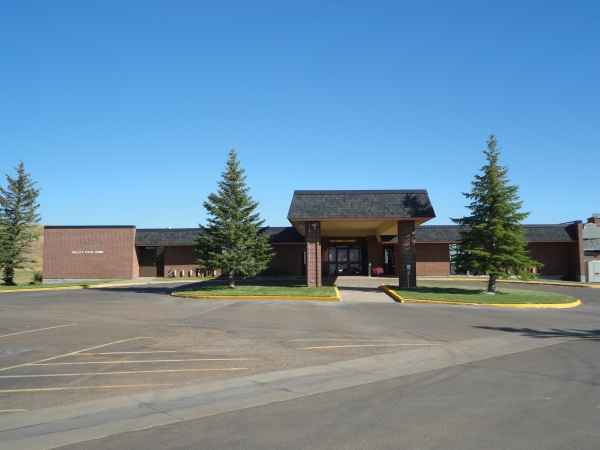
VALLEY VIEW HOME

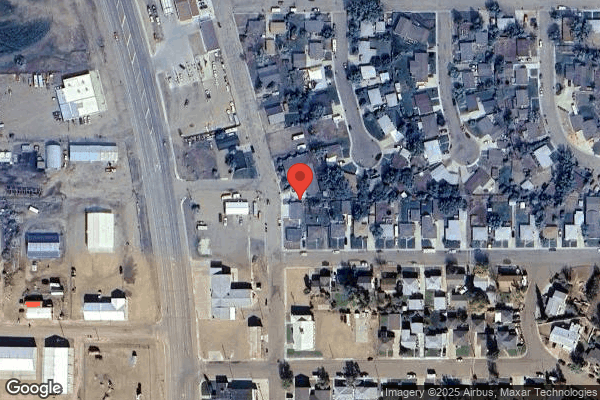
1225 PERRY LN, GLASGOW, MT 59230 (406) 228-2461
For profit - Limited Liability company 96 Beds Independent Data: November 2025
Trust Grade
73/100
#22 of 59 in MT
Last Inspection: June 2025

Inspected within the last 6 months. Data reflects current conditions.

Overview

Valley View Home in Glasgow, Montana, has received a Trust Grade of B, indicating it is a good facility and a solid choice for care. It ranks #22 out of 59 nursing homes in the state, placing it in the top half, and is the only option in Valley County. The facility shows an improving trend, with issues decreasing from six in 2024 to none in 2025. Staffing is a concern, with a low rating of 1 out of 5 stars and a high turnover rate of 46%, though this is better than the state average of 55%. However, the facility has received $16,614 in fines, which is average but suggests some compliance issues. It also has less RN coverage than 98% of Montana facilities, which could impact the quality of care. Specific incidents include a failure to prevent skin breakdown, leading to serious pressure ulcers for residents, and not adequately screening visitors for COVID-19 during an outbreak, increasing infection risks. Overall, while there are strengths in its recent improvements and state ranking, families should be aware of the staffing challenges and specific care issues noted in inspections.

Trust Score
B
73/100
In Montana
#22/59
Top 37%
Safety Record
Moderate
Needs review
Inspections
Getting Better
6 → 0 violations
Staff Stability
⚠ Watch
46% turnover. Above average. Higher turnover means staff may not know residents' routines.
Penalties
✓ Good
$16,614 in fines. Lower than most Montana facilities. Relatively clean record.
Skilled Nurses
⚠ Watch
Each resident gets only 26 minutes of Registered Nurse (RN) attention daily — below average for Montana. Fewer RN minutes means fewer trained eyes watching for problems.
Violations
⚠ Watch
12 deficiencies on record. Higher than average. Multiple issues found across inspections.
★★★★☆
4.0
Overall Rating
★☆☆☆☆
1.0
Staff Levels
★★☆☆☆
2.0
Care Quality
★★★★★
5.0
Inspection Score
Stable
2024: 6 issues
2025: 0 issues

The Good

  • Full Sprinkler Coverage · Fire safety systems throughout facility
  • No fines on record

Facility shows strength in fire safety.

The Bad

Staff Turnover: 46%

Near Montana avg (46%)

Higher turnover may affect care consistency

Federal Fines: $16,614

Below median ($33,413)

Minor penalties assessed

The Ugly 12 deficiencies on record

1 actual harm
Jul 2024 5 deficiencies
CONCERN (D)

Potential for Harm - no one hurt, but risky conditions existed

Deficiency F0692 (Tag F0692)

Could have caused harm · This affected 1 resident

Based on observation, interview, and record review, the facility failed to follow outlined interventions for 1 (#25) of 3 residents sampled for weight loss. This deficient practice increased the risk ...

Read full inspector narrative →
Based on observation, interview, and record review, the facility failed to follow outlined interventions for 1 (#25) of 3 residents sampled for weight loss. This deficient practice increased the risk of further weight loss for the resident who had a severe weight loss over a three month period. Findings include: During an observation on 7/16/24 at 8:11 a.m., resident #25 was asleep in her bed. Across the room, on her desk, was her full breakfast tray. During an observation on 7/16/24 at 9:00 a.m., resident #25 was still asleep and her full breakfast tray had been removed. During an observation on 7/17/24 at 8:09 a.m., resident #25 was sitting at the desk in her room with her breakfast tray. She was pushing eggs around with her silverware, but not consuming anything. During an observation on 7/17/24 at 12:07 p.m., resident #25 was sitting at the dining table in the resident common area. Her lunch was untouched in front of her. There were no staff around to cue the resident to eat. She got up from the table and wandered away down the hall. Review of resident #25's care plan, with a review date of 7/9/24, showed under problems: I am at nutritional risk for weight loss as evidenced by poor intake, uninterest in food, and requiring encouragement during meal times . [sic] Interventions for resident #25's weight loss included: - Please offer me finger foods as I like to ambulate throughout the facility frequently throughout the day and my attention span for meals is very short. - Please obtain my weight monthly. - Please provide me encouragement/cueing during mealtimes. Review of resident #25's monthly weights, dated January 2024 - July 2024, showed the resident weighed 96.6 lbs. on 7/1/24. Three months prior on 4/1/24 she weighed 106.4 lbs. This represented a 9.2% severe weight loss in three months. Review of the facility policy titled, Weight Monitoring, dated May 2024, showed, . Residents with weight loss - monitor weight weekly . The newly recorded resident weight should be compared to the previous recorded weight. A significant change in weight is defined as: a. 5% change in weight in 1 month (30 days) b. 7.5% change in weight in 3 months . A phone call for interview on resident #25's weight loss was placed to staff member M on 7/17/24 at 10:55 a.m. and was not returned by the end of the survey. During an interview on 7/17/24 at 2:15 p.m., staff member B stated the facility had implemented a Resident at Risk meeting that would occur biweekly and address resident issues including weight loss. The meeting on 7/11/24 had identified resident #25 as having a significant weight loss, and the team identified new interventions to be put in place. Staff member B stated the biweekly meetings were new and were intended to catch issues sooner than the quarterly QAPI meeting.
CONCERN (D)

Potential for Harm - no one hurt, but risky conditions existed

Food Safety (Tag F0812)

Could have caused harm · This affected 1 resident

Based on observation, interview, and record review, the facility failed to ensure food items placed in the unit's nourishment refrigerator were dated and labeled with a resident name. This deficient p...

Read full inspector narrative →
Based on observation, interview, and record review, the facility failed to ensure food items placed in the unit's nourishment refrigerator were dated and labeled with a resident name. This deficient practice increased the risk of a resident receiving incorrect, or out dated, food items. Findings include: During an observation on 7/17/24 at 7:54 a.m., there was an unlabeled and undated Tupperware container in the resident nourishment refrigerator, which was located at the end of the 100 hall. The contents of the container included a homemade, unknown yellow liquid substance. There was no indication of which resident the food belonged to or how long it was in the refrigerator. During an interview on 7/17/24 at 10:11 a.m., staff member L stated it was the responsibility of housekeeping to clean refrigerators in the resident common areas. Staff member L stated family members would often place items in the refrigerator without staff knowing. Review of the facility policy Use and Storage of Food Brought in by Family or Visitors, dated 12/27/18, showed, All food items that are already prepared by the family or visitor brought in must be labeled with content and dated . The prepared food must be consumed by the resident within 3 days. If not consumed within 3 days, food will be thrown away by facility staff.
CONCERN (D)

Potential for Harm - no one hurt, but risky conditions existed

Deficiency F0883 (Tag F0883)

Could have caused harm · This affected 1 resident

Based on interview and record review, the facility failed to ensure a resident received, or had the opportunity to receive, the pneumococcal vaccine series, for 1 (#15) of 5 sampled residents for vacc...

Read full inspector narrative →
Based on interview and record review, the facility failed to ensure a resident received, or had the opportunity to receive, the pneumococcal vaccine series, for 1 (#15) of 5 sampled residents for vaccinations. Findings include: Review of resident #15's immunization record showed resident #15 had received one pneumococcal vaccine on 4/4/2018. The immunization record did not show what type of pneumococcal vaccine resident #15 had received. A review of a facility document titled, Pneumococcal Vaccine Informed Consent/Decline, showed, resident #15's resident representative signed for resident #15 to receive pneumococcal vaccines on 4/16/24. During an interview on 7/17/24 at 1:03 p.m., staff member J stated, [A Facility Name] works with us on providing vaccinations. Pneumococcal vaccines are not one the facility keeps in house. I just have not set up a clinic (vaccination) yet. It is just something I have not thought about doing yet. I am behind on looking at the immunizations. I have started asking the hospital to provide the pneumococcal vaccine prior to discharge. Review of a facility document titled, Influenza, Pneumococcal, and SARS-COV-2 Immunizations-Residents, dated, 7/19/23, showed: . 5. Pneumococcal Vaccine: Residents will be assessed for eligibility to receive this vaccine series with in 5 working days of admission and will be offered the vaccine. . 12. 8. Vaccines not supplied in house will be provided by outside resources such as [Facility Names], and other alternative methods. [sic]
CONCERN (F)

Potential for Harm - no one hurt, but risky conditions existed

Infection Control (Tag F0880)

Could have caused harm · This affected most or all residents

Based on observation, interview, and record review, the facility failed to screen visitors for signs or symptoms of Covid-19, prior to entering the building, during a Covid-19 outbreak; failed to post...

Read full inspector narrative →
Based on observation, interview, and record review, the facility failed to screen visitors for signs or symptoms of Covid-19, prior to entering the building, during a Covid-19 outbreak; failed to post transmission based precaution signage on the doors of Covid-19 positive residents, and failed to follow transmission based precautions for 4 (#s 15, 21, 26, and 27); failed to practice proper hand hygiene during a laundry pass for 2 (#s 14 and 31); and failed to follow enhanced barrier precautions for 3 (#s 14, 31, and 42) of 22 sampled residents. This deficient practice increased the risk of an individual contracting Covid-19, other viruses, or infections, for all residents, staff, or visitors. Findings include: 1. During an observation on 7/15/24 at 2:24 p.m., the facility had printed signs on the entrance doors showing there was a Covid-19 outbreak. Upon entrance into the facility, there was a sign in log, and N-95 masks. There was no staff member present, no screening equipment, or a questionnaire asking visitors about signs or symptoms of Covid-19. During an observation on 7/16/24 at 7:07 a.m., upon entrance into the facility there was a sign in log, and N-95 masks. There was no staff member present, no screening equipment, or a questionnaire asking visitors about signs or symptoms of Covid-19. During an observation on 7/17/24 at 7:08 a.m., upon entrance into the facility there was a sign in log, and N-95 masks. There was no staff member present, no screening equipment, or a questionnaire asking visitors about signs or symptoms of Covid-19. During an interview on 7/17/24 at 1:03 p.m., staff member J stated the facility was not screening visitors when they entered the building. Staff member J stated, All the family members were called and asked to perform hand hygiene and wear a mask when they entered the building, other than that there is no screening in place. Review of a facility document titled, COVID-19, undated showed: . staff and visitor screening upon entrance into the facility will be by active or passive means. Review of a facility document titled, Infectious Outbreak or Pandemic, dated, 8/1/23, showed: . 4. Screening visitor and staff include questions about signs and symptoms, possible exposure, PPE compliance, and temperature checks, etc. 2. During an interview on 7/15/25 at 2:30 p.m., staff member A stated the facility was in a Covid-19 outbreak. Staff member A stated, We have two staff members, and two residents test positive for Covid-19. During an observation on 7/15/24 at 4:19 p.m., resident #27 was sitting in a recliner in her room. A plastic container with three drawers was placed outside the room. The container stored personal protective equipment. Resident #27's door to her room was open to the hallway. There was not a transmission-based precaution sign placed outside the room, on the door/entry to room, to notify staff what type of personal protective equipment was to be used when providing care for #27. During an observation on 7/15/24 at 4:25 p.m., resident #15 was sitting in a recliner in his room. Resident #15 was coughing. A plastic container with three drawers was placed outside the room. The container stored personal protective equipment. Resident #15's door to his room was open to the hallway. There was not a transmission-based precaution sign placed outside the room to notify staff what type of personal protective equipment was to be used when cares were provided. During an observation on 7/15/24 at 4:26 p.m., resident #21 was sitting in his wheelchair in the doorway of his room. Resident #21 was coughing. A plastic container with three drawers was placed outside the room. The container stored personal protective equipment. Resident #21's door to his room was open to the hallway. There was no transmission-based precaution sign placed outside the room to notify staff what kind of personal protective equipment was to be used when cares were provided to the resident. During an interview on 7/15/24 at 4:27 p.m., staff member C stated, We have three residents who are confirmed to be Covid-19 positive. We keep their doors open so they (the residents) do not feel isolated. During an observation on 7/16/24 at 7:44 a.m., and 7:46 a.m., the resident room doors for #15, 21, and 27 were open, and no transmission-based precaution signs were placed outside the rooms. During an observation on 7/17/24 at 8:01 a.m., and 8:03 a.m., the doors to resident #15, 21, and 27's rooms were open, and no transmission-based precautions signs were placed outside the rooms. During an interview on 7/17/24 at 8:10 a.m., staff member H and staff member I stated they knew a resident was on transmission-based precautions because there was personal protective equipment provided outside the rooms. Staff members H stated, I had no clue there were different types of transmission-based precautions. Staff member I stated, I did not know that there were different types either, I did ask staff member J if signs should be up outside the doors though. During an observation on 7/17/24 at 11:36 a.m., resident #s 15, 21, and 27 had specific contact/droplet precaution signs posted outside their rooms. During an interview on 7/17/24 at 1:03 p.m., staff member J stated she educated staff on infection control practices bi-annually and as needed. Review of a facility policy titled, Infectious Outbreak or Pandemic, dated, 8/1/23, showed: . Isolation Precautions . 3. The facility will use standard approaches, as defined by the CDC, for transmission-based precautions: airborne, contact, and droplet precautions. The category of transmission-based precautions will determine the type of personal protective equipment (PPE) to be used. 3. During an observation on 7/16/24 at 8:33 a.m., staff member G was distributing resident clothing. Staff member G entered resident #14's room. No hand hygiene was performed prior to entering resident #14's room. Staff member G opened resident #14's closet and hung up the clothing. No hand hygiene was completed after exiting resident #14's room. Staff member G walked back to the laundry cart and picked up more clothing and entered resident #31's room. No hand hygiene was completed prior to entering resident #31's room. Staff member G opened resident #31's closet and hung up the clothing and exited resident #31's room. No hand hygiene was completed after exiting resident #31's room. During an interview on 7/16/24 at 8:38 a.m., staff member G stated, I just forgot, it's that simple. I have been here long enough to know better. I am supposed to clean my hands before I get the clean clothes off the cart and after I exit a resident's room. I have been educated on hand hygiene through staff in-services and trainings. Review of a facility document titled, Hand Hygiene, undated, showed: The use of gloves does not replace hand hygiene . Hand hygiene is indicated and will be provided before entering and exiting residents room . 4. During an observation on 7/15/24 at 4:00 p.m., there was no signage or supplies for the use of enhanced barrier precautions in resident #42's room. Resident #42 had a foley catheter bag hanging at the side of his bed. Review of the medical record showed resident #42 had an indwelling foley catheter since 4/6/24. During an observation on 7/17/24 at 8:12 a.m., there was no signage or supplies for enhanced barrier precautions in resident #42's room. During an interview on 7/17/24 at 1:03 p.m., staff member J stated enhanced barrier precautions were placed for residents with chronic wounds or catheters. Staff member J stated each resident on enhanced barrier precautions had a yellow and black striped magnet on the doorway and personal protective equipment in the room. During an interview on 7/17/24 at 1:35 p.m., staff member M stated the yellow and black striped magnets on the doorways were the signals to staff for enhanced barrier precautions. Staff member M stated someone would have this indicator for precautions if they had a catheter. Staff member M stated resident #42 did have a catheter, and she was unsure why he didn't have the yellow and black magnet on his door. During an observation on 7/17/24 at 1:40 p.m., resident #14 had a yellow and black striped magnet on the doorway. Resident #14 had a chronic indwelling foley catheter. The catheter was contained in a cover and hanging from the underside of the resident's wheelchair. Resident #14 did not have any personal protective equipment located inside or outside of the room. During an observation on 7/17/24 at 1:42 p.m., resident #31 had a yellow and black striped magnet on the doorway. Resident #31 had a chronic indwelling foley catheter. The catheter was contained in a cover and hanging from the underside of the resident's wheelchair. Resident #31 did not have any personal protective equipment located inside or outside of the room. Review of the facility policy, Enhanced Barrier Precautions, dated 3/26/24, showed, .An order for enhanced barrier precautions will be obtained for residents with any of the following: . urinary catheters . According to the CDC article, Implementation of Personal Protective Equipment (PPE) Use in Nursing Homes to Prevent Spread of Multidrug-resistant Organisms (MDROs), dated 4/2/24, showed: . Nursing home residents with wounds and indwelling medical devices are at especially high risk of both acquisition of and colonization with MDROS . The use of gown and gloves for high-contact resident care activities is indicated, when Contact Precautions do not otherwise apply, for nursing home residents with wounds and/or indwelling medical devices regardless of MDRO colonization . indwelling medical devices e.g., central line, urinary catheter .
CONCERN (F)

Potential for Harm - no one hurt, but risky conditions existed

Deficiency F0887 (Tag F0887)

Could have caused harm · This affected most or all residents

Based on interview and record review, the facility failed to document resident declinations and education regarding the Covid-19 vaccine, for 2 (#s 11 and 27) of 5 sampled residents for immunizations....

Read full inspector narrative →
Based on interview and record review, the facility failed to document resident declinations and education regarding the Covid-19 vaccine, for 2 (#s 11 and 27) of 5 sampled residents for immunizations. Findings include: A review of resident #11's preventive health care report, with a creation date of 12/14/23, showed, resident #11's resident representative refused the administration of the Covid-19 vaccination. A review of resident #27's preventative health care report, with a creation date of 12/14/23, showed, resident #27's resident representative refused the administration of the Covid-19 vaccination. A request was made on 7/17/24 at 10:16 a.m., for the signed declinations for resident #11 and #27. The signed declinations were not provided prior to the end of the survey. During an interview on 7/17/24 at 1:03 p.m., staff member J stated she did not have any signed declinations or documentation for resident #11 or #27's Covid-19 vaccinations. Staff member J stated she did not provide any education regarding the risks and benefits to the resident representatives for resident #11 or #27. A review of a facility policy titled, Influenza, Pneumococcal, and SARS-COV-2 Immunizations-Residents, dated, 7/19/23, showed: . 8. If the resident or responsible party refuses an immunization, it will be documented in the permanent medical record. The resident or responsible party will be provided with an education program and the resident or responsible party will be offered the immunization, annually.
Jun 2024 1 deficiency
CONCERN (D) 📢 Someone Reported This

A family member, employee, or ombudsman was alarmed enough to file a formal complaint

Potential for Harm - no one hurt, but risky conditions existed

Accident Prevention (Tag F0689)

Could have caused harm · This affected 1 resident

Based on observations, interviews, and record review, the facility failed to monitor a cognitively impaired resident with a known history of elopement attempts, which resulted in the resident leaving ...

Read full inspector narrative →
Based on observations, interviews, and record review, the facility failed to monitor a cognitively impaired resident with a known history of elopement attempts, which resulted in the resident leaving the building unsupervised, putting the resident at risk for serious injury or death for 1 (#2) of 2 sampled residents for elopements. Findings include: Review of a Facility Reported Incident, sent to the State Survey Agency for resident #2, dated 4/14/24, showed, Call received from another resident who was outside of facility reporting resident [#2] was outside at [School Name] playground alone. [Staff member name] received a call from [staff member] that she found resident at [School Name] and she would not get in her vehicle to bring her back to facility. [Staff member] arrived at [School Name] and [resident #2] was returned to facility by [staff member] in private vehicle. During an observation on 6/3/24 at 2:45 p.m., resident #2 was asleep in her room, one door away from the exit door. During an interview on 6/3/24 at 3:10 p.m., staff member D stated all residents at risk for elopement reside in the secure unit, and not out in non-secured unit. Staff member D stated resident #2 could go outside by herself to walk, and staff call the transit bus for her to go to appointments. During an interview on 6/3/24 at 3:16 p.m., staff member E stated resident #2 eloped on 4/14/24 at 7:00 p.m. to [School Name], which was 0.4 miles away, and it took about 8 minutes to walk to, per her internet search. Staff member E stated resident #2 had told staff she was going to walk around the building. During an observation and interview on 6/4/24 at 7:50 a.m., staff member E stated resident #1 was the only elopement risk out on the non-secured unit. Staff member E stated the facility had an elopement book, but she could not locate the book at the time of the interview. Staff member E asked staff member D where to locate the book and staff member D stated the book was supposed to be on the desk. Staff members D and E located the book in a wall file behind stacks of papers. Staff member E reviewed the book and stated two residents were at risk of elopement, including residents #1 and #2. During an interview on 6/4/24 at 7:55 a.m., staff member F stated she was not aware resident #2 was on the elopement risk list. During an interview on 6/4/24 at 8:02 a.m., staff member H stated she was not aware residents #1 or #2 were on the elopement risk list. During an interview on 6/4/24 at 8:04 a.m., staff member G stated she was not aware residents #1 or #2 were on the elopement risk list. During an interview on 6/4/24 at 8:06 a.m., staff member C stated, [Resident #2] forgets easily, and the family told us that at admit, and it was obvious from day one too. During an observation and interview on 6/4/24 at 9:06 a.m., resident #2 was walking very fast down the hall, using a four wheeled walker. Staff member G told resident #2 to slow down. Staff member G stated resident #2 was a fast walker and staff had to remind her to slow down so she would not fall. Resident #2 declined to speak with the surveyor. Staff member G stated staff could usually talk to her and she would respond, but most of her speech is unintelligible. During an interview on 6/4/24 at 10:35 a.m., staff member A stated the facility was not doing a great job ensuring the elopement risk residents and their interventions were communicated to the staff on the floor. Staff member A stated the facility was planning to add an elopement huddle to the morning huddle meetings, but had not done so yet. During an interview on 6/4/24 at 1:30 p.m., staff member B stated she was not aware resident #2 was a elopement risk until 6/3/24. Staff member B was new to her position and felt that resident #2's elopement was likely a result of the change in weather. Staff member B stated when the weather is warmer, several residents can leave on their own. Staff member B stated she felt resident #2 saw other residents leaving the building and thought she could too. Staff member B stated she wished the facility had an elopement bracelet system but could not explain why staff did not know resident #2 had left the facility and had made her way to the park before another resident noticed her at the park. Review of resident #2's Fact sheet, with a print date of 6/3/24, showed the following mental health diagnoses: - Fetal alcohol syndrome - Schizophrenia - Moderate intellectual disability - Depression - Developmental disorder of scholastic skills Review of resident #2's MDS, with an assessment date of 4/24/24, showed resident #2 had a BIMS of 12. Review of resident #2 PASRR II, dated 8/7/23, showed: - . Behavioral and Functional Impacts relating to Mental Health Past 3/6 Months: Going outside without supervision, walking and wandering away. Patient is easily confused and needs frequent redirection and continuous supervision to keep her safe. Patient has lack of awareness and insight into what her needs are and is unable to make rational or reasonable judgements concerns regarding her well-being. - . The uncle reports that the biggest concern for the patient is her wandering away unsupervised. When this has occurred, she ended up in very dangerous and unsafe situations due to her lack of awareness and lack of comprehension. Review of resident #2's Elopement Care Plan, with a problem start date of 7/14/23, showed resident #2 was . at risk for elopement as evidenced by a history of wandering outside at nighttime. The Approach (interventions) included: - .Provide me with continuing education on importance of not leaving facility as due to my cognitive impairment I am forgetful. (start date 7/14/23) - Use verbal cues and gentle touch to redirect my exit-seeking behaviors. (start date 7/14/23) - I have my information and photo in a binder at each nurse's station so staff is aware that I am at risk for elopement. (start date 7/14/23) - Ensure I do not accidentally follow visitors out of the building (start date 7/14/23) - I enjoy dogs and cats very much and I will attempt to follow them out of the building as I am forgetful. Please remind me not to follow visitors and pets out of the building. (start date 7/18/23) - If I am overheard talking about leaving facility to go do something, please provide me reminder that I am unable to go by myself. (start date 4/15/24) . Staff members D, E, F, and G were unaware of resident #2's risk of elopement, and were unaware of the interventions to prevent elopement for resident #2. Review of resident #2's progress note, dated 4/14/24, showed resident #2 had .asked for someone to take her but no one wouldn't (would). [sic]
Jul 2023 6 deficiencies 1 Harm
SERIOUS (G)

Actual Harm - a resident was hurt due to facility failures

Pressure Ulcer Prevention (Tag F0686)

A resident was harmed · This affected 1 resident

**NOTE- TERMS IN BRACKETS HAVE BEEN EDITED TO PROTECT CONFIDENTIALITY** Based on observation, interview, and record review, the facility failed to implement sufficient measures to prevent skin breakdo...

Read full inspector narrative →
**NOTE- TERMS IN BRACKETS HAVE BEEN EDITED TO PROTECT CONFIDENTIALITY** Based on observation, interview, and record review, the facility failed to implement sufficient measures to prevent skin breakdown and treat pressure ulcers timely, for 2 (#18 and 45) of 2 sampled residents, resulting in the development of two Stage II pressure ulcers, and a Stage IV pressure ulcer after admission, to the facility. This resulted in infections for both residents and increased pain for resident #45. Findings include: 1. A review of resident #45's electronic resident progress notes, dated 3/18/23 through 6/5/23, reflected: - On 3/18/23 resident #45 developed an .open area of skin to his right buttock. Open area is about 1 cm in diameter . - On 3/23/23 resident #45's right buttock wound was listed as a Stage II right gluteal wound . measuring 2.5 x 1.5 superficial in depth . Staff member L's office was called and a message was left. - On 3/27/23 the wound dressing change noted: Unstageable due to eschar presence. - On 3/28/23 staff member J noted on a wound assessment: moderate amount of seropurulent drainage with measurements of 3.1 x 1.5, unable to measure depth due to wound being covered with adherent yellow/brown slough covering wound bed . photo taken . [staff member L] in house, photo of wound showed to PCP, PCP down to room to discuss offloading . - On 4/7/23 an air mattress was ordered. - On 5/2/23 the right gluteal wound measured 5.3 cm x 3.5 cm x 3.5 cm. - On 5/2/23 the MDS Quarterly Assessment and Interview reflected, . 3/18/23, resident developed a Stage 2 Pressure Injury to R Buttocks, 3/28/23 wound declined and became unstageable, 4/14 resident seen general surgery at [Hospital] where wound surgically debrided. Noted per general surgery note, wound debrided and abscess was removed from area. Stage 3 wound continues to be present, dressing changes ordered Q3Days and PRN . [sic] - On 5/23/23 a wound care progress note showed, . Measurements obtained, 4.5 x 3.3 x 3.6. Noted area of tunneling in wound at 12o clock, tunneling area measuring 0.5 cm. Noted scant amount of serosanguinous drainage coming from wound. Stage IV buttocks wound . [sic] - On 6/1/23 at 12:20 a.m., the nurse noted a change in resident #45's condition, and the resident was lethargic, refusing meals, and answering questions inappropriately. The resident's blood pressure was abnormally low, with increased pulse, body rash, and yellow tinting of the skin. Photos of the rash and an explanation of symptoms were sent to staff member L. Nursing also noted the Night Shift reported resident #45 was restlessness and tearful due to pain. The nurse reported calling the clinic for assistance with the resident's pain management and lab workup. - On 6/1/23 at 7:00 a.m., the nursing note reflected, . loud, uneven breathing, pulse of 108, oxygen saturation of 76%, a blood pressure of 86/57, and respirations 40. Resident denies pain, but moaning and squirming in bed stating he is trying to get comfortable . The nurse note reflected the nurse contacted the spouse to offer an emergency room assessment, but the spouse declined and wanted resident #45 to be kept comfortable at the facility. The nurse note showed the emergency room was called to obtain an order for oxygen and pain management. emergency room staff stated they would return the call after visiting with the provider. The nurse also called [staff member L] and left a message with updates on resident #45's condition. - On 6/1/23 at 7:30 a.m., nursing noted, Resident continues to moan and try to get comfortable in bed. No call or orders received back from ER or Clinic at this time. Resident given standing order Tylenol 650 mg for pain. - On 6/1/23 at 8:00 a.m., nursing noted resident #45 passed away at 7:55 a.m. During an interview and record review on 7/19/23 at 10:01 a.m., staff member I stated reasons why there were delays in antibiotic administration from the time signs and symptoms of infection appeared to the time of diagnosis and treatment, was due to a combination of communication problems with the hospital lab, having to leave voice mails for [staff member L], and waiting for a response as [staff member L], since he doesn't work on Saturdays, Sundays or nights, and has no on call coverage. We can call the ER if we have to, but it's up to nurse if it's emergent enough to send to ER or whatever, but it's not encouraged to do so. Then [staff member L] has to send orders to the pharmacy, and we have a common issue getting medications from the pharmacy. During an interview on 7/19/23 at 11:25 a.m., staff member J stated, [Resident #45's] wound antibiotic treatment was delayed because we kept waiting on [staff member L], it took a while before the antibiotics were started, and the delay of adding an air mattress was due to a limited number of mattresses, and maintenance issues. I think the wound did contribute to his death. During an interview on 7/19/23 at 2:33 p.m., staff member L stated, On 3/18 they used a standing order for wound care, then on 3/23 [staff member J] messaged me about a Stage 2, and on 3/28 staff member J showed me a photo, it did not really look infected to me. I then looked at it myself on 4/11 and said it definitely needed debridement, but still didn't think it really seemed infected. I made a referral and it was debrided, and antibiotic was ordered by the surgeon on 4/14. I think his death was multifactorial comorbidities that led to wound and compounded death, but he did have increased ascites that last week and had liver failure. Staff member B informed staff member J the facility does not receive copies of lab cultures, they must manually request them, contributing to the delays. Staff member L then left the meeting. Staff member B stated, The mattress issue is a lack of supply, I wish it wasn't, but the reality is they are expensive, and we only have so many so we move them onto an air mattress as soon as one becomes available. Staff member B stated, I recognized a communication issue covering [staff member L's] time off months ago and sent an email about how coverage needed to happen, and was told that it was not an issue, and there it stayed. We don't have a contract or anything, so it's kind of like they (hospital emergency room staff) are on volunteer duty if they want to help us. [Staff member L] is off on Fridays, Saturdays, Sundays, and evenings. We have his Nurse Practioner help on Friday during the day, and then we have to use the ER staff outside of that. 2. During an observation and interview on 7/19/23 at 8:23 a.m., staff member K completed wound care on resident #18's left ankle, right foot, and sacrum. Resident #18 reported there was no pain in the wound area of the left ankle, and stated, It's kind of numb. Staff member K then completed wound care on resident #18's right foot and stated, It's superficial redness now, with about a quarter size opening. Resident #18 stated her leg hurt on the side of her right thigh, just above the knee. Staff member K then assisted resident #18 to a standing position, with her walker, while her sacrum was assessed. Staff member K cleansed the wound area. Staff member K stated she could see a little spot on the sacrum. Staff member K stated, I think I will just put protection cream on. Don't think you need a patch. Staff member K stated she would, stage the one sacrum and foot as Stage I, and the ankle is a Stage II, looks almost like the ankle is getting worse, but no odor. Staff member K stated, The wound nurse will see it tomorrow, and she will know if it's worse. During the observation there was no assessment completed by the nurse of resident #18's complaint of right thigh pain, just above the knee. Staff member K stated she was not aware of how the pressure wounds started, but knew the wounds started after resident #18 was admitted to the facility. Review of resident #18's electronic medical record reflected the following: - A physician note, Long Term Care Visit, dated 4/4/23, reflected, Noted on her right foot that she has developed a small ulcer that is 3mm in size and 1mm in depth. The concern is that there is surrounding cellulitis that goes down towards her toes and surrounds the whole side of her foot. [sic] - Physician Order report, dated 3/15/23 through 7/20/23, reflected: - Order started for the right foot wound care on 3/29/23. - Order started for the left elbow pressure injury on 4/12/23. - Order started for a Stage II pressure wound care on sacrum on 4/27/23. - Order for a left lower leg ulcer wound care on 5/30/23. A review of resident #18's admission MDS, with an ARD of 3/29/23, reflected resident #18 admitted to the facility on [DATE], and did not have any unhealed pressure ulcers. The MDS reflected resident #18 had an open lesion on the foot. The MDS also reflected resident #18 was at risk of developing pressure ulcers/injuries.
CONCERN (D)

Potential for Harm - no one hurt, but risky conditions existed

Deficiency F0578 (Tag F0578)

Could have caused harm · This affected 1 resident

Based on interview and record review, the facility failed to ensure resident POLST form's were complete, and including the provider's signature, date, and time, for 2 (#s 10 and 30) of 23 sampled resi...

Read full inspector narrative →
Based on interview and record review, the facility failed to ensure resident POLST form's were complete, and including the provider's signature, date, and time, for 2 (#s 10 and 30) of 23 sampled residents. Findings include: Review of resident #10's POLST form, dated 4/12/21, failed to show a provider signature on the form. Review of resident #30's POLST form, not dated, showed a provider signature without the accompanying date of the signature. The form also failed to show the date when the form was completed. During an interview on 7/19/23 at 8:01 a.m., staff member C stated she was responsible for ensuring each resident's POLST was complete and accurate on admission to the facility. Staff member C said the POLST was reviewed during each quarterly care conference. Staff member C stated she was primarily concerned with the choice of treatment, and had not noticed the missing provider signature and date on the POLST for resident #s 10 and 30. Review of the facility policy titled, Advance Directives and Resident Rights Regarding Treatment, not dated, failed to show a review of the forms for completeness, including a provider signature and date, when necessary, was part of the process.
CONCERN (E)

Potential for Harm - no one hurt, but risky conditions existed

Deficiency F0713 (Tag F0713)

Could have caused harm · This affected multiple residents

Based on interview and record review, the facility failed to have a physician available, 24 hours a day, to respond to resident emergencies that do not require medical care in an alternative setting, ...

Read full inspector narrative →
Based on interview and record review, the facility failed to have a physician available, 24 hours a day, to respond to resident emergencies that do not require medical care in an alternative setting, for 1 (#45) of 1 sampled resident which resulted in a delay of care, resulting in increased pain at the end of life. Findings include: A review of resident #45's electronic medical record, Resident Progress Notes, dated 3/18/23 through 6/5/23, reflected: -On 6/1/23 at 12:20 a.m., the nurse noted a change in resident #45's condition. Resident #45 was lethargic, refusing meals, and answering questions inappropriately. Resident #45's blood pressure was abnormally low, with an increased pulse, a body rash, and yellow tinting of the skin. Photos of the rash and an explanation was sent to staff member L. Nursing also noted the Night Shift reported resident #45 was restlessness, and tearful due to pain. The nurse reported calling the [staff member L's office] for assistance with pain management and lab workup. -On 6/1/23 at 7:00 a.m., nursing noted, .loud, uneven breathing, pulse of 108, oxygen saturation of 76%, a blood pressure of 86/57, and respirations 40. Resident denies pain, but moaning and squirming in bed stating he is trying to get comfortable . The nurse contacted the spouse in regards to his change in condition and offered to send the resident to the emergency room for an assessment. The spouse declined, and wanted the resident kept comfortable at the facility. The emergency room was contacted to obtain orders for oxygen and pain management. The nurse noted, emergency room staff stated they would return call after visiting with provider. This nurse also called [staff member L] and left message with updates. -On 6/1/23 at 7:30 a.m., nursing noted, Resident continues to moan and try to get comfortable in bed. No call or orders received back from ER or Clinic at this time. Resident given standing order Tylenol 650 mg for pain. -On 6/1/23 at 8:00 a.m., nursing noted resident #45 passed away at 7:55 a.m. During an interview and record review on 7/19/23 at 10:01 a.m., staff member I stated reasons why there were delays in antibiotic administration from the time signs and symptoms of infection appeared to the time of diagnosis and treatment was due to a combination of communication problems with the hospital lab, having to leave voice mails for [staff member L], and waiting for a response from[staff member L], since he doesn't work on Saturdays, Sundays or nights, and has no on call coverage. We can call the ER if we have to, but it's up to nurse if it's emergent enough to send to ER or whatever, but it's not encouraged to do so. Then [staff member L] has to send orders to the pharmacy, and we have a common issue getting medications from the pharmacy. Staff member B stated, I recognized a communication issue covering [staff member L's] time off months ago, and sent an email to [hospital management] about how coverage needed to happen, and was told by [hospital management] that it was not an issue and there it stayed. I need regulations to hold them to, I could not find it. We don't have a contract or anything so it's kind of like they (hospital emergency room staff) are on volunteer duty if they want to help us. [Staff member L] is off on Fridays, Saturdays, Sundays, and evenings. We have his Nurse Practioner help on Friday during the day and then we have to use the ER staff outside of that.
CONCERN (E)

Potential for Harm - no one hurt, but risky conditions existed

Infection Control (Tag F0880)

Could have caused harm · This affected multiple residents

Based on observation, interview and record review, the facility failed to ensure proper hand hygiene was used during water pass, wound care, and peri-catheter care, for 5 (#s 6, 18, 33, 46, 49) of 5 s...

Read full inspector narrative →
Based on observation, interview and record review, the facility failed to ensure proper hand hygiene was used during water pass, wound care, and peri-catheter care, for 5 (#s 6, 18, 33, 46, 49) of 5 sampled residents, resulting in increased risk for infections. Findings include: 1. During an observation and interview on 7/17/23 at 3:58 p.m., staff member E was observed passing water to residents on the new wing. - Staff member E entered the room, obtained an old cup from resident #49's room, and emptied the remaining water from the cup into the bathroom sink. Staff member E then brought the cup out to the cart in the hallway, filled the cup with ice, and added water from the cooler. Then staff member E returned the cup to resident #49's room, and placed it on the bedside table. - Staff member E then entered resident #6's room, and emptied the cup into the bathroom sink. Staff member E then brought the cup out to the cart in the hallway, filled the cup with ice, and added water from the cooler. Staff member E then took the filled cup back to resident #6's room. - Staff member E then entered resident #46's room, obtained the water cup and emptied it into the bathroom sink. Staff member E then went to the hallway and added ice to the cup, filled the cup with water, and returned the cup to the resident's bedside table. Staff member E stated she attended hand hygiene training, and she should use hand hygiene anytime she entered or exited a resident's room, when having contact with a resident, and when visibly dirty. Staff member E failed to use hand hygiene when entering or exiting resident #6's, 46 and 49's rooms while filling the residents' water cups and handling soiled cups, and then using the same ice scoop to fill all the cups. 2. During an observation and interview on 7/19/23 at 8:23 a.m., staff member K changed the wound dressings for resident #18. - Staff member K completed hand hygiene, repositioned the resident, gloved her hands, set up the table with wound supplies, and began wound care for resident #18's left leg wound. Staff member K removed the resident's dirty sock and bandage, and stated, It looks like we're trying Santyl sav now. Staff member K completed hand hygiene, gloved her hands again, and washed the wound. Resident #18 stated, There's no pain, it's kind of numb. Staff member K put dressing prep around the wound, removed her gloves, and marked the new dressing with a date and initials. Staff member K put on new gloves, added ointment to the gauze, and on her finger, then applied ointment into the wound bed, and placed the bandage over the wound. Staff member K failed to complete hand hygiene after cleaning the wound, before starting the dressing prep, and before putting on gloves after dating and initialing the new bandage. -Staff member K then began the dressing change for resident #18's right foot wound. Staff member K removed resident #18's sock, gloved her hands, opened the wound supplies, and set up the table. Staff member K wrote on the new bandage, removed the old bandage, and cleaned the resident's right foot wound. Staff member K completed hand hygiene, gloved her hands again, applied dressing prep around the wound, added triad ointment to the wound, and applied a new dressing to the site. Staff member K removed her gloves, and wrapped the resident's legs with ace bandages. -Staff member K removed the footrests from resident #18's wheelchair, prepped wound care supplies, marked the new bandage, and donned gloves. Staff member K then assisted resident #18 to a standing position with her walker while the sacrum wound was assessed. Staff member K cleansed the wound area and stated, she could see a little spot. Staff member K patted the wound with a 4x4 gauze to dry, and doffed gloves. Staff member K stated, I think I will just put protection cream on. Don't think you need a patch. Staff member K donned gloves and applied cream to the sacrum, assisted the resident with pulling up her brief and sitting back down in the wheelchair. Staff member K removed her gloves, left the room, and completed hand hygiene. Staff member K stated she, would stage wound on leg as a Stage II, looks almost like it's getting worse, but no odor. Staff member K failed to complete hand hygiene after wrapping resident #18's legs and before handling new bandages for the sacrum wound. Staff member K failed to perform hand hygiene prior to donning gloves to apply cream to resident #18's sacrum wound. 3) During an observation and interview on 7/19/23 at 8:50 a.m., staff member F and M completed peri care and catheter care for resident #33. Staff members F and M completed hand hygiene and donned gloves. Staff member F wet a wash cloth in the sink, while staff member M gathered a brief and wipes. Staff member F added soap to the wash cloth, lowered the head of the bed down, and removed the resident's brief. Staff member F cleaned the resident's stomach, and skin folds. The cleansed areas were dried with a cloth. Staff member M rolled resident #33 to the side facing staff member M, tucked a new brief under resident #33's hip, removed bowel movement with peri wipes and cleansed the resident's buttocks with the wet wash cloth. Resident #33 stated, My butt itches. Staff member M stated, I can't remove all the cream because it's macerated skin on left cheek and the right. Staff member M removed gloves, put on new gloves, added more barrier cream to resident #33's buttocks, and put on the new brief. Staff member M assisted the resident to roll onto the other side facing staff member F, then removed the old brief. Staff member F put on new gloves. Staff member M put on new gloves. Staff member M cleaned the catheter from the peri area to the large tube, and assisted resident #33 up to the head of the bed. Staff member M removed her gloves, emptied the waste baskets in the resident's bathroom and bedside. Staff member M and F then washed their hands. During an interview outside resident #33's room, staff members K and M stated they were educated on hand hygiene but stated they knew they missed hand hygiene opportunities on multiple occasions during resident #33's care. During an interview on 7/19/23 at 2:33 p.m., staff member B stated, QAPI showed hand hygiene audits as part of Quality Measures concern for UTIs, so plan is each department does one audit per month with set up as: -Week 1: Dietary, -Week 2: Activities, -Week 3: Nursing, and -Week 4: Housekeeping. We started in April. Review of facility audit reports showed missing audits for: -Housekeeping in April, -Housekeeping in May, and -Activities and Dietary in June. Staff member B stated, The Infection Preventionist is responsible to notify [staff member A] of any missing, and [staff member A] is responsible to hold department managers responsible.
CONCERN (E)

Potential for Harm - no one hurt, but risky conditions existed

Antibiotic Stewardship (Tag F0881)

Could have caused harm · This affected multiple residents

**NOTE- TERMS IN BRACKETS HAVE BEEN EDITED TO PROTECT CONFIDENTIALITY** Based on interview and record review, the facility failed to develop an Antibiotic Stewardship Program that promotes the appropr...

Read full inspector narrative →
**NOTE- TERMS IN BRACKETS HAVE BEEN EDITED TO PROTECT CONFIDENTIALITY** Based on interview and record review, the facility failed to develop an Antibiotic Stewardship Program that promotes the appropriate use of antibiotics and includes a system of monitoring to improve resident outcomes and reduce antibiotic resistance, resulting in increased risk for antibiotic resistant infections, and poor outcomes for all residents who receive antibiotic therapy. Findings include: During an interview on 7/18/23 at 2:38 p.m., staff member I stated, The infection control policy is outdated, last date is 6/27/19. You'll have to talk to [staff member A]. We just hand them in. I know we talk about them in QAPI. Review of the facility's record, Infection Prevention Control Program document binder reflected the documents were last updated in 2019, including the risk assessment, antibiogram, and policies. Infection tracking was last completed in December 2022. During an interview on 7/18/23 at 3:22 p.m., staff member I stated, Flu tracking is horrendous, but I have a plan for future flu seasons. HR will do staff education and consents and I will do the residents. I'm working on a PIP for it. I'm working on making up some Cath care audits because I noticed catheter associated UTIs are high, so I'm working on making up some audit forms. I'm worried about hand hygiene between residents. I really don't know anything about antibiograms, and I admit I am behind on infection surveillance. I look at them every day, but tracking I am just now starting to print off all of them for July. Oh, I guess I still have to do the ones for April, May, and June. I just printed off the numbers for the QAPI meeting, but haven't done the tracking. We were really [NAME]-nilly prescribing antibiotics, so I instituted McGeers, and I hate when they prescribe without waiting for cultures. My goal is to have them follow McGeers and wait for cultures. I'm just trying to figure out the why, so I'm planning to start audits and have the team all help with audits. I am still learning. I still work the floor 12 hours a week, and then the rest of my time is all for infection control. A record review of the facility's Infection Reports Binder reflected the influenza, pneumococcal, and covid vaccine policy was dated by the medical director on 7/18/23. There were no other interdisaplinary team memeber signatures showing the policies had been reviewed and approved. The Tuberculosis policy was not signed by the administrator or the board of directors. A stack of event suspected infection documents were found in the front of the binder, however staff member I stated, They have not been reviewed or charted yet. Staff member I stated, I'm really behind. I look at stuff daily, but I haven't had a chance to get to the tracker spreadsheet. A review of the facility's, Event Suspected Infection documents, dated January 2023 through May 2023, reflected seven catheter associated infections, eleven non-catheter related infections, eleven skin infections, sixteen reports with incomplete data, and six antibiotics were changed after culture results were received. Staff member I was surprised by the number of reports without complete data. Of the sixteen without complete data, staff member I was able to find the information in the residents' electronic medical record for eight of the sixteen incomplete reports. Staff member I was unable to reconcile the remaining eight Event Suspected Infection reports.
CONCERN (E)

Potential for Harm - no one hurt, but risky conditions existed

Deficiency F0882 (Tag F0882)

Could have caused harm · This affected multiple residents

Based on interview and record review, the facility failed to ensure a designated, qualified individual was onsite, who is responsible for implementing Antibiotic Stewardship programs, and activities t...

Read full inspector narrative →
Based on interview and record review, the facility failed to ensure a designated, qualified individual was onsite, who is responsible for implementing Antibiotic Stewardship programs, and activities to prevent and control infections, resulting in increased risk for antibiotic resistant infections. Findings include: During an interview on 7/18/23 at 3:22 p.m., staff member I stated, I really don't know anything about antibiograms, and I admit I am behind on infection surveillance. I look at them every day, but tracking I am just now starting to print off all of them for July. Oh, I guess I still have to do the ones for April, May, and June. I just printed off the numbers for the QAPI meeting, but haven't done the tracking. I am still learning. I still work the floor 12 hours a week and then the rest of my time is all for infection control. A record review of the facility's Infection Reports Binder reflected the influenza, pneumococcal, and covid vaccine policy was dated by the medical director on 7/18/23. There were no other interdisaplinary team memeber signatures showing the policies had been reviewed and approved. The Tuberculosis policy was not signed by the administrator or the board of directors. A stack of event suspected infection documents were found in the front of the binder, however staff member I stated, they have not been reviewed or charted yet. Staff member I stated, I'm really behind. I look at stuff daily, but I haven't had a chance to get to the tracker spreadsheet. During an interview on 7/18/23 at 3:22 p.m., staff member I stated, I was a med aide and hired into this position in March of 2022 as the Infection Preventionist. I had to figure out how to do the job from the job description and go to the DON with questions, but I have been just learning by trial and error. The DON did help with Covid stuff, but the rest I've been on my own. I was also in school starting in August 2022 to get a nursing degree (LPN) and just got my license July 3rd, 2023. I took the CDC IP course and finished it April 2023. I worked the floor quite a bit with all the outbreaks. No one sat down and taught me, I just went through the binders I could find and figured it out. I really didn't get the training I should. During an interview on 7/19/23 at 2:33 p.m., staff member B stated, She (staff member I) definitely needs more training. We are putting her in another Infection Prevention course. We've had a med aide in this position since 2018 without an issue, but I can see the regulation says otherwise. I am just trying to keep the doors open. We have many systematic things to work on. I'm the only one here with long term care experience. Review of staff member I's employee file reflected: -Payroll change to Infection Preventionist position on 4/19/22. - Completion of the CDC Nursing Home Infection Preventionist Training Course on 4/6/23. -State of Montana Practical Nurse License with expiration date of 12/31/24. -Completion of new graduation licensed nurse competency form on 7/13/23.
Understanding Severity Codes (click to expand)
Life-Threatening (Immediate Jeopardy)
J - Isolated K - Pattern L - Widespread
Actual Harm
G - Isolated H - Pattern I - Widespread
Potential for Harm
D - Isolated E - Pattern F - Widespread
No Harm (Minor)
A - Isolated B - Pattern C - Widespread

Questions to Ask on Your Visit

  • "Can I speak with families of current residents?"
  • "What's your RN coverage like on weekends and overnight?"

Our Honest Assessment

Strengths
  • • Licensed and certified facility. Meets minimum state requirements.
Concerns
  • • 12 deficiencies on record, including 1 serious (caused harm) violation. Ask about corrective actions taken.
  • • $16,614 in fines. Above average for Montana. Some compliance problems on record.
Bottom line: Mixed indicators with Trust Score of 73/100. Visit in person and ask pointed questions.

About This Facility

What is Valley View Home's CMS Rating?

CMS assigns VALLEY VIEW HOME an overall rating of 4 out of 5 stars, which is considered above average nationally. Within Montana, this rating places the facility higher than 99% of the state's 100 nursing homes. This rating reflects solid performance across the metrics CMS uses to evaluate nursing home quality.

How is Valley View Home Staffed?

CMS rates VALLEY VIEW HOME's staffing level at 1 out of 5 stars, which is much below average compared to other nursing homes. Staff turnover is 46%, compared to the Montana average of 46%. RN turnover specifically is 57%, which is notably high. RNs provide skilled clinical oversight, so turnover in this role can affect medical care quality.

What Have Inspectors Found at Valley View Home?

State health inspectors documented 12 deficiencies at VALLEY VIEW HOME during 2023 to 2024. These included: 1 that caused actual resident harm and 11 with potential for harm. Deficiencies causing actual harm indicate documented cases where residents experienced negative health consequences.

Who Owns and Operates Valley View Home?

VALLEY VIEW HOME is owned by a for-profit company. For-profit facilities operate as businesses with obligations to shareholders or private owners. The facility operates independently rather than as part of a larger chain. With 96 certified beds and approximately 54 residents (about 56% occupancy), it is a smaller facility located in GLASGOW, Montana.

How Does Valley View Home Compare to Other Montana Nursing Homes?

Compared to the 100 nursing homes in Montana, VALLEY VIEW HOME's overall rating (4 stars) is above the state average of 3.0, staff turnover (46%) is near the state average of 46%, and health inspection rating (5 stars) is much above the national benchmark.

What Should Families Ask When Visiting Valley View Home?

Based on this facility's data, families visiting should ask: "Can you walk me through typical staffing levels on day, evening, and night shifts?" "Can I visit during a mealtime to observe dining assistance and food quality?" "How do you handle medical emergencies, and what is your hospital transfer rate?" "Can I speak with family members of current residents about their experience?" These questions are particularly relevant given the below-average staffing rating.

Is Valley View Home Safe?

Based on CMS inspection data, VALLEY VIEW HOME has a clean safety record: no substantiated abuse findings (meaning no confirmed cases of resident harm), no Immediate Jeopardy citations (the most serious violation level indicating risk of serious injury or death), and is not on the Special Focus Facility watch list (a federal program monitoring the lowest-performing 1% of nursing homes). The facility has a 4-star overall rating and ranks #1 of 100 nursing homes in Montana. While no facility is perfect, families should still ask about staff-to-resident ratios and recent inspection results during their visit.

Do Nurses at Valley View Home Stick Around?

VALLEY VIEW HOME has a staff turnover rate of 46%, which is about average for Montana nursing homes (state average: 46%). Moderate turnover is common in nursing homes, but families should still ask about staff tenure and how the facility maintains care continuity when employees leave.

Was Valley View Home Ever Fined?

VALLEY VIEW HOME has been fined $16,614 across 1 penalty action. This is below the Montana average of $33,245. While any fine indicates a compliance issue, fines under $50,000 are relatively common and typically reflect isolated problems that were subsequently corrected. Families should ask what specific issues led to these fines and confirm they've been resolved.

Is Valley View Home on Any Federal Watch List?

VALLEY VIEW HOME is not on any federal watch list. The most significant is the Special Focus Facility (SFF) program, which identifies the bottom 1% of nursing homes nationally based on persistent, serious quality problems. Not being on this list means the facility has avoided the pattern of deficiencies that triggers enhanced federal oversight. This is a positive indicator, though families should still review the facility's inspection history directly.