The Pines at Blue Hill
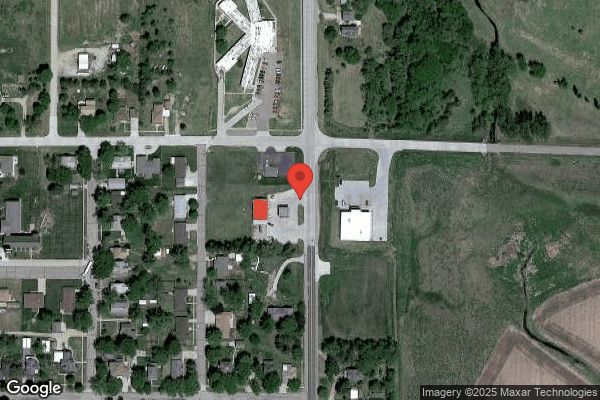
414 North Willson Street, BLUE HILL, NE 68930 (402) 756-2080
For profit - Limited Liability company 62 Beds AVID HEALTHCARE GROUP Data: November 2025 1 Immediate Jeopardy citation
Trust Grade
21/100
#174 of 177 in NE
Last Inspection: April 2025

Within standard 12-15 month inspection cycle. Federal law requires annual inspections.

Overview

The Pines at Blue Hill has a Trust Grade of F, indicating significant concerns and poor quality of care. Ranking #174 out of 177 facilities in Nebraska places it in the bottom half, and it is the second lowest in Webster County, suggesting limited local options for better care. Although the facility is showing signs of improvement, with issues decreasing from 15 to 11 over the past year, the overall situation remains troubling. Staffing is a concern, with a rating of 2 out of 5 stars and a high turnover rate of 69%, which is well above the state average. Additionally, there are serious issues such as the failure to properly train staff on elopement prevention, which affected residents at risk, and a dishwasher that was not sanitizing dishes properly, raising potential health risks for residents.
Trust Score
F
21/100
In Nebraska
#174/177
Bottom 2%
Safety Record
High Risk
Review needed
Inspections
Getting Better
15 → 11 violations
Staff Stability
⚠ Watch
69% turnover. Above average. Higher turnover means staff may not know residents' routines.
Penalties
✓ Good
$23,394 in fines. Lower than most Nebraska facilities. Relatively clean record.
Skilled Nurses
⚠ Watch
Each resident gets only 22 minutes of Registered Nurse (RN) attention daily — below average for Nebraska. Fewer RN minutes means fewer trained eyes watching for problems.
Violations
⚠ Watch
39 deficiencies on record. Higher than average. Multiple issues found across inspections.
★☆☆☆☆
1.0
Overall Rating
★★☆☆☆
2.0
Staff Levels
★★☆☆☆
2.0
Care Quality
★☆☆☆☆
1.0
Inspection Score
Stable
2024: 15 issues
2025: 11 issues

The Good

  • Full Sprinkler Coverage · Fire safety systems throughout facility
  • No fines on record

Facility shows strength in fire safety.

The Bad

1-Star Overall Rating

Below Nebraska average (2.9)

Significant quality concerns identified by CMS

Staff Turnover: 69%

23pts above Nebraska avg (46%)

Frequent staff changes - ask about care continuity

Federal Fines: $23,394

Below median ($33,413)

Minor penalties assessed

Chain: AVID HEALTHCARE GROUP

Part of a multi-facility chain

Ask about local staffing decisions and management

Staff turnover is elevated (69%)

21 points above Nebraska average of 48%

The Ugly 39 deficiencies on record

1 life-threatening
Apr 2025 11 deficiencies
CONCERN (D) 📢 Someone Reported This

A family member, employee, or ombudsman was alarmed enough to file a formal complaint

Potential for Harm - no one hurt, but risky conditions existed

Investigate Abuse (Tag F0610)

Could have caused harm · This affected 1 resident

**NOTE- TERMS IN BRACKETS HAVE BEEN EDITED TO PROTECT CONFIDENTIALITY** Licensure Reference Number 175 NAC 12-006.02(H) Based on record reviews and interviews, the facility failed to ensure that inter...

Read full inspector narrative →
**NOTE- TERMS IN BRACKETS HAVE BEEN EDITED TO PROTECT CONFIDENTIALITY** Licensure Reference Number 175 NAC 12-006.02(H) Based on record reviews and interviews, the facility failed to ensure that interventions were put into place to prevent further potential abuse or self-harm for 1 (Resident 190) of 1 sampled residents. The facility census was 38. Findings are: Record review of the policy Compliance with Reporting Allegations/Neglect Exploitation dated 10/2023 state the policy of this facility is to report all allegations of abuse/neglect/exploitation or mistreatment, including injuries of unknown sources and misappropriation of resident property are reported immediately to the Administrator of the facility and to other appropriate agencies in accordance with current state and federal regulations within prescribed time frames. The procedure states the following procedures will be initiated: 1. The licensed nurse will; -Respond to the needs of the resident and protect him/her from further incident, -Notify the Administrator or designee, -Notify the attending physician, family or legal guardian, and the medical director, -Document actions in the medical record, -Complete an incident report, and -Revise the resident's care plan if the residents medical, nursing, physical, mental or psychosocial needs or preferences change as a result of an incident of abuse. Record review of the Facility Assessment approved and dated 04/08/2025 by the facility administrator revealed on page 7 that the facility provides care for diseases/conditions and physical/cognitive disabilities including psychiatric/mood disorders such as psychosis (hallucinations, and delusions), impaired cognition, mental disorder, depression, bipolar disorder, Schizophrenia, post traumatic stress disorder, anxiety disorder, behavior that needs interventions, etc. Record review of the Medical Diagnoses revealed Resident 190 was diagnosed with schizoaffective disorder (bipolar type; mania and depression), non-suicidal self-harm, generalized anxiety disorder, borderline personality disorder, suicidal ideations, sleep apnea, insomnia, post-traumatic stress disorder, hypothyroidism, morbid obesity, and depression among others. Record review of the admission Minimum Data Set (MDS, a standardized assessment tool used to evaluate the health status of residents nursing homes which provides a comprehensive overview of a resident's functional capabilities and helps identify potential health issues used for care planning.) dated 7.26.2024 for Resident 190 revealed the resident had a Brief Interview for Mental Status (BIMS-used to assess a resident's cognitive function) of 14 meaning the resident was cognitively intact. During the testing period, Resident 190 was not depressed, sometimes felt lonely or isolated, had a worsening or behavior symptoms compared to the prior assessment but did not wander or reject cares, needed assistance with bathing but was able to most other activities of daily living with supervised assistance or independently, was unable to walk due to safety concerns, was occasionally incontinent of bowel and bladder, and had occasional pain. Medications included Antipsychotics for mood stabilization, antidepressants, and hypoglycemic's to lower blood sugars. Record review of the Incidents by Incident Type dated 04/15/2025 revealed that there were six incidents of self-harm recorded for Resident 190. The dates of the incidents were as follows: 7/30/2024, 7/31/2024, 8/23/2024, 8/29/2024, 9/25/2024, and 10/15/2024. Record review of the Resident Census revealed Resident 190 admitted , transferred and discharged on the following dates; -admitted to the facility on [DATE]. -Transferred to the hospital on [DATE] and readmitted to the facility on [DATE]. -Transferred to the hospital on [DATE] and readmitted to the facility on [DATE]. -Transferred to the hospital on [DATE] and readmitted to the facility on [DATE]. -Transferred to the hospital on [DATE] and discharged from facility on 10/29/2024. Record review of the Nursing Progress Notes printed on 04/16/2025 revealed the following: -7/30/2024 at 9:00 PM revealed Resident 190 had a self-inflicted laceration 3 centimeters (cm) long by 0.3 cm deep to inside of the left arm. Laceration was not actively bleeding. Resident 190 used the fingernails of two fingers on the right hand to cause the injury. The area was cleaned by the charge nurse and a bandage was applied. The progress notes revealed the incident was reported to the physician on 07/31/2024 at 5:00 AM by faxed communication. -07/31/2024 at 8:47 PM revealed the charge nurse was called to Resident 190's room by a medication aide who revealed Resident 190 was picking on the earlier injury found to the left arm. However, Resident 190 had also self-injured an area of the lower abdomen. Resident 190 was sitting up in bed. The charge nurse noted a laceration to the lower abdomen which was 6 cm by 1.5 cm with slow draining blood. The charge nurse attempted to clean area but Resident 190 would not allow the charge nurse to tend to the wound and continued to pick at wound. At 9:15 PM the charge nurse was able to speak with Resident 190 in the resident's room. After resident refused treatment to new self-inflicted abdominal wound and refused an as needed hydroxyzine from the charge nurse, Resident 190 allowed the charge nurse clean the wounds. The area to the resident's lower abdomen measured 6 cm x 1.5 cm and continued with slow draining of blood. The nurse cleansed the area to the resident's left upper arm, which measured 3 cm in length. When asked why Resident 190 hurt oneself, Resident 190 stated physical pain was better than emotional pain and told the charge nurse(gender) was very sad and wanted to die. The Nursing Assistant had told the charge nurse that Resident 190 was suicidal (wanted to kill self). The charge nurse called the guardian and attending physician for Resident 190. Resident 190 was transferred to a hospital for evaluation and treatment. -08/23/2024 at 7:45 PM revealed the nurse charge was called to Resident 190's room by a nursing assistant and found that Resident 190 had self-inflicted skin abrasion to upper chest with no active bleeding. The areas were measured, cleaned, and covered with a clear dressing. Resident had three areas above chest, one measuring 4 cm x 1.5 cm, 3 cm x 1 cm, and 3 cm x 1 cm. Resident 190 felt anxious at the time and did not think to ask for something for anxiety. The facility started Resident 190 on every 15 minute resident checks. The Director of Nursing (DON) and the Physician were both notified of the incident. -08/29/2024 at 8:01 PM revealed a nursing assistant notified the charge nurse that Resident 190 was cutting their stomach with their nails. When the charge nurse entered the room, Resident 190 was found actively using a piece of plastic to try and cut skin on upper middle abdomen. Resident 190's skin was cut open at the center of upper abdominal region and was bleeding. When the charge nurse asked Resident 190 if (gender) had harmed self, Resident 190 stated, yes and I'm gonna keep doing it. The charge nurse then asked if then asked about Resident 190's feelings and what had made Resident 190 start cutting their skin, Resident 190 had stated, I am just tired of it. Resident 190 was reportedly alert and oriented x 4 with a newly self-inflicted abrasion that was 1 cm in length and 0.3 cm in width. DON, physician, and guardian were notified of incident. Resident 190 was sent to ER via ambulance. -09/25/2024 at 12:00 PM revealed the charge nurse contacted the physician and was told of the injuries to Resident 190's arm which were reportedly significant. The physician called the emergency room and requested Resident 190 be admitted to the psychiatric floor of the hospital. -10/15/2024 at 7:50 PM revealed the charge nurse was notified Resident 190 had a pen-like object in Resident 190's left inner biceps (arm). Resident 190 refused scheduled medications and refused to state what (gender) was doing with the pen-like object. Later in the evening, at 10:30 PM another nursing assistant reportedly found Resident 190 scratching (gender) abdomen with a pen-like object. Resident 190 would not reveal what was being done with the pen once again. A skin assessment was completed of Resident 190 and wound measurements completed. The left medial upper arm wound measured 4 cm x 0.5 cm x 0.5 cm. The abdominal wound was not measured due to the refusal of Resident 190 to allow staff to look at the wound. Resident 190's physician was notified at 11:44 PM and orders were received to send Resident 190 to the emergency room. Law enforcement and Emergency Medical Technicians arrived at the facility and the resident was taken to the hospital. Record review of the Care Plan (a document developed for all nursing home residents to help to address both medical and non-medical concerns) printed on 04/15/2025 for Resident 190 revealed that only two updates were added to the care plan to prevent further harm or injuries after the following incidents: 7/30/2024, 7/31/2024, 8/23/2024, 8/29/2024, 9/25/2024, and 10/15/2024. -There was no update to the care plan for Resident 190 after the incidents on 07/30/2024 and 07/31/2024, after Resident 190 returned to the facility following a hospital stay and readmission to the facility on [DATE]. -There was no update to the care plan for Resident 190 after the incident on 08/23/2024. -There was an update to the care plan of Resident 190 added on 08/30/2024, the day after the resident was transferred to the hospital, which stated Resident 190 was to be evaluated by hospital for psychiatric needs. -There was no update to the care plan after Resident 190 was re-admitted on [DATE] following an incident on 8/29/2024 and a hospital stay. -There was no update to the care plan for Resident 190 after the incident on 09/25/2024 after Resident 190 returned to the facility following a hospital stay and readmission to the facility on [DATE]. -There was an update to the care plan of Resident 190 added on 10/15/2024, the day before the resident was transferred to the hospital, which stated Resident 190 was to be evaluated for wearing appropriate footwear. -There were no care plan updates that revealed preventative measures related to self-harm either while the resident was in the facility or upon return to the facility from hospital stays. Interview on 04/15/2025 at 3:20 PM with Registered Nurse (RN)-D revealed that care plans are usually updated at the time of the risk meeting and by the care plan coordinator or MDS personnel. RN-D had only been working in the facility about 6 weeks and was still learning the facility processes. Interview on 04/15/2025 at 4:15 PM with the Director of Nursing (DON) who stated that the care plans are updated after incidents and as needed by the DON, MDS coordinator, or nursing staff as needed. Interview on 04/16/2025 at 4:10 PM with the Facility Administrator (FA) confirmed no updates were completed in the care plans to prevent further self-harm because the facility didn't want to change any aspects of what the hospital, where Resident 190 had been admitted and released during each hospital stay, had told the facility to do. The FA further confirmed that the facility assessment stated the facility was able to care for residents with the types of disabilities that Resident 190 was diagnosed with and that the facility had not put their own interventions into place to care and prevent further harm to Resident 190.
CONCERN (D)

Potential for Harm - no one hurt, but risky conditions existed

Deficiency F0660 (Tag F0660)

Could have caused harm · This affected 1 resident

Licensure Reference Number 175 NAC 12-006.09(G) Based on interview and record review the facility failed to follow a resident's identified desired plans for discharge for 1 (Resident 30) of 5 sampled ...

Read full inspector narrative →
Licensure Reference Number 175 NAC 12-006.09(G) Based on interview and record review the facility failed to follow a resident's identified desired plans for discharge for 1 (Resident 30) of 5 sampled residents. The facility census was 38. Findings are: A record review of a facility policy titled Discharge Planning Process dated 09/13/2023 revealed it is the policy of the facility to develop and implement an effective discharge planning process that focuses on the resident's discharge goal. If discharge to the community is a goal, an active discharge care plan will be implemented. A record review of an admission Record revealed the facility admitted Resident 30 on 11/01/2024 with diagnoses that included Osteomyelitis (an infection in the bone) of the left foot, Type 2 Diabetes (a common form of diabetes mellitus that develops especially in adults and most often in obese individuals and that is characterized by hyperglycemia resulting from impaired insulin utilization coupled with the body's inability to compensate with increased insulin production), and Peripheral Vascular Disease (vascular disease affecting blood vessels outside the heart and especially those vessels supplying the extremities). The Quarterly Minimum Data Set (MDS, a federally mandated comprehensive assessment tool used to determine a resident's functional capabilities and helps nursing home staff identify health problems), dated 04/03/2025 revealed Resident 30 had a Brief Interview for Mental Status (BIMS, a brief screener that aids in detecting cognitive impairment) score of 12 indicating the resident was moderately cognitively impaired. Staff provided set up and clean up assistance with eating and the resident was dependent on staff assistance with bed mobility, transfers, and toilet use. The MDS was coded as the resident was the source of gathered information and that the resident did not have an active discharge plan and that the residents desire to return to the community was unknown or uncertain. A review of Resident 30's Care Plan Report on 04/14/2025 revealed a focus of Resident 30 expresses the desire to return to the community/their home with family dated 11/04/2024. A goal was listed of the resident will receive education, training, and therapy to achieve their discharge goal with a target date of 04/24/2025. Interventions were listed as having the team meet with the resident and family to determine needs to achieve the discharge goal and address barriers to the discharge goal dated 11/04/2024. In an interview on 04/14/2025 at 1:45 PM with Resident 30, the resident stated that they wanted to return to their family home. The resident stated that they felt the facility was not doing anything to assist them to return to their home or even a facility in their community to be closer to family and their home. In an interview on 04/15/2025 at 5:20 PM with the facility's Social Service Director (SSD), the SSD confirmed that Resident 30 wished to return to their home with family. The SSD confirmed there was no active plan in place at that time for the resident to achieve this goal. The SSD further confirmed that no referrals had been made to any agencies or facilities in the resident's community to assist the resident in returning to their home or a facility closer to their home and family.
CONCERN (D)

Potential for Harm - no one hurt, but risky conditions existed

Deficiency F0679 (Tag F0679)

Could have caused harm · This affected 1 resident

**NOTE- TERMS IN BRACKETS HAVE BEEN EDITED TO PROTECT CONFIDENTIALITY** Licensure Reference Number 175 NAC 12-006.09(H)(vi)(2) Based on observation, record review, and interview the facility failed to...

Read full inspector narrative →
**NOTE- TERMS IN BRACKETS HAVE BEEN EDITED TO PROTECT CONFIDENTIALITY** Licensure Reference Number 175 NAC 12-006.09(H)(vi)(2) Based on observation, record review, and interview the facility failed to provide individualized 1 on 1 activities and engage residents in facility activities for 1 of 5 residents reviewed (Resident 10). The facility census was 38. Findings are: Record review of the facility policy titled Activities dated 2/4/25 revealed that it is the facility policy to provide an ongoing program to support residents in their choice of activities based on their comprehensive assessment, care plan, and preferences. Facility sponsored group, individual, and independent activities will be designed to meet the interests of each resident. Activities will encourage both independence and interaction within the community. Activities refers to any endeavor, other than routine ADLs (Activities of Daily Living- basic everyday tasks including bathing, eating, dressing, getting in and out of bed, and toileting), in which a resident participates that is intended to enhance her/his sense of well-being and to promote or enhance physical, cognitive, and emotional health. These include, but are not limited to, activities that promote self-esteem, pleasure, comfort, education, creativity, success, and independence. Each resident's interests and needs will be assessed on a routine basis. Activities will be designed with the intent to enhance the resident's sense of well-being, belonging, and usefulness. The facility's activities will create opportunities for each resident to have a meaningful life and reflect the resident's interests and age. Residents are encouraged, but not mandated, to participate in scheduled activities. Special considerations will be made for developing meaningful activities for residents with dementia and/or special needs. All staff will assist residents to and from activities when necessary. Record review of the admission Record for Resident 10 dated 4/14/25 revealed that Resident 10 admitted into the facility on 7/18/24. There were diagnoses listed of blindness in both eyes, depression, and diabetes. Record review of the Minimum Data Set (MDS) (a mandatory comprehensive assessment tool used for care planning) dated 3/19/25 for Resident 10 revealed that Resident 10 felt down, depressed, or hopeless over half of the days of the assessment look-back period. The MDS revealed that Resident 10 felt lonely or isolated often. Resident 10 required substantial assistance from staff with standing from a sitting position, chair to bed transfer, and lying to sitting on the side of the bed. Resident 10 was dependent on staff for mobility. Active diagnoses included depression and blindness. Record review of the Care Plan (an individualized written interdisciplinary comprehensive plan detailing how to provide quality care for a resident) dated 4/14/25 for Resident 10 revealed that Resident 10 will be encouraged to be involved in daily decision making to their maximum capacity. The care plan revealed that Resident 10 is blind and staff are to explain procedures to the resident. Resident 10 is dependent for transfers and wheelchair mobility. Resident 10 is at risk for psychosocial well-being. Interventions included observe for resident feelings that include isolation and unhappiness causative factors, provide assistance to reduce or eliminate causative and contributing factors, and provide opportunities for Resident 10 to participate in care. The care plan revealed a focus for the resident's diagnosis of depression. Interventions included assisting Resident 10 in developing and providing the resident with a program of activities that is meaningful and of interest and to encourage and provide opportunities for exercise and physical activity. Record review of the Activity Participation Review dated 10/29/24 for Resident 10 revealed that Resident 10 liked 1:1 activities in the resident's room. The section titled Describe resident's favorite activities, special accomplishments, and/or new interests revealed that Resident 10 just liked to listen to people talk. Record review of the Activity Participation Review dated 3/6/25 for Resident 10 revealed that Resident 10 benefits from 1:1 activities in their room. The section titled Describe resident's favorite activities, special accomplishments, and/or new interests revealed that Resident 10 enjoyed talking and loved to tell stories about growing up or about their late spouse. Record review of the Multidisciplinary Care Plan assessment dated [DATE] for Resident 10 revealed that Activities staff were present at the care plan. The section titled Activity Summary revealed no needs or concerns at that time. The goal listed was for Resident 10 to attend one activity outside of the resident's room. The resident and family were unable to attend the care plan. Interview on 4/14/25 at 11:37 AM with a family member of Resident 10 revealed that they would like Resident 10 to be invited to activities such as TV trivia. The family member revealed that they had told the facility about this. Observation on 4/14/25 at 3:51 PM in the room of Resident 10 revealed that Resident 10 was lying in bed. A radio in the room was playing music. Observation on 4/15/25 at 8:44 AM in the room of Resident 10 revealed that Resident 10 was lying in bed. No lights in the room were on. The room was silent. No radio or other form of entertainment was on in the resident room. Interview on 4/15/25 at 8:44 AM with Resident 10 revealed that the resident was unaware of where staff were at. Resident 10 revealed that no staff had come to assist the resident or bring their breakfast. Observation on 4/15/25 at 10:06 AM outside the facility dining room revealed a large April Activities calendar posting on the wall. The calendar revealed that the activities scheduled for 4/15/25 included TV Trivia at 10:30 AM. Observation on 4/15/25 at 10:11 AM in the hallway outside the facility dining room revealed that an overhead page announced that TV Trivia would begin in the tv room at 10:30 AM. Interview 04/15/25 at 10:35 AM with the facility Activity Director (AD) revealed that TV trivia was a time filler and would be in the tv room if more residents showed up. Observation on 4/15/25 at 10:38 AM on the 400 hallway revealed that the facility AD walked through the 400 hall past the room of Resident 10. The AD did not enter the room of Resident 10. The AD continued through the 400 hall to the facility dining room without inviting any residents on the 400 hall to the TV trivia activity. Interview on 4/15/25 at 10:38 AM with the AD revealed that the AD did not invite Resident 10 to group activities since the resident was blind. The AD revealed that in-room [ROOM NUMBER]:1 activities were provided such as reading books to Resident 10. Observation on 4/15/25 at 10:42 AM outside the tv room revealed that the AD exited the 200 hall with Resident 14 and directed Resident 14 into the TV room. Observation on 4/15/25 at 10:43 AM in the TV room revealed the AD in the TV room starting the question/trivia on the tv. Three residents were present for the activity (including Resident 14). Resident 10 was not in attendance. Observation on 4/15/25 at 10:49 AM in the room of Resident 10 revealed that Resident 10 was lying on the bed. The resident room was dark with no lights on. No music or other entertainment was playing. Observation on 4/15/25 at 1:05 PM in the room of Resident 10 revealed Resident 10 seated in the recliner in the room with their feet up. The room was dark with no lights on. No music or other entertainment was playing. Observation on 4/15/25 at 2:32 PM in the room of Resident 10 revealed that Resident 10 sat in the recliner. The room was dark with no lights on. No radio, tv, or other entertainment was on. The overhead page announced that the movie Titanic and popcorn would start at 2:30 PM for residents. Observation on 4/15/25 at 2:47 PM in the tv room revealed that 2 residents sat in the tv room eating popcorn and watching the movie on the tv. Resident 10 was not in attendance. Observation 4/16/25 at 7:50 AM in the room of Resident 10 revealed that Resident 10 was lying in bed. The lights in the room were off and the room was dark. No radio or other entertainment was on. Observation on 4/16/25 at 9:05 AM in the room of Resident 10 revealed that Resident 10 remained in bed in the dark room. The room was silent with no radio or other entertainment. Observation on 4/16/25 at 9:32 AM in the room of Resident 10 revealed that the room door was closed. This surveyor knocked and entered. Resident 10 was lying in bed. The room was dark with no lights on. No radio or other entertainment was on. Observation on 4/16/25 at 9:52 AM revealed that Medication Aide-I (MA-I) entered the room of Resident 10 and checked Resident 10's blood pressure. The aide did not turn on the lights, radio, or offer any entertainment to Resident 10. Interview on 4/16/25 at 9:57 AM with MA-I revealed that Resident 10's mood can change daily and that MA-I does not invite Resident 10 to facility activities. MA-I was unaware of any 1:1 activities for Resident 10. Observation on 4/16/25 at 11:10 AM in the room of Resident 10 revealed that Resident 10 was lying in bed and the lights in the room were off. No radio or other entertainment was on. Interview on 4/16/25 at 2:02 PM with the AD confirmed that the only documentation related to activity participation for Resident 10 was the documentation in the care plan progress note that Resident 10 prefered 1:1 activities. The AD confirmed that the AD had no documentation of individual 1:1 activities provided to Resident 10. The AD revealed that nurse aides document the resident participation in activities. Record review of the medical record for Resident 10 revealed no evidence of 1:1 activities being provided to Resident 10. The medical record revealed no evidence of resident participation in activities. Interview on 4/16/25 at 2:10 PM with Nurse Aide (NA)-L revealed that Resident 10 does ask for staff to turn the radio on when the resident wants it on. NA-L was unaware of any 1:1 activities for Resident 10. Interview on 4/16/25 at 2:13 PM with Resident 10 revealed that Resident 10 would like to attend activities that might be of interest. Resident 10 confirmed that staff do not ask the resident to attend activities. Resident 10 revealed that they would like to be invited to activities. Observation on 4/16/25 at 2:22 PM outside the facility dining room revealed that the AD announced over the overhead paging system that the Banana Splits activity would be in the dining room at 2:30 PM for residents. Observation on 4/16/25 from 2:22 PM through 2:45 PM on the facility 400 hall revealed that no staff went to the room of Resident 10 to invite Resident 10 to the activity. Observation on 4/16/25 at 2:50 PM revealed facility residents in the dining room for the banana splits. Resident 10 was not in attendance. Observation on 4/16/25 at 2:50 PM in the room of Resident 10 revealed that Resident 10 was lying in bed. The room was dark with no lights on. No radio or other entertainment was on in the room. Interview on 4/16/25 at 5:20 PM with the Regional Director of Operations (RDO) confirmed that Resident 10 should be asked to attend activities and that the facility should have documentation of any 1:1 activities provided to the resident.
CONCERN (D)

Potential for Harm - no one hurt, but risky conditions existed

Quality of Care (Tag F0684)

Could have caused harm · This affected 1 resident

Licensure Reference Number 175 NAC 12-006.09(H)(iii)(2) Based on observation record review and interview, the facility failed to follow physician's orders to promote healing of a pressure related skin...

Read full inspector narrative →
Licensure Reference Number 175 NAC 12-006.09(H)(iii)(2) Based on observation record review and interview, the facility failed to follow physician's orders to promote healing of a pressure related skin injury for 1 (Resident 29) of 1 sampled resident. The facility census was 38. Findings Are: A record review of a facility policy titled Wound Treatment Management dated 11/28/2023 revealed to promote wound healing it is the policy of the facility to provide treatments in accordance with physician orders and current standards of practice. A record review of an admission Record revealed the facility admitted Resident 29 on 04/19/2024 with diagnoses of dementia (a usually progressive condition marked by the development of multiple cognitive deficits such as memory impairment, aphasia, and the inability to plan and initiate complex behavior) and Type 2 Diabetes Mellitus (a common form of diabetes mellitus that develops especially in adults and most often in obese individuals and that is characterized by hyperglycemia resulting from impaired insulin utilization coupled with the body's inability to compensate with increased insulin production). A record review of Resident 29's Quarterly Minimum Data Set (MDS, a federally mandated comprehensive assessment tool used to determine a resident's functional capabilities and helps nursing home staff identify health problems) dated 01/28/2025 revealed the resident had a Brief Interview for Mental Status (BIMS, a brief screener that aids in detecting cognitive impairment) score of 5/15 indicating the resident was severely cognitively impaired. The resident was dependent on substantial or maximum assistance with eating transfers, bed mobility and transfers. The resident was coded to have one pressure related skin injury on the MDS. The resident was also coded to receive Hospice care. A record review of Resident 29 Electronic Medical Health Record (EMR) revealed physician orders to wash the right buttock wound with soap and water or wound wash then to apply gauze soaked in Dakins (Sodium Hypochlorite) Solution for 5 minutes. In an observation completed on 04/15/2025 at 3:50 PM of wound care being provided to Resident 29 by Registered Nurse (RN)-D the following was observed: -RN-D soaked a white 4 by 4 inch piece of gauze with a clear liquid from a bottle labeled with the resident name and Sodium Hypochlorite (a broad-spectrum antimicrobial solution used for disinfection of a wound). The RN then assisted the resident to roll onto their left side. The RN pulled down the residents' white incontinence product and removed a tan bordered foam dressing from the residents' right upper buttock. The RN then placed the soaked piece of gauze over the wound and had the resident roll back onto their back. The RN stated that the gauze had to stay in place over the wound for 5 minutes. The RN did not cleanse the wound prior to placing the soaked gauze over the wound. In an interview completed on 04/15/2025 at 4:10 PM with RN-D, RN-D confirmed that they should have cleansed the wound as ordered by the physician prior to applying the soaked gauze. In an interview completed on 04/15/2024 at 5:00 PM with the facility Director of Nursing (DON) the DON confirmed that the RN did not follow the physician orders when completing the treatment for Resident 29.
CONCERN (D) 📢 Someone Reported This

A family member, employee, or ombudsman was alarmed enough to file a formal complaint

Potential for Harm - no one hurt, but risky conditions existed

Deficiency F0923 (Tag F0923)

Could have caused harm · This affected 1 resident

Licensure Reference Number 175 NAC 12-007.04(D) Based on observation, record review, and interview the facility failed to ensure that bathroom exhaust vent fans were functioning for 2 of 16 residents ...

Read full inspector narrative →
Licensure Reference Number 175 NAC 12-007.04(D) Based on observation, record review, and interview the facility failed to ensure that bathroom exhaust vent fans were functioning for 2 of 16 residents observed (Residents 34 and 10). The facility census was 38. Findings are: Record review of the facility's undated admission Agreement Attachment 3 titled Resident Rights revealed that the facility must treat each resident with respect and dignity and care for each resident in a manner and in an environment that promotes maintenance or enhancement of his or her quality of life. The resident has the right to a safe, clean, comfortable, and homelike environment. The facility must provide a safe, clean, comfortable, and homelike environment. The facility must provide housekeeping and maintenance services necessary to maintain a sanitary, orderly, and comfortable interior. A. Observation on 4/14/25 at 8:00 AM in the bathroom of Resident 10 revealed that the bathroom exhaust vent would not pull up a 1-ply square of toilet paper. Observation on 4/16/25 at 12:48 PM in the room of Resident 10 with the Facility Administrator (FA) confirmed that the bathroom exhaust vent would not pull up a 1-ply square of toilet paper. The FA confirmed that the bathroom exhaust vent was not functioning and needed repair. B. Observation on 4/14/25 at 8:04 AM in the bathroom of Resident 34 revealed that the bathroom exhaust vent would not pull up a 1-ply square of toilet paper. Observation on 4/16/25 at 12:46 PM in the room of Resident 34 with the FA confirmed that the bathroom exhaust vent would not pull a 1-ply square of toilet paper. The FA confirmed that the bathroom exhaust vent was not functioning and needed repair. Interview on 4/16/25 at 12:53 PM with the FA confirmed that the facility currently did not have a maintenance director. The FA confirmed that the bathroom exhaust vents are required to be maintained and kept functional.
CONCERN (E)

Potential for Harm - no one hurt, but risky conditions existed

Deficiency F0582 (Tag F0582)

Could have caused harm · This affected multiple residents

**NOTE- TERMS IN BRACKETS HAVE BEEN EDITED TO PROTECT CONFIDENTIALITY** Based on record review and interview the facility failed to ensure that the resident/resident representative was provided with t...

Read full inspector narrative →
**NOTE- TERMS IN BRACKETS HAVE BEEN EDITED TO PROTECT CONFIDENTIALITY** Based on record review and interview the facility failed to ensure that the resident/resident representative was provided with the required Centers for Medicare and Medicaid Services (CMS) notifications of the ending of their Medicare Part A skilled services (a program that covers the cost of short-term skilled nursing facility (SNF) care for up to 100 days in a SNF). This prevented the resident/resident representative from making an informed decision regarding their choice for further care and financial options, and of the right to appeal the decision. This affected 3 of 3 residents reviewed (Residents 30, 91, and 90). The facility census was 38. Findings are: Record review of the undated facility admission Agreement revealed that under written order from a physician, and as required in the comprehensive plan of care, the Facility will provide specialized rehabilitative services such as physical, occupational, and speech therapy by qualified personnel. The facility participates in the Medicare Program and is authorized to provide care and services to residents who are eligible for Medicare benefits. If the Resident is deemed eligible for Medicare benefits or Medicaid assistance, the laws and regulations governing those programs will control this Agreement. The undated Attachment N titled Form Instructions for the Notice of Medicare Non-Coverage (NOMNOC) revealed that a Medicare provider must deliver a completed copy of the Notice of Medicare Non-Coverage to beneficiaries receiving covered skilled nursing services (Medicare Part A skilled services). The NOMNOC must be delivered at least two calendar days before Medicare covered services end. The undated Attachment O titled Skilled Nursing Facility Advance Beneficiary Notice of Non-coverage (SNF ABN) revealed that it is notification that the nursing facility believes that the resident's care does not meet the Medicare coverage requirements. The resident may have to pay out of pocket for care. The attachment contained a line for documenting the date that out of pocket charges for care may begin, and an estimate of the cost of services. A. Record review of the admission Record dated 4/16/25 for Resident 30 revealed that Resident 30 admitted into the facility on [DATE]. Record review of the Resident Clinical Census (a record of the resident's dates of stay in the facility listing the payer type for the dates) dated 4/16/25 revealed that Resident 30 had Medicare Part A as the primary payer for their nursing skilled services beginning on 11/1/24. The resident's last day of Medicare Part A services was 1/16/25. The census revealed that Resident 30 remained in the facility with non-Medicare payer beginning on 1/17/25. (Resident 30 used only 77 of the 100 days of their Medicare Part A benefits). Record review of the Progress Note dated 1/15/25 at 9:58 AM for Resident 30 revealed that Resident 30's speech therapy was addressing recall, reasoning, and word finding. The note also indicated speech therapy would discontinue the following day. Record review of the Speech Therapy Discharge summary dated [DATE] for Resident 30 revealed that speech therapy for Resident 30 was discontinued on 1/16/25 due to Resident 30 reaching their highest practical level/maximum potential achieved (a provider initiated discharge from Medicare Part A services). Record review of the General Notes Report dated 4/16/25 for Resident 30 revealed that a NOMNOC was issued to Resident 30 due to meeting their maximum potential in therapy. Record review of the medical record for Resident 30 revealed no NOMNOC or SNF ABN for Resident 30. Interview on 4/16/25 at 8:47 AM with the facility's Business Office Manager (BOM) confirmed that the facility did not have the NOMNOC for Resident 30 and that an SNF ABN was not provided to Resident 30. Interview on 4/16/25 at 2:30 PM with the Facility Administrator (FA) confirmed that Resident 30 was discharged from Medicare Part A services due to reaching their maximum potential and that it was a facility initiated discharge from Medicare Part A services. The FA confirmed that Resident 30 did not discharge from Medicare Part A services voluntarily. The FA confirmed that Resident 30 was required to receive the beneficiary notifications, NOMNOC and SNF ABN, for the end of their Medicare Part A services. The FA confirmed that the facility did not provide the beneficiary notifications to Resident 30 as required. B. Record review of the admission Record dated 4/16/25 for Resident 91 revealed that Resident 91 admitted into the facility on [DATE] and discharged from the facility on 1/3/25. Record review of the Resident Clinical Census dated 4/16/25 for Resident 91 revealed that Resident 91 had Medicare Part A as the primary payer for their skilled nursing services beginning on 12/4/24. The last day of Medicare Part A services was 1/2/25. Resident 91 discharged from the facility on 1/3/25. (Resident 91 used only 31 of the 100 days of their Medicare Part A benefits). Record review of the Physical Therapy Discharge summary dated [DATE] for Resident 91 revealed that physical therapy for Resident 91 discontinued on 1/2/25 due to all therapy goals being met/achieved (a provider initiated discharge from Medicare Part A services). The Discharge Summary revealed that Resident 91 will discharge home with no services. Record review of the Progress Note dated 1/2/25 at 10:13 AM for Resident 91 revealed that Resident 91 is ready for discharge. Orders for discharge from the facility were requested from the resident's physician. Record review of the Progress Note dated 1/3/25 at 2:27 PM for Resident 91 revealed that Resident 91 discharged out of the facility and moved back to an Assisted Living Facility. Record review of the medical record for Resident 91 revealed no NOMNOC for Resident 91. Interview on 4/16/25 at 2:30 PM with the FA confirmed that Resident 91's discharge from Medicare Part A services was a facility initiated discharge. The FA confirmed that Resident 91 was required to receive the NOMNOC beneficiary notification since they were discharging from the facility immediately at the end of their Medicare Part A services. The FA confirmed that the facility did not provide the beneficiary notification to Resident 91 as required. C. Record review of the admission Record dated 4/16/25 for Resident 90 revealed that Resident 90 admitted into the facility on 1/8/25 and discharged from the facility on 2/26/25. Record review of the Resident Clinical Census dated 4/16/25 for Resident 90 revealed that Resident 90 had Medicare Part A as the primary payer for their skilled nursing services beginning on 1/8/25. The last day of Medicare Part A services was 2/12/25. (Resident 90 used only 32 of the 100 days of their Medicare Part A benefits). Resident 90 remained in the facility with private pay for care beginning on 2/13/25 until their discharge from the facility on 2/26/25. Record review of the Speech Therapy Discharge summary dated [DATE] for Resident 90 revealed that speech therapy for Resident 90 was discontinued on 2/13/25 due to Resident 90 reaching their highest practical level/maximum potential achieved (a provider initiated discharge from Medicare Part A services). Record review of the Progress Note dated 2/3/25 at 11:36 AM revealed that the Power of Attorney for Resident 90 was contacted regarding an update on Resident 90 and discussion of the plans for Resident 90 after therapy discharges the resident. Therapy is telling the resident that the resident has hit a plateau. Record review of the medical record for Resident 90 revealed no NOMNOC or SNF ABN for Resident 90. Interview on 4/16/25 at 2:30 PM with the FA confirmed that Resident 90 was discharged from Medicare Part A services due to reaching their maximum potential and that it was a facility initiated discharge from Medicare Part A services. The FA confirmed that Resident 90 did not discharge from Medicare Part A services voluntarily. The FA confirmed that Resident 90 was required to receive the beneficiary notifications, NOMNOC and SNF ABN, for the end of their Medicare Part A services. The FA confirmed that the facility did not provide the beneficiary notifications to Resident 90 as required.
CONCERN (E) 📢 Someone Reported This

A family member, employee, or ombudsman was alarmed enough to file a formal complaint

Potential for Harm - no one hurt, but risky conditions existed

Safe Environment (Tag F0584)

Could have caused harm · This affected multiple residents

**NOTE- TERMS IN BRACKETS HAVE BEEN EDITED TO PROTECT CONFIDENTIALITY** Licensure Reference Number 175 NAC 12-006.19(A) Licensure Reference Number 175 NAC 12-006.19(B) Based on observation, record rev...

Read full inspector narrative →
**NOTE- TERMS IN BRACKETS HAVE BEEN EDITED TO PROTECT CONFIDENTIALITY** Licensure Reference Number 175 NAC 12-006.19(A) Licensure Reference Number 175 NAC 12-006.19(B) Based on observation, record review, and interview, the facility failed to ensure that rooms were clean and maintained for 5 of 16 residents observed (Residents 33, 10, 15, 2, and 29). The facility census was 38. Findings are: Record review of the facility's undated admission Agreement Attachment 3 titled Resident Rights revealed that the resident has the right to a dignified existence. A facility must treat each resident with respect and dignity and care for each resident in a manner and in an environment that promotes maintenance or enhancement of his or her quality of life. The resident has the right to a safe, clean, comfortable, and homelike environment. The facility must provide a safe, clean, comfortable, and homelike environment. The facility must provide housekeeping and maintenance services necessary to maintain a sanitary, orderly, and comfortable interior including adequate and comfortable lighting levels in all areas. A. Observation on 4/14/25 at 7:57 AM in the bathroom of Resident 33 revealed that the bathroom was dark. A dull light on the left side above the sink was on. The light on the right side above the sink was not functioning. The ceiling light was dull. Observation on 4/16/24 at 12:47 PM in the room of Resident 33 with the Facility Administrator (FA) confirmed that the light level in the resident's bathroom was low. The FA confirmed that the light on each side of the sink is now working but dull with the yellowed covers on them. The FA confirmed that the light in the ceiling is not a high enough [NAME] bulb to provide sufficient lighting. B. Observation on 4/14/25 at 8:00 AM in the room of Resident 10 revealed that there was an approximately 1 inch gap between the bedroom carpet and the bathroom vinyl floor per visual measurement. The threshold to cover the gap was missing. Observation on 4/16/25 at 12:48 PM in the room of Resident 10 with the FA confirmed that the gap between the carpet of the resident room and the bathroom floor entry needed to be repaired. The FA confirmed that the threshold was missing and needed to be fixed. C. Observation on 4/14/25 at 8:11 AM in the bathroom of Resident 15 revealed that the water in the sink was not draining as the water was running. The water remained in the sink after the water was shut off. Observation on 4/16/25 at 12:42 PM with the FA confirmed that the bathroom sink of Resident 15 was not draining as it should and that it was in need of repair. D. Observation on 4/14/25 at 9:47 AM in the bathroom of Resident 2 revealed that the bathroom exhaust vent cover was soiled with dark dusty debris. The inside of the toilet bowl was stained with scratches and black marks. Observation on 4/16/25 at 12:51 PM in the room of Resident 2 with the FA confirmed that the bathroom exhaust vent was soiled with gray fuzzy debris and rust-like debris and needed to be cleaned. The FA confirmed that the toilet bowl was scratched and needed to be replaced. E. Observation on 4/14/25 at 1:03 PM in the bathroom of Resident 29 revealed that the bathroom exhaust vent was soiled with fuzzy dark debris. Observation on 4/16/25 at 12:52 PM in the room of Resident 29 with the FA confirmed that the bathroom exhaust vent is soiled with gray fuzzy debris and rust-like debris and needed to be cleaned. Interview on 4/16/25 at 12:53 PM with the FA confirmed that the facility needed to address the cleaning and maintenance issues observed for Residents 33, 10, 15, 2, and 29.
CONCERN (E) 📢 Someone Reported This

A family member, employee, or ombudsman was alarmed enough to file a formal complaint

Potential for Harm - no one hurt, but risky conditions existed

Unnecessary Medications (Tag F0759)

Could have caused harm · This affected multiple residents

Licensure Reference Number 175 NAC 12-006.10(D) Based on observation, record review and interview; the facility failed to ensure a medication error rate of less than 5%. Observations of 27 medications...

Read full inspector narrative →
Licensure Reference Number 175 NAC 12-006.10(D) Based on observation, record review and interview; the facility failed to ensure a medication error rate of less than 5%. Observations of 27 medications administered revealed 13 errors for 3 (Residents 194, 13, and 17) of 3 sampled residents, resulting in an error rate of 48.15%. The facility census was 38. Findings are: Record review of the policy Medication Errors dated 08/01/2023 revealed the purpose of the policy is to provide protections for the health, welfare, and rights of each resident ensuring residents receive care and services safely in an environment free of significant medications errors. Under the subheading Policy Explanation and Compliance stated the facility must ensure that it is free of medication error rates of 5% or greater as well as significant medication error events. Paragraph 4 states that medication errors include errors in administration times. Paragraph 7 stated to prevent medication errors and ensure safe medication administration, nurses should verify the following; (a) right medication, dose route, and time of administration. Record Review of the policy Medication Administration dated 04/2025, revealed the policy is to ensure that medications are administered by individuals legally authorized to do so in the state as ordered by the physician and in accordance with professional standards of practice. Furthermore, the policy states under the subheading Policy Explanation and Compliance Guidelines sentence 10 that individuals must ensure that the six rights of medication administration are followed including (e) the right time. A. Record review of Resident 17's Electronic Medication Administration Record (EMAR) revealed an order for Levothyroxine 112 micrograms (mcg) to be given 30 minutes prior to meals in the morning, Omeprazole 40 milligrams (mg) to be given each morning one hour before meals, and cariprazone 1.5 mg daily. Observation on 04/14/2025 at 8:57 AM revealed Medication Aide (MA)-C prepared and administered medications for Resident 17 that included Levothyroxine (a thyroid mediation) 112 mcg and Omeprazole (reduces stomach acid) 40 mg while the resident was seated in the dining room eating breakfast. Medications were given whole and mixed with pudding prior to administration. Cariprazine (for schizophrenia) was not available. Interview on 04/14/2025 at 10:00 AM with MA-C confirmed the levothyroxine and the omeprazole were given while Resident 17 was eating breakfast. MA-C further confirmed that the cariprazine was not available and had not been given. The pharmacy had been contacted on 4/13/2025 and MA-C sent another note to the pharmacy 4/14/2025 to request the medication. MA-C then informed the charge nurse that there was still no cariprazine for the resident. B. Record review of the EMAR for Resident 194 revealed that all of the medications for Resident 194 were red, which indicated they were overdue. The medications included orders for Eliquis (a blood thinner) 5 mg twice daily, lasix (a diuretic) 80 mg daily, atorvastatin (for high cholesterol) 10 mg daily, and citalopram (antidepressant) 20 mg daily were all due at 8:00 AM. The allopurinol (for gout) 200 mg daily, enalapril 5 mg daily, and metoprolol 100 mg twice daily were due at 9:00 AM. Observation on 04/14/2025 at 9:40 AM revealed MA-C prepared and administered Eliquis, Lasix, allopurinol, atorvastatin, citalopram, enalapril, and metoprolol for Resident 194. Interview on 04/14/2025 at 10:00 AM with MA-C confirmed that all of the medications that were ordered to be given to Resident 194 at 8:00 AM were administered late. C. Record review of Resident 13's EMAR revealed orders for Senna/Docusate (a laxative) 8.6 mg/50 mg 2 tablets every 12 hours, amiodarone (for irregular heartbeat) 200 mg daily, aspirin 81 mg daily, carvedilol (for high blood pressure) 3.125 mg twice daily with food, clopidogrel (a blood thinner) 75 mg daily, spironolactone (a diuretic) 25 mg one half tablet daily, and Flomax 0.8 mg daily. Observation on 04/14/2025 at 11:28 AM as MA-C prepared and administered medications for Resident 13 which were all ordered to be given at 8:00 AM. The resident had eaten very little of the breakfast served at 8:00 AM and was lying in bed at the time of administration. Interview on 4/14/2025 at 11:30 AM with MA-C who confirmed that all of the medications were administered late. MA-C also confirmed that the carvedilol was supposed to be given with food, and the resident had not eaten nor had any type of snack been given to the resident at the time of the medication administration.
CONCERN (E) 📢 Someone Reported This

A family member, employee, or ombudsman was alarmed enough to file a formal complaint

Potential for Harm - no one hurt, but risky conditions existed

Infection Control (Tag F0880)

Could have caused harm · This affected multiple residents

B. A review of a facility policy titled Wound Treatment Management dated 11/28/2023 revealed that to promote wound healing the facility will provide treatments in accordance with current standards of ...

Read full inspector narrative →
B. A review of a facility policy titled Wound Treatment Management dated 11/28/2023 revealed that to promote wound healing the facility will provide treatments in accordance with current standards of practice and physician orders. A review of CDC Guideline for Hand Hygiene in Health Care Settings dated 2007 revealed the use of alcohol-based hand rub or washing with soap and water should be done following the removal of gloves. In an observation completed on 04/15/2025 at 3:50 PM of wound care being provided by Registered Nurse (RN)-D the following was observed: -RN-D donned gloves to both hands and applied a moist piece of gauze to Resident 29's upper right buttock. The RN then removed their gloves and donned another pair of gloves. The RN then proceeded to apply another piece of moist gauze to the resident's left heel and hold that gauze in place with their gloved hand. The RN did not perform hand hygiene between glove changes. -RN-D removed their gloves after holding the moist gauze in place to the resident's heel. The RN then donned new gloves to both hands and obtained a pair of scissors and clean dressing from the bed side table. The RN did not perform hand hygiene between glove changes. -RN-D applied a new clean dressing to the resident's right upper buttock wound with gloved hands. The RN removed the gloves from their hands and donned another pair of gloves on both hands. The RN then obtained a package labeled Kerlex and opened the package with their gloved hands. The RN did not perform hand hygiene between glove changes. In an interview completed on 04/15/2025 at 4:15 PM with RN-D, RN-D confirmed that they did not perform hand hygiene between glove changes during the wound care. The RN stated hand hygiene should have been performed between each glove change by washing hands with soap and water or using alcohol-based hand rub. In an interview completed on 04/15/2025 with the facility Director of Nursing (DON), the DON confirmed that hand hygiene should be performed between glove changes by washing hands with soap and water or using alcohol-based hand rub. Based on record review, interview, and observation; the facility failed to ensure that hand hygiene was performed between residents during medication administration to 3 (Residents 17, 31, and 26) of 3 sampled residents and during wound care for 1 (Resident 29) of 1 sampled resident to prevent the potential for cross contamination and infection. The facility census was 38. Findings are: Record review of CDC Guideline for Hand Hygiene in Health Care Settings dated 2007 revealed the use of alcohol-based hand rub or washing with soap and water should be done between patients when performing cares. A. Observation on 4/14/2025 at 9:00 AM of Medication Aide (MA) C while passing medications in the dining room. MA-C did not perform hand hygiene as required between Residents 17, 31, and 26 while preparing and administering medications. Interview on 4/14/2025 at 9:20 AM with MA-C confirmed the MA did not perform hand hygiene as required during medication preparation and administration between Residents 17, 31, and 26.
CONCERN (F) 📢 Someone Reported This

A family member, employee, or ombudsman was alarmed enough to file a formal complaint

Potential for Harm - no one hurt, but risky conditions existed

Food Safety (Tag F0812)

Could have caused harm · This affected most or all residents

Licensure Reference Number 175 NAC 12-006.11(E) Based on observation, interview, and record review; the facility failed to ensure that the facility dishwasher was operating, ensuring facility dishes a...

Read full inspector narrative →
Licensure Reference Number 175 NAC 12-006.11(E) Based on observation, interview, and record review; the facility failed to ensure that the facility dishwasher was operating, ensuring facility dishes and utensils were sanitized when washed with the facility dishwasher which had the potential to affect all residents utilizing dishware from the kitchen. The facility also failed to ensure that staff handled foods and assisted residents with meals in a sanitary manner to prevent the potential for cross contamination and foodborne illness. This affected 3 of 20 residents observed (Residents 1, 192, and 11). The facility census was 38. Findings are: A. A record review of an undated facility policy titled Dishwashing: Machine Operation Guideline and Procedure Manual revealed wash temperature must reach a minimum of 120 degrees. If temperatures are not accurate, stop using the dish machine immediately. In an observation on 04/13/2025 at 6:10 PM, it was observed that the facility dishwashing machine temperature during the wash cycle was 98 degrees. In an interview completed on 04/13/2025 at 6:20 PM with the Facility Administrator (FA) the FA confirmed that the facility dishwashing machine was reaching the minimum temperature of 120 degrees. FA stated dietary staff would use the 3-sink sanitization system and they would contact someone to come and examine and fix the dishwasher. In an observation on 04/14/2025 at 7:45 AM, it was observed that the facility dishwashing machine was in operation/being utilized to wash dishes. The temperature during the wash cycle was observed to be 100 degrees. In an interview on 04/14/2025 at 7:45 AM with Cook-B, Cook-B confirmed that they were using the dishwashing machine for the cleaning and sanitization of dishes. The [NAME] also confirmed that the dishwashing machine temperature was not reaching 120 degrees as specified by policy. In an interview completed on 04/14/2025 at 8:15 AM with the FA, the FA confirmed that the dishwasher should not be being used due to not achieving the 120 degrees as specified by policy. B. Record review of the facility policy titled Food Safety Requirements dated 3/26/25 revealed that it is the policy of the facility to store, prepare, distribute, and serve food in accordance with professional standards for food service safety. Foods and beverages shall be distributed and served to residents in a manner to prevent contamination. Strategies include: washing hands between contact with residents and use of gloves when touching and assisting with ready-to-eat foods. Staff shall adhere to safe hygienic practices (food safety processes used to prevent the spread of germs and illnesses) to prevent contamination of foods from hands or physical objects. Staff shall wash hands according to facility procedures. Staff shall not touch food with bare hands-use gloves, tongs, deli paper, or spatula. Observation on 4/13/25 at 6:27 PM in the facility dining room revealed that Nurse Aide (NA)-A picked up a piece of cookie from the plate of Resident 1 with their bare hand and fed it to Resident 1. NA-A did not perform hand sanitization (hand washing using soap and water or an alcohol-based hand rub (ABHR) to remove germs for reducing the risk of transmitting infection among patients and health care personnel). NA-A went to another table and picked up the fork from Resident 192. NA-A fed a bite of food to Resident 192 using the fork. NA-A sat next to Resident 192 and rubbed the top of the tire of the resident's wheelchair wheel with their bare right hand as NA-A visited with Resident 192. NA-A handed the fork to Resident 192. Resident 192 used the fork to take a few bites of food. NA-A did not perform hand sanitization. NA-A returned to the table of Resident 1. NA-A picked up a piece of cookie from the plate in front of Resident 1 with the bare right hand and fed the piece of cookie to Resident 1. NA-A did not perform hand sanitization. Resident 11 sat across the table from Resident 1. Resident 11 tried to use a fork to eat the meat on their plate. Resident 11 was unable to cut up the meat. NA-A did not perform hand sanitization. NA-A went to Resident 11 and picked up the fork. NA-A used the fork to cut up the meat on the plate for Resident 11. NA-A explained to Resident 11 where the foods were located on the plate. Resident 11 used the fork to take a bite of food. NA-A did not perform hand sanitization. NA-A returned to Resident 1 and used the bare hands to adjust the clothing protector on Resident 1. NA-A did not perform hand sanitization. NA-A went to Resident 192 and rubbed the resident's shoulder with the bare left hand. NA-A did not perform hand sanitization. NA-A went to Resident 11 and used their bare left hand and picked up the right hand of Resident 11 and removed the fork from Resident 11's hand. NA-A picked up a spoon from the table in front of Resident 11 with their bare hands and placed the spoon in the right hand of Resident 11. NA-A did not perform hand sanitization. NA-A went to the table of Resident 192 and picked up the spoon from the plate of Resident 192 with their bare hand. NA-A fed a spoonful of meat to Resident 192. The time was now 6:30 PM. Resident 8 walked with a walker to the table of Resident 1. NA-A did not perform hand sanitization. NA-A used the bare hands to tuck the front of Resident 8's shirt into their pants and tied the waist string of the pants for Resident 8. NA-A went to the alcohol based hand sanitizer dispenser on the wall and applied sanitizer and rubbed the hands together. NA-A went to Resident 1 and picked up a piece of cookie from the plate in front of Resident 1 with the bare hand and fed it to Resident 1. NA-A picked up another piece of the cookie from the plate in front of Resident 1 with the left bare hand and fed the piece of cookie to Resident 1. NA-A told Resident 1 that was all of the cookie and offered to check and see if the kitchen had any more cookies if the resident wanted more. Resident 1 responded yes that they would like another cookie. NA-A went to the kitchen service window, obtained a plate with a chocolate chip cookie, and carried the plate with the cookie to the table of Resident 1. NA-A sat the plate on the table in front of Resident 1. NA-A picked up the cookie with their bare hands and began to break the cookie into small pieces. Interview on 4/16/25 at 11:25 AM with the Regional Director of Operations (RDO) confirmed that staff assisting residents with meals are expected to perform hand sanitization between residents and after contact with resident items. The RDO confirmed that gloves are to be worn when touching ready to eat foods and not handle foods with the bare hands.
CONCERN (F)

Potential for Harm - no one hurt, but risky conditions existed

QAPI Program (Tag F0867)

Could have caused harm · This affected most or all residents

Licensure Reference Number 175 NAC 12-006.07 Based on interview and record review the facility failed to implement Quality Assurance and Performance Improvement (QAPI) processes for identified concern...

Read full inspector narrative →
Licensure Reference Number 175 NAC 12-006.07 Based on interview and record review the facility failed to implement Quality Assurance and Performance Improvement (QAPI) processes for identified concerns with ongoing evaluation. This had the potential to affect all of the residents residing in the facility. Facility census was 38. Findings are: A record review of a facility policy titled Quality Assurance and Performance Improvement (QAPI) dated 2024 revealed the facility is to develop, implement, and maintain an effective, comprehensive, QAPI program. The facility will draw data from multiple sources including grievance logs. The data is used to develop and monitor performance indicators. The QAPI process key components include tracking and measuring performance, establishing goals, identifying and prioritizing deficiencies, systematic analyzation of underlying causes, and developing and implementing corrective action or performance improvement activities. In an interview on 04/16/2025 at 1:30 PM with the Facility Administrator (FA), the FA stated that they were the QAPI Committee Coordinator. The FA stated one source of information for process improvements were resident grievances. The FA confirmed that resident grievances for the prior month were reviewed during the meeting including interventions for resolution of the grievance and outcome. A record review of an undated facility-supplied document titled QAA Committee Meeting Agenda, under section 9 Quality of Life Review, grievances was a listed topic. A record review of a facility supplied document titled Resident Greivance Log and dated 12/2024 revealed 3 grievances were filed by residents, all involving personal cares. A record review of a facility supplied document titled QAPI Meeting dated January 2025 under the Social Services section labeled Grievances, 1 grievance was listed for the month of December 2024. A record review of a facility supplied document titled Resident Greivance Log and dated 02/2025 revealed 2 grievances were filed by residents involving bathing and resident appearance. A record review of a facility supplied document titled QAPI Meeting Dated March 2025 under the Social Services section labeled Grievances, no grievances were listed for the month of February 2025. In an interview completed on 04/16/2025 at 1:45 PM the FA stated the facility currently had no process improvement plans active. The FA confirmed that resident grievances were a source for information and process improvements. The FA confirmed that the grievances filed by residents in December 2024 and February 2025 were not reviewed during the QAPI meeting and process improvement plans were not developed.
May 2024 13 deficiencies
CONCERN (D)

Potential for Harm - no one hurt, but risky conditions existed

Deficiency F0578 (Tag F0578)

Could have caused harm · This affected 1 resident

**NOTE- TERMS IN BRACKETS HAVE BEEN EDITED TO PROTECT CONFIDENTIALITY** Based on record review and interview; the facility staff failed to ensure the resident choice for advance directive (a written s...

Read full inspector narrative →
**NOTE- TERMS IN BRACKETS HAVE BEEN EDITED TO PROTECT CONFIDENTIALITY** Based on record review and interview; the facility staff failed to ensure the resident choice for advance directive (a written statement of a person's wishes regarding medical treatment, made to ensure those wishes are carried out should the person be unable to communicate), and code status (an instruction from you to your medical team about what the medical team should do if you have a cardiac or respiratory arrest) was documented accurately throughout the resident medical record for 2 (Resident 27 and 23) of 16 residents reviewed. The facility staff identified a census of 34. Findings are: The undated facility policy titled, Medical Emergency Response revealed under policy explanation and compliance guidelines: -The employee who first witnesses or is first on the site of a medical emergency, that are trained, will initiate immediate action, including CPR as appropriate, basic first aid and summon for assistance. -CPR will continue unless: a. there is a DNR order in place. b. there are obvious signs of clinical death (rigor mortis, dependent lividity, decapitation, transection, or decomposition). c. initiating CPR could cause injury or peril to the rescuer. -If the resident experiences cardiac arrest, the facility must provide basic life support, including CPR, prior to the arrival of emergency medical services, and: a. in accordance with the resident's advance directives, or b. in absence of advance directives or a Do Not Resuscitate (DNR) order, and c. if the resident does not show signs obvious signs of clinical death. A. A record review of Resident 27's admission record dated [DATE] revealed the resident Code Status as Full Code (if a person's heart stopped beating and/or they stopped breathing, all resuscitation procedures will be provided to keep them alive). A record review of Resident 27's active Physician Orders dated revealed the order for Full Code with an order start date of [DATE]. A record review of Resident 27's advance directive dated [DATE] with a physician signature on [DATE] revealed the request for Resident 27's wish to not have Cardiopulmonary Resuscitation (CPR, a lifesaving attempt combination of rescue breathing and chest compressions when someone's heart has stopped). On [DATE] at 4:23 PM an interview was conducted with the Director of Nursing (DON) on the process for checking code status. The DON indicated that the admission record is the first place to verify for a code status because it is quickest to locate, and the resident orders is another location for confirmation. During the interview, the DON was asked about the code status for Resident 27, which revealed the advance directive found in the Electronic Medical Record (EMR). The DON verified dates and confirmed the advance directive with a request to be DNR (A type of advance directive in which a person states that health care providers should not perform cardiopulmonary resuscitation (restarting the heart) if his or her heart or breathing stops), was not updated timely and should have been changed to reflect the Resident's wishes. B. Review of an admission Record indicated the facility admitted Resident 23 on [DATE] with diagnoses that include Chronic Obstructive Pulmonary Disease, which is a lung disease that causes restricted airflow in the lungs and breathing problems, and Absence of the Left Leg above the Knee. The admission Minimum Data Set (MDS, which is a mandatory comprehensive assessment tool that measures the health status of nursing home residents and is used for care planning), with the Assessment Reference Date of [DATE], revealed that Resident 23 had a Brief Interview for Mental Status (BIMS) score of 15 indicating the resident was cognitively intact. The MDS reflected that staff provided set up and clean up assistance with eating, and supervision or touching assistance with bed mobility, transfers, and toilet use. A review of Resident 23's Care Plan, which is a written interdisciplinary comprehensive plan detailing how to provide quality care for a resident, dated [DATE] revealed Resident 23 had physician orders indicating the resident was a full code. A record review of the facility supplied document labeled Advance Directive Information dated [DATE] revealed Resident 32 indicated they did not want Cardiopulmonary Resuscitation (CPR), which is an emergency lifesaving procedure performed when the heart stops beating, performed. This document revealed Resident 23's signature dated [DATE] and a physician's signature dated [DATE]. A record review of the facility supplied document labeled Order Summary Report dated [DATE] revealed a physician order dated [DATE] for a Full Code status for Resident 23. In an interview on [DATE] at 4:07 PM with the facility Director of Nursing (DON), the DON confirmed that the resident and the residents physician had signed indicating the resident did not want CPR to be performed on [DATE] and the residents Care Plan and Physician order did not accurately reflect the residents wishes to not have CPR performed.
CONCERN (D) 📢 Someone Reported This

A family member, employee, or ombudsman was alarmed enough to file a formal complaint

Potential for Harm - no one hurt, but risky conditions existed

Deficiency F0582 (Tag F0582)

Could have caused harm · This affected 1 resident

**NOTE- TERMS IN BRACKETS HAVE BEEN EDITED TO PROTECT CONFIDENTIALITY** Licensure Reference Number 175 NAC 12-006.05(1) Based on record review and interviews; the facility failed to provide 2 (Residen...

Read full inspector narrative →
**NOTE- TERMS IN BRACKETS HAVE BEEN EDITED TO PROTECT CONFIDENTIALITY** Licensure Reference Number 175 NAC 12-006.05(1) Based on record review and interviews; the facility failed to provide 2 (Resident 88 and Resident 91) of 3 sampled residents with the cost of continuing to receive skilled Medicare Services, a choice of whether to appeal the facilities Medicare determination to discontinue services, or the reason for the discharge from skilled Medicare services. The facility census was 34. Findings are: A review of the policy Advance Beneficiary Notices dated 08/02/2023 revised on 08/29/2023 state: -It is the policy of this facility to provide timely notices regarding Medicare eligibility and coverage. -The Business Office Manager is the contact person for information regarding Medicare eligibility, coverage, and applying for benefits. -The facility shall inform Medicare beneficiaries of his or her potential liability for payment. -Additional notices shall be issued to Medicare beneficiaries when appropriate. a. If a reduction in care occurs and the beneficiary wants to continue to receive the care that is no longer considered medically reasonable and necessary, the facility shall issue an ABN prior to furnishing non-covered care. b. If services are being terminated and the beneficiary wants to continue receiving care that is no longer considered medically reasonable and necessary, the facility shall issue an ABN prior to furnishing non-covered care. c. If a resident has skilled benefit days remaining and elects the Hospice benefit, the facility shall issue an ABN and NOMNC when the coverage criteria for dual eligibility for Part A skilled and Hospice are not met. -To ensure the resident, or representative has enough time to make a decision whether or not to receive the services in question and assume financial responsibility, the notice shall be provided at least two days before the end of a Medicare covered Part A stay or when all or Part B therapies are ending. A. A review of Resident 88's SNF Beneficiary Notification Review revealed, the Resident was admitted under Medicare A services on 04/01/2024. Further review revealed that the facility initiated the discharge from Medicare Part A services when benefit days were remaining. A review of Resident 88's Advanced Beneficiary Notice (ABN- form provided to inform the resident/representative of the reason Medicare would not continue to pay, the cost of continuing to receive skilled services, and an option to appeal the facilities decision about coverage) was not offered to the resident or representative. Resident remained in the facility as private pay starting on 04/05/2024. During an interview on 05/21/2024 at 1:24 PM the Business Office Manager (BOM) confirmed the facility did not offer or present Resident 88 or their responsible party with the cost of receiving skilled care once the facility determined services would no longer be covered by Medicare. B. A review of Resident 91's SNF Beneficiary Notification Review revealed, the Resident was admitted under Medicare A services on 12/03/2023. Further review revealed that the facility initiated the discharge from Medicare Part A services when benefit days were remaining. A review of Resident 91's Notice of Medicare Non-Coverage (NOMNC) revealed the resident/resident representative was not notified of their appeal options. The resident discharged home on [DATE]. During an interview on 05/21/2024 at 1:24 PM the Business Office Manager (BOM) confirmed that an appeal option was not offered or presented to Resident 91 or their responsible party.
CONCERN (D) 📢 Someone Reported This

A family member, employee, or ombudsman was alarmed enough to file a formal complaint

Potential for Harm - no one hurt, but risky conditions existed

Transfer Requirements (Tag F0622)

Could have caused harm · This affected 1 resident

Licensure Reference Number 175NAC 12-006.05(5)a Based on record review and interviews; the facility failed to notify the resident/resident representative of the facility decision to discharge the resi...

Read full inspector narrative →
Licensure Reference Number 175NAC 12-006.05(5)a Based on record review and interviews; the facility failed to notify the resident/resident representative of the facility decision to discharge the resident from the facility for 1 (Resident 89) of 3 sampled residents. This prevented the resident from returning to the facility. The facility census was 34. Findings are: Record review of the facility policy titled Transfer and Discharge (including AMA- against medical advice) dated 8/1/23 revealed it is the policy of the facility to permit each resident to remain in the facility and not initiate transfer or discharge for the resident from the facility except in limited circumstances. The facility will evaluate and determine the level of care needed for the resident prior to admission to ensure the facility's ability to meet the resident's needs. Once admitted , the resident has the right to remain at the facility unless the transfer or discharge is necessary for the resident's welfare and the resident's needs cannot be met in the facility, or the health of individuals in the facility would be endangered. The facility's transfer/discharge notice will be provided to the resident and the resident's representative. Generally, the notice must be provided at least 30 days prior to a facility-initiated transfer or discharge of the resident. Exceptions to the 30-day requirement include when an immediate transfer or discharge is required by the resident's urgent medical needs; or the resident has not resided in the facility for 30 days. In these exceptional cases, the notice must be provided to the resident, resident's representative, and Long-Term Care Ombudsman (a state appointed advocate for residents of nursing homes) as soon as practicable before the transfer or discharge. The facility will maintain evidence that the notice was sent to the ombudsman. The section titled Emergency Transfers/Discharges revealed that for emergency transfers/discharges that are initiated by the facility for medical reasons to an acute care setting such as a hospital for the immediate safety and welfare of a resident the facility will: g. Provide a notice of transfer and the facility's bed hold policy to the resident and representative. h. The Social Services Director will provide copies of notices for emergency transfers to the Ombudsman. i. The resident will be permitted to return to the facility upon discharge from the acute care setting. j. In a situation where the facility initiates discharge while the resident is in the hospital following emergency transfer the facility will have evidence that the resident's status at the time the resident seeks return to the facility meets one of the specified exemptions of the policy. k. In situations where the facility has decided to discharge the resident while the resident is still hospitalized the facility will send a notice of discharge to the resident and resident representative before the discharge and send a copy of the discharge notice to a representative of the State Long-Term Care Ombudsman. l. the resident has the right to return to the facility pending an appeal of any facility-initiated discharge unless the return would endanger the health or safety of the resident or other individuals in the facility. The facility will document the danger that the failure to transfer or discharge would pose. Record review of the admission Record dated 5/21/24 for Resident 89 revealed that Resident 89 admitted into the facility on 5/6/24. The admission Record documented a discharge date of 5/12/24 for Resident 89. Record review of the Care Plan dated 5/21/24 for Resident 89 revealed that Resident 89 is in the facility for long-term care placement as a result of a continued need for the services of skilled nursing staff and discharge planning is not needed. Record review of the admission Agreement for Resident 89 dated 5/6/24 revealed that it was signed and dated by the resident representative for Resident 89 on 5/6/24. The admission Agreement was signed by the facility Social Services Director (SSD) on 5/6/24. Item 4 of the admission Agreement revealed that if a doctor orders the resident to be transferred to a hospital, the facility will hold the bed for the resident. Item 5 of the admission Agreement revealed that if the resident leaves the facility to go into a hospital the facility will not charge the resident past the day the resident leaves, unless the resident wishes to reserve the bed for when the resident returns. Record review of the facility Bed Hold Authorization for Resident 89 dated 5/6/24 revealed that the resident representative documented that they wished to hold the bed until they inform the facility otherwise. Record review of the Progress Note for Resident 89 dated 5/12/24 at 11:28 PM revealed that the nurse spoke to the spouse of Resident 89 who gave authorization to send Resident 89 to the emergency room for evaluation due to concerns about the resident's heart and the resident leaning to the right. Record review of the Progress Note for Resident 89 dated 5/13/24 at 12:01 AM revealed that Resident 89 left the facility per ambulance for evaluation of possible stroke. Record review of the Progress Note for Resident 89 dated 5/13/24 at 5:51 AM revealed that the facility received a report from the hospital that Resident 89 was admitted to the hospital with possible stroke. Record review of the Minimum Data Set (MDS, a mandatory comprehensive assessment tool used for care planning) for Resident 89 dated 5/13/24 revealed that the assessment was a discharge assessment with resident return to the facility anticipated. Record review of the current census report for Resident 89 revealed that the facility stopped billing Resident 89 on 5/12/24 due to discharge. Interview on 5/22/24 at 3:15 PM with the facility Social Services Director (SSD) revealed that Resident 89 went to the emergency room for an acute issue. The SSD revealed that Resident 89 came to the facility as a wanderer and was always at a door. The SSD stated that Resident 89 didn't sign a bed hold. The SSD revealed that the Facility Administrator (FA) and the SSD determined Resident 89 was too much of an elopement risk (unsupervised wandering that leads to the resident leaving the facility without staff knowledge) so they decided to discharge Resident 89. The SSD confirmed that the facility did not give notification of discharge to the resident or resident representative. The SSD revealed that the facility automatically discharges a resident when they don't sign a bed hold. Record review of the medical record for Resident 89 revealed no documentation of notification of discharge for Resident 89. The medical record contained no documentation of the facility decision to discharge Resident 89. Interview on 5/22/24 at 4:20 PM with the FA confirmed that the medical record for Resident 89 contained no notification of discharge for Resident 89. Interview on 5/23/24 at 12:17 PM with the FA confirmed that no notification of the facility decision to discharge Resident 89 had been provided to the resident or resident representative.
CONCERN (D) 📢 Someone Reported This

A family member, employee, or ombudsman was alarmed enough to file a formal complaint

Potential for Harm - no one hurt, but risky conditions existed

Transfer Notice (Tag F0623)

Could have caused harm · This affected 1 resident

Licensure Reference Number 175NAC 12-006.05(5) Based on record review and interviews; the facility failed to provide the resident/resident representative with written notice of transfer and discharge ...

Read full inspector narrative →
Licensure Reference Number 175NAC 12-006.05(5) Based on record review and interviews; the facility failed to provide the resident/resident representative with written notice of transfer and discharge from the facility. This affected 1 (Resident 89) of 3 sampled residents. The facility census was 34. Findings are: Record review of the facility policy titled Transfer and Discharge (including AMA- against medical advice) dated 8/1/23 revealed it is the policy of the facility to permit each resident to remain in the facility and not initiate transfer or discharge for the resident from the facility except in limited circumstances. The facility's transfer/discharge notice will be provided to the resident and the resident's representative. Generally, the notice must be provided at least 30 days prior to a facility-initiated transfer or discharge of the resident. Exceptions to the 30-day requirement include when an immediate transfer or discharge is required by the resident's urgent medical needs; or the resident has not resided in the facility for 30 days. In these exceptional cases, the notice must be provided to the resident, resident's representative, and Long-Term Care Ombudsman as soon as practicable before the transfer or discharge. The facility will maintain evidence that the notice was sent to the ombudsman. The section titled Emergency Transfers/Discharges revealed that for emergency transfers/discharges that are initiated by the facility for medical reasons to an acute care setting such as a hospital for the immediate safety and welfare of a resident the facility will: a. Obtain physician's order for emergency transfer or discharge, stating the reason the transfer or discharge is necessary on an emergency basis. g. Provide a notice of transfer and the facility's bed hold policy to the resident and representative. h. The Social Services Director will provide copies of notices for emergency transfers to the Ombudsman. i. The resident will be permitted to return to the facility upon discharge from the acute care setting. j. In a situation where the facility initiates discharge while the resident is in the hospital following emergency transfer the facility will have evidence that the resident's status at the time the resident seeks return to the facility meets one of the specified exemptions of the policy. k. In situations where the facility has decided to discharge the resident while the resident is still hospitalized the facility will send a notice of discharge to the resident and resident representative before the discharge and send a copy of the discharge notice to a representative of the State Long-Term Care Ombudsman. l. the resident has the right to return to the facility pending an appeal of any facility-initiated discharge unless the return would endanger the health or safety of the resident or other individuals in the facility. The facility will document the danger that the failure to transfer or discharge would pose. Record review of the admission Record dated 5/21/24 for Resident 89 revealed that Resident 89 admitted into the facility on 5/6/24. The admission Agreement documented a discharge from the facility date of 5/12/24 for Resident 89. Record review of the Care Plan dated 5/21/24 for Resident 89 revealed that Resident 89 is in the facility for long-term care placement as a result of a continued need for the services of skilled nursing staff and discharge planning is not needed. Interview on 5/21/24 at 2:59 PM with Licensed Practical Nurse-A (LPN-A) revealed that for resident transfer to the emergency room the nurse is to notify the Facility Administrator (FA), Director of Nursing (DON), Assistant Director of Nursing (ADON), Business Office Manager (BOM), resident's family, and the resident's physician. LPN-A revealed that the interact Transfer Form assessment is completed. LPN-A revealed that the Transfer Form contains documentation of the notifications provided. LPN-A confirmed that the Transfer Form assessment should be completed when a resident is sent to the emergency room. Record review of the progress note for Resident 89 dated 5/12/24 at 11:28 PM revealed that the nurse spoke to the spouse of Resident 89 who gave authorization to send Resident 89 to the emergency room for evaluation due to concerns about the resident's heart and the resident leaning to the right. Record review of the progress note for Resident 89 dated 5/13/24 at 12:01 AM revealed that Resident 89 left the facility per ambulance for evaluation of possible stroke. Record review of the progress note for Resident 89 dated 5/13/24 at 5:51 AM revealed that the facility received a report from the hospital that Resident 89 was admitted to the hospital with possible stroke. Record review of the Minimum Data Set (MDS, a mandatory comprehensive assessment tool used for care planning) for Resident 89 dated 5/13/24 revealed that the assessment was a discharge assessment with resident return to the facility anticipated. Record review of the current census report for Resident 89 revealed that the facility stopped billing Resident 89 on 5/12/24 due to discharge. Record review of the medical record for Resident 89 revealed no documentation of written notification of transfer for Resident 89. The medical record contained no interact Transfer Form Assessment for the transfer of Resident 89 to the emergency room on 5/13/24. The medical record revealed no documentation of notification of discharge for Resident 89. Interview on 5/22/24 at 3:15 PM with the facility SSD revealed that Resident 89 went to the emergency room for an acute issue. The SSD revealed that Resident 89 came to the facility as a wanderer and was always at a door. The SSD revealed that Resident 89 didn't sign a bed hold. The SSD revealed that the Facility Administrator (FA) and the SSD determined Resident 89 was too much of an elopement risk (unsupervised wandering that leads to the resident leaving the facility without staff knowledge) so they decided to discharge Resident 89. The SSD confirmed that the facility did not give notification of discharge to the resident or resident representative. Interview on 5/22/24 at 3:26 PM with the facility Medical Records staff (MR) reviewed the file of paper medical records for Resident 89 and confirmed that there was no transfer form present for Resident 89 and no written notice of transfer. Interview on 5/23/24 at 10:46 AM with MR confirmed that the facility had no documented order for the transfer to the emergency room on 5/13/24 for Resident 89. Interview on 5/22/24 at 4:20 PM with the FA confirmed that the medical record for Resident 89 contained no notification of discharge for Resident 89. Interview on 5/23/24 at 12:17 PM with the FA confirmed that no written notice of transfer and discharge was found for Resident 89. The FA confirmed that no notification of the facility decision to discharge Resident 89 had been provided to the resident or resident representative.
CONCERN (D)

Potential for Harm - no one hurt, but risky conditions existed

Assessment Accuracy (Tag F0641)

Could have caused harm · This affected 1 resident

**NOTE- TERMS IN BRACKETS HAVE BEEN EDITED TO PROTECT CONFIDENTIALITY** Licensure Reference Number 175NAC 12-00-09B Based on record review and interviews; the facility failed to accurately complete re...

Read full inspector narrative →
**NOTE- TERMS IN BRACKETS HAVE BEEN EDITED TO PROTECT CONFIDENTIALITY** Licensure Reference Number 175NAC 12-00-09B Based on record review and interviews; the facility failed to accurately complete resident assessments for 2 (Resident 23 and Resident 1) of 4 sampled residents. The facility stated census was 34. Findings are: Review of a facility policy labeled Minimum Data Set (MDS, which is a mandatory comprehensive assessment tool that measures the health status of nursing home residents and is used for care planning) 3.0 Completion dated 08/01/2023 revealed persons completing part of the assessment must attest to the accuracy of the section they completed by signature and indication of the relevant sections. Review of the Resident Assessment Instrument manual dated 10/2023 revealed Parenteral Feeding, (which is an introduction of a nutritive substance into the body by means other than the intestinal tract) and Feeding Tube (which is the presence of any type of tube that can deliver nutritional substances directly into the gastrointestinal system). A. Review of an admission Record dated 05/21/2024 indicated the facility admitted Resident 23 on 02/21/2024 with diagnoses that include Chronic Obstructive Pulmonary Disease, (which is a lung disease that causes restricted airflow in the lungs and breathing problems), and Absence of the Left Leg above the Knee. The admission MDS, dated [DATE] revealed Resident 23 had a Brief Interview for Mental Status (BIMS) score of 15 indicating the resident was cognitively intact. The MDS also revealed that the resident required set up and clean up assistance with eating. Section K0710 was coded as the resident received 25 percent or less of their calories through parenteral or tube feeding while a resident and during the entire 7 day look back period. Review of Section Z0400 revealed that the MDSC signed attesting to the accuracy of Section K of the MDS on 02/29/2024. In an interview on 04/23/2024 at 10:38 AM with the Minimum Data Set Coordinator (MDSC), confirmed that Section K0710 was coded incorrectly for Resident 23. MDSC confirmed that the resident did not received parenteral or tube feeding. B. A review of an admission Record dated 05/23/2024 indicated that the facility admitted Resident 1 on 04/12/2024 with diagnoses of osteomyelitis, an infection in the bone, of the right ankle and foot, peripheral vascular disease, which is a condition where blood vessels narrow and reduce blood flow to the limbs of the body, and pressure ulcers which are skin and tissue injury due to pressure over a bony prominence, of the right and left heels. The 5 Day Minimum Data Set (MDS), which is a mandatory comprehensive assessment tool that measures the health status of nursing home residents and is used for care planning, dated 04/14/2024 revealed Resident 1 had a Brief Interview for Mental Status (BIMS) score of 8 indicating the resident was moderately cognitively impaired. The MDS also revealed that the resident required substantial or maximal assistance with eating. Section K0710 was coded as the resident received 25 percent or less of their calories through parenteral or tube feeding while a resident and during the entire 7 day look back period and Resident #1 received 500 cubic centimeters (cc) or less of fluids by parenteral or tube feeding while a resident and during the entire 7 day look back period. Section N0300 item E anticoagulant which is a medication that prevents the blood from thickening and forming clots, was coded as the resident received the medication while and while not a resident. N0300 section I antiplatelet a medication that helps stop blood cells from sticking together and forming a blood clots, was not coded as the resident receiving this medication while or while not a resident. Review of Section Z0400 revealed that the MDSC signed attesting to the accuracy of Section K and Section N of the MDS on 04/15/2024. The Medication Administration Record (MAR) for the month of April revealed Resident 1 received the medication Clopidogrel 75 milligrams once daily which is an antiplatelet medication. The MAR revealed no administrations or orders for an anticoagulant medication. In an interview on 04/23/2024 at 10:38 am with the MDSC, confirmed that Section K0710 was coded incorrectly for Resident 1. MDSC confirmed that the resident did not recieve parenteral or tube feeding. MDSC confirmed that Section N0300 for Resident 1 was coded incorrectly, and that the resident received an antiplatelet medication and not an anticoagulant medication.
CONCERN (D)

Potential for Harm - no one hurt, but risky conditions existed

Deficiency F0645 (Tag F0645)

Could have caused harm · This affected 1 resident

**NOTE- TERMS IN BRACKETS HAVE BEEN EDITED TO PROTECT CONFIDENTIALITY** Based on record review and interview; the facility failed to ensure a Preadmission Screening Resident Review (PASARR- federally ...

Read full inspector narrative →
**NOTE- TERMS IN BRACKETS HAVE BEEN EDITED TO PROTECT CONFIDENTIALITY** Based on record review and interview; the facility failed to ensure a Preadmission Screening Resident Review (PASARR- federally mandated screening program to ensure Nursing Home residents with mental illness and/or developmental disabilities receive the care and services they need in the most appropriate settings) screen was accurately completed or a new PASSAR initiated to determine if a Level II PASARR review was warranted for 1 (Resident 42) of 2 sampled residents. The facility census was 34. Findings are: Review of Resident 3's admission Minimum Data Set (MDS-a mandatory assessment tool used for care planning) dated 05/03/2024 revealed the resident was admitted [DATE] with the diagnoses of psychotic disorder (a severe mental disorder that causes abnormal thinking and perceptions) and depression (a mood disorder that causes a persistent feeling of sadness and loss of interest and can interfere with one's daily activities). In addition, the assessment indicated the resident received an antipsychotic (a type of psychoactive medication which alters chemicals in the brain to effect changes in behavior, mood, and emotion). Review of a PASARR level 1 screening form dated 04/16/2024 revealed Resident 3 was assessed as having no mental health diagnosis known or suspected despite the resident's diagnosis of depression and psychosis. Review of Resident 3's Care Plan dated 04/29/2024 with a revision date of 05/15/2024 revealed Resident 3 is at risk for impaired psychosocial well-being and impaired mood and behaviors related to a diagnosis of depression and psychosis. Further review of Resident 3's Care Plan revealed the resident is taking a psychotropic medication related to a diagnosis of depression and psychosis. Review of Resident 3's Medication Administration Record (MAR) for April 2024 revealed the resident had an order for Quetiapine Fumarate (antipsychotic medication) 100 milligrams (mg) three times a day and 300 mg at bedtime for diagnoses of unspecified symptoms and signs involving cognitive functions and awareness. Olanzapine 5 mg every 12 hours as needed for psychosis related to unspecified symptoms and signs involving cognitive functions and awareness. Duloxetine 60 mg 1 cap every morning and at bedtime related to depression, unspecified. A review of the facilities policy titled Resident Assessment - Coordination with PASARR Program dated 08/01/2023 and revised on 09/18/2023 states: -This facility coordinates assessments with the preadmission screening and resident review (PASSAR) program under Medicaid (a government insurance program that provides health care services to low-income families, seniors, and individuals with disabilities), to ensure that individuals with a mental disorder, intellectual disability, or a related condition receives care and services in the most integrated setting appropriate to their needs. -All applicants will be screened for serious mental disorders or intellectual disabilities and related conditions in accordance with the State Medicaid rules for screening. -The facility will only admit individuals with a mental disorder or intellectual disability who the State mental health or intellectual disability authority has determined as appropriate for admission. An interview on 05/22/2024 at 10:19 AM with the Social Services Director (SSD) revealed that the facility is responsible for all PASRR screenings if the resident is admitted from another location other than the hospital. SSD reported Resident 3 admitted from an Assisted Living and therefore the facility completed the PASRR screening. During the interview, the SSD stated the facilities process for identifying residents with a possible Mental Disorder (MD), Intellectual Disability (ID) or a related condition prior to admission to the facility is to review the scheduled and as needed medications, diagnosis and revealed they did not look for Resident 3 and was not aware of the diagnosis listed prior to admission and did not list the diagnosis or medications on the preadmission screening tool. The SSD confirmed a PASSAR level 1 evaluation was not completed accurately, and the diagnosis and medications should have been listed for the State to make an accurate decision.
CONCERN (D)

Potential for Harm - no one hurt, but risky conditions existed

Pressure Ulcer Prevention (Tag F0686)

Could have caused harm · This affected 1 resident

Licensure Reference Number 175NAC 12-006.09D2b Based on observation, record review, and interviews; the facility failed to perform wound care consistent with professional standards of practice to prom...

Read full inspector narrative →
Licensure Reference Number 175NAC 12-006.09D2b Based on observation, record review, and interviews; the facility failed to perform wound care consistent with professional standards of practice to promote wound healing for 1 (Resident 1) of 4 sampled residents. The facility stated census was 34. Findings are: Review of a facility policy titled Negative Pressure Wound Therapy dated 08/01/2024 revealed Negative pressure wound therapy will be provided in accordance with physician orders. Clean technique shall be utilized unless otherwise specified by the physician. Use and application of the therapy shall be in accordance with manufacturer's recommendations. Review of 3M Vacuum Assisted Closure (VAC) Therapy Clinical Guidelines dated 2021 revealed under foot wound application technique item #2 to protect intact skin, apply drape or vapor-permeable adhesive film dressing from the wound edge to the anterior aspect of the wound. Item #4 ensure the foam does not come in contact with intact skin. Review of facility policy titled Clean Dressing Change dated 08/01/2024 revealed it is the policy of this facility to provide wound care in a manner to decrease potential for infection and or cross-contamination. Item #5 set up clean field on the over bed table with needed supplies for wound cleansing and dressing application. #12 cleanse the wound as ordered, taking care not to contaminate other skin surfaces or other surfaces of the wound, clean outward from the center of the wound. A review of a admission Record dated 05/23/2024 indicated that the facility admitted Resident 1 on 04/12/2024 with diagnoses of osteomyelitis (which is an infection in the bone), of the right ankle and foot, peripheral vascular disease (which is a condition where blood vessels narrow and reduce blood flow to the limbs of the body), and pressure ulcers (which are skin and tissue injury due to pressure over a bony prominence), of the right and left heels. The 5 Day Minimum Data Set (MDS, which is a mandatory comprehensive assessment tool that measures the health status of nursing home residents and is used for care planning), dated 04/14/2024 revealed Resident 1 had a Brief Interview for Mental Status (BIMS) score of 8 indicating the resident was moderately cognitively impaired. The resident required substantial or maximal assistance with eating was dependent on staff for bed mobility and transfers and did not use the toilet or commode. The resident was coded as not having an indwelling urinary catheter or ostomy and was always incontinent of bowel and bladder. The MDS was coded as resident had one stage two pressure ulcer (which is a partial thickness loss of tissue over a bony prominence), one stage four pressure ulcer (which is full thickness tissue loss with exposed bone, tendon, or muscle over a boney prominence), and one unstageable pressure ulcer (which is a wound over a boney prominence where the underlying tissue cannot be seen or visualized). All pressure ulcers were coded as being present upon admission to the facility. Review of Resident 1's Care Plan dated 05/21/2024 revealed a focus of potential impairment to skin integrity, right heel stage four wound and left heel unstageable wound. Listed interventions included treatments to wounds per physician orders, wound vac applied to right heel wound, and follow facility protocols for treatment of wounds. A review of Resident 1's Electronic Medical Record (EMR) for the month of May 2024 revealed physician orders for right heel: Cleanse wound with either Vashe (which is a wound cleanser that helps inhibits microbial growth), or Hibiclense (which is a cleanser that inhibits bacterial growth), remove Hibiclense with water, Skin prep to peri wound (which is the skin immediately surrounding the wound), apply Duoderm (which is a flexible water proof dressing), thin to peri wound, apply Adaptic Touch (which is a silicone dressing that helps prevent other dressings from sticking to the wound bed), over the wound bed, place black foam to wound bed but not to cover pressure injury to plantar deep tissue injury on foot, apply drape. In an observation of wound care on Resident 1 on 05/22/2024 from 1:12 PM to 2:14 PM the following was observed: -The Director of Nursing (DON) took dressing change supplies from the treatment cart located in the hall outside of Resident 1's room and placed them on the over bed table located inside the resident's room. The DON did not clean the over bed table or place a clean field down on the table prior to placing the clean dressing supplies on the table. Visible on the overbed table was a gray plastic basin with cloudy liquid and white cloths in it. -The DON opened two packages and removed square pieces of white gauze and placed one into a clear medicine cup with pink liquid in it and a clear medicine cup with clear liquid in it. With gloved hands the DON took the white gauze out of the pink liquid and squeezed it the used the gauze to wipe the wound located to the back and bottom of the right heel. The DON wiped the wound in an up and down fashion going from the back of the heel to the ball of the foot using the same portion of the cloth for each wipe. The DON did not cleanse the wound from the center working their way outward of the wound. -The DON opened a package labeled Adaptic Touch and placed the dressing from the package to the bottom of the resident's right heel. The DON did not visualize the positioning of the Adaptic Touch to ensure the dressing was placed to the wound bed as ordered. -The DON opened a package labeled Duoderm and placed the dressing from the package directly over the bottom of the resident's right heel. The DON did not visualize the positioning of the Duoderm to ensure the dressing was placed to the peri wound as ordered. -The DON opened a package labeled GranuFoam Dressing. The DON removed a piece of gray oval thick, porous foam material and unrolled the oval shape to a long strip of the gray material with a round section at one end. The DON cut the non-round end of the material decreasing the size of the strip and placed it directly onto the back of Resident 1's heel and extended the material onto the resident's intact skin around and up the ankle. The DON cut a piece of drape adhesive dressing and secured the foam to the resident's heel and ankle. The DON did not protect intact skin by applying drape or a vapor-permeable adhesive dressing. The DON did not ensure the foam did not come in contact with intact skin. In an interview on 05/23/2024 at 10:01 AM with the Infection Preventionist (IP) who was also the Assistant Director of Nursing, the IP confirmed that the over bed table should have been cleaned and a clean field placed on the over bed table prior to the dressing supplies being put on the table. The IP confirmed that the placement of the Adaptic Touch dressing and Douderm dressing should have been placed per the dressing change orders and this should have been confirmed visually. The IP confirmed that the Duoderm should have been placed to the skin surrounding the wound and not over the Adaptic Touch dressing over the wound bed. The IP confirmed that the gray foam dressing placement over the wound should have been visually confirmed as correct and should not have been placed over intact skin with out a vapor-permeable adhesive dressing over the intact skin.
CONCERN (D) 📢 Someone Reported This

A family member, employee, or ombudsman was alarmed enough to file a formal complaint

Potential for Harm - no one hurt, but risky conditions existed

Deficiency F0697 (Tag F0697)

Could have caused harm · This affected 1 resident

**NOTE- TERMS IN BRACKETS HAVE BEEN EDITED TO PROTECT CONFIDENTIALITY** Licensure Reference Number 175NAC 12-006.09 Based on observation, record review, and interviews; the facility failed to assess a...

Read full inspector narrative →
**NOTE- TERMS IN BRACKETS HAVE BEEN EDITED TO PROTECT CONFIDENTIALITY** Licensure Reference Number 175NAC 12-006.09 Based on observation, record review, and interviews; the facility failed to assess and manage pain during wound care for 1 (Resident 1) of 4 sampled residents. The facility census was 34. Findings are: A review of a admission Record dated 05/23/2024 indicated Resident 1 admitted to the facility on [DATE] with diagnoses of: osteomyelitis (which is an infection in the bone), of the right ankle and foot, peripheral vascular disease (which is a condition where blood vessels narrow and reduce blood flow to the limbs of the body), and pressure ulcers (which are skin and tissue injury due to pressure over a bony prominence), of the right and left heels. Resident 1's 5 Day Minimum Data Set (MDS, which is a mandatory comprehensive assessment tool that measures the health status of nursing home residents and is used for care planning), dated 04/14/2024 revealed Resident 1 had a Brief Interview for Mental Status (BIMS) score of 8 indicating the resident was moderately cognitively impaired. The MDS identified Resident 1 received a routine pain medication. The MDS identified Resident 1 revealed frequent pain which interfered with sleep and day to day activities. The MDS revealed Resident 1 rated their pain at a level 10 on a zero (no pain) to ten (worst pain can imagine) scale. A review of Resident 1's Care Plan dated 05/21/2024 revealed Resident 1 was at risk for alteration in comfort. The Care Plan identified Resident 1 will be free of pain and discomfort through the next review date. The Care Plan identified the following interventions: - administer pain medications per order if non medication interventions are ineffective, - evaluate effectiveness of pain-relieving interventions, - evaluate for nonverbal indicators of pain, and utilize position and relaxation techniques for comfort. Further, the Care Plan revealed Resident 1 had a terminal illness and was receiving palliative care. The Care Plan identified a goal that Resident 1 would be kept comfortable and pain free with in one hour of provided interventions. The Care Plan identified the following interventions: - coordinate with palliative care provider to ensure the resident's needs are met, - monitor the resident for signs and symptoms of increased pain and discomfort, - administer medications and treatments for pain as ordered and monitor for relief. A review of Resident 1's Electronic Medical Record (EMR) dated May 2024 revealed the following active orders: - Neurontin (which is a medication used to treat nerve pain) 300 milligram(mg) capsule twice daily for pain management, - Oxycodone (which is a narcotic pain medication) 5 mg two tablets twice daily for pain management, - Acetaminophen (which is a pain medication) 325 mg two tablets three times a day, - Acetaminophen extra strength tablet 500 mg two tablets by mouth every 6 hours as needed for pain, - Morphine Sulfate (which is a narcotic pain medication) 0.25 milliliters (ml) 5 mg every two hours as needed for severe pain or breakthrough pain. Observation on 5/22/2024 from 1:12 PM to 2:14 PM revealed Resident 1 was lying in bed and received wound care by the Director of Nursing (DON) and assistance from Nursing Assistant (NA)-C. The observation revealed the DON was providing personal cares to Resident 1's sacrum and Resident 1 jolted in the bed and was stating owww in addition to verbalizing profanity. Resident 1's body was tense and [gender] face grimaced. The DON responded to Resident 1 [gender] was almost done cleansing. The DON then removed Resident 1's wound dressing from their left heel in which resident stated oww, was verbalizing profanity, and attempting to withdraw [gender] leg from the DON grasp. The DON informed Resident 1 after cares were completed [gender] would administer something for pain. Then, the DON cleansed Resident 1's left heel in which Resident 1 verbalized discomfort and attempted to move their left foot away from the DON. Then, NA-C asked Resident 1 if [gender] would like to hold their hand for the remainder of cares in which Resident 1 responded yes and held the resident's hand. Then, the DON removed the wound dressing from Resident 1's right heel and completed wound care in which Resident 1 was calling out, moaning, using profanity, attempting to withdraw the right lower extremity from the DON, face was reddened, and lifting their head and truck of their body off of the bed. The DON did not stop cares to assess or treat Resident 1's pain throughout the duration of the observation. In an interview on 5/22/2024 at 2:16 PM with NA-C, revealed that depending on the care being provided NA-C would stop the action and report to the nurse a resident was in pain or would report to the nurse after cares are provided. In an interview on 5/22/2024 at 2:18 PM with Resident 1, revealed [gender] would like to not be in pain during wound care. In an interview on 5/22/2024 at 2:20 PM with the DON, revealed Resident 1 always had pain during wound care. The DON revealed Resident 1 received an analgesic (pain medication) one and a half hours prior to wound care being completed. The DON denied needing to stop the wound care to assess Resident 1's pain. The DON revealed [gender] would inform staff to administer pain medication after the completion of the wound care. In an interview on 5/22/2024 at 2:28 PM the Regional Nurse Consultant (RNC) revealed Resident 1's pain should have been addressed during the wound care that was provided by the DON. Review of a facility policy titled Pain Management dated 08/01/2023 revealed the facility must ensure that pain management is provided to residents who require such services, consistent with professional standards of practice, the comprehensive person-centered care plan, and the resident's goals and preferences. To help a resident attain or maintain their highest practicable level of physical mental and psychosocial well being and to prevent or manage pain the facility will: -Recognize when the resident is experiencing pain and identify circumstances when the pain can be anticipated. -Evaluate the resident for pain and the causes upon admission, during ongoing scheduled assessments, and when a significant change in condition or status occurred, i.e New pain or an exacerbation of pain. -Manage or prevent pain, consistent with the comprehensive assessment and plan of care, current professional standards of practice and the resident's goals and preferences. -Facility staff will observe for nonverbal indicators which may indicate the presence of pain including negative vocalizations, skin conditions, behaviors such as resisting care, irritability, depressed mood, difficulty eating or loss or appetite, weight loss. -Based upon the evaluation the facility in collaboration with the attending physician other health care professionals and the resident will develop implement and monitor and revise as necessary interventions to prevent or manage each individual's resident's pain. -The interventions for pain management will be incorporated into situations that may be associated with pain or may be included as a specific pain management need. -The facility will consider administering medications in combination using longer acting medications with as needed medications for breakthrough pain. -If re assessment findings indicate pain is not adequately controlled, the pain management regimen and plan of care will be revised as indicated.
CONCERN (D)

Potential for Harm - no one hurt, but risky conditions existed

Infection Control (Tag F0880)

Could have caused harm · This affected 1 resident

Licensure Reference Number 175NAC 12-006.017D Based on observation, record review, and interviewa; the facility failed to adhere to infection control practices to prevent the potential for cross conta...

Read full inspector narrative →
Licensure Reference Number 175NAC 12-006.017D Based on observation, record review, and interviewa; the facility failed to adhere to infection control practices to prevent the potential for cross contamination and infection prevention during wound care for 1 (Resident 1) of 4 sampled residents. The facility stated census was 34. Findings are: Record review of a facility policy titled Clean Dressing Change dated 08/01/2023 revealed to loosen the tape and remove existing dressing, remove gloves, wash hands, and put on clean gloves, cleanse the wound as ordered, remove gloves, wash hands, and put on clean gloves, apply and secure new dressing, remove gloves and wash hands. Record review of document labeled CDC Clinical Safety: Hand Hygiene for Healthcare Workers dated 02/27/2024 revealed hands should be sanitized with soap and water or alcohol-based hand sanitizer (ABHS), immediately after glove removal. Gloves should be used when needed for when you anticipate that you will encounter blood or other infections materials, mucous membranes, non-intact skin, potentially contaminated skin, or contaminated equipment. Gloves should be changed if become soiled with blood or body fluids after a task, if moving from work on a soiled site to a clean site on the same resident or if clinical indication for hand hygiene occurs. Record review of an Association for Professionals in Infection Control and Epidemiology APIC document labeled Clean vs Sterile: Management of Chronic Wounds dated March 2001 revealed clean technique involves meticulous hand washing, maintain a clean environment by preparing a clean field, using clean gloves, sterile instruments, and prevention of direct contamination of materials and supplies. A review of a admission Record dated 05/23/2024 indicated that the facility admitted Resident 1 on 04/12/2024 with diagnoses of osteomyelitis (which is an infection in the bone), of the right ankle and foot, peripheral vascular disease (which is a condition where blood vessels narrow and reduce blood flow to the limbs of the body), and pressure ulcers (which are skin and tissue injury due to pressure over a bony prominence), of the right and left heels. The 5 Day Minimum Data Set (MDS, which is a mandatory comprehensive assessment tool that measures the health status of nursing home residents and is used for care planning), dated 04/14/2024 revealed Resident 1 had a Brief Interview for Mental Status (BIMS) score of 8 indicating the resident was moderately cognitively impaired. The resident required substantial or maximal assistance with eating was dependent on staff for bed mobility and transfers and did not use the toilet or commode. The resident was coded as not having an indwelling urinary catheter or ostomy and was always incontinent of bowel and bladder. The MDS was coded as resident had one stage two pressure ulcer which is a partial thickness loss of tissue over a bony prominence, one stage four pressure ulcer which is full thickness tissue loss with exposed bone, tendon, or muscle over a boney prominence, and one unstageable pressure ulcer which is a wound over a boney prominence where the underlying tissue cannot be seen or visualized. All pressure ulcers were coded as being present upon admission to the facility. Review of Resident 1's Care Plan dated 05/21/2024 revealed a focus of potential impairment to skin integrity, right heel stage four wound and left heel unstageable wound. Listed interventions included treatments to wounds per physician orders, wound vac applied to right heel wound, and follow facility protocols for treatment of wounds. In an observation of wound care on Resident 1 on 05/22/2024 from 1:12 PM to 2:14 PM the following was observed: -Resident 1 lying in bed on their right side. The Director of Nursing (DON) using a disposable wipe, wiped between the resident's buttocks. Visible brown material was present on the wipe. The DON obtained another disposable wipe and wiped between the resident's buttocks again. The DON obtained a clean moist white square cloth from Nurse Aide-C (NA-C) and used the cloth to wipe Resident 1's upper then lower back then both buttocks. The DON did not change gloves and did not perform hand sanitization between working on a soiled area and clean area of the resident's body. -With the same soiled gloves the DON removed the dressing present on Resident 1's left heel. The DON then opened two packages and removed white square pieces of gauze, moistened the gauze in med cups of fluid, and used the gauze to cleanse the wound on residents left heel. The DON then returned to the treatment cart outside of Resident #1's door, opened the treatment cart and obtained a package from the cart and returned to the resident's bed side. The DON opened the package containing a square dressing removed the backing from the adhesive side of the dressing and touching both sides of the dressing. The DON then placed the dressing over the residents wound located to the back of the left heel. The DON did not change gloves and did not perform hand sanitization between cleaning of the wound (a soiled site of exposure to possible contaminants) and placing the clean dressing on to the residents left heel. The DON touched the clean surface of the dressing possibly contaminating the dressing from the soiled gloves then applied the dressing to the residents wound. -The DON then removed their gloves and completed ABHS. The DON applied new gloves. -With gloved hands the DON removed the dressing present on Resident #1's right heel. The DON then opened two packages and removed white square pieces of gauze, moistened the gauze in med cups of fluid, and used the gauze to cleanse the wound on the resident's right heel. The DON opened a sealed dressing package and placed the dressing to Resident #1's wound, the DON then opened another package and removed the adhesive backing from the dressing and placed the dressing to the residents wound, the DON then opened another dressing package and placed the thick porous black material to the wound. The DON used the clear film sheets obtained from this dressing package to secure the dressing onto the resident's right heel. The DON did not change gloves or perform hand sanitization between cleaning of the wound (a soiled site of exposure to possible contaminants) and placing the clean dressing items on the resident's right heel. In an interview on 05/23/2024 at 10:01 AM with the facility Infection Preventionist (IP) who also acts as the facility Assistant Director of Nursing, the IP confirmed that gloves should be changed when moving from working in a potentially soiled area to a clean area and that hand sanitization should be performed between glove changes.
CONCERN (E)

Potential for Harm - no one hurt, but risky conditions existed

Deficiency F0692 (Tag F0692)

Could have caused harm · This affected multiple residents

**NOTE- TERMS IN BRACKETS HAVE BEEN EDITED TO PROTECT CONFIDENTIALITY** C. During an interview on 05/20/2024 at 12:35 PM with Resident 28, the resident revealed weight loss has been significant. Reco...

Read full inspector narrative →
**NOTE- TERMS IN BRACKETS HAVE BEEN EDITED TO PROTECT CONFIDENTIALITY** C. During an interview on 05/20/2024 at 12:35 PM with Resident 28, the resident revealed weight loss has been significant. Record review of Resident 28's MDS dated [DATE] revealed Resident admitted on [DATE] for left hip prosthetic infection. A review of the MDS revealed that Resident 28 weighed 146 pounds (lbs.) at 65 inches of height at admission. According to the MDS, no issues of nutrition were triggered, however care planning decision was listed to be discussed. The MDS also revealed a diagnosis of nausea and vomiting. Resident scored a 15/15 on the BIMS assessment, resulting in having no cognitive impairment. Resident is independent with eating and meal set up. No issues for oral mucosa, gums, or teeth. Record review of Resident 28's Baseline Care Plan (BCP, a written plan required to be developed within 48 hours of admission detailing the instructions needed to provide initial effective and person-centered quality care for a resident) dated 01/11/2024 revealed under section 4 dietary/nutritional status, Resident has an order for a regular diet with thin liquids. Resident 28's dietary goal is to prevent weight loss. Record review of an assessment titled Mini Nutrition dated 01/15/2024 states Resident 28 has no decrease in food intake in the last 3 months. The mini nutritional assessment is designed to provide a single, rapid assessment of nutritional status. A score of 12-14 points indicates a normal nutritional status; 8-11 points indicate someone at risk of malnutrition; and 0-7 points indicate someone malnourished. Resident 28 scored 7 points. Record review of a food preference assessment dated [DATE] for Resident 28 revealed a general diet, regular texture, thin liquids, eating independently, no known food allergies. Enjoys coffee with cream and sugar and tea, and further revealed there are no food dislikes. Record review of the Registered Dietician's (RD) comprehensive assessment dated [DATE] commented on continuing the current plan of care, if intakes decline, recommend offering fortified foods/drinks at meals. RD available as needed. Record review of Resident 28's MDS dated [DATE] revealed that resident weighs 132 lbs. and that it is 5% or more of a loss and this is not due to a physician-prescribed weight loss regimen. Further review of the MDS revealed that the resident is on a parenteral/intravenous line (IV) a soft, flexible tube placed inside a vein, used to give a person medicine or fluids) feeding due to an infection. No therapeutic diet is offered. The MDS revealed that the portion of total calories the resident received through parenteral feeding is 25% or less and the average fluid intake by IV is 501 cubic centimeter (cc)/a day or more. No nutritional interventions are listed. Record review of Resident 28's Care Plan (CP) a written interdisciplinary comprehensive plan detailing how to provide quality care for a resident) dated 01/15/2024 listed a Focus problem for impaired nutrition, related to left hip prosthetic infection, depression, PTSD. Among the interventions listed for this focus were to assist with meals, having a dietician as needed, and to evaluate oral cavity. The CP for Resident 28 was revised on 04/04/2024 with a recent intervention listed on 04/22/2024 as having a general regular diet with thin liquids. Record review of interdisciplinary progress notes from the RD and the Dietary Manager (DM) revealed a note on 01/17/2024 indicating an initial nutritional assessment of Resident 28. A note on 01/29/2024 indicating a review on nutrition/weight stating weight is down 7.9% since admission on [DATE], MD was faxed for an order of carnation Instant Breakfast drink (CIB) and to continue current plan of care, RD available as needed. A note on 02/20/2024 from the RD states a recommendation of fortified foods, magic cup and an offering of additional kcal a day. A note on 04/18/2024 for readmission from the hospital states on 4/11/2024 resident weighed 133 lbs. Record review of the last weight obtained was on 04/22/2024, resident 28 weighed 127 lbs. The progress notes did not reveal a physcian was notified of the weight loss for Resident 28 Record review of active orders for Resident 28 revealed a general diet, regular texture, and thin consistency. Order date was 04/18/2024 with a start date of 04/18/2024. No other dietary orders or supplements were listed for Resident 28. An interview with the DM on 05/22/2024 at 2:56 PM confirmed the following: -The resident continues to have a significant weight loss. -The resident was not monitored/weighed on a weekly routine per the facility policy -The facility is not providing Resident 28's recommended interventions from the RD to prevent weight loss -The facility did not provide Resident 28 new interventions to ensure the resident's weight was maintained -The facility did not notify the physician on continued weight loss of Resident 28, per the facility policy An interview with the DM on 05/23/2024 at 10:25 AM revealed there is a new RD for the facility who has not seen or reviewed Resident 28's nutritional status. Licensure Reference Number 175NAC 12-006.09D8b1 Licensure Reference Number 175NAC 12-006.09D8b Based on record review and interviews; the facility failed to evaluate, revise, and implement interventions for weight loss and the nutritional needs for 3 (Resident 1, 4, and 28) of 8 sampled residents. The facility census was 34. Findings are: Review of a facility policy titled Weight Monitoring dated 08/01/2023 revealed based on the resident's comprehensive assessment the facility will ensure that all residents maintain acceptable parameters of nutritional status, such as usual body weight, unless the resident's clinical condition demonstrates that this is not possible or resident preferences indicate otherwise. Weight can be a useful indicator of nutritional status. Significant unintended changes in weight (loss or gain) or insidious weight loss (gradual unintended loss over a period of time) may indicate a nutritional problem. The facility will utilize a systemic approach to optimize a resident's nutritional status. This process includes identifying and assessing each resident's nutritional status and risk factors, evaluating, and analyzing the assessment information, developing, and consistently implementing pertinent approaches, monitoring the effectiveness of interventions, and revising them as necessary. Interventions will be identified, implemented, monitored, and modified, consistent with the resident's assessed needs, choices, preferences, goals and current professional standards to maintain acceptable parameters of nutritional status. A weight monitoring schedule will be developed upon admission for all residents. Newly admitted residents' weights will be monitored weekly for four weeks. Residents with weight loss will have weights monitored weekly. The physician should be informed of a significant change in weight and order nutritional interventions. The physician should be encouraged to document the diagnosis or clinical conditions that may be contributing to the weight loss. The registered dietitian or dietary manager should be consulted to assist with interventions and actions should be recorded in the nutrition progress notes. A significant change in weight is defined as: a 5% change in weight in 30 days, a 7.5% change in weight in 90 days, and a 10% change in weight in 180 days. A. A review of a admission Record dated 05/23/2024 indicated that the facility admitted Resident 1 on 04/12/2024 with diagnoses of osteomyelitis (which is an infection in the bone), of the right ankle and foot, peripheral vascular disease (which is a condition where blood vessels narrow and reduce blood flow to the limbs of the body), and pressure ulcers (which are skin and tissue injury due to pressure over a bony prominence), of the right and left heels. The 5 Day Minimum Data Set (MDS, which is a mandatory comprehensive assessment tool that measures the health status of nursing home residents and is used for care planning), dated 04/14/2024 revealed Resident 1 had a Brief Interview for Mental Status (BIMS, (a brief screening tool that aids in detecting cognitive impairment)) score of 8 indicating the resident was moderately cognitively impaired. The resident required substantial or maximal assistance with eating and the resident had a weight loss of 5% or more in the last month or 10% or more in the last six months and was not on a physician prescribed weight loss regimen. Review of Resident 1's Care Plan dated 05/21/2024 revealed a focus of at risk for alteration in nutritional status requiring assistance with eating due to functional limitations dated 08/09/2023, and a focus of palliative care, Resident 1 had a terminal illness and was receiving palliative care initiated on 04/18/2024. Interventions were listed as: -Staff are to encourage the resident to go to the dinning room for meals revised on 08/23/2023. -Staff will assist resident if the resident requests to be fed in bed revised on 08/09/2023. -Monitoring of weights revised on 08/09/2023. -The registered dietitian is to evaluate monthly revised on 08/09/2023. -Report abnormal results to the physician as needed initiated on 04/18/2024. A review of Resident 1's Electronic Medical Record (EMR) revealed the resident was weighed on 12/15/2023 was 163 pounds, weight on 01/05/2024, was 162 pounds, weight on 02/16/2024 was 156 pounds, weight on 03/11/2024 was 153.5 pounds, weight on 03/17/2024 was 153.3 pounds, weight on 04/24/2024 was 154.4 pounds. In an interview on 5/21/2024 at 12:31 PM with Nurse Aide-D (NA-D), revealed that residents are weighed weekly with their baths. NA-D further revealed staff know who needs weighed that day due to the nurse tells them sometimes or gives them a list. Staff would notify the nurse if the resident did not eat or drink at least 50% of food and fluids offered. In an interview on 05/22/2024 at 9:45 AM with the Dietary Manager (DM), revealed residents with weight loss are weighed weekly. The DM stated that they review each residents weights every week for weight loss, weight gain, and if a weight has not been obtained for a resident. DM stated if a weight or re weight is needed, they communicate that to the charge nurse on duty. Reviewed weights obtained for Resident 1 in the last 180 days. DM confirmed Resident 1 was having weight loss and should have been weighed weekly. DM confirmed Resident 1 was not weighed each week after their admission to the facility on [DATE] In an interview on 05/23/2024 at 12:34 PM with the facility Assistant Director of Nursing (ADON), confirmed that Resident 1 was having weight loss and was not being weighed weekly over the last 180 days. The IP also confirmed that the resident was not weighed every week after their admission on [DATE]. B. A review of a admission Record dated 05/21/2024 revealed the facility admitted Resident 4 on 02/24/2023 with diagnoses of Laminectomy (which is a surgical procedure where a portion of a vertebra in the spine is removed), Intervertebral disc degeneration (which is a condition where the discs between the vertebrae lose cushioning resulting in chronic pack pain), Gastero-Esophageal Reflux (GERD, which is condition where the stomach contents move up into the esophagus) , and Osteoporosis (which is condition in which the bones become weak and brittle). The Significant Change Minimum Data Set (MDS), dated [DATE] revealed Resident 4 had a BIMS Score of 15 indicating the resident was cognitively intact. Staff provided set up and clean up assistance with eating and substantial or maximal assistance with bed mobility, transfers, and toilet use. The resident was not coded for having a weight loss of 5% or more in 30 days or 10% or more in 180 days. The resident did receive a mechanically altered diet and complained of difficulty or pain with swallowing. Review of Resident 4's Care Plan dated 05/21/2024 revealed a focus of poor intake, unintentional weight loss, and the resident was at nutritional risk, all revised on 04/01/2024. Interventions were listed as: -Monitor vital signs per order or protocol notify provider of significant changes date revised of 08/202023. -Refer the resident to the registered dietitian as needed for evaluation of my nutritional needs initiated 08/16/2023. -Provide fortified cereal at breakfast initiated 04/17/2024. -Supplement as ordered of 180 cubic centimeters (cc) of nutritious juice three times a day revised on 04/01/2024. -Weights as ordered revised 08/23/2023. A review of Resident 4's Electronic Medical Record on 05/21/2024 revealed the resident was weighed on 12/9/2023 and weighed 101.5 pounds, weight on 02/07/2024 was 96.5 pounds, weight on 03/08/2024 was 93.5 pounds, weight on 03/11/2024 was 93.5 pounds, weight on 04/25/2024 was 94 pounds. No weight recorded for the month of January 2024. In an interview on 5/21/2024 at 12:31 PM with Nurse Aide-D (NA-D), NA-D revealed residents are weighed weekly with their baths. NA-D further revealed staff know who needs weighed that day due to the nurse tells them or sometimes gives them a list. Staff would notify the nurse if the resident did not eat or drink at least 50% of food and fluids offered. In an interview on 05/22/2024 at 9:45 AM with the DM, revealed residents with weight loss are weighed weekly. The DM stated that they review each residents weights every week for weight loss, weight gain, and if a weight has not been obtained for a resident. DM states if a weight or re weight is needed, they communicate that to the charge nurse on duty. Reviewed weights obtained for Resident 4 in the last 180 days. DM confirmed Resident 4 was having weight loss and should have been weighed weekly. DM confirmed Resident 4 was not being weighed weekly or monthly. In an interview on 05/23/2024 at 12:34 PM with the facility ADON confirmed that Resident 4 was having weight loss and was not being weighed weekly or monthly over the last 180 days.
CONCERN (E) 📢 Someone Reported This

A family member, employee, or ombudsman was alarmed enough to file a formal complaint

Potential for Harm - no one hurt, but risky conditions existed

Unnecessary Medications (Tag F0759)

Could have caused harm · This affected multiple residents

**NOTE- TERMS IN BRACKETS HAVE BEEN EDITED TO PROTECT CONFIDENTIALITY** Licensure Reference Number 175NAC 12-006.10D Based on observation, record review, and interviews; the facility failed to ensure ...

Read full inspector narrative →
**NOTE- TERMS IN BRACKETS HAVE BEEN EDITED TO PROTECT CONFIDENTIALITY** Licensure Reference Number 175NAC 12-006.10D Based on observation, record review, and interviews; the facility failed to ensure a medication error rate of less than 5%. Observations of 32 medications administered revealed 4 errors resulting in an observed medication error rate of 12.5%. The errors affected 3 residents (Residents 19, 5, and 16) of 6 residents observed during medication administration. The facility census was 34. Findings are: A. Record review of the facility policy titled Insulin Pen dated 4/24/24 revealed it is the facility policy to use insulin pens in order to improve the accuracy of insulin dosing. Insulin pens will be primed prior to each use to avoid collection of air in the insulin reservoir. The section titled Procedure revealed instructions to attach the pen needle: Remove the pen cap from the insulin pen; wipe the rubber seal with an alcohol pad; screw the pen needle onto the insulin pen; twist open and remove the outer cover from the pen needle. The instructions for priming the insulin pen revealed to dial 2 units by turning the dose selector clockwise; with the needle pointing up, push the plunger and watch to see that at least one drop of insulin appears on the tip of the needle (if not, repeat until at least one drop appears). The next step of the instructions revealed to set the insulin dose. Turn the dose selector to the ordered dose. A click will be heard for each unit dialed. Check dose a second time. Record review of the admission Record dated 5/23/24 for Resident 19 revealed that Resident 19 admitted into the facility on [DATE]. Diagnoses included type 2 diabetes mellitus (a medical condition characterized by high levels of sugar in the blood). Record review of the Treatment Administration Record (TAR, a legal record of the administration of scheduled treatments or performance of other scheduled medical tasks for a resident by a health care professional such as a licensed nurse) dated 5/21/24 for Resident 19 revealed that Resident 19 had a physician's order for 3 units of insulin to be administered before meals. The TAR revealed an additional physician's order for insulin per sliding scale with meals to administer: none for blood sugar of 180-250; 2 units for blood sugar of 251-300; 3 units for blood sugar of 301-350; 4 units for blood sugar of 351-400; and 5 units for blood sugar of above 400 and call the physician. An observation on 5/21/24 at 11:20 AM outside the room of Resident 19 revealed that Licensed Practical Nurse-A (LPN-A) reviewed the insulin order for Resident 19. LPN-A entered the room of Resident 19 and obtained a blood glucose (blood sugar) result of 195 for Resident 19. LPN-A exited the room and returned to the medication treatment cart. LPN-A reviewed the sliding scale insulin order (an insulin order that varies the dose of insulin based on the blood glucose level. The higher your blood glucose the more insulin you take) for the blood glucose reading of 195. LPN-A revealed that no extra insulin was to be administered per the sliding scale order and that only the routine order for 3 units of insulin was to be given. LPN-A put on gloves and applied a needle to the insulin pen. LPN-A dialed (turning of the dose selector) the insulin pen to 3 units. LPN-A did not prime the needle prior to setting the insulin dose. LPN-A entered the room of Resident 19. LPN-A injected the insulin from the insulin pen into Resident 19's right upper arm at 11:29 AM. In an interview on 5/22/24 at 3:05 PM with the facility Director of Nursing (DON) confirmed that after applying the needle to an insulin pen, the pen is required to be primed to remove air to ensure the correct dose of insulin is administered. The DON confirmed that the expectation is for staff to apply the needle to the pen. The insulin pen is to be dialed to 2 units after the needle is attached. The plunger is to be pushed to prime the pen and needle prior to dialing the ordered amount of insulin. B. Record review of the admission Record dated 5/22/24 for Resident 5 revealed that Resident 5 admitted into the facility on 6/21/23. Diagnoses included diabetes mellitus. Record review of the TAR dated 5/21/24 for Resident 5 revealed that Resident 5 had a physician's order for 12 units of insulin to be administered 2 times a day. The TAR revealed an additional physician's order for insulin per sliding scale three times a day to administer: 1 unit for blood sugar of 150-199; 2 units for blood sugar of 200-249; 3 units for blood sugar of 250-299; 4 units for blood sugar of 300-349; 5 units for blood sugar of 350-399; and 6 units for blood sugar of 400-450 and call the physician. An observation on 5/21/24 at 11:39 AM outside the room of Resident 5 revealed that LPN-A reviewed the insulin order for Resident 5. LPN-A entered the room of Resident 5 and obtained a blood glucose (blood sugar) result of 161 for Resident 5. LPN-A exited the room and returned to the medication treatment cart. LPN-A reviewed the sliding scale insulin order for the blood glucose reading of 161. LPN-A revealed that 1 unit of insulin was to be administered per the sliding scale order to Resident 5 along with the routine order for 12 units of insulin. LPN-A applied the needle to the insulin pen and dialed the insulin pen to 13 units. LPN-A did not prime the needle prior to setting the insulin dose. LPN-A entered the room of Resident 5 and injected the insulin from the insulin pen into the resident's left upper arm at 11:46 AM. C. Record review of the admission Record dated 5/23/24 for Resident 16 revealed that Resident 16 admitted into the facility on [DATE]. Diagnoses included type 2 diabetes mellitus. Record review of the TAR dated 5/21/24 for Resident 16 revealed that Resident 16 had a physician's order for sliding scale insulin to be administered three times a day before meals: 2 units for blood sugar of 150-200; 4 units for blood sugar of 201-250; 6 units for blood sugar of 251-300; 8 units for blood sugar of 301-350; 10 units for blood sugar of 351-400; and 12 units for blood sugar of 401-450. An observation on 5/21/24 at 12:01 PM outside the room of Resident 16 revealed that LPN-A reviewed the insulin order for Resident 16. LPN-A entered the room of Resident 16 and obtained a blood glucose result of 248 for Resident 16. LPN-A exited the room and returned to the medication treatment cart. LPN-A reviewed the sliding scale insulin order for the blood glucose reading of 248. LPN-A revealed that 4 units of insulin was to be administered per the sliding scale order for Resident 16. LPN-A put on gloves and applied a needle to the insulin pen. LPN-A dialed the insulin pen to 4 units. LPN-A did not prime the needle prior to setting the insulin dose. LPN-A entered the room of Resident 16. LPN-A injected the insulin from the insulin pen into Resident 16's abdomen at 12:07 PM. D. Record review of the admission Record dated 5/23/24 for Resident 16 revealed that Resident 16 admitted into the facility on [DATE]. Diagnoses included type 2 diabetes mellitus. Record review of the TAR dated 5/22/24 for Resident 16 revealed that Resident 16 had a physician's order for sliding scale insulin to be administered three times a day before meals: 2 units for blood sugar of 150-200; 4 units for blood sugar of 201-250; 6 units for blood sugar of 251-300; 8 units for blood sugar of 301-350; 10 units for blood sugar of 351-400; and 12 units for blood sugar of 401-450. An observation on 5/22/24 at 11:29 AM outside the room of Resident 16 revealed LPN-B obtained the glucometer (a medical device used to measure and display the amount of sugar in the blood for residents with diabetes) from the medication treatment cart. LPN-B entered the room of Resident 16 and obtained a blood glucose result of 282 for Resident 16. LPN-B exited the room and returned to the medication treatment cart. LPN-B reviewed the sliding scale insulin order for the blood glucose reading of 282. LPN-B revealed that 6 units of insulin was to be administered per the sliding scale order for Resident 16. LPN-B applied a needle to the insulin pen. LPN-B dialed the insulin pen to 6 units. LPN-B did not prime the needle prior to setting the insulin dose. LPN-B entered the room of Resident 16. LPN-B injected the insulin from the insulin pen into Resident 16's abdomen at 11:44 AM. In an interview on 5/22/24 at 2:06 PM with LPN-B revealed that LPN-B was unaware of the requirement for priming the insulin pen before selecting the ordered insulin dose. LPN-B confirmed that LPN-B did not prime the insulin pen prior to dialing the insulin dose for Resident 16 on 5/22/24 at 11:44 AM.
CONCERN (E) 📢 Someone Reported This

A family member, employee, or ombudsman was alarmed enough to file a formal complaint

Potential for Harm - no one hurt, but risky conditions existed

Deficiency F0760 (Tag F0760)

Could have caused harm · This affected multiple residents

**NOTE- TERMS IN BRACKETS HAVE BEEN EDITED TO PROTECT CONFIDENTIALITY** Licensure Reference Number 175NAC 12-006.10D Based on observations, record review, and interviews; the facility failed to ensure...

Read full inspector narrative →
**NOTE- TERMS IN BRACKETS HAVE BEEN EDITED TO PROTECT CONFIDENTIALITY** Licensure Reference Number 175NAC 12-006.10D Based on observations, record review, and interviews; the facility failed to ensure that staff followed procedure for blood glucose (blood sugar) monitoring which had the potential for inaccurate blood glucose results, and failed to ensure that staff followed procedure for priming of insulin pens to ensure residents received the physician ordered dose of insulin to prevent significant medication errors. This affected 3 of 3 residents observed (Residents 19, 5, and 16). The facility census was 34. Findings are: A. Record review of the facility policy titled Blood Glucose Monitoring dated 11/28/23 revealed that the nurse will perform the blood glucose test utilizing the facility's glucometer (a medical device used to measure and display the amount of sugar in the blood for residents with diabetes) as per manufacturer's instructions. The section Procedure revealed perform hand hygiene and put on gloves. Select the puncture site. Clean the intended site with an alcohol pad and allow to dry completely. Collect blood sample from the fingertip using the lancet (a small sterile blade used to obtain a small amount of blood for testing). Wipe away the first drop of blood using a gauze pad or cotton ball. Touch a drop of blood to the test area of the test strip. Read the digital display to receive the blood glucose result. Record review of the facility policy titled Insulin Pen dated 4/24/24 revealed it is the facility policy to use insulin pens in order to improve the accuracy of insulin dosing. Insulin pens will be primed prior to each use to avoid collection of air in the insulin reservoir. The section titled Procedure revealed instructions to attach the pen needle: Remove the pen cap from the insulin pen; wipe the rubber seal with an alcohol pad; screw the pen needle onto the insulin pen; twist open and remove the outer cover from the pen needle. The instructions for priming the insulin pen revealed to dial 2 units by turning the dose selector clockwise; with the needle pointing up, push the plunger and watch to see that at least one drop of insulin appears on the tip of the needle (if not, repeat until at least one drop appears). The next step of the instructions revealed to set the insulin dose. Turn the dose selector to the ordered dose. A click will be heard for each unit dialed. Check dose a second time. Record review of the admission Record dated 5/23/24 for Resident 19 revealed that Resident 19 admitted into the facility on [DATE]. Diagnoses included type 2 diabetes mellitus (a medical condition characterized by high levels of sugar in the blood). Observation on 5/21/24 at 11:20 AM outside the room of Resident 19 revealed that Licensed Practical Nurse-A (LPN-A) reviewed the insulin order for Resident 19. LPN-A entered the room of Resident 19. LPN-A wiped the tip of Resident 19's right middle finger with an alcohol prep pad. LPN-A activated the lancet and obtained a drop of blood from Resident 19's right middle finger. LPN-A wiped the drop of blood away with the alcohol prep pad (LPN-A did not use a gauze pad or cotton ball to wipe away the first drop of blood). LPN-A obtained a second drop of blood and applied it to the glucometer test strip. LPN-A revealed a blood glucose (blood sugar) result of 195 for Resident 19. LPN-A exited the room and returned to the medication treatment cart. LPN-A reviewed the sliding scale insulin order (an insulin order that varies the dose of insulin based on the blood glucose level. The higher your blood glucose the more insulin you take) for the blood glucose reading of 195. LPN-A revealed that no extra insulin was to be administered per the sliding scale order and that only the routine order for 3 units of insulin was to be given. LPN-A put on gloves and applied a needle to the insulin pen. LPN-A dialed (turning of the dose selector) the insulin pen to 3 units. LPN-A did not prime the needle prior to setting the insulin dose. LPN-A entered the room of Resident 19. LPN-A injected the insulin from the insulin pen into Resident 19's right upper arm at 11:29 AM. Record review of the Treatment Administration Record (TAR, a legal record of the administration of scheduled treatments or performance of other scheduled medical tasks for a resident by a health care professional such as a licensed nurse) dated 5/21/24 for Resident 19 revealed that Resident 19 had a physician's order for 3 units of insulin to be administered before meals. The TAR revealed an additional physician's order for insulin per sliding scale with meals to administer: none for blood sugar of 180-250; 2 units for blood sugar of 251-300; 3 units for blood sugar of 301-350; 4 units for blood sugar of 351-400; and 5 units for blood sugar of above 400 and call the physician. Interview on 5/22/24 at 3:05 PM with the facility Director of Nursing (DON) confirmed that when performing a test for blood glucose using the glucometer, the first drop of blood obtained is to be wiped away and the second drop used for testing. The DON confirmed that the first drop of blood should be wiped away with a cotton ball or gauze. The DON confirmed that the first drop of blood obtained should never be wiped away with an alcohol prep pad as it could cause an inaccurate blood sugar result. The DON confirmed that after applying the needle to an insulin pen, the pen is required to be primed to remove air to ensure the correct dose of insulin is administered. The DON confirmed that the expectation is for staff to apply the needle to the pen. The insulin pen is to be dialed to 2 units after the needle is attached. The plunger is to be pushed to prime the pen and needle prior to dialing the ordered amount of insulin. B. Record review of the admission Record dated 5/22/24 for Resident 5 revealed that Resident 5 admitted into the facility on 6/21/23. Diagnoses included diabetes mellitus. Observation on 5/21/24 at 11:39 AM outside the room of Resident 5 revealed that Licensed Practical Nurse-A (LPN-A) reviewed the insulin order for Resident 5. LPN-A entered the room of Resident 5. LPN-A wiped the tip of Resident 5's left ring finger with an alcohol prep pad. LPN-A activated the lancet and obtained a drop of blood from Resident 5's left ring finger. LPN-A wiped the drop of blood away with the alcohol prep pad (LPN-A did not use a gauze pad or cotton ball to wipe away the first drop of blood). LPN-A obtained a second drop of blood and applied it to the glucometer test strip. LPN-A revealed a blood glucose (blood sugar) result of 161 for Resident 5. LPN-A exited the room and returned to the medication treatment cart. LPN-A reviewed the sliding scale insulin order for the blood glucose reading of 161. LPN-A revealed that 1 unit of insulin was to be administered per the sliding scale order to Resident 5 along with the routine order for 12 units of insulin. LPN-A applied the needle to the insulin pen and dialed the insulin pen to 13 units. LPN-A did not prime the needle prior to setting the insulin dose. LPN-A entered the room of Resident 5 and injected the insulin from the insulin pen into the resident's left upper arm at 11:46 AM. Record review of the TAR dated 5/21/24 for Resident 5 revealed that Resident 5 had a physician's order for 12 units of insulin to be administered 2 times a day. The TAR revealed an additional physician's order for insulin per sliding scale three times a day to administer: 1 unit for blood sugar of 150-199; 2 units for blood sugar of 200-249; 3 units for blood sugar of 250-299; 4 units for blood sugar of 300-349; 5 units for blood sugar of 350-399; and 6 units for blood sugar of 400-450 and call the physician. C. Record review of the admission Record dated 5/23/24 for Resident 16 revealed that Resident 16 admitted into the facility on [DATE]. Diagnoses included type 2 diabetes mellitus. Observation on 5/21/24 at 12:01 PM outside the room of Resident 16 revealed that Licensed Practical Nurse-A (LPN-A) reviewed the insulin order for Resident 16. LPN-A entered the room of Resident 16. LPN-A wiped the tip of Resident 16's right index finger with an alcohol prep pad. LPN-A activated the lancet and obtained a drop of blood from Resident 16's right index finger. LPN-A wiped the drop of blood away with the alcohol prep pad (LPN-A did not use a gauze pad or cotton ball to wipe away the first drop of blood). LPN-A obtained a second drop of blood and applied it to the glucometer test strip. LPN-A revealed a blood glucose (blood sugar) result of 248 for Resident 16. LPN-A exited the room and returned to the medication treatment cart. LPN-A reviewed the sliding scale insulin order for the blood glucose reading of 248. LPN-A revealed that 4 units of insulin was to be administered per the sliding scale order for Resident 16. LPN-A put on gloves and applied a needle to the insulin pen. LPN-A dialed the insulin pen to 4 units. LPN-A did not prime the needle prior to setting the insulin dose. LPN-A entered the room of Resident 16. LPN-A injected the insulin from the insulin pen into Resident 16's abdomen at 12:07 PM. Record review of the TAR dated 5/21/24 for Resident 16 revealed that Resident 16 had a physician's order for sliding scale insulin to be administered three times a day before meals: 2 units for blood sugar of 150-200; 4 units for blood sugar of 201-250; 6 units for blood sugar of 251-300; 8 units for blood sugar of 301-350; 10 units for blood sugar of 351-400; and 12 units for blood sugar of 401-450. D. Record review of the admission Record dated 5/23/24 for Resident 16 revealed that Resident 16 admitted into the facility on [DATE]. Diagnoses included type 2 diabetes mellitus. Observation on 5/22/24 at 11:29 AM outside the room of Resident 16 revealed that Licensed Practical Nurse-B (LPN-B) obtained the glucometer from the medication treatment cart. LPN-B entered the room of Resident 16. LPN-B asked Resident 16 which finger the resident wanted LPN-B to poke. Resident 16 stuck out their right middle finger. LPN-B wiped the fingertip of the resident's right middle finger with an alcohol prep pad. LPN-B activated the lancet and squeezed the resident's fingertip to obtain a drop of blood. LPN-B applied the drop of blood to the glucometer test strip (LPN-B did not wipe away the first drop of blood as required). LPN-B revealed a blood glucose (blood sugar) result of 282 for Resident 16. LPN-B exited the room and returned to the medication treatment cart. LPN-B reviewed the sliding scale insulin order for the blood glucose reading of 282. LPN-B revealed that 6 units of insulin was to be administered per the sliding scale order for Resident 16. LPN-B applied a needle to the insulin pen. LPN-B dialed the insulin pen to 6 units. LPN-B did not prime the needle prior to setting the insulin dose. LPN-B entered the room of Resident 16. LPN-B injected the insulin from the insulin pen into Resident 16's abdomen at 11:44 AM. Record review of the TAR dated 5/22/24 for Resident 16 revealed that Resident 16 had a physician's order for sliding scale insulin to be administered three times a day before meals: 2 units for blood sugar of 150-200; 4 units for blood sugar of 201-250; 6 units for blood sugar of 251-300; 8 units for blood sugar of 301-350; 10 units for blood sugar of 351-400; and 12 units for blood sugar of 401-450. Interview on 5/22/24 at 2:06 PM with LPN-B revealed that LPN-B stated that the first drop of blood can be used for the glucometer test strip. This surveyor asked LPN-B about the procedure to wipe away the first drop of blood prior to obtaining a drop of blood for the glucometer test strip. LPN-B confirmed that LPN-B forgot to wipe away the first drop of blood when performing the blood glucose test for Resident 16. LPN-B revealed that LPN-B was unaware of the requirement for priming the insulin pen before selecting the ordered insulin dose. LPN-B confirmed that LPN-B did not prime the insulin pen prior to dialing the insulin dose for Resident 16 on 5/22/24 at 11:44 AM.
CONCERN (F)

Potential for Harm - no one hurt, but risky conditions existed

Food Safety (Tag F0812)

Could have caused harm · This affected most or all residents

Licensure Reference Number 175 NAC 12-006.11E Based on observation, record review, and interview; the facility failed to maintain a sanitary environment for food storage and preparation. This had the ...

Read full inspector narrative →
Licensure Reference Number 175 NAC 12-006.11E Based on observation, record review, and interview; the facility failed to maintain a sanitary environment for food storage and preparation. This had the potential to affect all residents receiving food from the facility kitchen. The facility stated census was 34. Findings Are: Review of a facility policy titled Kitchen Sanitization dated 10/2008 revealed Kitchen and dining room surfaces not in contact with food shall be cleaned on a regular schedule and frequently enough to prevent accumulation of grime. The food services manager will be responsible for scheduling staff for regular cleaning of kitchen and dining areas. During an observation completed on 05/19/2024 at 8:50 AM the following was observed: -Three cupboards missing doors in the kitchen storage meal prep area of the kitchen exposing dishes stored in these cupboards to be exposed. -Black, brown sticky substance to the handle area of all cupboard doors along the back wall of the main kitchen area. -Cloudy yellow white adhered substance to the stainless steel hood above the stove in the kitchen. -Black, brown fuzz coating to the orange pipe suspended from the ceiling of the kitchen in the stove and meal prep area. -Black, brown fuzz coating to the outside, top, and vent areas of the heat and air-conditioning unit installed in the back wall near the ceiling of the main kitchen area. In an interview on 05/22/2024 at 8:40 am with the Dietary Manager (DM), the DM confirmed the missing doors on the cupboards and that the outside of the cupboards, stainless steel hood above the stove, the orange pipe, and the air conditioning unit were all soiled. The dietary manager confirmed that routine cleaning schedules for the kitchen and these areas were established and posted with no documentation reflecting completion of the tasks for the month of May 2024
Feb 2024 2 deficiencies 1 IJ (1 affecting multiple)
CRITICAL (K) 📢 Someone Reported This

A family member, employee, or ombudsman was alarmed enough to file a formal complaint

Immediate Jeopardy (IJ) - the most serious Medicare violation

Accident Prevention (Tag F0689)

Someone could have died · This affected multiple residents

Licensure Reference Number 175 NAC 12-006.09D7 Based on observation, record review, and interview, the facility failed to ensure that staff were trained to check the function of individual resident el...

Read full inspector narrative →
Licensure Reference Number 175 NAC 12-006.09D7 Based on observation, record review, and interview, the facility failed to ensure that staff were trained to check the function of individual resident elopement prevention equipment to prevent elopement (unsupervised wandering that leads to the resident leaving the facility without facility staff knowledge). This affected 4 (Residents 1, 2, 3, and 4) of 4 residents identified as at risk for elopement. The facility census was 33. Findings are: Record review of the facility policy titled Wandering and Elopement dated 7/1/20 revealed that the facility will provide a system to identify residents at risk for unsafe wandering and elopement. The facility will provide a program of supervision and interventions to minimize risk of resident elopements. The facility will provide staff education for effective wandering/elopement management. Staff members receive appropriate training on wandering and elopement management. This will occur at a minimum, during orientation and annually. A wandering/elopement risk evaluation is completed for each resident to identify the level of risk that may lead to elopement. If it is determined that the resident is at risk for wandering/elopement, a plan is developed and implemented immediately and reviewed with staff. Alert devices like wander guard bracelets (a bracelet placed on a resident at risk to wander/elope that triggers alarms and can lock monitored doors to prevent the resident from leaving the facility unattended) will be checked for placement and function each shift and these checks will be documented in the medical record. Record review of Resident 1's admission Record dated 2/8/24 revealed Resident 1 admitted into the facility on 1/2/24. Resident 1 had a diagnosis of dementia. Record review of Resident 1's Elopement Evaluation dated 1/2/24 revealed Resident 1 wanders and does wander aimlessly. A score of 1 or higher indicates the resident is at risk for elopement. The Elopement Evaluation revealed Resident 1 had a score of 3. Record review of Resident 1's Minimum Data Set (MDS) (a mandatory comprehensive assessment tool used for care planning) dated 1/7/24 revealed that Resident 1 had a Brief Interview for Mental Status (BIMS) (a brief screening tool that aids in detecting cognitive impairment) score of 8 (a score of 8 indicates moderate cognitive impairment). The MDS revealed Resident 1 was independent with transferring and walking. Record review of Resident 1's Baseline Care Plan (BCP) (a written plan required to be developed within 48 hours of admission detailing the instructions needed to provide initial effective and person-centered quality care for a resident) dated 1/2/24 revealed Resident 1 was at risk for elopement. The BCP revealed that Resident 1 has a history of dementia and wanders throughout the facility. The BCP summary section revealed that Resident 1 was found wandering in the airport in Omaha and is forgetful. Record review of Resident 1's Care Plan (a written interdisciplinary comprehensive plan detailing how to provide quality care for a resident) dated 2/8/24 revealed Resident 1 was an elopement/wander risk due to dementia and impaired safety awareness. The Care Plan identified an intervention to apply a wander guard alert bracelet and check functioning as ordered. The Care Plan identified a wander guard was placed to Resident 1's left wrist which was dated 1/3/24. Record review of Resident 1's Order Summary (a listing of physician orders for a resident) dated 2/8/24 revealed an order to check the wander guard for function every shift dated 1/18/24. Observation on 2/8/24 at 9:13 AM revealed a wander guard sensor (a sensor connected to an entry/exit door to prevent a resident with a wander guard bracelet from leaving the facility unattended) on the front main entry door of the facility. Observation on 2/8/24 at 10:10 AM of Resident 1's room revealed Resident 1 had a gray wander guard bracelet in place on their left wrist. Record review of Resident 1's Progress Note dated 1/16/24 at 12:58 AM revealed that Resident 1 wanders at night. Record review of Resident 1's Progress Note dated 1/18/24 at 7:23 PM revealed that a staff member that was on break called the facility. The staff member reported that they thought they saw Resident 1 walking across the road to the Dollar General store. The staff member was instructed to go over to the store and check. Resident 1 returned to the facility with the staff member. Resident 1 was assisted to put dry warm clothes on. Resident 1 stated that they went to the store to get something but forgot that they didn't have any money. Interview on 2/8/24 at 2:06 PM with the facility Assistant Director of Nursing (ADON) revealed the ADON was present at the time Resident 1 eloped on 1/18/24. The ADON confirmed that the wander guard alarm on the front door of the facility did not sound an alarm. The ADON did not identify any reason or check as to why the door did not alarm. Record review of the Wander Guard User Instructions dated 2023 revealed the section titled Testing the Signaling Device. The section revealed that each signaling device (wander guard bracelet) is tested daily using a Universal Tester (a hand-held, battery powered device used to test wander guard bracelets and door monitors/sensors) and results documented in the resident's record. Record review of Resident 1's Treatment Administration Record (TAR) (a record of the administration of scheduled treatments or performance of other scheduled medical tasks for a resident by a health care professional such as a licensed nurse) for February 2024 revealed the medical task to check the wander guard every shift for functioning was documented by Licensed Practical Nurse-A (LPN-A) for the day and evening shift on 2/5/24, the day and evening shift for 2/6/24, and the day shift on 2/8/24. Further, the record review revealed there were not wander guard functioning checks in place prior to Resident 1's elopement on 1/18/2024. Interview on 2/8/24 at 10:52 AM with Licensed Practical Nurse-A (LPN-A) revealed that resident wander guards are checked daily and documented on the Treatment Administration Record (TAR). LPN-A revealed that LPN-A visually checks that the wander guard is in place on the resident. LPN-A confirmed that they were unaware of any other checks required other than visually verifying placement of the wander guard. LPN-A was unaware of any tester. Interview on 2/8/24 at 11:00 AM with the facility Director of Nursing (DON) revealed that the facility currently has 4 residents with a wander guard (Residents 1, 2, 3, and 4). The DON revealed that the wander guard is to be checked every shift for placement and function. The DON confirmed the wander guard bracelet is required to be tested with the wander guard tester. The DON revealed that a green light on the wander guard tester is required to show the wander guard is functioning. The DON revealed that checks of the wander guard placement and function are documented in the electronic health record on the Treatment Administration Record (TAR) by the nurse. The DON revealed that the facility maintenance person checks the wander guard sensors at the doors with a testing device. Observation on 2/8/24 at 12:58 PM at the treatment cart outside the nurse's station with the facility Director of Nursing (DON) revealed that the DON brought the Wander Guard user instructions to this surveyor. The DON picked up the Universal Tester and confirmed that it is the tester used to verify that the wander guards are functioning. This surveyor asked the DON what training on the tester had been provided to LPN-A. The DON confirmed that the facility had not performed any training with LPN-A on the use of the tester. LPN-A approached the cart and asked, that is what you use?. LPN-A confirmed that LPN-A had not received training to use the tester for the wander guard checks. Record review of Resident 2's TAR revealed LPN-A verified placement on 2/5/24 day and evening shift, 2/6/24 day and evening shift, and 2/8/24 day shift. Record review of Resident 3's TAR revealed LPN-A verified placement on 2/5/24 day and evening shift, 2/6/24 day and evening shift, and 2/8/24 day shift. Interview on 2/8/24 at 2:38 PM with the Facility Administrator (FA) confirmed that the expectation is for wander guards to be checked for placement and proper function every day. The FA confirmed that the facility investigation for the 1/18/24 elopement of Resident 1 revealed that Resident 1 left the facility through the front door. Record review of the Facility Abatement Statement received on 2/8/24 at 4:54 PM from the Regional Nurse Consultant (RNC) revealed the following: -All wander guard amulets (bracelets) in use immediately checked for placement, functioning, and expiration date. -Education provided immediately to all licensed nursed in the facility on monitoring the wander guard amulet for placement, functioning, and expiration date every shift every day. -Education will be provided to all licensed nurses, including agency licensed nurses, prior to working their next shift. -All newly hired licensed nurses will be educated on monitoring of wander guard amulets during general orientation. -All new agency licensed nurses will be educated on monitoring of wander guard amulets during orientation to the building.
CONCERN (E) 📢 Someone Reported This

A family member, employee, or ombudsman was alarmed enough to file a formal complaint

Potential for Harm - no one hurt, but risky conditions existed

QAPI Program (Tag F0867)

Could have caused harm · This affected multiple residents

Licensure Reference Number 175 NAC 12-006.07c Based on record review and interview, the facility failed to develop and implement a Quality Assurance Process Improvement Plan of action (a systematic da...

Read full inspector narrative →
Licensure Reference Number 175 NAC 12-006.07c Based on record review and interview, the facility failed to develop and implement a Quality Assurance Process Improvement Plan of action (a systematic data driven approach to improving the quality of care and services provided to residents, to correct a facility identified problem) related to elopements (unsupervised wandering that leads to the resident leaving the facility without notice). This has the potential to affect 4 (Residents 1, 2, 3, and 4) residents within the facility who were identified as elopement risks. The facility census was 33. Findings are: A record review of the facility supplied document labeled Quality Assurance and Performance Improvement (QAPI) Plan dated April 2014 revealed the facility shall develop, implement, and maintain an ongoing, facility wide QAPI Plan designed to monitor and evaluate the quality and safety of resident care, pursue methods to improve care quality, and resolve identified problems. Under objectives of the QAPI Plan are the following: - Provide a means to identify and resolve present and potential negative outcomes related to resident care and services - Provide structure and processes to correct identified quality and or safety deficiencies - Establish systems and processes to maintain documentation relative to the QAPI program, as a basis for demonstrating that there is and effective ongoing program. A review of the facility supplied document labeled Wandering and Elopement dated 07/01/2020 revealed the following. Under the heading elopement drills it documented that an elopement drill evaluation is completed at the conclusion of each drill and a targeted improvement plan is developed for staff education and improvement, as indicated. Under the heading follow up it is documented the administration or designee is to complete a detailed review or investigation of the event and integrate that report into the Quality Assurance and Performance Improvement Program. A review of the facility supplied document labeled Elopement Drill Checklist and Evaluation revealed under the heading elopement drill checklist to evaluate and analyze the drill process and outcome, document drill results and identify areas of opportunity at the conclusion of the drill, a targeted Community Improvement Plan is to be developed for staff education and improvement. A review of the facility supplied document labeled Elopement Drill dated 03/30/2023 revealed documentation that most staff were slow to respond and did not go outside to look until prompted to do so and education was provided on elopement. A review of the facility supplied document labeled Elopement Drill dated 11/21/2023 revealed documentation that an elopement drill was conducted starting at 11:15 AM and ending at 11:45 AM. A review of the facility supplied document labeled QAPI dated 12/2023 revealed under elopement drills, date of last elopement drill documented completed by Director of Nursing (DON). A review of the facility supplied document labeled QAA Agenda Minutes (Quality Assessment and Assurance) dated 01/16/2024 (For December 2023) revealed under elopement drills, date of last elopement drill documented completed by DON. In an interview conducted on 02/13/2024 at 1:30 PM with the Facility Administrator (FA) it was confirmed that no documentation of education being provided and to who the education was provided is present or available as documented on the 03/30/2023 Elopement Drill document and there is no documentation of this education present in the QAPI review for that month. The FA confirmed the elopement drill occurring on 11/21/2023 had a negative outcome. The FA confirmed that there is no review or documentation of a review present on the QAPI review for that month. In an interview conducted on 02/13/2024 at 1:30 PM with the Regional Nurse Consultant (RNC) it was confirmed that results from the 03/30/2023 and 11/21/23 elopement drills should have been addressed in that months QAPI review.
Dec 2023 2 deficiencies
CONCERN (D) 📢 Someone Reported This

A family member, employee, or ombudsman was alarmed enough to file a formal complaint

Potential for Harm - no one hurt, but risky conditions existed

Investigate Abuse (Tag F0610)

Could have caused harm · This affected 1 resident

Based on record review and interview, the facility failed to ensure that a resident to resident (Residents 2 and 3) sexual abuse investigation report was submitted to the state agency within the requi...

Read full inspector narrative →
Based on record review and interview, the facility failed to ensure that a resident to resident (Residents 2 and 3) sexual abuse investigation report was submitted to the state agency within the required 5 working days. The facility census was 30. Findings are: Record review of the facility policy titled Abuse, Neglect, Exploitation and Misappropriation Prevention Program dated April 2021 revealed that the facility will identify and investigate all possible incidents of abuse. The facility will investigate and report any allegations within timeframes required by federal requirements. Record review of the progress note for Resident 2 dated 12/1/23 at 7:30 PM revealed that Resident 2 was sitting next to Resident 3 in the facility television room. Resident 2 had their hands touching Resident 3 in their private areas underneath Resident 3's clothing. Resident 3 told Resident 2 to stop. Record review of the progress note for Resident 2 dated 12/1/23 at 8:12 PM revealed that the Facility Administrator (FA) reported the incident to Adult Protective Services. Record review of the email dated 12/8/23 at 4:44 PM from the FA to the state agency revealed that it contained the completed investigation report. (12/8/23 was the 6th working day after the incident). Interview 12/28/23 at 2:17 PM with the Regional Director of Operations (RDO) confirmed that the required timeframe for submitting investigation reports to the state agency is within 5 working days. The RDO confirmed that the report for the 12/1/23 sexual abuse incident was not submitted within 5 working days as required.
CONCERN (D) 📢 Someone Reported This

A family member, employee, or ombudsman was alarmed enough to file a formal complaint

Potential for Harm - no one hurt, but risky conditions existed

Deficiency F0675 (Tag F0675)

Could have caused harm · This affected 1 resident

Licensure Reference Number 175 NAC 12-006.09D3 Based on observation, record review, and interview, the facility failed to evaluate a residents need for continued laxative use when having diarrhea for ...

Read full inspector narrative →
Licensure Reference Number 175 NAC 12-006.09D3 Based on observation, record review, and interview, the facility failed to evaluate a residents need for continued laxative use when having diarrhea for 1 resident (Resident #5) of 4 sampled residents. The facility census was 30. Findings are: A review of an admission Record dated 12/28/2023 revealed the facility admitted Resident #5 on 12/11/2023 with a diagnosis of: displaced fracture of left humerus with surgical intervention (left shoulder fracture with surgery to repair). Record review of Resident #5's Minimum Data Set (MDS-a comprehensive assessment used to develop a resident's care plan) dated 12/17/2023 revealed Resident #5 was cognitively intact. The MDS further revealed Resident #5 was dependent on staff assistance with transfers, bed mobility, and toileting hygiene. The MDS revealed Resident #5 was always continent of bowel and occasionally incontinent of urine. Record review of Resident #5 Care Plan dated 12/28/2023 revealed no goals or interventions related to Resident 5's toilet use or bowel and bladder continence. Interview on 12/28/2023 at 11:03 AM with Resident #5 revealed [gender] had reported to the facility staff [gender] had loose stools since admission to the facility. Further, Resident #5 stated nothing was done about it until [gender] went to a doctor's appointment on 12/21/2023 in which the doctor changed medications. Resident #5 revealed they had taken all prescribed medications since admission to the facility. Record review of facility supplied document labeled with Resident #5's name, bowel movements and consistency not dated reflected documentation of resident having loose/diarrhea on 12/15/2023, 12/16/2023, 12/17/2023, 12/18/2023, 12/19/2023, and 12/20/2023. Record review of Resident #5 Physician Orders dated 12/28/2023 revealed the following orders: - Senna-S Docusate Sodium (which is a stimulant laxative used to help produce a bowel movement), 8.6-50 MG (milligrams) oral tablet twice daily dated 12/11/2023, - Obtain stool Specimen for GI (gastrointestinal) pathogen panel every shift for loose stools dated 12/18/2023. Record review of Resident #5 Medication Administration Record (MAR) dated 12/28/2023 revealed the resident received Senna-Docusate Sodium oral tablet 8.6-50 MG (milligram) two times daily from 12/12/2023 through 12/20/2023. Record review of Resident #5 Progress Notes dated 12/28/2023 revealed: - 12/17/2023 Resident #5 reported to the nurse that they had 2-3 episodes of diarrhea, - 12/19/2023 revealed results from stool sample were received and nothing was detected in the specimen, - 12/21/2023 Resident #5 returned from an appointment with provider with orders to discontinue routine Senna-S and change order to as needed. In an interview on 12/28/2023 at 1:10 PM with Medication Aide (MA)-B, revealed if a resident reported having loose stools or diarrhea [gender] would not administer the residents stool softener and would notify the nurse for further directions. In an interview on 12/28/2023 at 1:15 PM with Licensed Practical Nurse (LPN)-A, revealed if resident had diarrhea it would be the expectation the MA would not administer the resident's routine stool softener and would notify the provider. In an interview on 12/28/2023 at 1:25 PM with the Director of Nursing (DON), revealed if a resident had loose stools or diarrhea the resident should not receive their routine stool softener. The DON confirmed that Resident #5 continued to receive a laxative while having diarrhea.
May 2023 9 deficiencies
CONCERN (D)

Potential for Harm - no one hurt, but risky conditions existed

Resident Rights (Tag F0550)

Could have caused harm · This affected 1 resident

LICENSURE REFERENCE NUMBER 175 NAC 12-006.05 (21) Based on observation and interview, the facility failed to ensure resident dignity was maintained for Resident 14 by failing to place a visual barrier...

Read full inspector narrative →
LICENSURE REFERENCE NUMBER 175 NAC 12-006.05 (21) Based on observation and interview, the facility failed to ensure resident dignity was maintained for Resident 14 by failing to place a visual barrier between the bathroom and the room door which placed Resident 14 at risk for exposure if a staff person or another resident opened the door while Resident 14 was using the bathroom. This affected 1 of 3 sampled residents. The facility identified a census of 40 at the time of survey. Findings are: Observation of Resident 14's room on 4/30/2023 at 5:40 PM and 5/1/23 at 10:16 AM revealed the room did not have a bathroom door or a curtain and the bathroom, including the toilet, was visible from the hall/open door placing Resident 14 at risk for exposure if a staff person or another resident inadvertently opened the room door. Interview with the DON (Director of Nursing) on 5/02/23 at 4:20 PM revealed the bathroom door had been removed because Resident 14's arms were getting bumped on the door as Resident 14 had to be transferred onto the toilet with a mechanical sit-to-stand lift. The DON confirmed a curtain should have been placed across the doorway when the bathroom door was removed.
CONCERN (D)

Potential for Harm - no one hurt, but risky conditions existed

Deficiency F0561 (Tag F0561)

Could have caused harm · This affected 1 resident

LICENSURE REFERENCE NUMBER 175 NAC 12-006.05 (4) Based on interview and record review; the facility failed to honor bathing preference for 1 of 1 sampled residents, Resident 19. The facility identifie...

Read full inspector narrative →
LICENSURE REFERENCE NUMBER 175 NAC 12-006.05 (4) Based on interview and record review; the facility failed to honor bathing preference for 1 of 1 sampled residents, Resident 19. The facility identified a census of 40 at the time of survey. Findings are: Review of Resident 19's quarterly MDS (Minimum Data Set-a comprehensive assessment used to develop a resident's care plan) dated 4/4/23 revealed an admission date of 12/24/2019. Resident 19 was dependent upon facility staff for bathing. Interview with Resident 19's family member on 4/30/23 at 3:31 PM revealed they had requested Resident 19 receive 2 baths a week but maybe only gets one or the bath gets skipped. Resident 19's family member revealed that sometimes it looked like Resident 19 had gone a while without a bath due to Resident 19's unclean appearance. Observation of Resident 19 on 5/01/23 at 10:18 AM revealed Resident 19 was sitting in a wheeled recliner in the living room. The skin on Resident 19's face was flaking and their hair was greasy. Review of Resident 19's Care Plan dated 12/5/2020 revealed Resident 19 was dependent on 1 staff member for bathing process and required a full lift and 2 assist to transfer to and from the tub. On 6/8/22 it was documented Resident 19 preferred 2 morning baths a week. Review of Resident 19's Documentation Survey Reports for January, February, March, and April 2023 revealed the following documentation for bathing: January 2023: documentation Resident 19 received a bath on the 8th (at least 8 days since the documentation started on January 1) and the 13th; no other baths were documented in January. February 2023: documentation Resident 19 received a bath on the 2nd (20 days with no bath since the last bath was documented on January 13th), 6th, 10th, 13th (received 1 bath that week), 21st (8 days with no bath), 24th. March 2023: documentation Resident 19 received a bath on the 2nd (received 1 bath that week), 7th, 10th, 13th, 16th, 20th, 24th April 2023: documentation Resident 19 received a bath on the 5th (12 days with no bath), 8th, 12th (received 1 bath that week), 19th (received 1 bath that week), 23rd, 29th. Review of Resident 19's Skin Check Sheet dated 4/29/23 revealed documentation Resident 19 received a bed bath with no documentation Resident 19's hair was washed. There was no documentation Resident 19's hair had been washed since the 23rd which was 10 days without Resident 19's hair being washed. Interview with the DON (Director of Nursing) on 5/03/23 at 9:40 AM revealed residents were provided bathing per preference but the bare minimum was once a week. The DON revealed if the resident wanted a bath every day then the facility was expected to accommodate. Interview with the FA (Facility Administrator) on 5/03/23 at 10:49 AM revealed the facility did not have a policy for bathing frequency.
CONCERN (D)

Potential for Harm - no one hurt, but risky conditions existed

ADL Care (Tag F0677)

Could have caused harm · This affected 1 resident

B. Observation on 4/30/23 at 11:26 AM revealed that Resident 25 was in the room sitting in the recliner watching television. There was a strong smell of urine in the room. Resident 25 stated that they...

Read full inspector narrative →
B. Observation on 4/30/23 at 11:26 AM revealed that Resident 25 was in the room sitting in the recliner watching television. There was a strong smell of urine in the room. Resident 25 stated that they were in the same brief from the night before and it had not been changed Observation on 5/2/23 at 8:00 AM revealed Resident 25 was in the room sitting in the chair and waiting for breakfast and had not had help with any ADL's or a change of clothes. Observation on 5/2/23 at 10:00 AM revealed Resident 25 was in the room sitting in the recliner and had not had any help with ADL's and was not dressed for the day. Interview on 4/30/23 at 11:26 with Resident 25 revealed that the resident had not been assisted with getting ready for the day and that the lack of assistance to get ready happens often. Resident 25 revealed that since Resident 25 sleeps in the recliner ADLs do not get completed or clothes changed due to the fact staff think Resident 25 has already gotten up for the day and assisted. Resident 25 revealed night shift staff informs day shift staff that Resident 25's brief has been changed when it has not so then day shift do not check or change resident's brief. Resident 25 does not believe there is enough staff to complete cares. Interview with Resident 25 on 5/2/23 at 9:00 AM revealed that the resident had not been assisted with getting ready for the day. Interview with the DON (Director of Nursing) on 5/2/23 at 9:05 AM revealed that DON thought Resident 25 had already been assisted with ADLs and getting ready for the day and was unaware that Resident 25 had not been assisted with ADLs or to get ready for the day. Interview with MR (Medical Records) on 5/3/23 at 8:30 AM revealed that Resident 25 sits in the recliner all day and sleeps in the recliner which is Resident 25's preference. Interview with NA-B (Nurse Aide-B) on 5/3/23 at 1:00 PM revealed that all residents are up and ready to go for the day by 8:15 AM daily. Interview with NA-G (Nurse Aide-G) on 5/3/23 at 1:00 PM revealed that all residents are up and ready for the day by 8:15 or breakfast daily. Interview with DON on 5/3/23 at 1:05 PM revealed that all residents are up and ready for the day by 8:30 AM daily. Interview with MDSC (Minimum Data Set Coordinator) on 5/3/23 at 1:05 PM revealed that all residents are up and ready for the day with ADL's done by 8:30 AM daily Record Review of the morning care documentation survey report dated 5/3/23 revealed that on April 12, 16, 17, 18, 19, 23, and 25 there was no change of clothing or toileting documented for Resident 25. On April 12, 16, 17, 18, 19, 22, 23, and 25 there was no personal hygiene or transfer documented for Resident 25. Record Review of the undated care plan reveals that Resident 25 has actual limitation in their ability to perform ADLs related to functional limitations, right side weakness, edema, depression, anxiety, fall risk, and pain. Staff should be assisting Resident 25 to complete the ADL's. Assistance needed for oral care is that Resident 25 is able to brush with set-up help from staff. For clothing, offer to let Resident 25 choose clothes that enhance the ablity to help with the dressing process. Personal hygiene is one assist, transfers are extensive two assist with a sit to stand lift, toileting is extensive two assist and with eating the resident is independent after set-up. LICENSURE REFERENCE NUMBER 175 NAC 12-006.09D1c Based on observation, interview, and record review; the facility failed to assist residents with activities of daily living (ADLs) for 2 residents (Residents 19 and 25). This affected 2 of 3 sampled residents. The facility identified a census of 40 at the time of survey. Findings are: A. Review of Resident 19's quarterly MDS (Minimum Data Set-a comprehensive assessment used to develop a resident's care plan) dated 4/4/23 revealed an admission date of 12/24/2019. Resident 19 was dependent upon facility staff for bathing. Interview with Resident 19's family member on 4/30/23 at 3:31 PM revealed they had requested Resident 19 receive 2 baths a week but maybe only gets one or the bath got skipped. Resident 19's family member revealed that sometimes it looked like Resident 19 had gone a while without a bath due to Resident 19's unclean appearance. Observation of Resident 19 on 5/01/23 at 10:18 AM revealed Resident 19 was sitting in a wheeled recliner in the living room. The skin on Resident 19's face was flaking and their hair was greasy. Review of Resident 19's Care Plan dated 12/5/2020 revealed Resident 19 was dependent on 1 staff member for bathing process and required a full lift and 2 assist to transfer to and from the tub. Review of Resident 19's Documentation Survey Reports for January, February, March, and April 2023 revealed the following documentation for bathing: January 2023: documentation Resident 19 received a bath on the 8th (at least 8 days with no bath since the 1st of January when the documentation started) and 13th; no other baths were documented in January. February 2023: documentation Resident 19 received a bath on the 2nd (20 days with no bath since the 13th of January), 6th, 10th, 13th, 21st (8 days with no bath), 24th. March 2023: documentation Resident 19 received a bath on the 2nd, 7th, 10th, 13th, 16th, 20th, 24th. April 2023: documentation Resident 19 received a bath on the 5th (12 days with no bath since the 24th of March), 8th, 12th, 19th, 23rd, 29th. Review of Resident 19's Skin Check Sheet dated 4/29/23 revealed documentation Resident 19 received a bed bath with no documentation Resident 19's hair was washed. There was no documentation Resident 19's hair had been washed since the 23rd which was 10 days without Resident 19's hair being washed. Interview with the DON (Director of Nursing) on 5/03/23 at 9:40 AM revealed residents were provided bathing per preference but the bare minimum was once a week. Interview with the FA (Facility Administrator) on 5/03/23 at 10:49 AM revealed the facility did not have a policy for bathing frequency.
CONCERN (D)

Potential for Harm - no one hurt, but risky conditions existed

Accident Prevention (Tag F0689)

Could have caused harm · This affected 1 resident

LICENSURE REFERENCE NUMBER 175 NAC 12-006.18B Based on observation and interview, the facility failed to maintain toilet risers to prevent a potential accident hazard for Resident 141. This affected 1...

Read full inspector narrative →
LICENSURE REFERENCE NUMBER 175 NAC 12-006.18B Based on observation and interview, the facility failed to maintain toilet risers to prevent a potential accident hazard for Resident 141. This affected 1 of 3 sampled residents. The facility identified a census of 40 at the time of survey. Findings are: Review of Resident 141's admission MDS (Minimum Data Set-a comprehensive assessment used to develop a resident's care plan) dated 4/23/2023 revealed Resident 141 required limited assistance of one staff person for toilet use. Observation of Resident 141's bathroom on 4/30/23 at 3:43 PM revealed the toilet riser was not secured to the toilet. The toilet riser style had handles on the side with the screw type lock on the front. Observation of the toilet riser in Resident 141's bathroom with the DON (Director of Nursing) on 5/01/23 at 2:00 PM revealed it was not secured to the toilet. Interview with the DON at that time revealed the toilet riser should have been secured to the toilet and that staff should have been monitoring the toilet risers. Interview with the FA (Facility Administrator) on 5/03/23 at 10:49 AM revealed the facility did not have a policy for monitoring toilet risers.
CONCERN (E)

Potential for Harm - no one hurt, but risky conditions existed

Deficiency F0625 (Tag F0625)

Could have caused harm · This affected multiple residents

**NOTE- TERMS IN BRACKETS HAVE BEEN EDITED TO PROTECT CONFIDENTIALITY** Based on record review and interview, the facility failed to ensure that a required written bed hold notification (written infor...

Read full inspector narrative →
**NOTE- TERMS IN BRACKETS HAVE BEEN EDITED TO PROTECT CONFIDENTIALITY** Based on record review and interview, the facility failed to ensure that a required written bed hold notification (written information outlining options for holding or reserving a resident's bed while the resident is absent from the facility for hospitalization) was provided to the resident/resident representative for 2 residents (Residents 27 and 10). This prevented the resident/resident representative from making an informed decision to either request a bed hold (a reservation that allows a resident to return to the facility) or release the resident bed. The facility census was 40. Findings are: A. Record review of the facility policy titled Bed-Holds and Returns dated March 2022 revealed that Residents and/or representatives are informed (in writing) of the facility bed-hold policies. All residents /representatives are provided written information regarding the facility bed-hold policies well in advance of any transfer (in the admission packet), and at the time of transfer (or, if the transfer was an emergency, within 24 hours). Record review of the facility policy titled Transfer or Discharge, Facility Initiated dated October 2022 revealed that when a resident is sent emergently to an acute care setting, such as a hospital, are permitted to return to the facility. The notice is given as soon as it is practicable but before the transfer or discharge. Notice of facility Bed-Hold and Return policies are provided to the resident and representative within 24 hours of emergency transfer. Record review of the admission Record for Resident 27 dated 5/2/23 revealed that Resident 27 admitted into the facility on 9/22/22. The admission Record documented the most recent hospital stay for Resident 27 was 1/3/23 through 1/12/23. Record review of the nurse's note dated 1/3/23 at 11:10 AM revealed that the ambulance was at the facility to transfer Resident 27 to the hospital emergency room. Review of the medical record for Resident 27 revealed no documentation that the facility provided written information regarding the facility bed-hold policies to the resident or resident representative for Resident 27's hospitalization from 1/3/23 through 1/12/23. Interview on 5/3/23 at 10:58 AM with the Facility Administrator (FA) revealed that the facility expectation is for the nurse to send a copy of the bed hold notice with the resident upon transfer to the hospital or emergency room. Interview on 5/3/23 at 11:05 AM with the [NAME] President of Clinical Services (VPCS) confirmed that there was no documentation that the notice of bed hold was provided to the resident/resident representative as required. B. Record review of the admission Record for Resident 10 dated 5/2/23 revealed that Resident 10 admitted into the facility on [DATE]. The admission Record revealed the most recent hospital stay for Resident 10 was 3/20/23 through 3/23/23. Record review of the nurse's note dated 3/20/23 at 6:15 PM revealed that Resident 10 was transferred to the hospital by ambulance. Review of the medical record for Resident 10 revealed no documentation that the facility provided written information regarding the facility bed-hold policies to the resident or resident representative for Resident 10's hospitalization from 3/20/23 through 3/23/23. Interview on 5/3/23 at 11:05 AM with the [NAME] President of Clinical Services (VPCS) confirmed that there was no documentation that the notice of bed hold was provided to the resident/resident representative as required.
CONCERN (E)

Potential for Harm - no one hurt, but risky conditions existed

Deficiency F0655 (Tag F0655)

Could have caused harm · This affected multiple residents

**NOTE- TERMS IN BRACKETS HAVE BEEN EDITED TO PROTECT CONFIDENTIALITY** F. On 5/2/23 PM at 8:08 AM record review of resident 142's medical record revealed that a baseline care plan had not been compl...

Read full inspector narrative →
**NOTE- TERMS IN BRACKETS HAVE BEEN EDITED TO PROTECT CONFIDENTIALITY** F. On 5/2/23 PM at 8:08 AM record review of resident 142's medical record revealed that a baseline care plan had not been completed for admission on [DATE]. A care plan from a past admission was in review status and had not been updated to reflect current care needs. On 5/2/23 at 2:48 PM an interview with the DON (Director of Nursing) and MDS Coordinator (Minimum Data Set Coordinator) confirmed that a baseline care plan was not completed for Resident 142's admission on [DATE]. Licensure Reference Number 175NAC 12-006.09C1a Based on record review and interview, the facility failed to ensure that a review of the baseline care plan (a written plan required to be developed within 48 hours of admission detailing the instructions needed to provide initial effective and person-centered quality care for a resident) was completed with the resident/resident representative and failed to ensure that the resident/resident representative was provided a written summary of the baseline care plan as required for 6 residents (Residents 27, 10, 37, 14, 141, and 142) of 7 residents reviewed. This prevented the resident/resident representative from identifying additional care concerns for inclusion in the care plan. The facility census was 40. Findings are: A. Record review of the facility policy titled Care Plans-Baseline dated December 2016 revealed that a baseline plan of care to meet the resident's immediate needs shall be developed for each resident within twenty-four hours of admission. The facility Baseline Care Plan evaluation shall be reviewed with the interdisciplinary team, resident and their representative and they will be provided with a copy of the facility Baseline Care Plan evaluation that includes but is not limited to the initial goals of the resident; a summary of the resident's medications and dietary instructions; any services and treatments to be administered by the facility and personnel acting on behalf of the facility; and any updated information based on the details of the comprehensive care plan as necessary. Record review of the admission Record for Resident 27 dated 5/2/23 revealed that Resident 27 admitted into the facility on 9/22/22. Diagnoses included vertigo (dizziness); blood clot in the right leg; and difficulty in walking. Review of the medical record for Resident 27 revealed no documentation that the facility provided a review of the baseline care plan or provided a written summary of the baseline care plan to the resident/resident representative. Interview on 5/2/23 at 5:28 PM with the facility [NAME] President of Clinical Services (VPCS) confirmed that the facility did not have documentation that a review of the baseline care plan with the resident/representative occurred or that a copy of the baseline care plan was provided to the resident/representative as it should have been. B. Record review of the admission Record for Resident 10 dated 5/2/23 revealed that Resident 10 admitted into the facility on [DATE]. Diagnoses included pneumonia; dysphagia (difficulty swallowing); and aphasia (loss of ability to understand or express speech, caused by brain damage). Review of the medical record for Resident 10 revealed no documentation that the facility provided a review of the baseline care plan or provided a written summary of the baseline care plan to the resident/resident representative. Interview on 5/2/23 at 5:28 PM with the facility [NAME] President of Clinical Services (VPCS) confirmed that the facility did not have documentation that a review of the baseline care plan with the resident/representative occurred or that a copy of the baseline care plan was provided to the resident/representative as it should have been. C. Record review of the admission Record for Resident 37 dated 5/2/23 revealed that Resident 37 admitted into the facility on 3/7/23. Diagnoses included open wound of the lower back; chronic heart failure; and depressed mood. Review of the medical record for Resident 37 revealed no documentation that the facility provided a review of the baseline care plan or provided a written summary of the baseline care plan to the resident/resident representative. Interview on 5/2/23 at 5:28 PM with the facility [NAME] President of Clinical Services (VPCS) confirmed that the facility did not have documentation that a review of the baseline care plan with the resident/representative occurred or that a copy of the baseline care plan was provided to the resident/representative as it should have been. D. Review of Resident 14's admission Record revealed an admission date of 2/27/23. Review of Resident 14's Baseline Care Plan dated 2/27/23 revealed no documentation it was reviewed with the resident and/or resident representative or that a written summary was provided. Review of Resident 14's Progress Notes dated 2/27/23 revealed no documentation the Baseline Care Plan was reviewed with the resident and/or resident representative or that a written summary was provided to them. E. Review of Resident 141's admission Record revealed an admission date of 4/21/23. Review of Resident 141's Baseline Care Plan dated 4/21/23 revealed no documentation it was reviewed with the resident and/or resident representative or that a written summary was provided. Review of Resident 141's Progress Notes dated 4/21/23 revealed no documentation the Baseline Care Plan was reviewed with the resident and/or resident representative or that a written summary was provided to them.
CONCERN (E)

Potential for Harm - no one hurt, but risky conditions existed

Food Safety (Tag F0812)

Could have caused harm · This affected multiple residents

C. Observation on 5/2/23 at 12:15 PM revealed DC-F (Dietary Cook-F) was placing pieces of bread on the meal trays and not on the plates for all outgoing room trays. Observation on 5/2/23 at 12:15 PM r...

Read full inspector narrative →
C. Observation on 5/2/23 at 12:15 PM revealed DC-F (Dietary Cook-F) was placing pieces of bread on the meal trays and not on the plates for all outgoing room trays. Observation on 5/2/23 at 12:15 PM revealed DC-F was placing a hand over the top of the small bowls of salad when picking the bowls up up to put on the room trays. Interview on 5/2/23 at 12:25 PM with RD (Registered Dietitian) revealed that food should not be set on the tray, it should be on the plate. Interview with on 5/3/23 at 10:00 AM with VPCS revealed that the pieces of bread should not have been on the trays or the hand over the bowl of salad when picking the bowls up. Review of the 2016 version of the Food Code, based on the United States Food and Drug Administration Good Code and used as an authoritative reference for food service sanitation practices, revealed the following: 3-304.11 Food should only contact surfaces of equipment and utensils that are cleaned and sanitized. Licensure Reference Number 175NAC 12-006.11E Based on observation, interview, and record review the facility failed to ensure that facility staff did not reuse trays during meal service to prevent the potential for cross-contamination and foodborne illness for 14 residents observed (Residents 7, 10, 20, 141, 143, 29, 5, 3, 33, 9, 32, 12, 6, and 24); and the facility failed to ensure that staff handled foods in a manner to prevent the potential for cross-contamination and foodborne illness. The facility census was 40. Findings are: A. Record review of the Nebraska Food Code, Effective date 7/21/16, 4-602.11 revealed that food contact surfaces and utensils shall be cleaned at any time during the operation when contamination may have occurred. Observation on 4/30/23 at 12:17 PM in the facility dining room revealed Dietary Aide-A (DA-A) carried a tray with meals from the kitchen service window to the table of Residents 5 and 29. DA-A sat the tray on the table between the unmasked residents and delivered the meal plates and bowls to the residents. DA-A picked up the tray and carried it to the kitchen service window and sat the tray on the shelf of the kitchen service window. DA-A carried a tray with meals from the kitchen service window to the table of Residents 30 and 24. DA-A sat the tray on the table in front of the unmasked residents and delivered the meal plates and bowls to the residents. DA-A picked up the tray and carried it to the kitchen service window. DA-A sat the tray on the shelf of the kitchen service window. The unidentified Dietary [NAME] plated meals and sat them on the used tray that had sat on the table of Residents 5 and 29. DA-A picked up the tray that had been on the table of Residents 5 and 29 from the kitchen service window and carried meals to the table of Residents 7 and 10. DA-A sat the tray on the table in front of the unmasked residents and delivered the meal plates and bowls to the residents. Observation on 5/2/23 at 12:00 PM in the facility dining room revealed that Dietary Aide-A (DA-A) picked up a tray with a meal from the kitchen service window and carried it to the table of Resident 21. DA-A sat the tray on the table in front of the unmasked resident and delivered the plated meal to the resident. DA-A picked up the tray and carried it to the kitchen service window and sat the tray on the shelf of the kitchen service window. DA-A picked up a different tray with a meal from the kitchen service window. DA-A carried the tray to the table of Resident 17. DA-A sat the tray on the table in front of the unmasked resident. DA-A picked up the meal plate and sat it on the table for the resident. DA-A picked up the tray and carried it to the kitchen service window. DA-A sat the tray on the top of an empty tray. Dietary Cook-F plated two meals and sat them on the tray that was used to deliver the meal to Resident 21. DA-A carried the tray to the table of Residents 20 and 141. DA-A sat the tray on the table in front of the unmasked residents. DA-A picked up the meal plates from the tray and sat them on the table for the residents. DA-A picked up the tray and carried it to the kitchen service window and sat the tray on the shelf of the kitchen service window. Dietary Cook-F had plated a meal and sat it on the tray that was used to deliver the meal to Resident 17. DA-A carried the tray with the meal to the table of Resident 143. DA-A sat the tray on the table in front of the unmasked resident. DA-A picked up the meal plate from the tray and sat it on the table for the resident. DA-A picked up the tray and carried it to the kitchen service window and sat the tray on the shelf of the kitchen service window. Dietary Cook-F had plated two meals and sat them on the tray that was used to deliver the meals to Residents 21, 20, and 141. DA-A picked up the tray and carried it to the table of Residents 29 and 5. DA-A sat the tray on the table in front of the unmasked residents. DA-A picked up the meal plates from the tray and sat them on the table for the residents. DA-A picked up the tray and carried it to the kitchen service window and sat the tray on the shelf of the kitchen service window. Dietary Cook-F plated two meals and sat them on the tray that was used to deliver the meals to Residents 21, 20, 141, 29, and 5. DA-A picked up the tray and carried it to the table of Residents 10 and 7. DA-A sat the tray on the table in front of the unmasked residents. DA-A picked up the meal plates from the tray and sat them on the table for the residents. DA-A picked up the tray and carried it to the kitchen service window and sat the tray on the shelf of the kitchen service window. Dietary Cook-F plated two meals and sat them on the tray that was used to deliver meals to Residents 17 and 143. Dietary Aide-E (DA-E) picked up the tray and carried it to the table of Residents 3 and 33. DA-E sat the tray on the table in front of the unmasked residents. DA-E picked up the meal plates from the tray and sat them on the table for the two residents. DA-E picked up the tray and carried it to the kitchen service window and sat the tray on the shelf of the kitchen service window. Dietary Cook-F plated two meals and placed them on the tray that was used to deliver meals to Residents 17, 143, 3, and 33. DA-A picked up the tray and carried it to the table of Residents 9 and 32. DA-A sat the tray on the table in front of the unmasked residents. DA-A picked up the meal plates from the tray and sat them on the table for the two residents. DA-A picked up the tray and carried it to the kitchen service window and sat the tray on the shelf of the kitchen service window. Dietary Cook-F plated a plate of food and placed it on the tray that had been underneath the tray used to serve meals to Residents 17, 143, 3, 33, 9, and 32. DA-A used the bare hands and relocated the plate on the tray. Dietary Cook-F plated a second plate of food and placed it on the same tray. DA-A picked up the tray and carried it to the table of Residents 12 and 6. DA-A sat the tray on the table in front of the unmasked residents. DA-A picked up the meal plates from the tray and sat them on the table for the two residents. DA-A picked up the tray and carried it to the kitchen service window and sat the tray on top of another tray. Dietary Cook-F plated a meal and sat it on the tray that DA-A just carried back to the kitchen service window. The tray had been used to deliver meals to Residents 12 and 6. DA-A picked up the tray and carried it to the table of Resident 24. DA-A sat the tray on the table in front of the unmasked resident. DA-A picked up the meal plate from the tray and sat it on the table for the resident. DA-A picked up the tray and carried it to the kitchen service window. DA-A sat the tray on the shelf of the kitchen service window. Interview on 5/2/23 at 2:30 PM with the facility Registered Dietitian (RD) confirmed that staff should not be re-using a food tray to deliver meals to multiple tables of residents due to the potential for cross contamination. B. Record review of the Nebraska Food Code, Effective date 7/21/16, 81-2,272.10* (Replaces 2013 Food Code 3-301.11 (B), (C), (D) and (E) Preventing Contamination from Hands) * revealed: (3) Except when washing fruits and vegetables, food employees shall minimize bare hand and arm contact with exposed food. Observation on 4/30/23 at 12:29 PM in the facility dining room revealed that Nurse Aide-B (NA-B) sat on the right side of Resident 22. NA-B picked up the dinner roll from Resident 22's plate with her right hand bare fingers and placed the roll at the mouth of Resident 22. Resident 22 took a bite of the dinner roll. NA-B continued to hold the dinner roll with their right hand bare fingers and fed another bite of the dinner roll to Resident 22. NA-B sat the dinner roll back on the meal plate on the table in front of Resident 22. Interview on 5/2/23 at 2:30 PM with the facility Registered Dietitian (RD) confirmed that staff are not to touch foods with the bare hands. The RD revealed that the staff are to use utensils or another method to ensure foods are not touched with the bare hands. Interview on 5/2/23 at 2:46 PM with the [NAME] President of Clinical Services (VPCS) confirmed that staff should not touch ready to eat foods with the bare hands.
CONCERN (E)

Potential for Harm - no one hurt, but risky conditions existed

Infection Control (Tag F0880)

Could have caused harm · This affected multiple residents

G. Observation on 4/30/23 at 11:29 AM revealed that Resident 25's catheter bag was hanging on the trash can that was sitting beside the recliner in the resident room. Observation on 5/1/23 at 8:00 AM...

Read full inspector narrative →
G. Observation on 4/30/23 at 11:29 AM revealed that Resident 25's catheter bag was hanging on the trash can that was sitting beside the recliner in the resident room. Observation on 5/1/23 at 8:00 AM revealed that Resident 25's catheter bag was hanging on the trash an that was sitting beside the recliner in the resident room. Observation on 5/2/23 at 10:00 AM revealed that Resident 25's catheter bag was hanging on the trash can that was sitting beside the recliner in the resident room. Observation on 5/3/23 at 9:00 AM revealed that Resident 25's catheter bag was hanging on the trash can that was sitting beside the recliner in the resident room. Licensure Reference Number 175NAC 12-006.17D Licensure Reference Number 175NAC 12-006.18C Licensure Reference Number 175NAC 12-006.09D3 (1) Based on observation, record review, and interview the facility failed to ensure that staff performed hand hygiene (hand washing using soap and water or an alcohol-based hand rub (ABHR) to remove germs for reducing the risk of transmitting infection among patients and health care personnel) during laundry delivery for 4 residents (Residents 8, 14, 5, and 29) and handled laundry to prevent the potential for cross contamination during laundry delivery; the facility failed to ensure that staff performed hand hygiene during wound care to prevent the potential for cross contamination for 2 residents (Residents 27 and 22); the facility failed to ensure that staff performed hand hygiene to prevent cross contamination while assisting residents with meals; and failed to ensure catheter tubing and catheter bags were stored in a manner to prevent potential cross contamination for 4 of 4 sampled residents, Resident 14, 18, 141, and 25. The facility census was 40. Findings are: A. Record review of the facility policy titled Handwashing/Hand Hygiene dated August 2019 revealed that the facility considers hand hygiene the primary means to prevent the spread of infections. All personnel shall follow the handwashing/hand hygiene procedures to help prevent the spread of infections to other personnel, residents, and visitors. Use hand hygiene for the following situations: before and after direct contact with residents; after handling used dressings, contaminated equipment; and after contact with objects in the immediate vicinity of the resident. Record review of the facility policy titled Handling, Transport, and Storage of Laundry dated 7/22/20 revealed that laundry includes resident's personal clothing, linens (including sheets, blankets) is all handled, stored, processed, and transported in a safe and sanitary method. The section titled Transport of Laundry revealed that staff will handle and transport the laundry with appropriate measures to prevent cross-contamination. This includes that clean linens must be transported by methods that ensure cleanliness. Delivery of clean clothes should be done separately from the collection of clothes hangers to ensure the prevention of cross-contamination. Before delivering clean clothes, the laundry worker should use a separate cart to collect the soiled hangers. Hangers should be bagged inside the resident room and the laundry worker should perform hand hygiene. Observation on 5/2/23 at 9:04 AM on the facility 200 hall revealed that Housekeeper-C (HK-C) knocked on the door of the room of Resident 8. HK-C carried clothing on hangers into the room. HK-C exited the room of Resident 8 carrying empty used (soiled) clothes hangers and placed them in the laundry cart. HK-C did not perform hand hygiene. HK-C removed clothing on hangers from the laundry cart and carried them into the room of Resident 14. HK-C exited the room of Resident 14 carrying empty used clothes hangers and placed them in the laundry cart. HK-C did not perform hand hygiene. Housekeeper-D (HK-D) removed clothing on hangers from the laundry cart and carried them into the room of Residents 5 and 29 (roommates). HK-D exited the room of Residents 5 and 29 carrying empty used clothes hangers and placed them in the laundry cart. HK-D did not perform hand hygiene. HK-D removed clothing on hangers from the laundry cart and carried them into the room of Residents 5 and 29. HK-D exited the room of Residents 5 and 29 and performed hand hygiene with alcohol-based hand rub (ABHR). HK-C then performed hand hygiene with ABHR. HK-C pushed the laundry cart down the hall to the room of Resident 142. HK-C removed clothing on hangers from the laundry cart and handed them to HK-D. HK-D carried the clothing into the room of Resident 142. HK-D exited the room carrying used empty clothes hangers. HK-D placed the hangers under their arm and performed hand hygiene with ABHR. HK-D went to the laundry cart and placed the used empty hangers into the laundry cart. HK-D did not perform hand hygiene. HK-C pushed the laundry cart down the hall to the linen closet. HK-C picked up a folded blanket from the bottom shelf of the laundry cart and held it against their uniform as they carried it into the linen closet. HK-C exited the linen closet and went to the laundry cart. HK-C removed a stack of blankets from the laundry cart and held them against the front of their uniform as HK-C carried them into the linen closet. HK-C exited the linen closet and performed hand hygiene with ABHR. HK-C pushed the laundry cart from the 200 hall onto the 300 hall. HK-D followed HK-C. Interview on 5/3/23 at 1:38 PM with the facility Director of Nursing (DON) confirmed that the staff are expected to perform hand hygiene upon exiting a resident room and after touching contaminated surfaces. The DON confirmed that staff are expected to carry laundry away from their uniform to prevent cross-contamination. B. Record review of the facility policy titled Handwashing/Hand Hygiene dated August 2019 revealed that the facility considers hand hygiene the primary means to prevent the spread of infections. All personnel shall follow the handwashing/hand hygiene procedures to help prevent the spread of infections to other personnel, residents, and visitors. Use hand hygiene for the following situations: before and after direct contact with residents; before handling clean or soiled dressings, gauze pads; after contact with a resident's intact skin; after handling used dressings, contaminated equipment; after contact with objects in the immediate vicinity of the resident; and after removing gloves. Hand hygiene is the final step after removing and disposing of personal protective equipment. The procedure steps for washing hands with soap and water revealed to wet the hands first with water, then apply soap to the hands. Rub the hands together vigorously for at least 20 seconds, covering all surfaces of the hands and fingers. Rinse the hands with water and dry with a disposable towel. The section titled Applying and Removing Gloves revealed that staff are to perform hand hygiene before applying gloves. Perform hand hygiene after removing the gloves. Observation on 5/1/23 at 10:45 AM in the room of Resident 27 revealed that the resident sat in the recliner with the feet up. Licensed Practical Nurse-I (LPN-I) entered the room and explained that LPN-I was there to change the dressing on their leg. LPN-I picked up a pillow from Resident 27's bed and placed the pillow underneath the resident's left knee to elevate the lower leg off the footrest. LPN-I entered the resident's bathroom and performed handwashing. LPN-I wet the hands and applied soap. LPN-I scrubbed the hands with soap for 4 seconds and then rubbed the hands together underneath the running water for 8 seconds (LPN-I did not scrub the hands with soap for at least 20 seconds as required). LPN-I dried the hands. LPN-I put on gloves and used scissors to cut the gauze wrap and removed the dressing from Resident 27's left lower leg. The dressing contained a small amount of light reddish pink drainage. LPN-I removed and discarded the gloves. LPN-I did not perform hand hygiene. LPN-I measured the wound on resident's lower left leg as 5.7 centimeters (cm) x 1.9 cm with no depth to the wound. LPN-I put on gloves (LPN-I did not perform hand hygiene). LPN-I dabbed a gauze pad in saline solution (a mixture of salt and water) and dabbed the wound bed with the gauze pad. LPN-I dabbed a gauze pad into diluted bleach solution and placed the gauze pad on the wound. LPN-I held the gauze pad on the wound and applied barrier cream along the edges of the wound. LPN-I wrapped the gauze pad in place with gauze wrap. LPN-I removed the gloves and performed hand hygiene with ABHR. LPN-I wrote the date and initials on a piece of tape and secured the gauze wrap in place with the tape. LPN-I performed hand hygiene with ABHR and removed the dressing change supplies from the resident's room. Observation on 5/1/23 at 1:23 PM in the room of Resident 22 revealed that Licensed Practical Nurse-I (LPN-I) entered the resident's room and sat supplies on the over bed table. LPN-I went into the bathroom and performed handwashing. LPN-I applied soap to the wet hands and scrubbed the hands with soap for 7 seconds and then rubbed the hands together underneath running water for 6 seconds (LPN-I did not scrub the hands with soap for at least 20 seconds as required). LPN-I dried the hands. LPN-I put on gloves. The Director of Nursing (DON) rolled the resident onto their right side. LPN-I removed the small dressing from the wound on the coccyx (tailbone) of Resident 22. LPN-I measured the wound as 0.3 cm x 0.4 cm. LPN-I inserted a cotton swab stick into the wound and measured the depth of the wound as 1.0 cm. LPN-I swabbed the area with saline solution. LPN-I removed the gloves and put on new gloves (LPN-I did not perform hand hygiene). LPN-I placed a piece of packing strip into the wound and packed the strip into the wound with the cotton swab stick. LPN-I used scissors and cut a small amount of the soft absorbent silicone foam dressing to fit over the wound. LPN-I wrote the date and initials on the dressing and applied the dressing over the wound. LPN-I cut additional dressing and placed it on the left edge of the wound. LPN-I cut additional dressing and applied it to the area at the bottom border of the wound. LPN-I placed a pillow behind the resident's back and the DON rolled the resident onto the pillow. LPN-I removed the gloves and performed hand hygiene with ABHR. Interview on 5/3/23 at 1:38 PM with the facility Director of Nursing (DON) confirmed that the staff are expected to scrub the hands with soap for 20 seconds before rinsing and drying the hands. The DON confirmed that the facility expectation is for staff to perform hand hygiene before putting on gloves and after removing gloves. C. Record review of the facility policy titled Handwashing/Hand Hygiene dated August 2019 revealed that the facility considers hand hygiene the primary means to prevent the spread of infections. All personnel shall follow the handwashing/hand hygiene procedures to help prevent the spread of infections to other personnel, residents, and visitors. Use hand hygiene for the following situations: before and after direct contact with residents; after contact with objects in the immediate vicinity of the resident; and before and after assisting a resident with meals. Observation on 4/30/23 at 12:29 PM in the facility dining room revealed that Nurse Aide-B (NA-B) sat on the right side of Resident 22. NA-B used the fork to provide bites of food to Resident 22. NA-B picked up the dinner roll from the resident's plate with the fingers of the bare right hand and placed the roll at the mouth of Resident 22. Resident 22 took a bite of the dinner roll. NA-B continued to hold the dinner roll with the fingers of the bare right hand and fed another bite of the dinner roll to Resident 22. NA-B sat the dinner roll back on the meal plate on the table in front of Resident 22. NA-B touched the hand of Resident 22 with their bare hand and rubbed Resident 22's hand. NA-B got up and went to the table of Resident 2 and rubbed the back of Resident 2 with their bare hands. NA-B did not perform hand hygiene. NA-B picked up the glass of water from the table and held the straw with the bare hand while Resident 2 took a drink. NA-B touched the back of the wheelchair of Resident 2 and walked back to the table of Resident 22. NA-B did not perform hand hygiene. NA-B picked up the fork and fed a bite of food to Resident 22. Interview on 5/2/23 at 2:30 PM with the facility Registered Dietitian (RD) confirmed that staff are expected to perform hand hygiene between resident contacts and during assisting residents with meals. The RD confirmed that hand hygiene should be performed before holding a resident's straw. Interview on 5/2/23 at 2:46 PM with the [NAME] President of Clinical Services (VPCS) confirmed that staff are required to perform hand hygiene between resident contacts. Interview on 5/3/23 at 1:38 PM with the facility Director of Nursing (DON) confirmed that the staff are expected to perform hand hygiene between residents when assisting and feeding residents. The DON confirmed that the staff are expected to perform hand hygiene after touching a resident.D. Observation of Resident 14 on 5/02/23 at 11:22 AM revealed Resident 14 was sitting in their recliner in their room talking on the phone. Resident 14 had an indwelling urinary catheter (a tube inserted into and left in the bladder to drain urine) and the catheter urine collection bag was not in a cover and was hanging on the trash can that had visible garbage in it. E. Observation of Resident 18 on 5/1/23 at 10:11 AM revealed Resident 18 was sitting in their wheelchair in the hall. Resident 18 had an indwelling urinary catheter and the tubing connecting the catheter bag to the catheter was dragging on the floor. F. Observation of Resident 141 on 4/30/23 at 2:25 PM revealed Resident 141was sitting in the recliner in the living room. Resident 141 had an indwelling urinary catheter and the catheter urine collection bag was uncovered and laying on the floor. Interview with the VPCS (Vice President of Clinical Services) on 5/02/23 at 4:45 PM revealed the facility did not have a policy for the storage of catheter tubing and catheter bags. Interview with the DON (Director of Nursing) on 5/3/23 at 9:40 AM confirmed the catheter tubing and catheter bags should not have been dragging or stored on the floor. The DON revealed the staff had been storing the catheter bags on the trash cans to keep them off the floor. When it was explained to the DON that storing catheter bags on the trash cans also placed the residents at risk for cross contamination, the DON confirmed they would need to look at doing something else.
CONCERN (F)

Potential for Harm - no one hurt, but risky conditions existed

Deficiency F0886 (Tag F0886)

Could have caused harm · This affected most or all residents

Licensure Reference Number 175NAC 12-006.17 Based on record review and interview the facility failed to ensure that Covid-19 testing was completed as required to prevent the potential for Covid-19 inf...

Read full inspector narrative →
Licensure Reference Number 175NAC 12-006.17 Based on record review and interview the facility failed to ensure that Covid-19 testing was completed as required to prevent the potential for Covid-19 infection. This had the potential to affect all facility residents. The facility census was 40. Findings are: Record review of the facility policy titled Coronavirus Disease (Covid-19) Vaccination of Staff dated October 2022 revealed that staff not yet fully vaccinated or that have a pending or granted exemption (a request, or approved request, to not receive the Covid-19 vaccination due to a medical or non-medical circumstance) will adhere to additional precautions intended to mitigate (prevent) the spread of Covid-19. The list is not explicit and does not specify which actions to take. Actions included weekly Covid-19 testing. Staff who refuse to comply may be subject to disciplinary action. Interview on 5/1/23 at 12:50 PM with the Facility Administrator (FA) confirmed that the facility Covid-19 mitigation for unvaccinated staff and staff with exemption from Covid-19 vaccination was that they are required to be tested for Covid-19 weekly. Record review of the undated facility Covid-19 Staff Vaccination Status for Providers (a list of all facility staff and their Covid-19 vaccination status) revealed that Nurse Aide-G (NA-G) had an approved non-medical exemption from taking the Covid-19 vaccination. NA-G was not vaccinated against Covid-19. Record review of the Covid-19 vaccine Religious (non-medical) Exemption Request dated 11/19/21 for NA-G revealed that NA-G requested the exemption on 2/13/23. The request had an approval signature dated 2/26/23. Interview on 5/2/23 at 9:17 AM with NA-G confirmed that NA-G has a non-medical exemption from being vaccinated for Covid-19 and is not vaccinated for Covid-19. NA-G revealed that NA-G is required to be tested for Covid-19 weekly to mitigate (prevent) the spread of Covid-19. NA-G confirmed that NA-G does not have to do anything else to mitigate against Covid-19. NA-G confirmed that NA-G works full-time in the facility. NA-G confirmed that NA-G worked full time and did not take any time off in February, March, or April 2023. Record review of the facility Covid Testing Tracking forms dated from 2/3/23 through 4/24/23 revealed that NA-G had documentation of Covid-19 testing on 3/3/23 negative; 3/7/23 negative; an undated negative test performed between 3/19/23 and 3/25/23 (at least 12 days since the previous test); 3/31/23 negative (The test form did not document the last name of the staff member. Multiple staff have the same first name, so it could not be determined if the test was for NA-G); an undated negative test performed between 3/26/23 and 4/1/23; 4/14/23 negative (at least 13 days between tests). No other test results were documented. NA-G had no tests documented for the 19 days between their last test on 4/14/23 and the review of the tracking forms on 5/3/23. NA-G was not tested weekly as required. Record review of the Archived Time Cards dated 5/3/23 for NA-G revealed that NA-G worked in the facility on 3/1/23; 3/2/23; 3/6/23; 3/7/23; 3/8/23; 3/11/23; 3/12/23; 3/15/23; 3/16/23; 3/20/23; 3/21/23; 3/23/23; 3/25/23; 3/26/23; 3/27/23; 3/29/23; 4/3/23; 4/4/23; 4/5/23; 4/9/23; 4/11/23; 4/12/23; 4/13/23; 4/14/23; 4/15/23; 4/19/23; 4/21/23; 4/22/23; 4/23/23; 4/25/23; 4/26/23; 4/27/23; 4/28/23; 5/1/23; 5/2/23; and 5/3/23. NA-G was available to be tested for Covid-19 between 3/7/23 and 3/19/23 but was not tested. NA-G was available to be tested for Covid-19 between 4/1/23 and 4/14/23 but was not tested. NA-G was available for the required weekly Covid-19 testing between 4/14/23 and 5/3/23 but was not tested. Interview on 5/3/23 at 10:13 AM with the Facility Administrator (FA) confirmed that the facility expected staff that are not vaccinated for Covid-19 to be tested weekly for Covid-19 as the facility mitigation action to prevent Covid-19 infection. The FA confirmed that the facility did not have documentation of weekly Covid-19 testing for NA-G.
Mar 2023 2 deficiencies
CONCERN (D) 📢 Someone Reported This

A family member, employee, or ombudsman was alarmed enough to file a formal complaint

Potential for Harm - no one hurt, but risky conditions existed

Abuse Prevention Policies (Tag F0607)

Could have caused harm · This affected 1 resident

Licensure Reference Number 175NAC 12-006.04A3 Based on record review and interview the facility failed to ensure that pre-employment criminal background checks were completed for staff as required for...

Read full inspector narrative →
Licensure Reference Number 175NAC 12-006.04A3 Based on record review and interview the facility failed to ensure that pre-employment criminal background checks were completed for staff as required for 1 of 5 staff reviewed to protect residents from the potential for abuse and neglect. The facility census was 37. Findings are: Record review of the facility Abuse, Neglect, Exploitation and Misappropriation Prevention Program dated April 2021 revealed that the facility will protect residents from abuse, neglect, exploitation or misappropriation of property by anyone, including facility staff and staff from other agencies. The policy revealed that the facility will conduct employee background checks and not knowingly employ any individual who has been found guilty of abuse, neglect, exploitation, misappropriation of property, or mistreatment by a court of law. Record review of the undated facility Background Check Authorization Form revealed that it is the policy of the company (facility) to conduct background checks to include criminal background checks. Record review of the employee file (a record of a staff member's pre-employment screening, hire information, and training) for Nurse Aide-C (NA-C) revealed that it did not contain a completed pre-employment criminal background check for NA-C. Record review of the undated facility staff list revealed that NA-C had a hire date of 2/13/23. Record review of the undated Nursing Staff Schedule for February 2023 revealed that NA-C worked in the facility on 2/15/23, 2/16/23, 2/17/23, 2/20/23, 2/21/23, 2/22/23, 2/23/23, 2/25/23, 2/26/23, and 2/27/23. Record review of the undated Nursing Staff Schedule for March 2023 revealed that NA-C worked in the facility on 3/1/23, 3/2/23, 3/6/23, 3/7/23, 3/8/23, 3/11/23, 3/12/23, 3/15/23, 3/16/23, 3/17/23, 3/20/23, and 3/21/23. Interview on 3/21/23 at 11:56 AM with the [NAME] President of Clinical Services (VPCS) revealed that the facility completes pre-employment background checks for facility staff. Interview on 3/21/23 at 12:40 PM with the Facility Administrator (FA) confirmed that the facility did not have a pre-employment criminal background check for NA-C. The FA confirmed that the criminal background check should have been completed prior to allowing NA-C to work in the facility.
CONCERN (D) 📢 Someone Reported This

A family member, employee, or ombudsman was alarmed enough to file a formal complaint

Potential for Harm - no one hurt, but risky conditions existed

Infection Control (Tag F0880)

Could have caused harm · This affected 1 resident

Licensure Reference Number 175NAC 12-006.09D3(1) Licensure Reference Number 175NAC 12-006.17D Based on observation, record review, and interview; the facility failed to ensure that staff performed cat...

Read full inspector narrative →
Licensure Reference Number 175NAC 12-006.09D3(1) Licensure Reference Number 175NAC 12-006.17D Based on observation, record review, and interview; the facility failed to ensure that staff performed catheter maintenance (emptying urine from a catheter bag and handling of the catheter bag) in a manner to prevent the potential for cross contamination and infection for 1 resident (Resident 5) of 1 resident reviewed; the facility failed to ensure that staff performed handwashing as required to prevent the potential for cross contamination; and the facility failed to ensure that staff performed hand hygiene (hand washing using soap and water or an alcohol based hand rub (ABHR) to remove germs for reducing the risk of transmitting infection among patients and health care personnel) as required for glove use. The facility census was 37. Findings are: A. Record review of the facility policy titled Emptying a Urinary Catheter Bag (a bag that collects urine drained from a flexible hollow tube inserted into the bladder to continuously drain urine) dated August 2022 revealed the general guideline that staff do not allow the drain spout to come into contact with the measuring container, hands, or any other object. If accidental contamination occurs, wipe the drain spout with an alcohol sponge or swab. Keep the collection bag and tubing off the floor at all times to prevent contamination and damage. The steps in the procedure revealed that staff are to perform hand hygiene and put on disposable gloves. Remove the drain tube from its holder. Unclamp the valve on the drain spout and let the urine flow into the measuring container. After the drainage bag has emptied, clamp the valve. Wipe the drain with an alcohol sponge (a pad or wipe containing alcohol) or swab. Replace the drain spout back into its holder. Measure the urinary output. Pour the urine down the toilet and rinse the measuring container. Remove gloves and wash and dry the hands. Interview on 3/20/21 at 3:00 PM with Nurse Aide-A (NA-A) revealed that NA-A is a contract agency staff for the facility. NA-A revealed that NA-A received no orientation from the facility and was just put out on the floor to work. Record review of the progress communication note dated 3/17/23 at 6:42 PM revealed that Resident 5 readmitted into the facility from the hospital. Resident 5 had an indwelling urinary catheter (a flexible hollow tube inserted into the bladder to continuously drain urine). Observation on 3/21/23 at 8:33 AM in the room of Resident 5 revealed that the resident sat in a recliner in the room. Nurse Aide-A (NA-A) and Nurse Aide-B (NA-B) entered the resident's room. NA-A went to the sink and turned on the water. NA-A applied soap to the dry hands and scrubbed the hands with soap for 8 seconds. NA-A rinsed and dried the hands and put on disposable gloves. NA-B went to the sink and washed the hands. NA-B scrubbed the hands with soap for 12 seconds and then rinsed and dried the hands. NA-B put on a pair of disposable gloves. NA-A told Resident 5 that NA-A would empty their catheter bag and then get them up. NA-A placed a paper towel on the floor in front of the recliner and sat a plastic container on the paper towel. NA-A picked up the catheter bag with the gloved hands and removed the drain tube from the holder on the catheter bag. NA-A unclamped the drain tube and drained the urine from the catheter bag into the plastic container. NA-A clamped the drain tube. NA-A asked NA-B to hand NA-A one of the disposable wipes from the package on the dresser. The package was labeled Aloe personal cleansing cloths (an alcohol-free type of baby wipe). NA-B removed an Aloe personal cleansing cloth from the package and handed it to NA-A. NA-A wiped the drain tube with the disposable wipe (the disposable wipe was not a disinfecting wipe). NA-A returned the drain tube into the holder on the catheter bag. NA-A picked up the plastic container of urine and observed 550 cubic centimeters of urine were in the container. NA-A poured out the urine into the toilet and rinsed the container with water. NA-A removed the disposable gloves and went to the sink. NA-A turned on the water and applied soap to the dry hands. NA-A scrubbed the hands with soap for 7 seconds and then rinsed and dried the hands. Observation on 3/21/23 at 8:55 AM in the room of Resident 5 revealed that NA-A held the catheter bag by squeezing it in half and placed it into the left pant leg of Resident 5. NA-A moved the catheter bag from the top of the pants through the inside of the pant leg and out the bottom of the left pant leg. The catheter bag fell on the floor (a contaminated surface). NA-A picked up the catheter bag from the floor and laid it on the lap of Resident 5. Interview on 3/21/23 at 11:38 AM with the facility Director of Nursing (DON) confirmed that the facility did not perform competency assessments for catheter care with the agency staff working in the facility. The DON confirmed that the catheter bag drain tube is to be disinfected with an alcohol wipe after emptying the urine from the catheter bag. The DON confirmed that the disposable Aloe personal cleansing wipes do not contain alcohol and will not disinfect the catheter drain tube as required. B. Record review of the facility policy titled Handwashing/Hand Hygiene dated August 2019 revealed that the facility considers hand hygiene the primary means to prevent the spread of infections. All personnel shall follow the handwashing/hand hygiene procedures to help prevent the spread of infections to other personnel, residents, and visitors. Use an alcohol-based hand rub or soap and water before and after direct contact with residents, before and after handling a urinary catheter, before moving from a contaminated body site to a clean body site, after contact with a resident's skin, after contact with blood or body fluids, and after removing gloves. The policy revealed the procedure for washing hands: Wet hands first with water and then apply soap. Rub the hands together vigorously for at least 15 seconds. Rinse hands with water and dry thoroughly. Observation on 3/21/23 at 8:33 AM in the room of Resident 5 revealed that the resident sat in a recliner in the room. Nurse Aide-A (NA-A) and Nurse Aide-B (NA-B) entered the resident's room. NA-A went to the sink and turned on the water. NA-A applied soap to the dry hands (NA-A did not wet the hands with water before applying soap as required) and scrubbed the hands with soap for 8 seconds (NA-A did not scrub the hands with soap for at least 15 seconds as required). NA-A rinsed and dried the hands and put on disposable gloves. NA-B went to the sink and washed the hands. NA-B scrubbed the hands with soap for 12 seconds and then rinsed and dried the hands (NA-B did not scrub the hands with soap for at least 15 seconds as required). NA-B put on a pair of disposable gloves. NA-A told Resident 5 that NA-A would empty their catheter bag and then get them up. NA-A placed a paper towel on the floor in front of the recliner and sat a plastic container on the paper towel. NA-A picked up the catheter bag with the gloved hands and removed the drain tube from the holder on the catheter bag. NA-A unclamped the drain tube and drained the urine from the catheter bag into the plastic container. NA-A clamped the drain tube. NA-A asked NA-B to hand NA-A one of the disposable wipes from the package on the dresser. NA-A wiped the drain tube with the disposable wipe (the disposable wipe was not a disinfecting wipe). NA-A returned the drain tube into the holder on the catheter bag. NA-A picked up the plastic container of urine and observed 550 cubic centimeters of urine were in the container. NA-A poured out the urine into the toilet and rinsed the container with water. NA-A removed the disposable gloves and went to the sink. NA-A turned on the water and applied soap to the dry hands. NA-A scrubbed the hands with soap for 7 seconds and then rinsed and dried the hands (NA-A did not scrub the hands with soap for at least 15 seconds as required). NA-A put the edema socks (compression socks used to reduce swelling caused by excess fluid trapped in the legs) on Resident 5. NA-B obtained gripper socks and placed a gripper sock on Resident 5's left foot as NA-A put a gripper sock on Resident 5's right foot. NA-A put a pair of pants on Resident 5 and then removed the resident's shirt. NA-B wet a washcloth and washed the face of Resident 5. NA-A put a shirt on the resident. NA-B positioned the sit to stand mechanical lift sling (a fabric device with straps that is placed underneath a resident when a mechanical assistive device is used to transfer a resident with difficulty or the inability to stand up on their own from a seated position) behind Resident 5's back. NA-B positioned the sit to stand lift (a mechanical assistive device used to transfer a resident with difficulty standing up on their own from a seated position) in front of Resident 5. NA-A and NA-B secured the safety straps to the sit to stand lift. NA-B operated the sit to stand lift and raised Resident 5 to a standing position in front of the recliner. NA-A put on disposable gloves. NA-A did not perform hand hygiene prior to putting on the gloves. NA-A removed the brief from Resident 5's bottom. NA-A used the disposable personal cleansing cloths to wipe the resident's private areas with the gloved hands. NA-A used additional cleansing cloths to wipe the residents bottom as the resident had a slight bowel movement. NA-A put a new brief on Resident 5. NA-A told NA-B that they had forgotten to place the catheter tubing and bag through the resident's pant leg and that they would need to sit the resident back down. NA-B operated the sit to stand lift and lowered Resident 5 back into a seated position in the recliner. NA-A removed the disposable gloves. NA-A did not perform hand hygiene. NA-A put on a new pair of gloves. NA-A held the catheter bag by squeezing it in half and placed it into the left pant leg of Resident 5. NA-A moved the catheter bag from the top of the pants through the inside of the pant leg and out the bottom of the left pant leg. The catheter bag fell on the floor. NA-A picked up the catheter bag from the floor and laid it on the lap of Resident 5. NA-B placed a pad in the seat of the resident's wheelchair. NA-B and NA-A resecured the sit to stand safety straps. NA-B operated the sit to stand lift and raised Resident 5 to a standing position from the recliner. NA-A held onto Resident 5's back as NA-B moved the resident on the sit to stand lift from in front of the recliner to a position in front of the wheelchair. NA-A lowered Resident 5 into the wheelchair. NA-A removed the gloves. NA-A did not perform hand hygiene. NA-A put on new gloves and repositioned the catheter bag privacy cover underneath the wheelchair. NA-A grabbed the catheter bag with the gloved hands and placed it into the privacy cover. NA-A removed the gloves and went to the sink. NA-A turned on the water and applied soap to the dry hands (NA-A did not wet the hands with water before applying soap as required). NA-A scrubbed the hands with soap for 3 seconds and then rinsed and dried the hands (NA-A did not scrub the hands with soap for at least 15 seconds as required). NA-B went to the sink and performed hand washing. NA-B scrubbed the hands with soap for 6 seconds and then rinsed and dried the hands (NA-B did not scrub the hands with soap for at least 15 seconds as required). Interview on 3/21/23 at 1:37 PM with the facility Director of Nursing (DON) confirmed that the expectation for hand washing with soap and water requires that the staff wet the hands prior to applying soap. The DON confirmed that the staff are to scrub the hands with soap for at least 15 seconds before rinsing and drying the hands. C. Record review of the facility policy titled Handwashing/Hand Hygiene dated August 2019 revealed that the facility considers hand hygiene the primary means to prevent the spread of infections. All personnel shall follow the handwashing/hand hygiene procedures to help prevent the spread of infections to other personnel, residents, and visitors. Use an alcohol-based hand rub or soap and water before and after direct contact with residents, before and after handling a urinary catheter, before moving from a contaminated body site to a clean body site, after contact with a resident's skin, after contact with blood or body fluids, and after removing gloves. The use of gloves does not replace hand washing/hand hygiene. Glove use along with hand hygiene is recognized as the best practice for preventing healthcare-associated infections. Observation on 3/21/23 at 8:33 AM in the room of Resident 5 revealed that the resident sat in a recliner in the room. Nurse Aide-A (NA-A) and Nurse Aide-B (NA-B) entered the resident's room. NA-A went to the sink and turned on the water. NA-A applied soap to the dry hands and scrubbed the hands with soap for 8 seconds (NA-A did not wet the hands before applying soap and did not scrub the hands with soap for at least 15 seconds as required). NA-A rinsed and dried the hands and put on disposable gloves. NA-B went to the sink and washed the hands. NA-B scrubbed the hands with soap for 12 seconds and then rinsed and dried the hands (NA-B did not scrub the hands with soap for at least 15 seconds as required). NA-B put on a pair of disposable gloves. NA-A told Resident 5 that NA-A would empty their catheter bag and then get them up. NA-A placed a paper towel on the floor in front of the recliner and sat a plastic container on the paper towel. NA-A picked up the catheter bag with the gloved hands and removed the drain tube from the holder on the catheter bag. NA-A unclamped the drain tube and drained the urine from the catheter bag into the plastic container. NA-A clamped the drain tube. NA-A asked NA-B to hand NA-A one of the disposable wipes from the package on the dresser. NA-A wiped the drain tube with the disposable wipe (the disposable wipe was not a disinfecting wipe). NA-A returned the drain tube into the holder on the catheter bag. NA-A picked up the plastic container of urine and observed 550 cubic centimeters of urine were in the container. NA-A poured out the urine into the toilet and rinsed the container with water. NA-A removed the disposable gloves and went to the sink. NA-A turned on the water and applied soap to the dry hands. NA-A scrubbed the hands with soap for 7 seconds and then rinsed and dried the hands (NA-A did not scrub the hands with soap for at least 15 seconds as required). NA-A put the edema socks (compression socks used to reduce swelling caused by excess fluid trapped in the legs) on Resident 5. NA-B obtained gripper socks and placed a gripper sock on Resident 5's left foot as NA-A put a gripper sock on Resident 5's right foot. NA-A put a pair of pants on Resident 5 and then removed the resident's shirt. NA-B wet a washcloth and washed the face of Resident 5. NA-A put a shirt on the resident. NA-B positioned the sit to stand mechanical lift sling (a fabric device with straps that is placed underneath a resident when a mechanical assistive device is used to transfer a resident with difficulty or the inability to stand up on their own from a seated position) behind Resident 5's back. NA-B positioned the sit to stand lift (a mechanical assistive device used to transfer a resident with difficulty standing up on their own from a seated position) in front of Resident 5. NA-A and NA-B secured the safety straps to the sit to stand lift. NA-B operated the sit to stand lift and raised Resident 5 to a standing position in front of the recliner. NA-A put on disposable gloves. NA-A did not perform hand hygiene prior to putting on the gloves. NA-A removed the brief from Resident 5's bottom. NA-A used the disposable personal cleansing cloths to wipe the resident's private areas with the gloved hands. NA-A used additional cleansing cloths to wipe the residents bottom as the resident had a slight bowel movement. NA-A put a new brief on Resident 5. NA-A told NA-B that they had forgotten to place the catheter tubing and bag through the resident's pant leg and that they would need to sit the resident back down. NA-B lowered the sit to stand lift to seat Resident 5 back in the recliner. NA-A removed the disposable gloves. NA-A did not perform hand hygiene. NA-A put on a new pair of gloves. NA-A held the catheter bag by squeezing it in half and placed it into the left pant leg of Resident 5. NA-A moved the catheter bag from the top of the pants and out the bottom of the left pant leg. The catheter bag fell on the floor. NA-A picked up the catheter bag from the floor with the gloved hands and laid it on the lap of Resident 5. NA-B placed a pad in the seat of the resident's wheelchair. NA-B and NA-A resecured the sit to stand safety straps. NA-B operated the sit to stand lift and raised Resident 5 to a standing position from the recliner. NA-A held onto Resident 5's back as NA-B moved the resident on the sit to stand lift from in front of the recliner to a position in front of the wheelchair. NA-A lowered Resident 5 into the wheelchair. NA-A removed the gloves. NA-A did not perform hand hygiene. NA-A put on new gloves and repositioned the catheter bag privacy cover underneath the wheelchair. NA-A grabbed the catheter bag with the gloved hands and placed it into the privacy cover. NA-A removed the gloves and went to the sink. NA-A turned on the water and applied soap to the dry hands. NA-A scrubbed the hands with soap for 3 seconds and then rinsed and dried the hands (NA-A did not scrub the hands with soap for at least 15 seconds as required). NA-B went to the sink and performed hand washing. NA-B scrubbed the hands with soap for 6 seconds and then rinsed and dried the hands (NA-A did not scrub the hands with soap for at least 15 seconds as required). Interview on 3/21/23 at 1:37 PM with the facility Director of Nursing (DON) confirmed that staff are required to perform hand hygiene before putting on gloves and after removing gloves.
Understanding Severity Codes (click to expand)
Life-Threatening (Immediate Jeopardy)
J - Isolated K - Pattern L - Widespread
Actual Harm
G - Isolated H - Pattern I - Widespread
Potential for Harm
D - Isolated E - Pattern F - Widespread
No Harm (Minor)
A - Isolated B - Pattern C - Widespread

Questions to Ask on Your Visit

  • "What changes have you made since the serious inspection findings?"
  • "Why is there high staff turnover? How do you retain staff?"
  • "Can I speak with families of current residents?"
  • "What's your RN coverage like on weekends and overnight?"

Our Honest Assessment

Strengths
  • • Licensed and certified facility. Meets minimum state requirements.
Concerns
  • • Multiple safety concerns identified: 1 life-threatening violation(s). Review inspection reports carefully.
  • • 39 deficiencies on record, including 1 critical (life-threatening) violation. These warrant careful review before choosing this facility.
  • • $23,394 in fines. Higher than 94% of Nebraska facilities, suggesting repeated compliance issues.
  • • Grade F (21/100). Below average facility with significant concerns.
Bottom line: Trust Score of 21/100 indicates significant concerns. Thoroughly evaluate alternatives.

About This Facility

What is The Pines At Blue Hill's CMS Rating?

CMS assigns The Pines at Blue Hill an overall rating of 1 out of 5 stars, which is considered much below average nationally. Within Nebraska, this rating places the facility higher than 0% of the state's 100 nursing homes. A rating at this level reflects concerns identified through health inspections, staffing assessments, or quality measures that families should carefully consider.
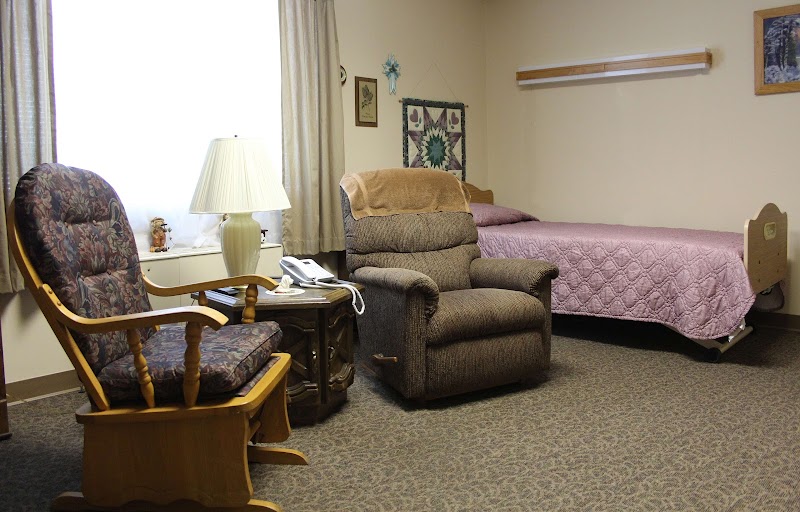
How is The Pines At Blue Hill Staffed?

CMS rates The Pines at Blue Hill's staffing level at 2 out of 5 stars, which is below average compared to other nursing homes. Staff turnover is 69%, which is 23 percentage points above the Nebraska average of 46%. High turnover can affect care consistency as new staff learn residents' individual needs.

What Have Inspectors Found at The Pines At Blue Hill?

State health inspectors documented 39 deficiencies at The Pines at Blue Hill during 2023 to 2025. These included: 1 Immediate Jeopardy (the most serious level, indicating potential for serious harm or death) and 38 with potential for harm. Immediate Jeopardy findings are rare and represent the most serious regulatory concerns. They require immediate corrective action.
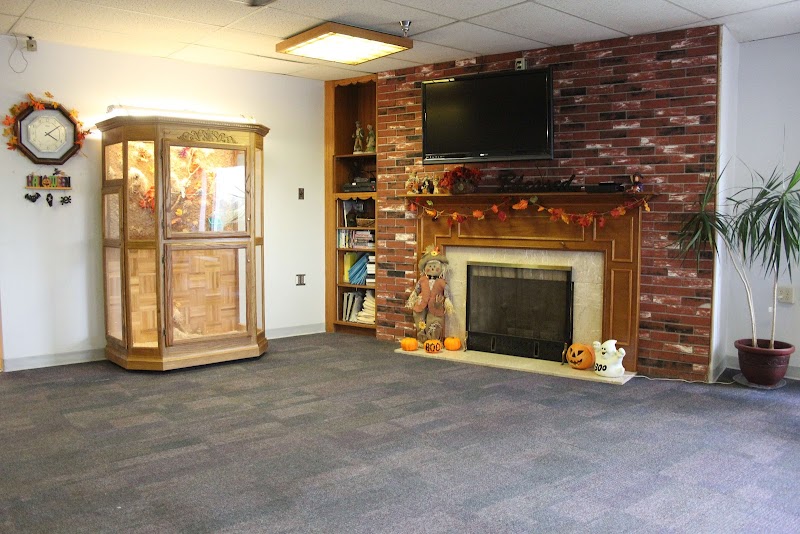
Who Owns and Operates The Pines At Blue Hill?

The Pines at Blue Hill is owned by a for-profit company. For-profit facilities operate as businesses with obligations to shareholders or private owners. The facility is operated by AVID HEALTHCARE GROUP, a chain that manages multiple nursing homes. With 62 certified beds and approximately 36 residents (about 58% occupancy), it is a smaller facility located in BLUE HILL, Nebraska.

How Does The Pines At Blue Hill Compare to Other Nebraska Nursing Homes?

Compared to the 100 nursing homes in Nebraska, The Pines at Blue Hill's overall rating (1 stars) is below the state average of 2.9, staff turnover (69%) is significantly higher than the state average of 46%, and health inspection rating (1 stars) is much below the national benchmark.

What Should Families Ask When Visiting The Pines At Blue Hill?

Based on this facility's data, families visiting should ask: "What changes have been made since the serious inspection findings, and how are you preventing similar issues?" "How do you ensure continuity of care given staff turnover, and what is your staff retention strategy?" "Can you walk me through typical staffing levels on day, evening, and night shifts?" "Can I visit during a mealtime to observe dining assistance and food quality?" These questions are particularly relevant given the facility's Immediate Jeopardy citations, the facility's high staff turnover rate, and the below-average staffing rating.

Is The Pines At Blue Hill Safe?

Based on CMS inspection data, The Pines at Blue Hill has documented safety concerns. Inspectors have issued 1 Immediate Jeopardy citation (the most serious violation level indicating risk of serious injury or death). The facility has a 1-star overall rating and ranks #100 of 100 nursing homes in Nebraska. Families considering this facility should ask detailed questions about what corrective actions have been taken since these incidents.

Do Nurses at The Pines At Blue Hill Stick Around?

Staff turnover at The Pines at Blue Hill is high. At 69%, the facility is 23 percentage points above the Nebraska average of 46%. High turnover means new staff may not know residents' individual needs, medications, or preferences. It can also be disorienting for residents, especially those with dementia who rely on familiar faces. Families should ask: What is causing the turnover? What retention programs are in place? How do you ensure care continuity during staff transitions?

Was The Pines At Blue Hill Ever Fined?

The Pines at Blue Hill has been fined $23,394 across 2 penalty actions. This is below the Nebraska average of $33,313. While any fine indicates a compliance issue, fines under $50,000 are relatively common and typically reflect isolated problems that were subsequently corrected. Families should ask what specific issues led to these fines and confirm they've been resolved.

Is The Pines At Blue Hill on Any Federal Watch List?

The Pines at Blue Hill is not on any federal watch list. The most significant is the Special Focus Facility (SFF) program, which identifies the bottom 1% of nursing homes nationally based on persistent, serious quality problems. Not being on this list means the facility has avoided the pattern of deficiencies that triggers enhanced federal oversight. This is a positive indicator, though families should still review the facility's inspection history directly.