Community Memorial Health Center
1015 F Street, Burwell, NE 68823 (308) 346-4440
Non profit - Corporation 64 Beds Independent Data: November 2025
Trust Grade
50/100
#107 of 177 in NE
Last Inspection: November 2024

Within standard 12-15 month inspection cycle. Federal law requires annual inspections.

Overview

Community Memorial Health Center in Burwell, Nebraska has a Trust Grade of C, which means it is average and neither stands out nor falls significantly behind other facilities. It ranks #107 out of 177 in Nebraska, placing it in the bottom half of the state, but it is the only facility in Garfield County. The facility is improving, with the number of identified issues decreasing from 9 in 2024 to just 1 in 2025. Staffing is considered a strength, with a 3/5 star rating and a turnover rate of 47%, which is slightly below the Nebraska average. However, there are some notable concerns, including a lack of emergency medication supplies and issues with meal quality in the Special Care Unit, which could potentially affect residents’ well-being. Overall, while there are areas for improvement, the facility shows some positive trends in staffing and compliance.
Trust Score
C
50/100
In Nebraska
#107/177
Bottom 40%
Safety Record
Low Risk
No red flags
Inspections
Getting Better
9 → 1 violations
Staff Stability
⚠ Watch
47% turnover. Above average. Higher turnover means staff may not know residents' routines.
Penalties
✓ Good
No fines on record. Clean compliance history, better than most Nebraska facilities.
Skilled Nurses
○ Average
Each resident gets 32 minutes of Registered Nurse (RN) attention daily — about average for Nebraska. RNs are the most trained staff who monitor for health changes.
Violations
⚠ Watch
27 deficiencies on record. Higher than average. Multiple issues found across inspections.
★★☆☆☆
2.0
Overall Rating
★★★☆☆
3.0
Staff Levels
★★☆☆☆
2.0
Care Quality
★★☆☆☆
2.0
Inspection Score
Stable
2024: 9 issues
2025: 1 issues

The Good

  • Full Sprinkler Coverage · Fire safety systems throughout facility
  • No fines on record

Facility shows strength in fire safety.

The Bad

2-Star Overall Rating

Below Nebraska average (2.9)

Below average - review inspection findings carefully

Staff Turnover: 47%

Near Nebraska avg (46%)

Higher turnover may affect care consistency

The Ugly 27 deficiencies on record

Jun 2025 1 deficiency
CONCERN (D) 📢 Someone Reported This

A family member, employee, or ombudsman was alarmed enough to file a formal complaint

Potential for Harm - no one hurt, but risky conditions existed

Quality of Care (Tag F0684)

Could have caused harm · This affected 1 resident

Licensure Reference Number 175 NAC 12-006.09 (H) iii Based on observation, record review, and interview, the facility failed to complete skin assessments per facility policy and standards of practice ...

Read full inspector narrative →
Licensure Reference Number 175 NAC 12-006.09 (H) iii Based on observation, record review, and interview, the facility failed to complete skin assessments per facility policy and standards of practice for 1 resident (Resident 3), of 4 sampled residents. The facility census was 62. Findings are: A record review of a document from the Wound Care Education Institute and titled Best Practices for Wound Assessment and Documentation dated 04/17/2025 revealed that a foundational element of wound assessment is accurate wound measurements using a standardized method like length, width, and depth. To be time sensitive and consistent documenting the wound assessment at consistent intervals based on facility protocol. A record review of a facility policy titled Skin Assessment and dated 06/12/2025 revealed it is the facility policy to perform skin assessment weekly if the resident has a notable wound or has a Braden assessment score deemed as high risk. Review of an admission Record revealed the facility admitted Resident 3 on 03/05/2024 with diagnoses of chronic kidney disease (a condition where the kidneys are damaged and can not filter blood as well as they should), and actinic keratosis (a rough, scaly patch or bump on the skin caused by damage from ultraviolet radiation, typically from the sun). The Comprehensive (MDS), a federally mandated comprehensive assessment tool used to determine a resident's functional capabilities and helps nursing home staff identify health problems) dated 03/22/2025 revealed Resident 3 had a Brief Interview for Mental Status (BIMS, a brief screener that aids in detecting cognitive impairment) score of 13 indicating that the resident was cognitively intact. In an observation completed on 06/12/2025 at 11:15 AM Resident 3 was observed to have a discolored area to their right cheek. This area in the center was purple black fading into shades of maroon then fading into yellowing and light red color. The area covered the entirety of the upper half of the resident's cheek and had a small oval Band-Aid present at the center. In an interview completed on 06/12/2025 at 11:50 with Resident 3, Resident 3 when asked about their right cheek stated they were told by their provider that they, the resident, was applying their cream too hard in this area and that had probably caused the discolored area to their cheek and the cream was discontinued at this time. The residents denied incident, accident, or trauma to the area. In an interview completed on 06/12/2025 at 1:55 PM with Registered Nurse B (RN-B), RN-B stated that the resident had been self-administering a steroid cream to the Right cheek and the staff were applying an Urea cream (a cream that helps soften dry, rough or thick skin). The RN stated the resident developed the discoloration to the Right cheek and the provider was notified and the creams were discontinued. The RN confirmed that the facility completed skin assessments with documentation of alterations in skin integrity on a weekly basis. The RN stated these assessments are documented on the facility document titled Non-Pressure Skin Condition Report. A record review of a facility supplied document titled Non-Pressure Skin Condition Report and labeled with Resident 3 name on 06/12/2024 at 2:05 PM revealed on 05/05/2025 documentation including measurements and brief description of resident having a 4 centimeter (CM) circle on the right side below the resident's ear and a 1 CM X 3 CM area to the resident's right cheek that was documented as being dark red/purple in color. On 05-12-2025 documentation was present that the area behind the resident's ear was resolved. There was no documentation present for the area to the resident's right cheek. A record review of a facility supplied document titled Progress Notes revealed on 05/21/2024 documentation of the resident having bruising to most of the right side of the resident's face without rash. There was no documentation of measurements for this area. A record review of a facility supplied document titled Non-Pressure Skin Condition Report and labeled with Resident 3's name revealed on 05/26/2025 and 06/02/2025 documentation including measurements of right cheek. On 06/09/2025 documentation of discoloration and bruising to right face. There is no documentation of measurements for this area. In an interview completed on 06/12/2025 at 2:30 PM with the Director of Nursing (DON) the DON confirmed that a skin assessment is completed on residents with alterations in skin integrity weekly. The DON stated that the discoloration to Resident 3 right cheek was from an incident that occurred on 05/01/2025. The DON confirmed the initial documentation of this area on the 05/05/2025 Non-Pressure Skin Condition report, 05/21/2025 Progress Note, 05/26/2025, 06/02/2025, and 06/09/2025 Non-Pressure Skin Condition reports. The DON confirmed there was no documentation on this area from 05/05/2025 to 05/21/2025 and this time frame was greater than one week. The DON also confirmed that there were no measurements for this area present on the 06/09/2025 assessment.
Nov 2024 9 deficiencies
CONCERN (D)

Potential for Harm - no one hurt, but risky conditions existed

Notification of Changes (Tag F0580)

Could have caused harm · This affected 1 resident

LICENSURE REFERENCE NUMBER 175 NAC 12-006.04(F)(i)5 Based on record review and interview; the facility staff failed to notify the primary care practitioner (PCP) and the Registered Dietician (RD) of w...

Read full inspector narrative →
LICENSURE REFERENCE NUMBER 175 NAC 12-006.04(F)(i)5 Based on record review and interview; the facility staff failed to notify the primary care practitioner (PCP) and the Registered Dietician (RD) of weight loss for 2 (Residents 27 and 12) of 3 residents reviewed. The facility identified a census of 58. Findings are: A. Review of the facility policy Notification of Changes with a revision date of 12/220/22 revealed the purpose of the policy was to ensure prompt notification to the resident's physician and the resident's representative when there was a change requiring notification. Circumstances which required notification included: -accidents resulting in injury or physician intervention. -significant change in the resident's physical, mental, or psychosocial condition. -circumstances that required a need to alter treatment. -a transfer or discharge from the facility. -a change in the resident's rights. -a change in the resident's roommate. B. Review of a Weights and Vitals Summary Sheet (form used to document a resident's weights, blood pressure, respirations, temperature, and pulse) revealed the following weights for Resident 27: -4/30/24 weight was 152 pounds. -5/27/24 weight was 148 pounds (down 4 pounds in 1 month). -6/27/24 weight was 140 pounds (down 8 pounds or a 5% loss in 1 month). -7/29/24 weight was 139 pounds. -8/22/24 the resident's weight was 130 pounds (down 9 pounds in 1 month or a 6% loss in 30 days). Review of the resident's electronic medical record revealed no evidence the RD or the PCP were notified of the resident's ongoing significant weight loss. An interview with the Dietary Manager on 11/19/24 at 1:59 PM confirmed the following regarding Resident 19: -6/27/24 the resident had a weight loss of 8 pounds or a 5% loss in 1 month. -8/22/24 the resident had a weight loss of 9 pounds or a 6% loss in 30 days. -the RD and the PCP were not notified of Resident 27's ongoing weight loss. C. Review of a Weights and Vitals Summary Sheet for Resident 12 revealed the following: -9/29/24 weight was 149 pounds. -10/31/24 weight was 132 pounds (down 17 pounds or a 11% weight loss in 30 days). During an interview on 11/20/24 at 4:04 PM, the DM confirmed the resident's PCP, and the RD were not notified after the resident's weight on 10/31/24 revealed a 17 pound or an 11% loss in 1 month.
CONCERN (D)

Potential for Harm - no one hurt, but risky conditions existed

Deficiency F0645 (Tag F0645)

Could have caused harm · This affected 1 resident

**NOTE- TERMS IN BRACKETS HAVE BEEN EDITED TO PROTECT CONFIDENTIALITY** Licensure Reference Number 175 NAC 12-006.09(A) Based on record review and interview; the facility failed to ensure Level 1 Prea...

Read full inspector narrative →
**NOTE- TERMS IN BRACKETS HAVE BEEN EDITED TO PROTECT CONFIDENTIALITY** Licensure Reference Number 175 NAC 12-006.09(A) Based on record review and interview; the facility failed to ensure Level 1 Preadmission Assessment and Resident Review (PASARR-screening process required to be completed prior to admission to ensure residents with Serious Mental Illness (SMI), Intellectual Disability(ID), Development Disability(DD) or Related Disorders (RD) met the criteria for Nursing Home admission and had any additional services needed) screens were completed accurately prior to admission for Residents 48 and 44. The sample size was 3 and the facility census was 58. Findings are: A. Review of the facility policy Resident Assessment-Coordination with PASARR Program with a revision date of 7/18/24 revealed the following: -The facility coordinated assessments with the PASARR program under Medicaid to ensure that all individuals with a mental disorder, intellectual disability, or a related condition received care and services in the most integrated setting appropriate to their needs. -All applicants to the facility were screened for SMI or ID and RC in accordance with the State's Medicaid rules for screening. -Level 1 screening was completed prior to admission and a negative screen allowed the facility to proceed with admission and ended the PASARR process, a positive screen necessitated level 2 evaluation completed by the appropriate designated authority to determine appropriateness of setting for the individual and any recommendations for specialized services. B. Review of Resident 48's Minimum Data Set (MDS-federally mandated assessment used to development resident Care Plans) dated 10/12/24 revealed the following: -The resident had a level 1 PASARR, -had diagnoses of a Psychotic Disorder and Post Traumatic Stress Disorder (PTSD), and -received antipsychotic, antianxiety, and antidepressant medications. Review of Resident 48's PASARR dated 11/28/23 revealed no evidence the screen included any mental illness diagnosis. Review of Resident 48's Care Plan with a revision date of 5/9/24 revealed diagnoses of Anxiety Disorder, Depression, and PTSD and the resident was at risk for adverse reactions to medication. The resident had hallucinations, delusions, and insomnia. In addition, the resident could become aggressive and resistive to care. During an interview on 11/19/24 at 3:40 PM the Director of Nursing (DON) confirmed the facility had not checked the accuracy of Resident 48's Level 1 PASRR screen at the time of admission to ensure it was completed accurately and to ensure the resident did not need a level 2 (screen completed by an outside source to determine if the resident had SMI/ID/DD/RD in order to establish if the resident needed additional services not routinely provided by nursing facilities) screen. In addition, the DON confirmed the resident did have a diagnosis of a delusional disorder, anxiety disorder, depression and PTSD that was not included on the 11/28/23 Level 1 screen. C. Review of Resident 44's MDS dated [DATE] revealed the resident had a level 1 PASARR screen and had diagnoses of an anxiety disorder and bipolar disorder and took antipsychotic, antianxiety, and antidepressant medication. Reviewed of Resident 44's PASARR level 1 screen dated 5/21/24 indicated the resident had no Major Mental Illness. There was no indication the bipolar disorder or anxiety disorder was included on the level 1 screen. Review of Resident 44's Orders revealed the following: -5/16/24 Buspirone HCl (antianxiety medication) Oral Tablet 10 MG Give 10 mg by mouth two times a day related to a generalized anxiety disorder, -5/17/24 aripiprazole (antipsychotic medication) Oral Tablet 15 MG Give 15 mg by mouth one time a day related to bipolar disorder, and -The resident was taking psychoactive (mind altering) medications with Target Behaviors of agitation, very regimented, easily irritable, health concerns, and impatient. Review of Resident 44's Care Plan with a revision date of 10/29/24 revealed the resident displayed verbal and physical aggression and was at risk for adverse reactions to medications, took antipsychotic, and hypnotic (sleep inducing) medications and was monitored for side effects and effectiveness. During an interview on 11/19/24 at 3:40 PM the Director of Nursing (DON) confirmed the facility had not checked the accuracy of Resident 44's Level 1 PASARR screen at the time of admission to ensure it was completed accurately, and to ensure the resident did not need a level 2 screen. In addition, the DON confirmed the resident did have diagnoses of bipolar disorder and anxiety disorder that was not on the Level 1 screen.
CONCERN (D)

Potential for Harm - no one hurt, but risky conditions existed

Quality of Care (Tag F0684)

Could have caused harm · This affected 1 resident

Licensure Reference Number 175 NAC 12-006.09(H)(iv) Based on interview and record review; the facility failed to ensure Resident 59's Bowel and Bladder management plan was coordinated and addressed in...

Read full inspector narrative →
Licensure Reference Number 175 NAC 12-006.09(H)(iv) Based on interview and record review; the facility failed to ensure Resident 59's Bowel and Bladder management plan was coordinated and addressed in cooperative with the Hospice Care provider. The sample size was 1 with a census of 58. Findings are: A. Review of the undated facility policy Bowel Elimination revealed the following: The facility developed and implemented a process to assure that constipation was prevented/addressed in a timely fashion. Daily documentation of bowel elimination was reviewed. The night shift ran a report showing no Bowel Movement (BM) in the last 48 hours and no BM in the last 72 hours. The following steps were followed for all residents of Community Memorial Health Center: - If no BM in 48 hours the dietary staff was notified and the resident was offered bran flakes, prune juice or both. - If no BM in 72 hours the resident was offered Milk of Magnesia (laxative), 30 cubic centimeters (cc) by mouth. - If no BM for 4 days the resident was offered a Dulcolax Suppository (laxative) Rectally. - If no BM for 5 days the resident was offered a Fleets Enema (injection of liquid into the rectum to cause the intestines to empty). B. Record review of Nursing Assistant (NA), documentation dated 11/1/24 through 11/16/24 revealed no BM was documented. Review of Nursing Note Documentation revealed: -On 11/6/2024 at 1:10 AM Resident 59 was given a fleets enema and had not had a BM for 7 days. The resident had nausea and was given Zofran (Medication for nausea), and the resident was educated about the complications of constipation. -On 11/10/2024 at 11:41 PM The resident had a BM on 11/7/24 and a suppository had been given. -On 11/20/2024 at 2:44 PM bowel management medication was discussed with the hospice nurse and a routine laxative was initiated. Review of the resident's Medication Administration Record (MAR) dated 11/24 revealed that the resident received Milk Of Magnesia on 11/4/24 with no BM, on 11/5/24 the resident refused medications offered, on 11/6/24 the resident received a enema and had a BM, on 11/9/24 the resident received Milk Of Magnesia with no BM, per nursing note documentation resident received a suppository on 11/10/24, on 11/15/24 the resident received Milk Of Magnesia with no BM, on 11/16/24 the resident received a suppository and had a BM. The resident had an order for Polyethylene Glycol Powder 17 gram (Laxative) by mouth every 24 hours as needed for constipation and the medication had not been administered for the month of 11/24. Review of the Hospice Certification and Plan of Care dated 10/16/24 revealed that Resident 59 was admitted to Hospice Care on 10/16/24. Review of Hospice Order dated 10/16/24 revealed: - The Hospice Nurse was to assess and instruct the resident/caregiver on factors that increased the risk of constipation and measures to prevent constipation. The Hospice Goal dated 10/16/24 revealed: -The Resident/Caregiver verbalize understanding of risk factors that increased the risk of constipation and measures to prevent constipation. Review of Resident 59's Minimum Data Set (MDS-a federally mandated comprehensive assessment tool used for care planning) dated 10/26/24 revealed that the resident had constipation. Review of Resident 59 facility Care Plan dated 11/19/24 revealed no evidence constipation was addressed. During an interview with the Director of Nursing (DON), on 11/20/24 at 7:45 AM, the DON confirmed that Resident 59 received medications as needed for bowels but not routinely, and the resident bowel medications had not been reviewed as the resident did not get out of bed, activity level was limited, and resident's intake was poor. During an interview on 11/20/24 at 2:05 PM with Licensed Practical Nurse, (LPN-Q) from Hospice, confirmed that the facility staff had not voiced any constipation concerns for Resident 59. During an interview on 11/21/24 at 9:30 AM with Registered Nurse (RN-R), confirmed that Resident 59 did not have a constipation care plan in place.
CONCERN (D)

Potential for Harm - no one hurt, but risky conditions existed

Accident Prevention (Tag F0689)

Could have caused harm · This affected 1 resident

Licensure Reference Number 175 NAC 12-006.I(i) Based on observation, interview, and record review; the facility failed to ensure Residents 14 and 16's falls were reviewed for causal factors, fall prev...

Read full inspector narrative →
Licensure Reference Number 175 NAC 12-006.I(i) Based on observation, interview, and record review; the facility failed to ensure Residents 14 and 16's falls were reviewed for causal factors, fall prevention interventions were based on causal factors, and reviewed and revised to prevent ongoing falls. The sample size was 4 and the facility census was 58. Findings are: A. Review of the facility policy Fall Prevention Program dated 8/3/23 revealed the following: -Each resident was assessed for fall risk and received care and services in accordance with their individualized level of risk to minimize the likelihood of falls. -The facility used standardized risk assessment to determine a resident's fall risk, and initiated interventions that decreased the risk of falling including but not limited to a clear pathway to the restroom, locking of bed wheels, leaving call lights accessible, providing adequate lighting, and keeping equipment in good repair. In addition, the facility implemented routine rounding, monitoring residents for changes in condition, encouraged residents to wear shoes or slippers with non-slip soles, ensured eyeglasses were clean and were being worn, and reassessed fall risk every 90 days. -At Risk for Falls care plans included adequate supervision, consistent with the resident's needs, goals, and current standards of practice to reduce accident risk. -Care Plan interventions were monitored and modified as necessary in accordance with current practice standards. B. Review of Resident 16's Minimum Data Set (MDS-federally mandated assessment used to development resident care plans) dated 9/28/24 revealed the resident had Cancer and received partial assistance with bathing, dressing, hygiene, and mobility. The resident had frequent moderate pain of 5 out of 10. Review of Resident 16's Morse Fall Scale assessments dated 6/7/24 through 9/26/24 revealed the resident was at High Risk for Falling. Review of Resident 16's Incident Reports revealed the following: -On 5/31/24 at 11:08 PM the resident attempted a self-transfer from a wheelchair to a recliner and fell. The resident reported getting feet stuck to the floor. The intervention was Resident is not to wear crocs . -On 6/6/24 at 3:30 PM the resident activated a call for assistance and staff found the resident sitting on the floor in front of a recliner. The resident had removed shoes, had no socks on and the electric recliner was found in the up position. The resident reported sliding off the recliner onto the floor. The intervention was for the resident to wear gripper socks, the recliner remote was to be left out of the resident's reach and a sign was placed in the resident's room for a reminder. -On 6/22/24 at 3:45 PM the resident was found lying on the floor between the recliner and the bed. The intervention was to re-educate staff to keep the recliner remote out of the reach of the resident. - On 8/20/24 at 3:45 PM the resident slipped on a slightly wet floor and was subsequently lowered to the floor. The intervention was to use a gait belt (belt used around the waste for safety and support during transfers) with transfers, unsure the resident wore proper footwear, and ensuring the bathing room floor was dry before transferring. There was no evidence this was not a facility standard already in place. -On 8/23/24 at 10:15 AM the resident attempted to self-transfer was heard calling out and was found in a kneeling position on the floor. The resident reported needing to go to the bathroom. The intervention was the resident agreed to request assistance, there was no evidence this was a new intervention. -On 10/15/24 at 3:00 PM the resident activated a call light in the bathroom and was found sitting on the floor beside the toilet. The intervention was the resident was re-educated to activate call light prior to attempting a self-transfer, staff were to provide continuous reminders, and signs were placed in the resident room and bathroom. There was no evidence this was a new intervention. During an observation of the provision of toileting assistance for Resident 16 on 11/20/24 at 9:18 AM the resident called for assistance to the toilet. Nurse Aide (NA)-O responded and provided assistance to transfer the resident from the wheelchair to the toilet. No gait belt was used. The resident was then transferred back to the wheelchair and into a recliner and again, a gait belt was not used. During an interview on 11/20/24 at 9:20 AM, NA-O revealed having worked in the facility for 4 years. When questioned about fall prevention measures NA-O knew Resident 16 was assisted with transfers and had dycem in the wheelchair. In addition, staff were to monitor for attempts to self-transfer and are aware of the residents fall risk. NA-O was unaware of any other specific fall prevention interventions. Review of the Resident 16's Care Plan with a revision date of 9/24/24 revealed the following problems, interventions, and implementation dates: 1/18/23 -The resident was at risk for falling. 1/18/23 - encourage periods of rest to prevent over tiring, grab bars in the bathroom, keep floor and pathways clear of clutter, call light in place and provide orientation to call light with cares, 6/30/23 - keep door open for observation, 6/30/23 - therapies as needed, 8/26/23 - use of an assistive device per resident's needs, 10/24/23 - Dycem (non-skid mat) on recliner seat, 12/18/23 - Complete Morse Fall Assessment (Assessment used to determine fall risk) upon admission, readmission, quarterly, and as needed. 1/18/24 - call light in place and orientation to call light with cares, 6/12/24 - absolutely no crock shoes, 6/19/24 - non-slip socks and shoes on, 9/5/24 - signage placed in multiple places in room to remind resident to use call light, staff educated to use gait belt, proper footwear and to assure floor is dry before transferring, and 9/24/24 - per family, recliner remote within reach, family aware and educated on risk due to resident having frequent falls related to setting recliner up without assistance and falling. There was no evidence the resident Care Plan was reviewed and/or revised following the resident's falls on 8/20/24, 8/23/24, or 10/15/24 based on causal factors. During an interview on 11/20/24 at 12:33 PM the Director of Nursing (DON) confirmed the resident had fallen several times, and although the facility reviewed falls, they had not identified causal factors with all falls and implemented prevention measures related to the causes and/or or ensured that all fall prevention measures were updated on the resident's care plan. In addition, the DON confirmed staff were to be using gait belts for assisted transfers with Resident 16. C. Review of Resident 14's MDS revealed the resident had 1 fall with no injury. In addition, the resident was severely impaired cognitively, displayed disorganized thinking, inattention, and altered levels of consciousness. The resident received assistance with eating, hygiene, dressing, bathing, transfers, and bed mobility. Diagnoses included dementia, schizophrenia, arthritis, and heart disease. Review of Resident 14's Morse Fall Scales on 6/14/24-10/31/24 revealed the resident was at risk for falling. Review of Resident 14's Incident reports revealed the following: -On 6/19/24 at 6:45 AM the resident was observed on the floor in front of the toilet with regular socks rather than gripper socks on. The intervention was to use gripper sock and a Tabs monitor (alarm with a pull tab secured to the resident that is supposed to alarm and alert staff if the resident tries to get up unassisted), and staff were to check on resident right after morning shift change and get the resident up and dressed. -On 6/26/24 at 3:30 AM the resident was found lying on the floor between the bed and the bathroom door. Staff determined the resident removed the TABS alarm and walked without walker a walker toward the bathroom. The intervention was to ensure the resident's walker was left in reach. It was unclear whether this was a new intervention and was not on the Care Plan. -On 10/9/24 at 3:30 PM the resident was found lying on the floor between the closet and the bed. The resident had been toileted 15 minutes prior but had since removed shoes and did not have on gripper socks. The resident did not use call light for assistance. The resident was determined to be confused and there was no new intervention documented. -On 10/22/24 at 6:30 PM the resident was found on the floor next to the bed. Staff believe she may have been trying to get into the unmade bed. The intervention was to take the resident to the dining room first while they were busy getting other residents to the dining room. In addition, staff were to place 2 wedge cushions on the resident's bed. -On 10/31/24 at 1:30 AM the resident was found on floor on the bedside fall mat. It was determined the wedged were not in place and the intervention was staff education provided. -On 11/16/24 at 8:10 AM the resident was found on the floor of another resident's room. The intervention for to staff to be aware of the resident's location every hour. Review of Resident 14's Care Plan with a revision date of 10/24/24 revealed the following: -6/12/24-The resident was at risk for falling, -6/12/24 the following interventions were added to the care plan (call light in place and orientation to the call light with cares, Morse Fall Scale to be completed with admission/readmission, quarterly and as needed, Encourage rest periods to prevent over tiring, low-bed with bed placed against the wall, never leave alone on the toilet, non-slip sock/shoes on, observe for behaviors and address appropriately, and 1 hour safety checks), -6/19/24 resident to be checked on after morning shift change and dressed if awake during rounds, -10/24/24 fall mat to outer side of the bed, wedges x 2 to outer side of bed, -11/3/24 resident to lie in bed after lunch, toilet around 3:00 PM and place in w/c in hallway for monitoring, -11/12/24 resident will purposefully crawl over wedges and place self on There was no evidence the resident Care Plan was reviewed and or revised following the resident's falls on 6/19/24 (to include the use of a TABS monitor), 10/9/24, or 11/16/24 based on causal factors. During an interview on 11/19/24 at 9:26 AM Nurse Aide-F confirmed that Resident 14 was at risk for falling and knew staff were to ensure the residents needs were met, ensure the resident's bed with in a low position with a bed side fall mat, assist the resident as needed to the toilet, make sure the resident's call light was accessible, and engage the resident in an activity when possible. During an interview on 11/20/24 at 12:33 PM the DON confirmed that although the facility reviewed fall, they did not always identify causal factors and implement prevention measures related to those causes or ensure that all fall prevention measures were updated on the Resident 14's care plan.
CONCERN (D)

Potential for Harm - no one hurt, but risky conditions existed

Deficiency F0757 (Tag F0757)

Could have caused harm · This affected 1 resident

Licensure Reference Number 175 NAC 12-006.09(H) Based on record review and interview; the facility failed to ensure antibiotics were given in accordance with the facility Antibiotic Stewardship Progra...

Read full inspector narrative →
Licensure Reference Number 175 NAC 12-006.09(H) Based on record review and interview; the facility failed to ensure antibiotics were given in accordance with the facility Antibiotic Stewardship Program (ASP-program for optimizing treatment of infections and reducing adverse events from the use of antibiotics) for Resident 16. The sample size was 5 and the facility census was 58. Findings are: A. Review of the facility undated Antibiotic Stewardship Program policy revealed the following: -It was the policy of the facility to implement and Antibiotic Stewardship Program (ASP) as part of the facilities overall infection prevention and control program. -The purpose of the program was to optimize the treatment of infections while reducing the adverse events associated with antibiotic use. -The Infection Preventionist, with oversight from the Director of Nursing served as the leader of the Antibiotic Stewardship Program and received support from the Administrator and other governing officials of the community. -The Medical Director, Consultant Pharmacist, and Attending Physicians supported the ASP through active participation in developing, promoting, and implementing a facility wide system for promoting, and implementing a facility-wide system for monitoring the use of antibiotics. -Antibiotic use protocols including nursing assessment prior to physician notification, laboratory testing in accordance with practice standards, criteria to determine whether to treat infection with antibiotics, and ensuring all antibiotics specified dosing, duration, and indication for use. Review of Resident 44's Minimum Data Set (MDS-federally mandated assessment used to development resident Care Plans) dated 9/28/24 revealed the resident received antibiotics in the preceding 7 days. Review of the Note to Attending Physician Form sent to the physician from the Consultant Pharmacist dated 1/16/24 revealed the Consultant Pharmacist sent a recommendation letter to the physician requesting clarification of the Bactrim DS order. The document stated the resident had been taking the Bactrim DS since 6/12/23. Further review revealed the physician included a diagnosis of Pneumonitis (inflammation of the lungs) and checked a box to continue the medication but documented no clinical rationale or supporting evidence to support the continued use of an antibiotic. Review of Resident 44's Physician's Orders dated 11/20/24 revealed the following medication: - Sulfamethoxazole-Trimethoprim Oral Tablet 800-160 MG (Bactrim DS) Give 1 tablet by mouth two times a day every Monday, and Thursday. During an interview on 11/20/24 at 2:22 PM the Director of Nursing confirmed the resident continued routine use of the antibiotic Bactrim DS without a stop date, and the provider had not documented a clinical rationale in accordance with the facility Antibiotic Stewardship Program for continued use of an antibiotic without a stop date or predetermined course duration.
CONCERN (D)

Potential for Harm - no one hurt, but risky conditions existed

Medication Errors (Tag F0758)

Could have caused harm · This affected 1 resident

**NOTE- TERMS IN BRACKETS HAVE BEEN EDITED TO PROTECT CONFIDENTIALITY** Licensure Reference Number 175 NAC 12-006.12(A) Based on record review and interview; the facility failed to attempt a Gradual D...

Read full inspector narrative →
**NOTE- TERMS IN BRACKETS HAVE BEEN EDITED TO PROTECT CONFIDENTIALITY** Licensure Reference Number 175 NAC 12-006.12(A) Based on record review and interview; the facility failed to attempt a Gradual Dose Reduction (GDR) of Residents 24, 26, and 29's psychotropic medications (medications which alter consciousness, mood, and thoughts) or to have a documented clinical rationale for continued use. The sample size was 5. The facility census was 58. Findings are: A. Review of the facility policy Use of Psychotropic Medications, implemented on 10/6/23 revealed the following: -a psychotropic drug was any drug that affected brain activities associated with mental processes and behavior. Psychotropic drugs included: antipsychotics, antidepressants, anti-anxiety, and hypnotics, -the indications for the use of the medications would be determined by assessing the underlying condition, current signs, symptoms, expressions, and preferences and goals for treatments, and identifying of underlying causes, when possible, -the attending physician would assume leadership in medication management by developing, monitoring, and modifying the medication regimen, -the indications for use of any psychotic drug would be documented in the medical record, -documentation would include the specific condition as diagnosed by the physician, -residents who used psychotropic drugs would receive gradual dose reductions, unless clinically contraindicated, in an effort to discontinue these drugs, -the effects of the psychotropic medications would be evaluated on an on-going basis, and -the residents' response to the medications, including progress towards goals and presence/absence of adverse consequences would be documented in the resident's medical record. B. Review of Resident 24's Minimum Data Set (MDS-a federally mandated assessment tool used in care planning) dated 9/28/24 revealed the resident had severe cognitive impairment; diagnoses included depressive disorder and anxiety; Resident 24 received antipsychotic and antidepressant medications, and required assistance with dressing, and toileting. Review of Resident 24's Care Plan last revised 11/18/24 revealed the resident had impaired cognition; had dementia; was at risk for elopement; had behaviors of tearfulness, and difficulty redirecting; received medications for antianxiety (Risperdal) and antidepressants (Mirtazapine, Trazodone, Sertraline); and required assistance with bed mobility, dressing, hygiene, and toileting. Review of the facility forms Note to the Attending Physician/Prescriber regarding Resident 24 revealed the following: -on 5/22/24 a GDR was due for Sertraline. The Physician marked the dose reduction was contraindicated due to behaviors noted in the care plan and charting. An area marked Please fill in a patient specific reason as to why reduction is contraindicated was left blank, and -on 7/17/24 GDR's were due for the Risperdal, Mirtazapine, and Trazodone. The Physician marked the dose was contraindicated due to behaviors noted in the care plan and charting for Risperdal. For Remeron and Trazodone, the Physician marked dosage reduction is contraindicated. An area marked Please fill in a patient specific reason as to why reduction is contraindicated was left blank. C. Review of Resident 29's MDS dated [DATE] revealed the resident was cognitively intact, was dependent with dressing, transfers, bed mobility, and toileting, had diagnoses of dementia, Parkinson's Disease, anxiety, and depression, and received antipsychotic and antidepressant medications. Review of Resident 29's Care Plan last revised 10/3/24 revealed the resident received antidepressant medications (Sertraline and Trazodone), antipsychotic medications (Quetiapine), and was dependent with bed mobility, dressing, transfers, and toileting. Review of the facility forms Note to Attending Physician/Prescriber regarding Resident 29 revealed the following: -on 2/14/24 GDR's were due for Quetiapine, Sertraline, and Trazodone. The Physician did reduce the Quetiapine, but marked dosage reduction is contraindicated for Sertraline and Trazodone. An area marked Please fill in a patient specific reason as to why reduction is contraindicated was left blank, and -on 7/17/24 GDR's were due for Seroquel, Trazodone, and Sertraline. The Physician marked dosage reduction is contraindicated due to behaviors noted in the care plan and charting for the Seroquel. Dosage reduction is contraindicated was marked for Trazodone and Sertraline. An area marked Please fill in a patient specific reason as to why reduction is contraindicated was left blank. D. Interview with the Director of Nursing (DON) on 11/20/24 at 11:55 AM confirmed the GDR's did not have rationale's for contraindications documented that was specific to Resident 24 or Resident 29 and there should have been a rationale's documented. E. Review of Resident 26's MDS dated [DATE] revealed the resident was admitted [DATE] with diagnoses of Parkinson's disease, cancer, anemia, coronary artery disease, renal failure, diabetes, depression, bipolar disorder, and non-Alzheimer's dementia. The resident was assessed as having moderate cognitive impairment, with behaviors of delusions and hallucinations. The resident had physical/verbal behaviors directed toward others, other behavioral symptoms not directed toward others, and rejection of cares. The resident was identified as receiving antipsychotic and antidepressant medications. Review of the resident's Care Plan with a revision date of 1/25/23 revealed the resident had paranoia, hallucinations, delusions, verbal, and physical aggression and indicated the resident received psychoactive medications. Review of the facility form Note to the Attending Physician/Prescriber with a date of 11/15/23 revealed the resident was due for a GDR of the following medications: -Depakote (antiseizure medication used to treat some psychiatric conditions) 125 milligrams (mg) three times a day. -Zyprexa (antipsychotic medication used to treat mental health disorders) 5 mg daily. -Risperdal (antipsychotic medication used to treat mental health disorders) 1 mg twice a day. -Trazadone (medication used to treat depression) 100 mg daily. The note requested the resident's physician evaluate use of these medications for a potential GDR. Further review revealed the physician denied a GDR due to the resident's behaviors. No specific reason was identified as to why the GDR was contraindicated. During an interview on 11/20/24 at 12:05 PM, the DON confirmed Resident 26's physician failed to document a specific clinical rational as to why a GDR of the resident's psychoactive medications were clinically contraindicated.
CONCERN (E)

Potential for Harm - no one hurt, but risky conditions existed

Deficiency F0657 (Tag F0657)

Could have caused harm · This affected multiple residents

**NOTE- TERMS IN BRACKETS HAVE BEEN EDITED TO PROTECT CONFIDENTIALITY** C. Review of Resident 59's MDS dated [DATE] revealed the following regarding the resident: -resident was dependent on staff fo...

Read full inspector narrative →
**NOTE- TERMS IN BRACKETS HAVE BEEN EDITED TO PROTECT CONFIDENTIALITY** C. Review of Resident 59's MDS dated [DATE] revealed the following regarding the resident: -resident was dependent on staff for toileting cares, bathing, lower body dressing, personal hygiene, and no transfer was attempted -resident required substantial assistance with upper body dressing, -resident required moderate assistance with brushing teeth and set up assistance with eating meals, -resident was always incontinent of bowel and had constipation, -resident had an indwelling catheter, -resident received pain medications and frequently had pain that constantly affected day to day activities, -resident had a stage 3 pressure ulcer with pressure ulcer care, and -resident had a diagnosis of an MDRO and arthritis. Observation of the provision of care for Resident 59 on 11/18/24 at 10:30 AM, LPN-E and Nurse Aide (NA)-D entered Resident 59's room to complete peri-cares, catheter cares and to reposition the resident. An EBP sign was on the wall of Resident 59's room. LPN-E and NA-D washed their hands and put on disposable gowns and gloves. Resident 59 was incontinent of a small bowel movement and the staff completed catheter cares and peri cares. LPN-E did not remove or change gloves after completing peri cares or catheter cares. LPN-E and NA-D changed the residents bottom sheet and put on a clean incontinence brief. LPN-E removed the disposable gown and gloves and washed hands but failed to reapply gloves or a gown. LPN-E assisted to reposition the resident, adjusted the bed linens, pillows, and the catheter tubing without use of the required gown and gloves. Review of Resident 59's care plan dated 11/1/24 revealed that there was no care plan initiated for Activities of Daily Living (ADL's), Indwelling Catheter (a tube inserted into the bladder to drain the urine), falls, pressure ulcer, Hospice Care, Pain, and Constipation. Interview with MDS Nurse on 11/21/24 at 9:30 AM verified that no constipation care plan was in place for Resident 59. D. Review of Resident 54's MDS dated [DATE] revealed the following regarding the resident: -resident was dependent on staff for oral hygiene, toileting cares and bathing, -resident required substantial assistance with eating, dressing, footwear and transfers, -resident required moderate assistance with bed mobility, -resident was occasionally incontinent of bowel, -resident was frequently incontinent of urine, and -resident received antipsychotic and antianxiety medications. Review of Resident 54's care plan with a revision date of 9/7/24 revealed that nursing care plans regarding the above ADL's had not been reviewed/revised since 6/24/24. A interview with the MDS Nurse on 11/19/24 at 2:45 PM revealed that the care plan for Resident 54 had not been reviewed/revised since 6/24/24. E. Review of Resident 1's MDS dated [DATE] revealed the following regarding the resident: -resident required substantial assistance with toileting cares, lower body dressing, footwear, personal hygiene, transfers and walking short distances, -resident required moderate assistance with oral hygiene, bathing cares, upper body dressing, -resident was independent with wheelchair mobility, -resident was always continent of bowel, -resident had an indwelling catheter, and -resident felt down and depressed, had trouble sleeping, was tired and had trouble concentrating. Review of Resident 1's care plan revealed that resident had a diagnosis of anxiety, depression, psychotic disorder, schizophrenia, and MRSA. Resident 1's care plan last revised 8/10/24 revealed that there were no interventions in place for impaired cognition and activities care plans. The nursing care plan goals had not been reviewed and updated since 8/10/24 and MDRO was not on the care plan. Quarterly MDS was completed 10/23/24. During an observation of the provision of care for Resident 1 on 11/19/24 at 10:30 AM LPN-L completed suprapubic catheter cares (tube that goes into the bladder through the abdominal wall which drains urine from the bladder, cares include washing and drying the skin around the catheter site). EBP sign was on the wall when entering the room. LPN-L washed hands and put on a disposable gown and gloves then removed the sponge dressing from around the supra-pubic catheter which was heavily soiled with urine. LPN-L cleansed and dried the skin around the catheter and applied a clean sponge dressing to the insertion site. LPN-L then removed soiled gloves and washed hands. A interview with the MDS Nurse on 11/19/24 at 2:45 PM confirmed the Falls, ADL, Pressure Ulcer and Indwelling Catheter care plans for Resident 59 were initiated on 11/19/24 and they should have been in place by 11/1/24. The MDS Nurse confirmed Resident 54's care plan had not been reviewed or updated after the care plan meeting from 9-7-24 and MDRO is not on Resident 1's care plan. Interview with MDS Nurse on 11/20/24 at 2:30 PM confirmed that care plans were to be reviewed and revised after each MDS assessment. Licensure Reference Number 175 NAC 12-006.09(F) Based on observation, record review, and interview; the facility failed to implement and/or revise Residents 1, 29, 54, and 59's current care plans to reflect the resident's current status. The sample size was 22 and the facility census was 58. Findings are: A. Review of the facility policy Comprehensive Care Plans with a revision date of 12/14/2022 revealed the following: -It is the policy of this facility to develop and implement a comprehensive person-centered care plan for each resident that includes measurable objectives and time frames to meet a resident's medical, nursing, and mental and psychosocial needs. The care planning process will include resident's strengths and needs, -The care plan will be developed within 7 days after the completion of the comprehensive Minimum Data Set (MDS-a federally mandated comprehensive assessment tool used for care planning) assessment, -The care plan will describe services that are to be furnished to attain or maintain the resident's physical, mental, and psychosocial well-being, -The care plan will be reviewed and revised by the interdisciplinary team after each comprehensive and quarterly MDS assessment, B. Review of Resident 29's MDS dated [DATE] revealed the resident was cognitively intact; was dependent with dressing, transfers, bed mobility, and toileting; had diagnoses of dementia, Parkinson's Disease, anxiety, and depression; received antipsychotic and antidepressant medications; was at risk for pressure ulcers, had pressure relieving devices for their chair, bed, and was on a turning/repositioning program. Review of Resident 29's Care Plan last revised 10/3/24 revealed the resident received antidepressant medications (Sertraline and Trazodone), antipsychotic medications (Quetiapine), and was dependent with bed mobility, dressing, transfers, and toileting. The resident was at risk for skin breakdown and staff was to follow treatments as ordered on the Treatment Administration Record (TAR). There was no documentation on the Care Plan that the resident had any Pressure sores or was on Enhanced Barrier Precautions (EBP- an infection control intervention designed to reduce transmission of Multi-Drug Resistant Organisms [MDRO's]). Review of Resident 29's TAR for November 2024 revealed orders for: -change foam heel cup every Tuesday for deep tissue injury (damage to the soft tissue beneath the skin caused by pressure or shear forces) ordered 9/24/24, and -paint left and right heel wounds with betadine, allow to dry, and then apply skin prep to site twice a day until healed, then place heel protector over site ordered 10/14/24. Observations of 11/18/24 at 11:10 AM an EBP sign was located on Resident 29's Bathroom door. Observation on 11/20/24 with Licensed Practical Nurse (LPN-M) at 7:30 AM revealed LPN-M performed hand hygiene and donned a gown and gloves. LPN-M uncovered the resident and placed a pad to soak up drainage underneath the resident's legs. LPN-M removed the foam heel cup from both of the resident's heels. LPN-M stated the resident had sores to both heels that had black eschar (a dark, hard, dry covering) to both areas. LPN-M completed the treatment as ordered, then applied lotion to the resident's legs. LPN-M removed their gown and gloves, and hand hygiene was performed without identified concerns. Interview on 11/19/24 at 11:30 AM with LPN-M revealed Resident 29 had EBP for on-going heel wounds. Interview on 11/20/24 at 3:10 PM with the MDS Nurse confirmed the residents pressure areas and EBP were not implemented onto Resident 29's Care Plan. Interview on 11/20/24 at 3:55 PM with the Director of Nursing (DON) confirmed Resident 29's care plan did not include pressure areas and that the resident was on EBP.
CONCERN (E)

Potential for Harm - no one hurt, but risky conditions existed

Deficiency F0804 (Tag F0804)

Could have caused harm · This affected multiple residents

LICENSURE REFERENCE NUMBER 175 NAC 12-006.11D Based on observation, record review and interview; the facility failed to ensure meals served in the Special Care Unit (SCU) were palatable and served at ...

Read full inspector narrative →
LICENSURE REFERENCE NUMBER 175 NAC 12-006.11D Based on observation, record review and interview; the facility failed to ensure meals served in the Special Care Unit (SCU) were palatable and served at the proper temperature. This had the potential to affect all 16 residents that resided on the SCU. The facility census was 58. Findings are: A. Review of the facility policy Record of Food Temperatures (undated) revealed it was the policy of this facility to record food temperatures daily to ensure food was served at the proper temperature. The following guidelines were to be followed: -food temperatures were to be recorded on all items prepared in the dietary department. -hot food items were to be maintained at 135 degrees Fahrenheit (F) or higher. -potentially hazardous food that was cooked and then cooled was to be reheated so that all parts of the food reached an internal temperature of 165 degrees (F) for at least 15 seconds before service. -ready to eat foods that required heating before consumption were to be taken directly from a sealed container of an intact package from an approved food processing source and heated to at least 135 degrees (F) before holding for hot service. B. Education to the staff working on the SCU regarding food temperatures out of the Hot Boxes (undated) revealed the following process to follow: -staff were to take the temperature of one food item from the first and the last plate served to ensure palatable food temperatures were maintained. -all hot items being held for service needed to have a temperature of 135 degrees (F) or greater. -with the first plate, staff were to pick any one item on the plate and obtain a temperature by holding the thermometer in place for 10-15 seconds to give the digital read out time to finishing temping. The food item needed to reach 135 degrees (F). -if the temperature was below 135 degrees (F), staff were to place the plate in the microwave until the temperature came up to 165 degrees (F) for a total of 15 seconds. If the first plate does not have a temperature of 135 degrees (F) you will most likely need to heat all other plates to ensure a palatable food temperature. -document the name of the food item and the temperature on the food log and sign yes or no if corrective action (reheating the food in the microwave) was taken. -staff were to repeat this process for the last plate using the same food item used for the first plate. -if the food did not maintain the correct temperature, staff were to notify the cook or the Dietary Manager (DM) so they could identify and resolve the problem. C. Interview with the DM on 11/19/24 at 1:59 PM revealed the kitchen staff were to check food temperatures from food held on the steam table. Each food item needed to be at least 135 degrees (F) before plating and packaging in the Hot Box for the SCU. Observations on 11/21/24 from 8:00 AM to 8:40 AM revealed the following: -8:10 AM the Hot Box was delivered by the dietary department and was left in the SCU dining room. -8:13 AM the Director of Nursing (DON) removed the first tray from the Hot Box and removed the thermal covering from the plate. The DON used a digital thermometer to perform a temperature check of ground sausage. The ground sausage had a temperature of 131 degrees (F). The DON placed the plate into the microwave for 45 seconds, removed and obtained a temperature of 138 degrees (F) for the ground sausage. The plate was again returned to the microwave for 40 seconds. The DON removed the plate and checked temperature of the ground sausage and obtained a temperature of 143 degrees (F). -8:18 AM the DON placed the plate back into the microwave for the third time and finally obtained a temperature of 165 degrees (F) for the ground sausage. -observations from 8:18 AM to 8:40 AM revealed no further temperature checks were completed for the breakfast meal. Observations on 11/21/24 at 12:36 PM on the SCU revealed the following food temperatures were obtained from a test tray after completion of the noon meal service: -cheesy potatoes had a temperature of 136 degrees (F). -ham slice had a temperature of 134 degrees (F). -diced carrots had a temperature of 131 degrees (F). -spaghetti had a temperature of 133 degrees (F). -mashed potatoes had a temperature of 133 degrees (F). -puree ham had a temperature of 133 degrees (F). -puree carrots had a temperature of 132 degrees (F). -ground ham had a temperature of 134 degrees (F). D. Review of food temperatures logs from the SCU from 11/1/24 to 11/20/24 revealed the following: -for the breakfast meal there was no evidence food temperatures were documented on 11/1, 11/2, 11/3, 11/4, 11/9, 11/10, 11/16 and 11/17 (8 out of 20 days). -for the noon meal there was no evidence food temperatures were documented on 11/1, 11/3, 11/4, 11/6, 11/9. 11/10, 11/16. and 11/17 (8 out of 20 days) -for the evening meal there was no evidence food temperatures were documented on 11/5, 11/9, 11/10, 11/15 and 11/17 (5 out of 19 days). During an interview on 11/21/24 at 9:30 AM, the DM confirmed the SCU staff were not always completing temperature checks of the food items served from the Hot Box. In addition, the DM indicated food should not be served below 135 degrees (F) to ensure the food was palatable.
CONCERN (E)

Potential for Harm - no one hurt, but risky conditions existed

Infection Control (Tag F0880)

Could have caused harm · This affected multiple residents

**NOTE- TERMS IN BRACKETS HAVE BEEN EDITED TO PROTECT CONFIDENTIALITY** E. During an observation of the provision of care for Resident 1 on 11/19/24 at 10:30 AM, LPN-L, entered Resident 1's room to co...

Read full inspector narrative →
**NOTE- TERMS IN BRACKETS HAVE BEEN EDITED TO PROTECT CONFIDENTIALITY** E. During an observation of the provision of care for Resident 1 on 11/19/24 at 10:30 AM, LPN-L, entered Resident 1's room to complete supra-pubic catheter cares (tube that goes into the bladder through the abdominal wall which drains urine from the bladder, cares include washing and drying the skin around the catheter site). LPN-L washed hands and put on a disposable gown and gloves, then removed the sponge dressing from around the supra-pubic catheter which was heavily soiled with urine. LPN-L, without changing gloves, cleansed and dried the skin around the catheter and applied a clean sponge dressing to the insertion site. LPN-L then removed soiled gloves, gown, and washed hands. During an interview on 11/19/24 at 12:45 PM, LPN-L, verified that Resident 1 was on EBP, indicated that a gown and gloves need to be worn when completing suprapubic catheter cares and emptying urine from the catheter bag. LPN-L verified that gloves should have been changed when completing suprapubic catheter cares when taking the old sponge dressing off. F. During an observation of the provision of care for Resident 54 on 11/19/24 at 9:20 AM, MA-M, entered Resident 54's room to assist the resident to the bathroom. MA-M did not wash hands or put on gloves. MA-M pulled down the resident pants and incontinence brief which was soiled with urine. MA-M put on gloves, changed the resident's soiled brief, assisted the resident to a standing position and completed incontinence cares. Without removing gloves, MA-M pulled up the resident's pants and assisted the resident into the wheelchair. MA-removed disposable gloves and assisted the resident with washing hands. MA-M then washed hands, transferred the resident into bed, assisted with covering the resident and placed items within reach of the resident. MA-M did not wash hands before leaving the room and then sat down at the computer to chart. G. Review of Resident 59's Care Plan dated 11/19/24 and Treatment Administration Record dated 11/2024 revealed the resident was on EBP and had a diagnosis of Extended-spectrum beta-lactamase (ESBL-an enzyme produced by some bacteria that makes them resistant to many antibiotics). During an interview on 11/18/24 at 9:25 AM, LPN-E, verified that Resident 59 was on EBP due to a foley catheter (a thin tube that drained urine from the bladder into a collection bag), and indicated a gown and gloves needed to be worn when completing catheter cares and emptying urine from the catheter bag. During an observation of the provision of care for Resident 59 on 11/18/24 at 10:30 AM, LPN-E and Nurse Aide (NA)-D entered Resident 59's room to complete peri-cares, catheter cares and to reposition the resident. LPN-E and NA-D washed their hands and put on disposable gowns and gloves. Resident 59 was incontinent of a small bowel movement and the staff completed catheter cares and peri cares. LPN-E did not remove or change gloves after completing peri cares or catheter cares. LPN-E and NA-D changed the residents bottom sheet and put on a clean incontinence brief. LPN-E removed the disposable gown and gloves and washed hands but failed to reapply gloves or a gown. LPN-E assisted to reposition the resident, adjusted the bed linens, pillows, and the catheter tubing without use of the required gown and gloves. During an observation of the provision of care for Resident 59 on 11/19/24 at 8:10 AM, LPN-L and MA-F, entered Resident 59's room to reposition the resident and to get the resident ready for breakfast. LPN-L and MA-F washed their hands, put on a disposable gowns and gloves, and completed peri cares and catheter cares. LPN-L changed gloves and LPN-L and MA-F changed the resident's soiled brief. LPN-L removed the disposable gown and changed gloves. LPN-L then changed the sheet and blanket covering the resident, repositioned the resident to the resident's right side and adjusted pillows and the catheter tubing without wearing the required gown. During an interview on 11/19/24 at 12:05 PM, MA-O verified Resident 59 was on EBP and a gown and gloves needed to be worn when completing cares on Resident 59 that require any contact with the resident. During an interview on 11/19/24 at 12:40 PM, LPN-L verified Resident 59 was on EBP, and indicated a gown and gloves only needed to be worn when completing catheter cares and emptying urine from the catheter bag for Resident 59. H. Review of Resident 29's MDS dated [DATE] revealed the resident was cognitively intact, was dependent with dressing, transfers, bed mobility, and toileting, had diagnoses of dementia, Parkinson's Disease, anxiety, and depression, received antipsychotic and antidepressant medications, was at risk for pressure ulcers, and had pressure relieving devices for their chair, bed, and was on a turning/repositioning program. Review of Resident 29's Care Plan last revised 10/3/24 revealed the resident received antidepressant medications, antipsychotic medications, and was dependent with bed mobility, dressing, transfers, and toileting. The resident was at risk for skin breakdown and staff were to follow treatments as ordered on the Treatment Administration Record (TAR). There was no documentation on the Care Plan that the resident had any pressure sores or was on EBP. Review of Resident 29's TAR for November 2024 revealed orders for: -change heel cup every Tuesday for deep tissue injury (damage to the soft tissue beneath the skin caused by pressure or shear forces) ordered 9/24/24, and -paint left and right heel wounds with betadine, allow to dry, and then apply skin prep to site twice a day until healed, then place heel protector over site ordered 10/14/24. Observations of 11/18/24 at 11:10 AM a sign was located on Resident 29's Bathroom door that the resident had EBP implemented. Observation on 11/19/24 at 11:30 AM with MA-M and MA-N. Both MA's performed hand hygiene and started to gown up in the resident room. LPN-L entered Resident 29's room and told the MA's they did not need to gown up because the resident's wounds were covered. The MA's removed their gowns, and applied gloves only. The MA's uncovered the resident and rolled the resident to remove their pants, then removed the resident's soiled brief. MA-N performed peri cares without any identified concerns. MA-N removed their gloves, performed hand hygiene then applied new gloves and applied a clean brief to the resident. MA-M rolled the resident to the other side and hooked the brief to the resident. Both MA's, still not wearing gowns assisted the resident to sit on the edge of the bed and hooked the resident up to the sit to stand lift. The MA's transferred the resident to the wheelchair using the sit to stand lift. Once the resident was in the wheelchair, both MA's removed their gloves and performed hand hygiene. The MA's removed the lift from the resident, MA-N, without wearing gloves assisted with personal hygiene and MA-M made the residents bed without wearing gloves or a gown and the bedspread touched MA-M's scrub top. MA-M removed the trash from the room and disposed of, then removed the sit to stand lift from the resident room and cleaned the lift. MA-N took the resident to the dining room. Both MA's performed hand hygiene upon exiting the resident room. Interview on 11/19/24 at 11:30 AM with LPN-L revealed Resident 29 had EBP for heel wounds but PPE was only needed when working with the resident's heels. If the heels were covered then PPE was not required. LPN-L stated EBP could possibly be discontinued because the resident did not have any drainage. Interview on 11/19/24 at 11:35 AM with MA-M and MA-N revealed they wear PPE in the morning when getting the resident up for the day because the socks could have come off, but PPE was not required when the heel wounds were covered. Further interview confirmed PPE was not required while performing high-contact cares unless the wounds were uncovered. Interview on 11/20/24 at 3:10 PM with the MDS nurse confirmed the residents pressure areas and EBP were not implemented onto Resident 29's Care Plan. Interview on 11/20/24 at 3:55 PM with the Director of Nursing (DON) confirmed EBP should be followed, and PPE worn during all high contact care times such as toileting, dressing, and transferring for residents with on-going wounds. LICENSURE REFERENCE NUMBER 175 NAC 12-006.18(B), and 175 NAC 12.006.18(D) Based on observations, record review and interview: the facility staff failed to utilize gloves and to wash hands and/or perform hand hygiene at appropriate intervals during the provision of toileting and catheter cares for Residents 1, 26 and 54 and to implement enhanced barrier precautions when providing direct cares for Residents 29 and 59. The total sample size was 22 and the facility census was 58. Findings are: A. Review of the facility policy Hand Hygiene (undated) revealed hand hygiene was defined as the general term for cleaning hands by handwashing with soap and water or the use of an antiseptic hand rub also known as alcohol-based hand rub (ABHR). Hand hygiene was to be completed when: -hands were visibly soiled with blood or other body fluids. -between resident contacts. -after handling contaminated objects. -before applying and after removing personal protective equipment (PPE), including gloves. -before preparing or handling medications. -before performing resident care procedures. -after handling items potentially contaminated with blood, body fluids, secretions, and excretions. -when during resident care, moving from a contaminated body site to a clean body site. -before and after proving cares to residents in isolation. B. Review of the facility policy Infection Prevention and Control Program (undated) revealed gloves were to be worn to prevent the spread of infection and to protect hands from potentially infectious materials and defined use in the following situations: -when touching excretions, secretions, blood, body fluids, mucous membranes, or non-intact skin. -when employees hands had any cuts, scrapes, wounds, chapped skin, or dermatitis. -when cleaning up spills or splashes of blood or body fluids. -when cleaning potentially contaminated items. -whenever in doubt. C. Review of the facility policy Enhanced Barrier Precautions (EBP-involves gown and glove use during high-contact resident care activities for residents known to be colonized or infected with a multidrug-resistant organism (MDRO-bacteria that have become resistant to certain antibiotics) reviewed/revised 6/3/24 revealed it was the policy of the facility to implement EBP for the prevention of transmission of MDRO's. The policy indicated an order would be obtained for EBP for residents based on the following criteria: -Chronic wounds such as pressure ulcers, diabetic foot ulcers, unhealed surgical wounds, and chronic venous stasis ulcers, and -Indwelling medical devices such as central lines, urinary catheters and feeding tubes, even if the resident was not known to be infected or colonized with an MDRO. Personal Protective Equipment (PPE-items such as gowns, gloves, face shield that are worn to protect care givers) for EBP was only necessary when performing high-contact care activities: -Dressing -Bathing -Transferring -Providing Hygiene -Changing Linens -Changing Brief or assisting with toileting cares -Device care or use: central lines, urinary catheters, feeding tubes. -Wound care: any skin opening requiring a dressing. D. During an observation of nursing care on 11/19/24 at 7:52 AM, Medication Aide (MA)-H provided toileting assistance for Resident 26. MA-H entered the resident's bathroom and without washing hands or using hand sanitizer, assisted the resident with ambulation into the bathroom. Without use of gloves, MA-H removed the resident's slacks and disposable urinary incontinent brief and positioned the resident on the toilet. Still without performing hand hygiene, MA-H exited the resident's room. When the resident activated the call light, MA-H returned to the resident's bathroom. MA-H placed on a clean pair of gloves without completing hand washing or hand hygiene and provided perineal hygiene for the resident. MA-H placed a small amount of barrier cream directly to the staff's gloved fingers and applied to the resident's buttocks. While still wearing soiled gloves, MA-H assisted the resident to stand, adjusted the resident's incontinent brief and slacks and directed the resident to start ambulating toward the dining room. MA-H removed soiled gloves when assisting the resident to the dining room but failed to complete hand hygiene or to wash hands when leaving the resident's room. During an interview on 11/19/24 at 9:00 AM, MA-H confirmed the following: -staff should have washed hands or completed hand hygiene when entered the resident's room and before providing cares for the resident. -staff should have worn gloves when removing the urinary incontinence brief as the resident was occasionally incontinent of urine. -staff should have washed hands before putting on clean gloves. -staff should not have worn soiled gloves to adjust the resident's incontinence brief and clothing. -staff should have completed hand hygiene after removing soiled gloves and before leaving the resident's room. Interview on 11/21/24 at 9:00 AM with Licensed Practical Nurse LPN-K, Infection Preventionist revealed the direct care staff had received ongoing training related to use of gloves and performing hand hygiene and/or handwashing.
Oct 2023 12 deficiencies
CONCERN (D)

Potential for Harm - no one hurt, but risky conditions existed

Assessment Accuracy (Tag F0641)

Could have caused harm · This affected 1 resident

**NOTE- TERMS IN BRACKETS HAVE BEEN EDITED TO PROTECT CONFIDENTIALITY** Licensure Reference 175 NAC 12-006.09B Based on record review and interview, the facility failed to ensure the MDS (The Long-Ter...

Read full inspector narrative →
**NOTE- TERMS IN BRACKETS HAVE BEEN EDITED TO PROTECT CONFIDENTIALITY** Licensure Reference 175 NAC 12-006.09B Based on record review and interview, the facility failed to ensure the MDS (The Long-Term Care Minimum Data Set (MDS) which is a standardized, primary screening and assessment tool of health status that forms the foundation of the comprehensive assessment for all residents in a Medicare and or Medicaid-certified long term care facility) was accurately coded for 1(Resident #34) of 1 sampled resident. The facility census was 60. Findings are: Record review of Resident #34 Quarterly MDS dated [DATE] Section N 0410 letter E anticoagulants (a blood thinner medication) had instruction to indicate the number of days the resident received the medication during the last seven days. Seven was entered as the response to this question. Record review of Resident #34 physician orders dated 10/18/23 showed order for Plavix 75 MG which is an antiplatelet drug taken to prevent blood clots. It keeps platelets in your blood from coming together and making clots. This is ordered to be administered one time each day. Record review of Resident #34 medication administration record dated 10/18/23 from 07/15/2023 through 07/22/2023 showed documentation of administration of Plavix seven of all seven days. Record review of RAI (Resident Assessment Instrument) Manual Version 1.17.1 Dated October 2019 revealed that for N0410E, Anticoagulant (e.g., warfarin, heparin, or low- molecular weight heparin): record the number of days an anticoagulant medication was received by the resident at any time during the seven-day look-back period (or since admission/entry or reentry). Do not code antiplatelet medications such as aspirin/extended release, dipyridamole, or clopidogrel (Plavix) here. Interview on 10/12/23 at 11:25 AM with resident #34 when asked resident states is not receiving any blood thinners when given the example of medications that prevent or slow your blood from clotting or sticking together. Interview on 10/17/23 at 1:22 PM with MDS Coordinator (RN M) stated no Plavix should not be coded as a anticoagulant medication.
CONCERN (D)

Potential for Harm - no one hurt, but risky conditions existed

Deficiency F0679 (Tag F0679)

Could have caused harm · This affected 1 resident

**NOTE- TERMS IN BRACKETS HAVE BEEN EDITED TO PROTECT CONFIDENTIALITY** Licensure Reference Number 175 NAC 12-006.09D5b Based on observations, record review and interview; the facility failed to provi...

Read full inspector narrative →
**NOTE- TERMS IN BRACKETS HAVE BEEN EDITED TO PROTECT CONFIDENTIALITY** Licensure Reference Number 175 NAC 12-006.09D5b Based on observations, record review and interview; the facility failed to provide individualized activities for 1 (Resident 55) of 2 sampled residents. The facility identified a census of 60. Findings are: Review of Resident 55's Minimum Data Set (MDS-a federally mandated comprehensive assessment used in the development of the resident's care plan) dated 8/26/23 revealed the resident was admitted [DATE] with diagnoses of seizure disorder, depression and psychotic disorder. The resident's cognition was assessed as moderately impaired and the resident had behaviors which included hallucinations, delusions, verbal behaviors directed at others and other behavioral symptoms not directed toward others (hitting or scratching self, pacing, rummaging, disrobing in public, verbal/vocal symptoms such as screaming or making disruptive sounds). Review of an admission Questionnaire dated 5/25/23 revealed Resident 55 enjoyed watching television, attending religious events and music activities. Review of a Preferences for Customary Routine and Activities (PCRA) sheet dated 6/3/23 for Resident 55 revealed it was very important to have books, newspapers and magazines to read and to do favorite activities. Resident 55 enjoyed listening to music and going outside for fresh air when the weather was good. Review of the resident's current Care Plan dated 6/13/23 revealed the resident liked to listen to books on tape, to use watercolors to paint and to read books. During an interview with Resident 55 on 10/12/23 at 10:42 AM, the resident reported there were no activities on the secured unit and Resident 55 had not been allowed to leave the unit to attend group activities. The resident further reported, the residents on the secured unit were just set in front of the television. Review of the facility Monthly Activity Calendar dated 10/2023 revealed on 10/12/23 at 10:00 AM the facility had a Catholic Service and at 1:00 PM had an Arts and Crafts activity available. Observations of Resident 55 on 10/12/23 at 10:42 AM and at 1:13 PM revealed the resident was seated on the side of the bed in the resident's room. The resident had not been invited or assisted to the scheduled activities and no activities were available on the secured unit. Further observation of the resident's room revealed no watercolors and no books on tape. The resident's Bible was positioned on a bedside table. No further reading material was available in the room. Review of the facility Monthly Activity Calendar dated 10/2023 revealed on 10/16/23 at 1:30 PM, Bingo and popcorn were available. Observation of Resident 55 on 10/16/23 at 1:34 PM, revealed the resident was seated on the side of the bed in the resident's room. No activities were available on the secured unit and the resident was not invited or assisted to attend Bingo. Review of the facility Monthly Activity Calendar dated 10/2023 revealed on 10/17/23 at 1:00 PM there was a card game and at 2:30 PM a Polka band was playing with ice cream to be served after the band. During an observation of Resident 55 on 10/17/23 from 1:00 PM to 3:00 PM, the resident was seated on the side of the bed in the resident's room. The resident had not been assisted or invited to attend the card game or to attend the Polka music. No activities were available on the secured unit. During an interview on 10/17/23 at 3:23 PM, the Administrator confirmed currently there were no planned group and/or individualized activities for the residents on the secured unit. In addition, the Administrator felt Resident 55 was too great an elopement risk to allow the resident to attend activities off the secured unit.
CONCERN (D)

Potential for Harm - no one hurt, but risky conditions existed

Quality of Care (Tag F0684)

Could have caused harm · This affected 1 resident

Licensure Reference Number: 175 NAC 12-006.09D Based on record review and interviews, the facility failed to follow a provider order for 1 (Resident #34) of 1 sampled resident. Resident #34. Facility ...

Read full inspector narrative →
Licensure Reference Number: 175 NAC 12-006.09D Based on record review and interviews, the facility failed to follow a provider order for 1 (Resident #34) of 1 sampled resident. Resident #34. Facility reported census of 60. Findings are: A record review of Resident #34's resident demographic record reflected facility admitted Resident #34 on 1/12/2021 with diagnoses that included Type 2 Diabetes mellitus which is a chronic condition that affects the way the body processes blood sugar (glucose). A record review of Resident #34's physician orders dated 10/18/23 revealed an order for HbA1c (a blood test that measured the average blood sugar levels over the past 3 months. It is one of the main laboratory tests that can help a health care team manage diabetes.) This was a routine order to be completed every 120 days with the most recent to be collected on 7/12/23. A record review of Resident #34's laboratory results labeled Final Cumulative dated 3/8/23 revealed a value of HbA1c 7.0 and was signed by provider on 3/09/2023. A record review of Resident #34's care plan reflected care plan focus of resident at risk for adverse medication reactions due to polypharmacy dated 1/14/21 with stated goal of resident will be free of any medication related complications thru next review dated 5/20/22 and listed interventions of insulin per primary care physician (PCP) orders and labs as as ordered dated 1/14/21. A Record review of Resident #34's treatment administration record dateed 10/18/23 reflected the order for HbA1c was to be obtained 7/12/23. An interview on 10/17/23 at 09:35 AM with RN (Registered Nurse)- L confirmed that no HbA1c was on file for Resident #34 after date of 3/8/23. An interview on 10/18/23 at 8:44 AM with facility Director of Nursing Services (DNS) confirmed that the lab was ordered to be drawn on 7/12/23 and was not completed as ordered.
CONCERN (D)

Potential for Harm - no one hurt, but risky conditions existed

Accident Prevention (Tag F0689)

Could have caused harm · This affected 1 resident

**NOTE- TERMS IN BRACKETS HAVE BEEN EDITED TO PROTECT CONFIDENTIALITY** Licensure Reference Number 175 NAC 12-006.09D7 Based on observations, record review and interview; the facility failed to assur...

Read full inspector narrative →
**NOTE- TERMS IN BRACKETS HAVE BEEN EDITED TO PROTECT CONFIDENTIALITY** Licensure Reference Number 175 NAC 12-006.09D7 Based on observations, record review and interview; the facility failed to assure a safe environment as the staff failed to: 1) assess causal factors and to develop and/or revise fall interventions to prevent ongoing falls for 2 ( Resident 54 and 1) and implement interventions to prevent potential choking and/or aspiration for Resident 1. The sample size was 8 and the facility census was 60. Findings are: Review of a Fall Risk Assessment policy with a revision date of 8/22/23 revealed each resident was to be assessed for fall risk to identify and evaluate environmental hazards. The resident's Care Plan would then include interventions consistent with their needs and goals to reduce the risk for accidents. The facility would monitor the effectiveness of interventions and then modify or develop new interventions as necessary. A. Review of the Minimum Data Set (MDS-a federally mandated comprehensive assessment tool used for care planning) dated 9/2/23 revealed the following related to Resident 54: -severe cognitive impairment; -required extensive staff assistance with bed mobility, transfers, dressing, toileting and personal hygiene; and -had 1 fall with no injury since the previous assessment. Review of an Incident Report dated 6/3/23 at 9:30 PM revealed the resident was found lying on the floor of the resident's room. The resident's sensor alarm (a pressure sensitive sensor pad used in chairs or beds which was to alarm if a resident tried to get up without assistance) was in place but had not activated. A new sensor alarm was initiated for the resident. Review of a Nursing Progress Note dated 6/4/23 at 6:56 AM revealed an intervention for a fall mat to be placed by the resident's bed in response to the resident's fall on 6/3/23. Review of an Incident Report dated 6/13/23 at 5:16 AM revealed the resident was found on the floor of the resident's room. Review of the report revealed the resident had a history of unplugging the sensor alarm. A new intervention was identified to place a TABs alarm (alarm with a pull string that attaches magnetically to the alarm with a garment clip to the resident) on the resident. Review of an Incident Report dated 6/30/23 at 3:30 PM revealed the resident was found on the floor of the resident's room next to the couch. Further review revealed no evidence causal factors were identified, a new intervention was developed, or current fall interventions revised. Review of an Incident Report dated 7/9/23 at 7:30 AM revealed the resident was found on the floor of the resident's room. Review of the report revealed no causal factors were indicated, interventions were not revised and/or a new intervention identified. Review of an Incident Report dated 7/25/23 at 11:45 PM revealed the resident was lying on the fall mat between the bed and the closet. There was no indication as to causal factors for the fall or new intervention for the prevention of further falls. Review of an Incident Report dated 9/6/23 at 2:45 PM revealed the resident was found on the floor of the resident's room. A new intervention was recommended for the physician to review the resident's medications. Review of a Nursing Progress Note dated 9/18/23 at 6:34 AM revealed the resident was found crawling on the floor of the resident's room. Review of the resident's medical record revealed no indication an Incident Report was completed, causal factors identified, current interventions revised and/or a new intervention developed to prevent ongoing falls. An interview with the Director of Nursing (DON) on 10/17/23 at 2:11 PM revealed staff were to assess each fall to determine causal factors. Once causal factors were identified, current interventions were to be reviewed to determine need for revision or a new intervention developed to prevent further falls. B. Review of a facility policy titled Thickened Liquids dated 10/17 revealed the facility was to provide commercially prepared thickened liquids as prescribed to residents who required them. The policy further indicated the dietary department was to provide thickened water labeled with the resident's name and room number for the hydration pass. C. Review of Resident 1's MDS dated [DATE] revealed diagnoses of non-Alzheimer's dementia and depression. The assessment indicated the resident's cognition was severely impaired, the resident required staff assistance/supervision with eating and drinking and the resident had coughing or choking when eating, drinking and taking medications. Review of a Nursing Progress Note dated 3/26/23 at 8:57 AM revealed the resident was having coughing episodes whenever the resident drank thin liquids. The resident accepted nectar thick (easily pourable and comparable to heavy syrup found in canned fruit) water with no further coughing. Review of a facsimile from the resident's physician dated 3/27/23 revealed a new order for nectar thickened liquids due to diagnosis of dysphagia (difficulty swallowing). Observations of Resident 1's room revealed the following: -10/12/23 at 2:06 PM the resident had an insulated water pitcher which contained regular water with a glass which also contained regular water on a bedside table; -10/16/23 at 3:24 PM the resident had a container of regular water and a glass with a straw which also contained regular water. The resident's roommate was standing next to the resident with the glass of regular water and was assisting Resident 1 with taking a drink. Resident 1 began to cough as the resident drank. The resident consumed approximately 120 cubic centimeters (cc) of the regular water; and -10/17/23 at 12:27 PM an insulated water pitcher and a glass of regular water were positioned at the resident's bedside. During an interview on 10/17/23 at 3:32 PM, Licensed Practical Nurse (LPN)-K confirmed the resident was to only receive nectar thickened water and verified the water in the resident's room had not been thickened.
CONCERN (D)

Potential for Harm - no one hurt, but risky conditions existed

Deficiency F0692 (Tag F0692)

Could have caused harm · This affected 1 resident

**NOTE- TERMS IN BRACKETS HAVE BEEN EDITED TO PROTECT CONFIDENTIALITY** Licensure Reference Number 12-006.09D8b Based on record review and interview; the facility failed to identify a significant weig...

Read full inspector narrative →
**NOTE- TERMS IN BRACKETS HAVE BEEN EDITED TO PROTECT CONFIDENTIALITY** Licensure Reference Number 12-006.09D8b Based on record review and interview; the facility failed to identify a significant weight loss and notify the Provider for 1 of 4 (Resident 21) sampled. The facility census was 60. Findings are: Review of the facility policy Weight Monitoring, dated 2022 revealed the following: -the facility would ensure all residents maintain acceptable parameters of nutritional status, such as body weight, or desirable body weight range, unless the resident's clinical condition demonstrated that was not possible or resident preferences indicated otherwise, -significant unintended weight changes (loss or gain) could indicate a nutritional problem, -a nutritional assessment was completed upon admission to identify those at risk for unplanned weight loss/gain, -information gathered from the nutritional assessment and current dietary standards of practice was used to develop an individualized care plan to assess the resident's specific nutritional concerns and preferences, -interventions were identified, implemented, monitored, and modified as needed to maintain acceptable parameters of nutritional status, -significant weight change was defined as: 5% change in 1 month (30days), 7.5% change in 3 months (90 days), 10% change in 6 months (180 days), and -the physician was informed of a significant weight change and ordered nutritional interventions, and the Registered Dietician (RD) or Dietary Manager (DM) were consulted to assist with interventions and the actions were recorded in the nutritional progress notes. Review of Resident 21's Minimum Data Set (MDS- a federally mandated assessment tool used in care planning) dated 9/30/23 revealed the following for the resident: -had diagnoses of dementia with psychotic disturbances, and diabetes, -exhibited physical and verbal behaviors and rejected care, -supervision was provided with eating, -had a stage 3 pressure ulcer (injury to skin and underlying tissue with full thickness (involving skin, fat and muscle) damage from prolonged pressure), and -received hospice services. Review of the residents Care Plan dated 9/27/23 revealed Resident 21was at nutritional risk for weight loss, the facility staff were to encourage the resident to go to the dining room for meals due to the resident often refusing, staff were to observe and report nutritional intakes and monitor, record, and report to nurse loss of appetite, refusal to eat and weight loss. Review of the residents Vital Signs Report (a form used to measure the resident's temperature, pulse, respirations, blood pressure, body mass index, height, and weights) revealed the following weights: -9/25/23 200 pounds (admit weight), -10/2/23 186 pounds, -10/9/23 181 pounds, and -10/16/23 176.5 pounds. (loss of 24 pounds or 12% in 3 weeks). Review of the facility form Mini Nutritional assessment dated [DATE] revealed the resident had the following: -admit weight of 200 pounds, -a severe decrease in food intake, -bed or chair bound, -severe dementia or depression, and -a score of 4, which indicated the resident was malnourished. Review of the resident's meal intakes revealed the following intakes between admission to the facility (9/25/23) and 10/17/23: 0-25% was consumed 22 times, 26-50% was consumed 9 times, 51-75% was consumed 4 times, and 76-100% was consumed 9 times. The resident's refusal to eat was documented 15 times. Review of the resident's Progress Notes entry made by the DM on 10/5/23 at 12:30 PM revealed the resident had low intake, but was not showing a weight loss (despite a weight loss of 14 pounds), and the resident's family made a list of things the resident enjoyed. Review of the resident's Progress Notes an entry made by the Registered Dietician (RD) on 10/5/23 at 2:02 PM revealed: -the resident did not go to the dining room for meals, -resident refused to eat and drink, -was able to eat independently with supervision provided, -had a stage 3 pressure ulcer to left heel, -intakes were not adequate to meet estimated needs for wound healing, and -supplementation was not appropriate due to the resident's refusal to eat/drink but would be initiated if intakes improved. Observations of the resident revealed the following: -10/12/23 at 11:35 AM the resident was laying in bed, and the resident's meal tray (breakfast-biscuits and gravy) was sitting on the tray table next to the resident's bed and was untouched, -10/16/23 at 12:35 PM the resident was sitting up in the recliner with meal try in front of them. The food on the plate was untouched. -10/16/23 at 12:40 PM the resident was sitting up in the recliner with the meal tray in front of them. The resident was pushing the food around on the plate using the silverware. -10/17/23 at 8:55 AM the resident was sitting up in the recliner in the resident room alone with the breakfast tray in front of them. The resident's eyes were both closed. -10/17/23 at 9:00 AM the resident was sitting in the recliner in the resident room alone with the breakfast tray in front of them. -10/17/23 at 9:15 AM the resident was sitting in the recliner, in the resident room alone with the breakfast tray in front of them. The resident was observed taking a drink of water independently. An interview with Registered Nurse (RN)-L on 10/16/23 at 12:55 PM revealed the resident refused to go to meals. The resident didn't eat very well, but staff occasionally assisted the resident. An interview with Medication Aide (MA)-D on 10/17/23 at 7:30 AM revealed the resident did not take any supplements because the resident was recieving Hospice services. The resident did not go to meals because the resident was disruptive in the dining room. The resident had behaviors such as pretending to gag, and the staff end up taking the resident back to the resident room. Interview with Licensed Practical Nurse (LPN)-H on 10/17/23 at 8:00 AM revealed that Dietary gave supplements, but the resident did not eat a lot and didn't take snacks well either. Interview with Nursing Assistant (NA)-G on 10/17/23 at 9:05 AM revealed that NA-G had been in to offer the resident bites of breakfast, but the resident refused. NA-G stated, I guess the resident isn't hungry today. Interview with RN-L on 10/17/23 at 2:10 PM revealed that Hospice provided the resident with a weekly bath, and they obtained the weights. Interview with Director of Nursing (DON) on 10/18/23 at 10:10 AM confirmed the resident had a weight loss of 24 pounds (12%) since admission (21 days), and the physician should have been notified of the significant weight loss.
CONCERN (D)

Potential for Harm - no one hurt, but risky conditions existed

Medication Errors (Tag F0758)

Could have caused harm · This affected 1 resident

**NOTE- TERMS IN BRACKETS HAVE BEEN EDITED TO PROTECT CONFIDENTIALITY** Licensure Reference Number 175 NAC 12.006-19D Based on record review and interview; the facility failed to ensure 1 (Resident 21...

Read full inspector narrative →
**NOTE- TERMS IN BRACKETS HAVE BEEN EDITED TO PROTECT CONFIDENTIALITY** Licensure Reference Number 175 NAC 12.006-19D Based on record review and interview; the facility failed to ensure 1 (Resident 21) of 5 sampled resident's as needed (PRN) psychotropic (a type of psychoactive medication which alters chemicals in the brain to effect changes in behavior, mood, and emotions) medication was limited to 14 days. The facility census was 60. Findings were: A. Review of the facility policy Psychotropic Medication, dated 10/6/2023 revealed the following: -psychotropic drugs included antipsychotics (used to treat psychotic disorders), antidepressants (used to treat depression), anti-anxiety (used to treat anxiety), and hypnotics (used to induce sleep), -non-pharmacological interventions were attempted, and the target symptoms for monitoring were included in the documentation, -residents who used psychotropic drugs also received non-pharmacological interventions, -PRN orders for all psychotropic drugs were used only when necessary and for a limited duration of 14 days, -if the attending physician or prescriber believed it appropriate to extend the PRN order beyond 14 days, they documented the rationale and indicated the duration in the resident's medical record, and -the resident's response to the medication(s) including the presence/absence of adverse consequences were documented. B. Review of Resident 21's Minimum Data Set (MDS - a federally mandated assessment tool used in care planning), dated 9/30/23 revealed the following for the resident: -admitted on [DATE], -a diagnosis of dementia with psychotic disturbance, -severe cognitive impairment, -mild depression, -exhibited physical and verbal behaviors and rejected care, -received antipsychotic and antianxiety medications, and -the resident was receiving Hospice services. Review of Resident 21's Medication Administration Record (MAR) for September revealed the following: -an order dated 9/25/23 for Lorazepam (an anti-anxiety medication) 0.5 milligrams (mg) by mouth every 6 hours PRN for agitation with no stop date, -an order dated 9/25/23 for Haloperidol (an anti-psychotic medication) 1mg by mouth every 6 hours PRN for agitation with no stop date, -the Haloperidol was received on 9/27/23, and twice on 9/30/23. Review of Resident 21's MAR for October revealed the following: -the resident continued to have an order for Lorazepam by mouth PRN with no stop date, -the resident continued to have an order for Haloperidol PRN with no stop date, -an order dated 10/2/23 for Lorazepam injection 2mg/milliliter, inject 1mg every 4 hours PRN for anxiety with no stop date, and -Haloperidol was received 10/2/23, 10/3/23, 10/13/23, 10/14/23, 10/15/23, twice on 10/16/23, and 10/17/23. Interview on 10/17/23 at 2:10 PM with the Director of Nursing (DON) confirmed the resident had orders for Lorazepam and Haloperidol PRN with no stop dates and the Haloperidol had been given past the maximum allowed 14 days.
CONCERN (D)

Potential for Harm - no one hurt, but risky conditions existed

Unnecessary Medications (Tag F0759)

Could have caused harm · This affected 1 resident

Licensure Reference Number 175 NAC 12-006.10E Based on observation, record reviews, and interviews: the facility failed to ensure a medication error rate of less then 5 percent (%) which affected 2 (R...

Read full inspector narrative →
Licensure Reference Number 175 NAC 12-006.10E Based on observation, record reviews, and interviews: the facility failed to ensure a medication error rate of less then 5 percent (%) which affected 2 (Residents 19 and 34) of 3 sampled residents. The medication error rate was 13.79%. The facility census was 60. Findings are: A. During an observation on 10/16/23 at 11:04 AM, Licensed Practical Nurse (LPN)- C removed an insulin pen from the medication cart, removed the cap from the insulin pen, and screwed on a needle cap to the pen. LPN C then turned the dial on the pen to the ordered dose of 2 units insulin. LPN C did not prime the insulin pen prior to setting the ordered dose of insulin. LPN C applied gloves to both hands, cleansed Resident 19's site of injection and administered the injection and immediately withdrew the insulin pen from Resident #19's abdomen. LPN C then returned to the cart. LPN C obtained another insulin pen from the cart and screwed on needle cap. LPN C then turned the dial on the pen to the ordered dose of 43 units. LPN C did not prime the insulin pen prior to setting the ordered dose of insulin. LPN C entered Resident #19 room and again cleansed Resident #19's site of injection and administered, administered the injection, and immediately withdrew the insulin pen. During an observation 0n 10/17/23 at 8:05 AM Registered Nurse (RN)-L removed an insulin pen from the drawer of the medication cart and turned the dial on the pen to 20 units. RN L did not prime the insulin pen prior to setting the ordered dose of insulin. RN L placed gloves to both hands and picked up needle cap and alcohol wipe from top of cart. RN L walked to resident #34 room. Resident #34 indicated to RN L where to place the injection. RN L screwed needle cap onto insulin pen, utilized alcohol wipe to wipe area of abdomen to be injected then administered the injection. RN L then immediately withdrew the pen from Resident #34 abdomen. A record review of Facility policy labeled Insulin Pen dated 09/16/2022 revealed: Section 6 - Insulin pens will be primed prior to each use to avoid collection of air in the insulin reservoir. Section 11 Part H revealed to dial two units by turning the dose selector clockwise, with the needle pointing up, push the plunger, and watch to see that at least one drop of insulin appears on the tip of the needle. If not, repeat until at least one drop appears. Set the insulin dose by turning the dial on the insulin pen to the ordered dose. Injecting the insulin: While still pressing the plunger, keep the needle in the skin for up to 6-10 seconds and then remove the needle from the skin. An interview was conducted on 10/18/23 at 8:55 AM with RN Lwhich confirmed RN L did not prime the insulin pen prior to dialing the ordered units of insulin. RN L revealed they did not wait six to ten seconds after administation of the insulin prior to withdrawing the pen. An interview was conducted on 10/18/23 at 8:55 AM with the Director of Nursing (DNS) which revealed insulin pens are to be primed prior to administration and not immediately withdrawn post injection stated nurse should count to five to ten prior to removing the insulin pen from injection site. B. A record review was completed of Resident #34 physician orders dated 10/18/23 revealed an order for Isosorbide Mononitrate Extended Release (ER) (a medication that works by relaxing the and widening blood vessels so blood can flow more easily to the heart), Tablet 30 milligram (MG) by mouth one time a day. The order revealed to hold Isosorbide, Diltiazem, and Torsemide for systolic blood pressure less than 100. A record review of Resident #34's medical record vital signs from 10/01/23 to 10/17/23 indicated no blood pressure readings were documented prior to admission of the Isosorbide Mononitrate or Torsemide medications. An interview on 10/17/23 at 11:30 AM with Medication Aide (MA B) revealed if there are specific directions to get vital signs on a resident prior to medication administration it would be documented on the Medication Administration Record (MAR). MA B revealed they had not obtained a blood pressure for Resident #34 prior to administering the Isosorbide Mononitrate or Torsemide medications. An interview on 10/18/2023 at 8:20 AM with the DNS confirmed blood pressures were not being obtained prior to the administration of Resident #34's Isosorbide Mononitrate or Torsemide medications.
CONCERN (D)

Potential for Harm - no one hurt, but risky conditions existed

Deficiency F0761 (Tag F0761)

Could have caused harm · This affected 1 resident

Licensure Reference Number 175 NAC 12-006.12E1 Based on observation, record review and interview; the facility failed to provide safe storage of drugs as medications were left on top of the medication...

Read full inspector narrative →
Licensure Reference Number 175 NAC 12-006.12E1 Based on observation, record review and interview; the facility failed to provide safe storage of drugs as medications were left on top of the medication cart unattended. The total sample size was 16 and the facility census was 60. Findings are: Review of the facility policy titled Medication Storage dated 12/20/22 revealed the following: -all drugs and biologicals were to be stored in locked compartments (including, but not limited to, drawers, cabinets, rooms, refrigerators, carts, and boxes) and under proper temperature control; -only authorized personnel were to have access to the keys to locked compartments; and -during a medication pass, medications were to be under the direct observation of the person administering the medications. During observation of the Medication Pass on the secured unit by Medication Aide (MA)-B on 10/17/23 at 8:57 AM, the following was observed: -the medication cart was parked in the medication room adjacent to the dining area of the secured unit; -MA-B prepared medications which consisted of Hydrochlorothiazide (medication used to reduce the amount of water in the body by increasing urine flow) 12.5 milligrams (mg) daily, Zoloft (medication used to treat depression) 50 mg daily, Colace (medication used to treat constipation) 100 mg twice a day and Lisinopril (medication used to treat high blood pressure) 20 mg twice a day for Resident 48; -after removal of each of these medications from individual bubble packs, MA-B inverted the bubble packs which contained the remainders of the medications. MA-B placed the inverted bubble packs on the top of the medication cart; and -MA-B left the medications unattended, exited the medication room with the door open and entered the dining room. MA-B was unable to visualize the medications which had been left unsecured while in the dining area administering medications to Resident 48. During interview on 10/17/23 at 9:15 AM, MA-B verified medications were to be stored inside the medication cart and the medication cart was to be locked when unattended.
CONCERN (D)

Potential for Harm - no one hurt, but risky conditions existed

Infection Control (Tag F0880)

Could have caused harm · This affected 1 resident

Licensure Reference Number 175 NAC 12-006.17B Based on observation, record review, and interview: the facility staff failed to clean a multi-resident use glucometer with Environmental Protection Agenc...

Read full inspector narrative →
Licensure Reference Number 175 NAC 12-006.17B Based on observation, record review, and interview: the facility staff failed to clean a multi-resident use glucometer with Environmental Protection Agency (EPA) approved cleanser for Resident 19 and failed to perform hand hygiene to prevent potential cross contamination when performing procedures for Residents 34, 37, and 19. Facility census was 60. Findings are: Record review of the facility policy labeled Glucometer Disinfection dated 09/16/2023 revealed the following: -the facility will ensure blood glucometers will be cleaned and disinfected after each use for multi-resident use. -the glucometers will be disinfected with a wipe pre-saturated with a EPA registered healthcare disinfectant that is effective against HIV, Hepatitis C and Hepatitis B virus. A. Observation on 10/16/23 at 11:04 AM of Licensed Practical Nurse (LPN)-C revealed LPN-C completed a blood glucose check for Resident 19 with the blood glucometer. LPN-C then returned to the cart and removed a multi-purpose alcohol wipe from a package on top of the cart. LPN-C used the wipe to cleanse the glucometer, placed the glucometer on top of the used wipe and left the wipe and glucometer on the top of the cart. During an interview on 10/16/2023 at 11:10 AM, LPN-C revealed the glucometer was used for multiple residents in the facility. The glucometer was to be wiped down with one of the multipurpose alcohol wipes and then left to sit on the wipe for a couple of minutes between each resident use. An interview was conducted with Director of Nursing (DNS) on 10/18/23 1:49 PM. The DNS confirmed the multipurpose alcohol wipes were not EPA registered and health care disinfectant effective against HIV, Hepatitis C and Hepatitis B virus. Review of the facility policy titled Hand Hygiene dated 9/15/2022 revealed the following: -Section 1. Staff will perform hand hygiene when indicated, using proper technique consistent with accepted standards of practice. -Section 2 Hand hygiene is indicated and will be performed under the conditions listed in, but not limited to, the attached hand hygiene table. -Hand Hygiene table indicated either soap and water or alcohol-based hand rub was to be completed between resident contacts, after handling contaminated objects, before performing invasive procedures, before applying and after removing personal protective (PPE), including gloves, before preparing or handling medications and before performing resident care procedures. B. Observation on 10/16/23 at 11:04 AM, LPN-C performed hand hygiene using an alcohol-based hand rub. LPN-C removed an insulin pen from a drawer of the medication cart, applied gloves to both hands and entered Resident 19's room. LPN-C administered an insulin injection and removed gloves. Without performing hand hygiene, LPN-C returned to the cart, placed sharps items in the sharps container on the side of the cart and placed the insulin pen back into the cart. LPN-C removed another insulin pen from the cart, removed the cap and screwed the needle into place before performing hand hygiene with an alcohol-based hand rub. LPN-C applied clean gloves to both hands, and re-entered Resident 19's room. LPN-C administered the insulin injection to Resident 19, removed gloves, returned to the cart and placed the insulin pen in a drawer on the the cart. LPN-C proceeded to propel the cart down the hall stopping in front of another resident's room without performing hand hygiene. C. Observation on 10/17/23 at 8:05 AM revealed Registered Nurse (RN)-L unlocked the medication cart, obtained an insulin pen from a drawer, and placed the pen on top of the cart. RN-L performed hand hygiene with an alcohol-based hand rub then applied gloves. RN-L gathered supplies from the top of cart and went to Resident 34's room. RN-L administered the insulin injection to Resident 34, removed gloves and without performing hand hygiene, returned to the medication room. RN-L opened the cart, removed an IPad and typed information and returned the insulin pen to drawer of the cart. RN-L then removed medication from the cart and proceeded to Resident 37's room. RN- L entered Resident 37's bathroom and obtained items (clear plastic mask and reservoir) before approaching the resident. RN- L initiated a Nebulizer treatment for the resident by placing a mask over the resident's face. RN-L turned on the machine and exited the room, keyed in code for door lock to room, entered room, went to cart, entered information into IPad, then performed hand hygiene with alcohol-based hand rub. D. Observation on 10/17/23 at 9:26 AM revealed Medication Aide (MA)-B without performing hand hygiene, applied gloves. MA-B removed medication cards from cart, looked at each card and compared to the IPad. MA-B prepared medications and replaced the cards into the cart. MA-B gave the medications to Resident 34 and removed gloves. Without performing hand hygiene, MA-B returned to the cart, documented the medication administration into the IPad and still without completing hand hygiene, placed on another pair of gloves to prepare medications for the next resident.
CONCERN (E)

Potential for Harm - no one hurt, but risky conditions existed

Report Alleged Abuse (Tag F0609)

Could have caused harm · This affected multiple residents

**NOTE- TERMS IN BRACKETS HAVE BEEN EDITED TO PROTECT CONFIDENTIALITY** D. Review of Resident 22's Progress Notes dated 8/7/23 an entry at 10:35 AM revealed the following: -the resident reported to th...

Read full inspector narrative →
**NOTE- TERMS IN BRACKETS HAVE BEEN EDITED TO PROTECT CONFIDENTIALITY** D. Review of Resident 22's Progress Notes dated 8/7/23 an entry at 10:35 AM revealed the following: -the resident reported to the resident's family member that a male staff member was attempting to get the resident up and squeezed the resident's arm so hard that the resident hit the staff member and that staff member would have a black eye, -unknown date of the alleged incident, -the resident's family member stated they didn't report the incident right away and were unsure of when the incident happened, -a skin assessment was completed on the resident and no bruises or marks that would indicate someone grabbed the resident were found, and -no documentation found that a report was sent to the state agency. Review of Resident 22's Care Plan, undated revealed the resident needed extensive assistance with bed mobility and dressing, and partial assistance with transfers and toileting. Review of the facility report Alleged Abuse dated 8/5/23 at 9:30 AM regarding Resident 22 revealed the following: -family stated the resident was handled hard, -the resident stated someone roughed me up but was unable to state who the staff member was, -the resident's family member was called by the DON and revealed that they didn't tell nursing staff about the incident because they weren't sure if they believed the resident, -the resident had bruising to the back of both hands, and both forearm's, -the resident was oriented to person and had impaired memory, -no witnesses were found, and -the DON, administrator, and family were aware of the incident, and -day shift and night shift staff members were interviewed, and staff reported the resident became agitated and combative with cares in the evening and nights, and -no evidence that a report was sent to the state agency. Interview with the DON on 10/17/23 at 2:20 PM confirmed the facility did not report Resident 22's allegation of abuse a report to the State Agency. Licensure Reference Number 175 NAC 12-006.02(8) Based on record review and interview; the facility failed to report an allegation of resident to resident abuse for Resident 57, and allegations of staff to resident abuse for Resident's 6, 22, and 53. The sample size was 30 and the facility census was 60. Findings are: Review of the facility policy Suspected or Actual Abuse with a revision date 3/13/15 revealed the following; -All residents had the right to be free from verbal, sexual, physical, and mental abuse, neglect, involuntary seclusion and misappropriation of funds or property. -All suspected cases of abuse, neglect, or misappropriation of funds or property would be immediately reported to the nurse in charge/Director of Nursing (DON) and the Administrator. -The philosophy of Community Memorial Health Center was prevention based on education, and recognition of risks as well as appropriate follow up based on recognition of abuse, timely and appropriate reporting, and fair and consistent administration of discipline when appropriate. -all potential employees received background checks via the Nebraska State Patrol, -licensed employees received license verification via the State Board of License/Registry, -Nurse Aids (NA)would be checked using the Nurse Aide Registry, -appropriate abuse registries were checked, -potential employees would have documented reference checks, -the facility did not employ or continue to employ anyone that had a known history of documented abuse, neglect, or misappropriation or property, -staff training took place as part of the new hire orientation as well as annual mandatory in-service training; including appropriate interventions to deal with aggressive reactions of residents, reporting of allegations without fear of reprisal, recognizing how frustration and stress could lead to abuse, interventions to prevent and reduce abuse, neglect, and misappropriation of resident property. -residents were given verbal and written information on how and to whom to report grievances without fear of reprisal, and -identification and investigation of abuse included identification of potential or actual abuse, immediate intervention, appropriate and timely reporting, timely and accurate investigation, and timely reporting of findings to the appropriate agencies. A. Review of Resident 6's Care Plan dated 8/2/23 revealed the resident made their own decisions and consulted with a son for some decisions, needed extensive assistance for toileting, was incontinent and received assistance with incontinence care. Review of a facility Grievance Form dated 8/7/23 revealed that Resident 6's family reported staff for not responding to a request for toileting assistance. The resident reported feeling upset and as a result, did not go to the dining room for supper. There was no evidence the allegation was reported to State Agency. During an interview on 10/17/23 at 2:10 PM the facility Administrator confirmed, the facility did not report the grievance completed by Resident 6's family on 8/7/23 to the State Agency as an allegation of potential abuse. B. Review of Resident 57's Minimum Data Set (MDS- a federally mandated comprehensive assessment tool used for care planning) dated 9/9/23 revealed the resident was admitted [DATE] with diagnoses of: unspecified dementia, non-Alzheimer's dementia, bipolar depression, and psychotic disorder. Resident 57 had severe cognitive impairment and displayed hallucinations and delusions. In addition, the resident had verbal behaviors directed at others, other behavioral symptoms not directed toward others (hitting or scratching self, pacing, rummaging, disrobing in public, verbal/vocal symptoms such as screaming or making disruptive sounds), the resident wandered daily and had episodes in which the resident rejected cares. Review of a Nursing Progress Note dated 7/21/23 at 4:35 PM revealed Resident 57 had attempted to have sexual interactions with another resident on the secured unit. Resident 57 insisted the other resident was their spouse but the other resident refused these gestures. Interview with the Administrator on 10/17/23 at 10:09 AM revealed the following regarding the resident-to-resident allegation of potential abuse; -the staff failed to notify the Administrator and the DON of the incident which had occurred on 7/21/23 at 4:35 PM; and -the incident was not reported to the State Agency as an allegation of potential abuse and no investigation was completed. C. Review of Resident 53's MDS dated [DATE] revealed the resident was admitted [DATE] with a diagnosis of vascular dementia. Additionally, the resident had severe cognitive impairment and displayed behaviors of delusions and hallucinations. Review of a Grievance Form dated 9/1/23 revealed the resident's spouse had notified the facility the resident had reported a nurse always hits me. Just walks up and hits me. The spouse stated the resident was not in their right mind due to dementia. However, the spouse felt the facility should be aware of the allegation. During an interview on 10/17/23 at 3:49 PM the facility Administrator confirmed, the facility did not report the grievance completed by Resident 53's family on 9/1/23 to the State Agency as an allegation of potential abuse. A skin assessment was completed with no concerns identified, but no further investigation was completed.
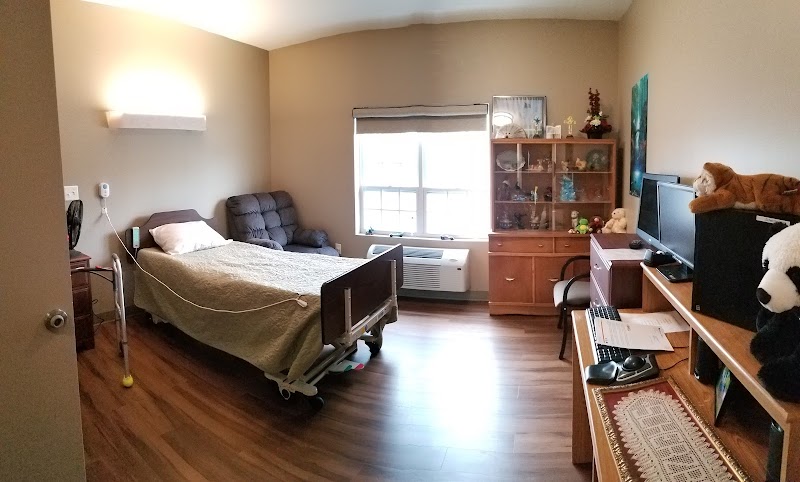
CONCERN (E)

Potential for Harm - no one hurt, but risky conditions existed

Deficiency F0804 (Tag F0804)

Could have caused harm · This affected multiple residents

LICENSURE REFERENCE NUMBER 175 NAC 12-006.11D Based on observations, record review and interviews; the facility failed to ensure foods were served at palatable temperatures to the residents on the sec...

Read full inspector narrative →
LICENSURE REFERENCE NUMBER 175 NAC 12-006.11D Based on observations, record review and interviews; the facility failed to ensure foods were served at palatable temperatures to the residents on the secured unit. This had the potential to affect all 16 residents served in the secured unit dining room. The facility staff identified a census of 60. Findings are: A. Review of a Meal Temperature Log dated 10/2023 revealed the following food temperatures were obtained on the secured unit during the meal services. Further review revealed no foods were identified at each of the meals, only a temperature: -10/1 for breakfast 121 degrees, 138 degrees for the noon meal and no temperatures were obtained for the evening meal; -10/2 for the breakfast meal 130 degrees, the noon meal was 130 degrees, and the evening meal was 133 degrees; -10/3 for the breakfast meal a temperature of 125 degrees, the noon meal was 136 degrees and no documentation for the evening meal; -10/4 breakfast was 121 degrees, the noon meal was 118 degrees and no documented temperature check for the evening meal; -10/5 no food temperature for the breakfast and the evening meal and the noon meal with a temperature of 121 degrees; -10/6 breakfast was 132 degrees, the noon meal was 127 degrees, and the evening meal was 128 degrees; -10/7 breakfast was 131 degrees, the noon meal was 100 degrees, and the evening meal was 127 degrees; -10/8 the breakfast meal was 116 degrees, the noon meal was 121 degrees, and the evening meal was 136 degrees; -10/9 there were no food temperatures documented for the breakfast, the noon or the evening meal; -10/10 the breakfast meal was 115 degrees, the noon meal was 114 degrees, and the evening meal was 123 degrees; and -10/11 the breakfast meal was 123 degrees, and the noon meal was 117 degrees. There was no documentation to indicate a food temperature was obtained for the evening meal. B. Observation on 10/12/23 at 12:04 PM revealed the dietary staff brought a Hot Box (food warmer) to the dining area of the secured unit and plugged the box into the wall. A sign was posted on the outside of the Hot Box which indicated the staff were to record food temperatures from the first meal served and the last meal served at each meal service. Nurse Aide (NA)-A removed a tray from the box which contained a plate with food protected by an insulated cover. NA-A removed the cover and revealed a chicken breast and a serving of baked beans. NA-A obtained a temperature of 134 degrees for the chicken. NA-A removed a second tray which contained puree food items and obtained a temperature of 111 degrees for the puree chicken. NA-A then proceeded to serve the meals. No further temperatures were obtained of the food items served. Observation on 10/16/23 at 12:10 PM revealed the dietary staff delivered the Hot Box to the secured unit. NA-A removed a tray from the box and uncovered a plate to reveal a serving of beef stroganoff and spinach. NA-A identified a temperature of 130 degrees for the stroganoff and 124 degrees for the spinach. NA-A preceded to serve the noon meal and no further food temperatures were checked. Observations on 10/17/23 at 8:22 AM revealed NA-A removed a food tray from the hot box after it was delivered to the secured and uncovered a plate with scrambled eggs. NA-A revealed a temperature of 117 degrees for the eggs and proceeded to deliver the meal trays. An interview was conducted on 10/17/23 at 8:45 AM with NA-A, Licensed Practical Nurse (LPN)-K and Registered Nurse (RN)-F) who were serving the breakfast meal on the secured unit. The following was identified: -staff had never received education as to what foods the staff were to check each meal to determine temperatures; -staff were uncertain what the food temperatures were expected to be; and -staff did not know what they were to do if the food was not the required temperature. Interview with the Dietary Manager (DM) on 10/17/23 at 9:22 AM revealed the staff serving the secured unit dining room were to check the temperature of food items on the first and the last meals served. Food items were to be served at a minimum of 135 degrees. If food temperatures were below 135 degrees, the DM or the [NAME] on Duty was to be notified. The food was to be placed in the microwave and the food heated to 165 degrees for a total of 15 seconds to ensure food safety. The DM confirmed no training had been provided to the staff on the secured unit to assure the residents were served food at a palatable temperature.
CONCERN (F)

Potential for Harm - no one hurt, but risky conditions existed

Pharmacy Services (Tag F0755)

Could have caused harm · This affected most or all residents

Licensure Reference Number 175 NAC 12-006.12B Based on record review and interview; the facility pharmacist failed to ensure emergency and immediate use medications were available. This had the potent...

Read full inspector narrative →
Licensure Reference Number 175 NAC 12-006.12B Based on record review and interview; the facility pharmacist failed to ensure emergency and immediate use medications were available. This had the potential to affect all residents in the building. The facility staff identified a census of 60. Findings are: A. Review of a Pharmacy Services policy and procedure (undated) revealed it was the policy of this facility to ensure pharmaceutical services; were provided to meet the needs of each resident, were consistent with state and federal requirements, and reflected current standards of practice. The pharmacist was responsible for helping the facility obtain and maintain timely and appropriate pharmaceutical services that supported the residents' healthcare needs, were consistent with current standards of practice and met state and federal requirements. B. Observation on 10/18/23 at 11:47 AM with Licensed Practical Nurse (LPN)-H revealed there was not an emergency medication supply for the facility staff to use. During an interview on 10/18/23 at 11:50 AM, LPN-H confirmed the facility did not have an emergency medication use supply in the building. During an interview on 10/18/23 at 11:55 PM, the Director of Nursing (DON) confirmed the facility did not have a supply of emergency use medications in the building.
Sept 2022 5 deficiencies
CONCERN (D)

Potential for Harm - no one hurt, but risky conditions existed

Notification of Changes (Tag F0580)

Could have caused harm · This affected 1 resident

**NOTE- TERMS IN BRACKETS HAVE BEEN EDITED TO PROTECT CONFIDENTIALITY** LICENSURE REFERENCE NUMBER 175 NAC 12-006.04C3a (6) Based on record review and interview, the facility failed to notify the prac...

Read full inspector narrative →
**NOTE- TERMS IN BRACKETS HAVE BEEN EDITED TO PROTECT CONFIDENTIALITY** LICENSURE REFERENCE NUMBER 175 NAC 12-006.04C3a (6) Based on record review and interview, the facility failed to notify the practitioner and the responsible party of a significant weight loss for Resident 30, and a change of condition related to a urinary tract infection for Resident 163. The sample size was 26 and the facility census was 61. Findings are: A. Review of the undated facility policy Notification of Changes revealed the facility would ensure prompt notification of the resident, consult the resident's physician, and/or notify the resident's representative when there was a change requiring notification. Circumstances requiring notification included: 1. Significant change in the resident's physical, mental or psychosocial condition such as a deterioration in health, mental or psychosocial status which may include clinical complications. 2. Circumstances that require a need to alter treatment which may include new treatments or discontinuation of current treatment due to adverse consequences, acute conditions, or exacerbation of a chronic condition. B. Review of Resident 30's Minimum Data Set (MDS-a federally mandated comprehensive assessment tool used for care planning) dated 7/30/22 revealed the following: -severely impaired cognition; -diagnoses of bipolar disorder, dementia, Parkinson's, and disorientation; -received a therapeutic diet; and -weight of 170 lbs (pounds). Review of the resident's Weight and Vitals Summary (a form used to document the residents weights, blood pressure, respirations, temperature and pulse) revealed the following weights: -9/7/22 168 lbs., and -9/21/22 156 lbs. (12 lbs. or a 7.14% weight loss in 2 weeks). Review of the Progress Notes revealed no documentation the resident's responsible party and the primary care physician had been notified of the weight loss. Interview on 9/27/22 at 10:15 AM with the Director of Nursing (DON) confirmed the resident's weight loss and confirmed there was no documentation the resident's responsible party and the resident's primary care physician were notified of the weight loss. C. Review of Resident 163's MDS dated [DATE] revealed diagnoses of Urinary Tract Infection (UTI) and muscle weakness. The MDS indicated the resident had significant cognitive impairment, was incontinent of urine and required extensive staff assistance with bed mobility, transfers, toileting, dressing and personal hygiene. In addition, the resident was totally dependent on staff with eating. Review of Resident 163's nursing progress note dated 9/6/22 at 2:58 PM revealed the resident was admitted to the facility at 11:45 AM and facility staff indicated the resident's abdomen was firm, the urine was concentrated and an odor was present. Review of Resident 163's medical record revealed no evidence the facility staff had notified the physician about the status of the resident's urine upon admission. Further review, revealed a nursing assessment was completed on 9/9/22 at 6:21 PM that noted concern of a suspected UTI related to; foul smelling urine, and the resident was incontinent and confused. There was no evidence the physician or the resident's responsible party were notified of the suspected UTI. Review of Resident 163's nursing progress note dated 9/10/22 at 11:00 PM revealed the resident's vital signs were elevated; temperature was 101.5 degrees Fahrenheit, blood pressure was 158/105, pulse was 124 beats per minute and respirations were rapid at 36 breaths per minute. The physician was notified the resident had choked on fluids and an order for Tylenol suppositories was received. There was no evidence the physician or the resident's responsible party was notified of the suspected UTI. Review of Resident 163's medical record revealed on 9/12/22 (6 days after the resident was admitted and 3 days after the nursing assessment was completed for a suspected UTI infection) the physician ordered a urine sample be obtained. Review of Resident 163's nursing progress note dated 9/14/22 at 2:18 PM revealed the resident had a UTI and was started on an antibiotic of Bactrim twice a day for 10 days. An interview with the DON on 9/27/22 at 2:30 PM, confirmed Resident 163 had symptoms related to a potential UTI that was documented in the medical record on 9/9/22 and confirmed the physician and/or the resident's responsible party was not notified in a timely manner.
CONCERN (D)

Potential for Harm - no one hurt, but risky conditions existed

Deficiency F0657 (Tag F0657)

Could have caused harm · This affected 1 resident

Licensure Reference Number: 175 NAC 12-006.09C1c Based on record review, and interview; the facility failed to revise Resident 9's comprehensive care plan regarding nutritional interventions for weig...

Read full inspector narrative →
Licensure Reference Number: 175 NAC 12-006.09C1c Based on record review, and interview; the facility failed to revise Resident 9's comprehensive care plan regarding nutritional interventions for weight. The sample size was 26 the facility census was 61. Findings are: Review of Resident 9's Minimum Data Set (MDS-a federally mandated comprehensive assessment tool used for care planning) dated 7/24/22 revealed the following: -cognition was severely impaired; -diagnoses of dementia, psychosis and anxiety; -required total assistance with eating and drinking; -weight of 128 pounds (lbs.). The assessment indicated the resident had a weight loss of 5 percent (%) or more in 1 month or a loss of 10% or more in the last 6 months; and -received a mechanically altered diet (examples include soft solids, pureed foods, ground meats and thickened liquids). Review of a Weights and Vitals Summary Sheet (form used to document a resident's weights, blood pressure, respirations, temperature and pulse) revealed the following: -6/21/22 weight was 128 lbs. -6/28/22 weight was 121 lbs. (down 7 lbs. or a 5% loss in 2 weeks). Review of the resident's current Care Plan initiated 6/28/22 revealed the resident was at nutritional risk for weight loss. Weight loss interventions included an extra serving of protein at meals and high calorie snacks between meals. Review of a Nutrition/Dietary Progress Note dated 6/30/22 at 11:08 AM by the Registered Dietician (RD) revealed a recommendation was made to implement 206 Juice (nutritional supplement with added calories and protein) three times a day with the resident's meals. Further review of the resident's Care Plan revealed no revision related to the RD's recommendation for the 206 Juice three times a day to as an additional approach to prevent further weight loss. Interview on 9/26/22 at 11:48 AM with the Dietary Manager (DM) confirmed the resident's care plan had not been revised/updated to reflect current weight loss interventions.
CONCERN (D)

Potential for Harm - no one hurt, but risky conditions existed

Quality of Care (Tag F0684)

Could have caused harm · This affected 1 resident

LICENSURE REFERENCE NUMBER 175 NAC 12-006.09D3 Based on record review and interviews, facility staff failed to provide care and services to prevent the potential for complications related to bowel eli...

Read full inspector narrative →
LICENSURE REFERENCE NUMBER 175 NAC 12-006.09D3 Based on record review and interviews, facility staff failed to provide care and services to prevent the potential for complications related to bowel elimination for Resident 163. The sample size was 26 and the facility census was 61. Findings are: A. Review of the facility's policy titled Bowel Elimination dated 3/3/2021 revealed the purpose of the policy was to assure constipation is prevented/addressed in a timely manner by focusing on eating, diet, nutrition, hydration and medications. The policy also indicated daily documentation of resident's bowel elimination must be done using the following steps for all residents at the facility: - If No Bowel Movement (BM) in 48 hours, dietary is notified and the resident will be offered bran flakes, prune juice or both. - No BM in 72 hours, the resident is to be offered Milk of Magnesia (MOM) 30 cubic centimeters(cc's) by mouth. - No BM in 96 hours, the resident is to be offered a Dulcolax suppository (used to promote bowel movements). - No BM in 120 hours, the resident is to be offered a Fleets Enema (used to promote bowel movements). - No BM in 144 hours, the physician will be notified for additional orders. B. Review of Resident 163's Minimum Data Set (MDS- a federally mandated comprehensive assessment tool used for care planning) dated 9/17/22 revealed diagnoses of Urinary Tract Infection (UTI) and muscle weakness. The MDS indicated the resident had significant cognitive impairment and required extensive staff assistance with bed mobility, transfers, toileting, dressing and personal hygiene. In addition, the resident was totally dependent on staff with eating. Review of Resident 163's nursing progress note dated 9/6/22 at 2:58 PM revealed the resident was admitted to the facility at 11:45 AM and a nursing assessment indicated the resident's abdomen was firm and the last time the resident had a BM was unknown. Review of Resident 163's Bowel and Bladder Elimination record dated 9/6/22 to 9/26/22 revealed the resident did not have a bowel movement from 9/7/22 thru 9/12/22 and from 9/18/22 thru 9/21/22. Review of Resident 163's Electronic Medication Administration Record (Emar) dated 9/1/22 to 9/30/22 revealed the resident had the following order related to the bowel program and medication administration: - No BM in 48 hours, dietary is notified and the resident will be offered bran flakes, prune juice or both. - No BM in 72 hours, the resident is to be offered Milk of Magnesia (MOM) 30 cubic centimeters(cc's) by mouth. - No BM in 96 hours, the resident is to be offered a Dulcolax suppository (used to promote bowel movements). - No BM in 120 hours, the resident is to be offered a Fleets Enema (used to promote bowel movements). - No BM in 144 hours, the physician will be notified for additional orders. Further review of the resident's Emar revealed no evidence the resident was administered MOM, a Dulcolax suppository and/or a Fleets Enema at the ordered timed intervals between 9/7/22 and 9/12/22 (6 days/144 hours) or between 9/18/22 and 9/21/22 (4 days/96 hours). This had the potential for the resident to develop complications related to constipation. An interview with the Director of Nurses (DON) on 9/27/22 at 2:30 PM confirmed Resident 163 had no bowel movement documented between 9/7/22 and 9/12/22 (144 hours - a total of 6 days) or between 9/18/22 and 9/21/22. In addition, the DON confirmed nursing staff were expected to follow the bowel elimination program orders as written and should have administered the MOM, Dulcolax suppository and/or a Fleets Enemas to Resident 163 at the appropriate intervals and had not done so.
CONCERN (D)

Potential for Harm - no one hurt, but risky conditions existed

Accident Prevention (Tag F0689)

Could have caused harm · This affected 1 resident

Licensure Reference Number 175 NAC 12-006.09D7 Based on observations, record review and interviews; the facility failed to implement interventions to prevent potential aspiration and/or choking and to...

Read full inspector narrative →
Licensure Reference Number 175 NAC 12-006.09D7 Based on observations, record review and interviews; the facility failed to implement interventions to prevent potential aspiration and/or choking and to assess causal factors and develop and/or revise interventions to prevent ongoing falls for Resident 15. The sample size was 5 and the facility census was 61. Findings are: A. Review of the facility Fall Prevention Program with a revision date of 11/9/18, revealed each resident was to be assessed for the risks of falling and was to receive care in accordance with the level of risk to minimize the likelihood of falls. The risk assessment was to categorize residents according to low, moderate or high risk. Fall prevention interventions were to be implemented to decrease the resident's risk for falls. When any resident experienced a fall, the facility was to: -assess the resident; -complete an Incident Report; -notify the physician and family; -review the resident's care plan and update as indicated; and -document all assessments and actions. B. Review of the facility policy Accidents and Supervision with a date of 4/1/21, revealed staff were to examine data from Incident Reports to identify specific hazards and risks and then develop targeted interventions to reduce the resident's potential for accidents. C. Review of Resident 15's Minimum Data Set (MDS-a federally mandated comprehensive assessment tool used for care planning) dated 7/9/22 revealed diagnoses of heart failure, sleep apnea, anemia, insomnia, anxiety, psychotic and mood disturbance and dementia. The following was assessed regarding the resident: -behaviors of wandering and rejection of cares; -required extensive assistance with bed mobility, transfers, dressing, toilet use and personal hygiene; -frequently incontinent of bowel and bladder; and -episodes of choking and/or coughing during meals and when swallowing medications. Review of a Nursing Progress Note dated 4/7/22 at 4:01 AM revealed the resident was observed 5 times getting out of bed, removed all clothing and wandered out into the corridor. Staff then observed the resident crawl out of bed and lowered self to the floor. Review of the resident's medical record revealed no evidence an Incident Report had been completed, causal factors assessed, or new fall interventions developed. Review of a Therapy Progress Note completed by the Speech Therapist dated 4/22/22 at 3:46 PM revealed the resident was receiving treatment for dysphagia (difficulty swallowing). The resident was placed on a puree diet with regular consistency liquids. Review of a Plan of Care Progress Note dated 7/14/22 at 11:18 AM revealed the resident still coughs a lot at meals Review of an Incident Report dated 7/26/22 at 11:00 AM revealed the resident had a fall when transferring out of a chair. An intervention was identified for staff to assist the resident with all transfers. Review of an Incident Report dated 7/29/22 at 3:30 AM revealed the resident was found on the floor of the resident's room between the bed and a chair. Interventions were identified for the resident's bed to be placed in the lowered position, and a defined edge mattress on the bed. In addition, staff were to provide the resident with hourly checks in the evenings/nights. Review of a Nursing Progress Note dated 9/2/22 at 11:53 PM revealed while being assisted to bed; the resident was lowered to the floor. Review of the resident's medical record revealed no evidence an Incident Report had been completed, causal factors assessed, or new fall interventions developed. Review of an Incident Report dated 9/4/22 at 4:37 AM revealed the staff heard a loud crash and a groan. The resident was found on the floor of the bathroom and had sustained a 5 centimeter (cm) by 1.6 cm laceration to the back of the resident's head. An intervention was put into place for a chair/bed alarm. During an observation on 9/22/22 at 11:40 AM, Resident 15 was seated at a table in the dining room. The resident was attempting to drink of glass of water. The resident had continuous coughing/choking observed while drinking the water. Resident 15 was approached by Licensed Practical Nurse (LPN)-B with a container of Thick It (powder used to thicken food and beverages). LPN-B proceeded to place 2 scoops of the powder into the resident's water, stirred the fluid and then placed in another teaspoon. The resident was handed the glass with the remainder of the now thickened water and the resident consumed with no further coughing. LPN-B indicated the resident had a history of aspiration/choking and was on nectar thickened liquids at one time. LPN-B further indicated the facility would do a 3-day trial of thickened liquids to see how the resident tolerated. During an observation on 9/26/22 from 8:42 AM to 9:04 AM, the resident was at the dining room table for the breakfast meal. The resident had been served a 4-ounce glass of orange juice and of milk and an 8-ounce glass of water. All the resident's liquids were thin/regular and had not been thickened. The resident had continuous coughing noted with observation. During an observation on 9/26/22 at 12:22 PM, the resident was seated at a table in the dining room. The resident was served a 4-ounce glass of iced tea and milk and an 8-ounce glass of water. The resident's liquids were thin and had not been thickened. Interview with the Director of Nursing (DON) on 9/26/22 at 12:28 PM confirmed the resident's fluids had not been thickened. The DON indicated the resident had done much better with the thickened fluids and the physician had ordered nectar thickened liquids for the resident. Interview with the Dietary Manager on 9/26/22 at 12:55 PM confirmed the resident was to receive nectar thickened liquids at all meals but the resident's diet card had not been updated to reflect this change. Interview with the DON on 9/26/22 at 1:06 PM confirmed the staff failed to complete an Incident Report after the resident's falls on 4/7/22 at 4:01 AM and on 9/2/22 at 11:53 PM, causal factors were not assessed, and no additional interventions were developed to prevent further falls.
CONCERN (D)

Potential for Harm - no one hurt, but risky conditions existed

Deficiency F0692 (Tag F0692)

Could have caused harm · This affected 1 resident

**NOTE- TERMS IN BRACKETS HAVE BEEN EDITED TO PROTECT CONFIDENTIALITY** C. Review of Resident 30's MDS dated [DATE] revealed the following: -severely impaired cognition, -diagnoses of bipolar disorder...

Read full inspector narrative →
**NOTE- TERMS IN BRACKETS HAVE BEEN EDITED TO PROTECT CONFIDENTIALITY** C. Review of Resident 30's MDS dated [DATE] revealed the following: -severely impaired cognition, -diagnoses of bipolar disorder, dementia, parkinson's, and disorientation, -received a therapeutic diet, and -weight of 170 lbs. Review of Resident 30's Weight and Vitals Summary revealed the following weights: -8/31/22 169lbs., -9/3/22 164.5lbs., -9/7/22 168lbs., -9/10/22 167lbs., -9/14/22 163lbs., -9/17/22 158lbs., and -9/21/22 156lbs. (12 lbs. or a 7.14% weight loss in 2 weeks). Review of the Care Plan revealed the resident was at risk for altered nutrition related to diagnoses of dementia, Parkinson's, bipolar disease, heart-disease, and diabetes with interventions for the following: -afternoon milkshake for added calories, -afternoon snack, -supplements as recommended by the RD and prescribed by the primary care physician, and -trying different foods and snacks to try and find items the resident would eat well. Review of the Progress Notes revealed the following entries: -9/2/22 at 3:26 PM afternoon milkshake refused, -9/2/22 at 8:09 PM bedtime snack refused, -9/4/22 at 3:48 PM afternoon snack refused, -9/5/22 at 4:35 PM afternoon milkshake refused, -9/5/22 at 8:10 PM bedtime snack refused, -9/14/22 at 3:34 PM afternoon snack refused, -9/14/22 at 8:39 PM bedtime snack refused, -9/15/22 at 8:49 PM bedtime snack refused, -9/17/22 at 8:23 PM resident refused not hungry (bedtime snack), -9/21/22 at 3:19 PM afternoon snack refused, -9/22/22 at 3:46 PM afternoon milkshake refused, and -9/22/22 at 10:11 PM bedtime snack refused. Further review of the residents medical record revealed no documentation that the residents responsible party and the primary care physician had been notified of the weight loss and continued refusal of interventions. Review of the residents MAR revealed the following: -received a modified diabetic diet with small portions, -afternoon milkshake was refused in September 2022 on the 2, 3, 5, 11, 14, 17, 18, 19, and 22nd, -bedtime snack was refused in September 2022 on the 2, 3, 5, 6, 9, 10, 11, 14, 15, 17, 18, 19, and 22nd, and -3 pm snack was refused in September 2022 on the 3, 17, 18, 19, and 22. Interview on 9/26/22 at 10:20 AM with Licensed Practical Nurse-E (LPN) revealed the resident didn't eat the greatest while in quarantine with covid. The resident didn't have much of an appetite, but the staff would offer candy bars. Interview on 9/27/22 at 10:15 AM with the Director of Nursing (DON) confirmed the residents weight loss and confirmed there was no documentation that the residents responsible party and the residents PCP were notified of the weight loss. LICENSURE REFERENCE NUMBER 175 NAC 12-006.09D8 Based on record review and interview; the facility failed to monitor/evaluate nutritional interventions and to develop and/or revise interventions to prevent weight loss for 2 (Residents 9 and 30) of 5 sampled residents. The facility census was 61. Findings are: A. Review of the facility policy Weight Monitoring (undated) revealed the facility would ensure residents maintained acceptable parameters of nutritional status, such as usual body weight unless the resident's clinical condition demonstrated this was not possible or the resident's preferences indicated otherwise. The staff were to: -identify and assess each resident's nutritional status and risk factors for impaired nutrition; -evaluate and analyze the assessment information; -develop and consistently implement approaches; and -monitor the effectiveness of interventions and revise them as necessary. B. Review of Resident 9's Minimum Data Set (MDS-a federally mandated comprehensive assessment tool used for care planning) dated 7/24/22 revealed the following: -cognition was severely impaired; -diagnoses of dementia, psychosis and anxiety; -required total assistance with eating and drinking; -weight of 128 pounds (lbs.). The assessment indicated the resident had a weight loss of 5 percent (%) or more in 1 month or a loss of 10% or more in the last 6 months; and -received a mechanically altered diet (examples include soft solids, pureed foods, ground meats and thickened liquids). Review of a Weights and Vitals Summary Sheet (form used to document a resident's weights, blood pressure, respirations, temperature and pulse) revealed the following: -6/21/22 weight was 128 lbs. -6/28/22 weight was 121 lbs. (down 7 lbs. or a 5% loss in 2 weeks). Review of a Nutrition/Dietary Progress Note dated 6/30/22 at 11:08 AM by the Registered Dietician (RD) revealed the resident was at risk for impaired nutritional status and a recommendation was made to implement 206 Juice (nutritional supplement with added calories and protein) three times a day with the resident's meals. Review of the resident's Weights and Vitals Summary Report revealed the resident's weight on 8/1/22 was 126 lbs. Review of a Nursing Progress Note dated 8/1/22 at 12:15 PM revealed new interventions for the resident to be offered a light breakfast at 10:00 AM such as yogurt or applesauce, to be provided additional protein at the noon and the evening meals and a milkshake at 3:00 PM. Review of a Nutrition, Amount Eaten Report (form used to document food and fluid intake at meals) from 9/1/22 through 9/15/22 revealed the resident consumed the following amounts of all the fluids offered at meals: -9/1/22 at breakfast 40 cubic centimeters (cc), at noon 60 cc and at the evening meal 100 cc; -9/2/22 at breakfast 50 cc, at noon 100 cc and at the evening meal 100 cc; -9/3/22 at breakfast 5 cc, at the noon meal 200 cc and refused all fluids at the evening meal; -9/4/22 at breakfast 90 cc, 20 cc at the noon meal and 50 cc at the evening meal; -9/5/22 5 cc at the breakfast and the noon meal and 50 cc at the evening meal; -9/6/22 refused all fluids at breakfast, 20 cc at noon and 100 cc at the evening meal; -9/7/22 60 cc at breakfast, refused at noon and 120 cc at the evening meal; -9/8/22 240 cc at breakfast, refused at lunch and 175 cc at the evening meal; -9/9/22 5 cc were documented as consumed at breakfast and the evening meal and no documentation of intake at the noon meal; -9/10/22 5 cc at breakfast, 240 cc at noon and no documentation for the evening meal; -9/11/22 no documentation of fluid intake for the breakfast and the evening meal and 20 cc at the noon meal; -9/12/22 40 cc at breakfast, 20 cc at lunch and no documentation of intake for the evening meal; -9/13/22 120 cc for the breakfast and the noon meal and 200 cc for the evening meal; and -9/14/22 and 9/15/22 there were no fluid intakes documented at any of the resident's meals. Review of the resident's Medication Administration Record (MAR) for 9/2022 revealed the following from 9/1/22 to 9/15/22; -staff failed to document the amount of yogurt the resident had consumed at the breakfast meal; and -the resident did not receive and/or accept the Milkshake supplement at 3:00 PM on 9/1/22 to 9/12/22 and on 9/14/22 (13 out of 15 days). Review of a Weights and Vitals Summary Report revealed the resident's weight on 9/15/22 was 116 lbs. (down 10 lbs. or a loss of 8% in 1 month). During an interview on 9/26/22 at 11:48 AM, the Dietary Manager (DM) confirmed the following: -reviewed weights on a weekly basis and was responsible for notifying the Registered Dietician (RD) of weight losses; -unaware Resident 9's weight on 9/15/22 was 116 lbs. or that the resident's weight was down 10 lbs. in a month; -resident 9's food and fluid intakes had been poor due to advancing dementia, and family were coming to assist the resident at meals to try and improve intakes; -dietary staff were responsible for documenting nutritional supplements provided with the resident's meals and had failed to document Resident 9's intake of the 206 Juice; and -nursing was responsible for documenting supplements provided between meals and failed to document the resident's intake of yogurt and the Milkshake with added calories.
Understanding Severity Codes (click to expand)
Life-Threatening (Immediate Jeopardy)
J - Isolated K - Pattern L - Widespread
Actual Harm
G - Isolated H - Pattern I - Widespread
Potential for Harm
D - Isolated E - Pattern F - Widespread
No Harm (Minor)
A - Isolated B - Pattern C - Widespread

Questions to Ask on Your Visit

  • "Can I speak with families of current residents?"
  • "What's your RN coverage like on weekends and overnight?"

Our Honest Assessment

Strengths
  • • No major safety red flags. No abuse findings, life-threatening violations, or SFF status.
  • • No fines on record. Clean compliance history, better than most Nebraska facilities.
Concerns
  • • 27 deficiencies on record. Higher than average. Multiple issues found across inspections.
  • • Grade C (50/100). Below average facility with significant concerns.
Bottom line: Mixed indicators with Trust Score of 50/100. Visit in person and ask pointed questions.

About This Facility

What is Community Memorial Health Center's CMS Rating?

CMS assigns Community Memorial Health Center an overall rating of 2 out of 5 stars, which is considered below average nationally. Within Nebraska, this rating places the facility higher than 0% of the state's 100 nursing homes. A rating at this level reflects concerns identified through health inspections, staffing assessments, or quality measures that families should carefully consider.
How is Community Memorial Health Center Staffed?

CMS rates Community Memorial Health Center's staffing level at 3 out of 5 stars, which is average compared to other nursing homes. Staff turnover is 47%, compared to the Nebraska average of 46%.

What Have Inspectors Found at Community Memorial Health Center?

State health inspectors documented 27 deficiencies at Community Memorial Health Center during 2022 to 2025. These included: 27 with potential for harm.

Who Owns and Operates Community Memorial Health Center?

Community Memorial Health Center is owned by a non-profit organization. Non-profit facilities reinvest revenue into operations rather than distributing to shareholders. The facility operates independently rather than as part of a larger chain. With 64 certified beds and approximately 60 residents (about 94% occupancy), it is a smaller facility located in Burwell, Nebraska.

How Does Community Memorial Health Center Compare to Other Nebraska Nursing Homes?

Compared to the 100 nursing homes in Nebraska, Community Memorial Health Center's overall rating (2 stars) is below the state average of 2.9, staff turnover (47%) is near the state average of 46%, and health inspection rating (2 stars) is below the national benchmark.

What Should Families Ask When Visiting Community Memorial Health Center?

Based on this facility's data, families visiting should ask: "Can I visit during a mealtime to observe dining assistance and food quality?" "How do you handle medical emergencies, and what is your hospital transfer rate?" "Can I speak with family members of current residents about their experience?"

Is Community Memorial Health Center Safe?

Based on CMS inspection data, Community Memorial Health Center has a clean safety record: no substantiated abuse findings (meaning no confirmed cases of resident harm), no Immediate Jeopardy citations (the most serious violation level indicating risk of serious injury or death), and is not on the Special Focus Facility watch list (a federal program monitoring the lowest-performing 1% of nursing homes). The facility has a 2-star overall rating and ranks #100 of 100 nursing homes in Nebraska. While no facility is perfect, families should still ask about staff-to-resident ratios and recent inspection results during their visit.

Do Nurses at Community Memorial Health Center Stick Around?

Community Memorial Health Center has a staff turnover rate of 47%, which is about average for Nebraska nursing homes (state average: 46%). Moderate turnover is common in nursing homes, but families should still ask about staff tenure and how the facility maintains care continuity when employees leave.

Was Community Memorial Health Center Ever Fined?

Community Memorial Health Center has no federal fines on record. CMS issues fines when nursing homes fail to meet care standards or don't correct problems found during inspections. The absence of fines suggests the facility has either maintained compliance or corrected any issues before penalties were assessed. This is a positive indicator, though families should still review recent inspection reports for the full picture.

Is Community Memorial Health Center on Any Federal Watch List?

Community Memorial Health Center is not on any federal watch list. The most significant is the Special Focus Facility (SFF) program, which identifies the bottom 1% of nursing homes nationally based on persistent, serious quality problems. Not being on this list means the facility has avoided the pattern of deficiencies that triggers enhanced federal oversight. This is a positive indicator, though families should still review the facility's inspection history directly.