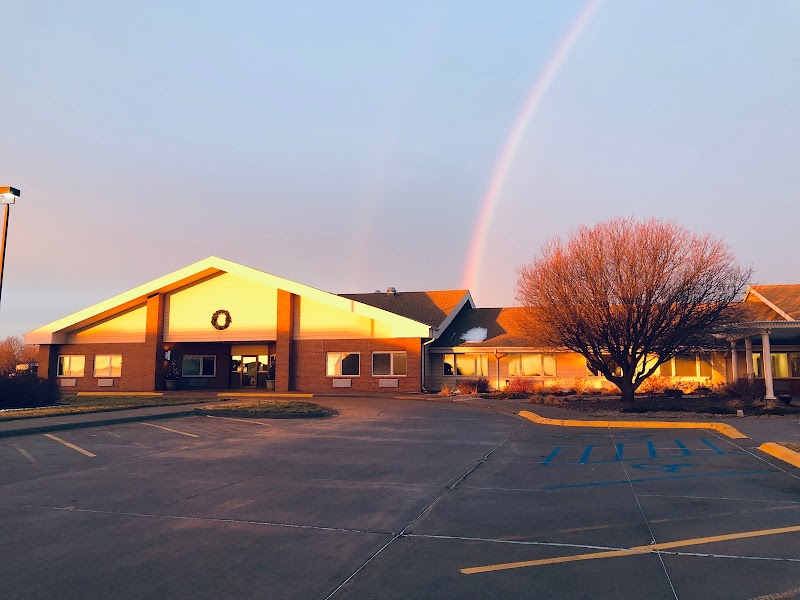
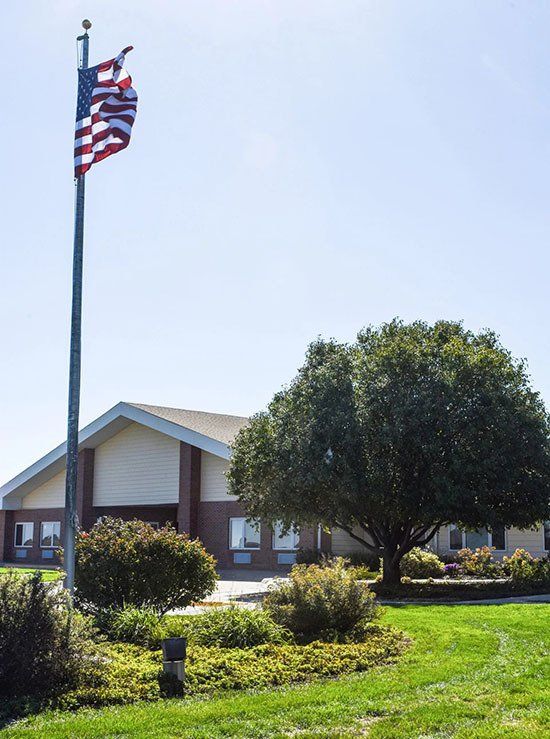
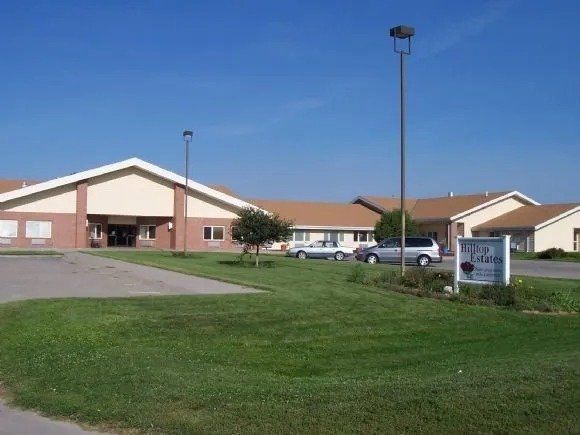
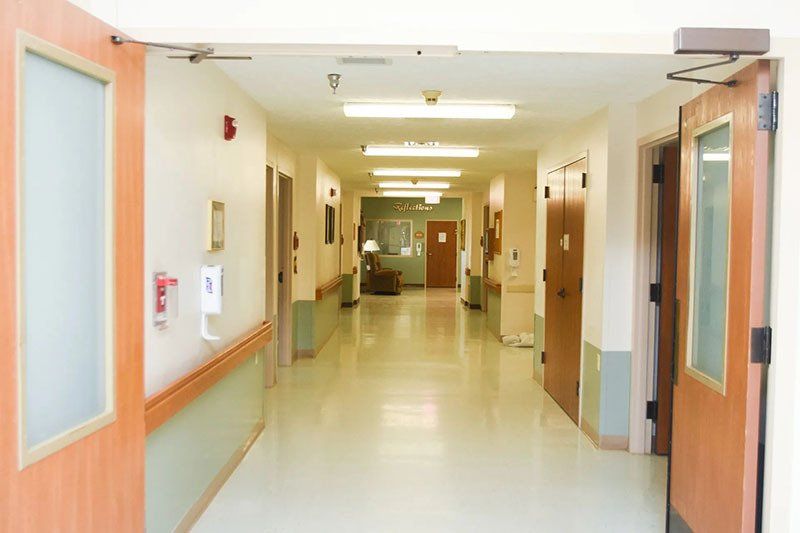
Hilltop Estates

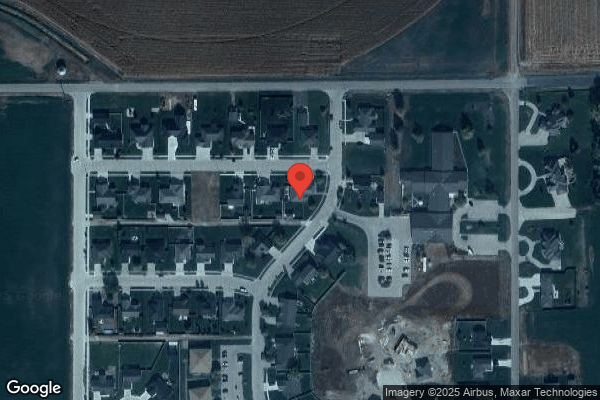
2520 Avenue M, Gothenburg, NE 69138 (308) 537-7138
For profit - Corporation 64 Beds Independent Data: November 2025
Trust Grade
90/100
#21 of 177 in NE
Last Inspection: March 2025

Within standard 12-15 month inspection cycle. Federal law requires annual inspections.

Overview

Hilltop Estates in Gothenburg, Nebraska, has received an excellent Trust Grade of A, which indicates they are highly recommended and performing well. They rank #21 out of 177 facilities in the state, placing them in the top half, and are the best option among two facilities in Dawson County. Unfortunately, the facility is experiencing a worsening trend, increasing from three issues in 2024 to four in 2025. Staffing is a strong point, with a 5/5 rating and a turnover rate of 46%, just below the state average, suggesting staff stability. However, there are some concerns, as they had seven issues noted in inspections, including failures to maintain safe temperatures in their refrigerator and dishwashing machine, which could risk foodborne illness, and a lack of proper hygiene practices during insulin administration.

Trust Score
A
90/100
In Nebraska
#21/177
Top 11%
Safety Record
Low Risk
No red flags
Inspections
Getting Worse
3 → 4 violations
Staff Stability
⚠ Watch
46% turnover. Above average. Higher turnover means staff may not know residents' routines.
Penalties
✓ Good
No fines on record. Clean compliance history, better than most Nebraska facilities.
Skilled Nurses
✓ Good
Each resident gets 46 minutes of Registered Nurse (RN) attention daily — more than average for Nebraska. RNs are trained to catch health problems early.
Violations
○ Average
7 deficiencies on record. Average for a facility this size. Mostly minor or procedural issues.
★★★★★
5.0
Overall Rating
★★★★★
5.0
Staff Levels
★★★★★
5.0
Care Quality
★★★☆☆
3.0
Inspection Score
Stable
2024: 3 issues
2025: 4 issues

The Good

  • 5-Star Staffing Rating · Excellent nurse staffing levels
  • 5-Star Quality Measures · Strong clinical quality outcomes
  • Full Sprinkler Coverage · Fire safety systems throughout facility
  • No fines on record

Facility shows strength in staffing levels, quality measures, fire safety.

The Bad

Staff Turnover: 46%

Near Nebraska avg (46%)

Higher turnover may affect care consistency

The Ugly 7 deficiencies on record

Mar 2025 4 deficiencies
CONCERN (D)

Potential for Harm - no one hurt, but risky conditions existed

Deficiency F0740 (Tag F0740)

Could have caused harm · This affected 1 resident

**NOTE- TERMS IN BRACKETS HAVE BEEN EDITED TO PROTECT CONFIDENTIALITY** Licensure Reference Number 175 NAC 12-006.09(H) Based on observation interview and record review the facility failed to observe ...

Read full inspector narrative →
**NOTE- TERMS IN BRACKETS HAVE BEEN EDITED TO PROTECT CONFIDENTIALITY** Licensure Reference Number 175 NAC 12-006.09(H) Based on observation interview and record review the facility failed to observe 1 (Resident 41) of 1 sampled resident for changes in their psychosocial or mood state and failed to monitor the resident for adverse effects from their psychotropic medication in accordance with the resident's plan of care. The facility census was 44. Findings are: Review of a facility policy titled Behavioral Health Services and dated 10/24/2022 revealed it is the policy of this facility to ensure all residents receive necessary behavioral health services to assist them in reaching and maintaining their highest level of mental and psychosocial functioning. The facility will ensure that necessary behavioral health care services are person centered and reflect the resident's goals for care while maximizing the resident's dignity, autonomy, privacy, socialization, independence, choice, and safety. Behavioral health encompasses a resident's whole emotional and mental well-being, which includes, but is not limited to, psychosocial adjustment difficulty and trauma. A record review of a Resident Face Sheet revealed Resident 41 was admitted to the facility on [DATE] with diagnoses of Polyosteoarthritis (a condition where multiple joints are affected by a degenerative joint disease), Macular Degeneration (a disease of the eye resulting in lack of vision), and Depression (a mental health condition characterized by persistent feelings of sadness, hopelessness, and loss of interest in activities). A record review of Resident 41's admission Minimum Data Set (MDS, a federally mandated comprehensive assessment tool used to determine a resident's functional capabilities and helps nursing home staff identify health problems) with an Assessment Reference Date (ARD) of 01/17/2025 revealed Resident 41 had a Brief Interview for Mental Status (BIMS, a brief screener that aids in detecting cognitive impairment) score of 11/15 indicating the resident was moderately cognitively impaired. The resident had a Patient Health Questionnaire (PHQ-2 to 9, A validated interview that screens for symptoms of depression. It provides a standardized severity score and a rating for evidence of a depressive disorder) score of 6/27 indicating mild depression. The resident indicated during the interview for daily preferences that listening to music, keeping up with the news, going outside when the weather is good, and participating in religious services or practices were very important to them. The resident was dependent on staff assistance using a wheelchair for mobility over long distances. A record review of Resident 41's Care Plan revealed a problem of psychosocial well being stating the resident was experiencing a decline in their psychosocial wellbeing and or mood state dated 01/29/2025 with a goal stating the resident would not show a decline in their psychosocial well being through the next review date. Approaches were listed including being involved with telehealth for medication management and mental health therapy, to observe the resident for changes in their psychosocial or mood state and report changes to their physician and facility social worker, and target behaviors of social isolation poor appetite and difficulty coping with adjustment to placement and loss of husband all dated 01/29/2025. Resident 41 also had a problem of psychotropic drug use due to depression dated 01/24/2025 with a goal that the resident would not exhibit signs of drug related sedation or anticholinergic symptoms (dry mouth, blurred vision, confusion, hallucinations, delirium and heat intolerance). An approach was listed to assess and record effectiveness of drug treatment and monitor and report signs of sedation, hypotension, or anticholinergic symptoms dated 01/24/2025. A record review of Resident 41's Electronic Medical Health Record revealed an order for Duloxetine (a medication used to treat depression) 20 milligrams once daily. In an interview conducted on 03/12/2025 at 4:30 PM with Resident 41, Resident 41 stated they had recently lost their spouse and moved into the facility due to not being able to care for themself. The resident reported feeling sad and lonely most of the time and feeling like they were sleeping more than normal. The resident stated they enjoyed the exercise activity and sitting with a family member at mealtime and visiting with them. The resident reported enjoying the bible on tape but could not operate the recorder in the room due to a decline in vision function. In an interview conducted on 03/17/2025 at 2:10 PM with the facility Activity Director (ACTD), the ACTD stated that Resident 41 was participating in activities daily after admission. The ACTD confirmed that the resident, over the past couple of weeks, had started declining to go to activities that the resident had attended previously. The ACTD confirmed they did not report this change to nursing or social service staff. In an interview conducted on 03/17/2025 at 3:50 PM with the facility Social Service Director (SSD), the SSD denied being made aware of Resident 41's recent change of not coming out to meals and attending activities that had previously. In an interview conducted on 03/18/2025 with Medication Aide (MA)-H, MA-H revealed that Resident 41 had previously been going to the dining room for meals but started refusing to come to the dining room for a while. The MA confirmed that they had not reported this to the nurse or social services. In an interview conducted on 03/18/2025 at 1:15 PM with Registered Nurse (RN)-C, RN-C stated that Resident 41 was not being monitored for any mood or behavior problems or changes. In an interview conducted on 03/18/2025 at 3:00 PM with the Director of Nursing (DON), the DON confirmed that Resident 41 was not being monitored for the changes of not regularly attending activities and meals as they had previously and should have been.
CONCERN (D)

Potential for Harm - no one hurt, but risky conditions existed

Unnecessary Medications (Tag F0759)

Could have caused harm · This affected 1 resident

Licensure Reference Number 175 NAC 12-006.10(D) Based on observation, interview, and record review the facility failed to maintain a medication error rate of 5% or less with an actual medication error...

Read full inspector narrative →
Licensure Reference Number 175 NAC 12-006.10(D) Based on observation, interview, and record review the facility failed to maintain a medication error rate of 5% or less with an actual medication error rate of 12%. This affected 2 residents (Resident 9 and Resident 37) of 4 sampled residents. The facility census was 44. Findings are: A record review of a facility policy titled Preventing Medication Errors dated 01/2018 revealed the facility must ensure that it is free of medication error rates of 5% or greater. A. A record review of Resident 9's Electronic Medical Record revealed Resident 9 had physician's orders to receive Sennosides-Docusate Sodium (a medication used to promote bowel movements) one tablet twice daily every day and Viactive Chewable (a vitamin and mineral supplement) once daily every day. An observation of medication administration by Licensed Practical Nurse A (LPN-A) completed on 03/13/2025 at 7:35 AM revealed the following: -LPN-A removed 2 round orange tablets from a white bottle labeled Senna Plus (sennosides-docusate sodium) and placed them in a clear plastic cup containing other medications. LPN-A then removed a white oblong tablet from a white plastic bottle labeled Calcium with Vitamin D (a vitamin and mineral supplement) and placed it in the clear plastic cup with the other medications. LPN-A proceeded to administer all the medications in the cup to Resident 9. Resident 9 ingested all the medications. In an interview completed on 03/13/2025 at 2:06 PM with LPN-A, LPN-A confirmed that Resident 9 had an order to receive 1 Senna Plus tablet and not 2 Senna Plus tablets. The LPN also confirmed that Resident 9 did not have an order to receive the Calcium with Vitamin D tablet that they administered. LPN-A confirmed that these were medication errors. In an interview completed on 03/13/2025 at 3:30 PM with the Director of Nursing (DON), the DON confirmed the resident receiving 2 tablets and not the prescribed 1 tablet was a medication error. B. A record review of Resident 37's Electronic Medical Record revealed Resident 37 had a physician's order to receive Acetaminophen (a pain-relieving medication) 500 milligrams (MG), one tablet three times a day, every day. An observation of medication administration by LPN-A completed on 03/13/2025 at 7:40 AM revealed the following: -LPN-A removed 2 oblong white tablets from a white bottle labeled Acetaminophen 500 MG tablets. The LPN placed the tablets in a clear plastic cup with other medications. LPN-A proceeded to administer all the medications in the cup to Resident 37. Resident 37 ingested all the medications. In an interview completed on 03/13/2025 at 2:08 PM with LPN-A, LPN-A confirmed that Resident 18 had an order to receive 1 Acetaminophen 500 MG tablet and not 2 Acetaminophen 500 MG tablets. The LPN confirmed that this was a medication error. In an interview completed on 03/13/2025 at 3:30 PM with the Director of Nursing (DON), the DON confirmed the resident receiving 2 tablets and not the prescribed 1 tablet was a medication error.
CONCERN (F)

Potential for Harm - no one hurt, but risky conditions existed

Food Safety (Tag F0812)

Could have caused harm · This affected most or all residents

Licensure Reference Number 175 NAC 12-006.11(E) Based on observations and interviews, the facility failed to ensure the walk-through refrigerator maintained safe temperatures and failed to ensure the ...

Read full inspector narrative →
Licensure Reference Number 175 NAC 12-006.11(E) Based on observations and interviews, the facility failed to ensure the walk-through refrigerator maintained safe temperatures and failed to ensure the dishwashing machine reached the required temperatures during cycles to prevent the potential for foodborne illness. This had the potential to affect all facility residents eating out of the kitchen. The facility census was 44. Findings Are: A. A record review of the Nebraska Food Code, dated 2017, revealed ready to eat foods should be held at a temperature of 41 degrees Fahrenheit (F) or below. On 03/12/2025 at 8:44 AM an initial observation of the kitchen revealed a walk-through refrigerator with a temperature log labeled March with annotations of greater than 41 degrees F on the following dates: -On March 5th: 42, -On March 9th: 42, -On March 11th: 45. An observation on 03/12/2025 at 8:45 AM the reading outside of the walk-through temperature gauge revealed 44 degrees Fahrenheit. An interview on 03/12/2025 at 8:45 AM with the Dietary Manager-I (DM-I) revealed that the temperature reading on the refrigerator revealed a reading outside of the parameters for safe food handling and suggested that continuous in and out of the walk-through refrigerator was the reason for the increase in temperature. DM-I agreed to keep a watch on the temperature readings and stated they would recheck the gauges again shortly. On 03/12/2025 at 9:45 AM the facility Administrator (ADMIN) was interviewed on the walk-through refrigerator temperatures. The surveyor, DM-I and the ADMIN observed the refrigerator gauge outside of the walk-through refrigerator reading 46 degrees F. Upon entering the walk-through refrigerator, a zip-tie attached manual temperature (temp) gauge was observed reading 46 degrees F. An opened gallon of milk was taken out of the walk-through refrigerator and was poured into a cup and temped and observed to reach a maximum temperature reading of 56 degrees F. The ADMIN then threw away the milk and stated they would temp an unopened gallon of milk which was taken out of the walk-through refrigerator, poured into a cup and read a maximum temperature reading of 46 degrees F. The ADMIN then asked DM-I what a safe temperature reading would be for milk and other refrigerated products, upon which DM-I revealed 41 degrees F or below. The ADMIN agreed that the refrigerator was not maintaining safe temperatures for food at that time. B. An observation on 03/12/2025 at 9:30 AM revealed Dietary Aide (DA)-F and DA-G in the dishwashing soiled area moving dishware from the dining area into the soiled dishware area. DA-F stacked soiled dishware onto a rack and pushed out dishes from inside the high temperature dishwasher. Racks of other dishes were then moved forward onto the clean side of the dishwasher while dirty dishes were being stacked and moved into the high temperature dishwasher simultaneously. A record review of a facility document Dishwasher Temperature Log, which was labeled March, had annotations for AM and PM temperatures which were to be written for initial rinse temperature, wash temperature and final rinse temperature readings. The log revealed many missing temperature annotations for several days. A record review of a sticker on the temperature gauge of the facility's dishwashing machine revealed a statement of, Minimum Rinse Temperature 180 degrees Fahrenheit (F) on the sticker. On 3/12/2025 at 9:32 AM an observation of the high temperature dishwasher cycle readings revealed the temperature was maxing out at 140 degrees F for the high temperature dishwasher's initial rinse temperature, wash temperature, and final rinse temperature cycle. On 3/12/2025 at 9:35 AM DA-F was asked if the high temperature dishwasher was reaching temperatures appropriate for meeting standards. DA-F stated that the cycle typically needs to be ran several times to reach temperature, upon which DA-F ran the cycle again. The cycles continued to reach a maximum temperature of 140 degrees F. DA-F was then asked if this is acceptable, DA-F then inquired with DA-G on the temperature readings. DA-G revealed a second gauge below the dishwasher and stated this is the gauge that is to be read when reaching temperature ranges acceptable for the high temperature dishwasher. DA-F ran the cycle a third time revealing the second gauge which is a digitalized reading, revealing a maximum temperature reading up to 141 degrees F. DA-F and DA-G stated they were not 100% certain what to do, upon which they notified their supervisor and stopped processing dishes in the dishwasher. On 03/12/2025 at 9:40 AM the Administrator (ADMIN) was observed watching a cycle run on the high temperature dishwasher revealing a maximum temperature reading of 140 degrees F. The ADMIN agreed that the dishwasher was not maintaining safe temperature readings to prevent foodborne illness and instructed the kitchen staff to stop using the high temperature dishwasher until the machine was fixed.
CONCERN (F)

Potential for Harm - no one hurt, but risky conditions existed

Infection Control (Tag F0880)

Could have caused harm · This affected most or all residents

Licensure Reference Number 175 NAC 12-006.18(B) Licensure Reference Number 175 NAC 12-006.04(A)(ii) Based on observation, record review, and interview the facility failed to ensure an insulin pen tip ...

Read full inspector narrative →
Licensure Reference Number 175 NAC 12-006.18(B) Licensure Reference Number 175 NAC 12-006.04(A)(ii) Based on observation, record review, and interview the facility failed to ensure an insulin pen tip was cleansed prior to use for 1 (Resident 20) of 1 sampled resident, ensure the glucometer was disinfected after use for 1 (Resident 20) of 1 sampled resident, and failed to ensure an employee health screening was completed and reviewed for 2 of 5 sampled staff. The facility census was 44. Findings are: A. A record review of a facility policy titled Insulin Pen dated 01/2020 revealed to remove the cap from the insulin pen and wipe the rubber seal with an alcohol pad, then screw on the needle cap to the insulin pen. In an observation completed on 03/17/2025 at 11:50 AM, Medication Aide (MA)-D was preparing an insulin pen to administer insulin to Resident 20. MA-D removed the cap from the insulin pen with gloved hands. MA-D then screwed on the needle cap to the insulin pen. The MA did not cleanse the tip of the insulin pen with an alcohol wipe prior to screwing on the needle cap. The MA then administered the dose of insulin to the resident. In an interview completed on 03/17/2025 at 12:10 PM with MA-D, MA-D confirmed that they did not cleanse the tip of the insulin pen with an alcohol wipe prior to applying the needle cap. The MA confirmed that they should have cleansed the tip of the insulin pen with an alcohol wipe prior to applying the needle cap. In an interview completed on 03/17/2025 at 1:00 PM with the facility Director of Nursing (DON), the DON confirmed that MA-D should have cleansed the tip of the insulin pen with an alcohol wipe prior to applying the needle cap. B. A record review of a facility policy titled Glucometer Disinfection dated 08/16/2023 revealed that glucometers will be cleaned and disinfected after each use by using disinfectant wipes. In an observation completed on 03/17/2025 at 11:50 AM, MA-D used a glucometer to obtain Resident 20's blood sugar. MA-D then placed the glucometer back into a plastic drawer and placed the plastic drawer into the medication cart parked in the hall outside of Resident 20's room. The MA did not disinfect the glucometer by using disinfectant wipes prior to putting it away after using it to obtain Resident 20's blood sugar. In an interview completed on 03/17/2025 at 12:10 PM with MA-D, MA-D confirmed that they should have used a disinfectant wipe to cleanse the glucometer prior to placing it back in the drawer and returning it to the medication cart. In an interview completed on 03/17/2025 at 1:00 PM with the DON, the DON confirmed that the glucometer should have been cleansed with a disinfectant wipe prior to being placed back into the drawer and being returned to the medication cart. C. A record review of a facility supplied document titled Employee Health Checklist dated 11/22/2024 revealed the form being completed with MA-I's signature present on the document. No other signature was present on the form. Record review of Dietary Aide (DA)- J's employee file revealed no document present titled Employee Health Checklist. No other documents were present indicating an employee health screen was completed. On 03/17/2024 at 2:10 PM in an interview with Human Resources (HR), HR revealed that each employee is to complete the document titled Employee Health Checklist and this form is the employees' health screen. HR stated that they then review and sign the document verifying the employee has completed the health screen. HR confirmed that the Employee Health Checklist for MA-I was not signed indicating it had been reviewed by facility staff member and DA-J did not have the document present in their file indicating they had completed the employee health screen.
Mar 2024 3 deficiencies
CONCERN (D)

Potential for Harm - no one hurt, but risky conditions existed

Deficiency F0582 (Tag F0582)

Could have caused harm · This affected 1 resident

Based on record review, observation, and interview the facility failed to ensure the Advanced Beneficiary Notice of Non-Coverage (a required notice of the cost of continuing to receive skilled service...

Read full inspector narrative →
Based on record review, observation, and interview the facility failed to ensure the Advanced Beneficiary Notice of Non-Coverage (a required notice of the cost of continuing to receive skilled services) and the Notice of Medicare Non-Coverage (a required notice allowing the resident to appeal the facility decision to end Medicare Part A coverage) was given to a beneficiaries at least two days prior to the end of covered services which affected 1 (Resident 29) of 3 sampled residents. The facility census was 43. Findings are: Record Review of Resident 29's Advanced Beneficiary Notice of Non-Coverage dated 3/18/2024 revealed the last covered day of Medicare Part A services was on 3/15/24. Resident/resident representative were not notified at least two days in advance of the end of the Medicare part A services. Record Review of Resident 29's Notice of Medicare Non-Coverage dated 3/18/24, revealed the effective date of coverage ended on 03/15/2024. The Notice of Medicare Non-Coverage was not provided prior to the end of Medicare Part A coverage as required. Observation on 03/20/24 at 10:03 AM in Resident 29's room revealed the resident was in their room sitting in their chair. Interview with the Business Office Manager (BOM) on 03/20/24 at 9:40 AM revealed a notice was not given to Resident 29 or their representative prior to ending services on 3/15/24.
CONCERN (F)

Potential for Harm - no one hurt, but risky conditions existed

Food Safety (Tag F0812)

Could have caused harm · This affected most or all residents

Licensure Reference Number 175NAC 12-006.11E Based on observations, record reviews and interviews, the facility failed to ensure that the high temperature dishwashing machine maintained the required ...

Read full inspector narrative →
Licensure Reference Number 175NAC 12-006.11E Based on observations, record reviews and interviews, the facility failed to ensure that the high temperature dishwashing machine maintained the required high temperature for sanitization of facility dishware. This affected all 43 facility residents that receive meals out of the facility kitchen. The facility census was 43. Findings are: A. Record review revealed an undated policy titled Dishwasher Temperature: Policy: It is the policy of this facility to ensure dishes and utensils are cleaned under sanitary conditions through adequate dishwasher temperatures. Policy Explanation and Compliance Guidelines: 3. For high temperature dishwashers (heat sanitization): a. The wash temperature shall be 150-160 degrees F. b. The final rinse temperature shall be 180 degrees F or above but not to exceed 194 degrees F (165 degrees F for stationary rack, single temperature machine). Corrective actions shall be taken for final temperature below the required final rinse temperatures. 6. Water temperatures shall be measured and recorded prior to each meal and /or after the dishwasher has been emptied or re-filled for cleaning purposes. A review of the Dishwasher Temperature Chart on the wall that contains an area for annotating the temperatures of the dishwasher during its process revealed it contained columns listed for the time of record, the temperature for the wash cycle, the temperature for the rinse cycle and the temperature for the final cycle every morning, noon, and evening. The last part of this chart is an area for corrective action when the temperature does not reach 180 degrees F on the final rinse or when the temperature exceeds 194 degrees F. Record review revealed that the Dishwasher Temperature Chart for the month of March 2024 listed the temperatures all in the required range. The area of the chart for corrective action if the final rinse temperature was below 180 degrees F or above 194 degrees F was blank. On 03/20/2024 at 10:35 AM observation of Dietary Cook-C (DC-C) during the dishwashing process revealed that the final rinse cycle was reaching a temperature of 142 degrees Fahrenheit (F) on the gauge of the dishwashing machine. The facility Dietary Manager (DM) placed a manual temperature gauge in the dishwasher to test the temperature of the final rinse cycle which revealed a temperature of 147.5 degrees F. The DC-C revealed they were unfamiliar with the process and monitoring the temperature. The facility DM was interviewed on 03/21/2024 at 07:41 AM about the dishwasher machine and stated the facility dishwasher is a high temperature sanitization dishwasher, provided the temperature log for the month of March and the policy for dishwasher temperatures During an interview on 03/21/2024 at 10:53 AM the facility DM stated that all facility residents eat out of the kitchen.
CONCERN (F)

Potential for Harm - no one hurt, but risky conditions existed

Infection Control (Tag F0880)

Could have caused harm · This affected most or all residents

**NOTE- TERMS IN BRACKETS HAVE BEEN EDITED TO PROTECT CONFIDENTIALITY** Licensure Reference Number 175 NAC 12-006.17 Based on observation, interview, and record review the facility failed to follow tr...

Read full inspector narrative →
**NOTE- TERMS IN BRACKETS HAVE BEEN EDITED TO PROTECT CONFIDENTIALITY** Licensure Reference Number 175 NAC 12-006.17 Based on observation, interview, and record review the facility failed to follow transmission-based precautions to prevent the spread of communicable disease. This had the potential to affect 43 residents. Facility stated census was 43. Findings are: In an interview on 03/18/2024 at 9:30 AM with the Facility Administrator (FA), FA stated the facility was in COVID-19 outbreak and had residents on isolation due to testing positive for COVID-19. In an observation on 03/18/2024 at 10:00 AM the following was observed: room [ROOM NUMBER], 302, 306, and 310 with signs on the door stating Red Zone Isolation area, and Centers for Disease Control (CDC) Sequence for putting on personal protective equipment (PPE), which is the equipment worn to minimize exposure to hazards that can cause serious injury or illness. Beside the door in the hall a clear plastic rectangle container with 3 drawers. In the first drawer were blue individually wrapped gowns. In the second drawer were more blue gowns. In the third drawer was a roll of clear plastic trash bags and black plastic trash bags. There were no surgical masks, N95 masks, Alcohol based hand gel, goggles or face shied or sanitizing wipes on any of the clear plastic 3 drawer containers in the hall outside of the doors. In an interview on 03/18/2024 at 11:00 AM with Housekeeper F (HSK-F), revealed staff wore their N95 mask all shift. HSK-F further revealed staff did not change their masks after exiting an isolation room. HSK-F revealed staff did not clean their goggles or face shield after exiting an isolation room. In an interview on 03/18/2024 at 11:05 AM with Medication Aide G (MA-G), revealed staff wore their goggles for the entire shift and would put them up on top of their heads or in their pockets when not in an isolation room. MA-G revealed they were not instructed to clean their goggles after exiting an isolation room. MA-G confirmed that staff were wearing N95 masks and wore their mask for their entire shift. In an interview on 03/18/2024 at 11:10 AM with the Director of Nursing (DON), DON stated the facility had enough of Personal Protective Equipment (PPE) to meet the needs of the residents and facility staff. In an interview on 03/18/2024 at 11:20 AM with the Infection Preventionist (IP), the IP confirmed that staff were not changing masks or cleaning goggles when exiting isolation rooms. IP confirmed that if staff needed to change their mask during their shift, they would have to obtain a new mask from the staff entrance area by the time clock. IP stated the facility communicated and received direction on infection control from the local health department and Infection Control Assessment and Promotion Program (ICAP). In an interview on 03/18/2024 at 11:40 AM with the DON, the DON stated facility staff were using N95 masks and goggles on an extended use basis that did not require staff to change masks, goggles, or face shield from isolation room to non-isolation area. The DON stated the facility communicated and received directions from ICAP regarding isolation precautions and standards. The DON stated would contact ICAP for current standards for isolation precautions and extended use of masks and goggles or face shields. In an observation on 03/18/2024 at 3:45 PM it was observed that on top of the clear plastic containers in the hall outside rooms 204, 302, 306, and 310 was a white and purple container with a label reflecting sanitization wipes, N95 masks, and alcohol-based hand gel. In the second drawer of each container were clear plastic face shields. A record review of facility supplied document unlabeled dated 03/18/2024 revealed communication from ICAP to the DON stating extended use of N95 masks could only be used in a contingency capacity strategy if unable to sustain quantity for conventional mask changes. Also stated the same N95 could be worn when grouping cares between isolation rooms then the N95 should be discarded, and a new mask put on prior to care for in a non-infectious area. With extended use or use of reusable goggles or face shields they should be cleaned each time they are removed. A record review of facility supplied policy COVID-19 Prevention, Responses, and Reporting dated 05/23/2023 revealed under source control measures if being used during the care of a resident for which a N95 or face mask is indicated for PPE, they should be removed and discarded after the resident care encounter and a new on put on. A record review of Centers for Disease Control Strategies for conserving the supply of eye protection dated 05/09/2023 revealed reusable eye protection should be cleaned and disinfected whenever it is removed. A record review of Centers for Disease Control Strategies for conserving the supply of N95 respirators dated 01/24/2024 revealed during conventional use in patient care, a disposable respirator should be removed and discarded between patients. Practices allowing extended use of N95 respirators should only be considered as a contingency capacity strategy which means strategies consistent with CDC guidance that may be used during temporary periods of actual or expected PPE shortages.
Understanding Severity Codes (click to expand)
Life-Threatening (Immediate Jeopardy)
J - Isolated K - Pattern L - Widespread
Actual Harm
G - Isolated H - Pattern I - Widespread
Potential for Harm
D - Isolated E - Pattern F - Widespread
No Harm (Minor)
A - Isolated B - Pattern C - Widespread

Questions to Ask on Your Visit

  • "Can I speak with families of current residents?"
  • "What's your RN coverage like on weekends and overnight?"

Our Honest Assessment

Strengths
  • • Grade A (90/100). Above average facility, better than most options in Nebraska.
  • • No major safety red flags. No abuse findings, life-threatening violations, or SFF status.
  • • No fines on record. Clean compliance history, better than most Nebraska facilities.
Concerns
  • • No significant concerns identified. This facility shows no red flags across CMS ratings, staff turnover, or federal penalties.
Bottom line: Generally positive indicators. Standard due diligence and a personal visit recommended.

About This Facility

What is Hilltop Estates's CMS Rating?

CMS assigns Hilltop Estates an overall rating of 5 out of 5 stars, which is considered much above average nationally. Within Nebraska, this rating places the facility higher than 99% of the state's 100 nursing homes. This rating reflects solid performance across the metrics CMS uses to evaluate nursing home quality.

How is Hilltop Estates Staffed?

CMS rates Hilltop Estates's staffing level at 5 out of 5 stars, which is much above average compared to other nursing homes. Staff turnover is 46%, compared to the Nebraska average of 46%. This relatively stable workforce can support continuity of care.

What Have Inspectors Found at Hilltop Estates?

State health inspectors documented 7 deficiencies at Hilltop Estates during 2024 to 2025. These included: 7 with potential for harm.

Who Owns and Operates Hilltop Estates?

Hilltop Estates is owned by a for-profit company. For-profit facilities operate as businesses with obligations to shareholders or private owners. The facility operates independently rather than as part of a larger chain. With 64 certified beds and approximately 42 residents (about 66% occupancy), it is a smaller facility located in Gothenburg, Nebraska.

How Does Hilltop Estates Compare to Other Nebraska Nursing Homes?

Compared to the 100 nursing homes in Nebraska, Hilltop Estates's overall rating (5 stars) is above the state average of 2.9, staff turnover (46%) is near the state average of 46%, and health inspection rating (3 stars) is at the national benchmark.

What Should Families Ask When Visiting Hilltop Estates?

Based on this facility's data, families visiting should ask: "Can I visit during a mealtime to observe dining assistance and food quality?" "How do you handle medical emergencies, and what is your hospital transfer rate?" "Can I speak with family members of current residents about their experience?"

Is Hilltop Estates Safe?

Based on CMS inspection data, Hilltop Estates has a clean safety record: no substantiated abuse findings (meaning no confirmed cases of resident harm), no Immediate Jeopardy citations (the most serious violation level indicating risk of serious injury or death), and is not on the Special Focus Facility watch list (a federal program monitoring the lowest-performing 1% of nursing homes). The facility has a 5-star overall rating and ranks #1 of 100 nursing homes in Nebraska. While no facility is perfect, families should still ask about staff-to-resident ratios and recent inspection results during their visit.

Do Nurses at Hilltop Estates Stick Around?

Hilltop Estates has a staff turnover rate of 46%, which is about average for Nebraska nursing homes (state average: 46%). Moderate turnover is common in nursing homes, but families should still ask about staff tenure and how the facility maintains care continuity when employees leave.

Was Hilltop Estates Ever Fined?

Hilltop Estates has no federal fines on record. CMS issues fines when nursing homes fail to meet care standards or don't correct problems found during inspections. The absence of fines suggests the facility has either maintained compliance or corrected any issues before penalties were assessed. This is a positive indicator, though families should still review recent inspection reports for the full picture.

Is Hilltop Estates on Any Federal Watch List?

Hilltop Estates is not on any federal watch list. The most significant is the Special Focus Facility (SFF) program, which identifies the bottom 1% of nursing homes nationally based on persistent, serious quality problems. Not being on this list means the facility has avoided the pattern of deficiencies that triggers enhanced federal oversight. This is a positive indicator, though families should still review the facility's inspection history directly.