CHI Health St. Francis
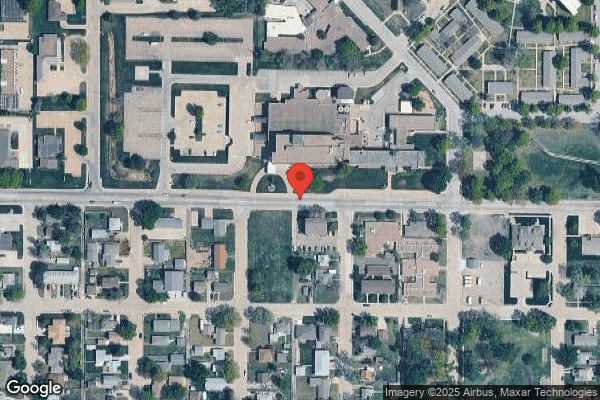
2116 West Faidley Avenue, Grand Island, NE 68803 (308) 398-5880
Non profit - Corporation 36 Beds COMMONSPIRIT HEALTH Data: November 2025
Trust Grade
90/100
#8 of 177 in NE
Last Inspection: March 2025

Within standard 12-15 month inspection cycle. Federal law requires annual inspections.

Overview

CHI Health St. Francis in Grand Island, Nebraska, has an excellent Trust Grade of A, indicating that it is highly recommended for families seeking a nursing home. It ranks #8 out of 177 facilities in Nebraska, placing it in the top half, and is the best option among 6 facilities in Hall County. The facility is improving, with the number of issues found decreasing from 3 in 2024 to 2 in 2025, and it boasts a strong staffing rating of 5 out of 5 stars, with a turnover rate of 48%, which is slightly below the state average. There have been no fines against the facility, which is a positive sign, and it has more RN coverage than 100% of Nebraska facilities, ensuring that residents receive attentive care. However, there are some concerns to consider. Recent inspections found that the facility did not verify a Central Registry check for one staff member, which could have impacted resident safety. Additionally, there were issues with food safety practices, such as improperly stored food and inadequate handwashing by kitchen staff, which could lead to foodborne illnesses. Lastly, bathroom exhaust fans were not functioning in all occupied rooms, affecting the overall comfort of residents. Overall, while the facility has many strengths, these specific issues highlight areas where improvements are still needed.

Trust Score
A
90/100
In Nebraska
#8/177
Top 4%
Safety Record
Low Risk
No red flags
Inspections
Getting Better
3 → 2 violations
Staff Stability
⚠ Watch
48% turnover. Above average. Higher turnover means staff may not know residents' routines.
Penalties
✓ Good
No fines on record. Clean compliance history, better than most Nebraska facilities.
Skilled Nurses
✓ Good
Each resident gets 198 minutes of Registered Nurse (RN) attention daily — more than 97% of Nebraska nursing homes. RNs are the most trained staff who catch health problems before they become serious.
Violations
○ Average
7 deficiencies on record. Average for a facility this size. Mostly minor or procedural issues.
★★★★★
5.0
Overall Rating
★★★★★
5.0
Staff Levels
★★★★☆
4.0
Care Quality
★★★★☆
4.0
Inspection Score
Stable
2024: 3 issues
2025: 2 issues

The Good

  • 5-Star Staffing Rating · Excellent nurse staffing levels
  • 4-Star Quality Measures · Strong clinical quality outcomes
  • Full Sprinkler Coverage · Fire safety systems throughout facility
  • No fines on record

Facility shows strength in staffing levels, quality measures, fire safety.

The Bad

Staff Turnover: 48%

Near Nebraska avg (46%)

Higher turnover may affect care consistency

Chain: COMMONSPIRIT HEALTH

Part of a multi-facility chain

Ask about local staffing decisions and management

The Ugly 7 deficiencies on record

Mar 2025 2 deficiencies
CONCERN (D)

Potential for Harm - no one hurt, but risky conditions existed

Deficiency F0625 (Tag F0625)

Could have caused harm · This affected 1 resident

**NOTE- TERMS IN BRACKETS HAVE BEEN EDITED TO PROTECT CONFIDENTIALITY** Based on record review and interview, the facility failed to notify/provide the resident/resident's legal representative of the ...

Read full inspector narrative →
**NOTE- TERMS IN BRACKETS HAVE BEEN EDITED TO PROTECT CONFIDENTIALITY** Based on record review and interview, the facility failed to notify/provide the resident/resident's legal representative of the bed hold policy at the time of the transfer to the hospital and failed to provide written documentation of the bed hold policy to the legal representative for one (Resident 16) of 8 sampled residents. The facility's census was 15. Findings are: A closed record review revealed that Resident 16 was admitted to the facility on [DATE]. Resident 16 was admitted to the hospital on [DATE]. A review of the care notes revealed no documentation of a bed-hold policy being given to Resident 16 or Resident 16 family representative at time of transfer. Findings are: A record review of the undated facility's Transfer Process Policy revealed: -Put patient on LOA (Leave of Absence) in electronic health record. -If admitted to hospital, discharge from system unless they are Medicaid, then leave on LOA for bedhold. An interview on 3/18/25 at 2:30 PM with Social Service worker (SW) confirmed that the facility does not offer bed holds. SW confirmed that Resident 16 was not offered a bed hold when sent to the hospital. SW confirmed that a bed hold or written documentation of the bed hold was not given to Resident 16 and or family representatives.
CONCERN (F)

Potential for Harm - no one hurt, but risky conditions existed

Deficiency F0729 (Tag F0729)

Could have caused harm · This affected most or all residents

Licensure Reference Number 175 NAC 12-006.04(A)(iii)(2)(a) The facility failed to verify that the Central Registry (Maintains all reports of child abuse and neglect opened for investigation, classifie...

Read full inspector narrative →
Licensure Reference Number 175 NAC 12-006.04(A)(iii)(2)(a) The facility failed to verify that the Central Registry (Maintains all reports of child abuse and neglect opened for investigation, classified as either Court Substantiated or Agency Substantiated) check was completed for 1 out of 10 Nursing Assistant (NA-A) sampled staff employees files. This had the potential to affect all 15 residents in the facility. Findings are: A record review of NA-A employee file revealed that the Nebraska Central Registry (Maintains all reports of child abuse and neglect opened for investigation, classified as either Court Substantiated or Agency Substantiated) with the following reason: -Notary needed A record review of NA-A work schedule revealed that NA-A worked the floor on: 3/13/25 3/14/25 3/15/25 3/17/25 3/18/25 3/19/25 An interview on 3/20/25 at 10:13 AM with the Administrator confirmed that NA-A did not have the Nebraska Central Registry check completed. The Administrator confirmed that NA-A should not have been working the floor prior the Nebraska Central Registry being completed and verified
Feb 2024 3 deficiencies
CONCERN (D)

Potential for Harm - no one hurt, but risky conditions existed

Notification of Changes (Tag F0580)

Could have caused harm · This affected 1 resident

Licensure Reference Number 175 NAC 12-006.04C3a(6) Based on interview and record review, the facility failed to notify the provider of a significant weight loss for 1 (Resident 70) of 2 sampled reside...

Read full inspector narrative →
Licensure Reference Number 175 NAC 12-006.04C3a(6) Based on interview and record review, the facility failed to notify the provider of a significant weight loss for 1 (Resident 70) of 2 sampled residents. The facility identified a census of 16. Findings Are: A record review of Resident 70's demographic information printed on 1/30/24 revealed Resident 70 admitted into the facility on 1/13/24. The demographic information revealed Resident 70 had diagnoses of: Covid-19 (a mild to severe respiratory illness that is caused by a coronavirus), Congestive Heart Failure (CHF- a serious condition in which the heart doesn't pump blood as efficiently as it should) exacerbation, and Acute on Chronic heart failure and Diabetes Mellitus (a metabolic disease, involving inappropriately elevated blood glucose levels). A record review of Resident 70's MDS (Minimum Data Set, a comprehensive assessment of each resident's functional capabilities) dated 1/25/24, revealed the resident's cognitive status was answered as not assessed/no information. The MDS revealed Resident 70 was independent with eating and oral hygiene. The MDS revealed Resident 70 was dependent for toileting, bathing and mobility. A record review of Resident 70's History & Physical dated 1/7/24 revealed the resident is lethargic, does not follow verbal commands, and is not able to give any interaction or follow commands. An observation on 1/29/24 at 9:52 AM revealed Resident 70 had 7 unopened bottles of Glucerna (a nutritional supplement specifically for patients with Diabetes Mellitus) sitting on the bedside table. A record review of Resident 70's Active Orders List printed 1/30/2024 revealed the resident had an order for daily weights due to CHF. A record review of Resident 70's daily weights dated 1/21/24 through 2/1/24 revealed: - 1/21/24 289 pounds (lbs) - 1/22/24 286 lbs - 1/23/24 287 lbs - 1/24/24 284 lbs - 1/25/24 285 lbs - 1/26/24 285 lbs - 1/27/24 285 lbs - 1/28/24 287 lbs - 1/29/24 247 lbs - 1/30/24 250 lbs - 1/31/24 no weight documented - 2/1/24 242 lbs On 1/28/2024, Resident 70 weighed 287 lbs. On 1/29/2024, Resident 70 weighed 247 pounds which is a 40 lb weight loss and -13.94 % loss in 24 hours. On 1/30/2024, Residnet 70 weighed 250 lbs. On 02/01/2024, Resident 70 weighed 242 pounds which is a 8 lb weight loss and -3.20 % loss in 24 hours. An observation on 1/30/24 at 9:30 AM revealed 9 unopened bottles of Glucerna sitting on the treatment cart in Resident 70's room. An interview on 1/30/24 at 2:32 PM with RN (Registered Nurse)-C after review of the daily weights for Resident 70 confirmed that no documentation of a re-weight existed, and no documentation of physician notification of the weight change existed and should have. An interview on 1/30/24 at 2:47 PM with the facility DON (Director of Nursing), after review of the daily weights for Resident 70 confirmed that the weight should have been rechecked to ensure accuracy and the physician should have been notified of the 40 lb weight loss documented between 1/28/24 and 1/30/24. An interview on 1/31/24 at 11:33 AM with UM (Unit Manager)-D revealed Resident 70 had a weight today (1/31/24) which was down another 12 lbs for a total of a 34 lb weight loss in 3 days. An interview on 2/1/24 at 10:15 AM with NA (Nurse Aide)-E revealed the night shift obtained daily weights at 5:00 AM or after every morning except on bath days when the weight would be obtained by the bath aide. The interview revealed that when entering the weight value into the electronic medical record, if the weight results turned red, that indicated that the weight was outside of normal limits for the resident and was to be reported to the nurse. NA-E was unable to confirm if the weights obtained in the last 3 days had been reported to the nurse. A record review of the undated facility policy titled Skills: Weight Measurement contained the following instructions and guidance: Completing the Procedure 6. Investigate significant fluctuations in weight for accuracy and clinical correlation. 8. Report significant changes in weight to the practitioner. 10. Document the procedure in the patient's record.
CONCERN (D)

Potential for Harm - no one hurt, but risky conditions existed

Infection Control (Tag F0880)

Could have caused harm · This affected 1 resident

**NOTE- TERMS IN BRACKETS HAVE BEEN EDITED TO PROTECT CONFIDENTIALITY** B. A record review of the facility's Infection Control of Respiratory Care Equipment policy with an origination date 06/2010 rev...

Read full inspector narrative →
**NOTE- TERMS IN BRACKETS HAVE BEEN EDITED TO PROTECT CONFIDENTIALITY** B. A record review of the facility's Infection Control of Respiratory Care Equipment policy with an origination date 06/2010 revealed all disposable equipment would be changed out weekly or per manufacturer's recommendations. All reusable equipment would be cleaned and sanitized between each individual patient use per the manufacturer's recommendations or current best practice. A record review of facility's My Unit sheet dated 01/30/2024 revealed Resident 3 had an admission date of 09/01/2020. A record review of Resident 3's dated 12/06/2023 revealed Resident 3 had diagnoses of Stroke, Coronary Artery Disease, and Multidrug-Resistant Organism (a bacteria resistant to antibiotics). The resident had a Brief Interview for Mental Status (BIMS)(a score of a residents cognitive abilities) of 12 of 15 which indicates the resident was moderately cognitively impaired. The resident required partial/moderate assistance with oral and personal hygiene (cleaning), dependent on staff for toileting, and needed substantial/maximal assistance with shower/bathing, upper body dressing, and lower body dressing. An observation on 01/29/2024 at 12:19 PM revealed Resident 3 had a nebulizer (a device used to deliver liquid medications to the lungs) kit and mask on the oxygen flowmeter (a device used to adjust the flow of oxygen) with a residual amount of medication in the kit and oily substance and brown debris on the mask. An observation on 01/30/2024 at 12:26 PM revealed Resident 3 had a nebulizer kit and mask on the oxygen flowmeter with a residual amount of medication in the kit and oily substance and brown debris on the mask. An observation on 01/30/2024 at 12:26 PM revealed Resident 3 had a nebulizer kit and mask on the oxygen flowmeter with a residual amount of medication in the kit and oily substance and brown debris on the mask. An observation on 01/30/2024 at 2:40 PM with the Director of Nursing (DON) revealed Resident 3 had a nebulizer kit and mask on the oxygen flowmeter with a residual amount of medication in the kit and oily substance and brown debris on the mask. An observation on 01/31/2024 at 12:25 PM revealed Resident 3 had a nebulizer kit and mask on the oxygen flowmeter with a residual amount of medication in the kit and oily substance and brown debris on the mask. In an interview on 01/30/2024 at 3:44 PM, Licensed Practical Nurse (LPN)-A confirmed the staff was supposed to rinse the nebulizer kit and mask after each treatment with water and that LPN-A does it if LPN-A did the treatment. In an interview on 01/30/2024 at 02:40 PM, the DON confirmed the neb kit and mask had not been cleaned or changed since the last treatment and should have been cleaned after each treatment and changed weekly. Licensure Reference Number 175 NAC 12-006.17B Licensure Reference Number 175 NAC 12-006.17D Based on observation, interview, and record review, the facility failed to perform hand hygiene and gloves changes between completing J-tube site cares, medication administration and oral suctioning for Resident 4, and the facility failed to clean or change Resident 3's nebulizer kit and mask to prevent the potential for cross contamination. The facility identified a census of 16. Findings Are: A. A record review of the demographic information revealed Resident 4 had been accepted into the facility on 5/1/20 with a primary diagnosis of a gunshot wound to the head with complications. A record review of Resident 4's Minimum Data Set (MDS, a comprehensive assessment used to develop a resident's care plan) dated 1/25/24, revealed the resident was in a persistent vegetative state/no discernible consciousness. The MDS revealed Resident 4 was dependent for all cares including toileting, bathing, repositioning, and enteral feedings. An observation on 1/29/24 at 10:17 AM of Resident 4's room revealed a sign posted outside the door indicating Resident 4 was in droplet (for patients known or suspected to be infected with pathogens transmitted by respiratory droplets)/contact isolation (intended to prevent transmission of infectious agents which are spread by direct or indirect contact with the patient or the patient's environment). An observation on 1/29/24 at 10:17 AM revealed Resident 4 was connected to an enteral (allowing liquid food to enter your stomach or intestine through a tube) feeding currently, running Jevity (calorically dense, fiber-fortified therapeutic nutrition that provides complete, balanced nutrition) 1.5 @ 50 milliliter mL per hour (mL/hour). An observation on 1/30/24 at 10:15 AM revealed RN (Registered Nurse)-C had donned (to put on) full PPE (Personal Protective Equipment to include gloves, a gown, a mask, and goggles) and performed Resident 4's J-tube (jejunostomy tube -a soft, plastic tube placed through the skin of the abdomen into the midsection of the small intestine) site cares. RN-C then completed medication administration via J-tube. RN-C did not perform hand hygiene or change gloves between the J-tube site care and medication administration. During the observation RN-C left the room in full PPE at 10:37 AM to obtain a new wrist band without removing or changing PPE prior to re-entering Resident 4's room. RN-C revealed the resident was on isolation due to inactive tuberculosis (a contagious infection that usually attacks the lungs) but also brought something back from [NAME]. During the observation on 1/30/24 at 10:15 AM, RN-C was observed suctioning sputum which had been running down Resident 4's chest and then suctioned Resident 4's mouth without changing the yankaur (a tool is used to suction secretions from the part of the throat at the back of the mouth behind the oral cavity). RN-C did not perform hand hygiene and/or glove changes throughout the observation. Interview on 1/30/2024 at 11:15 AM RN-C revealed infection control training was provided to the facility four times a year. An interview on 1/30/24 at 2:30 PM with the facility DON (Director of Nursing) confirmed that the facility expectation was to perform hand hygiene and glove changes between completing J-tube site cares, medication administration and suctioning procedures. During the interview on 01/30/24 at 2:30 PM, the DON revealed that Resident 4 was currently being treated for an URI (Upper Respiratory Infection) and sputum culture which presented as Acinetobacter (a type of bacteria (germ) commonly found in the environment such as in soil and water and on hospital surfaces). A record review of the undated facility policy titled Skills: Feeding Tube: Medication Administration contained the following: 1. Perform hand hygiene before patient contact. [NAME] appropriate PPE based on the patient's need for isolation precautions or the risk of exposure to bodily fluids.
CONCERN (F)

Potential for Harm - no one hurt, but risky conditions existed

Food Safety (Tag F0812)

Could have caused harm · This affected most or all residents

Licensure Reference Number 175 NAC 12.006.11E Based on observation, interview, and record review the facility failed to ensure items stored in the facility's refrigerators and freezers were sealed, la...

Read full inspector narrative →
Licensure Reference Number 175 NAC 12.006.11E Based on observation, interview, and record review the facility failed to ensure items stored in the facility's refrigerators and freezers were sealed, labeled, and dated, ensure expired items were discarded, ensure kitchen staff performed handwashing for at least 20 seconds, and failed to ensure the temperature of the food was taken after being reheated in the microwave to prevent the potential for foodborne illness, and failed to ensure the thermometer probe was sanitized before use and between food items when the temperature was taken of the prepared food to prevent cross contamination. This had the potential to affect 15 of the 16 residents that consumed food from the kitchen. The total facility census was 16. Findings are: A. A record review of the facility's Food Supply and Storage policy with an origination date of 11/2012 revealed the staff should use approved storage containers for food, cover tightly, and label and date the containers in the refrigerator. Staff should date and rotate food items in the refrigerator, discard by the use by date, and discard unused items within 48 hours. In the freezers, the staff should store food in approved containers with tight fitting lids. label both the bin and the lid, and date and rotate the items. Remove any items from dry storage for which the expiration date had expired. An observation on 01/29/2024 at 8:25 AM of the facility's walk-in refrigerator revealed 1 package labeled Parmesan Cheese in a sealed zip lock style bag was not dated. The walk-in freezer contained 1 clear container with a blue lid with what appeared to be mixed veggies not labeled or dated, several clear cups of oval dark purple items not labeled or dated, and 2 white containers of an unknown substance not covered, labeled, or dated. An observation on 01/29/2024 at 8:25 AM of the facility's reach-in refrigerator revealed the following was not labeled or dated: -1 container with a green lid containing sliced black items was not labeled or dated. -1 container with a green lid containing sliced green items was not labeled or dated. -1 container with a green lid containing white shredded cheeses was not labeled or dated. -1 container with a green lid containing green beans was not labeled or dated. -1 container with a green lid containing broccoli, not labeled or dated. -9 clear plastic containers of lettuce not labeled or dated. -3 croissant sandwiches not labeled or dated. -2 bags opened lettuce not labeled or dated. An observation on 01/29/2024 at 8:25 AM of the facility's dry storage revealed 1 - Nepro Carb Steady Nutrition shake expired 11/01/2023. In an interview on 01/29/2024 at 8:56 AM, the facility's Food Service Associate (FSA)-B confirmed FSA-B observed all the above concerns in the walk-in refrigerator, walk-in freezer, reach-in refrigerator, and dry storage listed above and confirmed the items were not covered, labeled, dated, or were expired. FSA-A confirmed the items should be covered, labeled, and dated and were not, and the expired Nepro Carb Steady Nutrition shake should have been discarded. FSA-B confirmed that 15 of the 16 facility residents consumed food from the kitchen. In an interview on 01/31/2024 at 1:58 PM, the facility's Nutritional Services Manager (NSM) confirmed all opened items in the facility kitchen's refrigerators and freezers should have been sealed, labeled, and dated, and all expired items should have been discarded. B. A record review of the facility's Food Handling Guidelines with an effective date of 11/2021 revealed staff should minimize hand contact with food using utensils or disposable gloves to prevent food infection. A record review of the facility's Hand Hygiene policy with an effective date of 11/2022 revealed the staff's hands were to be washed before handling food, clean utensils, dishes, equipment, and before putting on gloves. The staff's hands were to be washed after handling shipping containers and removing gloves. Handwashing was to be completed by wetting hands with warm water, apply disinfecting soap lathering up to mid-arm and work lather into hands for 20 seconds before rinsing. In an observation on 01/31/2024 at 7:15 AM revealed FSA-B completed handwashing for 8 seconds, then applied gloves,and then plated food, next removed gloves, and put items on the tray, covered the plate, and placed the tray in the cart. FSA-B then placed food items on a new tray including a plate, went to the walk-in freezer and got a box of frozen hamburger patties, removed gloves, and then got a pair of tongs, and put a hamburger patty on the plate and put the tray in cart without doing handwashing. FSA-B then went and got items from the walk-in refrigerator, and completed handwashing for 12 seconds, then applied gloves, then got a package of ground chicken from the reach-in refrigerator, and got a ladle, with gloved hands, put the chicken in a paper cup, ladled the gravy and mixed with a fork, scooped a portion on the plate, scooped mashed potatoes, added gravy and broccoli, placed plate on tray, got green beans from reach-in refrigerator, re-gloved, then put a scoop of green beans on the plate, and placed the plate on the tray, placed condiments and drinks on tray, and gloved with no handwashing. FSA-B got a scoop of broccoli, a chicken breast, a scoop of rice, a cup of pineapple, covered the plate and put the tray on cart. FSA-B went and got the food cart and took into another room for a different department, and completed handwashing for 10 seconds and then applied gloves. FSA-B then plated food and drink, got pineapple out of the reach-in refrigerator, covered, the plate and put the tray on the cart. FSA-B then put the cold food tray, went to the walk-in refrigerator and got a box, completed handwashing for 12 seconds, then opened the box, grabbed a can of non-stick spray and sprayed a bowl used for hot items, dumped the ground hamburger in, put a lid on the bowl, put the bowl on tray, and put the tray on the cart. FSA-B went to the walk-in refrigerator and got more ground chicken, placed into a paper bowl and mixed with a ladle of gravy, plated, and put the tray in the cart, without performing handwashing. FSA-B then went to walk-in and got something for another department, completed handwashing for 7 seconds, got gloves and placed the gloves on a plate, got a hot item bowl, sprayed the bowl with non-stick spray, dumped a can of soup in, put the hot item bowl on the plate that had gloves on it, covered the plate, and put the tray in the cart. FSA-B then went to the walk-in refrigerator, returned, got a tray off the cart and the food temp log clipboard, took a thermometer, wiped with dry paper towel, temped the omelet, wiped probe with dry paper towel and temped hash brown, wiped the probe with the same dry paper towel, temped the muffin, wiped the probe with a dry paper towel and temped the mandarin oranges, wiped with new dry paper towel and poked into orange juice container, wiped with a dry paper towel, and poked the probe in the container and temped milk all with no handwashing. FSA-B then competed handwashing for 9 seconds, and next grabbed 2 zip lock style bags 1 containing 6 pancakes and 1 containing 3 French toast slices from the top of the food cart, with gloved hand, then reached in the bag and grabbed 1 slice of French toast, opened the bag and grabbed 1 piece of French toast, put on a plate and placed in microwaved for 30 seconds. FSA-B then went to the drawer and grabbed a plastic knife and cut crust off while holding the slice of French toast. FSA-B then went and uncovered a plate in the cart and dumped the French toast onto the plate, covered, and shut the door, then returned to the microwave. FSA-B re-gloved and grabbed another piece of French toast out of the bag with a gloved hand, put on a foam plate, microwaved 30 seconds, took out cut the crust off, open the cart and removed the cover of a plate and dumped slice on the plate, covered, closed door, re-gloved. FSA-B dumped the final piece of French toast on a foam plate, put in microwave for 30 seconds, removed, cut crust off, opened cart door, removed the plate cover and dumped on a plate in the cart, and then covered, and closed the cart door. FSA-B then re-gloved, competed the microwave process and plating with the pancakes 5 times and did not temp after microwaving all without having performed handwashing again. In an interview on 01/31/2024 at 8:19 AM, FSA-B confirmed that handwashing should have been completed for at least 20 seconds and was not. FSA-B confirmed that 15 of the 16 facility residents consumed food from the kitchen. In an interview on 01/31/2024 at 1:58 PM, the facility's NSM confirmed FSA-B Should have performed handwashing for at least 20 seconds. C. A record review of the facility's Food Handling Guidelines with an effective date of 11/2021 revealed foods heated in a microwave must reach an internal temperature of 165 degrees at all parts. The staff should rotate food or stir halfway between the process and let stand covered for 2 minutes after cooking to assure appropriate temperature throughout product. In an interview on 01/31/2024 at 12:22 PM, FSA-B confirmed the temperature of the food that was reheated in the microwave had not been taken and should have been. FSA-B confirmed that 15 of the 16 facility residents consumed food from the kitchen. In an interview on 01/31/2024 at 1:58 PM, the facility's NSM confirmed that any food that was heated in the microwave should have been temped after the microwave process was completed. D. A record review of the facility's Sanitization and Infection Control Program Overview with an effective date of 11/2022 revealed proper sanitization and infection control practices were to be observed in all phases of the food production and service. In an interview on 01/31/2024 at 12:22 PM, FSA-B confirmed FSA-B started the process of temping the food and went from food item to food item without sanitizing the thermometer probe, and the probe should have been sanitized before starting and between each food item the probe was inserted into. FSA-B confirmed that 15 of the 16 facility residents consumed food from the kitchen. In an interview on 02/01/2024 at 9:11 AM, the Director of Nursing confirmed the facility did not have a policy, procedure, or guideline for the food temping process. In an interview on 01/31/2024 at 1:58 PM, the facility's NSM confirmed that the thermometer probe should have been sanitized before it was inserted into any food product and between food items.
Mar 2023 2 deficiencies
CONCERN (E)

Potential for Harm - no one hurt, but risky conditions existed

Deficiency F0655 (Tag F0655)

Could have caused harm · This affected multiple residents

**NOTE- TERMS IN BRACKETS HAVE BEEN EDITED TO PROTECT CONFIDENTIALITY** D. Review of Resident 13's MDS (Minimum Data Set) dated 2/14/23 revealed that Resident 13 was admitted on [DATE]. Record review ...

Read full inspector narrative →
**NOTE- TERMS IN BRACKETS HAVE BEEN EDITED TO PROTECT CONFIDENTIALITY** D. Review of Resident 13's MDS (Minimum Data Set) dated 2/14/23 revealed that Resident 13 was admitted on [DATE]. Record review of Resident 13's medical record revealed no documentation that a copy of the baseline care plan was provided to the resident or resident representative. E. Review of Resident 5's undated admission information revealed that Resident 5 was admitted on [DATE]. Interview with MDSC (Minimum Data Set Coordinator) revealed Resident 5 has not been in the facility long enough to have had an MDS assessment. Record review of Resident 5's medical record revealed no documentation that a copy of the baseline care plan was provided to the resident or resident representative. Licensure Reference Number 175NAC 12-006.09C1a Based on record review and interview the facility failed to ensure that the resident /resident representative received a written summary of the preliminary care plan (either the baseline or the comprehensive care plan) (a written initial plan of care required to be developed within 48 hours of admission detailing the instructions needed to provide initial effective and person-centered quality care for a resident) as required for 5 residents (Residents 66, 11, 69, 5, and 13) of 5 residents reviewed. This prevented the resident/resident representative from identifying additional areas of care required. The facility census was 16. Findings are: A. Record review of the facility policy titled Comprehensive Care Planning dated 2/2018 revealed that the purpose is to fulfill state and federal regulations for long term care and to focus on the resident's ability to attain or maintain the highest practicable physical, mental, and psychosocial well-being. Record review of the facility admission Packet Resident Rights dated 2016 revealed that the resident has the right to participate in the development and implementation of his or her person-centered care plan. The resident has the right to participate in the planning process and the right to request revisions to the person-centered plan of care. The resident has the right to see the care plan. Record review of the admission Order Report dated 3/8/23 for Resident 66 revealed that the resident admitted into the facility on 8/26/22. Record review of the nursing notes dated from 8/26/22 through 9/2/22 for Resident 66 revealed that it contained no documentation that a preliminary care plan was reviewed with Resident 66 or the resident representative. The nursing notes contained no documentation that a copy of a preliminary care plan was provided to Resident 66 or the resident representative. Interview on 3/8/23 at 11:48 AM with the facility Minimum Data Set Coordinator (MDSC) (a facility nurse that utilizes a mandatory comprehensive assessment tool for care planning) revealed that the MDSC initiates a comprehensive care plan as the preliminary care plan for each resident. The MDSC confirmed that a review of the comprehensive care plan with the resident/resident representative within 48 hours of admission is not documented. The MDSC confirmed that there is no documentation that a copy of the comprehensive care plan is provided to the resident/resident representative. B. Record review of the undated Patient Information for Resident 11 revealed that Resident 11 admitted into the facility on 1/9/23. Interview on 3/8/23 at 10:55 AM with Resident 11 revealed that the resident could not remember the facility reviewing or providing a preliminary care plan after admission to the facility. Record review of the nursing notes dated from 1/9/23 through 1/13/23 for Resident 11 revealed that it contained no documentation that a preliminary care plan was reviewed with Resident 11 or the resident representative. The nursing notes contained no documentation that a copy of a preliminary care plan was provided to Resident 11 or the resident representative. C. Record review of the undated Patient Information for Resident 69 revealed that Resident 69 admitted into the facility on 2/24/23. Interview on 3/7/23 at 11:25 AM with Resident 69 revealed that the resident did not recall the facility providing or reviewing a preliminary care plan with them. Record review of the nursing notes dated from 2/24/23 through 3/4/23 for Resident 69 revealed that it contained no documentation that a preliminary care plan was reviewed with Resident 69 or the resident representative. The nursing notes contained no documentation that a copy of a preliminary care plan was provided to Resident 69 or the resident representative.
CONCERN (F)

Potential for Harm - no one hurt, but risky conditions existed

Deficiency F0923 (Tag F0923)

Could have caused harm · This affected most or all residents

**NOTE- TERMS IN BRACKETS HAVE BEEN EDITED TO PROTECT CONFIDENTIALITY** Licensure Reference Number 175NAC 12-007.04D Based on observations, record review, and interview the facility failed to ensure t...

Read full inspector narrative →
**NOTE- TERMS IN BRACKETS HAVE BEEN EDITED TO PROTECT CONFIDENTIALITY** Licensure Reference Number 175NAC 12-007.04D Based on observations, record review, and interview the facility failed to ensure that bathroom exhaust vent fans were operational in 16 of 16 occupied rooms. This affected all facility residents. The facility census was 16. Findings are: Record review of the facility admission Agreement Resident Rights dated 2016 revealed that the nursing facility must provide a safe, clean, comfortable, and homelike environment. The facility must provide housekeeping and maintenance services necessary to maintain a sanitary, orderly, and comfortable interior. Observation on 3/7/23 at 9:36 AM in room [ROOM NUMBER] revealed that the bathroom vent fan would not suck up a 1 ply square of toilet paper (indicating that the vent was not operating). A strong odor of bowel movement (BM) was present. Observation on 3/7/23 at 9:38 AM in room [ROOM NUMBER] revealed that the bathroom vent fan would not suck up a 1 ply square of toilet paper. Observation on 3/7/23 at 9:40 AM in room [ROOM NUMBER] revealed that the bathroom vent fan would not suck up a 1 ply square of toilet paper. Observation on 3/7/23 at 9:42 AM in room [ROOM NUMBER] revealed that the bathroom vent fan would not suck up a 1 ply square of toilet paper. A strong odor of BM was present. Observation on 3/7/23 at 9:44 AM in room [ROOM NUMBER] revealed that the bathroom vent fan would not suck up a 1 ply square of toilet paper. Observation on 3/7/23 at 9:48 AM in room [ROOM NUMBER] revealed that the bathroom vent fan would not suck up a 1 ply square of toilet paper. Observation on 3/7/23 at 9:52 AM in room [ROOM NUMBER] revealed that the bathroom vent fan would not suck up a 1 ply square of toilet paper. Observation on 3/7/23 at 11:15 AM in room [ROOM NUMBER] revealed that the bathroom vent fan would not suck up a 1 ply square of toilet paper. Observation on 3/7/23 at 11:25 AM in room [ROOM NUMBER] revealed that the bathroom vent fan would not suck up a 1 ply square of toilet paper. Observation on 3/7/23 between 9:30 AM and 9:50 AM in rooms 325, 327, 335, 337, 339, 341, and 345 revealed that the bathroom vent fans would not suck up a 1 ply square of toilet paper. Observation on 3/7/23 at 4:41 PM on the south hall between the Director of Nursing (DON) office and the facility dining room revealed a strong odor of BM throughout the area. Observation on 3/8/23 at 2:11 PM on the south hall between room [ROOM NUMBER] and the facility dining room revealed a strong BM odor throughout that area. Observation on 3/8/23 at 2:45 PM on the south hall between room [ROOM NUMBER] and the facility dining room revealed a strong BM odor throughout the area. Interview on 3/13/23 at 9:43 AM with the facility Plant Operations Maintenance (POM) revealed that a vendor checks the bathroom exhaust fan ventilation system and checks that the belts are operational. The POM revealed that the ventilation system sometimes trips a breaker that needs reset. The POM revealed that a form documenting the checks of the ventilation system and work completed by the vendor is kept on the computer. This surveyor requested that the POM provide the documentation of the ventilation system checks for the past year. Record review of the Facility ONE Work order Management System report (a form documenting the checks and work completed on the ventilation system) dated 3/13/23 revealed that the exhaust fans preventive maintenance was performed on 10/19/22. Interview on 3/13/23 at 10:09 AM with the POM confirmed that the bathroom ventilation in the unit (facility) was not working. The POM revealed that the POM tested the vents in 1 room on each side of the unit and they were not working. The POM revealed that the vendor is to check the ventilation system every 6 months and the facility Preventative Maintenance (PM) person is to check the ventilation system in between so that a check is completed quarterly.
Understanding Severity Codes (click to expand)
Life-Threatening (Immediate Jeopardy)
J - Isolated K - Pattern L - Widespread
Actual Harm
G - Isolated H - Pattern I - Widespread
Potential for Harm
D - Isolated E - Pattern F - Widespread
No Harm (Minor)
A - Isolated B - Pattern C - Widespread

Questions to Ask on Your Visit

  • "Can I speak with families of current residents?"
  • "What's your RN coverage like on weekends and overnight?"

Our Honest Assessment

Strengths
  • • Grade A (90/100). Above average facility, better than most options in Nebraska.
  • • No major safety red flags. No abuse findings, life-threatening violations, or SFF status.
  • • No fines on record. Clean compliance history, better than most Nebraska facilities.
Concerns
  • • No significant concerns identified. This facility shows no red flags across CMS ratings, staff turnover, or federal penalties.
Bottom line: Generally positive indicators. Standard due diligence and a personal visit recommended.

About This Facility

What is Chi Health St. Francis's CMS Rating?

CMS assigns CHI Health St. Francis an overall rating of 5 out of 5 stars, which is considered much above average nationally. Within Nebraska, this rating places the facility higher than 99% of the state's 100 nursing homes. This rating reflects solid performance across the metrics CMS uses to evaluate nursing home quality.

How is Chi Health St. Francis Staffed?

CMS rates CHI Health St. Francis's staffing level at 5 out of 5 stars, which is much above average compared to other nursing homes. Staff turnover is 48%, compared to the Nebraska average of 46%.

What Have Inspectors Found at Chi Health St. Francis?

State health inspectors documented 7 deficiencies at CHI Health St. Francis during 2023 to 2025. These included: 7 with potential for harm.

Who Owns and Operates Chi Health St. Francis?

CHI Health St. Francis is owned by a non-profit organization. Non-profit facilities reinvest revenue into operations rather than distributing to shareholders. The facility is operated by COMMONSPIRIT HEALTH, a chain that manages multiple nursing homes. With 36 certified beds and approximately 15 residents (about 42% occupancy), it is a smaller facility located in Grand Island, Nebraska.

How Does Chi Health St. Francis Compare to Other Nebraska Nursing Homes?

Compared to the 100 nursing homes in Nebraska, CHI Health St. Francis's overall rating (5 stars) is above the state average of 2.9, staff turnover (48%) is near the state average of 46%, and health inspection rating (4 stars) is above the national benchmark.

What Should Families Ask When Visiting Chi Health St. Francis?

Based on this facility's data, families visiting should ask: "Can I visit during a mealtime to observe dining assistance and food quality?" "How do you handle medical emergencies, and what is your hospital transfer rate?" "Can I speak with family members of current residents about their experience?"

Is Chi Health St. Francis Safe?

Based on CMS inspection data, CHI Health St. Francis has a clean safety record: no substantiated abuse findings (meaning no confirmed cases of resident harm), no Immediate Jeopardy citations (the most serious violation level indicating risk of serious injury or death), and is not on the Special Focus Facility watch list (a federal program monitoring the lowest-performing 1% of nursing homes). The facility has a 5-star overall rating and ranks #1 of 100 nursing homes in Nebraska. While no facility is perfect, families should still ask about staff-to-resident ratios and recent inspection results during their visit.

Do Nurses at Chi Health St. Francis Stick Around?

CHI Health St. Francis has a staff turnover rate of 48%, which is about average for Nebraska nursing homes (state average: 46%). Moderate turnover is common in nursing homes, but families should still ask about staff tenure and how the facility maintains care continuity when employees leave.

Was Chi Health St. Francis Ever Fined?

CHI Health St. Francis has no federal fines on record. CMS issues fines when nursing homes fail to meet care standards or don't correct problems found during inspections. The absence of fines suggests the facility has either maintained compliance or corrected any issues before penalties were assessed. This is a positive indicator, though families should still review recent inspection reports for the full picture.

Is Chi Health St. Francis on Any Federal Watch List?

CHI Health St. Francis is not on any federal watch list. The most significant is the Special Focus Facility (SFF) program, which identifies the bottom 1% of nursing homes nationally based on persistent, serious quality problems. Not being on this list means the facility has avoided the pattern of deficiencies that triggers enhanced federal oversight. This is a positive indicator, though families should still review the facility's inspection history directly.