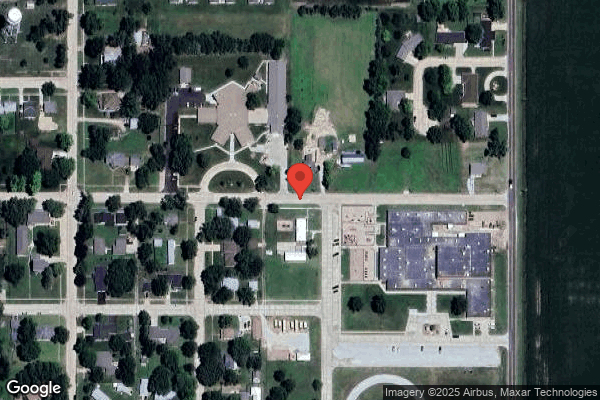
Harvard Rest Haven

400 East 7th Street, Harvard, NE 68944 (402) 772-7591
For profit - Corporation 37 Beds Independent Data: November 2025
Trust Grade
88/100
#18 of 177 in NE
Last Inspection: February 2025

Within standard 12-15 month inspection cycle. Federal law requires annual inspections.

Overview

Harvard Rest Haven has a Trust Grade of B+, indicating it is above average and recommended for families considering care options. With a state rank of #18 out of 177 and a county rank of #1 out of 2 in Clay County, it is positioned well among local facilities. However, the trend is concerning as the number of issues identified increased from 1 in 2024 to 3 in 2025. Staffing is a strength with a 5/5 rating and a turnover rate of 40%, which is lower than the state average, suggesting experienced staff who are familiar with residents. On the downside, the facility has incurred $13,000 in fines, which is higher than 87% of Nebraska facilities, indicating potential compliance problems. Additionally, while there is average RN coverage, some serious issues were found, such as staff not ensuring cleanliness in the kitchen and failing to follow COVID-19 safety protocols, like not wearing masks properly and not conducting required testing, which could impact the health of residents.

Trust Score
B+
88/100
In Nebraska
#18/177
Top 10%
Safety Record
Low Risk
No red flags
Inspections
Getting Worse
1 → 3 violations
Staff Stability
○ Average
40% turnover. Near Nebraska's 48% average. Typical for the industry.
Penalties
⚠ Watch
$13,000 in fines. Higher than 78% of Nebraska facilities, suggesting repeated compliance issues.
Skilled Nurses
○ Average
Each resident gets 41 minutes of Registered Nurse (RN) attention daily — about average for Nebraska. RNs are the most trained staff who monitor for health changes.
Violations
○ Average
10 deficiencies on record. Average for a facility this size. Mostly minor or procedural issues.
★★★★★
5.0
Overall Rating
★★★★★
5.0
Staff Levels
★★★★☆
4.0
Care Quality
★★★★★
5.0
Inspection Score
Stable
2024: 1 issues
2025: 3 issues

The Good

  • 5-Star Staffing Rating · Excellent nurse staffing levels
  • 4-Star Quality Measures · Strong clinical quality outcomes
  • Full Sprinkler Coverage · Fire safety systems throughout facility
  • No fines on record
  • Staff turnover below average (40%)

    8 points below Nebraska average of 48%

Facility shows strength in staffing levels, quality measures, fire safety.

The Bad

Staff Turnover: 40%

Near Nebraska avg (46%)

Typical for the industry

Federal Fines: $13,000

Below median ($33,413)

Minor penalties assessed

The Ugly 10 deficiencies on record

Feb 2025 3 deficiencies
CONCERN (D)

Potential for Harm - no one hurt, but risky conditions existed

Assessment Accuracy (Tag F0641)

Could have caused harm · This affected 1 resident

**NOTE- TERMS IN BRACKETS HAVE BEEN EDITED TO PROTECT CONFIDENTIALITY** Licensure Reference Number 175 NAC 12-006.09(B) Based on observation, record review and interviews the facility failed to ensure...

Read full inspector narrative →
**NOTE- TERMS IN BRACKETS HAVE BEEN EDITED TO PROTECT CONFIDENTIALITY** Licensure Reference Number 175 NAC 12-006.09(B) Based on observation, record review and interviews the facility failed to ensure the accuracy of the Minimum Data Set (MDS, a federally mandated comprehensive assessment tool used to determine a resident's functional capabilities and helps nursing home staff identify health problems) for 1 (Resident 13) of 8 sampled residents related to Continuous Positive Airway Pressure (CPAP, a machine that uses mild air pressure to keep breathing airways open while one sleeps) and oxygen use. The facility census was 19. Findings are: A record review of the facility's Guidelines for Resident Care/Provision of Care and Services with the date revised on 7/9/24 revealed: -The facility will use its state-specified RAI manual for guidance with MDS process and care planning. Annual and quarterly assessments completed as guidelines indicate. -All residents will be evaluated upon admission to the facility to determine physical, mental, psychosocial and restorative needs through nursing assessments. Physician orders for Nursing Care are those written or printed orders facility staff need to provide essential care to the resident, consistent with the residents's mental and physical status upon admission. These orders should at a minimum, include dietary, medications, and routine care to maintain or improve the residents functional abilities until staff can conduct a comprehensive assessment and develop an interdisciplinary care plan. A record review of the Long-Term Care Facility Resident Assessment Instrument 3.0 User's Manual (RAI Manual, a document published by the Centers for Medicare & Medicaid Services (CMS) to facilitate accurate and effective resident assessment practices in long-term care facilities), revealed in Chapter 3, Section O Coding instructions for Column b. While a Resident to check all treatments, procedures, and programs that the resident received or performed after admission/entry or reentry to the facility and within the last 14 days. The example shown in the manual revealed a box in the While a Resident section for Oxygen therapy and for Non-invasive Mechanical Ventilator. An observation on 2/24/25 at 9:58 AM in Resident 13's room revealed a CPAP machine on the night stand besides the bed and an oxygen concentrator with nasal cannula tubing hooked up to the oxygen concentrator in a plastic bag. An interview on 2/24/25 at 9:58 AM with Resident 13 confirmed that Resident 13 used the CPAP at night and had been using the oxygen concentrator at night due to Resident 13's CPAP mask needing replaced. An observation on 2/25/25 at 8:30 AM in Resident 13's room revealed a CPAP machine on the night stand besides the bed and an oxygen concentrator with nasal cannula tubing hooked up to the oxygen concentrator in a plastic bag. A record review of the admission Record dated 2/26/2025 revealed Resident 13 was admitted to the facility on [DATE] with diagnoses of Obstructive Sleep Apnea (condition that occurs when your breathing repeatedly stops during sleep) and Chronic Obstructive Pulmonary Disease (COPD, lung disease that makes it hard to breathe). A record review of the MDS dated [DATE] revealed Resident 13 had a Brief Interview for Mental Status (BIMS, a brief screener that aids in detecting cognitive impairment) score of 15/15 which indicated Resident 13 was cognitively intact. Section 0 of the MDS, Respiratory Treatments C1- Oxygen therapy was not checked as being used, and G1- Non-invasive Mechanical ventilator was not check as being used. A record review of medication administration record dated February 2025 revealed check marks indicating Resident 13 used a CPAP every night. A record review of medication administration record dated February 2025 revealed an order for oxygen at 2 liters per nasal cannula at bedtime as needed when Resident 13 was not utilizing their CPAP. An interview on 2/26/25 at 2:30 PM with ADON confirmed that in Section O on Resident 13's 2/11/2025 MDS for the Oxygen therapy and for the Non-invasive Mechanical Ventilator were not marked as being used. The ADON stated that the MDS dated [DATE] was an annual and that those areas did not need to be checked.
CONCERN (D)

Potential for Harm - no one hurt, but risky conditions existed

Comprehensive Care Plan (Tag F0656)

Could have caused harm · This affected 1 resident

**NOTE- TERMS IN BRACKETS HAVE BEEN EDITED TO PROTECT CONFIDENTIALITY** Licensure Reference Number 175 NAC 12-006.09(E)(iii) Based on record review, observations, and interviews the facility failed to...

Read full inspector narrative →
**NOTE- TERMS IN BRACKETS HAVE BEEN EDITED TO PROTECT CONFIDENTIALITY** Licensure Reference Number 175 NAC 12-006.09(E)(iii) Based on record review, observations, and interviews the facility failed to develop a care plan that reflected 1 (Resident 13) out of 8 sampled residents' use of Continuous Positive Airway Pressure (CPAP, a machine that uses mild air pressure to keep breathing airways open while one sleeps) and oxygen. The facility census was 19. Findings are: A record review of the Comprehensive Care Plan policy dated 2/13/25 revealed -It is the policy for this facility to develop and implement a comprehensive person-centered care plan for each resident, consistent with the residents rights,that include measurable objective and timeframe's to meet a residents medical, nursing, and mental and psychosocial needs and all services that are identified in the residents comprehensive assessment and meet profession standards of quality. An observation on 2/24/25 at 9:58 AM in Resident 13's room revealed a CPAP machine on the night stand besides the bed and an oxygen concentrator with nasal cannula tubing hooked up to the oxygen concentrator in a plastic bag. An interview on 2/24/25 at 9:58 AM with Resident 13 confirmed that Resident 13 used the CPAP at night and had been using the oxygen concentrator at night due to Resident 13's CPAP mask needing replaced. An observation on 2/25/25 at 8:30 AM in Resident 13's room revealed a CPAP machine on the night stand besides the bed and an oxygen concentrator with nasal cannula tubing hooked up to the oxygen concentrator in a plastic bag. A record review of the admission Record dated 2/26/2025 revealed Resident 13 was admitted to the facility on [DATE] with diagnoses of Obstructive Sleep Apnea (condition that occurs when your breathing repeatedly stops during sleep) and Chronic Obstructive Pulmonary Disease (COPD, lung disease that makes it hard to breathe). A record review of the Care Plan (Written instructions needed to provide effective and person-centered care of the resident that meet professional standards of quality care) revealed that the Care plan dated 2/11/25 for Resident #13 did not address focus, goals or interventions for the usage of the CPAP or the oxygen use. An interview on 2/26/25 with the Assistant Director of Nursing (ADON) confirmed that the Care Plan did not address Resident #13's oxygen usage or the usage of the CPAP and these should have been addressed on the Care Plan.
CONCERN (D)

Potential for Harm - no one hurt, but risky conditions existed

Medication Errors (Tag F0758)

Could have caused harm · This affected 1 resident

**NOTE- TERMS IN BRACKETS HAVE BEEN EDITED TO PROTECT CONFIDENTIALITY** Licensure Reference Number 175 NAC 12-006.05(G), 175 NAC 12-006.12 Based on record review and interview, the facility failed to ...

Read full inspector narrative →
**NOTE- TERMS IN BRACKETS HAVE BEEN EDITED TO PROTECT CONFIDENTIALITY** Licensure Reference Number 175 NAC 12-006.05(G), 175 NAC 12-006.12 Based on record review and interview, the facility failed to ensure that Resident 7 was evaluated by a provider prior to renewal of an as needed antipsychotic (drugs used to treat psychosis, or conditions that affect the mind, in which people have trouble distinguishing between what is real and what is not) medication. This affected 1 of 5 residents sampled for unnecessary medications. The facility census was 19. Findings are: A review of the Harvard Rest Haven Use of Psychotropic Medication(s) policy reviewed 1/20/25 revealed: PRN [as needed] orders for antipsychotic medications only, shall be limited to 14 days with no exceptions. If the attending physician or prescribing practitioner believes it is appropriate to write a new order for the PRN antipsychotic, they must first evaluate the resident to determine if the new order for the PRN antipsychotic is appropriate. A record review of Resident 7's admission Record dated 02/25/2025 revealed the resident was admitted on [DATE], and had diagnoses of dementia (a term for several diseases that affect memory, thinking, and the ability to perform daily activities), paranoid personality disorder (a mental health condition marked by a long-term pattern of distrust and suspicion of others without adequate reason to be), delusional disorder (a mental health condition characterized by persistent, false beliefs that are not based on reality), depression, and anxiety. A record review of Resident 7's Quarterly Minimum Data Set (MDS, a comprehensive assessment of each resident's functional capabilities) dated 01/14/2025 revealed the resident had a Brief Interview for Mental Status (BIMS, a test used to get a quick snapshot of a resident's cognitive function, scored from 0-15, the higher the score, the higher the cognitive function) score of 12/15, indicating moderate cognitive impairment. Further review revealed the resident had behaviors including delusions and verbal behaviors directed towards others. A record review of Resident 7's Order Summary Report dated 02/25/2025 revealed a current order for: -Seroquel (an antipsychotic medication) 25 milligrams (mg) by mouth three times a day and every 12 hours PRN with a start date of 02/20/2025 and no end date. A record review of Resident 7's Medication Administration Record (MAR) for December 2024 revealed orders for: -Seroquel 25 mg by mouth at bedtime with a start date of 10/16/2024 and an end date of 12/11/2024. -Seroquel 25 mg by mouth twice a day with a start date of 12/11/2024 and an end date of 01/10/2025. -Seroquel 25 mg by mouth every 12 hours as needed for 14 days with a start date of 11/28/2024 and an end date of 12/10/2024. -Seroquel 25 mg by mouth every 12 hours as needed with a start date of 12/11/2024 and an end date of 01/10/2025. -Seroquel 25 mg by mouth every 12 hours as needed for 14 days with a start date of 12/10/2024 and an end date of 12/24/2024. -Seroquel 25 mg by mouth every 12 hours as needed for 14 days with a start date of 12/24/2024 and no listed end date. A record review of Resident 7's Treatment Administration Record (TAR) for December 2024 revealed orders dated 12/10/2024 and 12/24/2024 to fax the psych Nurse Practitioner (NP) the resident's MAR and TAR and request to renew the prescription for the PRN Seroquel. A record review of Resident 7's MAR for January 2025 revealed orders for: -Seroquel 25 mg by mouth twice a day with a start date of 12/11/2024 and an end date of 01/10/2025. -Seroquel 25 mg by mouth twice a day with a start date of 01/10/2025 and an end date of 01/15/2025. -Seroquel 25 mg by mouth twice a day with a start date of 01/15/2025 and an end date of 02/20/2025. -Seroquel 25 mg by mouth every 12 hours as needed with a start date of 12/11/2024 and an end date of 01/10/2025. -Seroquel 25 mg by mouth every 12 hours as needed for 14 days with a start date of 12/24/2024 and no listed end date. This order did automatically end on 01/07/2025. -Seroquel 25 mg by mouth every 12 hours as needed for 14 days with a start date of 01/10/2025 and an end date of 01/15/2025. -Seroquel 25 mg by mouth every 12 hours as needed for 14 days with a start date of 01/15/2025 and an end date of 02/20/2025. This order did automatically end on 01/29/2025. A record review of Resident 7's TAR for January 2025 revealed an order dated 01/05/2025 to fax the NP and request to renew the prescription for the PRN Seroquel. A record review of Resident 7's MAR for February 2025 revealed orders for: -Seroquel 25 mg by mouth twice a day with a start date of 01/15/2025 and an end date of 02/20/2025. -Seroquel 25 mg by mouth three times a day with a start date of 02/20/2025. -Seroquel 25 mg by mouth every 12 hours as needed with a start date of 02/20/2025. A record review of Resident 7's Progress Notes revealed Notes dated 12/10/2024 and 12/24/2024 that stated the psych NP had been sent a fax requesting the renewal of the as needed Seroquel for 14 days. There was no record of a fax being sent on 01/05/2025. A record review of the Miscellaneous tab in Resident 7's Electronic Health Record (EHR) revealed scanned in New Prescription Summary records for as needed Seroquel refills dated 12/10/2024, 12/24/2024, and 01/06/2025. A record review of Resident 7's in-person and telehealth appointments from 09/01/2024 through 2/26/2025 revealed the resident did not have an appointment with their Primary Care Provider during that time. The resident had in-person appointments with the psych NP at the facility on 10/08/2024 and 01/14/2025, and appointments via telehealth on 09/10/2024 and 02/20/2025. An interview on 02/26/2025 at 1:40 PM with the Assistant Director of Nursing (ADON) confirmed that there was no in-person or telehealth evaluation of Resident 7 done on the dates the PRN Seroquel was ordered.
Feb 2024 1 deficiency
CONCERN (D)

Potential for Harm - no one hurt, but risky conditions existed

Deficiency F0637 (Tag F0637)

Could have caused harm · This affected 1 resident

**NOTE- TERMS IN BRACKETS HAVE BEEN EDITED TO PROTECT CONFIDENTIALITY** Licensure Reference Number 175 NAC 12-006.09B1(2) Based on interview and record review; the facility failed to complete a MDS (M...

Read full inspector narrative →
**NOTE- TERMS IN BRACKETS HAVE BEEN EDITED TO PROTECT CONFIDENTIALITY** Licensure Reference Number 175 NAC 12-006.09B1(2) Based on interview and record review; the facility failed to complete a MDS (Minimum Data Set- comprehensive assessment of each resident's functional capabilities used to develop a resident's plan of care) comprehensive assessment within 14 days of a significant change for 1 (Resident 18) of 1 sampled resident. The facility census was 21. Findings are: Record review of Resident 18's Clinical Resident Profile printed 2/13/2024 revealed that the resident admitted to the facility on [DATE] with diagnosis of: unspecified dementia without behavioral disturbance, psychotic disturbance, mood disturbance and anxiety (disease affecting loss of memory, language, problem-solving, and thinking), constipation, and weakness. Record review of Resident 18's Comprehensive Assessment MDS dated [DATE] was completed for a significant change (a major decline or improvement in a resident's status) with admission to hospice on 5/26/2023. A record review of a physician's order dated 1/12/2024 revealed that the resident would discharge from hospice services on 1/17/24 due to a prognosis greater than 6 months. A record review of the resident's medical record revealed that a Comprehensive Assessment MDS had not been completed following the discharge from hospices services on 1/17/2024. An interview with the ADON (Assistant Director of Nursing) and DON (Director of Nursing) on 2/14/2023 at 3:00 PM revealed the ADON acknowledged that a Comprehensive Assessment MDS should have been completed within 14 days of the resident discharging from hospice services and was late. An interview with the ADON on 2/15/2024 at 8:00 AM revealed the facility follows the RAI Manual (helps nursing home staff gather definitive information on a resident's strengths and needs, which must be addressed in an individualized care plan) related to completion of MDS assessments. A record review of the RAI Version 3.0 Manual dated 10/2023 revealed under Chapter 2 Comprehensive Assessments, section 03, that a Significant Change in Status Assessment is required to be performed when a resident is receiving hospice services and then decides to discontinue those services. The ARD (specific end point of look-back periods in the MDS assessment process) must be within 14 days from one of the following: 1) the effective date of the hospice election revocation (which can be the same or later than the date of the hospice election revocation statement, but not earlier than); 2) the expiration date of the certification of terminal illness; or 3) the date of the physician or medical directors order stating the resident is no longer terminally ill.
Jan 2023 6 deficiencies
CONCERN (D)

Potential for Harm - no one hurt, but risky conditions existed

Report Alleged Abuse (Tag F0609)

Could have caused harm · This affected 1 resident

Licensure Reference Number 175 NAC 12.006.02(8) Based on observation, interview, and record review, the facility failed to ensure that a fall with major injury was reported to Adult Protective Service...

Read full inspector narrative →
Licensure Reference Number 175 NAC 12.006.02(8) Based on observation, interview, and record review, the facility failed to ensure that a fall with major injury was reported to Adult Protective Services (APS) and the Department of Health and Human Services (DHHS) - Division of Public Health for 1 (Resident 17) of 1 sampled resident. Total facility census was 20. Findings are: A record review of the facility's Suspected Abuse or Neglect Policy dated 08/03/2018 revealed the Administrator would review and investigate a serious injury to a resident, the incident should have been reported to APS within 2 hours, and the results of the facility investigation should have been reported to DHHS - Division of Public Health. An observation on 01/03/2023 at 03:53 PM revealed Resident 17 had a brace on the resident's left wrist. An observation on 01/04/2023 at 10:40 AM revealed Resident 17 did not have the wrist brace on, and the brace was in the bed. A record review of Resident 17's Progress Notes dated 11/04/2023 revealed the resident had fallen and complained of pain and discomfort of the left wrist. A record review of Resident 17's Progress Notes dated 11/04/2023 revealed Resident 17's physician was notified and the physician had ordered an X-ray (an image of the internal part of the body) of the left wrist. A record review of Resident 17's Progress Notes dated 11/04/2023 revealed Resident 17's X-ray confirmed Resident 17 had a fracture (break) to the Left Distal Radius (a bone in the wrist). An interview with the Assistant Director of Nursing (ADON) on 01/05/2023 at 10:11 AM confirmed Resident 17 fell and fractured the left wrist. The ADON confirmed that a formal investigation had not been completed, APS had not been notified, and the incident had not been reported to DHHS - Division of Public Health.
CONCERN (D)

Potential for Harm - no one hurt, but risky conditions existed

Respiratory Care (Tag F0695)

Could have caused harm · This affected 1 resident

Licensure Reference Number 175 NAC 12.006.09D6(7) Based on observation, interview, and record review, the facility failed to follow the provider's oxygen (a colorless, odorless gas) and oxygen humidit...

Read full inspector narrative →
Licensure Reference Number 175 NAC 12.006.09D6(7) Based on observation, interview, and record review, the facility failed to follow the provider's oxygen (a colorless, odorless gas) and oxygen humidity (a tank placed on an oxygen system to add humidity the gas) orders for 1 (Resident 17) of 1 sampled resident. The facility census was 20. Findings are: A record review of the facility's Oxygen Administration (delivery) Policy dated 11/20/2013, revealed the facility would verify the physician's order for oxygen administration and report and document the resident's usage in the resident's medical record. The Policy revealed the facility should attach a humidifier (if prescribed) to the oxygen outlet. An observation on 01/03/2023 at 11:15 AM revealed Resident 17 was out of the facility and the resident's oxygen concentrator (a machine that separates the oxygen from the air and send delivers the oxygen to the resident) was on at a setting of 2 liters per minute (l/m). The observation also revealed that the oxygen humidifier was on the oxygen concentrator but was not connected to the oxygen outlet. An observation on 01/03/2023 at 02:40 PM revealed Resident 17 sat on edge of bed, the concentrator was on, but the Nasal Cannula (tubing that runs from the oxygen outlet to the resident's nose) was not on the resident. The observation also revealed that the oxygen humidifier was on the oxygen concentrator but was not connected to the oxygen outlet. An observation on 01/04/2023 at 07:59 AM revealed Resident 17 was asleep in bed, the concentrator was on, but the Nasal Cannula was not on the resident. The observation also revealed that the oxygen humidifier was on the oxygen concentrator but was not connected to the oxygen outlet. A record review of Resident 17's Clinical Physician's Orders dated 01/04/2022, revealed physician's order for oxygen at 2 L/min per Nasal Cannula routine, every shift and add humidification to the oxygen therapy. An observation on 01/04/2023 at 01:19 PM with Licensed Practical Nurse (LPN)-J revealed Resident 17 sat on the side of the bed, the oxygen concentrator was on, but the Nasal Cannula was not in the resident's nose. The observation also revealed that the humidifier was on the oxygen concentrator but was not connected to the oxygen outlet. In an interview with LPN-J on 01/04/2023 at 01:19 PM, LPN-J confirmed that Resident 17 did not have the oxygen on and should have, and that the oxygen humidifier was not connected to the oxygen outlet and should have been.
CONCERN (F)

Potential for Harm - no one hurt, but risky conditions existed

Food Safety (Tag F0812)

Could have caused harm · This affected most or all residents

LICENSURE REFERENCE NUMBER NAC 12-006.11E Based on observation and interview, the facility failed to ensure that the kitchen counters and cupboards were clean, and items in the store rooms were not o...

Read full inspector narrative →
LICENSURE REFERENCE NUMBER NAC 12-006.11E Based on observation and interview, the facility failed to ensure that the kitchen counters and cupboards were clean, and items in the store rooms were not out dated. The facility also failed to ensure that the opened peanut butter did not have old peanut butter around the lid, This had the potential to affect all 20 residents in the facility. Observation on 1/03/23 at 09:40 am of the kitchen revealed the cupboards and drawers inside and out, felt greasy and the grease would wipe off when touched with fingers. Further observation revealed an opened peanut butter container that had been opened and had peanut butter squished between the lid and outside of lid. Observation on 1/03/23 at 0945 AM revealed several items on the storage racks in the dry storage room that were outdated including healthy choice soups, Thickener for drinks, and pickled beets. Interview on 01/09/23 2:21 PM with the DM-I (Dietary Manager) confirmed thatthere was grease in the cupboards and drawers. Further interview confirmed that their were food items outdated on the storage racks. DM-I revealed she had been off work for a week or so.
CONCERN (F)

Potential for Harm - no one hurt, but risky conditions existed

Infection Control (Tag F0880)

Could have caused harm · This affected most or all residents

Licensure Reference Number 175 NAC 12.006.17 Licensure Reference Number 175 NAC 12.006.17A Based on observation, interview, and record review, the facility failed to ensure staff wore surgical masks a...

Read full inspector narrative →
Licensure Reference Number 175 NAC 12.006.17 Licensure Reference Number 175 NAC 12.006.17A Based on observation, interview, and record review, the facility failed to ensure staff wore surgical masks above the nose to below the chin to prevent the spread of COVID-19, failed to have a Legionella policy and procedure, and failed to ensure Legionella testing had been completed. This had the potential to affect all 20 residents in the facility. The total facility census was 20. Findings are: A. A record review of the facility's COVID-19 Response Planning Policy dated 10/07/2022 revealed if the community transmission level (a level of COVID-19 in the community) is red, universal masking was required for all staff, residents, and visitors. An observation on 01/04/2023 at 01:19 PM revealed the Assistant Director of Nursing (ADON) was at the nurse's station, within 6 feet of a resident, and had a surgical mask below the ADON's chin. An observation on 01/04/2023 at 01:19 PM revealed the Administrator was in the Chapel within 6 feet of residents and had a surgical mask below the Administrator's nose. An observation on 01/05/2023 at 07:41 AM revealed Nursing Assistant (NA)-C was in the Dining Room and assisted a resident with NA-C's surgical mask below NA-C's nose. An observation on 01/05/2023 at 08:02 AM revealed Nursing Assistant (NA)-G took a resident into the bath house a surgical mask below NA-G's nose. An observation on 01/05/2023 at 08:07 AM revealed Nursing Assistant (NA)-C pushed Resident 13 down the hall in a wheelchair with a surgical mask below NA-C's nose. An observation on 01/05/2023 at 09:42 AM revealed Nursing Assistant (NA)-C pushed a resident down the hall to the Chapel in a wheelchair with a surgical mask below NA-C's nose. In an interview with the ADON on 01/09/2023 at 02:50 PM, the ADON confirmed the facility is still in outbreak (had a COVID-19 positive staff or resident within the last 10 days), and staff should have worn a surgical mask from above the nose to below the chin. B. A record review of the facility's Legionella (a bacteria that can cause a severe lung infection that could grow or develop in a facility's water supply) Policy and/or Procedure and testing could not be completed due to the facility did not have a policy, procedure, or testing. In an interview on 01/05/2023 at 08:18 AM, the Maintenance Man (MM)-F confirmed the facility did not have a policy or a procedure for Legionella, and the facility had not tested the water for Legionella.
CONCERN (F)

Potential for Harm - no one hurt, but risky conditions existed

Deficiency F0886 (Tag F0886)

Could have caused harm · This affected most or all residents

**NOTE- TERMS IN BRACKETS HAVE BEEN EDITED TO PROTECT CONFIDENTIALITY** Based on observation, interview, and record review, the facility failed to ensure staff testing was completed as required, faile...

Read full inspector narrative →
**NOTE- TERMS IN BRACKETS HAVE BEEN EDITED TO PROTECT CONFIDENTIALITY** Based on observation, interview, and record review, the facility failed to ensure staff testing was completed as required, failed to sanitize (disinfect) the COVID-19 testing surface, and failed to wear gloves while touching a COVID-19 testing specimen (test) to prevent the spread of COVID-19. This had the potential to affect all 20 residents in the facility. Findings are: A. A record review of the facility's COVID-19 Response Planning Policy dated 10/07/2022 revealed if the community transmission level (a level of COVID-19 in the community) is red, all staff should be tested for COVID-19 twice a week. If the community transmission level is orange, unvaccinated staff and residents should be tested for COVID-19 one time per week. A record review of an un-named document that the Assistant Director of Nursing (ADON) completed, dated 11/22/2022 - 01/09/2023 revealed: • 11/22/2022 - the county transmission rate was orange, and the exposed staff, 2 exposed residents, and the unvaccinated (had not had the COVID-19 vaccine shots) staff should have tested on ce a week. • 11/29/2022 - the county transmission rate was red, and all staff and residents should have tested 2 times per week. • 12/06/2022 - the county transmission rate was red, and all staff and residents should have tested 2 times per week. • 12/13/2022 - the county transmission rate was red, and all staff and residents should have tested 2 times per week. • 12/20/2022 - the county transmission rate was red, and all staff and residents should have tested 2 times per week. • 12/27/2022 - there were 2 COVID-19 positive staff, and all staff and residents should have tested 2 times per week. • 01/09/2023 - the county transmission rate was orange, and all unvaccinated should have tested 1 time per week. A record review of the COVID-19 Staff Vaccination Status for Providers form dated 10/2022 revealed: • Nursing Assistant (NA)-C had an exemption (the process of being free from obligation) from the COVID-19 vaccine. • NA-D did not have a COVID-19 exemption and was not vaccinated against COVID-19. • Dietary Aide (DA)-E did not have a COVID-19 exemption and was not vaccinated against COVID-19. A record review of the facility's [NAME] BinaxNow COVID-19 Ag Testing Logs dated 11/18/2022 - 01/09/2023 and the Staff Schedules for December 2022 and January 2023 revealed: • NA-C only tested for COVID-19 on: 11/23/2022, 11/28/2022, 12/03/2022, 12/07/2022, 12/11/2022, 12/19/2022, and 01/05/2023, but worked: 11/28/2022, 11/30/2022, 12/03/2022, 12/04/2022, 12/05/2022, 12/07/2022, 12/09/2022, 12/10/2022, 12/11/2022, 12/12/2022, 12/14/2022, 12/17/2022, 12/18/2022, 12/19/2022, 12/21/2022, 12/23/2022, 12/26/2022, 12/28/2022, 12/30/2022, 01/03/2023, 01/04/2023, and 01/05/2023. • NA-D only tested for COVID-19 on: 12/24/2022, 12/02/2022, 12/05/2022, 12/07/2022, 12/18/2022, 12/20/2022, 12/27/2022, and 01/01/2023, but worked: 11/28/2022, 11/30/2022, 12/02/2022, 12/03/2022, 12/04/2022, 12/07/2022, 12/08/2022, 12/09/2022, 12/11/2022, 12/12/2022, 12/15/2022, 12/16/2022, 12/18/2022, 12/19/2022, 12/27/2022, 12/28/2022, 12/29/2022, 12/31/2022, and 01/01/2023. • DA-E did not test for COVID-19 from 11/18/2023 until 12/22/2022 and then only tested on [DATE] and 01/02/2023, but worked: 12/01/2022, 12/02/2022, 12/05/2022, 12/06/2022, 12/07/2022, 12/08/2022, 12/10/2022, 12/11/2022, 12/12/2022, 12/13/2022, 12/14/2022, 12/16/2022, 12/20/2022, 12/22/2022, 12/24/2022, 12/25/2022, 12/27/2022, 12/28/2022, 12/29/2022, 12/30/2022, 01/04/2023, and 01/03/2023. In an interview and record review with the ADON on 01/09/2022 at 02:11 PM, the ADON confirmed NA-C, NA-D, and DA-E had not been vaccinated for COVID-19, did not test for COVID-19 twice a week and should have, and worked with the facility residents. B. A record review of the facility's BinaxNOW COVID-19 Nasal Swab Policy dated 09/13/2022 revealed that the area of COVID-19 testing should be wiped after each test and specimen card should not be touched without proper gloves. An observation on 01/05/2022 at 01:40 PM revealed the Director of Nursing (DON)-A COVID-19 tested Nursing Assistant (NA)-C. The observation did not reveal the testing surface had been sanitized before or after the test, and a barrier was not used. The observation did reveal the DON-A did remove the gloves used during testing and then touch the specimen card. In and interview with DON-A on 01/05/2022 at 10:40 PM, DON-A confirmed the COVID-19 testing surface was only disinfected in the mornings and not disinfected before or after each COVID-19 test. The DON-A confirmed that the specimen card had been touched with an ungloved hand.
CONCERN (F)

Potential for Harm - no one hurt, but risky conditions existed

Deficiency F0888 (Tag F0888)

Could have caused harm · This affected most or all residents

Based on interview and record review, the facility failed to ensure all staff had the COVID-19 vaccine or an exemption (the process of being free from obligation) and failed to ensure the facility's C...

Read full inspector narrative →
Based on interview and record review, the facility failed to ensure all staff had the COVID-19 vaccine or an exemption (the process of being free from obligation) and failed to ensure the facility's COVID-19 mitigation (reducing the severity) plan for unvaccinated staff was complete to prevent the spread of COVID-19. This had the potential to affect all 20 residents in the facility. Findings are: A. A record review of the facility's COVID-19 Vaccination for Employees Policy dated 11/10/2022 revealed that the facility was required to have a process in place ensuring that all staff were vaccinated against COVID-19 or had an exemption. A record review of the COVID-19 Staff Vaccination Status for Providers form dated 10/2022 revealed Nursing Assistant (NA)-D and Dietary Aide (DA)-F did not have a COVID-19 exemption and were not vaccinated against COVID-19. In an interview and record review with the Assistant Director of Nursing (ADON) on 01/09/2022 at 02:11 PM, the ADON confirmed NA-D, and DA-E had not been vaccinated for COVID-19 or had an exemption, and had worked with the facility residents and should not have. B. A record review of the facility's COVID-19 Response Planning Policy dated 10/07/2022 revealed the only time the facility had a mitigation plan for unvaccinated staff was when the community transmission level (a level of COVID-19 in the community) was orange. In an interview and record review with the ADON on 01/09/2022 at 02:11 PM, the ADON confirmed that the facility's COVID-19 Vaccination for Employees Policy dated 11/10/2022 only had a mitigation plan for unvaccinated staff when the community transmission level was orange, and there should have been one for every level.
Understanding Severity Codes (click to expand)
Life-Threatening (Immediate Jeopardy)
J - Isolated K - Pattern L - Widespread
Actual Harm
G - Isolated H - Pattern I - Widespread
Potential for Harm
D - Isolated E - Pattern F - Widespread
No Harm (Minor)
A - Isolated B - Pattern C - Widespread

Questions to Ask on Your Visit

  • "Can I speak with families of current residents?"
  • "What's your RN coverage like on weekends and overnight?"

Our Honest Assessment

Strengths
  • • Grade B+ (88/100). Above average facility, better than most options in Nebraska.
  • • 40% turnover. Below Nebraska's 48% average. Good staff retention means consistent care.
Concerns
  • • $13,000 in fines. Above average for Nebraska. Some compliance problems on record.
Bottom line: Generally positive indicators. Standard due diligence and a personal visit recommended.

About This Facility

What is Harvard Rest Haven's CMS Rating?

CMS assigns Harvard Rest Haven an overall rating of 5 out of 5 stars, which is considered much above average nationally. Within Nebraska, this rating places the facility higher than 99% of the state's 100 nursing homes. This rating reflects solid performance across the metrics CMS uses to evaluate nursing home quality.

How is Harvard Rest Haven Staffed?

CMS rates Harvard Rest Haven's staffing level at 5 out of 5 stars, which is much above average compared to other nursing homes. Staff turnover is 40%, compared to the Nebraska average of 46%. This relatively stable workforce can support continuity of care.

What Have Inspectors Found at Harvard Rest Haven?

State health inspectors documented 10 deficiencies at Harvard Rest Haven during 2023 to 2025. These included: 10 with potential for harm.

Who Owns and Operates Harvard Rest Haven?

Harvard Rest Haven is owned by a for-profit company. For-profit facilities operate as businesses with obligations to shareholders or private owners. The facility operates independently rather than as part of a larger chain. With 37 certified beds and approximately 20 residents (about 54% occupancy), it is a smaller facility located in Harvard, Nebraska.

How Does Harvard Rest Haven Compare to Other Nebraska Nursing Homes?

Compared to the 100 nursing homes in Nebraska, Harvard Rest Haven's overall rating (5 stars) is above the state average of 2.9, staff turnover (40%) is near the state average of 46%, and health inspection rating (5 stars) is much above the national benchmark.

What Should Families Ask When Visiting Harvard Rest Haven?

Based on this facility's data, families visiting should ask: "Can I visit during a mealtime to observe dining assistance and food quality?" "How do you handle medical emergencies, and what is your hospital transfer rate?" "Can I speak with family members of current residents about their experience?"

Is Harvard Rest Haven Safe?

Based on CMS inspection data, Harvard Rest Haven has a clean safety record: no substantiated abuse findings (meaning no confirmed cases of resident harm), no Immediate Jeopardy citations (the most serious violation level indicating risk of serious injury or death), and is not on the Special Focus Facility watch list (a federal program monitoring the lowest-performing 1% of nursing homes). The facility has a 5-star overall rating and ranks #1 of 100 nursing homes in Nebraska. While no facility is perfect, families should still ask about staff-to-resident ratios and recent inspection results during their visit.

Do Nurses at Harvard Rest Haven Stick Around?

Harvard Rest Haven has a staff turnover rate of 40%, which is about average for Nebraska nursing homes (state average: 46%). Moderate turnover is common in nursing homes, but families should still ask about staff tenure and how the facility maintains care continuity when employees leave.

Was Harvard Rest Haven Ever Fined?

Harvard Rest Haven has been fined $13,000 across 1 penalty action. This is below the Nebraska average of $33,209. While any fine indicates a compliance issue, fines under $50,000 are relatively common and typically reflect isolated problems that were subsequently corrected. Families should ask what specific issues led to these fines and confirm they've been resolved.

Is Harvard Rest Haven on Any Federal Watch List?

Harvard Rest Haven is not on any federal watch list. The most significant is the Special Focus Facility (SFF) program, which identifies the bottom 1% of nursing homes nationally based on persistent, serious quality problems. Not being on this list means the facility has avoided the pattern of deficiencies that triggers enhanced federal oversight. This is a positive indicator, though families should still review the facility's inspection history directly.