Kimball County Manor
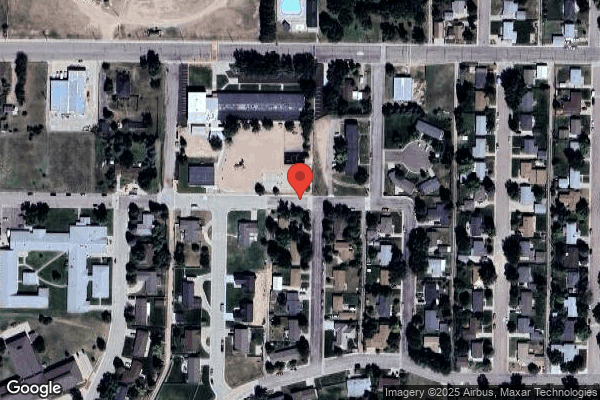
810 East 7th Street, Kimball, NE 69145 (308) 235-4693
Government - County 49 Beds Independent Data: November 2025 1 Immediate Jeopardy citation
Trust Grade
0/100
#158 of 177 in NE
Last Inspection: April 2025

Within standard 12-15 month inspection cycle. Federal law requires annual inspections.

Overview

Kimball County Manor has received a Trust Grade of F, indicating significant concerns about the quality of care provided. Ranking #158 out of 177 facilities in Nebraska places it in the bottom half, and it is the only facility in Kimball County. The situation is worsening, with the number of reported issues increasing from 10 in 2024 to 12 in 2025. While staffing received an average rating of 3 out of 5 stars, staff turnover is at 55%, which is concerning. Notably, there were serious incidents, including a failure to protect a resident from abuse allegations and a lack of proper screening for potential employees, along with insufficient ongoing training for nurse aides, raising concerns about resident safety and staff competency. Overall, while there are some strengths, such as having no fines on record, the weaknesses significantly overshadow them.
Trust Score
F
0/100
In Nebraska
#158/177
Bottom 11%
Safety Record
High Risk
Review needed
Inspections
Getting Worse
10 → 12 violations
Staff Stability
⚠ Watch
55% turnover. Above average. Higher turnover means staff may not know residents' routines.
Penalties
✓ Good
No fines on record. Clean compliance history, better than most Nebraska facilities.
Skilled Nurses
⚠ Watch
Each resident gets only 25 minutes of Registered Nurse (RN) attention daily — below average for Nebraska. Fewer RN minutes means fewer trained eyes watching for problems.
Violations
⚠ Watch
27 deficiencies on record. Higher than average. Multiple issues found across inspections.
★☆☆☆☆
1.0
Overall Rating
★★★☆☆
3.0
Staff Levels
★☆☆☆☆
1.0
Care Quality
★☆☆☆☆
1.0
Inspection Score
Stable
2024: 10 issues
2025: 12 issues

The Good

  • Full Sprinkler Coverage · Fire safety systems throughout facility
  • No fines on record

Facility shows strength in fire safety.

The Bad

1-Star Overall Rating

Below Nebraska average (2.9)

Significant quality concerns identified by CMS

Staff Turnover: 55%

Near Nebraska avg (46%)

Higher turnover may affect care consistency

The Ugly 27 deficiencies on record

1 life-threatening
Aug 2025 1 deficiency
CONCERN (E) 📢 Someone Reported This

A family member, employee, or ombudsman was alarmed enough to file a formal complaint

Potential for Harm - no one hurt, but risky conditions existed

Accident Prevention (Tag F0689)

Could have caused harm · This affected multiple residents

**NOTE- TERMS IN BRACKETS HAVE BEEN EDITED TO PROTECT CONFIDENTIALITY** Licensure Reference Number 175 NAC 12-006.02(G) Licensure Reference Number 175 NAC 12-006.09(I) Based on record reviews and inte...

Read full inspector narrative →
**NOTE- TERMS IN BRACKETS HAVE BEEN EDITED TO PROTECT CONFIDENTIALITY** Licensure Reference Number 175 NAC 12-006.02(G) Licensure Reference Number 175 NAC 12-006.09(I) Based on record reviews and interviews, the facility failed to determine the root cause of every fall incident, implement interventions that prevented recurrence of falls related to the identified causes, and develop and implement new interventions after subsequent falls occurred for 3 (Residents 1, 2, and 3) of 3 sampled residents. The facility identified a census of 38. Findings are: An interview on 8/27/2025 at 10:25 AM with the Nursing Home Administrator (NHA) and Director of Nursing (DON) revealed that the facility's process following a resident fall includes the nurse completing an incident report, noting what was happening before the fall. The facility holds a Utilization Review (UR) meeting daily (except Thursdays and weekends) to discuss falls and assign interventions. The interdisciplinary team (IDT) determines if interventions are appropriate based on the cause of the fall. The DON gave an example that if a resident falls while reaching for a remote on a dresser, an appropriate intervention would be to move the remote closer, not lower the bed, to prevent the fall from recurring. The DON revealed the facility utilizes the following polices for falls: Fall Prevention Program (Angel Watch), Incident Report, Protocol for Neurological Assessment, and Possible Injury After a Fall. A record review of the facility's Fall Prevention Program (Angel Watch) policy dated 1/2013, revealed the policy states residents with two falls in one week or three in a month should be placed on the Angel Watch program, identified by an angel marker on their assistive devices and door. The policy did not include conducting root cause analysis or specifying development of fall-prevention interventions. A record review of the facility's Possible Injury After a Fall policy dated 4/2024, revealed that falls with injury must be reported to Adult Protective Services (APS) within two hours, and a five-day investigation submitted to the state. The policy did not include requirements for conducting a root cause analysis or implementing fall-prevention interventions. A. A record review of Resident 3's Face Sheet revealed the facility admitted the resident on 2/3/2022. Resident 3 had a diagnosis of dementia (a usually progressive condition marked by the development of multiple cognitive deficits such as memory impairment, aphasia, and the inability to plan and initiate complex behavior). A record review of Resident 3's quarterly Minimum Data Set (MDS, a federally mandated comprehensive assessment tool used to determine a resident's functional capabilities and helps nursing home staff identify health problems) dated 7/3/2025 revealed the resident had a Brief Interview for Mental Status (BIMS, a brief screening that aids in detecting cognitive impairment) score of 6/15, which indicated Resident 3 had severe cognitive impairment. Additionally, it revealed the resident had one-sided lower extremity impairment and utilized a walker for mobility. The resident required partial assistance with toileting and dressing, and was independent with bed mobility, ambulation, and transfers. A record review of Resident 3's Event Reports dated 5/31/2025 revealed the resident was found naked on the floor beside their spouse's bed. The resident stated they had been engaging in sexual activity with their spouse when they fell. There was no documented evidence that a root cause analysis had been conducted following this fall, nor were interventions identified to reduce the risk of recurrence. A record review of Resident 3's Event Reports dated 6/23/2025 revealed the resident was found on the floor beside their spouse's bed. On 6/24/2025, a UR meeting was held and an intervention of no sense of safety due to resident failing to ask for assistance for intimacy had been implemented. There was no evidence that the root cause had been identified and no specific intervention to prevent recurring falls during intimacy was developed. A record review of Resident 3's Event Reports dated 7/3/2025 revealed the resident was found sitting on the floor in their room with back against the bed. Resident 3 was sitting with their pants and brief around their ankles with regular socks on. The resident reported they were attempting to get in their spouse's bed to engage in sexual activity. The resident's fall root-cause was identified as slipping from regular socks. An intervention for physical therapy (PT) and occupational therapy (OT) evaluation for balance was placed, however, no intervention was put in place to mitigate the specific slipping hazard. An interview on 8/27/2025 at 10:50 AM with the NHA and DON revealed the following:- Confirmed there was no documented evidence a root cause had been identified in the resident's medical record for the 5/31/2025 fall. However, it was determined the root cause to be from losing balance. An intervention for gripper socks had been added. The DON confirmed the gripper socks was not related to the cause or prevention of that fall.- Confirmed no root cause or intervention for prevention had been placed for the 6/23/2025 fall.- The DON confirmed the cause of the 7/3/2025 fall was slipping on the floor in regular socks, and acknowledged that a PT/OT evaluation would not mitigate slipping in inappropriate footwear. B.A record review of Resident 1's Face Sheet revealed the facility admitted the resident on 8/26/2024. Resident 1 had a diagnosis of Lewy Body Dementia (LBD, a progressive disease caused by abnormal protein clumps, Lewy bodies, in the brain cells that leads to decline in thinking, movement, sleep, and behavior. Key symptoms include fluctuating alertness, visual hallucinations, and acting out dreams during sleep). Additionally, Resident 1 had a diagnosis of repeated falls. A record review of Resident 1's MDS dated [DATE] revealed the resident had a BIMS score of 11/15, which indicated the resident had moderate cognitive impairment. Additionally, the MDS revealed Resident 1 was independent with bed mobility, transfers, and ambulation of 10 feet. A record review of an Event Report for Resident 1 with a date of 6/7/2025 revealed the resident was found on the floor in a pool of blood, having hit their head on a nightstand after reportedly rolling out of bed during a bad dream. The resident required six staples at the Emergency Room. An intervention was added on 6/9/2025 to lower the bed and place a fall mat. There was no evidence of a root cause analysis or additional interventions to prevent the recurrence of the fall. A record review of an Event Report for Resident 1 with a date of 8/16/2025 revealed the resident reported falling out of bed during the night, sustaining a bruise to the right wrist. The resident could not give an exact time but stated they had been roaming early in the morning. The intervention section had none of the above marked. There was no evidence an intervention was developed or root cause identified. A record review of Resident 1's Fall Care Plan, with a last reviewed/revised date of 8/18/2025, listed the interventions of lowering the bed and moving nightstand away from the head of the bed for the 6/7/2025 but did not include any additional interventions for that fall nor any interventions for the 8/16/2025 fall. An interview on 8/27/2025 at 10:30 AM with the NHA and DON revealed the facility had identified Resident 1 had rolled out of bed due to having bad dreams on 6/7/2025. They confirmed no further root cause analysis of the dream-related behavior had been completed and no additional intervention had been developed to prevent the fall from recurring. Regarding the fall on 8/16/2025, the NHA and DON confirmed no root cause or intervention had been identified or implemented, stating they did not believe the fall occurred because the resident would not have been able to get off the floor without assistance. C. A record review of Resident 2's Face Sheet revealed the resident was admitted to the facility on [DATE]. Resident 2 had diagnoses of dementia, hemiplegia (one-side paralysis), and weakness. A record review of Resident 2's MDS, dated [DATE], revealed the resident had a BIMS score of 5/15, which indicated sever cognitive impairment. Resident 2 required full assistance with toileting and dressing. Resident 2 also required moderate assistance with bed mobility and transfers. A record review of an Event Report for Resident 2 with a date of 7/8/2025 revealed the resident was self-ambulating to the bathroom when they bent down to retrieve a tissue from the floor and lost their balance, resulting in a fall. The intervention implemented was the application of gripper socks while ambulating. There was no evidence of a root cause analysis beyond balance was conducted or additional fall prevention interventions were developed to address the mobility deficit. An interview on 8/27/2025 at 10:45 AM with the NHA and DON revealed that the root cause of Resident 2's fall on 7/8/2025 was identified as a loss of balance and underlying weakness. The NHA and DON confirmed the fall was unwitnessed, and since it was unclear whether the loss of balance was related to the resident's foot slipping, no additional interventions beyond gripper socks were developed or implemented.
Apr 2025 11 deficiencies 1 IJ
CRITICAL (J)

Immediate Jeopardy (IJ) - the most serious Medicare violation

Free from Abuse/Neglect (Tag F0600)

Someone could have died · This affected 1 resident

**NOTE- TERMS IN BRACKETS HAVE BEEN EDITED TO PROTECT CONFIDENTIALITY** Licensure Reference Number 175 NAC 12-006.05 (H) Based on observation, record reviews, and interviews, the facility failed to pr...

Read full inspector narrative →
**NOTE- TERMS IN BRACKETS HAVE BEEN EDITED TO PROTECT CONFIDENTIALITY** Licensure Reference Number 175 NAC 12-006.05 (H) Based on observation, record reviews, and interviews, the facility failed to protect 1 (Resident 39) of 1 sample resident after receiving an allegation of staff-to-resident abuse. The facility identified a census of 39. The facility was notified on 4/15/2025 at 5:00 PM of an Immediate Jeopardy (IJ) which began on 4/11/2025. The IJ was removed on 4/15/2025, as confirmed by the surveyor's onsite verification. Findings are: A record review of the facility's policy Abuse Prohibition Polices and Procedures, with a date of 1/11/2017, revealed the following: - The purpose of the policy is to ensure all residents in the facility are free from verbal, physical, sexual and mental abuse, involuntary seclusion, neglect or mistreatment. - The policy defined abuse as a willful infliction of injury resulting physical harm, pain or mental anguish by an individual, including a caretaker. - The section Procedure for Training revealed the following: o Any staff member who suspects abuse or neglect of a resident is to report the alleged incident to their immediate supervisor. o All written or oral reports of suspected abuse or neglect shall be given to the Administrator. o An immediate investigation will be conducted by the Nursing Home Administrator (NHA), Director of Nursing (DON), Social Service Director (SSD), or a designated staff member. o During the investigation process, appropriate measures will be initiated for the protection of the residents and to prevent possible further abuse/neglect during this time. - The section Procedure for Investigation revealed all incidents/situations/concerns will be investigated. A record review of Resident 39's Face Sheet revealed Resident 39 was admitted to the facility on [DATE]. Resident 39 had diagnoses of dementia without behavioral, mood, or psychotic disturbances (a usually progressive condition marked by the development of multiple cognitive deficits such as memory impairment, aphasia, and the inability to plan and initiate complex behavior), epilepsy (a neurological condition characterized by recurrent seizures), and an anxiety disorder (mental health conditions characterized by excessive worry, fear, and anxiety that interfere with daily life). A record review of Resident 39's admission Minimum Data Set (MDS, a federally mandated comprehensive assessment tool used to determine a resident's functional capabilities and help nursing home staff identify health problems) with an Assessment Reference Date (ARD) of 3/19/2025 revealed Resident 39 had a Brief Interview for Mental Status (BIMS, a brief screening that aids in detecting cognitive impairment) score of 10/15, which indicated Resident 39 had moderate cognitive impairment. The MDS also revealed Resident 39 had not exhibited any behaviors of hallucinations or delusions within the past 7 days of the ARD. A record review of Resident 39's Comprehensive Care Plan (a detailed, personalized document that outlines how staff will meet a resident's medical, nursing, mental and psychosocial needs) revealed, as of 3/19/2025, Resident 39 has difficulty making self-understood due to difficulty expressing what they are trying to say. Approaches were to allow Resident 39 time to speak and avoid interrupting; ask Resident 39 questions requiring 1-2 word answers; ask Resident 39 to repeat any slurred, mumbled words; ask simple yes/no questions; encourage verbalization; provide a quiet, non-hurried environment, free of background noises and distractions; remind Resident 39 to speak slowly and clearly; repeat what Resident 39 has said to validate; and when Resident 39 becomes frustrated, provide the word/phase for the resident. Additional record review of Resident 39's Comprehensive Care Plan revealed no problem areas identified for Resident 39 having delusions, altered sense of reality, or other related psychological impairments. A record review of Resident 39's Progress Note from 4/11/2025 at 9:24 AM written by Licensed Practical Nurse (LPN) - A revealed Resident 39 had been upset when LPN-A was assessing the resident. Resident 39 kept repeating that the guy/girls from last night were hitting them. LPN-A explained to Resident 39 that it was a new day; fresh start and those people are gone. The note revealed Resident 39 appeared to be receptive to the conversation and appeared to be in a happier mood. There was no evidence LPN-A had reported the allegation to the NHA (Nursing Home Administrator) or initiated an investigation regarding the allegation. An interview on 4/15/2025 at 1:40 PM with Resident 39 revealed on Friday the resident had been deliberately hit between their shoulders by a nurse aide (NA). Resident 39 revealed they had been sitting in their wheelchair when the NA had forcefully hit the vinyl backrest of their wheelchair between their shoulders. Resident 39 stated the hit had hurt but the resident had not felt it because they were scared. Resident 39 also revealed they are unable to communicate the best but does know right from wrong and when someone is deliberately hitting them versus an accident. Resident 39 provided three unique characteristics and descriptions of the nurse aide and stated Resident 39 did not know the NA's name but would recognize them due to the unique characteristics. Resident 39 stated the NA was here now and stated, I'm scared of [gender]. Resident 39 had been tearful throughout the interview. An observation on 4/15/2025 at 1:52 PM revealed there was a NA that was currently working and had matched the unique description provided by Resident 39. A follow-up interview on 4/15/2025 at 3:40 PM with Resident 39 revealed Resident 39 was sure the hit had been deliberate as the force of the hit could be heard down the hall. Resident 39 reiterated the unique characteristics of the NA and stated they were scared. Resident 39 confirmed the resident had reported the incident to the nurse. An interview on 4/15/2025 at 3:35 PM with LPN-A revealed LPN-A had been told by Resident 39 about allegations of staff hitting them the night before. LPN-A stated there wasn't any guys or girls overnight so if it had been a more realistic situation of abuse, LPN-A would have reported it and done something about it. LPN-A had determined the situation was not serious as it was a dream or misconception of reality but was unsure of how they had determined it was a misconception of reality or a dream. An interview on 4/15/2025 at 4:55 PM with the NHA and DON (Director of Nursing) identified NA-H as matching the unique characteristics and description provided by Resident 39. An interview on 4/15/2025 at 2:52 PM with NA-M revealed NA-M had concerns regarding agency aides, especially NA-H and NA-E. The interview revealed NA-H and NA-E flock together when working and NA-E initiates instances and NA-H follows their lead. NA-M revealed instances of the NAs yelling at the residents, not feeding or forcefully feeding the residents, taking the residents walkers away, and kicking walkers out of the resident's hands. NA-M stated they have reported instances of concerns to the charge nurses and DON, but their concerns seemed to have been dismissed. A record review of a facility-provided copy of their staffing schedule revealed NA-H and NA-E had worked on 4/11/2025 from 5:00 AM - 5:00 PM. A record review of a Staff Assignment Sheet from 4/11/2025 confirmed NA-E had been assigned to Resident 39's hall and NA-H had also been working the floor on a nearby hall. An interview on 4/15/2025 at 4:00 PM with the DON revealed the DON had denied any knowledge of staff concerns regarding care provided by other staff. An interview on 4/15/2025 at 4:58 PM with the NHA revealed NHA had been unaware of Resident 39's allegations as LPN-A had not reported it. The NHA confirmed LPN-A should have reported the allegation of abuse to the NHA, so an investigation could have been conducted and actions implemented to protect Resident 39 in the meantime. The following is the facility's abatement statement: DON will do a full head to toe skin assessment on Resident #39, noting any discolorations, bruises, or visible markings on body. DON and NHA will place phone call to resident family to inform them of the allegation of abuse and share with the them the steps we are taking and findings from skin assessment. Alleged perpetrator will not be allowed to return to work until investigation is complete. DON will begin investigation into allegation by interviewing staff, residents, and speaking to family members. A report with the findings of the investigation will be provided to the State Agency within 5 days. NHA will provide a copy of the Abuse Prohibition Policies and Procedures to all staff currently at facility to review and sign. Copies of this will be provided to all oncoming staff at the start of next shift to be reviewed and signed. An all staff Inservice is scheduled for Friday 4/18/25 to educate staff on the importance of adhering to the Abuse Prohibition Policies and Procedures. DON and NHA upon arriving at facility, will read through progress notes for all residents on a daily basis, and immediately investigate any allegation of abuse or neglect. DON and NHA will alternate reading through progress notes on Saturday and Sunday for a period of 1 year. NHA will continue to ensure that all staff are compliant with their mandatory, annual Abuse/Neglect Inservice. SSD will conduct spot interviews with residents 1x weekly to ensure residents they feel they are receiving adequate care. At the time of the survey, the violation was determined to be at the immediate jeopardy level J. Based on observations, interviews and record reviews completed during the onsite visit, it was determined the facility had implemented corrective action to remove the IJ violation at the time. A final revisit will be conducted to determine if the facility is in substantial compliance with participation requirements. At the time of exit, the severity of the deficiency was lowered to the D level.
CONCERN (D)

Potential for Harm - no one hurt, but risky conditions existed

Report Alleged Abuse (Tag F0609)

Could have caused harm · This affected 1 resident

Licensure Reference Number 175 NAC 12-006.02(H) Nebraska Revised Statute 28-372 Based on record review and interview, the facility failed to A) immediately investigate and report an allegation of staf...

Read full inspector narrative →
Licensure Reference Number 175 NAC 12-006.02(H) Nebraska Revised Statute 28-372 Based on record review and interview, the facility failed to A) immediately investigate and report an allegation of staff-to-resident abuse within 24 hours of the allegation being made and B) submit an investigation to the State Agency (SA) within 5 working days of the incident for 1 (Resident 39) of 1 sample resident. The facility identified a census of 39. Findings are: A record review of a facility policy Abuse Prohibition Policies and Procedures, with a last revised date of 1/11/2017, revealed an allegation of abuse will be reported within 24 hours to the SA and a copy of the written investigation report will be submitted to the SA within five working days of the alleged incident. A. A record review of Resident 39's Progress Note from 4/11/2025 at 9:24 AM written by Licensed Practical Nurse (LPN) - A revealed Resident 39 had been upset when LPN-A was assessing the resident. Resident 39 kept repeating that the guy/girls from last night were hitting them. LPN-A explained to Resident 39 that it was a new day; fresh start and those people are gone. The note revealed Resident 39 appeared to be receptive to the conversation and appeared to be in a happier mood. There was no evidence that LPN-A had reported the allegation to the Nursing Home Administrator (NHA) or SA or had begun an investigation. An interview on 4/15/2025 at 3:35 PM with LPN-A revealed LPN-A had been told by Resident 39 about allegations of staff hitting them the night before. LPN-A stated there wasn't any guys or girls overnight so if it had been a more realistic situation of abuse, LPN-A would have reported it and done something about it. LPN-A had determined the situation was not serious as it was a dream or misconception of reality but was unsure of how they had determined it was a misconception of reality or a dream. An interview on 4/15/2025 at 4:58 PM with the NHA revealed NHA had been unaware of Resident 39's allegations as LPN-A had not reported it to them. The NHA confirmed LPN-A should have reported the allegation of abuse to the NHA, so an investigation could have been conducted immediately and an initial report made to the SA within 24 hours. B. A record review of a sent e-mail revealed the NHA had sent the investigation to the SA on 4/21/2025 at 6:29 AM (7 working days from the date of the incident.) An interview on 4/21/2025 at 9:55 AM with the NHA confirmed the report had not been submitted to the SA until today (4/21/2025.)
CONCERN (D)

Potential for Harm - no one hurt, but risky conditions existed

Comprehensive Care Plan (Tag F0656)

Could have caused harm · This affected 1 resident

B. A record review of a facility policy Care Plans with a date of 2/29/2023 revealed care plans address problem areas identified as conditions that fall outside or have the potential to fall outside ...

Read full inspector narrative →
B. A record review of a facility policy Care Plans with a date of 2/29/2023 revealed care plans address problem areas identified as conditions that fall outside or have the potential to fall outside of normal parameters of biopsychosocial and spiritual well-being. Each identified problem area will be developed into a format on the care plan with a statement to the reason it is a problem, evidence or factors by which it is determined to be a problem, measurable time limited goals, and approaches to achieve the stated goal. Problem areas are identified after a review of the resident's medical and physical history, physician's orders, and other assessment tools. A record review of Resident 16's Face Sheet revealed the facility admitted Resident 16 on 7/28/2022. Resident 16 had diagnoses of Alzheimer's disease (a progressive brain disorder that primarily affects memory, thinking, and behavioral abilities that leads to a decline in cognitive function, ultimately affecting a person's ability to perform daily tasks), Congestive Heart Failure (CHF - a condition where the heart can't pump enough blood to meet the body's needs, leading to fluid buildup in the body), atrial fibrillation (AFib - a heart rhythm problem where the heart beats irregularly and fast), diabetes, and a history of a stroke. A record review of Resident 16's admission Minimum Data Set (MDS, a federally mandated comprehensive assessment tool used to determine a resident's functional capabilities and help nursing home staff identify health problems) with an Assessment Reference Date (ARD) of 2/1/2025 revealed Resident 16 was taking a high-risk medication of an antiplatelet (a medication that prevent blood cells called platelets from sticking together and forming clots) and a diuretic (a water pill). A record review of Resident 16's Care Plan with a last reviewed/revised date of 2/7/2025 revealed no evidence of problem areas for Resident 16's diabetes, CHF, use of an antiplatelet, or use of a diuretic medication. An interview on 4/15/2025 at 12:00 PM with the Nursing Home Administrator and Director of Nursing confirmed Resident 16's care plan did not include problem areas of their diabetes, CHF, use of an antiplatelet, or use of a diuretic medication and would have expected these areas to have been included. Licensure Reference 175 NAC 12-006.09(E) The facility failed to develop a Comprehensive Care Plan (CCP, a document that includes measurable objectives and timetables to meet a resident's medical, nursing, and mental and psychosocial needs that are identified in the comprehensive assessment (CCP) regarding Resident 16's primary diagnoses and high-risk medications and develop and implement a Comprehensive Care Plan including non-pharmacological interventions related to Resident 25's behavioral and emotional well-being. This affected 2 of 12 sampled residents. The facility identified a census of 39. Findings are: A. Record review of Resident 25's electronic medical record revealed Resident 25 had medical diagnoses including Parkinson's disease (a movement disorder that affects the nervous system and worsens over time), dementia (a usually progressive condition marked by the development of multiple cognitive deficits), and anxiety disorder (anxiety is an abnormal and overwhelming sense of apprehension and fear often marked by physical signs, by doubt concerning the reality and nature of the threat, and by self-doubt about one's capacity to cope with it). Record review of a Brief Interview for Mental Status (BIMS, a brief screening tool that aids in detecting cognitive impairment) completed on 2/4/25 revealed Resident 25 had a score of 0 out of 15, which indicated the resident had severely impaired cognition. Record review of Resident 25's Comprehensive Care Plan (CCP) revealed a Problem titled, Psychotropic drug use, with a start date of 11/5/24, and stated Resident receives antianxiety medication buspirone and Xanax (alprazolam) r/t anxiety diagnosis. The stated goal was that the resident will be prescribed the lowest effective dose of medication, and two approaches were listed. The approaches were to attempt a gradual dose reduction if ordered by the physician, and the second approach was to have pharmacy consultant reviews. Record review of Resident 25's quarterly Minimum Data Set (MDS, a federally mandated comprehensive assessment tool used to determine a resident's functional capabilities and helps nursing home staff identify health problems) dated 2/6/25 revealed the following: -Section C revealed Resident 25 had severely impaired cognition. -Section D revealed a Staff Assessment of Resident 25's Mood (PHQ-09-OV, a questionnaire used to measure frequency and severity of depression symptoms) with a total severity score of 6, indicating mild depression. -Section E revealed no indicators of psychosis for Resident 25. -Section N revealed Resident 25 was taking anti-anxiety and anti-depressant medications. Record review of Resident 25's Medication Administration Records dated 1/1/2025 through 4/20/25 revealed the resident was taking the following psychotropic medications: -alprazolam, one 0.5 milligram (mg) tablet by mouth scheduled to be given at 1:30 PM daily, starting on 1/11/24. -buspirone, one 10 mg tablet by mouth scheduled three times a day (7:00 AM, 1:00 PM, and 7:30 PM), starting on 10/27/2023. -trazodone, one 50 mg tablet by mouth scheduled to be given at bedtime daily, starting on 1/10/24, and updated on 3/5/25 to include the direction to administer between 7:00 PM and 8:00 PM. A record review of Resident 25's orders revealed that the diagnosis listed for all three psychotropic medications was anxiety disorder. A record review of Resident 25's CCP revealed no evidence of non-pharmaceutical interventions for anxiety disorder, moods, or behavior. An interview on 4/16/25 at 3:24 PM with DON confirmed trazodone was not mentioned on Resident 25's CCP, and that there were no non-pharmaceutical interventions for anxiety disorder, moods, or behavior on the CCP.
CONCERN (D)

Potential for Harm - no one hurt, but risky conditions existed

Deficiency F0661 (Tag F0661)

Could have caused harm · This affected 1 resident

LICENSURE REFERENCE NUMBER 175-12 006.09(G)(i) Based on record review and interviews, the facility failed to document a recapitulation (a complete summary of resident stay in nursing facility from adm...

Read full inspector narrative →
LICENSURE REFERENCE NUMBER 175-12 006.09(G)(i) Based on record review and interviews, the facility failed to document a recapitulation (a complete summary of resident stay in nursing facility from admittance to discharge) for a resident-initiated discharge for one (Resident 40) of one sampled resident. The facility identified a census of 39. Findings are: A record review on 04/14/2025 of a Discharge and Transfer Policy last revised on 02/27/2023 revealed no documented evidence requiring a recapitulation of stay as part of the discharge process. A record review of a progress note dated 02/21/2025 at 2:30 PM revealed a summary of care conference meeting note and detailed that Resident 40's goals to be discharged home had been met. No other documentation of a complete summary of the residents stay noted in the residents' chart. An interview with the Social Service Director (SSD) on 04/14/2025 at 2:30 PM revealed the facility has not ever done a recapitulation upon discharge, only an Interdisciplinary discharge planning summary which just indicates the Resident met their goals to return home.
CONCERN (D)

Potential for Harm - no one hurt, but risky conditions existed

Deficiency F0700 (Tag F0700)

Could have caused harm · This affected 1 resident

**NOTE- TERMS IN BRACKETS HAVE BEEN EDITED TO PROTECT CONFIDENTIALITY** Licensure Reference Number 175 NAC 12-006.09(H) Based on record reviews and interviews, the facility failed to attempt the use o...

Read full inspector narrative →
**NOTE- TERMS IN BRACKETS HAVE BEEN EDITED TO PROTECT CONFIDENTIALITY** Licensure Reference Number 175 NAC 12-006.09(H) Based on record reviews and interviews, the facility failed to attempt the use of appropriate alternatives prior to the installation of bed rails (adjustable metal or rigid plastic bars that attach to the bed. They are available in a variety of types, shapes, and sizes ranging from full to one-half, one-quarter, or one-eighth lengths. Synonymous terms are side rails, bed side rails, and safety rails) as required for 1 (Resident 39) of 1 sample resident. The facility identified a census of 39. Findings are: A record review of a facility policy Side Rails with a date of 2/27/2023 revealed bed rails may be used by a resident if a bed rail request form and a bed rail decision making tree has been filled out. This will be reviewed quarterly. There was no evidence that the use of appropriate alternatives prior to the installation of bed rails was required. A record review of the Clinical Guidance for the Assessment and Implementation of Bed Rails in Hospitals, Long Term Care Facilities, and Home Care Settings with a date of April 2023 revealed the following: - Automatic use of bed rails of any size or shape should be avoided. - If a resident, family member, or authorized representative requests the inappropriate use of side rails, then the interdisciplinary care team has a responsibility to discuss the risks involved, as well as the benefits of any clinical and/or environmental interventions that may be safer in meeting the patient's assessed needs, individual circumstances, and environment. - Nursing/medical and environmental interventions, such as the use of a trapeze bar (a transfer aid that's suspended over the bed) affixed to the bed to increase the resident's mobility, should be considered. - The patient's chart should include a risk-benefit assessment that identifies why other care interventions are not appropriate or not effective if they were previously attempted and determined not to be the treatment of choice for the patient. A record review of Resident 39's Face Sheet revealed Resident 39 was admitted to the facility on [DATE]. Resident 39 had diagnoses of dementia (a usually progressive condition marked by the development of multiple cognitive deficits such as memory impairment, aphasia, and the inability to plan and initiate complex behavior), epilepsy (a neurological condition characterized by recurrent seizures), and an anxiety disorder (mental health conditions characterized by excessive worry, fear, and anxiety that interfere with daily life). A record review of Resident 39's admission Minimum Data Set (MDS, a federally mandated comprehensive assessment tool used to determine a resident's functional capabilities and help nursing home staff identify health problems) with an Assessment Reference Date (ARD) of 3/19/2025 revealed Resident 39 had a Brief Interview for Mental Status (BIMS, a brief screening that aids in detecting cognitive impairment) score of 10/15, which indicated Resident 39 had moderate cognitive impairment. Additionally, it revealed Resident 39 required maximum assistance with bed mobility and transfers. A record review of Resident 39's Comprehensive Care Plan (CCP, a document that includes measurable objectives and timetables to meet a resident's medical, nursing, and mental and psychosocial needs that are identified in the comprehensive assessment) with a start date of 3/20/2025 revealed Resident 39 required a positioning device to assist with getting in/out of bed and with repositioning. Approaches listed were to complete a positioning device assessment before applying and quarterly thereafter, complete a position device assessment monthly, and the Power of Attorney (POA) to sign the consent for the positioning device. There was no evidence that appropriate alternatives to the bed rails had been attempted or contraindications to alternatives had been identified. A record review of Resident 39's Side Rail Request/Authorization with a date of 3/20/2025 revealed the POA had requested bilateral half-side bed rails be placed on Resident 39's bed to enhance independent bed mobility. A potential risk of entrapment had been identified. However, there was no evidence that the POA had been informed of alternatives that had been considered or attempted, or the benefits of the bed rails and the likelihood of the benefits had been reviewed with the POA. A record review of a Bed Side Rails Decision Tree with a date of 3/20/2025 revealed a signature and date from the Director of Nursing (DON). There was no resident's name included, or evidence of what pathway had been taken to determine the decision to proceed with the implementation of bed rails. An interview on 4/16/2025 at 3:00 PM with the Director of Nursing (DON) and concurrent record review of the provided Bed Side Rails Decision Tree revealed the DON had followed the left side steps of the following: 1) Wants bed side rails , 2) Is there is a risk to the resident if bed side rail is used? and 3) If no, obtain reason and document. Note bedside rail per resident/family choice on plan of care. Bed side rail is not a restraint. The DON explained Resident 39's family had requested the bed rails. The DON had then determined Resident 39 to have no risk if the bed rails were implemented but had not documented the reason. The DON confirmed no alternatives were considered or attempted prior to implementing Resident 39's bed rails.
CONCERN (D)

Potential for Harm - no one hurt, but risky conditions existed

Medication Errors (Tag F0758)

Could have caused harm · This affected 1 resident

Licensure Reference 175 NAC 12-006.09(H) Based on interviews and record reviews, the facility failed to ensure a gradual dose reduction was attempted for psychotropic medications for 1 (Resident 25) o...

Read full inspector narrative →
Licensure Reference 175 NAC 12-006.09(H) Based on interviews and record reviews, the facility failed to ensure a gradual dose reduction was attempted for psychotropic medications for 1 (Resident 25) of 5 sampled residents. The facility identified a census of 39. Findings are: Record review of Resident 25's electronic medical record revealed Resident 25 had medical diagnoses including Parkinson's disease (a movement disorder that affects the nervous system and worsens over time), dementia (a usually progressive condition marked by the development of multiple cognitive deficits), and anxiety disorder (anxiety is an abnormal and overwhelming sense of apprehension and fear often marked by physical signs, by doubt concerning the reality and nature of the threat, and by self-doubt about one's capacity to cope with it). Record review of a Brief Interview for Mental Status (BIMS, a brief screening tool that aids in detecting cognitive impairment) completed on 2/4/25 revealed Resident 25 had a score of 0 out of 15, which indicated the resident had severely impaired cognition. Record review of Resident 25's Medication Administration Records dated 1/1/2025 through 4/20/25 revealed the resident was taking the following psychotropic medications: -alprazolam, one 0.5 milligram (mg) tablet by mouth scheduled to be given at 1:30 PM daily, starting on 1/11/24. -buspirone, one 10 mg tablet by mouth scheduled three times a day (7:00 AM, 1:00 PM, and 7:30 PM), starting on 10/27/2023. -trazodone, one 50 mg tablet by mouth scheduled to be given at bedtime daily, starting on 1/10/24, and updated on 3/5/25 to include the direction to administer between 7:00 PM and 8:00 PM. Record review of Resident 25's medication orders revealed that the diagnosis for all three psychotropic medications was anxiety disorder. An interview with the Nursing Home Administrator (NHA) on 4/16/25 at 1:10 PM revealed they were unable to locate a policy for the use of psychotropic medications. A record review of a facility document titled Kimball County Manor Psychoactive Drug Recertification, dated 3/5/24, revealed Resident 25 was receiving trazodone 50 mg once daily for anxiety. The document also revealed the doctor did not change the dosage at that time. Review of Resident 25's medical record revealed no evidence of gradual dose reduction (GDR) attempted for Resident 25's buspirone or alprazolam, and no evidence of a GDR attempted for trazadone since 3/5/24. An interview on 4/21/25 at 12:55 PM with the Director of Nursing (DON) confirmed that no gradual dose reduction had been attempted for Resident 25's buspirone or alprazolam, and that no GDR had been attempted for Resident 25's trazodone since 3/5/24.

CONCERN (F)

Potential for Harm - no one hurt, but risky conditions existed

Abuse Prevention Policies (Tag F0607)

Could have caused harm · This affected most or all residents

Licensure Reference Number 175 NAC 12-006.04(A)(iii) Based on record reviews and interviews, the facility failed to implement their policies and procedures related to screening potential employees pri...

Read full inspector narrative →
Licensure Reference Number 175 NAC 12-006.04(A)(iii) Based on record reviews and interviews, the facility failed to implement their policies and procedures related to screening potential employees prior to employment for 3 [Housekeeper (HSKPG) - U, Actvities Supervisor (AS) - S, and Dietary Aide (DA) - T] of 5 sampled employees. This had the potential to affect all residents who reside within the facility. The facility identified a census of 39. Findings are: A record review of a facility policy Abuse Prohibition Policies and Procedures with a last revised date of 1/11/2017 revealed all potential employees will be screened for a history of abuse, neglect or mistreatment of residents by checking criminal prosecution history by: 1) reviewing the Nebraska License Information System for Disciplinary Action and License Status - for all nursing staff holding licenses or certifications, 2) checking the Nebraska Adult Abuse Registry and Child Abuse Registry (APS/CAN), 3) checking a criminal history and 4) checking the Nebraska State Patrol Sex Offender Registry. There was no evidence of the requirement to ensure a nurse aide registry check is completed on any staff members who have direct and unsupervised access to or who provide care and treatment to residents. A record review of an undated facility-provided list of staff names, dates of hire, their department, and their job title revealed HSKPG - U was hired on 9/14/2024 and AS - S was hired on 3/31/2025. A record review of DA-T's personnel file revealed DA-T was re-hired on 2/2/2025. There was no evidence that a criminal background, nurse aide registry, APS/CAN registry, or sex offender registry checks had been completed upon re-hire. A record review of HSKPG-U's personnel file revealed no evidence that a Nurse Aide registry check had been completed prior to hire. A record review of AS-S's personnel file revealed no evidence that a Nurse Aide registry check had been completed prior to hire. An interview on 4/21/2025 at 9:55 AM with Human Resources (HR) confirmed there was potential for DA-T, HSKPG-U, and AS-S to have direct and unsupervised access to the residents. HR also confirmed DA-T was rehired on 2/2/2025 and no background or registry checks had been completed upon their rehire. Additionally, HR confirmed HSKPG-U and AS-S did not have a nurse aide registry check completed prior to their hire as HR was unaware of the requirement of any staff with direct and unsupervised access to the residents required a nurse aide registry check to be completed prior to hire.
CONCERN (F)

Potential for Harm - no one hurt, but risky conditions existed

Deficiency F0730 (Tag F0730)

Could have caused harm · This affected most or all residents

Licensure Reference Number 175 NAC 12-006.04(B)(ii)(1) Based on record reviews and interviews, the facility failed to ensure 5 [Nurse Aide (NA) - P, NA-L, NA-O, NA-N, and NA-K] of 5 sampled nurse aide...

Read full inspector narrative →
Licensure Reference Number 175 NAC 12-006.04(B)(ii)(1) Based on record reviews and interviews, the facility failed to ensure 5 [Nurse Aide (NA) - P, NA-L, NA-O, NA-N, and NA-K] of 5 sampled nurse aides (NA) had completed at least 12 hours of ongoing training annually based upon their employment date as required. This had the potential to affect all residents who reside within the facility. The facility identified a census of 39. Findings are: A record review of the facility's Facility Assessment with a date of 4/1/2025 revealed all staff would have training on resident transfers, infection control, disaster/emergency preparedness, resident rights, abuse and neglect, dementia, oxygen, Activities of Daily Living, and Hospice/Comfort Care. There was no evidence that nurse aides would complete at least 12 hours of ongoing education based upon their employment date. A record review of an undated facility-provided list of staff names, dates of hire, their department, and job title revealed the following: - NA-P was hired on 3/19/2024. - NA-L was hired on 12/8/2023. - NA-O was hired on 3/31/2021. - NA-N was hired on 5/23/2023. - NA-K was hired on 1/15/2015. A record review of NA-P's Relias Transcript as of 4/15/2025 revealed NA-P had completed a total of 3.82 hours of ongoing training between 3/19/2024 and 3/19/2025. A record review of NA-L's Relias Transcript as of 4/15/2025 revealed NA-L had completed 7 hours of ongoing training between 12/8/2023 and 12/8/2024. A record review of NA-O's Relias Transcript as of 4/15/2025 revealed NA-O had completed a total of 8.07 hours of ongoing training between 3/31/2024 and 3/31/2025. A record review of NA-N's Relias Transcript as of 4/15/2025 revealed NA-N had completed a total of 9.5 hours of ongoing training between 5/23/2023 and 5/23/2024. A record review of NA-K's Relias Transcript as of 4/15/2025 revealed NA-K had repeated courses of Documenting Medications, Basics of Medication Management, and Avoiding Common Medications Errors during their year between 1/15/2024-1/15/2025. After deducting duplicate courses, NA-K had completed 10.82 hours of ongoing training between 1/15/2024 and 1/15/2025. An interview on 4/15/2025 at 12:00 PM with the Nursing Home Administrator (NHA) confirmed NA-P, NA-L, NA-O, NA-N, and NA-K had not completed at least 12 hours of ongoing training based upon their employment date.
CONCERN (F)

Potential for Harm - no one hurt, but risky conditions existed

Infection Control (Tag F0880)

Could have caused harm · This affected most or all residents

**NOTE- TERMS IN BRACKETS HAVE BEEN EDITED TO PROTECT CONFIDENTIALITY** Licensure Reference Number NAC 175 12.006.18 Based on observations and interviews the facility failed to develop Enhanced Barrie...

Read full inspector narrative →
**NOTE- TERMS IN BRACKETS HAVE BEEN EDITED TO PROTECT CONFIDENTIALITY** Licensure Reference Number NAC 175 12.006.18 Based on observations and interviews the facility failed to develop Enhanced Barrier Precautions (EBP) policies and procedures and implement EBP for Residents 10, 21, and 27. The facility identified a census of 39. Findings are: A record review of Resident 21's Minimum Data Set (MDS- a federally mandated assessment tool used in Long Term Care) dated 4/10/25 revealed in Section H that Resident 21 had an indwelling catheter. A record review of Resident 27's MDS dated [DATE] revealed in Section M that Resident 27 had unresolved wounds. A record review of Resident 10's MDS dated [DATE] revealed in Section M that Resident 10 had one unresolved stage III pressure ulcer. An observation on 4/14/25 at 9:45 AM in the hallway outside Resident 21's room revealed no sign on Resident 21's door or any other indicator to staff that Resident 21 required the use of personal protective equipment (PPE) for high-contact care. An observation on 4/14/25 at 11:00 AM in the hallway outside Resident 27's room revealed no sign on Resident 27's door or any other indicator to staff that Resident 27 required the use of personal protective equipment (PPE) for high-contact care. An observation on 4/14/25 at 2:15 PM in the hallway outside Resident 10's room revealed no sign on Resident 10's door or any other indicator to staff that Resident 10 required the use of personal protective equipment (PPE) for high-contact care. An interview with Nurse Aide (NA)- A.S on 4/14/25 at 10:15 AM regarding Enhanced Barrier Precautions (EBP-an infection control intervention that uses gowns and gloves during high-contact resident care activities to reduce the spread of Multi Drug-Resistant Organisms (MDROs), NA-A.S stated the facility uses EBP on everyone. An interview with NA-A.B on 4/14/25 at 10:20 AM revealed no one is on enhanced barrier precautions at this time and if they start to get sick with something contagious, we gown up and the resident stays in their room. NA-A.B denies receiving training on the need to apply PPE in the presence of wounds and catheters. An interview on 4/14/25 at 12:56 PM with the Director of nursing (DON) confirmed the facility had not implemented enhanced barrier precautions and were unaware of the regulation or recommendation from the Center of Disease Control (CDC). The DON revealed that it is usually the Administrator that monitors for new regulations and will alert the DON to what they are and when they need to be implemented. An interview on 4/14/25 at 3:00 PM with the Administrator (NHA) revealed that they monitor and alert the facility to new regulations and recommendations. The NHA denied being aware of the regulation and confirmed that the facility had not enacted that regulation. The NHA stated they would look at the regulation with the DON and begin development, implementation, and staff education of the regulation immediately.
CONCERN (F)

Potential for Harm - no one hurt, but risky conditions existed

Deficiency F0940 (Tag F0940)

Could have caused harm · This affected most or all residents

Licensure Reference Number 175 NAC 12-006.04(B)(i) Based on record reviews and interviews, the facility failed to ensure each employee received initial orientation within 2 weeks after beginning emplo...

Read full inspector narrative →
Licensure Reference Number 175 NAC 12-006.04(B)(i) Based on record reviews and interviews, the facility failed to ensure each employee received initial orientation within 2 weeks after beginning employment on topics of resident rights, emergency procedures, adult abuse/neglect and training on medical emergency directives and dementia for nursing staff as required for 11 [Nurse Aide (NA) - Q, NA-R, Housekeeper (HSKPG) - U, Activities Supervisor (AS) - S, NA-D, NA-E, NA-F, NA-G, NA-H, and NA-I] of 12 sample employees. This had the potential to affect all residents residing within the facility. The facility identified a census of 39. Findings are: A record review of the facility's Facility Assessment with a date of 4/1/2025 revealed all staff would have training on Emergency Preparedness, Resident Rights, and Abuse and Neglect. There was no evidence that the facility provides training on medical emergency directives. A record review of the Fusion Workforce Solutions Compliance Requirements with a date of 11/20/2024 revealed the facility required training on Elder Abuse. A record review of a facility provided list of staff names, dates of hire, their department, and job title revealed the following: - NA- Q was hired on 4/3/2025. - NA-R was hired on 3/18/2025. - HSKPG - U was hired on 9/14/2024. - AS - S was hired on 3/31/2025. A record review of an agency contracts list that provided the agency staff's name and date of contract revealed the following: - NA-D began employment with the facility on 3/24/2025. - NA-E began employment with the facility on 1/18/2025. - NA-F began employment with the facility on 2/24/2025. - NA-G began employment with the facility on 1/29/2025. - NA-H began employment with the facility on 3/3/2025. - NA-I began employment with the facility on 1/27/2025. A record review of Dietary Aide (DA) - T personnel file revealed DA-T had been rehired on 2/2/2025. There was no evidence DA-T had completed training on resident rights, emergency procedures, or adult abuse and neglect within 2 weeks of re-starting employment. A record review of NA-Q's personnel file revealed no evidence that NA-Q had completed training on emergency procedures, medical directives, or dementia within 2 weeks of beginning employment. A record review of NA-R's personnel file revealed no evidence that NA-R had completed training on emergency procedures, medical directives, or dementia within 2 weeks of beginning employment. A record review of HSKPG-U's personnel file revealed no evidence that HSKPG-U had completed training on emergency procedures within 2 weeks of beginning employment. A record review of AS-S's personnel file revealed no evidence that AS-S had completed training on emergency procedures within 2 weeks of beginning employment. A record review of NA-D's Core Mandatory Attestation (a record of the agency staff's mandatory training topics) with a completion date of 12/20/2024 revealed no evidence that NA-D had completed training on adult abuse and neglect within 2 weeks of beginning employment with the facility. A record review of NA-E's Core Mandatory Attestation with a completion date of 8/30/2024 revealed no evidence that NA-E had completed training on adult abuse and neglect within 2 weeks of beginning employment with the facility. A record review of NA-F's Core Mandatory Attestation with a completion date of 2/13/2025 revealed no evidence that NA-F had completed training on adult abuse and neglect within 2 weeks of beginning employment with the facility. A record review of NA-G's Core Mandatory Attestation with a completion date of 6/6/2024 revealed no evidence that NA-G had completed training on adult abuse and neglect within 2 weeks of beginning employment with the facility. A record review of NA-H's Core Mandatory Attestation with a completion date of 2/17/2025 revealed no evidence that NA-H had completed training on adult abuse and neglect within 2 weeks of beginning employment with the facility. A record review of NA-I's Core Mandatory Attestation with a completion date of 1/15/2025 revealed no evidence that NA-I had completed training on adult abuse and neglect within 2 weeks of beginning employment with the facility. An interview on 4/21/2025 at 9:55 AM with Human Resources (HR) confirmed DA-T had been rehired on 2/2/2025 and had not completed initial orientation upon rehire. The interview also confirmed NA-Q, NA-R, HSKP-U, and AS-S had not completed all required initial orientation training as the facility does not provide initial orientation training on emergency procedures, medical emergency directives, or dementia. An interview on 4/21/2025 at 8:35 AM with the Director of Nursing confirmed the facility had no evidence NA-D, NA-E, NA-F, NA-G, NA-H, and NA-I had completed adult abuse and neglect training within two weeks of beginning employment with the facility.
CONCERN (F)

Potential for Harm - no one hurt, but risky conditions existed

Deficiency F0947 (Tag F0947)

Could have caused harm · This affected most or all residents

Licensure Reference Number 175 NAC 12-006.04(B)(ii) Based on record reviews and interview, the facility failed to ensure nurse aides had completed at least 4 hours of dementia training annually as req...

Read full inspector narrative →
Licensure Reference Number 175 NAC 12-006.04(B)(ii) Based on record reviews and interview, the facility failed to ensure nurse aides had completed at least 4 hours of dementia training annually as required for 5 [Nurse Aide (NA) - K, NA-O, NA-P, NA-L, and NA-N] of 5 sample employees. This had the potential to affect all residents who reside within the facility. The facility identified a census of 39. Findings are: A record review of a Facility Assessment with a date of 4/1/2025 revealed all staff would have training on dementia. There was no evidence that nurse aides would complete at least 4 hours of dementia training as required. A record review of an undated facility-provided list of staff names, dates of hire, their department, and job title revealed the following: - NA-K was hired on 1/15/2015. - NA-O was hired on 3/31/2021. - NA-P was hired on 3/19/2024. - NA-L was hired on 12/8/2023. - NA-N was hired on 5/23/2023. A record review of NA-K's Relias Transcript as of 4/15/2025 revealed no evidence NA-K had completed any dementia training between 1/15/2024 and 1/15/2025. A record review of NA-O's Relias Transcript as of 4/15/2025 revealed no evidence that NA-O had completed any dementia training between 3/31/2024 and 3/31/2025. A record review of NA-P's Relias Transcript as of 4/15/2025 revealed no evidence that NA-P had completed any dementia training between 3/19/2024 and 3/19/2025. A record review of NA-L's Relias Transcript as of 4/15/2025 revealed NA-L had completed 1 hour of dementia training between 12/8/2023 and 12/8/2024. A record review of NA-N's Relias Transcript as of 4/15/2025 revealed NA-N had completed 1 hour of dementia training between 5/23/2023 and 5/23/2024. An interview on 4/15/2025 at 12:00 PM with the Nursing Home Administrator (NHA) revealed they were not aware of the requirement for nurse aides to complete at least 4 hours of ongoing training on dementia yearly. The NHA confirmed NA- K, NA-O, NA-P, NA-L, and NA-N had not met this requirement.
May 2024 10 deficiencies
CONCERN (D)

Potential for Harm - no one hurt, but risky conditions existed

Deficiency F0578 (Tag F0578)

Could have caused harm · This affected 1 resident

Based on record review and interviews, the facility failed to ensure 1 (Resident 39) of 3 sampled residents' advance directive was added to their electronic health record. The facility census was 41. ...

Read full inspector narrative →
Based on record review and interviews, the facility failed to ensure 1 (Resident 39) of 3 sampled residents' advance directive was added to their electronic health record. The facility census was 41. The Findings Are: A record review of Resident 39's paper medical chart, located in a room next to the nurse's station, revealed the resident had an advance directive indicating they did not want resuscitation (DNR). A record review of Resident 39's Electronic Health Record (EHR) revealed the statement no advanced directive on file for this resident. An interview on 5/2/2024 at 10:40 AM with Nurse Aide (NA)-E confirmed the staff would look at the resident's MAR (medication administration record), which was located in the EHR, to find out whether the resident was a DNR. An interview on 5/2/2024 at 10:41 AM with LPN-C confirmed they would look in the resident's EHR first to find the resident's code status (whether or not they were a DNR). An interview on 5/2/2024 at 11:10 AM with the Assistant Director of Nursing (ADON) confirmed Resident 39's advance directive was not in the resident's EHR. An interview on 5/2/2024 at 11:14 AM with Medical Records (MR)-F confirmed there was no advanced directive information in Resident 39's EHR. A record review of the facility policy Patient Self Determination Act (Advance Directive), with a review date of 2/2/24 revealed that if a resident had an advance directive, it would be documented, and a copy would be placed in the resident's medical record chart.
CONCERN (D) 📢 Someone Reported This

A family member, employee, or ombudsman was alarmed enough to file a formal complaint

Potential for Harm - no one hurt, but risky conditions existed

Accident Prevention (Tag F0689)

Could have caused harm · This affected 1 resident

**NOTE- TERMS IN BRACKETS HAVE BEEN EDITED TO PROTECT CONFIDENTIALITY** Licensure Reference 175 NAC 12-006.09D7 Based on observations, interviews and record reviews, the facility failed to ensure the ...

Read full inspector narrative →
**NOTE- TERMS IN BRACKETS HAVE BEEN EDITED TO PROTECT CONFIDENTIALITY** Licensure Reference 175 NAC 12-006.09D7 Based on observations, interviews and record reviews, the facility failed to ensure the use of two-persons while utilizing a Hoyer lift for 1( Resident 8) and failed to ensure the oxygen concentrator was turned off when not in use for 1( Resident 35) of 5 sampled residents . The facility census was 41. Findings are: A. Record review of a Face Sheet indicated the facility admitted Resident 8 on 1/18/2019 with diagnoses of Dementia, Type 2 Diabetes Mellitus, Chronic Kidney Disease, difficulty in walking, and lack of coordination. A record review quarterly Minimum Data Set (MDS, a federally mandated assessment tool used for care planning) dated 3/21/2024, revealed Resident 8 had severe cognitive impairment. Further review of Resident 8's MDS dated [DATE] revealed Resident 8 was dependent for all cares and transfers. A record review of Resident 8's Care Plan revealed Resident 8 required assist of 2 for bed mobility, dressing, incontinence care and to use a Hoyer lift (type of mechanical lift) as needed. An observation on 5/2/2024 at 9:13 AM revealed Nurse Aide (NA)-A had placed Resident 8 in a Hoyer sling that had been connected to the Hoyer machine. NA-A then transferred Resident 8 from the wheelchair, across the room, to the bed and did not have a second staff member assisting with Resident 8's transfer. An interview on 5/2/2024 at 9:16 AM was conducted with NA-A. During the interview NA-A reported frequently using the Hoyer lift without a second person. A follow up interview was conducted on 5/2/2024 at 9:25 with NA-A. During the interview NA-A reported being aware of the requirement to utilize two people with the Hoyer lift. NA-A further revealed not being trained to run the Hoyer lift alone. An interview on 5/2/2024 at 12:20 PM with the Assistant Director of Nursing (ADON) revealed the expectation is for staff to always use a two-person assist with the Hoyer lift. A record review of a facility policy Using a Portable Lifting Machine (Sling), with a last reviewed date of 1/20/2024, revealed the Hoyer lift requires two nursing assistants to run. B. A record review of website www.inogen.com revealed that oxygen itself is not a flammable gas, but it does support combustion. This means that fires ignite and burn more easily, and hotter, in an oxygen-rich environment. In order to maintain a safe environment while using supplemental oxygen, it is important to adhere to safe practices. The website also listed a safe oxygen storage guideline of Turn off your oxygen when you're not using it. Don't set the cannula or mask on the bed or a chair if the oxygen is turned on. An observation on 5/1/2024 at 8:10 AM revealed Resident 35 was not in their room. Their oxygen concentrator was turned on and the oxygen tubing was laying across Resident 35's bed sheets. An interview on 5/1/2024 at 8:13 AM with Licensed Practical Nurse (LPN)-I confirmed the oxygen concentrator was turned on and the tubing was laying on the bed and that this was a fire hazard. An observation on 5/2/2024 at 11:19 AM revealed Resident 35 was not in their room. Their oxygen concentrator was turned on at 4 liters and the oxygen tubing was laying on top of the bed sheets on the bed. An interview on 5/2/24 at 11:22 AM with Medication Aide (MA)-J confirmed they entered Resident 35's room at that time and turned off the oxygen concentrator and put the oxygen tubing into the bag attached to the concentrator.
CONCERN (D)

Potential for Harm - no one hurt, but risky conditions existed

Respiratory Care (Tag F0695)

Could have caused harm · This affected 1 resident

Licensure Reference 175 NAC 12-006.09D6 Based on observation, record review, and interview the facility failed to ensure oxygen was administered per the physician's orders for 2 (Residents 13 and 35) ...

Read full inspector narrative →
Licensure Reference 175 NAC 12-006.09D6 Based on observation, record review, and interview the facility failed to ensure oxygen was administered per the physician's orders for 2 (Residents 13 and 35) of 3 sampled residents. The facility census was 41. The findings are: A. A record review of the facility policy Oxygen Administration with review date of 2/20/24 revealed oxygen would be administered to residents as ordered by the physician. A record review of Resident 13's Care Plan revealed the resident was at risk for respiratory distress/failure related to COPD (Chronic Obstructive Pulmonary Disease) and that they were to have oxygen via nasal cannula per provider orders. A record review of Resident 13's physician's orders revealed an order for continuous O2 (oxygen) 1-2 Liters Per Minute (LPM) to keep saturations above 90%. The order was to be documented on twice a day indicating the oxygen flow rate. A record review of Resident 13's vital signs documentation revealed the following: -4/25/2024 at 4:17 PM Oxygen Saturation: 97%, Oxygen Use Liter Flow: 3. -4/22/2024 at 10:20 AM Oxygen Saturation: 96%, Oxygen Use Liter Flow: 3. -4/15/2024 at 5:58 AM Oxygen Saturation: 99%, Oxygen Use Liter Flow: 3. -4/11/2024 at 3:20 PM Oxygen Saturation: 98%, Oxygen Use Liter Flow: 3. -4/8/2024 at 8:57 AM Oxygen Saturation: 97%, Oxygen Use Liter Flow: 3. An observation on 5/2/24 at 2:20 PM revealed Resident 13 sitting upright in a recliner in their room. They were wearing their oxygen nasal cannula which was connected to the oxygen concentrator. The oxygen concentrator was sent at 2.5 LPM. B. A record review of Resident 35's Minimum Data Set (MDS), a federally mandated comprehensive assessment tool used for care planning, dated 3/7/24 revealed in Section O that the resident did utilize oxygen during the assessment period and in Section I that the resident had a primary medical condition of Acute respiratory failure with hypoxia. A record review of Resident 35's physician's orders revealed an order for oxygen at 3 LPM via nasal cannula continuous. The order was to be documented on twice a day indicating the oxygen flow rate. A record review of Resident 35's medication administration record revealed documentation that Resident 35's oxygen was set at 2 LPM every shift from 4/2/2024 through 5/2/2024. The resident's order on the medication administration record revealed the oxygen should have been set at 3 LPM. An observation on 5/2/24 at 11:44 AM revealed Resident 35 them sitting in a chair at a table in the dining room with their walker beside them and a small oxygen tank sitting in the basket of the walker. Resident 35 had the nasal cannula in their nose and the tubing was attached to the regulator on the oxygen tank in their walker. The regulator of the oxygen tank was set to the OFF position. An interview on 5/2/24 at 11:50 AM with the Assistant Director of Nursing (ADON) confirmed Resident 35's oxygen tank was set to the OFF position and should have been turned on per the physician's order. An observation on 5/2/24 at 11:50 AM revealed the ADON turned Resident 35's oxygen tank regulator on and set it to 2 LPM.
CONCERN (D)

Potential for Harm - no one hurt, but risky conditions existed

Deficiency F0883 (Tag F0883)

Could have caused harm · This affected 1 resident

Licensure Reference Number 175 NAC 12-006.17 Based on record review and interview, the facility failed to provide a pneumococcal immunization for 1 (Resident 35) of 5 sampled residents. The facility c...

Read full inspector narrative →
Licensure Reference Number 175 NAC 12-006.17 Based on record review and interview, the facility failed to provide a pneumococcal immunization for 1 (Resident 35) of 5 sampled residents. The facility census was 41. The Findings Are: A record review of facility policy Influenza & Pneumococcal Vaccines dated 2/23/23 revealed in the Procedure section, #1. On admission, residents will be interviewed as to immunization status. If pneumococcal vaccine has not been given, the resident/resident representative will be instructed as to the advisability of vaccination, and vaccination shall be given with an order from the physician and resident/resident representative permission, unless contraindicated. #3. If the history of pneumonia or influenza immunization status is unknown, Social Services/Nursing will contact the physician clinic for further records prior to giving the immunization. A record review of Resident 35's medical records revealed a signed pneumococcal vaccine consent form dated 7/5/2023 which indicated the resident had received a pneumococcal vaccine but there was not a date or type of pneumococcal vaccine indicated. The consent form also had may need booster handwritten next to this section of the form. An interview on 5/6/24 at 2:25 PM with the Assistant Director of Nursing (ADON) revealed that Social Services (SS)-D was responsible for entering resident immunization data into the medical records and for scheduling resident immunizations. An interview on 5/6/24 at 3:00 PM with SS-D revealed the facility had not yet looked into whether Resident 35 had previously received the pneumococcal vaccine and that the resident had not received a pneumococcal vaccine while residing in the facility.
CONCERN (D)

Potential for Harm - no one hurt, but risky conditions existed

Deficiency F0887 (Tag F0887)

Could have caused harm · This affected 1 resident

Based on record review and interview, the facility failed to provide a COVID-19 immunization for 1 (Resident 38) of 5 sampled residents. The facility census was 41. The findings are: A record review o...

Read full inspector narrative →
Based on record review and interview, the facility failed to provide a COVID-19 immunization for 1 (Resident 38) of 5 sampled residents. The facility census was 41. The findings are: A record review of Resident 38's medical records revealed a COVID-19 vaccine consent form, dated 12/11/2023, which the resident had signed acknowledging they wanted to receive the COVID-19 vaccine. A record review conducted on 5/6/2024 of Resident 38's immunization records revealed no evidence that the resident had received a COVID-19 vaccine. An interview on 5/6/24 at 2:25 PM with the Assistant Director of Nursing (ADON) revealed that Social Services (SS)-D was responsible for entering resident immunization data into the medical records and for scheduling resident immunizations. An interview on 5/6/2024 at 3:00 PM with SS-D revealed Resident 38 had not yet been scheduled to receive the COVID-19 vaccine.
CONCERN (E)

Potential for Harm - no one hurt, but risky conditions existed

Deficiency F0757 (Tag F0757)

Could have caused harm · This affected multiple residents

**NOTE- TERMS IN BRACKETS HAVE BEEN EDITED TO PROTECT CONFIDENTIALITY** Based on interviews and record review, the facility failed to obtain an end date or obtain rationale for the continued use of an...

Read full inspector narrative →
**NOTE- TERMS IN BRACKETS HAVE BEEN EDITED TO PROTECT CONFIDENTIALITY** Based on interviews and record review, the facility failed to obtain an end date or obtain rationale for the continued use of antibiotics for Urinary Tract Infections (UTIs) for Resident 8 and 28 and for history of eye infections for Resident 39. This affected 3 (Resident 8, 28, and 39) of 3 sampled residents. The facility census was 41. Findings are: A record review of Center for Disease Control (CDC) document The Core Elements of Antibiotic Stewardship for Nursing Homes APPENDIX A: Policy and Practice Actions to Improve Antibiotic Use revealed Surveys of antibiotic use have shown that UTI prophylaxis accounts for a significant proportion of antibiotic prescriptions. Very few studies support antibiotic use for UTI prophylaxis, especially in older adults, and many studies have shown this antibiotic exposure increases risk of side effects and resistant organisms. Therefore, efforts to educate providers on the potential harm of antibiotics for UTI prophylaxis could reduce unnecessary antibiotic exposure and improve resident outcomes. A. A record review of a Face Sheet indicated the facility admitted Resident 8 on 1/18/2019 with diagnoses of Dementia, Type 2 Diabetes Mellitus, Chronic Kidney Disease, long term (current) use of antibiotics, overactive bladder, and acute kidney failure. A record review quarterly Minimum Data Set (MDS, a standardized assessment tool that measures health status in nursing home residents), with an Assessment Reference Date of 3/21/2024, revealed Resident 8 had severe cognitive impairment. A record review of Resident 8's Orders revealed Resident 8 was taking Bactrim since 10/8/2023 for a diagnosis of long term (current) use of antibiotics and there was no stop date for the order. An interview on 5/6/2024 at 10:30 AM revealed the Assistant Director of Nursing (ADON) was aware of the CDC's current recommendations regarding prophylactic antibiotic use and confirmed Resident 8 was on an antibiotic for prophylactic UTI use indefinitely. B. A record review of Resident 28's care plan revealed the resident had a history of septic shock, urinary tract infection (UTI), E. Coli infection, benign prostatic hypertrophy (BPH) with urinary obstruction, traumatic hematuria, and a penile implant. The care plan also revealed interventions to administer antibiotics as ordered by the provider and evaluate/record/report their effectiveness/adverse side effects, to encourage prompt and complete bladder emptying, to keep the resident's perineal area clean and dry, and to report signs of UTI. A record review of Resident 28's event report Infection Control-Infection Tracker revealed an infection onset date of 1/5/24 and an infection resolved date of 2/23/24, and an infection type of UTI. The report revealed that on 1/4/24 the bath aide had reported the resident had blood spots in their brief and that they resident denied pain or burning with urination. On 1/7/24, the resident reported they had trouble starting to pee. On 1/10/24, the resident reported feeling full in their abdomen, and the staff noted that the resident had not had a bowel movement in 3 days. On 2/19/24, staff observed a long and string-like blood clot specimen in resident's toilet, but resident's urine was clear of visible blood upon later urination that day. There was no other documentation in the event report regarding the resident having any symptoms of a urinary tract infection. The report also revealed the resident had their temperature checked routinely between 1/5/24 and 2/14/24 and they never had a fever. The report revealed the resident had a urinalysis on 11/30/23 and the result was positive UA. A record review of Resident 28's physician's orders revealed an order to administer cephalexin (an antibiotic) 500 milligrams (MG) four times a day from 1/5/24 through 1/11/24. A record review of Resident 28's physician's orders revealed an order to obtain a post antibiotic urinalysis on 1/20/24. A record review of Resident 28's scanned documents revealed a urinalysis was obtained on 1/21/24, with a final culture report dated 1/24/24 which revealed a result of greater than 100,000 cfu/ml of mixed flora, more than 3 organisms. A record review of Resident 28's physician's orders revealed an order to administer ceftriaxone (an antibiotic) 1 gram by injection once daily from 2/8/24 through 2/10/24. A record review of Resident 28's physician's orders revealed an order to obtain a follow up urinalysis on 2/21/24. No evidence of this urinalysis being obtained was found in the resident's chart. A record review of Resident 28's physician's orders revealed an order to obtain a follow up urinalysis with culture and sensitivity if indicated, post antibiotic on 2/29/24. No evidence of this urinalysis being obtained was found in the resident's chart. A record review of Resident 28's physician's orders revealed an order to obtain a urinalysis and a urine protein creatinine ratio (UPCR) as well as blood tests (complete blood count, renal panel, and parathyroid hormone) on 3/26/24. A record review of Resident 28's scanned documents revealed a urinalysis was obtained on 3/26/24, with a final culture report dated 3/29/24 with no bacterial growth. A record review of Resident 28's physician's orders revealed an order to administer Macrodantin (an antibiotic) 50 MG twice a day from 2/7/23 through 10/6/23. A record review of Resident 28's physician's orders revealed an order to administer Macrodantin (an antibiotic) 50 MG twice a day beginning on 10/6/23. The resident was still taking this medication on 5/7/24 and there was no indication or diagnosis listed on the order. A record review of Resident 28's Progress Note dated 4/29/2024 at 7:00 PM revealed the resident continued to take a prophylactic antibiotic for a chronic UTI with no adverse effects noted and that the resident denied having any pain with urination. A record review conducted on 5/6/24 of Resident 28's Progress Notes revealed no documentation regarding resident's antibiotic use or urinary symptoms after 4/29/24. A record review of the website asap.nebraskamed.com revealed the Revised McGeer Criteria for Infection Surveillance Checklist which stated that for a voided urine sample, there was to be at least 100,000 cfu/ml of no more than two species of organisms when determining if a person had a urinary tract infection. A record review of the website pubmed.ncbi.nlm.gov revealed in an article titled The significance of urine culture with mixed flora that urine cultures that contain more than one organism are usually considered contaminated. C. A record review of Resident 39's face sheet revealed the resident was admitted to the facility on [DATE] with an admission diagnosis of periorbital cellulitis. A record review of Resident 39's Progress Note dated 2/13/24 revealed the resident had previously been hospitalized for periorbital cellulitis and congestive heart failure (CHF) exacerbation and had returned to the facility on this date. The resident had an order to start Doxycycline twice a day for ten days and to monitor the left side of the resident's face, near the lacrimal gland, for worsening cellulitis. A record review of Resident 39's physician's orders revealed an order dated 2/13/24 for Doxycycline (an antibiotic) 100 MG twice a day for ten days for irritated/inflamed eyes. A record review of Resident 39's Progress Note dated 2/23/24 revealed the resident continued to take an antibiotic for periorbital cellulitis and that the resident's eye had drainage and redness. The progress note also stated that a new order had been received to start Doxycycline for 30 days and to follow up with a doctor for a surgical procedure of the lacrimal duct. A record review of Resident 39's physician's orders revealed an order for Doxycycline 100 MG once daily at 7:00 PM for irritated/inflamed eyes. The order was in place from 2/24/24 to 3/25/24. A record review of Resident 39's Progress Note dated 3/27/24 revealed the resident seen a doctor and had an order to continue the daily Doxycycline 100 MG indefinitely. A record review of Resident 39's physician's orders revealed an order for Doxycycline 100 MG once daily at 7:30 PM for irritated/inflamed eyes with a start date of 3/27/24 and no end date. A record review of Resident 39's event report labeled Respiratory/EENT Events- Irritated/Inflamed Eye revealed the resident's eye infection was documented as resolved on 3/27/24 and that the antibiotic was continued as prophylactic indefinitely. A record review conducted on 5/6/24 of Resident 39's Progress Notes revealed there had been no recent documentation regarding the resident's antibiotic use, adverse reactions, or the status of the resident's eye. A record review conducted on 5/6/24 of Resident 39's current orders revealed no evidence of an order to monitor the condition of the resident's eye or the antibiotic use.
CONCERN (E)

Potential for Harm - no one hurt, but risky conditions existed

Unnecessary Medications (Tag F0759)

Could have caused harm · This affected multiple residents

Licensure Reference 175 NAC 12-006.10D Based on observations, interviews, and record reviews, the facility failed to ensure the medication error rate was less than 5% for 4 (Residents 5, 29, 32 and 38...

Read full inspector narrative →
Licensure Reference 175 NAC 12-006.10D Based on observations, interviews, and record reviews, the facility failed to ensure the medication error rate was less than 5% for 4 (Residents 5, 29, 32 and 38) of 8 sampled residents. Observations of 27 medication administered revealed 4 errors resulting in an error rate of 14.81%. The facility census was 41. Findings are: A record review of facility policy Medication Administration with a last revised date of 2/23/2010 revealed the following: - Medications are matched to the Medication Administration Record to check the correct resident, medication, dose, time, route, and documentation. -Medications will be passed in a timely manner, within the time frame of 60 minutes prior and 60 minutes after the prescribed time frame. A record review of Resident 29's Medication Administration Record revealed an order for levothyroxine with an administration time of 6:00 AM. An observation on 5/6/2024 at 7:13 AM revealed LPN-C had administered Resident 29's levothyroxine. A record review of Resident 38's Medication Administration Record revealed an order for gabapentin with an administration time of 6:00 AM. An observation on 5/6/2024 at 7:27 AM revealed LPN-C had administered Resident 38's levothyroxine. An interview on 5/6/2024 at 7:30 AM revealed LPN-C was aware of policy to administer one hour before and one hour after but admitted to running just a little behind. A record review of Resident 32's Medication Administration Record revealed an order for Tamsulosin with special instructions to take 30 minutes after morning meal. An observation on 5/6/2024 at 7:08 AM revealed Resident 32 had been sitting in the dining room awaiting breakfast. Licensed Practical Nurse (LPN) - C administered Resident 32's tamsulosin at this time. An interview on 5/6/2024 at 8:45 AM with LPN-C confirmed Resident 32's tamsulosin was given before breakfast despite the special instructions to give 30 minutes after breakfast. A record review of Resident 5's Medication Administration Record revealed an order for Miralax with special instructions to mix with 8 ounces of fluid. An observation on 5/6/2024 at 7:22 AM revealed LPN-C had mixed MedPass liquid with the Miralax and then administered to Resident 5. An interview on 5/6/2024 at 7:24 AM with LPN-C confirmed the Miralax was mixed with only 4 ounces of Medpass liquid.
CONCERN (F)

Potential for Harm - no one hurt, but risky conditions existed

Food Safety (Tag F0812)

Could have caused harm · This affected most or all residents

Licensure Reference 175 NAC 12-006.11E Based on observations, interviews, and record reviews, the facility kitchen staff failed to utilize handwashing and gloving techniques to prevent the potential f...

Read full inspector narrative →
Licensure Reference 175 NAC 12-006.11E Based on observations, interviews, and record reviews, the facility kitchen staff failed to utilize handwashing and gloving techniques to prevent the potential for cross contamination during meal preparation. This had the potential to affect all 41 residents who ate from the kitchen. The facility census was 41. Findings are: A record review of a facility policy Personal Sanitation for Dietary Employees with a last revised date of 11/2023 revealed hands should washed frequently including before starting work, after touching anything contaminated, before putting on gloves, after the removal of gloves, and upon entrance to the kitchen. A record review of a facility policy Wearing Protective/Disposable Gloves by Dietary Employees with a last revised date of 11/2023 revealed to change gloves as necessary to maintain cleanliness. An observation on 5/6/2024 at 2:47 PM revealed Dietary Staff (DS)-B had entered the kitchen to begin food preparation and did not complete hand hygiene upon entrance to the kitchen, obtained a box of buttermilk biscuit mix, opened it, and poured it into a bowl. An observation on 5/6/2024 at 2:49 PM revealed DS-B apply gloves without the benefit of completing hand hygiene prior and touched a permanent marker to date a opened milk with the gloved hand. DS-B opened a drawer with a gloved hand to obtain a mixing spoon and began to mix the milk and biscuit mixture together. Further observations revealed DS-B's gloved hand came into contact with the mixture. An observation on 5/6/2024 at 2:55 PM revealed DS-B change gloves and without the benefit of completing hand hygiene prior to donning the new pair of gloves. DS-B opened the door to the refrigerator to put milk away, opened the door to the walk-in-refrigerator to put cheese away and touched both handles with a gloved hand. DS-B opened a drawer with the same soiled gloves to obtain a scoop. DS-B began to scoop out the mixture of biscuit dough onto a pan touched one of the scoops of biscuit mixture to shape it with the soiled gloves. An interview on 5/6/2024 at 3:00 PM with DS-B revealed DS-B was aware of the need to wash hands upon entrance to the kitchen and when changing gloves. DS-B was also aware of the need to change gloves when switching tasks or when dirty. DS-B confirmed DS-B did not follow these practices.
CONCERN (F)

Potential for Harm - no one hurt, but risky conditions existed

Infection Control (Tag F0880)

Could have caused harm · This affected most or all residents

**NOTE- TERMS IN BRACKETS HAVE BEEN EDITED TO PROTECT CONFIDENTIALITY** B. An observation on 5/6/2024 at 7:10 AM revealed Licensed Practical Nurse (LPN)-C had removed their gloves after completing a g...

Read full inspector narrative →
**NOTE- TERMS IN BRACKETS HAVE BEEN EDITED TO PROTECT CONFIDENTIALITY** B. An observation on 5/6/2024 at 7:10 AM revealed Licensed Practical Nurse (LPN)-C had removed their gloves after completing a gel treatment to a resident. LPN-C then completed hand hygiene with soap and water for 14 seconds. An observation on 5/6/2024 at 7:08 AM revealed LPN-C completed a medication pass for Resident 32. LPN-C did not perform hand hygiene prior to beginning a medication pass for Resident 29. An observation on 5/6/2024 at 7:15 AM revealed LPN-C had prepared medications to administer to Resident 40. LPN-C had been walking toward Resident 40 when LPN-C greeted Resident 28, rubbed Resident 28's back with one bare hand while holding Resident 40's medications in their other hand. LPN-C then administered medication to Resident 40. The benefit of hand hygiene was not completed between residents. An observation on 5/6/2024 at 7:22 AM revealed LPN-C had completed a medication pass for Resident 40. LPN-C did not perform hand hygiene prior to beginning medication pass of the next resident, Resident 5. An interview on 5/6/2024 at 7:30 AM confirmed LPN-C was aware of the need to perform hand hygiene between every resident. A record review of facility policy Handwashing/Hand Hygiene with a last revised date of 2/27/2023 revealed the following: - All personnel shall follow the handwashing/hand hygiene procedures to prevent the spread of infections. - An alcohol-based hand rub should be used before and after direct contact with residents and before preparing or handling medications. - When washing hands, personnel shall rub hands together vigorously for at least 15 seconds. A record review of the Center for Disease Control When and How to Wash Your Hands revealed guidelines to scrub hands for at least 20 seconds. Licensure Reference 175 NAC 12-006.17D. Based on observations, record review and interviews, the facility failed to implement hand hygiene during the distribution of resident laundry and during medication administration. This had the potential to affect all residents. The facility census was 41. The Findings Are: A. An observation on 5/6/2024 from 7:23 AM through 7:35 AM revealed Laundry Aide (LA)-G distributing personal laundry to resident rooms. LA-G pushed a rolling cart to room [ROOM NUMBER], took folded laundry from the basket section of the cart and knocked on the door of room [ROOM NUMBER]. The resident told LA-G to come back later, so LA-G took the laundry back to the cart. LA-G then pushed the cart up the hallway and then removed hanging shirts from the cart. LA-G knocked on the door of room [ROOM NUMBER], entered the room, hung up the shirts in the closet and removed an empty hanger from the closet and hung the hanger on the rolling cart. LA-G then pushed the laundry cart to the 400 hallway and stopped outside room [ROOM NUMBER], removing shirts from the cart. LA-G knocked on room [ROOM NUMBER]'s door, opened the door, hung the shirts in the resident's closet, turned off the room light, and closed the door. LA-G took additional clothing from the cart, knocked on the door to room [ROOM NUMBER], entered the room, hung the clothing in the closet and removed empty hangers, and placed the empty hangers on the rolling cart. LA-G then pushed the rolling cart further down the hall, took hanging clothing from the cart and knocked on the door to room [ROOM NUMBER]. LA-G opened the door to room [ROOM NUMBER], hung the clothing in the closet, then closed the room door as they exited. LA-G then took the cart back to the 200 hallway and returned to room [ROOM NUMBER]. LA-G obtained folded clothing from the basket of their cart, entered room [ROOM NUMBER], put the clothing inside a dresser drawer, and closed the door to the room as they exited. LA-G pushed the rolling cart back to room [ROOM NUMBER], obtained laundry from the basket, knocked on the door, opened a dresser drawer and put the laundry in, then closed the dresser drawer and the room door. LA-G then took laundry from the bottom of their cart, entered room [ROOM NUMBER], and placed laundry into two dresser drawers. LA-G closed the drawers and turned off the light to the room. LA-G pushed the rolling cart to the laundry room and then began folding laundry that was in a bin near the dryer. LA-G did not perform hand hygiene at any time during this observation. An interview on 5/6/2024 at 7:35 AM with LA-G confirmed they did not perform hand hygiene at any time during the distribution of resident laundry to the resident rooms. LA-G revealed they had been educated to perform hand hygiene when the facility had COVID-19 cases but that had not been told to perform hand hygiene since then. An interview on 5/6/2024 at 8:02 AM the Laundry Supervisor (LS)-H revealed the laundry staff were expected to perform hand hygiene after each resident room while distributing laundry. A record review of facility policy Handwashing/Hand Hygiene with last revised date of 2/27/23 revealed the staff should perform hand hygiene after handling contaminated equipment and after contact with objects in the immediate vicinity of the resident.
CONCERN (F)

Potential for Harm - no one hurt, but risky conditions existed

Antibiotic Stewardship (Tag F0881)

Could have caused harm · This affected most or all residents

Licensure Reference Number 172 NAC 12-006.17A(3) Based on record review and interviews, the facility failed to implement an antibiotic stewardship program. This had the potential to affect all residen...

Read full inspector narrative →
Licensure Reference Number 172 NAC 12-006.17A(3) Based on record review and interviews, the facility failed to implement an antibiotic stewardship program. This had the potential to affect all residents who resided within the facility. The facility census was 41. The Findings Are: A record review of facility policy Antibiotic Stewardship Program with last review date of 2/27/23, revealed in the Procedure section #5 If indicated, based upon criteria, an antibiotic is ordered, the practitioner will identify the diagnosis/indication, the appropriate antibiotic, proper dose, duration and route. The policy also revealed in #10. Nursing will track antibiotic use and monitor adherence to evidence-based criteria including: a. Documentation related to antibiotic selection and use, b. Tracking antibiotics used to review patterns of use and determination of the impact of the antibiotic stewardship interventions, c. Monitoring for clinical outcomes such as rates of C. difficile infections, antibiotic-resistant organisms or adverse drug events, d. Reporting of communicable disease is done by the testing laboratory, e. Provide reports related to monitoring antibiotic usage and resistance data to the QAA committee. An interview on 5/1/2024 at 7:15 AM with the Administrator confirmed the Assistant Director of Nursing (ADON) was also the facility's Infection Preventionist. A record review of a document, Antibiotic Medications Report: 03/29/2024-04/29/2024 provided by the ADON revealed a report from the facility's EHR which contained a listing of all residents who had been on an antibiotic during the month of April 2024. An interview on 5/6/2024 at 2:25 PM with the ADON revealed the ADON runs a report from the facility's Electronic Health Record (EHR) each month which lists all residents who had been placed on an antibiotic and what the antibiotic was. The ADON confirmed they do not track or trend resident antibiotic use beyond this. An interview on 5/7/2024 at 9:05 AM with the Administrator revealed the facility had struggled with implementing an antibiotic stewardship program.
Mar 2023 5 deficiencies
CONCERN (D) 📢 Someone Reported This

A family member, employee, or ombudsman was alarmed enough to file a formal complaint

Potential for Harm - no one hurt, but risky conditions existed

Deficiency F0657 (Tag F0657)

Could have caused harm · This affected 1 resident

LICENSURE REFERENCE 175 NAC 12-006.09C1c Based on interview, record review, and observation; the facility failed to update the comprehensive care plan for Resident 19. The facility census was 46 with ...

Read full inspector narrative →
LICENSURE REFERENCE 175 NAC 12-006.09C1c Based on interview, record review, and observation; the facility failed to update the comprehensive care plan for Resident 19. The facility census was 46 with 20 sampled residents. Findings are: Interview on 3/23/2023 at 01:30 PM revealed Resident 19 was not able to reposition using the side rails secured to Resident 19's bed. Review of the comprehensive care plan for Resident 19 identified side rails were for positioning per request. Record review revealed the following progress note from Resident 19's quarterly MDS (Minimum Data Set, a frederally mandated comprehensive assessment tool utilized to develop resident care plans) on 03/07/2023 at14:31 by LPN (Licensed Practical Nurse)-A that Resident 19 was totally dependent with 2 person assist for bed mobility, transfers, dressing, toileting, personal hygiene, and bathing. Observation on 03/23/2023 confirmed Resident 19 was unable to reposition using the side rails while in bed. Interview on 03/29/2023 with the Administrator confirmed the comprehensive care plan was not updated and accurate. Interview on 03/29/2023 with the Director of Nursing confirmed the comprehensive care plan was not updated and accurate.
CONCERN (D) 📢 Someone Reported This

A family member, employee, or ombudsman was alarmed enough to file a formal complaint

Potential for Harm - no one hurt, but risky conditions existed

Dental Services (Tag F0791)

Could have caused harm · This affected 1 resident

**NOTE- TERMS IN BRACKETS HAVE BEEN EDITED TO PROTECT CONFIDENTIALITY** Licensure Reference Number 175 NAC 12.006.14 Based on record review and interview, the facility staff failed to ensure one resi...

Read full inspector narrative →
**NOTE- TERMS IN BRACKETS HAVE BEEN EDITED TO PROTECT CONFIDENTIALITY** Licensure Reference Number 175 NAC 12.006.14 Based on record review and interview, the facility staff failed to ensure one resident, Resident 8, received routine dental services as required. The facility staff identified a census of 46 residents at the time of the survey. Findings are: An interview conducted with Resident 8 on 3/22/2023 at 1:41 PM, revealed they had two bottom molars that needed to be pulled. Resident 8 explained facility staff had informed the resident that they had not been able to find a dentist that who would provide service for them as their insurance was Medicaid. An interview with the Social Worker (SW) on 3/29/2023 at 4:18 PM revealed there were not any local oral surgeons that would accept Medicaid insurance. The SW explained the facility's local dentist had seen Resident 8 on 4/19/2023. The facility dentist had reported Resident 8 needed to see an oral surgeon as they would not pull the resident's teeth due to possible complications. The SW called the local dentist's office on 4/20/2022 to receive more information as to why the facility dentist did not want to pull Resident 8's teeth. The dental office3 staff had explained Resident 8 had three broken teeth (18,13, and 21) and the dentist was not comfortable with pulling. The SW worker said they had been trying to find an oral surgeon in their, Region by calling several dental offices starting on April 19, 2022, but had not been successful. The SW had been in contact with a Medicaid representative who had been trying to assist in the search for an oral surgeon and the closest one that would accept Resident 8 as a patient was in [NAME], NE. However, the facility was unable to transport the resident to [NAME], NE due to them being in a wheelchair (w/c). The SW revealed they had been contacting the Medicaid agent every Friday, but the last time they had contacted the representative was in December of 2022. The SW also revealed Resident 8 had asked about a dentist, Numerous times. The SW was unable to provide documentation of conversations with Resident 8, conversations with the Medicaid Representative, the information they had obtained, or the calls made to dental offices, to find a dental provider/surgeon for the resident. A record review of the facility's Policy, Dental Services with a revised date of 1/2023 revealed emergency dental service or as-needed dental care would follow the above-referenced procedure which included making appointments, arranging transportation, documenting in the social services notes, and notifying the resident and/or their family as necessary.
CONCERN (E) 📢 Someone Reported This

A family member, employee, or ombudsman was alarmed enough to file a formal complaint

Potential for Harm - no one hurt, but risky conditions existed

Assessment Accuracy (Tag F0641)

Could have caused harm · This affected multiple residents

Licensure Reference Number 175 NAC 12-006.09B Based on observation, interview, and record review, the facility failed to ensure that the MDS (Minimum Data Set, a federally mandated comprehensive asses...

Read full inspector narrative →
Licensure Reference Number 175 NAC 12-006.09B Based on observation, interview, and record review, the facility failed to ensure that the MDS (Minimum Data Set, a federally mandated comprehensive assessment tool utilized to develop resident care plans) assessment was coded to accurately reflect the resident's status for restraints and siderail devices for 5 sampled residents (Resident #16, #33, #19, #11, and #43.) Sample size was 12. Facility census was 46. Findings are: Record review of a facility Resident Matrix (a document identifying specific assessment itr\ems triggered from MDS assessments) printed on 3/23/2023 revealed Residents #16, #33, #19, #11, and #43 were identified as having a Physical Restraint. An interview with the Administrator on 3/28/2023 revealed the facility do not use restraints of any kind. The interview revealed the facility uses assistive devices only. Record review of the Long-Term Care Facility Resident Assessment Instrument 3.0 User's Manual Version 1.16 revised in October of 2018 revealed the following instructions in the section entitled Restraints and Alarms: - facility is to record the frequency that the resident was restrained by any of the listed devices . during the 7-day look back period. Assessors will evaluate whether or not a device meets the definition of a physical restraint . and code only the devices that meet the definitions in the appropriate categories. - The manual defines a physical restraint as: a manual method or physical or mechanical device, material or equipment attached or adjacent to the resident's body that the individual cannot remove easily which restricts freedom of movement or normal access to one's body. - The manual defines Bed Rails as any combination of partial or full rails (one-side half rail, one-side full rail, two-sided half rails or quarter rails, rails along the side of the bed that block three-quarters to the whole length of the mattress from top to bottom, etc.). Include in this category enclosed bed systems. An interview with the Director of Nursing verified Resident #16, #33, #19, #11, and #43 grab bars did not meet the definitions of a side rail or a physical restraint as provided in the Resident Assessment Instrument's manual instructions. The Director of Nursing confirmed the annual MDS completed for Resident #16, #33, #19, #11, and #43 had not coded the restraint section accurately according to the manual instructions and definitions regarding siderail restraining devices.
CONCERN (F) 📢 Someone Reported This

A family member, employee, or ombudsman was alarmed enough to file a formal complaint

Potential for Harm - no one hurt, but risky conditions existed

Food Safety (Tag F0812)

Could have caused harm · This affected most or all residents

License Reference Number NAC 175 12-006.11E Based on observations, record reviews, and interviews, the facility failed to provide clean and sanitary conditions for food preparation. This had the pote...

Read full inspector narrative →
License Reference Number NAC 175 12-006.11E Based on observations, record reviews, and interviews, the facility failed to provide clean and sanitary conditions for food preparation. This had the potential to affect all the residents who resided at the facility and had received meals from the kitchen. The facility identified a census of 46 residents at the time of the survey. Findings are: An initial tour of the kitchen on 3/22/2023 at 8:21 AM revealed the floor in the dishwashing room under the rinsing sink and dishwasher had a whiteish-colored residue or build-up on it. There was a large amount of small white splatters observed on the left side of the small oven (which sits directly behind the range and there was a large mixer on a table next to the oven). The inside of the small oven was dirty with a buildup of grease/a brownish-colored substance and the lip/ledge of the oven was dirty with debris. The stove top had a thick black/dark-colored buildup on the entire surface which included around the burners. The inside of both ovens on the range was covered with a build-up. The front of the ovens was dirty with build-up or debris and the handles of each oven had a sticky residue on them. The range shelf that hovers above the burners had orangish-colored substances hanging from the bottom or lip of the shelf. The stove knobs had a large amount of thick dust/debris on them/around them as well as, the open areas around the stove knobs. A cover/guard was missing on the right side of the range and when the oven door was opened, there was a large amount of dust that was hanging over the lip. A thick build-up of grease and dust or debris was noted on the range and small oven pipes, the oven connections, and on a raised electrical outlet that was on the floor between the small oven and range. The Dietary Department Daily Chemical Titration Triple Sink log for the month of February had seven days of missing documentation. The month of March (up to 3/21/2023) had one day with missing documentation. The Dietary Department Daily Chemical Titration Dish Room log which included the temperature for the month of February had twelve areas of missing documentation and the month of March (up to 3/21/2023) had six areas of missing documentation. The final kitchen tour on 3/28/2023 at 4:10 PM revealed the same findings as the initial tour on 3/22/2023 at 8:21 AM. An interview on 3/28/2023 at 4:35 PM Interview with Dietary Aide 1 confirmed the findings of the final kitchen tour. An interview with the Administrator on 3/28/2023 at 4:35 PM confirmed the findings of the final tour of the kitchen. Observation of lunch meal prep on 3/29/2023 at 9:21 AM revealed Dietary Aide/Cook 2 was preparing pork roast w/sauerkraut, mashed potatoes and gravy, and sliced carrots. Dietary Aide/Cook 2 had not been wearing gloves during the meal preparation and had placed plastic liners in pans and pressed the liners into the pans with bare hands. She had also been touching spice containers, drawer handles, and so forth. Observation on 3/29/2023 at 9:50 AM revealed Dietary Aide 4 had entered the kitchen and washed their hands for five seconds. An observation on 3/29/2023 at 10:06 AM revealed Dietary Aide 4 had wiped clean silverware on the towel they laid on with bare hands. Dietary Aide 4 touched the spoons, knives, forks, and not just the handles before placing them in a napkin and wrapping the napkin. An interview with Dietary Aide 4 on 3/29/2023 at 10:09 AM, revealed they had not worn gloves to prepare the silverware since working in the kitchen over the last three years. Interview with Dietary Aide/Cook 2 on 3/29/2023 at 10:11 AM, revealed they had not used gloves when handling silverware and placing it in napkins since they had worked in the facility's kitchen for almost a year. An observation on 3/29/2023 at 10:15 AM revealed Dietary Aide/Cook had exited the kitchen to deliver food to another unit and washed their hands for four seconds after re-entering the kitchen. Interview with Dietary Aide/Cook 2 on 3/29/2023 at 10:16 AM revealed they do not wear gloves when preparing pans/containers for food or when handling food if it is going to be cooked at 165 degrees Fahrenheit or above. Dietary Aide/Cook 2 also revealed that the dietary staff needed to wash their hands quickly because of how the handwashing sink worked. The more the handwashing sink was used, the weaker the water stream would get. Observation of the facility kitchen's handwashing sink on 3/29/2023 at 10:16 AM revealed that after pushing the sink knob, there were three to 4 weak/low-pressure water streams that had lasted a total of four seconds each time the sink had been activated. An interview with Dietary Aide 3 revealed they had washed their hand in the kitchen's handwashing sink but had to push the water knob three times and could barely get any water to come out of the faucet. Record review of the facility dietary Food Temperatures logs for the months of February and March 2023, revealed only one cold temperature and one hot food temperature was documented for breakfast, lunch, and supper each day. An interview with the Administrator on 3/29/2023 at 3:00 PM revealed she had spoken with the Dietary Manager and confirmed the dietary staff checks the food temperatures at the beginning of the food service and they check the food temperatures again at the end of the service. The Administrator further revealed that the dietary staff takes the temperature of all prepared/cooked foods, but only records the temperature of one hot and one cold food item on the Food Temperatures log. A document review of the facility kitchen's Monthly Cleaning logs for the months of January, February, and March 2023 revealed several boxes were blank for kitchen equipment/appliances/doors/windows/walls/floors/or other areas in the kitchen that needed to be cleaned. The last documented date that the Big Oven had been cleaned was on 1/27. The last documented date the SM (small) Ovens & Stove had been cleaned was on 1/7/2022. A record review of the facility policy, Personal Sanitation For Dietary Employees with a reviewed date of 12/1998, under the section, Procedure read that all dietary personnel was to wash their hands frequently. A record review of the facility policy, Wearing Protective/Disposable Gloves By Dietary Employees with a reviewed date of 12/1998 revealed staff was to wear disposable gloves when: a) Placing food on trays, b) Handling or serving food, and e) Serving food or drink. A record review of the facility policy, Dietary Department Sanitation with a reviewed date of 12/1998 revealed the dietary department will be maintained in an orderly and sanitary manner in compliance with State and Federal regulations. Under the section, Procedures it read that a schedule of assigned employee cleaning would be established to ensure the facility equipment, and appliances were cleaned on a regular basis.
CONCERN (F) 📢 Someone Reported This

A family member, employee, or ombudsman was alarmed enough to file a formal complaint

Potential for Harm - no one hurt, but risky conditions existed

Safe Environment (Tag F0921)

Could have caused harm · This affected most or all residents

Licensure Reference Number 175 NAC 12-006.18A Based on observation and interview, the facility failed to ensure the vevntilation system for residents bathroom vents were clean and without debris. This...

Read full inspector narrative →
Licensure Reference Number 175 NAC 12-006.18A Based on observation and interview, the facility failed to ensure the vevntilation system for residents bathroom vents were clean and without debris. This affected 14 residents: Residents #148, #97, #43, #32, #22, #19, #3, #5, #147, #33, #8, #24, and #9 Facility census was 46 residents. Findings are: Observations on 3/23/2023 at 2:55 PM revealed bathroom vents for Residents #19, #3, #43, #22, #32 had lint, dust, and debris buildup. An observation on 3/23/2023 at 3:45 PM revealed the bathroom vent for Resident #8 had lint, dust, and debris buildup. Observations on 3/28/2023 between 11:03 AM and 12:12 PM revealed bathroom vents for Residents #16, #33, #5, #147, #9, #24, #148, and #97 had lint, dust, and debris buildup. On 3/28/2023 at 3:45 PM an interview and observation with the Director of Nursing confirmed that bathroom vents were soiled with lint, dust, and debris and should be cleaned routinely.
Understanding Severity Codes (click to expand)
Life-Threatening (Immediate Jeopardy)
J - Isolated K - Pattern L - Widespread
Actual Harm
G - Isolated H - Pattern I - Widespread
Potential for Harm
D - Isolated E - Pattern F - Widespread
No Harm (Minor)
A - Isolated B - Pattern C - Widespread

Questions to Ask on Your Visit

  • "What changes have you made since the serious inspection findings?"
  • "What safeguards are in place to prevent abuse and neglect?"
  • "Can I speak with families of current residents?"
  • "What's your RN coverage like on weekends and overnight?"

Our Honest Assessment

Strengths
  • • No fines on record. Clean compliance history, better than most Nebraska facilities.
Concerns
  • • Multiple safety concerns identified: Federal abuse finding, 1 life-threatening violation(s), Special Focus Facility. Review inspection reports carefully.
  • • 27 deficiencies on record, including 1 critical (life-threatening) violation. These warrant careful review before choosing this facility.
  • • Grade F (0/100). Below average facility with significant concerns.
Bottom line: This facility has a substantiated abuse finding. Extreme caution advised. Explore alternatives.

About This Facility

What is Kimball County Manor's CMS Rating?

CMS assigns Kimball County Manor an overall rating of 1 out of 5 stars, which is considered much below average nationally. Within Nebraska, this rating places the facility higher than 0% of the state's 100 nursing homes. A rating at this level reflects concerns identified through health inspections, staffing assessments, or quality measures that families should carefully consider.

How is Kimball County Manor Staffed?

CMS rates Kimball County Manor's staffing level at 3 out of 5 stars, which is average compared to other nursing homes. Staff turnover is 55%, compared to the Nebraska average of 46%.

What Have Inspectors Found at Kimball County Manor?

State health inspectors documented 27 deficiencies at Kimball County Manor during 2023 to 2025. These included: 1 Immediate Jeopardy (the most serious level, indicating potential for serious harm or death) and 26 with potential for harm. Immediate Jeopardy findings are rare and represent the most serious regulatory concerns. They require immediate corrective action.

Who Owns and Operates Kimball County Manor?

Kimball County Manor is owned by a government entity. Government-operated facilities are typically run by state, county, or municipal agencies. The facility operates independently rather than as part of a larger chain. With 49 certified beds and approximately 38 residents (about 78% occupancy), it is a smaller facility located in Kimball, Nebraska.

How Does Kimball County Manor Compare to Other Nebraska Nursing Homes?

Compared to the 100 nursing homes in Nebraska, Kimball County Manor's overall rating (1 stars) is below the state average of 2.9, staff turnover (55%) is near the state average of 46%, and health inspection rating (1 stars) is much below the national benchmark.

What Should Families Ask When Visiting Kimball County Manor?

Based on this facility's data, families visiting should ask: "What changes have been made since the serious inspection findings, and how are you preventing similar issues?" "What safeguards and monitoring systems are in place to protect residents from abuse or neglect?" "Can I visit during a mealtime to observe dining assistance and food quality?" "How do you handle medical emergencies, and what is your hospital transfer rate?" These questions are particularly relevant given the facility's Immediate Jeopardy citations and the substantiated abuse finding on record.

Is Kimball County Manor Safe?

Based on CMS inspection data, Kimball County Manor has documented safety concerns. The facility has 1 substantiated abuse finding (meaning confirmed case of resident harm by staff or other residents). Inspectors have issued 1 Immediate Jeopardy citation (the most serious violation level indicating risk of serious injury or death). The facility is currently on the Special Focus Facility watch list (a federal program monitoring the lowest-performing 1% of nursing homes nationwide). The facility has a 1-star overall rating and ranks #100 of 100 nursing homes in Nebraska. Families considering this facility should ask detailed questions about what corrective actions have been taken since these incidents.

Do Nurses at Kimball County Manor Stick Around?

Kimball County Manor has a staff turnover rate of 55%, which is 9 percentage points above the Nebraska average of 46%. Moderate turnover is common in nursing homes, but families should still ask about staff tenure and how the facility maintains care continuity when employees leave.

Was Kimball County Manor Ever Fined?

Kimball County Manor has no federal fines on record. CMS issues fines when nursing homes fail to meet care standards or don't correct problems found during inspections. The absence of fines suggests the facility has either maintained compliance or corrected any issues before penalties were assessed. This is a positive indicator, though families should still review recent inspection reports for the full picture.

Is Kimball County Manor on Any Federal Watch List?

Kimball County Manor is currently an SFF Candidate, meaning CMS has identified it as potentially qualifying for the Special Focus Facility watch list. SFF Candidates have a history of serious deficiencies but haven't yet reached the threshold for full SFF designation. The facility is being monitored more closely — if problems continue, it may be added to the official watch list. Families should ask what the facility is doing to address the issues that led to this status.