Oakland Heights

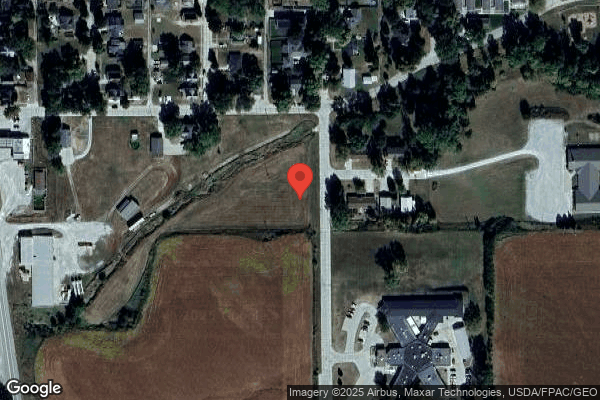
207 South Engdahl Avenue, Oakland, NE 68045 (402) 685-5683
Government - City 45 Beds Independent Data: November 2025
Trust Grade
90/100
#27 of 177 in NE
Last Inspection: June 2025

Inspected within the last 6 months. Data reflects current conditions.

Overview

Oakland Heights has received an impressive Trust Grade of A, meaning it is highly recommended and excels in providing care. It ranks #27 out of 177 nursing homes in Nebraska, placing it in the top half, and is the best facility out of two in Burt County. The facility is on an improving trend, having reduced the number of care issues from two to one over the last two years. Staffing is a relative strength with a rating of 4 out of 5 stars and a turnover rate of 44%, which is below the state average, although the RN coverage is considered average. However, there have been some concerns, including a failure to notify a resident's family about significant health changes and not monitoring blood pressure before administering medication, which could pose risks. Overall, while Oakland Heights exhibits strong care in many areas, potential families should be aware of these specific incidents.

Trust Score
A
90/100
In Nebraska
#27/177
Top 15%
Safety Record
Low Risk
No red flags
Inspections
Getting Better
2 → 1 violations
Staff Stability
○ Average
44% turnover. Near Nebraska's 48% average. Typical for the industry.
Penalties
✓ Good
No fines on record. Clean compliance history, better than most Nebraska facilities.
Skilled Nurses
○ Average
Each resident gets 37 minutes of Registered Nurse (RN) attention daily — about average for Nebraska. RNs are the most trained staff who monitor for health changes.
Violations
✓ Good
Only 3 deficiencies on record. Cleaner than most facilities. Minor issues only.
★★★★★
5.0
Overall Rating
★★★★☆
4.0
Staff Levels
★★☆☆☆
2.0
Care Quality
★★★★★
5.0
Inspection Score
Stable
2023: 2 issues
2025: 1 issues

The Good

  • 4-Star Staffing Rating · Above-average nurse staffing levels
  • Full Sprinkler Coverage · Fire safety systems throughout facility
  • No fines on record
  • Staff turnover below average (44%)

    4 points below Nebraska average of 48%

Facility shows strength in staffing levels, fire safety.

The Bad

Staff Turnover: 44%

Near Nebraska avg (46%)

Typical for the industry

The Ugly 3 deficiencies on record

Jun 2025 1 deficiency
CONCERN (D)

Potential for Harm - no one hurt, but risky conditions existed

Deficiency F0628 (Tag F0628)

Could have caused harm · This affected 1 resident

Licensure Reference Number 175 NAC 12-006.09(G)(ii) Based on record review and interview, the facility failed to ensure that a discharge summary was completed for 1 resident (Resident 89) when they tr...

Read full inspector narrative →
Licensure Reference Number 175 NAC 12-006.09(G)(ii) Based on record review and interview, the facility failed to ensure that a discharge summary was completed for 1 resident (Resident 89) when they transferred to hospital via the emergency department. The facility had a census of 36. Findings are: A record review of Resident 89's nursing progress note dated 5/27/2025 revealed the resident required SLOC (Skilled Level Of Care - a level of care requiring the expertise and supervision of licensed health care professionals such as nurses and therapists) secondary to (due to) post colostomy placement (a surgical procedure connecting the colon to the outside of the body, allowing stool to exit) secondary to bowel obstruction (a condition in which digested material is prevented from passing normally through the bowel). Resident has a RLQ (Right lower quadrant - referring to the abdomen) JP drain (Jackson Pratt drain is a surgical drain used to remove excess fluid and prevent buildup around a surgical site), a midline abdominal (middle of the abdomen) incision closed with staples and a LLQ (Left lower quadrant - referring to the abdomen) ostomy (a surgically created opening). A record review of Resident 89's progress notes dated 5/31/25 revealed the Resident had a fever of 100.4F with increased purulent (containing pus) drainage from their abdominal incision. Resident 89 was evaluated at the nearest Emergency Department (ED). A record review of a physician's order dated 5/31/2025 stated OK to send the resident to the nearest ED to be evaluated. A record review of Resident 89's progress note dated 6/1/25 revealed a call placed to the hospital which confirmed the resident is on IV (intravenous - medication administered by a needle and tubing through a vein) antibiotics and will be staying at the hospital. Resident's husband requested a bed hold (a reservation for a bed while the resident is out of the facility) for the resident. A record review of the resident progress note dated 6/2/25 revealed the following: Progress Note Called Hospital and was given an update on resident condition. Possibly has touch of Pneumonia. Will be in Hospital through tomorrow. Unsure of return at this time. A record review of resident progress notes dated 6/4/25 revealed the following: Resident returns from hospital where they were treated for pneumonia, given IV antibiotics and received 1 unit of packed red blood cells, chest x-ray showed pneumonia. A record review of Resident 89's progress notes did not reveal a note stating that transfer discharge documentation was sent with the resident. A record review of the facilities undated Transfer and Discharge Policy revealed the following: Policy Explanation and Compliance Guidelines: 10. Emergency Transfers to Acute Care: A. The facility will obtain a physician's order for emergency transfer or discharge, stating the reason the transfer or discharge is necessary on an emergency basis. B. The facility will contact an ambulance service and provider hospital, or facility of residents' choice, when possible, for transportation and admission arrangements. C. For a transfer to another provider, ensure necessary information listed in #8 of this policy is provided along with, or as part of, the facilities transfer form: a) Contact information of the practitioner who was responsible for the care of the resident b) Resident representative information, including contact information. c) Advance directive information. d) All other information necessary to meet the resident's needs, which includes but may not be limited to: i) Resident status, including baseline and current mental, behavioral, and functional status, reason for transfer, recent vital signs; ii) Diagnoses and Allergies; iii) Medications (including when last received; iv) Most recent relevant labs, other diagnostic tests, and recent immunizations; e) All special instructions and or precautions for ongoing care, as appropriate such as: i) Treatments and devices (oxygen, implants, IVs, tubes/catheters; ii)Transmission based precautions such as contact, droplet or airborne; iii) Special risks such as for falls, elopement, bleeding or pressure injury and/or aspiration precautions; f) The residents comprehensive care plan goals. D. The original copies of the transfer form and Advance Directives will accompany the resident. Copies will be retained in the medical record. E. Provide orientation for transfer or discharge to minimize anxiety and to ensure safe and orderly transfer or discharge, in a form and manner that the resident can understand. F. Document assessment findings and other relevant information regarding the transfer in the medical record. G. Provide a notice of transfer and the facilities bed hold policy to the resident and the representative as indicated. H. Social services director, or designee, will provide copies of notices for emergency transfers to the Ombudsman, but they may be sent when practicable, such as in a list of residents on a monthly basis, as long as the list meets all requirements for content of such notices. I. The resident will be permitted to return to the facility upon discharge from the acute care setting. An interview on 6/11/25 at 11:05 AM with the Director of Nursing (DON) confirmed Resident 89 did not have a record of transfer discharge documentation sent with them to the Emergency Department. The DON confirmed they were unable to provide evidence that the staff followed a transfer discharge procedure. An interview on 6/11/25 at 12:51 PM with the Assistant Director of Nursing (ADON) revealed new nurses in training are given a training packet which contains the following undated Discharge Process To ER/Hospital sheet. The following steps are to be followed: 1. Obtain order to send resident as indicated. 2. Print out physician orders; face sheet, CODE status, write short summary of why resident is being sent on the Doctor Sheet. 3. Call 911 (if indicated) - Note time 4. Squad arrives - note time. 5. Call Family. 6. Give hospital/ER nurse, nurse to nurse report. 7. Notify DON or designee. 8. Can do 1 progress note; just add all the times. 9. Get a bed hold from the family. An interview on 6/10/2025 at 1:10 PM with the DON confirmed they could not provide evidence the staff member who discharged the resident to the hospital followed the transfer discharge requirement.
Aug 2023 2 deficiencies
CONCERN (D) 📢 Someone Reported This

A family member, employee, or ombudsman was alarmed enough to file a formal complaint

Potential for Harm - no one hurt, but risky conditions existed

Notification of Changes (Tag F0580)

Could have caused harm · This affected 1 resident

LICENSURE REFERENCE NUMBER 175 NAC 12-006.04c3A(6) Based on interview and record review, the facility failed to ensure the Resident Representative had been notified of a change in condition related to...

Read full inspector narrative →
LICENSURE REFERENCE NUMBER 175 NAC 12-006.04c3A(6) Based on interview and record review, the facility failed to ensure the Resident Representative had been notified of a change in condition related to the active dying process for 1 of 1 sampled resident (Resident 92). The facility census was 37. Findings Are: A record review of the facility policy titled Change in a Resident's Condition or Status, with a revision date of 6/3/2020, revealed the following; -A significant change of condition is a decline or improvement in the resident's status that will not normally resolve itself without intervention by staff or by implementing standard disease-related clinical interventions (is not self-limiting) and impacts more than one area of the resident's health status. -Unless otherwise instructed by the resident, the Charge Nurse or designee will notify the resident's family or representative when there is a significant change in the resident's physical, mental, or psychological status. -Resident receiving Hospice care: facility staff and Hospice will collaborate to communicate significant changes to resident's family or representatives. A call was placed to St Croix Hospice on 08/10/23 at 12:27 PM to speak with the nurse that had cared for Resident 92. The call revealed that the nurse was no longer working for the company, so the interview was conducted with manager HM-B who stated (gender) would pull the chart and return the phone call. An interview on 08/10/23 at 01:54 PM with HM-B revealed that the facility did keep Hospice aware of Resident 92's condition. HM-B reported that the Resident Representatives had been aware of Resident 92's decline in condition and on 11/7/23 the Resident Representatives had requested Resident 92 be placed in a private room, however one was not available. HM-B reported that on 11/10/23 a conversation was held with Resident Representatives regarding medication changes and on 11/11/23 regarding the medications which Resident Representatives had requested including a medication for constipation. HM-B reported that plans were made for the Hospice nurse to meet with the Resident Representatives at the facility during the next hospice visit to the facility. HM-B revealed that the visit had yet to be scheduled when hospice had been notified of Resident 92's death on 11/13/23. Record review of the Progress Notes dated 11/7/23 through 11/13/23 revealed that Resident 92 had been unable to taking medications, food or fluid beginning on 11/11/23 and had also began having periods of apnea (a cessation of breathing). The record reviewed revealed Resident 92 had been displaying restlessness and air hunger on 11/13/23 at 04:02 AM and 10-30 second periods of apnea at 05:57 AM with no indications that hospice or family had been updated. The record review of the Progress Notes dated 11/7/23 through 11/13/23 revealed that Resident 92 had been found with no pulse or respirations at 06:32 AM with a call to family and hospice at that time. An interview on 08/10/23 at 11:30 AM with the DON (Director of Nursing), after review of the Progress Notes dated 11/13/23, confirmed that the Representatives of Resident 92 had not been notified of the change in the resident's condition and should have been when the resident started showing signs of the active dying process.
CONCERN (D)

Potential for Harm - no one hurt, but risky conditions existed

Deficiency F0757 (Tag F0757)

Could have caused harm · This affected 1 resident

LICENSURE REFERENCE NUMBER 175 NAC 12-006.09D Based on interview and record review, the facility failed to obtain and monitor blood presures prior to administering a blood pressure medication for 1 of...

Read full inspector narrative →
LICENSURE REFERENCE NUMBER 175 NAC 12-006.09D Based on interview and record review, the facility failed to obtain and monitor blood presures prior to administering a blood pressure medication for 1 of 3 sampled residents (Resident 22). The facility census was 37. Findings Are: A record review conducted on 08/09/23 at 10:00 AM of the MAR (Medication Administration Record) dated August 2023 revealed Resident 22 had the following medication order; Metoprolol Tablet 50 milligrams (MG) Extended Release (ER) take 1 tablet by mouth at bedtime. Do Not Crush (Hold for SBP (Systolic Blood Pressure -- top number) less than 100 or pulse less than 50). Record review conducted on 08/09/23 at 10:00 AM of the MAR dated August 2023 for Resident 22 revealed no blood pressures had been documented in relation to the Metoprolol order. An interview on 08/14/23 at 10:03 AM with LPN-C, after review of the August 2023 MAR for Resident 22, confirmed that no blood pressures were being documented related to the blood pressure parameters ordered for the Metoprolol. An interview on 08/14/23 at 10:09 AM with the DON (Director of Nursing) after review of the August 2023 MAR for Resident 22, confirmed that no blood pressures were being documented related to the blood pressure parameters ordered for the Metoprolol. A record review of the July 2023 MAR for Resident 22 revealed no blood pressures had been documented in relation to the Metoprolol order. A record review of the June 2023 MAR for Resident 22 revealed no blood pressures had been documented in relation to the Metoprolol order since 6/13/23.
Understanding Severity Codes (click to expand)
Life-Threatening (Immediate Jeopardy)
J - Isolated K - Pattern L - Widespread
Actual Harm
G - Isolated H - Pattern I - Widespread
Potential for Harm
D - Isolated E - Pattern F - Widespread
No Harm (Minor)
A - Isolated B - Pattern C - Widespread

Questions to Ask on Your Visit

  • "Can I speak with families of current residents?"
  • "What's your RN coverage like on weekends and overnight?"

Our Honest Assessment

Strengths
  • • Grade A (90/100). Above average facility, better than most options in Nebraska.
  • • No major safety red flags. No abuse findings, life-threatening violations, or SFF status.
  • • No fines on record. Clean compliance history, better than most Nebraska facilities.
  • • Only 3 deficiencies on record. Cleaner than most facilities. Minor issues only.
Concerns
  • • No significant concerns identified. This facility shows no red flags across CMS ratings, staff turnover, or federal penalties.
Bottom line: Generally positive indicators. Standard due diligence and a personal visit recommended.

About This Facility

What is Oakland Heights's CMS Rating?

CMS assigns Oakland Heights an overall rating of 5 out of 5 stars, which is considered much above average nationally. Within Nebraska, this rating places the facility higher than 99% of the state's 100 nursing homes. This rating reflects solid performance across the metrics CMS uses to evaluate nursing home quality.

How is Oakland Heights Staffed?

CMS rates Oakland Heights's staffing level at 4 out of 5 stars, which is above average compared to other nursing homes. Staff turnover is 44%, compared to the Nebraska average of 46%. This relatively stable workforce can support continuity of care.

What Have Inspectors Found at Oakland Heights?

State health inspectors documented 3 deficiencies at Oakland Heights during 2023 to 2025. These included: 3 with potential for harm.

Who Owns and Operates Oakland Heights?

Oakland Heights is owned by a government entity. Government-operated facilities are typically run by state, county, or municipal agencies. The facility operates independently rather than as part of a larger chain. With 45 certified beds and approximately 36 residents (about 80% occupancy), it is a smaller facility located in Oakland, Nebraska.

How Does Oakland Heights Compare to Other Nebraska Nursing Homes?

Compared to the 100 nursing homes in Nebraska, Oakland Heights's overall rating (5 stars) is above the state average of 2.9, staff turnover (44%) is near the state average of 46%, and health inspection rating (5 stars) is much above the national benchmark.

What Should Families Ask When Visiting Oakland Heights?

Based on this facility's data, families visiting should ask: "Can I visit during a mealtime to observe dining assistance and food quality?" "How do you handle medical emergencies, and what is your hospital transfer rate?" "Can I speak with family members of current residents about their experience?"

Is Oakland Heights Safe?

Based on CMS inspection data, Oakland Heights has a clean safety record: no substantiated abuse findings (meaning no confirmed cases of resident harm), no Immediate Jeopardy citations (the most serious violation level indicating risk of serious injury or death), and is not on the Special Focus Facility watch list (a federal program monitoring the lowest-performing 1% of nursing homes). The facility has a 5-star overall rating and ranks #1 of 100 nursing homes in Nebraska. While no facility is perfect, families should still ask about staff-to-resident ratios and recent inspection results during their visit.

Do Nurses at Oakland Heights Stick Around?

Oakland Heights has a staff turnover rate of 44%, which is about average for Nebraska nursing homes (state average: 46%). Moderate turnover is common in nursing homes, but families should still ask about staff tenure and how the facility maintains care continuity when employees leave.

Was Oakland Heights Ever Fined?

Oakland Heights has no federal fines on record. CMS issues fines when nursing homes fail to meet care standards or don't correct problems found during inspections. The absence of fines suggests the facility has either maintained compliance or corrected any issues before penalties were assessed. This is a positive indicator, though families should still review recent inspection reports for the full picture.

Is Oakland Heights on Any Federal Watch List?

Oakland Heights is not on any federal watch list. The most significant is the Special Focus Facility (SFF) program, which identifies the bottom 1% of nursing homes nationally based on persistent, serious quality problems. Not being on this list means the facility has avoided the pattern of deficiencies that triggers enhanced federal oversight. This is a positive indicator, though families should still review the facility's inspection history directly.