
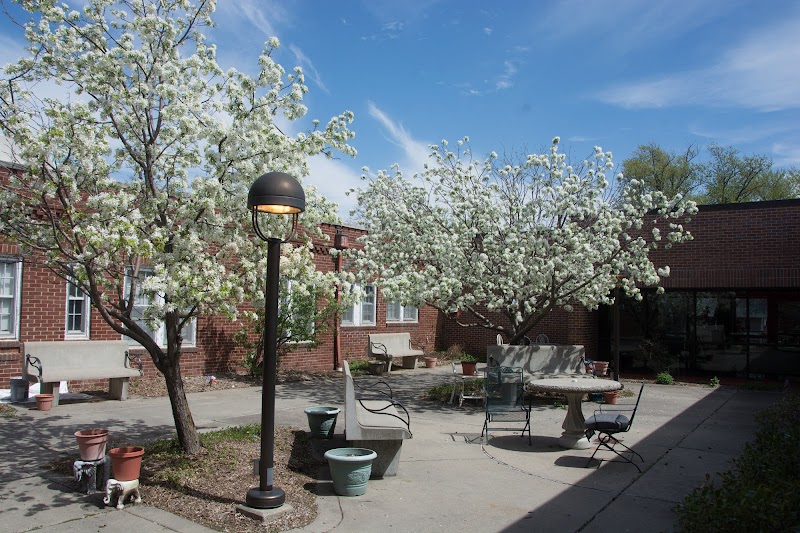
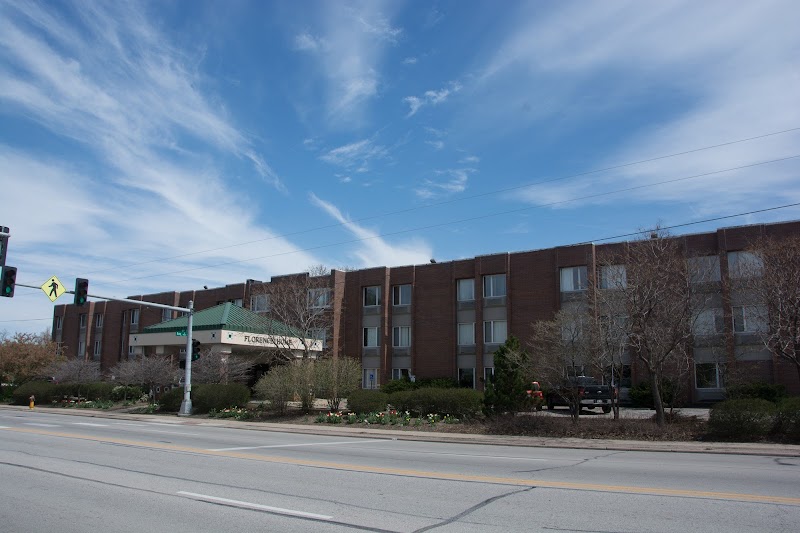

Florence Home

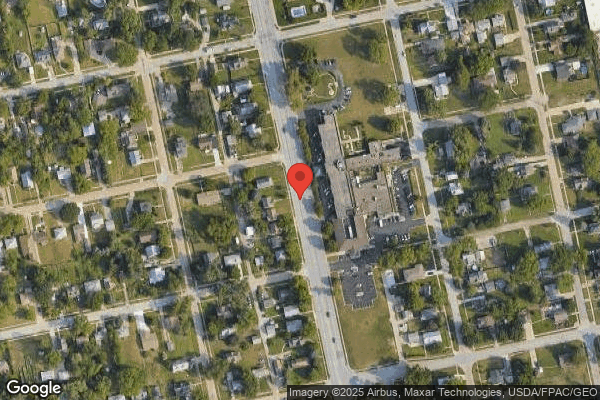
7915 North 30th Street, OMAHA, NE 68112 (402) 827-6000
Non profit - Corporation 126 Beds Independent Data: November 2025
Trust Grade
65/100
#83 of 177 in NE
Last Inspection: August 2024

Within standard 12-15 month inspection cycle. Federal law requires annual inspections.

Overview

Florence Home in Omaha, Nebraska has a Trust Grade of C+, indicating it is slightly above average but not exceptional. It ranks #83 out of 177 nursing homes in Nebraska, placing it in the top half of facilities in the state, and #11 out of 23 in Douglas County, suggesting only a few local options are better. Unfortunately, the facility is trending worse, with issues increasing from 2 in the previous year to 6 this year, raising concerns about ongoing compliance. Staffing is a strength with a 4 out of 5-star rating, and a turnover rate of 48% is slightly below the state average, which means many staff members remain long-term and are familiar with the residents. The facility has no fines on record, which is a positive sign, but there are some concerning incidents, such as failure to properly store food, which could lead to contamination, and inadequate cleaning of kitchen equipment, posing risks for foodborne illness for residents. Overall, while Florence Home has some strengths, such as good staffing and no fines, families should weigh these against the increasing number of compliance issues.

Trust Score
C+
65/100
In Nebraska
#83/177
Top 46%
Safety Record
Low Risk
No red flags
Inspections
Getting Worse
2 → 6 violations
Staff Stability
⚠ Watch
48% turnover. Above average. Higher turnover means staff may not know residents' routines.
Penalties
✓ Good
No fines on record. Clean compliance history, better than most Nebraska facilities.
Skilled Nurses
✓ Good
Each resident gets 45 minutes of Registered Nurse (RN) attention daily — more than average for Nebraska. RNs are trained to catch health problems early.
Violations
⚠ Watch
16 deficiencies on record. Higher than average. Multiple issues found across inspections.
★★★☆☆
3.0
Overall Rating
★★★★☆
4.0
Staff Levels
★★★★☆
4.0
Care Quality
★★★☆☆
3.0
Inspection Score
Stable
2023: 2 issues
2024: 6 issues

The Good

  • 4-Star Staffing Rating · Above-average nurse staffing levels
  • 4-Star Quality Measures · Strong clinical quality outcomes
  • Full Sprinkler Coverage · Fire safety systems throughout facility
  • No fines on record

Facility shows strength in staffing levels, quality measures, fire safety.

The Bad

3-Star Overall Rating

Near Nebraska average (2.9)

Meets federal standards, typical of most facilities

Staff Turnover: 48%

Near Nebraska avg (46%)

Higher turnover may affect care consistency

The Ugly 16 deficiencies on record

Aug 2024 5 deficiencies
CONCERN (D)

Potential for Harm - no one hurt, but risky conditions existed

Deficiency F0657 (Tag F0657)

Could have caused harm · This affected 1 resident

Licensure Reference Number 175 NAC 12-006.09 (F)(iii) Based on record review and interview, the facility failed to revise 1 (Resident 56) of 1 resident Care Plan related to NPO (nothing by mouth)statu...

Read full inspector narrative →
Licensure Reference Number 175 NAC 12-006.09 (F)(iii) Based on record review and interview, the facility failed to revise 1 (Resident 56) of 1 resident Care Plan related to NPO (nothing by mouth)status. The facility census was 79. Findings are: Record review of Resident 56's Minimum Data Set (MDS, a federally mandated assessment tool used for care planning) dated 6/19/2024 revealed the resident's admission date was 2/21/2024. Resident 56's Brief Interview of Mental Status (BIMS, a brief screener to determine cognitive status) revealed Resident 56 was unable to complete the BIMS due to Resident 56 rarely to never being understood (Resident 56 does not speak). The staff assessment for Mental Status revealed short-term memory problem and appeared to recall long past. According to the MDS, Resident 56 had a stroke/Cardiovascular Accident (CVA) affecting his dominant side. Resident 56 also has diagnoses of aphasia (non-speaking) and dysphagia (difficulty swallowing) due to the CVA. His functional ability to eat-resident does not eat; Resident 56 gets nothing by mouth (NPO). Resident 56 is fed via a gastrointestinal tube (g-tube) for all nutrition and medications due to his dysphagia caused by the CVA. Record review of Resident 56's Physician Orders dated 1/4/2022 revealed an order Jevity ( nutritional formula) 1.5 Cal via feeding pump at a rate of 65 milliliters (ml) per hour continuously for 24 hours for CVA, NPO. Record review of Resident 56 Care Plan dated 5/8/2024 revealed Resident 56's care plan identified Resident 56's nutritional status was to remain stable with no significant weight loss and to tolerate tube feedings. The following interventions were identified: assist with meals as needed, monitor meal intake, and provide snacks and supplements as ordered (Resident 56 is NPO and would not be eating meals nor be given snacks or supplements). Interview with Director of Nursing (DON) on 7/31/24 at 1:31 PM confirmed the interventions on the care plan dated 5/8/24 would be confusing as resident is NPO, does not eat meals, does not need assistance at mealtimes, and snacks and supplements would not be ordered. Resident is dependent upon the nursing staff to provide his nutrition 100% by g-tube.
CONCERN (D)

Potential for Harm - no one hurt, but risky conditions existed

Deficiency F0688 (Tag F0688)

Could have caused harm · This affected 1 resident

**NOTE- TERMS IN BRACKETS HAVE BEEN EDITED TO PROTECT CONFIDENTIALITY** Licensure Reference Number 175 NAC 12.006.02(09(H)(v) Based on observation, interview, and record review, the facility failed to...

Read full inspector narrative →
**NOTE- TERMS IN BRACKETS HAVE BEEN EDITED TO PROTECT CONFIDENTIALITY** Licensure Reference Number 175 NAC 12.006.02(09(H)(v) Based on observation, interview, and record review, the facility failed to ensure 1 (Resident 30) of 1 sampled resident was placed on the Restorative Nursing Program (RNP)(a program to prevent or improve a resident's abilities) following discharge and recommendation from Occupational Therapy (OT) and Physical Therapy (PT). The facility census was 79. Findings are: A record review of the undated Florence Home Guideline Restorative Program revealed residents will be identified as candidates for the Restorative Nursing Program (RNP) based on therapy referrals and facility screenings. Residents identified as candidates would be placed on a RNP. The RNP would focus on range of motion, communication, ambulation, wheelchair mobility, splint application, use of adaptive devices, and restorative dining. A record review of Resident 30's Profile Face Sheet dated 07/31/2024 revealed the resident was originally admitted to the facility on [DATE]. A record review of Resident 30's Med A (Medicare Part A) Resident Assessment dated 06/02/2024 revealed the resident had diagnoses of Encephalopathy (damage or disease that affects the brain), Parkinson's Disease With Dyskinesia (a progressive neuromuscular disorder), Epilepsy (a brain disorder that can cause seizures), Chronic Diastolic (congestive) Heart Failure. Chronic Kidney Disease, Stage 3, and Morbid Obesity (severely overweight). A record review of Resident 30's Minimum Data Set (MDS)(a comprehensive assessment used to develop a resident's care plan) dated 06/12/2024 revealed the resident had a Brief Interview for Mental Status (BIMS)(a score of a residents cognitive abilities) 14 of 15 that indicated the resident was cognitively aware. The resident was dependent on staff with toileting, bathing, and dressing, needed partial/moderate assistance with eating and oral hygiene (cleaning), and substantial/maximal assistance with personal hygiene. Resident 30 had impairment on 1 side in range of motion (ROM) of the upper and lower extremities (arms and legs). A record review of Resident 30's Care Plan dated of 06/01/2024 revealed the resident was on a restorative program to maintain the resident's flexibility. The resident had interventions to do the program 3-6 days per week for at least 15 minutes each category, Restorative nursing evaluations would be done monthly, the staff would document changes in activity tolerances, and cue and assist the resident as needed with grooming. A record review of Resident 30's OT Discharge Summary dated 06/03/2024 revealed OT discharged the resident on 06/03/2024 with Restorative Programs, and they were established/trained. A record review of Resident 30's PT Discharge Summary dated 06/03/2024 revealed PT discharged the resident on 06/03/2024 with a Restorative ROM Program. ROM Program was established/trained: the resident is currently able to move feet up and down, rotate the feet in and out, and rotate the legs inward and outward. The resident would be able to move feet up and down, move legs up and down, rotate feet in and out, and rotate legs in and out by performing the following Restorative Nursing interventions: encourage resident to assist with the ROM, encourage the resident to participate, never force the extremity ranging and passive motion. A record review of Resident 30's Interdisciplinary (all staff) Notes dated 07/30/2024 did not reveal the resident was getting a RNP. A record review of Resident 30's Electronic Medical Record and hard chart did not reveal the resident was getting a RNP. An observation on 07/29/2024 at 8:51 PM revealed Resident 30 had difficulty moving both upper and lower extremities on both sides and demonstrated the challenge. An observation on 07/30/2024 at 3:05 PM revealed Resident 30 had difficulty moving all extremities. In an interview on 07/29/2024 at 8:51 PM, Resident 30 confirmed the resident had difficulty moving all extremities. Resident 30 confirmed the resident was not currently receiving OT, PT, or any staff assistance with exercising the resident's extremities. The resident confirmed the resident would do the exercises if offered. In an interview on 07/30/2024 at 8:01 AM, the Director of Nursing confirmed Resident 30 did not get put on the RNP when OT and PT made the recommendations and he should have been placed on a RNP.
CONCERN (D)

Potential for Harm - no one hurt, but risky conditions existed

Incontinence Care (Tag F0690)

Could have caused harm · This affected 1 resident

Licensure Reference Number 175 NAC 12-006.09(H)(iv)(1) Based on observation, interview, and record review, the facility staff failed to provide catheter care for 1 (Resident 5) of 3 sampled residents...

Read full inspector narrative →
Licensure Reference Number 175 NAC 12-006.09(H)(iv)(1) Based on observation, interview, and record review, the facility staff failed to provide catheter care for 1 (Resident 5) of 3 sampled residents. The facility identified a census of 79. Findings are: A record review of Resident 5's face sheet revealed an admission date of 5/31/2024. A record review of hospital records dated 05/13/2024 indicated that Resident 5 had an orthopedic surgery and was referred to a Skilled Nursing Facility for 24 hour care. A record review of Resident 5's Minimum Date Set (MDS-a federally mandated comprehensive assessment tool dated 6/4/24 revealed the Resident was admitted to the facility with diagnoses of chronic kidney disease (CKD), Chronic Atrial Fibrillation (A-Fib), Diabetes Mellitus (DM), Spinal stenosis with prior spinal fusion, status post revision of T7-L3 laminectomy and fusion, and Chronic Diastolic Congestive Heart Failure. The MDS also indicated no indwelling catheter was in place and Resident 5 was always incontinent of bladder and bowel A record review of lab results from Physician Laboratory Services the resident revealed a Urinary Tract Infection (UTI) on 07/01/2024 was identified. The culture and sensitivity report revealed the organism (a bacterium that normally lives inside human intestines, where it doesn't cause disease. If K. pneumoniae gets into other areas of the body, it can lead to a range of illnesses, including pneumonia, bloodstream infections, meningitis, and urinary tract infections.) to be Klebsiella pneumoniae. A record review on the Resident's Physician Orders for 07/20/2024 revealed as of 07/04/2024 facility staff were to complete catheter cares twice daily. A record review of Resident 5's Care Plan dated 07/07/2024 revealed staff were to perform Foley (catheter) cares per protocol. A record review of progress notes revealed that Resident 5 has an appointment with the Urologist (A doctor that studies and treats conditions affecting the kidneys, ureters, bladder, and urethra). The appointment with the Urologist is on 08/13/2024 at 10:30 AM. A record review of the Guidelines and Audit tool for Foley Care, dated 2024 revealed that during peri care the catheter should be cleansed and rinsed from insertion site to approximately 4 inches outward. An observation on 7/29/24 at 7:30 PM revealed Resident 5 was sleeping with a catheter bag hanging from the bed. An observation on 07/31/2024 at 7:14 AM with Licensed Practical Nurse (LPN)-C and a Nursing Assistant (NA)-B revealed they gathered the supplies to complete catheter cares. LPN-C had a gown on and washed hands before putting gloves on. The NA also had a gown on and placed gloves following hand washing. LPN-C announced to Resident 5 that LPN-C and NA-B were going to be completing catheter care. NA-B pulled the blankets back and began to unfasten Resident 5's brief. The LPN-C using wash cloths completed front peri care for Resident 5. Further observation on 07/31/2024 at 7:14 AM revealed LPN-C and NA-B completed providing personal care task without completing catheter care. An interview on 7/31/24 7:7:23 AM was completed with LPN-C. During the interview LPN-C confirmed catheter care had not been completed for Resident 5.
CONCERN (E)

Potential for Harm - no one hurt, but risky conditions existed

Infection Control (Tag F0880)

Could have caused harm · This affected multiple residents

**NOTE- TERMS IN BRACKETS HAVE BEEN EDITED TO PROTECT CONFIDENTIALITY** C. Record review of Resident 44 Profile Face Sheet revealed an admission date of 4/17/2022. Resident 44 diagnosis include: Alzh...

Read full inspector narrative →
**NOTE- TERMS IN BRACKETS HAVE BEEN EDITED TO PROTECT CONFIDENTIALITY** C. Record review of Resident 44 Profile Face Sheet revealed an admission date of 4/17/2022. Resident 44 diagnosis include: Alzheimer's disease, unspecified dementia, cognitive communication deficit, and need for assistance with personal cares. Record review of Resident 44's Minimum Data Set (MDS, a federally mandated assessment tool used for care-planning) dated 6/12/2024 revealed the resident was unable to participate in an interview for Brief Interview for Mental Status (BIMS, a brief screener to determine resident's cognition) as the resident is rarely/never understood. Staff assessment for Mental Status revealed the resident did not seem or appear to recall after 5 minutes nor did the resident seem or appear to recall the long past. Section GG revealed functional abilities of Resident 44 were eating-substantial/maximal assistance, toileting, bed mobility and transfers-total assistance. Section H revealed Resident 44 was always incontinent of bowel and bladder. Section O Special Treatments, Procedures, and Programs revealed the resident received hospice services while a resident. Observation on 7/31/24 at 07:18 AM of Nursing Assistant (NA)-D and NA-E planned to performed peri-care on Resident 44 revealing NA-D explained to Resident 44 what the NA's were planned to do (peri-care). NA-D removed the tabs on the soiled brief and pushed it down between the resident's legs. NA-D using a clean washcloth wipe first under the abdominal fold, down each side of the groin and down the middle of the peri-area between the labia. NA-D removed the soiled gloves and without benefit of hand hygiene (HH) applied clean gloves and continued with peri-care. Both NA-D and NA-E roll the resident to the left side and removed the soiled brief. NA-D continued to do peri-care to the buttocks by wiping both buttock and then the anal area using a clean washcloth with each wipe. After the area was clean, NA-D removed the soiled gloves applied clean gloves without the benefit of HH. NA-D applied barrier cream to Resident 44's buttocks, removed the soiled gloves and applied clean gloves without benefit of HH. Interview with NA-D on 7/31/24 at 8:05 AM confirmed HH should have been performed with each glove change. Interview with Director of Nursing (DON) on 7/31/2024 at 12:05 PM confirmed HH should be performed with every glove change. D. Record review of Resident 56's Profile Face Sheet revealed the resident was admitted on [DATE]. Diagnosis listed: Cerebral Infarction (stroke), aphasia (doesn't speak), dysphagia (difficulty swallowing), chenille on dominant side (right), and contractures of right wrist. Record review of Resident 56's MDS revealed the resident is rarely or never understood and was unable to perform the interview for mental status. The staff assessment of mental status revealed the resident does not seam or appear to recall after 5 minutes but does seem or appear to recall long past. Section GG/functional abilities revealed Resident 56 does not eat but receives his nutrition through a gastrointestinal tube (G-tube), dependent for toileting and transfers, and requires substantial/maximal assist with bed mobility. Section H revealed that Resident 56 is always incontinent of bowel and bladder. Observation on 7/31/2024 at 11:24 AM of personal cares revealed NA-F and NA-G donned a gown and gloves in preparation of personal care for Resident 56. NA-F and NA G transferred Resident 56 from the wheelchair and into bed using a mechanical lift. Further observation on 7/31/2024 at 11:24 AM revealed NA-F and NA-G remove a sling from under residents 56, removed the gloves and donned another pair of gloves. NA-F and NA-G did not completed HH. NA-G removed the tabs on the adult brief and push the brief between Resident 56's legs. Further observation on 7/31/2024 at 11:24 AM revealed Resident 56 had a large lose bowel movement and was saturated. NA-G cleaned the front of the resident beginning of the groin, scrotum and penis. NA-G removed the soiled gloves applied clean gloves without HH. NA- F rolled Resident 56 on to the left side and NA-G removed the soiled brief. NA-G cleansed Resident 56's buttock, removed the soiled gloves and without completing HH,donned a clean pair of gloves. Interview on 7/31/24 at 11:30 AM with NA-G confirmed HRH should have been performed with every glove change. Interview on 7/31/24 at 12:05 PM with the DON confirmed HRH should have been performed with every glove change. E. Record review of Facility Policy Peri-care dated 01/2024 revealed the following: -Purpose: -The purpose of the guideline is to provide direction for proper peri-care. -Knock and announce yourself upon entering the room. -Identify resident and explain what you will be doing. -Don appropriate Personal Protective Equipment (PPE), if indicated. -Assemble equipment: Gather gloves, peri-wash, extra trash bags, and washcloths. Apply gloves prior to wetting the washcloths. Wet the washcloths thoroughly with warm water (do not allow the washcloths to touch the sink or the faucet) and place in plastic bag. Take to the bedside. -Perineal cleanser may be pumped on to each individual cloth or washcloths in the plastic bag. -Perform hand hygiene and put on gloves. -Fold down bed linens, exposing only the peri area. Be sure to cover the resident's upper body with a towel or sheet to prevent the feeling of overexposure. -If there is stool present, remove, and dispose of in toilet or trash bag. Remove gloves and perform hand hygiene. -For a female resident: Separate the labia and wash around the urinary meats first, wiping downward from front to back and from inside toward outside. Never wash upward from the anal area. Be sure to use a clean washcloth for each wipe or anytime the washcloth becomes contaminated. Place dirty washcloths in an empty plastic bag. With a clean washcloth, continue to wash between and outside the labia using downward strokes alternating from side to side and moving outward toward the thighs. Pat area dry in the same direction used for washing. -For male resident: If uncircumcised, pull foreskin back from head of penis. Use a washcloth to wash the urinary meats first, working down the penis, scrotum, and thighs. Be sure to wash all skin folds thoroughly, using a clean washcloth for each wipe. Place dirty washcloths in a plastic bag. Return the foreskin to the natural position if uncircumcised male. Pat area dry in the same direction used for washing. -Take gloves off, perform hand hygiene, and apply new gloves. -Keeping the resident covered, ask the resident to assist you in turning to side. -With buttocks exposed. Wash the buttocks first and then the anal area, wiping front to back, using a different washcloth for each wipe. Place dirty washcloths in a plastic bag. Pat the skin dry with dry clean towel and dispose of it in plastic bag. -Remove gloves and dispose into trash. Perform hand hygiene. -If applying moisture barrier product. Perform hand hygiene. Apply clean gloves. Apply product using same technique as cleansing (front to back) Secure brief on resident, and re-dress resident. -Position resident per their preference. -Dispose of soiled supplies and perform hand hygiene. -If PPE was used, remove, and perform hand hygiene. -Report any unusual appearances in the resident's skin to charge nurse/supervisor. Licensure Reference Number 175 NAC 12.006.18(B) Licensure Reference Number 175 NAC 12.006.18(D) Based on observation, interview, and record review, the facility failed to ensure the staff donned (put on) the correct personal protective equipment (PPE) in COVID-19 isolation rooms, doff (take off) gowns and gloves inside the resident's COVID-19 isolation rooms, ensure COVID-19 isolation residents room doors remained closed, and perform hand hygiene (cleaning) during glove changes to prevent cross contamination when performing peri-care on 2 (Residents 56 and 44) of 3 sampled residents. The facility census was 79. Findings are: A. A record review of the facility's Infection Control Policy Coronavirus (COVID-19), February 2024 dated February 2024 revealed trash cans were to be near the exit inside any resident room to make it easy for employees to discard PPE. A record review of the facility's undated Donning and Doffing Guideline and Audit revealed the purpose was to help prevent the spread of infection. Staff should have had a N-95 mask (a mask the filters out very small particles of bacteria) on at all times in COVID positive resident's isolation rooms. An observation on 07/29/2024 at 9:03 PM revealed a Nursing Assistant (NA) exited COVID-19 isolation room [ROOM NUMBER] in gown, gloves, and eye protection and doffed the PPE in the 2nd floor hallway and placed in the dumpster in the hallway. An observation on 07/29/2024 at 9:17 PM revealed Unit Manager (UM)-H exited COVID-19 isolation room [ROOM NUMBER] with a gown, gloves, and eye protection on, doffed in the 2nd floor hallway, and disposed of PPE in the dumpster in the hallway. An observation on 07/30/2024 at 8:28 AM revealed NA-J entered COVID-19 isolation room with a surgical mask on, not a N-95 mask. An observation on 07/30/2024 at 8:28 AM with UM-H revealed NA-J was in COVID-19 isolation room with a surgical mask on, not a N-95 mask, and was within 6 feet of a COVID-19 positive resident. In an interview on 07/29/2024 at 9:23 PM, NA-J confirmed that there were trash cans in the COVID-19 isolation rooms and PPE should have been removed in the room. In an interview on 07/30/2024 at 8:34 AM UM-H confirmed NA-J should not have been in COVID-19 isolation room without a N-95 mask on. In an interview on 08/01/2024 at 7:23 AM, the Director of Nursing (DON) confirmed the staff should have removed PPE before exiting a positive for COVID-19 resident's room and not in the hallway. B. An observation on 07/29/2024 at 8:52 PM revealed a NA exited COVID-19 isolation room [ROOM NUMBER] and left the resident's door open. An observation on 07/29/2024 at 9:03 PM revealed a NA exited COVID-19 isolation room [ROOM NUMBER] and left the room door open. An observation on 07/30/2024 at 2:57 PM revealed the door to COVID-19 isolation room [ROOM NUMBER] was partially open and the resident was in the room taking a nebulizer treatment (a mist used to deliver medications to the lungs). In an interview on 07/30/2024 at 3:05 PM, the facility's Administrator confirmed the staff was to keep the doors to COVID-19 isolation rooms closed when not entering or exiting.
CONCERN (F)

Potential for Harm - no one hurt, but risky conditions existed

Food Safety (Tag F0812)

Could have caused harm · This affected most or all residents

**NOTE- TERMS IN BRACKETS HAVE BEEN EDITED TO PROTECT CONFIDENTIALITY** Licensure Reference Number 175 NAC 12.006.11(E) Based on observation, interview, and record review, the facility failed to ensur...

Read full inspector narrative →
**NOTE- TERMS IN BRACKETS HAVE BEEN EDITED TO PROTECT CONFIDENTIALITY** Licensure Reference Number 175 NAC 12.006.11(E) Based on observation, interview, and record review, the facility failed to ensure all food in the facility's refrigerators, freezers, and dry storage were sealed, labeled, and/or dated and failed to clean and maintain the kitchen's fixtures and equipment to prevent the potential for cross contamination and foodborne illness. This had the potential to affect 77 residents that consumed food from the kitchen. The facility census was 79. Findings are: A. A record review of the facility's undated Food Storage (Dry, Refrigerated, and Frozen) Guideline & Procedure Manual revealed all food items would be labeled. The label must include the name of the food item and the date by which it should be sold, consumed, or discarded. Raw animal foods such as eggs should be wrapped properly. Never leave any food item uncovered and not labeled. An observation on 07/29/2024 at 6:15 PM revealed the following: The reach-in refrigerator in the dining room contained 7 chocolate covered cakes in clear plastic containers not labeled or dated. The walk-in freezer contained: -1 opened bag of mixed vegetables not labeled or dated -1 bag of 2 breaded yellow items not labeled or dated The walk-in refrigerator contained: -26 small clear cups with lids that contained a white substance not labeled or dated -1 steam pan of a yellow substance not labeled or dated -1 steam pan of a green substance not labeled or dated -1 steam pan of a white substance not labeled or dated -1 steam pan of a red substance not labeled or dated -The walk-in refrigerator on the back south wall contained -1 bag of a shredded green substance not labeled or dated -1 open bag of green chucks not labeled or dated -2 steam pans covered with aluminum foil not labeled or dated on a cart -1 open bag of a yellow shredded substance not labeled or dated -1 bag of a white shredded substance not labeled or dated -1 open clear container with yellow square slices not labeled or dated -1 steam pan with 10 white ovals not labeled -2 steam pans with a white cream not labeled -1 opened gallon Hellmann's Real Mayonnaise without an open dated -2 plastic containers of blue round items not dated -1 gallon Sysco French Dressing without an open date -1 green rectangular object in plastic wrap not labeled or dated -1 clear container with a green lid not labeled or dated -1 clear container with green round items not labeled or dated -1 steam pan covered with plastic wrap not labeled -1 open pack of meat slices not sealed or dated -2 sandwiches not labeled or dated -1 uncovered steam pan of white ovals, 1 broke oozing yellow not sealed not labeled or dated -1 large clear plastic bin with an orange substance not labeled or dated -2 small clear containers with small white chunky substances not labeled -1 small clear covered container with an orange substance not labeled -1 small clear covered container with a dark brown substance not labeled The dry storage contained: -1 open bag yellow crispy flakes not sealed, labeled, or dated -1 bag of orange logs not labeled or dated -1 large clear container of a yellow liquid substance not labeled or dated In an interview on 07/31/2024 at 6:05 AM, the Dietary Manager (DM) confirmed that all items in the facility's refrigerators and freezers should have been sealed, labeled, and/or dated. B. A record review of the facility's undated Cooks Weekly Clean List revealed the cooks were to sweep and mop the storeroom daily, clean underneath shelves in the cooks area daily, delime the steam table as needed, clean the hot box once a week, clean the ovens and tops when needed, clean the range/grill/stove daily, and sweep and mop the kitchen daily. A record review of the facility's undated Aide-PM Cleaning Checklist revealed the steam table was to be wiped down after each meal service, all carts were to be wiped down after each meal service, and sweep and mop the steamtable area daily. An observation on 07/29/2024 at 6:15 PM revealed -The ice maker had gray fuzzy substance on exterior vents above the door and a black slimy substance on interior surfaces in the front. -The steam table had brown crusty substance between the warmer pans -The toaster had light brown crumbs in and under it -The walk-in freezer floor was sticky. -The inside edge of the front of the hood had a gray fuzzy substance along the edge. The range/oven front vertical surfaces contained white and brown dried splatters and the oven handle was sticky. -The [NAME] double ovens had brown food splatters on the front and inside the doors and the top had scattered black crusty substances -The hot box vertical Flavor holding cart had white and brown dried on splatters down front and on inside lower warmer around door seal and bottom ledge. -The vent on the hot box had a thick coating of a gray fuzzy substance -The dry storage and kitchen floor had scattered crumbs and debris throughout and a black sticky substance around a floor electrical box under the prep table An observation on 07/31/2024 at 6:05 AM with the DM revealed the items listed above had not been cleaned. A record review of the Cooks Weekly Clean List dated July 2024 revealed the refrigerators sweep and mop had not been completed, the storeroom sweep and mop was only done 07/07/2024, the cleaning underneath shelves in cook's area was only done 07/03/2024 and 07/07/2024, delime the steam table had not been done, the hot box had not been cleaned, the ovens and tops had not been cleaned, the ice machine had not been cleaned, the range/grill/stove had not been cleaned, the daily floor sweep and mopping was only done 07/03/2024, 07/07/2024, and 07/21/2024. In an interview on 07/31/2024 at 6:05 AM, the Dietary Manager (DM) confirmed that all items listed above were not clean and should have been.
Feb 2024 1 deficiency
CONCERN (F) 📢 Someone Reported This

A family member, employee, or ombudsman was alarmed enough to file a formal complaint

Potential for Harm - no one hurt, but risky conditions existed

Deficiency F0620 (Tag F0620)

Could have caused harm · This affected most or all residents

**NOTE- TERMS IN BRACKETS HAVE BEEN EDITED TO PROTECT CONFIDENTIALITY** Based on record review and interview; the facility failed to ensure its admission policy did not waive the potential liability f...

Read full inspector narrative →
**NOTE- TERMS IN BRACKETS HAVE BEEN EDITED TO PROTECT CONFIDENTIALITY** Based on record review and interview; the facility failed to ensure its admission policy did not waive the potential liability for losses of a resident's personal property for Resident 2, 4, and 5. This had the potential to affect all residents in the facility. The facility census was 77. Findings are: Review of the facility, admission Agreement, revised 01/24, revealed the following: -XIV. Personal Property: The Home shall not be liable for loss or damage to any personal property belonging to the resident and kept at the Home. Review of the facility, Personal Property policy, updated 1/2024, revealed the following: -[NAME] Home shall not be liable for loss or damage to any personal property belonging to the resident and kept at [NAME] Home, nor will [NAME] Home be responsible for replacing, lost, damaged or stolen items. Review of Resident 2's admission Agreement, dated 9/18/09, revealed acknowledgement of the Personal Property agreement by Resident 2's resident representative. Review of Resident 4's admission Agreement, dated 1/18/23, revealed acknowledgement of the Personal Property agreement by Resident 4. Review of Resident 5's admission Agreement, dated 6/22/23, revealed acknowledgement of the Personal Property agreement by Resident 5's resident representative. An interview on 2/21/24 at 9:27 AM, the Social Services confirmed that the facility's admission Agreement and Personal Property policy did waive the liability of the facility for losses of resident's personal property and that the agreement is signed upon admission by the resident or the resident's representative.
Jun 2023 2 deficiencies
CONCERN (D)

Potential for Harm - no one hurt, but risky conditions existed

Notification of Changes (Tag F0580)

Could have caused harm · This affected 1 resident

**NOTE- TERMS IN BRACKETS HAVE BEEN EDITED TO PROTECT CONFIDENTIALITY** Licensure Reference Number 175 NAC 12-006.04C3a(6) Based on observation, interview, and record review, the facility failed to no...

Read full inspector narrative →
**NOTE- TERMS IN BRACKETS HAVE BEEN EDITED TO PROTECT CONFIDENTIALITY** Licensure Reference Number 175 NAC 12-006.04C3a(6) Based on observation, interview, and record review, the facility failed to notify the physician of a change in daily weights for 1 (Resident 24) of 1 resident reviewed. The facility had a total census of 78 residents. Findings are: Record review of Resident 24's Face Sheet, printed 6/7/23, revealed Resident 24 was admitted to the facility on [DATE] and their diagnoses included Congestive Heart Failure (a chronic condition where the heart doesn't pump blood as well as it should - this can cause fluid buildup in the feet, arms, lungs, and other organs) and Chronic Kidney Disease (a condition where the kidneys are damaged and cannot filter blood as well as they should - this can cause excess fluid and waste from the blood to remain in the body). Observation on 6/8/23 at 9:23 AM revealed Resident 24 was dressed and lying on their bed. Further observation at this time revealed Resident 24's bilateral lower legs were very edematous (swollen). Record review of Resident 24's May 2023 MAR (Medication Administration Record) revealed an order to document Resident 24's weight daily, with a start date of 5/26/23. The following weights were recorded for May 2023: -5/26/23 - 183.9 lbs (pounds) -5/27/23 - no weight recorded -5/28/23 - no weight recorded -5/29/23 - 174.7 lbs -5/30/23 - 178.8 lbs -5/31/23 - 179.5 lbs Record review of Resident 24's June 2023 MAR revealed an order to document Resident 24's weight daily. The following weights were recorded for June 2023: -6/1/23 - 180.1 lbs -6/2/23 - no weight recorded -6/3/23 - 180.7 lbs -6/4/23 - 182.2 lbs -6/5/23 - 184.6 lbs -6/6/23 - 185.7 lbs -6/7/23 - no weight recorded Record review of Resident 24's Interdisciplinary Notes revealed the following: -5/26/23 - Resident 24 was noted to have increased swelling in bilateral lower legs. Resident 24's physician was notified, and new orders were received. -5/29/23 - Resident 24's physician was sent an update regarding Resident 24's weights and new orders were received. Record review of Resident 24's Weight Tracking Record printed 6/8/23 revealed Resident 24 weighed 174.7 lbs on 5/29/23 and 185.7 lbs on 6/6/23, for a total weight gain of 11 lbs in 8 days' time. Record review of Resident 24's electronic medical record on 6/8/23 did not reveal Resident 24's physician was updated regarding Resident 24's weight gain from 5/29/23 - 6/6/23. Interview on 6/8/23 at 2:13 PM, the DON (Director of Nursing) confirmed Resident 24's physician had not been updated since 5/29/23 regarding Resident 24's weight gain. The DON also confirmed when the order for daily weights was written, parameters were not established for when to notify Resident 24's physician. The DON reported the standard the facility generally used for daily weight monitoring was to notify the provider if a weight gain of 3 pounds or more was noted in 24 hours or if a weight gain of 5 pounds or more was noted in 7 days. The DON further reported they had reached out to Resident 24's physician and confirmed that was the parameter Resident 24's physician wanted to implement for Resident 24's daily weight monitoring.
CONCERN (E)

Potential for Harm - no one hurt, but risky conditions existed

Safe Environment (Tag F0584)

Could have caused harm · This affected multiple residents

**NOTE- TERMS IN BRACKETS HAVE BEEN EDITED TO PROTECT CONFIDENTIALITY** Licensure Reference Number 175 NAC 12-006.18 Based on observation and interview, the facility failed to maintain walls, safety s...

Read full inspector narrative →
**NOTE- TERMS IN BRACKETS HAVE BEEN EDITED TO PROTECT CONFIDENTIALITY** Licensure Reference Number 175 NAC 12-006.18 Based on observation and interview, the facility failed to maintain walls, safety stop strips, doors, fixtures, ceiling tiles and baseboards in good condition in 16 ( Rooms 202, 203, 206, 207, 208, 210, 211, 212, 213, 214, 215, 217, 221, 225, 232 and 233) of 31 occupied resident rooms on the second floor of the facility. The facility had a total of 52 occupied resident rooms. The facility census was 78. Findings are: Observation on 6/8/23 between 9:00 AM and 10:00 AM with the facility Administrator and the [NAME] President of Facilities Management (VPFM) during an environmental tour of the facility revealed the following environmental concerns: - Scratches / gouges on several walls in resident rooms and bathrooms: rooms 202, 203, 211, 215, 217, 221, 225, and 233. - Stop strips pulled away from the floor in front of the toilet in the bathroom and bed in room [ROOM NUMBER]. - Greenish colored corrosion around the water faucets in resident bathrooms in rooms [ROOM NUMBER]. - Scratches / gouges on the exterior room doors in rooms 202, 208, 210, 213, 214, 217 and 221. - Cracked and brown stained caulking surrounding the base of toilets in resident bathrooms in rooms 207, 217, 225, and 232. - Caulking between the sink and the wall cracked and pulled away from the wall in the resident bathroom in room [ROOM NUMBER]. - Ceiling tiles broken in resident bathrooms in rooms [ROOM NUMBERS]. - Ceiling tile had brown water stains present in resident bathroom in room [ROOM NUMBER]. - Linoleum baseboard loose and pulled away from the wall in resident bathroom room [ROOM NUMBER]. Interview on 6/8/23 at 10:05 AM with the VPFM confirmed the issues identified with walls, stop strips for safety, faucets, doors, caulking around the base of toilets and sinks, ceiling tiles and baseboards. Interview on 6/8/23 at 10:56 AM with the VPFM confirmed that there were no work orders for the concerns identified during the environmental tour and that those concerns had not been identified by facility staff prior to the environmental tour of the facility.
Feb 2022 8 deficiencies
CONCERN (D)

Potential for Harm - no one hurt, but risky conditions existed

Grievances (Tag F0585)

Could have caused harm · This affected 1 resident

**NOTE- TERMS IN BRACKETS HAVE BEEN EDITED TO PROTECT CONFIDENTIALITY** Licensure Reference Number 175 NAC 12-006.06B Based on observation, interview, and record review; the facility failed to ensure ...

Read full inspector narrative →
**NOTE- TERMS IN BRACKETS HAVE BEEN EDITED TO PROTECT CONFIDENTIALITY** Licensure Reference Number 175 NAC 12-006.06B Based on observation, interview, and record review; the facility failed to ensure resolution of a Grievance (a complaint or protest)/Complaint for Resident 33. This affected 1 of 1 sampled residents. Total census was 65. Findings are: Record review of the undated [NAME] Home Grievance Policy revealed: The facility will attempt to resolve all grievances and inform the resident and resident representative of the resolution. The Policy revealed a Grievance Official will complete a written resolution on a Grievance/Complaint form. Observation on 02/16/2022 at 12:08 PM revealed Resident 33 had bruises on both left and right wrists. Interview with Resident 33's family member on 02/17/2022 at 02:34 PM confirmed that the family member had seen the bruises and was concerned for the resident. The family member also revealed that a report had been made last fall or about 2 months ago about similar bruises in the same location. Record review of a [NAME] HOME GRIEVANCE/COMPLAINT REPORT dated 12/13/2021 that had been submitted by the family member revealed Resident 33 had bruises/marks on arms from being pulled up in bed. There were also pictures of the bruises attached to the GRIEVANCE/COMPLAINT REPORT. Record review of a [NAME] HOME GRIEVANCE/COMPLAINT REPORT dated 12/13/2021 that had been submitted by the family member of Resident 33 revealed the Documentation of Facility Follow-up and the Resolution of Grievance/Complaint sections of the report had no documentation regarding the arm bruising/marks complaint. Interview on 02/23/2022 at 03:33 PM with the facility's Administrator confirmed that Resident 33's [NAME] HOME GRIEVANCE/COMPLAINT REPORT dated 12/13/2021, Documentation of Facility Follow-up and the Resolution of Grievance/Complaint sections of the report were not completed. The Administrator confirmed it was the facility's expectation that a grievance or complaint would be followed up on and that interventions would have been put in place to prevent problems in the future.
CONCERN (D)

Potential for Harm - no one hurt, but risky conditions existed

Transfer Notice (Tag F0623)

Could have caused harm · This affected 1 resident

**NOTE- TERMS IN BRACKETS HAVE BEEN EDITED TO PROTECT CONFIDENTIALITY** Licensure Reference Number 175 NAC 12-006.05 Based on interview and record review, the facility failed to notify the resident an...

Read full inspector narrative →
**NOTE- TERMS IN BRACKETS HAVE BEEN EDITED TO PROTECT CONFIDENTIALITY** Licensure Reference Number 175 NAC 12-006.05 Based on interview and record review, the facility failed to notify the resident and the resident's representative in writing of the reason for the transfer to the hospital, and failed to send a copy of the notice to the Ombudsman (an official that works with nursing home residents that helps protect resident's rights). This affected 1 out of 1 sampled residents (Resident 28). Total census was 65. Findings are: Record review of the [NAME] Home Guideline with a revised date of 9/20/17 revealed the policy is to ensure the charge nurse is aware of what needs to be completed when transferring a resident to the hospital. The policy revealed that the Charge Nurse would complete a transfer form to send with the resident to the hospital. Observation of Resident 28 on 02/16/2022 at 10:46 AM revealed the resident was seated in the wheelchair in the room with a cast on the left lower leg. Interview with Resident 28 on 02/16/2022 at 10:46 AM revealed the resident had the bed too high and slid out which caused the resident to break the resident's ankle on 12/05/2021. Record review of Resident 28's Nursing Interdisciplinary Notes dated 12/5/2021 revealed nursing did document the resident's fall. Record review of Resident 28's Nursing Interdisciplinary Notes dated 12/5/2021 - 12/15/2022 revealed no documentation that Resident 28 had been transferred to the hospital. Record Review of the undated Accident Report for Resident 28 revealed that Resident 28 had been transferred to the hospital on [DATE]. Record review of the facility's Bed Hold Policy with a revised date of 09/29/2017 revealed the facility used the same form for Bed Hold notification and Transfer Notice. Record review of Resident 28's Bed Hold Policy/Transfer Notice signed by the facility's Social Services (SS)-C staff member on 12/7/2021 revealed The Date of Transfer was listed as 12/07/2021 and the reason for transfer was listed as: per physician's order. Interview with SS-C on 02/23/2022 at 10:30 AM confirmed the resident was her own healthcare decision maker and that SS-C completed, signed, and sent the Bed Hold Policy/Transfer Notice to Resident 28's family member 12/07/2021 at 12:29 PM Interview with SS-D on 02/23/2022 at 10:30 AM confirmed the facility had not been notifying the Ombudsman of hospital transfers, and the facility sent written notice to the resident's family members on the day following a fall, but did not inform Resident 28 of the reason for the hospital transfer. Interview with RN-F (Registered Nurse) on 02/23/2022 at 01:25 PM confirmed the facility did not complete a transfer form for Resident 28 according to the facility's Guideline and that was not the normal process. Interview with the Director of Nursing (DON) on 02/23/2022 at 03:59 PM confirmed the nurses only sent a Physician Visit Form on hospital discharge and that form did not document the reason for discharge. The DON confirmed the nurses did not give a Bed Hold Policy/Transfer Notice to Resident 28 which indicated the reason for the transfer to the hospital. Interview with the facility's Administrator on 02/23/2022 at 08:20 AM confirmed that the facility did not notify residents in writing of reasons for transfer to the hospital, and that the facility did not notify the Ombudsman for hospital transfers.
CONCERN (D)

Potential for Harm - no one hurt, but risky conditions existed

Quality of Care (Tag F0684)

Could have caused harm · This affected 1 resident

Licensure Reference Number 175 NAC 12-006.09D Based on observation, interview, and record review, the facility failed to ensure compression stockings for Resident 33 were applied daily as per the phys...

Read full inspector narrative →
Licensure Reference Number 175 NAC 12-006.09D Based on observation, interview, and record review, the facility failed to ensure compression stockings for Resident 33 were applied daily as per the physician's order. This affected 1 out of 1 sampled residents. Total census was 65. Findings are: Record Review of Resident 33's Physician Visit Form dated 02/23/2022 revealed a Physician's Order for Compression Stockings [elastic hosiery designed to help prevent the occurrence of venous disorders such as edema (puffiness caused by excess fluid trapped in the body's tissues) and blood clots] to be applied to the resident daily in the morning and taken off the resident during hours of sleep (HS) dated 10/08/2021. Observation of Resident 33 on 02/16/2022 at 12:04 PM revealed Resident 33 was sitting in the wheelchair without Compression Stockings on. Interview with Resident 33 on 02/16/2022 at 12:04 PM confirmed that Resident 33's ankles and legs were swollen and the right lower leg was red and the resident complained that it itched. Observation of Resident 33 on 02/17/2022 at 10:46 AM revealed Resident 33 was seated in the wheelchair without compression stockings on. Interview with Resident 33's family member on 02/17/2022 at 10:46 AM confirmed the family member had been told that compression stockings had been ordered, but the family member had never seen them on during any visits with the resident. Observation on 02/22/2022 at 08:33 AM revealed Resident 3 was seated in the wheelchair with edema to both lower legs and no compression stockings on. Record review of Resident 33's Medication Record for December 2021 revealed the resident's compression stockings were marked that they had been put on every day except 12/11/2021 and 12/12/2021, and taken off every night. Record review of Resident 33's Medication Record for January 2022 revealed the resident's compression stockings were marked that they had been put on every day except 12/14/2022, 01/22/2022, 01/23/2022, and 12/28/2022, and taken off every night except 02/08/2022 and 02/11/2022. Record review of Resident 33's Medication Record thru February 22,2022 revealed the resident's compression stockings were marked that they had been put on every day, and taken off every night. Record review of Resident 33's MDS (Minimum Data Set) dated 12/22/2021 revealed there was not documentation of skin issues or compression stockings. Observation of Resident 33 with Registered Nurse (RN)-F on 02/23/2022 at 01:20 PM confirmed that Resident 33 was not wearing Compression Stockings. Interview with Resident 33 on 02/23/2022 at 01:00 PM confirmed that Resident 33 did not have Compression Stockings on. Resident 33 confirmed that the staff did not put the Compression Stockings on Resident 33 unless Resident 33 asked staff to put them on, and the staff attempted to put the Compression stockings on 2-3 times per week since they were ordered. Interview on 02/23/2022 at 01:20 PM with RN-F confirmed Resident 33 did not have compression Stockings on and should have them on. Interview on 02/23/2022 at 03:40 PM with the Director of Nursing (DON) confirmed Resident 33's Compression Stockings should have been put on daily per the Physician's Order or documented in the medical record as refused.
CONCERN (D)

Potential for Harm - no one hurt, but risky conditions existed

Deficiency F0698 (Tag F0698)

Could have caused harm · This affected 1 resident

**NOTE- TERMS IN BRACKETS HAVE BEEN EDITED TO PROTECT CONFIDENTIALITY** Based on record review and interview, the facility failed to monitor daily weights per the Physician's order for 1 (Resident 53)...

Read full inspector narrative →
**NOTE- TERMS IN BRACKETS HAVE BEEN EDITED TO PROTECT CONFIDENTIALITY** Based on record review and interview, the facility failed to monitor daily weights per the Physician's order for 1 (Resident 53) of 1 Dialysis [the process of removing excess water, solutes and toxins from the blood in people whose kidneys can no longer perform these functions naturally] resident reviewed. The facility census was 65. Findings are: Record review of Resident 53's most recent quarterly Minimum Data Set (MDS, a mandatory comprehensive assessment tool used for care planning) dated 1/26/22 revealed a Brief Interview for Mental Status [BIMS, a brief screening tool that aids in detecting cognitive impairment) score of 15 which indicated that Resident 53 was cognitively intact. The MDS identified that Resident 53 was totally dependant on staff for transfers and locomotion on the unit, had diagnoses of End Stage Renal Disease [ESRD] and utilized Dialysis services while a resident at the facility. Record review of Resident 53's Physician Visit Form printed on 2/24/22 revealed an admission date of 9/7/20 with Diagnoses that included dependence on Renal Dialysis. A Physician order dated 5/11/20 read: Assess weight daily, weigh everyday and before and post Dialysis. Record review of Resident 53's Comprehensive Care Plan (CCP, a written interdisciplinary comprehensive plan detailing how to provide quality care for a resident) dated 9/7/20 revealed a problem with nutrition risk related to the diagnoses of ESRD and required Dialysis services. An intervention to address this problem included weight monitoring. Record review of a Weight Tracking Record for Resident 53 dated 12/1/21 through 2/22/22 and the corresponding MARS [Medication Administration Records] for December 2021, January and February 2022 revealed that Resident 53's weights were not monitored or documented in accordance with physician orders on the following dates: - December 2021: weights were not documented on [DATE]nd, 3rd, 4th, 5th, 6th, 8th, 9th, 10th, 12th, 13th, 14th, 15th, 17th, 18th, 27th and the 31st. - January 2022: weights were not documented on [DATE]st ,2nd ,3rd ,4th ,6th ,16th and the 17th. - February 2022: weightswere not documented on [DATE]st, 3rd, 4th, 5th, 9th,10th, 13th, 17th and the 18th. In an interview on 02/24/22 at 08:46 AM, the Director of Nursing [DON] confirmed that Resident 53's weights had not been monitored or documented on the Weight Tracking Record or the MARS for the identified dates. The DON confirmed that weights should have been monitored and documented daily on the MARS and that monitoring of Resident 53's weight was important because it could show a buildup of fluids in the body. The DON confirmed that the expectation was to follow the physicians orders related to weight monitoring.
CONCERN (E)

Potential for Harm - no one hurt, but risky conditions existed

Safe Environment (Tag F0584)

Could have caused harm · This affected multiple residents

**NOTE- TERMS IN BRACKETS HAVE BEEN EDITED TO PROTECT CONFIDENTIALITY** Licensure Reference Number 175 NAC 12-006.18A(1) Based on observation and interview, the facility failed to maintain walls, vent...

Read full inspector narrative →
**NOTE- TERMS IN BRACKETS HAVE BEEN EDITED TO PROTECT CONFIDENTIALITY** Licensure Reference Number 175 NAC 12-006.18A(1) Based on observation and interview, the facility failed to maintain walls, ventilation systems, equipment, floors and baseboards in clean and good condition in 15 (rooms 202, 203, 214, 217, 222, 229, 231,301,303, 304 305, 306, 314, 316 317) of 45 occupied resident rooms and bathrooms. The facility census was 65. Findings are: Observation on 02/23/22 between 8:35 AM and 09:20 AM with the facility Director of Maintenance revealed the following environmental issues in the facility: - Ventilation covers were coated with a gray fuzzy substance that resembled dust in resident bathrooms 202, 203, 214, 217, 222, 301, 303, 304, 305 and 317. - Scratches and gouged areas were present on the walls in rooms and bathrooms in rooms 202, 203, 214, 229, 231 and 317. - Food and liquid spills and drips were present on walls near the bed by the door in room [ROOM NUMBER]. - A light bulb was out in the bathroom of room [ROOM NUMBER]. - Drywall patches which had not been painted were present in rooms [ROOM NUMBERS]. - The linoleum was loose from the wall and floor in the bathroom behind the toilet of room [ROOM NUMBER]. - The base of the toilet had broken, brown stained caulking present in the bathroom of room [ROOM NUMBER]. - The base board was loose from the wall and floor near the closet in room [ROOM NUMBER] and in the hall outside of rooms [ROOM NUMBERS]. - Transition stop strips were loose with the corners peeled away from the floors in resident rooms and bathrooms in rooms 203, 217, 303 and 316. Interview on 02/23/22 at 09:25 AM with the Director of Maintenance confirmed the issues identified during the environmental tour of the facility. Interview on 02/23/22 at 01:32 PM with Director of Maintenance confirmed that there were no work orders present for any of the environmental concerns identified on the 2nd and 3rd floors of the facility.
CONCERN (E)

Potential for Harm - no one hurt, but risky conditions existed

Accident Prevention (Tag F0689)

Could have caused harm · This affected multiple residents

Licensure Reference Number 175 NAC 12-006.09D7a Licensure Reference Number 175 NAC 12-006.18E4 Based on observation, interview, and record review; the facility failed to transfer Resident 33 with a Ga...

Read full inspector narrative →
Licensure Reference Number 175 NAC 12-006.09D7a Licensure Reference Number 175 NAC 12-006.18E4 Based on observation, interview, and record review; the facility failed to transfer Resident 33 with a Gait Belt (a belt that fastens around a resident's waist to assist in transferring) according to the Facility's Guideline; failed to transfer Resident 33 in a manner to prevent bruises on the wrists; and failed to store caustic (harmful) chemicals in a secured location that could affect 4 residents (Residents 31, 45, 27, and 3) that had cognitive (involving conscious intellectual activity such as thinking, reasoning, or remembering) impairment and were self-mobile. Total census was 65. Findings are: A. Record review of the facility's undated Guideline on Gait Belt usage revealed that a Gait Belt would be used when a resident is being assisted by one or two staff during transferring. The Gait Belt should be placed around the waist of the resident before beginning the transfer. A note on the Guideline was in bold that stated: No lifting or assisting by pulling up under the arms/armpit/shoulder area. Observation on 02/23/2022 at 11:09 AM revealed Nursing Assistant (NA)-E placed the Gait Belt around the Resident 33 under the armpits. NA-E lifted the resident and transferred Resident 33 from the bed to the wheelchair and from the wheelchair to a standing position in the restroom with the Gait Belt under the armpits. Interview on 02/23/2022 at 01:20 PM with Resident 33 confirmed a Gait Belt was not normally used when transferred and NA-E placed the Gait Belt under the armpits and pulled during the transfer on 02/23/2022 at 11:09. Interview with the facility's Director of Nursing (DON) on 02/23/2022 at 03:23 PM confirmed it was the facility's expectation that a properly fitting Gait Belt would be used during a transfer of Resident 33, and that the Gait Belt should have been placed around the resident's waist, not under the armpits. B. Record review of the facility's Guideline: Fall Prevention and Intervention dated 1/17 revealed: Gait Belts must be used for stand by assist and 1 or 2 assist with transfers and ambulating. Observation on 02/16/2022 at 12:08 PM revealed Resident 33 had bruises on both left and right wrists. Interview on 02/16/2022 at 12:08 PM Resident 33 revealed the wrist bruises happened when the staff transferred Resident 33 from a laying position to a sitting position on the bed. Interview with the facility's Administrator on 02/16/2022 at 04:05 PM confirmed the facility interviewed Resident 33 and that the bruises matched up with the area that a staff member's thumbs would have been placed when the staff member pulled Resident 33 out of bed. Interview with Resident 33's family member on 02/17/2022 at 02:34 PM confirmed that the family member had seen the bruises and was concerned for the resident. The family member also revealed that a report had been made last fall or about 2 months ago about similar bruises in the same location. Record review of a GRIEVANCE/COMPLAINT REPORT dated 12/13/2021 that had been submitted by the family member revealed Resident 33 had bruises/marks on arms from being pulled up in bed. There were also pictures of the bruises attached to the GRIEVANCE/COMPLAINT REPORT. Record review of the Nursing Agenda dated 12/14 and 12/16 revealed under expectations: Transfers - please be careful not to pull on resident arms when assisting with mobility. Record review of the facility's Progress Note dated 2/16/2022 revealed the facility's Social Services (SS)-C charted that Resident 33 stated and demonstrated to SS-C how Resident 33 is sometimes assisted to sit up and it lined up perfectly to show the bruise on the left wrist could be developed from the transfer. Record review of an undated notice to all nursing staff from the facility's DON that was attached to the facility's investigation revealed: Please be careful when assisting residents out of bed. You should never be pulling on the resident's arms, hands, and/or wrists to assist the residents with mobility. Record review of the Physician Visit Form dated 02/23/2022 revealed a physician order dated 12/09/2021 for weekly skin assessment. Record review of Resident 33's skin assessments dated 12/01/2021 - 02/16/2021 revealed the assessments were completed by Nursing Assistants and all of the columns labeled: Any new skin issues? Were marked no. Interview with the facility's DON on 02/24/2022 at 11:20 AM confirmed the Nursing Assistants complete the skin assessments after Resident 33's bath, and the Nurses should complete the weekly skin assessment the physician ordered. The DON confirmed these were not completed as ordered. Interview with the facility's Administrator on 02/16/2022 at 04:05 PM confirmed the facility done an investigation of the wrist bruises, the resident was interviewed, and the bruises did match up with the thumb prints of someone that would help the resident out of bed. C. Record review of the facility's undated Policy: Chemical Use revealed: If you have chemicals in a janitor closet or utility room, be sure the door is locked, and Chemicals must be stored in a locked cabinet or room when not in use. Observation on 02/16/2022 at 09:40 AM revealed the kitchen staff stored kitchen chemicals in a utility room that is adjacent to the Dining Room and the door to the room was held open by a 5 gallon bucket of kitchen chemicals. Directly in the room on a pallet located on the floor to the left was 5 each 1 gallon containers of Spartan Chemical Company, Sparclean Delimer (55), (acid cleaners used on mineral deposits and dirt that other cleaners cannot remove). Observation on 02/16/2022 at 09:40 AM revealed there were 15 residents in the Dining Rooms, 5 of the residents were self-mobile and the door to the chemical storage room was held open by a 5 gallon bucket of chemicals. Observation on 02/16/2022 at 11:31 AM revealed there were 6 residents in the Dining Rooms, 6 residents were self-mobile and the door to the chemical storage room was held open by a 5 gallon bucket of chemicals . Record review of the undated Resident's with cognition (the mental action or process of acquiring knowledge and understanding through thought, experience, and the senses) issues that are mobile list revealed Residents 31, 45, 27, and 3 were on the list and were in the Dining Rooms on 02/16/2022 at 09:40 AM and 02/16/2022 at 11:31 AM. Record review of the Safety Data Sheet with a revision date of 03/10/2020 revealed under Hazard Statements: Causes severe skin burns and serious eye damage. The Safety Data Sheet revealed it may be harmful if swallowed and if swallowed immediately call a poison center or physician. If ingested (swallowed) damage or chemical burns to mouth, throat and stomach, pain, nausea, vomiting, and diarrhea may occur. Observation on 02/16/2022 at 12:30 PM with the Director of Dining (DD) revealed that the DD seen that the door to the chemical storage room was held open with a 5 gallon bucket of chemicals, that the chemicals were right inside the door on pallets on the floor. Interview on 02/16/2022 at 12:30 PM with the DD confirmed the door to the chemical storage room was held open with a 5 gallon bucket of chemicals. The DD confirmed there are 5 each 1 gallon containers of Sparclean Delimer (55) sitting right inside the door on the floor, and were within reach of the residents. The DD confirmed there were 4 residents in the Dining Rooms that could self-mobile and were cognitively impaired, Residents 31, 45, 27, and 3.
CONCERN (E)

Potential for Harm - no one hurt, but risky conditions existed

Deficiency F0914 (Tag F0914)

Could have caused harm · This affected multiple residents

Licensure Reference Number 175 NAC 12-007.03R Based on observation and interview, the facility failed to ensure full visual privacy was maintained as evidenced by no privacy curtains present in 20 (ro...

Read full inspector narrative →
Licensure Reference Number 175 NAC 12-007.03R Based on observation and interview, the facility failed to ensure full visual privacy was maintained as evidenced by no privacy curtains present in 20 (rooms 201, 202, 203, 205, 206, 210, 213, 214, 215, 216, 217, 219, 222, 223, 226, 227, 229, 230, 233 and 234) of 45 occupied resident rooms in the facility. The facility census was 65. Findings are: Observation on 02/23/22 between 8:35 AM and 09:20 AM with the facility Director of Maintenance [DM] revealed the following issues: - No privacy curtains were present in double occupancy rooms near the door to rooms 201, 202, 203, 205, 206, 210, 213, 214, 215, 216, 217, 219, 222, 223, 226, 227, 229, 230, 233 and 234. Interview on 02/23/22 at 09:16 AM with the facility Director of Maintenance confirmed there were no privacy curtains near the door side of the room in the double occupancy rooms identified. The DM confirmed that, without a curtain near the door side, the resident in the bed near the door could be seen from the hall while in bed and could be exposed to the roommate if the roomate came around the center curtain and there was no curtain to enclose the bed near the doorway. The DM confirmed that the curtains were in storage and they hadn't been installed.
CONCERN (F)

Potential for Harm - no one hurt, but risky conditions existed

Food Safety (Tag F0812)

Could have caused harm · This affected most or all residents

Licensure Reference Number 175 NAC 12-006.11E Based on observation and interview, the facility failed to ensure the floors, the ice maker vents, the top of the ice maker, and ventilation system vent a...

Read full inspector narrative →
Licensure Reference Number 175 NAC 12-006.11E Based on observation and interview, the facility failed to ensure the floors, the ice maker vents, the top of the ice maker, and ventilation system vent above the food warmer/serving station had been maintained in a clean and safe operating condition and that the garbage can was covered in the serving area to prevent the potential for food-borne illness. This had the potential to affect the 62 residents that consume food from the kitchen. Total census was 65. Findings are: Record review of the 2017 United States Food and Drug Administration Food Code for United States Public Health Service, Section 4-6002.13 revealed: Nonfood-contact surfaces of equipment shall be cleaned at a frequency necessary to preclude accumulation of soil residues. Observation on 02/16/2022 at 09:10 AM revealed the vents and the top of the ice maker were coated with a gray, sticky, fuzzy substance. There was a large amount of dirt and debris (scattered pieces of waste or remains) under and behind the oven. The trash can in the serving area was full of garbage and did not have a cover on it. The ventilation system vent above the serving table was covered with a gray fuzzy substance. Observation with Director of Dining (DD) on 02/16/2022 at 09:10 AM revealed the DD seen the vents and the top of the ice maker were coated with a gray, sticky, fuzzy substance, that there was a large amount of dirt and debris under and behind the oven, the trash can in the serving area was full of garbage and did not have a cover on it, and the ventilation system vent above the serving table was covered with a gray fuzzy substance. Interview with the Director of Dining on 02/16/2022 at 09:10 AM confirmed the vents and the top of the ice maker were coated with a gray, sticky, fuzzy substance. The DD confirmed there was a large amount of dirt and debris under and behind the oven. The DD confirmed the trash can in the serving area was full of garbage and did not have a cover on it. The DD Confirmed the ventilation system vent above the serving table was covered with a gray fuzzy substance. Interview with the Director of Nursing confirmed that 62 of 65 residents consume food from the kitchen.
Understanding Severity Codes (click to expand)
Life-Threatening (Immediate Jeopardy)
J - Isolated K - Pattern L - Widespread
Actual Harm
G - Isolated H - Pattern I - Widespread
Potential for Harm
D - Isolated E - Pattern F - Widespread
No Harm (Minor)
A - Isolated B - Pattern C - Widespread

Questions to Ask on Your Visit

  • "Can I speak with families of current residents?"
  • "What's your RN coverage like on weekends and overnight?"

Our Honest Assessment

Strengths
  • • No major safety red flags. No abuse findings, life-threatening violations, or SFF status.
  • • No fines on record. Clean compliance history, better than most Nebraska facilities.
Concerns
  • • 16 deficiencies on record. Higher than average. Multiple issues found across inspections.
Bottom line: Mixed indicators with Trust Score of 65/100. Visit in person and ask pointed questions.

About This Facility

What is Florence Home's CMS Rating?

CMS assigns Florence Home an overall rating of 3 out of 5 stars, which is considered average nationally. Within Nebraska, this rating places the facility higher than 99% of the state's 100 nursing homes. This mid-range rating indicates the facility meets federal standards but may have areas for improvement.

How is Florence Home Staffed?

CMS rates Florence Home's staffing level at 4 out of 5 stars, which is above average compared to other nursing homes. Staff turnover is 48%, compared to the Nebraska average of 46%.

What Have Inspectors Found at Florence Home?

State health inspectors documented 16 deficiencies at Florence Home during 2022 to 2024. These included: 16 with potential for harm.

Who Owns and Operates Florence Home?

Florence Home is owned by a non-profit organization. Non-profit facilities reinvest revenue into operations rather than distributing to shareholders. The facility operates independently rather than as part of a larger chain. With 126 certified beds and approximately 74 residents (about 59% occupancy), it is a mid-sized facility located in OMAHA, Nebraska.

How Does Florence Home Compare to Other Nebraska Nursing Homes?

Compared to the 100 nursing homes in Nebraska, Florence Home's overall rating (3 stars) is above the state average of 2.9, staff turnover (48%) is near the state average of 46%, and health inspection rating (3 stars) is at the national benchmark.

What Should Families Ask When Visiting Florence Home?

Based on this facility's data, families visiting should ask: "Can I visit during a mealtime to observe dining assistance and food quality?" "How do you handle medical emergencies, and what is your hospital transfer rate?" "Can I speak with family members of current residents about their experience?"

Is Florence Home Safe?

Based on CMS inspection data, Florence Home has a clean safety record: no substantiated abuse findings (meaning no confirmed cases of resident harm), no Immediate Jeopardy citations (the most serious violation level indicating risk of serious injury or death), and is not on the Special Focus Facility watch list (a federal program monitoring the lowest-performing 1% of nursing homes). The facility has a 3-star overall rating and ranks #1 of 100 nursing homes in Nebraska. While no facility is perfect, families should still ask about staff-to-resident ratios and recent inspection results during their visit.

Do Nurses at Florence Home Stick Around?

Florence Home has a staff turnover rate of 48%, which is about average for Nebraska nursing homes (state average: 46%). Moderate turnover is common in nursing homes, but families should still ask about staff tenure and how the facility maintains care continuity when employees leave.

Was Florence Home Ever Fined?

Florence Home has no federal fines on record. CMS issues fines when nursing homes fail to meet care standards or don't correct problems found during inspections. The absence of fines suggests the facility has either maintained compliance or corrected any issues before penalties were assessed. This is a positive indicator, though families should still review recent inspection reports for the full picture.

Is Florence Home on Any Federal Watch List?

Florence Home is not on any federal watch list. The most significant is the Special Focus Facility (SFF) program, which identifies the bottom 1% of nursing homes nationally based on persistent, serious quality problems. Not being on this list means the facility has avoided the pattern of deficiencies that triggers enhanced federal oversight. This is a positive indicator, though families should still review the facility's inspection history directly.