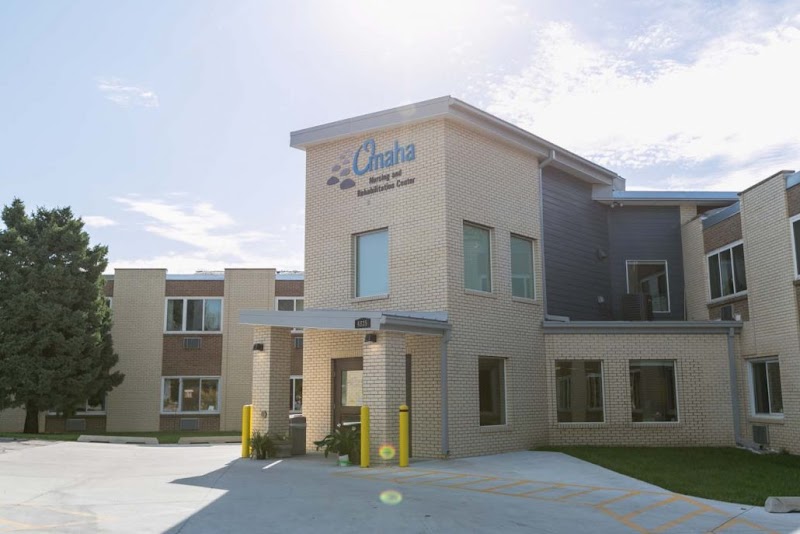
Omaha Nursing and Rehabilitation Center
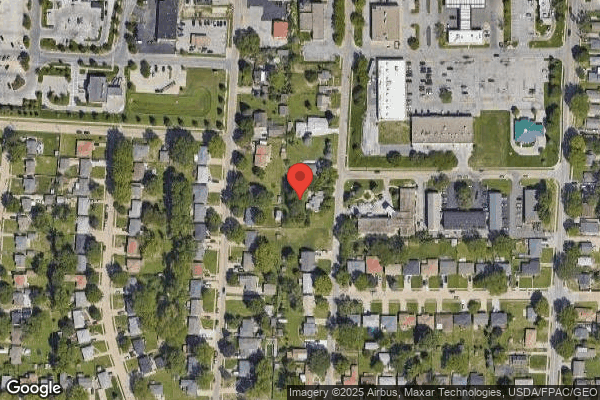
4835 South 49th Street, Omaha, NE 68117 (402) 733-7200
For profit - Corporation 70 Beds THE ENSIGN GROUP Data: November 2025 1 Immediate Jeopardy citation
Trust Grade
0/100
#163 of 177 in NE
Last Inspection: June 2024

Within standard 12-15 month inspection cycle. Federal law requires annual inspections.

Overview

Omaha Nursing and Rehabilitation Center has received a Trust Grade of F, indicating significant concerns and a very poor overall rating. In terms of state ranking, they are positioned at #163 out of 177 facilities in Nebraska, placing them in the bottom half, and at #23 out of 23 in Douglas County, meaning there are no better local options. Although the trend is improving, with the number of issues decreasing from 9 in 2024 to 7 in 2025, the facility still faces serious challenges, including $167,118 in fines, which is concerning as it is higher than all other Nebraska facilities, suggesting repeated compliance problems. Staffing is a relative strength with a turnover rate of 37%, which is below the state average, but their overall staffing rating is only 2 out of 5 stars. Specific incidents include a failure to ensure proper transfer assistance for a resident, leading to a significant injury, and a lack of adequate interventions to prevent elopement for residents at risk, highlighting both critical and serious shortcomings in care.
Trust Score
F
0/100
In Nebraska
#163/177
Bottom 8%
Safety Record
High Risk
Review needed
Inspections
Getting Better
9 → 7 violations
Staff Stability
○ Average
37% turnover. Near Nebraska's 48% average. Typical for the industry.
Penalties
○ Average
$167,118 in fines. Higher than 64% of Nebraska facilities. Some compliance issues.
Skilled Nurses
○ Average
Each resident gets 34 minutes of Registered Nurse (RN) attention daily — about average for Nebraska. RNs are the most trained staff who monitor for health changes.
Violations
⚠ Watch
47 deficiencies on record. Higher than average. Multiple issues found across inspections.
★☆☆☆☆
1.0
Overall Rating
★★☆☆☆
2.0
Staff Levels
★★★★☆
4.0
Care Quality
★☆☆☆☆
1.0
Inspection Score
Stable
2024: 9 issues
2025: 7 issues

The Good

  • 4-Star Quality Measures · Strong clinical quality outcomes
  • Full Sprinkler Coverage · Fire safety systems throughout facility
  • No fines on record
  • Staff turnover below average (37%)

    11 points below Nebraska average of 48%

Facility shows strength in quality measures, fire safety.

The Bad

1-Star Overall Rating

Below Nebraska average (2.9)

Significant quality concerns identified by CMS

Staff Turnover: 37%

Near Nebraska avg (46%)

Typical for the industry

Federal Fines: $167,118

Well above median ($33,413)

Significant penalties indicating serious issues

Chain: THE ENSIGN GROUP

Part of a multi-facility chain

Ask about local staffing decisions and management

The Ugly 47 deficiencies on record

1 life-threatening 5 actual harm
Jul 2025 3 deficiencies 1 Harm
SERIOUS (G) 📢 Someone Reported This

A family member, employee, or ombudsman was alarmed enough to file a formal complaint

Actual Harm - a resident was hurt due to facility failures

Accident Prevention (Tag F0689)

A resident was harmed · This affected 1 resident

Licensure Reference Number 175 NAC 12-006.09(I) Licensure Reference Number 175 NAC 12-006.09(I)(i)(1)Based on observation, interview, and record review, the facility failed to transfer a resident acco...

Read full inspector narrative →
Licensure Reference Number 175 NAC 12-006.09(I) Licensure Reference Number 175 NAC 12-006.09(I)(i)(1)Based on observation, interview, and record review, the facility failed to transfer a resident according to the plan of care resulting in a significant injury for 1 (Resident 32) of 1 resident sampled for transfers; and the facility failed to implement call interventions identified on the plan of care for 1 (Resident 68) of 3 residents sampled for falls. The facility staff identified a census of 64.The findings are:A. Record review of Resident 68’s Minimum Data Set (MDS: a federally mandated assessment tool used for care planning) dated 06-23-2025 revealed the facility staff assessed the following about the resident: -Brief Interview of Mental Status (BIMS) was scored at a 9. According to the MDS Manual a score of 8-12 indicates a person has moderate cognitive impairment. -required supervision and hands on assistance with transfers, toileting, hygiene and dressing. -had repeated falls. Record review of Resident 68’s Comprehensive Care Plan (CCP) dated 03-10-2025 revealed Resident 68 had an actual fall with no injury due to poor balance, poor communication/ comprehension and unsteady gait. Interventions listed on the care plan were: -03-10-2025 offer to assist resident to the bathroom at 2 AM. -03-14-2025 top blankets clipped to fitted sheet on the bed to prevent them from getting wrapped around the resident’s feet. -03-24-2025 offer to assist the resident to the bathroom at 5 AM. -04-10-2025 staff to ensure the resident has nonskid socks on while in bed. -06-15-2025 nursing staff will not leave resident sitting on the side of the bed unsupervised following an acute change of condition. -06-16-2025 resident is not to be left unattended in the therapy gym. -06-18-2025 Monthly lab work to assess creatinine. An observation on 07-29-2025 at 11:00 AM of Resident 68 lying in bed and the top covers are not pinned to the bottom sheet. An observation on 07-30-2025 at 5:10 AM of Resident 68 sitting on the side of the bed and top covers are not pinned to the bottom sheet. An observation on 07-30-2025 at 1:15 PM of Resident 68 with Nursing Assistant (NA) I confirmed the top covers were not pinned to the bottom sheet. An interview with NA I on 07-30-2025 at 1:20 PM revealed NA I was not aware the top covers needed to be pinned to the bottom sheet. An interview with Licensed Practical Nurse (LPN) D on 07-31-2025 at 9:35 AM confirmed Resident 68’s top covers were not pinned to the bottom sheet and should have been. Record review of the facility policy dated 12-2023 revealed it is the policy of this facility to provide an environment that remains as free of accident hazards as possible. It is also the policy of this facility to provide each resident with appropriate assessment and interventions to prevent falls and to minimize complications if a fall occurs. On admission a fall risk evaluation will be completed to determine the resident risk for sustaining a fall. Resident with high risk factors identified on the fall risk evaluation will have an individualized care plan developed with interventions to prevent falls by addressing the risk factors and the particular elements of the evaluation that put the resident at risk. B. Record review of a facility policy entitled “Activities of Daily Living” revised 7/2015 revealed: A resident’s abilities in ADL’s do not diminish unless circumstance on the individuals' clinical condition demonstrate that diminution was unavoidable. This includes the resident’s ability to: bathe, dress, groom, transfer, ambulate, toilet, eat, and use speech, language, or other functional communication systems. Transfer as defined by the facility’s policy is how a resident moves between surfaces – to/from: bed, chair, wheelchair, standing position. Procedures: 1. The facility interdisciplinary team (IDT, in conjunction with the resident, resident’s family, surrogate, or representative, as appropriate) will develop quantifiable objectives for the highest level of functioning the resident may be expected to attain, based on the comprehensive assessment. The plan of care will be developed in the electronic health record (EHR). 3. Plans of care will include a focus (area of impairment to include what the impairment is related to), measurable and objective goals, and interventions unique to the resident’s needs and strengths. 4. The interventions will be provided by staff in accordance with professional standards of quality and clinical practices. 6. Nursing assistants will provide assistance with ADLs based on the resident’s individualized plan of care. These interventions will be on the Kardex, which ias accessed in Point of Care (POC). Any changes noted in the resident’s performance or abilities will be reported to the licensed nurse. 7. The licensed nurse will evaluate the resident for changes in their ADL status and coordinate necessary services in conjunction with the IDT. 10. If a resident chooses to decline an intervention in the plan of care, the licensed nurse and social services will be notified. The IDT will review the plan of care with the resident in an effort to find alternative means to address the need. Record review of Resident 32’s “Clinical Census” printed 7/27/2025 identified the facility admitted the resident on 4/21/2025. Record review of Resident 32’s “Medical Diagnoses” printed 7/27/2025included cirrhosis of the liver (widespread disruption of normal liver structure by fibrosis and the formation of regenerative nodules that is caused by any of various chronic progressive conditions affecting the liver [such as long-term alcohol abuse or hepatitis]), muscle weakness, generalized edema, and type 2 diabetes mellitus (a common form of diabetes mellitus that develops especially in adults and most often in obese individuals and that is characterized by hyperglycemia resulting from impaired insulin utilization coupled with the body's inability to compensate with increased insulin production). Record review of Resident 32’s admission Minimum Data Set (MDS, a federally mandated comprehensive assessment tool used to determine a resident’s functional capabilities and helps nursing home staff identify health problems) dated 5/11/2025 revealed Resident 32 had a Brief Interview for Mental Status (BIMS, a brief screener that aids in detecting cognitive impairment) score of 15. According to the MDS manual, a score of 15 indicated the resident was cognitively intact. Further review of the MDS revealed Resident 32 was dependent upon staff for assistance to transfer from bed to wheelchair. Record review of Resident 32’s Comprehensive Care Plan (CCP, a document that includes measurable objectives and timetables to meet a resident’s medical, nursing, and mental and psychosocial needs that are identified in the comprehensive assessment) revealed as of 5/19/2025, the resident was to be transferred with two staff members using a slide board to get out of bed and wheelchair, or use Hoyer lift with two staff. Record review of Resident 32’s “Progress Notes” dated 7/6/2025 revealed: -Resident was being transferred from bed to wheelchair with two assist, bumped left lower leg on leg of wheelchair where pedals attach resulting in a laceration measuring approximately 4.5 by (x) 6 x 3. Large amount of bleeding, pressure dressing applied after PRN Oxycodone given as per order, 911 notified, here at 7:05 PM to transport resident to hospital. DON notified, note left to update APRN. Resident awake and alert leaving with paramedics per stretcher. assessment of wound. VSS, alert and oriented. -Resident return from ER via ambulance at approximately 9:30 PM with new order of bacitracin 500 unit/gram ointment to be applied 2 times a day. Patient to F/U (follow up) with PCP in 10-14 days for wound re-eval and suture removal. An interview on 7/28/25 at 8:44 AM with Resident 32 revealed the resident sustained a laceration to the left lower leg during a transfer which required transport to the hospital for 11 stitches to be placed. An interview on 7/30/25 at 10:21 with Licensed Practical Nurse (LPN-D) revealed at the time of the incident, Resident 32 was assisted by one staff member. An interview on 7/30/2025 at 10:33 AM with Certified Medication Aide (CMA-E) revealed the only parties involved in the resident transfer were CMA-E and the resident. CMA-E reported after assisting Resident 32 with personal cares in bed, CMA-E turned around to get a blanket to place in the bottom of the wheelchair and when [gender] turned back around, Resident 32 was sitting at the edge of the bed. CMA-E reported that Resident 32 stated that the resident transfers independently without a slide board and instructed CMA-E how to arrange the chair. CMA-E placed the chair as the resident instructed and removed the arm rest from the wheelchair. Resident 32 proceeded to transfer, and CMA-E placed (gender) hand on the small of Resident 32’s back to provide support and guidance. CMA-E revealed that a gait belt was not used because Resident 32 stated that [gender] transferred independently. CMA-E stated that blood was noticed to the left lower leg immediately after Resident 32 was seated in the wheelchair. CMA-E stated it appeared Resident 32 had hit the left lower leg on the wheelchair pedal bracket which are permanently affixed to the wheelchair. A follow up interview on 7/30/2025 at 11:13 AM with CMA-E revealed a resident’s transfer status is determined by the plan of care. CMA-E further revealed other Nursing Assistants had informed [gender] that Resident 32 transferred independently. A follow up interview on 7/30/2025 at 11:22 AM with Resident 32 revealed the only staff member present during the transfer was CMA-E. A follow up interview on 7/30/2025 at 11:53 AM with LPN-D revealed Resident 32’s transfer status was two-person assist at the time of the laceration and further confirmed Resident 32 was transferred with only one staff member.
CONCERN (D) 📢 Someone Reported This

A family member, employee, or ombudsman was alarmed enough to file a formal complaint

Potential for Harm - no one hurt, but risky conditions existed

Report Alleged Abuse (Tag F0609)

Could have caused harm · This affected 1 resident

Licensure Reference Number 175 NAC 12-006.02(H)The facility failed to report a transfer which resulted in significant injury to the State Agency for 1 (Resident 32) of 1 resident sampled. The facility...

Read full inspector narrative →
Licensure Reference Number 175 NAC 12-006.02(H)The facility failed to report a transfer which resulted in significant injury to the State Agency for 1 (Resident 32) of 1 resident sampled. The facility staff identified a census of 64.The findings are:Record review of a facility policy entitled Abuse: Prevention of and Prohibition Against dated revised 10/2022 revealed:The facility will provide oversight and monitoring to ensure that its staff, who are agents of the facility, deliver care and services in a way that promotes and respects the rights of the residents to be from [sic] abuse, neglect, misappropriation of resident property, and exploitation.This policy applies to all facility staff including, but not limited to, employees, consultants, contractors, volunteers, students, and other caregivers who provide care and services to residents on behalf of the facility.Definition:Neglect is the failure of the facility, its employees or service providers to provide goods and services to a resident that are necessary to avoid physical harm, pain, mental anguish, or emotional distress.2. Because some cases of abuse are not directly observed, understanding resident outcomes of abuse can assist in identifying whether abuse is occurring or has occurred. Possible indicators of abuse include, but are not limited to: -Bruises, skin tears and injuries of unknown source; -Extensive injuries; -Injuries in an unusual location; H. Reporting/Response1. All allegations of abuse, neglect, misappropriation of resident property, or exploitation should be reported immediately to the Administrator.2. Allegations of abuse, neglect, misappropriation of resident property, or exploitation will be reported outside the facility and to the appropriate State or Federal agencies in the applicable timeframes, as per this policy and applicable regulations.Record review of Resident 32's Clinical Census printed 7/27/2025 identified the facility admitted the resident on 4/21/2025.Record review of Resident 32's Medical Diagnoses printed 7/27/2025 revealed the following: cirrhosis of the liver (widespread disruption of normal liver structure by fibrosis and the formation of regenerative nodules that is caused by any of various chronic progressive conditions affecting the liver [such as long-term alcohol abuse or hepatitis]), muscle weakness, generalized edema, and type 2 diabetes mellitus (a common form of diabetes mellitus that develops especially in adults and most often in obese individuals and that is characterized by hyperglycemia resulting from impaired insulin utilization coupled with the body's inability to compensate with increased insulin production).Record review of Resident 32's admission Minimum Data Set (MDS, a federally mandated comprehensive assessment tool used to determine a resident's functional capabilities and helps nursing home staff identify health problems) dated 5/11/2025 revealed Resident 32 had a Brief Interview for Mental Status (BIMS, a brief screener that aids in detecting cognitive impairment) score of 15. According to the MDS manual, a score of 15 indicated the resident was cognitively intact. Further review of the MDS revealed Resident 32 was dependent upon staff for assistance to transfer from bed to wheelchair.Record review of Resident 32's Comprehensive Care Plan (CCP, a document that includes measurable objectives and timetables to meet a resident's medical, nursing, and mental and psychosocial needs that are identified in the comprehensive assessment) revealed as of 5/19/2025, the resident was to be transferred with two staff members using a slide board to get out of bed and wheelchair, or use Hoyer lift with two staff.Record review of Resident 32's Progress Notes dated 7/6/2025 revealed: -Resident was being transferred from bed to wheelchair with two assist, bumped left lower leg on leg of wheelchair where pedals attach resulting in a laceration measuring approximately 4.5 by (x) 6 x 3. Large amount of bleeding, pressure dressing applied after PRN Oxycodone given as per order, 911 notified, here at 7:05 PM to transport resident to hospital. DON notified, note left to update APRN. Resident awake and alert leaving with paramedics per stretcher. assessment of wound. VSS, alert and oriented. -Resident return from ER via ambulance at approximately 9:30 PM with new order of bacitracin 500 unit/gram ointment to be applied 2 times a day. Patient to F/U (follow up) with PCP in 10-14 days for wound re-eval and suture removal.Record review of a Skin Alteration document dated 7/6/2025 revealed: -Incident Description: Resident was being transferred from bed to wheelchair with two assist, bumped left lower leg on leg of wheelchair where pedals attach resulting in a laceration measuring approximately 4.5 x 6 x 3. Large amount of bleeding, pressure dressing applied after assessment of wound. VSS, alert and oriented. -Immediate action taken: PRN (as needed) Oxycodone given as per order, 911 notified, here at 7:05 PM to transport resident for sutures. DON notified, note left to update APRN. -Agencies/People Notified: MD 7/6/2025.Record review of Resident 32's Medication and Treatment Administration Records dated July 2025 revealed the following orders dated 7/6/2025: bacitracin (antibiotic ointment) to be applied to Resident 32's left lower leg laceration twice daily; change of condition monitoring related to laceration to left lower extremity with sutures; and follow up with primary care provider for wound re-evaluation and suture removal in 10-14 days.An interview on 7/28/25 at 8:44 AM with Resident 32 revealed the resident sustained a laceration to the left lower leg during a transfer which required transport to the hospital for 11 stitches to be placed.An interview on 7/30/25 at 10:21 with Licensed Practical Nurse (LPN-D) revealed at the time of the incident, Resident 32 was assisted by one staff member.An interview on 7/30/2025 at 10:33 AM with Certified Medication Aide (CMA-E) revealed the only parties involved in the resident transfer were CMA-E and the resident. CMA-E reported after assisting Resident 32 with personal cares in bed, CMA-E turned around to get a blanket to place in the bottom of the wheelchair and when [gender] turned back around, Resident 32 was sitting at the edge of the bed. CMA-E reported that Resident 32 stated that the resident transfers independently without a slide board and instructed CMA-E how to arrange the chair. CMA-E placed the chair as the resident instructed and removed the arm rest from the wheelchair. Resident 32 proceeded to transfer, and CMA-E placed her hand on the small of Resident 32's back to provide support and guidance. CMA-E revealed that a gait belt was not used because Resident 32 stated that [gender] transferred independently. CMA-E stated that blood was noticed to the left lower leg immediately after Resident 32 was seated in the wheelchair. CMA-E stated it appeared Resident 32 had hit the left lower leg on the wheelchair pedal bracket which are permanently affixed to the wheelchair.A follow up interview on 7/30/2025 at 11:13 AM with CMA-E revealed a resident's transfer status is determined by the plan of care. CMA-E further revealed other Nursing Assistants had informed [gender] that Resident 32 transferred independently.A follow up interview on 7/30/2025 at 11:22 AM with Resident 32 revealed the only staff member present during the transfer was CMA-E. Resident 32 further revealed that Resident 32 did not tell CMA-E that they transferred independently, and at the time of the injury CMA-E said, that's my fault and I'm so sorry. Resident 32 said CMA-E did not mean for the resident to get hurt.A follow up interview on 7/30/2025 at 11:53 AM with LPN-D confirmed Resident 32's transfer status as listed on the care plan was two-person assist at the time of the laceration and Resident 32 was transferred with only one staff member.An interview on 7/30/2025 at 12:13 PM with the Director of Nursing (DON) with the Administrator (ADM) present confirmed Resident 32's transfer status was listed on the care plan as two-assist at the time of the incident. The DON further confirmed that the laceration which required 911 services, and 11 stitches should have been reported and was not.
CONCERN (D) 📢 Someone Reported This

A family member, employee, or ombudsman was alarmed enough to file a formal complaint

Potential for Harm - no one hurt, but risky conditions existed

Investigate Abuse (Tag F0610)

Could have caused harm · This affected 1 resident

**NOTE- TERMS IN BRACKETS HAVE BEEN EDITED TO PROTECT CONFIDENTIALITY** Licensure Reference Number 175 NAC 12-006.02(H)Based on record review and interview, the facility failed to investigate a reside...

Read full inspector narrative →
**NOTE- TERMS IN BRACKETS HAVE BEEN EDITED TO PROTECT CONFIDENTIALITY** Licensure Reference Number 175 NAC 12-006.02(H)Based on record review and interview, the facility failed to investigate a resident transfer which resulted in significant injury for 1 (Resident 32) of 1 resident sampled. The facility staff identified a census of 64.The findings are:Record review of a facility policy entitled Abuse: Prevention of and Prohibition Against dated revised 10/2022 revealed:The facility will provide oversight and monitoring to ensure that its staff, who are agents of the facility, deliver care and services in a way that promotes and respects the rights of the residents to be from [sic] abuse, neglect, misappropriation of resident property, and exploitation.This policy applies to all facility staff including, but not limited to, employees, consultants, contractors, volunteers, students, and other caregivers who provide care and services to residents on behalf of the facility.Definitions:Neglect is the failure of the facility, its employees or service providers to provide goods and services to a resident that are necessary to avoid physical harm, pain, mental anguish, or emotional distress.E. Identification:1. Facility staff with knowledge of an actual or potential violation of this policy must report the violation to his or her supervisor or the facility administrator immediately. The facility will assist staff in identifying abuse, neglect, and exploitation of residents, and misappropriation of resident property. This includes identifying the different types of abuse-mental/verbal, sexual, physical, and the deprivation by an individual of goods or services.2. Because some cases of abuse are not directly observed, understanding resident outcomes of abuse can assist in identifying whether abuse is occurring or has occurred. Possible indicators of abuse include, but are not limited to: -Bruises, skin tears and injuries of unknown source; -Extensive injuries; -Injuries in an unusual location; -Occurrences, patterns, and trends that may constitute abuse; -Episodes of resident to resident altercation, willful or accidental, with or without injury; -Sudden or unexplained changes in behaviors or activities (e.g., fear of a person or place, feelings of guilt or shame, etc.).F. Investigation1. All identified events are reported to the Administrator immediately.2. After receiving the allegation, and during and after the investigation, the Administrator will ensure that all residents are protected from physical and psychosocial harm.3. A licensed nurse will immediately examine the resident upon receiving reports of alleged physical or sexual abuse. The findings of the examination shall be recorded in the resident's medical record.4. All allegations of abuse, neglect, misappropriation of resident property, and exploitation will be promptly and thoroughly investigated by the Administrator or his/her designee.5. The investigation will include the following: -An interview with the person(s) reporting the incident; -An interview with the resident(s); -Interviews with any witnesses to the incident, including the alleged perpetrator, as appropriate; -A review of the resident's medical record; -An interview of with staff members (on all shifts) who may have information regarding the alleged incident; -An interview with staff members (on all shifts) having contact with the accused employee; and -A review of all circumstances surrounding the incident.6. To the extent there is evidence that could be used in a criminal investigation, staff will immediately notify the Administrator or his/her designee. Staff are not to tamper with or destroy any such evidence at any time.7. At the conclusion of the investigation, the facility will attempt to determine if abuse, neglect, misappropriation of resident property, or exploitation occurred.8. The investigation, and the results of the investigation, will be documented.9. All phases of the investigation will be kept confidential in accordance with the Facility's policies governing the confidentiality of medical records and privilege of quality assurance/quality improvement programs. 6. At the conclusion of the investigation, the facility will take action, as necessary, in light of the information gathered, which may include but is not limited to: -If the allegation is substantiated, analyzing the occurrence to determine why abuse, neglect, misappropriation of resident property, or exploitation occurred, and determining what changes are needed to prevent further occurrences; -Defining how care provision will be changed and/or improved to protect residents receiving services, if appropriate; -Training staff on changes made and demonstration of staff competency after training is implemented; -Identifying staff responsible for the implementation of corrective action; -The expected date for implementation; and -Identifying staff responsible for monitoring the implementation of the plan.Record review of Resident 32's Clinical Census printed 7/27/2025 identified the facility admitted the resident on 4/21/2025.Record review of Resident 32's Medical Diagnoses printed 7/27/2025included cirrhosis of the liver (widespread disruption of normal liver structure by fibrosis and the formation of regenerative nodules that is caused by any of various chronic progressive conditions affecting the liver [such as long-term alcohol abuse or hepatitis]), muscle weakness, generalized edema, and type 2 diabetes mellitus (a common form of diabetes mellitus that develops especially in adults and most often in obese individuals and that is characterized by hyperglycemia resulting from impaired insulin utilization coupled with the body's inability to compensate with increased insulin production).Record review of Resident 32's admission Minimum Data Set (MDS, a federally mandated comprehensive assessment tool used to determine a resident's functional capabilities and helps nursing home staff identify health problems) dated 5/11/2025 revealed Resident 32 had a Brief Interview for Mental Status (BIMS, a brief screener that aids in detecting cognitive impairment) score of 15. According to the MDS manual, a score of 15 indicated the resident was cognitively intact. Further review of the MDS revealed Resident 32 was dependent upon staff for assistance to transfer from bed to wheelchair.Record review of Resident 32's Comprehensive Care Plan (CCP, a document that includes measurable objectives and timetables to meet a resident's medical, nursing, and mental and psychosocial needs that are identified in the comprehensive assessment) revealed as of 5/19/2025, the resident was to be transferred with two staff members using a slide board to get out of bed and wheelchair, or use Hoyer lift with two staff.Record review of Resident 32's Progress Notes dated 7/6/2025 revealed: -Resident was being transferred from bed to wheelchair with two assist, bumped left lower leg on leg of wheelchair where pedals attach resulting in a laceration measuring approximately 4.5 by (x) 6 x 3. Large amount of bleeding, pressure dressing applied after PRN Oxycodone given as per order, 911 notified, here at 7:05 PM to transport resident to hospital. DON notified, note left to update APRN. Resident awake and alert leaving with paramedics per stretcher. assessment of wound. VSS, alert and oriented. -Resident return from ER via ambulance at approximately 9:30 PM with new order of bacitracin 500 unit/gram ointment to be applied 2 times a day. Patient to F/U (follow up) with PCP in 10-14 days for wound re-eval and suture removal.Record review of a Skin Alteration document dated 7/6/2025 revealed: -Incident Description: Resident was being transferred from bed to wheelchair with two assist, bumped left lower leg on leg of wheelchair where pedals attach resulting in a laceration measuring approximately 4.5 x 6 x 3. Large amount of bleeding, pressure dressing applied after assessment of wound. VSS, alert and oriented. -Immediate action taken: PRN (as needed) Oxycodone given as per order, 911 notified, here at 7:05 PM to transport resident for sutures. DON notified, note left to update APRN. -Agencies/People Notified: Dr. [NAME] 7/6/2025.Record review of Resident 32's Medication and Treatment Administration Records dated July 2025 revealed the following orders dated 7/6/2025: bacitracin (antibiotic ointment) to be applied to Resident 32's left lower leg laceration twice daily; change of condition monitoring related to laceration to left lower extremity with sutures; and follow up with primary care provider for wound re-evaluation and suture removal in 10-14 days.An interview on 7/28/25 at 8:44 AM with Resident 32 revealed the resident sustained a laceration to the left lower leg during a transfer which required transport to the hospital for 11 stitches to be placed.An interview on 7/30/25 at 10:21 with Licensed Practical Nurse (LPN-D) revealed at the time of the incident, Resident 32 was assisted by one staff member.An interview on 7/30/2025 at 10:33 AM with Certified Medication Aide (CMA-E) revealed the only parties involved in the resident transfer were CMA-E and the resident. CMA-E reported after assisting Resident 32 with personal cares in bed, CMA-E turned around to get a blanket to place in the bottom of the wheelchair and when [gender] turned back around, Resident 32 was sitting at the edge of the bed. CMA-E reported that Resident 32 stated that the resident transfers independently without a slide board and instructed CMA-E how to arrange the chair. CMA-E placed the chair as the resident instructed and removed the arm rest from the wheelchair. Resident 32 proceeded to transfer, and CMA-E placed her hand on the small of Resident 32's back to provide support and guidance. CMA-E revealed that a gait belt was not used because Resident 32 stated that [gender] transferred independently. CMA-E stated that blood was noticed to the left lower leg immediately after Resident 32 was seated in the wheelchair. CMA-E stated it appeared Resident 32 had hit the left lower leg on the wheelchair pedal bracket which are permanently affixed to the wheelchair.A follow up interview on 7/30/2025 at 11:13 AM with CMA-E revealed a resident's transfer status is determined by the plan of care. CMA-E further revealed other Nursing Assistants had informed [gender] that Resident 32 transferred independently.A follow up interview on 7/30/2025 at 11:22 AM with Resident 32 revealed the only staff member present during the transfer was CMA-E. Resident 32 further revealed that Resident 32 did not tell CMA-E that they transferred independently, and at the time of the injury CMA-E said, that's my fault and I'm so sorry. Resident 32 said CMA-E did not mean for the resident to get hurt.A follow up interview on 7/30/2025 at 11:53 AM with LPN-D confirmed Resident 32's transfer status as listed on the care plan was two-person assist at the time of the laceration and Resident 32 was transferred with only one staff member.An interview on 7/30/2025 at 12:13 PM with the Director of Nursing (DON) with the Administrator (ADM) present revealed the DON would complete an investigation when needed. The DON reported according to the documentation within the medical record, Resident 32's care plan was being followed. The DON confirmed that the investigation into Resident 32's laceration was incomplete.
Jul 2025 3 deficiencies
CONCERN (D) 📢 Someone Reported This

A family member, employee, or ombudsman was alarmed enough to file a formal complaint

Potential for Harm - no one hurt, but risky conditions existed

Deficiency F0697 (Tag F0697)

Could have caused harm · This affected 1 resident

Nebraska Licensure Reference Number 175 NAC 12-006.09(H)Based on interview and record review, the facility failed to manage pain for 1 (Resident 5) of 4 sampled residents. The facility staff identifie...

Read full inspector narrative →
Nebraska Licensure Reference Number 175 NAC 12-006.09(H)Based on interview and record review, the facility failed to manage pain for 1 (Resident 5) of 4 sampled residents. The facility staff identified a census of 65.The findings are:Record review of Resident 5's admission Record revealed the facility admitted the resident on 08/27/19 and identified Resident 5 had diagnoses which included pneumonia, chronic inflammatory demyelinating polyneuritis (an autoimmune disorder that attacks the nerve cell coverings), carpal tunnel of unspecified upper limb, neuropathy (nerve pain), chronic pain, and osteoarthritis.Record review of Resident 5's quarterly Minimum Data Set (MDS, a federally mandated comprehensive assessment tool used to determine a resident's functional capabilities and help nursing home staff identify health problems) dated 05/01/25 revealed a Brief Interview for Mental Status (BIMS, a brief screener that aids in detecting cognitive impairment) score of 14. According to the MDS manual, a BIMS score of 14 indicated that the resident had intact cognition. Further review of the MDS revealed the facility assessed the following about Resident 5:-received scheduled and PRN (as needed) pain medications.-experienced pain that affected sleep and day-to-day activities almost constantly.-experienced pain that affected therapy activities frequently.-received opioid pain medication.Record review of Resident 5's Comprehensive Care Plan (CCP, a document that includes measurable objectives and timetables to meet a resident's medical, nursing, and mental and psychosocial needs that are identified in the comprehensive assessment) identified the following interventions for pain all dated 11/12/21:-able to: call for assistance when in pain, reposition self, ask for medication, tell you how much pain is experienced, tell you what increases or alleviates pain;-administer analgesia medication as per orders. Give half an hour before treatments or care dated; and-anticipate need for pain relief and respond immediately to any complaint of pain. Non-pharmacological interventions 1. Distraction. 2. Spiritual.Record review of Resident 5's Pain Management Review (PMR) dated 06/27/25 identified Resident 5's pain medication regimen included Cymbalta (an antidepressant medication), a Lidoderm patch, and buprenorphine (an opioid pain medication) scheduled; and acetaminophen as needed (PRN). Further review of the PMR revealed Resident 5's pain is worst in the early morning and late evening and an acceptable pain rating level of 4 on a scale of 0-10. Record review of Resident 5's Medication Administration Record (MAR) dated July 2025 revealed buprenorphine was ordered to be administered three times per day and was not administered on the following dates:-07/03/25 at 8:00 PM with no recorded pain level;-07/04/25 at 8:00 AM with a pain rating of 5, at 2:00 PM with a pain rating of 7, and at 8:00 PM with no recorded pain level;-07/05/25 at 8:00 AM with a pain rating of 9, at 2:00 PM with a pain rating of 9, and at 8:00 PM with no recorded pain level;-07/06/25 at 8:00 AM with a pain rating of 8, at 2:00 PM with a pain rating of 8, and at 8:00 PM with a pain rating of 8; and-07/07/25 at 8:00 AM with a pain rating of 8.Further review of Resident 5's Electronic Health Record including MAR and progress notes showed no evidence of any interventions for pain management offered until 07/07/25 at 2:25 PM in the absence of scheduled buprenorphine.Record review of Resident 5's Progress Notes (PN) revealed buprenorphine was awaiting pharmacy delivery or unavailable to be administered on 07/03/25, 07/04/25, 07/05/25, 07/06/25, and 07/07/25.Record review of Resident 5's PN revealed on 07/03/25 an Advanced Practice Registered Nurse (APRN) was notified on 07/03/25 to request a one-time order for buprenorphine as the resident's supply from pharmacy was in transit. The APRN's response was pending. There was no indication the facility followed up until 07/07/25.An interview on 07/09/25 at 1:09 PM with Unit Manager (UM-B) confirmed the APRN was notified on 07/03/25 that Resident 5's buprenorphine would run out. A one-time order was requested but no response was received from APRN. UM-B further confirmed Resident 5 did not receive scheduled buprenorphine for 11 consecutive doses from 07/03/25 through 07/07/25. UM-B confirmed that a pain rating of 8-9 is considered a severe pain rating. UM-B confirmed that there was no documentation the resident was offered any interventions for pain until 07/07/25. UM-B identified the nurses assigned to care for Resident 5 from 07/03/25 through 07/06/25 should have offered the resident an intervention for pain. UM-B reported that further education needed to be completed with licensed nurses regarding reordering medications enough in advance, so the medications arrive at the facility before running out, and what to do when pain medications are not available.An interview on 07/10/25 at 8:32 AM with Resident 5 revealed the resident was utilizing a tablet computer to track when the buprenorphine was unavailable. Resident 5 identified buprenorphine was unavailable from 07/03/25 through 07/07/25. Resident 5 identified he did receive buprenorphine at 8:00 pm on 07/07/25. Resident 5 stated rated pain at 15 on a scale of 0-10 in the period when the buprenorphine was unavailable. Resident 5 further stated on the second day of the medication being unavailable, [gender] had trouble concentrating and it gets so bad I shake and cannot function.
CONCERN (D) 📢 Someone Reported This

A family member, employee, or ombudsman was alarmed enough to file a formal complaint

Potential for Harm - no one hurt, but risky conditions existed

Pharmacy Services (Tag F0755)

Could have caused harm · This affected 1 resident

Nebraska Licensure Reference 175 NAC 12-006.12Based on interview and record review, the facility failed to ensure medications were available for 1 (Resident 5) of 4 residents sampled. The facility sta...

Read full inspector narrative →
Nebraska Licensure Reference 175 NAC 12-006.12Based on interview and record review, the facility failed to ensure medications were available for 1 (Resident 5) of 4 residents sampled. The facility staff identified a census of 65.The findings are: Record review of Resident 5's admission Record revealed the facility admitted the resident on 08/27/19 and identified Resident 5 had diagnoses which included pneumonia, chronic inflammatory demyelinating polyneuritis (an autoimmune disorder that attacks the nerve cell coverings), carpal tunnel of unspecified upper limb, neuropathy (nerve pain), chronic pain, and osteoarthritis.Record review of Resident 5's quarterly Minimum Data Set (MDS, a federally mandated comprehensive assessment tool used to determine a resident's functional capabilities and help nursing home staff identify health problems) dated 05/01/25 revealed a Brief Interview for Mental Status (BIMS, a brief screener that aids in detecting cognitive impairment) score of 14. According to the MDS manual, a BIMS score of 14 indicated that the resident had intact cognition. Further review of the MDS revealed the facility assessed the following about Resident 5:-received scheduled and PRN (as needed) pain medications.-experienced pain that affected sleep and day-to-day activities almost constantly.-experienced pain that affected therapy activities frequently.Record review of Resident 5's Medication Administration Record (MAR) for March 2025 revealed an order to administer one half tablet of buprenorphine 2 milligram (mg) three times per day for pain. Further review of the March 2025 MAR revealed buprenorphine was not administered on the following dates:-two doses on 03/09/25-two doses on 03/10/25-three doses on 03/14/25-three doses on 03/15/25-three doses on 03/16/25.Record review of Resident 5's MAR for May 2025 revealed the following:-fish oil 1,000 mg give 2 capsules twice daily not administered once on 5/16/25 and once on 05/17/25.-polyethylene glycol (Miralax, a laxative) 17 grams (g) four times daily not administered three doses on 05/17/25.-lubiprostone (medication to treat chronic constipation) 24 micrograms (mcg) twice daily not administered once on 05/17/25.Record review of Resident 5's MAR for June 2025 revealed the following:-fish oil not administered once on 06/05/25 and once on 06/23/25.Record review of Resident 5's MAR for July 2025 revealed the following:-Bactrim DS tablet 800-160 mg give one half tablet by mouth at bed time not administered on 07/03/25, 07/04/25, and 07/05/25.-Metamucil powder give 1 packet by mouth one time a day for constipation not administered on 07/01/25.-Buprenorphine tablet sublingual 2 mg give 1 tablet three times a day not administered for a total of 11 consecutive administrations from 07/03/25 through 07/07/25.An interview on 07/09/25 at 1:09 PM with the Unit Manager (UM-B) confirmed Resident 5 did not receive 11 consecutive scheduled doses of buprenorphine from 07/03/25 through 07/07/25. UM-B reported that more education needed to be completed with licensed nurses regarding reordering medications.An interview on 07/09/25 at 3:55 PM with the DON confirmed Resident 5 did not receive all scheduled medications on 05/16/25, 05/17/25, 06/05/25, 06/23/25, and 07/01/25.An interview on 07/10/25 at 9:45 AM with the DON further confirmed Resident 5 did not receive buprenorphine on 03/09/25, 03/10/25, 03/14/25, 03/15/25, and 03/16/25 due to waiting delivery from pharmacy. The DON revealed the facility does not have a policy regarding unavailable medications.
CONCERN (D) 📢 Someone Reported This

A family member, employee, or ombudsman was alarmed enough to file a formal complaint

Potential for Harm - no one hurt, but risky conditions existed

Deficiency F0757 (Tag F0757)

Could have caused harm · This affected 1 resident

**NOTE- TERMS IN BRACKETS HAVE BEEN EDITED TO PROTECT CONFIDENTIALITY** Nebraska Licensure Reference 175 NAC 12-006.09(H)Based on record review and interviews, the facility failed to evaluate the pote...

Read full inspector narrative →
**NOTE- TERMS IN BRACKETS HAVE BEEN EDITED TO PROTECT CONFIDENTIALITY** Nebraska Licensure Reference 175 NAC 12-006.09(H)Based on record review and interviews, the facility failed to evaluate the potential for allergy to medication for 2 (Resident 4 & 5) of 4 residents sampled. The facility staff identified a census of 65.The findings are:A. Record review of Resident 5's admission Record revealed the facility admitted the resident on 08/27/19 and identified Resident 5 had diagnoses which included respiratory failure with hypoxia (low oxygen), chronic obstructive pulmonary disease (COPD, pulmonary disease that is characterized by chronic typically irreversible airway obstruction resulting in a slowed rate of exhalation), pneumonia, and chronic inflammatory demyelinating polyneuritis (an autoimmune disorder that attacks the nerve cell coverings).Record review of Resident 5's quarterly Minimum Data Set (MDS, a federally mandated comprehensive assessment tool used to determine a resident's functional capabilities and help nursing home staff identify health problems) revealed a Brief Interview for Mental Status (BIMS, a brief screener that aids in detecting cognitive impairment) score of 14. According to the MDS manual, a BIMS score of 14 indicated that the resident had intact cognition.Record review of Resident 5's Clinical-Allergies list printed 07/09/25 revealed the resident had an allergy to Bactrim with an unknown severity listed with a date of 02/25/22.Record review of Resident 5's Order Summary Report printed 07/09/25 revealed an order for Bactrim DS (an antibiotic medication) Tablet 800-160 milligram (mg), give one half tablet by mouth at bedtime for pneumonia prophylaxis dated 07/02/25.Record review of an undated Physician Order Details printed 07/09/25 pertaining to the Bactrim DS order for Resident 5 revealed an allergy order check that showed Resident 5 had a previously observed mild adverse reaction to Bactrim DS which resulted in increased serum creatinine that was entered on 06/29/16. The allergy notification was overridden by the provider and stated, will monitor closely for adverse effects.Record review of Resident 5's Medication Administration Record dated July 2025 revealed the resident received Bactrim DS on 07/06/25, 07/07/25, and 07/08/25.Record review of Resident 5's electronic health record (EHR) revealed the EHR lacked documentation to show that the provider had been consulted regarding Resident 4's allergy to Bactrim DS.An interview on 07/09/25 at 10:10 AM with Licensed Practical Nurse (LPN-A) confirmed that Resident 5 had an allergy to Bactrim DS and further confirmed that Resident 4 received Bactrim DS on 07/06/25, 07/07/25, and 07/08/25.An interview on 07/09/25 at 11:30 AM with the Director of Nursing (DON) revealed a resident's allergy to medications should be addressed with the prescriber at the time of order entry. The DON further confirmed that Resident 5's allergy to Bactrim DS was not addressed until 07/09/25. The DON revealed that the facility did not have a policy regarding allergies to medications. B. A review of Resident 4's admission Record revealed Resident 4 was admitted to the facility on [DATE]. Further review of Resident 4's admission Record revealed a diagnosis of acute respiratory failure with hypoxia [lungs are not able to adequately oxygenate the blood]. A review of Resident 4's electronic medical record under the allergies section revealed Resident 4 had the following medication allergies:-Aspirin [nonsteroidal anti-inflammatory medication used for pain]-Codeine [opioid medication used for pain]-Penicillin [an antibiotic]-Zaleplon [a medication for insomnia]A review of Resident 4's 7/2025 MAR [Medication Administration Record] revealed an order dated 4/4/25 for Diclofenac sodium External Gel 1% [a nonsteroidal anti-inflammation used to treat pain and inflammation] apply to knees topically four times a day for pain. A review of Progress Note dated 4/4/24 for Resident 4 revealed an alert that identified a possible drug allergy regarding order for Diclofenac Sodium External Gel 1% apply topically four times a day for pain. A review of Resident 4's electronic medical record did not reveal any evaluation of Resident 4 potential allergy to Diclofenac Sodium External Gel 1%.In an interview on 7/9/25 at 3:55 PM, the DON reported no follow up had been completed on Resident 4's potential allergy to Diclofenac Sodium External Gel 1%. The Director of Nursing confirmed that follow-up should be completed when alerts for potential medication allergies pop up. The Director of Nursing reported the facility did not have a policy for follow-up on potential drug allergies.
Mar 2025 1 deficiency
CONCERN (D) 📢 Someone Reported This

A family member, employee, or ombudsman was alarmed enough to file a formal complaint

Potential for Harm - no one hurt, but risky conditions existed

Deficiency F0678 (Tag F0678)

Could have caused harm · This affected 1 resident

**NOTE- TERMS IN BRACKETS HAVE BEEN EDITED TO PROTECT CONFIDENTIALITY** Based on record review and interview, the facility failed to ensure a signed Advance Directive Code Status Form was completed to...

Read full inspector narrative →
**NOTE- TERMS IN BRACKETS HAVE BEEN EDITED TO PROTECT CONFIDENTIALITY** Based on record review and interview, the facility failed to ensure a signed Advance Directive Code Status Form was completed to confirm resident's directives for Cardiopulmonary Resuscitation (CPR, an emergency lifesaving procedure performed when the heart stops beating) for 1 [Resident 1] of 6 sampled residents. The facility had a total census of 63 residents. Findings are: A record review of Resident 1's admission Record revealed Resident 1 was admitted to the facility on [DATE]. Resident 1's admission Record identified the following diagnoses: Type 2 Diabetes Mellitus, congestive heart failure [weakened heart muscle that cannot pump blood effectively], and chronic obstructive pulmonary disease [lung disease causing restricted airflow and breathing problems]. A record review of Resident 1's quarterly Minimum Data Set (MDS, a federally mandated comprehensive assessment tool used to determine a resident's functional capabilities and helps nursing home staff identify health problems) dated [DATE] revealed a Brief Interview of Mental Status (BIMS, a brief screener that aids in detecting cognitive impairment) score of 10/15, which indicated the resident had moderate cognitive impairment. A record review of Resident 1's care plan revealed a focus area dated [DATE] indicating Resident 1 was to be a full code [wants to receive all available measures to save life, including CPR]. Interventions listed for the focus area stated that code status was to be reviewed quarterly with care plan conference. A record review of Resident 1's Advanced Directives Code Status form signed by Resident 1's representative on [DATE] identified Resident 1 had a DNR [Do not resuscitate, no CPR]. A record review of Resident 1's Advanced Directives Code Status form signed by Resident 1 on [DATE] identified Resident 1 as a full code. A record review of Resident 1's hospital discharge orders dated [DATE] revealed a Do Not Resuscitate order. A record review of Resident 1's electronic health record revealed there was no indication a updated Advanced Directive Code Status from from Resident 1 or their responsible party of the DNR status. A record review of an Advanced Directives Code Status form revealed the following statement: this directive may be changed at any time by the resident or responsible party. It is the responsibility of the resident or responsible party to inform the facility of the decision to change this directive. A record review of an Order Audit Report revealed the following orders related to code status for Resident 1: -[DATE] Do Not Resuscitate order -[DATE] Do Not Resuscitate order discontinued -[DATE] Full Code order -[DATE] Do Not Resuscitate order A record review of Resident 1's Nurse Practitioner Notes for 60 day visits revealed the following: -[DATE] visit-Under Advance Directive section, it was noted Resident 1 is a full code -[DATE] visit- Under Advance Direction section, it was noted that a discussion was done with questions answered and explained to patient/POA/caregivers. Resident 1's code status was documented to be DNR. -[DATE] visit-Under Advance Directives section, it is noted that a advance directive discussion was done with patient/staff/POA and the decision was that patient was a DNR. Resident 1's code status was documented to be DNR. -[DATE] visit-Under Advance Directives section, it was noted that a discussion was done with questions answered and explained to patient/POA/caregivers. Resident 1's code status was documented to be a DNR. A review of Progress Note for Resident 1 dated [DATE] revealed nurse responded to Resident 1's room and Resident 1 was responding to nurse. Resident 1 was making gurgling noises and was blue in the face. Nurse was unable to get pulse, 911 was called, and Resident 1's code status was confirmed as DNR. Staff remained with Resident 1 until paramedics arrived with Resident 1 being declared deceased at 5:20 PM. In an interview on [DATE] at 10:46 AM, the Director of Admissions reported that a Code Status Form was completed on admission to the facility. The Director of admission then notified the nurse of code status and the nurse inputs an order into the resident's medical record. The Director of admission reported that the hospital code status was not used. Just recently, the Director of admission had been starting to check code status on readmissions. In an interview on [DATE] at 12:04 PM, Social Service Director reported that code status are reviewed at care plan meetings. Social Service Director reported that Social Service Director would utilize the code status identified on the face sheet for the electronic medical record when talking with the resident or representative during a care plan. A record review of Resident 1's Care Plan Review dated [DATE] revealed the following statement: Code status to remain. In interviews on [DATE] at 12:30 PM and 1:01 PM, the Director of Nursing confirmed an expectation that nursing staff members check a resident code status on the dashboard/face sheet of the electronic medical record. The Director of Nursing confirmed that it was facility process to have the resident complete a signed DNR form at the facility. A review of facility policy dated 1/2022 titled Resident Rights-Advanced Directives revealed the following: -When an Advance Directive is completed: a. Review the Advance Directive to validate the document reflects the resident choices and that the document is signed and dated by the resident or responsible agent. Further review of facility policy dated 1/2022 titled Resident Rights-Advanced Directives revealed the following: -6. Obtain copy of the Advance Directive and conservatorship/guardianship documents and place in the resident health record. -a. It should be noted that a Physician Orders for Life-Sustaining Treatment (or POLST) paradigm form is not an advance directive. -b. Once the advance directive or information regarding resident preferences regarding treatment options is received by the facility, it will be confirmed in the resident medical record and communicated to members of the care plan team. -c. The facility will also notify the attending physician of advance directives so that, if necessary, appropriate orders can be documented in the resident's medical record and plan of care. -i. A No CPR or DNR telephone order may be used once Advance Directive documents are received and in the health record. -ii. Transfer records shall include copies of the Advance Directives and signed No CPR orders. -7. The care plan team will periodically, at least quarterly, annually, and on a change of condition, review the advance directive and/or preferences regarding treatment options with the resident or his/her representative his/her advance directives to ensure that they are still the wishes of the resident. Such reviews will be made during the assessment process and recorded in the medical record. -8. The resident or surrogate decision-maker may modify or cancel the Advance Directive decision at any time. -a. Changes or revocations of a directive must b submitted to the facility, in writing. -b. The facility may require that the resident or resident representative create/execute new documents if changes are extensive. -c. The care plan team, including the physician, will be informed of such changes and/or revocations so that appropriate changes can be made in the resident assessment instrument (MDS), care plan, or elsewhere in the clinical record. -d. Immediate action must be taken to implement desired changes.
Oct 2024 4 deficiencies 1 Harm
SERIOUS (G) 📢 Someone Reported This

A family member, employee, or ombudsman was alarmed enough to file a formal complaint

Actual Harm - a resident was hurt due to facility failures

Deficiency F0692 (Tag F0692)

A resident was harmed · This affected 1 resident

**NOTE- TERMS IN BRACKETS HAVE BEEN EDITED TO PROTECT CONFIDENTIALITY** Licensure Reference Number 175 NAC 12-006.09(J)(i)(1) Based on observation, record review, and interview; the facility staff fai...

Read full inspector narrative →
**NOTE- TERMS IN BRACKETS HAVE BEEN EDITED TO PROTECT CONFIDENTIALITY** Licensure Reference Number 175 NAC 12-006.09(J)(i)(1) Based on observation, record review, and interview; the facility staff failed to evaluate and implement interventions to prevent significant weight loss for 1 (Resident 2) of 3 sampled residents. The facility staff identified a census of 63. Findings are: Record review of Resident 2's Order Summary Report (OSR) printed on 10-30-2024 revealed Resident 2 admitted to the facility on [DATE] with a diagnoses of: Hyperlipidemia (fat particles in the blood system) Hypokalemia (low potassium level) Muscle weakness, Dysphagia (difficulty swallowing), Disorder of Plasma-protein Metabolism, Unspecified Protein Calorie Malnutrition. According to the OSR printed on 10-30-2024 Resident 2's diet was a general regular diet. Record review of Resident 2's Minimum Data Set (MDS, a federally mandated assessment tool used for care planning) dated 9-25-2024 revealed Resident 2 was assessed with a Brief Interview of mental Status (BIMs, a score from the BIMS assessment that indicates a person's cognitive function) of a 12. According to the MDS [NAME] a score of 8 to 12 indicates a person has moderately impaired cognition. Required set up for meals and Resident 2's weight was 179.0 pound. Record review of Resident 2's Comprehensive Care Plan (CCP) dated 2-08-2024 revealed Resident 2 had the potential for nutritional problems related to diet restriction. The goal identified for Resident 2 was Resident 2 would eat 50-75% of most meals . The interventions identified on Resident 2's CCP were to provide the diet as ordered, Register Dietician (RD) was to evaluate and make diet change recommendation as needed. An undated portion of Resident 2's CCP dated 6-28-2024 revealed Resident 2 was a Lacto-ovo-vegetarin (some one who does not eat meat or seafood, but eats dairy and eggs). Record review of Resident 2's weight in their Electronic Medical Record ( EMR) revealed the following: -8-12-2024, 183.6 pounds (lbs). -9-25-2024, 178.8 lbs,a loss of 4.8 lbs or a loss of 2.61%. -10-09-2024, 163.2 lbs, a loss of 15.6 lbs or a loss of 8.72% within 30 days. -According to Resident 2's weight record in Resident 2's EMR revealed from 8-12-2024 to 10-09-2024 Resident 2 lost 20.4 lbs or a loss of 11.11% with in 90 day. Record review of Resident 2's Nutrition -Quarterly Evaluation sheet dated as completed on 9-27-2024 revealed the facility RD identified Resident 2 diet was regular , the consistency was regular had religious/ethnical/cultural food habits, weight was 178.8 as of 9-25-2024 and had a usual weight of 170-180 lbs. Record review of Resident 2's Progress Note (PN) dated 10-10-2024 revealed the facility RD requested a re-weigh of Resident 2. Review review of Resident 2's EMR that included RD notes, practitioner order, Resident 2's CCP and Resident 2's PN from 8-12-2024 through 10-30-2024 revealed there was no follow up to the the re-weight the facility RD request and further revealed there was no assessment of Resident 2's significant weight loss within 30 days or 90 time frames. In addition there was no information related to how the facility staff were to meet Resident 2's nutritional needs based upon Resident 2's vegetarian diet or what Resident 2's food preference were. Record review of Resident 2's dietary information sheet dated 10-30-2024 for breakfast revealed the following: -Diet and texture was regular. -Diet other was identified as Vegetarian. -Hot cereal, toast, 2 juice, no biscuit gravy. Likes fish. According to Resident 2 dietary information sheet dated 10-30-2024 Resident 2 was to receive the following for the lunch meal: -Beef stroganoff over noodles was marked off the list. -Resident 2 was to receive a 4 ounce (oz) portion of crumb topped Cauliflower, a portion of blue berry Cobbler and a 8 oz beverage. Observation on 10-30-2024 at 12:14 Revealed Resident 2 was in the dinning room and was served a large mix of salad greens for lunch, there was no protein or salad dressing served with the mixture of salad greens, a small 4 ounce drink and a portion of a apple filling type of desert with a portion of whip cream on top. Observation on 10-30-2024 at 1:15 PM revealed Resident 2 remained in the dinning room and had taken a few bites of the salad mixture, had drank all of the drink and a bite of desert. On 10-30-2024 at 1:15 PM an interview was conducted with Resident 2. During the interview Resident 2 reported not wanting just salad and nothing else. On 10-30-2024 at 12:23 PM an interview was conducted with the Dietary Supervisor (DS). During the interview the DS reported not being aware of what to give Resident 2 due to the vegetarian diet. The DS further reported not being aware of Resident 2's significant weight loss. On 10-30-2024 at 1:01 PM an interview was conducted with the facility RD via phone. During the interview the RD reported there was a list of food items Resident 2 could have and reported not being aware of what the plan was to meet the resident needs. On 10-30-2024 at 3:14 PM the DS reported there was no evaluation of Resident 2's food preferences . On 10-31-2024 at 12:58 PM an interview was conducted with the Director of Nursing (DON). During the interview the DON reported the facility RD had made the request for a re-weigh on 10-10-2024 and this had not been completed. The DON reported the expectation was the re-weigh should have been obtained within the week. The DON confirmed during the interview Resident 2 had significant weight loss as of 10-09-2024 and Resident 2's significant weight loss had not been evaluated and no new interventions had been implemented for Resident 2.
CONCERN (D) 📢 Someone Reported This

A family member, employee, or ombudsman was alarmed enough to file a formal complaint

Potential for Harm - no one hurt, but risky conditions existed

Pressure Ulcer Prevention (Tag F0686)

Could have caused harm · This affected 1 resident

**NOTE- TERMS IN BRACKETS HAVE BEEN EDITED TO PROTECT CONFIDENTIALITY** Licensure Reference Number 175 NAC 12-006.09(H)(iii)(1) Based on observations, record review, and interview; the facility staff ...

Read full inspector narrative →
**NOTE- TERMS IN BRACKETS HAVE BEEN EDITED TO PROTECT CONFIDENTIALITY** Licensure Reference Number 175 NAC 12-006.09(H)(iii)(1) Based on observations, record review, and interview; the facility staff failed to implement interventions to prevent the development of pressure ulcers for 1 (Resident 2 and 4) of 3 sampled residents. The facility staff identified a census of 63. Findings are: A. Record review of Resident 2's Order Summary Report (OSR) printed on 10-30-2024 revealed Resident 2 admitted to the facility on [DATE] with a diagnoses of: Hyperlipidemia (fat particles in the blood system) Hypokalemia (low potassium level) Muscle weakness, Dysphagia (difficulty swallowing), Disorder of Plasma-protein Metabolism, Unspecified Protein Calorie Malnutrition. Further review of OSR printed on 10-30-24 revealed Resident 2's practitioner ordered Resident 2 to have a Prevalon boot (device used to help with preventing pressure ulcers to heels) to the left foot while in bed. Record review of Resident 2's Minimum Data Set (MDS, a federally mandated assessment tool used for care planning) dated 9-25-2024 revealed Resident 2 was assessed with a Brief Interview of mental Status (BIMs, a score from the BIMs assessment that indicates a person's cognitive function) of a 12. According to the MDS [NAME] a score of 8 to 12 indicates a person has moderately impaired cognition. Required substantial to maximum assistance with rolling left and right and sitting and laying. Record review of Resident 2's Comprehensive Care Plan (CCP) dated 3-06-2024 revealed Resident 2 had the potential for pressure ulcer development. The goal for Resident 2 was to have intact skin. Interventions to meet this goal were as follows: -Call light within reach. -Encourage fluid intake and assist to keep skin hydrated. -Ensure Resident has prevalon boot to the affected stroke side while in bed. -Monitor Nutritional status. Observation on 10-30-2024 at 2:05 PM revealed Resident 2 was in bed and did not have the Prevalon boot on the left foot. Further observation revealed the Prevalon boots were setting on the resident chest of drawers that was next to the resident bed. Observation on 10-31-2024 at 4:58 AM revealed Resident 2 was in bed with feet uncovered and did not have the Prevalon boot on the left foot. On 10-31-2024 at 5:07 AM an interview was conducted with Nursing Assistant (NA) C. During the interview NA C confirmed Resident 2 did not have the Prevalon boot on to the left foot. B. Record review of Resident 4's OSR printed on 10-30-2024 revealed Resident 4 re-admitted to the facility on [DATE] with the diagnoses of Schizoaffective disorder, Depression, Obesity, and need for assistance with personal Cares. Further review of Resident 4's OSR printed on 10-30-2024 revealed the residents' practitioner order Resident 4's heels to be elevated while in bed for skin breakdown. Record review of Resident 4's MDS dated [DATE] revealed Resident 4 had a BIMS of a 15. According to the MDS [NAME] a BIMS of 13 to 15 indicates a person is cognitively intact. Further review of Resident 4's MDS dated [DATE] revealed Resident 4 was dependent on staff for transfers, required substantial assistance to maximal assistance with rolling left to right and sitting to laying and laying to sitting. Record review of Resident 4's CCP with a initiation date of 8-23-2024 revealed Resident 4 was at risk for pressure ulcer development. The goal identified for Resident 4 was to have intact skin, free of redness, blisters or discoloration. Interventions identified on Resident 4's CCP to meet this goal were as follows: -Encourage fluid intake and assist in keeping skin hydrated. -Encourage to turn and reposition, provide assistance as necessary. -Monitor nutritional status. Serve diet as ordered. -Weekly head to toe skin at risk assessments. Observation on 10-30-2024 at 10:25 AM revealed Resident 4 was in bed and their feet were not elevated. Observation on 10-30-2024 at 11:28 AM revealed Resident 4 was in bed and did not have their feet elevated. Observation on 10-30-2024 at 12:39 PM revealed Resident 4 was in bed and Resident 4's heels were not elevated and heel boots were on top of the residents dresser. On 10-30-2024 at 13:39 PM an interview was conducted with Resident 4. During the interview Resident 4 reported staff do not elevate their feet. Resident 4 reported there were heel protection boots on the top of dresser that are to be used and staff do not use the. Observation on 10-31-2024 at 5:02 AM revealed Resident 4 was in bed and their feet were not elevated. On 10-31-2024 at 5:02 AM an interview was conducted with NA D. During the interview NA D confirmed Resident 4's feet were not elevated.
CONCERN (D) 📢 Someone Reported This

A family member, employee, or ombudsman was alarmed enough to file a formal complaint

Potential for Harm - no one hurt, but risky conditions existed

Accident Prevention (Tag F0689)

Could have caused harm · This affected 1 resident

**NOTE- TERMS IN BRACKETS HAVE BEEN EDITED TO PROTECT CONFIDENTIALITY** Licensure Reference Number 175 NAC 12-006.09(l) Based on record review and interview; the facility staff failed to implement add...

Read full inspector narrative →
**NOTE- TERMS IN BRACKETS HAVE BEEN EDITED TO PROTECT CONFIDENTIALITY** Licensure Reference Number 175 NAC 12-006.09(l) Based on record review and interview; the facility staff failed to implement additional interventions to prevent falls for 1 (Resident 4) of 4 sampled residents. The facility staff identified a census of 63. Findings are: Record review of Resident 4's Order Summary Report (OSR) printed on 10-30-2024 revealed Resident 4 re-admitted to the facility on [DATE] with the diagnoses of Schizoaffective disorder, Depression, Obesity, and need for assistance with personal Cares. Record review of Resident 4's Minimum Data Set (MDS, a standardized assessment tool used to evaluate the health status of residents in long-term care (LTC) nursing facilities) dated 10-02-2024 revealed Resident 4 had a Brief Interview for Mental Status (BIMS, a score from the BIMS assessment that indicates a person's cognitive function) of a 15. According to the MDS [NAME] a BIMS of 13 to 15 indicates a person is cognitively intact. Further review of Resident 4's MDS dated [DATE] revealed Resident 4 was dependent on staff for transfers, required substantial assistance to maximal assistance with rolling left to right and sitting to laying and laying to sitting. Record review of Resident 4's Comprehensive Care Plan (CCP) dated 8-23-2023 revealed Resident 4' was at risk for falls. The goal identified for Resident 4 was Resident 4 would not sustain serious injury. Interventions to meet this goal were: -Bed in lowest position. -Ensure resident is wearing appropriate footwear when ambulating or wheeling in the wheelchair. -Bed mobility requires 2 staff participation to reposition and turn in bed. Record review of a Fall report dated 8-05-2024 revealed Resident 4 reveal a nursing assistant was providing care. During the provision of care, staff had instructed the resident to turn on their side resulting in the resident legs hanging over the bed and resulting being lowered to the floor. According to the Fall report dated 8-05-2024, the intervention was to ensure the resident was in the middle of the bed. Record review of a Fall report dated 8-27-2024 revealed Resident 4 had slid off the bed during cares. According to the Fall report dated 8-27-2024 the new intervention was to have 2 staff assisting with bed mobility. On 10-31-2024 at 1:12 PM an interview was conducted with the Director of Nursing (DON). During the interview review of Resident 4's care plan and the fall reports dated 8-05-2024 and 8-27-2024 were reviewed with the DON. The DON confirmed 2 staff should have been assisting Resident 4 when Resident 4 had falls on 8-05-2024 and 8-27-2024. The DON confirmed Resident 4 should have been position in the middle of the bed prior to the falls and further confirmed there was no new interventions for the falls on 8-05-2024 and 8-27-2024.
MINOR (C) 📢 Someone Reported This

A family member, employee, or ombudsman was alarmed enough to file a formal complaint

Minor Issue - procedural, no safety impact

Employment Screening (Tag F0606)

Minor procedural issue · This affected most or all residents

Licensure Reference Number 175 NAC 12-006.04(A)(iii) Based on record review and interview; the facility staff failed to complete background and registry checks for 2 of 5 employee file reviewed. The f...

Read full inspector narrative →
Licensure Reference Number 175 NAC 12-006.04(A)(iii) Based on record review and interview; the facility staff failed to complete background and registry checks for 2 of 5 employee file reviewed. The facility staff identified a census of 63. Findings are: A. Record review of Housekeeping Staff A's employee file revealed a hire date of 8-27-2024. Further review of Housekeeping A's employee file revealed there was no indications a Nurse Aid registry check had been completed. B. Record review of Housekeeping Staff B's employee file revealed a hire date of 8-14-2024. Further review of Housekeeping B's employee file revealed a Adult/Child Protection Services background checks had been completed. On 10-31-2024 at 10:07 AM an interview was conducted with the facility Administrator. During the interview, the facility Administrator confirmed the required background checks had not been completed for Housekeeping Staff A and B. Record review of the facility policy titled Abuse:Prevention of and Prohibition against revised on 10-2022 revealed the following information: -Screening: -Prior to hire, the facility will screen potential employees for history of abuse, neglect, exploitation, or misappropriation . The screening will include but not limited to, Documentation of status and any disciplinary actions from licensing or registration boards and other registries.
Oct 2024 1 deficiency
CONCERN (D) 📢 Someone Reported This

A family member, employee, or ombudsman was alarmed enough to file a formal complaint

Potential for Harm - no one hurt, but risky conditions existed

Quality of Care (Tag F0684)

Could have caused harm · This affected 1 resident

**NOTE- TERMS IN BRACKETS HAVE BEEN EDITED TO PROTECT CONFIDENTIALITY** Licensure Reference Number 175 NAC 12-006.09(H)(iii)(3) Based on observation, record review and interview; the facility staff fa...

Read full inspector narrative →
**NOTE- TERMS IN BRACKETS HAVE BEEN EDITED TO PROTECT CONFIDENTIALITY** Licensure Reference Number 175 NAC 12-006.09(H)(iii)(3) Based on observation, record review and interview; the facility staff failed to follow practitioners orders for wound care for 1 (Resident 3) of 3 sampled residents. The facility staff identified a census of 60. Findings are: Record review of an Order Summary Report (OSR) sheet printed on 10-01-2024 revealed Resident 3 was admitted to the facility on [DATE] with the diagnoses of Hypertension, Severe Sepsis with Septic Shock ( infection with severe complication) and Diabetes. Further review of the OSR sheet printed on 10-01-2024 revealed Resident 3's practitioner order a treatment to Resident 3's left foot second toe as follows: -Lt (left) 2nd toe: clean with mild soap and water, pat dry, apply betadine ( a antiseptic used for skin disinfection) and allow to dry. Cover with a non-adherent dressing and secure it with Kerlex and tape. Record review of a Office Visit Form (OVF) dated 9-26-2024 revealed Resident 3 had gone to their practitioner due to a toe nail issue on the left foot. Further review of the OVF dated 9-26-2024 revealed Resident 3's practitioner order had order a antibiotic for additional treatment for the left 2nd toe. Observation on 10-01-2024 at 10:00 AM of Resident 3's wound treatment to the left 2nd toe revealed Licensed Practical Nurse (LPN) A washed hands and donned gloves. LPN A removed a 4 by 4 piece of gauze from a cup of pre-poured saline. LPN A used the 4 by 4 to cleanse the left 2nd toe. LPN A after removing the soiled gloves and completing hand hygiene, donned clean gloves and completed the treatment on Resident 3's 2nd great toe. On 10-01-2024 at 1:12 PM an interview was completed with LPN A. During the interview LPN A confirmed mild soap and water was not used to cleanse Resident 3's 2nd great toe and should have been.
Jun 2024 4 deficiencies
CONCERN (D)

Potential for Harm - no one hurt, but risky conditions existed

Safe Environment (Tag F0584)

Could have caused harm · This affected 1 resident

**NOTE- TERMS IN BRACKETS HAVE BEEN EDITED TO PROTECT CONFIDENTIALITY** Licensure Reference Number 175 NAC 12-006.18B3 Licensure Reference Number 175 NAC 12-006.18A(1) Based on observation and intervi...

Read full inspector narrative →
**NOTE- TERMS IN BRACKETS HAVE BEEN EDITED TO PROTECT CONFIDENTIALITY** Licensure Reference Number 175 NAC 12-006.18B3 Licensure Reference Number 175 NAC 12-006.18A(1) Based on observation and interview, the facility failed to maintain walls, floors, resident equipment, fixtures, air conditioning and ventilation covers in a clean, safe and functional manner in 9 rooms (Rooms 231, 232, 234, 235, 236, 237, 238, 239, 240), which had the potential to affect 14 of 14 residents that utilized those rooms. The total number of occupied resident rooms on the second-floor north hallway, rooms 231 thru 240, was 9. The facility census was 58. Findings are: Observations on 06/10/24 from 7:54 AM through 9:00 AM revealed the following: -Multiple dark brown smeared substance, resembling bowel movement, noted on toilet riser and toilet seat in room [ROOM NUMBER]. -Floor radiator cover was open and exposed in room [ROOM NUMBER]. The opening was approximately 8 inches by 2 inches exposing air conditioner conduit. -One missing drawer in a 6-drawer built in dresser near the sink in room [ROOM NUMBER]. -Multiple scratches in the 6-drawer wood dresser under the sink in room [ROOM NUMBER] which revealed an exposed edge, approximately 16 inches in length that was rough and sharp to touch. -Floor tile square near the entrance of room [ROOM NUMBER] was gouged (deep scratch below the surface) and had 3 missing one-inch pieces making an uneven, uncleanable surface. -Fitted sheet on bed in room [ROOM NUMBER] revealed a frayed (unraveled fabric) area of 16 x 4 inches. -Metal frame of floor vent cover in room [ROOM NUMBER] protruded (sticking out) 4 inches from the wall below the air conditioning unit which left a sharp edge. Large crack (opening) 10 inches x 0.5 inches through the drywall noted from the windowsill to the air conditioner unit. -6-drawer wood dresser under the sink in room [ROOM NUMBER] was missing a drawer knob. -A shared toilet in room [ROOM NUMBER] and 234 continuously ran, making the sound of continuous swirling water. -A 4x3 inch hole noted in drywall of the wall in room [ROOM NUMBER]. - Several scratches that had removed the painted surface which left dark marks on a wall in room [ROOM NUMBER]. -The ventilation cover in resident bathroom in room [ROOM NUMBER] was covered with gray fuzzy substance resembling dust. -The bathroom vent was not working in room [ROOM NUMBER]. -Multiple scrapes left dark mark on the wall 10 x 1 feet in room [ROOM NUMBER] with a 2.5 x 2-inch hole through the drywall. -Wardrobe in room [ROOM NUMBER] was missing the right-side door which resulted in exposed resident clothing and personal items. -The bottom drawer face plate of a 3-drawer wood dresser by the sink in room [ROOM NUMBER] was off and laying on the floor. -A privacy curtain in room [ROOM NUMBER] was waded together and was placed on the over bed light fixture within 8 inches of the sprinkler head. -Floor tile broken near bed in room [ROOM NUMBER]. One half of the tile piece was missing which left an indentation and possible tripping hazard. -Floor tile by the bathroom in room [ROOM NUMBER] was cracked and was missing a 1.5 x 2-inch irregular shaped piece. -Baseboard near the bottom of the air conditioning unit was cracked, broken and protruded approximately 2 inches in room [ROOM NUMBER]. -Opening through the dry wall near the foot of the bed in room [ROOM NUMBER] measuring approximately 12 x 1.5 inches above the baseboard. An environmental tour was conducted on 06/12/2024 at 1:15 PM with the Maintenance Director and Administrator with the above environmental concerns identified. During the environmental tour on 06/12/2024 at 1:15 PM the Maintenance and Administrator confirmed the issued identified above.
CONCERN (D)

Potential for Harm - no one hurt, but risky conditions existed

Deficiency F0676 (Tag F0676)

Could have caused harm · This affected 1 resident

**NOTE- TERMS IN BRACKETS HAVE BEEN EDITED TO PROTECT CONFIDENTIALITY** Licensure Reference Number 175 NAC 12.006.09D1b Based on record review and interview; the facility staff failed to to maintain f...

Read full inspector narrative →
**NOTE- TERMS IN BRACKETS HAVE BEEN EDITED TO PROTECT CONFIDENTIALITY** Licensure Reference Number 175 NAC 12.006.09D1b Based on record review and interview; the facility staff failed to to maintain functional ambulation for 1 (Resident 19), failed to follow up a audiology appointment for 1 (Resident 1) of a total sample of 4. The facility staff identified a census of 59. Findings are: A. Record Review of Resident 19's Minimum Data Set (MDS, a federally mandated assessment tool used for care planning) dated 02-02-2024 revealed a Brief Interview of Mental Status (BIMS, an assessment that aids in detecting cognitive impairment. A score of 0-7 equals severe impairment, 8-12 indicates moderate impairment and 13-15 indicates cognitively intact) score of 15 indicating cognitively intact. The MDS also indicated Resident 19 had diagnosis of High Blood Pressure, Peripheral Vascular Disease with toe amputation, End Stage Renal Disease currently on dialysis, Diabetes Mellitus Type 2 and Heart Failure. The MDS also indicated Resident 19's vision was severely impaired and Resident 19 needed partial/moderate assistance from staff with transfers from bed to chair and was dependent on staff assistance for ambulation. An interview with Resident 19 on 06-11-2024 at 8:00 AM revealed Resident 19 had a surgery earlier this year that resulted in amputation of toes on the left foot. Resident 19 indicated (gender) was not receiving therapy and could not walk as far as before the surgery. Resident 19 reported Resident 19 could feel they getting weaker. Record Review of Therapy Notes in Resident 19's Electronic Health Record (EHR, is a digital version of a patient's paper chart) revealed the last day of Physical and Occupational Therapy was 02-15-2024. Record Review of Resident 19's MDS dated [DATE] revealed Resident 19 required partial/moderate assistance from staff with transfers from bed and was not ambulating. An interview with the Director of Rehabilitation (DR) on 06-13-2024 at 11:50 AM revealed Resident 19 had not received therapy services since 02-15-2024 and confirmed Resident 19 had not been placed on a functional mobility program after therapy had discharged Resident 19. The DR confirmed Resident 19 had declined in the ability to ambulate. B. Record Review of Resident 1's MDS dated [DATE] revealed Resident 1 had the diagnosis of Diabetes Mellitus, Parkinson's Disease, Heart Failure, and High Blood Pressure. The MDS also revealed Resident 1 had a BIMS score of 13 which indicated Resident 1 was cognitively intact. An interview with Resident 1 conducted on 06-12-2024 at 9:57 AM revealed Resident 1 was supposed to have a hearing aid. Resident 1 reported not know if a hearing aid had been ordered. Record Review of Resident 1's EHR revealed Resident 1 had an appointment with audiology on 03-23-2023 and after that appointment, Resident 1 was to be fitted for hearing aids in 1-3 months. Further review of Resident 1's EHR revealed there was no other record of audiology appointments after 03-23-2023. An interview with the Director of Nursing (DON) on 06-13-2024 at 8:10 AM confirmed Resident 1 had not been seen by audiology since 03-23-2023 and the facility did not follow through on assisting Resident 1 obtain hearing aids.
CONCERN (D)

Potential for Harm - no one hurt, but risky conditions existed

Deficiency F0760 (Tag F0760)

Could have caused harm · This affected 1 resident

**NOTE- TERMS IN BRACKETS HAVE BEEN EDITED TO PROTECT CONFIDENTIALITY** Licensure Reference Number 175 NAC 12-006.090 Based on observation, record review and interviews, the facility failed to ensure...

Read full inspector narrative →
**NOTE- TERMS IN BRACKETS HAVE BEEN EDITED TO PROTECT CONFIDENTIALITY** Licensure Reference Number 175 NAC 12-006.090 Based on observation, record review and interviews, the facility failed to ensure a resident received a complete dose of seizure medication as ordered for 1 (Resident 34) of 5 residents observed during medication administration. The facility census was 58. Findings are: Record review of Resident 34's Comprehensive Care Plan (CCP, a document that details goals, action steps and appropriate timelines to address a resident's medical, behavioral health and social services needs)) initiated on 12/10/2021 revealed Resident 34 admitted to the facility on [DATE] with the following diagnoses: Cerebral Infarction (stroke- occurs as a result of disrupted blood flow to the brain), Hydrocephalus (is a buildup of fluid in ventricles of the brain), Alcohol dependence ( a chronic disease in which a person craves drinks that contain alcohol and is unable to control drinking), Traumatic Subarachnoid hemorrhage (pathologic presence of blood with the subarachnoid spaces in the brain, bleeding in the space between the brain and the membrane that covers it) with loss of consciousness of unspecified duration (pathologic presence of blood with the subarachnoid spaces in the brain, bleeding in the space between your brain and the membrane that covers it), Post traumatic seizures (seizures that occur after head trauma), Muscle weakness with muscle wasting and atrophy (a decrease in the size of an organ or tissue), Need for assistance with personal cares, Type 2 Diabetes Mellitus (a disease in which the body's ability to produce or respond to the hormone insulin is impaired resulting in abnormal metabolism of carbohydrates and elevated levels of glucose in the blood and urine. with diabetic neuropathy, Hypertension (high blood pressure), Swallowing problem related to dysphagia (difficulty swallowing), Aphasia (brain disorder where a person has trouble speaking or understanding other people speaking). Record review of Residents 34's CCP initiated on 12/10/2021 revealed Resident 34 was dependent on staff for all activities of daily living related bed mobility, transfers, dressing, grooming, bathing, incontinence care, toilet use, and personal hygiene. Further review of Resident 34's CCP revealed Resident 34 had severe cognitive impairment due to head injury. Resident 34 received all nutrition and medications through a gastric tube (a tube inserted through the wall of the abdomen directly into the stomach and was not able to have anything by mouth. Record review of Resident 34's current physician orders revealed an order was received on 03/28/2024 for Dilantin ( a anticonvulsant medication) 100 mg (milligram) every 8 hours per g-tube (gastric tube, a gastric tube is a tube inserted through the abdominal wall directly into the stomach to deliver nutrition and/or medications). An observation on 06/12/2024 at 2:37 PM revealed that LPN (Licensed Practical Nurse) H obtained the Dilantin 100 mg and placed the medication into a medication cup and crushed the medication. LPN H entered Resident 34's room on 06/12/2024 at 2:41 PM, washed the over bed tray table with an antiseptic wipe and laid a clean paper towel on the over bed tray table. LPN H paused the tube feeding and the water that was flowing into Resident 34's stomach via a feeding machine. LPN H placed the crushed medication into a small plastic clear cup that was filled with approximately . 100 cc of water and stirred it. LPN H verified Resident 34's gastric tube was in the correct position by auscultation (hearing/listening for) with a stethoscope of a bolus of air pushed into the stomach via a syringe. An observation on 06/12/2024 at 2:50 PM revealed LPN H attached a feeding syringe without the plunger and poured the crushed Dilantin and water mixture into the empty syringe and allowed to flow into the g-tube via gravity (flowing naturally without force).Visible, unmeasurable remnants of crushed Dilantin remained in the clear plastic medication cup. LPN H flushed the g-tube with 80 milliliters of water, closed and capped the g-tube, and threw the clear plastic cup with Dilantin remnants into the trash. Record review of facility's Policy and Procedure for Medication Administration via Feeding Tube dated 01/2022 revealed the following: -# 6. Tablets are crushed and capsules are opened to facilitate mixing and administration. Tablets should be crushed to a fine consistency. Powder from the crushed tablets or capsule contents should be dispersed well in water or other prescribed diluents. All the particles must be in solution prior to administering the medication. Interview with DON on 06/13/2024 at 10:07 AM confirmed that Resident 34 did not receive the complete dose of Dilantin on 06/12/2024 at 2:50 PM which resulted in a significant medication error.
CONCERN (D)

Potential for Harm - no one hurt, but risky conditions existed

Infection Control (Tag F0880)

Could have caused harm · This affected 1 resident

**NOTE- TERMS IN BRACKETS HAVE BEEN EDITED TO PROTECT CONFIDENTIALITY** D. An observation on 06/10/24 at 08:02 AM revealed an oxygen concentrator (piece of equipment that delivers oxygen) was on and r...

Read full inspector narrative →
**NOTE- TERMS IN BRACKETS HAVE BEEN EDITED TO PROTECT CONFIDENTIALITY** D. An observation on 06/10/24 at 08:02 AM revealed an oxygen concentrator (piece of equipment that delivers oxygen) was on and running at 2.5 liters per minute in room [ROOM NUMBER]. Oxygen tubing with a nasal cannula was laying on the floor with the nasal cannula resting directly on the floor. No resident was in the room. An observation on 06/10/24 at 12:36 PM revealed an oxygen tubing and nasal cannula was on the floor in room [ROOM NUMBER] and oxygen concentrator was running at 2.5 liters per minute. NA C Resident 3 brought back to their room picked up the oxygen tubing and nasal cannula that was on the floor and placed the nasal cannula into the nose of Resident 3. Record review of the facility policy and procedure for Oxygen Tanks,Connectors and Concentrators dated 02/2019 revealed: 1. Oxygen Tanks, Connectors and Concentrators -A. Equipment Guidelines: -1. Tubing should be replaced every week. -2. O2 (oxygen) masks should be replaced every week. -3. Cannulas should be replaced every week. -4. Oxygen concentrator filters will be cleaned according to manufactures recommendations. -B. Oxygen masks, nasal cannulas, and tubing will be used for one resident only. When used continuously or intermittently, tubing will be routinely changed to prevent the build up of respiratory secretions, mucous, and bacterial growth. -C.When licensed staff remove treatment tubing will be covered and stored in bag. An interview with NA C on 06/13/24 at 10:05 AM confirmed they did apply the oxygen nasal cannula to Resident 3 and should have been cleaned or the charge nurse notified. NA C confirmed the nasal cannula had been in direct contact with the floor that was resting on the floor should have been cleaned. An interview with DON on 06/13/2024 at 10:07 AM confirmed any oxygen nasal cannula that has touched the floor should have been replaced with a new nasal cannula. E. An observation on 06/12/24 at 2:37 PM revealed (Licensed Practical Nurse) LPN H was in Resident 34's room. A sign posted on Resident 34's door indicated Resident 34 had EBP inplace. LPN H placed the bell of a stethoscope directly on Resident's 34 stomach while performing an overall evaluation of Resident 34. LPN H completed the evaluation removed the double gloves LPN H was wearing and placed them in a trash can in the room. LPN H removed the gown with bare hands, rolled up the gown and placed it the trash can and washed hands with soap and water greater than 20 seconds and left the room. The un-sanitized stethoscope that was used directly on Resident 34 remained around LPN H's neck as LPN H walked down the hall to the main dining room. An interview with DON on 06/12/24 at 3:15 PM confirmed that LPN H should have cleaned the stethoscope that was used on a resident with enhanced barrier precautions before leaving that room. C. Record Review of Resident 53's Minimum Data Set (MDS, a federally mandated assessment tool used for care planning) dated 03-15-2024 revealed Resident 53 had diagnosis of Heart Failure, Diabetes Mellitus, Aphasia (the loss of ability to understand or express speech) and Hemiplegia (one sided muscle weakness) following a Cerebral Infarction (a cerebral infarction occurs as a result of disrupted blood flow to the brain due to problems with the blood vessels that supply it). The MDS dated [DATE] also revealed Resident 53 had a feeding tube (feeding tubes are tubes mainly inserted into the gastrointestinal tract to provide a route to give liquid nutrition. Record Review of Resident 53's care plan dated 05-06-2024 revealed Resident 53 had a high risk for infection related to having a gastrointestinal feeding tube and a multidrug resistant organism (MDRO). The goal of care was to mitigate any risk of transmission of a pathogen and Resident 53 was placed on Enhanced Barrier Precautions (EBP) during the provision of close contact care. An observation on 06-13-2024 at 10:11 AM of Registered Nurse (RN) F flushing Resident 53's feeding tube revealed a sign on Resident 53's door stating Enhanced Barrier Precautions, wear a gown and gloves when performing high contact resident care activities. Examples of high contact resident activities included device care or use: central line, urinary catheter, feeding tube or tracheostomy. RN F had gathered equipment and had gloves on. RN F did not put on a gown before proceeding to flush Resident 53's feeding tube. Record Review of Facility Policy Standard and Transmission Based Precautions revised on 3-2024 revealed under section Enhanced Barrier Protection- the use of a gown and gloves during high-contact resident care activities that provide opportunities for indirect transfer of MDROs to staff hands and clothing then indirectly transferred to residents or from resident to resident. Examples of high-contact resident care activities that require a gown and glove use for EBP include: device care or use of a feeding tube. An interview with RN F on 06-13-2024 at 10:20 AM confirmed Resident 53 was on EBP and RN F should have worn a gown during feeding tube flush. Licensure Reference Number 175 NAC 12.006.17B Based on observation, interview, and record review, the facility failed to follow the Enhanced Barrier Precautions (EBP) while preforming cares for Resident's 34,53 and 215 and failed to ensure an oxygen nasal cannula did not come in contact with the floor for Resident 3. The total sample size was 11 resident reviewed for infection control practices. The facility census was 58. Findings are: A. Record review of the facility (Enhanced Barrier Protection policy) EBP dated 2/2024 revealed catheter care is considered a high-contact resident care activity. According to the facility EHB policy dated 2/2024, catheter care/ toileting/ brief changes require a gown and gloves for barriers. B. An observation on 6/12/24 at 8:35 AM revealed (Nursing Assistant) NA-D and NA-E completed handwashing and set up of supplies upon entering the room. It is noted that Resident 215 had a (Enhanced Barrier Protection) EBP sign on the door. Further observation revealed NA-D and NA_E completed hand hygiene and gloves were placed on the hand and no gowns were worn during cares. NA-E performed catheter cares per protocol for wearing gloves and no gown An interview on 6/12/24 at 8:50 AM with NA-E was complete. During the interview NA E reported being aware of the EBP and the sign that is on the Resident's 215's door. NA-E confirmed a gown should have been worn. An interview on 6/12/24 at 8:50 AM (Director of Nursing) DON confirmed Resident 215 was on in EBP. DON confirmed the NA-D and NA-E should have been wearing gowns during cares for Resident 215. The DON futher confirmed NA-E and NA-D were in the Resident's room without gowns on.
Oct 2023 2 deficiencies
CONCERN (D) 📢 Someone Reported This

A family member, employee, or ombudsman was alarmed enough to file a formal complaint

Potential for Harm - no one hurt, but risky conditions existed

Deficiency F0697 (Tag F0697)

Could have caused harm · This affected 1 resident

**NOTE- TERMS IN BRACKETS HAVE BEEN EDITED TO PROTECT CONFIDENTIALITY** Licensure Reference 175 NAC 12.006.09 Based on observations, interviews and record review, the facility failed to implement inte...

Read full inspector narrative →
**NOTE- TERMS IN BRACKETS HAVE BEEN EDITED TO PROTECT CONFIDENTIALITY** Licensure Reference 175 NAC 12.006.09 Based on observations, interviews and record review, the facility failed to implement interventions for pain management for 2 residents (Resident #4 and Resident #8) of 8 residents sampled. The facility census was 55. Findings are: A. Record review of a undated demographic sheet revealed Resident #4 was admitted to the facility on [DATE] for Multiple Sclerosis. Resident #4's other diagnoses included: generalized anxiety disorder, depressive disorder, chronic pain and Temporomandibular Joint Disorder (TMJ). Review of Resident #4's Minimum Data Set (MDS, a comprehensive assessment used for care planning) dated 11/11/22 identified a Brief Interview for Mental Status (BIMS) of 11. According to the MDS [NAME] a score of 8 to 12 indicated a person has moderately impaired cognition. Record review of Resident #4's Care Plan revealed the resident has chronic pain related to Multiple Sclerosis and Temporomandibular joint disorder (TMJ). Resident 4 had the following interventions: - Administer analgesia medication as per orders. Give 30 minutes before treatments or care, - Anbesol for mouth/gum pain PRN (as needed). Resident #4 may keep at bedside and self-administer, - Evaluate the effectiveness of pain interventions. Review for compliance, alleviating of symptoms, dosing schedules and resident satisfaction with results, impact on functional ability and impact on cognition, - Follow pain scale to medicate as ordered. Review of Physician orders revealed the following orders for Resident #4: - Monitor level of pain using 0-10 scale (0=No pain, 1-3= mild pain, 4-5=moderate pain,6-9= severe pain, 10=excruciating pain) every shift, - Ibuprofen Oral Tablet 800 milligrams (MG). Give 800 mg by mouth three times a day related to other Chronic Pain, - Carbamazepine extended release Tablet 12 Hour 200 MG. Give 200 mg by mouth two times a day for TMJ, - Tylenol Oral Tablet (Acetaminophen). Give 1000 mg by mouth two times a day related to other Chronic Pain, - Benzocaine Gel 20%1 application dental two times a day for oral pain, apply to lower right edentulous area twice a day, - Viscous Lidocaine 2:1. Apply to cotton ball and place on gums 3 times a day as needed for pain, - Norco Oral Tablet 5-325 MG(Hydrocodone-Acetaminophen) Give 1 tablet by mouth every 6 hours for pain due to contractures, - An order to keep anbesol at bedside and may self-administer was not observed. Observation on 10/26/23 at 4:20 AM revealed Resident #4's call light was on. Further observation on 10-26-2023 at 4:35 AM revealed RN (Registered Nurse)-D answered Resident #4's call light and left Resident #4 room. A interview with Resident #4 at 4:38 AM revealed Resident #4 reported to the nurse the need for pain medication. Observation on 10/26/23 at 4:55 AM of Nursing Assistant (NA)-D revealed NA-D answered Resident #4's call light. Further observation revealed NA-D left Resident #4's room and went to another hallway and answered another residents call light. Interview on 10/26/23 at 5:00 AM with Resident #4 revealed revealed Resident #4 was in pain. During the interview Resident #4 was observed holding the right jaw and moaning. Resident #4 reported during the observation pain medication had not been administered. Interview on 10-26-23 at 5:10 AM was conducted with NA-D. During the interview NA-D reported Resident #4 wanted a pain pill when answering Resident #4's call light and reported this to the nurse. Observation on 10/26/23 at 5:20 AM revealed RN-D administering the pain medication to Resident # 4. Further observation revealed Resident #4 was crying and holding the right side of (gender) face. During the observation on 10-26-2023 at 5:20 AM revealed Resident #4 burst into tears as RN-D administer pain medication and rated the pain level at a 10 on a scale of 0 to 10. A interview on 10/26/23 at 2:00 PM was conducted with RN-C. During the interview RN-C reported the expectation is nursing assistants should tell the nurse within 20 minutes. RN-C reported if there was a delay in reporting the need for pain medication there would be a delay in the administration of the pain medication. B. Resident #8's electronic record demographic sheet revealed Resident #8 was admitted to the facility on [DATE] with diagnoses of morbid obesity, chronic obstructive pulmonary disease, congestive heart failure, schizoaffective disorder, gastroesophageal reflux disease, and diabetes type 2. Review of of Resident #8's MDS dated [DATE] revealed a BIMS score of 15. According to the MDS [NAME] a score of 13 to 15 indicates a person is cognitively intact. Review of Resident #8's Care Plan revealed Resident #8 had acute and chronic pain in bilateral lower extremities (BLE). According to Resident #8's Care Plan, Resident #8's goal for pain management included the following: -I will not have an interruption in normal activities due to pain through the review date. -I will verbalize adequate relief of pain or ability to cope with incompletely relieved pain through the review date. -I will voice a level of comfort of through the next review date. Interventions for pain management include the following: -Call for assistance when in pain, reposition self, ask for medication, tell you how much pain is experienced, tell you what increase or alleviates pain, -Administer analgesia medication as per orders. Give 30 minutes before treatments or care, -Follow pain scale to medicate as ordered, -Monitor/document for side effects of pain medication. Observe for constipation; new onset or increased agitation, restlessness, confusion, hallucinations, dysphoria; nausea; vomiting; dizziness and falls. Report occurrences to the physician, -Monitor/record pain characteristics: Quality (e.g. sharp, burning); Severity (1 to 10 scale); Anatomical location; Onset; Duration (e.g., continuous, intermittent); Aggravating factors; Relieving factors, -Pain assessment every shift. Review of Resident #8's Medication Administration Record (MAR) for October 2023 revealed Resident #8 took PRN pain medication 17 out of 23 days. Further review of Resident #8's MAR for October 2023 revealed when Resident #8 received the PRN pain medication Resident #8's pain levels was rated from a 4 to a 10 on a scale of 0 to 10. Observation on 10/26/23 at 5:50 AM revealed Resident #8 was lying in bed and stated to NA-A I still have a headache. and further reported to NA -A asking for pain medication a while ago. Interview on 10/26/23 at 5:50 AM with NA-A revealed that NA-A would tell the nurse that Resident #8 wants a pain pill. Observation on 10/26/23 at 5:55 AM of NA-A left Resident #8's room gathered up linen and garbage out of the carts located in the hallway, walked to the elevator and left the floor and did not inform the nurse Resident #8 was in pain and was requesting pain medication at the time of the observation. A interview on 10/26/23 at 6:05 AM was conducted with RN-D. During the interview RN-D reported not being notified a Resident #8 need for pain medication. A interview on 10/26/23 at 2:00 PM was conducted with RN-C. During the interview RN-C reported the expectation is nursing assistants should tell the nurse within 20 minutes. RN-C reported if there was a delay in reporting the need for pain medication there would be a delay in the administration of the pain medication.
CONCERN (D) 📢 Someone Reported This

A family member, employee, or ombudsman was alarmed enough to file a formal complaint

Potential for Harm - no one hurt, but risky conditions existed

Infection Control (Tag F0880)

Could have caused harm · This affected 1 resident

Record Review of the Policy and Procedure titled Infection Prevention and Control Program Revised 10/2022 revealed under Reporting Mechanisms of Infection Control that facility personnel will handle, ...

Read full inspector narrative →
Record Review of the Policy and Procedure titled Infection Prevention and Control Program Revised 10/2022 revealed under Reporting Mechanisms of Infection Control that facility personnel will handle, store, process and transport linens so as to prevent the spread of infection. B. Record review of Encounter Summary Sheet dated 9-29-2023 to 10-12-2023 revealed Resident #6 had been admitted to the hospital for wound management. According to the Encounter Summary sheet dated 9-29-203 through 10-12-2023 Resident #6 had infected wounds to the right lower legs and left thigh. Observation on 10/26/23 at 10:35 AM of the ADON (Assistant Director of Nursing) and LPN (Licensed Practical Nurse) E performing wound care. Resident #6 had a vacuum assisted closure device (Wound VAC) to 2 wounds. A used drainage canister not connected to the wound VAC unit was laying on the resident's nightstand with brown drainage present in canister and the tubing unclamped and the end of the tubing was open to air. In addition, there was no barrier between the drainage canister and the night stand. During the observation on 10-26-2023 at 10:35 AM the ADON removed Resident #6's linen and pillows from the resident's bed. Resident #6's pillow was placed on top of the old wound vac drainage canister and exposed tubing. The resident was repositioned and then the ADON took the pillow from on top of the drainage canister and without changing the pillow case placed pillow back in the bed with the resident. Interview on 10/26/23 at 2:24 PM with RN (Registered Nurse)-C confirmed that placing the pillow on the used drainage canister could cause cross contamination. Licensure Reference Number: 175 NAC 12-006.17D Based on observation, record review and interview, the facility staff failed to utilize handwashing and gloving techniques to prevent the potential for cross contamination for Resident #5 and while handling linen for Resident #6. The sample size was 8 and the facility identified a census of 55. Findings are: A. Observation on 10/26/23 at 4:23 AM revealed Nursing Assistant (NA)-B entered Resident #5's room, placed gloves on and did not complete hand hygiene. NA-B then assisted Resident 5 to the wheelchair and then to the bathroom. Resident 5 was observed to be incontinent of urine. NA-B changed gloves after the soiled brief was removed and did not performing hand hygiene. NA-B then cleaned up a liquid substance from the floor and then grabbed a clean brief with the contaminated gloves. NA-B then disposed of the gloves and placed another pair on without performing hand hygiene. NA-B assisted Resident 5 with placement of the new brief. NA-B collected trash and continued to the hallway with contaminated gloves on. A interview on 10/26/23 at 4:38 AM was conducted with NA-B which revealed NA-B should have completed hand hygiene in between gloves change. A interview on 10/26/23 at 10:00 AM with the Regional Consultant- C and the Director of Nursing (DON) revealed the facility staff are to hand sanitize or wash their hands between glove changes. Record review of the facility policy titled Hand Hygiene (10/2022) revealed to wash hands with soap and water or ABHR (Alcohol-based hand rub) is to be completed after removing gloves. It also states before and after direct contact with residents.
May 2023 16 deficiencies 1 IJ
CRITICAL (J)

Immediate Jeopardy (IJ) - the most serious Medicare violation

Accident Prevention (Tag F0689)

Someone could have died · This affected 1 resident

**NOTE- TERMS IN BRACKETS HAVE BEEN EDITED TO PROTECT CONFIDENTIALITY** LICENSURE REFERENCE NUMBER 175 NAC 12-006.09D7 Based on record review and interview; the facility staff failed to implement inte...

Read full inspector narrative →
**NOTE- TERMS IN BRACKETS HAVE BEEN EDITED TO PROTECT CONFIDENTIALITY** LICENSURE REFERENCE NUMBER 175 NAC 12-006.09D7 Based on record review and interview; the facility staff failed to implement interventions to prevent elopement for 2 (Resident 31 and 50) of 2 sampled residents. The facility staff identified a census of 62. The findings are: A Record review of the Policy and Procedure for Elopement with a revision date of 2/2022 revealed residents identified to be at risk for elopement will have an individualized care plan and interventions implemented. Residents whose assessment identified wandering behavior shall also be considered at risk for elopement. If the resident is identified at risk for elopement, the following steps will be taken and or verified that completed by the individual completing the assessment: -An alarm bracelet may be placed on the resident to audibly alert staff of attempts to exit. -The residents care plan shall address behavior using resident specific goals and approaches as assessed by the Interdisciplinary Team (IDT). -Residents with an elopement incident from the facility either on or off the grounds shall be considered at higher risk for further attempts at elopement. These residents will have the following precautionary measures implemented to prevent repeat incidents of elopement: -Resident will wear an alarm bracelet to alert staff if trying to leave the facility. -The bracelet will be checked daily to assure that it is functional, and checks will be logged. Record review of the progress notes for Resident 31 revealed the following: On 3/28/2023 at 9:40 PM, Resident 31 called 911 wanting to leave the facility. The police arrived and spoke to Resident 31 and redirected resident in the facility. On 3/29/2023 at 5:18 AM, Resident 31 was exit seeking and pulled the fire alarm. On 4/5/2023 at 8:39 PM Resident 31 was noted wandering most of the shift. Review of the facility investigation report dated 4/3/23 revealed a door alarm sounded at 8:18 AM. According to the report Staff initiated response and went to the front exit door, nurse followed procedure and paged overhead. Resident easily redirected and escorted back into building by staff. Change of condition elopement assessment completed by DNS (Director of Nursing Service). Review of Resident 31's Elopement Evaluation dated 3/29/23 revealed Resident 31 was a high risk for elopement. Record review of Resident 31's Care Plan revealed the following: -Elopement risk/wanderer related to impaired safety awareness with an actual elopement on 3/29/23. -The Date of Resident 31's elopement risk/wanderer was initiated on 03/30/2023. -Will not leave facility unattended through the review date. Date Initiated: 04/03/2023. -Safety will be maintained through the review date. Date Initiated: 04/03/2023. - Will demonstrate happiness with daily routine through the review date. Date Initiated: 04/03/2023. -Provide structured activities: toileting, walking inside and outside, reorientation strategies including signs, pictures and memory boxes. Date Initiated: 03/30/2023 -Wander guard ( a device to alert staff if resident exits the building) placed on Resident 31. Date Initiated: 03/30/2023 An observation on 4/30/23 at 6:30 AM revealed a white device located on the door frame of Resident 31's room which was in the off position and the door to the room was in an open position. Resident 31 did not have a wander guard device on. An observation on 4/30/23 at 9:00 AM revealed the white device located on the door frame of Resident 31's room remained in the off position. Resident 31 was lying in the resident's bed and did not have a wander guard device on. An observation on 4/30/23 at 11:37 AM revealed the white device in the doorway of Resident 31's room remained in the off position, the door to the resident;s room was open and Resident 31 did not have a wander guard on. An observation on 4/30/23 at 12:33 PM revealed the white device located on the door frame of Resident 31's room remained in the off position and Resident 31 did not have a wander guard on. An observation on 4/30/23 at 1:06 PM revealed the white device located on the door frame of Resident 31's room remained in the off position and Resident 31 did not have a wander guard on. An observation on 4/30/23 at 2:04 PM revealed the white device located on the door frame of Resident 31's room remained in the off position and Resident 31 did not have a wander guard on. An interview with Nursing Assistant (NA)-G on 4/30/23 at 1:17 PM revealed Resident 31 has a wander guard on their leg and sometimes the resident takes the wander guard off. NA-G was not sure if Resident 31 has a wander guard on right now. An interview conducted on 4/30/23 with NA-E at 1:21 PM revealed Resident 31 did not have a wander guard and NA-E was unaware of what the white device was on the door of Resident 31's room. NA-E confirmed at this time there was no wander guard on Resident 31's legs or arms. An interview conducted with NA-D on 4/30/23 at 2:10 PM revealed that Resident 31 wanders at night. NA-D revealed Resident 31 was to have a wander guard on and that Resident 31 takes off the wander guard easily and frequently. NA-D stated that there is an additional intervention in place which includes a door alarm (the white device on the doorframe of Resident 31's room) which if Resident 31 opens the door it makes a loud alarm. NA-D verified at this time the door alarm was off and was unsure why the door alarm was off. An interview conducted with Registered Nurse (RN)-H on 4/30/23 at 2:21 PM revealed Resident 31 wanders and the staff round often (check on) on Resident 31. RN-H revealed that Resident 31 had a witnessed elopement and that Resident 31 knows the exact seconds 12 seconds that the front door takes to lock after a visitor leaves the front door. RN-H revealed that Resident 31 does not utilize a wander guard at the facility. It had previously been care planned that Resident 31 was to utilize a wander guard but Resident 31 refused it. RN-H revealed Resident 31 does have a door alarm on the door which functions and makes a loud noise when the door is open, however the alarm is not being used as Resident 31's roommate prefers the door open. B. A review of the progress notes for Resident 31 revealed on 3/6/2023 at 2:56 AM Resident 31 was found lying on their left side next to the wheelchair facing toward the doorway between the middle kitchen isle and stove. Resident 31 had a laceration located on back of their head. 911 was called for immediate attention. Resident 31 stated (gender) was looking for something to eat and another resident (Resident 50) came through the kitchen doors wondering what Resident 31 was doing in the kitchen. Resident 50 proceeded to pick Resident 31 up from the wheelchair and then push Resident 31 down to the floor resulting in injury. Record review of the facility report dated 3/6/23 revealed at approximately 12:15 AM, while doing rounds NA-D heard someone yelling in the kitchen and went to investigate and noted Resident 50 standing at the kitchen door telling Resident 31 to stay on the ground. Resident 31's wheelchair was on its side, just inside the kitchen door. Resident 31 was lying on the floor in front of the prep tables. Resident 31 stated (gender) was hungry and went into the kitchen to find something to eat and that Resident 50 came into the kitchen and pushed Resident 31 down. Preventative measures put into place revealed new doorknobs with self-locking mechanisms were placed on kitchen doors to prevent residents from going into the kitchen unattended. All staff educated that residents are not allowed in the kitchen area, and kitchen doors shall remain locked when dietary staff are not present. Observation at 6:00 AM on 4/30/23 upon entering the facility revealed there were 2 kitchen doors that enter the kitchen. One door had a mechanism and the other door was open. Observational revealed there were no dietary staff present at this time in the kitchen. C. Record review of the progress notes for Resident 50 revealed on 3/27/2023 at 2:54 am a Late Entry note revealed the Facility Administrator exited the building and noted Resident 50 outside in the parking lot stepping off the driveway. Resident 50 was easily redirected and escorted back into the facility. An elopement assessment was completed and determined the resident to be low risk. The Medical Doctor (MD) and family notified. Interventions were to implement every 15 minute checks x 72 hours. A record review of Resident 50's Elopement Risk assessment dated [DATE] revealed Resident 50 was a low risk for elopement. The Elopement Risk Assessment revealed an answer to the question Does the wandering place the resident at significant risk of getting to a potentially dangerous place (stairs, outside facility) and the staff answered the question as not applicable because the resident has no history or current behaviors of wandering. Record review of the Facility Report dated 3/28/23 revealed the door alarm sounded at 9:20 AM and staff initiated response and went to the exit doors. The Administrator exited the building and noted Resident 50 outside in the parking lot stepping off the driveway. Resident 50 was easily redirected and escorted back into the building without difficulty. The interventions put into place were as follows: -verbal and written education to staff. -Plan of Care updated to include resident's change of condition. -RN evaluation completed. -Change of Condition Elopement Assessment completed. -The Director of Nursing reviewed all resident elopement assessments and plan of care interventions. -Communication placed at First and Second Floor Nurses Station. Review of Resident 50's current Care Plan revealed no focus area for elopement risk. Interview with Resident 50 on 4/30/23 at 1:00 PM revealed Resident 50 wanted to leave and wanted to get a car. An interview was conducted with NA-O on 4/30/23 at 2:19 PM which revealed Resident 50 does wander frequently and the intervention in place was visual checks. NA-O revealed Resident 50 does have a wander guard. An interview on 4/30/23 with RN-H revealed Resident 50 does wander. RN-H was unaware if Resident 50 has a wander guard on. RN-H stated the facility staff redirect Resident 50 when wandering. An interview on 4/30/23 at 2:48 PM with the Administrator revealed the facility staff were surprised that Resident 50 was at low risk per the elopement risk assessment dated [DATE] and the facility did not put additional interventions in place. The Immediate Jeopardy situation began on 3/6/23 when Resident 31 was found lying in the kitchen and ended on 4/30/23 when the facility provided the following information to remove the immediacy of the immediate jeopardy situtation. Based on the following information the immediate jeopardy was abated: -Resident 50 will be reassessed for elopement risk, Wander guard will be placed on the resident and monitoring implemented on the electronic health record. The resident's care plan will be updated with the intervention on 4/30/23. -Resident 31 will be reassessed for elopement risk, Wander guard will be placed on resident and monitoring implemented on the electronic health record. The resident's care plan will be updated with interventions on 4/30/23. To protect other potential residents: -The DNS (Director of Nursing Services) will audit all resident's elopement risk, interventions and care plan to ensure monitoring and interventions are in place. This will be completed by end of day 4/30/23. -The kitchen door will have an automatic lock installed by 4/30/23. -The DNS or designee will educate staff on 4/30. Education will include the need to implement immediate monitoring and interventions for residents identified high risk for elopement. Education will also include expectation that kitchen doors are to be locked at all times when staff are not present and the expectation of new lock/code system on the dietary door. Monitoring: -The DNS or designee will audit new admissions and high risk residents daily X 5, then 3X/week for 12 weeks to ensure monitoring and interventions are in place for those residents at risk. -The ED (Executive Director) or designee will verify that the doors to the kitchen are locked when staff are not present every shift X 3 days. -The Maintenance Director will audit functioning of automatic locks daily X 7 days, then 3X/week for 12 weeks.
SERIOUS (G)

Actual Harm - a resident was hurt due to facility failures

Pressure Ulcer Prevention (Tag F0686)

A resident was harmed · This affected 1 resident

**NOTE- TERMS IN BRACKETS HAVE BEEN EDITED TO PROTECT CONFIDENTIALITY** LICENSURE REFERENCE NUMBER 175 NAC 12.006.09D2a Based on observation, record review and interview; the facility staff failed to ...

Read full inspector narrative →
**NOTE- TERMS IN BRACKETS HAVE BEEN EDITED TO PROTECT CONFIDENTIALITY** LICENSURE REFERENCE NUMBER 175 NAC 12.006.09D2a Based on observation, record review and interview; the facility staff failed to ensure an air loss mattress was set to relieve pressure and failed to reposition for pressure relief for 1(Resident 16) of 3 sampled resident resulting in additional pressure ulcers. The facility staff identified a census of 62. The findings are: Review of Resident 16's electronic medical record revealed that Resident 16 was hospitalized on [DATE] and returned to the facility on 4/19/23 with the following identified wound areas: - Coccyx unstageable (full thickness tissue loss in which the actual depth of the ulcer is completely obscured by slough (yellow, tan, gray, green or brown) and/or eschar (tan, brown, or black) in the wound bed) pressure ulcer. - Left and right gluteal folds stage 1 pressure ulcer (a red nonblanchable area with no open areas). -Right 3rd toe trauma, right 4th toe trauma, right 4th toe base trauma, right 5th toe trauma, right 3rd/4th toe, right 4th/5th toe. -Right exterior foot #1 SDTI (Suspected Deep Tissue Injury; a purple or maroon localized area of discolored intact skin or blood-filled blister due to damage of underlying tissue from pressure and/or shear), -Right exterior foot #2 SDTI. -Right great toe trauma -Right hip SDTI. -Right medial foot SDTI. -Left inner ankle scab. -Right Forearm bruise. -Moisture Associated Skin Damage (MASD) to the scrotum. Further review of the electronic medical record revealed a new SDTI to the left hip that was identified on 4/27/23. Review of Resident 16's Care Plan dated 4/27/23 revealed the following intervention to prevent skin breakdown: - Encourage to turn and reposition, provide assistance as necessary with a date initiated of 11/28/22. -Low air loss mattress, Prevalon boots on Bilateral Lower Extremities when in bed. Observation on 5/1/23 at 6:30 AM revealed Resident 16 lying in bed on (gender) left side. Observation on 5/1/23 at 8:00 AM revealed Resident 16 lying in bed on (gender) left side. Resident 16 was lying on a low air loss mattress that was set on static mode (a setting that does not deflate any of the chambers in the mattress. The real value of a loss air loss mattress is the rotating deflation of the chambers that support the user, giving relief to otherwise constant pressure between the resident and the mattress). Observation on 5/1/23 at 9:00 AM revealed Resident 16 lying in bed on (gender) left side. Resident 16 was lying on a low air loss mattress that was set on static mode. Observation on 5/1/23 at 11:00 AM revealed Resident 16 lying in bed on (gender) left side. Observation on 5/2/23 at 6:30 AM revealed Resident 16 lying in bed on (gender) right side. Resident 16 was lying on a low air loss mattress that was set on static mode. Observation on 5/2/23 at 8:00 AM revealed Resident 16 lying in bed on (gender) right side. Observation on 5/2/23 at 9:00 AM revealed Resident 16 lying in bed on (gender) right side. Resident 16 was lying on a low air loss mattress that was set on static mode. Observation on 5/2/23 at 11:00 AM revealed Resident 16 lying in bed on (gender) right side. Observation on 5/2/23 at 11:54 AM revealed Resident 16 lying in bed on (gender) right side. Observation of wound care on 5/2/23 between 12:44 PM-1:27 PM with the ADON (Assistant Director Of Nursing) revealed during the observation ADON reported the SDTI on the left hip was a new wound being treated with Skin Prep (a wipe that forms a barrier on the skin). During the observation the ADON confirmed the settings on the low air loss mattress was set on Static mode. An interview with the ADON on 5/2/23 at 12:58 PM regarding the air mattress setting of static revealed that when cares are being provided the bed is placed on static so it is not alternating during cares. Interview with Nursing Assistant (NA)-B on 5/2/23 at 1:27 PM revealed nursing assistants do not touch the setting on the low air loss mattress. Interview with the ADON on 5/2/23 at 1:30 PM confirmed that mattress was set on static most of the time and would have to check on who can adjust settings on the air mattress. Observation on 5/2/23 at 2:52PM revealed the mattress remained on Static mode. Interview on 5/2/23 at 2:57 PM with the DNS (Director of Nursing Service) confirmed mattress should be on alternating and not static due to static mode not providing pressure relief.
SERIOUS (G) 📢 Someone Reported This

A family member, employee, or ombudsman was alarmed enough to file a formal complaint

Actual Harm - a resident was hurt due to facility failures

Deficiency F0692 (Tag F0692)

A resident was harmed · This affected 1 resident

LICENSURE REFERENCE NUMBER 175 NAC 12-006.09D8a Based on observation, record review and interview; the facility failed to ensure interventions were in place to prevent a significant weight loss and en...

Read full inspector narrative →
LICENSURE REFERENCE NUMBER 175 NAC 12-006.09D8a Based on observation, record review and interview; the facility failed to ensure interventions were in place to prevent a significant weight loss and ensure hydration for 1 (Resident 16) of 4 sampled residents. The facility staff identified a census of 62. The findings are: On 04/30/23 at 10:30 AM interview was conducted with Resident 16's family member which revealed Resident 16 had lost weight and the family member didn't think the facility ever gave Resident 16 breakfast. Continued interview in Resident 16's room revealed there was not a water pitcher available for Resident 16. During the interview Resident 16's family member reported the facility never has a pitcher of water for Resident 16. The facility may bring the resident a glass of water at times. Record review of Resident 16's documented weights in the electronic medical records revealed the following; -4/21/2023 at 12:55 PM, 152.1 Lbs in the wheelchair -4/19/2023 at 1:57 PM, 152.5 Lbs in the wheelchair -4/10/2023 at 9:04 PM, 152.7 Lbs -3/13/2023 at 9:41 PM, 152.6 Lbs -2/16/2023 at 9:02 PM, 152.6 Lbs in the wheelchair -1/18/2023 at 2:06 PM, 152.5 Lbs in the wheelchair -1/16/2023 at 4:14 PM, 159.2 Lbs Hospital weight -1/16/2023 at 3:29 PM, 185.4 Lbs Hospital weight 2/17/2023 1:23 PM Incorrect entry -1/16/2023 at 12:31 AM, 159.2 Lbs Hospital weight -1/4/2023 at 1:34 PM, 159.2 Lbs Hospital weight 1/6/2023 1:29 PM Incorrect entry -12/5/2022 at 2:43 PM, 189.8 Lbs in the wheelchair -12/4/2022 at 12:03 PM, 188.5 Lbs in the wheelchair The weight of 189.8 Lbs. on 12/5/22 and the weight on 4/21/23 of 152.1 Lbs. is a difference of 37.7 lbs in 4 months or -19.58% weight loss. Record review of the MDS (Minimum Data Set; a federally mandated comprehensive assessment tool used for care planning) dated 2/17/23 revealed a weight of 153 and no identified weight loss was coded. The MDS further revealed Resident 16 required limited assistance with eating. Record review of Resident 16's Care Plan for Activities of Daily Living Self Care Performance Deficit dated 11/28/22 revealed the following interventions with dates of when the intervention was initiated: -11/18/22: Needs 1 to1 assistance for all meals. Requires upright position when eating in bed. Date Initiated: 11/28/2022 -11/21/22: Please have Resident 16 up in chair in dining room for all meals. Resident 16 needs assist to dine. Date Initiated: 11/28/2022 -Staff to assist Resident 16 up by 7:00 AM per (gender) request. Date Initiated: 12/14/2022 Observation on 5/01/23 at 8:46 AM revealed Resident 16 was lying in bed. No breakfast tray was in the room and Resident 16 did not have a water pitcher with water. Observation on 5/01/23 at 9:13 AM revealed Resident 16 continued to be in bed with no breakfast tray. Observation on 5/1/23 at 10:55 AM revealed Resident 16 was lying in bed in Resident 16's room and there was no water pitcher or food within the room. Observation on 5/01/23 at 11:05 AM revealed Resident 16 lying in bed. Resident 16 did not have a breakfast tray in the room and no water pitcher avalable. Observation on 5/1/23 at 12:43 PM revealed Resident 16 was in the dining room knocking on the table and requested coffee and food. Resident 16's family member assisted Resident 16 in setting up food. Resident 16 was able to eat without difficulty. Interview on 5/1/23 at 11:30 AM with Registered Nurse (RN)-H confirmed that Resident 16 had not had a breakfast tray delivered as Resident 16 was asleep. RN-H stated that Resident 16 does not usually eat breakfast. RN-H was unaware of Resident 16's request to be up by 7:00 AM and that the resident wanted to eat all meals in the dining room due to needing assistance with meals. Observation on 5/2/23 at 9:30 AM revealed Resident 16 was lying in bed and there was no water pitcher or breakfast tray in room. Observation on 5/2/23 at 10:30 AM revealed Resident 16 was lying in bed and there was no water pitcher in the room, however Resident 16's breakfast tray was sitting in the room untouched. Observation on 5/02/23 at 11:54 AM revealed Resident 16 was lying in bed and Resident 16's family member removed the breakfast tray from the room with Resident 16's meal untouched. Interview with RN-C on 5/2/23 at 11:54 AM confirmed the breakfast tray for Resident 16 had not been touched as Resident 16 was asleep in the bed. Observation on 5/02/23 at 12:00 PM revealed Resident 16 was in bed and reported being hungry. Observation on 5/2/23 at 12:45 PM revealed Resident 16 was in the dining room with the resident's family member and Resident 16 was eating lunch. Resident 16 ate 100% of their lunch meal and reported it was good. Interview on 5/2/23 at 2:30 PM with the DNS (Director of Nursing Service) confirmed the care plan of Resident 16 addressed that Resident 16 requested to be up by 7:00 AM and to be in the dining room for all meals due to need for assistance. DNS stated that Resident 16 really hasn't been getting up for breakfast since the resident went onto hospice. The DNS further confirmed Resident 16's significant weight loss of 37.7 lbs.
SERIOUS (G)

Actual Harm - a resident was hurt due to facility failures

Deficiency F0760 (Tag F0760)

A resident was harmed · This affected 1 resident

**NOTE- TERMS IN BRACKETS HAVE BEEN EDITED TO PROTECT CONFIDENTIALITY** LICENSURE REFERENCE NUMBER 175 NAC 12-006.10D Based on record review and interview; the facility staff failed to ensure 2 (Resid...

Read full inspector narrative →
**NOTE- TERMS IN BRACKETS HAVE BEEN EDITED TO PROTECT CONFIDENTIALITY** LICENSURE REFERENCE NUMBER 175 NAC 12-006.10D Based on record review and interview; the facility staff failed to ensure 2 (Resident 44 and 171) of 10 sampled residents were free of significant medication errors. The facility staff identified a census of 62. Findings are: A. Record review of an Order Summary Report (OSR) sheet printed on 5-03-2023 of active orders for Resident 171 revealed Resident 171 was admitted to the facility on [DATE] with the diagnoses that included Diabetes, Major Depressive Disorder and Dementia. Further review of Resident 171's OSR printed on 5-03-2023 revealed Resident 171's practitioner ordered medications that included Lispro insulin 4 units to be given before meals and further ordered if Resident 171's blood sugar (BS) levels were between 7 and 120 the Lispro insulin was to be held. Record review of Resident 171's Medication Administration record (MAR) for 6-2021 revealed the following information: - June,2021 at 7:30 AM: -6-19-2021, BS was 89 and insulin was administered. -6-20-2021, BS was 91 and insulin was administered. -6-22-2021, BS was 100 and insulin was administered. -6-27-2021, BS was 27 and insulin was administered. -6-27-2021, BS was 61 and insulin was administered. -June 2021 at 11:30 AM: - 6-19-2021, BS was 104 and insulin was administered. -6-23-2021, BS was 93 and insulin was administered. -6-24-2021, BS was 74 and insulin was administered. -June 2021 at 4:30 PM: -6-24-2021, BS was 105 and insulin was administered. -6-26-2021, BS was 47 and insulin was administered. -July 2021 at 7:30 AM: -7-04-2021, BS was 118 and insulin was administered. -7-06-2021, BS was 102 and insulin was administered. -7-07-2021, BS was 113 and insulin was administered. -July 2021 at 11:30 AM: -7-02-2021, BS was 82 and insulin was administered. -7-03-2021, BS was 86 and insulin was administered. -July 2021 at 4:30 PM: -7-05-2021, BS was 100 and insulin was administered. -7-16-2021, BS was 100 and insulin was administered. -August 2021 at 7:30 AM: -8-07-2021, BS was 101 and insulin was administered. Review of Resident 171's Progress Note (PN) dated 8-07-2021 at 12:47 PM revealed Resident 171 was laying in bed diaphoretic (excessive sweating), with cold and clammy skin. Further review of Resident 171's PN dated 8-07-2021 revealed Resident 171 was lethargic, eye rolled back and had a blood sugar of 33. According to Resident 171's PN dated 8-07-2021 orange juices and Glucerna was given with a resident blood sugar level of 37. The facility staff called 911 as Resident 171 was not getting better. On 5-03-2023 at 7:58 AM an interview was conducted with the Director of Nursing (DON). During the interview review of Resident 171's MAR's for June, July and August of 2021 were reviewed. The DON confirmed insulin was given when it should not have been. The DON further confirmed Resident 171 was sent to the hospital on 8-07-2021 due to low blood sugar levels. The DON confirmed insulin was given at 7:30 AM on 8-07-2021 at 7:30 AM when it should have not been given. The DON confirmed the error was a significant medication error. On 5-03-2023 at 8:20 AM an interview was conducted with Registered Nurse (RN) C. During the interview review of Resident 171's MAR for 8-07-2021 was completed. During the interview RN C confirmed insulin should not have been given on 8-07-2021 at 7:30 AM and that Resident 171 was sent to the hospital related to low BS level. B. Record review of Resident 44's OSR printed on 5-02-2023 revealed Resident 44's practitioner ordered medications that included Humalog insulin . According to the Humalog insulin order nursing staff were to hold the insulin if Resident 44's blood sugar level was below 120. Record review of Resident 44's MAR for April 2023 revealed the following information for the administration of the Humalog insulin: -8:00 AM: -4-02-2023, BS was 119 and insulin was administered. -4-05-2023, BS 111 and insulin was administered. -4-09-2023, BS was 111 and insulin was administered. -11:30 AM: -4-09-2023, BS was 113 and insulin was given. -4-12-2023, BS was 102 and insulin was administered. On 5-02-2023 at 1:30 PM an interview was conducted with the DON. During the interview review of Resident 44's MAR for April 2023 were reviewed. The DON confirmed during the interview Humalog insulin was administered to Resident 44 with blood sugar levels were below 120. According to Mount [NAME]. org a normal BS level is between 70 and 100. According to www.CDC.gov symptoms of low BS levels include shaking, sweating and confusion.
CONCERN (D)

Potential for Harm - no one hurt, but risky conditions existed

Resident Rights (Tag F0550)

Could have caused harm · This affected 1 resident

**NOTE- TERMS IN BRACKETS HAVE BEEN EDITED TO PROTECT CONFIDENTIALITY** Licensure Reference Number 175 NAC 12-006.05(21) Based on observation, record review and interview; the facility failed to ensur...

Read full inspector narrative →
**NOTE- TERMS IN BRACKETS HAVE BEEN EDITED TO PROTECT CONFIDENTIALITY** Licensure Reference Number 175 NAC 12-006.05(21) Based on observation, record review and interview; the facility failed to ensure that resident's dignity was maintained for 2 (Resident 40 and 24) of 3 residents reviewed as evidenced by exposure of an incontinence brief and tube feeding bottles in visual sight in a common area of the facility for Resident 40 and the use of a sign on Resident 24's door that described personal hygiene care needs. The sign was in sight of visitors and other residents that passed by the room. The facility census was 62. Findings are: A. Record review of Resident 40's quarterly Minimum Data Set (MDS, a mandatory comprehensive assessment tool used for care planning) dated 3/23/23 identified that Resident 40 was admitted to the facility on [DATE] with diagnoses that included Cerebral Vascular Accident (CVA, stroke), Aphasia (the inability to speak or comprehend) and Traumatic Brain Injury. The MDS identified that Resident 40 was severely cognitively impaired, required extensive to total assistance with activities of daily living and received all nutrition and hydration through a feeding tube. Observation on 4/30/23 between 3:00 PM and 4:45 PM revealed Resident 40 seated in a wheelchair on the second floor of the facility in the common area. Resident 40 had on a T-shirt and an incontinence brief with no pants to cover the resident's brief or lower extremities and had a tube feeding bag and tubing hanging from a pole next to the resident in sight of other residents. A blanket was on the floor next to the wheelchair and several residents were present in the common area. Several staff walked past the resident and did not pick up the blanket to cover the resident. Observation on 5/1/23 between 12:30 PM and 2:20 PM and on 5/2/23 at 12:30 PM revealed Resident 40 seated in a wheelchair on the second floor of the facility in the common area. Resident 40 had on a T-shirt and long pants and had a tube feeding bag and tubing hanging from a pole next to the resident in sight of other residents in the common area. Interview on 5/2/23 at 12:42 PM with the Assistant Director of Nursing (ADON) confirmed that this could be a dignity issue for Resident 40 as [gender] would be unable to say if it bothered [gender] to have others see a tube feeding bag, tubing, and pole. The ADON confirmed that Resident 40 should have been dressed in long pants instead of being covered by a blanket on 4/30/23. Interview on 05/02/23 at 12:47 PM with the Director of Nursing (DON) confirmed that Resident 40's tube feeding bag and pole were not covered and this could be a dignity issue to have others see those items and the resident was not able to tell staff that it bothered Resident 40. The DON confirmed that Resident 40 should have been dressed in long pants instead of being covered by a blanket and that it was a dignity issue for others to see the resident's incontinence brief on 4/30/23. Record review of a Policy/Procedure entitled Dignity and Respect dated April 2021 revealed the following procedures: 1. Residents shall be appropriately dressed in clean clothes arranged comfortably on their persons. 2. Residents shall be examined and treated in a manner that maintains the privacy of their bodies. B. Observations on 04/30/23 at 07:17 AM and 4:00 PM, 5/1/23 at 10:47 AM, and 5/2/23 at 7:07 AM revealed a sign on the outside of the door to Resident 24's room in a large plastic sleeve that said (Resident 24) uses the big bathroom. The sign could be seen from the hallway and anyone that passed by the room. Interview on 05/02/23 at 07:20 AM with Licensed Practical Nurse (LPN) F confirmed the sign present on Resident 24's door and that it could clearly be seen from the hallway. LPN F confirmed that this could be a dignity issue for Resident 24. Interview on 05/02/23 at 07:50 AM with the facility Administrator (ADM) confirmed the sign present on the outside of Resident 24's door. The ADM confirmed that it was a dignity issue for Resident 24 and should not have been on the outside of the doorway and visible to other residents or visitors. Record review of a facility Policy / Procedure entitled Dignity and Respect dated April 2021 revealed that it is the policy of this facility that all residents be treated with kindness, dignity, and respect.
CONCERN (D)

Potential for Harm - no one hurt, but risky conditions existed

Report Alleged Abuse (Tag F0609)

Could have caused harm · This affected 1 resident

LICENSURE REFERENCE NUMBER 175 NAC 12.006-02(8) Based on record review and interview; the facility failed to report an elopement for 1 (Resident 50) of 1 sampled resident to the required state agency ...

Read full inspector narrative →
LICENSURE REFERENCE NUMBER 175 NAC 12.006-02(8) Based on record review and interview; the facility failed to report an elopement for 1 (Resident 50) of 1 sampled resident to the required state agency within the required time frame of 2 hours. The facility staff identified a census of 62. The findings are: Record review of Resident 50's Incident of Elopement dated 3/27/23 revealed the following: On 3/27/23 at 9:20 AM the facility door alarm sounded. Staff initiated response and went to exit doors. The administrator exited the building and noted Resident 50 outside in the parking lot stepping off the driveway. Resident was redirected and escorted back into the building. Record review of the facility report dated 3/30/23 revealed the required state agency was notified on 3/28/23 at 9:09 AM. Record review of the facility Elopement Policy and Procedure revised on 2/2022 revealed the following: -In response to allegations of abuse, neglect, exploitation, or mistreatment, the facility will: ensure that all alleged violations involving abuse, neglect, exploitation or mistreatment including injuries of unknown source and misappropriation of resident property, are reported immediately but: No later than two hours after the allegation is made if the events that cause the allegation involves abuse or results in serious bodily injury. Not later than twenty-four hours if the events that cause the allegation does not involve abuse and does not result in serious bodily injury. Ensure that all alleged violations involving abuse, neglect, exploitation or mistreatment, including injuries of unknown source and misappropriation of resident property are reported to: the administrator of the facility the state survey agency APS as appropriate An Interview with DON on 5/3/23 at 06:46 AM confirmed the facility did not report the elopement for Resident 50 until the following day after it occurred.
CONCERN (D)

Potential for Harm - no one hurt, but risky conditions existed

Transfer Notice (Tag F0623)

Could have caused harm · This affected 1 resident

Licensure Reference Number 175 NAC 12-006.05(5) Based on record review and interview, the facility failed to ensure the resident and /or the resident's representative were notified in writing of the r...

Read full inspector narrative →
Licensure Reference Number 175 NAC 12-006.05(5) Based on record review and interview, the facility failed to ensure the resident and /or the resident's representative were notified in writing of the reason for transfer to the hospital for 1 (Resident 66) of 1 resident reviewed for hospitalization. The facility census was 63. Findings are: Record review of Resident 66's Clinical Progress Notes dated 2/3/23 revealed that Resident 66 was sent to the hospital directly from an offsite Urology appointment. Record review of Resident 66's Electronic Medical Record revealed no documentation related to a written notice of the reason for transfer to the hospital provided to the resident and / or resident's representative for the hospitalization on 2/3/23. An interview on 5/2/23 at 1:00 PM with the facility Social Services Worker confirmed that no written notice of transfer to the hospital on 2/3/23 had been provided to Resident 66 or the resident's representative.
CONCERN (D)

Potential for Harm - no one hurt, but risky conditions existed

PASARR Coordination (Tag F0644)

Could have caused harm · This affected 1 resident

**NOTE- TERMS IN BRACKETS HAVE BEEN EDITED TO PROTECT CONFIDENTIALITY** Based on record review and interview, the facility failed to ensure a new PASARR (Pre-admission Screening and Resident Review, a...

Read full inspector narrative →
**NOTE- TERMS IN BRACKETS HAVE BEEN EDITED TO PROTECT CONFIDENTIALITY** Based on record review and interview, the facility failed to ensure a new PASARR (Pre-admission Screening and Resident Review, a screening to determine the presence of a mental illness or intellectual disability) review had been completed after a diagnosis of a mental disorder was identified for 1 (Resident 19) out of 1 reviewed for PASARR. The facility census was 62. Findings are: Record review of Resident 19's Face Sheet identified that Resident 19 was admitted [DATE] with diagnoses that included Anxiety Disorder, identified on 3/30/22, and Unspecified Dementia with other Behavioral Disturbance identified on 10/1/22. Review of Resident 19's admission Level 1 PASARR completed on 4/13/15 revealed that there was no evidence to suggest mental illness and no further screening was required unless the individual was suspected or found to have a mental illness condition. Record review of Resident 19's Annual Minimum Data Set (MDS, a mandatory comprehensive assessment tool used for care planning) dated 5/6/22, section A1500 for PASARR, revealed that Resident 19 was not considered by the State level 2 PASARR process to have a serious mental illness or intellectual disability or a related condition. The MDS further identified Resident 19 to have a current psychiatric diagnosis of Anxiety Disorder, Psychotic Disorder (results in difficulty determining what is real and what is not real) and Post Traumatic Stress Disorder. Record review of Resident 19's Electronic Medical Record revealed that a new PASARR had not been completed after 3/30/22 when the resident received a mental illness diagnosis of Anxiety Disorder. Interview on 05/01/23 at 1:04 PM with the Social Services Director confirmed that Resident 19 had a new diagnosis of Anxiety Disorder that was identified on 3/30/22 and confirmed that a new referral for PASARR screening had not been requested for Resident 19 until 5/1/23.
CONCERN (D)

Potential for Harm - no one hurt, but risky conditions existed

Quality of Care (Tag F0684)

Could have caused harm · This affected 1 resident

LICENSE REFERENCE NUMBER 175 NAC 12.006.09D2 Based on observation, record review and interview; the facility failed to ensure geri sleeves (a protective covering for arms) were in place as ordered for...

Read full inspector narrative →
LICENSE REFERENCE NUMBER 175 NAC 12.006.09D2 Based on observation, record review and interview; the facility failed to ensure geri sleeves (a protective covering for arms) were in place as ordered for 1 (Resident 43) of 2 sampled residents. The facility staff identified a census of 62. The findings are: Record review of Resident 43's current physician orders revealed an order dated 4/27/23 for geri sleeves to elbows every shift. Record review ofa progress note for Resident 43 dated 4/9/23 revealed the resident should wear sleeves at all times in room and out of room per Hospice nurse three times a day. Observation on 04/30/23 at 11:30 AM revealed Resident 43 did not have geri sleeves on (gender) arms. Observation on 05/01/23 at 7:52 AM revealed Resident 43 did not have geri sleeves on (gender) arms. Observationn on 5/2/23 at 8:49 AM revealed Resident 43 was up in wheelchair and did not have geri sleeves on bilateral arms. Bruising noted to left arm. An interview with the DNS (Director of Nursing Services) on 5/2/23 at 9:35 AM confirmed the order for geri sleeves from Hospice. The DON confirmed that Resident 43 did not have sleeves on bilateral arms.
CONCERN (D)

Potential for Harm - no one hurt, but risky conditions existed

Infection Control (Tag F0880)

Could have caused harm · This affected 1 resident

**NOTE- TERMS IN BRACKETS HAVE BEEN EDITED TO PROTECT CONFIDENTIALITY** Licensure Reference Number 175 NAC 12-006.17B Based on observation, record review and interview; the facility staff failed to ap...

Read full inspector narrative →
**NOTE- TERMS IN BRACKETS HAVE BEEN EDITED TO PROTECT CONFIDENTIALITY** Licensure Reference Number 175 NAC 12-006.17B Based on observation, record review and interview; the facility staff failed to apply personal protective equipment and perform hand hygiene and glove changes in a manner to prevent cross contamination for 1 (Resident 64) of 11 residents observed for personal care and wound cares. The facility census was 62. Findings are: Record review of an undated facility Policy and Procedure entitled Hand Hygiene identified the following policies: 3. Wash hands with soap (antimicrobial or non-antimicrobial) and water for the following situations: b. Before and after direct contact with residents. e. Before and after handling an invasive device (tube feeding would fall under this). g. Before handling clean or soiled dressing, gauze pads etc. h. Before moving from contaminated body site to a clean body site during resident care. i. After contact with residents' intact skin. Record review of Resident 64's admission Minimum Data Set (MDS, a comprehensive assessment used to develop a resident care plan) dated 4/6/23 identified that Resident 64 was admitted on [DATE] and had a Gastrostomy Tube (GT, a tube inserted into the stomach to provide nutrition) in place that provided 26-50 percent of calories to the resident. Record review of Resident 64's active Physician Orders dated 5/1/23 identified that Resident 64 had orders for the GT to be cleansed daily with normal saline and covered with a dry dressing. Observation on 5/3/23 at 9:05 AM with Registered Nurse (RN) C revealed a sign present on the exterior of Resident 64's room which read: Stop. Enhanced Barrier Precautions (EBP, an infection control intervention designed to reduce transmission of infections in nursing homes) Everyone Must: Clean their hands, including before entering and when leaving the room. Providers and staff must also: Wear gloves and a gown for the following high contact resident care activities: Device care or use: feeding tube. Observation of Resident 64's GT site care on 5/3/23 between 9:05 AM to 9:20 AM with RN C identified the following concerns with infection control practices: - RN C did not apply a personal protective gown prior to entering Resident 64's room. - After performing hand hygiene and applying gloves, the soiled dressing around Resident 64's GT site was touched, removed, and discarded and the site cleaned with normal saline and dried. RN C did not perform hand hygiene or apply clean gloves prior to placing a new, clean dressing over the GT site and taped it into place. - With no hand hygiene performed or application of new gloves, RN C grasped the GT with bare hands, unclamped the GT and administered 30 Millimeters of water from a syringe into the GT to clear it of potential clogs. With bare hands, RN C then clamped the GT closed and returned the syringe to the water pitcher. - With no hand hygiene performed after grasping the GT with bare hands and no hand hygiene performed prior to leaving the residents room, RN C assisted Resident 64 to put on their shoes and assisted the resident to walk to the main lobby area on the first floor of the facility. Interview on 05/03/23 at 09:20 AM with RN C confirmed that Resident 64 was in a EBP room and RN C confirmed that no gown was applied. RN C confirmed that no glove changes or hand wash had been completed between the removal of the soiled dressing and placement of the clean dressing and no gloves had been used when Resident 64's GT was touched. RN C confirmed that no hand wash had been performed after the completion of the GT flush procedure or prior to leaving the room with the resident. Interview on 05/03/23 at 09:57 AM with the Director of Nursing (DON) confirmed that Resident 64 was in an EBP room and a gown should have been applied. The DON confirmed that RN C should have washed hands and changed gloves after touching a soiled dressing and before applying a new dressing. The DON confirmed that the GT should not have been touched with bare hands and that RN C should have washed hands after working with the GT and prior to leaving the room.
CONCERN (E)

Potential for Harm - no one hurt, but risky conditions existed

Deficiency F0583 (Tag F0583)

Could have caused harm · This affected multiple residents

**NOTE- TERMS IN BRACKETS HAVE BEEN EDITED TO PROTECT CONFIDENTIALITY** Licensure Reference Number 175 NAC 12-006.05(15) Based on observation, record review and interview; the facility failed to ensur...

Read full inspector narrative →
**NOTE- TERMS IN BRACKETS HAVE BEEN EDITED TO PROTECT CONFIDENTIALITY** Licensure Reference Number 175 NAC 12-006.05(15) Based on observation, record review and interview; the facility failed to ensure full visual privacy in 11 (resident rooms 103, 104, 105, 206, 207, 209, 224, 228, 229, 237, 238) of 20 dual occupancy rooms as evidenced by no privacy curtains present that would surround the bed near the doorway to ensure visual privacy from the doorway or the resident's roommate. The facility census was 62. Findings are: Record review of a facility Policy and Procedure entitled Dignity and Respect and dated April 2021 revealed the following: 1. Residents shall be appropriately dressed in clean clothes arranged comfortably on their persons. 2. Residents shall be examined and treated in a manner that maintains the privacy of their bodies. A closed door or drawn curtain shields the resident from people that passed by the room. Observation on 04/30/23 at 6:51 AM revealed that upon opening the door to the room, staff were in the room providing care to Resident 11 and exposed skin was observed from the doorway. There was no privacy curtain present to ensure full visual privacy. Observation on 5/2/23 at 8:15 AM with the Corporate Resource Manager (CRM) revealed that the CRM knocked on the door to room [ROOM NUMBER] and was told to come in. When the CRM opened the door, staff were in the room providing personal cares to Resident 2 while in bed and were able to see the residents exposed skin from the doorway. There was no privacy curtain present to ensure full visual privacy. Observation on 05/02/23 between 7:40 AM and 8:30 AM with Administrator, Maintenance Supervisor, and the CRM revealed that there were no privacy curtains present around the bed by the doorway that would provide visual privacy from the doorway or the residents roommate if they had to exit the room in double occupancy resident rooms 103, 104, 105, 206, 207, 209, 224, 228, 229, 237, 238. Interview on 5/2/23 at 8:25 AM with the facility Administrator confirmed that there were no privacy curtains present in resident rooms 103, 104, 105, 206, 207, 209, 224, 228, 229, 237, 238. The Administrator confirmed that, without privacy curtains, the residents could be visibly seen from the hallway or the residents' roommate.
CONCERN (E) 📢 Someone Reported This

A family member, employee, or ombudsman was alarmed enough to file a formal complaint

Potential for Harm - no one hurt, but risky conditions existed

Safe Environment (Tag F0584)

Could have caused harm · This affected multiple residents

Licensure Reference Number 175 NAC 12.006-15 Based on observation and interview, the facility failed to ensure that resident rooms were home like with personal items in use in 5 (resident rooms 129, 1...

Read full inspector narrative →
Licensure Reference Number 175 NAC 12.006-15 Based on observation and interview, the facility failed to ensure that resident rooms were home like with personal items in use in 5 (resident rooms 129, 130, 132, 136, 140) of 17 occupied resident rooms on the 1st floor of the facility. The facility census was 62. Findings are: Observation on 05/02/23 between 2:30 PM to 02:44 PM with the facility Administrator revealed that resident rooms 129, 130, 132, 136, and 140 were not home like and did not contain personal items or pictures to make the rooms feel home like and to provide visual stimulation to the residents that resided in those rooms. Interview on 05/02/23 at 02:50 PM with the Administrator confirmed that resident rooms 129, 130, 132, 136, and 140 did not appear home like and did not have any personal items or pictures present. Interview on 05/02/23 at 03:04 PM with the facility Social Services Worker confirmed that resident rooms 129, 130, 132, 136, and 140 were not home like and confirmed that the facility had not attempted to provide a home like environment by getting pictures or personal items for the residents that resided in those rooms.
CONCERN (E)

Potential for Harm - no one hurt, but risky conditions existed

Deficiency F0638 (Tag F0638)

Could have caused harm · This affected multiple residents

Licensure Reference Number 175 NAC 12-006.09B2 Based on record review and interview, the facility failed to ensure that residents' Minimum Data Set (MDS, a required comprehensive assessment of the res...

Read full inspector narrative →
Licensure Reference Number 175 NAC 12-006.09B2 Based on record review and interview, the facility failed to ensure that residents' Minimum Data Set (MDS, a required comprehensive assessment of the resident used to create an individualized comprehensive care plan) assessments were completed within the required 14 days after the Assessment Reference Date (ARD, the last day of the observation period that the assessment covered for that resident) for 5 (Residents 26, 24, 43, 40 and 1) of 5 residents reviewed. The facility census was 62. Findings are: A. Record review of Resident 26's Quarterly MDS revealed that the ARD was identified as 3/16/23. The MDS was completed on 4/18/23 and should have been completed on 3/30/23. The MDS was completed a total of 19 days late. B. Record review of Resident 24's Quarterly MDS revealed that the ARD was identified as 3/16/23. The MDS was completed on 4/19/23 and should have been completed on 3/30/23. The MDS was completed 20 days late. C. Record review of Resident 43's Quarterly MDS revealed that the ARD was identified as 3/22/23. The MDS was completed on 4/24/23 and should have been completed on 4/5/23. The MDS was completed 18 days late. D. Record review of Resident 40's Quarterly MDS revealed that the ARD was identified as 3/23/23. The MDS was completed on 4/28/23 and should have been completed on 4/6/23. The MDS was completed 22 days late. E. Record review of Resident 1's Quarterly MDS revealed that the ARD was identified as 3/25/23. The MDS was completed on 4/24/23 and should have been completed on 4/8/23. The MDS was completed 16 days late. Interview on 05/02/23 at 11:29 AM with the facility MDS Coordinator confirmed the ARD dates and the completion dates of the MDS Assessments for Residents 26, 24 43, 40 and 1 and confirmed that the MDS assessments were not completed by the 14th day after the ARD and should have been completed within 14 days of the ARD.
CONCERN (E)

Potential for Harm - no one hurt, but risky conditions existed

Administration (Tag F0835)

Could have caused harm · This affected multiple residents

LICENSURE REFERENCE NUMBER 175 NAC 12-006.02 Based on observations, record review, and interviews; the facility administration staff failed to ensure effective management of facility resources to main...

Read full inspector narrative →
LICENSURE REFERENCE NUMBER 175 NAC 12-006.02 Based on observations, record review, and interviews; the facility administration staff failed to ensure effective management of facility resources to maintain the highest practical wellbeing of residents and the facility environment as evidenced by failure to implement an effective plan of action to maintain correction for previously cited areas of deficient practice and failure to ensure the facility identified and developed plans of action to identify multiple issues of deficient practice. The facility staff identified a census was 62. Findings are: Review of the facility during the current survey revealed the following deficiencies: -F550. The facility failed to ensure resident dignity was maintained for 2 of 3 residents. -F583. The facility failed to ensure full privacy in 11 of 20 dual occupancy rooms. -F584. The facility failed to ensure that rooms appeared homelike in 5 of 17 rooms. -F609. The facility failed to report an elopement for 1 resident in the required time frame. -F623. The facility failed to ensure the resident and/or the resident's representative were notified in writing of the reason for transfer to the hospital. -F638. The facility failed to ensure residents Minimum Data set (a federally mandated assessment tool used for care planning) were completed within 14 days od the Assessment reference date. -F644. The facility failed to ensure a new PASSAR (Pre-admission Screening and Resident Review) were completed after a diagnosis of mental illness was identified. -F684. The facility failed to ensure Geri Sleeves were in place as ordered for 2 residents. -F676. The facility failed to ensure an air loss mattress was set to relieve pressure and failed to ensure residents were turned and repositioned for pressure relief. -F689. The facility failed to implement interventions to prevent elopement and failed to implement interventions to prevent elopement into the kitchen. -F692. The facility failed to ensure interventions were in place to prevent weight loss and failed to implement interventions to prevent potential dehydration for a sampled resident. -F760. The facility failed to ensure 2 residents were free of significant medication errors. -F801. The facility failed to have a qualified Dietary Manager. -F865. The facility failed to have a effective Quality Assurance and Process Improvement (QAPI) program. -F880. The facility staff failed to donn personal protective equipment (PPE) and preform hand hygiene and gloves changes in a manner to prevent potential cross contamination during personal cares and treatments. On 5-03-2023 at 11:05 AM an interview was conducted with the facility Administrator. During the interview the Administrators reported the elopement (see F689), infection control (see F880) medication errors (see F760) and skin breakdown (see 684 and F686) were not identified as a issue in the facility to work on.
CONCERN (E)

Potential for Harm - no one hurt, but risky conditions existed

Deficiency F0865 (Tag F0865)

Could have caused harm · This affected multiple residents

LICENSURE REFERENCE NUMBER 175 NAC 12-006.07C Based on record review and staff interviews; the facility Quality Assessment Performance Improvement Plan (QAPIP) failed to identify ongoing issues releva...

Read full inspector narrative →
LICENSURE REFERENCE NUMBER 175 NAC 12-006.07C Based on record review and staff interviews; the facility Quality Assessment Performance Improvement Plan (QAPIP) failed to identify ongoing issues relevant to F550, F580, F609, F657, F676, F689, F712, F730, F755, F758, F761, F812, F835 and F867 and implement plans of action to identify and correct the deficient practice. The QAPI failed to ensure repeated deficiencies at F692 and F697 were corrected and the correction maintained. This deficient practice had the potential to affect all residents who reside in the facility. The facility staff identified a census of 92. Findings are: Record review of a undated facility Quality Assurance and Performance Improvement (QAPI) program revealed the following information: -Goal: -1. Implement a QAPI program that involves all staff and focuses on benchmarks to ensure quality of care and quality of life. -3. Continued improvement of management of risk including but not limited to preventative interventions to reduce adverse outcomes. On 5-02-2023 at 2:00 PM an interview with Nursing Assistant (NA) K was conducted. During the interview NA K reported not knowing what the QAPI committee was working on. On 5-02-2023 at 2:12 PM an interview was conducted with NA L. During the interview NA L reported not being sure what the QAPI committee was working on or who the members were. On 5-02-2023 at 2:15 PM an interview was conducted with Dietary Assistant (DA) M. During the interview DA M reported not knowing what QAPI was. On 5-03-2023 at 6:40 AM an interview with NA N was completed. During the interview NA N reported not knowing what the QAPI committee was working on or who the members were. On 5-3-2023 at 6:52 AM an interview was complete with Registered Nurse (RN) C. During the interview RN C reported not knowing what QAPI was or who was on the committee. On 5-3-2023 at 11:05 AM an interview was completed with the facility Administrator. During the interview the facility Administrator reported elopement was not identified as a QAPI issue that needed to be worked on, infection control was not identified as an issue, and medication errors were not identified as an issue the QAPI committee needed to work on.
CONCERN (F)

Potential for Harm - no one hurt, but risky conditions existed

Deficiency F0801 (Tag F0801)

Could have caused harm · This affected most or all residents

LICENSURE REFERENCE NUMBER 175 NAC12-006.04D2 Based on record review and interview; the facility failed to ensure there was a qualified Dietary Manager (DM). This had the potential to affect 59 of 62 ...

Read full inspector narrative →
LICENSURE REFERENCE NUMBER 175 NAC12-006.04D2 Based on record review and interview; the facility failed to ensure there was a qualified Dietary Manager (DM). This had the potential to affect 59 of 62 residents in the building. The facility staff identified a census of 62. Findings are: Record review of the facility's Job description states The individual must be a Certified Dietary Manager, Certified Food Service Manager or has a similar national certification from a national certifying body for food service management and safety. On 5/2/23 at 11:50 AM an interview was conducted with the Administrator (ADM). During the interview the ADM revealed the Dietary Manager had not started the classes for certification or completed a program for Dietary Management.
Mar 2023 3 deficiencies
CONCERN (D) 📢 Someone Reported This

A family member, employee, or ombudsman was alarmed enough to file a formal complaint

Potential for Harm - no one hurt, but risky conditions existed

Deficiency F0678 (Tag F0678)

Could have caused harm · This affected 1 resident

**NOTE- TERMS IN BRACKETS HAVE BEEN EDITED TO PROTECT CONFIDENTIALITY** LICENSURE REFERENCE NUMBER 175 NAC 12-006.09 Based on record review and interview; the facility staff failed to ensure 1 (Reside...

Read full inspector narrative →
**NOTE- TERMS IN BRACKETS HAVE BEEN EDITED TO PROTECT CONFIDENTIALITY** LICENSURE REFERENCE NUMBER 175 NAC 12-006.09 Based on record review and interview; the facility staff failed to ensure 1 (Resident 2) of 4 sampled residents directive for Cardiopulmonary Resuscitation (CPR) was implemented. The facility staff identified a census of 60. Findings are: Record review of an admission Record sheet printed on 3-08-2023 revealed Resident 2 admitted to the facility on [DATE]. Record review of Resident 2's Minimum Date Set (MDS: a federally mandated assessment tool used for care planning) dated 11-30-2022 revealed the facility staff assessed Resident 2 was a Brief Interview for Mental Status (BIM) of a 14. According to the MDS [NAME] a score of 13 to 15 indicates a person is cognitively intact. Review of an Advanced Directives Code Status (ADCS) sheet signed by Resident 2 on 11-23-2022 revealed Resident 2 was a Full Code. According to the information on the ADCS signed on 11-23-2022 identified a Full Code as if the heart stops beating, if the person stops breathing or if the breathing is not adequate to sustain life, all resuscitation procedures will be initiated. The process can include chest compressions, intibation,and defibrillation. Review of Residents 2's medical record that included Progress Notes, Comprehensive Care Plan and Practitioners Orders revealed there was not any indications Resident 2 had a Advanced Directive (Advance directive is defined as a written instruction, such as a living will or durable power of attorney for health care, recognized under State law relating to the provision of health care when the individual is incapacitated). Further review of Resident 2's medical record revealed there was not directions on who would make decisions on health care when Resident 2 was not able. Review of Resident 2's medical record revealed Resident 2 had discharged to the hospital on 1-17-2023 and returned to the facility on 1-20-2023. Further review of Resident 2's medical record revealed Resident 2 had signed on 1-20-2023 a ADCS indicating Resident 2 was Full Code. Record review of a ADCS sheet dated 1-23-2023 revealed a family member had signed the ADCS sheet identifying Resident 2 was a Do Not Resuscitate (DNR). Review of Resident 2's medical record revealed there was not information Resident 2 and the family member had discussed Resident 2's code status and that Resident 2 had given permission for change. On 3-08-2023 at 7:42 AM an interview was conducted with the Director of Nursing (DON). During the interview the DON confirmed Resident 2 did not have an Advance Directive and Resident 2's family member shouldn't of changed Resident 2 code status. Record review of the facility Policy and Procedure for Resident Rights dated 1/2022 revealed the following : -Policy: -It is the policy of this facility that a resident's choice about advance directives will be recognized and respected. The facility recognizes and respects the resident's right to choose treatment and make decisions about care to be received at the end of life.
CONCERN (D) 📢 Someone Reported This

A family member, employee, or ombudsman was alarmed enough to file a formal complaint

Potential for Harm - no one hurt, but risky conditions existed

Quality of Care (Tag F0684)

Could have caused harm · This affected 1 resident

**NOTE- TERMS IN BRACKETS HAVE BEEN EDITED TO PROTECT CONFIDENTIALITY** LICENSURE REFERENCE NUMBER 175 NAC 12-006.09 Based on observations, record review and interviews; the facility staff failed to i...

Read full inspector narrative →
**NOTE- TERMS IN BRACKETS HAVE BEEN EDITED TO PROTECT CONFIDENTIALITY** LICENSURE REFERENCE NUMBER 175 NAC 12-006.09 Based on observations, record review and interviews; the facility staff failed to identify and monitor callous areas for 1 (Resident 1) and failed to monitor bruises for 1 (Resident 2) of 4 sampled residents. The facility staff identified a census of 60. Findings are: A. Record review of Resident 1's Comprehensive Care Plan (CCP) dated 12-29-2022 revealed the facility staff identified Resident 1 was at risk for skin breakdown. The goal identified for Resident 1 was Resident 1 would have intact skin. The interventions identified on the CCP included daily body checks, required pressure reliving devices in bed and the wheelchair and to monitor/document/report to practitioner as needed any changes in skin status. Observation on 3-07-2023 at 10:07 AM revealed Nursing Assistant (NA) B and Assistant Director of Nursing (ADON) were providing personal care for Resident 1. Further observation with the facility ADON revealed Resident 1 has a callused area to the left foot metatarsophalangeal joint (commonly call ball of the foot) and a callused area to the left great toe. The ADON using a measuring device reported the area to the left ball foot as 1 centimeter (cm) by 0.9 cm and the left great foot measured 2.6 cm by 1.3 cm. Further observation of the left foot ball area revealed the callused area height had an approximately nickel thickness. On 3-07-2023 at 10:07 AM an interview was conducted with the ADON. During the interview the ADON confirmed Resident 1 left foot and left great toes had calloused area. The ADON confirmed area were not new looking and should have been monitored and were not. B. Record review of a admission Record sheet printed on 3-08-2023 revealed Resident 3 admitted to the facility on [DATE]. Record review of a Skin Observation-Shower (SOS) sheet dated 1-30-23 revealed Resident 2 was identified with bruises. The SOS sheet dated 1-30-2023 did not have the number of bruises Resident 2 had. Record review of Resident 2's SOS sheet dated 1-31-2023 revealed Resident 2 was identified with bruises. The SOS sheet dated 1-31-2023 did not identify the number of bruises. Record review of Resident 2's SOS sheet dated 2-04-2023 revealed Resident 2 was identified with bruises. The SOS sheet dated 2-04-2023 did not identify the number of bruises. Review of Resident 2's medical record that included Progress Notes, treatment records and practitioner orders revealed there was no indications the facility staff were identifying the number and monitoring the bruises for Resident 2. On 3-07-2023 at 3:50 PM and interview was conducted with the ADON. During the interview review of the SOS's dated 1-30-2023, 1-31-2023 and 2-04-2023 were reviewed. The ADON reported during the interview that Resident 2's bruising should have been monitored and was not.
CONCERN (D) 📢 Someone Reported This

A family member, employee, or ombudsman was alarmed enough to file a formal complaint

Potential for Harm - no one hurt, but risky conditions existed

Incontinence Care (Tag F0690)

Could have caused harm · This affected 1 resident

LICENSURE REFERENCE NUMBER 175 NAC 12-006.09D3 Based on observations, record review and interview; the facility staff failed to implement catheter care in a manor to prevent the potential for infectio...

Read full inspector narrative →
LICENSURE REFERENCE NUMBER 175 NAC 12-006.09D3 Based on observations, record review and interview; the facility staff failed to implement catheter care in a manor to prevent the potential for infection for 1 (Resident 1) of 1 sampled resident and failed to provide complete pericare for 1 (Resident 1) of 3 sampled residents. The facility staff identified a census of 60. Findings are: A. Record review of Resident 1's Comprehensive Care Plan (CCP) dated 12-29-2022 revealed Resident 1 had an indwelling catheter (tube placed into the bladder to drain urine). The goal identified for resident 1 was to remain free from catheter related trauma. Interventions identified to meet this goal included the following -Positioning the catheter bag and tubing below the level of the bladder and away from the entrance door. - Provide catheter care every shift and as needed. -Secure catheter to facilitate the flow of urine and prevent kinking of tubing and accidental removal. Further review of Resident 1's CCP dated 12-29-2022 revealed Resident 1 required 2 staff and the use of a mechanical left for transfers. Observations on 3-07-2023 at 10:07 AM revealed Nursing Assistant (NA) B and the Assistant Director of Nursing (ADON) prepared Resident 1 who was seated in a wheel chair for a transfer. NA B and the ADON connected the transfer sling to a hoyer lift. NA B placed the catheter drain bag on the hoyer lift bar above Resident 1's waist. NA B and the ADON transferred Resident 1 into bed and removed the mechanical lift. NA B and the ADON completed cares and treatments and prepared Resident 1 for transfer to the wheelchair. NA B and the ADON obtained and placed a sling under Resident 1 and connect the sling to the mechanical lift. NA B started to lift resident and requested the ADON hand the catheter drainage bag to NA B. NA B hung the the catheter drainage bag onto the hoyer above Resident 1's waist. On 3-07-2023 at 11:18 AM an interview was conducted with the ADON. During the interview the ADON confirmed NA B had placed the catheter drainage bag above the residents waist. The ADON reported the catheter drainage bag should be below Resident 1 waist. Review of the facility Policy and Procedure for Indwelling Urinary Catheter Care dated 1-2022 revealed the following: -Policy: -It is the policy of this facility that each resident with an indwelling catheter will receive catheter care daily and as needed for soiling. -Purpose: -To promote hygiene, comfort, and decrease the risk of infection for a resident with an indwelling urinary catheter. -Procedure: -13. Maintain the drainage tubing below the level of the bladder. According to CDC.gov, the use of a indwelling urinary catheter should include the following: -Keep the catheter and collecting tube free from kinking. -Keep the collecting bag below the level of the bladder at all times. Do not rest the bag on the floor. B. Observation on 3-07-2023 at 10:07 AM of personal cares for Resident 1 revealed NA B and the ADON transferred Resident 1 into bed. NA B and the ADON removed Resident pants and adult brief. NA B using a white cloth wiped the pubic area of Resident 1 revealing the white cloth had brown stains. NA B obtained a new white cloth and wiped the right groin area revealing the cloth to have brown material. NA B obtained a new white cloth and wiped the left groin area revealing the cloth with brown material. NA B obtained a white cloth and cleansed the penis revealing the cloth had brown material. NA B obtained another white cloth and wiped the catheter tubing from insertion site and back and forth. On 3-07-2023 at 11:18 AM an interview was conducted with the ADON. During the interview the ADON confirmed NA B should of cleansed the penis area and then the groin area. The ADON further confirmed the white cloths NA B was using were stained brown after NA completed peri cares for Resident 1 indicating previous incomplete care.
Dec 2022 2 deficiencies
CONCERN (D)

Potential for Harm - no one hurt, but risky conditions existed

Deficiency F0883 (Tag F0883)

Could have caused harm · This affected 1 resident

**NOTE- TERMS IN BRACKETS HAVE BEEN EDITED TO PROTECT CONFIDENTIALITY** Based on record review and interview; the facility staff failed to ensure Influenza and pneumococcal vaccines were offered to 2 ...

Read full inspector narrative →
**NOTE- TERMS IN BRACKETS HAVE BEEN EDITED TO PROTECT CONFIDENTIALITY** Based on record review and interview; the facility staff failed to ensure Influenza and pneumococcal vaccines were offered to 2 (Resident 2 and 6) of 5 sampled residents. The facility staff identified a census of 57. Findings are: A. Record review of Resident 2's Informed Consent for Influenza/Pneumococcal Vaccine Immunization (ICIPVI) sheet dated 11-03-2021 revealed Resident 2's responsible party gave permission for the Pneumococcal vaccine. Review of Resident 2's Clinical - Immunizations printed on 12-29-2022 revealed there was not an indication the Pneumococcal vaccine was given to Resident 2. On 12-29-2022 at 1:42 Pm an interview was conducted with the Director of Nursing (DON). During the interview the DON reported Resident 2 did not have the Pneumococcal vaccine administered and should have. B. Record review of a Order Summary Report sheet printed on 12-29-2022 revealed Resident 6 was admitted to the facility on [DATE]. Record review of Resident 6's Immunization Status sheet printed on 12-29-2022 revealed there was not any evidence Resident 6 had been offered or received the Pneumococcal Vaccine. On 12-29-2022 at 11:28 AM an interview was conducted with the DON. During the interview the DON reported the Pneumococcal Vaccine was not offered or given to Resident 6 and further reported follow up should have been done. Record review of the facility policy for Immunizations-Influenza and Pneumococcal revised on 10-2022 revealed the following information: -Policy: It is the policy of the facility to offer and administer influenza and pneumococcal immunization to eligible residents after providing education on the risks and potential side effects of the vaccines and obtaining consent. -#4. Each resident is offered a pneumococcal immunization, unless the immunization id medically contraindicated or the resident has already been immunized.
CONCERN (F)

Potential for Harm - no one hurt, but risky conditions existed

Infection Control (Tag F0880)

Could have caused harm · This affected most or all residents

**NOTE- TERMS IN BRACKETS HAVE BEEN EDITED TO PROTECT CONFIDENTIALITY** LICENSURE REFERENCE NUMBER 175 NAC 12-006.17 Based on observations, record reviews and interviews; the facility staff failed to ...

Read full inspector narrative →
**NOTE- TERMS IN BRACKETS HAVE BEEN EDITED TO PROTECT CONFIDENTIALITY** LICENSURE REFERENCE NUMBER 175 NAC 12-006.17 Based on observations, record reviews and interviews; the facility staff failed to utilize Personal Protective Equipment (PPE) in a manor to prevent the potential spread of COVID-19 in the building. The facility's staffs' failure had the potential to affect all residents in the building. The facility staff identified a census of 57. Findings are: Observation on 12-29-2022 at 7:50 AM of a sign located at the entrance of the facility indicated the county was in Red ( indicated transmission rate was high for COVID-19) and masks were to be worn. Observation on 12-29-2022 at 7:50 AM revealed Nursing Assistant (NA) B was seated at the nursing station on the first floor with a surgical mask below the chin. Observation on 12-29-2022 at 7:55 AM revealed Licensed Practical Nurse (LPN) G was on the second floor of the facility with a surgical mask below the chin. Observation on 12-29-2022 at 7:58 AM revealed Housekeeper E was in room [ROOM NUMBER] on the second floor of the facility with a surgical mask below the nose. Observation on 12-29-2022 at 8:02 AM revealed NA F was in room [ROOM NUMBER] assisting a resident and NA F's surgical mask was below their chin. Observation on 12-29-2022 at 8:20 AM revealed the facility Maintenance Director (MD) was next to the elevator on the first floor with a surgical mask below their nose. Further observations revealed 3 residents were seated in the surrounding area. Observation on 12-29-2022 at 8:21 AM revealed Registered Nurse (RN) A was administering medications on the first floor. RN A had a surgical mask below their nose. Observation on 12-29-2022 at 10:10 AM revealed RN A was administering medications on the first floor. RN A had a surgical mask below their chin. Observation on 12-29-2022 at 10:00 AM AM revealed Speech Therapist (ST) D was in the therapy room on the first floor unmasked. Further observation on 12-29-2022 at 11:30 AM revealed there were 4 residents in the therapy room. On 12-29-2022 at 11:30 AM an interview with ST D was conducted. During the interview ST D confirmed not wearing a mask and should have been. On 12-29-2022 at 12:42 PM an interview was conducted with the Director of nursing (DON). During the interview the DON reported the expectation is that mask cover mouth and nose and need to be worn in the facility. Record review of the facility Infection Control and Prevention Policy updated 10-06-2022 revealed the following information: -Policy: -It is the policy of this facility to include preparatory plans and actions to respond to the threat of COVID-19, including but not limited to infection prevention and control practices in order to prevent the transmission. -Procedure: -Ensure facility policies and practices are in place to minimize exposures to respiratory pathogens including SARS-CoV-2, the virus that causes COVID-19. -Respirators or face mask: -Implement Universal Masking through out the facility, surgical mask if the county transmission rate is High. Record review of a information sheet on Wearing a Mask from the CDC dated 4-30-2021 at cdc.gov revealed the following information -Wearing a mask the Right Way: -The mask must cover your nose and mouth.
Dec 2021 8 deficiencies
CONCERN (D)

Potential for Harm - no one hurt, but risky conditions existed

Notification of Changes (Tag F0580)

Could have caused harm · This affected 1 resident

LICENSURE REFERENCE NUMBER 175 NAC 12-006.04C3a(6) Based on record review and interview, the facility failed to notify the physician of weight loss secondary to dialysis for Resident 41. The sample si...

Read full inspector narrative →
LICENSURE REFERENCE NUMBER 175 NAC 12-006.04C3a(6) Based on record review and interview, the facility failed to notify the physician of weight loss secondary to dialysis for Resident 41. The sample size was 14. The facility census was 54. FINDINGS ARE: A record review of the weights for Resident 41 revealed that on 11/17/2021, Resident 41 weighed 160 lbs, and on 12/20/2021, Resident 41 weighed 151.6 pounds which is a 5.25 % loss. A record review of the Dietary Progress Notes dated 9/20/21 through 12/21/21 related to Resident 41's weight loss revealed an entry reading weight loss was due to fluctuation of fluids secondary to dialysis. The record review of the Progress Notes dated 9/20/21 through 12/21/21 revealed no physician notification related to weight loss. A record review of the MDS (Minimum Data Set) dated 11/19/21 section K, related to weight loss revealed it did not indicate a 5% change in weight. A record review of the facility policy titled Vital Signs, Weights and Height with a revision date of 05/2007 read as follows: Policy: It is the policy of this facility that: 1. Resident's height and weight shall be recorded, at the time of admission, by the nursing staff. The weight shall be recorded monthly, unless, otherwise indicated by the physician. Weight changes of five (5) pounds or 5% within a thirty 30 day period, or 7.5% within a 90 day period or 10% within a 180 day period, shall be reported to the physician, unless otherwise indicated by the physician. An interview on 12/27/21 at 08:30 AM with the IPC Nurse confirmed that no MD notification related to weight loss for Resident 41 existed as dietician did not feel it was a true weight loss but related to fluid shifts secondary to the dialysis treatments. An interview on 12/27/21 at 08:52 AM with the MDS Nurse confirmed that any weight loss indication on the MDS for Resident 41 would be completed by the dietician and not by the MDS Nurse.
CONCERN (D)

Potential for Harm - no one hurt, but risky conditions existed

Transfer Notice (Tag F0623)

Could have caused harm · This affected 1 resident

**NOTE- TERMS IN BRACKETS HAVE BEEN EDITED TO PROTECT CONFIDENTIALITY** Licensure Reference Number 175 NAC 12-006.05 Based on interview and record review, the facility failed to notify the resident an...

Read full inspector narrative →
**NOTE- TERMS IN BRACKETS HAVE BEEN EDITED TO PROTECT CONFIDENTIALITY** Licensure Reference Number 175 NAC 12-006.05 Based on interview and record review, the facility failed to notify the resident and the resident's representative in writing for the transfer to the hospital, and failed to send a copy of the notice to the Ombudsman (an individual that works to resolve problems related to the health, safety, welfare and right of a resident). This affected 1 of 2 sampled residents (Resident 36). The facility census was 54. Findings are: Record review of the Policy/Procedure - Nursing Administration, Section: Continuum of Care, Subject: Discharge or Transfer with a revised date of 05/2019 revealed: Policy: It is the policy of this facility to provide the Resident with a safe organized structured transfer and or discharge from the Facility to include but not limited to hospital, another healthcare facility or home that will meet the Resident's highest practical level of medical, physical and psychosocial well-being. 1. Transfer/discharge: Emergency C. Complete transfer/discharge notification Record review of Resident 36's Progress Note revealed the resident was sent to the hospital 10/18/2021 at 5:40 PM due to the resident was found having a seizure in the room and could not breathe properly. Record review of Resident 36's Progress Notes revealed that Resident 36 returned to facility on10/19/2021. Record review of the facility's Progress Notes revealed that on 10/19/2021 Resident 36 was sent to the hospital for complications that arose at Dialysis (a process where blood purification is done as a substitute for normal function of the kidney). Record review of the Progress Notes dated 10/22/2021 revealed Resident 36 returned to the facility. Record review of Resident 36's Census Profile revealed the resident was discharged from the facility to the hospital on [DATE] and returned to the facility on [DATE]. Resident 36 was then discharged the hospital on [DATE] and returned to the facility on [DATE]. Record review of the facility's Admission/Discharge To/From Report dated 11/01/2021 revealed that Resident 36's name was not on the list that was sent to the Ombudsman. Interview on 12/21/2021 at 11:15 AM with the Administrator confirmed there was not a written notice of transfer given to the Resident 36, and the monthly notice to the Ombudsman did not have Resident 36's name on it.
CONCERN (D)

Potential for Harm - no one hurt, but risky conditions existed

Assessment Accuracy (Tag F0641)

Could have caused harm · This affected 1 resident

Deficiency Text Not Available

Read full inspector narrative →
Deficiency Text Not Available
CONCERN (D)

Potential for Harm - no one hurt, but risky conditions existed

Comprehensive Care Plan (Tag F0656)

Could have caused harm · This affected 1 resident

**NOTE- TERMS IN BRACKETS HAVE BEEN EDITED TO PROTECT CONFIDENTIALITY** Licensure Reference Number 175 NAC 12-006.04C3a(7) Based on interview and record review, the facility failed to include seizures...

Read full inspector narrative →
**NOTE- TERMS IN BRACKETS HAVE BEEN EDITED TO PROTECT CONFIDENTIALITY** Licensure Reference Number 175 NAC 12-006.04C3a(7) Based on interview and record review, the facility failed to include seizures (a burst uncontrolled electrical activity between brain cells that causes temporary abnormalities in muscle tone or movements, behaviors, sensations, or states of awareness) into the comprehensive person-centered care plan (a plan that provides direction on the type of care the resident may need) for Resident 36 and Cerebrovascular Accident (CVA, a loss of blood flow to the brain which damages brain tissue) with left Hemiparesis (a weakness or inability to move on one side of the body) for Resident 52. The sample size was 14. Total census was 54. Findings are: A. Record review of the Policy/Procedure - Nursing Administration, Section: Care and Treatment, Subject: Comprehensive Person-Centered Care Planning with a revised date of 08/2017 reveals: Procedures: Number 1. Within 24-hours of the resident's admission, the facility will develop and implement a baseline care plan that includes instructions needed to provide effective and person-centered care. Number 4. The comprehensive care plan will be developed within seven 21 days of completion of the Resident MDS. Number 6. The resident's comprehensive plan of care will be reviewed and/or revised by the IDT after each assessment. Record review of Resident 36's Progress Notes revealed the resident was sent to the hospital 10/18/2021 at 5:40 pm due to the resident was found having a seizure in the room and could not breath properly. Record review of Resident 36's Progress Notes revealed that on that 10/18/2021 at 6:53 the provider was notified that the resident was sent out and family notified as well. Record review of Resident 36's Progress Notes revealed that Resident 36 returned to the facility on [DATE]. Record review of Resident 36's Census Profile revealed the resident was discharged from the facility on hospital leave on 10/18/2021 and returned to the facility on [DATE]. Resident 36 was discharged on hospital leave on 10/19/2021 and returned to the facility on [DATE]. Record review revealed a new Minimum Data Set (MDS, a comprehensive assessment of each resident's functional capabilities) was completed 10/22/2021 for Resident 36. Record review of Resident 36's Care Plan revealed there was not a revised care plan done after the 10/22/2021 MDS, and the facility did not revise the Care Plan to include Resident 36's seizures. Interview with the Infection Control Coordinator on 12/21/21 at 3:26 PM confirmed there was no information in the care plan addressing Resident 36's seizures. B. An observation on 12/20/21 at 09:54 AM revealed Resident 52 to have limited movement on the left side. A record review of the document titled admission Record section Resident Diagnosis revealed Resident 52 had a primary diagnosis that read HEMIPLEGIA AND HEMIPARESIS FOLLOWING UNSPECIFIED CEREBROVASCULAR DISEASE AFFECTING LEFT NON-DOMINANT SIDE 02/08/2017 Primary. A record review of the continuous, undated CCP for Resident 52 revealed no problem/goal or interventions related to the left hemiplegia, hemiparesis or CVA. An interview on 12/22/21 at 09:58 AM with the IPC Nurse after review of the CCP for Resident 52 confirmed it did not contain any information related to the left hemiplegia, hemiparesis or CVA.
CONCERN (D)

Potential for Harm - no one hurt, but risky conditions existed

Medical Records (Tag F0842)

Could have caused harm · This affected 1 resident

LICENSURE REFERENCE NUMBER 175 NAC 12-006.16C1 Based on record review and interview, the facility failed to ensure that intake and ouput documentation was completed for Resident 17. The sample size wa...

Read full inspector narrative →
LICENSURE REFERENCE NUMBER 175 NAC 12-006.16C1 Based on record review and interview, the facility failed to ensure that intake and ouput documentation was completed for Resident 17. The sample size was 2. The facility identified a census of 54. FINDINGS ARE: An interview on 12/20/21 at 01:50 PM revealed Resident 17 had supra pubic (a type of urinary catheter that empties the bladder through an incision in the belly instead of a tube in the urethra) catheter. A record review on 12/21/21 at 08:33 PM of the Active Orders List for Resident 17 revealed an order to Monitor I&O (intakes and outputs) dated 9/17/21. A record review of the MAR (Medication Administration Record) dated December 2021 related to the I&O documentation revealed 9 shifts had not documented and 4 shifts that documented intakes as NA. An interview on 12/21/21 at 09:30 AM with the IPC Nurse, after review of the I&O documentation for Resident 17 confirmed that I&O's were not being documented when indicated. A record review of the facility policy titled Indwelling Catheter Output with a revision date of 5/2021, revealed the following: It is the policy of this facility to maintain an output record when a resident has an indwelling catheter. Output shall be recorded in the resident medical record on each shift.
CONCERN (E)

Potential for Harm - no one hurt, but risky conditions existed

Safe Environment (Tag F0584)

Could have caused harm · This affected multiple residents

**NOTE- TERMS IN BRACKETS HAVE BEEN EDITED TO PROTECT CONFIDENTIALITY** Licensure Reference Number 175 NAC 12-006.18A Based on observation and interview, the facility failed to ensure the cleanliness ...

Read full inspector narrative →
**NOTE- TERMS IN BRACKETS HAVE BEEN EDITED TO PROTECT CONFIDENTIALITY** Licensure Reference Number 175 NAC 12-006.18A Based on observation and interview, the facility failed to ensure the cleanliness and condition of floors, walls, ceilings, fixtures, furniture, doors, window curtains, privacy curtains, baseboards and air conditioner units in 20 (Rooms 124, 131, 132, 138, 139, 140, 203, 204, 205, 209, 210, 212, 223, 228, 229, 231, 232, 234, 235 and 238) of 40 occupied resident rooms, the second floor hallway near room [ROOM NUMBER], the second floor television area and 2nd floor elevator door frame. The facility census was 42. Findings are: Observation on 12/21/21 at 07:07 AM on the second floor of the facility in the TV area revealed 2 cloth recliner chairs present with a very strong odor of urine present around the chairs. The chairs were not occupied at the time of the observation. Observation during the environmental tour on 12/22/21 9:30 AM to 10:50 AM with the facility Maintenance Supervisor and the facility Administrator revealed the following environmental issues in resident rooms, bathrooms and the second floor area of the facility: - Floors worn and finish off, [NAME] spots and areas where stop strips had been removed and the glue had not been removed in rooms 139, 209, 210, 204, 205, 231. - Caulking / drywall broken and stained above the air conditioner units in rooms 139, 205, 231, 234. - Water stains present on bathroom ceilings in rooms [ROOM NUMBERS]. - [NAME] stains and broken caulking around the base of the toilets in resident bathrooms rooms 132, 138, 140, 212, 228, 231, 235. - Hole in the wall covered with cardboard in resident bathroom room [ROOM NUMBER]. - Headboard was loose on the bed in resident room [ROOM NUMBER] bed 1. - Dresser drawer missing in room [ROOM NUMBER]. - Bathroom doors with gouges present in the wood in rooms 140, 223. - Scrapes along the wall near the bathroom in room [ROOM NUMBER]. - Wooden closet door and side piece disconnected from the closet with several nails exposed in room [ROOM NUMBER]. - Panel to the call light system loose and hung down by wires in room [ROOM NUMBER]. - No door or curtain present at the entrance to the bathroom in room [ROOM NUMBER]. - [NAME] stains on the walls, privacy curtain and ceiling near bed 1 in room [ROOM NUMBER]. - Baseboard sections were missing behind the bed near the door in room [ROOM NUMBER]. - Torn window curtain in room [ROOM NUMBER]. - No outlet cover to the cable TV with insulation and interior drywall exposed. - Gouged areas of drywall above the baseboard in room [ROOM NUMBER] and in the second floor hallway near room [ROOM NUMBER]. - Windows were cloudy and dirty and the latch was broken to the window in room [ROOM NUMBER]. - A portion of the metal air conditioner unit was torn away from the unit in room [ROOM NUMBER]. - The window curtain was broken and missing rings in room [ROOM NUMBER]. - The privacy curtain was pulled away from the ceiling and was missing rings in room [ROOM NUMBER]. - 2 recliner chairs on the second floor in the TV area had a very strong odor of urine present. - Scrapes in the paint and paint peeled off around the elevator door on the second floor. Interview on 12/22/21 at 10:50 AM with the Maintenance Supervisor and the Administrator confirmed the environmental issues observed during the tour of the facility. The Maintenance Supervisor confirmed that there had been no work orders identified for the observed concerns.
CONCERN (F)

Potential for Harm - no one hurt, but risky conditions existed

Food Safety (Tag F0812)

Could have caused harm · This affected most or all residents

Licensure Reference Number 175 NAC 12-006.11E Based on observation, interview, and record review, the facility failed to ensure the top of the pipes that hang below the ceiling above the food preparat...

Read full inspector narrative →
Licensure Reference Number 175 NAC 12-006.11E Based on observation, interview, and record review, the facility failed to ensure the top of the pipes that hang below the ceiling above the food preparation area and the horizontal surfaces of the range hood were cleaned to prevent the potential for food-borne illness. This had the potential to affect 53 of 54 residents that consume food from the kitchen. Total census was 54. Findings are: A review of the National Fire Protection Association's (NFPA) Kitchen Hood Cleaning Requirements, NFPA 96-11.4, the mandated cleaning schedule for systems serving solid fuel cooking operations entire exhaust system needs to be cleaned monthly. According to NFPA 96-section 11.6.2 states hoods, grease removal devices, fans, ducts, and other items shall be cleaned to remove combustible (able to catch fire) contaminates (unclean materials) prior to surfaces becoming heavily contaminated with grease or oily sludge. Observation of the facility's kitchen range hood on 12/20/2021 at 8:25 AM revealed the pipes hanging below ceiling level had a gray, fuzzy substance on the top surface and the horizontal surfaces on the range hood had a moderate layer of a sticky brown substance. Observation of the facility's kitchen range hood on 12/21/2021 at 8:50 AM revealed the pipes hanging below ceiling level had a gray, fuzzy substance on the top surface and the horizontal surfaces on the range hood had a moderate layer of a sticky brown substance. Interview with the Dietary Supervisor on 12/21/2021 at 8:50 AM revealed the facility's kitchen range was cleaned by the facility staff weekly and a deep clean of the exhaust system was performed every 6 months. During the interview with the Dietary Supervisor on 12/21/2021 at 8:50 AM, the Kitchen cleaning Policy was requested but never received. Observation of the facility's kitchen range hood on 12/21/2021 at 12:11 PM revealed the pipes hanging below ceiling level had a gray, fuzzy substance on the top surface and the horizontal surfaces on the range hood had a moderate layer of a sticky brown substance. Interview with the Dietary Supervisor on 12/21/2021 at 1:38 PM confirmed the pipes hanging below ceiling level had a gray, fuzzy substance on the top surface and the horizontal surfaces on the range hood had a moderate layer of a sticky brown substance. The Dietary Supervisor confirmed the weekly cleaning logs were not there. Interview with the Dietary Supervisor on 12/21/21 at 2:16 PM delivered a blank weekly cleaning schedule log with no entries. The Dietary Supervisor confirmed there was not one that had been completed, and again confirmed pipes were visibly dirty and range hood horizontal surfaces was brown and sticky. Interview with the Infection Control Coordinator on 12/22/21 at 1:45 PM confirmed that all but 1 resident consume food from the kitchen.
CONCERN (F)

Potential for Harm - no one hurt, but risky conditions existed

Infection Control (Tag F0880)

Could have caused harm · This affected most or all residents

**NOTE- TERMS IN BRACKETS HAVE BEEN EDITED TO PROTECT CONFIDENTIALITY** Licensure Reference Number 175 NAC 12.006.16 C1 Licensure Reference Number 175 NAC 12.006.17B Based on observation, interview, a...

Read full inspector narrative →
**NOTE- TERMS IN BRACKETS HAVE BEEN EDITED TO PROTECT CONFIDENTIALITY** Licensure Reference Number 175 NAC 12.006.16 C1 Licensure Reference Number 175 NAC 12.006.17B Based on observation, interview, and record review, the facility failed to ensure resident Nebulizer Administration Sets (a kit placed on a small machine that pumps air though an Administration Set to turn liquid medication into a mist) were stored clean, dry, and covered until the next use for Resident 21, 42, and 254, ensure clean linens were stored and transported in a manner to prevent cross-contamination, and to ensure the fan in the laundry room was kept clean to prevent cross-contamination. This had the potential to 54 residents that resided in the facility. Total census was 54. Findings are: A. Record review of the Respiratory Equipment Cleaning Policy with a revised date of 02/2017 reveals under the Procedures section number 2. Other Respiratory Equipment Cleaning Procedures. After each use dismantle entire breathing assembly, rinse well with soap and water ensure parts are dry. Reassemble pieces. Store clean, and dry and until next use, store covered Observation of Resident 42's room on 12/20/21 at 9:36 AM revealed the resident's Nebulizer medication Administration Set was laying on the floor next to the Nebulizer machine. The Nebulizer Administration Set was not covered and not dated. Observation of Resident 42's room on 12/21/21 at 11:25 AM revealed the resident's Nebulizer Administration Set was laying on the floor next to the Nebulizer machine. The Nebulizer Administration Set was not covered and not dated. Observation of Resident 42's room on12/22/21 at 08:09 AM revealed the resident's Nebulizer Administration Set was laying on the floor next to the Nebulizer machine. The Nebulizer Administration Set was not covered and was now dated. B. Observation of Resident 21's room on 12/20/21 at 9:36 AM revealed the resident's Nebulizer medication Administration Set and Positive Airway Pressure (PAP, a machine used to increase pressure in a person's throat so the airway does not collapse) device tubing and mask was laying on the dresser next to the television. The Nebulizer Administration Set was not covered and not dated. Observation of Resident 21's room on 12/21/21 at 11:25 AM revealed the resident's Nebulizer Administration Set and PAP device tubing and mask was laying on dresser next to the television. The Nebulizer Administration Set and PAP device tubing and mask was not covered and not dated. Observation of Resident 21's room on 12/22/21 at 08:09 AM revealed the resident's Nebulizer Administration Set and PAP device tubing and mask was laying on the dresser next to the television. The Nebulizer Administration Set was placed in a bag and was dated. C. Observation of Resident 254's room on 12/20/21 at 9:36 AM revealed the resident's Nebulizer medication Administration Set was laying on the floor next to the night stand. The Nebulizer Administration Set was not covered and not dated. Observation of Resident 254's room on 12/21/21 at 11:25 AM revealed the resident's Nebulizer Administration Set was laying on the night stand next to the Nebulizer machine. The Nebulizer Administration Set was not covered and not dated. Observation of Resident 254's room on 12/22/21 at 08:09 AM revealed the resident's Nebulizer Administration Set was laying on the night stand next to the Nebulizer machine. The Nebulizer Administration Set was not covered and was not dated. Interview with the Infection Control Coordinator on12/22/21 at 09:04 AM confirmed that respiratory supplies should be cleaned after each treatment, should not be on the floor, and should be covered when not in use. D. Record review of the Infection Prevention and Control Program - Linens Policy dated 8/29/2017 revealed the following: I. Policy Soiled laundry/bedding shall be handled in a manner that prevents microbial contamination of the area and persons handling the linen. Clean linens should be handled in a manner that prevents items from coming in contact with soiled surfaces. II. Procedure: 1. Clean linens shall be stored and transported in a manner that do not allow them to come in contact with contaminated surfaces or objects. Observation of Laundry Aide (LA)-E on 12/20/21 at 09:43 AM revealed LA-E was delivering a handful of clothing on hangers uncovered and touching LA-E's clothing. LA-E went from room [ROOM NUMBER] where part of the clothes were delivered and then proceeded to room [ROOM NUMBER] where the rest of the clothes in hand were delivered. There were strings on the pants that were dragging on the floor the entire way. LA-E delivered clothes to the 2 rooms across hall from laundry room and then returned to the laundry room. LA-E then appeared with 2 carts full of clothes. One cart for hanging clothes, the other cart had loose items on all 3 shelves. LA-E proceeded with the carts down the hallway without the drape down on the cart for the hanging clothes. LA-E did have a towel covering top shelf on the cart with the loose items, but did not have coverings on the bottom 2 shelves. Observation of LA-E on 12/20/21 at 12:16 PM revealed LA-E walking through the dining room on level 1 with a handful of uncovered hanging clothing, allowed clothes to rest against LA-E's clothing. E. Observation on 12/21/21 between 9:25 AM and 09:37 AM revealed LA - E parked a clean laundry cart (covered) at the beginning of the hallway on the 2nd floor. LA -E picked up 2 clean blankets and held them to LA -E's chest. The blankets came into contact with LA-E's personal clothing. LA-E took the blankets into room [ROOM NUMBER]. LA - E went back to the laundry cart, picked up several items of clothing on hangers and took them all into room [ROOM NUMBER], distributed half of the clothing and took the remainder of the hanging items of clothing into room [ROOM NUMBER]. The items brushed against LA - E's personal clothing during the transport of the clothing. Interview on 12/22/21 at 9:19 AM with the facility Infection Control Coordinator confirmed that laundry services are provided to each resident in the facility and confirmed that residents clean clothing should have been delivered individually room to room and should not have touched LA-E's personal clothing. F. Record review of the Infection Prevention and Control Program - Linens Policy dated 8/29/2017 revealed the following information: I. Policy: - Clean linens should be handled in a manner that prevents items from coming in contact with soiled surfaces. Observation on 12/22/21 at 10:35 AM of the facility clean laundry area revealed a fan turned on which blew air in the direction of the clean linen shelf. The fan blades and exterior of the fan were coated with a grey fuzzy substance that resembled dust. Interview on 12/22/21 at 10:56 AM with the facility Administrator confirmed the fan was dust covered, was turned to the on position and blew toward the clean linens on the shelf. The Administrator confirmed there was a potential for cross contamination of the clean linen to occur if they came into contact with the dust blown toward the clean linen.
Understanding Severity Codes (click to expand)
Life-Threatening (Immediate Jeopardy)
J - Isolated K - Pattern L - Widespread
Actual Harm
G - Isolated H - Pattern I - Widespread
Potential for Harm
D - Isolated E - Pattern F - Widespread
No Harm (Minor)
A - Isolated B - Pattern C - Widespread

Questions to Ask on Your Visit

  • "What changes have you made since the serious inspection findings?"
  • "Can I speak with families of current residents?"
  • "What's your RN coverage like on weekends and overnight?"

Our Honest Assessment

Strengths
  • • 37% turnover. Below Nebraska's 48% average. Good staff retention means consistent care.
Concerns
  • • Multiple safety concerns identified: 1 life-threatening violation(s), 5 harm violation(s), $167,118 in fines, Payment denial on record. Review inspection reports carefully.
  • • 47 deficiencies on record, including 1 critical (life-threatening) violation. These warrant careful review before choosing this facility.
  • • $167,118 in fines. Extremely high, among the most fined facilities in Nebraska. Major compliance failures.
  • • Grade F (0/100). Below average facility with significant concerns.
Bottom line: Trust Score of 0/100 indicates significant concerns. Thoroughly evaluate alternatives.

About This Facility

What is Omaha Nursing And Rehabilitation Center's CMS Rating?

CMS assigns Omaha Nursing and Rehabilitation Center an overall rating of 1 out of 5 stars, which is considered much below average nationally. Within Nebraska, this rating places the facility higher than 0% of the state's 100 nursing homes. A rating at this level reflects concerns identified through health inspections, staffing assessments, or quality measures that families should carefully consider.
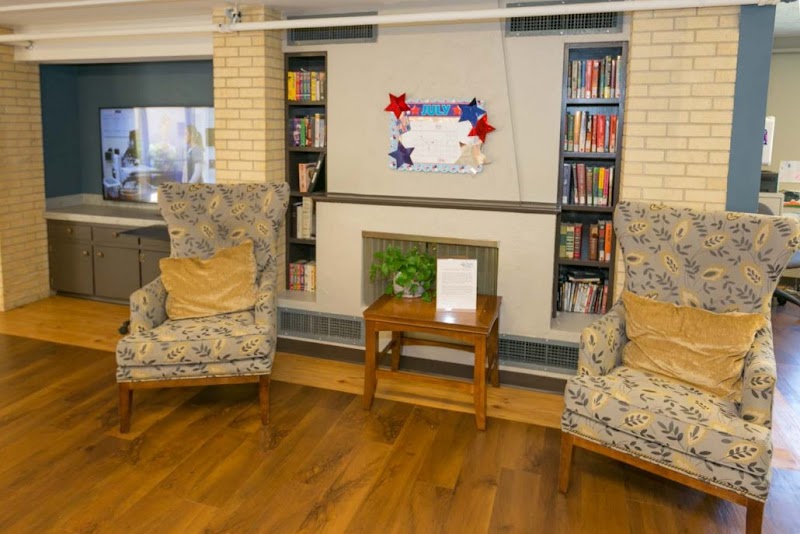
How is Omaha Nursing And Rehabilitation Center Staffed?

CMS rates Omaha Nursing and Rehabilitation Center's staffing level at 2 out of 5 stars, which is below average compared to other nursing homes. Staff turnover is 37%, compared to the Nebraska average of 46%. This relatively stable workforce can support continuity of care.

What Have Inspectors Found at Omaha Nursing And Rehabilitation Center?

State health inspectors documented 47 deficiencies at Omaha Nursing and Rehabilitation Center during 2021 to 2025. These included: 1 Immediate Jeopardy (the most serious level, indicating potential for serious harm or death), 5 that caused actual resident harm, 40 with potential for harm, and 1 minor or isolated issues. Immediate Jeopardy findings are rare and represent the most serious regulatory concerns. They require immediate corrective action.
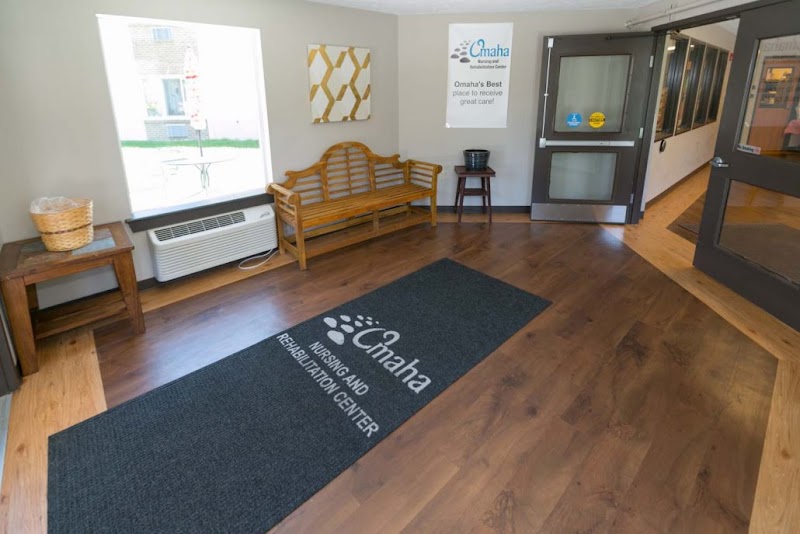
Who Owns and Operates Omaha Nursing And Rehabilitation Center?

Omaha Nursing and Rehabilitation Center is owned by a for-profit company. For-profit facilities operate as businesses with obligations to shareholders or private owners. The facility is operated by THE ENSIGN GROUP, a chain that manages multiple nursing homes. With 70 certified beds and approximately 61 residents (about 87% occupancy), it is a smaller facility located in Omaha, Nebraska.

How Does Omaha Nursing And Rehabilitation Center Compare to Other Nebraska Nursing Homes?

Compared to the 100 nursing homes in Nebraska, Omaha Nursing and Rehabilitation Center's overall rating (1 stars) is below the state average of 2.9, staff turnover (37%) is near the state average of 46%, and health inspection rating (1 stars) is much below the national benchmark.

What Should Families Ask When Visiting Omaha Nursing And Rehabilitation Center?

Based on this facility's data, families visiting should ask: "What changes have been made since the serious inspection findings, and how are you preventing similar issues?" "Can you walk me through typical staffing levels on day, evening, and night shifts?" "Can I visit during a mealtime to observe dining assistance and food quality?" "How do you handle medical emergencies, and what is your hospital transfer rate?" These questions are particularly relevant given the facility's Immediate Jeopardy citations and the below-average staffing rating.

Is Omaha Nursing And Rehabilitation Center Safe?

Based on CMS inspection data, Omaha Nursing and Rehabilitation Center has documented safety concerns. Inspectors have issued 1 Immediate Jeopardy citation (the most serious violation level indicating risk of serious injury or death). The facility has a 1-star overall rating and ranks #100 of 100 nursing homes in Nebraska. Families considering this facility should ask detailed questions about what corrective actions have been taken since these incidents.

Do Nurses at Omaha Nursing And Rehabilitation Center Stick Around?

Omaha Nursing and Rehabilitation Center has a staff turnover rate of 37%, which is about average for Nebraska nursing homes (state average: 46%). Moderate turnover is common in nursing homes, but families should still ask about staff tenure and how the facility maintains care continuity when employees leave.

Was Omaha Nursing And Rehabilitation Center Ever Fined?

Omaha Nursing and Rehabilitation Center has been fined $167,118 across 2 penalty actions. This is 4.8x the Nebraska average of $34,750. Fines at this level are uncommon and typically indicate a pattern of serious deficiencies, repeated violations, or failure to correct problems promptly. CMS reserves penalties of this magnitude for facilities that pose significant, documented risk to resident health or safety. Families should request specific documentation of what issues led to these fines and what systemic changes have been implemented.

Is Omaha Nursing And Rehabilitation Center on Any Federal Watch List?

Omaha Nursing and Rehabilitation Center is not on any federal watch list. The most significant is the Special Focus Facility (SFF) program, which identifies the bottom 1% of nursing homes nationally based on persistent, serious quality problems. Not being on this list means the facility has avoided the pattern of deficiencies that triggers enhanced federal oversight. This is a positive indicator, though families should still review the facility's inspection history directly.