South Haven Living Center
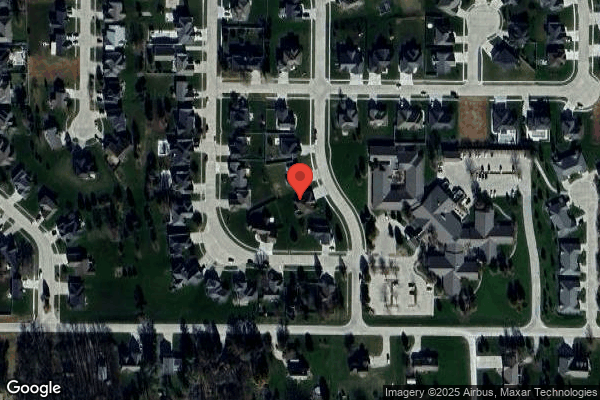
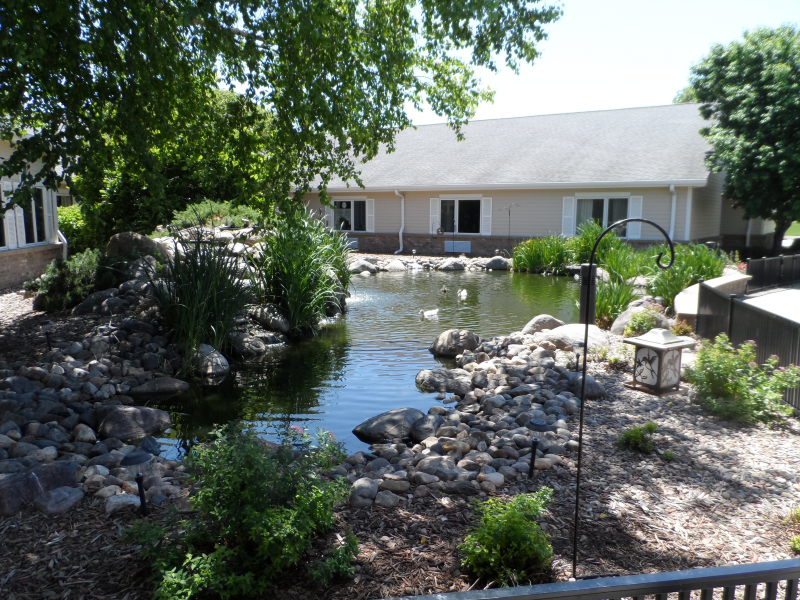
1400 Mark Drive, Wahoo, NE 68066 (402) 443-3737
Non profit - Corporation 85 Beds VETTER SENIOR LIVING Data: November 2025
Trust Grade
80/100
#60 of 177 in NE
Last Inspection: July 2025

Inspected within the last 6 months. Data reflects current conditions.

Overview

South Haven Living Center in Wahoo, Nebraska, has a Trust Grade of B+, indicating it is recommended and above average. It ranks #60 out of 177 nursing homes in Nebraska, placing it in the top half, and #2 out of 3 facilities in Saunders County, meaning only one local option is better. The facility is improving, having reduced issues from four in 2024 to two in 2025. Staffing is average with a turnover rate of 41%, which is better than the state average of 49%. Notably, there have been no fines on record, which is a positive sign. However, there are some concerns. Recent inspections revealed that the kitchen failed to properly label and dispose of food items, which could lead to foodborne illnesses affecting residents. Additionally, there were instances where staff did not perform necessary hand hygiene practices, risking cross-contamination, and a resident requiring assistance with toileting was not provided the help they needed. While the facility has strengths in overall ratings and no fines, these specific incidents highlight areas that require attention.
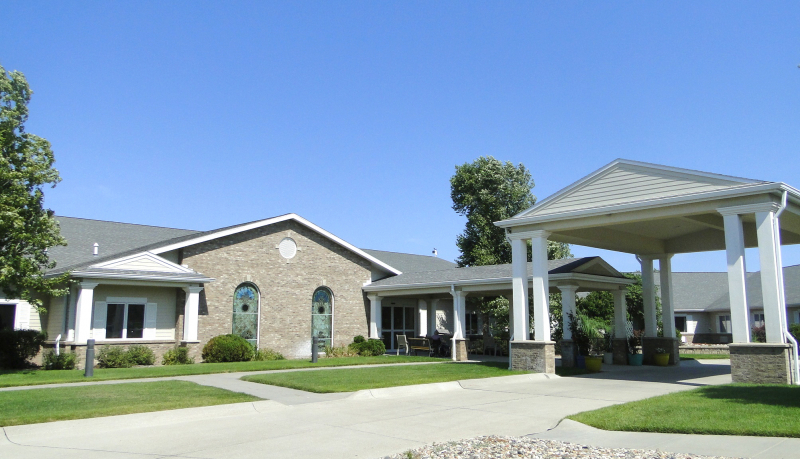
Trust Score
B+
80/100
In Nebraska
#60/177
Top 33%
Safety Record
Low Risk
No red flags
Inspections
Getting Better
4 → 2 violations
Staff Stability
○ Average
41% turnover. Near Nebraska's 48% average. Typical for the industry.
Penalties
✓ Good
No fines on record. Clean compliance history, better than most Nebraska facilities.
Skilled Nurses
○ Average
Each resident gets 40 minutes of Registered Nurse (RN) attention daily — about average for Nebraska. RNs are the most trained staff who monitor for health changes.
Violations
○ Average
6 deficiencies on record. Average for a facility this size. Mostly minor or procedural issues.
★★★★☆
4.0
Overall Rating
★★★☆☆
3.0
Staff Levels
★★☆☆☆
2.0
Care Quality
★★★★☆
4.0
Inspection Score
Stable
2024: 4 issues
2025: 2 issues

The Good

  • Full Sprinkler Coverage · Fire safety systems throughout facility
  • No fines on record
  • Staff turnover below average (41%)

    7 points below Nebraska average of 48%

Facility shows strength in fire safety.

The Bad

Staff Turnover: 41%

Near Nebraska avg (46%)

Typical for the industry

Chain: VETTER SENIOR LIVING

Part of a multi-facility chain

Ask about local staffing decisions and management

The Ugly 6 deficiencies on record

Jul 2025 2 deficiencies
CONCERN (D)

Potential for Harm - no one hurt, but risky conditions existed

ADL Care (Tag F0677)

Could have caused harm · This affected 1 resident

**NOTE- TERMS IN BRACKETS HAVE BEEN EDITED TO PROTECT CONFIDENTIALITY** Licensure Reference Number 175 NAC 12-006.09(H)(i)(3) Based on observation, interview, and record review; the facility failed to...

Read full inspector narrative →
**NOTE- TERMS IN BRACKETS HAVE BEEN EDITED TO PROTECT CONFIDENTIALITY** Licensure Reference Number 175 NAC 12-006.09(H)(i)(3) Based on observation, interview, and record review; the facility failed to provide toileting and repositioning for 1 (Resident 18) of 1 sampled resident who required staff assistance with these tasks. The facility census was 77.Findings are:Record review of Resident 18's admission Record dated 7/8/25 revealed the resident was admitted to the facility on [DATE].Record review of Resident 18's document titled Diagnosis dated 7/8/25 revealed diagnoses of personal history of traumatic brain injury (brain dysfunction caused by an outside force, usually a violent blow to the head), frontotemporal neurocognitive disorder (a neurodegenerative brain disorder that occurs when nerve cells in the frontal and temporal lobes degenerate, causing the lobes to shrink), and mild neurocognitive disorder due to known physiological condition without behavioral disturbance (a condition where a person experiences a decline in cognitive abilities, such a memory or thinking skills, due to a known medical condition, but this decline doesn't significantly impact their daily life or cause noticeable behavioral changes).Record review of Resident 18's Minimum Data Set (MDS, a comprehensive assessment of each resident's functional capabilities) dated 4/7/25 revealed the following information about the resident:-Section C: a Brief Interview for Mental Status (BIMS, a test used to get a quick snapshot of a resident's cognitive function, scored from 0-15, the higher the score, the higher the cognitive function) score of 6, indicating Resident 18 had severe cognitive impairment.-Section G: the resident had no limitation in upper ROM (range of motion), no limitation in lower ROM, and used a wheelchair. The resident was dependent on staff assistance for rolling left to right in bed, transfers, and toileting hygiene. -Section H: the resident was always incontinent of urinary and bowel.-Section M: the resident was at risk for pressure ulcers (PU, an injury to skin and underlying tissue resulting from prolonged pressure on the skin), no PU present. The resident had pressure reducing devices in their bed and wheelchair.Record review of Resident 18's Braden Scale (a risk assessment tool that predicts a patient's likelihood of developing pressure ulcers - generally a score of 18 or less indicates at-risk status) score was 13 which indicated the resident was at moderate risk for developing pressure ulcers. The assessment was done on 7/6/25.Record review of Resident 18's Care Plan (a document that outlines the specific healthcare, personal care, or support a person will receive) dated 7/8/25 revealed: 1.ADL (activities of daily living) self-care performance deficit related to bipolar, diabetes mellitus, seizures, morbid obesity, and personal history of a traumatic brain injury.-Bed Mobility: 2 assists with turning side to side. -Toilet use: 2 assists, is incontinent of bladder and bowel, provide peri cares with brief changing as needed, check and change on a routine basis.-Transfer: the resident utilized a Hoyer mechanical lift.2. Potential for alteration in bowel elimination related to decreased mobility, antidepressant meds, history of diverticulitis and blood in the stool. -Bowels will be managed without complications through the review date.-monitor bowel elimination pattern PRN, monitor/document/report PRN complications related to bowel elimination.3. Potential/actual impairment to skin integrity related to diabetes, immobility and incontinence. History of a stage 2 pressure ulcer to the tailbone that was healed on 11/12/24.-offload coccyx by turning left/right at frequent intervals.-Pressure-relieving devices to chair (aqua gel cushion) and bed.-Provide peri care after each incontinent episode. Observation on 7/7/25 at 9:34 AM of Resident 18 revealed the resident was sitting in their wheelchair, tilted back, in their room with the TV on. The resident was sleeping and there was a Hoyer lift sling underneath the resident. Observation on 7/8/25 at 6:55 AM of Resident 18 revealed the resident was sitting in their wheelchair in an upright position by the nurse's station with the Hoyer sling underneath the resident. Observation on 7/8/25 at 7:20 AM of Resident 18 revealed the resident was sitting up to the dining room table in their wheelchair in an upright position waiting for breakfast with the Hoyer sling underneath resident.Observation on 7/8/25 at 8:10 AM of Resident 18 revealed the resident continued to be sitting at the dining room table in their wheelchair in the same upright position waiting for their breakfast tray with the Hoyer sling underneath resident.Observation on 7/8/25 at 8:45 AM of Resident 18 revealed the resident had finished eating and was taken back to their room. The resident was sitting in their wheelchair in a tilted back position and sitting in front of the TV. Resident 18 had a blanket covering them with the Hoyer sling underneath resident. Observed the wheelchair front wheels were turned toward the bed.Observation on 7/8/25 at 9:33 AM of Resident 18 revealed the resident was asleep in their wheelchair with Hoyer sling remaining underneath resident. The wheelchair front wheels remained turned toward the bed and the wheelchair was tilted back in the same position. Observation on 7/8/25 at 9:56 AM of Resident 18 revealed the resident remained in the same position as prior observation.Observation on 7/8/25 at 11:00 AM of Resident 18 revealed the resident remained in the same position as prior observation. The resident was holding a washcloth and washing their face with an empty basin sitting on their lap. Resident 18 continued to have a Hoyer sling underneath them. Observation on 7/8/25 at 11:30 AM of Resident 18 revealed the resident was asleep holding onto washcloth and the basin was on the floor. The resident remained in the same position and the lift sling remained under the resident.Observation on 7/8/25 at 11:48 AM revealed Nurse Aide (NA)-A and Medication Aide (MA)-B were performing peri cares and repositioning for Resident 18. NA-A and MA-B changed the resident's clothes, incontinence brief, lift sling and provided peri care. The resident's incontinence brief was observed to be saturated with urine and bowel movement, which were leaking out of the brief.An interview on 7/8/25 at 1:47 PM with NA-A confirmed that Resident 18 had not been toileted between getting out of bed and 11:48 AM and should have been. NA-A also confirmed the resident should have been repositioned more frequently. Interview on 7/8/25 at 1:50 PM with the Director of Nursing (DON) confirmed the staff should remove the lift sling from underneath Resident 18 after getting resident up into the wheelchair, and Resident 18 should have been repositioned and toileted that morning after breakfast. The DON also confirmed that the resident had a history of a pressure ulcer, that their Braden Scale indicated they were at moderate risk for pressure, and that the lift sling increased this risk.Record review of the facility's Skin and Wound Management Standard policy, revised 4/2019 revealed in the Preventative Measures section that once risk has been identified, initiate appropriate preventative measures to ensure minimizing the risk of pressure ulcer development. -Repositioning: All residents should be evaluated for individual needs and repositioned as necessary. Consider limiting high risk resident's time in one position, such as in wheelchair. Lay resident down, as appropriate, between meals and cue staff to position resident off their back with naps or rest periods.-Repositioning should occur during rounds, which are expected approximately every two hours.-Residents in a wheelchair should be repositioned or weight shifted approximately every hour.-Moisture: Residents with moisture issues such as perspiration or urine should have an appropriate plan to keep moisture minimized.Record review of the facility's Bowel and Bladder Management Standard policy, updated 4/18/2017 revealed in the Introduction section that the interdisciplinary team plays a significant role in bladder and bowel management, promoting open communication and monitoring the outcome of the continence programs. Continence management includes assessment for incontinence, the promotion of continence, the proper use of continence care products, appropriate toileting routines, and the evaluation of each resident's care plan to ensure the continence program is being managed effectively.In the Expectation and Philosophy section it revealed: -A resident who has a catheter or is incontinent of bladder, (either on admission or during their stay), will be identified, assessed and provide appropriate treatment and services to achieve or maintain as much normal urinary function as possible, this includes the prevention of urinary tract infections. -Residents with fecal incontinence must receive the appropriate treatment and services to restore as much normal bowel function as possible. -Incontinence products: It is important that the residents using various products be checked, toileted and changed as needed on a schedule based upon the resident's voiding pattern, accepted standards of practice, and the manufacturer's recommendations.
CONCERN (D)

Potential for Harm - no one hurt, but risky conditions existed

Infection Control (Tag F0880)

Could have caused harm · This affected 1 resident

**NOTE- TERMS IN BRACKETS HAVE BEEN EDITED TO PROTECT CONFIDENTIALITY** Licensure reference number 175 NAC 12-006.18 Based on observations, interviews, and record reviews; the facility failed to ensur...

Read full inspector narrative →
**NOTE- TERMS IN BRACKETS HAVE BEEN EDITED TO PROTECT CONFIDENTIALITY** Licensure reference number 175 NAC 12-006.18 Based on observations, interviews, and record reviews; the facility failed to ensure staff performed hand hygiene between glove changes, perform hand hygiene via soap and water for 20 seconds, and did not use contaminated gloves when getting clean wipes out of the wipes container for 1 (Resident 18) of 1 sampled resident to prevent the potential for cross contamination. The facility census was 77.Findings are:Record review of Resident 18's admission Record dated 7/8/25 revealed the resident was admitted to the facility on [DATE].Record review of Resident 18's document titled Diagnosis dated 7/8/25 revealed diagnoses of personal history of traumatic brain injury (brain dysfunction caused by an outside force, usually a violent blow to the head), frontotemporal neurocognitive disorder (a neurodegenerative brain disorder that occurs when nerve cells in the frontal and temporal lobes degenerate, causing the lobes to shrink), and mild neurocognitive disorder due to known physiological condition without behavioral disturbance (a condition where a person experiences a decline in cognitive abilities, such a memory or thinking skills, due to a known medical condition, but this decline doesn't significantly impact their daily life or cause noticeable behavioral changes).Record review of Resident 18's Minimum Data Set (MDS, a comprehensive assessment of each resident's functional capabilities) dated 4/7/25 revealed the following information about the resident:-Section C: a Brief Interview for Mental Status (BIMS, a test used to get a quick snapshot of a resident's cognitive function, scored from 0-15, the higher the score, the higher the cognitive function) score of 6, indicating Resident 18 had severe cognitive impairment.-Section G: the resident had no limitation in upper ROM (range of motion), no limitation in lower ROM, and used a wheelchair. The resident was dependent on staff assistance for rolling left to right in bed, transfers, and toileting hygiene. -Section H: the resident was always incontinent of urinary and bowel. Observation on 7/8/25 at 11:48 AM revealed Nurse Aide (NA)-A and Medication Aide (MA)-B were performing peri cares and repositioning for Resident 18. MA-B was in the resident's room wearing gloves and had Resident 18 hooked up to the Hoyer lift (an assistive device that helps transfer patients between resting places like beds or chairs). NA-A applied alcohol based hand rub (ABHR) to their hands and then applied gloves. MA-B started to lift Resident 18 using the Hoyer lift and noted some loose bowel movement dripping onto the floor, lift sling, and the lift leg bar. NA-A cleansed the lift leg bar off and the floor with a cleansing wipe to remove the loose stool. NA-A removed their gloves and performed hand hygiene with soap and water for 7 seconds, dried their hands and applied new gloves. The resident was then assisted into bed. NA-A and MA-B removed the resident's sling and pants. NA-A and MA-B took cleansing wipes out of the wipes container with their contaminated gloves several times while wiping bowel movement off the resident's inner legs. NA-A and MA-B then removed the resident's incontinence brief that was saturated with urine and loose bowel movement. MA-B removed cleansing wipes from the wipes container several different times with the same contaminated gloves and finished cleansing resident's groin, peri-area, and buttocks with different wipes each time. NA-A performed hand hygiene with soap and water for 5 seconds and then applied new gloves. MA-B changed their gloves without performing hand hygiene. NA-A and MA-B then placed a clean brief and clothes on Resident 18 and assisted the resident up into their wheelchair with the Hoyer lift.An interview on 7/8/25 at 1:45 PM with MA-B confirmed the MA should have performed hand hygiene when changing gloves and should not have used contaminated gloves while getting new cleansing wipes out of the container. An interview on 7/8/25 at 1:47 PM with NA-A confirmed they should have performed hand hygiene for 20 seconds when using soap and water and should not have used contaminated gloves while getting new cleansing wipes out of the container.An interview on 7/8/25 at 1:50 PM with the Director of Nursing (DON) confirmed that MA-B should have performed hand hygiene when changing gloves, NA-A should have performed hand hygiene for 20 seconds with soap and water. The DON also confirmed that NA-A and MA-B should not have used contaminated gloves while getting new cleansing wipes out of the container. Record review of the facility's Hand Hygiene Competency policy revised 12/2019 revealed the following procedure: 1. Check for paper towels before starting hand hygiene procedure. 2. Turn on water and wet hands. Water should be warm, not hot or cold. 3. Apply soap, use friction, rub hands together. Clean around and under nails/jewelry and between fingers. Wash up on to wrist (approximately 2 inches above wrist). 4. Lather and rub hands together for full 20 seconds. 5. While positioning hands lower than wrists, rinse hands well under warm water without touching the inside of the sink or the faucet to hands. (These areas are always considered soiled). Do not shut off water. Leave it running. 6. Dry hands well with paper towels. When finished drying hands, discard paper towel and take a clean paper towel to shut off water faucet. Discard paper towel. When to wash hands: -After handling contaminated items (linens/garbage/briefs, etc). -Before and after gloving.
May 2024 3 deficiencies
CONCERN (D)

Potential for Harm - no one hurt, but risky conditions existed

Quality of Care (Tag F0684)

Could have caused harm · This affected 1 resident

**NOTE- TERMS IN BRACKETS HAVE BEEN EDITED TO PROTECT CONFIDENTIALITY** Licensure Reference Number 175 NAC 12-006.09D3(5) Based on interview and record review; the facility failed to monitor bowel mov...

Read full inspector narrative →
**NOTE- TERMS IN BRACKETS HAVE BEEN EDITED TO PROTECT CONFIDENTIALITY** Licensure Reference Number 175 NAC 12-006.09D3(5) Based on interview and record review; the facility failed to monitor bowel movements and provide prn medication per facility elimination protocol to prevent the potential of constipation for 1 (Resident 40) of 5 sampled residents. The facility census was 78. Findings are: A review of the facility Elimination Protocol revised 6/2014 stated each night, after midnight, the night nurse will review the elimination records for their nurses' station. From this review, they will generate a list of residents who are in need of interventions for bowel management. This list will be documented below: -1st Day (24-hour period without a BM) -Offer 4 oz prune juice or natural laxative and document in the intervention column, -2nd Day (48-hour period without a BM)-Give 30 milliliters Milk of Magnesia by mouth (or whatever as needed medication is ordered by their physician) on the 6-2 shift. Document on the MAR and intervention column. -3rd Day (72 hours without a BM)-Charge nurse to assess bowel sounds, palpate and document assessment results. The bowel assessment should be done by day charge nurse (in event there are absent bowel sounds hat indicate physician notification) and again by the evening charge nurse prior to suppository administration. You will also determine if resident is uncomfortable and document. Then give Dulcolax or glycerin suppository as ordered to be given rectally at a time that is agreeable to the resident (generally given on 2-10 PM shift, after supper unless otherwise requested by resident) Document on the MAR, 24-hour sheet (form used by nurse to relay information about residents from one shift to the next), and intervention column. -4th Day-If above interventions have not been successful, advance to enema as ordered and continue with bowel assessments each shift until resolved. The attending physician should also be contacted as appropriate. A record review of Resident 40's Medical Diagnosis dated 5/8/2024 revealed Resident 40 admitted to the facility on [DATE] with diagnoses of dementia (general term for loss of memory, language, problem-solving and other thinking abilities that interfere with daily life), delusional disorder (a mental health condition in which a person can't tell what's real from what's imagined), anxiety (a feeling of fear, dread, and uneasiness), depression (persistent feeling of sadness and loss of interest interfering with daily activity) and hypertension (elevated blood pressure). A record review of the Quarterly MDS (Minimum Data Set-a comprehensive assessment that measures a residents functional, medical, psychosocial, and cognitive status) dated 3/25/2024 revealed a BIMS (Brief Interview for Mental Status) score of 7 which suggests severe cognitive impairment. Further review of Section H: Bladder and Bowel indicated the resident is frequently incontinent of urine and always continent of bowel. Further review of Section GG: Functional Abilities and Goals indicated the resident requires supervision to touching assistance with ambulation with walker, partial to moderate assistance to transfer on and off the toilet, and substantial to maximal assistance for hygiene after using the toilet and clothing adjustment. A record review of the Order Summary Report printed 5/8/2024 revealed the following bowel medications that are ordered for the resident: -Dulcolax suppository (medication used to treat constipation) every 24 hours as needed -Milk of Magnesia (used for constipation) 30 milliliters daily as needed -Miralax (used for constipation) every 24 hours as needed A record review of the resident's bowel elimination records for February, March, April, and May revealed bowel movements on the following days: 2/3/2024, 2/5/2024, 2/7/2024, 2/8/2024, 2/13/2024, 2/14/2024, 2/22/2024, 2/24/2024, 2/28/2024 3/2/2024, 3/4/2024, 3/5/2024, 3/8/2024, 3/12/2024, 3/16/2024, 3/18/2024, 3/19/2024, 3/23/2024, 3/24/2024, 3/26/2024, 3/27/2024, 3/30/2024 4/2/2024, 4/3/2024, 4/4/2024, 4/5/2024, 4/6/2024, 4/7/2024, 4/8/2024, 4/9/2024, 4/13/2024, 4/15/2024, 4/18/2024, 4/19/2024, 4/21/2024, 4/22/2024, 4/24/2024, 4/29/2024 5/4/2024, 5/6/2024, 5/7/2024, 5/9/2024, 5/12/2024, 5/13/2024. A record review of the February 2024 MAR (Medication Administration Record-record used to document medications administered to a resident) revealed Miralax and a Dulcolax suppository were administered on 2/19/2024 and Milk of Magnesia was administered on 2/21/2024. There is no documentation of a medication given for bowels between 2/8/2024 and 2/13/2024 or between 2/24/2024 and 2/28/2024. A record review of the March 2024 MAR revealed Milk of Magnesia was administered on 3/20/2024. There is no documentation of a medication given for bowels between 3/8/2024 and 3/12/2024, 3/12/2024 and 3/16/2024, and 3/27/2024 and 3/30/2024. A record review of the April 2024 MAR revealed no bowel medications were given between 4/9/2024 and 4/13/2024, 4/15/2024 and 4/18/2024, and 4/24/2024 and 4/29/2024. A record review of the May 2024 MAR revealed no bowel medications were given between 4/29/2024 and 5/4/2024 and 5/9/2024 and 5/12/2024. A record review of Resident 40's progress notes revealed three notations related to bowels since 2/1/2024. A notation on 2/21/2024 at 5:32 AM stated the resident was on Day 6 with no documented bowel movement and resident denied abdominal pain or tenderness. Bowel sounds were active in 3 quadrants of the abdomen and less active in 1 quadrant of the abdomen. The resident was offered and attempted a Dulcolax suppository and resident refused. A notation on 4/5/2024 at 1:49 PM indicated the resident was complaining of rectal pain and was noted to have 3 external hemorrhoids and a fax was sent to the medical doctor requesting an order for Preparation H (ointment for hemorrhoid relief). A notation on 5/9/2024 at 2:05 PM indicated the medical doctor was faxed regarding Resident 40's ongoing constipation issues and requested an order for daily Miralax. An interview on 5/9/2024 at 10:15 AM with LPN-C (Licensed Practical Nurse) and MA-H (Medication Aide) revealed staff follow a bowel protocol. MA-H stated a list is given to them by the night nurse of those residents that need a natural laxative or as needed medication for their bowels. When asked if there are any residents that might be able to say they feel constipated, MA-H revealed 2 residents and that this resident might be able to. When asked if it is an issue if a resident goes 3,4, or 5 days without a bowel movement, MA-H said it depends on the issue and commented some residents might be on hospice. MA-H said agency staff do not seem to pay attention to the bowel documentation and probably forget to chart. LPN-C also stated it depends on their meal intake as well. When asked if this resident could toilet themselves, the response was maybe. LPN-C mentioned this resident has pancake call light under them so staff know when [gender] gets up and staff can then go assist [gender]. LPN-C further commented that the resident often uses a wheelchair for mobility. An interview on 5/9/2024 at 12:40 PM with Resident 40 regarding how often [gender] has a bowel movement, the resident commented oh, I go in the morning, I go in the afternoon, and I go in the evening, and laughed afterwards. A sign is observed on the bathroom door that says to use call light for help. An interview on 5/9/2024 at 10:30 AM with the DON (Director of Nursing) regarding residents' going 3, 4, 5 days without a bowel movement and no as needed medication is provided led to no response provided by the DON. An interview on 5/9/2024 at 12:00 PM with the DON revealed the facility had no specific bowel management policy but an Elimination Protocol that is followed. The DON further stated they have a PIP (Performance Improvement Project-a concentrated effort on a particular problem in one area of the facility or facility wide) in place for this issue. A copy of the PIP was requested. A record review of the PIP titled BM (bowel movement) Elimination Protocol revealed a start date of 3/12/2024 with a goal that the elimination protocol will be followed by charge nurses and medication aides. Reasons provided by the facility for issues with bowel management include bowel movements not assessed or charted, residents eliminate independently, memory care residents forgetting whether they have or have not had a bowel movement, nurses and med aides not giving medications per the protocol. The PIP stated weekly elimination protocol forms are to be viewed and addressed with the charge nurses, one on one education with the nurses, and a skills fair checkoff to all nursing team members is the action plan to improve bowel management. An interview on 5/9/2024 at 1:50 PM with the DON led to a request of the education provided to staff or audits since 3/12/2024 to show whether there has been improvement or not. An interview on 5/9/2024 at 2:59 PM with the DON revealed a sheet of paper with 4 dates (3/12/2024, 4/15/2024, 4/24/2024, and 5/3/2024) of one-on-one education for 6 different nurses but no specific details of the education are listed. No audits provided. The DON stated there has been some improvement but there needs to be more. An interview on 5/9/2024 at 1:10 PM with NA-E revealed [gender] no training on bowel management this year but stated [gender] did do some training about how to do peri-care (cleaning of resident genitalia/rectal area). An interview on 5/9/2024 at 1:45 PM with MA-F regarding how staff knows if someone needs medication to promote a bowel movement, MA-F revealed there is a list of those residents that show what day they are on and to follow the protocol. When asked if [gender] has received any education about bowel management, MA-F replied that [gender] had not in the last couple of months but stated there was something on the dashboard in PCC (PointClickCare-software used by health care facilities to collect/store data about residents in the facility) about following policies and procedures. An interview on 5/9/2024 at 2:05 PM with MA-G regarding how staff know if a resident is constipated or needs something to help promote bowel movement, MA-G stated [gender] didn't think it was up to them to decide and would need to ask the charge nurse. If a medication was given, [gender] would document the medication as given on the MAR and bowel movements are documented in PCC.
CONCERN (D)

Potential for Harm - no one hurt, but risky conditions existed

Infection Control (Tag F0880)

Could have caused harm · This affected 1 resident

**NOTE- TERMS IN BRACKETS HAVE BEEN EDITED TO PROTECT CONFIDENTIALITY** Licensure Reference Number 175 NAC 12-006.17B Licensure Reference Number 175 NAC 12-006.17D Based on observation, record review,...

Read full inspector narrative →
**NOTE- TERMS IN BRACKETS HAVE BEEN EDITED TO PROTECT CONFIDENTIALITY** Licensure Reference Number 175 NAC 12-006.17B Licensure Reference Number 175 NAC 12-006.17D Based on observation, record review, and interview; the facility failed to perform hand hygiene between the removal of soiled gloves and application of new gloves during resident care and applied an incontinence brief that was picked up off the floor and failed to perform hand hygiene prior to application of cream to prevent the spread of infection and prevent the potential of cross contamination for 2 (Resident 53 and Resident 55) of 3 sampled residents. The facility also failed to prevent the potential of cross contamination by picking up a dropped medication on the medication cart with bare fingers for 1 (Resident 18) of 4 sampled residents. The facility census was 78. Findings are: A. An observation on 5/9/2024 at 10:00 AM revealed LPN-C (Licensed Practical Nurse) had completed flushing Resident 53's indwelling foley catheter. LPN-C proceeded to wash around the resident's urinary meatus (opening where urine exits the body). LPN-C performed hand hygiene with soap and water at the sink for 20 seconds. LPN-C applied gloves and applied Nystatin cream to resident's penis/urethral area. LPN-C removed soiled gloves and applied new gloves. LPN-C then palpated the resident's abdomen, pulled the trash can closer to the bed, assisted the resident to [gender] side with assistance from NA-E (Nursing Assistant) to assess buttocks. The resident's soiled brief was removed and placed in the trash by LPN-C. LPN-C bent down to pick up an opened brief (skin side down) off the floor and applied the brief to the resident. The resident's pants were pulled up by both staff members. LPN-C lowered the bed with control. LPN-C then removed and threw away the soiled gloves. An interview on 5/9/2024 at 10:15 AM with LPN-C confirmed that [gender] should have performed hand hygiene between removal of soiled gloves and application of new gloves and a brief that was lying on the floor should not have been used on the resident. An interview on 5/9/2024 at 10:30 AM with the DON (Director of Nursing) confirmed that hand hygiene needs to be performed between glove exchange and a brief that was lying on the floor should not have been used for resident use. A record review of the facility policy Hand Hygiene revised 8/20/2023 from the [NAME] Procedural manual stated that washing with soap and water is appropriate when the hands are visibly soiled or contaminated with blood or other body fluids, when exposure to potential spore forming pathogens is strongly suspected or proven, and after using the rest room. An alcohol-based hand rub is appropriate for decontaminating the hands: -before direct patient contact, putting on gloves, or inserting an invasive devise, -when moving from a contaminated body site to a clean body site during patient care, -after contact with a patient or with body fluids, excretions, mucous membranes, nonintact skin, or wound dressings, -after contact with inanimate objects in the patient's environment, -after removing gloves. C. An observation on May 9th at 9:50 AM with MA-I as they prepared medication for Resident 18 the medication Mybetriq (a medication to treat overactive bladders) when pushed out of the bubble pack hit MA-I's ungloved hand, bounced off MA-I ungloved hand and landed on top of the medication cart. MA-I picked up the medication Mybetriq with an ungloved hand and placed it into the medication cup. MA-I then proceeded to hand the medication cup filled with Resident 18's medications and handed them to (gender) and Resident 18 swallowed the medicaiton. An interview on May 9th, 2024 at 10:10 AM with MA-I stated if a medication falls onto the top of the medication cart the medication is to be discarded and replaced with a new pill. MA-I confirmed she should have discarded the dropped medication and replaced it with a new pill. An interview on May 9th, 2024 with DON confirmed if a medication falls anywhere other than the medication cup prior to administration the medication should be discarded and replaced with a new pill. DON confirmed the medication should have been replaced to prevent contamination of the medication. B. Record review of Resident 55's Minimum Data Set (MDS) (a mandatory comprehensive assessment tool used for care planning) dated 3/6/24 revealed Resident 55's admission was 03/09/2022. Record review of Resident 55's Diagnosis Sheet dated 5/16/24 revealed retention of urine, unspecified and Flaccid Neuropathic Bladder, not elsewhere classified. Record review of Resident 55's MDS dated [DATE] revealed in section C, a BIMS (Brief Interview for Mental Status, a test used to get a quick snapshot of a resident's cognitive function, scored from 0-15, the higher the score, the higher the cognitive function) of 13 indicating resident is cognitively intact. Section H 9 revealed as Not rated, resident had a catheter (indwelling, condom), urinary ostomy, or no urine output for the entire 7 days. Record review of Resident 55's Physician Orders revision date 4/15/24 revealed Monthly catheter change 16 FR with 10cc balloon every evening shift every 1 month. Observation of Resident 55's catheter cares on 5/13/24 at 7:25 am with Medication Aide (MA)-A. NA-B assisted with resident's positioning. MA-B and NA-B donned a gown, a face shield and gloves outside the room. MA-A prepared supplies for cleansing. MA-A washed resident's groin and abdominal skin fold with soap and water using washcloth, then rinsed with another washcloth, and dried. The abdominal fold was red in color. NA-B called the charge nurse to bring in nystatin cream for the MA. MA-A applied nystatin cream to abdominal folds without changing gloves and performing hand hygiene. MA-A retracted the foreskin and cleansed the penis, then rinsed with a clean wet washcloth, and dried. Then washed and rinsed catheter tubing from urethra opening out several inches. A small amount of bleeding noted at edge of foreskin and MA-A said a small wound was there and had NA-B call the charge nurse to assess wound. The MA-A doffed gloves, then performed hand hygiene with soap and water times 20 seconds and applied new gloves. The old urinary drainage bag was dated 4/15/24. There was thick cloudy light-yellow urine with mucous and sediment in tubing and bag. MA-A cleaned the connection between the catheter and the drainage bag tubing with alcohol pads prior to attaching new urinary drainage bag. Placed the drainage bag tubing in the catheter securement device on leg and attached the bag to the bed frame. Interview on 5/13/24 at 7:37 am with MA-A revealed Yes, I should have changed my gloves, I figured my gloved hands were in the soapy water. I'm used to working in surgery. Record review of Indwelling urinary catheter (Foley) care and management, home care policy revised 12/11/2023. Policy revealed under Implementation: -Perform perineal care using mild soap, warm water, and a washcloth as appropriate. Gently clean the urethral meatus first and then clean the rest of the perineal area from front to back to avoid contaminating the urinary tract. For a patient with an uncircumcised penis, gently retract the foreskin to clean beneath it and return the foreskin to its normal position after cleaning to avoid constriction of the penis, which can cause edema and tissue damage. Rinse the area carefully and pat it dry with a towel. Avoid aggressively cleaning the meatal area and creating traction on the catheter because these actions can cause meatal irritation, tissue trauma, and infection. -As appropriate, replace the drainage bag system when clinically indicated (such as when clouding, a foul odor, or discoloration is present) and as recommended by the manufacturer using no-touch technique. To replace the drainage bag, clamp the catheter, clean the connection between the catheter and the drainage bag tubing with a disinfectant pad, and disconnect the tubing from the catheter. Then clean the tip of the new drainage bag tubing with a disinfectant pad, connect the tubing to the catheter, and unclamp the catheter.
CONCERN (F)

Potential for Harm - no one hurt, but risky conditions existed

Food Safety (Tag F0812)

Could have caused harm · This affected most or all residents

Licensure Reference Number 175 NAC 12-006.11E Based on observation, interview, and record review; the facility kitchen failed to label and date a clear container of lemonade, failed to dispose of expi...

Read full inspector narrative →
Licensure Reference Number 175 NAC 12-006.11E Based on observation, interview, and record review; the facility kitchen failed to label and date a clear container of lemonade, failed to dispose of expired drink and food items in the kitchen, and failed to remove dented cans for resident use to prevent the potential of food borne illness. This had the potential to affect 78 residents. The facility census was 78. Findings are: An observation on 5/8/2024 at 7:50 AM of the refrigerator in the kitchen revealed 3 clear beverage dispensers, one with red colored fluid dated 5/3/2024, one with pink colored fluid dated 5/3/2024, and one with yellow colored fluid with no label or date. A clear container of chicken salad dated 5/2/2024 was also in the refrigerator. A bottle of Kitchen bouquet browning and season sauce is on a metal shelf in the kitchen and has an open date of 4/12/2024 but a use-by date of 2/10/2024. An observation on 5/8/2024 at 8:00 AM in the dry storage revealed a dented can of refried beans on the shelf for resident use. An observation on 5/8/2024 at 8:20 AM of the refrigerator in the Lakemont kitchenette revealed 3 clear beverage dispensers, a pink colored fluid dated 4/30/2024, fruit punch dated 4/28/2024, and grape juice dated 4/30/2024. An observation on 5/13/2024 at 9:31 AM during a final walk through of the kitchen revealed a dented can of applesauce and a dented can of diced peaches on the shelf in the dry storage room. An interview on 5/8/2024 at 8:10 AM with the FSS (Food Services Supervisor) revealed the [gender] had removed all food/fluid items that were previously observed and confirmed they were expired and should have been removed for use along with the dented can of refried beans. An interview on 5/8/2024 at 8:20AM with NA-D revealed NA-D did not know the expiration date of the drinks in the refrigerator. When notified that they should be removed after 3 days, NA-D said, I thought so, and disposed of the drinks. An interview on 5/13/2024 at 9:32 AM with the FSS revealed the dented can of applesauce and peaches should have been removed from the shelves. An interview on 5/13/2024 at 11:01 AM with the RD (Registered Dietician) confirmed that dented cans should be removed from use for the residents. The RD stated [gender] placed a copy of the Dented Can Guide from Sysco in the dry storage room and would in-service staff on All about Can Safety. A record review of the facility policy Food Storage dated 2010 stated under Procedure: 13. Leftover food is stored in covered containers or wrapped carefully and securely. Each item is clearly labeled and dated before being refrigerated. Leftover food is used within 3 days or discarded. 14. Refrigerated Food Storage: f. All foods should be covered, labeled, and dated. All foods will be checked to assure that foods (including leftovers) will be consumed by their safe use by dates, or frozen (where applicable) or discarded. A record review of the undated Dented Can Guide from Sysco stated to discard cans with severe dents on side seam, sharp dents parallel to rim, sharp dents on the side that prevent stacking, buckled or pinched tops and bottoms, leaks, bulges or puffed ends, ends that give or flip and bulge on the other end when pushed, and severe dents on the rims, seam, or bent rims.
Feb 2024 1 deficiency
CONCERN (D) 📢 Someone Reported This

A family member, employee, or ombudsman was alarmed enough to file a formal complaint

Potential for Harm - no one hurt, but risky conditions existed

Accident Prevention (Tag F0689)

Could have caused harm · This affected 1 resident

**NOTE- TERMS IN BRACKETS HAVE BEEN EDITED TO PROTECT CONFIDENTIALITY** Licensure Reference Number 175 NAC 12.006.09D7a Based on observation, interview, and record review, the facility failed to ensur...

Read full inspector narrative →
**NOTE- TERMS IN BRACKETS HAVE BEEN EDITED TO PROTECT CONFIDENTIALITY** Licensure Reference Number 175 NAC 12.006.09D7a Based on observation, interview, and record review, the facility failed to ensure the facility's front door was monitored and secured to prevent an elopement (leave the facility without staff knowing) for 1 (Resident 1) of 3 sampled residents. The total facility census was 77. Findings are: A record review of the facility's Elopement Prevention And Management Standard dated 01/2016 revealed an elopement is when a resident left the facility without staff knowledge, intervention, or the exit security system failed to activate. Residents that exhibited exit seeking behaviors should be considered for a Memory Support Household. Residents with a transmitter device bracelet would have their bracelets checked daily by nursing. All door systems would be on at all times and tested daily. A record review of Resident 1's Clinical Census dated 02/15/2024 revealed the Resident was admitted to the facility on [DATE]. A record review of Resident 1's admission Record dated 02/15/2024 revealed the Resident had diagnoses of: Dementia in Other Diseases Classified Elsewhere, Mild, with Psychotic Disturbance (confusion with behaviors), Depression, Unspecified, and Anxiety Disorder, Unspecified. A record review of Resident 1's Minimum Data Set (MDS)(a comprehensive assessment used to develop a resident's care plan) dated 11/06/2023 revealed Resident 1 had a Brief Interview for Mental Status (BIMS)(a score of a residents cognitive abilities) of 6 of 15 which indicates the Resident was severely cognitively impaired. Resident 1 was independent with all activities of daily living (ADLs) and mobility. The MDS revealed the Resident exhibited wandering (walking around aimlessly) behaviors 1 to 3 days and did not have restraints or alarms. A record review of Resident 1's Care Plan revealed a Focus area of the Resident was an elopement risk related to wandering behaviors and short- and long-term memory impairment. Resident 1 had interventions in place of provide 1 on 1 when Resident was looking for [gender] spouse, educate team members to orient Resident to the direction of the neighborhood (unit) and the facility would not interfere with activities schedule in town hall, intervene as soon as anxious behavior noted to prevent behavior escalation, Provide a safe uncluttered area in which to wander every day, and when Resident was expressing confusion of where the resident needed to be or where going, assist the resident to the neighborhood (unit). A record review of Resident 1's Elopement/Wandering Review dated 11/01/2023 revealed the Resident had a score of 45 which indicated [gender] was at high risk for elopement or wandering. The Resident was cognitively impaired, had depression, was able to ambulate independently (walk on own), had a history of elopement, expressed a desire to go home, wandered aimlessly, and the family voiced concerns that would indicate the Resident may wander or try to leave. A record review of the facility's Resident Elopements list with multiple dates revealed Resident 1 eloped 11/01/2023 and 02/13/2024. A record review of Resident 1's Progress Note dated 02/13/2024 at 4:44 PM by Licensed Practical Nurse (LPN)-A revealed Resident 1 was seen by a member of the nursing staff ambulating down the hall with another resident and was heard stating that Resident 1 didn't know the way to the resident's room. Resident 1 was then seen walking down a hallway towards an exit. Following this, the outside door alarm was heard. The nursing staff member then went down the hall Resident 1 had just gone down to look for the resident and noted that resident was not in hall. Upon opening the door, the staff member noted that the resident was walking toward the front door of the facility. The staff member followed the resident to ensure the resident got safely inside. Once inside, the resident knew how to get to the resident's room and went directly there. A record review of the facility's Investigation Report dated 11/01/2023 revealed Resident 1 eloped from the facility on 11/01/2024 at 4:00 PM. The Guest Relations Coordinator (GRC) observed Resident 1 enter the facility through the front door. The GRC stepped into the Business Office Manager's office for about 2 minutes prior to observing the Resident returning through the facility's front doors. The Resident was last seen on the Nursing unit at 3:50 PM. Resident 1 went to the parking lot looking for [gender]'s spouse. The resident was returned to the Nursing unit. The Resident was provided 1 on 1 care until the anxiousness about the spouse's whereabouts subsided. Resident 1 was to be considered for the secure memory support unit, but it was full at the time. Contractors were contacted to modify the front door for a requirement for a code exit on the front doors. In an interview on 02/15/2024 at 10:22 AM, LPN-A confirmed LPN-A worked 02/13/2024 and on 11/01/2023 when Resident 1 eloped. LPN-A confirmed the events of the elopements as written. An observation on 02/15/2024 at 6:51 AM revealed the front doors to the facility were unlocked and staff were not visible. At 7:07 AM staff was heard at the [NAME] end of the hall and observed coming out of an office. An observation on 02/15/2024 at 7:27 AM revealed the Resident 1 was in [gender] room on an unsecured unit. Resident 1 was able to answer questions but was confused and did not recall any attempts to leave the facility. The Resident's door was located next to an emergency exit. The observation did not reveal an elopement prevention device or alarm. In an interview on 02/15/2024 at 8:59 AM, the Director of Nursing (DON) confirmed the facility did not use elopement prevention devices or alarms on any residents. An observation on 02/15/2024 at 9:08 AM revealed Resident 1 was sitting in the Chapel waiting for services to begin but did not reveal staff in the Chapel to monitor the Resident. The Chapel was about 48 feet from the front door. An observation on 02/15/2024 at 9:14 AM did not reveal staff visible at the front door area, the door was not locked. An observation on 02/15/2024 from 9:23 AM until 9:27 AM did not reveal staff visible at the front door area. An observation on 02/15/2024 from 9:52 AM until 9:57 AM did not reveal staff visible at the front door area. An observation on 02/15/2024 at 10:50 AM with the Administrator revealed the door the Resident eloped from on 02/13/2024 was at the South end of the Lakemont nursing unit's hall. The door opened with minimal pressure, but the alarm system was activated on the facility's communication system within 6 seconds of the door being opened. In an interview on 02/15/2024 at 11:15 AM, the facility's Guest Relation (GR)-B confirmed [gender] sits by the front door to monitor pedestrian traffic (people walking in and out) in and out of the facility. GR-B confirmed [gender] worked Monday - Friday 8:00 AM until 4:30 PM. Weekends were covered by 1 GR that worked 8:00 AM - 4:30 PM and 1 GR that worked 9:00 AM - 4:00 PM. GR-B confirmed the GR staff was to monitor the front door and make sure residents did not leave the facility throughout the day and to notify the nursing staff when the GR staff was leaving for the day. GR-B denied knowledge of the events of Resident 1's elopement on 11/01/2023. GR-B confirmed the GR staff did not lock or unlock the front doors. In an interview on 12/15/2024 at 12:25 PM, GR-B confirmed if the GR staff were to leave the front door area for any reason, the GR staff were to contact the administrator first, the Health Information Manager (HIM) next if the Administrator was busy, then the DON to ensure staff was available to watch the area while the GR was gone. In an interview on 02/15/2024 at 11:35 AM, the Administrator confirmed there was no set times the front door was locked and unlocked. The Administrator confirmed the front door was usually unlocked every day at 7:00 AM and locked by the nurses between 6:30 PM and 8:00 PM when the nurses were done passing the resident's medications. The administrator confirmed there was not staff to monitor the front door before 8:00 AM and after 4:30 PM when the GR was not working. The GR was to contact the Administrator first, then the HIM, then the DON when leaving the front door during the GR's shift. The Administrator confirmed the facility was aware it was a problem and had received a quote for a code in/code out system for the front door on 11/14/2023 after Resident 1's first elopement, but there were not scheduled plans in place to have the system installed yet. In an interview on 02/15/2024 at 1:42 PM, the Administrator confirmed the Administrator was not aware of the GR staff member leaving the front door area during the observed times in the morning of 02/15/2024.
Understanding Severity Codes (click to expand)
Life-Threatening (Immediate Jeopardy)
J - Isolated K - Pattern L - Widespread
Actual Harm
G - Isolated H - Pattern I - Widespread
Potential for Harm
D - Isolated E - Pattern F - Widespread
No Harm (Minor)
A - Isolated B - Pattern C - Widespread

Questions to Ask on Your Visit

  • "Can I speak with families of current residents?"
  • "What's your RN coverage like on weekends and overnight?"

Our Honest Assessment

Strengths
  • • Grade B+ (80/100). Above average facility, better than most options in Nebraska.
  • • No major safety red flags. No abuse findings, life-threatening violations, or SFF status.
  • • No fines on record. Clean compliance history, better than most Nebraska facilities.
  • • 41% turnover. Below Nebraska's 48% average. Good staff retention means consistent care.
Concerns
  • • No significant concerns identified. This facility shows no red flags across CMS ratings, staff turnover, or federal penalties.
Bottom line: Generally positive indicators. Standard due diligence and a personal visit recommended.

About This Facility

What is South Haven Living Center's CMS Rating?

CMS assigns South Haven Living Center an overall rating of 4 out of 5 stars, which is considered above average nationally. Within Nebraska, this rating places the facility higher than 99% of the state's 100 nursing homes. This rating reflects solid performance across the metrics CMS uses to evaluate nursing home quality.
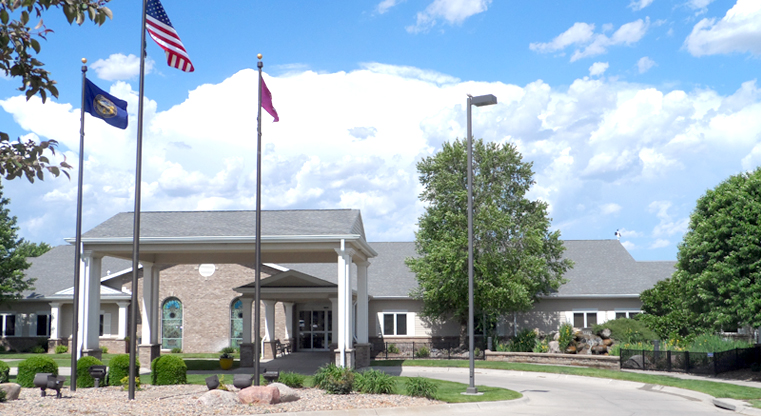
How is South Haven Living Center Staffed?
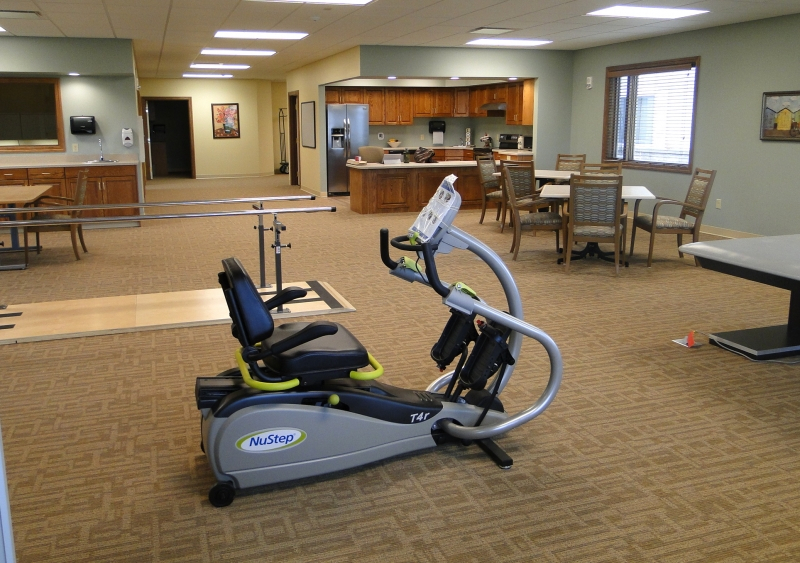
CMS rates South Haven Living Center's staffing level at 3 out of 5 stars, which is average compared to other nursing homes. Staff turnover is 41%, compared to the Nebraska average of 46%. This relatively stable workforce can support continuity of care.

What Have Inspectors Found at South Haven Living Center?

State health inspectors documented 6 deficiencies at South Haven Living Center during 2024 to 2025. These included: 6 with potential for harm.

Who Owns and Operates South Haven Living Center?

South Haven Living Center is owned by a non-profit organization. Non-profit facilities reinvest revenue into operations rather than distributing to shareholders. The facility is operated by VETTER SENIOR LIVING, a chain that manages multiple nursing homes. With 85 certified beds and approximately 77 residents (about 91% occupancy), it is a smaller facility located in Wahoo, Nebraska.

How Does South Haven Living Center Compare to Other Nebraska Nursing Homes?

Compared to the 100 nursing homes in Nebraska, South Haven Living Center's overall rating (4 stars) is above the state average of 2.9, staff turnover (41%) is near the state average of 46%, and health inspection rating (4 stars) is above the national benchmark.

What Should Families Ask When Visiting South Haven Living Center?

Based on this facility's data, families visiting should ask: "Can I visit during a mealtime to observe dining assistance and food quality?" "How do you handle medical emergencies, and what is your hospital transfer rate?" "Can I speak with family members of current residents about their experience?"

Is South Haven Living Center Safe?

Based on CMS inspection data, South Haven Living Center has a clean safety record: no substantiated abuse findings (meaning no confirmed cases of resident harm), no Immediate Jeopardy citations (the most serious violation level indicating risk of serious injury or death), and is not on the Special Focus Facility watch list (a federal program monitoring the lowest-performing 1% of nursing homes). The facility has a 4-star overall rating and ranks #1 of 100 nursing homes in Nebraska. While no facility is perfect, families should still ask about staff-to-resident ratios and recent inspection results during their visit.

Do Nurses at South Haven Living Center Stick Around?

South Haven Living Center has a staff turnover rate of 41%, which is about average for Nebraska nursing homes (state average: 46%). Moderate turnover is common in nursing homes, but families should still ask about staff tenure and how the facility maintains care continuity when employees leave.

Was South Haven Living Center Ever Fined?

South Haven Living Center has no federal fines on record. CMS issues fines when nursing homes fail to meet care standards or don't correct problems found during inspections. The absence of fines suggests the facility has either maintained compliance or corrected any issues before penalties were assessed. This is a positive indicator, though families should still review recent inspection reports for the full picture.

Is South Haven Living Center on Any Federal Watch List?

South Haven Living Center is not on any federal watch list. The most significant is the Special Focus Facility (SFF) program, which identifies the bottom 1% of nursing homes nationally based on persistent, serious quality problems. Not being on this list means the facility has avoided the pattern of deficiencies that triggers enhanced federal oversight. This is a positive indicator, though families should still review the facility's inspection history directly.