
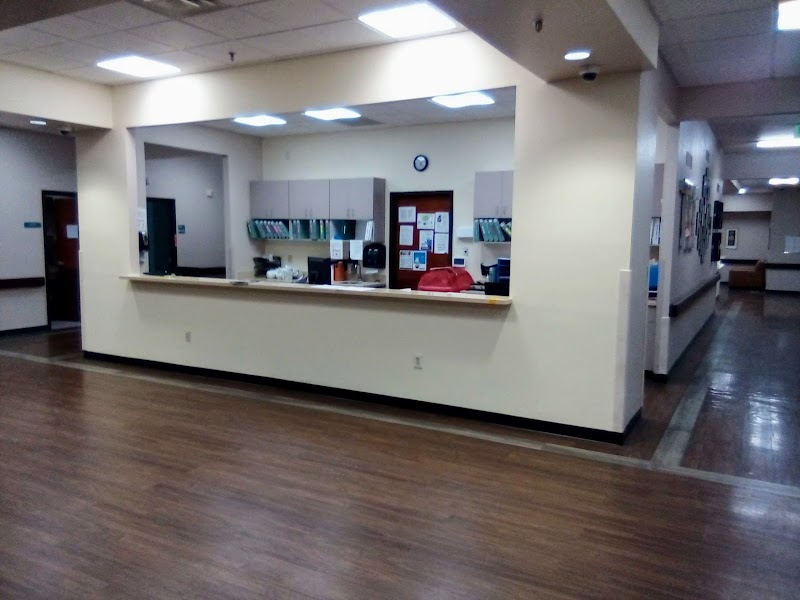
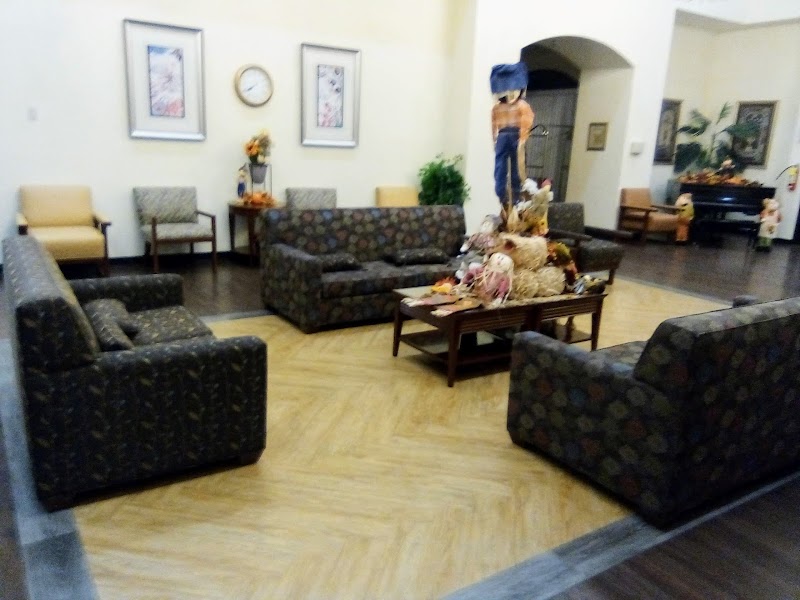
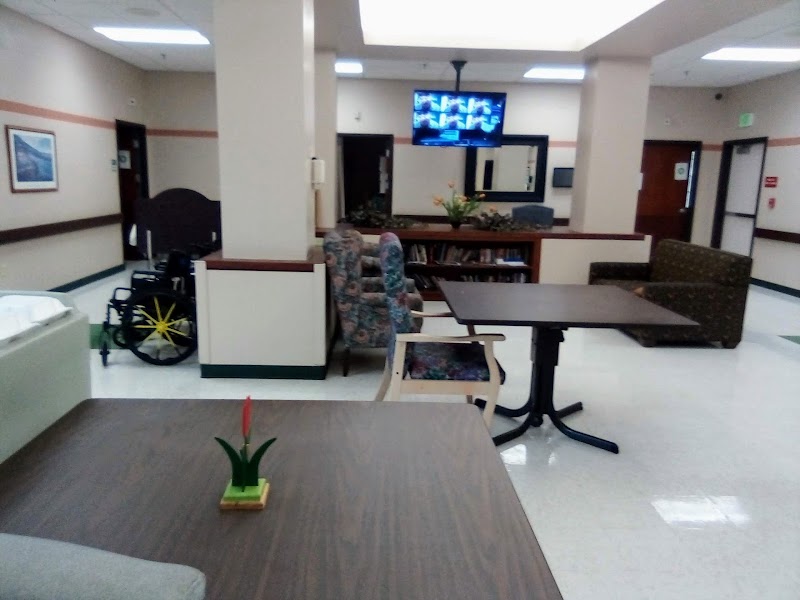
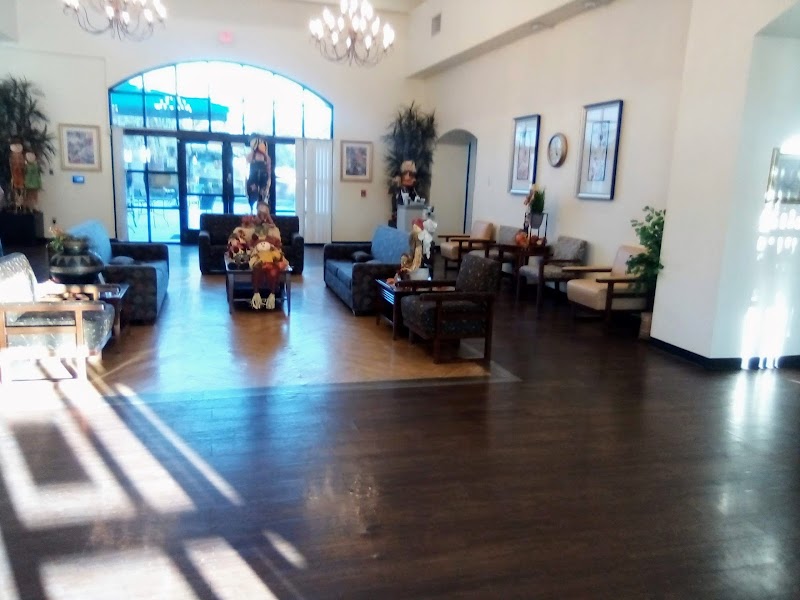
TLC CARE CENTER

1500 W WARM SPRINGS RD, HENDERSON, NV 89014 (702) 547-6700
For profit - Limited Liability company 255 Beds HILL VALLEY HEALTHCARE Data: November 2025
Trust Grade
33/100
#64 of 65 in NV
Last Inspection: March 2025

Within standard 12-15 month inspection cycle. Federal law requires annual inspections.

Overview

TLC Care Center in Henderson, Nevada, has a Trust Grade of F, indicating poor performance and significant concerns about care quality. Ranking #64 out of 65 facilities in the state places it in the bottom half overall, and it is the lowest-ranked facility in Clark County. Although the facility is improving, with issues decreasing from 22 in 2024 to 17 in 2025, it still has a troubling track record, including one serious incident where a resident fell due to improper transfer procedures and another concerning unsecured oxygen tanks that could have led to injury. Staffing appears to be a relative strength, with a rating of 3 out of 5 stars and a turnover rate of 44%, which is slightly better than the state average. However, the facility has faced $20,719 in fines for compliance issues, which is a concern, and it has struggled with its infection control program, highlighted by a COVID-19 outbreak that affected many residents and staff.

Trust Score
F
33/100
In Nevada
#64/65
Bottom 2%
Safety Record
Moderate
Needs review
Inspections
Getting Better
22 → 17 violations
Staff Stability
○ Average
44% turnover. Near Nevada's 48% average. Typical for the industry.
Penalties
✓ Good
$20,719 in fines. Lower than most Nevada facilities. Relatively clean record.
Skilled Nurses
○ Average
Each resident gets 33 minutes of Registered Nurse (RN) attention daily — about average for Nevada. RNs are the most trained staff who monitor for health changes.
Violations
⚠ Watch
59 deficiencies on record. Higher than average. Multiple issues found across inspections.
★☆☆☆☆
1.0
Overall Rating
★★★☆☆
3.0
Staff Levels
★★★☆☆
3.0
Care Quality
★☆☆☆☆
1.0
Inspection Score
Stable
2024: 22 issues
2025: 17 issues

The Good

  • Full Sprinkler Coverage · Fire safety systems throughout facility
  • No fines on record
  • Staff turnover below average (44%)

    4 points below Nevada average of 48%

Facility shows strength in fire safety.

The Bad

1-Star Overall Rating

Below Nevada average (3.0)

Significant quality concerns identified by CMS

Staff Turnover: 44%

Near Nevada avg (46%)

Typical for the industry

Federal Fines: $20,719

Below median ($33,413)

Minor penalties assessed

Chain: HILL VALLEY HEALTHCARE

Part of a multi-facility chain

Ask about local staffing decisions and management

The Ugly 59 deficiencies on record

1 actual harm
Mar 2025 17 deficiencies 1 Harm
SERIOUS (G)

Actual Harm - a resident was hurt due to facility failures

Accident Prevention (Tag F0689)

A resident was harmed · This affected 1 resident

**NOTE- TERMS IN BRACKETS HAVE BEEN EDITED TO PROTECT CONFIDENTIALITY** Based on observation, interview, record review and document review, the facility failed to ensure: 1. The plan of care was foll...

Read full inspector narrative →
**NOTE- TERMS IN BRACKETS HAVE BEEN EDITED TO PROTECT CONFIDENTIALITY** Based on observation, interview, record review and document review, the facility failed to ensure: 1. The plan of care was followed regarding transfers and the staff was provided with transfer training after a resident fall for 1 of 35 sampled residents (Resident 25) and, 2. An Oxygen tank was secured for 1 of 35 sampled residents (Resident 98). The deficient practice led to a resident's fall with injury and had the potential to cause a resident injury due to an unsecured Oxygen tank. Findings include: Resident 25 (R25) R25 was admitted on [DATE], discharged on 09/18/2024, and re-admitted [DATE] with diagnoses including displaced bicondylar (upper and lower parts) fracture of right tibia. The Annual Comprehensive Minimum Data Set (MDS) dated [DATE], documented R25 had lower extremity (hip, knee, ankle, foot) impairment on one side of the body. R25's Care Plan documented the following: -Resident at risk for spontaneous pathologic fracture, injury, and trauma secondary to osteoporosis. The interventions identified included two persons assist when providing care. -Resident had Activities of Daily Living (ADL) self-care performance deficit as evidenced by impaired mobility, limited range of motion right lower extremity, and activity intolerance. -Resident had limited physical mobility as evidenced by weakness, impaired range of motion right lower extremity, and activity intolerance. Resident utilizes a Hoyer lift (device that helps transfer residents with limited mobility). A Physical Therapy Evaluation and Plan of Treatment dated 07/04/2024, documented R25 had physical impairments and associated functional deficits. The resident was at risk for falls and required a Hoyer lift with transfers. A Nursing Progress Note dated 09/18/2024, documented a Certified Nurse Assistant (CNA) reported an assisted fall with R25 during a transfer from the bed to shower chair. R25's knee buckled and started to lean toward the CNA which resulted in R25 being assisted down to the floor. R25 complained of severe right knee and right ankle pain. An order was obtained for a right knee and ankle x-ray. Radiology results dated 09/18/2024 documented a right knee view impression: nondisplaced fracture of the proximal (situated nearer to the center of the body or the point of attachment) tibia. The Hospital Course of the Discharge summary dated [DATE], documented R25 experienced a ground level fall while attempting to transfer to a shower chair while utilizing R25's less efficient right foot to balance and an X-ray suggested right tibial plateau (a break at the top of the tibia bone) fracture. On 03/25/2025 at 9:24 AM, R25 was lying in bed alert and oriented and stated, a CNA pulled the leg, picked them up and threw them to the floor. On 03/26/2025 at 12:54 PM, Certified Nurse Assistant 1 (CNA 1) described the attempted transfer of R25 to a shower chair but was unable to locate a sling for the transfer in September 2024. The CNA expressed the nurse stated R25 transferred with the Restorative Nurse Assistant (RNA) check with them regarding abilities. The CNA explained not speaking to the RNA and returning to R25's room. The CNA attempted the transfer independently, when pivoting, R25's feet buckled, and the CNA fell with R25 to the floor. The CNA explained had recently started working the hall where R25 resided and always asked the nurse about a resident's transfer abilities. The CNA stated R25 required a sling and lift with transfers. On 03/27/2025 at 10:24 AM, the MDS Director explained the CNAs would check the [NAME] (a care plan used by CNAs) to obtain information regarding a resident level of assistance. The [NAME] would indicate how much assistance was required and if a Hoyer lift was needed. On 03/27/2025 at 10:29 AM, the MDS Director confirmed in September of 2024 R25 was dependent and required a Hoyer lift for transfers. On 03/27/2025 at 1:51 PM, Certified Nurse Assistant 2 (CNA 2) explained a Hoyer lift required two staff members or more depending on the resident. Staff needed to check with the resident's assigned nurse or the plan of care to know the method of transfer for a resident. On 03/27/2025 at 2:20 PM, the Therapy Director confirmed R25 was evaluated in July 2024 by physical therapy prior to the fall event in September. At the time of the evaluation, R25 required a Hoyer lift for transfers and the CNAs were to utilize a Hoyer lift for R25's transfers. On 03/28/2025 at 11:25 AM, the Unit Manager stated an investigation for the fall event should have been documented in the progress notes. The Unit Manager confirmed the medical record lacked documentation the investigation occurred and the 9/18/2024 nurse notes for R25 had no indication of what new fall prevention interventions were implemented after the fall event. The Unit Manager confirmed R25 was a Hoyer lift transfer prior to the September 2024 fall. The Unit Manager stated education and counseling occurred with the CNA involved with the incident. On 03/28/2025 at 11:31 AM, the Unit Manager confirmed the CNA should have checked R25's ADLs to determine how to transfer the resident and the CNA should have implemented the use of the Hoyer lift. The root cause was the CNA not utilizing the Hoyer lift and the fall could have been prevented. The Unit Manager explained education needed to be conducted for the CNA staff that work R25's unit and education to all CNA's regarding how to check the plan of care and ADLs for residents prior to performing care, and ensure new interventions were in place related to the fall event. On 03/28/2025 at 11:39 AM, the Unit Manager explained the expectation was to ensure new interventions were in place related to the fall event and education to be conducted for the CNA staff who worked R25's unit. Education should have been provided to all CNA's on where to locate information regarding a residents ADL's prior to performing care. CNA1's employee file, lacked documented evidence education or counseling had occurred as a result of the 09/18/2024 fall event. On 03/28/2025 at 11:54 AM, the Unit Manager confirmed there was no record of education or counseling in the employee file for the CNA involved. The CNA had not completed ADL training after the fall event and there was no record of other CNAs having been trained. Throughout the week of the survey a skills competency for the CNA involved in the fall was requested and documentation was not provided, as of the last onsite date of survey 03/28/2025. On 03/28/25 at 1:01 PM, Certified Nurse Assistant 3 (CNA 3) verbalized R25 would require two staff and a Hoyer lift for transfers. The CNA explained looking at the resident care plan to determine a resident's ADLs and level of assistance. CNA 3 stated knowing another CNA had transferred R25 resulting in an injury. On 03/28/2025 at 3:18 PM, the Assistant Director of Nursing (ADON) verbalized when fall events occur a discussion is held to determine a root cause of the fall incident and ensure interventions are implemented. The facility policy titled Fall Protocols, undated, documented staff would conduct a comprehensive investigation to implement change in the care or system to minimize recurrence. Resident 98 (R98) R98 was admitted on [DATE] with diagnoses including chronic obstructive pulmonary disease, Type 2 diabetes mellitus, and dependence on supplemental Oxygen. A physician order dated 03/19/2025 documented to administer Oxygen at two liters per minute (LPM) via nasal cannula continuously every shift for shortness of breath. On 03/25/25 at 11:15 AM, an Oxygen cylinder tank was noted to be unsecured in R98s room beside the bed. R98 stated the staff change the Oxygen out when needed and the tanks are normally placed on the floor without support. On 03/25/25 at 11:19 AM, a CNA verified the Oxygen cylinder tank was not secured in an Oxygen holder. The CNA explained the tank was half full and it should be placed in a holder so it cannot fall. The CNA stated a holder was needed for safety. On 03/28/25 at 3:19 PM, the ADON confirmed Oxygen cylinder tanks were to be secured in a holder when in resident rooms to prevent them from falling and potentially causing injury. The facility policy titled Fire Safety and Prevention, dated 10/01/2021, Oxygen Safety section, documented to store Oxygen cylinders in sturdy portable carts or approved stands. Never leave Oxygen cylinders free-standing.
CONCERN (D)

Potential for Harm - no one hurt, but risky conditions existed

Deficiency F0554 (Tag F0554)

Could have caused harm · This affected 1 resident

**NOTE- TERMS IN BRACKETS HAVE BEEN EDITED TO PROTECT CONFIDENTIALITY** Based on observation, interview, record review and document review, the facility failed to ensure a physician's order was obtain...

Read full inspector narrative →
**NOTE- TERMS IN BRACKETS HAVE BEEN EDITED TO PROTECT CONFIDENTIALITY** Based on observation, interview, record review and document review, the facility failed to ensure a physician's order was obtained, an assessment was completed, and care plan was developed for the self-administration of medication for one unsampled resident (Resident 38). The deficient practice had the potential for the resident's unsafe administration of medication or adverse reactions to medication. Findings include: Resident 38 (R38) R38 was admitted on [DATE], with diagnoses including peripheral vascular disease and age-related physical debility. The physician's order dated 10/18/2023, documented Ketotifen Fumarate Ophthalmic Solution 0.035% (eye drops), instill two drops in both eyes two times a day for itching. R38's Medication Administration Record (MAR) for March 2025, documented the medication was scheduled to be given at 8:00 AM and 8:00 PM. On 03/28/2025 at 8:44 AM, during the medication administration pass observation, a Licensed Practical Nurse (LPN) prepared R38's oral medications scheduled for 8:00 AM. The LPN indicated R38 kept and self-administered the eye drops. On 03/28/2025 at 8:56 AM, the LPN administered R38's medications except for the eye drops. On 03/28/2025 at 8:58 AM, R38 confirmed self-administering the eye drops as needed and kept the eye drops on bedside. R38 took the eye drops from a purse kept at the resident's bedside and showed the medication to the LPN. R38 refused to have the eye drops administered. The label of the eye drops documented Eye Itch Relief 0.035%. On 03/28/2025 at 8:59 AM, the LPN revealed a physician's order for the resident's self-administration of medication and keeping the medication on bedside should have been obtained, an assessment should have been completed to determine if the resident could self-administer the medication, and care plan for self-administration of medication should have been developed. The LPN confirmed there was no physician's order obtained for R38's self-administration of the eye drops and for the resident to keep the eye drops on bedside, no assessment was completed and no care plan developed for the resident's self-administration of the medication (eye drops). The LPN acknowledged the medication should have been kept in a secured and locked storage and not in the resident's purse. On 03/28/2025 at 12:29 PM, the Regional Director of Clinical Services confirmed there were no physician's orders for R38's self-administration of the eye drops and keeping the eye drops at bedside, no assessment had been completed and no care plan developed for R38's self-administration of the medication. On 03/28/2025 at 2:01 PM, the Assistant Director of Nursing (ADON) indicated a physician's order should have been obtained for a resident's self-administration of medication and allowing the resident to keep the medication on bedside. The ADON revealed an assessment for self-administration of medication should have been completed and care plan should have been developed. The ADON explained the medication should have been kept in a secured and locked storage and not in the resident's purse. The facility's policy titled Self-Administration of Medications and Treatments (undated), documented the residents had the right to self-administer medications/treatments if the interdisciplinary team had determined it was clinically appropriate and safe for the resident to do so. As part of their overall evaluation, the staff and practitioner would assess each resident's mental and physical abilities and choice to determine whether self-administering medications and/or treatments was clinically appropriate for the resident. In addition to general evaluation of decision-making capacity, the staff and practitioner would perform a more specific skill assessment, which might include (but not limited to) the resident's: - Ability to read and understand medication labels/treatment instructions - Comprehension of the purpose and proper administration of the medications/treatments - Ability to remove medications and/or treatment supplies from a container - Ability to recognize risks and major adverse consequences of the medications/treatments Self-administered medications and/or treatment supplies would be stored in a safe and secure place. If safe storage was not possible in the resident's room, the medications of residents permitted to self-administer would be stored on a central medication cart or in the medication room.
CONCERN (D)

Potential for Harm - no one hurt, but risky conditions existed

Deficiency F0561 (Tag F0561)

Could have caused harm · This affected 1 resident

Based on observation, interview, and document review, the facility failed to ensure residents have a right to make choices about aspects of their life in the facility which are significant to the resi...

Read full inspector narrative →
Based on observation, interview, and document review, the facility failed to ensure residents have a right to make choices about aspects of their life in the facility which are significant to the resident for 1 of 35 sampled residents (Resident 102). The failure to accommodate the residents' preferences and choices had the potential risk to cause psychosocial distress to the residents. Findings include: Resident 102 (R102) was admitted to the facility with diagnoses of nontraumatic intracerebral hemorrhage and hemiplegia and hemiparesis following cerebral infarction affecting right dominant side. R102 had a Brief Interview for Mental Status (BIMS) score of 15 indicating intact cognition. On 03/26/2025 in the morning, R102 stated do not get enough showers and two showers a week was not enough. R102 stated would like more showers because if the resident missed a shower for any reason, then the resident won't get another shower until the next week. R102 stated having to wait this long is too much. R102 complained about sweating in bed, hair becoming greasy, and body odor occurs when resident don't get enough showers. On 03/28/2025 at 3:41 PM the Administrator-In-Training (AIT) stated R102's shower days were Tuesday and Thursday, and the facility had added on Sunday for R102. However, on Tuesday, 03/25/2025, the facility did not have a Hoyer (mechanical resident lift) sling available to complete the shower transfer to get the resident from the bed to the shower chair/gurney. The AIT stated each resident should have their own sling for the Hoyer, but R102 did not have a sling at this time. The AIT also reported there was no documentation a shower had been given on 03/27/2025. On 03/28/2025 in the afternoon, the Assistant Director of Nursing (ADON) verified R102's shower days were Tuesday and Thursday, and the facility had added on Sunday for this resident. The ADON also verified on Tuesday, 03/25/2025, the facility did not have a Hoyer sling available to complete the shower transfer to get the resident from the bed to the shower chair/gurney and there was a lack of documentation whether a shower had been given on 03/27/2025. Facility policy titled Shower/Tub Baths (undated), documented the baths would promote resident cleanliness and provide comfort to the resident and the resident would, at a minimum, be offered at least two full baths per week and resident preferences for type and frequency of baths would be honored.
CONCERN (D)

Potential for Harm - no one hurt, but risky conditions existed

Deficiency F0565 (Tag F0565)

Could have caused harm · This affected 1 resident

**NOTE- TERMS IN BRACKETS HAVE BEEN EDITED TO PROTECT CONFIDENTIALITY** Based on interview and document review, the facility failed to document a written response including rationale to address compla...

Read full inspector narrative →
**NOTE- TERMS IN BRACKETS HAVE BEEN EDITED TO PROTECT CONFIDENTIALITY** Based on interview and document review, the facility failed to document a written response including rationale to address complaints brought forth in the resident council. The deficient practice had the potential to cause resident concerns to remain unresolved. Findings include: Resident council meeting minutes dated 02/19/2025 revealed residents complained of call lights were not answered in a timely manner, and staff were on their phones more than paying attention to residents. Resident council meeting minutes dated 03/19/2025 revealed a resident complained nurses were slow to answer their call light, resulting in waiting up to 45 minutes for assistance. A different resident complained had not had a shower in three months. Resident 57 (R57) R57 was admitted on [DATE]. The 02/04/2025 Quarterly Minimum Data Set (MDS) assessment indicated R57 had normal memory function. On 03/27/25 at 1:34 PM, R57 reported serving as the Resident Council President for greater than the prior four months. R57 reported resident council meetings were conducted on the third Wednesday of each month and eight or nine residents typically attended each meeting. R57 reported a staff member recorded the meeting minutes. R57 reported sometimes the facility did not make a response to concerns raised in the resident council. R57 verbalized residents in several recent council meetings had verbalized a complaint about delay in assistance from staff after putting on the call bell. R57 verbalized as of yet, no facility response to this concern had been received. R57 verbalized feeling frustrated by the lack of response to the ongoing issue. R57 verbalized other residents had also expressed frustration regarding the issue. On 03/27/25 at 1:34 PM, a group interview was conducted with R57 and seven other alert residents. Five of the residents verbalized their call lights could be on for 45 minutes before staff responded. The five residents stated the call light issue had been ongoing for several months. One resident reported staff were constantly on their phones. The facility was unable to provide any written documentation of corrective actions taken in response to the complaints from the meetings. On 03/28/25 at 2:18 PM, the Activities Assistant verbalized council notes were taken by activities staff and were furnished to department heads for response, but these were not consistently returned to the activities department for reply to the residents. Call light response time was an ongoing issue, and the complaints had been furnished to nursing, but no response had been returned to the Activity Assistant regarding what was being done. On 03/28/25 at 8:43 AM, the Administrator (ADM) reviewed the resident council meeting minutes from the 02/19/2025 and 03/19/2025 meetings. The ADM verbalized there should have been written responses to the complaints regarding call light delay, staff using personal phones, and lack of shower provided. The ADM verbalized having checked, but written responses to the concerns could not be located. The ADM verbalized not being sure of the reason. The ADM verbalized having commenced employment at the facility on 03/23/2025, and the former ADM had left employment with no briefing provided on the status of complaints. On 03/28/25 at 1:01 PM, the Regional Director of Clinical Services verbalized concerns from the resident council should be forwarded to the appropriate department and an investigation/response should have been documented. The policy and procedure titled Resident/Family Council, undated, indicated resident council meetings were scheduled monthly or as requested by residents. The policy indicated the purpose was to provide a forum for concerns or suggestions for improvement. The policy indicated documentation of the resident council meeting would be utilized to track issues and their resolution. The facility department related to any issues would be responsible for addressing the item(s) of concern. The policy and procedure titled Grievances/Complaints, dated 01/2018, indicated all grievances, complaints, or recommendations stemming from resident or family groups would be considered. Actions on such issues would be responded to in writing, including a rationale for the response.
CONCERN (D) 📢 Someone Reported This

A family member, employee, or ombudsman was alarmed enough to file a formal complaint

Potential for Harm - no one hurt, but risky conditions existed

Free from Abuse/Neglect (Tag F0600)

Could have caused harm · This affected 1 resident

Based on interview, record review and document review, the facility failed to ensure a resident was kept safe from physical abuse for 1 of 35 sampled residents (Resident #43). The deficient practice h...

Read full inspector narrative →
Based on interview, record review and document review, the facility failed to ensure a resident was kept safe from physical abuse for 1 of 35 sampled residents (Resident #43). The deficient practice had the potential for the resident to experience emotional and physical harm. Findings include: Resident #43 (R43) Resident #43 (R43) was admitted to the facility 01/02/2025 with diagnoses including encephalopathy, urinary tract infection, hypothyroidism, and hypertension. The facility reported incident (FRI) dated 02/27/2025 documented the following: -On 02/25/2025, R43 was in a wheelchair in the 700 hall and was arguing with Employee 20 (E20). R43 was trying to wheel the wheelchair back to the room R43 had just been transferred from. E20 got in front of R43 and blocked the ability of R43 to move forward in the wheelchair. R43 became agitated and started yelling at E20 to get their hands off R43. - Employee 14 (E14) stepped outside their office and witnessed E20 holding R43's arms down against the wheelchair. R43 began to kick at E20. E20 then told R43 if R43 kicks E20, E20 would kick R43 back. Throughout 02/25/2025 and the following day E14 witnessed E20 leading R43 past the office of E14 holding R43's hands down against the wheelchair and R43 yelling to be let go of. -Conclusion: The allegation of physical abuse by E20 against R43 was substantiated. Subsequently E20 was suspended pending investigation and then terminated. The nursing board was notified on 03/25/2025 of the incident. R20 had been previously trained on abuse on 03/25/2024. A behavior note dated 02/25/2025 written by E20 documented R43 was kicking at staff and becoming more verbally and physically aggressive when not allowed to enter other resident rooms. R43 was yelling and using profanity. R43's medical record lacked documented evidence of social services involvement with this situation other than a Social Services note for a referral to psych services for agitation dated 02/26/2025. An email from the Director of Social Services (DSS) to the Administrator-in-Training on 02/27/2025 at 11:36 AM documented the incident between E20 and R43 had been brought to attention on this day and the DSS had the nurses write statements. The AIT acknowledged receipt of the email's information on 02/27/2025 at 11:48 AM. R43's care plans lacked evidence of an update or revision related to the incident involving the altercation with the staff member. On 03/26/2025 in the afternoon, R43 stated the current staff was very nice. R43 said there was a staff member which tried to kidnap the resident, but R43 has not seen this person since the other staff members stopped this person from kidnapping. R43 also stated the facility is run very well, and would not change a thing. During the onsite investigation on 03/26/2025, the facility's correction of the past non-compliance related to the incident occurred as evidenced by: -Observation of staff and resident interactions were professional and courteous. -Interviews with residents revealed they were happy with staff and were treated in a polite manner. - CNA's and Licensed Nurses indicated the facility provided continuing education regarding Abuse and Neglect. -Review of the facility's employee file for E20 revealed reference and background checks were completed. -Review of the facility's training records corroborated the staff interviews regarding training. Facility Reported Incident #NV00073562 Complaint #NV00073745
CONCERN (D)

Potential for Harm - no one hurt, but risky conditions existed

Deficiency F0604 (Tag F0604)

Could have caused harm · This affected 1 resident

**NOTE- TERMS IN BRACKETS HAVE BEEN EDITED TO PROTECT CONFIDENTIALITY** Based on observations, record reviews, staff interviews, and facility policy reviews, the facility failed to ensure 1 of 35 samp...

Read full inspector narrative →
**NOTE- TERMS IN BRACKETS HAVE BEEN EDITED TO PROTECT CONFIDENTIALITY** Based on observations, record reviews, staff interviews, and facility policy reviews, the facility failed to ensure 1 of 35 sampled residents (Resident 168) remained free from restraints not needed to treat a medical symptom, identify the use of lower bed rails as a restraint, and follow policies and procedures in assessing the use of a physical restraint or alternatives considered prior to implementing a physical restraint. The deficient practice could have resulted in a decline in activities of daily living, loss of dignity, and physical and psychosocial harm to the resident. Findings include: Resident 168 (R168) R168 was initially admitted on [DATE] and readmitted on [DATE] with diagnoses including muscle weakness, lack of coordination, major depressive disorder, anxiety disorder, chronic post-traumatic stress disorder, and a fracture of the base of the neck of the right femur. On 03/27/25 at 10:03 AM, R168 was observed sleeping in bed. The bed was in the lowest position with bilateral floor mats and full rails (two upper and two lower rails) raised. On 03/27/25 at 10:06 AM, a Certified Nursing Assistant (CNA) explained floor mats, bed rails, and lowering the bed were used for the safety of fall-risk residents. On 03/27/25 at 10:09 AM, a Licensed Practical Nurse (LPN) explained floor mats were placed beside beds to relieve pressure on staff's lower backs during care provision. The LPN also explained lower bed rails could be used for safety only if physician orders the rails and bed rail assessments were conducted but stated lower bed rails were typically considered restraints. The LPN confirmed R168 had both upper and lower rails raised and acknowledged the lower rails were physical restraints. The LPN was unable to recall how long the lower rails had been in place. R168's Minimum Data Set (MDS) with an Assessment Reference Date (ARD) of 03/13/25 documented a Brief Interview for Mental Status (BIMS) score of 7, indicating severe cognitive impairment. Under Section P0100, Physical Restraints Used in Bed was documented as Not used. Section GG0115, Functional Limitation in Range of Motion, documented no impairment of the upper extremities and impairment on both sides of the lower extremities. The Physician's Orders lacked documented evidence of orders for bilateral floor mats, upper side rails, lower side rails, or full side rails. The Comprehensive Care Plan, initiated on 11/23/24, documented R168 was at risk for falls due to cognitive impairment, functional impairments, muscle weakness, and unsteady gait. The interventions lacked documented evidence of the use of bilateral floor mats, upper bed rails, lower bed rails, or full bed rails. R168's medical record revealed The Side Rail and Entrapment Risk Assessment, completed on 05/04/2024, documented the resident was not dependent in bed mobility but had altered safety awareness due to cognitive decline and poor decision-making. The assessment identified periods of confusion and unsafe behaviors placing the resident at risk. The recommendations section lacked documented evidence of alternatives considered or trialed before implementing side rails. The use of both upper half-rails was recommended for independent bed mobility. The interventions section documented full/half rails up per physician's order for safety during care provision, to assist with bed mobility, and to observe for injury or entrapment related to side rail use. The clinical record lacked documented evidence of another Side Rail and Entrapment Risk Assessment completed after the resident's readmission on [DATE] to a different room. R168's medical record revealed a document titled Siderail Consent, which documented Full Rails on both sides to assist the resident in turning and positioning while in bed, transferring to and from bed, stabilizing while sitting on the side of the bed, and promoting safety while receiving care in bed. However, the document lacked the resident's name, signature, or the signature of a resident representative. A facility representative had signed and dated the document on 01/31/25. On 03/27/25 at 10:38 AM, an Assistant Director of Nursing (ADON) explained the facility did not have beds with full side rails. The ADON confirmed side rails used as enablers required a side rail assessment and bilateral fall mats and upper rails required a physician's order. The ADON verified R168's bed had bilateral fall mats and both full upper and full lower rails raised. The ADON acknowledged the lower rails were considered a restraint. The ADON was unaware of when the full rails had been installed. On 03/27/25 at 11:01 AM, the Regional Director of Clinical Services verified R168 had both upper and lower rails raised. The consultant explained whether lower rails could be used depended on the care plan, physician orders, assessments, and family requests. After reviewing R168's medical records, the Regional Director of Clinical Services confirmed there were no physician orders, care plan documentation, or family requests for the rails. The Regional Director of Clinical Services stated the lower bed rails were considered a restraint and should not have been in place. On 03/28/25 at 9:15 AM, the Director of Maintenance (DOM) explained the facility did not track when bed rails were installed because all beds had upper rails as enablers. The DOM stated unaware lower rails could not be installed until the survey team identified R168's bed. The DOM reported walking through the facility and finding three additional beds with lower rails. The DOM explained the maintenance team secured all lower rails in the lowered position with zip ties until proper removal could be arranged. On 03/28/25 at 3:09 PM, the ADON acknowledged no in-service training had been conducted on bed rail guidelines. The ADON explained full side rails should not have been used as restraints and stated the facility could not determine when the rails had been installed. The ADON indicated side rails could have contributed to R168's past falls and stated an investigation should have been conducted, but no documented evidence of such an investigation was found. On 03/28/25 at 3:25 PM, a Registered Nurse Unit Manager explained full bed rails could result in injuries, particularly if residents attempted to self-transfer and became trapped between rails. The nurse stated a root cause analysis should always be conducted and reviewed by a supervisor, but no such analysis was found for R168. The facility policy titled Physical Restraints, undated, documented a physical restraint as a physical or mechanical device, equipment, or material which meets all the following criteria: -is attached or adjacent to the resident's body; -cannot be removed easily by the resident; and -restricts the resident's freedom of movement or normal access to the resident's body. The restraints shall only be used to treat the resident's medical symptom(s) and never for discipline or staff convenience, or for the prevention of fall. When the use of the restraints is indicated, the least restrictive alternative will be used for the least amount of time necessary, and the ongoing re-evaluation for the need of restraints will be documented. The restraint will only be used upon the written order of a physician and after obtaining consent from the resident or representative. The facility policy titled Fall Protocol, undated, documented an investigation of the fall will be conducted to identify reason, contributing factors and/or root cause of the fall. The staff would conduct a comprehensive investigation to understand the how and why the fall occurred, protect the resident involved and other potential residents, and implement change in the care of system to minimize recurrence.
CONCERN (D) 📢 Someone Reported This

A family member, employee, or ombudsman was alarmed enough to file a formal complaint

Potential for Harm - no one hurt, but risky conditions existed

Report Alleged Abuse (Tag F0609)

Could have caused harm · This affected 1 resident

Based on interview, record review and document review, the facility failed to ensure an alleged incident of physical abuse was reported to the State Agency (SA) within the required timeframes for 1 of...

Read full inspector narrative →
Based on interview, record review and document review, the facility failed to ensure an alleged incident of physical abuse was reported to the State Agency (SA) within the required timeframes for 1 of 35 sampled residents (Resident #43). The deficient practice had the potential to place residents at risk for incidents of physical abuse to not be adequately protected. Findings include: Resident #43 (R43) was admitted to the facility 01/02/2025 with diagnoses including encephalopathy, urinary tract infection, hypothyroidism, and hypertension. A Behavior Note dated 02/25/2025, documented R43 was kicking at staff and had become more verbally aggressive by yelling profanity and more physically aggressive when not allowed to enter other resident rooms. In an email thread from the Director of Social Services (DSS) to the Administrator-In-Training (AIT), the DSS notified the AIT of the potential abuse allegation on 02/27/2025 at 11:36 AM and the AIT verified receipt of the message on 02/27/2025 at 11:48 AM. An initial Facility Reported Incident (FRI) was submitted to the SA on 02/27/2025 at 6:40 PM, documenting the staff's alleged physical abuse on 02/25/2025. No final report was received by the SA. On 03/28/2025 in the afternoon, the Administrator/Abuse Coordinator verbalized abuse without serious bodily harm should be initially reported to the SA within two hours of an abuse incident, with a final report to the SA within 5 working days of the incident. The Administrator/Abuse Coordinator was not sure it reported to the SA within the required timeframes as this Administrator/Abuse Coordinator was not working for the facility at the time of the event. The facility policy titled Abuse, revised 10/20/2022, documented alleged abuse would be reported to the appropriate State or Federal agencies immediately, but not later than two hours after the allegation is made, if the events that caused the allegation involved abuse or resulted in serious bodily injury, or not later than 24 hours if the events that caused the allegation did not involve abuse and did not result in serious bodily injury. The State Operations Manual for Long Term Care (SOM) documented a facility will ensure that all alleged violations involving abuse, neglect, exploitation or mistreatment, including injuries of unknown source and misappropriation of resident property, are reported immediately, but not later than two hours after the allegation is made, if the events that cause the allegation involve abuse or result in serious bodily injury, or not later than 24 hours if the events that cause the allegation do not involve abuse and do not result in serious bodily injury. The SOM also documents the facility will report the results of all investigations to the State Survey Agency, within 5 working days of the incident, and if the alleged violation is verified the appropriate corrective action taken. Facility Reported Incident #NV00073562
CONCERN (D)

Potential for Harm - no one hurt, but risky conditions existed

Deficiency F0657 (Tag F0657)

Could have caused harm · This affected 1 resident

**NOTE- TERMS IN BRACKETS HAVE BEEN EDITED TO PROTECT CONFIDENTIALITY** Based on observations, interview, record review, and document review the facility failed to ensure a resident-centered care plan...

Read full inspector narrative →
**NOTE- TERMS IN BRACKETS HAVE BEEN EDITED TO PROTECT CONFIDENTIALITY** Based on observations, interview, record review, and document review the facility failed to ensure a resident-centered care plan was revised and physician order obtained for use of side rails for 1 of 35 sampled residents (Resident 6). The deficient practice had the potential to put the resident at risk for harm due to lack of communication between staff. Findings include: Resident 6 (R6) R6 was admitted on [DATE] with diagnoses including Parkinson's disease and need for assistance with personal care. A brief interview for mental status (BIMS) was conducted on 01/01/2025 with a result of 05/15 which indicated the resident had a severe cognitive deficit. A minimum data set (MDS) assessment was conducted on 01/01/2025 and documented resident required maximal assistance in bed mobility. On 03/26/25 8:49 AM, resident was lying down in bed, bed was flat, and side rails were installed in the middle of bed frame on both sides. R6 indicated not knowing what the rails were for. 03/28/25 09:48 AM, resident required assistance to get out of bed however was able to move upper extremities to position in bed with use of side rail. Resident verbalized not being aware of why side rails were on bed. Mats were placed on floor on both sides of bed. R6's medical record revealed a side rail assessment was completed on 03/05/2024 prior to use of side rail. The medical record revealed a side rail consent was obtained by phone on 03/05/2024. R6's medical record lacked documented evidence of a resident care plan for side rails prior to 01/14/2025. R6's medical record lacked documented evidence of a physician order prior to 03/28/2025. On 03/28/25 at 10:35 AM, a Licensed Practical Nurse (LPN) indicated during admission an assessment would have been completed to determine if side rails were needed and would get consent signed at time of admission and a physician order would be obtained. The LPN revealed if resident required side rails identified after the admission assessment, a new evaluation would have been completed and order obtained. The LPN indicated a care plan would have been completed and was normally updated by the unit manager. The LPN confirmed there were side rails on R6's bed used as enabler for transfers and bed mobility. On 03/28/25 at 10:45 AM, the Unit Manager indicated side rail consents were part of the admission packet and would be assessed if needed and physician order would be obtained. The Unit Manager verbalized the resident would have care plan initiated for use of side rails. The Unit Manager confirmed there was no care plan in place for use of side rails or no physician order. After the initial interview the Unit Manager followed up and was able to provide documentation revealing care plan for assistance with activities of daily living which documented an intervention of the use of side rails and was initiated on 01/14/2025. The facility policy (undated) titled Baseline Care Plans, documented the baseline care plan would be developed within 48 hours of admission and used until the staff could conduct the comprehensive assessment and develop an interdisciplinary person-centered care plan. The facility policy (revised September 2010) titled Care Plans-Comprehensive, documented the comprehensive care plan was based on a thorough assessment and designed to incorporate identified problem areas and risk factors associated with identified problems. The comprehensive care plan would be developed within seven days of the completion of the comprehensive assessment.
CONCERN (D) 📢 Someone Reported This

A family member, employee, or ombudsman was alarmed enough to file a formal complaint

Potential for Harm - no one hurt, but risky conditions existed

ADL Care (Tag F0677)

Could have caused harm · This affected 1 resident

**NOTE- TERMS IN BRACKETS HAVE BEEN EDITED TO PROTECT CONFIDENTIALITY** Resident 417 (R417) R417 had been admitted on [DATE] and was discharged on 01/30/25 with diagnoses including mononeuropathies of...

Read full inspector narrative →
**NOTE- TERMS IN BRACKETS HAVE BEEN EDITED TO PROTECT CONFIDENTIALITY** Resident 417 (R417) R417 had been admitted on [DATE] and was discharged on 01/30/25 with diagnoses including mononeuropathies of bilateral lower limbs (a nerve injury affecting both legs) and a need for assistance with personal care. R417's medical records revealed a lack of documented evidence showing toileting hygiene had been performed during the day shift (6:00 AM to 2:00 PM) on 01/16/25, 01/22/25, and 01/24/25. On 03/27/25 at 12:17 PM, the Minimum Data Set (MDS) Nurse reviewed R417's medical records and explained a lack of documentation meant the care had not been provided. The MDS Nurse confirmed there was no documented evidence indicating toileting hygiene had been performed during the day shift (6:00 AM to 2:00 PM) between: 01/16/25 at 1:19 AM and 9:32 PM 01/22/25 at 5:59 AM and 9:29 PM 01/24/25 at 5:59 AM and 9:59 PM The MDS Nurse clarified the care staff during the day shift (6:00 AM to 2:00 PM) should have documented toileting care in the resident's chart. On 03/27/25 at 1:06 PM, a Certified Nursing Assistant (CNA) reported residents had been checked on three to four times during each eight-hour shift. The CNA confirmed resident care charting should have occurred at least once per eight-hour shift. On 03/27/25 at 1:08 PM, a Licensed Practical Nurse (LPN) explained CNAs should have documented activities of daily living (ADL) care in the system. The LPN emphasized if care had not been documented, it had not been performed. On 03/27/25 at 3:09 PM, the Regional Director of Clinical Services reviewed R417's toileting care on 01/16/25, 01/22/25, and 01/24/25 and verified toileting care had not been provided during the day shift (6:00 AM to 2:00 PM) between: 01/16/25 at 1:19 AM and 9:32 PM 01/22/25 at 5:59 AM and 9:29 PM 01/24/25 at 5:59 AM and 9:59 PM The Regional Director of Clinical Services confirmed ADL care should have been documented in the resident's chart if it had been performed. The facility policy titled Activities of Daily Living (ADLs), undated, documented residents who were incontinent of bladder or bowel would be provided care in a timely manner. The activities of daily living and personal care must be documented in the clinical record. The facility policy titled Urinary Continence and Incontinence - Assessment and Management, undated, documented facility staff would provide peri-care in a timely manner. Complaint #NV00073538 and #NV00073444 Based on observation, interview, record review and document review, the facility failed to provide incontinent care for 2 of 35 sampled residents (Resident 25 and Resident 417) and 1 unsampled resident (Resident 468). The deficient practice had the potential for the resident's skin integrity to be compromised. Findings include: Resident 25 (R25) R25 was admitted on [DATE], discharged on 09/18/2024, and re-admitted [DATE] with diagnoses including displaced bicondylar (upper and lower parts) fracture of right tibia. The Quarterly Minimum Data Set (MDS) dated [DATE] documented R25 required maximal assistance with toileting hygiene: the ability to maintain perineal hygiene, adjust clothes before and after voiding or having a bowel movement. A Care Plan dated 01/10/2025 documented R25 was incontinent of bowel and urine due to generalized weakness with intervention to provide toileting hygiene as needed for incontinent episodes. On 03/25/2025 at 9:37 AM, R25 verbalized needing assistance with a brief change and having requested assistance since 6:00 AM. R25 explained staff stated being out of the brief R25 needed. On 03/25/2025 at 9:52 AM, a Certified Nurse Assistant (CNA) confirmed R25 had been requesting since 6:00 AM to be changed. The CNA explained checking with the nurse and central supply and the facility was out of the green brief R25 needed. On 03/25/2025 at 9:58 AM, the Central Supply Clerk confirmed the facility was currently out of green briefs. The Central Supply Clerk explained green briefs were bariatric sized briefs and there was currently no substitute available. The Central Supply Clerk verbalized having been on vacation and the backup supply clerk had not ordered enough supply. The facility order was placed on 03/24/2025 and would not arrive until 03/26/2025. The Central Supply Clerk explained the facility transportation driver would be going to purchase some briefs and would arrive by noon today. On 03/25/2025 at 10:50 AM, R25 stated the brief was changed. R25 verbalized the CNA informed the brief was taken from another resident room. On 03/25/2025 at 12:02 PM, the CNA confirmed had found a brief in another resident room to use for R25 and R25 was changed at approximately 10:30 AM. Resident 468 (R468) R468 was admitted on [DATE] and discharged on 10/23/2024 with diagnoses including acute and chronic respiratory failure with hypoxia, pneumonia, malignant pleural effusion. The admission Minimum Data Set (MDS) dated [DATE] documented R468 was always incontinent of urine and frequently incontinent of bowel. Maximal assistance with toileting hygiene: the ability to maintain perineal hygiene, adjust clothes before and after voiding or having a bowel movement. A Care plan dated 10/11/2024 documented R468 had mixed bladder incontinence, was frequently incontinent of bladder and bowels, and was not a candidate for a toileting program due to the inability to control bowel and bladder. The interventions include one person assist with toileting, provide toileting hygiene with brief changes, check, and change briefs frequently as needed. Provide toileting hygiene as needed for incontinent episodes. R468's ADL documentation for toilet use and personal hygiene during October 2024 documented not applicable (NA) for 10/11/2024 through 10/17/2024 and 10/19/2024 through 10/22/2023. On 03/27/25 at 10:32 AM, the MDS Director verified R468 required maximal assistance and was dependent on staff for providing toileting hygiene. The MDS Director stated R468 was always incontinent of urine and frequently incontinent of bowel. On 03/27/25 at 10:35 AM, the MDS Director confirmed R468's toileting hygiene charting documented NA, indicating no toileting hygiene was provided. The MDS Director confirmed there was no documented evidence R468 was provided daily and routine incontinent care consistently on every shift. On 03/27/25 at 1:51 PM, a Certified Nurse Assistant (CNA) explained ADLs were documented in the resident's medical record. The CNA confirmed an NA would indicate not applicable, stating everything was applicable, and it should not be documented as an NA. On 03/28/25 at 1:56 PM, the Assistant Director of Nursing (ADON) verbalized resident ADLs would be documented by the CNA's. The ADON confirmed the NA 's on R468's ADL record. The ADON acknowledged this would indicate the task was not completed. The ADON confirmed staff should not be utilizing the NA as it would look as if the service was not performed. The facility policy titled Activities of Daily Living (ADLs), undated, documented residents who were incontinent of bladder or bowel would be provided care in a timely manner. Complaint #NV00073444
CONCERN (D) 📢 Someone Reported This

A family member, employee, or ombudsman was alarmed enough to file a formal complaint

Potential for Harm - no one hurt, but risky conditions existed

Quality of Care (Tag F0684)

Could have caused harm · This affected 1 resident

**NOTE- TERMS IN BRACKETS HAVE BEEN EDITED TO PROTECT CONFIDENTIALITY** Based observation, interview, record review and document review, the facility failed to ensure physician orders were followed in...

Read full inspector narrative →
**NOTE- TERMS IN BRACKETS HAVE BEEN EDITED TO PROTECT CONFIDENTIALITY** Based observation, interview, record review and document review, the facility failed to ensure physician orders were followed in medication administration and orders clarified for medication for 1 of 3 closed record sampled residents (Resident 469), a medication was administered per the physician's order for one unsampled resident (Resident 219), and staff administered medication in a timely manner for 2 of 35 sampled residents (Residents 210 and 147) and 2 unsampled residents (Residents 27 and 137). The deficient practice had the potential for the resident not achieving the therapeutic effect (specific and desired effect) of the medication. Findings include: Resident 469 (R469) R469 was admitted on [DATE] and discharged on 12/23/2024 with diagnoses including include metabolic encephalopathy, type 2 diabetes, and abnormalities of gait and mobility. A physician order dated 12/17/2024, documented Humalog Solution 100 units/Milliliter (ML) (Insulin Lispro (Human)) inject per sliding scale: if 1-70 notify MD; 150-199 = 1 unit; 200-249 = 2 units, 250-299 = 3 units; 300-349 = 4 units; 350+ = 5 units; Notify MD if greater than 400, subcutaneously before meals for diabetes. The physician order lacked direction for Humalog Solution 100 units/Milliliter (ML) (Insulin Lispro (Human)) inject per sliding scale for blood glucose results measuring 71-149. The Medication Administration Record (MAR) for December 2024 documented the following blood glucose results: -12/21/2024 at 4:00 PM results of 70 milligrams per deciliter (mg/dL). -12/23/2024 at 7:00 AM results of 71(mg/dL). R469's medical record lacked documented evidence the physician was contacted regarding the results. On 03/26/25 at 8:02 AM, a Registered Nurse (RN), explained the resident's blood glucose levels were monitored before meals and at hours of sleep. Blood glucose levels were documented in the MAR for routine testing. If required to notify the physician, the information was documented in the progress notes and the notification would happen as soon as results were received. On 03/26/25 at 8:30 AM, the Director of Nursing (DON) reviewed R469's orders and verified the Humalog order lacked direction of what to do when the residents blood glucose level was 71-149. The DON explained the expectation was to ensure readings at all levels would be covered in the medication orders. The DON confirmed the order would need clarified with the physician and would need to be put in correctly due to the missing information. On 03/26/25 8:34 AM, the DON verified there was no documentation noted in R469's medical record regarding the 12/21/2024 blood glucose level obtained at 4:00 PM resulting of 70 and the 12/23/2024 blood glucose level obtained at 7:00 AM resulting in 71. The DON acknowledged the expectation would be for the nurse to document the notification and follow the physician orders. The DON verified the physician orders were not followed. The facility policy titled Insulin Administration, dated 10/01/2021, documented the nurse would notify the DON and Attending Physician of any discrepancies, before giving the insulin. Complaint #NV00073031 The March 2025 Medication Administration Record for Residents 27,137, 147, and 210 were reviewed and documentation revealed the following medications were not given to the residents and were marked as missed by Employee 28: - Lantus SoloStar Subcutaneous Solution Pen-injector 100 UNIT/ML; 10-unit injection for unsampled Resident 27. - Sodium Bicarbonate oral tablet 650 mg for unsampled Resident 27. - HumaLOG KwikPen subcutaneous solution Pen-Injector 100 UNIT/MG uses a sliding scale for unsampled Resident 27. - Oxcarbazepine oral tablet 300 MG for unsampled Resident 27. - Keppra oral tablet 500MG for unsampled Resident 27. - MiraLax oral powder 17 GM/Scoop for unsampled Resident 27. - Eliquis oral tablet 5 MG for unsampled Resident 27. - HydrALAZINE HCl oral tablet 50 MG for unsampled Resident 27. - Carvedilol oral tablet 6.25 MG for unsampled Resident 137. - Sevelamer Carbonate oral tablet 800 MG for unsampled Resident 137. - Aspercreme Lidocaine external patch 4% for unsampled Resident 137. - Atorvastatin Calcium oral tablet 80 MG for unsampled Resident 137. - Triamcinolone Acetonide external cream 0.1% for sampled Resident 210. - DiphenhydrAMINE-Zinc Acetate external cream 1-0.1% for sampled Resident 210. - Apixaban oral tablet 5 MG for sampled Resident 210. - Benadryl Allergy oral tablet 25MG for sampled Resident 210. - Magic Mouthwash 5 ml for sampled Resident 210. - Pepcid AC tablet 10 MG for sampled Resident 147. On 03/28/2025 at 9:45 AM, Employee 28 (E28) stated was asked to work on 03/03/2025 in the 500 hall from 6:00 PM to 6:30 AM to fill in for another nurse. However, since the facility was not able to get a nurse to work the 800 hall, and the supervisor called off, E28 was informed by the scheduler during the 500 hall medication pass, E28 was also going to be responsible for the 800 hall. E28 and some other nurses attempted to contact the DON and ADON but were unsuccessful and had to leave messages. E28 stated was unable to oversee both halls as they were on opposite sides of the building and the building layout made this impossible. Another nurse agreed to take the 500 hall keys from E28 which allowed E28 to move over to the 800 hall around midnight to relieve the nurse who had stayed from the previous shift until a replacement was found. E28 said when the Medication Administration Record was opened, there were some residents who had not had their PM medications yet. Some of the residents' refused some of the medications because the residents just wanted to go back to bed. E28 asserted the previous nurse had not documented, at this time, any PM medications had been given. E28 conveyed having written the same note for every resident showing as having missed medications which were not refused, I was informed at 9:00 PM by the scheduler that I was to go to the 800 hall which I was already assigned to the 500 hall and was still in the middle of a med pass. I was informed to give my keys to 3 different nurses from 200, 300, and 400 halls which they could not take as they were still completing their med pass. I am unaware as what medications have been administered. It is also past the time to be giving the medications within the legal guidelines as it would also interfere with their morning medications. On 03/28/2025 in the afternoon, the Regional Nurse consultant stated the facility did not have a general medication administration policy. On 04/01/2025 in the morning, the Director of Nursing stated the expectation for medication administration would be to follow the medication times as ordered and scheduled, allowing one hour before or after those times, unless there is a reason which should be documented and the physician notified. Complaint #NV00073609 Resident 219 (R219) R219 was admitted on [DATE], with diagnoses including abnormalities of gait and mobility, and lack of coordination. The physician's order dated 03/09/2025, documented Calcium Carbonate Tablet 600 milligram (mg) one tablet by mouth daily. On 03/28/2025 at 8:23 AM, during the medication administration pass observation, a Licensed Practical Nurse (LPN) administered R219's medications including Calcium Carbonate 500 mg one tablet by mouth. On 03/28/2025 at 10:35 AM, the LPN confirmed Calcium Carbonate 500 mg was given to R219 during the medication administration pass observation. Upon verification of the physician's order, the LPN acknowledged the order was Calcium Carbonate 600 mg. The LPN indicated the physician's order was not followed. The LPN explained the order would be clarified with the physician because the facility had no supply of Calcium Carbonate 600 mg. On 03/28/2025 at 2:00 PM, the Assistant Director of Nursing (ADON) explained the nurses were expected to verify the physician's order prior to administering the medication to avoid medication error. On 03/28/2025 at 2:06 PM, the Central Supply Clerk confirmed the facility had no stock or supply of Calcium Carbonate 600 mg. The facility's policy titled Medication Administration Orals dated January 2023, documented review and confirm medication orders for each individual resident on the Medication Administration Record prior to administering medication.
CONCERN (D)

Potential for Harm - no one hurt, but risky conditions existed

Deficiency F0694 (Tag F0694)

Could have caused harm · This affected 1 resident

**NOTE- TERMS IN BRACKETS HAVE BEEN EDITED TO PROTECT CONFIDENTIALITY** Based on observation, interview, record review, and document review, the facility failed to obtain a physician's order for the r...

Read full inspector narrative →
**NOTE- TERMS IN BRACKETS HAVE BEEN EDITED TO PROTECT CONFIDENTIALITY** Based on observation, interview, record review, and document review, the facility failed to obtain a physician's order for the removal or use of an intravenous (IV) access, including assessing and monitoring the site, for 1 of 35 sampled residents (Resident 90). This deficient practice had the potential to cause complications such as infection, infiltration, phlebitis, or impaired venous access. Findings include: Resident 90 (R90) was initially admitted on [DATE] and readmitted on [DATE] with diagnoses including anoxic brain damage, seizures, and carrier of carbapenem-resistant Enterobacter [NAME]. On 03/25/25 at 10:03 AM, R90 was observed in bed, sleeping and snoring. The resident had an undated IV port/site on the right arm. On 03/25/25 at 10:27 AM, the Director of Nursing (DON) inspected the IV site on R90's lower right arm. The DON confirmed there was no date on the dressing. On 03/25/25 at 10:33 AM, an Assistant Director of Nursing (ADON) inspected R90's arm and verbalized there was no date on the dressing. The ADON explained the dressing looked like it needed to be changed and R90 did not have any current orders for an IV. On 03/25/25 at 10:40 AM, the DON reviewed R90's physician orders and verbalized there was an order to insert the IV on 02/26/25 for IV antibiotics, but no orders to flush the IV line or monitor the dressing. The DON verbalized there should have been orders to flush the IV line, change and monitor the dressing weekly, and remove the IV line on 03/05/25 when R90 completed the IV antibiotics. The DON explained it was important to keep the site clean and flush the IV, as the risk of infection increased if the IV line and dressing were not monitored. R90's physician orders documented to insert a midline IV on 02/26/2025. The active physician orders lacked documented evidence of an order to flush the IV, change, or monitor the dressing for the IV site. An order for Meropenem IV solution dated 02/25/25 documented instructions to use 1 gram intravenously every 8 hours for a urinary tract infection for 7 days. The facility policy titled Removal of a Peripheral IV (Over the Needle, Peripheral Short) Catheter, undated, documented the peripheral IV catheter would be removed when therapy was discontinued. The facility policy titled Peripheral IV Dressing Changes, undated, documented the purpose of the procedure was to prevent catheter-related infections associated with contaminated, loosened, or soiled catheter-site dressings. The dressing should be changed at least every 5 to 7 days. The site dressing should include the date, time, and initials of staff. The following should be documented in the resident ' s medical record: a. Date, time, type of dressing, and reason for dressing change. b. Any complications/interventions related to the insertion site or surrounding area. c. Resident's response to the procedure.
CONCERN (D)

Potential for Harm - no one hurt, but risky conditions existed

Deficiency F0700 (Tag F0700)

Could have caused harm · This affected 1 resident

**NOTE- TERMS IN BRACKETS HAVE BEEN EDITED TO PROTECT CONFIDENTIALITY** Based on observations, record reviews, staff interviews, and facility policy reviews, the facility failed to ensure 1 of 35 samp...

Read full inspector narrative →
**NOTE- TERMS IN BRACKETS HAVE BEEN EDITED TO PROTECT CONFIDENTIALITY** Based on observations, record reviews, staff interviews, and facility policy reviews, the facility failed to ensure 1 of 35 sampled residents (Resident 168) was assessed and reviewed for risk and benefits, appropriate alternatives were attempted prior to installing the bed rail, and physician orders were obtained for bed rails. The deficient practice had the potential to place the resident at risk of injury such as falls, entrapment, and broken bones. Findings include: Resident 168 (R168) R168 was initially admitted on [DATE] and readmitted on [DATE] with diagnoses including muscle weakness, lack of coordination, major depressive disorder, anxiety disorder, chronic post-traumatic stress disorder, and a fracture of the base of the neck of the right femur. On 03/27/25 at 10:03 AM, R168 was observed sleeping in bed. The bed was in the lowest position with bilateral floor mats and full rails (two upper and two lower rails) raised. On 03/27/25 at 10:06 AM, a Certified Nursing Assistant (CNA) explained floor mats, bed rails, and lowering the bed were used for the safety of fall-risk residents. On 03/27/25 at 10:09 AM, a Licensed Practical Nurse (LPN) explained floor mats were placed beside beds to relieve pressure on staff's lower backs during care provision. The LPN also explained lower bed rails could be used for safety only if physician orders and bed rail assessments were conducted but stated lower bed rails were typically considered restraints. The LPN confirmed R168 had both upper and lower rails raised. The LPN was unable to recall how long the bed rails had been in place. R168's medical record revealed the Minimum Data Set (MDS) with an Assessment Reference Date (ARD) of 03/13/25 documented a Brief Interview for Mental Status (BIMS) score of 7, indicating severe cognitive impairment. Under Section P0100, Physical Restraints Used in Bed was documented as Not used. Section GG0115, Functional Limitation in Range of Motion, documented no impairment of the upper extremities and impairment on both sides of the lower extremities. R168's medical record lacked documented evidence of physician orders for bilateral floor mats, upper side rails, lower side rails, or full side rails. The Comprehensive Care Plan, initiated on 11/23/24, documented R168 was at risk for falls due to cognitive impairment, functional impairments, muscle weakness, and unsteady gait. The interventions lacked documented evidence of the use of bilateral floor mats, upper bed rails, lower bed rails, or full bed rails. The Side Rail and Entrapment Risk Assessment, completed on 05/04/2024, documented the resident was not dependent in bed mobility but had altered safety awareness due to cognitive decline and poor decision-making. The assessment identified periods of confusion and unsafe behaviors placing the resident at risk. -The recommendations section lacked documented evidence of alternatives considered or trialed before implementing side rails. The use of both upper half-rails was recommended for independent bed mobility. -The interventions section documented full/half rails up per physician's order for safety during care provision, to assist with bed mobility, and to observe for injury or entrapment related to side rail use. R168's medical record lacked documented evidence of another Side Rail and Entrapment Risk Assessment completed after the resident's readmission on [DATE] to a different room and bed. The medical record lacked documented evidence less restrictive approaches were unsuccessful prior to the use of side rails. R168's medical record revealed a document titled Siderail Consent which documented, Full Rails on both sides to assist the resident in turning and positioning while in bed, transferring to and from bed, stabilizing while sitting on the side of the bed, and promoting safety while receiving care in bed. However, the document lacked the resident's name, signature, or the signature of a resident representative. A facility representative had signed and dated the document on 01/31/25. On 03/27/25 at 10:38 AM, an Assistant Director of Nursing (ADON) explained the facility did not have beds with full side rails. The ADON confirmed upper side rails used as enablers required a side rail assessment and bilateral fall mats and upper rails required a physician ' s order. The ADON verified R168's bed had bilateral fall mats and both full upper and full lower rails raised. The ADON was unaware of when the full rails had been installed. On 03/27/25 at 11:01 AM, the Regional Director of Clinical Services verified R168 had both upper and lower rails raised. The consultant explained whether lower rails could be used depended on the care plan, physician orders, assessments, and family requests. After reviewing R168's medical records, the Regional Director of Clinical Services confirmed there were no physician orders, care plan documentation, or family requests for the rails. On 03/28/25 at 9:15 AM, the Director of Maintenance (DOM) explained the facility did not track when bed rails were installed because all beds had upper rails as enablers. On 03/28/25 at 3:09 PM, the ADON acknowledged no in-service training had been conducted on bed rail guidelines. The ADON stated the facility could not determine when the rails had been installed. On 03/28/25 at 3:25 PM, a Registered Nurse Unit Manager explained full bed rails could result in injuries, particularly if residents attempted to self-transfer and became trapped between rails. The facility policy titled Bed Rail Guideline, dated 04/2023, documented the purpose of the guideline is to ensure safe use of siderails as only permissible if they are used to treat a resident's medical symptoms or assist with mobility and transfer of resident. A Side Rail and Entrapment Assessment will be conducted to determine the resident's reason for using side rails, and an evaluation of bed mobility or ability to change positions. The use of side rails as an assistive device would be addressed in the resident care plan. The less restrictive interventions will be incorporated in the care planning. Documentation will indicate if less restrictive approaches were not successful. The risk and benefit of side rails will be considered for each resident. Consent for using side rails will be obtained from the resident or legal representative after presenting potential benefits and risks. While the resident of family (representative) may request a restraint, the facility would be responsible for evaluating the appropriateness of the request. If side rails are used, there would be an interdisciplinary assessment of the resident, a consultation with the Attending Physician, and input from the resident and/or legal representative. The facility document titled Bed Rail Audit Tool, dated 04/27/23 and located in the Bed Rail Guideline packet, documented a checklist to ensure: - Was the Point Click Care (PCC) side rail and entrapment assessment completed prior to placing the side rails on the resident's bed? - Does the resident meet all the criteria for side rails? - Was the resident/representative educated on the risk and benefits and documented in the medical record? - Was the Side Rail Consent signed by the resident and/or representative? - Is there a Medical Doctor (MD) order for bed rails? - Were all 7 entrapment zones measured and meet FDA dimensional limits? - When used together; bed frame, mattress and bed rails provide a snug fit without gaps between rail, mattress and head/foot boards? - Does the Care Plan reflect the use of bed rails? - Is the PCC side rail and entrapment assessment completed quarterly, annually, and with a change of condition? - Are the side rails used to treat a resident's medical symptom or to assist with mobility and transfer for residents? The facility policy titled Physical Restraints, undated, documented a restraint will only be used upon the written order of a physician and after obtaining consent from the resident or representative.
CONCERN (D)

Potential for Harm - no one hurt, but risky conditions existed

Deficiency F0800 (Tag F0800)

Could have caused harm · This affected 1 resident

Based on observation, document review and interview, the facility failed to ensure pre-made foods were stored, labeled, dated, and used within seven days in the refrigerator. This deficient practice p...

Read full inspector narrative →
Based on observation, document review and interview, the facility failed to ensure pre-made foods were stored, labeled, dated, and used within seven days in the refrigerator. This deficient practice posed a potential risk to safety and health standards which could lead to food spoilage and place residents at risk of foodborne illness. Findings include: On 03/26/2025 in the morning, during a follow-up tour of the kitchen and dietary areas, there were three sandwiches in a plastic tub which were wrapped but not labeled or dated. The tub of sandwiches was in the walk-in cooler. The Dietary Account Manager acknowledged the sandwiches should have been labeled and dated so the kitchen staff would know how long the items had been stored in the cooler. A Healthcare Services Group Policy, revised 02/2023, with the subject entitled Food Storage: Cold Food revealed all foods will be stored wrapped or in covered containers, labeled and dated, and arranged in a manner to prevent cross contamination.
CONCERN (D) 📢 Someone Reported This

A family member, employee, or ombudsman was alarmed enough to file a formal complaint

Potential for Harm - no one hurt, but risky conditions existed

Medical Records (Tag F0842)

Could have caused harm · This affected 1 resident

**NOTE- TERMS IN BRACKETS HAVE BEEN EDITED TO PROTECT CONFIDENTIALITY** Based on interview and record review, the facility failed to ensure the medical records were complete and accurate for 1 of 35 s...

Read full inspector narrative →
**NOTE- TERMS IN BRACKETS HAVE BEEN EDITED TO PROTECT CONFIDENTIALITY** Based on interview and record review, the facility failed to ensure the medical records were complete and accurate for 1 of 35 sampled residents (Resident 98) and 2 unsampled residents (Resident 467 and Resident 469). The deficient practice had the potential for residents not to receive timely interventions needed and for the facility missing the opportunity to identify care issues. Findings include: Resident 98 (R98) R98 was admitted on [DATE] with diagnoses including chronic obstructive pulmonary disease, Type 2 diabetes mellitus, and dependence on supplemental oxygen. A physician order dated 08/13/2024 documented drug test, general toxicology one time only. Throughout the week of the survey the facility was unable to produce results for the ordered drug test. The Regional Director of Clinical Services verbalized the resident had refused the testing. The medical record lacked document evidence the resident refused the testing. On 03/28/25 at 1:50 PM, the Assistant Director of Nursing (ADON) confirmed being aware of the physician order for drug testing and R98 having refused the test. The ADON confirmed there was no documentation of R98's refusal. Resident 467 (R467) R467 was admitted on [DATE] and discharged on 1/12/2025 with diagnoses including Venous insufficiency (Chronic Peripheral), Peripheral Vascular disease, and Down Syndrome. A physician order dated 01/11/2025 documented to call 911 and send to emergency room (ER). A Physician progress note dated 01/11/2025 documented the Nurse Practitioner (NP) received a call from the supervisor's phone around midnight today. R467s oxygen (O2) saturation was in the 60s and was placed on O2 at five liters. R467 was ordered to be sent to the ER for evaluation. However, R467 was not transferred. No documentation of the change in condition, no documentation of the low O2 saturation or that the provider was notified R467 was not sent to the hospital. A review of R467's oxygen saturation levels for 01/01/2025 through 01/12/2025 documented 92%- 98% on room air. On 03/27/2025 at 1:26 PM, a Registered Nurse (RN) explained when a resident has a change in condition, staff would call the physician and complete a change of condition assessment to summarize the events. On 03/27/2025 at 2:38 PM, the NP explained as documented in the progress note had received a call around midnight, R467 was at 60% O2 saturation and was placed on five liters, the NP ordered for the R467 to be sent out to ER for evaluation. The NP explained had followed up with staff regarding why R467 was not sent out, had asked for nurse that called regarding the low O2 saturation to document. The NP stated being dependent on staff to provide information for treatment recommendations. The NP explained expecting the staff would complete a change of condition and document the events. If R467 was okay and no longer required to be sent out, the nurse would contact the NP again regarding the changes and inform of not being sent to the ER. On 03/27/2025 at 3:30 PM, the ADON verified the nurse reporting the low O2 saturation was not available for interview due to being on vacation out of the country. On 03/28/2025 at 1:43 PM, the ADON confirmed R467's medical record had no abnormal O2 saturations documented. The ADON explained the nurse should have completed a change in condition for R467 and documented in the progress notes. The ADON verbalized the nurse needed to talk with the NP and explain what was happening with R467 and document why the discharge did not occur. Resident 469 (R469) R469 was admitted on [DATE] and discharged on 12/23/2024 with diagnoses including metabolic encephalopathy, type 2 diabetes, and abnormalities of gait and mobility. A Physician order dated 12/16/2024 documented, Metformin HCL oral tablet 850 milligrams (mg) give one tablet by mouth two times a day for diabetes mellitus unsupervised self-administration with breakfast and dinner. The Medication Administration Record (MAR) for 12/16/2024 through 12/23/2024 documented Metformin HCL tablet 850 mg as U-SA indicating unsupervised self-administration. On 03/26/25 at 8:14 AM, a Registered Nurse (RN) verbalized unsupervised self-administration means the resident would give medication to themselves without knowledge of the staff. This was not allowed for staff to do. The RN explained if the doctor would order medication for self-administration there would be a form to complete listing criteria, such as an assessment for the nurse or Charge Nurse to complete. Aside from obtaining a physician order and completing the assessment, the resident would require a care plan for self-administration. The medication would be stored in the medication room or medication cart. If the resident was allowed to keep the medication at bedside there would need to be an order. To ensure the resident is getting the medication the nurse would monitor the condition of the resident, based on symptoms of the resident, and check the remaining amount of the medications. On 03/27/25 at 1:28 PM, an RN reviewed the MAR for R469 and explained had never seen U-SA before. The RN confirmed residents would be supervised with medication and R469s order would need to be clarified by calling the supervisor or the MD before administering. On 03/26/2025 at 8:18 AM, the Director of Nursing (DON) verbalized the self-administration expectations would be for the nurse to verify the resident had an order and assessment to self-administer. The DON acknowledged R469 had no assessment to self-administer nor a care plan in place regarding self-administration. The location of the medication storage would also need to be documented in the R469's record. The DON stated would need to look further into the resident record to verify why the order was placed for self-administration. The DON verified there was no documented evidence the nurses administered the medication. The DON confirmed the expectation would be for the nurses to follow up with the physician when seeing an order to self-administer. On 03/26/2025 at 8:30 AM, The DON verified the Metformin order was transcribed wrong, staff clicked an unsupervised self-administration button that should not have been selected. The DON confirmed the order would need clarified with the physician and would need to be entered correctly. Complaint #NV00073186
CONCERN (D)

Potential for Harm - no one hurt, but risky conditions existed

Infection Control (Tag F0880)

Could have caused harm · This affected 1 resident

**NOTE- TERMS IN BRACKETS HAVE BEEN EDITED TO PROTECT CONFIDENTIALITY** Based on observation, interview, record review and document review, the facility failed to ensure infection control practices we...

Read full inspector narrative →
**NOTE- TERMS IN BRACKETS HAVE BEEN EDITED TO PROTECT CONFIDENTIALITY** Based on observation, interview, record review and document review, the facility failed to ensure infection control practices were maintained for 1 of 35 sampled residents (Resident 25). The deficient practice had the potential to increase risk of cross-contamination, spread infectious diseases, and compromise health and safety for residents. Findings include: Resident 25 (R25) R25 was admitted on [DATE] discharged on 09/18/2024 and re-admitted [DATE] with diagnoses including displaced bicondylar (upper and lower parts) fracture of right tibia. On 03/25/2025 at 9:37 AM, R25 verbalized needing assistance with a brief change. R25 explained staff stated being out of the brief R25 needed. On 03/25/2025 at 9:52 AM, a Certified Nurse Assistant (CNA) explained checking with the nurse and central supply and the facility was out of the green brief R25 needed. On 03/25/2025 at 9:58 AM, the Central Supply Clerk confirmed the facility was currently out of green briefs. The Central Supply Clerk explained green briefs were bariatric sized briefs and there was currently no substitute available. The Central Supply Clerk verbalized having been on vacation and the backup supply clerk had not ordered enough supply. The facility order was placed on 03/24/2025 and would not arrive until 03/26/2025. The Central Supply Clerk explained the facility transportation driver would be going to purchase some briefs and would arrive by noon today. On 03/25/2025 at 10:50 AM, R25 stated the brief was changed. R25 verbalized the CNA informed the resident the brief was taken from another resident. On 03/25/2025 at 12:02 PM, the CNA confirmed had found a brief in another resident's room to use for R25 and R25 was changed. On 03/28/25 at 12:42 PM, the Infection Preventionist verbalized staff were not to obtain items from one resident room and take to another resident room. This would be cross contamination. The Infection Preventionist confirmed staff should not utilize briefs from one resident room for another due to the risk for spread of infections. On 03/28/2025 at 1:41 PM, the Assistant Director of Nursing (ADON) explained when staff are out of care items such as briefs, staff would contact the charge nurse who would call central supply. If central supply was unable to provide the needed items, the Administrator would be notified so the facility could purchase the item. The ADON verbalized staff were not to take items from other resident rooms to use for other residents due to infection control practices, by doing this would cause cross contamination and create a risk for spread of infection.
CONCERN (E)

Potential for Harm - no one hurt, but risky conditions existed

Deficiency F0865 (Tag F0865)

Could have caused harm · This affected multiple residents

Based on interview and document review, the facility failed to maintain documentation and demonstrate evidence of its ongoing Quality Assurance and Performance Improvement (QAPI) program. This deficie...

Read full inspector narrative →
Based on interview and document review, the facility failed to maintain documentation and demonstrate evidence of its ongoing Quality Assurance and Performance Improvement (QAPI) program. This deficient practice has the potential to negatively affect the outcomes of resident care and the quality of each resident's life. Findings include: On 03/28/2025 in the afternoon, the administrator acknowledged the facility was not able to produce documentation providing evidence the facility had developed, implemented, and maintained an effective, comprehensive QAPI program. The Administrator provided evidence the facility had a QAPI meeting on 02/27/2025, 09/24/2024, and 07/30/2024. The administrator stated had been the administrator at this facility for a short time and was not able find where the electronic documents were filed or if they were filed. A facility policy titled, Quality Assurance and Performance Improvement (QAPI) Committee, undated, documented the facility will maintain documentation and demonstrate evidence of its ongoing QAPI program. The State Operations Manual documented, the facility must develop, implement, and maintain an effective, comprehensive, data-driven QAPI program that focuses on indicators of the outcomes of care and quality of life. The facility must also maintain documentation and demonstrate evidence of its ongoing QAPI program along with documentation and evidence of its ongoing QAPI program's implementation. The governing body and/or executive leadership is responsible and accountable for ensuring that the QAPI program is sustained during transitions in leadership and staffing.
CONCERN (E)

Potential for Harm - no one hurt, but risky conditions existed

Deficiency F0868 (Tag F0868)

Could have caused harm · This affected multiple residents

Based on interview and document review, the facility failed to maintain documented evidence of maintaining a Quality Assurance and Performance Improvement (QAPI) Committee consisting at a minimum of: ...

Read full inspector narrative →
Based on interview and document review, the facility failed to maintain documented evidence of maintaining a Quality Assurance and Performance Improvement (QAPI) Committee consisting at a minimum of: the Director of Nursing services; the Medical Director or his/her designee; at least three other members of the facility's staff, at least one of who must be the administrator, owner, or board member; and the infection preventionist. The facility also failed to maintain documentation of evidence of the committee meeting at least quarterly. This deficient practice has the potential to negatively affect the outcomes of resident care and the quality of each resident's life. Findings include: On 03/28/2025 in the afternoon, the Administrator acknowledged the facility was unable to provide documented evidence the facility had a QAPI Committee meeting on 02/27/2025, 09/24/2024, and 07/30/2024. The Administrator acknowledged the 02/27/2025 QAPI Committee meeting was missing the Director of Nursing and the Administrator, Owner, or Board Member. The Administrator acknowledged the 09/24/2024 QAPI Committee meeting was missing the Medical Director or his/her designee and the Administrator, Owner, or Board Member. The Administrator acknowledged the 07/30/2024 QAPI Committee meeting was missing the Medical Director or his/her designee. The Administrator also acknowledged the facility was not in compliance with the requirement to hold a QAPI Committee meeting at least quarterly. The administrator stated had been the administrator at this facility for a short time and was not able find where the electronic documents were filed or if they were filed. A facility policy titled, Quality Assurance and Performance Improvement (QAPI) Committee, undated, documented the facility will maintain a (QAPI) Committee consisting at a minimum of the Director of Nursing services; the Medical Director or his/her designee; at least three other members of the facility's staff, at least one of who must be the administrator, owner, or board member; and the infection preventionist. The policy also documented the committee will meet at least regularly and as needed to coordinate and evaluate activities under the QAPI program. The state operations manual documented, the facility must have maintained a quality assurance and performance improvement committee consisting at a minimum: the director of nursing services; the Medical Director or his/her designee; at least three other members of the facility's staff, at least one of who must be the administrator, owner, or a board member; and the infection preventionist. It also documented the QAPI committee meetings must be held at least quarterly or more often as necessary to fulfill the committee's responsibilities to identify and correct quality deficiencies effectively.
Dec 2024 9 deficiencies
CONCERN (D) 📢 Someone Reported This

A family member, employee, or ombudsman was alarmed enough to file a formal complaint

Potential for Harm - no one hurt, but risky conditions existed

Grievances (Tag F0585)

Could have caused harm · This affected 1 resident

**NOTE- TERMS IN BRACKETS HAVE BEEN EDITED TO PROTECT CONFIDENTIALITY** Based on interview, record review and document review, the facility failed to ensure a grievance report was initiated and follow...

Read full inspector narrative →
**NOTE- TERMS IN BRACKETS HAVE BEEN EDITED TO PROTECT CONFIDENTIALITY** Based on interview, record review and document review, the facility failed to ensure a grievance report was initiated and followed through for 1 of 37 sampled residents (Resident 1). The deficient practice had the potential to result in a resident having an unresolved grievance. Findings include: Resident 1 (R1) was admitted on [DATE] and discharged on 02/05/2024, with diagnoses including acute post traumatic pain, left femoral fracture and right distal femur fracture. R1's Face Sheet (demographics) listed the resident had a significant other. R1's significant other alleged on 01/19/2024, R1's feet and legs were massaged by a janitor. On 12/05/2024 at 2:00 PM, the Administrator indicated recalling R1's significant other reported an incident regarding a housekeeper massaging R1's feet and legs. The Administrator confirmed the alleged incident was not included nor documented in the facility's Grievance log for 2024. On 12/05/2024 at 2:26 PM, a Certified Nursing Assistant (CNA) recalled the alleged incident when a housekeeper informed the CNA R1 needed assistance. Upon entering the resident's room, R1 reported a staff member rubbed my feet good. The CNA revealed R1's significant other was at bedside and became upset. The CNA reported the incident to the nurse and case manager. On 12/05/2024 at 2:42 PM, the Case Manager (CM) confirmed R1's significant other was upset and reported someone had massaged R1's legs. The CM explained checking R1's physician orders to verify if there was an order for massage and no such order was obtained. The CM acknowledged R1 reported a staff member massaged the resident's legs. The CM then reported the incident to the Director of Nursing (DON). The CM explained nonclinical staff were not to be performing massage on residents due to the potential of causing harm. On 12/05/2024 at 2:53 PM, the alleged staff member revealed holding the position of a housekeeper at the time of the incident. The staff member explained recalling the incident which involved R1. The staff member revealed responding to R1's call light where the resident requested for socks, and medicated ointment located on R1's table to be applied. The staff member confirmed the ointment had R1's name on the label and they applied the ointment and socks to the resident. On 12/06/2024 at 9:47AM, a Housekeeper explained housekeeping staff were not allowed to perform care tasks for residents such as massaging their feet and legs because of safety issues. On 12/06/2024 at 10:10 AM, the Housekeeping Supervisor indicated a housekeeper's job duties were to clean the facility and not to provide any direct care or physical touching of residents due to not being clinical or licensed staff. On 12/06/2024 at 10:50 AM, the Administrator explained any staff member, including the Administrator, could initiate and complete a grievance form. The Administrator acknowledged there was no grievance form filed and followed through when R1's significant other reported the alleged incident. The Administrator confirmed a grievance form should have been filed to investigate the incident and identify the corrective actions to resolve the grievance. The facility's policy titled Grievances/Complaints, Recording and Investigation (undated), documented all grievances and complaints filed with the facility would be investigated and corrective actions taken to resolve grievances. Documentation of the investigation and actions taken in response would be maintained at the facility. Complaint # NV00070364
CONCERN (D) 📢 Someone Reported This

A family member, employee, or ombudsman was alarmed enough to file a formal complaint

Potential for Harm - no one hurt, but risky conditions existed

Deficiency F0635 (Tag F0635)

Could have caused harm · This affected 1 resident

**NOTE- TERMS IN BRACKETS HAVE BEEN EDITED TO PROTECT CONFIDENTIALITY** Based on interview and record review, the facility failed to vancomycin medication was initiated upon admission for 1 of 37 samp...

Read full inspector narrative →
**NOTE- TERMS IN BRACKETS HAVE BEEN EDITED TO PROTECT CONFIDENTIALITY** Based on interview and record review, the facility failed to vancomycin medication was initiated upon admission for 1 of 37 sampled residents (Resident 20). The deficient practice had the potential prevent the continuation of a resident's medicine regimen for a serios infection. Findings include: Resident 20 (R20) was admitted on [DATE] with diagnoses including infection following procedure, enterocolitis due to clostridium difficile. The medical record revealed hospital discharge instructions for R20 included continuation of Vancomycin intravenous (IV) 750 milligrams (mg) once daily. A Physician Order dated 01/02/2024 documented Vancomycin HCl (hydrocholoride) Intravenous Solution. On 12/03/2024 at 11:40 AM, the Director of Admissions and Marketing verbalized the facility would use the discharge instructions from the hospital to order medications and treatments for the resident. Medications orders would be sent electronically to the pharmacy and staff would ensure room and equipment was ready for admission of new resident. The Director of Admissions indicated the Unit manager would complete the admission orders. On 12/04/2024 at 11:40 AM, the Unit Manager indicated the floor nurse would complete the admission assessment. The nurse would ensure orders from the discharge summary were transferred to the pharmacy electronically. Pharmacy would have the ability to make deliveries at 10 AM, 2 PM, 6 PM, 10 PM, 2 AM, 6 AM. The Unit Manager indicated it was important to not miss a dose of vancomycin, if possible, however a missed dose could be added to end of treatment to complete if missing only one or two days. It would not be appropriate to miss more than two days of doses. On 12/04/2024 at 11:55 AM, the Nurse Supervisor explained when a resident was admitted the nurse or unit manager would review the discharge summary and enter orders based on information given. Information would be verified during assessment and for resident receiving antibiotics the pharmacy would be given information to properly dose the medication. The facility would need to contact the Infectious Disease physician and verify the order to start treatment. The Unit Manager and Nurse Supervisor confirmed the process should take less than a day to complete and if given the approval could potentially use the emergency medications if in stock. The Unit Manager provided a list of emergency medications on hand which included Vancomycin. On 12/05/2024 at 8:30 AM, the Infectious Disease (ID) provider indicated it was important to continue antibiotic medications as ordered and not have missed doses of more than one or two days. The ID verbalized the point of an antibiotic was to ensure the blood levels were maintained with enough medication to destroy bacteria and missing doses would lower the level of the antibiotic in the blood possibly leading to ineffective treatment or antibiotic resistance if stopping and restarting antibiotics. The medication administration record revealed R20 was given the first dose of IV Vancomycin on 01/02/2024. An admission nursing report documented R20 was to continue Vancomycin IV at facility. On 12/06/2024 at 1:58 PM, the consultant Pharmacist indicated IV antibiotics were either time dependent or dose dependent. Vancomycin was a dose dependent antibiotic meaning dosing levels must be monitored through laboratory values every third dose of medication. The Pharmacist acknowledged when a resident was already taking antibiotic medication the pharmacist would review the most pertinent labs however if the order was on the discharge instructions the resident would be able to receive the medication at the next required dose which would have been on 12/30/2023. Complaint #NV00072736
CONCERN (D) 📢 Someone Reported This

A family member, employee, or ombudsman was alarmed enough to file a formal complaint

Potential for Harm - no one hurt, but risky conditions existed

Deficiency F0660 (Tag F0660)

Could have caused harm · This affected 1 resident

**NOTE- TERMS IN BRACKETS HAVE BEEN EDITED TO PROTECT CONFIDENTIALITY** Based on interview, record review, and document review, the facility failed to provide documented evidence discharge planning wa...

Read full inspector narrative →
**NOTE- TERMS IN BRACKETS HAVE BEEN EDITED TO PROTECT CONFIDENTIALITY** Based on interview, record review, and document review, the facility failed to provide documented evidence discharge planning was provided to 1 of 37 sampled residents (Resident 10). The deficient practice had a potential for inadequate post management and coordination of the continuation of care for a resident. Findings Include: Resident 10 (R10) was admitted on [DATE] for short term rehabilitation for open heart surgery. R10 was discharged on 03/01/2024. R10's medical record lacked documented evidence of a case manager's assessment for discharge needs during the resident's short-term stay. On 12/03/2024 at 1:19 PM, the Licensed Social Worker indicated case management oversaw discharge planning for short term skilled residents. On 12/03/2024 at 1:30 PM, the Case Manager (CM) verbalized a discharge assessment would be documented within twenty-hours of admission and the resident would continually be assessed throughout the stay for any discharge needs and coordination. The CM could not provide documentation of a discharge planning assessment for R10. On 12/05/2024 at 10:01 AM, the Director of Nursing (DON) indicated the DON oversaw the case management department. The role of the CM would be to coordinate with the resident to formulate a discharge plan. Any assessments performed by the CM should be charted in the resident's medical record. The DON confirmed the lack of documentation in R10's medical record regarding a discharge plan. The facility policy titled, Discharge Planning dated on 10/01/2021 revealed the discharge plan would be initiated as early as possible in the admission process and would be re-evaluated to identify any changes in the resident's condition. This information would be documented in the resident's medical record. Complaint NV00070559
CONCERN (D) 📢 Someone Reported This

A family member, employee, or ombudsman was alarmed enough to file a formal complaint

Potential for Harm - no one hurt, but risky conditions existed

ADL Care (Tag F0677)

Could have caused harm · This affected 1 resident

**NOTE- TERMS IN BRACKETS HAVE BEEN EDITED TO PROTECT CONFIDENTIALITY** Based on interview, record review, and document review, the facility failed to provide documented evidence assistance with activ...

Read full inspector narrative →
**NOTE- TERMS IN BRACKETS HAVE BEEN EDITED TO PROTECT CONFIDENTIALITY** Based on interview, record review, and document review, the facility failed to provide documented evidence assistance with activities of daily living (ADL) was provided for 1 of 37 sampled residents (Resident 3). The deficient practice had the potential for the resident's skin integrity to be compromised. Findings include: Resident 3 (R3) was admitted on [DATE] and discharged on 03/07/2024, with diagnoses including abnormalities of gait and mobility, and osteomyelitis of vertebra, sacral and sacrococcygeal region. R3's Care Plan documented the following: - Resident had an ADL self-care performance deficit as evidenced by Parkinson's disease and acute respiratory failure. The interventions/tasks identified in the resident's care plan included assistance of staff for toileting. -Resident had bladder incontinence related to impaired mobility. The interventions/tasks identified in the resident's care plan included to clean the peri-area with each incontinent episode. The admission Minimum Data Set (MDS) dated [DATE], documented R3 was dependent with toileting hygiene (The ability to maintain perineal hygiene, adjust clothes before and after voiding or having a bowel movement.) and always incontinent with bowel and bladder. On 12/06/2024 at 9:18 AM, R3's admission MDS and ADL Flowsheet for February 2024 and March 2024 were reviewed with the MDS Coordinator. The documentation for toileting hygiene during the day shift (from 6:00AM- 2:00PM) was recorded as Not Applicable (NA) on the following dates: - from 02/04/2024 through 02/14/2024 - 02/16/2024 - from 02/18/2024 through 02/21/2024 - from 02/23/2024 through 02/29/2024 - from 03/01/2024 through 03/07/2024 The MDS Coordinator confirmed the findings and indicated R3 was dependent with ADLs. The MDS Coordinator explained R3 needed help from staff with toileting hygiene which included changing the resident's adult briefs and there was no documented evidence the resident was provided with toileting hygiene during the day shift. On 12/06/2024 at 9:51AM, a Certified Nursing Assistant (CNA) acknowledged the documentation in R3's ADL Flowsheet for toileting hygiene should have been a 4 for dependent and a 2 for one-person physical assist to prove the resident had been provided assistance with toileting such as perineal care and changing the adult briefs. On 12/06/2024 at 10:36AM, the DON revealed the CNAs were expected to document the ADL assistance provided to the residents in the ADL Flowsheet at least every shift. The facility's policy titled Activities of Daily Living (ADLs), (undated), documented the residents who were unable to carry out activities of daily living would receive the services necessary to maintain good nutrition, grooming and personal and oral hygiene. Complaint # NV00070438
CONCERN (D) 📢 Someone Reported This

A family member, employee, or ombudsman was alarmed enough to file a formal complaint

Potential for Harm - no one hurt, but risky conditions existed

Quality of Care (Tag F0684)

Could have caused harm · This affected 1 resident

**NOTE- TERMS IN BRACKETS HAVE BEEN EDITED TO PROTECT CONFIDENTIALITY** 2.) Resident 32 (R32) was admitted on [DATE], with a diagnosis of altered mental status due metabolic encephalopathy (a neurolog...

Read full inspector narrative →
**NOTE- TERMS IN BRACKETS HAVE BEEN EDITED TO PROTECT CONFIDENTIALITY** 2.) Resident 32 (R32) was admitted on [DATE], with a diagnosis of altered mental status due metabolic encephalopathy (a neurological disorder that cause brain dysfunction due to a chemical imbalance in the blood). R32's progress notes documented the following behaviors: On 10/10/2024 at 6:36 PM, a nurse documented the resident grabbed a nurse's arm and made an inappropriate remark to the staff member. The action was reported to the shift supervisor and the Assistant Director of Nursing (ADON). On 10/10/2024 at 7 PM, the social worker documented resident was making inappropriate remarks toward nursing staff. On 10/12/2024 at 5:18 PM, a nurse documented the resident attempted to swing and hit staff when providing care. On 10/23/2024, social services documented the resident was being sexually inappropriate and abusive to staff on 10/21/2024 and 10/22/2024. On 10/23/2024 at 5:18 PM, a nurse documented the resident was combative toward staff. R32's physician's orders documented the following orders: On 10/15/2024, psychiatric evaluation. On 10/17/2024, baseline psychiatric consult. R32's primary physician progress notes dated 10/16/2024 at 4:33 PM, documented will obtain psychiatric evaluation. On 12/06/2024 at 9:06 AM, the Unit Manager (UM), explained a resident would need a psychiatric evaluation if a resident was combative to staff members or showing any aggressive behaviors. Once the psychiatric consultation was ordered by the primary physician, the UM would coordinate for the psychiatric consultation. The UM verified there were two orders for a psychiatric consultation in R32's medical record and could not provide any documentation a psychiatric consultation was completed or documentation of nurse coordination to attain the prescribed consult. On 12/06/2024 at 10:09 AM the Director of Nursing (DON), acknowledged the psychiatric evaluation order should have been coordinated by the nursing staff to ensure the psychiatric provider consulted with the resident to address the behaviors and provide the necessary interventions. The DON reviewed R32's medical record and could not verify documentation of a psychiatric consultation. Based on interview, record review and document review, the facility failed to ensure weekly wound evaluations were completed and weekly skin observations were documented accurately for 1 of 37 sampled residents (Resident 1) and failed to implement a physician order for a psychiatric consultatin for 1 of 37 sampled residents (Resident 32). The deficient practice had the potential to delay the assessment and treatment of residents' skin condition and management of a resident's mental health. Findings include: 1.) Resident 1 (R1) was admitted on [DATE] and discharged on 02/05/2024, with diagnoses including acute post traumatic pain, left femoral fracture and right distal femur fracture. The Weekly Skin Observation for R1 dated 01/14/2024 documented the following skin conditions: - right lateral thigh stapled incision - left elbow abrasion - left knee abrasion - right thigh stapled incision - left lateral thigh stapled incision The Weekly Skin Observations for R1 dated 01/21/2024, 01/28/2024, and 02/04/2024 documented the resident had no bruises, open wounds, surgical incisions, skin tears, reddened areas or other skin conditions noted. The Weekly Wound Evaluation for R1 dated 01/14/2024 documented surgical wound of right thigh (back). There were no other surgical wounds documented in the evaluation. R1's medical record lacked documented evidence a Weekly Wound Evaluation was completed on 01/21/2024, 01/28/2024, and 02/04/2024. The Physician/Nurse Practitioner (NP) Progress note for Wound Care Consultation dated 01/22/2024, documented the patient (R1) was seen for surgical wounds on bilateral lower extremities (BLE) present upon admission. Wound examination documented the following: 1. Right knee surgical wound- three sites present on the knee, medial lateral and anterior with staples. 2. Right posterior thigh surgical wound - with staples. 3. Left hip with three areas with intact staples. 4. Right groin surgical wound with staples intact. On 12/03/2024 at 12:30 PM, the Wound Care Nurse, indicated an initial wound evaluation was completed for each resident upon admission. The floor nurse would complete the Weekly Skin Observations for their assigned residents. The wound care team (wound care nurses) would complete the Weekly Wound Evaluations for residents who had wounds and were being followed by the wound care team. On 12/06/2024 at 10:17AM, the Director of Nursing (DON) explained the wound care nurses were expected to complete the Weekly Wound Evaluations to monitor the resident's progress and ensure the wound was not worsening. The DON confirmed R1's medical record lacked Weekly Wound Evaluations for 01/21/2024, 01/28/2024, and 02/04/2024. The DON acknowledged R1 weekly skin observations did not reflect the residents' skin conditions accurately. The DON confirmed the charting should have been accurate. The facility's policy titled Pressure Injury/Skin Breakdown- Clinical Protocol, (undated), documented the following: - Nursing would complete a weekly wound evaluation form. - Licensed nurse would complete skin observations weekly to identify any other areas of skin impairment. The Weekly Wound Evaluation form documented the following areas to be completed: - Instructions: To be completed by a Licensed Nurse on each wound weekly. - Skin Issues: Skin Concern Number, Diagnosis/Comorbidities related to skin condition, Type of Skin Issue, Location, Whether a new skin concern for the week, Physician notification, Family notification for new wound, Length and Width of the wound and who obtained the measurements, Dressing saturation, Wound odor, Surgical wound edges, Signs and symptoms of infection, Overall impression, Current treatment plan, and Interventions in place. - Care Planning The Weekly Skin Observation form documented the following areas to be completed: - Skin color - Skin temperature to touch - Skin moisture - Skin turgor - Any bruises, open wounds, surgical incisions, skin tears, reddened areas or other skin conditions noted? - Additional information
CONCERN (D) 📢 Someone Reported This

A family member, employee, or ombudsman was alarmed enough to file a formal complaint

Potential for Harm - no one hurt, but risky conditions existed

Pressure Ulcer Prevention (Tag F0686)

Could have caused harm · This affected 1 resident

**NOTE- TERMS IN BRACKETS HAVE BEEN EDITED TO PROTECT CONFIDENTIALITY** Based on interview, record review and document review, the facility failed to ensure weekly wound evaluations were completed and...

Read full inspector narrative →
**NOTE- TERMS IN BRACKETS HAVE BEEN EDITED TO PROTECT CONFIDENTIALITY** Based on interview, record review and document review, the facility failed to ensure weekly wound evaluations were completed and weekly skin observations were documented accurately for 1 of 37 sampled residents (Resident 2). The deficient practice had the potential to delay the assessment and treatment of residents' skin condition. Findings include: Resident 2 (R2) R2 was admitted on [DATE] and discharged on 01/11/2024, with diagnoses including endocarditis, other abnormalities of gait and mobility, and Type 2 diabetes mellitus. The Physician/Nurse Practitioner Progress note for Wound Care Consultation dated 12/11/2023 documented the following skin conditions of R2 which were present on admission: 1. Right heel wound stage 1 pressure related 2. Right buttock pressure stage 3 3. Left iliac crest deep tissue injury (DTI) intact The following Weekly Skin Observations were documented in R2's medical record: -12/10/2023: No bruises, open wounds, surgical incisions, skin tears, reddened areas or other skin conditions noted and additional information: skin clean dry and intact. -12/16/2023: No bruises, open wounds, surgical incisions, skin tears, reddened areas or other skin conditions noted. -12/23/2023: Resident refused evaluation -12/31/2023: No bruises, open wounds, surgical incisions, skin tears, reddened areas or other skin conditions noted. R2's medical record lacked documented evidence a Weekly Wound Evaluations was completed from admission to discharge. On 12/03/2024 at 12:30 PM, the Wound Care Nurse, indicated an initial wound evaluation was completed for each resident upon admission. The floor nurse would complete the Weekly Skin Observations for their assigned residents. The wound care team (wound care nurses) would complete the Weekly Wound Evaluations for residents who had wounds and were being followed by the wound care team. On 12/03/2024 at 2:08 PM, the Assistant Director of Nursing (ADON) confirmed there were no Weekly Wound Evaluations completed for R2. The ADON acknowledged the wound care team should have completed the wound evaluation weekly. On 12/06/2024 at 10:17AM, the Director of Nursing (DON) explained the wound care nurses were expected to complete the Weekly Wound Evaluations to monitor the resident's progress and ensure the wound was not worsening. The DON confirmed R2's medical record contained no Weekly Wound Evaluations from admission to discharge. The DON acknowledged R2's weekly skin observations did not reflect the residents' skin conditions accurately. The DON confirmed the charting should have been accurate. The facility's policy titled Pressure Injury/Skin Breakdown- Clinical Protocol, (undated), documented the following: - Nursing would complete a weekly wound evaluation form. - Licensed nurse would complete skin observations weekly to identify any other areas of skin impairment. The Weekly Wound Evaluation form documented the following areas to be completed: - Instructions: To be completed by a Licensed Nurse on each wound weekly. - Skin Issues: Skin Concern Number, Diagnosis/Comorbidities related to skin condition, Type of Skin Issue, Location, Whether a new skin concern for the week, Physician notification, Family notification for new wound, Length and Width of the wound and who obtained the measurements, Dressing saturation, Wound odor, Surgical wound edges, Signs and symptoms of infection, Overall impression, Current treatment plan, and Interventions in place. - Care Planning The Weekly Skin Observation form documented the following areas to be completed: - Skin color - Skin temperature to touch - Skin moisture - Skin turgor - Any bruises, open wounds, surgical incisions, skin tears, reddened areas or other skin conditions noted? - Additional information
CONCERN (D) 📢 Someone Reported This

A family member, employee, or ombudsman was alarmed enough to file a formal complaint

Potential for Harm - no one hurt, but risky conditions existed

Accident Prevention (Tag F0689)

Could have caused harm · This affected 1 resident

Based on observation, interviews, and documentation review, the facility failed to provide a safe environment free from accident hazards by ensuring the sharps containers were replaced after it reache...

Read full inspector narrative →
Based on observation, interviews, and documentation review, the facility failed to provide a safe environment free from accident hazards by ensuring the sharps containers were replaced after it reached the manufacture fill line, used razors and syringes were disposed in an appropriate sharps container in a common shower room (Hall 600), residents were assessed for smoking, and the designated smoking area was under supervision. The deficient practice had the potential for increased risk of needle stick and compromised the resident's overall safety and well-being. Findings include: 1.) On 12/03/2024 at 9:41 AM, a sharps container on the medication cart for the 500 hall was full of sharp objects exceeding the three-quarters (¾) of its capacity over the manufacture fill line. On 12/03/2024 at 9:42 AM, a Licensed Practical Nurse (LPN) (Employee 33 (E33) assigned to the medication cart, confirmed the sharps container was past the fill line, and indicated it was the nurse's responsibility to change the sharps container once it reached the manufacture three-quarters (¾) fill line. On 12/03/2024 at 9:45 AM, a sharps container in the 500 common use shower room was full of sharp objects exceeding the three-quarters (¾) of its capacity over the manufacture fill line. There were used razors sticking out of the lid of the sharps container. On 12/03/2024 at 10:20 AM, a sharps container wall mount in the 600 common use shower room did not have the sharps container receptacle. The sharps container wall mount was full of used razors and other objects with no locking mechanism to secure the sharps items. On 12/03/2024 at 10:33 AM, the 600 hall LPN Charge Nurse (E34) confirmed the sharps container was missing, and the wall mount was full of unsecured, used sharps objects. On 12/03/2024 at 11:20 AM, the Assistant Director of Nursing (ADON) advised the lid of the sharps container should have been locked when sharp objects reached the manufacture three-quarters (¾) fill line, before being replaced with a new sharps container and disposed in the hazardous material room. On 12/03/2024 at 1:12 PM, the Central Supply Clerk (E35) advised there had been no shortage of sharps containers in the facility, with over 40 extra empty sharps bins in the central supply office. On 12/03/2024 at 3:08 PM, the Staff Development Director/Infection Prevention Manager (E3) verbalized sharps containers were changed out by the nurses and should not be filled past the three-quarters (¾) fill line indicated by the manufacture on the containers. The facility policy titled Sharps Disposal documented sharps bin would be sealed and replaced when they are approximately 75% to 80% full to protect from punctures and/or needlesticks. 2.) On 12/03/2024 at 12:20 PM, there were six residents in the courtyard smoking without staff supervision. There was a propane fueled gas grill in the area, no residents were currently near the grill. The gas was turned on and had a regulator along with ignitor button on front panel with the controls for gas burners in the grill. The controls for the gas burner were set to low position which would be required to start flame. There were empty dishes and cigarette butts sitting on the grill counter extension and in the drip tray below the main grill area. The Administrator was shown the concerns with the grill in an area where residents were smoking. The Administrator indicated the grill was normally kept in storage and brought out for barbeque events at the facility. The maintenance department was responsible for the grill, and it should have been removed from the courtyard after the barbeque event. Housekeeping would be responsible for cleaning the area to ensure no cigarette butts were left in the area. The Administrator acknowledged the lighting knobs for the grill were in the wrong position and should be turned to the off position. The Administrator verified the propane tank was empty. On 12/03/2024 at 3:00 PM, there were four residents in the designated smoking area smoking cigarettes without staff supervision. On 12/04/2024 at 9:10 AM, there were eight residents in the designated smoking area smoking cigarettes without staff supervision. On 12/05/2024 in the morning, Resident 38 (R38) indicated staff was rarely out in the designated smoking area. R38 verbalized the only time staff was generally out in the designated smoking area was if the staff was assisting resident to get chair through the doorway and then would go back inside. On 12/05/2024 at 9:18 AM, a Licensed Practical Nurse indicated most smoking residents would go to the courtyard on own without assistance from staff from the unit. On 12/05/2024 at 1:38 PM, a Nursing Supervisor explained there were designated smoking times however most residents were non-compliant with established times. The Nursing Supervisor indicated the courtyard by the front desk was the designated smoking area and it was expected for the residents to get smoking materials from the activities staff or from the front desk. The Nursing Supervisor confirmed all residents using the courtyard for smoking would have a quarterly assessment and even if the resident was independent and low risk staff would be required to supervise the smoking session. On 12/06/2024 at 10:00 AM, the Director of Nursing (DON) confirmed all smoking residents would receive a quarterly smoking assessment and acknowledged the current list of smokers had not been assessed on a quarterly basis with many of the residents last assessment at least one year ago. On 12/06/2024 in the afternoon, the Administrator indicated the facility was a smoking facility. The administrator indicated all clinical staff would be expected to carry out all required assessments including smoking assessments, and the residents would be supervised while smoking. The facility policy titled Smoking Permitted (revised 10/20/2022) documented for safety purposes all smoking related materials must be stored in a safe place in the facility. Residents would be evaluated for ability to smoke independently, and evaluations would be reviewed by the interdisciplinary team at least monthly. The facility would identify safe smoking locations and times for providing supervised smoking. Complaint #: NV00072348
CONCERN (D) 📢 Someone Reported This

A family member, employee, or ombudsman was alarmed enough to file a formal complaint

Potential for Harm - no one hurt, but risky conditions existed

Infection Control (Tag F0880)

Could have caused harm · This affected 1 resident

Based on observation, interview, record review, and document review, the facility failed to ensure staff did not use personal blood pressure monitors to take vital signs for residents in transmission-...

Read full inspector narrative →
Based on observation, interview, record review, and document review, the facility failed to ensure staff did not use personal blood pressure monitors to take vital signs for residents in transmission-based precautions when disposable blood pressure cuffs were available. The deficient practice had the potential to increase the risk of cross-contamination. Findings include: On 12/04/2024 at 8:42AM, a Certified Nursing Assistant (CNA) explained using personal electronic blood pressure monitor for obtaining the resident's vital signs. The CNA confirmed using the same equipment for residents on transmission-based precautions (TBP). The CNA showed an electronic blood pressure cuff with a gray cloth wrist band which was kept in the CNA's personal bag. The CNA revealed using the bleach wipes in cleaning the equipment. The CNA was not familiar with the amount of time the bleach wipe would need to stay visibly wet on a surface to effectively kill germs. The CNA explained the blood pressure cuff was wiped with a tissue to dry it after cleaning with a bleach wipe. The CNA provided the canister of the bleach wipes used for cleaning the equipment. The Unit Manager who was present during the interview, showed the CNA a facility disposable blood pressure cuff. The Unit Manager explained the disposable blood pressure cuff should have been used for residents on TBP. The CNA confirmed it was their first time seeing this equipment and was unaware the facility had the equipment for use. On 12/04/2024 at 8:57 AM, another CNA explained using a personal blood pressure monitor to obtain vitals for residents and the monitor was disinfected with bleach wipes after use. The CNA explained the equipment was left to air dry for five to ten minutes or wiped dry with a tissue. The CNA was aware the facility had disposable blood pressure cuffs explaining it had not been used in a long time. On 12/06/2024 at 10:28 AM, the Director of Nursing (DON) confirmed residents on TBP should have dedicated vital sign equipment (such as blood pressure cuffs) available inside each room. Staff were expected to disinfect equipment after use, between each patient, and were expected to follow the manufacturer's instructions of the disinfecting wipes. The DON acknowledged there was a risk of the equipment being contaminated if the manufacturer's instructions were not followed. The facility provided the manufacturer's instructions for the disinfecting wipes. The IFU documented the kill time of three minutes for Clostridium difficile spores, 30 seconds for certain viruses and bacteria, and one minute for Candida albicans and Trichophyton interdigitale. The facility policy titled Isolation-Categories of Transmission-Based Precautions (undated), documented when transmission-based precautions were in effect, non-critical resident-care equipment items such as a sphygmomanometer (a device used to measure blood pressure) would be dedicated to a single resident when possible. If re-use is necessary, then the items would be cleaned and disinfected according to current guidelines before use with another resident.
CONCERN (F) 📢 Someone Reported This

A family member, employee, or ombudsman was alarmed enough to file a formal complaint

Potential for Harm - no one hurt, but risky conditions existed

Deficiency F0882 (Tag F0882)

Could have caused harm · This affected most or all residents

**NOTE- TERMS IN BRACKETS HAVE BEEN EDITED TO PROTECT CONFIDENTIALITY** Based on interview and document review the facility failed to ensure 1.) the Infection Preventionist had specialized training in...

Read full inspector narrative →
**NOTE- TERMS IN BRACKETS HAVE BEEN EDITED TO PROTECT CONFIDENTIALITY** Based on interview and document review the facility failed to ensure 1.) the Infection Preventionist had specialized training in infection control prior to appointment to the position; 2.) a COVID-19 outbreak was reported to the appropriate state agency; and 3.) N-95 respirator fit testing was completed, documented and staff training was provided per facility policy. The deficient practice had the potential for the facility's infection prevention program to be ineffective. Findings include: 1.) On 12/03/2024 at 3:08 PM, the RN Staff Development Coordinator/Infection Prevention RN (E3), explained had been appointed in their current position at the end of September 2024. E3 confirmed there was a COVID-19 outbreak accounting for 55 COVID-19 positive residents, many of them symptomatic, and 12 positive staff members. E3 did not know the COVID-19 cases should have been reported to the appropriate state agency. E3 indicated having health issues preventing them to be full time at the facility and not having a back-up person to oversee the infection control program. E3 confirmed they did not have specialized infection control training but was in the process of scheduling the session. Infection control training was provided to new staff members during orientation. Human Resources was responsible for ensuring all topics, including infection control, were covered during orientation. E3 had not demonstrated to staff members how to properly use PPE or ensuring proper use by staff demonstration. E3 provided a PowerPoint presentations of what was expected. On 12/05/2024, the Human Resources (HR) Director confirmed E3 personnel record did not have proof of specialized infection control training required for the IP position. On 12/06/2024 at 11:08 AM, the Facility Administrator explained E3 was scheduled to complete IP specialized training within 30 days, but this training had not been completed. The Administrator confirmed there was no alternate Infection Preventionist or designee to cover E3 during medical leave, despite another staff member having specialized infection control training but not serving in that capacity. 2.) On 12/03/2024 in the morning, the Administrator and the Infection Preventionist (IP) explained that on 11/18/2024 two residents tested positive for SARS-CoV-2 (COVID-19) after presenting with symptoms of COVID-19. The facility implemented COVID-19 testing and during the first 48-hour testing period no further cases were identified. The IP indicated another round of testing was performed 48 hours later where nine residents tested positive for COVID -19, and over a two-week period a total of 55 residents and 12 staff members had tested positive. The IP confirmed the facility did not report the COVID-19 positive cases to the appropriate state agency. On 12/06/2024 at 11:08 AM, the Administrator verbalized the facility had reported the COVID-19 outbreak to the National Healthcare Safety Network (NHSN), but E3 did not reported to the appropriate state agency. 3.) On 12/03/2024 at 7:49 AM, a Housekeeping Aide (E26) was observed wearing an N-95 respirator with only one strap with the second strap hanging loose. E26 verbalized not having been fit-tested for the N-95 respirator or receiving training for the use of PPE. On 12/03/2024 at 8:17 AM, a Certified Nursing Assistant (CNA) (E27) was observed entering room [ROOM NUMBER] with droplet precautions signage to deliver a meal tray without wearing a gown or N-95 respirator. The CNA verbalized the facility did not provide N-95 respirators and had to use a double face mask. On 12/04/2024 at 8:32 AM, a Licensed Practical Nurse (LPN) (E20) indicated the proper personal protective equipment for a COVID-19 isolation room was to wear a gown, N-95 respirator, and gloves. E20 confirmed had not been fit-tested for an N-95 respirator in the facility. On 12/04/2024 at 8:47 AM, CNA (E11) was observed wearing an N-95 respirator, specifying it was their personal mask and not knowing where to find N-95 respirators in the facility. On 12/04/2024 at 8:51 AM, Maintenance Assistant (E31) indicated they had not been fit-tested to wear a N-95 mask. On 12/04/2024 at 9:03 AM, an RN (E32) was at the medication cart in the 900-hall with an N-95 respirator placed over a tissue on top of the medication cart. E32 verbalized the N-95 respirator had been used when entering rooms on droplet TBP due to COVID-19. E32 indicated being fit-tested for the N-95 respirator about two or three years ago. On 12/03/2024 at 3:08 PM, the RN Staff Development Coordinator/Infection Prevention RN (E3) confirmed N-95 respirator fit testing for staff was not completed. The review of the job description for the Quality Assurance/Staff Development/Infection Preventionist RN, revealed that E3 signed the document on 09/07/2024. The job description outlined an extensive list of key responsibilities critical to maintaining infection control and ensuring quality assurance within the facility that included: - Identify infection control issues, conducting process and outcome monitoring, coordinating and monitoring monthly departmental infection control rounds, and disseminating infection data to nursing staff and healthcare practitioners. - Coordinate outbreak investigations with the director of nursing and the medical director. - Assist with covid-19 infection tracking and reporting. - Managed N-95 respirator fit testing for employees. - Conduct observation for clinical staff competencies and review infection prevention policies and programs with staff The facility policy titled Administrative Infection Control Processes, dated 2023, revealed the infection prevention and control program was coordinated and overseen by an infection prevention specialist, commonly referred to as an infection preventionist. The policy indicated the qualifications and essential skills required for this role were detailed in the Infection Preventionist job description. The policy documented a qualified candidate must obtain a Certification in Infection Control and Epidemiology (CIC preferred) prior to employment.
Feb 2024 13 deficiencies
CONCERN (D)

Potential for Harm - no one hurt, but risky conditions existed

Deficiency F0655 (Tag F0655)

Could have caused harm · This affected 1 resident

**NOTE- TERMS IN BRACKETS HAVE BEEN EDITED TO PROTECT CONFIDENTIALITY** Resident 108 (R108) R108 was admitted on [DATE] with diagnoses including epilepsy and dementia. On 02/06/2024 at 2:04 PM, R108...

Read full inspector narrative →
**NOTE- TERMS IN BRACKETS HAVE BEEN EDITED TO PROTECT CONFIDENTIALITY** Resident 108 (R108) R108 was admitted on [DATE] with diagnoses including epilepsy and dementia. On 02/06/2024 at 2:04 PM, R108 was laying supine in bed. The resident answered questions with one or two word verbal responses. The resident's right hand was clenched into a tight fist a with the tip of the thumb protruding through the fingers. The left hand had a normal appearance and movement. R108 verbalized they were unable to move the right hand, and verbalized, by answering yes or no questions, being unable to open the right hand. On 02/07/2024 at 3:26 PM, R108's right hand remained clenched in a fist. On 02/07/2024 at 3:32 PM, the Licensed Practical Nurse (LPN) examined R108's right hand and verbalized the rigid fingers of the hand was a condition called a contracture. The LPN verbalized the resident was unable to open the hand. The LPN verbalized the Certified Nursing Assistant (CNA) should open R108's fingers to the extent possible and clean the hand during bathing. On 02/08/2024 at 3:19 PM, the CNA observed R108's hand. The CNA verbalized today being the first day the CNA had been assigned to care for R108. The CNA verbalized having an inter-shift report with the off-going CNA from the prior shift. The CNA revealed had not been informed about the contracture of R108's right hand. The CNA verbalized the hand should be opened so that the palm of the hand could be accessed for cleaning. The CNA attempted to open R108's right hand by gently pulling on the fingers. The fingers moved slightly, and the resident exclaimed feeling pain and the CNA stopped the action. The CNA revealed residents with contractures of the hand should ordinarily have a hand-roll (a rolled up washcloth) placed in the palm of the hand to keep the fingers from becoming progressively more rigidly locked in the closed position. The CNA verbalized not being sure if a hand-roll should have been used for R108 due to lacking instructions. On 02/09/2024 at 10:09 AM, a different LPN verbalized the usual process for contractures was to notify the physical therapy department about the contracture and then a care plan should be written. The LPN reviewed R108's clinical record and verbalized the record lacked a care plan for the contracture. On 02/09/20244 at 10:43 AM the Registered Nurse Unit Manager verbalized newly admitted residents were assessed by a Physical Therapist (PT) and an Occupational Therapy (OT) within 24 to 48 hours of admission. If a contracture was identified during the initial therapy screening, a baseline care plan would be written. The Registered Nurse Unit Manager revealed such a care plan might include interventions such as performing range of motion on the affected extremity 2-3 times per week, provide a hand-roll, and monitor to ensure nursing staff provided good hygiene care to the contracted hand. The Registered Nurse Unit Manager reviewed R108's clinical record and verbalized R108 had been admitted on [DATE], had undergone a therapy assessment within 48 hours, yet lacked a baseline care plan for the contracture. The Registered Nurse Unit Manager reported the facility process had not been followed. Based on observation, interview, record review and document review, the facility failed to ensure a baseline care plan was completed for a resident who was admitted with a surgical wound (Resident 635) and a resident with a contracture (Resident 108). The deficient practice had the potential the residents would not receive the wound care or contracture care the residents required. Findings include: Resident 635 (R 635) was admitted to the facility on [DATE] with diagnoses including left leg cellulitis and left leg wound. The clinical record contained an admission note dated 02/03/2024 which documented the resident was admitted from an acute care hospital via stretcher for left lower leg cellulitis. The History and Physical late entry note for 02/05/24 documented the resident had a non-occlusive left femoral deep vein thrombosis (DVT). The resident was also evaluated by the Surgical/Burn team for evaluation of left lower extremity complicated cellulitis with presence of open wound. Documentation in the clinical record from the acute care hospital revealed the resident had been taken for surgical intervention with the application of graft. The resident was medically cleared and was transferred to the Skilled Nursing Facility for the continuation of wound care, antibiotics, and skilled therapy services. The clinical record lacked documented evidence a baseline care plan for the resident's wound had been completed. On 02/09/2024 in the afternoon, a Registered Nurse (RN) reviewed the clinical record and was not able to locate a baseline care plan for the resident's wound. The RN stated the care plan should have been initiated by Wound Care, because they would document all interventions needed for the wound. The facility's policy Baseline Care Plans (undated), documented a baseline plan of care to meet the immediate needs shall be developed for each resident within forty-eight (48) hours of admission.
CONCERN (D)

Potential for Harm - no one hurt, but risky conditions existed

Comprehensive Care Plan (Tag F0656)

Could have caused harm · This affected 1 resident

**NOTE- TERMS IN BRACKETS HAVE BEEN EDITED TO PROTECT CONFIDENTIALITY** Based on observation, interview, record review and document review, the facility failed to develop a care plan for a resident wi...

Read full inspector narrative →
**NOTE- TERMS IN BRACKETS HAVE BEEN EDITED TO PROTECT CONFIDENTIALITY** Based on observation, interview, record review and document review, the facility failed to develop a care plan for a resident with bed rails (Resident 95). The deficient practice placed the resident at a risk for safety. Findings include: Resident 95 (R95) R95 was admitted to the facility on [DATE] and re-admitted on [DATE], with diagnoses including encephalopathy, unspecified, personal history of traumatic brain injury and seizure disorder. On 02/06/24 at 10:21 AM, R95 was in bed with the upper side rails in the up position on both sides of the bed. On 02/08/24 at 9:15 AM, R95 was in bed with the upper side rails in the up position on both sides of the bed. R95's Comprehensive Care Plan lacked documented evidence of a care plan for bedrails, to include the risks, benefits, and evidence of alternatives tried and failed. R95's clinical record lacked documented evidence of an evaluation of the ability to raise and lower the bed rails. On 02/09/24 at 8:14 AM, the Director of Nursing (DON) confirmed a care plan for bed rails was not developed for R95 and should have included the risks, benefits, and evidence of alternatives tried and failed. The facilities policy titled Proper Use of Side Rails, undated, documented the use of side rails as an assistive device will be addressed in the resident's care plan. Cross reference with tag F700
CONCERN (D)

Potential for Harm - no one hurt, but risky conditions existed

Quality of Care (Tag F0684)

Could have caused harm · This affected 1 resident

**NOTE- TERMS IN BRACKETS HAVE BEEN EDITED TO PROTECT CONFIDENTIALITY** Based on interview and document review, the facility failed to administer medications timely in accordance with the facility's p...

Read full inspector narrative →
**NOTE- TERMS IN BRACKETS HAVE BEEN EDITED TO PROTECT CONFIDENTIALITY** Based on interview and document review, the facility failed to administer medications timely in accordance with the facility's policy for 1 of 35 sampled residents (Resident 42). The deficient practice had the potential to cause physical and psychosocial harm to the resident. Findings including: Resident 42 (R42) R42 was admitted on [DATE] with diagnoses including chronic pain syndrome, mononeuropathy, and anxiety disorder. On 02/07/24 at 7:52 AM, R42 indicated scheduled medication for pain and anxiety were frequently administered late. A review of the medical record documented: - A physician order for Lorazepam oral tablet 1 milligram (mg), give 1 mg by mouth three times a day for anxiety. - A physician order for Methadose oral concentrate 10 mg/milliliter (ml), give 0.5 ml by mouth three times a day for pain for 14 Days A review of the medication administration record (MAR) documented the following medications were administered more than 1 hour late: - Lorazepam scheduled for 2:00 PM on 02/01/24 was administered at 3:32 PM. - Methadose scheduled for 8:00 PM on 02/01/24 was administered at 10:44 PM. - Lorazepam scheduled for 6:00 AM on 02/02/24 was administered at 8:42 AM. - Methadose scheduled for 8:00 PM on 02/02/24 was administered at 11:11 PM - Methadose scheduled for 8:00 PM on 02/03/24 was administered at 11:02 PM - Methadose scheduled for 8:00 PM on 02/04/24 was administered at 10:21 PM - Methadose scheduled for 1:00 PM on 02/06/24 was administered at 2:33 PM. 02/09/24 at 9:23 AM, The Director of Nursing (DON) verbalized staff can administer a resident's scheduled medication 1 hour before or 1 hour after the scheduled dose time. If medication is administered late staff must document the reason for late administration, such as lack of availability of the medication or the resident was unavailable for medication administration. The DON confirmed staff did not follow policy and medication had been administered outside of acceptable parameters. The Medication Administration General Guidelines Policy revised 02/2015 documented, non-time critical scheduled medications are administered within 60 minutes of scheduled time, except before, with, or after meal orders, which are administered based on mealtimes. Unless otherwise specified by the prescriber, routine medications are administered according to the established medication administration schedule for the facility.
CONCERN (D)

Potential for Harm - no one hurt, but risky conditions existed

Pressure Ulcer Prevention (Tag F0686)

Could have caused harm · This affected 1 resident

**NOTE- TERMS IN BRACKETS HAVE BEEN EDITED TO PROTECT CONFIDENTIALITY** Based on observation, interview, record review and document review, the facility failed to ensure a physician's order for a pres...

Read full inspector narrative →
**NOTE- TERMS IN BRACKETS HAVE BEEN EDITED TO PROTECT CONFIDENTIALITY** Based on observation, interview, record review and document review, the facility failed to ensure a physician's order for a pressure redistributing mattress was implemented for a resident with a stage four coccyx pressure ulcer. The deficient practice potentially resulted in the worsening of the resident's coccyx pressure ulcer. Findings include: Resident 182 (R182) R182 was admitted on [DATE] and readmitted on [DATE], with diagnoses including stage four pressure ulcer. An admission Nursing Evaluation dated 01/03/2024 revealed R182 was admitted with a stage four coccyx pressure ulcer. Interventions included use of specialty devices, positioning devices, and turning routine. An admission minimum data set (MDS) dated [DATE], revealed R182 had a stage four pressure ulcer. A physician's order dated 01/02/2024, documented to provide R182 with a pressure redistributing mattress. A care plan for actual skin impairment stage four pressure ulcer initiated 08/22/2023, documented to provide pressure redistributing mattress. On 02/07/24 at 8:10 AM, R182 was awake and alert in bed and indicated having a coccyx pressure ulcer which was causing the resident pain. R182 reported requesting a specialty mattress but the request had remained ignored. According to the resident, grab rails allowed the resident to self-reposition and treatment nurses came to provide wound care, but the regular mattress was hard and uncomfortable. R182 indicated the treatment nurse had been telling R182 the specialty mattress had been ordered but had not yet arrived. R182 indicated being moved from room [ROOM NUMBER]-A on 02/05/2024 but neither bed had a specialty mattress. On 02/07/2024 at 8:12 AM, the surveyor pressed on the resident's mattress which was rigid and firm and appeared to be a regular mattress. On 02/07/24 at 8:15 AM, the bed in the resident's former room (room [ROOM NUMBER]-A) was vacant. Upon touch, the mattress appeared to be a regular mattress not a specialty mattress. A Licensed Practical Nurse (LPN) confirmed R182 occupied room [ROOM NUMBER]-A until the evening of 02/05/2024. The LPN entered the room, pressed on the mattress, and confirmed the mattress was not a specialty mattress but rather a regular one. The LPN indicated the mattress had not been changed since 02/05/2024. On 02/07/24 at 8:48 AM, the Treatment Nurse confirmed R182 had a stage four coccyx pressure ulcer which was present on admission. The nurse explained all residents with pressure ulcer stages three and above were to be placed on a pressure redistributing mattress (a specialty mattress which allowed redistribution of weight) and the nurse personally entered the order for R182 's specialty mattress on 01/02/2024. The treatment nurse entered R182 's room, pressed on the mattress and confirmed the mattress was not a specialty mattress but a regular one. The treatment nurse entered the resident's former room (room [ROOM NUMBER]-A) and confirmed the bed had a regular mattress not a specialty mattress. The nurse explained placing a request with central supply to order a specialty mattress for R182 on 01/03/2024. On 02/07/24 at 8:51 AM, the Treatment Nurse was present when the Central supply clerk indicated not being able to recall the treatment nurse placing an order for R182's specialty mattress. The Central Supply clerk stated there were currently no active orders for pressure redistributing mattresses which had not been fulfilled by the vendor. The Central supply indicated not being able to recall the treatment nurse making a follow up regarding an unfulfilled specialty mattress for R182. The Central supply clerk confirmed the mattress in room [ROOM NUMBER]-A had not been replaced since R182 was transferred to room [ROOM NUMBER]-A on 02/05/2024. 02/07/24 08:54 AM, Treatment Nurse verbalized R182 not being provided a pressure redistributing mattress since 01/02/2024 was an oversight on the part of the treatment team. A Wound Evaluation dated 01/03/2024, revealed R182's coccyx pressure ulcer measured 4 centimeters (cm) in length (L) x 3 cm in width (W) x 0.3 cm in depth (D) with 10% slough tissue, light exudate, and moderate drainage. Interventions in place included specialty devices, positioning devices, and turning routine. A Wound Evaluation dated 02/06/2024, revealed R182 's coccyx pressure ulcer measured 5.1 cm (L) x 5.2 cm (W) x 1.8 cm (D) with granulation tissue beefy red, serosanguinous drainage, with tunneling. On 02/09/2024 at 8:14 AM, the Wound Nurse Practitioner (NP) indicated R182 was being treated for a stage four pressure ulcer and indicated expecting R182 to be on a pressure redistributing mattress. The NP verbalized not noticing R182 had been on a regular mattress from 01/03/2024 to 02/07/2024 during the NP's weekly rounds. The NP indicated R182's coccyx wound was getting better in terms of drainage and odor but getting worse in terms of size. The NP indicated the resident being on a regular mattress for more than a month may have contributed to the increase in size of wound. On 02/09/24 at 2:05 PM, the Director of Nursing (DON) indicated due to having a stage four coccyx ulcer, would have expected R182 to be on a pressure redistributing mattress, which was ordered by the physician on 01/02/2024. The DON verbalized agreement with the Wound NP regarding R182 not being provided a specialty mattress for more than a month, may have contributed to the increase in wound size of the resident's stage four coccyx wound. The Pressure Injury Prevention and Management policy (undated), documented the intent of the facility was to develop and maintain systems to promote the healing of existing pressure injuries including prevention of infection and prevent additional pressure injuries. Preventative measures include the use of a pressure redistributing mattress.
CONCERN (D) 📢 Someone Reported This

A family member, employee, or ombudsman was alarmed enough to file a formal complaint

Potential for Harm - no one hurt, but risky conditions existed

Deficiency F0688 (Tag F0688)

Could have caused harm · This affected 1 resident

**NOTE- TERMS IN BRACKETS HAVE BEEN EDITED TO PROTECT CONFIDENTIALITY** Based on observation, interview, record review and document review, the facility failed to ensure restorative nursing services (...

Read full inspector narrative →
**NOTE- TERMS IN BRACKETS HAVE BEEN EDITED TO PROTECT CONFIDENTIALITY** Based on observation, interview, record review and document review, the facility failed to ensure restorative nursing services (RNA) was provided to residents in accordance with therapy recommendations for 3 of 35 sampled residents (Residents 34, 108 and 110). The failure to provide RNA services had the potential for the resident's further decline in mobility. Findings include: The facility's policy titled Restorative Nursing dated 06/01/2021, documented restorative programs were coordinated by nursing or in collaboration with rehabilitation and were resident specific based on individual resident needs. The practice standards included to review current clinical assessments to determine if restorative nursing programs were indicated such as after a resident's discharge from formalized rehabilitation therapy. Resident 108 (R108) R108 was admitted on [DATE] with diagnoses including epilepsy and dementia. On 02/06/2024 at 2:04 PM, R108 was laying supine in bed. The resident answered questions with one or two word verbal responses. The resident's right hand was clenched into a tight fist a with the tip of the thumb protruding through the fingers. The left hand had a normal appearance and movement. R108 verbalized they were unable to move the right hand, and verbalized, by answering yes or no questions, being unable to open the right hand. On 02/08/2024 at 3:19 PM, a CNA observed R108's hand. The CNA verbalized today being the first day the CNA had been assigned to care for R108. The CNA verbalized having an inter-shift report with the off-going CNA from the prior shift and revealed they had not been informed about the contracture of R108's right hand. The CNA verbalized the hand should be opened so that the palm of the hand could be accessed for cleaning. The CNA attempted to open R108's right hand by gently pulling on the fingers. The fingers moved slightly, and the resident exclaimed feeling pain and the CNA stopped the action. On 02/09/2024 at 12:10 PM, the Director of Rehabilitation verbalized Occupational Therapy (OT) was the discipline that focused on the upper extremities of the resident. Director of Rehabilitation reviewed R108's clinical record and verbalized an OT evaluation dated 01/06/2024, documented contracted fingers. The Director of Rehabilitation verbalized the OT evaluation had been communicated to the Restorative Nursing Assistant (RNA) program for follow up. On 02/09/2024 at 12:33 PM an observation of R108 was conducted with the Director of Rehabilitation. The Director of Rehabilitation verbalized the resident's right hand was tightly contracted. The Director of Rehabilitation attempted to mobilize the fingers and asked the resident if that hurt and the resident stated yes. Director of Rehabilitation asked the resident if the hand felt tighter or looser now than since admission and the resident replied tighter. The Director of Rehabilitation asked the resident if it would be OK apply a hand-roll to the hand and the resident stated, that's fine. The Director of Rehabilitation verbalized R108's contracture could lead to skin breakdown or skin infection due to the pressure of the fingers pressing on each other and forming a pocket in the palm area where moisture could accumulate and cause irritation or infection. On 02/09/2024 at 03:07 PM, the DON reviewed the clinical record for R108. The DON revealed R108 had been referred to the RNA program for the treatment of the right hand contracture on 01/06/2024. The DON verbalized R108's program plan specified to perform range of movement (ROM) 2-3 times weekly, with each session to last at least 15 minutes. The DON verbalized RNA documentation from 01/09/2024 through 02/09/2024, indicated R108 had received three 15 minutes sessions, which occurred on 01/14/2024, 01/15/2024, and 01/22/2024. The DON verbalized R108 should have received a minimum of eight RNA sessions within that time period. The DON verbalized the resident had received a minimum of five fewer visits than had been prescribed. The DON verbalized lack of staff was the likely reason for R108 not receiving all of the needed visits. The DON revealed failure to keep the fingers of the contracted hand mobilized could potentially lead to skin breakdown. Resident 110 (R110) R110 was admitted on [DATE] with diagnoses including contractures of both arms. On 02/06/2024 at 8:52 AM, R110 was in bed and unable to respond to questions. R110 was observed with contractures of the arms, wrists, hands, and the right leg. On 02/09/2024 at 3:07 PM, the DON reviewed the clinical record for R110. The DON revealed R110 had been referred to the RNA program for the treatment of multiple contractures on 01/06/2024. The DON verbalized R110's program plan specified to perform range of movement (ROM) 2-3 times weekly, with each session to last at least 15 minutes. The DON verbalized RNA documentation from 01/09/2024 through 02/09/2024, indicated R110 had received four 15 minute sessions, which occurred on 01/14/2024, 01/15/2024, 01/22/2024, and 01/29/2024. The DON verbalized R110 should have received a minimum of eight RNA sessions within that time period. The DON verbalized the resident had received a minimum of four fewer visits than had been prescribed. The DON verbalized lack of staff was the likely reason for R110 not receiving all of the needed visits. The DON revealed failure to keep R110's contractures mobilized could potentially lead to worsening of the contractures. The policy and procedure titled Contractures dated 07/2010, indicated a care plan would be initiated by nursing and rehabilitation and the plan would be implemented. Resident 34 (R34) R34 was readmitted on [DATE] with diagnoses including abnormalities of gait and mobility. On 2/6/2024 in the morning, R34 indicated having physical therapy (PT) until a month ago. R34 indicated having three insurances and did not know why the resident could not get PT services. R34 expressed PT was needed to be able to get better. On 02/07/24 at 1:33 PM, a Licensed Practical Nurse (LPN) indicated R34 was evaluated by physical therapy and currently under the facility's Restorative Nursing Assistant (RNA) program. A Physical Therapy (PT) Evaluation and Plan of Treatment Plan dated 1/18/2024, documented R34 was referred to skilled PT services to assess current functional status to determine if R34 was at the highest practical level. The assessment summary documented no further skilled PT services was warranted at this time and R34 was at baseline functional level. PT referred R34 to the restorative program due to the documented physical impairments and associated functional deficits, and the risk for falls. On 02/09/24 at 3:23 PM, an interview with the RNA staff responsible for providing RNA services for R34 revealed the RNA services did not start until at approximately 12:00 PM on 2/9/2024. The two RNAs verbalized they were responsible for weighing residents at the beginning of the month, and this caused delays in providing RNA services due to having to weigh residents. The RNAs acknowledged receiving a referral to see R34 on 1/18/2024. The Director of Nursing (DON) disclosed the facility stopped using Agency Nurses on January 1, 2024. The DON indicated the facility was behind in providing RNA services. Documents provided by the RNA staff revealed the RNA Program was responsible for providing R34 with active range of motion (AROM - when a resident performs stretching exercises, moving the muscles around a weak joint without any assistance) to the bilateral upper and left lower extremities, and active assisted range of motion (AAROM - performed when the patient needs assistance with movement from an external force because of weakness, pain, or changes in muscle tone) of the right lower extremity three times 10 repetitions as needed six days per week. Additionally, bed mobility, edge of bed with minimal assistance/stand by assistance to the point of comfort six days per week. R34 was not seen by RNA services until approximately three weeks after the referral was made by the physical therapy department.
CONCERN (D)

Potential for Harm - no one hurt, but risky conditions existed

Incontinence Care (Tag F0690)

Could have caused harm · This affected 1 resident

**NOTE- TERMS IN BRACKETS HAVE BEEN EDITED TO PROTECT CONFIDENTIALITY** Based on observation, interview, record review and document review, the facility failed to ensure care orders were obtained and ...

Read full inspector narrative →
**NOTE- TERMS IN BRACKETS HAVE BEEN EDITED TO PROTECT CONFIDENTIALITY** Based on observation, interview, record review and document review, the facility failed to ensure care orders were obtained and implemented for a resident who was admitted with an indwelling catheter for 1 of 35 sampled residents (Resident 182). Specifically, a physician's order was not obtained when the resident's catheter had to be replaced and perineal (area between the anus and posterior part of external genitalia) wash was not performed routinely in accordance with the facility's policy. The deficient practice placed the resident at risk for a recurrent urinary tract infection (UTI). Findings include: Resident 182 (R182) R182 was admitted on [DATE] and readmitted on [DATE], with diagnoses including severe sepsis with septic shock related to urinary tract infection. An admission Nursing Evaluation dated 01/03/2024, revealed R182 was admitted with an indwelling catheter and a history of chronic urinary tract infection (UTI). A physician encounter note dated 01/03/2024, documented R182 was treated for UTI in the hospital. Antibiotic therapy was completed prior to discharge from the hospital. An admission minimum data set (MDS) dated [DATE], revealed R182 was admitted with an indwelling catheter and was dependent on staff for perineal hygiene. Foley Change: A nursing note dated 02/06/2024, documented a nurse changed R182's Foley due to complaints of discomfort and pain. Nurse reinserted 18 French (diameter size) Foley catheter with 10 cubic centimeters of normal saline. Urine amber in color and cloudy in clarity, no odor observed at this time. The clinical record lacked documented evidence care and management orders were obtained, transcribed, and carried out, which included changing the resident's Foley catheter as needed. On 02/09/24 at 1:56 PM, the DON confirmed there was no physician's order to re-insert the resident's Foley catheter on 02/06/2024, which went against facility policy. In addition, the resident's old catheter was 16 French which was smaller in size than what the nurse had inserted on 02/06/2024. According to the DON, the nurse should have reported the resident's complaints of pain and discomfort and obtained an order to re-insert, clarifying the Foley catheter size. The DON indicated using a catheter size which was bigger than necessary could cause urethral damage, pain, and discomfort. Perineal wash: On 02/07/2024 at 8:10 AM, R182 was awake and alert in bed. An indwelling catheter was hanging on the right side of the bed. The resident indicated being hospitalized for a UTI and returned to the facility on [DATE]. R182 indicated staff do not routinely provide perineal care and cleaning needs were limited to incontinence care after a bowel movement. On 02/08/24 at 8:36 AM, the call light outside R182 's was on. R182 informed indicated needing incontinence care due to having a bowel movement. There was a strong fecal odor in the room. The resident indicated perineal care was not provided this morning. On 02/08/2024 at 9:06 AM, the CNA assigned to R182 explained perineal care for residents who had an indwelling catheter was part of morning routine care, but the CNA was not able to provide care to R182 due to a staff call off. The CNA indicated being aware R182 had an indwelling catheter and history of UTI. A Care plan dated 01/05/2024, revealed R182 had bladder incontinence related to active infection with symptoms of UTI with a goal of preventing another septicemia episode. Interventions included perineal care with each incontinence episode. On 02/09/24 at 10:09 AM, the Licensed Practical Nurse (LPN) assigned to R182 reviewed the resident's clinical record and confirmed there were no care and management orders for the indwelling catheter which included Foley change and perineal wash. On 02/09/24 at 10:16 AM, the Unit Manager explained R182 had care orders for catheter care on 08/21/2023 which were discontinued on 11/02/2023, when the resident was hospitalized for altered mental status related to a UTI. According to the Unit Manager, R182 was readmitted on [DATE] and the admission nurse must have failed to enter care orders for the resident's indwelling catheter which should include 1) change monthly or prn for dislodgement or occlusion, 2) change Foley drainage bag monthly, 3) monitoring for s/s of infection, 4) catheter care every shift which includes perineal wash. The Unit Manager indicated because care orders were not transcribed, there was no documented care for R182's indwelling catheter since 01/02/2024. On 02/09/24 at 1:52 PM, the Director of Nursing (DON) indicated when a resident was admitted with an indwelling catheter the admission nurse should obtain orders for care and management which typically included 1) change catheter monthly and PRN when dislodged or leaking, 2) change Foley drainage bags monthly, 3) monitoring for complications which included infection, 4) catheter care every shift which included perineal wash. The Urinary Catheter Care (undated), documented indwelling catheters would be changed in accordance with physician's orders. Check urine for unusual appearance and signs and symptoms of UTI and notify physician. Routine hygiene as appropriate and do not use antiseptics for periurethral areas to prevent catheter-related urinary tract infections.
CONCERN (D)

Potential for Harm - no one hurt, but risky conditions existed

Deficiency F0700 (Tag F0700)

Could have caused harm · This affected 1 resident

**NOTE- TERMS IN BRACKETS HAVE BEEN EDITED TO PROTECT CONFIDENTIALITY** Based on observation, interview, record review and document review, the facility failed to ensure assessment for entrapment was ...

Read full inspector narrative →
**NOTE- TERMS IN BRACKETS HAVE BEEN EDITED TO PROTECT CONFIDENTIALITY** Based on observation, interview, record review and document review, the facility failed to ensure assessment for entrapment was completed, alternatives were attempted, and informed consent was obtained prior to installation of side rails for 1 of 35 sampled residents (Resident 95). Resident 95 (R95) R95 was admitted to the facility on [DATE] and re-admitted on [DATE], with diagnoses including encephalopathy, unspecified, personal history of traumatic brain injury and seizure disorder. On 02/06/24 at 10:21 AM, R95 was in bed with the upper side rails in the up position on both sides of the bed. On 02/08/24 at 9:15 AM, R95 was in bed with the upper side rails in the up position on both sides of the bed. On 02/08/24 at 10:23 AM, a Certified Practical Nurse (CNA) confirmed R95 had upper side rails in the up position on both sides of the bed. The CNA explained an evaluation was to be completed by nursing upon admission. R95's record lacked documented evidence an informed consent was obtained, assessment for entrapment and if alternatives were attempted prior to installation. On 02/09/24 at 8:14 AM, the Director of Nursing (DON) verbalized prior to installation of side rails, an assessment for entrapment would be completed, alternative interventions were attempted, and informed consent was obtained. The DON confirmed R95's clinical record lacked evidence an informed consent was obtained, assessment for entrapment was completed and if alternatives were attempted prior to installation. The facility policy, Proper Use of Side Rails, undated, documented risks, and benefits of side rails would be considered for each resident, consent for side rails use would be obtained from the resident or legal representative and the side rail entrapment assessment would be completed to determine the resident's reason for using side rails. Cross reference with tag F656
CONCERN (D)

Potential for Harm - no one hurt, but risky conditions existed

Deficiency F0745 (Tag F0745)

Could have caused harm · This affected 1 resident

**NOTE- TERMS IN BRACKETS HAVE BEEN EDITED TO PROTECT CONFIDENTIALITY** Resident 182 (R182) R182 was admitted on [DATE] and readmitted on [DATE], with diagnoses including severe sepsis with septic sho...

Read full inspector narrative →
**NOTE- TERMS IN BRACKETS HAVE BEEN EDITED TO PROTECT CONFIDENTIALITY** Resident 182 (R182) R182 was admitted on [DATE] and readmitted on [DATE], with diagnoses including severe sepsis with septic shock and age-related debility. On 02/07/2024 at 8:10 AM, R182 indicated being dissatisfied with care received in the facility and R182 had made multiple requests to speak with social services regarding a possible transfer to another facility, but the resident's requests had been ignored. The clinical record lacked documented evidence any social services assessments were completed for R182 since the resident's admission on [DATE]. The clinical record lacked documented evidence social services staff had seen R182 since an inter-disciplinary team (IDT) meeting on 09/28/2023. On 02/09/2024 at 12:02 PM, a Licensed Social Worker (LSW) reviewed R182's medical record and confirmed there had been no social services assessments done for R182 since admission on [DATE]. The LSW explained social services were responsible for certain portions of the minimum data set (MDS) which included assessment and goal setting (section Q) and this was completed timely for R182. The LSW indicated a social services assessment was a different requirement and served the purpose of identifying the resident's changes in mood, behavior, psycho-social needs, and discharge planning. On 02/09/2024 at 12:15 PM, the LSW explained R182 was admitted on [DATE] and the admission social services assessment was due to be completed on 08/28/2023, but this was not done. According to the LSW, R182 was hospitalized in November 2023 and was readmitted on [DATE], which made R182's quarterly social services assessment due no later than 01/08/2024, but this was not completed as well. On 02/09/2024 at 12:17 PM, the LSW explained the facility was licensed for 255 beds and the facility used to have three social workers who divided the case load but currently, the facility only had one LSW and a social services assistant (SSA). The LSW verbalized being overwhelmed and acknowledged having difficulty completing social services assessments, and other requests for assistance from residents in a timely manner. The LSW indicated being the only LSW since the former social services director (SSD) left a year ago and the other LSW left in November 2023. The LSW indicated currently being responsible for 231 residents which was an unmanageable load. The facility assessment reviewed 04/25/2023, documented the average daily census of the facility was between 220 to 240 and the staffing plan, based on resident population and their needs for care and support, described the general approach to staffing to ensure sufficient staff to meet resident needs would include three social workers. On 02/09/2024 at 1:29 PM, the Administrator acknowledged the facility assessment documented the facility needed three social workers, but currently only had one LSW and one SSA. According to the Administrator, the former SSD left in August 2023 and another LSW left in November 2023, and the facility had not been able to hire for open positions. The facility policy Social Services Assessment policy (undated), revealed a social services assessment was done to help identify the resident's personal and social situation, needs and problems. Data obtained from the social assessment shall be used to develop all relevant portions of the resident's care plan which would include social services, activities, and ancillary services. Components of the assessment include physical factors, cognitive factors, mood and behavior, personal information, active disease and diagnoses, functional status, financial information and ability and willingness to participate in assessment and goal setting. Based on interview, record review and document review, the facility failed to ensure: 1) an admission and quarterly social services assessment was completed for 1 of 35 sampled residents (Resident 182), 2) the Social Worker followed-up with the acute care hospital and the onsite dental services regarding the missing dentures for 1 of 35 sampled residents (Resident 53), and 3) there were sufficient number of social services staff members in accordance with the facility assessment. The deficient practice had the potential for the facility not meeting the social services needs of the residents. Findings include: Resident 53 (R53) R53 was readmitted on [DATE] with diagnoses including respiratory syncytial virus pneumonia. R53 required the use of dentures. A review of the medical record revealed R53 was discharged to the acute care hospital on [DATE], and R53 was discharged from the hospital 12/08/23. On 02/06/2024 in the afternoon, R53 indicated they had been missing their dentures approximately 4 to 5 weeks after they went to the hospital. R53 expressed, I just want to eat pizza or a sandwich. R53 was eating a pureed meal for lunch. A Social Services Note dated 01/25/2024, documented a call made to the acute care hospital by the Social Worker to follow-up regarding R53's dentures left during the hospital stay. The note indicated the nurse who helped R53 was off, and the staff checked with security but were unable to locate R53's dentures. The note indicated the Social Worker would follow up when the nurse was back on duty. On 02/08/2024 at 1:51 PM, the Social Worker indicated the acute care hospital was contacted a few times and had their security staff check the lost and found, but did not find R53's dentures. The Social Worker indicated asking to speak to the nurse who admitted R53 to inquire about the dentures, but the hospital had not returned the call. The Social Worker indicated asking the onsite dental services to see if R53 qualified for a new pair of dentures. The Social Worker acknowledged there was no further follow-up when the hospital did not return the phone call. The Social Worker indicated it was not an excuse, but expressed being the only social worker for the entire facility with more than 200 residents to keep track of and follow-up with regarding care concerns. On 02/08/2024, the Social Worker acknowledged the last time speaking with the onsite dental hygienist was on 01/25/24, to inform of R53's missing teeth and to inquire of the insurance coverage. The Social Worker indicated there would be follow up with the onsite dental. An email was sent on 02/08/2024 while the inspector was present. On 02/09/24 at 2:22 PM, a Registered Nurse responsible for providing care for R53 indicated they did not know if Social Services had inquired about R53's missing dentures. The RN explained had been with the facility since January 2024 and R53 had been eating a pureed diet.
CONCERN (D)

Potential for Harm - no one hurt, but risky conditions existed

Food Safety (Tag F0812)

Could have caused harm · This affected 1 resident

Based on observation, interview and document review, the facility failed to 1) label and date food items, and 2) discard potentially hazardous foods. The deficient practice had the potential to expose...

Read full inspector narrative →
Based on observation, interview and document review, the facility failed to 1) label and date food items, and 2) discard potentially hazardous foods. The deficient practice had the potential to expose resident to foodborne illness. Findings include: On 02/06/2024 at 7:55 AM, a tray of salads in the walk in refrigerator was unlabeled and undated. On 02/06/2024 at 7:57 AM, the following items were stored in the walk-in refrigerator in serving containers separate from the original packaging: - Two containers of cottage cheese dated 01/15/2024 - Five containers of mixed fruit dated 01/24/2024 - Five containers of orange slices dated 01/30/2024 On 02/06/2024 at 7:58 AM, the Dietary Manager confirmed the unlabeled and undated should have been discarded. Food items removed from their original container must be discarded within seven days. The Food Storage: Cold Foods policy, last revised 02/2023 documented, All time and temperature control for safety (TCS) foods, frozen and refrigerated, will be appropriately stored in accordance with guidelines of the FDA food code. All foods will be stored wrapped or in covered containers, labeled and dated, and arranged in a manner to prevent cross contamination.
CONCERN (D)

Potential for Harm - no one hurt, but risky conditions existed

Deficiency F0849 (Tag F0849)

Could have caused harm · This affected 1 resident

**NOTE- TERMS IN BRACKETS HAVE BEEN EDITED TO PROTECT CONFIDENTIALITY** Based on observation, interview, record review and document review, the facility failed to ensure the hospice physician's order ...

Read full inspector narrative →
**NOTE- TERMS IN BRACKETS HAVE BEEN EDITED TO PROTECT CONFIDENTIALITY** Based on observation, interview, record review and document review, the facility failed to ensure the hospice physician's order to place a resident on transmission-based precautions for possible scabies infection was followed for 1 of 35 sampled residents (Resident 112). The deficient practice placed other residents and staff at risk for spreading scabies. Findings include: Resident 112 (R112) R112 was admitted on [DATE], with diagnoses including non-traumatic subdural hemorrhage and unspecified dementia and hospice status. A hospice face sheet dated 08/03/2024, revealed R112 was admitted to Hospice with primary diagnoses including encephalopathy and subdural hemorrhage. On 02/06/2024 in the morning, R112 laid in bed asleep and was unarousable. The resident's body including arms were covered in blanket. On 02/06/2024 in the morning, an individual was observed donning gown, foot cover, head cover, mask, and gloves outside R112's room. The individual introduced self as R112's hospice nurse and explained personal protective equipment (PPE) was required prior to entering R112's room because the resident was being treated for scabies and was on contact precautions. The hospice nurse confirmed the resident's door did not have contact isolation signage and PPE supplies, but the hospice nurse had brought own PPE provided by the hospice agency. The hospice nurse recalled communicating the hospice physician's order with the Unit Manager on 01/23/2024 and could not speak to why the facility had not implemented contact isolation precautions for R112. A hospice progress note dated 01/23/2024, revealed R112 was noted with diffused redness to arms and back, significant dryness worse in the webbing of fingers and back, new crusting present to webbing of fingers and light yellowing color to patient's back. Hospice physician 1) diagnosed R112 with late-stage scabies, 2) ordered Ivermectin (oral anti-parasitic drug) and Permethrin cream (topical anti-parasitic drug), and 3) ordered to place R112 on facility's precautions list. Orders were communicated to facility staff who stated they would communicate this with the Infection Preventionist (IP). On 02/06/2024 at 1:14 PM, the Hospice Administrator explained diagnostic tests were not typically performed on hospice patients, so no skin scraping was ordered by the hospice physician. The Hospice Administrator indicated the physician diagnosed the resident with scabies based on nursing assessment and photo documentation communicated by the hospice nurse, in addition to reports received from facility staff there were other residents and staff with possible scabies. The Hospice Administrator indicated the hospice physician presided over the care of R112 and the facility was expected to carry out all hospice physician's orders. The Hospice Administrator indicated expecting the facility to have implemented contact isolation precautions for R112 since 01/23/2024, and became aware of non-implementation of precautionary measures only today. On 02/08/2024 at 11:15 AM, the Director of Nursing (DON) indicated the hospice physician was considered R112's primary physician and the facility was expected to follow the hospice physician's orders. The DON indicated the facility should have implemented contact isolation precautions beginning 01/23/2024, after the hospice nurse communicated the hospice physician's orders with the Unit Manager. The DON verbalized consequences for not implementing contact precautions on 01/23/2024 placed staff and other residents at risk for cross contamination of infectious disease which may include scabies. On 02/08/2024 at 1:06 PM, the Unit Manager confirmed the hospice nurse had informed the Unit Manager regarding R112's scabies diagnosis and orders to put R112 on the precautions list. The Unit Manager indicated communicating the information with the Infection Preventionist (IP), during the stand-up meeting the following day, 01/24/2024. On 02/08/2024 at 11:45 AM, the IP could not recall being informed by the Unit Manager regarding R112's scabies diagnosis, treatment, and orders to place the resident on contact isolation precautions. The IP indicated scabies was a highly contagious skin disease and suspected and confirmed scabies cases were to be placed on contact isolation precautions to prevent cross-contamination. The IP confirmed contact isolation precautions were not implemented for R112 from 01/23/2024 until 02/06/2024. The Hospice Services policy (undated), the hospice agency retains overall professional management responsibility for directing the implementation of the plan of care. The hospice nurse designates a registered nurse to coordinate the implementation of the resident's plan of care and would be responsible for communication between the hospice and facility when changes were made to the plan of care.
CONCERN (E)

Potential for Harm - no one hurt, but risky conditions existed

Accident Prevention (Tag F0689)

Could have caused harm · This affected multiple residents

**NOTE- TERMS IN BRACKETS HAVE BEEN EDITED TO PROTECT CONFIDENTIALITY** On [DATE] at 2:06 PM, the medication cart at the 800-900 hallway was observed unlocked with a drawer ajar. On [DATE] at 2:07 PM...

Read full inspector narrative →
**NOTE- TERMS IN BRACKETS HAVE BEEN EDITED TO PROTECT CONFIDENTIALITY** On [DATE] at 2:06 PM, the medication cart at the 800-900 hallway was observed unlocked with a drawer ajar. On [DATE] at 2:07 PM, a Registered Nurse was at the nurse's station and confirmed the medication cart was unlocked and verbalized the cart should be locked. On [DATE] at 2:11 PM, the Licensed Practical Nurse (LPN) using the cart, was at the nurse's station and confirmed the medication cart was unlocked and verbalized the cart should be locked when not in use. The LPN verbalized residents could access the medications in an unlocked cart. On [DATE] at 2:35 PM, the DON verbalized the DON expected the medication cart to be locked when a nurse was not standing by the cart or using the cart. The facility policy titled Medication Storage, undated, documented compartments containing drugs shall be locked when not in use, and trays or carts used to transport such items shall not be left unattended if opened or otherwise potentially available to others. Cross reference with tag F761 5) Smoking Policy R56 R56 was admitted to the facility on [DATE], with diagnoses including lack of coordination, legal blindness, and seizure disorder. On [DATE] at 11:53 PM, R56 explained being able to smoke without supervision and was able to hold own tobacco products. On [DATE] at 2:18 PM, R56 was observed smoking out on the lobby courtyard and no staff was present. A facility smoking assessment dated [DATE], documented R56 was to have facility supervision when smoking. On [DATE] at 11:14 AM, the Activities Director explained the smoking assessments determines if residents require supervision when smoking and if the facility was to secure resident's cigarettes and lighters. On [DATE] at 11:24 AM, the Activities Assistant verbalized the assessment completed on [DATE] documented the resident required supervision and staff did not supervise the lobby courtyard when residents were there. On [DATE] at 11:37 AM, the Administrator explained residents were not to smoke on the lobby courtyard patio. On [DATE] at 1:21 PM, an Activities Assistant explained not all resident's cigarettes and lighters were secured by the facility. The Activities Assistant confirmed prior to [DATE], R56's cigarettes and lighters were not secured by the facility. R56's Resident Smoking Agreement, signed and dated [DATE] by R56, documented residents are not allowed to have any tobacco products, lighters, or any other smoking related items on my person. The facility policy titled Smoking Permitted, revised [DATE], documented residents who desire to smoke may not keep smoking related material on their person when not smoking or in their room. The facility would identify safe smoking locations and times supervised smoking would be provided. Resident 431 (R431) R431 was admitted on [DATE], with diagnoses including diabetes mellitus and chronic kidney disease. On [DATE] at 8:45 AM, R431 was seated in wheelchair outside the double door leading to the designated smoking area. The resident held an unlit cigarette in left hand and verbalized having possession of cigarettes, but lighters were kept by facility staff. On [DATE] at 8:46 AM, was seated in wheelchair outside the double door leading to the designated smoking area. The resident held an unlit cigarette in left hand. On [DATE] at 8:49 AM, in the lobby between the 400-Hall and 500-Hall, R431 was observed flicking a black lighter with left thumb. The resident pointed to left pocket when asked where cigarettes were being kept. A rectangular box was protruding from the left pocket. The observation was confirmed by the Unit Manager who tried to take away R431's lighter which caused the resident to get mad, the Unit Manager returned the lighter to R431. A Smoking care plan initiated on [DATE], documented R431 had been informed of the facility's smoking policy which R431 was expected to follow, and the resident had been informed of the risks and consequences of violating the facility's policy. A Smoking Evaluation dated [DATE], revealed R431 was assessed to be safe to smoke without supervision. On [DATE] at 9:19 AM, R431 was smoking in the designated area. A black lighter and red box of cigarettes were on the resident's lap. The resident did not respond when asked if R431 routinely kept smoking supplies in possession. On [DATE] at 9:22 AM, the resident propelled wheelchair into activities room from the smoking area holding lighter and cigarettes and then proceeded to the lobby outside the 500-Hall. Two activities staff members who were providing supervision to smokers did not collect R431's cigarettes and lighters until a few minutes later, when the surveyor pointed out R431 was still in possession of smoking supplies. On [DATE] at 9:26 AM, two activities assistants explained being responsible for supervising the 9:00 AM and 1:00 PM smoke breaks. After smoking, the residents were expected to hand smoking supplies to activities staff to store in a plastic container which was later locked in a drawer in the receptionist area. The activities staff members indicated residents were not allowed to keep smoking supplies with them for safety reasons and verbalized, for example, the lighter may ignite Oxygen causing fire and some residents might smoke inside the facility when there was no supervision. On [DATE] at 9:38 AM, two activities staff members indicated doing their best to collect smoking supplies after smoke breaks but even with best effort, some residents would sneak and hide supplies and bring them to their rooms. The activities assistants indicated not being responsible for lapses during the 5:00 PM and 8:00 PM smoke breaks because other staff members were responsible for supervision of smokers after hours. On [DATE] at 9:47 AM, the Unit Manager indicated smoking supplies which included lighters and cigarettes were to be secured by staff for safety reasons. The Unit Manager indicated any smoker who lit a lighter inside the facility could cause a fire especially when there was Oxygen nearby. The Smoking policy (undated) revealed residents who desire to smoke may not keep smoking related materials (e.g., cigarettes, lighter, match, electronic smoking devices). For safety purposes, all smoking materials must be stored in a safe place in the facility such as the nurse's station. Based on observation, interview, record review and document review, the facility failed to ensure, 1) Oxygen tanks were stored appropriately, 2) medications were not left at bedside, 3) storage rooms were secured, 4) a respiratory cart and medication cart were secured, and 5) the facility's smoking policy was followed when residents were allowed to have possession of smoking supplies. The deficient practice had the potential to place residents at risk for harm or injury. Findings include: 1) Storage of Oxygen tanks: On [DATE] in the morning, in room [ROOM NUMBER], there were two free-standing unsecured portable oxygen tanks. One unsecured oxygen tank was next to the wall with the window and one unsecured oxygen tank was at the foot of the resident's bed. On [DATE] at 8:13 AM, a Certified Nursing Assistant (CNA) entered the room and observed the unsecured oxygen tanks. The CNA verbalized the oxygen tanks were not stored properly and should be stored in a rack. The CNA stated it was a safety issue. On [DATE] at 1:05 PM, a Respiratory Therapist indicated portable oxygen tanks should be stored in a rack or it was dangerous. On [DATE] at 1:20 PM, a Physical Therapy Assistant revealed portable oxygen tanks should be stored in a rack. The oxygen tanks should be stored in a holder, so it does not fall over or leak. It was a safety issue. The facility's policy Fire Safety and Prevention dated [DATE], documented Oxygen Safety: Store oxygen cylinders in racks with chains, sturdy portable carts, or approved stands. never leave oxygen cylinders free-standing. Do not store oxygen cylinders in any resident room or living area. 2) Medications left at bedside: On [DATE] at 8:05 AM, in room [ROOM NUMBER], a jar of Triamcinolone 0.11 ointment was observed on the resident's tray table. The resident advised the ointment was used for itching on the stomach, legs, and arms. The jar had a prescription label and the expiration date on the container was [DATE]. On [DATE] at 8:10 AM, in room [ROOM NUMBER] B there was a bottle of Advance Care lubricating eye drops on the bedside nightstand. The resident stated the eye drops were used when their eyes were dry. On [DATE] at 8:16 AM, in room [ROOM NUMBER] B on the bedside tray table, was a tube of Diclofenac Sodium Topical 1% ointment. The container indicated for arthritis pain relief. The resident indicated used the medication once per day. On [DATE] at 9:10 AM, a Licensed Nurse (LN) from the 800 unit confirmed the medication was on the resident's tray table. The LN reviewed the orders in the computer and stated the resident in 804 did not have a physician's order for the Triamcinolone 0.11 ointment and it should not be in the resident's room. The LN from the 800 unit and surveyor went to room [ROOM NUMBER] B where the nurse confirmed the bottle of Advance Care lubricating eye drops was on the resident's bedside stand. The LN reviewed the resident orders on the computer and verbalized the resident did not have an order for the eye drops. The LN confirmed the eye drop bottle had expired in [DATE]. On [DATE], at 12:03 PM, in room [ROOM NUMBER] B on the resident's tray table there was a clear plastic medication cup which contained a capsule and a small round pink/peach in color pill. The capsule was red in color and the resident stated the nurse told the resident the capsule was a stool softener. The resident verbalized the nurse had advised the resident the small pink pill was a laxative as well. The resident stated the nurse had left the medications on the tray table at around10:00 AM. On [DATE] at 12:10 PM, a LN from the 800 unit was advised of the observation of the two medications at bedside in room [ROOM NUMBER]B. The LN verbalized did not know the resident in 801B had not taken the two medications given to the resident. The LN was aware should have waited until the resident had taken the medication. On [DATE] at 12:30 PM, in room [ROOM NUMBER] A, a clear plastic medication cup was on the resident's tray table, (resident not in room). The medication cup contained a white capsule, a large round white pill, a round peach colored pill and a medium size round pill. On [DATE] at 12:35 PM, a Registered Nurse (RN) confirmed the observation in room [ROOM NUMBER]A and indicated medications should not be left at the bedside, and this was a safety issue. The facility's policy Preparation and General guidelines (undated) documented the resident was always observed after the administration to ensure that the dose was completely ingested. 3) Open Storage room: On [DATE] at 12 noon, the door to the storage room located next to resident room [ROOM NUMBER], was wide open and there was no staff in attendance. There was a sign on the door which indicated authorized personnel only. Some of the items in the storage room were disposable razors, shampoo, shave cream, peri wash and diapers. A CNA stated the door to the storage room should be locked. It should not be open, this was a safety issue. On [DATE] at 8:05 AM, the door to the storage room located next to resident room [ROOM NUMBER], was wide open and there was no staff in attendance. The sign on the door indicated authorized personnel only. The room contained razors, shampoo, shave cream, peri wash and diapers. A different CNA verbalized the door should be locked. A staff member from Central supply walked by and indicated the door should be locked. The staff member revealed they did not know why the staff propped the door open, but it is a safety issue. On [DATE] at 9:05 AM, the staff member from Central Supply explained the supply room door should be locked, but the facility was missing the key for the door. The staff member had a master key that could open the door if it got locked. The door to the supply room should be closed and there was usually a nurse at the nurse's station who would be able to see anyone going in to the storage room or hear them. The staff member from Central Supply explained the night nurses leave the door open, because at night that section of the unit was a part of the building with a reduction in lighting, and the only way to see in the room was with the flashlight on their phones. On [DATE] the Administrator advised the facility did not have a policy to indicate if the storage rooms should be locked or not. 4) Medication Carts: On [DATE] at 1:15 PM, on the 100 unit across from the nursing station a medication cart which contained respiratory therapy supplies and medications was unlocked and unattended. The cart contained Ipratropium Bromide and Albuterol Sulfate inhalation solution, Levalbuterol inhalation solution, syringes of Normal Saline and other respiratory supplies. A Certified Nursing Assistant and a Licensed Practical Nurse on the 100 unit revealed the cart with the respiratory supplies and medications should be locked at all times because there were medications in the cart and was a safety issue if left unlocked.
CONCERN (E)

Potential for Harm - no one hurt, but risky conditions existed

Deficiency F0761 (Tag F0761)

Could have caused harm · This affected multiple residents

**NOTE- TERMS IN BRACKETS HAVE BEEN EDITED TO PROTECT CONFIDENTIALITY** Based on observation, interview and document review, the facility failed to ensure medications were not left unsecured in a medi...

Read full inspector narrative →
**NOTE- TERMS IN BRACKETS HAVE BEEN EDITED TO PROTECT CONFIDENTIALITY** Based on observation, interview and document review, the facility failed to ensure medications were not left unsecured in a medication cart at the 800-900-Hall nursing station, and medications were not left at bedside. The deficient practice posed a risk for resident's safety of obtaining medications not prescribed and not taking ordered medications. Findings include: On [DATE] at 2:06 PM, the medication cart at the 800-900 hallway was observed unlocked with a drawer ajar. On [DATE] at 2:07 PM, a Registered Nurse was at the nurse's station and confirmed the medication cart was unlocked and verbalized the cart should be locked. On [DATE] at 2:11 PM, the Licensed Practical Nurse (LPN) using the cart, was at the nurse's station and confirmed the medication cart was unlocked and verbalized the cart should be locked when not in use. The LPN verbalized residents could access the medications in an unlocked cart. On [DATE] at 2:35 PM, the Director of Nursing (DON) verbalized the DON expected the medication cart to be locked when a nurse was not standing by the cart or using the cart. The facility policy titled Medication Storage, undated, documented compartments containing drugs shall be locked when not in use, and trays or carts used to transport such items shall not be left unattended if opened or otherwise potentially available to others. Cross reference with tag F689 On [DATE] at 1:15 PM, on the 100 unit across from the nursing station, a cart which contained respiratory therapy supplies and medications was unlocked and unattended. The cart contained Ipratropium Bromide and Albuterol Sulfate inhalation solution, Levalbuterol inhalation solution, syringes of Normal Saline and other respiratory supplies. A Certified Nursing Assistant and a Licensed Practical Nurse on the 100 unit revealed the cart with the respiratory supplies and medications should be locked at all times because there were medications in the cart as it was a safety issue. On [DATE] at 8:05 AM in room [ROOM NUMBER], a jar of Triamcinolone 0.11 ointment was observed on the resident's tray table. The resident advised the ointment was used for itching on the stomach, legs, and arms. The jar had a prescription label and the expiration date on the container was [DATE]. On [DATE] at 8:10 AM, in room [ROOM NUMBER] B, there was a bottle of Advance Care lubricating eye drops on the bedside nightstand. The resident stated the eye drops were used when their eyes were dry. On [DATE] at 8:16 AM, in room [ROOM NUMBER] B on the bedside tray table, was a tube of Diclofenac Sodium Topical 1% ointment. The container indicated for arthritis pain relief. The resident indicated used the medication once per day. On [DATE] at 9:10 AM, a Licensed Nurse (LN) from the 800 unit confirmed the medication was on the resident's tray table. The LN reviewed the orders in the computer and stated the resident in 804 did not have a physician's order for the Triamcinolone 0.11 ointment and it should not have been in the resident's room. The LN from the 800 unit and surveyor went to room [ROOM NUMBER] B where the nurse confirmed the bottle of Advance Care lubricating eye drops was on the resident's bedside stand. The LN reviewed the resident orders on the computer and verbalized the resident did not have an order for the eye drops. The LN confirmed the eye drop bottle had expired in [DATE]. On [DATE], at 12:03 PM, in room [ROOM NUMBER] B on the residents' tray table, there was a clear plastic medication cup which contained a capsule and a small round pink/peach in color pill. The capsule was red in color and the resident stated the nurse told the resident the capsule was a stool softener, and the resident verbalized the nurse had told the resident the small pink pill was a laxative as well. The resident stated the nurse had left the medications on the table at around10:00 AM. On [DATE] at 12:10 PM, a LN was advised of the observation of the two medications at the bedside in room [ROOM NUMBER]B. The LN verbalized did not know the resident in 801B had not taken the two medications the nurse had given the resident. The LN was aware should have waited until the resident had taken the medication. On [DATE] at 12:30 PM, in room [ROOM NUMBER] A, a clear plastic medication cup was on the resident's tray table (resident not in room). The medication cup contained a white capsule, a large round white pill, a round peach colored pill and a medium size round pill. On [DATE] at 12:35 PM, a Registered Nurse (RN) confirmed the observation of the medications in room [ROOM NUMBER]A and indicated medications should not be left at the bedside as this was a safety issue. The facility's policy Preparation and General guidelines (undated) documented the resident was always observed after the administration to ensure that the dose was completely ingested.
CONCERN (E) 📢 Someone Reported This

A family member, employee, or ombudsman was alarmed enough to file a formal complaint

Potential for Harm - no one hurt, but risky conditions existed

Infection Control (Tag F0880)

Could have caused harm · This affected multiple residents

**NOTE- TERMS IN BRACKETS HAVE BEEN EDITED TO PROTECT CONFIDENTIALITY** Based on observation, interview, record review and document review, the facility failed to ensure: 1) residents with suspected s...

Read full inspector narrative →
**NOTE- TERMS IN BRACKETS HAVE BEEN EDITED TO PROTECT CONFIDENTIALITY** Based on observation, interview, record review and document review, the facility failed to ensure: 1) residents with suspected scabies were placed on contact precautions for 1 of 35 sampled residents (Resident 112), 2) a staff member who was assigned to provide care to residents with unconfirmed rashes and who themself was undergoing treatment for scabies, was not assigned to another unit, 3) laundry items of residents with unconfirmed rashes were handled in accordance with the facility's policy, 4) the wound care team was notified of residents with unconfirmed rashes and 5) suspected resident and staff scabies cases were reported to the health department. The deficient practice placed other residents and staff at risk of contracting scabies. Findings include: On 02/06/2024 in the morning, two Certified Nursing Assistants (CNAs) showed surveyor rashes on their bilateral arms and reported being under treatment for scabies by their personal physicians. CNA #1 indicated submitting a physician's report regarding scabies status and treatment to the IP and Director of Nursing (DON). CNA #1 indicated having reported suspected scabies cases on multiple residents in the 400-Hall to the IP and DON, who indicated the skin issue was dermatitis. CNA #2 indicated not submitting physician's report of scabies treatment to the DON and IP after no action was taken by the facility administration. 1. Contact precautions not implemented for suspected scabies cases: On 02/06/2024 in the morning, there were a total of 16 rooms in the 400-Hall. Twenty-four residents were screened, and rashes were observed on Residents 16, 112, 115, 166 and 84. Resident 112 (R112) R112 was admitted on [DATE] and readmitted on [DATE], with diagnoses including nontraumatic acute subdural hemorrhage and hospice status. On 02/06/2024 in the morning, R112 laid in bed asleep and unarousable. The resident's body and the arms were covered in blanket. On 02/06/2024 in the morning, an individual was observed donning gown, foot cover, head cover, mask, and gloves outside R112's room. The individual introduced self as R112's hospice nurse and explained donning personal protective equipment (PPE) which was provided by the hospice agency. According to the nurse, R112 was being treated for scabies and was on contact precautions. The hospice nurse confirmed the resident's door did not have contact isolation signage and PPE supplies for facility staff. The hospice nurse recalled communicating the hospice physician's orders to the Unit Manager on 01/23/2024 and could not speak to why the facility had not implemented contact isolation precautions for R112. A hospice progress note dated 01/23/2024, revealed R112 was noted with diffused redness to arms and back, significant dryness worse in the webbing of fingers and back, new crusting present to webbing of fingers and light yellowing color to patient's back. Hospice physician: 1) diagnosed R112 with late-stage scabies, 2) ordered Ivermectin (oral anti-parasitic drug) and Permethrin cream (topical anti-parasitic drug), and 3) placed R112 on facility's precautions list. Orders were communicated to facility staff who stated they would communicate this with the Infection Preventionist (IP). On 02/07/2024 at 8:55 AM, a contact isolation precautions signage was observed posted on R112's door. A Certified Nursing Assistant (CNA) was observed inside R112's room without required PPE. The treatment nurse confirmed the observation and indicated the CNA violated the contact precautions protocol which required donning gown, gloves, and mask prior to entering R112's room. On 02/06/2024 at 9:47 AM, the IP indicated scabies was a highly contagious skin disease and confirmed or suspected cases must be placed on contact isolation precautions. The IP indicated maintaining a rash line listing which included Resident 112. The IP accompanied surveyor during observations in the 400-Hall and confirmed there were no rooms on TBP precautions such as contact isolation precautions or enhanced barrier precautions in the 400-Hall which included the rooms of R 112. The IP verbalized contact isolation precautions were to be implemented with suspected scabies cases to prevent cross contamination. On 02/12/24 at 8:52 AM, the Consultant Pharmacist indicated it was not uncommon for providers to prescribe anti-parasitic drugs such as Permethrin cream and Ivermectin prophylactically (preventive measures) when residents were suspected to have scabies or were possibly exposed to scabies. The Scabies Management policy (undated), documented residents with confirmed or suspected scabies would be placed on contact isolation precautions. The Outbreak of Communicable Diseases policy (undated), documented the IP and the DON were responsible for initiating transmission-based precautions. 2. Staff member with confirmed scabies: On 02/06/2024 at 9:13 AM, CNA #1 showed surveyor bilateral forearms which revealed dark spots, flat rashes, and burrows (line formation). CNA #1 indicated being seen by a medical provider on 01/26/2024 due to possible scabies and the CNA was placed on Permethrin cream for scabies. The CNA indicated providing the IP and DON with a copy of the physician report. CNA #1 indicated reporting multiple rash cases in the 400-Hall which may be indicative of scabies to the IP and DON who indicated the skin issue was contact dermatitis. A Patient Clinical Summary report dated 01/26/2024, revealed CNA #1 was diagnosed with scabies and had orders for Permethrin cream. On 02/06/2024 at 2:30 PM, CNA #1 was seen in the 100-Hall (ventilator unit). CNA #1 explained volunteering for another shift because of staffing needs. The Daily Schedule document dated 02/06/2024, revealed CNA #1 worked in the 400-Hall during the day shift (6:00 AM to 2:00 PM) and worked in the 100-Hall on swing shift (2:00 PM to 10:00 PM). On 02/13/2024 at 2:28 PM, the DON confirmed CNA #1 was assigned to the 400-Hall on 02/06/2024 (day shift) where there were multiple residents who were considered suspected scabies cases. The DON confirmed CNA #1 worked in the 100-Hall in the afternoon (swing shift) on 02/06/2024. According to the DON, CNA #1 should have not been permitted to work in the 100-Hall on 02/06/2024 in accordance with the facility's policy related to dedicating staff who provided care for suspected scabies cases. The Scabies Management policy (Undated), documented staff assigned to the unit on which suspected or infected residents reside should not be assigned to other units within the facility until treatments were completed. 3. Handling of laundry items: On 02/06/2024 in the morning, housekeeping staff were observed collecting dirty linen from room to room in the 400-Hall and placing the linens in one bin. On 02/12/2024 at 9:40 AM, the IP confirmed the facility did not follow its scabies management policy related to handling of linens of residents with confirmed or suspected scabies when it failed to provide instruction to nursing and housekeeping staff on how to properly handle contaminated laundry. The IP explained laundry items of residents with suspected scabies were to be bagged in individual bags and laundered separately from other linens. On 02/13/2024 at 8:28 AM, the Administrator and DON confirmed laundry items which included clothing and linens for residents with suspected scabies were not being handled in accordance with the facility scabies management policy because the leadership was under the impression there were no confirmed or suspected scabies cases. The Scabies Management policy (undated), documented clothing and other washable items for confirmed or suspected residents would be bagged before removing from the resident's room. Laundry staff should use a designated washer and dryer for laundering clothing or linen from residents with confirmed or suspected cases. The washer and dryer would be washed with hot water and soap after use and cleansed with disinfectant. Clothing and linen would be handled in this manner until the resident had completed treatment. 4. Wound Care team communication On 02/06/2024 at 9:26 AM, the treatment nurse and the treatment nurse assistant parked the wound cart outside R16's room and entered the resident's room holding supplies with gloved hands. The treatment nurse removed R16's brief which revealed multiple raised pink rashes diffused throughout the resident's pelvis area. After completion of treatment, the treatment nurse assistant pulled back R16's privacy curtain with contaminated gloved hands. The treatment nurse assistant acknowledged contaminating the resident's privacy curtain by touching it prior to glove removal and hand hygiene. On 02/06/2024 at 9:40 AM, the treatment nurse indicated being aware R16 had a history of scabies and stated the rashes on R16's pelvic area was dermatitis. The treatment nurse indicated being aware there were several residents with rashes, but the list of residents with infections (scabies or otherwise) was not shared with the treatment team. The treatment nurse indicated the wound care team had 53 residents to treat but did not know which residents had infections. The treatment nurse indicated safe practice would be to treat all residents as if they were infected in an abundance of caution and acknowledged the wound team did not don appropriate PPE during R16's wound care. The treatment nurse indicated the wound team should don gown and gloves during care for all residents moving forward to protect themselves and other residents from cross contamination of any disease. On 02/12/24 at 9:35 AM, the IP indicated there were a total of 13 residents on the transmission-based precautions (TBP) list but only four were placed on contact precautions specifically, one resident for Clostridium difficile, two residents for Vancomycin-resistant enterococcus (VRE) and one resident for methicillin-resistant staphylococcus aureus (MRSA). The IP indicated there were currently 58 residents on the rash line listing, but scabies had not been confirmed or ruled out due to the facility's decision not to test residents by skin scrape method. The IP indicated because the wound care team did not know which residents were infected and TBP precautions were not being implemented on all potentially infectious residents, the wound team should have donned full PPE meaning mask, gown and gloves on all residents receiving wound care. 5. Failure to report communicable disease On 02/12/2024 at 10:00 AM, the IP emphasized there were currently 58 residents on the facility's rash line listing. The IP indicated scabies was a communicable disease which was required to be reported whether cases were confirmed or suspected. The IP recalled rash cases were identified as early as July 2023, but due to differences in leadership's clinical judgement, the 58 resident cases were not reported. On 02/13/2024 at 8:35 AM, the DON confirmed the IP told the DON about CNA #1's potential scabies infection and the CNA's case was not reported. The DON and Administrator confirmed the facility did not follow the facility's policy on reporting communicable disease when it failed to report 58 resident rash cases along with the suspected case of CNA #1. The Scabies Management policy (undated), documented the health department would be notified of infected and suspected scabies cases. The Outbreak of Communicable Disease policy (undated), documented the Administrator was responsible for reporting reportable diseased to the health department. Complaint #NV00069831
Nov 2023 8 deficiencies
CONCERN (D) 📢 Someone Reported This

A family member, employee, or ombudsman was alarmed enough to file a formal complaint

Potential for Harm - no one hurt, but risky conditions existed

Notification of Changes (Tag F0580)

Could have caused harm · This affected 1 resident

**NOTE- TERMS IN BRACKETS HAVE BEEN EDITED TO PROTECT CONFIDENTIALITY** Based on interview, record review and document review, the facility failed to ensure a dislodgement of a urinary indwelling cath...

Read full inspector narrative →
**NOTE- TERMS IN BRACKETS HAVE BEEN EDITED TO PROTECT CONFIDENTIALITY** Based on interview, record review and document review, the facility failed to ensure a dislodgement of a urinary indwelling catheter that resulted in urethral trauma and hematuria was promptly reported to the attending physician for 1 of the 33 sampled residents (Resident #1). The deficient practice had the potential to prevent the resident from receiving the treatments to prevent urinary complications. Findings include: Resident #1 (R1) R1 was admitted on [DATE], with diagnoses including hypertension, hyperlipidemia, diabetes, status post fall resulting in right proximal femoral fracture, and status post open reduction and internal fixation of femoral fracture. MD order dated 07/28/2023, documented change Indwelling Foley catheter French #16 (FR #16)(size of Foley catheter) (30)cc (amount of fluid to inflate the catheter's balloon), connect to bedside urine bag every 1st day of the month and PRN for dislodgement and leakage. A nursing progress note dated 07/30/2023 at 3:30 AM, documented R1 pulled out the urinary indwelling catheter and had significant amount of bleeding. The note indicated a nurse supervisor was notified and assisted the attending nurse in inserting new catheter and irrigating. The patient received pain medication as a result of ongoing pain caused by the urethral trauma inflicted during the displacement of the catheter, as stated in the note. The note document R1 continued bleeding but the catheter was patent. There was no documented evidence the attending physician was notified about the incident. A change in condition nursing note dated 07/31/2023, documented previous shift reported R1 pulled out catheter and replaced catheter with blood in urine. The note indicated when R1 was assessed at 6:30 PM, the nurse noticed a decrease in the flow of the urine output. As a result, the urinary indwelling catheter was changed and blood clots in the urine were noted. A Nurse practitioner was notified and ordered to start continuous bladder irrigation (CBI). The note documented the CBI was ineffective with no urinary output and the urinary indwelling catheter had to be removed. The attending physician was notified on 08/01/2023 at 1:30 AM, who ordered a replacement of the catheter, CBI, urinalysis, urine culture and the antibiotic Ceftriaxone 1 gram daily for ten days. On 11/01/2023 at 9:00 AM, a Registered Nurse (RN) explained there was a standing order to replace the urinary indwelling catheter in the event of a dislodgement and it was not required to contact the attending physician, however, if bleeding was noted or trauma suspected, the physician should be made aware. On 11/01/2023 at 11:30 AM, the Director of Nursing (DON) explained nurses are responsible for replacing urinary indwelling catheters as necessary in cases of dislodgement, in accordance with the physician's standing orders. The DON verbalized nurses should have informed the attending physician about the complaint of hematuria and discomfort by R1 after the occurrence of catheter displacement. After the review of R1's medical records, the DON confirmed the attending physician was not notified about the hematuria and pain caused by the catheter dislodgement. Complaint #NV00069314
CONCERN (D) 📢 Someone Reported This

A family member, employee, or ombudsman was alarmed enough to file a formal complaint

Potential for Harm - no one hurt, but risky conditions existed

Deficiency F0655 (Tag F0655)

Could have caused harm · This affected 1 resident

**NOTE- TERMS IN BRACKETS HAVE BEEN EDITED TO PROTECT CONFIDENTIALITY** Based on record review, interview, and document review, the facility failed to ensure a baseline care plan was developed for the...

Read full inspector narrative →
**NOTE- TERMS IN BRACKETS HAVE BEEN EDITED TO PROTECT CONFIDENTIALITY** Based on record review, interview, and document review, the facility failed to ensure a baseline care plan was developed for the care of surgical wounds for 1 of 33 sampled residents (Resident #1). The deficient practice had the potential to deprive the resident for receiving wound care services in a timely manner. Findings include: Resident #1 (R1) R1 was admitted on [DATE], with diagnoses including diabetes, status post fall resulting in right proximal femoral fracture, and status post open reduction and internal fixation of femoral fracture. The nursing admission assessment dated [DATE], documented wound related to surgical procedure. The assessment did not provide details related to the characteristics of the wound and a plan with interventions for the care of the surgical wound. The baseline care plan dated 07/29/2023, revealed a plan with interventions for the care of the surgical wounds was not developed. The treatment administration records for July and August 2023, did not document wound care treatment was delivered to R1 from the admission on [DATE] through 08/07/2023. A physician order dated 08/04/2023, documented an order for wound care consult as soon as possible. The order was written seven days after R1 was admitted . A skin/wound note dated 08/04/2023, revealed that at approximately 1:13 PM, a nurse practitioner wound specialist was made aware about R1's surgical wounds. The note indicated R1 had a right hip surgical site-cluster with 27 staples, and a surgical site with 9 staples and sutures in the right leg. The note documented new orders were received and carried out and wound care was provided. A physician order dated 08/04/2023, indicated to cleanse right hip surgical site-cluster with 27 staples, with normal saline solutions, pat dry, apply xeroform, and cover with dressing every day shift every Monday, Wednesday, and Fridays. A physician order dated 08/04/2023, indicated to cleanse right leg surgical site with 9 staples, with normal saline solutions, pat dry, apply xeroform, and cover with dressing every day shift every Monday, Wednesday, and Fridays. The medical record lacked documented evidence a wound care assessment was performed and a physician order for the care of the surgical wounds was obtained upon admission. The medical record did not document wound care treatment was delivered to R1 until 08/04/2023, seven days after R1 was admitted . On 11/01/2023 at 10:30 AM, a Registered Nurse (RN), confirmed that the assessment of R1's skin integrity was not conducted and recorded as a component of the admission assessment. The RN verbalized a wound care assessment might have been conducted within 24 hours of admission if the baseline care plan had been established. On 10/31/2023, the Director of Nursing (DON) explained a baseline care plan should have been developed at admission after the initial admission assessment was completed. The DON emphasized the importance of the baseline care plan as a starting point for the care of the resident's surgical wounds. The facility undated policy titled Care Planning- Comprehensive Person-Centered, documented a baseline care plan would be developed within 48 hours of admission to meet resident's immediate needs and would include resident's initial goals for care, the instructions needed to provide effective and person-centered care that meets professional standards of quality care, and the resident's immediate health and safety needs. Complaint #NV00069314
CONCERN (D) 📢 Someone Reported This

A family member, employee, or ombudsman was alarmed enough to file a formal complaint

Potential for Harm - no one hurt, but risky conditions existed

Comprehensive Care Plan (Tag F0656)

Could have caused harm · This affected 1 resident

**NOTE- TERMS IN BRACKETS HAVE BEEN EDITED TO PROTECT CONFIDENTIALITY** Based on record review, interview and document review, the facility failed to develop and implement a comprehensive care plan to...

Read full inspector narrative →
**NOTE- TERMS IN BRACKETS HAVE BEEN EDITED TO PROTECT CONFIDENTIALITY** Based on record review, interview and document review, the facility failed to develop and implement a comprehensive care plan to manage the pain for a resident with communication problems related to ventilator-dependent respiratory failure for 1 of 33 sampled residents (Resident #32). The deficient practice had the potential to deprive the resident for receiving effective pain management and treatment. Findings include: Resident #32 (R32) R32 was admitted on [DATE], with diagnoses including stroke with dysphagia, chronic encephalopathy, altered mental status, ventilator-dependent respiratory failure, and stage 4 pressure ulcer. A physician order dated 07/19/23, indicated to assess R32's pain every shift using a numeric rating scale from 0 to 10 as follow: 0: No Pain; 1: Mild (Pain scale: 1-3); 2: Moderate (Pain scale: 4-6); 3: Severe (Pain scale: 7-10). The order documented implementing non-pharmacologic interventions prior to medicating if appropriate and if pain was present. A physician order dated 07/18/2023, documented acetaminophen 325 milligrams (mgs) Give 2 tablets via gastrostomy tube every 4 hours as needed for Mild-Moderate Pain (scale 1-5). The medication administration record (MAR) for July, August, and September 2023, revealed pain was monitored but the numeric rating was not documented. The MAR did not document if non-pharmacological interventions were implemented. The MAR indicated acetaminophen was administered twice during R32's stay at the facility, on 07/30/2023 and 08/06/2023. A care plan dated 07/27/2023, indicated R1 had a communication deficit related to ventilator-dependent respiratory failure. The care plan documented approaches including anticipating and meeting R1's needs. R1's medical record lacked documented evidence a care plan with approaches to manage the pain was developed and implemented, including the use of non-verbal pain scale, and the list of non-pharmacological interventions. On 10/31/2023 at 11:30 AM, the Director of Nursing (DON) acknowledged pain assessment was not accurate since the numeric rating scores were not documented and the pain scale used was intended for residents who could be verbally assessed. The DON acknowledged a care plan for the management of the pain was not developed and as consequence, there were no approaches and interventions to address the pain in an effective manner, including non-pharmacological interventions. The facility policy titled Pain Management last revised in 2012, documented pain management was provided to residents who required such services, consistent with professional standards of practice, the comprehensive person-centered care plan, and the resident's goals and preferences. The policy indicated the resident's care plan would address pain based on the assessment and resident/representative choice including interventions consistent with the resident's goals for treatment. The facility undated policy titled Care Planning- Comprehensive Person-Centered, documented the facility would develop and implement a comprehensive person-centered care plan that included measurable objectives and timeframes to meet resident's medical, nursing, and mental and psychosocial needs. The comprehensive care plan should be developed within seven days of completion of the comprehensive assessment. Complaint #NV00069681
CONCERN (D) 📢 Someone Reported This

A family member, employee, or ombudsman was alarmed enough to file a formal complaint

Potential for Harm - no one hurt, but risky conditions existed

Quality of Care (Tag F0684)

Could have caused harm · This affected 1 resident

**NOTE- TERMS IN BRACKETS HAVE BEEN EDITED TO PROTECT CONFIDENTIALITY** Based on record review, interviews, and document review, the facility failure to perform the initial assessment for wound care, ...

Read full inspector narrative →
**NOTE- TERMS IN BRACKETS HAVE BEEN EDITED TO PROTECT CONFIDENTIALITY** Based on record review, interviews, and document review, the facility failure to perform the initial assessment for wound care, obtain physician orders for wound care, and provide treatment for surgical wounds in timely manner for 1 of 33 sampled residents (Resident #1). The deficient practice placed residents at risk for unmet treatment care needs that could have resulted in surgical site complications such as infection, improper healing, and pain. Findings include: Resident #1 (R1) R1 was admitted on [DATE], with diagnoses including diabetes, status post fall resulting in right proximal femoral fracture, and status post open reduction and internal fixation of femoral fracture. The nursing admission assessment dated [DATE], documented a wound related to surgical procedure. The assessment did not provide details related to the characteristics of the wound. The treatment administration records for July and August 2023, did not document wound care treatment from the admission date on 07/28/2023 through 08/07/2023. A physician order dated 08/04/2023, documented an order for wound care consult as soon as possible. The order was written seven days after R1 was admitted . A skin/wound note dated 08/04/2023, revealed that at approximately 1:13 PM, a nurse practitioner wound specialist was made aware about R1's surgical wounds. The note indicated R1 had a right hip surgical site-cluster with 27 staples, and a surgical site with 9 staples and sutures in the right leg. The note documented new orders were received and carried out and wound care was provided. A physician order dated 08/04/2023, indicated to cleanse right hip surgical site-cluster with 27 staples, with normal saline solutions, pat dry, apply xeroform, and cover with dressing every day shift every Monday, Wednesday, and Fridays. A physician order dated 08/04/2023, indicated to cleanse right leg surgical site with 9 staples, with normal saline solutions, pat dry, apply xeroform, and cover with dressing every day shift every Monday, Wednesday, and Fridays. The medical record lacked documented evidence a wound care assessment was performed and a physician order for the care of the surgical wounds was obtained upon admission. The medical record did not document wound care treatment until 08/04/2023, seven days after R1 was admitted . On 11/01/2023 at 10:30 AM, a Registered Nurse (RN) who was previously an admission nurse indicated during admission, the skin integrity was assessed and documented as part of the admission assessment. If surgical wounds were observed during the assessment, a general observation note would be recorded and referred to the wound care team. The RN stated a wound care assessment should be performed 24 hours upon admission. On 10/31/2023, the Director of Nursing (DON) explained a wound care assessment should have been performed 24 hours upon the resident was admitted ensuring an accurate description of the skin condition, wound status, and characteristics to allow the development of a care plan, and to obtain the corresponding physician orders for wound care treatment. After review R1's medical record, the DON confirmed the assessment was not performed 24 hours upon admission, and wound care was not documented as delivered until 08/04/2023. On 11/01/2023, at 2:00 PM, a wound care nurse explained the wound care team review every day the new admissions in order to arrange the skin condition and wound assessment. The wound care nurse indicated the assessment would be conducted 24 hours upon admission and the corresponding orders for the wound care treatment would be obtained. Upon reviewing the medical record of R1, wound care nurse verified the wound care assessment was not conducted within 24 hours of admission, the physician order was not obtained, and treatment was not delivered 08/04/2023. The facility policy titled Wound Treatments Documentation, effective November 2017, stipulated wound assessments should be conducted upon admission, on a weekly basis, and as necessary in the event of resident deterioration or worsening wound conditions. A comprehensive assessment of a wound would include the thorough documenting of several aspects, including the classification of the wound, its stage, measurements, features such as color, odor, and discomfort, the kind of tissue present on the wound bed, the presence of drainage, and the weekly assessment of progress towards healing as well as the efficiency of the current intervention. Complaint #NV00069314
CONCERN (D) 📢 Someone Reported This

A family member, employee, or ombudsman was alarmed enough to file a formal complaint

Potential for Harm - no one hurt, but risky conditions existed

Pressure Ulcer Prevention (Tag F0686)

Could have caused harm · This affected 1 resident

**NOTE- TERMS IN BRACKETS HAVE BEEN EDITED TO PROTECT CONFIDENTIALITY** Based on interview, record review and document review, the facility failed to ensure 1) wound treatments were provided per physi...

Read full inspector narrative →
**NOTE- TERMS IN BRACKETS HAVE BEEN EDITED TO PROTECT CONFIDENTIALITY** Based on interview, record review and document review, the facility failed to ensure 1) wound treatments were provided per physician's order and 2) wound assessments were conducted on a weekly basis in accordance with facility policy for a resident with an existing pressure ulcer for 1 of 33 sampled residents (Resident 6). The deficient practice placed the resident at risk for wound complications such as wound deterioration, infection, and pain. Findings include: Resident 6 (R6) R6 was admitted on [DATE], with diagnoses including unspecified dementia and anoxic brain damage. An admission skin assessment dated [DATE], documented R6 was admitted with an unstageable left coccyx pressure ulcer measuring 11.0 centimeters (cm) by 4.5 cm. R6's skin risk assessment dated [DATE], revealed R6 was at high risk for developing or worsening pressure ulcer due to limited sensory perception, bedfast status, occasional moisture, and poor nutritional intake. Treatment Orders The Documentation of Wound Treatments policy revised November 2017, stated wound treatments were documented at the time of each treatment. A physician's order dated 03/28/2023, documented to cleanse pressure injury on left buttock adjoined coccyx with normal saline, pat to dry. Apply Thera honey and Calcium alginate. Cover with dry dressing, daily on day shift for 30 days. The Treatment Administration Record (TAR) for April 2023, revealed treatment orders were not administered on 04/04/2023, 04/06/2023, 04/07/2023, 04/08/2023, 04/12/2023, 04/15/2023, 04/16/2023, 04/20/2023, 04/22/2023 and 04/23/2023. A physician's order dated 04/11/2023, documented to cleanse pressure injury on left buttock adjoined coccyx with normal saline, pat to dry. Apply Thera honey and Calcium alginate. Cover with dry dressing, daily on day shift for 30 days. The TAR for May 2023 revealed treatment orders were not administered on 05/02/2023, 05/07/2023 and 05/10/2023. A Wound Consult note dated 05/12/2023, documented the wound physician performed a debridement on R6's left coccyx pressure ulcer and described the wound as unstageable measuring 10 cm in length x 3.5 cm in width x 1.0 cm in depth. The wound bed was 100 percent necrotic with serosanguinous drainage. The wound nurse was present during rounds. New orders to cleanse wound and apply Silver Collagen cover with secondary absorbent dressing three times a week or as needed when soiled or dislodged. The medical record lacked documented evidence treatment orders were transcribed into R6's electronic medical record (e-MAR) and carried out after the wound care physician's visit on 05/12/2023 until the resident's discharge on [DATE]. On 11/01/2023 at 10:15 AM, the Lead Treatment Nurse indicated not being familiar with R6 due to being employed four months ago. The treatment nurse reviewed R6's medical records and confirmed there was no documentation treatment orders were administered on 04/04/2023, 04/06/2023, 04/07/2023, 04/08/2023, 04/12/2023, 04/15/2023, 04/16/2023, 04/20/2023, 04/22/2023, 04/23/2023, 05/02/2023, 05/07/2023 and 05/10/2023. The Treatment nurse explained the facility faced challenges with the wound care team during these months, specifically, there was one full time and one per diem treatment nurse during R6's stay. The Treatment nurse indicated expecting treatment orders to be carried out in accordance with physician's orders and acknowledged R6's wound care orders were not administered per physician's orders. The Treatment Nurse confirmed the treatment orders were not transcribed and carried out after the wound physician's evaluation on 05/12/2023. On 11/01/2023 at 11:57 AM, the Director of Nursing (DON), and the admitting nurse identified R6's coccyx pressure ulcer on 03/28/2023 and obtained care orders which were to be administered daily. The DON reviewed R6's medical record and confirmed care orders were missed on 04/04/2023, 04/06/2023, 04/07/2023, 04/08/2023, 04/12/2023, 04/15/2023, 04/16/2023, 04/20/2023, 04/22/2023, 04/23/2023, 05/02/2023, 05/07/2023 and 05/10/2023. Wound Assessments The Documentation of Wound Treatments policy revised November 2017, documented wound assessments would be completed upon admission, weekly and as needed if the resident or wound condition deteriorated. A complete wound assessment would include documentation of type of wound, stage, measurement, wound characteristics such as color, odor, pain, type of tissue on wound bed, and presence of drainage and weekly progress towards healing and effectiveness of current intervention. Review of R6's medical record revealed the resident received a comprehensive wound care visit on 04/01/2023, 04/26/2023 and 05/12/2023. On 11/01/2023 at 10:33 AM, the Treatment nurse indicated when a resident was admitted with a pressure ulcer the wound team which would include a physician, would evaluate the resident's wounds and treatment orders would be obtained no later than 24-48 hours after admission. The treatment nurse indicated R6 was admitted on [DATE] and was first seen by the wound physician on 04/01/2023 (five days after admission). On 11/01/2023 at 10:43 AM, the Treatment Nurse indicated residents with existing pressure ulcers were seen by the wound team on a weekly basis where the physician would evaluate, measure, stage the resident's wounds and modify treatment orders if needed. The Treatment Nurse verbalized the medical record lacked documented evidence R6 was provided a comprehensive wound care visit from 04/01/2023 to 04/26/2023 (25 days) and from 04/26/23 to 05/12/2023 (16 days). On 11/01/2023 at 10:50 AM, the Treatment Nurse confirmed the facility failed to 1) perform weekly wound assessments, 2) track the progression or decline of R6's pressure ulcer, 3) monitor the effectiveness of R6's treatment regimen and 4) administer wound care per physician's orders as evidenced by 13 missed administrations from admission on [DATE] to discontinuation of treatment orders on 05/11/2023. On 11/01/2023 at 11:48 AM, the Medical Records Director indicated not being able to locate weekly wound evaluation notes for R6 aside from comprehensive wound consult notes on 04/01/2023, 04/26/2023 and 05/12/2023. On 11/01/2023 at 11:57 AM, the DON indicated when the resident was admitted with a pressure ulcer, the treatment nurse would perform a wound evaluation within 24 hours and findings would be communicated to the wound care physician. The DON confirmed an admission wound evaluation was not completed by a treatment nurse for R6 who was first seen by a wound physician on 04/01/2023. On 11/01/2023 at 12:00 PM, the DON explained starting employment in March 2023 and the DON identified challenges with wound care. Specifically, the facility utilized agency nurses who covered weekends led to issues with continuity of care. The facility also identified issues with the wound physician in April 2023 and contracted with a new wound specialist group in May 2023. The DON verbalized, due to the turnover of the wound care team which included the physician, the facility faced difficulty adhering to wound management protocols to include weekly rounds, tracking of wounds, evaluation of treatments and administering treatment orders. A Social Services note dated 05/16/2023, revealed R6 was discharged to a medical appointment at a hospital clinic on 05/15/2023 for a prescheduled radiology appointment to determine the status of gall stones and biliary bag. Return to the facility is anticipated. A history and physical dated 05/15/2023, documented R6 presented to the hospital for an outpatient procedure for management of cholecystostomy tube. A significant sacral decubitus ulceration was identified which according to R6's family member developed at the skilled nursing facility. Complaint #NV00068794
CONCERN (D) 📢 Someone Reported This

A family member, employee, or ombudsman was alarmed enough to file a formal complaint

Potential for Harm - no one hurt, but risky conditions existed

Accident Prevention (Tag F0689)

Could have caused harm · This affected 1 resident

**NOTE- TERMS IN BRACKETS HAVE BEEN EDITED TO PROTECT CONFIDENTIALITY** Based on interview, record review and document review, the facility failed to ensure post fall protocol was implemented for 1 of...

Read full inspector narrative →
**NOTE- TERMS IN BRACKETS HAVE BEEN EDITED TO PROTECT CONFIDENTIALITY** Based on interview, record review and document review, the facility failed to ensure post fall protocol was implemented for 1 of 33 sampled residents (Resident 22). The deficient practice had the potential for inaccurate assessment and monitoring following an unwitnessed fall, impacting the quality of life of the resident. Findings include: Resident 22 (R22) R22 was admitted on [DATE] with diagnoses including unspecified dementia, type II diabetes mellitus, epilepsy, and unspecified falls, sequela. A Brief Interview for Mental Status (BIMS) was not completed due to R22 having a memory problem. The medical record revealed a change of condition on 11/10/2022, documenting R22 had an unwitnessed fall, noted to be on the floor next to the bed, lying on the floor mat. The wound care team was notified, and an x-ray was ordered. A progress note dated Monday 11/14/2022, documented it was reported, R22 fell forward out of the wheelchair hitting the forehead and right arm causing pain in the right arm on 11/10/2022. Neurological (neuro) checks were advised to be conducted. On 11/01/2023 at 9:32 AM, a Certified Nursing Assistant (CNA) explained the facility's post fall protocol for unwitnessed falls included a CNA checking a resident's vital signs after 15 minutes, 30 minutes, 45 minutes and then hourly for eight hours following an incident. In addition, a nurse should monitor a resident for changes of condition. On 11/01/2023 at 10:23 AM, a Licensed Practical Nurse (LPN) explained the facility's post fall protocol for unwitnessed falls included neuro checks. The LPN provided a copy of the facility's Guideline for Fall and Neuro-Checks Documentation form which provided instructions for staff members to follow within specific timeframe frequencies. The medical record lacked documented evidence of neuro checks for the unwitnessed fall on 11/10/2022. On 11/01/2023 at approximately noon, a Unit Manager confirmed R22's electronic and physical medical records lacked documentation of neuro checks for the unwitnessed fall on 11/10/2022. On 11/01/2023 at 1:05 PM, the Director of Nursing (DON) explained neuro checks were expected to be documented in the electronic medical records following an unwitnessed fall. The DON confirmed R22's medical record lacked documentation of neuro checks for the unwitnessed fall on 11/10/2022. The Guideline for Fall and Neuro-Checks Documentation form, undated, documented immediately perform neuro check for unwitnessed falls as follows: four times every 15 minutes, then four times every 30 minutes, then four times every hour, then four times every two hours, and then four times every four hours. A facility policy titled Managing Falls and Fall Risk, dated 05/10/2023, documented residents with unwitnessed falls should have neuro checks completed. Complaint NV00067469
CONCERN (D) 📢 Someone Reported This

A family member, employee, or ombudsman was alarmed enough to file a formal complaint

Potential for Harm - no one hurt, but risky conditions existed

Deficiency F0697 (Tag F0697)

Could have caused harm · This affected 1 resident

**NOTE- TERMS IN BRACKETS HAVE BEEN EDITED TO PROTECT CONFIDENTIALITY** Based on record review, interview and document review, the facility failed to accurately assess the pain for a resident with com...

Read full inspector narrative →
**NOTE- TERMS IN BRACKETS HAVE BEEN EDITED TO PROTECT CONFIDENTIALITY** Based on record review, interview and document review, the facility failed to accurately assess the pain for a resident with communication problems related to ventilator-dependent respiratory failure for 1 of 33 sampled residents (Resident #33). The deficient practice had the potential to deprive the resident of receiving effective pain management and treatment. Findings include: Resident #33 (R33) R32 was admitted on [DATE], with diagnoses including stroke with dysphagia, chronic encephalopathy, altered mental status, ventilator-dependent respiratory failure, and stage 4 pressure ulcer. A physician order dated 07/19/23, indicated to assess R32's pain every shift using a numeric rating scale from 0 to 10 as follow: 0: No Pain; 1: Mild (Pain scale: 1-3); 2: Moderate (Pain scale: 4-6); 3: Severe (Pain scale: 7-10). The order documented implementing non-pharmacologic interventions prior to medicating if appropriate if pain was present. A physician order dated 07/18/2023, documented acetaminophen 325 milligrams (mgs), Give 2 tablets via gastrostomy tube every 4 hours as needed for Mild-Moderate Pain (scale 1-5). The medication administration record (MAR) for July, August, and September 2023, revealed pain was monitored but the numeric rating was not documented. The MAR did not document if non-pharmacological interventions were implemented. The MAR indicated acetaminophen was administered twice during R32's stay at the facility, on 07/30/2023 and 08/06/2023. On 10/31/2023 at 11:30 AM, the Director of Nursing (DON) acknowledged pain assessment was not accurate since the numeric rating scores were not documented and the pain scale used was intended for residents who could be verbally assessed. The DON indicated a pain scale for non-verbal patients should have been used since R32 was ventilator dependent and was aphasic. The DON demonstrated the pain scales featured in the electronic medical record that consisted in the verbal rating scale, and the Pain Assessment in Advanced Dementia Scale (PAINAD). The DON confirmed PAINAD scale should have been used with R33. The DON acknowledged a care plan for the management of the pain was not developed and as a consequence, there were no approaches and interventions to address the pain in an effective manner, including non-pharmacological interventions. On 11/01/2023, a Registered Nurse (RN) who was assigned to the ventilator unit, explained non-verbal residents were assessed for pain every shift and often using PAINAD scale. The RN demonstrated how the PAINAD scale was used in the electronic medical record. It was noted that one of the criteria used in the PAINAD scale was a negative vocalization (occasional moan/groan or low-level speech with negative quality and repeated calling out, loud moaning/groaning/crying) that could not be assessed in non-verbal patients. A care plan dated 07/27/2023, indicated R1 had a communication deficit related to ventilator-dependent respiratory failure. The care plan documented approaches including anticipating and meeting R33's needs. R1's medical record lacked documented evidence a care plan with approaches to manage the pain was developed and implemented, including the use of non-verbal pain scale, and the list of non-pharmacological interventions. The facility policy titled Pain Management last revised in 2012, documented pain management was provided to residents who required such services, consisted with professional standards of practice, the comprehensive person-centered care plan, and the resident's goals and preferences. The policy indicated it was important to recognize the cognitive ability or willingness to verbalize pain. Complaint #NV00069681
CONCERN (D) 📢 Someone Reported This

A family member, employee, or ombudsman was alarmed enough to file a formal complaint

Potential for Harm - no one hurt, but risky conditions existed

Pharmacy Services (Tag F0755)

Could have caused harm · This affected 1 resident

**NOTE- TERMS IN BRACKETS HAVE BEEN EDITED TO PROTECT CONFIDENTIALITY** Based on interview and document review, the facility failed to account for narcotics signed out on the controlled drug record fo...

Read full inspector narrative →
**NOTE- TERMS IN BRACKETS HAVE BEEN EDITED TO PROTECT CONFIDENTIALITY** Based on interview and document review, the facility failed to account for narcotics signed out on the controlled drug record for 1 of 33 sampled residents (R29). The deficient practice had the potential to delay a resident's pain management and increase risk for physical and psychosocial harm. Findings include: Resident 29 (R29) R29 was admitted on [DATE] and discharged on 06/08/2023 with diagnoses including cirrhosis of the liver, gastro-esophageal reflux, and ascites. A physician order dated 06/07/2023, documented Norco oral tablet 5-325 milligrams (mg) give 1 tablet by mouth every 4 hours as needed for pain. A review of R29's controlled drug record documented Norco was signed out to be administered on 06/07/2023, 06/08/2023, and 06/09/2023. The medical record lacked documented evidence Norco was administered on 06/07/2023 or 06/09/2023. On 11/01/2023 at 9:44 AM, the Director of Nursing (DON) confirmed R29's medical record lacked documented evidence the withdrawn Norco was administered on 06/07/2023 or 06/09/2023. The DON revealed the expectation was for administered medications to be documented on the medication administration record. The DON revealed narcotics should be accounted for and reported the lack of documentation was a potential narcotic diversion incident. On 11/01/2023 at 10:26 AM a Registered Nurse (RN), reported narcotics are reconciled at the beginning of each shift. The oncoming nurse reviews the narcotic log and discusses what medications were administered with the previous nurse. When a resident requests as needed narcotic pain medications, the nurse retrieves the medication and documents on the controlled drug record and reconciles the drug count. After the medication is administered the nurse documents the time given in the resident's electronic health record. The Specific Medication Administration Procedures policy dated 02/2015, documented after administration, return to cart, and document administration in the medication administration record. The Medication Storage in The Facility policy dated 02/2015, documented controlled substance inventory should be regularly reconciled to the medication administration record and the controlled substance record. Complaint #NV00068753
May 2023 4 deficiencies
CONCERN (D) 📢 Someone Reported This

A family member, employee, or ombudsman was alarmed enough to file a formal complaint

Potential for Harm - no one hurt, but risky conditions existed

Comprehensive Care Plan (Tag F0656)

Could have caused harm · This affected 1 resident

**NOTE- TERMS IN BRACKETS HAVE BEEN EDITED TO PROTECT CONFIDENTIALITY** Based on interview, record review, and document review, the facility failed to ensure a resident's care plan was updated after t...

Read full inspector narrative →
**NOTE- TERMS IN BRACKETS HAVE BEEN EDITED TO PROTECT CONFIDENTIALITY** Based on interview, record review, and document review, the facility failed to ensure a resident's care plan was updated after two falls (Resident #9). The facility did not update the care plan with interventions and may place residents at risk for further falls and harm to themselves. Finding include: Resident #9 (R9) R9 was admitted on [DATE] with diagnoses including pneumonitis due to inhalation of food and vomit and acute and chronic respiratory failure with hypoxia. Nurse progress notes dated 12/25/2022 and 12/27/2022, documented the resident had two separate falls. The Fall Risk Worksheets documented one fall was unwitnessed and the other fall was in the presence of the Certified Nursing Assistant (CNA). The care plan was not updated with interventions after both falls. On 05/11/2023 at 2:00 PM, a Licensed Practical Nurse (LPN) indicated the care plan was generic and according to the policy, the care plan should have been updated after the first and second fall. The process for falls for residents included first staff would check the resident head to toe and then conduct the neuro check on resident. Lastly, staff would complete the post fall assessment and update the resident's care plan for falls. Care Planning-Comprehensive Person-Centered Policy, undated, documented when residents have a change in condition or incident risk there should be an update to the resident's care plan.
CONCERN (D) 📢 Someone Reported This

A family member, employee, or ombudsman was alarmed enough to file a formal complaint

Potential for Harm - no one hurt, but risky conditions existed

Quality of Care (Tag F0684)

Could have caused harm · This affected 1 resident

**NOTE- TERMS IN BRACKETS HAVE BEEN EDITED TO PROTECT CONFIDENTIALITY** Based on observation, interview, record review, and document review, the facility failed to ensure a resident's medication was a...

Read full inspector narrative →
**NOTE- TERMS IN BRACKETS HAVE BEEN EDITED TO PROTECT CONFIDENTIALITY** Based on observation, interview, record review, and document review, the facility failed to ensure a resident's medication was administered in a timely manner via the Physicians order. The failed practice of not dispersing medication in a timely manner can affect all residents and their quality of care. Finding Include: Resident #10 (R10) was admitted on [DATE] with diagnoses including diabetes, epileptic seizures, and morbid obesity. On 05/09/2023, review of R10's medical record revealed a nurse's note dated 1/6/2021 documented, abnormal chest x-ray report received, and on-call physician notified. New order noted for Azithromycin daily times 5 days. Family representative notified of x-ray results and pending treatment. A physician's note dated 1/7/2021 documented, chest x-ray was done showing right upper lung pneumonia. Infectious disease was sought for consultation. A Medication Administration Record (MAR) dated 1/07/2021-1/10/2021, revealed R10 had received the initial dose of Azithromycin on 01/7/2021 at 5:24 PM. The MAR revealed for 1/08/2021-1/10/2021, R10 had received the medication at 4:00 pm each day. On 05/10/2023, a Registered Nurse (RN) and Licensed Practical Nurse (LPN) indicated would administer initial doses of medication to the resident right away based on Physician's order. On 05/11/2023, a Delivery Manifest dated 1/7/2021 at 2:13 AM documented the Azithromycin for R10 had arrived early morning and had been signed off by Unit Manager, but was not administered until 5:24 PM. Complaint #NV00063271
CONCERN (D) 📢 Someone Reported This

A family member, employee, or ombudsman was alarmed enough to file a formal complaint

Potential for Harm - no one hurt, but risky conditions existed

Infection Control (Tag F0880)

Could have caused harm · This affected 1 resident

**NOTE- TERMS IN BRACKETS HAVE BEEN EDITED TO PROTECT CONFIDENTIALITY** Based on observation, interview, record review, and document review, the facility failed to monitor proper personal protective e...

Read full inspector narrative →
**NOTE- TERMS IN BRACKETS HAVE BEEN EDITED TO PROTECT CONFIDENTIALITY** Based on observation, interview, record review, and document review, the facility failed to monitor proper personal protective equipment (PPE) usage for entering a room of a resident with Clostridium difficile (C-Diff)(bacteria causing infection/inflammation of the colon) for 1 of 11 residents (Resident # 11). The failed practice had the potential to lead to the spread of the organism and impacting the wellbeing of residents. Findings include: Resident #11 (R11) R11 was admitted on [DATE] with medical diagnoses to include C-Diff. On 05/11/2023 at 10:39 AM, R11's room was observed with a contact precaution sign posted outside of their room with no PPE supply available. There was a visitor and a housekeeping aide inside of R11's room who wore only gloves. The visitor was observed folding a blanket, that brushed against their own clothing. The Housekeeping Aide exited the room, removed their gloves, and sanitized their hands. The housekeeping Aide was aware of R11's contact precaution and identified the proper PPE for entering the room to include a gown, gloves, and a mask. A Certified Nurse Assistant at a nearby nurse station indicated R11 was in isolation for C-Diff and anyone entering the room should wear proper PPE to include a gown, mask, and gloves. It would not be appropriate to enter R11's room without the proper PPE. On 05/11/2023 at 10:46 AM, the Respiratory Therapist identified R11's room with the contact precaution signage posted outside of the room and did not see any PPE supplies available. The Respiratory Therapist indicated it was important to have a contact precaution sign posted so others wanting to enter the room could be aware. The visitor informed were aware of R11's diagnosis of C-Diff and the proper PPE to be worn when entering the room. The resident assumed PPE was no longer needed to be worn as the resident was on antibiotics for the past week and there were no available PPE supplies on 05/10/2023 or 05/11/2023 in the room. On 05/11/2023 at 10:52 AM, a Licensed Practical Nurse (LPN) identified R11 was diagnosed with C-Diff. The proper PPE for entering the room would be a gown and gloves. The LPN was currently working on the floor and a unit manager would normally be at the nurse station to monitor anyone entering resident rooms with the proper PPE, if required. There should be PPE supplies available by the doorway of isolation rooms. The LPN indicated it was important to follow the contact precaution signs to avoid spreading the organism. On 05/11/2023 at 10:57 AM, the Unit Manager indicated R11 was diagnosed with C-Diff. The Unit Manager was not sure who was responsible for restocking PPE supplies and identified staff members were responsible for monitoring to ensure anyone entering resident rooms had the proper PPE on. On 05/11/2023 at 11:06 AM, a Central Supply staff member advised they hung the isolation caddy on resident doors when informed by staff members and staff members knew where to retrieve PPE supplies to restock them as needed. A Central Supply staff member acknowledged a contact precaution sign and no PPE available for R11's room. On 05/11/2023 at 11:12 AM, the infection preventionist (IP) explained a resident identified with C-Diff should have the proper PPE supply available and a contact precaution sign posted outside the resident door. Contact precautions include proper PPE of gown and gloves. The IP and unit manager were also trying to educate staff on wearing face shields or goggles if they were providing care to a resident. It is important for staff and visitors to use the proper PPE to protect themselves as C-Diff is highly contagious and to avoid spreading it. The IP, unit managers, and nurses should monitor anyone entering an isolation room and ensure proper PPE is worn. The IP confirmed R11 was positive for C-Diff and there was no current order to discontinue isolation. An undated facility's policy titled C-Diff- Managing Infection, revealed a resident with confirmed C-Diff infection will remain on contact precautions at a minimum until diarrhea ceases. Staff, residents, and visitors will be encouraged to practice frequent hand hygiene using soap and water.
CONCERN (D) 📢 Someone Reported This

A family member, employee, or ombudsman was alarmed enough to file a formal complaint

Potential for Harm - no one hurt, but risky conditions existed

Safe Environment (Tag F0921)

Could have caused harm · This affected 1 resident

Based on observation, interview, record review, and document review, the facility failed to ensure two showers in the 900 halls were not leaking. The leaking showers placed staff and residents at risk...

Read full inspector narrative →
Based on observation, interview, record review, and document review, the facility failed to ensure two showers in the 900 halls were not leaking. The leaking showers placed staff and residents at risk to slip, fall, and harm themselves. Findings include: On 05/09/2023 at 8:12 AM, a tour of the 900-hall shower with Maintenance Manager revealed the large gurney shower stall and a single shower stall pooled with water on the floor and showerhead hoses were both leaking. A towel had been placed in the single stall to absorb water. The Maintenance Manager indicated the water was draining from the previous shower. Upon leaving the shower hall, the Maintenance Manager instructed a maintenance staff to inspect the showers and replace any parts if needed. On 05/10/23 at 8:10 AM, the Maintenance Manager indicated there were no work orders from staff for the leak in the 900 hall showers. A review of the work orders for the month of April 2023 for the 900 hall lacked documented evidence of submitted work orders from staff regarding the leaks. On 05/09/2023 at 9:12 AM, the Maintenance Manager explained the water heaters can run multiple halls if needed and one was recently replaced. A Maintenance service policy revealed work orders will be filled out and forwarded to the maintenance director. Staff will be educated in the process. Work orders can be communicated manually or electronically to the department. If an emergency work order is requested, the requesting person will notify the maintenance dept of the urgency and make it a possible priority. On 05/10/2023 at 8:31 AM, Certified Nursing Assistants (CNAs) explained the gurney shower was used more than the single shower. CNAs stated they noticed a leak, but it did not cause a hazard to residents due to them being non ambulatory and in wheelchairs. Undated Maintenance Service policy indicated all staff are trained on how to submit a work order at the facility. Complaint #NV00068331
Nov 2022 8 deficiencies
CONCERN (D) 📢 Someone Reported This

A family member, employee, or ombudsman was alarmed enough to file a formal complaint

Potential for Harm - no one hurt, but risky conditions existed

Quality of Care (Tag F0684)

Could have caused harm · This affected 1 resident

**NOTE- TERMS IN BRACKETS HAVE BEEN EDITED TO PROTECT CONFIDENTIALITY** Resident 271 (R271) was admitted on [DATE] with diagnoses including tracheostomy status and dysphagia (difficulty swallowing). ...

Read full inspector narrative →
**NOTE- TERMS IN BRACKETS HAVE BEEN EDITED TO PROTECT CONFIDENTIALITY** Resident 271 (R271) was admitted on [DATE] with diagnoses including tracheostomy status and dysphagia (difficulty swallowing). On 11/17/2022 during medication pass with a Licensed Practical Nurse (LPN), the LPN administered 100 mg of docusate sodium via PEG (percutaneous endoscopic gastrostomy) tube to R271. A physician order dated 09/07/2022 documented docusate sodium 200 mg two times per day via PEG tube. On 11/17/2022, the LPN acknowledged order of docusate sodium was for 200 mg and R271 was given 100 mg. The LPN verbalized the lower dose could cause medication to be ineffective. The undated policy titled Medication Administration documented medications must be administered in accordance with the physician orders. Based on observation, interview and record review the facility failed to ensure physician orders were followed for Oxygen therapy for 1 of 32 sampled residents (Resident 14), and administration of a stool softener for one unsampled resident (Resident 271). The failure to follow physician orders had the potential for the resident's treatment plan to be ineffective. Findings include: Resident 14 (R14) was admitted on [DATE], with diagnosis including chronic obstructive pulmonary disease (COPD). A 5-day MDS assessment dated [DATE], documented a BIMS score of 10 which indicated R14's cognition was moderately impaired and R4 had Oxygen. A Physician Order dated 09/01/2022, documented administer Oxygen at 3 liters per minute (LPM) via nasal cannula continuous for shortness of breath. On 11/15/2022 at 10:17 AM, R14 was observed sitting on their front wheel walker (FWW). R14 had a nasal cannula attached to a portable oxygen tank strapped to their FWW. The portable oxygen tank's gauge revealed the tank was empty. A Licensed Practical Nurse (LPN) confirmed the observation but did not replace the oxygen tank and indicated it was for psychological need. On 11/16/2022 at 2:21 PM, R14 was observed sitting in the unit's common area without their nasal cannula. The nasal cannula was laying on top of R14's FWW attached to an empty portable oxygen tank. An LPN confirmed the observation and conveyed it was the responsibility of the nursing staff members to ensure the resident's portable oxygen tanks were not empty. On 11/16/2022 at 3:04 PM, a Unit Manager (UM) confirmed R14 had a physician order for Oxygen at 3 LPM continuously. The UM expected the nursing staff members and non-medical staff members to look and report if the indicator on the gauge was in the red zone (empty). The UM indicated if the physician order for Oxygen treatment was not followed there could have been a possibility a resident's oxygen saturation would drop, a resident could experience respiratory distress, and possibly stop breathing. On 11/17/2022 at 11:54 AM, the DON expected the nursing staff members to check and ensure a resident's portable oxygen tank was not empty.
CONCERN (D)

Potential for Harm - no one hurt, but risky conditions existed

Incontinence Care (Tag F0690)

Could have caused harm · This affected 1 resident

**NOTE- TERMS IN BRACKETS HAVE BEEN EDITED TO PROTECT CONFIDENTIALITY** 3) Resident 134 (R134) was admitted on [DATE], with diagnoses including acute kidney failure. On 11/15/2022 at 10:10 AM, R134 ha...

Read full inspector narrative →
**NOTE- TERMS IN BRACKETS HAVE BEEN EDITED TO PROTECT CONFIDENTIALITY** 3) Resident 134 (R134) was admitted on [DATE], with diagnoses including acute kidney failure. On 11/15/2022 at 10:10 AM, R134 had a Foley catheter drainage bag with tea colored urine. The History and Physical dated 11/24/2021, documented acute kidney injury The Continence Evaluation dated 11/19/2021, documented R134 was incontinent of bladder. A Physician Order dated 11/27/2021, documented bladder training. Clamp Foley catheter at midnight on day one followed by bladder retraining schedule. Remove catheter 72 hours following initiation of clamping. Notify physician if unable to void within eight hours of removal. Notify physician of abdominal distention or pain while clamping in progress. A Physician Order dated 02/18/2022, documented indwelling Foley catheter 16 French, 30 milliliters bulb to bedside drainage. Indwelling Foley catheter care every shift. Monitor indwelling Foley catheter for signs and symptoms of infections every shift for obstructive uropathy. The medical record lacked documented evidence of unsuccessful bladder training nor a reason why the Foley catheter was kept. The Annual Minimum Data Set assessment dated [DATE], documented the resident was unable to complete the Brief Interview of Mental Status and had an indwelling catheter. On 11/16/2022 at 2:11 PM, a Licensed Practical Nurse (LPN) explained residents admitted with Foley catheters would have been assessed for its use. A physician order would have been obtained for Foley catheter care for those with appropriate medical diagnosis or wounds. The LPN indicated the physician would have been contacted for evaluation of residents with Foley catheters but without an appropriate medical diagnosis or wounds. The LPN conveyed residents with Foley catheter were at risk for urinary tract infection (UTI). On 11/16/2022 at 3:09 PM, the Unit Manager (UM) indicated Foley catheters would have been kept for those with obstructive uropathy, benign prostatic hyperplasia, neurogenic bladder and residents monitored for intake and output. The UM verbalized R134 was admitted into the facility with a Foley catheter, and the medical diagnosis used to keep the foley catheter was obstructive uropathy. The UM confirmed the hospital discharge summary and history and physical lacked documented evidence R134 had an obstructive uropathy. On 11/17/2022 at 11:29 AM, a Physician Assistant (PA) who admitted R134 could not recall the reason why R134 had a Foley catheter. On 11/17/2022 at 1:32 PM, the Director of Nursing (DON) confirmed R134 was admitted with a Foley catheter and was kept due to left buttocks superior and inferior deep tissue injury (DTI) and sacrum suspected DTI. On 11/17/2022 in the afternoon, another Unit Manager (UM) conveyed the wounds of R134 had been healed and the medical record lacked documented evidence of a failed bladder training nor the reason why the Foley catheter was kept after the wounds have healed. The UM reported there was no documented evidence R134 was retaining urine after the bladder training. The UM conveyed R134's Foley catheter had not been discontinued since their admission. The UM indicated the nurses should have documented if the bladder training was unsuccessful and the diagnosis for the Foley catheter use should have been clarified. On 11/17/2022 at 3:24 PM, an Assistant Director of Nursing conveyed residents with unnecessary use of Foley catheter could have been at risk for infection. On 11/17/2022 at 4:10 PM, a Nurse Practitioner (NP) conveyed an appropriate medical diagnosis to keep a Foley catheter could have been urinary retention secondary to uropathy or neurogenic bladder, pressure ulcer stage III or IV, and monitoring of intake and output. The NP reported dementia was not an acceptable diagnosis to keep a Foley catheter. The NP indicated the facility should follow their policy for the discontinuance of a Foley catheter without medical justification. The NP explained typically, a resident admitted with a Foley catheter without an appropriate medical diagnosis would undergo bladder training prior to the discontinuance of the Foley catheter. If a resident experience urinary retention after the Foley catheter had been removed, the facility would re-insert the Foley catheter and notify the physician. The physician would either order a bladder ultrasound or refer the resident to a urologist for further evaluation. The NP indicated residents with unnecessary use of Foley catheter were at risk for catheter associated urinary tract infection and hematuria secondary to trauma. The NP verbalized not admitting R134 and should have been referred to a urologist for further use of the Foley catheter. On 11/17/2022 at 5:15 PM, the facility's Medical Director conveyed the use of the Foley catheter must have a medical justification and dementia was not one of the medical diagnoses to keep a Foley catheter. The Medical Director explained the facility should document the failed bladder training and notify the physician. The physician could order diagnostic tests or refer the resident to a urologist to evaluate the use of the Foley catheter. Based on observation, interview, record review, and document review, the facility failed to report signs of possible urinary tract infection (UTI) to the physician in a timely manner for 2 of 32 sampled residents (Residents 7 and 96) and ensure there was a medical justification for the continued use of a urinary catheter for 1 of 32 sample residents (Resident 134). The failure could potentially increase the risk of complications related to urinary catheters. Findings include: 1) Resident 7 (R7) was initially admitted on [DATE] and readmitted on [DATE], with diagnoses including vascular dementia, urinary tract infection, benign prostatic hyperplasia, and neurogenic bladder. On 11/15/2022 at 10:00 AM, R7 had an indwelling urinary catheter. The drainage tubing connected to the catheter and drainage bag contained cloudy urine with solid particles. A Certified Nursing Assistance (CNA) confirmed the observation and explained nurses changed the urinary drainage bags. On 11/17/2022, R7's urinary drainage tubing and drainage bag contained cloudy urine. The drainage bag did not have the date when the bag was changed. A Licensed Practical Nurse (LPN) confirmed the observation and explained the drainage bag should have been changed every first day of the month. The LPN confirmed cloudy urine could be a sign of UTI. The LPN acknowledged the physician was not aware of the urine's discoloration. 2) Resident 96 (R96 was admitted on [DATE] with diagnoses including neuromuscular bladder dysfunction, urinary tract infection, benign neoplasm of the spinal cord, and hypertension. On 11/15/2022 at 9:00 AM, R96 had an indwelling urinary catheter. The drainage tubing connected to the catheter and drainage bag contained tea-colored urine. The LPN confirmed the observation and indicated the urine drainage bag should have been changed and reported the discoloration to the attending physician. The medical record lacked documented evidence a physician was notified about the color of the urine until 11/17/2022. A nursing progress note dated 11/17/2022 documented a change in condition. The note indicated the urinary drainage bag and tubing were purple in color. Some mucous shreds were noted in the drainage tubing. A nurse practitioner was notified and ordered a urinalysis and culture. Urinalysis dated 11/18/2022 revealed the appearance of the urine was cloudy, with blood trace, a white blood cells (WBC) count more or equal to 60 cell (reference range of <5), and many bacteria. On 11/18/2022 at 11 AM, the LPN acknowledged the physician should have been notified on 11/15/2022 when changes in the characteristics of the urine were initially noted. The facility policy titled Catheter Care, Urinary, dated December 2018, indicated residents should be observed for complications related to the urinary catheter, such as unusual urine appearance and color. The policy stated any findings should be reported to the physician or the supervisor immediately.
CONCERN (D)

Potential for Harm - no one hurt, but risky conditions existed

Deficiency F0712 (Tag F0712)

Could have caused harm · This affected 1 resident

**NOTE- TERMS IN BRACKETS HAVE BEEN EDITED TO PROTECT CONFIDENTIALITY** Based on interview and record review, the facility failed to ensure an attending physician personally visited a resident for 1 o...

Read full inspector narrative →
**NOTE- TERMS IN BRACKETS HAVE BEEN EDITED TO PROTECT CONFIDENTIALITY** Based on interview and record review, the facility failed to ensure an attending physician personally visited a resident for 1 of 32 sampled residents (Resident 4). The failure denied the resident the right to be seen by a physician. Findings include: Resident 4 (R4) was admitted on [DATE], with diagnoses including depression. On 11/15/2022 at 12:14 PM, R4 conveyed they have not met their attending physician. An admission Minimum Data Set assessment dated [DATE], documented R4 had a Brief Interview of Mental Status score of 11 which indicated their cognition was moderately impaired. R4's medical record revealed a Nurse Practitioner (NP) had been seeing R4, but not by the attending physician. On 11/17/2022 at 10:02 AM, the Unit Manager (UM) indicated there was an assigned attending physician to oversee R4's care which the UM had not met. The UM confirmed the History and Physical (H&P) and physician notes from 08/22/2022, 09/26/2022 and 10/31/2022 were generated by an NP and not by the attending physician. The UM conveyed R4's medical record lacked documented evidence of a progress note from the attending physician. On 11/17/2022 at 12:09 PM, the Director of Nursing (DON) confirmed R4's medical record revealed an NP had been seeing R4 and the H&P was made by the NP. On 11/17/2022 at 5:15 PM, the facility's Medical Director expected the physicians to follow the Centers for Medicare and Medicaid Services guidelines for physician visits. The Medical Director conveyed the attending physician must see the residents within 30 days of admission and alternately with the alternate providers.
CONCERN (D) 📢 Someone Reported This

A family member, employee, or ombudsman was alarmed enough to file a formal complaint

Potential for Harm - no one hurt, but risky conditions existed

Deficiency F0760 (Tag F0760)

Could have caused harm · This affected 1 resident

**NOTE- TERMS IN BRACKETS HAVE BEEN EDITED TO PROTECT CONFIDENTIALITY** Based on interviews, record review, and document review the facility failed to ensure 1 of 32 sampled residents (Resident 126) w...

Read full inspector narrative →
**NOTE- TERMS IN BRACKETS HAVE BEEN EDITED TO PROTECT CONFIDENTIALITY** Based on interviews, record review, and document review the facility failed to ensure 1 of 32 sampled residents (Resident 126) was free of a significant medication error. This failure had the potential to have adverse effects on the resident including difficulty breathing and lethargy. Findings include: Resident 126 (R126) was admitted on [DATE] and re-admitted on [DATE] with diagnoses including acute and chronic respiratory failure and dependence on ventilator. A physician order dated 11/10/2022 documented Fentanyl patch 72-hour 75 micrograms (mcg)/hour, apply 1 patch transdermal every 72 hours for pain and remove per schedule. On 11/17/2022 at 2:08 PM, the Registered Nurse (RN) familiar with R126 indicated R126 had pain issues expressed by non-verbal means such as facial grimacing. Upon the request of family members, the pain doctor re-evaluated the resident who ordered a Fentanyl patch. Initially, the patch was placed on the resident's backside due to the pain possibly coming from sacral wound. Sites were expected to be rotated but lately it had been placed on the chest because this had the best effect on the resident. According to the RN, two staff members were required when the old Fentanyl patch was removed (and discarded into the sharps container) and the new patch was applied. The medication administration record revealed R126 had fentanyl patch applied on 04/05/2022 without notation of removal of previous fentanyl patch. The grievance log indicated a family member of R126 complained to facility with photographic evidence of two fentanyl patches on R126 on 04/11/2022. One fentanyl patch was dated 04/05/2022 and the other patch was dated 04/08/2022. The grievance log revealed a medication error form was completed by facility documenting improper medication administration. On 11/18/2022 in the morning, the administrator verbalized the facility did not have a specific policy on applying transdermal pain patch and it was the facility protocol to follow manufacturer's instructions related to application of transdermal medication patch. On 11/18/2022 in the afternoon, the Consultant Pharmacist indicated the Fentanyl procedure included removing the old patch before applying the new patch. If the old patch was not removed and the new patch was placed, it would be possible for the resident to receive more than the prescribed dose. Fentanyl was known to maintain 80% active medication left after the prescribed 72-hour window. Consequences to Fentanyl overdose include difficulty breathing and lethargy. During the onsite investigation from 11/15/2022 through 11/18/2022, the facility's correction of the past non-compliance related to the incident occurred as evidenced by: -The facility initiated a paper log in addition to the medication administration record to document removal of previous medication patch. -The facility provided one on one instruction with the nurse who was responsible for removal of the fentanyl pain medication -The facility provided an all-staff in-service with the Consultant Pharmacist to reinforce previous teaching for safe medication administration, application, and removal of fentanyl pain patch.
CONCERN (D)

Potential for Harm - no one hurt, but risky conditions existed

Deficiency F0773 (Tag F0773)

Could have caused harm · This affected 1 resident

**NOTE- TERMS IN BRACKETS HAVE BEEN EDITED TO PROTECT CONFIDENTIALITY** Based on interview, record review and document review, the facility failed to ensure there was documented evidence a physician w...

Read full inspector narrative →
**NOTE- TERMS IN BRACKETS HAVE BEEN EDITED TO PROTECT CONFIDENTIALITY** Based on interview, record review and document review, the facility failed to ensure there was documented evidence a physician was notified of the laboratory results timely for 1 of 32 sampled residents (Resident 109). The failure could potentially delay treatments and interventions. Findings include: The facility's Lab and Diagnostic Test Results - Clinical Protocol revised 09/2012, documented a physician could have been notified by phone, fax, voicemail, e-mail, pager, or a telephone message to another person acting as the physician's agent. The facility staff should document information about when, how and to whom the information was provided and the response. Resident 109 (R109) was re-admitted on [DATE], with diagnoses including hypertension. A 5-day Minimum Data Set assessment dated [DATE], documented R109 had a Brief Interview of Mental Status score of 15, which indicated R109 was cognitively intact. A Laboratory Result dated 11/02/2022, documented Extended Spectrum Beta-Lactamase (ESBL) in the supra pubic catheter site. A Physician Order dated 11/12/2022, documented Meropenem 1 gram intravenous every 8 hours for suprapubic site infection ESBL for 10 days. The medical record lacked documented evidence the physician was informed of the laboratory result from 11/02/2022. On 11/16/2022 at 1:52 PM, a Licensed Practical Nurse (LPN) conveyed laboratory results could have been accessed through the facility's electronic charting under the results tab or the laboratory would call the facility to inform the staff members of a critical laboratory result. The LPN indicated the nurses checked the laboratory results frequently for each resident and the physician would have been notified of the results upon receipt. The nurses would document on the progress note or SBAR (Situation, Background, Assessment, Recommendation) of the date and time the physician was notified and if there were physician orders to be carried out. The LPN confirmed a laboratory result for R109 was reported on 11/02/2022 and there was no progress note or SBAR to show when the physician was notified of the results. On 11/16/2022 at 2:48 PM, a Unit Manager (UM) expected the nurses to notify the physicians timely of the laboratory results and document the physician's response on the progress note, alert charting or SBAR. The UM confirmed there was no progress note, alert charting or SBAR to show a physician was notified of R109's laboratory results from 11/02/2022 On 11/16/2022 at 4:26 PM, a Nurse Practitioner (NP) could not recall when they were notified of R109's laboratory result from 11/02/2022. The NP expected the nurses to report the laboratory results timely. On 11/17/2022 at 4:46 PM, the Director of Nursing (DON) confirmed R109's medical record lacked documented evidence a physician was notified of the laboratory result from 11/02/2022.
CONCERN (D)

Potential for Harm - no one hurt, but risky conditions existed

Menu Adequacy (Tag F0803)

Could have caused harm · This affected 1 resident

Based on observation, interview, record review and document review, the facility failed to ensure the resident's food preferences were honored for one unsampled resident (Resident 31). The failure res...

Read full inspector narrative →
Based on observation, interview, record review and document review, the facility failed to ensure the resident's food preferences were honored for one unsampled resident (Resident 31). The failure resulted in the resident being offered disliked foods. Findings include: On 11/16/2022 at 2:05 PM, six residents attended the Resident Council meeting. The residents indicated the food served by the facility often did not match the meal ticket which reflected the resident's food preferences and dislikes. On 11/17/2022 at 8:15 AM, a Licensed Practical Nurse (LPN) was observed entering R31's room with a breakfast tray. The LPN indicated the resident required assistance with eating. On 11/17/2022 at 8:26 AM, the LPN came out of the resident's room with the resident's breakfast tray which was barely touched. The LPN reported R31 had one bite, spit out the food and refused to continue eating. R31's tray had two scoops of an unidentified golden-brown food item and a bowl of hot cereal. The meal ticket documented, Only eggs. The LPN confirmed R31's meal tickets read eggs only and the tray did not have any eggs. On 11/17/2022 at 8:30 AM, the Unit Manager observed R31's plate and confirmed the meal ticket read, eggs only and confirmed R31's plate did not include eggs. On 11/17/2022 at 8:36 AM, Resident 31 indicated taking a small bite of the food served by the nurse and acknowledged spewing out the food because it was unpalatable and gross! On 11/17/2022 at 8:42 AM, two Certified Nursing Assistants (CNAs) confirmed R31's meal ticket read, eggs only and the resident's plate did not contain eggs. The CNAs verbalized discrepancies between meal tickets versus meal trays was a common occurrence. On 11/17/2022 at 9:25 AM, the Dietary Manager observed R31's tray and confirmed the resident's tray did not include eggs and instead contained two scoops of pureed toasted cinnamon bread. The Dietary Manager indicated R31's meal ticket had a note which stated, eggs only because the resident did not like bread and bread products. The Dietary Manager confirmed there had been a mistake during the plate preparation for R31 which should have included eggs instead of toasted cinnamon bread. On 11/18/2022 at 10:10 AM, the Registered Dietitian (RD) provided R31's meal tracker document which revealed R31 expressed a dislike for bread and bread products. The Diet History and Food Preferences policy dated 02/11/2014, revealed food preferences would be noted on the meal ticket and honored at meal services.
CONCERN (D)

Potential for Harm - no one hurt, but risky conditions existed

Deficiency F0804 (Tag F0804)

Could have caused harm · This affected 1 resident

Based on observation, interview, and document review, the facility failed to ensure burned Brussels sprouts were not served to residents. The failure to provide a palatable meal had the potential to c...

Read full inspector narrative →
Based on observation, interview, and document review, the facility failed to ensure burned Brussels sprouts were not served to residents. The failure to provide a palatable meal had the potential to cause a decrease in the residents' appetite and, as a result, the alteration in nutritional parameters such as weight. Findings include: On 11/17/2022 at 11:00 AM, a tray line meal observation was conducted. The main meal served for lunch consisted of smothered chicken thighs, roasted brussels sprouts, buttered noodles, tomatoes, and chicken soup. It was noted some brussels sprouts had dark black discoloration. A sample of the brussels sprouts was tasted by the inspector, and it was found to have a burnt taste. The cook discarded the rest of the brussels sprouts and started cooking new ones. On 11/17/2022 at 12:30 PM, meal taste was conducted from the last meal tray cart deployed to the residents' rooms. Two meals were tasted, a regular diet and a puree diet. Puree brussels sprouts were found to have a burnt taste. The Director of Food Service confirmed the taste and verbalized the cook should have ensured brussels sprouts were not served if they burnt. The facility policy titled Food: Quality and Palatability, dated September 2017, documented food would be palatable and served in an appetizing manner. The policy indicated the cook would use proper cooking techniques to ensure color and flavor retention.
CONCERN (D)

Potential for Harm - no one hurt, but risky conditions existed

Deficiency F0883 (Tag F0883)

Could have caused harm · This affected 1 resident

**NOTE- TERMS IN BRACKETS HAVE BEEN EDITED TO PROTECT CONFIDENTIALITY** Based on interview, record review and document review, the facility failed to ensure the pneumococcal vaccine was offered and re...

Read full inspector narrative →
**NOTE- TERMS IN BRACKETS HAVE BEEN EDITED TO PROTECT CONFIDENTIALITY** Based on interview, record review and document review, the facility failed to ensure the pneumococcal vaccine was offered and re-offered to 1 of 32 sampled resident (Resident 134) and two unsampled residents (Residents 49 and 78). The failure prevented the residents/representatives to decline or avail the vaccine. Findings include: The facility's Pneumococcal Vaccine Policy revised 10/2014, documented residents would have been offered pneumococcal vaccines to aid in preventing pneumonia/pneumococcal infections. 1) Resident 134 (R134) was admitted on [DATE], with diagnoses including acute kidney failure. The Annual Minimum Data Set (MDS) assessment dated [DATE], documented R134 was unable to complete the Brief Interview of Mental Status (BIMS). The medical record revealed R134 had a next of kin. R134's medical record lacked documented evidence the pneumococcal vaccine was offered. 2) Resident 49 (R49) was re-admitted on [DATE], with diagnoses including multiple sclerosis. A Quarterly MDS assessment dated [DATE], documented R49 had a BIMS score of 11 which indicated R49's cognition was moderately impaired. The medical record revealed R49 was under the care of a public guardian. R49's medical record documented a pneumococcal vaccine was offered in 02/2019 but was refused. The medical record lacked documented evidence the vaccine was re-offered after 02/2019. 3) Resident 78 (R78) was re-admitted on [DATE], with diagnoses including cirrhosis of the liver. A Quarterly MDS assessment dated [DATE], documented a BIMS score of 12 which indicated R78's cognition was moderately impaired. The medical record revealed R78 was self-responsible. R78's medical record lacked documented evidence the pneumococcal vaccine was offered. On 11/18/2022 at 10:17 AM, the Infection Preventionist (IP) confirmed the pneumococcal vaccine was neither offered or re-offered to R134, R49 and R78. The IP conveyed it was the responsibility of the licensed nurses to offer the pneumococcal vaccine upon admission and the Unit Managers to ensure the pneumococcal vaccine was re-offered to those who have declined.
Understanding Severity Codes (click to expand)
Life-Threatening (Immediate Jeopardy)
J - Isolated K - Pattern L - Widespread
Actual Harm
G - Isolated H - Pattern I - Widespread
Potential for Harm
D - Isolated E - Pattern F - Widespread
No Harm (Minor)
A - Isolated B - Pattern C - Widespread

Questions to Ask on Your Visit

  • "Can I speak with families of current residents?"
  • "What's your RN coverage like on weekends and overnight?"

Our Honest Assessment

Strengths
  • • 44% turnover. Below Nevada's 48% average. Good staff retention means consistent care.
Concerns
  • • 59 deficiencies on record, including 1 serious (caused harm) violation. Ask about corrective actions taken.
  • • $20,719 in fines. Higher than 94% of Nevada facilities, suggesting repeated compliance issues.
  • • Grade F (33/100). Below average facility with significant concerns.
Bottom line: Trust Score of 33/100 indicates significant concerns. Thoroughly evaluate alternatives.

About This Facility

What is Tlc's CMS Rating?

CMS assigns TLC CARE CENTER an overall rating of 1 out of 5 stars, which is considered much below average nationally. Within Nevada, this rating places the facility higher than 0% of the state's 100 nursing homes. A rating at this level reflects concerns identified through health inspections, staffing assessments, or quality measures that families should carefully consider.

How is Tlc Staffed?

CMS rates TLC CARE CENTER's staffing level at 3 out of 5 stars, which is average compared to other nursing homes. Staff turnover is 44%, compared to the Nevada average of 46%. This relatively stable workforce can support continuity of care.

What Have Inspectors Found at Tlc?

State health inspectors documented 59 deficiencies at TLC CARE CENTER during 2022 to 2025. These included: 1 that caused actual resident harm and 58 with potential for harm. Deficiencies causing actual harm indicate documented cases where residents experienced negative health consequences.

Who Owns and Operates Tlc?

TLC CARE CENTER is owned by a for-profit company. For-profit facilities operate as businesses with obligations to shareholders or private owners. The facility is operated by HILL VALLEY HEALTHCARE, a chain that manages multiple nursing homes. With 255 certified beds and approximately 229 residents (about 90% occupancy), it is a large facility located in HENDERSON, Nevada.

How Does Tlc Compare to Other Nevada Nursing Homes?

Compared to the 100 nursing homes in Nevada, TLC CARE CENTER's overall rating (1 stars) is below the state average of 3.0, staff turnover (44%) is near the state average of 46%, and health inspection rating (1 stars) is much below the national benchmark.

What Should Families Ask When Visiting Tlc?

Based on this facility's data, families visiting should ask: "Can I visit during a mealtime to observe dining assistance and food quality?" "How do you handle medical emergencies, and what is your hospital transfer rate?" "Can I speak with family members of current residents about their experience?"

Is Tlc Safe?

Based on CMS inspection data, TLC CARE CENTER has a clean safety record: no substantiated abuse findings (meaning no confirmed cases of resident harm), no Immediate Jeopardy citations (the most serious violation level indicating risk of serious injury or death), and is not on the Special Focus Facility watch list (a federal program monitoring the lowest-performing 1% of nursing homes). The facility has a 1-star overall rating and ranks #100 of 100 nursing homes in Nevada. While no facility is perfect, families should still ask about staff-to-resident ratios and recent inspection results during their visit.

Do Nurses at Tlc Stick Around?

TLC CARE CENTER has a staff turnover rate of 44%, which is about average for Nevada nursing homes (state average: 46%). Moderate turnover is common in nursing homes, but families should still ask about staff tenure and how the facility maintains care continuity when employees leave.

Was Tlc Ever Fined?

TLC CARE CENTER has been fined $20,719 across 2 penalty actions. This is below the Nevada average of $33,286. While any fine indicates a compliance issue, fines under $50,000 are relatively common and typically reflect isolated problems that were subsequently corrected. Families should ask what specific issues led to these fines and confirm they've been resolved.

Is Tlc on Any Federal Watch List?

TLC CARE CENTER is not on any federal watch list. The most significant is the Special Focus Facility (SFF) program, which identifies the bottom 1% of nursing homes nationally based on persistent, serious quality problems. Not being on this list means the facility has avoided the pattern of deficiencies that triggers enhanced federal oversight. This is a positive indicator, though families should still review the facility's inspection history directly.