SILVER STATE PEDIATRIC SKILLED NURSING FACILITY

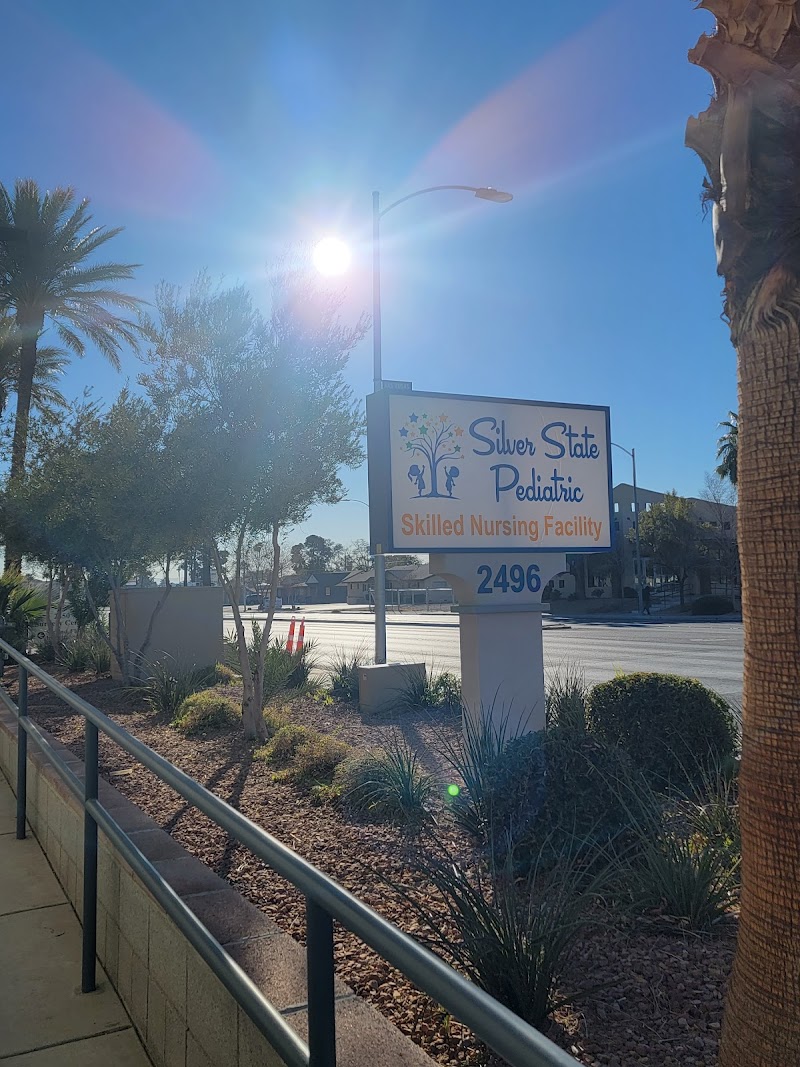
2496 W CHARLESTON BLVD, LAS VEGAS, NV 89102 (702) 310-3720
For profit - Partnership 36 Beds Independent Data: November 2025
Trust Grade
80/100
#15 of 65 in NV
Last Inspection: January 2025

Within standard 12-15 month inspection cycle. Federal law requires annual inspections.

Overview

Silver State Pediatric Skilled Nursing Facility in Las Vegas has a Trust Grade of B+, which means it is recommended and performs above average compared to other facilities. It ranks #15 out of 65 in Nevada, placing it in the top half of the state, and #10 out of 42 in Clark County, indicating that only nine local options are better. The facility is improving; issues decreased from 8 in 2024 to 2 in 2025, though it still has a concerning staffing turnover rate of 69%, which is higher than the state average of 46%. A positive aspect is that it has good RN coverage, exceeding that of 89% of Nevada facilities, which helps ensure better oversight of resident care. However, there are some weaknesses, including documented incidents such as expired food items found in the refrigerator and unlabelled food, as well as failures in managing feeding orders for some residents, which could pose risks to their health. Overall, while there are strengths in staffing and care quality, the facility needs to address its compliance issues to enhance safety and health standards.

Trust Score
B+
80/100
In Nevada
#15/65
Top 23%
Safety Record
Low Risk
No red flags
Inspections
Getting Better
8 → 2 violations
Staff Stability
⚠ Watch
69% turnover. Above average. Higher turnover means staff may not know residents' routines.
Penalties
✓ Good
No fines on record. Clean compliance history, better than most Nevada facilities.
Skilled Nurses
✓ Good
Each resident gets 148 minutes of Registered Nurse (RN) attention daily — more than 97% of Nevada nursing homes. RNs are the most trained staff who catch health problems before they become serious.
Violations
⚠ Watch
17 deficiencies on record. Higher than average. Multiple issues found across inspections.
★★★★★
5.0
Overall Rating
★★★★☆
4.0
Staff Levels
★★★★☆
4.0
Care Quality
★★★★★
5.0
Inspection Score
Stable
2024: 8 issues
2025: 2 issues

The Good

  • 4-Star Staffing Rating · Above-average nurse staffing levels
  • 4-Star Quality Measures · Strong clinical quality outcomes
  • Full Sprinkler Coverage · Fire safety systems throughout facility
  • No fines on record

Facility shows strength in staffing levels, quality measures, fire safety.

The Bad

Staff Turnover: 69%

23pts above Nevada avg (46%)

Frequent staff changes - ask about care continuity

Staff turnover is elevated (69%)

21 points above Nevada average of 48%

The Ugly 17 deficiencies on record

Jan 2025 2 deficiencies
CONCERN (D)

Potential for Harm - no one hurt, but risky conditions existed

Food Safety (Tag F0812)

Could have caused harm · This affected 1 resident

Based on observation, interview and document review, the facility failed to ensure the area behind the cooking area was maintained clean and food items were labeled with an open date. The deficient pr...

Read full inspector narrative →
Based on observation, interview and document review, the facility failed to ensure the area behind the cooking area was maintained clean and food items were labeled with an open date. The deficient practice had a potential for fire hazard, attract pests and track viability for consumption of food products. Findings include: On 01/28/2025 at 8:32 AM during the kitchen tour, the following food items were noted to be opened and partially consumed with no open date: 1) Truvani plant-based protein powder placed at the counter near the stove. 2) Jar of sundried tomato inside the reach-in refrigerator During the tour, the four drawer-base refrigerators used as the base for cook top stoves were noted to have splatters of dried cooking oil. The handles of the drawer base were tacky to touch. The gap between the cook top base, the oven rack and the back splash all the way to the floor had dried residues of cooking oil and noted gray materials had settled onto the floor. On 01/28/2025 at 8:52 AM, the Kitchen Manager confirmed the findings and indicated all food items should have been labeled with an open date. The Kitchen Manager acknowledged the gap between the cook top and ovens could use further cleaning to address the dried cooking oil and dust build up. The facility policy titled Cleanliness revised October 2008, documented the following: - All equipment, food contact surfaces and utensils shall be washed and kept clean to remove or completely loosen soils. - Kitchen surfaces not in contact with food shall be cleaned on a regular schedule and frequently enough to prevent accumulation of grime. The facility policy titled Food Receiving and Storage revised October 2017, documented all food stored in the kitchen will be covered, labeled and dated (use by date).
CONCERN (D)

Potential for Harm - no one hurt, but risky conditions existed

Deficiency F0837 (Tag F0837)

Could have caused harm · This affected 1 resident

**NOTE- TERMS IN BRACKETS HAVE BEEN EDITED TO PROTECT CONFIDENTIALITY** Residents were observed to be under continuous line-of-sight or contact supervision of staff when out of their cribs or canopy b...

Read full inspector narrative →
**NOTE- TERMS IN BRACKETS HAVE BEEN EDITED TO PROTECT CONFIDENTIALITY** Residents were observed to be under continuous line-of-sight or contact supervision of staff when out of their cribs or canopy bed. Staff were observed to carry and use walkie-talkies to communicate with other staff. A Certified Nurse Assistant, a Licensed Practical Nurse, and two Registered Nurses indicated the facility practice regarding supervision included: Residents were to be under line-of-sight supervision when out of their secured cribs and must not be left unattended in bouncy chairs or walkers. The staff verbalized each staff was issued a walkie-talkie to be used to alert other staff members when a resident was to be handed off for continuity of supervision. Staff verbalized the corridor double-doors were kept open so not to isolate any care teams. On 01/29/2025 at 10:00 AM, the Director of Nursing (DON) verbalized the facility policy for resident supervision was for all residents to be maintained in line-of-sight of staff when out of their rooms; the corridor double doors were to be kept open at all times to allow the full length of each hall to be visualized, and staff were to use walkie-talkies to communicate with other staff to facilitate the hand-off of residents from one staff member to another. These measures were put into effect on 05/16/2024, following an incident with injury. The facility policy and procedure titled Safety and Supervision of Residents, revised 07/2017, indicated the type and frequency of resident supervision was determined by the individual resident's assessed needs and identified hazards in the environment. The policy indicated the type and frequency of resident supervision may vary over time for the same resident. The policy lacked mention of maintaining line-of-sight supervision of all residents when out of their rooms, keeping the large hall doors open for visual access, and the use of the walkie talkie communication system to hand off care of residents. On 01/30/2025 in the morning, the DON acknowledged the Safety and Supervision policy and procedure did not include information regarding maintaining line-of-sight supervision of all residents when out of their rooms, keeping the large hall doors open for visual access, and the use of the walkie talkie communication system to hand off care of residents. The DON verbalized the policy and procedure had not been amended to reflect the changes in the supervision procedures which had been implemented on 05/16/2024. The DON verbalized the written facility policies and procedures should match the actual practices being implemented by staff. On 01/31/2025 at 1:38 PM, the Administrator (ADM) verbalized being responsible for the conduct of the Quality Assurance and Performance Improvement (QAPI) and Governing Body committees. The ADM verbalized the facility revised policies as the need arose, on an irregular basis. The ADM revealed a systematic review of all facility policies had not been conducted. The ADM acknowledged many of the facility policies and procedures had not been reviewed or revised for a long time and may be obsolete or in need of revision. The ADM verbalized the facility was using many policies geared toward adult skilled nursing facility (SNF) residents. The ADM reported it was challenging to adapt SNF policies to the pediatric resident population of the facility. The ADM verbalized it was important that facility policies and procedures accurately reflected the actual staff practices, in order to avoid confusion and to facilitate staff training. Facility policies and procedures reviewed which revealed older revision dates included: Antipsychotic Medication Use, revised 12/2016. Nutritional Assessment, revised 10/2017 Pediatric Enteral Tube Feeding via Continuous Pump, revised 11/2018 Wandering and Elopements, revised 04/2019 Administering Medications, revised 04/2019 Based on observation, interview, record review and document review, the facility failed to ensure polices were reviewed, updated, were suited to the resident population, and reflected current facility practices. The deficient practice had a potential for residents to receive care not meeting the expectation of the facility guidelines of care; and impede the uniform training of staff on the correct practices for delivering optimum care to the pediatric resident population. Findings include: The facility policy titled Administrative Management (Governing Body) revised October 2017, documented establishment and annual review of policies and procedures governing facility operations. On 01/29/2025, a review of the facility policy for the use of psychotropic medications revealed the policy provided guidance for the intended use of behavioral purposes and lacked guidance for the secondary indications of the medication for pediatric usage. R21 was admitted on [DATE], with diagnoses including muscle spasms and congenital hypertonia. R21's physician's order dated 10/11/202, Diazepam oral solution 1 milligram (mg)/milliliter. Give 0.3 mg via Gastrointestinal Tube every 8 hours for muscle spasms. On 01/29/2025 at 2:26 PM, the Director of Nursing (DON) confirmed the facility policy for psychotropic medication was geared for an adult population.
Feb 2024 8 deficiencies
CONCERN (D)

Potential for Harm - no one hurt, but risky conditions existed

Comprehensive Care Plan (Tag F0656)

Could have caused harm · This affected 1 resident

**NOTE- TERMS IN BRACKETS HAVE BEEN EDITED TO PROTECT CONFIDENTIALITY** Based on interviews, record review and document review, the facility failed to implement care plan interventions for monitoring ...

Read full inspector narrative →
**NOTE- TERMS IN BRACKETS HAVE BEEN EDITED TO PROTECT CONFIDENTIALITY** Based on interviews, record review and document review, the facility failed to implement care plan interventions for monitoring side effects for psychotropic and diuretic medication for 2 of 12 sampled residents (Residents 8 and 9). The deficient practice had the potential for adverse effects of medication for the residents of the facility. Findings include: Resident 8 (R8) R8 was admitted on [DATE] and readmitted on [DATE] with diagnoses including diffuse traumatic brain injury and epilepsy. The facility policy titled, Using the Care Plan (revised August 2006), documented the care plan would be used to develop the resident daily care routines and would be available to all staff with responsibilities to care for the resident. A physician order dated 08/03/2023 documented to administer Diazepam (sedative/hypnotic) Solution 1 Milligram/Milliliter (MG/ML), give 1.5 ml via Gastrostomy Tube (G-Tube) every 8 hours for muscle spasms. The medical record revealed a care plan was established regarding the use of Diazepam as a sedative/hypnotic with the following interventions: Administer sedative/hypnotic medications as ordered by physician. Monitor/document side effects and effectiveness every shift. Monitor, document, and report as needed for following adverse effects of sedative/hypnotic therapy: daytime drowsiness, confusion, loss of appetite in the morning, increased risk of falls and fractures, dizziness. The medication and treatment administration record lacked documented evidence R8 was being monitored for side effects of medication. On 02/15/2024 in the afternoon, the Registered Nurse indicated the medication administration record did not indicate medication was being monitored for side effects. The RN acknowledged the care plan was established and had specific interventions to monitor the side effects and effectiveness of Diazepam medication. Resident 9 (R9) R9 was admitted on [DATE] with diagnoses including generalized epilepsy, chronic respiratory failure. A physician order dated 04/18/2023 documented to administer Hydrochlorothiazide (HCTZ) 12.5 milligram (mg) tablet, give 0.5 tablet two times a day for high blood pressure. A physician order dated 05/05/2023 documented to administer Clobazam suspension 2.5 milligrams per milliliter, give 2 milliliters two times a day for seizures. The medical record revealed a care plan was developed regarding use of and interventions were listed to monitor the effectiveness and side effects for Hydrochlorothiazide and Clobazam. The medication administration record lacked documented evidence the medications were being monitored for effectiveness and side effects were being monitored. A consultant pharmacist recommendation for September of 2023 documented HCTZ was administered outside of parameters set up for blood pressure on several days and would benefit from monitoring. On 02/16/2024 at 11:00 AM, the Director of Nursing (DON) indicated the Licensed Nurses were responsible for the resident's assessment and to initiate the care plan following resident admission. The DON explained when care plans require monitoring of medications it would be put in the medication administration record in order to ensure daily monitoring. The DON verbalized the care plan was to establish the care guideline and it was important.
CONCERN (D)

Potential for Harm - no one hurt, but risky conditions existed

Quality of Care (Tag F0684)

Could have caused harm · This affected 1 resident

**NOTE- TERMS IN BRACKETS HAVE BEEN EDITED TO PROTECT CONFIDENTIALITY** Based on observations, interviews, record reviews, and document review, the facility failed to ensure the following: 1) The clon...

Read full inspector narrative →
**NOTE- TERMS IN BRACKETS HAVE BEEN EDITED TO PROTECT CONFIDENTIALITY** Based on observations, interviews, record reviews, and document review, the facility failed to ensure the following: 1) The clonidine patch was removed timely as ordered, or the physician was notified of the delay for 1 of 12 sampled residents (Resident 20). 2) The bowel protocol was administered as ordered for 1 of 12 sampled residents (Resident 18). 3) An external cream was timely applied as ordered for 1 of 12 sampled residents (Resident 12). These deficient practices could have led to potential risks, such as unintended overdose, adverse reactions, or inadequate management of the resident's medical condition. Findings include: 1) Resident 20 (R20) R20 was admitted on [DATE], with diagnoses including hypertension. On 02/15/2024 at 8:15 AM, a Registered Nurse (RN) prepared the medications, excluding the Clonidine transdermal patch. An RN indicated the Clonidine patch was not administered due to its unavailability and would follow up with the pharmacy. The previous Clonidine patch applied on 02/01/2024 had not been removed. A Physician order dated 12/17/2023, documented a Clonidine transdermal patch weekly of 0.2 milligrams (mg) to be applied transdermally at 8:00 AM every 7 days for hypertension, write the date on the patch applied and remove it per schedule at 7:59 AM. The Medication Administration Record (MAR) dated 02/15/2024, documented the Clonidine patch was not administered due to unavailability, and the previous patch applied on 02/08/2024 had not been removed as scheduled on 02/15/2024 at 7:59 AM. On 02/15/2024 at 2:22 PM, the Clonidine patch was still in place at R20's scapula (shoulder area) dated 02/01/2024. An RN confirmed the previous patch was still in place because the new patch was not available earlier and the removal schedule was in the morning. An RN confirmed the physician was not notified regarding the delayed removal of the Clonidine patch. On 02/15/2024 at 1:12 PM, another RN explained the process of medication administration or following a physician's orders. An RN indicated the physician order should have been carried out within one (1) hour of the prescribed time. An RN indicated if there were changes or delays, the physician would be notified and notification was documented. On 02/15/2024 at 4:20 PM, the Director of Nursing (DON) indicated the prior Clonidine patch should have been removed as scheduled, prior to the application of a new patch, but since the new patch was not applied due to unavailability, the physician should have been notified of the delayed execution administration and removal of the prior patch and actions should have been documented. 2) Resident 18 (R18) R18 was admitted on [DATE], with diagnoses including preterm newborn and gastrostomy status. A Physician order dated 02/15/2024, documented a Miralax oral packet to be given 5 grams enterally (through gastrostomy tube), daily at 8:00 AM for constipation. A Care Plan dated 11/04/2023, documented R18 was at risk for constipation related to decreased mobility. The interventions included following the facility's bowel protocol for bowel management. Monitor medications for side effects of constipation. Keep the physician informed of any problems. On 02/15/2024 at 8:41 AM, during medication pass, Registered Nurse 2 (RN2) prepared the medications, excluding Miralax. RN2 indicated that Miralax was available but was withheld because R18 had a bowel movement. The MAR dated 02/15/2024, documented the Miralax was not administered and withheld. The Bowel Monitor Summary documented the following: -2/15/2023, incontinent, putty like, medium size -2/16/2024, incontinent, putty like, large size On 02/15/2024 at 4:00 PM, RN2 confirmed the physician was not notified when the Miralax was held. RN2 explained the Miralax was held because the resident had bowel movement and the indication for use was for constipation. On 02/15/2024 at 4:20 PM, the DON indicated the bowel protocol should have been given as ordered routinely, and having a bowel movement was an expected outcome. The DON indicated the Miralax should not be held unless the resident had uncontrolled loose stools or diarrhea. The DON confirmed R18 had no diarrhea and indicated the physician should have been notified if the ordered medication had been held. The DON confirmed the physician was not notified when the Miralax was not administered as ordered. 3) Resident 12 (R12) R12 was admitted on [DATE], with diagnoses including gastrostomy status and anoxic brain damage. A physician order dated 10/14/2023, documented Eucerin external cream applied topically to the body two times a day for seborrheic dermatitis and apply ointment to the body for dry skin twice per day. A Care Plan dated 03/22/2023, documented R12 had the potential impairment of skin integrity related to age or infanthood and associated incontinence. The interventions included applying topical creams and ointments as ordered. On 02/15/2024 at 8:56 AM, during the medication pass, RN2 prepared R12's medications, excluding Eucerin external cream. RN2 indicated the Eucerin cream was not applied because there was no skin redness on R12's skin. The MAR dated 02/15/2024, documented the Eucerin cream was not applied. On 12/15/2024 at 3:00 PM, RN2 explained the Eucerin cream was ordered for skin dryness but was not applied as ordered. RN2 indicated the physician was not notified the Eucerin cream was not applied timely. RN2 indicated the medication should have been administered within 1 hour of the prescribed time. On 02/15/2024 in the afternoon, the DON indicated the medications or treatments should have been administered timely within an hour before or after the prescribed time. The DON indicated any deviations; if the physician's orders were not administered for some reason, the physician should have been notified. The DON confirmed the Eucerin cream was not applied timely as ordered, and the physician was not notified. The facility policy titled Administering Medications and Treatment Orders revised 04/2019, documented medications were administered in a safe and timely manner and as prescribed, including any required time frame. The medications were administered within 1 hour of their prescribed time. If there were concerns about the residents' medication, the person preparing the medication would contact the prescriber.
CONCERN (D)

Potential for Harm - no one hurt, but risky conditions existed

Pharmacy Services (Tag F0755)

Could have caused harm · This affected 1 resident

**NOTE- TERMS IN BRACKETS HAVE BEEN EDITED TO PROTECT CONFIDENTIALITY** Based on observation, interviews, and document review, the facility failed to ensure that medications were available during medi...

Read full inspector narrative →
**NOTE- TERMS IN BRACKETS HAVE BEEN EDITED TO PROTECT CONFIDENTIALITY** Based on observation, interviews, and document review, the facility failed to ensure that medications were available during medication administration and administered timely as ordered. The deficient practice resulted in delays in treatment and compromised the overall effectiveness of the medication regimen. Findings include: Resident 20 (R20) R20 was admitted on [DATE], with diagnoses including hypertension. A Physician order dated 12/17/2023, documented Clonidine Transdermal Patch 0.2 milligrams (mg)/24 hours to be applied transdermally every 7 days for hypertension at 8:00 AM. On 02/15/2024 at 8:15 AM, a Registered Nurse (RN) prepared the medications except for the Clonidine transdermal patch. An RN indicated the Clonidine patch was not administered due to its unavailability and would follow up with the pharmacy. Clonidine was last applied on 02/01/2024. The Medication Administration Record dated 02/15/2024, documented the Clonidine patch was not administered due to its unavailability. On 02/16/24 at 2:31 PM, the Pharmacist indicated Clonidine was ordered on 12/17/2023, and four patches were dispensed, and another four patches on 01/18/2024. The Pharmacist indicated the medication refill was not automatically dispensed, but the facility would have to request it. The Pharmacist indicated the refill request was placed, but the insurance did not cover it, and the facility should cover the cost. The Pharmacist indicated total of five patches were delivered on 02/15/2024 in the afternoon. The Pharmacist explained the Clonidine patches were prescribed to treat hypertension, and timely administration was crucial for maintaining the medication's potency. The Pharmacist indicated there would be no severe harm if the administration was delayed by a few hours. On 02/15/2024 1:30 PM, the Director of Nursing (DON) indicated the residents' medication was expected to be available during the medication pass and should have been administered 1 hour before and 1 hour after the prescribed time. The DON confirmed Clonidine was not administered on time as ordered. A facility policy titled Medication and Treatment Orders revised 07/2016, documented medications that were required to be refilled must be reordered from the issuing pharmacy not less than three days prior to the last dosage being administered to ensure refills were readily available.
CONCERN (D)

Potential for Harm - no one hurt, but risky conditions existed

Medication Errors (Tag F0758)

Could have caused harm · This affected 1 resident

**NOTE- TERMS IN BRACKETS HAVE BEEN EDITED TO PROTECT CONFIDENTIALITY** Based on interviews, record review, and document review the facility failed to ensure consent was obtained for use of psychotrop...

Read full inspector narrative →
**NOTE- TERMS IN BRACKETS HAVE BEEN EDITED TO PROTECT CONFIDENTIALITY** Based on interviews, record review, and document review the facility failed to ensure consent was obtained for use of psychotropic medications for 2 of 12 sampled residents. The deficient practice had the potential for unnecessary medication administration. Findings include: Resident 8 (R8) R8 was admitted on [DATE] and readmitted on [DATE] with diagnoses including diffuse traumatic brain injury and epilepsy. A physician order dated 08/03/2023 documented to administer Diazepam (sedative/hypnotic) Solution, 1 milligram per milliliter every 8 hours for muscle spasm. The medical record lacked documented evidence a consent form was completed for psychotropic medication use. Resident 9 (R9) R9 was admitted on [DATE] with diagnoses including generalized epilepsy, chronic respiratory failure. A physician order dated 05/05/2023 documented to administer Clobazam suspension 2.5 milligrams per milliliter, give 2 milliliters two times a day for seizures. The medical record lacked documented evidence a consent form was completed for use of psychotropic medication. The facility admission packet contained a psychotropic medication consent form for use when appropriate. On 02/13/24 at 2:39 PM, the Director of Nursing (DON) verbalized the consultant pharmacist would review all residents once a month and send results and/or recommendations to facility for the DON to keep record of in binder. If recommendation was made it would be sent to the physician for determination. The DON explained the facility did not have consent for medication due to reason for medication and indicated the use was for seizure control or weaning from ventilator and not behavior based. The DON confirmed the medications were considered psychotropic medications. The facility was unable to provide documentation regarding policy or procedures for use of psychotropic medication.
CONCERN (D)

Potential for Harm - no one hurt, but risky conditions existed

Unnecessary Medications (Tag F0759)

Could have caused harm · This affected 1 resident

**NOTE- TERMS IN BRACKETS HAVE BEEN EDITED TO PROTECT CONFIDENTIALITY** Based on observations, interviews, record reviews, and document reviews, the facility failed to ensure their medication error ra...

Read full inspector narrative →
**NOTE- TERMS IN BRACKETS HAVE BEEN EDITED TO PROTECT CONFIDENTIALITY** Based on observations, interviews, record reviews, and document reviews, the facility failed to ensure their medication error rate was below five percent when three errors were identified with 28 opportunities observed, calculating an error rate of 10.71 percent. Failure to follow physician orders and timely administer medications posed a potential risk of injury or harm to the resident. Findings include: Resident 20 (R20) R20 was admitted on [DATE], with diagnoses including hypertension. A Physician order dated 12/17/2023, documented Clonidine transdermal patch weekly of 0.2 milligrams (mg) to be applied transdermally at 8:00 AM every 7 days for hypertension, write the date on the patch applied and remove it per schedule. On 02/15/2024 at 8:15 AM, during the medication pass, a Registered Nurse (RN1) prepared the medications except for the Clonidine transdermal patch. RN1 indicated the Clonidine patch was not administered due to its unavailability and would follow up with the pharmacy. The previous Clonidine patch that was applied on 02/08/2024 had not been removed timely as ordered. On 02/15/2024 at 2:22 PM, RN1 confirmed the Clonidine transdermal patch was not administered timely due to its unavailability. Resident 18 (R18) R18 was admitted on [DATE], with diagnoses including preterm newborn and gastrostomy status. A Physician order dated 02/15/2024, documented a Miralax oral packet, 5 grams enterally daily at 8:00 AM for constipation. On 02/15/2024 at 8:41 AM, during medication pass, Registered Nurse 2 (RN2) prepared the medications, excluding Miralax. RN2 indicated that Miralax was available but was withheld because R18 had a bowel movement. The MAR dated 02/15/2024, documented the Miralax was not administered and withheld. On 02/15/2024 at 4:00 PM, R2 confirmed the physician was not notified when the Miralax was held. The RN explained the Miralax was held because the resident had a bowel movement and the indication for use was for constipation. On 02/15/2024 at 4:20 PM, the DON indicated the bowel protocol should have been given as ordered routinely with the goal of regulating the bowel movement. The DON indicated the Miralax should not be held unless the resident had uncontrolled loose stools or diarrhea. The DON confirmed R18 had no diarrhea and indicated the physician should have been notified if the ordered medication had been held. The DON confirmed the physician was not notified when the Miralax was not administered as ordered. Resident 12 (R12) R12 was admitted on [DATE], with diagnoses including gastrostomy status and anoxic brain damage. A physician order dated 10/14/2023, documented Eucerin external cream applied topically to the body two times a day for seborrheic dermatitis and apply ointment to the body for dry skin twice per day. On 02/15/2024 at 8:56 AM, during the medication pass, RN2 prepared R12's medications except for Eucerin external cream. RN2 indicated the Eucerin cream was not applied because there was no redness on R12's skin. On 12/15/2023 at 3:00 PM, RN2 explained the Eucerin cream was ordered for skin dryness but was not applied as ordered. RN2 indicated the physician was not notified the Eucerin cream was not applied as ordered. On 02/15/2024 in the afternoon, the DON indicated the medications or treatments should have been administered timely within an hour before or after the prescribed time. The DON indicated any deviations; if the physician's orders were not administered for some reason, the physician should have been notified. The DON confirmed the Eucerin cream was not applied timely as ordered, and the physician was not notified. A facility policy titled Administering Medications and Treatment Orders revised 04/2019, documented medications were administered in a safe and timely manner, and as prescribed, including any required time frame. The medications were administered within one hour of their prescribed time. If there were concerns about the residents' medication, the person preparing the medication would contact the prescriber.
CONCERN (D)

Potential for Harm - no one hurt, but risky conditions existed

Deficiency F0761 (Tag F0761)

Could have caused harm · This affected 1 resident

Based on observations, interviews, and document review, medications were not labeled with the date of opening in the medication cart and medication room. The deficient practice posed a potential risk ...

Read full inspector narrative →
Based on observations, interviews, and document review, medications were not labeled with the date of opening in the medication cart and medication room. The deficient practice posed a potential risk of compromised patient safety and medication efficacy due to the lack of accurate information on the duration of use and potential expiration. Findings include: 1) On 02/15/24 at 8:41 AM, during medication pass administration the Miralax bottle, which contained approximately 300 grams of medication, was not labeled with the open date. An RN confirmed the Miralax bottle was unlabeled and indicated it should have been labeled when it was opened. 2) On 02/15/2024 at 9:30 AM, the medication room had an opened 1 liter bottle of inhalation water, not labeled with the date when it was opened and stored together with the active supply. The Unit Manager (UM) confirmed the inhalation water was opened and should have been discarded because it should have been used within 24 hours. On 02/16/2024 at 2:56 PM, the Director of Nursing (DON) indicated all medications should have been dated when opened to ensure and maintain their efficacy. A facility policy titled Administering Medications revised 04/2019, documented when opening a multi-dose container, the date opened is recorded on the container.
CONCERN (E)

Potential for Harm - no one hurt, but risky conditions existed

Tube Feeding (Tag F0693)

Could have caused harm · This affected multiple residents

**NOTE- TERMS IN BRACKETS HAVE BEEN EDITED TO PROTECT CONFIDENTIALITY** Based on observation, interview, record review, and document review, the facility failed to ensure care and management orders we...

Read full inspector narrative →
**NOTE- TERMS IN BRACKETS HAVE BEEN EDITED TO PROTECT CONFIDENTIALITY** Based on observation, interview, record review, and document review, the facility failed to ensure care and management orders were obtained, clarified, and transcribed for residents receiving gastric tube feeding (TF) for 6 of 12 sampled residents (Residents 16, 18, 1, 2, 10, and 20). This deficiency could lead to potential significant risks, including increased susceptibility to infections, dehydration, malnutrition, fluid overload, and gastrostomy tube (GT) dysfunction. Findings include: Resident 16 (R16) R16 was admitted on [DATE] and readmitted on [DATE], with diagnoses including dysphagia (difficulty swallowing) and gastrostomy status. On 02/13/2024 at 1:12 PM, R16 was in the crib, the head of bed (HOB) was not elevated, and Elecare TF was infusing at 150 milliliters (ml) per hour. A Physician order dated 02/06/2024, documented administering Elecare 22 kilocalories (kcal) to give 150 ml over 30-60 minutes. A physician order dated 10/01/2023, documented enteral feeding every shift for prophylaxis and to follow GT policy. The Quarterly Minimum Data Set, dated [DATE], documented R12 had a feeding tube. A Care Plan dated 09/30/2023, documented R16 required TF. R16 was dependent on TF and water flushes, see physician orders. The interventions included elevating the head of the bed (HOB) at 45 degrees during and 30 minutes after tube feeding. To provide local care to the GT site as ordered. The goal was to be free from signs and symptoms of infection, and from side effects or complications related to TF. R16's medical records lacked documented evidence; physician orders for GT protocols were obtained and transcribed, such as: amount and frequency of water flushes, head of bed elevation, verification of GT placement and gastric residual volume (GRV), GT site monitoring, and GT local site care schedule. On 02/13/2024 at 2:30 PM, a Registered Nurse (RN) confirmed there was no specific order in place regarding the amount and frequency of the GT water flushes, to verify GT placement, GT site cleaning, and GRV checking. An RN indicated the orders were required and beneficial if specified in a clear direction. An RN indicated the water flushes normally would be 10-15 ml to be given before and after medication administration, but each resident had special needs. On 02/14/2024 at 8:30 AM, the Unit Manager (UM) verified R16's medical records and confirmed the physician order documented as following GT protocol, but the protocols were not enumerated in the drop-down options. The UM attempted to click back and forth, but there was no GT protocol indicated. The UM acknowledged a physician order for GT care and management should have been obtained and transcribed for clear directions for the residents' safety. On 02/14/2024 at 9:15 AM, the Assistant Director of Nursing (ADON) indicated was working on the revision of the facility policy regarding enteral feeding or GT protocols because the existing facility policy was applicable for geriatric residents. The ADON indicated there should have been a transcription of a clear order including the GT site monitoring, cleaning, dressing change, checking the GRV, the amount and frequency of the specific amount of GT water flushes to prevent fluid overload, and documenting the task to ensure it was completed. The ADON indicated the pediatric residents had different special needs, and guidelines should be in place. On 02/14/2024 at 9:46 AM, a Licensed Practical Nurse (LPN) enumerated the GT protocol, such as: check GT placement, check GRV at 10-15 ml; water flushes of 10 ml should be given before medication passes; generally, give 5 ml in between medications. The LPN could not recall the other GT protocols. The LPN indicated there should have been an order in place to ensure proper execution of a task. Resident 18 (R18) R18 was admitted on [DATE], with diagnoses including dysphagia and gastrostomy status. On 02/13/2024 at 9:11 AM, R18 was in the crib with eyes open. Enfacare TF was infusing at 85 ml/hr. Skin redness and discharge were noted around R18's GT site with no dressing. A physician order dated 12/11/2023, documented to administer Enfacare or Neosure enteral feeding every 3 hours, administer 85 ml to GT over 1 hour via pump. The Quarterly Minimum Data Set, dated [DATE], documented R12 had a feeding tube. A Care plan dated 11/04/2023, documented R18 required total assistance with TF, water flushes and see physician orders. R18's medical records lacked documented evidence; physician orders for GT protocols were obtained and transcribed, such as: amount and frequency of water flushes, head of bed elevation, verification of GT placement and gastric residual volume (GRV), GT site monitoring, and GT site care schedule. On 02/13/2424 at 2:30 PM, a Registered Nurse (RN) confirmed there were no specific orders for the care and management of R18, no amount of water flushing, and no frequency, or GT placement verification. An RN indicated the orders would be beneficial if properly specified, including the amount and the frequency. On 02/14/2024 at 10:07 AM, the DON indicated there should have been orders in place for R18's GT care and management. The DON further mentioned the necessity of an order to monitor R18's GT site and cleanse it daily or as needed to prevent infection. Resident 1 (R1) R1 was admitted on [DATE], with diagnoses including dysphagia, and gastrostomy status. A Physician order dated 09/23/2023, documented administering Pediasure 1.5 with Fiber Formula, 335 ml via GT bolus with a 60 ml water flush before and after. A Care Plan dated 03/13/2024, documented R1 required TF related to dysphagia, cerebral palsy, and Edward's syndrome. R1 was dependent on TF and water flushes, and to see the physician's orders. The Quarterly Minimum Data Set, dated [DATE], documented R1 had a feeding tube. R1's medical records lacked documented evidence physician orders for GT protocols were obtained and transcribed, such as: verification of GT placement, gastric residual, GT site monitoring, and cleaning schedule. On 02/14/2024 at 9:40 AM, a Registered Nurse 2 (RN2) enumerated the GT protocol, such as flushing the GT with 2-3 milliliters (ml) before and after medication administration, or 5-10 ml with the older residents. The gastric residual would not be checked by schedule, but as needed, the GT site would be monitored at least every shift. RN2 indicated each resident had different needs when regarding their hydration status and fluid tolerance. RN2 indicated a physician order would be beneficial to have in place indicating the frequency, quantity, or amount for GT water flushes to prevent dehydration or fluid overload. On 02/14/2024 at 10:07 AM, the Director of Nursing (DON) indicated there should have been orders in place for R1's GT care and management. Resident 2 (R2) R2 was admitted on [DATE] and readmitted on [DATE], with diagnoses including dysphagia and gastrostomy status. The Quarterly Minimum Data Set, dated [DATE], documented R2 had a feeding tube. A Care Plan dated 08/20/2023, documented R2 required tube feeding. The interventions included checking for tube placement and gastric contents/residual volume per facility protocol and record, to provide local care to the GT site as ordered and monitor for signs and symptoms of infection. R2's medical records lacked documented evidence physician orders for GT protocols were obtained and transcribed, such as verification of GT placement, gastric residual, GT site monitoring and cleaning schedule. Resident 10 (R10) R10 was admitted on [DATE], with diagnoses including feeding difficulty and gastrostomy status. A physician order dated 10/31/2023, documented to follow GT/JT policy. A Care Plan dated 06/08/2026, documented R10 required GT feeding related to dysphagia. R10 was dependent on TF, water flushes, and see the physician's orders. The Quarterly Minimum Data Set, dated [DATE], documented R2 had a feeding tube. R10's medical records lacked documented evidence physician orders for GT protocols were obtained and transcribed, such as water flushes, verification of GT placement, gastric residual, and GT site monitoring and cleaning schedule. Resident 20 (R20) R20 was admitted on [DATE], with diagnoses including gastrostomy status. On 02/13/2024 at 9:07 AM, R20 was in the crib, and TF was infusing. A Care plan dated 11/04/2023, documented R20 required total assistance with TF, water flushes, and to see physician orders. R20's medical records lacked documented evidence a physician order for specific water flushes was obtained and transcribed for R20. On 02/14/2024, at 10:07 AM, the DON explained the process of managing the GT by verifying orders through GRV checking, GT placement, and water flushes, depending on the residents' needs. The DON specified that neonates required 3-5 ml of water flushes before medication administration, 5-10 ml in between medications, and 15-30 ml after medications. The DON indicated the GT site would be monitored for redness and signs of infection, with procedures such as site cleaning, syringe changing, and dressing following specific orders. The DON indicated the majority of current residents would not be able to verbalize stomach pains or bloating. The DON indicated the GT protocols necessitated the importance of clear and specific orders for GT care and management, covering execution, monitoring, and documentation. The DON confirmed the care and management orders and protocols for residents on TF should have been obtained, clarified, and clearly transcribed. A facility policy titled Pediatric Confirming Placement of Feeding Tube dated 02/2024, documented to verify there was a physician's order for this procedure. When the correct tube placement is verified, flush the tubing with at least 10 ml of warm water (or the prescribed amount). A facility policy titled Pediatric Enteral Tube Feeding via Continuous Pump, dated 11/2018, documented for gastrostomy tubes: when correct tube placement had been verified, flush tubing with at least 5 ml of warm water (or the prescribed amount). For the jejunostomy tube: flush the tubing with at least 10 ml of warm water (or the prescribed amount). On the formula label document, the initials, date, and time the formula was hung or administered indicate that the label was checked against the order.
CONCERN (F)

Potential for Harm - no one hurt, but risky conditions existed

Food Safety (Tag F0812)

Could have caused harm · This affected most or all residents

Based on observation, interview, and document review, the facility failed to ensure: 1) expired items were not stored in the refrigerator and discarded; and 2) feeding formula and items were appropria...

Read full inspector narrative →
Based on observation, interview, and document review, the facility failed to ensure: 1) expired items were not stored in the refrigerator and discarded; and 2) feeding formula and items were appropriately labeled in the nourishment room refrigerator. The deficient practice posed a potential risk to safety and health standards, as it could lead to contamination or inadequate storage conditions. Findings include: On 02/13/2024 at 8:05 AM, a kitchen tour was conducted with one cook on duty. The refrigerator was inspected, and the following were observed: -expired ham in the refrigerator labeled to be discarded on 02/08/2024. -thawed or spoiled chopped vegetables in the freezer On 02/13/2024 at 3:40 PM, the cook confirmed the ham stored in the refrigerator was opened a few days ago and labeled to be discarded on 02/08/2024. The cook indicated was responsible for ensuring the items in the kitchen were not expired or spoiled. 2) On 02/13/2024 at 8:20 AM, the nourishment refrigerator stored the following: -unlabeled, partially consumed feeding bottle with approximately 150 milliliters (ml) of formula content -half-full unlabeled carton of formula -approximately 350 ml of opened or unlabeled bottled water in the freezer. On 02/13/2024 at 2:01 PM, a Certified Nursing Assistant (CNA) verified and confirmed the observation and indicated, everything should have been labeled at the time it was opened. The CNA indicated the partially consumed feeding bottle with formula content should have been discarded because it did not indicate the resident's name and date. On 02/15/2024 at 11:25 AM, the Administrator acknowledged the expired ham, spoiled chopped vegetables in the kitchen refrigerator, and unlabeled items stored in the nourishment refrigerator. A facility policy titled Food Receiving and Storage dated 10/2017, documented that all foods stored in the refrigerator or freezer would be covered, labeled, dated, and used by date. All foods belonging to residents must be labeled with the resident's name, the item, and the use by date. Beverages must be dated when opened and discarded after twenty-four (24) hours. Partially eaten food may not be kept in the refrigerator.
Mar 2023 7 deficiencies
CONCERN (D) 📢 Someone Reported This

A family member, employee, or ombudsman was alarmed enough to file a formal complaint

Potential for Harm - no one hurt, but risky conditions existed

Deficiency F0655 (Tag F0655)

Could have caused harm · This affected 1 resident

**NOTE- TERMS IN BRACKETS HAVE BEEN EDITED TO PROTECT CONFIDENTIALITY** Based on observation, interview, record review and document review, the facility failed to ensure (1) the use of a resident's el...

Read full inspector narrative →
**NOTE- TERMS IN BRACKETS HAVE BEEN EDITED TO PROTECT CONFIDENTIALITY** Based on observation, interview, record review and document review, the facility failed to ensure (1) the use of a resident's elbow immobilizers were included in the resident's baseline care plan for 1 of 12 sampled residents (Resident #173) and (2) interventions to keep head of bed (HOB) elevated during enteral feeds were implemented for 1 of 12 sampled residents (Resident #173). The failure to obtain and document a wearing schedule for the immobilizer device placed the resident at risk for a decline in range of motion, stiffening or locking of joints and discomfort. The failure to ensure the resident's HOB was elevated during enteral feeding resulted in the resident vomiting the enteral formula. Findings include: Elbow Immobilizer Resident #173 (R173) Resident # 173 was admitted on [DATE], with diagnoses including neurological devastation from cerebral palsy and attention to gastrostomy. On 03/22/2023 in the morning, R173 was awake and non-verbal while seated in wheelchair by the nurse's station. The resident wore a white, rigid immobilizer device on bilateral arms which extended from the resident's armpits to a few inches above the wrist. The resident's arms were kept in straight position, frontal-facing at approximately a 45 degree-angle, disallowing for bending at elbow joints. A physician order dated 03/13/2023, documented to apply pediatric elbow immobilizers. Remove every two hours for skin checks. The medical record lacked documented evidence care and management orders which included a wearing schedule was included in the resident's baseline care plan. On 03/23/2023 at 11:06 AM, the Director of Nursing (DON) confirmed care and management orders for the use of R173's arm immobilizers were not included in the resident's baseline care plan and should have been. According to the DON, care plan interventions should have reflected a clear wearing schedule to allow for occasional bending of joints and relief. On 03/23/2023 at 11: 14 AM, the Physical Therapist (PT) indicated the resident's bilateral arm immobilizers should have been included in the resident's baseline care plan and should have reflected a clear wearing schedule. The PT indicated the facility merely followed the family's instructions to always keep the device on due to self-harming behaviors such as scratching and pulling on gastrostomy tube (G-tube). The Baseline Care Plan policy revised December 2016 documented a baseline care plan was developed within 48 hours from admission to meet the resident's immediate needs. Enteral Feeding Procedure Resident #173 (R173) Resident # 173 was admitted on [DATE], with diagnoses including neurological devastation from cerebral palsy and attention to gastrostomy. A Baseline Care Plan for tube feeding initiated on 03/13/2023, documented R173 required tube feeding due to dysphagia (difficulty or inability to swallow). Care plan goals included preventing aspiration and other complications related to tube feeding. Interventions included ensuring the resident's HOB would be elevated 45 degrees during and up to 30 minutes after tube feeding. On 03/21/2023 at 12:59 PM, the resident laid flat in bed while a Licensed Practical Nurse (LPN) initiated the resident's enteral feeding by pump which was set to run at 200 ml per hour. On 03/21/2023 at 1:10 PM, the Occupational Therapist (OT) and the Inspector entered R173's room and found the resident flat in bed in pretzel position. On the left side of the resident's head was a moderate amount of brown substance. The OT proceeded to lift the resident and placed the resident in wheelchair. The OT indicated residents must be in upright position during enteral feeds to prevent aspiration and vomiting. On 03/21/2023 at 1:12 PM, a Certified Nursing Assistant (CNA) entered the room and described the brown substance on the resident's bed linen as regurgitated feeding. On 03/21/2023 at 1:15 PM, the LPN indicated being aware there was a physician order to feed the resident with HOB elevated at 30 to 45 degrees and the LPN revealed the resident was in flat position during the start of feed and the resident was left in bed without the HOB elevated during the feed. The LPN described the brown substance on the resident's bed as vomitus and indicated the resident may have vomited because the resident was fed enterally while in flat position. On 03/21/2023 at 2:44 PM, the Director of Nursing (DON) indicated HOB must be elevated for all enteral feeding procedures to prevent aspiration, vomiting and pneumonia. The DON indicated it was not acceptable for the LPN to initiate R173's enteral feed while the resident was in flat position and the LPN did not ensure the resident's HOB was elevated before leaving the room for the duration of the feed. The Enteral Nutrition Care plan policy revised November 2018, documented risk of aspiration was assessed by the nurse and the provider and addressed in the individual care plan. The risk of aspiration may be affected by improper positioning of the resident during feeding.
CONCERN (D) 📢 Someone Reported This

A family member, employee, or ombudsman was alarmed enough to file a formal complaint

Potential for Harm - no one hurt, but risky conditions existed

Deficiency F0688 (Tag F0688)

Could have caused harm · This affected 1 resident

**NOTE- TERMS IN BRACKETS HAVE BEEN EDITED TO PROTECT CONFIDENTIALITY** Based on observation, interview, record review and document review, the facility failed to ensure care and management orders whi...

Read full inspector narrative →
**NOTE- TERMS IN BRACKETS HAVE BEEN EDITED TO PROTECT CONFIDENTIALITY** Based on observation, interview, record review and document review, the facility failed to ensure care and management orders which included a wearing schedule (length of time the immobilizer should be on or off) was obtained for the use of bilateral elbow immobilizers for 1 of 12 sampled residents (Resident #173). The failure placed the resident at risk for a decline in range of motion of the upper extremities, stiffening or locking of joints at the elbow junction and discomfort to the resident. Findings include: Resident #173 (R173) Resident # 173 was admitted [DATE], with diagnoses including neurological devastation from cerebral palsy and attention to gastrostomy. On 03/22/2023 in the morning, R173 was awake and non-verbal while seated in wheelchair by the nurse's station. The resident wore a white, rigid immobilizer device on bilateral arms which extended from the resident's armpits to a few inches above the wrist. The resident's arms were kept in straight position, frontal-facing at approximately a 45 degree-angle, disallowing for bending at elbow joints. A physician order dated 03/13/2023, documented to apply pediatric elbow immobilizers. Remove every two hours for skin checks. On 03/21/2023 at 12:55 PM, R173 laid flat in bed while a Licensed Practical Nurse (LPN) provided care. The LPN removed R173's right arm immobilizer and examined the resident's skin which revealed no impairments. Upon removing the device, R173 immediately bent right arm and the LPN re-applied the immobilizer within a few minutes. The LPN indicated the orders were to keep the resident's arm immobilizers on at all times removing every two hours for skin checks. The LPN indicated the immobilizers were already in place on admission and the family indicated it was being used for the resident's self-harming behaviors such as scratching self and potentially pulling out gastrostomy tube (G-tube). The medical record lacked documented evidence care and management orders which included a wearing schedule was obtained for the use of the resident's elbow immobilizers. On 03/21/2023 at 1:05 PM, the Occupational Therapist (OT) and the outgoing Director of Nursing (DON) reviewed the resident's medical record and confirmed care and management orders for the resident's elbow immobilizers were limited to removing the device every two hours for skin checks and there was no specified wearing schedule such as when to apply and re-apply the device to allow for occasional bending of elbows. On 03/21/2023 at 2:51 PM, the incoming DON confirmed care and management orders which included a wearing schedule was not included in the resident's care plan and should have been. The incoming DON acknowledged the current orders for the device were limited to removing every two hours for skin checks. On 03/22/2023 at 9:30 AM, R173 laid in bed and was not wearing arm immobilizers which were observed to be on the bedside table. The resident's legs were in pretzel position, arms were actively moving but the resident did not exhibit any self-harming behaviors such as scratching self or reaching for G-tube. A physician order dated 03/23/2023, documented to remove elbow immobilizers every two hours for a minimum of 15 minutes to check for skin abnormalities and to ensure comfort. On 03/22/2023 at 9:35 AM, a therapy staff member entered the room and measured the resident's elbow immobilizers. The therapy staff member described the immobilizers as rigid and measured 20 inches long. The therapy staff member attempted to apply the device on the resident's right arm and the resident briefly resisted by hitting the device with right arm and moved head from side to side. When the device was successfully placed on the right arm, the therapy staff member indicated the device extended from the resident's armpit up to a few inches above the wrist. On 03/22/2023 at 10:50 AM, the Physical Therapist (PT) indicated being aware R173 was admitted with bilateral arm immobilizers and was in the facility for respite care. The PT explained the resident's arm immobilizers were not incorporated in the resident's PT evaluation on 03/15/2023 due to the wheelchair not being available. The PT recounted when the wheelchair was obtained from R173's family on 03/16/2023, a re-evaluation was not performed to include the arm immobilizers because the PT evaluation had been completed and there was no further requirement to document. According to the PT, the resident's family instructed the facility to keep immobilizers on at all times removing every two hours for skin checks. On 03/23/2023 at 3:16 PM, the outgoing DON indicated when a resident such as R173 was admitted with arm immobilizers and family instructions to keep the device on at all times removing only every two hours for skin checks, a nurse should have contacted a provider to obtain care orders which would include a wearing schedule to allow for relief and bending of elbows. The DON verbalized prolonged use of immobilizer devices could potentially cause stiffening and even locking of joints. On 03/23/2023 at 3:20 PM, the incoming DON indicated nurses advocated for residents and when instructions were received from family members to keep an immobilizer device on at all times due to self-harming behaviors, a nurse should have contacted the physician for clarification and to obtain care orders which would include a wearing schedule. The DON verbalized prolonged use of the immobilizer device could cause atrophy and stiffening of joints at the elbow junction along with discomfort which the resident would have difficulty expressing due to medical diagnoses. The DON reported speaking with the physician on 03/23/2023 regarding R173's immobilizer device and the physician modified the order to allow the resident a minimum of 15 minutes relief from the device. The DON revealed no staff member had discussed nor attempted to obtain care orders from the physician from the resident's admission on [DATE] until 03/23/2023. The Developmentally: Based Safety and Mobility Support policy (undated), documented a goal to afford the best mobility for a child while maintaining safety, keeping lifesaving equipment in place and differentiate between supports and restraints. An Occupational Therapist or Physical Therapist must be consulted prior to initiating any mobility support. Physician orders would be obtained, and the care plan will be updated to include mobility support.
CONCERN (D) 📢 Someone Reported This

A family member, employee, or ombudsman was alarmed enough to file a formal complaint

Potential for Harm - no one hurt, but risky conditions existed

Accident Prevention (Tag F0689)

Could have caused harm · This affected 1 resident

**NOTE- TERMS IN BRACKETS HAVE BEEN EDITED TO PROTECT CONFIDENTIALITY** Based on observation, interview, record review, and document review, the facility failed to ensure adequate supervision was prov...

Read full inspector narrative →
**NOTE- TERMS IN BRACKETS HAVE BEEN EDITED TO PROTECT CONFIDENTIALITY** Based on observation, interview, record review, and document review, the facility failed to ensure adequate supervision was provided to vulnerable residents to prevent elopement for 1 of 12 sampled residents (Resident 2). Failure to consistently monitor vulnerable residents could potentially be life-threatening and put the pediatric residents at risk of harm, elopement, exposure to environmental hazards, abduction, or physical injury and even death. Findings include: A facility policy titled Elopements revised 03/2019, documented the facility would identify residents who were at risk for elopement to prevent harm while maintaining the least restrictive environments. Resident 2 (R2) R2 was admitted on [DATE] and readmitted on [DATE] with diagnoses including gastrostomy status, tracheostomy status and malignant neoplasm of the brain. The Nursing Progress Notes dated [DATE], documented R2 had an actual elopement and was found outside of the front entrance of the facility. The facility report dated [DATE], documented a mock code blue or drill was conducted at 2:25 AM, and at 3:00 AM, a Respiratory Therapist (RT) walked through the lobby to return the CPR dummy back to the administrator's office. The RT looked over at the front door and noticed someone's legs pressed against the glass entry door from outside. The RT immediately notified a male nurse to identify the person. The staff identified it was R2. A Care Plan revised on [DATE], documented R2 had a history of malignant neoplasm of the brain with associated loss of cognition, anxiety or anxious behavior evidenced by repeated non-redirectable attempts to leave the room. On [DATE], R2 opened three doors with feet and was found outside the facility, lying on the ground by the front door. On [DATE] at 2:00 PM, R2 was in wheelchair, alert but non-verbal, able to comprehend and responded to yes or no questions by nodding or shaking the head. On [DATE] at 2:45 PM, during the facility tour, security cameras were observed in the lobby and by the outside front door. The outgoing Director of Nursing (DON) acknowledged there was video footage of the elopement incident. On [DATE] at 3:01 PM, the DON indicated on [DATE] at dawn R2 had managed to elope. The DON indicated R2 was unable to walk or stand without assistance but was able to roll self during a mock code blue or drill. The DON further indicated R2 had rolled out of room [ROOM NUMBER], made their way down to the hallway, opened the double door with R2's feet, entered the lobby, opened the front glass door, and rolled outside of the facility. On [DATE] at 7:13 AM, a Licensed Practical Nurse (LPN) indicated was assigned to R2 when the elopement occurred. The LPN indicated on [DATE], R2 was last seen after water was administered via GT as ordered, past midnight. The LPN noted R2 was sound asleep and assumed R2 was in a deep sleep due to the lack of response and a blanket covering R2. The LPN indicated a mock code blue or drill was conducted around 2:30 AM, which lasted for 15-20 minutes. After the drill, the LPN proceeded to pass medications without checking on the residents. The LPN indicated the drill was conducted in room [ROOM NUMBER], where all the Licensed Nurses, Certified Nursing Assistants and Respiratory Therapist were present. The LPN indicated nobody was left in the station or unit to monitor the residents. The LPN did not expect R2 to elope as R2 required assistance to stand and walk. However, R2 was able to roll over from R2's room to the hallway, lobby and outside the facility. The LPN indicated no education was provided following the elopement incident. On [DATE] at 7:21 AM, a Registered Nurse indicated the RT informed staff someone's legs were tapping on the outside glass door. The RN indicated went to check and recognized it as R2. The RN indicated the drill was conducted in room [ROOM NUMBER], attended by six employees, with nobody left on the floor to monitor the residents. The RN indicated education regarding elopement had not been provided. On [DATE] at 8:50 AM, the surveyor reviewed video footage from [DATE], which revealed R2 had successfully opened the door using both feet and rolled outside without staff awareness. R2 was not visible on camera for a few minutes but returned to the front glass door and attempted to open it unsuccessfully. During the incident, R2's upper body was exposed, and the body was covered in dirt. R2's GT was also visible, tangled from the stomach and appeared wet. After 11 minutes, staff identified R2 and provided assistance in returning inside the facility. On [DATE] at 9:20 AM, the current DON indicated during the elopement, it was cold outside with a temperature of 30 degrees. On [DATE] at 9:30 AM, the outgoing DON indicated the staff were expected to monitor the residents at least every hour and should not leave residents unattended because unforeseen circumstances could arise. The DON explained a visual check should have been conducted after the drill to ensure residents' safety, but this had not been done. The outgoing DON confirmed there was no documented evidence to indicate education regarding elopement had been provided. On [DATE] in the afternoon, the Director of Respiratory indicated the drill should have been done on the floor for continuity of care. The Director of Respiratory indicated the staff should have been assigned to monitor the residents while the mock code blue or drill was conducted. On [DATE] at 2:15 PM, the outgoing DON provided updates on the elopement incident and the measures taken to prevent a recurrence. R2 was promptly assessed, door alarms were installed, and one-on-one monitoring were implemented to ensure safety. The DON further indicated there had been no elopement recurrence. Facility Reported Incident #NV00068048
CONCERN (D)

Potential for Harm - no one hurt, but risky conditions existed

Tube Feeding (Tag F0693)

Could have caused harm · This affected 1 resident

**NOTE- TERMS IN BRACKETS HAVE BEEN EDITED TO PROTECT CONFIDENTIALITY** Resident #173 (R173) Resident # 173 was admitted [DATE], with diagnoses including neurological devastation from cerebral palsy a...

Read full inspector narrative →
**NOTE- TERMS IN BRACKETS HAVE BEEN EDITED TO PROTECT CONFIDENTIALITY** Resident #173 (R173) Resident # 173 was admitted [DATE], with diagnoses including neurological devastation from cerebral palsy and attention to gastrostomy. A physician order dated 03/14/2023, documented to give Kids Essential Boost 1.5 kilocalories 250 milliliters (ml) plus 150 ml of water to run for 200 ml per hour via Jejunostomy (J-tube). Elevate head of bed (HOB) 30 to 45 degrees during feeding and at least one hour after feeding to prevent aspiration pneumonia. On 03/21/2023 at 12:59 PM, the resident laid flat in bed while a Licensed Practical Nurse (LPN) initiated the resident's enteral feeding by pump which was set to run at 200 ml per hour. On 03/21/2023 at 1:10 PM, the Occupational Therapist (OT) and the Inspector entered R173's room and found the resident flat in bed in pretzel position. On the left side of the resident's head was a moderate amount of brown substance. The OT proceeded to lift the resident and placed the resident in wheelchair. The OT indicated residents must be in upright position during enteral feeds to prevent aspiration and vomiting. On 03/21/2023 at 1:12 PM, a Certified Nursing Assistant (CNA) entered the room and described the brown substance on the resident's bed linen as regurgitated feeding. On 03/21/2023 at 1:15 PM, the LPN indicated being aware there was a physician order to feed the resident with HOB elevated at 30 to 45 degrees and the LPN revealed the resident was in flat position during the start of feed and the LPN had left the resident's room without elevating HOB while the feed was ongoing. The LPN described the brown substance on the resident's bed as vomitus and indicated the resident may have vomited because the resident was fed enterally while in flat position. On 03/21/2023 at 2:44 PM, the Director of Nursing (DON) indicated HOB must be elevated for all enteral feeding procedures to prevent aspiration, vomiting and pneumonia. The DON indicated it was not acceptable for the LPN to initiate R173's enteral feed while the resident was in flat position and did not ensure the resident's HOB was elevated before leaving the room for the duration of the feed. The Enteral Nutrition policy revised November 2018, documented risk of aspiration was assessed by the nurse and the provider and addressed in the individual care plan. The risk of aspiration may be affected by improper positioning of the resident during feeding. Based on observation, interview, record review, and document review, the facility failed to ensure the residents' head of bed (HOB) was elevated at least 30 degrees during enteral or tube feeding (TF) to prevent aspiration or pneumonia for 4 of 12 sampled residents (Residents 1, 4, 9, and 11). Failure to elevate the HOB at least 30 degrees during enteral feeding increases the risk of aspiration or pneumonia in residents, which could potentially lead to serious health complications, hospitalizations, and even death. Findings include: A facility policy titled Enteral Feedings-Safety Precautions revised 11/2018, documented to elevate the HOB at least 30 degrees during TF and at least one hour after feeding. Resident 1 (R1) R1 was admitted on [DATE], with diagnoses including gastrostomy status (GT), tracheostomy status and dependence on a respirator. A Physician order dated 10/04/2022, documented to give Pediasure or Boost 1.0, 180 milliliters (ml) to infuse over two hours via feeding pump. A Physician order dated 10/05/2022, documented to elevate the HOB 30-45 degrees during feeding and at least 1 hour after feeding to prevent aspiration or pneumonia. On 03/21/2023 at 10:40 AM, R1's TF bag was labeled with Boost 1.0 at 90 cubic centimeters (cc) per hour. R1 was in bed, lying flat on the bed. On 03/21/2023 at 12:10 PM, R1 was in bed with his eyes closed. TF Boost 1.0 was infusing at 90 cc/hour. R9's HOB was elevated approximately 10 degrees. On 03/21/2023 at 12:59 PM, the TF was infusing, but the HOB was not elevated by at least 30 degrees. A Registered Nurse (RN) confirmed R1's HOB was almost flat in bed and should have been elevated 30-45 degrees to prevent aspiration, which was the RN's responsibility. On 03/21/23 at 2:00 PM, the outgoing Director of Nursing (DON) indicated the residents HOB should have been elevated 30-45 degrees during enteral feeding to prevent aspiration or pneumonia. Resident 4 (R4) R4 was admitted on [DATE] and readmitted on [DATE], with diagnoses including gastrostomy status, gastro-esophageal reflux disease and tracheostomy status. A physician order dated 09/14/2022, documented Pediasure Peptide 1.0 or Elecare @45 ml for 18 hours via jejunostomy tube. A Physician order dated 11/11/2022, documented to elevate the HOB 30-45 degrees (Semi-Fowler's Position) during feedings and at least 1 hour after feeding to prevent aspiration/pneumonia. A Care Plan revised 11/14/2022, documented R4 was required jejunostomy tube feeding due to dysphagia. R4's HOB required 45-degree elevation during and 30 minutes after tube feeds. Monitor signs and symptoms including aspiration, nausea, and vomiting. The goal was R2 would be free of aspiration. On 03/21/2023 at 12:11 PM, R4 was in bed lying flat while the TF was infusing. On 03/21/2023 at 12:59 PM, the TF was still infusing, but the HOB was not elevated by at least 30 degrees. A Registered Nurse (RN) confirmed R4's HOB was almost flat in bed and should have been elevated 30-45 degrees to prevent aspiration, which was the RN's responsibility. Resident 9 (R9) R9 was admitted on [DATE], with diagnoses including traumatic brain injury and diabetes insipidus. A Care Plan dated 05/16/2022, documented R9 required TF related to dysphagia with a goal to be free of aspiration. The interventions included keeping the HOB at 45 degrees during and for thirty minutes after tube feeding. A Physician order dated 12/24/2022, documented to elevate the HOB 30-45 degrees (Semi-fowler's position) during feedings and at least 1 hour after feeding to prevent aspiration or pneumonia. A Physician order dated 01/20/2023, documented to give TF Boost at 180 mL/hour. On 03/21/2023 at 12:10 PM, R9 was in bed with eyes closed while TF Boost 1.0 was being infused at a rate of 180 cc/hour. R9's HOB was elevated approximately 10 degrees. The Respiratory Therapist (RT) was present at the bedside and confirmed the HOB was almost flat at approximately 10 degrees. The RT indicated the HOB should have been elevated at least 30 degrees, to prevent aspiration, regurgitation, and vomiting.
CONCERN (D)

Potential for Harm - no one hurt, but risky conditions existed

Respiratory Care (Tag F0695)

Could have caused harm · This affected 1 resident

**NOTE- TERMS IN BRACKETS HAVE BEEN EDITED TO PROTECT CONFIDENTIALITY** Based on observation, interview, record review, and document review, the facility failed to ensure the suction canister's long t...

Read full inspector narrative →
**NOTE- TERMS IN BRACKETS HAVE BEEN EDITED TO PROTECT CONFIDENTIALITY** Based on observation, interview, record review, and document review, the facility failed to ensure the suction canister's long tubing connected to the resident was changed weekly as scheduled for 3 of 12 sampled residents (Residents 9, 11, and 1). Failure to change the suction canister's long tubing could lead to the buildup of harmful bacteria, which could potentially cause infections in the residents. Findings include: The Equipment Change Schedule (undated), documented to change the suction canister long tubing every Thursday. Resident 9 (R9) R9 was admitted on [DATE], with diagnoses including traumatic brain injury and diabetes insipidus. On 03/21/2023 at 9:27 AM, R9 was in bed lying flat and connected to a ventilator machine. The suction canister was dated 2/23/23 and contained 405 milliliters (ml) of greenish tracheal secretions. The suction canister's long tubing was dated 02/23/2023. The Respiratory Administration Record documented the suction canister long tubing was changed on the following dates: -02/03/2023 -02/23/2023 -03/22/2023 On 03/21/2023 at 12:10 PM, a Respiratory Therapist 1 (RT1) was at R9's bedside. The RT confirmed the suction canister's long tubing was dated 02/23/2023. RT1 indicated the suction canister tubing should have been changed every week on Thursday but was not changed as scheduled. On 03/22/2023 in the afternoon, a Respiratory Therapist 2 (RT2) confirmed the suction canister's long tubing was dated 02/23/2023. RT2 explained each piece of respiratory equipment had a certain schedule to change, but some of the respiratory supplies in the past had been back ordered. RT2 indicated if the suction canister's long tubing was not changed, it may increase bacterial growth. On 03/22/23 at 2:05 PM, the Director of Respiratory Therapy explained the long tubing was connected from the suction canister to the resident and should have been changed weekly on Thursday. The Director of Respiratory Therapy indicated the RTs were expected to follow the equipment change protocol as scheduled. The Director of Services explained during the pandemic surge, respiratory supplies were scarce, but the facility had enough supplies and readily available. The Respiratory Supplies Inventory dated 03/23/2022, documented there were 20 suction canisters, one case of short tubing, and one case of long tubing. Resident 11 (R11) R11 was admitted on [DATE], with diagnoses including chronic respiratory failure and tracheostomy status. A Care Plan dated 06/11/2022, documented R11 was ventilator dependent due to respiratory failure. The interventions included to change suction/tubing every seven days with the goal R11 would be free from infection. A Care Plan dated 01/24/2023, documented R11 had a tracheostomy due to impaired breathing mechanics. The intervention included suctioning as necessary, with the goal of being free from signs and symptoms of infection. On 03/21/23 at 10:49 AM, R11 was connected to the ventilator with the required settings. The suction canister's long tubing was dated 03/01/2023. The Respiratory Administration Record documented the suction canister's long tubing was changed on the following dates: -02/02/2023 -03/02/2023 On 03/22/2023 at 2:05 PM, the Director of Respiratory Therapy confirmed R11's suction canister's long tubing was dated 03/01/2023 and was not changed as scheduled. Resident 1 (R1) R1 was admitted on [DATE], with diagnoses including tracheostomy status and dependence on a respirator. On 03/21/2023 at 10:40 AM, R1 was in bed with closed eyes, lying in supine position, and connected to a ventilator machine. The suction canister was dated 03/02/2023 with 750 ml of greenish tracheal secretions, and the long tubing was dated 03/02/2023. The Respiratory Administration Record documented the suction canister's long tubing was changed on the following dates: -02/11/2023 -03/02/2023 On 03/22/2023 in the afternoon, RT2 confirmed R1's suction canister's long tubing was dated 03/01/2023 and was not changed weekly as scheduled. RT2 indicated if the suction canister's long tubing was not changed, it may increase bacterial growth. On 03/22/2023 at 2:05 PM, the Director of Respiratory Therapy confirmed R1's suction canister's long tubing was dated 03/01/2023 and not changed as scheduled. The Director of Respiratory Therapy indicated the RTs were expected to follow the equipment change protocol as scheduled.
CONCERN (D)

Potential for Harm - no one hurt, but risky conditions existed

Pharmacy Services (Tag F0755)

Could have caused harm · This affected 1 resident

**NOTE- TERMS IN BRACKETS HAVE BEEN EDITED TO PROTECT CONFIDENTIALITY** Based on observation, interview, record review, and document review, the facility failed to ensure: 1) the availability of Nexiu...

Read full inspector narrative →
**NOTE- TERMS IN BRACKETS HAVE BEEN EDITED TO PROTECT CONFIDENTIALITY** Based on observation, interview, record review, and document review, the facility failed to ensure: 1) the availability of Nexium (a medication use to treat acid reflux) and 2) the order was communicated to pharmacy for 1 of 12 sampled residents (Resident 10). Failure to administer the Nexium medication for GERD on time could lead to ineffective management of acid reflux, which may result in potential complications such as inflammation of the esophagus, bleeding, and narrowing of the esophagus. Findings include: Resident 10 (R10) R10 was admitted on [DATE] and readmitted on [DATE], with diagnoses including gastrostomy status, obesity, and tracheostomy status. A Physician order dated 03/11/2022, documented Nexium packet of 20 milligrams (mg) give 20 mg via GT in the morning related to GT status. On 03/22/2023 at 9:02 AM, during medication pass observation, a Licensed Practical Nurse (LPN) prepared all of R26's medications except the Nexium. The LPN indicated the Nexium was not available and confirmed the medication was not administered. On 03/22/2023 at 1:00 PM, the LPN confirmed the Nexium was not administered because it was not available. The LPN was unsure if the pharmacy was called. The LPN explained was new to the facility and was not familiar with the medication ordering process or protocol. On 03/22/2023 at 1:15 PM, the outgoing Director of Nursing (DON) indicated if a prescription medication was not available, the pharmacy should have been called for delivery. The outgoing DON indicated Nexium was over the counter and could be bought in the pharmacy nearby. The DON indicated the staff were aware they should inform the DON if over the counter medication was out of supply. The outgoing DON indicated was not informed Nexium was needed for R10. The outgoing DON indicated the staff were expected to ensure medication was available to prevent delay of administration. The Medication Administration Record documented Nexium was not administered on the following occasions: -03/20/2023 -03/21/2023 -03/22/2023 A Nursing Progress Notes dated 03/20/2023, 03/21/2023 and 03/22/2023, documented the Nexium was not administered as ordered and awaiting delivery from the pharmacy. On 03/23/23 12:09 PM, the pharmacist indicated the last delivery was on 03/12/2023 with 5 packets. The pharmacist indicated the facility was called on 03/22/2023, and the Nexium was delivered. The pharmacist indicated the facility could fax the order, call, or request it online. The pharmacist indicated the pharmacy delivery was scheduled from Monday to Friday from 10 AM, 2 PM, 6 PM, 10 PM, and 2 AM. The pharmacist indicated there was no correspondence from the facility until 03/22/2023. A facility policy titled Administering Medications revised 04/2019, documented the medications were administered in a safe and timely manner, and as prescribed. Medications were administered within one hour of the prescribed time.
CONCERN (D)

Potential for Harm - no one hurt, but risky conditions existed

Unnecessary Medications (Tag F0759)

Could have caused harm · This affected 1 resident

**NOTE- TERMS IN BRACKETS HAVE BEEN EDITED TO PROTECT CONFIDENTIALITY** Based on observation, interview, record review, and document review, the facility failed to ensure their medication error rate w...

Read full inspector narrative →
**NOTE- TERMS IN BRACKETS HAVE BEEN EDITED TO PROTECT CONFIDENTIALITY** Based on observation, interview, record review, and document review, the facility failed to ensure their medication error rate was not five percent or greater when four errors were identified with 25 opportunities observed, resulting in an error rate of 16%. Failure to reduce the medication error rate to less than 5% could lead to an adverse drug reaction from overdose or underdose, which can cause harm or injury to the resident. Findings include: A facility policy titled Adverse Consequences and Medication Errors revised 04/2014, documented a medication error was defined as the preparation or administration of drugs which was not in accordance with physician's orders, manufacturer's specifications, or accepted professional standards. Principles of medication errors included: omission-a drug was ordered but not administered, wrong timing; and failure to follow manufacturer instructions and or professional standards. Resident 3 (R3) R3 was admitted on [DATE], with diagnoses including hypothyroidism and gastrostomy status. A Physician order dated 01/05/2023, documented Levothyroxine Sodium Tablets 50 micrograms to be given by mouth before meals for hypothyroidism. On 03/22/2023 at 9:33 AM, during medication pass observation, the LPN prepared all of R3's medications, including the Levothyroxine. The LPN indicated R3 had eaten breakfast before medication administration. On 03/22/2023 at 1:48 PM, a Certified Nursing Assistant (CNA) indicated R2 had ate breakfast around 8:30 AM. The CNA indicated R2 fed self, and an Occupational Therapy Assistant (OTA) student had observed R2 during breakfast. On 03/22/23 at 1:53 PM, the OTA student indicated R3 had ate breakfast around 8:30 AM and consumed 100% of it. The OTA student further indicated the assigned LPN was aware R3 had ate breakfast. On 03/22/23 at 2:27 PM, the LPN explained had not paid attention the Levothyroxine should have been given before breakfast but was instead administered after breakfast. The LPN acknowledged the order should have been verified before administration. On 03/22/2023 at 3:00 PM, the outgoing DON acknowledged the Levothyroxine was administered after breakfast. The outgoing DON indicated the staff were expected to verify the order prior to administration to prevent medication errors, and the order should have been followed. On 03/22/2023 in the afternoon, the pharmacist indicated the Levothyroxine was to be given before breakfast on an empty stomach to deliver the correct or higher strength of the thyroxine or for the best result. The manufacturer's instructions dated 02/15/2019, indicated to take Levothyroxine in the morning on an empty stomach at least 30 minutes before breakfast to ensure proper absorption. Resident 10 (R10) R10 was admitted on [DATE] and readmitted on [DATE], with diagnoses including gastrostomy status, obesity, and tracheostomy status. A Physician order dated 03/11/2022, documented Nexium packet of 20 milligrams (mg), give 20 mg via GT in the morning related to GT status. On 03/22/2023 at 9:02 AM, during medication pass observation, a Licensed Practical Nurse (LPN) prepared all of R26's medications except the Nexium. The LPN confirmed the Nexium was not administered due to unavailability. On 03/22/2023 at 2:27 PM, the LPN confirmed the Nexium was not available and was unsure if the pharmacy had been called. The LPN explained was new to the facility and was not familiar with the medication ordering process or protocol. On 03/22/2023 at 3:00 PM, the outgoing Director of Nursing (DON) indicated the LPN was not new to the facility and was aware if a prescription medication was not available, the pharmacy should have been called for delivery. The outgoing DON indicated Nexium was over the counter and could be purchased at a nearby pharmacy. The outgoing DON indicated was not informed Nexium was needed for R10. The outgoing DON indicated the staff were expected to ensure medication was available to prevent delays in administration. The outgoing DON indicated the missed dose or omitted dose was considered a medication error. The Medication Administration Record (MAR) dated 03/22/2023, documented the Nexium was not administered due to unavailability. Resident 13 (R13) Resident 13 was admitted on [DATE], with diagnoses including diaper dermatitis and an erythematous condition (redness of the skin). A Physician order dated 01/22/2023, documented the need to apply Aquaphor on extremities every 8 hours for redness of the skin. A Physician order dated 03/05/2023, documented Nystatin External Cream should be applied topically to the perineal area four times a day for diaper rash. On 03/22/2023 at 9:15 AM, during medication pass observation, the LPN prepared all of R26's medications except the Aquaphor and Nystatin. R13's electronic medication record was in red and yellow. The LPN explained the medications highlighted in red were overdue, and the ones highlighted in yellow were due for administration. The MAR dated 03/22/2023, documented Aquaphor was applied when it was not given. On 03/22/2023 at 2:27 PM, the LPN confirmed Aquaphor, and Nystatin were prescribed as treatment medications but were not administered. The LPN was uncertain as to why these medications were missed and stated although they were available, they were not given. The LPN confirmed the Aquaphor was documented as given when it was not. The LPN explained was not familiar with the residents or their medications. On 03/22/2023 at 3:00 PM, the outgoing DON acknowledged Aquaphor, and Nystatin had not been administered during medication pass observation. The staff were expected to administer all medications as ordered, including treatment medications. The outgoing DON indicated the omitted medication was considered a medication error and the DON emphasized the Aquaphor and Nystatin should have been given within one hour before and after the prescribed time.
Understanding Severity Codes (click to expand)
Life-Threatening (Immediate Jeopardy)
J - Isolated K - Pattern L - Widespread
Actual Harm
G - Isolated H - Pattern I - Widespread
Potential for Harm
D - Isolated E - Pattern F - Widespread
No Harm (Minor)
A - Isolated B - Pattern C - Widespread

Questions to Ask on Your Visit

  • "Why is there high staff turnover? How do you retain staff?"
  • "Can I speak with families of current residents?"
  • "What's your RN coverage like on weekends and overnight?"

Our Honest Assessment

Strengths
  • • Grade B+ (80/100). Above average facility, better than most options in Nevada.
  • • No major safety red flags. No abuse findings, life-threatening violations, or SFF status.
  • • No fines on record. Clean compliance history, better than most Nevada facilities.
Concerns
  • • 17 deficiencies on record. Higher than average. Multiple issues found across inspections.
  • • 69% turnover. Above average. Higher turnover means staff may not know residents' routines.
Bottom line: Generally positive indicators. Standard due diligence and a personal visit recommended.

About This Facility

What is Silver State Pediatric Skilled Nursing Facility's CMS Rating?

CMS assigns SILVER STATE PEDIATRIC SKILLED NURSING FACILITY an overall rating of 5 out of 5 stars, which is considered much above average nationally. Within Nevada, this rating places the facility higher than 99% of the state's 100 nursing homes. This rating reflects solid performance across the metrics CMS uses to evaluate nursing home quality.

How is Silver State Pediatric Skilled Nursing Facility Staffed?

CMS rates SILVER STATE PEDIATRIC SKILLED NURSING FACILITY's staffing level at 4 out of 5 stars, which is above average compared to other nursing homes. Staff turnover is 69%, which is 23 percentage points above the Nevada average of 46%. High turnover can affect care consistency as new staff learn residents' individual needs. RN turnover specifically is 65%, which is notably high. RNs provide skilled clinical oversight, so turnover in this role can affect medical care quality.

What Have Inspectors Found at Silver State Pediatric Skilled Nursing Facility?

State health inspectors documented 17 deficiencies at SILVER STATE PEDIATRIC SKILLED NURSING FACILITY during 2023 to 2025. These included: 17 with potential for harm.

Who Owns and Operates Silver State Pediatric Skilled Nursing Facility?

SILVER STATE PEDIATRIC SKILLED NURSING FACILITY is owned by a for-profit company. For-profit facilities operate as businesses with obligations to shareholders or private owners. The facility operates independently rather than as part of a larger chain. With 36 certified beds and approximately 29 residents (about 81% occupancy), it is a smaller facility located in LAS VEGAS, Nevada.

How Does Silver State Pediatric Skilled Nursing Facility Compare to Other Nevada Nursing Homes?

Compared to the 100 nursing homes in Nevada, SILVER STATE PEDIATRIC SKILLED NURSING FACILITY's overall rating (5 stars) is above the state average of 3.0, staff turnover (69%) is significantly higher than the state average of 46%, and health inspection rating (5 stars) is much above the national benchmark.

What Should Families Ask When Visiting Silver State Pediatric Skilled Nursing Facility?

Based on this facility's data, families visiting should ask: "How do you ensure continuity of care given staff turnover, and what is your staff retention strategy?" "Can I visit during a mealtime to observe dining assistance and food quality?" "How do you handle medical emergencies, and what is your hospital transfer rate?" "Can I speak with family members of current residents about their experience?" These questions are particularly relevant given the facility's high staff turnover rate.

Is Silver State Pediatric Skilled Nursing Facility Safe?

Based on CMS inspection data, SILVER STATE PEDIATRIC SKILLED NURSING FACILITY has a clean safety record: no substantiated abuse findings (meaning no confirmed cases of resident harm), no Immediate Jeopardy citations (the most serious violation level indicating risk of serious injury or death), and is not on the Special Focus Facility watch list (a federal program monitoring the lowest-performing 1% of nursing homes). The facility has a 5-star overall rating and ranks #1 of 100 nursing homes in Nevada. While no facility is perfect, families should still ask about staff-to-resident ratios and recent inspection results during their visit.

Do Nurses at Silver State Pediatric Skilled Nursing Facility Stick Around?

Staff turnover at SILVER STATE PEDIATRIC SKILLED NURSING FACILITY is high. At 69%, the facility is 23 percentage points above the Nevada average of 46%. Registered Nurse turnover is particularly concerning at 65%. RNs handle complex medical decisions and coordinate care — frequent RN changes can directly impact care quality. High turnover means new staff may not know residents' individual needs, medications, or preferences. It can also be disorienting for residents, especially those with dementia who rely on familiar faces. Families should ask: What is causing the turnover? What retention programs are in place? How do you ensure care continuity during staff transitions?

Was Silver State Pediatric Skilled Nursing Facility Ever Fined?

SILVER STATE PEDIATRIC SKILLED NURSING FACILITY has no federal fines on record. CMS issues fines when nursing homes fail to meet care standards or don't correct problems found during inspections. The absence of fines suggests the facility has either maintained compliance or corrected any issues before penalties were assessed. This is a positive indicator, though families should still review recent inspection reports for the full picture.

Is Silver State Pediatric Skilled Nursing Facility on Any Federal Watch List?

SILVER STATE PEDIATRIC SKILLED NURSING FACILITY is not on any federal watch list. The most significant is the Special Focus Facility (SFF) program, which identifies the bottom 1% of nursing homes nationally based on persistent, serious quality problems. Not being on this list means the facility has avoided the pattern of deficiencies that triggers enhanced federal oversight. This is a positive indicator, though families should still review the facility's inspection history directly.