PAHRUMP HEALTH AND REHABILITATION CENTER

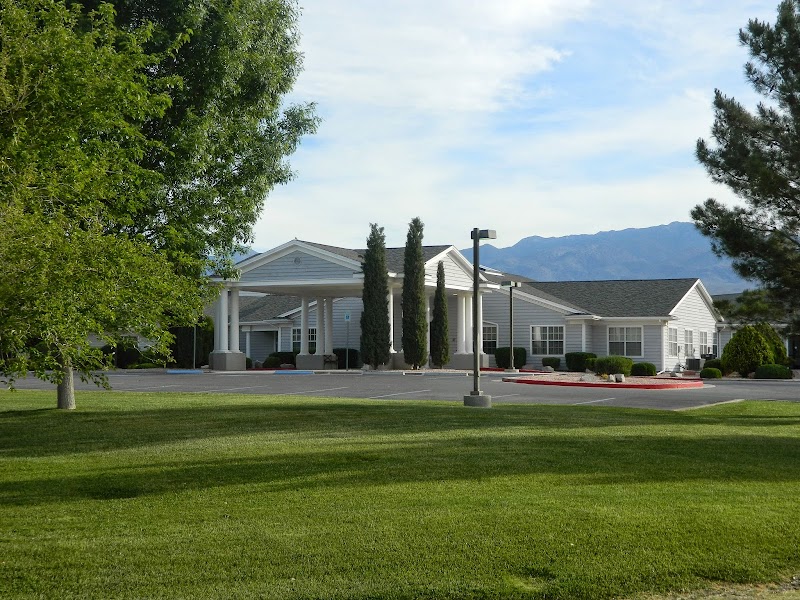
4501 N BLAGG ROAD, PAHRUMP, NV 89060 (775) 751-6600
For profit - Limited Liability company 120 Beds EMPRES OPERATED BY EVERGREEN Data: November 2025 1 Immediate Jeopardy citation
Trust Grade
38/100
#35 of 65 in NV
Last Inspection: October 2024

Within standard 12-15 month inspection cycle. Federal law requires annual inspections.

Overview

Pahrump Health and Rehabilitation Center currently holds a Trust Grade of F, indicating significant concerns regarding care quality and overall safety. They rank #35 out of 65 facilities in Nevada, placing them in the bottom half, although they are the only option available in Nye County. The trend is worsening, with issues increasing from 8 in 2023 to 10 in 2024. Staffing is rated average with a turnover rate of 44%, which is slightly below the state average, and they have good RN coverage, exceeding 82% of Nevada facilities. However, the facility has incurred $40,427 in fines, which is higher than 83% of other facilities, suggesting ongoing compliance problems. Specific incidents raise serious concerns; one critical finding noted a failure to provide life-saving CPR for a resident who was unresponsive, while another serious finding involved a lack of monitoring for a resident's increasing pain and functional decline. Additionally, there were issues with food safety and cleanliness in the kitchen, including unlabeled food items and hygiene problems. Overall, while there are some staffing strengths, the significant deficiencies highlight a need for caution when considering this facility.

Trust Score
F
38/100
In Nevada
#35/65
Bottom 47%
Safety Record
High Risk
Review needed
Inspections
Getting Worse
8 → 10 violations
Staff Stability
○ Average
44% turnover. Near Nevada's 48% average. Typical for the industry.
Penalties
○ Average
$40,427 in fines. Higher than 50% of Nevada facilities. Some compliance issues.
Skilled Nurses
✓ Good
Each resident gets 59 minutes of Registered Nurse (RN) attention daily — more than average for Nevada. RNs are trained to catch health problems early.
Violations
⚠ Watch
33 deficiencies on record. Higher than average. Multiple issues found across inspections.
★★★☆☆
3.0
Overall Rating
★★★☆☆
3.0
Staff Levels
★★☆☆☆
2.0
Care Quality
★★★☆☆
3.0
Inspection Score
Stable
2023: 8 issues
2024: 10 issues

The Good

  • Full Sprinkler Coverage · Fire safety systems throughout facility
  • No fines on record
  • Staff turnover below average (44%)

    4 points below Nevada average of 48%

Facility shows strength in fire safety.

The Bad

3-Star Overall Rating

Near Nevada average (3.0)

Meets federal standards, typical of most facilities

Staff Turnover: 44%

Near Nevada avg (46%)

Typical for the industry

Federal Fines: $40,427

Above median ($33,413)

Moderate penalties - review what triggered them

Chain: EMPRES OPERATED BY EVERGREEN

Part of a multi-facility chain

Ask about local staffing decisions and management

The Ugly 33 deficiencies on record

1 life-threatening 1 actual harm
Oct 2024 7 deficiencies 1 Harm
SERIOUS (G)

Actual Harm - a resident was hurt due to facility failures

Deficiency F0688 (Tag F0688)

A resident was harmed · This affected 1 resident

**NOTE- TERMS IN BRACKETS HAVE BEEN EDITED TO PROTECT CONFIDENTIALITY** Based on observation, interview, record review, and document review, the facility failed to 1) monitor and report a decline in f...

Read full inspector narrative →
**NOTE- TERMS IN BRACKETS HAVE BEEN EDITED TO PROTECT CONFIDENTIALITY** Based on observation, interview, record review, and document review, the facility failed to 1) monitor and report a decline in function for 1 of 19 residents (Resident 65) and 2) identify and report a resident's increase in pain related to worsening contractures for 1 of 19 unsampled residents (Resident 14). The deficient practice placed the residents at risk for diminished function and potentially an impact on the physical, mental and psychosocial well-being of the residents. Findings include: Resident 14 (R14) R14 was admitted on [DATE] with diagnoses including contractures of the right hand and foot. According to the Minimum Data Set, R14 scored a 03 which indicated the resident was not able to make needs well known. R14 was also diagnosed with aphasia (inability to articulate spoken words). Review of R14's care plan revised on 03/26/2024, identified: - Resident had limited physical mobility related to cerebral vascular accident (stroke). Goals included: - The resident will remain free of complications related to immobility, including contractures and skin breakdown. Interventions included the following: - Carrot orthotic (hand splint) in right hand, document refusal - Physical therapy, Occupational Therapy referrals as needed. - Right hand splint - Soft passive range of motion (ROM) to right hand. - Place rolled towel if unable to tolerate carrot orthotic (Hand splint) - Provide gentle range of motion as tolerated with daily care. - Physical therapy (PT), Occupational therapy (OT) referral as needed. -Review of the Physician's orders showed the following: - Place orthotic in right hand during the day, check placement, if resident refuses orthotic, perform passive range of motion (ROM). - Soft ROM to right hand in the morning. Place rolled towel in between fingers and palm if orthotic is refused. - Monitor placement of right-hand splint by therapy and check skin for breakdown upon removal of splint. - Monitor skin to right hand contracture for skin breakdown every shift. Review of the Treatment Administration Record (TAR) reviewed from 10/01/2024 to 10/10/2024, ordered soft passive ROM to right hand daily in AM. Place rolled towel between fingers and palm if carrot is refused. The TAR showed R14 wore the orthotic four of those days and refused the orthotic six of those days Review of the progress notes dated 10/01/2024, documented R14 had severe expressive aphasia which made it difficult for the resident to verbalize needs and got easily frustrated. On 10/08/24 at 1:54 PM, R14 was observed with right hand contracture with no splinting. On 10/10/24 at 8:11 AM, therapy director stated R14 was discharged from OT 10/4/24. The director stated it was recommended for the resident to wear the carrot splint to prevent worsening contractures, as well as to protect the resident's skin. On 10/10/24 at 8:33 AM, observation of R14's right hand showed no splinting with fingers curled up in a tight fist. On 10/10/24 at 4:19 PM, observation of R14's right hand showed no splinting with fingers curled up in a tight fist. Hand splint was seen sitting on the bedside tray table. On 10/11/24 at 8:25 AM, observation of R14's right hand showed no splinting with fingers curled up in a tight fist. Hand splint was seen sitting on the bedside tray table. On 10/11/24 at 9:57 AM, observation of R14's right hand showed no splinting with fingers curled up in a tight fist. Hand splint was seen sitting on the bedside tray table. On 10/11/24 at 10:03 AM, the CNA who was taking care of R14 stated the restorative CNA was responsible for placing the orthotic. CNA stated the restorative CNA was pulled to work on the floor but would have more knowledge about the resident's required use of the orthotic. On 10/11/24 at 10:05 AM, restorative nursing assistant (RNA) was called to the resident's bedside. The RNA stated R14 was to have the carrot orthotic on but had a tendency to pull it out. The RNA was asked to place the carrot orthotic on the resident's right hand that was tightly contracted into a fist. The RNA lifted the resident's right-hand fingers to place the orthotic and the resident screamed out loud with facial grimacing and started to cry. R14 could not articulate the pain due to aphasia. After two attempts with the resident crying out in pain, the orthotic was successfully placed. R14 was then asked to remove the orthotic, tried several times and could not. The CNA stated R14 was having increasing pain related to wearing the orthotic. CNA stated they were required to report resident changes to the DON. On 10/11/24 at 10:15 AM, the resident care manager (RCM) stated R14's hand contracture pain was known, and the resident was getting pain medications. RCM stated the resident had the orthotic for a long time. When asked further questions about what was being done for the resident's pain, the RCM stated to speak to the DON who oversaw the restorative program On 10/11/24 at 10:41 AM, RNA stated there was no resident documentation specific to the resident refusing to wear the orthotic. RNA stated the nurses would document in detail the resident's pain regarding the orthotic and pain associated with wearing the orthotic. RNA stated R14 was never on a restorative program but had orders to wear the orthotic. On 10/11/24 at 12:49 PM, the Director of Nursing (DON) stated the CNAs should have reported the resident's issues regarding increasing pain associated with contractures. On 10/10/2024 at 1:50 PM, a change of condition policy was requested, DON stated a policy was not available. Resident 65 (R65) R65 was admitted on [DATE] with diagnoses including general weakness. Minimum Data Set (MDS) report indicated R65 scored a 15 on the Brief Interview for Mental Status (BIMS). This score indicated R65 was able to make needs well known. On 10/08/2024 at 10:12 AM, R65 was observed to have bilateral hand contractures. R65 was able to pick up a cup to drink but could not hold a toothbrush to brush upper and lower teeth. R65 stated the care staff provided no assistance with oral care and had not brushed teeth in a long time. R65 showed upper and lower teeth that were brown in color with heavy yellowish, brownish build up. On 10/09/2024 at 11:26 AM, R65 was observed to have bilateral hand contractures. R65 stated not having received oral care that day, was not able to hold toothbrush and was not getting any assistance with oral care On 10/09/2024 at 11:30 AM, the Certified Nursing Assistant (CNA) who took care of R65 was called to the resident's bedside. Upon observation, the CNA noted the resident's teeth were brownish, with heavy yellowish build up. The CNA stated based on the observation of R65's upper and lower teeth, the resident was not getting adequate oral hygiene. The CNA stated R65 was usually set up with a toothbrush, with toothpaste and was able to brush teeth without staff assistance. The CNA stated R65 was not set up to brush teeth that day and when asked why, CNA stated I don't know. The CNA was then asked to set up the resident to brush teeth as usual. The CNA placed toothpaste on the toothbrush and handed it to R65. After a few attempts, the CNA observed and stated R65 could not effectively hold the toothbrush and the resident brushed teeth by keeping the toothbrush still while turning their head side to side, instead of using circular hand motions to brush. On 10/09/2024 at 11:44 AM, the Resident Care Manager (RCM) was called to the resident's bedside. Upon observation, RCM noted the resident was not able to hold the toothbrush well enough and agreed R65 used their head by turning it side to side to brush. RCM stated the resident used to be able to brush their own teeth without assistance but was no longer able due to worsening hand contractures. The RCM did not state R65's worsening hand contractures and decline in function were documented or reported for further intervention. On 10/09/2024 at 11:50 PM, the Director of Nursing (DON) confirmed R65 was not on a restorative program and was not referred to Occupational Therapy (OT). On 10/10/2024 at 7:39 AM, the therapy director who oversaw the OT department, stated based on the documentation, the resident was discharged from OT on 02/02/2024. The director stated it was recommended for R65 to be enrolled into a restorative program for upper extremity functional maintenance. The director stated at the time of discharge from OT, R65 was able to grip and propel the wheelchair wheels using their hands independently. On 10/10/2024 at 1:00 PM, an Occupational Therapist was called to the resident's bedside and an assessment was done by OT, to determine R65's ability to brush teeth independently with set up. The therapist made the same observation and stated based on the resident's current ability and prior level of function, R65 would need to be back on OT due to a decline related to worsening hand contractures. During the assessment, the resident complained of pain in fingers while holding the toothbrush. After the assessment, visual observation of the resident's teeth showed no thick yellowish buildup and teeth no longer had the brownish color that was observed before. OT progress notes and evaluations documented R65 was assessed by OT on 10/30/2023. The note showed R65 had bilateral wrist contractures but did not have any functional limitations due to the contractures. The note also showed assistive hand devices (orthotics) were not needed upon discharge from OT. The note also showed R65's hand function was modified independent (able to perform tasks using an assistive device or with assistance). Following the bedside assessment made on 10/10/2024, an OT note documented R65 had developed functional limitations due to contractures. The note showed hand splints were recommended but R65 was not able to tolerate. Manual hand treatments were then recommended to eventually allow for the use of the hand splints. Review of R65's care plan revised on 05/10/2024, identified: - R65 had an activities of daily living (ADL) self-care deficit related limited mobility and range of motion (ROM). Goals included: -The resident will improve current level of function in upper and lower extremities. Resident will be able to perform tasks independently. - Staff to anticipate needs Interventions included the following: - Encourage the resident to participate to the fullest extent possible with each interaction. - Physical Therapy (PT) /OT evaluation and treatment as per MD orders. The care plan lacked documentation to show goals and interventions for R65 decline in function related to worsening hand contractures. Review of the restorative, nursing progress notes from 06/2024 to 10/01/2024, documented R65 was on a restorative program from 02/2024 to 06/13/2024. Review of the progress notes from 06/13/2024 to 10/01/2024 lacked documentation to show R65's decline in hand function was reported to OT and R65's physician. Review of the daily oral hygiene flowsheets reviewed from 06/2024 to 10/2024, documented various days where R65 was setup, independent or partial/moderate assist for oral care. Review of the undated policy titled Activities of Daily Living, documented: - If the resident appears to be declining or needing more assistance, the nurse should be notified. Review of a facility document titled Change in condition, described when clinical staff should report to the medical provider. The document read: - Any symptom, sign or apparent discomfort that is: * A marked change in relation to usual symptom and signs or * Unrelieved by measures already prescribed The document further defined: - Non- immediate notification * New or worsening symptoms that do not meet above criteria On 10/10/2024 at 1:50 PM, requested Change of Condition policy and DON stated did not have one. On 10/11/2024 at 2:31 PM, the DON stated the RNA's should have reported the resident's decline in function in brushing teeth. DON stated education was needed for the CNA's/RNA's to report any change in condition such as decline in function related to worsening contractures. DON stated the RCM should have also communicated the resident's worsening hand contractures.
CONCERN (D)

Potential for Harm - no one hurt, but risky conditions existed

Deficiency F0655 (Tag F0655)

Could have caused harm · This affected 1 resident

**NOTE- TERMS IN BRACKETS HAVE BEEN EDITED TO PROTECT CONFIDENTIALITY** Based on observation, interview, record review, and document review, the facility failed to develop a baseline care plan for a r...

Read full inspector narrative →
**NOTE- TERMS IN BRACKETS HAVE BEEN EDITED TO PROTECT CONFIDENTIALITY** Based on observation, interview, record review, and document review, the facility failed to develop a baseline care plan for a resident who was admitted with a condom catheter for 1 of 19 sampled residents (Resident 140). The deficient practice had the potential to place the resident at risk for not receiving appropriate care related to the condom catheter which included perineal care and site monitoring. Findings include: Resident 140 (R140) R140 was admitted on [DATE], with diagnoses including chronic kidney disease stage 3 and atherosclerotic vascular disease. On 10/08/2024 at 10:43 AM, R140 laid flat in bed with eyes closed, a family member was at bedside. The family member indicated the resident was in the hospital for eight days following a fall at home and R140 had significantly declined in cognitive and physical abilities since the hospitalization. The family member explained R140 had only half a kidney left, was incontinent and had a urinary catheter which was placed in the hospital. The family member searched for the urinary catheter by lifting the blanket and looking underneath the bed and expressed confusion as to why R140 no longer had a urinary catheter, maybe they removed it. An admission note dated 01/04/2024, revealed R140 was incontinent of urine and had a condom catheter in place. The medical record lacked documented evidence a baseline care plan was developed to include interventions in managing R140's condom catheter such as site monitoring, and perineal care. On 10/09/2024 at 10:49 AM, the Certified Nursing Assistant (CNA) assigned to R140 indicated being in the room when the Resident Care Manager (RCM) removed R140's condom catheter the day before. The medical record lacked documented reason and circumstance on why R140's condom catheter was removed. On 10/09/2024 at 11:53 AM, the admitting Registered Nurse (RN) recounted R140 had a condom catheter when admitted on the evening of 10/04/2024. The RN indicated being a new nurse and was working with agency nurses at the time of R140's admission so the nurse did not know and could not ask anyone regarding how to proceed with R140's catheter. The RN acknowledged forgetting to mention R140's condom catheter to the day nurse during shift report. On 10/09/2024 at 12:00 PM, the RCM confirmed being assigned to R140 when the resident's condom catheter was starting to come off on the morning of 10/08/2024. The RCM obtained a removal order from the provider who was making rounds, but the RCM acknowledged forgetting to document the incident in R140's medical record. The RCM reviewed R140's medical record and confirmed care interventions related to the resident's condom catheter was not included in the resident's baseline care plan but should have been because it counted as an immediate care need. The RCM indicated care interventions included perineal care, replacing with correct size catheter and site assessment specifically the skin on which the condom catheter was attached. On 10/09/2024 at 3:39 PM, the Director of Nursing (DON) indicated the admitting nurse was responsible for entering care orders for R140's condom catheter which included monitoring site and urine, perineal care, and replacing with correct catheter size. The DON indicated the condom catheter was considered an immediate care need and should be included in the resident's baseline care plan. According to the DON, the condom catheter was not an invasive device and did not require a justification for continued use or an order to remove but appropriate care must be carried out for as long as the condom catheter was present. The Baseline Care Plan policy updated April 2024, documented the baseline care plan was developed within 48 hours of admission and included information regarding care and services sufficient to promote safe delivery of care. The baseline care plan consisted of physician orders, initial goals and goals triggered by the admission nursing evaluation.
CONCERN (D)

Potential for Harm - no one hurt, but risky conditions existed

Medication Errors (Tag F0758)

Could have caused harm · This affected 1 resident

**NOTE- TERMS IN BRACKETS HAVE BEEN EDITED TO PROTECT CONFIDENTIALITY** Based on interview, record review and document review, the facility failed to ensure 1) a physician's PRN order for an anti-anxi...

Read full inspector narrative →
**NOTE- TERMS IN BRACKETS HAVE BEEN EDITED TO PROTECT CONFIDENTIALITY** Based on interview, record review and document review, the facility failed to ensure 1) a physician's PRN order for an anti-anxiety medication had a stop date for 1 of 19 sampled residents (Resident 70) and 2) a gradual dose reduction was attempted for a psychotropic medication for 2 of 19 sampled residents (Residents 23 and 70). The deficient practice placed the residents at risk for receiving unnecessary medications. Findings include: The facility policy titled Psychotropic Drugs, documented psychotropic drugs were any drug which affects brain activities associated with mental processes and behavior. Residents taking psychotropic medications would undergo a gradual dose reduction unless contraindicated. As needed psychotropic medications were limited to 14 days unless a rationale was provided by the practitioner and documented in the medical record. Resident 70 (R70) R70 was admitted on [DATE] and readmitted on [DATE] with diagnoses including mood disorder and anxiety disorder. 1) An active physician order dated 03/31/2024 documented to give Alprazolam 0.5 mg by mouth every 6 hours as needed for restlessness. The medical record lacked documented evidence of an end date for as needed psychotropic medication. R70 had psychotropic consent form signed and active physician orders for the following additional psychotropic medications: - Olanzapine 10 milligram (mg) - Buspirone 15 mg - Depakote 500 mg - Zoloft 50 mg Resident 23 (R23) 2) R23 was admitted on [DATE] and readmitted on [DATE] with diagnoses including psychotic disorder with hallucinations and major depressive disorder. A physician order dated 07/23/2024 documented to give Sertraline 25 mg once daily for depression. A physician order dated 09/19/2024 documented to give Quetiapine 25 mg two times a day for antipsychotic. A physician order dated 08/05/2024 documented to give Buspirone 15 mg three times a day for anxiety. The medical record lacked documented evidence R70 and R23 received a gradual dose reduction or rationale of why it was not performed for multiple psychotropic medications. On 10/10/2024 at 1:40 PM, the Consultant Pharmacist verbalized completing medication regimen review at least monthly for all residents of the facility. R70 or R23 did not have any recent recommendations from the Pharmacist. The Consultant Pharmacist confirmed all psychotropic medications with an as needed use should have a 14-day end date unless it was documented by the physician to continue. The Consultant Pharmacist indicated all psychotropic medications must undergo a gradual dose reduction conducted by a physician or physician extender. On 10/10/2024 at 1:49 PM, the Director of Nursing (DON) explained the primary physician at the facility did not feel comfortable completing the gradual dose reduction for psychotropic medications and the facility had recently switched to having the psychiatric physician or practitioner completing the gradual dose reduction. The DON indicated some residents have not received the gradual dose reduction due to switching to a different provider. The DON acknowledged and confirmed R70 had an active order for a psychotropic medication which was to be used as needed and there was no end date. The DON explained the resident had been in and out of the facility and it was an oversight during the latest admission.
CONCERN (D)

Potential for Harm - no one hurt, but risky conditions existed

Deficiency F0761 (Tag F0761)

Could have caused harm · This affected 1 resident

**NOTE- TERMS IN BRACKETS HAVE BEEN EDITED TO PROTECT CONFIDENTIALITY** Based on observation, interview, and document review, the facility failed to ensure outdated and expired vaccine vials were disc...

Read full inspector narrative →
**NOTE- TERMS IN BRACKETS HAVE BEEN EDITED TO PROTECT CONFIDENTIALITY** Based on observation, interview, and document review, the facility failed to ensure outdated and expired vaccine vials were discarded in accordance with the facility's policy. Specifically, two opened vials of Influenza vaccine (formula Year 2023-2024) were found inside the medication refrigerator. The deficient practice placed residents at risk for receiving outdated and expired Influenza vaccine during flu season 2024-2025. Findings include: On [DATE] at 9:12 AM, an inspection of the medication refrigerator in the 100-Hall storage room revealed two vials of Flucelvax Quadrivalent Influenza vaccine (formula 2023-2024), Lot number AU313OB. Both vials were opened with contents, not labeled with open date, and had an expiration date of [DATE]. On [DATE] at 9:15 AM, the Resident Care Manager (RCM) confirmed the observation and explained RCMs were responsible for checking the medication rooms on a monthly basis to inspect for expired patient care medications and items. The RCM could not speak to why the Influenza vials for last year's flu season were still inside the medication refrigerator. On [DATE] at 9:22 AM, the Director of Nursing (DON) explained the RCMs, or any nurse were expected to inspect the medication rooms monthly to check for expired and outdated items for disposal. The DON was inside the medication room and confirmed the two vials of Influenza vaccine were opened with contents, undated, outdated and expired. The DON indicated last year's flu season ended in the beginning of [DATE] and there should have been no reason the vaccines had not been discarded until now. The DON verbalized the finding reflected routine inspections were not being done as expected. The Medication Storage policy dated 2007, documented outdated and discontinued medications are to be immediately removed from stock and disposed of according to procedures for medication disposal. Medication storage conditions were monitored on a regular basis as a random quality assurance check. When problems were identified, recommendations for corrective action must be taken.
CONCERN (D)

Potential for Harm - no one hurt, but risky conditions existed

Deficiency F0849 (Tag F0849)

Could have caused harm · This affected 1 resident

**NOTE- TERMS IN BRACKETS HAVE BEEN EDITED TO PROTECT CONFIDENTIALITY** Based on observation, interview, record review and document review, the facility failed to ensure 1) a hospice physician's order...

Read full inspector narrative →
**NOTE- TERMS IN BRACKETS HAVE BEEN EDITED TO PROTECT CONFIDENTIALITY** Based on observation, interview, record review and document review, the facility failed to ensure 1) a hospice physician's order to get resident out of bed daily was followed and, 2) hospice aides reported a loosened pressure ulcer dressing to the facility nurse for 1 of 19 sampled residents (Resident 15). The deficient practice had the potential to negatively impact quality of life by depriving the resident of environmental stimulation and social interaction and placed the resident at risk for wound complications. Findings include: Resident 15 (R15) R15 was admitted on [DATE], with diagnoses including multiple sclerosis and hospice status. A hospice physician's order dated 07/12/2024, documented to get R15 out of bed to chair daily. The medical director for the skilled nursing facility (SNF) wrote an order dated 07/12/2024, to get R15 out of bed to chair daily during day shift. The quarterly minimum data set (MDS) dated [DATE], revealed R15 had a brief interview of mental status (BIMS) of 15 (intact cognition), was totally dependent on staff for activities of daily living (ADLs) and bed to chair transfers. R15 did not have rejection of care behaviors, was able to understand and could sometimes make self-understood using verbal and non-verbal expression. On 10/08/2024 at 10:50 AM, R15 laid flat in bed facing ceiling with eyes opened. R15 was able to respond to simple questions by moving head side to side to mean No and up and down to mean yes. R15's television (TV) was off, there was no music or any form of stimulation, and the window blinds were shut. R15 indicated being in hospice care and hospice staff came a couple of times a week to see the resident. On 10/09/2024 at 10:00 AM, R15 laid flat in bed facing ceiling with eyes opened. Television was off, no music or other stimulation, window blinds were shut. On 10/10/24 at 9:36 AM, R15 laid flat in bed facing ceiling with eyes opened. Television was off, no music or other stimulation, window blinds were shut. R15 nodded head from side to side when asked whether hospice staff had come to visit the resident since 10/08/2024. On 10/10/2024 at 10:56 AM, two hospice aides were outside R15's room. The aides indicated they came three times a week to provide R15 a shower, linen change, and other activities of daily living (ADLs) such as incontinence and oral care. One hospice aide indicated R15 had a stage three pressure ulcer with dressing coming off and the aide planned to communicate the loose dressing with R15's primary nurse. The two hospice aides indicated not being aware there was a physician's order to get R15 out of bed and it would not be a good time to get R15 out of bed now because the resident was watching favorite soap opera on TV. On 10/10/2024 at 11:05 AM, the aides entered R15's room with surveyor. R15 appeared clean, head of bed elevated approximately 30 to 40 degrees with TV on a soap channel. R15 had a big smile on face and nodded when asked if this was one of R15's favorite shows. The hospice aides were present when R15 indicated being interested in getting out of bed and going outside for fresh air, had not been offered by any staff to get out of bed and R15 would not refuse to get out of bed if offered. The hospice aides left R15's room verbalizing had another resident to see in the facility. On 10/10/2024 at 11:15 AM, the Registered Nurse (RN) indicated being assigned to R15 at least twice a week and was familiar with the resident. The RN indicated being aware R15 had an order to get out bed daily and assumed Certified Nursing Assistants (CNAs) had been offering the service to R15. The RN indicated expecting if R15 refused, the CNAs were to re-offer the service and report refusals to the RN who would speak with the resident, discuss, identify and address the resident's reason for refusal. The RN reviewed R15's medical record which revealed R15 was last gotten out of bed on 10/03/2024 during the flu shot clinic. The RN confirmed there was no documentation of offers, re-offers or resident refusals regarding the out of bed order for R15. The RN indicated the hospice aides had left for the day but did not communicate with the RN regarding R15's stage three wound dressing coming off. On 10/10/2024 at 11:28 AM, the CNA assigned to R15 indicated being assigned to R15 at least twice a week and was familiar with the resident. The CNA indicated not being aware there was an out of bed order for R15, so the CNA had not been offering the service when assigned to the resident. On 10/10/2024 at 12:02 PM, the hospice RN indicated the physician's order to get R15 out of bed was written by the hospice physician per the resident's own request in July 2024. The RN indicated not being aware staff were not offering the service to R15 on a daily basis per physician's order notwithstanding the resident had the right to refuse this service. On 10/10/2024 at 12:12 PM, the Director of Nursing (DON) reviewed R15's medical record and confirmed the last time R15 was gotten out of bed was on 10/03/2024, which was the date of the facility's flu clinic. The DON indicated R15 was bedfast, required total care and would benefit from getting out of bed for repositioning and social interaction among other things. The DON indicated expecting staff to offer R15 the service in accordance with the physician's order and to re-offer the service should the resident refuse the first attempt. According to the DON, resident refusals were to be communicated with the nurse who was expected to discuss, identify and address reasons for refusal and document the same in the resident's medical record. The DON indicated R15 currently had a stage three pressure ulcer for which the care was commonly shared between the hospice provider and facility staff. The Hospice Provision of Care policy updated September 2017, documented the hospice and facility communicated and agreed upon a coordinated plan of care based on an evaluation of the individual needs of the resident. Medications and services were provided as indicated by the agreement for coordination of services. The Hospice agreement dated 11/01/2020, documented hospice may use the facility's nursing personnel to assist in the administration of prescribed therapies.
CONCERN (E)

Potential for Harm - no one hurt, but risky conditions existed

Deficiency F0565 (Tag F0565)

Could have caused harm · This affected multiple residents

Based on interviews and document review, the facility failed to ensure food concerns raised by the resident group were acted on, followed through and facility's actions (if any) were communicated back...

Read full inspector narrative →
Based on interviews and document review, the facility failed to ensure food concerns raised by the resident group were acted on, followed through and facility's actions (if any) were communicated back to the resident group. The deficient practice had the potential to have negative psycho-social outcomes to the residents. Findings include: On 10/09/2024 in the morning, Resident 51 (R51) was alert, oriented, and answered questions appropriately. R51 revealed being the President of the Resident Council. R51 explained the resident council meets on a regular basis every month to discuss any concerns to be brought to the attention of the facility staff. Discussions during the resident council were recorded by a staff member during the meeting. The Resident Council President indicated on the following dates the resident council discussed concerns regarding meals with no follow up or response from the facility: - 06/06/2024 - 07/11/2024 - 08/2024 - 09/06/2024 - 10/04/2024 On 10/09/2024 at 11:03 AM, the Resident Council President indicated food has been discussed on a regular basis, but the facility has not provided a plan. Five out of five residents involved in the resident council agreed this remark was true. On 10/09/2024 in the morning, Resident 8 (R8) indicated the grievances were not taken seriously and at times the former Executive Director had confronted the resident regarding the resident's concerns. The resident explained the former Executive Director was invalidating the resident's feelings. On 10/09/24 at 11:06 AM, the Resident Council President indicated the former Social Worker was the grievance official and left in August and there was really no grievance official and therefore grievances were not being addressed. On 10/09/24 at 11:27 AM, five residents indicated old business was not discussed in the subsequent meetings and facility action was not communicated to the resident group. The Resident Council President and R8 filed a grievance on food and received no response. If the grievance form documented a resolution to the resident's satisfaction, the resident verbalized disagreement this discussion took place. There was no one who got back to the residents and the documentation (if any) never took place. A grievance form dated 08/18/2024, documented Resident 55 (R55) filed a formal complaint regarding cold food, watery soup, food issue cannot get fixed because no one wants to help. The grievance form documented a kitchen staff member acted by in-servicing kitchen staff regarding food temperatures and palatability. The resident and kitchen manager signed the grievance on 08/18/2024. Page 2 of the grievance form documented, Resolution of Grievance must be completed within 2 days of grievance receipt. The document indicated the grievance was resolved due to staff being in-serviced and the resident was notified of the resolution on 08/20/2024. A grievance form dated 08/18/2024, documented Resident 51 (R51) filed a formal complaint regarding food not getting any better, late and cold and looks disgusting. The grievance form documented a kitchen staff member acted by in-servicing kitchen staff regarding food temperatures and palatability. The resident and kitchen manager signed the grievance on 08/18/2024. Page 2 of the grievance form documented Resolution of Grievance indicated the grievance was resolved due to staff being in-serviced and the resident was notified of the resolution on 08/20/2024. The document failed to include a physical signature from Residents 55 and 51 who were both alert and able to provide written signatures. On 10/09/24 at 2:09 PM, Residents 55 and 51reviewed their respective grievances dated 08/18/2024 and acknowledged the complaints regarding food were indeed verbalized by the residents. The residents reviewed the documents which revealed actions taken by the facility included in-services provided to kitchen staff regarding food temperatures and palatability which rendered the grievances resolved with results communicated and provided to the residents on 08/20/2024 was false. The residents indicated no one came to speak with the residents and the facility dismissed the grievances as resolved without resident approval. On 10/09/24 at 2:18 PM, the Activities Director, Director of Nursing, and Executive Director were made aware of the allegations from the residents. The three staff members agreed the facility policy for response to resident council concerns was not followed. The Executive Director acknowledged the Social Worker left employment in August and there was no full-time replacement as of the date of the investigation, the role was being filled between a part-time Social Worker and the Director of Nursing. The facility policy titled Resident Council (revised January 2017) documented residents have the right to gather and discuss thoughts, ideas, or issues related to the care and treatment. Concerns brought forth by the Council were resolved via the Center's grievance policy. Council members were encouraged to make suggestions and offer constructive criticism to staff advisors and or the Executive Director. The Center communicates a response and or decision to the Resident Council by the next meeting.
CONCERN (E)

Potential for Harm - no one hurt, but risky conditions existed

Food Safety (Tag F0812)

Could have caused harm · This affected multiple residents

Based on observation, interview, and document review, the facility failed to ensure 1) kitchen staff were wearing appropriate facial coverings during food preparation and 2) molded strawberries were n...

Read full inspector narrative →
Based on observation, interview, and document review, the facility failed to ensure 1) kitchen staff were wearing appropriate facial coverings during food preparation and 2) molded strawberries were not being prepped for service. The deficient practice placed residents at risk for food related illnesses from ingesting contaminated food. Findings include: On 10/08/24 at 8:45 AM, the kitchen director and a cook were observed to have full beards and were not wearing beard nets during the initial tour of the kitchen. The kitchen director stated they should have been wearing beard nets. On 10/10/24 at 11:27 AM, observed another cook preparing multiple fruit salad plates, used strawberries that came from a container with a heavily molded strawberry. The cook was made aware of the molded strawberry, picked it up and attempted to throw it out of the container. The kitchen director who was watching the encounter told the cook to throw out the entire container of strawberries stating that the other strawberries were also contaminated. The kitchen director stated the staff member will need to be educated on infection control and food contamination. The kitchen director stated the staff member should have been more aware of the contaminated fruit. Facility policy tilted, Staff Attire, revised on 10/2023 stated the following: - All staff member will have hair off shoulders, confined to a hair net or cap with facial hair properly restrained. Facility policy for food and nutritional services titled, Personal Hygiene Standards, revised on 06/2021 documented: - employees with beards, should wear beard guards
Apr 2024 3 deficiencies 1 IJ
CRITICAL (J) 📢 Someone Reported This

A family member, employee, or ombudsman was alarmed enough to file a formal complaint

Immediate Jeopardy (IJ) - the most serious Medicare violation

Deficiency F0678 (Tag F0678)

Someone could have died · This affected 1 resident

**NOTE- TERMS IN BRACKETS HAVE BEEN EDITED TO PROTECT CONFIDENTIALITY** Based on interview, record review and document review, the facility failed to ensure a resident with a full code status was prov...

Read full inspector narrative →
**NOTE- TERMS IN BRACKETS HAVE BEEN EDITED TO PROTECT CONFIDENTIALITY** Based on interview, record review and document review, the facility failed to ensure a resident with a full code status was provided basic life support (BLS) after having been found unresponsive for 1 of 9 sampled residents (Resident 1). The deficient practice deprived the resident of life-saving measures, specifically cardiopulmonary resuscitation (CPR) which may have potentially increased the resident's chances of recovery and survival. Findings include: Resident 1 (R1) R1 was admitted on [DATE] and readmitted on [DATE], with diagnoses including Alzheimer's disease with late onset, nutritional deficiency, and urinary tract infection (UTI). A provider order for life-sustaining treatment (POLST) dated [DATE], revealed R1 was evaluated by the physician assistant to have decisional capacity and the resident elected to be a full code (attempt CPR in the event of cardiopulmonary arrest). A quarterly social services assessment dated [DATE], revealed R1 expressed wanting to remain full code. A nursing progress note dated [DATE], revealed a Certified Nursing Assistant (CNA) reported to the nurse R1 had expired. The Licensed Practical Nurse (LPN) assessed the resident to be unresponsive, no respirations noted with absent pulse. The LPN notified the Director of Nursing Services (DNS) and Sheriff. A nursing progress note dated [DATE], documented the DNS notified the physician R1 had expired, and the Sheriff was at the building to pronounce death. The medical record lacked documented evidence the nurse or CNA initiated CPR, called a Code Blue (response to a resident who was found without vital signs), or called 911 (emergency services) when the resident was found unresponsive without pulse or respirations. A facility report submitted to the state agency on [DATE], revealed an allegation of neglect was verified by the facility concerning an LPN who did not initiate CPR on a full code resident who was found unresponsive with no pulse or respirations on [DATE]. Based on the report, the LPN reasoned not performing CPR on the resident because, the resident really looked dead. The LPN was suspended during the investigation with intention to terminate. On [DATE], two attempts to contact the LPN of concern (LPN 1) for a telephone interview were made at 8:19 AM and 12:20 PM, both attempts were unsuccessful. On [DATE] at 9:19 AM, an LPN (LPN 2) indicated working alongside LPN 1 on [DATE] with LPN 1 being assigned to the 600-Hall and LPN 2 assigned to the 500-Hall. LPN 2 explained a Code Blue was typically announced using the overhead paging system, but according to LPN 2 there was no Code Blue incident during the shift on [DATE]. LPN 2 recalled conversing with LPN 1 at the nurse's station towards end of shift when LPN 1 casually verbalized R1 had expired. On [DATE] at 1:05 PM, an attempt was made to contact the CNA assigned to R1 on [DATE]. The attempt was unsuccessful. The DNS indicated the CNA was on vacation leave and may not be reachable. On [DATE] at 1:48 PM, another CNA recounted not being assigned to R1 on [DATE] but assisted with R1's bed bath earlier in the morning. The CNA indicated not being familiar with R1 but reported a light pink vaginal discharge in R1's brief to LPN 1 who told the CNA the finding was not off baseline since R1 had an active UTI with hematuria (blood in urine). On [DATE] at 10:42 AM, the physician assistant (PA) recalled receiving a phone call from LPN 1 on [DATE] regarding abnormal findings in the resident's renal ultrasound collected on [DATE]. According to the PA, R1's renal ultrasound indicated blood was found in the resident's bladder, but the PA did not order a hospital transfer since the resident's vital signs were stable and no significant vaginal bleeding was reported. The PA indicated not being familiar with R1 and deferred to the resident's attending physician. On [DATE] at 2: 28 PM, the attending physician indicated being familiar with R1's medical condition. The physician described R1 as advanced in age with multiple co-morbidities and had been on a steady versus rapid decline. The physician indicated laboratory and other diagnostic tests were being ordered, reviewed, and addressed with abnormal findings being treated as soon as they were identified. The physician indicated R1 was recently treated with intravenous (IV) fluids for dehydration and had been on oral antibiotics for UTI. The physician explained a renal/bladder ultrasound was ordered on [DATE] due to R1's hematuria (blood in urine) and results of which became available on [DATE]. According to the physician, R1's cystitis would have been treated with bladder irrigation but unfortunately the resident expired within hours of the diagnostic report being received. The physician verbalized staff reports of the resident being restless, refusing to eat and drink and vaginal discharge were not new symptoms and could be treated at the facility-level without ruling out a need for a hospital transfer in the event of a rapid decline or need for higher level of care. The physician indicated many factors may have played a role in the resident's demise which included an infection at old age, high potassium, and high blood urea nitrogen (BUN) due to poor renal function and volume depletion. On [DATE] at 2:35 PM, the physician verbalized R1 had a full code status and the LPN who walked into the resident's room and found R1 unresponsive without pulse or respirations should have initiated CPR because it was unknown how long the resident had been unresponsive. On [DATE] at 8:56 AM, the Executive Director (ED) and the DNS confirmed there were no providers, or anyone authorized to pronounce death in the building on [DATE]. The ED indicated the LPN should have confirmed R1's code status, initiated CPR, called a code blue which would have prompted other staff members to get involved by calling paramedics, getting the crash cart, and continuing with chest compressions until paramedics took over the scene. The ED verbalized the LPN had been employed at the facility since [DATE], was considered a seasoned nurse and was expected to have carried out the facility's code blue process properly prior to contacting the DNS. On [DATE] at 9:01 AM, the DNS recounted receiving a phone call from the LPN 1 in the late afternoon of [DATE]. The DNS recalled assuming the LPN had already done all the right steps prior to the phone call, namely, 1) confirming the resident's code status, 2) initiating CPR, 3) calling a code blue, 4) continued with chest compressions until paramedics arrived. The DNS acknowledged telling the LPN to call the Sheriff to pronounce death because the DNS assumed all proper steps had already been taken by LPN 1. On [DATE] at 11:27 AM, the CNA who was assigned to R1 on [DATE] indicated being familiar with the resident. According to the CNA, the resident had an Oxygen saturation reading in the 70's (normal range: 95% or higher) but after repositioning the nasal cannula, the reading went up to 96%. The CNA confirmed the resident had been eating and drinking less and had started to refuse care, but the decline had been a steady decline over a period of months. The CNA indicated it was difficult to determine whether the resident's demise was due to a delay or failure in care versus a natural occurrence because the resident's vital signs were normal on [DATE]. The CNA indicated reporting the resident's desaturation, and increased restlessness to the LPN but the CNA verbalized being uncertain if the LPN checked on the resident without the CNA knowing, since the CNA had become very busy throughout the shift. The facility policy on CPR required all nurses to be current with BLS. Review of LPN 1's training record revealed a current CPR card issued [DATE] and a renew date of 07/2025. The CPR policy updated [DATE], documented CPR would be initiated for residents who elected to have CPR initiated in their POLST. The Code Blue policy dated [DATE], documented when a resident was found without vital signs the first responder would call a code blue. Once the code status was established, CPR would be initiated for residents who elected CPR in their POLST. A code team leader is established, and necessary duties assigned. The emergency cart would be promptly brought to the scene, Oxygen management promptly initiated, and CPR would be continued until emergency personnel arrived and took over. Completion of the post event evaluation and code event minutes was done by a licensed nurse or support team during the code blue event. Following the [DATE] event related to failure to initiate CPR on a full code resident, the facility had taken the following corrective actions: - the LPN of concern was terminated on [DATE] - the board of nursing had provided written acknowledgment of the facility's complaint regarding the LPN's neglect on [DATE] - the inter-disciplinary team (IDT) reviewed the POLST of all residents - the nursing report sheets were updated to include residents' code status - in-services regarding change of condition, code status, CPR and code blue were provided to staff - the DNS audited basic life support (BLS) certifications of all direct care staff - a mock code drill was conducted on [DATE] with intent to conduct drills quarterly once per shift - the IDT discussed the incident and corrective actions post-incident at a quality assurance and improvement (QAPI) meeting on [DATE] Complaint #NV00070703 FRI #NV00070695
CONCERN (D) 📢 Someone Reported This

A family member, employee, or ombudsman was alarmed enough to file a formal complaint

Potential for Harm - no one hurt, but risky conditions existed

Quality of Care (Tag F0684)

Could have caused harm · This affected 1 resident

**NOTE- TERMS IN BRACKETS HAVE BEEN EDITED TO PROTECT CONFIDENTIALITY** Based on interviews, record review, and document review, the facility failed to complete or document the status of the orthopedi...

Read full inspector narrative →
**NOTE- TERMS IN BRACKETS HAVE BEEN EDITED TO PROTECT CONFIDENTIALITY** Based on interviews, record review, and document review, the facility failed to complete or document the status of the orthopedic follow-up consultation for fractured bilateral feet for 1 of 4 sampled residents (Resident 2). This deficient practice had the potential to delay the necessary medical intervention and exacerbate the resident's pain and complications. Findings include: Resident 2 (R2) R2 was admitted on [DATE], with diagnoses including a closed fracture, a nondisplaced fracture of the lateral malleolus of the right fibula, a fifth metatarsal bone, a left foot, and weakness. A Physician order dated 01/30/2023, documented to follow up with an orthopedic surgeon in one week. A Care Plan dated 02/02/2023, documented R2 had an alteration in musculoskeletal status related to a fracture of bilateral feet. The interventions included the following for weight bearing status and to see physician orders. A Physician Progress Note dated 02/09/2023, documented the Chief Complaint / Nature of the Presenting Problem: skilled visit for a for a bilateral lateral malleolar fracture. After a fall, R2 presented with a bilateral malleolus fracture and a left second through 5th metatarsal base fracture. R2's fractures were non-operative, and was to follow up as an outpatient. On 04/04/2024 at 1:35 PM, a Registered Nurse (RN) assigned to R2 explained the process for outside consultations required a physician order. The RN indicated the staff member who received the order would relay it to the appointment scheduler. Staff could access the established schedule via the electronic calendar. The RN indicated the resident Care Manager who received the order at the time no longer worked at the facility. The RN verified R2's orthopedic appointment had not been scheduled or canceled in both the calendar and the progress notes. The facility Outpatient Consult Calendar from 01/30/2023 to 02/10/2023, lacked documented evidence R2's orthopedic consult had been scheduled. On 04/04/2024 at 1:53 PM, the Business Office Generalist (BOG) explained an outpatient consultation required an order. The BOG indicated responsibilities included scheduling appointments for residents, liaising with the physician's office for outpatient consultations, and organizing transportation for residents to and from appointments. The BOG explained if an appointment had been finalized, the date, time, and instructions would be placed in the electronic calendar. The BOG confirmed there was no indication R2's orthopedic appointment was set up, completed, or canceled. On 04/04/2024 at 2:15 PM, the Director of Rehabilitation Services (DORS) emphasized the significance of orthopedic consultation for therapy. Therapists sought updates on the R2's weight bearing status and healing progress to enhance the resident's journey towards returning home. The DORS explained therapists could perform strengthening exercises, but optimal treatment hinged on the R2's weight-bearing status. The DORS further indicated the necessity of an orthopedic consultation, given the bipedal nature of human locomotion, to enhance R2's quality of life. On 04/04/2024 at 2:58 PM, the attending doctor could not recall the care of R2 for it had been more than a year. The attending physician indicated the staff were expected to follow and carry out R2's orthopedic consult. On 04/04/2024 at 3:15 PM, the Director of Nursing (DON) indicated if the schedule was finalized or had changes, nursing would be informed. The DON confirmed there was no documented evidence R2's orthopedic appointment was completed or canceled. On 04/09/2024 at 9:42 AM, the Divisional Director of Clinical Operations (DDCO) indicated there was not a specific policy for following physician's order but this was an expectation per [NAME] standard of practice and nursing overall. The DDCO provided the RN job description, which documented how RNs obtained and administered prescribed medications and treatments in accordance with approved nursing techniques and documented the same according to the facility's standards of practice. The DDCO indicated a physician's order for a consult or referral would fall under treatment services. Complaint #NV00068006
CONCERN (E) 📢 Someone Reported This

A family member, employee, or ombudsman was alarmed enough to file a formal complaint

Potential for Harm - no one hurt, but risky conditions existed

Deficiency F0940 (Tag F0940)

Could have caused harm · This affected multiple residents

**NOTE- TERMS IN BRACKETS HAVE BEEN EDITED TO PROTECT CONFIDENTIALITY** Based on observation, interview and document review, the facility failed to ensure 1) the emergency crash cart was free of expir...

Read full inspector narrative →
**NOTE- TERMS IN BRACKETS HAVE BEEN EDITED TO PROTECT CONFIDENTIALITY** Based on observation, interview and document review, the facility failed to ensure 1) the emergency crash cart was free of expired supplies, 2) staff were trained on the suction equipment, oral airway device and automated external defibrillator (AED) and 3) mock code drills were conducted quarterly once per shift in accordance with facility policy. The deficient practice placed residents' safety at risk as a result of poor-quality response to an emergency such as aspiration, choking and cardiopulmonary arrest. Emergency Crash Cart On [DATE] at 9:23 AM, a Registered Nurse (RN) and the Resident Care Manager (RCM) were present for an inspection of the emergency crash cart located in the 500-Hall and 600-Hall nurse's station. The crash cart checklist for [DATE] and [DATE] reflected the emergency crash cart was checked daily with no missed entries. The RN and RCM indicated the night shift staff were assigned check the contents of the crash cart. The RCM confirmed the following observations: - six Amsino brand yankauer devices - expired [DATE] - three Medline brand yankauer devices - expired [DATE] - one bottle sterile water expired [DATE] - one compressor nebulizer - vendor maintenance due [DATE] - one suction swab expired [DATE] On [DATE] at 10:09 AM, the staff development coordinator (SDC) confirmed checking central supply and indicated there were no unexpired yankauer devices (an oral suctioning tool made of firm plastic) in the facility. Suction Device On [DATE] at 9:33 AM, the RCM confirmed there were no yankauer devices in the crash cart which were not expired. RCM indicated not being certain how the night shift staff checked the suction equipment and confirmed there was no practice yankauer attached to the suction device. The RCM indicated night shift staff were expected to physically plug in the suction equipment, turn the device on and test suction. The RCM was asked to demonstrate use of suction equipment. On [DATE] at 9:39 AM, the RCM connected the connector tubing to the gauge and the other end to the canister. The RCM and RN verbalized not knowing what the normal reading was for a well-functioning suction equipment. The RN and RCM indicated although they were not certain what the normal suction reading was, the RN and RCM verbalized suction strength should not be too weak nor too strong. The RN and RCM stated if the suction was too weak it would be ineffective in suctioning and if the suction strength was too strong it may hurt the patient. On [DATE] at 9:46 AM, the RN indicated according to the manufacturer's website, the suction device should have a reading between 10 millimeters (mm) of Mercury (Hg) (mmHg) to 15 mmHg. On [DATE] in the afternoon, the Executive Director (ED) confirmed staff had not been trained in the use of the suction equipment. AED device On [DATE] at 11:03 AM, two RNs were at the 300-Hall nurse's station where a yellow AED device was mounted on the wall box covered with a glass door. The RNs indicated the AED device was new and was delivered to the facility about a week prior. According to the RNs, the facility did not have an AED device prior to the arrival of this AED device. The RNs indicated receiving one-on-one informal training from the SDC for use of the AED device but did not receive any formal training and the RNs indicated being uncomfortable using the device. On [DATE] at 12:04 PM, the SDC indicated had received the AED device as a grant on [DATE] and nurses had not received formal training for the AED device. The SDC explained the function of the AED was to determine if there was cardiac activity and would prompt the user to deliver a shock if needed to re-establish cardiac activity. The SDC indicated the facility utilized American Red Cross or American Heart Association as the BLS standard of practice, but the SDC was uncertain if the AED was a required component. The facility's training for CPR was limited to compressions until paramedics arrived. On [DATE] in the afternoon, the Executive Director (ED) confirmed staff had not been trained in the use of the AED device. Oral Airway device On [DATE] at 9:51 AM, the crash cart had eight sizes of oral pharyngeal airway (OPA) devices distinguished from one another by color. The Registered Nurse (RN) indicated not being certain how to measure the OPA device appropriately to fit an individual. The RN indicated not being certain if the flange (flattened tip) was placed at the center of the mouth or the tip of the lip during measurement. The RN indicated knowing the correct size OPA must be used on patients because if the OPA was too big it could obstruct the airway and if it was too small it would not be able to keep the airway open. The RN could not recall when the last training was regarding OPA devices. On [DATE] at 10:00 AM, the SDC indicated being uncertain on how to properly measure an OPA device to an individual. Mock Code Drills On [DATE] at 10:17 AM, an LPN indicated being employed for nine years but had not attended a mock code drill. The Mock Code Blue Drill policy dated [DATE], documented drills were held a minimum of once a quarter on each shift. Review of the facility's mock code drills lacked documented evidence a mock code drill was conducted in the first and fourth quarter of 2023. On [DATE] at 12:58 PM, the SDC confirmed the facility did not conduct mock code drills for the first quarter (Jan-March) 2023 and fourth quarter of 2023 (October-December). On [DATE] at 11:21 AM, the Executive Director (ED) and the Director of Nursing Services (DNS) indicated the facility assessment last reviewed on [DATE], documented resident care needs would include a proper response to emergencies such as cardiopulmonary arrests. According to the DNS, the facility assessment drove competency requirements. The DNS provided the general orientation checklist for new and existing hires which enumerated training topics which were refreshed annually and as needed. The General Orientation Checklist did not include orientation with the crash cart, operation and maintenance of the suction equipment and AED, use of an oral airway device or Code blue. On [DATE] at 11:28 AM, the DNS verbalized prior to the incident on [DATE] newly hired nurses and existing nurses were not trained on 1) checking all components of the crash cart, 2) oral pharyngeal airway use, 3) use and equipment check for suction machine and 4) use of AED device and 5) Code blue. The DNS acknowledged the above-mentioned topics should have been included in the training requirements for new and existing hires based on the needs of the resident care population of the facility.
Nov 2023 8 deficiencies
CONCERN (D)

Potential for Harm - no one hurt, but risky conditions existed

Safe Environment (Tag F0584)

Could have caused harm · This affected 1 resident

Based on observation, interview, and policy review, the facility failed to ensure a resident's room was in good repair and free of debris on the floor for one of four residents (Resident (R)41) rooms ...

Read full inspector narrative →
Based on observation, interview, and policy review, the facility failed to ensure a resident's room was in good repair and free of debris on the floor for one of four residents (Resident (R)41) rooms observed for a clean, homelike environment out of a sample of 18 residents. Findings include: Review of facility policy titled, Homelike Environment, updated July 2015 revealed, Policy Statement: Resident rooms are personalized and organized in a matter that promotes independence through a homelike environment. Procedure: . c. Room is free of hazards. During an observation and interview on 11/27/2023 at 2:11 PM, R41's room revealed scrapes on the wall behind the bed with pieces of the wall laying in a pile on the floor. The baseboard was not attached to the wall. R41 was asked about the wall damage, R41 was not aware of the wall damage. During an interview on 11/30/2023 at 2:33 PM, the Maintenance Director was asked how often rounds were made to look for needed repairs in the rooms. The Maintenance Director would go into the rooms and look for life safety issues but, did not use a form to identify when the room checks were done. The Maintenance Director was shown the wall behind the bed. The Maintenance Director stated, These beds usually will tear up the walls, but I did not realize it was this bad. The Maintenance Director was last in the room on 06/15/2023 conducting the Annual GFCI Receptacle Testing. During an interview on 11/30/2023 at 3:35 PM, the Administrator said after looking at the pictures of R41's wall, I guess that is not very homelike. The Administrator added, It turns out one of the nurses who worked Monday saw the wall but failed to put it on the maintenance log. The Administrator was asked what the expectation was when staff noticed damage. The Administrator stated, I expect staff to report items like that and they be repaired.
CONCERN (D)

Potential for Harm - no one hurt, but risky conditions existed

Assessment Accuracy (Tag F0641)

Could have caused harm · This affected 1 resident

**NOTE- TERMS IN BRACKETS HAVE BEEN EDITED TO PROTECT CONFIDENTIALITY** Based on observation, interview, record review, and review of the RAI [Resident Assessment Instrument] Manual, the facility fail...

Read full inspector narrative →
**NOTE- TERMS IN BRACKETS HAVE BEEN EDITED TO PROTECT CONFIDENTIALITY** Based on observation, interview, record review, and review of the RAI [Resident Assessment Instrument] Manual, the facility failed to ensure Minimum Data Set (MDS) assessments were accurate for three out of 18 sampled residents (Residents (R)21, R28, and R64). Findings include: During an interview on 11/30/2023 at 3:11 PM, the Administrator stated the facility did not have any policies regarding MDS assessments. The Administrator stated the facility used the RAI Manual for guidance on completion of MDS assessments. Review of the Long-Term Care Facility RAI 3.0 User's Manual Version 1.18.11 October 2023 revealed, The RAI process has multiple regulatory requirements. Federal regulations at 42 CFR 483.20 (b) (1) (xviii), (g) and (h) require that (1) the assessment accurately reflects the resident's status . the assessment process includes direct observation, as well as communication with the resident and direct care staff on all shifts. 1. Review of the undated admission Record in the electronic medical record (EMR) under the Profile tab revealed R21 was admitted to the facility on [DATE] with a diagnosis of multiple sclerosis. Review of the admission MDS with an assessment reference date (ARD) of 05/26/2023 in the EMR under the MDS tab revealed R21 was not identified under Dental as having any abnormalities such as obvious or likely cavity or broken natural teeth or inflamed or bleeding gums or loose natural teeth. During observations on 11/27/2023 at 2:30 PM R21 was observed with broken and decayed teeth. During an interview on 11/29/2023 at 1:33 PM, the Resident Care Manager (RCM) stated R21's teeth were in poor condition; they were broken and rotted. During an interview on 11/30/2023 at 11:32 AM, the Hospice Case Manager (Registered Nurse) stated R21's teeth were in poor condition (broken teeth with decay), and the Hospice Case Manager had noticed a problem of R21'a gums bleeding when the teeth were brushed, and the resident's teeth had been in this condition since admission to hospice on 05/12/2023. During an interview on 11/30/2023 at 9:47 AM, Certified Nursing Assistant (CNA)4 said R21's gums bled when brushing the resident's teeth. During an interview on 11/30/2023 at 11:54 AM, the MDS Coordinator verified no abnormalities were identified on R21's admission MDS for Dental. The MDS Coordinator reviewed the admission nursing assessment and the whole medical record when completing the MDS assessments. The MDS Coordinator stated if the medical record did not document a problem with R21's dental condition, it was not coded that there was a problem on the MDS. The MDS Coordinator did not consistently go and look at a new resident prior to completing the initial assessment. The MDS Coordinator required documentation of a concern in the lookback period such as broken or decay teeth or the MDS Coordinator could not code it on the MDS even if it was observed. During an interview on 11/30/2023 at 4:18 PM, the Director of Nursing (DON) expected nursing staff to document broken decayed teeth on the MDS if they were present and expected nurses to look at the resident in person as part of the MDS process. a. Review of the Long-Term Care Facility RAI 3.0 User's Manual Version 1.18.11 October 2023 revealed, Identify unstageable pressure ulcers - 1. Visualization of the wound bed is necessary for accurate staging. 2. If after careful cleansing of the pressure ulcer/injury, a pressure ulcer's/injury's anatomical tissues are obscured such that the extent of soft tissue damage cannot be observed or palpated, the pressure ulcer/injury is considered unstageable . If the pressure ulcer/injury was unstageable on admission/entry or reentry, then becomes numerically stageable later, is should be considered as present on admission at the stage at which it first becomes numerically stageable . Definition Stage 3 Pressure Ulcer - Full thickness tissue loss. Subcutaneous fat may be visible, but bone, tendon or muscle is not exposed. Slough may be present but does not obscure the depth of tissue loss. May include undermining or tunneling . Definition - Deep Tissue Injury - Purple or maroon area of discolored intact skin due to damage of underlying soft tissue . Review of the quarterly MDS with an ARD of 11/18/2023 in the EMR under the MDS tab revealed R21 had two unstageable pressure injuries presenting as deep tissue injury. R21 was not coded with any stageable pressure ulcers. Review of the Nurse Practitioner's Skin/Wound Note dated 11/27/2023 in the EMR under the Progress Notes tab listed an ongoing narrative regarding the condition of R21's pressure injuries including, . 11/27 - Treatment provided by clinician, right buttocks wound increased in size since last visit; 2.5 cm [centimeter] [length] x [by] 3 cm [width] x 1.5 cm [depth] . left buttocks wound with same measurements of; 1cm x 1cm x 1.5 cm, . 11/20 - Left buttocks, 1cm x 1cm x 1.5 cm ., right buttocks 2.5 cm x 2.5cm by 1cm . 11/13 - Treatment provided by clinician, wound measurements on right buttocks 2.5 cm x 3 cm x 1.5 cm ., left buttocks wound 1cm x1cm x 1cm depth . 10/30 - Treatment Provided by clinician . right wound approximately 2.5 cm x 2cm x 0.5 cm. Left wound 1 cm x 1 cm x 1 cm with tunneling/undermining noted . During an observation on 11/29/2023 at 11:00 AM, Registered Nurse (RN)1 completed wound care of the left buttock and right buttock pressure injuries. During an interview on 11/29/2023 at 1:41 PM, the RCM stated R21 had two pressure ulcers, each with depth and would therefore be stage 3 pressure ulcers. During an interview on 11/30/2023 at 12:07 PM, the MDS Coordinator stated skin was intact with a deep tissue injury (DTI). The MDS Coordinator had not observed R21's pressure injuries but the pressure injuries should be coded as stage three and not DTI after the condition of the wounds was described. The MDS Coordinator utilized the coding established from the wound care team when completing the MDS. During an interview on 11/30/2023 at 3:19 PM, the Medical Director stated if a pressure injury was open and there was depth to the wound, the staging should be changed from a DTI to the appropriate stage. During an interview on 11/30/2023 at 4:30 PM, the DON stated the coding on the MDS indicating R21's pressure injuries were DTIs, was not correct. The DON stated the nurses thought pressure injuries would be considered healing DTIs. The DON stated when a DTI opened, it should be staged accordingly. 2. Review of the Profile tab located in the EMR revealed an admission Record for R28 with an admission date of 04/12/2023. Review of the Orders tab located in the EMR revealed an order dated 04/19/2023, for Oxygen 2 liters per minute [lpm], delivery: (cannula) to keeps sats greater than 90% (O2) as needed. Review of the quarterly MDS located in the EMR under the MDS tab with an ARD of 10/21/2023, revealed under respiratory services, oxygen was not marked while a resident in the facility. During an interview on 11/30/2023 at 5:25 PM, the MDS Coordinator revealed the Nursing Notes did not indicate R28 was on oxygen, however it should have been marked if the resident used oxygen. 3. Review of R64's discharge return anticipated MDS with an ARD of 11/30/2022 showed a facility admission date of 12/29/2021. Review of R64's Care Plan from the EMR Care Plan tab showed R64 was readmitted on [DATE] with medical diagnoses that included paroxysmal atrial fibrillation, acute and chronic respiratory failure, chronic obstructive pulmonary disease (COPD), and congestive heart failure (CHF). During an observation on 11/27/2023 at 12:19 PM, it was noted R64 had on a nasal cannula attached to an oxygen concentrator set at two liters per minute (lpm). During an interview and observation on 11/28/2023 at 2:53 PM, R64 continued to have oxygen at two lpm via nasal cannula. On 11/30/2023 at 11:05 AM, during an interview and observation, R64 stated when R64 was having some abdominal issues it was hard to breathe so the resident requested oxygen. The oxygen was noted to be at two lpm via nasal cannula. Review of R64's MDS assessments from the EMR MDS tab showed a significant change of status assessment, with an ARD of 12/12/2022 was not coded for oxygen use. Review of R64's Progress Notes from the EMR Progress Notes tab, showed on 12/12/2022 at 3:05 PM the patient [R64] was currently receiving oxygen. Review of R64's Significant Change of Status Assessment with an ARD of 01/21/2023 was not coded for oxygen use. A review of R64's Progress Notes showed on 01/20/2023 at 3:18 PM stated R64 was currently receiving oxygen. Review of R64's quarterly MDS with an ARD 06/30/2023 was not coded for oxygen use. Review of R64's Progress Notes showed on 06/28/2023 at 12:33 PM that R64 was currently receiving oxygen via nasal cannula. Review of R64's Care Plan from the EMR Care Plan tab showed a focus of The resident has oxygen therapy r/t [related to] Ineffective gas exchange PRN [as needed] initiated on 10/26/2022. During an interview on 11/30/2023 at 5:40 PM, the MDS Coordinator confirmed the three MDS assessments were not coded for oxygen. During an interview on 11/30/2023 at 4:40 PM, the DON stated an expectation the resident be coded for oxygen on the MDS assessments if there were orders for daily use. Review of the October 2019 Resident Assessment Instrument (RAI) manual, page O-3 showed: O0100C, Oxygen therapy Code continuous or intermittent oxygen administered via mask, cannula, etc., delivered to a resident to relieve hypoxia in this item. Code oxygen used in Bi-level Positive Airway Pressure/Continuous Positive Airway Pressure (BiPAP/CPAP) here. Do not code hyperbaric oxygen for wound therapy in this item. This item may be coded if the resident places or removes his/her own oxygen mask, cannula.
CONCERN (D)

Potential for Harm - no one hurt, but risky conditions existed

Comprehensive Care Plan (Tag F0656)

Could have caused harm · This affected 1 resident

**NOTE- TERMS IN BRACKETS HAVE BEEN EDITED TO PROTECT CONFIDENTIALITY** Based on observation, interview, record review and review of the RAI [Resident Assessment Instrument] Manual, the facility faile...

Read full inspector narrative →
**NOTE- TERMS IN BRACKETS HAVE BEEN EDITED TO PROTECT CONFIDENTIALITY** Based on observation, interview, record review and review of the RAI [Resident Assessment Instrument] Manual, the facility failed to develop comprehensive care plans for two of 18 sampled residents (Residents (R)21 and R62). Specifically, R21 did not have a care plan to address R21's deteriorated dental condition, and R62 did not have a care plan to address oxygen use. This had the potential for the residents to have unmet care needs. Findings include: During an interview on 11/30/2023 at 3:11 PM, the Administrator stated the facility did not have a policy for care planning and used the RAI Manual for guidance. Review of the Long-Term Care Facility RAI 3.0 User's Manual Version 1.18.11 October 2023 read in pertinent part, The RAI helps nursing home staff gather definitive information on a resident's strengths and needs, which must be addressed in an individualized care plan . the care plan becomes each resident's unique path toward achieving or maintain their highest practical level of well-being. 1. Review of the undated admission Record in the electronic medical record (EMR) under the Profile tab revealed R21 was admitted to the facility on [DATE] with a diagnosis of multiple sclerosis. Review of the quarterly Minimum Data Set (MDS) with an Assessment Reference Date (ARD) of 11/18/2023 in the EMR under the MDS tab revealed R21 was unimpaired in cognition with a Brief Interview for Mental Status score (BIMS) of 15 out of 15 (score of 15 indicates intact cognition). R21 was dependent on one person for all activities of daily living (ADLs) including personal hygiene. Review of the Care Plan dated 11/24/2023 in the EMR under the Care Plan tab revealed under the problem of, Establish the baseline plan of care with a goal of, will have ADL /functional ability needs met. There were no approaches on the care plan related to the provision of oral care/hygiene. During observations on 11/27/2023 at 2:30 PM, R21 had food, food particles and/or white residue between the teeth and gums in addition to broken, decayed teeth. During an interview on 11/29/2023 at 1:33 PM, the Resident Care Manager (RCM) stated R21's teeth were in poor condition; they were broken and rotted. The RCM stated the condition of R21's teeth should be care planned along with the need to provide oral care after meals. The RCM reviewed R21's Care Plan and verified that neither the compromised condition of R21's mouth nor the need for staff to provide oral care were addressed on the care plan. During an interview on 11/30/2023 at 11:32 AM, the Hospice Case Manager (Registered Nurse) stated R21's teeth were in poor condition (broken teeth with decay). The Hospice Case Manager stated a soft toothbrush with Peridontex toothpaste should be used to brush teeth. 2. Review of the Profile tab located in the EMR revealed an admission Record for R62 that indicated an original admission into the facility on [DATE], with diagnoses of atherosclerotic heart disease, adult failure to thrive, and anxiety. Review of R62's the Orders tab located in the EMR revealed an order dated 04/19/2023 for Oxygen 2 liters per minute [lpm], delivery: (cannula) to keeps sats greater than 90% (O2) as needed. Review of R62's Care Plan tab located in the EMR revealed there was no Care Plan for R62's oxygen indicating no interventions or goals for the use of the oxygen. During an interview on 11/30/2023 at 5:25 PM, the Director of Nursing (DON) indicated the resident should have a care plan for oxygen therapy.
CONCERN (D)

Potential for Harm - no one hurt, but risky conditions existed

ADL Care (Tag F0677)

Could have caused harm · This affected 1 resident

**NOTE- TERMS IN BRACKETS HAVE BEEN EDITED TO PROTECT CONFIDENTIALITY** Based on observation, interview, review of CNA [Certified Nursing Assistant] Competency Oral Hygiene document, and record review...

Read full inspector narrative →
**NOTE- TERMS IN BRACKETS HAVE BEEN EDITED TO PROTECT CONFIDENTIALITY** Based on observation, interview, review of CNA [Certified Nursing Assistant] Competency Oral Hygiene document, and record review, the facility failed to ensure one out of three dependent residents reviewed for activities of daily living (Resident (R)21), out of a sample of 18 residents, was provided with adequate oral hygiene. Findings include: During an interview on 11/30/2023 at 3:11 PM, the Administrator stated the facility did not have a policy for oral care/oral hygiene; however, provided an undated document titled, CNA [certified nursing assistant] Competency Oral Hygiene document. The CNA Oral Hygiene document directed staff to, Collect items (i.e., toothbrush, toothpaste, mouthwash, water cup, basin, etc.) . apply gloves, then brush teeth in a circular motion, brushing gums, teeth, tongue (as able). Review of the undated admission Record in the electronic medical record (EMR) under the Profile tab revealed R21 was admitted to the facility on [DATE] with diagnoses including multiple sclerosis, dysphagia (swallowing disorder), and contracture (a condition of shortening and hardening of muscles, tendons, or other tissue, often leading to deformity and rigidity of joints). Review of the quarterly Minimum Data Set (MDS) with an assessment reference date (ARD) of 11/18/2023 in EMR under the MDS tab revealed R21 was unimpaired in cognition with a Brief Interview for Mental Status score (BIMS) of 15 out of 15. R21 was dependent on one person for all activities of daily living (ADLs) including personal hygiene. During an observation on 11/27/2023 at 2:30 PM, R21 was lying in bed. R21 had accumulated white residue along the gum line and between the teeth. R21 was able to answer yes and no questions by shaking his head up and down or side to side. R21 lacked movement of the arms/hands and could not perform ADLs including brushing teeth. R21 indicated staff provided oral care. During an observation on 11/29/2023 at 7:40 AM, R21 was lying in bed. Food residue was observed in between the teeth and gums. During an interview on 11/29/2023 at 9:09 AM, a Certified Nursing Assistant (CNA)5 stated R21 was totally dependent on staff for oral care. The CNA stated R21 communicated to staff by shaking their head yes or no. CNA5 stated R21's gums bled when oral care was provided. CNA5 stated hospice staff came to the facility and provided oral care to R21 on Mondays, Wednesdays, and Fridays; facility CNAs did not provide oral care on these days. During an interview on 11/29/2023 at 1:33 PM, the Resident Care Manager (RCM) stated R21's teeth were in poor condition and verified they were broken and decayed. The RCM stated oral care should be provided after each meal. During an observation on 11/30/2023 at 9:34 AM, R21 had black food particles observed on their teeth. R21 indicated staff did not brush their teeth after breakfast. During an interview on 11/30/2023 at 9:47 AM, CNA4 had provided care to R21 that morning after breakfast. The CNA used a toothette (soft foam sponge on a stick designed for swabbing the mouth of individuals to provide moisture and remove some particles) and had been unable to remove all the food from R21's mouth that morning after breakfast. CNA4 did not use a toothbrush because R21's gums bled when the teeth were brushed with a toothbrush. During an interview on 11/30/2023 at 11:32 AM, the Hospice Registered Nurse (RN) stated R21's teeth were in poor condition (broken teeth with decay) and had been in that condition when the resident was admitted on to hospice services on 05/12/2023. The Hospice RN stated the hospice aides brushed R21's teeth with a soft bristle toothbrush and used a special toothpaste, Peridontex, to help with R21's bleeding gums. The RCM stated a toothbrush with Peridontex toothpaste (specialized toothpaste designed to prevent bleeding gums) should be used for providing oral care. During an interview on 11/30/2023 at 4:18 PM, the Director of Nursing (DON) expected staff to provide oral care two or three times a day to R21, ideally after meals, which involved brushing R21's teeth. R21's care plan did not address the provision of oral care.
CONCERN (D)

Potential for Harm - no one hurt, but risky conditions existed

Deficiency F0679 (Tag F0679)

Could have caused harm · This affected 1 resident

**NOTE- TERMS IN BRACKETS HAVE BEEN EDITED TO PROTECT CONFIDENTIALITY** Based on observation, interview, record review, and facility policy review, the facility failed to ensure two of two sampled res...

Read full inspector narrative →
**NOTE- TERMS IN BRACKETS HAVE BEEN EDITED TO PROTECT CONFIDENTIALITY** Based on observation, interview, record review, and facility policy review, the facility failed to ensure two of two sampled residents (Resident (R)21 and R28) who were bedridden were offered activities of their interest. This deficient practice had the potential for the residents to not have their psychosocial well-being met. Findings include: Review of the facility's policy manual titled Activity Program, dated July 2015 revealed, Policy Statement: The Center provides an ongoing program of activities designed to meet the interests as well as a physical, mental, and psychosocial well-being of each resident. Policy Statement: The Activity Staff offers specialized activities to meet specific resident needs. The Activity Department's primary purpose is to provide a varied activity program addressing each resident's needs. 1. Review of the undated admission Record in the electronic medical record (EMR) under the Profile tab revealed R21 was admitted to the facility on [DATE] with diagnoses including multiple sclerosis. Review of the admission Minimum Data Set (MDS) with an assessment reference date (ARD) of 05/26/2023 in the electronic medical record (EMR) under the MDS tab revealed R21 was unimpaired in cognition with a Brief Interview for Mental Status score (BIMS) of 15 out of 15. R21 was totally dependent for all activities of daily living (ADLs) and was admitted on hospice services. Under Interview for Activity Preferences, it was very important for R21 to listen to music the resident liked, be around animals such as pets, to do things with groups of people, to do favorite activities, and to go outside when the weather was good. Review of the Care Plan dated 05/24/2023 in the EMR under the Care Plan tab revealed a problem of [R21] has little or no activity involvement r/t [related to] hospice diagnosis. Has end-stage MS [multiple sclerosis]. The goal was, [R21] will express satisfaction non-verbally by smiling or making facial expressions during 1-1 sensory visits provided by activity staff at at least 3x a week. Interventions in full were, -Monitor/document the impact of medical problems on activity level. Resident is on hospice. -The resident is able to: smile and communicate through body language. -The resident's preferred activities are watching TV and indicated enjoys pets. Review of the Initial Activity Evaluation dated 05/24/2023 in the EMR under the Evaluation tab revealed R21's preference for activity participation included activities in the resident's room and 1:1 (one to one) visits. R21's favorite activities were animals/pets, current events/trivia, movies, music, radio, reading/library, and television. The activity plan was, [R21] will receive 1-1 sensory supportive visits from activity staff. Hospice staff involved as well . [R21] is bed-bound, on hospice and unable to speak. No known family to respond to questions. Review of the quarterly Activity Progress Note dated 08/15/2023 in the EMR under the Progress Notes tab revealed the summary of the resident's participation and response for the quarter was, [R21] is bed bound and on hospice for palliative care. R21 is non-verbal but able to nod head during social visits. Prefers to sleep and has the TV on throughout the day . Watches TV in room. No new interests . Little to no involvement in activities, Need 1-1 visits for sensory engagement. Review of the quarterly Activity Progress Note dated 11/17/2023 in the EMR under the Progress Notes tab revealed, Prefers to sleep, watch TV and talk with activity staff throughout the day. Watches TV in room . Receiving 1:1 visits for sensory engagement . During an interview on 11/29/2023 at 9:46 AM, the Social Services Director (SSD) stated R21 mouthed words and could answer yes or no questions; there was a communication card in the room staff could also use for communication. During observations on 11/27/2023 at 2:30 PM; 11/28/2023 at 11:49 AM; on 11/29/2023 at 7:40 AM, 11:14 AM, 12:54 PM 2:14 PM; and 11/30/2023 at 9:34 AM, R21 was lying in bed with the TV on to the same channel being watched by the roommate. During an interview on 11/27/2023 at 2:30 PM, R21 indicated the resident had no family or other visitors from the community coming to visit. R21 did not get out of bed, preferred not to get out of bed, and had no voluntary movement of their body except for the neck and head. R21 was unable to read due to not being able hold a book. R21 watched TV but would like to do other activities besides TV. R21 liked music but did not have a radio; music had not been provided in the room as an option versus watching TV. During an interview on 11/29/2023 at 7:40 AM with R21. R21 would enjoy books on tape, but this had not been offered. R21 stated the activity staff did not visit. During an interview on 11/30/2023 at 9:34 AM with R21. R21 was watching the news on the TV. R21 would like to listen to books on tape and would like to have pet visits. R21 verified R21 did not receive visits from activity staff. During an interview on 11/30/2023 at 9:47 AM, Certified Nursing Assistant (CNA)4 was asked about in room activities for R21. CNA4 stated R21 watched TV and watched whatever the roommate was watching; the roommate operated the remote control and selected what to watch. R21's TV was turned to the same programs. During an interview on 11/29/2023 at 9:09 AM, CNA5 stated R21 was asked about in room activities for R21. CNA5 stated R21 liked to watch TV and to chit chat. CNA5 stated R21 liked soap operas and game shows. CNA5 verified R21 and the roommate both had their TVs on all day and their TVs were turned to the same stations. During an interview on 11/29/2023 at 1:00 PM, the Activity Director (AD) stated R21 should be receiving 1:1 visits three to four times a week. The AD stated 1:1 visits should be care planned and participation in 1:1 visits was tracked. The AD stated R21 liked music. The Activity Director stated when they visited the resident, the Activity Director played songs on their cell phone or I Pad. The AD verified R21 did not otherwise listen to music in their room. The AD talked to R21 about cars, clothing, food, traveling, etc. The AD stated R21 liked animals/pets, but the Activity Director did not have anyone to provide pet visits. The AD stated R21 would like headphones to watch/listen to what they wanted on TV if the roommate was watching something the resident did not want to watch. The AD verified both R21 and roommate had their TVs on all the time. Review of Activities participation records from 09/01/2023 - 11/29/2023 provided by the facility showed one 1:1 visit documented on 11/17/2023; there were no other 1:1 visits documented in this three-month period. There were 55 entries of independent TV watching. There was an entry of people watching on 10/03/2023 and of a snack and special event on 09/22/2023. During a follow up interview on 11/30/2023 at 10:52 AM, the AD stated the 1:1 visits were not documented, and stated there was no reason why. The AD stated the Activity Aide was responsible for completing and documenting 1:1 visits, although the AD had completed some 1:1 visits with R21. The AD stated nursing staff had been developing the activity care plans. The AD stated the care plan focused on hospice and had nothing to do with activities. During an interview on 11/30/2023 at 11:14 AM, the Activity Assistant stated R21 liked visits and watching TV. The Activity Assistant visited with R21, and R21 nodded to yes and no questions. The Activity Assistant forgot to document the 1:1 visits. The Activity Assistant stated R21 liked music but did not listen to it independently in the resident's room. The Activity Assistant had not tried books on tape. The Activity Assistant stated R21 did not communicate which shows the resident liked to watch on TV. 2. Review of R28's EMR revealed an undated admission Record located under the Profile tab with an admission date of 06/16/2022. Review of R28's significant change MDS located under the MDS tab with an ARD of 07/20/2023 revealed a BIMS score of seven out of 15 indicating severe cognitive impairment. Preferences for Customary Routine and Activities revealed listening to music, being around animals, and religious services and practices were very important. Doing favorite activities and getting fresh air were somewhat important. Review of R28's Care Plan located under the Care Plan tab revealed a Care Plan with a revised date of 09/28/2023 indicating a goal of maintaining involvement in cognitive stimulation with participation. Interventions included, Ensure that the activities the resident is attending are: Compatible with physical and mental capabilities; Compatible with known interest and preferences; Adapted as needed, Compatible with individual needs and abilities; Establish and record the resident's prior level of activity involvement and interests; Invite the resident to scheduled activities. Review of the Activities Log provided by the facility revealed during the month of September 2023 there were 20 days recorded that the resident was watching TV and nine days with a family member visit. Review of the Activities Log provided by the facility revealed during the month of October 2023 there were 14 days recorded that the resident was watching TV and had a family member visit. Review of the Activities Log provided by the facility revealed during the month of November 2023 there were 16 days recorded that the resident was watching TV and nine days with a family member visit. During an interview on 11/27/2023 at 10:37 AM, Family Member (FM)1 was asked about activities for R28. FM1 stated, I have not seen them do anything with R28. R28 used to make jewelry and loved to play BINGO. It would be nice to see the resident participate. Observations of R28 made on 11/28/2023 at 10:09 AM, at 3:14 PM, on 11/29/2023 at 7:19 AM, on 11/30/2023 at 9:08 AM and at 2:10 PM revealed R28 was lying in bed, the TV was not on, and the curtains were drawn on the windows. There was no documented evidence R28 received one on one activities or was encouraged to participate in activities. During an interview on 11/30/2023 at 10:43 AM, The Activity Director was asked about doing in-room activities or one on one. The Activity Director was doing the in-room activities and tried to see the resident three times a week. The Activity Director was working with the resident to come out of the resident's room. The Activity Director confirmed there was no documentation to show R28 was provided one on one activities in the resident's room. The Activity Director further confirmed there was no documented evidence R28 refused to come out of their room for activities.
CONCERN (D)

Potential for Harm - no one hurt, but risky conditions existed

Pressure Ulcer Prevention (Tag F0686)

Could have caused harm · This affected 1 resident

**NOTE- TERMS IN BRACKETS HAVE BEEN EDITED TO PROTECT CONFIDENTIALITY** Based on observation, interview, and competency review, the facility failed to ensure the nurse providing wound care followed ph...

Read full inspector narrative →
**NOTE- TERMS IN BRACKETS HAVE BEEN EDITED TO PROTECT CONFIDENTIALITY** Based on observation, interview, and competency review, the facility failed to ensure the nurse providing wound care followed physician orders for one of two wound care observations for (Resident (R) 21). This failure had the potential to cause wounds to become more complex requiring more extensive and/or intrusive treatments. Findings include: Review of the undated admission Record in the electronic medical record (EMR) under the Profile tab revealed R21 was admitted to the facility on [DATE] with a diagnosis of multiple sclerosis, contractures, and adult failure to thrive. Review of R21's Order Summary from the EMR Orders tab showed: Wound care: Left buttocks DTI [deep tissue injury] cleanse with NS [normal saline], pat to dry apply Blastx [an antimicrobial wound gel] and C. Alginate [calcium alginate, an absorbent wound dressing] with foam dressing every MWF [Monday, Wednesday and Friday] and PRN [as needed] Re- Evaluate weekly every day shift every Mon, Wed, Fri for pressure wound and Wound care: Right buttocks DTI cleanse with NS, pat to dry apply Blastx and C. Alginate with foam dressing every MWF and PRN Re- Evaluate weekly every day shift every Mon, Wed, Fri for pressure wound both ordered on 06/14/2023. Observation of wound care on 11/29/2023 at 11:05 AM, revealed Registered Nurse (RN) 1 donned (put on) personal protective equipment (PPE), completed a hand wash in the bathroom, donned gloves and removed the two old dressings (one on the lower right buttock and one on the upper left buttock). RN1 cleaned both with verbalized (and observed) Dakin's solution (a mixture of sodium hypochlorite and boric acid diluted in water) on 4x4 gauze, dried both wounds, then applied Blastx to the lower wound with a cotton tipped applicator and repeated with a clean cotton tipped applicator to the upper wound. RN1 opened the calcium alginate, tore a piece off and packed it into the lower right wound with the wooden end of the cotton tipped applicator. RN1 dated two bordered dressings and covered the lower wound then the upper wound. During an interview on 11/30/2023 at 9:27 AM regarding the lack of calcium alginate for the upper left buttock wound, RN1 stated It was so small I didn't think I could pack any in it. I should have verbalized that to you. At 9:28 AM RN1 reviewed the orders in the EMR and confirmed Blastx and calcium alginate was ordered for both wounds. In an interview on 11/30/2023 at 4:44 PM, the Director of Nursing (DON) expressed an expectation for wound care that the physician's orders would be followed. In response to a request for a policy for wound care, the DON provided a LN [Licensed Nurse] Competency - Dressing Change, updated July 2014, that showed: 1. Verify order and gather needed supplies . 10. Perform treatment as ordered .
CONCERN (D)

Potential for Harm - no one hurt, but risky conditions existed

Respiratory Care (Tag F0695)

Could have caused harm · This affected 1 resident

**NOTE- TERMS IN BRACKETS HAVE BEEN EDITED TO PROTECT CONFIDENTIALITY** Based on observation, interview, record review, review of manufacturer's guidelines, and facility policy review, the facility fa...

Read full inspector narrative →
**NOTE- TERMS IN BRACKETS HAVE BEEN EDITED TO PROTECT CONFIDENTIALITY** Based on observation, interview, record review, review of manufacturer's guidelines, and facility policy review, the facility failed to ensure appropriate respiratory services for two of three sampled residents (Resident (R)28 and R64) by failing to ensure a filter was in the Bilevel Positive Airway Pressure (BIPAP) machine, masks and tubing were cleaned and stored when not in use for a BIPAP machine and nebulizer machine, and a physician order was in place for a resident on oxygen (O2). This had the potential for possible respiratory issues and/or infections. Findings include: Review of the undated manufacturer guidelines for BIPAP provided by the facility revealed on page eight, Cleaning: You should clean the device weekly as described. 1. Wash the water tub and air tubing in warm water using only mild detergent. 2. Rinse the water tub and air tubing thoroughly and allow to dry out of direct sunlight and/or heat. Checking.3, Check the air filter replace it at least every six months. Review of facility policy titled Guidelines for Administration of Aerosolized Care, with a published date of December 2017 revealed, Policy Statement: Aerosolized care will be provided in accordance with standards of practice and physicians orders. General Guidance. 6. SVN [small volume nebulizer] nebulizer components are rinsed with sterile water and air-dried between treatments. Following cleaning, mouthpiece [sic] and tubing are stored in a plastic bag between uses. Review of facility policy titled Respiratory Care; Oxygen Administration, with a published December 2017 revealed, Policy Statement: Oxygen is provided in accordance with physician's orders, state and federal regulation, and standards of practice. Oxygen Administration. Cannulas are changed when visibly soiled and as needed. 1.Review of the Profile tab located in the Electronic Medical Record (EMR) revealed an admission Record for R28 that indicated an original admission into the facility on [DATE], with diagnoses of chronic obstructive pulmonary disease (COPD) and obstructive sleep apnea. Review of the significant change Minimum Data Set (MDS) located in the EMR under the MDS tab with an Assessment Reference Date (ARD) of 07/20/2023, revealed a Basic Interview for Mental Status (BIMS) score of seven out of 15 indicating the resident was severely cognitively impaired. Review of the physician's Orders located in the EMR under the Orders tab revealed the following: a. 07/13/2023, Cleanse mask on day shift Mon, Wed, Fri with mild soap and H2O [water] then air dry. b. 07/13/2023, CPAP (continuous positive airway pressure)/BIPAP machine 8-14 settings per resident every night shift on at bedtime off in the morning and as needed. c. 07/13/2023, Clean nebulizer mask after each use by rinsing with water and wiping with alcohol wipes/solution two times a day. d. 07/13/2023, Arformoterol [sic] Tartrate Inhalation Nebulizer Solution 15 MCG/2 ML [micrograms/milliliters] 2ml inhale orally via nebulizer two times a day for COPD. e. 07/13/2023, Budesonide Inhalation Suspension 0.5MG/2ML 4ml inhale orally via nebulizer every 12 hours for COPD. f. 07/13/2023, Oxygen (2) liters per minute, Delivery: (cannula, mask) to keep sats greater than 90% (O2) every shift for Oxygen Therapy. During an observation in R28's room on 11/27/2023 at 10:56 AM, a mask and hose attached to the BIPAP machine was lying across the machine on the nightstand. Next to the BIPAP were two nebulizer machines and the tubing and cup was lying in the compartment of the nebulizer machine out in the open. During an observation in R28's room on 11/28/2023 at 10:09 AM, the BIPAP mask and hose on the machine was out in the open. The nebulizer medicine cup was laying on the machine in the open. During an observation in R28's room on 11/28/2023 at 3:14 PM, the BIPAP mask on the machine was out in the open. The nebulizer medicine cup was laying on the machine in the open. During an observation in R28's room on 11/29/2023 at 8:08 AM, the BIPAP mask and hose were on the nightstand. The nebulizer machine was on the front corner of the nightstand. An Certified Nursing Assistant (CNA) and Licensed Practical Nurse (LPN)1 came in the room. It was noted a second nebulizer unit was behind another one and the mask was in machine and out in the open, the medicine cup was still attached. At 8:15 AM LPN1 put Arformoterol into the medicine cup, turned on the machine and placed the mask on the resident's face. At 8:29 AM LPN1 checked on the nebulizer, removed the mask, turned off the machine, and put the mask on top of the rear nebulizer. LPN1 put Budesonide, one vial (LPN 1 confirmed verbally) into a med cup and applied the mask to R28's face. At 8:42 AM, LPN1 removed the mask and put it on the nightstand. At 8:44 AM, the mask and medicine cup were observed on the nightstand, not stored in a bag. During an observation on 11/29/2023 at 11:54 AM, LPN1 stopped in R28's room and removed the nebulizer mask. LPN1 placed mask with medicine cup and tubing attached upright in the rear of the nebulizer machine. During an interview on 11/30/2023 at 9:08 AM, the Director of Nursing (DON) was asked to look at the BIPAP and nebulizer machine in R28's room. The DON stated the BIPAP mask, and the nebulizer cup and mask should be bagged when not in use. During an observation and interview on 11/30/2023 at 2:10 PM, LPN1 was asked about the filter inside the BIPAP machine. LPN1 stated, I was not aware it had a filter. The air filter cover was opened and there was no filter. LPN1 stated, I'll have to see if we have any. The LPN was asked about the nebulizer and cleaning the mask. LPN1 stated, The masks are supposed to be washed in hot water and wiped after use, but I have not done that. 2. Review of R64's discharge return anticipated MDS with an ARD of 11/30/2022 showed a facility admission date of 12/29/2021. Review of R64's Care Plan from the EMR Care Plan tab showed R64 was readmitted on [DATE] with medical diagnoses that included paroxysmal atrial fibrillation, acute and chronic respiratory failure, chronic obstructive pulmonary disease (COPD), and congestive heart failure (CHF). During an observation on 11/27/2023 at 12:19 PM it was noted R64 had on a nasal cannula attached to an oxygen concentrator set at two liters per minute (lpm). Review of R64's Order Summary on 11/28/2023 at 2:30 PM, from the EMR Orders tab showed no order for oxygen. During an interview and observation on 11/28/2023 at 2:53 PM, R64 continued to have oxygen at two lpm via nasal cannula. On 11/30/2023 at 11:05 AM, during an interview and observation, R64 stated when R64 was having some abdominal issues it was hard to breathe so the resident requested oxygen. The oxygen was noted to be at two lpm via nasal cannula. During an interview on 11/30/2023 at 11:34 AM, the Administrator confirmed there had been no current order for R64's oxygen from 10/09/2023 through today. During an interview on 11/30/2023 at 4:39 PM, the DON stated an expectation regarding oxygen orders, That there are oxygen orders for daily use. Review of the facility policy titled Respiratory Care; Oxygen Administration, published December 2017, showed: Policy Statement: Oxygen is provided in accordance with physician's orders, state and federal regulation, and standards of practice. Oxygen Administration: 1. Oxygen is administered per physician order. Oxygen may be administered in the absence of a physician order in emergency situations. The following guidance is observed by Center staff for oxygen administration: a. Oxygen liter flow is set by a Licensed Nurse in accordance with physician's orders. Physician orders specify; [sic] i. Method of administration ii. Liter Flow iii. Parameters for Duration and/or Frequency of administration.
CONCERN (D)

Potential for Harm - no one hurt, but risky conditions existed

Infection Control (Tag F0880)

Could have caused harm · This affected 1 resident

**NOTE- TERMS IN BRACKETS HAVE BEEN EDITED TO PROTECT CONFIDENTIALITY** Based on observation, interview, review of the Centers for Disease Control (CDC) guidelines, and policy review, the facility fai...

Read full inspector narrative →
**NOTE- TERMS IN BRACKETS HAVE BEEN EDITED TO PROTECT CONFIDENTIALITY** Based on observation, interview, review of the Centers for Disease Control (CDC) guidelines, and policy review, the facility failed to ensure hand hygiene was performed between glove changes and clean gloves were used during wound care for one Resident (R) 21 of two residents observed for wound care. This failure had the potential to create a higher bacterial load and/or wound infection causing a wound not to heal. Findings include: Review of the undated admission Record in the electronic medical record (EMR) under the Profile tab revealed R21 was admitted to the facility on [DATE] with a diagnosis of multiple sclerosis, contractures, and adult failure to thrive. During an observation of wound care for R21 on 11/29/2023 at 11:00 AM, Registered Nurse (RN) 1 along with Certified Nursing Assistant (CNA) 5 revealed RN1 performed a hand wash in the bathroom. RN1 then laid out all treatment items on the overbed table on top of a clean surface, including extra gloves. RN1 donned (put on) gloves, removed the two dressings on the wounds. RN1 cleaned R21 due to having a bowel movement. RN1removed the gloves and donned new gloves without hand hygiene. RN1 then cleaned the wound on the right buttock, R21 had another bowel movement, RN1 cleaned R21 up and changed gloves without performing hand hygiene. RN1 then cleaned the upper left wound, then dried both wounds with clean gauze. RN1 removed the gloves, noted the LPN was out of gloves on the overbed table, moved the gown out of the way to access the left lower pocket of their scrub top, pulled out gloves and donned them. RN1 applied Blastx to both wounds, opened the calcium alginate, tore off a piece, and packed it into the lower right buttock wound; dated and covered both wounds with a bordered dressing. RN1 gathered all dirty items, removed the personal protective equipment, and used hand sanitizer in the hall. During an interview on 11/30/2023 at 9:35 AM, regarding the gloves, RN1 stated the supply in the room did not include the LPN's size, so the LPN had put an extra set in their pocket. When asked if items from pockets were considered clean, the LPN stated No. During an interview on 11/30/2023 at 4:41 PM, the Director of Nursing (DON) stated items kept in a scrub top pocket would not be considered clean. It is the expectation that staff perform hand hygiene either by washing hands with soap and water or by using hand sanitizer between glove changes and after gloves were removed. During an interview on 11/30/2023 at 5:45 PM, the Infection Preventionist (IP) revealed staff were trained to perform hand hygiene between glove changes and when the gloves were removed. The IP revealed items kept in a scrub top pocket would not be considered clean. In response to a request for a policy for wound care, the DON provided a LN [Licensed Nurse] Competency - Dressing Change, updated July 2014, that showed: .5. Wash hands and apply gloves. 6. Remove soiled dressings and dispose in plastic bag with gloves. 7. Wash hands if visibly soiled or use gel hand sanitizer if not. 9. Apply new gloves. 10. Perform treatment as ordered. 12. Remove gloves and wash hands if visibly soiled or use gel hand sanitizer. Review of the Centers for Disease Control (CDC) website for hand hygiene and glove use (https://www.cdc.gov/handhygiene/providers/index.html) showed: When and How to Wear Gloves: -Wear gloves, according to Standard Precautions, when it can be reasonably anticipated that contact with blood or other potentially infectious materials, mucous membranes, non-intact skin, potentially contaminated skin, or contaminated equipment could occur. -Gloves are not a substitute for hand hygiene. --If your task requires gloves, perform hand hygiene prior to donning gloves, before touching the patient or the patient environment. --Perform hand hygiene immediately after removing gloves. -Change gloves and perform hand hygiene during patient care, --if gloves become damaged, --gloves become visibly soiled with blood or body fluids following a task, --moving from work on a soiled body site to a clean body site on the same patient or if another clinical indication for hand hygiene occurs. When to Perform Hand Hygiene . -Immediately after glove removal .
Oct 2022 15 deficiencies
CONCERN (D)

Potential for Harm - no one hurt, but risky conditions existed

Deficiency F0552 (Tag F0552)

Could have caused harm · This affected 1 resident

**NOTE- TERMS IN BRACKETS HAVE BEEN EDITED TO PROTECT CONFIDENTIALITY** Based on interview, record review and document review the facility failed to ensure a consent was obtained prior to the administ...

Read full inspector narrative →
**NOTE- TERMS IN BRACKETS HAVE BEEN EDITED TO PROTECT CONFIDENTIALITY** Based on interview, record review and document review the facility failed to ensure a consent was obtained prior to the administration of anti-depressants for 2 of 24 sampled residents (Residents 57 and 62). The failure to obtain consents from the resident/ representatives prevented the resident or their representative from receiving information such as the indications and the potential side effect the medications may cause the residents. Findings include: Resident 57 (R57) R57 was re-admitted on [DATE], with diagnoses including osteomyelitis. The medical record revealed R57 was under the services of a public guardian. A Physician Order dated 09/16/2022, documented Duloxetine 30 milligrams (mg) by mouth daily for depression. The medical record lacked documented evidence a consent for the Duloxetine (an anti-depressant) was obtained prior to administration. On 10/12/2022 at 3:23 PM, the Director of Nursing (DON) confirmed R57 was prescribed with Duloxetine and had been receiving the medication since it was prescribed. The DON indicated the consent for R57's Duloxetine was sent to the public guardian's office and had not received the facsimile back. On 10/12/2022 at 3:33 PM, the medical record clerk confirmed the consent for R57's Duloxetine had not been signed by the public guardian. Resident 62 (R62) R62 was re-admitted on [DATE], with diagnoses including hemiplegia and hemiparesis. The medical record documented R62 had a Durable Power of Attorney (DPOA) for Healthcare Decisions dated 08/06/2015. A Physician Order dated 09/16/2022, documented Mirtazapine 15 mg by mouth daily at bedtime for depression and poor appetite. The medical record lacked documented evidence a consent for R62's Mirtazapine (an anti-depressant) was obtained prior to administration. On 10/12/2022 at 3:50 PM, the DON confirmed R62 was prescribed with Mirtazapine and had been receiving the medication since it was prescribed. On 10/12/2022 at 3:20 PM, a Licensed Practical Nurse (LPN) conveyed consents were needed prior to the administration of psychotropic medications. On 10/12/2022 at 3:23 PM, the DON expected the nurses to obtain consents prior to the administration of psychotropic medications to the residents. The DON explained it was important to inform the residents/representatives of the medication they were prescribed with and the potential side effects it may cause them.
CONCERN (D)

Potential for Harm - no one hurt, but risky conditions existed

Deficiency F0577 (Tag F0577)

Could have caused harm · This affected 1 resident

Based on observation, interview and document review, the facility failed to ensure the residents were informed where the results of the facility's previous State inspections were located. The failure ...

Read full inspector narrative →
Based on observation, interview and document review, the facility failed to ensure the residents were informed where the results of the facility's previous State inspections were located. The failure deprived the residents of their right to review the facility's result from previous State inspections. Findings include: On 10/13/2022 at 10:18 AM, 9 out 9 residents who attended the resident council meeting were not aware where the results of the facility's previous State inspections were located. The Resident Council President conveyed no one had informed them where the information was located. On 10/13/2022 at 10:55 AM, the Director of Activities conveyed during the resident council meetings, the residents would have been informed where the results of State inspections could be found. Resident council meeting minutes from 11/2021 to 09/2022 lacked documented evidence the residents were informed where the results of the facility's previous State inspections were located. On 10/13/2022 at 11:22 AM, the Director of Activities confirmed the resident council meeting minutes lacked documented evidence the residents were informed where the results of the facility's previous State inspections were located. A white binder in a rack was observed by the front office. It contained the facility's results from previous State inspections. There was no signage posted informing the residents and visitors of the content of the binder. The facility's Resident Handbook revised 01/2019, documented the most recent three years of surveys including any plan of correct in effect was available to the residents and family members to examine. The facility's Resident Handbook lacked documented evidence the residents were informed of the location of the facility's most recent three years of survey.
CONCERN (D)

Potential for Harm - no one hurt, but risky conditions existed

Abuse Prevention Policies (Tag F0607)

Could have caused harm · This affected 1 resident

Based on interview and document review, the facility failed to ensure 1 of 16 employees had initial abuse training (Employee 14) and 2 of 16 employees (Employees 11 and 4) received annual abuse traini...

Read full inspector narrative →
Based on interview and document review, the facility failed to ensure 1 of 16 employees had initial abuse training (Employee 14) and 2 of 16 employees (Employees 11 and 4) received annual abuse training. The failure to provide abuse training to employees may potentially place residents at risk for abuse. Findings include: The facility's Abuse Training Policy revised 09/2017, documented the staff members were trained on abuse prevention, reporting and intervention upon hire, annually and periodically thereafter in accordance with the state and federal guidelines and facility needs. The facility's Abuse, Corporal Punishment, Involuntary Seclusion, Mistreatment, Neglect, Misappropriation of Resident Property and Exploitation revised 09/2017, documented the facility would train new and existing staff members regarding the abuse, neglect, exploitation, and misappropriation of resident property prohibition policies and related abuse policies and processes. Employee 14 (E14) E14 was hired on 05/26/2022 as a Licensed Practical Nurse. The personnel file lacked documented evidence of initial abuse training. Employee 11 (E11) E11 was hired on 05/28/2019 as a Resident Care Manager. The personnel file lacked documented evidence of annual abuse training. Employee 4 (E4) E4 was hired on 08/12/2008 as a CNA. The personnel file lacked documented evidence of annual abuse training. On 10/13/2022 at 12:38 PM, the Business Office Assistant conveyed the staff members were provided a link to complete the required trainings such as the abuse training as soon as possible. The Business Office Assistant conveyed it was important for staff members to complete the required trainings prior to caring for the residents so they would know how to handle certain situations. The Business Office Assistant conveyed the Director of Nursing (DON) was responsible for ensuring the required trainings were completed by the staff members. The Business Office Assistant confirmed E14 did not have initial abuse training and E11, E3 and E4 did not have annual abuse training. On 10/13/2022 a 12:50 PM, the DON reported the link for education would have been sent to the staff members after background check clearance had been obtained by the facility. The staff members were expected to complete the trainings prior to working on the floor. The DON indicated it was important for the staff members to complete the trainings so they would know how to care for the residents. The DON indicated the DON was responsible for ensuring the staff members were current with the required trainings but had not been able to monitor the education. On 10/13/2022 at 3:58 PM, the Abuse Coordinator reported the staff members were expected to complete the required trainings within the first 30 days of hire and annually. The Abuse Coordinator conveyed the DON and Abuse Coordinator were responsible for ensuring the trainings were completed. The Abuse Coordinator verbalized it was important for the staff members to complete the abuse training so staff could be proactive and would know how to prevent abuse, psychosocial harm, theft, and loss. The facility's Course Completion History lacked documented evidence E14 had completed initial abuse training and E11 and E4 had completed annual abuse training.
CONCERN (D)

Potential for Harm - no one hurt, but risky conditions existed

Comprehensive Care Plan (Tag F0656)

Could have caused harm · This affected 1 resident

**NOTE- TERMS IN BRACKETS HAVE BEEN EDITED TO PROTECT CONFIDENTIALITY** Based on observation, interview, record review and document review, the facility failed to ensure a care plan was developed for ...

Read full inspector narrative →
**NOTE- TERMS IN BRACKETS HAVE BEEN EDITED TO PROTECT CONFIDENTIALITY** Based on observation, interview, record review and document review, the facility failed to ensure a care plan was developed for a resident with significant weight loss for 1 of 24 sampled residents (Resident 48) and a care plan was revised for a resident with a hand splint device for 1 of 24 sampled residents (Resident 68). The failure to develop a person-centered comprehensive care plan for residents had the potential to delay implementation of appropriate resident care interventions. Findings include: Resident 48 (R48) R48 was admitted on re-admitted on [DATE], with diagnoses including essential hypertension. The medical record documented the following weights: 02/28/2022 - 128.0 pounds (lbs.) 03/07/2022 - 130.0 lbs. 04/04/2022 - 121.6 lbs. 04/11/2022 - 118.8 lbs. - 8.62% weight loss from 03/07/2022 - 04/11/2022 04/12/2022 - 117.6 lbs. 05/03/2022 - 114.8 lbs. 06/03/2022 - 120.0 lbs. 07/10/2022 - 107.6 lbs. - 10.33% weight loss from 06/03/2022 - 07/10/2022 08/03/2022 - 108.0 lbs. 09/01/2022 - 114.8 lbs. 09/07/2022 - 116.4 lbs. 10/03/2022 - 120.4 lbs. The medical record lacked documented evidence of a care plan for R48's significant weight variance. On 10/13/2022 in the afternoon, the Director of Nursing (DON) confirmed R48's medical record lacked documented evidence of a care plan for R48's significant weight variance. The DON indicated they were not responsible for initiating a nutrition care plan. On 10/14/2022 09:00 AM, the DON conveyed the Registered Dietitian (RD) was responsible for ensuring a nutrition care plan was developed for residents with significant weight variance. On 10/13/2022 at 2:15 PM, the RD could not verbalize why there was no care plan regarding R48's significant weight variance. Resident #68 (R68) Resident # 68 was admitted on [DATE] and readmitted on [DATE], with diagnoses including hemiplegia hemiparesis following cerebral infarction. On 10/12/2022 in the morning, R68 laid in bed, alert with slurred speech but words were understandable. A blue hand splint device was observed on R68's left forearm and hand. R68 indicated the resident started using the splint device in August 2022 which was worn during the day and doffed at night. The resident indicated not being certain how the splint device was cleaned but the resident believed the splint had not been cleaned since August 2022. A physician order dated 08/24/2022, Left Cock Up Hand Splint use daily for 8hrs only starting 9AM. The resident's care plan dated 04/08/2022, documented to place a carrot device in left hand daily to prevent contractures. The medical record lacked documented evidence the resident's care plan was revised when the resident's carrot device was replaced by a cock-up hand splint on 08/24/2022. On 10/12/2022 at 2:42 PM, the Occupational Therapist (OT) indicated being familiar with R68. According to the OT, the resident used a carrot device on admission, but the device was upgraded to a cock-up splint (a wrist splint which stabilized the joint, protected, and prevented deformity and helped recover function by minimizing activation of wrist muscle) on 08/24/2022. The OT confirmed the hand splint device was to be worn during the day and doffed at night. The OT indicated the splint device had no removable part and could be cleaned using soap and water and hung to dry preferably at night when the device was not worn by the resident. On 10/12/2022 at 2:50 PM, the OT entered the resident's room and found the hand splint device on the bedside table. The resident indicated asking the CNA to remove it while the resident went to the toilet and replaced the device afterwards. The OT observed the hand splint and described the white inner material as moderately dirty with greater than 30% of the inner material discolored from grime (accumulated dirt adhering to or embedded in a surface). The OT indicated there was no set frequency for cleaning a splint device but any staff member who observed the device with dirt could wash the device with soap and water. On 10/12/2022 at 2:58 PM, the Licensed Practical Nurse (LPN) reviewed R68's care plan and explained the resident's care plan for contracture management reflected use of a carrot device. The LPN indicated the care plan was not revised when the cock-up hand splint replaced the carrot in August 2022. The LPN indicated not being certain which interventions were appropriate for the care and management of a hand splint device and whether the responsibility fell on the nurses or therapy. On 10/13/2022 at 9:22 AM, the Director of Nursing (DON) indicated R68's care plans should have been revised when the carrot was replaced by a left-hand cock-up splint on 08/24/2022. The DON indicated the care plan should have included instructions for the care and management of the splint device such as wearing and cleaning schedule along with the responsibilities of each discipline. The Resident Assessment Instrument (RAI) and Care Planning policy dated October 2019, documented the care plan should be revised on an ongoing basis to reflect changes in the resident's care.
CONCERN (D)

Potential for Harm - no one hurt, but risky conditions existed

Pressure Ulcer Prevention (Tag F0686)

Could have caused harm · This affected 1 resident

**NOTE- TERMS IN BRACKETS HAVE BEEN EDITED TO PROTECT CONFIDENTIALITY** Resident #65 (R65) Resident # 65 was admitted [DATE] and readmitted [DATE], with diagnoses including cervicothoracic radiculopat...

Read full inspector narrative →
**NOTE- TERMS IN BRACKETS HAVE BEEN EDITED TO PROTECT CONFIDENTIALITY** Resident #65 (R65) Resident # 65 was admitted [DATE] and readmitted [DATE], with diagnoses including cervicothoracic radiculopathy and heart failure. A risk assessment dated [DATE], documented a score of 11 (high risk for pressure ulcer). A weekly skin evaluation dated 09/15/2022, revealed R65 had a newly identified right heel pressure ulcer described as 0.20 centimeters (cm) in length x 1.00 cm in width, long, pink, and unstageable at this time. A physician order dated 09/16/2022, documented to use heel protectors while in bed. On 10/12/2022 at 3:04 PM, a Certified Nursing Assistant (CNA) responded to R65's call light. R65 laid in bed with both heels flat on bed. The CNA removed both of the resident's yellow socks which revealed scabs on bilateral heels. R65 explained having a history of heel ulcers but the right heel was worse than the left and had a history of debridement which was painful. R65 indicated sometimes staff members would remember to offload heals and sometimes they did not. The resident indicated not being provided heel protectors. A few minutes later, the CNA was observed retrieving a purple foam device from the storage room. The CNA indicated being familiar with the resident but was not aware the resident had orders for heel protectors. On 10/12/2022 at 4:36 PM, R65 laid in bed wearing a pair of purple foam heel protectors. Another CNA confirmed the observation and indicated being familiar with the resident but was not aware the resident had orders for heel protectors. On 10/12/2022 at 4:38 PM, a Licensed Practical Nurse (LPN) and the Resident Care Manager (RCM) indicated being familiar with R65 who was a high risk for developing or worsening pressure ulcers, had a history of pressure ulcers and had orders for heel protectors while in bed. The LPN and RCM indicated CNAs should be able to view the resident's heel protector orders from the point of care (POC) view in the electronic chart. The LPN and RCM indicated if R65 was observed in bed without heel protectors, the nurses would apply the heel protectors themselves and remind the CNAs of the task. On 10/13/2022 at 8:57 AM, the Director of Nursing (DON) indicated being aware R65 was a high risk for developing or worsening pressure ulcer, had a history of pressure ulcers in the past and had an order for heel protectors while in bed. The DON indicated not being aware staff members were not carrying out R65's order for heel protectors when in bed. The DON verbalized expecting staff to utilize devices and practices which were ordered for residents who were at risk for developing or worsening pressure injuries. Based on observation, interview, record review, and document review, the facility failed to ensure physician orders for the use of bilateral heel protectors, offloading measures and wedges were followed or implemented for 3 of 24 sampled residents (Residents 64, 26 and 65). Failure to use wound prevention devices increased the risk of pressure ulcers worsening or reopening a previous heel pressure ulcer in a resident who had a history of pressure ulcers on the heel. Findings include: The Skin Integrity policy updated February 2022, documented in an effort to maintain the resident's optimal level of skin integrity, and promote healing of skin ulcers/pressure ulcers/wounds, care was provided to treat, heal, and prevent further development of skin breakdown, new interventions were implemented as needed. Resident #64 (R64) R64 was admitted on [DATE] and readmitted on [DATE], with diagnoses including abnormalities with gait and mobility, chronic kidney disease and myocardial infarction (area/s of the heart does not get enough oxygen). The Brief Interview of Mental Status dated 09/15/2022, documented a score of 9/15 which indicated R64's mental status was moderately impaired. The Quarterly Minimum Data Sheet dated 09/15/2022, documented R64's functional status with bed mobility required an extensive assistance with two-person physical assistance. A physician order dated 03/30/2022, documented to apply bilateral heel protectors for pressure wound every shift. A physician order dated 05/05/2022, documented to apply a pro heel cushion to the right foot with a wedge stabilizer. The Braden Scale for Predicting Pressure Sore Risk dated 09/28/2022, documented a score of 11 which indicated high risk for pressure sore development. R64 was confined to the bed, unable to make frequent or significant changes in body position or extremity. A Care Plan dated 08/22/2022, documented R64 had an actual and/or potential for pressure ulcer development related to a history of pressure ulcers. R64 had a right heel medial pressure ulcer with treatment plans to apply a right heel brace. Treatment as ordered by the physician. The Wound Physician Progress Notes dated 10/07/2022, documented pressure ulcer on the right heel with a measurement of 0.3 x 0.4 x 0.1 centimeters. The wound bed was noted to have slough and non-viable tissue. This was debrided. The planned treatment included to turn every 2 hours, off-loading on the concerned areas. The Medication Administration Record dated 10/11/2022, documented a heel cushion with wedge stabilizer was applied to the right foot while in bed and heel protectors were provided. No heel cushion and heel protectors were applied to R64's foot. On 10/11/2022 at 10:01 AM, R64 was in bed in a supine position with eyes closed, bilateral heels flat on bed, no heel protectors and no heel cushion in place as ordered. On 10/12/2022 at 11:23 PM, R64 was in bed in a supine position with eyes closed, bilateral heels flat on bed, no heel protectors, and no heel cushion in place. A Certified Nursing Assistant (CNA) confirmed R64 had heel protectors before, but they were not applied anymore. The CNA indicated the nurse was responsible for ensuring the order was implemented with the help of the CNAs. On 10/12/2022 at 11:30 PM, a Licensed Practical Nurse (LPN) confirmed R64 had wounds on the right heel and there was a physician order to apply bilateral heel protectors and heel cushion. The LPN confirmed the wound prevention devices were not provided as ordered. The LPN explained the nurses were responsible for ensuring the devices were implemented to promote healing. One heel protector was found in the corner of the room. On 10/12/2022 at 11:55 AM, R64 was awake verbally alert, and pleasant. R64 indicated the heel protectors had not been utilized for quite some time. R64 indicated presence of wounds on the right heel. On 10/12/2022 at 2:48 PM, the Resident Care Manager (RCM) indicated the staff were expected to follow and implement the physician orders such as heel protectors, offloading measures, and cushions with wedge stabilizers to promote wound healing. The RCM explained if wound prevention devices were not implemented as ordered, this posed a risk for wound development and worsening for the residents. The RCM indicated the staff were expected to document electronically what was implemented. On 10/13/2022 at 3:01 PM, a Registered Dietitian (RD) indicated R64 was on the current watch list for skin wounds and should have been monitored closely. The RD explained all other factors that could affect the resident's wounds were discussed weekly with the interdisciplinary team which included the importance of the implementation of wound prevention devices. On 10/14/2022 at 8:45 AM, the wound physician indicated the pressure ulcers were prominent for residents who were bed or chair bound. The wound physician explained the heel protectors, offloading measures, cushion wedges, and air loss mattress played an important role in wound healing with a goal to relieve the pressure. The wound physician's scheduled visit to the facility was every Friday, but a continuity of care would be the responsibility of the staff to promote wound healing. The wound physician indicated not following the order or implementing the devices, posed an increased risk to the development of a new or worsening of the existing wound. Resident 26 (R26) R26 was admitted on [DATE], with diagnoses including hemiplegia (one-sided paralysis), hemiparesis (weakness on one side of the body), respiratory failure and diabetes mellitus. R26 was verbally alert and oriented times three. A physician order dated 02/23/2021, documented to offload heels from bed with pillows, and check placement every shift. The Braden Scale for Predicting Pressure Sore Risks, dated 09/09/2022, documented the score of 12, which indicated high risk for pressure sore development. A physician order dated 09/16/2022, documented to apply left and right heel protectors for pressure wounds and check placement every shift. On 10/11/2022 at 9:51 AM, R26's bilateral heels were offloaded using a pillow with no heel protectors in place. On 10/12/2022 at 9:17 AM, R26's bilateral heels were flat on the bed. R26 had no heel protectors in place. R26 indicated heel protectors were not consistently applied. On 10/12/2022 at 3:31 PM, a Certified Nursing Assistant (CNA) indicated only nurses had access to the physician orders. The CNA stated that if heel protectors or any other wound prevention device were to be used, the nurses would provide guidance. The CNA indicated R26 was bed bound and dependent on bed mobility or turning and repositioning. The CNA acknowledged no heel protectors were applied previously but was told to apply the heel protectors on the day of the survey. On 10/12/2022 at 3:46 PM, a Licensed Practical Nurse confirmed the orders for offloading and heel protectors for R26's wound prevention, but they were not consistently implemented. The LPN was aware of the orders but was distracted due to a heavy workload. On 10/12/2022 at 3:55 PM, the RCM indicated the staff were expected to implement wound prevention devices consistently as ordered to prevent the worsening of the wound or the development of a new wound.
CONCERN (D)

Potential for Harm - no one hurt, but risky conditions existed

Deficiency F0687 (Tag F0687)

Could have caused harm · This affected 1 resident

**NOTE- TERMS IN BRACKETS HAVE BEEN EDITED TO PROTECT CONFIDENTIALITY** Based on observation, interview, record review, and document review, the facility failed to ensure foot care was provided to a h...

Read full inspector narrative →
**NOTE- TERMS IN BRACKETS HAVE BEEN EDITED TO PROTECT CONFIDENTIALITY** Based on observation, interview, record review, and document review, the facility failed to ensure foot care was provided to a hospice and dependent resident for 1 of 24 sampled residents. Failure to provide foot care increased the risk of developing foot wounds and infection. Findings: Resident 2 (R2) R2 was admitted on [DATE], with diagnoses including adult failure to thrive, rheumatoid arthritis of multiple sites and contractures. A care plan dated 10/14/2021, documented R2 had activities of daily living (ADL) self-care performance deficit related to being under hospice care. The tasks included checking nail length, trimming and cleaning on bath day and as necessary. The grooming was extensive assist of 1 staff. The Brief Interview of Mental Status dated 10/06/2022, documented R2's cognitive skills were severely impaired. A care plan dated 01/21/2022, documented R2 was dependent on staff for meeting physical and social needs related to the disease process in hospice. A Physician order dated 06/09/2022, indicated R2 may have podiatry consult and treatment as indicated. On 10/11/2022 at 10:51 AM, R2 was provided a bed bath by a hospice Certified Nursing Assistant (CNA). R2's toenails were thick, 0.6 inches long, yellow/brownish in color, cracked and deformed. R2's toes were dry, and scabs were noted. The CNA confirmed the observation and indicated the hospice nurse was responsible for the foot care. On 10/12/2022 at 10:16 AM, the Hospice Clinical Coordinator (HCC) and the hospice Licensed Practical Nurse (LPN) indicated the facility was responsible for notifying the hospice agency if a resident needed a podiatry consult. The HCC explained the hospice staff would be allowed to clean and file the residents' toenails but not to trim diabetic or non-diabetic residents' toenails. The HCC indicated the hospice company had their own podiatrist to provide footcare. The HCC was unaware R2 needed a podiatry service. On 10/12/2022 at 1:08 PM, the LPN confirmed the observation and indicated R2 was dependent on activities of daily living and needed podiatry service. The LPN was unsure of the process and who was responsible for foot care of a hospice resident. On 10/12/2022 at 3:15 PM, another LPN indicated the skin assessment included the toenails and was the responsibility of the nurses. The LPN indicated during shower assists, the CNAs could observe the toenails of the resident and should report to the nurses. The LPN indicated the business office was to coordinate with the podiatrist if an order had been obtained. On 10/12/2022 at 4:23 PM, the business office assistant indicated the podiatrist visit schedule was every two months. The business office assistant indicated the last podiatry visit was on 09/15/2022 and confirmed R2 was not seen and there was no request. The Hospice and Center Coordination of Care Form, dated 03/09/2022, documented the facility and Hospice were responsible for plan of care for provision of services. On 10/14/2022 in the afternoon, the Director of Nursing indicated the Licensed Nurses were responsible for skin assessment, including the resident's toenails. The DON indicated the facility was responsible for the care coordination of the hospice resident. The DON verified and confirmed R2 needed a podiatry service. A facility policy titled Foot and Toenail Care dated 12/2016, documented to check the resident's toenails once a month and file the toenails either monthly or every other month depending on their growth. Refer the resident to a podiatrist if the resident's toenails are too thick or deformed to be cared for by staff, providing assistance as needed.
CONCERN (D)

Potential for Harm - no one hurt, but risky conditions existed

Deficiency F0688 (Tag F0688)

Could have caused harm · This affected 1 resident

**NOTE- TERMS IN BRACKETS HAVE BEEN EDITED TO PROTECT CONFIDENTIALITY** Resident 25 (R25) R25 was re-admitted on [DATE], with diagnoses including right hand contracture. The Quarterly MDS assessment d...

Read full inspector narrative →
**NOTE- TERMS IN BRACKETS HAVE BEEN EDITED TO PROTECT CONFIDENTIALITY** Resident 25 (R25) R25 was re-admitted on [DATE], with diagnoses including right hand contracture. The Quarterly MDS assessment dated [DATE], documented R25 had impairment on one side of the upper and lower extremities. The resident required the following assistance: -extensive assist with two-person physical assist with bed mobility, dressing, toilet use -supervision with set up help only with eating -extensive assist with one-person physical assist with personal hygiene A Physician Order dated 07/29/2020, documented therapy carrot in hand two to three hours twice daily. The Care Plan documented the resident had limited physical mobility related to CVA. The following interventions were listed: -encourage hand splint in place -the resident was non-compliant with hand splint -provide gentle range of motion as tolerated with daily care -PT/OT referrals as needed On 10/11/2022 at 9:56 AM, R25's right hand was contracted. There were no contracture management devices observed on R25's right hand. A Certified Nursing Assistant (CNA) confirmed R48's right hand was contracted and there was no contracture management device in place. On 10/12/2022 at 11:54 AM, a Certified Occupational Therapy Assistant (COTA) confirmed R25's therapy carrot (a hand contracture orthosis that painlessly positions the fingers away from the palm to protect the skin from excessive moisture, pressure, and the risk of nail puncture injuries) was on top of the bedside table and not on R25. The COTA conveyed the nursing staff members were responsible for ensuring the therapy carrot was in place. The COTA indicated application of contracture management devices would prevent further contracture on a resident. On 10/12/2022 at 12:15 PM, a Licensed Practical Nurse (LPN) conveyed R25 refused the application of the therapy carrot. R25 would scream, yell and be combative when applying the therapy carrot. On 10/12/2022 at 4:05 PM, the Director of Nursing (DON) confirmed R25 often refused the application of the therapy carrot. The DON verbalized they were not aware R25 refused application of the therapy carrot daily. The DON indicated the nursing staff members should attempt to apply the therapy carrot, document the refusals, and inform the interdisciplinary team (IDT). The DON indicated it was important to ensure the contracture management devices were in place to prevent further contractures. Resident #43 (R43) Resident # 43 was admitted on [DATE] and readmitted on [DATE], with diagnoses including encephalopathy and dementia with behavioral disturbance. A physician's order dated 04/15/2022, documented to use carrot device for right hand contracture and check placement every shift. On 10/11/2022 in the morning, R43 laid in a low bed and yelled out single words such as fine! R43 held on to blanket with right hand which was severely contracted. No carrot device was observed on the resident's right hand. On 10/12/2022 at 10:45 AM, R43 laid in a low bed with no carrot device observed in the right hand. Two Licensed Practical Nurses (LPNs) confirmed the observation and indicated the resident refused the carrot device. The primary LPN indicated there was no carrot device in the room and the LPN did not know if the resident was provided with a carrot. The LPN approached R43 and attempted to open right hand. R43 yelled, Ouch! Hurt! The LPN stated, I stopped trying a long time ago because I know R43 would refuse so I don't even try I just document refused. On 10/12/2022 at 10:55 AM, the LPN indicated the resident's refusal to use the carrot device was communicated to the therapy department, but the physician and other members of the inter-disciplinary team (IDT) were not informed because the carrot device was just a treatment service, not a medication. On 10/12/2022 at 2:13 PM, the Director of Rehabilitation (DOR) explained R43 had been discharged from skilled services when the facility switched therapy agencies and the DOR was not familiar with R43. The DOR indicated when a resident refused a device for contracture management, therapy, the physician, and social services must be notified of the resident's refusal to allow the IDT to explore alternative options regarding managing the resident's contracture. The DOR asked three therapy staff members whether nursing had communicated R43's refusal of the carrot device, the therapy staff members replied No. The DOR verbalized the IDT must not give up when a resident refused a treatment service because there were many possible interventions available. On 10/12/2022 at 2: 229 PM, an Occupational Therapist (OT) indicated no one from nursing communicated R43's refusal of the carrot device with the therapy department and no one had requested a carrot device for R43's right hand contracture. The DOR and OT verbalized consequences to use not utilizing devices for contracture management included wounds on palms, decreased in range of motion, worsening pain on involved extremities and decline in activities of daily living (ADL) participation. On 10/13/2022 at 8:45 AM, the Director of Nursing (DON) indicated devices for contracture management which were ordered by a physician must be utilized. If the resident refused a treatment service such as a carrot device, the IDT which included the physician, therapy department, social services, the resident care manager, and the DON must be notified to allow the IDT to evaluate alternative options for contracture management. The DON indicated it was not acceptable for the LPN to document the carrot device as refused when the service was not even attempted by the LPN. The DON clarified the physician must be notified of resident's refusal whether it was for a medication or treatment service. The DON agreed with the DOR and OT, consequences of not using the carrot device included wounds to hands, decreased range of motion and continued decline of the affected extremity. Based on observation, interview, record review, and document review, the facility failed to ensure splints were applied to residents' hand contractures for 3 of 24 sampled residents (Residents 26, 25 and 43) and training was provided for proper splinting for 1 of 24 sampled residents (Resident 26). Failure to properly apply the splint or brace to a hand contracture posed a risk of developing a further injury or contracture. Findings include: A facility policy titled Splint/Brace Assistance Restorative Program revised 09/2003, documented the facility promotes resident independence and quality of life by maintaining or improving correct extremity alignment through the application of a splint and or/brace. Resident 26 (R26) Resident #26 was admitted on [DATE], with diagnoses including a hand contracture, hemiplegia (one-sided paralysis), and hemiparesis (weakness on one side of the body). R26 was verbally alert and oriented times three. A physician order dated 01/28/2021, documented to apply and check placement of the left-hand splint and elbow brace daily for hand contracture. On 10/11/2022 at 10:29 AM, R26 was in bed assisted by two Certified Nursing Assistants (CNAs). R26's left hand was contracted; no hand splint and elbow brace were in place. On 10/12/2022 at 3:30 PM, R26 was in bed. No hand splint and elbow brace were applied. R26 indicated the contracture device was not consistently applied. On 10/12/2022 at 3:31 PM, a Certified Nursing Assistant (CNA) confirmed the splint was not applied previously and was applied the day of the survey after being directed to do so. The CNA indicated only nurses had access to the physician orders. The CNA indicated the nurses would give direction if a splint device was to be applied. On 10/12/2022 at 3:46 PM, a Licensed Practical Nurse (LPN) confirmed R26 had splint and brace orders for left hand contractures, but they were not applied. The LPN was aware of the orders but there were 29 residents to attend to and the residents' medications were the priority. Training The Occupational Therapy Discharge summary dated [DATE], documented R26's transition to the RNA program. The recommendations included the following: splint and brace program 1) Before applying, gently stretch R26's elbows, wrists, and fingers; 2) left upper extremity, resting hand splint and elbow orthosis in the morning. On 10/14/2022 at 10:35 AM, a Certified Occupational Therapy Assistant (COTA) indicated R26 had been discharged from occupational therapy services on 06/01/2022. The COTA explained R26 was not in the case load for rehabilitation services. On 10/14/2022 at 10:37 AM, the Director of Rehabilitation Services explained R26 was transitioned to a restorative nursing assistance program due to no progress on the strengthening, transfer, and mobility. The Director of the Rehabilitation Services indicated use of the splint was recommended to prevent worsening of R26's contractures. The Director of Rehabilitation Services indicated training was provided to the nurses so they would educate the CNAs on the proper splint application. On 10/14/2022 at 11:07 AM, a CNA demonstrated the splint application to R26's left hand contracture. The CNA applied the splint without stretching R26's elbows, wrists, and fingers. The CNA indicated no training for splinting was provided. On 10/14/2022 at 11:21 AM, the LPN indicated there was no training received regarding the splinting. On 10/14/2022 at 11:35 AM, the Director of Nursing (DON) indicated the nurses were responsible for ensuring the splint and brace orders were properly applied to prevent further injury or contractures.
CONCERN (D)

Potential for Harm - no one hurt, but risky conditions existed

Deficiency F0692 (Tag F0692)

Could have caused harm · This affected 1 resident

**NOTE- TERMS IN BRACKETS HAVE BEEN EDITED TO PROTECT CONFIDENTIALITY** Based on interview, record review and document review, the facility failed to ensure a resident with a weight variance from prev...

Read full inspector narrative →
**NOTE- TERMS IN BRACKETS HAVE BEEN EDITED TO PROTECT CONFIDENTIALITY** Based on interview, record review and document review, the facility failed to ensure a resident with a weight variance from previous weight was re-weighed and the resident was evaluated by a registered dietitian (RD) after a significant weight loss for 1 of 24 sampled residents (Resident 48). The failure to re-weigh and evaluate a resident in a timely manner could lead to further weight loss or a delay in appropriate interventions. Findings include: The Weights Policy revised 11/2012, documented residents with a five-pound weight variance would have been reweighed within 24 hours. A significant weight loss or gain would have been 5% in 30 days, 7.5% in 90 days, and 10% in 180 days. 1) Re-weigh Resident 48 (R48) R48 was admitted on re-admitted on [DATE], with diagnoses including essential hypertension. The medical record the following weights: 02/28/2022 - 128.0 pounds (lbs.) 03/07/2022 - 130.0 lbs. 04/04/2022 - 121.6 lbs. 04/11/2022 - 118.8 lbs. - 8.62% weight loss from 03/07/2022 - 04/11/2022 04/12/2022 - 117.6 lbs. 05/03/2022 - 114.8 lbs. 06/03/2022 - 120.0 lbs. 07/10/2022 - 107.6 lbs. - 10.33% weight loss from 06/03/2022 - 07/10/2022 08/03/2022 - 108.0 lbs. 09/01/2022 - 114.8 lbs. 09/07/2022 - 116.4 lbs. 10/03/2022 - 120.4 lbs. The medical record lacked documented evidence R48 was re-weighed after 04/04/2022, 06/03/2022, 07/10/2022 and 09/01/2022. On 10/13/2022 at 2:15 PM, the Registered Dietitian (RD) reported the nursing staff members would weigh the residents upon admission, once a week for four weeks and monthly. The RD indicated the nursing staff members would record the weights in the electronic charting system and they would generate a report from it to review. The RD conveyed residents with a five-pound difference from their previous weight would have been re-weighed to determine if the weight was accurate. The RD confirmed R48's weight summary documented weight variances and should have been re-weighed to verify the weights from 04/04/2022, 06/03/2022, 07/10/2022 and 09/01/2022. On 10/13/2022 at 4:19 PM, a Certified Nursing Assistant (CNA) reported the residents were weighed monthly and upon request. The CNA indicated the weights were recorded in the electronic charting system by the nursing staff members. The CNA conveyed residents with over 20-pound difference from their previous weight would have been re-weighed for accuracy. On 10/14/2022 at 8:23 AM, a Licensed Practical Nurse (LPN) conveyed the nursing staff members were trained to obtain the resident weights and report significant weight variances to the Director of Nursing (DON). The LPN indicated the DON would let the nursing staff members know which residents needed to be re-weighed. On 10/14/2022 at 8:28 AM, a CNA reported the nurses would provide a list of residents who needed to be weighed and re-weighed. The CNA explained residents with a weight variance of five to 10 pounds would have been reweighed for accuracy. On 10/14/2022 at 8:15 AM, the Director of Nursing (DON) conveyed the nursing staff members were trained on how to obtain the resident weights. The staff members had been educated to re-weigh residents with a five-pound weight variance. 2) Significant Weight Loss R48 had 8.62% weight loss from 03/07/2022 to 04/11/2022 and 10.33% from 06/03/2022 to 07/10/2022 which were significant losses. A Nutrition Hydration Skin Committee Review Form dated 04/20/2022, documented R48 had a weight loss. R48's meal intakes averaged at 49%. R48 was on regular diet with regular texture, fortified cereal, and potatoes daily. The physician was made aware of the weight loss and nutrition interventions were in place. A house nutritional shake three times a day was added to provide supplements to R48. R48 accepted alternate meals and snacks occasionally. R48's skin was intact. There was no edema or gastrointestinal (GI) issues. The Nutrition/Dietary Note dated 05/08/2022, documented R48's weight on 05/03/2022 was 114.8 lbs. and on 04/04/2022 was 121.6 lbs. R48 had a weight loss of 6.8 lbs. (5.6%) in one month. The weight loss was likely related to poor appetite with meal intakes of 0-50% most meals. R48 was having GI issues last month which was resolved and was on Keflex for cellulitis which was improving. R48 accepted alternate meals. Nutrition interventions were in place to help R48 meet their daily needs, promote skin integrity. and support weight. A Quarterly Nutrition Note dated 06/02/2022, documented R48 had 5% and 7.5% weight loss. R48's weight on 05/03/2022 was 114.8 lbs., weight loss of 6.8 lbs. (5.6%) in one month and weight loss of 13 lbs. (10.3%) in two months. Nutrition interventions were in place to help prevent further unintentional weight loss including fortified cereal at breakfast and fortified potatoes at lunch, house shake 120 milliliters (ml) three times a day and liquid protein 30 ml daily. R48's meal intakes averaged at 16%. R48 refused some meals and accepted some alternate choices. R48 needed assistance with most meals. R48 was started on megestrol to stimulate appetite and was on Vitamin D3. R48's skin was intact. R48 had no edema and no GI issues. The medical record lacked documented evidence of a Nutrition Note or a Nutrition Hydration Skin Committee Review Form after R48 triggered for a significant weight loss on 07/10/2022. On 10/13/2022 at 2:15 PM, a RD reported the facility conducted weekly weight meetings with the Nutrition, Hydration and Skin Committee which included the DON and two Resident Care Managers. The RD explained weight loss or gain would have been considered significant if the weight variance was 5% in a month, 7.5% in 3 months or 10% in 6 months. During the weight meeting, the team would determine the cause of the weight variance and the RD completed an evaluation of the resident's significant weight variance. The RD would recommend interventions, the DON would put in a physician order and the interventions would have been evaluated for effectiveness. The RD indicated residents without significant weight variances would have been assessed quarterly. The RD confirmed R48 triggered 8.62% weight loss from 03/07/2022 to 04/11/2022 and 10.33% weight loss from 06/03/2022 to 07/10/2022. The RD confirmed R48's medical record lacked documented evidence the weight loss in 07/2022 was discussed with the Nutrition, Hydration and Skin Committee. The RD conveyed R48 should have been evaluated after they triggered for weight loss in 07/2022. The RD indicated this was missed by the Nutrition, Hydration and Skin Committee.
CONCERN (D)

Potential for Harm - no one hurt, but risky conditions existed

Tube Feeding (Tag F0693)

Could have caused harm · This affected 1 resident

**NOTE- TERMS IN BRACKETS HAVE BEEN EDITED TO PROTECT CONFIDENTIALITY** Based on observation, interview, record review, and document review, the facility failed to ensure medications were administered...

Read full inspector narrative →
**NOTE- TERMS IN BRACKETS HAVE BEEN EDITED TO PROTECT CONFIDENTIALITY** Based on observation, interview, record review, and document review, the facility failed to ensure medications were administered through a gastrostomy tube (GT) via gravity for 1 of 24 sampled residents (Resident 57). Failure to allow the medications to flow down with gravity could pose a potential risk of malabsorption and aspiration to the lungs. Findings include: Resident 57 was re-admitted on [DATE], with diagnoses including dysphagia (swallowing difficulty), gastrostomy status, quadriplegia (paralysis of all limbs), and dementia. A care plan dated 12/21/20221, documented R57 had an alteration in gastrointestinal status related to disease process. The goal for R57 would be to remain free from discomfort, complications, or signs and symptoms related to gastro-intestinal alterations, to give medications as ordered. A care plan dated 03/29/2022, documented R57 was transitioning from gastrostomy with the intervention for aspiration precautions. A Quarterly Minimum Data Sheet dated 09/09/2022, documented the brief interview of mental status with a score of 3/15, which indicated R57's cognitive status was severely impaired. A physician order dated 08/10/2022, documented liquid protein supplement 30 milliliter (ml) via GT daily. A Physician order dated 12/13/2021, documented Valproic Acid tablet 250 milligram (mg) 10 ml via GT daily. A Physician order dated 12/13/2021, documented multivitamin liquid to be given 5 ml via GT daily. A Physician order dated 12/13/2021, documented Aspirin 81 mg daily via GT daily. A Physician order dated 12/13/2021, documented Folic Acid tablet 400 micrograms 1 tablet via GT daily. On 10/13/2022 at 7:43 PM, a Licensed Practical Nurse (LPN) prepared and crushed R57's medications. The LPN verified R57's identity, air was introduced to R57's stomach using a syringe, and GT placement was verified using a stethoscope. The crushed medications were administered first, followed by the liquid medications. The LPN administered each medication by pushing the syringe plunger in to the resident's stomach and not by gravity. Every time the medications were pushed, the resident would cough, burp, or release air from the mouth and appear nauseated. The LPN did not flush the GT with water prior to administration, in between each medication, and after medications were administered. The procedure was not explained to R57. On 10/13/2022 at 12:46 PM, the same LPN indicated the medications were pushed and not allowing gravity because the medications do not flow easily into the tube. The LPN confirmed water flushes were not performed before administration, in between each medication, and after medication administration. The LPN acknowledged the administration protocol via GT was not followed. On 10/13/2022 at 1:30 PM, the Registered Dietitian (RD) indicated R57's medication should have been administered via gravity to prevent abdominal discomfort and vomiting. On 10/13/2022 at 2:40 PM, the Director of Nursing (DON) indicated the nurses were expected to dilute each medication with water and administer the medication through the GT via gravity to prevent aspiration. The DON indicated the water flushing protocol should have been followed to prevent clogging of the GT. A facility policy titled Medication Administration Enteral Tubes dated 2007, documented the nursing care center, assures the safe and effective administration of enteral formulas and medications. Dilute each liquid medication with water. Explain the procedure to the resident, verify tube placement per facility protocol. Check gastric content for residual feeding. Return residual volumes to the stomach. Remove the plunger from the syringe and insert it into the tubing. Allow the medication to flow down via gravity. To prevent medication from clogging the tube lumen, flush the tube with at least 15 ml of water before clamping it. Enteral tubes are flushed with at least 15 ml of water before administering any medications and after all medications have been administered. A facility policy titled Enteral Feeding dated 04/2017, documented the licensed nurse administers the enteral feeding and medications per physician order using best practice. Additional orders included: residual check, flush with 5-10 cc of water between each medication, flush with 15-30 ml water before and after medications have been administered.
CONCERN (D)

Potential for Harm - no one hurt, but risky conditions existed

Respiratory Care (Tag F0695)

Could have caused harm · This affected 1 resident

**NOTE- TERMS IN BRACKETS HAVE BEEN EDITED TO PROTECT CONFIDENTIALITY** Resident #1 (R1) R1 admitted on [DATE], readmitted on [DATE], with diagnoses including multiple sclerosis, morbid obesity, and ...

Read full inspector narrative →
**NOTE- TERMS IN BRACKETS HAVE BEEN EDITED TO PROTECT CONFIDENTIALITY** Resident #1 (R1) R1 admitted on [DATE], readmitted on [DATE], with diagnoses including multiple sclerosis, morbid obesity, and acute and chronic respiratory failures with hypoxia. The admission Minimum Data Set (MDS) dated [DATE], documented R1 was on oxygen. The Brief Interview of Mental Status (BIMS) score of 11, which indicated R1's cognition was mildly impaired. On 10/11/2022 at 10:43 AM, R1 was in bed watching television with O2. R1's O2 was on at 1.5 liters per minute (LPM) via nasal cannula. R1 explained they needed the oxygen to breathe better and received oxygen prior to being at the facility. On 10/12/2022 at 8:59 AM, R1 was in bed watching television with oxygen. R1's O2 was on at 1.5 LPM via nasal cannula. The admission readmission Nursing Evaluation dated 09/24/2022, documented R1 was on oxygen 3 LPM via nasal cannula. R1's medical record lacked documented evidence an O2 order was obtained and the O2 saturation was monitored. On 10/12/2022 at 12:49 PM, the Licensed Practical Nurse (LPN) reviewed R1's chart and confirmed R1 had no order for O2. The LPN indicated they were aware R1 was receiving O2 on while administering medication in the morning. The LPN indicated a physician's order was required before administration of the O2 and O2 saturation should be monitored. The LPN checked with R1 on the daily use of O2 and confirmed R1 was receiving 1.5 LPM of O2. Resident #281 (R281) R281 was admitted on [DATE], with diagnoses including chronic respiratory failure with hypoxia, and chronic obstructive pulmonary disease. The admission MDS dated [DATE], documented R281 was on oxygen. The Brief Interview of Mental Status (BIMS) score of 13, which indicated R1's cognition was intact. On 10/11/2022 at 10:00 AM, R281 was in bed chatting with their family member who was visiting. R281's O2 was on 2 LPM via nasal cannula. R281 indicated they were on O2 for a few weeks and received O2 since admitted to the facility. On 10/12/2022 at 9:03 AM, R281 was in bed with oxygen. R281's O2 was on at 2 LPM via nasal cannula. R281's medical record lacked documented evidence an O2 order was obtained and the O2 saturation was monitored prior to 10/12/2022. On 10/12/2022 at 12:49 PM, the Licensed Practical Nurse (LPN) indicated R281 was on O2 last week when they cared for the resident. The LPN reviewed R281's chart and confirmed R281 had an O2 order which started this morning on 10/12/2022 and there was not a physician order prior to 10/12/2022. The LPN indicated a physician's order was required before administration of the O2 and O2 saturation should be monitored. The LPN checked with R281 on the daily use of O2 and confirmed R281 was receiving 2 LPM of O2. On 10/12/2022 at 12:55 PM, the Director of Nursing (DON) acknowledged there were no orders in place for R1 and R281's O2. The DON indicated a physician's order should be obtained prior to O2 administration. The DON expects the nurses to obtain orders from the physician for oxygen use. Based on observation, interview, record review, and document review, the facility failed to ensure physician orders for Oxygen (O2) use were obtained and saturation levels were monitored for 4 of 24 sampled residents (Residents 26, 24, 1 and 281). Failure to obtain an order for O2 use and monitor the saturation could place a resident's respiratory function at risk. Findings include: A facility policy titled Respiratory Care: Oxygen Administration dated 12/2017, documented Oxygen is provided in accordance with physician's orders, state and federal regulations, and standards of practice. Oxygen was administered per physician's order. Resident 26 (R26) R26 was admitted on [DATE] and readmitted on [DATE], with diagnoses including chronic respiratory failure, left hand contracture, diabetes mellitus, hemiplegia, and hemiparesis. The quarterly Minimum Data Sheet dated 08/07/2022, documented R26 was on Oxygen. On 10/11/2022 at 9:51 AM, R26 was in bed, verbally alert and oriented. O2 was on at 3 liters per minute (LPM) via nasal cannula (n/c). R26 indicated was receiving O2 continuously for months but was unsure of the rate. R26 had no signs or symptoms of respiratory distress. R26's medical record lacked documented evidence a physician order for O2 use was obtained, and the saturation was monitored until 10/11/2022. There was no care plan initiated for Oxygen use and management. On 10/13/2022 at 3:32 PM, R26 was in bed with O2 on at 3 LPM via n/c. A Certified Nursing Assistant (CNA) indicated R26 had been receiving Oxygen on and off for about a year. The CNA indicated the nurse was responsible for monitoring R26's O2. On 10/13/2022 in the afternoon, a Licensed Practical Nurse (LPN) confirmed R26 had been receiving 3 LPM of Oxygen without a physician order. The LPN indicated the O2 would need an order and the saturation should have been monitored. On 10/13/2022 at 4:00 PM, the Director of Nursing (DON) indicated O2 needed an order and saturation monitored to prevent complications. The DON indicated staff was responsible for obtaining the O2 order. Resident 24 (R24) R24 was admitted on [DATE], with diagnoses including chronic obstructive pulmonary disease and atrial fibrillation (abnormal electrical impulses in the heart which change the normal rhythm). The Brief Interview of Mental Status dated 08/08/2022, documented the score of 8/15, which indicated R24's cognitive status was moderately impaired. On 10/11/2022 at 11:01 AM, R24 was in bed with eyes closed. O2 on at 3 LPM via nasal cannula. R24 had no signs and symptoms of respiratory distress. On 10/12/2022 in the morning. R24 was in bed with eyes closed. O2 was continuously delivered at 3 LPM via nasal cannula. R24's medical records lacked documented evidence a physician order for O2 use was obtained until 10/12/2022. On 10/12/2022 at 11:00 AM, a CNA confirmed R24's O2 was continuously delivered. The CNA indicated the nurses were responsible for the O2 administration. On 10/12/2022 at 12:05 PM, the LPN confirmed R24 was on hospice care. The LPN confirmed Oxygen for 3 liters had been continuously administered since R24's admission but was unaware there was no order in place. The LPN explained the use of O2 would need a physician's order but was not obtained until 10/12/2022.
CONCERN (D)

Potential for Harm - no one hurt, but risky conditions existed

Unnecessary Medications (Tag F0759)

Could have caused harm · This affected 1 resident

**NOTE- TERMS IN BRACKETS HAVE BEEN EDITED TO PROTECT CONFIDENTIALITY** Based on observation, interview, record review, and document review, the facility failed to ensure their medication error rate w...

Read full inspector narrative →
**NOTE- TERMS IN BRACKETS HAVE BEEN EDITED TO PROTECT CONFIDENTIALITY** Based on observation, interview, record review, and document review, the facility failed to ensure their medication error rate was less than five percent. Four errors were identified with 26 opportunities observed resulting in an error rate of 15.38%. Failure to follow and timely administer medications in accordance with written orders of the prescriber posed a potential risk of injury or harm to the residents. Findings include: A facility policy titled Medication Administration (undated) medications were administered in accordance with written orders of the prescriber. Before administering the medication, triple-check that it was correct. Explain to the resident the type of medication being administered and the procedure. Medications were administered within sixty minutes of the scheduled time. A facility policy titled Enteral Feeding dated 04/2017, documented the licensed nurse administers the enteral feeding and medications per physician order using best practice. Resident 57 (R57) Resident 57 was re-admitted on [DATE], with diagnoses including dysphagia (swallowing difficulty), gastrostomy status and dementia. The resident was non-verbal. A Physician order dated 12/13/2021, documented to administer multivitamin liquid 5 milliliters (ml) via GT daily at 8:00 AM. A Physician order dated 12/13/2021, documented to topically apply Bacitracin-Neomycin-Polymyxin ointment to gastrostomy site daily at 8:00 AM. A care plan dated 12/21/2021, documented R57 had an alteration in gastro-intestinal status related to disease process due to gastrostomy tube (GT). The goal for R57 would be to remain free from discomfort, complications, or signs and symptoms related to gastro-intestinal alterations and to give medications as ordered. A Quarterly Minimum Data Sheet dated 09/09/2022, documented the brief interview of mental status with a score of 3/15, which indicated R57's cognitive status was severely impaired. On 10/13/2022 at 7:43 AM, during medication pass observation, a Licensed Practical Nurse 1 (LPN1) in 700 hall obtained one multivitamin tablet, crushed, and administered to R57 via GT. The order was multivitamin liquid. The Bacitracin-Neomycin-Polymyxin ointment to be applied daily to GT site at 8:00 AM, was not applied as ordered. On 10/13/2022 at 1:27 PM, LPN1 confirmed multivitamin tablet was given and did not notice the order was liquid. Upon verification, LPN1 confirmed the multivitamin liquid was available in the medication cart but administered the tablet instead. LPN1 indicated the Bacitracin ointment was not administered at 8:00 AM, because R57's GT site dressing had been changed by the night nurse and the ointment might have been applied. LPN1 confirmed the Bacitracin ointment was due at 8:00 AM and was not available in the treatment cart or in the unit during medication pass. LPN1 indicated the availability of any medication and treatment should be ensured prior to medication administration to prevent delays. LPN1 indicated the physician was not notified the ointment was missed and medication orders were not followed. On 10/13/2022 at 1:37 PM, the pharmacy technician confirmed the Bacitracin ointment was over the counter and it had not been previously ordered. Resident 50 (R50) R50 was admitted on [DATE], with diagnoses including wedge compression fracture, difficulty in walking and muscle weakness. R50 was verbally alert and oriented. A Quarterly Minimum Data Sheet dated 08/30/2022, documented a score of 12/15 of the brief interview of mental status, which indicated R50's cognitive status was moderately impaired. A Physician order dated 10/04/2022, indicated to administer 17 grams of Polyethylene Glycol by mouth daily at 8:00 AM for constipation. A Care Plan dated 10/13/2022, documented R50 had constipation related to decreased mobility, poor fiber intake and side effects of medication. The planned treatment was to follow bowel protocol for bowel management. On 10/13/2022 at 8:12 AM, a Licensed Practical Nurse 2 (LPN2) in 500 hall prepared the medications, verified the resident, took vital signs, and administered the medication. The morning routine medications were administered, except the Polyethylene Glycol 17 grams for constipation. On 10/13/2022 at 1:20 PM, R50 expressed desire to have the Polyethylene Glycol because it was not provided for 2 weeks and had not had bowel movement for several days. On 10/13/2022 at 1:53 PM, LPN2 indicated the Polyethylene Glycol was not administered because R50 had previously refused the medication. LPN2 acknowledged the Polyethylene Glycol was for constipation, and there was no further attempt to offer or administer the medication after it was held. LPN2 indicated the Polyethylene Glycol should have been administered because it was a routine medication and should not be held. LPN2 confirmed the physician was not notified the medication was not administered as ordered. Resident 282 (R282) R282 was admitted on [DATE], with diagnoses including Atherosclerotic heart disease (plaque build-up on the arteries of the heart), atrial fibrillation (abnormal electrical impulses in the heart changes the normal rhythm), difficulty in walking and lack of coordination. A Physician order dated 09/27/2022, indicated to administer Colace capsule by mouth daily at 9:00 AM 100 milligram (mg) for constipation. A Quarterly Minimum Data Sheet dated 10/03/2022, documented the brief interview of mental status with a score of 11/15, which indicated R57's cognitive status was moderately impaired. A Care Plan dated 10/13/2022, documented R282 had constipation related to decreased mobility, poor fiber intake and side effects of medication. The planned treatment was to follow bowel protocol for bowel management. On 10/13/2022 at 8:45 AM, a Registered Nurse (RN) in 200 hall, prepared the medications, verified the resident, and administered the morning medications except for the Colace capsule 100 mg. On 10/13/2022 at 2:00 PM, the RN confirmed the Colace was not administered during medication pass due to unavailability. The RN indicated the medication was out of supply and would have to be requested from the central supply. The RN explained the availability of the medication should be checked prior to administration but was not done. On 10/13/2022 at 2:20 PM, the Director of Nursing (DON) indicated a missed dose of the medication and treatment orders were considered a medication error. The DON indicated the nurses were expected to follow the physician's orders; medications or treatment should have been administered timely per policy. The DON indicated if the medication was missed or delayed, the physician should be notified and documented. On 10/13/2022 in the afternoon, the physician was unaware there were missed doses and medication errors. The Physician indicated the nurses were expected to administer the medications as ordered and clarifications should have been made for any changes. On 10/14/2022 at 9:53 AM, the Director of Central Supply explained the process of ordering the over-the-counter medications by filling out the request form and submitted to the clerk. The Director of Central Supply indicated the clerk was responsible for stocking the over-the-counter medications to ensure availability. On 10/14/2022 in the afternoon, the central supply clerk indicated Colace and Bacitracin Neomycin were over-the-counter medications and were available in-house. The central supply clerk confirmed those medications were not requested until later in the afternoon on the day of the medication pass observation.
CONCERN (D)

Potential for Harm - no one hurt, but risky conditions existed

Deficiency F0806 (Tag F0806)

Could have caused harm · This affected 1 resident

**NOTE- TERMS IN BRACKETS HAVE BEEN EDITED TO PROTECT CONFIDENTIALITY** Based on observation, interview, record review, and document review, the facility failed to ensure resident food preferences acc...

Read full inspector narrative →
**NOTE- TERMS IN BRACKETS HAVE BEEN EDITED TO PROTECT CONFIDENTIALITY** Based on observation, interview, record review, and document review, the facility failed to ensure resident food preferences accommodated 2 out of 24 sampled residents (Residents #1, #52). The failure to provide food choices could potentially cause residents to lose interest in eating their meals. Findings include: Resident #1 (R1) R1 was admitted on [DATE], re-admitted on [DATE], with diagnoses including multiple sclerosis, morbid obesity, and hypoxia. On 10/12/2022 at 8:19 AM, R1 was in bed with the breakfast meal tray on the bedside table. R1's tray had a bowl of oatmeal, cup of coffee, egg & hashbrown bake, and a cup of milk. R1 indicated they did not eat the egg entrée because they disliked eggs. R1 indicated they had told the Registered Dietitian (RD) they disliked eggs two weeks ago and the kitchen served them eggs for breakfast. The Food Preferences Record dated 09/26/2022, documented R1 disliked eggs. The Wednesday Breakfast Meal Ticket, documented R1's breakfast consisted of oatmeal, coffee, or hot tea, egg & hashbrown bake, and milk. On 10/12/2022 at 8:25 AM, the Certified Nursing Assistant (CNA) collecting R1's meal tray confirmed the egg & hashbrown bake on the resident's tray was untouched and the resident disliked eggs. On 10/12/2022 at 3:19 PM, the Dietary Manager and the RD indicated R1 had a food preference completed on 09/28/2022 and indicated they disliked eggs. The Dietary Manager and the RD acknowledged R1 received egg & hashbrown bake for breakfast as documented on the meal ticket. The Dietary Manager and the RD indicated the kitchen should have not served the egg & hashbrown bake to the resident for breakfast because they did not like eggs and should have honored their food preference. Resident #52 (R52) R52 was admitted on [DATE], with diagnoses including polyneuropathy, depressive disorder, and hypertension. On 10/11/2022 at 10:25 AM, R52 indicated the kitchen would serve food they did not like such as white sugar for their oatmeal, orange juice, and white bread. R52 indicated they have told the nursing and kitchen staff numerous times in the past few months they wanted brown sugar, apple juice, and wheat bread for breakfast with their breakfast. R52 indicated sometimes the kitchen would get their order correct but most of the time the CNA would have to go back to the kitchen to get the correct items for them. R52 indicated they were tired of complaining daily about the food because food items they disliked continued to appear on their meal tray. The Food preference Record dated 02/23/2022, documented R52's like of wheat toast. R52's medical record lacked documented evidence of the resident's dislike of orange juice and request of brown sugar. The Tuesday Breakfast Meal Tray documented oatmeal cereal, orange juice, coffee or hot tea, scrambled eggs with cheese, milk, biscuit, jelly, and margarine. On 10/12/2022 at 11:11 PM, two CNAs indicated R52 liked wheat bread, apple juice, and brown sugar with their oatmeal for breakfast. The two CNAs indicated they had relayed to the kitchen numerous times of R52's food preferences but orange juice, white bread, and white sugar would be placed on the resident's meal tray. The CNAs indicated they would have to go back to the kitchen to request the items for the resident frequently and they were not following the resident's food preferences. On 10/12/2022 at 3:19 PM, the Dietary Manager and the RD reviewed R52's food preferences and acknowledged R52 wanted wheat bread. The Dietary Manager and RD were not aware of the resident's request for brown sugar and apple juice which was why white sugar and orange juice were served to the resident for breakfast daily. The Dining and Food Preferences Policy revised 09/2017, documented the Dining Services designee would interview the resident or resident representative to complete the Food Preference Interview within 48 hours of admission. The purpose of identifying individual preferences for dining location, mealtimes, including times outside of the routine schedule, food, and beverage preferences. The food allergies, food intolerances, food dislikes, and food and fluid preferences would be entered into the resident profile in the menu management system. The individual tray assembly ticket would identify all food items appropriate for the resident based on diet order, allergies, intolerances, and preferences.
CONCERN (E)

Potential for Harm - no one hurt, but risky conditions existed

Deficiency F0804 (Tag F0804)

Could have caused harm · This affected multiple residents

Based on observation, interview and document review, the facility failed to ensure residents received warm and palatable meals. The failure to provide warm and palatable meals to the residents resulte...

Read full inspector narrative →
Based on observation, interview and document review, the facility failed to ensure residents received warm and palatable meals. The failure to provide warm and palatable meals to the residents resulted in food complaints. Findings include: On 10/11/2022 at 10:25 AM, Resident #52 indicated the food was cold, tasted bad, and they were not receiving what they wanted. On 10/11/2022 at 10:43 AM, Resident #1 indicated the food did not taste good and the temperature of the food was always cold for breakfast, lunch, and dinner. The food served was not enjoyable. On 10/11/2022 at 10:46 AM, an unsampled Resident #1 indicated the food served would not be hot. The resident indicated the food was mostly cold and lukewarm for breakfast, lunch, and dinner. On 10/12/2022 at 8:19 AM, Resident #1 indicated the breakfast was not hot and the egg casserole dish was ice cold. Resident #1 indicated they touched the food with their hand, and it was ice cold. On 10/12/2022 at 8:22 AM, an unsampled Resident #1 indicated the egg casserole and bacon served during breakfast was cold. On 10/12/2022 at 12:25 PM, Resident #59 indicated the lunch was cold and could be warmer. The resident indicated the meat and vegetables were cold. On 10/12/2022 at 12:28 PM, an unsampled Resident #2 indicated lunch was not hot and the food could be warmer. The resident indicated the pork, and the zucchini vegetables would taste better if it were served hot. On 10/12/2022 at 12:30 PM, an unsampled Resident #3 indicated lunch did not taste good because the food was not hot. On 10/12/2022 at 12:43 PM, Resident #52 indicated the food served for lunch was cold and it was something they disliked and did not care for. Resident #52 asked for a sandwich instead of eating the cold food. On 10/12/2022 at 12:45 PM, an unsampled Resident #4 indicated the meal was lukewarm and could be hotter. The vegetables and the ground meat were cold. On 10/12/2022 at 12:59 AM, Resident #1 indicated the pork, vegetables, and beans served during lunch were cold. The food did not taste good cold. On 10/12/2022 at 11:11 PM, two Certified Nursing Assistants (CNAs) indicated the residents have constantly complained about the food being cold especially during breakfast. The CNAs indicated they have offered to heat up the food for the residents that complained. On 10/13/2022 at 7:22 AM, an unsampled Resident #5 indicated the pancakes and scrambled eggs were cold. The food would always be served cold for all the meals. The resident indicated they had to eat what was served even when it was cold or else, they would have to starve. On 10/13/2022 at 7:35 AM, Resident #1 indicated the pancakes and bacon served during breakfast were cold as usual. Resident #1 indicated the dinner last night was the worst meal they received because it was ice cold. The resident explained nothing on the plate was warm and the fish sandwich was ice cold. The resident indicated no one would like ice cold fish served on a cold bun. On 10/13/2022 at 7:43 AM, an unsampled Resident #1 indicated the pancakes and bacon were cold and could be warmer. The resident indicated the fish sandwich, tater tots, peas & carrots served last night for dinner were ice cold like the kitchen pulled it out of the freezer. The ice cream was melted by the time the tray arrived. On 10/13/2022 at 7:37 AM, an unsampled Resident #6 and unsampled Resident #7 indicated the food was always cold for breakfast, lunch, and dinner. The unsampled Resident #6 indicated they did not eat the pancakes because it was cold. The unsampled Resident #7 indicated the pancakes served were cold, tough, and they had to put milk and syrup on the pancakes to make it soft and chewable. On 10/13/2022 at 7:56 AM, a CNA indicated the residents have complained about the kitchen food being cold and bland. The CNA would offer to get something else from the kitchen if they did not like the food or offer to reheat the food in the microwave. On 10/12/2022 at 11:18 AM, tray line service was observed during lunch. The hot food items for lunch were placed on the steam table. The Dietary Manager and the Food Service District Manager indicated the temperature of the food on the steam table before starting tray line service were the following: -Pork loin 140 degrees Fahrenheit -Ground pork 130 degrees Fahrenheit -Chopped pork 122 degrees Fahrenheit -Pureed bean 165.3 degrees Fahrenheit -Pureed vegetable green beans 193 degrees Fahrenheit -Pureed pork 148 degrees Fahrenheit -Macaroni 192 degrees Fahrenheit -Plain pork 168 degrees Fahrenheit -Beans 176 degrees Fahrenheit -Zucchini and onions 142 degrees Fahrenheit The Food Service District Manager indicated the ground pork, chopped pork, and pork loin were not hot enough to serve and needed to be reheated to 160-165 degrees Fahrenheit prior to starting tray line. On 10/12/2022 at 11:26 AM, the Dietary Manager and the Food Service District Manager were observed reheating the pan of pork loin, ground pork, and chopped pork. On 10/12/2022 at 12:22 PM, the lunch regular test tray and pureed test tray were delivered to the last hallway and the food temperatures were the following: Pureed Texture Test Tray -Pureed beans 119 degrees Fahrenheit -Pureed meat with gravy 125 degrees Fahrenheit -Pureed vegetable green beans 121 degrees Fahrenheit -Pureed bread 90 degrees Fahrenheit -Pureed fruit cocktail 60 degrees Fahrenheit Regular Texture Test Tray -Pork loin 114 degrees Fahrenheit -Beans 125 degrees Fahrenheit -Zucchini and onions 110 degrees Fahrenheit -Fruit cocktail 37 degrees Fahrenheit The Registered Dietitian (RD) indicated hot food served to the residents should be warm and appetizing. The RD acknowledged the temperatures of the pureed test tray and regular texture test tray were not hot enough and should be at least 135 degrees Fahrenheit when served to the residents. On 10/12/2022 in the afternoon, the Dietary Manager indicated the resident should have their meal tray temperature at least 135 degrees Fahrenheit or above when received in order for the food to be at proper temperature and for the food to be palatable. On 10/13/2022 at 10:00 AM, eight residents attended the Resident Council Meeting with the inspectors. The residents expressed concerns of cold food and the lack of flavor of the food. The residents indicated the concerns have been on-going and have been brought up in previous resident council meetings, but nothing had changed. The facility's Resident Council Minutes dated 02/21/2022, documented the food was cold most of the time. There were no heat plates under the plates. The facility's Resident Council Minutes dated 05/17/2022, documented the food was awful. The food was watery. The watery broccoli was in the cornbread. The facility's Resident Council Minutes dated 06/15/2022, documented the food continues to be watery. The facility's Resident Council Minutes dated 07/21/2022, documented the food was served hotter now. A facility Grievance Form dated 12/06/2021, documented a resident had concerns meals were of poor quality. A facility Grievance Form dated 01/26/2022, documented a resident had concerns the rubbery and cold fries and the cheese sandwiches were completely burned on one side. The food was overall cold and 90% of the meals were served cold. A facility Grievance Form dated 02/07/2022, documented a resident had concerns food continues to be small, overly cooked to mush, dry, cold, hard, and of poor quality consistently. A facility Grievance Form dated 02/07/2022, documented a resident had concerns food was poor in quality and they would not feed it to a dog because it was consistently cold and tough to eat. A facility Grievance Form dated 02/17/2022, documented a resident had concerns of not receiving drinks with meals on the weekend. A facility Grievance Form dated 04/26/2022, documented a resident had concerns about the food does not taste good. A facility Grievance Form dated 08/17/2022, documented a resident had concerns about the hamburger served. The hamburger was so hard that when the resident cut the hamburger, their shoulder hurt when they tried to cut it. The Food Quality and Palatability policy revised 09/2017, documented food would be prepared by methods that conserve nutritive value, flavor, and appearance. Food would be palatable, attractive, and served at a safe and appetizing temperature. The Food Preparation policy revised 09/2017, documented the cooks would be responsible for food preparation techniques which minimize the amount of time that food items were exposed to temperatures greater than 41 degrees Fahrenheit and/or less than 135 degrees Fahrenheit. When hot purred, ground, or diced food drop into the danger zone (below 135 degrees Fahrenheit), the mechanically altered food must be reheated to 165 degrees Fahrenheit. All food would be held at appropriate temperatures greater than 135 degrees Fahrenheit and less than 41 degrees Fahrenheit for cold food.
CONCERN (E)

Potential for Harm - no one hurt, but risky conditions existed

Deficiency F0813 (Tag F0813)

Could have caused harm · This affected multiple residents

**NOTE- TERMS IN BRACKETS HAVE BEEN EDITED TO PROTECT CONFIDENTIALITY** Based on observation, interview, and document review, the facility failed to ensure resident's personal food items from home wer...

Read full inspector narrative →
**NOTE- TERMS IN BRACKETS HAVE BEEN EDITED TO PROTECT CONFIDENTIALITY** Based on observation, interview, and document review, the facility failed to ensure resident's personal food items from home were properly labeled and stored in the nourishment room refrigerators. The failure to label and date food items had the potential to serve foods to the residents at an increased risk of food safety. On 10/11/2022 at 8:59 AM, during morning tour with the Dietary Manager, the following items were identified in the nourishment rooms at the nurse's station: Nourishment room [ROOM NUMBER]-Hall Refrigerator -Plastic bag containing frozen celery sticks, carrots, and grapes with no label and date -Plastic container of salami, cheese, and crackers with no label and date -Unknown food item wrapped in a white paper with no label and date -Slice of cake with no label and date -Cottage cheese in a red bowl with no label and date Nourishment room [ROOM NUMBER]-hall Refrigerator -Half empty carbonated beverage with no label and date -Sliced fruit in a cup with no label and date -Opened supplement beverage with no label and date -Frozen box meal with no label and date -Half empty container of almond milk with no label and date The Dietary Manager indicated the nourishment refrigerator items brought in by the family should be labeled, dated, and disposed after three days to ensure food safety. On 10/11/2022 at 9:20 AM, the Registered Nurse (RN) indicated all food items stored in the nourishment refrigerators should have been labeled and dated by the staff prior to placing the items in the refrigerator. The RN indicated the food would be discarded by the kitchen staff after three days. On 10/12/2022 at 11:50 AM, the Licensed Practical Nurse (LPN) indicated the food brought from home for the residents would be stored in the nourishment refrigerator with the resident name, room number, date and use by date. The food would be stored in the nourishment refrigerator for three days and the kitchen staff would check and discard the food after three days. On 10/12/2022 at 11:55 AM, the Certified Nursing Assistant (CNA) indicated the food items in nourishment room should be labeled with resident name, room number, date brought in, and use by date. The food would be discarded after three days by the nursing or kitchen staff members. On 10/12/2022 at 1:01 PM, the Director of Nursing (DON) indicated food from home would need the resident name, label, and use by date before putting the item in the nourishment refrigerator. The staff would discard the food items after three days. The Food Brought into the Center by Family/Visitors and Resident Personal Refrigerators policy revised 08/2020, documented food brought to a resident by family or visitors may be stored in the room or designated refrigerator/freezer in the center. Perishable foods would be covered, labeled, dated, and discarded following use by date guidelines. The staff would discard food items that were not safe to eat nor labeled after verbally notifying the resident or responsible party.
CONCERN (F)

Potential for Harm - no one hurt, but risky conditions existed

Food Safety (Tag F0812)

Could have caused harm · This affected most or all residents

Based on observation, interview, and document review, the facility failed to ensure 1) opened food items were labeled and dated, 2) cleanliness of the kitchen, equipment, and nourishment room refriger...

Read full inspector narrative →
Based on observation, interview, and document review, the facility failed to ensure 1) opened food items were labeled and dated, 2) cleanliness of the kitchen, equipment, and nourishment room refrigerator, and 3) walk-in freezer was free from ice build-up. The failure to label and date food items, maintain a clean and sanitary kitchen had the potential to serve foods to the residents at an increased risk of food safety. Findings include: On 10/11/2022 at 8:35 AM, during the initial kitchen tour of the kitchen revealed the following: 1) Opened items unlabeled and undated included: Dry storage: -Bottle of vinegar -Bottle of cherry syrup no label date -Bag of baking mix -Bag of penne pasta -Bag of elbow pasta -Container of potato powder Spice Shelf: -All the bottles on the spice shelf Steam table: -Mixing bowl filled with dinner rolls 2) Cleanliness of the kitchen and equipment: Reach-in Refrigerator B: -Hair and food debris on bottom shelf Reach-in Refrigerator A: -Food debris and dust particles on bottom shelf Dish machine area: -Dish machine shelf had dried food debris, salt packet, and debris build-up on inner edge of the shelf -Dust around top vent of dish machine -Yellow-orange colored debris and dust particles on top of dish machine -Dried dark brown liquid splatter running down the wall next to handwashing station in dish machine area -Debris and dust build-up on handwashing station trash cans -Dark dust particle build-up on the air vent and surrounding ceiling wall Nourishment Refrigerator in 300 Hall: -Liquid on the bottom shelf in the refrigerator -Debris build-up and dust on inner part of and bottom of plate warmer -Debris build-up on the back wall behind the oven -Debris and food particles on the three-shelf utility cart where the clean plate bases were stored next to the steam table -Food particles, dust, and debris build-up under preparation stations, corners of the wall, and floor throughout the kitchen -Dried food particles on the outlet plug of robot coupe machine and the wall behind the machine -Exhaust ventilation above the stove and grill area had residue, dust and grease build-up, dark particle pieces in between the vent panels -Debris and dried food splatter on the back wall of the toaster area -Food debris and dust build-up on the spice shelf -Black particles and dust build-up on the pipe that circles around the inside of the walk-in refrigerator -Dust particles and onion skins stuck on the blade of the fan in the walk-in refrigerator -Food debris on the bottom of the three bins holding cooking utensils -Food debris and dust build-up on the front panel of the steam table -Ceiling light panels had dried food splatter on the outside cover and surrounding ceilings -Dark unknown particles inside the ceiling light panels 3) Walk-in freezer ice build-up -Freezer door had ice around one-inch-thick ice build-up along the bottom edge of the door On 10/12/2022 in the morning, the kitchen inspection was conducted with the Dietary Manager. The Dietary Manager confirmed the food items in the dry storage room and the kitchen were not labeled and dated. The Dietary Manager indicated opened food items should be labeled and dated to ensure food safety. The Dietary Manager confirmed the dirty areas and equipment throughout the kitchen and indicated the staff should have cleaned it according to the cleaning schedule, but it had not been done thoroughly. The Dietary Manager confirmed the walk-in freezer ice build-up and indicated the freezer should be free of ice build-up. The Food Storage: Dry Goods policy revised 09/2017, documented all dry goods would be appropriately stored in accordance with the Food and Drug Administration Food Code. Storage areas would be neat, arranged for easy identification, and date marked as appropriate. The Food Storage: Cold Foods policy revised 04/2018, documented all food items would be stored, wrapped or in covered containers, labeled and dated, and arranged in a manner to prevent cross contamination. The Equipment policy revised 09/2017, documented all food service equipment would be clean, sanitary, and in proper working condition. All equipment would be routinely cleaned and maintained in accordance with manufacturer's directions and training material. All staff members would be properly trained in cleaning and maintenance of all equipment. All food contact equipment would be cleaned and sanitized after every use. All non-foods contact equipment would be cleaned and free of debris. The Environment policy revised 09/2017, documented all food preparation areas, food service areas, and dining areas would be maintained in a clean and sanitary condition. The Dining Service Director would ensure the kitchen was in a clean and sanitary manner, including floors, walls, ceilings, lighting, and ventilation. Ensure all employees were knowledgeable in proper procedure for cleaning and sanitizing of all food service equipment and surfaces. All food contact services would be cleaned and sanitized after each use.
Understanding Severity Codes (click to expand)
Life-Threatening (Immediate Jeopardy)
J - Isolated K - Pattern L - Widespread
Actual Harm
G - Isolated H - Pattern I - Widespread
Potential for Harm
D - Isolated E - Pattern F - Widespread
No Harm (Minor)
A - Isolated B - Pattern C - Widespread

Questions to Ask on Your Visit

  • "What changes have you made since the serious inspection findings?"
  • "Can I speak with families of current residents?"
  • "What's your RN coverage like on weekends and overnight?"

Our Honest Assessment

Strengths
  • • 44% turnover. Below Nevada's 48% average. Good staff retention means consistent care.
Concerns
  • • Multiple safety concerns identified: 1 life-threatening violation(s), 1 harm violation(s), $40,427 in fines. Review inspection reports carefully.
  • • 33 deficiencies on record, including 1 critical (life-threatening) violation. These warrant careful review before choosing this facility.
  • • $40,427 in fines. Higher than 94% of Nevada facilities, suggesting repeated compliance issues.
  • • Grade F (38/100). Below average facility with significant concerns.
Bottom line: Trust Score of 38/100 indicates significant concerns. Thoroughly evaluate alternatives.

About This Facility

What is Pahrump Center's CMS Rating?

CMS assigns PAHRUMP HEALTH AND REHABILITATION CENTER an overall rating of 3 out of 5 stars, which is considered average nationally. Within Nevada, this rating places the facility higher than 0% of the state's 100 nursing homes. This mid-range rating indicates the facility meets federal standards but may have areas for improvement.

How is Pahrump Center Staffed?

CMS rates PAHRUMP HEALTH AND REHABILITATION CENTER's staffing level at 3 out of 5 stars, which is average compared to other nursing homes. Staff turnover is 44%, compared to the Nevada average of 46%. This relatively stable workforce can support continuity of care. RN turnover specifically is 65%, which is notably high. RNs provide skilled clinical oversight, so turnover in this role can affect medical care quality.

What Have Inspectors Found at Pahrump Center?

State health inspectors documented 33 deficiencies at PAHRUMP HEALTH AND REHABILITATION CENTER during 2022 to 2024. These included: 1 Immediate Jeopardy (the most serious level, indicating potential for serious harm or death), 1 that caused actual resident harm, and 31 with potential for harm. Immediate Jeopardy findings are rare and represent the most serious regulatory concerns. They require immediate corrective action.

Who Owns and Operates Pahrump Center?

PAHRUMP HEALTH AND REHABILITATION CENTER is owned by a for-profit company. For-profit facilities operate as businesses with obligations to shareholders or private owners. The facility is operated by EMPRES OPERATED BY EVERGREEN, a chain that manages multiple nursing homes. With 120 certified beds and approximately 100 residents (about 83% occupancy), it is a mid-sized facility located in PAHRUMP, Nevada.

How Does Pahrump Center Compare to Other Nevada Nursing Homes?

Compared to the 100 nursing homes in Nevada, PAHRUMP HEALTH AND REHABILITATION CENTER's overall rating (3 stars) is below the state average of 3.0, staff turnover (44%) is near the state average of 46%, and health inspection rating (3 stars) is at the national benchmark.

What Should Families Ask When Visiting Pahrump Center?

Based on this facility's data, families visiting should ask: "What changes have been made since the serious inspection findings, and how are you preventing similar issues?" "Can I visit during a mealtime to observe dining assistance and food quality?" "How do you handle medical emergencies, and what is your hospital transfer rate?" "Can I speak with family members of current residents about their experience?" These questions are particularly relevant given the facility's Immediate Jeopardy citations.

Is Pahrump Center Safe?

Based on CMS inspection data, PAHRUMP HEALTH AND REHABILITATION CENTER has documented safety concerns. Inspectors have issued 1 Immediate Jeopardy citation (the most serious violation level indicating risk of serious injury or death). The facility has a 3-star overall rating and ranks #100 of 100 nursing homes in Nevada. Families considering this facility should ask detailed questions about what corrective actions have been taken since these incidents.

Do Nurses at Pahrump Center Stick Around?

PAHRUMP HEALTH AND REHABILITATION CENTER has a staff turnover rate of 44%, which is about average for Nevada nursing homes (state average: 46%). Moderate turnover is common in nursing homes, but families should still ask about staff tenure and how the facility maintains care continuity when employees leave.

Was Pahrump Center Ever Fined?

PAHRUMP HEALTH AND REHABILITATION CENTER has been fined $40,427 across 2 penalty actions. The Nevada average is $33,483. While any fine indicates a compliance issue, fines under $50,000 are relatively common and typically reflect isolated problems that were subsequently corrected. Families should ask what specific issues led to these fines and confirm they've been resolved.

Is Pahrump Center on Any Federal Watch List?

PAHRUMP HEALTH AND REHABILITATION CENTER is not on any federal watch list. The most significant is the Special Focus Facility (SFF) program, which identifies the bottom 1% of nursing homes nationally based on persistent, serious quality problems. Not being on this list means the facility has avoided the pattern of deficiencies that triggers enhanced federal oversight. This is a positive indicator, though families should still review the facility's inspection history directly.