Job Haines Home For Aged People
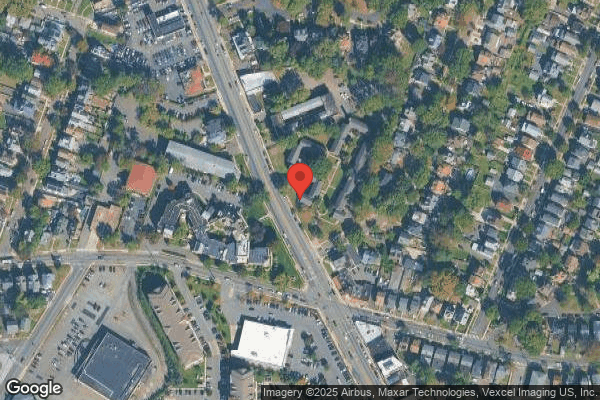
250 BLOOMFIELD AVE, BLOOMFIELD, NJ 07003 (973) 743-0792
Non profit - Corporation 40 Beds Independent Data: November 2025
Trust Grade
95/100
#49 of 344 in NJ
Last Inspection: April 2025

Within standard 12-15 month inspection cycle. Federal law requires annual inspections.

Overview

Job Haines Home For Aged People in Bloomfield, New Jersey, has a Trust Grade of A+, indicating it is an elite facility, well above average in quality. It ranks #49 out of 344 nursing homes in New Jersey, placing it in the top half, and #4 out of 32 in Essex County, meaning only three local options are rated higher. The facility's trend is stable, with only one issue reported in both 2023 and 2025. Staffing is a strong point, with a 5/5 star rating and a low turnover rate of 9%, well below the state average of 41%. On the downside, there have been some concerns noted, including incidents where expired intravenous medication supplies were not removed and a failure to accurately code immunization assessments for a resident, which could potentially affect their care. However, it is worth noting that the facility has no fines on record and maintains average RN coverage, allowing for essential oversight in resident care. Overall, Job Haines Home offers a strong combination of quality care with some areas for improvement.
Trust Score
A+
95/100
In New Jersey
#49/344
Top 14%
Safety Record
Low Risk
No red flags
Inspections
Holding Steady
1 → 1 violations
Staff Stability
✓ Good
9% annual turnover. Excellent stability, 39 points below New Jersey's 48% average. Staff who stay learn residents' needs.
Penalties
✓ Good
No fines on record. Clean compliance history, better than most New Jersey facilities.
Skilled Nurses
✓ Good
Each resident gets 67 minutes of Registered Nurse (RN) attention daily — more than 97% of New Jersey nursing homes. RNs are the most trained staff who catch health problems before they become serious.
Violations
✓ Good
Only 4 deficiencies on record. Cleaner than most facilities. Minor issues only.
★★★★★
5.0
Overall Rating
★★★★★
5.0
Staff Levels
★★★★☆
4.0
Care Quality
★★★★★
5.0
Inspection Score
Stable
2023: 1 issues
2025: 1 issues

The Good

  • 5-Star Staffing Rating · Excellent nurse staffing levels
  • 4-Star Quality Measures · Strong clinical quality outcomes
  • Low Staff Turnover (9%) · Staff stability means consistent care
  • Full Sprinkler Coverage · Fire safety systems throughout facility
  • No fines on record
  • Staff turnover is low (9%)

    39 points below New Jersey average of 48%

Facility shows strength in staffing levels, quality measures, staff retention, fire safety.

The Bad

No Significant Concerns Identified

This facility shows no red flags. Among New Jersey's 100 nursing homes, only 1% achieve this.

The Ugly 4 deficiencies on record

Apr 2025 1 deficiency
CONCERN (D)

Potential for Harm - no one hurt, but risky conditions existed

Assessment Accuracy (Tag F0641)

Could have caused harm · This affected 1 resident

**NOTE- TERMS IN BRACKETS HAVE BEEN EDITED TO PROTECT CONFIDENTIALITY** Based on observation, interview, and record review it was determined that the facility failed to accurately code the Minimum Dat...

Read full inspector narrative →
**NOTE- TERMS IN BRACKETS HAVE BEEN EDITED TO PROTECT CONFIDENTIALITY** Based on observation, interview, and record review it was determined that the facility failed to accurately code the Minimum Data Set (MDS), an assessment tool used to facilitate the management of care, in accordance with federal guidelines for 1 of 5 residents, Resident #9, reviewed for immunization status. This deficient practice was by the following: Reference: A review of the CDC's Advisory Committee on Immunization Practices (ACIP) for Pneumococcal Vaccine Recommendations dated/last reviewed on 10/26/24, included the following. The CDC recommended administration of pneumococcal conjugate vaccine (PCV20 or PCV21) at least 1 year for all adults 50 years or older who have received PCV 13 only at any age. On 03/26/25 at 11:50 AM, the surveyor observed Resident #9, seated in the dining area with other residents while the staff prepared to serve lunch. The resident greeted the surveyor hello, then was observed looking around the room. The surveyor reviewed Resident #9's medical record. The admission Record (AR, admission summary) reflected that Resident #9 was admitted to the facility with medical diagnoses which included but were not limited to: diabetes mellitus (high blood sugar), congestive heart failure (decreased contractility of the hearts ability to pump blood and the inability to fill with blood properly in between beats) and asthma (a long-term condition that affects the airways in the lungs). Resident #9's most recent quarterly Minimum Data Set (qMDS), an assessment tool used to facilitate the management of care, dated 12/18/24, reflected that the resident had a Brief Interview for Mental Status (BIMS) score of 5 out 15 which indicated the resident's cognition was severely impaired. Further review of the qMDS dated [DATE], under section O0300 A. Is the resident's Pneumococcal vaccine (PV) up to date? The response was marked 1, which reflected Yes. A review of the electronic Medical Record (eMR) under Immunization reflected Resident #9, last received Pneumovax on 11/18/22. The paper chart did not show the PV was offered, education was provided, or a declination had occurred. On 3/31/25 at 10:48 AM, during an interview with the surveyor, the Registered Nurse/Unit Manager (RN/UM) stated that every year, each resident who was alert were asked/offered the PV, when appropriate. For residents who had impaired cognition, the resident's family or representative were asked on behalf of the resident for permission to administer the PV. The resident's offer, education or declination were documented in the paper chart and/or the electronic medical record (eMR). At that time, the surveyor and the RN/UM reviewed Resident #9's immunization record together. The RN/UM stated the resident's record reflected the resident received Pneumovax on 11/18/22. During the review of the resident's medical record (electronic and paper), the proof of offer, education, and declination were not found. The RN/UM stated she would review the records, look for the documents, and inform the Director of Nursing (DON). On 3/31/25 at 10:57 AM, during an interview with the RN/Infection Preventionist, (RN/IP) the surveyor requested the information of the guidelines that the facility followed for the PV. On 4/1/25 at 8:52 AM, during a meeting with the surveyor and the DON, the RN/IP stated that the facility followed the current CDC guidelines and offered PCV 20 to their residents. The RN/IP provided the surveyor PV declination for Resident #9 dated on 8/20/24 and 10/27/23. At that time, the surveyor discussed the concern with the RN/IP and the DON regarding the qMDS dated [DATE] that reflected the resident's PV was current. On 4/1/25 at 9:43 AM, during an interview with the surveyor, the Licensed Practical Nurse/ MDS Nurse (LPN/MDSN) stated she inputted information in the MDS while the MDS Coordinator (MDSC) checked the MDS data for completion and accuracy. The surveyor and the LPN/MDSN reviewed section O0300 of the qMDS dated [DATE] together. At that time, the LPN/MDSN confirmed and acknowledged that Resident #9's PV was not current, the submitted MDS section O0300 was inaccurate/incorrect and was signed by the MDSC On 4/1/25 at 10:12 AM, during an interview with the surveyor, the MDSC stated that his signature meant he checked the MDS for completion and accuracy. At that time, the MDSC stated that the data entered for section O0300 qMDS dated [DATE] was a typographical error. On 4/1/25 at 12:27 PM, during a meeting with the survey team, the Licensed Nursing Home Administrator, the DON and the ADON/IP, the surveyor discussed the concern regarding the Resident #9's inaccurate MDS for PV. A review of the provided facility policy for Minimum Data Set, dated /revised 7/2023 did not reflect the expectation that the submitted MDS were reviewed for accuracy prior to submission. A review of section Z0400 for the MDS dated [DATE], revealed that the person signing the MDS certified that the accompanying information accurately reflected the resident assessment information. No further information was provided. NJAC 8:39-33.2 (d)
Feb 2023 1 deficiency
CONCERN (D)

Potential for Harm - no one hurt, but risky conditions existed

Pharmacy Services (Tag F0755)

Could have caused harm · This affected 1 resident

**NOTE- TERMS IN BRACKETS HAVE BEEN EDITED TO PROTECT CONFIDENTIALITY** Based on observation, interview, and record review, it was determined the facility failed to a) reconcile, identify and remove t...

Read full inspector narrative →
**NOTE- TERMS IN BRACKETS HAVE BEEN EDITED TO PROTECT CONFIDENTIALITY** Based on observation, interview, and record review, it was determined the facility failed to a) reconcile, identify and remove three of the expired medication intravenous medication supply set (IV set) located in the bottom of a medication cart observed in 1 of 1 of the subacute unit; b) ensure the accurate execution of a Drug Enforcement Agency (DEA) Form 222 (a federal narcotic requisition form), to enable accurate reconciliation of controlled-dangerous substances (medications, with high potential for abuse and tracked with detail), which was identified in 1 of 1 form reviewed. This deficient practice was evidenced by the following: 1) On [DATE] at 11:53 AM, the surveyor began the inspection of the non-controlled portion of the medication cart in the subacute unit in the presence of the Registered Nurse (RN). The surveyor observed three expired IV set. The surveyor and the RN further examined the sealed IV sets which reflected a manufacturer expiration date of [DATE]. At that time, the surveyor interviewed the RN who stated the expired IV set should not have been on the cart because the medication could have permeated and leaked through the IV bag. The RN also stated that she did not have any residents using the IV set at that time and it was stored in the cart as an emergency supply. On [DATE] at 1:28 PM, the surveyor was provided copies of the pharmacy provider invoices that included listings for IV sets by the Director of Nursing (DON). At that time, in the presence of the survey team, the DON was asked to clarify that the expired IV set found was the item listed on the invoices provided. The DON stated she would conduct further research. On [DATE] at 11:25 AM, in the presence of the survey team, the DON stated the pharmacy provider was unable to provide documentation to reconcile the items on the invoice was the expired IV set. At 11:54 AM, the DON provided an email from the provider Pharmacist and the Unit Inspection conducted by the Consultant Pharmacist. A review of the facility provided email from the provider Pharmacist reflected that the Provider pharmacy conducted a unit inspection on [DATE]. A review of the facility provided Unit Inspection conducted by the Consultant Pharmacist (CP) dated [DATE], did not indicate an expired IV set was observed. At 1:26 PM, during a follow up interview with the surveyor, the DON stated that medical supplies were supposed to be checked for expiration and removed from active inventory. The pharmacy provider, CP and the nursing staff, missed it. The DON confirmed that all residents were checked, and determined no resident was scheduled to use the IV set at that time. A review of the facility provided policy Storage of Medication, revised on 11/22 included, under Procedures, section 4. The facility shall not use discontinued, outdated, or deteriorated drugs or biologicals. All such drugs shall be returned to the dispensing pharmacy or destroyed. The nurse is responsible to check al supplies before using them. Upon receiving the medical supplies, staff will check the packaging slip and keep them in a binder. Pharmacy consultant, pharmacist and staff will check supplies at least monthly and will remove all expired supplies. 2) On [DATE] at 1:04 PM, a review of the facility's DEA Form-222 reflected on the reverse side instructions required by Title 21 Code of Federal Regulations Part 1305. Further review revealed the facility did not execute the following: Part 1. Purchaser Information 3. Enter the total number of line items ordered. 4 .Purchaser must make a copy of the order form for its records before mailing the original to the supplier. Order Form Number: 220405269 did not include the last line completed (bottom, left corner). The facility provided DEA Form-222 had a completed information for Part 4 Controlled Substance Shipment (to be filled out by the supplier). On [DATE] at 1:28 PM, the surveyor in the presence of another surveyor, discussed with the DON, the concern regarding the DEA Form-222. The DON stated the forms were new and was discussed with the medical director On [DATE] at 11:25 AM, in the presence of the survey team, the DON explained her process for executing the DEA Form-222. The DON stated she filled out the form and sent it to the pharmacy. At that time, The DON confirmed she did not make a copy of the DEA Form-222 before it was sent to the pharmacy. The provider pharmacy returned the form to the facility after they had filled out their portion. The DON stated she reconciled the DEA Form-222 with the items and the invoice received. At that time, the DON was unable to explain how the order form could be reconciled properly when a copy of the DEA Form-222 was not made and retained for its records prior to sending the form to the pharmacy. The DON informed the surveyors that moving forward she would retain a copy of the executed DEA Form-222 prior to sending to the pharmacy. A review of the facility provided policy Utilizing DEA form 222 for ordering CII medications for backup replacement revised 2/22 included, under procedures: Please send the original form to the pharmacy, a copy must be kept in your records for two years .Be sure to fill in Last line Completed. NJAC 8:39-19.4(a), 29.4(g), 29.7(c)
Mar 2021 2 deficiencies
CONCERN (D)

Potential for Harm - no one hurt, but risky conditions existed

Deficiency F0761 (Tag F0761)

Could have caused harm · This affected 1 resident

2. On 3/10/21 at 1:33 PM, in the presence of the UMRN, the surveyor inspected the second-floor medication storage room which contained the medication storage refrigerator. The medication storage refri...

Read full inspector narrative →
2. On 3/10/21 at 1:33 PM, in the presence of the UMRN, the surveyor inspected the second-floor medication storage room which contained the medication storage refrigerator. The medication storage refrigerator contained a clear plastic locked storage box which was located on the upper shelf inside the refrigerator and was able to be removed from the shelf as it was not affixed inside the refrigerator. There were no medications stored inside the clear plastic locked storage box. The UMRN stated that this was the narcotic storage box and was not sure why the clear plastic locked storage box was not affixed inside the refrigerator. On 3/10/21 at 2:15 PM, the surveyors brought the above concerns to the attention of the Administrator and the Director of Nursing. A review of the facility's policy and procedure for the storage of controlled substances. Under Policy Statement revealed the following: The facility shall comply with all laws, regulations, and other requirements related to handling, storage, disposal of s II and other controlled substances. NJAC 8:39- 29.4(b)2. Based on observation and interview it was determined that the facility failed to ensure that controlled substances were stored in a manner to prevent loss or diversion. This was found in 2 of 2 medication refrigerators. The deficient practice was evidenced by the following: 1. On 3/10/21 at 1:29 PM, the surveyor inspected the medication refrigerator in the medication room on the first floor in the presence of the Unit Manager, Registered Nurse (UMRN). Inside of the refrigerator there was a locked storage box that was attached to a removable shelf. The UMRN unlocked the storage box. The storage box contained an opened bottle of Ativan Concentrate (a sedative; controlled substance). The surveyor removed the shelf from the refrigerator with the locked box attached. The UM/RN acknowledged that the shelf was not permanently affixed within the medication refrigerator.
CONCERN (D)

Potential for Harm - no one hurt, but risky conditions existed

Food Safety (Tag F0812)

Could have caused harm · This affected 1 resident

Based on observation, interview, record review and policy review, it was determined that the facility failed to a.) store potentially hazardous foods in a manner to prevent food borne illness, b.) fai...

Read full inspector narrative →
Based on observation, interview, record review and policy review, it was determined that the facility failed to a.) store potentially hazardous foods in a manner to prevent food borne illness, b.) failed to maintain the kitchen environment and equipment in a sanitary manner to prevent contamination from foreign substances and potential for the development a food borne illness, and c.) failed to discard expired nutritional supplements. This deficient practice was evidenced by the following: On 3/10/21 at 09:48 AM, in the presence of the Food Service Director (FSD), the surveyor observed the following: 1. In the food preparation area, the surveyor observed keys stored on a hook touching a cleaned whisk, the FSD stated that these keys should not have been stored with the whisk. 2. In the food preparation area, the surveyor observed grease-like brown colored particulates on the can opener. 3. In the food preparation area, the surveyor observed two ceramic plates stored on a shelf containing clean dishware, the two plates were soiled with black particles and a soiled napkin on top of one plate. The FSD stated that these plates should have been clean. 4. In the dry storage area, the surveyor observed a random sampling of dented cans which were in rotation for use. The surveyor observed the following: - A #10 sized can of sauerkraut with a 1/2 inch dent on the lower lip of the can, - A # 10 sized can of pineapples with a 1/4 inch dent on body of the can, - A # 10 sized can of peaches with a 1/2 inch dent on body of the can, - A # 10 sized can of garbanzo beans with a 1/2 inch dent on upper lip of the can, - A # 10 sized can of mushroom with a 1 inch dent on body of the can, - A # 10 sized can of butterscotch pudding with a 1/4 inch dent on body of the can, The surveyor reviewed the facility's policy titled, Storage of Utensils dated 8/15/2020. The policy indicated that utensils will be stored above the cooks table and ensure that they are sanitized and cleaned. The surveyor reviewed the facility's policy titled, Canned Food Free from Damages dated 1/1/2021. The policy indicated that the cooks and servers must inspect cans for damages before use and to remove any dented or damaged cans from service and place in designated damage area. 5. On 3/10/21 at 1:29 PM, the surveyor inspected the medication refrigerator, located on the first floor medication room, in the presence of the Unit Manager, Registered Nurse (UMRN). After inspecting the medication refrigerator, the surveyor observed that there were storage shelves in the medication room which held nutritional supplements. The surveyor counted 23 containers of a nutritional supplement that were honey thick liquid consistency with a best by date of 3/6/21. The UMRN acknowledged that the supplements were expired and said that there were no residents on the unit that were prescribed honey thick liquids. The surveyor asked the UMRN how often she checked the supply of nutritional supplements. The UMRN said she checked them monthly. She said she last checked the supplements on 3/1/21 but she must have missed them. On 3/10/21 at 2:15 PM, the surveyors brought the above concerns to the attention of the Administrator and the Director of Nursing. On 3/15/21 at 1:00 PM, the facility was not able to provide a policy regarding the storage of nutritional supplements. NJAC 8:39-17.2(g)
Understanding Severity Codes (click to expand)
Life-Threatening (Immediate Jeopardy)
J - Isolated K - Pattern L - Widespread
Actual Harm
G - Isolated H - Pattern I - Widespread
Potential for Harm
D - Isolated E - Pattern F - Widespread
No Harm (Minor)
A - Isolated B - Pattern C - Widespread

Questions to Ask on Your Visit

  • "Can I speak with families of current residents?"
  • "What's your RN coverage like on weekends and overnight?"

Our Honest Assessment

Strengths
  • • Grade A+ (95/100). Above average facility, better than most options in New Jersey.
  • • No major safety red flags. No abuse findings, life-threatening violations, or SFF status.
  • • No fines on record. Clean compliance history, better than most New Jersey facilities.
  • • Only 4 deficiencies on record. Cleaner than most facilities. Minor issues only.
Concerns
  • • No significant concerns identified. This facility shows no red flags across CMS ratings, staff turnover, or federal penalties.
Bottom line: Generally positive indicators. Standard due diligence and a personal visit recommended.

About This Facility

What is Job Haines Home For Aged People's CMS Rating?

CMS assigns Job Haines Home For Aged People an overall rating of 5 out of 5 stars, which is considered much above average nationally. Within New Jersey, this rating places the facility higher than 99% of the state's 100 nursing homes. This rating reflects solid performance across the metrics CMS uses to evaluate nursing home quality.
How is Job Haines Home For Aged People Staffed?

CMS rates Job Haines Home For Aged People's staffing level at 5 out of 5 stars, which is much above average compared to other nursing homes. Staff turnover is 9%, compared to the New Jersey average of 46%. This relatively stable workforce can support continuity of care.

What Have Inspectors Found at Job Haines Home For Aged People?

State health inspectors documented 4 deficiencies at Job Haines Home For Aged People during 2021 to 2025. These included: 4 with potential for harm.

Who Owns and Operates Job Haines Home For Aged People?

Job Haines Home For Aged People is owned by a non-profit organization. Non-profit facilities reinvest revenue into operations rather than distributing to shareholders. The facility operates independently rather than as part of a larger chain. With 40 certified beds and approximately 36 residents (about 90% occupancy), it is a smaller facility located in BLOOMFIELD, New Jersey.

How Does Job Haines Home For Aged People Compare to Other New Jersey Nursing Homes?

Compared to the 100 nursing homes in New Jersey, Job Haines Home For Aged People's overall rating (5 stars) is above the state average of 3.3, staff turnover (9%) is significantly lower than the state average of 46%, and health inspection rating (5 stars) is much above the national benchmark.

What Should Families Ask When Visiting Job Haines Home For Aged People?

Based on this facility's data, families visiting should ask: "Can I visit during a mealtime to observe dining assistance and food quality?" "How do you handle medical emergencies, and what is your hospital transfer rate?" "Can I speak with family members of current residents about their experience?"

Is Job Haines Home For Aged People Safe?

Based on CMS inspection data, Job Haines Home For Aged People has a clean safety record: no substantiated abuse findings (meaning no confirmed cases of resident harm), no Immediate Jeopardy citations (the most serious violation level indicating risk of serious injury or death), and is not on the Special Focus Facility watch list (a federal program monitoring the lowest-performing 1% of nursing homes). The facility has a 5-star overall rating and ranks #1 of 100 nursing homes in New Jersey. While no facility is perfect, families should still ask about staff-to-resident ratios and recent inspection results during their visit.

Do Nurses at Job Haines Home For Aged People Stick Around?

Staff at Job Haines Home For Aged People tend to stick around. With a turnover rate of 9%, the facility is 37 percentage points below the New Jersey average of 46%. Low turnover is a positive sign. It means caregivers have time to learn each resident's needs, medications, and personal preferences. Consistent staff also notice subtle changes in a resident's condition more quickly. Registered Nurse turnover is also low at 9%, meaning experienced RNs are available to handle complex medical needs.

Was Job Haines Home For Aged People Ever Fined?

Job Haines Home For Aged People has no federal fines on record. CMS issues fines when nursing homes fail to meet care standards or don't correct problems found during inspections. The absence of fines suggests the facility has either maintained compliance or corrected any issues before penalties were assessed. This is a positive indicator, though families should still review recent inspection reports for the full picture.

Is Job Haines Home For Aged People on Any Federal Watch List?

Job Haines Home For Aged People is not on any federal watch list. The most significant is the Special Focus Facility (SFF) program, which identifies the bottom 1% of nursing homes nationally based on persistent, serious quality problems. Not being on this list means the facility has avoided the pattern of deficiencies that triggers enhanced federal oversight. This is a positive indicator, though families should still review the facility's inspection history directly.