ST CATHERINE OF SIENA
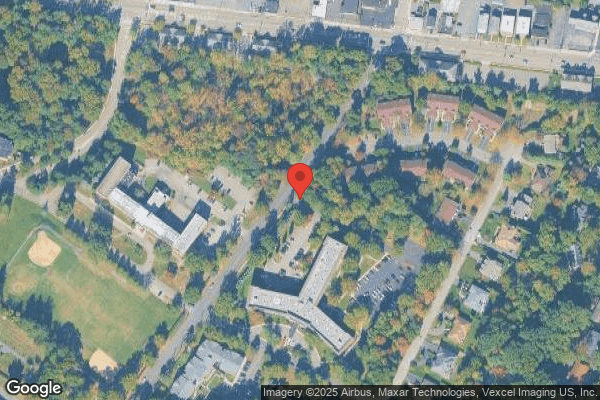
7 RYERSON AVENUE, CALDWELL, NJ 07006 (973) 226-1577
Non profit - Corporation 30 Beds Independent Data: November 2025
Trust Grade
58/100
#297 of 344 in NJ
Last Inspection: January 2025

Within standard 12-15 month inspection cycle. Federal law requires annual inspections.

Overview

St. Catherine of Siena in Caldwell, New Jersey, has a Trust Grade of C, indicating it is average compared to other nursing homes. It ranks #297 out of 344 in the state, placing it in the bottom half of New Jersey facilities, and #29 out of 32 in Essex County, meaning only a few local options are worse. The facility is worsening, with issues increasing from 6 in 2023 to 7 in 2025. Staffing is a relative strength, boasting a low turnover rate of 15%, much better than the state average, although it has a poor 1-star rating overall. The facility has concerning fines of $16,171, which are higher than 86% of New Jersey facilities, suggesting compliance issues. Specific incidents noted by inspectors include the failure to conduct annual performance reviews for all Certified Nursing Aides, meaning staff may not be receiving the necessary feedback and training. Additionally, the facility did not ensure that CNAs received required in-service training, which could impact the quality of care provided to residents. There was also a significant concern regarding infection control, as the facility lacked a certified individual responsible for infection prevention, potentially risking the health of all residents. These factors highlight both the strengths and weaknesses of St. Catherine of Siena, making it important for families to carefully consider their options.

Trust Score
C
58/100
In New Jersey
#297/344
Bottom 14%
Safety Record
Low Risk
No red flags
Inspections
Getting Worse
6 → 7 violations
Staff Stability
✓ Good
15% annual turnover. Excellent stability, 33 points below New Jersey's 48% average. Staff who stay learn residents' needs.
Penalties
⚠ Watch
$16,171 in fines. Higher than 86% of New Jersey facilities, suggesting repeated compliance issues.
Skilled Nurses
⚠ Watch
Each resident gets only 23 minutes of Registered Nurse (RN) attention daily — below average for New Jersey. Fewer RN minutes means fewer trained eyes watching for problems.
Violations
⚠ Watch
18 deficiencies on record. Higher than average. Multiple issues found across inspections.
★★☆☆☆
2.0
Overall Rating
★☆☆☆☆
1.0
Staff Levels
★★★★☆
4.0
Care Quality
★★★☆☆
3.0
Inspection Score
Stable
2023: 6 issues
2025: 7 issues

The Good

  • 4-Star Quality Measures · Strong clinical quality outcomes
  • Low Staff Turnover (15%) · Staff stability means consistent care
  • Full Sprinkler Coverage · Fire safety systems throughout facility
  • No fines on record
  • Staff turnover is low (15%)

    33 points below New Jersey average of 48%

Facility shows strength in quality measures, staff retention, fire safety.

The Bad

2-Star Overall Rating

Below New Jersey average (3.2)

Below average - review inspection findings carefully

Federal Fines: $16,171

Below median ($33,413)

Minor penalties assessed

The Ugly 18 deficiencies on record

Jan 2025 7 deficiencies
CONCERN (D)

Potential for Harm - no one hurt, but risky conditions existed

Transfer Notice (Tag F0623)

Could have caused harm · This affected 1 resident

Based on observation, interview, and record review, it was determined that the facility failed to notify the resident's representative and the Office of the Ombudsman in writing for an emergency trans...

Read full inspector narrative →
Based on observation, interview, and record review, it was determined that the facility failed to notify the resident's representative and the Office of the Ombudsman in writing for an emergency transfer to the hospital. This deficient practice was identified for 1 of 1 resident, Resident #16, reviewed for hospitalization. On 12/31/24 at 8:15 AM, the surveyor observed Resident #16 during medication administration. The resident was seated in their wheelchair and was alert and oriented. A review of Resident #16's hybrid (paper and electronic) medical records revealed the following: A review of the admission Record (an admission summary) reflected that the resident was admitted to the facility with diagnoses that included but not limited to hypertension (elevated blood pressure), depression (mental health condition that causes low mood and loss of interest in activities for a prolonged period) and history of urinary tract infection. A review of the Discharge Minimum Data Set (MDS), an assessment tool used to facilitate the management of care dated 12/02/24, reflected that Resident #16 was discharged to the hospital with a return anticipated to the facility. A review of a Nurses progress note dated 12/02/24, revealed that Resident #16 was transferred to the hospital. A nurses note dated 12/03/24, revealed that the resident was admitted to the hospital. On 12/31/24 at 10:15 AM, the surveyor interviewed the Director of Nursing (DON), who stated she doesn't send a written notification to the resident's representative nor the Ombudsman Office for a letter of emergency transfer. The DON stated that the resident's representative was notified when a resident is sent out to the hospital. When the surveyor asked the DON which department was responsible for sending out the written emergency transfer notification, she stated she doesn't believe that anyone sends out those letters. On 12/31/24 at 10:30 AM, the surveyor interviewed the Licensed Nursing Home Administrator (LNHA) regarding who's the staff responsible for mailing out the emergency transfer letter to the resident's representatives and to the Ombudsman office. The LNHA stated that the facility doesn't send out these letters. On 12/31/24 at 1:00 PM, the surveyor discussed the above concerns with the LNHA and the DON. The LNHA stated that the facility had no policy related to sending out a written emergency letter to the resident's representative or the Ombudsman office when a resident will be transferred to the hospital. No further information was provided. NJAC 8:39-5.3; 5.4
CONCERN (D)

Potential for Harm - no one hurt, but risky conditions existed

Deficiency F0625 (Tag F0625)

Could have caused harm · This affected 1 resident

Based on interviews and record review, it was determined that the facility failed to provide the resident or resident representative appropriate written notification of the facility's bed hold and res...

Read full inspector narrative →
Based on interviews and record review, it was determined that the facility failed to provide the resident or resident representative appropriate written notification of the facility's bed hold and reserve payment policy upon transfer to the hospital for one of one residents (Resident #16) reviewed for hospitalizations. The deficient practice was evidenced by the following: On 12/31/24 at 8:15 AM, the surveyor observed Resident #16 during medication administration. The resident was seated in their wheelchair and was alert and oriented. A review of Resident #16's hybrid ( combination of paper and electronic) medical record revealed the following: A review of the admission Record (an admission summary) reflected that the resident was admitted to the facility with diagnoses that included but were not limited to hypertension (elevated blood pressure), depression (mental health condition that causes low mood and loss of interest in activities for a prolonged period) and history of urinary tract infection. A review of the Discharge Minimum Data Set (MDS), an assessment tool used to facilitate the management of care dated 12/02/24, reflected that Resident #16 was discharged to the hospital with a return anticipated to the facility. A review of a Nurses progress note dated 12/02/24, revealed that the resident was transported to the hospital. A nurses note dated 12/03/24, revealed that the resident was admitted to the hospital. On 12/31/24 at 10:15 AM, the surveyor interviewed the Director of Nursing (DON), who stated that she doesn't send out a written letter of emergency transfer or a bed hold letter to the resident's representative or the Ombudsman Office. She stated that the resident's representative are notified when the residents are sent to the hospital. She also stated that the resident's room will always be held for the resident. When the surveyor asked the DON if she knows what department is responsible for sending out the emergency transfer letter, she stated that she doesn't believe that anybody sends out these letters. On 12/31/24 at 10:30 AM, the surveyor interviewed the Licensed Nursing Home Administrator (LNHA) regarding who's responsible for mailing out written emergency transfer letters and bed hold letters to the resident representatives and the ombudsman office. The LNHA stated that the facility is different from other facilities and that they don't send out these letters. Regarding bed holds, the residents are always guaranteed a bed. On 12/31/24 at 1:00 PM, the surveyor discussed the above concerns with the LNHA and the DON. The LNHA stated that the facility had no policy that address that a written emergency letters are sent out to the resident's representative or the Ombudsman office. The LNHA further stated that the residents are guarantee a bed upon return from an emergency transfer. She also stated that the facility has a bed hold policy. No further information was provided. A review of the facility policy titles Bed hold dated 04/30/24, and was provided by the DON which revealed the following: 1. All residents/representative are provided with written information regarding the facility bed-hold policies, which address holding or reserving a resident's bed during periods of absence (hospitalization or therapeutic leave.) N.J.A.C. 8:39-5.1 (a); 5.2 (a)
CONCERN (D)

Potential for Harm - no one hurt, but risky conditions existed

Assessment Accuracy (Tag F0641)

Could have caused harm · This affected 1 resident

**NOTE- TERMS IN BRACKETS HAVE BEEN EDITED TO PROTECT CONFIDENTIALITY** 3. On 12/27/24, at 09:56 AM, the surveyor observed Resident #17 seated in their wheelchair with eyes closed. On 12/31/24 at 9:5...

Read full inspector narrative →
**NOTE- TERMS IN BRACKETS HAVE BEEN EDITED TO PROTECT CONFIDENTIALITY** 3. On 12/27/24, at 09:56 AM, the surveyor observed Resident #17 seated in their wheelchair with eyes closed. On 12/31/24 at 9:57 AM, the surveyor reviewed the hybrid medical record (paper and electronic) of Resident #17, which revealed the following: According to the FS, Resident #17 was admitted to the facility with diagnoses that included but were not limited to Dementia (loss of memory). A review of the quarterly MDS (Q/MDS), an assessment tool used to facilitate the management of care, dated 11/18/24, reflected that the resident had a BIMS score of 6 out of 15, indicating that the resident had severe cognitive impairment. Further review of the Q/MDS dated [DATE] Section P. Physical Restraints Used in Bed A. Bed rail 1. Used less than daily. A review of the December 2024 Order Summary Report (OSR) revealed there was no physician's order (PO) for bed rail use. A review of the comprehensive care plan revealed no care plan for bed rail used. On 12/31/24 at 11:22 AM, the surveyor interviewed the MDS/C regarding the above concern. The MDS/C did not provide further information and added that the facility followed the RAI (Resident Assessment Instrument - a tool that helps gather information about a resident's strengths and needs, which is used to create an individualized care plan) manual. The surveyor reviewed the Centers for Medicare and Medicaid Services (CMS) RAI Version 3.0 Manual, updated October 2024. The RAI manual is revealed under Chapter 3, page P-3, Steps for Assessment 1. Review the resident's medical record (e.g., physician's orders, nurses' notes, nursing assistant documentation) to determine if physical restraints were used during the 7-day look-back period. On 12/31/24 at 11:35 AM, the surveyor interviewed the Director of Nursing (DON), who confirmed that there is no restraint in the building and that Resident #17 had no order for bed rails. NJAC 8:39-11.1, 11.2(e)(1) NJAC 8:39-33.2(d) Based on observation, interview, and record review it was determined that the facility failed to accurately code the Minimum Data Set ((MDS), an assessment tool used to facilitate the management of care), in accordance with federal guidelines for 3 of 12 residents, (Resident #23, Resident #28 and Resident #17) reviewed for accuracy for MDS coding. This deficient practice was evidenced by the following: 1. On 12/27/24 at 10:08 AM, the surveyor observed Resident #23 in their bed with their eyes closed. On 12/27/24 at 10:10 AM, the surveyor interviewed the Licensed Practical Nurse (LPN #1) who was the nurse providing care for Resident #23. LPN #1 stated Resident #23 was transitioning off a tube feeding (Enteral nutrition (EN), also called tube feeding, is a way of providing nutrition and fluids directly into the gastrointestinal (GI) tract through an enteral access device (feeding tube) that is placed with its tip in the stomach or small intestine) and is only receiving water flushes at this time. Review of Resident #23's Face Sheet (FS) (an admission summary) reflected that the resident was admitted to the facility with diagnoses that included but was not limited to gastrostomy, hemiplegia(one-sided paralysis) and hemiparesis (weakmess to one side of the body) following cerebral infarction (blood flow in the brain is blocked), and aphasia (difficult to understand and express language). Review of the K section of the 10/16/24 Quarterly MDS for Resident #23 revealed that section K0520 Nutritional Approaches documented under subsection B. Feeding tube (e.g., nasogatric or abdominal PEG) While a resident was listed No, indicating Resident was receiving nutrition or water via PEG. A review of the January 2025 Physician Orders (PO) revealed a PO dated 7/25/24 to Flush G tube with 60 ml of water every shift for Patency. On 12/30/24 at 10:31 AM, the surveyor interviewed the Registered Dietitian (RD) who stated they entered the dietary information in Section K of the MDS, and the tube feeding fluid section of section K was entered incorrectly as Resident #23 is currently receiving water flushes. According to the latest version of the Center for Medicare/Medicaid Services - Resident Assessment Instrument 3.0 Manual (updated October 2024) on page K-11-18 . According to the latest version of the Center for Medicare/Medicaid Services - Resident Assessment Instrument 3.0 Manual (updated October 2024). This item documents to review the medical record to determine if any of the listed nutritional approaches were performed during the look-back period. If none apply, check K0520Z. None of the above . Nutritional approaches that vary from the normal (e.g., mechanically altered food) or that rely on alternative methods (e.g., parenteral/IV or feeding tubes) can diminish an individual's sense of dignity and self-worth as well as diminish pleasure from eating. The resident's clinical condition may potentially benefit from the various nutritional approaches included here. It is important to work with the resident and family members to establish nutritional support goals that balance the resident's preferences and overall clinical goals. Coding Tip for K0520B Only feeding tubes that are used to deliver nutritive substances and/or hydration during the assessment period is coded in K0520B. K0710B, Average Fluid Intake per Day by IV or Tube Feeding Steps for Assessment 1. Review intake records from the last 7 days. 2. Add up the total amount of fluid received each day by IV and/or tube feedings only. 3. Divide the week's total fluid intake by 7 to calculate the average of fluid intake per day. 4. Divide by 7 even if the resident did not receive IV fluids and/or tube feeding on each of the 7 days. Coding Instructions Code for the average number of cc per day of fluid the resident received via IV or tube feeding. Record what was received by the resident, not what was ordered. Code 1: 500 cc/day or less. Code 2: 501 cc/day or more. On 12/30/24 at 11:33 AM, the Licensed Nursing Home Administrator (LNHA) provided the surveyor with a facility policy, Electronic Signature MDS with a revised date of 12/2024. The policy stated under the assessment section to, Ensure documentation of the Interdisciplinary Team's participation coordination of a resident's assessment and to attest to the accuracy of the section of MDS 3.0. On 12/30/24 at 12:30 PM, the surveyor met with the LHNA and Director of Nursing (DON) to review the above concern. The LNHA stated they were aware of the concern and would review all tube feeding residents. 2. On 12/27/24 at 9:45 AM, the surveyor observed Resident #28 seated in a recliner. The surveyor observed Resident #28's bed did not have any side rails engaged in the upright position. The surveyor interviewed Resident #28 regarding the use of side rails for the bed. Resident #28 stated that the side rail was able to go up and down and that he/she used the side rail to help him/her get out of bed. A review of Resident #28's FS which reflected that the resident was admitted to the facility with diagnoses which included but were not limited to dementia (a general term for a group of brain disorders that cause a decline in cognitive function, including memory, thinking, reasoning, language, and judgment), hypothyroidism (a condition in which the thyroid gland doesn't produce enough thyroid hormone) and hypertension (high blood pressure) A review of Resident #28's admission MDS, an assessment tool used to facilitate the management of care, reflected that the resident had a Brief Interview for Mental Status (BIMS) score of 8 out of 15, which indicated that Resident #28 cognition was moderately impaired. Further review of the MDS indicated under Section P that the bed rail was used less than daily as a physical restraint. A review of Resident #28's care plan reflected a focus area that the resident used 2 half side rails which could be considered as restraints however the resident used them to assist with turning and repositioning in bed and helped to pull self up. A review of Resident #28's paper medical record reflected a Side Rail Utilization Assessment dated 10/21/24 which indicated that a Partial rail was indicated to provide safety and serve as an enabler to promote independence. The use of the side rail was not used as a restraint. On 12/30/24 at 11:13 AM, the surveyor observed Resident #28 seated in the recliner. The surveyor observed that Resident #28's bed did not have any side rails engaged in the upright position. On 12/30/24 at 11:20 AM, the surveyor interviewed the Registered Nurse (RN) regarding Resident #28 and the use of restraints. The RN stated to the surveyor that the resident had a wander guard bracelet and that she did not know if the side rail was the restraint. The RN added that the resident did not have side rails. On 12/30/24 at 11:53 AM, in the presence of the survey team, the surveyor, via phone call, interviewed the MDS Coordinator (MDS/C) regarding the MDS coding for restraints under Section P. The MDS/C stated that the previous Director of Nursing stated the siderails were used as enabler. The MDS/C also stated that she visited the facility and had a discussion with the current Director of Nursing (DON) and when they looked at the siderails, they felt that some of the siderails were not falling into the category of enabler bars by definition and their measurements. She added they were considered restraints and we decided to code the side rails as restraints. The MDS/C stated they note that the side rails were for mobility and helping the residents and the care plan also stated it was used for mobility. She acknowledged that in the MDS, the side rails were coded as restraints. The MDS/C explained that the siderails were considered as restraints even though they were used for mobility. The MDS/C also stated that she followed the RAI manual and went to the State Operations Manual for additional informatio but could not find the exact definition that determined the difference between an enabler and a restraint. On 12/30/24 at 12:59 PM, the surveyor interviewed the DON regarding the process for side rails. The DON stated that almost everyone used side rails as an enabler to stand up or to position themselves. The DON stated that the MDS/C suggested the quarter siderails were listed as a restraint in the care plan. The DON stated that in her opinion there was no one in the facility that had a restraint. The surveyor asked the DON why Resident #28's MDS was coded as having a restraint. The DON stated that the MDS/C insisted that anyone with a side rail be coded as a restraint. The DON stated that Resident #28 did not have a restraint and that the resident did not use the side rails all the time. On 12/31/24 at 10:49 AM, in the presence of the survey team, the surveyor told the LNHA and DON the concern that Resident #28's MDS was not coded accurately and the MDS indicated that the Resident #28's quarter side rail was a restraint and not used as an enabler. The DON stated that she did not agree that the quarter siderail was a restraint. She added that an assessment of the side rail was done quarterly and indicated that it was used as an enabler.
CONCERN (D)

Potential for Harm - no one hurt, but risky conditions existed

Respiratory Care (Tag F0695)

Could have caused harm · This affected 1 resident

Based on observation, interview, and record review, it was determined that the facility failed to administer oxygen (O2) therapy according to the physician's order for 1 (one) of 2 residents (Resident...

Read full inspector narrative →
Based on observation, interview, and record review, it was determined that the facility failed to administer oxygen (O2) therapy according to the physician's order for 1 (one) of 2 residents (Resident #22) reviewed for respiratory care. This deficient practice was evidenced by the following: On 12/27/24 at 10:05 AM, the surveyor observed Resident #22 in bed asleep, wearing a nasal cannula (a medical device to provide supplemental oxygen therapy to people who have lower oxygen levels) (NC) connected to an oxygen (O2) concentrator at four (4) liters per minute (lpm) on the regulator. On 12/27/24 at 10:25 AM, the surveyor reviewed the hybrid medical record (paper and electronic) of Resident #22, which revealed the following: A review of the admission Record (an admission summary) (AR) reflected that Resident #22 was admitted with diagnoses that included but were not limited to malignant neoplasm (abnormal mass of tissue) of unspecified part of unspecified bronchus or lung. A review of the admission Minimum Data Set (A/MDS), an assessment tool used to facilitate the management of care with an assessment reference date (ARD) (the last day of the observation period) of 11/27/24, indicated that the facility assessed the residents' cognitive status using a Brief Interview for Mental Status (BIMS) score of 15 out of 15, which indicated that the resident had an intact cognition. Further review of the A/MDS Section O - Special Treatments, Procedures, and Programs, C1. Oxygen therapy, B. While a Resident was coded Yes. A review of the December 2024 Order Summary Report (OSR) revealed an active physician's order (PO) with an order date of 11/20/2024 for oxygen at three (3) lpm via NC for sob (shortness of breath) as needed. The above PO for O2 was transcribed to the December 2024 electronic Treatment Administration Record (eTAR) and failed to be signed by a nurse, indicating that O2 was administered to Resident #22 on 12/27/24. On 12/27/24 at 10:10 AM, the surveyor, in the presence of the Certified Nurse Assistant (CNA), checked and confirmed that the O2 was set at 4 lpm via NC from the concentrator regulator. On 12/27/24 at 10:15 AM, the surveyor interviewed the Registered Nurse (RN), who confirmed that Resident #22's is currently on continuous O2 at 4 lpm via NC. On 12/30/24 at 12:15 PM, the surveyor team met with the Licensed Nursing Home Administrator (LNHA) and the Director of Nursing (DON). The DON did not provide further information. On 12/30/24 at 1:49 PM, the LNHA provided a policy titled Oxygen Administration, effective December 2023 under Purpose: Administer oxygen therapy in accordance with the attending physician's orders. When an order is written for PRN (as needed), the oxygen will be administered according to the liters prescribed by the Attending Physician. NJAC 8:39-25.2(c)
CONCERN (D)

Potential for Harm - no one hurt, but risky conditions existed

Deficiency F0811 (Tag F0811)

Could have caused harm · This affected 1 resident

Based on observation, interview and review of pertinent facility documentation, the facility failed to ensure facility staff that were utilized to assist residents that needed to be fed were appropria...

Read full inspector narrative →
Based on observation, interview and review of pertinent facility documentation, the facility failed to ensure facility staff that were utilized to assist residents that needed to be fed were appropriately trained and evaluated as competent to be a paid feeding assistant. This deficient practice was evidenced by the following: On 12/27/24 at 10:01 AM, the surveyor entered Resident #12's room. The surveyor observed a staff member (SM) wearing gloves, holding a bowl and a spoon standing next to Resident #12's bed. After the surveyor introduced herself to Resident #12, the SM put down the bowl and spoon on the tray that was on the resident's over the bed table and wiped Resident #12's mouth with a napkin. The surveyor observed that the bedside table was next to the resident's bed and it was not positioned in front of the resident for the resident to feed himself/herself. The surveyor observed that the resident did not have any utensil in his/her hand. The surveyor observed the SM's badge which indicated the SM was a HHA (Home Health Aide). The surveyor asked the SM what she was doing and what her title was. The SM stated that she was feeding the resident and that she was a HHA and also a nursing student that finished her first year. The surveyor interviewed Resident #12 who stated that he/she had a stroke recently but that he/she was doing better. On 12/27/24 at 10:11 AM, the surveyor interviewed Resident #12's Registered Nurse #1 (RN #1) regarding the SM and Resident #12. RN #1 stated that Resident #12 recently was placed on hospice services. RN #1 stated that the SM was a nursing student and that SM helped feed residents. The surveyor asked RN #1 if the SM had a competency done for feeding. RN #1 stated that the SM had a competency for feeding. A review of Resident #12's admission Record face sheet (admission summary) reflected that the resident was admitted to the facility with diagnoses which included but were not limited to cerebral infarction (also known as an ischemic stroke, is a serious condition that occurs when blood flow to the brain is blocked, causing brain tissue to die) and hypertension (high blood pressure). A review of Resident #12's most recent quarterly Minimum Data Set (MDS), an assessment tool used to facilitate the management of care, reflected that the resident had a Brief Interview for Mental Status (BIMS) score of 15 out of 15, which indicated that Resident #12 was cognitively intact. On 12/27/24 at 12:42 PM, in the presence of the survey team and Director of Nursing (DON), the surveyor asked the Licensed Nursing Home Administrator (LNHA) for information regarding the SM. The LNHA stated that the SM was in her second year as a nursing student and had a CNA (Certified Nurse's Aide) license in the state of Florida. The LNHA stated that the SM was hired for clerical work. The surveyor asked the LNHA if the SM had a signed job description. The LNHA stated that she did not. The LNHA stated that the SM came to the facility to help when the SM was on break from school. The LNHA stated that the SM received minimal pay and that she thought that the SM only set up residents for meals. The surveyor requested the SM's personnel file. A review of the SM's personnel file included an Employee Action Form which indicated she was a new hire on 5/21/24 and that the Current Position was blank. The form did not indicate what position the SM was hired for. Further review of the SM's personnel file included an Employee File Checklist which indicated the hire date was 5/28/24 and the Position was blank. The form did not indicate what position the SM was hired for. There was no documented evidence in the file that indicated the SM had completed a paid feeding assistant course or a competency for feeding a resident was performed. On 12/27/24 at 12:54 PM, the surveyor verified that the SM was licensed as a CNA in Florida. On 12/30/24 at 11:46 AM, the surveyor interviewed RN #2 regarding the SM. RN #2 stated that the SM was a nursing student and was a great help. RN #2 stated that in the summer the SM answered phones and transported residents. She added that last Monday the SM was feeding residents and the nurses were supervising her. The surveyor asked RN #2 how she knew what the SM could do. RN #2 stated that the DON had told them what the SM could do. On 12/31/24 at 9:18 AM, the surveyor interviewed the DON regarding the process for residents that needed to be fed. The DON stated that the CNAs did the feeding typically or the nurses. The DON stated that they did not have paid feeding assistants but that she had taken the course to be a trainer. The surveyor asked the DON about the SM. The DON stated that the SM was here in the summer as an intern a couple days and last week while on college break. The DON stated that the SM worked under her supervision. The DON stated that Resident #12 mostly feeds himself/herself and that Resident #12 had a recent CVA (cerebral vascular accident or stroke) and was on hospice. The DON stated that the SM was just holding the cup for the resident. The DON stated that the LNHA asked the SM to help. The surveyor asked the DON if the SM should be helping feed residents. The DON stated that the SM should not be helping to feed according to her title. The DON added that the SM had training in Florida and was a second year student nurse. The surveyor asked the DON if the SM had a competency done for feeding by the facility. The DON stated no. On 12/31/24 at 10:49 AM, in the presence of the survey team, the surveyor told the LNHA and DON the concern that the SM fed Resident #12 and was not trained to be a paid feeding assistant. On 01/02/25 at 10:49 AM, in the presence of the survey team, the LNHA stated that she did not have any further responses related to the concern. The facility did not provide any additional information. A review of the facility provided policy titled, Paid Feeding Assistance with an effective date of 10/2024, included the following: Policy Paid Feeding Assistant Procedure: 1. In the event of a resident requires assistance with their meals; a. Residents only need encouragement or minimal assistance, which does not require nursing training. b. Properly trained non-nursing personnel could provide this type of assistance. 2. Nurse aides and other nursing staff receive training so that they are able to feed residents with all kinds of feeding problems. 3. A higher level of training is required of nurse aides because nurse aides need to be able to deal with complicated feeding problems. 4. After proper basic training in feeding techniques and working with the elderly, are able to feed residents who do not have complicated feeding problems. 5. in the event of a nurse aide shortage, it is often the case that residents without complicated feeding problems receive little or no assistance at mealtimes with eating or drinking, while the nursing staff focuses on feeding residents with complicated problems. N.J.A.C. 8:39-17.3(c)
CONCERN (F)

Potential for Harm - no one hurt, but risky conditions existed

Deficiency F0730 (Tag F0730)

Could have caused harm · This affected most or all residents

Based on observation, interview and review of facility provided documentation, it was determined that the facility failed to ensure that the Certified Nursing Aide (CNA) received an annual performance...

Read full inspector narrative →
Based on observation, interview and review of facility provided documentation, it was determined that the facility failed to ensure that the Certified Nursing Aide (CNA) received an annual performance review for 5 of 5 CNA files reviewed. The deficient practice was evidenced by the following: On 12/27/24 at 12:08 PM, the surveyor requested from the Licensed Nursing Home Administrator (LNHA) the annual performance reviews that were done for 5 randomly selected CNAs. On 12/30/24 at 9:17 AM, the LNHA stated that the facility did not have any performance reviews for the 5 CNAs. She added that the Director of Nursing (DON) had the forms that were to be used but that she had not done the reviews yet. The facility did not provide any documented evidence that the 5 CNAs received an annual performance review. On 12/30/24 at 12:36 PM, in the presence of the survey team, the surveyor told the LNHA and DON the concern that the 5 CNAs did not have an annual performance review. On 12/31/24 at 10:44 AM, in the presence of the survey team and the LNHA, the DON stated that she had been at the facility for 7 months and that she had not conducted any performance reviews since she had started. The LNHA stated that they would have to get up to speed on that. The facility did not provide any additional information. A review of the facility provided policy titled, Employee Evaluation Performance with an effective date of 3/2018, included the following: Policy: Our facility's employee evaluation of performance may be scheduled annually. The purpose of effective performance management is for employees to have a clear understanding of the work expected from them, a. To receive ongoing feedback regarding how they are performing relative to the facility's expectations b. Distribute rewards accordingly c. Identify development opportunities, d. And to address performance that does not meet expectations Procedure: A facility standard evaluation form is used to guide the performance evaluation process. Employees are scheduled for an evaluation. The employee's review of performance may receive constructive feedback and recommendations for improvement. -Frequency: The policy specifies how often reviews will be conducted, such as annually, bi-annually, or quarterly . -Rewards and training: The policy outlines guidelines for rewards and training N.J.A.C. 8:39-43.17 (b)
CONCERN (F)

Potential for Harm - no one hurt, but risky conditions existed

Deficiency F0947 (Tag F0947)

Could have caused harm · This affected most or all residents

**NOTE- TERMS IN BRACKETS HAVE BEEN EDITED TO PROTECT CONFIDENTIALITY** Based on observation, interview and review of facility documentation, it was determined that the facility failed to ensure that ...

Read full inspector narrative →
**NOTE- TERMS IN BRACKETS HAVE BEEN EDITED TO PROTECT CONFIDENTIALITY** Based on observation, interview and review of facility documentation, it was determined that the facility failed to ensure that a) Certified Nurses Aides (CNA) received 12 hours of mandatory in-service training for 5 of 5 CNAs reviewed (CNA #1, CNA #2, CNA #3, CNA #4 and CNA #5); and b) CNA education included abuse and resident rights for 1 of 5 CNAs reviewed (CNA #1). This deficient practice was evidenced by the following: On [DATE] at 12:08 PM, the surveyor requested from the Licensed Nursing Home Administrator (LNHA) the annual education that was provided to 5 randomly selected CNAs. On [DATE] at 8:41 AM, the LNHA stated that the facility had a book of the education provided which were in person sessions with sign in sheets but that not everyone signed that they attended. She added that the facility did not use a computer-based education system and did not have an educator. On [DATE] at 9:11 AM, the LNHA provided the binder of inservice sign in sheets that the facility had done. The LNHA stated that capturing everyone was difficult. She added that if the staff did not attend the in person in-service then the staff were to take the material to read and then sign that they done it. She then stated that they all did not sign. The surveyor asked the LNHA if she could provide 12 hours of education for the 5 CNAs that included the mandatory trainings. The LNHA stated she could not provide 12 hours of education for each of the 5 CNAs but that she would check about the mandatory trainings. The LNHA stated that we provided the in-services but that it does not help if the staff did not come. On [DATE] at 10:58 AM, the LNHA provided the surveyor a document titled Mandatory Inservice's 2024 for each of the 5 CNAs which did not include any indication to how long each of the in-services listed were conducted for and included the following: CNA #1 with a date of hire (doh) of [DATE] had one in-service listed which was Understanding Dementia. There was no documented evidence that CNA #1 had abuse or resident rights training. CNA #2 with a doh of [DATE] had 9 in-services listed which included the mandatory trainings of dementia, abuse, and resident rights. CNA #3 with a doh of [DATE] had 8 in-services listed which included the mandatory trainings of dementia, abuse, and resident rights. CNA #4 with a doh of [DATE] had 3 in-services listed which included the mandatory trainings of dementia, abuse, and resident rights. CNA #5 with a doh of [DATE] had 4 in-services listed which included the mandatory trainings of dementia, abuse, and resident rights. A review of the staff sign in sheets provided indicated that the in-services were one hour or one hour and 10 minutes in length. The facility did not provide documented evidence that the 5 CNAs had annual 12 hours of in-service education. On [DATE] at 12:36 PM, in the presence of the survey team, the surveyor told the LNHA and DON the concern that the 5 CNAs did not have 12 hours of education and that CNA #1 did not have abuse and resident rights training. On [DATE] at 10:42 AM, in the presence of the survey team and the DON, the LNHA stated that she was going to hire a health educator. She added that the facility did provide education but that they had to track the education better. The LNHA confirmed that the 5 CNAs did not have the 12 hours of education and that CNA #1 did not have all the required mandatory trainings. The facility did not provide any additional information. A review of the facility provided policy titled Education Nursing Staff with a review date of 2023, included the following: Our facility has yearly required scheduled education for our nursing staff. To promote quality of life and quality of care of resident, Staff will be informed in advance of the required staff education. The following are the required staff education to be completed yearly. 1. Abuse/Neglect . 3. Alzheimer's Disease . 7. Infection Control (each quarter) 8. Resident Rights . 12. CPR The policy did not include any information regarding the amount of hours required for CNAs. N.J.A.C. 8:39-43.17 (b)
Oct 2023 6 deficiencies
CONCERN (D)

Potential for Harm - no one hurt, but risky conditions existed

Deficiency F0637 (Tag F0637)

Could have caused harm · This affected 1 resident

**NOTE- TERMS IN BRACKETS HAVE BEEN EDITED TO PROTECT CONFIDENTIALITY** Based on observation, interview, and record review, it was determined that the facility failed to ensure a significant change as...

Read full inspector narrative →
**NOTE- TERMS IN BRACKETS HAVE BEEN EDITED TO PROTECT CONFIDENTIALITY** Based on observation, interview, and record review, it was determined that the facility failed to ensure a significant change assessment was completed for 1 of the 13 residents (Resident #1). Resident #1 was noted with more than three areas of decline with Cognitive Patterns, Mood, Behavior, Health and Skin conditions, and Nutritional Status on the 8/7/23 Quarterly (Q) MDS (Minimum Data Set), an assessment tool used to facilitate the management of care. The deficient practice was evidenced by the following: On 10/04/23 at 11:10 AM, during the initial tour, the surveyor observed the resident lying in bed, alert and awake, able to answer some of the surveyor's inquiries. The surveyor observed the tray of covered food untouched on the overbed table. Resident#1 stated he/she did not want to eat breakfast and would eat lunch instead. Certified Nurse Assistant (CNA) #1, who worked in the facility for 22 years, noted that the resident sometimes does not eat breakfast. On 10/10/23 at 11:55 AM, the surveyor interviewed the Dietitian who stated that Resident #1 generally had a good appetite, ate a lot of snacks, and was given different options. The Dietitian stated that she would alert the food director to provide the resident with some other foods and that the blood sugar is running high at times. The Dietitian stated that Resident #1 had lost weight but bounced back. The Dietitian also stated that the resident usually ate in the main dining room but not recently. On 10/10/23 at 12:26 PM, the surveyor interviewed the Director of Nursing (DON), who has worked in the facility for 22 years, and agreed that the resident had a diagonosis of depression. The DON added that despite the changes with the increase in anti-depressant dosage, changes in behavior, fluctuating weights, multiple falls, and BIMS, the facility decided not to make a significant change unless the resident was going to be placed on hospice services. On 10/11/23 at 11:35 AM, the surveyor interviewed the MDS Coordinator (MDSC) and stated that when she reviewed the resident for the 8/7/23 QMDS, she told DON that the resident had a lot of changes. The MDSC stated that the DON suggested that the facility needed to first rule out if there are any acute changes due to UTI (urinary tract infection) or Covid infection before they proceeded to make significant changes. The MDSC stated, I don't know what's going on in the last few months. The surveyor reviewed the hybrid medical record for Resident #1. The admission Record reflected that the resident was admitted to the facility with diagnoses that included but were not limited to Major depressive disorder (long-term loss of pleasure and interest). A review of the QMDS dated [DATE] reflected the following: -Brief interview for mental status (BIMS) score of 5 out of 15, which indicated that the resident had severe cognition impairment. -The Resident Mood Interview (PHQ-9) (depressive symptom scale) reflected that the resident's total severity score was four (4), which indicated minimal depression. - The number of Falls coded was one without injury. - The weight was coded at 136 pounds - The skin condition was coded other open lesion(s) on the foot. A review of the annual MDS (AMDS) dated [DATE] reflected the following: - BIMS score of 12 out of 15, indicating that the resident had moderate cognition impairment. - The Resident Mood Interview (PHQ-9) reflected that the resident's total severity score is zero (0), indicating no depression. - The number of falls coded was none. - The weight was coded at 142 lbs. (pounds) - The skin condition was coded no. A review of the Order Summary Report (OSR) with an order date of 9/29/23 Sertraline HCl oral tablet 100 mg by mouth in the morning started on 9/30/23, and hydrogel external gel apply to left foot wound topically every day shift for wound care. Apply bacitracin and hydrogel and cover with a dry dressing started on 8/26/23. A review of the Psychiatric Follow-Up Form dated 9/25/23, under Interval History, with the handwritten notes, stated, Patient persistently melancholy - sad. Arousable. Patient with intermittent decreased PO intake. Poor eye contact decreased verbal then lack contact. Pain management is in progress. Patient with cognitive/functional decline observed. Under Medication orders/changes with the handwritten notes, stated, D/C Zoloft 50 and increase to Zoloft 100 mg PO x D. A review of nurses' notes revealed that Resident #1 had a fall incident on 8/3/23, 8/10/23, and 9/26/23 with no injury. A review of the care plan initiated on 11/8/22 indicated that Resident #1 is at nutritional risk secondary to a downward weight trend over the last few months - 137 lbs., on 1/30/23 148 lbs., on 5/12/23 142 lbs., and on 8/7/23 136 lbs. A review of nurses' notes on 8/2/23 and 8/4/23 revealed that the resident is negative for covid. A review of the nurse's note on 8/7/23 revealed that urinalysis and urine culture were negative for bacteria. On 10/11/23 at 01:12 PM, the surveyors interviewed the DON, Interim DON, and Administrator but did not comment further. According to the Centers for Medicare and Medicaid Services (CMS) Resident Assessment Instrument (RAI) Version 3.0 Manual updated October 2023. A Significant Change Status Assessment (SCSA) is appropriate when: - There is a determination that a significant change (either improvement or decline) in a resident's condition from their baseline has occurred as indicated by comparison of the resident's current status to the most recent comprehensive assessment and any subsequent Quarterly assessments; and - The resident's condition is not expected to return to baseline within two weeks. NJAC 8:39-11.2(i);13.1(d)
CONCERN (D)

Potential for Harm - no one hurt, but risky conditions existed

Assessment Accuracy (Tag F0641)

Could have caused harm · This affected 1 resident

**NOTE- TERMS IN BRACKETS HAVE BEEN EDITED TO PROTECT CONFIDENTIALITY** Based on interview and record review, it was determined that the facility failed to accurately complete portions of the Minimum ...

Read full inspector narrative →
**NOTE- TERMS IN BRACKETS HAVE BEEN EDITED TO PROTECT CONFIDENTIALITY** Based on interview and record review, it was determined that the facility failed to accurately complete portions of the Minimum Data Set (MDS), an assessment tool, to accurately reflect the residents' status as of the Assessment Reference Date (ARD) for 2 of 13 residents reviewed (Resident #24 and Resident #1). The deficient practice was evidenced by the following: 1. On 10/05/23 at 11:43 AM, the surveyor interviewed the Resident #24 in the resident's room. The resident was sitting on the wheelchair. The resident stated the last time they walked was about six months ago. The resident was able to move both of their arms and legs on command. On 10/05/23 at 11:56 AM, the surveyor interviewed the Certified Nursing Assistant (CNA), who has been working at the facility for 22 years. The CNA stated to the surveyor that the resident requires a Hoyer (mechanical lift) transfer and does not walk. On 10/05/23 at 12:25 PM, the surveyor interviewed the Registered Nurse (RN). The RN stated, the resident had orders for Physical Therapy, and Occupational Therapies (PT, OT) on admission 5/8/23 and on 8/31/23 for strengthening. The nurse stated she had never seen the resident walk but needs assistance with all her ADLs. On 10/10/23 at 09:17 AM, a record review of the electronic health record revealed the following Medical Diagnoses: Parkinson's Disease (a disorder of the central nervous system that effects movement); Dementia in other diseases classified elsewhere, unspecified severity, with other behavioral disturbance (progressive loss of intellectual functioning); Unspecified fracture of right lower leg, sequela. The resident's MDS Assessment Reference Date (ARD) of 6/1/23 admission Assessment revealed in Section C, the resident's Brief Interview for Mental Status (BIMS), a scoring scale for cognition impairment, the resident scored 1 (0-7 points -indicates severely impaired cognition); In Section G, the resident's walking on the corridor did not occur for the last seven days look back period; The resident's functional limitation in Range of Motion (ROM) was coded on the MDS as impaired on both sides of lower extremity. The Quarterly MDS on 8/25/23 revealed: The resident's BIMS score was four; The resident was coded in the MDS as requiring total dependence of two people for transfers; The resident was unable to walk in the room; The resident was coded as walking on the corridor only once or twice; Functional Limitation in ROM, the resident was coded as having impairment of both sides of lower extremity. On 10/10/23 at 12:20 PM, the surveyor interviewed the Director of Nursing (DON) who stated that the resident was dependent in all Activities of Daily Living (ADLS) when the resident was admitted , and a mechanical lift was used for transfer and the resident never walked during their stay in the facility. She also stated that the resident never used the toilet or was able to stand up. She stated she completed the MDSs assessments and the resident interviews with another person, an MDS Coordinator, helping part time remotely. On 10/10/23 at 12:35 PM, the surveyor interviewed the PT and OT therapists. Both therapists stated the resident has never taken a step during therapy sessions. The PT provided the surveyor with the PT Evaluations for 5/26/23 and on 9/1/23, which indicated the Prior Level of Function (PLOF), and the current level was that the resident was unable to walk; In addition, the resident's left and right lower extremity ROM were within functional limits. The PT stated, the resident's core strength is so weak, it is a combination of cognition and the size of the resident. The 6/6/23 Plan of Care note written by the MDS Coordinator stated the resident was dependent for transfers and mobility. The Resident's Care Plans revealed the resident was totally dependent with transfers with the use of a mechanical lift. The interventions did not include anything related to walking. On 10/11/23 at 11:20 AM, the surveyor interviewed the MDS Coordinator, who stated she works part time remotely and does not come in the facility. The MDS Coordinator confirmed that she does not look at rehabilitation therapy notes. The MDS Coordinator stated coding would have been gathered from the CNA Point of Care documentation in the electronic health record. On 10/11/23 at 12:30 PM, the surveyor interviewed DON, who confirmed the coding on the Quarterly MDS 8/25/23 for walking in corridor was incorrectly coded. The DON submitted documentation from the CNAs on the Point of Care electronic health record which revealed the resident was unable to walk on the corridor from 8/19/23 through 8/25/23. The surveyor discussed findings with Administrator and the DON. The DON confirmed the resident has no limitation of ROM on lower extremities. On 10/12/23 at 10:15 AM, the DON provided the surveyor with the undated MDS Policy and Procedure. The policy indicated when the MDS is completed, Each individual team member who completes a portion of the assessment must sign and certify its accuracy. 2. On 10/04/23 at 11:10 AM, during the initial tour, the surveyor observed the resident lying in bed, alert and awake, able to answer some of the surveyor's inquiries. The surveyor observed the tray of covered food untouched on the overbed table. Resident#1 stated he/she did not want to eat breakfast and would eat lunch instead. CNA #1, who worked in the facility for 22 years, stated that the resident sometimes did not eat breakfast. On 10/10/23 at 11:45 AM, the surveyor observed Resident #1 untouched a tray of covered food on the overbed table. The surveyor interviewed the residents and asked if they were offered something else. Resident #1 stated he/she did not want anything and refused to eat. The surveyor reviewed the hybrid medical record for Resident #1. The admission Record reflected that the resident was admitted to the facility with diagnoses that included but were not limited to Major depressive disorder (long-term loss of pleasure and interest). A review of the quarterly MDS (QMDS) dated [DATE] reflected that the resident had a BIMS score of 5 out of 15, indicating that the resident had severe cognition. The Resident Mood Interview (PHQ-9) (depressive symptom scale) reflected that the resident's total severity score is four (4), indicating minimal depression. A review of QMDS dated [DATE], the 12 weeks look back period from 7/25/23 to 8/7/23, reflected the following nurses' notes: A review of the Nurse's note dated 7/25/2023 and timed at 9:15 AM revealed: Sr. in room, quiet and appears sad, and Sr appears sad and melancholy. Suggested Sr go to solarium for am activities. Sr. replied, I don't want to. A review of the Nurse's note dated 7/26/2023 and timed at 9:00 AM revealed: Sr. in bed. Declined breakfast, and Sr. stated she was tired and didn't feel well. A review of the Nurse's note dated 7/26/2023 and timed at 14:00 revealed Reported sr. ate less than 50% of her lunch. A review of the Nurse's note dated 7/28/2023 and timed at 10:26 AM revealed: Monthly behavior note summary: Sr has expressed feeling sad this month, remaining in her room, not eating in dining room. A review of the Nurse's note dated 7/30/2023 and timed at 8:30 AM revealed: Sr. refusing breakfast. A review of the Nurse's note dated 7/30/2023 and timed at 9:30 AM revealed: Multiple attempts made to administer am medications, and Sr. refused. On 7/31/23 at 12:24 PM, Psychosocial Note: Resident has been more melancholy the past few weeks than usual. In past was an isolated day now and then but now it has been more often; resident has also shown decreased appetite and has lost weight. When she is melancholy, she chooses to stay in bed, refusing to eat in the dining room or attend recreational or religious activities. A review of the Nurse's note dated 8/1/2023 and timed at 13:12 revealed: Declined to attend afternoon activities. A review of the Nurse's note dated 8/1/2023 and timed at 14:17 revealed: Discussed in IDT/RAR meeting: recent period of melancholy and poor appetite. A review of Resident Summary dated August 2023 under: Emotional - with handwritten notes under comments stating, Periods of melancholy S/S depression. Social - with handwritten notes under comments stating, Refusing invitation to attend activities, increase sleeping. Eating habits - with handwritten notes under comments stating, Poor appetite, refusing meals. A review of the Care Plan initiated on 5/16/22 indicated that Resident #1 has depression related to a history of a recent move and lived with other sisters for 30 years with symptoms of weeping and crying. On 10/10/23 at 12:11 PM, the surveyor interviewed the Social Worker (SW), who has worked in the facility for two years. SW stated that he/she does Sections D and E. SW process in doing the sections is interviewing the resident and will look back three months for documentation. The surveyor asked about the resident's PHQ-9. SW stated that he/she doesn't know what PHQ-9 is and is not familiar with or paying attention to the score. The SW said he/she doesn't look at the score; him/her job is answering questions and reviewing the nurse's notes. She added that he/she is in the facility for 10 hours a week, reads the progress notes, looks at the whole quarter, and examines everyone else's messages. SW stated that most of the residents he/she knows well. The SW responded that he/she thought the resident was getting more depressed and gave a score of 4 in the interview. SW stated, As I've said, I don't look at the score. On 10/10/23 at 12:26 PM, the DON/MDS Coordinator, who has worked in the facility for 22 years, stated that the score of 4 is mild depression and agreed that the resident has depression. According to the Centers for Medicare and Medicaid Services (CMS) Resident Assessment Instrument (RAI) Version 3.0 Manual updated October 2023. SECTION D: MOOD Intent: The items in this section address mood distress and social isolation. Mood distress is a serious condition that is underdiagnosed and undertreated in the nursing home and is associated with significant morbidity. It is particularly important to identify signs and symptoms of mood distress among nursing home residents because these signs and symptoms can be treatable. 3. The surveyor reviewed the hybrid medical record for Resident #1. A review of the QMDS dated [DATE] did not reflect the resident's Rejection of Care - Presence and Frequency - Did the resident reject evaluation, or care coded 0 (zero) behavior not exhibited. A review of the Nurse's note dated 7/30/2023 and timed at 8:30 AM revealed: Sr. refusing breakfast. Sr repeatedly stated she did not feel Well., RN asked sister to be more specific Sr replied I don't know. A review of the Nurse's note dated 7/30/2023 and timed at 9:30 AM revealed: Multiple attempts made to administer am medications and Sr. refused. A review of the Nurse's note dated 7/30/2023 and timed at 10:30 AM revealed: CNA reported Sr. refusing any assist with morning care. A review of the Nurse's noted dated 7/30/2023 and timed at 11:30 AM revealed: Sr remains in bed asleep. Easily woken . Offered assistance to get dressed and completed hygiene. Sr. replied I don't want to. On 10/11/23 at 11:24 AM, the surveyor interviewed the MDSC and stated that the SW, who has worked 10 hours per week, does sections D and E. On 10/11/23 at 01:12 PM, the surveyors interviewed the DON, Interim DON, and Administrator but did not comment further. According to the Centers for Medicare and Medicaid Services (CMS) Resident Assessment Instrument (RAI) Version 3.0 Manual updated October 2023. SECTION E: Rejection of Care: A resident's rejection of care might be caused by an underlying neuropsychiatric, medical, or dental problem. This can interfere with needed care that is consistent with the resident's preferences or established care goals. In such cases, care rejection behavior may be a problem that requires assessment and intervention. NJAC 8:39-33.2(d)
CONCERN (D)

Potential for Harm - no one hurt, but risky conditions existed

Comprehensive Care Plan (Tag F0656)

Could have caused harm · This affected 1 resident

**NOTE- TERMS IN BRACKETS HAVE BEEN EDITED TO PROTECT CONFIDENTIALITY** Based on observation, interview, and record review, it was determined that the facility failed to develop a comprehensive, perso...

Read full inspector narrative →
**NOTE- TERMS IN BRACKETS HAVE BEEN EDITED TO PROTECT CONFIDENTIALITY** Based on observation, interview, and record review, it was determined that the facility failed to develop a comprehensive, person-centered care plan for a resident with a clinical diagnosis of depression in accordance with federal guidelines. This deficient practice was identified for 1 of the 13 residents reviewed for behavioral-emotional investigation (Resident#20). The deficient practice was evidenced by the following: On 10/05/23 at 11:14 AM, the surveyor interviewed the resident, alert with forgetfulness. Resident #20 was observed talking about the parents and becoming emotional while wiping the tears from his/her eyes. The surveyor reviewed the hybrid medical record for Resident #20. The admission Record reflected that the resident was admitted to the facility with diagnoses that included but were not limited to Depression (long-term loss of pleasure and interest). A review of the quarterly MDS (QMDS) dated [DATE] reflected that the resident had a brief interview for mental status (BIMS) score of 3 out of 15, indicating that the resident had severe cognition. The Resident Mood Interview (PHQ-9) (depressive symptom scale) reflected that the resident's total severity score is two (2), indicating minimal depression. A review of the resident's comprehensive care plan did not include that the resident had a diagnosis of depression and/or documented interventions to manage the disorder. A review of the Order Summary Report (OSR) with an order date of 4/21/23 Buspirone HCl oral tablet 5 mg given 1 (one) tablet by mouth in the evening for depression related to unspecified dementia, severe, with anxiety, and Mirtazapine oral tablet 45 mg give 0.5 tablet by mouth in the evening for depression ½ tab = 22.5 mg total dose 22.5 mg. A review of the Monthly behavioral note dated 10/3/2023 and timed at 14:39 revealed: Sr. [Name] has episodes of agitation, tearfulness, and confusion. A review of the Nurse's note dated 9/7/23 and timed at 8:55 AM revealed: Sister was agitated, anxious and becoming tearful this morning. A review of the Nurse's note dated 7/27/23 and timed at 14:43 revealed: Sr. [Name] has confusion with sun downing. two episodes documented of wanting to go home, one with weeping. A review of the Nurse's note dated 4/21/23 and timed at 12:42 revealed: seen by [Name] APN psych-aware of sun downing, restlessness. A review of the Nurse's note dated 12/31/22 and timed at 10:29 AM revealed: She consumed about 40% of her breakfast. She refused am meds. A review of care planning policy revision date on 01/06/23 revealed under Interpretation and Implementation 2. Diagnosis b. A nursing diagnosis is developed and placed in the Interdisciplinary Care Plan. 3. Planning and Setting Goals c. Goals must be stated in terms if behavior that is both specific and measurable within a specific amount of time. On 10/11/23 at 01:12 PM, the surveyors interviewed the DON, Interim DON, and Administrator but did not comment further. NJAC 8:39-11.2(d)
CONCERN (D)

Potential for Harm - no one hurt, but risky conditions existed

Deficiency F0657 (Tag F0657)

Could have caused harm · This affected 1 resident

Based on observation, interview, and record review and review of pertinent facility documentation, it was determined that the facility failed to update and revise a Care Plan to include a behavior for...

Read full inspector narrative →
Based on observation, interview, and record review and review of pertinent facility documentation, it was determined that the facility failed to update and revise a Care Plan to include a behavior for one (1) of 13 residents, (Resident #4), reviewed for care plans. This deficient practice was evidenced by the following: On 10/4/23 at 12:03 PM, the surveyor observed in the kitchen area of the dining room a sign which read ATTENTION . Don't EVER give [Resident #4] in room [redacted] knife's with meals. On 10/4/23 at 12:18 PM, the surveyor observed Resident #4 seated in a geri-chair ( a geriatric chair that is a large padded reclining chair designed to help with limited mobility) with his/her lunch tray on an overbed table in front of the resident. The lunch tray had a pureed lunch and there was a spoon and a fork provided. The resident stated that he/she had already eaten lunch. On 10/5/23 at 11:11 AM, the surveyor interviewed the Registered Nurse (RN) who provided medications for Resident #4. The RN stated that the resident was confused and had difficulty especially with short term memory. The RN added that the resident had a puree diet. On 10/5/23 at 11:34 AM, the surveyor interviewed the Food Service Aide (FSA) in kitchen area of dining room. The surveyor, with the FSA, reviewed the sign posted regarding not to give Resident #4 a knife at meals. The FSA stated the sign was put there because the resident was keeping the knives and putting them in his/her books. The FSA added that several knives were found in the resident's books in his/her room and that nursing was aware. The FSA added that when the knives were removed the resident became upset because he/she thought they were marking his/her books. The surveyor reviewed the medical record for Resident #4. A review of the admission Record reflected that the resident was admitted to the facility with diagnoses that included dementia. A review of the quarterly Minimum Data Set (MDS) an assessment tool used to facilitate the management of care, dated 8/21/23 revealed that the resident had a brief interview for mental status (BIMS) score of 10 out of 15 indicating the resident had a moderately impaired cognition. A review of the electronic progress notes (EPN) dated 11/18/22 at 13:15 (1:15 PM) completed by the Director of Nursing (DON) revealed the following: While on environmental rounds, found prayer book with 7 knives from kitchen tucked in various pages. Explained [he/she] needed to return them, and book marks will be provided. Resident #4 became angry the kitchen gave them to me! removed for safety. A review of the individualized interdisciplinary care plan (IDCP) revealed there was no area of focus or interventions regarding that the resident was not to receive any knives with meals. On 10/10/23 at 10:36 AM, the surveyor, in the presence of the DON, interviewed the certified nursing assistant (CNA) who stated that the resident was able to eat by themself after setting up and was only supplied a fork and spoon for meals because the resident would keep the knives in his/her books. On 10/10/23 at 10:37 AM, the DON added to the interview of the CNA and stated that she had done rounds one day and found that the resident was hoarding knives. The DON added that the resident would put the knives in his/her books as if using them as a bookmarker. The DON stated that the resident thought they were his/her property and using the knives to keep his/her place in the book. The DON stated that she thought the issue would be included in the IDCP. At that time, the surveyor with the DON reviewed the resident's IDCP. The DON acknowledged that there was no revision completed regarding that the resident was not to have knives. The DON acknowledged that there was a sign posted in the kitchen area. On 10/10/23 at 11:20 AM, the DON provided the surveyor with an updated IDCP for Resident #4. The DON stated that she had revised the resident's IDCP to include the concern with the knives. On 10/11/22 at 1:02 PM, the survey team met with the Licensed Nursing Home Administrator and the DON. The DON stated that she was responsible for developing and updating the IDCP with input from the nurses. The DON acknowledged that the issue with the knives for Resident #4 should have been added to the IDCP. A review of the facility's policy titled Care Planning-Resident dated as revised 1/6/23 and was provided by the DON reflected that each resident has an IDCP that is current, individualized, and consistent with the medical regimen. In addition, the policy reflected that Between interdisciplinary conferences, each discipline adds interventions to the interdisciplinary care plan when initiated and discontinues interventions when completed. Interdisciplinary cooperation should be evident in plans of care, when appropriate. NJAC 8:39-11.2(e)(1)(2)(h)(i), 27.1(a)(b)
CONCERN (D)

Potential for Harm - no one hurt, but risky conditions existed

Pharmacy Services (Tag F0755)

Could have caused harm · This affected 1 resident

Based on observation, interview and record review, it was determined that the facility failed to follow monitoring guidelines during medication administration in accordance with acceptable standards o...

Read full inspector narrative →
Based on observation, interview and record review, it was determined that the facility failed to follow monitoring guidelines during medication administration in accordance with acceptable standards of clinical practice. The deficient practice was identified for one (1) of two (2) nurses, who administered medications to one (1) of seven (7) residents (Resident #5) and was evidenced by the following: Reference: New Jersey Statutes Annotated, Title 45. Chapter 11. Nursing Board. The Nurse Practice Act for the State of New Jersey states: The practice of nursing as a registered professional nurse is defined as diagnosing and treating human responses to actual and potential physical and emotional health problems, through such services as case finding, health teaching, health counseling, and provision of care supportive to or restorative of life and wellbeing, and executing medical regimens as prescribed by a licensed or otherwise legally authorized physician or dentist. On 10/11/2023 at 8:28 AM, the surveyor observed a Registered Nurse (RN) preparing to administer 11 medications to Resident #5 which included one (1) tablet of Hydralazine Hydrochloride (HCL) (a medication to lower blood pressure) 50 milligrams (mg). The surveyor then observed the RN administer the 11 medications. The surveyor did not observe a blood pressure being obtained from the resident. Upon returning to the medication cart, the RN electronically entered a blood pressure result of 148/58 for the Hydralazine medication. The surveyor interviewed the RN who stated that she entered a value for a blood pressure that was obtained earlier that day to determine whether to administer the medication. The surveyor reviewed the medical record for Resident #5. A review of the Order Summary Report reflected a physician's order for Hydralazine HCL 50 mg oral tablet, give 1 tablet by mouth two times a day for hold for systolic less than 100 related to essential (primary) hypertension (high blood pressure). A review of the electronic medication administration record reflected Hydralazine HCL 50 mg oral tablet, give 1 tablet by mouth two times a day for hold for systolic less than 100 related to essential (primary) hypertension with an administration time of 8:00 AM. A review of the Weights and Vitals Summary reflected that the blood pressure had been taken 8:06 AM on 10/11/23. On 10/11/23 at 10:15 AM, the surveyor interviewed the Director of Nursing (DON). The DON stated, vitals should be taken before the medication, specifically right before giving the medication. The DON also stated that the RN may have done the blood pressures earlier in anticipation that she would be followed for medication pass. On 10/11/23 at 1:02 PM, the survey team met with the Licensed Nursing Home Administrator (LNHA) and DON. The DON acknowledged that the nurse should have obtained a blood pressure just prior to administration of the medication. A facility policy dated as revised 2023 for Medication Administration was provided by the DON which reflected This Center's Resident/Patients' medications are administered in accordance with the Resident/Patients' Primary Care Physician orders and the pharmaceutical guidelines. Medication Administration is conducted in a systematic manner in accordance with the Resident/Patient's medication regimen. It also reflected 13.) Read Physician orders for hold parameter prior to administration of medication. a) Blood Pressure b) Heart Rate c) Pulse Oximetry NJAC 8:39-11.2(b), 29.2(d)
CONCERN (E)

Potential for Harm - no one hurt, but risky conditions existed

Deficiency F0582 (Tag F0582)

Could have caused harm · This affected multiple residents

**NOTE- TERMS IN BRACKETS HAVE BEEN EDITED TO PROTECT CONFIDENTIALITY** Based on interview, and record review, it was determined that the facility failed to issue the proper required Skilled Nursing F...

Read full inspector narrative →
**NOTE- TERMS IN BRACKETS HAVE BEEN EDITED TO PROTECT CONFIDENTIALITY** Based on interview, and record review, it was determined that the facility failed to issue the proper required Skilled Nursing Facility Beneficiary Notices for 3 of 3 residents (#10, #28, #29) reviewed for facility change notifications. The deficient practice was evidenced by the following: On 10/5/23 at 09:00 AM, the facility presented the surveyor with a list of residents who were discharged from the facility within 6 months and should have received Beneficiary Notices. The surveyor reviewed 3 of the residents (Resident #10, #28, #29) which were discharged from a Medicare Part A stay at the facility and were documented as having a discontinuation of their Medicare Part A insurance payment to the facility. Resident #10 was admitted to the facility on [DATE]. The last documented covered day of coverage for Medicare Part A service was 5/3/23. The resident continued their stay in the facility. The facility did not present the resident or the Power of Attorney with the required Skilled Nursing Facility Advanced Beneficiary Notice of Non-Coverage (SNF ABN) Form CMS-10055. Resident #28 was admitted to the facility on [DATE]. The last documented covered day of coverage for Medicare Part A service was 8/1/23. The resident was discharged home on 8/1/23. The facility did not present the resident with the required Notice of Medicare Non-Coverage (NOMNC) Form CMS-10123 to notify them of the termination of insurance. Resident #29 was admitted to the facility on [DATE]. The last documented covered day of coverage for Medicare Part A service was 10/3/23. The resident was discharged home on [DATE]. The facility did not present the resident with the NOMNC Form CMS-10123 to notify them of the termination of insurance. On 10/11/23 at 1:10 PM, the surveyor informed the Administrator and the Director of Nursing that the Beneficiary Notices were not provided to Residents #10, 28, and 29 to notify them of the termination of Medicare insurance benefits. The administrator confirmed the process was not followed with these 3 residents mentioned above. No additional information was provided. NJAC 8:39-5.1
Oct 2022 5 deficiencies
CONCERN (D)

Potential for Harm - no one hurt, but risky conditions existed

Transfer Notice (Tag F0623)

Could have caused harm · This affected 1 resident

**NOTE- TERMS IN BRACKETS HAVE BEEN EDITED TO PROTECT CONFIDENTIALITY** Based on staff interview and record review, the facility failed to notify their designated State Ombudsman for hospital transfer...

Read full inspector narrative →
**NOTE- TERMS IN BRACKETS HAVE BEEN EDITED TO PROTECT CONFIDENTIALITY** Based on staff interview and record review, the facility failed to notify their designated State Ombudsman for hospital transfers, or discharges, for two (Resident (R) 11 and R24) of two residents reviewed for hospitalizations or discharges, resulting in the potential for hospital transfers and unplanned discharges by the facility to go unnoticed by the State Ombudsman. Findings include: 1. Review of R11's admission Record, undated, in the Electronic Medical Record (EMR) under the Profiles tab, indicated the facility admitted the resident on 08/13/22. R11 was hospitalized on [DATE]. Review of the Progress Notes in the EMR for R11 revealed R11 was transferred to the hospital on [DATE] at 2:26 PM for .poor intake for a few days and her risk of dehydration and cardiac issues . R11 was admitted to the hospital on [DATE] and discharged back to the facility on [DATE]. Review of R11's Progress Notes in the EMR revealed no documentation which indicated the State Ombudsman was notified of the hospital transfer. 2. Review of R24's admission Record, undated, EMR under the Profiles tab, indicated the facility admitted the resident on 01/18/22. R24 was discharged to another facility on 09/08/22. Review of the Progress Notes in the EMR for R24 revealed R24 had a planned discharge to a facility specifically for priests, at his request, on 09/08/22. Review of R24's Progress Notes in the EMR revealed no documentation which indicated the State Ombudsman was notified of the discharge. During an interview on 10/04/22 at 4:00 PM the Administrator and Director of Nursing (DON) stated no information was sent to the State Ombudsman regarding discharges, or transfers of any kind. The Administrator also stated they [the facility] were not aware that needed to occur and the facility only had a social worker (SW) two days a week and the SW did not send anything either. The Administrator further stated the facility does not have a policy regarding notifications to the Ombudsman. During an interview on 10/06/22 at 12:30 PM, the State Ombudsman stated the facility should be sending notice to the state office for all transfers and discharges related to residents. The State Ombudsman also stated that had been communicated to all facilities in the state when the regulation went into effect on 11/28/17. NJAC 8:39-4.1(a)32
CONCERN (D)

Potential for Harm - no one hurt, but risky conditions existed

Deficiency F0637 (Tag F0637)

Could have caused harm · This affected 1 resident

Based on interview and record review, the facility failed to complete a significant change Minimum Data Set (MDS) assessment for one of 12 residents (Resident (R) 25) reviewed for MDS accuracy in a to...

Read full inspector narrative →
Based on interview and record review, the facility failed to complete a significant change Minimum Data Set (MDS) assessment for one of 12 residents (Resident (R) 25) reviewed for MDS accuracy in a total sample of 12 residents. This deficient practice increased the potential for missed opportunities of care or services. Findings include: 1. Review of R25s admission Record, undated and located in the electronic medical record (EMR) under the Profile tab, indicated an admission date of 02/01/22, and diagnoses of; dementia, acute on chronic congestive heart failure (CHF), and hypertension. Review of R25's Progress Notes, located in the EMR under the Progress Notes tab, revealed R25 was placed on Hospice services on 09/06/22. R25 passed away on 09/16/22. Review of R25's completed, and accepted, MDS located in the EMR under the MDS tab, revealed no significant change MDS was completed when R25 was placed on Hospice services on 09/06/22. During an interview on 10/04/22 at 4:00 PM the Director of Nursing (DON) stated she was the responsible person for completing .nursing related MDS sections ., including any significant changes. The DON stated she was aware when a resident was placed on Hospice services that triggered for a significant change MDS to be completed and stated R25's .was missed . The DON also stated the facility does not have a specific policy related to the MDS they follow the MDS manual. NJAC 8:39-11.2(i)
CONCERN (D)

Potential for Harm - no one hurt, but risky conditions existed

Quality of Care (Tag F0684)

Could have caused harm · This affected 1 resident

Based on interview, record review, and policy review, the facility failed to ensure staff monitored and documented ordered blood pressure (BP) readings for one of one resident (Resident (R) 11) review...

Read full inspector narrative →
Based on interview, record review, and policy review, the facility failed to ensure staff monitored and documented ordered blood pressure (BP) readings for one of one resident (Resident (R) 11) reviewed for medications. This failure had the potential for R11 to receive unneeded or missed blood pressure medications. Findings include: 1. Review of R11's admission Record undated, located in the resident's electronic medical record (EMR) under the Profile tab, indicated a current admission date to the facility of 08/13/22, with diagnoses of; dementia, atrial fibrillation (rapid heartbeat), and hypertension. According to the Minimum Data Set (MDS), with an Assessment Reference Date (ARD) of 09/21/22, revealed R11 had a Brief Interview for Mental Status (BIMS) score of four out of 15, which indicated the resident was severely cognitively impaired. Review of the September 2022 monthly Pharmacy Recommendations provided by the Director of Nursing (DON) for R11 revealed on 09/06/22, the pharmacist identified .Hold parameters ordered to be monitored for this resident [R11] and recorded on the Medication Administration Record (MAR) prior to administration of: Metoprolol Succinate (a blood pressure medication) extended release (ER) 25 milligrams (mg) orally in the evening related to unspecified atrial fibrillation and hold for systolic blood pressure (SBP) < [less than] 100 . Documentation on the pharmacy recommendation completed by the DON stated .added . Review of R11's August 2022 physician's Orders located in the EMR under the Orders tab, indicated the metoprolol was ordered on 08/31/22, with the parameters for holding the medication if the SBP <100. Review of R11's August 2022 MAR located in the EMR under the Orders tab, revealed the medication was documented as given on 08/31/22; however, no blood pressure was recorded on the MAR or in the nursing Progress Notes. Review of R11's September 2022 MAR located in the EMR under the Orders tab, revealed the medication was documented as given on 09/01/22 through 09/06/22, however no BP was recorded on the MAR or in the nursing Progress Notes. On 09/17/22, the BP was 88/74, on 09/18/22, the BP was 90/72, on 09/24/22, the BP was 90/72, and on 09/28/22, the BP was 99/72. The BP measures were completed, however they were below the ordered parameters and documented the medication was held due to the specified parameters and referred additional documentation to the nursing Progress Notes, however no additional documentation was found for those dates. During an interview on 10/06/22 at 11:00 AM, the DON verified the resident's blood pressures should be documented on the MAR when the medication was given, held, or outside the parameters. The DON also stated a blood pressure obtained in the morning should not be used to determine if the medication was appropriate to give at the 5:00 PM scheduled time. The DON further stated when the nurses documented on the MAR for holding the medication See progress notes, the DON would expect to find a corresponding note in the Progress Notes. During an additional interview on 10/06/22 at 11:45 AM, the DON stated it's .standard of nursing practice . to document blood pressures when giving a medication that has a specific orders for them. The DON also stated her expectation would be for the nurses to document the blood pressures each day the medication was given. Review of the facility policy and procedure Administration of Medications revised January 5, 2021, revealed . Medications must be charted immediately following the administrationby the person administering the drugs. Information including the date, time administered, dosage, etc., must be entered in the medical record and signed by the person entering the data. NJAC 8:39-29.2(d), 27.1(a)
CONCERN (F)

Potential for Harm - no one hurt, but risky conditions existed

Deficiency F0882 (Tag F0882)

Could have caused harm · This affected most or all residents

Based on interview and facility policy review, the facility failed to ensure that the designated individual responsible for the infection control program was certified in infection prevention. This fa...

Read full inspector narrative →
Based on interview and facility policy review, the facility failed to ensure that the designated individual responsible for the infection control program was certified in infection prevention. This failure has the potential to affect all 23 current residents at the facility, new admissions, and the potential to have missed opportunities for prevention of the spread of the COVID-19 virus, or other infections among residents and staff. Findings include: 1. During an interview on 10/03/22 at 9:30 AM, the Administrator and Director of Nursing (DON) stated the facility did not have a specified staff member as the Infection Preventionist (IP). The Administrator stated they have an IP consultant (IPC) who was certified, and the IPC comes to the facility at least once a week or more often if needed. During an interview on 10/05/22 at 2:00 PM, with the DON and IPC, the IPC stated she was at the facility .on average 8 hours a month . but will visit more when needed. The IPC stated she was certified in IP and confirmed the DON has not completed any infection control (IC) certification courses. During the same interview the DON re-confirmed she has not taken any IC certification courses and was under the impression the IPC credentials met the requirement. According to the facility Infection Prevention and Control Manual, updated April 2021 policy and procedure, under the Scope of Infection Control Program it stated, . The Director of Nursing is the Infection Preventionist . and under the Role of the Infection Control Preventionist it stated .The Administrator has designated the Director of Nursing to establish and conduct the lnfection Control Program for Health Care Facility as the Infection Control Preventionist, Requires education or Experience in area of Infection Control and Attendance at an Infection Control Seminar, workshop or other appropriate educational programs at a minimum of once a year. NJAC 8:39-19.1(b)
MINOR (C)

Minor Issue - procedural, no safety impact

Staffing Information (Tag F0732)

Minor procedural issue · This affected most or all residents

Based on observation and interviews, the facility failed to ensure that staffing information was prominently posted in an area that was readily assessable to residents and visitors daily. This had the...

Read full inspector narrative →
Based on observation and interviews, the facility failed to ensure that staffing information was prominently posted in an area that was readily assessable to residents and visitors daily. This had the potential to affect all residents and visitors of the facility. Findings include: 1. Observation on 10/03/22 at 10:28 AM, revealed the daily staffing information was not posted on the unit. On 10/05/22 at 10:28 AM, an interview with the Director of Nursing (DON) revealed that the nurse staffing is located at the back of the nursing station on the counter. However, it did not contain the daily census and was not visible to residents and families. The DON stated, We used to have it posted on the bulletin board. The last time the state was here, they told us it no longer had to be posted and we removed it from the bulletin board. NJAC 8:39-41.2
Understanding Severity Codes (click to expand)
Life-Threatening (Immediate Jeopardy)
J - Isolated K - Pattern L - Widespread
Actual Harm
G - Isolated H - Pattern I - Widespread
Potential for Harm
D - Isolated E - Pattern F - Widespread
No Harm (Minor)
A - Isolated B - Pattern C - Widespread

Questions to Ask on Your Visit

  • "Can I speak with families of current residents?"
  • "What's your RN coverage like on weekends and overnight?"

Our Honest Assessment

Strengths
  • • No major safety red flags. No abuse findings, life-threatening violations, or SFF status.
  • • 15% annual turnover. Excellent stability, 33 points below New Jersey's 48% average. Staff who stay learn residents' needs.
Concerns
  • • 18 deficiencies on record. Higher than average. Multiple issues found across inspections.
  • • $16,171 in fines. Above average for New Jersey. Some compliance problems on record.
  • • Grade C (58/100). Below average facility with significant concerns.
Bottom line: Mixed indicators with Trust Score of 58/100. Visit in person and ask pointed questions.

About This Facility

What is St Catherine Of Siena's CMS Rating?

CMS assigns ST CATHERINE OF SIENA an overall rating of 2 out of 5 stars, which is considered below average nationally. Within New Jersey, this rating places the facility higher than 0% of the state's 100 nursing homes. A rating at this level reflects concerns identified through health inspections, staffing assessments, or quality measures that families should carefully consider.

How is St Catherine Of Siena Staffed?

CMS rates ST CATHERINE OF SIENA's staffing level at 1 out of 5 stars, which is much below average compared to other nursing homes. Staff turnover is 15%, compared to the New Jersey average of 46%. This relatively stable workforce can support continuity of care.

What Have Inspectors Found at St Catherine Of Siena?

State health inspectors documented 18 deficiencies at ST CATHERINE OF SIENA during 2022 to 2025. These included: 17 with potential for harm and 1 minor or isolated issues.

Who Owns and Operates St Catherine Of Siena?

ST CATHERINE OF SIENA is owned by a non-profit organization. Non-profit facilities reinvest revenue into operations rather than distributing to shareholders. The facility operates independently rather than as part of a larger chain. With 30 certified beds and approximately 26 residents (about 87% occupancy), it is a smaller facility located in CALDWELL, New Jersey.

How Does St Catherine Of Siena Compare to Other New Jersey Nursing Homes?

Compared to the 100 nursing homes in New Jersey, ST CATHERINE OF SIENA's overall rating (2 stars) is below the state average of 3.2, staff turnover (15%) is significantly lower than the state average of 46%, and health inspection rating (3 stars) is at the national benchmark.

What Should Families Ask When Visiting St Catherine Of Siena?

Based on this facility's data, families visiting should ask: "Can you walk me through typical staffing levels on day, evening, and night shifts?" "Can I visit during a mealtime to observe dining assistance and food quality?" "How do you handle medical emergencies, and what is your hospital transfer rate?" "Can I speak with family members of current residents about their experience?" These questions are particularly relevant given the below-average staffing rating.

Is St Catherine Of Siena Safe?

Based on CMS inspection data, ST CATHERINE OF SIENA has a clean safety record: no substantiated abuse findings (meaning no confirmed cases of resident harm), no Immediate Jeopardy citations (the most serious violation level indicating risk of serious injury or death), and is not on the Special Focus Facility watch list (a federal program monitoring the lowest-performing 1% of nursing homes). The facility has a 2-star overall rating and ranks #100 of 100 nursing homes in New Jersey. While no facility is perfect, families should still ask about staff-to-resident ratios and recent inspection results during their visit.

Do Nurses at St Catherine Of Siena Stick Around?

Staff at ST CATHERINE OF SIENA tend to stick around. With a turnover rate of 15%, the facility is 30 percentage points below the New Jersey average of 46%. Low turnover is a positive sign. It means caregivers have time to learn each resident's needs, medications, and personal preferences. Consistent staff also notice subtle changes in a resident's condition more quickly.

Was St Catherine Of Siena Ever Fined?

ST CATHERINE OF SIENA has been fined $16,171 across 4 penalty actions. This is below the New Jersey average of $33,241. While any fine indicates a compliance issue, fines under $50,000 are relatively common and typically reflect isolated problems that were subsequently corrected. Families should ask what specific issues led to these fines and confirm they've been resolved.

Is St Catherine Of Siena on Any Federal Watch List?

ST CATHERINE OF SIENA is not on any federal watch list. The most significant is the Special Focus Facility (SFF) program, which identifies the bottom 1% of nursing homes nationally based on persistent, serious quality problems. Not being on this list means the facility has avoided the pattern of deficiencies that triggers enhanced federal oversight. This is a positive indicator, though families should still review the facility's inspection history directly.