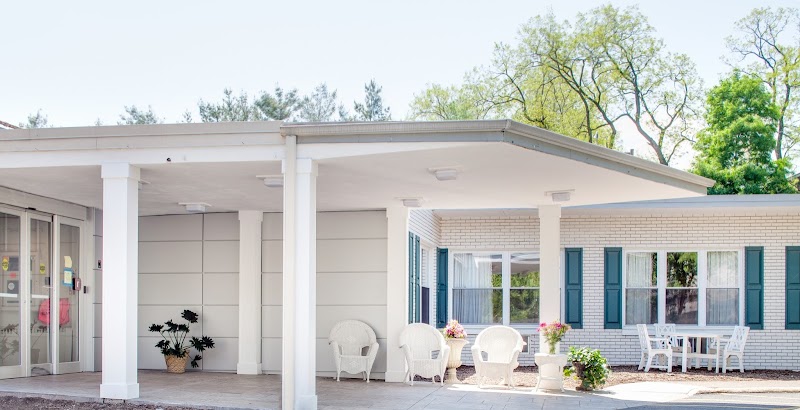
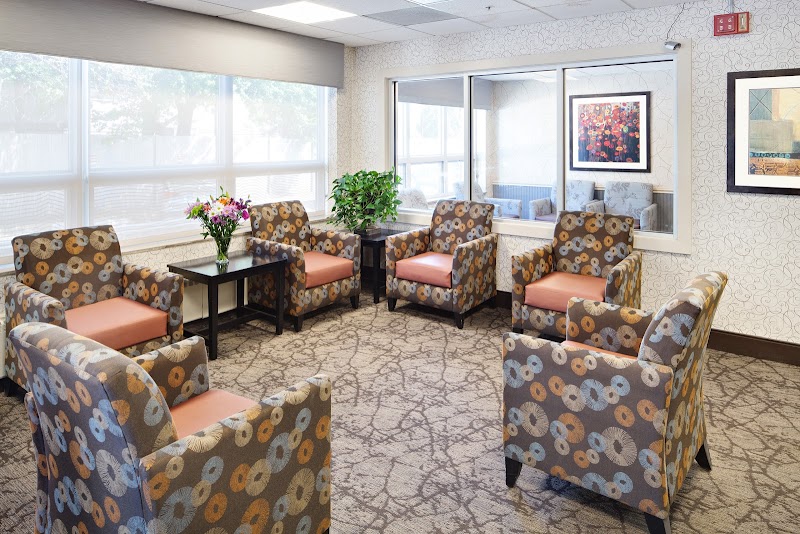

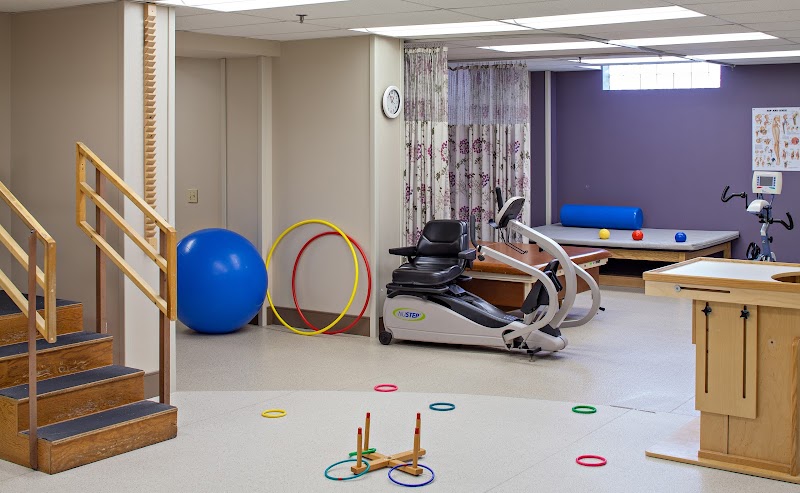
MAPLE GLEN CENTER

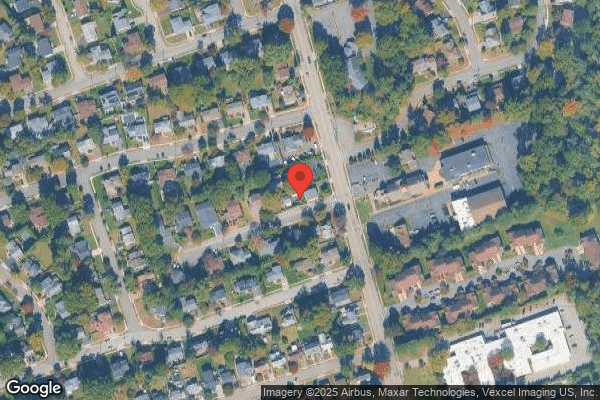
12-15 SADDLE RIVER ROAD, FAIRLAWN, NJ 07410 (201) 797-9522
For profit - Corporation 159 Beds GENESIS HEALTHCARE Data: November 2025
Trust Grade
93/100
#52 of 344 in NJ
Last Inspection: April 2024

Within standard 12-15 month inspection cycle. Federal law requires annual inspections.

Overview

Maple Glen Center in Fair Lawn, New Jersey, has received a Trust Grade of A, indicating it is an excellent facility that comes highly recommended. It ranks #52 out of 344 facilities in New Jersey, placing it in the top half of state options, and #9 out of 29 in Bergen County, meaning only eight other local facilities are rated higher. The facility's trend has been stable, with the same number of issues reported in both 2024 and 2025, and it has a strong staffing rating of 4 out of 5 stars, with a turnover rate of 27%, significantly lower than the state average. While there are no fines reported, which is a positive sign, there have been concerns regarding food safety and hand hygiene practices, as well as a recent incident involving a lack of privacy during an investigation of a serious claim. Overall, Maple Glen Center shows many strengths, but families should be aware of these specific concerns when considering the facility.

Trust Score
A
93/100
In New Jersey
#52/344
Top 15%
Safety Record
Low Risk
No red flags
Inspections
Holding Steady
3 → 3 violations
Staff Stability
✓ Good
27% annual turnover. Excellent stability, 21 points below New Jersey's 48% average. Staff who stay learn residents' needs.
Penalties
✓ Good
No fines on record. Clean compliance history, better than most New Jersey facilities.
Skilled Nurses
✓ Good
Each resident gets 52 minutes of Registered Nurse (RN) attention daily — more than average for New Jersey. RNs are trained to catch health problems early.
Violations
⚠ Watch
12 deficiencies on record. Higher than average. Multiple issues found across inspections.
★★★★★
5.0
Overall Rating
★★★★☆
4.0
Staff Levels
★★★★★
5.0
Care Quality
★★★★★
5.0
Inspection Score
Stable
2024: 3 issues
2025: 3 issues

The Good

  • 4-Star Staffing Rating · Above-average nurse staffing levels
  • 5-Star Quality Measures · Strong clinical quality outcomes
  • Low Staff Turnover (27%) · Staff stability means consistent care
  • Full Sprinkler Coverage · Fire safety systems throughout facility
  • No fines on record
  • Staff turnover is low (27%)

    21 points below New Jersey average of 48%

Facility shows strength in staffing levels, quality measures, staff retention, fire safety.

The Bad

Chain: GENESIS HEALTHCARE

Part of a multi-facility chain

Ask about local staffing decisions and management

The Ugly 12 deficiencies on record

Mar 2025 3 deficiencies
CONCERN (D) 📢 Someone Reported This

A family member, employee, or ombudsman was alarmed enough to file a formal complaint

Potential for Harm - no one hurt, but risky conditions existed

Free from Abuse/Neglect (Tag F0600)

Could have caused harm · This affected 1 resident

**NOTE- TERMS IN BRACKETS HAVE BEEN EDITED TO PROTECT CONFIDENTIALITY** Complaint #: NJ00181779 Based on interviews, record review and review of pertinent facility documents, it was determined that t...

Read full inspector narrative →
**NOTE- TERMS IN BRACKETS HAVE BEEN EDITED TO PROTECT CONFIDENTIALITY** Complaint #: NJ00181779 Based on interviews, record review and review of pertinent facility documents, it was determined that the facility failed to protect the confidentiality and privacy of a resident (Resident #6)) during an investigation of an alleged sexual incident between the Resident and a staff member that is in accordance with the facility's written abuse prohibition policy. This deficient practice was identified for 1 of 6 residents and was evidenced as follows: According to the admission Record (AR), Resident #6 was admitted to the facility with diagnoses that include but not limited to: Abnormalities of Gait and Mobility, Radiculopathy, Lumbar Region, Benign Prostatic Hyperplasia, Chronic Pancreatitis, Adjustment Disorder with Mixed Anxiety and Depressed Mood, Personality Disorder, and Functional Intestinal Disorder. According to the Resident #6's Minimum Data Set (MDS), an assessment tool that provides a comprehensive assessment of a resident's functional capabilities, dated 03/06/2025, under Section C-Cognitive Patterns showed that the Resident had a Brief Interview for Mental Status (BIMS) Score of 15 indicating Resident's cognition was intact. According to the Resident's Care Plan (CP), [Resident's name] exhibits psychosocial distress related to alleged sexual abuse with the staff member with date initiated 12/20/2024. A review of the Resident's Progress Notes (PN), dated 12/19/2024 6:08:39 PM [evening], documented and e-signed [electronically signed] by the NP [nurse practitioner] [name redacted], Notified by nursing that another resident [name] complained that this resident [Resident #6 name] was half naked with staff member (CNA) [certified nursing assistant] yesterday. No other staff member witnessed to corroborate events. Investigation ongoing. Residents without injuries and at baseline . A review of the Resident's PN dated 12/23/2024 14:25 [2:45 pm] [afternoon] Late Entry documented and e-signed by [name redacted] Social Services, showed in Note: On December 19, 2024 at around 3:20pm, patient [name redacted] reported to the nurse that she had witnessed [Resident #6 name] having sex with the CNA [Certified Nursing Assistant][name redacted]. The social services were immediately notified, and resident [name] was further interviewed. During the initial interview, the resident was having a difficult time pointing to the exact date and time of the alleged sexual interaction between Resident #6 and the CNA .she stated that that happened today at 4:30pm when she was passing by. She was redirected to today's date and time, and she stated, ohh that was probably yesterday then. She stated that she believed the sexual interaction had happened multiple times she stated, you know it's just a woman's intuition and I know something is going on.when interviewed further she stated that [Resident #6 name] was wheeling himself out of the room without his T-shirt on and [CNA name] was laying topless in his bed without any T-shirt or a [undergarment]. Resident stated she did not see an actual sexual act between them .she also verbalized she is in love with [Resident #6 name] and this action had hurt her feelings. The PN further revealed Resident #6 was interviewed and verbalized that he/she had never had any sexual interaction with CNA [name] or any other employee working at [facility name] .CNA [name] stated that on 12/19/24 she did not have any interactions with [Resident #6]. She was in the room assisting other residents [in that room]. [CNA] further stated she never had any sexual interaction with [Resident #6] or any other resident .she further stated she never laid in Resident #6's bed and she had never been undressed without a T-shirt or a [undergarment] in front of Resident #6. She [CNA] stated that on 12/19/24 at around 4-4:30pm [afternoon] she was assisting another resident in that room to get ready for a holiday party A review of the facility submitted document to the New Jersey Department of Health (NJDOH), a facility reportable event (FRE), with attached facility's Summary and Conclusion, December 19, 2024, Abuse-Alleged-sexual-staff, under Investigation and Conclusion, After completion of the interviews .the social services had notified police; and police officer completed his investigation without any suspicion of abuse .[Resident #6 name] agreed on a skin check completed by two nurses and there was no bruising, no skin tears, and no swelling observed; he denied any pain or injury .Social services had interviewed the roommates of [Resident #6] and they stated they did not witness any sexual acts between [Resident #6] and [CNA name] at any time .Based on our investigation, there is no reason to suspect any sexual abuse towards [Resident #6 name] .[Resident #6] will be visited by the social services weekly for a month to ensure that he feels comfortable and safe at [facility name] . On 03/06/2025 at 12:38 pm, the Surveyor interviewed Resident #6. Resident #6 stated that On 12/19/2024 at 3:30 pm he/she was on the telephone when the social worker (SW) [name redacted] came in my room and told me to meet her in the conference room with another resident. In the conference room was the resident (this resident was obsessed with me), the SW, Supervisor in Unit 4 (Supervisor), Unit Manager [name] in Unit 2 (UM), and a front office person [name redacted]. Resident #6 stated he/she felt disrespected that there were a lot of people in the room. He/she further stated the only people that should be there should be my UM, since the LNHA was not around at that time. The SW asked the other resident who accused me in front of other people about the incident and she was descriptive about the incident which was not true. I felt disrespected, humiliated, undignified. I felt like I was garbage even if it was false, I felt embarrassed like other people would make jokes. The SW asked me in front of the other resident and other staff members who I thought should not be involved because they had nothing to do with me. It was an embarrassment. The Resident further stated the interrogation was totally unprofessional, I felt ambushed and totally humiliated because the other resident was saying she/he saw me naked and saw the [CNA] naked and having sex numerous times with me which was ridiculous. They won't let me record in the conference room so I made notes. I still listen to jokes, they [other staff] call me names such as sex machine, love machine. I was embarrassed because the police department had to come and interviewed me and make a police report. I have no idea why SW brought these people in the conference room. I felt it was a violation of my resident rights. On 03/06/2025 at 2:36 pm, the Surveyor interviewed the LNHA regarding Resident #6 incident. LNHA stated on that day he was not in the facility and the SW was here. Surveyor informed LNHA about what Resident #6 stated regarding five people in the conference room when the resident was interrogated. The LNHA stated Resident #6 [name] had accusatory behavior against the SW that was probably the reason why SW [name] called in witnesses but I do not know why SW called so many people. The LNHA agreed to a private and confidential investigation should have been done. On 03/06/2025 at 3:32 pm, the Surveyor interviewed the SW regarding the incident. The SW stated the Assistant Director of Nursing (ADON) came to my office and told me that a resident told her that she saw CNA#1 in bed naked with Resident #6. I took [the other resident] to the conference room but I needed some witnesses, so I got the Supervisor and Unit Manager in unit 2 (UM 2). The resident wanted Resident #6 in the conference room, so I had to go to Resident #6's room and asked him/her to come to conference room. When we got to the conference room, the Supervisor has to stepped out since she had an emergency and since business manager (BM) was here, I asked her to step in the conference room. I asked them (Resident #6 and the other resident) if it is ok to have witness and both agreed with it. I explained to Resident #6 I am not comfortable talking to him alone without witness because he had accused us before. The SW stated Resident #6 was aware that the other resident would be in the conference room. The Surveyor informed SW that Resident #6's statement that he/she felt embarrassed and humiliated because the other resident recounted the alleged sexual incident, very descriptive with a lot of other people in the room. Surveyor asked SW what was the facility's policy in investigating allegations and maintaining confidentiality and residents' privacy. The SW did not provide any answer. A review of the facility's policy titled, Abuse Prohibition, with revision date of 10/24/22, .The Center will implement an abuse prohibition program .Investigation of incidents and allegations .protection of patients during investigations; and .under Federal Definitions: .Mental Abuse includes, but is not limited to humiliation, harassment, threats, and threats of .Mental abuse may occur through either verbal or non-verbal conduct which causes or has the potential to cause the patient to experience humiliation, intimidation, fear, shame, agitation, or degradation .; under Process: .8. The Center will protect patients from further harm during an investigation. 8.1 Provide the patient with a safe environment by identifying persons with whom he/she feels safe and conditions that would feel safe .9. The Administrator or designee will: 9.1 Take all necessary corrective action depending on the results of the investigation. 9.2 Report findings of all completed investigations within five (5) working days .9.2.1 All phases of the reporting process will be kept confidential. NJAC 8:39-4.1 a(5)
CONCERN (D) 📢 Someone Reported This

A family member, employee, or ombudsman was alarmed enough to file a formal complaint

Potential for Harm - no one hurt, but risky conditions existed

Deficiency F0655 (Tag F0655)

Could have caused harm · This affected 1 resident

**NOTE- TERMS IN BRACKETS HAVE BEEN EDITED TO PROTECT CONFIDENTIALITY** Complaint #: NJ00175767 Based on interviews, record review, and review of pertinent facility documents on 03/11/2025, it was det...

Read full inspector narrative →
**NOTE- TERMS IN BRACKETS HAVE BEEN EDITED TO PROTECT CONFIDENTIALITY** Complaint #: NJ00175767 Based on interviews, record review, and review of pertinent facility documents on 03/11/2025, it was determined that the facility failed to develop a baseline care plan with a focus [problem area] to address a special procedure, Pleurex Drainage (the process of removing excess fluids from spaces around the lungs) specific for a newly admitted resident (Resident #1) who had diagnosis of pleural effusion (a condition where excess fluids accumulates in spaces around the lungs). Resident #1 was not in the facility during the survey. This deficient practice was identified for 1 of 6 residents and was evidenced as follows: According to Resident #1's admission Record (AR), the resident was admitted to the facility with the following diagnoses that included but not limited to: Pleural Effusion, End Stage Renal Disease, Dependence on Renal Dialysis, and Chronic Atrial Fibrillation. According to Resident #1's Minimum Data Set (MDS) dated [DATE], an assessment tool used by facility to facilitate a resident's functional capabilities and management of care, indicated under Section C- Cognitive Skills for Decision Making indicated Resident was independent in his/her decision making. The Resident's MDS further showed under Section GG that Resident required assistance from staff for completion of his/her Activities of Daily Living (ADLs). A review of Resident #1's Order Summary Report (OSR) with admission date of 07/19/2024 revealed a verbal order entry: -Dialysis days: MWF [Monday, Wednesday, Friday] Time for Pick up:4PM Transport to [dialysis center] with order date 07/19/2024. -Drain Pleurex 2x/week [two times a week] one time a day every Tue [Tuesday], Sat [Saturday] with order date 07/19/2024 and start date of 07/20/2024. A review of the Resident's Baseline Care Plan (BCP) initiated on 07/19/2024 showed the following: -Focus [Problem/Need Area]: [Resident's name] requires assistance for ADL care in bathing, grooming, personal hygiene .related to recent hospitalization, resulting in fatigue, activity intolerance, limited mobility and weakness - Date initiated 07/19/2024. -Focus: [Resident's name] has a Full Code Status - Date initiated 07/19/2024. -Focus: [Resident's name] is at risk for falls due to impaired mobility and weakness- Date initiated: 07/19/2024. -Focus: Resident requires assistance/is dependent for mobility related to .- Date Initiated: 07/19/2024. -Focus: [Resident's name] is at risk for alterations in comfort related to occasional body aches and pleurx drainage- Date initiated: 07/19/2024. -Focus: [Resident's name] exhibits and is at risk for impaired renal function and is at risk for complications related to renal insufficiency- Date initiated: 07/19/2024. -Focus: [Resident's name] has Chronic Obstructive Pulmonary Disease (COPD) - Clinical Management - Date initiated: 07/19/2024. -Focus: [Resident's name] at risk for skin breakdown and has an actual skin breakdown related to advanced age (greater than 75 years), decreased activity, frail fragile skin on admission: Pleurx R [right], fistula to L [left] forearm, petechia]. The BCP revealed there was no care plan with a Focus/Goal/Interventions created for the Resident's need for special procedure, Pleurex Cath or Drainage, which was indicated for his/her diagnosis of Pleural Effusion. On 03/11/2025 at 2:53 pm, the Surveyor interviewed the Director of Nursing (DON). The DON stated that she knew Resident #1 had pleurex catheter and drainage two times a week on non-dialysis days. The DON further stated that the baseline care plan is created within forty-eight [48] hours a resident was admitted to the facility to identify potential/actual problems of the resident based on whatever the resident had on admissions. The Surveyor showed the DON the Resident's BCP that has not included a focus on the pleurex drainage. The DON stated that the Resident's BCP should include the pleurex catheter drainage as special procedure upon admission. The DON further stated that when a resident was admitted to the facility, the BCP was initiated by the admission nurse on that shift and that after 48 hours the BCP would proceed to comprehensive care planning within seven days. A review of the facility's policy titled, Person-Centered Care Plan, with revision and review date of 10/24/22, under its Policy: The Center must develop and implement a baseline person-centered care plan within 48 hours of admission/readmission for each patient/resident that includes the instructions needed to provide effective and person-centered care that meet professional standards of quality care . The facility's policy further stipulated under Practice Standards: 1. A baseline care plan must be developed within 48 hours and include the minimum healthcare information necessary to properly care for a patient including, but not limited to: 1.1 Initial goals based on admission orders; 1.2 physician orders . N.J.A.C 8:39-11.2 (d) N.J.A.C 8:39-27.1(a)
CONCERN (D) 📢 Someone Reported This

A family member, employee, or ombudsman was alarmed enough to file a formal complaint

Potential for Harm - no one hurt, but risky conditions existed

Deficiency F0726 (Tag F0726)

Could have caused harm · This affected 1 resident

**NOTE- TERMS IN BRACKETS HAVE BEEN EDITED TO PROTECT CONFIDENTIALITY** Complaint #: NJ00175767 Based on interview and review of pertinent facility documents, it was determined on 03/11/2025 that the ...

Read full inspector narrative →
**NOTE- TERMS IN BRACKETS HAVE BEEN EDITED TO PROTECT CONFIDENTIALITY** Complaint #: NJ00175767 Based on interview and review of pertinent facility documents, it was determined on 03/11/2025 that the facility failed to ensure that a licensed nurse had the specific competency and skills set necessary to care for a resident's needs involving a Pleurex drainage (the process of removing excess fluids from spaces around the lungs) specific for Resident #1who had a diagnosis of pleural effusion (a condition where excess fluids accumulate in spaces surrounding the lungs). Resident #1 was not in the facility during the survey. This deficient practice was identified for 1 of 6 residents and was evidenced as follows: According to Resident #1's admission Record (AR), the resident was admitted to the facility with the following diagnoses that included but not limited to: Pleural Effusion, End Stage Renal Disease, Dependence on Renal Dialysis, and Chronic Atrial Fibrillation. According to Resident #1's Minimum Data Set (MDS) dated [DATE], an assessment tool used by facility to facilitate a resident's functional capabilities and management of care, indicated under Section C- Cognitive Skills for Decision Making indicated Resident was independent in his/her decision making. The Resident's MDS further showed under Section GG that Resident required assistance from staff for completion of his/her Activities of Daily Living (ADLs). A review of Resident #1's Order Summary Report (OSR) with admission date of 07/19/2024 revealed a verbal order entry: -Dialysis days: MWF [Monday, Wednesday, Friday] Time for Pick up:4PM Transport to [dialysis center] with order date 07/19/2024. -Drain Pleurex 2x/week [two times a week] one time a day every Tue [Tuesday], Sat [Saturday] with order date 07/19/2024 and start date of 07/20/2024. A review of Resident #1's Progress Notes (PN), dated 07/20/2024 at 11:06 [morning] documented by [name] Registered Nurse (RN) #1, revealed a note: Pleurex drainage done, output was 5 ml [milliliters]. Vitals . Further review of the Resident's PN dated 07/20/2024 21:37 [9:37 pm] and documented by RN #2 revealed a Note: Pleurx drainage done on the Rt [right] Lung, output was 950ml. Latest V/S Further review of Resident's PN dated 07/21/2024 14:04 [2:04 pm] documented by RN #1 indicated Resident's wife [name] insisted on taking him/her home AMA [against medical advice]. Pt [patient] came on Friday 7/19/24 after 3pm with .and chest tube using pleurex and was on dialysis .Saturday 7/20/24 he/she was drained at 11am, with an output of 5cc .the [Resident's wife] came in the evening and asked about Resident's output. Upon telling [her] that the output was 5cc, [wife] insisted on draining him/her again, the night nurse [name] drained the [Resident's pleurex] at about 7 pm and had an output of 950ml. The [Resident's wife] came in Sunday morning .and expressed that she was unhappy the way [Resident #1] was being taken care of .and the drain was not done . A review of Resident #1's Treatment Administration Record (TAR) dated 7/1/2024 - 7/31/2024 indicated an order entry of Drain Pleurex 2x/week one time a day every Tue, Sat. The TAR further showed it was initialed by a nurse [RN #3's initials] with a numeric entry of 5cc [cubic centimeter, a unit of measurement used to measure liquids]. On 03/11/2025 at 12:41 pm [afternoon], in an interview with the Surveyor, RN #1 stated, I was the one who drained the pleurex of Resident #1. I was with RN #3 who was the charge nurse supervisor. She [RN #3] was the one who signed the TAR. We had the training on Pleurex. Our staff educator (SE) [name] gave the education I forgot when she gave the video, with a hands on demonstration, and we usually sign after the video education or demonstration. On 03/11/2025 at 3:55 pm, in an interview with the Surveyor, RN #2 stated, when I came in at 3-11 shift on that day 07/20/24, the wife was with the patient [Resident #1], the report [nurses' report] said the output was only a small amount. The family member [wife] who knew said that in the hospital it [output] was a lot less than a thousand like nine hundred always. The wife was concerned so I drained it and the output was nine hundred fifty [ml]. The resident [Resident #1] appeared ok and stated he was relieved. RN #2 further stated, the SE did a side by side education with the nurses and would let us sign. On 03/11/2025 at 12:26 pm, the Surveyor attempted to call RN #3. RN #3 did not return the call. The Surveyor was informed by the Director of Nursing (DON) that RN #3 was on a medical leave. On 03/11/2025 at 2:30 pm, the Surveyor interviewed the staff educator.The SE stated on 07/19/24 she sent an email containing the video of the pleurex drainage to all the nurses. The SE further stated she did a bedside return demonstration of the pleurex drainage with the nurses. The Surveyor reviewed the nursing department staff competencies with the staff educator. The Surveyor requested that the SE provide documentation of education and competencies regarding the care of residents specific to pleurex drainage. When asked by the Surveyor for the documentation of mentioned return demonstration with the nurses, the SE was unable to provide documentations of the nurses related to clinical competency specific to pleurex drainage procedure. On 03/11/2025 at 2:47 pm, in an interview with the Surveyor, the DON stated, we had our inserviced thru the [Health System], a set of education modules in the computer, and we do some in paper. The SE would let them sign the education and return demonstration. The DON was made aware by the Surveyor that there were no documents (nurses competencies) provided by the SE related to the aforementioned specific pleurex drainage procedure. No additional information was provided by the facility. NJAC 8:39-27.1(a)
Apr 2024 3 deficiencies
CONCERN (D)

Potential for Harm - no one hurt, but risky conditions existed

Deficiency F0658 (Tag F0658)

Could have caused harm · This affected 1 resident

Based on observation, interview, and record review, it was determined that medication orders that included parameters were not followed by the medication administering nurse. This was observed in 1 ou...

Read full inspector narrative →
Based on observation, interview, and record review, it was determined that medication orders that included parameters were not followed by the medication administering nurse. This was observed in 1 out of 3 nurses during medication administration. This was evidenced by the following: Reference: New Jersey Statutes, Annotated Title 45, Chapter 11. Nursing Board The Nurse Practice Act for the State of New Jersey states; The practice of nursing as a registered professional nurse is defined as diagnosing and treating human responses to actual or potential physical and emotional health problems, through such services as case finding, health teaching, health counseling, and provision of care supportive to or restorative of life and wellbeing, and executing medical regimens as prescribed by a licensed or otherwise legally authorized physician or dentist. 1. On 3/22/24 at 8:11 AM, the State Surveyor observed the start of medication pass with the Registered Nurse (RN#1) on the X00 unit. RN#1 prepared medication for Resident #186 who had a Physician Order (PO) for Zestril 2.5 mg daily for Hypertension with parameters to hold for Systolic Blood Pressure (SBP) less than (<) 100 and Heart Rate (HR) <55 started on 3/20/24. RN#1 proceeded to review the SBP and HR for Resident #186, that was written on a white piece of paper along with vitals for other residents on the unit. RN#1 informed the surveyor that the documented SBP was 109 and the HR was 86 for Resident #186. RN#1 informed the surveyor that the vitals for Resident #186 were taken early in the morning, in the beginning of the shift and that was not an issue. The surveyor asked that RN#1 retake the vitals, which were SBP 119 and HR 83 prior to administering the Zestril 2.5 mg to Resident #186. A review of the admission Record for Resident #186 revealed that the resident was admitted to the facility with diagnoses which included but were not limited to Heart Disease, Congestive Heart Failure (CHF), Essential Hypertension and Ventricular Tachycardia. A review of Resident #186's Comprehensive admission Minimum Data Set (MDS), an assessment tool used to facilitate the management of care, dated 3/23/24, reflected that Resident #10 had a Brief Interview for Mental Status score of 15 out of 15, indicating an intact cognition. The surveyor reviewed of Resident #186's Care Plan initiated on 3/19/2024 and titled, Resident #186 exhibits or is at risk for cardiovascular symptoms or complications related to diagnosis of Coronary Artery Disease, Cardiomyopathy, CHF, Hypertension, Chronic Obstructive Pulmonary Disease, Iron Deficiency Anemia Epilepsy, Anxiety. The documented Goal was, Resident #186's blood pressure will remain within baseline parameters for 90 days. Interventions included, Assess and monitor vital signs as ordered and report abnormalities to physicians. The surveyor reviewed the facility's Policies and Procedure titled, General Dose Preparation and Medication Administration. Documented under 4. Prior to administration of medication, Facility staff should take all measures required by Facility policy and Applicable Law, including but not limited to the following: 4.1.5 If necessary obtain vital signs. On 3/22/24 at 3:30 PM, the surveyor informed the Licensed Nursing Home Administrator and Director of Nursing of the issue. There was no additional information provided. NJAC 8:39 - 27.1
MINOR (B)

Minor Issue - procedural, no safety impact

MDS Data Transmission (Tag F0640)

Minor procedural issue · This affected multiple residents

Based on interview and record review, it was determined that the facility failed to complete the Minimum Data Set (MDS) timely for 1 of 27 residents reviewed, Resident #37 and was evidenced by the fol...

Read full inspector narrative →
Based on interview and record review, it was determined that the facility failed to complete the Minimum Data Set (MDS) timely for 1 of 27 residents reviewed, Resident #37 and was evidenced by the following: On 3/21/24 at 12:01 PM, the surveyor reviewed the facility assessment task that included the Resident's MDS Assessments. The MDS is a comprehensive tool that is federal mandated process for clinical assessment of all residents that must be completed and transmitted to the Quality Measure System. The facility must electronically transmit the MDS up to 14 days of the assessment being completed. After transmitting of the MDS, it will generate a quality measure to enable a facility to monitor the residents decline and progress. Resident #10 was observed to have an Entry MDS with an Assessment Reference Date (ARD) of 9/19/23 and was due to be completed no later than 9/26/23. The MDS was not completed until 9/28/23. According to the latest version of the Center for Medicare/Medicaid Services - Resident Assessment Instrument (RAI) 3.0 Manual (updated October 2023) page 2-18 reflected under Entry tracking record with a MDS Completion Date which stated Entry date + 7 calendar days. Further review of Resident #10's MDS assessment revealed that the resident had an admission MDS with an ARD of 9/21/23 and was due to be completed no later than 10/4/23. The MDS was not completed until 10/6/23. According to the latest version of the Center for Medicare/Medicaid Services - Resident Assessment Instrument (RAI) 3.0 Manual (updated October 2023) page 2-16 reflected under admission (Comprehensive) with a MDS Completion Date which stated admission date + 13 calendar days. On 3/25/24 at 12:15 PM, the surveyor interviewed the facility's MDS Coordinator #2 who was responsible of completing Resident #10's MDS assessments. The MDS Coordinator could not provide an answer and stated that she will get back to me for further information. On 3/25/24 at 12:57 PM, the surveyor discussed the above concern to the facility's Licensed Nursing Home Administrator and Director of Nursing. There was no further information provided. On 3/26/24 at 10:15 AM, the facility's MDS Coordinator #1 provided a copy of the Validation Report of the submitted MDS's which confirmed that Resident #37's above MDS assessments were completed late. NJAC 8:39 - 11.1
MINOR (C)

Minor Issue - procedural, no safety impact

Assessment Accuracy (Tag F0641)

Minor procedural issue · This affected most or all residents

**NOTE- TERMS IN BRACKETS HAVE BEEN EDITED TO PROTECT CONFIDENTIALITY** Based on observation, interview, and record review it was determined that the facility failed to accurately code the Minimum Dat...

Read full inspector narrative →
**NOTE- TERMS IN BRACKETS HAVE BEEN EDITED TO PROTECT CONFIDENTIALITY** Based on observation, interview, and record review it was determined that the facility failed to accurately code the Minimum Data Set (MDS), an assessment tool used to facilitate the management of care, in accordance with federal guidelines for 4 of 30 residents, Resident #32, #33, #95, and #133, reviewed for accuracy of MDS coding. This deficient practice was evidenced by the following: 1. On 3/18/24 at 11:48 AM, the surveyor observed Resident #33 resting in a reclining chair with their eyes closed. The resident was alert and did not verbally respond to the surveyor's questions. On 3/21/24 at 9:40 AM, the surveyor reviewed Resident #33's hybrid (paper and electronic) medical records. The admission Record (AR) documented the resident had diagnoses that included but were not limited to, unspecified dementia, anxiety disorder, and type 2 diabetes. A review of a Quarterly MDS assessment, dated 2/6/24, indicated the facility completed a Brief Interview for Mental Status (BIMS) with Resident #33. The resident scored a 2 out of 15 which indicated the resident had severe cognitive impairment. In Section P- Restraints and Alarms, under P0100.Physicial Restraints, Resident #33 was coded as using daily bed rails as restraints. A review of the Order Summary Report included a physician's order dated 3/4/22 which read, Two upper side rails up to bed as an enable for turning and repositioning in bed every shift. On 3/21/24 at 12:39 PM, the surveyor interviewed LPN #1 about Resident #33. LPN#1 stated residents had side rails to be used as an enabler for repositioning while in bed. LPN #1 stated the resident was bed bound and was assisted out of bed to the reclining chair daily. The surveyor went with LPN #1 in the room to observe the bed rails. Resident #33 was out of bed in the reclining chair. The resident's bed was observed with upper, quarter length bed rails. LPN# 1 stated the resident had assist side rails used as enabler for repositioning. On 3/21/24 at 1:09 PM, the surveyor interviewed MDS Coordinator #1 who stated bed rails were used to support resident mobility and restraints were not used in the facility. The surveyor reviewed with MDS coordinator #1 the quarterly MDS assessment of Resident #33. MDS coordinator #1 stated the coding was a data entry error and that restraints were not used in the facility. MDS coordinator #1 stated the MDS assessment would be corrected. 2. On 3/18/24 at 11:46 AM, the surveyor observed Resident #95 ambulating in the hallway independently with staff supervision. The resident was alert and verbally responsive. The surveyor observed the resident's bed without bed side rails. On 3/21/24 at 9:40 AM, the surveyor reviewed Resident #95's hybrid (paper and electronic) medical records. The admission Record (AR) documented the resident had diagnoses that included but were not limited to, Alzheimer's Disease. A review of a Quarterly MDS assessment, dated 2/18/24, indicated the facility completed a Brief Interview for Mental Status (BIMS) with Resident #95. The resident scored a 2 out of 15 which indicated the resident had severe cognitive impairment. In Section P- Restraints and Alarms, under P0100.Physicial Restraints, Resident #95 was coded as using daily bed rails as restraints. A review of the Order Summary Report included a physician's order dated 8/17/22 which read, Two upper side rails up to bed as an enable for turning and repositioning in bed every shift. On 3/21/24 at 12:39 PM, the surveyor interviewed LPN # 1 about Resident #95. LPN # 1 stated the resident was alert with periods of confusion and ambulated independently with supervision. The surveyor went with LPN # 1 to observe Resident #95's bed. The resident's bed had no bed rails in use. LPN# 1 explained the resident was independent with bed mobility and getting in and out of bed. On 3/21/24 at 1:09 PM, the surveyor interviewed MDS Coordinator #1 who stated bed rails were used to support resident mobility and restraints were not used in the facility. The surveyor reviewed with MDS coordinator #1 the quarterly MDS assessment of Resident #95. MDS coordinator #1 stated the coding for bed rails as a physical restraint was an error. MDS coordinator #1 stated the MDS assessment would be corrected. 4. On 3/25/24 at 9:42 AM, the surveyor reviewed the closed medical chart for Resident #133 whose discharge MDS was coded for discharge to acute hospital. The surveyor reviewed the Social Workers (SW) Discharge Plan Documentation (DPD) created on 12/20/23 by the SW for Resident #133. The DPD documented that Resident #133 was discharged home with family. Review of the 12/20/2023 Nursing Progress Note (PN), indicated that Resident #133 Picked Up (P/U) by ambulance and transported home. Review of Resident #133's Face Sheet (FS) (a one-page summary of important information about the patient) reflected that the resident was admitted to the facility on [DATE] with diagnosis that included but were not limited to fracture of unspecified part of neck of left femur, pain in left leg, and difficulty walking. Review of the A section of the 12/20/23 Discharge MDS for Resident #133 revealed that section A2105 Discharge Status documented, 04. Short-Term General Hospital. On 3/25/24 at 10:39 AM, the surveyor interviewed the MDS coordinator. The MDS coordinator stated, That resident was discharged home. I must have entered that incorrectly; it was a typo. According to the latest version of the Center for Medicare/Medicaid Services - Resident Assessment Instrument 3.0 Manual (updated October 2023) on Chapter 2-page 39 . According to the latest version of the Center for Medicare/Medicaid Services - Resident Assessment Instrument 3.0 Manual (updated October 2023). This item documents the location to which the resident is being discharged at the time of discharge. Knowing the setting to which the individual was discharged helps to inform discharge planning. Code 01, Home/Community: if the resident was discharged to a private home, apartment, board and care, assisted living facility, group home, transitional living, or adult foster care. A community residential setting is defined as any house, condominium, or apartment in the community, whether owned by the resident or another person; retirement communities; or independent housing for the elderly. Code 04, Short-Term General Hospital (acute hospital/IPPS): if the resident was discharged to a hospital that is contracted with Medicare to provide acute, inpatient care and accepts a predetermined rate as payment in full. On 3/25/24 at 10:15 AM, the Director of Nursing (DON) provided the surveyors with a facility policy titled, MDS Remote Completion with a revision date of 12/27/21. The policy stated under the purpose section, To ensure compliance with the RAI process and timely completion of MDS. On 3/25/24 at 12:57 PM, the survey team met with the Licensed Nursing Home Administrator (LNHA) and DON to discuss the MDS coding error. The DON acknowledged the errors and stated they would fix errors that were discovered. No further comment made. NJAC 8:39-11.1, 11.2(e)(1) 3. On 3/18/24 at 11:41 AM, the surveyor observed Resident #32 in the room with eyes closed. The resident was also observed with a tracheostomy in place (a medical device inserted into a surgically created opening in the trachea to facilitate breathing) in place. The surveyor also observed that Resident #32 was in the process of receiving their feed of Glucerna at a rate of 75 ml/hr via feeding pump. The surveyor reviewed Resident #32's hybrid medical records. The AR reflected that Resident #32 was admitted to the facility with medical diagnoses which included but not limited to Sepsis, Chronic Respiratory Failure, Dysphagia and Type II Diabetes Mellitus. A review of the Quarterly MDS (Q/MDS), an assessment tool used to facilitate the management of care, dated 12/28/23 reflected that the resident had a BIMS score of 03 out of 15 indicating that the resident had severely impaired cognition. A review of the December 2023 Treatment Administration Record revealed a physician's order dated 5/9/23 for Tracheostomy Care every day and evening shift for trach care which were signed by the nurses indicating that the tracheostomy care was done. Further review of the Q/MDS under Section O0110E1 for Tracheostomy Care which was coded NO. On 3/25/24 at 12:15 PM, the surveyor interviewed the facility's MDS Coordinator #2 who was responsible of completing Resident #32's MDS assessments. The MDS Coordinator could not provide an answer and stated that she will get back to me for further information. On 3/26/24 at 10:15 AM, the DON stated to the surveyor that it was coded in error.
Nov 2021 4 deficiencies
CONCERN (D)

Potential for Harm - no one hurt, but risky conditions existed

Respiratory Care (Tag F0695)

Could have caused harm · This affected 1 resident

Based on observation, interview, and record review, it was determined that the facility failed to maintain the necessary respiratory care and services of a resident who was receiving oxygen and suctio...

Read full inspector narrative →
Based on observation, interview, and record review, it was determined that the facility failed to maintain the necessary respiratory care and services of a resident who was receiving oxygen and suctioning as needed according to the standard of practice. This deficient practice was identified for 1 of 1 resident (Resident #59) and evidenced by the following: On 11/3/21 at 10:58 AM, during initial pool, the surveyor observed Resident # 59 in bed awake with a tracheostomy (an opening surgically created through the neck into the trachea). The surveyor observed an oxygen concentrator next to the bed which was not in use. The oxygen tubing and humidification bottle was dated 10/4/21. There was a suction machine on top of the resident's bedside nightstand which had approximately 150 milliliters' (ML) of fluid in the suction canister. The tubing for the suction machine was dated 10/4/21. On 11/5/21 at 11:50 AM, the surveyor observed the resident in bed awake watching television. The oxygen tubing and humidification bottle was dated 11/4/21. The suction machine canister was empty and clean, and the tubing was dated 11/4/21. On 11/8/21 at 11:00 AM, the surveyor interviewed the Registered Nurse (RN) assigned to care for the resident. The RN stated that the oxygen and suction machine tubing are changed weekly. On that same date at 1:00 PM, the Director of Nursing (DON) confirmed that the oxygen tubing should be changed weekly. A review of the resident's Face Sheet (an admission Summary) reflected that the resident was admitted to the facility with diagnoses which included but not limited to encounter for attention to tracheostomy, pneumonia due to Pseudomonas and acute respiratory failure with hypoxia. A review of the 9/20/21 Significant change in status Minimum Data Set (MDS), an assessment tool used to facilitate the management of care, revealed a Brief Interview for Mental Status (BIMS) score was 15, which indicated that the resident's cognition was intact. Further review of the MDS indicated that the resident was on oxygen therapy, suctioning and tracheostomy care. Review of the October 2021 Order Summary Report indicated a physician's order (PO) dated 8/23/21 for oxygen tubing/trach tubing change weekly label each component with date and initials. Review of the November 2021 Order Summary Report indicted a PO dated 11/8/21 for oxygen tubing/trach tubing change weekly label each component with date and initials every night shift. Further review of the November 2021 Order Summary Report indicated a PO dated 8/31/21 for trach suctioning as needed; a PO dated 8/31/21 for tracheostomy care as needed. A review of the resident's individualized comprehensive care plan for risk for respiratory complications related to stage IV laryngeal cancer, vocal cord mass, COPD and tracheostomy initiated on 8/31/21 and revised on 11/4/21 revealed an intervention to suction tracheostomy as needed and tracheostomy to trach collar with oxygen as needed at 30% 2.5 L/min [liters per minute] and dial on. All water bottle set to 80% compressor assistance as needed for SOB [shortness of breath] or PO2 [pulse oxygen saturation] less than 90 %. On 11/9/21 at 11:00 AM, the survey team met with the Licensed Nursing Home Administrator (LNHA), DON, and the Regional Nurse. There was no additional information provided. A review of the Oxygen: Nasal Cannula facility policy with a revision date of 6/1/21 provided by the DON indicated to label and date of initial set-up of nasal cannula and if a humidifier is used to label with date. The oxygen facility policy was not specific to tracheostomy to trach collar with oxygen. NJAC 8:39-11.2 (b); 27.1 (a)
CONCERN (D)

Potential for Harm - no one hurt, but risky conditions existed

Deficiency F0761 (Tag F0761)

Could have caused harm · This affected 1 resident

**NOTE- TERMS IN BRACKETS HAVE BEEN EDITED TO PROTECT CONFIDENTIALITY** Based on observation, interview, and record review, it was determined that the facility failed to properly label, store and disp...

Read full inspector narrative →
**NOTE- TERMS IN BRACKETS HAVE BEEN EDITED TO PROTECT CONFIDENTIALITY** Based on observation, interview, and record review, it was determined that the facility failed to properly label, store and dispose of medications in three (3) of five (5) medication carts and one (1) of three (3) medication refrigerators that were inspected. This deficient practice was evidenced by the following: On [DATE] at 10:25 AM, the surveyor inspected the Unit-3 low-side in the presence of a Licensed Practical Nurse (LPN#1). The surveyor observed an opened bottle of Glucose test strips that were not dated and an unopened Levemir Insulin Pen that was stored in the medication cart. The surveyor interviewed LPN #1 who stated that an opened bottle of blood glucose test strips should have been dated and an unopened Levemir insulin pen should have been stored in the medication refrigerator. On [DATE] at 10:35 AM, the surveyor inspected the Unit-3 high-side medication cart in the presence of LPN #2. The surveyor observed an opened bottle of Blood Glucose test strips that was not dated. The surveyor interviewed LPN #2 who stated that an opened bottle of Blood Glucose test strips should have been dated. On [DATE] at 11:00 AM, the surveyor inspected the Unit-4 medication room refrigerator in the presence of a Registered Nurse (RN#1). The surveyor observed a bag containing ten (10) unopened Acetylcysteine vials that was stored inside the medication refrigerator. The surveyor interviewed RN #1 who stated that unopened vials of Acetylcysteine should have been stored in the medication cart. On [DATE] at 11:10 AM, the surveyor inspected the Unit-4 low-side medication cart in the presence of RN #1. The surveyor observed an opened bottle of Blood Glucose test strips that was not dated and an opened bottle of Blood Glucose control solution with an opened date of [DATE] and was expired (90-day expiration date). The surveyor interviewed RN#1 who stated that an opened bottle of Blood Glucose test strips should have been dated and stated that an expired bottle of Blood Glucose control solution should have been removed from the medication cart. A review of the Manufacturer's Specifications for the following medications revealed the following: 1. Blood Glucose test strips once opened have an expiration day of 180-days 2. Blood Glucose Control Solution once opened have an expiration date of 90-days. 3. Unopened Levemir insulin pen should be stored in the refrigerator 4. Unopened Acetylcysteine Vial should be stored in room temperature. On [DATE] at 3:15 PM, the surveyor met with the Licensed Nursing Home Administrator and the Director of Nursing (DON) and no further information was provided by the facility. A review of the facility's policy for Storage and Expiration Dating of Medications, Biologicals, Syringes and Needles dated [DATE] that was provided by the DON indicated the following: Facility should ensure that medications and biologicals that: (1) have an expired date on the label (2) have been retained longer than recommended by manufacturer or supplier guidelines; or (3) have been contaminated or deteriorated and stored separate from other medications until destroyed or returned to the pharmacy or supplier. Once any medication or biological package is opened, facility should follow manufacturer/supplier guidelines with respect to expiration dates for opened medications. Facility staff should record the date opened on the medication container when the medication has shortened expiration date once opened. The facility staff may record the calculated expiration date based on date opened on the medication container. Facility should ensure that medications and biologicals are stored at their appropriate temperatures according to the United States Pharmacopeia guidelines for temperatures. NJAC: 8:39-29.4 (a) (h) (d)
CONCERN (D)

Potential for Harm - no one hurt, but risky conditions existed

Deficiency F0919 (Tag F0919)

Could have caused harm · This affected 1 resident

**NOTE- TERMS IN BRACKETS HAVE BEEN EDITED TO PROTECT CONFIDENTIALITY** Based on observation, record review and review of pertinent documentation, it was determined that the facility failed to respond...

Read full inspector narrative →
**NOTE- TERMS IN BRACKETS HAVE BEEN EDITED TO PROTECT CONFIDENTIALITY** Based on observation, record review and review of pertinent documentation, it was determined that the facility failed to respond to a tap bell that was rung by a resident to call staff on two survey days. The tap bells were being used by residents in Station 4 after the electronic call light system had malfunctioned. This deficient practice was observed for 1 of 10 residents (Resident #148) in the admission Operation Unit (AOU) hallway and was evidenced by the following: On 11/03/21 at 11:45 AM, during the initial tour of the facility, the surveyor toured the AOU unit in which all residents were under droplet precautions and had the doors to their rooms closed. The surveyor observed Resident #148 towards the end of the hallway, far from the nurse's station, who had opened the door and was standing in the entry of his/her room. The resident requested that the surveyor turn off the chirping sound (chair alarm) that was sounding in the room. The surveyor asked a housekeeper in the vicinity to intervene. She was able to turn off the chair alarm and another staff member assisted Resident #148 back to the wheelchair after surveyor intervention. Once the resident was seated in the wheelchair and the tab alarm was reattached to the resident's shirt, the surveyor privately interviewed Resident #148, who was not aware of the purpose of the chair alarm. The surveyor observed that the resident was not in reach of the electronic call bell, but had a tap bell on the overbed table positioned in front of the wheelchair. Resident #148 was not aware of the purpose of the tap bell. The surveyor explained to the resident that it was there to call staff. Resident #148 tapped it several times to see if it was functioning from 11:55 AM until 12:03 PM. No one came to see if Resident #148 needed assistance. On 11/04/21 at 11:09 AM, the surveyor visited Resident #148 in the resident's room. The electronic call bell was not working. Resident #148 was seated in a wheelchair in reach of the tap bell. The resident tapped the bell by ringing it. No one responded. At 11:15 AM, the surveyor observed the resident tap the bell by hitting it two times. No one came to answer the bell. At 11:22 AM, the surveyor observed Resident #148 rang the tap bell two more times. There was no response from any staff members. The surveyor reviewed the resident's medical record, which revealed the following: According to the admission Record (AR), Resident #148 was admitted recently with a diagnosis that included, but was not limited to unspecified dementia with behavioral disturbance and history of falling. Review of the resident's Minimum Data Set (MDS) dated [DATE], an assessment tool used to facilitate the management of care, revealed a Brief Interview for Mental Status (BIMS) score of 6, indicating that the resident's cognition was severely impaired. The MDS also indicated that Resident #148 required limited assistance of one person to walk in the resident's room. Review of the Interdisciplinary Care Plan initiated on 10/29/2021 addressed a risk for falls due to cognitive loss, lack of safety awareness, impaired mobility and a history of falls. Interventions included: a tab alarm while in bed and in the wheelchair, place call light within reach and to remind resident to use call light when attempting to ambulate or transfer. On 11/04/21 at 11:46 AM, in the presence of the survey team, the Director of Maintenance (DM) presented the following information: There was a breakdown of call light system that started on 11/03/2021 at approximately 10:00 AM. The DM stated that the system, Seems like an antique. It's so old. I would have to take the whole system apart to fix it. I was able to reset it. It was working fine. I kept checking it yesterday. It was working. It was not working again this morning. He stated that the Unit Manager (UM) reported the call system breakdown to him. The DM also stated that he received information of need for repairs through the on-line TELS work order system. He stated that any staff member who had a problem in their work area could access the TELS system to report it. The DM stated, Only Unit 4 has a problem right now. The DM stated that he began working at the facility recently and was not sure if checking the call lights were part of a monthly audit. He stated he would check if the monthly audits were being done or which department was responsible for such audits. On 11/05/21 at 10:00 AM, the Licensed Nursing Home Administrator (LNHA) provided the list of work orders from the TELS system from 10/01/2021 to 11/05/2021. The report included eight instances when the call system was malfunctioning besides the event on 11/3/21. The LNHA later explained that other instances when the call lights were not functioning according to the TELS report, the maintenance department was able to reset the system. On 11/08/21 at 1:10 PM, the surveyor interviewed the Registered Nurse/Unit Manager (RN/UM) from unit 4. She stated that they were monitoring the residents on unit 4 every 15 minutes. The RN/UM provided copies of the documentation for these 15 minute room checks. She stated that the staff would make sure that the residents were in reach of the tap bells during the checks. The surveyor informed the RN/UM the two days of observation that no staff responded when Resident #148 used the tap bell. The RN/UM stated that she could provide a louder bell for residents at the end of the hallway. On 11/09/21 at 11:03 AM, the LNHA stated in the presence of the survey team that the call bell system was still not working. She stated that they, Ordered a whole new system. She also stated that they ordered more hand held bells that ring more loudly than the tap bells and that they would have to reassess the residents' ability to ring that type of bell. No additional information was provided regarding the call bell system audits. The facility provided their policy regarding Call Lights, which was revised on 6/01/21 and included the following statements: Policy All Genesis HealthCare patients will have a call light or alternative communication device within their reach at all times when unattended. Staff will respond to call lights and communication devices promptly. Purpose To ensure safety and communication between staff and patients. NJAC 8:39-31.8 (c) 9
CONCERN (E)

Potential for Harm - no one hurt, but risky conditions existed

Infection Control (Tag F0880)

Could have caused harm · This affected multiple residents

**NOTE- TERMS IN BRACKETS HAVE BEEN EDITED TO PROTECT CONFIDENTIALITY** 4. On 11/3/21 at 12:23 PM, the surveyors observed the RA and the IPN assisting residents in the dining area during lunch. The ha...

Read full inspector narrative →
**NOTE- TERMS IN BRACKETS HAVE BEEN EDITED TO PROTECT CONFIDENTIALITY** 4. On 11/3/21 at 12:23 PM, the surveyors observed the RA and the IPN assisting residents in the dining area during lunch. The hand sanitizer that was mounted on the wall inside the dining area was not working. The surveyor observed the RN/UM place a hand sanitizer on top of the dining table at the end of the dining room. On that same date and time, the surveyors observed the food truck was delivered to the dining area and the food trays were distributed to residents at each table by the RA and the IPN. Both the RA and the IPN returned the empty food trays inside the food truck which contained the clean food trays. After lunch, the surveyors did not observe the RA and the IPN provided hand hygiene to residents. Also, the surveyors observed the IPN did not perform hand hygiene before and after handling food to the residents in the dining area. On 11/4/21 at 12:35 PM, the surveyor observed both the RA and the IPN in the dining area assisting residents for lunch. The RA and the IPN did not provide hand hygiene to six residents before eating. Both the RA and the IPN returned the empty food trays to the food truck with other trays with food. The surveyors observed that 5 of 6 residents were not provided hand hygiene after eating and before and exiting the dining room. On 11/5/21 at 11:53 AM, the survey team met with the IPN and informed the surveyors that it was a facility policy and protocol to perform hand hygiene by staff and residents before and after mealtime in the dining area and each resident's room. The IPN further stated that the empty trays should be placed back to the food truck together with the trays with food. The IPN indicated that there was no problem putting together trays with food that was still to be served to other residents. A review of the facility Meal Service Policy with a revision date of 6/1/21 that was provided by the IPN included, Person-centered meal service includes the delivery of a safe, sanitary, and comfortable environment for meals which accommodates patient/resident preference and personal choice. Meal service may occur in dining rooms, patient rooms, and other suitable locations that promote a homelike environment. NJAC 8:39-19.4 (a) (1) (n) (2) (5) 2. On 11/3/21 at 11:18 AM, the surveyor toured Unit 2 and interviewed the Registered Nurse/Unit Manager (RN/UM). The RN/UM informed the surveyor that Resident #69 was on Enhanced Barrier Precautions (EBP) for chronic carbapenem-resistant enterobacterales (CRE: are strains of bacteria that are resistant to an antibiotic class (carbapenem) used to treat severe infections) in the urine. She further stated that the CRE in the urine was colonized (having significant quantities of bacteria in the urine, but no clinical signs of inflammation or infection), and the resident will be on precautions for a long time. On 11/3/21 at 11:24 AM, the surveyor observed the resident laying in bed. There was a PPE box and an EBP sign outside the resident's door. The EBP sign indicated that caregivers, staff, and visitors to perform hand hygiene before and after patient contact, contact with the environment, and after removal of PPE. The EBP sign also included wearing a gown and gloves before high-contact resident care activities. A review of the resident's Face Sheet (an admission summary) reflected that the resident was admitted to the facility with diagnoses that included Diabetes, atrial fibrillation (the most common irregular heart rhythm), hypertension (elevated blood pressure), and cystostomy (surgical creation of an opening into the bladder; refer to suprapubic catheterization). A review of the 9/25/21, Significant Change Minimum Data Set (SCMDS), an assessment tool used to facilitate the management of care, indicated a Brief Interview for Mental Status (BIMS) score of 12, which reflected that the resident's cognition was moderately impaired. The SCMDS included that the resident had an indwelling catheter. A review of the personalized care plan for CRE revealed that it was created on 4/27/21 and revised on 7/27/21. The intervention for EBP was dated 5/10/21. On 11/5/21 at 11:30 AM, the surveyor observed the Housekeeper (HK) enter Resident #69's room on EBP wearing gloves and a mask. The HK did not wear a gown before entering the resident's room. The surveyor observed the HK mop the floor then exit the room without doffing (removing) gloves, and did not perform hand hygiene. On that same date and time, the surveyor observed the HK exit the resident's room wearing gloves and walk to the cleaning cart which was located in the middle of the hallway across from the resident's room. The surveyor observed the HK remove and discard the gloves into the cleaning cart. The HK then immediately opened the PPE box and removed an isolation gown without performing hand hygiene and donned the isolation gown. At that same time, the surveyor interviewed the HK before she re-entered the residents room. During the interview, the HK acknowledged and confirmed that she was inside Resident #69's room mopping urine from the floor. The HK acknowledged that she did not wear a gown before entering the resident's room. A short time later, during the interview with the HK, the Housekeeping Director (HD) arrived. The HK in the presence of the HD stated that she did not remove her gloves, did not perform hand hygiene before exiting the resident's room, and did not perform hand hygiene before donning a clean isolation gown from the PPE box. The HD told the HK that You should remove your gloves inside the room and wash your hands before going out of the room. The HD further stated that the HK should have worn an isolation gown before entering the room. At the same time, the District Manager (DM) came and was notified of the concerns. The DM informed the surveyor that the HK should not have to wear an isolation gown because she's not providing direct care to the resident. On 11/5/21 at 11:53 AM, the survey team met with the Infection Preventionist Nurse (IPN) and informed the surveyors that she's responsible for facility education with regard to infection control, return demonstration for PPE use, and hand hygiene. The IPN stated that the facility follows CDC, New Jersey Department of Health (NJDOH), and Centers for Medicare & Medicaid Services (CMS) protocol for infection control. On that same date and time, the IPN informed the surveyors that EBP and Contact Precautions included a gown, gloves, and mask when providing care to a resident when there will be potential contact with bodily fluids and secretions, and that included urine. The IPN stated that gloves are removed inside the room, hand hygiene must be performed immediately after PPE removal. She further stated that handwashing should be at least 20 seconds, lathering should be outside the stream of running water. On 11/5/21 at 1:19 PM, the survey team met with the IPN and was informed of the above concerns. The IPN stated that Resident #69 was on EBP for CRE in the urine and CRE was considered a Super MDRO (multidrug-resistant organism is a germ that is resistant to many antibiotics). She further stated that the HK should have worn an isolation gown before entering the resident's room as the HK mopped the urine on the resident's floor. The IPN stated that the HK should have removed the gloves and performed hand hygiene before leaving the resident's room and performed hand hygiene before getting the isolation gown from the PPE box. On 11/8/21 at 1:17 PM, the surveyors met with the Regional Nurse, Director of Nursing (DON), and the Licensed Nursing Home Administrator (LNHA). The LNHA informed the surveyors that the HD written explanation on 11/5/21 indicated that the HK stated that Resident #69's room was mopped because there was a smell of urine. Both the Regional Nurse and DON stated that because of the smell of urine, the HK should have worn an isolation gown before entering the resident's room. On that same date and time, the LNHA and the DON stated they had no additional information regarding the aforementioned concern with the HK. A review of the facility's Modified Enhanced Barrier Precautions Policy provided by the LNHA with a review date of 11/14/20 included, Before exiting room, remove and place PPE (e.g. gown and gloves) in a trash and perform hand hygiene upon exiting the room. A review of the facility's Personal Protective Equipment Policy that was provided by the Regional Nurse with a review date of 9/26/19 included All PPE will be removed and disposed of prior to leaving the work area. When PPE is removed, it must be placed in an appropriate designated area or containers for storage, washing, decontamination, or disposal. Staff will perform hand hygiene after removal of PPE Wash hands after removing gloves. A review of the facility's Hand Hygiene Clinical Competency Validation that was provided by the Regional Nurse with a revision date of 11/2017 included, Handwashing: 2. Turns on water at sink. 3. Wet hands and wrists thoroughly. 4. Applies cleanser or soap to hands. 5. [NAME] all surfaces of fingers and hands, including above the wrists, producing friction for at least 20 seconds 2. On 11/3/21 at 11:15 AM, the surveyor observed a Certified Nursing Aide #1 (CNA#1) inside a resident's room on Unit 2 and informed the surveyor that she was waiting for CNA #2 to help her weigh a resident. On that same date at 11:29 AM, the surveyor observed CNA #2 perform handwashing inside a resident's room. She lathered her hands for 12 seconds under a stream of running water, and donned (put on) a new pair of gloves. Afterward, CNA #2 doffed (removed) her gloves after assisting CNA #1 in weighing a resident. On that same date and time, the surveyor observed CNA #2 perform handwashing. CNA #2 did not wet her hands before applying soap and lathered hands for 10 seconds. At that time, the surveyor interviewed CNA #2 who stated she received education and in-services on hand hygiene and handwashing and that handwashing should be done for at least 20 seconds. She stated, I washed my hands too fast. I was wrong. I should have wet my hands first before applying soap.She acknowledged that the lathering of hands should done be outside of the water. On 11/5/21 at 11:53 AM, the survey team met with the IPN and was made aware of the above concerns. The IPN informed the surveyors that she was responsible for education and in-service concerning infection control of all facility staff. The IPN stated that handwashing should be done for 20 seconds and lathering hands outside the stream of running water. 3. On 11/3/21 at 12:11 PM, during the lunch observation in the main dining room, the surveyor observed the Recreation Assistant (RA) perform handwashing, use a clean paper towel to dry her hands. The RA disposed the used paper towel by directly touching the cover of the garbage container with her bare hands. On that same date and time, the RA informed the surveyors that there was no other way to dispose the used paper towel after performing handwashing but to touch the cover of the garbage container. The RA acknowledge that she contaminated her hands when she directly touched the garbage container after performing handwashing. On 11/5/21 at 11:53 AM, the survey team met with the IPN and was made aware of the above concerns. The IPN informed the surveyors that the facility had another container which was a step-on garbage container. The IPN stated that the facility acknowledged that it was an infection control concern using the garbage container that was seen by the surveyors during lunch observation on 11/3/21 that was why the facility decided to change it again to a step garbage container to prevent staff from touching the garbage container with bare hands after handwashing. On 11/5/21 at 1:28 PM, the survey team met with the LNHA, DON, and Regional Nurse and was made aware of the above concerns. On 11/9/21 at 11:00 AM, the survey team met with the LNHA and DON and there was no additional information provided. Based on observation, interview, and record review, it was determined that the facility failed to: a.) implement the appropriate infection control precautions and personal protective equipment (PPE) for a resident actively treated for MRSA (Methicillin resistant Staphylococcus aureus), an MDRO (Multidrug Resistant Organism) for 1 of 2 resident (Resident # 47); b.) ensure proper use of personal protective equipment (PPE) for 1 of 4 staff in accordance with the Centers for Disease Control and Prevention guidelines for infection control; c.)perform hand hygiene appropriately for 4 of 11 staff; and d.) ensure that residents were offered and provided hand hygiene before and after meals. This deficient practice was evidenced by the following: According to the U.S. Centers for Disease Control and Prevention (CDC) guidelines, Implementation of Personal Protective Equipment (PPE) in Nursing Homes to Prevent Spread of Novel or Targeted Multidrug-resistant Organisms (MDROs) updated 7/26/19 included, As of July 2019, Novel or Targeted MDROs are defined as: Pan-resistant organisms, Carbapenemase-producing Enterobacterales, Carbapenemase-producing Pseudomonas spp; Carbapenemase-producing Acinetobacter baumannii, and Candida auris .Enhanced Barrier Precautions expand the use of PPE beyond situations in which exposure to blood and body fluids is anticipated and refer to the use of gown and gloves during high-contact resident care activities that provide opportunities for transfer of MDROs to staff hands and clothing. Examples of high-contact resident care activities requiring gown and glove use for Enhanced Barrier Precautions include: Dressing, Bathing/showering, Transferring, Providing hygiene, Changing linens, Changing briefs or assisting with toileting, Device care or use: central line, urinary catheter, feeding tube, tracheostomy/ventilator; Wound care: any skin opening requiring a dressing. Enhanced Barrier Precautions pertain to All residents with any of the following: infection or colonization with a novel or targeted MDRO when Contact Precautions do not apply; Wounds and/or indwelling medical devices (e.g., central line, urinary catheter, feeding tube, tracheostomy/ventilator) regardless of MDRO colonization status who reside on a unit or wing where a resident known to be infected or colonized with a novel or targeted MDRO resides. According to the U.S. CDC guidelines Hand Hygiene Recommendations, Guidance for Healthcare Providers for Hand Hygiene and COVID-19, page last reviewed 1/8/2021 included, Hands should be washed with soap and water for at least 20 seconds when visibly soiled, before eating, and after using the restroom. Immediately after glove removal. It further specified the procedure for hand hygiene which included, When cleaning your hands with soap and water, wet your hands first with water, apply the amount of product recommended by the manufacturer to your hands, and rub your hands together vigorously for at least 15 seconds, covering all surfaces of the hands and fingers. Rinse your hands with water and use disposable towels to dry. Use a towel to turn off the faucet. Other entities have recommended that cleaning your hands with soap and water should take around 20 seconds. According to the U.S. CDC guidelines for Clinicians: Information about CRE (carbapenem-resistant Enterobacterales), page last reviewed 1/8/21 included, Based on information from a CDC pilot surveillance system, most CRE infections involve the urinary tract, often in people who have a urinary catheter or have urinary retention. What can clinicians do to prevent CRE transmission? . Whenever possible, place patients currently or previously colonized or infected with CRE in a private room with a bathroom and dedicate noncritical equipment to CRE patients. Wear a gown and gloves when caring for patients with CRE. Perform hand hygiene-use alcohol-based hand rub or wash hands with soap and water before and after contact with patient or their environment. 1. On 11/3/21 at 11:37 AM, the surveyor observed a red and black STOP sign on the resident's door which indicated STANDARD plus CONTACT PRECAUTIONS TO PREVENT THE SPREAD OF INFECTION. The surveyor interviewed the resident's assigned Certified Nursing Assistant (CNA) who stated that the resident has MRSA in the wound and is on contact precautions. On 11/4/21 at 10:23 AM, the surveyor observed the resident and out of bed seated in a chair inside his/her room. There was no STOP sign on the resident's door. On 11/4/21 at 11:21 AM, the surveyor interviewed the Registered Nurse/Unit Manager (RN/UM) who stated we do not write physician orders for contact precautions. The resident doesn't need to be on contact precautions for MRSA because the wound drainage is scant and closed with a dressing. The RN/UM acknowledged the resident was currently on an antibiotic for MRSA. On 11/4/21 at 11:32 AM, the surveyor conducted a telephone interview with the resident's podiatrist who stated the residents wound culture came back positive for MRSA and was started on an antibiotic because that was the only oral antibiotic sensitive. The doctor further stated, yes he/she should be on contact precautions for MRSA. On 11/4/21 at 11:58 AM, the surveyor interviewed the resident's assigned Registered Nurse (RN) who stated, the day before yesterday (11/2/21), I put the stop sign on the door but then they reviewed it and they said he did not need to be on contact precautions. The RN further stated, I only had to wear PPE when doing his/her wound care. The stop sign was down this morning when I came in. On that same date and time, the surveyor interviewed the assigned CNA for Resident # 47 who stated, No, I did not wear a gown today when I cared for him/her because they took the stop sign down. Yesterday, I wore a gown because of the infection. On 11/5/21 at 12:25 PM, the surveyor observed no STOP sign on the resident's door. On 11/5/21 at 9:50 AM, the surveyor interviewed the infection control preventionist in the Presence of the survey team. The infection control preventionist stated, if we found out of an MDRO we contact the doctor and place a stop sign for contact precautions on the door even before we know if it is contained. Then we discuss as a team if the wound can be contained. If the team decides the wound can be contained; there is no need for contact precautions. I look at the weekly wound round notes and if the wound is contained and the dressing is dry and not saturated and there is no potential for splashes then we determine on those factors and if there is a potential of the dressing opening. She further stated that the team decided that the resident's wound had minimal drainage, no potential for splashes and that the resident would not remove the dressing from the wound. Therefore, the team decided that contact precautions would not be needed for the resident. She also stated that the facility follows infection control guidelines from CDC (Centers for Disease Control and Prevention). On 11/8/21 at 1:17 PM, the survey team met with the Licensed Nursing Home Administrator (LNHA), DON, and the Regional Nurse. The Regional Nurse acknowledged and spoke to what the aforementioned infection control preventionist stated. The DON confirmed that the resident was not admitted with MRSA and the MDRO was in-house. The Regional Nurse provided the surveyor the CDC's Multidrug-resistant organisms (MDRO) Management dated 2006 and last reviewed 11/5/2015. She also stated that the facility is following this CDC guideline for MDROs. A review of the resident's Face Sheet (an admission Summary) reflected that the resident was admitted to the facility with diagnoses which included but not limited to acute osteomyelitis, right ankle and foot, complete traumatic amputation of right great toe, subsequent encounter, type 2 diabetes mellitus with diabetic peripheral angiopathy with gangrene, and peripheral vascular disease, unspecified. Review of the podiatrist consult dated 10/25/21, indicated to please check R [right] foot sx [surgical] site: still has open area + depth + light drainage not improving well since seen 10/12/21. Area has no redness, but closure is slow .culture taken. Review of the podiatrist consult dated 11/1/21 indicated to cleanse with normal saline, iodoform packing dressing and Bactrim DS every 12 hours for 14 days; follow up one week. Review of the culture and sensitivity report dated 10/30/21, indicated moderate growth for MRSA. Review of the Order Summary Report indicated a Physician's Order (PO) dated 11/1/21 for Bactrim DS 800-160 mg (Sulfamethoxazole-Trimethoprim) give one tablet by mouth every 12 hours for wound infection for 14 days. A review of the 9/16/21 admission Minimum Data Set (MDS), an assessment tool used to facilitate the management of care, revealed a Brief Interview for Mental Status (BIMS) score was 02, which indicated the resident's cognition was severely impaired. The MDS further indicated the resident required extensive assistance of one person for bed mobility, extensive assistance of two persons for transferring, extensive assistance of one person for dressing, toileting, and personal hygiene. The resident was totally dependent on staff of one person for bathing. Further review of the MDS indicated the resident had a surgical wound. A review of the resident's individualized comprehensive care plan for risk for complication of wound infection Right foot-MRSA initiated on 9/10/21 and revised on 11/3/21 revealed an intervention for Standard precautions, administer Bactrim as ordered; monitor for adverse reactions and effectiveness; notify MD [medical doctor] as needed. Further review of the resident's care plans indicated a revised care plan dated 11/3/21 for risk for further skin breakdown . 11/2/21 on antibiotic for right foot MRSA. Review of the electronic progress notes dated 11/2/21, timed at 11:36 and documented by an RN indicated Wound cx [culture] is + [positive] for MRSA. Contact precautions initiated. Review of the Interdisciplinary meeting dated 11/3/21 indicated Discuss MRSA + [positive] result of patient. Goal: to determine if patient requires Contact precautions. Team decided due to containment of area with dressing and an improved drainage to wound that we will do care with Standard Precautions. Review of the weekly skin and wound evaluation dated 11/2/21 indicated a surgical wound on the right foot, first digit (Hallux) which was present on admission. Wound measurements indicated 0.4 cm [centimeters] by 0.2 cm and depth 1.0 cm. Light serous exudate. Review of the facility's MDRO line listing indicated Resident # 47 was actively treated for MRSA. Review of the facility's Multi-Drug Resistant Organisms (MDROs) policy revised 11/15/20 provided by the infection control preventionist indicated that contact precautions will be followed when there is a high risk for transmission, such as patients who are/have highly draining wounds, with uncontainable drainage. Standard precautions will be followed as long as the source/site of infection/colonization can be contained. Review of the facility's Infectious Disease and Transmission Based Precautions with a review date of 11/15/20, indicated The appropriate types and duration of Transmission Based Precautions will be followed based on patient's condition, Centers for Disease Control and Prevention (CDC) Guideline for Isolation Precautions: Preventing Transmission of Infectious Agents in Healthcare Setting 2007- Appendix A: Type and Duration of Precautions Recommended for Selected Infections and Conditions. Review of the facility Contact Precautions policy revised 6/15/19, indicated in addition to standard precautions, contact precautions will be used for diseases transmitted by direct or indirect contact with the patient or the patient's environment. The purpose of the policy was to reduce the risk of transmission of epidemiologically important microorganisms by direct or indirect contact.
Jan 2020 2 deficiencies
CONCERN (D)

Potential for Harm - no one hurt, but risky conditions existed

Infection Control (Tag F0880)

Could have caused harm · This affected 1 resident

Based on observation, interview and record review, it was determined that the facility failed to follow appropriate infection control practices during Activities of Daily Living care for 2 of 26 resid...

Read full inspector narrative →
Based on observation, interview and record review, it was determined that the facility failed to follow appropriate infection control practices during Activities of Daily Living care for 2 of 26 residents (Resident #114 and #101) reviewed. This deficient practice was evidenced by the following: 1. On 12/30/19 at 10:12 AM, the surveyor observed the Certified Nursing Assistant (CNA #1) and the Registered Nurse (RN) transfer Resident #114 from the bed to the wheelchair with the use of a mechanical lift. After the transfer, CNA #1 put the resident's soiled bedsheets in a large plastic bag, removed her gloves, and left the room to bring the bag of soiled linen to the dirty utility room. The surveyor observed that CNA #1 did not wash her hands after she removed her gloves or after she handled the bag of soiled linen. 2. On 12/30/19 at 10:23 AM, the surveyor observed CNA #1 enter Resident #101's room. CNA #1 told the surveyor she was going to provide morning care for the resident but that she had forgotten something. CNA #1 left the room, entered another resident room, obtained deodorant, a comb, and plastic trash bags, and brought the items into Resident #101's room. CNA #1 applied soap to her hands without first rinsing them underwater and washed her hands for 5 seconds. CNA #1 then told the surveyor she was going to put on two pairs of gloves and pulled the privacy curtain closed. On that same day, at that same time, when CNA #1 completed the resident's morning care, she pulled the privacy curtain open with the same gloves she used to provide personal care to the resident. Without changing gloves, the CNA turned on the faucet, rinsed and dried the washbasin, opened the bedside table, put the basin away, and handled the resident's remote bed control all with the same soiled gloves. CNA #1 then removed her gloves, and without washing her hands left the room to obtain the mechanical lift. At that same time, two CNA's entered the room. However, CNA #1 did not wash her hands before donning gloves. The surveyor observed CNA #1 had touched the roommate's bed covers with her soiled gloves then turned the faucet on and off with the same gloves. CNA #1 then removed her gloves and donned new ones without washing her hands. Also, at that same time, the surveyor observed CNA #1 removed the soiled sheets from Resident #101's bed, put them in a large plastic bag, and placed the sheets inside the soiled utility room. The CNA returned to the resident's room and washed her hands with soap for 5 seconds. On 1/7/2020 at 10:01 AM, the surveyor interviewed CNA #1 in the presence of the Director Of Nursing (DON) regarding the breaks in infection control. CNA #1 stated that she should have washed her hands for 20 seconds after direct patient contact and before and after removing gloves, but further said, I was nervous. The surveyor asked CNA #1 why she obtained personal hygiene supplies from another resident's room for Resident #101. CNA #1 replied that she kept the supplies for all her residents in a plastic bag in one resident's room, but she acknowledged she shouldn't have done that. At that same time, the DON confirmed that CNA #1 should not have kept resident supplies in one resident room and should have practiced appropriate infection control practices. A Review of the policy on Hand Hygiene with a revision date of 11/28/17 indicated hand hygiene should be performed: Before and after patient care and after contact with the patient's environment. Hand Hygiene Process: Wet hands with warm water, apply soap to hands, rub hands vigorously outside the stream of water for 20 seconds covering all surfaces of the hands and fingers. Rinse hands with warm water and dry thoroughly with a disposable towel. Use a clean, dry, disposable towel to turn off faucet. On 1/7/2020 at 10:36 AM, the survey team met with the Administrator and the DON and discussed the above observations and concerns. On 1/8/2020 at 11:00 AM, no further information was provided by the facility. NJAC 8:39-19.4 (a)
CONCERN (F)

Potential for Harm - no one hurt, but risky conditions existed

Food Safety (Tag F0812)

Could have caused harm · This affected most or all residents

C NJ00130755 Based on observation, interview, and record review, it was determined that the facility failed to a) wash and store dishware in a sanitary manner, b) store potentially hazardous foods in ...

Read full inspector narrative →
C NJ00130755 Based on observation, interview, and record review, it was determined that the facility failed to a) wash and store dishware in a sanitary manner, b) store potentially hazardous foods in a manner to prevent food borne illness and, c) follow adequate hand washing practices. This deficient practice was evidenced by the following: On 12/30/19 at 9:21 AM, in the presence of the cook, the surveyor observed the following: 1. The cook removed his gloves and did not wash his hands. 2. Inside the deli refrigerator there was a bottle of soy sauce dated 10/26/19 with a use by date of 11/15/19. The bottle of soy sauce was empty. The cook did not know why the bottle of soy sauce was still inside the refrigerator. 3. Inside the same deli refrigerator there was a bottle of white vinegar spice, opened with no expiration date and not dated. There was approximately one-third of vinegar inside the bottle. The cook said he would discard the bottle of vinegar. 4. Inside the same deli refrigerator there was a small clear plastic container with dry spice labeled Lore and dated 8/5/19. There was no use by date. The cook said the spice belonged to an employee and should not have been inside the deli refrigerator. 5. There was a total of nine various size white dishes stored with dried brown food debris. The cook stated, I don't know what that is, but it shouldn't be on there. He could not speak to why the nine dishes were put away with dried food debris. The cook further stated that all the dishes would be rewashed. 6. The oven back splash had visible dripping and stuck on grease. The cook could not speak to when the oven back splash was cleaned or how often. 7. Inside the reach-in freezer, the surveyor observed a large pan of turkey covered with aluminum foil dated 12/12/19 with a use by date of 12/28/19. The cook stated, I don't know why the turkey is inside the freezer. It should not be in there. The cook discarded the turkey in the presence of the surveyor. 8. Inside the same reach-in freezer, the surveyor observed a lemon meringue pie dated 12/19/19 with a use by date of 12/25/19. The cook discarded the pie in the presence of the surveyor. 9. At 9:52 AM, the surveyor observed the cook remove gloves and wash his hands for nine seconds under running water. 10. The large dry storage room floor had a dark brown sticky substance underneath one area of shelves. The floor was visibly soiled inside the small dry storage room. On 1/3/2020 at 12:10 PM, the Regional Food Service Director stated, that a new employee did not follow proper dishwashing procedures and he stacked dry plates with dry food particles on them and put them away. On 1/06/2020 at 10:26 AM, the surveyor interviewed the cook who said that he was in-serviced on hand washing but he was very nervous that day and that was why he washed his hands under running water for only nine seconds. On 1/07/2020 at 9:30 AM, the administrator stated the oven back splash was cleaned daily. The administrator provided the surveyor with a blank cleaning schedule for the kitchen. She said she would find out if there were any cleaning schedule logs kept. On that same day at 10:00 AM, the Regional Food Service Director provided a hand washing, labeling and dating policy, and food storage and retention guide to the surveyor. At that same time, she said the kitchen staff were cleaning the kitchen on a daily basis but it wasn't documented. It wasn't documented because it is a standard of practice to clean the kitchen. She further stated that the blank cleaning schedule was created last week and now implemented. Review of the facility's undated hand washing policy provided by the Regional Food Service Director indicated to wash hands before putting gloves on and after removing gloves and to apply a sufficient amount of liquid soap to hands .using friction, rub hands together until a soapy lather appears. This should be done away from running water so the bubbles are not washed away .continue this for at least 20 seconds .rinse hands thoroughly under warm running water. Review of the facility's undated policy for labeling and dating food which was provided by the Regional Food Service Director indicated the following; Proper labeling and dating ensures that all foods are stored, rotated, and utilized in a First In First Out (FIFO) manner . All foods should be dated upon receipt before being stored . Leftovers must be labeled and dated with the date they are prepared and the use by date. There was no additional information provided. NJAC 8:39-17.2(g)
Understanding Severity Codes (click to expand)
Life-Threatening (Immediate Jeopardy)
J - Isolated K - Pattern L - Widespread
Actual Harm
G - Isolated H - Pattern I - Widespread
Potential for Harm
D - Isolated E - Pattern F - Widespread
No Harm (Minor)
A - Isolated B - Pattern C - Widespread

Questions to Ask on Your Visit

  • "Can I speak with families of current residents?"
  • "What's your RN coverage like on weekends and overnight?"

Our Honest Assessment

Strengths
  • • Grade A (93/100). Above average facility, better than most options in New Jersey.
  • • No major safety red flags. No abuse findings, life-threatening violations, or SFF status.
  • • No fines on record. Clean compliance history, better than most New Jersey facilities.
  • • 27% annual turnover. Excellent stability, 21 points below New Jersey's 48% average. Staff who stay learn residents' needs.
Concerns
  • • 12 deficiencies on record. Higher than average. Multiple issues found across inspections.
Bottom line: Generally positive indicators. Standard due diligence and a personal visit recommended.

About This Facility

What is Maple Glen Center's CMS Rating?

CMS assigns MAPLE GLEN CENTER an overall rating of 5 out of 5 stars, which is considered much above average nationally. Within New Jersey, this rating places the facility higher than 99% of the state's 100 nursing homes. This rating reflects solid performance across the metrics CMS uses to evaluate nursing home quality.

How is Maple Glen Center Staffed?

CMS rates MAPLE GLEN CENTER's staffing level at 4 out of 5 stars, which is above average compared to other nursing homes. Staff turnover is 27%, compared to the New Jersey average of 46%. This relatively stable workforce can support continuity of care.

What Have Inspectors Found at Maple Glen Center?

State health inspectors documented 12 deficiencies at MAPLE GLEN CENTER during 2020 to 2025. These included: 10 with potential for harm and 2 minor or isolated issues.

Who Owns and Operates Maple Glen Center?

MAPLE GLEN CENTER is owned by a for-profit company. For-profit facilities operate as businesses with obligations to shareholders or private owners. The facility is operated by GENESIS HEALTHCARE, a chain that manages multiple nursing homes. With 159 certified beds and approximately 126 residents (about 79% occupancy), it is a mid-sized facility located in FAIRLAWN, New Jersey.

How Does Maple Glen Center Compare to Other New Jersey Nursing Homes?

Compared to the 100 nursing homes in New Jersey, MAPLE GLEN CENTER's overall rating (5 stars) is above the state average of 3.3, staff turnover (27%) is significantly lower than the state average of 46%, and health inspection rating (5 stars) is much above the national benchmark.

What Should Families Ask When Visiting Maple Glen Center?

Based on this facility's data, families visiting should ask: "Can I visit during a mealtime to observe dining assistance and food quality?" "How do you handle medical emergencies, and what is your hospital transfer rate?" "Can I speak with family members of current residents about their experience?"

Is Maple Glen Center Safe?

Based on CMS inspection data, MAPLE GLEN CENTER has a clean safety record: no substantiated abuse findings (meaning no confirmed cases of resident harm), no Immediate Jeopardy citations (the most serious violation level indicating risk of serious injury or death), and is not on the Special Focus Facility watch list (a federal program monitoring the lowest-performing 1% of nursing homes). The facility has a 5-star overall rating and ranks #1 of 100 nursing homes in New Jersey. While no facility is perfect, families should still ask about staff-to-resident ratios and recent inspection results during their visit.

Do Nurses at Maple Glen Center Stick Around?

Staff at MAPLE GLEN CENTER tend to stick around. With a turnover rate of 27%, the facility is 19 percentage points below the New Jersey average of 46%. Low turnover is a positive sign. It means caregivers have time to learn each resident's needs, medications, and personal preferences. Consistent staff also notice subtle changes in a resident's condition more quickly. Registered Nurse turnover is also low at 27%, meaning experienced RNs are available to handle complex medical needs.

Was Maple Glen Center Ever Fined?

MAPLE GLEN CENTER has no federal fines on record. CMS issues fines when nursing homes fail to meet care standards or don't correct problems found during inspections. The absence of fines suggests the facility has either maintained compliance or corrected any issues before penalties were assessed. This is a positive indicator, though families should still review recent inspection reports for the full picture.

Is Maple Glen Center on Any Federal Watch List?

MAPLE GLEN CENTER is not on any federal watch list. The most significant is the Special Focus Facility (SFF) program, which identifies the bottom 1% of nursing homes nationally based on persistent, serious quality problems. Not being on this list means the facility has avoided the pattern of deficiencies that triggers enhanced federal oversight. This is a positive indicator, though families should still review the facility's inspection history directly.