ROYAL SUITES HEALTH CARE & REHABILITATION
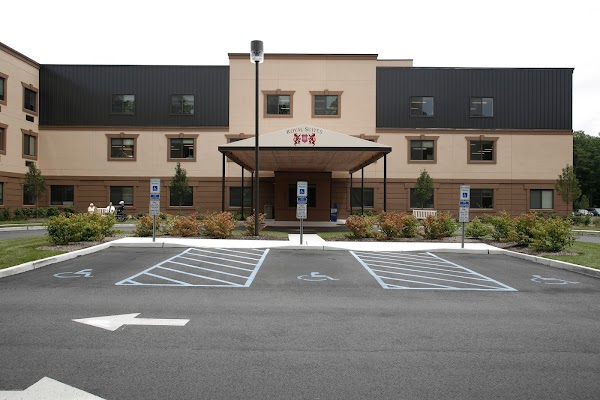
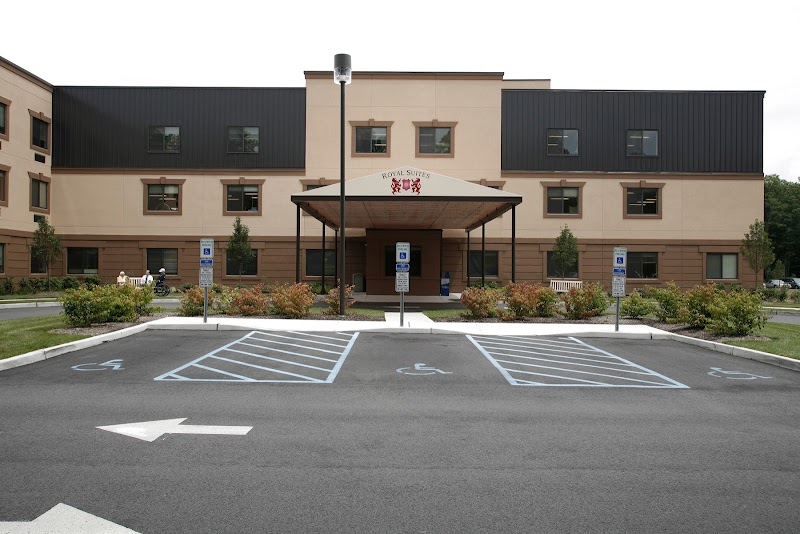
214 WEST JIMMIE LEEDS ROAD, GALLOWAY TOWNSHIP, NJ 08205 (609) 748-9900
For profit - Limited Liability company 186 Beds OCEAN HEALTHCARE Data: November 2025
Trust Grade
63/100
#224 of 344 in NJ
Last Inspection: May 2025

Inspected within the last 6 months. Data reflects current conditions.

Overview

Royal Suites Health Care & Rehabilitation in Galloway Township, New Jersey, has a Trust Grade of C+, indicating it is slightly above average but not exceptional. It ranks #224 out of 344 facilities in the state, placing it in the bottom half, and #7 out of 10 in Atlantic County, meaning only three local options are better. The facility's trend is stable, with the same number of issues reported in both 2023 and 2025. Staffing is a concern here, rated 2 out of 5 stars, but with a turnover rate of 38%, which is better than the state average. However, the facility has less RN coverage than 84% of New Jersey facilities, which could affect care quality. In recent inspector findings, staff reported being assigned too many residents, causing some residents to miss showers on certain days. There were also significant sanitation issues in the kitchen, where food items were not stored properly, risking contamination. Overall, while the home has some strengths, such as decent turnover rates, it also has notable weaknesses in staffing and sanitation practices that families should consider.

Trust Score
C+
63/100
In New Jersey
#224/344
Bottom 35%
Safety Record
Low Risk
No red flags
Inspections
Holding Steady
7 → 7 violations
Staff Stability
○ Average
38% turnover. Near New Jersey's 48% average. Typical for the industry.
Penalties
⚠ Watch
$3,250 in fines. Higher than 92% of New Jersey facilities. Major compliance failures.
Skilled Nurses
⚠ Watch
Each resident gets only 17 minutes of Registered Nurse (RN) attention daily — below average for New Jersey. Fewer RN minutes means fewer trained eyes watching for problems.
Violations
⚠ Watch
15 deficiencies on record. Higher than average. Multiple issues found across inspections.
★★★☆☆
3.0
Overall Rating
★★☆☆☆
2.0
Staff Levels
★★★★☆
4.0
Care Quality
★★★☆☆
3.0
Inspection Score
Stable
2023: 7 issues
2025: 7 issues

The Good

  • 4-Star Quality Measures · Strong clinical quality outcomes
  • Full Sprinkler Coverage · Fire safety systems throughout facility
  • No fines on record
  • Staff turnover below average (38%)

    10 points below New Jersey average of 48%

Facility shows strength in quality measures, fire safety.

The Bad

3-Star Overall Rating

Near New Jersey average (3.3)

Meets federal standards, typical of most facilities

Staff Turnover: 38%

Near New Jersey avg (46%)

Typical for the industry

Federal Fines: $3,250

Below median ($33,413)

Minor penalties assessed

Chain: OCEAN HEALTHCARE

Part of a multi-facility chain

Ask about local staffing decisions and management

The Ugly 15 deficiencies on record

May 2025 7 deficiencies
CONCERN (D) 📢 Someone Reported This

A family member, employee, or ombudsman was alarmed enough to file a formal complaint

Potential for Harm - no one hurt, but risky conditions existed

ADL Care (Tag F0677)

Could have caused harm · This affected 1 resident

Based on observation, record review, and review of other pertinent facility documents, it was determined that the facility failed to ensure that appropriate incontinence care was provided to residents...

Read full inspector narrative →
Based on observation, record review, and review of other pertinent facility documents, it was determined that the facility failed to ensure that appropriate incontinence care was provided to residents who needed assistance for toileting hygiene. This deficient practice was identified for 2 of 2 residents (Resident #23 and Resident #68) reviewed for activities of daily living (ADLs), and was evidenced by the following: 1.) On 5/19/2025 at 9:33 AM, during the incontinence tour of the memory care unit, the surveyor accompanied by Licensed Practical Nurse/ Unit Manager (LPN/UM) #2, noted a strong malodorous smell of urine from the hallway outside the room of Resident #68 and Resident #23. Upon entering the room, blackish marks were observed on the floor. The surveyor observed Resident #68 awake but not verbally engaging and lying on mattress without bed linen. The LPN/ UM #2 exposed the resident's incontinence brief which was saturated at the back. The surveyor asked the LPN/ UM if the resident would be changed. The LPN/ UM #2 stated that the brief was wet but not soaked. A strong malodorous urine odor was noted from the resident and from the mattress. On 5/19/2025 at 10:30 AM, a review of Resident #68's electronic medical record revealed the following: A review of the admission Record reflected the resident had diagnoses that included but not limited to dementia, syphilis and history of falling. A review of the most current comprehensive Minimum Data Set (MDS), an assessment tool dated 3/29/2025 revealed that the resident had short-term and long-term memory problem. The MDS also revealed that the resident needed clean-up assistance for toileting hygiene and was occasionally incontinent of bladder. A review of Resident #68's comprehensive care plan revised on 10/7/2024 reflected a focus for ADLs that specified the resident required maximal assistance with most ADLs and that the resident had increased risk for decline related to history of cerebrovascular accident (stroke) with residual hemiplegia (weakness), impaired cognition, episodes of dizziness and history of cataracts. The interventions revised on 5/19/2023 included the following: Assist with toileting as needed by providing verbal cues for hand placement on grab bar. Instruct resident to hold grab bar with one hand while managing clothes with the other hand. Another intervention for toileting hygiene initiated on 11/6/2023 specified that the resident was independent. This intervention was not updated to reflect the current MDS assessment. On 5/20/2025 at 9:30 AM, the surveyor reviewed the Certified Nursing Assistant (CNA) assignments in the memory care unit from the previous day with CNA #2. CNA #2 confirmed each of the 6 CNAs on the unit were assigned to 12 residents the previous day. CNA #2 was asked by surveyor how often they change the residents. CNA #2 stated that they first change the residents at the start of the shift then after activities. On 5/20/2025 at 10:51 AM, the surveyor, together with Surveyor #2 interviewed by telephone the Certified Nursing Assistant (CNA) #1 who was assigned to Resident #68's care at the time of observation. The CNA stated that they usually worked on another floor but were given assignments on the memory care unit because of a call out. The CNA was asked by surveyor how many residents were assigned to them on 7:00 AM to 3:00 AM shift and they confirmed that they were assigned to 12 residents in the memory care unit. The CNA stated that when he/ she first came to the resident's room in the morning, the resident was sleepy, so he/ she did not change the resident. The CNA also stated that before 11:00 AM, he/ she changed the resident together with the supervisor. 2.) On 5/19/2025 at 9:38 AM, the surveyor accompanied by LPN/ UM #1, observed Resident #23 sitting on bed. The mattress of the bed had no bed linen. The resident stated that he/ she was wet and were waiting for someone to help him/ her. The LPN/ UM #1 pulled down the resident's dark blue pants to expose the incontinence brief, but the resident was observed not wearing any incontinence brief under the pants. A strong malodorous smell of urine from the resident and the mattress was noted. The resident's pants were noted by surveyor to be darker in color along the crotch area. The surveyor asked the resident if he/ she was wet and the resident stated that he/ she was wet. The surveyor asked the LPN/ UM #1 if the resident was wet, and the LPN/ UM #1 confirmed that the pants were wet. On 5/20/2025 at 9:21 AM, the surveyor observed Resident #23 sitting in bed. An incontinence brief was visible from the waistline under black pants. The resident stated that the nurses' aides check on them but do not return to help them. The resident stated that they help their own selves because nobody did anything except bring their meals. On 5/20/2025 at 9:30 AM, the surveyor reviewed the CNA assignments in the memory care unit from the previous day with CNA #2. CNA #2 confirmed each of the 6 CNAs on the unit were assigned to 12 residents the previous day. CNA #2 was asked by surveyor how often they change the residents. CNA #2 stated that they first change the residents at the start of the shift then after activities. On 5/20/2025 at 10:38 AM, a review of Resident #23's electronic medical record revealed the following: A review of the admission Record reflected the resident had diagnoses that included but not limited to spondylosis (degeneration of the spine) and history of falls. A review of the most current comprehensive Minimum Data Set (MDS), an assessment tool dated 4/16/2025 revealed that the resident had intact cognition and needed maximal assistance for toileting hygiene and moderate assistance for bed to chair transfer, toilet transfer, and lower body dressing. The MDS indicated that the resident was always incontinent of bladder. A review of Resident #23's comprehensive care plan initiated on 10/18/2024 reflected a focus for ADLs that specified the resident required moderate to maximal assistance with most ADLs and remained at risk for functional decline related to recent hospitalization for falls and diagnoses of spondylosis and congestive heart failure. The interventions included maximal assistance for toileting hygiene initiated on 10/30/2024, moderate assistance for lower body dressing initiated on 10/30/2024, and assistance as needed with toileting and transfers initiated on 10/18/2024. For toileting hygiene, it was specified that the helper lifts or holds trunk or limbs and provides more than half the effort. On 5/20/2025 at 10:51 AM, the surveyor, together with Surveyor #2 interviewed by telephone the Certified Nursing Assistant (CNA) #1 who was assigned to Resident #23's care at the time of observation. The CNA stated that they usually worked on another floor but were given assignments on the memory care unit because of a call out. The CNA was asked by surveyor how many residents were assigned to them on 7:00 AM to 3:00 AM shift and they confirmed that they were assigned to 12 residents in the memory care unit. The CNA stated that the resident goes to the bathroom by himself/ herself. The surveyor asked the CNA if resident was able to change his/ her pants. The CNA answered that the resident needed assistance in changing pants. The CNA also stated that they changed the resident at 11:00 AM with the help of the supervisor. On 5/21/2025 at 10:09 AM, during an interview with the survey team, the Director of Nursing (DON) stated that the CNAs check the residents every 2 hours or more frequently as needed. The surveyor asked the DON where they document that the residents are checked every 2 hours. The DON stated that they do not document them. On 5/21/2025 at 9:32 AM, the Licensed Nursing Home Administrator (LNHA) stated to the surveyor that the facility did not have a policy for ADLs. N.J.A.C. 8:39 - 27.1 (a); 27.2 (d) (h) (j)
CONCERN (D) 📢 Someone Reported This

A family member, employee, or ombudsman was alarmed enough to file a formal complaint

Potential for Harm - no one hurt, but risky conditions existed

Pressure Ulcer Prevention (Tag F0686)

Could have caused harm · This affected 1 resident

**NOTE- TERMS IN BRACKETS HAVE BEEN EDITED TO PROTECT CONFIDENTIALITY** Complaint # NJ183027 Based on interview, record review, and review of pertinent facility documents, it was determined that the f...

Read full inspector narrative →
**NOTE- TERMS IN BRACKETS HAVE BEEN EDITED TO PROTECT CONFIDENTIALITY** Complaint # NJ183027 Based on interview, record review, and review of pertinent facility documents, it was determined that the facility failed to; a.) consistently follow a physician order for treatment of facility-acquired pressure ulcer, b.) ensure pressure-relieving interventions were consistently implemented for facility-acquired pressure ulcer, and c.) weekly skin assessment was consistently completed. This deficient practice was identified for 1 of 5 residents (Resident #288) reviewed for pressure ulcers and was evidenced by the following: A review of the admission Record indicated that Resident #288 was admitted to the facility with diagnoses that included but not limited to; adult failure to thrive, anorexia (an eating disorder characterized by restricted food intake leading to weight loss) and gastrostomy (G-tube) (a surgically made opening in the stomach for introduction of food) status. A review of the admission Minimum Data Set (MDS), an assessment tool dated 1/17/2025, revealed that Resident #288 had severe cognitive impairment and required maximal to dependent assistance with activities of daily living (ADLs). The MDS indicated that the resident was dependent (the resident's helper does all the effort) for bed mobility. The MDS also revealed that the resident had no unhealed pressure ulcer/ injury but was at risk for developing pressure ulcers/ injuries upon admission. A review of the admission assessment dated [DATE] revealed that the resident's skin was intact with Braden score (a tool used to predict risk for developing pressure ulcer) of 12 which indicated high risk for developing pressure ulcer. A review of the wound care assessment performed on 1/30/2025 revealed the resident developed pressure ulcer on the right iliac crest (hip area) that measured 1 centimeter (cm) x 1 cm x 0.2 cm. A review of the Order Summary Report (OSR) reflected a physician order for wound care to right posterior hip with normal saline solution, skin prep to peri wound, Medi-honey (medical grade honey), and bordered gauze every day shift daily started on 1/31/2025 and discontinued on 2/7/2025. The OSR included a physician order for checking air mattress setting and function every shift for pressure prevention started on 1/30/2025 and discontinued on 3/3/2025. The OSR also included a physician order for weekly skin assessment every evening shift every Wednesday started on 1/15/2025 and discontinued on 3/3/2025. A review of the Treatment Administration Record (TAR) for February 2025 revealed that Resident #288 did not receive wound treatments to right posterior hip on 2/3/2025 and 2/7/2025. The TAR also revealed that a skin assessment was not completed on 2/5/2025. The TAR further reflected that air mattress check for setting and function were not completed on 2/3/2025, 2/5/2025, 2/6/2025, 2/10/2025, 2/15/2025, 2/16/2025, 2/18/2025, and 2/20/2025. A review of the facility-provided Point of Care report (POC) (an electronic documentation of tasks for front-line clinical staff) from 1/11/2025 until the resident's discharge date on 3/3/2025, revealed multiple blanks on all shifts for interventions/ tasks on bed mobility. A review of Resident #288's Care Plan Report (CPR) (a report that included all initiated, cancelled, and revised focus, goals, and interventions) reflected a focus initiated on 1/10/2025 and revised on 3/17/2025 for risk of skin breakdown related to immobility, preference of resident and family to keep their fingernails long, and behavior of digging at themselves and engaging in fecal smearing. The goal was for skin to remain intact and free from signs of breakdown. Interventions included the use of pressure reduction mattress, daily skin monitoring during care by certified nursing assistants (CNAs), weekly skin assessment by nurse, consult and follow up with dietician regarding nutritional status, assist to reposition for comfort, monitor lower extremities during care, encourage use of side rails for bed mobility, avoid exposure to hot water, use mild cleansers, apply lotion to keep skin moist, and physical/ occupational therapy screen and evaluation. The care plan was not updated to reflect that the resident had developed actual skin impairment on the right iliac crest on 1/30/2025. A review of facility-provided investigation titled Facility-Acquired Pressure Ulcer Investigation Tool dated 2/7/2025 for Resident #288's pressure ulcer on the right iliac crest revealed the following preventative care that was provided: Consistent turning and positioning, use of pressure reduction surface, good skin care, clean and dry bed linens, and maintenance of adequate nutrition and hydration as possible. A determination was made that the pressure ulcer was unavoidable due to the risk factors that included diagnosis of failure-to-thrive, respiratory complications, immobility caused by gastrostomy status where the head of bed had to be kept elevated most of the day, and respiratory complications. The investigation also revealed that the resident was incontinent and had behaviors of scratching at themselves, refusing nursing to cut their fingernails and smeared feces on themselves. Wound on the right iliac crest was healed on 2/7/2025. During an interview with the survey team on 5/21/2025 at 10:09 AM, the Director of Nursing (DON) stated that a blank in the administration record meant the order was not done. A review of the facility-provided policy titled Skin Management policy and Procedure reviewed in March 2024 included under Procedure: 1.) . An interim care plan will be completed as indicated on the assessment. On readmission, if a skin integrity care plan is already in place, the nurse will update the current care plan as needed. 4.) Weekly, nurses will conduct skin assessments on all residents and document the findings on the Treatment Administration Record (TAR). N.J.A.C. 8:39 - 27.1 (e)
CONCERN (D)

Potential for Harm - no one hurt, but risky conditions existed

Incontinence Care (Tag F0690)

Could have caused harm · This affected 1 resident

**NOTE- TERMS IN BRACKETS HAVE BEEN EDITED TO PROTECT CONFIDENTIALITY** Based on observation, interview and review of pertinent facility documents, it was determined that the facility failed to consis...

Read full inspector narrative →
**NOTE- TERMS IN BRACKETS HAVE BEEN EDITED TO PROTECT CONFIDENTIALITY** Based on observation, interview and review of pertinent facility documents, it was determined that the facility failed to consistently provide urinary catheter care, as physician ordered for 1 of 5 residents (Resident #98) for urinary catheter. This deficient practice was evidenced by the following: On 05/13/2025 at 10:51 AM during the initial tour of the facility the surveyor observed Resident #98 seated in their wheelchair in their room. Resident #98 was observed to be wearing shorts and had a urinary catheter bag exposed by being attached to upper right thigh. A Privacy cover was observed on the urinary leg bag. According to the admission Record Resident #98 was admitted to the facility with the following but not limited to diagnoses: Spina bifida (a type of neural tube defect that can lead to various health problems including bowel and bladder control), presence of urogenital implants, neuromuscular dysfunction of bladder, methicillin resistant staphylococcus aureus infection (an infection caused by a type of staph bacteria that's become resistant to many of the antibiotics used) and personal history of urinary tract infection. A review of the comprehensive Resident Assessment Minimum Data Set (MDS), an assessment tool, dated 3/31/2025 revealed Resident #98 had a Brief Interview for Mental Status score of 15, which indicated Resident #98 had intact cognition. Section GG revealed Resident #98 was independent in toileting hygiene. Section H of the MDS indicated Resident #98 had an indwelling catheter and section I indicated an active diagnosis of neurogenic bladder (a urinary condition in people who lack bladder control due to a brain, spinal cord or nerve problem). According to the Order Summary Report Resident #98 had the following physician orders, active as of 05/23/2025: Cleanse Supra pubic catheter site with NSS (normal saline solution) apply CDD (clean dry dressing) once daily and PRN (as needed) soiling. Must be kept clean and dry. everyday shift. Order date: 5/19/2025. (Note: Resident was out of facility from 5/15/2025 and readmitted on [DATE] secondary to oral surgery. Original order date was 4/7/2025, as documented in resident notes). Irrigate Supra pubic catheter with 100cc (cubic centimeters) sterile water daily and PRN occlusion one time a day. Order date: 05/19/2025. (Note: Resident was out of facility from 5/15/2025 and readmitted on [DATE] secondary to oral surgery. Original order date was 4/7/2025, as documented in resident notes). A review of Resident #98's comprehensive care plan revealed the following care plan Focus: Risk for UTI (urinary tract symptom) r/t (related to) suprapubic cath use r/t neurogenic bladder and urinary retention, recurrent uti's. Date initiated: 10/09/2023 Revision on: 04/07/2025. In addition, the following were observed under Interventions/Tasks: Irrigate Supra pubic catheter with 100cc sterile water daily and PRN occlusion Date initiated: 04/07/2025. Provide cath care every shift as ordered & PRN. Monitor for decrease in output. Date initiated: 10/09/2023. On 05/20/2025 at 01:37 PM the surveyor reviewed the 5/1/2025-5/31/2025 Treatment Administration Record (TAR) for Resident #98. The TAR revealed that Resident #98 did not receive the following physician ordered treatments, as indicated by blanks on the TAR. On 5/3/2025 and 5/8/2025 the facility failed to cleanse Resident #98's supra pubic catheter site with NSS apply CDD once daily and PRN (as needed) soiling. Must be kept clean and dry. everyday shift. In addition, on the same dates the facility failed to irrigate Resident #98's supra pubic catheter with 100cc (cubic centimeters) sterile water daily and PRN occlusion one time a day as ordered by the physician. On 05/20/2025 at 01:57 PM the surveyor conducted an interview with the Licensed Practical Nurse/Unit Manager (LPN/UM #1) assigned to Resident #98's floor. The surveyor asked LPN/UM #1 what blanks without codes on a TAR indicate. LPN/UM #1 told the surveyor that blanks on the TAR without coding would indicate that the nurse may have not completed the assigned task. The surveyor asked LPN/UM #1 why providing catheter care and irrigating the supra pubic catheter was important for Resident #98. LPN/UM #1 replied that it was important to maintain infection control. The surveyor then asked LPN/UM #1 if Resident #98 had had a history of recurrent urinary tract infections. LPN/UM #1 told the surveyor that she could not argue the fact that the resident has a history of recurrent urinary tract infections. LPN/UM #1 further told the surveyor that according to the EMR (electronic medical record) there were agency nurses assigned to Resident #98 on those dates because she did not recognize the initials. On 05/21/2025 at 10:17 AM the surveyor met with facility administration. The surveyor asked the facility Director of Nursing (DON) what blanks represented on the TAR for Resident #98. The DON told the surveyor that blanks indicate that the order was not carried out. The surveyor asked the DON why catheter care was important, and the DON responded that it was important to provide catheter care daily to prevent infection. The surveyor reviewed the facility policy titled Urinary Catheters, reviewed 2/4/2025. The following was revealed under Suprapubic Catheters: This catheter must be placed by a urologist during an outpatient surgery or office procedure. The insertion site (opening on the abdomen) and the tube must be cleansed daily with soap and water and covered with dry gauze. N.J.A.C. 8:39-27.1(a)
CONCERN (D)

Potential for Harm - no one hurt, but risky conditions existed

Pharmacy Services (Tag F0755)

Could have caused harm · This affected 1 resident

Based on observation, interview, and review of pertinent facility documents, it was determined the facility failed to accurately document the administration of two controlled medications for 1 sampled...

Read full inspector narrative →
Based on observation, interview, and review of pertinent facility documents, it was determined the facility failed to accurately document the administration of two controlled medications for 1 sampled resident (Resident #338) identified upon inspection of 1 of 4 medication carts (mid-west cart, second floor). The evidence was as follows: On 5/20/25 at 1:22 PM, the surveyor in the presence of the Licensed Practical Nurse (LPN) inspected the second-floor mid-west medication cart. A review of the narcotics located in the secured and locked narcotic box and reconciled to the controlled drug administration record, a declining inventory sheet, revealed Resident #338's tramadol 50 milligram (mg) tablet, a medication used to relieve pain, did not match. The blister pack contained 29 tablets, and the declining inventory sheet indicated there should be 30 tablets remaining. A further review of the controlled drug administration records revealed Resident #338's alprazolam 0.25 mg tablet, a medication used for anxiety, also did not match. The blister pack contained 10 tablets, and the declining inventory sheet indicated there should be 11 tablets remaining. The LPN stated she had administered the medications earlier and she had forgotten to sign the declining inventory sheet. The LPN further stated the declining inventory sheet should be signed when the medication was removed from the packaging. On 5/21/25 at 10:08 AM, the surveyor interviewed the Director of Nursing (DON), who stated as soon as medication was removed from the packaging the nurse must sign the declination sheet. This was the process to ensure accountability and ensure the medication counts were correct. A review of the facility Administering Medications policy updated 9/6/24 did not address the process used when administering controlled medications to residents. NJAC 8:39- 29.2(d), 29.7(c)
CONCERN (D)

Potential for Harm - no one hurt, but risky conditions existed

Deficiency F0760 (Tag F0760)

Could have caused harm · This affected 1 resident

Based on interview, review of medical record and other pertinent facility documents, it was determined that the facility failed to: a.) ensure blood work was obtained in accordance with physician orde...

Read full inspector narrative →
Based on interview, review of medical record and other pertinent facility documents, it was determined that the facility failed to: a.) ensure blood work was obtained in accordance with physician orders for the monitoring of an anticoagulant medication, Warfarin, (a medication used to prevent or treat blood clots in the heart and blood vessels) and insulin medication, Humalog and b.) ensure that high-risk medications categorized as having Narrow Therapeutic Index (NTI) (medication in which the therapeutic dose is close to the toxic dose) were administered in accordance with the physician's orders. This deficient practice was identified for 1 of 1 resident (Resident #183) reviewed for medication management and was evidenced by the following: On 5/15/2025 at 8:18 AM, the surveyor observed Resident #183 in bed awake. The resident stated that they were going to have dialysis that morning. On 5/15/2025 at 9:30 AM, the surveyor reviewed Resident #183's electronic medical records (EMR) which revealed the following: A review of the admission Record revealed that Resident #183 had diagnoses which included but were not limited to dependence on renal dialysis, diabetes mellitus, and intracardiac thrombosis (formation of blood clot inside the heart's chambers or vessels). A review of the most current comprehensive Minimum Data Set (MDS), an assessment tool used to facilitate management of care, dated 4/17/2025, revealed that the resident had intact cognition, and that the resident was dependent on hemodialysis. A review of the resident's individualized comprehensive care plan (ICCP) included a focus area date initiated on 4/21/2025, that the resident had hypoglycemia/ hyperglycemia related to diabetes mellitus. Interventions included but were not limited to; monitor blood sugar via finger sticks as ordered and administer insulin coverage as ordered. Another focus area with date initiated on 4/21/2025, included the resident's use of anticoagulant medication related to deep vein thrombosis (DVT). Interventions included but were not limited to; administer medication as ordered, monitor labs as ordered, report results for dosage adjustments as needed/ordered, and to monitor for increased bruising after lab draws. A review of the Order Summary Report (OSR) active as of 5/14/2025 at 12:03 PM, indicated the resident had a physician order (PO) dated 5/4/2025 to draw the resident's blood to test for Prothrombin Time (PT)/ International Normalized Ratio (INR) (blood test used to detect how fast blood clots and the results are used to adjust the dose of the anticoagulant, Warfarin) every Monday and Thursday at 8:00 PM. A further review of the OSR revealed a PO dated 5/5/2025 for the anticoagulant medication Warfarin Sodium 4 mg to be administered daily at 9:00 PM for DVT. A review of the Medication Administration Record (MAR) for the month of May 2025 did not reflect documented evidence that the orders for PT/ INR blood work and administration of warfarin 4 mg were signed administered on 5/12/2025. Another review of the OSR active as of 5/14/2025 at 12:03 PM, indicated a physician order dated 5/5/2025 to administer Humalog insulin the dose of which was dependent on the blood sugar level result. The PO specified to administer Humalog insulin subcutaneously before meals and at bedtime every Monday, Wednesday, Friday, and Sunday following this sliding scale for the corresponding blood sugar levels: if 1 - 150 = 0 unit; 151 - 200 = 2 units; 201 - 250 = 4 units; 251 - 300 = 6 units; 301 - 350 = 8 units; 351 - 400 = 10 units; over 400, call the physician. A review of the May 2025 MAR did not reflect documented evidence that the orders for blood sugar level determination and administration of Humalog insulin were signed administered on 5/12/2025. A review of the nurse's notes dated 5/12/2025 at 3:53 PM, indicated that the resident was awake, alert and oriented to person and place and tolerated taking their medications whole. There were no signs and symptoms of distress. A further review of the nurse's notes did not reflect any documentation to correspond with why the orders for PT/ INR and blood sugar level were not signed administered on 5/12/2025. The nurse's notes did not also reflect any documentation to correspond with why the orders for Warfarin and Humalog insulin were not signed administered on 5/12/2025. A review of the Nurse Practitioner's (NP) visit notes on 5/12/2025 at 11:58 AM reflected the resident was awake, alert and oriented to person with no acute distress. The NP included the following in her plans; continue Warfarin, decrease to 4 mg, trend INR Mondays and Thursdays. The NP also included in her plans the following: continue Lispro (generic for brand name Humalog) sliding scale and trend blood sugar. The resident was visited and examined by the Nurse Practitioner on 5/15/2025 at 10:12 AM when the resident was described as awake, alert and oriented to person with no acute distress. The NP included the following in her plans: continue Warfarin, decrease to 4 mg, trend INR Mondays and Thursdays. The NP also included in her plans the following: continue Lispro sliding scale and trend blood sugar. On 5/20/2025 at 12:45 PM, the Director of Nursing (DON) was asked by the surveyor to find out why there were orders not signed administered on 5/12/2025. The DON stated that the nurse on 3-11 shift was from [name redacted] agency. The DON also stated that they looked at the facility camera and saw the nurse administering medications to residents. On 5/21/2025 at 10:09 AM, during an interview with the survey team, the DON was asked what does a 'blank' in the MAR/ TAR (Treatment Administration Record) mean. The DON stated that it means it was not done. On 5/21/2025 at 11:36 AM, in the presence of the survey team, the surveyor asked if there was a medication error report/ investigation completed for Resident #183. The DON stated that there was no medication error report/ investigation/ notifications completed because they were not aware that the resident had medications, and lab works not signed administered until the surveyor pointed it to them. A review of the facility-provided policy date reviewed on 2/4/2025 titled Medication Error Policy included under Definitions: This includes, . or omission of a dose. Under Procedure 2.) The resident's physician and responsible party must be notified of the error as appropriate. 4.) The DON or designee will investigate all medication errors to determine root cause and implement corrective actions. N.J.A.C. 8:39 - 29.2 (d)
CONCERN (D)

Potential for Harm - no one hurt, but risky conditions existed

Infection Control (Tag F0880)

Could have caused harm · This affected 1 resident

**NOTE- TERMS IN BRACKETS HAVE BEEN EDITED TO PROTECT CONFIDENTIALITY** Based on observation, interview, review of medical records, and other facility documents, it was determined that the facility fa...

Read full inspector narrative →
**NOTE- TERMS IN BRACKETS HAVE BEEN EDITED TO PROTECT CONFIDENTIALITY** Based on observation, interview, review of medical records, and other facility documents, it was determined that the facility failed to use appropriate infection control practices to prevent the potential spread of infection in accordance with the Center for Disease Control and Prevention (CDC) guidelines and standards of clinical practice, specifically by a.) failing to follow appropriate disinfection of a shared resident care equipment during medication administration observation, b.) failing to wear protective gown while doing incontinence check with a resident on Enhanced Barrier Precautions (EBP), and c.) failing to place a resident with indwelling foley catheter on EBP. This deficient practice was identified for 3 out of 3 unsampled residents during medication administration observation and 2 of 3 residents reviewed for EBP (Resident #110 and Resident #122). The deficient practice was evidenced by the following: 1. On 5/14/2025 at 8:08 AM, during the medication administration observation with Licensed Practical Nurse (LPN) #2, the surveyor observed LPN #2 take the blood pressure (BP) of the first unsampled resident on the right arm. The BP read as 98/66. The LPN #2 removed the BP cuff from the right arm and transferred it to the left arm. The BP reading from the left arm was 101/62. The LPN #2 proceeded to administer the resident's medications but held the antihypertensive medication. The LPN #2 did not sanitize the BP cuff prior to and after using it on the resident. On 5/14/2025 at 8:23 AM, the surveyor observed LPN #2 take the BP of the second unsampled resident on the left arm. The BP read as 101/48. The LPN #2 removed the BP cuff from the left arm and transferred it to the right arm. The BP reading from the right arm was 96/39. The LPN #2 proceeded to administer the resident's medications but held the antihypertensive medication. The LPN #2 did not sanitize the BP cuff prior to and after using it on the resident. On 5/14/2025 at 8:38 AM, the surveyor the surveyor observed LPN #2 take the BP of the third unsampled resident on the left arm. The BP read as 124/66. The LPN #2 proceeded to administer the resident's medications. The LPN #2 did not sanitize the BP cuff prior to and after using it on the resident. On 5/14/2025 at 9:03 AM, the surveyor asked LPN #2 if they should have sanitized the BP cuff in between resident use. The LPN #2 stated that they forgot to do it. On 5/20/2025 at 11:25 AM, during an interview with the survey team, the Registered Nurse/ Infection Preventionist (RN/ IP) stated that shared medical equipment like the BP cuff should be sanitize before and after use. On 5/21/2025 at 10:09 AM, during an interview with the survey team, the Director of Nursing (DON) stated that BP cuff for general use by different residents should be sanitized before and after use to avoid cross contamination. 2. On 5/19/2025 at 9:46 AM, during an incontinence tour of the floor with Licensed Practical Nurse/ Unit Manager (LPN/ UM) #2, the surveyor observed an EBP sign outside Resident #110's room. The LPN/ UM #2 sanitized their hands, wore a pair of new gloves but did not wear a gown. The LPN/ UM #2 repositioned the resident and pulled down their pants. The LPN/ UM #2 exposed the resident's incontinence brief which was noted to be dry. Upon closing of the incontinence brief and pulling up their pants, the LPN/ UM# stated that the resident had a wound at the back. On 5/19/2025 at 9:58 AM, the surveyor pointed to the LPN/ UM #2 the EBP sign outside the resident's room and asked them if they should have worn a gown. The LPN/ UM #2 stated that no they should not have worn a gown because they did not do care. On 5/19/2025 at 10:30 AM, a review of Resident #110's electronic medical record (EMR) revealed the following: A review of the admission Record reflected the resident had diagnoses which included but not limited to dementia and cellulitis (a bacterial infection of the deeper layer of the skin). A review of the most recent comprehensive Minimum Data Set (MDS), an assessment tool dated 4/11/2025, indicated the resident had short-term and long-term memory problem. The MDS further revealed the resident had an unhealed unstageable pressure ulcer/ injury. A review of the Order Summary Report (OSR) active as of 5/20/2025 at 9:42 AM, revealed a physician order for maintenance of EBP related to sacral wound every shift for disrupting potential spread of MDROs (multidrug-resistant organisms) started on 3/6/2025. A review of the comprehensive care plan initiated on 3/6/2025 revealed a focus for requiring EBP while performing high-contact care activities related to higher risk of acquiring or spreading an MDRO because of chronic wounds. On 5/20/2025 at 11:25 AM, during an interview with the survey team, the RN/ IP stated that repositioning and exposing incontinence brief are considered high-contact activities and require EBP for a resident with wounds. On 5/21/2025 at 10:09 AM, during an interview with the survey team, the DON stated that repositioning residents and exposing and closing incontinence briefs are considered high-contact activities. The DON further stated that high-contact activities for residents with wounds require EBP or wearing gloves and gown for staff. 3. On 5/19/2025 at 10:24 AM, the surveyor, during an incontinence tour of the floor with LPN/ UM #3 observed Resident #122 in bed. The resident had a foley catheter visibly connected to a urine drainage bag enclosed in a privacy bag anchored along the bed frame. There was no signage inside or outside the resident's room for EBP. The surveyor asked LPN/ UM #3 should there be a signage outside the resident's room for EBP. The LPN/ UM #3 stated that the resident was readmitted last Friday, and they were still working on the new admissions. The surveyor asked the LPN/ UM #3 who was responsible for making sure the admission process is complete on weekends. The LPN/ UM #3 stated that the weekend supervisors are responsible for weekend admissions and it was hard because they are responsible for the whole building. On 5/19/2025 at 10:39 AM, a review of Resident #122's EMR revealed the following: A review of the admission Record reflected the resident had diagnoses that included but not limited to pressure ulcer of the sacral region, neuromuscular dysfunction of the bladder, and encounter for fitting and adjustment of urinary device. A review of the most recent comprehensive MDS dated [DATE], indicated the resident had an intact cognition. Further review of the MDS revealed the resident had an indwelling urinary catheter and 2 unhealed stage 3 pressure ulcers. A review of the OSR active as of 5/20/2025 at 9:39 AM, revealed a physician order for maintenance of EBP related to foley catheter and PICC (peripherally inserted central catheter) line every shift for disrupting potential spread of MDROs was not ordered on readmission until 5/19/2025. A review of the comprehensive care plan initiated on 5/19/2025 revealed a focus for requiring EBP while performing high-contact care activities related to higher risk of acquiring or spreading an MDRO because of indwelling medical device, urinary catheter. On 5/20/2025 at 11:25 AM, during an interview with the survey team, the RN/ IP stated that residents with foley catheters, wounds, and internal medical device would require EBP for staff during care or high-contact activities. A review of the facility-provided policy titled Cleaning, Disinfecting and Sterilization of Patient Care Equipment date reviewed on 2/4/2025 included under Procedures A. Patient Care Equipment managed by departments must be wiped with a facility-approved detergent/ disinfectant after each patient use .These items include but not limited to: .Blood pressure cuffs . A review of the facility-provided policy date revised on 2/4/2025 titled Enhanced Barrier Precautions (EBP) included under Policy: The facility will use Enhanced Barrier Precautions (EBP) during high-contact care activities for residents with chronic wounds or indwelling medical devices, regardless of their multidrug-resistant organism (MDRO) status. Under Definitions: Indwelling Medical Devices - Examples of indwelling medical devices include .PICCs, indwelling urinary catheters N.J.A.C. 8:39 - 19.4 (a)
CONCERN (E)

Potential for Harm - no one hurt, but risky conditions existed

Food Safety (Tag F0812)

Could have caused harm · This affected multiple residents

Based on observation, interview, and review of other facility documentation, it was determined that the facility failed to handle potentially hazardous foods and maintain sanitation in a safe and cons...

Read full inspector narrative →
Based on observation, interview, and review of other facility documentation, it was determined that the facility failed to handle potentially hazardous foods and maintain sanitation in a safe and consistent manner designed to prevent food borne illness. This deficient practice was evidenced by the following: On 05/13/2025 from 09:39 to 10:18 AM the surveyor, accompanied by the facility Food Service Director (FSD), observed the following in the kitchen: 1. The surveyor and FSD were in the dairy kitchen. The dairy drying rack adjacent to the dairy manual wash sink had two (2) stacks of dessert plates that were cleaned and sanitized. The dessert plates were not stored in the inverted position or covered. The dessert plates were exposed to contamination. On an adjacent rack, a stack of eight (8) monkey bowls were not stored inverted or covered and were exposed to contamination. Adjacent to the monkey bowls a glass pitcher used to serve beverages was not inverted and was exposed to contamination. The FSD removed the items from the rack to be rewashed and sanitized. 2. A storage rack to the left of the entry door to the meat kitchen had a stack of three (3) muffin style pans on a middle shelf/rack were identified as being clean and sanitized by the FSD and were not inverted or covered and were exposed to contamination. On the lower rack of the storage rack a stack of four (4) metal mixing bowls were not inverted or covered and were exposed to contamination. The FSD removed the items from the storage rack to be cleaned and sanitized. 3. The meat pot/pan storage rack had all dishware stored in the inverted position. The surveyor proceeded to lift one of two 1/6th pans (a pan used in foodservice to hold food) that were stacked on top of each other on a middle shelf. The surveyor removed the top 1/6th pan and observed what appeared to be a clear, watery substance inside the pan. The surveyor then placed their hand on the bottom pan, and it was wet to the touch, a process called wet nesting (the practice of storing wet dishes or pots and pans on top of each other or in close proximity without allowing them to air dry completely This creates an environment conducive to bacterial growth.) In addition, the top 1/6th pan had an unidentified yellow substance on the interior of the pan. The FSD removed the 1/6th pans, and they were sent to the dish room to be washed and sanitized. On the same rack a stack of five 1/3 pans were visibly soiled and when the surveyor removed the top 1/3 pan from the stack, the 1/3 pan below was visibly wet with a clear, watery substance. A process called wet nesting. The 1/3 pans were removed to be washed and sanitized. The surveyor reviewed the facility provided policy titled Cleaning Dishes - Manual Dishwashing, revised 2022. The following was revealed under Procedure: Sink 3: Sanitize 4. Allow dishes to air dry. Invert dishes in a single layer to air dry. Check all dishes to be sure they are clean and dry prior to storing. The surveyor reviewed the facility provided policy titled Cleaning of Dish Machine, undated. The following was revealed under Procedure: 9. Allow the dishes to air dry on the dish racks. Do not dry with towels. 10. Remove the dishes, inspect for cleanliness and dryness, and put them away if clean (be sure your hands are clean). N.J.A.C 18:39-17.2(g)
Mar 2023 7 deficiencies
CONCERN (D)

Potential for Harm - no one hurt, but risky conditions existed

Resident Rights (Tag F0550)

Could have caused harm · This affected 1 resident

**NOTE- TERMS IN BRACKETS HAVE BEEN EDITED TO PROTECT CONFIDENTIALITY** During an interview with Surveyor #2 on 3/1/2023 at 11:54 AM, UM/LPN #1 when asked when was the last time the 3rd floounit serve...

Read full inspector narrative →
**NOTE- TERMS IN BRACKETS HAVE BEEN EDITED TO PROTECT CONFIDENTIALITY** During an interview with Surveyor #2 on 3/1/2023 at 11:54 AM, UM/LPN #1 when asked when was the last time the 3rd floounit served residents from the steam table in the dining room. UM/LPN #1 responded, We haven't served from the steam table since before COVID. It's been about three years. On 3/1/2023 at 12:00 PM Surveyor #2 observed that all residents were not served their meal at the same time while seated at a common table. On 3/3/2023 at 12:09 PM, Surveyor #2 observed the lunch meal served on the third floor dining room. Not all residents seated at the same dining table were served at the same time. One table had 3 resident's waiting for there meal while the fourth resident ate their lunch. During an interview with the Surveyor #1 and Surveyor #2 on 3/7/2023 at 9:13 AM, UM/LPN #1 said we use the dining room for lunch and dinner. UM/LPN # 1 said whoever is out of bed and wants to come to dining room can. It can vary meal to meal and day to day. UM/LPN #1 confirmed the facility is not using steam tables for meal service and that everything come from kitchen on trays. When asked how long had the facility been using the dining room for meals, UM/LPN #1 said they had had covid on unit in December and once cleared residents came back to dining room. We have 4 carts and we are still using the COVID model of tray delivery where everybody ate in their rooms. There is no seating chart, we all know where everyone sits when they come in here. When asked by Surveyor #2 about communication between the unit and kitchen, UM/LPN #1 said there is no communication between 3rd floor and kitchen as to who is eating in dining room and who eats in their rooms. I am aware that everybody should be served at the table at the same time. UM/LPN #1 said yes I am aware that everyone at the same table should be served at the same time. She went on to say this is not currently happening due to way system is set up with carts. On same date at 9:25 AM, UM/LPN #1 said, correct there is no conversation with kitchen to come up with system for residents who eat in the dining room and their trays and carts. On 3/7/2023 at 1:07 PM, Surveyor #2 observed 9 of 17 residents observed in 3rd floor dining room served on trays. 8 of the 17 had not received their meal tray yet. During an interview with the survey team on 3/7/2023 at 2:09 PM, the director of Nursing (DON) said When we were serving from the steam table prior to COVID and everybody would be served at the table at the same time. Our facility administrator has talked with me about getting the new facility Food Service Director to re-start the meal service on the floors and serving from the steam table again. NJAC 8:39-4.1(a)(12) Based on observation, interview and record review, it was determined that the facility failed to ensure that a.) the residents' were transported from one area of the unit to another area in a dignified manner for 1 of 34 sampled residents (Resident # 13) and 2 unsampled residents, who were observed to be pulled backwards in the Geri chair and b.) failed to ensure that the residents' dining experience was provided in a manner to promote the dignity and respect of the residents, who were not served their meal at the same time while seated at the same table during dining observations . This deficient practice was evidenced by the following: 1. On 2/28/2023 at 12:10 PM, Surveyor #1 observed an unsampled resident to be pulled backwards in a Geri chair by Unit Manager Licensed Practical Nurse (UM/LPN #1) through the dining room out to the hallway. On 2/28/2023 at 12:15 PM, Surveyor #1 observed a second unsampled resident to be pulled backwards out of the dining room to the hallway in her Geri chair by a unit LPN. On 3/1/2023 at 9:15 AM, UM/LPN #1 was observed by Surveyor #1 to pull resident #13 backwards in his/her Geri chair down the hallway to activities room. During an interview with Surveyor #1 on 3/3/2023 at 10:49 AM, UM/LPN #1 said she remembered resident sitting in front of nursing station and confirmed she took resident to activity room. When asked how she took resident to the room she replied in his/her Geri chair. When asked again how did you take the resident and UM/LPN #1 said she pulled the resident backwards in the Geri chair. When asked by Surveyor #1 if that was an appropriate way to transport a resident, UM/LPN #1 replied no it is not appropriate. Residents should be taken forward in the chair. Surveyor #1 also reviewed the other two instances on 2/28/2023 at 12:13 PM and 12:15 PM, that both UM/LPN #1 and unit LPN were observed to pull two unsampled residents backwards in their Geri chairs out of the dining room. On 3/7/2023 at 2:10 PM, Surveyor #1 asked the facility Director of Nursing (DON) what her expectations were regarding transporting residents in a Geri Chair. The DON replied they (the residents) should be pushed to wherever they are going and not pulled backwards. Surveyor #1 reviewed the observation made on 2/28/2023 and 3/1/2023 on the 3rd floor. 2. On 2/28/2023 at 11:42 AM, during the lunch meal observation by Surveyor #1 in 3rd floor dining room [ROOM NUMBER] residents were seated in the dining room. At that time, four (4) residents were served their meal. On 2/28/2023 at 12:04 PM, the 2nd meal truck arrived to the unit and eight (8) more residents in the dining room received their meal. On 2/28/2023 at 12:21 PM, the 3rd meal truck arrived to the unit and the remaining residents in dining room received their meal. On 3/1/2023 at 11:35 AM, Surveyor #1 observed the lunch meal in the 3rd floor dining room. The 1st meal truck arrived to the unit and 17 residents were in the dining room. Staff were passing trays and three (3) residents were sitting together at a table. 1 resident received his/her meal and was actively eating. Another resident (sampled Resident # 82) at the table spoke to staff and staff was heard to say we have to wait for your (meal) truck to come. At that time, four (4) of the residents in the dining room received their trays at that time. On 3/1/2023 at 11:42 AM, Resident #82 was told again you have to wait until your lunch tray comes. Staff did offer him/her pudding to which he/she said no. On 3/1/2023 at 11:49 AM, staff provided Resident #82 with graham crackers. [NAME] crackers were also given to the 3rd resident seated at the table who was not served their meal. On 3/1/2023 at 11:57 AM, the 2nd meal truck arrived to the unit and six (6) more residents received their meal. The 3rd resident received his/her meal however Resident #82 did not. Staff told resident it will come up on next truck. At another table there were three residents were observed. Sampled Resident # 133 received his/her meal and was actively eating. The other 2 unsampled residents did not receive their meal at that time. At a 3rd table two (2) residents were seated. One resident received their meal and the other did not. The resident who was not eating was watching the other resident eat. On 3/1/2023 at 12:20 PM, a 3rd meal truck arrived to unit and the remaining residents received their meals.
CONCERN (D)

Potential for Harm - no one hurt, but risky conditions existed

Safe Environment (Tag F0584)

Could have caused harm · This affected 1 resident

On 2/28/2023 at 12:14 PM, Surveyor #2 observed the 3rd Floor Dining Room. All residents were served lunch meal on trays. Food was not removed and placed directly on the table. During an interview wit...

Read full inspector narrative →
On 2/28/2023 at 12:14 PM, Surveyor #2 observed the 3rd Floor Dining Room. All residents were served lunch meal on trays. Food was not removed and placed directly on the table. During an interview with Surveyor #2 on 3/1/2023 at 11:54 AM, UM/LPN #1 when asked when was the last time the 3rd floor unit served residents from the steam table in the dining room. UM/LPN #1 responded, We haven't served from the steam table since before COVID. It's been about three years. On 3/3/2023 at 12:09 PM, Surveyor #2 observed the lunch meal served in the third floor dining room. All residents who were observed eating (17 residents) had their meals provided to them on trays. Food was not removed from the trays and placed directly on the table. During an interview with Surveyor #1 and Surveyor #2 on 3/7/2023 at 9:13 AM, Unit Manager/Licensed Practical Nurse (UM/LPN #1) said we use the dining room for lunch and dinner. On the same dated at 9:22 AM, UM/LPN #1 said when we serve the trays we set everything up, open everything and let them (residents) know what is there. There is no reason why we are not removing the food from the trays. When asked if the staff should be removing the meal from trays she responded Yes staff should be removing plates and from tray and putting them on the table. I feel I am aware we should be doing that but this is the way we have been doing it. 03/07/23 01:07 PM 9 of 17 residents observed in 3rd floor dining room served on trays. 8 of the 17 had not received their meal tray yet. NJAC 8:39-4.1(a)(12) Based on observation and interview, it was determined that the facility failed to create a homelike environment during dining by not removing food from serving trays. The deficient practice was observed on the third-floor dining room and evidenced by the following: On 2/28/2023 at 11:42 AM, Surveyor #1 began a lunch meal observation in the third-floor dining room with the arrival of the first meal truck. Residents were served their meals on trays. Food was not removed from the trays and placed directly on the table during meal service. On 2/28/2023 at 12:04 PM, the second meal truck arrived to the unit dining room and the residents were served their meals on trays. Food was not removed from the tray and placed directly on the table during meal service. On 2/28/2023 at 12:21 PM, the third meal truck arrived to unit dining room and the residents were served their meals on tray. Food was not removed from the tray and placed directly on the table. On 3/1/2023 at 11:35 AM, lunch meal observation began with the arrival of the first meal truck to the unit dining room. Residents were served their meals on trays. Food was not removed from the trays and placed directly on the table. On 3/1/2023 at 11:57 AM, the second truck arrived to unit dining room. Residents were served their meal on trays. Food was not removed from the tray and placed directly on the table. On 3/1/2023 at 12:20 PM, the third meal truck arrived to the unit dining room. Residents were served their meals on trays. Food was not removed from the trays and placed directly on the table.
CONCERN (D)

Potential for Harm - no one hurt, but risky conditions existed

Respiratory Care (Tag F0695)

Could have caused harm · This affected 1 resident

Based on observation, interview, record review and review of other facility documentation, it was determined the facility failed to provide necessary care of respiratory equipment consistent with prof...

Read full inspector narrative →
Based on observation, interview, record review and review of other facility documentation, it was determined the facility failed to provide necessary care of respiratory equipment consistent with professional standards by a.) not replacing and properly storing a nasal cannula (tube used to deliver oxygen to a person) in accordance with facility policy and b.) not properly storing a nebulizer (small machine that turns liquid medicine into a mist that can be easily inhaled) according to facility policy. The deficient practice was identified for 2 of 3 residents (Resident #145 and #36) reviewed for Oxygen. The deficient practice was evidenced by the following: A.) On 2/28/2023 at 9:55 AM, during the initial tour of the facility, Surveyor #1 observed Resident #145 in bed in his/her room. Surveyor #1 observed an oxygen concentrator (machine that produces oxygen) adjacent to the bed with a nasal cannula connected to it. The nasal cannula was draped over the concentrator. Surveyor #1 observed a piece of tape attached to the nasal cannula revealing the date, 2/5. On 3/1/2023 at 8:42 AM, Surveyor #1 observed Resident #145 in bed in his/her room. Surveyor #1 observed the nasal cannula draped over the concentrator. Surveyor #1 observed the piece of tape attached to the nasal cannula revealing the date, 2/5. A review of Resident #145's most current Minimum Data Set (an assessment tool) dated 1/29/2023, revealed Resident #145 received oxygen while a resident in the facility. A review of Resident #145's electronic medical record (EMR) revealed a physician's order for O2 (oxygen) to keep saturation greater than 93% every shift for hypoxia (low levels of oxygen in the blood). A review of Resident #145's Care Plan revealed a care plan for the potential for impaired respiratory status related to a diagnosis of COVID, pneumonia (potentially deadly respiratory diseases) and complaints of shortness of breath. The Care Plan further revealed an intervention to provide oxygen as ordered with an initiated date of 1/27/2023. A review of Resident #145's O2 Stats Summary located in the EMR revealed documentation that Resident #145's oxygen saturation (amount of oxygen bound to blood cells) was measured while he/she received oxygen via nasal cannula on the following dates and times: 3/2/2023 at 06:54 (6:19 AM) 3/1/2023 at 18:34 (6:34 PM) 3/1/2023 at 06:19 (6:19 AM) 2/28/2023 at 19:09 (7:09 PM) 2/28/2023 at 17:10 (5:09 PM) On 3/7/2023 at 1:50 PM during an interview with Surveyor #1, the Director of Nursing (DON) replied, In a bag when asked how a nasal cannula connected to a concentrator should be stored. The DON further replied that a nasal cannula should be replaced weekly or as needed. Lastly, the DON said she would expect it (nasal cannula) to be stored according to policy when Surveyor #1 asked if the resident has not used the nasal cannula recently, should it still be stored as the facility policy described. A review of the facility policy titled, Oxygen Tubing and Respiratory Products Policy revealed, Ensure if O2 tubing is not in use that it is in an Oxygen bag labeled with the resident's name and room # as well as the date it was changed, both the tubing and the bag shall have a date when it is changed every 7 days. The policy further revealed, 11-7 is responsible for weekly changes to all respiratory tubing, However it is the responsibility of both Nurse and CNA to ensure that the tubing and the Oxygen bag are clean, dated and the tubing is stored properly when not in use at all times. B.) On 3/1/2023 at 9:14 AM, Surveyor #2 observed Resident #36 lying in bed with oxygen in place via nasal cannula (a device used to deliver supplemental oxygen to a patient or person in need of respiratory help). A nebulizer machine (a drug delivery device used to administer medication in the form of a mist inhaled into the lungs) and nebulizer tubing and mask were observed on the bedside table. The nebulizer mask was lying in contact with the table surface. The mask was not covered and was exposed to contamination. Surveyor #2 asked the Resident #36 if they had had a treatment this morning. Resident #36 responded, No. The surveyor then asked if the last nebulizer treatment was received the previous day. Resident #36 stated, Yes. According to the admission record Resident #36 was admitted to the facility with diagnoses including but not limited to: acute and chronic respiratory failure with hypoxia, chronic obstructive pulmonary disease (a type of progressive lung disease characterized by long-term respiratory symptoms and air flow limitation), bacterial pneumonia, congestive heart failure (heart is unable to properly circulate blood), and long term (current) use of inhaled steroids (anti-inflammatory sprays or powders that you breathe in). A review of the MDS, an assessment tool, dated February 14, 2023, revealed that Resident #36 had a Brief Interview of Mental Status score of 15/15, indicating intact cognition. According to Section I, Resident #36 had active diagnoses of chronic obstructive pulmonary disease and respiratory failure. Section J indicated that Resident #36 had shortness of breath with exertion, when sitting at rest and when lying flat. Section O of the MDS revealed that Resident #36 received oxygen therapy. According to the Order Summary Sheet with active orders as of: 03/08/2023, Resident #36 had the following physician's orders: Albuterol Sulfate Nebulization Solution (2.5 MG (milligrams)/3ML (milliliters) 0.083% 3 ml inhale orally every 12 hours related to CHRONIC OBSTRUCTIVE PULMONARY DISEASE WITH (ACUTE) EXACERBATION (J44.1) INHALATION ONLY. MAY CAUSE UNPLEASANT TASTE/DRY MOUTH. RINSE MOUTH. Albuterol Sulfate Nebulization Solution (2.5 MG/3ML) 0.083% 3 ml inhale orally every 4 hours as needed for SOB (shortness of breath). A review of the 3/1/2023-3/31/2023 Medication Administration Record Resident #36 received Albuterol Nebulization Solution (2.5 MG/3ML) 0.083% 3 ml inhale orally every 12 hours on the following dates: 0900 on 3/3, 3/4, 3/5, 3/6, 3/7, and 3/8/2023. Resident #36 also received nebulizer treatment at 2100 (9 PM) on the following dates: 3/3, 3/4, 3/5, 3/6, and 3/7/203. According to Resident #36's current comprehensive care plan, Resident #36 had a care plan with a Focus of: Potential for impaired respiratory status r/t (related to) recent Dx (diagnosis) of pneumonia, dx COPD (chronic obstructive pulmonary disease) with Hx (history) of exacerbation, CHF (congestive heart failure), Hx of respiratory failure/pleural effusions accumulation of excessive fluid in the pleural space, the potential space that surrounds each lung)/interstitial edema, & Hx of lung CA (cancer), Revision on: 2/17/2023. Interventions/Tasks with revision date of 10/28/2022 included: Administer medications as ordered. Monitor for effectiveness & for adverse reactions. On 3/7/2023 at 1:11 PM, Resident #36 was observed lying in bed with oxygen in place via nasal cannula. The nebulizer machine was observed on the bed side table. Resident #36 stated that he/she had received a nebulizer treatment this morning when asked by Surveyor #2. The nebulizer mask was lying on top of the bedside table and wedged between the lamp base and nebulizer machine. The mask was not covered and was exposed. During an interview with Surveyor #2 on 3/7/2023 at 1:18 PM, Unit Manager/Licensed Practical Nurse (UM/LPN #1) was asked what the facility practice was for nebulizer equipment was when not in use. UM/LPN #1 replied, When the nebulizer mask is not in use it needs to be covered with a plastic bag. During an interview with Surveyor #2 on 3/7/2023 at 1:53 PM, the DON and Assistant Director of Nursing (ADON) were asked what the facility practice was for nebulizer equipment when not in use. The DON and ADON responded, The mask should be stored in a plastic bag when not in use. A review of the facility policy titled Oxygen Tubing and Respiratory Products, undated revealed the following under the heading Policy: It is the policy of [facility name] to ensure all Oxygen tubing is Single use for a single resident, clean, properly stored, and dated to prevent the transmission of infection. The following was revealed under the heading Procedure: Ensure if O2 tubing is not in use that it is in an Oxygen bag labeled with the resident's name and room # as well as the date it was changed, both the tubing and the bag shall have a date when it is changed every 7 days. The policy further revealed, 11-7 is responsible for weekly changes to all respiratory tubing, However it is the responsibility of both Nurse and CNA to ensure that the tubing and the Oxygen bag are clean, dated and the tubing is stored properly when not in use at all times. All Nebulizer tubing and equipment shall be dated and stored in an Oxygen bag when not in use and replaced every 7 days as mentioned above. N.J.A.C. 8:39- 27.1 (a)
CONCERN (D)

Potential for Harm - no one hurt, but risky conditions existed

QAPI Program (Tag F0867)

Could have caused harm · This affected 1 resident

Based on interview, and review of other facility records, it was determined that the facility Quality Assessment and Performance Improvement (QAPI) committee failed to utilize the Facility Performance...

Read full inspector narrative →
Based on interview, and review of other facility records, it was determined that the facility Quality Assessment and Performance Improvement (QAPI) committee failed to utilize the Facility Performance Improvement Plan to follow the facility process to measure and utilize data acquired for obtaining weights as ordered and develop quantitative and measurable goals, as well as document bi-weekly meeting minutes for the performance improvement project. This deficient practice was evidenced by the following: On 3/8/2023 at 8:59 AM, the surveyors conducted an interview with the Unit Manager/Licensed Practical Nurse (UM/LPN #1) assigned to the 3rd floor of the facility. The surveyors asked UM/LPN #1 if she was familiar with the QAPI for weight discrepancies on the unit. UM/LPN #1 told the surveyors, Yes, I am aware that there is a QAPI for weights. It started with a few residents that had large discrepancies in weights. It was between me and the dietitian. The dietitian brought it to the Director of Nursing's (DON) attention, and we investigated a bit further to 1.) See how they were being weighed to ensure consistent practices each time and 2.) Maintenance was to recalibrate scales. The surveyors asked UM/LPN #1 if they had received any in-service training or competency evaluations related to the facility's weight policy and procedure. UM/LPN #1 stated that she couldn't remember any in-servicing, competencies, or review of the facility policy for weights. UM/LPN #1 told the surveyors, I can't remember if any competencies were performed with the staff. The surveyors asked UM/LPN #1 if she had any documents that she was to fill out for the QAPI project related to weights. UM/LPN #1 explained, I have no paperwork or data for the QAPI. We meet maybe bi-weekly, I'm not sure. I can't remember when we last met but it was probably in the end of January. The RD(Registered Dietician), DON, ADON (Assistant Director of Nursing), and I were present at the meeting (QAPI meeting). UM/LPN #1 further explained that she did not go to any QAPI meetings. The last time we met we decided that the QAPI plan was working because there were not as many large weight discrepancies with the residents that had previously had large weight discrepancies. We did not do it for the whole unit just the resident's that we determined to have large weight discrepancies. The QAPI was based on weight discrepancies, not failure to perform weights monthly. On 3/8/2023 the surveyor reviewed the facility provided Performance Improvement Project (PIP) titled OBTAINING WEIGHTS AS ORDERED. The PIP had no initiation date and had an identified target end date for the PIP of 31-Mar-2023. The overall stated goal of the PIP was indicated as, The goal of the PIP is for Nursing staff on the third floor LTC (long-term care) unit to obtain weights as per the physician order in a timely and accurate manner. Documentation of the weights shall be recorded by nursing staff. The PIP also identified that the team consisted of the facility Director of Nursing (DON) as the recorder, the Assistant Director of Nursing as a participant, UM/LPN #1 as the unit manager, and the dietitian. A further review of the OBTAINING WEIGHTS AS ORDERED PIP provided by the DON revealed that there was no documentation summarizing the findings of the Root Cause Analysis (a method of problem solving used for identifying the root causes of faults or problems). In addition, there was no documentation for measures, interventions, meeting minutes, supporting documents, and conclusions. On 3/8/2023 at 10:49 AM, the surveyor conducted an interview with the facility DON, who was also assigned as the recorder for the OBTAIN WEIGHTS AS ORDERED PIP. The surveyor asked the DON if she had determined a root cause analysis for the PIP. The DON responded, I did. This was a tough one. We had another unit manager on the 3rd floor. I did not put all the information in there. I suspect that some residents were not having their weights done monthly. I did not put in the root cause analysis. I do not have any of that written down, I admit I'm a bad documenter. The surveyor asked the DON if any competencies or in-services had been conducted with the 3rd floor nursing staff concerning weights. The DON explained that we watched them (the Certified Nursing Assistants/CNA) randomly weigh residents. We also asked the maintenance department to calibrate the scales and we asked the CNA staff to ensure that they use the same scale for every weight. There was no formal in-service. I am a poor documenter; I agree but we did do what I said I did. The DON further explained we have watched them. All the in-servicing was done informally but it was done. The surveyor asked the DON if she could provide any data from the PIP that was analyzed to assess whether the PIP was effective or not. The DON stated, I cannot present you any data that would show that. I didn't write anything down. I don't have any written results. The surveyor reviewed the facility Quality Assurance and Performance Improvement Plan, dated 2/2023. The following was revealed under the heading Statements and Guiding Principles: [facility name] makes QAPI decisions based on data gathered from the input and experience of our caregivers, residents, health care practitioners, families, and other stakeholders. The QAPI also revealed the following under the heading Addressing Care and Services: The QAPI program will aim for safety and high quality with all clinical interventions and service delivery while emphasizing autonomy, choice, and quality of daily life for residents and family ensuring our data collection tools and monitoring systems are in place and are consistent for proactive analysis, system failure analysis, and corrective action. We will utilize the best available evidence e.g. data, national benchmarks, published best practices, clinical guidelines) to define and measure our goals. In addition, the QAPI further reveals the following under Direction of QAPI Activities: 2) Coordinating and evaluating QAPI program activities 3) Developing and implementing appropriate plans of action to correct identified quality deficiencies 4) Regularly reviewing and analyzing data collected under the QAPI program and data resulting from drug regimen review and acting on available data to make improvements. 6) Analyzing the QAPI program performance to identify and follow up on areas of concern and/or opportunities for improvement. N.J.A.C. 8:39--33.1(a), 33.2(b), 33.2(d)
CONCERN (D)

Potential for Harm - no one hurt, but risky conditions existed

Infection Control (Tag F0880)

Could have caused harm · This affected 1 resident

Based on observation, interview and record review and review of other facility documentation, it was determined that the facility failed to ensure that visitors and contracted agents who provided serv...

Read full inspector narrative →
Based on observation, interview and record review and review of other facility documentation, it was determined that the facility failed to ensure that visitors and contracted agents who provided services to residents were familiar and adhered to infection practice guidelines according to the facility's policy and Center for Disease Control (CDC). This deficient practice was identified as evidenced by the following: On 2/28/2023 at 12:01 PM, the surveyor observed a visitor dressed in street clothes, enter, and exit a resident room that was on isolation for COVID-19 without the required Personal Protective Equipment (PPE). The visitor stated she did not have physical contact with the resident. The surveyor pointed out signage posted on the door that read: STOP!! Special Droplet/Contact Precautions in addition to Standard Precautions; only essential personnel should enter this room. If you have questions, ask nursing staff. Everyone Must: Including visitors, doctors, and staff: clean hands when entering and leaving room. Wear face mask. Wear eye protection (face shield or goggles). Gown and glove at door. The visitor then replied, So if a curtain is pulled does that mean that I cannot go in? The surveyor advised the visitor to check with staff. On 3/3/2023 at 8:45 AM, the surveyor, while interviewing a resident who was on droplet/contact precautions for COVID-19, observed a contracted Lab Technician enter the resident's room and announced that she had to draw blood. The lab tech did not have on the required PPE. The lab tech placed her bag on the resident's chair and donned blue gloves. The surveyor said that the resident is on isolation for COVID-19 and that full PPE was required. The lab technician said she didn't know and then exited the room. The surveyor pointed out the isolation signage displayed on the resident's door. Unit Manager/Licensed Practical Nurse (UM/LPN #2) was outside the room at that time and the surveyor reported the incident to the UM/LPN #2. On 3/7/2023 at 11:25 AM, the surveyor interviewed the Infection Preventionist (IP) that stated that the expectation for anyone entering an isolation room is to wear the required PPE as identified by signage on the door. She added that anyone entering and exiting a resident's room is required to perform hand hygiene and to don (put on) and doff (take off) PPE as required. The IP stated that it is the responsibility of herself and all staff members to monitor for compliance. On 3/7/2023 at 2:04 PM, during a meeting with the survey team, the Director of Nursing (DON), stated that the required PPE for COVID-19 isolation rooms is a N95 mask, eye shield, gown, and gloves. The DON added that the facility policy states that everyone going into a COVID-19 room is to wear the full PPE regardless of their reason for visiting. The surveyor discussed the two observations of a volunteer and contracted lab technician entering isolation rooms without donning the proper PPE. The DON stated, That should not have happened. On review of an undated facility policy titled, Managing Admissions and Residents who leave the Facilities, under PPE requirements; Staff who enter the room of a resident/patient with suspected or confirmed SARS-CoV-2 infection, will adhere to standard precautions and use a NIOSH-approved particulate respirator with N95 filters or higher, gown, gloves, and eye protection (i.e. goggles or a face shield that covers the front and sides of the face). NJAC 8:39-19.4(a)
CONCERN (E)

Potential for Harm - no one hurt, but risky conditions existed

Food Safety (Tag F0812)

Could have caused harm · This affected multiple residents

**NOTE- TERMS IN BRACKETS HAVE BEEN EDITED TO PROTECT CONFIDENTIALITY** Based on observation, interview, and review of other facility documentation, it was determined that the facility failed to handl...

Read full inspector narrative →
**NOTE- TERMS IN BRACKETS HAVE BEEN EDITED TO PROTECT CONFIDENTIALITY** Based on observation, interview, and review of other facility documentation, it was determined that the facility failed to handle potentially hazardous foods and maintain sanitation in a safe and consistent manner to prevent food borne illness. This deficient practice was evidenced by the following: On 2/28/2023 from 9:26 AM to 9:46 AM, the surveyor, accompanied by the Food Service Director, observed the following in the kitchen: 1. On a middle rack in the dry storage room an opened bag of pasta was wrapped in plastic wrap. The plastic wrap and the original bag had no open or use by date. The FSD threw the bag of opened pasta in the trash. 2. On a multi-tiered, wheeled can storage rack in the dry storage room, a can of sauerkraut on a lower rack had a significant dent on the upper seam. When shown to the FSD they agreed that the dent was on the seam of the can. The FSD removed the dented can to the designated dented can area. 3. On an upper shelf of the meat walk-in refrigerator a half pan under the refrigeration unit contained diced carrots, onions, and peppers. The pan had no cover, and the diced vegetables were exposed to contamination. FSD removed to the trash in the presence of the surveyor. 4. On an upper shelf in the rear of the meat walk-in freezer, a half pan contained what was labeled as Frittata. The Frittata had a use by date of 2/24/2023. The FSD removed to the frittata to the trash in the presence of the surveyor. On 3/3/2023 at 8:33 AM, the surveyor, accompanied by the Unit Manager/Licensed Practical Nurse/ (UM/LPN #1), observed the following in the 3rd floor nourishment room: 1. In an upper storage cabinet a plastic plate/tray had an opened bag of plantain chips. The bag was opened and exposed to the air. In the same cabinet a can of [NAME] chicken broth had a date of [DATE]. On the same shelf, a plastic bottle of Little Honey Bear honey had a best before date of 05/31/2016. The honey was crystallized and hardened. 2. The nourishment room freezer was observed to have brown and pink unidentified residue/stains on the freezer bottom surface. In addition, a black, lengthy hair was also observed on the bottom surface of the freezer. Unidentified debris was observed on the bottom surface of the shelf on the freezer door. The surveyor observed Refrigerator and Freezer Cleaning Schedule for 2023 on the side of the refrigerator and it revealed that the refrigerator and freezer were scheduled to be cleaned on March 6, 13, 20 and 27th. 3. On a lower shelf of the nourishment room refrigerator, a container of Greek Banana Cream yogurt was labeled with a room number and first name of a resident. The container was dated [DATE]. UM/LPN#1, who was present at the time, stated, I'm going to throw those away. The surveyor asked UM/LPN #1 who was responsible for cleaning the refrigerator and freezer in the nourishment room. UM/LPN #1 responded, The 11-7 shift is responsible for maintaining and cleaning the refrigerator and freezer. UM/LPN #1 provided the surveyor with a copy of the February 2023 Refrigerator and Freezer Cleaning Schedule for the 3rd Floor nourishment room. The schedule revealed that the refrigerator/ freezer was last cleaned on February 27th. UM/LPN #1 agreed that the freezer was not clean at present. On 3/8/2023 at approximately 11:08 AM, the surveyor entered the kitchen to observe the cook take food temperatures prior to the lunch meal service. The surveyor observed that the FSD had a lengthy beard. The FSD had donned a surgical style mask but no beard guard. The areas of the FSD's beard not directly covered by the surgical mask were exposed. The surveyor reviewed the facility policy titled Storage Areas, undated. The following was revealed under the heading Procedure: 13. Leftover food is stored in covered containers or wrapped carefully and securely. Each item is clearly labeled and dated before being refrigerated. Leftover food is used within 3 days or discarded. 14. Refrigerated Food Storage: f. All foods should be covered, labeled, and dated. All foods will be checked to assure that foods (including leftovers) will be consumed by their safe use dates, or frozen (where applicable) or discarded. 15. Frozen Foods: d. All foods should be covered, labeled, and dated. All foods will be checked to assure that foods will be consumed by their safe use by dates or discarded. The surveyor reviewed the facility policy titled Care of Storeroom, undated. The following was revealed under the heading Procedure: 4. Dented cans will be removed from storage and placed in a designated area with a visible sign. These cans will be returned to vendor for reimbursement. The surveyor reviewed the facility policy titled [facility name] Cold Storage of Foods Brought by Family/Visitors, with reviewed date of 12/2022. The following were revealed under the heading Procedure: 1. All perishable foods brought into the facility by family members or visitors that require cold storage, will be labeled, and dated before placed in cold storage. 2. The Nursing Staff will label the perishable food with the name of the resident, and the date the food was brought to the facility. 6. The nursing staff will be responsible to monitor and log the pantry refrigerator temperatures as well as discard all expired food daily. N.J.A.C. 18:39-17.2(g)
CONCERN (F)

Potential for Harm - no one hurt, but risky conditions existed

Deficiency F0725 (Tag F0725)

Could have caused harm · This affected most or all residents

**NOTE- TERMS IN BRACKETS HAVE BEEN EDITED TO PROTECT CONFIDENTIALITY** During an interview with Surveyor #3 on 2/28/2023 at 10:03 AM, CNA #5 that stated that she usually has 20 residents on her assig...

Read full inspector narrative →
**NOTE- TERMS IN BRACKETS HAVE BEEN EDITED TO PROTECT CONFIDENTIALITY** During an interview with Surveyor #3 on 2/28/2023 at 10:03 AM, CNA #5 that stated that she usually has 20 residents on her assignment over the weekends. During an interview with Surveyor #3 on 3/2/2023 at 11:37 AM, CNA #5 was asked if the residents get showers on the days when it is short (staffed), she replied no. During an interview with Surveyor #3 on 3/3/2023 at 12:34 PM, CNA #5 stated that she had 12 residents on her assignment today. Findings include: Reference: New Jersey Department of Health (NJDOH) memo, dated 01/28/2021, Compliance with N.J.S.A. (New Jersey Statutes Annotated) 30:13-18, new minimum staffing requirements for nursing homes, indicated the New Jersey Governor signed into law P.L. 2020 c 112, codified at N.J.S.A. 30:13-18 (the Act), which established minimum staffing requirements in nursing homes. The following ratio(s) were effective on 02/01/2021: One Certified Nurse Aide (CNA) to every eight residents for the day shift. One direct care staff member to every 10 residents for the evening shift, provided that no fewer than half of all staff members shall be CNAs, and each direct staff member shall be signed in to work as a CNA and shall perform nurse aide duties: and One direct care staff member to every 14 residents for the night shift, provided that each direct care staff member shall sign in to work as a CNA and perform CNA duties. The deficient practice was evidenced as follows: The facility was deficient in CNA staffing for residents on 14 of 14-day shifts, deficient in total staff for residents on 2 of 14 evening shifts, deficient in CNAs to total staff on 7 of 14 evening shifts, and deficient in total staff for residents on 5 of 14 overnight shifts as follows: -02/12/23 had 7 CNAs for 161 residents on the day shift, required 20 CNAs. -02/12/23 had 13 total staff for 161 residents on the evening shift, required 16 total staff. -02/12/23 had 5 CNAs to 13 total staff on the evening shift, required 7 CNAs. -02/12/23 had 10 total staff for 161 residents on the overnight shift, required 11 total staff. -02/13/23 had 13 CNAs for 161 residents on the day shift, required 20 CNAs. -02/13/23 had 8 CNAs to 18 total staff on the evening shift, required 9 CNAs. -02/14/23 had 15 CNAs for 161 residents on the day shift, required 20 CNAs. -02/14/23 had 10 total staff for 161 residents on the overnight shift, required 11 total staff. -02/15/23 had 14 CNAs for 161 residents on the day shift, required 20 CNAs. -02/16/23 had 12 CNAs for 161 residents on the day shift, required 20 CNAs. -02/16/23 had 8 CNAs to 18 total staff on the evening shift, required 9 CNAs. -02/17/23 had 16 CNAs for 161 residents on the day shift, required 20 CNAs. -02/18/23 had 12 CNAs for 161 residents on the day shift, required 20 CNAs. -02/18/23 had 9 total staff for 161 residents on the overnight shift, required 11 total staff. -02/19/23 had 7 CNAs for 161 residents on the day shift, required 20 CNAs. -02/19/23 had 8 CNAs to 19 total staff for 161 residents on the evening shift, required 9 CNAs. -02/20/23 had 14 CNAs for 161 residents on the day shift, required 20 CNAs. -02/20/23 had 8 total staff for 161 residents on the overnight shift, required 11 total staff. -02/21/23 had 14 CNAs for 167 residents on the day shift, required 21 CNAs. -02/21/23 had 16 total staff for 167 residents on the evening shift, required 17 total staff. -02/21/23 had 7 CNAs to 16 total staff on the evening shift, required 8 CNAs. -02/21/23 had 11 total staff for 167 residents on the overnight shift, required 12 total staff. -02/22/23 had 16 CNAs for 164 residents on the day shift, required 20 CNAs. -02/22/23 had 7 CNAs to 17 total staff on the evening shift, required 8 CNAs. -02/23/23 had 18 CNAs for 165 residents on the day shift, required 21 CNAs. -02/24/23 had 15 CNAs for 164 residents on the day shift, required 20 CNAs. -02/25/23 had 9 CNAs for 161 residents on the day shift, required 20 CNAs. -02/25/23 had 8 CNAs to 19 total staff on the evening shift, required 9 CNAs. During an interview with Surveyor #4 on 3/2/2023 at 11:09 AM, CNA #3 stated that she had 10 residents in her care on today. CNA #3 stated that she normally has between 15 to 20 residents a day. She added that, we just figure it out. When asked if the residents are affected by the lack staff, CNA #3 replied, absolutely! During an interview with Surveyor #4 on 3/2/2023 at 9:44 AM, Unit Manager/Licensed Practice Nurse (UM/LPN #2) in the presence of the Assistant Unit Manager, stated to day they had 4 CNA's for 43 residents. UM/LPN#2 acknowledged that she was aware that they were not meeting the staffing requirements or their staffing policy. UM/LPN#2 added that during the day shift they rely on nurses, managers, guest services and therapy to assist with toileting, answering call bells, passing meal trays and activities of daily living. During an interview with Surveyor #4 on 3/3/2023 at 11:44 AM, an unsampled resident stated that he/she doesn't get care in a timely manner, especially at night. The resident stated that he/she needs assistance to get up and out of bed. He/she added that on many occasions he/she has not made it in time to the bathroom and has soiled their pants. The resident stated that he/she requested incontinent briefs to avoid soiling his/her clothes; if I can get to the bathroom on time, I would be more continent. The resident also stated that he/she has not been offered a shower since his/her admission over 2 weeks ago, however, has been offered a bed bath 2 times that he/she refused. A review of the shower schedule revealed the resident was scheduled for showers during the 3p-11p shift on Wednesdays and Saturdays. During an interview with Surveyor #4 on 3/6/2023 at 9:48 AM, UM/LPN#2 stated that each resident is scheduled for 2 showers a week. The surveyor asked UM/LPN #2 if they are able to do all the scheduled showers. The UM/LPN #2 replied that during the day, there is staff from other areas such as therapy that help with ADL's and showers. UM/LPN #2 stated that the 3-11 shift scheduled showers are often hard to do because of staffing. During the evening shift, we do not have additional staff such as therapy to help us with showers. We will offer bed baths but many refuse. I try to offer those residents a shower the following day shift. During an interview with Surveyor #4 on 3/7/2023 at 10:29 AM, the Staffing Director (SD) stated that she is aware that they are not meeting staffing mandates. She added that she is knowledgeable of the federal and state mandates. The residents are suffering, they should come first. During an interview with Surveyor #4 on 3/7/2023 at 2:14 PM, the Director of Nursing (DON) acknowledged that the facility is short staffed. She she said she meets with the Staffing Director every day and there are days our efforts to fully staff are met. The DON went on to say then there are call outs, no shows from agencies. When the DON was asked if the facility was still accepting new admissions, the DON replied yes. When asked why they continue to accept admissions in light of their staffing issues, the DON asked to defer to the facility Administrator. During an interview with the survey team on 3/8/2023 at 11:45 AM, the facility Licensed Nursing Home Administrator (LNHA) confirmed that the facility is still taking admissions. The LNHA stated that we do recognize the issue and the DON will tell me we need to curb admissions and we do, but we can't close up shop. A review of a facility staffing policy with a revised date of 12/06/2022 titled Staffing Policy and Procedures indicated; Certified nursing assistants will be available on each shift to provide the needed care and services of each resident as outlined on the resident's comprehensive care Plan and with the following ratios: -One certified nurse aide to every eight residents for the day shift -One direct care staff member to every ten residents for the evening shift, and each direct care staff member shall be signed in to work as a certified nurse aide and shall perform certified nurse aide duties. -One direct care staff member to every fourteen residents for the night shift provide that each direct care staff member shall be signed in to work as a certified nurse aide and perform certified nurse aide duties. A review of the Facility assessment dated [DATE], the Staffing Plan for Direct Care Staff (Certified Nurse Aides), under Plan, revealed the following; 7-8 Aides 1st and 3rd Long Term Care Days; 5-6 Aides Evenings; 3-4 Aides Nights, 5-6 Aides 2nd SMART Days and Evenings; 3 Aides Nights. NJAC 8:39-5.1(a) During an interview with Surveyor #2 on 3/6/2023 at 11:03 AM, Resident #41 stated he/she wanted to get out of bed. The resident stated that no one had offered to get him/her out of bed. During a Resident Council Meeting on 3/2/2023 at 10:00 AM, 5 of 5 residents attending the meeting stated that the facility is short staffed. One of the 5 residents stated that a little while ago (unable to give specific timeframe), the staff explained to his/her roommate that they couldn't get him/her out of bed because it would take too long to get them back in bed and asked if he/she still wanted to get up. The roommate didn't mind if he/she had to wait to get back to bed since staff explained to him/her. During an interview with Surveyor #2 on 2/28/2023 at 10:09 AM, Resident #43 stated that staffing is a problem during the 3rd shift (11pm-7am). Resident #43 claimed that he/she had to call the cops to get service because nobody was around. Based on observation, interview, record review, and document review, it was determined that the facility failed to provide sufficient nursing staff to ensure resident's highest practical wellbeing by failing to: a.) provide incontinence care, b.) provide showers as scheduled, c.) assist resident with activities of daily living, d.) maintain the required minimum direct care staff-to-shift ratios as mandated by the state of New Jersey. 1) During an interview with Surveyor #1 on 3/2/2023 at 9:51 AM, Certified Nursing Assistant (CNA #1) stated that staffing is not great now. CNA #1 stated that on average she has 15 residents in her care. CNA #1 added that if there on only 4 aides on the unit, residents will probably not get a shower. During an interview with Surveyor #1 on 3/2/2023 at 11:50 AM, CNA #2 stated that she can have between 10-15 residents in her care during the day and weekends are about the same. During an interview with Surveyor #1 on 3/2/2023 at 11:57 AM, the surveyor Resident # 18 stated that the day before he/she had to lay in his/her urine for 3.5 hours. He/she added that a couple times he/she had to lay in his/her bowel movement for 2 hours.
Dec 2022 1 deficiency
CONCERN (E)

Potential for Harm - no one hurt, but risky conditions existed

Infection Control (Tag F0880)

Could have caused harm · This affected multiple residents

Focused Infection Control Survey Based on observations, interviews, and the review of other pertinent facility documents on 12/13/2022 and 12/14/2022, it was determined that the facility failed to th...

Read full inspector narrative →
Focused Infection Control Survey Based on observations, interviews, and the review of other pertinent facility documents on 12/13/2022 and 12/14/2022, it was determined that the facility failed to thoroughly screen all staff and visitors for Covid-19 signs and symptoms in accordance with the facility's policies titled Hand Hygiene, Dept: Infection Prevention, Outbreak Response Plan, the Certified Nursing Assistant Job Description, Lead Receptionist Job Description, and the Centers for Disease Control and Prevention (CDC) guidelines. The facility also failed to utilize acceptable infection control practices for hand hygiene. This deficient practice was evidenced by the following: Reference: Centers for Disease Control and Prevention (CDC) COVID-19, Interim Infection Prevention and Control Recommendations for Healthcare Personnel During the Coronavirus Disease 2019 (COVID-19) Pandemic, updated 2/2/22, showed .1. Recommended routine infection prevention and control (IPC) practices during the COVID-19 pandemic .Options could include (but are not limited to): individual screening on arrival at the facility; or implementing an electronic monitoring system in which individuals can self-report any of the above before entering the facility. HCP [Health Care Provider] should report any of the 3 above criteria to occupational health or another point of contact designated by the facility, even if they are up to date with all recommended COVID-19 vaccine doses. Recommendations for evaluation and work restriction of these HCP are in the Interim Guidance for Managing Healthcare Personnel with SARS-CoV-2 Infection or Exposure to SARS-CoV-2 . 1. On 12/13/2022, the Surveyors conducted a Focused Infection Control Survey. Upon entrance to the facility at 9:14 a.m., the first Surveyor entered the facility. The Surveyor introduced herself to the Receptionist. The Receptionist did not ask the Surveyor to screen before allowing the Surveyor to proceed with the Assistant Director of Nursing (ADON) into the activities room. At approximately 10:00 a.m., the second Surveyor entered the facility. After introducing herself to the Receptionist, she still did not screen the second Surveyor for signs and symptoms of Covid. The Surveyor observed an Electronic Screening Tablet to the right of the Receptionist's desk. The Receptionist allowed the Surveyor to proceed to the activity room with the ADON without screening. The Surveyor then asked the ADON if she should screen before entering, and the ADON stated, yes. The Surveyor then self-screens at the Electronic Screening Tablet. Both Surveyors returned to the Receptionist desk at 10:05 a.m. to interview the Receptionist before proceeding to the resident units. The Receptionist stated that her title is Supervisor Front Desk and that she helps everyone who enters the building using the Electronic Screening Tablet during her working hours of 8: 00 a.m. to 4:00 p.m. She further stated that everyone has to check in and answer questions about the signs and symptoms of Covid. If they don't do it, I tell them they have to do it before I let them in. The Receptionist agreed she did not tell the Surveyors to screen. She stated she should have asked the surveyors to screen. During an interview on 12/13/2022 at 10:45 a.m., the Infection Preventionist (IP) stated all visitors and staff should be screened before entering the facility. During the same interview, the ADON stated that the facility has two Electronic Screening Tablets. One is located at the front entrance for the visitors, has questions that visitors must answer, and takes the visitors' temperature. She stated that a second Electronic Screening Tablet is located at the employee entrance for the staff. A review of the facility's Line List (a list of all Covid 19 positive staff and residents) revealed the first case of Covid 19 was on 11/28/2022 with a resident, and the most recent case was on 12/13/2022 with a staff. The list contains 17 residents and 14 staff, a total of 31 Covid 19 cases. 2. The Surveyors requested the screening log for all staff and visitors from 11/28/2022 through 12/12/2022 from the Administrator. A review of the document titled Entries revealed that on 12/12/2022: 53 direct care staff worked who worked, and only 18 staff members were listed in the entry log as being screened. Further review of the documents reveals the following: On 11/28/2022, 48 direct care staff worked, and 17 staff members were listed on the screening log. On 11/29/2022, 54 direct care staff worked, and 19 staff members were listed on the screening log. On 11/30/2022, 49 direct care staff worked, and 22 staff members were listed on the screening log. On 12/1/2022, 58 direct care staff worked, and 16 staff members were listed on the screening log. On 12/2/2022, 57 direct care staff worked, and 15 staff members were listed on the screening log. On 12/3/2022, 59 direct care staff worked, and 3 staff members were listed on the screening log. On 12/4/2022, 48 direct care staff worked, and 4 staff members were listed on the screening log. On 12/5/2022, 50 direct care staff worked, and 13 staff members were listed on the screening log. On 12/6/2022, 56 direct care staff worked, and 18 staff members were listed on the screening log. On 12/7/2022, 51 direct care staff worked, and 16 staff members were listed on the screening log. On 12/8/2022, 58 direct care staff worked, and 16 staff members were listed on the screening log. On 12/9/2022, 58 direct care staff worked, and 13 staff members were listed on the screening log. On 12/10/2022, 65 direct care staff worked, and 2 staff members were listed on the screening log. On 12/11/2022, 56 direct care staff worked, and 4 staff members were listed on the screening log. During an interview on 12/14/2022 at 11:00 a.m., the Administrator stated that they were unable to sync the Electronic Screening Tablet that screens the staff to upload the data to the cloud. There were no other screening logs provided at the time of the survey. 3. During a tour of the 1st floor on 12/13/2022 at 12:35 p.m., the Surveyor asked the Certified Nursing Assistant (CNA) to describe the steps for washing hands. The CNA stated, lather hands together for 5-10 seconds. She further stated the last in-service on hand washing was not too long ago by the ADON. No, I don't remember how long she said to lather my hands. The Surveyor asked the CNA to demonstrate proper hand washing. The Surveyor observed the CNA pumping soap on her hands and immediately placed her hands under the stream of water, rubbed her hands together under the water for 10 seconds, and then dried her hands with paper towels. During an interview on 12/14/2022 at 12:52 p.m., the IP stated that if a staff member did not lather their hands for 20 seconds or more, they did not follow the facility policy on hand washing. The IP further stated that a staff member should lather their hands for no less than 20 seconds. A review of the facility's Job Description Position: Job Description for the Certified Nursing Assistant (CNA) Full-time dated 4/14/2022 included under Responsibilities [ .] 4. Assist and ensure all visitors check in for Covid screening. A review of the facility's Job Description, Certified Nursing Assistant (CNA) under Descriptions of Position included the following: Handles and serves residents in a manner conducive to their safety and comfort. Adheres to instructions issued by the nurse and to established facility routine. Performs duties in accordance with established methods, techniques and in conformance with recognized standards. [ .] Responsibilities [ .] 14. Washes hands at appropriate times and follow(s) infection control procedures. A review of the undated facility's policy titled Outbreak Response Plan included the following: The Facility's Outbreak Plan is as follows: [ .] 2. Screening & Protective Measures. a. Screening. Screening is an essential defense to the introduction of COVID-19 into the facility by employees, other healthcare personnel, and all other permitted visitors. All Employees, healthcare personnel, and all other permitted visitors entering the facility will be actively screened. Permitted visitors will be denied entrance into the facility if the individual: (a) exhibits signs or symptoms of a respiratory infection as delineated by all applicable Governmental Guidelines & Directives; or (b) has been diagnosed with COVID-19 and has not yet met criteria for the discontinuation of isolation in accordance with current Governmental Guidelines & Directives. Employees and healthcare personnel will be screened and then denied or permitted entrance into the facility in accordance with current Governmental Guidelines & Directives. A review of the facility document titled Hand Hygiene, Dept: Infection Prevention, updated 5/2018, reveals under Hand Hygiene Technique: [ .] B. When washing hands with soap and water, wet hands first with water, apply enough product to hands, and rub hands together vigorously, covering all surfaces of the hands and fingers. Rinse hands with water and dry thoroughly with a disposable towel. [ .] Total time no less than 20 seconds. Under Adherence to Hand Hygiene A. The infection Preventionist or designee shall Periodically monitor and record adherence as the number of hand-hygiene episodes performed by personnel/number of hand-hygiene opportunities and Provide feedback to personnel regarding their performance. B. When outbreaks of infection occur, the infection Preventionist or Designee will assess the adequacy of healthcare worker hand hygiene. [sic spelling and capitalization] N.J.A.C: 8:39-19.4(a)(b)
Understanding Severity Codes (click to expand)
Life-Threatening (Immediate Jeopardy)
J - Isolated K - Pattern L - Widespread
Actual Harm
G - Isolated H - Pattern I - Widespread
Potential for Harm
D - Isolated E - Pattern F - Widespread
No Harm (Minor)
A - Isolated B - Pattern C - Widespread

Questions to Ask on Your Visit

  • "Can I speak with families of current residents?"
  • "What's your RN coverage like on weekends and overnight?"

Our Honest Assessment

Strengths
  • • No major safety red flags. No abuse findings, life-threatening violations, or SFF status.
  • • $3,250 in fines. Lower than most New Jersey facilities. Relatively clean record.
  • • 38% turnover. Below New Jersey's 48% average. Good staff retention means consistent care.
Concerns
  • • 15 deficiencies on record. Higher than average. Multiple issues found across inspections.
Bottom line: Mixed indicators with Trust Score of 63/100. Visit in person and ask pointed questions.

About This Facility

What is Royal Suites Health Care & Rehabilitation's CMS Rating?

CMS assigns ROYAL SUITES HEALTH CARE & REHABILITATION an overall rating of 3 out of 5 stars, which is considered average nationally. Within New Jersey, this rating places the facility higher than 0% of the state's 100 nursing homes. This mid-range rating indicates the facility meets federal standards but may have areas for improvement.

How is Royal Suites Health Care & Rehabilitation Staffed?

CMS rates ROYAL SUITES HEALTH CARE & REHABILITATION's staffing level at 2 out of 5 stars, which is below average compared to other nursing homes. Staff turnover is 38%, compared to the New Jersey average of 46%. This relatively stable workforce can support continuity of care.

What Have Inspectors Found at Royal Suites Health Care & Rehabilitation?

State health inspectors documented 15 deficiencies at ROYAL SUITES HEALTH CARE & REHABILITATION during 2022 to 2025. These included: 15 with potential for harm.
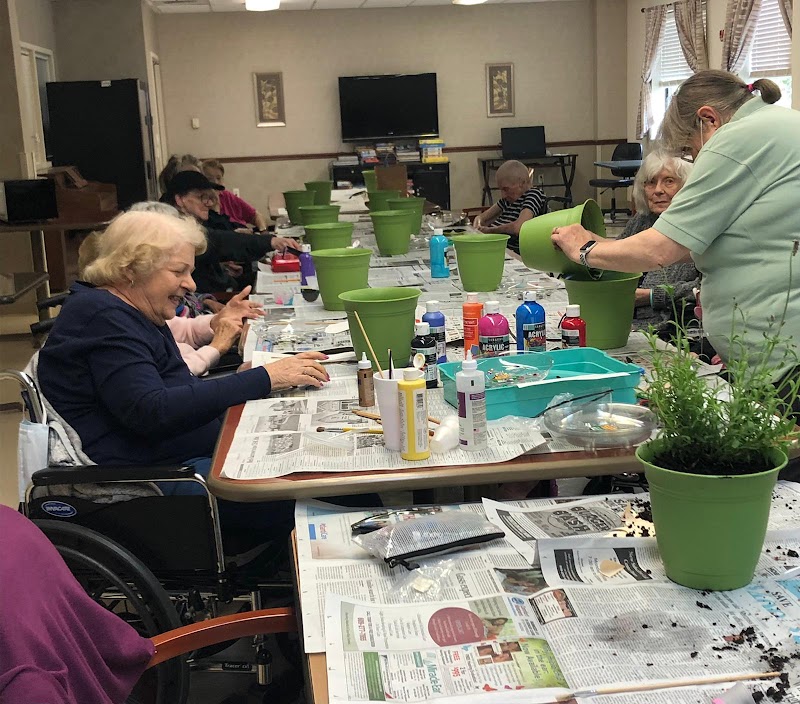
Who Owns and Operates Royal Suites Health Care & Rehabilitation?

ROYAL SUITES HEALTH CARE & REHABILITATION is owned by a for-profit company. For-profit facilities operate as businesses with obligations to shareholders or private owners. The facility is operated by OCEAN HEALTHCARE, a chain that manages multiple nursing homes. With 186 certified beds and approximately 180 residents (about 97% occupancy), it is a mid-sized facility located in GALLOWAY TOWNSHIP, New Jersey.

How Does Royal Suites Health Care & Rehabilitation Compare to Other New Jersey Nursing Homes?

Compared to the 100 nursing homes in New Jersey, ROYAL SUITES HEALTH CARE & REHABILITATION's overall rating (3 stars) is below the state average of 3.3, staff turnover (38%) is near the state average of 46%, and health inspection rating (3 stars) is at the national benchmark.

What Should Families Ask When Visiting Royal Suites Health Care & Rehabilitation?

Based on this facility's data, families visiting should ask: "Can you walk me through typical staffing levels on day, evening, and night shifts?" "Can I visit during a mealtime to observe dining assistance and food quality?" "How do you handle medical emergencies, and what is your hospital transfer rate?" "Can I speak with family members of current residents about their experience?" These questions are particularly relevant given the below-average staffing rating.

Is Royal Suites Health Care & Rehabilitation Safe?

Based on CMS inspection data, ROYAL SUITES HEALTH CARE & REHABILITATION has a clean safety record: no substantiated abuse findings (meaning no confirmed cases of resident harm), no Immediate Jeopardy citations (the most serious violation level indicating risk of serious injury or death), and is not on the Special Focus Facility watch list (a federal program monitoring the lowest-performing 1% of nursing homes). The facility has a 3-star overall rating and ranks #100 of 100 nursing homes in New Jersey. While no facility is perfect, families should still ask about staff-to-resident ratios and recent inspection results during their visit.

Do Nurses at Royal Suites Health Care & Rehabilitation Stick Around?

ROYAL SUITES HEALTH CARE & REHABILITATION has a staff turnover rate of 38%, which is about average for New Jersey nursing homes (state average: 46%). Moderate turnover is common in nursing homes, but families should still ask about staff tenure and how the facility maintains care continuity when employees leave.

Was Royal Suites Health Care & Rehabilitation Ever Fined?

ROYAL SUITES HEALTH CARE & REHABILITATION has been fined $3,250 across 1 penalty action. This is below the New Jersey average of $33,111. While any fine indicates a compliance issue, fines under $50,000 are relatively common and typically reflect isolated problems that were subsequently corrected. Families should ask what specific issues led to these fines and confirm they've been resolved.

Is Royal Suites Health Care & Rehabilitation on Any Federal Watch List?

ROYAL SUITES HEALTH CARE & REHABILITATION is not on any federal watch list. The most significant is the Special Focus Facility (SFF) program, which identifies the bottom 1% of nursing homes nationally based on persistent, serious quality problems. Not being on this list means the facility has avoided the pattern of deficiencies that triggers enhanced federal oversight. This is a positive indicator, though families should still review the facility's inspection history directly.