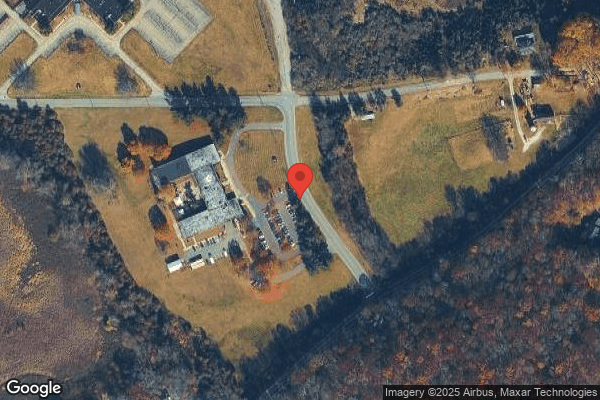
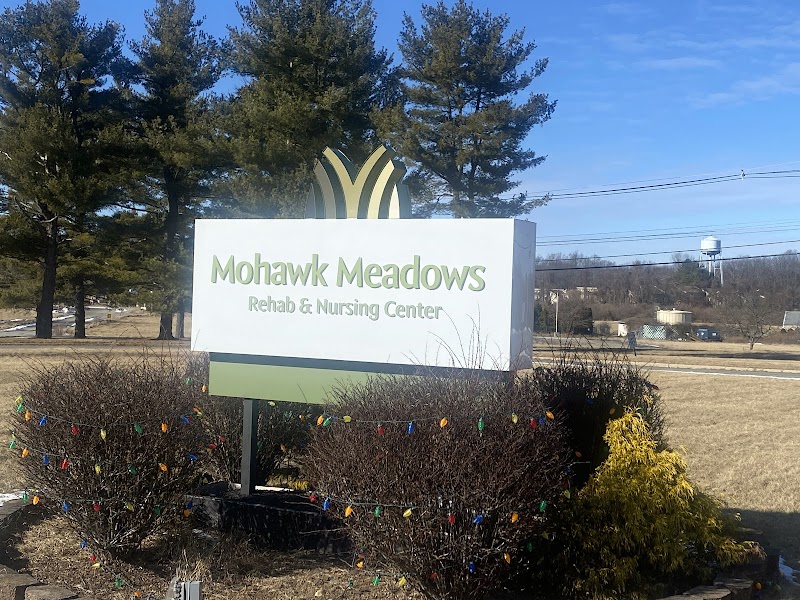
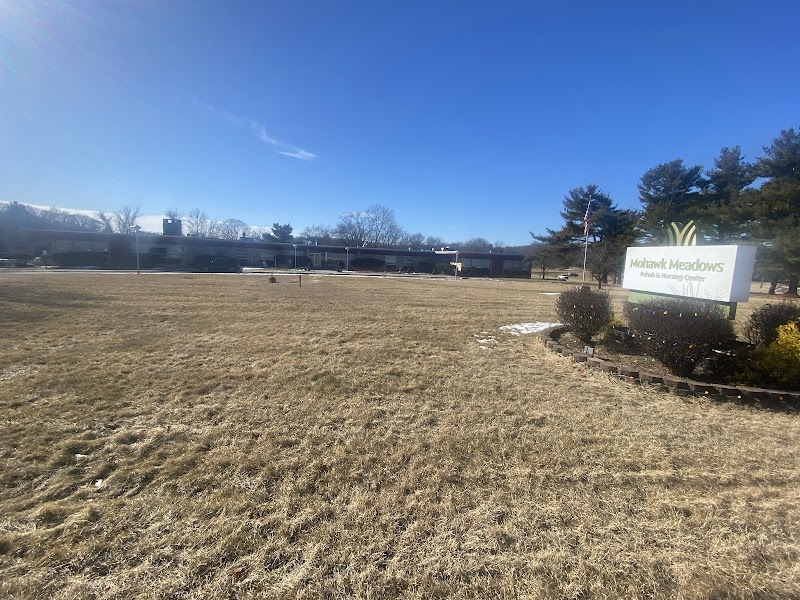

MOHAWK MEADOWS

1 O'BRIEN LANE, LAFAYETTE, NJ 07848 (973) 383-6200
For profit - Limited Liability company 159 Beds Independent Data: November 2025 6 Immediate Jeopardy citations
Trust Grade
0/100
#328 of 344 in NJ
Last Inspection: November 2024

Within standard 12-15 month inspection cycle. Federal law requires annual inspections.

Overview

Mohawk Meadows in Lafayette, New Jersey, has received a Trust Grade of F, indicating significant concerns about the care provided at this facility. Ranking #328 of 344 statewide places it in the bottom half of New Jersey nursing homes, and it's the lowest-ranked facility in Sussex County at #5 of 5. Although the trend shows improvement from 7 issues in 2024 to 3 in 2025, the facility still faces serious challenges, including a concerning total of $738,307 in fines, which is higher than 99% of facilities in the state. Staffing is a relative strength with a 3/5 rating and a turnover rate of 20%, significantly lower than the state average. However, critical incidents include failures to clarify medication orders for COVID-19 treatments, which contributed to delays in care, and inadequate infection control measures following staff testing positive for COVID-19, raising serious safety concerns.

Trust Score
F
0/100
In New Jersey
#328/344
Bottom 5%
Safety Record
High Risk
Review needed
Inspections
Getting Better
7 → 3 violations
Staff Stability
✓ Good
20% annual turnover. Excellent stability, 28 points below New Jersey's 48% average. Staff who stay learn residents' needs.
Penalties
✓ Good
$738,307 in fines. Lower than most New Jersey facilities. Relatively clean record.
Skilled Nurses
○ Average
Each resident gets 30 minutes of Registered Nurse (RN) attention daily — about average for New Jersey. RNs are the most trained staff who monitor for health changes.
Violations
⚠ Watch
25 deficiencies on record. Higher than average. Multiple issues found across inspections.
★☆☆☆☆
1.0
Overall Rating
★★★☆☆
3.0
Staff Levels
★★★★☆
4.0
Care Quality
★☆☆☆☆
1.0
Inspection Score
Stable
2024: 7 issues
2025: 3 issues

The Good

  • 4-Star Quality Measures · Strong clinical quality outcomes
  • Low Staff Turnover (20%) · Staff stability means consistent care
  • Full Sprinkler Coverage · Fire safety systems throughout facility
  • No fines on record
  • Staff turnover is low (20%)

    28 points below New Jersey average of 48%

Facility shows strength in quality measures, staff retention, fire safety.

The Bad

1-Star Overall Rating

Below New Jersey average (3.2)

Significant quality concerns identified by CMS

Federal Fines: $738,307

Well above median ($33,413)

Significant penalties indicating serious issues

The Ugly 25 deficiencies on record

6 life-threatening
Aug 2025 3 deficiencies
CONCERN (D) 📢 Someone Reported This

A family member, employee, or ombudsman was alarmed enough to file a formal complaint

Potential for Harm - no one hurt, but risky conditions existed

Report Alleged Abuse (Tag F0609)

Could have caused harm · This affected 1 resident

**NOTE- TERMS IN BRACKETS HAVE BEEN EDITED TO PROTECT CONFIDENTIALITY** C39051/IQBased on interviews, medical record reviews, and review of other pertinent facility documentation on 08/14/25, 08/15/25...

Read full inspector narrative →
**NOTE- TERMS IN BRACKETS HAVE BEEN EDITED TO PROTECT CONFIDENTIALITY** C39051/IQBased on interviews, medical record reviews, and review of other pertinent facility documentation on 08/14/25, 08/15/25, and 08/18/25, it was determined that the facility failed to report within two hours to the New Jersey Department of Health (NJDOH) allegations involving resident abuse for : a.) on 8/15/24 when facility was notified of an allegation of misappropriation of resident's funds by the Social Worker (SW) b.) an allegation of resident-to-resident verbal abuse involving Resident #11 and Resident #13; and C.) an allegation of resident-to-resident verbal abuse involving Resident #11 and Resident #14. This deficient practice was identified for 1 of 14 residents reviewed for abuse (Resident #11), and was evidenced by the following:A.) On 8/15/25 at 12:31 P.M., the surveyor notified the Licensed Nursing Home Administrator (LNHA) that the SW reported to them that the SW had taken Resident #11's debit card and used it to remove cash out of Resident #11's bank account.According to the admission Record (AR) face sheet, Resident #11 was admitted to the facility with diagnoses which included but were not limited to acute and chronic respiratory failure with hypoxia (medical condition where a part of the body, or the entire body, is deprived of an adequate oxygen supply at the tissue level), benign neoplasm (an abnormal growth of tissue in some part of the body) of brain, acute and chronic respiratory failure with hypercapnia (excessively high levels of carbon dioxide (CO2) in the blood), and chronic obstructive pulmonary disease with (acute) exacerbation (a condition involving constriction of the airways and difficulty or discomfort in breathing).A review of the Minimum Data Set (MDS), an assessment tool dated 08/07/25, Resident #11 had a Brief Interview of Mental Status (BIMS) score of 11/15, which indicated Resident #11's cognition was moderately impaired.On 08/18/25 at 11:57 A.M., the surveyor interviewed the Director of Nursing (DON) and LNHA together. They stated that they did not report the allegation of misappropriation of Resident #11's money to the NJDOH because their investigation concluded that no misappropriation of money had occurred.B.) On 08/15/25 at 11:37 A.M., the surveyor interviewed Resident #11 who reported an allegation of verbal abuse between Resident #13 and themself. On 08/15/25 at 02:09 P.M., the surveyor notified the DON and LNHA of an allegation that Resident #13 verbally abused Resident #11.According to the closed AR face sheet, Resident #13 was admitted to the facility with diagnoses which included were not limited to fracture of superior rim of right pubis, subsequent encounter for fracture with routine healing, hemiplegia (paralysis of one side of the body), unspecified affecting right dominant side, and unspecified fracture of right acetabulum, subsequent encounter for fracture with routine healing.A review of the MDS dated [DATE], revealed that Resident #13 had a BIMS score of 11/15, which indicated that Resident #13's cognition was moderately impaired.On 08/18/25 at 11:57 A.M., the surveyor interviewed the DON and LNHA together. The DON stated that based on the context of the investigation and interview regarding verbal abuse between Resident #11 and Resident #13, the DON did not believe this allegation had to be reported to the NJDOH. The DON further stated that she did not believe it need to be reported because Resident #13 was no longer at the facility.C.) On 08/15/25 at 11:37 A.M., the surveyor interviewed Resident #11 who reported an allegation of verbal abuse between Resident #14 and themself. On 8/15/25 at 02:09 P.M., the surveyor notified the DON and LNHA of an allegation that Resident #14 verbally abused Resident #11.According to the AR face sheet, Resident #14 was admitted to the facility with diagnoses which included were not limited to; Type 2 diabetes mellitus with hyperglycemia (chronic metabolic disorder where the body doesn't properly use insulin, leading to elevated blood sugar levels), essential hypertension (elevated blood pressure), and alcohol abuse.A review of the MDS dated [DATE], revealed Resident #14 BIMS score of 15/15 which indicated that Resident #14's cognition was intact.On 08/18/25 at 11:57 A.M., the surveyor interviewed the DON and LNHA together. The DON stated that based on the context of the investigation and interview regarding verbal abuse between Resident #11 and Resident #14, the DON did not believe this allegation had to be reported to the NJDOH.A review of the facility's policy titled Abuse, Prevention and Prohibition Program dated revised 06/27/23, included the following information under Reporting/Response:D. The facility will report allegations of abuse, neglect, exploitation, mistreatment, injuries of unknown source, misappropriation of resident property, or other incidents that qualify as a crime.i. Immediately, but no later than 2 hours after forming the suspicion or belief if the alleged violation involves abuse or results in serious bodily injury to the state survey agency, law enforcement, and the Ombudsman (if applicable per state regulation).ii. No later than 24 hours after forming the suspicion or belief if the alleged violation (e.g., misappropriation of property, neglect) does not involve abuse and does not result in serious bodily injury to the state survey agency, law enforcement, and the Ombudsman (if applicable per state regulations).NJAC 8.39-9.4
CONCERN (D) 📢 Someone Reported This

A family member, employee, or ombudsman was alarmed enough to file a formal complaint

Potential for Harm - no one hurt, but risky conditions existed

Deficiency F0658 (Tag F0658)

Could have caused harm · This affected 1 resident

Complaint #: 390051Based on interviews, medical record review, and review of other pertinent facility documentation on 8/18/2025, it was determined that the facility failed to consistently document on...

Read full inspector narrative →
Complaint #: 390051Based on interviews, medical record review, and review of other pertinent facility documentation on 8/18/2025, it was determined that the facility failed to consistently document on the Treatment Administration Record (TAR) according to the acceptable standards of nursing practice for 1 of 3 residents (Resident #11) reviewed for documentation. This deficient practice was evidenced by the following:Reference: New Jersey Statutes Annotated, Title 45, Chapter 11. Nursing Board. The Nurse Practice Act for the State of New Jersey states: The practice of nursing as a licensed practical nurse is defined as performing tasks and responsibilities within the framework of case finding; reinforcing the patient and family teaching program through health teaching, health counseling and provision of supportive and restorative care, under the direction of a registered nurse or licensed or otherwise legally authorized physician or dentist.Reference: New Jersey Statutes Annotated Title 45. Chapter 11. New Jersey Board of Nursing Statutes 45:11-23. Definitions b. The practice of nursing as a registered professional nurse is defined as diagnosing and treating human responses to actual or potential physical and emotional health problems, through such services as case finding, health teaching, health counseling, and provision of care supportive to or restorative of life and wellbeing, and executing medical regimens as prescribe by a licensed or otherwise legally authorized physician or dentist. Diagnosing in the context of nursing practice means that identification of and discrimination between physical and psychosocial signs and symptoms essential to effective execution and management of the nursing regimen. Such diagnostic privilege is distinct from a medical diagnosis. Treating means selection and performance of those therapeutic measures essential to the effective management and execution of the nursing regimen. Human response means those signs, symptoms and processes which denote the individual's health need or reaction to an actual or potential health problem.According to the admission Record (AR), Resident #11 was admitted to the facility with diagnoses which included but were not limited to: morbid obesity, chronic obstructive pulmonary disease (a lung condition caused by damage to the airways that limit airflow), and respiratory failure. According to the Minimum Data Set (MDS), an assessment tool dated 08/07/25, Resident #11 had a Brief Interview for Mental Status (BIMS) score of 11, which indicated the resident's cognition was moderately impaired. A review of the resident's Order Summary Report (OSR) reflected the following Physician's Orders (PO):-Bipap (bilevel positive airway pressure and is a non-invasive ventilation therapy that uses a machine to deliver pressurized air to a patient through a mask) at bedtime for respiratory failure, dated 05/16/25.-Apply moisturizing lotion to dry skin of both feet and heels, dated 05/16/25.-Cleanse abdominal folds with soap and water, pat dry and apply zinc oxide paste after pericare every shift, dated 05/16/25.- Cleanse bilateral groins and inner buttocks with soap and water, pat dry and apply zinc oxide paste every shift, dated 05/16/25.-Incentive spirometer every shift for respiratory failure. Encourage 10 breaths per waking hour, dated 05/16/25.A review of the corresponding June 2025 TAR revealed blank spaces for the following Pos on 06/1/25 (evening), 06/17/25 (day), and 06/24/25 (evening) shifts:-Apply moisturizing lotion to dry skin of both feet and heels, dated 05/16/25.-Cleanse abdominal folds with soap and water, pat dry and apply zinc oxide paste after pericare every shift, dated 05/16/25.- Cleanse bilateral groins and inner buttocks with soap and water, pat dry and apply zinc oxide paste every shift, dated 05/16/25.-Incentive spirometer (a handheld, clear plastic device with a mouthpiece, tubing, and a main chamber with a piston or ball, designed to encourage slow, deep breaths) every shift for respiratory failure. Encourage 10 breaths per waking hour, dated 5/16/25.A review of the corresponding June 2025 TAR revealed blank spaces for the following PO on 06/01/25, 06/06/25, 06/22/25, 06/24/25 at 09:00 P.M.-Bipap at bedtime for respiratory failure, dated 05/16/25.A review of the June 2025 Progress Notes (PNs) did not include documentation regarding the treatment orders administration.On 08/18/25 at 11:49 A.M., the surveyor interviewed the Registered Nurse (RN), who stated that the treatments were always signed out on the TAR after administering the treatments to the residents. The RN further stated it was important to sign out the TAR to document whether the resident had received the treatment. The RN also stated that there was not supposed to be any blank spaces on the TAR according to the facility's policy.On 08/18/25 at 11:57 A.M., the surveyor interviewed the Director of Nursing (DON) in the presence of the Licensed Nursing Home Administrator (LNHA). The DON stated that the nurses should sign on the TAR whether a treatment was administered or not. The DON stated if a resident refused a treatment, the nurse was to code it appropriately on the TAR and write a progress note. The DON further indicated that there should not be any blank spaces on the TAR.A review of the facility policy titled Nursing Documentation dated 07/2025 revealed under Purpose, Documentation in nursing is a key factor in our role and responsibility as patient care advocates. Under General Guidelines (in Nursing Documentation), When to Chart: 1. Record nursing actions and individual responses as soon after they occur as possible.NJAC 8:39-23.2 (a),27.1(a)
CONCERN (D) 📢 Someone Reported This

A family member, employee, or ombudsman was alarmed enough to file a formal complaint

Potential for Harm - no one hurt, but risky conditions existed

Respiratory Care (Tag F0695)

Could have caused harm · This affected 1 resident

C39051/IQBased on interviews, medical record review, and other pertinent facility documentation on 08/14/25, 08/15/25, and 08/18/25 it was determined that the facility failed to obtain a physician's o...

Read full inspector narrative →
C39051/IQBased on interviews, medical record review, and other pertinent facility documentation on 08/14/25, 08/15/25, and 08/18/25 it was determined that the facility failed to obtain a physician's order (PO) for the resident's (Resident #11) bilevel positive airway pressure (BiPAP) machine (a non-invasive ventilation therapy that uses a machine to deliver pressurized air to a patient through a mask). This deficient practice was identified for 1 of 14 residents reviewed (Resident #11).The deficient practice was evidenced by the following:A review of the Electronic Medical Record (EMR) was as follows:According to the admission Record (AR) face sheet, Resident #11 was admitted to the facility with diagnoses which included but were not limited to; acute and chronic respiratory failure with hypoxia (medical condition where a part of the body, or the entire body, is deprived of an adequate oxygen supply at the tissue level), benign neoplasm (an abnormal growth of tissue in some part of the body) of brain, acute and chronic respiratory failure with hypercapnia (excessively high levels of carbon dioxide (CO2) in the blood), and chronic obstructive pulmonary disease with (acute) exacerbation (a condition involving constriction of the airways and difficulty or discomfort in breathing).A review of the Minimum Data Set (MDS), an assessment tool dated 08/07/25, Resident #11 had a Brief Interview of Mental Status (BIMS) score of 11/15, which indicated Resident #11's cognition was moderately impaired.A review of Resident #11's care plan (CP) included a focus area initiated 11/08/24, that the resident was at risk for signs and symptoms of respiratory distress due to COPD and a history of smoking. Intervention includes to administer BiPAP as ordered.A review of Resident #11's progress notes (PN) revealed that Resident #11 has been using a BiPAP machine since 11/12/24.A review of Resident #11's Order Summary Report (OSR), revealed no order for BiPAP until 05/16/25.On 08/18/25 at 11:54 A.M., the surveyor interviewed a Registered Nurse (RN) who worked on Resident #11's unit. The RN stated that she would ensure that a resident who had a BiPAP had an order for a BiPAP. The RN further stated that if she saw a resident with respiratory equipment but not an order for it, she would call the doctor for an order as it would be regarding a resident's breathing.On 08/18/25 at 11:57 A.M., the surveyor interviewed the Director of Nursing (DON) and Licensed Nursing Home Administrator (LNHA) together. The surveyor asked the DON what her expectations were for staff regarding a resident and their respiratory equipment such as oxygen or a BiPAP. The DON stated that expected her staff to have obtained an order for a resident's respiratory interventions.At that time, the surveyor presented the DON and LNHA with the receipt for Resident #11's BiPAP dated 10/2024, and then Resident #11's order for BiPAP dated 05/16/25. The LNHA stated that Resident #11 came to the facility with the BiPAP machine and that there should have been an order for it.A review of the facility's policy titled Physician Orders last revised 08/01/17, revealed under Policy: Nursing Department will verify that physician orders are complete, accurate and clarified as necessary, and that resident receives their medication timely. N.J.A.C. S 8:39-27.1
Nov 2024 7 deficiencies
CONCERN (D)

Potential for Harm - no one hurt, but risky conditions existed

Deficiency F0558 (Tag F0558)

Could have caused harm · This affected 1 resident

Based on observation, interview, and record review, it was determined that the facility failed to ensure the resident's call device was readily accessible. The deficient practice was identified for 1 ...

Read full inspector narrative →
Based on observation, interview, and record review, it was determined that the facility failed to ensure the resident's call device was readily accessible. The deficient practice was identified for 1 (one) of 25 residents (Resident #46) reviewed for reasonable accommodations of needs/preferences. This deficient practice was evidenced by the following: On 11/12/24, at 9:30 AM and 1:32 PM, the same day, the surveyor observed Resident #46 lying in bed, awake and alert. The surveyor observed that the call bell was behind the resident's headboard, between the wall and the bed. On 11/12/24, at 1:35 PM, the surveyor interviewed the Licensed Practical Nurse (LPN) and the LPN/Supervisor, who stated that the call bell should be within the residents' reach. The LPN placed the call bell next to the resident's right hand. On 11/13/24 at 9:27 AM, the surveyor reviewed the hybrid medical record (paper and electronic) of Resident #46, which revealed the following: According to the admission Record (an admission summary) (AR), Resident #46 was admitted to the facility with diagnoses that included but were not limited to unspecified dementia (memory loss), unspecified severity, with other behavioral disturbance. A review of the recent quarterly Minimum Data Set (Q/MDS), an assessment tool used to facilitate the management of care dated 9/24/24, indicated that the facility assessed the residents' cognitive status using a Brief Interview for Mental Status (BIMS) score of 0 out of 15, which indicated that the resident had asevere impairment cognition. Further review of QMDS, reflected in section GG, revealed that the resident depends on staff assistance for daily living activities. A review of the comprehensive Care Plan dated 1/17/24 included a focus area: the resident is at risk for falls due to poor safety awareness. Interventions included, but were not limited to, keeping the call bell within reach. On 11/15/24 at 11:36 AM, the team of surveyors met with the Licensed Nursing Home Administration (LNHA) and interim Director of Nursing (DON). The interim DON acknowledged that the call bell should be placed within the resident's reach. The facility policy and procedure titled Resident Call Bells was updated on 11/2024, given by the interim DON. It states under Policy: 2. The call bell must be placed within reach of the resident. Procedure: 7. Staff will ensure that the call bell is within the resident's reach before leaving the room. NJAC 8:39-31.8(c)9
CONCERN (D)

Potential for Harm - no one hurt, but risky conditions existed

Deficiency F0561 (Tag F0561)

Could have caused harm · This affected 1 resident

**NOTE- TERMS IN BRACKETS HAVE BEEN EDITED TO PROTECT CONFIDENTIALITY** Based on interviews, record review, and review of pertinent facility documents, it was determined that the facility failed to en...

Read full inspector narrative →
**NOTE- TERMS IN BRACKETS HAVE BEEN EDITED TO PROTECT CONFIDENTIALITY** Based on interviews, record review, and review of pertinent facility documents, it was determined that the facility failed to ensure that residents' bathing choice of a day shower was provided for 1 of 1 resident (Resident #83) reviewed for choices. This deficient practice was evidenced as follows: On 11/12/24 at 10:38 AM, the surveyor interviewed Resident #83 in their room. The resident stated, I am supposed to and want to get two showers per week, but I have not received a shower in weeks. A review of Resident #83's admission Record reflected that the resident had diagnoses that included but were not limited to; major depression (persist depressed mood), type 2 diabetes mellitus(elevated blood sugar), and bipolar disorder(mood disorder with mood swings). A review of the Annual Minimum Data Set (MDS) dated [DATE], an assessment tool used to facilitate the management of care, reflected that the resident had a Brief Interview for Mental Status (BIMS) score of 11 out of 15 which indicated that the resident had a moderately impaired cognition. Further review of the MDS indicated that the resident required setup assistance with bathing. A review of the Order Summary Report did not reflect any physician's order (PO) for showers twice per week. On 11/14/24 at 10:20 AM, the surveyor interviewed the Licensed Practical Nurse Supervisor (LPN#1) who stated all residents would receive showers twice a week on both 7-3 and 3-11 shifts. LPN#1 further stated that there are no PO for showers and all information regarding days, times, and record for showers are kept in a notebook at the nursing station. The surveyor reviewed the shower logbook which revealed, Resident # 83's showers are scheduled for Tuesday and Friday during the day shift. Further review of the shower log revealed that Resident #83 received 2 out of 11 scheduled showers from 10/1/24 through 11/14/24. LPN #1 stated they were not aware that Resident #83 had not been consistently receiving their showers as scheduled. On 11/14/24 at 10:30 AM, the surveyor interviewed the Certified Nursing Assistant (CNA#1) who stated all resident are supposed to receive showers twice per week and all information regarding resident showers are kept in the shower notebook at the nursing station. A review of the policy titled Ensuring Residents Choices with a revision date of 4/2024 revealed, It shall be the policy of [NAME] Meadows to ensure that the residents residing at our facility make their own choices which will help improve the autonomy and their mental well-being. Under the procedure section of the policy it states, 1. Prioritize and honor resident choice. On 11/18/24 at 1:08 PM, the survey team met with the Licensed Nursing Home Administrator (LNHA), interim Director of Nursing (DON), and Assistant LNHA (ALNHA) were made aware of the surveyors concerns. No further comments were provide. On 11/19/24 at 11:30 AM, the team of surveyor met with the LNHA, interim DON, and ALNHA and no further information was provided regarding the resident showers. NJAC 8:39-4.1(a) 3,12
CONCERN (D)

Potential for Harm - no one hurt, but risky conditions existed

Deficiency F0604 (Tag F0604)

Could have caused harm · This affected 1 resident

Based on observation, interview, and record review, it was determined that the facility failed to ensure a resident was free from a physical restraint (means of limiting or obstructing the freedom of ...

Read full inspector narrative →
Based on observation, interview, and record review, it was determined that the facility failed to ensure a resident was free from a physical restraint (means of limiting or obstructing the freedom of a person's bodily movement). This deficient practice was identified in 1 of 2 residents reviewed for restraints, (Residents #99) and was evidenced by the following: On 11/12/24 at 10:20 AM, the surveyor observed Resident #99 awake and was seated in their wheelchair that had a seatbelt device around the resident's waist. The resident was unable to respond to the surveyors' inquiry. The surveyor further observed that Resident #99 had contractions (abnormal shortening of muscle tissue, rendering the muscle highly resistant to stretching) to bilateral arms. The surveyor in the presence of the Licensed Practical Nurse #1 (LPN #1) assessed Resident #99. LPN #1 acknowledged to the surveyor that the resident was wearing a seatbelt for safety and to prevent the resident from falling. On 11/13/24 at 11:49 PM, the surveyor interviewed the Registered Nurse who acknowledged that Resident #99 should not be wearing the seatbelt device. A review of the admission Record revealed that Resident #99 was admitted to the facility with diagnosis that included but not limited to Cerebral Palsy (movement disorders that originates in the brain). A review of Resident #99's Quarterly Minimum Data Set (Q/MDS), an assessment tool used to facilitate management of care, dated 8/14/24, reflected that the resident's Brief Interview for Mental Status was not completed due to memory problem. A review of the November 2024 Order Summary Report did not reflect a physician's order for the use of seatbelt or restraint. A review of Resident #99's comprehensive Interdisciplinary Care Plan (CP) did not reflect the use of seatbelt or any restraint On 11/13/24 at 12:45 PM, the surveyor interviewed the facility's Licensed Nursing Home Administrator (LNHA) who stated there was no documentation to determine why the seatbelt was used by the resident. On 11/14/24 at 1:30 PM, the survey team met with the facility's LNHA, Director of Nursing and Administrative Assistant to discuss the above concerns. There was no further information provided. A review of the facility's policy titled, Restraint dated 01/25/23 revealed under Policy II. The Facility honors the resident's right to be free from any restraints that are imposed for reasons other than that of treatment of the resident's medical symptoms. The Facility will ensure that restraints will not be imposed for purposes of discipline or convenience. Further review of the policy under X. B. The Attending Physician must be notified of such use and the reason for the order. C. Orders for emergency restraints may be received by telephone. NJAC 8:39-4.1(6)
CONCERN (D)

Potential for Harm - no one hurt, but risky conditions existed

Quality of Care (Tag F0684)

Could have caused harm · This affected 1 resident

**NOTE- TERMS IN BRACKETS HAVE BEEN EDITED TO PROTECT CONFIDENTIALITY** Based on observation, interview, record review, it was determined that the facility failed to ensure a resident received a medic...

Read full inspector narrative →
**NOTE- TERMS IN BRACKETS HAVE BEEN EDITED TO PROTECT CONFIDENTIALITY** Based on observation, interview, record review, it was determined that the facility failed to ensure a resident received a medication according to the physician's order (PO) that was indicated for breast cancer (CA) (a disease in which body cells grow uncontrollably and spread to other parts of the body) in accordance with professional standards of practice and facility policies and procedures for one (1) of 25 residents, (Resident #131), reviewed for medication administration. This deficient practice was evidenced by the following: On 11/14/24 at 8:45 AM, during the medication administration observation with Licensed Practical Nurse (LPN #2), the surveyor observed Resident #131 in their room seated in a wheelchair. LPN #2 prepared the eight (8) medications for Resident #131 and stated that one of the medications was Abemaciclib which was indicated for the resident's diagnosis of breast CA were not available because the facility's pharmacy had not yet delivered the medication. On 11/14/24 at 9:20 AM, the surveyor interviewed Resident #131, who stated that they had not received the Abemaciclib since they were admitted to the facility on [DATE]. On 11/14/24 at 9:26 AM, the surveyor reviewed the hybrid medical records (paper and electronic) of Resident #131, which revealed the following: A review of the admission Record (an admission summary) reflected that Resident #131 was admitted with diagnoses that included but were not limited to malignant (a term used to describe cancer), neoplasm (abnormal and excessive growth of tissue) of an unspecified site of the left breast. A review of the November 2024 Order Summary Report revealed a PO dated 11/12/24 for Abemaciclib oral tablet 100 mg, one tablet by mouth twice daily for breast CA. A review of the Progress Notes dated 11/14/24 at 12:30 PM, revealed the facility's pharmacy was aware of the PO for the medication Abemaciclib. The physician was also made aware. On 11/15/24 at 11:45 AM, the survey team met with the Licensed Nursing Home Administrator (LNHA), Interim Director of Nursing (I/DON) and Administrative Assistant (AA). The interim DON stated that the Abemaciclib was unavailable at pharmacy where they faxed the PO but was referred to another pharmacy who had the medication in stock. The interim DON also stated that the facility was expecting to receive the medication on 11/15/24. On 11/15/24 at 12:10 PM, the surveyor interviewed the pharmacy's customer service agent over the phone, who stated that on 11/12/24 at 11:24 PM, they received the prescription for Abemaciclib. On 11/13/24 at 11:33 AM, the pharmacy informed the facility that they did not have the medication Abemaciclib and were subsequently referred to another pharmacy. On 11/18/24 at 10:07 AM, the survey team interviewed Resident #13 Medical Doctor (MD) who stated he was made aware on 11/14/24 that the resident had not received five doses of Abemaciclib. On 11/19/24 at 10:40 AM, the survey team met with the LNHA, I/DON and AA. The I/DON presented the packing slip from the pharmacy which revealed that the Abemaciclib medication had an estimated shipped date of 11/14/24. The I/DON further stated the medication was received on 11/15/24. A review of the facility policy titled, Physician Orders indicated under Policy: Nursing Department will verify that physician orders are complete, accurate, and clarified as necessary and that residents receive their medication timely. NJAC 8:39-27.1(a)
CONCERN (D)

Potential for Harm - no one hurt, but risky conditions existed

Incontinence Care (Tag F0690)

Could have caused harm · This affected 1 resident

Based on observation, interview and record review, it was determined that the facility failed to record and document the urinary output of resident's with an indwelling urinary catheters per Physician...

Read full inspector narrative →
Based on observation, interview and record review, it was determined that the facility failed to record and document the urinary output of resident's with an indwelling urinary catheters per Physician Orders (PO). This deficient practice was noted in 1 of 2 resident's reviewed with an indwelling urinary catheter (Resident #68). This deficient practice was evidenced by the following: On 11/12/24 at 10:18 AM, the surveyor observed Resident #68 awake in their bed. Resident stated they have a catheter for urinary problems. The resident had a urinary privacy bag on side of their bed. The surveyor reviewed Resident #68's hybrid (combination of paper and electronic) medical records. The resident was admitted to the facility with diagnoses that included but were not limited to, urinary tract infection (an infection in any part of the urinary system), sepsis (body's reaction to an infection), and retention of urine (a condition where the bladder does not fully empty). A review of the quarterly Minimum Data Set (MDS), an assessment tool used to facilitate the management of care, dated 10/15/24, reflected that the resident had a Brief Interview for Mental Status (BIMS) score 3 out of 15 that indicated the resident had severe cognitive impairment. A review of the active PO revealed a PO dated 10/2/24, to record the residents urinary catheter output. A review of the Treatment Administration Record (TAR) revealed the urinary catheter output was last recorded on 10/2/24. On 11/13/24 at 10:53 AM, the surveyor interviewed Licensed Practical Nurse (LPN#2), who is the regular day shift nurse for Resident #83. LPN#2 reviewed the PO for the resident and stated they did not see any recorded urinary output in the electronic or paper chart. LPN#2 further stated that the PO had been entered incorrectly. On 11/15/24 at 9:24 AM, the interim Director of Nursing (DON) provided the surveyor with facility policy titled Foley Catheter with a revised date of 2/1/24, under the procedure section of the policy revealed, 3. Monitor resident's output. 4. Document the following in the medical record, a. amount of output. A second facility policy title, Telephone and Verbal Physicians Orders with a revised date of 2/2024 revealed, 1. When a physicians' verbal or telephone order is received, the nurse is to read back the order to the doctor before entering the order into Point Click Care (PCC) to ensure accuracy. On 11/18/24 at 1:08 PM, the survey team met with the Licensed Nursing Home Administrator (LNHA), interim DON, and Assistant LNHA (ALNHA) and were made aware of the the findings. The LNHA stated that it was a mistake. On 11/19/24 at 11:30 AM, the survey met with the LNHA, interim DON, and ALNHA and no further information or comments were provided. NJAC 8:39-19.4 (a)4,5,6
CONCERN (D)

Potential for Harm - no one hurt, but risky conditions existed

Medical Records (Tag F0842)

Could have caused harm · This affected 1 resident

Based on observation, interview, and record review, it was determined that the facility failed to maintain complete and readily accessible medical records. This deficient practice was identified for 1...

Read full inspector narrative →
Based on observation, interview, and record review, it was determined that the facility failed to maintain complete and readily accessible medical records. This deficient practice was identified for 1 of 28 residents reviewed (Resident # 86). This deficient practice was evidenced by the following: The surveyor reviewed the hybrid (paper and electronic) medical records of Resident #86. According to the admission Record (a summary of important information about the resident), Resident #86 had diagnoses that included but were not limited to: dementia, schizoaffective disorder (a mental health condition with symptoms of schizophrenia and mood disorders that causes a person to experience dramatic changes in their thoughts, moods, and behaviors), and major depressive disorder. A quarterly Minimum Data Set (MDS) assessment, dated 8/20/24, indicated the facility assessed the resident's cognition using a Brief Interview Mental Status (BIMS) test. Resident #86 scored a 4 out of 15, which indicated the resident had severe cognitive impairment. A physician's order dated 3/20/24 documented risperidone 1 mg tablet, give 1 tablet by mouth in the evening for schizoaffective disorder. A physician's order dated 10/5/24 documented trazodone 50 mg tablet, give 1 tablet by mouth at bedtime for insomnia. A physician's order dated 4/3/24 documented escitalopram 10 mg tablet, give 1 tablet by mouth one time a day for depression. A physician's order dated 3/24/24 documented divalproex sodium ER [extended release] 500 mg tablet, give 1 tablet by mouth in the morning for mood disorder related to schizoaffective disorder. A physician's order dated 3/24/24 documented divalproex sodium oral tablet delayed release 250 mg tablet, give 3 tablets by mouth for a total of 750 mg at bedtime. A care plan with an initiation date of 3/22/22 included a focus that Resident #86 was at risk for side effects due to use of psychotropic medications. An intervention of the care plan indicated Psyche [Psychiatry] consult as needed/as scheduled. A review of physician progress notes in the hybrid medical record revealed the most recent psychiatry consult notes found in the paper chart, were from March 2024. On 11/14/24 at 11:01 AM, the surveyor interviewed the Registered Nurse Supervisor (RNS) on the unit about psychiatry consultant visits. The RNS stated the psychiatry consultant (PC) visited the facility weekly. The RNS further explained the PC would follow up with routine residents every three to six months and more frequently if needed. The RNS reviewed with the surveyor the hybrid medical records and confirmed the last PC note was in March 2024. The RNS stated she recalled the PC visiting the resident in June 2024 and could not speak why there were no notes after March 2024 in Resident #86's medical record. On 11/14/24 at 12:30 PM, the acting Director of Nursing (DON) provided the surveyor with the facility's psychiatric consult policy. A review of the facility's policy titled Psychiatric Consult dated 2024, did not address PC documentation. On 11/14/24 at 1:30 PM, the surveyor informed the License Nursing Home Administrator (LNHA), the acting DON, and the Administrative Assistant of the concern that there were no psychiatry progress notes found after March 2024. The surveyor asked how soon it was expected for the PC to have visit notes in a resident's medical records. The LNHA stated their documentation should be in the resident's medical records within three days. The facility to review and provide additional information. The surveyor requested any facility policies related to physician or consultant documentation. On 11/15/24 at 11:35 AM, the LNHA and the acting DON met with the survey team. The LNHA stated that they spoke with the PC who thought he had left his notes in Resident #86's medical record. The PC sent the notes ot the facility that were not in the resident's medical record. The LNHA further explained they reviewed with the PC the importance of their notes being in the residents' medical records. The LNHA provided the surveyor with the physician's visits policy and the notes received from the PC. A review of the PC visit notes included notes dated 5/18/24, 7/24/24, and 10/5/24 which were not found in the Resident #86's medical record during surveyor review. A review of the facility's policy titled Physician Visits and Documentation, with a reviewed date of 11/14/24 under Policy and Procedure revealed: 2. The physician must write, sign, and date progress notes at each visit. These progress notes may be done in a paper chart or electronic format per facility practices. N.J.A.C. 8:39-35.2(d)
CONCERN (E)

Potential for Harm - no one hurt, but risky conditions existed

Abuse Prevention Policies (Tag F0607)

Could have caused harm · This affected multiple residents

Based on interview and review of pertinent documentation provided by the facility, it was determined that the facility failed to a. ensure reference checks (RC) were completed to seven (7) out of ten ...

Read full inspector narrative →
Based on interview and review of pertinent documentation provided by the facility, it was determined that the facility failed to a. ensure reference checks (RC) were completed to seven (7) out of ten (10) newly hired staff (NHS) b. ensure criminal background checks (CBC) were completed to four (4) out of ten (10) NHS and c. ensure a physical examination (PE) was performed to 2 (two) out of ten (10) NHS prior to their start date of employment. This deficient practice was evidenced by the following: The surveyor reviewed ten randomly selected new employee files. The review for reference checks for five of the eight new employees revealed the following: -Staff #1's file, a Business Office Manager who was hired on 9/23/24, revealed no RC in their file. -Staff #2's file, a Maintenance Director (MD) who was hired on 5/28/24, revealed no RC in their file. Further review of Staff #2's did not reveal that a PE was completed prior to date of hire. - Staff #3's file, a Registered Nurse #1 (RN #1) who was hired on 5/28/24, revealed no RC in their file. Further review of Staff #3's file revealed no PE completed by a physician prior to date of hire. - Staff #4's file, a Certified Nursing Assistant (CNA #1), who was hired on 8/28/24, revealed no RC in their file. - Staff #5's file, a RN #2, who was hired on 11/15/23, revealed no CBC completed prior to date of hire. - Staff #6's file, a Physical Therapist, who was hired on 1/9/24, revealed no CBC completed prior to date of hire. - Staff #7's file, a dietary aide, who was hired on 10/21/23, revealed only 1 RC in their file. Further review of Staff #7's file revealed that a CDC was not completed prior to date of hire. - Staff #8's file, a porter, who was hired on 4/23/24, revealed no RC in their file. - Staff #9's file, a CNA #2 who was hired on 9/29/23, revealed no RC in their file. Further review of Staff #9's file revealed that a CDC was not completed prior to date of hire. On 11/18/24 at 12:19 PM, the surveyor interviewed the facility's Human Resources Director who confirmed that the above employees did not have a completed reference verification and/or criminical background check prior to their date of hires. On 11/18/24 at 1:08 PM, the surveyor informed the Licensed Nursing Home Administrator, Director of Nursing, and Administrative Assistant regarding the above concern. There was no additional information provided by the facility. The surveyor reviewed the facility's policy titled Hiring Process dated 10/2024 revealed under Procedure, C. All new applicants before hire will be subject to criminal background investigation (CBI), with their authorization, to determine whether they have been convicted of a felony within the last five (5) years. Reference checks will be made for all applicants prior to employment. All new licensed personnel and licensed nursing personnel will complete a criminal background check. Under II. New Hire A. Prior to the first day of employment, the prospective employee is seen by the employee health nurse. B. The new hire will also obtain a physical examination by employee health physician or advanced nurse practitioner. N.J.A.C. 8:39-9.3 (a), (b)
Nov 2023 3 deficiencies 3 IJ (2 facility-wide)
CRITICAL (J)

Immediate Jeopardy (IJ) - the most serious Medicare violation

Quality of Care (Tag F0684)

Someone could have died · This affected 1 resident

**NOTE- TERMS IN BRACKETS HAVE BEEN EDITED TO PROTECT CONFIDENTIALITY** Based on interview, record review, and review of facility documentation, it was determined that the facility failed to clarify a...

Read full inspector narrative →
**NOTE- TERMS IN BRACKETS HAVE BEEN EDITED TO PROTECT CONFIDENTIALITY** Based on interview, record review, and review of facility documentation, it was determined that the facility failed to clarify a physician's order for Paxlovid (an antiviral medication used to treat COVID-19, a deadly virus) for a vaccinated resident (Resident #4), for it to be administered within 24 hours for one of 14 residents reviewed for COVID-19 care. The original order was for Paxlovid to be administered for five days was faxed to the pharmacy on 10/22/23 but failed to include a dosage amount. This caused the pharmacy to contact the facility three additional times for clarification of the Paxlovid order. Resident #4 was provided a different antiviral medication on 10/25/23 (3 days later) and expired at the facility on 10/28/23. COVID-19 is known to be a highly infectious communicable disease which can lead to hospitalization and death. The facility had a positive confirmation of COVID-19 on 09/13/23, was currently still in an outbreak, and had been unable to mitigate the spread of the infection. The facility's failure to ensure Resident #4, who was at risk for severe outcomes from COVID-19, received the necessary treatment to avoid a worsening of their COVID-19 condition in a timely manner, including death, resulted in an Immediate Jeopardy (IJ) situation. The facility was notified of the IJ situation on 11/17/23. The IJ continued from 10/22/23 until 11/20/23, once the survey team received an acceptable Removal Plan (RP), which was verified by the survey team on 11/20/23, removing the immediacy. The non-compliance remained on 11/21/23 for F684, with no actual harm with the potential for more than minimum harm that is not immediate jeopardy. The evidence was as follows: A review of the hybrid medical record revealed that Resident #4 had been readmitted on [DATE], with diagnoses which included but were not limited to; pneumonia, systemic inflammatory response syndrome (an inflammatory response to the whole body to harmful stressors), and hypertensive heart disease. A review of the most recent quarterly Minimum Data Set (MDS) an assessment tool used to facilitate treatment, dated 08/08/23, included but was not limited to; a Brief Interview for Mental Status (BIMS) of 04 out of 15 indicating Resident #4 was cognitively impaired. Resident #4 continuously had an altered level of consciousness. Resident #4 required staff assistance for Activities of Daily Living (ADL). A review of the resident centered Care Plan (CP) included but was not limited to; a focus area date initiated 12/13/21 and revised 10/30/23, + (positive) COVID and may result to s/s (signs and symptoms) of respiratory distress. Interventions included Paxlovid as ordered dated 10/22/23. A review of the Progress Notes (PN) from 10/22/23 through 10/28/23, included the following: a note dated 10/22/23 at 21:52 (9:52 PM), Resident #4 had tested positive for COVID-19. A note dated 10/22/23 at 22:59 (10:59 PM), nonproductive cough and will continue to monitor and that Resident #4 was to start Paxlovid. A note dated 10/24/23 at 7:05 AM, nonproductive cough, resident is to start Paxlovid when available. A note dated 10/24/23 at 16:41 (4:41 PM), moist cough noted nonproductive. To start on Paxlovid. A note dated 10/25/23 at 16:03 (4:03 PM), lethargic, increased secretions, on supplemental oxygen for comfort. Will continue to monitor. A note dated 10/25/23 at 21:12 (9:12 PM), lethargic, Mulnupiravir (an antiviral medication used to treat COVID-19) D (day) 1/5 [1 of 5]. Pain medication administered for signs and symptoms of pain and discomfort. Nonproductive cough. Will continue to monitor. A note dated 10/26/23 at 13:54 (1:54 PM), lethargic noted with worsening of condition. Pain medication for generalized discomfort. Medication for increased secretions. A note dated 10/27/23 at 4:47 AM, labored breathing, pain medication administered for body discomfort, medication for increased respiratory secretions. A note dated 10/28/23 at 2:55 AM, unresponsive, absent respiration, no pulse, pronounced at 1:10 AM (deceased ). The PNs failed to document any rationale for the resident not receiving the Paxlovid, that the physician was notified and his response, or communication with the pharmacy. A review of the Physician's Orders Sheet (POS) revealed the following: a physician's order dated 10/17/23 for hospice evaluation related to dysphagia (difficulty in swallowing food or liquid). A telephone order dated 10/22/23 and not timed, for Paxlovid PO (by mouth) BID (twice a day) x (times) 5 days for COVID-19. Hold Eliquis (medication to keep the blood thin) x 5 days while on Paxlovid. TORB (telephone order read back) Dr [name redacted] / [name redacted Registered Nurse (RN) who signed the order] faxed and noted. An entry dated 10/23/23 and not timed, clarification of above order Paxlovid 150 mg (milligrams) TT (2 tablets) with 100 mg T (one tablet) BID x 5 days. TORB Dr [name redacted] to and was signed by the Director of Nursing (DON) RN. There was no indication that the clarified order had been faxed to the pharmacy or noted. A telephone order entry dated 10/25/23 and not timed, to D/C (discontinue) Paxlovid 150 mg 2 tabs with 100 mg 1 tab PO BID x 5 days and to begin Molnupiravir 200 mg 4 caps (capsules) po BID x 5 days Hold Eliquis [an anticoagulant] 2 days post completion of Molnupiravir. TORB Dr [name redacted], signed by the nurse and faxed and noted. A review of the Medication Administration Record (MAR) dated 10/2023, included a handwritten order for Paxlovid PO BID x 5 days DX (diagnosis) COVID-19. The MAR revealed the times 9 AM and 5 PM and indicated X on the dates of 10/23/23 and 10/24/23. There was no documentation on the back of the MAR regarding why the medication was not administered. On 11/17/23 at 1:39 PM, the DON was questioned about the above orders. The DON stated that there was no problem getting the Paxlovid. The DON further stated she was not aware of the situation with Resident #4 and that it was a delayed treatment. On 11/17/23 at 2:13 PM, the surveyor attempted to call the doctor three times with no success. On 11/17/23 at 3:00 PM, the DON was in the conference room in the presence of the survey team. The DON stated, there was a breakdown and that the nurse realized Paxlovid could not be crushed. She stated that the pharmacy made deliveries twice a day at 3:00 PM and midnight. The DON further stated that the Paxlovid was ordered 10/22/23, and that I don't know what happened. The DON stated that Resident #4 was administered a different medication on 10/25/23, she was not sure where the breakdown occurred, and she was just made aware of the situation when the surveyors informed her. On 11/17/23 at 3:12 PM, during a telephone interview, a pharmacist with the facility's contracted pharmacy, stated that Resident #4's Paxlovid order was received 10/25/23 and delivered to the facility on [DATE] at 2:52 PM. On 11/17/23 at 3:30 PM, during an interview with the surveyors, a Licensed Practical Nurse (LPN) #1 stated the process for medication orders would be to take the order, document it on the POS, fax the order to the pharmacy, and document it on the Medication Administration Record (MAR). LPN #1 stated there was never a delay obtaining medications. She further stated that if the medication was noted as not available, she would call the pharmacy to ensure the order was received, check if the medication was in the back up supply, and call the physician. She stated the information would be documented in the electronic medical record and endorsed to the next shift nurse. LPN #1 stated that if the information was not documented, it was not done, and that documentation was important for communication with all disciplines. LPN #1 further stated the if a medication was not available, the area on the MAR would be circled and a note would be made on the back of the MAR. Any blanks on the MAR would indicate that the medication was not administered. On 11/20/23 at 10:15 AM, the DON provided an email dated 11/17/23 at 4:52 PM, from the pharmacy representative (PR) which revealed the facility's inaction caused a delay in Resident #4 receiving the Paxlovid. The email included but was not limited to; 10/22 (2023) POS received for the Paxlovid on 10/22 at 8:31 PM. 10/23 (2023) the order was entered at 7:56 AM, set to profile at 11:34 AM, because clarification was needed whether it was for renal or regular dosing. Called the facility spoke with RN (DON) and was told will clarify and update. 10/24 (2023) Nurse [name redacted] (LPN #2) clarified the order at 2:53 PM that the order was for renally impairing dosing. The order was then un-profiled at 11:21 PM and moved to the batch for 11/24, order still needed clarification to DDI (drug dosing interaction per DON) with other meds (medications) the patient was on (Eliquis and Tamsulosin). 10/25 (2023) the order was moved to the batch for 10/25 (2023) at 12:45 AM. The pharmacy spoke with RN and clarified the other meds were being held for two days while the patient was on Paxlovid. The order was moved to the delivery batch and the label was also printed. The med was toted at 1:16 AM and was delivered to the facility at 5:15 AM. The DON stated that the nurses do not note the time an order was faxed. She stated she clarified the physician's order on 10/23/23, and noted it on the POS. She further stated she was not sure when she spoke to the doctor because it was not documented and that she was unsure what happened between the unclarified times. The DON stated that all the POS orders should have included times with the dates, but she did not realize they did not. On 11/20/23 at 10:44 AM, LPN #2 stated he recalled Resident #4 who was moved to the COVID-19 positive unit on 10/22/23 and was ordered Paxlovid. LPN #2 added that when faxing an order for Paxlovid, there were blood test results that needed to be relayed to identify if the resident needed a renal dose. LPN #2 stated he was not working 10/23/23, but when he returned to work on 10/24/23, he saw the order still needed clarification, so he contacted the pharmacy. LPN #2 stated that the medication had not been delivered until 10/25/23. On 11/20/23 at 12:22 PM, LPN #2 was interviewed again. LPN #2 stated that if a medication was not available, he must notify the physician and document to cover us and sometimes we need an alternative medication. He stated documentation should be done to make sure no side effects are happening to the resident. LPN #2 stated there was always delays with receiving medications from the pharmacy and that the DON knows. On 11/20/23 at 12:44 PM, the DON stated that she was not aware receiving medications from the pharmacy was a problem until the surveyors informed her. She stated when there was a problem, the staff could call the PR directly and that the LNHA was aware and had to call the PR at times. The DON stated that delays in receiving medications could cause a decline in a resident's medical condition. On 11/20/23 at 1:47 PM, the PR was at the facility and interviewed in the presence of the survey team. The PR stated that she was not a pharmacist but the representative and a nurse. The PR stated all events and communications would be documented in the pharmacy computer. She stated that included when a clarification of orders was done and when the pharmacy would be contacted by the facility to be asked about delays in receiving medications. The PR stated she reviewed the situation regarding Resident #4 not receiving the Paxlovid. The PR stated the first order on 10/22/23, was written incorrectly. A call was made on 10/23/23 to clarify but the facility did not clarify until 10/24/23. She stated that could cause problems with delays in medications. The PR further stated that the Internet at the facility was not good causing technical issues that impede communication and that the DON and LNHA were aware. On 11/21/23 at 9:55 AM, the PR provided email documentation of the events from the pharmacy computer. The communication revealed that the pharmacy contacted the facility on 10/23/23 at 11:34 AM, to clarify if the medication was for renal or regular dosing. The pharmacy again contacted the facility on 10/23/23 at 11:53 AM, spoke to the RN (DON) and again requested clarification. It was noted in that communication that the RN (DON) was to clarify and contact the pharmacy. There were no other communications from the facility until the pharmacy called again on 10/24/23 at 14:53 PM (2:53 PM), 27 hours later, and received clarification from LPN #2 that Resident #4 required renal dosing. A communication from the pharmacy on 10/25/23 at 00:19 AM (12:19 AM), was sent to clarify the drug interactions. The pharmacy spoke to an RN on 10/25/23 at 00:57 AM (12:57 AM) to clarify any drug interactions and at that time, the Paxlovid was ready to be sent to the facility. When the Paxlovid was delivered on 10/25/23, the nurse realized the medication could not be crushed due to Resident #4's diagnosis of dysphagia. On 11/21/23 at 10:30 AM, the DON reviewed the POS with the surveyor. The DON's telephone order transcription with the clarification of only the dosage amount which was not included in the original 10/22/23 order was documented. The DON's clarification on 10/23/23 did not clarify if Resident #4 was to receive renal or regular dosing. The order did not document if it was faxed to the pharmacy. The DON stated that the only way to verify if the telephone order she transcribed was received by the pharmacy was to check the pharmacy records. The DON acknowledged her transcribed order did not document that it was faxed to the pharmacy. When made aware that the pharmacy communication had no record of the telephone order she had transcribed, the DON had no additional information to provide. On 11/21/23 at 12:06 PM, Resident #4's physician (MD) was interviewed in the presence of the survey team. The MD stated that there were a lot of residents on Paxlovid at first (when COVID-19 began). He stated resident's being prescribed Paxlovid required blood tests to determine if a renal or regular dose was required. The MD stated his expectation was that if he ordered a medication, the resident would be administered that medication in less than 24 hours. The MD further stated that with Paxlovid you have to get it into the patient's mouth soon or it's no good. He stated that if not given within 24 hours, one of my patients died. The MD stated it was [name redacted Resident #4]. The MD next stated that if a resident does not receive their medication, it could cause worsening, even death and that Resident #4 wasn't that bad but had respiratory symptoms. A review of the facility provided, Abstract of Death Certificate Information date received 10/30/23, included but was not limited to; date pronounced dead 10/28/2023. Cause of death: a. Respiratory failure and b. COVID infection. A review of the facility provided, 1.0 Medication Shortages/Unavailable Medications revised 10/01/18, included but was not limited to; Policy: when medications are not received . for the customers, the licensed nurse will urgently initiate action in cooperation with the attending physician and the pharmacy provider. Procedure: F. When a missed dose is unavoidable: 1. Document missed dose on the MAR . a. initial and circle to indicate any missed dose. Document the explanation for the missed dose on the back of the MAR and indicate see nurses notes explanation 2. Document explanation of missed dose in the nurse's notes: b. notification of pharmacy and response. c. actions taken. A review of the facility provided, Physician Orders revised 08/01/2017, included but was not limited to; Purpose: ensure that all physician orders are complete and accurate. Policy: nursing will verify that physician orders are complete, accurate and clarified as necessary. Procedure: I. Telephone Orders. A. the licensed nurse will transcribe onto the POS the date, time and signature of the person receiving the order. c. the order will be faxed to the pharmacy. III. Medication orders will include the following: name of the medication; dosage; frequency; duration of the order; and the route and the condition/diagnosis for which the medication was ordered. VI. Order will include a description complete enough to ensure clarity of the physician's plan of care. A review of the facility provided, Telephone and Verbal Physicians Orders updated 01/29/2014, included but was not limited to; Purpose: to ensure accurate physicians and verbal and telephone orders. Policy: all telephone and verbal physician's orders are to be read back to the doctor. A review of the facility provided, Nursing Documentation dated 12/2020, included but was not limited to; Purpose: a key factor in our role and responsibility as patient care advocates. It provides a record of injury or potential injury and further observation, basis for implementation of measures to reduce risk of further occurrences and is critical to determine if the standard of care was rendered to a patient. Guidelines. When to chart: 1. Record nursing actions and individual responses as soon after they occur as possible. What to chart: 3. All injuries, illnesses, and unusual health situations until they are resolved. There should be entries on a regular basis until the problem is no longer present. 4. All contacts with the primary care prescriber: a. what information was relayed. c. if the contact is made by phone, document what was discussed and the results. d. document the plan for follow-up. 9. Any action you take in response to an individual's problem. A review of the facility's provided, Job Description Licensed Practical Nurse revised 04/2021, included but was not limited to; 2. Implements physician's orders timely and accurately. Document accurately and completely. 3. Reports physicians' orders that need clarification to RN (Registered Nurse) to obtain clarification. A review of the facility provided, Job Description Registered Nurse dated 06/22/2021, included but was not limited to; 3. Maintains acceptable standards of nursing practice and carries out physician orders. 10. Implements physician orders timely and accurately. Documents accurately and completely. A review of the facility provided, Job Description Registered Nurse dated 06/22/2021, included but was not limited to; 3. Maintains acceptable standards of nursing practice and carries out physician orders. 10. Implements physician orders timely and accurately. Documents accurately and completely. A review of the facility provided, Job Description Director of Nursing dated 03/25/2022, included but was not limited to; 1. Implements the objectives, policies, and standards of nursing practice. 3. Make frequent rounds on units to monitor the quality of care provided. 9. Establishes and maintains and effective system of medical records and ensure these are completed in a timely manner. 13. Confers with the nursing department staff. Provides guidance as needed. 20. Monitors nursing department for compliance with regulatory guidelines. 21. Ensures Matrix, MARS, TARS (Treatment Administration Record), falls and Incident reports and investigations are complete. NJAC 8:39-27.1; 29.2(d)
CRITICAL (L)

Immediate Jeopardy (IJ) - the most serious Medicare violation

Administration (Tag F0835)

Someone could have died · This affected most or all residents

⚠️ Facility-wide issue

PART A. Refer to F684 Based on observations, interviews, review of medical records and review of facility documents on 11/16/23, 11/17/23, 11/20/23, and 11/21/23, it was determined that the Administr...

Read full inspector narrative →
PART A. Refer to F684 Based on observations, interviews, review of medical records and review of facility documents on 11/16/23, 11/17/23, 11/20/23, and 11/21/23, it was determined that the Administrator failed to ensure that the facility policies on Medication Shortages/Unavailable Medications and Outbreak Response Plan was initiated and implemented to ensure all residents received the care and service needed to maintain their quality of life. The facility's LNHA and administrative staff were notified of the IJ for 835 s/s L on 11/20/23 at 5:02 p.m. The facility provided and acceptable removal plan on 11/20/23. The survey team accepted the removal plan and verified the removal plan onsite on 11/21/23 during the survey. The non-compliance remained on 11/21/23 for F835, with no actual harm with the potential for more than minimum harm that is not immediate jeopardy. The evidence was as follows: The facility failed to clarify a physician's order for Paxlovid (an antiviral medication used to treat COVID-19, a highly contagious virus) for a vaccinated resident (Resident #4). The original order for Paxlovid was faxed to the pharmacy on 10/22/23 but failed to include a dosage amount. This caused the pharmacy to contact the facility three additional times for clarification of the Paxlovid order. The facility's failure to ensure Resident #4, who was at risk for severe outcomes from COVID-19, received the necessary treatment to avoid a worsening of their COVID-19 condition in a timely manner. Resident #4 was provided a different antiviral medication on 10/25/23 and expired at the facility on 10/28/23. On 10/17/23, Resident #4 was evaluated for hospice evaluation related to dysphagia (difficulty in swallowing food or liquid). On 10/22/23, (time missing), a telephone order (TO) was received, the TO indicated Paxlovid PO (by mouth) BID (twice a day) x (times) 5 days for COVID-19. Hold Eliquis (medication to keep the blood thin) x 5 days while on Paxlovid. TORB (telephone order read back) Dr [name redacted] / [name redacted Registered Nurse (RN) who signed the order] faxed and noted. An entry dated 10/23/23 and not timed, clarification of above order Paxlovid 150 mg (milligrams) TT (2 tablets) with 100 mg T (one tablet) BID x 5 days. TORB Dr [name redacted] to and was signed by the Director of Nursing (DON) RN. There was no indication that the clarified order had been faxed to the pharmacy or noted. The TO further indicated on 10/25/23 (time missing), to D/C (discontinue) Paxlovid 150 mg 2 tabs with 100 mg 1 tab PO BID x 5 days and to begin Molnupiravir 200 mg 4 caps (capsules) po BID x 5 days Hold Eliquis 2 days post completion of Molnupiravir. TORB Dr [name redacted], signed by the nurse and faxed and noted. A review of the Medication Administration Record (MAR) for 10/2023, revealed the aforementioned TO for Paxlovid. The MAR revealed the Paxlovid was not administered on 10/23/23 and 10/24/23 at 9:00 a.m. and 5:00 p.m. There was no documentation on the Resident's MR regarding why the medication was not administered. On 11/17/23 at 1:39 PM, the DON was questioned about the above orders. The DON stated that there was no problem getting the Paxlovid. The DON further stated she was not aware of the situation with Resident #4 and that it was a delayed treatment. On a follow up interview with the DON on 11/17/23 at 3:00 p.m., the DON stated, there was a breakdown and that the nurse realized Paxlovid could not be crushed. She stated that the pharmacy made deliveries twice a day at 3:00 PM and midnight. The DON further stated that the Paxlovid was ordered 10/22/23, and that I don't know what happened. The DON stated that Resident #4 was administered a different medication on 10/25/23, she was not sure where the breakdown occurred, and she was just made aware of the situation when the surveyors informed her. On 11/20/23 at 12:44 PM, the DON stated that she was not aware receiving medications from the pharmacy was a problem until the surveyors informed her. She stated when there was a problem, the staff could call the pharmacy representative (PR) directly and that the LNHA was aware and had to call the PR at times. The DON stated that delays in receiving medications could cause a decline in a resident's medical condition. On 11/20/23 at 1:47 PM, the PR was at the facility and interviewed in the presence of the survey team. The PR stated the first order on 10/22/23, was written incorrectly. A call was made on 10/23/23 to clarify but the facility did not clarify until 10/24/23. She stated that could cause problems with delays in medications. The PR further stated that the Internet at the facility was not good causing technical issues that impede communication and that the DON and LNHA were aware. On 11/21/23 at 12:06 PM, Resident #4's physician (MD) was interviewed in the presence of the survey team. The MD stated resident's being prescribed Paxlovid required blood tests to determine if a renal or regular dose was required. The MD stated his expectation was that if he ordered a medication, the resident would be administered that medication in less than 24 hours. The MD further stated that with Paxlovid you have to get it into the patient's mouth soon or it's no good. He stated that if not given within 24 hours, one of my patients died. The MD stated it was [name redacted Resident #4]. The MD next stated that if a resident does not receive their medication, it could cause worsening, even death and that Resident #4 wasn't that bad but had respiratory symptoms. PART B. Refer to F880 The facility Administrator failed to ensure that contact tracing was immediately initiated upon the identification of a COVID-19 positive staff member, Certified Nursing Assistant (CNA#1), who was symptomatic and provided care to 7 residents on 9/12/23 and tested positive for COVID-19 on 9/13/23. CNA #2, who was symptomatic and provided care to 2 residents on 9/19/23 and 9/20/23 who tested positive for COVID-19 on 9/20/23. The facility failure initiates a COVID-19 surveillance and monitoring process to identify signs and symptoms ((s/s)) of COVID-19 for the residents who were exposed on 9/11/23, 9/12/23, 9/19/23, and 9/20/23 to prevent the transmission of the highly contagious virus. The facility failure to follow the relevant Centers for Disease Control and Prevention (CDC), Federal, and State guidance for infection control, and to implement the facility's policies on COVID-19 Outbreak Response Plan, Resident Surveillance r/t Covid-19, Covid-19 Positive Resident, Covid-19 Positive Staff Member, COVID-19 Contact Tracing Policy and Procedure, and Covid 19 Testing of Staff prevent exposure and mitigate the spread of COVID-19, a highly transmissible infectious disease. The facility's system-wide failure to immediately conduct contact tracing upon the identification of COVID-19-positive staff and residents to prevent the spread of COVID-19, a contagious infectious and highly contagious virus, posed a serious and immediate risk to the health and well-being of all staff and residents for contracting COVID-19. A serious adverse outcome was likely to occur as the identified non-compliance resulted in an Immediate Jeopardy (IJ) situation that was identified on 11/16/23 at 7:21 p.m. The removal plan was accepted and verified as implemented by the survey team during an onsite visit on 11/17/23 at 2:45 pm. The IJ situation began on 9/13/23, when CNA #1 reported to work on 9/12/23 who had a fever, congestion, and body aches. CNA #1 reported to work on 9/12/23 and provided care to 7 residents and tested positive for COVID-19 on 9/13/23. The facility was unable to provide a documentation that the residents, who were exposed on 9/12/23 were being monitored for signs and symptoms of COVID-19 and tested for COVID-19 to prevent the transmission of highly contagious virus. During an interview with the surveyors on 11/20/23 at 11:16 a.m., the Infection Preventionist (IP) stated that the LNHA was aware of the first COVID-19 positive on 9/12/23 and the outbreak started on 9/24/23 until today, 11/21/23. The team including but limited to the DON, LNHA, and IP had been working together and in contact with the Local Department of Health (LHD). The IP further stated that she reported to the LNHA who oversees her. The IP explained that LNHA did not provide instructions or directions because the IP was communicating and depending on the LHD guidance. During the interview with the surveyors on 11/20/23 at 11:28 a.m., the LNHA stated that she was responsible of the building operations such as implementing the policies. The LNHA confirmed she was aware of the outbreak since 9/24/23. The LNHA further stated that the outbreak plan was not reviewed and implemented until 11/16/23 because the facility was in contact and depending on the LHD. The LNHA explained she witnessed the IP with her papers and forms during the meetings, however, she did not verify the documentation of the contact tracing of staff who were exposed to the residents who tested positive for COVID-19. Furthermore, the LNHA explained that she also did not review or ensure that the documentation for testing was in place. In addition, the LNHA stated that the residents monitoring for signs and symptoms of COVID-19 was not in placed until 11/7/23 when the police system was initiated. The LNHA explained that the CNAs were checking the body temperature, and the nurses were checking for the signs of symptoms of COVID-19. The LNHA was unable to provide documented evidence that the aforementioned process/system was as implemented. A review of the Job Description titled Employee Health/Infection Control Nurse under .II. Infection Control A. General Responsibilities 1. Plan and organize all aspects of the Infection Control Department. Develop, review, and updated Infection Control Policies and Procedures . On 1/11/22 the surveyor reviewed the Facility Administrator Job Description updated 1/6/22 which indicated the following: Directs Administration of long-term care nursing home within authority of New Jersey Department of Health regulations by performing the following duties personally or through subordinate supervisors. Review of the Essential Duties and Responsibilities include the following: 1. Plans for and administers the managerial, operational, fiscal, and reporting components of the facility; 2. Plans, develops, organizes, implements, evaluates, and directs the facility's programs and activities in accordance with guidelines issued by the governing body; 3. Directs and coordinates activities of medical, nursing, and administrative staff members and services; 4. Ensures the development of all policies and procedures, including resident rights as well as long-term care activities; 5. Ensures that the residents' rights to fair and equitable treatment, self determination, individually, privacy, property, and civil rights, including the right to wage complaints are well established and maintained at all times; 6. Ensures that hospitalized residents' health needs are addressed via Interdisciplinary Team meetings and weekly meetings with hospital liaison; 7. Assists department directions in the development, use, and implementation of departmental policies and procedures and professional standard of practice; 8. Consults with department directors concerning the operations of their respective departments to assist in eliminating/correcting problem areas and/or improvement of services; 9. Establishes and maintains liaison relationship and communication with facility staff and services and with residents and their family; 10. Assists in recruitment and selection of competent department directors, supervisors, facility non-licensed staff, consultants, etc.; 11. Ensures that all personnel are assigned duties based on their ability and competency to perform the job and in accordance with job description; 12. Reviews and checks competence of workforce and makes necessary adjustments/ corrections as required or that may become necessary; 13. Ensures the provision of staff orientation and staff education; 14. Counsels/disciplines personnel as requested or as may become necessary; 15. Ensures that all facility personnel, residents, and visitors follow established safety regulations to include fire protection/prevention, smoking regulations, infection control, 16. Ensures that physicians are in compliance with facility policies governing the admission, medical treatment, visit requirements, plan of care, orders, etc. Reports problem areas to the Medical Director; 17. Reviews accident/incident reports (e.g., falls, injuries, or an unknown source, abuse, etc.). Monitors to determine the effectiveness of the facility's Quality Assurance and Performance Improvement (QAPI) program; 18. Conducts daily meetings with appropriate staff during facility inspections to discuss survey findings and formulation of plans of action/correction; 19. Assists in developing plans of correction for cited deficiencies. Ensures such plans incorporate timetables and methods of monitoring to ensure that such deficiencies do not recur; 20. Represents establishment at community meetings. Review of the LNHA Supervisory Responsibilities include: 1. Manages thirteen department directors who supervise their respective employees in the Admissions Department, Business Office, Dietary Department, Housekeeping and Laundry Department, Human Resources Department, Maintenance Department, Nursing Department, Recreation Department, Rehab Department, Social Services Department, Special Projects (In-Service), Quality Assurance and Performance Improvement Office, and Security Department; 2. Is responsible for the overall direction, coordination, and evaluation of these departments; 3. Carries out supervisory responsibilities in accordance with the organization's policies and applicable laws; 4. Interviews and hires employees who are to be trained by In-Service; Plans, assigns, and directs work; appraises performance; rewards and disciplines employees; addresses complaints and resolves problems. A review of the facility provided, 1.0 Medication Shortages/Unavailable Medications revised 10/01/18, included but was not limited to; Policy: when medications are not received .for the customers, the licensed nurse will urgently initiate action in cooperation with the attending physician and the pharmacy provider. Procedure: F. When a missed dose is unavoidable: 1. Document missed dose on the MAR .a. initial and circle to indicate any missed dose. Document the explanation for the missed dose .on the back of the MAR and indicate see nurses notes explanation 2. Document explanation of missed dose in the nurse's notes: b. notification of pharmacy and response. c. actions taken. A review of the facility provided, Physician Orders revised 08/01/2017, included but was not limited to; Purpose: ensure that all physician orders are complete and accurate. Policy: nursing will verify that physician orders are complete, accurate and clarified as necessary. Procedure: I. Telephone Orders. A. the licensed nurse will transcribe onto the POS the date, time and signature of the person receiving the order. c. the order will be faxed to the pharmacy. III. Medication orders will include the following: name of the medication; dosage; frequency; duration of the order; and the route and the condition/diagnosis for which the medication was ordered. VI. Order will include a description complete enough to ensure clarity of the physician's plan of care. A review of the facility provided, Telephone and Verbal Physicians Orders updated 01/29/2014, included but was not limited to; Purpose: to ensure accurate physicians and verbal and telephone orders. Policy: all telephone and verbal physician's orders are to be read back to the doctor. NJAC 8:39-5.1(a) NJAC 8:39-9.2(a) NJAC 8:39-9.3(a) NJAC 8:39-19.4(a) NJAC 8:39-27.1(a)(b) NJAC 8:39-29.2(d)
CRITICAL (L)

Immediate Jeopardy (IJ) - the most serious Medicare violation

Infection Control (Tag F0880)

Someone could have died · This affected most or all residents

⚠️ Facility-wide issue

Based on observation, interview, record review and review of pertinent documentation on 11/16/23, 11/17/23, 11/20/23, and 11/21/23, it was determined that the facility failed to ensure that Centers fo...

Read full inspector narrative →
Based on observation, interview, record review and review of pertinent documentation on 11/16/23, 11/17/23, 11/20/23, and 11/21/23, it was determined that the facility failed to ensure that Centers for Disease Control and Prevention (CDC) and Centers for Medicare and Medicaid Services (CMS) guidance was implemented to limit the spread of infectious disease. The facility failed to initiate contact tracing for the following: a.) A Certified Nursing Assistant (CNA #1), who provided care to 7 residents on 9/11/23 and 9/12/2023 and then tested positive on 9/13/2023; CNA #2, who came to work and was symptomatic and provided care to 2 residents on 9/20/23 and tested positive for COVID-19 on the same day. The facility failed initiate a COVID-19 surveillance and monitoring process to identify signs and symptoms (s/s) of COVID-19 for the residents who were in the care of staff who tested positive on 9/12/13, 9/19/13, and 9/20/23. The facility failed to mitigate the transmission of the highly contagious virus by not initiating infection control guidance protocols and not implementing the facility's policies and procedures for COVID-19 Outbreak Response Plan, Resident Surveillance r/t [related to] COVID-19, COVID-19 Positive Resident, COVID-19 Positive Staff Member, COVID-19 Contact Tracing Policy and Procedure, and COVID 19 Testing of Staff. The facility's system-wide failure to immediately conduct contact tracing upon the identification of COVID-19-positive staff and residents to prevent the spread of COVID-19, a contagious infectious and potentially deadly virus, posed a serious and immediate risk to the health and well-being of all staff and residents for contracting COVID-19. A serious adverse outcome was likely to occur as the identified non-compliance resulted in an Immediate Jeopardy (IJ) situation that was identified on 11/16/23 at 7:21 p.m. The removal plan was accepted and verified as implemented by the survey team during an onsite visit on 11/20/23 at 2:45 p.m. The non-compliance remained on 11/21/23 for F880, with no actual harm with the potential for more than minimum harm that is not immediate jeopardy. The IJ situation began on 9/13/23, when CNA #1 reported to work on 9/11/23 and 9/12/23, with symptoms of fever, congestion, and body aches. CNA #1 reported to work on 9/12/23 and provided care to 7 residents. The facility was unable to provide a documentation that the residents, who were exposed on 9/12/13 were being monitored for signs and symptoms of COVID-19 and were tested for COVID-19 to prevent the transmission of deadly virus. Subsequently, on 9/20/23, CNA #2 reported to work having the signs and symptoms of COVID-19, according to CNA #2 before coming to work, she wasn't feeling well, was coughing, had sore throat, and took Tylenol at 10:00 a.m. to help with the cold. After work, CNA #2 went to emergency room (ER) and tested positive for COVID-19 9/20/23. CNA #2 provided direct care to 2 residents on 9/20/23. The facility was unable to provide a documentation that the residents, who were exposed on 9/20/23 were being monitored for signs and symptoms of COVID-19 and were tested for COVID-19 to prevent the transmission of a deadly virus. On 9/24/23, Resident #14, who was exposed to CNA #2 on 9/20/23, and tested positive for COVID-19 on 9/24/2023. The facility failed to monitor for signs and symptom of COVID-19 and to initiate staff contact tracing who provided care from 9/22/23 to 9/24/23 (48 hours prior to being tested positive). On 11/16/23 at 8:16 a.m., during the entrance conference with the Administrator, Director of Nursing (DON), and the Administrator Assistant (AA), the Administrator and the DON stated that as of today 11/16/23 the facility had 6 residents confirmed with COVID-19. The surveyors were provided a line listing (LL) of residents and employees who tested positive for COVID-19 indicating a total of 36 residents, 24 employees, and 7 deaths. The LL further indicated that CNA #1 was the first identified COVID-19 positive on 9/13/23 who worked on A2 unit, CNA #2 was the second identified COVID-19 positive on 9/20/23 who worked on B1 unit and Resident #14 was the first resident tested positive on 9/24/23 on B1 unit who was exposed to CNA #2. A review of the Outbreak LL for COVID-19 from 9/12/23 through 11/14/23 indicated the following: On 09/13/23, 1 facility staff who was vaccinated tested positive for COVID-19 On 09/20/23, 1 facility staff who was vaccinated tested positive for COVID-19. On 10/02/23, 4 facility staff who were vaccinated tested positive for COVID-19. On 10/05/23, 1 facility staff who was vaccinated tested positive for COVID-19. On 10/08/23, 1 facility staff who was vaccinated tested positive for COVID-19. On 10/16/23, 1 facility staff who was vaccinated tested positive for COVID-19. On 10/19/23, 1 facility staff who was vaccinated tested positive for COVID-19. On 10/20/23, 1 facility staff who was vaccinated tested positive for COVID-19. On 10/21/23, 2 facility staff who were vaccinated tested positive for COVID-19. On 10/22/23, 3 facility staff who were vaccinated tested positive for COVID-19. On 10/23/23, 3 facility staff who were vaccinated tested positive for COVID-19. On 10/24/23, 1 facility staff who was vaccinated tested positive for COVID-19. On 10/25/23, 1 facility staff who was vaccinated tested positive for COVID-19. On 10/27/23, 1 facility staff who was vaccinated and 1 facility staff unvaccinated tested positive for COVID-19. On 11/06/23, 1 facility staff who was vaccinated tested positive for COVID-19. Further review of the outbreak LL for COVID-19 from 9/24/23 through 11/14/23 indicated the following: On 09/24/23, 1 resident who was unvaccinated tested positive for COVID-19. On 09/26/23, 1 resident who was vaccinated tested positive for COVID-19. On 09/27/23, 1 resident who was vaccinated tested positive for COVID-19. On 10/02/23, 1 resident who was vaccinated tested positive for COVID-19. On 10/04/23, 2 residents who were vaccinated tested positive for COVID-19. On 10/06/23, 1 resident who was vaccinated tested positive for COVID-19. On 10/07/23, 1 resident who was vaccinated tested positive for COVID-19. On 10/09/23, 1 resident who was vaccinated tested positive for COVID-19. On 10/13/23, 2 residents who were vaccinated tested positive for COVID-19. On 10/14/23, 2 residents who were vaccinated and 1 resident unvaccinated tested positive for COVID-19. On 10/15/23, 1 resident who was vaccinated tested positive for COVID-19. On 10/16/23, 1 resident who was vaccinated tested positive for COVID-19. On 10/22/23, 2 residents who were vaccinated tested positive for COVID-19. On 10/24/23, 2 residents who were vaccinated tested positive for COVID-19. On 10/25/23, 1 resident who was vaccinated tested positive for COVID-19. On 11/03/23, 9 residents who were vaccinated tested positive for COVID-19. On 11/05/23, 1 resident who was vaccinated tested positive for COVID-19. On 11/07/23, 1 resident who was vaccinated and 1 resident unvaccinated tested positive for COVID-19. On 11/09/23, 1 resident unvaccinated tested positive for COVID-19. On 11/10/23, 1 resident who was vaccinated tested positive for COVID-19. On 11/14/23, 1 resident who was vaccinated tested positive for COVID-19. The surveyors conducted an interview with the Infection Preventionist (IP) on 11/16/23 at 12:50 p.m. The IP confirmed the aforementioned cases of COVID-19. The IP stated that the facility was in contact with Local Health Department (LHD), had received guidance and had been following the recommendations. The IP also stated that the Outbreak Plan policy was reviewed but not implemented on 9/13/23 through 9/23/23 because CNA #1 and CNA #2 did not work close together so it was not considered an outbreak. The IP further stated that CNA #1 and CNA #2 were reported to the LHD, and the facility was depending on the LHD's guidance. The IP admitted that on 9/24/23, the LHD declared the outbreak, the outbreak policy continued not being followed because the facility was depending on the LHD. According to the IP, the staff were being tested and screened for signs/symptoms (s/s) of COVID-19 and the residents were being tested and monitored for COVID-19. However, the IP was unable to provide documented evidence that contact tracing was performed from 9/24/23 through 11/16/2023, when the LHD declared the facility was in an outbreak status. The facility was also unable to provide evidence that 24 staff were being tested and screened for signs and symptoms of COVID-19 prior to entering the building. Furthermore, the IP was unable to provide documented evidence in the 36 residents medical records (MR) who were exposed during the care and services by the staff who tested positive for COVID -19. The IP and DON stated that they initiated a program called police on 11/7/23. This was a monitoring process that the CNAs would check residents for signs and symptoms of COVID-19. The facility email communication from IP to the LHD on 9/13/23 at 11:37 a.m. indicated that the facility was not on an outbreak and CNA #1 was infectious on 9/11/23 and 9/12/23 (days worked). The LHD instructed the IP to identify close contacts among residents and staff .please monitor close contacts for symptoms (isolate if contacts have symptoms and test), and Targeted testing should be performed on days 1, 3 and 5 (please let me know if you have any positive cases). The facility was unable to provide documented evidence that the residents exposed to CNA #1 were being closely monitored for signs and symptom of COVID and being tested according to the guidelines. An IP communication email to the LHD on 9/21/23 at 10:41 a.m., IP reported that CNA#2 had symptoms of chest pain, cold, and chills on 9/20/23 and tested positive in the ER. The IP reported that CNA#2 was on light duty and does not provide direct patient care. The surveyors conducted an interview with CNA#2 on 11/17/23 at 10:15 a.m. CNA#2 stated that she came to work, provided care, and stayed with the 2 residents during her shift on 9/19/23 and 9/20/23. The CNA revealed that on 9/20/23, she came to work was not feeling good, had cold, cough, and sore throat, around 10:00 a.m. I took Tylenol to help with the cold or whatever I had. The CNA further revealed that on 9/20/23 during 7:00 a.m. to 3:11 p.m., she did not use a gown and/or N95 mask, she was only wearing a surgical mask. The CNA stated that she did not report the symptoms to the supervisor or to the IP because she thought it was nothing. However, she was aware of COVID-19 symptoms and should have reported it. According to an Email communication from facility IP to the LHD on 9/21/23 at 10:41 a.m., the LHD responded and provided guidance at 11:52 a.m. The LHD instructed the facility to follow the New Jersey Department of Health (NJDOH) guidance. The guidance under COVID-19 Patient/Resident Management in Post-acute Care Settings, dated 8/28/2023 indicated Asymptomatic patients/residents who have had close contact with someone with SARS-CoV-2 .1 Testing is recommended immediately (but not earlier than 24 hours after the exposure) and, if negative, again 48 hours after the first negative test and, if negative, 48 hours after the second negative test. Testing will typically be on day 1 (where the day of exposure is day 0), day 3, and day 5 . Asymptomatic patients/residents who have had close contact with someone with SARS-CoV-2 infection and are placed in empiric TBP [Transmission Based Precaution] should be maintained in TBP for the following time periods: Patients/residents can be removed from TBP after day 7 following the exposure (count the day of exposure as day 0) if they do not develop symptoms and all viral testing (as described for asymptomatic individuals following close contact) is negative. If viral testing is not performed, patients/residents can be removed from TBP after day 10 following the exposure (count the day of exposure as day 0) if they do not develop symptoms . The facility was unable to provide documented evidence that the residents were exposed to CNA#2 were being closely monitored for signs and symptom of COVID and being tested according to the guidance on 9/21/23. The facility email communication from IP to the LHD on 9/25/23 at 10:35 a.m. indicated that the facility was on an outbreak. The LHD recommendations were included but were not limited to Recommended Actions in Response to New Cases .Conduct contact tracing on all resident and staff cases. Conduct testing of close contacts as appropriate (on days 1, 3, and 5) If the facility is unable to perform contact tracing, broad based testing of the unit/wing/facility can be conducted (every 3-7 days until no new cases are found for 14 days). Be sure to follow all applicable federal and state directives .Outbreak management Complete Outbreak Management Checklist. The Outbreak Management Checklist titled Outbreak Management Checklist for COVID-19 in Nursing Homes and other Post-acute Care Settings under II. Screening, Testing, & Response Outbreak Intervention 1. Review outbreak response plans for SARS-CoV-2 and other respiratory pathogens to support containment and response efforts . Review of the policy facility titled COVID-19 OUTBREAK RESPONSE PLAN, dated 7/2/2023, under Overview [Facility] Outbreak Response Plan is following the guidelines issued by Center for Disease Control (CDC), Centers for Medicare and Medicaid Services (CMS) New Jersey Department of Health (NJDOH) [Communicable Disease Service (CDS)], and the Sussex County Department of Health. The Outbreak Response Plan is focused on infection control and prevention, surveillance, visits safely conducted, screening, testing when indicated, [Personal Protective Equipment] PPE education and availability, staff management, cohorting, transmission-based precautions, reporting, and transparency through communication with our residents and their representative(s), if any, as well as their family and loved ones. Surveillance .1. Conduct respiratory/temperature screening for residents .4. Monitor COVID-19 test results for residents and staff. 5. Monitor accurate contact tracing as required .Screening 1. Residents are screened for COVID-19 signs and symptoms with temperature check, respiratory assessments, and clinical evaluations when indicated. 2. Regardless of vaccination status, staff screening is performed prior to entering the facility by checking and writing down the temperature each time they sign in to report to work. 3. The facility logs and screens everyone (except for EMS personnel) entering the building, regardless of vaccination status, through completion of a questioner about symptoms and potential exposure .Testing The facility conducts residents and staff testing when a Testing Trigger is identified and during an outbreak investigation, in accordance with NJDOH and CDC guidance the facility works closely with NJDOH and Sussex County Health Department with respect to the frequency of testing and retesting as necessary .Residents Exposed/With COVID-like Symptoms 1. Residents exposed asymptomatic should receive a series of three viral tests. Testing is recommended immediately and, if negative, again 48 hours after the first negative test and, if also negative, again 48 hours after the second negative test. While the decision to discontinue empiric TBP may be made following second negative viral test, these residents should continue viral testing with a third viral test. These individuals should also continue wearing source control (high-quality masks) for 10 days after exposure . The facility was unable to provide documented evidence of contact tracing that the staff who were exposed to Resident #14 were tested according to the guidelines. The surveyors conducted an interview with the DON and Administrator on 11/16/23 at 1:25 p.m. The DON stated that on 9/12/23 and 9/20/23, the outbreak plan was not initiated because the facility was depending on the LHD guidance. They further stated that on 9/24/23 the outbreak plan was reviewed, however, it was not implemented because the LHD was providing the facility guidance on managing the outbreak. During the interview with the IP on 11/17/23, 11/20/23, and 11/21/23, the IP stated that the guidance from the LHD recommendation was followed, however, she failed to open the link provided by the LHD on which included but not limited, implementing the outbreak response plan and review and completed the checklist. The IP stated that she was depending on the guidance from the LHD and failed to open the link provided on the email communication because as per IP I didn't think I needed to. The facility failed to initiate and implement the recommendation from the LHD. The failed to initiated and implement the aforementioned recommendations. During an interview with LPN #1 on 11/20/23 at 10:30 a.m., the LPN stated that she was not tested for COVID-19 after being exposed to 2 of her assigned residents who tested positive for COVID-19 on 11/5/23 involving Resident #8 and Resident #11 on 11/9/23. The LPN revealed that the residents were being screened for COVID-19 symptoms by the Quality Assurance Certified Nursing Assistant (QACNA), she also added that the COVID-19 screening tool was not part of the residents MR. During an interview with the Administrator on 11/21/23 at 11:28 a.m., the Administrator stated that when the first resident tested positive, the facility was declared on an outbreak on 9/23/23 by LHD. The Administrator further stated that the outbreak plan was not reviewed and implemented because they were in contact with the local health department and relying on them. The Administrator admitted that the outbreak plan was reviewed and implemented on 11/16/23. The Administrator was aware that failure to initiate and implement the policy during an outbreak the highly contagious virus would be difficult to contain. A review of the Job Description titled Employee Health/Infection Control Nurse under .II. Infection Control A. General Responsibilities 1. Plan and organize all aspects of the Infection Control Department. Develop, review, and updated Infection Control Policies and Procedures . A review of the facility's policy titled Covid-19 Positive Resident reviewed on 1/7/23 states, It shall be the policy of the [Facility] that any resident testing positive for COVID-19 .contact tracing will be initiated .Procedure .i.) Residents and staff will be immediately monitored for SARS-CoV-2 and tested for SARS-Cov-2 no earlier than 24 hours after the exposure and, if negative, again 48 hours after the second negative test. This will typically be at day 1 (where day of exposure is day 0), day 3, and day 5 . A review of the facility's policy titled Covid-19 Positive Staff Member reviewed on 1/3/23 states, It shall be the policy of the [Facility] that any resident testing positive for COVID-19 .contact tracing will be initiated .Procedure .i.) Residents and staff will be immediately monitored for SARS-CoV-2 and tested for SARS-Cov-2 no earlier than 24 hours after the exposure and, if negative, again 48 hours after the second negative test. This will typically be at day 1 (where day of exposure is day 0), day 3, and day 5 . A review of facility's policy and procedure titled COVID-19 Contact Tracing Policy and Procedure reviewed on 12/23/22, under Procedure instructed, If a new case of COVID -19 is identified among staff .contact tracing is initiated. Further review of the policy and procedure instructed, Close contact staff (within 6 feet of an infected individual for a cumulative total of 15 minutes or more unmasked over a 24-hour period) are considered exposed and will be appropriately monitored and tested per NJ DOH, CMS, and CDC protocol. Closed contact residents (within 6 feet of an infected individual for a cumulative total of 15 minutes or more unmasked over a 24-hour period) are considered exposed and will be appropriately monitored and tested per NJ DOH, CMS, and CDC protocol . A review of facility's policy titled COVID-19 Testing of Staff reviewed on 4/6/23, states, under Policy It shall be a policy of the facility [facility] to test symptomatic or exposed staff via rapid antigen testing as per NJDOH, CMA, and CDC guidelines. A review of facility's policy and procedure titled COVID -19 Positive Staff Member reviewed on 1/3/23 states, It shall be a policy of [facility] that any staff member testing positive for COVID-19 .contact tracing will be initiated . N.J.A.C. 8:39-19.4 (a)(e)
Jul 2023 5 deficiencies
CONCERN (D)

Potential for Harm - no one hurt, but risky conditions existed

Assessment Accuracy (Tag F0641)

Could have caused harm · This affected 1 resident

**NOTE- TERMS IN BRACKETS HAVE BEEN EDITED TO PROTECT CONFIDENTIALITY** 3. On 7/12/23 at 12:30 PM, the surveyor reviewed the closed medical record for Resident #116, which revealed the following: The ...

Read full inspector narrative →
**NOTE- TERMS IN BRACKETS HAVE BEEN EDITED TO PROTECT CONFIDENTIALITY** 3. On 7/12/23 at 12:30 PM, the surveyor reviewed the closed medical record for Resident #116, which revealed the following: The closed medical record FS revealed that Resident #116 was admitted to the facility on [DATE] with diagnosis that included but were not limited to other lack of coordination, weakness, COPD, hypertensive heart disease without heart failure, Respiratory conditions due to smoke inhalation, and Acute kidney failure, unspecified. A progress note, dated 6/1/23, documented that the resident was discharged to home on 6/1/23. The surveyor reviewed the Pos for Resident #116, which revealed an order, dated 6/1/23, that read May D/C [discharge] home. The surveyor reviewed the Physician Discharge Summary, which documented that the resident was discharged to home on 6/1/23. A review of the discharge MDS, dated [DATE], revealed under Section A2100, the Discharge Status was coded 03 which indicated that the resident was discharged to an acute hospital. On 7/14/23 at 1:17 PM, the surveyor informed the MDS Coordinator, LNHA, and DON about the above concerns. The surveyor reviewed Resident #116's discharge MDS assessment coding for discharge status with the MDS Coordinator. The MDS Coordinator, LNHA, and DON confirmed Resident #116 was discharged home and not to an acute hospital. No further information was provided by the facility. A review of the Centers for Medicare and Medicaid Services (CMS) Resident Assessment Instrument (RAI) Version 3.0 Manual, updated October 2019, indicated in Chapter 3 MDS Items [A] section A2100: OBRA Discharge Status under Coding Instructions: Code 01, community (private home/apt., board/care, assisted living, group home): if discharge location is a private home, apartment, board and care, assisted living facility, or group home. NJAC 8:39-11.1, 11.2(e)(1) Based on observation, interview, and record review it was determined that the facility failed to accurately code the Minimum Data Set (MDS), an assessment tool used to facilitate the management of care, in accordance with federal guidelines for 3 of 5 residents (Resident # 268, #36, and #116) reviewed for accuracy for MDS coding. This deficient practice was evidenced by the following: 1. On 6/30/23 at 12:02 PM, the surveyor observed Resident #268 in the dayroom on the A2 unit, sitting in a wheelchair with a seatbelt and shoulder harness that was connected to the back of the wheelchair. Visually, the surveyor noted that Resident #268 could not reach the buckle to release the seatbelt as well as the Velcro straps to release the shoulder harness both connected behind the resident's wheelchair. A review of Resident #268's Face Sheet (a one-page summary of important information about the patient) reflected that the resident was admitted to the facility on [DATE] with diagnoses which included but were not limited to Spastic Quadriplegic Cerebral Palsy, Epilepsy, and Unspecified Mood Disorder. A review of the July 2023 Physician's order (PO) form for Resident #268 showed an order listed under Restraint for Seat belt while in wheelchair for positioning dated 4/15/2022 and an additional PO for Shoulder Harness while in wheelchair for positioning dated 4/15/2022. A review of the resident's Minimum Data Set (MDS), tool for implementing standardized assessment and for facilitating care management in nursing homes dated 4/20/23 reflected under Section P (used to assess physical restraints and alarms used during a seven-day look-back period), the assessment showed that Resident #268 did not use the restraint. On 7/5/23 at 12:00 PM, the surveyor interviewed the Licensed Nurse Practitioner (LPN #1) who explained, Resident # 268 has a shoulder harness and seatbelt for when they are in their wheelchair. Both are used for trunk control and stability but are categorized as restraints. 2. On 7/3/23 at 11:01 AM, the surveyor observed Resident #36 in their room seated in a wheelchair with a seatbelt and lap tray in place. Both were connected and buckled to the back of the wheelchair. Visually, the surveyor noted that Resident #110 could not reach the buckle to release the lap tray or the seat belt. A review of Resident #36's FS reflected that the resident was admitted to the facility on [DATE] with diagnoses which included but were not limited to Cerebral Palsy, Epilepsy, and Severe Intellectual Disabilities. A review of the July 2023 PO sheet revealed an order listed under Restraint for Lap Tray when pt out of bed in Wheelchair w/ Seatbelt for optimal positioning/posture support dated 4/16/16. A review of the resident's MDS dated [DATE] reflected under Section P the assessment showed that Resident #268 did not use restraints. On 7/6/23 at 9:50 AM, the Licensed Nursing Home Administrator (LNHA) provided the surveyor with a copy of the facilities policy titled, Restraints with a revision date of January 25, 2023. Under the Procedure section subsection IV Ongoing Review of the policy it states, A. Restrained residents will be reviewed regularly (at a minimum of quarterly) by the IDT to determine the continued need for restraints. On 7/7/23 at 12:04 PM, the surveyor team met with the LHNA and Director of Nursing (DON) to review concerns. The surveyor reviewed the PO, restraint policy and documentation associated with the resident's MDS. The DON clarified that the MDS should match the most current PO ordering restraints. The surveyor reviewed the Centers for Medicare and Medicaid Services (CMS) Resident Assessment Instrument (RAI) Version 3.0 Manual updated October 2019. The manual included, A physical restraint is any manual method, or physical or mechanical device, material or equipment attached or adjacent to the resident's body that the individual cannot remove easily, which restricts freedom of movement or normal access to one's body. The manual instructed for section P to identify all physical restraints that were used at any time (day or night) during the 7-day look-back period and code the frequency of use; Code 0, not used; Code 1, used less than daily; and Code 2, used daily. The steps for assessment and determining physical restraint use included to review the resident's medical record (e.g., physician orders, nurses' notes, nursing assistant documentation) to determine if physical restraints were used during the 7-day look back period. It further included that any manual method or physical or mechanical device, material or equipment should be classified as a restraint only when it meets the criteria of the physical restraint definition. On 7/14/23 at 1:16 PM, the survey team met with the LNHA, DON and MDS coordinator. The MDS coordinator acknowledged that as per the RAI definitions of restraints, Resident #268 and #36 MDS's had been coded incorrectly. The LNHA, DON and MDS coordinator had no further comments or information submitted.
CONCERN (D)

Potential for Harm - no one hurt, but risky conditions existed

Deficiency F0657 (Tag F0657)

Could have caused harm · This affected 1 resident

**NOTE- TERMS IN BRACKETS HAVE BEEN EDITED TO PROTECT CONFIDENTIALITY** Based on observation, interview, record review, and review of facility policies it was determined that the facility failed to re...

Read full inspector narrative →
**NOTE- TERMS IN BRACKETS HAVE BEEN EDITED TO PROTECT CONFIDENTIALITY** Based on observation, interview, record review, and review of facility policies it was determined that the facility failed to review and revise care plans to reflect changes of resident's care for 3 of 6 residents (Resident # 20, #55, and #36) reviewed. The deficient practice was evidenced by the following: 1. On 6/30/23 at 11:23 AM, the surveyor observed Resident #20 in their room sitting on their bed. The resident informed the surveyor that they had lost 30 lb. over the past year and were currently taking a nutritional supplement twice a day. On 7/6/23 at 9:32 AM, the surveyor reviewed the Face Sheet (FS), (a one-page summary of important information about the patient) belonging to Resident #20 that reflected admission to the facility on 6/22/22 with diagnoses that included but not limited to Anxiety Disorder, Type 2 Diabetes mellitus without complications and bipolar disorder. A review of the July 2023 Physician's order (PO) form showed an order for Boost Supplement by mouth twice daily at 10AM and 2PM with a start date of 1/11/2023. Further review of Resident #20's electronic medical record showed that the resident's weight was as follows: 7/4/2023 11:30 140.0 Lbs. 6/7/2023 08:52 139.6 Lbs. 5/2/2023 08:38 139.0 Lbs. 4/1/2023 09:25 141.4 Lbs. 3/1/2023 07:27 144.0 Lbs. 2/1/2023 13:56 145.6 Lbs. 1/4/2023 10:06 141.5 Lbs. 12/5/2022 16:48 149.2 Lbs. 11/2/2022 10:43 155.0 Lbs. A review of the resident's nutrition progress notes revealed a nutrition assessment written by the Registered Dietitian (RD) dated 5/25/2023 which stated, nutrition concern - assessment. Resident on regular diet, boost bid (twice per day). Current body weight (cbw) 5/2/23 139.0 lb., weight history: 30days - 141.4 lb. 90 days- 145.6 lb. cbw -4.5% 180 days-155 lb. cbw -10.3% significant loss over 180 days. Weight continues to trend down. A review of the most current nutrition care plans dated 5/29/23-6/12/23 had no documentation indicating Resident #20 has had any significant weight loss as well as the addition of Boost supplementation (started on 1/11/23). 2. On 7/3/23 at 10:26 AM, the surveyor observed Resident #55 in their room. Resident #55 informed the surveyor that they believed they had lost weight since being admitted to the facility but was not sure of the exact amount. On 7/3/23 at 11:15 AM, the surveyor reviewed the FS belonging to Resident #55 which revealed that the resident was admitted to the facility on [DATE] with diagnoses that included but were not limited to Chronic Obstructive Pulmonary disease with (Acute) Exacerbation, Chronic Kidney, and Type 2 Diabetes Mellitus with Diabetic Neuropathy. Further review of Resident #55's electronic medical record showed the resident's weight as the following: 6/7/2023 08:50 202.2 Lbs. 5/2/2023 16:00 201.0 Lbs. 4/1/2023 10:07 204.2 Lbs. 3/27/2023 15:11 203.8 Lbs. 3/1/2023 15:44 206.8 Lbs. 2/20/2023 17:07 204.6 Lbs. 2/1/2023 15:48 205.5 Lbs. 1/4/2023 15:45 221.0 Lbs. 12/21/2022 13:07 229.5 Lbs. 12/6/2022 10:52 236.0 Lbs. A review of the resident's nutrition progress notes revealed a nutrition assessment written by the Registered Dietitian (RD) on 6/6/2023, which stated, Nutrition concern - assessment resident on regular diet, reports she is feeling well, more active. Estimated intake 1500 calories, 54-gram protein, and 480 ml water. Body mass index 34.5, obese grade 1, Current Body Weight as of 5/2/23 201 lb., weight history 30 days: 204.2 lb., 90 days 205.5 lb., and 180-day 243 lb. 17.3% significant loss over 180 days. appears multi factorial. fluid and intake related. weight stable over 30/90 days. Current intake 87% of estimated needs. Resident educated on nutrient dense foods. Slow weight loss would be favorable. No changes in care recommended. Care goals: weight 205 lbs. +/-5%, intake 75-100%, continue risk monitor. A review of the most current nutrition care plans dated 5/18/23-6/11/23 had no documentation indicating that Resident #55 has had any significant weight loss or that there were Care goals: weight 205 lbs. +/-5%, intake 75-100%, in place to maintain a specific weight. 3. On 7/3/23 at 11:01 AM, the surveyor observed Resident #36 in their room sitting in their wheelchair. Resident #36 was noted with an Enteral Feeding machine (Enteral feeding pumps machine is machine that uses feeding tubes to deliver nutrition to patients who cannot obtain such by swallowing) in the room, that was not currently running. On 7/3/23 at 11:47 AM, the surveyor reviewed the FS for Resident #36 which revealed that the resident was admitted to the facility on [DATE] with diagnoses which included but were not limited to Cerebral Palsy, Epilepsy, and Severe Intellectual Disabilities. A review of the July 2023 PO form documented an order for Tube Feeding dated 12/20/2022, Fiber source at 35 milliliters(ml)/hour (hr.) administered via Gastrostomy tube (G Tube) (a surgically placed device used to give direct access to the stomach for supplemental feeding, hydration, or medicine) for 20 hours up at 1 PM start / ending at 9 AM, with a total volume (TV) 700ml or until total volume reached. A review of the most current nutrition care plan, the intervention section dated 5/31/23-6/14/23 documented, The resident is dependent with tube feeding and water flushes. Tube feed fiber source 40 ml/hr. x 20 hr., TV 800 ml. On 7/5/23 at 11:34 AM, the Licensed Nursing Home Administrator (LHNA) provided the surveyor with a facility policy titled, Interdisciplinary Care Plan Guidelines for Development and Maintenance, with a revision date of 8/2022. The policy indicated, Problem: The problem should be stated as specifically as possible using actual resident data and objective descriptions. Interventions: Interventions should also be specific and individualized. On 7/7/23 at 12:04 PM, the surveyor team met with the LHNA, and the Director of Nursing (DON). The surveyor reviewed concerns related to the Care Plan discrepancies and omissions. The DON stated that the care plans should match what is the most current orders as well as address significant weight changes for the individualized resident. On 7/12/23 at 12:05 PM, the surveyor interviewed the Registered Dietitian (RD). The RD stated that she creates the nutrition care plan and that the care plans are updated quarterly or as needed. The RD further stated that she was not sure if significant weight changes, nutrition supplements and other nutrition interventions needed to be addressed in the care plan as long as it was addressed in a nutrition note. The RD acknowledged that the resident's care plans were not individualized to the resident. On 7/17/23 9:29 AM, the surveyor team met with the DON, Admin, and MDS coordinator, they had no further responses with regards to care plans. NJAC 8:39-27.1(a)
CONCERN (D)

Potential for Harm - no one hurt, but risky conditions existed

Deficiency F0661 (Tag F0661)

Could have caused harm · This affected 1 resident

**NOTE- TERMS IN BRACKETS HAVE BEEN EDITED TO PROTECT CONFIDENTIALITY** Based on observation, interview, review of the medical records and other facility documentation, it was determined that the atte...

Read full inspector narrative →
**NOTE- TERMS IN BRACKETS HAVE BEEN EDITED TO PROTECT CONFIDENTIALITY** Based on observation, interview, review of the medical records and other facility documentation, it was determined that the attending physician failed to document a discharge summary which included a recapitulation (recap) of the resident's stay and a final summary of the resident's status for 2 of 3 closed records reviewed for discharge to community, expiration, and discharge to the hospital (Resident #114 and Resident #115). This deficient practice was evidenced by the following: 1. On [DATE] at 10:51 AM, the surveyor reviewed the closed hybrid medical record for Resident #115. The Face Sheet (a one-page summary of important information about the patient) reflected that the resident was admitted to the facility on [DATE] and was discharged home on [DATE]. Further review of the hybrid medical record revealed that the Physician Discharge Summary was blank. 2. On [DATE] at 11:30 AM, the surveyor reviewed the closed hybrid medical record for Resident #114. The closed record revealed that the resident was admitted to the facility on [DATE] and had expired in the facility on [DATE]. Further review of the medical record revealed that the Physician Discharge Summary was blank. On [DATE] at 1:27 PM, the surveyor conducted an interview with the Director of Nursing (DON), who stated that she did not remember and was unsure when a Physician Discharge Summary should be completed. On [DATE] at 1:30 PM, the surveyor interviewed the Licensed Nursing Home Administrator (LNHA), who stated physicians have 30 days to complete a discharge summary. The LNHA explained that all residents who were discharged from the facility to home, hospital, or had expired in the facility, should have a Physician Discharge Summary completed within 30 days of discharge. On [DATE] at 1:41 PM, the surveyor interviewed medical record staff member, who stated it was expected for the physician to complete a Discharge Summary within 30 days. A review of the facility's policy titled, Establishing and Closing the Records with a revised date of 10/22, under procedure subsection discharge letter J read: Notify attending physician to complete the discharge summary or other forms for signature within 30 days from date of resident's discharge. No further information was submitted by the facility. N.J.A.C. 8:39-35.2(d)(16)
CONCERN (D)

Potential for Harm - no one hurt, but risky conditions existed

Pharmacy Services (Tag F0755)

Could have caused harm · This affected 1 resident

Based on observation, interview, and record review, it was determined that the facility failed to provide pharmaceutical services in accordance with professional standards to ensure a) a routine medic...

Read full inspector narrative →
Based on observation, interview, and record review, it was determined that the facility failed to provide pharmaceutical services in accordance with professional standards to ensure a) a routine medication was timely ordered, b) received, c) a physician's order was obtained prior to administration, and d) administration of medication was documented for Resident #18, identified during the medication administration observation for one of three nurses. This deficient practice was evidenced by the following: On 7/7/23 at 9:11 AM, the surveyor observed the Licensed Practical Nurse (LPN) prepare medication for Resident #18. At that time, the LPN stated that Resident #18 had a routine order for 5 milligrams (mg) of Haldol (Haloperidol; an antipsychotic medication used to treat mental/mood disorders such as schizophrenia, schizoaffective disorder) which was not available. The LPN stated she would have to get it from the electronic back-up medication machine (eBMM). On 7/7/23 at 9:31 AM, the LPN requested Haldol 5 mg tablet from the Registered Nurse (RN)/In-service Coordinator (IC) who was at the nurses' station. On 7/7/23 at 9:32 AM, the surveyor and the RN/IC observed that the monitor of the eBMM listed the stock medication Haldol 0.5 mg with zero quantity on-hand. The eBMM did not have the Haldol 5 mg listed as an available stocked item. The surveyor reviewed the hybrid medical record for Resident #18. A review of the July 2023 Physician's Order Form (POF) reflected that the resident was admitted to the facility with diagnoses that included the following: diabetes mellitus, bipolar (brain disorder that causes changes in a person's mood, energy, and ability to function), generalized anxiety disorder, major depressive disorder, schizoaffective disorder (a chronic mental health disorder that included features of schizophrenia and mood disorder), pain disorder with related psychological factors. On 7/7/23 at 9:47 AM, the surveyor and the RN/IC reviewed the July 2023 POF signed by the physician on 6/26/2023 for Resident #18. The RN/IC confirmed the order handwritten on the Physician's Order Form was for Haldol 5 mg at 9 AM with a diagnosis of Schizophrenia Disorder and an original order date of 7/17/21. At that time the surveyor and RN/IC reviewed the pharmacy Re-Order Medication Forms (RMF) dated 6/16/23, and 7/2/23 that reflected requests faxed by the LPN to the provider pharmacy for Haloperidol 5 mg tabs. There was no proof that the Haldol 5 mg requested had been sent by the provider pharmacy. A review of the RMF dated 5/17/23, had a corresponding packing slip (signed received on 5/19/23) documenting 30 tablets received by the facility. A review of the paper medication administration record (MAR) for May 2023, June 2023, and July 2023 (up until July 7th), reflected signed administrations for Haldol 5 mg tablets daily except for July 7th. On 7/10/23 at 10:26 AM, the surveyor performed a phone interview of the provider pharmacy pharmacist. The pharmacist stated based on his records the medication was only dispensed on 5/5/23 for 14 tablets, and 5/17/23 for 30 tablets prior to the 7/7/23. The surveyor reviewed the POF for July 2023 which did not reflect an order for 0.5 mg Haldol. The surveyor reviewed the MAR for July 2023, which did not reflect an administration of 0.5 mg Haldol on July 3, 2023. The surveyor inspected the eBMM which documented ten tablets of Haldol 0.5 mg was issued once on 7/3/23 at 7:16 AM for the resident. A review of the re-stock report provided by the PPR reflected that the eBMM was not restocked of Haldol 0.5 mg between 7/1/23 to 7/11/23. A review of the Inventory on hand report reflected the maximum amount contained within the eBMM machine was ten tablets of Haldol 0.5 mg. On 7/10/23 at 10:49 AM, during a follow-up interview, the LPN stated that she worked on 7/6/23, 7/5/23 and 7/3/23. LPN #2 worked on 7/4/23 and LPN #3 worked on 7/1/23. At that time, the surveyor asked the LPN what she administered on her shifts on 7/3/23 and 7/5/23. The LPN stated that she removed 10 tablets of 0.5 mg Haldol from the eBMM and administered it to Resident #18. The LPN revealed that she signed the MAR documenting that she administered a Haldol 5 mg tablet. The LPN did not administer any Haldol to Resident #18 on 7/5/23, as the eBMM was void of any Haldol available. On 7/10/23 at 1:40 PM, the surveyor team met with the Registered Nurse/Inservice Coordinator (RN/IC), the Provider Pharmacy Representative, the Director of Nursing (DON), the Licensed Nursing Home Administrator (LNHA) and the LPN. The LPN stated she was the regular nurse caring for Resident #18 in the morning. The LPN confirmed there was no order for the Haldol 0.5 mg removed from the eBMM that she administered to Resident #18 on 7/3/23. On 7/10/23 at 1:46 PM, in the presence of the survey team, RN/IC, Provider Pharmacy Representative (PPR), and the Licensed Nursing Home Administrator (LNHA), the Director of Nursing (DON) stated that medications ordered by a physician should be available for the residents. The DON stated that there should have been a follow up and an accurate accounting of medications ordered, received, and administered to ensure the residents received their medication. The DON added that the nurses should have notified her and the administrator of any delays receiving medication from the provider pharmacy. The LNHA stated that no notifications were received from the nurses or the supervisor that Haldol 5 mg was not received from the pharmacy. When asked to explain where the nursing staff acquired the Haldol 5 mg documented as administered to Resident #18, the LNHA replied we do not have an answer for you. On 7/10/23 at 2:25 PM, during a follow-up interview with the surveyor, the RN/IC stated the nurses should have followed-up when the medications were not received on 6/16/23 and 7/2/23. The RN/IC confirmed there were no documentations on the medical record that she could provide that the nurses communicated the with the provider pharmacy when the medications were not received. A review of the facility policy provided; Medication Administration, revised on 6/2023 included the following: Purpose: The facility will provide safe and accurate medication administration to the residents, at all times mindful of resident's rights. Policy: It is the policy of (name redacted), to follow guidelines set by the facility pharmacy for medication administration and to assure that the safety and rights of each resident receiving their medication will be respected. c. Compare pharmacy label to the MAR. If they do not match, verify correct orders in the resident's chart. If there is a discrepancy, report it to your supervisor. MAKE SURE, the labels match before administering medication . f. Right Documentation Document administration of the medication immediately after is given . l. Sign MAR after administration of medication m. If the medication is not available at the designated time, notify your Nursing Supervisor who will check the back-up box (if available), place a follow-up call to the pharmacy, report missing medication to your supervisor and document according to facility policy . A review of the undated facility policy provided; Back-up Box/Stat/Emergency Kit Supply of Medications included the following: Procedure, section C. A valid physician's order is required to justify the use of any medication from an [a] Back-up Box/ Stat/Emergency Kit NJAC 8:39-11.2(b), 29.2(a)(d), 27.1(a)
CONCERN (D)

Potential for Harm - no one hurt, but risky conditions existed

Deficiency F0757 (Tag F0757)

Could have caused harm · This affected 1 resident

**NOTE- TERMS IN BRACKETS HAVE BEEN EDITED TO PROTECT CONFIDENTIALITY** Based on observation, interview, and record review, it was determined that the facility failed to ensure an antibiotic was admin...

Read full inspector narrative →
**NOTE- TERMS IN BRACKETS HAVE BEEN EDITED TO PROTECT CONFIDENTIALITY** Based on observation, interview, and record review, it was determined that the facility failed to ensure an antibiotic was administered to effectively treat a resident with diagnosis of Urinary Tract Infection (UTI). This deficient practice was identified for 1 of 5 residents reviewed for unnecessary medications (Resident #1) and was evidenced by the following: On 7/3/23 at 12:25 PM, the surveyor observed Resident #1 sitting in the dining room. The surveyor also observed that the resident had an indwelling catheter draining via gravity to a urinary bag covered in a privacy bag. A review of the Resident #1's face sheet (an admission summary) indicated that Resident #1 was admitted to the facility on [DATE] with diagnosis that included but were not limited to Acute Cystitis, Dementia and Acute Renal Failure. A review of the Quarterly Minimum Data Set (Q/MDS), an assessment tool used to facilitate the management of care dated 5/31/23 reflected the resident's cognitive decision-making capacity was severely impaired. Further review of the Q/MDS under Section H indicated that Resident #1 used an indwelling catheter. A review of the Physician's Order form (PO) dated 4/17/23 revealed a telephone order (TO) for Levaquin 500 milligrams PO (given orally) daily x 10 days Diagnosis: UTI. Further review of the PO dated 4/17/23 for Levaquin 500 mg daily indicated that there was a TO dated 4/20/23 from the physician discontinuing the antibiotic Levaquin. A review of the April 2023 Medication Administration Record revealed that Resident #1 was able to receive the dose for 3 days from April 18 through April 20, 2023. A review of the laboratory results for the urine culture and sensitivity (US/CS) (a method to grow and identify bacteria that may be in your urine. The sensitivity test will identify the best medicine to treat the infection) with a collection date of 4/12/23, and a print date of 4/17/23 documenting that Resident #1's urine specimen was resistant (the ability to defeat the drugs designed to kill them. That means the germs are not killed and continue to grow) to the antibiotic Levofloxacin (Levaquin). The surveyor discussed the above concerns with the facility's Director of Nursing (DON) who agreed that the UA/CS result for Resident #1 showed that the bacteria in the urine was resistant to the prescribed antibiotic, Levofloxacin. A review of the facility's policy and procedure titled, Antibiotic Stewardship Program reviewed on 12/7/22 indicated, Policy: The antibiotic stewardship program (ASP) is designed to promote use of antibiotics while optimizing the treatment of infections, simultaneously reducing the possible adverse events associated with antibiotic use. Review of the facility's policy and procedure titled, Policy for Communication of Positive Cultures which indicated, Policy: It shall be the policy of the facility to effectively communicate a positive culture obtained from the lab to the ordering doctor. Under the Procedure section of the policy, When the nurse receives notification by the lab of positive culture results the ordering physician will immediately be notified. The procedure continues, If the sensitivity is available this will be reviewed with the ordering doctor during the first contact. On 7/17/23 9:29 AM, the surveyor team met with the DON, and Licensed Nurse Administrator who acknowledged that the Levaquin 500 mg should not have been ordered by the Physician. The DON explained that the Physician as well as nursing should have reviewed the UA/CS and ordered an antibiotic that was documented on the lab report as sensitive (would treat) to the organism causing Resident #1's UTI. There were no further response or documentation received in reference to the concern. NJAC 8:39-29.2 (d)
Jun 2023 4 deficiencies 3 IJ
CRITICAL (J) 📢 Someone Reported This

A family member, employee, or ombudsman was alarmed enough to file a formal complaint

Immediate Jeopardy (IJ) - the most serious Medicare violation

Notification of Changes (Tag F0580)

Someone could have died · This affected 1 resident

**NOTE- TERMS IN BRACKETS HAVE BEEN EDITED TO PROTECT CONFIDENTIALITY** REF: F600IJ Complaint #: NJ00164724 Based on interviews and record review, as well as the review of pertinent facility documents...

Read full inspector narrative →
**NOTE- TERMS IN BRACKETS HAVE BEEN EDITED TO PROTECT CONFIDENTIALITY** REF: F600IJ Complaint #: NJ00164724 Based on interviews and record review, as well as the review of pertinent facility documents on [DATE], [DATE], and [DATE], it was determined that the facility failed to communicate the care needs and services to the Physician and related Practitioners of a change in the Resident's condition in accordance with the current standards of practice for a Resident who had a change in condition (CIC) for 1 of 3 residents (Resident #2) reviewed for significant CIC. On [DATE] at approximately 3:45 p.m., the Licensed Practical Nurse (LPN #1), who was at the nurse's station, did not respond immediately when Resident #2's roommate (Resident #1) reported that something might be wrong to Resident #2 in the Solarium. Instead, LPN #1 instructed the Quality Assurance Certified Nursing Assistant (QACNA) to check on Resident #2. QACNA went to check and found Resident #2 sitting in a wheelchair, verbally unresponsive. The QACNA performed a sternal rub, to which the resident did not fully respond. The QACNA immediately called the receptionist to call LPN #1 STAT [Immediately] for immediate assistance. When LPN #1 responded, Resident #2 was verbally unresponsive, and his/her head was leaning down towards the right side. Resident #2 was transferred to his/her bed and assessed by LPN #1 as having a petite mal seizure lasting approx. [approximately] 2 minutes, as documented by LPN #1 in the progress notes (PN) dated [DATE] at 6:29 p.m. Resident #2 remained in bed and closely monitored by a Certified Nursing Assistance (CNA #2) for safety. At approximately 3:59 p.m., LPN #1 instructed the QACNA to stay on the unit and wait until Registered Nurse (RN #1) assigned to the resident for the 4:00 p.m. to 12:00 p.m. shift arrived. LPN #1 left the building without notifying the resident's Primary Care Physician (PCP) of the first resident's seizure activity/CIC. At approximately 4:10 p.m., the QACNA checked on Resident #2 after LPN #1 left the building because RN #1 did not arrive. The QACNA found Resident #2 in bed, quiet, blank, staring, and verbally unresponsive. The QACNA immediately reported to the 3:00 p.m. to 11:00 p.m. shift Supervisor (LPN #2). Resident #2 had a second CIC. He/she was transferred to an Acute Care Hospital (ACH) and died on [DATE]. The facility's failure to immediately address Resident #2's seizure activity/CIC and notify the resident's PCP of the changes posed a likelihood of serious harm to the health and wellbeing of Resident #2 and potentially all other residents assigned to LPN #1 in an Immediate Jeopardy (IJ) situation. The IJ was identified and reported to the facility on [DATE] at 7:14 p.m. The IJ began on [DATE] and continued until [DATE]. The facility provided an acceptable removal plan on [DATE]. On [DATE], the Surveyor returned to the facility to ensure the Removal Plan was implemented. The facility implemented the Removal Plan, which included educating staff. The non-compliance remained on [DATE] for no actual harm with the potential for more than minimal harm that is not an IJ. A review of cellphone text messages (CTM) provided to the Surveyor by the PCP on [DATE] at 2:55 p.m. reflected that on [DATE], the following text was received from LPN #1, at 4:22 p.m. [Resident #2] had a seizure lasting about two minutes FYI [for your information], at 5:01 p.m., the PCP responded and asked the LPN Anymore? At 5:15 p.m., the LPN responded, Yes, sent [him/her] to ER [emergency room]. The Surveyor conducted a telephone interview with the PCP on [DATE] at 2:44 p.m.; the PCP stated that he was first notified of the seizure activity/CIC through text message on [DATE] at 4:22 p.m. The PCP stated that the facility is expected to call him immediately if a resident has a CIC. The PCP explained that timing is very important and that something went wrong. The facility's policy titled CHANGE OF CONDITION, dated 12/2020, indicated under POLICY: All staff members shall communicate any information about resident status change to appropriate licensed personnel immediately upon observation. DEFINITIONS .Acute: a.) Sudden Onset b.) A marked change .Uncharacteristic: Any unusual a typical symptom that is not of the ordinary for a resident. PROCEDURE .6. Notification of physician, time, and date (month, day, and year) are to be documented in the nurse's notes. The licensed nurse must speak directly to the physician: you may not leave a message with the answering service or receptionist. The physician must call back . NJAC 8:39-13.1 (d) NJAC 8:39-27.1 (a) NJAC 8:39- 5.1 (a)
CRITICAL (J) 📢 Someone Reported This

A family member, employee, or ombudsman was alarmed enough to file a formal complaint

Immediate Jeopardy (IJ) - the most serious Medicare violation

Free from Abuse/Neglect (Tag F0600)

Someone could have died · This affected 1 resident

**NOTE- TERMS IN BRACKETS HAVE BEEN EDITED TO PROTECT CONFIDENTIALITY** Complaint #: NJ00164724 Based on interviews, review of medical records (MRs), and other pertinent facility documents on [DATE], ...

Read full inspector narrative →
**NOTE- TERMS IN BRACKETS HAVE BEEN EDITED TO PROTECT CONFIDENTIALITY** Complaint #: NJ00164724 Based on interviews, review of medical records (MRs), and other pertinent facility documents on [DATE], [DATE], and [DATE], it was determined that the facility failed to provide services necessary to prevent neglect of a resident (Resident #2) after a seizure activity/change in condition (CIC), follow the facility's policies titled CHANGE OF CONDITION and Abuse Prevention and Prohibition Program, and the LICENSED PRACTICAL NURSE job description. On [DATE] at approximately 3:45 p.m., Resident #2's roommate (Resident #1) went to the Nurse's station and reported to the Nurse that something might be wrong with [Resident #2]. The Nurse in charge (Licensed Practical Nurse - LPN #1) instructed the Quality Assurance Certified Nursing Assistant (QACNA) to check Resident #2 in the Solarium. The QACNA found Resident #2 sitting in a wheelchair, verbally unresponsive and responded to a sternal rub performed by QACNA. The QACNA immediately called the Receptionist to call LPN #1 STAT [Immediately] for immediate assistance because the resident was not responding fully. When LPN #1 responded, she observed Resident #2 was verbally unresponsive, leaning the head down to the right side and staring blankly. Resident #2 was then transferred to bed by the QACNA, CNA #2, and CNA #3 and assessed by LPN #1, who identified the Resident as having a petite mal seizure for approx. [approximately] 2 [two] minutes. Resident #2 remained in bed, and LPN #1 instructed the QACNA to notify a nurse and/or the Nursing Supervisor (NS) in case something happens to [Resident #2]. LPN #1 also assigned CNA #2 to remain outside the Resident's room to ensure that Resident #2 did not get out of bed. LPN #1 then left the building without reporting to a Registered Nurse (RN), the Director of Nursing (DON), and/or the NS of the Resident's seizure activity/CIC. In addition, LPN #1 instructed the QACNA to stay at the Nurse's station until the 4:00 p.m. - 12:00 a.m. nurse arrived. At Approximately 4:10 p.m., Resident #2 had another episode of a seizure/CIC; he/she was transferred to an Acute Care Hospital (ACH) and died on [DATE]. The facility's failure to immediately address Resident #2's seizure activity/CIC and notify the appropriate staff of the changes posed a likelihood of serious harm to the health and well-being of Resident #2 and potentially all other residents assigned to LPN #1 in an Immediate Jeopardy (IJ) situation. The IJ was identified and reported to the facility on [DATE] at 7:14 p.m. The IJ began on [DATE] and continued until [DATE]. The facility provided an acceptable removal plan on [DATE]. On [DATE], the Surveyor returned to the facility to ensure the Removal Plan was implemented. The facility implemented the Removal Plan, which included educating staff. The non-compliance remained on [DATE] for no actual harm with the potential for more than minimal harm that is not an IJ. This deficient practice was identified for 1 of 3 residents (Resident #2) and was evidenced by the following: According to the facility admission RECORD (AR), Resident #2 was admitted on [DATE] and discharged on [DATE] with a diagnosis that included but was not limited to Seizures. The Minimum Data Set (MDS), an assessment tool, dated [DATE], revealed a Brief Interview of Mental Status (BIMS) of 12, which indicated the Resident's cognition was moderately impaired and the Resident needed extensive assistance with Activity of Daily Living. The MDS indicated that Resident #2 had Seizure Disorder. A review of the Care Plan (CP), initiated on [DATE], included Resident #2 was at risk for a fall due to a Seizure diagnosis. The intervention included but was not limited to Observing for response and providing a safe environment during a seizure episode. A review of the Progress Note (PN) documented by LPN #1, dated [DATE] at 6:29 p.m., revealed Resident #2 had a seizure activity at approximately 3:45 p.m. According to the PN, Resident #2 was at the Solarium in her/his wheelchair and had a petite mal seizure lasting approx [approximately] 2 minutes. The PN indicated that the Resident was transferred to his/her bed, yelling at the Nurse to stop taking his/her vital signs (VS) and to get her/him out of bed. The PN indicated Resident's VS were blood pressure (BP) 148/82, pulse rate (PR) 94 beats per minute (bpm), respiration (R) 20 bpm, temperature (T) 97.1 Fahrenheit (F), and oxygen saturation (OS) was 97%. The PN further indicated that Resident #2 had a seizure and needed to be kept in bed for safety and to monitor closely. The PN indicated that the resident's Primary Care Physician (PCP) was made aware of the episode. At approximately 4:15 p.m., the Resident had another seizure, and that appeared to be grand mal [seizure]. The PN revealed VS were BP 113/92, PR 44 bpm, R 30 bpm, oxygen saturation 87% (percent). Oxygen was placed on the Resident, and transport was arranged to the hospital while the Resident was being closely monitored by staff. Resident #2 was transported to the hospital at 5:00 p.m. The PN indicated that the PCP and residents' family members were notified. Further review of the PN showed no documented evidence that an RN and/or the NS was notified of the Resident's first seizure activity/CIC at 3:45 p.m. A review of the cellphone text messages (CTM) provided to the Surveyor by the PCP on [DATE] at 2:55 p.m. reflected that on [DATE], the following text was received from LPN #1, at 4:22 p.m. [Resident #2] had a seizure lasting about two minutes FYI [for your information], at 5:01 p.m., the PCP responded and asked the LPN Anymore? At 5:15 p.m., the LPN responded, Yes, sent [him/her] to ER [emergency room]. The Surveyor conducted a telephone interview with the PCP on [DATE] at 2:44 p.m.; the PCP stated that he was first notified of the seizure/CIC through text message on [DATE] at 4:22 p.m. The PCP stated that the facility is expected to call him immediately if a resident has a CIC. The PCP explained that timing is very important and that something went wrong. Review of the Transportation Company run sheet (TCRS) report, dated [DATE] at 4:28 p.m., the TCRS received a call from the facility and was dispatched for Unconscious/Fainting. The TCRS revealed the chief complaint was: Patient unresponsive, actively seizing. A second TCRS report, dated [DATE] at 4:29 p.m., revealed the TRCRS received a call at 4:29 p.m. and was dispatched for Convulsions/Seizure. The report further showed, PT [patient] is reported to have been seizing for 28 minutes as per staff at the facility. PT is noted to have stiff limbs and flickering eyes. PT is assessed and treated in [the] ambulance . A review of Resident #2's Hospital MR (HMR) dated [DATE] at 5:40 p.m. indicated that Resident #2 presented to the hospital in status epilepticus (A seizure that lasts longer than 5 minutes, or having more than 1 seizure within a 5 minutes period, without returning to a normal level of consciousness between episodes) and was seen immediately on presentation, intubated (insertion of a tube either through the mouth or nose and into the airway to aid with breathing, deliver anesthesia or medications, and bypass a blockage) for airway protection. A review of the EMPLOYEE WARNING REPORT (EWR), dated [DATE], written by the former Director of Nursing (DON), indicated that LPN #1 had a violation of misconduct and failed to perform her duty. The EWR further revealed the following: On [DATE] at 4:00 p.m., the Director of Nursing was notified by [Resident #1] that [Resident #2] needed help, the nurse [LPN #1] knew about it, and someone needed to check on her/him stat. The DON wrote on the EWR that she did not see anyone at the Nurse's station, and a CNA was sitting in a chair outside Resident #2's room. The CNA stated, She was watching the patient, who was actively having a tonic-clonic status epilepticus seizure. [LPN #1] was paged, and another CNA [QACNA] notified management that [LPN #1] had 'stepped out of the building to do something for her kids and would be right back' but asked her [CNA] to 'sit at the nurse station to wait for [RN #1]' which was the incoming Nurse. [LPN #1] did not notify nursing management that she was leaving the building at any time. There was no nursing coverage on the unit. The EWR further indicated that Resident #2 needed an immediate medical intervention, required oxygenation, and was sent to [ACH] for further evaluation and admitted to the ICU [intensive care unit]. The EWR indicated, [LPN #1] reported that [Resident #2] had a seizure at about 3:55 pm, and she left the building at exactly 4:00 pm .[LPN #1] further stated that she meant to call the nursing director [DON] to notify that she needed to leave the building but doesn't 'know what happened'. As a Licensed Practical Nurse at [facility], it is your duty to ensure that you make an effort to provide safe patient care to all patients and especially upon change in clinical condition. During this incident you showed failure to perform the duties of your job classification by knowingly leaving the facility after one of your assigned patients had a change in clinical condition and failure to notify your supervisor or management. Failure to provide safe patient care/conditions will result in disciplinary action up to and including termination. 2 DAY SUSPENSION to take place at this time. The EWR was signed by the former DON #1 on [DATE], and LPN #1 refused to sign the EWR. A review of LPN #1's statement, dated [DATE], revealed that on [DATE] at approximately 3:45 p.m., she was called by the QACNA in the Solarium because Resident #2 was having what appeared to be a petite mal seizure in his/her wheelchair. Resident #2 was transferred to bed by 3 CNAs (QACNA, CNA #2, and CNA #3). LPN #1 further indicated that immediately following the transfer, the patient [Resident #2] became more alert, talkative, and [her/his] usual argumentative self .I explained to [him/her that he/she] would need to stay in bed for the rest of the night and [he/she] should try to get some rest .At about 3:57 [p.m.]. I returned to the patient's room to check on [the Resident] again and observed [him/her] in bed with [his/her] eyes open .I returned to the desk, looked at my watch, and noted it was 3:59 [pm]. I picked up the desk phone to page a supervisor to inform them I'd be stepping out of the building when [QACNA] walked into my view. Distracted by [QACNA], I put the phone down and said to [QACNA], 'I need to step out. Would you sit here at the desk for a minute or two because [RN #1] should be here any second?' [QACNA] agreed and sat at the Nurse's station. On my way out of the building, I stopped in the lobby where I saw [LPN #2], a nursing supervisor, in the short A2 hallway .and I said to her, 'I am stepping out for a brief time. Do you need anything[?].' She said ok. I left the building and was back by 4:17 [pm] /4:18 [pm]. When I returned .they were sending [Resident #2] to the ER [emergency room] .I then went to check on the patient, who appeared to be having a seizure and had a non-rebreather. The EMTs eventually were on the unit, followed by the paramedics. They transferred [Resident #2] out at approximately 5 p.m. [5:00 p.m.] . The statement further revealed that on [DATE], at 2:15 p.m., DON #1 told LPN #1, .'you are here today because you left the building yesterday without telling anyone, left a patient in distress, and now [he/she] is in the hospital on a ventilator and will possibly die'. LPN #1 responded .that was not the truth, that the patient was NOT in distress, the patient was, in fact, stable, alert and her argumentative self. I also reminded her that I did NOT leave the building without telling 'anyone' and that I informed [QACNA] and was sure she was at the Nurse's station awaiting [RN #1's] arrival, which should have been within literally one or two minutes. I attempted to remind her about seeing [LPN #2] in the hallway, but she [DON #1] kept interrupting and would not give me much of an opportunity to speak. I also mentioned the patient has a long history of seizure disorder along with multiple other co-morbidities, and I had seen on Epic the patient was on a ventilator 'for sedation to properly medicate for seizure . LPN 1# explained in the statement, It is not uncommon practice to ask aid to sit at the desk while a nurse steps out. I also informed [LPN #2], the nursing supervisor, that I was stepping out .I can say with full certainty that there was absolutely NO DELAY in the care the patient received. In fact, when the patient [resident] was found to be having a second seizure, there was an aide sitting right outside the patient's [resident's] room watching [Resident #2]. I left the building at 3:59 p.m. with [QACNA] sitting at the desk and the patient alert and stable. There were [approximately] 6 other nurses in the building . Review of the investigation report (IR), conducted by the Administrator, dated [DATE]. The IR's conclusion was the nurse [LPN #1] had informed another nurse/nurse supervisor before stepping out of the building, that [LPN #1] put measures in place to keep watch of [Resident #2] by assigning an aide by the resident and instructing the aid to notify a nurse/nursing supervisor in case something happens to [Resident #2]. The IR did not indicate that LPN #1 informed LPN #2 and/or an RN of the Resident's first CIC before leaving the building. A review of the QACNA statement, dated [DATE], indicated, Around 3:35 p.m. I found [Resident #2] having a Seizure in the Solarium. I called [LPN #1] to come and check [Resident #2]. We put the Resident back to bed with the help of 3-11 [3:00 p.m. to 11:00 p.m.] aids .[LPN #1] checked [Resident #2] vitals, and [Resident #2] was talking at that time. [LPN #1] said vitals were good that's when we left the room. [CNA #2 and CNA #3] stay [stayed] with [Resident #2] .An aide stay [stayed] by the room. At that time, I went to the desk, and [LPN #1] asked me to stay and wait for [RN #1], which was around 4 p.m. [4:00 p.m.] . During an interview on [DATE] at 10:00 a.m., Resident #1 stated that on [DATE] at approximately 3:38 p.m. (unsure exact time), he/she found Resident #2 in the Solarium, breathing heavy, unresponsive, and right hand was dangling. Resident #1 further stated that he/she ran (with the rollator) to the Nurse's station and asked for help. According to Resident #1, QACNA and LPN #1 were at the Nurse's station, and Resident #1 notified them that Resident #2 was down. Call 911! Then, Resident #2 was transferred to bed. Resident #1 further stated that a few minutes later (unable to recall the time), he/she saw Resident #2's whole body shaking and immediately looked for help. Resident #1 further stated that he/she did not find staff at the Nurse's station; he/she went to the front to look for staff and found the former DON #1 in the dining room lobby and told her, [Resident #2] is down! According to Resident #1, the DON immediately went to see Resident #2. During an interview with QACNA on [DATE] at 12:22 p.m. The QACNA stated that she was at the Nurse's station with LPN #1 (who was on the phone) on [DATE] at approximately 3:30 p.m. to 3:40 p.m., Resident #1 came to the Nurse's station and reported that Resident #2 was down and needed help. The QACNA further stated that LPN #1 gestured to check Resident #2 in the Solarium. QACNA found Resident #2 sitting in a wheelchair, verbally unresponsive, leaning to the right side of the wheelchair. Resident #2 responded to sternal rub performed by QACNA. The QACNA immediately called the Receptionist to call LPN #1 STAT [immediately] for immediate assistance because the Resident was not responding fully. When LPN #1 responded, Resident #2 was verbally unresponsive. A few seconds later, Resident #2 started talking. According to the QACNA resident was transferred to his/her bed, and the LPN took the Resident's V/S. The QACNA stated that according to the LPN, VS was good, and there was no indication to call for a CODE. The QACNA left, and 2 CNAs stayed; the QACNA returned to the Nurse's station to continue her duty. The QACNA stated that LPN #1 checked on Resident #2 twice and said the VS were ok. A few minutes later, LPN #1 instructed QACNA to stay on the unit and wait until RN #1 arrived. LPN #1 then left the building. The QACNA checked on Resident #2 after LPN #1 left, while RN #1 did not arrive yet. The QACNA found Resident #2 in bed, quiet, looking straight but not verbally responsive. The QACNA immediately went to another wing (A2) to ask LPN #2 (3:00 p.m. -11:00 p.m. Nursing Supervisor) to check Resident #2. LPN #2 responded to the emergency along with a few licensed nurses. During an interview on [DATE] at 10:34 a.m. LPN #1 stated that on [DATE], she was at the Nurse's station with the QACNA when Resident #1 came to the Nurse's station. LPN #1 heard Resident #1 say, Something might be wrong with [Resident #2] in the Solarium. While on the phone with the pharmacy, LPN #1 instructed the QACNA to check on Resident #2. According to LPN #1, after a few seconds, she followed the QACNA to the Solarium. LPN #1 found Resident #2 in the Solarium sitting in the wheelchair, verbally unresponsive, head leaning down towards the right side, and Resident #2 looked different. The LPN further stated that the Resident was transferred to his/her bed with 3 CNAs (QACNA, CNA #2, and CNA #3). LPN #1 took Resident's VS. While performing VS, Resident #2 was fighting to get out of bed. The LPN further stated that she explained to the Resident that she/he had a seizure and needed to remain in bed for close monitoring. According to the LPN, I thought she/had a focal seizure that had a blank stare; I am not a doctor; I can't diagnose. The LPN further stated that when Resident #2 was being transferred to bed, Resident #2 was lethargic and did not verbally respond when called. LPN #1 stated a few minutes later. She instructed the QACNA to stay at the Nurse's station until RN #1 (Nurse from 4:00 p.m. to 12:00 p.m.) arrived. LPN #1 then left the unit, and on the way out, she saw the Nursing Supervisor (LPN #2), who told her, I have to step out for a minute. Do you need anything? LPN #2 responded, Fine, and left the building. LPN #1 confirmed that she did not endorse or report the Resident's CIC to the Nursing Supervisor or any facility staff because, according to LPN #1, the patient was ok to me, verbally and not in immediate danger to me, [Resident #2] went back immediately to normal. When I left, I told [QACNA] and [LPN #2] that I'm leaving. LPN #1 stated that she notified the PCP via text message. However, LPN #1 could not verify that the PCP was notified of the first CIC at approximately 3:45 p.m. LPN #1 confirmed that an LPN should report to an RN or the Resident's PCP to verify the assessment for any CIC. During an interview with the current Director of Nursing (DON #2) and the Administrator on [DATE] at 11:47 a.m., the DON stated that the standard of practice for CIC was for the LPN to evaluate the Resident's CIC, and LPN then reported to the RN to determine the CIC. The DON further stated that LPNs were not allowed to assess; the RN needed to verify and cosign the LPN's assessment. They both agreed that the facility's protocol for CIC was for the LPN to report to an RN. They further agreed that it was not their practice to leave a patient when there is CIC without reporting to the Nursing Supervisor. In addition, they also stated that the LPN should have asked another licensed nurse to monitor the CIC instead of a CNA. Review of the Licensed Practical Nurse job description, dated 4/2021, included under PRIMARY FUNCTIONS .7. Notes changes in condition of residents .Notifies Supervisor of findings . The facility's policy titled CHANGE OF CONDITION, dated 12/2020, indicated under POLICY: All staff members shall communicate any information about Resident status change to appropriate licensed personnel immediately upon observation. DEFINITIONS .Acute: a.) Sudden Onset b.) A marked change .Uncharacteristic: Any unusual a typical symptom that is not of the ordinary for a resident. PROCEDURE: 1. The Resident's change of condition shall be reported immediately to the nursing supervisor .6. Notification of Physician, time, and date (month, day, and year) are to be documented in the Nurse's notes. The licensed Nurse must speak directly to the Physician: you may not leave a message with the answering service or Receptionist. The Physician must call back .8. Serious conditions call for nursing assessment skills and expertise to move the Resident to acute care surroundings, then the Resident shall be transferred to an acute care hospital, emergency transport service. This decision shall be made by the nursing supervisor in the situation that the patient's condition is so acute that time does not permit waiting for the Physician's response. 9. Director of Nursing and Administrator are to be immediately notified of a serious change of condition .12. Any persistent or recurrent condition change shall be placed on the patient's care plan with appropriate approaches to care until the problem is resolved . The facility's policy titled Abuse Prevention and Prohibition Program, dated [DATE] is indicated under Policy I. Each Resident has the right to be free from mistreatment, neglect, abuse, involuntary seclusion, and misappropriation of property. The facility has zero-tolerance for abuse, neglect, mistreatment, and/or misappropriation of resident property . NJAC 8:39-13.1 (a) NJAC 8:39-27.1 (a)
CRITICAL (J) 📢 Someone Reported This

A family member, employee, or ombudsman was alarmed enough to file a formal complaint

Immediate Jeopardy (IJ) - the most serious Medicare violation

Deficiency F0658 (Tag F0658)

Someone could have died · This affected 1 resident

**NOTE- TERMS IN BRACKETS HAVE BEEN EDITED TO PROTECT CONFIDENTIALITY** COMPLAINT#: NJ00164724 REF: F600IJ Based on interviews, review of medical records (MRs), and other pertinent facility documents ...

Read full inspector narrative →
**NOTE- TERMS IN BRACKETS HAVE BEEN EDITED TO PROTECT CONFIDENTIALITY** COMPLAINT#: NJ00164724 REF: F600IJ Based on interviews, review of medical records (MRs), and other pertinent facility documents on [DATE], [DATE], and [DATE], it was determined that the facility failed to follow the professional standards of nursing practice to a.) notify the Primacy Care Physician (PCP), b.) the policy titled, CHANGE OF CONDITION, and c.) the LICENSED PRACTICAL NURSE (LPN) job description. On [DATE] at approximately 3:45 p.m., the LPN left a resident (Resident #2) unattended and in the care of Certified Nursing Assistants (CNA) during seizure activity/change in condition (CIC). Resident #2's roommate (Resident #1) went to the Nurse's station and reported to the Nurse that something might be wrong with [Resident #2]. The Nurse in charge (LPN #1) instructed the Quality Assurance Certified Nursing Assistant (QACNA) to check Resident #2 in the Solarium. The QACNA found Resident #2 sitting in a wheelchair, verbally unresponsive and responded to a sternal rub performed by QACNA. The QACNA immediately called the Receptionist to call LPN #1 STAT [Immediately] for immediate assistance because the Resident was not responding fully. When LPN #1 responded, she observed Resident #2 was verbally unresponsive, leaning the head down to the right side and staring blankly. Resident #2 was then transferred to the bed by the QACNA, CNA #2, and CNA #3 and assessed by LPN #1, who identified the Resident as having a petite mal seizure lasting approx [approximately] 2 minutes. Resident #2 remained in bed, and LPN #1 instructed the QACNA to notify a nurse and or the Nursing Supervisor (NS) in case something happens to [Resident #2]. LPN #1 also assigned CNA #2 to remain outside the Resident's room to ensure that Resident #2 did not get out of bed. LPN #1 then left the building without reporting to a Registered Nurse (RN), the Director of Nursing (DON), and/or the NS of the Resident's seizure activity/CIC. In addition, LPN #1 instructed the QACNA to stay at the Nurse's station until the 4:00 p.m. - 12:00 a.m. nurse arrived. At Approximately 4:10 p.m., Resident #2 had another episode of a seizure /CIC; he/she was transferred to an Acute Care Hospital (ACH) and died on [DATE]. The facility's failure to immediately address Resident #2's seizure activity/CIC and notify the appropriate staff of the CIC posed a likelihood of serious harm to the health and wellbeing of Resident #2 and potentially all other residents assigned to LPN #1 in an Immediate Jeopardy (IJ) situation. The IJ was identified and reported to the facility on [DATE] at 7:14 p.m. The IJ began on [DATE] and continued until [DATE]. The facility provided an acceptable removal plan on [DATE]. On [DATE], the Surveyor returned to the facility to ensure the Removal Plan was implemented. The facility implemented the Removal Plan, which included educating staff. The non-compliance remained on [DATE] for no actual harm with the potential for more than minimal harm that is not an IJ. This deficient practice was identified for 1 of 3 residents (Resident #2) and was evidenced by the following: Reference: New Jersey Board of Nursing Law 45:11-23, revised on [DATE]. The Nurse Practice Act for the State of New Jersey states: The practice of nursing as a registered professional nurse is defined as diagnosing and treating human responses to actual and potential physical and emotional health problems, through such services as case-finding, health teaching, health counseling, and provision of care supportive to or restorative of life and wellbeing, and executing medical regimens as prescribed by a licensed or otherwise legally authorized Physician or dentist .The practice of nursing as a licensed practical nurse is defined as performing tasks and responsibilities within the framework of case finding, reinforcing the patient and family teaching program. Through health teaching, health counseling, and provision of supportive and restorative care under the direction of a registered nurse or licensed or otherwise legally authorized Physician or dentist. The Surveyor conducted a telephone interview with the PCP on [DATE] at 2:44 p.m.; the PCP stated that he was first notified of the seizure/ CIC through text message on [DATE] at 4:22 p.m. The PCP stated that the facility is expected to call him immediately if a resident has a CIC. The PCP explained that timing is very important and that something went wrong. During an interview on [DATE] at 10:34 a.m. LPN #1 stated that on [DATE], she was at the Nurse's station with the QACNA when Resident #1 came to the Nurse's station. LPN #1 heard Resident #1 say, Something might be wrong with [Resident #2] in the Solarium. While on the phone with the pharmacy, LPN #1 instructed the QACNA to check on Resident #2. According to LPN #1, after a few seconds, she followed the QACNA to the Solarium. LPN #1 found Resident #2 in the Solarium sitting in the wheelchair, verbally unresponsive, head leaning down towards the right side, and Resident #2 looked different. The LPN further stated that the Resident was transferred to his/her bed with 3 CNAs (QACNA, CNA #2, and CNA #3). LPN #1 took Resident's VS. While performing VS, Resident #2 was fighting to get out of bed. The LPN further stated that she explained to the Resident that she/he had a seizure and needed to remain in bed for close monitoring. According to the LPN, I thought she/had a focal seizure that had a blank stare; I'm not a doctor; I can't diagnose. The LPN further stated that when Resident #2 was being transferred to bed, Resident #2 was lethargic and did not verbally respond when called. LPN #1 stated a few minutes later. She instructed the QACNA to stay at the Nurse's station until RN #1 (Nurse from 4:00 p.m. to 12:00 p.m.) arrived. LPN #1 then left the unit, and on the way out, she saw the NS (LPN #2) and told her, I have to step out for a minute. Do you need anything? LPN #2 responded, Fine, and left the building. LPN #1 confirmed that she did not endorse or report the Resident's seizure activity/CIC to the Nursing Supervisor or any facility staff because, according to LPN #1, the patient was ok to me, verbally and not in immediate danger to me, [Resident #2] went back immediately to normal. When I left, I told [QACNA] and [LPN #2] that I'm leaving. LPN #1 stated that she notified the PCP via text message. However, LPN #1 could not verify that the PCP was notified of the first seizure activity/CIC at approximately 3:45 p.m. LPN #1 confirmed that an LPN should report to an RN or the Resident's PCP to verify the assessment for any CIC. During an interview with the current DON (DON #2) and the Administrator on [DATE] at 11:47 a.m., the DON stated that the standard of practice for CIC was for the LPN to evaluate the Resident's CIC, and the LPN then reported to the RN to determine the CIC. The DON further stated that LPNs were not allowed to assess; the RN needed to verify and cosign the LPN's assessment. They both agreed that the facility's protocol for CIC was for the LPN to report to an RN. They further agreed that it was not their practice to leave a patient when there is a CIC without reporting to the NS. In addition, they also stated that the LPN should have asked another licensed nurse to monitor the CIC instead of a CNA. The facility's policy titled CHANGE OF CONDITION, dated 12/2020, indicated under POLICY: All staff members shall communicate any information about Resident status change to appropriate licensed personnel immediately upon observation. DEFINITIONS .Acute: a.) Sudden Onset b.) A marked change .Uncharacteristic: Any unusual a typical symptom that is not of the ordinary for a resident. PROCEDURE: 1. The Resident's change of condition shall be reported immediately to the nursing supervisor .6. Notification of Physician, time, and date (month, day, and year) are to be documented in the Nurse's notes. The licensed Nurse must speak directly to the Physician: you may not leave a message with the answering service or Receptionist. The Physician must call back .8. Serious conditions call for nursing assessment skills and expertise to move the Resident to acute care surroundings, then the Resident shall be transferred to an acute care hospital, emergency transport service. This decision shall be made by the nursing supervisor in the situation that the patient's condition is so acute that time does not permit waiting for the Physician's response. 9. Director of Nursing and Administrator are to be immediately notified of a serious change of condition .12. Any persistent or recurrent condition change shall be placed on the patient's care plan with appropriate approaches to care until the problem is resolved . NJAC 8:39-13.1 (a) NJAC 8:39-27.1 (a)
CONCERN (D) 📢 Someone Reported This

A family member, employee, or ombudsman was alarmed enough to file a formal complaint

Potential for Harm - no one hurt, but risky conditions existed

Deficiency F0761 (Tag F0761)

Could have caused harm · This affected 1 resident

**NOTE- TERMS IN BRACKETS HAVE BEEN EDITED TO PROTECT CONFIDENTIALITY** Based on observation, interview, and review of medical records and other pertinent facility documentation on 6/15/23, 6/20/23, a...

Read full inspector narrative →
**NOTE- TERMS IN BRACKETS HAVE BEEN EDITED TO PROTECT CONFIDENTIALITY** Based on observation, interview, and review of medical records and other pertinent facility documentation on 6/15/23, 6/20/23, and 6/27/23, it was determined that the facility failed to follow professional standards of clinical practice for a). the administration of medications and b.) following a physician's orders, and c). adhering to the facility's policy for using the Medication Administration Record for 1 of 2 residents (Resident #1) reviewed for medication administration. The deficient practice was evidenced by the following: Reference: New Jersey Statutes Annotated, Title 45. Chapter 11. Nursing Board. The Nurse Practice Act for the State of New Jersey states: The practice of nursing as a registered professional nurse is defined as diagnosing and treating human responses to actual and potential physical and emotional health problems, through such services as case finding, health teaching, health counseling, and provision of care supportive to or restorative of life and wellbeing, and executing medical regimens as prescribed by a licensed or otherwise legally authorized physician or dentist. On 6/15/23 at 9:36 a.m., during the Resident's interview, the Surveyor observed 2 medicine cups filled with medications were found on Resident #1's breakfast table. According to the admission record, Resident #1 was admitted on [DATE] with diagnoses that included but was not limited to: Hypothyroidism, Hypertensive Heart Disease Without Heart Failure, and Low Back Pain. The Minimum Data Set (MDS), an assessment tool, dated 6/9/23, revealed a BIMS of 15, which indicated the Resident's cognition was intact and needed supervision during care with Activity of Daily Living. A Care Plan (CP), initiated on 6/1/21 included that the Resident was at risk for a fall due to a diagnosis of Hypertension. The intervention included but was not limited to Administering medication as ordered. The PHYSICIAN'S ORDER (PO) for 6/2023 reflected the following Physician's orders: On 8/21/19, Levothyroxine tablet 25 mcg, give 1 tablet by mouth daily for Hypothyroidism, scheduled to be given at 6:00 a.m., Gabapentin 100 mg, give 1 capsule by mouth twice a day for Chronic Pain, scheduled to be given at 9:00 a.m. and 5:00 p.m., Clopidogrel tablet 75 mg, give 1 tablet by mouth daily for CVA, to be given at 9:00 a.m., Metoprolol tablet 25 mg, give 1 tablet by mouth daily at 9:00 a.m. On 11/14/21, Divalproex 125 mg, give 1 tablet every morning for Schizoaffective Disorder, to be given at 9:00 a.m. On 11/24/21, Montelukast tablet 10 mg, give 1 tablet by mouth daily and Fexofenadine tablet 180 mg, give 1 tablet daily for Allergy, to be given at 9:00 a.m. On 6/14/22, Myrbetriq 50 mg tablet, give 1 tablet by mouth daily for Urinary frequency at 9:00 a.m. On 9/12/22, Ocuvite with Lutein, give 1 tablet by mouth twice a day for the supplement at 10:00 a.m. and 5:00 p.m. The Routine Medication (RM) for the month of 6/2023 confirmed the aforementioned physician orders. The RM further indicated that the aforementioned medications were signed by LPN #3, indicating that the medications were administered to Resident #1 on 6/15/2023 according to the schedule. During an interview on 6/15/23 at 9:40 a.m., LPN #3 stated that when she attempted to administer the medications scheduled to be given at 9:00 a.m., Resident #1 was sleeping. The LPN further stated that she left the medications on the Resident's breakfast table because she was running late. According to LPN #3, she should have taken the medications with her and returned later; she added that she should not have signed the MAR because the Resident did not take the medications. During an interview on 6/15/23 at 4:52 p.m., the Administrator stated that nurses were not to leave any medications in the Resident's room. The Administrator added that if a resident is sleeping, the Nurse should try to wake up the Resident or return to reapproach later. A review of LPN #3's competency dated 5/18/23 indicated that LPN was able to administer medication according to facility procedure. The facility's policy titled Medication - Administration, dated 1/20/22, indicated To provide practice standards for safe administration of medications for residents in the facility .VIII. Medications will not be left at the bedside . NJAC 8:39-29.4 (h)
Dec 2021 3 deficiencies
CONCERN (D)

Potential for Harm - no one hurt, but risky conditions existed

Respiratory Care (Tag F0695)

Could have caused harm · This affected 1 resident

Based on observation, interview, and record review, it was determined that the facility failed to ensure that oxygen therapy was administered to a resident in accordance with physician's orders. This ...

Read full inspector narrative →
Based on observation, interview, and record review, it was determined that the facility failed to ensure that oxygen therapy was administered to a resident in accordance with physician's orders. This was found with 1 of 1 residents reviewed, Resident # 46. The deficient practice was evidenced by the following: On 11/22/21 at 10:34 AM, the surveyor observed Resident #46 in bed, alert, and oriented. The resident was receiving oxygen via a nasal cannula (nc-plastic prongs that are attached to a tube, inserted into the nostrils that oxygen flows through) that was attached to an oxygen concentrator (an oxygen delivery system). The oxygen concentrator was set at 3.5 lpm (liters per minute). The resident stated I have COPD (Chronic Obstructive Pulmonary Disease) and the oxygen should be set at 3 lpm. The surveyor asked the resident who set the oxygen rate on the oxygen concentrator. The resident said she did not know. On 11/23/21 at 12:19 PM, the surveyor observed the resident ambulate out of the bathroom without oxygen and upon return to the bedside, put the nc back on. The oxygen concentrator was on and set at 3.5 lpm. On 11/23/21 at 12:30 PM, the surveyor reviewed the resident's record which revealed the following: A physician's order sheet (POS) with an order that read O2 (oxygen) at 2L/MIN via nasal cannula continuous for Chronic Obstructive Pulmonary Disease. The order date was 8/5/20. A care plan with the focus [The resident] is at risk for signs and symptoms of respiratory distress due to history of smoking & with diagnosis of COPD & sleep apnea. Under interventions, the last intervention listed read Administer oxygen as ordered. The date the care plan was initiated was 5/23/19 and the revision date was 4/12/21. On 11/30/21 at 10:09 AM, the surveyor observed the resident in bed wearing a nasal cannula that was attached to an oxygen concentrator set at 3.5 lpm. The surveyor asked the Licensed Practical Nurse (LPN) who was assigned to care for the resident, what the oxygen rate was supposed to be. The LPN went into the resident's room and checked the resident's oxygen saturation level with a pulse oximeter (a device that is placed on the finger to measure the oxygen level in the blood). The oxygen reading on the pulse oximeter was 93%. The LPN checked the oxygen concentrator and confirmed that the oxygen was set at 3.5 lpm. The LPN then told the resident not to change the oxygen settings. The resident stated I never touch that machine. The LPN checked the physician's order and confirmed that the order was for the resident to receive oxygen at 2 lpm. The LPN said she would call the doctor and let them know what had occurred. On 11/30/21 at 10:36 AM, the surveyor asked the LPN if she ever noticed that the oxygen setting was not set at 2 lpm as the physician's order indicated. She said today was the first time she noticed that the oxygen setting was not what the physician ordered. She said she usually checked the setting daily after medication administration. On 11/30/21 at 1:00 PM, the survey team spoke with the Director of Nursing (DON) and the Licensed Nursing Home Administrator (LNHA) and made them aware of the concern with the resident receiving oxygen at a level contrary to the physician's order. They both confirmed that the resident should have been receiving oxygen at the level ordered by the physician. On 12/1/21 at 9:00 AM, the surveyor reviewed the facility's policy and procedure titled Oxygen Administration. Under Initiation of Oxygen A. read A Physician's order is required to initiate oxygen therapy, except in an emergency situation. The order shall include: 1. Oxygen flow rate 2. Method of administration (e.g. nasal cannula) 3. Usage of therapy (continuous or prn) 4. Titration instructions (if indicated) 5. Indication for use NJAC 8:39-27.1 (a)
CONCERN (D)

Potential for Harm - no one hurt, but risky conditions existed

Deficiency F0698 (Tag F0698)

Could have caused harm · This affected 1 resident

Based on observation, interview, record review and policy review, it was determined that the facility failed to observe, monitor, assess and document the care of a hemodialysis resident's access site ...

Read full inspector narrative →
Based on observation, interview, record review and policy review, it was determined that the facility failed to observe, monitor, assess and document the care of a hemodialysis resident's access site for 1 of 3 residents (Resident # 121) reviewed for dialysis care. This deficient practice was evidenced by the following: On 11/23/21 at 9:02 AM, the surveyor interviewed Resident #121 who was in bed and stated was receiving hemodialysis. The surveyor reviewed Resident #121's medical record which showed that the resident was admitted with diagnoses that included End Stage Renal Disease (ESRD). The resident was assessed as cognitively intact according to the admission MDS, an assessment tool used to facilitate the management of care, dated 11/5/21. The November 2021 Physician's Order Sheet revealed no order to monitor, assess, observe or document Resident #121's Hemodialysis left arm Arteriovenous (AV) fistula access site for pulse, bruit and thrill to assure adequate blood flow. The surveyor reviewed the resident's current care plan titled Needs dialysis related to kidney disease which revealed an intervention to Observe/document/report as needed any signs and symptoms of infection to access site: Redness, swelling, warmth or drainage. During an interview on 11/24/21 at 11:10 AM, the Licensed Practical Nurse (LPN) who was assigned to Resident #121, stated that there should have been bruit and thrill assessments done daily and was unable to locate the order. The surveyor reviewed the facility's policy titled, After Venovenous Fistula Care AV Shunt, dated 7/8/21. The policy indicated to listen to bruit with stethoscope on a daily basis. On 11/24/21 at 1:15 PM, the surveyor brought the above concerns to the attention of the Administrator and Director of Nursing, who stated that the bruit and thrill should have been assessed and monitored for this resident. NJAC 8:39- 27.1 (a)
CONCERN (D)

Potential for Harm - no one hurt, but risky conditions existed

Pharmacy Services (Tag F0755)

Could have caused harm · This affected 1 resident

Based on observation, interview, and review of pertinent facility documents it was determined that the facility failed to maintain controlled medications in a manner that would decrease the possibilit...

Read full inspector narrative →
Based on observation, interview, and review of pertinent facility documents it was determined that the facility failed to maintain controlled medications in a manner that would decrease the possibility of loss or diversion. This was found in 1 of 4 medication carts inspected. The deficient practice was evidenced by the following: 1. On 11/23/21 at 10:01 AM, the surveyor inspected the B 1 unit medication cart with the Registered Nurse (RN) who was assigned to the cart. The surveyor pulled up on the locked compartment for controlled medications(narcotics) and found that it lifted right up, it was not locked. The surveyor and the RN went through the process of the narcotic count (the physical counting of all controlled medications and comparing the numbers of medications counted with the number of medications accounted for on the declining inventory sheets (DIS)). There were multiple discrepancies with the number of narcotics that were counted and what the nurse documented on the DIS, as well as on the Medication Administration Record (MAR). The findings were: There were 11 Ativan (an anti-anxiety medication) 0.5 mg tablets for Resident #122 however the DIS indicated that there were 13 tablets. The DIS was not signed by the RN that day that would have indicated how many tablets she had removed from inventory. The surveyor reviewed the MAR for Resident #122. The MAR was initialed next to the 9 AM and 1 PM doses of Ativan 0.5 mg for 11/23 which indicated that those doses had been administered. The surveyor asked the RN to explain, the RN stated I gave one this morning but I forgot to sign [the DIS]. The surveyor asked the RN if she removed two of the Ativan 0.5 mg pills from the inventory. The RN stated No, I gave [the resident] one this morning. There were 57 Tramadol (a pain medication) 50 mg tablets for Resident #23 however the DIS indicated that there were 56 tablets. The surveyor reviewed the MAR for Resident # 23. There were no initials next to the Tramadol 50 mg which indicated that no doses had been given to Resident #23. The DIS had been signed by the RN that day at 9 AM which indicated that the RN removed a Tramadol 50 mg at that time. The surveyor asked the RN if she gave the Tramadol that morning. The RN said she gave the Tramadol to Resident #23 that morning and she forgot to sign for it on the MAR to indicate that it had been administered. There were 11 Ativan 1 mg tablets for Resident #46 however the DIS indicated that there were 12 tablets. The RN did not sign the DIS to indicate that she removed any Ativan from inventory that day. The surveyor checked the MAR. The MAR was initialed next to the Ativan 1 mg by the RN which indicated that the 9 AM dose had been given on that day. On 11/23/21 at 10:39 AM, the surveyor asked the RN if this was typically how she administered medication and documented the medication. The RN stated No, I had the woman from the pharmacy down here and she was in my cart when I was in my cart and I got very nervous. When I do med pass I like to just focus. 2. On 11/23/21 at 10:42 AM the surveyor reviewed the form the nurses signed upon completion of the shift to shift narcotic count titled Control Drugs and Syringe Count. On that day, 11/23/21, there were signatures next to the 7 AM column for the outgoing nurse and the incoming nurse and a signature next to the 3 PM column for the outgoing nurse. The surveyor asked the RN if she counted narcotics every morning. The RN stated Yes, except this morning, the night nurse wasn't here, the pharmacy lady was here so I didn't count. The surveyor reviewed the sheet and noted that the RN signed that she counted with the night nurse. There was a signature for the outgoing nurse, the night nurse. She said the night nurse had left a note that he counted. The surveyor asked the RN why she signed for the end of the shift before counting with the incoming nurse. The RN said she signed for 3 PM because she worked the shift and knew the count was going to be ok. She then said she never signed ahead of time but today was very unusual because the state was there. On 11/23/21 at 1:42 PM, the surveyor shared the concerns of the controlled substances on the B 1 unit with the Administrator and asked if the nurses were supposed to be doing shift to shift counts of narcotics. The Administrator said Yes, If they leave early the nurse who is leaving counts with the supervisor and gives the key to the supervisor. On 11/30/21 at 11 AM, the surveyor reviewed the facility's policy and procedure titled Declining Medication Sheets. The Procedure was listed as follows: The floor nurse shall follow the following steps during narcotic administration. 1. Pull the bingo card 2. Check against orders 3. Compare to declining sheet 4. Dispense medication 5. Sign the narcotic count on declining sheet 6. Secure bingo card back in locked box in med cart 7. Administer medication 8. Complete MAR On 11/30/21 at 11:15 AM, the surveyor reviewed the facility's policy and procedure titled Change of Shift Narcotic Count. The Procedure was listed as follows: The incoming nurse will count the narcotics with the outgoing nurse every shift to ensure ongoing accuracy of narcotics and avoidance of discrepancies. Any discrepancy noted must be immediately reported to the nursing supervisor. NJAC 8:39-29.7 (c)
Understanding Severity Codes (click to expand)
Life-Threatening (Immediate Jeopardy)
J - Isolated K - Pattern L - Widespread
Actual Harm
G - Isolated H - Pattern I - Widespread
Potential for Harm
D - Isolated E - Pattern F - Widespread
No Harm (Minor)
A - Isolated B - Pattern C - Widespread

Questions to Ask on Your Visit

  • "What changes have you made since the serious inspection findings?"
  • "Can I speak with families of current residents?"
  • "What's your RN coverage like on weekends and overnight?"

Our Honest Assessment

Strengths
  • • 20% annual turnover. Excellent stability, 28 points below New Jersey's 48% average. Staff who stay learn residents' needs.
Concerns
  • • Multiple safety concerns identified: 6 life-threatening violation(s), $738,307 in fines, Payment denial on record. Review inspection reports carefully.
  • • 25 deficiencies on record, including 6 critical (life-threatening) violations. These warrant careful review before choosing this facility.
  • • $738,307 in fines. Extremely high, among the most fined facilities in New Jersey. Major compliance failures.
  • • Grade F (0/100). Below average facility with significant concerns.
Bottom line: This facility has 6 Immediate Jeopardy findings. Serious concerns require careful evaluation.

About This Facility

What is Mohawk Meadows's CMS Rating?

CMS assigns MOHAWK MEADOWS an overall rating of 1 out of 5 stars, which is considered much below average nationally. Within New Jersey, this rating places the facility higher than 0% of the state's 100 nursing homes. A rating at this level reflects concerns identified through health inspections, staffing assessments, or quality measures that families should carefully consider.

How is Mohawk Meadows Staffed?

CMS rates MOHAWK MEADOWS's staffing level at 3 out of 5 stars, which is average compared to other nursing homes. Staff turnover is 20%, compared to the New Jersey average of 46%. This relatively stable workforce can support continuity of care.

What Have Inspectors Found at Mohawk Meadows?

State health inspectors documented 25 deficiencies at MOHAWK MEADOWS during 2021 to 2025. These included: 6 Immediate Jeopardy (the most serious level, indicating potential for serious harm or death) and 19 with potential for harm. Immediate Jeopardy findings are rare and represent the most serious regulatory concerns. They require immediate corrective action.

Who Owns and Operates Mohawk Meadows?

MOHAWK MEADOWS is owned by a for-profit company. For-profit facilities operate as businesses with obligations to shareholders or private owners. The facility operates independently rather than as part of a larger chain. With 159 certified beds and approximately 146 residents (about 92% occupancy), it is a mid-sized facility located in LAFAYETTE, New Jersey.

How Does Mohawk Meadows Compare to Other New Jersey Nursing Homes?

Compared to the 100 nursing homes in New Jersey, MOHAWK MEADOWS's overall rating (1 stars) is below the state average of 3.2, staff turnover (20%) is significantly lower than the state average of 46%, and health inspection rating (1 stars) is much below the national benchmark.

What Should Families Ask When Visiting Mohawk Meadows?

Based on this facility's data, families visiting should ask: "What changes have been made since the serious inspection findings, and how are you preventing similar issues?" "Can I visit during a mealtime to observe dining assistance and food quality?" "How do you handle medical emergencies, and what is your hospital transfer rate?" "Can I speak with family members of current residents about their experience?" These questions are particularly relevant given the facility's Immediate Jeopardy citations.

Is Mohawk Meadows Safe?

Based on CMS inspection data, MOHAWK MEADOWS has documented safety concerns. Inspectors have issued 6 Immediate Jeopardy citations (the most serious violation level indicating risk of serious injury or death). The facility has a 1-star overall rating and ranks #100 of 100 nursing homes in New Jersey. Families considering this facility should ask detailed questions about what corrective actions have been taken since these incidents.

Do Nurses at Mohawk Meadows Stick Around?

Staff at MOHAWK MEADOWS tend to stick around. With a turnover rate of 20%, the facility is 26 percentage points below the New Jersey average of 46%. Low turnover is a positive sign. It means caregivers have time to learn each resident's needs, medications, and personal preferences. Consistent staff also notice subtle changes in a resident's condition more quickly. Registered Nurse turnover is also low at 24%, meaning experienced RNs are available to handle complex medical needs.

Was Mohawk Meadows Ever Fined?

MOHAWK MEADOWS has been fined $738,307 across 2 penalty actions. This is 18.2x the New Jersey average of $40,462. Fines at this level are uncommon and typically indicate a pattern of serious deficiencies, repeated violations, or failure to correct problems promptly. CMS reserves penalties of this magnitude for facilities that pose significant, documented risk to resident health or safety. Families should request specific documentation of what issues led to these fines and what systemic changes have been implemented.

Is Mohawk Meadows on Any Federal Watch List?

MOHAWK MEADOWS is not on any federal watch list. The most significant is the Special Focus Facility (SFF) program, which identifies the bottom 1% of nursing homes nationally based on persistent, serious quality problems. Not being on this list means the facility has avoided the pattern of deficiencies that triggers enhanced federal oversight. This is a positive indicator, though families should still review the facility's inspection history directly.