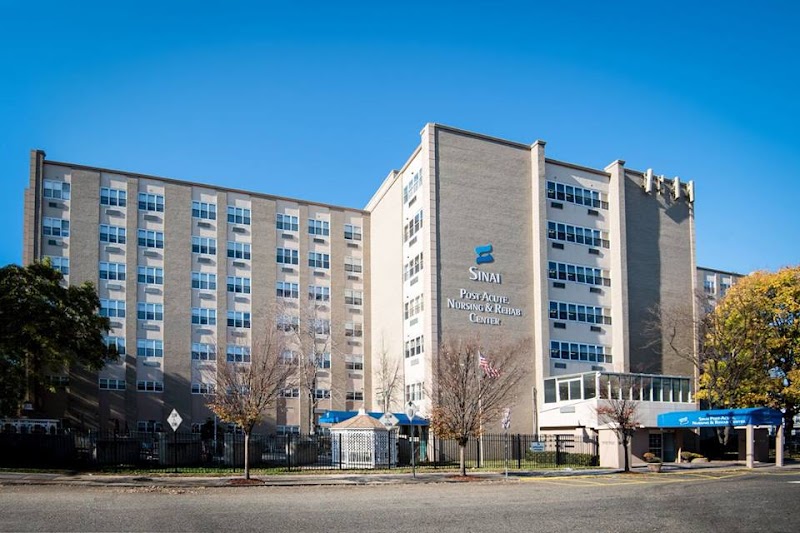
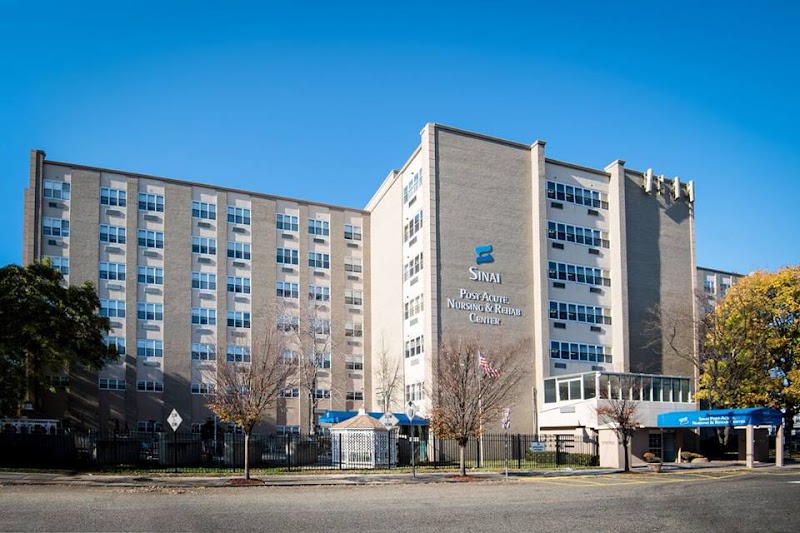
SINAI POST-ACUTE NURSING & REHAB CENTER

65 JAY STREET, NEWARK, NJ 07103 (973) 483-6800
For profit - Corporation 430 Beds PARAMOUNT CARE CENTERS Data: November 2025 6 Immediate Jeopardy citations
Trust Grade
0/100
#338 of 344 in NJ
Last Inspection: December 2023

Within standard 12-15 month inspection cycle. Federal law requires annual inspections.

Overview

Sinai Post-Acute Nursing & Rehab Center has received a Trust Grade of F, indicating poor performance with significant concerns. This places them at #338 out of 344 facilities in New Jersey and last among the 32 facilities in Essex County, which is quite alarming. However, the trend is improving, as the number of reported issues decreased from 9 in 2024 to 5 in 2025. Staffing is average with a turnover rate of 34%, which is better than the state average, but the facility has concerning RN coverage, ranking below 86% of other New Jersey facilities. The facility also faces serious issues, including $329,910 in fines, highlighting compliance problems, and critical findings where residents were not treated with dignity, such as being physically restrained and denied participation in activities, which poses risks to their wellbeing.

Trust Score
F
0/100
In New Jersey
#338/344
Bottom 2%
Safety Record
High Risk
Review needed
Inspections
Getting Better
9 → 5 violations
Staff Stability
○ Average
34% turnover. Near New Jersey's 48% average. Typical for the industry.
Penalties
✓ Good
$329,910 in fines. Lower than most New Jersey facilities. Relatively clean record.
Skilled Nurses
⚠ Watch
Each resident gets only 16 minutes of Registered Nurse (RN) attention daily — below average for New Jersey. Fewer RN minutes means fewer trained eyes watching for problems.
Violations
⚠ Watch
44 deficiencies on record. Higher than average. Multiple issues found across inspections.
★☆☆☆☆
1.0
Overall Rating
★★★☆☆
3.0
Staff Levels
★★★★☆
4.0
Care Quality
★☆☆☆☆
1.0
Inspection Score
Stable
2024: 9 issues
2025: 5 issues

The Good

  • 4-Star Quality Measures · Strong clinical quality outcomes
  • Full Sprinkler Coverage · Fire safety systems throughout facility
  • No fines on record
  • Staff turnover below average (34%)

    14 points below New Jersey average of 48%

Facility shows strength in quality measures, fire safety.

The Bad

1-Star Overall Rating

Below New Jersey average (3.2)

Significant quality concerns identified by CMS

Staff Turnover: 34%

12pts below New Jersey avg (46%)

Typical for the industry

Federal Fines: $329,910

Well above median ($33,413)

Significant penalties indicating serious issues

Chain: PARAMOUNT CARE CENTERS

Part of a multi-facility chain

Ask about local staffing decisions and management

The Ugly 44 deficiencies on record

6 life-threatening
Jun 2025 1 deficiency
CONCERN (D) 📢 Someone Reported This

A family member, employee, or ombudsman was alarmed enough to file a formal complaint

Potential for Harm - no one hurt, but risky conditions existed

ADL Care (Tag F0677)

Could have caused harm · This affected 1 resident

Complaint NJ00182662 Based on record review and interview it was determined that the facility failed to consistently provide ostomy care for a resident who was dependent on staff for colostomy managem...

Read full inspector narrative →
Complaint NJ00182662 Based on record review and interview it was determined that the facility failed to consistently provide ostomy care for a resident who was dependent on staff for colostomy management. The deficient practice was cited for 1 of 3 residents (Resident #1017) reviewed for the need of assistance with activities of daily living and was evidenced by the following. The surveyor reviewed the closed record for Resident #1017 which revealed the following information. The admission Record indicated the resident was admitted with diagnoses including but not limited to colon cancer and colostomy (a surgical operation in which a piece of the colon is diverted to an artificial opening in the abdominal wall to bypass a damaged part of the colon). The admission Minimum Data Set (MDS) assessment tool indicated the resident utilized an ostomy for bowel continence (Section H0400). The MDS indicated the resident was dependent upon staff for managing the ostomy (Section GG). The 12/22/25 toileting care plan for colostomy care included instructions for nursing to keep skin around the stoma clean and dry. A 2/9/25 facility Concern Form provided by the Director of Nursing (DON) described an incident in which the colostomy drainage bag had not been emptied during the 11 PM to 7 AM shift by the nurse on duty. On 6/12/25 at 10:11 AM the surveyor interviewed the Certified Nursing Assistant (CNA #1) who worked the oncoming 7 AM to 3PM shift. She stated when she came onto her shift she checked the resident who had a full colostomy drainage bag which had burst. She stated stool was on the resident and on the bed. CNA #1 alerted her nurse supervisor (Nurse #1). On 6/12/25 at 10:19 AM the surveyor interviewed Nurse #1 who had worked the oncoming 7 AM to 3 PM shift. Nurse #1 stated CNA #1 called her into the room of Resident #1017. She observed the full and open colostomy drainage bag. Nurse #1 stated she assessed the resident who did not have any excoriation of the surrounding skin. The resident was washed. Nurse #1 notified the resident's responsible party and also reassured the resident. Nurse #1 called the 11-7 nurse (Nurse #2) who was responsible for the resident's care. Nurse #2 stated she got busy and forgot to check on the resident. The surveyor was unable to speak with CNA #2 or Nurse #2 at the time of the survey. On 6/12/25 at 1:00 PM the surveyor discussed the concern with the DON and the Administrator. The surveyor reviewed the facility policy and procedure titled Ostomy Care (Colostomy, Jejunostomy, Illeostomy, Ileo Conduit), last reviewed September 2024. The policy statement read as follows: The facility strives to provide ostomy care to residents in a manner that promotes dignity and resident health by maintaining cleanliness and skin integrity, preventing odors, and preventing infections. NJAC 8:39-27.1(a); 27.2
May 2025 4 deficiencies
CONCERN (D) 📢 Someone Reported This

A family member, employee, or ombudsman was alarmed enough to file a formal complaint

Potential for Harm - no one hurt, but risky conditions existed

Comprehensive Care Plan (Tag F0656)

Could have caused harm · This affected 1 resident

**NOTE- TERMS IN BRACKETS HAVE BEEN EDITED TO PROTECT CONFIDENTIALITY** Complaint #: NJ186463 Based on observation, review of the medical record and other pertinent facility documents on [DATE], it wa...

Read full inspector narrative →
**NOTE- TERMS IN BRACKETS HAVE BEEN EDITED TO PROTECT CONFIDENTIALITY** Complaint #: NJ186463 Based on observation, review of the medical record and other pertinent facility documents on [DATE], it was determined that the facility failed to develop a comprehensive care plan for emotional services/support for a resident who witnessed the death of another resident. This deficient practice was identified for 1 of 6 residents reviewed for care plans (Resident#2), and was evidenced by the following: On [DATE] at 12:15 PM, the surveyor interviewed Resident #2, who stated Resident #1 and an unidentified resident came to their room and all three residents were smoking crack and cocaine. According to Resident #2, they observed Resident #1 in the chair falling to the side and Resident #2 notified the Licensed Practical Nurse (LPN #1), who told the resident and the unidentified resident to leave the room. Resident #2 observed LPN #1 perform cardiopulmonary resuscitation (CPR; emergency life-saving procedure performed when someone's breathing or heart beat has stopped) on Resident #1. On [DATE] at 9:22 AM, the surveyor interviewed Resident #2, who stated their anxiety and depression was up since Resident #1 passed away, and no one spoke to the resident regarding Resident #1's death. Resident #2 further stated that due Resident #1's death, they had smoked cocaine one time that they obtained from someone from outside the facility, who brought the cocaine into the facility. Resident #2 stated they were not mentioning names, and did not provide the date, time or location they smoked the cocaine. According to the admission Record face sheet (an admission summary), Resident #2 was admitted to the facility with diagnoses which included but were not limited to; mood disorder, opioid abuse, and anxiety disorder. According to the Minimum Data Set (MDS), an assessment tool dated [DATE], Resident #2 had a Brief Interview for Mental Status (BIMS) score of 13 out of 15, which indicated that the resident's cognition was intact. The MDS also indicated that Resident #2 was independent for activities of daily living (ADLs). A review of the resident's individualized comprehensive care plan (ICCP) initiated on [DATE], did not include emotional service's or support for witnessing the death of another resident. During an interview with the surveyor on [DATE] at 12:00 PM, the Social Worker (SW) stated that she spoke with Resident #2 on [DATE], and Resident #2 refused to have a conversation with her concerning the incident on [DATE], regarding witnessing the death of another resident. The SW further stated that she did not report the resident's refusal to the Director of Nursing (DON) or the Licensed Nursing Home Administrator (LNHA). During an interview with the surveyor on [DATE] at 12:10 PM, the DON stated it was the responsibility of the SW to update the care plan. The surveyor reviewed Resident #2's ICCP with the DON, who confirmed emotional support services should have been included for the resident after witnessing the death of another resident. A review of the facility's policy titled Care Plans, Comprehensive Person-Centered, dated revised 03/2022, indicated under Policy Interpretation and Implementation that Assessments of residents are ongoing and care plans are revised as information about the residents and the resident's conditions change. NJAC 8:39-11.2(i); 27.1(a)
CONCERN (D) 📢 Someone Reported This

A family member, employee, or ombudsman was alarmed enough to file a formal complaint

Potential for Harm - no one hurt, but risky conditions existed

Accident Prevention (Tag F0689)

Could have caused harm · This affected 1 resident

**NOTE- TERMS IN BRACKETS HAVE BEEN EDITED TO PROTECT CONFIDENTIALITY** Complaint #: NJ186463 Based on interviews, review of the medical records review and other pertinent facility documentation on [D...

Read full inspector narrative →
**NOTE- TERMS IN BRACKETS HAVE BEEN EDITED TO PROTECT CONFIDENTIALITY** Complaint #: NJ186463 Based on interviews, review of the medical records review and other pertinent facility documentation on [DATE] and [DATE], it was determined that the facility failed to ensure a.) adequate supervision for a Resident (Resident #1) with a known history of drug and drug paraphernalia (equipment needed for or connected with a particular activity) in the facility who had an unexpected death in the facility and was administered Narcan (drug used to reverse an opioid overdose) by nursing staff and b.) conduct and document a thorough investigation for incidents where Narcan was administered to prevent further accidents related to drug use. This deficient practice was identified for 1 of 2 residents reviewed for accidents and hazards (Resident #1), and was evidenced by the following: On [DATE] at 12:15 PM, the surveyor interviewed Resident #2, who stated on [DATE], Resident #1 and another unidentified resident came to Resident #1's room, and all three of the residents were smoking crack and cocaine. According to Resident #2, they observed Resident #1 in the chair falling to the side, so the resident notified the Licensed Practical Nurse (LPN #1), who told the resident and the unidentified resident to leave the room. Resident #2 stated they observed LPN #1 perform cardiopulmonary resuscitation (CPR; emergency life-saving procedure performed when someone breathing or heart beat stopped) on Resident #1. According to the admission Record face sheet (an admission summary), Resident #1 was admitted to the facility with diagnoses which included but were not limited to; major depressive disorder, opioid abuse, cocaine abuse, and bradycardia (slow heart rate). According to the Minimum Data Set (MDS), an assessment tool dated [DATE], Resident #1 had a Brief Interview for Mental Status (BIMS) score of 15 out of 15, which indicated that the resident's cognition was intact. The MDS also indicated that Resident #1 required setup and one-person assistance with most activities of daily living (ADLs) and was independent with locomotion on and off the unit. A review of Resident #1's individualized comprehensive care plan (ICCP) included a focus area dated [DATE], that the resident had a history of poly-substance abuse. The goals included that the resident will abide by the facility's rules and policies against the use of illegal substances through the next review date. Interventions included to: obtain an order for Narcan as needed (PRN) for suspicion of illicit drug use with signs of overdose; the physician will be notified of suspicion of overdose of illicit drug; psychology consultation to develop coping mechanisms to deal with addiction; monitor for signs and symptoms of drug use and overdose; the resident to receive random room search per facility policy; and the resident will receive random toxicology screening if found. A review Resident #2's ICCP included a focus area dated [DATE], for a history of poly-substance abuse and was presently on the methadone program. The goals included that the resident will abide by the facility's rules and policies against the use of illegal substances. Interventions include to: give the resident the opportunity to vent feelings related to addiction issues; identify activities or recreation specific to the resident to provide a distraction; the resident will receive random room searches as per facility policy; the resident will receive random toxicology screenings if found; the physician will be notified of suspicion of overdose of illicit drugs; and obtain an order for Narcan (PRN) for suspicion of illicit drug use with signs of overdose. On [DATE] at 2:15 PM, the surveyor interviewed the Director of Nursing (DON), who stated that she was aware Resident #1 was found in Resident #2's room on the 6th floor nursing unit unresponsive and Narcan was administered twice by LPN #1. The DON further stated that Resident #1 had a history of substance abuse. The DON stated Resident #2's room was searched by the staff for drugs and paraphernalia, but none were found. On [DATE] at 3:29 PM, during an interview with the the surveyor, the Licensed Nursing Home Administrator (LNHA) stated he was aware of Resident #1's unexpected death. The LNHA further stated the resident had a history of substance abuse, and the supervisor searched Resident #2's room and no drugs or paraphernalia were found. The LNHA stated that the DON should have conducted an internal investigation, and the Social Worker and the Registered Nurse (RN) Supervisor should have documented the incident in progress notes and interviewed Resident #2 about the incident. On [DATE] at 3:49 PM, the surveyor interviewed LPN #1, who stated that she responded to an adult emergency services on the 6th floor in Resident #2's room, and assisted the assistant supervisor with CPR and administered Narcan to Resident #1 twice. LPN #1 stated that she did not see any drugs or paraphernalia in the room. LPN #1 further stated she was not interviewed by the LNHA about the incident. On [DATE] at 4:43 PM, the surveyor conducted a follow-up interview with the DON, who stated that staff had searched the pocket of Resident #1 and no drugs or paraphernalia were found. The surveyor asked the DON if the facility conducted an investigation, and the DON stated that an investigation was not warrant at that time. On [DATE], the surveyor received an email from the DON with the following: Summary of Investigation and copies of accident/incident employee statements. The DON stated that a random canine (K9; police dog) search would be conducted on any residents with a suspicion of drugs. If residents were out on pass and returned to the facility, security would search all their bags. If drugs were found, they would notify the DON, or the supervisor and the police would be notified and given the drugs. On [DATE] at 11:00 AM, the surveyor interviewed the DON regarding the random K9 search. The DON stated that according to the facility's Drug Screening and Searches for Resident policy, once items such as drugs, drug paraphernalia, or pills were confiscated by security, the resident's out on pass (OOP) privilege were suspended for 30 days, and they were referred for Harm Reduction Counseling. According to the random K9 search on [DATE], Resident #2 was found with drugs paraphernalia and Depakote pills (prescription medication that can be used to treat psychological disorders). Resident #2 was seen by Harm Reduction Counseling on [DATE], and OOP was suspended on [DATE], and would resume on [DATE]. A review of the facility's ''Substance Abuse policy updated February 2025, included the following: Under: Policy Interpretations and Implementation: Resident identified as high risk for illegal drug use by the nursing department will be subject to have security conduct a search when returning from an authorized Out on Pass visit. On [DATE] at 11:27 PM, the surveyor interviewed the DON regarding residents identified as high risk, and the DON stated Resident #2 was considered high risk, and those were residents who were found with drugs and paraphernalia. The DON stated that staff were aware those residents were high risk, and staff would frequently make rounds (every two hours) and monitor for high traffic in their room. A review of the facility's policy titled Incident and Accident Report and Investigation updated [DATE], revealed the following: Under the Policy: 1. The facility staff will document all incidents and accidents, or any unusual occurrences experienced by the resident on an Incident/Accident Report. 2. The form must be completed immediately or no later than the shift that the incident occurred or when the event has been discovered. 3. Investigations must be started as soon as the event has been reported and a final disposition/ conclusion must be completed accordingly. A review of the facility's Administrator Job Description included under Responsibilities/Accountabilities to ensures that residents and families receive the highest quality of service in a caring and compassionate atmosphere which recognizes the individual's needs and rights . NJAC 8:39-27.1(a)
CONCERN (D) 📢 Someone Reported This

A family member, employee, or ombudsman was alarmed enough to file a formal complaint

Potential for Harm - no one hurt, but risky conditions existed

Deficiency F0726 (Tag F0726)

Could have caused harm · This affected 1 resident

Complaint #: NJ186463 Based on observation, interview, and record review, it was determined that the facility failed to ensure that a Licensed Practical Nurse (LPN) had the specific competencies and s...

Read full inspector narrative →
Complaint #: NJ186463 Based on observation, interview, and record review, it was determined that the facility failed to ensure that a Licensed Practical Nurse (LPN) had the specific competencies and skill sets necessary to care for a resident's pain management needs. This deficient practice was identified for 1 of 6 residents reviewed for resident needs (Resident #5), and was evidenced by the following: According to Resident #5's admission Record face sheet (an admission summary), the resident was admitted to the facility with diagnoses that included but were not limited to; displaced intertrochanteric fracture of the right femur (broken hip bone at the neck of the thigh bone causing the bone to shift or separate) and unspecified fracture of sacrum (lower back). According to the Minimum Data Set (MDS), an assessment tool dated 05/14/2025, Resident #5 had severe cognitive impairment. The MDS also indicated that Resident #5 required assistance from staff for completion of their activities of daily living (ADLs). A review of Resident #5's Order Summary Report (OSR) with an admission date of 05/20/2025, included a verbal order entry for Aspercreme lidocaine external patch 4% (lidocaine); apply to right hip topically in the morning for pain management and remove per schedule. A review of Resident #5's Medication Administration Record (MAR) dated 05/21/2025, included the lidocaine order to apply to the resident's right hip topically in the morning for pain management and remove per schedule. On 05/27/2025 at 10:15 AM, the Unit Manager (UM) and the surveyor were making rounds on the residents with lidocaine patches. The UM and the surveyor observed Resident #5 had a lidocaine patch on the right thigh. The resident's physician's order indicated to apply the lidocaine patch to the resident's right hip. At that time, the UM requested the Licensed Practical Nurse (LPN) to join them in Resident #5's room, and in the presence of the surveyor, read Resident #5's lidocaine order. The LPN confirmed the lidocaine patch was on the resident's right thigh and not on the right hip. On 05/27/2025 at 11:00 AM, the surveyor interviewed the Director of Nursing (DON), who stated the LPN should have followed the physician's order to place the lidocaine patch on the resident's right hip an not the right thigh. A review of the facility's policy titled Medication Administration dated revised April 2019, indicated . Medication are administered in accordance with prescribe orders, the individual administering the medication checks the label three (3) TIMES to verify the right resident, right medication, right dosage, right time and method (route) of administration before giving the medication . NJAC 8:39-25.2(a)
CONCERN (D) 📢 Someone Reported This

A family member, employee, or ombudsman was alarmed enough to file a formal complaint

Potential for Harm - no one hurt, but risky conditions existed

Deficiency F0740 (Tag F0740)

Could have caused harm · This affected 1 resident

**NOTE- TERMS IN BRACKETS HAVE BEEN EDITED TO PROTECT CONFIDENTIALITY** Complaint #: NJ186463 Based on interviews, review of medical records, and review of other pertinent facility documentation on [D...

Read full inspector narrative →
**NOTE- TERMS IN BRACKETS HAVE BEEN EDITED TO PROTECT CONFIDENTIALITY** Complaint #: NJ186463 Based on interviews, review of medical records, and review of other pertinent facility documentation on [DATE] and 5/2725, it was determined that the facility failed to provide a resident with behavioral healthcare services after the resident (Resident # 2) witnessed the death of another resident in their room after allegedly using illicit drugs. This deficient practice was identified for 1 of 5 residents reviewed for resident care (Resident #2), and was evidenced by the following: A review of the progress notes revealed that on [DATE] at approximately 6:00 PM, adult emergency services was called to the 6th floor nursing unit to Resident #2's room, where Resident #1 was found unresponsive. The Licensed Practical Nurse (LPN #1) entered Resident #2's room, and found Resident #1 unresponsive. Narcan (drug used to reverse opioid overdose) was administered twice by LPN #1, cardiopulmonary resuscitation (CPR; emergency life-saving procedure performed when someone's breathing or heartbeat has stopped) was initiated, and Resident #1 was pronounced dead at 6:59 PM by Emergency Services. According to the admission Record face sheet (an admission summary), reflected that Resident #2 was admitted to the facility with diagnoses that included but were limited to; major depressive disorder, unspecified mood (affective) disorder, opioid abuse, alcohol abuse, substance-induced mood disorder, schizoaffective disorder, and anxiety disorder. According to the Minimum Data Set (MDS), an assessment tool dated [DATE], Resident #2 had a Brief Interview for Mental Status (BIMS) score of 13 out of 15, which indicated that the resident's cognition was intact. The MDS also indicated Resident #2 was independent for activities of daily living (ADLs). A review of the resident's individualized comprehensive care plan (ICCP) dated [DATE], included a focus area that the resident had a history of poly-substance abuse and was presently on the methadone program. The goals included that the resident will abide by the facility's rules and policies against the use of illegal substances. Interventions included to: give the resident an opportunity to vent feelings related to addiction issues; identify activities or recreation specific to the resident to provide distraction; the resident will receive random room searches as per facility policy; the resident will receive random toxicology screenings if found; the physician will be notified on suspicion of overdose of illicit drug; and obtain an order for Narcan as needed (PRN) for suspicion of illicit drug use with signs of overdose. On [DATE] at 12:15 PM, the surveyor interviewed Resident #2, who stated Resident #1 and an unidentified resident came to their room, and all three residents were smoking crack and cocaine. According to Resident #2, they observed Resident #1 in the chair falling to the side and Resident #2 notified LPN #1, who told the resident and the unidentified resident to leave the room. Resident #2 observed LPN #1 perform CPR on Resident #1. On [DATE] at 9:22 AM, the surveyor interviewed Resident #2, who stated their anxiety and depression was up since Resident #1 passed away, and no one spoke to the resident regarding Resident #1's death. Resident #2 further stated that due Resident #1's death, they had smoke cocaine one time that they obtained from someone outside the facility who brought the cocaine into the facility. Resident #2 stated they were not mentioning names, and did not provide the date, time or location they smoked the cocaine. On [DATE] at 12:01 PM, the surveyor interviewed the Social Worker (SW), who stated that they spoke to Resident #2 on [DATE]. According to the SW, Resident #2 did not want to have a conversation with the SW regarding the incident. The SW stated she did not make further attempts to reach out to the resident after their refusal. The SW could not provide documentation of Resident #2's refusal for follow-up care post incident. On [DATE] at 12:10 PM, the surveyor interviewed the Director of Nursing (DON), who stated she was not aware the SW visited the resident on [DATE], and that they refused to have a conversation regarding the incident on [DATE]. The DON further stated the SW should have documented and did a Interdisciplinary Care Plan (IDCP) meeting (care plans of care created by representatives from several medical disciplines or specialties, each focus on a specific resident conditions, treatment goals, and mention for improvement outcomes) and discuss it in morning meeting. On [DATE] at 12:15 PM, the surveyor interviewed the Licensed Nursing Home Administrator (LNHA), who stated the SW spoke with Resident #2 on [DATE], regarding the incident, and the SW should have documented it in the progress notes. On [DATE] at 1:00 PM, the surveyor reviewed the progress notes which revealed that the Physician/Practitioner saw the resident on [DATE], and the note did not include psychosocial support. The resident was also seen by the Psychiatric Nurse Practitioner (NP) on [DATE], who recommended to start Abilify (antidepressant) 5 milligrams (mg) daily for schizoaffective disorder. A review of the facility's policy titled Incident and Accident Report and Investigation did not include a policy and procedure related to psychosocial support. A review of the facility's Social Worker Job Description included : Responsibilities/Accountabilities: 1. Work directly with residents and families experiencing personal and environmental difficulties or concerns related to the resident's physical or emotional condition. 2. Acts as a liaison between residents, families, outside agencies, and the facility Administrator to ensure that the resident's rights are maintained. 3. Ensured that residents receive the highest quality of service in a caring and compassionate atmosphere which recognizes the individuals need and rights . A review of the facility's Administrator Job Description included: Responsibilities/Accountabilities: Ensures that residents and families receive the highest quality of service in a caring and compassionate atmosphere which recognizes the individual's needs and rights . NJAC 8:39-27.1(a)
Aug 2024 2 deficiencies
CONCERN (D) 📢 Someone Reported This

A family member, employee, or ombudsman was alarmed enough to file a formal complaint

Potential for Harm - no one hurt, but risky conditions existed

Deficiency F0657 (Tag F0657)

Could have caused harm · This affected 1 resident

C #: NJ 175921 Based on record review, as well as review of pertinent facility documents on 7/31/24 and 8/1/24, it was determined that the facility failed to review and revise the care plan timely for...

Read full inspector narrative →
C #: NJ 175921 Based on record review, as well as review of pertinent facility documents on 7/31/24 and 8/1/24, it was determined that the facility failed to review and revise the care plan timely for 1 of 5 sampled residents (Residents #2) reviewed for care plans. This deficiency is evidenced by the following: 1. The admission Record for Resident #2, showed that the Resident was initially admitted to the facility with diagnoses that included but were not limited to: Displaced Oblique Fracture of Shaft of Right Fibula, Muscle Wasting and Atrophy, Opioid Dependence, and Cocaine Abuse. The Minimum Date Set (MDS), an assessment tool dated 7/3/24, showed that the resident was cognitively intact with a BIMS of 15 and required a partial/moderate assistance from staff with Activities of Daily Living (ADL). Review of Resident #2's incident report (RI #1) and corresponding documentation from the progress notes (PN), revealed that on 7/1/24 at 2:20 p.m. resident was found on floor grunting, not responding to simple commands, Narcan was administered once, resident responded after 3 minutes. Subsequently, on 7/7/24 at 4:35 p.m. IR #2 indicated that the resident was found unresponsive and 4 mg [milligram] Narcan given x3 [3 times]. Review of Resident #2's progress notes (PN) dated 7/1/24 at 5:42 p.m., documented by the Licensed Practical Nurse (LPN) RESIDENT WAS FOUND LEHARGIC IN PRONE POSITION ON THE FLOOR IN HER ROOM. PRN NARCAN WAS ADMINISTERED (Draft). The PN further indicated that on 7/8/24 at 10:05 p.m., documented by a Registered Nurse (RN #1) Resident was found unresponsive 4mg of Narcan 3 were given, resident regain conscious and verbally responsive .resident is alert and stable, no injury noted. The Care Plan (CP) initiated on 6/27/24, showed that the Resident had a risk for falls evidenced by difficulty walking and muscle weakness, and has a history of poly-substance abuse. The facility failed to revise care plan after resident had a fall on 7/1/24. In addition, the CP was not reviewed and/or revised to reflect the overdoses on 7/1/24 and 7/7/24. During an interview with Unit Manager/LPN (LPN #1), who was assigned on the 4th floor, on 8/1/24 at 1:21 pm., she confirmed the aforementioned incident on 7/1/24 at 5:42 p.m. and confirmed that she did not update the (CP). During an interview with the Director of Nursing (DON) with Assistant DON (ADON #1 and #2), Assistant Administrator, and the Administrator on 8/1/24 at 1:58 p.m., the DON stated that the CP had to be updated within 24 to 48 hours when there is a change in condition. The policy updated 6/2023, titled Care Plan, showed under Procedure .#11: Care plans will be updated timely and necessary revisions will be made . NJAC 8:39-11.2(2)
CONCERN (D) 📢 Someone Reported This

A family member, employee, or ombudsman was alarmed enough to file a formal complaint

Potential for Harm - no one hurt, but risky conditions existed

Pharmacy Services (Tag F0755)

Could have caused harm · This affected 1 resident

**NOTE- TERMS IN BRACKETS HAVE BEEN EDITED TO PROTECT CONFIDENTIALITY** C#: NJ 175921 Based on interviews and record review, as well as review of pertinent facility documents on 7/31/24 and 8/1/24 it ...

Read full inspector narrative →
**NOTE- TERMS IN BRACKETS HAVE BEEN EDITED TO PROTECT CONFIDENTIALITY** C#: NJ 175921 Based on interviews and record review, as well as review of pertinent facility documents on 7/31/24 and 8/1/24 it was determined that the facility failed to follow the Physician's order and to implement the facility policy titled Medication Administration Policy for 2 residents (Resident #3 and Resident #4), reviewed for medication administration. This deficient practice was evidenced by the following: 1. According to the admission RECORD (AR), Resident #3 was admitted with diagnosis that included but were not limited to Surgical Aftercare Following Surgery On The Skin and Subcutaneous Tissue. According to the Resident's Minimum Data Set (MDS), an assessment tool dated 5/7/24, Resident #3 had a Brief Interview for Mental Status (BIMS) score of 15, indicating that the resident's cognition was intact. The care plan (CP), initiated on 5/1/24 and revised on 5/20/24, indicated that Resident #3 had an actual skin breakdown, potential for deterioration and further skin breakdown. Interventions included but not limited to administer treatment as ordered. A review of the form ORDER SUMMARY REPORT (OSR) revealed an order to cleanse site with normal saline, pat dry, apply light coat of Silvadene cream to incision sites, cover with dry gauze wrap with kerlix then ace wrap daily (wipe previous days Silvadene off prior to reapplication) every evening shift for surgical care, dated 6/4/24. A review of Resident #3's Medication Administration Record (MAR), for 7/2024, confirmed the aforementioned physician order. The MAR revealed that on 7/5/24, 7/12/24, and 7/19/24 there was no documentation to indicate that the treatment was provided. In addition, there was no documented evidence in Resident# 3's Medical Record (MR) to indicate that the Primary Care Physician (PCP) was notified on the aforementioned dates. 2. According to the AR, Resident #4 was admitted with diagnosis that included but were not limited to Opioid Dependence. According to the MDS, dated [DATE], Resident #4 had a BIMS score of 15, indicating that the resident's cognition was intact. The CP was reviewed and revised on 5/6/24 and revised on 5/20/24,this indicated that Resident #4 had a history of poly-substance abuse and was on methadone program. A review of the form OSR revealed an order for Methadone Oral Solution 10 milligram (mg)/5 Milliliter (ml), give 65 mg by mouth in the morning for Opioid Dependence ordered on 1/4/24. A review of Resident #4's MAR for 7/2024, confirmed the aforementioned physician order. The MAR revealed that on 7/19/24, there was no documentation to indicate that the Methadone was administered. In additional, there was no documented evidence in the Resident's MR to indicate that the PCP was notified on the aforementioned date. During an interview with the surveyors on 8/1/24 at 21:46 p.m., the Unit Manager/Licensed Practical Nurse (UM/LPN #1) stated that the nurses were expected to administer the medication according to the PCP order. The UM/LPN further stated that nurses were also expected to document in the resident's MR the reason why the medications were not administered and if the PCP was notified. The UM/LPN explained that if not documented, means it was not done. During an interview with the surveyors on 8/1/24 at 2:05 p.m., the Director of Nursing (DON), in the presence of Assistant DON (ADON#1), ADON #2, and Administrator stated that nurses were expected to follow the Physician's order. The DON further stated that if the medication was not administered, the nurses were to call the residents PCP and document in the resident's MR. The DON explained that if not documented, means it was not done. A review of the facility policy titled, Medication Administration Policy, reviewed on 04/2024, indicated POLICY All medications will be prepared .and administered in a manner consistent with the general requirements outlined in this policy .K. After Medication Administration: 1. Document necessary medication administration /treatment information (e.g., when medications are administered, medication injection site, refused medications and reasons, prn medications, etc.) on appropriate forms . N.J.A.C 8:39-29.2(d)
Jul 2024 7 deficiencies 6 IJ (1 facility-wide)
CRITICAL (K) 📢 Someone Reported This

A family member, employee, or ombudsman was alarmed enough to file a formal complaint

Immediate Jeopardy (IJ) - the most serious Medicare violation

Resident Rights (Tag F0550)

Someone could have died · This affected multiple residents

**NOTE- TERMS IN BRACKETS HAVE BEEN EDITED TO PROTECT CONFIDENTIALITY** Complaint # NJ 175415 Based on observation, interview, record review, and review of pertinent facility documents, it was determi...

Read full inspector narrative →
**NOTE- TERMS IN BRACKETS HAVE BEEN EDITED TO PROTECT CONFIDENTIALITY** Complaint # NJ 175415 Based on observation, interview, record review, and review of pertinent facility documents, it was determined that the facility failed to ensure that 11 of 11 Justice Involved Residents (JIR) were afforded the autonomy to participate in group activities, community dining, serving meals in a dignified manner, freely communicate with visitors, leave rooms at will and be free from physical restraints for (Resident #1, 2, 3, 4, 5, 6, 7, 8, 9, 10, and 11). The failure to treat residents respectfully and in a dignified manner had the likelihood to cause serious injury and psychological harm. This was cited as a pattern that immediately jeopardizes the health and safety of the JIR residents, as well as all other residents that reside in the facility which resulted in an IJ situation. The Immediate Jeopardy (IJ) began on 07/02/24, the date that the first JIR (Resident #1) was admitted to the facility and was secluded by law enforcement officers of the Bureau of Prison (BOP). The IJ was identified on 07/12/24, when Residents #1, 2, 3, 4, 5, 6, 7, 8, 9, 10, and 11 were observed being secluded to their rooms, guarded by law enforcement officers, were not permitted to participate in group activities and community dining. Further observation revealed the JIRs were not allowed to intermingle or communicate with other residents or visitors and were restricted from leaving their rooms at will. The facilities Licensed Nursing Home Administrator (LNHA) was informed of the IJ on 07/12/24 at 3:49 PM, that an immediate jeopardy existed which also constituted Substandard Quality of Care (SQC) for 42 Code of Federal Regulations (CFR) 483.10 (a) (1). A facility must treat each resident with respect and dignity and care for each resident in a manner and an environment that promotes maintenance or enhancement of their quality of life and recognize each residents' individuality. The facility must protect and promote the rights of the resident. An acceptable removal plan was received on 7/29/24 at 9:59 AM, indicating the action the facility will take to prevent serious harm from occurring or recurring. The facility implemented a corrective action plan to remediate the deficient practice including: All Justice Involved Residents were discharged from the facility as of 7/26/24. The facility will no longer admit Justice Involved Residents. The survey team verified the removal plan on-site on 7/29/24 and determined the IJ was removed as of 7/26/2024. The findings were as follows: Reference: The Centers for Medicare and Medicaid Services (CMS) updated Guideline to Surveyors on Federal Requirements for Providing services to Justice Involved individuals, revised 12/23/2016 S & C 16-21-ALL documented Skilled Nursing Facilities must permit residents to have autonomy and choice to the maximum extent practicable regarding how they wish to live their everyday lives and receive care with the same rights as nursing home residents. The LNHA provided the surveyors with multiple facility policies including The dining environment and activity programs. The dining environment policy with a revised date of January 2024, included under the policy section, A pleasant environment is essential to promoting a positive dining experience. The activity programs policy with a revised date of February 2024, included under the policy interpretation and implementation section, 1. Our activity programs are designed to encourage maximum individual participation and are geared to the individual resident's needs. 3. Our activity programs consist of individual and small and large group activities that are designed to meet the needs and interests of each resident and include, as a minimum: J) Social activities are scheduled to increase self-esteem, to stimulate interest and friendships, and provide fun and enjoyment. The facility policy dated 02/2024 and titled, Resident Rights indicated that all residents would be treated equally regardless of age, race, sex, ethnicity, religion, culture, language, physical or mental disability, socioeconomic status, sex, sexual orientation, or gender identity or expression. The resident has a right to be treated with dignity and respect including being free from any physical or chemical restraints imposed for the purposes of discipline or convenience. The resident has a right to interact with members of the community and participate in community activities both inside and outside the facility . the right to receive visitors of his or her own choosing subject to the resident's right to deny visitation when applicable .right to participate in family groups .the right for personal privacy includes accommodations, medical treatment, telephone communications, personal care, visits and meetings of family and residents groups. 1. According to the admission Record, Resident #1 was admitted to the facility with diagnoses which included osteomyelitis (infection of the bone) of the right hand. According to the admission assessment dated [DATE], Resident #1 was assessed as having no behaviors, and utilized no physical or chemical restraints. According to the admission Progress note dated 07/02/24 at 3:20 PM, revealed the resident was alert and oriented. A review of the Individualized Care Plans (CP) revealed no care plans were initiated for the supervision of Activities of Daily Living (ADL) care, restraints, activities, or seclusion. Further review of the medical record revealed that Resident #1 did not sign the facility admission Agreement (AA). The Comprehensive Minimum Data Set (MDS) was in progress and unavailable for review. 2. According to the admission Record Resident #2 was admitted to the facility with diagnoses which included multiple sclerosis (autoimmune disease). According to the admission assessment dated [DATE], Resident #2 was assessed as having no behaviors, and utilized no physical or chemical restraints. A review of the CP revealed no CP were initiated regarding supervision with ADLs, restraints, activities, or seclusion. Further review of the medical record revealed that Resident #2 did not sign the facility AA. The Comprehensive Minimum Data Set (MDS) was in progress and unavailable for review. 3. According to the admission Record Resident #3 was admitted to the facility with diagnoses which included polyneuropathy (peripheral nerve damage). According to the admission assessment dated [DATE], Resident #3 was assessed as having no behaviors, and utilized no physical or chemical restraints. A review of the CP revealed no CP were initiated regarding supervision with ADLs, restraints, activities, or seclusion. Further review of the medical record revealed that Resident #3 did not sign the facility AA. The Comprehensive Minimum Data Set (MDS) was in progress and unavailable for review. 4. According to the admission Record Resident #4 was admitted to the facility with diagnoses which included polyneuropathy. According to the admission assessment dated [DATE], the resident was assessed as having no behaviors and utilized no physical or chemical restraints. The admission Assessment indicated the resident was independent in their decision-making. A review of the CP revealed no CP were initiated regarding supervision with ADLs, restraints, activities, or seclusion. According to the admission summary progress note dated 07/02/24 at 1:37 PM, revealed the resident was alert and oriented. Further review of the medical record revealed that Resident #4 did not sign the facility AA. The Comprehensive Minimum Data Set (MDS) was in progress and unavailable for review. 5. According to the admission Record, Resident #5 was admitted to the facility with diagnoses which included local infection of the skin and subcutaneous tissue. According to the admission assessment dated [DATE], the resident was assessed as having no behaviors and utilized no physical or chemical restraints. According to an Interdisciplinary progress note dated 07/10/24, revealed the resident was alert and verbally responsive. A review of the CP revealed no CP were initiated regarding supervision with ADLs, restraints, activities, or seclusion. Further review of the medical record revealed that Resident #5 did not sign the facility AA. The Comprehensive Minimum Data Set (MDS) was in progress and unavailable for review. 6. According to the admission Record Resident #6 was admitted to the facility with diagnoses which included polyneuropathy. According to the admission assessment dated [DATE], the resident was assessed as having no behaviors and utilized no physical or chemical restraints. According to the Social Service progress note dated 07/03/24 at 9:45 PM, resident #6 was assessed as alert and oriented with a Brief Interview for Mental Status of 15 out of 15, indicating that the resident had an intact cognition. A review of the CP revealed no CP were initiated regarding supervision with ADLs, restraints, activities, or seclusion. Further review of the medical record revealed that Resident #6 did not sign the facility AA. The Comprehensive Minimum Data Set (MDS) was in progress and unavailable for review. 7. According to the admission Record Resident #7 was admitted to the facility with diagnoses which included low back pain. According to the admission assessment dated [DATE], the resident was assessed as having no behaviors and utilized no physical or chemical restraints. According to the admission summary note dated 07/04/24 at 11:12 AM, revealed the resident was alert, and able to verbalize their needs to staff. A review of the CP revealed no CP were initiated regarding supervision with ADLs, restraints, activities, or seclusion. Further review of the medical record revealed that Resident #7 did not sign the facility AA. The Comprehensive Minimum Data Set (MDS) was in progress and unavailable for review. 8. According to the admission Record Resident #8 was admitted to the facility with diagnoses which included dilated cardiomyopathy (disease of the heart muscle). According to the admission assessment dated [DATE], the resident was assessed as having no behaviors and utilized no physical or chemical restraints. According to the admission progress note dated 07/09/24 at 2:40 PM, revealed the resident was alert, responsive and able to make their needs known. A review of the CP revealed no CP were initiated regarding supervision with ADLs, restraints, activities, or seclusion. Further review of the medical record revealed that Resident #8 did not sign the facility AA. The Comprehensive Minimum Data Set (MDS) was in progress and unavailable for review. 9. According to the admission Record Resident #9 was admitted to the facility with diagnoses which included dementia. According to the admission assessment dated [DATE], the resident was assessed as having no behaviors and utilized no physical or chemical restraints. According to the admission progress note dated 07/10/24 at 1:36 PM, revealed the resident was alert with periods of forgetfulness. A review of the CP revealed no CP were initiated regarding supervision with ADLs, restraints, activities, or seclusion. Further review of the medical record revealed that Resident #9 did not sign the facility AA. The Comprehensive Minimum Data Set (MDS) was in progress and unavailable for review. 10. According to the admission Record Resident #10 was admitted to the facility with diagnoses which included clostridium difficile colitis (C. diff) (bacterial infection of the colon). According to the admission assessment dated [DATE], the resident was assessed as having no behaviors and utilized no physical or chemical restraints. The admission summary progress note dated 07/02/24 at 2:40 PM, revealed the resident was alert and oriented x [times] 3 and able to make their own decisions. A review of the CP revealed no CP were initiated regarding supervision with ADLs, restraints, activities, or seclusion. Further review of the medical record revealed that Resident #10 did not sign the facility AA. The Comprehensive Minimum Data Set (MDS) was in progress and unavailable for review. 11. According to the admission Record Resident #11 was admitted to the facility with diagnoses which included polyneuropathy. According to the admission assessment dated [DATE], the resident was assessed as having no behaviors and utilized no physical or chemical restraints. According to the progress note dated 07/08/24 at 4:08 PM, revealed the resident was alert verbally responsive and able to make their needs known. A review of the CP revealed no CP were initiated regarding supervision with ADLs, restraints, activities, or seclusion. Further review of the medical record revealed that Resident #11 did not sign the facility AA. The Comprehensive Minimum Data Set (MDS) was in progress and unavailable for review. On 07/11/24 at 10:30 AM, resident interviews were attempted by surveyor #1 and #2, and was prohibited by the law enforcement officers. A supervisor of the U.S. Marshall's was interviewed and stated that all justice involved residents required approval by the U.S. Attorney's office or judge to have interviews or visitation. On 07/11/24 at 11:05 AM, Surveyor #2 was allowed by the prison guard to interview Resident #4 who stated they were not allowed to shower unless supervised by a prison guard. The resident stated that they had to eat meals in their room with disposable utensils and was secluded to the room and not allowed to intermingle with other residents. Resident #4 stated that they could only talk on the phone privately if speaking with their lawyer, otherwise they had to be supervised. On 07/11/24 at 11:12 AM, Surveyors #1 and #2 interviewed Resident #1, who stated that they had to eat their meals inside the room and was only allowed to leave the room for showers. On 07/11/24 at 11:42 AM, Surveyor #1 and Surveyor #2 interviewed the Director of Social Work (DSW) who stated that she had been employed by the facility for about one year. She explained what her role was when residents were admitted to the facility and stated that during the admission process, she performed a social service assessment with the residents. She explained the process of completing an advanced directive, discharge planning and held Care Plan meetings. She stated that when the JIR were admitted to the facility she provided them with a list of resident rights, advanced directives, billing information and pain management. She stated that based on federal regulations in nursing homes keeping a resident in the room guarded and not being able to freely leave the room was a form a resident seclusion. She stated that the JIR residents were being isolated for safety reasons and that that was against the federal regulations. On 07/12/24 at 09:30 AM, Surveyors #3, #4, and #5 interviewed the 3rd floor Licensed Practical Nurse Unit Manager (LPN/UM), who stated the JIRs are served all their meals on disposable plates, utensils and cups as well as having their meals checked by the prison guards prior to serving. The LPN/UM further stated the JIR's shower schedule was Tuesday and Thursday in the evening and the prison guards stayed in the shower room with the JIR. On 07/12/24 at 09:40 AM, Surveyors #3 and #5 attempted resident interviews with Resident #8 and #9, but were told by the prison guard that interviews were not permitted but the surveyors could observe the JIRs through the doorway of their rooms. Surveyor #5 observed Resident #8's breakfast meal tray on the bedside table, the resident's meal was served on a disposable tray with paper plates, cups, and utensils. Resident #8 was observed in the room in wheelchair with an ankle restraint connected by a chain to the resident's bed. Resident #9 was observed in bed with an ankle restraint connected by a chain to the resident's bed. At that time, the surveyors observed that the non JIRs on the unit were utilizing non disposable trays, and regular dishware (plates, cups and utensils). On 07/12/24 at 09:45 AM, Surveyor #5 interviewed the Licensed Practical Nurse (LPN #1) who was the nurse for both Resident #8 and #9. LPN #1 stated the JIRs stay in their rooms all day except on shower days. LPN #1 stated the JIRs do not participate in group activities, go into the main dining area, and did not believe they were allowed visitors. On 07/12/24 at 10:10 AM, Surveyor #5 reviewed the electronic medical record (EMR) for Resident #8 and #9. Resident #8 had a Physician Order (PO) with a start date of 7/8/24 for, recreation as tolerated. Resident #9 had a PO with a start date of 7/5/24 for, recreation as tolerate. However, further review of the medical record revealed there was no documented recreation screen/assessment, notes or care plans for Resident # 8 and #9. NJAC 8:39-4.1(a) 11
CRITICAL (K) 📢 Someone Reported This

A family member, employee, or ombudsman was alarmed enough to file a formal complaint

Immediate Jeopardy (IJ) - the most serious Medicare violation

Deficiency F0557 (Tag F0557)

Someone could have died · This affected multiple residents

**NOTE- TERMS IN BRACKETS HAVE BEEN EDITED TO PROTECT CONFIDENTIALITY** Complaint # NJ 175415 Based on observation, interview, record review, and review of pertinent facility documents, it was determi...

Read full inspector narrative →
**NOTE- TERMS IN BRACKETS HAVE BEEN EDITED TO PROTECT CONFIDENTIALITY** Complaint # NJ 175415 Based on observation, interview, record review, and review of pertinent facility documents, it was determined that the facility failed to ensure that residents were treated in a dignified and respectful manner 11 of 11 Justice Involved Residents (JIR) by physically restraining, secluding the residents from participating in group activities, community dining, intermingling with other residents, communicating with visitors and leaving the room at will. This was cited as a pattern that immediately jeopardizes the health and safety of the JIR residents, as well as all other residents that reside in the facility which resulted in an Immediate Jeopardy (IJ) situation. The Immediate Jeopardy (IJ) began on 07/02/24, the date that the first JIR (Resident #1) was admitted to the facility and was secluded to the room by law enforcement officers of the Bureau of Prison [BOP]. The IJ situation was identified on 07/12/24, when Residents #1, 2, 3, 4, 5, 6, 7, 8, 9, 10 and 11 were observed being secluded to their rooms guarded by law enforcement officers, not permitted to participate in group activities and community dining, being served meals in a dignified manner, intermingling with other residents, communicating with visitors, and leaving the room at will. The facilities Licensed Nursing Home Administrator (LNHA) was informed of the IJ situation on 07/12/24 at 3:49 PM, that an immediate jeopardy situation existed. An acceptable removal plan was received on 7/29/24 at 9:59 AM, indicating the action the facility will take to prevent serious harm from occurring or recurring. The facility implemented a corrective action plan to remediate the deficient practice including: All Justice Involved Residents were discharged from the facility as of 7/26/24. The facility will no longer admit Justice Involved Residents. The survey team verified the removal plan on-site on 7/29/24 and determined the IJ was removed as of 7/26/2024. The findings were as follows: Reference: The Centers for Medicare and Medicaid Services (CMS) updated Guideline to Surveyors on Federal Requirements for Providing services to Justice Involved individuals, revised 12/23/2016 S & C 16-21-ALL, documented Skilled Nursing Facilities must permit residents to have autonomy and choice to the maximum extent practicable regarding how they wish to live their everyday lives and receive care with the same rights as nursing home residents. A review of a facility policy titled Resident Rights dated 02/2024, included under Policy Explanation and Compliance Guidelines that prior to or upon admission, the social service designee, or another designated staff member, will inform the resident of the resident's rights and responsibilities. 2. Exercise of rights. The resident has the right to exercise his or her rights as a resident of the facility and as a citizen or resident of the United States. 5. Respect and Dignity. The resident has a right to be treated with respect and dignity including the right to be free of any physical or chemical restraint . 6. Self-determination. The resident has the right to, and the facility must promote and facilitate residents' self-determination through support of resident's choice, including but not limited to the right to choose activities, make choices about aspect of his or her life, right to interact with members of the community both inside and outside the facility, and the right to receive visitors. 7. Information and communication. The resident has the right to be informed of his or her rights and of all the rules and regulations governing resident conduct and responsibilities during his or her stay in the facility. 8. Privacy and confidentially. The resident has a right to personal privacy and confidentiality of his or her personal and medical records. Personal privacy includes accommodations, medical treatment written and telephone communication, personal care, visits, and meetings of family and resident groups. The surveyor reviewed Resident # 1, 2, 3, 4, 5, 6, 7, 8, 9, 10, and 11's medical records. 1. Review of the admission Record (AR), Resident # 1 was admitted to the facility with diagnoses which included but was not limited; to osteomyelitis (infection of the bone) of the right hand. Review of an admission progress note dated 07/02/2024 at 3:20 PM, revealed that Resident #1 was alert and oriented. Review of the admission Assessment (AA) dated 07/02/2024, Resident #1 was assessed as not having any behaviors or required physical or chemical restraints, however Resident #1 was observed by Surveyor #1 and Surveyor #2 on 07/11/24 at 11:04 AM, wearing metal ankle cuffs. There were no consents for the use of metal ankle cuffs. Review of the physician's orders (PO) reflected that there were no orders for the use of metal ankle cuffs, however a PO order dated 07/02/24, reflected an order to monitor skin integrity under the cuff area every shift. Review of the resident's Individualized Care Plans (CP) dated 07/02/24, which revealed that a CP was not implemented for the use of restraints. The CP did not address that the resident required constant supervision from the detention guards for all aspects of activities of daily living (ADLs). The CP did not address that the resident was not permitted to leave the room unless for showering and accompanied by the detention guards and there was no documentation on the CP to address restrictions from attending community activities and community dining. A comprehensive Minimum Data Set (MDS) and assessment tool that facilitates a resident's care, was not yet completed. Resident #1 did not sign the facility admission Agreement,a contract which included all documents that a resident or responsible person must sign at the time of, or as a condition of, admission). 2. According to the AR, Resident #2 was admitted to the facility with the diagnoses which included but was not limited to multiple sclerosis (autoimmune disease). Review of the AA dated 07/05/2024, Resident #2 was assessed as not having any behaviors or required physical or chemical restraints, however Resident #2 was observed by Surveyor #1 and Surveyor #2 on 07/11/24 at 10:44 AM, wearing metal ankle cuffs. There were no consents for the use of metal ankle cuffs. Review of the resident's CP dated 07/05/24, revealed that a CP was not implemented for the use of restraints. The CP did not address that the resident required constant supervision from the detention guards for all aspects of activities of daily living (ADLs). The CP did not address that the resident was not permitted to leave the room unless for showering and accompanied by the detention guards and there was no documentation on the CP to address restrictions from attending community activities and community dining. Review of the physician's orders (PO) reflected that there were no orders for the use of metal ankle cuffs, however the Treatment Administration Record (TAR) reflected an order dated 07/11/24, to check skin integrity under bilateral ankle cuffs every shift. A comprehensive MDS was not yet completed. Further review of the medical record revealed that Resident #1 did not sign the facility admission Agreement. 3. According to the AR, Resident #3 was admitted to the facility on [DATE] with diagnoses which included but not limited; to polyneuropathy. Review of the AA dated 07/05/24 revealed Resident #3 assessed as not having any behaviors or required physical or chemical restraints. A review of a Progress Note dated 07/05/24, revealed Resident # 3 was alert and verbally responsive. A review of the Care Plan initiated on 07/05/24 revealed no Care Plans were initiated regarding supervision with Activities of Daily Living, restraints, activities, or seclusion. A comprehensive MDS was not yet completed. Further review of the medical record revealed that Resident # 3 did not sign a facility admission Agreement. 4. According to the AR, Resident #4 admitted into the facility July 2024 with diagnoses which included but not limited to; polyneuropathy (simultaneous malfunction of many peripheral nerves throughout the body causes pain, tingling or burning sensations on the body), hypothyroidism (condition where the thyroid gland does not produce enough thyroid hormone), hypertension (elevated blood pressure), Atrial Fibrillation (irregular, rapid heart rate)and dysphagia (difficulty swallowing). Review of the AA dated 07/02/2024, revealed the resident was assessed as not having any behaviors, was independent with their decision-making, and required no physical or chemical restraints. A review of the admission summary progress note dated 07/02/24 at 01:37 PM, the resident was alert and oriented. Review of the resident's individualized comprehensive care plan date initiated 07/02/24, did not include any indicate focus areas that would address supervision from law enforcement with Activities of daily living, restraints, activities, or seclusion. Review of the order Summary Report revealed a physician order (PO) dated 7/11/24, to check the skin integrity on bilateral ankle cuffs every shift. Further review revealed that there were no orders for restraints and seclusion from the rest of the facility with continuous monitoring from law enforcement. Review of the MDS revealed a comprehensive MDS was not yet completed. Further review of the medical record revealed that Resident #4 did not sign the facility admission agreement. 5. According to the AR, Resident #5 was admitted to the facility with diagnoses which included but not limited to; local infection of the skin and subcutaneous tissue. Review of the AA dated 07/03/24, revealed that the resident was assessed as not having any behaviors or required physical or chemical restraints. A review of the Care Plan initiated on 07/03/24, revealed no Care Plans were initiated regarding supervision with Activities of Daily Living restraints, activities, or seclusion. Review of an Interdisciplinary progress note dated 07/10/24,revealed that Resident # 5 was alert and verbally responsive. Review of the Minimum Data Set revealed a comprehensive MDS was not yet completed. Further review of the medical record revealed that Resident #5 did not sign a facility admission Agreement. 6. According to the AR; Resident # 6 was admitted to the facility on [DATE] with diagnoses which included but not limited to; polyneuropathy. Review of the AA dated 07/03/24, revealed that the resident was assessed and did not have any behaviors or required physical or chemical restraints. Review of the Care Plan initiated on 07/03/24, revealed no Care Plans were initiated regarding supervision with ADLs, restraints, activities, or seclusion. Review of the MDS revealed a comprehensive MDS was not yet completed. Further review of the medical record revealed that Resident #6 did not sign a facility admission Agreement. 7. According to the AR, Resident # 7 was admitted to the facility on [DATE] with diagnoses which included but not limited; to low back pain. Review of the AA dated 07/04/24, revealed that the resident was assessed as not having any behaviors or required physical or chemical restraints. Review of a progress note dated 07/04/24, revealed that Resident #7 was alert and oriented. Review of the Care Plan initiated 07/04/24, revealed no Care Plans were initiated regarding supervision with Activities of Daily Living, restraints, activities, or seclusion. Review of the MDS revealed a comprehensive MDS was not yet completed. Further review of the medical record revealed that Resident #7 did not sign a facility admission Agreement. 8. According to the AR, Resident #8 was admitted to the facility on [DATE] with diagnoses which included but not limited to; dilated cardiomyopathy (disease of the heart muscle). Review of the AA dated 07/08/24, revealed revealed that the resident was assessed as not having any behaviors or required physical or chemical restraints. Review of the Care Plan initiated on 07/08/24, no Care Plans were initiated regarding supervision with Activities of Daily Living, restraints, activities, or seclusion. Review of a progress note dated 07/09/24, revealed that Resident #8 was alert and verbally responsive. Review of the MDS revealed a comprehensive MDS was not yet completed. Further review of the medical record revealed that Resident # 8 did not sign a facility admission Agreement. 9. According to the AR, Resident #9 was admitted to the facility with diagnoses which included but was not limited to dementia (a group of conditions characterized by impairment of at least two brain functions, such as memory loss and judgement). Review of the AA dated 7/5/2024, revealed the resident was assessed as having no behaviors and required no physical or chemical restraints, however on 07/11/24 at 10:43 AM, Surveyor #1 and Surveyor #2 observed the resident in the room with metal cuff affixed to both ankles. A review of the CP dated 07/05/24, revealed that a CP was not implemented for the use of restraints. The CP did not address that the resident required constant supervision from the detention guards for all aspects of activities of daily living (ADLs). The CP did not address that the resident was not permitted to leave the room unless for showering and accompanied by the detention guards and there was no documentation on the CP to address restrictions from attending community activities and community dining. Review of the progress admission note dated 07/10/2024 at 1:36 PM, revealed that the resident was alert with periods of forgetfulness. Review of the physician's orders (PO) reflected that there were no orders for the use of metal ankle cuffs, however the PO reflected an order dated 07/11/24, to check skin integrity under on bilateral ankle cuffs every shift. There were no consents found in the EMR regarding the use of ankle restraints. Review of the MDS revealed a comprehensive MDS was not yet completed. Further review of the medical record revealed that Resident #9 did not sign a facility admission Agreement. 10. According to the AR, Resident #10 was admitted on [DATE], and had diagnoses which included but not limited to; enterocolitis due to clostridium Difficile (inflammation of the digestive tract due to an infection), depression, anxiety disorder, and diverticulitis (inflammation or infection in digestive tract). Review of the admission summary progress note dated 07/02/24 at 2:40 PM, revealed the resident was alert and oriented x3 and was able to make their own decisions Review of the order Summary Report revealed physician orders (PO) dated 07/02/24, revealed no order for restraints or seclusion from the rest of the facility with continuous monitoring from law enforcement. Review of the resident's individualized comprehensive care plan date initiated 07/02/24, did not indicate focus areas that would address supervision of law enforcement with Activities of daily living, restraints, activities, or seclusion. Review of the MDS revealed a comprehensive MDS was not yet completed. Further review of the medical record revealed that Resident #10 did not sign a facility admission Agreement. 11. Review of the AR indicated that Resident #11 was admitted to the facility with diagnoses which but was not limited to; polyneuropathy (Damage to multiple peripheral nerves). Review the AA dated 07/03/24, revealed the resident was assessed as not having any behaviors and did not require physical or chemical restraints, however Resident #11 was observed by Surveyor #1 and Surveyor #2 on 07/11/24 at 10:44 AM, wearing metal ankle cuffs. A review of the CP dated 07/03/24 revealed that a CP was not implemented for the use of restraints. The CP did not address that the resident required constant supervision from the detention guards for all aspects of activities of daily living (ADLs). The CP did not address that the resident was not permitted to leave the room unless for showering and accompanied by the detention guards and there was no documentation on the CP to address restrictions from attending community activities and community dining. According to the progress note (PN) dated 07/08/24 at 4:08 PM, the resident was alert verbally responsive and able to make their needs known. Review of the physician's orders (PO) reflected that there were no orders for the use of metal ankle cuffs, however the TAR reflected an order dated 07/11/24, to check skin integrity under bilateral ankle cuffs every shift. On 07/11/24 at 09:00 AM, Surveyor #1 and Surveyor #2 interviewed the Director of Nursing (DON) who stated that she was notified by the facilities Cooperate Offices (CO) that JIRs were entering the facility. She stated that the facilities CO instructed the facilities administration (DON, Administrator, admission Coordinator, Social Services, Activities Director, and Unit Managers) not to mix the JIR with other residents and that they needed to be roomed together. She stated that the JIRs would be guarded by law enforcement and their ankles would be shackled with metal cuffs. She stated that the CO also instructed the facility not to mix or intermingle the JIR with other residents in the facility. On 07/11/2024 at 09:35 AM, Surveyor #1 and #2 interviewed the Minimum Data Set Coordinator (MDSC) who stated that the eleven (11) JIRs had entry MDSs completed, however comprehensive MDSs were not completed until day 14 of admission. The MDSC provided the surveyors with the entry MDSs for all 11 JIRs. On 07/11/2024 at 10:20 AM, Surveyor #1 and Surveyor #2 toured the fourth floor and interviewed Licensed Practical Nurse (LPN#1) who stated that he worked for an agency and that it was his first time working at the facility. LPN #1 stated that there were 6 (six) JIRs residing on his unit (Resident #2, 5, 6, 8, 9, and 11). He stated that there were police officers guarding the residents and that the residents wore metal ankle cuffs. He continued to explain that he was not sure what the residents' limitations were and was not aware of any behaviors that the JIRs had. He also added that he was not aware of any complaints about these residents from other residents that resided on his unit. On 07/11/2024 at 10:25 AM, Surveyor #1 observed the JIRs from the hallway. The six residents that resided on the fourth floor were observed in their rooms being guarded by law enforcement officers. On 07/11/24 at 10:30 AM, resident interviews were attempted by Surveyor #1 and #2, and was prohibited by the law enforcement officers. On 07/11/2024 at 10:30 AM, Surveyor #1 and Surveyor #2 interviewed a gentleman outside in the hallway who identified himself as a contracted Supervisor of the United States Marshalls (SUSM) (federal law enforcement agency in the United States, enforcing the federal courts). He stated that the surveyors were not allowed to enter the JIRs rooms and would not allow the surveyors to interview the JIRs on the 4 (four) [NAME] Unit (Resident #2, 5, 6, 8, 9, and 11). The SUSM explained to Surveyor #1 and Surveyor #2 that the JIRs were at the facility for rehabilitation services. He stated that all JIRs were to wear metal ankle restraints, and all were to be chained to the bed. He explained that wearing of ankle restraints depended on the resident's medical condition. He stated that all residents could not attend facility activities and could not intermingle with other residents and could only talk amongst other JIR residents. He stated that the JIR residents could only leave their rooms with escorts for showering or any other reason which was approved by the U.S Marshals. He stated that the JIRs must eat in their rooms and could not eat in the main dining room with the other residents. He stated that visitation of anyone must be approved by US Attorney or Judge. On 07/11/2024 at 10:42 AM, Surveyor #1 observed Resident #5 and #6 from the hallway lying in bed guarded by 3 (three) detention officers, wearing metal ankle restraints that were chained to the bed. On 07/11/2024 at 10:43 AM, Surveyor #1 observed from the hallway Resident #8 and #9 being guarded to the room by 3 detention officers and chained with metal ankle restraints. On 07/11/2024 at 11:00 AM, Surveyor #1 and Surveyor #2 toured the 3rd floor Unit. The surveyor interviewed LPN #2 who stated that there were three (3) JIRs on the unit (Resident #1, #4 and #10). A supervisor of the U.S. Marshalls was interviewed and stated that all justice involved residents required approval by the U.S Attorney's office or judge to have interviews or visitation. On 07/11/24 at 11:05 AM, Surveyor #1 and Surveyor #2 were given permission from the detention officer to interview Resident #4 who was observed in bed. The surveyor observed that the Resident #4 was wearing plastic ankle restraints. The guard in the room indicated that the resident had medical issues and was required to wear the plastic restraints (ankle cuffs) instead of metal. The surveyors observed the plastic ankle cuffs were shackled with a metal chain to the bed. Resident #4 stated that they were in the facility due to heart and vascular problems. The resident stated that food was good, used disposable utensils to eat meals, and that they were not allowed to leave the room, only for a shower which was supervise by a prison guard. The resident stated that they were not allowed to intermingle with other residents and were only able to talk on the phone privately with their attorney. Resident #4 stated that otherwise there was no privacy when speaking on the phone. On 07/11/2024 at 11:12 AM, Surveyor #1 and Surveyor #2 were given permission from the detention guard to interview Resident #1, who was cognitively intact. The resident stated that he/she was admitted to the facility with the diagnoses of osteomyelitis and colitis and needed intravenous antibiotic therapy. Resident #1 stated that they received meals in the room but was able to pick his/her own meals and that the facility honored food preferences. The resident stated that he/she had not left the room except for showering. The resident stated that this was the only time that he/she could leave the room. On 07/11/2024 at 11:20 AM, Surveyor #1 and Surveyor #2 interviewed Licensed Practical Nurse Unit Manager (LPN/UM #1) who stated that Resident #3 resided on the 6th floor and had the diagnoses of Methicillin Resistant Staphylococci Aureus (MRSA) in the right axilla (armpit) and was on oral antibiotics. She also identified the resident as a prisoner. She stated that Resident #3 was not allowed to come out of the room unless it was to shower and had to eat meals in the room. She stated that the resident had activities in the room but was not allowed to attend activities in the main activity room because there was no intermingling with prisoners and LTC residents. LPN/UM #1 stated that Resident #7 also resided on the 6th floor and had a history of back pain. She stated that Resident #7's restrictions were the same as Resident #3. On 07/11/2024 at 11:35 AM, Surveyor #1 and Surveyor #2 interviewed the Director of Recreation (DOR) who stated that she was informed by the Licensed Nursing Home Administrator (LNHA) that when the JIR were admitted to the facility that she was to have no interactions with them. She stated that she was told not to complete an activities assessment on admission. She stated that she provided the JIR residents with a basket of puzzles and cards on admission, however the residents were not to attend any activities out of their rooms. On 07/11/24 at 11:42 AM, Surveyor #1 and Surveyor #2 interviewed the Director of Social Work (DSW) who stated that she had been employed by the facility for about 1 (one) year. She explained what her role was when residents were admitted to the facility and stated that during the admission process, she performed a social service assessment with the resident. Explained the process of completing an advanced directive, discharge planning and held Care Plan meetings. She stated that when the JIR were admitted to the facility she provided them with a list of resident rights, advanced directives, billing information and pain management. She stated that based on federal regulations in nursing homes keeping a resident in the room guarded and not being able to freely leave the room was a form of resident seclusion. She stated that the JIR residents were being isolated for safety reasons and that that was against the federal regulations. On 07/11/24 at 12:20 PM, during an interview with Surveyor # 1 the LNHA stated that shackles were considered a restraint. Further, he confirmed that seclusion, restriction of visitors, being served food with plastic and paper products and requiring supervision during activities of daily living were all violations of federal regulations for Long-Term Care. He concluded that if a long-term care resident was not able to intermingle with other residents, then that would be a form of seclusion. On 07/12/2024 at 9:15 AM, Surveyor #3, #4, and #5 toured the third floor and observed armed guards standing in the hallway near Resident #1, Resident #4 and Resident #10's rooms. Further observation revealed that there were armed guards standing inside the rooms. Surveyor # 4 observed residents #4 and #10 from the hallway, the names on the door were not the names of the residents identified as Resident #4 and #10 in the beds. The residents were observed to be covered with blankets and the guards prevented the surveyor from entering the rooms and from interviewing the residents. On 07/12/2024 at 9:18 AM, Surveyor #4 interviewed Licensed Practical Nurse #2 (LPN #2), who stated she could give the residents medication and the guards would identify the justice involved residents (JIR), and the guards would watch her give the medication to the residents. LPN #2 further stated that there were always two guards present, and one guard would observe the nursing care and staff was not allowed to pull the curtain to provide privacy. She further stated that she and all the staff are supervised by the Feds. On 07/12/2024 at 9:30 AM during an interview with Surveyor # 3 and # 5, Unit Manager # 3 confirmed that the JIRs stay in their rooms. Further, she confirmed that the JIRs received disposable trays for their meals. Lastly, she confirmed that they only come out of their rooms for showers on Tuesday and Thursday evenings. On 07/12/2024 at 9:30 AM, Surveyor #4 interviewed an unsampled resident who stated that they were aware there are prisoners at the facility and the prisoners do not come out of their rooms and do not participate in activities with other residents. On 07/12/2024 at 09:34 AM, Surveyor #1 and Surveyor #2 interviewed the LNHA who stated that the facility could accommodate the JIRs medical needs, however after he received the Centers for Medicare and Medicaid Services (CMS) memo S & C: 16-21-ALL, with a revised date 12/23/2016, he understood that it was against federal regulation to restrain or seclude the JIRs. He stated that he called the nursing home in New York to inform them to stop sending the JIRs to the facility, but they just kept sending them. He stated that he did not refuse to admit the residents to the facility because the JIR residents had nowhere else to go. He then stated that it was not the facility that was imposing these restrictions on the JIRs, it was the Bureau of Prisons that was imposing them. He added that the facility was aware that the JIRs were being treated differently by the facility than the regular facility residents and that it was not the facilities standard of practice, however he felt that the Department of Justice (DOJ) was a strong governing body and that he was between the Department of Health and the DOJ. On 07/12/24 at 09:40 AM, Surveyors #3 and #5 attempted resident interviews with Resident #8 and #9, but were told by the prison guard that interviews were not permitted but the surveyors could observe the JIRs through the doorway of their rooms. Surveyor #5 observed Resident #8's breakfast meal tray on the bedside table, the resident's meal was served on a disposable tray with paper plates, cups, and utensils. Resident #8 was observed in the room in wheelchair with an ankle restraint connected by a chain to the resident's bed. Resident #9 was observed in bed with an ankle restraint connected by a chain to the resident's bed. On 07/12/24 at 09:40 AM, Surveyors #3, #4, and #5 interviewed the 3rd floor Licensed Practical Nurse Unit Manager (LPN/UM), who stated the JIRs were served all their meals on disposable plates, utensils and cups as well as having their meals checked by the prison guards prior to serving. The LPN/UM further stated the JIR's shower schedule was Tuesday and Thursday in the evening and the prison guard stayed in the shower room with the JIR. On the same date at 9:43 AM while observing the fourth floor, Surveyor # 3 observed Resident # 5 and Resident # 6 from the hallway while they were in the room. The room contained two guards. No resident names were identified on the door placard. Resident # 6 was in bed. A metal chain was observed hanging below the sheet of the bed. On 07/12/2024 at 09:45 AM, Surveyor #5 interviewed the Licensed Practical Nurse (LPN #1) who is the nurse for both Resident #8 and #9. LPN #1 stated the JIRs stayed in their rooms all day except on shower days. LPN#1 stated the JIRs did not participate in group activities, go into the main dining area, and did not believe they were allowed visitors. On the same date at 9:50 AM, Surveyor # 3 interviewed an unsampled resident who stated that they had no interaction with the JIRs. On 07/12/2024 at 12:15 PM, Surveyor #1 and Surveyor #2 interviewed LNHA who stated that residents being secluded to their room, secluded from other residents, and not being able to attend activities or eat in the main dining rooms were all a form of seclusion, however it was not the LNHA that was enforcing this on the JIR residents, it was the Bureau of Prisoners. On 07/12/24 at 1:24 PM, Surveyors #1, #2, #3, #4, and #5 conducted a phone interview with the Medical Director (MD)who stated that he had been on vacation when the 11 JIRs were admitted to the facility. He stated he was not aware that the 11 JIRs were secluded to their rooms or that they were all restrained with ankle shackles. The MD further stated that he did not write physician orders for restraints for any of the 11 JIRs. On 07/12/24 at 3:40 PM, Surveyors #2, #3, #4 and #5 met with the LNHA, Regional DON, and the DON and were notified of the IJ and were provided with the IJ template. On 07/15/2024 at 8:45 AM, while on the third floor, Surveyor # 3 observed Resident # 4 from the hallway. The guard would not allow the surveyor to enter the room. At that time, Surveyor # 3 observed a metal shackle affixed to the resident's leg and to the bed. One guard was observed within the room. Also at that time, Surveyor # 3 observed Resident # 10 in bed. A metal shackle was observed affixed to the bed. Also, one guard was present in that room. On the same date at 8:51 AM, while on the fourth floor, Surveyor # 3 observed Resident # 6 and Resident # 5 in their rooms. They had metal chains hanging from their beds. On 07/15/24 at 09:44 AM, Surveyor #2, #3 and #5 interviewed the LNHA who stated until he met with or heard from the New Jersey Department of Health (NJDOH), Centers of Medicare and Medicaid (CMS), and the [contracted company] that he could not submit a removal plan for any of the deficiencies because the prisoners could not be released into the facility and would have to be removed from the facility. On 07/15/24 at 9:45 AM during an interview with the Surveyor #2 and #3, the Licensed Nursing Home Administrator confirmed that the 11 JIRs involved residents were still being secluded and still being restrained. NJAC 8:39-4.1
CRITICAL (K) 📢 Someone Reported This

A family member, employee, or ombudsman was alarmed enough to file a formal complaint

Immediate Jeopardy (IJ) - the most serious Medicare violation

Deficiency F0561 (Tag F0561)

Someone could have died · This affected multiple residents

**NOTE- TERMS IN BRACKETS HAVE BEEN EDITED TO PROTECT CONFIDENTIALITY** Complaint # NJ 175415 Based on observation, interview, record review, and review of pertinent facility documents it was determin...

Read full inspector narrative →
**NOTE- TERMS IN BRACKETS HAVE BEEN EDITED TO PROTECT CONFIDENTIALITY** Complaint # NJ 175415 Based on observation, interview, record review, and review of pertinent facility documents it was determined that the facility failed to promote and facilitate 11 of 11 Justice Involved Residents' (JIR) (Resident #1, 2, 3, 4, 5, 6, 7, 8, 9, 10, and 11) right to: 1) make their own choices regarding aspects of their life and care; 2) participate in activities and 3) interact with members of the community both inside and outside the facility. The failure to promote and facilitate a resident's self-determination had the likelihood to cause serious psychological harm. On 07/11/24 at 09:00 AM, Surveyor #1 and #2 interviewed the Director of Nursing (DON) who stated that she was notified by the facility's Corporate Office (CO) that JIRs were entering the facility. The DON stated that the CO instructed the facility's administration (DON, Administrator (LNHA), admission Coordinator, Social Services, Activities Director, and Unit Managers) that all JIRs would be shackled, guarded by law enforcement officers from the Bureau of Prison [BOP], and were not to interact with other residents. On 07/11/24 at 11:35 AM, Surveyor #1 interviewed the Director of Recreation who stated that she was informed by the Interdisciplinary Team and the LNHA that no activity assessment had to be completed for the JIRs because the JIRs would not be attending any activities. On 07/12/24 at 9:30 AM, Surveyor #3 and #5 interviewed Unit Manager (UM) #3 who stated that the JIRs stayed in their rooms. UM3 stated that the JIRs only come out of their rooms for showers on Tuesday and Thursday evenings. The facility's LNHA was informed of the Immediate Jeopardy (IJ) situation on 07/12/24 at 3:49 PM which also constituted Substandard Quality of Care (SQC) for 42 Code of Federal Regulations (CFR) §483.10(f)(1)(2)(3)(8). The resident has a right to choose activities, schedules (including sleeping and waking times), health care and providers of health care services consistent with his or her interests, assessments, and plan of care and other applicable provisions of this part. The resident has a right to interact with members of the community and participate in community activities both inside and outside the facility. An acceptable removal plan was received on 7/29/24 at 9:59 AM, indicating the action the facility will take to prevent serious harm from occurring or recurring. The facility implemented a corrective action plan to remediate the deficient practice including: All Justice Involved Residents were discharged from the facility as of 7/26/24. The facility will no longer admit Justice Involved Residents. The survey team verified the removal plan on-site on 7/29/24 and determined the IJ was removed as of 7/26/2024. The findings were as follows: Reference: The Centers for Medicare and Medicaid Services (CMS) Updated Guideline to Surveyors on Federal Requirements for Providing Services to Justice Involved Individuals, revised 12/23/16, S&C 16-21 ALL, documented that Skilled Nursing Facilities must permit residents to have autonomy and choice to the maximum extent practicable regarding how they wish to live their everyday lives and receive care with the same rights as nursing home residents. The facility policy dated 02/2024 and titled, Resident Rights indicated that all residents would be treated equally regardless of age, race, sex, ethnicity, religion, culture, language, physical or mental disability, socioeconomic status, sex, sexual orientation, or gender identity or expression. The resident has a right to be treated with dignity and respect including being free from any physical or chemical restraints imposed for the purposes of discipline or convenience. The resident has a right to interact with members of the community and participate in community activities both inside and outside the facility . the right to receive visitors of his or her own choosing subject to the resident's right to deny visitation when applicable .right to participate in family groups .the right for personal privacy includes accommodations, medical treatment, telephone communications, personal care, visits and meetings of family and residents groups. Review of a facility policy titled Care Plan with a review date of April 2024 revealed under, Policy that, It is the policy of [NAME] that all residents admitted to the facility will have adequate person-centered care plans that provide for all their needs in a timely manner. Review of a facility policy titled, Activity Programs with a revised date of February 2024 revealed under, Policy Interpretation and Implementation that, 1. Our activity programs are designed to encourage maximum individual participation and are geared to the individual resident's needs. On 07/11/24 at 11:05 AM, Surveyor #1 and #2 were given permission from the law enforcement officer to interview Resident #4. Resident #4 stated they could only leave the room to shower, could not intermingle with other residents and were only able to talk on the phone privately with their attorney. Resident #4 stated that otherwise there was no privacy when speaking on the phone. The surveyors attempted to interview other JIRs but were denied by the law enforcement officers. The survey reviewed the medical records. 1. According to the admission Record (AR), Resident #1 was admitted with diagnoses which included but not limited; to Osteomylitis (an infection of the bone) of the right hand. Review of an admission progress note dated 07/02/24 at 3:20 PM, revealed Resident #1 was alert and oriented. 2. According to the AR, Resident #2 was admitted with the diagnoses which included but not limited to; Multiple Sclerosis (an autoimmune disease). 3. According to the AR, Resident #3 was admitted with diagnoses which included but not limited to polyneuropathy (peripheral nerve damage). Review of a progress note dated 07/05/24, revealed Resident # 3 was alert and verbally responsive. 4. According to the AR, Resident #4 was admitted with diagnoses which included but not limited to; polyneuropathy. The admission assessment documented Resident #4 was independent in decision-making. 5. According to the AR, Resident #5 was admitted with diagnoses which included but not limited to; local infection of the skin and subcutaneous tissue. Review of an Interdisciplinary progress note dated 07/10/24, revealed Resident #5 was alert and verbally responsive. 6. According to the AR, Resident #6 was admitted with diagnoses which included but not limited to; polyneuropathy. Review of a Social Service progress note dated 07/03/24 at 9:45 PM, revealed Resident #6 was alert and oriented with a Brief Interview for Mental Status (BIMS) score of 15 at of 15 indicating that the resident's cognition was intact. 7. According to the AR, Resident #7 was admitted with diagnoses which included but not limited to; low back pain. Review of an admission summary note dated 07/04/24 at 11:12 AM, revealed Resident #7 was alert, and able to verbalize their needs to staff. 8. According to the AR, Resident #8 was admitted with diagnoses which included but not limited to; dilated cardiomyopathy (a disease of the heart muscle). Review of an admission progress note dated 07/09/24 at 2:04 PM, revealed Resident #8 was alert, responsive and able to make their needs known. 9. According to the AR, Resident #9 was admitted with diagnoses which included but not limited to; dementia (a group of conditions characterized by impairment of at least two brain functions, such as memory loss and judgement). Review of a progress admission note dated 07/10/24 at 1:36 PM, revealed Resident #9 was alert with periods of forgetfulness. 10. According to the AR, Resident #10 was admitted with diagnoses which included but not limited to; Clostridium Difficile Colitis (C. diff; a bacterial infection of the colon). Review of the admission summary progress note dated 07/02/24 at 2:40 PM, revealed Resident #10 was alert and oriented x 3 and able to make their own decisions. 11. According to the AR, Resident #11 was admitted with diagnoses which included but not limited to; polyneuropathy. Review of a progress note date 07/08/24 at 4:08 PM, Resident #11 was alert, verbally responsive and able to make their needs known. A review of the Individualized Care Plans (ICP) for Resident #1 through #11 revealed no CPs were initiated addressing the resident's choices regarding the aspects of their life that were significant to the residents. Further review of the medical record revealed that Resident #1 through #11 did not sign the facility admission Agreement. The comprehensive Minimum Data Sets (MDS) were in progress and unavailable for review. NJAC 8:39-27.1(a)
CRITICAL (K) 📢 Someone Reported This

A family member, employee, or ombudsman was alarmed enough to file a formal complaint

Immediate Jeopardy (IJ) - the most serious Medicare violation

Deficiency F0603 (Tag F0603)

Someone could have died · This affected multiple residents

**NOTE- TERMS IN BRACKETS HAVE BEEN EDITED TO PROTECT CONFIDENTIALITY** Complaint # NJ 175415 Based on observation, interview, review of resident medical records and other pertinent facility documenta...

Read full inspector narrative →
**NOTE- TERMS IN BRACKETS HAVE BEEN EDITED TO PROTECT CONFIDENTIALITY** Complaint # NJ 175415 Based on observation, interview, review of resident medical records and other pertinent facility documentation it was determined that the facility failed to ensure that 11 of 11 Justice Involved Residents (JIRs) (Resident #1, 2, 3, 4, 5, 6, 7, 8, 9, 10, and 11) were free from involuntary seclusion. The JIR were secluded from having autonomy and to make choices to the maximum extent practicable regarding how they wish to live their everyday lives and receive care with the same rights as nursing home residents. The failure to allow JIRs autonomy posed the likelihood to cause serious injury, psychological harm, and severe mental anguish which resulted in an Immediate Jeopardy (IJ) situation. The IJ began on 07/02/2024, the date that the first JIR (Resident #1) was admitted to the facility and was secluded to the room by law enforcement officers of the Bureau of Prison [BOP]. The IJ situation was identified on 07/12/2024 when Residents #1, 2, 3, 4, 5, 6, 7, 8, 9, 10, and 11 were observed being secluded to their rooms and guarded by law enforcement officers. The facility Licensed Nursing Home Administrator (LNHA) was informed of the IJ situation on 07/12/2024 at 3:49 PM which also constituted Substandard Quality of Care (SQC) for 42 Code of Federal Regulations (CFR) 483.12(a)(1). The facility must not use verbal, mental, sexual, or physical abuse, corporal punishment, or involuntary seclusion. An acceptable removal plan was received on 7/29/24 at 9:59 AM, indicating the action the facility will take to prevent serious harm from occurring or recurring. The facility implemented a corrective action plan to remediate the deficient practice including: All Justice Involved Residents were discharged from the facility as of 7/26/24. The facility will no longer admit Justice Involved Residents. The survey team verified the removal plan on-site on 7/29/24, and determined the IJ was removed as of 7/26/24. The findings are as follows: Reference: The Centers for Medicare and Medicaid Services (CMS) updated Guideline to Surveyors on Federal Requirements for Providing services to Justice Involved individuals, revised 12/23/2016, S & C 16-21-ALL, documented Skilled Nursing Facilities must permit residents to have autonomy and choice to the maximum extent practicable regarding how they wish to live their everyday lives and receive care with the same rights as nursing home residents. The facility policy dated 02/2024 and titled, Resident Rights indicated that all residents would be treated equally regardless of age, race, sex, ethnicity, religion, culture, language, physical or mental disability, socioeconomic status, sex, sexual orientation, or gender identity or expression. The resident has a right to be treated with dignity and respect including being free from any physical or chemical restraints imposed for the purposes of discipline or convenience. The resident has a right to interact with members of the community and participate in community activities both inside and outside the facility . the right to receive visitors of his or her own choosing subject to the resident's right to deny visitation when applicable .right to participate in family groups .the right for personal privacy includes accommodations, medical treatment, telephone communications, personal care, visits and meetings of family and residents groups. On 07/11/2024 at 09:00 AM, Surveyor #1 and Surveyor #2 interviewed the Director of Nursing (DON) who stated that she was notified by the facilities Cooperate Offices (CO) that JIRs were entering the facility. She stated that the facilities CO instructed the facilities administration (DON, Administrator, admission Coordinator, Social Services, Activities Director, and Unit Managers) not to mix the JIR with other residents and that they needed to be roomed together. She stated that the JIRs would be guarded by law enforcement and their ankles would be shackled with metal cuffs. She stated that the CO also instructed the facility not to mix or intermingle the JIR with other residents in the facility, no community activities or outside visitation. On 07/11/2024 at 10:20 AM, Surveyor #1 and Surveyor #2 toured the fourth floor and interviewed Licensed Practical Nurse (LPN#1) who stated that he worked for an agency and that it was his first time working at the facility. LPN #1 stated that there were 6 (six) JIRs residing on his unit (Resident #2, #5, #6, #8, #9, and #11). He stated that there were police officers guarding the residents and that the residents wore metal ankle cuffs. He continued to explain that he was not sure what the residents' limitations were and was not aware of any behaviors that the JIRs had. He also added that he was not aware of any complaints about these residents from other residents that resided on his unit. On 07/11/2024 at 10:25 AM, Surveyor #1 observed the JIRs from the hallway. Residents #2, #5, #6, #8, #9 and #11, that resided on the fourth floor were observed in their rooms being guarded by law enforcement officers. On 07/11/2024 at 10:30 AM, Surveyor #1 and Surveyor #2 interviewed a gentleman outside in the hallway who identified himself as a contracted Supervisor of the United States Marshals (SUSM) (federal law enforcement agency in the United States, enforcing the federal courts). He stated that the surveyors were not allowed to enter the JIRs rooms and would not allow the surveyors to interview the JIRs on the 4 (four) [NAME] Unit (Resident #2, #5, #6, #8, #9, and #11). The SUSM explained to the surveyors that the JIRs were at the facility for rehabilitation services. He stated that all JIRs were to wear metal ankle restraints, and all were to be chained to the bed. He explained that the wearing of ankle restraints depended on the resident's medical condition. He stated that all residents could not attend facility activities and could not intermingle with other residents and could only talk amongst other JIR residents. He stated that the JIR residents could only leave their rooms with escorts for showering or any other reason which was approved by the U.S Marshals. He stated that the JIRs must eat in their rooms and could not eat in the main dining room with the other residents. He stated that visitation of anyone must be approved by US Attorney or Judge. On 07/11/2024 at 10:42 AM, Surveyor #1 observed Resident #5 and #6 from the hallway lying in bed guarded by 3 (three) detention officers, wearing metal ankle restraints that were affixed to the bed. On 07/11/2024 at 10:43 AM, Surveyor #1 observed Resident #8 and #9 from the hall, being guarded to the room by 3 detention officers and chained to the bed with metal ankle restraints. On 07/11/2024 at 11:00 AM, Surveyor #1 and Surveyor #2 toured the 3rd floor Unit. The surveyor interviewed LPN #2 who stated that there were three (3) JIRs on the unit (Resident #1, #4 and #10). On 07/11/2024 at 11:05 AM, Surveyor #1 and Surveyor #2 were given permission from the detention officer to interview Resident #4 who was observed in bed with glasses and was pleasant and cooperative. The surveyor observed that Resident #4 was wearing plastic ankle restraints. The guard in the room indicated that the resident had medical issues and was required to wear the plastic restraints (ankle cuffs) instead of metal. The surveyors observed the plastic ankle cuffs were shackled with a metal chain to the bed. Resident #4 stated that [Resident #4] was in the facility due to heart and vascular problems. Resident #4 stated that the food was good and that they were not allowed to leave the room, only for a shower. The resident stated that they were not allowed to intermingle with other residents and were only able to talk on the phone privately with his/her attorney. Resident #4 stated that otherwise there was no privacy when speaking on the phone. Resident #4 also stated that [he/she] was not allowed to attend community dining or community activities. On 07/11/2024 at 11:12 AM, Surveyor #1 and Surveyor #2 were given permission from the detention guard to interview Resident #1, who was cognitively intact . The resident stated that they were admitted to the facility with the diagnoses of osteomyelitis and colitis and needed intravenous antibiotic therapy. The resident indicated that they did not have any open wounds. Resident #4 stated that they received meals in the room but was able to pick their own meals and that the facility honored food preferences. The resident stated that they had not left the room except for showering. The resident stated that this was the only time that they could leave the room . On 07/11/2024 at 11:20 AM, Surveyor #1 and Surveyor #2 interviewed Licensed Practical Nurse Unit Manager (LPN/UM #1) who stated that Resident #3 resided on the 6th floor and had the diagnoses of Methicillin Resistant Staphylococci Aureus (MRSA) in the right axilla (armpit) and was on oral antibiotics. She also identified the resident as a prisoner. She stated that Resident #3 was not allowed to come out of the room unless it was to shower and had to eat meals in the room. She stated that the resident had activities in the room but was not allowed to attend activities in the main activity room because there was no intermingling with prisoners and LTC residents. LPN/UM #1 stated that Resident #7 also resided on the 6th floor and had a history of back pain. She stated that Resident #7's restrictions were the same for Resident #3. On 07/11/2024 at 11:35 AM, Surveyor #1 and Surveyor #2 interviewed the Director of Recreation (DOR) who stated that she was informed by the Licensed Nursing Home Administrator (LNHA) that when the JIRs were admitted to the facility that she was to have no interactions with them. She stated that she was told not to complete an activities assessment on admission and that resident were not to attend any activities out of their rooms. She stated that she provided the JIR residents with a basket of puzzles and cards on admission. On 07/11/2024 at 11:42 AM, Surveyor #1 and Surveyor #2 interviewed the Director of Social Work (DSW) who stated that she had been employed by the facility for about 1 (one) year. She explained what her role was when residents were admitted to the facility and stated that during the admission process, she performed a social service assessment with the resident. She explained the process of completing an advanced directive, discharge planning and held care plan meetings. She stated that when the JIR were admitted to the facility she provided them with a list of resident rights, advanced directives, billing information, and pain management. She stated that based on federal regulations in nursing homes keeping a resident in the room guarded and not being able to freely leave the room was a form of resident seclusion. She stated that the JIR residents were being isolated for safety reasons and that was against the federal regulations. On 07/12/2024 at 9:15 am, Surveyor #3, Surveyor #4, and Surveyor #5 toured the third floor and observed armed guards standing in the hallway near Resident #1, Resident #4, and Resident #10's room. Further observation revealed that there were armed guards standing inside the rooms. Surveyor # 4 observed Residents #4 and #10 from the hallway and were observed to be covered with blankets and the guards prevented the surveyor from entering the rooms and from interviewing the residents. On 07/12/2024 at 9:18 am, Surveyor #4 interviewed Licensed Practical Nurse #2 (LPN #2), who stated she could give the residents medication and the guards would identify the justice involved residents (JIR), and the guards would watch her give the medication to the residents. LPN #2 further stated that there were always two guards present, and one guard would observe the nursing care and staff were not allowed to pull the curtain to provide privacy. She further stated that she and all the staff were supervised by the Feds. On 07/12/2024 at 9:30 AM, Surveyor #4 interviewed an unsampled resident who stated that they are aware there are prisoners at the facility and the prisoners do not come out of their rooms and do not participate in activities with other residents. On 07/12/2024 at 09:34 AM, Surveyor #1 and Surveyor #2 interviewed the LNHA who stated that the facility could accommodate the JIRs medical needs, however after he received the Centers for Medicare and Medicaid Services (CMS) memo S & C: 16-21-ALL, with a revised date 12/23/2016, he understood that it was against federal regulation to restrain or seclude the JIRs. He stated that he called the nursing home in New York to inform them to stop sending the JIRs to the facility, but they just kept sending them. He stated that he did not refuse to admit the resident to the facility because the JIR residents had nowhere else to go. He then stated that it was not the facility that was imposing the restrictions on the JIRs, it was the Bureau of Prisons that was imposing them. He added that the facility was aware that the JIRs were being treated differently by the facility than the regular facility residents and that it was not the facilities standard of practice, however he felt that the Department of Justice (DOJ) was a strong governing body and that he was between the Department of Health and the DOJ. On 07/12/2024 at 9:40 AM, Surveyor #3, Surveyor #4, and Surveyor #5 interviewed the 3rd-floor Unit Manager (UM), who stated that the JIR were served all their meals on disposable plates, utensils, and cups, and the prison guards check their meals before serving. The UM further stated that the JIR's shower schedule was Tuesday and Thursday in the evening, and the prison guard would stay in the shower room with the JIR. On 07/12/2024 at 09:40 AM, Surveyor #3 and Surveyor #5 attempted resident interviews with Resident #8 and #9 but were told by the prison guard that interviews were not permitted but we could observe the JIR through the doorway of their rooms. Surveyor #5 observed Resident #8's breakfast meal tray on the bedside table, the resident's meal was served on a disposable tray, plates, cups, and utensils. Resident #8 was observed in the room in a wheelchair with an ankle restraint affixed by a chain to the resident's bed. Resident #9 was observed in bed with an ankle restraint affixed by a chain to the resident's bed. On 07/12/2024 at 09:45 AM, Surveyor #5 interviewed LPN #1 who was the nurse for both Resident #8 and #9. LPN #1 stated the JIRs stayed in their rooms all day except on shower days. LPN#1 stated the JIRs do not participate in group activities, go into the main dining area, and does not believe they were allowed visitors. On 07/12/2024 at 12:15 PM, Surveyor #1 and Surveyor #2 interviewed the LNHA who stated that residents being secluded to their room, secluded from other residents, and not being able to attend activities or eat in the main dining rooms were all a form of seclusion, however it was not the LNHA that was enforcing that on the JIR residents, it was the Bureau of Prisoners. 1. According to the admission Record (AR), Resident #1 was admitted to the facility with diagnoses which included but was not limited to osteomyelitis (infection of the bone) of the right hand. According to the admission progress note dated 07/02/2024 at 3:20 PM, the resident was alert and oriented. Review of the admission Assessment (AA) dated 07/02/2024, Resident #1 was assessed as not having any behaviors and utilized no physical or chemical restraints, however Resident #1 was observed by Surveyor #1 (S1) and Surveyor #2 (S2) on 07/11/24 at 11:04 AM, wearing metal ankle cuffs. Review of the physician's orders (PO) reflected that there were no orders for the use of metal ankle cuffs, however a PO order dated 07/02/24, reflected an order to monitor skin integrity under the cuff area every shift. There was no consent signed for the use of the metal ankle cuffs. Review of the resident's Individualized Care Plans (CP) dated 07/02/24, revealed that a CP was not implemented for the use of restraints. The CP did not address that the resident required constant supervision from the detention guards for all aspects of activities of daily living (ADLs). The CP did not address that the resident was not permitted to leave the room unless for showering and accompanied by the detention guards and there was no documentation on the CP to address restrictions from attending community activities and community dining. 2. According to the AR, Resident #2 was admitted to the facility with the diagnoses which included but was not limited to multiple sclerosis (autoimmune disease). A comprehensive MDS was in progress and unavailable for review. Resident #1 did not sign the facility AA. Review of the AA dated 07/05/2024, Resident #2 was assessed as not having any behaviors and utilized no physical or chemical restraints, however Resident #2 was observed by Surveyor #1 and Surveyor #2 on 07/11/24 at 10:44 AM, wearing metal ankle cuffs. Review of the physician's orders (PO) reflected that there were no orders for the use of metal ankle cuffs, however the Treatment Administration Record (TAR) reflected an order dated 07/11/24, to check skin integrity under on bilateral ankle cuffs every shift. There was no consent signed for the use of the metal ankle cuffs. Review of the resident's CP dated 07/05/24, revealed that a CP was not implemented for the use of restraints. The CP did not address that the resident required constant supervision from the detention guards for all aspects of activities of daily living (ADLs). The CP did not address that the resident was not permitted to leave the room unless for showering and accompanied by the detention guards and there was no documentation on the CP to address restrictions from attending community activities and community dining. 3. According to the AR, Resident #3 was admitted to the facility on [DATE] with diagnoses which included but not limited to polyneuropathy. Review of the AA dated 07/05/24, revealed that Resident # 3 was assessed as not having any behaviors or requiring physical or chemical restraints. Review of a Progress Note (PN) dated 07/05/24, revealed Resident # 3 was alert and verbally responsive. Review of the CP initiated on 07/05/24, revealed no CPs were initiated regarding supervision with ADLs, restraints, activities, or seclusion. 4. According to the AR, Resident #4 was admitted into the facility July 2, 2024, with diagnoses which included but not limited; to Polyneuropathy (simultaneous malfunction of many peripheral nerves throughout the body causes pain, tingling or burning sensations on the body), hypothyroidism (condition where the thyroid gland does not produce enough thyroid hormone), hypertension (elevated blood pressure), Atrial Fibrillation (irregular, rapid heart rate) and dysphagia (difficulty swallowing). Review of the Order Summary Report revealed a physician order (PO) dated 7/11/24, to check the skin integrity on bilateral ankle cuffs every shift. Further review revealed that there were no orders for restraints and seclusion from the rest of the facility with continuous monitoring from law enforcement. Review of the AA dated 07/02/2024, the resident was assessed as not having any behavior problems, was independent with their decision-making, and not requiring physical or chemical restraints. Review of the resident's CP dated 07/02/24, did not include focus areas that would address supervision from law enforcement with Activities of daily living, restraints, activities, or seclusion. Review of the admission summary progress note dated 07/02/24 at 01:37 PM, revealed the resident was alert and oriented. 5. According to the AR, Resident #5 revealed was admitted to the facility on [DATE], with diagnoses which included but not limited to local infection of the skin and subcutaneous tissue. Review of the PN dated 07/10/24, revealed that Resident # 5 was alert and verbally responsive. Review of the AA dated 07/03/24, the resident was assessed as not having any behaviors or requiring physical or chemical restraints. Review of the CP initiated on 07/03/24, revealed no CPs were initiated regarding supervision with ADLs, restraints, activities, or seclusion. 6. According to the AR, Resident # 6 was admitted to the facility on [DATE]. Review of Resident # 6's AR revealed the resident was admitted to the facility with diagnoses which included but not limited to; polyneuropathy. Review of the AA dated 07/03/24, the resident was not assessed as having any behaviors or requiring physical or chemical restraints. Review of the CP initiated on 07/03/24, revealed no CPs were initiated regarding supervision with ADLs, restraints, activities, or seclusion. 7. According to the AR, Resident #7 was admitted to the facility on [DATE], with diagnoses which included but not limited to; low back pain. Review of a PN dated 07/04/24, revealed that Resident # 7 was alert and oriented. The AA dated 07/04/24, indicated that resident was assessed as not having any behaviors or requiring physical or chemical restraints. Review of the CP initiated 07/04/24, revealed no CPs were initiated regarding supervision with ADLs, restraints, activities, or seclusion. 8. According to the AR, Resident #8 was admitted [DATE], to the facility with diagnoses which included but not limited to dilated cardiomyopathy (disease of the heart muscle). Review of the AA dated 07/08/24, revealed that the resident was assessed as not having any behaviors or requiring physical or chemical restraints. Review of a PN dated 07/09/24, revealed that Resident # 8 was alert and verbally responsive. Review of the Care Plan initiated on 07/08/24, revealed no CPs were initiated regarding supervision with ADLs, restraints, activities, or seclusion. 9. According to the AR, Resident #9 was admitted to the facility with diagnoses which included but was not limited to dementia (a group of conditions characterized by impairment of at least two brain functions, such as memory loss and judgement). Review of a PN dated 07/10/2024 at 1:36 PM, revealed that the resident was alert with periods of forgetfulness. Review of the AA dated 7/5/2024, included that the resident was assessed as not having any behaviors or requiring physical or chemical restraints, however on 07/11/24 at 10:43 AM, Surveyor #1 and Surveyor #2 observed the resident in the room with metal cuff affixed to both ankles. Review of the physician's orders (PO) reflected that there were no orders for the use of metal ankle cuffs, however the PO reflected an order dated 07/11/24, to check skin integrity under on bilateral ankle cuffs every shift. There were no consents found in the medical record regarding the use of ankle restraints. Review of the CP dated 07/05/24, revealed that a CP was not implemented for the use of restraints. The CP did not address that the resident required constant supervision from law enforcement officers for all aspects of activities of daily living (ADLs). The CP did not address that the resident was not permitted to leave the room unless for showering and accompanied by law enforcement officers and there was no documentation on the CP to address restrictions from attending community activities and community dining. 10. According to the AR, Resident #10 had diagnoses which included but not limited to; enterocolitis due to clostridium Difficile (inflammation of the digestive tract due to an infection), depression, anxiety disorder, and diverticulitis (inflammation or infection in digestive tract). Review of the PO dated 07/02/24, revealed no order for restraints or seclusion from the rest of the facility with continuous monitoring from law enforcement. Review of the resident's CP dated 07/02/24, did not include focus areas that would address supervision of law enforcement with Activities of daily living, restraints, activities, or seclusion. Review of the PN dated 07/02/24 at 2:40 PM, revealed the resident was alert and oriented x 3 and was able to make their own decisions. 11. According the the AR, Resident #11 was admitted to the facility with diagnoses which but was not limited to; polyneuropathy (Damage to multiple peripheral nerves). Review of a progress note (PN) dated 07/08/24 at 4:08 PM, revealed that the resident was alert verbally responsive and able to make their needs known. Review the AA dated 07/03/24, the resident was assessed as not having any behaviors or requiring physical or chemical restraints, however Resident #11 was observed by Surveyor #1 and Surveyor #2 on 07/11/24 at 10:44 AM, wearing metal ankle cuffs. Review of the PO reflected that there were no orders for the use of metal ankle cuffs, however Treatment Administration Record (TAR) reflected an order dated 07/11/24, to check skin integrity under on bilateral ankle cuffs every shift. Review of the CP dated 07/03/24, revealed that a CP was not implemented for the use of restraints. The CP did not address that the resident required constant supervision from the detention guards for all aspects of ADLs. The CP did not address that the resident was not permitted to leave the room unless for showering and accompanied by law enforcement officers and there was no documentation on the CP to address restrictions from attending community activities and community dining. The comprehensive Minimum Data Set (MDS), an assessment tool that facilitates a resident's care, was in progress for Residents #1 though #11, and unable to be reviewed. The facility admission Agreement (a contract which included all documents that a resident or responsible person must sign at the time of, or as a condition of, admission) was not signed by Residents #1 through #11. 8:39-4.1 (a)
CRITICAL (K) 📢 Someone Reported This

A family member, employee, or ombudsman was alarmed enough to file a formal complaint

Immediate Jeopardy (IJ) - the most serious Medicare violation

Deficiency F0604 (Tag F0604)

Someone could have died · This affected multiple residents

COMPLAINT # NJ 175415 Based on observation, interview, review of resident medical records and other pertinent facility documentation it was determined the facility failed to ensure that 11 of 11 resid...

Read full inspector narrative →
COMPLAINT # NJ 175415 Based on observation, interview, review of resident medical records and other pertinent facility documentation it was determined the facility failed to ensure that 11 of 11 residents involved in the Justice System [Justice Involved Residents] (JIRs) (Resident #1, 2, 3, 4, 5, 6, 7, 8, 9, 10 and 11) were free from physical restraints. The failure to treat residents respectfully and in a dignified manner had the likelihood to cause serious injury, psychological harm and mental anguish. These residents were restrained with ankle shackles that were attached to the beds with metal chains. This was cited as a pattern that immediately jeopardizes the health and safety of the JIRs, as well as all other residents that reside in the facility which resulted in an Immediate Jeopardy (IJ) situation. The IJ began on 07/02/24, the date that the first JIR (Resident #1) was admitted to the facility and was restrained with metal shackles by law enforcement officers of the Bureau of Prison [BOP]. The IJ situation was identified on 7/12/24 when Residents #1, 2, 3, 4, 5, 6, 7, 8, 9,10, and 11 were observed being restrained with ankle shackles attached to their beds with metal chains guarded by law enforcement officers. The facility's Licensed Nursing Home Administrator (LNHA) was informed of the IJ situation on 07/12/24 at 3:49 PM, that an immediate jeopardy situation existed which also constituted Substandard Quality of Care (SQC) for 42 CFR 483.10 (e) (1) Free from any physical or chemical restraints imposed for purposes of discipline or convenience, and not required to treat the resident's medical symptoms. An acceptable removal plan was received on 7/29/24 at 9:59 AM, indicating the action the facility will take to prevent serious harm from occurring or recurring. The facility implemented a corrective action plan to remediate the deficient practice including: All Justice Involved Residents were discharged from the facility as of 7/26/24. The facility will no longer admit Justice Involved Residents. The survey team verified the removal plan on-site on 7/29/24, and determined the was removed as of 7/26/24. The findings as are follows: Reference: The Centers for Medicare and Medicaid Services (CMS) updated Guideline to Surveyors on Federal Requirements for Providing services to Justice Involved individuals, revised 12/23/2016, S & C 16-21-ALL, documented Skilled Nursing Facilities must permit residents to have autonomy and choice to the maximum extent practicable regarding how they wish to live their everyday lives and receive care with the same rights as nursing home residents. The facility policy dated 02/2024 and titled, Resident Rights indicated that all residents would be treated equally regardless of age, race, sex, ethnicity, religion, culture, language, physical or mental disability, socioeconomic status, sex, sexual orientation, or gender identity or expression. The resident has a right to be treated with dignity and respect including being free from any physical or chemical restraints imposed for the purposes of discipline or convenience. The resident has a right to interact with members of the community and participate in community activities both inside and outside the facility . the right to receive visitors of his or her own choosing subject to the resident's right to deny visitation when applicable .right to participate in family groups .the right for personal privacy includes accommodations, medical treatment, telephone communications, personal care, visits and meetings of family and residents groups. The facility policy dated 12/2010, revised 4/2024 and titled, Physical Restraints indicated that restraints should only be used for the safety and well-being of the residents and only after other alternatives have been tried unsuccessfully. Restraints shall only be used to treat the resident's medical symptoms and never for discipline of staff convenience. When the use of restraints is indicated, the least restrictive alternative will be used for the least amount of time necessary, and the ongoing re-evaluation for the need for restraints will be documented. Prior to placing a resident in restraints, there shall be a pre-restraining assessment and review to determine the need for restraints. The assessment shall be used to determine possible underlying causes of the problematic medical symptom and to determine if there are less restrictive interventions that may improve the symptoms. Restraints should only be used upon the written order of a physician and after obtaining consent from the resident and/or representative. The order shall include the specific reason for the restraint; how the restraint will be used to benefit the resident's medical symptom; and the type of restraint, and period of time for the use of the restraint. 1. According to the admission Record (AR), Resident # 1 was admitted to the facility with diagnoses which included osteomyelitis (infection of the bone) of the right hand . Review of the admission Assessment (AA) dated 07/02/24, revealed Resident #1 was assessed as not having any behaviors, or requiring physical or chemical restraints. According to the admission progress note dated 07/02/24 at 3:20 PM, the resident was alert and oriented. A review of the Individualized Care Plans (CP) revealed no CPs were implemented for the use of physical restraints. Further review of the medical record revealed that Resident #1 did not sign the facility admission Agreement (AA) or consent for the use of physical restraints. The comprehensive Minimum Data Set (MDS) was in progress and not yet completed. 2. According to the AR, Resident #2 was admitted to the facility with diagnoses which included multiple sclerosis (autoimmune disease). Review of the AA dated 07/05/24, revealed Resident #2 was assessed as not having any behaviors, or requiring physical or chemical restraints. A review of the Individualized Care Plans (CP) revealed no CPs were implemented for the use of physical restraints. Further review of the medical record revealed that Resident #2 did not sign the facility AA or consent for the use of physical restraints. The comprehensive Minimum Data Set (MDS) was in progress and not yet completed. 3. According to the AR, Resident #3 was admitted to the facility with diagnoses which included polyneuropathy (peripheral nerve damage). Review of the AA dated 07/05/24, revealed Resident #3 was assessed as not having any behaviors, or requiring physical or chemical restraints. A review of the Individualized Care Plans (CP) revealed no CPs were implemented for the use of physical restraints. Further review of the medical record revealed that Resident #3 did not sign the facility AA or consent for the use of physical restraints. The comprehensive Minimum Data Set (MDS) was in progress and not yet completed. 4. According to the AR, Resident #4 was admitted to the facility with diagnoses which included polyneuropathy. Review of the AA dated 07/02/24, revealed Resident #4 was assessed as not having any behaviors, or requiring physical or chemical restraints. The AA indicated the resident was independent in their decision-making. According to the admission summary progress note dated 07/02/24 at 1:37 PM, the resident was alert and oriented. A review of the Individualized Care Plans (CP) revealed no CPs were implemented for the use of physical restraints. Further review of the medical record revealed that Resident #4 did not sign the facility AA or consent for the use of physical restraints. The comprehensive Minimum Data Set (MDS) was in progress and not yet completed. 5. According to the AR, Resident #5 was admitted to the facility with diagnoses which included local infection of the skin and subcutaneous tissue. Review of the AA dated 07/03/24, revealed Resident #5 was assessed as not having any behaviors, or requiring physical or chemical restraints. According to an Interdisciplinary progress note dated 07/10/24, the resident was alert and verbally responsive. A review of the Individualized Care Plans (CP) revealed no CPs were implemented for the use of physical restraints. Further review of the medical record revealed that Resident #5 did not sign the facility AA or consent for the use of physical restraints. The comprehensive Minimum Data Set (MDS) was in progress and not yet completed. 6. According to the AR, Resident #6 was admitted to the facility with diagnoses which included polyneuropathy. Review of the AA dated 07/03/24, revealed Resident #6 was assessed as not having any behaviors, or requiring physical or chemical restraints. According to the Social Service progress note dated 07/03/24 at 9:45 PM, resident #6 was assessed as alert and oriented with a Basic Interview for Mental Status (BIMS)of 15 out of 15 which indicated that the resident's cognition was intact. A review of the Individualized Care Plans (CP) revealed no CPs were implemented for the use of physical restraints. Further review of the medical record revealed that Resident #6 did not sign the facility AA or consent for the use of physical restraints. The comprehensive Minimum Data Set (MDS) was in progress and not yet completed 7. According to the admission Record Resident #7 was admitted to the facility with diagnoses which included low back pain. Review of the AA dated 07/04/24, revealed Resident #7 was assessed as not having any behaviors, or requiring physical or chemical restraints. According to the admission summary note dated 07/04/24 at 11:12 AM, the resident was alert, and able to verbalize his/her needs to staff. A review of the Individualized Care Plans (CP) revealed no CPs were implemented for the use of physical restraints. Further review of the medical record revealed that Resident #7 did not sign the facility AA or consent for the use of physical restraints. The comprehensive Minimum Data Set (MDS) was in progress and not yet completed. 8. According to the AR, Resident #8 was admitted to the facility with diagnoses which included dilated cardiomyopathy (disease of the heart muscle). Review of the AA dated 07/08/24, revealed Resident #8 was assessed as not having any behaviors, or requiring physical or chemical restraints. According to the admission progress note dated 07/09/24 at 2:40 PM, the resident was alert, responsive and able to make his/her needs known. A review of the Individualized Care Plans (CP) revealed no CPs were implemented for the use of physical. Further review of the medical record revealed that Resident #8 did not sign the facility AA or consent for the use of physical restraints. The comprehensive Minimum Data Set (MDS) was in progress and not yet completed. 9. According to the AR, Resident #9 was admitted to the facility with diagnoses which included dementia. Review of the AA dated 7/5/24, revealed Resident #9 was assessed as not having any behaviors, or requiring physical or chemical restraints. According to the progress admission note dated 07/10/24 at 1:36 PM, the resident was alert with periods of forgetfulness. A review of the Individualized Care Plans (CP) revealed no CPs were implemented for the use of physical restraints. Further review of the medical record revealed that Resident #9 did not sign the facility AA or consent for the use of physical restraints. The comprehensive Minimum Data Set (MDS) was in progress and not yet completed. 10. According to the AR, Resident #10 was admitted to the facility with diagnoses which included clostridium difficile colitis (C.diff) (bacterial infection of the colon). Review of the AA dated 07/02/24, revealed Resident #10 was assessed as not having any behaviors, or requiring physical or chemical restraints. The admission summary progress note dated 07/02/24 at 2:40 PM, resident was alert and oriented x3 and able to make their own decisions. A review of the Individualized Care Plans (CP) revealed no CPs were implemented for the use of physical restraints. Further review of the medical record revealed that Resident #1 did not sign the facility AA or consent for the use of physical restraints. The comprehensive Minimum Data Set (MDS) was in progress and not yet completed. 11. According to the admission Record Resident #11 was admitted to the facility with diagnoses which included polyneuropathy. Review of the AA dated 07/03/24, revealed Resident #11 was assessed as not having any behaviors, or requiring physical or chemical restraints. According to the progress note dated 07/08/24 at 4:08 PM, the resident was alert verbally responsive and able to make their needs known. A review of the Individualized Care Plans (CP) revealed no CPs were implemented for the use of physical restraints. Further review of the medical record revealed that Resident #11 did not sign the facility AA or consent for the use of physical restraints. The comprehensive Minimum Data Set (MDS) was in progress and not yet completed. On 07/11/24 at 09:00 AM, Surveyor #1 and Surveyor #2 interviewed the Director of Nursing (DON) who stated that she was notified by the facilities Corporate Offices (CO) that JIRs were entering the facility. She stated that the facility's CO instructed the facility's administration (DON, Administrator, admission Coordinator, Social Services, Activities Director, and Unit Managers) not to mix the JIR with other residents and that they needed to be roomed together. She stated that the JIRs would be guarded by law enforcement and their ankles would be shackled with metal cuffs. She stated that the CO also instructed the facility not to mix or intermingle the JIR with other residents in the facility. On 07/11/24 at 09:35 AM, Surveyor #1 and #2 interviewed the Minimum Data Set Coordinator (MDSC) who stated that the eleven (11) JIRs had entry MDSs completed, however comprehensive MDSs were not completed until day 14 of admission. The MDSC provided the surveyors with the entry MDSs for all 11 JIRs. On 07/11/24 at 10:20 AM, Surveyor #1 and Surveyor #2 toured the fourth floor and interviewed Licensed Practical Nurse (LPN#1) who stated that he worked for an agency and that it was his first time working at the facility. LPN #1 stated that there were 6 (six) JIRs. On 07/11/24 at 10:25 AM, Surveyor #1 observed the JIRs from the hallway. The six residents that resided on the fourth floor were observed in their rooms being guarded by law enforcement officers. On 07/11/24 at 10:30 AM, Surveyor #1 and Surveyor #2 interviewed a gentleman outside in the hallway who identified himself as a contracted Supervisor of the United States Marshalls (SUSM). He stated that the surveyors were not allowed to enter the JIRs rooms and would not allow the surveyors to interview the JIR on the 4 (four) [NAME] (Resident #2, 5, 6, 8, 9, and 11). The SUSM explained to Surveyor #1 and Surveyor #2 that the JIRs were at the facility for rehabilitation services. He stated that all JIRs were to wear metal ankle restraints, and all were to be chained to the bed. He explained that wearing of ankle restraints depended on the resident's medical condition. He stated that the JIRs could not attend facility activities and could not intermingle with other residents and could only talk amongst other JIR residents. He stated that the JIR residents could only leave their rooms with escorts for showering or any other reason which was approved by the U.S Marshall. He stated that the JIRs must eat in their rooms and could not eat in the main dining room with the other residents. He stated that visitation of anyone must be approved US Attorney or Judge. On 07/11/24 at 10:42 AM, Surveyor #1 observed Resident #5 and #6 from the hallway lying in bed wearing metal ankle restraints that were chained to the bed and guarded by 3 detention officers. On 07/11/24 at 10:43 AM, Surveyor #1 observed from the hallway Resident #8 and #9 in their room chained with metal ankle restraints and guarded by 3 detention officers. At 07/11/24 at 11:00 AM, Surveyor #1 and Surveyor #2 toured the 3rd floor Unit. The surveyors interviewed LPN #2 who stated that there were 3 JIRs on the unit (Resident #1, #4 and #10). On 07/11/24 at 11:05 AM, Surveyor #1 and Surveyor #2 were given permission from the detention guard to interview Resident #4 who was observed in bed with glasses and was pleasant and cooperative. The surveyor observed that the Resident #4 was wearing plastic ankle restraints. The guard in the room indicated that the resident had medical issues and was required to wear the plastic restraints (ankle cuffs) instead of metal. The surveyors observed the plastic ankle cuffs were shackled with a metal chain to the bed. Resident #4 stated that they were in the facility due to heart and vascular problems. Resident #4 stated that the food was good and that they were not allowed to leave the room, only for a shower. The resident stated that they were not allowed to intermingle with other residents and were only able to talk on the phone privately with their attorney. Resident #4 stated that otherwise there was no privacy when speaking on the phone. On 07/11/24 at 11:12 AM, Surveyor #1 and Surveyor #2 were given permission from the detention guard to interview Resident # 1 who was cognitively intact. The resident stated that they were admitted to the facility with the diagnoses of osteomyelitis and colitis and needed intravenous antibiotic therapy. Resident #4 stated that they received meals in the room but was able to pick their own meals and that the facility honored food preferences. The resident stated that they had not left the room except for showering. The resident stated that that was the only time that they could leave the room. On 07/11/24 at 11:20 AM, Surveyor #1 and Surveyor #2 interviewed the Licensed Practical Nurse Unit Manager (LPN/UM #1) who stated that Resident #3 resided on the 6th floor and had the diagnoses of Methicillin Resistant Staphylococci Aureus (MRSA) in the right axilla (armpit) and was on oral antibiotics. She also identified the resident as a prisoner. She stated that Resident #3 was not allowed to come out of the room unless for a shower and had to eat meals in the room. She stated that the resident had activities in the room but was not allowed to attend activities in the main activity room because there was no intermingling of prisoners with LTC residents. LPN/UM #1 stated that Resident #7 also resided on the 6th floor and had a history of back pain. She stated that Resident #7's restrictions were the same and Resident #3. On 07/11/24 at 11:35 AM, Surveyor #1 and Surveyor #2 interviewed the Director of Recreation (DOR) who stated that she was informed by the Licensed Nursing Home Administrator (LNHA) that when the JIR were admitted to the facility that she was to have no interaction with them. She stated that she was told not to complete an activities assessment on admission. She stated that she provided the JIR residents with a basket of puzzles and cards on admission, however the residents were not to attend any activities out of their rooms. On 07/11/24 at 11:42 AM, Surveyor #1 and Surveyor #2 interviewed the Director of Social Work (DSW) who stated that she had been employed by the facility for about 1 (one) year. She explained what her role was when residents were admitted to the facility and stated that during the admission process, she performed a social service assessment with the resident. She explained the process of completing an advanced directive, discharge planning and held Care Plan meetings. She stated that when the JIR were admitted to the facility she provided them with a list of resident rights, advanced directives, billing information and pain management. She stated that based on federal regulations in nursing homes keeping a resident in the room guarded and not being able to freely leave the room was a form a resident seclusion. She stated that the JIR residents were being isolated for safety reasons and that that was against the federal regulations. On 07/12/24 at 09:34 AM, Surveyor #1 and Surveyor #2 interviewed the LNHA who stated that the facility could accommodate the JIRs medical needs, however after he received the Centers for Medicare and Medicaid Services (CMS) memo S & C: 16-21-ALL, with revised date 12/23/2016, he understood that it was against federal regulation to restrain or seclude the JIRs. He stated that he called the nursing home in New York to inform them to stop sending the JIRs to the facility, but they just kept sending them. He stated that he did not refuse to admit the residents to the facility because the JIRs had nowhere else to go. He then stated that it was not the facility that was imposing the restrictions on the JIRs, it's the Bureau of Prisons that was imposing them. He added that the facility was aware that the JIRs were being treated differently by the facility than other residents and that it was not the facility's standard of practice however he felt that the Department of Justice (DOJ) was a strong governing body and that he was between the Department of Health and the DOJ. On 07/12/24 at 9:40 AM, Surveyors #3 and #5 attempted resident interviews with Resident #8 and #9 but were told by the prison guard interviews were not permitted but could be observed through the doorway of their rooms. The surveyors observed Resident #8 in their room in a wheelchair with an ankle restraint connected by a metal chain to the resident's bed. Resident #9 was observed in bed with an ankle restraint connected by a chain to the resident's bed. On 07/12/24 at 9:45 AM, Surveyor #5 interviewed the Licensed Practical Nurse (LPN #1) who was the nurse for Residents #8 and #9. LPN #1 stated that the JIRs stay shackled in their rooms all day except on shower days. On 07/12/24 at 12:15 PM, Surveyor #1 and Surveyor #2 interviewed the LNHA who stated that resident being secluded to their room, seclusion from other residents and not being able to attend activities or eat in the main dining rooms were all a form of seclusion, however it was not the LNHA that was enforcing this on the JIR residents, it was the Bureau of Prisoners. On 07/12/24 at 1:24 PM, Surveyors conducted a phone interview with the Medical Director (MD)who stated that he had been on vacation when the 11 JIRs were admitted to the facility. He was not aware that the 11 JIRs were secluded to their rooms or that they were all restrained with ankle shackles. The MD further stated that he did not write physician orders for restraints for any of the 11 JIRs. On 07/15/24 at 08:45 AM, Surveyors #2 and #3 together toured the 3rd floor 300 unit and observed Residents #4 and #10 in their rooms with ankle shackles attached to their beds with metal chains. On 07/15/24 at 08:51 AM, Surveyors #2 and #3 toured the 4th floor 400 unit and observed Resident #11 in hallway of the 400 unit in a wheelchair escorted by 3 prison guards with hand cuffs and ankle shackles in place. At 08:54 AM, the surveyors observed Residents #6, #5 and #8 in their rooms with ankle shackles attached to their beds with metal chains. On 07/15/24 at 09:44 AM, Surveyor #2, #3 and #5 together interviewed the LNHA who stated that until he met with or was contacted by the New Jersey Department of Health (NJDOH), Centers for Medicare and Medicaid (CMS), and [contracted complany] he could not submit a removal plan for any of the Immediate Jeopardize because the JIRs would have to be removed from the facility and that was not possible at this time. 8:39-4.1 (6)
CRITICAL (L) 📢 Someone Reported This

A family member, employee, or ombudsman was alarmed enough to file a formal complaint

Immediate Jeopardy (IJ) - the most serious Medicare violation

Administration (Tag F0835)

Someone could have died · This affected most or all residents

⚠️ Facility-wide issue

**NOTE- TERMS IN BRACKETS HAVE BEEN EDITED TO PROTECT CONFIDENTIALITY** Complaint # NJ 175415 Refer to F 550 K, Refer to F 557 K, Refer to F 561 K, Refer to F 603 K, Refer to F 604 K, Refer F to 679 E...

Read full inspector narrative →
**NOTE- TERMS IN BRACKETS HAVE BEEN EDITED TO PROTECT CONFIDENTIALITY** Complaint # NJ 175415 Refer to F 550 K, Refer to F 557 K, Refer to F 561 K, Refer to F 603 K, Refer to F 604 K, Refer F to 679 E. Based on interviews, record review, and review of facility documents, it was determined that the facility Licensed Nursing Home Administrator (LNHA) failed to a.) ensure the facility implemented policies and procedures for Resident Rights and Self Determination as well as policies and procedures to prevent physical restraints and seclusion. The LNHA also failed to ensure 11 of 11 Justice Involved Residents (JIRs) (Resident #1, 2, 3, 4, 5, 6, 7, 8, 9, 10, and 11) b.) signed admission Agreements on admission to the facility and c.) were afforded the autonomy to participate in group activities, community dining, serving meals in a dignified manner, freely communicate with visitors, and to leave rooms at will . The failure to ensure the facility established and maintained systems that were effective and efficient to operate the facility in a manner to safely meet residents' needs had the likelihood to cause serious injury and psychological harm which resulted in an IJ situation. The Immediate Jeopardy (IJ) began on 07/02/24, the date that the first JIR (Resident #1) was admitted to the facility and was secluded by law enforcement officers of the Bureau of Prison (BOP). The IJ situation was identified on 07/12/24, when Residents #1, 2, 3, 4, 5, 6, 7, 8, 9, 10, and 11 were observed being secluded to their rooms guarded by law enforcement officers, secluded from participating in group activities, community dining, being served meals in a dignified manner, intermingling with other residents, communicating with visitors and leaving the room at will. The facilities Licensed Nursing Home Administrator (LNHA) was informed of the IJ situation on 07/12/24 at 3:49 PM, that an Immediate Jeopardy situation existed. An acceptable removal plan was received on 7/29/24 at 9:59 AM, indicating the action the facility will take to prevent serious harm from occurring or recurring. The facility implemented a corrective action plan to remediate the deficient practice including: All Justice Involved Residents were discharged from the facility as of 7/26/24. The facility will no longer admit Justice Involved Residents. Administration will be able to follow policies pertaining to resident rights, restraints, ADL's and activities. The survey team verified the removal plan on-site on 7/29/24, and determined the was removed as of 7/26/24. The findings were as follows: The facility policy dated 02/2024 and titled, Resident Rights indicated that all residents would be treated equally regardless of age, race, sex, ethnicity, religion, culture, language, physical or mental disability, socioeconomic status, sex, sexual orientation, or gender identity or expression. The resident has a right to be treated with dignity and respect including being free from any physical or chemical restraints imposed for the purposes of discipline or convenience. The resident has a right to interact with members of the community and participate in community activities both inside and outside the facility . the right to receive visitors of his or her own choosing subject to the resident's right to deny visitation when applicable .right to participate in family groups .the right for personal privacy includes accommodations, medical treatment, telephone communications, personal care, visits and meetings of family and residents groups. A review of a facility policy titled Resident Rights dated 02/2024, included under Policy Explanation and Compliance Guidelines that prior to or upon admission, the social service designee, or another designated staff member, will inform the resident of the resident's rights and responsibilities. 2. Exercise of rights. The resident has the right to exercise his or her rights as a resident of the facility and as a citizen or resident of the United States. 5. Respect and Dignity. The resident has a right to be treated with respect and dignity including the right to be free of any physical or chemical restraint . 6. Self-determination. The resident has the right to, and the facility must promote and facilitate residents' self-determination through support of resident's choice, including but not limited to the right to choose activities, make choices about aspect of his or her life, right to interact with members of the community both inside and outside the facility, and the right to receive visitors. 7. Information and communication. The resident has the right to be informed of his or her rights and of all the rules and regulations governing resident conduct and responsibilities during his or her stay in the facility. 8. Privacy and confidentially. The resident has a right to personal privacy and confidentiality of his or her personal and medical records. Personal privacy includes accommodations, medical treatment written and telephone communication, personal care, visits, and meetings of family and resident groups. The facility policy dated 12/2010, revised 4/2024 and titled, Physical Restraints indicated that restraints should only be used for the safety and well-being of the residents and only after other alternatives have been tried unsuccessfully. Restraints shall only be used to treat the resident's medical symptoms and never for discipline of staff convenience. When the use of restraints is indicated, the least restrictive alternative will be used for the least amount of time necessary, and the ongoing re-evaluation for the need for restraints will be documented. Prior to placing a resident in restraints, there shall be a pre-restraining assessment and review to determine the need for restraints. The assessment shall be used to determine possible underlying causes of the problematic medical symptom and to determine if there are less restrictive interventions that may improve the symptoms. Restraints should only be used upon the written order of a physician and after obtaining consent from the resident and/or representative. The order shall include the specific reason for the restraint; how the restraint will be used to benefit the resident's medical symptom; and the type of restraint, and period of time for the use of the restraint. On 07/15/24 at 10:00 AM, the LNHA provided the surveyors with a facility policy titled, Activity Programs. The activity programs policy with a revised date of February 2024 states under the policy interpretation and implementation section, 1. Our activity programs are designed to encourage maximum individual participation and are geared to the individual resident's needs. 3. Our activity programs consist of individual and small and large group activities that are designed to meet the needs and interests of each resident and include, as a minimum: j. Social activities are scheduled to increase self-esteem, to stimulate interest and friendships, and provide fun and enjoyment. The LNHA provided the surveyors with multiple facility policies including The dining environment and activity programs. The dining environment policy with a revised date of January 2024 states under the policy section, A pleasant environment is essential to promoting a positive dining experience. The activity programs policy with a revised date of February 2024 states under the policy interpretation and implementation section, 1. Our activity programs are designed to encourage maximum individual participation and are geared to the individual resident's needs. 3. Our activity programs consist of individual and small and large group activities that are designed to meet the needs and interests of each resident and include, as a minimum: J) Social activities are scheduled to increase self-esteem, to stimulate interest and friendships, and provide fun and enjoyment. A review of the facility policy titled Care Plan with a review date of April 2024 revealed under, Policy that, It is the policy of [NAME] that all residents admitted to the facility will have adequate person-centered care plans that provide for all their needs in a timely manner. A review of the undated facility's Job Description and Performance Standards for Administrator document revealed that the duties of the Administrator included but not limited to: a.) Develop, maintain, and implement operational policies and procedures to meet residents' needs in compliance with federal, state, and local requirements. b.) Determine the personnel requirements of the facility and hire or arrange for sufficient staff to implement the facility policies and procedures. c.) Develop a monitoring system to assure compliance with federal, state, and local requirements. On 07/11/24 at 09:00 AM, Surveyor #1 and Surveyor #2 interviewed the Director of Nursing (DON) who stated that she was notified by the facilities Cooperate Offices (CO) that JIRs were entering the facility. She stated that the facilities CO instructed the facilities administration (DON, Administrator, admission Coordinator, Social Services, Activities Director, and Unit Managers) not to mix the JIR with other residents and that they needed to be roomed together. She stated that the JIRs would be guarded by law enforcement and their ankles would be shackled with metal cuffs. She stated that the CO also instructed the facility not to mix or intermingle the JIR with other residents in the facility. On 07/11/2024 at 09:35 AM, Surveyor #1 and #2 interviewed the Minimum Data Set Coordinator (MDS) who stated that the eleven (11) JIRs had entry MDS's completed, however comprehensive MDS's were not completed until day 14 of admission. The MDS provided the surveyors with the entry MDS's for all 11 JIRs. On 07/11/2024 at 10:20 AM, Surveyor #1 and Surveyor #2 toured the fourth floor and interviewed the Licensed Practical Nurse (LPN #1) who stated that he worked for an agency and that it was his first time working at the facility. LPN #1 stated that there were 6 (six) JIRs residing on his unit (Resident #2, 5, 6, 8, 9, and 11). He stated that there were law enforcement officers guarding the residents and that the residents wore metal ankle cuffs. He continued to explain that he was not sure what the residents' limitations were and was not aware of any behaviors that the JIRs had. He also added that he was not aware of any complaints about these residents from other residents that resided on his unit. On 07/11/2024 at 10:25 AM, Surveyor #1 observed the JIRs from the hallway. The six residents that resided on the fourth floor were observed in their rooms being guarded by law enforcement officers. On 07/11/2024 at 10:30 AM, Surveyor #1 and Surveyor #2 interviewed a gentleman outside in the hallway who identified himself as a contracted Supervisor of the United States Marshals (SUMS). He stated that the surveyors were not allowed to enter the JIRs rooms and would not allow the surveyors to interview the JIR on the 4 (four) [NAME] unit (Resident #2, 5, 6, 8, 9, and 11). The SUMS explained to Surveyor #1 and Surveyor #2 that the JIRs were at the facility for rehabilitation services. He stated that all JIRs were to wear metal ankle restraints, and all were to be chained to the bed. He explained that wearing of ankle restraints depended on the resident's medical condition. He stated that all residents could not attend facility activities and could not intermingle with other residents and could only talk amongst other JIR residents. He stated that the JIR residents could only leave their rooms with law enforcement escorts for showering or any other reason which was approved by the U.S. Marshals. He stated that the JIRs must eat in their rooms and could not eat in the main dining room with the other residents. He stated that visitation of anyone must be approved by the US Attorney or Judge. On 07/11/2024 at 10:42 AM, Surveyor #1 observed Resident #5 and #6 from the hallway lying in bed guarded by 3 (three) law enforcement officers. The residents were observed wearing metal ankle restraints that were chained to the bed. On 07/11/2024 at 11:20 AM, Surveyor #1 and Surveyor #2 interviewed Licensed Practical Nurse Unit Manager (LPN/UM #1) who stated that Resident #3 resided on the 6th floor and had the diagnoses of Methicillin Resistant Staphylococci Aureus (MRSA) in the right axilla (armpit) and was on oral antibiotics. She also identified the resident as a prisoner. She stated that Resident #3 was not allowed to come out of the room unless it was to shower and had to eat meals in the room. She stated that the resident had activities in the room but was not allowed to attend activities in the main activity room because there was no intermingling with prisoners and long term care residents. LPN/UM #1 stated that Resident #7 also resided on the 6th floor and had a history of back pain. She stated that Resident #7's restrictions were the same as Resident #2. On 07/11/2024 at 11:35 AM, Surveyor #1 and Surveyor #2 interviewed the Director of Recreation (DOR) who stated that she was informed by the Licensed Nursing Home Administrator (LNHA) that when the JIR were admitted to the facility that she was to have no interactions with them. She stated that she was told not to complete an activities assessment on admission. She stated that she provided the JIR residents with a basket of puzzles and cards on admission, however the residents were not to attend any activities out of their rooms and mail would go through administration. On 07/11/24 at 11:42 AM, Surveyor #1 and Surveyor #2 interviewed the Director of Social Work (DSW) who stated that she had been employed by the facility for about one year. She explained what her role was when residents were admitted to the facility and stated that during the admission process, she performed a social service assessment with the resident. Explained the process of completing an advanced directive, discharge planning and held Care Plan meetings. She stated that when the JIRs were admitted to the facility she provided them with a list of resident rights, advanced directives, billing information and pain management. She stated that based on federal regulations in nursing homes keeping a resident in the room guarded and not being able to freely leave the room was a form a resident seclusion. She stated that the JIRs were being isolated for safety reasons and that was against the federal regulations. On 07/11/24 at 12:20 PM, during an interview with Surveyor # 1 the LNHA stated that shackles were considered a restraint. Further, he confirmed that seclusion, restriction of visitors, being served food with plastic and paper products and requiring supervision during activities of daily living were all violations of federal regulations of Long-Term Care regulations. He concluded that if a long-term care resident was not able to intermingle with other residents, then that would be a form of seclusion. On 07/12/2024 at 9:30 AM, during an interview with Surveyor # 3 and # 5, Unit Manager # 3 confirmed that the JIRs stay in their rooms. Further, she confirmed that the JIRs received disposable trays for their meals. Lastly, she confirmed that they only come out of their rooms for showers on Tuesday and Thursday evenings. On 07/12/24 at 09:34 AM, Surveyor #1 and Surveyor #2 interviewed the LNHA who stated that the facility could accommodate the JIRs medical needs however after he received the Centers for Medicare and Medicaid Services (CMS) memo S & C: 16-21-ALL with revised date 12/23/2016, he understood that it was against federal regulation to restrain or seclude the JIRs. He stated that he called the nursing home in New York to inform them to stop sending the JIRs to the facility, but they just kept sending them. He stated that he did not refuse to admit the residents to the facility because the JIRs had nowhere else to go. He then stated that it's not the facility that was imposing these restrictions on the JIRs, it's the Bureau of Prisons that is imposing them. He added that the facility was aware that the JIRs were being treated differently by the facility than other residents and that it was not the facility's standard of practice however he felt that the Department of Justice (DOJ) was a strong governing body and that he was between the Department of Health and the DOJ. On 07/12/24 at 12:15 PM, Surveyor #1 and Surveyor #2 interviewed the LNHA who stated that resident being secluded to their room, seclusion from other residents and not being able to attend activities or eat in the main dining rooms were all a form of seclusion, however it was not the LNHA that was enforcing this on the JIR residents, it was the Bureau of Prisoners. On 07/12/24 at 1:24 PM, Surveyors conducted a phone interview with the Medical Director (MD) who stated that he had been on vacation when the 11 JIRs were admitted to the facility. He was not aware that the 11 JIRs were secluded to their rooms or that they were all restrained with ankle shackles. The MD further stated that he did not write physician orders for restraints for any of the 11 JIRs. On 07/15/24 at 09:44 AM, Surveyor #2, # 3 and # 5 together interviewed the LNHA who stated that until he met with or was contacted by the New Jersey Department of Health (NJDOH), Centers for Medicare and Medicaid (CMS), and a contracted company [name redacted] he could not submit a removal plan for any of the Immediate Jeopardies because the JIRs would have to be removed from the facility and that was not possible at this time. On 07/15/2024 at 9:45 AM, during an interview with the Surveyor # 2 and # 3, the Licensed Nursing Home Administrator confirmed that the 11 JIRs involved residents were still being secluded and still being restrained. A review of the 11 JIR's Electronic Medical Record (EMR) under physician's orders did not reveal any orders for restraints. The orders did reveal a dietary order specifying that only plastic spoons are to be on the tray. A review of the 11 JIR's EMR under Care Plan did not reveal any focus for activities, choices, or restraints. NJAC 8:39-4.1 NJAC 8:39-4.1 (6) NJAC 8:39-4.1 (a), 11 NJAC 8:39-7.3(a) NJAC 8:39-9.2(a) NJAC 8:39-27.1(a)
CONCERN (E) 📢 Someone Reported This

A family member, employee, or ombudsman was alarmed enough to file a formal complaint

Potential for Harm - no one hurt, but risky conditions existed

Deficiency F0679 (Tag F0679)

Could have caused harm · This affected multiple residents

**NOTE- TERMS IN BRACKETS HAVE BEEN EDITED TO PROTECT CONFIDENTIALITY** Complaint # NJ 175415 Based on observation, interview, review of medical records and other pertinent facility documentation, it ...

Read full inspector narrative →
**NOTE- TERMS IN BRACKETS HAVE BEEN EDITED TO PROTECT CONFIDENTIALITY** Complaint # NJ 175415 Based on observation, interview, review of medical records and other pertinent facility documentation, it was determined that the facility failed to provide a meaningful group and individualized activity programs that reflected the resident's preferences. This deficient practice was identified for 11 of 11 Justice Involved Residents (JIRs) (Resident #1, 2, 3, 4, 5, 6, 7, 8, 9, 10, and 11), reviewed for activities, and was evidenced by the following: Reference: The Centers for Medicare and Medicaid Services (CMS) updated Guideline to Surveyors on Federal Requirements for Providing services to Justice Involved individuals, revised 12/23/2016, S & C 16-21-ALL, documented Skilled Nursing Facilities must permit residents to have autonomy and choice to the maximum extent practicable regarding how they wish to live their everyday lives and receive care with the same rights as nursing home residents. 1. According to the admission Record, Resident # 1 was admitted to the facility on [DATE], with diagnoses which included osteomyelitis (infection of the bone) of the right hand. According to the admission progress note dated 07/02/24 at 3:20 PM, the resident was alert and oriented. A review of the Individualized Care Plans (CP) revealed no CP were implemented for activities, or seclusion. The comprehensive Minimum Data Set (MDS) was in progress and not yet completed. 2. According to the admission Record Resident #2 was admitted to the facility on [DATE], with diagnoses which included multiple sclerosis (autoimmune disease). A review of the CP revealed no CPs were implemented for restriction with attending activities, and seclusion to room except for showers. The comprehensive MDS was in progress and not yet completed. 3. According to the admission Record Resident #3 was admitted to the facility on [DATE], with diagnoses which included polyneuropathy (peripheral nerve damage). A review of the CP revealed no CPs were implemented for restriction with attending activities, and seclusion to room except for showers. The comprehensive MDS was in progress and not yet completed. 4. According to the admission Record Resident #4 was admitted to the facility on [DATE], with diagnoses which included polyneuropathy. The admission assessment indicated the resident was independent in his/her decision-making. According to the admission summary progress note dated 07/02/24 at 1:37 PM, the resident was alert and oriented. A review of the CP revealed no CPs were implemented for restriction with attending activities, and seclusion to room except for showers. The comprehensive MDS was in progress and not yet completed. 5. According to the admission Record, Resident #5 was admitted to the facility on [DATE], with diagnoses which included local infection of the skin and subcutaneous tissue. According to an Interdisciplinary progress note dated 07/10/24 the resident was alert and verbally responsive. A review of the CP revealed no CPs were implemented for the supervision of ADL care, use of restraints, restriction with attending activities, and seclusion to room except for showers. The comprehensive MDS was in progress and not yet completed. 6. According to the admission Record Resident #6 was admitted to the facility on [DATE], with diagnoses which included polyneuropathy. According to the Social Service progress note dated 07/03/24 at 9:45 PM, resident #6 was assessed as alert and oriented with a Basic Interview for Mental Status of 15 out of 15. A review of the CP revealed no CPs were implemented for restriction with attending activities, and seclusion to room except for showers. The comprehensive MDS was in progress and not yet completed. 7. According to the admission Record Resident #7 was admitted to the facility on [DATE], with diagnoses which included low back pain. According to the admission summary note dated 07/04/24 at 11:12 AM, the resident was alert, and able to verbalize his/her needs to staff. A review of the CP revealed no CPs were implemented restriction with attending activities, and seclusion to room except for showers. The comprehensive MDS was in progress and not yet completed. 8. According to the admission Record Resident #8 was admitted to the facility on [DATE], with diagnoses which included dilated cardiomyopathy (disease of the heart muscle). According to the admission progress note dated 07/09/24 at 2:40 PM, the resident was alert, responsive and able to make his/her needs known. A review of the CP revealed no CPs were implemented for restriction with attending activities, and seclusion to room except for showers. The comprehensive MDS was in progress and not yet completed. 9. According to the admission Record Resident #9 was admitted to the facility on [DATE], with diagnoses which included dementia. According to the progress admission note dated 07/10/24 at 1:36 PM, the resident was alert with periods of forgetfulness. A review of the CP revealed no CPs were implemented restriction with attending activities, and seclusion to room except for showers. The comprehensive MDS was in progress and not yet completed. 10. According to the admission Record Resident #10 was admitted to the facility on [DATE], with diagnoses which included clostridium difficile colitis (C.diff) (bacterial infection of the colon). The admission summary progress note dated 07/02/24 at 2:40 PM, resident was alert and oriented x3 and able to make his/her own decisions. A review of the CP revealed no CPs were implemented for restriction with attending activities, and seclusion to room except for showers. The comprehensive MDS was in progress and not yet completed. 11. According to the admission Record Resident #11 was admitted to the facility on [DATE], with diagnoses which included polyneuropathy. According to the progress note dated 07/08/24 at 4:08 PM, the resident was alert verbally responsive and able to make their needs known. A review of the CP revealed no CPs were implemented for restriction with attending activities, and seclusion to room except for showers. The comprehensive MDS was in progress and not yet completed. On 07/11/24 at 10:30 AM, JIR interviews were attempted by Surveyor #1 and #2, and was prohibited by the law enforcement officers. A U.S. Marshall was interviewed on 07/11/24, and stated that all JIRs required approval by the U.S Attorney's office or judge to have interviews or visitation. On 07/11/24 at 11:05 AM, Surveyor #2 was allowed by the prison guard to interview Resident #4 who stated they were secluded to room and not allowed to intermingle with other residents. On 07/11/24 at 11:12 AM, Surveyors #1 and #2 interviewed Resident #1, who stated that they were only allowed to leave the room for showers. On 07/11/24 at 11:35 AM, Surveyor #1 and Surveyor #2 interviewed the Director of Recreation (DOR) who stated that she was informed by the Licensed Nursing Home Administrator (LNHA) that when the JIR were admitted to the facility that she was to have no interaction with them. She stated that she was told not to complete an activities assessment on admission. She stated that she provided the JIR residents with a basket of puzzles and cards on admission, however the residents were not to attend any activities out of their rooms. On 07/12/24 at 9:30 AM, Surveyors #3, #4, and #5 interviewed the 3rd floor Unit Manager (UM), who stated the JIR remain in their rooms at all times and did participate in group activities. On 07/12/24 at 9:40 AM, Surveyors #3 and #5 attempted resident interviews with Resident #8 and #9 but was told by the prison guard interviews were not permitted but could observed the JIR through the doorway of their rooms. On 07/12/24 at 9:45 AM, Surveyor #5 interviewed the Licensed Practical Nurse (LPN #1) who is the nurse for both Resident #8 and #9. LPN#1 stated the JIRs stay in their rooms all day except on shower days. LPN #1 stated the JIRs did not participate in group activities. A review of the electronic medical record (EMR) for Resident #8 and #9 revealed that Resident #8 had a Physician Order (PO) with a start date of 7/8/24 for, recreation as tolerated. Resident #9 had a PO with a start date of 8/5/24 for, recreation as tolerated. No recreation screen, notes or care plans were noted for either resident. On 07/15/24 at 10:00 AM, the LNHA provided the surveyors with a facility policy titled, Activity Programs. The activity programs policy with a revised date of February 2024 states under the policy interpretation and implementation section, 1. Our activity programs are designed to encourage maximum individual participation and are geared to the individual resident's needs. 3. Our activity programs consist of individual and small and large group activities that are designed to meet the needs and interests of each resident and include, as a minimum: j. Social activities are scheduled to increase self-esteem, to stimulate interest and friendships, and provide fun and enjoyment. NJAC 8:39-7.3(a)

Dec 2023 10 deficiencies
CONCERN (D)

Potential for Harm - no one hurt, but risky conditions existed

Safe Environment (Tag F0584)

Could have caused harm · This affected 1 resident

Based on observation, interview, and record review, it was determined that the facility failed to maintain resident's equipment and living areas in a clean and home like manner. This deficient practic...

Read full inspector narrative →
Based on observation, interview, and record review, it was determined that the facility failed to maintain resident's equipment and living areas in a clean and home like manner. This deficient practice was identified for 1 of 2 residents (Resident #171) reviewed for environment. This deficient practice was evidenced by the following: On 12/14/23 at 10:14 AM, the surveyor observed Resident #171 sitting up at the side of their bed. The resident's bed was positioned against the wall. Behind the resident the surveyor observed a precise square cut hole in the wall. The surveyor observed wall insulation peering out and a wire running from the hole down the wall, behind the resident's bed. The surveyor could not see the floor behind the resident's bed. Resident #171 stated there was something in the hole previously and whatever was there fell out. The resident stated it may have been like that for about four months. Resident #171 could not identify which staff members were aware about the hole in the wall. A review of Resident #171's electronic medical record revealed the following: According to the admission Record (an admission summary) the resident was admitted to the facility with diagnoses that included but were not limited to, Type 2 Diabetes Mellitus, Insomnia, Major Depressive Disorder, and Anxiety Disorder. The Annual Minimum Data Set (MDS), an assessment tool to facilitate care, dated 11/17/23, indicated the facility assessed the resident's cognitive status using a Brief Interview for Mental Status (BIMS). The resident scored a 15 out of 15 which indicated that the resident was cognitively intact. On 12/14/23 at 10:44 AM, the surveyor interviewed Certified Nursing Assistant #1 (CNA #1) who was assigned to care for Resident #171. CNA #1 stated she had never noticed the hole in the wall, that it could be something recent and the resident had not reported any concerns to staff. On 12/14/23 at 11:02 AM, the surveyor interviewed Licensed Practical Nurse #1 (LPN #1) who was assigned to care for Resident #171. LPN #1 stated she did not notice the hole in the resident's wall. On 12/14/23 at 11:12 AM, the surveyor interviewed Licensed Practical Nurse Unit Manager #1 (LPN/UM #1) about the hole in the wall in the resident's room. LPN/UM #1 stated she was not aware about the hole in the resident's wall and stated staff should report issues to maintenance for it to be addressed. On 12/15/23 at 9:44 AM, the surveyor interviewed the Maintenance Director (MD), who stated the hole in the wall was for a speaker/audio device that was installed in the wall. He could not identify when or how it came out of the wall. The MD stated that maintenance only became aware of the issue after they were notified by the nursing staff earlier this week. On 12/19/23 at 9:50 AM, the surveyor informed the Director of Nursing (DON) and License Nursing Home Administrator about the concern of the hole in the wall located in Resident #171's room. The DON stated she was not aware of the hole in the wall. There was no additional information provided by the facility. A review of the facility's policy titled, Quality of Life- Homelike Environment updated on 10/2023, under Policy Statement read: Residents are provided with a safe, clean, comfortable, and homelike environment and encouraged to use their personal belongings to the extent possible. Under Policy Interpretation and Implementation, it read: .2. The facility staff and management shall maximize, to the extent possible, the characteristics of the facility that reflect a personalized, homelike setting. These characteristics include: . a. Cleanliness and order . N.J.A.C. 8:39-4.1 (a)11; 31.4 (a), (b); 31.8 (e)
CONCERN (D) 📢 Someone Reported This

A family member, employee, or ombudsman was alarmed enough to file a formal complaint

Potential for Harm - no one hurt, but risky conditions existed

Assessment Accuracy (Tag F0641)

Could have caused harm · This affected 1 resident

**NOTE- TERMS IN BRACKETS HAVE BEEN EDITED TO PROTECT CONFIDENTIALITY** 2. On 12/14/23 at 2:31 PM, the surveyor reviewed the hybrid medical records for Resident #548, who was documented on the 5/11/22...

Read full inspector narrative →
**NOTE- TERMS IN BRACKETS HAVE BEEN EDITED TO PROTECT CONFIDENTIALITY** 2. On 12/14/23 at 2:31 PM, the surveyor reviewed the hybrid medical records for Resident #548, who was documented on the 5/11/22 Discharge MDS section A as Discharge assessment-return anticipated, Planned discharge to Acute Hospital. Review of the admission Record reflected Resident #548 was admitted to the facility on [DATE] with diagnosis that included but were not limited to Cerebral Infarction, Respiratory Conditions due to Smoke Inhalation, Peripheral Vascular Disease and Anxiety Disorder. Review of the 5/11/2022 Progress Note Text documented, Today resident wants to go to the hospital, at the moment the resident is not presenting abnormal neurological signs. BP 143/81 P:61 R:18 T: 97.0. MD made aware and order to transfer to the UMDNJ for a Brain CAT SCAN. Will continue monitoring. On 12/19/23 at 10:11 AM, the surveyor discussed MDS coding with the Director of Nursing (DON) for Resident #548. The DON did not provide any further information related to this issue. On 12/19/23 at 10:53 AM, the surveyor reviewed the MDS coding error with the MDS Coordinator. The MDS Coordinator verified that she miscoded the Discharge MDS for resident #548 in error. The MDS Coordinator clarified that the discharge was unplanned to the hospital. NJAC 8:39-11.1, 11.2(e)(1) Based on observation, interview, and record review it was determined that the facility failed to accurately code the Minimum Data Set (MDS), an assessment tool used to facilitate the management of care, in accordance with federal guidelines for 2 of 38 residents, Resident #346 and #548 reviewed for accuracy for MDS coding. This deficient practice was evidenced by the following: 1. On 12/18/23 at 12:38 PM, the surveyor reviewed the closed hybrid medical records for Resident #346, who was documented on the 10/24/23 Discharge MDS section A as Discharge assessment-return not anticipated, Unplanned discharge to Short-Term General Hospital . Review of the admission Record (a one-page summary of important information about the patient) reflected Resident #346 was admitted to the facility on [DATE] with diagnosis that included but were not limited to Opioid Dependence, Anxiety Disorder, Anemia, Cocaine Dependence and Depression. Review of the 10/23/23 20:50 INTERDISCIPLINARY CARE Planning (IDCP) CONFERENCE NOTES Late Entry which documented: Note Text: IDCP team met with resident to discuss admission MDS/Care plans. Resident is alert and oriented with pleasant mood. Resident is on regular diet, regular texture. Resident needs limited assistance with Activities of Daily Living (ADLs). Resident Practitioner Orders for Life Sustaining Treatment (POLST) is Full Code. Resident would like to transfer to another facility. Resident schedule transfer on 10/24/23 . Review of the 10/24/23 Progress Note Text documented, Resident discharged to another facility. All belongings taken. Left facility around 4:45pm in stable condition. According to the latest version of the Center for Medicare/Medicaid Services - Resident Assessment Instrument 3.0 Manual (updated October 2023) on Chapter 2-page 39 . According to the latest version of the Center for Medicare/Medicaid Services - Resident Assessment Instrument 3.0 Manual (updated October 2023) on Chapter 2-page 39 . For unplanned discharge includes, for example: Acute-care transfer of the resident to a hospital or an emergency department in order to either stabilize a condition or determine if an acute-care admission is required based on emergency department evaluation; or Resident unexpectedly leaving the facility against medical advice; or Resident unexpectedly deciding to go home or to another setting (e.g., due to the resident deciding to complete treatment in an alternate setting.) On 12/19/23 at 10:11 AM, the surveyor discussed MDS coding with the Director of Nursing (DON) for Resident #346. The DON did not provide any further information related to this issue. On 12/19/23 at 10:53 AM, the surveyor reviewed the MDS coding error with the MDS Coordinator. The MDS Coordinator verified that she miscoded the Discharge MDS for resident #346 in error. The MDS Coordinator clarified that the discharge was planned to another facility.
CONCERN (D)

Potential for Harm - no one hurt, but risky conditions existed

Comprehensive Care Plan (Tag F0656)

Could have caused harm · This affected 1 resident

**NOTE- TERMS IN BRACKETS HAVE BEEN EDITED TO PROTECT CONFIDENTIALITY** Based on observation, interview, and record review it was determined that the facility failed to develop a comprehensive, person...

Read full inspector narrative →
**NOTE- TERMS IN BRACKETS HAVE BEEN EDITED TO PROTECT CONFIDENTIALITY** Based on observation, interview, and record review it was determined that the facility failed to develop a comprehensive, person-centered care plan (CP) for 3 of 35 residents reviewed for comprehensive care plans (Resident #171, #313, and #2). This deficient practice was evidenced by the following: 1. On 12/12/23 at 11:35 AM, the surveyor observed Resident #171 sitting up at the side of the bed in their room. The resident was alert, verbally responsive, and conversant. The surveyor observed the resident's bedside was cluttered with personal belongings, that included but were not limited to clothes, and food items. The windowsill was cluttered with clothing. The top of the resident's dresser was covered with items, including clothing and had a drawer partially open which was also filled with items. The resident's bedside table was filled with items, which included various containers and bottles. The resident stated they had other belongings that were in storage within the facility. Resident #171 verbalized no concerns. On 12/14/23 at 10:14 AM, the surveyor visited Resident #171 in their room. The surveyor observed fewer clothing items by the windowsill, but the resident's bedside remained disorganized and cluttered. The surveyor reviewed the hybrid medical record for Resident #171 which revealed the following: According to the admission Record (an admission summary) (AR) the resident was admitted with diagnoses that included but were not limited to, Insomnia, Major Depressive Disorder, Post Traumatic Stress Disorder, and Anxiety Disorder. The Annual Minimum Data Set (MDS), an assessment tool to facilitate care, dated 11/17/23, indicated the facility assessed the resident's cognitive status using a Brief Interview for Mental Status (BIMS). The resident scored a 15 out of 15 which indicated that the resident cognitively intact. A progress note, dated 11/24/23, documented a discussion with the social worker and Resident #171 in reference to the tidiness of their room, the benefits to their wellbeing, and reviewed the facility's policy for food storage. A review of the resident's care plans (CP), revealed there was no CP related to the resident's hoarding and cluttered room. On 12/14/23 at 10:44 AM, the surveyor interviewed CNA #1 who was assigned to care for Resident #171. CNA#1 stated Resident #171 was cooperative with staff, allowed housekeeping to clean their room, and the resident would usually clean up when encouraged by the staff. On 12/14/23 at 11:02 AM, the surveyor interviewed LPN #1 who was assigned to care for Resident #171. LPN #1 stated that the resident liked to keep personal belongings and other items at the bedside. LPN #1 further stated that the staff offered to clean and there were times the resident did not want staff to clean at that time so they would do it later. LPN #1 continued to explain if there were food items that should be thrown out, the resident would allow staff to throw it out. On 12/14/23 at 11:12 AM, the surveyor interviewed the Licensed Practical Nurse Unit Manager #1 (LPN/UM #1) about Resident #171. LPN/UM #1 stated the resident was protective of their belongings. LPN/UM #1 added that there have been attempts to encourage the resident to clean their room in the past and Resident #171 occasionally had gotten rid of things. LPN/UM #1 stated that the resident's hoarding and cluttered room was care planned. The LPN/UM #1 reviewed Resident #171's CP with the surveyor and confirmed that there was no care plan related to the resident's hoarding and cluttered room. LPN/UM #1 stated that she was responsible for resident care plans as the unit manager. LPN/UM #1 continued to explain that she thought the resident's behavior of hoarding and their cluttered room had been care planned. On 12/15/23 at 11:36 AM, the surveyor informed the Director of Nursing (DON) about the above concerns. The DON acknowledged Resident #171's behavior should have been included in the CP. On 12/19/23 at 9:50 AM, the surveyor informed the DON and the Licensed Nursing Home Administrator (LNHA) of the above concerns. No additional information was provided by the facility. 2.) On 12/12/23 at 11:39 AM, the surveyor observed resident #313 in the room eating lunch. The surveyor further observed that Resident # 313 was wearing incontinence briefs. The surveyor reviewed Resident #313's hybrid medical records. The AR reflected that Resident #313 was admitted to the facility with medical diagnoses which included but not limited Drug Induced Secondary Parkinsonism; Paranoid Schizophrenia; and bipolar disorder. A review of the Quarterly MDS (Q/MDS), an assessment tool used to facilitate the management of care, dated 9/16/23 reflected that the resident had a BIM score of 11 out of 15 indicating that the resident had moderately impaired cognition. Further review of the Q/MDS Section H - Appliances under H0300. Urinary Continence which revealed that Resident #313 was Occasionally incontinent and H0400. Bowel Continence indicating that Resident #313 was frequently incontinent. The surveyor reviewed Resident #313's comprehensive CP which revealed that there was no CP reflecting the resident's bowel and bladder incontinence. On 12/19/23 at 10:00 AM, the surveyor discussed the above concern to the facility's LNHA and DON. The DON stated that Resident #313 did not have a CP for bowel and bladder incontinence. The DON further stated that the CP should have included to address care for the resident's incontinence. 3. On 12/12/23 at 11:59 AM, the surveyor observed resident #2 seated in a recliner wheelchair inside the day/dining room. The surveyor further observed that Resident #2 had impaired vision to the right eye. The surveyor reviewed Resident #2's hybrid medical records. The AR reflected that Resident #2 was admitted to the facility with medical diagnoses which included but not limited to Type II Diabetes Mellitus; Atrial Fibrillation; Bullous Keratopathy OD (right eye) and Cataracts OU (both eyes). A review of the Annual MDS (A/MDS), an assessment tool used to facilitate the management of care, dated 9/10/23 reflected that the resident had a BIMS score of 09 out of 15 indicating that the resident had moderately impaired cognition. Further review of the A/MDS Section B - Hearing, Speech and Vision under B1000. Vision which revealed that the resident had impaired vision. The surveyor reviewed Resident #2's comprehensive CP which revealed that there were no CP addressing the resident's impaired vision. On 12/19/23 at 10:00 AM, the surveyor discussed the above concern to the facility's LNHA and DON. The DON stated that Resident #2 did not have a CP reflecting impaired vision. The DON further stated that the CP should have included to address the care for resident's impaired vision. A review of the facility's Policy and Procedure with a review date of January 2023 documented It is the policy of [NAME] Post Acute Nursing & Rehab Center that all residents admitted to the facility will have adequate person-centered care plans that provide for all their needs in a timely manner. NJAC 8:39-11.2(e)(2)(f)
CONCERN (D)

Potential for Harm - no one hurt, but risky conditions existed

Deficiency F0657 (Tag F0657)

Could have caused harm · This affected 1 resident

Based on observation, interview, and record review, it was determined that the facility failed to revise a resident's comprehensive care plan (CCP) for 1 of 35 residents reviewed, Resident #103. This ...

Read full inspector narrative →
Based on observation, interview, and record review, it was determined that the facility failed to revise a resident's comprehensive care plan (CCP) for 1 of 35 residents reviewed, Resident #103. This deficient practice was identified by the following: On 12/12/23 at 11:40 AM, the surveyor observed Resident #103 in their room seated in their wheelchair. The resident was alert and verbally responsive. The surveyor reviewed Resident #103's hybrid medical records. The admission Record (AR) reflected that Resident #103 was admitted to the facility with medical diagnoses which included but was not limited to Dependence on Renal Dialysis Chronic Kidney Disease (CKD) Stage 5 and Atrophy of Kidney (Terminal). According to Resident #103's Quarterly Minimum Data Set (Q/MDS), an assessment tool used to facilitate the management of care, dated 10/20/23, the Brief Interview for Mental Status (BIMS) was conducted and revealed that Resident #103's BIMS score was 15 out of 15 indicating the resident had an intact cognition. The surveyor reviewed the residents CCP dated 11/2/23, which reflected a Nutrition Care Plan (CP) for Resident #103 titled, [Resident's name] is at nutritional risk related to the need for therapeutic diet, morbid obesity, CKD, h/o weight refusals, on Hemodialysis, 1200 ml fluid restriction, history of significant weight gain. The CP reflected that the 1200 fluid restriction was current even though review of the Physician's Orders (PO) documented that the order had been discontinued on 10/18/23. A review of the October 2023 Physician Orders (PO) revealed an order, 1200 milliliter (ml) fluid restriction Nursing: 360 ml and Dietary: 840 ml, with a start date of 2/13/23 and an end date of 10/18/23. On 12/18/23 at 11:26 AM, the surveyor conducted an interview with the Registered Dietitian, (RD), who stated they are responsible for updating the nutritional CP for residents. The RD further stated that she was not employed by the facility when the fluid restriction was discontinued for Resident #103. The current RD stated that the previous RD should have updated the CP to reflect the change in fluid restriction care. On 12/18/23 at 11:45 AM, the Director of Nursing (DON) provided the surveyor with a facility policy titled, Policy and Procedure Manual: Care Plans, with a revised date of January 2023. Under the procedure section of the policy it states, 11. Care Plans will be updated timely and necessary revisions will be made. On 12/19/23 at 9:55 AM, the surveyor met with the facility's Licensed Nursing Home Administrator and the DON regarding the above concern. The DON stated each department should revise the resident's care plans to reflect any changes. NJAC 8:39-11.2(i)
CONCERN (D)

Potential for Harm - no one hurt, but risky conditions existed

Deficiency F0685 (Tag F0685)

Could have caused harm · This affected 1 resident

Based on observation, interview and record review, it was determined that that facility failed to ensure that a follow up visit for an eye consultation was arranged for a resident with an eye impairme...

Read full inspector narrative →
Based on observation, interview and record review, it was determined that that facility failed to ensure that a follow up visit for an eye consultation was arranged for a resident with an eye impairment. This deficient practice was identified for 1 of 1 resident reviewed for vision, Resident #2 and was evidenced by the following: On 12/12/23 at 11:59 AM, the surveyor observed Resident #2 seated in a recliner wheelchair inside the day/dining room. The surveyor further observed that Resident #2 had their right eye shut proving some impaired vision to the right eye. The surveyor reviewed Resident #2's hybrid medical records. The admission record (AR) reflected that Resident #2 was admitted to the facility with medical diagnoses which included but were not limited to Type II Diabetes Mellitus; Atrial Fibrillation; Bullous Keratopathy OD (right eye) and Cataracts OU (both eyes). A review of the Annual Minimum Data Set (A/MDS), an assessment tool used to facilitate the management of care, dated 9/10/23 reflected that the resident had a Brief Interview for Mental Status score of 9 out of 15 indicating that the resident had moderately impaired cognition. Further review of the A/MDS Section B - Hearing, Speech and Vision under B1000. Vision which revealed that the resident had impaired vision. A review of the form titled, Resident Care Associates dated 3/2/22 revealed that Resident #2 was seen and examined by the eye doctor on 3/2/22 with the following impression: Dry Eyes OU (both eyes); Bullous Keratopathy OD; Cataracts OU and Ptosis OD. Further review of the form indicated that the medical protocol diagnosis requires a follow up visit after 6 months. The surveyor could not locate any documentation that a follow up visit from the eye doctor was done after 6 months from the last visit on 3/2/22. On 12/18/23 at 2:15 PM, the surveyor discussed to the facility's Licensed Nursing Home Administrator and Director of Nursing (DON) regarding the above concern. The DON stated that the resident was not seen by the eye doctor 6 months after the 3/2/22 visit. There was no additional information provided. NJAC 8:39-27.1 (a)
CONCERN (D)

Potential for Harm - no one hurt, but risky conditions existed

Deficiency F0698 (Tag F0698)

Could have caused harm · This affected 1 resident

Based on observation, interview, and record review, it was determined that the facility failed to ensure a resident's medication times were adjusted to accommodate their dialysis (a clinical purificat...

Read full inspector narrative →
Based on observation, interview, and record review, it was determined that the facility failed to ensure a resident's medication times were adjusted to accommodate their dialysis (a clinical purification of blood as a substitute for the normal function of the kidneys) schedule for 1 of 1 resident, Resident #11 reviewed for dialysis. This deficient practice was evidenced by the following: On 12/12/23 at 11:58 AM, the surveyor observed that Resident #11 was not in their room. The resident was at dialysis which was scheduled every Tuesday, Thursday, and Saturday. A review of Resident #11's electronic medical record (EMR) revealed the following: According to the admission Record (an admission summary), Resident #11 was admitted with diagnoses that included but were not limited to, End Stage Renal Disease, and Dependence on Renal [kidney] Dialysis. A Quarterly Minimum Data Set (MDS) assessment, a tool used to facilitate management of care, dated 11/3/23, indicated the facility assessed the resident's cognition using a Brief Interview Mental Status (BIMS) test. Resident #11 scored 8 out of 15, which indicated that the resident had moderate cognitive impairment. A physician's order dated 7/25/23 read: HEMO-DIALYSIS THREE TIMES WEEKLY ON (TUES, THURSDAY, SATURDAY) AT [dialysis center's name and address]. CHAIR TIME IS 10AM and p/u @ 9am. Tel number [dialysis center's phone number]. Transportation provided by [Transportation company's name]. A physician's order dated 11/01/2023 read: Ipratropium-Albuterol Inhalation Solution 0.5-2.5 (3) MG/3ML (Ipratropium-Albuterol) 3 ml inhale orally every 8 hours for COPD via nebulizer. A review of the November 2023 electronic Medication Administration Record (eMAR) revealed that the resident was scheduled to receive the Ipratropium-Albuterol medication as ordered above every day at 0600 [6 AM], 1400 [2 PM], and 2200 [10 PM]. The entries for 1400 on 11/18/23, 11/22/23, and 11/25/23 were signed by the nurses with 9, which indicated Other/See nurses notes and that the medication was not administered. The entry for 1400 on 11/30/23 was signed by the nurse with OO which indicated the resident was Out on Pass and the medication was not administered to the resident. A review of the December 2023 eMAR revealed that the resident was scheduled to receive Ipratropium-Albuterol medication as ordered above every day at 0600, 1400, and 2200. The entries for 1400 on 12/2/23, 12/9/23, 12/12/23, 12/16/23, and 12/19/23 were signed by the nurses with 9, which indicated Other/See nurses notes and that the medication was not administered. A review of the nurses' progress notes in the Electronic Medical Record (EMR) revealed that the medication was not administered on the entries identified above as the resident was out to dialysis during the medication administration time. On 12/22/23 at 10:05 AM, the surveyor interviewed the Director of Nursing (DON) who stated it was the facility's protocol for medications to be scheduled to accommodate for when residents went to dialysis. The surveyor reviewed the November 2023 and December 2023 eMAR for Resident #11 with the DON. The DON acknowledged the medication should have been scheduled to accommodate the resident's dialysis schedule. On 12/22/23 at 12:05 PM, the survey team met with the Licensed Nursing Home Administrator, the DON, and regional staff. There was no additional information provided by the facility. A review of the facility's policy titled Dialysis Policy, last revised in June 2023, under Procedure it read: .2. The admitting nurse must ensure that medications are timed with the dialysis days/ schedule of the resident . NJAC 8:39-27.1(a)
CONCERN (D)

Potential for Harm - no one hurt, but risky conditions existed

Deficiency F0711 (Tag F0711)

Could have caused harm · This affected 1 resident

**NOTE- TERMS IN BRACKETS HAVE BEEN EDITED TO PROTECT CONFIDENTIALITY** 8. On 12/14/23 at 10:20 A.M., the surveyor observed Resident #22 sitting in the wheelchair inside the activity room. A review o...

Read full inspector narrative →
**NOTE- TERMS IN BRACKETS HAVE BEEN EDITED TO PROTECT CONFIDENTIALITY** 8. On 12/14/23 at 10:20 A.M., the surveyor observed Resident #22 sitting in the wheelchair inside the activity room. A review of the AR for Resident #22 reflected that the resident was admitted to the facility with diagnoses that included but were not limited to Cerebral Infarction (disrupted blood flow to the brain). The resident's most recent Quarterly MDS, dated [DATE], reflected that Resident #22 had a BIMS score of 0 out of 15, which indicated that the resident had severe cognitive impairment. Review of the PPNs for December 2022, January 2023, February 2023, March 2023, April 2023, May 2023, June 2023, July 2023, August 2023, September 2023, October 2023, and November 2023 revealed that there were no PPNs written for Resident #22. On 12/18/23 at 11:13 AM, the surveyors interviewed the physician via the phone. The physician informed the surveyor that he usually comes into the building three times a month or once a month if he needs to check the resident, review the lab works, if any, and sign the Physician's Order Sheet (POS). The physician added that he usually documents in his office after seeing the resident but forgot to upload it in the computerized medical record. On 12/19/23 at 9:53 AM, the surveyors met with the LNHA and DON. The DON stated that the physician should document in the progress notes every month. A review of the facility policy for Physician Visits dated as revised January 2023 provided by the DON revealed under Procedure, The physician visits include: Reviewing the resident's total program of care, including medications and treatments, at each visit and writing, signing, and dating progress notes at each visit. Based on interview and record review, it was determined that the facility failed to ensure that the physician responsible for supervising the care of residents: a) wrote physician progress notes (PPN) at least every 30 days, b) wrote physician progress notes (PPN) at least every 60 days with alternating Nurse Practitioner (NP) visits, and c) accurately date physician progress notes (PPN). This deficient practice was observed for 9 of 35 residents, Resident #176, 141, 154, 11, 174, 255, 103, 22, and 104 reviewed. This deficient practice was evidenced by the following: 1. On 12/12/23 at 12:08 PM, the surveyor observed Resident #176 lying in their bed, awake, alert and verbally responsive. The resident verbalized no concerns. The surveyor reviewed Resident #176's hybrid (paper and electronic) medical records. According to the admission Record (an admission summary) (AR), Resident #176 was admitted to the facility with diagnoses that included but were not limited to Chronic Obstructive Pulmonary Disease, Type 2 Diabetes Mellitus, Major Depressive Disorder and Liver Cell Carcinoma [Cancer]. A review of the PPN revealed that Resident #176's primary physician last documented that he had visited and examined the resident on 7/30/23. There was no documentation of any PPN between August 2023 and November 2023 to indicate a face-to-face visit and examination of Resident #176. On 12/19/23 at 9:50 AM, the surveyor informed the Director of Nursing and the Licensed Nursing Home Administrator of the above concerns. No further information was provided by the facility. 2. On 12/12/23 at 12:12 PM, the surveyor observed Resident #141 lying in their bed with the head of the bed elevated. Resident #141 was awake, alert, and able to verbalize their name. The surveyor reviewed Resident #141's hybrid medical records. According to the AR, Resident #141 was admitted to the facility with diagnoses that included but were not limited to Congestive Heart Failure, Unspecified Dementia with behavioral disturbance, and Major Depressive Disorder. A review of the PPN revealed that Resident #141's primary physician last documented that he had visited and examined the resident on 11/9/2022. There was no further documentation of PPNs between December 2022 to November 2023 to indicate a face-to-face visit and examination of Resident #141. On 12/19/23 at 9:50 AM, the surveyor informed the Director of Nursing and the Licensed Nursing Home Administrator of the above concerns. The DON stated the physician was expected to see their residents and write their notes at least every month. No further information was provided by the facility. 3. On 12/12/23 at 12:25 PM, the surveyor observed Resident #154 lying in their bed the head of the bed elevated. The resident was awake and non-verbal. The surveyor reviewed Resident #154's hybrid medical records. According to the AR, Resident #154 was admitted to the facility with diagnoses that included but were not limited to Traumatic Subdural Hemorrhage, Chronic Obstructive Pulmonary Disease, and Hypertensive Heart Disease. A review of the PPN revealed there were no PPNs found for Resident #154 in February 2023, March 2023, April 2023, May 2023, and June 2023 to indicate a face-to-face visit and examination of Resident #154 at least every 30 days. On 12/19/23 at 9:50 AM, the surveyor informed the Director of Nursing and the Licensed Nursing Home Administrator of the above concerns. The DON stated the physician was expected to see their residents and write their notes at least every month. No further information was provided by the facility. 4. On 12/12/23 at 11:58 AM, the surveyor observed that Resident #11 was not in their room. The resident was at dialysis which was scheduled every Tuesday, Thursday, and Saturday. The surveyor reviewed the hybrid medical records of Resident #11. According to the admission Record, Resident #11 was admitted to the facility with diagnoses that included but were not limited to End Stage Renal Disease, and Dependence on Renal [kidney] Dialysis. A review of the PPN revealed that Resident #11's primary physician last documented that he had visited and examined the resident on 9/6/23. There was no documentation in October 2023 and November 2023 to indicate a face-to-face visit and examination of Resident #11. On 12/22/23 at 9:11 AM, the surveyor informed the DON and LNHA of the above concerns. On 12/22/23 at 9:35 AM, the surveyor informed the DON of the above concerns. The DON stated the resident's primary physician was backed up with documenting his notes. 5. On 12/14/23 at 10:27 AM, the surveyor observed Resident #174 seated in a chair at their bedside. The resident was alert, pleasant, and able to verbalize their name. The surveyor reviewed Resident #174's hybrid medical records. According to the AR, Resident #174 was admitted to the facility with diagnoses that included but were not limited to Vascular Dementia, and Cerebral Atherosclerosis (a buildup of plaque in the blood vessels of the brain). A review of the PPN revealed that Resident #174's primary physician last documented that he had visited and examined the resident on 6/14/23. An NP working with the primary physician documented a practitioner progress note at least monthly when visiting and examining the resident between July 2023 to November 2023. There was no progress note documented at least every 60 days by the primary physician between July 2023 to November 2023 to indicate a face-to-face visit and examination of Resident #174. On 12/22/23 at 9:11 AM, the surveyor informed the DON and LNHA of the above concerns. On 12/22/23 at 11:55 AM, the survey team met with the Licensed Nursing Home Administrator and the Director of Nursing. No further information was provided by the facility. 6. On 12/13/23 at 11:22 AM, the surveyor observed Resident #255 in bed with eyes closed. The surveyor reviewed Resident #255's hybrid medical records. According to the AR, Resident #255 was admitted to the facility with diagnoses that included but were not limited to, non-Hodgkin lymphoma, Protein-Calorie Malnutrition, Depression, and Muscle Wasting and Atrophy. A review of Resident #255's documented PPNs revealed that primary physician had numerous LATE ENTRY (Any documentation that is recorded in the medical record beyond 24-48 hours of the encounter) documentations which indicates the notes were not written on the effective date (date of service): 1. PPN with an effective date of 11/28/23, but with a created date of 12/19/23. 2. PPN with an effective date of 7/30/23, but with a created date of 8/9/23. 3. PPN with an effective date of 6/27/23, but with a created date of 8/8/23. 4. PPN with an effective date of 5/28/23, but with a created date of 8/8/23. 5. PPN with an effective date of 4/14/23, but with a created date of 6/26/23. 7. On 12/12/23 at 11:40 AM, the surveyor observed Resident #103 sitting in a wheelchair, awake, alert and verbally responsive. The resident verbalized no concerns. The surveyor reviewed Resident #103's hybrid medical records. According to the AR, Resident #103 was admitted to the facility with diagnoses that included but were not limited to Urinary Tract Infection, Asthma, Seizures, Chronic Kidney Disease, and Dependence on Renal disease, Stage 5. A review of Resident #103's documented PPNs revealed that the primary physician had numerous LATE ENTRY (Any documentation that is recorded in the medical record beyond 24-48 hours of the encounter is classified as a Late Entry.) documentations which indicates the notes were not written on the effective date (date of service): 1. PPN with an effective date of 12/6/23, but with a created date of 12/15/23. 2. PPN with an effective date of 11/9/23, but with a created date of 12/15/23. 3. PPN with an effective date of 10/11/23, but with a created date of 12/15/23. 4. PPN with an effective date of 9/10/23, but with a created date of 12/15/23. 5. PPN with an effective date of 8/10/23, but with a created date of 12/15/23. 6. PPN with an effective date of 7/12/23, but with a created date of 12/15/23. 7. PPN with an effective date of 6/14/23, but with a created date of 12/15/23. On 12/18/23 at 11:13 AM, the surveyors conducted a phone interview with the Medical Director (MD). The MD stated that he comes into the facility to see residents, take notes on paper, and document in his office. Following completion of the notes, the MD informed the surveyor that he signs and uploads the notes to the electronic record. The MD further stated, I did forget to upload notes for some notes, it is my fault. I have to write, sign, and upload my notes in a timelier fashion. On 12/18/23 at 11:19 AM, the DON provided the surveyor with facility policy titled, Physician Visits, with a revised date of January 2023. Under the procedure of the policy it states, The physician visits includes: reviewing the resident's total program of care, including medications and treatments, at each visit and writing, signing, and dating progress notes at each visit. The DON stated that all the physicians are expected to write, sign and date their notes at the time of visit. 9. On 12/18/2023 at 12:15 PM, the surveyor interviewed Resident #104 in their room. The resident stated they could not recall the last time they had seen a physician. The surveyor reviewed the hybrid medical records (paper and electronic) for Resident #104. A review of the resident's admission Record (A one-page summary of important information about the resident.) revealed diagnoses that included but were not limited to Dysphagia, Anxiety Disorder, Major Depressive Disorder, Hyperlipidemia and Hypertension. A review of the Quarterly Minimum Data Set (QMDS), an assessment tool used to facilitate the management of care, dated 9/27/2023, indicated a Brief Interview for Mental Status (BIMS) score of 15 out of 15, indicating that the resident had intact cognition. A review of the Order Summary Reports for the months of July, August and September that were on the resident's paper chart revealed that the nurse practitioner (NP) had signed the physician's orders for three (3) consecutive months. The primary physician had signed the Order Summary Reports for the months of October and November. A review of the Physician's Progress Notes (PPN) in the electronic medical record revealed that the latest entry was dated 7/30/23. There were no further PPN entries. On 12/19/2023 at 9:50 AM, the survey team met with the Director of Nursing (DON). The DON stated that the physicians were expected to see the resident and write a progress note every month. On 12/19/23 at 11:19 AM, the surveyor interviewed the DON who acknowledged that the last PPN entry for Resident #104 was dated 7/30/23. The DON also acknowledged that the physician orders were signed by the NP for July, August and September. The DON stated that the primary physician was supposed to alternate monthly signing of the Order Summary Reports with the NP. A review of the facility policy for Physician Orders dated as revised January 2023 provided by the DON revealed that It is the policy of the facility to secure physician orders for care and services for residents as required by state and federal law. All orders will be dated and signed by the physician or nurse practitioner according to state and federal guidelines. A review of the facility policy for Physician Visits dated as revised January provided by the DON revealed that It is the policy of the facility to ensure that the medical care of each resident is supervised by a physician. In addition, the policy reflected under procedure The resident is to be seen by a physician at least once every 30 days for the first 90 days after admission, and at least once every 60 days thereafter. A physician visit is considered timely if it occurs not later than 10 days after the date the visit was required. After the initial physician visit the Nurse Practitioner of Physician Assistant may make every other required visit. NJAC 8:39-23.2(b)
CONCERN (D)

Potential for Harm - no one hurt, but risky conditions existed

Deficiency F0800 (Tag F0800)

Could have caused harm · This affected 1 resident

Based on observation, interview, and review of facility policies, the facility failed to ensure that foodservice equipment was stored properly when not in use. This deficient practice was observed an...

Read full inspector narrative →
Based on observation, interview, and review of facility policies, the facility failed to ensure that foodservice equipment was stored properly when not in use. This deficient practice was observed and evidenced by the following: On 12/12/23 at 9:23 AM, during the initial tour of the kitchen in the presence of the Food Service Director (FSD), the surveyor observed the following: On Chef prep table #3, the deli slicer was not in use and the slicing blade was not in locked position. When the FSD attempted to lock the slicing blade, the blade was not able to completely close, leaving the blade exposed. The FSD stated that the slicing blade needed to be in a locked position and in a nonexposed position when not in use for the safety of the dietary staff. On 12/19/23 at 9:57 AM, the surveyor team met with the Licensed Nursing Home Administrator (LNHA) and Director of Nursing (DON) to review areas of concerns in the kitchen, that included the slicer. The surveyor also requested policies on kitchen equipment and safety. On 12/19/23 at 10:15 AM, the FSD provided the surveyor with a facility policy titled, Dining Service, Deli Slicer, with a revised date of 10/1/2023. Under operation of Equipment it states, reset gauge to off position. Surveyor asked the FSD what does reset gauge specifically mean? FSD stated, reset gauge to off position, means to turn the slicing blade into to the off position, so it is no longer exposed and in a locked position. On 12/22/23 at 11:30 AM, the survey team met with the LNHA and DON to discuss any responses for the highlighted issue in the kitchen. No further information was provided regarding the deli slicer issue. NJAC 17.4(a)(2)
CONCERN (D)

Potential for Harm - no one hurt, but risky conditions existed

Food Safety (Tag F0812)

Could have caused harm · This affected 1 resident

Based on observation, interview, and review of facility policies, it was determined that the facility failed to maintain proper kitchen sanitation practices as well as store and discard potentially ha...

Read full inspector narrative →
Based on observation, interview, and review of facility policies, it was determined that the facility failed to maintain proper kitchen sanitation practices as well as store and discard potentially hazardous foods in a manner to prevent food borne illness. This deficient practice was observed and evidenced by the following: On 12/12/23 at 09:23 AM, the surveyor in the presence of the Food Service Director (FSD) observed the following during the kitchen tour: 1. In the food preparation area, two dietary aides with hair not fully restrained under their hairnet. 2. On the three shelf storage unit, one 32 ounce bottle of Gravy Master Grilling, Seasoning and Browning Sauce missing the top closing cap which provides an airtight seal on the bottle preventing contamination and freshness. The surveyor observed the bottle with plastic wrap around the top opening. 3. In walk in freezer #2, multiple boxes of ice cream were stocked to top of ceiling, not utilizing 18 inches below ceiling storage regulation. 4. In walk-in refrigerator #1, multiple boxes of creamer were observed stocked to ceiling, not utilizing 18 inches below ceiling regulation. During the surveyor interview with the FSD, he stated that all dietary staff need to have their hair fully restrained under the hairnets. He added that the bottle of Gravy master should have been discarded when the top closing cap was misplaced and that the plastic wrap is not sufficient for maintaining the freshness of the product. The FSD further added that nothing stored in the walk-in freezer and refrigerator should be stored within 18 inches from the ceiling. On 18/18/23 at 9:57 AM, the FSD provided the surveyor with a copies of facility policies for Dining Service - Personal Hygiene and Food Storage. A review of the facility policy titled, Dining Services - Personal Hygiene, with a reviewed date of 10/1/23 revealed under the procedure, 3. If hair is long and not covered properly with a cap, a hairnet must be worn. A review of the facility policy titled, Food Storage revealed under the policy section, Food items will be stored, thawed, and prepared in accordance with good sanitary practice. The policy further stated under storage, All food items shall be storage 6 inches from the floor and 18 inches from the ceiling. Any open products shall be place in seamless plastic or glass containers with tight-fitting lids or Ziploc bags. On 12/22/23 at 11:30 AM, the survey team met with the Licensed Nursing Home Administrator (LNHA) and Director of nursing (DON). No further information was provided. NJAC 8:39-17.2(g)
CONCERN (D)

Potential for Harm - no one hurt, but risky conditions existed

Infection Control (Tag F0880)

Could have caused harm · This affected 1 resident

Based on observation, interview, and review of pertinent facility documents, it was determined that the facility failed to follow appropriate infection control practices for performing hand hygiene to...

Read full inspector narrative →
Based on observation, interview, and review of pertinent facility documents, it was determined that the facility failed to follow appropriate infection control practices for performing hand hygiene to decrease the possibility of spreading infection. This deficient practice was observed during wound treatment observation with 1 of 1 nursing staff on 1 of 5 units and was evidenced by the following: On 12/19/23 at 10:17 AM, the surveyor observed Licensed Practical Nurse #1 (LPN#1) perform wound treatment for Resident #154. On 12/19/23 at 10:29 AM, LPN #1 was observed preparing to wash her hands at the sink in Resident #154's room after preparing the supplies for the wound treatment at the bedside table. LPN #1 turned on the faucet, wet her hands with water from the sink, applied soap, lathered her hands for 15 seconds outside the running water prior to rinsing, dried her hands with a paper towel from the dispenser on the wall and used another paper towel to turn off the faucet. On 12/19/23 at 10:32 AM, LPN #1 removed and discarded her gloves after removing the resident's old wound dressing. LPN #1 went to wash her hands at the sink in the room, turned on the faucet, wet her hands with water from the sink, applied soap, lathered her hands 15 seconds outside the running water prior to rinsing, dried her hands with a paper towel from the dispenser on the wall and used another paper towel to turn off the faucet. On 12/19/23 at 10:36 AM, LPN #1 after cleansing the wound, removed her gloves and discarded them in the garbage to wash her hands at the sink. LPN #1 turned on the faucet, wet her hands with water from the sink, applied soap, lathered her hands 18 seconds outside the running water prior to rinsing, dried her hands with a paper towel from the dispenser on the wall and used another paper towel to turn off the faucet. On 11/30/23 at 11:15 AM, after wound treatment was completed the surveyor interviewed LPN #1 about handwashing procedure. LPN#1 stated hands should be washed at least 15-20 seconds and was able to explain to the surveyor the correct steps of handwashing. On 12/19/23 at 10:52 AM, the surveyor interviewed the Infection Preventionist Registered Nurse who stated handwashing should be performed for at least 20 seconds and confirmed that it was the facility's policy. On 12/19/23 at 12:45 PM, the surveyor informed the Director of Nursing (DON) of the handwashing concerns during the observed wound treatment. The DON stated handwashing was expected to be performed for at least 20 seconds. A review of the facility's policy titled Hand Hygiene with a review date of August 2023, under Procedure it read: .Rub hands together vigorously to make lather, covering all surfaces of the hands and fingers. Continue rubbing hands for at least 20 seconds . On 12/19/23 at 2:10 PM, the survey team met with the DON and Licensed Nursing Home Administrator. No additional information was provided by the facility. N.J.A.C. 8:39-19.4
Aug 2021 9 deficiencies
CONCERN (D)

Potential for Harm - no one hurt, but risky conditions existed

Pressure Ulcer Prevention (Tag F0686)

Could have caused harm · This affected 1 resident

**NOTE- TERMS IN BRACKETS HAVE BEEN EDITED TO PROTECT CONFIDENTIALITY** 2. On 8/17/21 at 10:05 AM the surveyor observed a wound treatment to the sacrum of Resident #4. The wound treatment was done by ...

Read full inspector narrative →
**NOTE- TERMS IN BRACKETS HAVE BEEN EDITED TO PROTECT CONFIDENTIALITY** 2. On 8/17/21 at 10:05 AM the surveyor observed a wound treatment to the sacrum of Resident #4. The wound treatment was done by the Licensed Practical Nurse (LPN) assigned to the resident. While preparing for the wound treatment the LPN cleaned the top of the treatment cart and the resident's over bed table with a disinfectant wipe. The treatment cart was in the doorway of the resident's room. The over bed table was next to the foot of the resident's bed, the privacy curtain was closed around the over bed table. The LPN removed the treatment supplies from the treatment cart, held all the supplies against her chest, carried them to the over bed table, and placed them on the drape she had covered the over bed table with (the clean field). The supplies included two border dressings in paper wrappers, two sterile gauze pads in paper wrappers, a closed package of 200 count sterile gauze in a paper wrapper, four combine pads in paper wrappers, and a bottle of Dakin's solution (liquid antiseptic). The LPN reached inside the package of 200 count sterile gauze and placed several gauze on the clean field on the over bed table. The LPN saturated a gauze pad with the Dakin's solution then wiped inside of the sacral wound and discarded the gauze. The LPN then saturated a second gauze pad with the Dakin's solution and wiped the inside of the wound, the outside of the wound, then the inside of the wound with the same gauze four times. When the LPN was done with the wound treatment she carried the unused supplies from the over bed table to the treatment cart in the doorway. She cleaned the outside of the bottle of Dakin's solution with a disinfectant wipe and put it in the treatment cart drawer. She then took the three unused combine pads and the open package of 200 count sterile gauze and placed those into the treatment cart drawer. When the LPN finished the wound treatment at 10:42 AM the surveyor asked the LPN about holding the supplies against her chest and carrying the supplies to the over bed table, about cleaning the wound from the inside of the wound to outside the wound four times, and about putting unused supplies back into the treatment cart. The LPN said she was nervous and she knew after thinking about it she could have brought the over bed table by the doorway and only placed on it what she was going to use. On 8/17/21 at 11:00 AM, the surveyor reviewed the medical record of Resident #4 which revealed the following: According to the admission Record, Resident #4 was admitted with diagnoses which included; Anoxic Brain Damage, not elsewhere classified, Pressure Ulcer of Sacral Region, Stage 4. A Brief Interview for Mental Status assessment dated [DATE] which was unable to be assessed due to a severe cognitive impairment and non verbal status of the resident. A current Physician's order sheet with an order that read Dakin's (1/2 strength) Solution 0.25% (Sodium Hypochlorite) Apply to sacrum topically every day and evening shift for wound care cleanse site with 1/2 strength Dakin's solution pat dry. Pack with 1/2 strength Dakin's solution gauze. cover with dry gauze. cover with ABD/PAD. cover with border gauze two times a day. The start date was 7/5/21. On 8/17/21 at 1:42 PM, the surveyors spoke with the Administrator and the DON. The surveyor asked the DON if she recommended that the nurse return items back into the treatment cart after she was done with the treatment. She said no, the LPN should not have put the items back into the treatment cart. The surveyor also spoke to the DON about the concern with the LPN carrying the wound treatment supplies while holding them against her chest and cleaning the wound from inside the wound to outside the wound and back inside the wound four times with the same gauze. The DON did not comment. On 8/18/21 at 9:00 AM, the surveyor reviewed the facility's policy and procedure titled Dressing Change and Treatment Procedure. The date the policy was initiated was 8/12, revised 10/29/19, and reviewed 1/21. Number 11. under Procedure read Cleanse wound using single stroke with each gauze from inside to outside. The surveyor also reviewed the Wound Care Observation Checklist. Number 23 read Reusable equipment cleaned and/or disinfected appropriately before placing back in treatment cart. NJAC 8:38-27.1 (a)(e) Based on observation, interview, and record review it was determined that the facility failed to consistently provide pressure ulcer care in a manner to reduce the spread of infection for 2 residents, Resident #155 and #4, of 2 observed during pressure ulcer treatments. The deficient practice was evidenced as follows: 1. The surveyor observed Resident #155 on 8/10/21 at 10:54 AM reclined in a gerichair. The resident was awake, alert and orientated. At that time the Registered Nurse Unit Manager (RNUM) stated the resident had a sacral pressure ulcer. A review of the resident's medical record revealed the following: The admission Record included diagnoses of paraplegia, fracture of the thoracic spine, and hemiplegia. The 6/6/21 admission Minimum Data Set an assessment tool, indicated the resident had no cognitive deficits, required extensive assistance with activities of daily living, had range of motion impairment on one side of the upper and lower extremities, and was admitted with multiple pressure ulcers. The facility initiated a care plan for actual skin breakdown on the day of admission which included goals of a) having no signs and symptoms of infection and b) improvement of the size and stage of wounds. The Physician Order Summary included an 8/9/21 treatment order for a sacral pressure ulcer. The order included the daily application of Santyl (a debriding agent) and calcium alginate (absorbs fluid from wounds) after cleansing the wound with normal saline solution. The surveyor observed the facility Registered Nurse Wound Nurse (RNWN) perform a sacral pressure ulcer treatment to Resident #155 on 8/16/21 at 10:03 AM. The RNWN entered the resident's room to sanitize the over bed table (OBT). She removed the resident's phone charger from the OBT. She left a 16-ounce Styrofoam cup of water on the OBT. She sanitized the OBT with a Germicidal Wipe, wiping around the cup and immediately covered the visibly wet OBT with a paper drape cloth. The RNWN stated the OBT should air dry for a few seconds before putting the drape down. The label directions indicated the sanitized surface should remain visibly wet for three minutes and let air dry. The RNWN assembled the needed supplies from the treatment cart and placed them on the OBT in the resident's room. Among the supplies was an intact paper package of 200 4 x 4 gauze sponges, an unopened 4-ounce plastic bottle of normal saline solution and a plastic trash bag taken from a roll of bags stored in the treatment cart. The plastic trash bag was opened and placed on the resident's bed. A plastic trash can was placed at the foot of the bed. The trash can did not have a plastic bag liner in it. As the resident was repositioned prior to the treatment, the plastic bag on the bed fell to the floor. All trash that was accumulated during the treatment, including soiled dressings, was dropped into and on the lip of the unlined trash can. During the treatment, the RNWN changed her gloves six times. She did not perform hand hygiene after 2 of the 6 glove changes. The OBT was not sanitized after the treatment was completed. When the RNWN exited the resident's room she brought out the opened package of gauze sponges and the opened bottle of normal saline solution. She placed the unsanitized items back into the treatment cart. The RNWN stated this was acceptable according to the facility policy. The RNWN stated she should have performed hand hygiene after each time she removed her gloves. At 10:41 AM, the RNWN locked the treatment cart and left the wing with the cart. She brought the cart into an office on the nursing unit. At 10:43 AM, the surveyor returned to the resident's room and observed the plastic unlined trash can at the foot of the resident's bed with trash from the treatment in the can and hanging over the sides of the can. The refuse included soiled dressings. At 10:45 AM the surveyor showed the RNUM the trash which was left in the resident's room. The RNUM stated the trash should have been contained and brought out of the room when the treatment was completed. Additionally, she stated she would have the trash can sanitized. At 10:46 AM the surveyor interviewed the RNWN. She confirmed the trash should have been removed from the room when the treatment was completed. The surveyor discussed the infection control concerns observed during the 8/16/21 wound treatment with the Director of Nursing (DON) and the Administrator on 8/17/21 at 1:30 PM. The DON provided the surveyor with the following facility documents on 8/18/21. The Dressing Change and Treatment Procedure (revised 10/29/19 and reviewed January 2021) indicated hands are to be washed after removing gloves and garbage is to be disposed of after the treatment is completed. The Wound Care Observation Checklist (undated) included the following instructions. The OBT is cleaned with antiseptic wipes following manufacturer's guidelines; hand hygiene is performed after glove removal; the OBT is sanitized after the treatment is completed; reusable equipment is cleaned and/or disinfected before placing back in treatment cart.
CONCERN (D)

Potential for Harm - no one hurt, but risky conditions existed

Deficiency F0688 (Tag F0688)

Could have caused harm · This affected 1 resident

Based on observation, interview, and record review, it was determined that the facility failed to follow through with the resident's Restorative Nursing Program (RNP) for 1 of 2 residents (Resident #3...

Read full inspector narrative →
Based on observation, interview, and record review, it was determined that the facility failed to follow through with the resident's Restorative Nursing Program (RNP) for 1 of 2 residents (Resident #306), according to the facility's policy and procedure and standards of clinical practice. This deficient practice was evidenced by the following: On 8/1/21 at 9:58 AM, the surveyor observed Resident #306 lying on the bed, with a left-hand splint in use, hemiwalker (a small, one-handed walker that is intended to be used by persons whose one-half of their body is weakened) at the bedside. On 8/12/21 at 10:02 AM, the surveyor observed the resident lying on the bed, with hemiwalker at the bedside. The resident was not wearing the hand splint. The resident informed the surveyor that sometimes the aide comes and applies the left-hand splint and at times, the resident was the one who put it on. The resident stated that he/she walks with the use of a hemiwalker from bed to the bathroom with staff assistance. The resident further stated that I don't think I declined, functionally regarding walking and range of motion (ROM). On 8/12/21 at 10:30 AM, the surveyor interviewed the Licensed Practical Nurse#1 (LPN#1) assigned to the resident about the splint and why the resident didn't have it on. LPN#1 stated that she was not aware of the resident's splint use. On 8/12/21 at 10:32 AM, the surveyor interviewed the Certified Nursing Assistant (CNA) assigned to the resident. The CNA stated that Resident#306 was cognitively intact, required extensive assistance with transferring and toileting. The CNA stated that the resident required supervision with the use of a walker, and was able to ambulate from bed to bathroom. The CNA further stated that she applied the resident's left-hand splint daily. The CNA indicated that the ROM was part of the resident's activities of daily living, there were no specific instructions about ROM. The surveyor reviewed Resident #306's medical records that revealed the following: According to the admission Record, Resident #306 was admitted to the facility with diagnoses that included Congestive heart failure (a condition in which the heart cannot pump enough blood to meet body's needs) and Hemiplegia (paralysis of one side of the body) unspecified affecting left dominant side. The 7/14/21 Quarterly Minimum Data Set (MDS), an assessment tool used to facilitate care management, indicated a Brief Interview for Mental Status (BIMS) score of 14, which reflected that the resident's cognition was intact. The MDS indicated that the resident had limited ROM to one side of the body. On 8/13/21 at 9:45 AM, upon further interview with the CNA, the CNA stated that when a resident is on RNP she would documented the RNP in the task section of the resident's electronic medical records (EMR). The CNA checked the EMR and stated, the RNP was not in the computer. She further stated that the RNP for the left-hand splint should have been in the computer. On 8/16/21 at 9:02 AM, the surveyor interviewed the Rehab Director/Occupational Therapist (RD/OT) who stated that as a standard of practice, when the resident was discharged from Skilled PT/OT, the therapist would complete a RNP/FMP (floor maintenance program) form for ROM, splinting, and ambulation. The RD/OT stated that the therapist would then relay the RNP/FMP instructions to the nurse and usually it's the Unit Manager (UM) who received the recommendation for RNP/FMP. He further stated that both the therapist and nurse would sign the RNP/FMP form. He indicated that RNP and FMP are the same. The 5/21/21 Occupational Therapy (OT) Discharge Summary (DS) showed that the resident was placed on RNP for passive range of motion (PROM) to left upper extremity 10 repetitions, three sets in daily. The 5/21/21 Physical Therapy (PT) DS showed that the resident was discharged on 5/21/21 and able to ambulate 40-60 feet (ft) with hemiwalker and with contact guard assist. The 8/3/21 Physical Medicine and Rehabilitation follow-up evaluation by the Nurse Practitioner showed that the rehab plan included continuing on FMP for a left-hand splint. According to the EMR and hard copy chart review, RNP and FMP, PROM, ambulation, and an order obtained on 8/3/21 for a left-hand splint, were not transcribed to the CNA's plan of care under the Task section of the EMR. The DON provided the surveyor with a list of residents on RNP. After reviewing the list, Resident #306 was not included on the list. On 8/16/21 at 10:03 AM, The surveyor interviewed LPN#2 who stated that she was covering for the Unit Manager. LPN#2 stated, I didn't see anything for Resident #306 for RNP. LPN#2 further stated, usually the UM, when she receives the RNP form, she would enter it to the EMR. On 8/16/21 at 1:19 PM, the surveyors met with the Administrator, Director of Nursing (DON), and were made aware of the above concerns. On 8/18/21 at 10:06 AM, the surveyors met with the Administrator, DON, and Regional Administrator. The Administrator informed the surveyors that the 5/21/21 PT and OT discharge instructions for RNP should have been in the task of the CNA. The Administrator stated that the PT on 5/21/21 should have followed up the RNP for ambulation; she stated to be honest, it was missed. The Administrator further stated that according to the therapists, there were no significant changes noted with the resident's ambulation and ROM. A review of the facility's RNP/FMP policy with a reviewed date of August 2021 included the following: Procedure/Responsibilities/Action: #1. When a resident has been discharged from physical, speech, or occupational therapy, the resident may be assigned by the IDT to the RNP or the FMP #4. The primary caregiver/designated CNA will be informed by written documentation as a form filled by the therapy dept or restorative nurse indicating that the resident has been placed on the RNP or FMP .#5. The UM/Nurse will record the resident's name and room number onto the Restorative Nursing form and will document appropriate instructions (prescription). The goal for the resident will also be documented in the appropriate space at this time and added to the task form #6. The UM/Nurse will record this change in care needs in PCC under the tasks and the CNA assigned to care for the resident will be responsible to carry out the instructions and to implement the plan NJ 8:39-11.2 (b)
CONCERN (D)

Potential for Harm - no one hurt, but risky conditions existed

Deficiency F0698 (Tag F0698)

Could have caused harm · This affected 1 resident

Based on observation, interview, and review of facility documents it was determined that the facility failed to conduct post dialysis assessments for Resident #106, 1 of 3 residents reviewed for dialy...

Read full inspector narrative →
Based on observation, interview, and review of facility documents it was determined that the facility failed to conduct post dialysis assessments for Resident #106, 1 of 3 residents reviewed for dialysis care and services. The deficient practice was evidenced by the following: On 8/10/21 at 11:13 AM, the surveyor observed Resident #106 in the day room in an activity. The resident was sitting in a regular chair with a walker in front of the resident. The resident was participating in the name that tune game. On 8/17/21 at 10:48 AM, the surveyor reviewed the Facility and Dialysis Communication Sheet. There didn't appear to be a section for the facility nurse to document a post dialysis assessment when the resident returned from dialysis. The surveyor asked the Licensed Practical Nurse (LPN) who was assigned to Resident # 106 about the Facility and Dialysis Communication Sheet. The LPN explained that the top half of the sheet was filled in by the facility nurse prior to the resident leaving for dialysis and the bottom half of the sheet was filled in by the dialysis nurse at the dialysis center. The surveyor asked the LPN where they documented the post dialysis assessment information when the resident returned to the facility from dialysis. The LPN said she didn't have a resident who returned from dialysis on her shift, but if she did she would take their vitals and ask them if they were ok and if they were hungry. The LPN confirmed that Resident #106 attended dialysis every Monday, Wednesday, and Friday. The surveyor reviewed all of the Facility and Dialysis Communication Sheet(s) for the month of August and reviewed the medical record for a corresponding assessment in the nurses notes. The findings were as follows: On 8/2/21 there was no return from dialysis note. On 8/4/21 there was a note that read Resident returned from dialysis via wheelchair at 4 PM. Resident is alert and verbally responsive. No complaints noted. On 8/6/21 there was no return from dialysis note. On 8/9/21 there was no return from dialysis note. The next sheet was not dated and the top half where the facility should have documented was blank. The bottom half had been completed by the dialysis center. There was a nurses note dated 8/12/21 that read Resident returned from dialysis alert and verbally responsive. No complaints noted. On 8/13/21 there was a note that read Resident returned from dialysis alert and verbally responsive. No complaints noted. On 8/16/21 there was no return from dialysis note. On 8/17/21 at 11:00 AM, the surveyor reviewed the medical record which revealed the following: An admission Record with diagnoses which included Chronic Kidney Disease, Stage 5, and Dependence on Renal Dialysis. A Brief Interview for Mental Status dated 6/10/21. The resident scored a 14 out of a possible 15 which indicated the resident was cognitively intact. On 8/17/21 at 12:00 PM, the surveyor reviewed the facility's policy and procedure titled Dialysis Policy with an initiation date of December 2010 and a revision date of June 2021. Under Procedure number 9 read Upon return from dialysis the resident will be checked for the following a. Check dressing for bleeding b. Check for warmth and redness. Number 11 read Document departure and arrival times on nursing progress notes including observations. On 8/17/21 at 2:00 PM, the survey team spoke with the Administrator and the Director of Nursing (DON). The surveyor made them aware of the concern with the lack of assessment for Resident #106 upon return to the facility from dialysis. There was no comment from the DON. NJAC 8:39-27.1 (a)
CONCERN (D)

Potential for Harm - no one hurt, but risky conditions existed

Drug Regimen Review (Tag F0756)

Could have caused harm · This affected 1 resident

Based on observation, interview, and record review, it was determined that the facility failed to follow up on the Consultant Pharmacist's (CP) recommendations and report of a medication irregularity ...

Read full inspector narrative →
Based on observation, interview, and record review, it was determined that the facility failed to follow up on the Consultant Pharmacist's (CP) recommendations and report of a medication irregularity for 1 of 38 residents (Resident #59) reviewed for a total of 15 months from June 2020 through August 2021. This deficient practice was evidenced by the following: On 8/11/21 at 10:09 AM, the surveyor observed Resident #59 lying in bed with eyes closed. The surveyor reviewed Resident #59's medical records that revealed the following: According to the admission Record, Resident #59 was admitted to the facility with diagnoses that included Dementia, Hypertension (elevated blood pressure), and Peripheral vascular disease. The 5/7/21 Comprehensive Minimum Data Set, an assessment tool used to facilitate care management, indicated a Brief Interview for Mental Status (BIMS) score of 1, which reflected that the resident's cognition was severely impaired. The August 2021 Order Summary Report showed an active order dated 5/5/20 for Morphine Sulfate (prescription medication used for moderate to severe pain) 20 mg/ml (milligrams/milliliters), give 0.25 ml every 4 hours (hrs) by mouth (PO) as needed (PRN) for pain/SOB (shortness of breath). Tylenol 325 mg, give two tablets (tabs) PO every 6 hrs PRN for pain ordered on 5/1/20. Acetaminophen (also known as Tylenol) two tabs PO every 6 hrs PRN for fever or temp (temperature) 101 or above ordered 5/1/20. Acetaminophen 325 mg give one tab every 6 hrs PO PRN for fever or temp 101 or above ordered 7/1/21. The May 2020 through August 16, 2021, electronic Medication Administration Record (eMAR) revealed that the above corresponding physician's orders for the Morphine Sulfate was not separated to indicate if it was used for pain or shortness of breath. Orders for PRN Tylenol and PRN Morphine sulfate both indicated for pain were included in the eMAR from 5/2020 until 8/16/2021. These orders did not include the severity of pain for which Tylenol or Morphine Sulfate should be administered. In addition, a PRN order for Tylenol was included in the eMAR for the indication of elevated body temperature. This order had no dosage strength associated with it. The eMAR indicated that the PRN Tylenol for elevated body temperature was administered twice from 7/1/21 through 8/16/21. On 8/12/21 at 9:20 AM, the surveyor interviewed Licensed Practical Nurse (LPN) who was covering for Unit Manager (UM). The LPN stated that the CP comes once a month to review the each resident's medications. Reports are be submitted to the Director of Nursing (DON), and the DON would provide a copy to the UM to respond to the CP recommendations. The DON provided the CPs MRR reports to the surveyor. A report dated 3/18/21 showed the following recommendations: 1.To clarify PRN Acetaminophen to include strength with medication as the order is incomplete. 2.To clarify PRN Morphine into 2 orders one for pain and one for an SOB. 3.To clarify PRN Acetaminophen order to include a degree of pain (mild 1-3). 4.To clarify PRN Morphine order to include a degree of pain. 5. Please follow up on these previous recommendations. On 8/16/21 at 1:19 PM, the surveyors met with the Administrator, DON, and were made aware of the above concerns. The DON stated that it was the responsibility of the UM to check the orders, check the CPs MRR, and to follow through with CPs recommendations. She further stated that the CPs MRR recommendations should have been done. A review of the facility Pharmacy Consultant Services Policy and Procedure provided by the DON with a revised date of October 2020 included, Policy: Medication Regimen Review Procedure: .#6. Facility should ensure that Facility Physicians/Prescribers are provided with copies of the MRRs. #7. Facility should encourage the Physicians/Prescribers or other Responsible Parties receiving the MRR and the Director of Nursing to act upon the recommendations contained in the MRR NJAC 8:39-29.3 (a)(1)
CONCERN (D)

Potential for Harm - no one hurt, but risky conditions existed

Deficiency F0761 (Tag F0761)

Could have caused harm · This affected 1 resident

Based on observation, interview, and record review, it was determined that the facility failed to properly label, store and dispose of medications in 2 of 15 medication carts and 1 of 5 medication ref...

Read full inspector narrative →
Based on observation, interview, and record review, it was determined that the facility failed to properly label, store and dispose of medications in 2 of 15 medication carts and 1 of 5 medication refrigerators inspected. This deficient practice was evidenced by the following: On 8/11/21 at 9:45 AM, the surveyor inspected the Three North medication cart in the presence of a Registered Nurse (RN) The surveyor observed an opened bottle of Pro-Stat solution and an opened Admelog Insulin vial that were not dated. At that time, the surveyor interviewed the RN who stated that both an opened bottle of Pro-Stat solution and an opened vial of Admelog Insulin should have been dated. On 8/11/21 at 10:00 AM, the surveyor inspected the fifth floor medication room refrigerator in the presence of a Licensed Practical Nurse (LPN #1). The surveyor observed an opened vial of Admelog Insulin vial that was not dated. At that time, the surveyor interviewed LPN #1 who stated that an Admelog insulin vial should have been dated. On 8/11/21 at 10:40 AM, the surveyor inspected the Six North medication cart in the presence of LPN #2. The surveyor observed an opened Advair inhaler that was not dated. The surveyor interviewed LPN #2 who stated that an opened Advair inhaler should have been dated. A review of the Manufacturer's Specifications for the above medications indicated the following: 1. Admelog Insulin Vial once opened had an expiration date of 28-days. 2. Pro-Stat solution once opened had an expiration date of 90-days. 3. Advair Inhaler once opened had an expiration date of 30-days. On 8/11/21 at 1:15 PM, the surveyor met with the Licensed Nursing Home Administrator and the Director of Nursing (DON). The DON provided the policy regarding labeling and dating medications. A review of the facility's policy for Medication Labels dated 1/21 indicated the following: 2). Each prescription medication label includes, h). Beyond use (or expiration) date of medication. The policy does not indicate medications with specific manufacturer's recommendations once opened to dispose of the medication after the recommended time frame. NJAC: 8:39-29.4 (a) (h) (d)
CONCERN (D)

Potential for Harm - no one hurt, but risky conditions existed

Food Safety (Tag F0812)

Could have caused harm · This affected 1 resident

Based on observation, interview and record review, it was determined that the facility failed to store potentially hazardous foods (PHF) in a manner to prevent food borne illness. This deficient pract...

Read full inspector narrative →
Based on observation, interview and record review, it was determined that the facility failed to store potentially hazardous foods (PHF) in a manner to prevent food borne illness. This deficient practice was evidenced by the following: On 8/10/2021 at 10:55 AM, in the presence of the Dietary Director (DD), the surveyor observed the following: The surveyor inspected the walk-in produce refrigerator, which contained PHF as well as produce. The internal thermometer read 44 degrees Fahrenheit (F). The DD stated that the refrigerator doors are constantly opened by the food service workers and the temperature should adjust if the doors are closed for at least 15 minutes. The surveyor and the DD waited 15 minutes and re-checked the refrigerators' temperature. The internal walk-in produce refrigerator's temperature still read 44 degrees F. At this time, the DD used his calibrated thermometer to check the internal temperature of a PHF which read 48 degrees. The DD stated that he would need to discard the PHF foods which included three (3 pound containers) of pre-cooked hard boiled eggs and one full sized sheet pan of pre-cooked sausage patties. On 8/10/2021 at 2:10 PM, the surveyor discussed the concerns with the Administrator and Director of Nursing. The surveyor reviewed the facility's policy titled, Refrigerator/Freezer Policy dated 5/3/21. The policy indicated that refrigerators must have temperatures of 40 degrees or below, if temperatures are not in compliance then replace thermometer, close door and check back in 15 minutes. If temperature is still not in compliance take temperature of perishable items and items not in compliance are to be discarded. NJAC 8:39-17.2(g)
CONCERN (D)

Potential for Harm - no one hurt, but risky conditions existed

Deficiency F0849 (Tag F0849)

Could have caused harm · This affected 1 resident

2. On 8/11/2021 at 11:29 AM, the surveyor observed Resident #258 lying in bed. The surveyor reviewed the medical record for Resident #258 that revealed the following: According to the admission Recor...

Read full inspector narrative →
2. On 8/11/2021 at 11:29 AM, the surveyor observed Resident #258 lying in bed. The surveyor reviewed the medical record for Resident #258 that revealed the following: According to the admission Record, Resident #258 was admitted to the facility and had diagnoses which included congestive heart failure, severe protein-calorie malnutrition, and peripheral vascular disease. The 7/7/21 admission MDS indicated that the facility performed a BIMS. The resident had a score of 12 out of 15, which indicated that the resident had moderate cognitive impairment. The August 2021 Clinical Physician Order form revealed that there was no order for code status (the type of emergent treatment a person would or would not receive if their heart or breathing were to stop). The care plan titled Hospice was initiated on 7/8/21, indicated that the resident was on hospice care and that the resident had interventions in place to not hospitalize, resuscitate (DNR), or to intubate. The Physician/Practitioner Progress Notes dated 7/29/2021, 7/30/2021, and 8/2/2021 revealed that the physician documented the resident was a full code status (if a person's heart stopped beating and/or they stopped breathing, all resuscitation procedures would be provided to keep them alive). However, there was still no physician's order for the code status. The Hospice Interdisciplinary Group Comprehensive Assessment and Plan of Care Update Report dated 6/23/2021 revealed that the Hospice Physician indicated that the resident was full code status. On 8/16/2021 at 9:31 AM, the surveyor placed a telephone call to the Case Management nurse (CMN) from the Hospice provider. The CMN stated that Resident #258 was full code status. At 9:41 AM, the surveyor interviewed the LPN #2 about the resident's code status. LPN #2 stated that Resident #258 was on hospice and was DNR code status. The surveyor asked what LPN #2 would do in the event of an emergency. LPN #2 stated that she would call hospice for direction and she would do everything she could at the facility. At 10:13 AM, the surveyor interviewed the Social Worker (SW) who stated that the resident wished to be full code status despite being on hospice. The surveyor asked why the care plan stated the resident was DNR status. The SW stated that this was due to, human error. At 10:46 AM, the surveyor interviewed Resident #258. The resident stated that in the event of an emergency that they wanted to be transported to the hospital and be resuscitated. At 11:35 AM, the surveyor spoke with the Administrator, the Director of Nursing (DON) and the Registered Nurse Unit Manager (RNUM). The RNUM stated that she spoke with the HN and was told that the patient was DNR status. The RNUM stated that Resident #258's wishes changed and that the resident decided to be full code status but that this was not communicated back to the RNUM. The Administrator stated that usually hospice residents are DNR status and that this was why LPN #2 was confused as to Resident #258's code status. The Administrator stated that On 8/16/21 at 1:19 PM, the surveyors met with the Administrator, DON, and discussed the above concerns. The Administrator and DON confirmed that there should be better communication between the HN and the facility nurses. A review of the facility Hospice Policy and Procedure Manual provided by the Administrator with a revised date of January 2021 included Communicate, establish, and agree upon a coordinated Interdisciplinary Plan of Care. NJAC 8:39-35.2 (d)(5), Based on observation, interview, and record review, it was determined that the facility failed to a.) maintain Hospice Nurse Communication record for 1 of 2 residents reviewed (Resident#59), and b.) maintain a plan of care that respected the resident's right to choose advanced directives for 1 of 2 residents reviewed (Resident #258). This deficient practice was evidenced by the following: 1. On 8/11/21 at 10:09 AM, the surveyor observed Resident #59 seated in a regular chair in their room. At 10:20 AM, Licensed Practical Nurse#1 (LPN#1) informed the surveyor that Resident #59 was on hospice care. LPN#1 stated that the hospice aide comes every Monday through Friday for an hour and the hospice nurse (HN) at least once a week. The surveyor reviewed Resident #59's medical record that revealed the following: According to the admission Record, Resident #59 was admitted to the facility with diagnoses that included Dementia, Hypertension (elevated blood pressure), and Peripheral vascular disease. The 5/7/21 Comprehensive Minimum Data Set (MDS), an assessment tool used to facilitate care management, indicated a Brief Interview for Mental Status (BIMS) score of 1, which reflected that the resident's cognition was severely impaired. The MDS further indicated that the resident was on Hospice. A review of the hospice binder provided by LPN#1 revealed that there were no Hospice Visit Communication (HVC) notes from the HN. There were handwritten notes in the HVC form from the Social worker and the Chaplain dated 8/9/21. There were no notes from the HN. On 8/11/21 at 11:09 AM, LPN#1 informed the surveyor that the HN notes were filed in the hospice binder. LPN#1 showed the hospice binder to the surveyor and confirmed that there were no HN notes. She further stated that she will get back to the surveyor. On 8/12/21 at 9:22 AM, LPN#1 showed to the surveyor the HVC notes from the HN filed in the hospice binder and stated that according to the HN notes, there were no new recommendations. LPN#1 informed the surveyor that when the HN visits the resident in the facility, the HN would ask the facility nurse if there were changes with the resident, HN assessed the resident, and then documented her visit notes to her tablet. The surveyor further asked LPN#1 who was responsible to make sure that the HN visit notes were filed in the hospice binder as part of hospice and facility communication. LPN#1 stated I don't check it because I talk to the nurse all the time when she's here. The surveyor asked LPN#1 why there were HN visit notes now in the hospice binder and she stated because you were looking for the HN visit notes yesterday, and the HN had to transfer her notes from her tablet to the HVC form.
CONCERN (D)

Potential for Harm - no one hurt, but risky conditions existed

Infection Control (Tag F0880)

Could have caused harm · This affected 1 resident

Based on observation, interview, and record review, it was determined that the facility failed to follow appropriate measures to prevent and control the spread of infection for: a) hand hygiene for sa...

Read full inspector narrative →
Based on observation, interview, and record review, it was determined that the facility failed to follow appropriate measures to prevent and control the spread of infection for: a) hand hygiene for safe food handling during dishwashing and b) multiple residents' usage of a landline telephone in the unit day room. The deficient practices were evidenced by the following: 1. On 8/10/21 at 11:10 AM, the surveyor observed a Food Service Worker (FSW#1) on the dirty side of the dish machine and FSW #2 on the clean side of the dish machine. FSW #2 was observed leaving the clean side of the dish washer and with ungloved hands, he took a crate with three soiled insulated plastic containers and placed them on the dirty side of the dish machine. Then, without washing his hands or putting on gloves, FSW #2 went back to the clean side of the dish machine and picked up a crate containing cleaned insulted soup bowls and placed them on top of a cart with other cleaned crates of insulated soup bowls. The surveyor stopped FSW #2 and asked what should have been done before picking up a crate of clean insulted soup bowls. FSW #2 stated that he should have put on gloves. At this time, FSW #2 pulled gloves out of his pocket and attempted to put them on without washing his hands. The surveyor stopped FSW #2 and asked if his hands should be washed. FSW #2 walked to a sink inside the dish machine room and placed his hands directly under the running water, shook off his hands, turned off the faucet with his bare hands and then proceeded to put on the gloves. The surveyor stopped FSW #2 and asked how his hands should have been washed, FSW #2 stated that there was no soap near the sink so he could not wash with soap. The DD then told FSW #2 to go to the sink in the food preparation area to wash his hands. FSW #2 went to the food preparation sink, put soap on his hands and then put his hands under the running water for 7 seconds without lathering. The DD then told FSW #2 to rewash his hands with lathering for 20 seconds then rinse them under the running water. On 8/10/2021 at 2:10 PM, the surveyor discussed the concerns with the Administrator and Director of Nursing (DON) who stated that FSW #2 should have practiced appropriate hand hygiene per policy and procedure. The surveyor reviewed the facility's policy titled, Hand Washing Policy dated 5/3/21. The Hand Washing Policy indicated that hands are to be wet, soap applied, lathered for 20 seconds and then rinsed with warm water. The faucet is to be turned off with paper towel and hands to be dried with disposable towel or under air dryer. Hands are to be washed before putting on gloves, after handling dirty equipment and before and in between switching tasks. The surveyor reviewed the facility's policy titled, Dishwashing Policy dated 5/3/21. The Dishwashing Policy indicated that the person loading dirty dishes should not handle clean dishes. 2. On 8/16/21 between 10 AM and 11 AM, the surveyor observed three different residents talking on the wall mounted landline telephone in the unit day room. Each resident lowered their mask while using the phone and held the receiver in their hands. The surveyor did not observe the sanitization of the telephone or residents sanitizing their hands before or after using on the telephone. At 11 AM, the surveyor interviewed the Activity Aide (AA) who was working in the day room at that time. The AA stated she had not received a directive from her supervisor to sanitize the telephone before or after resident use. She stated she had been instructed to sanitize the computer tablet handled by residents when used for remote visitation between residents and their family and friends. She stated she used disinfectant wipes before and after using the computer tablets. She stated she began using the wipes on the telephone. On 8/17/21 at 1:22 PM, The surveyor discussed the infection control concern with the DON and the Administrator on 8/17/21. On 8/18/21 at 9:30 AM, the DON provided the surveyor with the facility policy for Cleaning and Disinfection of Items and Equipment, reviewed/revised August 2021. The policy indicated high touch items/areas included . telephones . High touch areas will be cleaned every two hours or as needed. NJAC 8:39-19.4
CONCERN (E)

Potential for Harm - no one hurt, but risky conditions existed

Deficiency F0711 (Tag F0711)

Could have caused harm · This affected multiple residents

Based on observation, interview, and record review, it was determined that the facility failed to assure that the physician responsible for supervising the care of residents signed and dated monthly p...

Read full inspector narrative →
Based on observation, interview, and record review, it was determined that the facility failed to assure that the physician responsible for supervising the care of residents signed and dated monthly physician's orders. This deficient practice was observed for 6 of 38 residents (Resident #68, #139, #100, #134, #159, #321) reviewed. The deficient practice continued for several months and was evidenced by the following: On 8/10/21 at 10:00 AM, the surveyor asked the Director of Nursing (DON) if the physician's are signing the monthly orders electronically or hard copy in the the chart. The DON stated the physician's are signing the orders on the paper copy in the chart. 1. The surveyor reviewed the Physician Order's (PO) for resident #68 which revealed that the physician did not sign and date the monthly PO for the months of June 2021 and July 2021. On 8/12/21 at 12:50 PM, the surveyor interviewed the Licensed Practical Nurse (LPN #1) who was assigned to Resident #68. LPN #1 stated the orders should have been signed by the physician. On 8/17/21 at 1:30 PM, the surveyor discussed the concerns with Administrator and Director of Nursing who stated that the facility's policy is that the Physician should sign the orders monthly. The surveyor reviewed the facility's policy titled, Physician Orders dated November 2020. The policy indicated that Physician orders will be dated and signed according to state and federal guidelines. 2. The surveyor reviewed the POs for resident #139 which revealed that the physician did not sign and date the monthly PO for the months of June and July 2021. On 8/12/21 at 12:50 PM, the surveyor interviewed the LPN #2 who stated that the facility process was that the doctor signs the orders monthly. On that same date and time, the surveyor interviewed the Registered Nurse Unit Manager (RN/UM) who stated the doctor was supposed to sign the physician orders monthly and did not know why the months of June and July were not signed and dated. 4. The surveyor reviewed the PO for resident #134 which revealed that the physician did not sign and date the monthly PO from April 2021 through July 2021. 5. The surveyor reviewed the PO for resident #159 which revealed that the physician did not sign and date the monthly PO from April 2021 through July 2021. 6. The surveyor reviewed the PO for Resident #321 which revealed that the primary physician did not sign the admission physician's orders. The DON stated that the physicians do not electronically sign their orders. On 8/17/21 at 12:19 PM, the surveyor interviewed the RN/UM who stated that she was not always in the facility when the doctors make their rounds. She stated that she has reached out to the physician's regarding signing the PO, but they do not respond. On 8/17/21 at 1:30 PM, the surveyor discussed the concerns with Administrator and DON who stated that the facility's policy was that the physicians should sign the orders monthly. The surveyor reviewed the facility's policy titled, Physician Orders dated November 2020. The policy indicated that Physician orders will be dated and signed according to state and federal guidelines. NJAC 8:39-23.2 (b) 3. The surveyor reviewed the PO for resident #100 which revealed that the physician did not sign and date the monthly PO for the month of July 2021. On 8/17/21 the Registered Nurse Unit Manager (RN/UM) stated the orders should have been signed.
Aug 2019 11 deficiencies
CONCERN (D)

Potential for Harm - no one hurt, but risky conditions existed

Report Alleged Abuse (Tag F0609)

Could have caused harm · This affected 1 resident

**NOTE- TERMS IN BRACKETS HAVE BEEN EDITED TO PROTECT CONFIDENTIALITY** Based on observation, interview, and record review, the facility failed to report an allegation of abuse between two residents t...

Read full inspector narrative →
**NOTE- TERMS IN BRACKETS HAVE BEEN EDITED TO PROTECT CONFIDENTIALITY** Based on observation, interview, and record review, the facility failed to report an allegation of abuse between two residents to the New Jersey Department of Health (NJDOH) for 1 of 4 abuse investigations reviewed. This deficient practice was identified for Resident #229 (alleged aggressor) and Resident #186 (alleged victim), and was evidenced by the following: On [DATE] at 10:21 AM, the surveyor observed Resident #186 independently ambulate into the room of Resident #54 while the surveyor was interviewing Resident #54. At that time, Resident #54 stated that Resident #229 asked him/her for six dollars and that he/she refused to give any money to the resident on [DATE] during dinner. The resident further stated that Resident #229 then asked Resident #186 who was sitting with him/her at the table for six dollars, and Resident #186 refused. The resident added that Resident #229 then asked a Maintenance worker for six dollars, and Resident #186 told the Maintenance worker not to give Resident #229 the money. The resident continued to state that as a result Resident #54 stated that he/she witnessed Resident #229 approach Resident #186 from behind and using a pointer finger pressed it firmly into the resident's back because he/she told the Maintenance worker not to give the resident any money. Resident #54 stated that he/she went to tell the nurse what happened. The resident couldn't speak to who else witnessed the event but added that it was captured on camera in the dining room. The resident further stated that Resident #229 shook a fist as though the resident was going to punch Resident #54. At that time, Resident #186 confirmed to the surveyor that Resident #229 pressed a pointer finger into his/her back. The resident denied any injury from the alleged incident. On the same day on [DATE] at 10:59 AM, the surveyor interviewed the Licensed Practical Nurse (LPN) who stated that she was only a per diem (as needed) nurse and could not speak to an event that occurred on [DATE] during dinner. She could not speak to an allegation incident and/or behaviors regarding Resident #229. The LPN stated that any allegation gets reported up the chain of command immediately. She stated that the Unit Manager (UM) would be able to speak to specifics regarding any possible incident. At 11:01 AM, the surveyor interviewed the UM regarding the process that was followed regarding an allegation of abuse made by a resident. The UM stated that they first have to determine if the alleged incident was witnessed by staff and/or if a witnessing resident was alert, statements would be obtained, and an incident report would be initiated. She stated that the Director of Nursing (DON) would also be notified immediately. The UM added that if the resident was aggressive he/she may be sent out to a crisis center. The UM continued to state that an allegation of abuse should be documented in the resident's medical record. The surveyor inquired if an allegation of abuse gets reported to the NJDOH, and the UM confirmed that an allegation of abuse was supposed to be reported and that the Administrator or DON handled that. At that time the surveyor inquired about an alleged incident on [DATE] between Resident #229 and Resident #186. The UM stated that she received an email regarding a report on an alleged incident between the two residents. She stated that the dining room was monitored by a Certified Nursing Aide (CNA) during meal times and that although she was aware of an alleged incident, but she was under the impression that staff denied that anything happened. The UM confirmed that she was aware that Resident #54 was alert and oriented to person, place, and time had reported an alleged incident between Resident #229 and Resident #186. She stated that they put Resident #229 on 30-minute behavior monitoring checks, until the Licensed Nursing Home Administrator (LNHA) had the opportunity to review the camera footage. The UM confirmed there was a camera in the dining room. She stated she had not seen the footage of the alleged incident, nor heard of a follow-up to the alleged incident. The surveyor reviewed the medical record for Resident #229. A review of the electronic Progress Notes (ePN) dated [DATE] did not reflect documented evidence of an alleged incident. The notes dated [DATE] included that the resident was on 30-minute behavior monitoring checks, but there was no indication as to why the resident was on the monitoring checks and/or what specific behaviors they were monitoring the resident for. On [DATE] at approximately 12:45 PM, the surveyor reviewed the Incident Report dated [DATE] at 5:40 PM. The report included that Resident #54 allegedly witnessed that Resident #229 hit Resident #186 at the back. A statement from a Registered Nurse (RN) included that both the alleged aggressor and alleged victim denied a physical altercation, and a supervising facility staff member denied seeing anything. Another statement from a witnessing staff included that the residents had an argument and Resident #229 put [his/her] hands up and was not going to hit . him/her but acknowledged that the resident used foul language. According to a Certified Nursing Aide (CNA) statement, the CNA observed the residents yelling at each other but did not see the resident's hit each other. The report included that Resident #54 reported to staff that Resident #229 also made a fist and showed it him/her and the CNA assigned in the day room denied observing the resident do it. The report indicated there was no physical injury. Further review of the report reflected there was no evidence the alleged incident was reported to the New Jersey Department of Health (NJDOH). On [DATE] at 1:53 PM, the surveyor interviewed the facility's LNHA who stated that she was responsible for reporting alleged abuse to the NJDOH, and that the allegation was not reported to the NJDOH. The LNHA added that it was not reported because no staff member witnessed it happen and it could not be verified with the camera footage. On [DATE] at 8:30 AM, the LNHA stated in the presence of another surveyor that they decided to report the incident to the NJDOH since surveyor inquiry because an allegation is an allegation regardless as to if it was witnessed by staff or not. The LNHA acknowledged that allegations of abuse should be reported immediately within two hours to the NJDOH. At approximately 11:22 AM, the LNHA stated in the presence of the survey team that the camera footage expired after 72 hours so the surveyor could not view it. She stated that the alleged altercation was not fully visible in the video as it happened in the corner of the camera. The LNHA acknowledged that it appeared that the resident did raise his/her hand in the video but could not visualize any evidence that the two residents made contact with each other. She reiterated to the surveyor team that she did decide to report it three days later because it was still an allegation. At 12:23 PM, the Director of Nursing (DON) stated to the survey team that she became aware of the alleged incident when the nursing supervisor informed her of the incident the next morning. She acknowledged she did not report it to the NJDOH until surveyor inquiry. She acknowledged allegations of abuse should be reported to the NJDOH within two hours. A review of the facility's Abuse Prevention Policy and Procedure revised [DATE] included that the facility has procedures to report all alleged violations and substantiated incidents to the State agency and to all other agencies, as required, and to take action depending on the results of the investigation . NJAC 8:39-9.4 (f)
CONCERN (D)

Potential for Harm - no one hurt, but risky conditions existed

Respiratory Care (Tag F0695)

Could have caused harm · This affected 1 resident

**NOTE- TERMS IN BRACKETS HAVE BEEN EDITED TO PROTECT CONFIDENTIALITY** Based on observation, interview and record review, it was determined that the facility failed to ensure that oxygen administrati...

Read full inspector narrative →
**NOTE- TERMS IN BRACKETS HAVE BEEN EDITED TO PROTECT CONFIDENTIALITY** Based on observation, interview and record review, it was determined that the facility failed to ensure that oxygen administration equipment was maintained in accordance with physician's orders and facility policies for 1 of 3 resident reviewed for respiratory care (Resident #122). This deficient practice was evidenced by the following: During the initial tour of the facility on 8/19/19 at 10:54 AM, the surveyor observed Resident #122 in bed wearing supplemental oxygen at four (4) liters per minute (lpm) via a nasal cannula (tubing that delivers oxygen through the nares). The nasal cannula tubing was directly connected to the oxygen concentrator (a free-standing device used to deliver oxygen) and there was no evidence of a humidification bottle to humidify the oxygen that was being delivered to the resident. The surveyor reviewed the medical record for Resident #122. A review of the admission Record face sheet (an admission summary) revealed that the resident was re-admitted to the facility on [DATE] with diagnoses that included chronic obstructive pulmonary disease (a progressive lung condition that affects breathing and exchange of oxygen), asthma and heart failure. A review of the Order Summary Report (OSR) reflected a physician's order dated 1/15/19 to administer supplemental Oxygen at three (3) liters per minute via nasal cannula every shift. A review of the most recent quarterly Minimum Data Set (MDS), an assessment tool used to facilitate the management of care, dated 6/10/19, indicated that Resident #122 had a Brief Interview for Mental Status (BIMS) score of 15 out of 15, which indicated that the resident had a fully intact cognition. The assessment further indicated that the resident received oxygen therapy. On 8/22/19 at 10:03 AM, the surveyor met with Resident #122 at the bedside. The resident was wearing a nasal cannula which was delivering oxygen via a concentrator set at 4 lpm. There was no humidification. When interviewed, the resident stated that the concentrator was usually set to deliver a couple of liters of oxygen. The resident had no recollection of seeing hydration or a water bottle attached to the front of the concentrator for humidification of the oxygen. The resident did not complain of dry mucous membranes or nose bleeds. On 8/26/19 at 10:30 AM, the surveyor observed Resident #122 lying in bed wearing the nasal cannula. The oxygen concentrator was set at 4 lpm with the tubing directly connected to the concentrator. The oxygen tubing was dated 8/26/19 and the resident stated that nursing recently changed the tubing. On 8/26/19 at 10:43 AM, the surveyor interviewed the Licensed Practical Nurse (LPN), who stated that Resident #122 was ordered 2 liters of oxygen via nasal cannula. The LPN accompanied the surveyor into the resident's room to observe the resident's oxygen set up. The LPN stated that the resident was on 2 liters of oxygen and further stated that humidification was not required. The surveyor asked the LPN to look again at the settings of Resident #122's oxygen concentrator. The LPN stated that night shift was responsible to place the resident on the concentrator. She further stated that she thought that the surveyor referred to a portable oxygen tank that was attached to the rear of the resident's wheelchair located in the resident's room. The LPN looked at the concentrator and stated that Resident #122 was being delivered 4 liters of un-humidified oxygen. She further stated that she was only responsible for the portable oxygen tank and not the oxygen concentrator, and the LPN assured that when the portable oxygen tank was in use, it was set at two (2) lpm. The LPN stated that the resident didn't use humidified oxygen and further stated that it was always set up with the oxygen tubing directly connected into the concentrator without the use of humidification/water bottle. The surveyor confirmed via the electronic physician's orders summary in the presence of the LPN that the oxygen order was changed to two (2) liters per minute via nasal cannula every shift on 8/22/19. On 8/26/19 at 10:56 AM, the surveyor interviewed the Unit Manager (UM), who stated that she believed that Resident #122 was ordered 2 liters of oxygen. The UM accompanied the surveyor to the resident's room. The UM observed the oxygen concentrator and stated that it was set to deliver 4 lpm of oxygen and further stated that a humidification set up was required. At that time, the UM changed the setting on the concentrator to deliver two (2) lpm of oxygen as ordered by the physician. On 8/26/19 at 2:32 PM, the surveyor interviewed the Director of Nursing (DON) who confirmed that the facility policy required that humidification be utilized with oxygen delivery for residents who required 2 liters of oxygen and above, in addition to when oxygen was ordered continuously. On 8/27/19 at 10:50 AM, the surveyor interviewed both the DON and the Licensed Nursing Home Administrator (LNHA) in the presence of the survey team. Both the DON and the LNHA agreed that all nursing staff were responsible to ensure that oxygen was delivered according to the physician's order and facility policy at the beginning of each shift. The DON confirmed that all nurses on all shifts were responsible for assessing residents for the proper setting of oxygen on the oxygen concentrator. The surveyor reviewed the electronic Treatment Administration Record (eTAR) for August 2019 which revealed that from 8/19/19 through 8/22/19 the facility nursing staff documented that the resident was receiving oxygen delivered at 3 lpm via a nasal cannula. In addition the eTAR for August 2019 reflected that from 8/23/19 through 8/26/19 the facility nursing staff documented Resident #122 was receiving oxygen delivered at 2 lpm via a nasal cannula. The surveyor observed that the resident was receiving 4 lpm of supplemental oxygen via nasal cannula on 8/19/19, 8/22/19 and on 8/26/19. The DON provided the surveyor with a copy of the facility policy titled, Oxygen Administration (Revised April 1, 2019). The policy included, It is the policy of this facility to provide comfort to residents by administering oxygen when insufficient oxygen is being carried by the blood to the tissues. Procedure: Check physician's order for liter flow and method of administration. .Attach humidifier to flow meter by screwing nut onto the flow meter .Attach mask or cannula tubing to humidifier. Set the flow meter to the rate ordered by the physician. Verify the flow of [oxygen] at the end of the delivery device .Place mask or cannula on resident .Nasal Cannula: Connect tubing to humidifier outlet and adjust liter flow as ordered. Place prongs of cannula into the resident's nares .PRECAUTION: CONSTANT FLOW OF OXYGEN CAN CAUSE DRYING AND THICKENING OF NORMAL SECRETIONS RESULTING IN LARYNGEAL ULCERATION. In addition the policy included that at regular intervals, check and clean oxygen equipment, masks, tubing and cannula. On 8/27/19 at 12:30 PM, the DON provided the surveyor with a copy of a attendance Sign in Sheet dated 7/17/19 that was provided to facility nursing staff during an education session. The surveyor reviewed the document which revealed the following: TOPIC: Oxygen must always be set as ordered. Any resident on oxygen inhalation via nasal cannula or mask using an oxygen concentrator must have sterile water for inhalation included in the set up. Oxygen must be humidified to prevent drying of the mucus membrane . NJAC 8:39-11.2(b);27.1(a)
CONCERN (D)

Potential for Harm - no one hurt, but risky conditions existed

Unnecessary Medications (Tag F0759)

Could have caused harm · This affected 1 resident

**NOTE- TERMS IN BRACKETS HAVE BEEN EDITED TO PROTECT CONFIDENTIALITY** Based on observation, interview and record review, it was determined that the facility failed to ensure that all medications wer...

Read full inspector narrative →
**NOTE- TERMS IN BRACKETS HAVE BEEN EDITED TO PROTECT CONFIDENTIALITY** Based on observation, interview and record review, it was determined that the facility failed to ensure that all medications were administered without error of 5% or more. During the medication pass completed on 8/21/19 and 8/22/19, the surveyor observed four (4) nurses administer medications to six (6) residents. There were 27 opportunities and three (3) errors were observed which calculated to a medication administration error rate of 11.1 %. The deficient practice was identified for 2 of 4 nurses and 2 of 6 residents (Resident #85 and #578), and was evidenced by the following: 1. On 8/21/19 at 9:18 AM during the medication pass, the surveyor observed the Licensed Practical Nurse (LPN) preparing to administer four (4) medications which included one 250 milligram (mg) tablet of Ascorbic Acid (Vitamin C) and one 500 mg tablet of Vitamin C to Resident #578 in his/her room. The surveyor observed the LPN talk to the resident in his/her primary language, which was not English. On 8/21/19 at 9:32 AM, the LPN stated that she needed to crush the four (4) medications and place in applesauce to administer to the resident. At that time, the surveyor together with the LPN reviewed the electronic Medication Administration Record (eMAR) for August 2019 which indicated that there were two (2) physician orders (PO) for Vitamin C and each PO had a different dose. The LPN stated that the resident was recently admitted to the facility and was forgetful. The LPN added that the resident needed both strengths of Vitamin C because the resident had a pressure ulcer wound that was healing. On 8/21/19 at 9:38 AM, the surveyor observed the LPN administer the four (4) medications which included both the 250 mg tablet and 500 mg tablet (to equal 750 mg) of Vitamin C to Resident #578. On 8/21/19 at 10:42 PM, the surveyor reviewed the medical record for Resident #578. A review of the resident's admission Record face sheet (an admission summary) reflected that Resident #578 was recently admitted to the facility on [DATE] with diagnoses which included dementia and a full thickness tissue loss pressure ulcer of the sacrum and hip. The surveyor attempted to review the admission Minimum Data Set (MDS), an assessment tool used to facilitate the management of care, but the resident was admitted less than 14 days, and it had not yet been completed. A review of the August 2019 electronic physician's order summary (ePOS) revealed a PO dated 8/14/19 for Vitamin C 250 mg, give one tablet by mouth two times a day (BID) for wound healing supplement and a PO dated 8/16/19 for Vitamin C 500 mg, give one tablet by mouth BID for supplement. On 8/21/19 at 11:58 AM, the surveyor interviewed the Unit Manager (UM) who stated that the PO dated 8/14/19 for Vitamin C 250 mg PO had been discontinued. The UM added that the Registered Dietician (RD) had made a recommendation for Vitamin C 500 mg BID but there may have been confusion about discontinuing the Vitamin C 250 mg BID. The UM also stated that when there were two (2) PO for the same medication with different strengths, the eMAR should indicate the total daily dose. The UM added that eMAR had not indicated a total daily dose for the Vitamin C and should have been clarified. The UM acknowledged that the Vitamin C 250 mg should not have been administered, and the nurse should have clarified the order prior to administering it (Error #1). On 8/21/19 at 12:42 PM, the surveyor interviewed the RD who stated that according to her electronic interdisciplinary progress notes (ePN), Resident #578 was admitted to the facility on [DATE] with a PO for Vitamin 250 mg BID. The RD added that she recommended that the Vitamin C be increased to 500 mg BID because that was the usual recommended Vitamin C dose for a resident who required wound healing. The RD also stated that she does not usually make a recommendation for 750 mg BID. The RD added that there may have been confusion as to discontinuing the 250 mg dose of Vitamin C. A review of the facility's undated policy for Non-Controlled Medication Order Documentation provided by the Director of Nurses (DON) reflected that medication orders were clarified with the physician when directions were confusing. 2. On 8/22/19 at 8:36 AM during the medication pass, the surveyor observed the Licensed Practical Nurse (LPN) remove a blood pressure (BP) cuff from the arm of Resident #85. The LPN stated that she had just obtained vital signs on the resident, which included a BP of 117/64 and a heart rate (HR) of 81. The LPN then stated that the resident was going to the dialysis (the process of removing excess water and toxins due to kidney failure) center today and that she was not going to be administering the resident's BP medications. The LPN stated that she was familiar with the resident and that she was the usual medication nurse for the unit. The LPN added that she knew that the dialysis center did not want the BP medications administered on dialysis days of Tuesday, Thursday and Saturday because the medications would lower the resident's BP. The LPN added that the BP medications that she would be holding were two blood pressure-lowering medications (anti-hypertensive medications), Losartan and Metoprolol Tartrate (Lopressor). On 8/22/19 at 8:42 AM, the surveyor observed the LPN administer five (5) medications to Resident #85 which did not include the Losartan and Lopressor. On 8/22/19 at 8:53 AM, the surveyor observed the LPN document in the electronic interdisciplinary progress notes (ePN) associated within the eMAR the following: As requested by dialysis center, BP medication held on dialysis days due to drop in BP during treatment, physician (MD) aware. The LPN added that she did not have to enter the BP results because the medications were being held regardless of the BP on dialysis days. The LPN also stated that the BP results were only entered in the eMAR if she was going to administer the medication. On 8/22/19 at 9:13 AM, the surveyor reviewed the medical record for Resident #85. A review of the Order Summary Report (OSR) for August 2019 reflected the following two physician's order (PO) for medications to control high blood pressure dated 8/12/19: Losartan Potassium 50 milligrams (mg) by mouth in the morning and Metoprolol Tartrate (Lopressor) 25 mg by mouth every 12 hours. The orders specified to hold the Losartan and Lopressor for a systolic BP (SBP) (top number in a blood pressure reading) of less than 110 or a HR less than 60. There was no PO specifying to hold medications on dialysis days. On 8/22/19 at 9:17 AM, the surveyor interviewed the UM#2 who stated that the current orders for Losartan and Lopressor indicated to hold the medications according to the BP results obtained at the time of administration. The UM added that according to the PO for Losartan and Lopressor a BP of 117/64 and HR of 81 indicated that both the Losartan and Lopressor should be administered. The UM confirmed there was no current PO to hold the medication on dialysis days. (Error #2 and #3). A review of the quarterly MDS dated [DATE] reflected that the resident had a Brief Interview for Mental Status (BIMS) score of 10 out of 15 which indicated the resident had a moderately intact cognition. On 8/26/19 at 9:18 AM, the surveyor interviewed Resident #85 who stated that he/she had a problem at dialysis a while back with his/her BP and thought that he/she shouldn't have any medications that lowered his/her BP. The resident added that the nurses take his/her BP all the time. On 8/27/19 at approximately 11:00 AM, the surveyor interviewed the Licensed Nursing Home Administrator (LNHA) and the Director of Nursing (DON) in the presence of the survey team in regard to the medication pass observation. The DON stated that although there was no actual PO documented to hold the medications on dialysis days for Resident #85, the Attending Physician reviewed it upon surveyor inquiry and the Attending Physician wanted medication held. The DON acknowledged that the nurses did not clarify physician orders when there were discrepancies in the eMARs. A review of the facility's undated policy for Medication Administration General Guidelines provided by the DON reflected that medications are administered in accordance with written orders of the prescriber. NJAC 8:39-11.2(b), 29.2(d)
CONCERN (D)

Potential for Harm - no one hurt, but risky conditions existed

Garbage Disposal (Tag F0814)

Could have caused harm · This affected 1 resident

2. On 8/19/19 at 9:29 AM, the surveyor observed the outside dumpster area in the presence of the Food Service Director (FSD). The surveyor observed several empty cartons of milk, several used gloves, ...

Read full inspector narrative →
2. On 8/19/19 at 9:29 AM, the surveyor observed the outside dumpster area in the presence of the Food Service Director (FSD). The surveyor observed several empty cartons of milk, several used gloves, and unidentifiable debris and garbage surrounding the dumpster area. The surveyor further observed two large puddles of stagnant water in the front of the dumpster, flies in and around the area, and there was a foul odor. The surveyor then looked underneath the dumpster. The surveyor observed large amounts of various garbage and debris extending underneath the entire depth of the dumpster. The surveyor interviewed the FSD who stated that the Housekeeping Department was responsible for cleaning the dumpster area. The FSD further stated that the housekeeper who cleaned the dumpster area had off from work on Saturday's, Sunday's, and Monday's and was unsure who was responsible for cleaning the dumpster area when that staff member had off from work and would have to check with housekeeping. On 8/22/19 at 9:16 AM, the surveyor interviewed the Housekeeping Director (HD) who stated that the housekeeper who was responsible for cleaning the dumpster area did not work on Saturday's, Sunday's, and Monday's and was currently on vacation. The HD stated that the housekeeper was responsible for cleaning the dumpster area two times a day of any and all garbage surrounding and underneath the dumpster area. The HD stated that she had another housekeeper who was responsible for cleaning the dumpster area when the staff member had off from work and was on vacation. The HD further stated that she would check the area twice a day to make sure the area was clean of garbage and debris and that there should not be stagnant puddles of water surrounding the dumpster area. On 8/22/19 at 9:26 AM, the surveyor interviewed the housekeeper who stated that he only cleaned the dumpster area on Monday's when the other housekeeper had off from work. The housekeeper stated that he was unsure who cleaned around the dumpster area on weekends. The housekeeper stated that he would go outside with a broom and dust pan, sweep around the area and then rinse the dumpster off with a hose. The housekeeper further stated that the only way to clean underneath the dumpster area was once a week when the garbage inside the dumpster was collected. The housekeeper told the surveyor that there were holes in the ground surrounding the dumpster that would fill with water when it rained. On 8/22/19 at 9:30 AM, the surveyor reviewed the Room Cleaning Log Sign in Sheet (RCLSS) titled, Dumpster Area for the month of June 2019. The RCLSS reflected blanks on 6/1/19, 6/2/19, 6/8/19, 6/9/19, 6/15/19, 6/16/19, 6/22/19, 6/23/19, 6/29/19, and 6/30/19, and there was no documented evidence that the area had been cleaned on those dates. The surveyor reviewed the Room Cleaning Log Sign Sheet (RCLSS) titled, Dumpster Area for the month of July 2019. The RCLSS reflected blanks on The RCLSS reflected blanks on 7/6/19, 7/7/19, 7/13/19, 7/14/19, 7/20/19, 7/21/19, 7/27/19, and 7/28/19, and there was no documented evidence that the area had been cleaned on those dates. The surveyor reviewed the Room Cleaning Log Sign Sheet (RCLSS) titled, Dumpster Area for the month of August 2019. The RCLSS reflected blanks on 8/3/19, 8/4/19, 8/10/19, 8/11/19, 8/17/19, 8/18/19, 8/20/19, and 8/21/19 which indicated that the dumpster area had not been cleaned on those dates. On 8/27/19 at 10:34 AM, the Administrator stated that the dumpster area had been cleaned in response to surveyor inquiry and acknowledged there had been no weekend cleaning schedule at that time. NJAC 8:39-19.7(g) Based on observation and interview on 8/19/19, it was determined that the facility failed to maintain the area around the garbage compactor in a sanitary condition. This deficient practice was evidenced by the following: 1. At 12:30 PM, the surveyor toured the compactor area with the facility's Maintenance Director and Assistant Administrator and observed the following: 1). The concrete surface under the compactor had two large craters which were filled with soiled liquid waste from the compactor, thus producing a foul odor. 2). The concrete surface was pitched to a drain located at the front of the compactor. However, the craters would fill with the water/liquids run off from the compactor, preventing it from properly flowing to the drain. The facility's Maintenance Director and Assistant Administrator indicated in an interview during the observation that the compactor's concrete surface should be sound and void of craters. Both indicated that the area was cleaned when the compactor is removed for dumping weekly. The surveyor verbally informed the facility's Administrator of these findings during the Life Safety Code exit conference at 1:30 PM.
CONCERN (D)

Potential for Harm - no one hurt, but risky conditions existed

QAPI Program (Tag F0867)

Could have caused harm · This affected 1 resident

Based on interview, record review, and review of pertinent facility documents, it was determined that the facility failed to develop and implement a Quality Assurance (QA) plan to correct an identifie...

Read full inspector narrative →
Based on interview, record review, and review of pertinent facility documents, it was determined that the facility failed to develop and implement a Quality Assurance (QA) plan to correct an identified pattern of blanks that were noted in the electronic Medication Administration Records. The evidence was as follows: The surveyor reviewed the medical record for Resident #196. The surveyor reviewed the electronic Medication Administration Record (eMAR) for February 2019 for the dates of 2/1/19 through 2/28/19. The February eMAR revealed the nurses did not document that the following medications were administered on Saturday 2/3/19 and Monday 2/11/19: Risperdal 1 milligram (mg), an antipsychotic medication at 9:00 PM. Trazadone Hydrochloride (HCL) 50 mg for insomnia at 9:00 PM Tamsulosin HCL (Flomax) 0.4 mg, used to improve urination at 9:00 PM Buspirone HCL 10 mg, an anxiety medication at 5:00 PM Depakote Sprinkles 125 mg for mood at 5:00 PM Lactulose Solution 30 milliliters (mL) an ammonia reducer/laxative at 5:00 PM The Consultant Pharmacist's Medication Regimen Review (MRR) for recommendations dated 3/6/19 revealed There are blanks on the eMAR [electronic Medication Administration Record] for 9 PM doses of an antipsychotic medication (Risperdal), a sedative/antidepressant (Trazodone), and a medication used to improve urination (Flomax). In addition, the MRR indicated there were blanks on the eMAR for 5 PM doses of an anti-anxiety medication (Buspirone), a mood stabilizer (Depakote), and an ammonia reducer/laxative (Lactulose) on 2/11/19; and PM dose of (Flomax) on 3/5/19. The MRR indicated, Were these given? An undated Follow-Through handwritten notation indicated, Nurses were called in. They were given instruction (There was no evidence it had been corrected in the eMAR). The surveyor reviewed the eMAR for March 2019 for the dates of 3/1/19 through 3/31/19. The March eMAR revealed the nurses did not document that the following medications were administered on Tuesday 3/5/19, Friday 3/8/19 and Friday 3/15/19: Risperdal, Trazadone and Tamsulosin at 9:00 PM The eMAR for March 2019 further revealed the nurses did not document that the following medications were administered on Friday 3/15/19: Buspirone and Depakote Sprinkles at 5:00 PM The March eMAR reflected the nurses did not document that the Lactulose Solution 30 mL was administered on Friday 3/15/19 at 5:00 PM and on Friday 3/29/19 at 1:00 PM. The MRR reflected recommendations dated 4/4/19 which indicated, There were blanks on the eMAR for PM doses of Risperdal, Tamsulosin [Flomax] and Trazodone on 3/8/19 and 3/15/19 and PM doses of Buspirone, Lactulose and Depakote on [date indecipherable]. Were these given? An undated Follow-Through handwritten notation Nurses were called in spoken to. Was corrected. (There was no evidence within the eMAR that it had been corrected). The surveyor reviewed the eMAR for April 2019 for the dates of 4/1/19 through 4/30/19. The eMAR revealed the nurses did not document that the following medications were administered on Sunday 4/7/19 and on Tuesday 4/9/19: Risperdal, Trazodone and Tamsulosin at 9:00 PM and Buspirone, Depakote and Lactulose at 5:00 PM. The surveyor reviewed the eMAR for June 2019 for the dates of 6/1/19 through 6/30/19. The eMAR revealed the nurses did not document that the following medications were administered on Friday 6/7/19 as follows: Risperdal, Trazodone and Tamsulosin at 9:00 PM and Buspirone, Depakote Sprinkles and Lactulose at 5:00 PM. The MRR for recommendations dated 6/10/19 reflected, There were blanks on the eMAR for PM doses of Risperdal, Tamsulosin [Flomax] and Trazodone on 3/8/19 and 6/7/19 and PM doses of Buspirone, Lactulose and Depakote on 6/7/19. Were these given? The space provided for Follow-Through was blank, and there was no notation and/or evidence of follow-up. On 8/26/19 at 10:15 AM, the surveyor interviewed the Unit Manager (UM). The UM stated that this was nursing 101: if it's not signed, it's not done. The UM stated that this was a problem. The UM stated that the blanks mostly happened on the 3-PM -11 PM shifts and the 11 PM -7 AM shift's and I am getting the names of the involved nurses, both per diem (as needed) and regular nurses, from the scheduler. I expect the nurses to sign when the medications are administered. The UM stated that the facility may have to change cart assignments as going back and forth into the cart assignments created room for error. The UM acknowledged the cart assignment change had not been incorporated yet, and could not speak to why it had not been corrected to prevent the blanks in the eMAR's from recurring. The surveyor asked the UM when she first observed this concern. The UM stated she observed it in March and spoke with the nurses that everyone needs to sign the eMAR. The UM added that an in-service was conducted by the Assistant Director of Nursing (ADON) #1. On 8/26/19 at 12:51 PM, the surveyor interviewed ADON #1. ADON #1 stated an in-service was given to the nurses for missing documentation in the eMAR's and electronic Treatment Administration Records (eTAR), which was prompted by the CP recommendations. The surveyor asked ADON #1 how she ensures that all nurses receive the in-service, and the ADON #1 stated that she will pass the in-service on to the supervisors of the shift so that they can speak with the nurses. The surveyor inquired how she made sure per-diem (as needed) nurses get the in-service, and the ADON #1 stated that she will just pass it on to the supervisors and it's hit or miss, they may get them and they may not. ADON #1 provided a copy of the in-service to the surveyor dated 6/20/19, the in-service records reflected that the ADON #1 provided the in-service to all staff and that 38 LPN's signed the attendance record for the in-service record and 5 RN's / Unit Managers signed as being in attendance. A review of the facility's LPN list with their corresponding hire dates, reflected there were 48 LPN's employed by the facility and hired before the in-service date of 6/20/19. A review of the facility's nurse staffing agency list with unspecified hire dates reflected a list of 29 LPN's from four different nurse staffing agencies. A review of the facility's RN list with their corresponding hire date reflected a list of 11 RN's hired before 6/20/19. On 8/27/19 at 09:45 AM, the surveyor interviewed the Licensed Practical Nurse (LPN) assigned to Resident #196. The LPN stated Resident #196 is on the [NAME] medication cart which covers rooms 216 to 229. Two rooms on the [NAME] medication cart are located on different hallways (South and North). The regular nurses know you have to go to the different assignment (South or North) in the eMAR to sign that the medications have been administered. The LPN stated that when a per diem nurse was on the [NAME] medication cart, the regular nurses tell them about the rooms being on different assignments in the eMAR. The LPN acknowledged it had not been corrected yet. On 8/27/19 at 10:56 AM, the surveyor interviewed the Licensed Nursing Home Administrator (LNHA) and [NAME] President (VP) of Clinical Services. The LNHA stated that the UM was responsible for reviewing the eMAR's on a daily basis to make sure they are completed. The UM and ADONs complete chart audits. The VP of Clinical Services stated that she completes chart reviews; and stated that if I see a trend, I would report that to the LNHA. On 8/27/19 at 11:17 AM, the surveyor interviewed the ADON #1, LNHA and the DON in the presence of the survey team. ADON #1 stated that the CP recommendations prompted the eMAR in-service which was completed on 6/20/19. The ADON #1 confirmed the in-service attendance record dated 6/20/19 consisted of four sheets of records. There was no additional documentation provided. The Administrator stated that once the in-service was completed, it was monitored by ADON #2. The DON stated that a quality assurance program was not initiated because we look at it daily. The LNHA, DON, or ADON #1 could not speak to why there was no documented evidence of an in-service done from 3/6/19 when it was brought the facility's attention about the blanks in the eMAR's until 6/20/19. On 8/27/19 at 11:41 AM, the surveyor interviewed ADON #2. ADON #2 stated that every day the eMARs and eTARs were reviewed for missing nurse signatures which get given to the DON and are subsequently addressed with the UM. ADON #2 stated there has been a big improvement. ADON #2 stated that most of the time, it was the agency nurses who were not signing the eMAR because the regular nurses get spoken to and get a disciplinary action, if indicated. The surveyor inquired as to how will the agency nurses receive the education. ADON #2 stated that he will usually call them in and give them an in-service. The ADON #2 further stated that we just monitor and report to the Administrator, not track information. At 11:36 AM, the surveyor interviewed the LNHA, DON and ADON #1 a second time regarding their QA Program. The LNHA stated that the facility met at least quarterly to discuss QA topics and department heads attended the meetings. The LNHA stated what topics were reviewed each quarter. The surveyor inquired what data the facility utilized to determine a potential quality deficiency and the LNHA stated that they include information from infection control tracking lists, discharge lists, quality measure (QM) reports generated by the MDS, and CP reports. The surveyor inquired about the their Quality Assurance Program Improvement process. The LNHA, DON, and ADON #1 confirmed that the facility identifies a problem, and it gets reviewed with the team to address the problem and the team made sure it would get corrected by in-serving staff and making sure the concerns were corrected. The surveyor inquired if they track data, specifically related to the blanks in the eMAR's. The LNHA acknowledged they did not track data. The surveyor inquired if they set a measurable goal as part of their QA program for areas to address, and the LNHA, DON, ADON #1, and VP of Clinical Services acknowledged that a measurable goal was not part of their process of QA. The surveyor inquired how they evaluate effectiveness of interventions implemented if there was no goal to measure against during the follow-up, and the facility administration agreed it was difficult to measure effectiveness of a program without a goal. The LNHA was unable to provide documented evidence that a QA program had been implemented for the blanks in the eMARs, a plan to evaluate probable root causes for the blanks in the eMARs, an effective in-servicing strategy that included all licensed nursing staff to be in attendance, and a method of data tracking to evaluate effectiveness of a plan. At 2 PM, the LNHA was unable to provide documented evidence that all the licensed staff were educated regarding the blanks in the eMARs. A review of the facility's Quality Assurance Program Improvement (QAPI) policy revised on November 2018 included that the a Root Cause Analysis will be utilized to drill down and reach conclusions on why a system is not working or where the breakdown is located. Once addressed via a new Action Plan, ongoing monitoring will occur to maintain the effective plan and ensure continous improvement. NJAC 8:39-33.1; 33.2
CONCERN (E)

Potential for Harm - no one hurt, but risky conditions existed

Deficiency F0658 (Tag F0658)

Could have caused harm · This affected multiple residents

**NOTE- TERMS IN BRACKETS HAVE BEEN EDITED TO PROTECT CONFIDENTIALITY** 6. On 8/20/19 at 9:12 AM, the surveyor observed Resident #45 sitting in his/her room. The resident stated that he/she received a...

Read full inspector narrative →
**NOTE- TERMS IN BRACKETS HAVE BEEN EDITED TO PROTECT CONFIDENTIALITY** 6. On 8/20/19 at 9:12 AM, the surveyor observed Resident #45 sitting in his/her room. The resident stated that he/she received a Mighty Shake (a nutritional supplement) daily on his/her meal trays, as well as another nutritional supplement Glucerna for diabetes from the nurse. The resident stated that he/she disliked the taste of the Mighty Shakes, and he/she would give them to his/her roommate who liked them. The resident indicated that it had been going on for awhile. The surveyor observed two unopened, undated, and unlabeled Mighty Shakes on the resident's tray table; the surveyor did not observe any Glucerna shakes. At 11:47 AM, the surveyor observed Resident #45 with a lunch tray positioned in front of him/her. The resident had not eaten any of the lunch. The surveyor observed a third unopened, undated, and unlabeled Mighty Shake on the tray table. The resident again told the surveyor that he/she collects them to give to his/her roommate. The surveyor entered the resident's neighboring room. The surveyor observed no evidence of food or discarded supplemental shakes, and the resident was not in the room. A review of the resident's medical record reflected the following: A review of the admission Record reflected that the resident was admitted to the facility on [DATE] and had diagnoses which included anxiety, dementia, hyperlipidemia (high blood cholesterol), heart failure, and hypertension (high blood pressure). A review of the admission Minimum Data Set (MDS), an assessment tool used to facilitate the management of care, dated 5/22/19 reflected that the resident had a Brief Interview for Mental Status (BIMS) score of 12 out of 15, indicating the resident had a fully intact cognition. A review of the resident's Order Summary Report (OSR) for August 2019 indicated a physician's order (PO) dated 6/7/19 to administer four ounces of sugar free Mighty Shakes three times a day for supplementation. The OSR did not reflect a PO for Glucerna. A review of the electronic Medication Administration Record (eMAR) for August 2019 was signed to reflect that the resident consumed all of the four ounces of the Mighty Shake three times a day without refusals. A review of the resident's Weights and Vitals Summary report reflected that the resident's body weights were stable. On 8/21/19 at 11:49 AM, the surveyor observed Resident #45 sitting in his/her room with the lunch tray. The resident stated that he/she did not want to eat the lunch provided by the facility, and that he/she was ordering from a Chinese restaurant. The surveyor observed one Glucerna shake on the resident's tray table as well as one unopened, undated, and unlabeled Mighty Shake on the tray table. The resident stated that he/she was not going to drink the Mighty Shake, but will drink the Glucerna. On 8/22/19 at 8:47 AM, the surveyor interviewed the Food Service Director (FSD) who stated that the kitchen will send up to the floors on Mondays, Wednesdays, and Fridays supplemental shakes like Glucerna, Ensure, and Nepro for the nurses to distribute to the residents in accordance a physician's order. The kitchen staff will place health shakes such as Mighty Shakes on their meal tray when they are to be administered three times a day to that resident in accordance with the PO. The health shakes are not individually labeled or dated because they just go onto the meal trays. If a resident received a health shake twice a day for 10:00 AM or 2:00 PM snack, the the kitchen would individually label the resident's name and date on that health shake carton. At 9:09 AM, the surveyor interviewed the Licensed Practical Nurse (LPN) #1. The LPN #1 stated that nutritional shakes such as Glucerna were administered to the resident in accordance with the PO. If the resident received a health shake (Mighty Shake), it would be on the resident's meal tray. The LPN #1 added that the volume of health shake consumed would be recorded on the resident's eMAR. At 9:11 AM, the surveyor observed that Resident #45 was not in his/her room. On the tray table were two unopened, undated, and unlabeled Mighty Shakes as well as one Glucerna. At 9:13 AM, the surveyor interviewed the LPN/Unit Manager (LPN/UM). The LPN/UM stated that health shakes came from the kitchen on resident's meal trays, while supplemental shakes such as Glucerna were distributed to the residents in accordance with a PO during the medication pass, and the volume of the shake the resident consumed was recorded on the eMAR, after consumption. The LPN/UM added that the nurse should pour the supplement into a drinking cup and watch the resident drink the shake. If the resident refused it, it should be documented accordingly. At 9:34 AM, the surveyor interviewed the Registered Dietitian (RD) who stated that Resident #45 received Mighty Shakes three times a day as their only supplement, and that the nurses would document the amount consumed. The surveyor reviewed the resident's eMAR for that morning on 8/22/19. The eMAR indicated that the resident consumed four ounces of the Mighty Shake. At 10:18 AM, LPN #2 informed the surveyor that the nurse who signed that Resident #45 consumed four ounces of the Mighty Shake this morning was no longer in the facility. The nurse was an agency nurse who was not needed for today. At 10:22 AM, the surveyor observed that Resident #45's tray table had been cleaned. There was no Glucerna in the resident's room, but one unopened Mighty Shake was underneath the tray table. At 12:20 PM, the surveyor observed the resident sitting in his/her room with the lunch tray in front of them. The surveyor observed two unopened Mighty Shakes on the tray table. On 8/26/19 at 9:21 AM, the surveyor observed the resident in his/her room. The resident had one opened Glucerna and two unopened Mighty Shakes on their tray table. At 9:18 AM, LPN #3 informed the surveyor that the resident only had an order for Mighty Shakes and no Glucerna. The LPN confirmed that the resident had a Glucerna. The resident informed the LPN that the nurse gave it to her yesterday and she refused to give it to the LPN. The LPN informed the surveyor that she pours the Mighty Shake into a cup and the resident drinks the whole shake. The Mighty Shakes on the tray table must have been from yesterday, because she documented that the resident drank the four ounces that morning. At 9:27 AM, the LPN/UM informed the surveyor that supplemental shakes are by PO only. Resident #45 does not a PO for the Glucerna so she was unsure why the resident had Glucerna's in his/her possession. The LPN/UM also stated that the resident was alert and oriented so if he/she was telling the surveyor that they are not drinking the Mighty Shakes, then he/she was not drinking the Mighty Shakes. The LPN/UM added that the nurses should only be recording the volume of shake Resident #45 consumed. At 9:33 AM, Resident #45 confirmed to the surveyor that he/she had not drank the Mighty Shake today. The resident added that he/she never drank the Mighty Shakes. At 9:59 AM, the Director of Nursing (DON) informed the surveyor that Mighty Shakes come from the kitchen on the resident's meal tray. The volume of the shake consumed was recorded by the nurse on the eMAR. The DON stated that the RD recommended the supplement shake, and the physician would then order the shake. Supplemental shakes like Glucerna were not freely administered to residents. She could not speak to how the resident had multiple unopened Mighty Shakes if the documentation in the eMAR reflected the resident had consumed 100% of the shakes. The DON acknowledged there had to be a discrepancy. On 8/27/19 at approximately 1:00 PM, the LNHA in the presence of the DON and survey team stated that the RD met with Resident #45 yesterday and recommended the PO for the Mighty Shake be changed to Glucerna. The LNHA could not speak to why the Mighty Shakes were unopened yet marked as being consumed. The surveyor reviewed the facility's Supplements policy dated as revised in November 2018. The policy included that supplements were ordered by the medical doctor. Nursing will provide supplement to each resident and will document it was provided and how much the supplement was consumed in the eMAR. NJAC 8:39-3.2(a), (b); 11.2 (b); 27.1(a); 29.2 (d) 5. On 8/19/19 at 11:33 AM, the surveyor observed Resident #258 self-propelling in a wheelchair in the hallway on the 5th floor. The resident stated that he/she had been admitted to the facility with an infection in his/her hip that required an appointment with an Orthopedic Specialist (a doctor that specializes in the treatment of disorders of the bones, muscles, joints, ligaments, and tendons). The surveyor reviewed the medical record for Resident #258. A review of the resident's admission Record face sheet reflected that the resident was admitted to the facility on [DATE] and re-admitted on [DATE] with diagnoses which included but were not limited to acute hematogenous osteomyelitis of the right femur, (an infection in the upper leg bone), difficulty walking, history of falling, and rheumatoid arthritis (autoimmune joint disease). A review of the resident's most recent quarterly MDS dated [DATE] reflected that the resident had a BIMS score of 15 out of 15 which indicated the resident had a fully intact cognition. A review of the physician's order sheet (POS) for June 2019 reflected a hand-written physician's order (PO) dated 6/14/19 to schedule an orthopedic consult. A review of the electronic Progress Notes (ePN) written by the resident's Nurse Practitioner (NP) dated 6/14/19 and timed at 11:00 (11:00 AM) reflected that the resident had a diagnosis of right hip pain and rheumatoid arthritis. The ePN further reflected an intervention of an orthopedic consult and to continue ibuprofen (Advil) as needed for pain relief. A review of the ePN's from 6/14/19 through August 2019 did not reflect evidence that the resident had been seen and/or had been scheduled to be seen by an Orthopedic Physician. A review of the consult reports in the resident's medical record did not reflect evidence that the resident was seen and/or had been scheduled to see the Orthopedic Physician. On 8/22/19 at 12:25 PM, the surveyor interviewed the resident's Licensed Practical Nurse (LPN) who stated that the resident was alert and oriented and could make all his/her needs known. The LPN stated that the resident had a history of osteomyelitis, went out daily to the methadone clinic, and never complained of pain to her. The LPN further stated that if the physician made a recommendation for a consult, the nursing staff would write the order and then call the referring doctor's office to schedule an appointment for the resident. On 8/22/19 at 12:42 PM, the surveyor interviewed the Registered Nurse/Unit Manager (RN/UM) who stated that if the Physician made recommendations for a consult with another Physician, nursing would write the physician's order in the resident's medical record and then schedule an appointment for the resident and document it. The RN/UM confirmed that the resident had not yet been seen by the Orthopedic and was unsure exactly as to why the resident was never seen. The RN/UM stated that maybe the NP might have discontinued the appointment. The RN/UM was unsure if there was documentation in the resident's medical record indicating why the resident was never seen by the orthopedic doctor. The RN/UM further stated that if the orthopedic consult was discontinued or not followed through, the reasoning why should have been documented in the resident's medical record. On 8/27/19 at 10:44 AM, the surveyor interviewed the Director of Nursing (DON) in the presence of the survey team. The DON stated that she had spoken with the RN/UM who investigated that the resident was never seen by the Orthopedic Physicain because of an insurance issue. The DON further stated that the insurance issue had since been resolved and the resident was now on the schedule. The DON confirmed the reason for the delay in obtaining a consult should have been documented in the resident's medical record. 4. On 8/21/19 at 11:22 AM, the surveyor observed Resident #196 ambulating from the dayroom down the hallway to the exit door. The resident attempted to open the door and staff redirected the resident back to the dayroom. On 8/22/19 at 10:08 AM, the surveyor observed the same resident seated in a straight back chair in the dayroom together with two other residents with a staff member during activities. There was lively music playing in the background and the resident was sitting quietly looking out the window. The staff member was encouraging the residents to exercise. On 8/23/19 at 09:38 AM, the surveyor observed Resident #196 in the dayroom seated in a straight back chair at a table with one other resident. A staff member was sitting and talking with the resident. The surveyor reviewed the resident's medical record on 8/21/19 at 11:39 AM. A review of the admission Record face sheet (an admission summary) reflected Resident #196 was admitted to the facility with medical diagnoses which included unspecified psychosis not due to a substance or known physiological condition, major depressive disorder, unspecified dementia with behavioral disturbance and generalized anxiety disorder. According to the Quarterly MDS dated [DATE], the resident had a severe cognitive impairment, sometimes understands and was sometimes understood. The MDS assessment revealed the resident exhibited inattention and disorganized thinking with no behavioral symptoms and that he/she received antipsychotic, antianxiety and antidepressant medications. A review of the resident's individualized comprehensive care plan initiated on 12/21/17 and revised on 7/17/19, indicated Resident #196 used psychotropic medications and exhibited behaviors of pacing back and forth to the point of exhaustion, resisting care, laying on the floor in the corridors, physical aggression towards staff, insomnia. Interventions included to: Administer medications as ordered and to Consult with pharmacy, MD to consider dosage reduction when clinically appropriate. The electronic medical record revealed that Resident #196 was evaluated by the Psychiatrist on 5/13/19 and 7/8/19. A review of the Psychiatry Progress Note (Psychiatry Note) dated 5/13/19 reflected On exam, Pt [patient] noted confused, refusing direction, pulling the med [medication] cart, disorganized, with incoherent speech. Increased agitation per report. The Psychiatry Note further reflected the resident was currently on the mood stabelizing medication, Depakote 125 mg three times daily for mood disorder. The Psychiatry Note indicated a plan to increase the morning and evening dose. The recommendation included to increase the Depakote to 250 mg in the morning, 125 mg at 2 PM and 250 mg in the evening for mood disorder. A review of the Psychiatry Note dated 7/8/19 reflected Per report, Pt [patient] continues to pace/wonder around; irritable and agitated at times. Depokote increase done last Qtr [quarter]. On exam, Pt with increased memory disorientation, unable to engage properly on exam; flights of ideas present with self dialogue. The Psychiatry Note further reflected the resident's current medication of Depakote 125 mg three times a day for mood disorder. The Psychiatry Note indicated a Plan to c/w [continue with] current tx [treatment] plan unchanged; Pt with Hx [history] of failed GDR [gradual dose reduction] and benefits outweigh the risks at this time. The electronic medical record Clinical Physician Orders revealed that the Psychiatric recommendation dated 5/13/19 to increase the morning and evening doses of the Depakote had not been addressed. The Clinical Physician Orders reflected following: An order with the Last Ordered date of 6/19/19 and discontinued 7/8/19 for Depakote Sprinkles Delayed Release 125 mg give one capsule three times daily for mood stabilizer. (This reflected that the resident continued to have a physician's order for Depakote 125 mg three times a day from 6/19/19 through 7/8/19). An order dated 7/8/19 and discontinued 8/8/19 for Depakote Tablet Delayed Release 250 mg give one tablet in the morning, 125 mg in the afternoon, and 250 mg at bedtime for mood disorder. A review of the eMAR's for June, July and August 2019 reflected the corresponding physician orders for the Depakote Sprinkles as it was ordered within the Clinical Physicain Orders report. The eMARs indicated that the resident was being administered the medication. Further review of the active physician's order dated 8/8/19 indicated to administer Depakote Sprinkles Delayed Release 125 mg give one capsule three times a day for mood stabilizer. On 8/26/19 at 09:45 AM, the surveyor interviewed the Unit Manager (UM). In the presence of the surveyor, the UM reviewed the 5/13/19 Psychiatry Note, the May and June 2019 progress notes and the current and discontinued physician orders. The UM confirmed there was no documentation related to the 5/13/19 Psychiatry Note, in the progress notes and/or in the physician orders and stated documentation is what we need. At that time, the surveyor reviewed with the UM the 7/8/19 Psychiatry Note, the July and August 2019 progress notes and current and discontinued physician orders. The UM confirmed she wrote the three orders for the Depakote 250 mg in the morning, 125 mg in the afternoon and 250 mg at night on 7/8/19. The surveyor brought to the attention of the UM the wording on the 7/8/19 Psychiatry Note to continue with current treatment plan unchanged. The surveyor questioned the UM why she wrote the order. The UM stated that I can't remember why I wrote the order at that time, I should have documented. I know I called the doctor and asked why the increase because there was no change in behavior and the resident is not aggressive. I don't remember when I spoke with the doctor. I should have documented. The UM further stated that when the Depakote was discontinued on 8/8/19, she stated I know I spoke with the Psychiatrist because the resident had no change in behaviors and was not aggressive. At that time, I expected the Psychiatrist to put a progress note in but she didn't. I remember on 8/8/19 the Psychiatrist did not come in to see Resident #196, but I did talk to her at this time. The UM continued, We have to tighten up on the documentation. The surveyor observed the three Depakote orders were discontinued on 8/8/19 by the Psychiatrist in the electronic medical record. The UM confirmed that the resident was on the dose that was necessary, but that the documentation and rationale were not in the resident's medical record. On 8/27/19 at 09:55 AM, the surveyor interviewed the UM again. The UM stated when the Psychiatrist writes a recommendation, the process is to call the Attending Physician and review the recommendation with the Physician. The UM stated that the Physician will either agree or disagree, and I will write an order if there is one, and a progress note. At that time, the UM in the presence of the surveyor reviewed the progress notes. The UM confirmed there was no progress note for the 5/13/19 Psychiatrist visit with the recommendation to increase the medication. The UM stated, I am not sure if I was here or if another nurse called the Physician. The surveyor and UM further reviewed the IDT (interdisciplinary team) Note dated 7/8/19 authored by the UM. The IDT note reflected Psych [psychiatrist] visited reviewed medication and GDR was done on Depakote. The surveyor asked the UM to clarify the IDT Note. The UM stated, I don't remember if I talked to the Attending Physician because she didn't document it. On 8/27/19 at 10:51 AM, the surveyor interviewed the LNHA and DON. The LNHA stated that the UM was not able to explain what happened. The DON stated the Psychiatrist recommended the order change in May and the order was changed in July and the UM couldn't recall what occurred. The DON indicated there was no negative outcome on the resident and that the resident's behaviors were stable. The surveyor reviewed the undated Non-Controlled Medication Order Documentation Policy #2.1. The policy included, The prescriber is contacted by nursing to verify or clarify an order (e.g., when the resident has allergies to the medication, there are contraindications to the medication, significant drug interactions are present, the directions are confusing. 3. On 8/19/19 at 11:36 AM, the surveyor observed Resident #223 in his/her room standing next to the bed. The resident indicated through gesturing that he/she was waiting for a nebulizer treatment (an inhalation delivery system that the turns liquid medication into a mist for ease of breathing it into the lungs). The surveyor asked the resident if he/she told the nurse, and the resident stated that he/she could not remember. The surveyor attempted to interview the resident, but the resident just mumbled back to the surveyor. The surveyor then informed the nurse that the resident was requesting a nebulizer treatment. The surveyor reviewed the medical record for Resident #223. A review of the admission MDS dated [DATE] reflected that the resident was admitted to the facility on [DATE] with active diagnoses which included congestive heart failure (CHF) (a progressive condition with a build-up of fluid causing the heart to not pump efficiently) and high blood pressure. The MDS included that the resident had a BIMS score of 10 out of 15 indicating the resident had a moderately intact cognition. A review of the resident's individualized care plan dated 7/11/19 included that the resident had high blood pressure due to his/her lifestyle. Interventions included to give blood pressure medications as ordered by the physician and monitor for side effects. In addition, interventions included to obtain blood pressure readings, and take the readings under the same conditions each time. 8/2/19 included that the resident was at risk for occurrence of a myocardial infarction (MI) (heart attack) related to a history of acute decompensated CHF and pleural effusion (fluid build-up in the lining of the lungs). Interventions included to offer rest periods, as indicated. A review of the electronic Medication Administration Record (eMAR) for July 2019 reflected that the resident had a physician's order (PO) dated 7/11/19 to administer a medication to control high blood pressure, Coreg. 12.5 milligrams (mg). The order specified to administer one tablet every 12 hours for hypertension (high blood pressure). There were no physician-prescribed hold-parameters at that time. A review of the electronic Progress Notes (ePN) reflected a Physician Progress Note dated 8/1/19 at 11:32 PM. The note indicated that the resident was hospitalized [for two days] with a diagnosis of a CHF exacerbation, and had a history of refusing medical intervention. A review of the eMAR for August 2019 reflected that the resident was re-admitted to the facility on [DATE] with the anti-hypertensive medication Coreg 12.5 mg. The order dated 8/1/19 specified to give one (1) tablet by mouth every 12 hours for high blood pressure, and hold the medication if the systolic blood pressure (SBP) (top number on a blood pressure reading) was less than 90 and heart rate (HR) was less than 60 beats per minute. The eMAR was plotted for the medication to be administered at 9 AM and 9 PM daily. A review of the eMAR order for the Coreg 12.5 mg did not reflect an area plotted out to document the resident's SBP and HR prior to administering the medication, and there was no evidence of accountability for obtaining the SBP and HR. This included seven (7) nurses during the day shift, and nine (9 nurses) during the evening shift. The eMAR for August 2019 reflected that nurses took vital signs every shift (day, evening and night shift) which included the SBP and HR from 8/1/19 through 8/5/19. The SBP ranged between 128-138 during the day and evening shifts; the HR ran between 79-86 beats per minute (bpm) during the day shift and 80-93 bpm during the evening shift. There was no documented evidence within the eMAR as to when the vital signs were taken (prior to or after the administration of the Coreg 12.5 mg). The eMAR for August 2019 further reflected a physician's order (PO) dated 8/16/19 to monitor the blood pressure every shift (day, evening and night shift). A review of the eMAR documentation reflected that nurses were checking the blood pressure, and the SBP ranged from 128-150 during the day shift, and 123-142 during the evening shift. There was no evidence of heart rates. There was no documented evidence within the eMAR as to when the blood pressures were taken (prior to or after the administration of the Coreg 12.5 mg). On 8/22/19 at 11:29 AM, the surveyor interviewed the Consultant Pharmacist (CP) who stated that the CP reviews the eMAR's and physician orders, and check to make sure vital signs are being taken and physician orders are being followed. The surveyor requested a copy of the CP recommendations for Resident #223. On 8/22/19 at 12:33 PM, the surveyor interviewed the resident's Licensed Practical Nurse (LPN). The LPN stated that the resident had upper respiratory congestion and was receiving scheduled nebulizer treatments regularly with effective results. She added that the resident was on an intravenous diuretic to aid in the fluid imbalance. The LPN stated that I take the resident's blood pressure before medications and it gets documented weekly in the eMAR or in the vital sign section of the chart. The LPN acknowledged that she also checks the heart rate but that it doesn't necessarily get documented. The surveyor and the LPN reviewed the resident's eMAR for August 2019 together. The LPN acknowledged that there was where to record the blood pressure and heart rate on the eMAR next to thee order. The LPN stated it was not in the eMAR because it was how the order was entered into the electronic system. The LPN stated that the resident's blood pressure was 120/74 and the heart rate was 89 bpm this morning before she administered the Coreg. She acknowledged it did not get recorded into the eMAR. The LPN was unable to provide documented evidence that the blood pressures and heart rates documented in the eMAR were taken prior to the administration of the Coreg. On 8/22/19 at 12:42 PM, the surveyor and the Unit Manager (UM) reviewed the eMAR for August 2019 together. The UM acknowledged that there was no documented evidence that nurses were checking the SBP and HR prior to administering the Coreg in accordance with physician orders. She stated she would have to look into it why they were not documenting in the eMAR next to the order. She indicated that it was likely because of how the order was entered into electronic system. A review of the Consultant Pharmacist's Medication Regimen Review dated 8/5/19 included, The order for the [Coreg] states parameters and the parameters are not being charted. If the parameters have been discontinued, please remove them from the eMAR. If the parameters are stated on the eMAR, parameters must be documented on the eMAR before administering the medication. On 8/27/19 at 11:13 AM, the surveyor interviewed the facility's Licensed Nursing Home Administrator (LNHA), Director of Nursing (DON) and Assistant Director of Nursing (ADON) in the presence of the survey team. The ADON stated that there was a glitch in the system and the nurses were supposed to be documenting the SBP and HR into the eMAR twice a day prior to administering the Coreg in accordance with physician orders. The DON indicated that the facility had been using the eMAR for over four years. The facility administration was unable to provide documented evidence that the heart rate and blood pressure were checked prior to administering the Coreg at 9 AM and 9 PM daily in accordance with physician's orders and professional standards of nursing practice. Based on observation, interview, and record review, it was determined that the facility failed to: a.) consistently follow medication hold parameters in accordance with physician orders, b.) accurately document the consumption of a health shake, c.) appropriately address a Psychiatric consultation, d.) document the scheduling delay for an Orthopedic consultation from 6/14/19, and e.) obtain a physician order's to hold blood pressure medications on scheduled hemodialysis days in accordance with professional standards of nursing practice. This deficient practice was identified for 6 of 38 residents reviewed for professional standards of nursing practice (Resident #45, #85, #93, #196, #223, and #258). Reference: New Jersey Statutes Annotated, Title 45. Chapter 11. Nursing Board. The Nurse Practice Act for the State of New Jersey states: The practice of nursing as a registered professional nurse is defined as diagnosing and treating human responses to actual and potential physical and emotional health problems, through such services as casefinding, health teaching, health counseling, and provision of care supportive to or restorative of life and wellbeing, and executing medical regimens as prescribed by a licensed or otherwise legally authorized physician or dentist. Reference: New Jersey Statutes Annotated, Title 45, Chapter 11. Nursing Board. The Nurse Practice Act for the State of New Jersey states: The practice of nursing as a licensed practical nurse is defined as performing tasks and responsibilities within the framework of casefinding; reinforcing the patient and family teaching program through health teaching, health counseling and provision of supportive and restorative care, under the direction of a registered nurse or licensed or otherwise legally authorized physician or dentist. The evidence was as follows: 1. On 8/22/19 at 8:36 AM during the medication pass, the surveyor observed the Licensed Practical Nurse (LPN) remove a blood pressure (BP) cuff from the arm of Resident #85. The LPN stated that she had just obtained vital signs on the resident, which included a BP of 117/64 and a heart rate (HR) of 81. The LPN then stated that the resident was going to the dialysis (the process of removing excess water and toxins due to kidney failure) center today and that she was not going to be administering the resident's BP medications. The LPN stated that she was familiar with the resident and that she was the usual medication nurse for the unit. The LPN added that she knew that the dialysis center did not want the BP medications administered on dialysis days of Tuesday, Thursday and Saturday because the medications would lower the resident's BP. The LPN added that the BP medications that she would be holding were two blood pressure-lowering medications (anti-hypertensive medications), Losartan and Metoprolol Tartrate (Lopressor). On 8/22/19 at 8:42 AM, the surveyor observed the LPN administer five (5) medications to Resident #85 which did not include the Losartan and Lopressor. On 8/22/19 at 8:53 AM, the surveyor observed the LPN document in the electronic interdisciplinary progress notes (ePN) associated within the electronic Medication Administration Record (eMAR) the following: As requested by dialysis center, BP medication held on dialysis days due to drop in BP during treatment, physician (MD) aware. The LPN added that she did not have to enter the BP results because the medications were being held regardless of the BP on dialysis days. The LPN also stated that the BP results were only entered in the eMAR if she was going to administer the medication. On 8/22/19 at 9:13 AM, the surveyor conducted a medication reconciliation (the process for ensuring medications are accurate and up-to-date) for Resident #85. A review of the Order Summary Report (OSR) for August 2019 reflected [TRUNCATED]
CONCERN (E)

Potential for Harm - no one hurt, but risky conditions existed

Accident Prevention (Tag F0689)

Could have caused harm · This affected multiple residents

**NOTE- TERMS IN BRACKETS HAVE BEEN EDITED TO PROTECT CONFIDENTIALITY** 2. On 8/22/19 at 9:30 AM, the surveyor observed Resident #156 waiting for the elevator. The resident was holding a pack of cigar...

Read full inspector narrative →
**NOTE- TERMS IN BRACKETS HAVE BEEN EDITED TO PROTECT CONFIDENTIALITY** 2. On 8/22/19 at 9:30 AM, the surveyor observed Resident #156 waiting for the elevator. The resident was holding a pack of cigarettes and a pocket lighter. The resident stated he/she was going outside to the patio to smoke. On 8/26/19 at 2:00 PM, two surveyors observed the smoking patio area during the scheduled smoking hours. The surveyor observed a faded yellow line marked in the middle of patio area separating the smoking section from the non-smoking section of the patio. The surveyor observed six residents sitting at a picnic table adjacent to the building, three of the residents sitting at the table were smoking. The picnic table was in the non-smoking section of the patio. The surveyor observed a free-standing cigarette smoking receptacle adjacent to the patio entry/exit door and located in the nonsmoking section. There were no additional smoking receptacles observed on the patio area within the faded yellow line indicating the smoking section. At 2:06 PM, the surveyor observed Resident #156 sitting at a picnic table in the smoking section. The surveyor observed on top of the table and in front of the resident, a single pack of cigarettes and a silver pocket lighter positioned on top of the pack of cigarettes. The surveyor asked the resident if he/she had rules to follow regarding smoking in the patio. The resident stated that there were scheduled smoking times and that he/she came to the patio to smoke. The surveyor asked about the purchasing of cigarettes, and the resident replied that he/she goes out on pass to purchase the cigarettes and returns to the facility and that he/she gets to keep them in their possession. The surveyor further inquired about access to a lighter, and the resident stated that he/she had their own pocket lighter that was stored in his/her room. The resident added that he/she locked it up in the room so no other resident's can get it. The surveyor asked if staff knew he/she had a lighter, and the resident answered, sure adding that most resident's light their own cigarettes with their own lighters. The resident could not speak to where those residents who would light their own cigarettes stored their lighters or if staff stored it for them. The resident acknowledged that his/her personal lighter had not been confiscated in the past. At 2:12 PM, the surveyor interviewed the Recreation Aide (RA) assigned to supervise the smoking patio at that time. The RA stated that she was responsible to supervise the designated smoking hours that day that ran from 2 PM to 3:30 PM. The surveyor inquired about her responsibilities while supervising smoking. The RA stated that she watches the residents to make sure there were no incidents, and if so, there was a smoking blanket with emergency supplies located inside. The RA pointed to the smoking blanket just inside the doorway. The surveyor inquired what other responsibilities she has during supervised smoking, and she added that she was also supposed to make sure there were no falls or seizures during the smoking times. The surveyor inquired who was responsible for lighting the cigarettes, and she stated that some residents light their own and she can assist as well. The surveyor asked about the use of who used smoking aprons, and she stated that she did not have a list but that the security desk probably had one, and they would distribute the smoking aprons. The surveyor inquired about Resident #156 who had a lighter in his/her possession. The RA acknowledged that the resident had his/her own lighter in their possession and stated that nurses do smoking assessments on the residents, and the assessment for Resident #156 must have indicated that the resident was safe to have his/her own lighter, because otherwise the resident would not have had it. The surveyor asked if she had a list of residents who were identified by nursing to be safe to have their own lighter? The RA stated that she did not have such a list. The surveyor asked how she can know what she has to enforce if she doesn't have a list, and the RA stated that if she had an issue she would use a walkie talkie or signal to security to handle it. She stated that a resident with their own lighter was not necessarily a problem that would need to be addressed, and that she wouldn't need to collect it from them when they were done smoking. The surveyor continued to ask the RA about the faded yellow line on the ground of the smoking patio. The RA stated that the yellow line was used to separate the smoking area from the non-smoking area because she believed that the state required that residents were not allowed to smoke within 25 feet of the building and this was what the yellow line indicated. The RA acknowledged that there was a picnic table within the non-smoking section of the yellow line adjacent to the building, and that three (3) residents were at the table smoking. The RA stated that the residents were friends and liked to sit together, and there is no room for them to sit in the smoking area. The surveyor observed a SG and the RA supervising the smoking section, but did not enforce the yellow-line smoking protocol with the three residents smoking. The RA acknowledged that the free-standing smoking receptacle was in the non-smoking section by the door. She could not speak to why it was not in the smoking section. She stated that it may have moved. The surveyor inquired about the facility's smoking policy and if she had been in-serviced on the smoking policy, and the RA stated that she attended an in-service but that she needed clarification on the topic. At that time, the RA asked the surveyor what the smoking rules were that had to be followed. The surveyor answered that the RA should seek clarity from the LNHA. The surveyor reviewed the medical record for Resident #156. A review of the admission MDS dated [DATE] reflected that the resident was admitted to the facility on [DATE] with diagnoses which included dementia. The assessment reflected that the resident had a brief interview for mental status (BIMS) score of 7 out of 15, indicating that the resident had a moderately impaired cognition level. The assessment indicated that on admission the resident did not smoke tobacco products. A review of the resident's individualized care plan initiated on 4/8/19 indicated that the resident smoked, and was advised by the facility regarding the smoking policy. The goal included that the resident will comply with facility smoking policy without injury or incidents through next review period. Interventions included that the facility Administration and/or Director of Nursing (DON) would be notified with any violations of the smoking policy, resident is supervised while smoking, the resident signed a smoking contract after contract policies were read and resident verbalized understanding, and perform a smoking assessment as scheduled/needed. A review of a Smoking assessment dated [DATE] at 4:10 PM reflected that the resident did not have cognitive loss, a visual deficit or a dexterity problem. It included that the resident smoked 2-5 times per day in the morning, afternoon and evenings and that the resident can light his/her own cigarette. Under the section for Resident Need for Adaptive Equipment included three options to check off on a box: Smoking Apron, Cigarette holder and Supervision. Supervision was the only box checked. The assessment did not detail what specific supervision was necessary. In addition it did not include an assessment for the resident to possess his/her own cigarettes and/or lighter. It did not address how the resident would obtain or purchase his/her own cigarettes. On 8/26/19 at 2:59 PM, the surveyor interviewed the Licensed Nursing Home Administrator (LNHA) and the Director of Nursing (DON) in the presence of the survey team. The LNHA stated that lighters were collected on the patio on the outside and that the smoking patio was always supervised. The DON confirmed that if the resident's were assessed to light their own cigarettes, they were allowed to, but that the facility's policy and contracts indicated that residents do not hold their own lighters, and that lighters were collected. They could not speak to the location of the smoking receptacle and/or the three residents smoking in the non-smoking section of the patio within the yellow line. On 8/27/19 at approximately 1:00 PM, the LNHA and DON provided the survey team a copy of the in-services done for recreation aides and security which included the facility's smoking policy. The LNHA stated it had just been done in June 2019. They could not speak to the accountability for resident's lighters. They stated there have been no smoking incidences, injuries and/or activation of the fire company to investigate a smoke alarm since the last standard survey. They were unable to provide a comprehensive smoking assessment for Resident #156 that included an assessment of obtaining cigarettes, possessing/storing of cigarettes and lighter, and what supervision included for the resident. The DON acknowledged that the smoking area was always supervised and that because it was supervised, staff just had to be present for the resident. A review of the facility's Smoking Policy revised 12/2018 included, it is the policy of this facility to comply with all federal and state regulations in reference to the NJ [New Jersey] Smoke Free Air Act and implement proper systems to ensure that all is monitored for compliance. It further included that Residents are not permitted to store matches or lighters. Lighting materials will be provided by the smoking monitor / recreation / front desk.Failure to comply with the smoking policy will result in counseling, and may result in, suspension of their smoking privileges. Residents will be assessed for safety using the Smoking Assessment Form. This is done prior to allowing them to smoke and quarterly thereafter. This assessment will also determine if the resident is in need of special provisions (Dementia residents) i.e. smoking apron, etc. The Smoking Contract included that the resident agreed to the following rules: No smoking in room or bathroom, Smoke only in designated smoking areas 30 feet away from the entrance of the building, Smoke only during smoking hours when in designated area, and Lighters and matches will only be held by the staff. There was no documentation in the policy to address accountability for the collection of lighters after use, smoking receptacles, who was responsible for the cleaning of smoking areas, and who was responsible for updating smoking lists and any changes made to the smoking assessments. NJAC 8:39-33.1(d) Based on observation, interview and record review, it was determined that the facility failed to ensure that the environment remained free of accidents by ensuring comprehensive assessments of residents who smoke were complete and enforced with accountability of contractual agreements. This deficient practice was identified for 2 of 5 residents reviewed for smoking (Resident #5 and #156), and was evidenced by the following: 1. On 8/19/19 at 10:53 AM, the surveyor interviewed Resident #5 in the resident's room. The resident stated that he/she smoked on the patio area and was allowed to have cigarettes and a lighter in the room. The resident stated that he/she currently was out of cigarettes and there was no visible evidence of a lighter in the resident's possession. On 8/20/19 at 09:28 AM, the surveyor observed Resident #5 in the dining room/activity room, asking a Recreation Aide (RA) for a cup of coffee to take with him/her down to smoke. The surveyor observed the resident obtain the cup of coffee and proceed to an open elevator with a cigarette and pocket lighter in his/her hand. On 8/20/19 at 9:29 AM, the surveyor interviewed the RA who stated that she had not seen the resident holding a lighter but knew that the resident was a smoker. A review of the admission Minimum Data Set (MDS), an assessment tool used to facilitate the management of care dated 5/7/19 reflected that the resident was initially admitted to the facility on [DATE] with diagnoses which included dementia. The MDS assessment reflected that the resident had a brief interview for mental status (BIMS) score of 12 out of 15 which indicated that the resident an intact cognition with some forgetfulness. On 08/22/19 at 12:47 PM, the surveyor interviewed the Unit Manager (UM) who stated that a smoking assessment was completed quarterly for all residents that smoked. At that time , the surveyor with the UM reviewed the resident's electronic smoking assessment dated [DATE] which revealed that the resident had cognitive loss and required supervision. The UM then stated that the patio area where the residents were designated to smoke was always under staff supervision. The UM added that residents were allowed to have cigarettes but were not allowed to have lighters. The UM acknowledged that the smoking assessment had no indication that the resident was assessed to be able to have cigarettes in their possession and/or what supervision meant. The UM stated that she was unaware of any signed contract regarding smoking. The UM was also unaware if the resident had his/her own pocket lighter in their possession. On 08/26/19 at 9:30 AM , the surveyor interviewed the resident's Certified Nursing Aide (CNA) who stated that she did not think that the residents were allowed to have cigarettes or lighters on floor and would tell the nurse if she saw either. The CNA added that she was not involved in supervising the residents who smoked because the activity staff were responsible for supervising the designated smoking patio area. The CNA also stated that she was unaware if Resident #5 kept cigarettes and/or a pocket lighter in his/her possession. On 08/26/19 at 9:49 AM, the surveyor observed a RA#2 in the lobby area between the door to the facility and the door to the patio. The RA#2 stated that he was responsible for the supervision of the patio area at that time. The RA #2 added that he mostly stayed in the window lobby area because he could not be out with the smoke for extended periods. He added he was still able to view the patio area from the lobby since the lobby area had glass windows. He added that usually every 30 minutes a different RA rotated the supervising area according to the scheduled hours that the patio was open for smoking. In addition, the RA#2 stated that he would make walking rounds outside occasionally and that the security guard also did walking rounds. The RA#2 stated that his responsibilities included making sure that the residents were smoking in the designated area behind the yellow line that was on the ground and that the residents were smoking safely. The RA#2 added that most of the residents were independent, had there own cigarettes and could light their own cigarettes. The RA#2 stated that the residents could not have lighters in the building and if he saw lighters he would ask the residents for the lighter before going inside. The RA#2 added if a resident refused to comply, then the name of the resident and room number would be given to the security guard, but RA #2 stated that he had not had to ever do that. At that time, the RA#2 showed the surveyor a nearby mobile cart in the lobby and stated that lighters and cigarettes were [NAME] kept in the cart, and the cart was locked after smoking hours. The surveyor looked through the cart, and the cart contained no cigarettes or lighters. The RA#2 stated that he usually had a lighter to light any resident cigarettes but did not have a lighter at that time. The RA#2 acknowledged the facility did not keep a list of which residents had been given a lighter during smoking, and/or evidence for the accountability of the return of the lighter after the residents returned. On 8/26/19 at 9:56 AM, the surveyor interviewed the front desk Receptionist who stated that the security guard was responsible for helping the residents who smoked. The Receptionist also stated that she was under the impression the residents could keep their own pocket lighters in their possession. On 08/26/19 at 9:57 AM, the surveyor interviewed the Security Guard (SG) at the front desk. The SG stated that she was responsible for providing a smoking jacket to the residents who required them. The SG provided the surveyor with a list of residents that smoked, and a list of resident's with pictures that required supervision with smoking. The list with pictures were kept in a binder at the security desk. The SG added that the pictures of the residents that indicated supervision were usually the residents that required a smoking jacket. The SG also stated that those residents usually came to the security desk to obtain the smoking jacket. The SG added that she was responsible for making sure that the residents were smoking behind the yellow line which indicated 25 ft from the door to the lobby area, and ensure that there were no issues that arose during the smoking times. The SG showed the surveyor that there was a pack of cigarettes in a locked box behind the front desk labeled with one un-sampled resident's name. The SG stated that she was responsible for giving that resident two (2) cigarettes at a time as per the family request. The SG stated that there were no other labeled cigarettes or any labeled lighters. The SG stated that she had one lighter that she carried to light cigarettes for the residents when she did her walking rounds. The SG further explained that there was a schedule for the SG to perform walking rounds of the patio and a form was signed after each walking round was completed. The SG did not have a list of residents with a lighter for the accountability of the return of the pocket lighters. A review of the list of residents that smoke provided by the SG indicated the last update was from April 2019 and the list had not included Resident #5. On 8/26/19 at 10:10 AM, the surveyor observed RA#3 in the lobby area between the door to the facility and the door to the patio and two (2) residents in wheelchairs smoking in front of the yellow line (in the non-smoking area). The surveyor interviewed the RA#3 who stated that it was her scheduled time to supervise the smoking patio. The RA#3 also stated that the residents usually lit their own cigarettes and added that if she saw a lighter when the residents returned to the building then she would ask for the lighter. The RA#3 also stated that she was responsible for making sure there were no problems during the smoking time. The RA#3 then stated that she would have to tell the residents that they could not smoke in front of the yellow line. On 8/26/19 at 10:28 AM, the surveyor interviewed the Director of Social Services (DSS). The DSS stated that the smoking program was her responsibility. The DSS explained that the Licensed Social Worker (LSW) assigned to a resident would obtain a signed smoking contract. In addition, the RA was responsible for supervising the patio during the designated times when the patio was opened for smoking and supervised the area. The RA would make sure smoking jackets were utilized for those residents that required a smoking jacket and would make sure that lighters were collected. The DSS added that the SG also made walking rounds and helped if there were any problems. The DSS added that a list of residents who smoked was provided by the office. On 8/26/19 at 11:44 AM, the surveyor in the presence of another surveyor interviewed the LSW. The LSW stated that she had done a smoking contract for Resident #5. The LSW explained that if a resident was caught not following the rules of the contract the resident would be re-educated to the contract rules and after three (3) offenses the resident would be reviewed for discharge planning. The LSW added that residents were not allowed to have lighters in the building and if any staff member saw a lighter they should ask the resident to relinquish the lighter. The LSW stated that if the resident relinquished the lighter that would not be considered an offense and had not had any reports of a smoking offense because the residents were usually agreeable. The LSW acknowledged that no residents in the building were at risk for discharge due to not abiding by the smoking contract. On 8/26/19 at 12:07 PM, the surveyor reviewed the resident's smoking contract dated 5/2/19 signed by Resident #5 provided by the LSW. The contract indicated rules to follow which included smoking only in the designated area 30 feet away from the entrance of the building and that lighters and matches would only be held by staff. The resident's smoking contract indicated that there have been no offenses that have occurred. On 8/26/19 at 1:59 PM, the surveyor observed residents going outside to the patio to smoke. The surveyor observed residents smoking and had not observed the RA#3 lighting any cigarettes. The surveyor observed Resident #5 smoking on the patio at a table with other residents that were smoking in front of the yellow line, and within the non-smoking area. On 8/26/19 at 2:59 PM, the survey team met with the Licensed Nursing Home Administrator (LNHA) and Director of Nursing (DON). The LNHA stated that the RA supervising the smoking area was responsible for collection of lighters when the residents were returning inside the building. The DON stated that the smoking assessment was done electronically by the nurses. On 8/27/19 at 10:38 AM, the survey team met with the administrative team. The Administrator stated that the Recreation staff were in-serviced regarding the collection of lighters in the past when the resident's returned inside the building. The LNHA could not speak to the accountability of the return of the lighters after the residents had completed smoking in the area, as well as ensuring the accountability of the smoking contract. The LNHA stated that she doesn't know why the facility staff gave conflicting information to the surveyors regarding the facility's smoking policy and use of lighters when they had been in-serviced on it multiple times. The LNHA and DON were unable to provide documented evidence of a comprehensive smoking assessment that included assessment for the possession of cigarettes, and the level of supervision necessary on the resident's assessment.
CONCERN (E)

Potential for Harm - no one hurt, but risky conditions existed

Deficiency F0712 (Tag F0712)

Could have caused harm · This affected multiple residents

**NOTE- TERMS IN BRACKETS HAVE BEEN EDITED TO PROTECT CONFIDENTIALITY** Based on observation, interview, and record review, it was determined that the facility failed to ensure the frequency and timel...

Read full inspector narrative →
**NOTE- TERMS IN BRACKETS HAVE BEEN EDITED TO PROTECT CONFIDENTIALITY** Based on observation, interview, and record review, it was determined that the facility failed to ensure the frequency and timeliness of Physician visits. This deficient practice was identified for 1 of 38 resident's reviewed, (Resident #85) and was evidenced by the following: On 8/26/19 at 9:18 AM, the surveyor interviewed Resident #85 who stated that he/she was unsure of the last time he/she had seen his/her physician and was unsure of the Physician's name. The resident also stated that he/she was unsure if a Nurse Practitioner (NP) had visited. The surveyor reviewed the medical records for Resident #85. A review of the resident's admission Record face sheet (an admission summary) reflected that the resident was admitted to the facility on [DATE] with diagnoses for end stage renal disease with dependence on renal dialysis (process of removing excess water and toxins due to kidney failure), diabetes, congestive heart failure, glaucoma (an eye condition that can cause blindness), anemia (low red blood cell count), and hypertension (high blood pressure). A review of the quarterly Minimum Data Set (MDS), an assessment tool used to facilitate the management of care dated 5/29/19, reflected that the resident had a Brief Interview of Mental Status (BIMS) score of 10 out of 15 which indicated the resident had a moderately intact cognition. A review of the electronic Progress Notes (ePN) reflected that the NP evaluated the resident on 10/26/18, 10/31/18, and 11/14/18. There was no evidence that the resident was seen by an Attending Physician (MD #1) or the NP from December 2018 through April 2019. The ePN further reflected that the resident was seen by the NP again approximately six months later on 5/7/19 and 6/18/19. Further there was no evidence the resident was seen by an MD or NP for the months of July and August 2019 until surveyor inquiry. A review of the resident's ePN dated 8/26/19 reflected that the resident was evaluated by an Attending Physician (MD #2). A review of the resident's electronic physician's order summary reports (ePOS) revealed that there were signatures by the Attending Physician or NP. On 8/27/19 at 10:00 AM, the surveyor requested from the Licensed Nursing Home Administrator (LNHA) and Director of Nurses (DON) the signed ePOS for the months of June, July and August 2019 for Resident #85. The DON stated that the physician's or NP signed a POS on the chart and would need to provide the signed forms. On 8/27/19 at 10:38 AM, the survey team met with the administrative team. The LNHA stated that the facility had identified that MD#1 had not been visiting Resident #85 as frequently as he should have been and was no longer employed by the facility. The LNHA and DON both acknowledged that the resident had not been evaluated by MD#1 every 60 days in accordance to the requirements. The LNHA stated that the resident was assigned a different Attending Physician MD#2 as of 8/1/19. The DON added that the resident was evaluated by the MD #2 on 8/26/19. The DON was unable to provide documented evidence of when the last time the resident had been evaluated by the Attending Physician prior to 8/26/19. A review of the ePN dated 8/26/19 indicated that the MD#2 completed a history and physical. As of 8/27/19 at 2:00 PM, the LNHA and DON were unable to provide signed POS after two additional requests. In addition they were unable to provide documented evidence of face-to-face visits made by an Attending MD or NP except what the surveyor had in the ePN's. NJAC 8:39-23.2(b), 23.2(d)
CONCERN (E)

Potential for Harm - no one hurt, but risky conditions existed

Drug Regimen Review (Tag F0756)

Could have caused harm · This affected multiple residents

**NOTE- TERMS IN BRACKETS HAVE BEEN EDITED TO PROTECT CONFIDENTIALITY** 4. On 8/21/19 at 11:10 AM, the surveyor observed Resident #262 lying in bed with his/her eyes closed. The head of the bed was el...

Read full inspector narrative →
**NOTE- TERMS IN BRACKETS HAVE BEEN EDITED TO PROTECT CONFIDENTIALITY** 4. On 8/21/19 at 11:10 AM, the surveyor observed Resident #262 lying in bed with his/her eyes closed. The head of the bed was elevated 45 degrees. The surveyor observed a plastic water bottle used for flushing a gastrostomy tube (GT) (a tube inserted into the abdomen that brings nutrition directly to the stomach) resting on the resident's over bed table. The surveyor was unable to interview the resident. The surveyor reviewed the medical record for Resident #262. A review of the resident's admission Record face sheet (an admission summary) reflected that the resident was admitted to the facility on [DATE] and had medical diagnoses which included but were not limited to dysphagia (difficulty swallowing), heart failure, end stage renal disease, and paranoid personality disorder. A review of the resident's admission Minimum Data Set (MDS), an assessment tool used to facilitate the management of care, dated 7/19/19 reflected that the resident had a short- and long-term memory impairment and a severely impaired decision-making capacity. The MDS further reflected that the resident had a gastric feeding tube and received the majority of his/her calories and hydration through the feeding tube. A review of the Order Summary Report (OSR) for August 2019 reflected that the resident had a physician's order (PO) dated 4/14/19 for the bolus nutritional supplement (a method of administering nutrition through a GT) Nepro 237 milliliters (ml) four times a day. A further review of the resident's August 2019 OSR reflected the resident had a PO dated 5/10/19 for the medication Renvela (a phosphorus-binding medication given with food to reduce its absorption into the body). The order specified to give one packet 0.8 grams via the GT three times a day every Monday, Wednesday, Friday, and Sunday for hyperphosphanatremia (high levels of phosphates in the blood). The August 2019 OSR reflected the resident had another PO dated 5/10/19 for the medication Renvela 0.8 grams, with instructions to administer one packet via the GT three times a day every Tuesday, Thursday, and Saturday for hyperphosphanatremia. The orders indicated that the medication had to be sequenced this way because the resident went to the dialysis (a process of removing excess water and toxins from the body due to kidney failure) center every Tuesday, Thursday and Saturday. A review of the electronic Medication Administration Record (eMAR) for June, July, and August 2019 reflected the PO dated 4/14/19 for the Nepro nutritional supplement. The eMAR's reflected that the Nepro bolus was signed as administered four times a day at 6:00 AM, 10:00 AM, 7:00 PM, and 10:00 PM. Further review of the eMAR for June, July, and August 2019 reflected the PO dated 5/10/10 for the medication Renvela, and was plotted to be administered on non-dialysis days Mondays, Wednesdays, Fridays, and Sundays at 6:00 AM, 12:00 PM, and 8:00 PM. The eMAR also indicated that the medication Renvela was plotted to be administered on dialysis days on Tuesdays, Thursdays, and Saturdays at 5:00 AM, 10:00 AM, and 10:00 PM. The eMAR's reflected that the nurses were signing that the Renvela was administered at those times, accordingly. A review of the eMAR for June, July, and August 2019 reflected that the medication Renvela supplement was not administered with regard to the resident's Nepro supplement on Mondays, Wednesdays, Fridays, and Sundays at 12:00 PM and 8:00 PM for the months of June, July and August 2019. A further review of the eMAR's reflected that the medication Renvela was not administered with regard to the resident's Nepro supplement on Tuesdays, Thursdays, and Saturdays at 5:00 AM. A review of the resident's laboratory results dated [DATE] from the dialysis center reflected that the resident's phosphorus level was 5.8 .The laboratory results further reflected that 5.8 was slightly above the goal for the phosphorus level goal of 3.0 to 5.5. A review of the facility's Consultant Pharmacist's Medication Regimen Review for June 2019, July 2019, and August 2019 did not reflect that the Consultant Pharmacist (CP) made recommendations for the medication Renvela to be administered with regard to the resident's Nepro nutritional bolus feedings. A review of an e-mail signed by the CP and sent to the Administrator dated 8/27/19 and timed at 8:41 AM reflected that the CP had commented on 4/10/19 for the medication Renvela to be administered with the Nepro nutritional supplement. The e-mail did not reflect the facility's action or the CP review of the resident's laboratory results. On 8/22/19 at 12:37 PM, on 8/22/19 at 1:05 PM, and on 8/22/19 at 1:15 PM, the surveyor interviewed the Registered Dietician, Licensed Practical Nurse (LPN), and Registered Nurse/Unit Manager (RN/UM). All staff members gave conflicting statements on the use of Renvela and whether or not it was to be administered with meals. On 8/26/19 at 9:26 AM, the surveyor interviewed the resident's LPN who stated that the CP would come in and check the medication carts to make sure all the medications were in order and then relay that information to the RN/UM. The LPN further stated that she was unsure if the CP reviewed the resident's medications at the facility and that was something that the surveyor should ask the RN/UM. On 8/26/19 at 9:28 AM, the surveyor interviewed the RN/UM who stated that the CP would review medications on a monthly basis and a CP would check the medication carts and make sure the medications were not expired. The RN/UM further stated that the CP would make necessary recommendations based on the medication review. The RN/UM stated that the facility would verify the recommendations made by the CP with the resident's Physician and then document that information in the resident's medical record. On 8/27/19 at 10:36 AM, the surveyor interviewed the Director of Nursing (DON) who stated that the facility would call the Attending Physician and notify the Attending Physician if the CP had made recommendations on a medication interaction and/or laboratory work. The DON further stated that the facility was responsible for documenting if the Attending Physician did not want to follow the CP recommendations. The surveyor requested a copy of the CP recommendations from April 2019 and the LNHA stated that the facility would have to look into it. At 2 PM, the DON and LNHA were unable to provide documented evidence that the CP had recommended the Renvela to be administered with the Nepro in accordance with an email dated 8/27/19. In addition, they were unable to speak to if it had been recommended by the CP, why it had not been corrected until surveyor inquiry. The facility administration were unable to provide a documented rationale from the resident's Attending Physician or Nurse Practitioner to address the timing of the Renvela and Nepro. 3. On 8/21/19 at 11:22 AM, the surveyor observed Resident #196 ambulating from the dayroom down the hallway to the exit door. The resident attempted to open the door and staff redirected the resident back to the dayroom. On 8/22/19 at 10:08 AM, the surveyor observed Resident #196 seated in a straight back chair in the dayroom together with two other residents with a staff member during activities. There was lively music playing in the background and the resident was sitting quietly looking out the window. The staff member was encouraging the residents to exercise. On 8/23/19 at 09:38 AM, the surveyor observed Resident #196 in the dayroom seated in a straight back chair at a table with one other resident. A staff member was sitting and talking with the resident. The surveyor reviewed the resident's medical record on 8/21/19 at 11:39 AM. A review of the admission Record face sheet (an admission summary) reflected Resident #196 was admitted to the facility with medical diagnoses which included unspecified psychosis not due to a substance or known physiological condition, major depressive disorder, unspecified dementia with behavioral disturbance and generalized anxiety disorder. According to the Quarterly MDS dated [DATE], the resident had a severe cognitive impairment, sometimes understands and was sometimes understood. The assessment further revealed the resident exhibited inattention and disorganized thinking with no behavioral symptoms. A review of the electronic Medication Administration Record (eMAR) for Feburary 2019 for the dates of 2/1/19 through 2/28/19 revealed the nurses did not document that the following medications were administered on Saturday 2/3/19 and Monday 2/11/19: Risperdal 1 milligram (mg), an antipsychotic medication at 9:00 PM. Trazadone Hydrochloride (HCL) 50 mg for insomnia at 9:00 PM Tamsulosin HCL (Flomax) 0.4 mg, used to improve urination at 9:00 PM Buspirone HCL 10 mg, an anxiety medication at 5:00 PM Depakote Sprinkles 125 mg for mood at 5:00 PM Lactulose Solution 30 milliliters (mL) an ammonia reducer/laxative at 5:00 PM A review of the Consultant Pharmacist's Medication Regimen Review (MRR) for recommendations dated 3/6/19 revealed There are blanks on the eMAR for 9 PM doses of an antipsychotic medication (Risperdal), a sedative/antidepressant (Trazodone), and a medication used to improve urination (Flomax). In addition, the MRR indicated there were blanks on the eMAR for 5 PM doses of an anti-anxiety medication (Buspirone), a mood stablizer (Depakote), and an ammonia reducer/laxative (Lactulose) on 2/11/19; and 9pm dose of (Flomax) on 3/5/19. The MRR indicated, Were these given? An undated Follow-Through handwritten notation indicated Nurses were called in. They were given instruction. (There was no evidence within the eMAR that this had been corrected). The surveyor reviewed the eMAR for March 2019 for the dates of 3/1/19 through 3/31/19. The March eMAR revealed the nurses did not document that the following medications were administered on Tuesday 3/5/19, Friday 3/8/19 and Friday 3/15/19: Risperdal, Trazadone and Tamsulosin at 9:00 PM The eMAR for March 2019 further revealed the nurses did not document that the following medications were administered on Friday 3/15/19: Buspirone and Depakote Sprinkles at 5:00 PM The March eMAR reflected the nurses did not document that the Lactulose Solution 30 mL was administered on Friday 3/15/19 at 5:00 PM and on Friday 3/29/19 at 1:00 PM. The MRR reflected recommendations dated 4/4/19 which indicated, There were blanks on the eMAR for 9pm doses of Risperdal, Tamsulosin [Flomax] and Trazodone on 3/8/19 and 3/15/19 and 5pm doses of Buspirone, Lactulose and Depakote on [date indecipherable]. Were these given? An undated Follow-Through handwritten notation indicated, Nurses were called in spoken to. Was corrected. (There was no evidence within the eMAR it had been corrected). The surveyor reviewed the eMAR for April 2019 for the dates of 4/1/19 through 4/30/19. The eMAR revealed the nurses did not document that the following medications were administered on Sunday 4/7/19 and on Tuesday 4/9/19: Risperdal, Trazodone and Tamsulosin at 9:00 PM and Buspirone, Depakote and Lactulose at 5:00 PM. The surveyor reviewed the eMAR for June 2019 for the dates of 6/1/19 through 6/30/19. The eMAR revealed the nurses did not document that the following medications were administered on Friday 6/7/19 as follows: Risperdal, Trazodone and Tamsulosin at 9:00 PM and Buspirone, Depakote Sprinkles and Lactulose at 5:00 PM. The MRR for recommendations dated 6/10/19 reflected, There were blanks on the eMAR for 9pm doses of Risperdal, Tamsulosin [Flomax] and Trazodone on 3/8/19 and 6/7/19 and 5pm doses of Buspirone, Lactulose and Depakote on 6/7/19. Were these given? In the space indicated for Follow-Through, there was no notation, and the space was blank. On 8/26/19 at 10:15 AM, the surveyor interviewed the Unit Manager (UM). The UM stated that this was nursing 101: if it's not signed, it's not done. The UM stated that this was a problem for Resident #196 specifically, as the resident was assigned to the nurse on the South medication cart but resided on the North hallway. The resident's medications were stored in the South medication cart but when the nurse signs the medications as administered, she has to switch cart assignments in the eMAR system. The UM stated that the blanks mostly happened on the 3-PM -11 PM shifts and the 11 PM -7 AM shift,s and I am getting the names of the involved nurses, both per diem (as needed) and regular nurses, from the scheduler. I expect the nurses to sign when the medications are administered. The UM stated that the facility may have to change cart assignments as going back and forth is room for error. The surveyor asked the UM when she first observed this concern. The UM stated she observed it in March and spoke with the nurses that everyone needs to sign the eMAR. The UM added that an in-service was conducted by the Assistant Director of Nursing (ADON) #1. On 8/26/19 at 10:25 AM, the surveyor interviewed the UM. The UM stated that when she received a Consultant Pharmacist (CP) recommendation, she will try to complete it within 2-3 weeks and notify that Physician by phone or fax. The Attending Physician or Nurse Practitioner (NP) will come in and address the recommendation. If the Attending Physician or NP disagrees with the CP recommendation, the UM stated that she will ask why they disagree and the Attending Physician or NP will have to document the rationale. On 8/26/19 at 10:40 AM, the surveyor interviewed the Director of Nursing (DON). The DON stated that the CP recommendations are emailed monthly to the two Assitant Director of Nursings (ADON's), all of the nurse Unit Managers, and herself. The process goes that each UM will pull out their residents on their unit and review the CP recommendations. The corresponding UM will then call the Attending Physician, ask about the recommendation and see if they agree or disagree. At that time, the UM will write a telephone order based on the Physician's response to the CP recommendation. The DON stated the CP recommendations were emailed monthly and I expect that they should be completed within 1-2 weeks. On 8/26/19 at 12:51 PM, the surveyor interviewed ADON #1. ADON #1 stated an in-service was given to the nurses for missing documentation in the eMARs and electronic Treatment Administration Records (eTAR) prompted by the CP recommednations. The surveyor asked ADON #1 how she ensures that all nurses receive the in-service, and the ADON #1 stated that she will pass the in-service on to the supervisors of the shift so that they can speak with the nurses. The surveyor inquired, how she makes sure per diem nurses get the in-service, and the ADON #1 stated that she will just pass it on to the supervisors and it's hit or miss, they may get them and they may not. ADON #1 provided a copy of the in-service to the surveyor dated 6/20/19. On 8/27/19 at 09:45 AM, the surveyor interviewed the Licensed Practical Nurse (LPN) assigned to Resident #196. The LPN stated Resident #196 is on the [NAME] medication cart which covers rooms 216 to 229. Two rooms on the [NAME] medication cart are located on different hallways (South and North). The regular nurses know you have to go to the different assignment (South or North) in the eMAR to sign that the medications have been administered. The LPN stated that when a per diem nurse is on the [NAME] medication cart, the regular nurses tell them about the rooms being on different assignments in the eMAR. On 8/27/19 at 10:56 AM, the surveyor interviewed the Licensed Nursing Home Administrator (LNHA) and [NAME] President (VP) of Clinical Services. The LNHA stated that the UM was responsible for reviewing the eMAR's on a daily basis to make sure they are completed. The UM and ADONs complete chart audits. The VP of Clinical Services stated that she completes chart reviews; and stated that if I see a trend, I would report that to the LNHA. On 8/27/19 at 11:17 AM, the surveyor interviewed the ADON #1, LNHA and the DON in the presence of the survey team. ADON #1 stated that the CP recommendations prompted the eMAR in-service which was completed on 6/20/19. The LNHA stated that once the in-service was completed, it was monitored by ADON #2. The DON stated that a quality assurance program was not initiated because we look at it daily. The LNHA, DON, or ADON #1 could not speak to why there was no documented evidence of an in-service done from 3/6/19 when it was brought the facility's attention about the blanks in the eMAR's until 6/20/19. On 8/27/19 at 11:41 AM, the surveyor interviewed ADON #2. ADON #2 stated that every day the eMARs and eTARS were reviewed for missing nurse signatures which get given to the DON and are subsequently addressed with the UM. ADON #2 stated there has been a big improvement. ADON #2 stated that most of the time, it was the agency nurses who were not signing the eMAR because the regular nurses get spoken to and get a disciplinary action, if indicated. The surveyor inquired as to how will the agency nurses receive the education. ADON #2 stated that he will usually call them in and give them an in-service. The ADON #2 further stated that we just monitor and report to the Administrator, not track information. The surveyor reviewed the Pharmacy Consultant Service policy revised September 2018. The policy reviewed Facility should encourage Physician/Prescriber or other Responsible Parties receiving the MRR and the Director of Nursing to act upon the recommendations contained in the MRR. 5. On 8/19/19 at 11:36 AM, the surveyor observed Resident #223 in his/her room standing next to the bed. The resident indicated through gesturing that he/she was waiting for a nebulizer treatment (an inhalation delivery system that the turns liquid medication into a mist for ease of breathing it into the lungs). The surveyor asked the resident if he/she told the nurse, and the resident stated that he/she could not remember. The surveyor attempted to interview the resident, but the resident just mumbled back to the surveyor. The surveyor then informed the nurse that the resident was requesting a nebulizer treatment. The surveyor reviewed the medical record for Resident #223. A review of the admission MDS dated [DATE] reflected that the resident was admitted to the facility on [DATE] with active diagnoses which included congestive heart failure (CHF) (a progressive condition with a build-up of fluid causing the heart to not pump efficiently) and high blood pressure. The MDS included that the resident had a BIMS score of 10 out of 15 indicating the resident had a moderately intact cognition. A review of the resident's individualized care plan dated 7/11/19 included that the resident had high blood pressure due to his/her lifestyle. Interventions included to give blood pressure medications as ordered by the physician and monitor for side effects. In addition, interventions included to obtain blood pressure readings, and take the readings under the same conditions each time. 8/2/19 included that the resident was at risk for occurrence of a myocardial infarction (MI) (heart attack) related to a history of acute decompensated CHF and pleural effusion (fluid build-up in the lining of the lungs). Interventions included to offer rest periods, as indicated. A review of the electronic Medication Administration Record (eMAR) for August 2019 reflected that the resident was re-admitted to the facility on [DATE] with the anti-hypertensive medication Coreg 12.5 mg. The order dated 8/1/19 specified to give one (1) tablet by mouth every 12 hours for high blood pressure, and hold the medication if the systolic blood pressure (SBP) (top number on a blood pressure reading) was less than 90 and heart rate (HR) was less than 60 beats per minute. The eMAR was plotted for the medication to be administered at 9 AM and 9 PM daily. A review of the eMAR order for the Coreg 12.5 mg did not reflect an area plotted out to document the resident's SBP and HR prior to administering the medication, and there was no evidence of accountability for obtaining the SBP and HR. This included seven (7) nurses during the day shift, and nine (9 nurses) during the evening shift. On 8/22/19 at 11:29 AM, the surveyor interviewed the Consultant Pharmacist (CP) who stated that the CP reviews the eMAR's and physician orders, and check to make sure vital signs are being taken and physician orders are being followed. The CP could not speak to specifics of recommendations without the information infront of her. The surveyor requested a copy of the CP recommendations for Resident #223. On 8/22/19 at 12:33 PM, the surveyor interviewed the resident's Licensed Practical Nurse (LPN). The LPN stated that the resident had upper respiratory congestion and was receiving scheduled nebulizer treatments regularly with effective results. She added that the resident was on an intravenous diuretic to aid in the fluid imbalance. The LPN stated that I take the resident's blood pressure before medications and it gets documented weekly in the eMAR or in the vital sign section of the chart. The LPN acknowledged that she also checks the heart rate but that it doesn't necessarily get documented. The surveyor and the LPN reviewed the resident's eMAR for August 2019 together. The LPN acknowledged that there was where to record the blood pressure and heart rate on the eMAR next to thee order. The LPN stated it was not in the eMAR because it was how the order was entered into the electronic system. The LPN stated that the resident's blood pressure was 120/74 and the heart rate was 89 bpm this morning before she administered the Coreg. She acknowledged it did not get recorded into the eMAR. The LPN was unable to provide documented evidence that the blood pressures and heart rates documented in the eMAR were taken prior to the administration of the Coreg. On 8/22/19 at 12:42 PM, the surveyor and the Unit Manager (UM) reviewed the eMAR for August 2019 together. The UM acknowledged that there was no documented evidence that nurses were checking the SBP and HR prior to administering the Coreg in accordance with physician orders. She stated she would have to look into it why they were not documenting in the eMAR next to the order. She indicated that it was likely because of how the order was entered into electronic system. A review of the Consultant Pharmacist's Medication Regimen Review dated 8/5/19 included, The order for the [Coreg] states parameters and the parameters are not being charted. If the parameters have been discontinued, please remove them from the eMAR. If the parameters are stated on the eMAR, parameters must be documented on the eMAR before administering the medication. On 8/27/19 at 11:13 AM, the surveyor interviewed the facility's Licensed Nursing Home Administrator (LNHA), Director of Nursing (DON) and Assistant Director of Nursing (ADON) in the presence of the survey team. The ADON stated that there was a glitch in the system and the nurses were supposed to be documenting the SBP and HR into the eMAR twice a day prior to administering the Coreg in accordance with physician orders. The facility administration was unable to provide documented evidence that the heart rate and blood pressure were checked prior to administering the Coreg at 9 AM and 9 PM daily in accordance with physician's orders. They facility administration was unable to speak to why the Consultant Pharmacist recommendations dated 8/5/19 had not yet been addressed until surveyor inquiry. NJAC 8:39-29.3 Based on observation, interview and record review, it was determined that the facility's failed to ensure: a.) the Consultant Pharmacist identified that a medication used to treat low blood pressure (Midodrine) was administered in accordance with the physician prescribed hold parameters, b.) the Consultant Pharmacist addressed a hand-written physician's order dated 6/18/19 to hold blood pressure medications with specific hold parameters that weren't being followed, c.) the Consultant Pharmacist identified that a medication (Renvela) was administered in accordance with the resident's nutritional tube feeding schedule and d.) that a Consultant Pharmacist recommendation was addressed by the facility in a timely manner for a resident on a blood pressure medication with hold parameters. This deficient practice was identified for 5 of 11 residents reviewed for Consultant Pharmacist reviews (Resident #85, #93, #196 and #223, and #262), and was evidenced by the following: 1. On 8/22/19 at 8:42 AM during the medication pass observation, the surveyor observed a Licensed Practical Nurse (LPN) administer five (5) medications to Resident #85 which did not include two medications to control high blood pressure (Losartan and Lopressor). The LPN had indicated that she was holding all blood pressure (BP) medications for the resident prior to dialysis (the process of removing excess water and toxins due to kidney failure). On 8/22/19 at 9:13 AM, the surveyor reviewed the medical record for Resident #85. A review of an electronic Interdisciplinary Team (IDT) Note dated 6/15/19 at 11:49 AM reflected a the resident had been sent out to the ER for low blood pressure and the supervisor had been made aware. The electronic Progress Notes (ePN) reflected that the resident returned to the facility on the same day on 6/15/19. A review of a hand-written Physician's Order dated 6/18/19 reflected physician's orders (PO) which included to obtain labs, monitor the blood pressures, to notify the MD if the blood pressure (BP) was greater than 160/70 or less than 100/60, and Hold Meds if BP was less than 110/60 or heart rate (HR) was less than 60. A review of the electronic Medication Administration Record (eMAR) for June, July and August 2019 reflected a PO dated 6/11/19 for a medication used to lower blood pressure, Losartan 50 milligrams (mg) by mouth in the morning for high blood pressure at 9 AM, and a PO dated 6/30/19 for another blood pressure lowering medication, Lopressor 25 mg by mouth every 12 hours at 9 AM and 9 PM daily. There was no evidence in the eMAR's that the corresponding physician's order dated 6/18/19 with the hold parameters had been transcribed into the eMAR's. There was no evidence of accountability that nurses were checking the resident's blood pressure and heart rate prior to administering the two anti-hypertensive medications from 6/18/19 until 8/12/19. A further review of the resident's eMAR for June, July and August 2019 revealed that the Losartan and Lopressor were frequently held with inconsistent documentation as to why the medication was being held, as recorded in the electronic interdisciplinary progress notes (ePN). On 8/22/19 at 11:29 AM, the surveyor interviewed the Consultant Pharmacist (CP) who stated that she had not done the monthly reports herself but could speak to the CP recommendations. The CP stated that ePN reflected a standard note Medications were reviewed but the actual recommendations were on a separate report that the Director of Nurses (DON) and Administrator received and disseminated to the Unit Managers. The CP added that the medical records were reviewed remotely on a monthly basis and periodic on-site visits were done. The CP added that the CP reviews included the eMAR's, the electronic Treatment Administration Records (eTARS), the Order Summary Reports with physician orders, the electronic Progress Notes (ePN), and lab reports when making recommendations. The CP indicated that since the documents were electronic, the CP would typically do the reviews remotely. The surveyor inquired if CP reviews and make recommendations if nurses are not following hold parameters and the CP stated that there were recommendations made for medications being held frequently. The CP added that a review of the eMAR and PO was completed in the monthly review of medications and recommendations made accordingly. A review of the facility's Consultant Pharmacist's Medication Regimen Review for June 2019, July 2019, and August 2019 did not reflect that the CP made recommendations regarding the implementation of the handwritten PO dated 6/18/19 requiring the hold parameters for Losartan and Lopressor. On 8/27/19 at 10:38 AM, the surveyor interviewed the Licensed Nursing Home Administrator (LNHA) and the Director of Nursing (DON) in the presence of the survey team. The surveyor inquired if the CP did not address the handwritten PO dated 6/18/19 because it was not in the electronic medical record when the CP reviews were typically done remotely. The LNHA and DON were not sure, but acknowledged they were unable to provide documented evidence that it had been identified and addressed until surveyor inquiry. In addition, a review of the facility's Consultant Pharmacist's Medication Regimen Review dated 8/21/19 indicated to review if medications were given because there were several medications that were not charted in August. There were no recommendations made regarding the Losartan and Lopressor that were held for the months of June and July. Refer to F658 2. On 8/21/19 at 11:24 AM, the surveyor observed Resident #93 in bed. The surveyor requested to interview the resident but the resident refused at that time. On 8/22/19 at 10:58 AM, the surveyor observed Resident # 93 in bed awake, At that time the resident pressed call light requesting to have his/her legs repositioned on the low air loss mattress. The resident stated that he/she was feeling better and had no concerns to report regarding the facility. The surveyor reviewed the medical record for Resident #93. According to the Order Summary Report (OSR) for August 2019 in the electronic medical record, Resident #93 was admitted to the facility on [DATE] with medical diagnoses which included chronic kidney disease, stage 3 (moderate), atherosclerotic heart disease, myocardial infarction (heart attack), orthostatic hypertension (low blood pressure when standing from a sitting position) and the presence of an aortocoronary bypass graft (a heart surgery). A review of the quarterly MDS dated [DATE] reflected that Resident #93 was cognitively intact and required extensive assistance with most activities of daily living, including bed mobility, transferring, locomotion on and off the unit, dressing and toileting. A review of the medications on the physician's Order Summary Report for August 2019 revealed that Resident # 93 had PO dated 6/25/19 for a medication to raise the blood pressure, Midodrine Hydrochloride (HCL) tablet 10 mg. The order specified to administer one (1) tablet by mouth three times a day for hypotension (low blood pressure). Further, the order included parameters to hold the medication if the SBP was greater than 130. A review of the eMAR's from 6/25/19 to 8/25/19 revealed the following: - The eMAR for June 2019 for the dates of 6/25/19 to 6/30/19, reflected that the medication Midodrine was plotted to be administered at 9 AM, 1 PM and 5 PM daily. The eMAR reflected that the medication was administered outside of the physician ordered parameters 3 times, all on the same day on Sunday 6/30/19 at 9 AM, 1 PM and 5 PM with the same blood pressure of 134/53 documented on all three plotted times. There were 17 opportunities in the month of June 2019 and the medication was administered all three times by one (1) nurse, when it should have been held. -The eMAR for July 2019 for the dates of 7/1/19 to 7/31/19 reflected the medication Midodrine was administered outside of the physician ordered parameters 11 times out of 93 opportunities by 4 nurses. The eMAR reflected that on the following dates and times the nurses signed for the administration of the Midodrine without regard to the hold parameters: 7/1/19 at 9 AM and 1 PM for a SBP of 134. 7/13/19 at 5 PM for a SBP of 168. 7/16/19 at 9 AM for a S[TRUNCATED]
CONCERN (E)

Potential for Harm - no one hurt, but risky conditions existed

Deficiency F0925 (Tag F0925)

Could have caused harm · This affected multiple residents

**NOTE- TERMS IN BRACKETS HAVE BEEN EDITED TO PROTECT CONFIDENTIALITY** 4. On 8/20/19 at 9:14 AM, the surveyor observed Resident #45 sitting in their room. The resident informed the surveyor that the ...

Read full inspector narrative →
**NOTE- TERMS IN BRACKETS HAVE BEEN EDITED TO PROTECT CONFIDENTIALITY** 4. On 8/20/19 at 9:14 AM, the surveyor observed Resident #45 sitting in their room. The resident informed the surveyor that the facility had a rat problem especially at night. The resident stated that the rats will come out at night and run everywhere. The resident added that the facility put out traps, but the traps do nothing. The resident stated that all the staff know about it. A review of the most recent quarterly MDS dated [DATE], reflected that the resident had a BIMS score of 12 out of 15, indicating an intact cognition with some forgetfulness. 5. On 8/20/19 at 9:36 AM, the surveyor observed Resident #277 laying in bed. The resident informed the surveyor that the facility had an issue with mice in the building. The resident stated that the mice will crawl up the curtains and up the dresser in his/her room and that he/she did not like it. The resident stated that all the staff know about it. A review of the resident's admission MDS dated [DATE], reflected that the resident had a BIMS score of 12 out of 15 indicating an intact cognition with some forgetfulness. NJ00109810 NJ00115922 NJ00115939 NJ00121082 Based on observation, interview and record review, it was determined that the facility failed to provide an effective pest control program. This deficient practice was identified during interview of 6 of 35 residents reviewed (Resident #9, #45, #97, #258, #277, and #286), and 3 of 8 residents from the Resident Council group interview (Resident #19, #54 and #129) and was evidenced by the following: 1. On 8/21/19 at 11:20 AM the surveyor conducted the Resident Council group meeting with eight residents that the facility administration had designated were alert and oriented to person, place and time. According to Resident #19, #54 and #129, there were mice in the facility, and it had been a problem for an extended period of time. Resident #54 stated that an Exterminator came twice a month and glue traps were put down. Resident #19 added that the Exterminator then began to come more frequently of twice a week to try to resolve the problem. The 3 of 8 residents agreed that they still see mice in the hallways and in resident rooms. They were not aware of the facility offering sealed containers for their food in their rooms. 6. On 8/19/19 at 11:36 AM, the surveyor observed Resident #97 in the hallway on the 5th floor. The resident asked to speak to the surveyor in his/her room. The surveyor entered the resident's room and the resident stated that the facility had mice everywhere and it was a, really big problem. The resident pointed to the bathroom door and told the surveyor that the mice came out of the bathroom at night time and when he/she saw them it made him/her feel scared and anxious. The resident told the surveyor that one night he/she had seen one and threw his/her shoe at it and killed it. The resident further stated that he/she left a package of cookies out one night on the windowsill and when he/she woke up the mice ate through the plastic and ate the cookies. The resident stated that all the staff know about it. A review of the most recent quarterly MDS dated [DATE], reflected that the resident had a BIMS score of 15 out of 15, indicating the resident had a fully intact cognition. 7. On 8/19/19 at 11:30 AM, Resident #258 approached the surveyor in the hallway on the 5th floor and stated, This place has mice. I see them all the time. I saw them in my room last night and it scared the [expletive] out of me. I hate mice. I used to have a cat to get rid of them. The resident stated that all the staff know about it. A review of the most recent quarterly MDS dated [DATE], reflected that the resident had a BIMS score of 15 out of 15, indicating the resident had a fully intact cognition. 8. During a tour of the building and grounds, in the presence of the facility's Maintenance Director and Assistant Administrator (AA) on 8/19/19 and 8/20/19, it was noted that the facility was not maintained in a manner that would prevent the breeding and harborage of pests as follows: On 8/19/19 at 12:25 PM, the surveyor observed an accumulation of mixed garbage located in the rear of the building in a corner just outside of the exit door by the kitchen and emergency generator. The garbage was a pile of assorted plastic cups and lids which contained food residue, mixed with paper trash and extinguished cigarette butts and other unidentifiable debris. This area was used to store two 55 gallon metal containers of recycled cooking oil, surrounded by this mixed garbage. Also, in the same corner and along the exterior wall was a large pile of 13 five-gallon water jugs which were empty but soiled. The abundance of accumulated garbage and item indicated that this area was not cleaned routinely. This area was a source of food and harborage for rodents and other pests. On 8/19/19 at 12:30 PM, the surveyor observed 2 large craters in the concrete slab underneath the industrial garbage compactor located in the rear of the building. The craters were filled with a brownish liquid that produced a crude odor. Further observation revealed that the liquid contained remnants of food and other unidentifiable particles. The concrete slab had a drain that was located in front of compactor. However, the craters prevented water/liquid from the compactor from flowing to the drain. On 8/19/19 at 12:45 PM, the surveyor observed 25 bags of sand stored along the outside wall of a mobile storage unit. Many of the bags were partially open as sand had spilled from them. The area was a source of nesting and harborage for rodents and other pests. The Maintenance Director acknowledged this finding in an interview during the observation and indicated that the bags were previously used to prevent flooding during hurricanes. On 8/20/19 at 10:00 AM, the surveyor observed an unwrapped apple on the window seal in resident room [ROOM NUMBER]. At 11:00 AM, the surveyor observed an unwrapped cookie on the floor of a closet located next to the 4th floor dayroom. At 11:05 AM, the surveyor observed a pack of crackers on the floor in a closet located next to the 2nd floor dayroom. Also, at 12:05 PM, the surveyor observed a peanut butter and jelly sandwich (partially wrapped) and a small bag of candy mints on top of the vending machines located on the 1st floor. The above findings were acknowledged by the AA in an interview during the observation and cleaning records for the building's exterior were requested by the surveyor. At 1:25 PM, the surveyor reviewed the records provided by the facility and noted the following: 1.) The Housekeeping department was responsible for cleaning outside only 5 of 7 per week leaving 2 days when areas were not cleaned. Also, the schedule only indicated outside and did not include details for where, how and when areas are cleaned. 2.) The Dietary department was responsible for cleaning the compactor area 5 of 7 days a week at 1:00 PM leaving 2 days when area was not cleaned. The facility had no records which indicated the area around and underneath the compactor were maintained to be structurally sound and capable of proper drainage. The surveyor acknowledged the facility had a contracted vendor who provided a pest control program consisting of biweekly services, trapping and monitoring devices and control logs for pest sightings throughout the building. However, the findings noted above indicated the lack of a concerted effort by the facility to mitigate the breeding and harborage of rodents and pests. The surveyor verbally informed the facility's Administrator of the findings noted above during the Life Safety Code exit conference on 8/20/19 at 1:30 PM. NJAC 8:39-31.5(a) 2. On 08/21/19 at 11:34 AM, Resident #286 stated, They got to do something about these mices. The resident did not want to continue the interview at that time. On 08/22/19 at 10:25 AM, Resident #286 stated, I just wish they would do something about the mice. They scare me at night. They really do. The resident stated that he/she never noticed if the facility had placed traps for the mice. The resident stated, You tell them about it and they still don't do anything. A review of the electronic medical record revealed that Resident #286 was originally admitted to the facility on [DATE]. A review of the quarterly Minimum Data Set (MDS), an assessment tool used to facilitate the management of care, dated 7/24/19 indicated that Resident #286 had a brief interview for mental status (BIMS) score of 15 out of 15, indicating that the resident was cognitively intact. 3. On 08/22/19 at 10:43 AM, the surveyor observed Resident # 9 in his/her room and the resident stated to the surveyor that his/her main concern was: The mice is terrible in here. They get on your bed. They leave their droppings on your bed. When asked if the facility was doing anything about the mice, the resident explained, they put down traps. The more traps they put down and the more that get caught on the traps, seems like the more come. The surveyor observed at this time that Resident #9 had his/her own food from the outside in the room. Most of the food was in sealed packaging, i.e. individual cups of cereal. There was a large, opened box of sugar-coated cereal on the windowsill. The surveyor asked if the facility staff offered any sealed plastic containers for open food. The surveyor replied, They don't offer you nothing. A review of the electronic medical record indicated that Resident #9 was admitted to the facility on [DATE]. The resident's Annual MDS dated [DATE], and quarterly MDS, dated [DATE], reflected that Resident #9 had a BIMS of 15 out of 15 indicating the resident had an intact cognition. On 8/27/19 at 9:40 AM, the surveyor observed that Resident #9 had a different type of sugar coated cereal on the windowsill. This large, opened box of cereal was wrapped in a plastic bag. On 08/27/19 at 10:56 AM, the surveyor interviewed the Administrator in the presence of the survey team who stated that they had provided Resident #9 with a container for the cereal, and that the facility had been offering residents containers for food as part of their Quality Assurance (QA) program with the pests. The surveyor stated that she had seen the box of cereal tied in a plastic bag this morning on the resident's windowsill. The surveyor asked if that was the plastic container the facility staff had provided. The Administrator responded, that might be a temporary measure. The surveyor asked if plastic bags were what the facility had been providing to residents to keep their food from mice, and the Administrator again stated that they were currently working on it. The Administrator acknowledged that rodents can still access food stored in plastic bags.
MINOR (B)

Minor Issue - procedural, no safety impact

Deficiency F0657 (Tag F0657)

Minor procedural issue · This affected multiple residents

**NOTE- TERMS IN BRACKETS HAVE BEEN EDITED TO PROTECT CONFIDENTIALITY** Based on observation, interview, and record review it was determined that the facility failed to provide documented evidence tha...

Read full inspector narrative →
**NOTE- TERMS IN BRACKETS HAVE BEEN EDITED TO PROTECT CONFIDENTIALITY** Based on observation, interview, and record review it was determined that the facility failed to provide documented evidence that a resident representative was invited to the quarterly care plan meetings. This deficient practice was identified for 1 of 35 residents reviewed for care planning (Resident #262), and was evidenced by the following: On 8/27/19 at 9:03 AM, the surveyor interviewed the resident representative of Resident #262. The resident representative stated that the facility used to call to discuss the care of Resident #262, and that representative stated that they had not called to invite him/her to the meetings in a long time. The surveyor reviewed the medical records for Resident #262. A review of the resident's admission Record face sheet (an admission summary) reflected that the resident was admitted to the facility on [DATE] and had medical diagnoses which included but were not limited to toxic encephalopathy (a disease altering the brain), heart failure, end stage renal disease, and paranoid personality disorder. A review of the resident's admission Minimum Data Set (MDS), an assessment tool used to facilitate the management of care dated 7/19/19, reflected that the resident had a severe cognitive impairment. A review of the resident's Interdisciplinary Care Conference Progress Notes dated 2/4/19, 5/6/19 and 8/5/19 did not reflect that the resident representative was notified and/or invited to the quarterly care plan meetings. On 8/27/19 at 9:23 AM, the surveyor interviewed Licensed Social Worker #1 (LSW#1) who stated that if the resident was not alert and oriented, the facility would call to reach out to a family member quarterly and schedule a care plan meeting. The LSW#1 stated that last September the family member did not show up to the scheduled care plan meeting, so after the meeting the facility tried to call the resident representative and he/she never answered the phone. The SW#1 further stated that she had called the resident representative and left messages for to schedule and attend quarterly meetings. The LSW #1 acknowledged she did not document that she had attempted to invite the family representative. On 8/27/19 at 12:09 PM, the surveyor interviewed the Licensed Social Worker #2 (LSW#2) who stated that if a resident representative was called and invited to attend a care plan meeting it should have been documented in the resident's medical record in the Interdisciplinary Care Conference Progress Notes. The SW#2 further stated that the facility did not have a Policy & Procedure for care plan meetings. At 12:15 PM in the presence of the survey team, the Licensed Nursing Home Administrator (LNHA) and Director of Nursing (DON) were unable to provide documented evidence that the family had been notified/invited of the care plan meetings. They acknowledged the attempts to notify family should have been documented. NJAC 8:39-11.2(e)
Understanding Severity Codes (click to expand)
Life-Threatening (Immediate Jeopardy)
J - Isolated K - Pattern L - Widespread
Actual Harm
G - Isolated H - Pattern I - Widespread
Potential for Harm
D - Isolated E - Pattern F - Widespread
No Harm (Minor)
A - Isolated B - Pattern C - Widespread

Questions to Ask on Your Visit

  • "What changes have you made since the serious inspection findings?"
  • "Can I speak with families of current residents?"
  • "What's your RN coverage like on weekends and overnight?"

Our Honest Assessment

Strengths
  • • 34% turnover. Below New Jersey's 48% average. Good staff retention means consistent care.
Concerns
  • • Multiple safety concerns identified: 6 life-threatening violation(s), $329,910 in fines. Review inspection reports carefully.
  • • 44 deficiencies on record, including 6 critical (life-threatening) violations. These warrant careful review before choosing this facility.
  • • $329,910 in fines. Extremely high, among the most fined facilities in New Jersey. Major compliance failures.
  • • Grade F (0/100). Below average facility with significant concerns.
Bottom line: This facility has 6 Immediate Jeopardy findings. Serious concerns require careful evaluation.

About This Facility

What is Sinai Post-Acute Nursing & Rehab Center's CMS Rating?

CMS assigns SINAI POST-ACUTE NURSING & REHAB CENTER an overall rating of 1 out of 5 stars, which is considered much below average nationally. Within New Jersey, this rating places the facility higher than 0% of the state's 100 nursing homes. A rating at this level reflects concerns identified through health inspections, staffing assessments, or quality measures that families should carefully consider.

How is Sinai Post-Acute Nursing & Rehab Center Staffed?

CMS rates SINAI POST-ACUTE NURSING & REHAB CENTER's staffing level at 3 out of 5 stars, which is average compared to other nursing homes. Staff turnover is 34%, compared to the New Jersey average of 46%. This relatively stable workforce can support continuity of care.

What Have Inspectors Found at Sinai Post-Acute Nursing & Rehab Center?

State health inspectors documented 44 deficiencies at SINAI POST-ACUTE NURSING & REHAB CENTER during 2019 to 2025. These included: 6 Immediate Jeopardy (the most serious level, indicating potential for serious harm or death), 37 with potential for harm, and 1 minor or isolated issues. Immediate Jeopardy findings are rare and represent the most serious regulatory concerns. They require immediate corrective action.

Who Owns and Operates Sinai Post-Acute Nursing & Rehab Center?

SINAI POST-ACUTE NURSING & REHAB CENTER is owned by a for-profit company. For-profit facilities operate as businesses with obligations to shareholders or private owners. The facility is operated by PARAMOUNT CARE CENTERS, a chain that manages multiple nursing homes. With 430 certified beds and approximately 401 residents (about 93% occupancy), it is a large facility located in NEWARK, New Jersey.

How Does Sinai Post-Acute Nursing & Rehab Center Compare to Other New Jersey Nursing Homes?

Compared to the 100 nursing homes in New Jersey, SINAI POST-ACUTE NURSING & REHAB CENTER's overall rating (1 stars) is below the state average of 3.2, staff turnover (34%) is significantly lower than the state average of 46%, and health inspection rating (1 stars) is much below the national benchmark.

What Should Families Ask When Visiting Sinai Post-Acute Nursing & Rehab Center?

Based on this facility's data, families visiting should ask: "What changes have been made since the serious inspection findings, and how are you preventing similar issues?" "Can I visit during a mealtime to observe dining assistance and food quality?" "How do you handle medical emergencies, and what is your hospital transfer rate?" "Can I speak with family members of current residents about their experience?" These questions are particularly relevant given the facility's Immediate Jeopardy citations.

Is Sinai Post-Acute Nursing & Rehab Center Safe?

Based on CMS inspection data, SINAI POST-ACUTE NURSING & REHAB CENTER has documented safety concerns. Inspectors have issued 6 Immediate Jeopardy citations (the most serious violation level indicating risk of serious injury or death). The facility has a 1-star overall rating and ranks #100 of 100 nursing homes in New Jersey. Families considering this facility should ask detailed questions about what corrective actions have been taken since these incidents.

Do Nurses at Sinai Post-Acute Nursing & Rehab Center Stick Around?

SINAI POST-ACUTE NURSING & REHAB CENTER has a staff turnover rate of 34%, which is about average for New Jersey nursing homes (state average: 46%). Moderate turnover is common in nursing homes, but families should still ask about staff tenure and how the facility maintains care continuity when employees leave.

Was Sinai Post-Acute Nursing & Rehab Center Ever Fined?

SINAI POST-ACUTE NURSING & REHAB CENTER has been fined $329,910 across 1 penalty action. This is 9.1x the New Jersey average of $36,378. Fines at this level are uncommon and typically indicate a pattern of serious deficiencies, repeated violations, or failure to correct problems promptly. CMS reserves penalties of this magnitude for facilities that pose significant, documented risk to resident health or safety. Families should request specific documentation of what issues led to these fines and what systemic changes have been implemented.

Is Sinai Post-Acute Nursing & Rehab Center on Any Federal Watch List?

SINAI POST-ACUTE NURSING & REHAB CENTER is not on any federal watch list. The most significant is the Special Focus Facility (SFF) program, which identifies the bottom 1% of nursing homes nationally based on persistent, serious quality problems. Not being on this list means the facility has avoided the pattern of deficiencies that triggers enhanced federal oversight. This is a positive indicator, though families should still review the facility's inspection history directly.