HOMESTEAD REHABILITATION & HEALTH CARE CENTER
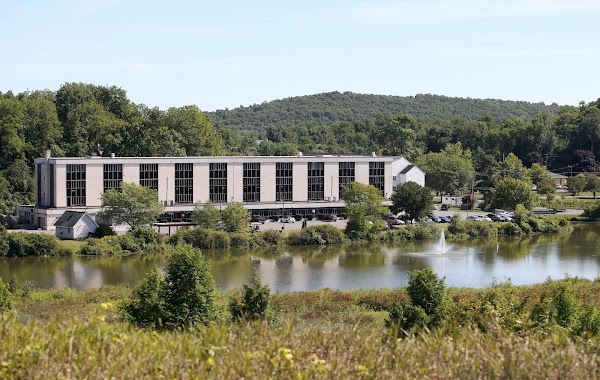
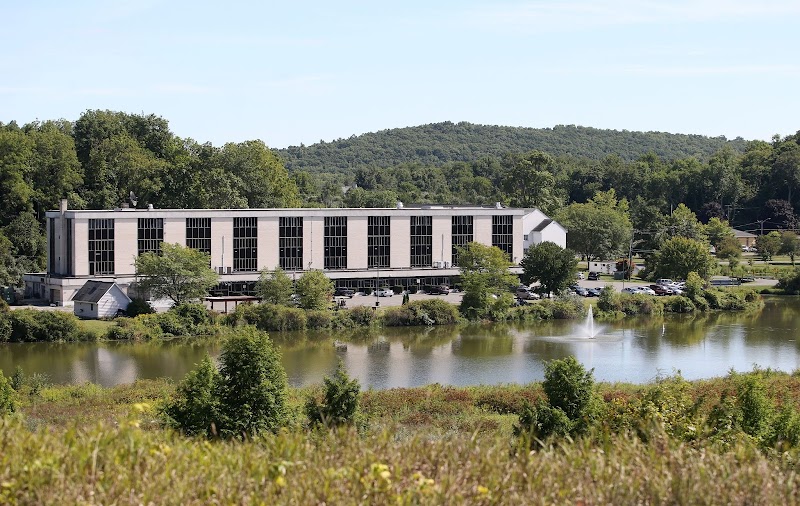
129 MORRIS TURNPIKE, NEWTON, NJ 07860 (973) 948-5400
For profit - Limited Liability company 128 Beds BENJAMIN LANDA Data: November 2025
Trust Grade
30/100
#278 of 344 in NJ
Last Inspection: March 2024

Within standard 12-15 month inspection cycle. Federal law requires annual inspections.

Overview

Homestead Rehabilitation & Health Care Center has received a Trust Grade of F, indicating significant concerns about their care and services. They rank #278 out of 344 nursing homes in New Jersey, placing them in the bottom half of facilities statewide, and #3 out of 5 in Sussex County, meaning only two local options are considered better. While the facility is showing some improvement in issues reported, going from 14 in 2024 to 5 in 2025, they still face serious challenges, including $135,173 in fines, which is higher than 93% of other New Jersey facilities. Staffing is a particular weakness, with a staffing rating of only 1 out of 5 stars and a concerning turnover rate of 53%, which is above the state average. Specific incidents of concern include a resident who suffered serious injuries after being found on the floor in a room undergoing renovations, and multiple Certified Nursing Assistants lacking required training and evaluations. Overall, while there are some strengths in quality measures, the facility struggles significantly with staffing and safety issues.

Trust Score
F
30/100
In New Jersey
#278/344
Bottom 20%
Safety Record
High Risk
Review needed
Inspections
Getting Better
14 → 5 violations
Staff Stability
⚠ Watch
53% turnover. Above average. Higher turnover means staff may not know residents' routines.
Penalties
○ Average
$135,173 in fines. Higher than 70% of New Jersey facilities. Some compliance issues.
Skilled Nurses
⚠ Watch
Each resident gets only 10 minutes of Registered Nurse (RN) attention daily — below average for New Jersey. Fewer RN minutes means fewer trained eyes watching for problems.
Violations
⚠ Watch
29 deficiencies on record. Higher than average. Multiple issues found across inspections.
★★☆☆☆
2.0
Overall Rating
★☆☆☆☆
1.0
Staff Levels
★★★★★
5.0
Care Quality
★☆☆☆☆
1.0
Inspection Score
Stable
2024: 14 issues
2025: 5 issues

The Good

  • 5-Star Quality Measures · Strong clinical quality outcomes
  • Full Sprinkler Coverage · Fire safety systems throughout facility
  • No fines on record

Facility shows strength in quality measures, fire safety.

The Bad

2-Star Overall Rating

Below New Jersey average (3.2)

Below average - review inspection findings carefully

Staff Turnover: 53%

Near New Jersey avg (46%)

Higher turnover may affect care consistency

Federal Fines: $135,173

Well above median ($33,413)

Significant penalties indicating serious issues

Chain: BENJAMIN LANDA

Part of a multi-facility chain

Ask about local staffing decisions and management

The Ugly 29 deficiencies on record

1 actual harm
Jul 2025 4 deficiencies
CONCERN (D) 📢 Someone Reported This

A family member, employee, or ombudsman was alarmed enough to file a formal complaint

Potential for Harm - no one hurt, but risky conditions existed

Report Alleged Abuse (Tag F0609)

Could have caused harm · This affected 1 resident

NJ Complaint#: NJ0018771Based on observation, interview, and review of pertinent facility documents, it was determined that the facility failed to report to the New Jersey Department of Health (NJDOH)...

Read full inspector narrative →
NJ Complaint#: NJ0018771Based on observation, interview, and review of pertinent facility documents, it was determined that the facility failed to report to the New Jersey Department of Health (NJDOH) an allegation of staff-to-resident abuse between Certified Nursing Assistant (CNA #1) and Resident #29 that occurred on 2/2/25 and a Licensed Practical Nurse (LPN#1) that appeared intoxicated when reporting to work on 7/2/25. This deficient practice was identified for 1 of 2 reported complaints reviewed.On 6/26/25 the NJDOH received an anonymous complaint from an employee of Homestead Rehabilitation and Health care Center. The employee claimed there was an issue with quality of care specifically citing, an allegation of staff to resident abuse from a CNA (name detached) which had resulted in injury as well as a nurse being intoxicated when reporting to work.On 7/17/25 at 10:04 AM, the surveyor reviewed the employee files for CNA#1 and LPN#1. A review of CNA#1's employee file revealed a Facility Reported Incident dated 5/23/25 at 3:00 PM revealed a staff member reported to the Licensed Nursing Home Administrator (LNHA) that they felt CNA#1 was inappropriately touching a resident, the staff member further stated that they did not witness anything but wanted to report it. CNA#1 was suspended pending the investigation. The investigation included statements from staff and residents who all worked with or received care from CNA#1. None of the statements accused CNA#1 of abuse. CNA#1 returned to work on 5/27/25. Further review of CNA#1's employee file revealed an employee disciplinary action sheet, marked as Final Warning dated 2/4/25. An employee statement provided by CNA#2 dated 2/2/25 at 1:00 PM, revealed CNA#1 was upset about not being able to take their break because they had to provide feeding assistance to Resident #29. Upon entering Resident #29's room, CNA#1 slammed their door. CNA#2 further stated upon seeing the resident's door slam, they entered the room and saw CNA#1 was visibly upset. CNA#1 was observed cutting the residents food and pushed the food towards Resident #29 in an aggressive manner. CNA#2 told CNA#1 to go on break, and they would provide feeding assistance to the resident. CNA#1 left the room without incident. A review of CNA#1 statement on 2/2/25 at 1:07 PM, revealed they were feeding Resident #29, when CNA#2 barged into the room and stated they would take over assisting Resident #29 and accused CNA#1 of abuse. No further information paperwork regarding the issue was provided.A review of LPN#1 employee file revealed an employee disciplinary action form marked as; Final Warning dated 7/3/25. The specifics of the incident portion of the form revealed, Name redacted (LPN#1) showed up to scheduled 11-7 shift on 7/2 smelling of alcohol as well as appearing intoxicated. The employee statement portion of the form revealed, employee admitted to taking some shots prior to coming to work and admitted to knowing it was wrong. The corrective action to be taken portion of the form indicated: 1. Name redacted (LPN#1) is on family medical leave act (FMLA). 2. With clearance will return in a supervised setting on 7am-3pm shift. 3. Reported to Board of Nursing (BON) and Department of Health (DOH). On 7/17/25 at 10:43 AM, the surveyor interviewed the DON, who stated a Facility Reported Incident (FRI) for CNA#1 was completed on 5/23/25. The DON further stated that CNA #1 was suspended pending the investigation, was cleared of any allegation, and returned to work. The DON stated there had not been an FRI reported for the 2/2/25 allegation of abuse and was unable to provide reasoning why an FRI was not reported. The DON stated with regarding to LPN#1, on 7/2/25 the DON observed LPN#1 clock into work, appeared intoxicated and was sent home immediately. DON also stated they had reported LPN#1 to nursing boards and DOH.A review of a facility policy title, Abuse Prohibition, with an updated date of 4/4/25. Under the process section of the policy revealed, 7. Immediately upon receiving information concerning a report of suspected or alleged abuse, mistreatment, or neglect, the Administrator or designee will perform the following. 7.1 Report allegation involving abuse (physical, verbal, sexual, mental) not later than 2 hours after allegation is made. 7.2 Report allegation to appropriate state and local authority(s) involving neglect, exploitation or mistreatment, suspected criminal activity, and misappropriation of patient property not later than two hours after allegation is made.7.4 Notify local law enforcement, licensing boards and registries and other agencies as required.On 7/17/25 at 1:00 PM, the DON provided the surveyor with an FRI dated 7/17/15 at 12:45 PM. DON stated that they called in the FRI to the NJDOH after surveyor inquiry. The DON was unable to provide evidence of LPN#1 actions being called into the DOH. The DON further stated that LPN#1 alleged violations should be reported to the DOH in a timely manner and abuse allegations should have been reported within 2 hours, On 7/21/2025 at 12:40 PM, the surveyor met with the LHNA and DON and the LNHA stated they believed the allegation of abuse by CNA#1 was more of a personal issue between CNA#1 and CNA#2 and felt an FRI was not needed at that time. The LNHA stated any abuse allegation should always be reported. The further information was provided for LPN#2. On 07/24/2025 at 1:15 PM, the surveyor met with the LNHA and DON and no further pertinent information provided. NJAC 8:39-9.4(f)
CONCERN (D) 📢 Someone Reported This

A family member, employee, or ombudsman was alarmed enough to file a formal complaint

Potential for Harm - no one hurt, but risky conditions existed

Comprehensive Care Plan (Tag F0656)

Could have caused harm · This affected 1 resident

Complaint #: NJ184361 Based on interview and review of pertinent facility documents, it was determined that the facility failed to ensure care plan interventions were implemented for a resident's skin...

Read full inspector narrative →
Complaint #: NJ184361 Based on interview and review of pertinent facility documents, it was determined that the facility failed to ensure care plan interventions were implemented for a resident's skin integrity. This deficient practice was identified for 1 of 2 residents reviewed for abuse (Resident #67), and was evidenced by the following:The surveyor reviewed the closed medical record for Resident #67. A review of the Resident Face Sheet (an admission summary) reflected that the resident was admitted to the facility with diagnoses which included but were not limited to: unspecified dementia, heart failure, need for assistance with personal care, and major depressive disorder. A review of the comprehensive Minimum Data Set (MDS), an assessment tool dated 2/11/25, reflected that the resident had a Brief Interview for Mental Status (BIMS) score of 4 out of 15, which indicated a severely impaired cognition. A further review revealed that the resident needed partial assistance from another person to complete activities of daily living (ADLs).A review of the individualized comprehensive care plan (ICCP) included a focus area dated effective 2/7/25, for at risk for skin breakdown related to impaired circulation, decreased mobility, and poor intake. Interventions included: to keep skin clean and dry; inspect skin daily and monitor for any reddened areas or skin breakdown; notify physician as needed for skin breakdown; turn and reposition every two hours while in bed or chair; and monitor for changes in circulation. A review of the Facility Reportable Event (FRE) dated 3/10/25, included that Resident #67's Representative (RR) informed the Social Worker (SW) that they had numerous complaints about the resident's skin when they left the facility including skin irritations. On 7/22/25 at 1:00 PM, the surveyor reviewed the resident's ICCP with the Director of Nursing (DON), and asked how the facility ensured the resident's intervention for inspection of skin daily was completed. The DON stated that she would have to get back to the surveyor. On 7/24/25 at 10:12 AM, the surveyor interviewed the DON, who stated that the resident's inspect skin daily was an automated intervention in the facility's electronic medical record system, and the resident should not have had that intervention. The surveyor asked then if everyone should have that intervention then, the DON stated that the nurse misread it when she implemented the intervention in the ICCP. The DON stated it should have just been a visual look when the aide was providing care. and The DON stated that care plans were done by the MDS Coordinator and updated by her as needed. The DON confirmed that staff were expected to implement all interventions in the resident's ICCP. On 7/24/25 at 10:49 AM, the surveyor interviewed the MDS Coordinator, who confirmed that she took part in the ICCP process. The MDS Coordinator stated that care plans were done annually and updated as needed. The MDS Coordinator stated that interventions were selected from a library in the facility's electronic medical record system, and that she could add additional interventions as needed. When asked about Resident #67's ICCP intervention for inspecting skin daily, the MDS Coordinator stated that she thought it meant for the Certified Nursing Aide (CNA) to inspect during care. The MDS Coordinator stated that she found out that she could link the intervention to the CNA instructions to do. The MDS Coordinator acknowledged that staff are expected to implement all ICCP interventions and if they were unaware of what an intervention meant, staff should have asked for clarification. A review of the facility provided Interdisciplinary Care Plans policy dated revised 3/17/14, included 2. Interventions: a. all interventions must be clear, concise and measurable. b. Interventions must address how each problem will be resolved . NJAC 27.1(a)
CONCERN (F) 📢 Someone Reported This

A family member, employee, or ombudsman was alarmed enough to file a formal complaint

Potential for Harm - no one hurt, but risky conditions existed

Deficiency F0730 (Tag F0730)

Could have caused harm · This affected most or all residents

Based on interview, record review, and review of facility documents, it was determined that the facility failed to evaluate the performance of all Certified Nursing Assistants (CNA) on an annual basis...

Read full inspector narrative →
Based on interview, record review, and review of facility documents, it was determined that the facility failed to evaluate the performance of all Certified Nursing Assistants (CNA) on an annual basis. This deficient practice was identified for 5 of 5 CNA's whose personnel records were reviewed and was evidenced by the following: On 7/24/25 at 10:17 AM, the surveyor reviewed the personnel files for 5 CNAs:1. CNA#1, with a date of hire of 8/17/22, no recent employee evaluation was completed.2. CNA#2, with a hire date of 8/23/23, no recent employee evaluation was completed.3. CNA#3, with a hire date of 7/2/24, no recent employee evaluation was completed.4. CNA#4, with a hire date of 10/1/24, no recent employee evaluation was completed.5. CNA#5, with a hire date of 7/22/23, no recent employee evaluation completedOn 7/24/25 at 10:17 AM, the surveyor interviewed the Director of Nursing (DON), who stated that the facility does not have competencies for the CNAs. The DON stated that she had a stack of folders on her desk but was unable to provide the five employee evaluations or competencies. On 7/24/25 at 11:30 AM, the surveyor interviewed the Licensed Nursing Home Administrator (LNHA) and the DON, who stated that no policy could be provided, and no further pertinent information was provided. NJAC 8:39-43.17 (b)
CONCERN (F) 📢 Someone Reported This

A family member, employee, or ombudsman was alarmed enough to file a formal complaint

Potential for Harm - no one hurt, but risky conditions existed

Deficiency F0947 (Tag F0947)

Could have caused harm · This affected most or all residents

Based on interview, and review of facility documentation, it was determined that the facility failed to ensure that Certified Nurse Assistant (CNA) received at least 12 hours of mandatory in-service t...

Read full inspector narrative →
Based on interview, and review of facility documentation, it was determined that the facility failed to ensure that Certified Nurse Assistant (CNA) received at least 12 hours of mandatory in-service training for 5 of 5 CNA's education reviewed, (CNA#1, CNA#2, CNA#3, CNA#4, and CNA#5).This deficient practice was evidenced by the following: On 7/24/25 at 10:17 AM, the surveyor requested the personnel education files for 5 CNA's1. CNA#1, with a date of hire of 8/17/22 no record of education was provided.2. CNA#2, with a hire date of 8/23/23 no record of education was provided.3. CNA#3, with a hire date of 7/2/24 no record of education was provided.4. CNA#4, with a hire date of 10/1/24 no record of education was provided.5. CNA#5, with a hire date of 7/22/23 no record of education was provided.On 7/21/25 at 12:20 PM, the survey requested CNA education from the Director of Nursing (DON).On 7/24/25 at 10:17 AM, the surveyor interviewed the DON, who stated that she could not provide any staff education including the CNA's 12-hour mandatory education. She stated that the program used for staff education was changed to a different system and was not able to retrieve the education of the staff, and copies were not saved in the employee files. At this time, the surveyor requested the policy for mandatory staff education.On 7/24/25 at 11:30 AM during a meeting with the survey team, the Licensed Nursing Home Administrator (LNHA) and DON stated the facility could not provide policies and provided no further pertinent information.N.J.A.C. 8:39-43.17(b)
Apr 2025 1 deficiency 1 Harm
SERIOUS (G) 📢 Someone Reported This

A family member, employee, or ombudsman was alarmed enough to file a formal complaint

Actual Harm - a resident was hurt due to facility failures

Accident Prevention (Tag F0689)

A resident was harmed · This affected 1 resident

**NOTE- TERMS IN BRACKETS HAVE BEEN EDITED TO PROTECT CONFIDENTIALITY** Complaint #s: NJ00182470, NJ00182480 Based on interview, record review, and review of pertinent facility documents on 03/26/2025...

Read full inspector narrative →
**NOTE- TERMS IN BRACKETS HAVE BEEN EDITED TO PROTECT CONFIDENTIALITY** Complaint #s: NJ00182470, NJ00182480 Based on interview, record review, and review of pertinent facility documents on 03/26/2025 and 04/01/2025, it was determined that the facility failed to (a) provide a safe environment for a wandering, ambulatory, and cognitively impaired resident (Resident #1) and (b) follow facility policy on thorough investigation of accident/incident. On 10/15/2024 Resident #1 was found stuck to the floor in an opened room where the floor was being redone. Resident #1 was found by a Certified Nursing Assistant (CNA) when she/he fell backwards and hit her/his head hard and started vomiting which resulted in Resident #1 being sent out to an acute care hospital #1[name] ER [emergency room] and later was transferred to acute hospital #2 [name] where she/he was found to have three (3) brain bleeds. Resident #1 was not in the facility during the survey. The Surveyor reviewed the closed medical records of Resident #1. This deficient practice was identified in 1 of 6 residents reviewed for incidents/accidents and was evidenced as follows: According to Resident #1's recent Resident Face Sheet (RFS), the Resident was readmitted to the facility with diagnoses that included but was not limited to Nontraumatic subarachnoid hemorrhage, nontraumatic subdural hemorrhage, Vascular dementia, Alzheimer's Disease, Essential Hypertension, Malignant Neoplasm of central portion of left breast, Acute ischemia heart disease, Osteoarthritis of knee, and Hyperlipidemia. Review of the Minimum Data Set (MDS), an assessment tool that provides a comprehensive assessment of each resident's functional capabilities, dated 08/24/2024, Resident #1's Brief Interview for Mental Status (BIMS) score was 99 indicating that the Resident was unable to complete the interview. Under C1000 of Section C, Resident #1's Cognitive Skills for Daily Decision Making was coded as 3-severely impaired. The Resident's MDS further revealed in Section GG-Functional Abilities and Goals that the Resident was dependent on staff for the completion of her/his Activities of Daily Living (ADL). Review of Resident #1's Care Plan Activity Report (CPAR) reflected a list of Focus [health problem] that included but not limited to and as follows: -Focus: Elopement: Wanders the unit at times; Wanders in and out of other residents' room; At risk of elopement. -Focus: Behavior: I [Resident] have behaviors such as constant pacing up and down the halls, wandering in other resident's rooms, declines to care and rummaging through drawers due to Alzheimer's dx [diagnosis]. -Focus: Falls: I [Resident] am at risk for falls. Review of Resident #1's Progress Notes (PN) dated 10/15/2024 at 7:05 pm [evening] and documented by [name redacted] (Nurse #1), that the resident was found in room [number] stuck to the floor. The room was accessible to the resident the floor is being redone. The CNA [certified nursing assistant] found Resident #1 had fallen backwards and hit his/her head. Vital signs and neurological checks were done by the nurse. The resident began to vomit when the staff sat him/her up. The resident's physician was notified and ordered the resident be evaluated in the Emergency Department (ED). The resident's daughter was notified, and the Nursing Supervisor was made aware. The resident left facility at 5:35pm on a stretcher. The PN further revealed Nurse #1 documented on 10/15/2024 at 10:38 pm, Call placed to [NMC] acute hospital, the Resident was transferred to [another hospital name] .She [Resident #1] has 3 brain bleeds. Review of Resident #1's Hospital Records [hospital name] ED [emergency department] to Hospital -admission dated 10/15/2024, Reason for Visit: Fall. Head Injury. A Neurosurgical Consultation documented by Neurosurgeon attending Dr. [doctor] [name redacted] revealed Reason for Consult: 1. S/p [status post, after] fall; 2. CT [computed tomography, a procedure that combined x-ray and computer technology image to view the inside of body] of head demonstrated a 1.1 cm [centimeter] focus of parenchyma hemorrhage [bleeding]/contusion in the right frontal lobe [right area of brain] with subarachnoid extension and .subdural [areas in inner brain] hematomas [bruising]. Review of the document titled, Incident Summary (IS), provided by the facility with Resident #1's [name, room number] with Date of Incident: 10/15/2024. According to the IS, under Incident, on 10/15/2024 at 5:50 pm [afternoon], resident [Resident #1's name] wandered into room [number] which was being remodeled, CNA#1 saw the resident and went to get the resident from the room. Resident #1 was trying to get their foot stuck from the glue on the floor. Resident #1 was trying to raise her/his foot and lost balance. CNA #1 tried to catch the resident from falling but was not able to catch him/her to prevent the fall. Resident #1 had fallen and landed on his/her buttocks first then hit his/her head on the floor. CNA#1 called for help and Licensed Practical Nurse (LPN) [name] came and assessed Resident #1. Resident #1 was alert lying on the floor, skin was intact, no bruises or bumps noted to his/her head. Resident #1 was assisted by 3 staff in the wheelchair when the Resident started vomiting twice. MD [doctor] was notified and ordered to transfer Resident to [acute hospital name] ED for evaluation and treatment. Resident #1 was admitted to [acute hospital name #1] and was found to have a small intracranial [within the skull] hemorrhage [bleeding]. Resident #1 was then transferred to [acute hospital name #2] for further evaluation. POA [Power of Attorney] [name redacted] was aware of the incident. [Resident #1] returned to facility on 10/16/2024. The Surveyor requested for the full Incident/Accident (I/A) Report of Resident #1 on 10/15/2024 from the facility. On 04/01/2025 at 10:21 AM, in an interview with the Surveyor, the Licensed Nursing Home Administrator (LNHA) and Director of Nursing (DON) were not able to provide the IA of the Resident. The LNHA and DON stated they were new management and administration and had started on January of this year 2025. LNHA and DON were not able to provide the I/A and statements collected. The LNHA and DON further stated they could not locate the document but found the IS of the above-mentioned incident. Review of the facility policy titled, Accidents/Incidents, effective 04/01/2025, under Policy: Center staff will report, review, and investigate all accidents/incidents which occurred, or allegedly occurred, on or off Center property involving, or allegedly involving, a patient who is receiving services .; under Process: 3. Reporting: 3.1 All accidents/incidents, witnessed or unwitnessed, will be reported to the supervisor. 3.1.1 Employees witnessing an accident/incident involving a patient will communicate a factual description of his /her findings to the supervisor or the nurse responsible on the unit .4. Follow-up/Investigation: .4.3 When conducting an investigation, the Administrator, DON, or designee will: .4.3.4 Conduct witness interviews from all staff and visitors who may have knowledge of the accidents/incident .4.3.6 Monitor that all aspects of the accident/incident and investigation involving patients are documented. N.J.A.C. 8:39-27.1(a)
Jun 2024 1 deficiency
CONCERN (E) 📢 Someone Reported This

A family member, employee, or ombudsman was alarmed enough to file a formal complaint

Potential for Harm - no one hurt, but risky conditions existed

Safe Environment (Tag F0584)

Could have caused harm · This affected multiple residents

**NOTE- TERMS IN BRACKETS HAVE BEEN EDITED TO PROTECT CONFIDENTIALITY** Complaint NJ #00174902; NJ00174912; NJ00174921 Based on observation, interview, and review of pertinent facility documents, it w...

Read full inspector narrative →
**NOTE- TERMS IN BRACKETS HAVE BEEN EDITED TO PROTECT CONFIDENTIALITY** Complaint NJ #00174902; NJ00174912; NJ00174921 Based on observation, interview, and review of pertinent facility documents, it was determined that the facility failed to maintain a safe and comfortable room temperature levels for residents in 2 of 3 nursing units (Second and Third Floor). This deficient practice was identified on 06/20/24 and was evidenced by the following: 1.On 06/20/24 at 9:51 a.m., the surveyor in the presence of the Maintenance Person (MP) checked the temperatures on the Second floor and the following were obtained: room [ROOM NUMBER] - room temperature of 82.4 degrees Fahrenheit; occupied; resident has a working desk fan; air conditioner (AC)/radiator working with low air coming out; resident not in distress. room [ROOM NUMBER] - room temperature of 83.3 degrees Fahrenheit; occupied; resident has a working desk fan; AC/radiator working with low air coming out; water pitcher at bedside; resident not in distress. room [ROOM NUMBER] - room temperature of 84.2 degrees Fahrenheit; occupied; resident has a tracheostomy attached to an oxygen compressor and concentrator; working AC portable in room; resident not in distress. room [ROOM NUMBER] - room temperature of 82.2 degrees Fahrenheit; occupied; resident has AC/radiator working with low air coming out; water pitcher at bedside; resident not in distress. room [ROOM NUMBER] - room temperature of 86.9 degrees Fahrenheit; occupied; resident on oxygen; oxygen concentrator noted in room; AC/radiator was not working; resident not in distress. room [ROOM NUMBER] - room temperature of 84.9 degrees Fahrenheit; occupied. resident wearing diaper and T-shirt with covers down; has a desk fan; AC/ radiator not working; resident not in distress. room [ROOM NUMBER] - room temperature of 83.5 degrees Fahrenheit; occupied; resident in wheelchair; AC/radiator not working; resident not in distress. Second Floor A side end of Hallway - temperature of 83.1 degrees Fahrenheit Second Floor B side end of Hallway - temperature of 82.8 degrees Fahrenheit The surveyor observed the air conditioner (AC) Units on the wall in A and B Side Hallway were not functioning and that water was leaking from Units. 2.On 06/20/24 at 10:15 a.m., the surveyor in the presence of the MP checked the temperatures on the Third Floor and the following were obtained: room [ROOM NUMBER] - room temperature of 81.7 degrees Fahrenheit; occupied; resident noted with 1 desk fan and 1 stand fan; AC/radiator working with low air coming out; resident not in distress. room [ROOM NUMBER]- room temperature of 82.0 degrees Fahrenheit; occupied; resident in bed with oxygen concentrator; has a stand fan; resident not in distress. room [ROOM NUMBER] - room temperature of 81.9 degrees Fahrenheit; occupied; has a stand fan; AC/radiator working with low air coming out; resident not in distress. room [ROOM NUMBER]- room temperature of 84.0 degrees Fahrenheit; occupied; resident in bed; has a stand fan; AC/radiator not working; resident not in distress. room [ROOM NUMBER]- room temperature of 82.4 degrees Fahrenheit; occupied; resident in bed; has a stand fan; AC/radiator not working; resident not in distress. Also at this time, it was observed the AC Wall Unit on Third Floor B Side Hallway was not functioning. On 6/20/24 at 12:31 p.m. [afternoon], the surveyor interviewed the facility Administrator, in the presence of the Director of Nursing (DON). The Administrator stated they have called the company to fix the AC units/cooling system yesterday [06/19/24], the company came and fixed the units. The Administrator further stated Around 5 p.m., the AC was working, the pump was working and before I left yesterday at night, everything was working. This morning they called me, and the pump and AC were not working, and they have been working intermittently like on and off. The Administrator said they have called and followed up with the company [name] and have been working on it. NJAC 8:39 -31.6 (p)4.
Mar 2024 13 deficiencies
CONCERN (D)

Potential for Harm - no one hurt, but risky conditions existed

Resident Rights (Tag F0550)

Could have caused harm · This affected 1 resident

Based on observation, interview, record review, it was determined that the facility failed to maintain dignity during mealtime for a resident who needed assistance with eating. This deficient practice...

Read full inspector narrative →
Based on observation, interview, record review, it was determined that the facility failed to maintain dignity during mealtime for a resident who needed assistance with eating. This deficient practice was observed for 2 of 5 second floor dining room residents reviewed, Resident #10 and Resident #24 and was evidenced by the following: 1. On 3/4/24 at 12:16 PM, the surveyor observed Resident #10 in the second floor dining room seated in a Broda chair (chair that provides safe, comfortable long-term seating that can reduce the number of falls for residents) being fed their lunch. The surveyor observed that the resident's hospice Certified Nursing Aide (CNA) was standing behind the resident while reaching over the resident's right side to feed them. The surveyor interviewed the hospice CNA on 3/4/24 at 12:21 PM who stated, she was aware that any staff should be seated in eye to eye level while feeding any resident. The hospice CNA further stated that it was not appropriate to stand while feeding. A review of the admission Record for Resident #10 revealed that the resident was admitted to the facility with diagnoses which included but were not limited to Aphasia; Cerebral Infarction; and Atrial Fibrillation. A review of the Resident #10's Significant Change in Status MDS, an assessment tool used to facilitate the management of care, dated 12/20/23, reflected that Resident #10 had a BIMS score of 99 out of 15, indicating severely impaired cognition. The MDS further reflected that the resident required partial/moderate assistance for eating. 2. On 3/4/24 at 12:16 PM, the surveyor observed Resident #24 in the second floor dining room seated in a wheelchair being fed their lunch. The surveyor observed that the Certified Nurse Aide #1 (CNA #1) was standing over the resident while feeding them. The surveyor interviewed CNA #1 on 3/4/24 at 12:55 PM who stated that all staff should be seated next to the resident while assisting them during feeding time. CNA #1 further stated that she was aware that she was standing while feeding the resident and shouldn't be. A review of the admission Record for Resident #24 revealed that the resident was admitted to the facility with diagnoses which included but were not limited to Vascular Dementia, Alzheimer's Disease and Abnormal weight loss. A review of Resident #24's Quarterly Minimum Data Set (MDS), an assessment tool used to facilitate the management of care, dated 2/24/24, reflected that Resident #24 had a Brief Interview for Mental Status (BIMS) score of 99 out of 15, indicating severely impaired cognition. The MDS further reflected that the resident required supervision or touching assistance for eating. Review of the Feeding Policy did not have any direction related to the appropriate way to feed a resident. On 3/11/24 at 3:30 PM, the Licensed Nursing Home Administration and the Interim Director of Nursing were made aware of the surveyor's dining observation. They both agreed that the CNA's should be seated next to the resident when feeding. N.J.A.C. 8:39-4.1(a)12
CONCERN (D)

Potential for Harm - no one hurt, but risky conditions existed

Deficiency F0658 (Tag F0658)

Could have caused harm · This affected 1 resident

2. On 3/6/24 at 10:07 AM, the surveyor reviewed the March 2024 PO form that reflected an order dated 4/30/23 under Monitoring to Weigh resident every day at 7:00 AM before breakfast. A review of the f...

Read full inspector narrative →
2. On 3/6/24 at 10:07 AM, the surveyor reviewed the March 2024 PO form that reflected an order dated 4/30/23 under Monitoring to Weigh resident every day at 7:00 AM before breakfast. A review of the form titled Resident Medication Administration Record (RMAR) for January 2024 showed a PO to Weigh resident every day at 7:00 AM before breakfast. The PO also indicated that nurses had to sign and document the weight of the resident. The surveyor observed that for the month of January 2024 RMAR , the nurse's failed to document that the weight was obtained for 23 out of 31 days. A review of the February 2024 RMAR revealed that the nurses failed to document that the weight was obtained for 10 out of 29 days. The surveyor interviewed the Registered Nurse (RN) #1 who was assigned to Resident #11 could not explain why the administration RMAR were blank, not signed daily and weights were not documented. A review of the facility's Policy and Procedure titled, Weight and Weight change Management revealed under procedure #4. All weights (daily, weekly, monthly) are to be documented in the electronic medical record or appropriate designated form. On 3/11/24 at 3:30 PM, the surveyor discussed this issue related to the missing signatures as well as required weights with the LNHA and Interim DON. There was no additional information provided. NJAC 8:39 - 27.1 Based on observation, interview, and record review, it was determined that the facility staff failed to follow acceptable standards of clinical practice for 1. not accurately documenting the resident's refusal of a medication, 2. not adequately documenting in the Administration Record to indicate that the daily weights were done according to physician's order (PO) to 2 of 16 residents reviewed, Resident #11 and Resident #18. This was evidenced by the following: Reference: New Jersey Statutes, Annotated Title 45, Chapter 11. Nursing Board The Nurse Practice Act for the State of New Jersey states; The practice of nursing as a registered professional nurse is defined as diagnosing and treating human responses to actual or potential physical and emotional health problems, through such services as case finding, health teaching, health counseling, and provision of care supportive to or restorative of life and wellbeing, and executing medical regimens as prescribed by a licensed or otherwise legally authorized physician or dentist. 1. On 3/8/24 at 8:06 AM, the State Surveyor observed the start of medication pass with the Licensed Practical Nurse (LPN#1) on the 3rd floor. On 3/8/24 at 8:16 AM, LPN#1 entered the room belonging to Resident #19. Resident #18 was cheerful and identified the medication in the cup as 2 gelcaps of (Colace) Docusate Sodium 100 mg to LPN#1. Resident #18 explained that she didn't need the Colace 100 mg last night, so she saved it to give to the nurse in the morning. The surveyor reviewed the March 2024 Physician Orders (PO) which included an order for Colace 100mg give 2 capsules (200 mg) daily at bedtime for constipation HOLD for LBM (loose bowel movement). This was first ordered by the Physician for Resident #18 on 2/8/24. Review of the March 2024 electronic medication administration record (eMAR) revealed that the Colace 100 mg was scheduled to be administered at 9:30 PM. Review of the documentation on 3/7/24 of the eMAR provided a nurse's signature expressing that the Colace was administered to Resident #18 at 9:30 PM. On 3/8/24 at 12:00 PM, the surveyor discussed the situation with the Licensed Nursing Home Administrator (LNHA) and the Director of Nursing (DON). The LNHA stated that the administering nurse should always wait until the medication is swallowed or refused by the resident and document accurately on the eMAR. The LNHA continued explaining that if the medication is refused by the resident, it should be documented that way.
CONCERN (D)

Potential for Harm - no one hurt, but risky conditions existed

Pressure Ulcer Prevention (Tag F0686)

Could have caused harm · This affected 1 resident

REPEAT DEFICIENCY Based on observation, interview, and record review it was determined that the facility failed to provide care and services consistent with professional standards of practice for a re...

Read full inspector narrative →
REPEAT DEFICIENCY Based on observation, interview, and record review it was determined that the facility failed to provide care and services consistent with professional standards of practice for a resident with a pressure ulcer. This deficient practice was identified in 1 of 2 residents, Resident #1, reviewed for pressure ulcer care and prevention. The deficient practice was evidenced by the following: On 3/4/24 at 11:25 AM, the surveyor observed Resident #1 lying in bed in their room. Resident #1 was alert, verbally responsive, and conversant. Resident #1 stated they had a wound on their backside that was treated daily by the nurses and a wound doctor would visit weekly. On 3/7/24 at 10:06 AM, the surveyor observed Licensed Practical Nurse (LPN) #2 provide wound treatment to Resident #1's sacral wound. LPN #2 provided the surveyor a copy of the resident's treatment order. The physician order dated 1/11/24 read, Cleanse Sacral Wound and R [right] Buttocks with NS [normal saline] apply Triad to peri wound Medihoney, to Calcium Alginate Cover with large foam dressing BID [two times a day]. On 3/7/24 at 10:11 AM, the surveyor observed LPN #2 remove the old dressings from the sacral wound and a left upper buttock wound. LPN #2 sprayed wound cleanser to the resident's wounds, then used an ABD [Abdominal] gauze pad (used to absorb discharges from abdominal and other heavily draining wounds) and patted the wound site areas. LPN #2 did not use normal saline to cleanse the wound as documented in the physician's order. On 3/7/24 at 10:16 AM, the surveyor observed LPN #2 apply a small, bordered dressing to the left upper buttock wound. LPN #2 then applied a calcium alginate dressing with medihoney to the sacral wound bed and covered it with a large, bordered dressing. On 3/7/24 at 10:25 AM, the surveyor interviewed LPN #2 about the wound treatment observation and order. LPN #2 acknowledged that the physician's order was to be followed and the order should have been clarified with the physician for wound cleanser to be used for the treatment. The surveyor asked LPN #2 about wound cleansing technique. LPN #2 stated she did not see any concern with the method used when cleansing the wound. The surveyor reviewed the hybrid (paper and electronic) medical record of Resident #1 which revealed the following: The Resident Face Sheet (an admission summary) documented Resident #1 had diagnoses that included but were not limited to, pressure ulcer of sacral region, hypertension, anemia, heart failure, and urinary tract infections. The Quarterly Minimum Data Set (MDS) assessment, dated 2/2/24, which indicated the facility assessed the resident's cognitive status using a Brief Interview for Mental Status (BIMS). The resident scored a 15 out of 15 which indicated that the resident was cognitively intact. The MDS assessment also indicated the resident had a stage 4 pressure ulcer. A review of the electronic treatment administration record (ear) included a physician's order 1/11/24 which read, Cleanse Sacral Wound and R [right] Buttocks with NS [normal saline] apply Triad to peri wound Medihoney, to Calcium Alginate Cover with large foam dressing BID [two times a day]. There were no other treatment orders documented for the resident's wounds. A physician's order dated 7/26/23 read Weekly Skin Assessment .Every week on Monday at 7:00-3:00 pm . A physician's order dated 10/13/2023 read Eval and Treat [wound consulting company] for wound care . A review of wound progress notes by the nurses, did not include assessment or documentation of the wound left upper buttock wound. The wound progress notes dated 2/15/24 and 2/22/24 documented wound location Sacrum and R [right] Buttocks. A review of the additional wound progress notes from March 2024 and February 2024 revealed there was only documentation for the sacral wound and no documentation of any other wounds. On 3/7/24 at 12:00 PM, the Director of Nursing (DON) provided the facility's wound care policy. The surveyor requested from the DON wound consultant documentation for Resident #1, which were not found in the resident's chart. On 3/7/24 at 2:05 PM, LPN #2 provided wound consultant documentation for Resident #1. A review of the physician wound consultant's notes from October 2023 to March 2024 revealed there was no documentation and assessment of the left upper buttock wound. A review of the wound consultant notes from January 2024 to March 2024 revealed there was documentation for the sacral wound. There was no documentation found of any other wounds. On 3/11/24 at 1:35 PM, the surveyor interviewed LPN #2, in the presence of the DON, about Resident #1's current wounds and only documentation for the sacral wound in the medical records. LPN #2 stated the resident's wound was on the right buttocks and there was no wound on the left buttock. The DON stated they would follow up to provide documentation of the resident's wounds and clarify the location of the resident's wounds. LPN #2 provided the contact phone number for the wound consultant physician. On 3/11/24 at 1:52 PM, the surveyor placed a phone call to the wound consultant physician. There was no answer, and a message was left to return a call to the surveyor. The wound consultant physician did not return a call to the surveyor. On 3/11/24 at 3:17 PM, the surveyor informed the DON, Licensed Nursing Home Administrator (LNHA), and LPN #2 were made aware of the concerns observed during the wound treatment and for the assessment of the resident's wounds. The DON and LNHA stated appropriate wound technique would be for the wound to be cleansed with a gauze from the inner to the outer portion of the wound. The DON acknowledged each wound treatment should have individual treatment orders. The LNHA stated the facility would provide additional information. On 3/12/24 at 12:03 PM, the DON informed the surveyor she assessed Resident #1 with LPN #2 and stated the resident had the stage 4 sacral wound and a left upper buttock wound. The DON stated there was no right buttock wound and the right buttock in the treatment referred to the left upper buttock. The DON could not say if the left buttock wound was previously documented. The DON stated she would provide further information. On 3/12/24 at 12:40 PM, the DON provided a wound progress note dated 3/12/24. The document indicated the left buttock wound onset was on 2/7/24. The DON could not provide a verbal response as to why there was no previous documentation for the resident's wound and how the wound onset was determined to be on 2/7/24. The DON stated she would have to follow up with the nurses to determine what happened to the wound assessment and documentation. There was no additional information was provided by the facility. The surveyor reviewed the facility's policy titled, WOUNDS: PRESSURE ULCERS & ULCERS OF DIFFERENT TYPES, which had an updated date of 2/23/16. Under I. Assess, it read: Assess the individual for pressure ulcers and/or risk of developing pressure ulcers: .3. Weekly if actual ulcer is present to determine staging, effectiveness of current treatment, interventions, and healing process . Under C. Documentation, it read: .Resident with wound: Resident Wound Form, Resident Medical Record, TAR, Resident Plan of Care: to be conducted weekly, at a minimum, and shall include, but not be limited to: .a. location and staging, b. size, c. exudate, d. pain, if present including nature and frequency, e. wound bed, f. description of wound edges and surrounding tissue, g. infections related to ulcer, if applicable; h. dressings and treatment selection; effectiveness; i. general progress toward healing . The surveyor reviewed the facility policy titled Weekly Skin Assessment with a reviewed date of 5/20/23. Under Policy it read, It is the policy of this facility [to] do a weekly skin assessment to ensure that resident skin integrity is intact and to prevent development of pressure any ulcers and detection of any skin condition that jeopardizes the resident's skin integrity. Under Procedure it read, 1. A physician's order will be obtained for all residents for a weekly skin assessment. Weekly skin assessment will be conducted weekly during scheduled shower day by nurse assigned on the resident. Documentation will be by the nurse for any findings in [electronic medical record]. MD will be notified if there are abnormal findings. N.J.A.C. 25.2 (c); 27.1 (a)(e)
CONCERN (D) 📢 Someone Reported This

A family member, employee, or ombudsman was alarmed enough to file a formal complaint

Potential for Harm - no one hurt, but risky conditions existed

Accident Prevention (Tag F0689)

Could have caused harm · This affected 1 resident

**NOTE- TERMS IN BRACKETS HAVE BEEN EDITED TO PROTECT CONFIDENTIALITY** An onsite revisit was conducted on 5/14/24 to verify the facility's plan of correction (POC) with a completion date of 3/28/24. ...

Read full inspector narrative →
**NOTE- TERMS IN BRACKETS HAVE BEEN EDITED TO PROTECT CONFIDENTIALITY** An onsite revisit was conducted on 5/14/24 to verify the facility's plan of correction (POC) with a completion date of 3/28/24. The facility's POC indicated that the Director of Nursing (DON)/Designee will do a root cause analysis review on all incident and accidents reported after the completion of the incident/accident investigation to ensure that care plan (CP) will have an appropriate intervention monthly. Based on interview, record review, and review of the POC, it was determined that the facility failed to ensure the residents who had a fall incident, were accurately investigated for falls root cause analysis. This deficient practice was identified for 1 of 3 residents reviewed for falls, Resident #3. 1. On 5/14/24 at 10:35 AM, the surveyor observed Resident #3 in the hallway outside of their room in a wheelchair. The surveyor observed the resident's bed the lowest position with bed rails up and call light within reach. A review of the admission Record for Resident #3 revealed that the resident was admitted to the facility with diagnoses which included but were not limited to Chronic diastolic (congestive) Heart Failure, Spinal Stenosis, and Chronic Obstructive Pulmonary Disease. A review of Resident #3's Significant Change in Status Assessment/ Minimum Data Set (SCSA/MDS), an assessment tool used to facilitate the management of care SCSA/MDS dated [DATE], reflected that Resident #3 has a BIMS score of 10 out of 15, indicating moderately impaired cognition. A review of the history of falls for Resident #3 revealed that they had one fall on 4/29/24 with no injuries reported. The facility was unable to provide a fall investigation report, including A review of the form titled, Resident Incident Tracking Form and QA (Quality Assurance) Checklist which summarized the detailed information of the fall incident on 4/29/24 that included the root cause analysis. A review of the resident's CP revealed that the CP was not updated to ensure that an appropriate intervention was added after the fall incident on 4/29/24 to prevent further falls. On 5/14/24 at 11:50 AM, the surveyor requested from the facility's Licensed Nursing Home Administration (LNHA) for further information on the RITF and QAC form that was indicated in their POC to current prior deficiency. On 5/14/24 at 2:07 PM, the survey team informed the LNHA of the above concerns for Resident #3. The LNHA stated it was the responsibility of the DON to conduct a review of all fall investigations and oversee fall committee meetings with the interdisciplinary team. The LNHA acknowledged it was her responsibility to oversee that protocols for reviewing residents who had fall incident reported were being completed. The LNHA acknowledged that there were no documentation completed which included the RITF and QAC after the fall incident of Resident #3. A review of the facility's policy and procedure provided by the LNHA titled, FALLS, RESIDENT: PREVENTION PROGRAM with an updated date of 4/23/24, under Policy read: .Referrals to the Fall Committee will be made when the resident has fallen. The fall Committee will meet weekly to discuss need for further evaluation and interventions for referred residents . Under Procedure it read, .3. The licensed nurse shall complete the Fall Risk Assessment Form. In addition, if any one of the following criteria is present, the resident will be re-assessed for falls: a. The resident has fallen .Resident Fall Referrals to Fall Committee: 1. The Falls Committee Chairperson or designee, will coordinate all Fall Referrals to be reviewed at the Fall Committee meeting within one week of the generation of the paperwork .2. Upon review of the referral, information will be presented to the Fall Committee by the chairperson or designee .4. The Fall Committee Chairperson or designee will report at the QA meeting: prevalence by unit, total prevalence, number of residents reviewed, patterns, etc. A review of the facility's policy and procedure provided by the LNHA titled, Incident/Accident, Procedure for Reporting Resident with an update date of 4/23/24, under Procedure read: 14. All 'fall' reports will be reviewed and a resident fall report, consolidating all dates will be prepared by In-Service Department on a monthly basis. The incident will be scrutinized for pattering and utilized as tools for preventative measures. The report will be presented at the quarterly Safety meeting .15. Patterning issues relative to incidents will be reviewed on an as-needed basis at the weekly Falls Committee meeting. A review of the facility's policy and procedure provided by the LNHA titled, Care Plans, Comprehensive Person-Centered, under Procedure read: .13. Assessments of residents are ongoing and care plans are revised as information about the residents and the residents' conditions change .14. The Interdisciplinary Team and/or Respective Discipline must review and update the care plan: a. When there has been a significant change in the resident's condition; b. When the desired outcome is not met . NJAC 8:39-27.1(a); 31.4(a); 33.1(d)
CONCERN (D)

Potential for Harm - no one hurt, but risky conditions existed

Respiratory Care (Tag F0695)

Could have caused harm · This affected 1 resident

2. On 3/4/24 at 10:47 AM, the surveyor observed Resident #12, resting in bed in their room. Resident #12 opened eyes spontaneously to verbal greeting and provided limited verbal response to the survey...

Read full inspector narrative →
2. On 3/4/24 at 10:47 AM, the surveyor observed Resident #12, resting in bed in their room. Resident #12 opened eyes spontaneously to verbal greeting and provided limited verbal response to the surveyor. Resident #12 was receiving oxygen via a nasal cannula (NC-plastic prongs attached to a tube, inserted into the nostrils that oxygen flows through) which was attached to a concentrator (an oxygen delivery system). The surveyor observed a humidified bottle attached to the concentrator that was dated 2/15/24 and there was no visible date on the nasal cannula. The oxygen concentrator setting was not visible to the surveyor due to position of the equipment at the bedside. On 3/4/24 at 12:57 PM, the surveyor interviewed Licensed Practical Nurse (LPN) #2 about Resident #12's oxygen therapy and equipment. LPN #2 stated the resident was ordered to receive oxygen at 2 liters per minute (LPM) continuously. LPN #2 further explained oxygen equipment such as tubing and humidified bottles were changed weekly. LPN #2 accompanied the surveyor to the resident's bedside to check the resident's oxygen equipment and setting on the concentrator. LPN #2 stated the humidified bottle should have been changed and could not speak to why the bottle was not changed. The oxygen concentrator setting was set at 4 LPM. LPN #2 immediately adjusted the setting to 2 LPM and stated the resident should be receiving 2 LPM as per physician's order. LPN #2 could not explain why the resident's oxygen setting was set at 4 LPM and stated the oxygen setting should only be adjusted by the nurse. LPN #2 further stated I did not check it [oxygen setting] this morning and it should be checked at least two times per day. On 3/5/24 at 9:47 AM, the surveyor reviewed Resident #12's electronic medical record (EMR). The Resident AR (a summary of important information about the resident) revealed that Resident #12 was admitted with diagnoses that included, but were not limited to, Chronic Obstructive Pulmonary Disease (COPD) and Acute Respiratory Failure. A comprehensive Minimum Data Set (MDS), an assessment tool to facilitate care, dated 12/11/23, indicated that the facility assessed the resident's cognitive status using a Brief Interview for Mental Status (BIMS). The resident scored a 8 out of 15 which indicated that the resident's had moderate cognitive impairment. Section O of the MDS documented the resident received O2 therapy. A review of the physician's orders and the March 2024 eMAR documented a physician's order dated 11/27/23 which read, Oxygen at 2 L/Min via nasal cannula Schedule: Every Day at 7:00 am-3:00 pm; 3:00 pm-11:00 pm; 11:00 pm-7:00 am . A review of the February 2024 electronic treatment record (eTAR) documented an entry for a physician's order dated 11/27/23 which read, Change Oxygen Tubing, Humidifier Bottle (If in use), and Bag Weekly - Label with Name and Date Schedule: Every Week on Wednesday at 11:00 pm-7:00 am . The entry on 2/21/24 was signed as completed by the 11-7 shift nurse and the entry on 2/28/24 was left blank. A review of the March 2024 eTAR documented an entry for a physician's order dated 11/27/23 read, Check Label and Date on Oxygen Tubing and Bag every shift Schedule: Every Day at 7:00 am-3:00 pm; 3:00 pm-11:00 pm; 11:00 pm-7:00 am . The entries were signed as completed by the nurses on the eTAR. The entry on 3/2/24 was left blank and not signed. On 3/5/24 at 2:20 PM, the Director of Nursing (DON) provided the facility's oxygen administration policy. A review of the facility policy titled Oxygen Administration with a revised date of March 2023 read under Procedures #3 Humidifiers Bottle: .f. Set the flow meter to the rate ordered by the physician .h. Label humidifier with date and time opened .h. Humidifier bottle will be changed weekly and PRN 11-7 shift . Based on observation, interview, and record review, it was determined that the facility failed to: a) ensure appropriate storage of oxygen (O2) equipment in accordance with facility and infection control policies, b) ensure a resident received oxygen as ordered by the physician. This deficient practice was identified in 3 of 3 residents (Resident #11, #12 and #58), reviewed for respiratory care. The deficient practice was evidenced by the following: 1. On 3/4/24 at 11:14 AM, during the initial tour in Resident #11's room, the surveyor observed an oxygen tubing connected to the resident's tracheostomy and oxygen concentrator dated 2/7. The resident was observed with eyes closed with the tracheostomy in place. A review of the admission Record (AR) for Resident #11 reflected that the resident was admitted to the facility with diagnoses that included but not limited to Chronic Respiratory failure with hypoxia; Respiratory Syncytial virus pneumonia; Sepsis and Anoxic brain damage. A review of the Resident #11's Quarterly Minimum Data Set (MDS), an assessment tool used to facilitate the management of care dated 1/1/24 reflected that the Brief Interview for Mental Status was not conducted due to the resident being in a vegetative state. A review of the March 2024 Physician's Order (PO) revealed that there was a PO dated 2/7/24 for Oxygen at 5Liters per minute with 28% humidity via tracheostomy mask continuously; change oxygen tubing, humidifier bottle, nebulizer set-up, and bag weekly - label with name and date every Wednesdays 11pm-7am shift. On 3/4/24 at 11:22 AM, Registered Nurse #1 (RN #1) assigned to Resident #11 was brought inside the room and during the interview, RN #1 verified that the date on the tubing were 2/7/24. RN#1 further stated that the oxygen tubing was scheduled to be changed weekly by the night shift (11pm-7am). The surveyor reviewed the facility's Policy and Procedure titled, Oxygen Administration under #4. Nasal Cannula/face mask: Connect tubing to humidifier outlet and adjust liter flow as ordered Nasal Cannula/face mask will be changed by weekly and PRN. 3. On 3/11/24 at 1:20 PM, Resident #58 was observed by the surveyor, outside of the room, seated in a wheelchair and self-propelling in the hallway. On 3/11/24 at 1:24 PM, the surveyor inspected Resident #58's room. Inspected resident's room with LPN#3. The surveyor along with LPN#3 identified that the Oxygen (O2) nasal tubing dated 3/5/24, was stored in Resident #58's nightstand drawer, not in bag, along with the resident's call bell. LPN#3 stated that the nasal tubing should be stored in a bag to prevent contamination, not in a drawer with the call bell. Review of the resident's (AR) reflected that Resident #58 was admitted to the facility with medical diagnoses that included but were not limited to Unspecified asthma with acute exacerbation, Pneumonitis due to inhalation of food and vomit and Unspecified Dementia, unspecified severity, with psychotic disturbance. A review of the Quarterly MDS, an assessment tool used to facilitate the management of care, dated 2/20/24 documented that the resident had a BIMS score of 10 out of 15 indicating that the resident had a moderate impaired cognition. Review of the March 2024 eMAR indicated an entry that was signed and completed by the nurse (11PM-7AM) on 3/6/24 reflecting a Physician's order (PO) which began on 8/3/23. The PO explains, Change Oxygen Tubing, Humidifier Bottle (If in use), and Bag Weekly-Label with Name and Date Protocol: Label both bag and tubing with name and date. Review of Resident #58's Care Plan which began 11/20/23, under Respiratory that documents, All shifts will check Oxygen and Nebulizer tubing for date/time every shift: place in plastic bag when not in use. Review of the facility Oxygen Administration: Nasal Cannula or Mask policy updated on 5/16/23 which specifies, Points to Remember: 3. Between use, keep cannula or mask in a clean plastic bag at the machine or draped over regulator on tank. On 3/11/24 at 3:17 PM, the surveyor informed the DON, Licensed Nursing Home Administrator and LPN #2 of the above concerns. The DON stated oxygen tubing change was the responsibility of the 11-7 shift and staff would be provided re-education. There was no additional information provided by the facility. NJAC 8:39-27.1(a) NJAC 8:39-19.4(a)(k)
CONCERN (D)

Potential for Harm - no one hurt, but risky conditions existed

Pharmacy Services (Tag F0755)

Could have caused harm · This affected 1 resident

Based on observation, interview, and record review, it was determined that the facility failed to ensure that narcotic medication shift to shift sign in and out sheet was accurately signed. This defic...

Read full inspector narrative →
Based on observation, interview, and record review, it was determined that the facility failed to ensure that narcotic medication shift to shift sign in and out sheet was accurately signed. This deficient practice was identified for 1 of 3 units inspected during the facility unit inspection process. This deficient practice was evidence by the following: On 3/4/24 at 1:00 PM, the State Surveyor inspected the 2nd floor medication Cart A. During the inspection the State Surveyor reviewed the Narcotic Inventory book. All Narcotics stored in the medication cart were in order and The Narcotic Count shift to shift sign in sheet was found to have empty areas. Review of the Narcotic Count Shift to Shift sign in sheet was found to lack nurse's signatures on 3/1/24 Outgoing Nurse 11:00 PM, 3/3/24 Incoming Nurse 3:00 PM and 3/4/24 Outgoing Nurse 11:00 PM. On 3/4/24 at 1:10 PM, the State Surveyor interviewed the Registered Nurse (RN#1) who stated that the sheet should be signed by every incoming and outgoing nurse on each shift. The surveyor reviewed the Narcotics Accountability Policy with a documented facility review date of 5/16/23 which states, It is the policy of the facility to ensure that all narcotics are counted daily by two nurses and enter in the log. Under the Procedure 1. Section, All Narcotics given must be documented in the narcotic accountability sheet. At the end of the shift, narcotics must be counted with two nurses. Outgoing and incoming nurses must count every end of the shift and sign the narcotic count form. On 3/5/24 at 10:00 AM, the surveyor discussed the discrepancy related to the shift sign in and out narcotic sheet with the Licensed Nursing Home Administrator and the Director of Nursing. No further information was provided. NJAC 8:39-29.4(g)
CONCERN (D)

Potential for Harm - no one hurt, but risky conditions existed

Unnecessary Medications (Tag F0759)

Could have caused harm · This affected 1 resident

Based on observation, interview, and record review it was determined that the facility failed to maintain a medication error rate below 5%. The surveyor observed 2 nurses administer 26 doses of medica...

Read full inspector narrative →
Based on observation, interview, and record review it was determined that the facility failed to maintain a medication error rate below 5%. The surveyor observed 2 nurses administer 26 doses of medication to 3 residents and there were 3 errors which resulted in a medication error rate of 11.54 %. The deficient practice was evidenced by the following: On 3/8/24 at 8:06 AM, the State Surveyor observed the start of medication pass with the Licensed Practical Nurse (LPN#1) on the 3rd floor. 1. On 3/8/24 at 8:14 AM, LPN#1 administered Multi-Vitamin with Minerals to Resident #19. The surveyor noted that the computer screen reviewed by LPN#1 documented Multivitamin 50 Plus on the electronic medical administration record (eMAR). After Resident #19 medication administration was completed the surveyor interviewed LPN#1. LPN#1 stated that Multi-Vitamin with Minerals was the same as Multivitamin 50 Plus. Review of the March 2024 Physician's Order (PO) revealed an order for Multivitamin 50 Plus tablet that began on 2/9/24. On 3/8/24 at 12:00 PM, the surveyor interviewed the Licensed Nursing Home Administrator (LNHA) who explained that the formula for Multivitamin 50 Plus is different than that of Multi-Vitamin with Minerals. 2. On 3/8/24 at 8:14 AM, LPN#1 administered Potassium Chloride Extended Release (ER) 10 meq (milliequivalent) to Resident #19. The surveyor noted that the computer screen reviewed by LPN#1 documented Potassium Chloride Extended Release 10 meq once daily with food on the (eMAR). LPN#1 did not offer any food to Resident #19 at the time of medication administration. After Resident #19 medication administration was completed the surveyor interviewed LPN#1. LPN#1 stated that she only offers food when the resident requests it. LPN#1 informed the surveyor that breakfast is served at about 9:00 AM. Review of the March 2024 Physician's Order (PO) revealed an order for Potassium Chloride ER 10 meq 1 tablet once daily with food that began on 3/6/24. On 3/8/24 at 1:00 PM, the surveyor interviewed the Provider Pharmacist (RPh) who explained that Potassium Chloride would be administered with food to avoid any possible stomach discomfort. 3. On 3/8/24 at 8:24 AM, LPN#1 administered Decadron 6 milligrams (mg) to Resident #18. The surveyor noted that the computer screen reviewed by LPN#1 documented Decadron 6 mg once daily on the eMAR. The surveyor observed that there was a cautionary sticker on the medication packaging that read, Take with Food or Milk. LPN#1 did not offer any food to Resident #19 at the time of medication administration. After Resident #18 medication administration was completed the surveyor interviewed LPN#1. LPN#1 stated that she only offers food when the resident requests it. LPN#1 informed the surveyor that breakfast is served at about 9:00 AM. Review of the March 2024 Physician's Order (PO) revealed an order for Decadron 6 mg once daily for 10 days that began on 2/28/24. On 3/8/24 at 1:00 PM, the surveyor interviewed the RPh who explained that Decadron 6mg would be administered with food or milk due to the harsh effect on the stomach. The RPh added that the manufacturer recommends taking Decadron (Dexamethasone) with food or mild to minimize gastrointestinal irritation. On 3/8/24 at 12:00 PM, the errors noted during medication passage were discussed with the LNHA and Director of Nursing (DON). The LNHA and DON could not explain why these errors resulted and did not provide any further information. NJAC 8:39-29.2 (d)
CONCERN (D)

Potential for Harm - no one hurt, but risky conditions existed

Deficiency F0761 (Tag F0761)

Could have caused harm · This affected 1 resident

Based on observation, interview, and record review it was determined that the facility failed to properly store and refrigerate medication at the required temperature. This deficient practice was obse...

Read full inspector narrative →
Based on observation, interview, and record review it was determined that the facility failed to properly store and refrigerate medication at the required temperature. This deficient practice was observed for 1 of 2 facility units inspected during the initial facility unit inspection. The deficient practice was evidenced by the following: On 3/4/24 at 1:00 PM, the State Surveyor accompanied by the RN#1 inspected the 2nd floor locked medication refrigerator located in the locked medication room. The thermometer located inside the refrigerator was found to be 32 degrees Fahrenheit (F) upon inspection. The State Surveyor inspected the medication that was in the refrigerator at the time: 1. 17x10 milliliter (ml) Insulin Pens 2. 1x3.7 (ml) Calcitonin Salmon Nasal Spray 3. 3x2.5 ml Latanoprost Ophthalmic Solution 0.005% 4. 1x1ml Tuberculin Purified Protein Derivative Diluted Aplisol 5. 1x30 ml opened Lorazepam Intensil Oral Concentrate 2mg/ml 6. 1x30 ml sealed Lorazepam Intensil Oral Concentrate 2mg/ml Upon inspection all the medications seemed to be in good condition The State Surveyor interviewed RN#1 who explained that the refrigerator temperature is inspected daily by the 11PM-7AM shift nurse. The State Surveyor then reviewed the Daily Freezer/Refrigerator Temperature Log which was documented as checked on 3/4/24 at 12:00 AM with a recorded temperature of 40 degrees F. The documented instructions on the log stated, Refrigerators should be between 36 degrees F and 41 degrees F. Review of the Medication Storage Police revised by the facility on 5/22/23 documents, Medications will be stored in a manner that maintains the integrity of the product, ensures safety of the customers, in accordance with state Department of Health guidelines and are accessible only to licensed nursing and pharmacy personnel. Review of the Procedure section H details, Medications requiring refrigeration will be stored in a refrigerator that is maintained between 2-8 degrees Celsius (36-46 degrees F). On 3/4/24 at 1:30 PM, the surveyor discussed the discrepancy related to the 2nd floor refrigerator temperature with the Licensed Nursing Home Administrator and the Director of Nursing. No further information was provided. NJAC 8:39- 29.4(b)2
CONCERN (D)

Potential for Harm - no one hurt, but risky conditions existed

Deficiency F0805 (Tag F0805)

Could have caused harm · This affected 1 resident

**NOTE- TERMS IN BRACKETS HAVE BEEN EDITED TO PROTECT CONFIDENTIALITY** Based on observation, interview, and review of facility documentation, it was determined that the facility failed to prepare veg...

Read full inspector narrative →
**NOTE- TERMS IN BRACKETS HAVE BEEN EDITED TO PROTECT CONFIDENTIALITY** Based on observation, interview, and review of facility documentation, it was determined that the facility failed to prepare vegetables in the proper consistency for 2 of 4 residents (Resident #5 and #36) reviewed on a modified diet. This deficient practice was evidenced by the following: On 3/5/24 at 11:30 AM, the surveyor observed the lunch tray line. The Certified Dietary Manager (CDM) requested a mechanical soft diet tray (mechanical soft diet is a type of diet that involves foods that are physically soft, making them easier to eat without the need for extensive chewing), which contained three whole fish sticks, regular mixed vegetables (carrots, broccoli, and cauliflower) and mashed potatoes. The Surveyor interviewed the CDM in reference to the fish sticks and vegetables served whole for a mechanical soft diet. The CDM explained, they do serve mechanical soft residents whole fish stick and regular mixed vegetables because they are considered fork mash-able or fork tender. The CDM identified that the CNA or resident will be able to mash the food with a fork at tableside. The Surveyor asked if mechanical soft diet consistency is considered chopped (bite size pieces) or minced (ground consistency)? The CDM verified, mechanical soft is considered minced consistency. 1. On 3/5/24 at 12:05 PM, the surveyor observed Resident #5 in their room with CNA #3 at bedside, on the second floor. CNA #3 stated the resident is on 1:1 feeding assistance. The surveyor observed Resident #5 holding the whole fish stick and taking small bites as well as whole vegetables on the resident's tray. On 3/5/24 at 12:07 PM, the surveyor interviewed CNA #3 who verified that Resident #5 was on mechanical soft diet. CNA #3 explained that the fish sticks are soft, and the fish is minced within the fish stick breading. The surveyor observed CNA #3 cutting the mixed vegetables with a knife. The surveyor reviewed the International Dysphagia Diet Standardization Initiative (IDDSI), which is a framework for classifying food textures and drink consistencies for people with swallowing difficulties. Documentation on the IDDSI Diet Levels & Information explains that Fork Mashable Diet is a type of dysphagia diet that is soft, tender, and moist throughout. The IDDSI Diet describes that a mashable diet can be eaten with a fork, spoon, or chopsticks. It also states that the food can be mashed or broken down with pressure from a fork, spoon, or chopsticks. Chewing is required before swallowing. A knife is not required to cut food but may be used to help load fork/spoon. The surveyor reviewed Resident #5 admission Face Sheet indicated the resident had diagnosis which included but not limited to: Down syndrome, gastro-esophageal reflux disease with esophagitis, and protein-calorie malnutrition. A review of the quarterly Minimum Data Set, dated [DATE] reflected a BIMS score of 3 out of 15 which indicated severe cognitive impairment. A review of the Physician Orders (PO) 2/21/23, reflected a physician's order dated 7/9/23, for No Added Salt (NAS) diet, Mechanical soft texture, Thin Liquids consistency. A review of the resident's individualized care plan reflected a focused area dated 11/24/21 and last reviewed 6/8/24, that the resident has potential alteration in nutritional status due to dx. Interventions included but were not limited to: provide diet as ordered NAS/Mechanical soft diet and monitor intake and tolerance. A review of the SLP treatment and encounter notes with a completed date 7/23/23. Precautions: Decreased cognition Contraindications: No contraindications present. 92526: Resident (Rt) treatment for skilled ST for tolerance of least restricted diet. Rt able to ingest mechanical soft adequately despite prolonged [NAME] pattern mastication. Significant prolonged mastication noted with treatment trials of regular solids. No overt signs and symptoms of aspiration with all po. Response to treatment: Response to session interventions actively participates with skilled interventions, compliant with skilled interventions and compliant with trained techniques. Oral intake: Current foods/solids: Mechanical soft + Bite-sized foods SB6 2. On 3/5/24 at 11:50 AM, the surveyor inspected the second floor dining room and observed Resident #36 seated in a wheelchair at a table. Resident #36 was observed receiving their lunch tray from CNA #1. Resident #36's lunch tray ticket read, Mechanical soft diet and was observed with intact fish sticks, intact mixed vegetables, and mashed potatoes. The surveyor observed CNA #1 cut the fish sticks and mixed vegetables with a fork and knife. On 3/5/24 at 11:55 AM, the surveyor interviewed CNA #1 in reference to Resident #36's diet consistency. CNA #1 explained that the resident is on mechanical soft diet consistency which is considered foods that are fork mashable. CNA #1 indicated that since the resident's food had to be cut with a knife, it would probably not be considered to be mashable. The surveyor reviewed Resident #36 admission Face Sheet (Face Sheet is a one page an admission summary) indicated the resident had diagnosis which included but not limited to: epilepsy, mental disorder, dysphagia, and senile degeneration of brain. A review of the quarterly Minimum Data Set, an assessment tool, dated 12/8/23 reflected a Brief Interview of Mental Status (BIMS) score of 99 indicating the resident could not be interviewed. A review of the Physician Orders (PO) 7/24/23, reflected a physician's order dated 3/9/23, for No Added Salt (NAS) diet, Mechanical soft texture, Thin Liquids consistency. A review of the resident's individualized care plan reflected a focused area dated 9/1/19, that the resident may be at risk for alteration in nutritional status related to impaired cognition and dysphagia. Interventions included but were not limited to: provide NAS/Mechanical soft diet and monitor intake and tolerance. No recent speech evaluations available. DT stated they are a new therapy company in the facility and has only been in the facility for a week. On 3/5/24 at 11:55 AM, the surveyor interviewed the Director of Therapy (DT) on the second floor dining as the Speech Language Pathologist was not in the building. The surveyor had the DT check an identified Mechanical Soft Food containing tray prior to it being served to a resident. The DT acknowledged that the food did not look mechanical soft, but stated if the food is fork mash-able it is considered mechanical soft. The DT revealed that he was not sure if the food needs to be cut with a knife, it be considered mechanical soft. The DT explained that he would consult with the Speech Language Pathologist (SLP) as it was their expertise. On 3/6/24 at 11:05 AM, the surveyor interviewed the SLP. The SLP explained that residents can be served whole foods that must be fork mash-able for a mechanical soft diet. The SLP established that foods need to be fork mashable to be considered mechanical soft and should not need to be cut with a knife. The SLP established that any foods that need to be cut with a knife, need to be cut in very small pieces to be considered mechanical soft which should be done in the kitchen. On 3/6/24 at 1:30 PM the CDM provided the surveyor with diet information titled, Mechanical Soft Diet, no reviewed date was noted. The CDM stated that the information can be found in their diet manual. The provided diet information stated, the mechanical soft diet is designed to minimize the amount of chewing necessary to ingest food and increase the ease of swallowing. The diet is used for individuals with chewing and swallowing problems due to irritation of the mouth, lack of teeth, surgery, therapy, or dysphagia. Grinding foods with a commercial food processor can modify the texture of the foods. Menu planning guidelines follow the regular diet with the following changes: meats are ground to the consistency of ground meat, serve soft and diced fruits and vegetables. The diet information also included a reference guide with all food groups broken into two categories: food recommended and foods to limit. Under the vegetables food group for foods recommended it states, soft and diced vegetables and foods to limit included: broccoli and cauliflower. Under the fish food group for foods recommended, it states, ground breaded fish and foods to limit whole fish. On 3/11/24 at 1:30 PM, the survey team met with Licensed Nursing Home Administrator (LNHA) and Director of Nursing (DON) to review concerns. The LNHA stated all residents on mechanical soft diets, the food should have been prepared in the kitchen and not cut at table side to ensure all foods are prepared to the correct size. No further information was provided. N.J.A.C. 8:39 - 17.4(a)
CONCERN (E)

Potential for Harm - no one hurt, but risky conditions existed

Infection Control (Tag F0880)

Could have caused harm · This affected multiple residents

**NOTE- TERMS IN BRACKETS HAVE BEEN EDITED TO PROTECT CONFIDENTIALITY** REPEAT DEFICIENCY Based on observation, interview, and review of pertinent facility documents, it was determined that the facili...

Read full inspector narrative →
**NOTE- TERMS IN BRACKETS HAVE BEEN EDITED TO PROTECT CONFIDENTIALITY** REPEAT DEFICIENCY Based on observation, interview, and review of pertinent facility documents, it was determined that the facility failed to follow appropriate infection control practices to decrease the possibility of spreading infection during medication administration and failed to ensure that the sharps container (SC) that were filled with contaminated sharps/needles were disposed properly, for 3 of 3 units reviewed for infection control practices. This deficient practice was evidence by the following: 1. On 3/7/23 at 10:06 AM, the surveyor observed Licensed Practical Nurse # 2(LPN#2) perform a wound treatment to Resident #1. LPN #2 went to wash her hands at the sink in the resident's room after entering the resident's room. LPN #2 turned on the faucet, wet her hands with water from the sink, applied soap, lathered her hands for 16 seconds outside the running water prior to rinsing, dried her hands with a paper towel from the dispenser on the wall and used another paper towel to turn off the faucet. On 3/7/24 at 10:11 AM, LPN #2 after cleansing the resident's wound site, removed her gloves and went to wash her hands at the sink. LPN #2 turned on the faucet, wet her hands with water from the sink, applied soap, lathered her hands for 10 seconds outside the running water prior to rinsing, dried her hands with a paper towel from the dispenser on the wall and used another paper towel to turn off the faucet. On 3/7/24 at 10:16 AM, LPN #2 removed her gloves, sanitized her hands with alcohol based hand rub (ABHR) and went to the treatment cart to get another dressing for the wound treatment. LPN #2 retrieved the treatment cart key, opened the cart, obtained the dressing, and returned to the resident's room. LPN #2 went in room, closed the door for privacy, and applied gloves to apply treatment and clean dressings to wound. LPN #2 did not sanitize her hands prior to applying gloves. On 3/7/24 at 10:20 AM LPN#2 applied dressings to wound, removed her gloves and went to wash her hands at the sink. LPN #2 turned on the faucet, wet her hands with water from the sink, applied soap, lathered her hands for 8 seconds outside the running water prior to rinsing, dried her hands with a paper towel from the dispenser on the wall and used another paper towel to turn off the faucet. On 3/7/24 at 10:25 AM, the surveyor interviewed LPN #2 after the wound treatment observation about hand hygiene. The surveyor informed LPN#2 of the hand hygiene concerns observed during the wound treatment. LPN #2 stated hand hygiene should be at least for 20 seconds lathering outside the stream of running water. LPN #2 did not realize she did not sanitize her hands upon re-entering the room during wound treatment. LPN # 2 acknowledged hand hygiene should have been performed when re-entering room, and prior to procedure. On 3/7/24 at 12:00 PM, the Director of Nursing (DON) provided the facility's hand hygiene policy. The DON stated hand hygiene should be performed at least 20 seconds, lathering hands outside the stream of running water. A review of the facility's policy titled Hand Washing with a revised date of 5/13/2023, under Policy it read: .In order to prevent transmission of infectious diseases, all personnel working in the facility are required to wash their hands before and after resident contact, before and after performing any procedure . Under Process, Hand hygiene techniques it read: 1 .Wet hands with warm (not hot) water, apply soap to hands, and rub hands vigorously outside the stream of water for 20 seconds, covering all surfaces of the hands and fingers . On 3/11/24 at 3:17 PM, the surveyor met with the DON, Licensed Nursing Home Administrator (LNHA) and LPN #2 about the above concerns. There was no additional information provided by the facility. 3. On 3/11/24 at 12:41 PM, the surveyor toured the soiled utility room in the 3rd and 4th floor nursing unit with the facility's Director of Housekeeping (DOH). On the 3rd floor Soiled Utility Room ([NAME]) the surveyor observed several SC piled up in a bio-hazard bag that were not sealed and overflowing. The SC bins were observed to be filled with contaminated needles. On 3/11/24 at 12:45 PM, in the 4th floor soiled utility room, the surveyor observed several SC stored in a bio-hazard bag that were unsealed and overflowing. The SC bins were observed to be filled with contaminated needles. The surveyor interviewed the DON who stated that it was the Maintenance Department's responsibility to dispose the SC bins. The surveyor interviewed the maintenance staff member who stated that he was not aware that it was part of his responsibility to dispose of filled SC since he started working for the facility in August 2023 and was the only employee of the maintenance department. The maintenance staff member added that he was not informed by any staff to empty the SC bins inside the soiled utility room. A review of the facility's policy and procedure titled, Waste Management under III. Discard contaminated sharps immediately or as soon as feasible in sharps containers. 6. Disposal of full sharps containers the responsibility of Environmental Services personnel. On 3/11/24 at 3:30 PM, the survey team discussed the above concern with the facility's LNHA and DON. No further information was provided. N.J.A.C. 8:39-19.4 2. On 3/8/24 at 8:06 AM, the State Surveyor observed the start of medication pass with the Licensed Practical Nurse (LPN#1) on the 3rd floor. a. LPN#1 proceeded to wash her hands appropriately but used the paper towel (lying by the sink against the backsplash area) used to previously dry her hands to wipe the water that had splattered around the sink. LPN#1 then took a new paper towel from the unprotected pile of paper towels and continued drying her hands, wiped around the sink, and proceeded to dry her hands again with the same contaminated paper towel. b. LPN#1 proceeded to pick up a pitcher filled with water that LPN#1 explained was from the previous shift. LPN#1 spilled out the water from the pitcher and without cleaning the pitcher filled the pitcher with new water from the water dispenser and placed it on the medication cart, without rewashing her hands. c. LPN#1 removed an open saline solution, that was not dated found on top of a cart. LPN#1 explained that she would have to discard this open bottle of saline as she did not know when it was opened or what it was used for. LPN#1 handled this contaminated bottle of saline solution and proceeded to handle medication, administer medication without washing or sanitizing her hands. On 3/8/24 at 12:00 PM, the State Surveyor discussed the breeches in infection control during the medication passage with the LNHA and DON. The DON explained that the pitchers should be cleaned daily prior to refilling with water and that LPN#1 should have known to wash her hands after touching the contaminated saline solution prior to beginning medication passage. There was no further information provided.
CONCERN (F) 📢 Someone Reported This

A family member, employee, or ombudsman was alarmed enough to file a formal complaint

Potential for Harm - no one hurt, but risky conditions existed

Deficiency F0711 (Tag F0711)

Could have caused harm · This affected most or all residents

**NOTE- TERMS IN BRACKETS HAVE BEEN EDITED TO PROTECT CONFIDENTIALITY** 11. On 3/7/24 at 11:05 AM, the surveyor reviewed Resident #42's hybrid medical records. The Resident Face Sheet documented that...

Read full inspector narrative →
**NOTE- TERMS IN BRACKETS HAVE BEEN EDITED TO PROTECT CONFIDENTIALITY** 11. On 3/7/24 at 11:05 AM, the surveyor reviewed Resident #42's hybrid medical records. The Resident Face Sheet documented that Resident #42 had diagnoses that included but were not limited, sepsis, type 2 diabetes mellitus, hypertension, chronic kidney disease, heart failure, and osteoporosis. A review of the Medical Progress Notes (PN) written by Physician #1, from 1/24/24 to 3/7/24 were held in DRAFT by Physician #1 documenting a letter (Z, C, A) to keep the place. There was no other information evidenced in the Medical PN. 12. On 3/7/24 at 11:07 AM, the surveyor reviewed Resident #50's hybrid medical records. The Resident Face Sheet documented that Resident #50 had diagnoses that included but were not limited to, sepsis, cystitis, hypertension, dementia, and major depressive disorder. A review of the Medical Progress Notes (PN) written by Physician #1, from April 2023 to February 2024 were held in DRAFT by Physician #1 documenting a letter (Z, C, A) to keep the place. There was no other information evidenced in the Medical PN. On 3/7/24 at 11:55 AM, the survey team interviewed Physician #1 over the phone regarding the medical PN for his residents. Physician stated he visited the residents in the facility and would write the medical PN at a later time. Physician #1 stated the medical PN that were in draft were not completed and the letter in the entry was a place holder to remind him to complete the note after visiting with the resident. Physician #1 acknowledged medical PN should be completed at the time of visiting the resident and available for the resident's medical record. 13. On 3/11/24 at 1:10 PM, the surveyor reviewed Resident #1's hybrid medical records. The Resident Face Sheet documented that Resident #1 had diagnoses that included but were not limited, hypertension, anemia, pressure ulcer wounds, and heart failure. The surveyor with LPN #4 reviewed the resident's paper and electronic medical records. There was no PN found for February 2024 to indicate a face-to-face visit and examination of Resident #1. 14. On 3/11/24 at 1:10 PM, the surveyor reviewed Resident #12's hybrid medical records. The Resident Face Sheet documented that Resident #12 had diagnoses that included, but were not limited to, Chronic Obstructive Pulmonary Disease (COPD), Congestive Heart Failure, and Acute Respiratory Failure. The surveyor reviewed the resident's paper and electronic medical records. There were no PN found for February 2024 to indicate a face-to-face visit and examination of Resident #12. 15. On 3/11/24 at 1:10 PM, the surveyor reviewed Resident #16's hybrid medical records. The Resident Face Sheet documented that Resident #16 had diagnoses that included hypertension, anemia, type 2 diabetes mellitus, and peripheral vascular disease. The surveyor reviewed the resident's paper and electronic medical records. There were no PN found for February 2024 to indicate a face-to-face visit and examination of Resident #16. A review of the facility's policy titled, Medical Service Documetation Policy with a reviewed date of 5/23/2023 under Procedure read: 2. Each resident must be seen by their attending physician or alternate at least once every thirty (30) days. The resident's total program of care, including mediation and treatments is viewed and revised as necessary. A progress note is written and signed by the Attending Physician at the time of each visit and he/she signs all orders . On 3/11/24 at 3:17 PM, the survey team met with the Licensed Nursing Home Administrator (LNHA), Director of Nursing (DON), and LPN #2 who were informed of the above concerns for physician progress notes. The LNHA could not speak to why the physicians were not entering their notes when visiting residents in the facility. There was no additional information provided by the facility. NJAC 8:39-23.2(b)(d) 8. On 3/04/24 at 11:02 AM, the surveyor observed Resident #56 lying in bed in their room. The resident was alert, verbally responsive, and conversant. The surveyor reviewed the hybrid medical records of Resident #56 which revealed the following: The Resident Face Sheet documented that Resident #56 had diagnoses that included but were not limited, parkinsonism, sepsis, acute respiratory failure with hypoxia and chronic obstructive pulmonary disease. A review of Resident # 56's hybrid medical records revealed that from 2/9/24 to 3/1/24 monthly Medical Progress Notes (PN) were held in draft in the electronic medical record (EMR), included PPNs that had no information documented within the entry and remained in draft by Physician #1 documenting a letter (Z, C, A) to keep the place. No other information was evidenced in the Medical PN. 9. On 3/4/24 at 1:45 PM, the surveyor observed Resident #61 lying in bed in their room. The resident was alert, verbally responsive, and conversant. The surveyor reviewed the hybrid medical records of Resident #61 which revealed the following: The Resident Face Sheet documented that Resident #61 had diagnoses that included but were not limited, unspecified sequelae of cerebral infarction, rheumatoid vasculitis, and acute pulmonary edema. A review of Resident # 61's hybrid medical records revealed that from 2/9/24 to 3/1/24 monthly Medical Progress Notes (PN) were held in draft in the electronic medical record (EMR), included PPNs that had no information documented within the entry and remained in draft by Physician #1 documenting a letter (Z, C, A) to keep the place. No other information was evidenced in the Medical PN. 10. On 3/7/24 at 11:26 AM, surveyor reviewed the closed electronic medical record of Resident #64, the resident was admitted on [DATE] and discharged to the hospital on [DATE]. The electronic medical record revealed the following: The Resident Face Sheet documented that Resident #64 had diagnoses that included but were not limited, unspecified sequelae of cerebral infarction, cellulitis of left lower limb, peripheral vascular disease, and polyneuropathy. A review of Resident #64's hybrid medical records revealed that from 11/21/23 to 12/22/23 monthly Medical Progress Notes (PN) were held in draft in the electronic medical record (EMR), included PPNs that had no information documented within the entry and remained in draft by Physician #1 documenting a letter (Z, C, A) to keep the place. No other information was evidenced in the Medical PN. A review of the facility's policy titled, Medical Service Documentation Policy with a reviewed date of 5/23/2023 under Procedure read: 2. Each resident must be seen by their attending physician or alternate at least once every thirty (30) days. The resident's total program of care, including mediation and treatments is viewed and revised as necessary. A progress note is written and signed by the Attending Physician at the time of each visit and he/she signs all orders . On 3/11/24 at 3:17 PM, the survey team met with the Licensed Nursing Home Administrator (LNHA), Director of Nursing (DON), and LPN #2 who were informed of the above concerns for physician progress notes. The LNHA could not speak to why the physicians were not entering their notes when visiting residents in the facility. There was no additional information provided by the facility. 5. On 3/06/24 at 1:11 PM, the surveyor reviewed Resident #10's hybrid medical records. Review of Resident #10's AR reflected that Resident #10 was admitted to the facility with medical diagnoses that included but were not limited to Unspecified Convulsions, Hemiplegia and Hemiparesis following Cerebral infarction and Restlessness and Agitation. Review of the Medical PN revealed that from 12/2023 through 2/2024 were missing. The facility could not find the missing Medical PN documented by Physician #2. 6. On 3/11/24 at 1:10 PM, the surveyor reviewed Resident #20's hybrid medical records. Review of Resident #20's AR reflected that Resident #20 was admitted to the facility with medical diagnoses that included but were not limited to Parkinsonism; Dysphagia; Pneumonitis and Chronic Atrial Fibrillation. Review of the Medical PN revealed that the 10/6/23 to 2/27/24 monthly Medical PN were held in DRAFT by Physician #1 documenting a letter (Z, C, A) to keep the place. No other information was evidenced in the Medical PN. 7. On 3/6/24 at 10:07 AM, the surveyor reviewed Resident #38's hybrid medical records. Review of Resident #38's AR reflected that Resident #38 was admitted to the facility with medical diagnoses that included but were not limited to Convulsions; Stage 3 Chronic Kidney Disease; Hyperlipidemia and Schizoaffective Disorder. Review of the Medical PN revealed that from 12/2023 through 2/2024 were missing. The facility could not find the missing Medical PN documented by Physician #2. Based on observation, interview, and record review, it was determined that the facility failed to assure that the physician responsible for supervising the care of residents completed monthly progress notes . This deficient practice continued over several months for 15 of 16 residents reviewed, Resident #18, #19, #58, #117, #10, #20, #38, #56, #61, #64, #42, #50, #1, #12 and #16 reviewed for physician progress notes and current physician orders. This deficient practice was evidenced by the following: 1. On 3/07/24 at 10:41 AM, the surveyor reviewed Resident #18's hybrid medical records. Review of Resident #18's admission Record (AR) reflected that Resident #18 was admitted to the facility with medical diagnoses that included but were not limited Systemic Lupus Erythematosus, Sepsis, Major Depressive Disorder, Cirrhosis of Liver, and Atherosclerotic Heart Disease of Native Coronary Artery with Unspecified Angina Pectoris Review of the Medical Progress Notes (PN) written by Physician #1, from 2/8/24 to 3/7/24 were held in DRAFT by Physician #1 documenting a letter (Z, C, A) to keep the place. No other information was evidenced in the Medical PN. 2. On 3/07/24 at 10:50 AM, the surveyor reviewed Resident #19's hybrid medical records. Review of Resident #19's AR reflected that Resident #19 was admitted to the facility with medical diagnoses that included but were not limited to Lymphedema, Acute Respiratory Failure with Hypoxia, Chronic Kidney Disease and Hypertensive Heart Disease with Heart Failure. Review of the Medical PN written by Physician #1, from 2/9/2024 to 3/7/202 were held in DRAFT by Physician #1 documenting a letter (Z, C, A) to keep the place. No other information was evidenced in the Medical PN. 3. On 3/11/24 at 12:28 PM, the surveyor reviewed Resident #58's hybrid closed medical records. Review of Resident #58's AR reflected that Resident #58 was admitted to the facility with medical diagnoses that included but were not limited to Atherosclerotic Heart Disease, Unspecified Heart Failure, Unspecified Dementia with Psychotic Disturbance, Acute Respiratory Failure with Hypoxia, Chronic Kidney Disease and Hypertensive Heart Disease with Heart Failure. Review of the Medical PN revealed that on 9/2023 and 10/2023 there was no evidence of any Physician documentation. The facility could not find the missing Medical PN documented by Physician #2. 4. On 3/07/24 at 11:16 AM, the surveyor reviewed Resident #117's hybrid medical records. Review of Resident #117's AR reflected that Resident #117 was admitted to the facility with medical diagnoses that included but were not limited to Congestive Heart Failure, Diabetes Mellitus, Unspecified Cirrhosis of liver, Hyperlipidemia, and Hypertensive Heart Disease with Heart Failure. Review of the Medical PN revealed that the 6/6/2023 to 6/30/2023 Medical Progress Notes (PN) were held in DRAFT by Physician #1 documenting a letter (Z, C, A) to keep the place. No other information was evidenced in the Medical PN.
CONCERN (F)

Potential for Harm - no one hurt, but risky conditions existed

Food Safety (Tag F0812)

Could have caused harm · This affected most or all residents

Based on observation, interview, and review of facility policies, it was determined that the facility failed to maintain proper kitchen sanitation practices as well as store, label, and discard potent...

Read full inspector narrative →
Based on observation, interview, and review of facility policies, it was determined that the facility failed to maintain proper kitchen sanitation practices as well as store, label, and discard potentially hazardous foods in a manner to prevent food borne illness. This deficient practice was observed and evidenced by the following: On 3/4/24 at 09:25 AM, the surveyor in the presence of the Certified Dietary Manager (CDM) observed the following during the kitchen tour: 1. During the kitchen inspection, the surveyor observed on the inside of the 3 door refrigerator, individual 2 ounce (oz) condiment cups with parmesan cheese without open or use by labels. The surveyor also observed a gallon of whole milk as well as a gallon of fat-free milk and a 1/2 gallon of 2% milk container, all opened without open or use by dates. The CDM explained that the facility goes by the expiration dates printed on the large containers of parmesan cheese and the use by dates on the milk containers to evaluate their freshness. The CMD agreed that all products when opened should have an open and use by date clearly documented by the kitchen staff. 2. During the kitchen inspection, the surveyor observed, inside of the standing dual ovens, black-colored baked on debris on both ovens. The CDM stated the ovens are cleaned weekly but could not state why the debris was present at this time of observation or when the ovens were cleaned last. 3. During the kitchen inspection, the surveyor observed in a preparation area, 14 open spice containers, with written dates on bottles. The CDM could not differentiate if the written dates were received, open or use by dates. Above the spice containers, the surveyor observed multiple wiring, and plastic tubing all with grey colored dust like debris. The CDM stated the maintenance department is responsible for cleaning that area but could not determine when the area was cleaned last. 4. During the kitchen inspection, the surveyor observed all windows along the wall that appeared to be soiled with yellow color debris. The window screens were observed with dust-like debris. The CDM stated the maintenance department also is responsible for cleaning that area but could not determine when the area was cleaned last. 5. During the kitchen inspection, the surveyor observed on the shelf under the chef preparatory table, a 2 liter container with a yellow colored liquid without an open or use by label (no date), an opened 1 gallon bottle of soy sauce, 1 gallon bottle of gravy aid, and 1 gallon Worcestershire sauce all dated. The CDM could not explain whether the dates documented were open, use by or delivered dates. The CDM stated the yellow colored liquid was cooking oil that was poured from a larger container; no labeling observed on either container (larger container and 2 liter container). 6. During the kitchen inspection, the surveyor observed in the dry storage room, multiple canned goods without delivered/received dates. The surveyor further observed an open bag of tricolor and spiral pasta, no open or discard dates observed. On the top shelf the surveyor observed a circulating fan with a brownish colored caked on debris. The CMD stated that all delivered items should have a received date, the opened bags of pasta should be labeled with an open and use by date. The CMD informed the surveyor that the maintenance department was responsible for the cleaning of the fan but could not determine when the area was cleaned last. 7. During the kitchen inspection, the surveyor observed Dietary Aide #1 (DA#1) with a hat and hairnet on, but sides of his hair sticking out. The CDM agreed that DA#1 should fully cover his hair. 8. During the kitchen inspection, the surveyor observed a small bowl of cooked scrambled eggs with a label dated: 2/3/24 inside a 3 door standing refrigerator. The CDM stated she thought the date should have read 3/2/24, not 2/3/24. On the bottom shelf of the refrigerator, the surveyor observed one opened container of liquid eggs without an open/use by date. 9. During the kitchen inspection, the surveyor inspected the walk-in refrigerator and observed the fans, light fixtures, and parts of the ceiling with dust-like debris. In the walk-in freezer, the surveyor observed ice on ceiling, floor, and fans. The CDM explained that the maintenance department was responsible for maintaining the area but could not determine when the area was cleaned last. On 3/5/24 at 10:15 AM, the CDM provided the surveyor with multiple facility policies including Labeling and Dating, Dietary Department Dress Code, and Cleaning Instructions: Refrigerators. All policies were reviewed in December 2023. The Labeling at Dating policy states under procedures, 1. All food received in the building, dry, dairy, refrigerated or frozen, must have a received date. 2. Received date and expiration date must be visible. 5. All foods prepared in the kitchen must be dated with a use by date and discarded in three days. 8. Opened bulk - mayo, syrup, mustard, ketchup follow manufacturers expiration date. Once opened, must be dated with open date, and refrigerated. On 3/11/24 at 1:30 PM, the survey team met with the Licensed Nursing Home Administrator (LNHA) and Director of Nursing (DON) to review concerns. The LNHA and DON had no comments regarding the kitchen. NJAC 8:39-17.2(g)
CONCERN (F)

Potential for Harm - no one hurt, but risky conditions existed

Deficiency F0882 (Tag F0882)

Could have caused harm · This affected most or all residents

Based on facility staff interviews and review of other pertinent facility documentation, it was determined that the facility failed to ensure that the designated Infection Preventionist (IP) had compl...

Read full inspector narrative →
Based on facility staff interviews and review of other pertinent facility documentation, it was determined that the facility failed to ensure that the designated Infection Preventionist (IP) had completed specialized training in infection prevention and control and was qualified by certification and experience for 1 of 1 staff member reviewed in accordance with Center for Medicare and Medicaid Services (CMS) and New Jersey State guidelines. This deficient practice was evidenced by the following: Reference: State of New Jersey Department of Health Executive Directive No 20-026-1 dated October 20, 2020, revealed the following: ii. Required Core Practices for Infection Prevention and Control: Facilities are required to have one or more individuals with training in infection prevention and control employed or contracted on a full-time basis or part-time basis to provide on-site management of the Infection Prevention and Control (IPC) program. The requirements of this Directive may be fulfilled by: a. An individual certified by the Certification Board of Infection Control and Epidemiology or meets the requirements under N.J.A.C. 8:39-20.2; or b. A Physician who has completed an infectious disease fellowship; or c. A healthcare professional licensed and in good standing by the State of New Jersey, with five (5) or more years of Infection Control experience. iv. Facilities with 100 or more beds or on-site hemodialysis services must: 1. Hire a full-time employee in the infection prevention role, with no other responsibilities and must attest to the hiring no later than August 10, 2021. During an interview, in the presence of the facility's Interim Director of Nursing (DON) on 3/11/2024 at 10:31 AM, the surveyor interviewed the Licensed Practical Nurse #2 (LPN#2), who served the role as the facility's IP. LPN #2 stated that her status to date was a per-diem employee. LPN #2 also stated that she was still in-training and have not yet completed the certification. LPN #2 explained that her work hours every week can be 40 hours or less. LPN #2 added that at times she would work on the unit to administer medications in a clinical role and does wound rounds with the wound team. At 3/11/34 3:30 PM, the Licensed Nursing Home Administrator and DON clarified that LPN #2 did not complete any type of infection control training or certification to date. The survey team met with the LNHA, DON and LPN #2 at 3/11/2024 at 3:30 PM and discussed that LPN #2 did not meet the qualifications to be the IP. LPN #2 did not have the required 5 years of experience as an IP, and it was not her only designated job title. NJAC 8:39-20.2
May 2022 6 deficiencies
CONCERN (D)

Potential for Harm - no one hurt, but risky conditions existed

Deficiency F0583 (Tag F0583)

Could have caused harm · This affected 1 resident

**NOTE- TERMS IN BRACKETS HAVE BEEN EDITED TO PROTECT CONFIDENTIALITY** Based on observation, interview, and review of facility policies, it was determined that the facility failed to provide full vis...

Read full inspector narrative →
**NOTE- TERMS IN BRACKETS HAVE BEEN EDITED TO PROTECT CONFIDENTIALITY** Based on observation, interview, and review of facility policies, it was determined that the facility failed to provide full visual privacy for 2 of 18 residents reviewed, Resident #72 and Resident #2. The deficient practice was evidenced by the following: On 5/10/22 at 9:46 AM, the surveyor observed the Phlebotomist enter Resident # 72's room and he left the door opened. From the hallway, the surveyor observed the Phlebotomist set up his supplies and attempted to draw the resident's blood. There was no privacy afforded to the resident during this procedure. At 9:54 AM, the surveyor interviewed the Phlebotomist who stated that he should have provided privacy to the resident while performing blood draws for a resident. At 10:01 AM, the surveyor interviewed the Licensed Practical Nurse # 1 (LPN #1) who stated that the Phlebotomist should have provided privacy while doing blood draws. The surveyor received and reviewed the policy titled Residents Privacy dated 12-28-21, which revealed that during treatments and procedures including blood drawing, each resident has a right to privacy. At 12:54 PM, the surveyor discussed the above concerns with the Administrator, who stated that privacy should always be afforded to the resident. 2. On 5/4/22, 5/5/22, 5/9/22, 5/10/22, and 5/11/22 the surveyor observed the entrance to room [ROOM NUMBER]. An 8 ½ x 11-inch dry erase board was propped in a plastic wall file attached to the wall in the hallway next to the room number. Resident #2's toileting schedule was posted on the dry erase board. The surveyor interviewed the unit LPN #2 on 5/11/22 at 9:35 AM. LPN #2 confirmed posting the toileting schedule in the hallway was a dignity and privacy concern. She stated inside the door of the closet would have been a more appropriate place to list care directions for staff. The surveyor spoke with the Administrator on 5/11/22 at 1:15 PM. The Administrator confirmed resident care instructions should not be visible in the hallway NJAC 8:39-4.1(a)16; 8:39-4.1(a)12
CONCERN (D)

Potential for Harm - no one hurt, but risky conditions existed

Transfer Notice (Tag F0623)

Could have caused harm · This affected 1 resident

**NOTE- TERMS IN BRACKETS HAVE BEEN EDITED TO PROTECT CONFIDENTIALITY** 2. According to the Discharge MDS dated [DATE], Resident #39 was transferred to the hospital with anticipated return to the faci...

Read full inspector narrative →
**NOTE- TERMS IN BRACKETS HAVE BEEN EDITED TO PROTECT CONFIDENTIALITY** 2. According to the Discharge MDS dated [DATE], Resident #39 was transferred to the hospital with anticipated return to the facility. There was no documentation that the facility had notified the resident's family or Resident Representative in writing regarding the reason for transfer and bed hold policy. On 5/10/22 at 10:41 AM, the surveyor interviewed the LPN/CN #2 who stated she was aware of the Notice of Resident transfer or Discharge form and showed a blank carbon copy from the desk drawer. LPN/CN #2 stated that the SW does it. LPN/CN #2 further stated they only call the resident's family when they are transferred to the emergency room, they don't send the letters, but they do notify SW and/or document it in the progress note that they notified the family. LPN/CN#2 went through the chart and there was no sheet of the carbon copied document within the chart. On 5/10/22 at 12:54 PM, the surveyors discussed the above concern with the Administrator. No additional information was provided. A review of the policy titled Emergency Transfer Notification Policy and Procedure dated 1/5/22 revealed under Procedure #1-2, When a resident is temporarily transferred to an acute care facility, CMS affirms that this temporary transfer is a facility-initiate transfer. CMS requires that the NOTICE of the temporary transfer MUST be provided to the resident and the resident representative as soon as practicable. In the event of a transfer to the hospital/ED. Nursing will complete the Notice of Emergency Transfer form triplicate, providing the white copy to the resident prior to transfer, if possible and yellow will be sent to the resident representative by receptionist/unit clerk. The pink copy will be given to thee Social Worker/designee for submission to the LTCO and a copy will be placed in the resident's medical record. NJAC 8:39-4.1 (a) 31 (i) Based on interview and record review, it was determined that the facility failed to notify resident families or resident representatives (RR), and the Ombudsman's office in writing for a facility-initiated transfer to the hospital for 2 of 2 residents (Resident #74 and #39) reviewed for hospitalization. The deficient practice was evidenced by the following: The surveyors reviewed the hybrid medical records (paper and electronic) that revealed facility-initiated hospital transfers had occurred without written notification to the families and Ombudsman's office for the following residents: 1. According to the Discharge Minimum Data Set (MDS) an assessment tool dated 3/7/22, Resident #74 was transferred to the hospital with return not anticipated to the facility. There was no documentation that the facility had notified the resident's family or RR in writing regarding the reason for transfer and bed hold policy. On 5/9/22 at 11:22 AM, the surveyor interviewed the Social Worker (SW) who stated that she was new in the position. She stated the secretary at the front desk sends the letter to the family and the Admissions Department sends the letter to the Ombudsman's office. On 5/9/22 at 11:29 AM, the surveyor interviewed the Licensed Practical Nurse Charge Nurse (LPN/CN #1) who stated that they only call the resident's family when they are transferred to the emergency room, they don't send the letters because they do not hold beds on the subacute unit. On 5/9/22 at 11:39 AM, the surveyor interviewed the receptionist who stated the nurse on the unit would fill out the Notification for Emergency Transfer form in triplicate. The receptionist explained that the white copy goes with the resident, the yellow copy was sent to the resident's family or RR, which she would mail, and the pink copy goes into the resident's chart. On 5/9/22 at 11:42 AM, the surveyor interviewed the Director of Nursing (DON) who stated that the receptionist was correct and that was the facility's procedure. However, she was not aware that the Notification for Emergency Transfer letters were not going out to families when residents from the subacute unit were being discharged .
CONCERN (D)

Potential for Harm - no one hurt, but risky conditions existed

Comprehensive Care Plan (Tag F0656)

Could have caused harm · This affected 1 resident

Based on observation, interview, and record review, it was determined that the facility failed to develop a comprehensive care plan for a resident receiving oxygen therapy, Resident # 7, who was 1 of ...

Read full inspector narrative →
Based on observation, interview, and record review, it was determined that the facility failed to develop a comprehensive care plan for a resident receiving oxygen therapy, Resident # 7, who was 1 of 21 residents reviewed for comprehensive care plans. The deficient practice was evidenced by the following: On 5/4/22 at 10:39 AM, the surveyor observed Resident #7 receiving oxygen via a nasal cannula (NC-plastic prongs attached to a tube, inserted into the nostrils that oxygen flows through) that was attached to an oxygen concentrator (an oxygen delivery system). The oxygen concentrator was set at 2 LPM (liters per minute). The surveyor reviewed the electronic medical record (EMR) of Resident #7 which revealed the following: The Resident Face Sheet, which listed diagnoses that included Chronic Obstructive Pulmonary Disease and Acute Respiratory Failure. The Quarterly Minimum Data Set (MDS) assessment, dated 5/5/22, which indicated the facility assessed the resident's cognitive status using a Brief Interview for Mental Status. The resident scored a 10 out of 15 which indicated that the resident had moderate cognitive impairment. The MDS assessment also indicated the resident was receiving oxygen therapy. A physician's order for Resident #7, dated 4/20/22, which read: Oxygen 2 L/min via nasal cannula continuous (May remove for short periods of time during the day). Care plans, that included a cardiac care plan dated 12/22/20, with interventions, Monitor Oxygen Saturation as ordered and Monitor by Nursing for signs of respiratory distress or shortness of breath. There was no care plan related to Resident #7 receiving oxygen therapy. On 5/9/22 at 1:31 PM, the surveyor asked Licensed Practical Nurse (LPN) #1 who was responsible for updating the care plans. LPN #1 stated there was no permanent nurse on the unit and whichever nurse was working on the floor would update the care plans. LPN #1 further stated that the MDS coordinators would also review the care plans. The LPN acknowledged the resident should have had a care plan for oxygen therapy and stated Yes, [Resident #7] uses continuous oxygen. On 5/10/22 at 10:32 AM, a review of care plans in the EMR revealed a respiratory care plan for resident # 7 was created on 5/9/22. On 5/11/22 at 11:04 AM, the surveyor interviewed LPN #2 about the process of updating care plans for residents. LPN #2 stated there were no regular nurses on the unit and the nurses tried their best to update care plans. LPN #2 further stated nurses working temporarily on the unit may not be aware they needed to update care plans and may have been focused on giving medication and care to the residents. LPN #2 acknowledged Resident #7 should have had a care plan for oxygen therapy. On 5/11/22 at 12:20 PM, the surveyor interviewed an MDS coordinator about the respiratory care plan that was added on 5/9/22. The MDS coordinator stated the nurses on the unit were responsible for updating care plans. The MDS coordinator stated she would review residents' charts and add care plans for residents based on the audits of completed MDS assessments. The MDS coordinator stated she completed the audit of the previous MDS assessment for Resident #7, then reviewed the resident's chart and added the care plan on 5/9/22. The MDS coordinator stated Resident #7 did not have a previous care plan for oxygen therapy, as continuous oxygen therapy for the resident wasn't started until mid-April and the resident was previously on oxygen therapy as needed. The MDS coordinator reviewed her audit list that indicated all the residents' MDS assessments she audited. The MDS coordinator stated Resident #7 was not on the list. The MDS coordinator acknowledged the resident should have had a care plan for oxygen therapy. On 5/11/22 at 1:00 PM, the surveyor informed the Administrator of the above concerns. The Administrator stated the supervisors or Assistant Director of Nursing should have been following up that care plans were updated based on residents' status and new physician orders. On 5/12/22 at 9:20 AM, the surveyor reviewed the facility policy titled, Care Plans, Comprehensive Person-Center, which was dated 10/20/2021. Under Policy, it read: A comprehensive, person-centered care plan that includes measurable objectives and timetables to meet the resident's physical, psychosocial and functional needs is developed and implemented for each resident. Under Procedure, number 8 (b) read: The comprehensive, person-centered care plan will: Describe the service that are to be furnished to attain or maintain the resident's highest practicable physical, mental, and psychosocial well-being. Under Procedure, number 13 read: Assessments of residents are ongoing and care plans are revised as information about the residents and the residents' conditions change. NJAC 8:39-11.2, 2
CONCERN (D)

Potential for Harm - no one hurt, but risky conditions existed

Pressure Ulcer Prevention (Tag F0686)

Could have caused harm · This affected 1 resident

Based on observation, interview, and record review, it was determined that the facility failed to provide care and services consistent with professional standards of practice during a wound treatment....

Read full inspector narrative →
Based on observation, interview, and record review, it was determined that the facility failed to provide care and services consistent with professional standards of practice during a wound treatment. This was found with Resident #7, who was 1 of 3 residents reviewed for pressure ulcer care and prevention. The deficient practice was evidenced by the following: On 5/9/22 at 10:30 AM, the surveyor spoke with Resident #7 who stated, I have a wound by the spine and that the nurses provided treatment to the wound. Resident #7 said, I think it's some type of cream they [nurses] put and they [nurses] say it's getting better. On 5/9/22 at 11:23 AM, the surveyor observed a Licensed Practical Nurse (LPN) perform a wound treatment to the sacrum of Resident #7. The LPN applied Triad paste (a zinc-oxide-based topical paste) to the resident's wound. The LPN did not cleanse the wound site prior to applying the topical treatment. On 5/9/22 at 1:22 PM, the surveyor interviewed the LPN about the wound care procedure and the observation of the wound site not being cleansed prior to applying the topical paste during the wound treatment. The LPN stated the treatment order didn't specify to cleanse the wound, and also, the area was cleansed during hygiene care provided by the Certified Nursing Assistant prior to the wound treatment. The LPN further stated cleansing the wound depended on what was written on the physician's order and that she ensured a wound area was clean prior to applying a treatment for residents. The LPN stated if the wound area for Resident #7 was soiled at the time of the treatment she would have cleansed it prior to applying the Triad paste. The surveyor reviewed the electronic medical record of Resident #7 which revealed the following: The Quarterly Minimum Data Set (MDS) an assessment, dated 5/5/22, which indicated the facility assessed the resident's cognitive status using a Brief Interview for Mental Status. The resident scored a 10 out of 15 which indicated that the resident had moderate cognitive impairment. The MDS assessment also indicated the resident had an unstageable pressure ulcer. A medical progress note by the Infectious Disease Advanced Practice Nurse, which was dated 4/27/22, revealed the resident was evaluated for a sacral wound. The note indicated the resident had an unstageable pressure injury to the sacrum. A physician's order for Resident #7, which was dated 4/27/22, read: apply by topical route to sacrum/gluteal cleft TID [three times a day] and PRN [as needed] for soilage. On 5/12/22 at 1:26 PM, the surveyor informed the Administrator about the observation of the LPN not cleansing the wound prior to applying the topical paste. The Administrator acknowledged the nurses should cleanse a wound site prior to applying a topical treatment. On 5/13/22 at 10:05 AM, the surveyor reviewed the facility's policy titled, Clean Technique, Dressing Change, which was dated 2/23/22. Under Policy, it read: Clean Dressing Change Technique is used to eliminate skin irritation and to promote wound healing. Under Procedure, number 5 read: Cleanse wound as prescribed. NJAC 8:39-27.1 (a)
CONCERN (D)

Potential for Harm - no one hurt, but risky conditions existed

Pharmacy Services (Tag F0755)

Could have caused harm · This affected 1 resident

Based on interview, and record review, it was determined that the facility failed to ensure that all DEA [Drug Enforcement Administration] 222 forms were completed with sufficient detail to enable acc...

Read full inspector narrative →
Based on interview, and record review, it was determined that the facility failed to ensure that all DEA [Drug Enforcement Administration] 222 forms were completed with sufficient detail to enable accurate accountability and reconciliation for controlled medications for 3 of 3 DEA FORM-222 provided. This deficient practice was evidenced by the following: On 5/10/22 at 11:15 AM, the surveyor reviewed the DEA 222 forms provided by the Administrator. The surveyor noted the following: 1. A DEA FORM-222 dated 3/9/22, which included an order for Hydromorphone 2 mg (milligrams) tablets, oxycodone/APAP 5/325 mg tablets, and morphine sulfate oral solution 20 mg/ml (milligram per milliliter). The number received for the order and the supplier DEA number was not documented on the form. 2. An undated DEA FORM-222, which included an order for Oxycontin 10 mg tablets, Oxycontin 15 mg tablets, oxycodone/APAP 5/325 mg tablets, and oxycodone IR (Immediate Release) 5 mg tablets. The number received and date received for the order and the supplier DEA number was not documented on the form. 3. A DEA FORM-222, dated 8/16/21, which included an order for fentanyl patch 12 mcg/hr (micrograms per hour), fentanyl patch 50 mcg/hr, morphine sulfate 20 mg/ml oral solution, oxycodone IR 10 mg tablets, and oxycodone IR 5 mg tablets. The supplier DEA number was not documented on the form. On 5/10/22 at 12:22 PM, the surveyor interviewed the Administrator about the DEA forms reviewed. The Administrator stated she was familiar with the DEA FORM-222. The surveyor reviewed the DEA 222 forms with the Administrator and identified concerns. The Administrator stated the packing slip and controlled drug record forms were attached to the DEA 222 forms to account for the number received in the order. The Administrator acknowledged the missing information should have been documented on the DEA 222 forms and further stated the former Director of Nursing was responsible for the DEA 222 forms. The Administrator showed the surveyor a copy of instructions for filling out the DEA 222 forms that was located in the binder containing the DEA 222 forms for the facility. The Instructions for DEA FORM 222 document was reviewed, which indicated under Part 1: Purchaser Information, The order form must be signed and dated by the purchaser on the day it is submitted for filling; Under Part 2: Supplier Identification, it indicated Enter the DEA number, name, and address of supplier; Under Part 5: Controlled Substance Receipt it read, 1. The purchaser fills out this section on its copy of the original order form and 2. Enter the number of packages received and date received for each line item. On 5/11/22 at 9:25 AM, the Administrator provided a copy of the facility's policies titled Narcotic Accountability and Back up Narcotics Accountability, dated 10/23/21. The surveyor reviewed the provided policies, and it did not address DEA 222 forms or outline a system to account for controlled medications ordered and received. NJAC 8:39-29.7 (c)
CONCERN (D)

Potential for Harm - no one hurt, but risky conditions existed

Infection Control (Tag F0880)

Could have caused harm · This affected 1 resident

Based on observation, interview, and record review, it was determined that the facility failed to follow appropriate measures to prevent and control the spread of infection for 1 of 1 Phlebotomist obs...

Read full inspector narrative →
Based on observation, interview, and record review, it was determined that the facility failed to follow appropriate measures to prevent and control the spread of infection for 1 of 1 Phlebotomist observed. This deficient practice was as evidenced by the following: On 5/10/22 at 9:46 AM, the surveyor observed the Phlebotomist enter Resident # 72's room and he left the door opened. From the hallway, the surveyor observed the Phlebotomist perform hand hygiene and put on gloves. With his gloved hands, the Phlebotomist grabbed the bedside table and pushed it away from the resident's bed. Then, with his gloved hands, the Phlebotomist picked up and moved the paperwork from the bedside table, pushed a button on the side of the resident's handrail to raise the bed up and grabbed his laboratory supplies from his rolling bag and placed them on the bed next to the resident. The surveyor observed the Phlebotomist, with his gloved hands place a tourniquet on the resident's arm and wiped the resident's skin with an alcohol preparation pad. The Phlebotomist inserted a needle into the resident's skin to draw blood from the resident's arm and after a failed attempt to draw blood, the Phlebotomist discarded that needle into a biohazard container. The Phlebotomist grabbed new laboratory supplies and placed them on the bed next the resident. With his gloved hands, the Phlebotomist touched the resident's skin in multiple areas and then inserted a new needle into another spot on the resident's arm without cleaning the skin. After another failed attempt to draw blood, the Phlebotomist discarded those supplies into a biohazard container. The Phlebotomist removed his gloves and grabbed the handle of his rolling bag and brought it near the bathroom door inside the resident's room. The Phlebotomist walked into the bathroom, placed soap on his hands and placed his hands under the running water while rubbing his hands for four seconds. The Phlebotomist grabbed the handle of his rolling bag and exited the resident's room. At 9:54 AM, the surveyor interviewed the Phlebotomist who stated that he should not have touched all the stuff in the resident's room with gloved hands. The Phlebotomist stated that his gloved hands are considered a clean surface once they are on after proper hand washing. He stated that he should have washed his hands for at least 20 seconds and that he should have cleaned the resident's skin prior to inserting a needle to draw blood. At 10:01 AM, the surveyor interviewed the unit Licensed Practical Nurse who stated that the Phlebotomist should have followed proper infection control technique while providing care to the resident. At 12:54 PM, the surveyor discussed the above concerns with the Administrator, who stated that all staff should follow proper infection control technique during treatments at all times. The surveyor reviewed the Infection Control for Outside Services Provider policy and procedure, dated 12-28-21, which revealed that all outside providers are expected to follow the policy of infection control by observing universal precaution when in contact with a resident. NJAC 8:39-19.4(a)
Dec 2019 4 deficiencies
CONCERN (D)

Potential for Harm - no one hurt, but risky conditions existed

Deficiency F0658 (Tag F0658)

Could have caused harm · This affected 1 resident

**NOTE- TERMS IN BRACKETS HAVE BEEN EDITED TO PROTECT CONFIDENTIALITY** Based on interview and record review, it was determined that the facility failed to follow acceptable standards of clinical prac...

Read full inspector narrative →
**NOTE- TERMS IN BRACKETS HAVE BEEN EDITED TO PROTECT CONFIDENTIALITY** Based on interview and record review, it was determined that the facility failed to follow acceptable standards of clinical practice by not accurately following Physician's Orders. This deficient practice was observed for 2 of 23 residents reviewed, Resident #37 and #86. These deficient practices were evidenced by: Reference: New Jersey Statutes Annotated, Title 45. Chapter 11. Nursing Board. The Nurse Practice Act for the State of New Jersey states: The practice of nursing as a registered professional nurse is defined as diagnosing and treating human responses to actual and potential physical and emotional health problems, through such services as case finding, health teaching, health counseling, and provision of care supportive to or restorative of life and wellbeing, and executing medical regimens as prescribed by a licensed or otherwise legally authorized physician or dentist. Reference: New Jersey Statutes Annotated, Title 45, Chapter 11. Nursing Board. The Nurse Practice Act for the State of New Jersey states: The practice of nursing as a licensed practical nurse is defined as performing tasks and responsibilities within the framework of casefinding; reinforcing the patient and family teaching program through health teaching, health counseling and provision of supportive and restorative care, under the direction of a registered nurse or licensed or otherwise legally authorized physician or dentist. 1. On 12/10/19 at 9:38 AM, the surveyor observed Resident #37 sleeping in bed. The resident was noted with a privacy covered drainage bag hanging on the left side of the bed. The surveyor reviewed Resident # 37's Face Sheet (FS) (A one-page summary of important information about a patient) that documented the resident's diagnosis, which included but was not limited to Diabetes Mellitus. Resident # 37's FS reflected that the resident's first admission to the facility was on 8/22/16, and the last admission was on 8/31/19. A review of the October, November, and December 2019 Electronic Medication Administration Record (eMAR) revealed an order dated 8/31/19 for Humalog U-100 Insulin. The Physician's order establishes blood sugar (BS) guidelines for the administration of insulin. The Physician's order determines that when the BS is checked three times daily, and the levels are between 120-150, then three units of Humalog U-100 Insulin should be administered to Resident #37. A review of the October 2019 EMAR revealed five documented BSs that were within the 120-150 mg/dl BS level with no coverage of Humalog U-100 insulin administered. The BS was recorded as 137 mg/dl on 10/13, 143 mg/dl on 10/19, 140 mg/dl on 10/24, 148 mg/dl on 10/27, and 120 mg/dl on 10/31. A review of the November 2019 EMAR revealed five documented BSs that were within the 120-150 mg/dl BS level with no coverage of Humalog U-100 insulin administered. The BS was recorded as 146 mg/dl on 11/2, 129 mg/dl on 11/3, 138 mg/dl on 11/12, 121 mg/dl on 11/17, and 145 mg/dl on 11/29. A review of the December 2019 EMAR (from 12/1-12/11) revealed one documented BS that was within the 120-150 mg/dl BS level with no coverage of Humalog U-100 insulin administered. The BS was recorded as 141 mg/dl on 12/1. On 12/16/19 at 12:10 PM, the surveyor met with the Administrator, Director of Nursing (DON), and Assistant Director of Nursing to discuss these findings. The DON could not provide any further information to explain why the facility nursing staff were not accurately following the Physician's order. 2. On 12/10/19 at 9:25 AM, the surveyor observed Resident #86 in the room, sitting on the side of the bed. Resident #86 informed the surveyor that they are treated for Diabetes with insulin. The resident also informed the surveyor that they are treated for Hypertension with blood pressure medication. The surveyor reviewed Resident # 86's FS. Resident # 86 was admitted to the facility on [DATE] with diagnoses that included but is not limited to Diabetes Mellitus (DM) and Essential Hypertension (HTN). The surveyor reviewed Resident # 86's December 2019 eMAR which revealed that the resident received Insulin Lispro 100 unit/ml subcutaneous four times daily with a protocol to administer Insulin Lispro on a sliding scale for DM. If the BS result is 301-350 mg/dl, then administer 12 units; and if the BS result is 350-400 mg/dl administer 14 units. On 12/5/19 at 8:30 AM, the nurse administered 9 units of Insulin Lispro to the resident for a BS of 217 mg/dl and on 12/12/19 at 8:30 AM, the nurse administered 6 units of Insulin Lispro for a BS of 394 mg/dl. The surveyor reviewed Resident # 86's December 2019 eMAR which revealed that the resident received Metoprolol Tartrate 100mg by oral route two times daily for HTN with a protocol to hold the medication if the Systolic Blood Pressure (SBP) measures less than 100 or if the heart rate is less than 60 beats per minute. On 12/1/19 the SBP measured 96 and the nurse administered the medication, on 12/9/19 the SBP measured 93 and the nurse administered the medication and on 12/13/19 the SBP measured 85 and the nurse administered the medication. There were no documented adverse effects identified from receiving the medications on those dates listed above. On 12/16/19 at 11:40 AM, the surveyor interviewed the nurse who administered the Insulin Lispro to Resident # 86, who stated that the BS recording in the eMAR must have been an error because nursing practice is to follow the protocol for the sliding scale insulin. The surveyor was unable to get in contact with the nurse who administered the Metoprolol medication. On 12/16/19 at 12:10 PM the surveyor brought these findings to the attention of the Administrator, Director of Nursing and Assistant Director of Nursing who stated that the medications should have been administered according to the protocols. The surveyor reviewed the undated Proper Documentation and Hold Parameters Policy and Procedure which showed that If the order contains parameters for blood pressure or heart rate, both values must be acceptable for the medication to be administered. 3. On 12/10/19 at 9:33 AM, during the medication administration observation, Resident #86 was observed sitting in bed and watching TV. The Licensed Practical Nurse (LPN) assigned to the resident assessed the resident for pain. Resident #86 stated that the pain level that they were experiencing was at a level 6 (moderate to severe pain level (4-10), with 10 being the worst). The LPN treated the resident's moderate level pain by administering two tablets of Acetaminophen 325 mg (totaling 650 mg). The surveyor reviewed Resident #86's FS that documented the resident's diagnosis, which included but was not limited to Arthritis and Urinary Tract Infection. Resident #86's FS indicated that the resident was first admitted to the facility on [DATE]. Review of the resident's MDS dated [DATE] revealed that Resident #86 had a Brief Interview for Mental Status (BIMS) with a score of 10. Resident's BIMS scores between 8 and 12, are interpreted as having moderate cognition impairment. Review of the Physician's orders (PO) revealed an order for Tylenol 325mg 2 tablets (650mg) every 6 hours as needed for mild pain, dated 11/16/19 and a PO for Oxycodone 5mg by oral route every 6 hours as needed for moderate to severe pain Level (4-10), dated 11/16/19. On 12/10/19 at 11:10 AM, the surveyor interviewed the LPN who could not explain why she administered Tylenol rather than the Oxycodone. On 12/10/19 at 12:25 PM, the surveyor interviewed Resident #86, who stated that the Tylenol ordered by the Physician and received that day was effective for the pain. Resident #86 did not express any further concerns regarding the pain. A review of the facility's form titled, Pain Assessment and Management Protocol section Numeric Pain Intensity Scale, which documented guidelines that designated mild pain as levels 1-4, moderate pain as levels 5-9, and worst possible pain as 10. On 12/11/19 at 1:30 PM, the surveyor informed the Administrator and the Director of Nursing, who both acknowledged agreed, that the medication was not administered according to the Physician's order. NJAC 8:39- 29.2 (d), NJAC 8:39-27.1 (a)
CONCERN (D)

Potential for Harm - no one hurt, but risky conditions existed

Respiratory Care (Tag F0695)

Could have caused harm · This affected 1 resident

**NOTE- TERMS IN BRACKETS HAVE BEEN EDITED TO PROTECT CONFIDENTIALITY** Based on observation, interview, and record review, it was determined that the facility failed to accurately set Oxygen levels f...

Read full inspector narrative →
**NOTE- TERMS IN BRACKETS HAVE BEEN EDITED TO PROTECT CONFIDENTIALITY** Based on observation, interview, and record review, it was determined that the facility failed to accurately set Oxygen levels for 2 of 4 residents (Resident #23 and #25) reviewed for Oxygen use. This deficient practice was evidenced by the following: 1. On 12/9/19 at 10:30 AM, the surveyor observed Resident #23 lying in bed, right hand in a splint, and left hand with a hand roll in place. Resident #23 had a privacy covering the resident's catheter bag hanging on the left bedside. Resident #23 was attached to an Oxygen concentrator set at 5 Liters per minute (LPM) via a tracheostomy. The resident's breathing appeared normal. Resident #23 did not engage in conversation nor respond to any other stimulation. On 12/10/19 at 8:50 AM, the surveyor observed Resident #23 attached to an Oxygen concentrator set at 5 Liters per minute (LPM) via a tracheostomy. The resident's breathing appeared normal. The surveyor reviewed Resident #23's Face Sheet (A one-page summary of important information about a patient) that documented the resident's diagnosis, which included but was not limited to Anoxic Brain Damage and Tracheostomy. Resident #23 was first admitted to the facility on [DATE] and had a documented last admission to the facility as 9/14/19 on the resident's Face Sheet. A review of the resident's Minimum Data Set (MDS) (a health status screening and assessment tool used for all residents of long-term care nursing facilities), dated 9/26/19 revealed that Resident #23 was Comatose, in a persistent vegetative state with no discernable consciousness and never understood as noted in the Cognition / Brief Interview for Mental Status (a test that is used to get a quick snapshot of cognitive function) section of the MDS. The surveyor reviewed Resident #23's November and December 2019 Physician's Orders and Electronic Medication Administration Record (EMAR). The Physician's order, dated 9/14/19, documented 35% humidity and Oxygen (O2) at 6 liters per minute (LPM) via trach mask. The November and December 2019 EMAR documented the order 35% humidity and O2 at 6 LPM via trach mask, which was signed daily as administered by nursing from 11/1/19 to 12/12/19. A review of the November and December 2019 EMAR documented the Monthly Vital Signs, which included Respiration. A person's respiratory rate is the number of breaths they take per minute. The average respiration rate for an adult at rest is 12 to 20 breaths per minute (RPM), as per the Cleveland Clinic. The November and December 2019 EMAR documented 16 RPM on 11/5/19 and 12/3/19, within normal respiration limits. A review of the Care Plan (CP) with an effective date of 3/19/14, belonging to Resident #23 documented Humidified O2 at 5 Liter via Trach Mask. On 12/12/19 at 1:04 PM, the surveyor once again observed Resident #23 lying in bed, receiving 02 via a concentrator set at 5 LPM. The surveyor interviewed Resident #23's nurse, who stated that they could not set the concentrator over 5 LPM. She further noted that the concentrator had a maximum setting of 5 LPM. The resident's nurse added that the resident's breathing was normal. On 12/12/19 at 1:13 PM, the surveyor informed the Director of Nursing (DON) of the discrepancy between the Physician's order, the EMAR, the CP. The DON stated, We do have concentrators that go up to 10 L. The DON could not explain why the discrepancies were present. 2. On 12/09/19 at 9:36 AM, the surveyor observed Resident #25 seated in a wheelchair wearing eyeglasses. The resident was receiving nasal cannula Oxygen via a concentrator that was set at 3.5 LPM. When interviewed, the resident informed the surveyor that the oxygen is used only as needed. On 12/10/19 at 1:13 PM, the surveyor observed Resident #25 seated in a wheelchair in the resident's room. The resident was receiving nasal cannula Oxygen via a concentrator that was set at 3.5 LPM. On 12/12/19 at 10:30 AM, the surveyor observed Resident #25 seated in a wheelchair in the resident's room. The resident was receiving nasal cannula Oxygen via a concentrator that was set at 3.5 LPM. The surveyor reviewed Resident #25's Face sheet that documented the resident's diagnosis, which included but was not limited to Chronic Obstructive Pulmonary Disease, Syncope, and Collapse, Dependence on Oxygen, and Shortness of Breath. Resident #25 was first admitted to the facility on [DATE] and had a Face Sheet documented last admission to the facility on 9/19/19. Review of the resident's MDS dated [DATE] revealed that Resident #25 had a Brief Interview for Mental Status (BIMS) with a score of 11. Resident's BIMS scores between 8 and 12, are interpreted as having moderate cognition impairment. The surveyor reviewed the Patient Safety Notes (PSN) from Hospice, dated 10/14/19, that detailed in the Skilled Nursing Swallow Evaluation, continued on 3-4 LPM O2. Review of the Physician's Order dated 9/19/19 documented O2 at 3 LPM via nasal cannula as needed for Shortness of Breath (SOB) or O2 saturation (SAT) below 92%. Review of the December 2019 EMAR documented the O2 saturation as 92% and 93% on 12/9/19, 12/10/19, and 12/12/19. There were recorded O2 levels of 87% on the 12/10/19 3:00-11:00 shift, 84% on the 12/12/19 3:00-11:00 shift, and 76% on the 12/12/19 11:00-7:00 shift when O2 was administered to Resident #25. On 12/12/19 at 1:36 PM, the surveyor met with the DON and informed him that the Physician's order was 3 LPM, yet on three occasions, the concentrator was found set at 3.5 LPM. On 12/16/19 at 10:30 AM, the DON informed the surveyor that he observed the concentrator set at 3.5 LPM and could not explain why Resident #25's concentrator was not set to the appropriate Physician's order level of 3 LPM. NJAC 8:39-15.1(a)
CONCERN (D)

Potential for Harm - no one hurt, but risky conditions existed

Drug Regimen Review (Tag F0756)

Could have caused harm · This affected 1 resident

**NOTE- TERMS IN BRACKETS HAVE BEEN EDITED TO PROTECT CONFIDENTIALITY** Based on observation, interview, and record review, it was determined that the Consultant Pharmacist (CP) failed to identify the...

Read full inspector narrative →
**NOTE- TERMS IN BRACKETS HAVE BEEN EDITED TO PROTECT CONFIDENTIALITY** Based on observation, interview, and record review, it was determined that the Consultant Pharmacist (CP) failed to identify the dosing irregularities documented on a sliding scale insulin physician's order. This irregularity was identified for 1 of 23 residents reviewed by the CP, Resident #37. The deficient practice was evidenced by the following: On 12/10/19 at 9:38 AM, the surveyor observed Resident #37 sleeping in bed. The resident was noted with a privacy covered drainage bag hanging on the left side of the bed. The surveyor reviewed Resident # 37's Face Sheet (A one-page summary of important information about a patient) that documented the resident's diagnosis, which included but was not limited to Diabetes Mellitus. Resident # 37's Face Sheet indicated that the resident was first admitted to the facility on [DATE] and last admitted on [DATE]. Review of the October, November, and December 2019 Electronic Medication Administration Record (EMAR) reveals an order dated 8/31/19 for Humalog U-100 Insulin. The physician's order establishes blood sugar (BS) guidelines for the administration of insulin. The physician's order determines that when the BS is checked three times daily, and the levels are between 120-150, then three units of Humalog U-100 Insulin should be administered to Resident #37. A review of the October 2019 EMAR revealed five documented BSs that were within the 120-150 BS level with no coverage of Humalog U-100 insulin administered. The BS was documented as 137 on 10/13, 143 on 10/19, 140 on 10/24, 148 on 10/27, and 120 on 10/31. A review of the November 2019 EMAR revealed five documented BSs that were within the 120-150 BS level with no coverage of Humalog U-100 insulin administered. The BS was documented as 146 on 11/2, 129 on 11/3, 138 on 11/12, 121 on 11/17, and 145 on 11/29. A review of the December 2019 EMAR (from 12/1-12/11) revealed one documented BS that was within the 120-150 BS level with no coverage of Humalog U-100 insulin administered. The BS was documented as 141 on 12/1. A review of the Consultant Pharmacist Evaluation sheet revealed that the CP visited the Facility on 10/25/19 and 11/22/19, with no comments identifying the lack of insulin administration when Resident # 37's BS levels were documented to be within the dosing guidelines. On 12/16/19 at 1:01 PM, the surveyor interviewed the CP, who stated that she spot checks BS parameters. The CP said, I must have missed it, and if I had noticed it, I would have identified it. The surveyor reviewed the CP agreement with the Facility that identified the Duties of Consultants. Under section 2. a. the agreement describes, The Consultant shall be responsible for consultation on all aspects of the provision of pharmacy services in the Facility. More Specifically, Consultant shall provide the following services: iii. Performing a monthly onsite review of the drug regimen of each patient on the Facility's unit census on date(s) of the visit. Reports of any irregularities shall be provided to the nurse in charge and/or the attending physician, and the administrator. On 12/16/19 at 10:23 AM, the surveyor met with the Director of Nursing, Assistant Director of Nursing and Administrator, who could not provide any further information. NJAC 8:39 - 29.3 (a 1, 6)
CONCERN (D)

Potential for Harm - no one hurt, but risky conditions existed

Unnecessary Medications (Tag F0759)

Could have caused harm · This affected 1 resident

Based on observation, interview, and record review, it was determined that the facility failed to maintain a medication rate error below 5%. The surveyor observed three nurses administer 28 doses of m...

Read full inspector narrative →
Based on observation, interview, and record review, it was determined that the facility failed to maintain a medication rate error below 5%. The surveyor observed three nurses administer 28 doses of medication to 3 residents, and there were 3 errors, which resulted in a medication error rate of 10.71%. The deficient practice was evidenced by the following: 1. On 12/10/19 at 9:09 AM, during the medication administration observation (med pass), the surveyor observed the Licensed Practical Nurse (LPN) preparing to administer medications to Resident #89 which included a Physician ' s order (PO) for Coreg 25mg 1 tablet by mouth every 12 hours with parameters to hold the medication for systolic blood pressure below (SBP) 110 or for heart rate (HR) below 60. The LPN did not take the blood pressure or pulse immediately before administering the Coreg 25 mg. The LPN stated that she checked the blood pressure and heart rate before 9 AM. 2. On 12/10/19 at 9:09 AM, during the med pass, the surveyor observed the LPN preparing to administer medications to Resident #89, which included a PO for Lexapro 10mg 1 tablet by mouth once a day with a protocol to give at 7:30 AM to allow for absorption before dialysis. A review of the most current PO indicated that Resident #89 went to dialysis every Tuesday, Thursday, and Saturday. The LPN administered the medication at 9:15 AM on the resident ' s dialysis day, Tuesday. 3. On 12/10/19 at 10:00 AM, during the med pass, the surveyor observed the LPN preparing to administer medications to Resident #86, which included a PO for Metoprolol Tartrate 100 mg 1 tablet by mouth twice a day with parameters to hold the medication for SBP below 100 or HR below 60. The LPN did not take the blood pressure or pulse immediately before administering the medication. The LPN stated that she checked the blood pressure and heart rate at about 9:00 AM. On 12/11/19 at 1:30 PM, the surveyor brought these findings to the Administrator and the Director of Nursing (DON). The DON stated that SBP and HR should be checked immediately prior to the administration of medication with parameters. NJAC 8:39-29.2 (d)
Understanding Severity Codes (click to expand)
Life-Threatening (Immediate Jeopardy)
J - Isolated K - Pattern L - Widespread
Actual Harm
G - Isolated H - Pattern I - Widespread
Potential for Harm
D - Isolated E - Pattern F - Widespread
No Harm (Minor)
A - Isolated B - Pattern C - Widespread

Questions to Ask on Your Visit

  • "Can I speak with families of current residents?"
  • "What's your RN coverage like on weekends and overnight?"

Our Honest Assessment

Strengths
  • • Licensed and certified facility. Meets minimum state requirements.
Concerns
  • • Multiple safety concerns identified: 1 harm violation(s), $135,173 in fines. Review inspection reports carefully.
  • • 29 deficiencies on record, including 1 serious (caused harm) violation. Ask about corrective actions taken.
  • • $135,173 in fines. Extremely high, among the most fined facilities in New Jersey. Major compliance failures.
  • • Grade F (30/100). Below average facility with significant concerns.
Bottom line: Trust Score of 30/100 indicates significant concerns. Thoroughly evaluate alternatives.

About This Facility

What is Homestead Rehabilitation & Health's CMS Rating?

CMS assigns HOMESTEAD REHABILITATION & HEALTH CARE CENTER an overall rating of 2 out of 5 stars, which is considered below average nationally. Within New Jersey, this rating places the facility higher than 0% of the state's 100 nursing homes. A rating at this level reflects concerns identified through health inspections, staffing assessments, or quality measures that families should carefully consider.

How is Homestead Rehabilitation & Health Staffed?

CMS rates HOMESTEAD REHABILITATION & HEALTH CARE CENTER's staffing level at 1 out of 5 stars, which is much below average compared to other nursing homes. Staff turnover is 53%, compared to the New Jersey average of 46%. RN turnover specifically is 100%, which is notably high. RNs provide skilled clinical oversight, so turnover in this role can affect medical care quality.

What Have Inspectors Found at Homestead Rehabilitation & Health?

State health inspectors documented 29 deficiencies at HOMESTEAD REHABILITATION & HEALTH CARE CENTER during 2019 to 2025. These included: 1 that caused actual resident harm and 28 with potential for harm. Deficiencies causing actual harm indicate documented cases where residents experienced negative health consequences.
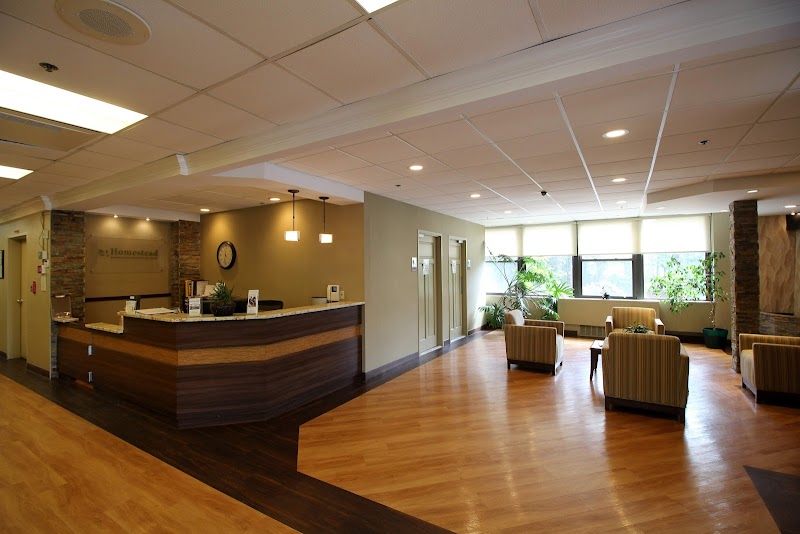
Who Owns and Operates Homestead Rehabilitation & Health?

HOMESTEAD REHABILITATION & HEALTH CARE CENTER is owned by a for-profit company. For-profit facilities operate as businesses with obligations to shareholders or private owners. The facility is operated by BENJAMIN LANDA, a chain that manages multiple nursing homes. With 128 certified beds and approximately 59 residents (about 46% occupancy), it is a mid-sized facility located in NEWTON, New Jersey.
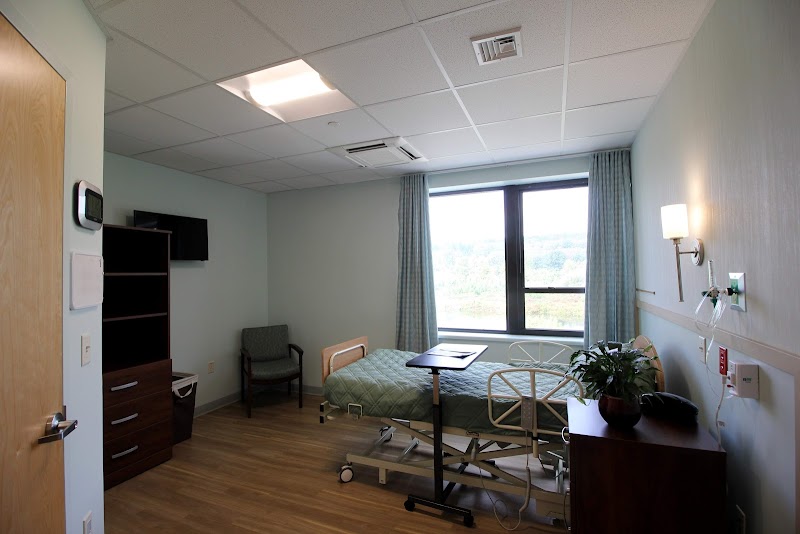
How Does Homestead Rehabilitation & Health Compare to Other New Jersey Nursing Homes?

Compared to the 100 nursing homes in New Jersey, HOMESTEAD REHABILITATION & HEALTH CARE CENTER's overall rating (2 stars) is below the state average of 3.2, staff turnover (53%) is near the state average of 46%, and health inspection rating (1 stars) is much below the national benchmark.

What Should Families Ask When Visiting Homestead Rehabilitation & Health?

Based on this facility's data, families visiting should ask: "Can you walk me through typical staffing levels on day, evening, and night shifts?" "Can I visit during a mealtime to observe dining assistance and food quality?" "How do you handle medical emergencies, and what is your hospital transfer rate?" "Can I speak with family members of current residents about their experience?" These questions are particularly relevant given the below-average staffing rating.

Is Homestead Rehabilitation & Health Safe?

Based on CMS inspection data, HOMESTEAD REHABILITATION & HEALTH CARE CENTER has a clean safety record: no substantiated abuse findings (meaning no confirmed cases of resident harm), no Immediate Jeopardy citations (the most serious violation level indicating risk of serious injury or death), and is not on the Special Focus Facility watch list (a federal program monitoring the lowest-performing 1% of nursing homes). The facility has a 2-star overall rating and ranks #100 of 100 nursing homes in New Jersey. While no facility is perfect, families should still ask about staff-to-resident ratios and recent inspection results during their visit.

Do Nurses at Homestead Rehabilitation & Health Stick Around?

HOMESTEAD REHABILITATION & HEALTH CARE CENTER has a staff turnover rate of 53%, which is 7 percentage points above the New Jersey average of 46%. Moderate turnover is common in nursing homes, but families should still ask about staff tenure and how the facility maintains care continuity when employees leave.

Was Homestead Rehabilitation & Health Ever Fined?

HOMESTEAD REHABILITATION & HEALTH CARE CENTER has been fined $135,173 across 2 penalty actions. This is 3.9x the New Jersey average of $34,431. Fines at this level are uncommon and typically indicate a pattern of serious deficiencies, repeated violations, or failure to correct problems promptly. CMS reserves penalties of this magnitude for facilities that pose significant, documented risk to resident health or safety. Families should request specific documentation of what issues led to these fines and what systemic changes have been implemented.

Is Homestead Rehabilitation & Health on Any Federal Watch List?

HOMESTEAD REHABILITATION & HEALTH CARE CENTER is not on any federal watch list. The most significant is the Special Focus Facility (SFF) program, which identifies the bottom 1% of nursing homes nationally based on persistent, serious quality problems. Not being on this list means the facility has avoided the pattern of deficiencies that triggers enhanced federal oversight. This is a positive indicator, though families should still review the facility's inspection history directly.