UNITED METHODIST COMMUNITIES AT BRISTOL GLEN
200 BRISTOL GLEN DRIVE, NEWTON, NJ 07860 (973) 300-5788
Non profit - Corporation 60 Beds Independent Data: November 2025
Trust Grade
75/100
#156 of 344 in NJ
Last Inspection: May 2024

Within standard 12-15 month inspection cycle. Federal law requires annual inspections.

Overview

United Methodist Communities at Bristol Glen holds a Trust Grade of B, indicating it is a good choice for families seeking care, though it is not the very best option available. The facility ranks #156 out of 344 in New Jersey, placing it in the top half of nursing homes in the state, and #2 out of 5 in Sussex County, meaning only one other local facility is rated higher. The facility is improving, with issues decreasing from 2 in 2024 to 1 in 2025, and it has no fines on record, which is a positive sign of compliance. Staffing is rated 4 out of 5 stars, with RN coverage better than 92% of New Jersey facilities, although the turnover rate of 49% is average, suggesting some staff changes. However, there are some concerns: a serious incident involved a resident who fell during a transfer, resulting in a head injury, and there were also issues with following physician orders for medication and conducting necessary neurological checks after falls. Overall, while there are strengths in staffing and compliance, families should be aware of the specific incidents that have occurred.

Trust Score
B
75/100
In New Jersey
#156/344
Top 45%
Safety Record
Moderate
Needs review
Inspections
Getting Better
2 → 1 violations
Staff Stability
⚠ Watch
49% turnover. Above average. Higher turnover means staff may not know residents' routines.
Penalties
✓ Good
No fines on record. Clean compliance history, better than most New Jersey facilities.
Skilled Nurses
✓ Good
Each resident gets 71 minutes of Registered Nurse (RN) attention daily — more than 97% of New Jersey nursing homes. RNs are the most trained staff who catch health problems before they become serious.
Violations
○ Average
6 deficiencies on record. Average for a facility this size. Mostly minor or procedural issues.
★★★★☆
4.0
Overall Rating
★★★★☆
4.0
Staff Levels
★★☆☆☆
2.0
Care Quality
★★★★☆
4.0
Inspection Score
Stable
2024: 2 issues
2025: 1 issues

The Good

  • 4-Star Staffing Rating · Above-average nurse staffing levels
  • Full Sprinkler Coverage · Fire safety systems throughout facility
  • No fines on record

Facility shows strength in staffing levels, fire safety.

The Bad

Staff Turnover: 49%

Near New Jersey avg (46%)

Higher turnover may affect care consistency

The Ugly 6 deficiencies on record

1 actual harm
Aug 2025 1 deficiency 1 Harm
SERIOUS (G) 📢 Someone Reported This

A family member, employee, or ombudsman was alarmed enough to file a formal complaint

Actual Harm - a resident was hurt due to facility failures

Accident Prevention (Tag F0689)

A resident was harmed · This affected 1 resident

**NOTE- TERMS IN BRACKETS HAVE BEEN EDITED TO PROTECT CONFIDENTIALITY** Complaint # NJ 2565649Based on observation, interview, review of medical records, and other pertinent facility documents, it was...

Read full inspector narrative →
**NOTE- TERMS IN BRACKETS HAVE BEEN EDITED TO PROTECT CONFIDENTIALITY** Complaint # NJ 2565649Based on observation, interview, review of medical records, and other pertinent facility documents, it was determined that the facility failed to provide a safe environment and follow fall prevention interventions as written on the individual comprehensive care plan (ICCP) for 2 of 2 residents, (Resident #2 and Resident #5). Resident #2 was transferred with the use of a mechanical lift by one staff member, fell, sustained a head injury that required an emergency transfer to a hospital, and was admitted for 8 days with a laceration of the head that required 3 staples. This deficient practice was evidenced by the following: 1. Resident #2 was not in the facility during the survey. The surveyor reviewed the closed medical record for Resident #2. A review of Resident #2’s admission Record reflected the resident was admitted to the facility on [DATE] with diagnoses which included but were not limited to; a displaced fracture of the second cervical vertebra (break in the bone with fractured pieces moved out of their normal alignment), traumatic brain injury (damage to the brain) and hemiplegia (paralysis of one side of the body). A review of the most recent Minimum Data Set (MDS), an assessment tool dated 7/31/25, reflected that Resident #2 had a Brief Interview for Mental Status (BIMS) score of 1 out of 15, which indicated that the resident had severe cognitive impairment. A review of Section GG assessed that the resident required the assistance of two staff members for transfers. A review of Resident #2’s Care Plan Report reflected a care plan dated 6/20/25, with a focus area that indicated that the resident required assistance with bathing, hygiene, dressing, and grooming related to cognitive impairment, impaired mobility, and incontinence, with interventions that included but were not limited to; mechanical lift (a lift that uses a sling to safely transfer individuals with limited mobility from one location to another) for transfers with 2 persons; apply a neck collar for neck fracture that should be worn whenever out of bed or when transferring. A review of a nurses’ note dated 7/16/25 at 7:02 PM, reflected that a Certified Nursing Assistant (CNA #1) called out from the resident’s room, “I need help”. The nurse went to the room and observed the resident on the floor, next to the bed, with their head resting on the leg of the mechanical lift. CNA #1 stated that the resident “just slid out”. The back of the resident’s head was bleeding and direct pressure, and an ice pack was applied. Additional staff arrived to assist the resident back to bed and the Director of Nursing (DON) was notified. The nurses' note did not indicate that the resident had their neck brace in place. Further review revealed that an ambulance service was called and arrived at 7:25 PM and a neck collar was placed on the resident by EMS and the resident was transferred to the hospital at 7:40 PM. A review of the New Jersey Universal Transfer Form dated 7/16/25, with no documented time of transfer, revealed the reason for the transfer to the hospital, was the resident sustained an occipital (back of the head) wound with bleeding from the head post fall. A review of the Registered Nurse (RN) assessment nurses note dated 7/16/25 at 10:07 PM (late entry), revealed that CNA #1 attempted to transfer the resident with a mechanical lift alone without assistance. A review of the Facility Incident/Accident Report dated 7/16/25, indicated a Certified Nursing Assistant (CNA #1) transferred Resident #2 with a mechanical lift alone without assistance. The resident sustained a laceration to their head, and CNA #1 had been terminated. A review of CNA #1's Total Mechanical Lift Competency dated 3/20/25, reflected that CNA #1 received training and performed the Mechanical Lift Operation appropriately, which included: Ensuring two caregivers are present during the transfer . A review of the nurse's note dated 7/24/25 at 10:48 PM, reflected that Resident #2 was readmitted to the facility at 5:15 PM post fall, with 3 staples to the left occipital area of the head with a neck collar in place. On 8/25/25 at 11:58 AM, during an interview with the surveyor, the DON stated that the nurse called her on 7/16/25, at approximately 8:00 PM, and informed her of the incident. The DON suspended CNA #1 while an investigation was completed. On 8/25/25 at 12:30 PM, the survey team discussed the above observations and concerns with the Licensed Nursing Home Administrator (LNHA), the Administrator in Training, and the DON. The LNHA confirmed that all mechanical lift transfers require two staff members to be present. A review of the facility policy, “Safe Handling” with a revised date of 8/8/25, reflected…The facility is committed to a culture of safety. All residents will be handled safely using zero manual lifts for mechanical lifting, transferring, and repositioning…The purpose is to ensure residents receive assistance appropriate for their functional level, physical characteristics, level of cooperation, medical condition, and cognitive status while promoting safety and comfort…to increase the quality of care for the resident…examples include but are not limited to bed to chair transfers…A direct care teammate shall consider their own ability, the environment and the resident status prior to any lift/transfer…Follow care plan lift/transfer recommendation. 2. On 8/20/25 at 12:06 PM, the surveyor observed Resident #5 who was dressed and groomed and was seated in a wheelchair in the dining room, waiting for lunch to be served. The resident was seated in the dining room with other residents and was seated next to a table. A review of Resident #5’s admission Record reflected the resident was admitted to the facility on [DATE], with diagnoses which included but were not limited to; spinal stenosis (the spaces inside the bones of the spine get too small), cervicalgia (pain in the neck and shoulder that varies in intensity), and chronic kidney disease (longstanding disease of the kidneys leading to renal failure). A review of the most recent Minimum Data Set (MDS), an assessment tool dated 7/02/25, reflected that Resident #5 had a Brief Interview for Mental Status (BIMS) score of 13 out of 15, which indicated that the resident was cognitively intact. A review of Section GG assessed that the resident required maximum assistance for transfers. A review of Resident #5’s Care Plan Report reflected a care plan with a focus area that indicated that the resident required assistance with bathing, hygiene, dressing, and grooming related to impaired mobility, which was initiated on 6/24/25. Interventions included “transfer with moderate assist of 2 and use of a rolling walker and/or grab bar. Gait belt should be used for safety.” A review of the nurse’s note dated 8/25/25 at 4:29 AM, titled as “Incident Note, reflected… a Certified Nursing Assistant (CNA #2) reported that while attempting to transfer a resident out of bed that the resident sat/fell on their buttocks. The nurse wrote that when she saw the resident, they were sitting on the floor with legs out in front. The note continued that the resident denied injury and was successfully lifted by three staff members including a CNA #3 from another unit. Interventions were put in place to assure that the resident had the proper shoes and socks, and that the CNA #2 was in-serviced that the resident required two staff members for transfers, and that the CNA #2 needed to ask for assistance before transferring resident out of bed. A review of the “Daily Assignment Sheet” dated 08/26/25, revealed that Resident #5 was a transfer x 2 with Roller walker and gait belt. On 08/26/25 at 10:00 AM, the surveyor interviewed the Licensed Nursing Home Administrator (LNHA) who was aware of the incident and stated that the resident was a 2 person assist for transfers from bed or chair and that CNA #2 should have asked for help before trying to transferring the resident by herself. The LNHA acknowledged that CNA #2 was previously educated on transferring residents and that she was re-educated after the incident. On 8/26/25 at 12:40 PM, the surveyor interviewed CNA #2 who stated that she was aware that the resident was a 2-person transfer and that she should have requested help from another staff member. CNA #2 further stated that she was previously in-serviced on properly transferring residents and that she was re-educated after the incident. On 8/26/25 at 12:55 PM, the surveyor discussed the above concern with the LNHA and the Director of Nursing. No further information was provided. NJAC 8:39-27.1 (a)
May 2024 2 deficiencies
CONCERN (D)

Potential for Harm - no one hurt, but risky conditions existed

Deficiency F0658 (Tag F0658)

Could have caused harm · This affected 1 resident

Based on observation, interview, and record review it was determined the facility failed to consistently follow standards of clinical practice with regards to: a.) following a physician's order as wri...

Read full inspector narrative →
Based on observation, interview, and record review it was determined the facility failed to consistently follow standards of clinical practice with regards to: a.) following a physician's order as written for 1 of 15 residents (Resident # 1), and b.) completing neuro checks (an assessment of neurological status that must be done when a resident hits his or her head or if it is unknown if they hit their head) after a resident had a history of fall for 1 of 1 resident (Resident #14) reviewed for falls. The deficient practice was evidenced by the following: Reference: New Jersey Statutes Annotated, Title 45. Chapter 11. Nursing Board. The Nurse Practice Act for the State of New Jersey states: The practice of nursing as a registered professional nurse is defined as diagnosing and treating human responses to actual and potential physical and emotional health problems, through such services as casefinding, health teaching, health counseling, and provision of care supportive to or restorative of life and wellbeing, and executing medical regimens as prescribed by a licensed or otherwise legally authorized physician or dentist. Reference: New Jersey Statutes Annotated, Title 45, Chapter 11. Nursing Board. The Nurse Practice Act for the State of New Jersey states: The practice of nursing as a licensed practical nurse is defined as performing tasks and responsibilities within the framework of casefinding; reinforcing the patient and family teaching program through health teaching, health counseling and provision of supportive and restorative care, under the direction of a registered nurse or licensed or otherwise legally authorized physician or dentist. 1. On 5/15/24 at 11:34 AM, the surveyor observed Resident #1 seated in a wheelchair in their room. The resident was alert and oriented. Resident #1 stated they had a wound that was being treated by the nursing staff and verbalized no concerns. The surveyor reviewed the electronic medical records (EMR) of Resident #1 which revealed the following: The admission Record (a summary of important resident information) documented Resident #1 had diagnoses that included, but were not limited to, osteoarthritis, peripheral vascular disease, hypertension, a pressure ulcer to the left heel, and a pressure ulcer to the right heel. A Quarterly Minimum Data Set (MDS) assessment, dated 4/9/24, indicated the facility assessed the resident's cognitive status using a Brief Interview for Mental Status (BIMS). Resident #1 scored a 12 out of 15 which indicated that the resident had moderate cognitive impairment. A review of the Order Summary Report documented Resident #1 had a physician order (PO), dated 5/17/24, which read: Dakins (1/4 strength) External Solution 0.125% (Sodium Hypochlorite) Apply to Left heel topically two times a day for wound treatment for 14 days .Cleanse with normal saline, pat dry, apply Dakin's moistened fluffed gauze and crushed Metrodinazole to base of wound the[then] secure with bordered foam. A review of the May 2024 electronic Treatment Administration Record (eTAR) for Resident #1 documented the above PO for the left heel wound treatment and it was signed by the nursing staff as administered twice a day in the morning and evening shifts. A review of the resident's care plans included a care plan with a focus that read I have potential for pressure ulcer development r/t[related to] Immobility and I currently have pressure injury to my left heel (stage 3). An intervention for the care plan dated 11/15/23 read, Administer treatments as ordered and monitor for effectiveness. On 5/21/24 at 9:50 AM, the surveyor observed Registered Nurse #1 (RN #1) perform the left heel wound treatment for Resident #1. RN #1 reviewed the wound treatment PO with the surveyor prior to starting the wound treatment. On 5/21/24 at 10:07 AM, during the wound treatment, the surveyor observed RN #1 wash her hands appropriately for 35 seconds at the bathroom sink and don gloves. RN #1 took gauze moistened with normal saline, cleansed Resident #1's left heel wound, and dispose the used gauze in the garbage bin. RN #1 took a clean, dry gauze, and patted the wound area dry. RN #1 took a gauze moistened with dakin's solution, cleansed the left heel wound bed, and then dispose of the gauze in the garbage bin. RN #1 took a gauze with crushed metronidazole and applied the medication to the wound bed. RN #1 then disposed of the gauze in the garbage and applied a bordered gauze dressing. On 5/21/24 at 10:32 AM, the surveyor observed RN #1 sign for the wound treatment being administered to Resident #1. RN #1 confirmed she had completed the resident's wound treatment. On 5/21/24 at 10:35 AM, the surveyor reviewed with RN #1 the wound treatment order and the application of the Dakin's solution. RN #1 acknowledged she did not perform the wound treatment as written in the physician order and she did not apply the Dakin's moistened gauze to the wound bed with the crushed metronidazole. On 5/21/24 at 12:50 PM, the surveyor informed the Licensed Nursing Home Administrator (LNHA), Director of Nursing (DON), Executive Director (ED), and the Regional Director of Clinical Services about the concern observed during the wound treatment of the physician's order not being followed as written. There was no additional information provided by the facility. A review of the facility's policy titled, Pressure Injury Prevention & Managing Skin Integrity with a last revised date of 2/14/2024 read under Policy, Any resident with a wound shall receive treatment and services consistent with the resident's goals of treatment. The policy did not further address following written physicians' orders for wound treatments. A review of the facility's provided wound treatment competency titled, UMC-Wound Treatment Observation Utilizing Clean technique read under Quality of Care, .Physician order is checked before starting treatment .Physician Order includes location of wound, frequency of treatment, method for cleaning wound, medication to be applied if any and type of dressing to be utilized . 2. On 5/15/24 at 12:20 PM, the surveyor observed Resident #14 seated in their wheelchair in the dayroom of the unit. Resident #14 was alert and verbally responsive to simple questions. On 5/20/24 at 9:47 AM, the surveyor reviewed a fall investigation report, dated 3/5/24 for Resident #14. The resident had a fall incident at approximately 6:45 pm in which Resident #14 attempted to assist another resident move their wheelchair and fell out of their wheelchair. Resident #14 fell on their right side to the floor and bumped the right side of their head. There were no visible injuries, an ice pack was provided and neuro-checks were initiated. The surveyor reviewed the EMR of Resident #14 which revealed the following: The admission Record documented Resident #14 had diagnoses that included, but were not limited to, Chronic Kidney Disease, Dementia, and Hypertension. A Quarterly MDS assessment, dated 5/7/24, indicated the facility assessed the resident's cognitive status using a BIMS. Resident #14 scored a 3 out of 15 which indicated that the resident had severe cognitive impairment. A nurse progress note dated 3/5/24 at 20:17 [8:17 pm], documented Resident #14 attempted to move another resident's wheelchair and fell out of their wheelchair onto their right side in the dining room area. The note further detailed the resident had bumped the right side of their head on the floor and neuro-checks for the resident were WNL [within normal limits]. A nurse progress note dated 3/6/24 at 23:05 [11:05 pm], detailed a neuro-check completed for Resident #14 which included, a neurological assessment and vital signs obtained. There were no other progress notes found that documented any additional neuro-checks being completed after the resident's fall. A review of the Order Summary Report for March 2024 revealed, there were no PO to account for neuro-checks being completed after the resident's fall incident. A review of the March 2024 electronic Medication Administration Record (eMAR) and eTAR revealed that there were no entries for the neuro-checks being completed after the resident's fall incident. A review of the March 2024 list of vital signs (VS) revealed that there were no VS documented to account for the neuro-checks being completed after the resident's fall incident. On 5/20/24 at 11:20 AM, the surveyor requested from the DON for further documentation of the neuro-checks related to the fall incident of Resident #14. The DON stated she would review and provide further information. On 5/20/24 at 12:40 PM, the DON provided the surveyor a document titled UMC NEUROLOGICAL CHECK LIST dated 3/5/24 and timed 19:41 [7:41 pm], which was found in the resident's EMR. A review of the document revealed under the section titled, Vital Signs, the VS documented were dated 3/1/24. The other sections of the document which included mental status assessments, pupil assessment, pain assessment, and range of motion of extremities were completed. There was no additional documentation to indicate additional neuro checks being performed after the resident's fall. On 5/21/24 at 12:40 PM, the surveyor informed the LNHA, DON, ED and Regional Director of Clinical Services about the concern that there was no documentation to indicate neuro-checks for the resident were completed after their fall on 3/5/24. The DON and the LNHA acknowledged it would be expected for neuro-checks to be completed and documented for an unwitnessed fall or a bump to the head. On 5/22/24 at 9:58 AM, the surveyor interviewed the DON who stated there was no additional information found for completion of the neuro-checks. The DON stated the facility protocol for neuro checks once initiated was that it would be done every 2 hours for 12 hours, then every 3 hours for 24 hours, and every 4 hours for another 24 hours. The DON further stated a physician order should have been written and the facility's policy was for neuro checks to be initiated when a resident had an unwitnessed fall, a head injury or if a head injury could not be ruled out. On 5/22/24 at 10:13 AM, the surveyor interviewed over the phone Registered Nurse #2 (RN #2) who was the assigned nurse for Resident #14 at the time of the fall incident. RN #2 stated for unwitnessed falls or falls with possible head injury, neuro checks were to be initiated. RN#2 could not explain the facility's protocol on how often neuro checks were to be performed and stated the facility policy was different from what she was used to. RN #2 further stated neuro checks were entered as physician's orders and would be triggered for nurses to assess the resident's vital signs at a certain frequency. RN #2 was not sure where the triggered neuro check documentation would be found in the EMR and stated she would write her neuro-check assessments in her progress notes instead. RN #2 could not recall the details of the 3/5/24 fall incident for the resident. The surveyor discussed with RN #2 the concern that there were no neuro checks found for the resident other than the two progress notes and the neuro checklist documentation provided by the DON. RN #2 could not speak to why there was not further documentation of the neuro checks and no physician order found. A review of the facility's policy titled, Fall Prevention and Management with a last reviewed date of 7/6/2023 read under Post Fall Management, B. Minor Head Trauma or Impact, it read: .performs neuro-checks every two hours for the first 12 hours, every three hours for the next 24 hours, every four hours for the following 24 hours .2. Neuro-checks shall be implemented if a resident cannot communicate that they may have hit their head due to cognitive impairment . NJAC 8:39-11.2 (b); 29.2(d)
CONCERN (D)

Potential for Harm - no one hurt, but risky conditions existed

Respiratory Care (Tag F0695)

Could have caused harm · This affected 1 resident

Based on observation, interview, and record review, it was determined that the facility failed to clarify a Physician's Order (PO) in accordance with professional standards of practice for 1 of 16 res...

Read full inspector narrative →
Based on observation, interview, and record review, it was determined that the facility failed to clarify a Physician's Order (PO) in accordance with professional standards of practice for 1 of 16 residents (Resident #16) reviewed. The deficient practice was evidenced by the following: 1. On 5/15/24 at 11:15 AM, the surveyor observed Resident #16 in a Geri-chair (a specialized chair designed specifically for seniors and individuals with limited mobility), receiving oxygen (O2) via nasal cannula (medical device to provide supplemental oxygen therapy to people who have lower oxygen levels) at 3 Liters Per Minute (LPM.) The surveyor reviewed the medical records of Resident #16, who was admitted to the facility with diagnoses that included but not limited to Human Metapneumovirus Pneumonia, Chronic Respiratory Failure, and Chronic Obstructive Pulmonary Disease. A review of the Minimum Data Set Assessment (MDS), an assessment tool, used to facilitate the management of care, dated 4/21/24, revealed that the resident had a score of 13 out of 15 on the Brief Interview for Mental Status, which indicated that the resident was cognitively intact. Further review of the MDS under Section O also revealed that the resident received continuous oxygen therapy. A review of the PO for Resident #16 revealed a PO, dated 4/17/24, for 2-4 LPM Oxygen via nasal cannula, keep oxygen saturation (SpO2) above 90% every shift for Shortness of Breath (SOB). On 5/17/24 at 9:18 AM, the surveyor interviewed the Licensed Practical Nurse (LPN#1), who was assigned to Resident #16, and stated that Resident #16's O2 rate was set at 2 LPM but would increase the rate if their SpO2 (the amount of oxygen in your blood that can be measured by a device called a pulse oximeter) would decrease below 90%. LPN#1 further stated that the PO for O2 rate must be at a specific rate and not in a range. On 5/17/24 at 10:05 AM, the surveyor interviewed the Registered Nurse/Nurse Mentor (RN/NM #1), who stated oxygen orders should not be written with a range but a specific number setting, like 3 LPM. On 5/17/24 at 12:35 PM, the surveyor interviewed the Respiratory Therapist, who acknowledged that the PO for the O2 rate should have been at a specific rate and not in a range. On 5/17/24 at 1:00 PM, the Licensed Nursing Home Administrator (LNHA) provided the surveyor with a facility policy titled, Oxygen Management Clinical Practice Guideline, with a revised date of 4/22/22. The facility policy does not specifically address the O2 rate order administration. On 5/20/24 at 01:18 PM, they survey team met LNHA, Director of Nursing (DON), Regional Director of Clinical Service (RDCS) and Executive Director (ED) to review concerns. The DON stated the O2 orders should be clearer and not have a range. The facility did not provide any further information. NJAC 8:39- 27.1 (a)
Mar 2022 2 deficiencies
CONCERN (D)

Potential for Harm - no one hurt, but risky conditions existed

Food Safety (Tag F0812)

Could have caused harm · This affected 1 resident

Based on observation, interview, record review and policy review, it was determined that the facility failed to a.) store potentially hazardous foods in a manner to prevent food borne illness, and b.)...

Read full inspector narrative →
Based on observation, interview, record review and policy review, it was determined that the facility failed to a.) store potentially hazardous foods in a manner to prevent food borne illness, and b.) failed to maintain the kitchen environment and equipment in a sanitary manner to prevent contamination from foreign substances and potential for the development a food borne illness. This deficient practice was evidenced by the following: On 3/13/22 at 10:06 AM, in the presence of the Chef Manager and Operations Manager (OM), the surveyor observed the following: 1 The surveyor observed two of five red sprinkler caps and fire suppression poles above the cook top area, which were soiled with a black grease-like substance and white colored particles. 2. In the standing refrigerator number 5, the surveyor observed two wrapped and undated 1/2 sheet sized steam table pans which contained a corn and lima bean salad and a wrapped and undated full sized sheet pan containing a green colored gelatin. 3. In walk in refrigerator, the surveyor observed a 1/2 of a slab of provolone cheese wrapped and with a use by date of 2/27/22 still on shelf. The surveyor also observed a container of rice pudding wrapped with a use by of 3/12/22. 4. At 11:44 AM, in the presence of the OM, on the 2nd floor the surveyor inspected three standing refrigerators. In the first standing refrigerator, the surveyor observed 21 separately wrapped slices of pumpkin pie which were undated. In the second refrigerator on the floor, the surveyor also observed three wrapped and undated containers of bean salad, and 6 separately wrapped slices of pumpkin pie which were undated. On 3/13/22 at 11:37 AM, the surveyor discussed the above concerns with the Administrator and Director of Nursing. The surveyor reviewed the facility's policy with a revised date of 1/12/17 titled, Food Product Shelf Life Guidelines. The policy indicated that the pumpkin pie should only be refrigerated for 2 to 3 days after opening and the pudding should be refrigerated for 2 days after opening. The facility did not provide the surveyor with any additional requested policy and procedure. NJAC 8:39-17.2(g)
MINOR (B)

Minor Issue - procedural, no safety impact

Deficiency F0582 (Tag F0582)

Minor procedural issue · This affected multiple residents

**NOTE- TERMS IN BRACKETS HAVE BEEN EDITED TO PROTECT CONFIDENTIALITY** Based on interview and record review, it was determined that the facility failed to issue the required Medicare Beneficiary Prot...

Read full inspector narrative →
**NOTE- TERMS IN BRACKETS HAVE BEEN EDITED TO PROTECT CONFIDENTIALITY** Based on interview and record review, it was determined that the facility failed to issue the required Medicare Beneficiary Protection Notification. This deficient practice was identified for 3 out of 3 residents reviewed, Resident #13, Resident #282, and Resident #283. The deficient practice was evidenced by the following: On 3/14/22 at 12:25 PM, the facility presented the surveyor with a list of residents who were discharged from a Medicare covered Part A in the last 6 months. These residents should have received Beneficiary Notices. The surveyor reviewed three residents selected from the list. Resident #283 was discharged from the facility. Resident #282 and Resident #13 remained at the facility. On 3/15/22 at 1:15 PM, the surveyor received the beneficiary notifications for 2 of the 3 residents to review. At that time, the Administrator (LNHA) stated the notification forms for Resident #283 could not be located. The LNHA did not know where the previous social worker placed the forms. According to the SNF Beneficiary Protection Notification Review form, Resident # 282 was admitted to the facility on [DATE] and the last documented covered day for Medicare Part A service was 10/8/21. The facility did not present the resident with the required Skilled Nursing Facility Advance Beneficiary Notice (SNFABN) form. According to the SNF Beneficiary Protection Notification Review form, Resident #13 was admitted to the facility on [DATE] and the last documented covered day for Medicare Part A service was 1/17/22. The facility did not present the resident with the required SNFABN form. On 3/16/22 at 10:55 AM, the surveyor interviewed the Social Worker (SW) about the beneficiary notices for Resident #282 and #13. The SW stated Resident #282, and Resident #13 received the Notification of Medicare Non-Coverage (NOMNC) form. The surveyor asked if the residents should have received the SNFABN form. The SW said she didn't know and would have to follow up with the Administrator. The SW looked up the SNFABN form and confirmed she had not given it to any residents. On 3/16/22 at 11:00 AM, the surveyor asked the SW about the beneficiary notifications for Resident #283. The SW stated she looked in the electronic and paper files of the previous SW and could not find any notification forms for that resident. On 3/16/22 at 1:09 PM, the surveyor informed the LNHA and the Director of Nursing (DON) of the concern with the residents not receiving the proper notification of potential liability for payment. On 3/17/22, 9:10 AM, the surveyor received the Beneficiary Notification for Resident #283 from the LNHA. According to the SNF Beneficiary Protection Notification Review form, Resident #283 was admitted to the facility on [DATE] and the last documented covered day for Medicare Part A service was 11/28/21. The facility provided a copy of the ABN form that had been given to the resident. There was no evidence that the resident received the required NOMNC form. On 3/17/22 at 11:41 AM, the surveyor informed the LNHA and the DON of the above concern. No further information was provided. NJAC 8:39-5.1
Dec 2019 1 deficiency
CONCERN (D)

Potential for Harm - no one hurt, but risky conditions existed

MDS Data Transmission (Tag F0640)

Could have caused harm · This affected 1 resident

Based on interview and record review, it was determined that the facility failed to complete and transmit a Minimum Data Set (MDS) in accordance with federal guidelines. This deficient practice was id...

Read full inspector narrative →
Based on interview and record review, it was determined that the facility failed to complete and transmit a Minimum Data Set (MDS) in accordance with federal guidelines. This deficient practice was identified for 2 of 16 residents reviewed for resident assessment; Resident #1, and #2. This deficient practice was evidenced by the following: On 12/4/19 at 10:26 AM, the surveyor reviewed the facility assessment task that included the Resident's MDS Assessments. The MDS is a comprehensive tool that is a federally mandated process for clinical assessment of all residents that must be completed and transmitted to the Quality Measure System. The facility must electronically send the MDS up to 14 days of the assessment being completed. 1.) Resident #1 was observed to have a quarterly MDS with an Assessment Reference Date (ARD) of 10/11/19 and was due to be transmitted no later than 11/7/19. The MDS was not electronically sent when reviewed by the surveyor on 12/5/19. 2.) Resident #2 was observed to have a quarterly MDS with an ARD of 10/17/19 and was due to be transmitted no later than 11/13/19. The MDS was not transmitted when reviewed by the surveyor on 12/5/19. On 12/6/19 at 9:25 AM, the surveyor spoke to the Director of Nursing and the MDS Coordinator regarding the above concern. The MDS Coordinator agreed that the assessments were not submitted timely. NJAC 8:39-11.2
Understanding Severity Codes (click to expand)
Life-Threatening (Immediate Jeopardy)
J - Isolated K - Pattern L - Widespread
Actual Harm
G - Isolated H - Pattern I - Widespread
Potential for Harm
D - Isolated E - Pattern F - Widespread
No Harm (Minor)
A - Isolated B - Pattern C - Widespread

Questions to Ask on Your Visit

  • "Can I speak with families of current residents?"
  • "What's your RN coverage like on weekends and overnight?"

Our Honest Assessment

Strengths
  • • No fines on record. Clean compliance history, better than most New Jersey facilities.
Concerns
  • • 6 deficiencies on record, including 1 serious (caused harm) violation. Ask about corrective actions taken.
Bottom line: Generally positive indicators. Standard due diligence and a personal visit recommended.

About This Facility

What is United Methodist Communities At Bristol Glen's CMS Rating?

CMS assigns UNITED METHODIST COMMUNITIES AT BRISTOL GLEN an overall rating of 4 out of 5 stars, which is considered above average nationally. Within New Jersey, this rating places the facility higher than 99% of the state's 100 nursing homes. This rating reflects solid performance across the metrics CMS uses to evaluate nursing home quality.

How is United Methodist Communities At Bristol Glen Staffed?

CMS rates UNITED METHODIST COMMUNITIES AT BRISTOL GLEN's staffing level at 4 out of 5 stars, which is above average compared to other nursing homes. Staff turnover is 49%, compared to the New Jersey average of 46%.

What Have Inspectors Found at United Methodist Communities At Bristol Glen?

State health inspectors documented 6 deficiencies at UNITED METHODIST COMMUNITIES AT BRISTOL GLEN during 2019 to 2025. These included: 1 that caused actual resident harm, 4 with potential for harm, and 1 minor or isolated issues. Deficiencies causing actual harm indicate documented cases where residents experienced negative health consequences.
Who Owns and Operates United Methodist Communities At Bristol Glen?

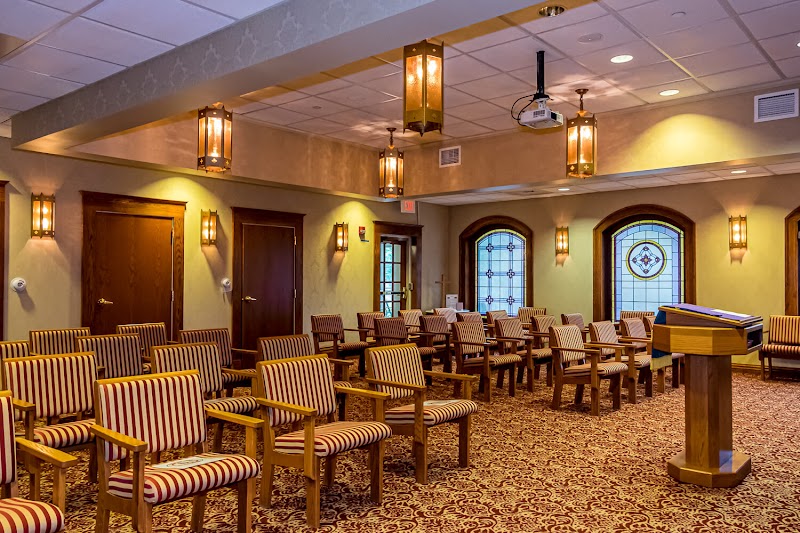
UNITED METHODIST COMMUNITIES AT BRISTOL GLEN is owned by a non-profit organization. Non-profit facilities reinvest revenue into operations rather than distributing to shareholders. The facility operates independently rather than as part of a larger chain. With 60 certified beds and approximately 53 residents (about 88% occupancy), it is a smaller facility located in NEWTON, New Jersey.

How Does United Methodist Communities At Bristol Glen Compare to Other New Jersey Nursing Homes?

Compared to the 100 nursing homes in New Jersey, UNITED METHODIST COMMUNITIES AT BRISTOL GLEN's overall rating (4 stars) is above the state average of 3.3, staff turnover (49%) is near the state average of 46%, and health inspection rating (4 stars) is above the national benchmark.

What Should Families Ask When Visiting United Methodist Communities At Bristol Glen?

Based on this facility's data, families visiting should ask: "Can I visit during a mealtime to observe dining assistance and food quality?" "How do you handle medical emergencies, and what is your hospital transfer rate?" "Can I speak with family members of current residents about their experience?"

Is United Methodist Communities At Bristol Glen Safe?

Based on CMS inspection data, UNITED METHODIST COMMUNITIES AT BRISTOL GLEN has a clean safety record: no substantiated abuse findings (meaning no confirmed cases of resident harm), no Immediate Jeopardy citations (the most serious violation level indicating risk of serious injury or death), and is not on the Special Focus Facility watch list (a federal program monitoring the lowest-performing 1% of nursing homes). The facility has a 4-star overall rating and ranks #1 of 100 nursing homes in New Jersey. While no facility is perfect, families should still ask about staff-to-resident ratios and recent inspection results during their visit.

Do Nurses at United Methodist Communities At Bristol Glen Stick Around?

UNITED METHODIST COMMUNITIES AT BRISTOL GLEN has a staff turnover rate of 49%, which is about average for New Jersey nursing homes (state average: 46%). Moderate turnover is common in nursing homes, but families should still ask about staff tenure and how the facility maintains care continuity when employees leave.

Was United Methodist Communities At Bristol Glen Ever Fined?

UNITED METHODIST COMMUNITIES AT BRISTOL GLEN has no federal fines on record. CMS issues fines when nursing homes fail to meet care standards or don't correct problems found during inspections. The absence of fines suggests the facility has either maintained compliance or corrected any issues before penalties were assessed. This is a positive indicator, though families should still review recent inspection reports for the full picture.

Is United Methodist Communities At Bristol Glen on Any Federal Watch List?

UNITED METHODIST COMMUNITIES AT BRISTOL GLEN is not on any federal watch list. The most significant is the Special Focus Facility (SFF) program, which identifies the bottom 1% of nursing homes nationally based on persistent, serious quality problems. Not being on this list means the facility has avoided the pattern of deficiencies that triggers enhanced federal oversight. This is a positive indicator, though families should still review the facility's inspection history directly.