AUTUMN LAKE HEALTHCARE AT SALEM COUNTY


438 SALEM-WOODSTOWN ROAD, SALEM, NJ 08079 (856) 935-6677
For profit - Individual 116 Beds AUTUMN LAKE HEALTHCARE Data: November 2025
Trust Grade
45/100
#245 of 344 in NJ
Last Inspection: March 2024

Within standard 12-15 month inspection cycle. Federal law requires annual inspections.

Overview

Autumn Lake Healthcare at Salem County has a Trust Grade of D, indicating below-average performance and some concerns about care quality. It ranks #245 out of 344 facilities in New Jersey, placing it in the bottom half, and #2 of 4 in Salem County, meaning only one local option is better. While the facility is improving, having reduced its number of issues from 12 in 2024 to 3 in 2025, staffing remains a concern with a 64% turnover rate, well above the state average. The facility has had no fines, which is positive, but it has less RN coverage than 99% of state facilities, potentially impacting care quality. Specific incidents noted by inspectors included a failure to maintain a comfortable environment in resident rooms, improper food handling practices that could lead to foodborne illnesses, and lapses in infection control, such as a staff member not performing hand hygiene during meal preparation. Overall, while there are some strengths, families should weigh these issues carefully when considering this facility.

Trust Score
D
45/100
In New Jersey
#245/344
Bottom 29%
Safety Record
Low Risk
No red flags
Inspections
Getting Better
12 → 3 violations
Staff Stability
⚠ Watch
64% turnover. Above average. Higher turnover means staff may not know residents' routines.
Penalties
✓ Good
No fines on record. Clean compliance history, better than most New Jersey facilities.
Skilled Nurses
⚠ Watch
Each resident gets only 7 minutes of Registered Nurse (RN) attention daily — below average for New Jersey. Fewer RN minutes means fewer trained eyes watching for problems.
Violations
⚠ Watch
21 deficiencies on record. Higher than average. Multiple issues found across inspections.
★★☆☆☆
2.0
Overall Rating
★★☆☆☆
2.0
Staff Levels
★★★☆☆
3.0
Care Quality
★★☆☆☆
2.0
Inspection Score
Stable
2024: 12 issues
2025: 3 issues

The Good

  • Full Sprinkler Coverage · Fire safety systems throughout facility
  • No fines on record

Facility shows strength in fire safety.

The Bad

2-Star Overall Rating

Below New Jersey average (3.2)

Below average - review inspection findings carefully

Staff Turnover: 64%

17pts above New Jersey avg (46%)

Frequent staff changes - ask about care continuity

Chain: AUTUMN LAKE HEALTHCARE

Part of a multi-facility chain

Ask about local staffing decisions and management

Staff turnover is elevated (64%)

16 points above New Jersey average of 48%

The Ugly 21 deficiencies on record

Aug 2025 1 deficiency
CONCERN (D) 📢 Someone Reported This

A family member, employee, or ombudsman was alarmed enough to file a formal complaint

Potential for Harm - no one hurt, but risky conditions existed

Pharmacy Services (Tag F0755)

Could have caused harm · This affected 1 resident

**NOTE- TERMS IN BRACKETS HAVE BEEN EDITED TO PROTECT CONFIDENTIALITY** Based on interview, record review, and policy review, the facility failed to ensure a medication was ordered upon admission from...

Read full inspector narrative →
**NOTE- TERMS IN BRACKETS HAVE BEEN EDITED TO PROTECT CONFIDENTIALITY** Based on interview, record review, and policy review, the facility failed to ensure a medication was ordered upon admission from the hospital for one resident (Resident (R) 113) out of a total sample of 33 residents. This failure increased the risk that the resident would have unrelieved pain.Findings include:Review of R113's admission Record located in the electronic medical record (EMR) under the Profile tab revealed she was admitted to the facility on [DATE] with diagnoses including spondylosis (degenerative changes of the spine) and encounter for other orthopedic aftercare (surgery).Review of R113's hospital Discharge Documentation dated 10/17/24 and provided by the facility from the resident's paper chart revealed she underwent fusion of the spine (back surgery) on 10/08/24 and 10/14/24. R113 had an unplanned cage migration (movement of hardware used during the surgeries, which can cause pain) on 10/15/24. Discharge medications included acetaminophen 1000mg every six hours as needed (PRN) for mild pain and oxycodone 5mg every four hours as needed for moderate pain (pain scale four to seven) for up to five days.Review of R113's Order Recap Report for her admission located under the Orders tab of the EMR revealed orders on admission [DATE]) for pain management included acetaminophen 1000mg every six hours PRN for mild pain as well as for acetaminophen 650mg every four hours PRN for mild pain. The oxycodone 5mg every four hours for moderate to severe pain ordered on the hospital's discharge medication list was not ordered by the facility staff.Review of R113's Medication Administration Record (MAR) dated 10/01/24 - 10/31/24 and located under the Orders tab of the EMR revealed she received acetaminophen 1000mg on 10/17/24 at 10:20 PM for pain rated as 5 on a zero to ten pain scale, which indicated moderate pain, for which oxycodone was ordered per the hospital Discharge Documentation. Review of the MAR revealed the Tylenol was effective with a pain scale rating of zero.Review of NP1's General Note dated 10/18/24 and located under the Progress Notes tab of the EMR revealed R113 appears in obvious pain and restlessness. States she has only had Tylenol for pain and was taking oxycodone 10mg in the hospital.Review of R113's Order Recap Report located under the Orders tab of the EMR revealed that on 10/18/24 at 11:35 AM, NP1 ordered oxycodone 10mg every six hours PRN.Review of R113's discharge Minimum Data Set (MDS) located under the MDS tab of the EMR with an Assessment Reference Date (ARD) of 10/26/24 revealed a score on the Brief Interview for Mental Status (BIMS) of 15 out of 15 which indicated intact cognition.During a telephone interview on 08/05/25 at 2:20 PM, R113 stated she had major surgery on her back a week prior to her admission to the facility. She stated she had to wait for her oxycodone because the pharmacy closed at a certain time the day she arrived. R113 reported she was in pain and unable to sleep or eat for three days. The oxycodone finally arrived, and the Tylenol (acetaminophen) helped a little bit.During an interview on 08/05/25 at 12:37 PM, Licensed Practical Nurse (LPN)1 reported the process for ordering medications was that nurses entered the admission orders into the EMR off of the hospital's discharge summary after confirming all medications with the nurse practitioner. If medications were awaiting delivery by the pharmacy, there were back up boxes of medications in the medication room. If a medication was not available in the back-up supply, nurses were to call the doctor or nurse practitioner about changing the medication to one the facility had access to.During an interview on 08/06/25 at 2:20 PM, LPN3 also reported that the facility was able to get medications from the back-up box in the medication room. If a medication was not in the back-up supply, nurses called to see if a different medication was available.During an interview on 08/07/25 at 2:55 PM, the Director of Nursing (DON) reported nurses called and reviewed medication orders with the provider for all new admissions. Then nurses entered the medication orders into the EMR. The DON said she was unsure why the oxycodone order from the hospital was not transcribed into the EMR. The nurse who entered the order was no longer employed by the facility, and NP1 was unavailable due to emergency medical leave.During an observation on 08/07/25 at 3:30 PM, the medication room had a locked cupboard of back-up medications. A list of available medications included in the back-up supply included both oxycodone 5mg and oxycodone 10mg.During an interview on 08/07/25 at 5:55 PM, the Medical Director stated that when a resident was admitted to the facility, the nursing staff called the nurse practitioner to confirm the medications. The nurse practitioner conferred with the Medical Director. Nursing staff entered the orders into the EMR for the nurse practitioner to sign. The Medical Director stated he expected that a resident who had a fusion of the vertebrae from lumbar five to sacral one with a biomedical cage/bone graft nine days prior to admission, who received oxycodone in the hospital, and who had it ordered on discharge from the hospital, to have oxycodone ordered by the facility.Review of the facility's Medication and Treatment Orders policy, dated July 2024, revealed, Drug and biological orders must be recorded on the physician's order sheet in the resident's chart. Review of the facility's undated Pharmacy Services Overview policy revealed that pharmaceutical services consisted of: The processes of receiving and interpreting prescriber's orders; acquiring, receiving, storing, controlling, reconciling, . Pharmacy services are available to residents 24 hours a day, seven days a week. Residents have sufficient supply of their prescribed medications and receive medications [routine, emergency or as needed] in a timely manner. NJAC 8:39-27.1(a)
Jul 2025 2 deficiencies
CONCERN (D) 📢 Someone Reported This

A family member, employee, or ombudsman was alarmed enough to file a formal complaint

Potential for Harm - no one hurt, but risky conditions existed

Notification of Changes (Tag F0580)

Could have caused harm · This affected 1 resident

**NOTE- TERMS IN BRACKETS HAVE BEEN EDITED TO PROTECT CONFIDENTIALITY** Complaint #: 2569972Based on interviews, medical record review, and review of other pertinent facility documents on 7/28/2025, i...

Read full inspector narrative →
**NOTE- TERMS IN BRACKETS HAVE BEEN EDITED TO PROTECT CONFIDENTIALITY** Complaint #: 2569972Based on interviews, medical record review, and review of other pertinent facility documents on 7/28/2025, it was determined that the facility failed to notify a resident's physician of a low blood sugar result, and to follow facility policy titled Notification of Changes. This deficient practice was identified for (Resident #7), 1 of 3 residents reviewed and was evidenced by the following:A review of the closed Electronic Medical Record (EMR) was as follows:According to the admission Record (AR), Resident #7 was admitted to the facility on [DATE] with diagnoses which included but were not limited to Diabetes, Hypertension, and Chronic Pain Syndrome. The resident was discharged from the facility on 12/30/2024. According to the Minimum Data Set (MDS), an assessment tool dated 12/30/2024, Resident #7 had a Brief Interview of Mental Status (BIMS) score of 15 out of 15, indicating the resident's cognition was intact. A review of Resident #7's Order Summary Report (OSR) included the following physician orders (Pos):Insulin Aspart Flex Pen Subcutaneous Solution Pen Injector 100 Unit/ml. Inject as per sliding scale: If blood sugar is 0-150=0 Units, 151-200=2 Units, 201-250= 4 Units, 251-300= 6 Units, 301-350= 8 Units, 351-400= 10 Units subcutaneously before meals for Diabetes. Call the Medical Doctor if blood sugar is below 70 or above 350. A review of Resident #7's Medication Administration Record (MAR) dated December 2024 revealed that; on 12/27/2024 at 4:30 PM, the resident's blood sugar was 52. A review of Resident #7's Progress Notes (PNs) for December 2024 did not show any documented evidence that the resident's physician was notified of the resident's blood sugar of 52 on 12/27/2024 at 4:30 PM.A review of the facility's incident report dated 12/28/2024, revealed that the Licensed Practical Nurse (LPN#1) who cared for Resident #7 failed to notify the physician of resident 's low blood sugar result. The surveyor attempted to interview (LPN#1) during the survey but the nurse was not available for an interview and did not return the surveyor's phone call. On 7/28/2025 at 12:05 PM, the surveyor interviewed a unit nurse (LPN #2) who stated that if the resident's blood sugar was less than the parameters listed in the physician's orders, she would notify the doctor. LPN #2 further stated that she would document in a progress note once the doctor was notified. LPN #2 indicated that it was important to call the doctor about a resident's low blood sugar to make them aware so they can determine the next course of action for the resident. On 7/28/2025 at 1:07 PM, the surveyor interviewed the Director of Nursing (DON) who stated that the doctor should have been notified of the resident's blood sugar result of 52. The DON further stated that the nurse was responsible for notifying the doctor and writing a progress note. The DON indicated that the resident's blood sugar result should have been called to the doctor on the same day. The DON stated it was important to notify the doctor because the resident's medical condition could require immediate treatment. A review of the facility's undated policy titled Notification of Changes under Policy Statement, revealed that The purpose of this policy is to ensure the facility promptly informs the resident, consults the resident's physician; and notifies, consistent with his or her authority, the resident's representative when there is a change requiring notification. NJAC 8:39-13.1(d)
CONCERN (D) 📢 Someone Reported This

A family member, employee, or ombudsman was alarmed enough to file a formal complaint

Potential for Harm - no one hurt, but risky conditions existed

Medical Records (Tag F0842)

Could have caused harm · This affected 1 resident

**NOTE- TERMS IN BRACKETS HAVE BEEN EDITED TO PROTECT CONFIDENTIALITY** Based on interviews, medical record reviews, and review of other pertinent facility documentation on 7/28/2025, it was determine...

Read full inspector narrative →
**NOTE- TERMS IN BRACKETS HAVE BEEN EDITED TO PROTECT CONFIDENTIALITY** Based on interviews, medical record reviews, and review of other pertinent facility documentation on 7/28/2025, it was determined that the facility staff failed to consistently document in the Documentation Survey Report (DSR) the Activities of Daily Living (ADL) status and care provided to the residents. Also, the facility failed to follow its policy titled ADL Documentation Policy. This deficient practice was identified for 3 of 4 residents reviewed for ADL documentation. This deficient practice was evidenced by the following:1.According to the admission Record (AR), Resident #3 was admitted to the facility on [DATE] with diagnoses which included but were not limited to Quadriplegia (paralysis of all four limbs), Acute Respiratory Failure, and Dysphagia (difficulty swallowing).According to the Minimum Data Set (MDS), an assessment tool dated 5/15/2025, Resident #3 had a Brief Interview of Mental Status (BIMS) score of 14 out of 15, indicating the resident's cognition was intact. A review of Resident #3's DSR (an Activity of Daily Living Record) and progress notes revealed lack of documentation to indicate the resident's ADL care was provided and/or that the resident refused care on the following dates and shifts:Toilet Use:7:00 AM-3:00 PM shift on 7/3/2025, 7/11/2025, 7/16/2025, and 7/24/2025.3:00 PM-11:00 PM shift on 7/27/2025.11:00 PM-7:00 AM shift on 7/5/2025, 7/12/2025, 7/20/2025 and 7/21/2025.2. According to the AR, Resident #4 was admitted to the facility on [DATE] with diagnoses which included but were not limited to Bipolar Disorder, Dementia, and Hyperlipidemia (high levels of fat). According to the MDS, an assessment tool dated 6/14/2025, Resident #4 had a BIMS score of 00 which indicated the resident's cognition was severely impaired. A review of Resident #4's DSR and progress notes revealed lack of documentation to indicate the resident's ADL care was provided and/or the resident refused care on the following dates and shifts:Toilet Use:3:00 PM-11:00PM shift on 7/3/2025.11:00 PM-7:00 AM shift on 7/15/2025.3. According to the AR, Resident #7 was admitted to the facility on [DATE] with diagnoses which included but were not limited to Diabetes, Hypertension, and Chronic Pain Syndrome. The resident was discharged from the facility on 12/30/2024. According to the MDS, an assessment tool dated 12/30/2024, Resident #7 had a BIMS score of 15 out of 15, indicating the resident's cognition was intact. A review of Resident #7's DSR and progress notes revealed lack of documentation to indicate the resident's ADL care was provided and/or the resident refused care on the following dates and shifts:Toilet Use:7:00 AM-3:00 PM shift on 12/26/2024.11:00 PM-7:00 AM shift on 12/25/2024 and 12/27/2024.On 7/28/2025 at 12:00 PM, the surveyor interviewed the Certified Nursing Assistant (CNA) who stated that the CNAs were responsible for documenting the resident's ADLs in the computer. The CNA further stated that the ADLs should generally be documented by the end of the shift. The CNA indicated that if the ADL documentation was blank, it does not always mean that care was not given. The CNA stated that the ADL documentation should not be blank, and it was important to document the resident's ADLs to show the type of care the resident received and if there was a decline or improvement in the resident's ADLs. On 7/28/2025 at 1:07 PM, the surveyor interviewed the Director of Nursing (DON) who stated that the CNAs use the Point of Care (POC), a mobile enable app that runs on wall mounted kiosks that enable care staff to document ADLs. The DON further indicated that the ADL documentation should be completed before the staff clock out for their shift. The DON stated that the Unit Manager (UM) was responsible for checking the ADL documentation to ensure it was completed. The DON stated that a blank space does not necessarily mean that the staff did not provide care. On 7/28/2025 at 1:36 PM, the surveyor interviewed the Unit Manager (UM) who stated I usually try my best to ensure that the POCs are completed. There are times, I can't check by 2 o'clock because I have meetings or get busy. The UM further indicated that she will usually follow up with the regular staff at some point to complete the documentation. The UM further indicated that if there was a blank space that it didn't necessarily mean the care was not provided but that the ADL documentation should have been completed. A review of the facility's undated policy titled ADL Documentation Policy revealed under Policy Statement, The purpose of this policy is to establish guidelines for the documentation of Activities of Daily Living (ADLs) in order to ensure accurate, timely, and comprehensive records that reflect the care provided to residents in our long-term care facility. Under Policy Interpretation and Implementation, 3. Responsibility: All nursing staff and caregivers are responsible for documenting ADLs as part of their daily care routines. Supervisors and management will regularly review documentation for compliance and accuracy.NJAC 8:39-35.2(d) (9)
Nov 2024 4 deficiencies
CONCERN (D) 📢 Someone Reported This

A family member, employee, or ombudsman was alarmed enough to file a formal complaint

Potential for Harm - no one hurt, but risky conditions existed

Comprehensive Care Plan (Tag F0656)

Could have caused harm · This affected 1 resident

**NOTE- TERMS IN BRACKETS HAVE BEEN EDITED TO PROTECT CONFIDENTIALITY** Complaint #: NJ00179130 Based on interviews, medical record review, and review of other pertinent facility documents on 11/07/20...

Read full inspector narrative →
**NOTE- TERMS IN BRACKETS HAVE BEEN EDITED TO PROTECT CONFIDENTIALITY** Complaint #: NJ00179130 Based on interviews, medical record review, and review of other pertinent facility documents on 11/07/2024 and 11/08/2024, it was determined that the facility failed to develop a Care Plan (CP) for a resident that had a diagnosis of Diabetes (high blood sugar levels) and was admitted to the facility with elongated(long) toenails. The facility also failed to follow its policy titled Care Plans, Comprehensive Person-Centered. This deficient practice was identified for 1 of 7 residents (Resident #2) reviewed for care plans. This deficient practice was evidenced by the following: According to the admission Record (AR), Resident #2 was admitted to the facility on [DATE] with diagnoses which included but were not limited to, Diabetes, Major Depressive Disorder, and Unspecified Dementia (general decline in cognitive abilities that affects a person's ability to perform everyday activities). A review of Resident #2's most recent Quarterly Minimum Data Set (MDS), an assessment tool dated 10/27/2024 revealed that the resident had a Brief Interview for Mental Status (BIMS) score of 5 out of 15, which indicated the resident's cognition was severely impaired. Revealed under Section I that resident had an active diagnosis of Diabetes. A review of Resident #2's medical record document titled [NAME] (AUTM) Admit/Readmit Screener 1.0-V7 with an effective date of 01/18/2024 and signed date of 01/18/24 revealed under Comments, elongated toenails. A review of Resident #2's CPs did not reveal a focus that addressed Resident #2's diabetes and elongated toenails. During an interview with the surveyors on 11/08/2024 at 10:50 AM, Licensed Practical Nurse (LPN#1) stated that the Unit Manager (UM) was responsible for developing and updating a resident's care plan. LPN#1 further stated the care plan was important for a resident's safety and prevention. LPN #1 stated if a care plan needed to have interventions added she would notify the UM. During an interview with the surveyors on 11/08/2024 at 11:15 AM, the UM stated that she typically updated a resident's CP every quarter and as needed. The UM stated if a resident was a new admission, she would implement the baseline CP and the MDS coordinator would do the comprehensive CP. The UM further stated The baseline CP was a check off sheet. This is where I would check off if a resident was diabetic. The UM further stated that the information she would check off on the baseline care plan would then be transferred to the comprehensive CP. The UM stated that she was responsible for updating the nursing portion of a resident's CP. The UM stated, I do not recall doing a CP for Resident #2's toenails. The UM further stated that if a resident had diabetes there should be a CP in place that addressed the diabetes. The UM stated that it was important that the CP was updated so that the correct interventions were in place to care for the resident's needs. During an interview with the surveyors on 11/08/2024 at 1:21 PM, the Director of Nursing (DON) stated that the nurse, UM, or MDS Coordinator should have caught if a care plan was not initiated for a resident. The DON confirmed that Resident #2 did not have a care plan that addressed diabetes or elongated toenails. The DON further stated Yes, there should have been a care plan that addressed the resident's diabetes and elongated toenails. The DON confirmed that the facility's care plan policy was not followed. Review of the facility policy titled Care Plans, Comprehensive Person-Centered dated 07/2024 revealed under Policy Statement, A comprehensive, person-centered care plan that includes measurable objectives and timetables to meet the resident's physical, psychosocial and functional needs is developed and implemented for each resident. Revealed under Policy Interpretation and Implementation, 1. The interdisciplinary team (IDT), in conjunction with the resident and his/her family or legal representative, develops and implements a comprehensive, person-centered care plan for each resident. 7. The comprehensive, person-centered care plan: b. describes the services that are to be furnished to attain or maintain the resident's highest practicable physical, mental, and psychosocial well-being. NJAC 8:39-11.2 (a)
CONCERN (D) 📢 Someone Reported This

A family member, employee, or ombudsman was alarmed enough to file a formal complaint

Potential for Harm - no one hurt, but risky conditions existed

Deficiency F0658 (Tag F0658)

Could have caused harm · This affected 1 resident

**NOTE- TERMS IN BRACKETS HAVE BEEN EDITED TO PROTECT CONFIDENTIALITY** Complaint #: NJ179130 Based on interviews, medical record review, and review of other pertinent facility documents on 11/07/2024...

Read full inspector narrative →
**NOTE- TERMS IN BRACKETS HAVE BEEN EDITED TO PROTECT CONFIDENTIALITY** Complaint #: NJ179130 Based on interviews, medical record review, and review of other pertinent facility documents on 11/07/2024 and 11/08/2024, it was determined that the facility failed to follow standards of clinical practice regarding a.) ensuring a resident was seen by the Podiatrist in a timely manner, b.)ensuring a resident care plan (CP) was developed for a resident that had a diagnosis of Diabetes and was admitted to the facility with elongated (long) toenails, and c.) immediate notification to the Physician of abnormal urine culture results. This deficient practice was identified for 1 of 3 residents (Resident #2) reviewed and evidenced by the following: Reference: New Jersey Statutes Annotated, Title 45, Chapter 11. Nursing Board. The Nurse Practice Act for the State of New Jersey states: The practice of nursing as a licensed practical nurse is defined as performing tasks and responsibilities within the framework of case finding; reinforcing the patient and family teaching program through health teaching, health counseling and provision of supportive and restorative care, under the direction of a registered nurse or licensed or otherwise legally authorized physician or dentist. Reference: New Jersey Statutes Annotated Title 45. Chapter 11. New Jersey Board of Nursing Statutes 45:11-23. Definitions b. The practice of nursing as a registered professional nurse is defined as diagnosing and treating human responses to actual or potential physical and emotional health problems, through such services as case finding, health teaching, health counseling, and provision of care supportive to or restorative of life and wellbeing, and executing medical regimens as prescribe by a licensed or otherwise legally authorized physician or dentist. Diagnosing in the context of nursing practice means that identification of and discrimination between physical and psychosocial signs and symptoms essential to effective execution and management of the nursing regimen. Such diagnostic privilege is distinct from a medical diagnosis. Treating means selection and performance of those therapeutic measures essential to the effective management and execution of the nursing regimen. Human response means those signs, symptoms and processes which denote the individual's health need or reaction to an actual or potential health problem. According to the admission Record (AR), Resident #2 was admitted to the facility on [DATE] with diagnoses which included but were not limited to, Diabetes (high blood sugar levels), Major Depressive Disorder, and Unspecified Dementia (general decline in cognitive abilities that affects a person's ability to perform everyday activities). A review of Resident #2's most recent Quarterly Minimum Data Set (MDS), an assessment tool dated 10/27/2024 revealed that the resident had a Brief Interview for Mental Status (BIMS) score of 5 out of 15, which indicated the resident's cognition was severely impaired. A review of Resident #2's CPs did not reveal a focus that addressed Resident #2's diabetes and elongated toenails. A review of Resident #2's medical record document titled Autumn (AUTM) Admit/Readmit Screener 1.0-V7 with an effective date of 01/18/2024 and signed date of 01/18/24 revealed under Comments, elongated toenails. A review of Resident #2's podiatry consult with a visit date of 10/07/2024 revealed under chief complaint, elongated toenails. Revealed under Subjective, Additional Comments: New diabetic patient seen today at the request of the facility for diabetes foot care. Revealed under Treatments, Additional Comment: the nails were debrided to patient's tolerance. Revealed under Assessment that the resident was at risk for complication without treatment of the toenails. A review of Resident #2's urine culture report revealed a collection date of 09/05/2024 at 6:00 AM, a reported date of 09/07/2024 at 2:12 PM. The urine culture report further revealed a reviewed by date of 09/11/2024 at 1:27 PM by the Unit Manager (UM) indicating the facility was notified that Resident #2 had an abnormal urine culture result. A review of Resident #2's Progress Notes (PNs) revealed that on 09/14/2024 the nurse reviewed the urine culture result with the physician and a telephone order was obtained for antibiotic therapy. During an interview with the surveyors on 11/08/2024 at 11:15 AM, the UM stated that the expectation was that if the nurse observed a resident with long or overgrown toenails, they had to notify her. The UM stated she would then notify the Unit Clerk that the resident needed to be scheduled for the Podiatrist. The UM stated that the floor nurses and herself were responsible for notifying the Physician of abnormal urine culture results. During an interview with the surveyors on 11/08/2024 at 1:21 PM, the Director of Nursing (DON) stated that the nurses documented skin assessment findings in the resident's chart and then notified podiatry if a resident's toenails needed to be cut. The DON stated that the nurse should have notified the Physician in the interim to get a treatment order in place. The DON stated it was considered a delay in treatment if the nurse seen a concern during an assessment and did not address it. The DON stated that the process for laboratory notification was that the laboratory called the facility and notified the nurse of the abnormal urine culture results. The DON stated the expectation was that the nurse was responsible for calling the Physician immediately after receiving the abnormal results. The DON stated that the nurse, UM, or MDS Coordinator should have identified if a care plan was not initiated for a resident. The DON confirmed that Resident #2 did not have a care plan that addressed diabetes or elongated toenails. The DON further stated Yes, there should have been a care plan that addressed the resident's diabetes and elongated toenails. The DON confirmed that the facility's care plan policy was not followed. Review of the undated facility job description titled Charge Nurse/Staff Nurse revealed under Duties and Responsibilities, initiate request for consultation or referral. Examine the resident and his/her record and charts, and discriminate between normal and abnormal findings, in order to recognize when to refer the resident to a physician for evaluation, supervision, or directions. Discuss findings with the Unit Manager. Consult with the resident's physician in providing the resident's care, treatment, rehabilitation as necessary. Notify the resident's attending physician and next of kin when there is a change in the resident's condition. Inform the Unit Manager of any changes that need to be made on the care plan. Review resident care plans for appropriate resident goals, problems, approaches, and revisions based on nursing needs. Review of the undated facility job description titled Nursing Unit Manager revealed under Major Duties and Responsibilities, Ensure compliance with current applicable federal, state, and local regulations and facility policies and procedures. Assists in the development of written preliminary and comprehensive assessments of the nursing needs of each resident. NJAC 8:39-27.1(a)
CONCERN (D) 📢 Someone Reported This

A family member, employee, or ombudsman was alarmed enough to file a formal complaint

Potential for Harm - no one hurt, but risky conditions existed

Deficiency F0687 (Tag F0687)

Could have caused harm · This affected 1 resident

**NOTE- TERMS IN BRACKETS HAVE BEEN EDITED TO PROTECT CONFIDENTIALITY** Complaint #: NJ00179130 Based on interviews, medical record review, and review of other pertinent facility documents on 11/07/20...

Read full inspector narrative →
**NOTE- TERMS IN BRACKETS HAVE BEEN EDITED TO PROTECT CONFIDENTIALITY** Complaint #: NJ00179130 Based on interviews, medical record review, and review of other pertinent facility documents on 11/07/2024 and 11/08/2024, it was determined that the facility failed to provide foot care and services for a resident that had a diagnosis of Diabetes (high blood sugar levels) and was admitted to the facility with elongated (long) toenails on 01/18/2024 and was not seen by a Podiatrist until 10/07/2024. The facility also failed to follow its policy titled Podiatry Services. This deficient practice was identified for 1 of 1 resident (Resident #2) reviewed for foot care. This deficient practice was evidence by the following: According to the admission Record (AR), Resident #2 was admitted to the facility on [DATE] with diagnoses which included but were not limited to, Diabetes, Major Depressive Disorder, and Unspecified Dementia (general decline in cognitive abilities that affects a person's ability to perform everyday activities). A review of Resident #2's most recent Quarterly Minimum Data Set (MDS), an assessment tool dated 10/27/2024 revealed that the resident had a Brief Interview for Mental Status (BIMS) score of 5 out of 15, which indicated the resident's cognition was severely impaired. Revealed under Section I that resident had an active diagnosis of diabetes. A review of Resident #2's medical record document titled [NAME] (AUTM) Admit/Readmit Screener 1.0-V7 with an effective date of 01/18/2024 and signed date of 01/18/24 revealed under Comments, elongated toenails. A review of Resident #2's podiatry consult with a visit date of 10/07/2024 revealed under chief complaint, elongated toenails. Revealed under Subjective, Additional Comments: New diabetic patient seen today at the request of the facility for diabetes foot care. Revealed under Treatments, Additional Comment: the nails were debrided to patient's tolerance. Revealed under Assessment that the resident was at risk for complication without treatment of the toenails. During a tour of the C/D wing on 11/07/2024, the surveyors observed that Resident #2's right great toenail, right second toenail, left great toenail, left fourth toenail, and left fifth toenail were slightly overgrown and had a yellow discoloration to them. During an interview with the surveyors on 11/08/2024 at 10:50 AM, the Licensed Practical Nurse (LPN#1) stated that Resident #2 was not vocal about if anything was bothering him/her and if him/her had foot pain. LPN #1 stated she observed the resident's feet and had him/her seen by the Podiatrist in October. LPN #1 further stated that the podiatrist came and cut Resident #2's toenails. LPN #1 stated that she was unsure of when the resident was moved to her wing. LPN #1 further stated that when Resident #2 came to her wing that he/she had long toenails. LPN#1 stated that the nurse was responsible for notifying the Unit Clerk when a resident needed to be seen by the Podiatrist. LPN#1 further stated the Unit Clerk was responsible for scheduling the resident for the Podiatrist. LPN #1 stated that the in-house Podiatrist came to the facility every two months and if a resident needed to be seen sooner, they would be seen by an outside Podiatrist. During an interview with the surveyors on 11/08/2024 at 11:15 AM, the Unit Manager (UM) stated that the expectation was that if the nurse observed a resident with long or overgrown toenails, they had to notify her. The UM stated she would then notify the Unit Clerk that the resident needed to be scheduled for the Podiatrist. The UM stated that if it was an emergency the resident could be seen by an outside podiatrist. The UM stated she did not observe Resident #2's toenails. The UM stated she was aware that Resident #2 was seen by the Podiatrist in October. The UM further stated, Resident #2 was a priority because LPN #1 told me that his/her toenails were long. The UM stated she could not remember when Resident #2 was transferred to her unit. The UM stated she could not recall whether Resident #2 came to her unit with overgrown toenails. The UM stated that when a resident was admitted directly to Long Term Care (LTC) there is an order for podiatry. The UM stated that Resident #2 had come from the sub-acute unit prior to coming to her unit. During an interview with the surveyors on 11/08/2024 at 1:21 PM, the Director of Nursing (DON) stated that the nurses documented skin assessment findings in the resident's chart and then notified podiatry if a resident's toenails needed to be cut. The DON stated that the nurse should have notified the Physician in the interim to get a treatment order in place. The DON stated it was considered a delay in treatment if the nurse saw a concern during an assessment and did not address it. The DON stated she did not know Resident #2 specifically. The DON further stated it was delay in treatment if Resident #2 was admitted in January and did not see the podiatrist until October especially if he/she was a diabetic. Review of the undated facility policy titled Podiatry Services revealed under Policy Interpretation and Implementation, Foot healthcare and podiatry services are available to all residents requiring routine and emergency podiatry care. The unit manager/unit secretary will be responsible for making necessary appointments. All requests for routine and emergency podiatry services should be directed to the nursing secretary to assure that appointments can be made in a timely manner. Residents with identified foot issues will be promptly referred to podiatry. NJAC 8:39-27.1 (a) NJAC 8:39-27.2 (g)
CONCERN (D) 📢 Someone Reported This

A family member, employee, or ombudsman was alarmed enough to file a formal complaint

Potential for Harm - no one hurt, but risky conditions existed

Deficiency F0773 (Tag F0773)

Could have caused harm · This affected 1 resident

**NOTE- TERMS IN BRACKETS HAVE BEEN EDITED TO PROTECT CONFIDENTIALITY** Complaint #: NJ00179130 Based on interviews, medical record review, and review of other pertinent facility documents on 11/07/20...

Read full inspector narrative →
**NOTE- TERMS IN BRACKETS HAVE BEEN EDITED TO PROTECT CONFIDENTIALITY** Complaint #: NJ00179130 Based on interviews, medical record review, and review of other pertinent facility documents on 11/07/2024 and 11/08/2024, it was determined that the facility failed to promptly notify the Physician of an abnormal urine culture result. The facility also failed to follow its policy titled Laboratory Services and Reporting. This deficient practice was identified for 1 of 3 residents (Resident #2) reviewed for laboratory results. This deficient practice was evidenced by the following: According to the admission Record (AR), Resident #2 was admitted to the facility on [DATE] with diagnoses which included but were not limited to, Diabetes (high blood sugar levels), Major Depressive Disorder, and Unspecified Dementia (general decline in cognitive abilities that affects a person's ability to perform everyday activities). A review of Resident #2's most recent Quarterly Minimum Data Set (MDS), an assessment tool dated 10/27/2024 revealed that the resident had a Brief Interview for Mental Status (BIMS) score of 5 out of 15, which indicated the resident's cognition was severely impaired. A review of Resident #2's urine culture report revealed a collection date of 09/05/2024 at 6:00 AM, a reported date of 09/07/2024 at 2:12 PM. The urine culture report further revealed a reviewed by date of 09/11/2024 at 1:27 PM by the Unit Manager (UM) indicating the facility was notified that Resident #2 had an abnormal urine culture result. A review of Resident #2's Progress Notes (PNs) revealed that on 09/14/2024 the nurse reviewed the urine culture result with the Physician and a telephone order was obtained for antibiotic therapy. During an interview with the surveyors on 11/08/2024 at 10:50 AM, the Licensed Practical Nurse (LPN#1) stated that when she received an abnormal urine culture result, she notified either the Nurse Practitioner (NP) or the Physician by phone or fax. LPN #1 further stated once the NP or Physician gave an order it was placed in the computer by the nurse. LPN #1 stated the lab result from 09/05/2024 was when the resident resided on the other unit. LPN #1 stated that the Physician had to be made aware of urine culture results right away or it would be considered a delay in resident care and the resident could end up with sepsis. During an interview with the surveyors on 11/08/2024 at 11:15 AM, the UM stated that the floor nurses and herself were responsible for notifying the Physician of abnormal urine culture results. The UM stated the Physician should be notified as soon as results were received. The UM stated that it was important to notify the Physician as soon as possible, so that the resident can get appropriate treatment. The UM stated, I believe Resident #2 had a UTI [Urinary Tract Infection] (an infection in any part of the urinary system) in September. The UM stated that urine cultures should have come back within three days. The surveyors showed the UM, resident #2's urine culture report and the UM stated, I could see it was delayed. The UM confirmed that seven days was a long time to not be started on antibiotics after the urine culture result was received. During an interview with the surveyors on 11/08/2024 at 1:21 PM, the Director of Nursing (DON) stated that the process for laboratory notification was that the laboratory called the facility and notified the nurse of the abnormal urine culture results. The DON stated the expectation was that the nurse called the Physician immediately after receiving the abnormal results. The DON stated the importance of the nurse calling the Physician immediately with abnormal lab results was so that the resident's issue could be corrected before it became an emergent situation. The DON further stated that the expectation was not for a nurse to notify the Physician seven days after an abnormal lab result was received. The DON stated this was not the facility policy. The DON stated she considered this a delay in a resident's treatment. During a telephone interview with the surveyor on 11/13/2024 at 3:20PM, the Physician stated that Resident #2 was his resident. The Physician stated he did not remember the date when the nurse notified him of Resident #2's urinalysis results. The Physician stated that the nurse was supposed to call him right away and let him know the resident's abnormal urinalysis results. The Physician stated This resident is a long term care resident and I don't see them as often, so the nurse has to let me know if something is abnormal. Review of the facility policy titled Laboratory Services and Reporting dated 10/22/2022 revealed under Policy Implementation and Interpretation, 7. Promptly notify the ordering Physician, Physician Assistant, Nurse Practitioner, or Clinical Nurse Specialist of laboratory results that fall outside the clinical reference range. NJAC 8:39-13.1 (d)
Mar 2024 8 deficiencies
CONCERN (D)

Potential for Harm - no one hurt, but risky conditions existed

Deficiency F0658 (Tag F0658)

Could have caused harm · This affected 1 resident

Based on observation, interview, and review of electronic medical records and other pertinent facility documentation, it was determined that the facility failed to follow professional standards of cli...

Read full inspector narrative →
Based on observation, interview, and review of electronic medical records and other pertinent facility documentation, it was determined that the facility failed to follow professional standards of clinical practice with respect to obtaining a diagnosis for the use of an antibiotic intravenous medication for 1 of 1 residents (Resident #184) reviewed for antibiotics. This deficient practice was evidenced by the following: Reference: New Jersey Statutes Annotated, Title 45, Chapter 11. Nursing Board. The Nurse Practice Act for the State of New Jersey states: The practice of nursing as a licensed practical nurse is defined as performing tasks and responsibilities within the framework of case finding; reinforcing the patient and family teaching program through health teaching, health counseling and provision of supportive and restorative care, under the direction of a registered nurse or licensed or otherwise legally authorized physician or dentist. According to the admission Record, Resident #184 was admitted to the facility in March of 2024. The resident did not have a comprehensive Minimum Data Set (MDS) and was not due for the assessment at the time of the survey. The admission assessment (AA) indicated that the resident was admitted to the facility with IV antibiotic therapy and rehabilitation. The AA indicated that the resident had the diagnoses of cellulitis and that the resident had a single lumen peripherally inserted central catheter (PICC) located in the right upper arm. On 03/04/24 at 10:47 AM, during tour, the surveyor observed that there was a sign on Resident 184's door indicating that the resident was on transmission-based- precautions/contact isolation. The sign also indicated that to enter the room you must wear a protective gown and gloves. The surveyor observed an intravenous (IV) medication bag and vile of medication were hanging on the IV pole that was next to the resident's bed. The IV bag was labeled with the resident's name and the bag indicated that the medication, Vancomycin 750mg (milligrams) into 250 ml (milliliter) bag was to infuse every 12 hours over 75 minutes. The resident was interviewed at this time and stated that he/she did not know why he/she was on the medication or what infection he/she had. Resident #184 stated that the nurse hung the IV last night on 03/03/24, but didn't think he/she got any of the medication. On 03/04/24 11:17 AM, the surveyor interviewed the Licensed Practical Nurse (LPN) who stated she was employed through an agency. The LPN stated that the facility provided her with competencies such as medication pass, abuse, infection control, and dementia training. She stated that she was also provided with an orientation packet prior to employment. The LPN stated that Resident #184 was on IV antibiotics for an infection, but that she was not sure what type of infection the resident had because it was not documented on the physician's order. She stated that it would have been important to know what type of infection the resident had and why the resident was being treated with IV antibiotics. The LPN reviewed the IV antibiotic order with the surveyor who confirmed that there were no diagnoses associated with the IV antibiotic order and she was not sure what type of infection the resident had. The surveyor reviewed the resident's Medication Administration Record (MAR), dated 03/01/24, which contained a physician's order for Vancomycin HCL Intravenous solution use 750 mg intravenously every 12 hours for antibiotic. There were no diagnoses documented for the use of the IV antibiotic medication. On 03/04/24 at 11:29 AM, the surveyor interviewed the Licensed Practical Nurse Unit Manager (LPN/UM) who stated that Resident #184 was ordered an IV antibiotic for methicillin-resistant Staphylococcus aureus (MRSA-a potentially dangerous type of staph bacteria that is resistant to certain antibiotics and may cause skin and other infections) in the blood. The LPN/UM also confirmed that the physicians order for the IV antibiotic should have had a diagnosis associated with the use of the medication and that she would adjust the order to include a diagnosis. On 03/05/24 09:55 AM, the surveyor interviewed the Director of Nursing (DON) who explained the policy for residents admitted with a PICC line. The DON explained to the surveyor that when a resident was admitted to the facility with a PICC line, the nurse assessed resident's PICC line and checked for patency by flushing the line with NSS to make sure the line was functional. She stated that the nurse was also responsible to make sure is a cap was on the end of the PICC line. The DON further explained that physician orders should be obtained to flush with normal saline solution (NSS) and sometimes heparin (blood thinner) depending on what the physician ordered. The DON also stated that diagnoses for the PICC and what the resident was on the IV antibiotic for should be included in the antibiotic order. On 03/12/24 at 01:39 PM, the surveyor interviewed the Licensed Nursing Home Administrator (LNHA) who confirmed that the physician's order for the use of the IV antibiotic should have had a diagnosis associated with the use of the medication. The facility's undated policy titled, Medication and Treatment Orders indicated that orders for medications and treatments will be consistent with principles of safe and effective order writing. The policy reflected that orders for medications must include clinical condition or symptoms for which the medication is prescribed. NJAC 8:39-27.1
CONCERN (D) 📢 Someone Reported This

A family member, employee, or ombudsman was alarmed enough to file a formal complaint

Potential for Harm - no one hurt, but risky conditions existed

Accident Prevention (Tag F0689)

Could have caused harm · This affected 1 resident

**NOTE- TERMS IN BRACKETS HAVE BEEN EDITED TO PROTECT CONFIDENTIALITY** Complaint # 155679, 165123, and 168629 Based on interviews, review of electronic medical records, and review of other pertinent ...

Read full inspector narrative →
**NOTE- TERMS IN BRACKETS HAVE BEEN EDITED TO PROTECT CONFIDENTIALITY** Complaint # 155679, 165123, and 168629 Based on interviews, review of electronic medical records, and review of other pertinent facility documents, it was determined that the facility failed to a.) obtain a physician order for the treatment of a skin tear that was obtained during a fall and b.) update a resident's Care Plan (CP) with fall prevention interventions after the resident fell on [DATE]. This was deficient practice was identified for 1 of 5 residents (Resident #334) reviewed for accidents and was evidenced by the following: According to the admission Record (AR), Resident #334 was admitted to the facility with the diagnoses that included, but were not limited to, osteomyelitis (infection of the bone), sepsis (occurs when your immune system has a dangerous reaction to an infection), and malignant neoplasm of the brain. The admission Minimum Data Set (MDS), an assessment tool that facilitates a resident's care, dated 09/07/23, reflected that the resident was cognitively impaired and had a history of falls prior to admission to the facility. The resident was unable to be interviewed as he/she was not currently a resident in the facility. On 03/03/24 at 11:48 AM, the surveyor reviewed the facility's fall investigation and fall incident report, dated 10/08/23, which revealed the following information: According to the Incident Report (IR), dated 10/08/23 at 09:07 AM, Resident #334 had an unwitnessed fall and was noted to be lying on the floor at the foot of the bed. The resident indicated that he/she was trying to get something out of his/her closet and lost his/her balance and fell. The resident indicated that he/she was not utilizing the walker at the time of the fall and was not wearing any shoes or socks on his/her feet. The documentation indicated that the resident had developed a skin tear on the right elbow during the fall. The IR indicated that physician (PCP) and responsible party (RP) were notified, and that the resident was currently on therapy's caseload. The IR indicated that the resident was educated to utilize the walker during ambulation and that the resident's CP was updated. According to the Fall Investigation Report (FIR), dated 10/08/23 at 09:07 AM, Resident #334 was noncompliant with the use of his/her assistive device, had a fall, and developed a skin tear to the right elbow which was cleansed with normal saline solution and was left open to air. The FIR also indicated that the resident's CP was updated to include additional interventions to prevent falls. The surveyor reviewed Resident #334's CP and there was no documentation that the resident's CP was updated to reflect a new intervention to prevent reoccurrence of falls after Resident #334 fell on [DATE]. The surveyor reviewed the Nursing Progress Notes (NPN) in the Electronic Medical Record (EMR) and there was no documentation pertaining to the events of the fall that occurred on 10/08/23 at 09:07 AM. The surveyor reviewed the Physician Order Summary Report (POSR), dated October 2023, and there was no documentation that the facility had ordered a treatment for Resident #334's right elbow skin tear that occurred on 10/08/23. The surveyor reviewed the Treatment Administration Record (TAR), dated 10/01/23-10/31/23, and there was no documentation that the facility obtained a treatment for Resident #334's skin tear that occurred on 10/08/23. On 03/07/24 11:29 AM, the surveyor interviewed the Licensed Practical Nurse (LPN) who stated she had been employed in the facility since June of 2023. The LPN explained the process of an unwitnessed fall to the surveyor. She stated that she would notify the supervisor that the resident fell and the supervisor would conduct a full assessment of the resident to include a full set of vital signs (VS), range of motion (ROM) of all extremities, ask the resident if they had any pain, and neuro-checks (neurological assessment) would be done. If the resident had an injury or skin impairment, then a treatment order would be obtained from the physician. On 03/07/24 at 11:37 AM, the surveyor interviewed the Certified Nursing Assistant (CNA) who stated that if she found a resident on the floor and the fall was unwitnessed, she would immediately call the nurse. She further added that the nurse would assess the resident and complete any necessary documentation. She added that the only form that she would have to complete would be a statement form. On 03/07/24 at 11:40 AM, the surveyor interviewed the Licensed Practical Nurse Unit Manager (LPN/UM) who explained the process the facility conducted if a resident had an unwitnessed fall. The LPN/UM stated that if a resident fell, witnessed or unwitnessed, the supervisor would be notified, the resident would be assessed for injury, and vital signs obtained, which would include asking the resident if they had pain. She stated that if the resident had an unwitnessed fall, the facility required that the resident be assessed neurologically. She continued to explain the nurse would assess the resident's ROM and if the resident was injured, the resident would get first aid, and treatments would be ordered by the physician. She added that the nurse would also notify the family and the RP. The nurse would be required to complete an incident report, initiate the investigation, and would get statements. The DON would complete the investigation. She further added that the nurse would be responsible to document the fall in the EMR, assesses the resident, update the care plan with interventions to prevent falls, and document the notifications of family and physician in the progress note. On 03/07/24 11:54 AM, the surveyor interviewed the Registered Nurse (RN) that was caring for Resident #334 on 10/08/23 at the time the resident fell. The RN stated that she did not remember the incident and did not remember documenting the fall in the progress notes (PN). On 03/07/24 at 01:05 PM, the surveyor interviewed the Director of Nurse (DON) who confirmed that there was no documentation or nursing PN located in the EMR pertaining to Resident #334 falling on 10/08/23. The DON further confirmed that there were also no treatment orders obtained to the resident's right elbow for the unwitnessed fall of 10/08/23. On 03/12/24 at 10:32 AM, the surveyor interviewed the Regional Clinical Director (RCD) who reviewed Resident #334's CP and physician's orders in the presence of the surveyor and confirmed that the CP was not updated to include new interventions to prevent further reoccurrence of falls on 10/08/23, and that if first aid was performed to the right elbow, a one-time treatment order should have been obtained from the physician. On 03/12/24 at 10:40 AM, the surveyor interviewed the DON regarding Resident #334's fall of 10/08/23 at 09:07 AM, and the DON confirmed that a treatment order should have been obtained for the skin tear that the resident obtained during the fall and she also confirmed that the resident's CP was not updated with new interventions after the resident fell on [DATE]. The DON stated that it was important to update the CP with new interventions to prevent further reoccurrence of falls. The facility policy titled, Incidents and Accidents, with a revised date of February 2023, indicated that the purpose of incident reports included: Assuring that appropriate and immediate interventions were implemented and corrective action were taken to prevent reoccurrence and improve the management of resident care, first aid would be given for minor injuries such as cuts and abrasions, the nurse would contact the resident's practitioner to report any injuries and obtain orders. The policy also indicated that documentation would include date, time, nature of incident, location, initial findings, immediate interventions, notifications, and orders obtained for follow-up interventions. The facility policy titled Wound Treatment and Management, dated 2019, indicated that wound treatments will be provided in accordance with physician orders, including cleansing method, type of dressing, frequency of dressing changes. The policy indicated that indicated that in the absence of treatment orders, the licensed nurse would notify the physician and obtain treatment orders. The policy also indicated that treatment would be documented in the Treatment Administration Record (TAR) in the electronic health record. The facility policy, with revised date of 10/17/23, titled, Comprehensive Care Plan indicated that the facility would develop and implement a comprehensive person-centered CP for each resident and that resident specific interventions would reflect the resident's needs and preferences. The policy also indicated that qualified staff responsible for carrying out interventions specified in the CP would be notified of their roles and responsibilities for carrying out interventions when changes were made. NJAC 8:3.9-27.1(a)
CONCERN (D)

Potential for Harm - no one hurt, but risky conditions existed

Incontinence Care (Tag F0690)

Could have caused harm · This affected 1 resident

Based on observation, interview, record review, and review of facility documents, it was determined that the facility failed to a.) ensure an indwelling urinary catheter drainage bag did not touch the...

Read full inspector narrative →
Based on observation, interview, record review, and review of facility documents, it was determined that the facility failed to a.) ensure an indwelling urinary catheter drainage bag did not touch the floor and b.) ensure the urinary catheter drainage bag was kept below the level of the bladder for 1 of 3 residents (Resident #67) reviewed for urinary catheter. This deficient practice was evidenced by the following: On 03/04/24 at 9:58 AM, the surveyor observed Resident #67 lying in bed. The resident had a urinary catheter (a tube placed in the body to empty urine) with a drainage bag secured to the bed. The bottom of the urinary catheter drainage bag was touching the floor. According to the admission Record, Resident #67 had diagnoses which included, but were not limited to, retention of urine. Review of the admission Minimum Data Set (MDS), an assessment tool used to facilitate the management of care, dated 01/08/24, included the resident had a Brief Interview for Mental Status score of 15, which indicated the resident's cognition was intact. Further review of the MDS included the resident had an indwelling catheter. Review of the Order Summary Report, as of 03/05/24, included a physician's order to change the urinary catheter drainage bag weekly and as needed, dated 01/13/24. Review of the Care Plan, initiated 01/15/24, included a focus that Resident #67 had an indwelling urinary catheter due to urinary retention and an intervention to keep the urinary catheter drainage bag below the resident's bladder. On 03/05/24 at 9:52 AM, the surveyor knocked on Resident #67's door, but the Certified Nursing Assistant (CNA) stated she was performing care on Resident #67 and asked the surveyor to come back later. At 10:35 AM, the surveyor observed Resident #67 lying down flat in bed, fully dressed, with his/her urinary catheter drainage bag secured to his/her pants waist band. The drainage bag was level with the resident's bladder, not below the level of the bladder. At 10:36 AM, the surveyor observed Resident #67's CNA in the hallway using the CNA kiosk. The surveyor waited in the hallway for the CNA to become available. At 10:42 AM, the surveyor observed the CNA walk away from the kiosk. At that time, the surveyor interviewed the CNA regarding urinary catheter care. The CNA stated that for residents with catheters, she ensures the urinary catheter drainage bag is secured below the resident's bladder and not touching the floor to prevent bacteria from entering the resident. At 10:44 AM, the surveyor accompanied the CNA to Resident #67's room. The CNA acknowledged the urinary catheter drainage bag was not secured below the resident's bladder and that the CNA was waiting for the physical therapy staff to get the resident out of bed. The CNA then left the room to get a privacy cover for the drainage bag so that it could be secured below the resident's bladder. The surveyor waited in the resident's room. At 10:47 AM, the Licensed Practical Nurse/Unit Manager (LPN/UM) entered the resident's room, put on gloves, removed the drainage bag from the resident's waistband, and secured the drainage bag to the bedframe below the resident's bladder. During an interview with the surveyor on 03/05/24 at 10:52 AM, the LPN/UM stated that the CNAs should secure the urinary catheter drainage bags in downward position to allow the urine to free flow by gravity, and prevent the backflow of urine into the resident. The LPN/UM further stated the drainage bag should not touch the floor for, sanitation reasons. During an interview with the surveyor on 03/05/23 at 10:58 AM, the Director of Nursing (DON) stated the CNAs should secure the urinary catheter drainage bags below the level of the resident's bladder for proper urinary flow and the bag should not touch the floor for infection control reasons. At that time, the surveyor informed the DON of the observations made on 03/04/24 and 03/05/24. The DON stated that after the CNA performed care, she should have secured the urinary catheter drainage bag to the side of the bed, below the resident's bladder, and not touching the floor. Review of the facility's Catheter Care policy, dated 11/2023, included, It is the policy of this facility to ensure that residents with indwelling catheters receive appropriate catheter care, and, Ensure drainage bag is located below the level of the bladder to discourage backflow of urine. The policy did not indicate if the drainage bag should be kept off the floor. NJAC 8:39 - 27.1(a)
CONCERN (D)

Potential for Harm - no one hurt, but risky conditions existed

Deficiency F0761 (Tag F0761)

Could have caused harm · This affected 1 resident

Based on observation, interview, and review of other pertinent facility documents, it was determined that the facility failed to label and dispose of medications in accordance with accepted profession...

Read full inspector narrative →
Based on observation, interview, and review of other pertinent facility documents, it was determined that the facility failed to label and dispose of medications in accordance with accepted professional principles for 1 of 1 residents (Resident #184) reviewed for antibiotic therapy. This deficient practice was evidenced by the following: According to the admission Record, Resident #184 was admitted to the facility in March of 2024. The resident did not have a comprehensive Minimum Data Set (MDS) completed at this time. The admission assessment (AA) indicated that Resident #184 was admitted to the facility with intravenous (IV) antibiotic therapy and rehabilitation. The AA indicated that the resident had the diagnoses of cellulitis and that the resident had a single lumen peripherally inserted central catheter (PICC) located in the right upper arm. On 03/04/24 at 10:47 AM, during tour, the surveyor observed a sign posted on the resident's door indicating that the resident was on transmission-based- precautions/contact isolation. The sign also indicated that to enter the room you must wear a protective gown and gloves. The surveyor observed an IV medication bag and vile of medication hanging on the IV pole that was next to the resident's bed. The IV bag was labeled with the resident's name and the bag indicated that the medication Vancomycin 750mg (milligrams) into 250 ml (milliliters) bag was to infuse every 12 hours over 75 minutes. There was no date or labeling on the IV tubing. The resident was interviewed at this time and stated that he/she did not know why he/she was on the medication or what infection he/she had. Resident #184 stated that the nurse hung the IV last night on 3/3/24, but didn't think he/she received any of the medication. Review of the physician Order Summary Report (OSR), dated 03/01/24, reflected a physician's order for Vancomycin HCL IV solution use 750 mg IV every 12 hours for antibiotic. Review of the resident's Medication Administration Record (MAR) indicated that the IV medication Vancomycin HCL IV solution use 750 mg IV every 12 hours was to be administered at 09:00 am and 2100 hours (09:00 pm). The MAR also indicated that on 03/03/24 at 2100 hours (9:00 pm) the IV Vancomycin was held (not given). On 03/04/24 11:17 AM, the surveyor interviewed the Licensed Practical Nurse (LPN) who stated she was employed through an agency. The LPN stated that the facility provided her with competencies such as medication pass, abuse, infection control, and dementia training. She stated that she was also provided with an orientation packet prior to employment. The LPN stated that Resident #184 was on IV antibiotics for an infection, but was not sure what type of infection the resident had because it was not documented on the physician's order. She stated that it would have been important to know what type of infection the resident the resident had and why the resident was being treated with IV antibiotics. She stated that when she came in to work that morning, she was given report by the 11:00 pm-7:00 am nurse who told her that the resident's PICC line was clogged the night prior, and the resident did not receive the dose of medication that was ordered to be given at 9:00 pm. She stated that the IV medication that was hanging on the IV pole must have been from the 9:00 pm dose that was ordered to be given 03/03/24 at 9:00 PM. The LPN further stated that the 11:00 pm-7:00 am nurse should have discarded the medication when she realized the resident's PICC line was clogged and that she could not administer the medication at that time. On 03/04/24 at 11:29 AM, the surveyor interviewed the Licensed Practical Nurse Unit Manager (LPN/UM) who stated that Resident #184 was ordered an IV antibiotic for methicillin-resistant Staphylococcus aureus (MRSA-a potentially dangerous type of staph bacteria that is resistant to certain antibiotics and may cause skin and other infections) in the blood. She explained that the nurse had documented on 03/03/24 at 22:49 (10:49 PM) that the peripherally inserted central catheter (PICC) line was clogged, notified the Nurse Practitioner (NP), and called the PICC line specialist company to come to the facility to unclog the PICC line. The LPN/UM stated that she heard that the resident did not get the 9:00 pm dose of IV antibiotic on 03/03/24. The surveyor explained to the LPN/UM that the resident's IV medication was still hanging on the IV pole since the missed dose and the LPN/UM stated that the medication that was hanging on the IV pole should have been discarded when the nurse was not able to administer the medication. The LPN/UM went to the resident's room with the surveyor and confirmed that the IV medication and tubing was not dated or timed, so she was not sure how long the medication or tubing had been hanging. The LPN/UM then stated that the antibiotic medication that was hanging on the IV pole should have been discarded. On 03/05/24 09:55 AM, the surveyor interviewed the Director of Nursing (DON) who explained the policy for residents admitted with a PICC line. The DON explained to the surveyor that when a resident was admitted to the facility with a PICC line, the nurse assessed the resident's PICC line to check for patency by flushing the line with NSS to make sure the line was functional. She stated that the nurse was also responsible to make sure is a cap was on the end of the PICC line. She stated that physician orders should be obtained to flush with normal saline solution (NSS) and sometimes heparin (blood thinner) depending on what the physician ordered. The DON explained that if the tubing was clogged the nurse should call the MD and then call the PICC line services to come unclog the tubing. She stated that the PICC line was unclogged on 03/04/24, in the afternoon, and the resident received the dose of antibiotic that the resident missed at 9:00 AM. The DON confirmed that the IV medication that was hanging at the resident's bedside should have been labeled and tubing dated and should have been discarded if the nurse was not going to administer the medication. On 03/12/24 at 01:39 PM, the surveyor interviewed the Licensed Nursing Home Administrator (LNHA) who confirmed that the IV medication should have been disposed of after the nurse realized that the IV PICC line was not functional and that she was unable to administer the medication. The facility policy facility policy titled, Discarding and Destroying Medications indicated that medications that cannot be returned to the dispensing pharmacy (e.g., non-unit-dose medications, medications refused by residents, and/or medications left by residents upon discharge) are to be disposed of in accordance with federal, state, and local regulations governing management of non-hazardous pharmaceuticals, hazardous waste, and controlled substances. The facility policy, dated 2022, titled, Intravenous Therapy indicated that IV tubing was to be changed every 96 hours or sooner if contamination or integrity of system is compromised. There was no documentation on the facility policy on labeling and dating of IV tubing. The facility provided the surveyor with a Nursing Inservice form, dated 03/05/24, which indicated that the nursing staff were educated on the following: Be sure to date IV bag and tubing. Tubing was good for 24 hours. If unable to administer antibiotic medication, remove from the residents room. N.J.A.C. 8:39-29.4(h)
CONCERN (D) 📢 Someone Reported This

A family member, employee, or ombudsman was alarmed enough to file a formal complaint

Potential for Harm - no one hurt, but risky conditions existed

Medical Records (Tag F0842)

Could have caused harm · This affected 1 resident

Complaint NJ# 168629 Based on interview and review of medical records and other facility documents, it was determined that the facility failed to maintain an accurately documented and complete medical...

Read full inspector narrative →
Complaint NJ# 168629 Based on interview and review of medical records and other facility documents, it was determined that the facility failed to maintain an accurately documented and complete medical record for 1 of 22 reviewed (Resident #334). This deficient practice was evidenced by the following: According to the admission Record (AR), Resident #334 was admitted to the facility with diagnoses that included, but were not limited to osteomyelitis (infection of the bone), sepsis (occurs when your immune system has a dangerous reaction to an infection), and malignant neoplasm of the brain. The admission Minimum Data Set (MDS), an assessment tool that facilitates a resident's care, dated 09/07/23, reflected that the resident was cognitively impaired and had a history of falls prior to admission to the facility. The resident was unable to be interviewed as he/she was not currently a resident in the facility. On 03/03/24 at 11:48 AM, the surveyor reviewed the facility's fall investigation and fall incident report, dated 10/08/23, which revealed the following information: According to the Incident Report (IR), dated 10/08/23 at 09:07 AM, Resident #334 had an unwitnessed fall and was noted to be lying on the floor at the foot of the bed. The resident indicated that he/she was trying to get something out of his/her closet and lost his/her balance and fell. The resident indicated that he/she was not utilizing the walker at the time of the fall and was not wearing any shoes or socks on his/her feet. The documentation indicated that the resident had developed a skin tear on the right elbow during the fall and that physician (PCP) and responsible party (RP) were notified. The IR also reflected that Resident #334 was currently on therapy's caseload and was educated to utilize the walker during ambulation. The surveyor reviewed the Nursing Progress Notes (NPN) in the Electronic Medical Record (EMR) and there was no documentation pertaining to the events of the fall that occurred on 10/08/23 at 09:07 AM. On 03/07/24 11:29 AM, the surveyor interviewed the Licensed Practical Nurse (LPN) stated she had been employed in the facility since June of 2023. The LPN explained the process of an unwitnessed fall to the surveyor. She stated that she would notify the supervisor that the resident fell and that supervisor would conduct a full assessment of the resident which included a full set of vital signs (VS), range of motion (ROM) of all extremities, assess for pain, and neuro-checks (neurological assessment) would be done. She stated that all unwitnessed falls required neuro-checks in case the resident hit their head. She continued to explain that the nurse would write an incident note (progress note) in the Electronic Medical Record (EMR), fill out incident report form, and obtain statements from the person that found the resident, the primary care nurse, and the primary care CNA. She further added that the primary nurse assigned to that resident would document the fall in the progress notes. On 03/07/24 at 11:37 AM, the surveyor interviewed the Certified Nursing Assistant (CNA) who stated that if she found a resident on the floor and the fall was unwitnessed, she would immediately call the nurse. She further added that the nurse would assess the resident and complete any necessary documentation. She added that the only form that she would have to complete would be a statement form. On 03/07/24 at 11:40 AM, the surveyor interviewed the Licensed Practical Nurse Unit Manager (LPN/UM) who explained the process the facility conducted if a resident had an unwitnessed fall. The LPN/UM stated that if a resident fell, witnessed or unwitnessed, the supervisor would be notified, the resident would be assessed, and VS would be taken, including pain. If the resident had an unwitnessed fall, the facility required that the resident be assessed neurologically. She continued to explain the nurse would assess the resident's ROM, and if the resident was injured, the resident would get first aid, and treatments would be ordered by the physician. She added that the nurse would also notify the family and the RP, complete an incident report, initiate the investigation and get statements from staff. She further added that the Director of Nursing (DON) would complete the investigation. She stated that it would be the nurses responsiblity to document the fall in the EMR, assesses the resident, update the care plan with interventions to prevent falls, and document the notifications of family and MD in the progress note. She verified that it would be important to document in the progress any changes in condition that occurred with residents so that there was accurate communication between disciplines. She further stated it was also important to keep accurate documentation in the progress notes because the progress notes were a legal document. The LPN/UM reviewed Resident #334's progress notes and confirmed that there was no documentation regarding Resident #334 fall of 10/08/23. On 03/07/24 11:54 AM, the surveyor interviewed Registered Nurse (RN) that was caring for Resident #334 on 10/08/23 at the time the resident fell. The RN stated that she did not remember the incident and did not remember documenting the fall in the progress notes. On 03/07/24 at 12:00 PM, the surveyor interviewed the Regional Clinical Director (RCD) and she confirmed the nurses were responsible to complete progress notes to include what happened at the time the resident fell, assessment, injuries, notification of family and doctor, and disposition of the resident. She stated that the resident's PN were required for any changes in a residents condition. She stated that PN were a form of communication between disciplines, a legal document and assisted the writer in recollection of the events. On 03/07/24 at 01:05 PM, the surveyor interviewed the Director of Nurse (DON) who confirmed that there was no documentation or nursing progress notes located in the EMR pertaining to Resident #334's fall on 10/08/23. On 03/12/24 at 10:32 AM, the surveyor interviewed the RCD who confirmed that that there was no documentation in the resident's progress notes regarding the resident's fall of 10/08/23. The facility policy, dated February 2019, titled, Charting and Documentation indicated that all services provided to the resident, progress notes toward the care plan goals, or any changes in the resident's medical, physical, functional, or psychosocial condition, shall be documented in the resident's medical record. The medical record should facilitate communication between the interdisciplinary team regarding the resident's condition and response to care. Documentation in the medical record will be objective, complete, and accurate. NJAC 8:39-35.2 (d)6, 16(e)
CONCERN (E)

Potential for Harm - no one hurt, but risky conditions existed

Safe Environment (Tag F0584)

Could have caused harm · This affected multiple residents

**NOTE- TERMS IN BRACKETS HAVE BEEN EDITED TO PROTECT CONFIDENTIALITY** Based on observation, interview and review of facility documentation, it was determined the facility failed to maintain a comfor...

Read full inspector narrative →
**NOTE- TERMS IN BRACKETS HAVE BEEN EDITED TO PROTECT CONFIDENTIALITY** Based on observation, interview and review of facility documentation, it was determined the facility failed to maintain a comfortable and homelike environment for 3 resident rooms (room numbers 211, 212, and 213) on the C/D unit of the facility. The evidence of this deficient practice includes: 1. During the initial tour of the unit on 03/04/24 at 11:32 AM, in room [ROOM NUMBER], the surveyor observed the side table missing the middle drawer handle, the walls behind and next to the bed with gouges, the opposite wall with scratches and missing paint, the closets with scratches and missing laminate on the edges exposing the raw edge, and the closet drawer handle hanging perpendicular to the drawer. In the bathroom, the surveyor observed a brown discolored ceiling tile, a black bucket under the bathroom sink with water in it, and water on the floor under the sink. 2. On 03/04/24 at 11:40 AM, in room [ROOM NUMBER], the surveyor observed that the bottom of the window blind was broken in half. The resident stated that the blind did not raise up and down and that it bothered him/her. There were scratches and missing paint on the wall under the window, the laminated edge of the dresser was missing and exposed the raw edge, and there was a large, spackled area on the bathroom wall. 3. On 03/05/24 at 10:18 AM, in room [ROOM NUMBER], the surveyor observed the bottom edge of the window blind broken in half and hanging from blind. At that time, there was a Certified Nursing Assistant (CNA) in the room. The surveyor interviewed the CNA about the window blind and the CNA acknowledged that the window blind was broken and stated, it's been broken a while. The CNA stated that if she had found something broken and needed repair in a resident's room that she would have told maintenance by recording the request in the maintenance binder or that she would have verbally told maintenance and then it would have been completed. The surveyor inquired about the walls, furniture and bathroom observations and the CNA acknowledged that the room should not look like that and was not considered homelike, stating, personally, no, it sucks. 4. On 03/05/24 at 12:46 PM, in room [ROOM NUMBER], the surveyor observed discolored wallpaper that was peeling from three of the walls in the room. On 03/05/24 at 12:49 PM, the surveyor interviewed the Licensed Practical Nurse (LPN) of the C/D unit who stated that if she had found something broken or that needed repair in a resident's room that she would write the room location and the issue in the maintenance book at the nurse's station. The LPN stated that maintenance comes on the unit daily and checks the maintenance book and that if she wrote in the book and it was still not fixed that she would have gone to the maintenance department or called him to communicate the issue. The surveyor and the LPN toured rooms [ROOM NUMBER] together and discussed the surveyor's findings. The LPN stated that it was important for safety that the toured rooms were homelike and that she would call maintenance to address the issues. The surveyor and the LPN reviewed the unit's maintenance book together. The Maintenance Request form revealed sections for Location of Repair Requested, Your Name and Shift, Date, Description of Problem, Repaired by, Date, and Resolution. The LPN stated that after finding an issue on the unit that the nurse would record on the maintenance request the room number, their name and date, and the issue to be resolved. She then stated that when maintenance reviewed the log that they would have signed and dated and gave a description of what was done. The surveyor reviewed the Maintenance Request form. On one page there was an entry for room [ROOM NUMBER]B on 01/25/24 that was filled in completely; an entry for the Med Room on 01/25/24 that was filled in completely; an entry for Location of Repair Requested: room [ROOM NUMBER] (bathroom), Your Name and Shift: [CNA's name] 7-3, Date 01/26/24, Description of Problem: Sink is leaking, water all over the floor, Repaired by: no entry, Date: no entry, Resolution: no entry; and an entry for room [ROOM NUMBER]B on 01/26/24 that was filled in completely except for Date of repair. On 03/05/24 at 01:12 PM, the surveyor interviewed the C/D LPN Unit Manager (LPN/UM) who stated that the process for finding something not working or broken on the unit was to have it recorded on the maintenance log and then maintenance would have checked the log periodically throughout the day. The LPN/UM stated that if the issue required immediate attention, that staff would log it and then call maintenance immediately or page them overhead or they could have told maintenance if they were seen on the unit. The surveyor and the LPN/UM toured rooms [ROOM NUMBER] together and discussed the surveyor's findings. The LPN/UM acknowledged that the rooms were not homelike and stated, I wouldn't want my home looking like that. The LPN/UM stated that if she notified maintenance of an issue and it was not fixed that she would have gone up the chain of command and made her direct supervisor know about the issue. The surveyor and the LPN/UM reviewed the unit's maintenance book together. The LPN/UM acknowledged that the repair request marked room [ROOM NUMBER] (bathroom), dated 01/26/24, Description of Problem: Sink is leaking, water all over the floor, had blank spots under Repaired by, Date, and Resolution. She stated that the staff would write in their findings and request for repair then the maintenance man would have fixed the issue then signed when it was done. The surveyor inquired as to the blank spots on the entry for room [ROOM NUMBER] on 01/26/24 and what it meant when Repaired by, Date, and Resolution were unsigned. The LPN/UM stated, That looks like that was completely skipped over. On 03/05/24 at 01:21 PM, the surveyor interviewed the Director of Nursing (DON) who stated that the process a resident had something in their room that needed repair or was broken was that the nurse would report it to maintenance by recording it on the maintenance log. The DON stated that the maintenance man was on the unit daily and would check the log and then would have repaired the issues and when done he would sign off on the maintenance log. The DON stated that the staff would also interrupt the maintenance man to inform him of issues verbally and that he would stop and do whatever was needed. She stated, He never says no and is always available. Adding, We are all guilty of stopping him in the middle of things and should have wrote it down. The surveyor reviewed with the DON photos of rooms [ROOM NUMBER]. The DON acknowledged that the resident rooms should not have appeared that way and that the rooms should have looked more like someone's home. The surveyor and the DON reviewed the maintenance book together. The DON acknowledged the entry for Location of Repair Requested: room [ROOM NUMBER] (bathroom), Your Name and Shift: [CNA's name] 7-3, Date 01/26/24, Description of Problem: Sink is leaking, water all over the floor, Repaired by: no entry, Date: no entry, Resolution: no entry, and acknowledged the entry's blank spots. The DON stated that staff wrote in their findings and request for repair then maintenance would sign the log when it was completed. The DON stated that if the log was not signed then it was not done, and that the maintenance man may have gotten interrupted. On 03/05/24 at 01:33 PM, the surveyor interviewed the Interim Maintenance Director (IMD) who stated that there was him and one other maintenance man for the facility. He stated that the process when a resident's room needed repairs was that there was a book at each nurse's station and that the staff would write in the book or they would have told him and he would address the issue. The IMD stated that the staff would write the resident's room number, the issue, and the date it occurred in the book and that he would have tried to respond immediately to resolve the issue. The surveyor inquired as to what his responsibility with the maintenance book was and he stated that the staff would sign off on the repair that was made and that if it was not signed off that it usually meant it wasn't looked at yet, or that staff may have caught him in the hallway and told him about the issue and that he did not look at the book. The IMD stated that usually things would have gotten done as soon as they brought them up. The IMD acknowledged that he was responsible for any broken drawer handles, peeled wallpaper, broken blinds, cracked furniture and leaking sinks and stated, Everything is my responsibility. I do it on priority of the task. We are redoing rooms one at a time. The surveyor inquired as to what redoing meant and the IMD stated that it depended on the room, if wallpaper needed to be taken down that they would have taken it down and painted the walls, stating, rehab it like a house flip. The surveyor reviewed with the IDM pictures of rooms [ROOM NUMBER]. The IDM acknowledged all of the issues that needed repair and stated, We didn't have everything done, they need to be resolved. The IDM stated that it was important to make the resident's rooms homelike for dignity, adding, This is their home where they stay, we want it to be nice as possible. The surveyor and the IDM reviewed the maintenance log together. The IDM stated that staff would write their concerns and when maintenance repaired it that they would sign it too. The IDM acknowledged the entry for Location of Repair Requested: room [ROOM NUMBER] (bathroom), Your Name and Shift: [CNA's name] 7-3, Date 01/26/24, Description of Problem: Sink is leaking, water all over the floor, Repaired by: no entry, Date: no entry, Resolution: no entry, and when the surveyor inquired about the empty blank spaces the IMD stated, It slipped by me. I don't know what happened. The surveyor requested any other communication in regard to maintenance issues and the IMD stated that there was no other repair information and he acknowledged that the bathroom sink in room [ROOM NUMBER] was not fixed. The IMD stated, It wasn't done, it's still leaking now, we are aware of it. A review of the undated facility policy, Reporting Maintenance Concerns, revealed, Policy Interpretation and Implementation: The maintenance book is checked daily and signed as the work is completed. A review of the undated facility policy, Maintenance Repairs, revealed, Policy Interpretation and Implementation: The maintenance book is checked daily and signed as the work is completed. A review of the facility provided Director of Maintenance job description revealed, Personnel Functions: Make daily rounds to assure that maintenance personnel are performing required duties and to assure that appropriate maintenance procedures are being rendered to meet the needs of the facility. Equipment and Supply Functions: Make periodic rounds to check equipment and to assure that necessary equipment is available and working properly. NJAC 8:39-4.1(a)
CONCERN (E)

Potential for Harm - no one hurt, but risky conditions existed

Food Safety (Tag F0812)

Could have caused harm · This affected multiple residents

Based on observation, interview, and review of facility documentation it was determined that the facility failed to a.) properly handle and store potentially hazardous foods in a manner that is intend...

Read full inspector narrative →
Based on observation, interview, and review of facility documentation it was determined that the facility failed to a.) properly handle and store potentially hazardous foods in a manner that is intended to prevent the spread of food borne illnesses and b.) maintain equipment and kitchen areas in a manner to prevent microbial growth and cross contamination. This deficient practice was observed and evidenced by the following: On 03/04/24 from 09:54 to 11:03 AM, the surveyor toured the kitchen in the presence of the Dietary Director (DD) and observed the following: 1. On a metal rack in the walk-in refrigerator, there were two boxes marked raw chicken drumsticks that were resting on a parchment paper lined metal tray and the paper was marked pull with no date. The DD acknowledged there was no pull date and stated that it was important that expired food was not served, and that the box should have had a label with a pulled and use by date. 2. There was a box marked fresh leaf lettuce with a sticker dated 2/15/24. The lettuce was wilted, dry, had brown edges and there was black lettuce observed in the box. The DD stated that the sticker was dated when the lettuce was delivered and that it was good for 7 to 14 days. The DD acknowledged the wilted and black lettuce and stated that it was no longer fresh and removed the box from the refrigerator. 3. There were three stacked trays of undated, lidded cups of various liquids, each marked with liquid contents. The DD stated the cups of liquids were prepped for the day, but acknowledged that she was unsure how old they were and stated that they should have had the date they were prepped. 4. In the walk in freezer, there was one sealed, clear plastic bag that contained thin white ovals, with no label nor date. The DD identified the food item as scalloped potatoes and acknowledged that the bag should have had a date that the food was received, the date it came out of the box and a use by date. The DD discarded the bag of scalloped potatoes. 5. There were three 20 pound (lb) pork loins. One pork loin was manufacturer marked best by or freeze by with an unreadable date. The DD acknowledged that she was unsure how old the undated pork loin was and stated that there was no label and that it should have had a label when it was received. One pork loin was manufacturer marked with the date 3/10/24, and there was a hole in the packaging with the meat opened and exposed to air. The DD acknowledged the hole and stated that the hole should not have been there, that it was freezer burnt, and that it should not have been served. The DD discarded the two pork loins. 6. On a rack in the dry storage area, there was one 108 ounce dented can of sweetened applesauce. The DD acknowledged the dent and removed the can to the dented can section. 7. On a metal prep table there was a slicer covered with a plastic bag. The DD stated that once equipment was used that it was cleaned and sanitized then covered with a plastic bag. The DD removed the bag and there was tan debris observed on the base, the slicer, and the blade arm. The DD stated she did not know what the debris was as she removed the debris with her finger. She acknowledged that the debris should not have been there and stated that cleaned and sanitized equipment avoided cross contamination. 8. On a rack in the dry pots and pans area, there was a white cutting board with a large brown circular stain. The DD acknowledged the stain and stated that it was important that the cutting boards were clean so germs and cross contamination were prevented. On 03/12/24 01:36 PM, the administrative team was made aware of the kitchen concerns. A review of the facility policy, Food Receiving and Storage, reviewed and updated-January 2024, revealed, Policy Interpretation and Implementation: Dented cans will be stored in a designated area and returned to vendor. All foods stored in the refrigerator or freezer will be covered, labeled and dated (use by date). The freezer must keep frozen foods solid. Wrappers of frozen foods must stay intact until thawing. A review of the facility policy, Sanitation, reviewed and updated January 2024, revealed, Policy Interpretation and Implementation: All utensils, counters, shelves and equipment shall be kept clean .All equipment, food contact surfaces and utensils shall be washed to remove or completely loosen soils .Cutting boards will be washed and sanitized between uses. Manual washing and sanitizing will employ a three-step process for washing, rinsing, and sanitizing. Scrape food particles . A review of the facility policy, Food Preparation and Service, reviewed and updated-January 2024, revealed, Policy Interpretation and Implementation: Appropriate measures are used to prevent cross contamination. These include: Cleaning and sanitizing work surfaces (including cutting boards) and food-contact equipment between uses . NJAC 8:39-17.2(g)
CONCERN (E)

Potential for Harm - no one hurt, but risky conditions existed

Infection Control (Tag F0880)

Could have caused harm · This affected multiple residents

Based on observation, interviews, and review of facility documentation, it was determined that the facility failed to follow appropriate infection control practices and perform hand hygiene as indicat...

Read full inspector narrative →
Based on observation, interviews, and review of facility documentation, it was determined that the facility failed to follow appropriate infection control practices and perform hand hygiene as indicated during meal tray pass observed in the Main Dining area. The deficient practice was evidenced as follows: On 03/04/24 at 12:07 PM, the surveyor observed the following: The Licensed Practical Nurse (LPN) was standing at Resident #19's table, and with her bare hands, she opened a packet of powder, emptied the powder into a cup of white liquid and mixed it with a spoon with her left hand. With her right hand she removed a phone from her pocket and touched the phone screen then placed it back into her pocket. The LPN continued to stir the liquid with her left hand and added more powder from the packet with her right hand then continued to stir. The LPN then moved the cup onto the resident's tray and placed the spoon on the tray. The LPN returned to the food cart area and placed her hands in her pockets. She then approached the food cart, removed a food tray, and placed it in front of Resident #68. The LPN removed the plastic food lid and walked away. The LPN stopped and spoke with Resident #46, then went to the piano area where she grasped an empty cup and a lid, placed the lid on the cup, then presented the cup to Resident #46. The LPN then went back to the food cart area and placed her hands in her pockets. The LPN approached the food cart and touched the first tray and the items on the tray; touched a second tray; touched a third tray, lifted the lid and pushed the tray back on the cart; touched a fourth tray, lifted the lid and moved items on the tray; lifted the lid of the fifth tray and lifted items on the tray then moved the tray back on the cart; touched the sixth tray and lifted to food lid; touched the seventh tray and lifted the food lid; touched the eighth tray and lifted the food lid then pushed the tray back on the cart. The LPN then touched her nose as she stood waiting at the food cart. Another staff member handed the LPN a food tray and she placed the tray in front of Resident #11. The LPN walked to the side of the room and picked up a chair, which she placed next to the resident, then sat down. The LPN removed the lid from the plate, opened the silverware and placed it on the tray, opened the resident's milk carton, removed the straw paper from the straw and then placed the straw into the milk carton. The LPN grasped the spoon and fed the resident a bite of food. The LPN held the milk carton up to the resident to drink then again grasped the spoon and fed the resident the rest of his/her meal tray. There was no hand hygiene (HH) observed during the observation. On 03/04/24 at 12:26 PM, the surveyor interviewed the LPN who stated she was working on the A/B unit today and was assisting in the main dining room. The LPN stated that when residents were served lunch in the dining area that it was the staff who brought the residents to the main dining area and got them set up, made sure their hands were cleaned and placed a clothing protector in place if needed. When the trays came out, the nurses checked the tray for accuracy-that the diet matched the ticket and meal slip matched the meal. The LPN stated that they would ask the resident if they needed anything opened or if they needed help to be fed and that they passed meal trays to the whole table first before moving to the next table and added that if they were self-fed then the staff would supervise them. The LPN stated that hand hygiene was done by staff in between resident contact and when trays were passed. When the surveyor inquired as to what resident contact was, the LPN stated that if she had physical contact with a resident that she would then clean her hands before touching a tray and after trays were checked and passed out that she would then clean her hands. The surveyor informed the LPN of the meal tray pass observation. The LPN stated that she did perform HH correctly when she came out initially to dining room. The surveyor explained that the observation started during the interaction with Resident #19 and inquired as to whether she performed HH correctly during the observation period. The LPN stated, Honestly, I don't remember. The surveyor inquired as to whether HH should have been done during the meal tray pass observation and the LPN stated, yes. She further stated that it was important to perform HH correctly during meal tray pass to prevent passing infection. On 03/04/24 at 12:36 PM, the surveyor interviewed the LPN Unit Manager (LPN/UM) of the A/B unit who stated the process for the meal tray pass in the dining room was that the staff arrived in the main dining room once they overhead announced the meal was being served. She stated that there was a list of residents that ate in the dining room and that it was one nurse's responsibility to check the trays for accuracy. The LPN/UM stated that all residents were served at the entire table at the same time, and that some residents needed assistance to be fed. The staff member would then obtain the next tray and continue until all the trays were served. The surveyor inquired as to when HH should have been performed and the LPN/UM stated that HH was done when staff entered the dining room, in between serving the trays and before and after feedings. The LPN/UM was told of the LPN meal tray pass observation. The LPN/UM acknowledged that the LPN did not perform HH correctly and that she should have done HH after she touched her phone, when she touched her nose, and before she sat down to feed the resident. The LPN/UM stated that it was important to perform HH correctly during meal tray pass to prevent cross contamination. On 03/04/24 at 12:45 PM, the surveyor interviewed the LPN Infection Preventionist (LPN/IP) who stated that HH was done for the staff and the residents prior to meal service and that after a tray was served that staff performed HH prior to obtaining another resident's tray. The surveyor informed the LPN/IP of the LPN's meal tray pass observation. The LPN/IP acknowledged that HH was not performed correctly and stated that HH should have been performed after she touched her phone, after she touched her nose, and before she sat down to feed the resident. The LPN/IP stated that it was important to perform HH correctly during meal tray pass for the prevention of the transmission of flu, colds, and diseases. On 03/04/24 at 12:55 PM, the surveyor interviewed the Director of Nursing (DON) who stated that the process for meal tray pass in the dining room was that staff performed HH prior to meal tray service, the nurse looked at the meal ticket and handed the tray to staff nurse who would thicken any liquids. The residents were served by table, that no one ate until all trays were served, and that then the nurse would return to the food cart to obtain the next tray. The surveyor inquired as to when HH should have been performed for tray pass and the DON stated that handwashing was done prior to entering the dining room or that hand sanitizer was available in the dining room. When the surveyor inquired if HH should have been performed at any other time, the DON responded, no. The surveyor informed the DON of the LPN's meal tray pass observation. The DON acknowledged that the LPN did not perform HH correctly and stated that she should have used HH after she touched her nose, every time she touched her pocket or phone, any time she touched an inanimate source, and when she picked up the chair. The DON stated it was important to perform HH correctly during meal tray pass, so germs were not passed. On 03/12/24 at 01:36 PM, the administrative team was made aware of the main dining room meal tray pass observation. A review of the undated facility policy, Handwashing/Hand Hygiene, revealed, Policy Interpretation and Implementation: All personnel shall follow the handwashing/hand hygiene procedures to help prevent the spread of infections to other personnel, residents and visitors. Use an alcohol-based hand rub containing at least 62% alcohol; or alternatively, soap (antimicrobial or non-antimicrobial) and water for the following situations: After contact with objects .in the immediate vicinity of the resident; Before and after assisting a resident with meals. A review of the facility provided Charge Nurse/Staff Nurse job description revealed, Duties and Responsibilities: Safety and Sanitation: Ensure that your assigned personnel follow established hand washing techniques in the administering of nursing care procedures. NJAC 8:39-19.4 (m)(n)
Dec 2021 5 deficiencies
CONCERN (D)

Potential for Harm - no one hurt, but risky conditions existed

Deficiency F0658 (Tag F0658)

Could have caused harm · This affected 1 resident

**NOTE- TERMS IN BRACKETS HAVE BEEN EDITED TO PROTECT CONFIDENTIALITY** 2. According to the admission Record, Resident #18 had diagnoses that included, but were not limited to, anxiety and vascular de...

Read full inspector narrative →
**NOTE- TERMS IN BRACKETS HAVE BEEN EDITED TO PROTECT CONFIDENTIALITY** 2. According to the admission Record, Resident #18 had diagnoses that included, but were not limited to, anxiety and vascular dementia with behavioral disturbance. Review of the Quarterly MDS, dated [DATE], revealed Resident #18 had a Brief Interview for Mental Status of 11, indicating the resident's cognition was moderately impaired. Review of the OSR, dated 07/01/2020 to 08/31/2020, included the following orders for Ativan, an antianxiety medication: Ativan Tablet 0.5 mg (milligrams) Give 1 tablet by mouth every 12 hours as needed for anxiety, with a start date of 07/13/2020 and no stop date. Ativan Tablet 0.5 mg Give 0.25 mg by mouth every 8 hours as needed for anxiety, with a start date of 08/05/2020 and a stop date of 08/19/2020. Review of the MAR for August 2020 revealed the resident had two active orders for Ativan PRN (as needed) during the timeframe of 08/06/2020 through 08/10/2020 which included different doses and frequencies for administration, as referenced above. Further review of the MAR revealed the two Ativan PRN orders were not administered on the same dates. Ativan 0.5 mg was administered on 08/06/2020 at 7:37 AM, 08/06/2020 at 8:30 PM, and 08/10/2020 at 12:48 AM, and both Ativan orders were active. Review of the Progress Notes, dated 07/13/2020 through 08/10/2020, did not contain clarification of the conflicting Ativan orders. During an interview with Surveyor #2 on 12/03/2021 at 9:45 AM, the Licensed Practical Nurse (LPN) stated that if the physician ordered a medication that is active in the MAR, the nurse should discontinue the older physician's order and enter the new physician's order into the electronic medical record. The LPN further stated that the nurse on the 11:00 PM-7:00 AM shift does a 24-hour chart check to ensure physician's orders are correctly entered into the electronic medical record. The LPN then stated that if there were conflicting medication orders in the MAR, when the nurse is administering medications, the nurse should clarify the orders with the physician or nurse practitioner before administering the medication. During an interview with Surveyor #2 on 12/03/2021 at 9:50 AM, the UM stated that the nurse will enter new physician orders into the electronic medical record and if there was a conflicting order, the nurse would contact the physician or nurse practitioner to clarify the orders. The UM further stated that if there were conflicting medication orders, the nurse administering medications should clarify the order with the physician prior to administering the medication. During an interview with Surveyor #2 on 12/03/2021 at 10:50 AM, DON stated that new physician orders are transcribed to the electronic medical record by the nurse and that the 11:00 PM-7:00 AM nurse performs a 24-hour chart check to ensure the order was transcribed correctly. The DON further stated that if there was a conflicting medication order, the nurse should clarify the order with the physician to obtain the correct order prior to administering the medication. During a follow-up interview with Surveyor #2 on 12/07/2021 at 10:30 AM, the DON stated that one of the Ativan PRN orders was for breakthrough anxiety and should be given if the other Ativan PRN order was not effective. When asked how the nurse would know which order to administer first, based on the physician's orders, the DON stated, I don't know how they would know which one to give, and, the order should have been clarified. Review of the facility's undated Administering Medications policy, revealed, If a dosage is believed to be inappropriate . the person preparing or administering the medication shall contact the resident's Attending Physician or the facility's Medical Director to discuss the concerns. NJAC 8:39-27.1(a) Based on interview and record review, it was determined that the facility failed to a.) consistently monitor fluid restriction instructions in accordance with the physician's order and professional standards of care for 1 of 2 residents (Resident #56) reviewed for dementia care and b.) clarify conflicting physician orders for 1 of 5 residents (Resident #18) reviewed for unnecessary medications. This deficient practice was evidenced by the following: Reference: New Jersey Statutes Annotated, Title 45, Chapter 11. Nursing Board. The Nurse Practice Act for the State of New Jersey states: The practice of nursing as a registered professional nurse is defined as diagnosing and treating human responses to actual and potential physical and emotional health problems, through such services as casefinding, health teaching, health counseling, and provision of care supportive to or restorative of life and wellbeing, and executing medical regimens as prescribed by a licensed or otherwise legally authorized physician or dentist. Reference: New Jersey Statutes Annotated, Title 45, Chapter 11. Nursing Board. The Nurse Practice Act for the State of New Jersey states: The practice of nursing as a licensed practical nurse is defined as performing tasks and responsibilities within the framework of casefinding; reinforcing the patient and family teaching program through health teaching, health counseling and provision of supportive and restorative care, under the direction of a registered nurse or licensed or otherwise legally authorized physician or dentist. 1. According to the admission Record, Resident #56 was readmitted with diagnoses that included, but were not limited to, chronic obstructive pulmonary disease, dementia, heart failure, and chronic kidney disease. Review of the Quarterly Minimum Data Set (MDS), an assessment tool used to facilitate the management of care, dated 10/21/21, revealed that Resident #56 had moderate cognitive impairment and had no behavioral issues. Review of Resident #56's Care Plan (CP) initiated on 7/24/19, revealed that Resident #56 had congestive heart failure (a chronic condition in which the heart doesn't pump blood efficiently). The CP further revealed an intervention initiated on 11/25/20, for fluid restriction of 1500 cubic centimeters (cc) (a unit of measurement). Review of Resident #56's 12/06/21 Order Summary Report (OSR) revealed a physician's order (Order) dated 10/19/21, for 1500 cc Fluid Restriction per day. The Order indicated a dietary limit of 720 cc per day and a nursing limit of 780 cc per day. The order further instructed: dietary 240 cc per meal and nursing 260 cc per shift. Review of Resident #56's Food and Nutrition Services Communication Form (Communication Form) dated 10/19/21, revealed the Order reflected above, for a 1500 cc Fluid Restriction. The Communication Form further revealed 240 cc per meal for dietary and 260 cc per shift for nursing. Review of Resident #56's October 2021 Electronic Medication Administration Record (MAR) reflected the above 10/19/21 Order for 1500 cc Fluid Restriction per day with 260 cc per shift for nursing. The October 2021 MAR reflected that the nurses administered fluids outside the physician ordered fluid restriction on the following dates: 10/20/21: the nurse administered 900 cc on day shift and 1000 cc on evening shift. 10/21/21: the nurse administered 500 cc on day shift and 1040 cc on evening shift. 10/22/21: the nurse administered 500 cc on day shift. 10/23/21: the nurse administered 500 cc on day shift. 10/25/21: the nurse administered 500 cc on day shift and 1000 cc on evening shift. 10/26/21: the nurse administered 720 cc on day shift. 10/27/21: the nurse administered 500 cc on day shift, 1000 cc on evening shift, and 500 cc on night shift. 10/28/21: the nurse administered 720 cc on day shift and 480 cc on evening shift. 10/29/21: the nurse administered 720 cc on day shift. 10/31/21: the nurse administered 500 cc on day shift and 620 cc on evening shift. The November 2021 MAR reflected that nurses administered fluids outside the physician ordered fluid restriction on the following dates: 11/01/21: the nurse administered 500 cc on day shift and 600 cc on evening shift. 11/02/21: the nurse administered 620 cc on day shift. 11/03/21: the nurse administered 500 cc on day shift and 500 cc on evening shift. 11/04/21: the nurse administered 720 cc on day shift. 11/08/21: the nurse administered 500 cc on day shift and 500 cc on evening shift. 11/09/21: the nurse administered 500 cc on day shift. 11/10/21: the nurse administered 720 cc on day shift and 600 cc on evening shift. 11/12/21: the nurse administered 720 cc on day shift and 600 cc on evening shift. 11/15/21: the nurse administered 500 cc on day shift and 500 cc on evening shift. 11/16/21: the nurse administered 500 cc on day shift. 11/17/21: the nurse administered 620 cc on day shift and 560 cc on evening shift. 11/18/21: the nurse administered 500 cc on day shift. 11/19/21: the nurse administered 500 cc on day shift and 600 cc on evening shift. 11/22/21: the nurse administered 720 cc on day shift and 720 cc on evening shift. 11/23/21: the nurse administered 720 cc on day shift. 11/25/21: the nurse administered 720 cc on day shift. 11/26/21: the nurse administered 620 cc on day shift. 11/27/21: the nurse administered 500 cc on day shift. 11/28/21: the nurse administered 500 cc on day shift, 500 cc on evening shift, and 500 cc on night shift. 11/30/21: the nurse administered 500 cc on day shift. The December 2021 MAR reflected that nurses administered fluids outside the physician ordered fluid restriction on the following dates: 12/01/21: the nurse administered 500 cc on day shift and 600 cc on evening shift. 12/02/21: the nurse administered 720 cc on day shift. 12/03/21: the nurse administered 600 cc on evening shift. Nursing was to administer 260 cc per shift. During an interview with Surveyor #1 on 12/03/21 at 9:34 AM, the Unit Manager (UM) stated Resident #56 had dementia and would yell out for fluids. The UM further stated that the resident was currently on a fluid restriction and that the order divided the fluid restriction allowance between nursing and dietary services. The UM stated that nursing had a certain amount they were allowed to administer per shift and would document the amount in the MAR per shift. The UM further stated that the amount documented in the MAR was what nursing administered per shift and did not include dietary fluids. The UM stated it was important to follow the physician ordered fluid restrictions to prevent the resident from experiencing fluid overload. During an interview with Surveyor #1 on 12/03/21 at 10:49 AM, the Director of Nursing (DON) stated the fluid restriction order was broken down for dietary and nursing. The DON further stated the nurse would document the amount of fluid administered during their shift on the MAR and that the documentation did not include fluids from the resident's tray. The DON stated it was important to follow a fluid restriction order to make sure the resident did not have fluid overload or any other fluid related issues.
CONCERN (D)

Potential for Harm - no one hurt, but risky conditions existed

Pressure Ulcer Prevention (Tag F0686)

Could have caused harm · This affected 1 resident

On 12/01/2021 at 10:50 AM, Surveyor #2 observed Resident #24 lying in bed with his/her feet covered by the blanket. When asked, the resident stated he/she was not wearing heel protectors. With the res...

Read full inspector narrative →
On 12/01/2021 at 10:50 AM, Surveyor #2 observed Resident #24 lying in bed with his/her feet covered by the blanket. When asked, the resident stated he/she was not wearing heel protectors. With the resident's permission, the surveyor lifted the blanket to reveal the resident was not wearing heel protectors and his/her heels were resting on the mattress. On 12/03/2021 at 8:43 AM, Surveyor #2 observed Resident #24 lying in bed with his/her feet covered by the blanket. The resident gave the surveyor permission to lift the blanket, to reveal that he/she was not wearing heel protectors and his/her heels were resting on the mattress. With the resident's permission, the surveyor opened the resident's closet to reveal a heel protector was stored inside. According to the admission Record, Resident #24 had diagnoses that included, but were not limited to: Cerebral Palsy (a condition that impairs the ability to move and maintain posture). Review of the Minimum Data Set (MDS) an assessment tool used to facilitate the management of care, dated 09/13/2021, revealed the resident had a Brief Interview for Mental Status of 15, which indicated that the resident's cognition was intact. Further review of the MDS revealed the resident required extensive assistance of one staff for bed mobility and did not have pressure ulcer wounds. Review of the Care Plan included a focus that, [Resident #24] is at risk for impaired skin integrity [related to] . impaired physical mobility with intervention for Heel protectors to [bilateral] feet while in bed, dated 03/15/2019. Review of the Medication Review Report, dated 12/03/2021, included an order for Heel protectors to bilateral feet while in bed every shift for prevention, with a start date of 11/04/2019. Review of the Treatment Administration Record, dated 12/01/2021 - 12/31/2021, included the aforementioned order was signed off as administered on 12/01/2021 through 12/03/2021. During an interview with Surveyor #2 on 12/03/2021 at 9:00 AM, the Certified Nursing Assistant (CNA) stated Resident #24 can make his needs known, but requires assistance with care. The CNA further stated the resident does not have any offloading devices in place. At that time, the CNA accompanied the surveyor to the resident's room and confirmed the resident was not wearing heel protectors. The CNA then opened the resident's closet and confirmed there was one heel protector stored inside. During an interview with Surveyor #2 on 12/03/2021 at 9:11 AM, the Licensed Practical Nurse (LPN) stated Resident #24 was alert and oriented, but that he/she had issues with mobility. The LPN further stated that the resident wears heel protectors while in bed. The LPN then accompanied the surveyor to the resident's room and confirmed the resident was not wearing heel protectors. At that time, the C/D Unit Clerk entered the room and handed the LPN a new pair of heel protectors for the resident. The LPN then stated that if the resident's heel protectors were in the laundry, the staff should obtain replacement heel protectors. During an interview with Surveyor #2 on 12/03/2021 at 9:50 AM, the Unit Manager (UM) stated that Resident #24 was alert and oriented, but dependent on staff for bed mobility and positioning. The UM further stated the resident wears heel protectors to both feet while in bed. The UM added that if the heel protectors were in the laundry when the resident goes back to bed, the staff should obtain a new pair from central supply. On 12/03/2021 at 10:02 AM, Surveyor #2 accompanied the A/B Unit Clerk to the central supply room, which contained two new sets of heel protectors that were available for residents on the units. During an interview with Surveyor #2 on 12/03/2021 at 10:50 AM, the Director of Nursing (DON) stated that if a resident has an order for heel protectors while in bed, the staff should ensure that the heel protectors are applied and maintained while the resident is in bed. The DON further stated that if the heel protectors were unavailable, the staff should get a new pair from central supply. The facility was unable to provide a policy related to heel protectors. NJAC 8:39-27.1(a) Based on observation, interview, and record review, it was determined that the facility failed to follow an active physician's order to apply bilateral heel protectors (a cushioned pressure relieving device for heels) (heel protectors) while in bed. This deficient practice was identified for Resident #56, 1 of 2 residents reviewed for pressure ulcers and Resident #24, 1 of 1 resident reviewed for positioning and mobility and was evidenced by the following: On 12/01/21 at 10:58 AM, Surveyor #1 observed Resident #56 asleep with the head of bed elevated. Surveyor #1 observed that the resident had a heel protector applied to the left foot and no heel protector on the right foot. Surveyor #1 further observed a heel protector on the resident's wheelchair which was positioned near the resident's closet. According to the admission Record, Resident #56 had diagnoses that included, but were not limited to: dementia, diabetes, and heart failure. Review of the Quarterly Minimum Data Set (MDS) an assessment tool used to facilitate the management of care, dated 10/21/21, revealed the resident had a Brief Interview for Mental Status of 10, which indicated that the resident had moderately impaired cognition. Further review of the MDS revealed the resident required extensive assistance of two staff for bed mobility and was at risk for developing pressure ulcer wounds. Review of the Order Summary Report, dated 12/06/2021, included an order to apply bilateral heel booties [heel protectors] while in bed every shift for wound prevention, with a start date of 10/27/21. Review of the Care Plan (CP) on 12/01/21 revealed a focus that, [Resident #56] is at risk for impaired skin integrity [related to] . impaired physical mobility and incontinent episodes. The CP failed to address the physician ordered heel protectors. On 12/02/21 at 10:28 AM, Surveyor #1 observed Resident #56 asleep with the head of bed elevated. Resident #56 was easily aroused and was able to verbalize simple needs. Surveyor #1 further observed that Resident #56's bilateral heels were positioned directly on the mattress. The surveyor observed two heel protectors positioned on the resident's wheelchair. When interviewed, at that time, Resident #56 was unable to provide answers about the heel protector application. On 12/03/21 at 9:16 AM, Surveyor #1 observed Resident #56 resting in bed with eyes closed and bilateral heels positioned directly on the mattress. Surveyor #1 further observed a heel protector on the resident's wheelchair. During an interview with Surveyor #1 on 12/03/2021 at 9:20 AM, the Certified Nursing Assistant #1 (CNA) stated Resident #56 was a total assist with care, had a wound to the left heel, and wore a heel protector to the left foot. At that time, the CNA accompanied Surveyor #1 to the resident's room and confirmed the resident was not wearing bilateral heel protectors while in bed. During an interview with Surveyor #1 on 12/03/2021 at 9:28 AM, the Unit Manager (UM) stated that Resident #56 was a total assist with care, had a wound to the left heel, and had an order for heel protectors to bilateral feet when in bed. At that time, the UM accompanied the Surveyor #1 to the resident's room and confirmed the resident was not wearing bilateral heel protectors while in bed. The UM stated the resident was supposed to have bilateral heel protectors applied when in bed. The UM further stated it was important for the resident to have the bilateral heel protectors applied because it offloaded some of the pressure off the heels. The UM was able to find the left heel protector but was unable to locate the resident's right heel protector. During a follow up interview with Surveyor #1 on 12/03/21 at 9:42 AM, the UM stated she was able to locate the Resident #56's right heel protector in the closet, behind some clothes.
CONCERN (E)

Potential for Harm - no one hurt, but risky conditions existed

Drug Regimen Review (Tag F0756)

Could have caused harm · This affected multiple residents

Based on interview and record review, it was determined that the facility failed to act on or respond to, comments made by the Pharmacist Consultant in a timely manner. This deficient practice was ide...

Read full inspector narrative →
Based on interview and record review, it was determined that the facility failed to act on or respond to, comments made by the Pharmacist Consultant in a timely manner. This deficient practice was identified for 1 of 7 residents (Resident #31) reviewed for unnecessary medications and was evidenced by the following: According to the Pharmacist Consultant's Therapeutic Suggestions dated 07/26/21, the Pharmacist Consultant (PC) made a recommendation for Resident #31 As per CMS guidelines, is a taper of Zoloft [an antidepressant medication] indicated? If a taper of this medication is contraindicated, include the rationale in your response to this request. A review of the Order Summary Report for Active Orders as of 07/01/2021 revealed that Resident #31 had an order dated 01/12/21 for Sertraline HCL (Zoloft) 100 mg daily, an anti-depressant. A review of the 07/21, 08/21, 09/21, 10/21, and 11/21 Medication Administration Records (MAR) revealed Resident #31 received the medication daily. A review of the 12/21 MAR revealed that Resident #31 received the medication on 12/01/21, 12/02/21, 12/03/21, 12/04/21 and 12/05/21. A review of the Physicians Progress Notes dated 07/17/21, 08/19/21, 09/22/21, 10/27/21 and 11/24/21 revealed Psychotropic medication titration IS NOT indicated at this time. The Physicians Progress Notes did not reflect a rational addressing the PC Zoloft recommendation. During an interview with the surveyor on 12/02/21 at 1:06 PM, the Licensed Practical Nurse (LPN) stated that the PC reviewed the medications for each resident monthly and provided the Director of Nursing (DON) with a report. The DON then reviewed the report and addressed the PC recommendations with the physician. During an interview with the surveyor on 12/02/21 at 1:11 PM, the DON stated that she is responsible to complete the monthly PC recommendations. The DON stated that she printed the recommendations and tried to make sure they were all completed. There is a form for the physician to review the PC recommendation and document if the physician agreed or disagreed with the PC recommendation. The DON stated that she would provide further documentation. After surveyor inquiry, the DON provided a physician progress note dated 12/07/21 which reflected Depression continue with Zoloft. The progress note did not reflect a rationale addressing the PC Zoloft recommendation. Review of the facility's undated Psychotropic Medication Policy and Procedure reflects that the PC Monitors psychotropic drug use in the facility to ensure that medications are not used in excessive doses or for excessive duration. The policy further reflects that the physician documents a rationale for psychotropic medication use. NJAC 8:39 - 29.3
CONCERN (E)

Potential for Harm - no one hurt, but risky conditions existed

Food Safety (Tag F0812)

Could have caused harm · This affected multiple residents

Based on observation, interview, and review of facility documentation, it was determined that the facility failed to handle potentially hazardous foods and maintain sanitation in a safe, consistent ma...

Read full inspector narrative →
Based on observation, interview, and review of facility documentation, it was determined that the facility failed to handle potentially hazardous foods and maintain sanitation in a safe, consistent manner designed to prevent foodborne illness. This deficient practice was evidenced by the following: On 11/29/21 at 9:52 AM, the surveyor, in the presence of the Food Service Director (FSD), observed the following during the kitchen tour: 1. In the dessert refrigerator, an undated turkey and cheese sandwich wrapped in clear plastic was stored on a shelf. 2. In the dessert refrigerator, an undated styrofoam cup containing dessert and an undated styrofoam cup containing lemonade was stored on a shelf. 3. In the dessert refrigerator, an opened bottle of ginger ale was stored on a shelf. 4. In the dessert refrigerator, an opened and undated bottle of water was stored on a shelf. 5. In the dessert refrigerator, an undated food platter wrapped in a plactic bag was stored on a shelf. When interviewed, the FSD stated that staff was suppose to label and date all personal items when stored in the dessert refrigerator. 6. A scooper and its holder were stored directly on top of the ice machine and the surveyor observed the holder to be wet inside. The surveyor observed the ice scooper was not in a position to allow for draining. When interviewed , the FSD stated that this was the manner in which they normally store the ice scooper and holder. 7. In the dry storage room, an opened and undated package of marshmallows was stored on a multi-tiered cart. 8. In the dry storage room, an opened and undated package of buttermilk biscuit was stored on a multi-tiered cart. 9. In the dry storage room, an opened and undated package of coffee cake mix was stored on a multi-tiered cart. When interviewed, the FSD stated that the staff were supposed to wrap opened items in plastic and label the items with an open date. 10. In the walk-in refrigerator, an opened and undated package of whipped cream was stored on a multi-tiered cart. 11. In the walk-in refrigerator, a box containing 11 vanilla healthshakes was stored on a multi-tiered cart. The healthshakes had a pull date of 11/13/21 and a discard date of 11/27/21. 12. In the walk-in refrigerator, a red tray containing seven vanilla healthshakes was stored on a multi-tiered cart. The healthshakes had a pull date of 11/13/21 and a discard date of 11/27/21. 13. In the walk-in refrigerator, a pink tray containing nine vanilla healthshakes was stored on a multi-tiered cart. The healthshakes had a pull date of 11/13/21 and a discard date of 11/27/21. When interviewed, the FSD stated that the health shakes were not supposed to be in the walk-in refrigerator and should have been discarded on 11/27/21. 14. In the walk-in freezer, an opened and undated package of hotdogs wrapped in plastic was stored on a multi-tiered cart. When interviewed, the FSD stated the package of hot dogs should have been labeled when opened. 15. The can opener blade and holder was soiled with debris of an unknown substance. A review of the facility's undated Food Receiving and Storage policy indicated that dry foods that are stored in bins will be removed from original packaging, labeled, and dated (use by date). Such foods will be rotated using a first-in-first out system. All foods stored in the refrigerator or freezer will be covered, labeled, and dated (use by date). Beverages must be dated when opened and discarded after twenty-four (24) hours. Other opened containers must be dated and sealed or covered during storage. Partially eaten food may not be kept in the refrigerator. A review of the facility's undated Dating and Labeling Policy policy indicated that the kitchen was to assure food safety by maintaining proper dates and labels to all ready to eat food products. The policy further indicated that the facility was to discard all foods that expired immediately. A review of the facility's undated Health Shakes policy indicated that all health shakes must be dated with a 14-day expiration date and to discard all expired foods immediately. A review of the facility's Sanitation policy, dated May 2021, indicated all utensils, counters, shelves, and equipment should be kept clean. A review of the facility's Ice Machines and Ice Storage Chests policy, updated March 2021, revealed that the ice distribution containers will be used and maintained to assure a safe and sanitary supply of ice. NJAC 8:39-17.2(g)
MINOR (B)

Minor Issue - procedural, no safety impact

Staffing Information (Tag F0732)

Minor procedural issue · This affected multiple residents

Based on observation, interview, and review of facility documents, it was determined that the facility failed to ensure that a.) the Resident Care Staffing Report was posted on 1 of 2 nursing units (C...

Read full inspector narrative →
Based on observation, interview, and review of facility documents, it was determined that the facility failed to ensure that a.) the Resident Care Staffing Report was posted on 1 of 2 nursing units (C/D unit) and b.) the posted Resident Care Staffing Report was completed for each shift on 1 of 2 nursing units (A/B unit). This deficient practice was evidenced by the following: On 11/30/2021 at 12:33 PM, the surveyor observed the Resident Care Staffing Report for the A/B unit on a bulletin board near the nurses' station. The 7a-3p shift section of the form was not completed. On 12/01/2021 at 9:30 AM, the surveyor was unable to locate the Resident Care Staffing Report at the front entrance. The Receptionist was unaware of where the Resident Care Staffing Report was located. On 12/01/2021 at 9:32 AM, the surveyor observed the Resident Care Staffing Report for the A/B unit on a bulletin board near the nurses' station. The 7a-3p shift section of the form was not completed. The surveyor then asked the A/B Unit Manager (UM) to make a copy of the form. The A/B UM took the form off the board, filled in the 7a-3p section, and made a copy for the surveyor. The A/B UM further stated that she is responsible for completing the form, but that she was still orienting to the unit. On 12/01/2021 at 9:35 AM, the surveyor was unable to locate the Resident Care Staffing Report for the C/D unit. At that time, the C/D UM stated that the form was posted at the front entrance receptionist, not on the C/D unit. During an interview with the surveyor on 12/01/2021 at 9:38 AM, the C/D Unit Clerk (UC) stated she was also the facility's Staffing Coordinator (SC). The UC/SC stated that she does not complete the Resident Care Staffing Reports and that she thought Human Resources (HR) was responsible for completing the forms. The UC/SC further stated that she believed the forms were posted at the front entrance, in the vicinity of the receptionist. During an interview with the surveyor on 12/01/2021 at 9:42 AM, HR stated that she was not responsible for completing the Resident Care Staffing Reports and that the A/B and C/D UMs complete the forms. HR further stated that the forms were posted on bulletin boards on each unit. During an interview with the surveyor on 12/01/2021 at 9:52 AM, the Director of Nursing (DON) stated that the Resident Care Staffing Reports are posted on the wall of each unit. The DON then accompanied the surveyor to the C/D unit and confirmed that the form was not posted on the unit. The DON then stated that the 11p-7a nurse initiates the Resident Care Staffing Report and then the DON or UM completes the 7a-3p shift and the 3p-11p shift sections of the form. The DON further stated that the forms were specific to each unit and that each shift section should be completed sometime after the shift starts. On 12/01/2021 at 11:45 AM, the surveyor received the original copies of the November 2021 Resident Care Staffing Reports for the A/B unit from HR, who confirmed that the forms were the originals taken from the unit, as they contained pin holes from being posted to the bulletin board. When asked where the original forms for the C/D unit were, HR stated she had to go to the unit and get them. On 12/01/2021 at 11:47 AM, HR accompanied the surveyor to the C/D unit to obtain the original copies of the November 2021 Resident Care Staffing Reports. HR asked the UC/SC for the original copies and the UC/SC stated, I don't think we have them. Review of the November 2021 Resident Care Staffing Reports for the A/B unit revealed the following: The 7-3 shift and 3-11 shift sections were not completed on: 11/01/2021; 11/02/2021; 11/03/2021; 11/04/2021; 11/05/2021; 11/08/2021; 11/09/2021; 11/10/2021; 11/11/2021; 11/12/2021; 11/15/2021; 11/16/2021; 11/17/2021; 11/18/2021; 11/19/2021; 11/20/2021; 11/22/2021; 11/23/2021; 11/24/2021; 11/25/2021; 11/27/2021; 11/28/2021; 11/29/2021; and 11/30/2021. The forms were missing for: 11/06/2021 (Saturday); 11/07/2021 (Sunday); 11/13/2021 (Saturday); 11/14/2021 (Sunday); and 11/21/2021 (Sunday). During an interview with the surveyor on 12/01/2021 at 12:03 PM, the DON reviewed the November 2021 Resident Care Staffing Reports for the A/B unit and stated that there was not a designated person responsible for completing the Resident Care Staffing Reports and that the forms should have been completed for each shift. Review of the facility's Posting Direct Care Daily Staffing Numbers policy, dated 03/2019, revealed, Our facility will post, on a daily basis for each shift, the number of nursing personnel responsible for providing direct care to residents, and, Within two (2) hours of the beginning of each shift, the number of Licensed Nurses ([Registered Nurse], [Licensed Practical Nurse], and [Licensed Vocational Nurse]) and the number of unlicensed nursing personnel ([Certified Nursing Assistant]) directly responsible for resident care will be posted in a prominent location (accessible to residents and visitors). NJAC 8:39-41.2 (a)
Jan 2020 1 deficiency
CONCERN (E)

Potential for Harm - no one hurt, but risky conditions existed

Pharmacy Services (Tag F0755)

Could have caused harm · This affected multiple residents

Based on observation, interview, and review of facility documents, it was determined that the facility failed to ensure the Controlled Medication Accountability logs were completed in their entirety a...

Read full inspector narrative →
Based on observation, interview, and review of facility documents, it was determined that the facility failed to ensure the Controlled Medication Accountability logs were completed in their entirety and signed by two nurses per the facility's policy. This was cited at a level E denoting a pattern as the deficient practice was identified for 4 of 4 Controlled Medication Accountability logs (A, B, C, and D Halls). This deficient practice was evidenced by the following: On 1/14/2020, from 10:00 AM to 10:15 AM, the surveyor reviewed the A, B, C, and D Hall Controlled Medication Accountability logs. There were signatures missing in all four logs for January 2020, where the incoming and outgoing nurses did not sign after counting the controlled medications. The D Hall Controlled Accountability logs for November and December 2019 were also missing signatures. During an interview on 1/14/2020 at 11:40 AM, the D Hall Licensed Practical Nurse (LPN) stated, at the start of each shift, we sign in and do the [controlled medication] count with another nurse. At the end of the shift, we do the [controlled medication] count with another nurse and then sign out. During an interview on 1/14/202 at 11:50 AM, the A/B Hall Unit Manager (UM) stated the procedure for the Controlled Medication Accountability log was for the incoming nurse to count the controlled medications with the outgoing nurse and then both nurses sign the Controlled Medication Accountability log for that time slot - 7:00 AM, 3:00 PM, and 11:00 PM. During an interview on 1/14/2020 at 1:05 PM, the Director of Nursing (DON) stated, the incoming nurse and the outgoing nurse do the [controlled medication] count together and sign the Controlled Medication Accountability log at the beginning and the end of the shift. There should be two nurses doing the [controlled medication] count together. Review of the facility's Controlled Substances policy dated March 2019, included, Nursing staff must count controlled drugs at the end of each shift. The nurse coming on duty, and the nurse going off duty must make the count together. They must document and report any discrepancies to the Director of Nursing Services. NJAC 8:39 - 29.7(c)
Understanding Severity Codes (click to expand)
Life-Threatening (Immediate Jeopardy)
J - Isolated K - Pattern L - Widespread
Actual Harm
G - Isolated H - Pattern I - Widespread
Potential for Harm
D - Isolated E - Pattern F - Widespread
No Harm (Minor)
A - Isolated B - Pattern C - Widespread

Questions to Ask on Your Visit

  • "Why is there high staff turnover? How do you retain staff?"
  • "Can I speak with families of current residents?"
  • "What's your RN coverage like on weekends and overnight?"

Our Honest Assessment

Strengths
  • • No major safety red flags. No abuse findings, life-threatening violations, or SFF status.
  • • No fines on record. Clean compliance history, better than most New Jersey facilities.
Concerns
  • • 21 deficiencies on record. Higher than average. Multiple issues found across inspections.
  • • Grade D (45/100). Below average facility with significant concerns.
  • • 64% turnover. Above average. Higher turnover means staff may not know residents' routines.
Bottom line: Trust Score of 45/100 indicates significant concerns. Thoroughly evaluate alternatives.

About This Facility

What is Autumn Lake Healthcare At Salem County's CMS Rating?

CMS assigns AUTUMN LAKE HEALTHCARE AT SALEM COUNTY an overall rating of 2 out of 5 stars, which is considered below average nationally. Within New Jersey, this rating places the facility higher than 0% of the state's 100 nursing homes. A rating at this level reflects concerns identified through health inspections, staffing assessments, or quality measures that families should carefully consider.
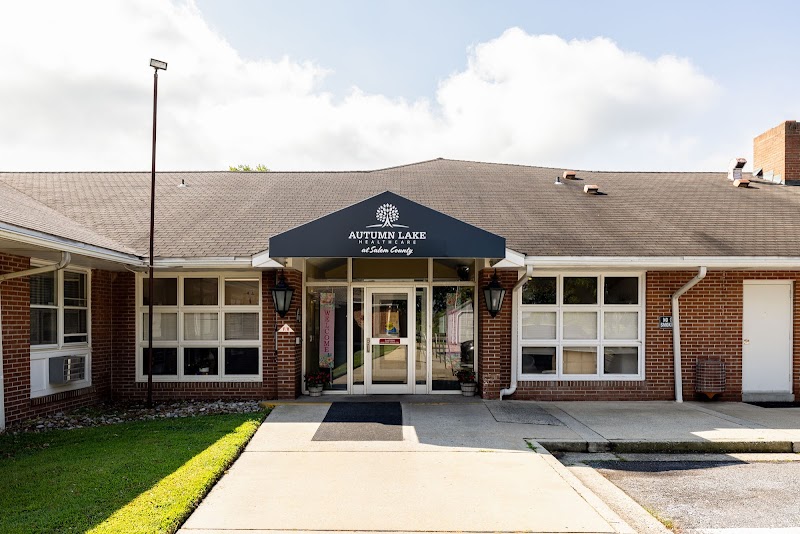
How is Autumn Lake Healthcare At Salem County Staffed?

CMS rates AUTUMN LAKE HEALTHCARE AT SALEM COUNTY's staffing level at 2 out of 5 stars, which is below average compared to other nursing homes. Staff turnover is 64%, which is 17 percentage points above the New Jersey average of 46%. High turnover can affect care consistency as new staff learn residents' individual needs.

What Have Inspectors Found at Autumn Lake Healthcare At Salem County?

State health inspectors documented 21 deficiencies at AUTUMN LAKE HEALTHCARE AT SALEM COUNTY during 2020 to 2025. These included: 20 with potential for harm and 1 minor or isolated issues.
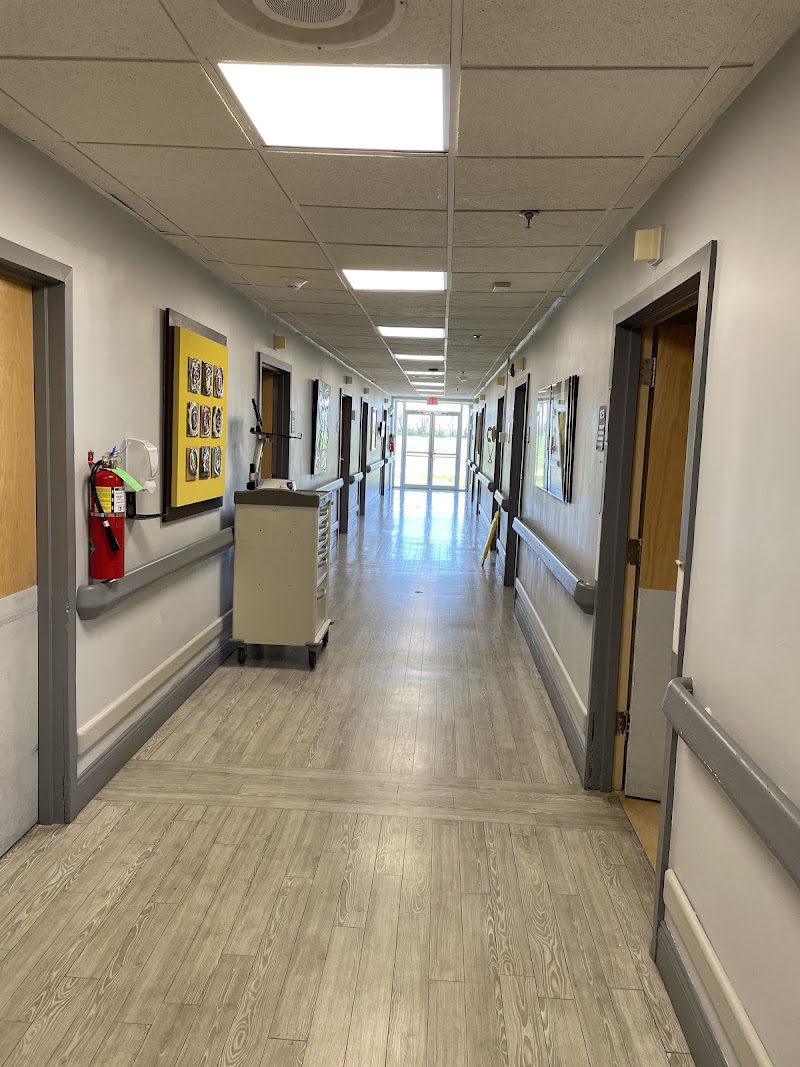
Who Owns and Operates Autumn Lake Healthcare At Salem County?

AUTUMN LAKE HEALTHCARE AT SALEM COUNTY is owned by a for-profit company. For-profit facilities operate as businesses with obligations to shareholders or private owners. The facility is operated by AUTUMN LAKE HEALTHCARE, a chain that manages multiple nursing homes. With 116 certified beds and approximately 101 residents (about 87% occupancy), it is a mid-sized facility located in SALEM, New Jersey.

How Does Autumn Lake Healthcare At Salem County Compare to Other New Jersey Nursing Homes?

Compared to the 100 nursing homes in New Jersey, AUTUMN LAKE HEALTHCARE AT SALEM COUNTY's overall rating (2 stars) is below the state average of 3.2, staff turnover (64%) is significantly higher than the state average of 46%, and health inspection rating (2 stars) is below the national benchmark.

What Should Families Ask When Visiting Autumn Lake Healthcare At Salem County?

Based on this facility's data, families visiting should ask: "How do you ensure continuity of care given staff turnover, and what is your staff retention strategy?" "Can you walk me through typical staffing levels on day, evening, and night shifts?" "Can I visit during a mealtime to observe dining assistance and food quality?" "How do you handle medical emergencies, and what is your hospital transfer rate?" These questions are particularly relevant given the facility's high staff turnover rate and the below-average staffing rating.

Is Autumn Lake Healthcare At Salem County Safe?

Based on CMS inspection data, AUTUMN LAKE HEALTHCARE AT SALEM COUNTY has a clean safety record: no substantiated abuse findings (meaning no confirmed cases of resident harm), no Immediate Jeopardy citations (the most serious violation level indicating risk of serious injury or death), and is not on the Special Focus Facility watch list (a federal program monitoring the lowest-performing 1% of nursing homes). The facility has a 2-star overall rating and ranks #100 of 100 nursing homes in New Jersey. While no facility is perfect, families should still ask about staff-to-resident ratios and recent inspection results during their visit.

Do Nurses at Autumn Lake Healthcare At Salem County Stick Around?

Staff turnover at AUTUMN LAKE HEALTHCARE AT SALEM COUNTY is high. At 64%, the facility is 17 percentage points above the New Jersey average of 46%. High turnover means new staff may not know residents' individual needs, medications, or preferences. It can also be disorienting for residents, especially those with dementia who rely on familiar faces. Families should ask: What is causing the turnover? What retention programs are in place? How do you ensure care continuity during staff transitions?

Was Autumn Lake Healthcare At Salem County Ever Fined?

AUTUMN LAKE HEALTHCARE AT SALEM COUNTY has no federal fines on record. CMS issues fines when nursing homes fail to meet care standards or don't correct problems found during inspections. The absence of fines suggests the facility has either maintained compliance or corrected any issues before penalties were assessed. This is a positive indicator, though families should still review recent inspection reports for the full picture.

Is Autumn Lake Healthcare At Salem County on Any Federal Watch List?

AUTUMN LAKE HEALTHCARE AT SALEM COUNTY is not on any federal watch list. The most significant is the Special Focus Facility (SFF) program, which identifies the bottom 1% of nursing homes nationally based on persistent, serious quality problems. Not being on this list means the facility has avoided the pattern of deficiencies that triggers enhanced federal oversight. This is a positive indicator, though families should still review the facility's inspection history directly.