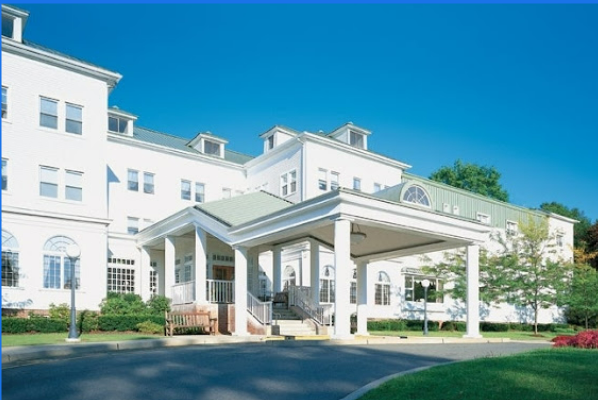
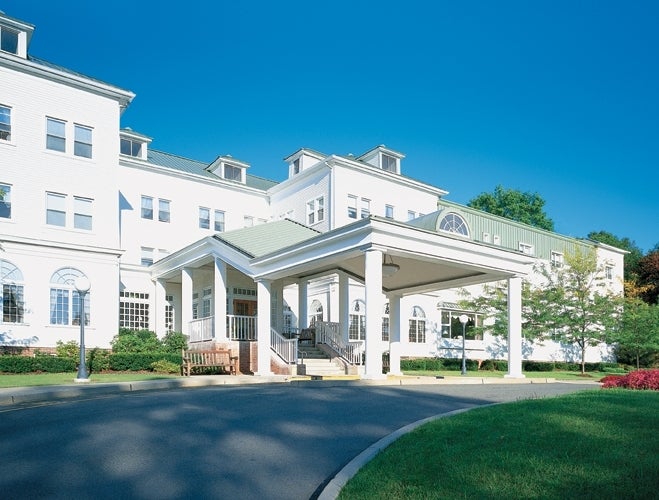
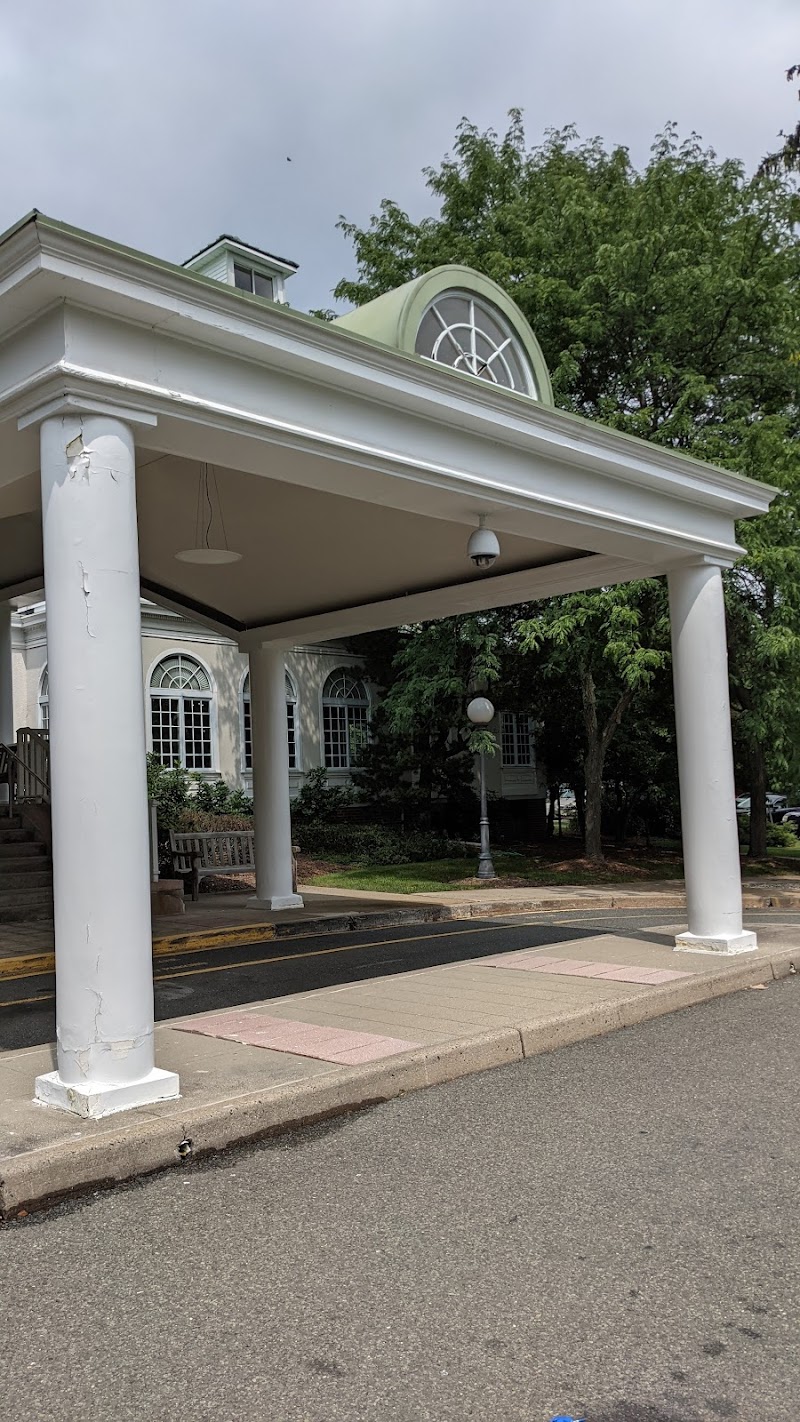
GREEN HILL

103 PLEASANT VALLEY WAY, WEST ORANGE, NJ 07052 (973) 731-2300
Non profit - Corporation 127 Beds Independent Data: November 2025
Trust Grade
50/100
#201 of 344 in NJ
Last Inspection: February 2025

Within standard 12-15 month inspection cycle. Federal law requires annual inspections.

Overview

Green Hill in West Orange, New Jersey, has a Trust Grade of C, indicating an average rating that places it in the middle of the pack among nursing homes. It ranks #201 out of 344 facilities statewide, which means it is in the bottom half, and #17 out of 32 in Essex County, suggesting there is only one local option rated higher. Unfortunately, the facility is experiencing a worsening trend, with issues doubling from 5 in 2023 to 10 in 2025. Staffing has a rating of 3 out of 5 stars, with a turnover rate of 40%, which is slightly below the state average, indicating some staff stability. However, the facility has incurred $51,987 in fines, which is concerning as it is higher than 83% of New Jersey facilities, suggesting ongoing compliance issues. Specific incidents noted include a serious failure to provide effective treatment for a resident's pressure ulcer, which progressed due to inadequate monitoring and documentation. Additionally, there were concerns about dietary preferences not being consistently implemented for residents, with some missing items during meals. Lastly, the facility did not provide nourishing snacks when there were long gaps between dinner and breakfast, affecting multiple residents. While there are strengths such as average staffing stability, these weaknesses highlight significant areas for improvement in resident care.

Trust Score
C
50/100
In New Jersey
#201/344
Bottom 42%
Safety Record
Moderate
Needs review
Inspections
Getting Worse
5 → 10 violations
Staff Stability
○ Average
40% turnover. Near New Jersey's 48% average. Typical for the industry.
Penalties
○ Average
$51,987 in fines. Higher than 74% of New Jersey facilities. Some compliance issues.
Skilled Nurses
○ Average
Each resident gets 33 minutes of Registered Nurse (RN) attention daily — about average for New Jersey. RNs are the most trained staff who monitor for health changes.
Violations
⚠ Watch
19 deficiencies on record. Higher than average. Multiple issues found across inspections.
★★★☆☆
3.0
Overall Rating
★★★☆☆
3.0
Staff Levels
★★★★★
5.0
Care Quality
★★☆☆☆
2.0
Inspection Score
Stable
2023: 5 issues
2025: 10 issues

The Good

  • 5-Star Quality Measures · Strong clinical quality outcomes
  • Full Sprinkler Coverage · Fire safety systems throughout facility
  • No fines on record
  • Staff turnover below average (40%)

    8 points below New Jersey average of 48%

Facility shows strength in quality measures, fire safety.

The Bad

3-Star Overall Rating

Near New Jersey average (3.3)

Meets federal standards, typical of most facilities

Staff Turnover: 40%

Near New Jersey avg (46%)

Typical for the industry

Federal Fines: $51,987

Above median ($33,413)

Moderate penalties - review what triggered them

The Ugly 19 deficiencies on record

1 actual harm
Feb 2025 10 deficiencies
CONCERN (D)

Potential for Harm - no one hurt, but risky conditions existed

MDS Data Transmission (Tag F0640)

Could have caused harm · This affected 1 resident

Based on the interview and record review, it was determined that the facility failed to complete and transmit a Minimum Data Set (MDS) in accordance with federal guidelines. This deficient practice wa...

Read full inspector narrative →
Based on the interview and record review, it was determined that the facility failed to complete and transmit a Minimum Data Set (MDS) in accordance with federal guidelines. This deficient practice was identified for 9 of 18 system-selected residents, Resident #3, #10, #16, #21, #35, #39, #153, #157, and #162 ) and was evidenced by the following: On 2/14/25 at 1:11 PM, the surveyor reviewed the facility assessment task, including the Resident's MDS assessment. The MDS is a comprehensive tool federally mandated process for clinical assessment of all residents that must be completed and transmitted to the Quality Measure System. The facility must electronically transmit the MDS within 14 days of completing the assessment. After the MDS is transmitted, a quality measure will be transmitted to enable a facility to monitor the residents' decline or progress. On 2/17/25 at 10:21 AM, the surveyor provided the MDS Coordinator (MDS/C) with the list of nine (9) system-selected residents who had not completed an MDS in over 120 days. The surveyor also requested a copy of the resident's final validation report (a report that is generated after every MDS transmission) from the Centers for Medicare and Medicaid Services (CMS). On 2/18/25 at 10:35 AM, the surveyor interviewed the MDS/C, who started working in November 2024. The MDS/C added that she tried to submit it at least twice every week. The MDS/C further stated that they followed the RAI (Resident Assessment Instrument, a tool that helps gather information about a resident's strengths and needs, which is used to create an individualized care plan) Manual. The MDS/C stated that she could not speak about what had happened previously in the late MDS submission. The surveyor and the MDS/C reviewed the 9 residents' MDS assessments that were not submitted within fourteen days of completion as follows: 1. Resident #3 had a Q/MDS assessment with an ARD of 8/20/24 that was signed as completed on 9/3/24 and was not transmitted until 9/28/24. 2. Resident #10 had the following assessment and was completed late: a. The annual MDS (An/MDS) assessment has an assessment reference date (ARD) of 4/14/23. It was signed as completed on 4/28/23 and was not transmitted until 5/19/23. b. The quarterly MDS (Q/MDS) assessment with an ARD of 7/13/23 was signed as completed on 7/27/23 and was not transmitted until 8/18/23. c. The Q/MDS assessment with an ARD of 10/12/23 was signed as completed on 10/26/23 and was not transmitted until 11/29/23. d. The Q/MDS assessment with an ARD of 1/12/24 was signed as completed on 1/26/24 and was not transmitted until 2/25/24. 3. Resident #16 had the following assessment and was completed late: a. The Q/MDS assessment with an ARD of 2/2/23 was signed as completed on 2/16/23 and was not transmitted until 3/6/23. b. The significant change MDS (Sc/MDS) assessment with an ARD of 6/8/23 was signed as completed on 6/22/23 and was not transmitted until 8/28/23. c. The Q/MDS assessment with an ARD of 9/7/23 was signed as completed on 9/21/23 and was not transmitted until 10/23/23. d. The Q/MDS assessment with an ARD of 12/7/23 was signed as completed on 12/21/23 and was not transmitted until 1/23/24. 4. Resident #21 had a Q/MDS assessment with an ARD of 12/1/23, that was signed as completed on 12/15/23 and was not transmitted until 1/7/24. 5. Resident #35 had the following assessment and was completed late: a. The An/MDS assessment with an ARD of 4/10/23 was signed as completed on 4/24/23 and was not transmitted until 5/19/23. b. The Q/MDS assessment with an ARD of 10/5/23 was signed as completed on 10/19/23 and was not transmitted until 11/6/23. c. The Q/MDS assessment with an ARD of 1/5/24 was signed as completed on 1/19/24 and was not transmitted until 2/25/24. 6. Resident #39 had the following assessment and was completed late: a. The Q/MDS assessment with an ARD of 3/16/23 was signed as completed on 3/30/23 and not transmitted until 4/26/23. b. The Q/MDS assessment with an ARD of 9/14/23 was signed as completed on 9/28/23 and transmitted on 10/23/23. c. The An/MDS assessment with an ARD of 12/8/23 was signed as completed on 12/22/23 and not transmitted until 1/23/24. d. The Q/MDS assessment with an ARD of 5/14/24 was signed as completed on 5/28/24 and not transmitted until 7/13/24. e. The An/MDS assessment with an ARD of 11/27/24 was signed as completed on 12/11/24 and not transmitted until 12/20/24. 7. Resident #153 had an admission MDS (Ad/MDS) assessment with an ARD of 1/26/23. It was signed as completed on 2/1/23 and was not transmitted until 2/22/23. 8. Resident #157 had the following assessment and was completed late: a. The Q/MDS assessment with an ARD of 8/10/23 that was signed as completed on 8/24/23 and was not transmitted until 9/22/23. b. The Q/MDS assessment with an ARD of 11/9/23 that was signed as completed on 11/23/23 and was not transmitted until 12/26/23. c. The Q/MDS assessment with an ARD of 8/9/24 that was signed as completed on 8/23/24 and was not transmitted until 9/15/24. 9. Resident #162 had the following assessment and was completed late: a. The Q/MDS assessment with an ARD of 8/27/23 was signed as completed on 9/10/23 and was not transmitted until 9/29/23. b. The Q/MDS assessment with an ARD of 11/23/23 was signed as completed on 12/7/23 and was not transmitted until 1/3/24. On 2/20/25 at 1:01 PM, the surveyor met with the Licensed Nursing Home Administrator (LNHA) and Director of Nursing (DON) regarding the above concern and no further information was provided. NJAC 8:39-11.1
CONCERN (D)

Potential for Harm - no one hurt, but risky conditions existed

Assessment Accuracy (Tag F0641)

Could have caused harm · This affected 1 resident

REPEAT DEFICIENCY Based on interviews and record reviews, it was determined that the facility failed to accurately code the Minimum Data Set (MDS), an assessment tool used to facilitate the management...

Read full inspector narrative →
REPEAT DEFICIENCY Based on interviews and record reviews, it was determined that the facility failed to accurately code the Minimum Data Set (MDS), an assessment tool used to facilitate the management of care, in accordance with federal guidelines for 2 of 18 residents (Residents #39, and #157) reviewed for accuracy of MDS coding. This deficient practice was evidenced by the following: 1. On 2/14/25 at 11:10 AM, the surveyor observed Resident #39 in bed watching television, unable to answer the surveyor's inquiry. On 2/18/25 at 11:51 AM, the surveyor reviewed the electronic Medical Record (eMR)/ hybrid medical record (paper and electronic) of Resident #39, which revealed the following: A review of the admission Record (an admission summary) (AR) reflected that Resident #39 was admitted with diagnoses that included but were not limited to depression (feeling of sadness) and Parkinson's (movement disorder) disease. A review of the recent Annual Minimum Data Set (An/MDS), with an ARD of 11/27/24, indicated that the facility assessed the residents' cognitive status using a Brief Interview for Mental Status (BIMS) score of 3 out of 15, which indicated that the resident had severe impairment in cognition. Further review of the An/MDS in Section N-Medications revealed that C. Antidepressant 1. Is taking - not checked. A review of the Order Summary Report (OSR) with an active order as of 2/19/25 revealed an order of trazodone HCl (hydrochloride) 50 mg (milligram) by mouth at bedtime related to depression with an order date of 11/7/24. A review of the November 2024 electronic Medication Administration Record (eMAR) revealed that the above order was signed as given by the nurses from 11/7/24 to 11/30/24 at 9:00 PM. 2. On 2/18/25 at 12:01 PM, the surveyor reviewed the eMR of Resident #157, which revealed the following: A review of the AR reflected that Resident #157 was admitted with diagnoses that included but were not limited to nondisplaced fracture (bone that is cracked and not completely broken) of the right tibial tuberosity, initial encounter for closed fracture (skin remains intact). A review of the recent quarterly Minimum Data Set (Q/MDS), with an ARD of 8/9/24, indicated that the facility assessed the residents' cognitive status using a BIMS score of 2 out of 15, which indicated that the resident had severe impairment in cognition. Furthermore, the Q/MDS in Section J - Fall revealed, Has the resident had any falls since admission/entry or reentry or the prior assessment .Enter code 0. No. A review of the Progress notes (PN) dated 7/17/24 revealed that Resident #157 had a fall incident inside the room, sustaining redness to the left cheek. A review of the individualized person-centered care plan (CP) under focus revealed that, on 7/17/24, Resident #157 had a fall incident inside their room with face facing in a prone position and noted left cheek redness. On 2/20/25 at 9:32 AM, the surveyor interviewed the MDS Coordinator (MDSC), who stated that she missed coding the antidepressant and the fall. The MDSC added that they follow the RAI (Resident Assessment Instrument-a tool that helps gather information about a resident's strengths and needs, which is used to create an individualized care plan) Manual. On 2/20/25 at 1:01 PM, the surveyor met with the Licensed Nursing Home Administrator (LNHA) and Director of Nursing (DON) but did not provide further information. NJAC 8:39-33.2 (c)
CONCERN (D)

Potential for Harm - no one hurt, but risky conditions existed

Deficiency F0655 (Tag F0655)

Could have caused harm · This affected 1 resident

**NOTE- TERMS IN BRACKETS HAVE BEEN EDITED TO PROTECT CONFIDENTIALITY** Based on observation, interview, and record review, it was determined that the facility failed to initiate a baseline care plan ...

Read full inspector narrative →
**NOTE- TERMS IN BRACKETS HAVE BEEN EDITED TO PROTECT CONFIDENTIALITY** Based on observation, interview, and record review, it was determined that the facility failed to initiate a baseline care plan (CP) for a resident who had a fall and was a fall risk. This deficient practice was identified for 2 of 22 residents (Resident #155 and #153) and was evidenced by the following: 1. On 2/19/25 at 9:03 AM, the surveyor reviewed Resident #155's medical records, which revealed the resident was admitted to the facility on [DATE] with diagnoses that included but were not limited to cerebral infarction (blood flow to the brain is blocked), thrombocytopenia(low platelet levels) and dysphagia(difficulty swallowing). Resident #155 was discharged to the hospital on 1/26/24. A review of the 12/29/23 Morse Fall Scale revealed a score of 10 indicating that the resident was a fall risk. A review of Resident #155 interdisciplinary person-center comprehensive care plan (CP) did not identify that the resident was high risk for fall. On 2/21/25 at 10:34 AM, the surveyor interviewed the Director of Nursing (DON), who acknowledged that the CP did not address the resident was a fall risk. A review of the facility's policy titled Care Plan-Comprehensive with a review date of 1/25 revealed a resident baseline care plan will be developed with 48 hours of admission. A compressive care plan will be developed with 7 days of admission. 2. On 2/18/25 at 10:11 AM, the surveyor reviewed the electronic Medical Record (eMR)/ hybrid medical record (paper and electronic) of Resident #153, which revealed the following: A review of the admission Record (an admission summary) (AR) reflected that Resident #153 was admitted with diagnoses that included but were not limited to pressure ulcer (PU) (open wounds that developed when skin was damaged by constant friction) of sacral region stage 3 and unspecified kidney failure (kidney stopped working). A review of the admission Minimum Data Set (A/MDS), (an assessment tool used to facilitate the management of care) with an assessment reference date (ARD) (the last day of the observation period) of 1/26/23 indicated that the facility assessed the residents' cognitive status using a Brief Interview for Mental Status (BIMS) score of 13 out of 15, which indicated that the resident had an intact cognition. Further review of the A/MDS in Section M - Skin Conditions C. Stage 3 1. Number of Stage 3 pressure ulcers Enter Number 1. A review of the universal transfer form from the hospital on 1/19/23 stated under 15. Skin condition: [NAME] it with YES pressure. A review of the timeline given by the Licensed Nursing Home Administrator (LNHA) on 2/18/25 revealed that Resident #153 was admitted to the facility with Stage 3 PU to the sacrum on 1/19/23. A review of the individualized person-centered care plan (CP) revealed under Focus that Resident #153 has an actual skin breakdown related to pressure ulcer - Location: Stage 3 (sacral wound). and under Goal that Resident #153 wound will decrease in size by 5% date initiated on 1/26/23. Further review of the CP showed that the facility did not initiate Resident #153's refusal of care from the day the resident was admitted . A review of the Progress Notes on 1/19/23 under admission Summary revealed that Resident #153 refused body assessment. A review of the timeline given by the LNHA on 2/18/25 revealed that Resident #153 was admitted to the facility with Stage 3 PU to the sacrum, and the admitting nurse was unable to measure the wound at the time due to the resident's refusal. Furthermore, Resident #153's Progress Notes (PN) revealed that on 2/14/23, the resident refused medication; on 2/18/23, the resident refused to be changed, wound care to the sacral, and weights on 2/15/23; 2/23/23, and 2/24/23. On 2/20/25 at 10:10 AM, the surveyor interviewed the Unit Manager/Licensed Practical Nurse (UM/LPN), who stated that baseline CP is in the assessment pocket and goes automatically to the CP tab. The baseline CP should be initiated within 24-48 hours upon admission. The UM/LPN added that the PU should be captured in the CP for at least 0-3 days because the resident has wounds from the hospital. The Registered Nurse (RN) Supervisor (RN/S) will assess the skin. If the resident refuses to be assessed on the 1st day, the staff will try it the following day. If the PU is more than Stage 2, the Director of Nursing (DON) or Wound Nurse will assess the resident. If there is a wound and refusal of care, the nurse should put it in the CP within 3 days of admission. On 2/20/25 at 11:20 AM, the surveyor interviewed the RN/S, who stated that the CP should be initiated at least during admission. If there is a wound and refusal of care, it should be in the CP. On 2/20/25 at 1:01 PM, the surveyor met with the LNHA and Director of Nursing (DON) and no further information was provided A review of the facility's policy title, Care Plans-Comprehensive, with the reviewed date 1/2025, revealed under Policy Interpretation and Implementation 11. Residents' baseline care plan will be developed within 48 hours of admission, and a comprehensive care plan will be developed within 7 days of admission. Further care plan updates will be ongoing and in correlation with the MDS assessment schedule. NJAC 8:39-11.2(d)
CONCERN (D) 📢 Someone Reported This

A family member, employee, or ombudsman was alarmed enough to file a formal complaint

Potential for Harm - no one hurt, but risky conditions existed

Comprehensive Care Plan (Tag F0656)

Could have caused harm · This affected 1 resident

Complaint #: NJ00180085 Based on observation, interview, record review, and review of pertinent facility documentation, it was determined that the facility failed to failed to develop and implement a ...

Read full inspector narrative →
Complaint #: NJ00180085 Based on observation, interview, record review, and review of pertinent facility documentation, it was determined that the facility failed to failed to develop and implement a comprehensive person-centered care plan (CP) that include the use continuous Oxygen (O2). The deficient practice was identified for 1 of 22 residents (Resident #158) reviewed for Care Plans. This deficient practice was evidenced by the following: 1. On 2/18/25 at 9:27 AM, the surveyor reviewed closed electronic medical record (E-mar) with Resident #158. A review of Resident #158's E-mar revealed the following: A review of Resident #158's Face sheet (FS) (an admission summary) was admitted to the facility with diagnoses that included but were not limited to pneumonia, Covid-19 and type 2 diabetes mellitus. A review of the admission MDS, (an assessment tool used to facilitate care management) dated 10/31/24, revealed a Brief Interview for Mental Status (BIMS) score of 11 out of 15 which indicates the residents had moderately impaired cognition. The MDS also revealed the resident was on continuous oxygen. A review of the November 2024 Physician Order Sheet (POS) revealed an ordered dated 10/25/24, Oxygen therapy at 2 liters per minute (l/min) via Nasal Cannula (NC) continuously. A review Resident #158's care plan (CP) with a start date of 10/25/24 and a last reviewed date of 1/23/25, revealed that no care plan for the use of continuous oxygen had been initiated. On 2/20/25 at 11:55 AM, the surveyor conducted an interview with Director of Nursing (DON) who stated any residents receiving oxygen should have a care plan indicating oxygen use. The DON also confirmed Resident #158 did not have an oxygen care plan in place, and did not provide any further information as to why the care plan was not in place. On 2/20/25 at 12:30 PM, the Licensed Nursing Home Administrator (LNHA) provided the surveyor with a facility policy titled, Care Plan - Comprehensive with a revised date of 1/2025. Under the policy interpretation and implementation section of the policy it states, 2. The comprehensive care plan is based on a through assessment that includes: but is not limited to, the MDS. 3. Each resident's comprehensive care plan is designed to: a. incorporate identified problem area. On 2/20/25 at 12:35 PM, the surveyor met with the LNHA and DON to review facility concerns. On 2/24/25 at 11:50 AM, the surveyor met with the LNHA and DON for the exit conference. No further information provided by the facility staff. NJAC 8:39-11.2 (e)
CONCERN (D)

Potential for Harm - no one hurt, but risky conditions existed

Deficiency F0658 (Tag F0658)

Could have caused harm · This affected 1 resident

REPEAT DEFCIENCY Complaint # NJ181689 Based on observation, interview, record review and policy review it was determined the facility failed to a. record urinary catheter (UC) output every shift in ac...

Read full inspector narrative →
REPEAT DEFCIENCY Complaint # NJ181689 Based on observation, interview, record review and policy review it was determined the facility failed to a. record urinary catheter (UC) output every shift in accordance with the physician's order (PO) and b. the primary physician (MD) failed to accurately document the resident's wound assessment. This deficient practice was observed for 2 of 7 residents, (resident #160 and resident #153) was evidenced by the following: 1. On 2/14/25 11:52 AM, the surveyor reviewed closed electronic medical record (E-mar) with Resident #160. A review of Resident #160's E-mar revealed the following: A review of Resident #160's Face sheet (FS) (an admission summary) was admitted to the facility with diagnoses that included but were not limited to chronic osteomyelitis, Covid-19, tinea, and muscle weakness. A review of the quarterly MDS, (an assessment tool used to facilitate care management) dated 12/3/24, revealed a Brief Interview for Mental Status (BIMS) score of 15 out of 15 which indicates intact cognition. A review of the December 2024 Physician Order Sheet (POS) revealed an ordered dated 8/30/24, Urinary catheter output every shift for Monitoring. A review of the Resident #160's treatment administration record (TAR) from September 2024 to December 2024 revealed multiple occasions of the urinary catheter output was not recorded. In September 2024 the UC output was not record in 1 of 7 opportunities, in October 2024 the UC output was not recorded in 6 of 90 opportunities, in November 2024 the FC output was not recorded in 4 of 90 opportunities, and in December the FC output was not recorded in 7 of 88 opportunities. On 2/20/25 at 11:55 AM, the surveyor conducted an interview with the Director of Nursing (DON) who stated all physician orders should be followed by every shift and missing UC outputs in the TAR is unacceptable. DON unable to state why the UC output was not recorded in the TAR. On 2/20/25 at 12:30 PM, the Licensed Nursing Home Administrator (LNHA) provided the surveyor with a facility policy titled, Care of the resident with a foley catheter, with a revised date 1/2025. Under the assessment portion of the policy it states, 11. Licensed Nurses will monitor residents'' urine output. Under the documentation portion of the policy it states, Chart every shift on the electronic accountability record. On 2/20/25 at 12:35 PM, the surveyor met with the LNHA and DON to review facility concerns. On 2/24/25 at 11:50 AM, the surveyor met with the LNHA and DON for the exit conference. No further information provided by the facility staff. 2. On 2/18/25 at 10:11 AM, the surveyor reviewed the electronic Medical Record (eMR)/ hybrid medical record (paper and electronic) of Resident #153, which revealed the following: A review of the admission Record (an admission summary) (AR) reflected that Resident #153 was admitted with diagnoses that included but were not limited to pressure ulcer (PU) (open wounds that developed when skin was damaged by constant friction) of sacral region stage 3 and unspecified kidney failure (kidney stopped working). A review of the admission Minimum Data Set (A/MDS), (an assessment tool used to facilitate the management of care) with an assessment reference date (ARD) (the last day of the observation period) of 1/19/23 indicated that the facility assessed the residents' cognitive status using a Brief Interview for Mental Status (BIMS) score of 13 out of 15, which indicated that the resident had an intact cognition. Further review of the A/MDS in Section M - Skin Conditions C. Stage 3 1. Number of Stage 3 pressure ulcers Enter Number 1. A review of the universal transfer form from the hospital on 1/19/23 stated under 15. Skin condition: [NAME] it with YES pressure. A review of the pressure ulcer timeline given by the Licensed Nursing Home Administrator (LNHA) on 2/18/25 revealed that Resident #153 was admitted to the facility with Stage 3 PU to the sacrum on 1/19/23. A review of the Order Summary Report (OSR) revealed an order dated 1/20/23, to cleanse the sacral with NS (normal saline), pat dry, and apply foam dressing every shift. A review of the individualized person-centered care plan (CP) revealed under Focus that Resident #153 had an actual skin breakdown related to pressure ulcer - Location: Stage 3 (sacral wound). and under Goal that Resident #153 wound will decrease in size by 5% date initiated on 1/26/23. A review of the Physician Progress Notes (PPN) with a created date of 3/5/23 and an effective date of 1/27/23 and 1/29/23 under integumentary revealed Stage 2 sacral decubitus. The PPN with an effective on 1/20/23 and 1/23/23 stated Stage 2 to sacral. On 2/20/25 at 11:49 AM, the surveyor interviewed MD regarding the above concern. The MD stated that he thought the pressure ulcer was Stage 2 at that time, but it suddenly became Stage 3. He added that it was somewhere between Stage 2 and Stage 3 wounds. On 2/20/25 at 1:01 PM, the surveyor met with the Licensed Nursing Home Administrator (LNHA) and Director of Nursing (DON) who did not provide any further information. A review of the facility's policy titled Physician Visits with a reviewed date of 1/2025 is stated under Policy Interpretation and Implementation 5. The attending physician must perform relevant tasks at the time of each visit, including a review of the resident's total program of care and appropriate documentation, and 9. The resident's attending physician must write, sign, and date the physician progress notes after each visit. NJAC 8:39-29.3(a), 23.2(a)
CONCERN (D)

Potential for Harm - no one hurt, but risky conditions existed

Deficiency F0711 (Tag F0711)

Could have caused harm · This affected 1 resident

Based on observation, interview, and record review, it was determined that the facility failed to ensure the resident's primary physician (MD) accurately dated their physician progress notes (PPN) dur...

Read full inspector narrative →
Based on observation, interview, and record review, it was determined that the facility failed to ensure the resident's primary physician (MD) accurately dated their physician progress notes (PPN) during their visit to ensure the resident's current medical regimen was up to date. This deficient practice was observed for 3 of 18 residents (Resident #39, #153, and # 157,). This deficient practice was evidenced by the following: 1. On 2/18/25 at 10:11 AM, the surveyor reviewed the electronic Medical Record (eMR)/ hybrid medical record (paper and electronic) of Resident #153, which revealed the following: A review of the admission Record (an admission summary) (AR) reflected that Resident #153 was admitted with diagnoses that included but were not limited to pressure ulcer (open wounds that developed when skin was damaged by constant friction) of sacral region stage 3 and unspecified kidney failure (kidney stopped working). A review of the admission Minimum Data Set (A/MDS), (an assessment tool used to facilitate the management of care) with an assessment reference date (ARD) (the last day of the observation period) of 1/19/23 indicated that the facility assessed the residents' cognitive status using a Brief Interview for Mental Status (BIMS) score of 13 out of 15, which indicated that the resident had an intact cognition. A review of the PPNs in the eMR reflected the following Effective Date, Created Date, and/or Late Entry (any documentation that is recorded in the medical record beyond 24-48 hours of the encounter is classified as a late entry.) designation which indicated the PPN was not documented on the effective date (Date of service): 1. PPN with an effective date of 1/27/2023 and a created date of 3/5/2023. 2. PPN with an effective date of 1/29/2023 and a created date of 3/5/2023. 3. PPN with an effective date of 2/1/2023 and a created date of 3/5/2023. 4. PPN with an effective date of 2/3/2023 and a created date of 3/5/2023. 5. PPN with an effective date of 2/6/2023 and a created date of 3/5/2023. 6. PPN with an effective date of 2/10/2023 and a created date of 3/5/2023. 7. PPN with an effective date of 2/13/2023 and a created date of 3/5/2023. 8. PPN with an effective date of 2/15/2023 and a created date of 3/5/2023. 9. PPN with an effective date of 2/17/2023 and a created date of 3/5/2023. 10. PPN with an effective date of 2/20/2023 and a created date of 3/13/2023. 11. PPN with an effective date of 2/22/2023 and a created date of 3/12/2023. 12. PPN with an effective date of 3/1/2023 and a created date of 3/12/2023. 2. On 2/18/24 at 12:01 PM, the surveyor reviewed the eMR of Resident #157, which revealed the following: A review of the AR reflected that Resident #157 was admitted with diagnoses that included but were not limited to nondisplaced fracture (bone does not break completely, but there is a crack on the bone) of the right tibial tuberosity, initial encounter for closed fracture (skin remains intact). A review of the recent quarterly Minimum Data Set (Q/MDS), with an ARD of 8/9/24, indicated that the facility assessed the residents' cognitive status using a BIMS score of 2 out of 15, which indicated that the resident had severe impairment in cognition. A review of the PPNs in the eMR reflected the following Effective Date, Created Date, and/or Late Entry designation, which indicated the PPN was not documented on the effective date are the following: 1. PPN with an effective date of 10/2/2024 and a created date of 10/6/2024. 2. PPN with an effective date of 10/4/2024 and a created date of 10/10/2024. 3. PPN with an effective date of 10/7/2024 and a created date of 10/20/2024. 3. On 2/14/24 at 11:10 AM, the surveyor observed Resident #39 in bed watching television, unable to answer the surveyor's inquiry. On 2/18/24 at 11:51 AM, the surveyor reviewed the eMR of Resident #39, which revealed the following: A review of the AR reflected that Resident #39 was admitted with diagnoses that included but were not limited to depression (feeling of sadness) and Parkinson's (movement disorder) disease. A review of the recent Annual Minimum Data Set (An/MDS), with an ARD of 11/27/24, indicated that the facility assessed the residents' cognitive status using a BIMS score of 3 out of 15, which indicated that the resident had severe impairment in cognition. A review of the PPNs in the eMR reflected the following Effective Date, Created Date, and/or Late Entry designation, which indicated the PPN was not documented on the effective date are the following: 1. PPN with an effective date of 12/26/2024 and a created date of 1/3/2025. 2. PPN with an effective date of 12/23/2024 and a created date of 1/11/2025. 3. PPN with an effective date of 12/9/2024 and a created date of 12/18/2024. 4. PPN with an effective date of 11/13/2024 and a created date of 1/18/2024. 5. PPN with an effective date of 11/11/2024 and a created date of 12/1/2024. 6. PPN with an effective date of 11/6/2024 and a created date of 12/2/2024. 7. PPN with an effective date of 11/4/2024 and a created date of 11/12/2024. 8. PPN with an effective date of 10/9/2024 and a created date of 10/13/2024. 9. PPN with an effective date of 9/27/2024 and a created date of 10/1/2024. 10. PPN with an effective date of 8/19/2024 and a created date of 8/24/2024. 11. PPN with an effective date of 8/5/2024 and a created date of 8/14/2024. 12. PPN with an effective date of 7/29/2024 and a created date of 8/3/2024. 13. PPN with an effective date of 7/12/2024 and a created date of 7/17/2024. 14. PPN with an effective date of 6/28/2024 and a created date of 7/7/2024. 15. PPN with an effective date of 6/10/2024 and a created date of 7/2/2024. 16. PPN with an effective date of 6/5/2024 and a created date of 6/16/2024. 17. PPN with an effective date of 6/4/2024 and a created date of 6/16/2024. On 2/20/25 at 11:47 AM, the surveyor interviewed MD over the phone. MD stated that he is aware that he is behind with all the documentation because he is always busy. He added that there was a problem with the computer during that time, and he was catching up on the documentation. That's why he will do the documentation in one day. On 2/20/25 at 1:01 PM, the surveyor met with the Licensed Nursing Home Administrator (LNHA) and Director of Nursing (DON) regarding the concern and no furtherr information was provided. A review of the facility's Physician Visits policy revealed a review date of 1/2025 under Policy Interpretation and Implementation. 5. The attending physician must perform relevant tasks at the time of each visit, including reviewing the resident's total program of care and appropriate documentation. 9. The resident's attending physician must write, sign, and date the physician's progress notes after each visit. NJAC 8:39-23.2(b)
CONCERN (D) 📢 Someone Reported This

A family member, employee, or ombudsman was alarmed enough to file a formal complaint

Potential for Harm - no one hurt, but risky conditions existed

Pharmacy Services (Tag F0755)

Could have caused harm · This affected 1 resident

Based on observation, interview, record review, and review of facility documentation, it was determined that the facility failed to follow a Physician Orders (PO) for the administration of blood press...

Read full inspector narrative →
Based on observation, interview, record review, and review of facility documentation, it was determined that the facility failed to follow a Physician Orders (PO) for the administration of blood pressure medication for 1 of 1 resident's (Resident #22) reviewed for blood pressure management. This deficient practice was evidenced by the following: Reference: New Jersey Statutes Annotated, Title 45. Chapter 11. Nursing Board. The Nurse Practice Act for the State of New Jersey states: The practice of nursing as a registered professional nurse is defined as diagnosing and treating human responses to actual and potential physical and emotional health problems, through such services as case-finding, health teaching, health counseling, and provision of care supportive to or restorative of life and wellbeing, and executing medical regimens as prescribed by a licensed or otherwise legally authorized physician or dentist. Reference: New Jersey Statutes Annotated, Title 45, Chapter 11. Nursing Board. The Nurse Practice Act for the State of New Jersey states: The practice of nursing as a licensed practical nurse is defined as performing tasks and responsibilities within the framework of case finding; reinforcing the patient and family teaching program through health teaching, health counseling, and provision of supportive and restorative care, under the direction of a registered nurse or licensed or otherwise legally authorized physician or dentist. On 2/18/25 at 10:15 AM, the surveyor observed Resident #22 in the 2nd floor dining/activity room. The resident was observed in a recliner chair, the resident was observed with their eyes closed. The surveyor reviewed Resident #22's medical record A review of the admission Record (an admission summary) (AR) reflected that the resident was admitted to the facility with diagnoses that included but not limited to congestive heart failure (a chronic condition in which the heart doesn't pump blood as well as it should), hypertension (a condition in which the force of the blood against the artery walls is too high) and coronary artery disease (damage or disease in the heart's major blood vessels). A review of the significant change Minimum Data Set (MDS), an assessment tool used to facilitate the management of care dated 02/07/25, reflected that the resident's cognitive skills for daily decision-making score was 11, which indicated that the resident had moderate impairment. A review of the Medication Review Report(MRR) revealed a PO dated 12/21/24, for Nifedipine capsule 10 mg (milligrams), give 2 capsules by mouth every 8 hours for hypertension. Hold for SBP (systolic blood pressure-top number of blood pressure) below 120 and HR (heart rate) less than 60. A review of the January 2025 electronic Medication Administration Record (eMAR) revealed a PO dated 12/21/24, for Nifedipine 10 mg capsule, give 2 capsules by mouth every 8 hours. Hold for SBP below 120 and HR below 60 with a plotted time of 0600 (6:00 AM), 1400 (2:00 PM) and 2200 (10:00 PM). A Further review of eMAR revealed that the Nifedipine was signed as administered (7) seven times when the resident's SBP was below 120 and HR below 60 the following dates: 1/19/25 at 2:00 PM (Blood Pressure (BP) 100/54, HR 83), 01/22/25 at 10:00 PM (BP 112/67, HR 79), 01/24/25 at 10:00 PM (BP 107/48, HR 81), 01/28/25 at 10:00 PM (BP 105/66, HR 71), 01/29/25 at 10:00 PM (BP 101/80, HR 84), 01/30/25 at 10:00 PM (BP 108/55, HR 86) and 01/31/25 at 10:00 PM (BP 110/72, HR 70). A review of the February 2025 electronic Medication Administration Record (eMAR) revealed a PO dated 12/21/24, for Nifedipine 10 mg capsule, give 2 capsules by mouth every 8 hours. Hold for SBP below 120 and HR below 60 with a plotted time of 0600 (6:00 AM), 1400 (2:00 PM) and 2200 (10:00 PM). A Further review of eMAR revealed that the Nifedipine was signed as administered (7) seven times when the resident's SBP was below 120 and HR below 60 the following dates: 02/02/25 at 10:00 PM (BP 118/63, HR 81), 02/06/25 at 2:00 PM (BP 116/78, HR 82), 02/06/25 at 10:00 PM (BP 101/59, HR 54), 02/11/25 at 10:00 PM (BP 115/70, HR 71), 02/14/25 at 10:00 PM (BP 108/67, HR 65), 02/15/25 at 10:00 PM (BP 110/68, HR 78) and 02/17/24 at 10:00 PM (BP 114/69, HR 74). On 2/18/25 at 1:40 PM, the surveyor interviewed the resident's medication nurse, Licensed Practical Nurse (LPN#1) who in the presence of the surveyor reviewed Resident #22's physician's orders. LPN #1 stated that the resident's Nifedipine had perimeters to hold the medication when the SBP was below 120 or when the HR was below 60. In the presence of the surveyor, LPN#1 reviewed the resident's eMAR and acknowledge that Resident #22's Nifedipine was administered on multiple occasions when the resident's SBP was less than 120 and the HR was less than 60. LPN#1 further stated that whenever administering a medication that a nurse should read the full order including the perimeters and when a medication had an order to hold the nurse must hold that order. On 02/20/25 at 1:00 PM, the surveyor presented the above concerns to the Licensed Nursing Home Administrator (LNHA) and the Director of Nursing. There was no additional information provided. A review of facility's policy for Medication Administration that was undated and was provided by the LNHA included the following: 3. Medications must be administered in accordance with the orders, including any required time frame. 8. The following information is checked/verified for each resident prior to administering medications: a. Allergies to medications; and b. Vital signs, if necessary. NJAC 8:39-11.2 (b), 29.2 (d)
CONCERN (F)

Potential for Harm - no one hurt, but risky conditions existed

Deficiency F0806 (Tag F0806)

Could have caused harm · This affected most or all residents

**NOTE- TERMS IN BRACKETS HAVE BEEN EDITED TO PROTECT CONFIDENTIALITY** Based on observations, interviews, record review, and review of pertinent facility documents, it was determined that the facilit...

Read full inspector narrative →
**NOTE- TERMS IN BRACKETS HAVE BEEN EDITED TO PROTECT CONFIDENTIALITY** Based on observations, interviews, record review, and review of pertinent facility documents, it was determined that the facility failed to ensure that resident's dietary preferences were consistently implemented and followed for 4 of 4 residents (Resident #104, #105, #1 and #3) reviewed for dietary preferences during meal observations. This deficient practice was evidenced as follows: 1. On 2/18/25 at 11:55 AM, the surveyor was observing the lunch meal on first floor unit. The surveyor observed Resident #104's tray, per the tray ticket, Resident #104 was supposed to receive 4 ounce (oz) assorted ice cream and a 6oz Coffee, both items were missing from the tray. On 2/20/25 at 10:00 AM, the surveyor reviewed the electronic medical record (E-mar) for Resident #104. A review of Resident #104's Face sheet (FS) (an admission summary) was admitted to the facility with diagnoses that included but were not limited to muscle weakness, hypothyroidism and unspecified dementia. A review of the admission MDS, (an assessment tool used to facilitate care management) dated 2/12/25, reflected a Brief Interview for Mental Status (BIMS) score was unable to be calculated as Resident #104 was unable to complete a BIMS interview due to cognition. A review of the Physician Order (PO summary dated 2/20/25, identified an order with an original date of 2/13/25, Regular diet, pureed texture and thin liquid consistency. A review of Resident #104's care plan (CP) revealed a nutrition CP with an initiation date of 2/10/24, the intervention portion of the CP revealed two nutrition interventions, Provide, serve diet as ordered with an initiation date of 2/10/25 and Provide fortified foods, super cereal, super mashed potato BID, super soup at dinner, and ice cream twice per day (BID), juice, soft fruit, with an initiation date of 2/13/25. 2. On 2/18/25 at 11:58 AM, the surveyor was observing the lunch meal on first floor unit. The surveyor observed Resident #105's tray, per the tray ticket Resident #105 was given ½ cup of mandarin oranges instead of ½ cup of sliced pears and was missing a 6 oz Hot coffee. On 2/20/25 at 10:10 AM, the surveyor reviewed the E-mar for Resident #105. A review of Resident #105's FS was admitted to the facility with diagnoses that included but were not limited to predominant Hodgkin's lymphoma, muscle weakness and hyperlipidemia. A review of the admission MDS, dated [DATE], reflected a BIMS score of 13 out of 15, indicating Resident #105 cognition is intact. A review of the PO summary dated 2/20/25, identified an order with an original date of 2/7/25, No added salt (NAS), Renal diet Regular texture, and Thin liquid consistency. A review of Resident #105's CP revealed a nutrition CP with an initiation date of 2/10/24, the intervention portion of the CP revealed two nutrition interventions both with 2/10/25 initiation dates, Provide, serve diet as ordered and Provide and serve NAS, renal diet, regular texture, thin liquid as ordered. 3. On 2/20/25 at 9:16 AM, the surveyor was observing the breakfast meal on the second-floor unit. The surveyor observed Resident #1's tray, per the tray ticket Resident #1 was supposed to receive one container of rice crunchy cereal and a ½ cup fruit cocktail, both items were missing from the tray. On 2/20/25 at 10:15 AM, the surveyor reviewed the E-mar for Resident #1. A review of Resident #1's FS was admitted to the facility with diagnoses that included but were not limited to depression, acute kidney failure, and essential hypertension. A review of the quarterly MDS, dated [DATE], reflected BIMS score was unable to be calculated as Resident #1 was unable to complete a BIMS interview due to cognition. A review of the PO summary dated 2/20/24, identified an order with an original date of 2/1/24, NAS (No Added Salt) diet Chopped/Soft &Bite Sized texture, Thin liquids consistency A review of Resident #1's CP revealed a nutrition CP with an initiation date of 1/22/24, the intervention portion of the CP revealed nutrition interventions, Staff/nursing to check tray. 4. On 2/20/25 at 9:20 AM, the surveyor was observing the breakfast meal on the second-floor unit. The surveyor observed Resident #3's tray, per the Resident #3's tray ticket, they were supposed to receive an assorted yogurt cup and 2 oz brown gravy, both items were missing from the tray. On 2/20/25 at 10:25 AM, the surveyor reviewed the E-mar for Resident #3. A review of Resident #3's FS was admitted to the facility with diagnoses that included but were not limited to hyperlipidemia, anxiety disorder and depressive episodes. A review of the re-admission MDS, dated [DATE]reflected BIMS score of 11 out of 15 indicating, moderately impaired cognition. A review of the PO summary dated 2/20/24, identified an order with an original date of 12/6/24, NAS (No Added Salt) diet Regular texture, Thin liquid consistency A review of Resident #3's CP revealed a nutrition CP with an initiation date of 9/4/24, the intervention portion of the CP revealed two nutrition interventions, Provide diet as ordered: NAS, regular, thins. And Support the patients right to make decisions regarding their diet. Make a reasonable effort to provide food and fluids according to preferences. On 2/20/25 at 09:28 AM, the surveyor interviewed FSD who stated tray accuracy audits are conducted but was unable to explain why residents had incorrect and missing items observed on 2/18/25 and 2/20/25. On 2/20/25 at 12:30 PM, the surveyor met with the Licensed Nursing Home Administrator (LNHA) and Director of Nursing (DON) to review survey concerns and surveyor findings. On 2/20/25 at 1:30PM, the Regional FSD (RFSD) provided the surveyor with a facility policy titled, Dining and Food Preferences with a revised date of 10/2022. Under the policy section of the chart it states, 3. The food preference interview will be entered into the medical chart. 4. Food allergies, food intolerances, food dislikes, and food and fluid preferences will be entered into the resident profile in the menu software system .7. The individual tray assembly ticket will identify all food items appropriate for the resident/patient based on diet order, allergies & intolerances, and preferences. On 2/24/25 at 11:50 AM, the surveyor met with the LNHA and DON for the exit conference. No further information provided by the facility staff NJAC - 17.4(a)1, (e)
CONCERN (F)

Potential for Harm - no one hurt, but risky conditions existed

Deficiency F0809 (Tag F0809)

Could have caused harm · This affected most or all residents

Based on interview, and review of pertinent facility documents, it was determined that the facility failed to serve and document residents received a nourishing snack in the evening when there was mor...

Read full inspector narrative →
Based on interview, and review of pertinent facility documents, it was determined that the facility failed to serve and document residents received a nourishing snack in the evening when there was more than a 14-hour span between dinner and breakfast mealtimes. This deficient practice was identified for 6 of 6 (Resident's #9, #34, #41, #53, #60, and #78) residents during the resident council meeting and was evidenced by the following: On 02/18/25 at 11:08 AM, the surveyor conducted a group meeting with six residents who were alert and oriented and selected by the facility to participate. Six out of six residents stated they were not offered nor receive snacks in the evening. On 2/20/25 at 9:50 AM, the surveyor interviewed the Food Service Director (FSD) who stated that if there was more than 14 hours between dinner and breakfast, the facility was required to provide the residents with a nourishing evening snack. She acknowledged there was more than 14 hours between dinner and breakfast. The FSD stated the kitchen provided snacks to all units but were unable to state if the evening snacks were passed out by the nursing staff. On 2/20/25 at 10:30 AM, the surveyor made multiple attempts to contact the Registered Dietitian (RD) via telephone, but was unable to contact the RD. On 2/20/25 at 10:45 AM, the surveyor conducted a phone interview with the 3-11 PM nursing supervisor (RNS), who stated, they think the evening snacks were passed out but there is no record or accountability of the residents receiving evening snacks. 2/20/25 11:25 AM, the surveyor interviewed the Director of Nursing (DON), who stated there is no record book of evening snacks being passed out and acknowledged the facility needs to have a better system to ensure snacks were offered and provided to all residents. On 2/20/25 at 12:35 PM, the surveyor met with the Licensed Nursing Home Administrator (LNHA) and DON to review facility concerns and surveyor findings. On 2/20/25 at 1:30 PM, the Regional FSD (RFSD) provided the surveyor with a facility policy titled, Snacks with a revised date of 10/2022. Under the policy statements section of the policy it states, Bedtime (HS snacks) snacks will be provided for all residents. Under the procedures section of the policy it states, 4. The dining services department will assemble and deliver to each unit the individually planned snack items and bilk snack items to be offered at bedtime. 6. Nursing services is responsible of delivering the individual snacks to the identified residents and for offering evening snacks to all other residents. On 2/24/25 at 11:50 AM, the surveyor met with the LNHA and DON for the exit conference. No further information provided by the facility staff. NJAC 8:39-17.2 (f))(1) (i) (ii)
CONCERN (F)

Potential for Harm - no one hurt, but risky conditions existed

Food Safety (Tag F0812)

Could have caused harm · This affected most or all residents

REPEAT DEFICIENCY Based on observation, interview, and review of facility policies, it was determined that the facility failed to maintain proper kitchen sanitation practices in a manner to prevent fo...

Read full inspector narrative →
REPEAT DEFICIENCY Based on observation, interview, and review of facility policies, it was determined that the facility failed to maintain proper kitchen sanitation practices in a manner to prevent food borne illness. This deficient practice was observed and evidenced by the following: On 2/14/25 at 10:23 AM, the surveyor in the presence of the Food Service Director (FSD) observed the following during the kitchen tour: 1. Upon entering the kitchen, the surveyor observed the Regional FSD (RFSD) and three dietary aides (DA) all wearing large earrings. FSD alerted staff and earrings were removed. 2. In the cooking area of the kitchen the surveyor observed on top of the 2-door standing oven, burnt-on debris and a large build up of a greyish dust like substance. The FSD stated all kitchen equipment would be cleaned immediately. 3. In the preparatory area the surveyor observed a 1-gallon bottle of white vinegar no lid. The FSD was unable to state why the vinegar was missing the lid and was discarded immediately. 4. In the walk-in refrigerator, the surveyor observed 2 fans with blackish dust-like debris. The FSD stated the fans would be cleaned immediately. 5. In the dry storage area, the surveyor observed a 7 pound (lb.) can vanilla pudding observed dented in regular rotation. The FSD stated all dented cans should be removed from the regular rotation and put in the dented can area. On 2/20/25 at 12:35 PM, the surveyor met with the Licensed Nursing Home Administrator (LNHA) and Director of Nursing (DON) to review facility concerns. The LNHA stated the facility just hired a new company to run the food service department and all concerns would be addressed immediately. On 2/20/25 at 1:30 PM, the RFSD provided the surveyor with copies of four facility policies. The facility policy titled, Staff Attire with a revised date of 10/2023, stated under the procedures section, 5. Hand jewelry will be limited to a plain band. Arm jewelry and dangling jewelry is not permitted. The facility policy titled, Equipment with a revised date on 9/2017, stated under the procedures section, 1. All equipment will be routinely cleaned and maintained in accordance with manufacturer's direction and training material. 6. All non-food contact equipment with be cleaned and free of debris. The facility policy titled, Food Storage with a revised date of 2/2023, stated under the procedures section, All packaged and canned food items will be kept clean, dry, and properly sealed. The facility policy titled, Receiving with a revised date of 2/2023, stated under the procedure section, 4. All canned goods with be appropriately inspected for dents, rust or bulges. Damaged cans will be segregated and clearly identified for return to vendor or disposal. On 2/24/25 at 11:50 AM, the surveyor met with the LNHA and DON for the exit conference. No further information provided by the facility staff. NJAC 8:39-17.2(g)
Jan 2023 5 deficiencies 1 Harm
SERIOUS (G)

Actual Harm - a resident was hurt due to facility failures

Pressure Ulcer Prevention (Tag F0686)

A resident was harmed · This affected 1 resident

**NOTE- TERMS IN BRACKETS HAVE BEEN EDITED TO PROTECT CONFIDENTIALITY** Based on observation, interview, and record review it was determined that the facility failed to a. provide effective preventati...

Read full inspector narrative →
**NOTE- TERMS IN BRACKETS HAVE BEEN EDITED TO PROTECT CONFIDENTIALITY** Based on observation, interview, and record review it was determined that the facility failed to a. provide effective preventative treatment to a known high risk resident who was admitted to the facility with a Stage 1 (redness) pressure ulcer that progressed and developed into an open pressure ulcer (Stage 2) and, b. accurately monitor and document weekly skin assessments resulting in the development of an open pressure ulcer that had a delay in being identified and treated, for a resident who was found in pain. This deficient practice resulted in the development, progression delaying the identification and treatment of an open pressure ulcer. This deficient practice was identified for 1 of 5 resident, Resident #3 reviewed for pressure ulcers. This deficient practice was evidenced by the following: On 1/20/23 at 10:25 AM, during the initial tour of the facility, the surveyor observed Resident #3 lying in bed on a regular mattress (not pressure releasing mattress). Resident #3 spoke to the surveyor complaining of significant pain on their sacral area for the past three days. Resident #3 could not articulate their pain level from 1 to 10. Resident #3 was able to reveal that the pain was at a level to prevent them from sleeping comfortably throughout the night. Resident #3 informed the surveyor that they had informed the nurse staff of the pain, but it was not being addressed. The surveyor alerted the Ripple 1 Unit Manager (UM) of the issue. Review of Resident #3's electronic admission Face Sheet (summary of resident's information) indicated that Resident #3 was admitted to the facility on [DATE] with diagnosis that included but were not limited to Acute Respiratory Failure with Hypoxia, Hyperlipidemia, Muscle Weakness (Generalized), and Cardiac Arrhythmia. The surveyor reviewed the Progress Note (PN) dated 1/20/23 and timed at 12:27 PM, written by RN#1 after she performed a skin assessment on Resident #3. The PN skin/wound note established, Resident c/o pain on her sacrum, Tylenol given with relief. Wound noted on her sacrum upon assessment, measurement done as follows: pressure ulcer stage 1, no drainage, one part (1 cm X 0.75 cm); other (0.50 cm x 1 cm). Barrier cream applied cover with DBP (Disinfectants and Disinfection Byproducts) for protection until wound doctor come to assess it. Family member made aware, wound consult ordered. Review of PN and Assessments previous to this assessment on 1/20/23 by RN#1 did not provide any proof that an open pressure ulcer existed with measurements. Review of RN#1 Assessment note dated 1/20/23 and timed at 12:42 PM, titled Skin check-weekly or other supported with a diagram of the body documenting the affected sights and identified as Coccyx. Further description of the wound included Right Buttocks, Pressure Ulcer, redness. Pressure Ulcer, Stage 1, redness. Review of the PN documented by RN #2 written on 1/20/23 at 12:54 PM, Resident verbal c/o (complains of) pain to sacrum. Tylenol 325 mg 2 tab was given for comfort. Wound noted on her sacrum. Measurement taken and was staged as pressure ulcer stage 1, no drainage. It was cleaned with NSS and pat dry with dry dressing applied to it. Nurse supervisor informed. A review of the admission Minimum Data Set (AMDS), an assessment tool used to facilitate the management of care, dated 12/16/22 reflected that the resident had a Brief Interview for Mental Status (BIMS) score of 15 out of 15, indicating the resident is cognitively intact for daily decision making. The surveyor reviewed Section M (Skin Conditions), subsection M0100 of the AMDS, (Determination of Pressure Ulcer/Injury Risk). The documentation indicated that Resident #3 has a. Resident has a Stage 1 or greater pressure ulcer/injury, a scar over bony prominence, or a non-removable dressing/device. A review of Resident #3's admission summary dated [DATE] and written by the admission Registered Nurse, indicated Skin intact noted left chest pacemaker, redness to sacrum. A review of the resident's electronic Medical Record (eMR) under the assessment section, revealed an assessment titled, Skilled Documentation-V2 dated 12/14/22, indicated under Section VII Skin, that the resident's skin is intact, but is at risk for developing pressure ulcers. Further review of the resident's eMR revealed an assessment titled, Braden scale for predicting pressure sore risk located under the assessment section. Review of the Braden Score (The Braden scale assesses a patient's risk of developing a pressure ulcer) performed during admission on [DATE], reflected 17 out of 23, which indicated that Resident #3 was at risk for developing a pressure sore. Review of Resident #3's December 2022 Electronic Treatment Administration Record (eTAR) revealed a PO started on 12/18/22 for, Braden Scale every evening shift every Sunday for assessment for 4 weeks. Review of the December 2022 and January 2023 eTAR indicated that the Braden Scale was calculated and signed for by the nursing staff on 12/18/22, 12/25/22, 1/1/23, and 1/8/23. Review of the eMR Assessment section presented only one Braden Scale for Predicting Pressure Sore Risk calculated on 12/25/22 by a staff RN, with a score of 16 At Risk. No further documentation was initiated or completed for the PO. A review of Resident #3's Care Plan (CP) with an initiation date of 12/11/22 and target completion date of 12/27/22 did not reveal upon admission or at any time after that a CP was developed that addressed the resident's sacral redness, protective and preventative treatments for a Stage 1 pressure ulcer or the need for continued skin assessments. A review of the Physician Order (PO) Summary dated 1/24/23, identified an order with an original date of 12/11/22, for Weekly Skin Assessment every evening shift every Sunday for assessment. Review of the December 2022 eTAR presented the PO that began on 12/18/22 documented as, Weekly Skin Assessment, every evening shift every Sunday for assessment. Documentation on the December 2022 and January 2023 eTAR recorded that the facility nurses signed performing skin checks on Resident #3 for 12/18/22, 12/25/22, 1/1/23, 1/8/23, 1/15/23 and 1/20/23. Continued review of the two months of documentation in the Assessment and Progress Note (PN) sections of the EMR, revealed that there was no further information related to the facility nursing staff performing skin checks for 12/18/22, 1/1/23, 1/8/23 and 1/15/23. Review of the eMR Assessment section written by a staff RN on 12/25/22 revealed, Skin intact, no pen area noted, oral cavity intact, denies pain. No further information or documentation was noted. Review of the December 2022 and January 2023 electronic Medication Administration Record (eMAR) revealed that pain levels for Resident #3 were monitored every 6 hours. Pain levels were documented as 0 (no pain) on all days for the month of December 2022 and January 2023 except for 4 days with level 1-3 (mild pain) documented in December and 5 days in January 2023. Continued review of the January 2023 eMAR revealed a documented pain level of 4 (moderate pain) on 1/24/23 at 12:00 PM. The surveyor reviewed the PO for Acetaminophen 325 mg (2) tablets every 6 hours as needed for mild pain scale 1-3 with a start date of 12/11/22, documented on the December 2022 and January 2023 eMAR. Resident #3 was documented as receiving the Acetaminophen 325 mg (2) tablets on 12/19/22 at 5:46 PM with a 3 pain level (mild), on 1/18/23 with a 3 pain level at 6:30 PM, 1/20/23 with a 6 pain level (moderate) at 11:39 AM, and 1/23/23 with a 6 pain level at 9:07 AM. On 1/25/23 at 9:46 AM, another surveyor interviewed RN #2 who stated that she has been working in the facility for a year. The surveyor also interviewed the CNA who stated that she had been working in the facility for 7 months. The surveyor viewed the wound with the permission of the Resident, and the aid of RN#2 and the CNA in the privacy of the Resident's room. The surveyor observed RN #2 remove a white bordered dressing on Resident #3's sacrum area. The surveyor observed the sacrum area having a small opening (yellow in appearance) and redness to the surrounding area. RN #2 informed the surveyor, there's a small opening in the sacrum. RN #2 explained that RN#1 was the nurse who assessed and staged the wound. RN #2 acknowledged, Stage 1 is when there's an opening in the area. Review of pressure ulcer staging practice defines Stage 1 Pressure Ulcer as, Intact skin with discoloration of the skin that does not turn white when pressed, redness of a localized area, usually over a bony prominence. Review of pressure ulcer staging practice defines Stage 2 Pressure Ulcer as, the skin breaks open, wears away, or forms an ulcer, which is usually tender and painful. On 1/25/23 at 11:15AM, surveyor interviewed the Certified Nursing Assistant (CNA), who routinely takes care of Resident #3 on the day shift (7:00 AM to 3:00 PM). The CNA stated she has not been assigned to Resident #3, in a few weeks. The CNA informed the surveyor that when assisting residents during changing their clothes, bathing and/or use of the bathroom, she would report any skin conditions found to the resident's nurse and/or the Unit Manager. On 1/25/23 at 11:22 AM, the surveyor interviewed the Ripple 1 Registered Nurse (RN #1). RN #1 stated that she was the nurse that performed the skin assessment for Resident #3 on 1/20/23, when the Stage 1 pressure ulcer was discovered. RN#1 explained that she documents information related to the pressure ulcer in the Assessment and PN section of the EMR. The surveyor discussed the four missing weekly PN and assessments as well as the three missing Braden Scale evaluations with RN#1. RN#1 could not explain why the nurses on duty did not enter information evaluating the residents skin assessment in the eMR as well as calculate the Braden Scale related to the resident's risk of developing pressure sores. RN#1 stated that if the nursing staff signs the eMAR and eTAR documenting that the task was completed, there should be documented proof of the task. On 1/25/23 at 11:27 AM, the surveyor interviewed Ripple 1 RN#2, who also assessed Resident #3's pressure ulcer on 1/20/23. RN#2 informed the surveyor that when performing a skin assessment the facility protocol includes: writing the skin assessment note in the eMR PN and Assessment section, documenting the appearance of the skin, information related to informing the physician, and identifying the physician's recommendations. The surveyor discussed the four missing weekly PN and assessments as well as the three missing Braden Scales, which should have been documented in the eMR, with RN#2. RN#2 could not explain why the nurses on duty did not enter information evaluating the residents skin assessment in the eMR as well as calculate the Braden Scale related to the resident's risk of developing pressure sores. RN#2 acknowledged that all nursing staff documenting in the eMAR and eTAR that the task was completed, should be documented proof of the task. On 1/26/23 at 11:18 AM, the surveyor interviewed the Director of Nursing (DON). The DON explained that when a resident is admitted to the facility with sacral redness (Stage 1 pressure ulcer), the protocols include: Alerting the physician, possibly providing an air mattress, turning and repositioning are added to the resident's plan of care. We also do skin assessments, which are automatically started for new and re-admitted residents. We may also add a foam dressing with padding and Periguard (barrier cream) if needed. The DON stated that Resident #3 should have had an individualized Care Plan (CP) upon admission that addressed the sacral redness noted during admission. The CP should have included preventative measures to avoid the development of an open pressure ulcer. The DON acknowledged that Resident #3 was admitted with a Stage 1 pressure ulcer that had progressed to a Stage 2 pressure ulcer. The DON verified that after review of RN#1 and RN#2's PN and Assessment Notes, once the pressure ulcer was open, it was staged wrong by RN#1 and was no longer a Stage 1 pressure ulcer, but rather a Stage 2. The DON verified that Resident #3 should have had those protocols in place on admission when the sacral redness was discovered. The DON established that the weekly skin assessments should be completed on the eMR under the Assessment area. The DON could not explain why four weekly skin PN and assessments as well as the three Braden Scale Scores for Resident #3 were missing and not performed. On 1/23/23 at 2:40 PM, the DON provided the surveyor with a facility policy titled, Pressure Injury Risk Assessment, last reviewed on 11/11/2022. Under the Purpose section of the policy it states, The purpose of this procedure is to provide guidelines for the structured assessment and identification of residents at risk of developing new pressure injuries or worsening of existing pressure injures (PIs). Continued review of the policy under General Guidelines identifies; 1. The purpose of a pressure injury risk assessment is to identify all risk factors and then to determine which can be modified and which cannot, or which can be immediately addressed, and which will take [NAME] to modify. 3. The risk assessment should be completed as soon as possible after admission, but no later than eight hours after the admission. 4. Use only a facility-approved risk assessment tool to obtain risk assessment data. 5. Supplement the risk assessment tool with assessment of additional risk factors. 6. Once the assessment is conducted and risk factors are identified and characterized, a resident-centered care plan can be created to address the modifiable risks for pressure injuries. 7. Repeat the risk assessment weekly for the first four weeks, if there is a significant change in condition, or as often as is required based on the resident's condition. Documented under Steps in the Procedure, it explains; 1. Gather assessment tools and documentation and conduct the assessment in the manner most appropriate to the resident's condition and willingness to participate. 4. Conduct a comprehensive skin assessment with every risk assessment. a. When conducting a skin assessment, provide for the resident's privacy. b. Once inspection of the skin is completed document the findings on a facility-approved skin assessment tool. c. If a new skin alteration is noted, initiate a (pressure or non-pressure) form related to the type of alteration in skin. 5. Develop the resident-centered care plan and interventions based on the risk factors identified in the assessments, the condition of the skin, the resident's overall clinical condition, and the resident's stated wishes and goals. a. The interventions must be based on current, recognized standards of care. b. The effects of the interventions must be evaluated. c. The care plan must be modified as the resident's condition changes, or if current interventions are deemed inadequate. Explained under the Documentation it states, The following information should be recorded in the resident's medical record utilizing facility forms: 1. The type of assessment(s) conducted. 2. The date and time and type of skin care provided, if appropriate. 5. The condition of the resident's skin (i.e., the size and location of any red or tender areas), if identified. 11. Initiation of a (pressure or non-pressure) form related to the type of alteration in skin if new skin alteration noted. On 1/26/23 at 1:37 PM, the DON provided an additional facility policy titled, Pressure Ulcers/Skin Breakdown-Clinical Protocol, which was last updated on 11/11/22. Under the Assessment and Recognition section, it states, 1. The nursing staff and practitioner will assess and document an individual's significant risk factors for developing pressure ulcer; for example, immobility, recent weight loss, and a history of pressure ulcer(s). 2. In addition, the nurse shall assess and reassess, describe and document/report on PCC (computer program used by the facility) / Paper and upload weekly assessments On 1/26/23 at 1:35 PM, the surveyor met with the DON to further discuss the issue. No further information was provided. NJAC 8:39-27.1 (a)
CONCERN (D)

Potential for Harm - no one hurt, but risky conditions existed

Assessment Accuracy (Tag F0641)

Could have caused harm · This affected 1 resident

Based on observation, interview, and record review, it was determined that the facility failed to accurately complete the Minimum Data Set, (an assessment of all residents for Medicare and Medicaid) (...

Read full inspector narrative →
Based on observation, interview, and record review, it was determined that the facility failed to accurately complete the Minimum Data Set, (an assessment of all residents for Medicare and Medicaid) (MDS) for 2 of 18 residents reviewed for accurate MDS completion, Resident #43 and Resident #21. The MDS is a federally mandated process for the clinical assessment of all residents to facilitate the management of care. This deficient practice was evidenced by the following: 1. On 1/20/23 at 10:56 AM, the surveyor in the presence of the Director of Nursing (DON), observed Resident #43 in their room, awake and alert, seated in their wheelchair. The surveyor introduced self to the resident who responded in Spanish. The DON stated that the resident speaks and understands only Spanish. The surveyor reviewed Resident #43's hybrid medical record: The admission Record (an admission summary) revealed that Resident #43 was admitted to the facility with diagnoses that included but were not limited to Dehiscence of Amputation Stump and Iron Deficiency Anemia, Unspecified. It further indicated that the resident's primary language was English. The quarterly MDS (QMDS), with an Assessment Reference Date (ARD) of 12/8/22, reflected that the resident had a Brief Interview of Mental Status (BIMS) score of 9 out of 15, indicating that the resident had a moderately impaired cognition. The QMDS assessment further reflected under Section A1100, Language did not need or wanted an interpreter to communicate with a doctor or healthcare staff. In fact, it did not indicate the resident's preferred language. A review of Resident #43's Care Plan (CP) revealed the following: Resident is ESL (English as a Second Language)- Spanish Speaking. The resident has a communication problem r/t Language barrier-speaks primarily Spanish. On 1/23/23 at 1:35 PM, the surveyor interviewed the Licensed Practical Nurse (LPN). The LPN stated that Resident #43 spoke and understood Spanish and that a translator was needed for the resident 'to address and communicate their needs. 2. On 1/20/23 at 11:04 AM, the surveyor observed Resident #21 in a left side-lying position in bed with their eyes closed in their room. The surveyor reviewed Resident #21's hybrid medical record: The admission Record revealed that Resident #21 was admitted to the facility with diagnoses that included but were not limited to Pressure Ulcer of Sacral Region, Stage 3 and Rheumatoid Myopathy with Rheumatoid Arthritis of Multiple Sites. The QMDS with an ARD of 11/7/22, reflected that Resident #21's BIMS was not completed due to cognitive impairment. It further indicated under Section N, (the section used to indicate the number of days the resident received the following medications by pharmacological classification, not how it is used, during the last 7 days) that the resident did not receive any Opioids. Review of the November 2022 electronic Medication Administration Record (eMAR) revealed the following medication order, Tramadol HCl Tablet 50 mg Give 1 tablet by mouth three times a day for pain management with a start date of 10/13/22 and a discontinued date of 12/14/22. The November 2022 eMAR further revealed that the resident received the Tramadol on November 1, 2, 3, 4, 5, 6, and 7 for a total of 7 days. On 1/26/22 at 1:50 PM the surveyor interviewed the MDS Coordinator in the presence of 3 surveyors. The MDS Coordinator explained how she completes Section A1100 and Section N in the MDS by stating that Section A1100, It's auto-populated and it is filled by admissions. She continued to explain that she reviews the residents' eMAR for the 7-day look-back period and records the number of days a resident received medications such as injections, insulin, Opioids, antidepressants, anticoagulants, antipsychotics, antianxieties, and diuretics in Section N. She indicated that Tramadol is classified as an Opioid. The surveyor and the MDS Coordinator reviewed Resident #43's CP and their QMDS with an ARD of 12/8/22. She acknowledged that Section A1100, Language was coded incorrectly. She stated that Resident #43's preferred language was Spanish. The MDS Coordinator established that Resident #43 needed and wanted to communicate with a doctor or health care staff member in Spanish. The surveyor and the MDS Coordinator reviewed Resident #21's November 2022 eMAR and QMDS with an ARD date of 11/7/22. The MDS Coordinator acknowledged that the resident received Tramadol (an Opioid) for 7 days and that she did not code the Tramadol as being administered to Resident #43 for the time periods reviewed. The MDS Coordinator acknowledged that it was her responsibility to make sure that all residents' MDSs are completed correctly. On 1/27/22 at 1:16 PM, the team met with the Licensed Nursing Home Administrator, DON, Regional Board of Director, and Executive Director. The surveyor discussed the above concern. No further information was provided. NJAC 8:39-11.1
CONCERN (D)

Potential for Harm - no one hurt, but risky conditions existed

Deficiency F0658 (Tag F0658)

Could have caused harm · This affected 1 resident

**NOTE- TERMS IN BRACKETS HAVE BEEN EDITED TO PROTECT CONFIDENTIALITY** 2. On 1/23/23 at 1:07 PM, Resident #8 was observed seated in a wheelchair. The surveyor interviewed the resident. The surveyor a...

Read full inspector narrative →
**NOTE- TERMS IN BRACKETS HAVE BEEN EDITED TO PROTECT CONFIDENTIALITY** 2. On 1/23/23 at 1:07 PM, Resident #8 was observed seated in a wheelchair. The surveyor interviewed the resident. The surveyor also observed that the resident was wearing a specialized heel boot to the right foot. The surveyor reviewed Resident #8's electronic medical record (eMR). Resident #8 was admitted to the facility on [DATE] with diagnoses which included but were not limited to Multiple Myeloma, Osteoporosis, Congestive Heart Failure (CHF) and Alzheimer's Disease. A review of the Quarterly MDS, an assessment tool used to facilitate the management of care, dated 11/10/22 reflected that the resident had a Brief Interview for Mental Status (BIMS) score of 8 out of 15, indicating that the resident had a moderately impaired cognition. Further review of the Resident #8's medical records did not include any Care Plan or physician's order (PO) for the specialized right heel boot. On 1/27/23 at 9:27 AM, the surveyor interviewed the Certified Nurse's Assistant (CNA), who cared for Resident #8. The CNA explained that she puts on the right heel boot after rendering morning care and that the boot is scheduled to be removed before bedtime. The CNA indicated that facility nurses give the instructions for devices used by residents before the start of their shift. The CNA identified that she performs skin checks for all the residents that she cares for in the morning during her shift. The CNA was not able to provide any documented evidence of the resident's skin checks. On 1/27/23 at 10:00 AM, the surveyor interviewed the DON who stated that Resident #8 needed the specialized boot to prevent further contracture of the resident's right foot. The DON established that for any specialized device, there must be a PO. The DON verified that there was no PO for Resident #8's specialized boot. The DON could not provide any further information as to why there was no PO, care plan or Physical therapy recommendation for Resident #8's specialized right heel boot. Further review of Resident #8's eMR revealed an active PO dated 11/18/22 for Daily Weight one time a day for CHF protocol. Daily health monitoring is extremely effective in managing CHF. Through daily monitoring of weights, people can be alerted to worsening heart failure when they notice a weight gain of more than two or three pounds in a 24-hour period. On 1/27/23 at 9:27 AM, the surveyor interviewed the CNA taking care of Resident #8 who stated that the facility staff nurses instruct the CNAs as to which residents needed daily weights (DW). The CNA further stated that Resident #8 was one of the residents that needed DW. The CNA explained that after weighing the resident, they inform the nurse who then documents in the eMR. On 1/27/23 at 9:30 AM, the surveyor interviewed the LPN assigned to the resident who stated that DW were being documented in the eMR. On 1/27/23 at 9:33 AM, in the presence of the RN Unit Manager, the surveyor reviewed the daily weight log for Resident #8. The surveyor noted that no weights had been entered daily. The surveyor further observed that the eMAR did not include any documentation for daily weights. A review of the facility's policy titled, Weighing and Measuring the Resident did not specifically address obtaining daily weights. On 1/27/23 at 1:30 PM, the surveyor discussed the above concerns with the facility's LNHA and the DON who could not explain why there were no weights documented for Resident #8. The facility did not provide any further information. NJAC 8:39-11.2 (b); 29.2 (d) Based on observation, interview, and record review, it was determined that the facility failed to accurately follow physician's orders (POs), obtain a PO for a device utilized daily by a resident and obtain daily weights in accordance with the PO. This deficient practice was identified for 2 of 18 residents reviewed for POs, Resident #48 and Resident #8. This deficient practice was evidenced by the following: Reference: New Jersey Statutes Annotated, Title 45. Chapter 11. Nursing Board. The Nurse Practice Act for the State of New Jersey states: The practice of nursing as a registered professional nurse is defined as diagnosing and treating human responses to actual and potential physical and emotional health problems, through such services as case finding, health teaching, health counseling, and provision of care supportive to or restorative of life and wellbeing, and executing medical regimens as prescribed by a licensed or otherwise legally authorized physician or dentist. Reference: New Jersey Statutes Annotated, Title 45, Chapter 11. Nursing Board. The Nurse Practice Act for the State of New Jersey states: The practice of nursing as a licensed practical nurse is defined as performing tasks and responsibilities within the framework of case finding; reinforcing the patient and family teaching program through health teaching, health counseling and provision of supportive and restorative care, under the direction of a registered nurse or licensed or otherwise legally authorized physician or dentist. 1. On 1/27/23 at 9:49 AM, the surveyor observed medication administration (medpass) preparation for Resident #48 by the 2nd floor Licensed Practical Nurse (LPN2). LPN2 informed the surveyor that she had evaluated Resident #48's vital signs in the morning at 8:15 AM. LPN2 recorded Resident #48's Blood Pressure (BP) as 132/79 and Heart Rate (HR) as 99. LPN2 indicated that Resident #48 had a PO for Carvedilol (Coreg) 3.125 mg (medication that lowers BP and slows HR) 1 tablet two times daily for Hypertension hold for Systolic Blood Pressure (SBP) less than 100 and HR less than 60. LPN2 verified that since the vitals taken at 8:15 AM were SBP 132 and HR 99, that she would administer the Coreg 3.125 mg. On 1/27/23 at 9:57 AM prior to LPN2 administering medication to Resident #48, the surveyor asked if she could recheck the residents BP and HR. LPN2 rechecked Resident #48's BP/HR with a new value of 104/70 BP and 87 HR. LPN2 proceeded to administer the Coreg 3.125 mg to Resident #48. When the medpass for Resident #48 was completed, the surveyor interviewed LPN2. LPN2 was not aware that when there is a PO that includes a BP and HR parameter, it is considered part of the PO. When the parameter order is associated with a medication that controls BP and HR, the BP and HR should be taken immediately prior to administering the medication. LPN2 stated, That makes sense. Review of Resident #48's Facility Information Sheet indicated that they were admitted to the facility on [DATE] with diagnoses included but not limited to Essential Hypertension, Paroxysmal Atrial Fibrillation, Heart Failure Unspecified, and Presence of Prosthetic Heart Valve. A review of Resident #48's admission Minimum Data Set (MDS) an assessment tool used to facilitate the management of care, dated 11/10/2022, identified that Resident #48 had a Brief Interview for Mental Status (BIMS) of 15 out of 15, indicating that the resident was cognitively intact. Review of the January 2023 Electronic Medical Administration Record (eMAR) indicated that Corvedilol (Coreg) 3.125 mg with directions of 1 tablet two times a day for hypertension was initially ordered on 11/10/22. The PO included and was documented on the eMAR, Hold for SBP less than 100 and HR less than 60. On 1/24/23 at 2:00 PM, the surveyor discussed the issue regarding parameter monitoring when part of a PO with the Director of Nursing (DON) and the Licensed Nursing Home Administrator. The DON acknowledged that when there is a PO for parameters associated with an antihypertensive medication, the BP and HR should be taken immediately prior to administration of the medication. The DON could not explain why LPN2 did not do this. No further information was provided.
CONCERN (D)

Potential for Harm - no one hurt, but risky conditions existed

Deficiency F0761 (Tag F0761)

Could have caused harm · This affected 1 resident

**NOTE- TERMS IN BRACKETS HAVE BEEN EDITED TO PROTECT CONFIDENTIALITY** Based on observation, interview, and record review, it was determined that the facility failed to ensure that expired, unidentif...

Read full inspector narrative →
**NOTE- TERMS IN BRACKETS HAVE BEEN EDITED TO PROTECT CONFIDENTIALITY** Based on observation, interview, and record review, it was determined that the facility failed to ensure that expired, unidentified bottle and discontinued medications were removed from the medication cart in a timely manner. This deficient practice was identified in 2 of 4 medication carts inspected. The deficient practice was evidenced by the following: 1. On [DATE] at 1:12 PM, the surveyor inspected [NAME] first floor unit medication cart 1 in the presence of the Licensed Practical Nurse (LPN). The inspection of [NAME] first floor unit medication cart 1, presented an unopened bottle of One Daily Multivitamin (MVI) with minerals 100 tablets which expired 12/2022 and an unlabeled bottle of liquid that was found on the top drawer. The LPN could not identify the liquid found in the bottle and could not explain why the bottle was there without a label. On [DATE] at 2:00 PM, the surveyor discussed the above observations with the Director of Nursing (DON) who stated that the unidentified bottle was the solution used for COVID 19 testing. The DON could not explain why the liquid was unlabeled and stored in the medication cart. There was no further information provided for any of the other items found in the [NAME] first floor medication cart. 2. On the same day at 1:39 PM, the surveyor inspected [NAME] unit second floor medication cart 1 in the presence of LPN 2. The surveyor found a blister pack of Ativan 0.5 mg tablet for Resident #14 locked inside a narcotic box inside the medication cart. The documented delivery from the Provider Pharmacy date was [DATE]. A review of Resident #14's active [DATE] Physician's orders (PO) did not include a current PO for Ativan 0.5 mg tablet. A review of the PO history revealed that the order for Ativan 0.5 mg tablet was discontinued as per the physician on [DATE]. A review of the facility's policy titled; Controlled Substances indicated under #5. Should a controlled substance order be discontinued the Nurse must return the medication to the Director of Nursing and/or designee. a. Director of Nursing and/or designee will conduct at least bi-weekly rounds for discontinued medications. On [DATE] at 10:30 AM, the Director of Nursing (DON) stated that she has not been able to perform her rounds recently. The DON explained the facility policy indicated that bi-weekly rounds should be established to make sure that the discontinued narcotics are removed from the medication cart narcotic box. On [DATE] at 1:30 PM, the surveyor discussed the above observations with the facility's Licensed Nursing Home Administrator and DON who did not provide any further information. NJAC 8:39-29.4(h)
CONCERN (D)

Potential for Harm - no one hurt, but risky conditions existed

Food Safety (Tag F0812)

Could have caused harm · This affected 1 resident

Based on observation, interview, and review of facility policy, it was determined that the facility failed to maintain proper kitchen sanitation practices by not disinfecting a food thermometer prior ...

Read full inspector narrative →
Based on observation, interview, and review of facility policy, it was determined that the facility failed to maintain proper kitchen sanitation practices by not disinfecting a food thermometer prior to taking food temperatures during the lunch service. This deficient practice was evidenced by the following: On 1/23/23 at 11:35 AM, while in the presence of the Food Service Director (FSD), the surveyor observed the chef test the temperature of the roasted potatoes on the steam table without disinfecting the food thermometer prior to use. Upon interview with the chef and FSD, the chef stated that he disinfected the food thermometer two hours ago. When asked how long prior to testing any food items should a food thermometer be disinfected, the chef was unable to answer. The FSD stated that the food thermometer needs to be disinfected just prior to testing any food temperatures. On 1/24/23 at 11:00 AM, the FSD provided the surveyor with a policy titled, Preventing Foodborne Illness - Food Handling which was last reviewed on 11/11/22. Under the Policy Interpretation and Implementation, it states: 1. This facility recognizes that the critical factors implicated in foodborne illness are: a. poor personal hygiene of food service employees; b. inadequate cooking and improper holding temperatures; c. contaminated equipment; and d. unsafe food sources 3. All employees who handle, prepare or serve food will be trained in practices of safe food handling and preventing foodborne illness. Employees will demonstrate knowledge and competency in these practice prior to working with food or serving food to residents. 9. All food service equipment and utensils will be sanitized according to current guidelines and manufacturers' recommendations. On 1/25/23 at 10:30 AM, the FSD provided the surveyor with the food thermometer Manufacturer's guidelines for sanitizing, which explained, Always wash, rinse and sanitize products thoroughly before and after each use. On 1/26/23 at 11:18 AM, the surveyor met with the Director of Nursing (DON) and Licensed Nursing Home Administrator (LNHA) to discuss the concerns found during the kitchen inspection. Both the LNHA and DON stated that the chef should have disinfected the thermometer just before checking the temperature of the food. Neither could explain why the chef did not follow the correct procedure. No other information was provided. NJAC 8:39-17.2(g)
Feb 2021 4 deficiencies
CONCERN (D)

Potential for Harm - no one hurt, but risky conditions existed

Deficiency F0658 (Tag F0658)

Could have caused harm · This affected 1 resident

**NOTE- TERMS IN BRACKETS HAVE BEEN EDITED TO PROTECT CONFIDENTIALITY** Based on observation, interview, and record review, it was determined that the facility failed to maintain professional standard...

Read full inspector narrative →
**NOTE- TERMS IN BRACKETS HAVE BEEN EDITED TO PROTECT CONFIDENTIALITY** Based on observation, interview, and record review, it was determined that the facility failed to maintain professional standards of practice by not following a physician's order for 1 of 12 residents (Resident #8) reviewed. This deficient practice was evidenced by the following: Reference: New Jersey Statutes Annotated, Title 45. Chapter 11. Nursing Board. The Nurse Practice Act for the State of New Jersey states: The practice of nursing as a registered professional nurse is defined as diagnosing and treating human responses to actual and potential physical and emotional health problems, through such services as case finding, health teaching, health counseling, and provision of care supportive to or restorative of life and wellbeing, and executing medical regimens as prescribed by a licensed or otherwise legally authorized physician or dentist. Reference: New Jersey Statutes, Annotated Title 45, Chapter 11 Nursing Board, The Nurse Practice Act for the State of New Jersey state: The practice of nursing as a licensed practical nurse is defined as performing tasks and responsibilities within the framework of case finding; reinforcing the patient and family teaching program through health teaching, health counseling and provision of supportive and restorative care, under the direction of a registered nurse or licensed or otherwise legally authorized physician or dentist. On 2/19/21 at 10:45 AM, at 12:45 PM, and on 2/22/21 at 10:30 AM, the surveyor observed Resident #8 in bed with Oxygen on at 2 lpm (liters per minute) via a nasal cannula. The surveyor reviewed Resident #8's medical record on 2/22/21. Resident #8 was admitted to the facility on [DATE] and readmitted on [DATE] with diagnoses that included Cerebral Infarction and Thoracic Aortic Aneurysm. The surveyor reviewed the February Order Recap Report (Physician Orders) that revealed the resident had an order for Oxygen 3 l/min continuous every shift dated 11/13/20. The surveyor reviewed the February 2021 Medication Administration Record (MAR) that revealed an order for Oxygen at 3 l/min continuous every shift for shortness of breath. The MAR revealed that nurses were signing that the resident was receiving Oxygen at 3 l/min every shift. On 2/19/21 at 12:45 PM, the surveyor interviewed a Licensed Practical Nurse (LPN) and a Registered Nurse (RN), Resident #8's hospice nurses. The LPN and RN both stated that the resident had an order for Oxygen 2 l/min to be used continuously for shortness of breath. They told the surveyor that they would clarify the order with the physician. On 2/22/21 at 1:00 PM, the surveyor discussed the above concerns with the Administrator and Director of Nursing; The facility provided no additional information. A review of the facility's policy for Oxygen Administration provided by the DON reflected under preparation the following 1. Verify that is a physician's orders or facility protocol for oxygen administration. and reflected under Documentation the following After completing the oxygen setup or adjustment, the following information should be recorded in the resident's medical record. Under # 3. The rate of flow, route, and rationale. NJAC 8:39-27.1 (a)
CONCERN (D)

Potential for Harm - no one hurt, but risky conditions existed

Deficiency F0804 (Tag F0804)

Could have caused harm · This affected 1 resident

**NOTE- TERMS IN BRACKETS HAVE BEEN EDITED TO PROTECT CONFIDENTIALITY** Based on observation, interview, and record review, it was determined that the facility failed to ensure the safe and appetizing...

Read full inspector narrative →
**NOTE- TERMS IN BRACKETS HAVE BEEN EDITED TO PROTECT CONFIDENTIALITY** Based on observation, interview, and record review, it was determined that the facility failed to ensure the safe and appetizing temperatures of food and drink were served to the residents. This deficient practice was identified for 2 of 3 residents interviewed during the Resident Council meeting and confirmed during the lunchtime meal service on 2/22/21 for 1 of 1 nursing units tested for food temperatures and was evidenced by the following: On 2/22/21 at 10:00 AM, the surveyor interviewed three residents for the Resident Council meeting. Two of the three residents stated that the hot foods were not hot enough, and the quality of the food was poor. On 2/23/21 at 10:30 AM, the surveyors calibrated their thermometers in the presence of the team coordinator. On 2/23/21 at 12:31 PM, the surveyors observed one food truck arrive at the low side of the [NAME] unit. The surveyors observed that the food truck utilized to deliver food trays was a closed truck. The surveyors observed the trays did not have heated plate liners. On 2/23/21 at 12:46 PM, on the low side of the [NAME] unit, the surveyor, in the presence of the survey team, took the following temperatures of a regular diet lunch tray: - Spinach with Pineapples and Blueberries: 62.1 degrees Fahrenheit (F). - First grilled hot dog: 96.8 degrees F - Second grilled hot dog: 100.0 degrees F - Sour Kraut: 116.7 degrees F - Mashed potatoes: 98.9 degrees F - Cheesecake: 48.8 degrees F - Coffee: 158.1 degrees F - Whole milk (4 ounces): 64.7 degrees F The surveyor who took the food temperature also confirmed that there was no heated plate liner and the ceramic meal plate was room temperature, and the cold glass plate for the salad was not chilled. The surveyor requested the facility's tray line temperature log for the 2/23/21 lunch service from the Food Service Director (FSD). A review of the tray line temperature log revealed the following temperatures: - Hot dogs: timed at 11:55 AM at 170.7 degrees F - Mashed potatoes: timed at 11: 37 am at 134 degrees F There were no tray line temperatures recorded for the following food and drinks: -Spinach with Pineapples and Blueberries - Sour Kraut - Cheesecake - Coffee - Whole milk On 2/23/21 at 1:00 PM, the surveyor interviewed the FSD, who could not speak to why certain lunch menu items temperatures were not recorded on the tray line temperature logs but should have been. At that same time, the surveyor interviewed Dietary Aide #3, who stated that they ran out of the heated plate liners during the lunch tray line and did not have enough for that food truck. On 2/23/21 at 1:10 PM, the FSD stated that he does not conduct test tray audits. On 2/23/21 at 1:28 PM, the surveyor interviewed the Registered Dietitian, who confirmed that test tray audits were not conducted at this facility. She further stated that the purpose of doing test tray audits was to ensure residents were receiving meals and food items at safe and acceptable temperatures. Further review of the facility's tray line temperature log revealed that hot holding foods should be held at 140 degrees or above. Review of the facility's undated policy for Dining and Food Service provided by the Director of Nursing (DON) on 2/24/21 indicated the dining experience will enhance the resident's quality of life and recognize the resident's nutritional needs. To provide nourishing, palatable, and attractive meals. A review of the facility's undated policy for Dietary Training and Orientation Outline indicated that the food service director is responsible for orientation and training of new personnel. The policy also indicated that the FSD is responsible for food preparation of hot foods, cold foods, cooking methods, and temperature maintenance. On 2/24/21 at 9 AM, the administrator provided the survey team with a Food Safety Fact Sheet for holding cold foods, which indicated that the definition of holding is a point at which maintaining proper temperature can help ensure that food is safe to eat. Cooks and servers must know the proper temperature for holding food, monitor the holding process, and record temperatures of foods during holding. The FDA Food Code requires that all cold foods be maintained at 41 degrees F or below and that when temperatures of food are above 41 degrees F, they are in the temperature danger zone- temperatures at which bacteria grow rapidly. On 2/23/21 at 2 PM, the survey team met with the administrator and DON regarding the above observations and concerns. NJAC 8:39-17.4(e)
CONCERN (D)

Potential for Harm - no one hurt, but risky conditions existed

Deficiency F0808 (Tag F0808)

Could have caused harm · This affected 1 resident

**NOTE- TERMS IN BRACKETS HAVE BEEN EDITED TO PROTECT CONFIDENTIALITY** Based on observation, interview, record review, and review of pertinent facility documents, it was determined that the facility ...

Read full inspector narrative →
**NOTE- TERMS IN BRACKETS HAVE BEEN EDITED TO PROTECT CONFIDENTIALITY** Based on observation, interview, record review, and review of pertinent facility documents, it was determined that the facility staff failed to ensure a resident received and consumed liquids in the appropriate amount according to physician orders for 1 of 1 resident (Resident #2) who was on a fluid restricted diet. This deficient practice was evidenced by the following: On 2/17/21 at 12:41 PM, the surveyor observed Resident #2 seated in a wheelchair in the doorway of their room eating lunch with the tray on an overbed table. The resident consumed a four-ounce apple juice and an eight-ounce mug of hot tea. The Food Service Director (FSD) and the Registered Dietitian (RD) approached the resident during this observation, looked at the tray contents, and then proceeded down the hall. A review of the admission Record reflected that Resident #2 was admitted to the facility on [DATE], and had diagnoses that included but were not limited to; heart failure, lymphedema (a condition that results in swelling of the upper and lower limbs), and cellulitis (caused due to bacterial infection; symptoms include redness, swelling, and tenderness). A review of a Quarterly Minimum Data Set (MDS), dated [DATE], reflected that the resident had short- and long-term memory loss and was coded as a three for cognitive skills for decision making, which indicated severe impairment. A review of the Physician's Order Recap Report dated 1/17/21-2/28/21 reflected that the resident was on a Fluid, Restricted Diet with an initial date of 10/7/20. The order indicated a restriction for 1000 milliliters (ml's) per day. The resident was allowed 240 ml's (eight ounces) per meal and 90 ml's per shift for nursing for a total of 990 ml's per day. A review of the February 2021 Medication Administration Record (MAR) reflected a Fluid Restricted Diet with an initial date of 10/7/20. The order indicated a restriction for 1000 milliliters (ml's) per day. The resident was allowed 240 ml's (eight ounces) per meal and 90 ml's per shift for nursing for a total of 990 ml's per day. A review of the resident's Care Plan (CP) reflected a focus for Congestive Heart Failure (CHF) date initiated 5/7/20 with a Fluid Restriction intervention dated 11/30/20. The CP further reflected a focus for significant weight changes related to bilateral lymphedema and CHF date initiated 5/12/20 with a Fluid Restriction intervention dated 10/7 specified for 1000 ml's (990 ml's), 240 ml's per meal, and 90 ml's per shift. A review of the RD's Nutrition/Dietary Note, dated 11/3/20, 12/29/20, and 2/23/20, reflected that the resident had diagnoses including CHF and cellulitis. It further reflected the resident was on a Fluid, Restricted Diet specified for 1000 ml's (990 ml's), 240 ml's per meal, and 90 ml's per shift. During an interview with the surveyor on 2/22/21 at 10:08 AM, the resident's Certified Nurses Aide (CNA) held the resident's completed breakfast tray and then stated she was unaware the resident was on a fluid-restricted diet. Along with the surveyor, the CNA observed and acknowledged there were instructions on the bottom of the resident's meal ticket that indicated only one 8 oz liquid per tray. The CNA stated she had not noticed that instruction. There was no indication on the meal ticket or the attached selective menu that the resident was on a Fluid, Restricted diet. Along with the surveyor, the CNA observed and acknowledged that the resident completed the following fluids, which exceeded eight-ounces: A four-ounce orange juice A four-ounce prune juice An eight-ounce mug of hot tea Approximately one-ounce of water from a five-ounce clear plastic cup of water On 2/22/21 at 11:46 AM, the surveyor observed a water pitcher at the resident's bedside. During an interview with the surveyor on 2/23/21 at 9:16 AM, the Dietary Aide (DA) #1 was delivering the resident's breakfast tray. She stated she was unaware the resident was on a fluid-restricted diet. Along with the surveyor, DA #1 observed and acknowledged the instructions on the bottom of the resident's meal ticket that indicated only one 8 oz liquid per tray. DA #1 was not aware of those instructions. She further stated that she and the staff prepared residents trays based on their selective menu, not the meal ticket. The selective menu was stapled over the meal ticket. Along with the surveyor, DA #1 observed and acknowledged that the resident's tray had a four-ounce orange juice, a four-ounce prune juice, and an eight-ounce mug of hot tea. During an interview with the surveyor on 2/23/21 at 9:22 AM, DA #2 stated that she prepared the resident's tray and put on the tray the indicated items from the selective menu. DA #2 said she was unaware that the resident was on a fluid-restricted diet. Along with the surveyor, DA #2 observed and acknowledged the instructions on the bottom of the resident's meal ticket that indicated only one 8 oz liquid per tray. DA #2 was not aware of those instructions. Along with the surveyor, DA #2 observed the resident's selective menu and stated that she put a four-ounce orange juice, a four-ounce prune juice, and an eight-ounce mug of hot tea on the tray. She acknowledged that the amount of fluid exceeded eight ounces. During an interview with the surveyor on 2/23/21 at 9:24 AM, the Licensed Practical Nurse (LPN) #2 reviewed the resident's MAR and acknowledged the resident had a fluid restriction order which allowed 240 ml's per tray and 90 ml's per shift. She stated that she was accountable to ensure that what the resident received on meal trays were accurate. She further noted that it was also the Food Service Departments' responsibility. At that same time, LPN #2 and the surveyor went to the resident's room. The resident was in the room, in a wheelchair, and eating lunch with the tray on an overbed table. LPN #2 acknowledged that the resident consumed a four-ounce orange juice, a four-ounce prune juice, and an eight-ounce mug of hot tea from the tray. She acknowledged that the amount of fluid exceeded eight ounces. The surveyor and LPN#2 also observed a water pitcher at the resident's bedside. LPN #2 stated that the water pitcher should not be in the room and removed it. She further noted that if a resident was on a fluid-restricted diet, they should not have a water pitcher at the bedside. During an interview with the surveyor on 2/23/21 at 10:36 AM, after observing the residents select menu and meal ticket, the RD acknowledged that there was no indication that the resident was on a Fluid Restricted Diet and that the only 8 oz liquid per tray instructions at the bottom of the meal ticket were small and did not stand out. She further stated that the Fluid Restriction Diet should have been clearly indicated on the resident's meal ticket and the selective menu. The surveyor reviewed the amount of fluids observed on the resident's meal tray on three separate occasions, and the RD acknowledged the amounts exceeded the eight ounces. In addition, she acknowledged that the resident was on a fluid restricted diet-related to CHF and edema of the legs. She further acknowledged that there should not have been a water pitcher at the resident's bedside. During an interview with the surveyor on 2/23/21 at 11:30 AM, the FSD stated that his staff should be reading and following what was indicated on the meal ticket. However, the FSD also noted that the staff follow the selected menu, which does not display diet nor portion sizes. A review of the facility's OptimaSolutions Diet Master, dated 2/17/21, lists the residents' room number, name, and diet. This document did not reflect that Resident #2 was on a Fluid, Restricted Diet. Review of the facility's undated policy, Fluids at the Bedside, reflected that all residents will be provided with a fresh supply of water at the bedside unless otherwise medically contraindicated. A review of the facility's undated policy Encouraging and Restricting Fluids, reflected The purpose of this procedure is to provide the resident with the amount of fluids necessary to maintain optimum health. This may include encouraging or restricting fluids. It further reflected that when a resident has been placed on restricted fluids, remove the water pitcher and cup from the room. In addition, the policy reflected that Food Services will handwrite and highlight FLUID RESTRICTION and allowed amount on the resident's meal ticket to alert staff of restriction. Once staff identifies alert, they will notify Nurse and/or monitor intake closely. Review of the facility's undated Fluid Restriction Policy reflected that meal tickets would indicate fluid restriction. Review of the facility's undated policy, Tray Identification Card, reflected that diet tray tickets are used during meal service to ensure that the correct diet is served and serves as a guideline for the dietary aide setting up the trays. It further reflected the FSD, Supervisor, and RD's are responsible for keeping the information on the tray ticket up to date. Review of the facility's undated policy, Dietary Training and Orientation Outline, reflected that the FSD was responsible for training personnel, which included therapeutic diets, special diets, and the diet cards. NJAC 8:39-17.4(a)(1)
CONCERN (E)

Potential for Harm - no one hurt, but risky conditions existed

Infection Control (Tag F0880)

Could have caused harm · This affected multiple residents

Based on observation, interview, and review of pertinent facility documents, it was determined that the facility failed to: a) ensure proper use of personal protective equipment (PPE) for 1 of 3 staff...

Read full inspector narrative →
Based on observation, interview, and review of pertinent facility documents, it was determined that the facility failed to: a) ensure proper use of personal protective equipment (PPE) for 1 of 3 staff; b) perform handwashing appropriately for 1 of 10; c) ensure that workers are knowledgeable of the cleaning chemical used in the workplace for 2 of 3 staff; and, d) maintain 6 feet of social distancing in accordance with the Centers for Disease Control and Prevention guidelines for infection control to mitigate the spread of COVID-19 and other transmission-based precaution infection. This deficient practice was evidenced by the following: According to the U.S. CDC guidelines Responding to Coronavirus (COVID-19) in Nursing Homes, Considerations for the Public Health Response to COVID-19 in Nursing Homes, updated 4/30/2020 included, All recommended COVID-19 PPE should be worn during care of residents under observation, which includes the use of an N95 or higher-level respirator, eye protection (i.e., goggles or a disposable face shield that covers the front and sides of the face), gloves, and gown. According to the U.S. CDC guidelines Prevent the Spread of C.diff, How do I make sure I don't spread C. diff?, page last reviewed 11/4/19 included, In healthcare setting: Make sure all doctors, nurses, and other healthcare providers clean their hands before and after caring for you. While caring for you and other patients with C.diff, doctors, nurses, and other healthcare providers will use certain precautions, such as gowns and gloves, to prevent the spread of C.diff to themselves and to other patients. If someone with C.diff (or caring for someone with C.diff) doesn't clean their hands with soap and water, they can spread the germs to everything they touch. A review of the U.S. CDC's Cleaning and Disinfecting Your Facility, updated on 7/28/2020, included, Practice routine cleaning of frequently touched surfaces. High touch surfaces include tables, doorknobs, light switches, countertops, handles, desks, phones, keyboards, toilets, faucets, sinks, etc. Disinfect with a List N: disinfectants for use against SARs-CoV, the virus that causes COVID 19. For electronics, such as tablets, touch screens, keyboards, remote controls, and ATMs, consider putting a wipeable cover on electronics. Follow the manufacturer's instructions for cleaning and disinfecting. If no guidance, use alcohol-based wipes or sprays containing at least 70% alcohol. Dry surface thoroughly and wear appropriate PPE when cleaning or disinfecting frequently touched surfaces and electronics. Additional considerations for employers: Educate workers performing cleaning, laundry, and trash pick-up to recognize the symptoms of COVID-19. Develop policies for worker protection and provide training to all cleaning staff on-site prior to providing cleaning tasks. Ensure workers are trained on the hazards of the cleaning chemicals used in the workplace in accordance with OSHA's Hazard Communication Standard. 1. On 2/17/2021 at 10:01 AM, the Director of Nursing (DON), who was also the Infection Preventionist Nurse, informed the surveyors that there was no positive COVID resident in the facility. The DON stated that the subacute residents (SAR) were on the second floor, separated by a door from Long Term Care (LTC) unit. She further noted that the new admission who were on Cohort 4 was in the SAR unit and isolation. On 2/17/21 at 10:01 AM, the Licensed Practical Nurse#1 (LPN#1) from the SAR unit informed the surveyor that new admit residents were in a private room with PPE box and signs outside their rooms. The LPN stated that the new admission was being monitored for COVID-19, and they were tested negative for COVID-19 before admission to the facility. On that same date at 10:14 AM, the Registered Nurse/Supervisor (RN/S) informed the surveyor that Resident #190 was on droplet precaution because the resident was a new admit. She further stated the facility required staff to use full PPE, including gown, gloves, mask, and eye protection goggles or face shield, before entering the resident's room. On 2/17/21 at 10:19 AM, the surveyor observed the Physical Therapist Assistant (PTA) donned (which means to put on) her PPE except for eye protection before entering Resident #190's room. During the interview, the PTA stated that she was not aware that she had to use an eye protector when going to a room of a new admit resident. On that same date and time, the DON immediately instructed the PTA to get a face shield and not go inside Resident #190's room until the PTA put on a face shield. Furthermore, the DON stated that the staff should wear a full PPE when entering the new admit room, including a face shield. The DON further said that Resident #190 was a new admission. A review of the Quarterly Quality Assurance and Performance Improvement provided by the DON dated 1/21/21 included Topic: COVID-19 Pandemic; Discussion: Continued Plan; Aim: To minimize the risk of exposure to COVID-19 in the facility #3. Adequate PPE will be provided to staff-PPE will now include goggles/face shield and Facemask for standard precautions; Employees, Consultants, and Visitors to be provided with goggles/face shield if they do not have one available. 2. On 2/17/2021 at 10:01 AM, LPN#1 informed the surveyor that Resident #26 was on contact isolation (techniques used that decrease the likelihood of infection by microorganisms transmitted through direct or direct contact with the patient or patient care items) for positive Clostridium Difficile (also known as C.diff, a bacterium that causes an infectious form of severe diarrhea especially in elderly people). On 2/17/21 at 10:44 AM, during the tour, the surveyor observed Resident #26 in their room seated in a wheelchair. There was a PPE box outside the resident's room and an isolation sign. On that same date and time, the surveyor observed that the Housekeeper (HK) did not perform handwashing between gloves use and after exiting Resident #26's room. The HK did not respond why she did not perform handwashing in between gloves and when she left Resident #26's room. Furthermore, the RN/S who was present during the surveyor's interview with HK immediately instructed the HK to perform handwashing with soap and water and stated, because the resident had C.diff. On 2/19/21 at 11:26 AM, the surveyor observed the HK exited Resident #26's room did not perform handwashing in between the change of gloves. 3. On 2/19/21 at 11:26 AM, LPN#1 informed the surveyor that she uses disinfectant wipes for cleaning her medication cart and blood pressure apparatus. LPN#1 was unable to state the contact time (which is the time that the disinfectant needs to stay wet on a surface to ensure efficacy) for the disinfectant wipes. She further stated that she was not sure if she received education about the disinfectant's contact time. On 2/19/21 at 11:16 AM, the HK informed the surveyor that she uses a disinfecting spray for cleaning frequently touched surfaces like the handrails in the hallway of the SAR unit. The HK was unable to state the contact time for the disinfecting spray. On that same date and time, the surveyor observed that the HK sprayed the disinfecting chemicals directly to a rag and immediately wiped it onto the handrails. On that same date at 11:26 AM, the surveyor observed the HK inside Resident #26's room. The HK directly sprayed the disinfecting chemical to a rag and immediately wiped the resident's table and bed surfaces. On 2/19/21 at 11:42 AM, the Director of Housekeeping and Maintenance (DHM), in the presence of the LNHA, informed the surveyor that the facility uses disinfecting wipes and spray to clean frequently touched surfaces. The DHM stated that the disinfecting wipes had a 1-2 minutes contact time and the disinfectant spray had 10 minutes contact time. On that same date and time, the DHM further stated that the disinfecting spray should be sprayed directly to the area of frequently touched surfaces and let dry for 10 minutes. He indicated that it should not be sprayed onto a rag. Furthermore, the DHM stated that the staff should know how to use the disinfecting chemicals because, it was verbally explained to them especially for COVID. At that time, the surveyor informed the LNHA and the DHM about the above concerns. The DHM stated, I can't make an excuse for her. He further stated, Absolutely not the right thing to do it, spraying the disinfecting chemical directly to a rag and immediately wiping it to the handrails, tables, and other surfaces. 4. On 2/17/21 at 12:41 PM, the surveyor observed 15 residents in the second-floor dining room during lunch, four of which were not socially distanced. Two tables seated two residents at each table less than six feet apart. The residents were eating lunch and not wearing face masks. The surveyor did not observe any signs that indicated six feet of social distancing and no floor spacers that indicate the same, which were observed in another common area on that unit. The surveyor interviewed the Supervising Registered Nurse who was in the dining room. She stated that there was no seating arrangement. Furthermore, she said residents are seated according to the amount of assistance they needed at meals and did not acknowledge spacing or social distancing. On 2/19/21 at 12:59 PM, the surveyor observed the second-floor dining room during lunch and observed six residents who were not socially distanced. Three tables seated two residents at each table less than six feet apart. The residents were eating lunch and not wearing face masks. The surveyor also observed another resident who was not at a table approximately two feet away from a resident seated at a table. Both were eating lunch and not wearing masks. On 2/22/21 at 10:25 AM, the surveyor interviewed the second-floor Unit Clerk. She stated that the Nursing staff were responsible for the way residents were seated in the dining room and to ensure they are six feet apart. She could not speak to why the Family room common area had floor marks for six feet separation, but the dining room did not. On 2/22/21 at 10:59 AM, the surveyor interviewed the DON, who stated that the nursing department was responsible for ensuring that the residents remain six feet apart during dining. She could not speak to why there were no social distancing signs nor floor indicators to delineate six feet distancing. On 2/22/21 at 11:42 AM, the DON showed the surveyor a seating arrangement which showed two tables with two residents across from each other. The DON could not state how she could ensure the distance across the table was six feet. On 2/22/21 at 12:38 PM, the surveyor observed the second-floor dining room during lunch and observed four residents who were not socially distanced. Two tables seated two residents at each table less than six feet apart. The residents were eating lunch and not wearing face masks. The surveyor did not observe any signs that indicated six feet of social distancing and no floor spacers that indicate the same, which were observed in another common area on that unit. On 2/23/21 at 9:36 AM, the DON acknowledged that the table measurements were 36 inches by 36 inches. A review of the facility's Personal Protective Equipment and Hand Hygiene Policy provided by the DON with a review date of 2/4/21 included, As per CDC's protocol, for a resident with known or suspected COVID-190: all employees providing care must wear gloves, isolation gown, eye protection, and an N95 or higher-level respirator if available. A facemask is an acceptable alternative if an N95 or higher-level respirator is not available as face shields should be worn with the N95, respirator, or surgical mask. Hand Hygiene should be performed for at least 30-40 seconds with soap and water. Before donning and doffing PPE's. When gloves are torn, visibly soiled, or removed. Before and after all patient contact, contact with potentially infectious material, before donning and doffing PPE, including gloves, when hands are visibly soiled. A review of the facility's Education-Resident and Staff provided by the DON with a review date of 2/4/21 included, Staff education will be provided as needed and when updates are made available by state and federal agencies. Equipment care: Proper cleaning/disinfecting of equipment between each resident use will be performed according to the manufacturer's instructions. A review of the facility's Engineering and Administrative Controls provided by the DON with a review date of 2/4/21 included Physical barriers or partitions to guide patients through common areas, curtains between patients in shared areas. Environmental cleaning and disinfection procedures will be followed consistently and correctly. Products with EPA-approved emerging viral pathogens claims are recommended for use against COVID-19. On 2/23/21 at 1:58 PM, the surveyors met with the LNHA and the DON. The facility provided no additional information. A review of the facility's Clostridium Difficile Protocol Policy provided by the LNHA with a review date of 10/22/20 included Proper Handwashing technique is to be reinforced with both staff and patients. Contact precautions are to be maintained throughout the course of treatment. Use EPA-approved solution. A review of the facility's undated Coronavirus Disease (COVID-19) - Social Distancing Policy provided by the LNHA reflected that residents should remain at least six (6) feet or more from others if in a common area for meals. It further indicated that Residents who need assistance with feeding should be spaced apart as much as possible, ideally six (6) feet or more or no more than one person per table. NJAC 8:39-19.4 (a) (1) (n) (2)
Understanding Severity Codes (click to expand)
Life-Threatening (Immediate Jeopardy)
J - Isolated K - Pattern L - Widespread
Actual Harm
G - Isolated H - Pattern I - Widespread
Potential for Harm
D - Isolated E - Pattern F - Widespread
No Harm (Minor)
A - Isolated B - Pattern C - Widespread

Questions to Ask on Your Visit

  • "Can I speak with families of current residents?"
  • "What's your RN coverage like on weekends and overnight?"

Our Honest Assessment

Strengths
  • • 40% turnover. Below New Jersey's 48% average. Good staff retention means consistent care.
Concerns
  • • 19 deficiencies on record, including 1 serious (caused harm) violation. Ask about corrective actions taken.
  • • $51,987 in fines. Extremely high, among the most fined facilities in New Jersey. Major compliance failures.
  • • Grade C (50/100). Below average facility with significant concerns.
Bottom line: Mixed indicators with Trust Score of 50/100. Visit in person and ask pointed questions.

About This Facility

What is Green Hill's CMS Rating?

CMS assigns GREEN HILL an overall rating of 3 out of 5 stars, which is considered average nationally. Within New Jersey, this rating places the facility higher than 0% of the state's 100 nursing homes. This mid-range rating indicates the facility meets federal standards but may have areas for improvement.

How is Green Hill Staffed?

CMS rates GREEN HILL's staffing level at 3 out of 5 stars, which is average compared to other nursing homes. Staff turnover is 40%, compared to the New Jersey average of 46%. This relatively stable workforce can support continuity of care.

What Have Inspectors Found at Green Hill?

State health inspectors documented 19 deficiencies at GREEN HILL during 2021 to 2025. These included: 1 that caused actual resident harm and 18 with potential for harm. Deficiencies causing actual harm indicate documented cases where residents experienced negative health consequences.

Who Owns and Operates Green Hill?

GREEN HILL is owned by a non-profit organization. Non-profit facilities reinvest revenue into operations rather than distributing to shareholders. The facility operates independently rather than as part of a larger chain. With 127 certified beds and approximately 87 residents (about 69% occupancy), it is a mid-sized facility located in WEST ORANGE, New Jersey.

How Does Green Hill Compare to Other New Jersey Nursing Homes?

Compared to the 100 nursing homes in New Jersey, GREEN HILL's overall rating (3 stars) is below the state average of 3.3, staff turnover (40%) is near the state average of 46%, and health inspection rating (2 stars) is below the national benchmark.

What Should Families Ask When Visiting Green Hill?

Based on this facility's data, families visiting should ask: "Can I visit during a mealtime to observe dining assistance and food quality?" "How do you handle medical emergencies, and what is your hospital transfer rate?" "Can I speak with family members of current residents about their experience?"

Is Green Hill Safe?

Based on CMS inspection data, GREEN HILL has a clean safety record: no substantiated abuse findings (meaning no confirmed cases of resident harm), no Immediate Jeopardy citations (the most serious violation level indicating risk of serious injury or death), and is not on the Special Focus Facility watch list (a federal program monitoring the lowest-performing 1% of nursing homes). The facility has a 3-star overall rating and ranks #100 of 100 nursing homes in New Jersey. While no facility is perfect, families should still ask about staff-to-resident ratios and recent inspection results during their visit.

Do Nurses at Green Hill Stick Around?

GREEN HILL has a staff turnover rate of 40%, which is about average for New Jersey nursing homes (state average: 46%). Moderate turnover is common in nursing homes, but families should still ask about staff tenure and how the facility maintains care continuity when employees leave.

Was Green Hill Ever Fined?

GREEN HILL has been fined $51,987 across 1 penalty action. This is above the New Jersey average of $33,599. Fines in this range indicate compliance issues significant enough for CMS to impose meaningful financial consequences. Common causes include delayed correction of deficiencies, repeat violations, or care failures affecting resident safety. Families should ask facility leadership what changes have been made since these penalties.

Is Green Hill on Any Federal Watch List?

GREEN HILL is not on any federal watch list. The most significant is the Special Focus Facility (SFF) program, which identifies the bottom 1% of nursing homes nationally based on persistent, serious quality problems. Not being on this list means the facility has avoided the pattern of deficiencies that triggers enhanced federal oversight. This is a positive indicator, though families should still review the facility's inspection history directly.