Laguna Rainbow Nursing Center

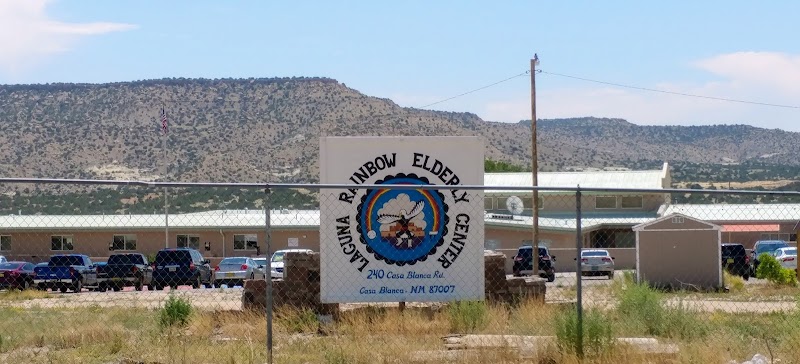
240 Casa Blanca Road, Casa Blanca, NM 87007 (505) 552-6034
Non profit - Corporation 58 Beds Independent Data: November 2025
Trust Grade
33/100
#33 of 67 in NM
Last Inspection: December 2024

Within standard 12-15 month inspection cycle. Federal law requires annual inspections.

Overview

Laguna Rainbow Nursing Center has received a Trust Grade of F, indicating significant concerns about the quality of care provided. They rank #33 out of 67 facilities in New Mexico, placing them in the top half, but they are the only option in Cibola County. The facility is improving, with issues decreasing from 10 in 2024 to 7 in 2025. Staffing is a strong point, as they have a 4/5-star rating and a turnover rate of 0%, meaning staff remain consistent and familiar with residents. However, they have faced serious incidents, including a resident experiencing sexual abuse due to inadequate prevention measures and another resident suffering severe burns from a hot beverage. Additionally, there were concerns about improper medication storage that could put all residents at risk.

Trust Score
F
33/100
In New Mexico
#33/67
Top 49%
Safety Record
High Risk
Review needed
Inspections
Getting Better
10 → 7 violations
Staff Stability
○ Average
Turnover data not reported for this facility.
Penalties
⚠ Watch
$24,570 in fines. Higher than 96% of New Mexico facilities. Major compliance failures.
Skilled Nurses
✓ Good
Each resident gets 89 minutes of Registered Nurse (RN) attention daily — more than 97% of New Mexico nursing homes. RNs are the most trained staff who catch health problems before they become serious.
Violations
⚠ Watch
34 deficiencies on record. Higher than average. Multiple issues found across inspections.
★★★☆☆
3.0
Overall Rating
★★★★☆
4.0
Staff Levels
★★★★★
5.0
Care Quality
★★☆☆☆
2.0
Inspection Score
Stable
2024: 10 issues
2025: 7 issues

The Good

  • 4-Star Staffing Rating · Above-average nurse staffing levels
  • 5-Star Quality Measures · Strong clinical quality outcomes
  • Full Sprinkler Coverage · Fire safety systems throughout facility
  • No fines on record

Facility shows strength in staffing levels, quality measures, fire safety.

The Bad

3-Star Overall Rating

Near New Mexico average (2.9)

Meets federal standards, typical of most facilities

Federal Fines: $24,570

Below median ($33,413)

Minor penalties assessed

The Ugly 34 deficiencies on record

2 actual harm
Aug 2025 3 deficiencies
CONCERN (D) 📢 Someone Reported This

A family member, employee, or ombudsman was alarmed enough to file a formal complaint

Potential for Harm - no one hurt, but risky conditions existed

Investigate Abuse (Tag F0610)

Could have caused harm · This affected 1 resident

Based on record review and interview, the facility failed to complete and document a timely and thorough investigation regarding allegations of abuse (knowingly causing physical or mental harm or fail...

Read full inspector narrative →
Based on record review and interview, the facility failed to complete and document a timely and thorough investigation regarding allegations of abuse (knowingly causing physical or mental harm or failing to provide goods and services necessary to avoid physical or mental harm) for 1 (R #1) of 3 (R #1, #2, and #3) residents reviewed for abuse and neglect allegations when staff failed to complete and submit a thorough follow-up report for an incident involving R #1. If facilities do not submit follow-up reports, then the State Agency (SA) cannot assure the residents are safe and free of abuse. The findings are: A. Record review of R #1's face sheet revealed an admission date of 08/03/24 and included a diagnoses of dementia (a group of conditions characterized by impairment of at least two brain functions, such as memory loss and judgment) with behaviors. B. Record review of a Facility Reported Incident (FRI), dated 04/06/25, revealed R #1 alleged that she was attacked by a black man on the night shift, resulting in a thumb injury. The resident was unable to provide specific details of the event or the name of the staff member involved. C. Record review of the facility's Five Day Follow-Up Report (a report sent to the State Survey Agency which includes the results of the facility's investigation into alleged violations) revealed it was undated. The facility did not provide a confirmation from the State Agency to show the report was received by the State Agency. D. Record review of the State Agency's Five Day Follow-Up documents revealed the facility's Five Day Follow-up report was received by the State Agency on 06/12/25. E. On 08/07/25 at 3:39 pm during an interview, the Director of Nursing (DON) stated she sent in the five day follow up report to the State Agency on 04/07/25. The DON did not provide a confirmation from the State Agency to show the report was received by the State Agency.
CONCERN (E) 📢 Someone Reported This

A family member, employee, or ombudsman was alarmed enough to file a formal complaint

Potential for Harm - no one hurt, but risky conditions existed

Deficiency F0726 (Tag F0726)

Could have caused harm · This affected multiple residents

Based on record review and interviews, the facility failed to ensure nurse aides were competent to perform their assigned duties when the facility did not provide adequate orientation and training for...

Read full inspector narrative →
Based on record review and interviews, the facility failed to ensure nurse aides were competent to perform their assigned duties when the facility did not provide adequate orientation and training for new and existing employees. This deficient practice is likely to result in staff not receiving the necessary training to meet the care needs of residents. A. Record review of the facility's policies revealed the facility did not have a formal policy or process in place for the onboarding, orientation, and training of new and existing staff. B. Record review of staff training and competency records for Certified Nurse Aid (CNA) #1, CNA #3, and Registered Nurse (RN) #1 revealed facility was unable to provide the records. C. On 08/14/25 at 1:32 pm, during an interview, the Assistant Director of Nursing (ADON) stated he oversaw training for CNAs. He stated there was not any onboarding process for staff prior to July of this year. D. On 08/14/25 at 1:47 pm, during an interview, the Human Resources Director (HRD) stated she was employed with this facility for three weeks, and the facility did not have a formal onboarding process in place for nursing staff prior to her employment. The HRD stated she was responsible to oversee the facility staff, and she believed the Staffing Coordinator (SC) oversaw the agency staff. E. On 08/14/25 at 2:00 pm, during an interview, the SC stated the ADON was responsible to oversee staff training and competencies. She stated the facility did not have an onboarding process in place until July 2025; however, she contacted the appropriate agency to verify CNA and Nurse licensure. F. On 08/14/25 at 2:23 pm, during an interview, the Director of Nursing (DON) stated when she started working at the facility, they lacked established policies and procedures for onboarding staff as well as for verifying staff competencies. The DON stated the ADON was responsible for all training and competency verification, but the process was still in development. The DON stated a Performance Improvement Plan (PIP) was implemented for the ADON due to failure to complete these required duties. A new MDS (Minimum Data Set) staff member has been hired to address the backlog of staff training.
CONCERN (E) 📢 Someone Reported This

A family member, employee, or ombudsman was alarmed enough to file a formal complaint

Potential for Harm - no one hurt, but risky conditions existed

Deficiency F0943 (Tag F0943)

Could have caused harm · This affected multiple residents

Based on record review and interview, the facility failed to ensure that all staff received abuse, neglect, and exploitation training prior to providing direct resident care. This deficient practice h...

Read full inspector narrative →
Based on record review and interview, the facility failed to ensure that all staff received abuse, neglect, and exploitation training prior to providing direct resident care. This deficient practice has the potential to increase the risk for harm to residents due to a lack of knowledge and awareness regarding resident rights and the reporting of abuse. The findings are: A. Record review of staff training and competency records for Certified Nurse Aid (CNA) #1, CNA #3, and Registered Nurse (RN) #1 revealed there was no documentation in the above noted staff records regarding Abuse, Neglect and Exploitation Training. B. On 08/14/25 at 1:32 pm, during an interview, the Assistant Director of Nursing (ADON) stated he was responsible for trainings for Certified Nurse Aides (CNAs). He stated he has been employed with this facility since February 2025 and that prior to July of this year there was not an onboarding process. The ADON stated he verified nursing staff qualifications by checking to see if their license was current and getting them set up with the online training program. He stated it was not his responsibility to verify agency staff qualifications, and he thought it was Human Resources (HR) or the Staffing Coordinator (SC) who oversaw the agency staff. C. On 08/14/25 at 2:00 pm, during an interview, the SC stated the ADON was responsible to oversee staff training and competencies. She stated the facility did not have an onboarding process in place until July 2025; however, she contacted the appropriate agency to verify CNA and Nurse licensure. D. On 08/14/25 at 2:23 pm, during an interview, the Director of Nursing (DON) stated when she started working at the facility, they lacked established policies and procedures for onboarding staff as well as for verifying staff competencies. The DON stated the ADON was responsible for all training and competency verification, but the process was still in development. E. On 08/14/25 at 3:03 pm during an interview, Registered Nurse (RN) #1 stated she had not yet received Abuse, Neglect, and Exploitation training at this facility. RN #1 confirmed that today was her second day of employment, and she had been providing direct resident care. F. On 08/14/25 at 3:15 pm during an interview, Certified Nurse Aide (CNA) #1 stated she had not yet received abuse and neglect training at this facility. The CNA confirmed that she was on her second day of employment and had already been providing direct resident care. G. On 08/14/25 at 3:33 pm during an interview, the Administrator (ADM) stated she was hired a little over a month ago, and she was aware of the issues the facility had with training and competencies. She stated she expected staff to be current on their trainings and the facility was in the process of organizing records and creating and implementing a process for tracking staff trainings.
Jun 2025 2 deficiencies
CONCERN (D) 📢 Someone Reported This

A family member, employee, or ombudsman was alarmed enough to file a formal complaint

Potential for Harm - no one hurt, but risky conditions existed

Report Alleged Abuse (Tag F0609)

Could have caused harm · This affected 1 resident

Based on interview and record review, the facility failed to report an unexpected death to the State Survey Agency for 1 (R #1) of 1 (R #1) resident reviewed for clinical decline and death. The facili...

Read full inspector narrative →
Based on interview and record review, the facility failed to report an unexpected death to the State Survey Agency for 1 (R #1) of 1 (R #1) resident reviewed for clinical decline and death. The facility failed to initiate an internal investigation, submit a reportable event to the State Agency, and document clinical findings in the medical record following the resident's death. If the facility fails to report unexpected deaths, then the State Survey Agency cannot evaluate compliance with Federal regulations.The findings are: A. Record review of R #1's face sheet revealed an admission date of 08/03/24 with the following diagnoses: End-stage renal disease (kidney disease). Chronic respiratory failures with hypoxia (respiratory system is unable to adequately get oxygen into the blood). Diabetes mellitus (DM; a disease in which the body cannot make or properly use insulin). Hypertension (HTN; high blood pressure). B. On 06/25/2025 at 9:26 a.m., during an interview, the Assistant Director of Nursing (ADON) stated R #1 passed away after going to dialysis (a treatment that filters waste, toxins, and extra fluid from the blood) on 05/09/2025. C. Record review of R #1's progress notes, dated 05/09/2025 through 06/20/2025, showed the facility did not conduct an internal investigation regarding R #1's unexpected death, and the facility did not report the resident's death to the State Survey Agency. D. On 06/25/2025 at 10:46 a.m., during an interview, the Administrator stated the facility did not submit a report regarding the resident's unexpected death to the State Survey Agency, and the facility did not conduct a formal review into the resident's unexpected death. She stated they did not complete an incident report (a formal document detailing an event that occurred) or a mortality investigation (a thorough review conducted after a death to determine the cause and contributing factors), because R #1's death happened offsite. E. On 06/26/2025 at 2:26 p.m., during an interview, the Medical Director stated the facility notified her of the resident's death. She stated she expected the facility to notify the State Survey Agency for an unexpected death.
CONCERN (D) 📢 Someone Reported This

A family member, employee, or ombudsman was alarmed enough to file a formal complaint

Potential for Harm - no one hurt, but risky conditions existed

Medical Records (Tag F0842)

Could have caused harm · This affected 1 resident

**NOTE- TERMS IN BRACKETS HAVE BEEN EDITED TO PROTECT CONFIDENTIALITY** Based on interview and record review, the facility failed to ensure accurate and complete documentation in the medical record fo...

Read full inspector narrative →
**NOTE- TERMS IN BRACKETS HAVE BEEN EDITED TO PROTECT CONFIDENTIALITY** Based on interview and record review, the facility failed to ensure accurate and complete documentation in the medical record for 1 (R #1) of 1 (R #1) resident reviewed for death and discharge status. The facility failed to document the resident's death in the progress notes and inaccurately listed the resident as discharged to home, rather than deceased . If the facility fails to maintain complete and accurate records, then care outcomes cannot be appropriately tracked, regulatory compliance is compromised, and opportunities for review or improvement may be missed. The findings are: A. On [DATE] at 9:26 a.m., during an interview, the Assistant Director of Nursing (ADON) stated R #1 passed away after going to dialysis (a medical treatment which filters waste and excess fluid from the blood) on [DATE].B. Record Review of R #1's progress notes, dated [DATE], showed staff did not document the resident was transported to dialysis and died after arrival at the dialysis center. C. Record review of the facility's Admit/Discharge Report, dated [DATE] through [DATE], revealed R #1 was discharged to home or self-care (routine discharge) on [DATE].D. On [DATE] at 10:12 a.m., during an interview, the Administrator reviewed the facility's admissions and discharges list in which staff documented R #1 was discharged to home instead of deceased . The Administrator stated the document was inaccurate, and the staff should have updated the discharge status.E. On [DATE] at 2:26 p.m., during an interview, the Medical Director stated she expected staff to document resident deaths in the clinical record, and the records should accurately reflect the resident's status.
Apr 2025 2 deficiencies
CONCERN (F) 📢 Someone Reported This

A family member, employee, or ombudsman was alarmed enough to file a formal complaint

Potential for Harm - no one hurt, but risky conditions existed

Deficiency F0761 (Tag F0761)

Could have caused harm · This affected most or all residents

Based on record review, observation, and interview, the facility failed to assure medications were secured and inaccessible to unauthorized staff. This deficient practice had the potential to affect a...

Read full inspector narrative →
Based on record review, observation, and interview, the facility failed to assure medications were secured and inaccessible to unauthorized staff. This deficient practice had the potential to affect all 33 residents identified on the facility census list provided by the Administrator on 04/22/25. Improperly stored medications could result in a resident, staff member, or visitor taking the medications not prescribed to them. The findings are: A. Record review of the facility's Medication Storage Controlled Medication Storage policy (any type of chemical that can alter a person's physical or mental state.), dated January 2025, revealed the following: - Only authorized licensed nursing and pharmacy personnel had access to controlled medications. -The access system (key, security codes) used to lock controlled medications (medications or chemicals regulated by the government because they can be easily abused and lead to addiction) and other medications subject to abuse, could not be the same access system used to obtain the non-scheduled medications. - The facility must have a system to limit who had security access and when access was used. B. On 04/22/25 at 1:11 P.M. and 04/23/25 at 12:50 P.M., an observation revealed the facility's supply room was secured by a keypad which required staff to enter a security code to unlock the door. The keypad had an exposed spring near the bottom. Staff could press the exposed spring to open the door and gain access to the supply room without entering a security code into the keypad. The facility's supply room contained various facility supplies to include, isolation gowns, medical gloves, shaving cream, denture cleanser, toothbrushes, shampoo, body wash, and briefs. The room also contained over-the-counter medications and an emergency kit (E-Kit; contains medications which can be provided to residents in an emergency) sitting on top of the locked cabinet. The E-Kit contained a variety of medications, including, but not limited to, morphine oral solution (used to treat pain), Xanax (used for anxiety), Temazepam (a benzodiazepine used to treat insomnia), and various antibiotics (used to treat infections). C. On 04/22/25 at 2:00 P.M., during an interview with the Director of Nursing (DON), she stated staff moved the over-the-counter medications and the E-Kit from the medication room to the supply room after a recommendation from the pharmacist, due to excessive temperatures in the medication room. The DON stated staff utilized the supply room to get personal care supplies for the residents. The DON stated the E-Kit in the supply room posed a potential hazard since the controlled medication in the E-Kit was accessible to unauthorized staff. D. On 04/22/25 at 2:30 P.M., during an observation of the supply room, an unnamed Certified Nurse Aide (CNA) entered the security code into the key pad, entered into the supply room, and came out with briefs. E. On 04/24/25 at 1:07 P.M., during an interview with Maintenance #1, he stated he did not know the exposed spring could be pushed to unlock the supply closet and allow access to the supply room without entering a security code. F. On 04/24/25 at 1:10 P.M., during an interview with the Administrator, she stated staff moved the over the counter medications and the E-Kit into the supply room in March 2025. She stated the room was accessible to all staff in the facility including CNAs since it contained all the facility's supplies. She stated she was not aware staff could bypass the security code by pressing the exposed spring on the keypad.
CONCERN (F) 📢 Someone Reported This

A family member, employee, or ombudsman was alarmed enough to file a formal complaint

Potential for Harm - no one hurt, but risky conditions existed

Food Safety (Tag F0812)

Could have caused harm · This affected most or all residents

Based on record review, observation and interviews, the facility failed to sanitize dishes when staff did not maintain the dish washing machine at 120 degrees (°) Fahrenheit (F), per manufacturer'...

Read full inspector narrative →
Based on record review, observation and interviews, the facility failed to sanitize dishes when staff did not maintain the dish washing machine at 120 degrees (°) Fahrenheit (F), per manufacturer's instructions. This deficient practice was likely to affect all 33 residents of the facility. If the facility fails to ensure the dish machine reached the appropriate temperature, then residents could potentially be exposed to foodborne illnesses (illnesses caused by food contaminated with bacteria, viruses, parasites, or toxins.) The findings are: A. Record review of the facility's Dish Washing Policy, dated March 2010, revealed the policy did not address the temperature of the water for sanitizing dishes. B. Record review of the Ecolab Low Temperature (ELT) Dish Machine (low temperature dish washing machines utilize chemicals for sanitation) Manufacturer's Recommendations, dated 2022, revealed the dish machine should be operated at minimum temperatures of 120° F for washing and rinsing. C. On 04/23/25 at 10:26 A.M. during an observation and interview, staff utilized a low-temperature dishwashing machine to wash dishes and the cooking equipment. Kitchen Staff #1 stated the dish machine was broken and did not properly wash the dishes. She stated the old dish washer was replaced in April 2025, and the new dish machine did not reach the proper temperature of 120° F since its installation. D. Record review of the facility's dish washing machine temperature logs, dated April 2025, revealed the following: - On 04/07/25, staff documented wash temperatures as follows: Breakfast 118° F, lunch 112° F, and dinner 118° F. - On 04/08/25, staff documented wash temperatures as follows: Lunch 112° F, and dinner 118° F. - On 04/09/25, staff documented wash temperatures as follows: Lunch 112° F, and dinner 100° F. - On 04/10/25, staff documented wash temperatures as follows: Breakfast 118° F, lunch 96° F, and dinner 95° F. - On 04/11/25, staff documented wash temperatures as follows: Lunch 113° F, and dinner 118° F - On 04/12/25, staff documented wash temperatures as follows: Breakfast 110° F, lunch 103° F, and dinner 103° F. - On 04/13/25, staff documented temperatures as follows: Breakfast wash 110° F, rinse temperature 102° F; lunch wash 110 ° F; and dinner wash 110 ° F. - On 04/14/25, staff documented wash temperatures as follows: Breakfast 110° F, lunch 110° F, and dinner 110° F. - On 04/15/25, staff documented temperatures as follows: Breakfast wash 110° F, rinse 102° F; lunch wash 110° F; and dinner wash 110° F. - On 04/16/25, staff documented wash temperatures as follows: Breakfast 110° F. - On 04/17/25, staff documented wash temperatures as follows: Breakfast 110° F, lunch 110° F, and dinner 110° F. - On 04/18/25, staff documented wash temperatures as follows: Breakfast 110° F, lunch 110° F, and dinner 110° F. - On 04/19/25, staff documented wash temperatures as follows: Breakfast 110° F, lunch 114° F, and dinner 115° F. - On 04/20/25, staff documented wash temperatures as follows: Breakfast 110° F, lunch 110° F, and dinner 110° F. - On 04/21/25, staff documented wash temperatures as follows: Breakfast 110° F, lunch 110° F, and dinner 110° F. - On 04/22/25, staff documented wash temperatures as follows: Breakfast 110° F, lunch 110° F, and dinner 110° F. - On 04/23/25, staff documented wash temperatures as follows: Breakfast 118° F. Staff did not document any other temperatures. E. Record review of the Registered Dietician's (RD) kitchen inspection, dated 04/22/25, revealed the RD documented the minimum wash and rinse temperature for the dish machine should be 120° F. She stated at least half of the temperatures documented for the month of April 2025 were less than 120° F. She stated the facility should wash everything in the three compartment sink (a sink with three sections to wash, rinse, and sanitize) until the dishwasher washed and rinsed at the proper temperature of 120° F. F. On 04/23/25 at 10:47 A.M. during an observation and interview, the Lab Technician for an outside company performed maintenance on the facility's dish washing machine. The technician stated the dish machine was a low-temperature, chemical sanitizing machine that depended on the sanitizer (chlorine) to sanitize the dishes. She stated the water temperature for the wash and rinse cycles was also supposed to be 120° F, according to the manufacturer's name plate attached to the machine. She stated the facility needed a boost heater to get temperature of washer at 120° F. G. On 04/23/25 at 12:52 P.M. during an interview with the Dietary Manager (DM), she stated the dishwashing machine was a low-temperature model. She stated the temperature log, dated April 2025, showed staff documented temperature readings between 110° F and 118° F. The DM stated the appropriate temperature was 120° F or above to ensure the dishes were properly sanitized. The DM stated she monitored the temperature logs for the dishwasher, and she was aware of the temperature was not appropriate. The DM stated the RD suggested they wash dishes in the three compartment sink until the dishwasher was repaired. H. On 04/23/25 at 2:00 P.M. during an interview with the Administrator, she stated she was aware the dish machine did not get to the correct temperature. She stated she had staff adjust the chemicals to a higher level to effectively eliminate the germs. She stated she did not know the correct temperature for the dishwasher wash and rinse cycles.
Dec 2024 9 deficiencies 1 Harm
SERIOUS (G) 📢 Someone Reported This

A family member, employee, or ombudsman was alarmed enough to file a formal complaint

Actual Harm - a resident was hurt due to facility failures

Free from Abuse/Neglect (Tag F0600)

A resident was harmed · This affected 1 resident

**NOTE- TERMS IN BRACKETS HAVE BEEN EDITED TO PROTECT CONFIDENTIALITY** Based on record review and interview, the facility failed to prevent resident to resident sexual abuse for 1 (R #17) of 3 (R #5,...

Read full inspector narrative →
**NOTE- TERMS IN BRACKETS HAVE BEEN EDITED TO PROTECT CONFIDENTIALITY** Based on record review and interview, the facility failed to prevent resident to resident sexual abuse for 1 (R #17) of 3 (R #5, #17 and #33) residents reviewed for abuse. This deficient practice likely resulted in psychosocial harm and distress for R #17, as evidence by the resident to become more withdrawn and isolated, experience anxiety and fear, and weight loss. The findings are: A. Record review of R #17's face sheet indicated she was admitted on [DATE] with the following diagnoses: - Cataract extraction (surgery to replace eye lens with an artificial one), - Osteoporosis (low bone mass leading to deterioration of bone tissue) with fracture, - Depressive disorder (depression; a mood disorder that causes a persistent feeling of sadness and loss of interest), - Chronic pain. B. Record review of R #17's nursing progress notes indicated the following: - Dated 08/19/24 at 8:05 pm, the Administrator in Training (AIT) notified the Director of Nursing (DON) that the night before R #17 reported to the Charge Nurse that a male resident [R #100] entered R #17's room while she was sleeping and was sexual towards her. The AIT notified Administrator, made a report to the State agency, and initiated an investigation. The DON notified R #17's Power of Attorney (POA; a person who is chosen to make decisions on your behalf when you are unable) on 8/19/24 at 7:27 am of the incident, but R #17 notified the POA yesterday, 08/18/24, that a male resident entered her room. - Dated 08/21/24 at 5:51 pm, R #17 went to the hospital on [DATE], and she underwent a computed tomography scan (CT scan; provides a more detailed view of tissues, blood, vessels and bones) on her abdomen. Doctors checked for bruising, screened for a urinary tract infection (UTI), and did bloodwork for possible sexually transmitted disease (STD). A tiny bit of blood was found in R #17's urine from possible tear to her vagina area [inconclusive until a sexual assault nursing exam (SANE) was completed.] Antibiotics were going to be prescribed, but they wanted to wait for the results from the SANE exam. Resident was scheduled for a SANE exam at 1:30 pm today 08/18/24. Resident came back to facility to pick up some of her clothing and belongings. She will stay with her family for the next two or three nights. The POA was provided medications for R #17. Resident and family would like R #17 to be discharged to the facility. Resident voiced she is scared to stay here. Resident's SANE exam went well, and she was released from the hospital on 8/20/24. - Dated 08/26/24 at 2:45 pm, a psychosocial assessment was conducted with R #17. The resident continued to stay in her room and spoke of leaving the facility. The Social Services Director (SSD) let R #17 know the Psychiatrist would come by today to speak with her. The resident stated she was okay with that. The Psychiatrist diagnosed R #17 with acute stress syndrome. R #17 told the Psychiatrist that she had nightmares and was afraid. R #17 stated she wanted to discharge from the facility, and the SSD discussed it further with the resident's POA. C. Record review of R #17's medical record did not include results of the SANE exam. D. Record review of R #17's therapy progress notes, dated 09/25/24, indicated the following: - The Chief Complaint Section: After recent trauma, the patient isolated in her room and sleeps more than usual. Therapy Data, Assessment and Plan Note indicated the following: 08/26/24 Patient confided in her Certified Nursing Assistant (CNA) that another resident came into her room during the night and assaulted her. Plan section: The patient will continue to receive psychotherapy services to address her emotional distress and to monitor for signs of post traumatic stress disorder (PTSD). Resident continues to be seen ongoing for therapy services. E. Record review of a statement made by Nurse #9, the statement revealed the following: Resident Report of Sexual Abuse on Sunday Night:R #17 requested a private meeting with me and CMA #1 to her room at 1900 (7:00 pm) in order to lodge a complaint about an awful encounter with a male resident last night. R #17 alleged at nighttime he entered her room and sat on other bed claiming that is just a friendly visit and only wanted to watch television which she is not comfortable with, so when she is about to sleep she asked him to leave her room which he refused. She later went to bed and five minutes later he came up to her demanding sex which he forcefully pulled her undergarments and had his way with her. She said she did not react because of fear of her life because of his ill behavior. When he left the room she walk to the nurses station and reported to night shift nurse on Sunday and to report to facility authority. She asked for him to be kept away from her in which we provided close monitoring throughout the shift. F. Record review of R #17's care plan indicated the following for psychosocial well-being : - Dated 08/20/24, R #17 was a victim of sexual assault by a male resident and had a diagnosis of acute stress reaction. G. Record review of R #17's hospital record indicated the following: - She was seen in the emergency room on [DATE] for acute pelvic pain and sexual assault. - Medical Decision Making Section: Present for evaluation of pelvic pain and cramping. Has a history of bladder spasm (having a sensation of needing to urinate) but have been well controlled over the last several years. R #17 denies vaginal bleeding. Abdominal exam is benign (negative) at the time of evaluation. Low suspicion of vaginal tear (an injury to the tissue around your vagina and anus.) Imaging was obtained and somewhat limited but negative for signs of traumatic injuries. H. Record review of the weights for R #17 revealed staff documented the following: - On 09/02/24, 101.8 pounds. - On 10/01/24, 100.6 pounds. - On 11/01/24, 98.6 pounds. - On 12/01/24, 92.0 pounds. I. On 12/16/24 at 3:29 pm, during an interview with R #17, she stated she wanted to go to a different facility. She stated she did not have anyone to talk to here. She stated her roommate was sort of mean, not talkative, and got mad easily. R #17 stated that one night she sat in her room and watched the evening news. She stated she went to bed when the news was over . She stated another resident came into her room and sat on the other bed. R #17 stated he would leave and come back. She stated he told her he was lonely. R #17 stated she told him it had been a long day, and she was ready to go to bed. R #17 stated he left her room, and she went to bed. R #17 stated the resident came back later while she was asleep. She stated he pulled her down to the bottom of the bed and had his way with her. R #17 stated the resident did not bother her before this incident. She stated she was too scared to get out of bed to tell someone, but she did tell someone the next day about what happened to her. R #17 expressed concern the resident might come back to the facility. J. On 12/17/24 at 3:34 pm, during an interview with the Staffing Coordinator, she stated the male resident, who allegedly went into R #17's room, was put on a one-to-one immediately after the incident was reported until he was later discharged from the facility. She stated he had a girlfriend at the facility, and he did not bother anyone else that she was aware. K. Record review of facility investigation report dated 08/23/24 identified that following facility awareness of the incident, local law enforcement was contacted to file a report, R #100 was sent out to Psych ER on [DATE] and upon return from the hospital R #100 was provided 30 day discharge notice after an attempt to get an emergency discharge order from tribal court judge failed. L. On 12/18/24 at 10:10 am, during an interview with Social Services Director (SSD), she stated she did not work at the facility at the time of the incident, but she had a lot of concerns about R #17. She stated R #17 lost some weight, she did not leave her room, and self-isolated. She stated she brought her concerns up with management and in a clinical meeting in the morning. The SSD stated she visited R #17 often. She stated R #17 saw a psychiatrist who came to the facility every couple of weeks. The SSD stated R #17's sexual abuse triggered previous issues, and that contributed to her not wanting to leave her room. The SSD stated R #18 was afraid she was going to be shamed by others. The SSD stated she spoke to the resident's daughter a lot, and they discussed interventions like moving rooms, blessing the resident's room, and having a medicine man come out. The SSD stated they would like to remove all triggers for R #17, but R #17 always states she would think about it [offered interventions]. M. On 12/19/24 at 8:44 am, during an interview with Activities Director (AD), she stated R #17 used to be more engaged than she was now. She stated R #17 used to walk up and down the halls to get some exercise, and she would take her lunch tray back to the kitchen after she was finished eating. The AD stated R #17 did not do these things anymore. The AD stated R #17 shut down. The AD stated R #17 will come out of her room with her family when they visit her. N. On 12/20/24 at 12:29 pm, during an interview with the Psychiatrist, she stated R #17 had acute post traumatic stress disorder (PTSD.) The Psychiatrist stated she went to speak with R #17 right after the abuse happened and saw her multiple times after the incident. The Psychiatrist stated R #17 was more withdrawn than she was before the incident. The Psychiatrist stated R #17 used to walk down the halls for exercise, but she did not do that anymore. She stated R #17 slept a lot more now. The Psychiatrist confirmed that she saw R #17 was on 08/26/24, 09/13/24, 09/25/24, 10/21/24, 11/22/24, 12/06/24 and 12/20/24. The Psychiatrist stated R #17 has been awake the last few times she met with her [some visits she was asleep]. She stated the facility has offered R #17 multiple different options, like changing rooms, but the resident has not accepted any of these things yet.
CONCERN (D)

Potential for Harm - no one hurt, but risky conditions existed

Deficiency F0685 (Tag F0685)

Could have caused harm · This affected 1 resident

**NOTE- TERMS IN BRACKETS HAVE BEEN EDITED TO PROTECT CONFIDENTIALITY** Based on interviews, and record review, the facility failed to assist a resident in gaining access to vision services when staff...

Read full inspector narrative →
**NOTE- TERMS IN BRACKETS HAVE BEEN EDITED TO PROTECT CONFIDENTIALITY** Based on interviews, and record review, the facility failed to assist a resident in gaining access to vision services when staff failed to make appointments or arrange for transportation for 1 (R #30) of 1 (R #30) residents. This practice could likely lead to an increase in the risk of missing early signs of serious eye diseases like glaucoma (a group of eye conditions that can cause blindness) and macular degeneration (a medical condition which usually affects older adults and results in a loss of vision in the center of the visual field because of damage to the retina), which often have no noticeable symptoms in their early stages, potentially leading to significant vision loss or blindness if left untreated. Additionally, it could likely lead to missing a resident's prescription needs, causing eye strain and difficulties with daily activities. The findings are: A. Record review of R #30's Minimum Data Sets (MDS; a federally mandated assessment instrument completed by facility staff) revealed the following: - admission MDS, dated [DATE], R #30 had impaired vision. - Quarterly MDS, dated [DATE], R #30 had an impaired vision. B. Record review of R #30's care plan, dated 10/4/24, revealed R #30 had age related impaired vision. The care plan listed a goal aimed to arrange Ophthalmologist (a specialist in the branch of medicine concerned with the study and treatment of disorders and diseases of the eye)/Optometrist (an eye care specialist who examine, diagnose, and treat injuries and health conditions that affect your eyes and vision) consult and to implement recommendations annually and as needed for R #30. C. On 12/16/24 at 12:10 pm, during an interview, R #30 stated she asked a staff to assist her to schedule an eye appointment earlier this year, but she did not get any response from staff. R #30 could not remember the exact date or the staff member's name. D. On 12/19/24 at 3:49 pm during an interview with Nurse #4, she stated staff scheduled R #30 for an eye appointment on 6/14/24. She stated they had to cancel that appointment, because they did not have transportation to take R #30 to her appointment. Nurse #4 stated the facility had to evacuate the building after the cancelation due to a widespread roof leak problem, and nobody rescheduled the appointment after that.
CONCERN (D) 📢 Someone Reported This

A family member, employee, or ombudsman was alarmed enough to file a formal complaint

Potential for Harm - no one hurt, but risky conditions existed

Pressure Ulcer Prevention (Tag F0686)

Could have caused harm · This affected 1 resident

**NOTE- TERMS IN BRACKETS HAVE BEEN EDITED TO PROTECT CONFIDENTIALITY** Based on record review and interview, the facility failed to ensure 1 (R #13) of 1 (R #13) resident reviewed for pressure ulcers...

Read full inspector narrative →
**NOTE- TERMS IN BRACKETS HAVE BEEN EDITED TO PROTECT CONFIDENTIALITY** Based on record review and interview, the facility failed to ensure 1 (R #13) of 1 (R #13) resident reviewed for pressure ulcers (a wound caused by prolonged pressure occurring in bony areas of the body) received the necessary treatment and services to promote healing and prevent new ulcers from developing when staff failed to perform wound care for multiple days. This deficient practice likely worsened the wound for R #13, exposing bone and osteomyelitis (bone infection). The findings are: A. Record review of R #13's face sheet revealed the resident was initially admitted to the facility on [DATE] with multiple diagnoses to include: - Muscle wasting and atrophy (loss of skeletal muscle mass), - Type 2 diabetes mellitus with diabetic neuropathy (type of nerve damage that can occur with diabetes), -Chronic kidney disease, stage 4 (severe.) B. Record review of R #13's care plan, dated 08/05/24, revealed the following: - R #13 was readmitted to the facility with a Stage 2 pressure ulcer to the coccyx (tail bone located at the end of the spine.) - R #13's wounds will heal without complications. - R #13's staff will provide care per providers orders. - Send to emergency room (ER) for evaluation and treatment of wounds per provider's order. C. Record review of R #13's Physician Orders revealed an order dated 09/27/24 for wound care: Unstageable pressure ulcer to sacrum (bottom of the spine). Cleanse with wound cleanser and pat dry. Apply the wound loosely packed with an iodoform packing strip (small strip of sterile gauze), apply sure prep (hospital-grade, non-stinging barrier film) to the peri-wound (tissue surrounding a wound), and cover with bordered foam dressing. Wound Care completed daily and as needed (PRN.) D. Record review of R #13's progress notes, dated 11/09/24, revealed the Wound Care Nurse reported on 11/09/24 that the resident's wound care had not been done for two days. She stated the resident's bandages were grossly soiled, with more than 50 percent (%) dark red blood and dark, yellow-tinged drainage seeping through the wound dressing. E. Record review of the facility's Five-Day Follow-Up report, dated 11/19/24 and written by the Director of Nursing (DON), revealed Registered Nurse (RN) #12 did not complete daily wound care on 11/07/24 and 11/08/24 as ordered by the provider.
CONCERN (D)

Potential for Harm - no one hurt, but risky conditions existed

Deficiency F0761 (Tag F0761)

Could have caused harm · This affected 1 resident

Based on observation and staff interview, the facility failed to ensure staff secured the medications inside the medication room and made them inaccessible to unauthorized staff and residents. This pr...

Read full inspector narrative →
Based on observation and staff interview, the facility failed to ensure staff secured the medications inside the medication room and made them inaccessible to unauthorized staff and residents. This practice could likely give access to unauthorized staff, residents, and visitors, and could lead to medication misuse. The findings are: A. On 12/16/24 at 1:42 pm, during an observation, Nurse #2 put the medication room key inside a drawer at the nursing station. B. On 12/16/24 at 1:45 pm during an interview, Nurse #2 stated she kept the medication room key inside an unlockable drawer at the nurses station. She stated somebody was always available at the nurses station to guard the drawer. C. On 12/16/24 at 2:15 pm during an observation, the nursing station was unattended by nurses or staff. D. On 12/17/24 at 10:11 am during an interview, Nurse #4 stated the Certified Medication Aids (CMAs) were responsible to hold the medication room key, and sometimes they were not available when nurses needed the key. Nurse #4 stated they lost many keys when staff took them home, so she decided to keep the key in a drawer inside the nursing station. E. On 12/18/24 at 10:00 am during an interview, the facility's Interim Administrator stated she was not sure how to secure the medication room keys. She stated the medications should be locked. She stated nurses and CMAs should not keep the key in an unlocked drawer at the nursing station, but they should always keep it on their person. F. On 12/20/24 at 12:52 pm during an interview, the facility's Pharmacist stated he expected nurses and CMAs to keep the medication room secured since it contained insulin and over the counter medications. He stated nurses and CMAs should not keep the key in an unlocked drawer at the nursing station, but they should always keep it on their person.
CONCERN (D)

Potential for Harm - no one hurt, but risky conditions existed

Deficiency F0883 (Tag F0883)

Could have caused harm · This affected 1 resident

Based on interviews and record review, the facility failed to ensure nurses educated a resident or a resident's representative on the benefits and potential side effects of the pneumococcal immunizati...

Read full inspector narrative →
Based on interviews and record review, the facility failed to ensure nurses educated a resident or a resident's representative on the benefits and potential side effects of the pneumococcal immunization (a shot that helps protect you from serious bacterial infections caused by pneumococcal bacteria) before nurses offered the immunization for 1 (R #7) of 1 (R #7) residents. This practice could likely lead to improper decision making by R #7's legal guardian due to inadequate discussion on the risks and benefits of the immunization. The findings are: A. Record review of R #7's physician orders, dated 11/25/24, revealed an order to administer Prevnar vaccine (pneumococcal immunization) 0.5 milliliter intramuscular (administered in the muscle.) B. Record review of R #7's face sheet dated 08/01/24, revealed R #7's son was her legal guardian and consented to her pneumococcal immunization. C. Record review of R #7's progress notes, dated 11/19/24, revealed Nurse #5 called R #7's legal guardian to obtain consent to R #7's pneumococcal immunization. The notes did not mention any education on the benefits or the potential side effects of the immunization. D. On 12/19/24 at 12:53 pm during an Interview with R #7's legal guardian, he stated a nurse called him offering to administer a pneumococcal immunization to his mother (R #7). He stated the nurse did not discuss any benefits or potential side effects of the immunization. E. On 12/19/24 at 1:20 pm during an interview, Nurse #4 stated she expected Nurse # 5 to educate R #7's legal guardian on the benefits and any potential side effects of the immunization when Nurse #5 called to obtain the consent. She stated Nurse #5 did not work at the facility any longer.
CONCERN (F)

Potential for Harm - no one hurt, but risky conditions existed

Infection Control (Tag F0880)

Could have caused harm · This affected most or all residents

Based on observations, interviews, and record reviews, the facility failed to: 1. Ensure staff followed contact precautions (used for individuals with infections that can spread through direct or indi...

Read full inspector narrative →
Based on observations, interviews, and record reviews, the facility failed to: 1. Ensure staff followed contact precautions (used for individuals with infections that can spread through direct or indirect contact with the patient or their environment) before contact with a resident and his environment for 1 (R #13) of 1(R #13) residents. This practice could likely lead to an increased risk of transmission of the bacteria to other patients and healthcare workers, potentially causing more infections due to direct contact with contaminated surfaces or the infected patient, which could result in serious complications like sepsis (presence of bacteria and infectious organisms in the blood stream) or even death if left untreated. 2. Demonstrate its measures to minimize the risk of Legionella (a type of bacteria that can cause legionellosis; a serious chest infection) and other opportunistic pathogens in the building water systems by not having a documented water management program. This failure to affect all residents in the facility. This deficient practice is likely to increase the risk of exposure to legionella bacteria and potentially outbreaks of legionellosis in the facility. The findings are: Contact Precautions A. Record review of R #13's progress notes, dated 9/27/24, revealed the resident was admitted to the facility on contact precautions due to methicillin resistant staphylococcus aureus (MRSA; bacteria that are resistant to treatment with semi-synthetic penicillin) in coccyx (tail bone located at the end of the spine) wound. B. On 12/18/24 at 10:00 am during observation and interview, Housekeeper #1 did not put on gloves or an isolation gown before she entered R #13's room to pick up trash. Further observation revealed there was a contact precautions sign on the resident's room door which instructed staff and visitors to do the following: 1. Everyone must clean their hands, including before entering and when leaving the room. 2. Providers and staff must also put on gloves and a gown before room entry and discard the gloves and the gown before room exit. C. On 12/18/24 at 10:02 am, during an interview, Housekeeper #1 stated she did not know R #13 was on contact precautions. D. On 12/18/24 at 10:05 am during observation and interview, Certified Nurse Assistant (CNA) #1 entered R #13's room, stayed a few seconds, and exited the room. CNA #1 did not put on gloves or an isolation gown before she entered R #13's room. CNA #1 stated she would only put on gloves and a gown if she had to clean the resident's infected wound. E. On 10/19/24 at 10:32 am during an interview with Nurse #4, she stated Resident #13 was on contact precautions. She stated she expected Housekeeper #1 and CNA #1 to put on gloves and an isolation gown before they entered R #13's room. Water Management Program F. Record review revealed that the facility did not have a documented water management program to minimize the risk of Legionella in the facility's water system. G. On 12/18/24 at 11:46 am during an interview with the Maintenance Technician, he stated the facility did not have a water testing system or any related documents. H. On 12/18/24 at 3:50 pm during an interview with the facility's Administrator, she stated they did not have a system for water testing or water services.
CONCERN (F)

Potential for Harm - no one hurt, but risky conditions existed

Deficiency F0882 (Tag F0882)

Could have caused harm · This affected most or all residents

Based on interviews and record review, the facility failed to designate one or more individuals as the Infection Preventionist (IP) who was responsible to assess, develop, implement, monitor, and mana...

Read full inspector narrative →
Based on interviews and record review, the facility failed to designate one or more individuals as the Infection Preventionist (IP) who was responsible to assess, develop, implement, monitor, and manage the infection prevention and control program (IPCP; a set of practices and procedures that aim to reduce the spread of infections in healthcare facilities and other settings). This practice could likely cause a lack of dedicated oversight and implementation of proper infection control practices across the facility and lead to potential resident harm and a greater risk of outbreaks. The findings are: A. On 12/18/24 at 9:48 am, during an interview with Nurse #4/MDS Nurse, she stated the previous Director of Nursing resigned at the end of November 2024 and did not involve her (Nurse #4) in the process of infection control. She stated the Interim Administrator did not ask her to do any infection control duties, and she did not have any qualifications to perform infection prevention and control duties. B. On 12/18/24 at 10:00 am, during an interview with the facility's Interim Administrator, she stated the previous Director of Nursing handled the infection control reporting. She stated Nurse #4 and the current senior ranking nurse were not officially assigned to any infection control duties.
CONCERN (F) 📢 Someone Reported This

A family member, employee, or ombudsman was alarmed enough to file a formal complaint

Potential for Harm - no one hurt, but risky conditions existed

Deficiency F0947 (Tag F0947)

Could have caused harm · This affected most or all residents

Based on record review and interview, the facility failed to ensure Certified Nurse Aides (CNAs) received the required dementia and abuse training for 12 (CNAs #1, #2, #3, #4, #5, #6, #7, #8, #9, #10,...

Read full inspector narrative →
Based on record review and interview, the facility failed to ensure Certified Nurse Aides (CNAs) received the required dementia and abuse training for 12 (CNAs #1, #2, #3, #4, #5, #6, #7, #8, #9, #10, #11 and #12) of 19 (CNAs #1, #2, #3, #4, #5, #6, #7, #8, #9, #10, #11, #12, #13, #14, #15, #16, #17, #18, and #19) CNAs reviewed for dementia and abuse training. This deficient practice could likely result in the nurse aides not receiving the necessary training to meet the care needs of the residents. The findings are: A. Record review of the facility's most current abuse and dementia training list, dated December 2023 to December 2024, revealed 12 CNAs did not receive abuse training, dementia training, or both. B. On 12/18/24 at 10:10 am, during an interview with the Social Services Director, she stated she did not think the staff received dementia. C. On 12/19/24 at 3:30 pm, during an interview with the Interim Administrator, she stated the abuse and dementia training list, dated December 2023 to December 2024, was the most current employees who worked at the facility. She confirmed all nursing staff should complete the trainings. D. On 12/20/24 at 2:50 pm, during an interview with the Nurse Educator, she stated the dementia training on 11/26/24 was for all staff, but the staff who signed the sheet were the only ones who showed up for the training. She stated the other staff who did not come should have reviewed the training, but there was not any documentation to show they did.
MINOR (B) 📢 Someone Reported This

A family member, employee, or ombudsman was alarmed enough to file a formal complaint

Minor Issue - procedural, no safety impact

Deficiency F0657 (Tag F0657)

Minor procedural issue · This affected multiple residents

**NOTE- TERMS IN BRACKETS HAVE BEEN EDITED TO PROTECT CONFIDENTIALITY** Based on record review, the facility failed to ensure staff revised the care plan for 1 (R #15) of 1 (R #15) residents reviewed ...

Read full inspector narrative →
**NOTE- TERMS IN BRACKETS HAVE BEEN EDITED TO PROTECT CONFIDENTIALITY** Based on record review, the facility failed to ensure staff revised the care plan for 1 (R #15) of 1 (R #15) residents reviewed when staff failed to update care plan after falls. This deficient practice could likely result in staff being updated and implementing the needs and treatments of resident. The findings are: A. Record review of R #15's face sheet, dated 12/18/24, revealed she was admitted to the facility on [DATE] with multiple diagnoses including but not limited to: - Heart Failure. - Anxiety disorder. - Restlessness and agitation. - Unspecified dementia. B. Record review of the facility's Falls With and Without Injury Report revealed R #15 had four falls in August 2024: - On 08/09/24, fall without injury. - On 08/21/24, fall with injury. - On 08/23/24, fall with injury. - On 08/27/24, fall with injury. C. Record review of R #15's Fall Assessement revealed the following: - Dated 08/09/24, fall risk score of 24, high fall risk. - Dated 08/21/24, fall risk score of 15, high fall risk. - Staff did not complete an updated Fall Assessment for 08/23/24. - Staff did not complete an updated Fall Assessment for 08/27/24. - Dated 08/28/24, fall risk score of 19, high fall risk. D. Record review of R #15's care plan, dated 10/10/24, revealed the facility did not care plan the resident's falls until 09/26/24.
Aug 2024 1 deficiency
CONCERN (D) 📢 Someone Reported This

A family member, employee, or ombudsman was alarmed enough to file a formal complaint

Potential for Harm - no one hurt, but risky conditions existed

Notification of Changes (Tag F0580)

Could have caused harm · This affected 1 resident

Based on record review and interview, the facility failed to notify the Power of Attorney (POA; health care power of attorney grants, in writing, a particular agent the power to make healthcare decisi...

Read full inspector narrative →
Based on record review and interview, the facility failed to notify the Power of Attorney (POA; health care power of attorney grants, in writing, a particular agent the power to make healthcare decisions on another's behalf) and health care provider of 1 (R #1) of 1 (R #1) resident reviewed when staff found R#1 with a injury of unknown origin and did not notify the POA and the facility provider within two hours. If the facility is not notifying the resident's POA or provider when the resident has a change of condition, then the POA and provider are unable to make decisions related to treatment and advocate for the resident's care. The findings are: A. Record review of R #1's face sheet, dated 04/30/18, revealed the following: - admission date of 04/30/18. - Dementia (a chronic disease that causes a progressive decline in memory, judgment, including poor decision making). - Parkinson's disease (progressive disorder that affects the nervous system and the parts of the body controlled by the nerves). - Emergency contact #1 and POA - relationship daughter B. Record review of R #1's progress notes revealed the following: - Dated 05/27/24 at 9:52 am, Licensed Practical Nurse (LPN) #1 was notified on 05/25/24 that R #1 had an injury of unknown origin to her right ankle and needed to be assessed. - Dated 05/27/24 at 2:17 pm, LPN #1 was notified on 05/25/24 about R #1's injury of unknown origin to her right ankle but got busy. The LPN told an unknown night nurse coming on duty about the ankle injury and did not assess it herself before going home. LPN #1 documented the right ankle injury was not assessed by anyone until 05/27/24, when she came back from days off. The POA and provider were not notified about the injury of unknown origin until 05/27/24 after LPN #1 completed the assessment and required notifications. C. On 08/06/24 at 1:15 pm, during an interview with the Director of Nursing (DON), she stated staff did not call R #1's POA or notify the on-call provider about the injury of unknown origin to R #1's right ankle on 05/25/24. The DON stated the staff was expected and required to notify the on-call provider and POA within two hours of being notified of injuries of unknown origin to residents. The DON further stated the required notifications were not made until 05/27/24.
Sept 2023 12 deficiencies
CONCERN (D)

Potential for Harm - no one hurt, but risky conditions existed

Deficiency F0554 (Tag F0554)

Could have caused harm · This affected 1 resident

Based on observation and record review, the facility failed to have the Interdisciplinary team (IDT) (Consists of a team of professionals of various roles within the facility who review and determine ...

Read full inspector narrative →
Based on observation and record review, the facility failed to have the Interdisciplinary team (IDT) (Consists of a team of professionals of various roles within the facility who review and determine resident needs and abilities) determine if residents could self-administer medication for 1 R #17) of 1 (R #17) residents viewed for treating a fungus infection. If the facility is not assessing the residents to determine if a resident is capable of self-administering medications then this deficient practice is likely to result in residents self-administering medications inappropriately and or incorrectly, causing harm. The findings are: A. On 09/25/23 at 9:25 am, an observation of R # 17's room revealed two bottles of Nystatin powder (used to treat fungal or yeast infections of the skin) on his bedside table. B. On 09/25/23 at 9:25 am, during an interview, R #17 revealed staff left his medication at bedside, and he was unable to self-administer. C. Record review of R #17's Physicians orders revealed Nystatin ointment, 100,000 unit/gram; amt (amount) 1 application twice daily; topical (on the skin). Special Instructions: Apply to bilateral under arms for fungal infection. Twice a Day Morning, Evening. D. Record review of R #17's Physicians orders revealed R #17 did not have an order to self-administer this medication.
CONCERN (D)

Potential for Harm - no one hurt, but risky conditions existed

Free from Abuse/Neglect (Tag F0600)

Could have caused harm · This affected 1 resident

Based on interview and record review, the facility failed to prevent resident-to-resident abuse/neglect for 1 (R #30) of 3 (R #25, 30 and 38) residents reviewed for abuse/neglect. This deficient pract...

Read full inspector narrative →
Based on interview and record review, the facility failed to prevent resident-to-resident abuse/neglect for 1 (R #30) of 3 (R #25, 30 and 38) residents reviewed for abuse/neglect. This deficient practice could likely cause physical and emotional harm to the resident when staff were unable to protect a resident from another resident physically assaulting her. The findings are: A. On 09/25/23 at 1:05 pm, R #30 stated she and another resident had an altercation. She stated the other resident went crazy and held onto her. It took two staff people to get him to stop and let go of her. She stated he was pounding her head against the wall or something. She stated the police came, and she went to the hospital to get checked out. She stated she moved to another hall to get away from him. B. Record review of the nursing progress notes for R #30, dated 12/15/22 at 6:11 pm, indicated, Resident was attacked in (name of) hallway by another male resident (R #23). She attempted to get away from the other resident but was being held by her hair and being hit in the face. When staff responded she attempted to get away, but the male resident held on to her wheelchair not allowing her to leave. Staff was able to get her to safety and assess her. She has scratches and redness to the right side of her face. No noted bleeding or open skin. Vitals are charted . C. Record review of the nursing progress notes for R #30, dated 12/15/22 at 6:46 pm, .Resident was involved (in) altercation with another resident (R #23) on (name of) hall. Received orders for resident to be sent to hospital for evaluation. (name of police) was called and (name of emergency medical services) responded to facility. Nurse gave report to EMS. VS'S (vital signs) with neurochecks and ice packs applied to right side of face and back of the head. Residents son (name) was notified. Nurse Practitioner was also notified. D. Record review of R #23's care plan, dated 03/21/23, indicated the following: 1. R #23 has physical behavioral symptoms toward others while receiving care. R #23 will not harm others secondary to physically abusive behavior. The interventions on the care plan were: Redirect R #23 and/or ask for help of other staff. Avoid power struggles with R #23. Maintain a calm environment and approach with R #23. 2. Resident has occasional episodes of verbal and physical aggression. He had an aggressive and verbal episode with staff member on 06/6/22. On 07/5/22 resident reportedly hit another resident. Resident had verbal behaviors with another resident on 02/23/23 and on 04/17/23, he hit a staff member in the face with his fist. Interventions include Establish clear boundaries for the resident. (Do not hit or grab others). Keep [Name of R #23] apart for resident that he has conflict with. utilize de-escalation techniques/skills for management of aggressive behaviors Redirect [Name of R #23] when becoming agitated/irritable . Interventions did not include increased supervision or identify resident's agitation prior to exhibiting aggressive behaviors. 3. Resident had a verbal altercation on 09/09/23 towards another resident in the dining room. Intervention included Same as above. 4. Care Plan did not identify physical altercation between R #23 and R #30 on 12/15/22 or any new interventions related to the incident/behavior. E. On 09/27/23 at 9:36 am, during an interview, the Social Services Director (SSD) stated R #23 has spurts of agitation. He becomes very angry and agitated with other residents and staff. She stated he always wants to go outside, and he frequently wants to leave the facility. That is why he has a wanderguard. She stated staff have care planned R #23's behaviors, and one of the interventions is for staff to take him outside. F. On 09/27/23 at 10:11 am, during an interview, Licensed Practical Nurse (LPN #1) stated he (R #23) is able to feed himself and wheel himself in a wheelchair, but he does need assistance with all other activities of daily living (ADL's). The day of the incident between R #30 and R #23, it was after supper, and R #23 wheeled himself down the hallway. R #23 was not going fast enough, and R #30 told him to move. R #23 turned around, grabbed R #30, and started to hit her. The Certified Nursing Assistant (CNA unidentified) observed R #23 punching R #30 in the head and would not let her go. G. On 09/27/23 at 12:15 pm, during an interview, the Director of Nursing (DON) stated she is familiar with R #23. Not that long ago, staff tried to reduce his antidepressants, and it failed. They put him back on them, and she thinks he is better now. The DON stated R #23 will sit at the door and look out. He does not like being told no, and that will make him immediately agitated. He does require a certain approach. Being calm and redirecting him are very important. If you tell him no right away then he will become agitated. The DON stated there was an incident in the dining room recently with his table mate. They had to separate them, and now R #23 sits at a table by himself.
CONCERN (D)

Potential for Harm - no one hurt, but risky conditions existed

Deficiency F0657 (Tag F0657)

Could have caused harm · This affected 1 resident

**NOTE- TERMS IN BRACKETS HAVE BEEN EDITED TO PROTECT CONFIDENTIALITY** Based on record review and interview, the facility failed to update a care plan for 1 (R #41) of 3 (R #'s 21, 31, and 41) care p...

Read full inspector narrative →
**NOTE- TERMS IN BRACKETS HAVE BEEN EDITED TO PROTECT CONFIDENTIALITY** Based on record review and interview, the facility failed to update a care plan for 1 (R #41) of 3 (R #'s 21, 31, and 41) care plans reviewed for care plan accuracy. This deficient practice could likely result in staff not being aware of resident care needs. The findings are: A. Record review of the facility's policy, titled Goals and Objectives, Care plans, last revised April 2009, revealed: 1. Care plan goals and objectives are defined as the desired outcome for a specific resident problem. 2. When goals and objectives are not achieved, the resident's clinical record will be documented as to why the results were not achieved and what new goals and objectives have been established. Care plans will be modified accordingly. B. Record review of R #41's face sheet revealed R #41 was admitted to the facility on [DATE] with the following pertinent diagnoses: - Pressure ulcer (injury to skin and underlying tissue as a result from prolonged pressure on the skin) of right buttock- stage 4 (the severity of a pressure ulcer- stage 4 is the most serious stage as it is characterized as a wound that extends below the subcutaneous fat into the deep tissues, including muscle, tendons, and ligaments), - Pressure ulcer of sacral region- stage 3 (Full thickness tissue loss. Bone, tendon, or muscle are not exposed), - Osteomyelitis ( infection of the bone) of vertebra (small bones that form the backbone)- sacral (bony structure located at the base of the backbone) and sacrococcygeal region (base of the backbone), - Cutaneous abscess (a collection of pus in the skin) of buttock, - Complete paraplegia (paralysis of the legs and lower body). C. Record review of R #41's physician orders revealed the following physician order, dated 07/26/23, Check wound vac [a medical device used to remove fluid from the wound] and ensure proper charge and function. Special Instructions: Document function and suction in progress notes. Wound Vac should be running continuously at 125 mmHg [the amount of pressure that the wound vac is set to] with no leaks. Every 4 Hours . D. Record review of R #41's care plan, last revised 09/01/23, revealed staff did not update the resident's care plan and document the wound vac as an intervention for wound care. E. On 09/28/23 at 1:35 pm, during an interview, the ADON (Assistant Director of Nursing) confirmed R #41's care plan should reflect the use of a wound vac.
CONCERN (D)

Potential for Harm - no one hurt, but risky conditions existed

Deficiency F0658 (Tag F0658)

Could have caused harm · This affected 1 resident

**NOTE- TERMS IN BRACKETS HAVE BEEN EDITED TO PROTECT CONFIDENTIALITY** Based on observation, record review, and interview, the facility failed to have physician orders for 1 (R #17) of 1 (R #17) resi...

Read full inspector narrative →
**NOTE- TERMS IN BRACKETS HAVE BEEN EDITED TO PROTECT CONFIDENTIALITY** Based on observation, record review, and interview, the facility failed to have physician orders for 1 (R #17) of 1 (R #17) resident by allowing the patient and staff to apply absorbase moisturizing cream to his coccyx without physician orders. This deficient practice could likely result in allowing residents to use over the counter medication and could cause residents to suffer adverse (unintended) reactions to medications that are not appropriate for the resident. The findings are: A. On 09/26/23 at 2:40 pm, during observation of R #17's room, a large container of absorbase moisturizing cream sat on the bedside table. Absorbase cream is used to treat or prevent dry, rough, itchy skin and minor skin irritations. All over the counter medications must be ordered by a physician in order to be used in a skilled nursing facility. B. On 09/26/23 at 2:45 pm, during an interview, R #17 stated he applied the absorbase moisturizing cream to his coccyx every evening, and he brought the cream with him when he was admitted into the facility on [DATE]. R #17 further stated the staff also applied the cream, which is always located at his bedside. C. On 09/26/23, record review of R #17's physician orders revealed absorbase moisturizing cream was not ordered for R #17. D. On 09/26/23 at 3:13 pm, during an interview, the Director of Nursing (DON) stated staff should only use physician ordered medication for patients. The DON stated she was unaware R #17 used absorbase moisturizing cream, and that it was at his bedside.
CONCERN (D)

Potential for Harm - no one hurt, but risky conditions existed

Deficiency F0661 (Tag F0661)

Could have caused harm · This affected 1 resident

**NOTE- TERMS IN BRACKETS HAVE BEEN EDITED TO PROTECT CONFIDENTIALITY** Based on record review and interview, the facility failed to develop a comprehensive discharge summary that would include a reca...

Read full inspector narrative →
**NOTE- TERMS IN BRACKETS HAVE BEEN EDITED TO PROTECT CONFIDENTIALITY** Based on record review and interview, the facility failed to develop a comprehensive discharge summary that would include a recapitulation of the resident's stay, for 1 (R #46) of 1 (R #46) residents reviewed for the discharge process. This deficient practice could likely result in an intermittent continuation of care due to the lack of information. The findings are: A. Record review of the facility's policy titled Discharge Summary and Plan, last revised December 2016, revealed the following: 2. The discharge summary will include a recapitulation of the resident's stay at the facility and a final summary of the resident's status at the time of the discharge . The discharge summary shall include a description of the resident's: . b. Medical history; c. Course of illness, treatment and/or therapy since entering the facility; B. Record review of R #46's EHR (Electronic Health Record) revealed R #46 was admitted to the facility on [DATE] and was discharged on 08/25/23. C. Record review of R #46's discharge documentation revealed the discharge summary did not include a recapitulation of the resident's stay. D. On 09/28/23 at 1:32 pm, during an interview, the DON (Director of Nursing) confirmed R #46's discharge documentation did not include a recapitulation of the resident's stay.
CONCERN (E)

Potential for Harm - no one hurt, but risky conditions existed

Deficiency F0583 (Tag F0583)

Could have caused harm · This affected multiple residents

Based on observation and interview, the facility failed to safeguard (secure or protect) clinical record information by leaving protected health information (PHI; personal identifying information) una...

Read full inspector narrative →
Based on observation and interview, the facility failed to safeguard (secure or protect) clinical record information by leaving protected health information (PHI; personal identifying information) unattended. This deficient practice has the potential to affect all residents residing on Hall B (residents were identified by the Resident Census List provided by the Administrator on 09/25/23). If resident's clinical information is not adequately safeguarded, resident's PHI is likely to be accessed (obtained or examined) by unauthorized (not having permission or approval) residents, visitors, and/or staff. The finding are: A. On 09/27/23 at 9:14 am, observation revealed, Certified Medication Aide #1 (CMA) left the medication cart computer unlocked, showing PHI for resident #2, as she walked into R #2's room to deliver her medications. B. On 09/27/23 at 2:30 pm, during an interview, Director of Nursing (DON) stated the staff should lock their medication cart and computer whenever they leave their cart.
CONCERN (E)

Potential for Harm - no one hurt, but risky conditions existed

Deficiency F0740 (Tag F0740)

Could have caused harm · This affected multiple residents

**NOTE- TERMS IN BRACKETS HAVE BEEN EDITED TO PROTECT CONFIDENTIALITY** Based on record review and interview, the facility failed to ensure 3 (R #25, #30 and #38) of 3 (R #25, #30 and #38) residents r...

Read full inspector narrative →
**NOTE- TERMS IN BRACKETS HAVE BEEN EDITED TO PROTECT CONFIDENTIALITY** Based on record review and interview, the facility failed to ensure 3 (R #25, #30 and #38) of 3 (R #25, #30 and #38) residents reviewed for behavioral health concerns received necessary behavioral health services and monitoring to meet the resident's need by: 1. Not providing counseling services/referral as ordered for R #38 and R #30. 2. Staff being inconsistent of identifying what is considered behaviors versus what is considered resident choice/self determination. This deficient practice could potentially cause poor communication and monitoring by staff, creating issues between the residents who are involved in relationships. The findings are: A. Record review of R #25's face sheet indicated R #25 was admitted on [DATE] with the following diagnoses: - Unspecified dementia (symptoms affecting memory, thinking and social abilities severely enough to interfere with your daily life), - Depression (is a common and serious mental illness that affects your mood and interest in life), - Atherosclerotic heart disease (condition where the arteries become narrowed and hardened due to buildup of plaque), - Type 2 diabetes mellitus (means that your body doesn't use insulin properly), - Dehydration (not having enough fluids), - Age-related cataract bilateral (cloudy areas that form in your both eyes). B. Record review of the Electronic Health Record (EHR), BIMS (Brief Interview for Mental Status (0-7 severely Impaired cognition, 8-12 moderately impaired, 13 -15 intact cognition) for R #25 was noted on 09/23/23 to be 11 (moderately impaired). On 08/24/23, R #25 scored a 13 which is intact cognition. C. Record review of R #30's face sheet indicated R #30 was admitted on [DATE] with the following diagnoses: - Anemia in chronic kidney disease (kidneys are damaged and aren't filtering blood), - Retention of urine (Urinary retention is when you can't empty your bladder completely or at all), - Adrenocortical insufficiency (adrenal glands causing over/under production of hormones), - Cellulitis of trunk (common potentially serious bacterial skin infection), - Chronic embolism and thrombosis (formation of a blood clot in a deep vein, most commonly in the legs or pelvis), - Necrotizing fasciitis (flesh eating bacteria), - Hepatic encephalopathy (nervous system disorder that occurs when the liver fails), - Type 2 diabetes mellitus (means that your body doesn't use insulin properly), - Cirrhosis of liver (degenerative disease of the liver from scarring). D. Record review of EHR BIMS, dated 08/07/23, for R #30 indicated a BIMS of 15 which is intact cognition. E. Record review of R #38's face sheet indicated R #38 was admitted on [DATE] with the following diagnoses: - Unspecified dementia (symptoms affecting memory, thinking and social abilities severely enough to interfere with your daily life), - Age-related cataract bilateral (cloudy areas that form in your both eyes), - Puckering of macula right eye [macular (the central part of the retina) pucker is scar tissue that has formed on the eye's macula], - Convulsions (sudden, violent, irregular movement of a limb or of the body, caused by involuntary contraction of muscles), - Alcohol dependence (is a pattern of alcohol use that involves problems controlling your drinking, being preoccupied with alcohol or continuing to use alcohol even when it causes problems). F. Record review of the EHR BIMS, dated 09/14/23, for R #38 indicated a BIMS of 14 which is intact cognition. G. Record review of the nursing progress note for R #38, dated 04/27/23 at 09:48 am, indicated the following: Rsd (R #38) attempted to persuade female rsd (unknown female resident) to go in to his room, female rsd declined. Rsd continually asked female rsd kept declining. Rsd eventually returned to his room alone. Will continue to monitor and refer to (name of business) for consult. Other resident was not identified. H. Record review of the nursing progress notes for R #38 dated 04/28/23 at 11:09 am, indicated a care plan was created to address resident's (R #38) behavior of trying to coerce female residents in his room without their willingness. Resident is also being referred to (name of business) for a consult with (name of doctor). Resident's behavior will be monitored by staff for inappropriate behaviors . Other resident not identified in the notes. I. Record review of R #38's care plan, dated 06/22/23, indicated the following: [R #38] has a close relationship with a couple of female residents. One of the interventions was: Make sure [R #38] is safe and his behaviors are appropriate. J. Record review of the physician orders for R #38 indicated the following: Referral to (name of counseling) for evaluation and treatment dated 04/28/23. No services are currently in place for R #38. K. Record review of the nursing progress notes for R #30 dated 06/25/23 at 6:50 am, indicated the following: Resident (R #30) was found sleeping in (name of R #38) bed this morning. Resident was fast asleep and (name of R #38) was using the bathroom. L. Record review of the nursing progress notes for R #30 dated 06/26/23 at 7:21 am, indicated the following: Night Certified Nursing Assistant (CNA) reported patient (R #30) was awake all night after she toileted the patient, she went to her boyfriend's (R #38) room and was in his bed all night. Her boyfriend's roommate is feeling neglected and uncomfortable to have a female in his room and refuses to go to sleep on time. M. Record review of the physician orders for R #30 indicated the following: Referral to (name of counseling) for evaluation and treatment on 07/07/23. No services are in place for (R #30). N. Record review of the nursing progress notes for R #38 dated 09/26/23 at 11:03 am, indicated the following: CNA informed the nurse that resident (R #38) was in R #25's room. CNA stated R #38 entered the room, kissed, and touched R #25. CNA informed R #38 to leave the room. O. Record review of the nursing progress notes for R #38 dated 9/27/23 at 8:33 am, indicated the following: Resident (R #25) sat in her room alert and pleasant. Another resident (unidentified) informed a staff member that (name of R #38) entered R #25's room. R #38 held resident R #25's shoulders while talking to her. Staff informed R #38 to step out of room. P. Record review of the nursing progress notes for R #38, dated 9/28/23 at 8:44 am, indicated the following: Resident (R #25) sat in her room calm and pleasant. Staff members saw resident (name of R #38) in room three times, and staff informed R #38 to step out of R #25's room. Staff informed both residents they could visit in the day room. Q. Record review of the EHR for R #25 did not reveal a physician order for a referral to psychiatric services for R #25. R. On 09/25/23 at approximately 3:00 pm, during an interview, R #30 stated she did not have problems with R #38 bothering her. S. On 09/26/23 at 9:30 am, during an interview, R #38 stated he did not have any issues or problems with other residents. T. On 09/28/23 at 9:27 am, during an interview, the Director of Nursing (DON) stated some of the issues with the relationships between R #38, R #30, and R #25 have to do with the staff. Staff is not always ok with this. It made it worse when R #38 started seeing R #25 as well as R #30. She stated several months back R #30 stayed in R #38's room. This upset R #38's roommate, and they made a rule that they were not allowed to be in each other's rooms. She stated she offered R #38 and R #30 to be in a room together, but they never indicated they wanted that. She stated she had not offered this to R #38 and R #25, and she was not sure why. She stated probably because R #25 had been seeing or had a relationship with a different resident for a long time now. She said part of the concern is R #38 does not follow the rules. He is often found in R #25's room, even though he has been told to not be in there. The DON confirmed that psych/therapy referrals were made for both R #38 and R #30 because they were seeing each other and wanted to make sure that they had services in place. The DON also confirmed the psych/therapy referrals had not been set up for R #30 and R #38. U. On 09/28/23 at 9:32 am, during an interview, Licensed Practical Nurse #1 (LPN) stated three days in a row she told R #38 not to be in R #25 room. She stated she does not think R #25 can really make an informed decision about having a relationship with R #38. V. On 09/28/23 at 9:46 am, during an interview with DON she stated the reason they are looking into an Assisted Living for R #38 had to do with him being high functioning and also because he is not following the rules of not going into their rooms. When asked if R #38 was on a behavior plan she stated that no, R #38 was not on a behavioral plan. W. On 09/28/23 at 10:02 am, during an interview, R #25 stated she did not have any issues with R #38. They talked about old times. She stated he never came into her room. He would always stay out in the hallway. X. On 09/28/23 at 2:24 pm, during an interview, the Nurse Practitioner stated before today she did not know anything about the relationships with a few of the residents. She stated this would be something that she would want to be informed of.
CONCERN (E)

Potential for Harm - no one hurt, but risky conditions existed

Deficiency F0761 (Tag F0761)

Could have caused harm · This affected multiple residents

Based on observation, interview and record review the facility failed to: 1. Properly store medications in a medication cart; 2. Lock treatment carts when they were unattended. These deficient pract...

Read full inspector narrative →
Based on observation, interview and record review the facility failed to: 1. Properly store medications in a medication cart; 2. Lock treatment carts when they were unattended. These deficient practices have the likelihood to result in all 16 residents in A hall, that were identified on the census list provided by the administrator on 09/25/23, allow access to discontinued medications that could be accidentally administered, allow residents treatments and treatment medications to be accessed by unauthorized (not having permission or approval) staff or residents. The findings are: A. Record review of R #6's physician orders revealed Flovent was ordered on 05/08/2019 and discontinued on 08/31/23. B. On 09/25/23 at 9:18 AM, observation of medication cart A revealed an open inhaler of Flovent (medication used to treat breathing problems) with an open date of 07/04/23 for resident (R) #6. C. On 09/25/23 at 9:25 AM, during an interview, certified medication aide (CMA) #2 stated the Flovent inhaler for R #6 had been discontinued and should not be stored with currently ordered medications in the medication cart. D. Record review of the facility's Security of Treatment Cart policy, no date, revealed, Policy Interpretation and Implementation: 3. Treatment carts must be securely locked at all times when out the nurse's view. E. On 09/26/23 at 2:32 pm, an observation of the treatment cart (holds treatment for wounds) was found to be unlocked and unattended. F. On 09/26/23 at 2:33 pm, during an interview, Registered Nurse # 1 shook her head to indicate the treatment cart should not be unlocked and said, Oops, I usually lock it.
CONCERN (E)

Potential for Harm - no one hurt, but risky conditions existed

Deficiency F0919 (Tag F0919)

Could have caused harm · This affected multiple residents

Based on observation, record review, and interview, the facility failed to ensure the resident call light system was in complete working order as evidenced by hallway indicator lights not activating f...

Read full inspector narrative →
Based on observation, record review, and interview, the facility failed to ensure the resident call light system was in complete working order as evidenced by hallway indicator lights not activating for 5 (R #4, R #42, R# 38, R #26 and R #16) of 15 (R #4, R #42, R #16, R #12, R #28, R #19, R #33, R #34, R #38, R #30, R #35, R #26, R #16, R #13, and R #9) resident call lights tested. This deficient practice could likely lead to residents being unable to indicate the need for help when in bed or in the restroom. The findings are: A. On 09/25/23 at 09:44 AM, the following observations were made: -Surveyor used the wall switch to turn on the call light for R #4 and R #42's restroom; the hallway light did not activate. -Surveyor used the wall switch to turn on the call light near R #38's bed; the hallway light did not activate. -Surveyor used the wall switch to turn on the call light for R #26 and R #16's restroom and R #26's bed; the hallway light did not activate. B. On 09/27/23 at 01:44 PM during an interview, LPN #2 stated she was only aware the call light for R #4 and R #42's restroom did not work, but not the other non-working call lights mentioned above. She added that staff should put in maintenance requests to have them fixed. C. Review of maintenance logs indicated staff did not submit any hallway call light repair requests in the last 3 months. D. On 09/27/23 at 03:14 PM, during an interview, the Maintenance Director stated the records did not contain any open maintenance requests to fix call lights.
CONCERN (F)

Potential for Harm - no one hurt, but risky conditions existed

Food Safety (Tag F0812)

Could have caused harm · This affected most or all residents

Based on observation and interview, the facility failed to: 1. Discard fresh produce that was older than seven (7) days; 2. Provide a splash guard for items that are stored on the bottom shelf of a w...

Read full inspector narrative →
Based on observation and interview, the facility failed to: 1. Discard fresh produce that was older than seven (7) days; 2. Provide a splash guard for items that are stored on the bottom shelf of a wire rack. This deficient practice has the potential to affect all 42 residents listed on the census that was provided by the facility on 09/25/23. This deficient practice could likely lead to a foodborne illness (illness caused by food contaminated with bacteria, viruses, parasites, or toxins) in residents if food and equipment are not being stored properly. The findings are: A. Record review of the facility's policy titled Food Receiving and Storage, last revised October 2017, revealed the following: 7. Dry foods that are stored in bins will be removed from original packaging, labeled, and dated ('use by' date). Such foods will be rotated using a 'first in- first out' system. B. On 09/25/23 at 9:14 am, during an initial tour of the kitchen, the following items were observed: -Food located in the walk-in fridge: 1. Spring mix- brown in appearance, dated 08/07/23, 2. Cilantro- brown in appearance, dated 08/31/23, 3. Parsley- dated 08/31/23. -Food located in the dry storage area: 1. Yellow onions- stored in a corrugated cardboard box, dated 09/14/23 (11 days after receiving), 2. Purple onions- stored in a corrugated cardboard box, dated 09/14/23 (11 days after receiving), 3. Container of [NAME] Krispies (a type of breakfast cereal)- scooper was inside container and rested on top of the [NAME] Krispies, 4. Container of Food Thickener (a powder used to change the texture and consistency of food)- scooper was inside container and rested on top of the powder. -Cooking equipment: 1. Cooking pans were stored in the main food prep area on the bottom shelf of a wire rack. The shelf did not have a non-porous liner (splash guard) on it. C. On 09/25/23 at 9:27 am, during an interview, [NAME] #1 explained the staff usually keep fresh food for about five (5) days. The truck delivered food every Thursday, and that is when staff will then discard old items. He confirmed staff should not leave scoops inside the bins on the food. D. On 09/27/23 at 11:55 am, during an interview, the Dietary Manager confirmed that fresh produce needs to be thrown out after 7 (seven) days. When asked if a liner (splash guard) is usually placed on the bottom shelves of the wire rack, she confirmed no.
CONCERN (F)

Potential for Harm - no one hurt, but risky conditions existed

Infection Control (Tag F0880)

Could have caused harm · This affected most or all residents

Based on observation, interview, and record review, the facility failed to maintain proper infection prevention measures by: 1. Propping open the door open from the dirty utility to the clean utility....

Read full inspector narrative →
Based on observation, interview, and record review, the facility failed to maintain proper infection prevention measures by: 1. Propping open the door open from the dirty utility to the clean utility. 2. Having a fan on in the dirty utility room circulating air around where dirty linen was kept. 3. Staff failing to wear Personal Protective Equipment (PPE) when sorting through dirty linen. Transmission Based Precautions (TBCP-Wear gloves, gown, eye protection, and apron when in contact with residents' dirty linen) These deficient practices could likely result in residents being exposed to or developing infections they may otherwise have avoided. These findings are: Findings for propping open the door between dirty and clean linen: A. On 09/26/23 at 12:39 pm, an observation of the laundry room revealed staff propped open the door of the dirty linen room, which led to the clean linen room, using a large, stand-up dustpan. B. On 09/26/23 at 12:41 pm, during an interview with laundry aide #1 she stated, I get claustrophobic, and I can't breathe. It is hot in here, so I have to prop it open. Findings for having a fan on in the dirty utility room: C. On 09/26/23 at 12:41 pm, an observation of the laundry room fan revealed the fan sat against the wall of the dirty linen room. It was on and oscillating. It pointed towards to the clean utility room, and the door was open between the dirty room and the clean room. D. On 09/26/23 at 12:42 pm, during an interview with the laundry aide #1 she stated, It's hot in here. Findings for Staff failing to wear PPE: E. On 09/26/23 at 12:42 pm, an observation of laundry aide #1 revealed she had her face mask hanging from one ear. When laundry aide #1 disclosed what PPE she should wear when she sorted dirty clothes, she revealed a pair of vinyl gloves and her face mask (N-95). F. On 09/26/23 at 12:42 pm, during an interview, laundry aide #1 stated, I only wear a mask and gloves. I don't wear an apron or a face shield, even when there is a covid outbreak in the building. I just wear these. She held up a pair of vinyl gloves and then pointed to her mask which was an N-95. I wear nothing else. G. On 09/26/23 at 2:30 pm, during an interview, the Director of Maintenance stated, I expect them to wear N-95's, gloves, eyewear or face shield, and an apron. The person in there (laundry room) is relatively new. I try to get nursing to ensure we have a supply (PPE) in there as well. The door should be shut between the dirty and the clean utility room. A fan should not be on.
CONCERN (F)

Potential for Harm - no one hurt, but risky conditions existed

Antibiotic Stewardship (Tag F0881)

Could have caused harm · This affected most or all residents

Based on record review and interview, the facility failed to ensure staff implemented a comprehensive antibiotic stewardship program (The effort to measure and improve how antibiotics are prescribed b...

Read full inspector narrative →
Based on record review and interview, the facility failed to ensure staff implemented a comprehensive antibiotic stewardship program (The effort to measure and improve how antibiotics are prescribed by clinicians and used by patients. Improving antibiotic prescribing and use is critical to effectively treat infections, protect patients from harms caused by unnecessary antibiotic use, and combat antibiotic resistance). This deficient practice has the potential to affect any of the 42 residents identified on the census provided by the Executive Director (ED) on 09/25/23, and who might be placed on antibiotics, which could result in the inappropriate use of antibiotics and that can lead to resistance of a multi-drug resistant organism. These findings are: A. Record review of the facility's Antibiotic Stewardship- Review and Surveillance of Antibiotic Use and outcomes, dated 12/16, revealed, Policy Statement: Antibiotic usage and outcome data will be collated and documented using a facility- approved antibiotic surveillance tracking form. The data will be used to guide decisions for improvement of individual resident antibiotic prescribing practices and facility-wide antibiotic stewardship. 1. As part of the facility Antibiotic Stewardship Program, all clinical information treated with antibiotics will undergo review by the Infection Preventionist (IP), or designee. 2. The IP, or designee, will review antibiotic utilization as part of the antibiotic stewardship program and identify specific situations that are not consistent with the appropriate use of antibiotics. a. Therapy may require further review and possible changes if: (1) The organism is not susceptible to antibiotic chosen; (2) The organism is susceptible to narrower spectrum antibiotic; (3) Therapy was ordered for prolonged surgical prophylaxis; or (4) Therapy was started awaiting culture, but culture results and clinical findings do not indicate continued need for antibiotics. B. On 09/26/23 at 12:18 pm, an observation of the infection control book revealed staff did not complete June through September of 2023. Information in the antibiotic stewardship/infection control book should have included antibiotic utilization, labs, what antibiotics were susceptible (having little resistance to a specific infectious disease) to the infection and if the antibiotic needed to be changed, or kept. No map was used to show where an infection was taking place, and if there was a trend to it. No tracking of antibiotics was in the book. C. On 09/26/23 at 12:20 pm, during an interview, the IP nurse stated, I have been doing this since July of this year. I have run off reports showing who has infections. They are stuck behind each monthly tab, but the tracking sheets are not complete. A report should be done monthly. These antibiotic reports were printed out on 09/24/23 so the IP nurse could catch up with antibiotic stewardship/infection control book. D. On 09/26/23 at 12:23 pm, during an interview, the Director of Nursing (DON) stated, Yes, she (IP) has been doing infection control since mid-July. I had the Assistant Director of Nursing doing it prior to that. The DON revealed that there was no other documentation. The only documentation was in the infection control book the IP nurse had already provided.
Aug 2023 1 deficiency
CONCERN (D) 📢 Someone Reported This

A family member, employee, or ombudsman was alarmed enough to file a formal complaint

Potential for Harm - no one hurt, but risky conditions existed

Deficiency F0657 (Tag F0657)

Could have caused harm · This affected 1 resident

**NOTE- TERMS IN BRACKETS HAVE BEEN EDITED TO PROTECT CONFIDENTIALITY** Based on record review and interview, the facility failed to update 1 (R #1) of 3 (R #1, R #2, and R#3) resident care plans when...

Read full inspector narrative →
**NOTE- TERMS IN BRACKETS HAVE BEEN EDITED TO PROTECT CONFIDENTIALITY** Based on record review and interview, the facility failed to update 1 (R #1) of 3 (R #1, R #2, and R#3) resident care plans when reviewed for a change in course of care. This deficient practice could likely result in a resident's course of care and treatment options not being clearly documented or established. The findings are: A. Record review of the facility's policy titled Care Plans, Comprehensive Person-Centered, last revised [DATE], revealed the following: - 8. The comprehensive, person-centered care plan will: a. Include measurable objectives and timeframe; b. Describe the services that are to be furnished to attain or maintain the resident's highest practicable physical, mental, and psychosocial well-being; c. Describe the services that would otherwise be provided for the above. - 13. Assessments of residents are ongoing and care plans are revised as information about the residents and the residents' conditions change. - 14. The Interdisciplinary Team must review and update the care plan: a. When there has been a significant change in the resident's condition; b. When the desired outcome is not met. B. Record review of R #1's face sheet revealed R #1 was admitted on [DATE] with following pertinent diagnoses: injury of cervical spinal cord (top portion of the spinal cord, from the base of the neck to the shoulders), malignant neoplasm (a cancerous tumor- an abnormal growth of tissue) of vertebral column (spine or backbone), unspecified malignant neoplasm of stomach, unspecified abnormalities of gait (pattern of movement while walking) and mobility, and other chronic (constant) pain. C. Record review of R #1's care conference, dated [DATE], revealed Resident has lost strength and coordination. Needs assistance with ADLs [Activities of Daily Living- e.g., mobility, eating, bathing]. Gait is not coordinated due to resident doing short steps. Resident is able to walk with assistance. MOST form [MOST- Medical Orders for Scope of Treatment- a document that allows a patient the opportunity to discuss end-of-life options and identify their preferences] filled out and changed to DNR/DNI [Do Not Resuscitate- revive/Do Not Intubate- a process where a healthcare provider inserts a tube through a person's mouth or nose, then down into their airway to provide oxygen]. D. Record review of R #1's nursing notes, dated [DATE], revealed Resident is being followed for significant overall decline with multiple falls. Physical therapy reports a significant cognitive decline in function and plateau in physical abilities. Resident has a terminal diagnosis and further decline is anticipated. Resident has also triggered for significant weight loss. Will consult with [name of physician] to see if palliative care [an interdisciplinary medical care giving approach aimed at optimizing quality of life and mitigating suffering among people with serious, complex, and often terminal illnesses] is an appropriate route for this resident at this time given his overall decline. E. Record review of R #1's physician orders revealed staff placed an order for palliative care on [DATE]. F. Record review of R #1's care plan, revealed: - An entry dated [DATE], Problem: Advanced Directives: Full code awaiting completion of MOST form. Goal: Determine and honor [name of R #1's] wished regarding advanced directives. Approach: Educate [name of R #1] regarding health directives to determine wishes and have MD/NP/PA [Medical Doctor/Nurse Practitioner/Physician Assistant] complete a MOST form. If death appears imminent and do not hospitalize directives have been given, contact family and pastoral services, if requested. Maintain comfort and dignity during dying process. - An entry dated [DATE], [name of R #1] is on Palliative Care (Comfort Care) G. On [DATE] at 4:17 pm, during an interview, the Director of Nursing, the Assistant Director of Nursing, and the Administrator confirmed the nursing staff did not discuss palliative care with the provider, after the IDT (Interdisciplinary Team- a team of staff memebers who meet to develop care services for residents of the facility) meeting on [DATE]. They said staff should have obtained an order for palliative care on [DATE], and staff should have updated R #1's care plan to reflect R #1's end of life preferences and palliative care at that time.
Jun 2022 4 deficiencies 1 Harm
SERIOUS (G)

Actual Harm - a resident was hurt due to facility failures

Accident Prevention (Tag F0689)

A resident was harmed · This affected 1 resident

**NOTE- TERMS IN BRACKETS HAVE BEEN EDITED TO PROTECT CONFIDENTIALITY** Based on record review and interview, the facility failed to identify hot water as a hazard and implement interventions to reduc...

Read full inspector narrative →
**NOTE- TERMS IN BRACKETS HAVE BEEN EDITED TO PROTECT CONFIDENTIALITY** Based on record review and interview, the facility failed to identify hot water as a hazard and implement interventions to reduce the hazard for 1 (R #27) of 1 (R #27) resident reviewed for accidents and hazards when she was provided a hot beverage that spilled on her lap causing severe burns. This deficient practice likely resulted in R #27 experiencing second and third degree burns (among the most severe of burns and destroys two full layers of your skin) on her thighs. The findings are: A. Record review of R #27's face sheet revealed that she was admitted on [DATE] with the following pertinent diagnosis of: Parkinson's disease ( a brain disorder that causes unintended or uncontrollable movements, such as shaking, stiffness, and difficulty with balance and coordination), dementia (impaired ability to remember, think, or make decisions that interferes with doing everyday activities), adjustment disorder with anxiety (higher levels of stress related to life changing events accompanied by an overwhelmed feeling of anxiety), unspecified mood disorder (symptoms that are similar to depressive disorder), and unspecified pain. B. Record review of a quarterly Hot Liquids Assessment, for R #27, dated 10/19/21, revealed Functional ability: Lacks ability to handle eating equipment (cup, dish, spoon). Demonstrates tremors of arms or hands. Plan of action: Cup with a lid to be provided to resident. Resident to wear liquid resistant clothing protector. Staff to assist with meals. Comments: Resident does not need assistance at all times. C. On 06/05/22 at 2:16 pm, during an interview with the POA (Power of Attorney) of R #27, she stated that R #27 sustained a burn at the facility . She (R #27) had a scalding (to be burnt with hot liquid or steam) on her thigh. It had to have been an exceedingly high temperature of coffee or tea and it caused burns. I have complained and met with the board. I have met with the director and the Director of Nursing (DON). A lot of these issues are ridiculous and controllable. D. On 06/08/22 at 3:44 pm, during an interview with the Interim Administrator and the DON, when asked to explain R #27's burn, they explained At dinner [on 04/26/222] she was observed throwing her cup [of hot tea]. The burn was identified the next morning [on 04/27/22] . The nurse [who was observing dinner] said that she didn't believe that it spilled on the resident. She [the resident] threw the cup on the table and the cup and liquid splashed on the ground. At that time, the cup had a lid. When asked if the clothing protector extends over the lap of the resident, they were unsure and stated, The clothing protector may or may not cover the lap. E. On 06/09/22 at 9:40 am, during an interview with Licensed Practical Nurse (LPN) #1, when asked to describe the incident that occurred on 04/26/22, she explained, I was sitting in the dining area and they (the staff) were passing the tea and coffee around. I heard something fall off the table. I got up to look. When I saw the cup on the floor, there was some tea on the floor. Nobody yelled or screamed. I looked at her [R #27] and I asked her if she was ok but she didn't answer me. She is able to voice pain. She said nothing at that time. I picked up her cup. The lid was still on there (plastic lid with a hole (1) centimeter wide to drink from). I took the cup and I put it back by the window. F. On 06/09/22 at 2:03 pm, during an interview with CNA #1, when asked to explain the incident on 04/26/22, she explained, I can't remember who gave her the tea but it was sitting in front of her. She had a double handle cup with a lid. She sits at a table where they need assistance. Two CNA's would sit there to give assistance to four residents. That day, they gave her the hot tea and she can still grab and pull things towards her. From what I heard, the cup did not have a lid on top at the time. There's certain people who pass the drinks and some people who volunteer to pass the drinks while we wait for the food. I think I was passing out trays . but I think when she spilt it we were still bringing residents into the dinning room. Her fingers are kind of contracted and don't open all the way and her hands kind of close so she still tries to grab things. After the cup was thrown, I don't think they took her back to the room to change her or anything. I don't think anybody did anything. I don't know how many days passed, but when we lay her down [after dinner] we have to remove her pants and put a pillow under her legs. The next day another coworker was working with her and she called me and there were bubbles all over her legs. I right away told the DON and she told me to tell the nurse. There were blisters and then after a while they were calling it burn marks. I think she got the blisters from the tea. When asked if her wet clothing would be noticeable during the meal time, she stated, It would not have been noticeable. She usually has a blanket on her lap. It's a thin blanket that kind of looks like a towel but is a blanket- like a throw blanket that is really small. After every meal she is one of the first residents to go lay down. Later, when she had blisters on her thighs she would say like 'ouch, ouch, ouch', because they were not covered. G. On 06/09/22 at 2:26 pm, during an interview with CNA #2, when asked to recall R #27, she stated, I believe she got a burn. I was not there during dinner. I came in at 6 pm. She was scheduled for a shower that night. I didn't know what happened I saw something on her legs. After the shower, I was drying her and I saw some redness. I told the nurse. When I gave her a shower she didn't show any signs of discomfort. Then, the week later I went in and it was blistered. It was pink and like a bubble. Before the shower, she didn't seem in pain. I didn't see any difference in her at all. She was just quiet. She didn't say or point to anything. H. Record review of progress notes, dated 04/27/22, revealed Resident is alert and calm. Assigned CNA drew my attention to some burn like abrasion above her right knee and on her left inner thigh. Pictures taken and sent to [name of physician]. She requested that the wound care nurse take a look at it today. Resident could not answer question to how she feel about this. However, her vitals were stable and resident is not in distress. Will continue to monitor. I. Record review of physician orders revealed the following that on 04/27/22 orders began for treatment of an open blister above left knee and blisters on right inner thigh. J. Record review of wound documentation, date 04/27/22, regarding the wound on right thigh revealed the burn to be 9.4 cm (centimeters) by 3.5 cm with Partial Superficial: painful, no edema, redness, blanches (white or pale in appearance) with pressure. 3 fluid filled blisters noted, resident denies pain to area. Further review of wound documentation date 04/27/22, revealed the burn on the left knee to be 4.1 cm by 3.7 cm with Partial thickness: redness, blistered, moist, painful. K. Record review of nursing notes, dated 05/02/22, revealed In to assess wounds to residents posterior left knee and right inner thigh. Left posterior knee has a second degree burn. Blister has popped and surrounding tissue is healthy. Wound edges are well identified. Wound bed is moist and red. Moderate amount of yellow drainage is identified. Right inner thigh has a third degree burn with 2 large blisters remaining intact. Small area of eschar (is dead tissue that sheds or falls off from the skin) is noted medially in proximity to the wound bed . L. Record review of the American Burn Association Scald Injury Prevention Educator's Guide, posted 04/25/17, revealed Older adults, like young children, have thinner skin so hot liquids cause deeper burns with even brief exposure. Their ability to feel heat may be decreased due to certain medical conditions or medications so they may not realize water is too hot until injury has occurred. Because they have poor microcirculation, heat is removed from burned tissue rather slowly compared to younger adults. Further review revealed that for the skin to receive a third degree burn, hot liquid at the temperature of 155 degrees Fahrenheit needs to make contact with the skin for 1 second. M. Record review of hot beverage temperature log, dated 04/26/22, revealed the hot tea to be 172 degrees Fahrenheit during the dinner meal. N. Record review of facility policy titled Safety of Hot Liquids, last revised October 2014, revealed Once risk factors for injury from hot liquids are identified, appropriate interventions will be implemented to minimize the risk from burns. Such interventions may include: . Provide protective lap covering or clothing to protect skin from accidental spills . O. On 06/07/22 at 7:30 am, during an observation, R #27 was observed, sitting at a table, in the dining area without a clothing protector (clothing designed to protect a person from hazards). Observation of other residents wearing a clothing protector revealed that the clothing protector does not extend over the lap or thighs of the residents.
CONCERN (D)

Potential for Harm - no one hurt, but risky conditions existed

Incontinence Care (Tag F0690)

Could have caused harm · This affected 1 resident

Based on record review, observation and interview, the facility failed to provide appropriate placement of a catheter bag (a catheter is held in place in the bladder by a small, water-filled balloon. ...

Read full inspector narrative →
Based on record review, observation and interview, the facility failed to provide appropriate placement of a catheter bag (a catheter is held in place in the bladder by a small, water-filled balloon. In order to collect the urine that drains through the catheter, the catheter is connected to a bag) for 1 (R #11) of 1 ( R #11) resident reviewed for catheter care. This deficient practice could likely result in the obstruction of urine flow due to the catheter bag not hanging properly and/or a breach in infection control (catheter should not be on the floor or in bed, but hanging lower than the bladder so the bladder drains properly through the catheter). The findings are: A. Record review of facility policy titled Catheter Care, Urinary, last revised September 2014, revealed that the urinary drainage bag must be held or positioned lower than the bladder at all times to prevent the urine in the tubing and drainage bag from flowing back into the urinary bladder. Further review revealed, Be sure the catheter tubing and drainage bag are kept off the floor. B. On 06/05/22 at 9:44 am, during an observation, the resident was found sleeping in bed with the foley bag (is a tube that helps drain urine from the bladder into a bag) laying directly on the floor. C. On 06/06/22 at 11:31 pm, during an observation, the resident was found sleeping in bed with the catheter bag laying on the mattress next to resident. D. Record review of care plan, last edited 03/21/22, revealed [Name of R #11] requires a suprapubic catheter [when the catheter tube is inserted directly into the bladder through the abdomen] R/T [related to]Longstanding Urinary Retention due to BPH [benign prostatic hyperplasia, a non-cancerous overgrowth of tissue which blocks the flow of urine] and Neurogenic Bladder DX [diagnosis of a bladder that does not have functioning nerves to carry messages from the bladder to the spinal cord and brain]. Further review of the care plan revealed Approach: Position bag below level of bladder. E. On 06/09/22 at 12:46 pm, during an interview with the Director of Nursing, when asked how the catheter bag should be placed, she explained, It should be positioned below the bladder. When asked how it should be when the resident is in bed, she stated It should be hanging on a loop under the bed, never touching the floor. When asked if the catheter bag is ok to be placed on the mattress, she stated, It should not be on the mattress next to the resident.
CONCERN (E)

Potential for Harm - no one hurt, but risky conditions existed

Food Safety (Tag F0812)

Could have caused harm · This affected multiple residents

Based on observation, interview and record review, the facility failed to ensure that food was distributed and served to residents in accordance with professional standards of food service safety when...

Read full inspector narrative →
Based on observation, interview and record review, the facility failed to ensure that food was distributed and served to residents in accordance with professional standards of food service safety when handling residents' drinks and plates of food. This deficient practice is likely to affect all 40 residents identified on the resident census list provided by the Administrator on 06/06/22. These deficient practices are likely to expose residents to food borne illnesses spread by indirect contact. The findings are: A. On 06/05/22 at 12:11 PM, during a dining room observation, a nurse delivering lunch trays to residents seated at dining tables, was observed handling rims of coffee cups, and juice and water glasses as she placed individual plates of food and beverages on the table in front of the residents she was serving. The staff serving the meals consisted of agency and facility nurses, CNAs (certified nursing assistants), and other facility staff. Different staff serving residents breakfast in the dining room were also observed holding the rims and mouths of glasses and cups, as they removed the drinks from the serving trays and placed them on the tables. B. On 06/07/22 at 7:08 AM, during a dining room observation, staff was observed touching the top edges of coffee cups when placing the filled coffee cups on the tables for the residents. C. On 06/08/22 at 1:21 PM, during an interview, CNA #1 stated she had not received any training from the facility on the proper handling of cups, glasses, knives, forks, and spoons when serving residents, only what she was taught in CNA nursing school a long time ago. CNAs are to pick up cups from the outside of the cup, not where the rim touches the resident's mouth and wash the hands in-between picking up dirty dishes and serving food. D. On 06/09/22 at 9:52 AM, during an interview, the FSD (Food Services Director) stated she has been working at the facility for 8 years. She demonstrated that when residents are being served, plates should be handled from the bottom and sides (rims)of the plate. Cutlery (forks, knives, spoons) should be handled by the handles, desserts cups and drinks should be handled on the outside of the cup or glass. She does not know how CNAs or other staff in the facility are trained on serving residents food. The Food Services Director stated CNAs are trained by other staff, not herself. She did not specify who conducted what trainings on assisting residents with cutting food, and refilling beverages. She does not train the CNAs or other nursing staff directly for serving. FSD said she has seen staff handle cups and beverages by the mouth of the cups and glasses. She has told staff not to do this when she sees this practice happening. She reported that in staff meetings, which occur on paydays, she has given the same reminders about the correct way to handle residents' dishes. She said in-services that are given during these meetings were tracked by a staff sign in sheet. E. Record Review of the facility's policy Preventing Foodborne Illness - Food Handling, revised July 2014, Policy Statement- Food will be stored, prepared and served so that the risk of foodborne illness is minimized . 3. All employees who handle, prepare, or serve food will be trained in the practices of safe food handling and preventing foodborne illness. Employees will demonstrate knowledge and competency in these practices prior to working with food or serving food to residents. F. On 06/09/22 at 2:00 PM, during an interview with the Administrator and the Director of Nursing, the Administrator said there was no documentation of staff receiving training on safe food handling practices at the facility. The administrator informed this type of training was received in nursing school not here at the facility. The facility will start an in-service immediately for safe food handling for staff.
CONCERN (E)

Potential for Harm - no one hurt, but risky conditions existed

Deficiency F0883 (Tag F0883)

Could have caused harm · This affected multiple residents

**NOTE- TERMS IN BRACKETS HAVE BEEN EDITED TO PROTECT CONFIDENTIALITY** Based on record review and interview, the facility failed to ensure that residents were offered and received Pneumococcal (pneum...

Read full inspector narrative →
**NOTE- TERMS IN BRACKETS HAVE BEEN EDITED TO PROTECT CONFIDENTIALITY** Based on record review and interview, the facility failed to ensure that residents were offered and received Pneumococcal (pneumonia) vaccines for 1 (R #s 3) of 5 (R #s 3, 12, 21, 23 and 30) residents reviewed for immunizations. If residents are not assessed for need of a vaccine and vaccinated against pneumonia, they could have a higher likelihood of contracting that illness and spreading it to other residents and staff in the facility. The findings are: A. Record review of facility policy, Pneumococcal Vaccine, (Revised March 2022), revealed, Assessment of Pneumococcal vaccination status are conducted with in five (5) working days of the resident's admission .The resident or legal representative receives information and education regarding the benefits and potential side effects of the pneumococcal vaccine. (See current vaccine information statements at https://www.cdc/vaccines/hcp/vis/index.html for educational materials) .Pneumococcal vaccines are administered to residents (unless medically contraindicated, already given, or refused) . B. Record review of, U.S. [United States] Department of Health and Human Services Centers for Disease Control and Prevention, Vaccine Information Statement, Pneumococcal Conjugate Vaccine: What You Need to Know, dated 02/04/22, revealed, Adults 65 years or older who have not already received a pneumococcal conjugate vaccine should receive either: a single dose of PCV15 [contains 15 different types of pneumococcal bacteria] followed by a dose of PPSV23 [contains 23 strains or types of pneumococcal bacteria], or a single dose of PCV 20 [contains 20 different types of pneumococcal bacteria]. C. Record review of face sheet for R #3 revealed she was admitted on [DATE]. R #3 is [AGE] years old. D. Record review of pneumococcal immunizations received revealed resident received PPSV23 on 11/14/17, however there was no vaccine information statement or acceptance/declination documentation found for the resident in facility health records. The record did not reveal that R #3 received the PCV15 which is recommended prior to the PPSV23. E. On 06/09/22 at 4:55 pm, during an interview with the Director of Nursing, she confirmed that there was no evidence in R #3's medical chart that both Pneumococcal vaccines as indicated in U.S. [United States] Department of Health and Human Services Centers for Disease Control and Prevention, Vaccine Information Statement, Pneumococcal Conjugate Vaccine: What You Need to Know, dated 02/04/22, were administered.
Understanding Severity Codes (click to expand)
Life-Threatening (Immediate Jeopardy)
J - Isolated K - Pattern L - Widespread
Actual Harm
G - Isolated H - Pattern I - Widespread
Potential for Harm
D - Isolated E - Pattern F - Widespread
No Harm (Minor)
A - Isolated B - Pattern C - Widespread

Questions to Ask on Your Visit

  • "What safeguards are in place to prevent abuse and neglect?"
  • "Can I speak with families of current residents?"
  • "What's your RN coverage like on weekends and overnight?"

Our Honest Assessment

Strengths
  • • Licensed and certified facility. Meets minimum state requirements.
Concerns
  • • Multiple safety concerns identified: Federal abuse finding, 2 harm violation(s). Review inspection reports carefully.
  • • 34 deficiencies on record, including 2 serious (caused harm) violations. Ask about corrective actions taken.
  • • $24,570 in fines. Higher than 94% of New Mexico facilities, suggesting repeated compliance issues.
  • • Grade F (33/100). Below average facility with significant concerns.
Bottom line: This facility has a substantiated abuse finding. Extreme caution advised. Explore alternatives.

About This Facility

What is Laguna Rainbow Nursing Center's CMS Rating?

CMS assigns Laguna Rainbow Nursing Center an overall rating of 3 out of 5 stars, which is considered average nationally. Within New Mexico, this rating places the facility higher than 99% of the state's 100 nursing homes. This mid-range rating indicates the facility meets federal standards but may have areas for improvement.

How is Laguna Rainbow Nursing Center Staffed?

CMS rates Laguna Rainbow Nursing Center's staffing level at 4 out of 5 stars, which is above average compared to other nursing homes.

What Have Inspectors Found at Laguna Rainbow Nursing Center?

State health inspectors documented 34 deficiencies at Laguna Rainbow Nursing Center during 2022 to 2025. These included: 2 that caused actual resident harm, 31 with potential for harm, and 1 minor or isolated issues. Deficiencies causing actual harm indicate documented cases where residents experienced negative health consequences.

Who Owns and Operates Laguna Rainbow Nursing Center?

Laguna Rainbow Nursing Center is owned by a non-profit organization. Non-profit facilities reinvest revenue into operations rather than distributing to shareholders. The facility operates independently rather than as part of a larger chain. With 58 certified beds and approximately 33 residents (about 57% occupancy), it is a smaller facility located in Casa Blanca, New Mexico.

How Does Laguna Rainbow Nursing Center Compare to Other New Mexico Nursing Homes?

Compared to the 100 nursing homes in New Mexico, Laguna Rainbow Nursing Center's overall rating (3 stars) is above the state average of 2.9 and health inspection rating (2 stars) is below the national benchmark.

What Should Families Ask When Visiting Laguna Rainbow Nursing Center?

Based on this facility's data, families visiting should ask: "What safeguards and monitoring systems are in place to protect residents from abuse or neglect?" "Can I visit during a mealtime to observe dining assistance and food quality?" "How do you handle medical emergencies, and what is your hospital transfer rate?" "Can I speak with family members of current residents about their experience?" These questions are particularly relevant given the substantiated abuse finding on record.

Is Laguna Rainbow Nursing Center Safe?

Based on CMS inspection data, Laguna Rainbow Nursing Center has documented safety concerns. The facility has 1 substantiated abuse finding (meaning confirmed case of resident harm by staff or other residents). The facility has a 3-star overall rating and ranks #1 of 100 nursing homes in New Mexico. Families considering this facility should ask detailed questions about what corrective actions have been taken since these incidents.

Do Nurses at Laguna Rainbow Nursing Center Stick Around?

Laguna Rainbow Nursing Center has not reported staff turnover data to CMS. Staff turnover matters because consistent caregivers learn residents' individual needs, medications, and preferences. When staff frequently change, this institutional knowledge is lost. Families should ask the facility directly about their staff retention rates and average employee tenure.

Was Laguna Rainbow Nursing Center Ever Fined?

Laguna Rainbow Nursing Center has been fined $24,570 across 1 penalty action. This is below the New Mexico average of $33,325. While any fine indicates a compliance issue, fines under $50,000 are relatively common and typically reflect isolated problems that were subsequently corrected. Families should ask what specific issues led to these fines and confirm they've been resolved.

Is Laguna Rainbow Nursing Center on Any Federal Watch List?

Laguna Rainbow Nursing Center is not on any federal watch list. The most significant is the Special Focus Facility (SFF) program, which identifies the bottom 1% of nursing homes nationally based on persistent, serious quality problems. Not being on this list means the facility has avoided the pattern of deficiencies that triggers enhanced federal oversight. This is a positive indicator, though families should still review the facility's inspection history directly.