Gallup Nursing & Rehabilitation LLC
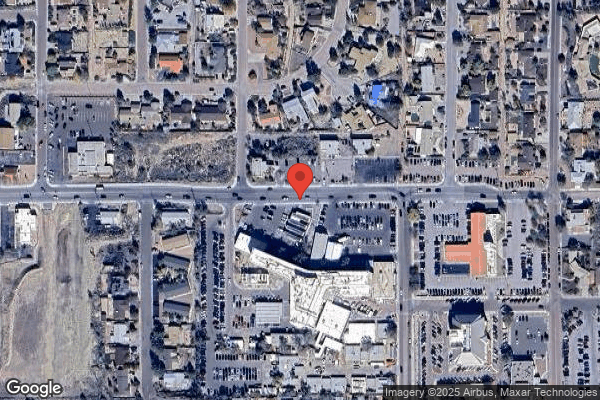
306 East Nizhoni Blvd, Gallup, NM 87301 (505) 863-9551
For profit - Corporation 62 Beds OPCO SKILLED MANAGEMENT Data: November 2025 1 Immediate Jeopardy citation
Trust Grade
63/100
#6 of 67 in NM
Last Inspection: October 2024

Within standard 12-15 month inspection cycle. Federal law requires annual inspections.

Overview

Gallup Nursing & Rehabilitation LLC has a Trust Grade of C+, which indicates it is slightly above average in quality. It ranks #6 of 67 facilities in New Mexico, placing it in the top half, and is #1 of 2 facilities in McKinley County, meaning it is the best local option. The facility is improving, with a decrease in issues from 8 in 2023 to 6 in 2024, although it still has a below-average staffing rating of 2 out of 5 stars and a turnover rate of 57%, which is about the state average. There have been no fines, which is a positive sign, and the RN coverage is average, meaning there is sufficient nursing support. However, there have been concerning incidents, such as a critical failure to properly assess a resident after an unwitnessed fall, which contributed to serious health issues, and multiple instances of improper medication handling and lack of hand hygiene, which could increase infection risk. While there are notable strengths, families should weigh these weaknesses carefully when considering this facility.

Trust Score
C+
63/100
In New Mexico
#6/67
Top 8%
Safety Record
High Risk
Review needed
Inspections
Getting Better
8 → 6 violations
Staff Stability
⚠ Watch
57% turnover. Above average. Higher turnover means staff may not know residents' routines.
Penalties
✓ Good
No fines on record. Clean compliance history, better than most New Mexico facilities.
Skilled Nurses
○ Average
Each resident gets 38 minutes of Registered Nurse (RN) attention daily — about average for New Mexico. RNs are the most trained staff who monitor for health changes.
Violations
⚠ Watch
42 deficiencies on record. Higher than average. Multiple issues found across inspections.
★★★★★
5.0
Overall Rating
★★☆☆☆
2.0
Staff Levels
★★★★★
5.0
Care Quality
★★★★☆
4.0
Inspection Score
Stable
2023: 8 issues
2024: 6 issues

The Good

  • 5-Star Quality Measures · Strong clinical quality outcomes
  • Full Sprinkler Coverage · Fire safety systems throughout facility
  • No fines on record

Facility shows strength in quality measures, fire safety.

The Bad

Staff Turnover: 57%

11pts above New Mexico avg (46%)

Frequent staff changes - ask about care continuity

Chain: OPCO SKILLED MANAGEMENT

Part of a multi-facility chain

Ask about local staffing decisions and management

Staff turnover is elevated (57%)

9 points above New Mexico average of 48%

The Ugly 42 deficiencies on record

1 life-threatening
Dec 2024 2 deficiencies 1 IJ
CRITICAL (J) 📢 Someone Reported This

A family member, employee, or ombudsman was alarmed enough to file a formal complaint

Immediate Jeopardy (IJ) - the most serious Medicare violation

Quality of Care (Tag F0684)

Someone could have died · This affected 1 resident

Based on record review and interview, the facility failed to ensure residents received treatment and care in accordance with professional standards of practice for 1 (R #1) of 3 (R #'s 1, 2 and 3) res...

Read full inspector narrative →
Based on record review and interview, the facility failed to ensure residents received treatment and care in accordance with professional standards of practice for 1 (R #1) of 3 (R #'s 1, 2 and 3) residents when they failed to properly assess a resident following an unwitnessed fall that resulted in injury. If the facility fails to properly assess residents who have an unwitnessed fall with an injury, then the residents may experience unidentified life-threatening conditions such as a brain bleed. This deficient practice likely contributed to the hospitalization and passing of R #1. The findings are: A. Record review of Face Sheet for R #1 revealed an admission date of 7/13/24 and a discharge date of 09/21/24 and included the following diagnoses: - Lack of Coordination - Muscle Wasting and Atrophy (wasting away) - Depression (mood disorder that causes a persistent feeling of sadness and loss of interest) - Generalized Muscle Weakness (muscle weakness that affects the whole body) - Dysphagia (difficulty swallowing) - Difficulty in Walking - Parkinson's Disease (a brain disorder that affects movement such as shaking, stiffness, and difficulty with balance and coordination) - Hypertension (high blood pressure) B. Record review of R #1's nursing progress note, dated 07/14/24, revealed he was admitted to the facility for skilled nursing services related to frequent falls. C. Record review of R #1's care plan initiated on 07/15/24 revealed resident was at risk for falls related to history of multiple falls, poor safety awareness, poor vision, Parkinson's, hypotentsion, new environment, deficit to his left side, decline in condition and needs assistance with ADLs (activities of daily living). D. Record review of R #1's nursing progress note, also dated 07/14/24, revealed that R #1 was found laying on the floor between the two beds. E. Record review of R #1's nursing progress note, dated 07/15/24, revealed that R #1 is a very high fall risk, having had one fall. Daughter stated he has very poor safety awareness and had multiple falls in the community with injury. Staff to continue to monitor. F. Record review of R #1's nursing progress note, dated 09/03/24, revealed that R #1 has poor safety awareness due to dementia and will attempt self-transfer/ambulation without assistance. Therapy informed of fall and care plan updated. Progress note did not provide any information on a recent fall. G. Record review of R #1's nursing progress note, dated 09/10/24, revealed that R #1 is impulsive and requires assistance with Activities of Daily Living (ADLs). Resident is not safely able to transfer or ambulate independently. Therapy notified of fall and care plan updated. Progress note did not provide any information on a recent fall. H. Record review of R #1's nursing progress note, dated 09/13/24 at 3:50 am, revealed that R #1 was found on the floor in his room laying on his stomach at the foot of the bed about one foot from the floor safety mat. Upon assessment resident noted to have a cut about 4 centimeters (cm - unit of measure) long over his right eye and that neuro checks (an evaluation used to assess the mental status of individuals with head injuries) were initiated. I. Record review of R #1's nursing progress note, dated 09/14/24, revealed the following vital signs were taken on 09/13/24: Blood pressure (BP) - 93/52 Temperature - 98.0 Pulse - 70, regular Respirations - 18 Oxygen (O2) - 97 percent (%) on room air (not using supplemental oxygen) J. Record review of R #1's nursing progress note, dated 09/15/24, revealed the following vital signs were taken on 09/14/24: Blood pressure (BP) - 104/44 Temperature - 97.9 Pulse - 64, regular Respirations - 24 Oxygen (O2) - 95% K. Record review of R #1's nursing progress note, also dated 09/15/24, revealed that R #1 had a change in condition of altered mental status and included the following vital signs: Blood pressure (BP) - 124/61 Temperature - 97.5 Pulse - 73, regular Respirations - 20 Oxygen (O2) - 93% This nursing note also revealed that R #1 was alert and oriented x1 (times one), began mumbling words, slowly responding to his name. Send to emergency room (ER) for CT scan (computed topography - medical imaging technique used to obtain detailed internal images of the body). L. Record review of R #1's Neuro Evaluations revealed that no neuro evaluations were completed or documented following R #1's unwitnessed fall on 09/13/24. M. Record review of R #1's Fall Risk Evaluations revealed no fall risk evaluation was completed following R #1's unwitnessed fall on 09/13/24. N. Record review of facility reportable incidents revealed no documentation of R #1's unwitnessed fall with injury on 09/13/24. O. Record review of facility Response to Falls policy revealed: Post-Fall Assessment and Monitoring - a. Following each resident fall, the Licensed Nurse will complete an incident report and perform a post-fall assessment and investigation. b. The Licensed Nurse will also complete the Neurological Flow Sheet for any un-witnessed fall, or witnessed fall with known head injury for 72 hours following the fall. c. Nursing staff, with the attending physician's guidance, will follow up on any fall associated with an injury until the resident is stable, and delayed complications like that of a late fracture or a subdural hematoma (bleeding of or near the brain) have been ruled out or resolved. i.) Delayed complications such as late fractures and major bruising may occur hours or several days after a fall. ii.) Signs of subdural hematoma or other intracranial bleeding (bleeding in the brain) can occur up to several weeks after a fall. P. Record review of R #1's hospital documentation dated 09/15/24, revealed that patient presented with altered mental status; his baseline is awake and alert x 3 (times three), however here he is awake and alert x 0; per nursing, this patient had a couple of falls over the last few days with 1 possibly as recently as last night; he is not moving his left lower extremity; he has bruising around the right orbital rim and around the right eye; the degree at onset was severe, the degree at present is severe. Patient was intubated (the process of inserting a tube into the mouth or nose and then into the airway). Patient has periorbital ecchymosis (dark purple or blue bruises under the eyes); was found to have a large left temporal lobe bleed (sudden bleeding in the brain); patient is greatly deconditioned (decline in physical fitness due to inactivity) and only exhibits limited movement in each of the limbs. I think that this bleed is probably the result of one of his falls. Patient was accepted by the triage physician at [name of hospital], he is now intubated, sedated (to make calm) on fentanyl (pain medication) and precedex (sedating medication used for patients who are intubated); awaiting transfer, flight team on their way. Q. Record review of R #1's radiology report dated 09/15/24 for CT scan of head, revealed the following: 1. Temporal parenchymal hemorrhage (bleeding in the brain) - this could represent an evolving hemorrhagic infarction (stroke) or a direct contusion (bruise) to the brain parenchyma (brain tissue). 2. Subdural (area between the brain and the skull) and subarachnoid (area between the brain and the tissue covering the grain) hemorrhage (blood loss). 3. Small intraventricular hemorrhage (type of bleeding that occurs within the ventricles of the brain). R. Record review of R #1's nursing progress note, dated 09/16/24, revealed that R #1 was admitted to [name of hospital]. S. Record review of R #1's care plan initiated 09/19/24 revealed At risk for abnormal bleeding or hemorrhage due to antiplatelet (medications that prevent blood clots from forming) use. T. On 12/17/24 at 11:01 am during an interview with the Director of Nursing (DON) and the Administrator (ADM), the DON stated that she would expect there to be neuro checks done for 72 hours and that a resident would only be sent out if there was an identified change in condition. DON further stated that R #1 had falls in July and then he was doing good with not having any and then it changed and he started having falls and the falls got closer together. She stated that she would have expected there to be neuro checks and verified that there were none done for R #1 following his unwitnessed fall on 09/13/24. DON stated that rounds are done each shift but that they are not documented. U. On 12/17/24 at 12:32 pm during an interview, Assistant Director of Nursing (ADON) stated that when she began her day shift on 09/13/24, the night shift nurse relayed the information about R #1 being found laying on the floor and that he had a laceration to the right side of his forehead and that the night nurse had began neurological checks for him, however there were none documented. ADON further stated that she was the only nurse on the floor on 09/15/24 because the other nurse had called out of work and that she remembers that R #1 was taking his medications and was verbally responding to her and was able to stand for her on 09/13/24 and 09/14/24, but that on 09/15/24 she noticed that he was choking on his medications (medications were administered crushed and with thickened liquids) and that he was also having weakness and was not responding to her. The ADON confirmed that the resident was sent out to the hospital. V. Record review of the complaint intake received by the State Survey Agency on 11/20/24 identified that R #1 passed away in the hospital. Based upon the evidence, immediate jeopardy was identified. The facility Administrator was notified on 12/17/24 at 2:43 pm. The facility took corrective action by providing an acceptable Plan of Removal (POR) on 12/18/24 at 12:11 pm. Implementation of the POR was verified onsite on 12/18/24 by conducting record reviews and staff interviews. Plan of removal: Resident was discharged to the hospital. Resident had an unwitnessed fall and neurological checks were incomplete. Residents who reside at the facility that have experienced an unwitnessed fall or a fall in which the resident hit their head have the potential to be affected by this alleged deficient practice. Review of the last seventy-two hours of fall occurrence were reviewed to validate, if any resident experienced unwitnessed fall and that neuro checks and vital signs were completed as scheduled, any issues identified to be addressed upon discovery. This audit was completed by the Director of Nursing by 12/17/24. Neurological Checks and Obtaining/Completing Vital Signs re-education for Licensed Nurses were initiated on 12/17/24 by Director of Nursing. If omissions noted within neurological checks and/or vital signs, Director of Nursing/designee to conduct a neurological assessment of the resident to ensure no neurological changes are noted, any issues identified to be addressed upon discovery. Director of Nursing and/or designee was re-educated by the Clinical Consultant on 12/17/24 on the following: - Fall documentation related to neurological checks and vital sign obtaining/completion as scheduled. Director of Nursing and/or designee will re-educate Licensed Nurses including agency personnel on the following: - Fall documentation related to neurological checks and vital sign obtaining/completion as scheduled. The above education will be completed by the Director of Nursing/designee, this education will be initiated on 12/17/24, all other licensed nurses will be educated prior to their next scheduled shift. This information will be presented in new hire orientation. The above audits to be completed daily for two weeks, then three times a week for two weeks, then twice a week for two weeks, then weekly for four weeks, then bi-monthly for additional two weeks, then randomly thereafter, any concerns identified to be addressed upon discovery. Facility Administrator will be responsible for the overall implementation and validation of this plan. Facility Medical Director will be informed of this plan and given progress updates. The Medical Director was notified of the Immediate Jeopardy on 12/17/24.
CONCERN (D) 📢 Someone Reported This

A family member, employee, or ombudsman was alarmed enough to file a formal complaint

Potential for Harm - no one hurt, but risky conditions existed

Report Alleged Abuse (Tag F0609)

Could have caused harm · This affected 1 resident

Based on record review and interview, the facility failed to provide facility Initiated Reports (mandatory self-initiated facility report of an incident) to the State Survey Agency (SSA) for 1 (R #1) ...

Read full inspector narrative →
Based on record review and interview, the facility failed to provide facility Initiated Reports (mandatory self-initiated facility report of an incident) to the State Survey Agency (SSA) for 1 (R #1) of 3 (R #'s 1, 2 and 3) residents reviewed for incidents when staff failed to report an unwitnessed fall with an injury for R #1. The findings are: A. Record review of R #1's nursing progress notes dated 09/13/24 revealed that R #1 was found on the floor in his room laying on his stomach at the foot of the bed about 1 foot from floor safety mat. Upon assessment, resident was noted to have a cut about 4 centimeters long over his right eye. The wound was cleansed with normal saline, antibacterial ointment (topical medication used to prevent infections) was applied, and the wound was covered with a bandage which was used to reinforce and keep the resident from touching it. B. Record review of R #1's nursing progress note, also dated 09/15/24, revealed that R #1 had a change in condition of altered mental status. This nursing note also revealed that R #1 was alert and oriented x1 (times one), began mumbling words, slowly responding to his name. Send to emergency room (ER) for CT scan (computed topography - medical imaging technique used to obtain detailed internal images of the body). C. Record review of facility's Incident Report Log, received on 12/16/24 from the Administrator (ADM), revealed that no incident for R #1 having an unwitnessed fall with an injury had been reported. D. Record review of facility Response to Falls policy revealed: Post-Fall Assessment and Monitoring - a. Following each resident fall, the Licensed Nurse will complete an incident report and perform a post-fall assessment and investigation. b. The Licensed Nurse will also complete the Neurological Flow Sheet for any un-witnessed fall, or witnessed fall with known head injury for 72 hours following the fall. c. Nursing staff, with the attending physician's guidance, will follow up on any fall associated with an injury until the resident is stable, and delayed complications like that of a late fracture or a subdural hematoma (bleeding of or near the brain) have been ruled out or resolved. i.) Delayed complications such as late fractures and major bruising may occur hours or several days after a fall. ii.) Signs of subdural hematoma or other intracranial bleeding (bleeding in the brain) can occur up to several weeks after a fall. E. On 12/17/24 at 12:09 am during an interview, the Administrator (ADM) verified that the facility had not filed an incident report for R #1 for the unwitnessed fall with injury that occurred on 09/13/24 and further stated that she [Administrator] is the one responsible for filing the incident reports with the SSA but that she can only report an incident if she is made aware of it. She stated that the unwitnessed fall with injury had not been reported to her and that it should have been reported by the nurse. She stated that the nurse who wrote the progress note regarding the fall was an agency nurse who is no longer employed with the facility.
Oct 2024 4 deficiencies
CONCERN (D)

Potential for Harm - no one hurt, but risky conditions existed

Resident Rights (Tag F0550)

Could have caused harm · This affected 1 resident

Based on observation, record review, and interview, the facility failed to promote care with dignity and respect for 1 (R #35) of 1 (R #35) residents reviewed for residents' rights when staff closed t...

Read full inspector narrative →
Based on observation, record review, and interview, the facility failed to promote care with dignity and respect for 1 (R #35) of 1 (R #35) residents reviewed for residents' rights when staff closed the resident's room door against his wishes and without communicating why to the resident. This deficient practice is likely to result in residents feeling disrespected and as if they were kept in their room against their will. The findings are: A. On 10/07/24 at 1:35pm during at interview, R #35 stated the Housekeeping Manager (HM) #1 angrily slammed his door shut last week while he was listening to his music, which made him feel like the staff did not respect or care about his feelings. B. On 10/07/24 at 2:00pm, during an observation, R #35 listened to music. The volume was loud enough to be heard in the immediate hallway. Other residents in the hallway did not appear to be affected by the music. C. On 10/10/24 at 12:47pm, during an interview with HM #1, she recalled the incident in which she shut the resident's door and stated R #35's music was playing loudly while the staff had a meeting in the nearby conference room. She stated she was asked by the facility Administrator to close the resident's door. She stated she informed the resident that she would close his door. She stated she did not wait for a response from the resident, because she could tell he was agitated. D. On 10/10/24 at 1:00pm, during an interview and record review with the Administrator, she stated she was aware of the incident. The Administrator provided a written statement from HM #1, dated 10/04/24, which revealed HM #1 informed R #35's roommate rather than R #35 that she was closing the door.
CONCERN (D)

Potential for Harm - no one hurt, but risky conditions existed

Deficiency F0655 (Tag F0655)

Could have caused harm · This affected 1 resident

Based on record review and interview, the facility failed to create a Baseline Care Plan (minimum healthcare information necessary to properly care for a resident immediately upon their admission to t...

Read full inspector narrative →
Based on record review and interview, the facility failed to create a Baseline Care Plan (minimum healthcare information necessary to properly care for a resident immediately upon their admission to the facility) within 48 hours of admission for 1 (R #108) of 3 (R #15, #25 and #108) residents reviewed for Baseline Care Plans. This deficient practice could likely result in a decline in the residents' condition due to staff not being aware of the care residents' need and residents not being able to attain or maintain their highest practical level of well-being. The findings are: A. Record review of the Face Sheet for R #108 revealed an admission date of 9/26/24 and included the following diagnoses: - Acute respiratory failure with hypoxia (when there is not enough oxygen in your blood/body tissue). - Type 2 diabetic mellitus with neuropathy (high blood sugar with nerve damage). - Hyperlipidemia (high blood fat levels). - Obstructive sleep apnea (repeated breathing interruptions during sleep). - Hypertension (high blood pressure). - Atherosclerotic heart disease (build up of fats, cholesterol and other substances in and on the artery walls). - Congestive heart failure (when your heart can't pump blood well enough to meet the body's needs). - Pneumonia due to coronavirus disease (infection in the lungs). - Asthma (condition that affects the lungs and makes breathing difficult). - Muscle wasting and atrophy (loss of muscle mass and strength). - Overactive bladder. - Difficulty in walking. - Post COVID-19 condition [any medical condition that continues for more than 3 months linked to Covid-19 (contagious respiratory infection)] . B. Record review of baseline care plan for R #108 revealed it was created on 09/30/24, which was more than 48 hours after the resident's admission. C. One 10/10/24 02:31 PM during an interview with the Administrator, she stated staff should have created the baseline care plan for R #108 within 48 hours. She verified staff did not complete a baseline care plan for R #108 until three days after the resident was admitted to the facility.
CONCERN (D) 📢 Someone Reported This

A family member, employee, or ombudsman was alarmed enough to file a formal complaint

Potential for Harm - no one hurt, but risky conditions existed

Deficiency F0658 (Tag F0658)

Could have caused harm · This affected 1 resident

Based on record review and interview, the facility failed to meet professional standards of practice for 1 (R #208) of 1 (R #208) residents reviewed for medication administration, when staff did not a...

Read full inspector narrative →
Based on record review and interview, the facility failed to meet professional standards of practice for 1 (R #208) of 1 (R #208) residents reviewed for medication administration, when staff did not administer R #208's lactulose [a medication used to prevent and treat complications of hepatic encephalopathy (liver disease) by decreasing the amount of ammonia in the blood] as ordered by the medical provider. This deficient practice could likely lead to the resident having adverse (unwanted, harmful, or abnormal result) side effects or not receiving the desired therapeutic effect of the medication due to it not being administered. The findings are: A. Record review of R #208's Physician orders revealed the following: Lactulose. Give 45 milliliters (ml) by mouth three times a day for enchphalopathy with a start date of 08/30/24. B. Record review of R #208's Medication Administration Record (MAR), dated September 2024, revealed staff did not administer the lactulose midday dose to the resident due to hold/see nursing notes on 9/3/24. C. Record review of R #208's nurse progress note, dated 09/03/24, revealed the resident had three loose stools since the morning. Staff did not administer the lactulose. D. On 10/10/24 at 3:33 PM, during an interview, the DON stated staff should not have held R #208's lactulose due to loose stools. The DON stated R #208's lactulose was ordered to address encephalopathy not constipation, and the medication helped to decrease ammonia levels in the blood. The DON stated loose stools would be indicative of the medication having the desired outcome.
CONCERN (E)

Potential for Harm - no one hurt, but risky conditions existed

Deficiency F0848 (Tag F0848)

Could have caused harm · This affected multiple residents

Based on interview and record review, the facility failed to ensure their binding arbitration agreement included a provision for convenient venue (a location in which to carry out arbitration proceedi...

Read full inspector narrative →
Based on interview and record review, the facility failed to ensure their binding arbitration agreement included a provision for convenient venue (a location in which to carry out arbitration proceedings which should be agreed upon and suitable for both parties) selection. Failure to include this provision in the agreement could likely result in residents who choose to seek arbitration experiencing frustration and difficulty deterring them from exercising their rights. This deficient practice has the potential to affect 56 of the 57 facility residents who signed the binding arbitration agreement. The findings are: A. Record review of the facility's Voluntary Arbitration Agreement, undated, revealed it did not contain a provision for the selection of a convenient venue should arbitration become necessary. B. On 10/10/24 at 1:00 pm during an interview with the facility Administrator, she confirmed the binding arbitration agreement did not include a provision for a convenient venue selection and added the provision was stated in the facility's admission Guide. C. Record review of the facility's admission Guide revealed a provision for convenient venue selection in cases of arbitration. Further review revealed the guide did not include a signed acknowledgement that the resident received it, understood it, and that it was to be included as a part of the Voluntary Arbitration Agreement.
Jun 2023 8 deficiencies
CONCERN (D)

Potential for Harm - no one hurt, but risky conditions existed

Notification of Changes (Tag F0580)

Could have caused harm · This affected 1 resident

Based on record review and interview, the facility failed to ensure that the resident's responsible party, Power of Attorney (POA) and/or family was notified of a resident's change in condition for 1 ...

Read full inspector narrative →
Based on record review and interview, the facility failed to ensure that the resident's responsible party, Power of Attorney (POA) and/or family was notified of a resident's change in condition for 1 (R #49) of 1 (R #49) resident reviewed for weight decline. This deficient practice could likely result in the resident's responsible party, POA, and/or family not participating in important decisions regarding the resident's health and well-being. The findings are: A. Record review of R #49's nutrition progress notes dated 05/16/23, indicated the following: Current weight 124.4 lbs (pounds) triggers for 90-day weight loss -7.5% (percent) change comparison weight 2/20/23 150.2 Lbs, -17.2%, -25.8 lbs. B. Record review of R #49's Change in Conditions reports (CIC) for the dates of 04/07/23 through 05/19/23 revealed that no CIC reports had been completed for R #49's significant weight loss. The change of condition was not reported to POA. C. On 06/13/23 at 10:15 am, during an interview with the POA/daughter of R #49, she stated that she was not called or informed of R #49's decrease in weight documented on 05/16/23 in R #49's nutrition progress notes. POA/Daughter was never notified of any weight loss. D. On 06/16/23 at 9:45 am, during an interview with the Center Nursing Executive (CNE), she confirmed that Nursing staff should be notifying residents' responsible party, Power of Attorney (POA), or family members regarding weight loss. The CNE stated that a CIC report should be completed to show that the residents' responsible party, Power of Attorney (POA) and/or family was notified. CNE confirmed that a CIC wasn't in the chart for R #49. E. Record review of the facility's policy and procedure titled: Weights and Heights, under Significant weight change management: 2.1.1 Significant weight change is defined as: 2.1.1.1 5% in one month 2.1.1.2 10% in six months 2.3 The licensed nurse will notify: 2.3.2 Patient representative of weight changes and Dietitian recommendations. Notification will be documented.
CONCERN (D)

Potential for Harm - no one hurt, but risky conditions existed

Report Alleged Abuse (Tag F0609)

Could have caused harm · This affected 1 resident

Based on record review and interview, the facility failed to report an Injury of Unknown Origin to the State Survey Agency, for 1 (R #11) of 3 (R #s 11, 28, and 35) residents reviewed for Injury of Un...

Read full inspector narrative →
Based on record review and interview, the facility failed to report an Injury of Unknown Origin to the State Survey Agency, for 1 (R #11) of 3 (R #s 11, 28, and 35) residents reviewed for Injury of Unknown Origin. This deficient practice is likely to result in the State Survey Agency not being aware of facility incidents, and unable to assure residents a safe and hazard free environment. The findings are: A. Record review of Face Sheet dated 10/01/15 for R #11 revealed this as an initial admission date and included the following diagnoses: Age-Related Osteoporosis (weakened bones due to the aging process), Weakness, Dementia (a group of symptoms that affect memory and thinking and interfere with daily life), Cognitive Communication Deficit (difficulty with thinking, understanding, and speaking), Personal History of Healed Traumatic Fracture (break in a bone), Pain, and Presence of Left Artificial Hip Joint. B. Record review of the Minimum Data Set (assessment tool used to assess the health and needs of residents) dated 04/14/23 revealed in Section C - Cognitive (how a person thinks, learns and remembers) Patterns - Brief Interview for Mental Status (an assessment used to determine cognitive ability in the elderly) revealed a score of 9 (scores are as follows: 0-7 = Severe cognitive impact; 8-12 = Moderate impairment; and 13-15 = cognitively intact). C. Record review of Progress Notes dated 09/24/22 at 00:37 (12:37 am) revealed, CNA (Certified Nurse Aide) alerted this nurse to bruising to Resident's (R#11) left knee and right hip. When asked, Resident reports she fell between the bed and wall in the evening (09/23/22) and they helped. Resident did not specify who or what day; however NOC (night shift) CNA reports Resident did not have bruising during night shift of 09/22/22 . Bruising is purple/blue in color, surrounded by erythema (redness of the skin) . D. Record review of Facility Incidents Log, as provided by the Administrator (ADM)on 06/14/23, revealed no documentation regarding an injury of unknown origin for R #11 for 09/24/22. E. On 06/16/23 at 10:13 am during an interview, the ADM and Corporate Administrator (CADM) verified that there was no incident report filed for R #11 for an Injury of Unknown Origin for 09/24/22. CADM stated that if there is an injury of unknown origin, she would expect it to be reported to the State Agency.
CONCERN (D)

Potential for Harm - no one hurt, but risky conditions existed

Deficiency F0679 (Tag F0679)

Could have caused harm · This affected 1 resident

**NOTE- TERMS IN BRACKETS HAVE BEEN EDITED TO PROTECT CONFIDENTIALITY** Based on observation, record review, and interview, the facility failed to implement an ongoing one-to-one, resident-centered ac...

Read full inspector narrative →
**NOTE- TERMS IN BRACKETS HAVE BEEN EDITED TO PROTECT CONFIDENTIALITY** Based on observation, record review, and interview, the facility failed to implement an ongoing one-to-one, resident-centered activities program for 1 (R #52) of 3 (R #s 14, 20 and 52) residents looked at for activities. This deficient practice does not encourage stimulation for residents who have a physical condition; as it does not allow them to attend the regularly scheduled activities programs. This could potentially cause depression and an overall decline of the resident's well-being. The findings are: A. Record review of R #52's Face Sheet revealed that he was admitted to the facility on [DATE] with the following diagnoses: Severe Protein Calorie Malnutrition (refers to a nutritional status in which reduced availability of nutrients leads to changes in body composition and function) and is being fed with a feeding tube (medical device to provide nutrition to people who cannot obtain nutrition by mouth) for all nutrition, Cerebral Palsy (a group of disorders that affect movement, muscle tone, balance, and posture and is caused by abnormal brain development or damage to part of the brain that controls muscles), Cachexia (a wasting disorder that causes extreme weight loss and muscle wasting), Dysphagia (a condition with difficulty in swallowing food or liquid and may interfere in a person's ability to eat and drink), Profound Intellectual Disabilities (require round-the-clock support and care. They depend on others for all aspects of day-to-day life and have extremely limited communication ability), Contractures all four limbs (a condition of shortening and hardening of muscles, tendons, or other tissue, often leading to deformity and rigidity of joints), Adolescent Idiopathic Scoliosis (a condition in which the spine is curved sideways in one or more areas with no known cause), Adult Failure to Thrive (when an older adult has a loss of appetite, eats and drinks less than usual, loses weight, and is less active than normal). This is not all inclusive list of diagnoses. B. On 06/12/23 at 2:30 pm, an observation was made of R #52. He was lying in bed with eyes opened. There was no TV or music on for stimulation or background noise. C. On 06/13/23 at 8:59 am, an observation was made of R #52. He was awake, lying in bed with no music or TV on for stimulation or background noise. D. On 06/13/23 at 10:22 am, during an interview with Family Member (FM) #10, she stated that R #52 can sit up in a chair and likes to wear a hat. He likes music and that if a TV is on, it needs to be closer to him so he can see it. When asked about phone calls with her son (R #52) or a video visit, FM #10 was told by a staff member (name not recalled) that they are too busy to do that. E. On 06/14/23 at 8:29 am, during an interview with Activities Director (AD), she stated that it takes time to work with R #52 and he will respond to you with his eyes. AD stated that she does talk to FM #10, who told her [the AD] that she [FM #10] speaks with him in Navajo, so she [the AD] also speaks to R #52 in Navajo. AD will turn on music for him (R #52) and most of the time, she will turn it on a local Navajo station. AD stated that FM #10 has a wheelchair for him, but hasn't brought it in [to the facility] yet. There is also a hat that he likes to wear, but FM #10 hasn't brought it in [to the facility] either. FM #10 told her about a game she plays with R #52, where she has a handkerchief and plays peek a boo with him. The AD stated that she isn't comfortable with that game at this time; so she is waiting for FM #10 to come in so she [the AD] can see how she [FM #10] does it. F. On 06/16/23 at 11:44 am, during an interview with the AD Assistant and the AD, the AD Assistant stated that R #52 doesn't really know her [the AD Assistant] voice and he won't engage with her. When asked about reading to R #52, the AD stated that they had not tried that yet. G. Record review of the Recreation Assessment Care Plan initiated on 03/03/23 indicated the following interventions in activities summary: Resident is admitted on [DATE] from hospital. He is alert, resident unable to make needs known, unable to communicate. [R #52's] mother states he enjoys listening to native radio station, if TV is closer, he is able to watch TV, enjoys wearing cap by observing color, plays with handkerchief. Resident will be receiving one to one room visits 3 x (times)/week, working with sensory activities and hand massage. Resident will be encouraged to participate with activities of choice. Will monitor resident to next assessment period.
CONCERN (D)

Potential for Harm - no one hurt, but risky conditions existed

Deficiency F0688 (Tag F0688)

Could have caused harm · This affected 1 resident

Based on record review, interview, and observation, the facility failed to ensure that restorative services (person-centered and designed to improve or maintain the functional ability of residents, so...

Read full inspector narrative →
Based on record review, interview, and observation, the facility failed to ensure that restorative services (person-centered and designed to improve or maintain the functional ability of residents, so they can achieve their highest level of well-being possible) were being provided for 1 (R #15) of 1 (R #15) resident reviewed for mobility capabilities (ability to move purposely as you go throughout your day). This deficient practice could likely result in resident joints feeling contracted (when muscles, tendons, joints, or other tissues tighten or shorten causing a deformity) or weakened. The findings are: A. Record review of R #15's physician order dated 05/15/22 revealed Resident was to wear a left functional hand splint (a supportive device that helps prevent moving the affected body part while it is healing) in the AM, off at PM as tolerated. Staff to remove splint for hygiene, PROM (passive range of motion) and skin check. Every Shift (6 am to 6 pm). Order stated that the hand splint should be on during the AM shift, and taken off during the PM shift. B. Record Review of R #15's care plan revised 04/21/23 revealed that R #15 is at risk for contractures (a permanent tightening of the muscles, tendons, skin, and nearby tissues that causes the joints to shorten and become very stiff) and skin integrity (breakdown of skin tissue) due to cerebral vascular accident (CVA) and contracture to left hand. C. On 06/12/23 at 2:36 pm, during interview, R #15 stated that she was supposed to have a splint on her left hand, and that they (facility staff) never put it on her anymore. D. On 06/12/23 at 2:36 pm, during an observation, the resident didn't have a splint on the left hand. E. On 06/14/23 at 9:46 am, during an observation, the resident didn't have a splint on her left hand. F. On 06/14/23 at 12:05 pm, during an observation, the resident didn't have a splint on her left hand. G. Record review of the administration record of the ETAR (Electronic Treatment Record) was documented that the splint was on June 1 through June 15, 2023 during the AM shift and off during the PM shift. H. On 06/16/23 at 9:45 am, during an interview, the Center Executive Nurse (CNE) stated nurses are responsible for placing the splint on the resident. She confirmed that they are to put it in place during the morning, and then remove it during the night.
CONCERN (D)

Potential for Harm - no one hurt, but risky conditions existed

Deficiency F0740 (Tag F0740)

Could have caused harm · This affected 1 resident

**NOTE- TERMS IN BRACKETS HAVE BEEN EDITED TO PROTECT CONFIDENTIALITY** Based on record review and interview, the facility failed to ensure that 1 (R #110) of 1 (R #110) resident reviewed for behavior...

Read full inspector narrative →
**NOTE- TERMS IN BRACKETS HAVE BEEN EDITED TO PROTECT CONFIDENTIALITY** Based on record review and interview, the facility failed to ensure that 1 (R #110) of 1 (R #110) resident reviewed for behavioral health concerns, was receiving necessary behavioral health care to meet the resident's needs. This deficient practice could likely cause the resident to not receive the mental health care and assistance that they may need. The findings are: A. Record review of the Face Sheet for R #110 indicated that resident was admitted on [DATE] to the facility and was discharged on 04/07/23. She had a mental health diagnosis of Bi-Polar Disorder (mental health condition that causes extreme mood swings that include emotional highs and lows, and depression). B. Record review of the admission nursing note dated 02/10/23 at 12:00 pm indicated in the Mental Health/Behavior section: Pt. (patient) has expressed/verbalized sadness or symptoms of depression. C. Record review of the physician orders dated 02/24/23 indicated that a referral to (name of company that provides comprehensive behavioral care via video, and in-person psychology and psychiatry health services) was ordered. D. Record review of a nursing note dated 02/26/23 at 14:48 (2:48 pm) indicated in the Mental Health/Behavior section: Pt. has expressed/verbalized sadness or symptoms of depression. E. On 06/16/23 at 9:15 am, during an interview with Social Services Director (SSD), she confirmed that no appointment was made for mental health services for R #110. The SSD stated that her new assistant put in the order for mental health services on 02/24/23, but forgot to let her [the SSD] know about it, so the appointment was not made.
CONCERN (F)

Potential for Harm - no one hurt, but risky conditions existed

Deficiency F0761 (Tag F0761)

Could have caused harm · This affected most or all residents

Based on observations and interviews, the facility failed to: 1. Ensure that opened and accessed (has been opened or accessed) for a flex pen weren't dated as to when they were initially opened/access...

Read full inspector narrative →
Based on observations and interviews, the facility failed to: 1. Ensure that opened and accessed (has been opened or accessed) for a flex pen weren't dated as to when they were initially opened/accessed, by nursing staff. 2. Ensure that undated medications (not dated when opened) were not stored with dated medications that are available for use 3. Ensure that expired supplies are not stored with unexpired supplies in the storage rooms 4. To properly store medications in medications carts. 5. Ensure treatment/medication carts were kept locked when not in use. These deficient practices have the likelihood to result in 57 (fifty-seven) residents that were identified on the census list provided by Center Executive Director (CED) on 06/12/23, to receive medications that had either lost their potency or effectiveness. The findings are: Regarding Opened and Un-labeled Medications: A. On 06/12/23 at 10:45 am, during observation of the Hall A Medications Cart, three (3) medications were found to be undated as to when they were opened: 1. Senna Plus (a stool softener/laxative) in a bottle was opened with no open date. Upon inspection the bottle was noted to be about ¼ full and this was confirmed with CMA (Certified Medication Aide) #1. 2. Omeprazole (used to treat stomach and esophagus problems such as acid reflux and ulcers) 20 mg (milligram) capsules were open and was ¼ the way full a bottle. This was confirmed with CMA #1 that no open date was found. 3. Mucus Relief Guaifenesin (used to relieve chest congestion) Extended tablets 600 mg. These were house stock (medications used by residents in the facility). There was about ½ left in the bottle as confirmed by the CMA #1 and there was no open date located on the bottle. B. On 06/12/23 at 10:53 am, during observation of the Hall B Medication Cart, two (2) medications that were found to be undated as to when they were opened. 1. Famotidine (used to prevent and treat heartburn and acid indigestion) tablets 10 mg. The bottle was open with no open date. Confirmed this with CMA #1 that the bottle was open and that 18 tablets remained out of 30 tablets. 2. Loperamide Hydrochloride (is used to treat diarrhea) 2 mg tablets were not in the box they originated in. Two (2) tablets were found to be stored in a small plastic bag on the top shelf of the medications cart. No open date was found. C. On 06/12/23 at 11:03 am, during observation of Hall D Medication Cart revealed one (1) opened medications that had not been dated. 1. Aspercreme lidocaine patches (a cream to relieve minor muscle pain) came in a box of five (5) with four (4) left in the box. The box had no open date listed on the box. Findings related to Insulin Flex Pens D. On 06/12/23 at 11:03 am, during observation of the Hall D Cart revealed: 1. One (1) Insulin Glargine (a long-acting type of insulin) flex pen (is prefilled with insulin you don't have to load it) for R #15. This flex pen showed there were 140 units left out of 300 units. There was no open date and no use by date. It was confirmed by Licensed Practicing Nurse (LPN) #2 that there was no open date, and no use by date. 2. One (1) Insulin Glargine flex pen for R #8. The flex pen showed there were 140 units left out of 300 units. There was no open date and no use by date. It was confirmed by LPN #2 that there was no open date and no use by date. Findings related to Medication Storage Room: E. On 06/14/23 at 9:04 am, during observation of the medication storage room for the entire facility revealed fourteen (14) clear needleless connectors (devices that allow quick access to the infusion line). Two (2) expired 04/12/23, two (2) expired on 05/01/23, and five (5) expired on 05/18/23, and five (5) expired on 06/02/23. All were found in a drawer mixed in with needleless connectors (devices that allow quick access to the infusion line) that had not expired. F. On 06/14/23 at 9:07 am, during an interview with Licensed Practical Nurse (LPN) #2, she was unsure of the process on how expired supplies or medications are handled, but said that the Center Nursing Executive (CNE) and the Assistant Director of Nursing (ADON) do come in and pick at things (supplies or medications) checking them for expirations dates. LPN #2 also stated that when she is obtaining a medication or supply, she checks the expirations date to ensure it is not expired. G. On 06/14/23 at 9:20 am during an interview with the CNE, she was asked what the process was to discard expired supplies from the medication storage room. CNE stated,every month when I am preparing the medication for destruction, I looked at the OTC's (over the counter medications) and the supplies for expirations. What I will do is take the ones that expire first and place it to be used first. If I find they are expired. I will throw them away. When asked how CNE discards expired medications that are over the counter and not prescription, or narcotics they get thrown away. Supplies get thrown away. Findings related to treatment/medication carts kept locked when not in use: H. On 06/14/23 at 8:24 am, during observation, the medication cart for Hall D was noted to be unlocked with no staff near or observing it. I. On 06/4/23 at 8:26 am, during an interview with LPN #2, she stated, I did get nervous. I usually always lock it. This is my first week on the floor. J. On 06/12/23 at 4:47 pm, a medication cart was observed unlocked and unattended across hall from the therapy room. LPN #2, was observed to exit a resident's room at the end of the hall. The cart was observed to be unlocked for approximately 2 minutes. LPN #2 returned to the cart and was observed and heard to lock (with an audible click) the medication cart by pushing in the lock, which locks the cart. K. On 06/12/23 at 4:52 pm during an interview, LPN #2 confirmed the medication cart was unlocked and that it should be locked when unattended. She stated she had gone to give a resident medications. When she got back to the cart, she observed that it was unlocked, and locked it.
CONCERN (F)

Potential for Harm - no one hurt, but risky conditions existed

Food Safety (Tag F0812)

Could have caused harm · This affected most or all residents

E. On 06/12/23 at 12:30 pm, during an observation of meal services, Medical Record's staff (MR #1) brought an unknown female resident into the dining room. As she was assisting the resident to her sea...

Read full inspector narrative →
E. On 06/12/23 at 12:30 pm, during an observation of meal services, Medical Record's staff (MR #1) brought an unknown female resident into the dining room. As she was assisting the resident to her seat, MR #1 had to move another unknown female resident so that her legs would go over the legs of the table. MR #1 leaned over, moved the unknown resident's resident feet. Then, without washing or sanitizing her hands, MR #1 handled a meal tray and served it to the unknown resident she had just brought into the dining room. F. On 06/12/23 at 12:49 pm, during an observation, MR #1, rubbed an unknown male resident on the back, then without washing or sanitizing her hands, went and got another unknown resident some fry bread which was on a plate, and gave it too him. G. On 06/16/23 at 9:53 am, during an interview with the Center Executive Nurse (CNE), she confirmed that staff should be performing hand hygiene (hand washing) between each resident and after touching a resident. Based on observation and interview, the facility failed to store and serve food under sanitary conditions by not ensuring: 1. Freezer units' temperatures were taken daily, 2. Proper handling techniques were used when handling cups and glasses when drinks were distributed to residents served in the dining room 3. Hands were not sanitized prior to handling residents' meals after handling resident's adaptive equipment during a meal. These deficient practices are likely to affect all 57 residents listed on the resident census list provided by the Administrator on 06/16/23; and could likely lead to foodborne illnesses in residents if safe food handling practices are not adhered to. The findings are: A. On 06/12/23 at 10:42 am during an observation during the initial tour of the kitchen, the reach-in freezer's (located on the back wall of the kitchen) temperature log was observed to have missing temperatures for the for the evening dates of 6/9/23, 06/10/23, and 6/11/23. The temperature for the day shift of 6/10/23 was also missing. The chest freezer's (deep freezers shaped like a trunk with the door that opens up rather than to the side) temperature log was observed to have missing evening temperatures for 06/06/23, 06/07/23, 06/08/23, 06/09/23, and 6/11/23. The temperature was also missing for the day shift of 06/10/23. B. On 06/12/23 at 10:51 am, during an interview, with Dietary [NAME] (DC #1) confirmed that the dates were missing from the temperature logs for the dates observed. She stated that she was only responsible for the day temperatures and did not know why the evening temperatures were missing for those dates. She reported that the dietary manager was currently out on leave. C. On 06/12/23 at 12:17 pm during a dining observation, several facility staff, Licensed Pratical Nurse (LPN) #12, Certified Nursing Assistants (CNA) and unidentified facility staff were observed handling residents' cups and glasses by the rim of the cups as they distributed residents drinks throughout the meal. D. On 06/16/23 at 9:53 am during an interview, the Director of Nursing stated glasses and cups should be held around the outside of the cup, not on the top when serving residents. H. On 06/12/23 at 12:16 pm during a lunch meal observation, Certified Nurse Aide (CNA) #1 was observed to be handling the cups/bowls by the rim of the dish, with her bare hand covering the opening of the dish, as she was serving meals to residents. I. On 06/12/23 at 1:31 pm during a random lunch meal observation revealed, CNA #3 was observed to be handling the cups of beverages and bowls of soup by the rim of the dish, with her bare hand covering the opening of the dish as she was serving meals to residents. J. On 06/14/23 at 11:55 am during a random lunch meal observation revealed, CNA #3 was observed to be handling the cups of beverages and bowls of stew, with her bare hand covering the opening of the dish, as she was serving meals to residents.
CONCERN (F)

Potential for Harm - no one hurt, but risky conditions existed

Infection Control (Tag F0880)

Could have caused harm · This affected most or all residents

Based on record reviews, interviews and observations, the facility failed to provide proper infection control practices by: 1. Not performing hand hygiene between residents, and 2. Providing resident ...

Read full inspector narrative →
Based on record reviews, interviews and observations, the facility failed to provide proper infection control practices by: 1. Not performing hand hygiene between residents, and 2. Providing resident care, not removing used gloves before entering the hallway. These deficient practices could likely affect all 57 residents in the facility on the census provided by the Center Executive Director (CED) on 06/12/23. Failure to practice infection control standards could likely cause the spread of infection and illnesses to residents and staff within the facility. The findings are: A. On 06/12/23 at 4:04 pm, during observation, Registered Nurse (RN) #1 walked from R #47's room with her gloves on. RN #1 then went into the treatment cart with the dirty gloves on, going through wound treatment items. RN #1 then walked down the hallway to the nurse's station, still wearing her dirty gloves, discarded her gloves and performed hand hygiene using hand alcohol gel. B. On 06/12/23 at 4:05 pm, during an interview with R #47's regarding wound care. R #47 stated, Nurses had been changing her dressing when she remembered she needed to get something she had forgotten. C. On 06/12/23 at 4:05 pm, during an observation of R #47's wound care revealed the wound was open, and the old dressing was sitting on the residents bed. D. On 06/12/23 at 4:06 pm, during an interview with RN #1, she stated, We should be performing hand hygiene before going into resident's room. After we do any type of care. We should not wear gloves in the hallway. E. On 06/16/23 at 9:45 am, during an interview with the Center Nurse Executive (CNE) she stated, Hand hygiene should be done before and after resident care, if they are exposed to any splashes (to scatter liquid or to cause liquid to scatter through the air or onto something) from the resident, or before entering and after the resident's room, after they touch anything dirty, they should do hand hygiene. D. Record review of the facility's policy titled: Infection Control Policy and Procedures regarding Hand Hygiene, Purpose: To improve hand hygiene practices and reduces the transmission of pathogenic microorganisms: Process: 1.1 Before patient/resident (hereinafter patient) care 1.2 Before an aseptic procedure 1.3 After any contact with blood or other body fluids, even if gloves are worn 1.4 After patient care 1.5 After contact with the patient's environment
Nov 2022 1 deficiency
CONCERN (D) 📢 Someone Reported This

A family member, employee, or ombudsman was alarmed enough to file a formal complaint

Potential for Harm - no one hurt, but risky conditions existed

Report Alleged Abuse (Tag F0609)

Could have caused harm · This affected 1 resident

Based on record review and interview, the facility failed to submit and verify that the state survey agency received the five day follow-up for 1 (R #1) of 3 (R #s 1, 2 and 3) residents reviewed for r...

Read full inspector narrative →
Based on record review and interview, the facility failed to submit and verify that the state survey agency received the five day follow-up for 1 (R #1) of 3 (R #s 1, 2 and 3) residents reviewed for reporting. This deficient practice could likely result in the state agency not having all of the information needed, leading to complaints and allegations not being investigated by the State Survey Agency. The findings are: A. Record review of Incident Report received by the State Agency revealed complaint #55939 was received on 12/06/2021, the State Agency has not received a five day follow up report. B. Record review of Facility Reportable Incidents Log provided by Interim Administrator on 11/09/22 revealed no record of this incident being reported by the facility. C. On 11/09/22 at 11:15 am during an interview, Interim Administrator stated that the staff member who filed this report is no longer employed at this facility and they have not been able to locate where she saved her work and therefore the Interim Administrator was not aware of this report. Interim Administrator verified that the facility did not file a five day follow up report.
Mar 2022 27 deficiencies
CONCERN (D)

Potential for Harm - no one hurt, but risky conditions existed

Deficiency F0564 (Tag F0564)

Could have caused harm · This affected 1 resident

Based on interview, record review, policy review, and review of Centers for Medicare and Medicaid Services (CMS) QSO-20-39-NH, the facility failed to allow visitors for one resident (Resident (R) 35) ...

Read full inspector narrative →
Based on interview, record review, policy review, and review of Centers for Medicare and Medicaid Services (CMS) QSO-20-39-NH, the facility failed to allow visitors for one resident (Resident (R) 35) in a sample of 27 residents. Findings include: Review of a document provided to the survey team by the facility titled, Resident Rights Under Federal Law, dated 11/28/16, indicated The resident has a right to receive visitors of his/her own choosing at the time of his/her choosing. Review of CMS QSO-20-39-NH Memo titled, Nursing Home Visitation - COVID-19, revised 03/10/22, indicated, Indoor Visitation during an Outbreak Investigation: While it is safer for visitors not to enter the facility during an outbreak investigation, visitors must still be allowed in the facility. During an interview on 03/14/22 at 4:26 PM, R 35's representative (RP) 1 stated after R 35's fall on 01/03/22, the facility called and informed her that the facility was on lockdown. RP1 stated the facility would not allow her into the building due to COVID-19 positive cases. Review of R 35's Progress Notes, dated 01/05/22 and located in the Electronic Medical Record (EMR) under the Notes tab, revealed: Activity Director informed sister (of R 35) of facility lockdown, d/t [due to] a COVID positive. Any other changes will be updated. During an interview on 03/17/22 at 10:16 AM, the Previous Director of Nursing (PDON) stated, Visitation was never stopped. There was a concern regarding the stoppage from Ombudsman. I told the Ombudsman that we discouraged by saying that have a lot of COVID-19 in the building and best for your health not to come but told them they have the right [to visit]. During an interview on 03/17/22 at 4:57 PM, the Activities Director (AD) confirmed she charted in R 35's EMR that the facility was on lockdown on 01/05/22 and no visitors were allowed during that time. The AD stated she was given the directive to notify families of the facilities lockdown status during a meeting about the positive COVID-19 cases in the facility.
CONCERN (D)

Potential for Harm - no one hurt, but risky conditions existed

Report Alleged Abuse (Tag F0609)

Could have caused harm · This affected 1 resident

Based on interview, record review, and policy review, the facility failed to report an injury of unknown source to the Administrator or his or her designated representative and to other officials in a...

Read full inspector narrative →
Based on interview, record review, and policy review, the facility failed to report an injury of unknown source to the Administrator or his or her designated representative and to other officials in accordance with State law, including to the State Survey Agency, within 5 working days of the incident for one of one resident (Resident (R) 45) reviewed for abuse in a total sample of 27 residents. Findings include: Review of facility policy titled, Abuse Prohibition, dated 04/09/21, indicated, Staff will identify events - such as suspicious bruising of patients, occurrences, patterns, and trends that may constitute abuse - and determine the direction of the investigation. This also includes Patient-to-patient abuse. Anyone who witnesses an incident of suspected abuse, neglect, involuntary seclusion, injuries of unknown origin, or misappropriation of patient property is to tell the abuser to stop immediately and report the incident to his/her supervisor immediately, regardless of shift worked. The notified supervisor will report the suspected abuse immediately to the Center Executive Director (CED) or designee and other officials in accordance with state law. During an observation on 03/14/22 at 2:33 PM, R 45's right shin was bleeding. During an observation on 03/15/22 at 3:27 PM, R 45's right shin was observed to be bandaged. Review of R 45's admission Record, located in the Electronic Medical Record (EMR) under the Profile tab, revealed an admission date of 01/12/21 with medical diagnoses that included dementia with behavioral disturbance and adult failure to thrive. Review of R 45's quarterly Minimum Data Set (MDS) located in the EMR under the MDS tab with an Assessment Reference Date (ARD) of 02/24/22, revealed a Brief Interview for Mental Status (BIMS) score of four out of 15, indicating R 45 was severely cognitively impaired. Review of R 45's Skin Check, completed by Licensed Practical Nurses (LPNs), dated 03/07/22 and one dated 03/14/22 and located in the EMR under the Assessments tab, both revealed bilateral bruises to R 45's shins, a gumball sized bump to left shin, and skin tears to right lower extremity. Review of R 45's Progress Notes, dated 03/16/22 and located in the EMR under the Notes tab, revealed: CNA [Certified Nursing Assistant] notified nurse rsd [resident] has large bruise to leg. Rsd presented w [with] 9x3cm bruise, purple in color, no swelling or redness. Rsd denies pain. During an interview on 03/16/22 at 2:35 PM, CNA 1 stated she was noticed the bruises on R 45's shins about two weeks ago. CNA 1 stated she believed another resident rammed into R 45 with her wheelchair. CNA 1 stated she reported this to the charge nurse the day she first noticed the bruises. CNA 1 stated the other resident always rams into R 45 due to R 45 wandering into the other resident's room. CNA 1 stated if the other resident sees R 45 in the hallway, she rams and kicks. CNA 1 stated she had reported these incidents to the charge and the charge nurse just talks to the other resident. A review of Facility Report Incidents (FRI), for the period of January 2022 through March 2022, revealed no FRI involving R 45. During an interview on 03/16/22 03:10 PM, Licensed Practical Nurse (LPN) 15 stated she was aware of the bruises and skin tear on R 45's shin. LPN 15 stated she had treated the skin tear and the CNAs had reported that they thought another resident had bumped into her. LPN 15 stated she did not report the injury or staff's concerns to the Administrator. LPN 15 stated the CNAs had previously reported the other resident hitting R 45 with her wheelchair and kicking R 45. LPN 15 stated she had not reported these incidents to the Administrator or state agency. During an interview on 03/16/22 at 3:48 PM with the Center Executive Director (CED), the survey team reported to the CED the information they had received from LPN 15. The CED stated she would report the incident to the state agency. The CED also stated her expectation would be for the staff to report all incidents. During an interview on 03/16/22 at 6:06 PM, CNA 18 stated she was aware of the injury on R 45's leg but she was unsure what happened. CNA 18 stated there had been some altercations between R 45 and another resident. CNA 18 stated R 45 would wander into the other resident's room and the other resident would kick and hit her. CNA 18 stated the other resident would also kick and hit R 45 if she saw R 45 in the hall. CNA 18 stated, We have reported it to the nurses, but they have not done anything about it.
CONCERN (D)

Potential for Harm - no one hurt, but risky conditions existed

Transfer Notice (Tag F0623)

Could have caused harm · This affected 1 resident

**NOTE- TERMS IN BRACKETS HAVE BEEN EDITED TO PROTECT CONFIDENTIALITY** Based on observation, record review, and interview, the facility failed to ensure three of three residents and/or their represen...

Read full inspector narrative →
**NOTE- TERMS IN BRACKETS HAVE BEEN EDITED TO PROTECT CONFIDENTIALITY** Based on observation, record review, and interview, the facility failed to ensure three of three residents and/or their representatives (Residents (R) R40, R42, and R54) reviewed for discharge to the hospital were provided with written transfer/discharge notice that stated the reason for transfer, the place of transfer, and other information regarding the transfer; and failed to notify the Ombudsman's office of these transfers in a timely manner. Findings include: Review of the facility policy titled Discharge and Transfer, revised 02/01/19, showed: Policy .A Center must immediately inform the patient/resident representative, consult the patient's physician, and notify, consistent with below, when there is a decision to transfer or discharge the patient from the Center. The patient and resident representative must be notified in writing and in a language they understand Copies of all discharge and/or transfer documentation will be maintained in the medical record .For patients transferred to a hospital: For unplanned, acute transfers where it is planned for the patient to return to the Center, the patient and/or resident representative will be notified verbally followed by written notification using the Notice of Hospital Transfer or state specific transfer form .Copies of notices for emergency transfers must also be sent to the Ombudsman, but they may be sent when practicable, such as in a list of patients on a monthly basis or per state requirements . 1. Observation on 03/15/22 at 3:00 PM, showed R40 being taken out of the facility by an emergency medical services team on an ambulance gurney. Review of the R40's Electronic Medical Record (EMR) showed: 3/15/2022 18:31 [6:31 PM] General Note: 1415 [2:15 PM] Informed by CNA [Certified Nurse Aide] rsd. [resident] on floor. Unwitnessed. Observed rsd. lying on floor on back next to bed. Questioned rsd. what happened. He stated, I was going to bed. Rsd. stated he hit his head and back on floor, feels a little dizzy, c/o [complaint] of backache. No broken skin or swelling to head and back. No loss of conscious. Answering questions appropriately. Left telephone message for Team Health and sister, [name] Notified [ambulance company name]. 1500 [3:00 PM] To [hospital name] ER [emergency room via [ambulance company name]. Further review of R40's EMR Progress Notes and Miscellaneous tabs did not show any documented written transfer/discharge notice. A request was made from the Interim Director of Nursing (IDON) on 03/16/22 at 9:00 AM for the transfer/discharge notice. On 03/16/22 at 10:12 AM, the IDON stated We don't have that. What I do have is a sign-in sheet for an in-service that will start today. Review of R40's annual Minimum Data Set (MDS) assessment with an Assessment Reference Date (ARD) of 02/23/22, showed a Brief Interview for Mental Status (BIMS) score of 13 of 15, indicative of R40 being cognitively intact. In an interview on 03/17/22 at 3:35 PM regarding the receipt of written transfer notice on 03/15/22, R40 stated he hadn't received anything. 2. Review of R42's MDS assessments from the EMR MDS tab showed an acute care discharge on [DATE] with a readmission MDS on 02/18/22. Review of R42's EMR Progress Notes tab showed: 2/15/2022 08:43 [8:43 AM] General Note: BP [blood pressure] 77/60 p [pulse] 146. one hour later p 147. Rsd. takes nasal cannula off, Staff puts it back on. Lungs clear, no c/o. Notified primary physician. Physician responded, push fluids, retake BP in one hour. 2/15/2022 10:04 [10:04 AM] General Note: VS [vital signs] 97.6 [temperature] 155 [pulse] 20 [respirations] BP 66/47 02 sat [oxygen saturation] 94% 2L 02 [2 liters oxygen] nasal cannula. No acute resp. [respiratory] distress. Notified primary physician. New order, send to ER. Notified [name], son. Notified [hospital] ER. Notified [ambulance company]. 1005 [10:05 AM] to [hospital name] ER via [ambulance company]. Further review of R42's EMR Progress Notes and Miscellaneous tabs did not show any documented written transfer/discharge notice. A request was made for the transfer/discharge notice from the IDON on 03/16/22 at 9:00 AM; at 10:12 AM, the IDON stated, We don't have those. 3. Review of a closed record for hospitalization EMR Progress Notes for R54 showed: 2/26/2022 14:01 [2:01 PM] . Summary for Providers Situation: The Change In Condition/s reported on this CIC Evaluation are/were: Abnormal vital signs (low/high BP, heart rate, respiratory rate, weight change) Functional decline (worsening function and/or mobility) Shortness of breath Seems different than usual Tired, Weak, Confused, or Drowsy . 2/27/2022 06:04 [6:04 AM] General Note: Resident admitted to [hospital name] ICU bed 65 with a diagnosis of pneumonia on 02/26/2022 at 2254. 2/27/2022 09:46 [9:46 AM] General Note: called son [name] and informed of admission to acute care. The son was approved by Pt [patient] to be on call list. Further review of R54's EMR Progress Notes and Miscellaneous tabs did not show any documented written transfer/discharge notice. A request was made for the transfer/discharge notice from the IDON on 03/16/22 at 9:00 AM; at 10:12 AM, the IDON stated, We don't have those. A request was made for documentation of December 2021 through February 2022 notice to the Ombudsman. On 03/16/22 at 3:56 PM, the Social Worker (SW) brought in an Ombudsman notice fax dated today. When queried if the fax was sent today because the surveyor had asked for documentation, the SW shook her head affirmatively. Review of the fax showed it included discharge summaries from 12/21/22 to 1/17/22, a total of 11 discharges summaries. The SW reviewed the above policy stated she hadn't been doing this and asked for a copy of the policy.
CONCERN (D)

Potential for Harm - no one hurt, but risky conditions existed

Deficiency F0625 (Tag F0625)

Could have caused harm · This affected 1 resident

**NOTE- TERMS IN BRACKETS HAVE BEEN EDITED TO PROTECT CONFIDENTIALITY** Based on observation, record review, interview, and policy review, the facility failed to ensure three of three residents, or th...

Read full inspector narrative →
**NOTE- TERMS IN BRACKETS HAVE BEEN EDITED TO PROTECT CONFIDENTIALITY** Based on observation, record review, interview, and policy review, the facility failed to ensure three of three residents, or their resident representatives, (Resident (R) R40, R42, and R54) emergently discharged to the hospital were provided with a written bed hold notice. Findings include: Review of the facility policy titled Bed Holds, revised 01/01/19, showed: Policy .When a resident/patient (resident) is transferred out of the service location to a hospital or on therapeutic leave, the designee will provide the resident and his/her representative, if applicable, with the written Bed Hold Policy Notice & Authorization form - regardless of payer .Process: 1. Providing Written Notice to All Residents at the Time of Transfer: 1.1 When it is known that a resident will be temporarily transferred out of the service location, staff involved with the resident's transfer out (e.g. Nursing, Admissions, Social Services, etc.) will: 1.1.1 Provide the Bed Hold Policy Notice & Authorization form to the resident and representative, if applicable .1.1.2 Maintain a copy in the medical record . 1. Observation on 03/15/22 at 3:00 PM showed R40 being taken out of the facility by an emergency medical services team on an ambulance gurney. Review of the R40's Electronic Medical Record (EMR) showed: 3/15/2022 18:31 [6:31 PM] General Note: 1415 [2:15 PM] Informed by CNA [certified nurse aide] rsd. [resident] on floor. Unwitnessed. Observed rsd. lying on floor on back next to bed. Questioned rsd. what happened. He stated, I was going to bed. Rsd. stated he hit his head and back on floor, feels a little dizzy, c/o [complaint] of backache. No broken skin or swelling to head and back. No loss of conscious. Answering questions appropriately. Left telephone message for Team Health and sister, [name] Notified [ambulance company name]. 1500 [3:00 PM] To [hospital name] ER [emergency room via [ambulance company name. Further review of R40's EMR Progress Notes and Miscellaneous tabs did not show any documented written bed hold notice. A request was made from the Interim Director of Nursing (IDON) on 03/16/22 for the bed hold notice at 9:00 AM. At 10:12 AM, the IDON stated We don't have that. What I do have is a sign-in sheet for an in-service that will start today. Review of R40's annual Minimum Data Set (MDS) assessment with an Assessment Reference Date (ARD) of 02/23/22, showed a Brief Interview for Mental Status (BIMS) score of 13 of 15, indicative of R40 being cognitively intact. In an interview on 03/17/22 at 3:35 PM regarding the receipt of a written bed hold notice on 03/15/22, R40 stated he hadn't received anything. 2. Review of R42's MDS assessments from the EMR MDS tab showed an acute care discharge on [DATE] with a readmission MDS on 02/18/22. Review of R42's EMR Progress Notes tab showed: 2/15/2022 08:43 [8:43 AM] General Note: BP [blood pressure] 77/60 p [pulse] 146. one hour later p 147. Rsd. takes nasal cannula off, Staff puts it back on. Lungs clear, no c/o. Notified primary physician. Physician responded, push fluids, retake BP in one hour. 2/15/2022 10:04 [10:04 AM] General Note: VS [vital signs] 97.6 [temperature] 155 [pulse] 20 [respirations] BP 66/47 02 sat [oxygen saturation] 94% 2L 02 [2 liters oxygen] nasal cannula. No acute resp. [respiratory] distress. Notified primary physician. New order, send to ER. Notified [name], son. Notified [hospital] ER. Notified [ambulance company]. 1005 [10:05 AM] to [hospital name] ER via [ambulance company]. Further review of R42's EMR Progress Notes and Miscellaneous tabs did not show any documented written bed hold notice. A request was made for the bed hold notice from the IDON on 03/16/22 at 9:00 AM; at 10:12 AM, the IDON stated, We don't have those. 3. Review of a closed record for hospitalization showed EMR Progress Notes for R54 showed: 2/26/2022 14:01 [2:01 PM] . Summary for Providers Situation: The Change In Condition/s reported on this CIC Evaluation are/were: Abnormal vital signs (low/high BP, heart rate, respiratory rate, weight change) Functional decline (worsening function and/or mobility) Shortness of breath Seems different than usual Tired, Weak, Confused, or Drowsy . 2/27/2022 06:04 [6:04 AM] General Note: Resident admitted to [hospital name] ICU bed 65 with a diagnosis of pneumonia on 02/26/2022 at 2254. 2/27/2022 09:46 [9:46 AM] General Note: called son [name] and informed of admission to acute care. The son was approved by Pt [patient] to be on call list. Further review of R54's EMR Progress Notes and Miscellaneous tabs did not show any documented written bed hold notice. A request was made for the bed hold notice from the IDON on 03/16/22 at 9:00 AM; at 10:12 AM, the IDON stated, We don't have those.
CONCERN (D)

Potential for Harm - no one hurt, but risky conditions existed

Comprehensive Assessments (Tag F0636)

Could have caused harm · This affected 1 resident

Based on interview, record review, and policy review, the facility failed to complete a comprehensive assessment of a resident within 14 calendar days after admission for two residents (Residents (R) ...

Read full inspector narrative →
Based on interview, record review, and policy review, the facility failed to complete a comprehensive assessment of a resident within 14 calendar days after admission for two residents (Residents (R) 46 and R152) in a sample of 27 residents. Findings include: Review of facility's SNF [skilled nursing facility] Clinical System Process - MDS 3.0, effective 11/16/19 indicated, After completing the MDS portion of the comprehensive assessment, the IDT [interdisciplinary] team will proceed to further identify and evaluate the patient's strengths problems and needs through the CAA [Care Area Assessment] process. This process will be completed no later than the 14th calendar day of admission. 1. Review of R46's admission Record located in the Electronic Medical Record (EMR) under the Profile tab, revealed an admission date of 02/18/22 with medical diagnoses that included osteoarthritis knee pain and acute kidney failure. Review of R46's assessment Minimum Data Set (MDS) located in the EMR under the MDS tab with an Assessment Reference Date (ARD) of 02/25/22 revealed the assessment was started but not completed. During an interview on 03/17/22 at 8:34 AM, the Clinical Reimbursement Coordinator (CRC) stated she started a comprehensive assessment for R46 but had not completed it at this time. The CRC stated she was waiting for input from all departments. 2. Review of R152's admission Record located in the EMR under the Profile tab, revealed an admission date of 02/24/22 with medical diagnoses that included cirrhosis of the liver and hypertension. Review of R152's admission MDS located in the EMR under the MDS tab with an ARD of 03/03/22, revealed the assessment was started but not completed. During an interview on 03/17/22 at 8:16 AM, the CRC stated she started a comprehensive assessment for R152 but had not completed it at this time. The CRC stated she was waiting on input from all departments.
CONCERN (D)

Potential for Harm - no one hurt, but risky conditions existed

Deficiency F0655 (Tag F0655)

Could have caused harm · This affected 1 resident

Based on interview, record review, and policy review, the facility failed to develop baseline care plans for three residents (Residents (R) 46, R152, and R153) out of six residents reviewed for baseli...

Read full inspector narrative →
Based on interview, record review, and policy review, the facility failed to develop baseline care plans for three residents (Residents (R) 46, R152, and R153) out of six residents reviewed for baseline care plans in a total sample of 27 residents. Findings include: Review of facility's policy titled, Person-Centered Care Plan, revised 07/01/19 indicated, The Center must develop and implement a baseline person-centered care plan within 48 hours for each patient that includes the instructions needed to provide effective and person-centered care that meet professional standards of quality care. 1. Review of R46's admission Record, located in the electronic medical record (EMR) under the Profile tab, revealed an admission date of 02/18/22 with medical diagnoses that included osteoarthritis knee pain and acute kidney failure. Review of R46's EMR and hard chart revealed no evidence of a baseline care plan. During an interview on 03/17/22 at 8:34 AM, the Clinical Reimbursement Coordinator (CRC) stated R46 did not have a completed baseline care plan. 2. Review of R152's admission Record located in the EMR under the Profile tab, revealed an admission date of 02/24/22 with medical diagnoses that included cirrhosis of liver and hypertension. Review of R152's EMR and hard chart revealed no evidence of a baseline care plan. During an interview on 03/17/22 at 8:16 AM, the CRC stated R152 did not have a completed baseline care plan. 3. Review of R153's admission Record located in the EMR under the Profile tab, revealed an admission date of 02/25/22 with medical diagnoses that included diabetes, hypertension, and chronic kidney disease. Review of R153's EMR and hard chart revealed no evidence of a baseline care plan. During an interview on 03/17/22 at 8:29 AM, the CRC stated R152 did not have a baseline care plan completed within the required timeframe.
CONCERN (D)

Potential for Harm - no one hurt, but risky conditions existed

Comprehensive Care Plan (Tag F0656)

Could have caused harm · This affected 1 resident

**NOTE- TERMS IN BRACKETS HAVE BEEN EDITED TO PROTECT CONFIDENTIALITY** Based on interview, record review, and policy review, the facility failed to ensure a care plan was developed for one resident (...

Read full inspector narrative →
**NOTE- TERMS IN BRACKETS HAVE BEEN EDITED TO PROTECT CONFIDENTIALITY** Based on interview, record review, and policy review, the facility failed to ensure a care plan was developed for one resident (Resident (R) 48) of 27 sampled residents. Findings include: Review of the Person Centered Care Plan policy with a revision date 07/01/19, provided by the facility, revealed The Center must develop and implement a comprehensive person-centered care plan must be developed for each patient and must describe the following: 4.1 Services that are to be furnished . Review of the Clinical tab, undated, and located in the Electronic Medical Record (EMR) revealed R48 was admitted to the facility on [DATE]. Review of the Diagnoses tab, undated, in the EMR revealed R48's diagnoses included type II -diabetes mellitus. Review in the Orders tab, undated in the EMR revealed that R48's medications included Insulin Regular Human solution, Lantus (long-acting insulin) solution, and Lovenox (blood thinner). Review of the admission Minimum Data Set (MDS) with an Assessment Reference Date (ARD) of 02/25/22, in the EMR under the MDS tab, revealed R48 had no cognitive issues with a Brief Interview for Mental Status score (BIMS) of 15 (score of 13 - 15 indicates cognitively intact). R48 was expected to discharge from the facility. Review of the Care Plan tab in the EMR, indicated that care plans had not been developed for the diagnosis of Type 2- Diabetes Mellitus or the medications Lovenox, Regular Human Insulin, and Lantus Insulin. During an interview on 03/17/22 at 1:07 PM, the Clinical Reimbursement Coordinator (CRC) stated her responsibilities included care planning. The CRC reviewed R48's care plan and verified that R48 did not have care plans for Type-II diabetes, Lovenox, Regular Human Insulin, and Lantus Insulin, but should have them. During an interview on 03/17/22 at 1:13 PM, the Interim Director of Nursing stated residents are to have care plans for diabetes, insulin, and Lovenox.
CONCERN (D)

Potential for Harm - no one hurt, but risky conditions existed

Deficiency F0658 (Tag F0658)

Could have caused harm · This affected 1 resident

**NOTE- TERMS IN BRACKETS HAVE BEEN EDITED TO PROTECT CONFIDENTIALITY** Based on observation, interview, record review, and policy review, the facility failed to ensure one of one resident (Resident (...

Read full inspector narrative →
**NOTE- TERMS IN BRACKETS HAVE BEEN EDITED TO PROTECT CONFIDENTIALITY** Based on observation, interview, record review, and policy review, the facility failed to ensure one of one resident (Resident (R)103) reviewed for respiratory care out of a total sample of 27 residents received treatment consistent with professional standards of practice. Findings include: Review of R103's undated admission Record, in the Electronic Medical Record (EMR) under the Profile tab, revealed R103 was admitted to the facility on [DATE]. R103's diagnoses included fracture of one rib, traumatic pneumothorax, and contusion of lung. Review of R103's Minimum Data Set (MDS) with an Assessment Reference Date (ARD) of 03/15/22, located in the EMR revealed the assessment was in progress and did not include a Brief Interview for Mental Status (BIMS) score. Review of 103's Order Summary Report, dated March 2022 and located in the EMR under the Orders tab, revealed the physician ordered albuterol sulfate nebulization solution (2.5 mg/3mL) 0.083% via nebulizer every six hours for shortness of breath/wheezing initiated on 03/10/22. Review of paper policy Nebulizer: Small Volume provided by the facility dated 01/01/04 and revision date 07/15/21 Verify order for medication, dosage, frequency, and mode of delivery. Review of paper job description Occupational and Professional Licensing Chapter 15 Occupational Therapists Part 1 General Provisions provided by the facility revealed Occupational therapy assistant means a person having no less than an associate degree in occupational therapy and holding an active license to practice occupational therapy in New Mexico who assists an occupational therapist under the supervision [sic]of the occupational therapist.16.15.2.E Examinations: The board requires each applicant to pass an examination on the state laws, rules and regulations that pertain to the practice [sic]ofoccupational therapy in New Mexico. During observation on 03/15/22 at 3:23 PM revealed Occupational Therapist (OTA)5 administering a nebulizer treatment to R103. OTA5 placed the nebulizer mask on R103 and turned on the nebulizer machine. During interview on 03/15/22 at 3:23 PM with OTA5 that he stated that he checked R103's oxygen saturation level with a pulse oximeter (a device that is usually placed on a fingertip. It uses light beams to estimate the oxygen saturation of the blood.) and it was 81%. He stated that he placed the nebulizer mask on R103 and turned on the nebulizer machine. OTA5 verified that it was not in his scope of practice to administer a nebulizer medication treatment. During an interview on 03/15/22 at 3:28 PM with Licensed Practical Nurse (LPN) 15 revealed that R103 was prescribed a nebulizer medication treatment and that OTA had placed the nebulizer treatment on R103 and turned on the nebulizer treatment. Further interview with LPN 15 revealed that an OTA should not be administering nebulizer treatments. During an interview on 03/15/22 at 3:30 PM, with the Director of Rehabilitation (DOR) verified it is not in the scope of practice for an OTA to administer a nebulizer medication treatment. During an interview on 03/15/22 at 4:10 PM, the Interim Director of Nursing (DON) verified that it is not in the scope of practice of an OTA to administer an aerosol nebulizer treatment and that it is the expectation of DON that licensed nursing staff administer nebulizer treatments.
CONCERN (D)

Potential for Harm - no one hurt, but risky conditions existed

ADL Care (Tag F0677)

Could have caused harm · This affected 1 resident

Based on observation, interview, and record review, the facility failed to adequately assist residents with Activities of Daily Living (ADL) care for one resident (Resident (R) 16) of four residents r...

Read full inspector narrative →
Based on observation, interview, and record review, the facility failed to adequately assist residents with Activities of Daily Living (ADL) care for one resident (Resident (R) 16) of four residents reviewed for ADLs in a total sample of 27 residents. Findings include: During an observation on 03/15/22 at 3:56 PM, R16's lunch meal remained on her overbed tabled, covered by plastic wrap, and on a Styrofoam plate. During this observation, R16 was asked if anyone had fed her lunch and she stated, No. When asked if she was hungry, R16 stated, Yes. Review of R16's admission Record, located in the Electronic Medical Record (EMR) under the Profile tab, revealed an admission date of 11/12/19 with medical diagnoses that included hospice, dementia without behavioral disturbance, and respiratory failure with hypoxia. Review of R16's quarterly Minimum Data Set (MDS) located in the EMR under the MDS tab with an Assessment Reference Date (ARD) of 12/31/21, revealed a Brief Interview for Mental Status (BIMS) score of eight out of 15, indicating R16 was moderately impaired. Further review of this MDS revealed R16 required supervision after set up for feeding. Review of the Care Plan, last updated on 02/28/20 and located in the EMR under the Care Plan tab, revealed R16 required supervision and set up for feeding. During an interview and observation on 03/15/22 at 3:56 PM, Nursing Aide (NA) 7 confirmed R16's lunch remained untouched on R16's overbed table. NA7 stated she did not receive shift report on R16 from the previous staff. During an interview 03/15/22 on 4:02 PM, NA37 stated that another staff was assigned to R16 and did not get around to feeding her. During an interview and observation on 03/15/22 at 4:04 PM, the Center Executive Director (CED) confirmed R16's lunch remained on her overbed table and had been untouched. The CED asked R16 if she was hungry and R16 stated, Yes. During an interview on 03/16/22 at 8:26 AM, Certified Nursing Assistant (CNA) 22 stated R16 was on her schedule of residents on 03/15/22 but she did not know until the end of her shift she needed assitance. CNA22 stated 03/15/22 was her first day of work and she was not familiar with the residents and the assistance they required. CNA22 stated she had not fed R16 during her shift. During an interview on 03/16/22 at 2:43 PM, CNA1 stated that R16 was previously able to feed herself but now staff had to assist R16 with eating.
CONCERN (D)

Potential for Harm - no one hurt, but risky conditions existed

Quality of Care (Tag F0684)

Could have caused harm · This affected 1 resident

Based on observation, interview, and record review, the facility failed to follow physician orders to transport to the emergency room for evaluation for one resident (Resident (R) 45) in a total sampl...

Read full inspector narrative →
Based on observation, interview, and record review, the facility failed to follow physician orders to transport to the emergency room for evaluation for one resident (Resident (R) 45) in a total sample of 27 residents. Findings include: During an observation on 03/14/22 at 2:33 PM, R 45's right shin was bleeding. During an observation on 03/15/22 at 3:27 PM, R 45's right shin was observed to be bandaged. Review of R 45's admission Record, located in the Electronic Medical Record (EMR) under the Profile tab, revealed an admission date of 01/12/21 with medical diagnoses that included dementia with behavioral disturbance and adult failure to thrive. Review of R 45's quarterly Minimum Data Set (MDS) located in the EMR under the MDS tab with an Assessment Reference Date (ARD) of 02/24/22, revealed a Brief Interview for Mental Status (BIMS) score of four out of 15, indicating R 45 was severely cognitively impaired. Review of R 45's Skin Check, dated 03/07/22 and located in the EMR under the Assessments tab, revealed bilateral bruises to R 45's shins, a gumball sized bump to left shin, and skin tears to right lower extremity. Review of R 45's Order Summary, located in the EMR under the Orders tab, revealed the following order dated 03/07/22: Ok to send to ER [emergency room] to get BLE [bilateral lower extremity] looked at. Review of R 45's Skin Check, dated 03/14/22 and located in the EMR under the Assessments tab, revealed bilateral bruises to R 45's shins, gumball sized bump to left shin, and skin tears to right lower extremity. Review of R 45's Progress Notes, dated 03/16/22 and located in the EMR under the Notes tab, revealed: CNA [Certified Nursing Assistant] notified nurse rsd [resident] has large bruise to leg. Rsd presented w [with] 9 x 3cm bruise, purple in color, no swelling or redness. Rsd denies pain. Further review of R 45's EMR and hard chart, revealed no evidence of R 45 being sent to the emergency room as ordered on 03/07/22. During an interview on 03/16/22 at 4:41 PM, Licensed Practical Nurse (LPN) 15 reviewed the medical record and verified that R 45 did not go to the emergency room for the bruises and skin tears on her shins. During an interview on 03/16/22 at 5:15 PM, the Previous Director of Nursing (PDON) stated there was no information in R 45's chart that indicated she went to the emergency room on or around 03/07/22. During an interview on 03/16/22 at 5:19 PM, LPN 60 confirmed she was the nurse that put in the order for R 45 to go to the emergency room. LPN 60 stated that she observed a large, deep purple bruise on 45's leg. LPN 60 stated the bruise had a bump on it and was warm to the touch. LPN 60 stated R 45's other leg had a skin tear that was covered by Steri-Strips (thin adhesive bandages). LPN 60 stated she call the physician and the physician gave the order to have R 45 sent to the emergency room. LPN 60 stated she gave this report to the oncoming nurse. During an interview on 03/15/22 at 5:34 PM, the Interim Director of Nursing (IDON) stated he expected physicians' orders to be followed. During an interview on 03/17/22 at 9:17 AM, the Clinical Reimbursement Coordinator (CRC) stated she did not see an instance of an emergency room visit in R 45's chart. The CRC stated the nurse that made the order, should have sent R 45 to the emergency room as ordered. During an interview on 03/17/22 at 9:42 AM, Medical Records (MR) stated the facility did not have a record of R 45 going to the emergency room on or around 03/07/22. During an interview on 03/17/22 at 9:47 AM, the Hospital switchboard operator did not locate a record of R 45 at the emergency on or around 03/07/22.
CONCERN (D)

Potential for Harm - no one hurt, but risky conditions existed

Deficiency F0688 (Tag F0688)

Could have caused harm · This affected 1 resident

Based on observation, record review, interview, and policy review, the facility failed to ensure a splint and range of motion exercises were completed to minimize a contracture for one of three reside...

Read full inspector narrative →
Based on observation, record review, interview, and policy review, the facility failed to ensure a splint and range of motion exercises were completed to minimize a contracture for one of three residents (Resident (R) R37) reviewed for limited range of motion in a total sample of 27 residents. Findings include: Review of the facility policy titled Restorative Nursing, reviewed 06/01/21, showed: . Purpose: To promote the patient's ability to adap and adjust to living as independently and safely as possible. To help the patient attain and maintain optimal physical, mental, and psychosocial functioning. Practice Standards: . 2. Develop restorative nursing programs appropriate to the patient's identified needs. 3. Develop specific measurable goals and document goals and interventions on the patient's restorative care plan. 4. Implement the restorative nursing program according to the specifics on the care plan . 6. Document: 6.1 Daily on Restorative Nursing Record .or in [EMR] .6.2 Quarterly evaluation by licensed nurse in Care Plan Evaluation progress note. Review of R37's admission Record from the Electronic Medical Record (EMR) showed an admission date of 05/12/18 and a readmission date of 12/09/21 with medical diagnoses that included cerebral infarct (stroke) and contracture (shortening of a muscle or tendon resulting in the deformity of a joint). Review of R37's annual Minimum Data Set (MDS) assessment with an Assessment Reference Date (ARD) of 02/17/22 revealed a limited range of motion in one upper extremity and a Brief Interview for Mental Status (BIMS) score of nine out of 15 indicating R37 had moderate cognitive impairment. Observation of R37 on 03/15/22 at 11:21 AM showed a contracted left hand with edema (swelling). No splint was in place at the time of the observation. When requested, R37 was unable to open his left hand. R37 was not interviewable concerning the application of the splint. Review of R37's EMR Orders tab showed a physician's order from 12/13/21: OT [Occupational Therapy] clarification order. Patient to wear orthotic device on left hand as much as tolerated. To be taken off during hygiene, bathing, exercise and range of motion. Review of R37's February and March 2022 Treatment Administration Record (TAR) revealed no tracking of the application/removal of the splint for the left hand. Review of R37's occupational therapy notes showed services from 07/07/21 to 08/05/21 with an undated inservice for staff regarding the donning and doffing (putting on and taking off) of the left-hand splint. Restorative documentation, provided by Medical Records, was reviewed for the arm bike for upper extremity strengthening for January, February, and March 2022, three times per week. The following dates documented when restorative nursing assisted R37 use the arm bike: January: 1/24 February: 2/2, 2/4, 2/7, 2/9, 2/11, 2/14, 2/15, 2/18 March: blank Review of R37's Care Plan, located in the EMR under the Care Plan tab revealed [R37's name] requires assistance for ADL [Activities of Daily Living] care in bathing, grooming, personal hygiene, dressing, bed mobility, transfer, toileting related to: Contracture of Left upper extremity . Revision on: 05/03/2021 Resting splint left hand daily . Revision on: 10/02/2020 Implement and deliver Restorative Program(s) as indicated: RUE [right upper extremity] and LUE [left upper extremity] strengthening and ROM [range of motion] . During an interview on 03/17/22 08:28 PM, regarding the restorative program being completed, the Regional Nurse Consultant stated, It should have been completed as the program was written.
CONCERN (D)

Potential for Harm - no one hurt, but risky conditions existed

Deficiency F0692 (Tag F0692)

Could have caused harm · This affected 1 resident

**NOTE- TERMS IN BRACKETS HAVE BEEN EDITED TO PROTECT CONFIDENTIALITY** Based on interview, observations, record review, and policy review, the facility failed to ensure one of one resident (Resident ...

Read full inspector narrative →
**NOTE- TERMS IN BRACKETS HAVE BEEN EDITED TO PROTECT CONFIDENTIALITY** Based on interview, observations, record review, and policy review, the facility failed to ensure one of one resident (Resident (R) 41) reviewed for nutrition out of a sample of 27 residents, received nutritional care and services to address a significant weight loss. Findings include: Review of the paper policy 8.4 Nutrition Care Process provided by the facility, revealed that patients/residents are visited and assessed upon admission and routinely thereafter. \Nutrition assessment is completed by the dietician or the non-dietician designee upon admission, annually, and with changes in nutritional status. The dietician completes a comprehensive or further assessment for any patients/residents determined to be of nutrition concern. Review of the Clinical Resident Profile undated, in the Electronic Medical Record (EMR) under the Profile tab, revealed R41 was admitted to the facility on [DATE]. Review of the Medical Diagnosis undated, in the EMR under the Medical Diagnosis tab, revealed R41 had diagnoses including cerebral infarction (stroke) and unspecified dementia with behavioral disturbance. Review of the quarterly Minimum Data Set (MDS) with an Assessment Reference Date (ARD) of 02/24/22 revealed R41 was severely impaired in cognition with a Brief Interview for Mental Status Score (BIMS) of six out of 15 (score of 0 - 7 indicates severe impairment). This MDS revealed R41 required supervision and set up for eating was 64 tall (5'4) and weighed 114 pounds. Review of a Nutritional Assessment, dated 08/19/21 and located in the EMR under the Assessment tab, revealed that R41 received a consistent carbohydrate diet with dysphagia (difficulty swallowing) advanced texture. Further review of this assessment revealed R41's weight has been stable this quarter and PO [oral] intakes were typically good 25-75%. Review of a Nutritional Assessment, dated 11/23/21 and located in the EMR under the Assessment tab revealed R41intake 25-50%, continues on house supplement BID [two times a day] to provide 400 calories and 12g protein per day. Current weight 129 pounds. Weight has been stable overall, and no nutritional concerns noted during review. Snacks and drinks offered and accepted 2-3 times per day . Review of Weight and Vitals Summary, located in the EMR under the Vitals tab, revealed R41 weighed 126.4 pounds on 12/03/21, 120.9 on 01/01/22, 114 on 02/03/22, and 114.4 pounds on 03/07/22 resulting in a significant weight loss of 9.49%. Review of the Care Plan, dated 09/11/21 and located in the EMR under the Care Plan tab, revealed a focus area of Nutritional: [R48] has a potential for nutritional problem related to the need for a therapeutic, mechanically altered diet as well as history of significant weight change. The goal was for R41 to Maintain a stabilized weight without significant changes of 5% within 30 days and 10% within 180 days. Interventions included weigh per facility protocol and as medically indicated and alert dietician and physician to any significant loss or gain. Review of the physician's Order Summary Report, for the month of March 2022 and located in the EMR under the Orders tab, revealed R41 was prescribed a carbohydrate consistent diet, dysphagia advanced texture. Further review of this Order Summary Report revealed R41 was prescribed house shakes BID (two times a day) with a start date of 09/12/21. Review of the Treatment Administration Record (TAR), dated November 2021, December 2021, January 2022, February 2022, and March 2022 revealed the house shakes were provided as ordered. During an interview on 03/17/22 at 8:30 AM, Licensed Practical Nurse (LPN)57 stated that R41's appetite is fair, the R41 is able to feed self, and needs some encouragement. LPN57 stated that the facility does have a dietician that visits monthly. LPN57 verified that she did not identify a significant weight loss for R41. During an interview on 03/17/22 at 4:01 PM, the Registered Dietician (RD) revealed that he did not identify a significant weight loss and had not completed a nutrition assessment for R41 since the 11/23/21.
CONCERN (D)

Potential for Harm - no one hurt, but risky conditions existed

Deficiency F0697 (Tag F0697)

Could have caused harm · This affected 1 resident

Based on interview, record review, and policy review, the facility failed to provide pain medication for one resident (Resident (R) 46) of three residents reviewed for pain in a total sample of 27 res...

Read full inspector narrative →
Based on interview, record review, and policy review, the facility failed to provide pain medication for one resident (Resident (R) 46) of three residents reviewed for pain in a total sample of 27 residents. Findings include: Review of facility policy titled, Pain Management, revised 06/01/21, indicated, At a minimum of daily, patients will be evaluated for the presence of pain by making an inquiry of the patient or by observing for signs of pain. During an interview on 03/14/22 at 12:15 PM, R46 stated that he had arthritis pain in both knees. R46 stated he had informed the facility that he had pain in both knees and would like pain medication. Review of R46's admission Record, located in the electronic medical record (EMR) under the Profile tab, revealed an admission date of 02/18/22 with medical diagnoses that included osteoarthritis knee pain. Review of R46's admission Minimum Data Set (MDS) located in the EMR under the MDS tab with an Assessment Reference Date (ARD) of 02/25/22, revealed a Brief Interview for Mental Status (BIMS) score of 15 out of 15, indicating R46 was cognitively intact. Review of the Care Plan, under the EMR Care Plan tab revealed no care plan for pain. Review of R46's Orders, located in the EMR under the Orders tab, revealed R46 was prescribed the following medications on 02/18/22: Acetaminophen [generic Tylenol]- 650 mg [milligrams] by mouth every 6 hours as needed for elevated temp [temperature] greater than 100 [degrees], headache and pain; Meloxicam 7.5 mg by mouth every 12 hours as needed for Pain. Review of R46's February Medication Administration Record, located in the EMR under the Orders tab, revealed R46 received Acetaminophen one time on 02/18/22 and did not receive Meloxicam. Review of R46's March Medication Administration Record, indicated R26 received Acetaminophen three dates 03/08/22, 03/10/22, and 03/13/22 and Meloxicam one time on 03/13/22. During an interview on 03/17/22 at 8:34 AM, the Clinical Reimbursement Coordinator (CRC), who is a nurse familiar with R46, stated R46 indicated he had daily knee pain during the assessment interview and could not stretch his legs out straight due to the pain. The CRC also stated R46 had pain during transfer. The CRC stated that she had heard and seen the resident in pain but did not provide pain medication because R46 did not request pain medication. The CRC also stated R46 stated the ordered Tylenol did not help for his pain. The CRC stated pain monitoring was ordered on 03/15/22 and since this order was put into, R46 received pain medication more often than before the pain monitoring order was put into place. During an interview on 03/17/22 at 10:51 AM, Nursing Aide (NA) 37 stated he had noticed pain when R46 transferred himself. NA37 stated R46 did not usually state that he was in pain but NA37 could tell that R46 was in pain by facial grimacing and sounds of pain. NA37 stated he reported R46's pain concerns to the nurse but could not remember which nurse.
CONCERN (D)

Potential for Harm - no one hurt, but risky conditions existed

Deficiency F0698 (Tag F0698)

Could have caused harm · This affected 1 resident

Based on interview, record review, and policy review, the facility failed to provide timely transportation for one of one resident sampled for dialysis (Resident (R) 22) in a total sample of 27 reside...

Read full inspector narrative →
Based on interview, record review, and policy review, the facility failed to provide timely transportation for one of one resident sampled for dialysis (Resident (R) 22) in a total sample of 27 residents. Findings include: During review of facility's policy titled, Transportation and Escort: Patient, revised 07/01/19, Centers will arrange for ambulance and other appropriate transportation services to provide transportation of patients for scheduled appointments as well as emergencies. Review of R22's admission Record, located in the electronic medical record (EMR) under the Profile tab, revealed an admission date of 08/23/21 with medical diagnoses that included chronic kidney disease, diabetes, and end stage renal disease. Review of R22's quarterly Minimum Data Set (MDS) located in the EMR under the MDS tab with an Assessment Reference Date (ARD) of 01/27/22, revealed a Brief Interview for Mental Status (BIMS) score of 15 out of 15, indicating R22 was cognitively intact. Review of R22's Orders, dated 09/23/21 and located in the EMR under the Orders tab, revealed Dialysis Chair Time 1445 [2:45 PM] one time a day every Tue, Thu, Sat. During an interview on 03/14/22 at 11:12 AM, R22 stated she had issues with going to dialysis and being picked up from dialysis. R22 stated she was often late to dialysis due to the facility not having a van driver. R22 stated the issue was worse on Saturdays due to the facility van driver not working. R22 stated that the facility would have to call a driver in to take her to dialysis and then have to call staff in to pick her up. During an interview on 03/16/22 at 2:39 PM, Certified Nursing Assistant (CNA) 1 stated that transportation would sometimes forget to pick up R22. CNA1 stated that approximately 2 weeks ago, R22 was still at the facility at 3:30 PM. CNA1 stated R22 had never missed a dialysis appointment due to transportation but had been late to her appointment. CNA1 stated transportation was more of a concern on Saturdays due to the facility van drivers working Monday through Friday. During an interview on 03/17/22 at 9:02 AM, the Clinical Reimbursement Coordinator (CRC) stated the facility had a challenging time getting a regular transport for R22. The CRC stated the challenge mainly had to do with the transportation company provided by R22's insurance company not showing as scheduled. The CRC stated the facility had four van drivers that could be called in on Saturdays to provide transportation to dialysis. The CRC stated R22 had never missed dialysis but had been late for her chair time. The CRC stated the facility also had issues with R22 being picked up from dialysis. During an interview on 03/17/22 at 9:48 AM, Medical Records (MR) stated R22 had been having many issues with transportation to dialysis due to the van scheduled by R22's insurance company not picking up R22. MR stated the nursing staff were reporting the insurance scheduled transport company was not picking up R22 and had been happening often in the last three weeks; therefore, she had spoken with R22's insurance company several times with no resolution to the issue. MR stated R22 also had issues with transportation back to the facility. MR stated R22 had never missed a dialysis appointment but had been late for her chair time. MR verified that coordination of transportation was MR responsibility in the facility. During an interview on 03/17/22 at 1:30 PM, the Maintenance Director (MTD) stated he was the back-up van driver during the week. The MTD stated he took R22 to dialysis on 03/10/22 because her transportation did not show. The MTD stated R22 was approximately thirty minutes late for dialysis on that day. The MTD stated the facility had two transportation vans that were in working order. During an interview on 03/17/22 at 1:41 PM, CNA48 stated she would transport R22 to dialysis when the outside transportation company did not show. CNA48 stated the outside transportation company did not show approximately 70% of the time. CNA48 stated R22 was thirty minutes late for dialysis during the week and between an hour to an hour and a half late to dialysis during the weekend. CNA48 stated the facility called her in to work nearly every Saturday to transport R22 to and from dialysis. CNA48 stated R22 would express frustration with the transportation issues. During an interview on 03/17/22 at 3:42 PM, Certified Medication Aide (CMA) 4, stated R22's outside transportation would not show at times. CMA4 stated the dialysis center would call the facility for R22 to be picked up after her dialysis appointment ended. CMA4 stated that R22 would be frustrated and tired after waiting to be transported back to the facility.
CONCERN (D)

Potential for Harm - no one hurt, but risky conditions existed

Deficiency F0757 (Tag F0757)

Could have caused harm · This affected 1 resident

**NOTE- TERMS IN BRACKETS HAVE BEEN EDITED TO PROTECT CONFIDENTIALITY** Based on observation, interview, record review, and policy review, the facility failed to ensure one of five residents (Resident...

Read full inspector narrative →
**NOTE- TERMS IN BRACKETS HAVE BEEN EDITED TO PROTECT CONFIDENTIALITY** Based on observation, interview, record review, and policy review, the facility failed to ensure one of five residents (Resident (R) 48) reviewed for unnecessary medications out of a total sample of 27 residents were being consistently monitored for anticoagulation medication side effects. Findings include: Review of R48's undated admission Record, in the electronic medical record (EMR) under the Profile tab, revealed R48 was admitted to the facility on [DATE]. R48's diagnoses included orthopedic aftercare following surgical amputation and obesity. Review of R48's Minimum Data Set (MDS) with an Assessment Reference Date (ARD) of 02/25/22, in the EMR under the MDS tab, revealed a Brief Interview for Mental Status (BIMS) score of 15 out of 15 which indicated R48 was cognitively intact. Review of the Physician Order, located in the EMR under the Orders tab, revealed R48 was prescribed Lovenox solution (blood thinner) inject 40 mg (milligrams) in the morning with an initiation date of 02/19/22 for prophylaxis to prevent blood clots. During an interview on 03/17/22 at 11:44 AM, Licensed Practical Nurse (LPN) 56 verified that the Lovenox was prescribed to R48 and did not have an order to monitor for the side effects of Lovenox. LPN56 stated that R48 should be monitored for bleeding gums, excessive bruising, and bleeding. Review of the EMR Progress Notes, dated 02/19/22 through 03/17/22 and located under the Progress Notes tab, revealed no consistent monitoring for Lovenox side effects. During an interview on 03/17/22 at 11:51 AM, the Interim Director of Nursing (IDON) revealed that his expectations were that a resident prescribed an anticoagulant medication should also have an order for monitoring the side effects of the medication.
CONCERN (D)

Potential for Harm - no one hurt, but risky conditions existed

Medication Errors (Tag F0758)

Could have caused harm · This affected 1 resident

Based on interview, record review, and policy review, the facility failed to ensure information was provided related to the benefits and risks and consent obtained for psychotropic medications (any dr...

Read full inspector narrative →
Based on interview, record review, and policy review, the facility failed to ensure information was provided related to the benefits and risks and consent obtained for psychotropic medications (any drug that affects brain activities associated with mental processes and behavior) for one of five residents reviewed for unnecessary medications (Resident (R) 22) in a total sample of 27 residents. Findings include: Review of R22's admission Record, located in the electronic medical record (EMR) under the Profile tab, revealed an admission date of 08/23/21 with medical diagnoses that included chronic kidney disease, diabetes, and end stage renal disease. Review of R22's quarterly Minimum Data Set (MDS) located in the EMR under the MDS tab with an Assessment Reference Date (ARD) of 01/27/22, revealed a Brief Interview for Mental Status (BIMS) score of 15 out of 15, indicating R22 was cognitively intact. Review of R22's Order Summary, dated 11/03/21 and located in the EMR under the Orders tab, revealed the resident was prescribed the following medications: Mirtazapine (antidepressant) and Trazodone (antidepressant) each to be administered daily. Review of the Medication Administration Record (MAR), for January, February, and March 2022 revealed R22 received the Mirtazapine and Trazodone daily Review of R22's medical record revealed no evidence the resident had been notified of the potential risks and benefits of receiving the prescribed medication or given the opportunity to consent or refuse the drugs' use. During an interview on 03/16/22 at 1:01 PM, R22 stated she had not signed a consent for her medications nor had the facility provided any information to her regarding her psychotropic medication and stated, I wasn't told about that [administration of the medication]. During an interview on 3/16/22 at 5:16 PM, the Previous Director of Nursing (PDON) confirmed there was no consent in R22's file regarding psychotropic medication. The PDON stated the facility should have obtained consent from R22. During an interview on 03/17/22 at 1:15 PM, Medical Records (MR) verified there was not a consent for psychotropics medications in R22's record. During an interview on 03/17/22 at 1:21 PM, the Regional Administrator (RNHA) confirmed the facility should have obtained consents notifying R22 of the risks/benefits of the use of psychotropic medications. Review of facility policy titled, Psychotropic Medications, dated 11/28/16 indicated, Facility staff should inform the resident and/or resident representative of the initiation, reason for use, and the risks associated with the use of psychotropic medications, per facility policy or applicable state regulations.
CONCERN (D)

Potential for Harm - no one hurt, but risky conditions existed

Deficiency F0806 (Tag F0806)

Could have caused harm · This affected 1 resident

**NOTE- TERMS IN BRACKETS HAVE BEEN EDITED TO PROTECT CONFIDENTIALITY** Based on observation, interview, record review, and policy review, the facility failed to honor food preferences for one of one ...

Read full inspector narrative →
**NOTE- TERMS IN BRACKETS HAVE BEEN EDITED TO PROTECT CONFIDENTIALITY** Based on observation, interview, record review, and policy review, the facility failed to honor food preferences for one of one resident (Resident (R) 48) reviewed out of a total sample of 27 residents. Findings include: Review of R48's undated admission Record in the electronic medical record (EMR) under the Profile tab, revealed R48 was admitted to the facility on [DATE]. Review of R48's Minimum Data Set (MDS) with an Assessment Reference Date (ARD) of 02/25/22, in the EMR under the MDS tab, revealed a Brief Interview for Mental Status (BIMS) score of 15 out of 15 which indicated R48 was cognitively intact. Review of R48's Order Summary Report, dated 03/16/22 and located in the EMR under the Orders tab, revealed the physician ordered a consistent carbohydrate diet, regular texture. During an interview on 03/14/22 at 12:35 PM, R48 revealed that he doesn't eat meat. Observations revealed R48 received a tuna salad sandwich for lunch on 03/14/22, eggs and meat for breakfast on 03/15/22, and a salad with sliced ham for lunch on 03/16/22. Review of R48's tray ticket revealed no food preferences listed. During an interview on 03/16/22 at 9:40 AM, Certified Nurse Assistant (CNA)18 revealed that R48 is independent in care and requests certain foods for meals. CNA18 stated that R48 often gets the wrong foods at mealtime. During an interview on 03/16/22 at 5:56 PM, Nursing Aide (NA)37 revealed that R48 sometimes gets the wrong meal. During an interview on 03/17/22 at 9:07 AM, the Food Services Manager (FSM) revealed that FSM had not met with R48 to conduct an interview to discuss his food preferences. FSM stated she was not aware that R48 does not eat meat.
CONCERN (D)

Potential for Harm - no one hurt, but risky conditions existed

Medical Records (Tag F0842)

Could have caused harm · This affected 1 resident

**NOTE- TERMS IN BRACKETS HAVE BEEN EDITED TO PROTECT CONFIDENTIALITY** Based on interview, observations, record review, and policy review, the facility failed to ensure accurate documentation in the ...

Read full inspector narrative →
**NOTE- TERMS IN BRACKETS HAVE BEEN EDITED TO PROTECT CONFIDENTIALITY** Based on interview, observations, record review, and policy review, the facility failed to ensure accurate documentation in the medical record for one resident (Resident (R) 41) out of a sample of 27 residents. Findings include: Review of the policy OPS 402 Clinical Record: Charting and Documentation, dated 06/01/96, revised 07/01/19 and provided by the facility, revealed only authorized personnel or individuals may provide documentation in the clinical record that will include the medical plan of treatment, assessments, interventions, response to care and treatment by multiple health care providers, or identification of significant changes, accident, or unusual occurrences that may impact the patient's physical or emotional well-being and the plans for the patient at discharge. Documentation must be concise, accurate, complete, factual, and objective. Review of the Clinical Resident Profile undated and located in the electronic medical record (EMR) under the Profile tab, revealed R41 was admitted to the facility on [DATE]. Review of the Medical Diagnosis undated and located in the EMR under the medical Diagnosis tab, revealed R41 had diagnoses that included cerebral infarction (stroke). Review of the quarterly Minimum Data Set (MDS) with an Assessment Reference Date (ARD) of 02/24/22, in the EMR under the Profile tab, revealed R41 was severely impaired in cognition with a Brief Interview for Mental Status Score (BIMS) of six out of 15 (score of 0 - 7 indicates severe impairment). Review of the physician's Order Summary Report, for the month of March 2022 and located in the EMR under the Orders tab, revealed R41 was prescribed a pressure ulcer treatment to cleanse open area on left heel with normal saline, pat dry and apply Medihoney to wound bed. Cover with non-adherent dressing and secure with dry, sterile dressing and or dry dressing daily and as needed (PRN). During a wound care observation on 03/16/22 at 11:03 AM, Registered Nurse (RN)12 verified the date on the existing dressing was dated 03/14/22. During an interview on 03/16/22 at 11:17 AM, with RN12 revealed that she had been the nurse assigned to R41 on 03/15/22. RN12 verified that she had documented in the Treatment Administration Record (TAR) that she had completed the wound care treatment on 03/15/22 but did not complete it because she was too busy. During the interview on 03/16/22 at 11:30 AM, Interim Director of Nursing (IDON) revealed the expectation was that nursing staff follow physician's orders and to complete treatments as ordered. IDON stated Nursing staff is not to document that a treatment has been completed if it hasn't been.
CONCERN (E)

Potential for Harm - no one hurt, but risky conditions existed

Deficiency F0578 (Tag F0578)

Could have caused harm · This affected multiple residents

**NOTE- TERMS IN BRACKETS HAVE BEEN EDITED TO PROTECT CONFIDENTIALITY** Review of the admission Record undated and located in the Electronic Medical Record (EMR) under the Profile tab, revealed R 41 w...

Read full inspector narrative →
**NOTE- TERMS IN BRACKETS HAVE BEEN EDITED TO PROTECT CONFIDENTIALITY** Review of the admission Record undated and located in the Electronic Medical Record (EMR) under the Profile tab, revealed R 41 was admitted to the facility on [DATE] with diagnoses including major depressive disorder, unspecified glaucoma, and unilateral primary osteoarthritis of the left knee. Further review of the admission Record indicated, under the heading of Advance Directive, the resident was Full Code - CPR [cardiopulmonary resuscitation]. Review of the Physician Orders, undated and located under the Orders tab in the EMR, revealed Full Code was also documented. Review of the annual Minimum Data Set (MDS) with an Assessment Reference Date (ARD) of [DATE], located in the EMR under the MDS tab, revealed a Brief Interview for Mental Status Score (BIMS) of six out of 15 indicating R 41 was severely impaired in cognition (score of 0 -7 indicates severe impairment). Review of the paper New Mexico Orders for Scope of Treatment (MOST), dated [DATE] and provided by the facility, revealed Attempt Resuscitation/CPR was checked. The form also indicated, All Indicated Interventions. The form was signed by R 41's physician only. During an interview on [DATE] at 2:48 PM, the Social Service Director (SSD) stated that the MOST was signed by the resident's physician, but not by the resident or the resident's responsible party. SSD also stated that a meeting should be held with the resident or resident's family within five days of admission to review and obtain signatures for the MOST form. During an interview on [DATE] at 3:00 PM, with the Director of Nursing (DON) stated that the MOST form should be signed by the physician, resident, and/or the resident's responsible party. Based on interview, record review, interview, and policy review, the facility failed to ensure 1. Three of six residents (Residents (R) 15, R 40, and R 50) were provided written information regarding Advance Directives and 2. One of seven residents (R 41) reviewed had the Cardiopulmonary Resuscitation choice form signed by a practitioner. These failures had the potential to affect any of the 54 residents by not having informed decisions regarding healthcare followed by the facility. Findings include: Review of the facility policy Health Care Decision Making, revised [DATE], showed: Policy it is the right of all patients/residents (hereinafter patient) to participate in their own health care decision-making, including the right to decide whether they wish to request, accept, refuse, or discontinue treatment, and to formulate or not formulate an advance directive. Centers must: Inform and provide written information to all patients concerning the right to accept or refuse medical or surgical treatment and, at the patient's option, formulate an advance directive Practice Standards .If the patient does not have an advance directive: .Inform the patient/patient representative of their rights under state law regarding health care decision making, including the right to prepare advance directive .Provide advance directive information.Document that information has been provided to the patient/patient representative.Throughout the stay, advance care planning conversations will be conducted as part of the care plan process and with significant change in condition to identify, clarify, and review existing advance directives and/or portable medical orders and determine whether the patient wishes to change or continue these instructions. Review of R 15's admission Record, from the Electronic Medical Record (EMR) Profile tab, showed an admission date of [DATE] with a readmission date of [DATE], with medical diagnoses that included a stage four pressure injury, neuromuscular dysfunction of the bladder, paraplegia, gastroesophageal reflux disease, urethral injury, protein calorie malnutrition, major depressive disorder, and osteomyelitis of the sacral and sacrococcygeal region. Review of R 15's Minimum Data Set (MDS) quarterly assessment, with an Assessment Reference Date (ARD) of [DATE] showed a Brief Interview for Mental Status (BIMS) score of 15 out of 15, indicative of R 15 being cognitively intact. Review of the EMR Miscellaneous tab showed R 15 had a Medical Orders for Scope of Treatment (MOST) form for a do not resuscitate. No documentation was found regarding written information given to R 15 on what an Advance Directive was (healthcare power of attorney [HCPOA], living will, and/or Five Wishes form). During an interview on [DATE] at 3:05 PM regarding if R 15 had received verbal or written information regarding an Advance Directive, R 15 stated, Not sure what you mean. After an explanation R 15 stated he had not received anything in writing and does not remember any conversations regarding the subject. Review of R 40's admission Record, from the EMR Profile tab, showed an admission date of [DATE] with a readmission date of [DATE], with medical diagnoses of major depressive disorder, seizures, hemiplegia, cerebral infarct, muscular disorder, restlessness and agitation, and history of traumatic brain injury. Review of R 40's annual MDS assessment with an ARD of [DATE], showed a BIMS score of 13 of 15, indicative of R 40 being cognitively intact. Review of R 40's Miscellaneous EMR tab showed a MOST form to be a full code status. No documentation was found regarding the provision of written information on what constituted an Advance Directive. In an interview on [DATE] at 3:35 PM regarding the receipt of written information about Advance Directives, R 40 stated, No, I don't remember anything. After an explanation of what an advance directive was, R 40 responded No, I've not gotten anything on those. Review of R 50's admission Record, from the EMR Profile tab, showed an admission date of [DATE], a readmission date of [DATE], with medical diagnoses that included atrial fibrillation, respiratory failure, hypertension, venous thrombosis (blood clot), and pain Review of R 50's admission MDS assessment with an ARD of [DATE], showed a BIMS score of 15 out of 15, indicative of R 50 being cognitively intact. Review of R 50's EMR Miscellaneous tab showed an admission MOST form choice to be a full code status. No documentation was found regarding the provision of written information on what constituted an Advance Directive. In an interview on [DATE] at 3:17 PM, R 50 stated he was not sure what an Advance Directive was. After an explanation, R 50 stated he had never received any written information regarding any of those. In an interview on [DATE] at 10:00 AM, regarding written education materials provided to Residents and Resident Representatives regarding Advance Directives, the Admissions Director stated, We don't do that. In an joint interview on [DATE] at 8:31 PM, regarding the provision of written educational information should be provided to Residents and Resident Representatives in a language of understanding, the Regional Nurse Consultant (RNC) and Regional Administrator both responded by nodding their heads affirmatively (then the RNC verbally confirmed it).
CONCERN (E)

Potential for Harm - no one hurt, but risky conditions existed

Deficiency F0741 (Tag F0741)

Could have caused harm · This affected multiple residents

Based on interview and record review, and policy review, the facility failed to provide dementia care training for four of six staff sampled. Findings include: Review of training transcripts for the ...

Read full inspector narrative →
Based on interview and record review, and policy review, the facility failed to provide dementia care training for four of six staff sampled. Findings include: Review of training transcripts for the Clinical Reimbursement Coordinator (CRC) revealed a hire date of 06/30/15 and no evidence of dementia training for the CRC. Review of training transcripts for Certified Nursing Assistant (CNA) 22 a hire date of 03/14/22 and no evidence of dementia training for CNA22. Review of training transcripts for Nursing Aide (NA) 7 revealed a hire date of 02/28/22 and no evidence of dementia training for NA7. Review of training transcripts for NA9 revealed a hire date of 03/07/22 and no evidence of dementia training for NA9. During an interview on 03/17/22 at 2:46 PM, Associate Human Resources (AHR) stated the reviewed transcripts were accurate for all staff reviewed for dementia training.
CONCERN (E)

Potential for Harm - no one hurt, but risky conditions existed

Pharmacy Services (Tag F0755)

Could have caused harm · This affected multiple residents

**NOTE- TERMS IN BRACKETS HAVE BEEN EDITED TO PROTECT CONFIDENTIALITY** Based on observation, interview, record review, and policy review, the facility failed to ensure discontinued medications were t...

Read full inspector narrative →
**NOTE- TERMS IN BRACKETS HAVE BEEN EDITED TO PROTECT CONFIDENTIALITY** Based on observation, interview, record review, and policy review, the facility failed to ensure discontinued medications were tracked for return or destruction for eight residents (Resident (R) 3, R54, R52, R109, R44, R6, R30, and R47) out of a total sample of 27 residents. This failure had the potential for medication misappropriation or reuse for other residents. Findings include: Review of the facility policy titled Disposal of Medication Waste, revised [DATE], showed: Policy: All medications will be disposed of in accordance with applicable federal, state, and local regulations for the disposal of chemical and potentially dangerous or hazardous pharmaceuticals. Medications for disposal include: Medications which are not taken with the patient upon discharge. Discontinued, expired, or contaminated medications not returned to the pharmacy . The policy did not address a method of tracking medications for return or disposal. Observation of the Medication Room on [DATE] at 10:50 AM with Licensed Practical Nurse (LPN) 56 showed two boxes (one with handwritten Expired meds written on one of the top box flaps) sitting on the floor in front of the medication dispensing machine. In an interview at that time, LPN56 stated he was not sure what they were but thought they [medications] were all expired. In an observation with the Regional Nurse Consultant (RNC) on [DATE] at 10:55 AM, she stated she was not sure what all the medications were in the boxes, but perhaps they had been all scanned into their Omniview (a pharmacy medication tracking/ordering system) for return or destruction. In an interview on [DATE] at 10:58, LPN57 stated she puts medications that have expired or were for discharged residents in the boxes. LPN57 stated she did not have access to Omniview, so she was unable to scan anything in and that she was not aware of a written log to log in the medications. On [DATE] at 11:15AM, the RNC provided a printed Omniview log for review. The RNC stated the last entry on the destruction log was [DATE]. Review of the log and the medications in the boxes revealed the following: 1.R3 for simvastatin (treats cholesterol) 5 milligrams (mg) at least 21 capsules, was not on the list per the RNC at 11:17 AM. Review of the electronic medical record (EMR) showed the medication was discontinued on [DATE]. 2.Medications for R54, discharged on [DATE] were not on the list of returned or destroyed medication per the RNC at 11:18 AM. The following medications were observed in the box: Spironolactone (blood pressure) 25mg 13 tabs Amitriptyline (antidepressant) 25mg 13 on card Metformin (treats diabetes) 1000mg 10 on the card Folic acid (supplement) 1mg 10 on the card Furosemide (diuretic) 20mg 10 on the card Gabapentin (treats pain) 300mg 9 on card 1 of 2; 30 on card 2 of 2 Gabapentin 100mg 17 on card 1 of 2, and 15 on card 2 of 2 3.R52 was discharged on [DATE]. The RN confirmed his medications were not on the list at 11:20 AM. Gabapentin 400mg (card 2 of 5 with 9, cards 3 and 4 of 5 with 30 caps each) Baclofen (muscle relaxant) 20mg card 1 of 2 with 28 Baclofen 5mg card I of 2 with 26 Xarelto (blood thinner) 20mg card 1 of 1 with 7 4.R109 discharged on [DATE], the RNC confirmed medications were not on the list at 11:24 AM. Levothyroxine (thyroid replacement) 25mcg (micrograms) 11 count Spironolactone 25mg (4- ½ tablets) Jardiance (treats diabetes) 10mg 12 count Metoprolol (treats blood pressure) 50mg 11 count Furosemide 20mg 11 count Hydrocortisone (steroid) 10mg 10 count Hydrocortisone 5mg card 1 of 2 - 25 tabs, card 2 of 2 - 8 tabs Amoxicillin (antibiotic) 500mg I tab Atorvastatin (treats high cholesterol)10mg 9 tabs Mirtazapine (antidepressant) 7.5mg 13 tabs 5.R44 discharged on [DATE]; the RNC confirmed not on the list at 11:30 AM. Furosemide 20mg 13 tabs and another card with 3 tabs Famotidine (treats reflux) 20mg 13 tabs and another card with 4 tabs Amiodarone (treats irregular heartbeat) 200mg 3 tabs Chest congestion relief liquid 400 milliliters (ml) and a small bottle with 55ml Bottle of levetiracetam (treats seizures) 100mg/ml 30ml in the bottle Pill bottles: (one care pharmacy) Acetaminophen 325mg about half full Bisacodyl (laxative) supp #5 Senna (laxative)8.6mg #8 Hyoscyamine (antispasmodic) 0.125mg #4 Acetaminophen supp 650mg #4 Ondansetron (treats vomiting) 4mg #14 6.R6 was discharged on [DATE]; the RNC confirmed she was not on the list at 11:43 AM. Folic acid 1mg six on one card and second card with 15 7.R30 was still in house, but only had insulin on the list with a [DATE] destruction of insulin pens, according to the RNC at 11:46 AM. The medications found in the box were: Spironolactone 25mg ½ tab, one card of 2 and one card of 29 Risperidone (antipsychotic) 0.5mg 18 count Lisinopril (treats blood pressure) 2.5mg one card of 30 and card of 19 8.At 11:49 AM, the RNC confirmed R47 was not on the list for the medications: Hydroxyzine (antihistamine) 25mg one card of 29 and one card of 15 Pantoprazole (treats reflux) 40mg 5 pkts (to mix in liquid) Midodrine (treats low blood pressure)10mg #30 on card 2 of 3; card 3 of 3 had 30 count; and card 1 of 3 had 27 count Furosemide 20mg count 13 Spironolactone 50mg count 13 Xifaxan (antibiotic) 550mg count 27 Cipro (antibiotic) 500mg count 1 Enulose (laxative) 10mg/5ml 473 ml (on label - appears full, the RNC confirmed this) The RNC confirmed we reviewed only about half of the medications in the boxes in the medication room on [DATE] at 11:54 AM. A request was made for the facility policy regarding medication return and/or destruction. In an interview on [DATE] at 11:57 AM, Certified Medication Aide (CMA) 4 stated if a medication was discharged or expired, she was supposed to put the medications in the medication room and the Director of Nursing (DON) was to log them and destroy them. In an interview on [DATE] at 12:51 PM, the previous DON stated, The last time medications were destroyed was early February. When asked about procedure, the previous DON stated, The procedure is the DON is supposed to log the medications. and confirmed the medications from the medications in boxes had not been logged anywhere.
CONCERN (E)

Potential for Harm - no one hurt, but risky conditions existed

Deficiency F0804 (Tag F0804)

Could have caused harm · This affected multiple residents

**NOTE- TERMS IN BRACKETS HAVE BEEN EDITED TO PROTECT CONFIDENTIALITY** Based on observation, interview, record review, and policy review, the facility failed to ensure nine of 27 sampled residents (R...

Read full inspector narrative →
**NOTE- TERMS IN BRACKETS HAVE BEEN EDITED TO PROTECT CONFIDENTIALITY** Based on observation, interview, record review, and policy review, the facility failed to ensure nine of 27 sampled residents (Resident (R)104, R10, R28, R7, R22, R26, R35, R12, and R153) were served food at palatable temperatures. Hot food was not hot and cold food was not cold when residents received their meal trays. Findings include: Review of the paper Food Handling policy, dated 06/15/18 and provided by the facility, revealed During transportation of food from the kitchen to the dining rooms, patient/resident rooms or other dining locations, care is taken to keep hot food hot and cold food cold. Hot beverages are to be served at a temperature pleasing to the patients/residents, but in a manner that reduces the risk for burns . Review of the paper Dining and Mealtime Activities Guide, dated 05/04/21 and provided by the facility, revealed Disposable dishes and utensils should not be utilized, since they do not contribute to infection control of COVID-19 [coronavirus] according to the CDC, unless otherwise mandated by state or local officials. 1. Residents expressed palatability concerns regarding the temperature of foods and beverages: a. During an interview on 03/14/22 at 4:18 PM, R104 stated the food was cold. Review of the admission Minimum Data Set (MDS) with an Assessment Reference Date (ARD) of 03/11/22 in the electronic Medical Record (EMR) under the MDS tab, revealed R104 was admitted to the facility on [DATE]. R104 was unimpaired in cognition with a Brief Interview for Mental Status (BIMS) score of 15 out of 15 (score of 13 - 15 indicates cognition is intact). b. During an interview on 03/15/22 at 9:07 AM, R10 stated the food and coffee were cold. Review of the quarterly MDS with as ARD of 12/21/21 in the EMR under the MDS tab, revealed R10 was admitted to the facility on [DATE]. R10 was unimpaired in cognition with a BIMS score of 15. c. During an interview on 03/15/22 at 10:05 AM, R28 stated the food was always cold. Review of the admission MDS with as ARD of 01/10/22 in the EMR under the MDS tab, revealed R10 was admitted to the facility on [DATE]. R28 was unimpaired in cognition with a BIMS score of 15. d. During an interview on 03/15/22 at 10:42 AM, R7 stated the coffee was cold. Review of the quarterly MDS with an ARD (ARD) of 12/10/21 in the EMR under the MDS tab, revealed R7 was admitted to the facility on [DATE]. R7 was unimpaired in cognition with a BIMS score of 15. e. Review of R22's admission Record, located in the electronic medical record (EMR) under the Profile tab, revealed an admission date of 08/23/21 with medical diagnoses that included chronic kidney disease, diabetes, and end stage renal disease. Review of R22's quarterly Minimum Data Set (MDS) located in the EMR under the MDS tab with an Assessment Reference Date (ARD) of 01/27/22, revealed a Brief Interview for Mental Status (BIMS) score of 15 out of 15, indicating R16 was cognitively intact. During an interview on 03/14/22 at 11:12 AM, R22 stated her food is always cold several times per week. R22 stated she would ask the Certified Nursing Assistants (CNAs) to reheat the food and the CNAs would do so sometimes and not at other times. R22 also stated that her hot tea was always served cold. f. Review of R26's admission Record, located in the EMR under the Profile tab, revealed an admission date of 06/16/20 with medical diagnoses that included chronic kidney disease, diabetes, and major depressive disorder. Review of R26's quarterly MDS located in the EMR under the MDS tab with an ARD of 12/15/21, revealed a BIMS score of 10 out of 15, indicating R26 was moderately impaired cognitively. During an interview on 03/14/22 at 11:43 AM, R26 stated the food was cold most days because she felt that it took too long for the CNAs to pass the trays. During an additional interview on 03/15/22 at 3:35 PM, R26 stated, The food was cold again today. g. Review of R35's admission Record, located in the EMR under the Profile tab, revealed an admission date of 10/31/19 with medical diagnoses that included cerebral palsy, dementia without behavioral disturbance, and congestive heart failure. Review of R35's quarterly MDS located in the EMR under the MDS tab with an ARD of 02/09/22, revealed a BIMS score of zero out of 15, indicating R35 was severely cognitively impaired. During an interview on 03/14/22 at 4:40 PM, R35's representative (RP) 1 stated that she came to the facility last week at 1:30 PM and R35's lunch remained on the overbed table. RP1 representative stated the lunch was cold and the staff had not fed R35. Review of Grievance/Concern Log, dated March 8, 2022, and provided by the facility, revealed R35's representative had concern of, Lunch sitting in the room and cold. R35's representative was informed, CNA didn't have time to feed. h. Review of R12's admission Record, in the EMR under the Profile tab, revealed an admission date of 11/16/16 with medical diagnoses that included diabetes and major depressive disorder. Review of R12's quarterly MDS located in the EMR under the MDS tab with an ARD of 12/29/21, revealed a BIMS score of 13 out of 15, indicating R12 was cognitively intact. During an interview on 03/14/22 at 11:20 AM, R12 stated the food is served cold every day. R12 stated that sometimes the CNAs would reheat the food and sometimes they would not. i. Review of R153's admission Record, located in the EMR under the Profile tab, revealed an admission date of 02/25/22 with medical diagnoses that included diabetes, hypertension, and chronic kidney disease. Review of R153's admission MDS located in the EMR under the MDS tab with an ARD of 03/03/22, revealed a BIMS score of 13 out of 15, indicating R153 was cognitively intact. During an interview on 03/14/22 at 12:01 PM, R153 stated, The food is always cold. I just take what I can get. 2. Observations revealed concerns with meal temperatures. The dishware and equipment in use was not adequate to ensure food temperatures remained within acceptable ranges: a. During the initial kitchen inspection on 03/14/22 between 10:14 AM - 10:42 AM a large insulated, enclosed food cart (for transporting meals) was observed in the kitchen. In addition, there was a rack with insulated plate covers (for keeping meals hot). There was also an electric plate warmer loaded with plates observed in the kitchen. b. During observations of meal service on B and C halls on 03/14/22 starting at 12:35 PM, residents on these halls were eating in their rooms. The carts used to transport the meal trays were small carts with flat, top surfaces. A total of six meals fit on one cart. Meals were served on thin Styrofoam plates and hot beverages were served in Styrofoam cups. The plates were covered with plastic wrap. The Styrofoam cups were covered with plastic lids. The insulated cart observed earlier in the kitchen was not observed in use. The insulated lids observed in the kitchen during the initial inspection, were not observed in use. Regular ceramic plates observed on the plate warmer were not use. On 03/14/22 at 1:13 PM, a cart with meals and drinks was observed on the C wing. Staff were beginning to serve the meals. None of the cups of coffee were covered; there were no lids. c. During a kitchen observation on 03/16/22 at 11:51 AM, the initiation of tray line meal service was observed. Although the electric plate warmer was in the kitchen and held a stack of plates, it was not plugged in, and the plates were not hot/warm. The Food Service Manager (FSM) stated the plate warmer had not been working for a couple months, but it was fixed as of today. The FSM stated there was no place it could be plugged in and accessible during tray line meal service. Two test trays were requested, one for B hall and one for C hall. The FSM was invited to join the two surveyors to evaluate the test tray on the units. The tray line was observed with the following foods being available for the lunch meal: country fried steak, green beans, mashed potatoes, bread, canned fruit, milk, and fruit punch. Observations on 03/16/22 beginning at 12:27 PM revealed a small cart for B hall that had a total of six meals on Styrofoam plates with plastic wrap on top and hot beverages in Styrofoam cups with plastic lids on top. The last resident received his/her tray at 03/16/22 at 12:41 PM; the test tray was evaluated at that time. Temperatures were measured with a thermometer and the meal was evaluated by two surveyors; the FSM declined to participate in the meal evaluation. Specifically, foods that were not hot or cold beverages that were too warm included: -Green beans were 109 degrees Fahrenheit (F) and were lukewarm to the palate. -Country fried steak was 109 degrees F and was lukewarm to the palate. -Fruit punch was 59.5 degrees F and was cool, but not cold to the palate. -Milk was 59 degrees F and was cool, but not cold to the palate. -Coffee was 115.7 degrees F and was lukewarm to the palate. Observations on 03/16/22 beginning at 12:30 PM showed a small cart for C hall that had a total of six meals on Styrofoam plates with plastic wrap on top and hot beverages in Styrofoam cups with plastic lids on top. The last resident received his/her tray at 12:43 PM; the test tray was evaluated at that time. Temperatures were measured and the meal evaluated by two surveyors; the FSM declined to participate in the meal evaluation. Specifically, foods that were not hot or cold beverages that were too warm included: -Green beans were 111 degrees F and were lukewarm to the palate. -Country fried steak was 119 degrees F and was lukewarm to the palate. -Fruit punch was 59 degrees F and was cool, but not cold to the palate. -Milk was 56.2 degrees F and was cool, but not cold to the palate. 3. During an interview on 03/16/22 at 2:26 PM, Certified Nursing Assistant (CNA) 6 stated the residents complained about cold food and coffee all the time, every day. CNA6 stated the kitchen staff refused to reheat the food, stating they got the trays out and were busy doing other things. During an interview on 03/17/22 at 11:04 AM, the FSM stated she was aware of residents' complaints regarding food temperatures. She stated she tried to address this by ordering insulated plate covers which were now in stock. The FSM verified the plate covers were not in use on any of the four halls (A, B, C, and D) that housed residents who were on isolation. The FSM verified that the plate warmer was not plugged-in prior to or during lunch meal service on 03/16/22. The FSM stated the CNAs were responsible for putting lids on the Styrofoam coffee cups and this did not always occur. The FSM stated she had talked with the CNAs about this. The FSM verified food was served on disposable dishware and covered with plastic wrap all days of the survey for residents eating in their rooms. There were no insulated lids used to cover the plates for residents who were served in their rooms and the insulated cart was not used for transporting meals to residents eating in their rooms. The FSM stated the insulated cart was not currently being used. During an interview with the Registered Dietitian on 03/17/22 at 4:13 PM, he stated hot food temperatures were individualized; however, the temperatures of foods served to residents should not be in the danger zone which was between 41 - 135 degrees Fahrenheit (F). He stated he had mentioned to staff to use lids to keep the food hot when it was being transported/served. He stated he was not aware residents were being served on Styrofoam and had not been on the COVID unit since the outbreak started.
CONCERN (E)

Potential for Harm - no one hurt, but risky conditions existed

Infection Control (Tag F0880)

Could have caused harm · This affected multiple residents

**NOTE- TERMS IN BRACKETS HAVE BEEN EDITED TO PROTECT CONFIDENTIALITY** On 03/16/22 at 8:31 AM, a sign was observed, posted at the beginning of hallway B, that read, Please wear your N95 Respirators a...

Read full inspector narrative →
**NOTE- TERMS IN BRACKETS HAVE BEEN EDITED TO PROTECT CONFIDENTIALITY** On 03/16/22 at 8:31 AM, a sign was observed, posted at the beginning of hallway B, that read, Please wear your N95 Respirators and Goggles or face shields on and off the units. The sign had been posted in this location on all days of the survey. During an observation on 03/14/22 at 12:45 PM, Certified Nursing Assistant (CNA)18 walked down the full length of the B hallway to assist a resident at the end of the hall. There were two rooms on this hallway with residents who were on isolation for COVID-19. CNA18 was not wearing goggles or a face shield when she walked down the hall. During an observation on 03/14/22 at 12:53 PM, the door to R19's room was fully open. There was a sign on the door indicating the resident was on transmission-based precautions. According to the [NAME] Center Resident Listing dated 03/14/22 and provided by the facility, R19 was under isolation for testing positive for COVID-19 initiated on 03/07/22. On 03/14/22 at 1:12 PM, the door to R19's room was still open. During an observation on 03/14/22 at 12:50 PM, the door to R41's room was open. There was a sign on the door indicating the resident was on transmission-based precautions. According to the [NAME] Center Resident Listing dated 03/14/22 and provided by the facility, R41 was under isolation for testing positive for COVID-19 initiated on 03/07/22. During an observation on 03/16/22 at 8:23 AM, Licensed Practical Nurse (LPN) 56 was passing medications on B hall. LPN56 was not wearing goggles or a face shield. LPN56 walked into a resident's room located at the end of the hallway and passed medications and then walked back the full length of the hallway to the medication cart without wearing goggles or a face shield. During an observation on 03/16/22 at 08:40 AM LPN56 was standing at the medication cart on the B hall preparing medications without wearing a face shield or goggles. During an interview on 03/16/22 08:23 AM, CNA48 who was working on B hall stated employees should be wearing either a face shield or goggles in the hallways while in the facility was in outbreak status. During an interview on 03/14/22 12:01 PM, the Clinical Reimbursement Coordinator (CRC) stated staff should be wearing face shields and they should be on at all times when staff were working on the floor. Based on observation, interview, record review, and policy review, the facility failed to ensure 1. a glucometer was disinfected according to manufacturer's instruction for use; 2. staff wore the appropriate eye protection in isolation rooms; and 3. isolation room doors were closed. These failures had the potential to cause cross contamination exposure/illness to any resident or other staff member in the building. Findings include: 1. Review of the facility policy titled Cleaning and Disinfection, last revised 11/15/21, showed: Policy: Cleaning and disinfecting of patient care items and environment will be conducted based on risk of infection involved. Purpose: To prevent infectious spread from items or environment to patients and/or staff. To ensure reusable medical equipment is cleaned and disinfected appropriately. Practice Standards:1. Clean and disinfect items/environment according to risk of infection category . 1.3 Non-critical items are objects that do not come into contact with mucus membranes but do come into contact with intact skin (e.g., blood pressure [NAME], glucose meters, stethoscope, activity supplies, sensory manipulatives, craft supplies). These items require cleaning between patient use . 4. Follow manufacturer's recommendations for product use and dwell time and safety precautions when using disinfectants. Wear gloves to avoid skin reactions and exposure to potentially harmful chemicals . Observation on 03/16/22 at 4:45 PM, revealed RN12 cleaning a glucometer (used to measure blood glucose levels) with a Microkill wipe. RN12 was asked about the contact time the Microkill was to stay on the glucometer to be effective. RN12 read the back of the package and stated, 30 seconds. RN12 used a Microkill wipe to clean the glucometer, after which she immediately pulled a facial tissue and dried the glucometer. When asked about the contact time, RN12 stated, I just dry it [glucometer], so it doesn't stay wet and it and leave a film on there [the glucometer]. When asked about the 30 seconds contact time, RN12 stated, I didn't really count. Review of the Microkill packaging showed: . 5. A 30 second contact time is required to kill all the bacteria and viruses on the label except a one-minute contact time is required to kill candida albicans [yeast] and Trichophyton [fungus] . and a 3-minute contact time is required to kill clostridium difficile [bacteria]. 2. Review of the Infection Control Policies and Procedures, dated 06/07/21 and provided by the facility revealed, In addition to Standard Precautions, Contact and Airborne Precautions will be implemented for patients suspected or confirmed to have COVID-19 based on the Centers for Disease Prevention & Control (CDC) Guidance. For the purposes of this policy, Airborne Precautions is defined as wearing an N95/approved KN95 respirator upon entry into the patient's room, in addition to the recommended personal protective equipment (PPE), keeping the door to the patient's room closed . Observation of Certified Medication Aide (CMA) 4 during medication pass on 03/15/22 at 11:35 AM revealed her donning (putting on) personal protective equipment (PPE) of a gown and gloves (already wearing a face mask) prior to entering room [ROOM NUMBER] which was an isolation room for a resident positive for COVID. After doffing (taking off ) the PPE and exiting the room, CMA4 was queried as to the sign on the door that stated, Wear an N95/approved KN95 respirator, Gown, Face Shield and Gloves upon entering this room and what eye protection she had worn. CMA4 responded, I just wear my glasses and confirmed they were prescription glasses. Observation of Registered Nurse (RN)12 during medication pass on 03/16/22 at 4:29 PM revealed her donning a gown and gloves to enter room [ROOM NUMBER] which was an isolation room for a resident positive for COVID. RN12 donned a gown and gloves (already had on a facemask) and entered the resident's room. When queried about the door sign and if she had donned a face shield or goggles, RN12 confirmed she only wore her eyeglasses into the room.
CONCERN (E)

Potential for Harm - no one hurt, but risky conditions existed

Deficiency F0943 (Tag F0943)

Could have caused harm · This affected multiple residents

Based on interview, record review, and policy review, the facility failed to provide abuse prohibition training for four of six staff sampled. Findings include: Review of facility policy titled, Abus...

Read full inspector narrative →
Based on interview, record review, and policy review, the facility failed to provide abuse prohibition training for four of six staff sampled. Findings include: Review of facility policy titled, Abuse Prohibition, dated 04/09/21, indicated, Training and reporting obligations will be provided to all employees -- through orientation, Code of Conduct training, and a minimum of annually - and will include: the Abuse Prohibition policy; dementia management and patient abuse prevention. Review of training transcripts for the Clinical Reimbursement Coordinator (CRC) revealed a hire date of 06/30/15. The CRC had abuse training on 07/02/19. There was no evidence of additional abuse prohibition training for the CRC. Review of training transcripts for Licensed Practical Nurse (LPN) 57 revealed a hire date of 02/14/20 and no evidence of abuse prohibition training for LPN57. Review of training transcripts for LPN56 revealed a hire date of 12/20/21 and no evidence of abuse prohibition training for LPN56. Review of training transcripts for Certified Nursing Assistant (CNA) 22 revealed a hire date of 03/14/22 and received abuse prohibition training on 03/16/22 but not prior to providing care to residents. During an interview on 03/16/22 at 8:26 AM, CNA22 verified that she had not received any training from the facility prior to 03/16/22. During an interview on 03/16/22 at 10:45 AM, Associate Human Resources (AHR), with the Center Executive Director (CED) present, verified CNA22 had not had abuse training prior to working directly with the residents. During an interview on 03/17/22 at 2:46 PM, AHR stated the reviewed transcripts were accurate for all staff reviewed for abuse training. AHR stated abuse training should be completed annually. AHR further stated for new hires, abuse training should be completed before the new hire works directly with the resident. The AHR verified LPN56 and LPN57 had not received abuse prohibition training.
CONCERN (F)

Potential for Harm - no one hurt, but risky conditions existed

Food Safety (Tag F0812)

Could have caused harm · This affected most or all residents

Based on observation, interview, record review, and policy review, the facility failed to ensure the kitchen was maintained in a sanitary manner to prevent the potential spread of food borne illness t...

Read full inspector narrative →
Based on observation, interview, record review, and policy review, the facility failed to ensure the kitchen was maintained in a sanitary manner to prevent the potential spread of food borne illness to all 54 residents who resided in the facility. Concerns included: wiping rag sanitizer solution was too strong and potentially toxic, inadequate dish machine wash and rinse temperatures, lack of food labeling, and inappropriate storage area for staff's beverages in the kitchen. Findings include: Review of the paper Guidelines for Use of Chlorine Bleach as a Sanitizer in Food Processing Operations, undated and provided by the facility revealed Solutions used for sanitizing equipment shall not exceed 200 parts per million (ppm) of available chlorine . If higher concentrations are used, the surface must be rinsed with potable water after sanitizing. Review of the paper Department Sanitation policy, dated 06/15/18, revealed, Clean cloths are placed in sanitizing solution when not in use; Sanitizing bucket solutions are at the appropriate concentration . Review of the paper Refrigerated/Frozen Storage policy, dated 06/15/18, revealed Food stored under refrigeration/freezer storage is maintained in a safe and sanitary manner . Frozen commercially prepared shakes are thawed under refrigeration; the date removed the freezer is marked on the case . Once the shakes are thawed, a use by date is added to the case. Individual shakes are labeled with the use by date when removed from the original container. Review of the paper Food Handling policy, dated 06/15/18, revealed Foods in dry storage are in closed, labeled, and dated containers. 1. The initial inspection of the kitchen was conducted with the Food Service Manager (FSM) on 03/14/22 from 10:14 AM - 10:42 AM. The following concerns were noted: A large plastic bin with small white granulated crystals of an unidentified food was observed in the dry storeroom. There was no label on the bin to indicate what the contents were. The FSM stated she forgot to replace the label and indicated the bin contained thickener. The FSM stated the bin should be labeled with the name of the food. There were two beverages (in plastic cups with lids and/or straws) located on a shelf in the dry storeroom above food items such as packages of raisins and coffee. The FSM stated the beverages should not be stored in the storeroom. She stated these were staff drinks and they should be stored in employee lockers that were observed to be located several feet away. The dish machine manufacturer's name plate was observed and indicated the minimum wash and rinse temperature was 120 degrees Fahrenheit (F). The label of the chemical sanitizing agent in use with the dish machine (Eco San) indicated the chlorine level should be between 50 - 100 parts per million (ppm). The FSM ran the dish machine several times and the temperature for both the wash and rinse temperature was 102 degrees F. The FSM stated the machine had not been used for a while and it took time for the water temperature to heat back up. The chemical sanitizer was checked with a chlorine test strip and was acceptable at 100 ppm. Review of the paper Dish Machine Temperature Log from 03/01/22 - 03/15/22 revealed three instances in which the machine reached a temperature of 120 degrees out of a total of 78 instances recorded (temperatures recorded three times a day). The log revealed temperatures were between 116 - 118 degrees F most of the time. The log did not include documentation of checking the sanitizer level. The wiping rag sanitizer solution was checked by the FSM using a chlorine test strip. The concentration was 1000 ppm of chlorine. The FSM stated she had been instructed by the person who trained her in her role as FSM to increase the concentration from 100 ppm to 1000 ppm due to coronavirus (COVID). Observation in the refrigerator revealed approximately 30 four-ounce cartons of Sysco Health Shakes revealed only one of the cartons was dated. A handwritten date on the carton read, 02/23/22. The FSM stated 02/23/22 was the date the shake should have been thrown out and indicated shakes had to be thrown out after 14 days of being stored under refrigeration. The remaining cartons of health shakes in the refrigerator were undated. The FSM verified the remaining cartons were not dated and stated each carton should be dated with the expiration date. 2. During an observation on 03/17/22 at 09:00 AM, the FSM ran a cycle of dirty dishes through the dish machine. There were two racks of clean dishes on the clean side. Dietary staff was in the process of washing the breakfast dishes. The temperatures of the wash and rinse cycles were 102 degrees F; the FSM verified this. Another cycle of dishwashing was observed, and the wash and rinse temperatures remained 102 degrees F. The FSM stated the temperature should be a minimum of 120 degrees F. 3. During an interview on 03/17/22 at 10:21 AM, the Maintenance Director stated he had not been notified of low water temperatures for the dish machine. He stated the water in the part of the building where the kitchen was located ran continuously. He indicated the water had to run continuously to get up to a high enough temperature for dish washing. The Maintenance Director stated the dietary staff should notify him if the water was not hot enough and stated there was a computerized notification system in place that sent him text messages of things that needed repair. 4. During observations in the kitchen on 03/17/22 between 10:47 AM - 10:58 AM, ongoing concerns with the high concentration of the sanitizer solution and low temperatures of the wash and rinse cycles for the dish machine continued as follows: At 10:47 AM, the ECO Lab Territory Manager was performing maintenance on the dish machine and stated the dish machine was a low temperature chemical sanitizing machine that depended on the sanitizer (chlorine) to sanitize the dishes. He further stated the temperature of the water for the wash and rinse cycles was also supposed to be 120 degrees F according to the manufacturer's name plate affixed to the machine. The ECO Lab Territory Manager stated the temperature of the water for dishwashing varied based on the facility's water supply. There was no separate booster to heat the water. He stated there had been problems with the hot water temperatures, but he thought they had been resolved. At 10:49 AM, Dietary Aide (DA)3 was observed wiping up a spill on the counter with the wiping rag sanitizer solution. The solution was evaluated with a test strip and the concentration was 1000 ppm. She did not rinse the counter after wiping up the spill. At 10:51 AM, DA3 stated the dish machine wash and rinse temperatures should be 120 degrees F. She stated if the temperatures were not hot enough, she would keep running the machine until it reached 120 degrees. She stated if the machine never reached 120 degrees, she would report it to the FSM. At 10:56 AM interview with DM revealed the process for using wiping rag solution was to sanitize kitchen surfaces with the solution. She did not indicate that the area should be rinsed with water due to the high concentration of the chlorine solution. When directly asked if the counter was rinsed with water after wiping with the sanitizer solution, she stated No. At 10:58 AM, interview with FSM verified that the dish machine temperatures for wash and rinse cycles should be a minimum of 120 degrees F. The FSM stated when staff was giving showers, the dish machine water temperatures were lower because it was the same water supply used for both showers and dishes. She further stated nursing staff wanted the water to be at a lower temperature for showers/baths because it otherwise, it was too hot for baths. The dish machine temperature log was reviewed with the FSM, and she verified log for dish machine did not include monitoring the chlorine sanitizer level. She stated previous logs had included that information and she would revise the log going forward. The FSM verified the logs did not demonstrate the dish machine was operating properly (correct temperatures and sanitizer level) to ensure safety against food borne illness. 5. During an interview with the Registered Dietitian (RD) on 03/17/22 at 4:13 PM, he stated he completed sanitation audits monthly. The RD stated health shakes should be labeled with the date they were pulled and when they expired. He stated that he had identified concerns with labeling the health shakes on prior audits. He stated bulk items such as the thickener should be labeled. He stated employee drinks should not be in the dry storage area and instead should be in a breakroom. He stated he had not checked the sanitizer solution and was not aware of the level of sanitizer. He reported 1000 ppm was possibly too strong. He stated he thought the dish machine had been repaired and was aware of a previous problem with water temperatures. He stated he thought it was something to do with the electrical plug. He stated both the water temperature and sanitizer levels for the dish machine should be in accordance with the manufacturer's specifications.
CONCERN (F)

Potential for Harm - no one hurt, but risky conditions existed

Deficiency F0868 (Tag F0868)

Could have caused harm · This affected most or all residents

Based on interview, record review, and policy review, the facility failed to ensure the Quality Assurance Performance Improvement (QAPI) committee met the requirements for attendance by specific perso...

Read full inspector narrative →
Based on interview, record review, and policy review, the facility failed to ensure the Quality Assurance Performance Improvement (QAPI) committee met the requirements for attendance by specific persons/disciplines for the six-month period reviewed. The facility failed to ensure a physician attended the QAPI meetings. Findings include: Review of the paper Quality Assessment and Performance Improvement Plan, dated January 2022 and provided by the facility, revealed the facility is committed to incorporating the principles of Quality Assurance and Performance Improvement (QAPI) into all aspects of the center work processes, service lines, and departments . The Quality Assurance Performance Improvement Committee (QAPIC) . Is comprised of the following individuals: CED [Center Executive Director] . Center Nurse Executive . Medical Director . The Infection Preventionist or designee . A representative from each department, including at least one CNA . Review of the paper QAA Committee Teams (QAPI), undated and provided by the facility, did not include the Medical Director as a QAPI team member. There was no physician designated to participate. Review of paper QAPI Meeting Sign-in sheets provided by the facility, for a six-month period from September 2021 - February 2022, revealed two QAPI meetings were held during this period. Meetings were held on 09/01/21 and 12/03/21. Review of the paper Quality Assurance Performance Committee Meeting Sign-In Sheet dated 09/01/21 revealed no participation by the Medical Director (or any other physician). Review of the paper Quality Assurance Performance Committee Meeting Sign-In Sheet dated 12/03/21 revealed no participation by the Medical Director (or any other physician). During an interview on 03/17/22 at 6:35 PM, the Regional Nursing Home Administrator (RNHA) and the Regional Nurse Consultant stated physician attendance was required at QAPI meetings. They stated the federal requirement called for quarterly meetings; however, it was the facility policy to conduct meetings monthly. They stated the CED, who left position as of 03/17/22, oversaw the QAPI program. They stated they had reviewed the QAPI committee meeting attendance records and minutes and there was no documentation to show the Medical Director, or any physician attended the QAPI meetings held during the six-month period of review (September 2021 - February 2022).
CONCERN (F)

Potential for Harm - no one hurt, but risky conditions existed

Deficiency F0882 (Tag F0882)

Could have caused harm · This affected most or all residents

Based on interview and policy review, the facility failed to ensure there was a designated Infection Preventionist (IP) with specialized training. This failure had the potential to affect the well-bei...

Read full inspector narrative →
Based on interview and policy review, the facility failed to ensure there was a designated Infection Preventionist (IP) with specialized training. This failure had the potential to affect the well-being of any of the 54 residents and/or the staff by not ensuring all current infection prevention and control measures were being instituted. Findings include: During an interview on 03/14/22 at 9:00 AM, the Center Executive Director (CED) stated that the Interim Director of Nursing (IDON) was the facility's IP. During an interview on 03/17/22 at 7:48 PM with the Previous Director of Nursing (PDON), current IDON, Regional Nurse Consultant (RNC), and Regional Nursing Home Administrator (RNHA) a request was made for documentation of the specialized training of the designated Infection Preventionist. On 03/17/22 at 7:58 PM, the Regional Nurse Consultant (RNC) stated, Nobody has an IP credential in the facility. On 03/17/22 at 10:00 PM, in response to a request for the Infection Preventionist policy, the Regional Administrator stated the only reference to an Infection Preventionist was included in the following policy: Infection Prevention and Control Program Description, revised 06/07/21, .Design and Role Responsibilities The IPCP [Infection Prevention and Control Program] is facilitated through a coordinated effort between the designated Infection Preventionist; Center Executive Director, Center Nurse Executive, and Nurse Practice Educator/Staff Development Coordinator and the entire care team. The Infection Preventionist develops, implements, monitors, and maintains the IPCP and fulfills the basic requirements for the role . Role Authority: In order to protect persons . the Infection Preventionist has the authority to institute actions necessary to control infections throughout the Center, including the initiation of Transmission Based Precautions and any necessary restrictions during an outbreak situation. Patients, staff, visitors, volunteers, and contracted workers will be active participants in infection prevention and control activities under the guidance and leadership of the Infection Preventionist .
Understanding Severity Codes (click to expand)
Life-Threatening (Immediate Jeopardy)
J - Isolated K - Pattern L - Widespread
Actual Harm
G - Isolated H - Pattern I - Widespread
Potential for Harm
D - Isolated E - Pattern F - Widespread
No Harm (Minor)
A - Isolated B - Pattern C - Widespread

Questions to Ask on Your Visit

  • "What changes have you made since the serious inspection findings?"
  • "Why is there high staff turnover? How do you retain staff?"
  • "Can I speak with families of current residents?"
  • "What's your RN coverage like on weekends and overnight?"

Our Honest Assessment

Strengths
  • • No fines on record. Clean compliance history, better than most New Mexico facilities.
Concerns
  • • Multiple safety concerns identified: 1 life-threatening violation(s). Review inspection reports carefully.
  • • 42 deficiencies on record, including 1 critical (life-threatening) violation. These warrant careful review before choosing this facility.
  • • 57% turnover. Above average. Higher turnover means staff may not know residents' routines.
Bottom line: Mixed indicators with Trust Score of 63/100. Visit in person and ask pointed questions.

About This Facility

What is Gallup Nursing & Rehabilitation Llc's CMS Rating?

CMS assigns Gallup Nursing & Rehabilitation LLC an overall rating of 5 out of 5 stars, which is considered much above average nationally. Within New Mexico, this rating places the facility higher than 99% of the state's 100 nursing homes. This rating reflects solid performance across the metrics CMS uses to evaluate nursing home quality.

How is Gallup Nursing & Rehabilitation Llc Staffed?

CMS rates Gallup Nursing & Rehabilitation LLC's staffing level at 2 out of 5 stars, which is below average compared to other nursing homes. Staff turnover is 57%, which is 11 percentage points above the New Mexico average of 46%. High turnover can affect care consistency as new staff learn residents' individual needs. RN turnover specifically is 75%, which is notably high. RNs provide skilled clinical oversight, so turnover in this role can affect medical care quality.

What Have Inspectors Found at Gallup Nursing & Rehabilitation Llc?

State health inspectors documented 42 deficiencies at Gallup Nursing & Rehabilitation LLC during 2022 to 2024. These included: 1 Immediate Jeopardy (the most serious level, indicating potential for serious harm or death) and 41 with potential for harm. Immediate Jeopardy findings are rare and represent the most serious regulatory concerns. They require immediate corrective action.

Who Owns and Operates Gallup Nursing & Rehabilitation Llc?

Gallup Nursing & Rehabilitation LLC is owned by a for-profit company. For-profit facilities operate as businesses with obligations to shareholders or private owners. The facility is operated by OPCO SKILLED MANAGEMENT, a chain that manages multiple nursing homes. With 62 certified beds and approximately 58 residents (about 94% occupancy), it is a smaller facility located in Gallup, New Mexico.

How Does Gallup Nursing & Rehabilitation Llc Compare to Other New Mexico Nursing Homes?

Compared to the 100 nursing homes in New Mexico, Gallup Nursing & Rehabilitation LLC's overall rating (5 stars) is above the state average of 2.9, staff turnover (57%) is significantly higher than the state average of 46%, and health inspection rating (4 stars) is above the national benchmark.

What Should Families Ask When Visiting Gallup Nursing & Rehabilitation Llc?

Based on this facility's data, families visiting should ask: "What changes have been made since the serious inspection findings, and how are you preventing similar issues?" "How do you ensure continuity of care given staff turnover, and what is your staff retention strategy?" "Can you walk me through typical staffing levels on day, evening, and night shifts?" "Can I visit during a mealtime to observe dining assistance and food quality?" These questions are particularly relevant given the facility's Immediate Jeopardy citations, the facility's high staff turnover rate, and the below-average staffing rating.

Is Gallup Nursing & Rehabilitation Llc Safe?

Based on CMS inspection data, Gallup Nursing & Rehabilitation LLC has documented safety concerns. Inspectors have issued 1 Immediate Jeopardy citation (the most serious violation level indicating risk of serious injury or death). The facility has a 5-star overall rating and ranks #1 of 100 nursing homes in New Mexico. Families considering this facility should ask detailed questions about what corrective actions have been taken since these incidents.

Do Nurses at Gallup Nursing & Rehabilitation Llc Stick Around?

Staff turnover at Gallup Nursing & Rehabilitation LLC is high. At 57%, the facility is 11 percentage points above the New Mexico average of 46%. Registered Nurse turnover is particularly concerning at 75%. RNs handle complex medical decisions and coordinate care — frequent RN changes can directly impact care quality. High turnover means new staff may not know residents' individual needs, medications, or preferences. It can also be disorienting for residents, especially those with dementia who rely on familiar faces. Families should ask: What is causing the turnover? What retention programs are in place? How do you ensure care continuity during staff transitions?

Was Gallup Nursing & Rehabilitation Llc Ever Fined?

Gallup Nursing & Rehabilitation LLC has no federal fines on record. CMS issues fines when nursing homes fail to meet care standards or don't correct problems found during inspections. The absence of fines suggests the facility has either maintained compliance or corrected any issues before penalties were assessed. This is a positive indicator, though families should still review recent inspection reports for the full picture.

Is Gallup Nursing & Rehabilitation Llc on Any Federal Watch List?

Gallup Nursing & Rehabilitation LLC is not on any federal watch list. The most significant is the Special Focus Facility (SFF) program, which identifies the bottom 1% of nursing homes nationally based on persistent, serious quality problems. Not being on this list means the facility has avoided the pattern of deficiencies that triggers enhanced federal oversight. This is a positive indicator, though families should still review the facility's inspection history directly.