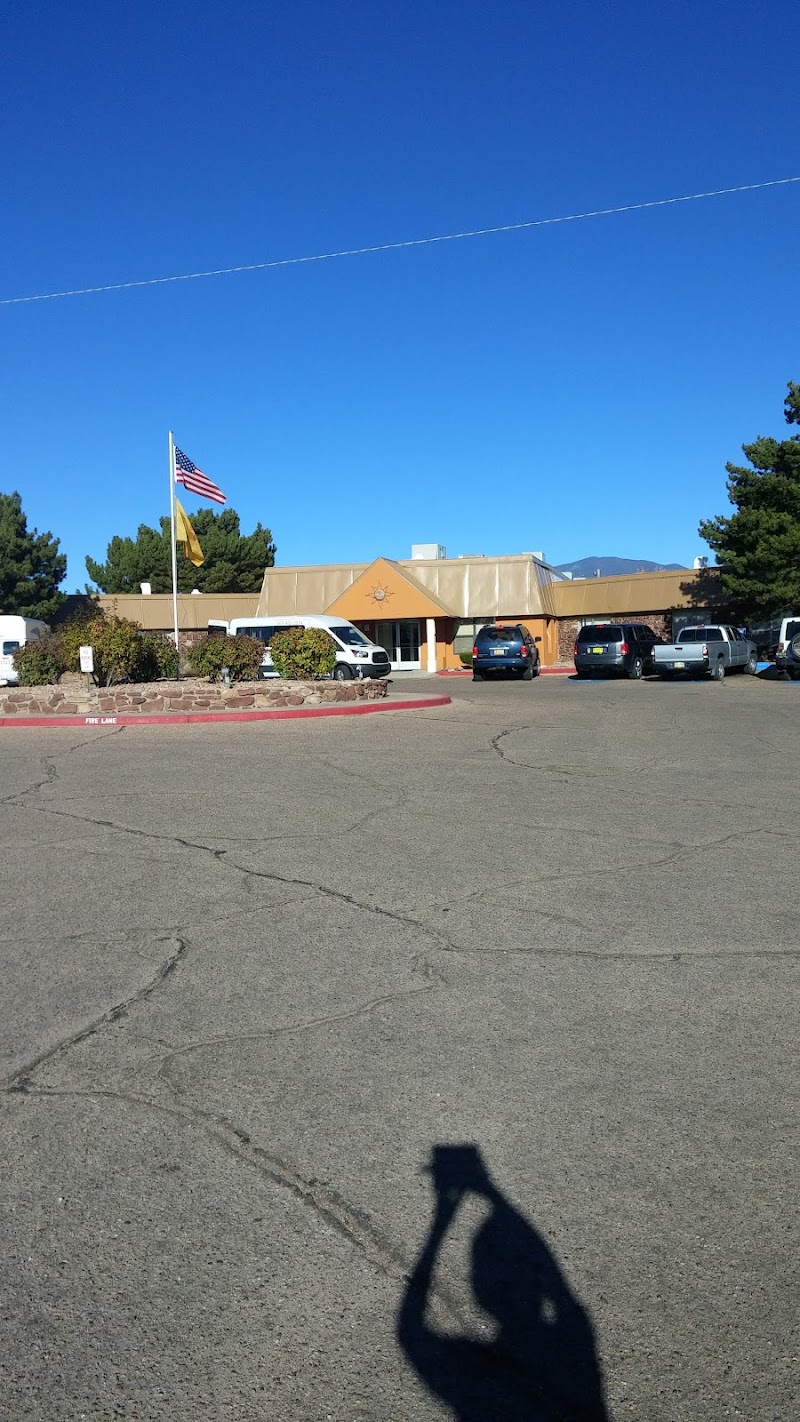
Santa Fe Care Center


635 Harkle Road, Santa Fe, NM 87505 (505) 982-2574
For profit - Corporation 120 Beds Independent Data: November 2025 1 Immediate Jeopardy citation
Trust Grade
0/100
#47 of 67 in NM
Last Inspection: July 2024

Within standard 12-15 month inspection cycle. Federal law requires annual inspections.

Overview

Santa Fe Care Center has received a Trust Grade of F, indicating significant concerns about the quality of care provided, which is among the poorest ratings available. The facility ranks #47 out of 67 in New Mexico, placing it in the bottom half of state facilities, and it is the only option in Santa Fe County. While the facility has shown improvement over time, decreasing issues from 20 in 2024 to 1 in 2025, the overall situation remains troubling, with a high turnover rate of 69% that is well above the state average. They have faced $141,380 in fines, which is higher than 89% of facilities in New Mexico, signaling ongoing compliance issues. Specific incidents include a critical failure to address pain management effectively and serious lapses in monitoring and treating a resident’s wound, which worsened due to inadequate care. Overall, while there are some signs of improvement in the facility, the high fines, poor staffing retention, and critical care failures are concerning for families considering this nursing home.
Trust Score
F
0/100
In New Mexico
#47/67
Bottom 30%
Safety Record
High Risk
Review needed
Inspections
Getting Better
20 → 1 violations
Staff Stability
⚠ Watch
69% turnover. Above average. Higher turnover means staff may not know residents' routines.
Penalties
✓ Good
$141,380 in fines. Lower than most New Mexico facilities. Relatively clean record.
Skilled Nurses
○ Average
Each resident gets 35 minutes of Registered Nurse (RN) attention daily — about average for New Mexico. RNs are the most trained staff who monitor for health changes.
Violations
⚠ Watch
57 deficiencies on record. Higher than average. Multiple issues found across inspections.
★★☆☆☆
2.0
Overall Rating
★★☆☆☆
2.0
Staff Levels
★★☆☆☆
2.0
Care Quality
★★☆☆☆
2.0
Inspection Score
Stable
2024: 20 issues
2025: 1 issues

The Good

  • Full Sprinkler Coverage · Fire safety systems throughout facility
  • No fines on record

Facility shows strength in fire safety.

The Bad

2-Star Overall Rating

Below New Mexico average (2.9)

Below average - review inspection findings carefully

Staff Turnover: 69%

23pts above New Mexico avg (46%)

Frequent staff changes - ask about care continuity

Federal Fines: $141,380

Well above median ($33,413)

Significant penalties indicating serious issues

Staff turnover is elevated (69%)

21 points above New Mexico average of 48%

The Ugly 57 deficiencies on record

1 life-threatening 5 actual harm
Apr 2025 1 deficiency
CONCERN (D) 📢 Someone Reported This

A family member, employee, or ombudsman was alarmed enough to file a formal complaint

Potential for Harm - no one hurt, but risky conditions existed

Comprehensive Care Plan (Tag F0656)

Could have caused harm · This affected 1 resident

**NOTE- TERMS IN BRACKETS HAVE BEEN EDITED TO PROTECT CONFIDENTIALITY** Based on observation, record review and interview, the facility failed to develop and implement an accurate, person-centered com...

Read full inspector narrative →
**NOTE- TERMS IN BRACKETS HAVE BEEN EDITED TO PROTECT CONFIDENTIALITY** Based on observation, record review and interview, the facility failed to develop and implement an accurate, person-centered comprehensive care plan for 1 (R #1) of 1 (R #1) resident reviewed for care plans. This deficient practice could likely result in staff being unaware of the current and actual needs of the residents. The findings are: A. On 04/08/25 at 1:00 pm during observation of R #1 in his room and interview, R #1 had a cooler that was stored on the floor in the corner of his room. R #1 stated the cooler was where he kept his beer. He stated he was allowed to have on beer each day and that he would ask for or take a beer from the cooler daily. B. Record review of R #1's admission Record revealed R #1 was admitted to the facility on [DATE]. C. Record review of R #1's medical orders dated on 03/13/2025, revealed R #1 may keep beer in an ice chest in his room. He is to have one beer with dinner every night per doctor's orders. D. Record review of R #1's care plan revised on 04/07/2025, revealed the following: I can drink one beer a day if I choose and my beer will be kept in the restorative fridge where it will be locked up. E. On 04/08/2025 at 2:06 pm, during an interview with Director of Nursing (DON), she confirmed that R #1 was allowed to have a beer daily per the provider's order. She further confirmed that the care plan stated the beer was to be kept in the facility fridge where it could be locked away. F. On 04/08/25 at 2:30 pm during interview with the Administrator (ADM), he confirmed that R #1 had a cooler in his room that contained beer that he was allowed to have. He stated the staff would keep ice in the cooler and R #1's family would bring beer to him as he needed. ADM further stated the care plan indicated he was to have beer kept in a locked refrigerator.
Oct 2024 6 deficiencies 2 Harm
SERIOUS (G) 📢 Someone Reported This

A family member, employee, or ombudsman was alarmed enough to file a formal complaint

Actual Harm - a resident was hurt due to facility failures

Notification of Changes (Tag F0580)

A resident was harmed · This affected 1 resident

**NOTE- TERMS IN BRACKETS HAVE BEEN EDITED TO PROTECT CONFIDENTIALITY** Based on record review and interview, the facility failed to notify the Providers (Physicians and Nurse Practitioners) and the D...

Read full inspector narrative →
**NOTE- TERMS IN BRACKETS HAVE BEEN EDITED TO PROTECT CONFIDENTIALITY** Based on record review and interview, the facility failed to notify the Providers (Physicians and Nurse Practitioners) and the Director of Nursing (DON) of a change in condition in which a resident experienced a large left forearm injury (skin tear- acute wound that is caused by mechanical force or a traumatic injury) for 1 (R #4) of 1 (R #4) residents reviewed for injury. This deficient practice likely resulted in R #4's injury becoming worse with increased bleeding due to the resident taking a blood thinner, and a delay going to the hospital. The findings are: A. Record review of R #4's face sheet revealed R #4 was admitted into the facility on [DATE] and was discharged on 10/08/24. B. Record review of R #4's care plan, dated 07/09/24, revealed R #4 experienced confusion, balance problems, vision and hearing problems; and R #4 was unaware of safety needs. C. Record review of R #4's physician orders, dated 07/09/24, revealed R #4 was prescribed apixaban (blood thinner), 5 milligrams (mg) twice a day, which was started on 07/09/24. D. Record review of R #4's Medication Administration Record (MAR), dated 09/01/24 through 09/09/24, revealed staff administered apixaban to R #4 twice a day, every day. E. Record review of R #4's nursing progress notes revealed the following: 1. Dated 09/09/24 at 6:10 am and written by Registered Nurse (RN) #1, a Certified Nursing Assistant (CNA) and an RN found R #4 at 6:00 am. The resident showed signs of confusion and required help changing into daily clothes. The RN discovered a large gash (skin tear/laceration) on R #4's left forearm that appeared to be self-inflicted, and the CNA and RN dressed the resident's wound. Assessment: R #4's wound measured 4 inches (in) length and 1.5 in. width. The RN reported R #4's injury to the oncoming RN, Director of Nursing (DON), and the Provider. 2. Dated 09/09/24 at 7:30 pm and written by RN #1, the deep tissue wound on R #4's left forearm (previously noted at 6:10 am as a large gash) bled profusely. R #4 was sent to the emergency room (ER). 3. Staff did not document any other progress notes between 6:00 am and 7:30 pm for R #4's left forearm injury, which indicated the facility's nursing staff did not assess R #4 again throughout the day and did not contact a provider or the DON to inform them of R #4's wound. D. Record review of R #4's ER documentation, dated 09/09/24 at 7:44 pm, revealed the following: 1. Left forearm laceration: Brought in by Emergency Medical Services (EMS) and laceration was found by nursing home nurse at 7:00 am. 2. Left forearm: Large skin tear (a type of injury where the skin is torn from the body) with painful range of motion (the extent or limit to which a part of the body can be moved around a joint or a fixed point). Left forearm does have some full thickness flap loss [deep wounds that extend beyond the first two layers of the skin and may reveal subcutaneous (fatty) tissue, muscle, tendon, or even bone.] E. On 10/10/24 at 12:14 pm during an interview with RN #1, he stated a CNA asked him to assist with R #4 prior to shift change on the morning of 09/09/24. RN #1 stated he noticed R #4 was confused and had a large laceration on her left forearm that was actively bleeding, which required a bandage. RN #1 stated he informed the day shift nurse of R #4's injury that morning after he bandaged and wrapped R #4's left forearm. RN #1 stated that when he returned to shift later that evening on 09/09/24, he had to send R #4 to the ER due to R #4's left forearm injury (large gash noted at 6:10 am) became worse throughout the day. RN #1 stated R #4's left forearm still had the original bandage that he applied earlier that day and R #4's left forearm bandage was completely saturated with blood, indicating R #4's left forearm was still actively bleeding which required him to send R #4 to the hospital. RN #1 also confirmed the day shift did not document that they assessed R #4's laceration during their shift, and he notified the Director of Nursing (DON) and provider when he arrived for his night shift that R #4 required hospitalization. F. On 10/11/24 at 11:07 am during an interview with the Nurse Practitioner (NP), she stated the facility staff did not notify her about R #4's left forearm laceration on 09/09/24, but they should have. The NP confirmed that due to the size and severity of R #4's left forearm injury, the NP should have been notified immediately, so she could assess R #4's left forearm, provide additional treatment such as a topical ointment to clean the wound and stop bleeding, and advise nursing staff to send R #4 to the hospital right away. The NP confirmed her expectation was for nursing staff to notify her as soon as possible when residents experience a significant injury like R #4 did. G. On 10/11/24 at 12:30 pm during an interview with the DON, she stated she was not aware of R #4's left forearm injury on 09/09/24 until R #4 was sent her the hospital at 7:00 pm on 09/09/24. The DON confirmed it was her expectation for nursing staff to notify the facility providers and herself right away when a resident experienced a significant injury like R #4.
SERIOUS (G) 📢 Someone Reported This

A family member, employee, or ombudsman was alarmed enough to file a formal complaint

Actual Harm - a resident was hurt due to facility failures

Quality of Care (Tag F0684)

A resident was harmed · This affected 1 resident

**NOTE- TERMS IN BRACKETS HAVE BEEN EDITED TO PROTECT CONFIDENTIALITY** Based on observation, record review, and interview, the facility failed to monitor and provide appropriate interventions for 1 (...

Read full inspector narrative →
**NOTE- TERMS IN BRACKETS HAVE BEEN EDITED TO PROTECT CONFIDENTIALITY** Based on observation, record review, and interview, the facility failed to monitor and provide appropriate interventions for 1 (R #4) of 3 (R #4, #5, and #6) residents reviewed for injury: 1. When the facility failed to provide proper wound care for R #4's left forearm laceration. 2. When the facility nurses failed to communicate the severity of R #4's left forearm laceration to other nursing staff. 3. When the facility failed to re-assess R #4's left forearm laceration for approximately 12 hours. These deficient practices likely resulted in R #4's left forearm laceration becoming worse with additional bleeding, that required hospitalization. The findings are: A. Record review of R #4's face sheet revealed R #4 was admitted into the facility on [DATE] and was discharged on 10/08/24. B. Record review of R #4's care plan, dated 07/09/24, revealed R #4 experienced confusion, balance problems, vision and hearing problems; and R #4 was unaware of safety needs. C. Record review of R #4's physician orders, dated 07/09/24, revealed R #4 was prescribed apixaban (blood thinner), 5 milligrams (mg) twice a day, which was started on 07/09/24. D. Record review of R #4's Medication Administration Record (MAR), dated 09/01/24 through 09/09/24, revealed staff administered apixaban to R #4 twice a day, every day. E. Record review of R #4's nursing progress notes revealed the following: 1. Dated 09/09/24 at 6:10 am and written by Registered Nurse (RN) #1, a Certified Nursing Assistant (CNA) and an RN found R #4 at 6:00 am. The resident showed signs of confusion and required help changing into daily clothes. The RN discovered a large gash (skin tear/laceration) on R #4's left forearm that appeared to be self-inflicted, and the CNA and RN dressed the resident's wound. Assessment: R #4's wound measured 4 inches (in) length and 1.5 in. width. The RN reported R #4's injury to the oncoming RN, Director of Nursing (DON), and the Provider. 2. Dated 09/09/24 at 7:30 pm and written by RN #1, the deep tissue wound on R #4's left forearm (previously noted at 6:10 am as a large gash) bled profusely. R #4 was sent to the emergency room (ER). 3. Staff did not document any other progress notes between 6:00 am and 7:30 pm for R #4's left forearm injury, or any evidence that the facility's nursing staff assessed R #4 throughout the day. F. Record review of R #4's Electronic Health Record (EHR) revealed staff completed one change in condition assessment for R #4 on 09/10/24, which revealed R #4 was sent to hospital on [DATE] at approximately 7:00 pm for a laceration to the left forearm. G. Record review of R #4's ER documentation, dated 09/09/24 at 7:44 pm, revealed the following: 1. Left forearm laceration: Brought in by Emergency Medical Services (EMS) and laceration was found by nursing home nurse at 7:00 am. 2. Left forearm: Large skin tear (a type of injury where the skin is torn from the body) with painful range of motion (the extent or limit to which a part of the body can be moved around a joint or a fixed point). Left forearm had some full thickness flap loss [deep wounds that extend beyond the first two layers of the skin and may reveal subcutaneous (fatty) tissue, muscle, tendon, or even bone.] H. On 10/09/24 at 1:40 pm during an interview with R #4's Power of Attorney (POA), she stated she was notified on the evening of 09/09/24 that R #4 experienced a laceration (a wound produced by tearing) to her left forearm earlier in the day. She stated staff reported the laceration was bleeding profusely and required R #4 to go to the hospital. R #4's POA also stated the nurse told her that staff did not tend to R #4's left forearm laceration throughout the day, and the laceration became worse during that time, with increased bleeding and pain. I. On 10/10/24 at 12:14 pm during an interview with RN #1, he stated a CNA asked him to assist with R #4 prior to shift change on the morning of 09/09/24. RN #1 stated he noticed R #4 was confused and had a large laceration on her left forearm that was actively bleeding, which required a bandage. RN #1 stated he informed the day shift nurse of R #4's injury that morning after he bandaged and wrapped R #4's left forearm. RN #1 stated that when he returned to shift later that evening on 09/09/24, he had to send R #4 to the ER due to R #4's left forearm injury (large gash noted at 6:10 am) became worse throughout the day. RN #1 stated R #4's left forearm still had the original bandage that he applied earlier that day and R #4's left forearm bandage was completely saturated with blood, indicating R #4's left forearm was still actively bleeding which required him to send R #4 to the hospital. RN #1 also confirmed the day shift did not document that they assessed R #4's laceration during their shift, and he notified the Director of Nursing (DON) and provider when he arrived for his night shift that R #4 required hospitalization. J. On 10/11/24 at 11:04 am during an interview with the Nurse Practitioner (NP), she stated it was the nurses' jobs to assess all facility residents everyday. The NP stated R #4's left forearm injury was very large and noticeable, and the day shift nurses (on 09/09/24) should have re-assessed it instead of waiting for the night shift nurses to do it. The NP confirmed that due to the size and severity of R #4's left forearm injury, the NP should have been notified immediately so she could assess R #4's left forearm, provide additional treatment such as a topical ointment to clean the wound and stop bleeding, and advise nursing staff to send R #4 to the hospital right away. K. On 10/11/24 at 11:20 am during an interview with RN #2 [day shift nurse on 09/09/24], she stated RN #1 did not tell her about R #4's left forearm laceration on 09/09/24 when she began her day shift. RN #2 stated she did not see R #4's left forearm laceration on 09/09/24, so she did not re-assess R #4's arm throughout her shift. RN #2 confirmed she did not see R #4's injury until R #4 returned from the hospital. RN #2 stated, If he [RN #1] had noticed everything [with R #4's laceration], then he [RN #1] should have taken care of it [fully assessed R #4's left forearm injury, provided complete documentation for R #4's left forearm injury, notified the provider of R #4's left forearm injury, and sent R #4 to the hospital before he left the facility]. L. On 10/11/24 at 11:25 am during an interview with the Wound Care Nurse (WCN), she stated RN #2 did not tell her about R #4's left forearm laceration during the day shift on 09/09/24. The WCN stated RN #2 told her that RN #1 did not tell her about R #4's laceration either. The WCN confirmed she was not made aware of R #4's laceration until R #4 returned from the hospital on [DATE]. M. On 10/11/24 at 11:32 am during an interview with RN #3, he stated the facility nurses should make a point to see every one of their assigned residents at least once throughout the shift. RN #3 also stated it was expected for nurses assess each of their residents every shift. N. On 10/11/24 and 11:55 am during an interview with CNA #2, he stated he saw R #4's left forearm laceration during the day shift on 09/09/24, because R #4's left forearm injury/skin tear was large with significant bruising, and blood was present on the bandages. CNA #2 stated he informed RN #2 of R #4's laceration, but RN #2 told him that RN #1 had already made her aware of the laceration during shift change. CNA #2 confirmed that he did not see RN #2 assess R #4's left forearm injury throughout the shift. O. On 10/11/24 at 12:28 pm during an interview with the Director of Nursing (DON), she stated RN #1 told her [DON] that he informed RN #2 of R #4's laceration during shift change, but RN #2 told her RN #1 did not report it to her [RN #2]. The DON stated RN #2 did not re-assess R #4 during the day shift, and RN #2 should have. The DON stated it was her expectation the facility nurses assess each one of their residents on every shift. P. On 10/25/24 at 12:38 pm during an interview with CNA #1, she stated R #4 did not have any injuries present when she assisted and changed R #4 on the night shift (09/08/24). CNA #1 stated R #4 needed the assistance of one staff for activities of daily living (ADL; activities related to personal care such as bathing, showering, dressing, walking, toileting, and eating). She stated R #4 was more agitated than normal on 09/09/24 between 5:00 am and 5:30 am, and the resident grabbed at herself and CNA #1. CNA #1 then stated that after R #4 became agitated, she requested that RN #1 help her get R #4 dressed. CNA #1 stated that she briefly left R #4's room to answer a nearby call light and when she returned, approximately 5 to 10 minutes after RN #1 arrived to assist with R #4, she noticed that R #4 had a large skin tear on her left arm. RN #1 told her that R #4 did it to herself. CNA #1 stated RN #1 bandaged R #4's wound, but he did not clean it. CNA #1 stated she and RN #1 took R #4 out to the main lobby after the injury occurred where other staff and residents were present. CNA #1 also confirmed that she saw RN #1 go to the nurses station after that, but she did not know if RN #1 informed the day shift nurse of the incident. Q. On 10/25/24 at 1:35 pm during an interview with CNA #4, she stated she worked during the day shift on 09/09/24, and she was not aware of R #4's left arm injury. CNA #4 stated usually the nurse would let her know if a resident experienced an injury like that but RN #2 did not inform her. CNA #4 confirmed she saw R #4 during the shift, and R #4 was wearing a long shirt with bandaging on her arm, but she did not know why and she did not look at R #4's left forearm. R. On 10/25/24 at 2:25 pm during an interview with the DON, the DON stated that RN #1 should have properly dressed R #4's left arm injury on 09/09/24 and communicated the severity of R #4's left forearm injury with staff.
CONCERN (D) 📢 Someone Reported This

A family member, employee, or ombudsman was alarmed enough to file a formal complaint

Potential for Harm - no one hurt, but risky conditions existed

Report Alleged Abuse (Tag F0609)

Could have caused harm · This affected 1 resident

Based on record review and interview, the facility failed to report an investigation regarding allegations of an injury of unknown origin for 1 (R #4) of 1(R #4) residents reviewed for injuries and wo...

Read full inspector narrative →
Based on record review and interview, the facility failed to report an investigation regarding allegations of an injury of unknown origin for 1 (R #4) of 1(R #4) residents reviewed for injuries and wounds. If the facility is not submitting the summary of the facility's investigation to the State Agency, then the State Agency is unable to appropriately triage (review) the allegation for further investigation. The findings are: A. Refer to F684 for pertinent findings related to this citation. B. On 10/25/24 at 2:25 pm during an interview with the Director of Nursing (DON), she stated she spoke to Registered Nurse (RN) #2 about the incident. She stated she did not conduct a complete investigation, because she felt like she did not need to after speaking with RN #2. The DON also stated that she completed a unit investigation for multiple residents that involved RN #1 (RN involved in R #4 incident), but she did not specifically include R #4 and she should have. C. On 10/25/24 at 2:39 pm during an interview with the Administrator (ADM), he stated he did not complete an investigation for the resident's injury, because the Director of Nursing (DON) investigated the whole unit that R #4 was on for another incident, but that investigation did not specifically include R #4. The ADM confirmed that R #4 should have been included in a investigation and was not.
CONCERN (D) 📢 Someone Reported This

A family member, employee, or ombudsman was alarmed enough to file a formal complaint

Potential for Harm - no one hurt, but risky conditions existed

Deficiency F0657 (Tag F0657)

Could have caused harm · This affected 1 resident

**NOTE- TERMS IN BRACKETS HAVE BEEN EDITED TO PROTECT CONFIDENTIALITY** Based on record review and interview, the facility failed to ensure staff revised the care plan for 1 (R #4) of 1 (R #4) residen...

Read full inspector narrative →
**NOTE- TERMS IN BRACKETS HAVE BEEN EDITED TO PROTECT CONFIDENTIALITY** Based on record review and interview, the facility failed to ensure staff revised the care plan for 1 (R #4) of 1 (R #4) residents reviewed when staff failed to update the care plan to include anticoagulant (blood thinner) use. These deficient practices are likely to result in residents' care and needs not being addressed if care plans are not updated. The findings are: A. Record review of R #4's face sheet revealed R #4 was admitted into the facility on [DATE] and was discharged on 10/08/24. B. Record review of R #4's physician orders, dated 07/09/24, revealed an order for apixaban (blood thinner), 5 milligrams (mg) twice a day. C. Record review of R #4's care plan revealed the following: - Dated 07/09/24, R #4 was a risk for falls due to R #4 experienced confusion, balance problems, vision and hearing problems; and R #4 was unaware of safety needs. - The care plan did not include information regarding R #4's order for apixaban. D. On 10/25/24 at 2:27 pm during an interview with the Director of Nursing (DON), she stated staff should have care planned R #4's anticoagulant use, but they did not.
CONCERN (E) 📢 Someone Reported This

A family member, employee, or ombudsman was alarmed enough to file a formal complaint

Potential for Harm - no one hurt, but risky conditions existed

ADL Care (Tag F0677)

Could have caused harm · This affected multiple residents

**NOTE- TERMS IN BRACKETS HAVE BEEN EDITED TO PROTECT CONFIDENTIALITY** Based on record review and interview, the facility failed to provide activities of daily living (ADL; activities related to pers...

Read full inspector narrative →
**NOTE- TERMS IN BRACKETS HAVE BEEN EDITED TO PROTECT CONFIDENTIALITY** Based on record review and interview, the facility failed to provide activities of daily living (ADL; activities related to personal care such as bathing, showering, dressing, walking, toileting, nail care, and eating) assistance for toenail care by the facility staff for 1 (R #4) of 1 (R #4) residents reviewed for ADL care. This deficient practice is likely to affect the dignity and health of the residents. The findings are: A. Record review of R #4's face sheet revealed R #4 was admitted into the facility on [DATE] and was discharged on 10/08/24. B. Record review of R #4's care plan, dated 07/09/24, revealed R #4 required staff assistance with ADL care related to Alzheimer's disease (type of brain disorder that causes problems with memory, thinking and behavior), fatigue, impaired balance, and limited mobility. C. Record review of R #4's skin/bathing completion form, dated 08/12/24 through 09/11/24, revealed staff trimmed and cleaned R #4's toenails twice. D. Record review of R #4's emergency room (ER) clinical notes dated 09/16/24 revealed R #4's toenails were long and required trimming by hospital staff, so R #4 could have better mobility. E. On 10/09/24 at 1:42 pm during an interview with R #4's Power of Attorney (POA), she stated facility staff did not care for R #4's toenails, and she brought that up to the facility staff multiple times. F. On 10/11/24 at 11:41 am during an interview with Certified Nursing Assistant (CNA) #3, she stated staff document all toenail care on the skin/bathing completion forms. CNA #3 also stated she received a complaint from R #4's family about R #4's nail care, and the facility social worker also told her R #4's family complained about R #4's nail care. CNA #3 stated she completed R #4's nail care after receiving the complaint, but R #4's toenails looked like they were not tended to in quite some time. G. On 10/11/24 at 12:32 pm during an interview with the Director of Nursing (DON), she stated she expected CNAs to check residents' toenails during each shower, clean them, and trim them as needed. The DON confirmed R #4's toenails were not cared for as expected, but they should have been.
CONCERN (E) 📢 Someone Reported This

A family member, employee, or ombudsman was alarmed enough to file a formal complaint

Potential for Harm - no one hurt, but risky conditions existed

Medical Records (Tag F0842)

Could have caused harm · This affected multiple residents

Based on record review and interview, the facility failed to ensure resident medical records were complete and accurate for 3 (R #1, #2 and #3) of 3 (R #1, #2 and #3) residents reviewed. This deficien...

Read full inspector narrative →
Based on record review and interview, the facility failed to ensure resident medical records were complete and accurate for 3 (R #1, #2 and #3) of 3 (R #1, #2 and #3) residents reviewed. This deficient practice will likely result in staff not knowing residents' daily care events, changes, and needs. The findings are: Resident #1 A. Record review of R #1 face sheet, dated 10/09/24, revealed he was admitted to facility on 06/17/24 with multiple diagnoses including: - Chronic pain due to trauma (injury), - Amputation of one right lesser toe (small toe of right foot), - Diabetes mellitus (a chronic condition in which the blood's sugar levels are not properly controlled by natural processes), - Malignant neoplasm (cancerous tumor) of prostate (male reproductive gland). B. On 10/09/24 at 2:20 pm during phone interview with Home Health Nurse (HHN) # 1, she stated the Home Health provider (a service that provides in home nursing and daily living care) required all patients to be weight bearing (able to bear weight on their feet.) She stated R #1's weight bearing status should have been included in his medical record. HHN stated that when she met with R #1 in his home, she found him lying on his couch, unable to stand or walk, because he was not weight bearing. HHN stated that if she had known R #1 was unable to bear weight, then he would not have been accepted into the home health program. C. On 10/09/24 at 3:25 pm during phone interview with R #1, he stated he was discharged from the facility on 10/01/24. He stated he was referred to and accepted into a Home Health provider when he was discharged from the facility. He stated he was mostly bed bound while a resident at the facility, and he needed staff assistance to sit up in bed, transfer to his wheelchair, and transfer back to bed. He stated he was never able to stand up and place weight on either of his feet while at the facility. D. Record review of R #1 daily nursing/medical care notes, dated 06/08/24 to 10/09/24, revealed the record did not contain any notations the resident was bed bound and unable to stand, walk, or move about while a resident. The record also did not include any notations to indicate the resident was non-weight bearing. E. Record review of R #1 care plan, dated 10/09/24, revealed multiple care plans, but none indicated R #1 was bed bound, unable to stand, unable to walk, or non-weight bearing. F. On 10/10/24 at 10:35 am during interview and record review with Social Services Coordinator (SSC), she stated she was the person who sent out documentation of R #1's referral to Home Health, and she sent it out via fax three days prior to his discharge. The SSC reviewed the documents she sent for R #1's referral and confirmed the record did not include or indicate R #1's weight bearing status. Resident #2 G. Record review of R #2 face sheet, dated 10/10/24, revealed she was admitted to facility on 08/16/24 with multiple diagnoses including: - Diabetes mellitus, - Emphysema (a respiratory disorder that results in the reduction of air intake), - Acute pulmonary edema (a sudden condition when the lungs become fluid filled), - COVID 19 (a viral respiratory disease). H. On 10/09/24 at 1:31 pm during phone interview with R #2's daughter, she stated her mother had been a resident of the facility. She stated one day her mother began to have difficulty breathing and was sent to hospital emergency room for evaluation. She stated her mother was admitted , tested positive for COVID 19, was treated, and returned to the facility. I. Record review of R #2's complete medical record revealed her daily care notes failed to report a time when she had difficulty breathing, any time she was transferred to hospital, and any time when she returned from hospital. Her medical record did not contain a report of a change of condition (a nursing note to indicate a significant medical change in a resident's medical status) to indicate the resident had difficulty breathing and was sent to hospital. J. On 10/10/24 at 1:49 pm during interview and record review with the Director of Nursing (DON), she stated R #2 was sent to hospital and returned. She reviewed R #2's medical record and confirmed the resident's transfer and return were not documented in the medical record. The DON stated staff should have documented several notes regarding the resident's breathing problems, transfer to hospital, change of condition, and return to the facility. Resident #3 K. Record review of R #3's face sheet, dated 10/10/24, revealed he was admitted to facility on 09/04/24 with multiple diagnoses including: - History of falling, - Myelodysplastic syndrome (a type of cancer of the blood) - Morbid obesity (severely overweight), - Monoplegia (paralysis of one limb) of right upper limb, - discharged from the facility on 09/19/24. L. Record review of daily care note, dated 09/19/24 revealed a entry which stated R #3 expressed ideas of suicide. Staff offered the resident care, and he refused. R #3 became verbally aggressive and stated he wanted to kill staff. The facility issued R #3 an immediate discharge notice, and the resident was sent to the hospital with his personal items. M. On 10/10/24 at 2:30 pm during interview with DON and Administrator (ADM), they stated R #3 had multiple incidents of refusing care, threatening staff, vomiting on staff, throwing vomit on another resident, and using racial slurs aimed at staff and other residents. N. Record review of R #3's daily care notes, dated 09/04 to 09/19/24 revealed the following: -09/05/24 Refused wound care and described the wound care nurse as a stupid, crazy Indonesian wound nurse who knows nothing, and she can't even speak english. -09/10/24 Described as mood is pleasant, no behaviors witnessed. -09/11/24 Described as mood is pleasant, no behaviors witnessed. -09/12/24 Described as mood is pleasant, no behaviors witnessed. -09/14/24 Described as mood is pleasant, no behaviors witnessed. -09/15/24 Described as mood is pleasant, no behaviors witnessed. -09/17/24 Described as mood is pleasant, no behaviors witnessed. -09/18/24 Described as mood is pleasant, no behaviors witnessed. -09/18/24 Refused to attend an appointment. -09/19/24 Refused to allow wound care There are no notes that document any instances of R #3 threatening staff, vomiting on staff, throwing vomit on another resident. O. On 10/10/24 at 2:45 pm during interview with ADM, he stated staff should have noted the resident's behavior in R #3's medical record. He stated he did not know why staff did not document the reported events in R #3's medical record.
Jul 2024 13 deficiencies
CONCERN (D)

Potential for Harm - no one hurt, but risky conditions existed

Deficiency F0582 (Tag F0582)

Could have caused harm · This affected 1 resident

Based on record review, interviews, and facility policy review, the facility failed to have written documentation of the Skilled Nursing Facility Advanced Beneficiary Notice of Non-Coverage (SNFABN) C...

Read full inspector narrative →
Based on record review, interviews, and facility policy review, the facility failed to have written documentation of the Skilled Nursing Facility Advanced Beneficiary Notice of Non-Coverage (SNFABN) CMS [Centers for Medicare and Medicaid Services]-10055 for one of three residents (Resident (R) 27) reviewed for beneficiary notices of 20 sample residents. The facility failed to have written documentation to indicate R27 or their legal representative were notified in writing of the SNFABN, the reason why Medicare might not pay for services, and the estimated daily cost the resident would be responsible for should they choose to receive skilled services. By not having written documentation, the resident was unable to make an informed decision and was unaware of additional costs and services when skilled services are ending. Findings include: Review of the facility's policy titled, Medicare and Medicaid Benefits, revised April 2017, indicated, Residents are provided with information verbally and in writing about how to apply for and use Medicare and Medicaid benefits .Upon admission, and when a resident become eligible for Medicare/Medicaid benefits, a representative of the business office will inform the resident verbally and in writing of: a. the services and items covered under the facility's Medicare/Medicaid payment rate; and b. the charges for non-covered items or services that are available to the resident .When changes are made to items and services covered by Medicare or Medicaid State plans, residents will be informed of these changes as soon as possible .Inquiries concerning Medicare and Medicaid eligibility requirements should be referred to the business office, and/or to the Social Services Department. Review of an undated list of Beneficiary Notice- Residents discharged Within the Last Six Months, document provided by the Administrator, listed residents who were discharged from Medicare covered Part A services with benefit days remaining who either were discharged home, transferred to another facility, or chose to remain in the facility. On the list R27 was the only resident marked as Remaining in the facility. Review of an undated document titled, SNF Beneficiary Notification Review for R27, indicated .Medicare Part A Skilled Services Episode State date was: 11/28/23. The last covered day of Part A Services was on 02/29/24 The form indicated, Benefit days weren't exhausted, resident wanted to stay . Further review of the document indicated, Was an SNF/ABN, Form (CMS-10055) provided to the resident? It was marked, No. The reason indicated was, MRA [Medical Reimbursement Arrangement] payor used NOMNC [Notice of Medicare Non-Coverage]. There was no written documentation or evidence that R27 was issued the SNF/ABN, no written documentation of the reason Medicare may not pay for services, and the estimated cost the resident would be responsible for while remaining in the facility was not included. Review of the complete medical record for R27 revealed no documentation that communication took place between R27 and/or representative to discuss potential additional costs that the resident might have to pay if they chose to continue to receive services. During an interview on 07/09/24 at 3:15 PM, the Social Services Director (SSD) stated, If there are a few extra days remaining I let them know that I talked with Physical Therapy and with the cost, if they are needing extra days to stay, I let them know the co-pays. I review the cost per day with them. When specifically asked if the SNFABN document was reviewed with R27 or the representative of R27 to include the estimated costs per day, or why Medicare may not pay for services, the SSD stated that she had not. During an interview on 07/09/24 at 4:44 PM, when asked about the process for issuing the SNFABNs, the Business Office Manager (BOM) stated, I have never issued or seen the SNFABN form. I'm not familiar with this form. When reviewing the SNF Beneficiary Notification Review document for R27 with the SSD and the BOM, the SSD stated a SNFABN was not issued to R27. The SSD stated that R27 chose to remain in the facility and receive services. During a second interview on 07/10/24 at 8:49 AM with the SSD and the BOM regarding R27, the BOM stated that the last covered day for skilled services was 02/29/24 and R27 Did have some remaining days to use for services. We did not use the SNFABN form for her and she is still here in the facility.
CONCERN (D)

Potential for Harm - no one hurt, but risky conditions existed

Deficiency F0637 (Tag F0637)

Could have caused harm · This affected 1 resident

Based on observation, record review, interviews, and review of the Resident Assessment Instrument (RAI) Manual, the facility failed to ensure a Significant Change MDS Minimum Data Set was completed wi...

Read full inspector narrative →
Based on observation, record review, interviews, and review of the Resident Assessment Instrument (RAI) Manual, the facility failed to ensure a Significant Change MDS Minimum Data Set was completed within 14 days of a significant change for one of one resident (Resident (R) 10) receiving hospice services of 20 sample residents. Specifically, R10 was admitted to hospice services on 03/18/24 and no significant change MDS was completed within 14 days of the significant change. By not ensuring completion of a significant change MDS, this failure could potentially place the resident at risk for unmet care needs being addressed. Findings include: Review of the MDS-3.0 RAI Manual-v1.17.1, October 2019, under section A0310A Coding Instructions for Significant Change in Status Assessment indicated, If a nursing home resident elects the hospice benefit, the nursing home is required to complete the MDS Significant Change in Status Assessment (SCSA). It further indicated, It is a CMS [Centers for Medicare and Medicaid Services] requirement to have an SCSA completed EVERY time the hospice benefit has been elected, even if a recent MDS was done and the only change is the election of the hospice benefit. Review of the facility's policy titled, Electronic Transmission of the MDS, revised October 2023, indicated All MDS assessments (e.g., admission, annual, significant change, quarterly review, etc.) .are completed and electronically encoded into our facility's MDS information system . It further indicated, All staff members responsible for completion of the MDS receive training on the assessment, data entry, and transmission processes, in accordance with the Resident Assessment Instrument (RAI) .The MDS coordinator is responsible for ensuring that appropriate edits are made prior to transmitting MDS data . During an observation made on 07/08/24 at 2:00 PM, R10 was observed sitting in his room in a wheelchair. When attempting to communicate with the resident, he was not able to communicate his needs and could only mumble words. Review of R10's undated Profile page, under the Profile tab in the electronic medical record (EMR) indicated R10 was receiving hospice services. Review of R10's Physician orders, dated 03/18/24, located in the EMR under the Orders tab, indicated Hospice Eval and treat per family request. Additional physician orders, dated 03/19/24, indicated [name of hospice] as of 03/18/24 Dx: [diagnosis] sequelae of cerebrovascular disease. Review of a [name of hospice] New admission Packet, dated 03/18/24 and located in the EMR under the Misc [Miscellaneous] tab, indicated Resident request for Hospice care in a Nursing facility. The document was signed by R10's representative on 03/18/24. Review of a Hospice Physician Order located in R10's EMR under the Misc tab, dated 03/18/24, and electronically signed by the Hospice physician on 03/25/24, indicated Hospice Benefit Period of 03/18/24-06/25/24. Terminal Diagnosis: Unspecified sequelae of unspecified cerebrovascular disease. Review of a Hospice Written Certification document and electronically signed by the Hospice physician on 03/19/24, indicated I certify that [name of R10] is terminally ill with a life expectancy of six months or less if the terminal illness runs its normal course. The document further indicated a certification period from 03/18/24-06/15/24 and indicated, [name of R10] .primary hospice diagnosis of sequelae of cerebrovascular accident .Patient is referred from his LTC [long term care] facility with overall decline in condition with deterioration in his cognitive condition .Pt. qualified for hospice with a <6mo [less than 6 month] prognosis due to the deteriorating cognitive condition with multiple comorbidities . Review of the Comprehensive Care Plan located in the EMR under the Care Plan tab, dated 03/19/24, indicated [name of R10] on Hospice. My hospice provider is [name of Hospice company]/ Hospice care that focuses on the palliation of a chronically ill, terminally ill, or seriously ill. Interventions are: End of life care as needed . Review of the EMR for R10 revealed there was no significant change MDS completed within 14 days of when R10 went onto hospice services on 03/18/24. During an interview on 07/10/24 at 10:19 AM, regarding a significant change MDS not being completed within 14 days, MDS1 stated that R10 was admitted to hospice services on 03/18/24 and she did not complete a significant change MDS. During this interview, MDS2 stated, There should have been a significant change MDS completed, and I do not see one. There should have been a significant change MDS completed. Yes, but when looking in the EMR, we are not seeing that it was done. It should have been completed within the fourteen-day timeframe. We go by the RAI manual as our guide. During an interview on 07/11/24 at 9:28 AM with, the Director of Nursing (DON) and the Administrator, the DON stated, My expectation would be that the MDS are done and coded accurately, and they are completed in a timely manner. I would be expecting my staff to be reviewing the hospice diagnosis, reason for hospice services, reviewing any progress notes and any doctor orders. Staff would have access to that. Everything is uploaded into our electronic medical records. The Administrator stated, Whenever there is a significant change, that would trigger a significant change in the MDS and there should be a significant change completed. It should be completed whenever there is a change in condition for any of our residents. The DON then stated, I would expect my staff to be following the RAI manual and do a significant change within the 14-day look back period.
CONCERN (D)

Potential for Harm - no one hurt, but risky conditions existed

Deficiency F0638 (Tag F0638)

Could have caused harm · This affected 1 resident

**NOTE- TERMS IN BRACKETS HAVE BEEN EDITED TO PROTECT CONFIDENTIALITY** Based on interview, record review, and facility policy review, the facility failed to complete a quarterly assessment for one of...

Read full inspector narrative →
**NOTE- TERMS IN BRACKETS HAVE BEEN EDITED TO PROTECT CONFIDENTIALITY** Based on interview, record review, and facility policy review, the facility failed to complete a quarterly assessment for one of one resident (Resident (R) 43) reviewed for completion of Minimum Data Set (MDS) assessments out of 20 sample residents. The facility was overdue by 25 days in completing the quarterly assessment. Findings include: Review of the facility's policy titled, Resident Assessments, revised October 2023, revealed, .OBRA [Omnibus Budget Reconciliation Act]- Required Assessments are federally mandated, and therefore, must be performed for all residents of Medicare and/or Medicaid certified nursing homes. OBRA assessments include .Quarterly Assessment .Non-Comprehensive MDS assessments include a select number of items from the MDS used to track the resident's status between comprehensive assessments and to ensure monitoring of critical indicators of the gradual onset of significant changes in resident status .Non-comprehensive assessments include Quarterly assessments . Review of R43's admission Record, located under the Profile tab of the electronic medical record (EMR), revealed R43 was admitted to the facility on [DATE] with diagnoses that included type two diabetes mellitus, hypothyroidism, peripheral vascular disease, acute hematogenous osteomyelitis, end stage renal disease, and complete traumatic amputation of the right midfoot. Review of R43's MDS tab of the EMR revealed an admission MDS assessment was completed on 08/30/23 and quarterly assessments were completed on 11/30/23 and 03/01/24 for R43. There was no documented evidence that a third quarterly MDS assessment, due by 06/15/24, had been completed for R43. During an interview on 07/10/24 at 3:23 PM, MDS1 confirmed there was a quarterly MDS assessment due in June 2024 for R43. MDS1 confirmed the last MDS assessment completed was on 03/01/24. She stated, I just missed him. MDS1 stated she had a calendar she used to record when MDS assessments were due and that MDS2 checked to make sure she did not miss updating care plans, but R43's quarterly MDS assessment had been missed. She stated, I don't know how I skipped him.
CONCERN (D)

Potential for Harm - no one hurt, but risky conditions existed

Assessment Accuracy (Tag F0641)

Could have caused harm · This affected 1 resident

**NOTE- TERMS IN BRACKETS HAVE BEEN EDITED TO PROTECT CONFIDENTIALITY** 3. Review of R29's admission Record, located under the profile tab of the EMR, revealed R29 was readmitted to the facility on [D...

Read full inspector narrative →
**NOTE- TERMS IN BRACKETS HAVE BEEN EDITED TO PROTECT CONFIDENTIALITY** 3. Review of R29's admission Record, located under the profile tab of the EMR, revealed R29 was readmitted to the facility on [DATE] with diagnoses that included type two diabetes mellitus. Review of R29's quarterly MDS with an ARD of 05/02/24 and located under the MDS tab of the EMR, revealed coding that R29 had received insulin injections on seven of the preceding seven days. Review of R29's Physician Orders, located under the Orders tab of the EMR, revealed no orders for R29 to receive insulin. It was ordered R29 was to receive semaglutide (Ozempic) injections, an antidiabetic medication, once weekly. During an interview on 07/10/24 at 3:27 PM, MDS1 confirmed R29 was not receiving insulin. MDS1 stated R29 had been started on Ozempic, and she did not know how to capture the injection for MDS assessment and payment purposes, so she left it as an insulin injection. MDS1 confirmed the 05/02/24 MDS assessment was inaccurately coded. MDS1 confirmed she knew that medications were supposed to be coded by their pharmaceutical classification and that Ozempic was not an insulin. During an interview on 07/10/24 at 3:54 PM, the Administrator and Director of Nursing (DON) stated it was their expectation for MDS assessments to be coded accurately. Based on observations, record reviews, interviews, and review of the Resident Assessment Instrument (RAI) Manual, the facility failed to accurately code the Minimum Data Set (MDS) for two of three residents (Residents (R) 7 and R10) receiving hospice services and one of three residents (R29) receiving Insulin of 20 sampled residents. By not ensuring the accuracy of the MDS these failures could potentially place the residents at risk for care needs not being addressed. Findings include: Review of the MDS-3.0 RAI Manual-v1.17.1, October 2019, under Section J1400 Prognosis: indicated Definition: Condition or chronic disease that may result in a life expectancy of less than 6 months; In the physician's judgement, the resident has a diagnosis or combination of clinical conditions that have advanced or will continue to advance to a point that the average resident with that level of illness would not be expected to survive more than 6 months. This judgement should be sustained by a physician note .Steps for Assessment: 1. Review the medical record for documentation by the physician that the resident's condition of chronic disease may result in a life expectancy of less than 6 months, or that they have a terminal illness. 2. If the physician states that the resident's life expectancy may be less than 6 months, request that he or she document this in the medical record. 3. Review the medical record to determine whether the resident is receiving hospice services. Coding Instructions: Code 0, no: if the medical record does not contain physician documentation that the resident is terminally ill and the resident is not receiving hospice services. Code 1, yes: if the medical record includes physician documentation: 1) that the patient is terminally ill; or 2) the resident is receiving hospice services . Section O0100K, Hospice Care, Code residents identified as being in a hospice program for terminally ill persons where an array of services is provided for the palliation and management of terminal illness and related conditions. Review of the facility's policy titled, Electronic Transmission of the MDS, revised October 2023, indicated All MDS assessments (e.g., admission, annual, significant change, quarterly review, etc.) .are completed and electronically encoded into our facility's MDS information system . It further indicated, All staff members responsible for completion of the MDS receive training on the assessment, data entry, and transmission processes, in accordance with the Resident Assessment Instrument (RAI) .The MDS coordinator is responsible for ensuring that appropriate edits are made prior to transmitting MDS data . Review of the facility's policy titled, Resident Assessments, revised October 2023, revealed, .Information in the MDS assessments will consistently reflect information in the progress notes, plans of care and resident observations/interviews . 1. During an observation on 07/08/24 at 2:15 PM, R7 was observed to be sitting in a wheelchair with oxygen on. At this time, R7 was not able to communicate her needs. Review of R7's undated Profile page, under the Profile tab in R7's electronic medical record (EMR) indicated R7 was receiving hospice services. Review of Physician orders, dated 06/07/23, located in R7's EMR under the Orders tab, indicated Admit to [name of hospice] effective today 06/07/23. Review of a Hospice Physician Order located in R7's EMR under the Misc tab, dated 06/07/23 and electronically signed by the Hospice physician on 06/07/23, indicated, Hospice Benefit Period of 06/07/23-08/04/23. Terminal Diagnosis: Malignant Neoplasm of brain, unspecified. Review of the Comprehensive Care Plan located in R7's EMR under the Care Plan tab, dated 06/08/23, indicated [name of R7] on Hospice. My hospice provider is [name of Hospice company]. Hospice care that focuses on the palliation of a chronically ill, terminally ill, or seriously ill. Interventions are: End of life care as needed . Review of R7's quarterly MDS located in the EMR under the MDS tab, with an Assessment Reference Date (ARD) of 10/18/23, revealed Section J and Section O of the MDS were completed by MDS1 on 11/02/23. Section J1400 of the MDS Prognosis was coded as No for R7 not having a terminal condition or chronic disease that may result in a life expectancy of less than 6 months. Hospice of the MDS was coded as While a resident at the facility was receiving hospice services. This MDS was identified as being coded incorrectly as R7 had been receiving hospice services since 06/07/23. Review of an additional Hospice Physician Order located in R7's EMR under the Misc tab, dated 05/01/24, and electronically signed by the hospice physician on 05/01/24, with Benefit period of 04/02/24-05/31/24 indicated, Terminal Diagnosis: Malignant neoplasm of brain, unspecified. Review of R7's annual MDS located in the EMR under the MDS tab, with an ARD date of 04/19/24, revealed Section J and Section O of the MDS were completed by MDS1 on 04/26/24. Section J1400 of the MDS was coded as No for R7 not having a terminal condition or chronic disease that may result in a life expectancy of less than 6 months. Section O0110.K1 Hospice of the MDS was coded as While a resident at the facility R7 was not receiving hospice services. This MDS was identified as being coded incorrectly as R7 had been receiving hospice services since 06/07/23. During an interview on 07/10/24 at 9:41 AM, Assistant Director of Nursing (ADON) 1 stated, She [referring to R7] never came off hospice services. To my knowledge, she has always had a terminal diagnosis and has been on hospice since 2023. During an interview on 07/10/24 at 9:43 AM, regarding the coding of the MDS for R7, MDS1 stated that R7 was admitted to hospice services 06/07/23. MDS1 confirmed that she completed Hospice on both the quarterly MDS for R7 on 10/18/23 and the annual MDS on 04/19/24. During the interview, MDS1 stated, I look at physician orders to see when hospice started and that is all the documentation I review. When asked if any additional documentation was reviewed when completing Section J and Section O of the MDS, MDS1 stated, No. When reviewing the inaccurate coding with MDS1 from the 10/18/23 quarterly MDS, and the 04/19/24 annual MDS, MDS1 stated, It was just my error that they are coded incorrectly. I see on the quarterly Section J it is marked with no terminal prognosis. It is marked No. I'm seeing Section O was marked yes as receiving hospice services. MDS1 then stated, I completed the annual on 04/19/24 and I'm seeing I marked it as 'No' for a terminal prognosis and Section O is marked 'No' for receiving hospice. MDS1 stated, I think what happens is when the system is updated, it will automatically populate in the system and if I'm in a hurry, I may not always catch it. Every now and then, I will miss one, I'm only looking for red areas that are highlighted in the system and yes, I may have missed it. MDS1 stated, She [referring to R7] has not come off of hospice services. MDS1 further stated that she used the RAI manual to go by when coding the MDS. 2. During an observation made on 07/08/24 at 2:00 PM, R10 was observed sitting in his room in a wheelchair. When attempting to communicate with the resident, he was not able to communicate his needs and could only mumble words. Review of R10's undated Profile page, under the Profile tab in R10's EMR indicated R10 was receiving hospice services. Review of Physician orders, dated 03/18/24, located in R10's EMR under the Orders tab, indicated Hospice Eval and treat per family request. Additional physician orders, dated 03/19/24, indicated [name of hospice] as of 03/18/24 Dx: [diagnosis] sequelae of cerebrovascular disease. Review of a Hospice Physician Order located in R10's EMR under the Misc tab, dated 03/18/24, and electronically signed by the Hospice physician on 03/25/24, indicated Hospice Benefit Period of 03/18/24-06/25/24. Terminal Diagnosis: Unspecified sequelae of unspecified cerebrovascular disease. Review of the Comprehensive Care Plan located in R10's EMR under the Care Plan tab, dated 03/19/24, indicated [name of R10] on Hospice. My hospice provider is [name of Hospice company]. Hospice care that focuses on the palliation of a chronically ill, terminally ill, or seriously ill. Interventions are: End of life care as needed . Review of R10's quarterly MDS located in the EMR under the MDS tab, with an ARD of 04/16/24, revealed Section J and Section O of the MDS were completed by MDS1 on 04/25/24. Section J1400 of the MDS Prognosis was coded as No for R10 not having a terminal condition or chronic disease that may result in a life expectancy of less than 6 months. Section O0110.K1 Hospice of the MDS was coded as While a resident at the facility was not receiving hospice services. This MDS was identified as being coded incorrectly as R10 had been receiving hospice services since 03/18/24. During an interview on 07/10/24 at 10:19 AM, regarding the coding of the MDS for R10, MDS1 stated that R10 was admitted to hospice services on 03/18/24. MDS1 confirmed that she completed Section J1400 and Section O0110.K1 Hospice on the quarterly MDS for R10 on 04/16/24. During the interview, MDS1 stated that she coded Section J as No as R10 not having a terminal condition or life expectancy of less than 6 months, and coded Section O as not receiving hospice services. When asked why, MDS1 stated, Same as before. I only would have reviewed the physician orders. I just missed it. It's the same reason as before. I didn't catch it for hospice. During an interview with the Director of Nursing (DON) and the Administrator on 07/11/24 at 9:28 AM, regarding the inaccurate coding of the MDS for R7 and R10, the DON stated, It would be my expectation that the MDS are done and coded accurately and also completed in a timely manner. When the DON was asked what documentation she would expect her staff to review specifically for residents receiving hospice services, the DON stated, I would expect my staff to be reviewing the hospice diagnosis, the reason for hospice services, any progress notes, and any doctor orders. The staff would have access to that since everything is uploaded into our electronic medical records. The DON and Administrator then stated that they were not aware of the MDS being coded inaccurately for R7 and R10.
CONCERN (D)

Potential for Harm - no one hurt, but risky conditions existed

Comprehensive Care Plan (Tag F0656)

Could have caused harm · This affected 1 resident

**NOTE- TERMS IN BRACKETS HAVE BEEN EDITED TO PROTECT CONFIDENTIALITY** Based on observation, interview, record review and facility policy review, the facility failed to ensure a comprehensive care pl...

Read full inspector narrative →
**NOTE- TERMS IN BRACKETS HAVE BEEN EDITED TO PROTECT CONFIDENTIALITY** Based on observation, interview, record review and facility policy review, the facility failed to ensure a comprehensive care plan was developed for three of 20 sample residents (Resident (R) 43, R47, and R67) reviewed for care plans to include dialysis with a central venous catheter (CVC) for R43, oxygen for R47, and Post Traumatic Stress Disorder (PTSD) for R67. This deficient practice had the potential for residents to not receive the care and treatment they needed. Findings include: Review of the facility's policy titled, Care Plans, Comprehensive Person Centered, revised March 2022, revealed A comprehensive, person-centered care plan that includes measurable objectives and timetables to meet the resident's physical, psychosocial and functional needs is developed and implemented for each resident. Policy Interpretation and Implementation .3. The care plan interventions are derived from a thorough analysis of the information gathered as part of the comprehensive assessment .7. The comprehensive, person-centered care plan: a. includes measurable objectives and time frames: b. describes the services that are to be furnished to attain or maintain the resident's highest practicable physical. mental. and psychosocial well-being, including: (1) services that would otherwise be provided for the above, but are not provided due to the resident exercising his or her rights, including the right to refuse treatment .(3) which professional services are responsible for each element of care; c. includes the resident's stated goals upon admission and desired outcomes; d. builds on the resident's strengths; and e. reflects currently recognized standards of practice for problem areas and conditions . 1. Review of R43's admission Record located in the electronic medical record (EMR) under the Profile tab, indicated R43 was admitted on [DATE] with end stage renal disease, and complete traumatic amputation of right midfoot. Review of the Orders located in the EMR under the Orders tab, revealed on 11/17/23 R43 was to receive dialysis on Mondays, Wednesdays, and Fridays. Review of Instructions for After Care for a Central Line located in the EMR under the Miscellaneous tab, revealed R43 had received a CVC on 04/04/24. Review of the quarterly Minimum Data Set (MDS) assessment located in the EMR under the MDS tab with an Assessment Reference Date (ARD) of 03/01/24 revealed a Brief Interview for Mental Status (BIMS) score of 15 out of 15 which indicated the resident had intact cognition. The MDS triggered dialysis. During an interview on 07/08/24 at 1:21 PM, R43 stated he had a catheter for dialysis treatments on the right side of his chest. Review of the Care Plan located in the EMR under the Care Plan tab, revealed R43 did not have a care plan for dialysis or for the CVC. During an interview on 07/11/24 at 9:19 AM, MDS1 and MDS2 were asked to review the care plan and if they found a care plan for dialysis and the CVC. MDS1 stated she did not see one. She stated that there should have been one. MDS2 stated R43 had just gotten the CVC. When asked if R43 should have been care planed for the catheter, MDS2 stated, Yes. 2. Review of R47's admission Record located in the EMR under the Profile tab, indicated R47 was admitted on [DATE] with diagnoses of acute respiratory failure with hypoxia (an absence of enough oxygen to sustain the function of the body tissue). Review of the Orders located in the EMR under the Orders tab, revealed on 04/08/24 R47, requires supplemental oxygen at 2 liters per minute via NC. Keep O2 sats (saturation) above 90%. Titrate off for RA [room air] sat greater than 90%. Review of the MDS located in the EMR under the MDS tab with an ARD of 04/16/24 revealed a BIMS score of 15 out of 15 which indicated the resident had intact cognition. The MDS revealed oxygen was triggered. During an observation on 07/08/24 at 2:28 PM, R47 was in bed with oxygen on through nasal canula (NC) attached to an oxygen (O2) concentrator at two liters per minute (lpm). Review of the Care Plan located in the EMR under the Care Plan tab, revealed R47 did not have a care plan for oxygen. During an interview on 07/11/24 at 9:28 AM, MDS1 and MDS2 were both asked if they could find a care plan addressing oxygen. Both verified no and stated yes there should have been one. 3. Review of R67's admission Record located in the EMR under the Profile tab, indicated R67 was admitted on [DATE] with diagnoses of post-traumatic stress disorder, unspecified. Review of the MDS located in the EMR under the MDS tab with an ARD of 02/07/24 revealed a BIMS score of 15 out of 15 which indicated the resident had intact cognition. The MDS triggered PTSD. During an interview on 07/08/24 at 3:52 PM, R67 indicated he had a diagnosis of PTSD. Review of the Care Plan located in the EMR under the Care Plan tab, revealed R67 did not have a care plan for PTSD. During an interview on 07/11/24 at 1:35 PM, MDS2 looked to see if R67 was care planned for PTSD. MDS2 stated she did not see a care plan. MDS2 stated yes there should have been a care plan that indicated what triggered his PTSD. MDS2 added, That is why he does not have a roommate because he does not get a long. During an interview on 07/11/24 at 1:32 PM, the Director of Nursing (DON) stated, There should be a person-centered care plan for residents and all their health and psychosocial issues.
CONCERN (D)

Potential for Harm - no one hurt, but risky conditions existed

Deficiency F0658 (Tag F0658)

Could have caused harm · This affected 1 resident

**NOTE- TERMS IN BRACKETS HAVE BEEN EDITED TO PROTECT CONFIDENTIALITY** Based on observation, interview, record review, and facility policy review, the facility failed to ensure a medication order was...

Read full inspector narrative →
**NOTE- TERMS IN BRACKETS HAVE BEEN EDITED TO PROTECT CONFIDENTIALITY** Based on observation, interview, record review, and facility policy review, the facility failed to ensure a medication order was written to include proper dosage for the prescribed medication per current standards of practice for one of three residents (Resident (R) 50) observed for medication administration out of a total of 87 residents. This had the potential to cause residents to receive the wrong dosage of ordered medications. Findings include: Review of the facility's policy titled, Medication Orders, revised November 2014, revealed .When recording orders for medication, specify the type, route, dosage, frequency and strength of the medication ordered . Review of R50's admission Record, located under the Profile tab of the electronic medical record (EMR), revealed R50 was admitted to the facility on [DATE] with diagnoses that included pain in right shoulder. Review of R50's Physician Orders, dated 07/01/24 and located under the Orders tab of the EMR, revealed an order for R50 to receive, Lidoderm External Patch (used to treat pain) 5% .Apply to affected area topically one time a day for pain. Applied to both shoulders in the morning and off at bedtime . During an observation on 07/09/24 at 8:29 AM, Licensed Practical Nurse (LPN) 3 was observed administering R50's medications. LPN3 applied a 4% Lidoderm patch to R50's right shoulder. During an interview on 07/10/24 at 9:12 AM, LPN3 confirmed she had applied a 4% Lidoderm patch to R50's right shoulder. LPN3 was asked why a 5% patch was not applied. She stated that the facility only had 4% patches because that was what insurance would pay for. LPN3 was asked to review R50's orders for the dosage. She reviewed the EMR and stated there was no dosage recorded on the medication administration record (MAR) for the Lidoderm patches. Review of the MAR, dated July 2024 and located under the Orders tab of the EMR, revealed there was no dosage recorded for R50's Lidoderm patch on the MAR. During an interview on 07/10/24 at 9:46 AM, the Nurse Practitioner (NP) stated she wanted R50 to receive Lidoderm 4% patches because the insurance would not pay for 5%. The NP stated she did not know where the 5% listed on the order came from because she did not write it. She stated she did not ever write a dosage when ordering Lidoderm patches because the 4% patches were an over-the-counter medication, and the EMR did not require her to enter a dosage. The NP was asked what current standards of practice were related to including dosages on medication orders. She stated it depended on the medication. During an interview on 07/10/24 at 3:18 PM, the Director of Nursing (DON) stated her expectation, and the current standard of practice was for all medication orders to be written with a dosage included.
CONCERN (D)

Potential for Harm - no one hurt, but risky conditions existed

Deficiency F0692 (Tag F0692)

Could have caused harm · This affected 1 resident

**NOTE- TERMS IN BRACKETS HAVE BEEN EDITED TO PROTECT CONFIDENTIALITY** Based on observation, interview, record review, and review of facility policy, the facility failed to assess the cause of a cont...

Read full inspector narrative →
**NOTE- TERMS IN BRACKETS HAVE BEEN EDITED TO PROTECT CONFIDENTIALITY** Based on observation, interview, record review, and review of facility policy, the facility failed to assess the cause of a continual, gradual, and unintentional weight loss and failed to identify and implement interventions to prevent further weight loss for one of four residents (Resident (R) 12) reviewed for nutrition out of 20 sample residents. This had the potential to contribute to a significant to severe weight loss for R12. Findings include: Review of the facility's policy titled, Nutrition (Impaired)/Unplanned Weight Loss - Clinical Protocol, revised September 2017, revealed .The nursing staff will monitor and document the weight and dietary intake of residents in a format which permits comparison over time .The staff and physician will .identify individuals with .weight loss .The staff and physician will identify pertinent interventions based on identified causes and overall resident condition, prognosis, and wishes . Review of R12's admission Record, located under the Profile tab of the electronic medical record (EMR), revealed R12 was admitted to the facility on [DATE] with diagnoses that included multiple sclerosis, asthma, hypertension, and vitamin D deficiency. Review of R12's Physician Orders, dated 07/19/22, revealed R12 was to receive a regular diet with pureed texture and thin liquids. There were no orders for a physician prescribed weight loss program. There were no orders for any supplements or fortified foods. Review of R12's Weights, located under the Wts (Weights)/Vitals tab of the EMR, revealed the following weights for R12: -01/01/24 - 137.6 lbs. -02/01/24 - 139.6 lbs. -03/01/24 - 135.6 lbs. -04/01/24 - 131.8 lbs. -05/01/24 - 130.8 lbs. (4.9% weight loss in 4-months) Review of R12's Quarterly Dietary Interview, dated 05/10/24, written by the Dietary Manager (DM) and located under the Assessments tab of the EMR, revealed .[R12] meal intake 75-100% Dependent while dining .Current weight 130.8#, gradual weight loss x 3 months, BMI 24.7 .will refer to RD [Registered Dietician] on next scheduled visit r/t [related to] gradual weight loss, will continue to monitor daily intake and weight as ordered . Review of R12's Assessments tab, Progress Notes tabs, and Misc (miscellaneous) tabs of the EMR revealed no documented evidence of an assessment or evaluation by the RD after the 05/10/24 Quarterly Dietary Interview through 07/10/24. Review of R12's Care Plan, dated 05/10/24 and located under the Care Plan tab of the EMR, revealed a focus of R12 receiving a regular diet with puree texture. It was recorded R12 was at risk for weight loss and dehydration related to the use of constipation medications and a history of gradual non-significant weight loss. Interventions included honoring R12's food preferences, providing a diet as ordered, monitoring weights and documenting changes, and Dietary Recommends: There were no dietary recommendations recorded. Review of the care plan revealed no documented evidence of a weight loss plan. Review of R12's quarterly Minimum Data Set (MDS) with an Assessment Reference Date (ARD) of 05/22/24 and located under the MDS tab of the EMR, revealed a Brief Interview for Mental Status (BIMS) score of 12 out of 15 which indicated R12 was moderately cognitively impaired. It was recorded R12 was dependent on staff for eating, weighed 131 lbs., did not have a weight loss of 5% or more in the last month or 10% in the last six months, and received a therapeutic diet. Review of R12's Weights, located under the Wts (Weights)/Vitals tab of the EMR revealed the following weights for R12: -06/01/24 128.8 lbs. -07/03/24 127.2 lbs. (7.5% weight loss in 6-months) During an observation on 07/08/24 at 12:30 PM, R12 was observed in the main dining room, being fed by staff. During an interview on 07/09/24 at 5:53 PM, the RD stated she was at the facility once weekly. She stated she attended the IDT (interdisciplinary team) meetings and weight variances were discussed. The RD stated the facility provided her with weights, and she documented that in the EMR. The RD was asked if she had responded to the referral written by the DM regarding R12's gradual weight loss. She stated she had looked at the weights provided by the facility, and there were no significant weight losses. The RD stated, I only intervene if there is a significant weight loss. She stated since R12 had not had a significant weight loss, she would not have charted on it. The RD stated unless a resident had something else going on, like a pressure ulcer, to go along with a gradual weight loss, she would not chart on it. The RD was asked if she would not intervene with an unexplained gradual weight loss. She stated, There are times I would if there was an insidious loss. The RD stated that when she came to the facility for her visits, the DM would talk with her about any concerns. The RD stated she did not recall if the DM had brought R12's weight loss to her attention. The RD stated she did not believe there had been any nutritional interventions implemented for R12 during 2024. The RD stated R12's weight was above her ideal weight, so weight loss would make things easier for the resident. The RD was asked if R12 or her responsible party had verbalized they wanted R12 to lose weight. She stated, I'm not sure. I would have to check. During an interview on 07/09/24 at 6:17 PM, the DM stated she had provided R12's 05/10/24 dietary interview information to the RD but did not document it. She stated it was her role to look at gradual weight losses. The DM stated R12 had been experiencing a continuing gradual weight loss since January 2024 despite consuming the majority of her meals. During an observation on 07/10/24 at 12:20 PM, R12 was observed in the main dining room, being fed by staff. It was noted R12 had consumed more than 75% of her meal. During an interview on 07/10/24 at 4:19 PM, the Administrator and Director of Nursing (DON) stated the RD should have attempted to identify and implement interventions for R12's gradual weight loss.
CONCERN (D)

Potential for Harm - no one hurt, but risky conditions existed

Deficiency F0757 (Tag F0757)

Could have caused harm · This affected 1 resident

**NOTE- TERMS IN BRACKETS HAVE BEEN EDITED TO PROTECT CONFIDENTIALITY** Based on observation, interview, record review, and facility policy review, the facility failed to ensure the resident did not r...

Read full inspector narrative →
**NOTE- TERMS IN BRACKETS HAVE BEEN EDITED TO PROTECT CONFIDENTIALITY** Based on observation, interview, record review, and facility policy review, the facility failed to ensure the resident did not receive an unnecessary medication when they failed to perform physician ordered blood pressure monitoring prior to the administration of lisinopril (a medication used to treat hypertension) and failed to withhold the blood pressure medication with low blood pressure readings according to the physician ordered parameters for one of five sampled residents (Resident (R) 48) reviewed for unnecessary medications out of 20 sample residents. This had the potential to cause R48 to suffer adverse consequences including hypotension. Findings include: Review of the facility's policy titled, Medication Utilization and Prescribing - Clinical Protocol, revised April 2018, revealed .The physician and staff will identify any situation in which a resident is taking medications associated with potentially significant medication related problems .The physician and staff will evaluate the effectiveness and effects of the medications in a resident's regimen . Review of R48's admission Record, located under the Profile tab of the electronic medical record (EMR), revealed R48 was re-admitted to the facility on [DATE] with diagnoses that included essential hypertension. Review of R48's Physician Orders, dated 12/01/23 and located under the Orders tab of the EMR, revealed R48 was to receive lisinopril 40 milligrams (mg) one tab daily and to hold the medication if R48's systolic blood pressure was less than 100. Review of R48's Blood Pressures, dated 04/01/24 through 07/09/24 and located under the Wts (weights)/Vitals) tab of the EMR, and Medication Administration Record (MAR), dated 04/01/24 through 07/09/24 and located under the Orders tab of the EMR, revealed the following: -April 2024 - R48's blood pressure was only recorded on seven of 30 days; however, it was recorded R48 received lisinopril on 30 of 30 days. There was no documented evidence R48's blood pressure was monitored on 23 days before the administration of lisinopril. -May 2024- R48's blood pressure was only recorded on 14 of 31 days; however, it was recorded R48 received lisinopril on 31 of 31 days. There was no documented evidence R48's blood pressure was monitored on 17 days before the administration of lisinopril. On 05/14/24, R48's blood pressure was recorded to be 90/57 and on 05/14/24, R48's blood pressure was recorded to be 91/52. It was recorded R48 received lisinopril on both days even though the systolic blood pressure was less than 100. -June 2024 - R48's blood pressure was only recorded on 11 of 30 days; however, it was recorded R48 received lisinopril on 30 of 30 days. There was no documented evidence R48's blood pressure was monitored on 19 days before the administration of lisinopril. On 06/07/24, R48's blood pressure was recorded to be 86/49 and on 06/30/24, R48's blood pressure was recorded to be 97/50. It was recorded R48 received lisinopril on both days even though the systolic blood pressure was less than 100. -07/01/24 through 07/09/24 - R48's blood pressure was only recorded on one day; however, it was recorded R48 received lisinopril on nine of nine days. There was no documented evidence R48's blood pressure was monitored on eight days before the administration of lisinopril. During an observation and interview on 07/10/24 at 8:26 AM, Licensed Practical Nurse (LPN) 5 was observed preparing medications for R48. LPN5 confirmed it was ordered to monitor R48's blood pressure prior to the administration of lisinopril. LPN5 directed a nurse aide to obtain R48's blood pressure reading. During an interview on 07/10/24 at 3:31 PM with the Administrator and Director of Nursing (DON), the DON stated her expectation was for a resident's blood pressure to be taken and recorded in the electronic medical record if there were physician ordered parameters to be followed with blood pressure medications. The DON confirmed that R48's lisinopril should not be administered if the systolic blood pressure was less than 100. The DON stated the machines used to obtain blood pressures were set up to automatically enter the blood pressure reading into the EMR. She stated the only time a staff member would have to record it is if the blood pressure reading was taken manually. The Administrator reviewed the blood pressure readings for R48 and confirmed they were taken inconsistently.
CONCERN (D)

Potential for Harm - no one hurt, but risky conditions existed

Deficiency F0825 (Tag F0825)

Could have caused harm · This affected 1 resident

**NOTE- TERMS IN BRACKETS HAVE BEEN EDITED TO PROTECT CONFIDENTIALITY** Based on interview, record review, and facility policy review, the facility failed to conduct physical and occupational therapy ...

Read full inspector narrative →
**NOTE- TERMS IN BRACKETS HAVE BEEN EDITED TO PROTECT CONFIDENTIALITY** Based on interview, record review, and facility policy review, the facility failed to conduct physical and occupational therapy evaluations as ordered by the physician for one of one resident (Resident (R) 231) reviewed for rehabilitation services out of 20 sample residents. This had the potential to cause a physical decline for R231. Findings include: Review of the facility's policy titled, Scheduling Therapy Services, revised July 2013, revealed .Therapy services shall be scheduled in accordance with the resident's treatment plan . Review of R231's admission Record, located under the Profile tab of the electronic medical record (EMR), revealed R231 was admitted to the facility on [DATE] with diagnoses that included type two diabetes mellitus, major depressive disorder, muscle weakness, other reduced mobility, and the need for assistance with personal care and continuous supervision. Review of R231's Physician Orders, dated 06/27/24 and located under the Orders tab of the EMR, revealed orders for physical and occupational therapy evaluations and treatment. Review of R231's Care Plan, located under the Care Plan tab of the EMR, revealed a focus related to R231 being a risk for falls related to confusion, deconditioning, and unawareness of safety needs. It was also recorded R231 had suffered frequent falls. Interventions included physical therapy evaluation and treatment as ordered or as needed. Review of R231's Misc (Miscellaneous) tab, Progress Notes tab, and Assessments tab of the EMR revealed no documented evidence that R231 had been evaluated for physical or occupational therapy. During an interview on 07/08/24 at 3:12 PM, R231 stated she was supposed to be on rehabilitation services and that was why she had come to this facility, but she had not received any therapy. During an interview on 07/10/24 at 1:30 PM, the Director of Therapy (DT) confirmed R231 had not been evaluated for either physical or occupational therapy. The DT stated it had been communicated that R231 was at the facility as a long-term care resident and private pay, and because of that, the evaluations had not been done. The DT stated she had completed a quick screening of R231, but the best practice was to do the evaluations. During an interview on 07/10/24 at 4:25 PM, the Administrator stated that it was his expectation that therapy evaluations be completed as ordered by the physician.
CONCERN (E)

Potential for Harm - no one hurt, but risky conditions existed

Respiratory Care (Tag F0695)

Could have caused harm · This affected multiple residents

**NOTE- TERMS IN BRACKETS HAVE BEEN EDITED TO PROTECT CONFIDENTIALITY** Based on observation, interview, record review and facility policy review, the facility failed to ensure the oxygen (O2) concent...

Read full inspector narrative →
**NOTE- TERMS IN BRACKETS HAVE BEEN EDITED TO PROTECT CONFIDENTIALITY** Based on observation, interview, record review and facility policy review, the facility failed to ensure the oxygen (O2) concentrators had a filter or dust free filters on the inlet where the air came into the machine for five of five residents (Resident (R) 7, R19, R16, R47, and R132) of 20 sample residents. This deficient practice had the potential to allow an increased chance of infection and unnecessary respiratory treatment. Findings include: Review of the facility's policy titled, Departmental (Respiratory Therapy)- Prevention of Infection, revised November 2011, revealed Purpose: The purpose of this procedure is to guide prevention of infection associated with respiratory therapy tasks and equipment, including ventilators, among residents and staff .Steps in the procedure: Infection control Considerations Related to Oxygen Administration .9. Wash filters from oxygen concentrators every seven days with soap and water. Rinse and squeeze dry . Review of the facility's policy titled, Oxygen Administration, dated October 2010 and provided by the facility, indicated Preparation: 1. Verify that there is a physician's order for this procedure. Review the physician's orders or facility protocol for oxygen administration. 2. Review the resident's care plan to assess for any special needs of the resident. The policy further indicated, Wash filters from oxygen concentrators every seven days with soap and water. Rinse and squeeze dry. 1. Review of R7's undated Face Sheet located in R7's electronic medical record (EMR) under the Med Diag (Medical Diagnosis) tab, indicated diagnoses to include hypoxemia (a low level of oxygen in the blood), and COPD (chronic obstructive pulmonary disease). Review of Physician Orders, dated 03/22/22 and located in R7's EMR under the Orders tab, indicated Change 02 [oxygen] tubing, water weekly and clean filter every day shift every Mon [Monday] to ensure infection control . Review of Physician Orders, dated 11/06/23 and located in R7's EMR under the Orders tab, indicated Oxygen @ 2L PM [at 2 liters per minute] via NC [nasal cannula] to keep saturations >90%. Review of the Care Plan, revised on 03/23/22 and located in R7's EMR under the Care Plan tab, indicated [R7] has COPD and hx [history] of smoking. She requires supplemental oxygen. Interventions on the care plan included, Change 02 tubing/water weekly and clean filter. During an observation on 07/08/24 at 1:03 PM, R7's oxygen concentrator was located in R7's room and was observed to have a black oxygen filter on the back of the concentrator. It was observed to be full of a buildup of white lint and heavy debris and was observed to be very dirty. A large amount of white lint was observed in the filter at this time. During an observation on 07/08/24 at 2:00 PM, R7's oxygen concentrator filter was again observed to have a very thick buildup of white lint and debris on the filter. When checked, a large amount of white lint was also observed to fall out off the back of the oxygen concentrator where the filter was located. During observations on 07/09/24 at 8:25 AM and at 8:44 AM, R7's oxygen concentrator filter was observed to have the same amount of dust buildup, full of debris and large amount of white lint buildup from the day before. When checked, the inside of the oxygen filter was observed to also have a large amount of white lint buildup coming out of the port holes on the back of the oxygen concentrator. During an interview on 07/09/24 at 3:33 PM, Licensed Practical Nurse (LPN) 3 was asked who was responsible for ensuring the oxygen filters were cleaned. LPN3 stated, Either Central Supply, the CNAs (Certified Nurse Aides) or me (with nursing). We should be changing them out at least once a week. I believe on Mondays on day shifts or if not, on evening shift. LPN3 stated, With the oxygen filters, we don't have extra of those, so the CNAs should be rinsing them off, or [name of Central Supply person] or the nurses get them and rinse them and put them back. During an observation and interview on 07/09/24 at 3:39 PM, R7's oxygen concentrator filter, in the presence of LPN3, was observed to have the same thick buildup of dust, lint, and heavy debris. When LPN3 observed this, she stated, It's a dusty filter for sure. When asked if she was aware of the heavy buildup of lint, dust, and debris on the oxygen filter, LPN3 stated, No, I don't think the staff even opened this to check it. LPN3 then stated, It's dirty. I will let someone know. We need to do an in-service on this. LPN3 then stated, I think [name of Central Supply person] is supposed to check these, but I'm not sure if anybody is specifically checking the filters. It is all of our responsibility. To me, it should be all of our responsibility to be checking the oxygen filters and making sure they are changed out and cleaned. During an interview on 07/09/24 at 3:43 PM, the Hospitality Aide (HA) stated, If the water in the oxygen humidifier is empty, I change it out and the oxygen tubing, I change that out and put a new cannula with the date, but the oxygen filters, No. I don't do anything with the filters. I don't know who is supposed to change those out. During an interview on 07/09/24 at 3:46 PM, the Central Supply (CS) staff was asked if he changed out the oxygen concentrator filters, he stated, Yes, if I see it's very dirty, I will change them myself. I do routine rounds every Monday and I keep a log. When specifically asked how often the oxygen concentrator filters were changed and cleaned, he stated, Every six months I would say. When the CS person was asked if he was checking the oxygen filters when his rounds were being done on Mondays, he stated, Yes, everything gets checked. When he was asked if he was aware of the heavy buildup of dust, lint, and heavy debris located on R7's oxygen concentrator, the CS person stated, I wasn't aware. I would expect the staff to let me know if there is a heavy buildup of dust on those, since I'm in charge of it all. I wasn't informed of anything. It would only take less than two minutes to fix. We would just rinse them with hot water. Review of an audit sheet located in the Central Supply mailbox, dated 07/08/24 and provided by the Director of Nursing (DON), indicated R7's name was on the list and date of her audit was 07/08/24, however there was no documentation to confirm R7's oxygen filter had been observed, cleaned, changed out, by any staff. During an observation and interview on 07/09/24 at 3:52 PM, the DON stated, Nursing on the night shift should be changing out the oxygen humidifiers. They can change out the equipment and with filters, our staff can clean those as well. During an observation of R7's oxygen concentrator filter in the presence of the DON, there was still a large amount of thick heavy white debris, dust, and white lint observed on R7's oxygen filter. At this time, the DON stated, I see it needs to be changed. I was not made aware of this, and I can see it needs to be cleaned out. We meet daily with nursing in our clinical meetings, and they should also be documenting this in the chart. I would say, by looking at this [referring to R7's oxygen concentrator filter] it is very dirty and needs to be cleaned right away. During an interview on 07/10/24 at 8:20 AM, the CS staff stated, With my audits, they are done every Monday. I change out the cannulas and I do the audits one resident at a time. I go to each room. When asked if he observed the heavy buildup of lint, dust, and debris on R7's oxygen filter, or changed it out during his audit on 07/08/24, he stated, As far as the filter, I may have missed it. I may have been called away to do something else. I'm not sure. I don't remember looking at her concentrator to be honest with you. That is something I normally do on my audits, and I may have missed it. During an interview on 07/11/24 at 9:28 AM with the DON and Administrator regarding the responsibility of ensuring resident oxygen filters were being cleaned, the Administrator stated, Central Supply is supposed to be completing audits and checking the filters to make sure they are being cleaned. The DON stated, They should also be cleaned every seven days on Mondays. When both the Administrator and DON were asked if they were aware, or made aware by any staff of R7's oxygen concentrator filter not being cleaned, or having a large amount of dust, and debris, both stated, No. The DON stated, I was not made aware until we both observed it and you showed it to me. 2. Review of R19's admission Record, located under the Resident tab of the EMR, revealed R19 was admitted on [DATE] with diagnoses lobar pneumonia, unspecified organism, muscle weakness (generalized), and other malaise. Review of R19's quarterly Minimum Data Set (MDS) located in the EMR under the RAI [Resident Assessment Instrument] tab with an Assessment Reference Date (ARD) of 06/12/24, revealed the resident had a Brief Interview for Mental Status (BIMS) score of 14 out of 15, which indicated R19 was cognitively intact. Review of R19 's Physician Order Sheet, located in the EMR under the Resident tab, revealed the following order, dated 07/10/24: Oxygen (O2) 1-5l/min to keep O2 sats 90% or better; every shift for sob (shortness of breath). During observations on 07/08/24 at 10:32 AM and, 07/09/24 at 10:26 AM, R19's oxygen concentrator had a dust filled filter. 3. Review of R16's admission Record, located under the Resident tab of the EMR, revealed R16 was admitted on [DATE] with diagnoses of persistent vegetative state, and anoxic brain damage, not elsewhere classified. Review of R16's quarterly MDS located in the EMR under the RAI tab with an ARD of 06/10/24 revealed the resident had a BIMS score of zero out of 15, indicating R16 had severely impaired cognition. Review of R16 's Physician Order Sheet, located in the EMR under the Resident tab, revealed the following order, dated 06/14/24: Oxygen (O2) 1-5l/min to keep O2 sats 90% or better; two times a day. During observations on 07/08/24 10:30 AM and 07/10/24 9:42 AM, R16's oxygen concentrator had a dust filled filter. During an interview on 07/10/24 at 10:04 AM, Assistant Director of Nursing (ADON) 2 observed the oxygen concentrator in R16's room and stated the filter was dirty and she would get it cleaned. During an interview on 07/10/24 1:31 PM, ADON1 stated oxygen concentrator filters were cleaned weekly on Sunday evenings during the night shift. During an interview on 07/10/24 1:45 PM, the Director of Nursing (DON) stated oxygen concentrator filters should be cleaned every seven days. 4. Review of R47's admission Record located in the EMR under the Profile tab, indicated R47 was admitted on [DATE] with diagnoses of acute respiratory failure with hypoxia (an absence of enough oxygen to sustain the function of the body tissue). Review of the Orders located in the EMR under the Orders tab, revealed on 04/08/24 R47 requires supplemental oxygen at 2 liters per minute via NC. Keep O2 sats (saturation) above 90%. Titrate off for RA [room air] sat greater than 90%. During an observation on 07/08/24 at 2:28 PM, R47 was in bed with oxygen on through nasal canula (NC) attached to an oxygen concentrator at two liters per minute. The concentrator did not have a filter on the inlet where the air entered the machine. During an observation on 07/09/24 at 9:30 AM, the concentrator did not have a filter on the inlet. R47 was sitting in bed with NC on. During an interview on 07/10/24 at 2:20 PM, Registered Nurse (RN) 3 was asked to look at the concentrator and look for the filter. RN3 looked at the machine and stated there was no filter. RN3 stated, There should be a filter. RN3 was asked who should see that there was a filter on the concentrator. RN3 stated the nurses should on Mondays when they change the tubing. 5. Review of R132's admission Record located in the EMR under the Profile tab, indicated R132 was admitted on [DATE] with diagnoses of COPD and obstructive sleep apnea. Review of the Orders located in the EMR under the Orders tab, revealed on 06/19/24 R132, oxygen at 3-5 liters via nasal canula continuous to maintain saturation of 90% or greater. During an observation on 07/08/24 at 10:30 AM, R132 was observed in her room wearing a NC. There was a concentrator in her room with no filter on the inlet. During an interview on 07/10/24 at 2:25 PM, RN3 was asked to look at the concentrator and look for the filter. RN3 looked at the machine and stated there was no filter. RN3 stated, There should be a filter. During an interview on 0710/24 at 2:29 PM, the DON was asked her expectations for residents receiving oxygen therapy. The DON stated, I expect the equipment to be complete to include the inlet filters. The filters are there to keep dust and whatever is in the air out.
CONCERN (E)

Potential for Harm - no one hurt, but risky conditions existed

Unnecessary Medications (Tag F0759)

Could have caused harm · This affected multiple residents

**NOTE- TERMS IN BRACKETS HAVE BEEN EDITED TO PROTECT CONFIDENTIALITY** Based on observation, interview, record review, and facility policy review, the facility failed to ensure a medication error rat...

Read full inspector narrative →
**NOTE- TERMS IN BRACKETS HAVE BEEN EDITED TO PROTECT CONFIDENTIALITY** Based on observation, interview, record review, and facility policy review, the facility failed to ensure a medication error rate of less than 5% with five errors out of 25 opportunities which resulted in a 20% error rate for three of three residents (Resident (R) 50, R48, and R56) observed for medication administration out of a total of 87 residents. The facility failed to ensure Lidoderm patches (used for neuralgic pain) were applied or removed as ordered by the physician for R50, levothyroxine (used to treat hypothyroidism) and lisinopril (used to treat hypertension) were administered as ordered by the physician for R48, and Vitamin B-12 was administered in the correct dosage for R56. This failure had the potential to affect resident medication safety. Findings include: Review of the facility's policy titled, Administering Medications, revised April 2019, revealed, .Medications are administered in a safe and timely manner, and as prescribed .Medications are administered in accordance with prescriber orders, including any required time frame . 1. Review of R50's admission Record, located under the Profile tab of the electronic medical record (EMR), revealed R50 was admitted to the facility on [DATE] with diagnoses that included pain in right shoulder. Review of R50's Physician Orders, dated 07/01/24 and located under the Orders tab of the EMR, revealed an order for R50 to receive, Lidoderm External Patch .Apply to affected area topically one time a day for pain. Applied to both shoulders in the morning and off at bedtime . During an observation on 07/09/24 at 8:29 AM, Licensed Practical Nurse (LPN) 3 was observed administering R50's medications. LPN3 entered R50's room and lifted his shirt. An undated Lidoderm patch was noted to R50's right shoulder. There was no patch on the left shoulder. LPN3 removed the patch on the right shoulder and asked R50 where he would like the new Lidoderm patch to be positioned on his right shoulder. LPN3 applied the Lidoderm patch and began to reposition R50's clothing. LPN3 noted there was a Lidoderm patch stuck inside R50's shirt. LPN3 removed the Lidoderm patch and exited R50's room. Review of R50's Medication Administration Record (MAR), dated 07/09/24 and located under the Orders tab of the EMR, and Progress Notes, dated 07/09/24 and located under the Progress Notes tab of the EMR, revealed no documented evidence that R50 had refused a Lidoderm patch to his left shoulder. There was no documented evidence of removal of the Lidoderm patches at bedtime on 07/08/24. During an interview on 07/10/24 at 9:12 AM, LPN3 was asked to read R50's physician's order for the Lidoderm patch. LPN3 stated, He doesn't want them for both shoulders. LPN3 stated R50 refused at times, and she had already asked him if he wanted a Lidoderm patch on both shoulders. LPN3 was asked if the order read for the Lidoderm patch to be removed at night. She stated, Yes. LPN3 was asked where removal of the patch would be documented. She stated, I don't work nights. LPN3 confirmed there had been a Lidoderm patch on R50's right shoulder on 07/09/24 at 8:29 AM and she had to remove it when she went to apply the new patch. During an interview on 07/10/24 at 9:46 AM, the Nurse Practitioner (NP) stated, If I wrote bilateral shoulders, that is what they [staff] are supposed to do. The NP stated the Lidoderm patch was supposed to be removed at night, but the electronic charting system did not allow for the removal to be listed on MAR. The NP stated she would have to re-educate the staff. 2. Review of R48's admission Record, located under the Profile tab of the EMR, revealed R48 was admitted to the facility on [DATE] with diagnoses that included hypothyroidism and essential hypertension. Review of R48's Physician Orders, located under the Orders tab of the EMR, revealed an order, dated 06/01/24, for levothyroxine 175 micrograms (mcg) one tab daily and an order, dated 12/01/23, for lisinopril 40 milligrams (mg) one tab daily, hold if systolic blood pressure less than 100. During an observation on 07/10/24 at 8:26 AM, LPN5 was observed preparing medications for R48. LPN5 obtained R48's levothyroxine medication card, stated R48 refused the medication most of the time and then placed the medication card to the side. LPN5 did not place any levothyroxine in R48's medication cup. LPN5 stated R48's systolic blood pressure was above 100, so she would receive the ordered lisinopril. LPN5 placed the lisinopril medication card to the side without placing any into R48's medication cup. At 8:33 AM, LPN5 was asked to count the number of pills that were in R48's medication cup. She stated, Six. LPN5 entered R48's room and administered the medications from the medication cup. At 8:36 AM, LPN5 was asked what medications had been provided to R48. LPN5 reviewed the EMR and named seven medications. She was asked how many medications she had counted in the cup prior to administration. LPN5 stated, Six, what did I miss? LPN5 was informed she did not administer the lisinopril. During an interview on 07/10/24 at 8:51 AM, LPN5 was asked why she did not attempt to administer R48's levothyroxine. LPN5 stated, I usually ask, but I didn't this time. LPN5 stated R48 usually refused her levothyroxine because her dentist told her that it was causing her teeth to loosen. LPN5 stated, I should have asked her if she wanted to take it. 3. Review of R56's admission Record, located under the Profile tab of the EMR, revealed R56 was admitted to the facility on [DATE] with diagnoses that included essential hypertension. Review of R56's Physician Orders, dated 07/04/24 and located under the Orders tab of the EMR, revealed R56 was to receive Vitamin B-12 500 mcg once a day. During an observation on 07/10/24 at 8:41 AM, LPN5 was observed preparing medications for R56. LPN5 placed a 1000 mcg Vitamin B-12 tablet in R56's medication cup and administered the medication. During an interview on 07/10/24 at 9:34 AM, LPN5 was asked to show the surveyor all the Vitamin B-12 containers in the medication cart. She stated, All we have is 1000 mcg. LPN5 confirmed R56 was supposed to receive 500 mg. She stated, We aren't supposed to cut anything in half. I've been giving 1000 mcg. LPN5 stated, Maybe we should just order 500 from the pharmacy. During an interview on 07/10/24 at 2:59 PM, the Administrator and Director of Nursing (DON) stated their expectation was for staff to attempt to give medications if they were ordered by the physician and to inform residents of medication risks and benefits. The Administrator stated the physician should be informed of any medication refusals. The Administrator and DON stated their expectation was for residents to receive medications in the dosages ordered by the physician and for medications to be administered per physician orders.
CONCERN (F)

Potential for Harm - no one hurt, but risky conditions existed

Infection Control (Tag F0880)

Could have caused harm · This affected most or all residents

**NOTE- TERMS IN BRACKETS HAVE BEEN EDITED TO PROTECT CONFIDENTIALITY** Based on observation, interview, record review, and review of facility policy, the facility failed to sanitize glucometers betwe...

Read full inspector narrative →
**NOTE- TERMS IN BRACKETS HAVE BEEN EDITED TO PROTECT CONFIDENTIALITY** Based on observation, interview, record review, and review of facility policy, the facility failed to sanitize glucometers between use during fingerstick blood sugar tests (FSBS) in a manner that prevented cross-contamination for three (Resident (R) 58, R48, and R232) of three residents observed receiving FSBS tests; ensure enhanced barrier precautions (EBP) were in place as required for 10 of 10 sampled residents (Resident (R) 231, R56, R29, R42, R8, R10, R21, R131, R42, and R47) who had indwelling urinary catheters, suprapubic catheters, and/or feeding tubes and were reviewed for EBP out of a total sample of 20; update infection control policies and procedures on an annual basis; and have control measures in place to monitor their water safety management program. This had the potential to affect 87 of 87 residents who resided at the facility. This failure had the potential to lead to the spread of infection throughout the facility. Findings include: Review of the facility's policy titled, Blood Sampling - Capillary (Finger Sticks), revised September 2014, revealed .Equipment .Disinfect blood glucose meter .Always ensure that blood glucose meters intended for reuse are cleaned and disinfected between resident uses .Following the manufacturer's instructions, clean and disinfect reusable equipment, parts, and/or devices after each use .Replace blood glucose monitoring device in storage area after cleaning . Review of the undated blood glucose meter owner's manual revealed .Indirect transmission of Human Immunodeficiency Virus (HIV), Hepatitis B Virus (HBV) and Hepatitis C Virus (HCV) during the delivery of healthcare services has been increasingly reported. Persons using blood glucose monitoring systems have been identified as one risk group due to sharing .blood glucose meters .The meter MUST be cleaned and disinfected after use on each patient .The following disinfecting wipe can be used to clean and disinfect the meter. CAVIWIPES DISINFECTING TOWELETTES .Cleaning and Disinfecting frequency: after each use .Thoroughly wipe the entire surface of the meter with disinfecting wipes listed to clean any possible dirt, dust, blood and other body fluids. 2. Take another disinfecting wipe and wipe the meter thoroughly .Allow the surface to remain wet for 2 minutes .Allow to air dry . Review of the Quality, Safety and Oversite Memo dated 03/20/24, revealed In July 2022, the CDC [Centers for Disease Control and Prevention] released updated Enhanced Barrier Precautions [EBP] recommendations for Implementation of PPE [Personal Protective Equipment] Use in nursing homes to prevent spread of MDROs [multidrug-resistant organisms], and therefore, CMS [Centers for Medicare and Medicaid] is updating its infection prevention and control guidance accordingly. The recommendations now include the use of EBP during high-contact care activities for residents with chronic wounds or indwelling medical devices, regardless of their MDRO status, in addition to residents who have an infection or colonization with a CDC-targeted or other epidemiologically important MDRO when contact precautions do not apply . Review of the facility's policy titled, Legionella Surveillance and Detection, revised September 2022, revealed Policy Statement: Our facility is committed to the prevention, detection, and control of water-borne contaminants, including Legionella. Legionella disease is included as part of our infection surveillance activities . Review of the facility's policy titled, Legionella Water Management Program, revised September 2022, revealed Policy Statement: Our facility is committed to the prevention, detection, and control of water-borne contaminants, including Legionella. Policy Interpretation and Implementation .f. The control limits or parameters that are acceptable and that are monitored . 1. Review of R58's admission Record, located under the Profile tab of the electronic medical record (EMR), revealed R58 was admitted to the facility on [DATE] with diagnoses that included type two diabetes mellitus. Review of R58's Physician Orders, dated 07/01/24 and located under the Orders tab of the EMR, revealed R58 was to receive FSBS checks before each meal. Review of R48's admission Record, located under the Profile tab of the EMR, revealed R48 was readmitted to the facility on [DATE] with diagnoses that included type two diabetes mellitus with hyperglycemia (high blood sugars). Review of R48's Physician Orders, dated 06/28/24 and located under the Orders tab of the EMR, revealed R48 was to receive FSBS checks before each meal. Review of R232's admission Record, located under the Profile tab of the EMR, revealed R232 was readmitted to the facility on [DATE] with diagnoses that included type two diabetes mellitus with hyperglycemia. Review of R232's Physician Orders, dated 07/09/24 and located under the Orders tab of the EMR, revealed R232 was to receive FSBS checks before each meal and at bedtime. During an observation on 07/09/24 at 10:42 AM, Registered Nurse (RN) 1 was observed completing a FSBS check for R58, using a [NAME] Quintet AC blood glucose meter. RN1 removed a basket containing lancets and a glucometer from the top drawer of the medication cart. RN1 gathered supplies including the glucometer, glucometer strips, a lancet, and alcohol wipes and proceeded to R58's room. Without sanitizing the glucometer, RN1 performed the FSBS check for R58 and then wiped the glucometer with an alcohol wipe. RN1 returned to the medication cart, placed the meter into the basket, removed her gloves, and performed hand hygiene. Continuing with the observation on 07/09/24 at 10:47 AM, RN1 removed the same glucometer used for R58 from the basket, gathered supplies of a lancet, glucometer strips, and alcohol wipes and proceeded to R48's room. Without sanitizing the glucometer, RN1 performed a FSBS check for R48 and then wiped the glucometer with an alcohol wipe. RN1 returned to the medication care, placed the glucometer into the basket, and placed the basket into the top drawer of the medication cart. During an observation and interview on 07/09/24 at 10:48 AM, RN1 was asked what she wiped the glucometer with after each use. She stated, Alcohol wipe. RN1 confirmed there was a container of Super Sani-Cloth disinfecting wipes in the fourth drawer on the left side of the medication cart. During an observation on 07/9/24 at 11:06 AM, Licensed Practical Nurse (LPN) 2 was observed completing a FSBS check for R232, using a blood glucose meter. LPN2 placed the glucometer into his right-side pants' pocket, obtained a container of glucometer strips, alcohol wipes, a lancet and proceeded to the dining room where R232 was seated. LPN2 placed the supplies on the dining room table and went to the therapy department to get gloves. LPN2 donned (put on) gloves and performed R232's FSBS check. At 11:10 AM, LPN2 returned to the medication cart, doffed (took off) his gloves, placed the glucometer on top of the medication cart, and began looking at the electronic charting system. He did not sanitize the glucometer. At 11:14 AM, LPN2 placed the glucometer back into his right-side pants' pocket, left the medication cart, and placed a phone call to the physician. From 11:15 AM through 11:26 AM, LPN2 moved throughout the facility attempting to locate the physician to inform him of R232's FSBS check result. The glucometer remained in his pocket. During an interview on 07/09/24 at 11:26 AM, LPN2 confirmed that he kept the glucometer in his pants' pocket. During an interview on 07/09/24 at 12:26 PM, RN1 confirmed the facility's policy was to use antiviral wipes to clean the glucometers before and after use. RN1 confirmed she did not use a sanitizing wipe to clean the glucometer. She stated, Honestly, I usually use an alcohol wipe. During an interview on 07/09/24 at 12:33 PM, LPN2 stated the facility's policy was to clean the glucometer after each use and to use alcohol wipes to clean it. LPN2 confirmed he carried the glucometer in his pants' pocket and that he did not sanitize the glucometer before placing it into his pocket or before or after performing R232's FSBS check. LPN2 stated he placed the glucometer in his pocket while he was working with an individual resident. He stated there were two glucometers on each cart, and that was the way he kept them separated while doing the FSBS checks. LPN2 confirmed there was a container of Clorox disinfecting wipes on his medication cart. During an interview on 07/09/24 at 12:36 PM, the Director of Nursing (DON) stated her expectation and the facility's policy was for glucometers to be sanitized between residents and allowed to dry. She stated that each medication cart had two glucometers so that one could dry while the other was used. The DON was asked what should be used to clean the glucometers. She stated she would have to look that up since she had only been at the facility for four weeks, and she was unsure what solution was used. The DON was asked if carrying the glucometer in a clothing pocket was appropriate. She stated, No, that is an infection control issue. Absolutely not. During an interview on 07/09/24 at 12:42 PM, RN1 confirmed she had used the same glucometer for R58 and R48. She stated there were two glucometers on her medication cart, but she had used the same one. During an interview on 07/09/24 at 2:00 PM, the Infection Preventionist (IP) stated it was the facility's policy to clean the glucometer before and after each use. The IP stated neither the facility's policy nor the glucose meter manual addressed what to use to clean the glucometer. 2. a. Review of R231's admission Record, located under the Profile tab of the electronic medical record (EMR), revealed R231 was admitted to the facility on [DATE] with diagnoses that included neuromuscular dysfunction of the bladder. Review of R231's Physician Orders, dated 06/27/24 and located under the Orders tab of the EMR, revealed R232 had an indwelling urinary catheter due to neuromuscular dysfunctions of the bladder. During an observation and interview on 07/08/24 at 11:13 AM, R231 was observed lying in her bed. The resident was noted to have an indwelling catheter. There was no signage noted detailing EBP were in place for the resident. There was no personal protective equipment (PPE) noted outside or inside R231's room. R231, who answered questions of orientation appropriately, stated staff wore gloves but did not wear a gown when assisting with transfers, cleaning her urinary catheter, providing care, or changing linens. Observations on 07/08/24 through 07/10/24 revealed no EBP were in place related to the urinary catheter. b. Review of R56's admission Record, located under the Profile tab of the EMR, revealed R56 was admitted to the facility on [DATE] with diagnoses that included benign prostatic hyperplasia (BPH) with lower urinary tract symptoms and urinary retention. Review of R56's Physician Orders, dated 02/03/24 and located under the Orders tab of the EMR, revealed R56 had a suprapubic urinary catheter related to complications of BPH. During an observation on 07/08/24 at 11:05 AM, two staff members were observed transferring R56 from his bed to his wheelchair. The staff members did not have gowns on. There was no signage noted detailing EBP were in place for the resident. There was no PPE noted outside or inside R56's room. Observations on 07/08/24 through 07/10/24 revealed no EBP were in place related to the urinary catheter. c. Review of R29's admission Record, located under the Profile tab of the EMR, revealed R29 was admitted to the facility on [DATE] with diagnoses that included BPH and urinary retention. Review of R29's Physician Orders, dated 06/06/24 and located under the Orders tab of the EMR, revealed R29 had a suprapubic urinary catheter. Review of R29's quarterly Minimum Data Set (MDS), with an Assessment Reference Date (ARD) of 05/02/24 and located under the MDS tab of the EMR, revealed a Brief Interview for Mental Status (BIMS) score of 15 out of 15 which indicated R29 was cognitively intact. During an observation and interview on 07/08/24 at 11:02 AM, R29 was observed to have a suprapubic urinary catheter. There was no signage noted detailing EBP were in place for the resident. There was no PPE noted outside or inside R29's room. R29 stated staff wore gloves but did not wear a gown when transferring him, changing his linens, emptying his urinary drainage bag, or cleaning his suprapubic catheter. R29 stated he did not know what EBP were. Observations on 07/08/24 through 07/10/24 revealed no enhanced barrier precautions were in place related to the urinary catheter. d. Review of R42's admission Record, located under the Profile tab of the EMR, revealed R42 was readmitted to the facility on [DATE] with diagnoses that included urinary retention. Review of R42's Progress Note, dated 06/11/24 at 4:46 PM and located under the Progress Notes tab of the EMR, revealed R42 had been sent to the emergency room due to urinary retention and returned to the facility with an indwelling urinary catheter. Review of R42's 5-day PPS (Pay Per Service) MDS, with an ARD of 07/01/24 and located under the MDS tab of the EMR, revealed a BIMS score of 15 out of 15 which indicated R42 was cognitively intact. During an observation and interview on 07/08/24 at 11:59 AM, R42 was observed to have a urinary catheter in place. There was no signage noted detailing EBP were in place for the resident. There was no PPE noted outside or inside R42's room. R42 stated staff wore gloves but did not wear a gown when assisting him with transfers, changing his linens, emptying his urinary drainage bag, or cleaning his catheter. Observations on 07/08/24 through 07/10/24 revealed no EBP were in place related to the urinary catheter. During an interview on 07/09/24 at 1:30 PM, LPN2 was asked if he knew what EBP were. He stated no. During an interview on 07/10/24 at 8:55 AM, LPN5 was asked if she knew what EBP were. She asked, You mean like gloves and the whole works? EBP was explained to her. LPN5 stated, I don't remember that. During an interview on 07/10/24 at 1:52 PM, Certified Nurse Aide (CNA) 1 stated she did not know what EBP were and that she had not been educated on the subject. During an interview on 07/10/24 at 3:37 PM, the Administrator was asked if he had received the memo from the Centers of Medicare and Medicaid Services (CMS) that detailed the need and required implementation of EBP for residents with urinary catheters, feeding tubes, wounds, or indwelling medical devices. He stated he did not recall. The Administrator stated it was his responsibility to obtain CMS memos and disperse the information to his staff. The Administrator stated he did not recall if he had done so with the CMS memo related to EBP. e. Review of R8's undated Medical Diagnosis located in the EMR under the Med Diag tab, indicated diagnoses to include encounter for fitting and adjustment of gastrointestinal appliance and device, gastrostomy, diaphragmatic hernia, and Barrett's esophagus without dysplasia. Review of R8's Physician Orders, dated 09/28/23 and located in the EMR under the Orders tab, indicated Cleanse G-tube site daily and prn [as needed] every day shift. During an interview on 07/08/24 at 10:00 AM, when LPN3 was asked if there were any residents in isolation on the 100 unit, LPN3 stated, No. When asked if there were any residents on the 100 unit on any type of enhanced barrier precautions, LPN3 stated, No. During an observation on 07/08/24 at 11:00 AM, R8 was observed in his room. At this time, R8 was observed unable to communicate his needs. There was no evidence of any type of signage posted for enhanced barrier precautions. There was also no evidence of any type of isolation cart inside or outside of R8's room to include any type or PPE. During a second interview on 07/08/24 at 1:30 PM, LPN3 stated that R8 has a feeding tube. A g-tube. He eats in restorative dining and gets his medications and flushes through the G-tube. During an observation on 07/09/24 at 8:50 AM, R8 was observed to be laying in a low bed with a floor mat at the bedside. At this time, the door to R8's room was opened and there was no evidence of any signage for EBP in place, or any type of isolation cart inside or outside of the room containing PPE. f. Review of R10's undated Medical Diagnosis located in the EMR under the Med Diag tab, indicated diagnoses to include acute pyelonephritis, hemiplegia and hemiparesis following cerebral infarction affecting right dominant side, obstructive and reflux uropathy, and neuromuscular dysfunction of bladder. Review of R10's Physician Orders, dated 05/13/24 and located in the EMR under the Orders tab, indicated Suprapubic cath [catheter] 22 Fr [French] 10cc [cubic centimeters] change indwelling cath. Review of a Comprehensive Care Plan, dated 05/22/24 and located in the EMR under the Care Plan tab, indicated, Has an indwelling suprapubic catheter 22 Fr with 10cc balloon due to dx [diagnosis] of neurogenic bladder, urine retention and obstructive uropathy. During an interview on 07/08/24 at 1:30 PM, LPN3 stated that R10 had a suprapubic catheter in place. During an observation on 07/08/24 at 2:00 PM, R10 was observed sitting in his room in a wheelchair. At this time, R10 was not able to communicate his needs. Further observation revealed catheter tubing was in place and observed in a blue privacy bag. At this time, there was no signage posted on R10's door for EBP. There was also no isolation cart located inside or outside of R10's room to include any PPE. g. Review of R21's admission Record located in the EMR under the Profile tab, indicated R21 was admitted on [DATE] with diagnoses of dependence on renal dialysis. Further review no indication of orders for EBP. During an interview on 07/08/24 at 10:00 AM, R21 stated he received dialysis and had a catheter on the right side of his chest. There was no indication the resident was on EBP such as signs or PPE. h. Review of R131's admission Record located in the EMR under the Profile tab, indicated R131 was admitted on [DATE] with diagnoses pressure ulcer of buttock, contusion of left lower leg, and cellulitis of the right lower limb. Further review no indication of orders for EBP. During an interview on 07/08/24 at 11:02 AM, R131 was lying in bed and stated that she had a pressure ulcer on her buttocks and both feet had surgical dressings on them. There was no indication the resident was on EBP such as signs or PPE. i. Review of R43's admission Record located in the EMR under the Profile tab, indicated R43 was admitted on [DATE] with of end stage renal disease, and complete traumatic amputation of right midfoot. Further review no indication of orders for EBP. During an interview on 07/08/24 at 1:21 PM, R43 stated he had a catheter for dialysis treatments on the right side of his chest and a wound at the site of his right foot amputation. There was no indication the resident was on EBP such as signs or PPE. j. Review of R47's admission Record located in the EMR under the Profile tab, indicated R47 was admitted on [DATE] with diagnoses of pressure ulcer of sacral region and retention of urine. Further review no indication of orders for EBP. During an interview on 07/08/24 at 2:04 PM, R47 stated she had pressure ulcers on her coccyx and had a Foley catheter placed. There was no indication the resident was on EBP such as signs. or PPE. During an interview on 07/09/24 at 1:00 PM, MDS1 stated she had conducted some education for staff but was not aware of EBP. During an interview on 07/09/24 at 1:17 PM, the Administrator stated that his staff were professionals and he expected them to have knowledge. The Administrator stated he usually kept up with the update to rules and regulations but could not recall anything about EBP. During an interview on 07/09/24 at 1:33 PM, Assistant Director of Nursing (ADON) 1 stated that EBP would be used if a resident had an infection and there was going to be splashing of bodily fluids. The ADON stated staff needed to wear gown, gloves, and face shield. ADON1 was asked if there was anyone in the facility who should be on EBP and he stated, Not at this time. During an interview on 07/09/24 at 2:06 PM, ADON2 was asked about her knowledge of EBP. ADON2 stated EBP was when there was splashing of bodily fluids and staff should be wearing PPE. During an interview on 07/10/24 at 2:20 PM, RN3 was asked if she knew what EBP was and when to use it. RN3 stated we use standard precautions by wearing gloves and mask when need to. I don't know what EBP is. 3. Review of the facility's policies and procedures titled, Policy and Procedure [NAME] for Long-Term Care, Infection Control revealed various sections such as the following: Blood or body Fluids Exposure revised July 2016. Cleaning and Disinfection of Environmental Surfaces, revised August 2019. Cleaning and Disinfection of Resident-Care items and Equipment, revised September 2019. Cleaning Spills or Splashes of Blood or Body Fluids, revised February 2023. Exposure Classification of Tasks/Procedures, revised January 2012. Exposure Determinations, revised September 2020. Herpes Zoster Vaccine, revised August 2016. Infection Preventionist, revised September 2022. Influenza, Prevention and Control of Seasonal, revised March 2022. Influenza Vaccine, revised March 2022. Laundry Bedding Soiled, revised September 2022. Legionella Surveillance and Detection, revised September 2022. Legionella Water Management Program, revised September 2022. Mpox Virus, revised February 2023. Needlesticks and Cuts, revised August 2013. Outbreak Communicable Diseases, revised September 2022. Sharp Disposal, revised January 2012. Standard Precautions, revised September 2022. Surveillance of Infections, revised September 2017. Vaccination f Residents, revised October 2019. Visitation, Infection Control During, revised August 2019. Cleaning Broken Glass When Contaminated with Blood or Body Fluids, revised October 2011. Cleaning Spills or Splashes of Blood or Body Fluids, revised January 2012. Departmental (Environmental Services)- Laundry and Linen, revised January 2014. Departmental (Occupational Therapy)- Prevention of Infection, revised September 2010. Departmental (Physical Therapy)- Prevention of Infection, revised September 2010. Departmental (Recreational Therapy)- Prevention of Infection, revised September 2010. Departmental (Respiratory Therapy)- Prevention of Infection, revised November 2011. Diapers/ Underpads [sic], revised September 2010. Diarrhea and Fecal Incontinence, revised September 2010. Medical Waste, Handling of, revised September 2010. Needle Handling and/or Disposal, revised January 2012. Personal Protective Equipment- Using Face Mask, revised September 2010. Personal Protective Equipment- Using gloves, revised September 2010. Personal Protective Equipment- Using Gowns, revised September 2010. Personal Protective Equipment- Using Protective Eyewear, revised September 2010. During an interview on 07/11/24 at 2:20 PM, the Administrator stated, We use Med Pass and when there is an update we are sent that on a flash drive. We rely on med pass to send us the updated policies, but we have not gotten any new updated policies. Some policies don't change. We try and review annually. 4. During an interview on 07/10/24 at 12:39 PM, the Maintenance Director (MD) was asked what parameters or range you set for the determination of whether there was Legionella or not. The MD stated, We have to test it. The MD was asked for the test results. The MD stated, We just ordered a test kit. I don't have anything unless the city can provide it. We put a call out but have received nothing. They had a diagram of the building, and it indicated the areas of concern. The MD stated that he checked areas monthly and ran sinks that were not used weekly. No documentation was provided to confirm that was completed. During an interview on 7/11/24 at 2:20 PM, The Administrator was asked about the Legionella Program. He stated, We haven't had any outbreaks. We know where our at-risk areas are. The water heaters are checked out monthly. We have zero cases; we have never had a case. We know where our risk areas are. The ice machine, water heaters and any unused faucets, sinks, hoses are all flushed monthly. That is our preventative maintenance program. To my knowledge we are not doing testing. I was under the impression testing is conducted by the city. We don't have any hot tubs, fountains where it would breed.
CONCERN (F)

Potential for Harm - no one hurt, but risky conditions existed

Deficiency F0882 (Tag F0882)

Could have caused harm · This affected most or all residents

Based on interview, record review, and facility policy review, the facility failed to have an Infection Preventionist (IP) that had completed specialized training in infection prevention and control. ...

Read full inspector narrative →
Based on interview, record review, and facility policy review, the facility failed to have an Infection Preventionist (IP) that had completed specialized training in infection prevention and control. This deficient practice had the potential to allow staff to go without the proper knowledge and training of infection control practices for 87 census residents. Findings include: Review of the facility's policy titled, Infection Preventionist, revised September 2022, revealed Policy Statement: The infection preventionist is responsible for coordinating the implementation and updating of the infection prevention and control program .Specialized Training: 2. Evidence of training is provided through a certificate(s) of completion or equivalent documentation. During entrance conference interview on 07/08/24 at 9:00 AM, the Administrator indicated Minimum Data Set (MDS) 1 was the IP and had been the IP since February of 2024. Review of the certificates provided by the facility for the IP revealed there was no certificate presented for the IP named at entrance. During an interview on 07/09/24 at 1:00 PM, Minimum Data Set (MDS) 1 was asked if she was the IP. MDS1 stated, As of yesterday, (indicating 07/08/24). MDS1 was asked if she had any training for the IP position. MDS1 stated, I took a state training on COVID-19. I am starting the other training. During an interview on 07/09/24 at 1:17 PM, the Administrator was asked about the IP. The Administrator stated, Our former DON [Director of Nursing] was the IP, but she left in March of 2024. As of today, there is no IP. It would fall to the DON. The plan is to get the DON the training. She has only been here three weeks. MDS1 is working on the certification as we speak.
Jul 2024 1 deficiency
CONCERN (D) 📢 Someone Reported This

A family member, employee, or ombudsman was alarmed enough to file a formal complaint

Potential for Harm - no one hurt, but risky conditions existed

Deficiency F0657 (Tag F0657)

Could have caused harm · This affected 1 resident

**NOTE- TERMS IN BRACKETS HAVE BEEN EDITED TO PROTECT CONFIDENTIALITY** Based on record review and interview, the facility failed to revise and update the care plan for 1 (R #1) of 1 (R #1) residents ...

Read full inspector narrative →
**NOTE- TERMS IN BRACKETS HAVE BEEN EDITED TO PROTECT CONFIDENTIALITY** Based on record review and interview, the facility failed to revise and update the care plan for 1 (R #1) of 1 (R #1) residents reviewed for unwitnessed injuries. If the facility is not updating the care plan to reflect the resident's current care needs and treatments, then the facility may not be providing the appropriate care to meet the resident's needs. The findings are: A. Record review of R #1 face sheet, dated 07/02/24, revealed he was admitted to the facility on [DATE] with multiple diagnoses including: - Vascular dementia (a chronic decline in mental abilities and memory) with behaviors. - Major depression (overwheliming sadness). - Late onset cerebelar (a portion of the brain) ataxia (impaired muscular movements). - Cognitive communication deficits (difficulty in speech and language). B. Record review of R #1's daily care notes, dated 05/21/24, revealed R#1 had a bluish discoloration around his left second finger and fourth finger. C. Record review of R #1's Nurses Skin Check, dated 05/20/24, revealed R#1 had discoloration of right and left hands. D. On 07/02/24 at 4:15 pm during interview with Registered Nurse (RN) #1, she stated R #1 had bruises on his right and left hands. She stated the R#1's daughter brought the bruises to the attention of staff, and they began an investigation to consider the possible cause of the bruises. RN #1 stated the nurses and physical therapy observed R #1 grab the wheels of his wheelchair in such a way that he caused bruising to his hands. RN #1 stated staff were to provide total assistance to the resident, to include propelling his wheelchair when he wanted to move about the facility. RN #1 reviewed R#1's care plan and stated R #1's care plan did not contain information regarding his wheelchair use. E. Record review of R #1's care plan, dated 07/02/24, revealed the care plan did not mention staff to provide total assistance for R #1 when he used his wheelchair.
Nov 2023 7 deficiencies 1 Harm
SERIOUS (G) 📢 Someone Reported This

A family member, employee, or ombudsman was alarmed enough to file a formal complaint

Actual Harm - a resident was hurt due to facility failures

Quality of Care (Tag F0684)

A resident was harmed · This affected 1 resident

**NOTE- TERMS IN BRACKETS HAVE BEEN EDITED TO PROTECT CONFIDENTIALITY** Based on record review and interview, the facility failed to ensure that 1 (R #4) of 2 (R #'s 4 and 6) residents received treatm...

Read full inspector narrative →
**NOTE- TERMS IN BRACKETS HAVE BEEN EDITED TO PROTECT CONFIDENTIALITY** Based on record review and interview, the facility failed to ensure that 1 (R #4) of 2 (R #'s 4 and 6) residents received treatment and care in a timely manner and in accordance with professional standards of practice when R #4 experienced difficulty swallowing and did not eat or drink for multiple days, experienced increased lethargy (a state of sleepiness or deep unresponsiveness and inactivity), respiratory distress, and hypoxia (low oxygen in the blood). If the facility is not monitoring for residents' change in condition, residents are likely at risk of inadequate or delayed treatment. The findings are: A. Record review of R #4's face sheet revealed R #4 was admitted to the facility on [DATE] with the following diagnoses: 1. Type 2 diabetes mellitus with diabetic neuropathy (a group of diseases resulting from damaged or malfunctioning of nerves that causes weakness, numbness and pain in hands and feet). 2. Hyperlipidemia (high levels of fats in the blood). 3. Other chronic pain. 4. High blood pressure. 5. Cardiomyopathy (an acquired or inherited disease of the heart muscle which makes it difficult for the heart to pump blood to other parts of the body). 6. Paroxysmal atrial fibrillation (a type of irregular heartbeat that comes and goes). 7. Chronic obstructive pulmonary disease (a disease that is characterized by persistent respiratory symptoms like progressive breathlessness and cough). 8. Complete traumatic amputation (removal of a limb) of left great toe. B. Record review of R #4's August, 2023 Documentation Survey Report [Activities of Daily Living (ADL) Tracking Form] revealed the following: 1. 08/04/23 - R #4 refused his dinner meal. 2. 08/05/23 - R #4 ate 0 percent (%) of his breakfast meal. 3. 08/05/23 - R #4 ate 0% of his lunch meal. 4. 08/05/23 - R #4 ate 0% of his dinner meal. 5. 08/06/23 - R #4 ate 0% of his breakfast meal prior to being sent to the ER. C. Record review of R #4's emergency room (ER) notes, dated 08/06/23, revealed R #4 was diagnosed with the following: 1. Sepsis (an infection of the blood stream resulting in a cluster of symptoms such as drop in a blood pressure, increase in heart rate and fever) due to methicillin resistant staphylococcus aureus (MRSA; a staph infection that is immuned to many types of antibiotic) with acute organ dysfunction (organ failure) and septic shock (widespread infection causing organ failure and dangerously low blood pressure). 2. Acute respiratory failure with hypoxia (below-normal level of oxygen in the blood). 3. Encephalopathy (a disease that affects brain structure or function). D. Record review of R #4's nursing progress notes, dated 08/05/23 and 08/06/23, revealed the record did not contain a progress note that documented R #4's lethargy and failure to eat or drink prior to being sent to the ER on [DATE]. E. Record review of R #4's nursing progress notes, dated 08/07/23 at 8:08 am, revealed R #4 requested to go to the ER on [DATE] at 9:00 am. The resident was wheezing and his condition did not improve. His wife was present, and staff told her the resident might have pneumonia [infection of the air sacs in one or both the lungs]. R #4 was sent to the hospital, per his request. F. Record review of R #4's nursing progress notes, dated 08/07/23 at 8:50 am, revealed R #4's wife told staff that R #4 did not eat or drink much fluids 08/04/23 through 08/05/23. G. On 11/17/23 at 12:15 pm during an interview with R #4's son #1, he stated he received a call from his sister-in-law and his mother on Friday, 08/04/23, and they said R #4 did not look good. Son #1 stated they told him the resident did not eat or take his medications. He said his brother (Son #2) took their mother to the facility the morning of 08/06/23, and the resident was pale. Son #1 stated his mother could not take it anymore, and she demanded the facility call an ambulance. Son #1 said the facility told them R #4 had not been eating. H. On 11/17/23 at 12:22 pm during an interview with R #4's son #2, he stated he arrived at the facility a little after 7:00 am on Saturday, 08/05/23, and R #4 was in the dining room. The resident had most of his breakfast on his plate, and his silverware was on the floor. He said there was not any staff around to help the resident. Son #2 stated the resident's condition concerned him. The son said on 08/06/23, the resident laid on his bed and had black stuff on his mouth. He said the resident was much quieter than what he usually was, and the resident seemed more tired. I. On 11/17/23 at 12:43 pm during an interview with R #4's daughter-in-law (DIL), she stated she went to the facility on Friday, 08/04/23, and R #4 sat in his wheelchair with his head completely back and his eyes closed. She said her mother-in-law told her the resident had been in that state all day. The DIL said the resident's mouth and skin were dry. The facility staff told her the resident had not eaten in a couple days. J. On 11/17/23 at 3:00 pm during an interview with R #4's wife, she stated she requested the ambulance for R #4 on 08/06/23. The wife said she arrived at the facility on the morning of 08/06/23 and told the facility nurses to call 911. She wanted the resident sent to the hospital. One nurse told her she thought the resident had pneumonia. The wife said the resident was bed ridden for three days before he went to the hospital. She said during those three days, when she arrived at the facility, the nursing staff told her the resident had a bad night. K. On 11/17/23 at 3:54 pm during an interview with Registered Nurse (RN) #1, he stated R #4 did not eat much and he was sleepier than usual a couple of days prior to 08/06/23. RN #1 stated he thought he spoke to the physician the day R #4 began to show signs of lethargy and failure to eat. The RN did not remember which day, because it was not documented. RN #1 stated he could not remember if he spoke to the physician about R #4's condition. L. On 11/20/23 at 12:44 pm during an interview, Licensed Practical Nurse (LPN) #3 confirmed R #4 did not eat the day before he went to the ER, and staff did not document in the medical chart when R #4 was sent to the ER on [DATE]. LPN #3 said the staff should have documented in R #4's medical record when the resident was sent to the ER, when he was more lethargic, and when he did not eat or drink. M. On 11/20/23 at 4:09 pm during an interview with Physical Therapy Assistant (PTA), she stated R #4 was lethargic the days before he went to the ER on [DATE], and the nursing staff were aware of it. The PTA said the resident did not verbally interact with the therapy staff days before being sent to the ER on [DATE]. She said she did not notify nursing of this because she assumed nursing was aware of R #4 being lethargic. N. On 11/20/23 at 4:47 pm during an interview with Medical Doctor (MD) #1, he stated he received a call on 08/06/23 at 9:38 am from the facility. They said R #4 was sent to the ER for respiratory distress and hypoxia. The MD said it was expected staff would document and call him if the resident had a change of condition. He said he could not find a note or any documentation regarding R #4's change of condition. O. On 11/21/23 at 1:45 pm during an interview with Restorative Certified Nursing Assistant (RCNA) #1, she stated a couple days before R #4 went to the ER he was tired and slept in his chair a lot. P. On 11/21/23 at 2:08 pm during an interview with the Director of Nursing (DON), she stated it was expected staff would complete the change of condition when R #4 did not eat and became lethargic. The DON confirmed the staff did not complete the change of condition documentation or notification.
CONCERN (D) 📢 Someone Reported This

A family member, employee, or ombudsman was alarmed enough to file a formal complaint

Potential for Harm - no one hurt, but risky conditions existed

Notification of Changes (Tag F0580)

Could have caused harm · This affected 1 resident

**NOTE- TERMS IN BRACKETS HAVE BEEN EDITED TO PROTECT CONFIDENTIALITY** Based on record review and interview, the facility failed to notify the provider or Emergency Contact (EC) for 1 (R #6) of 1 (R ...

Read full inspector narrative →
**NOTE- TERMS IN BRACKETS HAVE BEEN EDITED TO PROTECT CONFIDENTIALITY** Based on record review and interview, the facility failed to notify the provider or Emergency Contact (EC) for 1 (R #6) of 1 (R #6) residents reviewed for changes of condition (new or worsening symptoms). If the facility is not notifying the provider or EC when the resident experiences a change of condition, then it is likely the provider or EC are unable to make decisions related to treatment and advocate for the resident's care. The findings are: A. Record review of R #6's face sheet revealed R #6 was admitted into the facility on [DATE] with the following diagnoses: 1. Iron deficiency anemia (deficiency of healthy red blood cells in blood). 2. Hypothyroidism (a condition resulting from decreased production of thyroid hormones). 3. Type 2 diabetes mellitus with diabetic neuropathy. 4. Major depressive disorder. 5. High blood pressure. 6. Other local lupus erythematosus (an autoimmune disease with systemic manifestations including skin rash, erosion of joints, or even kidney failure). 7. End stage renal disease (a condition where the kidney reaches advanced state of loss of function). 8. Laceration (a deep cut) without foreign body of other part of head 9. Unspecified fracture of the left patella (a thick flat triangular movable bone that forms the anterior point of the knee and protects the front of the joint). B. Record review of R #6's nursing progress notes, dated 08/29/23 at 8:05 am, revealed the resident was sent to the ER on [DATE]. The nurses notes did not contain any other documentation to show why R #6 went to the ER. C. Record review of R #6's assessment page located in the Electronic Medical Record (EHR) revealed staff did not complete change of condition notification or documentation for R #6 . D. On 11/20/23 at 12:51 pm during an interview with LPN #3, he stated he was not at the facility when R #6 went to the hospital. LPN #3 said he came back onto shift and asked the CNA where the resident was. The CNA told him the resident was sent to the ER. LPN #3 said staff should notify the family, the weekend manager, the DON, and the doctor when a resident had a change of condition. E. On 11/20/23 at 4:58 pm during an interview with MD #1, he stated he could not find any documentation regarding R #6's change of condition and trip to the hospital .The MD confirmed staff should have completed a change of condition notification for R #6 and notified the him as to why R #6 was sent to the ER. F. On 11/21/23 at 1:17 pm during an interview with R #6's sister, she stated the facility did not notify them of R #6's condition. R #6's sister confirmed R #6 was sent to the ER on [DATE], because R #6 experienced an altered mental status. G. On 11/21/23 at 2:14 pm during an interview with the DON, she stated staff should have documented in the nurses note where R #6 went, why he went there, and who they notified. The DON confirmed staff should have completed a change of condition notification for R #6, but they did not. DON also stated she was unaware to why R #6 was sent to the ER on [DATE].
CONCERN (D) 📢 Someone Reported This

A family member, employee, or ombudsman was alarmed enough to file a formal complaint

Potential for Harm - no one hurt, but risky conditions existed

Deficiency F0658 (Tag F0658)

Could have caused harm · This affected 1 resident

**NOTE- TERMS IN BRACKETS HAVE BEEN EDITED TO PROTECT CONFIDENTIALITY** Based on record review and interview, the facility failed to meet professional standards of care for 1 (R #6) of 4 (R #s 2, 3, 6...

Read full inspector narrative →
**NOTE- TERMS IN BRACKETS HAVE BEEN EDITED TO PROTECT CONFIDENTIALITY** Based on record review and interview, the facility failed to meet professional standards of care for 1 (R #6) of 4 (R #s 2, 3, 6, and 7) residents reviewed for care when staff failed to ensure the resident was sent out to the emergency room (ER) in a timely manner. If the facility is not sending residents to the emergency room (ER) as ordered then residents are likely to not get the care they need. The findings are: Findings for R #6 A. Record review of R #6's physician's progress note, dated 08/22/23, revealed the resident had a fractured left knee cap which the physician felt was not healing well. The physician documented for staff to send the resident to the emergency room. B. Record review of R #6's physician orders, dated 08/25/23, revealed an order to send R #6 to the ER for evaluation of a swollen, tender, left knee. C. Record review of R #6's face sheet revealed R #6 was sent to the ER on [DATE] at 4:19 pm. R #6 was not sent to the ER any other time after the 08/25/23 physician order. D. On 11/20/23 at 4:52 pm during an interview with Medical Doctor (MD) #1, he stated staff should have sent R #6 to the ER as soon as the physician order was created and not three days later. E. On 11/21/23 at 2:17 pm during an interview with the Director of Nursing (DON), she stated a three day delay should not have occurred in sending R #6 to the ER. Staff should have sent R #6 should to the ER immediately after they received the physician order on 08/25/23.
CONCERN (E) 📢 Someone Reported This

A family member, employee, or ombudsman was alarmed enough to file a formal complaint

Potential for Harm - no one hurt, but risky conditions existed

Deficiency F0657 (Tag F0657)

Could have caused harm · This affected multiple residents

**NOTE- TERMS IN BRACKETS HAVE BEEN EDITED TO PROTECT CONFIDENTIALITY** Based on observation, record review, and interview, the facility failed to ensure staff revised the care plan for 2 (R #'s 4 and...

Read full inspector narrative →
**NOTE- TERMS IN BRACKETS HAVE BEEN EDITED TO PROTECT CONFIDENTIALITY** Based on observation, record review, and interview, the facility failed to ensure staff revised the care plan for 2 (R #'s 4 and 5) of 2 (R #'s 4 and 5) residents reviewed by not updating the care plan to include current wounds and wound care. This deficient practices is likely to result in residents care and needs not being addressed if care plans are not updated. The findings are: Findings for R #4: A. Record review of R #4's face sheet revealed R #4 was admitted into the facility on [DATE]. B. Record review of R #4's physician orders, dated 07/20/23, revealed an order for dressing change every other day for two weeks. C. Record review of R #4's care plan, dated 08/08/23, revealed the record did not include a care plan for R #4's wounds or wound care. D. On 11/20/23 at 3:22 pm, during an interview with the Assistant Director of Nursing (ADON), he stated wounds and wound care should be care planned. E. On 11/21/23 at 2:11 pm during an interview, the Director of Nursing (DON) confirmed staff did not careplan R #4's wound and wound care, and they should have. Findings for R #5: F. Record review of R #5's face sheet revealed R #5 was admitted into the facility on [DATE]. G. Record review of R #5's physician orders, dated 11/11/23, revealed an order for wound care to the right ankle. Staff directed to cover the wound with silicone foam dressing. H. Record review of R #5's care plan, dated 11/10/23 and reviewed on 11/21/23, revealed the record did not include a care plan for R #5's wounds or wound care. I. On 11/21/23 at 2:32 pm during an interview with the DON, she confirmed staff did not careplan R #5's wound and wound care, and they should have.
CONCERN (E) 📢 Someone Reported This

A family member, employee, or ombudsman was alarmed enough to file a formal complaint

Potential for Harm - no one hurt, but risky conditions existed

Pressure Ulcer Prevention (Tag F0686)

Could have caused harm · This affected multiple residents

Based on record review and interview, the facility failed to ensure that residents received the necessary treatment and services to prevent the development of pressure ulcers (skin damage which result...

Read full inspector narrative →
Based on record review and interview, the facility failed to ensure that residents received the necessary treatment and services to prevent the development of pressure ulcers (skin damage which results from unrelieved pressure on the body) for 2 (R #'s 4 and 5) out of 2 (R #'s 4 and 5) residents reviewed when staff failed to: 1. Receive a wound care treatment order, provide wound care treatment, and communicate a new wound for R #4. 2. Receive a wound care treatment order and provide wound care treatment for R #5. This deficient practice is likely to result in residents developing pressure ulcers and in wounds worsening without proper treatment and communication. The findings are: Findings for R #4: A. Record review of R #4's skin and wound evaluation, dated 08/01/23, revealed a surgical site on left hand index finger present on admission. Staff did not document any other wounds as present on R #4. B. Record review of R #4's wound evaluation, dated 08/03/23, revealed the resident had an abscess (a collection of pus) on left buttock which was acquired while at the facility . C. Record review of R #4's physician orders, dated 08/2023, revealed the record did not contain an order to treat R #4's abscess that staff identified on 08/03/23. D. Record review of R #4's Medication Administration Record (MAR) and Treatment Administration Record (TAR), dated August 2023, revealed the records did not contain a treatment for R #4's abscess that staff identified on 08/03/23. E. On 11/17/23 at 4:03 pm during an interview, Registered Nurse (RN) #1 confirmed he was not informed of R #4's abscess that staff identified on 08/03/23, and there was not any wound care treatment orders for R #4's abscess. F. On 11/20/23 at 12:53 pm during an interview, Licensed Practical Nurse (LPN) #3 stated he was not informed of R #4's abscess that staff identified on 08/03/23. He said the resident's record did not contain wound care treatment orders for R #4's abscess, and he expected there to be an order if he was to treat the wound. G. On 11/20/23 at 3:17 pm during an interview with the Assistant Director of Nursing (ADON), he confirmed the resident's record did not contain orders for wound care treatment, and wound care did not occur for R #4's left glutei (muscle in buttocks) abscess. The ADON also stated every nurse should be aware of newly identified wounds on their residents. H. On 11/20/23 at 4:53 pm during an interview, MD #1 confirmed a wound care treatment order should have been given for R #4's abscess, and staff should have started wound care treatment immediately. I. On 11/21/23 at 2:15 pm during an interview with the Director of Nursing (DON), she stated the ADON should have notified the nursing staff as soon as he saw R #4's left glutei abscess. DON confirmed a wound care treatment order should have been given for R #4's abscess that staff identified on 08/03/23, and staff should have started wound care treatment immediately. Findings for R #5: J. Record review of R #5's wound evaluation, dated 11/08/23, revealed a wound on the resident's right ankle, which was acquired while at the facility. K. Record review of R #5's physician order, dated 11/11/23, revealed for wound care of the right ankle. Cover with silicone foam dressing, every day shift, every Monday, Wednesday and Friday for protection and as needed. L. Record review of R #5's TAR, dated November 2023, revealed an order, dated 11/08/23, to provide wound care to resident's right ankle wound every Monday, Wednesday, Friday. The record revealed staff did not begin the treatment until 11/11/23. M. On 11/20/23 at 3:43 pm during an interview, the Wound Care Nurse (WCN) confirmed there was a three day delay in getting wound care orders and beginning wound care treatment for R #5. N. On 11/20/23 at 5:03 pm during an interview with MD #1, he confirmed there should not have been a three day delay in obtaining wound care orders and beginning wound care treatment for R #5. O. On 11/21/23 at 2:32 pm during an interview, the DON confirmed there should not have been a three day delay in obtaining wound care orders and beginning wound care treatment for R #5.
CONCERN (E) 📢 Someone Reported This

A family member, employee, or ombudsman was alarmed enough to file a formal complaint

Potential for Harm - no one hurt, but risky conditions existed

Medical Records (Tag F0842)

Could have caused harm · This affected multiple residents

**NOTE- TERMS IN BRACKETS HAVE BEEN EDITED TO PROTECT CONFIDENTIALITY** Based on record review and interview, the facility failed to ensure the medical record was accurate for 3 (R #'s 1, 4, and 6) of...

Read full inspector narrative →
**NOTE- TERMS IN BRACKETS HAVE BEEN EDITED TO PROTECT CONFIDENTIALITY** Based on record review and interview, the facility failed to ensure the medical record was accurate for 3 (R #'s 1, 4, and 6) of 3 (R #'s 1, 4, and 6) residents reviewed when staff failed to: 1. Document embolic stockings (stockings used to prevent blood clots in lower extremities) use for R # 2. Document a daily skilled progress note and nursing progress note the same day R #4 was sent to the ER (Emergency room). 3. Document a daily skilled progress note and nursing progress note the same day R #6 was sent to the ER. This deficient practice is likely to result in staff confusion as to the services and treatment provided. The findings are: Findings for R #1: A. Record review of R #1's face sheet revealed resident was admitted to facility on 08/31/23. B. Record review of R #1's orders, dated 08/31/23, revealed an order for anti-embolic stockings (stockings used to prevent blood clots in lower extremities). C. Record review of R# 1's Medication Administration Record (MAR) and Treatment Administration Record (TAR), dated September 2023, revealed staff did not list anti-embolic stockings on the MAR and/or TAR. D. On 11/02/23 at 3:08 PM during an interview with Registered Nurse #1 (RN), he confirmed R #1 had an order for anti-embolic stockings, and staff should have listed it on the MAR/TAR. E. On 11/03/23 at 3:06 PM during an interview with the Director of Nursing (DON), she confirmed staff did not list R #1's anti-embolic stocking on the MAR/TAR, but they should have. Findings for R #4: G. Record review of R #4's nursing progress notes, dated 08/04/23 through 08/06/23, revealed staff completed one daily skilled evaluation on 08/04/23 and not one each day. H. Record review of R #4's nursing progress notes, dated 08/07/23 at 8:08 am, revealed staff did not document the resident's ER transfer progress notes until the following day. I. On 11/17/23 at 3:57 pm during an interview with RN #1, he stated nurses should complete a progress note every day for each resident in order for staff to know the status of the resident. The RN said R #4 should have daily progress notes in their medical record, but their record did not contain a progress note for 08/05/23 and 08/06/23. J. On 11/20/23 at 12:49 pm during an interview with Licensed Practical Nurse (LPN) #3, he confirmed he did not write a nursing progress note for R #4's ER transfer until the following day. He said a progress note should have been written the same day (08/06/23). K. On 11/21/23 at 2:13 pm during an interview with the DON, she confirmed staff should have entered a skilled nursing progress note each day for R #4. She said staff did not enter notes on 08/05/23 and 08/06/23, but they should have. The DON also confirmed staff should have written a nursing progress for R #4's ER transfer the same day (08/06/23). Findings for R #6: L. Record review of R #6's nursing progress notes, dated 08/25/23 through 08/28/23, revealed staff completed one daily skilled evaluation on 08/25/23 and not one each day. M. Record review of R #6's progress notes, dated 08/29/23, revealed the resident was sent to the ER on [DATE]. The resident's record did not contain any other progress notes regarding why the resident was sent to the ER. N. On 11/21/23 at 2:15 pm during an interview with the DON, she confirmed staff should have entered a skilled nursing progress note each day for R #6. She said staff did not enter a note since 08/25/23, but they should have. The DON also confirmed staff should have written a nursing progress for R #6's ER transfer that same day (08/28/23).
CONCERN (F) 📢 Someone Reported This

A family member, employee, or ombudsman was alarmed enough to file a formal complaint

Potential for Harm - no one hurt, but risky conditions existed

Deficiency F0725 (Tag F0725)

Could have caused harm · This affected most or all residents

Based on record review and interviews, the facility failed to ensure they had sufficient staff to meet the needs of 11 (R #2 through #12) of 11 (R #2 through #12) residents who resided in the facility...

Read full inspector narrative →
Based on record review and interviews, the facility failed to ensure they had sufficient staff to meet the needs of 11 (R #2 through #12) of 11 (R #2 through #12) residents who resided in the facility that required a minimum of two staff members to provide a safe resident transfer. This deficient practice is likely to negatively impact resident safety and comfort. The findings are: A. Record review of the facility resident census/transfer list, dated 11/03/23, revealed 11 (R #'s 2 through 12) residents out of 80 residents in the facility required a minimum of two staff members for transfers. B. On 11/02/23 at 9:44 am, during an interview with a former staff member, they stated the facility was short staffed a lot of the time and would require them to transfer residents with a Hoyer lift (a patient lift device used by caregivers to safely transfer patients, particularly those with mobility limitations) by themselves at night. The former staff member said Hoyer transfers required two staff members. C. On 11/02/23 at 4:08 pm during an interview with Licensed Practical Nurse (LPN) #1, she stated she and one Certified Nursing Assistant (CNA) worked a hallway by themselves and performed all the resident care. She said there were eight residents who required Hoyer transfers on her hallway. She said the CNA also assisted residents in the dining room which left her by herself to care for the residents who remained on the hallway during meals. The LPN said the facility did not have enough staff to provide the care residents needed such as showers and assisting with feeding. LPN #1 confirmed CNAs transferred residents alone with a Hoyer lift due to staffing issues. D. On 11/02/23 at 4:18 pm during an interview with CNA #2, she stated there were residents who required two staff to transfer them, and sometimes staff had to transfer the resident alone due to low staffing. The CNA said residents who were transferred with a Hoyer should always have two staff to perform the transfer. E. On 11/03/23 at 10:50 am during an interview with R #2, the resident confirmed staff used a Hoyer lift to transfer him in and out of bed. He further stated normally only one staff member was present at the time of the transfer. F. On 11/03/23 at 10:35 am during an interview with R #3, the resident confirmed staff used the Hoyer lift to transfer her in and out of bed. She stated most of the time there was only one staff member present at the time of the transfer. G. On 11/03/23 at 11:38 am during an interview with CNA #3, she stated she sometimes used the Hoyer lift alone to transfer residents because of low staffing. H. On 11/03/23 at 12:06 pm during an interview with CNA #4, she stated she often transferred residents alone using a Hoyer lift due to short staffing. I. On 11/03/23 at 2:38 pm during an interview with the Director of Nursing (DON), DON confirmed at least two staff members should be present with all residents that are transferred with a Hoyer lift. J. On 11/02/23 at 3:08 pm during an interview with Registered Nurse (RN) #1, he stated he did not have a CNA on his hallway the whole morning shift of 11/02/23. K. On 11/02/23 at 4:12 pm during an interview with LPN #1, she stated it was hard on the nursing staff when the facility was short staffed. L. On 11/03/23 at 6:49 am during an interview with RN #2, he stated there was only one CNA per hallway, and it was like that for a while. RN #2 said one CNA per wing/hallway had a negative affect on resident care. M. On 11/03/23 at 7:04 am during an interview with LPN #2, she stated the facility often had low staffing levels. She said the weekends are worse.
May 2023 19 deficiencies 1 IJ (1 affecting multiple)
CRITICAL (K) 📢 Someone Reported This

A family member, employee, or ombudsman was alarmed enough to file a formal complaint

Immediate Jeopardy (IJ) - the most serious Medicare violation

Deficiency F0697 (Tag F0697)

Someone could have died · This affected multiple residents

**NOTE- TERMS IN BRACKETS HAVE BEEN EDITED TO PROTECT CONFIDENTIALITY** Due additional findings identified on 05/24/23, Immediate Jeopardy was reinstated on 05/24/23. The facility Administrator and Di...

Read full inspector narrative →
**NOTE- TERMS IN BRACKETS HAVE BEEN EDITED TO PROTECT CONFIDENTIALITY** Due additional findings identified on 05/24/23, Immediate Jeopardy was reinstated on 05/24/23. The facility Administrator and Director of Nursing were notified of the Immediate Jeopardy on 05/24/23 at 4:53 PM. Implementation of the Plan of Removal was validated onsite through observation and interview as being implemented on 05/24/23 The Plan of Removal Included: 1. All licensed nurses will be re-inserviced on our Pain Policy and Procedures. 2. Pain assessments were completed on all residents by 05/21/23. 3. Pain interventions will be reviewed for residents with pain. 4. Effectiveness will also be monitored and adjusted accordingly. 5. Notification to provider and change of condition will be completed as necessary. 6. Educate staff on resident request to go to the hospital will be honored immediately. 7. Audit of last 60 days for pain effectiveness. 8. Pain level will be documented every shift on the Medication Administration Record. 9. The nurse in question was re-educated immediately per telephone call with emphasis on documentation and reassessment of effectiveness. 10. Nurses will be re-educated on pain assessment, interventions non-pharmacological and pharmacological, reassessment, documentation, and notifications. 11. DON and Administrator will both be notified of all incidents to ensure that pain policy is followed. A. Record review of the Pain Clinical Protocol Policy and Procedure revised March 2018 revealed 2. The nursing staff will assess each individual for pain upon admission to the facility .whenever there is a significant change in condition, and when there is onset of new pain or worsening of existing pain. 3. The staff and physician will identify the characteristics of pain such as location, intensity, frequency, pattern and severity 4. The nursing staff will identify any situation or interventions where an increase in the resident's pain may be anticipated. Findings for Resident #23: B. Record review of R #23's face sheet revealed R #23 was originally admitted into the facility on [DATE] with the following diagnoses: 1. HYPERGLYCEMIA, UNSPECIFIED (High blood sugar) 2. OTHER ACUTE POSTPROCEDURAL PAIN (Pain response due to tissue damage caused by surgical procedures) 3. ACUTE POSTHEMORRHAGIC ANEMIA (condition that develops when you lose a large amount of blood quickly) 4. PHANTOM LIMB SYNDROME WITH PAIN (pain that feels like it's coming from a body part that's no longer there) 5. PERIPHERAL VASCULAR DISEASE, UNSPECIFIED (condition or disease affecting the blood vessels) 6. ACUTE EMBOLISM AND THROMBOSIS OF RIGHT POPLITEAL VEIN (Blood clot in lower limb vein) 7. DEHISCENCE (splitting open) OF AMPUTATION STUMP 8. TOBACCO USE 9. LONG TERM (CURRENT) USE OF ANTICOAGULANTS (Blood Thinners) 10. ACQUIRED ABSENCE OF RIGHT LEG BELOW KNEE 11. INFECTION OF AMPUTATION STUMP, RIGHT LOWER EXTREMITY (Lower Leg) C. On 05/17/23 at 11:31 am during an interview with R #23, she stated, On March 16th [2023], I asked to go to hospital because I fell, well it was not a fall because Therapy caught me but I went forward and bumped heads with her [Physical Therapist]. After that episode [fall], she [Physical Therapist] brought me back to my room. I was in a lot of pain. I asked the nurse to send me out to the ER [Emergency Room], but they didn't [send R #23 to the ER]. Thank goodness that the next morning, [03/17/23] that the nice nurse came in I told him and he sent me to the ER. D. Record review of R #23's Physical Therapy Treatment Encounter Notes dated 03/16/23 revealed, In parallel bars [help clients re-build both lower and upper body strength, mobility, balance, endurance and increase their range of motion], sit to stand x 2 [times 2]; able to take 3 steps in the parallel bars, but had to sit down due to extreme pain and sharp stabbing at the LLE [left lower extremity-limb]; got ice for the pt [patient- R #23] to place on her knee and asked nursing for pain meds. Helped arrange pt in her [R #23] room so she can stay in her chair and prop her LLE up to reduce pains. E. On 05/18/23 at 2:30 pm during an interview with Director of Physical Therapy (DPT), she stated. [Name of R #23] took a step forward and one step back, it was a forward trunk lean [how far your torso (trunk) is pitching forward as you walk/run] was not a fall. I took [Name of R #23] to her room and sat her in room in her wheelchair. I let the nurse know that the resident was experiencing a lot of pain and was in her room. DPT did apply ice to her leg on the day it happened. The next day (03/17/23), DPT returned and was told she (R #23) had fractured her right leg. F. Record review of R #23's physician orders dated 09/29/22 revealed an order for traMADol HCl Tablet 50 MG [milligram] Give 50 mg by mouth every 6 hours as needed for PAIN. G. Record review of R #23's physician orders dated 09/29/22 revealed, Tylenol Extra Strength Tablet 500 MG (Acetaminophen) Give 500 mg by mouth every 6 hours as needed for Mild Pain Max 4000 mg/24 Hours from all sources. H. Record review of R #23's March 2023 Medication Administration Record (MAR) revealed the following: 1. Tramadol (pain medication was administered at 1905 (7:05 pm) on 03/16/23 which is documented as ineffective. 2. Tylenol Extra Strength (pain medication) at 1905 (7:05 pm) on 03/16/23- 500 mg which was ineffective. 3. Tramadol (pain medication) was administered at 1:30 am on 03/17/23 which is documented as ineffective. Follow-up pain scale was 7 (pain scale 0 being no pain 10 being worst pain). 4. Tylenol Extra Strength (pain medication) at 1:30 am on 03/17/23- 500 mg which was documented as ineffective. I. Record review of Change of Condition dated 03/16/23 at 2000 (8:00 pm) revealed Intractable (hard to control, unmanageable) pain knees, change in function and mobility, Pain level 9/10 (pain scale 0 being no pain 10 being worst pain). Assessment Intractable Pain uncontrolled by medication. Date and time reported 03/17/23 at 0700 (7:00 am). Send to ER (Emergency Room). J. Record review of Nursing Progress Note date 03/16/23 at 22:37 (10:37 pm) revealed called on call Dr (doctor), patient complaining of increased pain bilateral (both) knees patient medicated with PRN (as needed) medications requesting to be sent to hospital. (note is crossed out). K. Record review of R #23's Nurse Progress note dated 03/17/23 at 4:14 am revealed, Called on call Dr [doctor] patient [R #23] complaining of increase pain bilateral [having two sides] knees patient medicated with PRN [as needed] medications requesting to be sent to hospital. L. Record review of R #23's eMAR-(electronic) Medication Administration Progress Note dated 03/17/23 at 4:44 am revealed, Tramadol Hcl Tablet 50 mg. Give 50 mg by mouth every 6 hours as needed for pain PRN administration was Ineffective Follow-up pain scale was 5. M. Record review of Transfer Form dated 03/17/23 at 7:00 am revealed sent to (Name of local hospital) for Intractable [hard to control] Nursing. N. Record review of Hospital Progress Notes dated 03/18/23 at 8:40 am revealed .Presents with mechanical fall R (right) leg pain R Distal Femur Fracture (fracture above the knee joint) on 03/17/23. O. Record review of Physician Assistant Orthopedics dated 03/18/23 at 10:44 am procedure: open reduction with internal fixation left distal femur intra-articular fracture (fracture that crosses a joint surface). P. On 05/18/23 at 2:55 pm during an interview with Registered Nurse (RN) #2, he stated, I was told the next morning [on 03/17/23] when I returned to work that she [R #23] was experiencing pain [since 03/16/23]. She [R #23] was working with Therapy and she was taking steps for the first time [with prosthetic], inadvertently she had the fracture. She [R #23] was in pain and she [R #23] said she had a miserable night [on 03/16/23 due to the pain]. I called 911 [emergency call line on 03/17/23 after arriving on shift in the morning] because she [R #23] wanted to be sent out because she did not feel good. I then called the Doctor and informed him. Q. On 05/19/23 at 1:24 PM during an interview with the Director of Nursing (DON), she stated, she remembered (name of R #23) was in therapy had received her new prosthetic (artificial limbs). She (R #23) was doing standing exercises and was walking and felt a pain and crack and later was complaining of pain. They sent her (R #23) out to get evaluated the next day. When she went to the hospital it (R #23's right leg) was severely demineralized (loss of minerals from bone) and she (R #23) had a fracture. When asked if R #23 had received any PRN pain medication per the MAR, DON stated, They don't always put the PRN [as needed] medications in there [in the MAR]. DON further stated, It doesn't look like she [R #23] was medicated before 1900 [7 pm]. My expectation would be that they [nurses] would go and assess the pain and do interventions to relieve the pain. If it was severe pain, I would advocate for the resident to be sent to the ER and not wait until the next day. Nurses do not have to wait for the Physician for them to send a resident out to the ER. Findings for R #86: R. Record review of R #86's face sheet revealed R #86 was admitted into the facility on [DATE] with the following diagnoses: 1. TYPE 2 DIABETES MELLITUS WITH HYPERGLYCEMIA (high blood sugar) 2. MYASTHENIA GRAVIS (A neuromuscular disorder that leads to weakness of skeletal muscles) WITHOUT (ACUTE) EXACERBATION (to make worse) 3. ESSENTIAL (PRIMARY) HYPERTENSION (high blood pressure) 4. CHRONIC RESPIRATORY FAILURE WITH HYPOXIA (a below-normal level of oxygen in your blood) 5. CELLULITIS (A serious bacterial infection of the skin) OF RIGHT LOWER LIMB 6. ACUTE KIDNEY FAILURE, UNSPECIFIED 7. SEPSIS (An infection of the blood stream resulting in a cluster of symptoms such as drop in a blood pressure, increase in heart rate and fever), UNSPECIFIED ORGANISM S. Record review of R #86's Progress Notes dated 05/11/23 revealed, Skin: Skin warm & dry, skin color WNL [within normal limits], mucous membranes moist, turgor normal. Resident has current skin issues. Skin Issue: Infection of the Foot (e.g.cellulitis, purulent drainage). Skin Issue Location: RIGHT LOWER LEG RIGHT LOWER LEG WITH ECCHYMOSIS [a discoloration of the skin resulting from bleeding underneath, typically caused by bruising] AND DISCOLORATION. T. On 05/15/23 at 3:14 pm during an interview with R #86, he stated, Yesterday [05/14/23], morning shift comes in at 6:00 am and I didn't get my medications. They took me to therapy and the therapist asked who was my nurse because I needed something for pain. They [facility staff] said the nurse isn't here yet, she is supposed to be here at 10, but she's not here yet. I waited until 11 [am], I asked the two nurses there if the nurse is here yet [for R #86's unit] and she said no, there's no nurse yet. My wing was without a nurse since the night nurse left and we were on our own. There's no nurse to help them. Finally at noon, I got my morning medications at noon. I was hurting so bad [R #86's right leg] that I called my sister and said I wanted to go AMA [Against Medical Advice] because it hurts. R #86 confirmed that his pain was 10/10 (pain scale). U. Record review of R #86's Pain Management Tool dated 05/11/23 revealed the following: 1. Pain Presence- Have you had pain or hurting at any time in the last 5 days? R #86 responded Yes. 2. Pain Frequency- How much of the time have you experienced pain or hurting over the last 5 days? R #86 responded Occasionally. 3. Pain Effect on Function- Over the past 5 days, has pain made it hard for you to sleep at night? R #86 responded Yes. Over the past 5 days, have you limited your day-to-day activities because of pain? R #86 responded Yes. 4. Pain Intensity- R #86 responded Moderate. The rest of R #86's pain assessment was not completed. V. Record review of R #86's Medication Administration Record (MAR) dated May 2023 revealed the following: 1. Lyrica Oral Capsule 75 MG [milligram] (Pregabalin) Give 1 capsule by mouth one time a day for Pain to be given at 8:00 am and was administered by the Assistant Director of Nursing (ADON) on 05/14/23 after 11:42 am (time when ADON arrived to the facility). 2. Gabapentin Oral Tablet 600 MG (Gabapentin) Give 2 tablet by mouth two times a day for Diabetic Neuropathy [a type of nerve damage that can occur if you have diabetes] and was administered by the Assistant Director of Nursing (ADON) on 05/14/23 after 11:42 am (time when ADON arrived to the facility). 3. Tylenol Oral Tablet 325 MG (Acetaminophen) Give 650 mg by mouth every 4 hours as needed for Pain and/or fever. W. On 05/19/23 at 1:43 pm during an interview with the DON, she stated, We had an agency staff that didn't show up [on 05/14/23]. [Name of ADON] was on call and he came in to help with med pass the night before so there would be 3 nurses. He [ADON] left on Saturday [05/13/23] at 11:20 pm. We weren't expecting that nurse [agency] to not show up [on 05/14/23]. I was out of town and when they [nursing staff] called him [ADON], it took him awhile to hear the call. By the time he [ADON] got up and drove here [to the facility], it was late [on 05/14/23]. He [ADON] arrived at 11:42 [am on 05/14/23]. DON confirmed R #86's Pain Assessment Tool dated 05/11/23 was not complete and should have been. DON also confirmed R #86's pain medication was not administered timely on 05/14/23 and should have been. Findings for R #183: X. Record review of R #183's face sheet revealed R #183 was admitted into the facility on [DATE] and was discharged on 03/15/23 with the following diagnoses: 1. COVID-19 (a contagious disease caused by a virus) 2. PARKINSON'S DISEASE (a progressive disorder that affects the nervous system and the parts of the body controlled by the nerves) 3. UNSPECIFIED ASTHMA (a condition in which your airways narrow and swell and may produce extra mucus), UNCOMPLICATED 4. UNSPECIFIED DISLOCATION OF RIGHT HIP, SUBSEQUENT ENCOUNTER Y. Record review of R #183's hospital discharge documentation dated 02/24/23 revealed R #183 was discharged from the hospital to the facility with an Unspecified Trochanteric [Any of several bony processes on the upper part of the femur] Fracture of Femur. Z. Record review of R #183's Pain Management Tool dated 02/24/23 at 6:03 pm revealed the following: 1. Pain Presence- Have you had pain or hurting at any time in the last 5 days? R #183 responded No. The rest of R #183's pain assessment was not completed. AA. On 05/24/23 at 3:39 pm during an interview with the DON, she confirmed R #183's pain assessment was not completed and should have been after returning from the hospital with a recent fracture. These deficient practices resulted in Immediate Jeopardy being identified on 05/19/23. The facility Administrator was first notified of the Immediate Jeopardy on 05/19/23 at 2:11 PM. The Administrator and the Director of Nursing (DON) were notified at this time. Implementation of the Plan of Removal was validated on 05/21/23 onsite through observation and interview. The Plan of Removal Included: 1. All licensed nurses will be in serviced on our Pain Policy and Procedures. 2. Pain assessments will be completed on all residents by 05/21/23. 3. Pain interventions will be reviewed for residents with pain. 4. Effectiveness will also be monitored and adjusted accordingly. 5. Notification to provider and change of condition will be completed as necessary. 6. Educate staff on resident request to go to the hospital will be honored immediately. 7. Audit of last 60 days for pain effectiveness. 8. Pain level will be documented every shift on the Medication Administration Record. 9. The nurse in question was re-educated immediately per telephone call with emphasis on documentation and reassessment of effectiveness. 10. Nurses will be re-educated on pain assessment, interventions non-pharmacological and pharmacological, reassessment, documentation, and notifications. 11. DON and Administrator will both be notified of all incidents to ensure that pain policy is followed. Findings for R #37 BB. Record review of the Minimum Data Set (MDS) dated [DATE] identified that R #37 has vascular dementia and BIMs (Brief Interview for Mental Status) was identified as 99 (unable to assess). CC. On 05/24/23 at 8:06 am during random observation R #37 was observed to have a large bruise to her right temple, she was holding her right arm close to her body which was bent at the wrist. DD. On 05/24/23 at 8:10 am during interview with the Administrator (ADM), he stated, [Name of R #37] fell last night (early morning on 05/24/23) and sustained a bruise to her right temple. She [R #37] has been unsteady for last few days. EE. Record review of Progress note dated 05/24/23 at 00:48 (12:48 am) called to see resident [R #37] in her room as a result of fall, fall unwitnessed, resident sustained swelling a the left temple, close to the left eye socket as a result of collision with unidentifiable object assumed to be bedding due to her fall resident is alert and oriented to situation and place, with resident touching the swelling site signaling [sic] pain. Signed (Name of RN #3). Note did not identify if pain medication was administered or if a pain assessment was conducted during this interaction. FF. Record Review of eMAR note revealed the following medications were administered on 05/23/23 and 05/24/23: 1. Tylenol Tablet 325 mg give 2 tablets by mouth, every 4 hours as needed, for mild fever/pain was administered on 05/23/23 at 16:34 (4:34 pm) and 05/23/23 at 21:48 (9:48 pm) 2. Tramadol 50 mg by mouth every 12 hours as needed for pain was administered on 05/24/23 at 7:50 am and 05/24/23 at 11:51 am. 3. Lorazepam oral tablet 0.5 mg by mouth every 4 hours as needed for anxiety was administered at 05/23/23 at 2:54 am, 05/24/23 at 7:49 am and 05/24/23 at 11:52 am. 4. Morphine 0.25 ML (milliliters) by mouth as needed for pain and shortness of breath was administered 05/24/13 at 13:51 pm. GG. On 05/24/23 at 4:00 pm during interview, DON was asked if any pain medication had been administered to R #37 when she was expressing pain as identified in the progress note post fall on 05/24/23, DON confirmed that there was no pain medication documented as being given following the fall. HH. Record review of Fall Protocol revised March 2018 revealed After a fall: 1. If a resident has just fallen, or is found on the floor without a witness to the event, evaluate for possible injuries to the head, neck, spine and extremities 4. If an assessment rules out significant injury, help the resident to a comfortable sitting, lying, or standing position, and then document relevant details. II. On 05/24/23 at 5:35 PM during an interview with RN #3, he stated, he had gotten a report at the beginning of his shift [6:00 pm (05/23/23) to 6:00 am (05/24/23)] that R #37 had had a fall earlier in the day and when he went to check on R #37, she was in her room. At about 3:00 am [05/24/23] he was called to R #37's room because resident had another fall. He further stated that he noticed that R #37's face was swollen. She was signaling (showing signs of experiencing) pain, no skin injury recorded toward the fall. He reported that he had administered Lorazapam and that R #37 was sitting on her bed and the Certified Nurse Aide (CNA) had moved the resident prior to him (RN #3) being able to assess the resident for injury after her fall. JJ. Record review of RN #3 statement dated 05/24/23 regarding the fall post assessment [3:00 am] Resident is alert and oriented to situation and place, with resident touching the swelling site signaling pain, no skin injury recorded towards the fall. Resident reassured, tab (tablet) Tylenol 650 mg, Haldol 0.5 mg and Ativan 0.2 mg PO (by mouth) given to the effect. KK. Record review of Physicians orders dated May 2023 revealed: Haldol Decanoate Intramuscular Solution 50 mg/ml, Inject 1 mL intramuscularly (administered into a muscle) q-month (every month) every 30 days for Agitation. Order date 04/04/23. There was no order for po (by mouth) Haldol. This is a repeat deficiency from a survey dated 10/20/22 Based on record review and interview, the facility failed to ensure residents received appropriate pain management for 4 (R #'s 23, 37, 86, and 183) of 4 (R #'s 23, 37, 86, and 183) residents by: 1. Failing to asses and administer pain medication as needed and as ordered for R #'s 23, 37, and 86. 2. Not completing pain assessments for R #183. This deficient practice likely resulted in R's #23 and 86 experiencing severe pain and causing unnecessary distress without timely relief. The findings are:
SERIOUS (G)

Actual Harm - a resident was hurt due to facility failures

Deficiency F0725 (Tag F0725)

A resident was harmed · This affected 1 resident

Based on record review and interview, the facility failed to ensure that they had sufficient staff to meet the needs of all 27 residents residing in Wing 2 and Wing 3 when a Registered Nurse wasn't av...

Read full inspector narrative →
Based on record review and interview, the facility failed to ensure that they had sufficient staff to meet the needs of all 27 residents residing in Wing 2 and Wing 3 when a Registered Nurse wasn't available to administer medications for residents for (6) hours. These deficient practices likely resulted in R #86 not receiving scheduled pain medication resulting in unnecessary pain. The findings are: A. Record review of the facility shift staffing dated 05/14/23 revealed a Registered Nurse (RN) for Wing 1, an RN for Wing 4, and Called off- [Name of Assistant Director of Nursing (ADON) filling in] for Wings 2 and 3. B. On 05/15/23 at 3:14 pm during an interview with R #86, he stated, Yesterday [05/14/23], morning shift comes in at 6:00 am and I didn't get my medications. They took me to therapy and the therapist asked who was my nurse because I needed something for pain. They [facility staff] said the nurse isn't here yet, she is supposed to be here at 10, but she's not here yet. I waited until 11 [am], I asked the two nurses there if the nurse is here yet [for R #86's unit] and she said no, there's no nurse yet. My wing since the night nurse left had no nurse and we were on our own. There's no nurse to help them. Finally at noon, I got my morning medications at noon. I was hurting so bad [R #86's right leg] that I called my sister and said I wanted to go AMA [Against Medical Advice] because it hurts. R #86 confirmed that his pain was 10/10 (pain scale). C. On 05/18/23 at 3:19 pm during an interview with Registered Nurse (RN) #4, she stated, It was about 7:30 [am], and I looked over and saw wing 2 and wing 3 didn't have a nurse. I saw [Name of Assistant Director of Nursing (ADON)] come in at 11:45 am. I could not possibly take 3 wings. I can't focus on 3 wings. Until 11:45 [am] there was no nurse there [wings 2 and 3] [Name of RN #5] was brand new and there's no way I could have done three wings [by myself]. They knew there was no nurse there [Wings 2 and 3 during day shift on 05/14/23]. D. On 05/18/23 at 4:37 pm during an interview with RN #5, she stated, I was in Wing 4 [on 05/14/23]. I don't know when [Name of ADON] showed up. I only took Wing 4 [to provide nursing duties]. [Name of RN #4] had wing 1 and [Name of ADON] took wings 2 and 3 [when he arrived]. E. On 05/19/23 at 1:43 pm during an interview with the Director of Nursing (DON), she stated, We had an agency staff that didn't show up [on 05/14/23]. [Name of ADON] was on call and he came in to help with med pass the night before so there would be 3 nurses. He [ADON] left on Saturday [05/13/23] at 11:20 pm. We weren't expecting that nurse [agency] to not show up [on 05/14/23]. I was out of town and when they [nursing staff] called him [ADON], it took him awhile to hear the call. By the time he [ADON] got up and drove here [to the facility], it was late [on 05/14/23]. He [ADON] arrived at 11:42 [am on 05/14/23].
CONCERN (D)

Potential for Harm - no one hurt, but risky conditions existed

Deficiency F0578 (Tag F0578)

Could have caused harm · This affected 1 resident

**NOTE- TERMS IN BRACKETS HAVE BEEN EDITED TO PROTECT CONFIDENTIALITY** Based on interview and record review, the facility failed to ensure that 1 (R #87) of 1 (R #87) resident's records contained cur...

Read full inspector narrative →
**NOTE- TERMS IN BRACKETS HAVE BEEN EDITED TO PROTECT CONFIDENTIALITY** Based on interview and record review, the facility failed to ensure that 1 (R #87) of 1 (R #87) resident's records contained current documentation of code status (a directive regarding a resident's resuscitation [the action or process of reviving someone from unconsciousness or apparent death] wishes should a life threatening event occur). This deficient practice has the potential to deny residents the fulfillment of their end of life medical care choices and could result in unnecessary suffering for the resident and their significant others. The findings are: A. Record review of R #87's physician's orders dated [DATE] revealed an order for FULL CODE (full life saving measures to be initiated upon experiencing a life threatening event). B. Record review of R #87's care plan dated [DATE] indicated his code status as FULL CODE with life saving measures to include: Call 911 for ambulance transport, Contact MD (Medical Doctor) and POA (Power of Attorney), Perform CPR (Cardiopulmonary Resuscitation: can help save a life during cardiac arrest, when the heart stops beating or beats too ineffectively to circulate blood to the brain and other vital organs) until EMT (Emergency Medical Technician) arrives. C. Record review of New Mexico MOST (Medical Orders for Scope of Treatment) Form indicated end of life choices with orders to be followed in the event of a life threatening emergency; signed and dated [DATE] revealed R #87's choice of code status as DNR (Do Not Attempt Resuscitation upon experiencing a life threatening event). D. On [DATE] at 11:25 am during an interview with the Social Services Director (SSD), she was asked to review R #87's chart for Code Status. She responded that R #87 was a Full Code status. When asked to review R #87's New Mexico MOST form, she then verified that the code status was DNR and confirmed that his chart had not been updated to the correct status of DNR. E. On [DATE] at 11:36 am during an interview with the Director of Nursing (DON) she stated, We audit the charts and review the care plans, physicians orders and NM MOST forms to ensure the accuracy of the residents code status every Friday. It [code status for R #87] should be DNR according to the NM MOST form signed and dated on [DATE]. DON then reviewed R #87's chart and verified that both the Care plan and the physicians order indicating Full Code were incorrect and should have been DNR.
CONCERN (D)

Potential for Harm - no one hurt, but risky conditions existed

Grievances (Tag F0585)

Could have caused harm · This affected 1 resident

Based on record review and interview, the facility failed to document efforts to resolve a resident grievance for 1 (R #74) of 1 (R #74) resident with complaints against staff. This deficient practice...

Read full inspector narrative →
Based on record review and interview, the facility failed to document efforts to resolve a resident grievance for 1 (R #74) of 1 (R #74) resident with complaints against staff. This deficient practice is likely to result in the residents' rights not being honored. The findings are: A. Record review of R #74's social service progress notes dated 05/02/23 revealed, Note Text: This writer and BOM [Business Office Manager] went to the residents room to go over a [Name of discharge document] that his insurance had issued. I let the resident know the dates, the options of appeal and paying privately. He then stated that he 'will not be going anywhere' and that he was going to call his case manager. Some minutes later he approached this writer and BOM in the rotunda and stated that his case manager would be calling him back, he also said that he was not going to sign the document at all and that we shouldn't talk to him about private cost. All this was being said while also saying profanity to this writer. I let him know that he shouldn't be talking to me that way and that I'm not being disrespectful in anyway. He continuing cursing very loudly in front of other residents, staff and family members. He then went to the front and continued saying profanity words to the receptionist. B. Record review of R #74's nursing progress notes dated 05/09/23 revealed, [ .] Resident became very angry, cussing and calling Social Service Director [SSD] inappropriate names. C. On 05/16/23 at 9:55 am during an interview with R #74, he stated, They [facility] wanted me to sign a form [discharge notification form]. She [SSD] said I refused to sign. I called my insurance company and I told her [SSD]. She [SSD] said it's too late and she [SSD] already put the paperwork in anyway's. I said I don't need your attitude. I told the administrator [(ADM) about discharge issues and issues with the SSD]. He [ADM] didn't say anything, he didn't really respond. He [ADM] just said he had a complaint form. R #74 confirmed that he verbalized his issues with the discharge process and the SSD to the ADM and Director of Nursing (DON), but he was unaware if any actions were taken to resolve this issue. D. On 05/25/23 at 2:19 pm during an interview with the SSD, she stated, When I went to issue the [Name of Discharge Documentation], he [R #74] started yelling at me in the rotunda and he said he was not ready to go. I told him [R #74 that he could appeal and he did not sign the [Name of Discharge Documentation]. He would not sign and he would call the insurance. I let her [Director of Nursing (DON)] know what happened. E. On 05/25/23 at 2:25 pm during an interview with the DON, she stated, The insurance issued the [Name of Discharge Documentation] and he [R #74] was very upset and had to discharge. He [R #74] didn't want to go. He [R #74] said that she [SSD] was rude. I talked with her [SSD] about customer service. I gave him [R #74] the paper to do an official grievance, but he never submitted it. We [facility] usually will write one [grievance] for them [residents]. I didn't document it [in-service/training with SSD] DON confirmed the verbal grievance by R #74 was never documented and the in-service with the SSD regarding the issue with R #74 was not documented and should have been.
CONCERN (D) 📢 Someone Reported This

A family member, employee, or ombudsman was alarmed enough to file a formal complaint

Potential for Harm - no one hurt, but risky conditions existed

Free from Abuse/Neglect (Tag F0600)

Could have caused harm · This affected 1 resident

**NOTE- TERMS IN BRACKETS HAVE BEEN EDITED TO PROTECT CONFIDENTIALITY** Based on record review and interview, the facility failed to prevent resident abuse for 1 (R #12) of 1 (R # 12) resident reviewe...

Read full inspector narrative →
**NOTE- TERMS IN BRACKETS HAVE BEEN EDITED TO PROTECT CONFIDENTIALITY** Based on record review and interview, the facility failed to prevent resident abuse for 1 (R #12) of 1 (R # 12) resident reviewed for abuse after a Certified Nurse Aide (CNA) became physically abusive with a resident of the facility. This deficient practice likely resulted in physical abuse and mental anguish to a resident residing in the facility. The findings are: A. Record review of Nursing note dated 01/28/23 at 2:46 am revealed, This nurse was passing medications, the cart right outside residents room, and witnessed [Name of CNA #2] hitting the resident. This nurse entered the room and told CNA #2 to stop hitting the resident and to leave the room. CNA #2 hit resident on the arm another time before leaving the room. Another witness was [Name of CNA #3] who also told CNA #2 to stop hitting resident (R #12). This was reported to [Name of scheduler (SCH) as well as [Name of facility Administrator]. Police were also notified and a statement given to police. B. On 05/23/23 at 10:29 am during an interview with the Administrator (ADM), he stated that he did recall an incident where an agency CNA had struck a resident. ADM confirmed he notified the agency CNA #2 employed with about the incident on 01/27/23 and CNA #2 was no longer allowed on the facility premises. Local police were called to the facility on [DATE]. C. On 05/25/23 at 1:33 pm during an interview with Licensed Practical Nurse (LPN) #2, she stated, I was passing meds (medications) and my cart (medication cart) was right outside his (R #12) room and those two CNA's (CNA #2 and 3) were helping him get ready for bed. CNA #2 hit R #12 and slapped him by the arm. I walked in there and told her not to do that and she slapped him again. The other CNA (CNA #3) told her not to do that. I went and told the SCH and she called the Administrator. I went in there to intervene and de-escalate the situation. I told her (CNA #2) she can't put her hands on residents. I assessed him (R#12) and I checked his body. He had redness to his arm and he was upset with the situation. After I assessed him and checked him to make sure he was ok and I told the CNA (CNA #3) to stay with him. She [CNA #2 [that slapped resident] stepped out and I found her in a resident's bathroom and helping another resident get showered. [Name of SCH] told her (CNA #2) to leave the room. D. On 05/25/23 at 2:34 pm during an interview with the Director of Nursing (DON), she stated, that she had been made aware of the incident with R #12 that occurred on 01/27/23. She further stated that she is not aware of any of the training that is done for Agency Staff related to abuse. E. On 05/25/23 at 2:42 pm during an interview with the Scheduler (SCH), she stated that she was helping on wing 3 of the facility at about 9:00 pm on 01/27/23, and the nurse came running down the hall and the nurse said an agency CNA was hitting a resident and didn't stop. [Name of CNA #3] was working and she was freaking out and she couldn't believe that CNA #2 would do that. SCH further stated that she went in R #12's room and asked CNA #2 to leave the room. SCH was unsure as to where CNA #2 went to after she was asked to leave the R #12's room by SCH. F. On 05/25/23 at 2:50 pm during an interview with R #12, he stated, he was hit several times on his left arm by a staff of the facility and he was in pain at the time. When asked if R #12 felt safe in the facility, R #12 shook his head in a No manner. G. On 05/25/23 at 5:08 pm during a phone interview with CNA #3, she stated, that she was working on the wing with CNA #2 and from what she could recall she was popping in and out of the resident rooms because CNA #2 was a little neglectful with the residents, [Name of R #12] is Spanish speaking only and he gets really upset so staff have to take their time explaining to him. She further stated that she could tell R #12 was getting frustrated with CNA #2, he (R #12) pushed her (CNA #2) arm away and she struck back. She (CNA #2) hit his left arm pretty forceful because she was frustrated and it upset her. CNA #3 asked CNA #2 what she was doing and to stop it. CNA #3 was yelling at CNA #2 and she would not stop hitting R #12. [Name of CNA #2 did not stop until the nurse came over and she was yelling at CNA #2 to stop. CNA #3 stated this went on for about 2 or 3 minutes. She (CNA #2)finally stopped and was asked to leave the room by the nurse. CNA #3 stated she was pretty shaken up about the whole incident.
CONCERN (D)

Potential for Harm - no one hurt, but risky conditions existed

MDS Data Transmission (Tag F0640)

Could have caused harm · This affected 1 resident

**NOTE- TERMS IN BRACKETS HAVE BEEN EDITED TO PROTECT CONFIDENTIALITY** Based on record review and interview, the facility failed to ensure that 4 (R #'s 4, 17, 37, and 44) of 4 (R #'s 4, 17, 37 and 4...

Read full inspector narrative →
**NOTE- TERMS IN BRACKETS HAVE BEEN EDITED TO PROTECT CONFIDENTIALITY** Based on record review and interview, the facility failed to ensure that 4 (R #'s 4, 17, 37, and 44) of 4 (R #'s 4, 17, 37 and 44) resident reviewed for Minimum Data Set (MDS) assessments, had MDS documents completed, submitted, and finalized in a timely manner. If MDS assessments are not completed and submitted in a timely manner, then residents are likely to receive less than optimal care. The findings are: Findings for R #4: A. Record review of R #4's face sheet revealed R #4 was admitted into the facility on [DATE]. B. Record review of R #4's MDS Page located in the Electronic Health Record (EHR) revealed R #4's most recent MDS was a Quarterly assessment dated [DATE]. C. On 05/23/23 at 1:47 pm during an interview with the Director of Nursing (DON), she stated, She [R #4] should of had one [a completed MDS assessment] in March [2023]. Findings for R #17: D. Record review of R #17's Face Sheet revealed R #17 was admitted into the facility on [DATE]. E. Record review of R #17's MDS Page located in the EHR revealed R #17's Quarterly MDS dated [DATE] was completed but never submitted. F. On 05/23/23 at 1:44 pm during an interview with the DON, she stated, I see the error and it [R #17's Quarterly MDS dated [DATE]] wasn't [submitted]. DON confirmed R #17's Quarterly MDS dated [DATE] should have been submitted 14 days after completion and it was not. Findings for R #37: G. Record review of R #37's face sheet revealed R #37 was admitted into the facility on [DATE]. H. Record review of R #37's MDS Page located in the EHR revealed R #37's most recent MDS was a Quarterly assessment dated [DATE]. I. On 05/23/23 at 1:47 pm during an interview with the DON, she stated, She [R #37] should of had one [a completed MDS assessment] in March [2023]. Findings for R #44: J. Record review of R #44's face sheet revealed R #44 was admitted into the facility on [DATE]. K. Record review of R #44's MDS Page located in the EHR revealed R #44's most recent MDS was a Annual assessment dated [DATE]. L. On 05/23/23 at 1:48 pm during an interview with the DON, she stated, She [R #44] should of had her quarterly [MDS assessment] in March [2023] as well.
CONCERN (D)

Potential for Harm - no one hurt, but risky conditions existed

Assessment Accuracy (Tag F0641)

Could have caused harm · This affected 1 resident

**NOTE- TERMS IN BRACKETS HAVE BEEN EDITED TO PROTECT CONFIDENTIALITY** Based on record review and interview, the facility failed to ensure the discharge MDS (Minimum Data Set) Assessment was accurate...

Read full inspector narrative →
**NOTE- TERMS IN BRACKETS HAVE BEEN EDITED TO PROTECT CONFIDENTIALITY** Based on record review and interview, the facility failed to ensure the discharge MDS (Minimum Data Set) Assessment was accurate regarding change of condition and discharge for 1 (R #81) of 1 (R #81) resident reviewed for facility discharges. This deficient practice is likely to cause the resident to not receive the care and services needed to attain or maintain their highest practicable well-being. The findings are: A. Record review of R #81's progress notes revealed that R #81 was admitted on [DATE] for skilled level of care after hospitalization with the following diagnosis: 1. Infected L [left] total knee arthroplasty [Surgical procedure in which parts of left knee joint are replaced with artificial prosthetic parts] 2. PAROXYSMAL ATRIAL FIBRILLATION [Irregular and often rapid heart rhythm] 3. HYPERTENSION. [High blood pressure.] 4. HYPOTHYROIDISM. [Thyroid gland doesn't make enough thyroid hormone to meet body's need.] 5. ANEMIA. [ Lack of healthy red blood cells] 6. MAJOR DEPRESSIVE DISORDER [Persistent feeling of sadness and loss of interest.] B. Record review of R #81's Nurses Note dated 03/03/23 revealed that R #81 was d/c (discharged ) on 03/02/23 from the facility to the hospital with concerns for increasing kidney pain, hypoxic (low oxygen), low grade temperature, and critically low potassium levels [can affect heart rate & rhythm]. C. Record review of R #81's MDS dated [DATE] revealed R #81 was discharged on 03/02/23. D. Record review of R #81's Discharge summary dated [DATE] revealed R #81 was discharged to hospital on this date due to change of condition (change in residents health or functioning). R #81's Change of Condition Form was not completed until 03/03/23 and was completed by [Name of facility Physician], who advised facility to transfer resident to ER [Emergency Room]. E. On 05/25/23 at 4:17 PM during interview with Social Services Director (SSD), SSD stated that both the MDS and the Medical Doctor (MD) discharge note were dated 03/02/23. SSD confirmed that the change of condition note on 03/03/23 for R #81 was inaccurate the discharge occurred on 03/02/23. F. On 05/17/23 at 12:33 PM during interview with Director of Nursing (DON) after reviewing R #81's discharge MDS, she confirmed that the discharge date was inaccurate.
CONCERN (D)

Potential for Harm - no one hurt, but risky conditions existed

Deficiency F0730 (Tag F0730)

Could have caused harm · This affected 1 resident

Based on record review and interview, the facility failed to complete an annual performance review of 1 Certified Nurses Aide (CNA #14) of 5 (Certified Nurses Aide #12, #13, #14, #15, #16) randomly re...

Read full inspector narrative →
Based on record review and interview, the facility failed to complete an annual performance review of 1 Certified Nurses Aide (CNA #14) of 5 (Certified Nurses Aide #12, #13, #14, #15, #16) randomly reviewed. If the facility is not maintaining the annual performance reviews then residents are likely to not receive the appropriate care, services and may not meet the needs of all residents. The findings are: A. Record review of the facility staffing list revealed CNA #14 was hired on 09/10/19. B. Record review of CNA #14's Nursing Assistant Clinical Skills Checklist and Competency Evaluation (CNA Annual Performance Review) was documented as being completed on 02/22/22. C. Record review of the facility schedule dated May 2023 revealed CNA #14 had worked 8 shifts throughout the month. D. On 05/26/23 at 11:19 am during an interview with the Director of Nursing (DON), she stated, She's [CNA #14] been here since 09/10/19. DON confirmed an annual performance review/competency evaluation should have been completed for CNA #14 prior to her working with residents and it was not.
CONCERN (D)

Potential for Harm - no one hurt, but risky conditions existed

Medication Errors (Tag F0758)

Could have caused harm · This affected 1 resident

Based on record review and interview, the facility failed to ensure that psychotropic medication (medication used to treat mental health conditions) orders included the appropriate indication (use for...

Read full inspector narrative →
Based on record review and interview, the facility failed to ensure that psychotropic medication (medication used to treat mental health conditions) orders included the appropriate indication (use for the ordered medication) and that the resident had an appropriate diagnosis (medical condition) for 1 (R #95) of 1 (R #95) resident reviewed for unnecessary psychotropic drugs. This deficient practice could likely place R #95 at an increased risk for undesirable side effects (increased thoughts of suicide, insomnia, fatigue, sexual dysfunction) associated with the use of these medications. The findings are: A. Record review of R #95's physician's orders dated 05/05/23 revealed the following order: TraZODone HCl (hydrochloride) (medication is used to treat depression [a mood disorder that causes a persistent feeling of sadness and loss of interest]) Oral Tablet 100 MG (Milligrams) Give 1 tablet by mouth at bedtime for Antidepressant (medications used to treat depression). B. Record review of R #95's Medical Diagnoses dated 05/05/23 failed to indicate that R #95 had a diagnosis of depression. The following diagnoses were documented: 1. Anemia (problem of not having enough healthy red blood cells or hemoglobin to carry oxygen to the body's tissues) 2. Diabetes Mellitus Type II (A metabolic disorder in which the body has high sugar levels for prolonged periods of time) 3. Hypertension (High Blood Pressure) 4. Atrial Fibrillation (an irregular and often very rapid heart rhythm) 5. Congestive Heart Failure (A progressive heart disease that affects pumping action of the heart muscles) C. Record review of R #95's care plan dated 05/09/23 failed to indicate that R #95 had a diagnosis of depression or any related behaviors (loss of interest, sadness, loss of appetite). D. On 05/17/23 at 11:37 AM during interview with R #95, he stated, I don't have depression. I feel fine. I'm not sad. I don't see a Psychiatrist. The medication (Trazodone) helps me sleep. E. On 05/17/23 at 12:33 PM during interview with Director of Nursing, she confirmed R #95 does not have a diagnosis of depression or insomnia (a common sleep disorder that can make it hard to fall asleep, hard to stay asleep, or cause you to wake up too early and not be able to get back to sleep) and that she would need to call the doctor to clarify the reason that R #95 is taking Trazodone. She further stated that R #95's diagnoses will need to be reviewed and updated to reflect the appropriate reason why the medication was ordered.
CONCERN (D)

Potential for Harm - no one hurt, but risky conditions existed

Medical Records (Tag F0842)

Could have caused harm · This affected 1 resident

Based on record review and interview, the facility failed to ensure that a medical record were accurate for 1 (R #95) of 1 (R #95) resident reviewed for accurate documentation by not accurately docume...

Read full inspector narrative →
Based on record review and interview, the facility failed to ensure that a medical record were accurate for 1 (R #95) of 1 (R #95) resident reviewed for accurate documentation by not accurately documenting the timeliness of R #95's medication administration. This deficient practice is likely to result in staff confusion as to the services and treatment needing to be provided to residents. The findings are: A. Record review of R #95's physician orders dated 05/05/23 revealed, traZODone HCl Oral Tablet 100 MG [milligram] (Trazodone HCl) Give 1 tablet by mouth at bedtime for Antidepressant. B. On 05/18/23 at 9:30 PM during interview with R #95 he stated he had been waiting a long time for his nighttime medication Trazodone (a medication used to treat depression a mood disorder that causes feelings of prolonged sadness or loss of interest. It can also treat depression related insomnia a common sleep disorder associated with depression). C. On 05/18/23 at 9:46 PM during observation and interview with Certified Nursing Assistant (CNA) #3, CNA #3 was observed walking into R #95's room to check on resident. When R #95 informed CNA #3 that he was still waiting for his Trazodone, CNA #3 stated she had told Registered Nurse (RN) #6 a while ago, but she didn't know where RN #6 had went. When asked how long a while ago was CNA #3 confirmed it had been at least 20 minuets since she informed RN #6 . D. Record review of R #95's Medication Administration Record dated May 2023 and reviewed on 05/18/23 at 10:00 pm, confirmed that R #95 had not received his Trazodone as ordered. E. On 05/18/23 at 10:10 PM during interview with RN #6 when asked if she had given R #95 his Trazodone medication, RN #6 stated she had given the medication. When asked what time RN #6 gave R #95's Trazodone, RN #6 stated I believe it was at 8:00 PM, I did not document it yet, I have a lot of medications I need to document still. RN #6 confirmed she administered R #95's medication when it was due, but she failed to document the medication administration. F. On 05/19/23 at 11:55 am during an interview with the Director of Nursing (DON), she stated, You follow the guidelines, you have an hour before [the medication is due to administer it] and hour after [the medication is due to administer it]. If someone is requesting it [a medication], you give it [medication] ASAP (as soon as possible). DON confirmed RN #6 should have given R #95 his Trazodone right away and RN #6 should have documented it as being given and had failed to do so.
CONCERN (E)

Potential for Harm - no one hurt, but risky conditions existed

Deficiency F0558 (Tag F0558)

Could have caused harm · This affected multiple residents

Based on observation, interview, and record review, the facility failed to reasonably accommodate resident needs and preferences for 2 (R #'s 10 and 97) of 2 (R #'s 10 and 97) residents reviewed by: 1...

Read full inspector narrative →
Based on observation, interview, and record review, the facility failed to reasonably accommodate resident needs and preferences for 2 (R #'s 10 and 97) of 2 (R #'s 10 and 97) residents reviewed by: 1. Providing R #10 an assisted device used for beverages (sippy cup) without orders and asking R #10's preference. 2. Not honoring R #97's right to choose his own physician or canceling/re-scheduling R #97's physician appointment. If the facility is not honoring resident preferences, then residents are not able to make choices about aspects of their lives that are important to them. This could ultimately affect the residents' overall quality of life and lead to a loss of independence. The findings are: Findings for R #10: A. Record review of Dietary Meal Ticket dated 05/22/23 revealed that R #10's dietary order is Regular Puree Level 1, (foods that smooth and free of lumps, easy to swallow). B. On 05/22/23 at 12:30 pm during an observation of the lunch meal in the Main Dining Room, R #10 had a Regular Puree Diet with two (2) sippy cups (assisted device) for her drinks. C. Record review of R #10's most recent care plan, 04/13/2023 did not reveal use of a sippy cup (assisted device). D. On 05/22/23 at 12:33 pm during interview of Certified Nurse Assistance (CNA) #2, he stated R #10 did not need to use the sippy cups and confirmed that the meal ticket did not have sippy cups documented on the ticket. E. On 05/22/23 at 12:38 pm during an interview with CNA #3, he stated that R #10 did not have an order for the sippy cup and confirmed that there was no sippy cup documented on the meal ticket. Findings for R #97: F. On 05/15/23 at 2:04 pm during an observation and interview with R #97, he was observed sitting in his room watching TV. R #97 stated, The van driver was supposed to pick me up at 1:15 [pm] today [05/15/23] to take me to my doctors appointment. He never showed up though. R #97 confirmed he missed his appointment and it was not rescheduled. G. On 05/17/23 at 12:05 pm during an interview with the Social Services Director (SSD), she stated, It was a PCP [Primary Care Physician] appointment. I was always under the impression they [residents] used our [facility] PCP. We [facility] didn't know about it [R #97's PCP appointment for 05/15/23] until [name of van driver] told us in the afternoon [on 05/15/23]. We [facility] cancel them [residents PCP appointments] and then reschedule them [residents PCP appointments] because they use our [facility] providers. I will set them [residents] up with a PCP appointment when I know they are discharging. It [R #97's appointment on 05/15/23] wasn't canceled, it was a no show. SSD confirmed she did not contact R #97's PCP to cancel R #97's appointment on 05/15/23 and R #97 was a no show to that PCP appointment. H. On 05/17/23 at 12:16 pm during an interview with Director of Nursing (DON), she stated, They [residents] are under the care of our physician, but the expectation is that it [R #97's PCP appointment] be canceled [by the facility instead of residents being a 'no show']. It's [canceling resident PCP appointments] a courtesy [to the out of facility providers]. DON confirmed R #97's PCP appointment on 05/15/23 should have been canceled and/or rescheduled until R #97 was discharged from the facility, instead of R #97 being a no show.
CONCERN (E)

Potential for Harm - no one hurt, but risky conditions existed

Deficiency F0657 (Tag F0657)

Could have caused harm · This affected multiple residents

**NOTE- TERMS IN BRACKETS HAVE BEEN EDITED TO PROTECT CONFIDENTIALITY** Based on record review and interview, the facility failed to ensure that the care plan had been revised for 1 (R #1) of 1 (R #1)...

Read full inspector narrative →
**NOTE- TERMS IN BRACKETS HAVE BEEN EDITED TO PROTECT CONFIDENTIALITY** Based on record review and interview, the facility failed to ensure that the care plan had been revised for 1 (R #1) of 1 (R #1) residents reviewed by not updating the care plan to include oxygen (O2) use. This deficient practices is likely to result in residents care and needs not being addressed if care plans are not updated. The findings are: A. Record review of R #1's face sheet revealed R #1 was admitted into the facility on [DATE]. B. Record review of R #1's physician orders dated 02/05/23 revealed, oxygen continuous @ [at] 3L [Liters] d/t [sic] COPD [Chronic obstructive pulmonary disease- a chronic inflammatory lung disease that causes obstructed airflow from the lungs]. C. Record review of R #1's care plan dated 02/06/23 revealed O2 use was not care planned. D. On 05/15/23 at 11:21 am during an observation and interview with R #1, R #1 was observed wearing O2. R #1 confirmed he wears O2 daily. E. On 05/25/23 at 2:38 pm during an interview with the Director of Nursing (DON), she confirmed O2 was not care planned for R #1 and it should have been.
CONCERN (E)

Potential for Harm - no one hurt, but risky conditions existed

Deficiency F0658 (Tag F0658)

Could have caused harm · This affected multiple residents

Based on observation, record review, and interview, the facility failed to meet professional standards of quality for 2 (R #'s 65 and 95) of 2 (R #'s 65 and 95) residents by: 1. Not following physicia...

Read full inspector narrative →
Based on observation, record review, and interview, the facility failed to meet professional standards of quality for 2 (R #'s 65 and 95) of 2 (R #'s 65 and 95) residents by: 1. Not following physician orders for wound care for R #65. 2. Providing R #95 an antidepressant without depression indications. If the facility is not providing wound care as ordered, and prescribing medications without indications, then residents are likely to not receive the therapeutic benefits as needed. The findings are: Findings for R #65 A. On 05/25/23 at 12:37 pm, during an observation of R #65 wound care and interview with the Director of Nursing (DON), she stated that nursing staff had been placing Calmoseptine (barrier cream) to the resident's coccyx (also known as the tailbone, is a small, triangular bone resembling a shortened tail located at the bottom of the spine). During the observation it was noted that the area was red, no open places, no optifoam was on the wound and only Calmaseptine was noted to be on the wound. B. Record review of the physician order dated 04/13/23 revealed; Wound care orders to Ulcer on coccyx: Cleanse the area with wound cleanser (solutions used to remove contaminants, foreign debris, and exudate from the wound surface or to irrigate a deep cavity wound. Ingredients may include surfactants, wetting agents, moisturizers, and/or antimicrobials) and the peri wound (the perianal area (peri- and anal) is a subset of the perineum (the perineum is the region of the body between the pubic symphysis (pubic arch) and the coccyx (tail bone), including the perineal body and surrounding structures. The following areas are thus classified as parts of the perineal region: perineal pouches: superficial and deep) area with wound cleaner. Primary Dressing (dressings that are used directly on top of the wound. They are the ones that come in contact with the wound and help in the healing process directly).: Medihoney Gel (a brand name wound and burn gel made from 100% Leptospermum (Manuka) honey) to wound bed (the base or floor or a burn, laceration, or chronic ulcer). Secondary Dressing (are dressings that are used to keep the primary dressing securely in place): Optifoam Sacral Dressing (is highly absorbent to help reduce frequency of dressing changes and manage even heavily draining wounds). Dressing should be changed out every other day, and PRN (as needed) when soiled. Physician order dated, 11/01/22 for Calmoseptine Ointment (barrier cream) 0.44-20.6% (menthol-zinc oxide) apply to peri area topically for DERMATOLOGICAL (skin related). C. Record review of the ETAR (Electronic Treatment Administration Record) revealed Registered Nurse (RN) #1 signed that she had done wound care as per the physician's order for the date of 05/25/23. D. On 05/25/23 at 2:03 pm, during an interview of RN #1 When asked why she signed off on the treatment when it didn't occur she stated, I charted that I placed the Calmoseptine (barrier cream) on the wound not the pad. Clarified with RN #1 that the wound order she signed off on was for the optifoam with the medihoney gel, as well as the Calmoseptine on the ETAR. RN #1 stated, she (R #65) doesn't have an Ulcer. We put a pad on her coccyx. She really doesn't need them anymore because it is fine. E. On 05/25/23 at 2:10 pm, during an interview with the DON she stated, I will call the provider and get the wound order discontinued. The provider was notified in IDT (Interdisciplinary team meeting), that the wound order was discontinued which we hold every Tuesday. The provider was notified on this last Tuesday 05/23/23 in IDT meeting. When asked if nursing staff should be charting wound care in a residents ETAR if the wound care never occurred, she stated, It should not be charted if it was not done. F. Record review of nursing progress notes and nursing assessments revealed the provider was not notified of the improving wound, and there was no order to remove this order on 05/23/23. Findings for R #95 F. Record review of R #95''s physician's orders dated 05/05/23 revealed the following order: TraZODone HCl [Hydrochloride] [a medication used to treat depression] Oral Tablet 100 MG [Milligrams] Give 1 tablet by mouth at bedtime for Antidepressant. G. Record review of R #95's Medical Diagnosis dated 05/05/23 failed to indicate that R #95 had a diagnosis of depression. H. Record review of R #95's Care Plan dated 05/09/23 failed to indicate that R #95 had a diagnosis of depression or any related behaviors. I. On 05/17/23 at 11:37 AM during interview with R #95 he stated I don't have depression, I feel fine. I'm not sad, I don't see a psychiatrist. The medication [Trazodone] helps me sleep. J. On 05/17/23 at 12:33 PM during interview with DON, she confirmed resident does not have a diagnosis of depression or insomnia and that she would need to call the doctor to clarify the reason that R #95 is taking Trazodone. She further stated that R #95's diagnosis will need to be updated to reflect the indication for the use of Trazodone medication. Current list of medical diagnosis do not correlate with the use of Trazodone as it is currently prescribed for depression.
CONCERN (E)

Potential for Harm - no one hurt, but risky conditions existed

Deficiency F0790 (Tag F0790)

Could have caused harm · This affected multiple residents

Based on record review and interview, the facility failed to ensure that 1 (R #73) of 2 (R #11 and 73) residents reviewed for dental care obtained routine and as needed dental care. If the facility is...

Read full inspector narrative →
Based on record review and interview, the facility failed to ensure that 1 (R #73) of 2 (R #11 and 73) residents reviewed for dental care obtained routine and as needed dental care. If the facility is not ensuring that residents with identified dental issues receive timely dental care, then residents are likely to experience tooth decay, tooth pain, and difficulty chewing; which could also affect their nutritional well-being. The findings are: A. On 05/23/23 at 2:45 pm during an interview with R #73, she stated that a tooth on the right side of her mouth was tender and had been bothering her for a couple of weeks. Staff gave Tylenol 1 x (once a day) a day. R #73 further stated that she has mentioned to facility staff that she would like to see [name of her dentist] for dental care and for her tooth pain; but she has not gotten any reply back from the facility staff R #73 was not sure of the dates she had let staff know but, they have been aware of it because they have administered her pain medication for her tooth pain. R #73 stated her tooth pain adversely affects her eating and drinking by making it difficult to eat and drink due to pain. B. Record review R #73 face sheet revealed R #73 was admitted into facility on 03/10/23. C. Record review of R #73 physician orders dated 03/10/23 revealed, Acetaminophen Tablet 500 MG [milligram] by mouth every 6 hours as needed for Pain and/or fever. D. Record review of R #73's Medication Administration Record (MAR) dated May 2023 revealed R #73's was administered Acetaminophen on 05/11/23, 05/19/23, 05/22/23 for pain (not specified what kind of pain). E. Record review of R #73's nursing progress notes dated 05/10/23-05/24/23 revealed no documentation of R #73 tooth pain. F. On 05/24/23 at 9:00 am during an interview with the Social Services Director (SSD), she stated that R #73 just transitioned to long term care. SSD was not sure of the date and is in the process of scheduling a conference where she [SSD] will go over with the resident any needs (dental appointment) she [R #73] has. SSD also stated that R #73's Power of Attorney (POA) is in the process of obtaining Medicaid insurance for the resident; which will help with dental care costs. G. On 05/24/23 at 3:05 pm during an interview with the Minimum Data Set Coordinator (MDS), she stated that she was unaware of any tooth pain R #73 was experiencing. MDS Coordinator entered R #73's room on 05/24/23 and asked resident about any tooth pain or discomfort. R #73 told the MDS Coordinator that she has had pain for last two weeks. MDS Coordinator notified the nurse to complete Change of Condition, (change in residents health or functioning) contacted R #73's doctor, as well as notified SSD to schedule a dentist appointment. H. On 05/24/23 3:10 pm during an interview with the Director of Nursing, she stated that her expectation is for nursing staff to do an assessment for pain daily and as needed and to do a Change in Condition assessment, and provide PRN (as needed) medication and document in the MAR (Medication Administration Record) as to why PRN medication was given and the effectiveness.
CONCERN (E)

Potential for Harm - no one hurt, but risky conditions existed

Deficiency F0849 (Tag F0849)

Could have caused harm · This affected multiple residents

Based on record review and interview, the facility failed to ensure there was communication (exchanging of information) in the resident's record indicating the delivery of hospice services (services p...

Read full inspector narrative →
Based on record review and interview, the facility failed to ensure there was communication (exchanging of information) in the resident's record indicating the delivery of hospice services (services provided for a person experiencing an advanced, life-limiting illness) for 1 (R #37) of 1 (R #37) resident reviewed for Hospice Services. This deficient practice could likely lead to the resident not receiving the services needed due to lack of collaboration (to work jointly) and communication between the facility and hospice provider. The findings are: A. Record review of R #37's Physicians Orders revealed the following: 12/28/22 Admit to [Name of Hospice Provider]. B. Record Review of R #37's medical record's under Miscellaneous tab revealed no hospice notes for any of the dates of service. C. On 5/18/23 at 3:49 pm, during a phone interview with [name of Hospice Medical Records Clerk], she stated that she makes hospice binders for all [name of Hospice] hospice residents in the facility. The binders are taken to the facility with admission paperwork and blank visit notes. All hospice staff (physicians, nurses, social workers, chaplains, and CNA's) should have access to the binder so that they can chart their visits. Hospice progress notes are printed and sent to the facility per the facility's request. D. On 05/18/23 at 3:56 pm, during interview with Registered Nurse (RN) #1, it was indicated that all hospice visit notes should be in a separate binder labeled [name of hospice] at the nurse's station. E. On 05/18/23 at 4:06 pm during an interview with Medical Records Clerk #1, it was confirmed there was no hospice binder at the nurse's station for R #37 or any residents on Hospice. F. On 5/18/23 at 4:30 pm during an interview with the Director of Nursing (DON), she stated that any hospice notes would be documented in [name of electronic medical record software], under the Miscellaneous (Misc) Tab. She confirmed that there were no current notes from hospice for R #37 in [name of electronic medical record software] and that the medical records clerk verified that there were no hospice binders for any hospice residents.
CONCERN (E) 📢 Someone Reported This

A family member, employee, or ombudsman was alarmed enough to file a formal complaint

Potential for Harm - no one hurt, but risky conditions existed

Infection Control (Tag F0880)

Could have caused harm · This affected multiple residents

G. On 05/15/23 at 7:51 am during observation and interview, Licensed Practical Nurse (LPN) #3 was observed using a glucometer to check a resident's blood glucose (sugar) level. LPN #3 then returned th...

Read full inspector narrative →
G. On 05/15/23 at 7:51 am during observation and interview, Licensed Practical Nurse (LPN) #3 was observed using a glucometer to check a resident's blood glucose (sugar) level. LPN #3 then returned the glucometer to the medication cart drawer without cleaning it. When questioned about facility protocol, LPN #3 took the glucometer out of the medication cart drawer and used a personal hygiene wipe to clean it. LPN #3 then stated it had to dry for two minutes. She then confirmed she had used a personal hygiene wipe and not a disinfecting Cavi wipe [name of disposable disinfecting wipe] to clean the glucometer after patient use. Resident #12: D. On 05/16/23 at 1:12 pm during an observation of R #12's room, a nebulizer with mouthpiece and tubing was found uncovered on a bedside table. E. On 05/16/23 at 1:14 pm during an interview with Certified Nurse Assistant (CNA) #1 he confirmed that the nebulizer mouthpiece and tubing should be in a sealed bag and they were not. F. On 05/17/23 at 5:10 pm during an interview with the Director of Nursing (DON), she explained that a nebulizer device should be wiped down with a sanitizing wipe and sealed in a plastic bag after every use. The mouthpiece and tubing should be cleaned according to manufacturers instructions and sealed in a plastic bag in between uses. Based on observation and interview, the facility failed to use infection control protocols for the storage and cleanliness of nebulizers (a device that is used to administer medication in the form of a mist inhaled into the lungs) and a glucometer (a portable machine used to check blood sugar levels) for 2 (R #1 and 12 ) of 2 (R #1 and 12) residents reviewed for infection control. If the facility is not using proper infection control protocols, residents are likely to be exposed to airborne pathogens and infections. The findings are: Resident #1: A. On 05/15/23 at 11:21 am during observation, R #1's nebulizer mask was observed on top of a CD (compact disc) player on a chair. The nebulizer was not covered or sealed in a bag, and exposed to the open air. B. On 05/17/23 at 5:06 pm during observation, R #1 nebulizer was stored on R #1's night stand not bagged and exposed opened to air. C. On 05/17/23 at 5:08 pm during an interview with Hospitality Aide (HA) #1, she stated she did not know the protocol for storing nebulizers or nebulizer masks.
CONCERN (E)

Potential for Harm - no one hurt, but risky conditions existed

Deficiency F0947 (Tag F0947)

Could have caused harm · This affected multiple residents

Based on record review and interview, the facility failed to ensure Certified Nurse Aides (CNA's) received the required in-service training of no less than 12 hours per year for 2 (CNA #12 and CNA #13...

Read full inspector narrative →
Based on record review and interview, the facility failed to ensure Certified Nurse Aides (CNA's) received the required in-service training of no less than 12 hours per year for 2 (CNA #12 and CNA #13) of 3 (CNA #12, CNA #13, and CNA #14) CNA's randomly reviewed for required in-service training. This deficient practice is likely to result in the nurses aides not receiving the necessary training to meet the care needs of the residents. The findings are: For CNA #12: A. Record review of the facility staffing list revealed CNA #12 was hired on 12/07/21. B. Record review CNA #12's online training revealed CNA #12 had only completed 10.75 hours of training as of 03/09/23. C. Record review of the facility schedule dated May 2023 revealed CNA #12 had worked 19 shifts throughout the month. D. On 05/26/23 at 11:17 am during an interview with the Director of Nursing (DON), she confirmed CNA #12 did not have the 12 completed hours of training as required in order to work with residents. For CNA #13: E. Record review of the facility staffing list revealed CNA #13 was hired on 02/14/22. F. Record review CNA #13's online training revealed CNA #13 had only completed 1.50 hours of training as of 04/14/23. G. Record review of the facility schedule dated May 2023 revealed CNA #13 had worked six shifts throughout the month. H. On 05/26/23 at 11:18 am during an interview, the DON confirmed CNA #13 did not complete the 12 hours of training as required.
CONCERN (F)

Potential for Harm - no one hurt, but risky conditions existed

Deficiency F0761 (Tag F0761)

Could have caused harm · This affected most or all residents

**NOTE- TERMS IN BRACKETS HAVE BEEN EDITED TO PROTECT CONFIDENTIALITY** C. On 05/18/23 at 9:09 pm during observation of Wing 3, a medication cart was observed to be unlocked and unattended. RN #2 [who...

Read full inspector narrative →
**NOTE- TERMS IN BRACKETS HAVE BEEN EDITED TO PROTECT CONFIDENTIALITY** C. On 05/18/23 at 9:09 pm during observation of Wing 3, a medication cart was observed to be unlocked and unattended. RN #2 [who was present during this observation] confirmed that the medication cart was unlocked while left unattended and that the cart should have been locked. D. On 05/18/23 09:23 pm during observation of Wing 2, a medication cart was observed unlocked and unattended. E. On 05/18/23 at 9:29 pm during an interview with Licensed Practical Nurse (LPN) #2 [for Wing 2] she stated she thought she had locked it (medication cart ), after checking the cart she confirmed it was left unlocked and unattended. F. On 05/15/23 at 10:34 am during observation of room [ROOM NUMBER]A, a loose pill was observed to be sitting on the top of the bedside table. G. On 05/15/23 at 10:37 am during an interview with Certified Nurse Assistant (CNA) #4, he confirmed that loose pills should not be on bedside table. H. On 05/15/23 at 10:40 am during an interview with LPN #3, she confirmed that when medications are given to the residents, the residents should be watched by the nurse administering the medication until the medications are taken. I. On 05/15/23 at 11:08 am during an interview with the DON, she stated that the expectation is that pill should not be left on bedside table. They [medications] should be administered to the residents and the residents should take the pills with the nurse present. J. On 05/16/23 at 8:49 am during observation, a loose pill was observed on the bedside table in room [ROOM NUMBER]B K. On 05/16/23 at 9:01 am during an interview with LPN #3, she confirmed that the pill should not be left on the bedside table and that they [medications] should be administered in front of the nurse. LPN #3 stated Oh [expletive], I thought he (resident) had taken it. Based on observation and interview, the facility failed to: ensure medications were stored properly, medication carts were locked and secured when not in use, and ensure that medications were not left on bedside tables in residents' rooms. These deficient practices are likely to result in resident injury, through dosing with medications that have been improperly stored, having access to medications not prescribed for them, and possible overdose. The findings are: A. On 05/18/23 at 9:50 am during observation of the medication cart for Wing 2 with the Director of Nursing present, it revealed four (4) unidentified loose pills that were on the bottom of the second drawer. During interview with the Director of Nursing (DON) she confirmed there were four (4) loose, unidentified medications in the second drawer of the Wing 2 medication cart. B. On 05/18/23 at 09:37 am during observation of the medication cart for Wing 4 with Registered Nurse (RN) #1 present, it revealed 1 pink oval unidentified loose pill on the bottom of the third drawer. During interview with RN #1 she confirmed there was 1 pink oval loose, unidentified pill in the Wing 4 medication cart.
CONCERN (F)

Potential for Harm - no one hurt, but risky conditions existed

Food Safety (Tag F0812)

Could have caused harm · This affected most or all residents

Based on observation and interview, the facility failed to provide safe food preparation for all 82 residents as listed on the CMS 672 (Resident Census and Conditions of Residents) provided by the Adm...

Read full inspector narrative →
Based on observation and interview, the facility failed to provide safe food preparation for all 82 residents as listed on the CMS 672 (Resident Census and Conditions of Residents) provided by the Administrator on 05/15/23, that could receive meals prepared in the kitchen. This failure could potentially cause food borne illnesses to be spread throughout the facility due to the unsanitary conditions. All 82 residents may be affected because they all get served eggs for breakfast The findings are: A. On 05/15/23 at 6:49 am during observation of the kitchen, on refrigerator #2 there were no temperatures documented for the day. B. On 05/15/23 at 6:55 am during observation of the kitchen, on free#1 there were no temperatures documented for the day. C. On 05/15/23 at 7:04 am during observation of the kitchen, there was a flat of eggs ( a flat of eggs is a 30 individual eggs in a carton) of raw shelled eggs resting on the hot grill, with no ice. The eggs were taken out prior to breakfast and not returned back to the refrigerator until after breakfast. D. On 05/15/23 at 6:55 am Assistant Manager Dietary confirmed that there were no dates on the temperature logs for refrigerator #2 and freezer #1. Dietary Manager confirmed that eggs should be refrigerated and or on ice prior to Tray Line Service. E. On 05/15/23 at 7:04 am during an interview with the Assistant Manager (AM), she confirmed there was a flat of eggs on the hot grill. She confirmed that eggs should be set on ice at all times when not in the refrigerator. The Assistant Manager also confirmed that temperature logs should all be kept up to date by taking temperatures every morning before tray line service. .
Feb 2023 3 deficiencies 1 Harm
SERIOUS (G) 📢 Someone Reported This

A family member, employee, or ombudsman was alarmed enough to file a formal complaint

Actual Harm - a resident was hurt due to facility failures

Pressure Ulcer Prevention (Tag F0686)

A resident was harmed · This affected 1 resident

**NOTE- TERMS IN BRACKETS HAVE BEEN EDITED TO PROTECT CONFIDENTIALITY** This is a repeat deficiency from a complaint survey completed on 10/20/22. Based on observation, record review, and interview, t...

Read full inspector narrative →
**NOTE- TERMS IN BRACKETS HAVE BEEN EDITED TO PROTECT CONFIDENTIALITY** This is a repeat deficiency from a complaint survey completed on 10/20/22. Based on observation, record review, and interview, the facility failed to ensure that 3 (R #13, #14, and #15) of 4 (R #13, #14, #15 and #16) residents reviewed for pressure ulcers, received care consistent with professional standards of practice to not develp pressure ulcers or prevent ulcers from worsening by: 1. Not providing pressure ulcer prevention measures as ordered for R #13 and R #14. 2. Not identifying pressure wound to R #15's heel until it was unstageable. 3. Not monitoring the effectiveness of treatments for wounds that were worsening for R #13 These deficient practices likely resulted in the development of facility acquired pressure injuries and led to the subsequent deterioration of several stageable pressure ulcers, resulting in these wounds becoming unstageable (full thickness tissue loss) pressure ulcers. Findings for R #13: A. Record review of R #13's face sheet revealed R #13 was admitted into facility on 10/03/22 with the following diagnosis which placed resident at risk for skin breakdown: 1. Acute Transverse Myelitis in Demyelinating Disease of Central Nervous System [interrupts the messages that the spinal cord nerves send throughout the body. This can cause pain, muscle weakness, paralysis, sensory problems, or bladder and bowel dysfunction, such as incontinence]. 2. Myasthenia Gravis [a chronic autoimmune, neuromuscular disease that causes weakness in the skeletal muscles. This can affect one's ability to walk or transfer on their own]. 3. Hemiplegia (severe or complete loss of strength or paralysis on one side of the body) and Hemiparesis (mild or partial weakness or loss of strength on one side of the body) following Cerebral Infarction affecting left non dominant side weakness and paralysis following a stroke, affecting the left side of the body]. B. Record review of R #13's physician's orders revealed the following order: Active Order dated 11/29/22 Heel Protectors bilaterally [both right and left] while in her wheelchair and while in bed daily. This order is in place to prevent the development of facility acquired pressure ulcers to R #13's heels. C. On 02/16/23 at 8:30 am during random observation, R #13 was observed in her wheelchair not wearing her heel protectors as ordered. D. On 02/16/23 at 11:05 am R #13 was observed laying in bed without heel protectors. E. On 02/16/23 at 8:40 am during interview with Private Nurse Aide (PNA #1), PNA #1 stated heel protectors were located buried at foot of bed under several personal items. When asked why R #13 was not wearing them, PNA #1 stated they should be on, and she didn't know why they were not on R #13. F. On 02/16/23 at 11:05 am during an interview with RN (Registered Nurse) #1, RN #1 confirmed that R #13 did have an order for heel protectors and that they were not being utilized as ordered. G. Record review of Weekly Wound Report (WWR) dated 11/30/22 indicated that R #13 had acquired a Stage 2 pressure wound [Partial thickness loss of dermis/skin, presenting as a shallow open ulcer with a red/pink wound bed] to the left gluteal fold [LGF] [inside crease of left buttock] which measured 1 cm [centimeter] in length [L] x 1.2 cm [centimeter] in width [W] x 0.1 cm in depth [D]. Treatment: Bacitracin/Dressing [topical antibiotic cream used to prevent infection in small cuts]. 1. WWR dated 12/08/22 indicated R #13's Stage 2 pressure wound to LGF now measuring 0.5 cm =L x 0.7 cm= W x 0.1 cm =D. Treatment: Bacitracin/Dressing 2. WWR dated 12/15/22 indicated R #13's Stage 2 pressure wound to LGF measuring 1.5 cm= L x 1.2 cm=W x 01. cm=D. Treatment: Bacitracin/Dressing. Wound is worsening and treatment continues without change. 3. WWR dated 12/20/22 indicated R #13's Stage 2 pressure wound to LGF now measures 2 cm=L x 1 cm=W x 0.1 cm=D. Treatment: Bacitracin/Dressing. Wound continues to worsen; treatment remains the same. 4. WWR dated 12/28/22 indicated R #13's Stage 2 pressure wound to LGF measures 2.5 cm=L x 1.5 cm =W x 0.2 cm =D. Wound continues to worsen treatment continues without change. 5. WWR dated 01/06/23 indicated R #13's Stage 2 pressure wound to LGF now measures 2.1 cm=Lx 1.2 cm=W x 0.2 cm=D. Treatment: Bacitracin/Dressing. Wound shows slight improvement. 6. WWR dated 01/13/23 indicated R #13's Stage 2 pressure wound to LGF now measures 2.4 cm=L x 0.9 cm=W x 0.1 cm=D. Treatment: Bacitracin/Dressing. No change to treatment. 7. WWR dated 01/20/23 indicated R #13's Stage 2 pressure wound to LGF measures 2 cm=L, x 0.8 cm=W x 0.1 cm=D. Treatment: Bacitracin/Dressing. No change to treatment. No other wounds indicated at this time. 8. WWR dated 01/28/22 indicated R #13 had a new facility acquired wound Stage 1 [ Purple or maroon localized area of intact skin or blood-filled blister due to damage of underlying soft tissue from pressure], to Left Hip measuring 0.5 cm=L x 0.5 cm=W. Treatment: Open to Air [no bandage], Stage 2 pressure wound to LGF now measures 2.5 cm x=L x 1.5 cm=W x 0.1 cm =D. H. Record review of R #13's Physicians Orders dated 01/22/23 indicated that R#13 was referred to wound clinic on 01/22/23 for worsening LGF Stage 2 pressure sore and an order for a rojo cushion for wheelchair. This is the first indication of change to treatment or of physician being notified of wound worsening. I. Record review of R #13's Care Plan dated 11/02/22 revealed that a pressure redistributing mattress to bed and pad to chair was incorporated into care plan on 11/02/22. Care plan also indicated on 11/02/22: Review skin weekly with description of wound to include: measurements, description and progress; notify MD (Medical Doctor) of changes. Pressure redistributing mattress was put in place at this time. However, Rojo cushion was not ordered until 01/22/23 as reflected in physicians orders. J. Record review of Progress notes dated 01/22/23 revealed, Dressing changed today on coccyx (tailbone) and left hip. Off loaded left hip (reposition so that resident is not resting on the left hip) after dressing change. Husband present during dressing change and is aware of wound not improving. Rojo [Name of pressure relieving cushion] cushion will be placed when available. PT [Physical Therapy] notified of wound appearing worse. Physician notified. Will continue to monitor. This is the first time physician was notified that the wound was worsening. Findings for R #14: K. Record review of R #14's face sheet revealed R #14 was admitted into the facility on [DATE] with the following diagnosis which placed resident at risk for skin breakdown: 1. Persistent vegetative state. [the condition of individuals with severe anoxic brain injury who have progressed to a state of wakefulness without any meaningful response to their environment]. 2. Anoxic brain damage [anoxic brain injury occurs when the brain is deprived of oxygen]. L. Record review of R #14's physician's orders dated 04/20/20, Air mattress for pressure relief. M. On 02/16/23 at 9:15 am during an observation of wound care for R #14, it was observed that the alternating air mattress [special mattress used to prevent pressure injuries] was not functioning correctly due to the power button was missing. The air mattress was not in the on position or alternating air. N. On 02/16/23 at 9:20 am during an interview with Licensed Practical Nurse (LPN) #1, he confirmed there is an order for R #14's mattress, however R #14's mattress had not been working for several months and they somtimes needed to insert a pen into the controls to get it to work. It is unknown when or for how long the mattress has not been working. Findings for R #15: O. Record review of R #15's face sheet revealed R #15 was admitted into the facility on [DATE] with the following diagnosis which placed resident at risk for skin breakdown: Congestive heart failure [A progressive heart disease that affects pumping action of the heart muscles. This causes fatigue, shortness of breath] P. Record review of R#15's Weekly Skin Check dated 12/28/22 documented that resident had a unstageable ulceration to bottom left foot measuring 4 cm=L, x 1 cm=W, x 5 cm=D. This is the only wound that is documented at this time. Q. Record review of Weekly Wound Reports [WWR] from 12/20/22 to 01/20/23 revealed : 1. WWR dated 12/20/22 indicated R #15 arrived with an Unstageable Pressure wound to Left Foot Plantar [bottom surface of the left foot]. Wound measured 5 cm=L x 2.5 cm=W. Treatment: Paint with Betadine [Ointment used to help prevent infection and promote healing in skin wounds]. No other wounds were documented at this time. 2. WWR dated 01/13/23 now indicated that R #15 had a facility acquired Unstageable pressure wound to the Left Heel which measures 3.5 cm=L, x 3 cm=W. This is the first time the wound to the Left Heel is documented on the wound report. This is the same foot that the Plantar pressure injury is being treated. There is no prior documentation of this wound to date. 3. WWR dated 01/20/23 indicated R #15 had a wound to Left heel that was worsening with the following measurements: 4 cm=L, x 3.2 cm=W. There is no evidence that this change was reported to physician. R. Record Review of Care plan dated 01/04/23 does not reflect that pressure ulcer prevention measures such as heel protectors were being implemented at this time. S. Record Review of Physicians Orders dated 12/16/22 does not show order for heel protectors. T. Record Review of New Mexico Discharge to Home Instructions from previous facility dated 12/16/22 shows order that reads: Apply protective heel boots to both feet while in bed every day and night shift for pressure prevention. This order was not adopted to Physicians Orders when resident was admitted to current facility on 12/16/22. U. On 02/16/23 at 1:27 pm during phone interview with R #15 he stated they were taking care of a wound I had to the bottom of my left foot when I first got there. I don't believe I had any wounds on my heels until after I had been there for a while. When asked if they were doing anything to prevent wounds on his feet such as heel protectors R #15 replied not that I can recall. V. On 02/16/23 at 11:47 am during interview with Director Of Nursing (DON) R #15's record was reviewed and DON confirmed R #15 did develop unstageable pressure ulcer to left heel. DON further stated it was discovered as unstageable. When questioned regarding pressure ulcer prevention measures such as heel protectors DON stated I can't find the order for heel protectors.
CONCERN (E) 📢 Someone Reported This

A family member, employee, or ombudsman was alarmed enough to file a formal complaint

Potential for Harm - no one hurt, but risky conditions existed

Deficiency F0725 (Tag F0725)

Could have caused harm · This affected multiple residents

Based on observation, record review, and interview, upon initial entry to the facility, the facility failed to ensure there is sufficient staff to meet the needs of the residents without residents hav...

Read full inspector narrative →
Based on observation, record review, and interview, upon initial entry to the facility, the facility failed to ensure there is sufficient staff to meet the needs of the residents without residents having to wait for care and assistance. This deficient practice is likely to affect all 77 resident residing in the facility. If the facility is not ensuring that there is enough staff to meet the residents needs, then resident are likely to not receive the care and services they need. The findings are: A. On 02/09/23 at 7:00 pm during initial tour of the facility, it was observed that several residents were in bed for the night. Several call lights were observed to be on. B. On 02/09/23 at 7:37 pm during an interview with Nurse Aide (NA) #1, she stated when she walked in to work she had to hit the floor (get right to work) because all the lights were going off. There were not enough staff in the building to get to the call lights in a timely manner. C. On 02/09/23 at 8:15 pm during an interview with Scheduler (SCH), she stated the staff working were 2 nurses, 1 CNA (Certified Nursing Assistant), and 3 Nurse Aides. SCH further stated that the day shift staff will lay residents down before they leave at 6:00 pm because of the shortage of night staff. The census in the facility is 77 residents. D. On 02/10/23 at approximately 10:00 am during an interview with R #18, he stated, he is able to go to bed when he wishes but many of the residents are put to bed early because there is not that many staff at night. E. On 02/10/23 at 10:05 am during an interview with R #19, when asked if she felt there was enough staff to meet her needs. She stated, Seems like they have enough help during the day but not at night. She further stated that it takes a long time at night to get the call light answered and many times there are lights going off everywhere in the hallway. F. On 02/10/23 at 10:10 am during an interview with R #20, when asked if there was enough staff to help her with her needs and care. She stated, I feel that during the day there is enough help, it is at night when there is not enough staff to help me with what I need. At night it takes them a long time to answer the lights to get up to go to the bathroom or any other help needed. G. On 02/10/23 at 10:15 am during an interview with POA (Power Of Attorney) for R #21, when asked if she felt that there was enough staff to meet her sisters needs. She stated, I come visit my sister every day and I leave about 4:00 pm, they do put my sister to bed early, I know after I leave if she is in bed she has less of a chance of falling. H. On 02/10/23 at 1:38 pm during a phone interview with CNA #1, she stated that there were a lot of circumstances of staffing, there was a lot of shortage of staff, it is not that the staff do not want to help the residents, there is just a lot of people that need help and not enough staff to help. CNA #1 stated, Many times we just have one CNA per wing. She further stated that it was a known fact that the facility was short staffed. One person per wing is not adequate, to get residents up and changed or showered. CNA #1 also stated, We had trouble getting Nurse Aides (NA), we do have NA's now, but I know that the facility does not allow the NA's to be unsupervised they are shadowed by a CNA and are not allowed to perform tasks without supervision. I. On 02/10/23 at 2:43 pm during an interview with CNA #5, she stated, There are times where there was a shortage [of nursing staff]. It [shortage of nursing staff] was worse around Christmas time and maybe November. CNA #5 confirmed when there is staffing shortages, CNA's are unable to shower residents and change residents briefs in a timely manner. J. Record review of the facility staffing schedule dated 02/09/23 revealed the facility had 1 CNA, 3 NA's, 1 Registered Nurse (RN), and 1 Licensed Practical Nurse (LPN) for the entire facility with a Census of 77 from 6:00 pm-6:30 am.
CONCERN (F) 📢 Someone Reported This

A family member, employee, or ombudsman was alarmed enough to file a formal complaint

Potential for Harm - no one hurt, but risky conditions existed

Infection Control (Tag F0880)

Could have caused harm · This affected most or all residents

Based on observation, record review, and interview the facility failed to maintain proper infection prevention measures by: 1. Having COVID-19 (infectious respiratory disease) positive residents in qu...

Read full inspector narrative →
Based on observation, record review, and interview the facility failed to maintain proper infection prevention measures by: 1. Having COVID-19 (infectious respiratory disease) positive residents in quarantine rooms with the doors open in a unit with non-positive residents. 2. Having nursing staff giving a COVID-19 positive resident medications in the unit hallway and not in his room, while resident was unmasked. 3. Staff unaware of COVID-19 positive residents. 4. Staff not informing EMS (Emergency Medical Services) of resident's COVID-19 positive status prior to transferring to the hospital. Failure to adhere to an infection control program is likely to cause the spread of infections and illness to all 79 residents listed on the census as provided by the Scheduler on 02/09/23. The findings are: Open Doors Findings: A. On 02/09/23 at 7:12 pm during an observation, R #'s 3 and 4 room door stated Quarantine and was left open to the unit. B. On 02/09/23 at 7:13 pm during an observation, R #1's room door stated Quarantine and was left open with R #1 sitting in wheelchair outside of his room. R #1 stated, I have COVID [19]. I've had it. C. On 02/09/23 at 7:15 pm during an observation, R #'s 5 and 6 room door stated Quarantine and was left open to the unit. D. On 02/09/23 at 7:22 pm during an observation, R #7's room door stated Quarantine with gowns (PPE- Personal Protective Equipment used to protect staff when assisting a resident that is positive with COVID-19) on doors, and the door was left open to the unit. E. On 02/09/23 at 7:25 pm during an observation, R #'s 8 and 9 room door stated Quarantine with gowns on door, and the door was left open to the unit. F. On 02/09/23 at 7:26 pm during an observation, R #'s 10 and R #11 room door stated Quarantine with gowns on door, and the door was left open to the unit. G. On 02/09/23 at 7:28 pm during an observation, R #12's room door stated Quarantine with gowns on door, and the door was left open to the unit. H. On 02/09/23 at 7:31 pm during an observation, R #2's room door stated Quarantine with gowns on door, and the door was left open to the unit. R #2 was not present in the room. R #2 was observed sitting in a wheelchair not wearing a mask by the restorative dining room. I. On 02/09/23 at 7:16 pm during an interview with Registered Nurse (RN) #1, he stated, If they [residents] have gowns on the door, they [residents] are positive [for COVID-19], otherwise they are just exposed. RN #1 confirmed residents with Quarantine and gowns on the doors are positive for COVID-19. J. On 02/09/23 at 8:21 pm during an interview with the Director of Nursing (DON), she stated, They [R #'s 2, 3, 4, 5, 6, 7, 8, 9, 10, 11, and 12 room doors] should be closed. DON confirmed all residents who are positive with COVID-19 should have their quarantine room doors closed because non-COVID-19 positive residents also reside on the same units. DON also confirmed that all residents who tested positive for COVID-19 still require quarantine. K. Record review of the Facility COVID [19] Positive Resident List dated 02/05/23 revealed R #'s 1, 3, 4, 5, 6, 7, 8, 11, and 12 tested positive for COVID-19. COVID-19 Positive Residents Not Quarantined Findings: L. On 02/09/23 at 7:13 pm during an observation, R #1 was sitting in wheelchair outside of his room in the unit hallway and R #1 was not wearing PPE or a mask. M. On 02/09/23 at 7:16 pm during an observation, Registered Nurse (RN) #1 was observed telling R #1 that he [R #1] is on [COVID-19] isolation. RN #1 was observed administering medications to R #1 in the middle of the unit hall. N. On 02/09/23 at 7:17 pm during an interview with RN #1, he stated, He's [R #1] supposed to stay in his room. I gave him [R #1] his Buspirone [used for anxiety], Seroquel [used for mental/mood disorders], and his Atorvastatin [used for high cholesterol]. His [R #1's] 8 o'clock [pm] meds [medications] and I should have taken him [R #1] to his room first. RN #1 did not encourage R #1 to return to his room after medication administration. O. On 02/09/23 at 7:34 pm during an observation, R #2 was observed lying on the floor by restorative dining area and being attended to by nurses after sliding out of her wheelchair. R #2 was observed not wearing a mask. P. On 02/09/23 at 7:45 pm during and interview with the Scheduler (SCH), she stated, She [R #2] was doing an activity and she had her mask on the table. SCH confirmed R #2 was not in her room and was positive with COVID-19. Q. On 02/09/23 at 8:22 pm during an interview with the DON, she stated, She [ R#2] doesn't have [COVID-19] symptoms. They [R #'s 1 and 2] should be in their rooms. The majority [of residents with COVID-19] are refusing to stay in their rooms, I'm in the works with updating care plans [to reflect refusal to stay in rooms]. DON confirmed R #2 tested positive for COVID-19 on 02/06/23 at the hospital. Staff Not Knowing COVID-19 Positive Residents/ Notifying EMS Findings: R. Record review of the Facility COVID [19] Positive Resident List dated 02/05/23 revealed R #'s 1, 3, 4, 5, 6, 7, 8, 11, and 12 tested positive for COVID-19. R #2 was not on the list. S. On 02/09/23 at 7:35 pm during an interview with Licensed Practical Nurse (LPN) #2, she stated, I'm not sure who has COVID [19] and who doesn't. LPN #2 confirmed she was not given a COVID-19 positive resident list and she did not know R #2 was COVID-19 positive. LPN #1 also confirmed that she did not inform the EMS staff of R #2 being positive for COVID-19 prior to being transferred to the emergency room because she was unaware of R #2 being positive for COVID-19. T. On 02/09/23 at 7:37 pm during an interview with Nursing Assistant (NA) #1, she stated, I don't know [which residents are positive with COVID-19]. We usually get a list [of COVID-19 positive residents], but as soon as we got here, we hit the floor because all of the light were going off. U. On 02/09/23 at 7:39 pm during an interview with NA #3, she confirmed she did not know which residents were positive with COVID-19. V. On 02/09/23 at 8:21 pm during an interview with the DON, she stated, They [nursing staff] should know who has COVID [19]. DON confirmed staff should know which residents are positive with COVID-19 and staff should notify EMS when transporting a resident to the ER that is positive with COVID-19. DON also confirmed that R #2 was not listed on the COVID-19 Positive Resident List and R #2 should have been.
Mar 2022 7 deficiencies
CONCERN (D)

Potential for Harm - no one hurt, but risky conditions existed

Deficiency F0578 (Tag F0578)

Could have caused harm · This affected 1 resident

**NOTE- TERMS IN BRACKETS HAVE BEEN EDITED TO PROTECT CONFIDENTIALITY** Based on record review and interview, the facility failed to ensure 1 (R #48) of 1 (R #48) resident's Advance Directives (a writ...

Read full inspector narrative →
**NOTE- TERMS IN BRACKETS HAVE BEEN EDITED TO PROTECT CONFIDENTIALITY** Based on record review and interview, the facility failed to ensure 1 (R #48) of 1 (R #48) resident's Advance Directives (a written statement of a person's wishes regarding medical treatment, often including a living will, made to ensure those wishes are carried out should the person be unable to communicate them to a doctor) were accurately reflected in the Electronic Medical Record (EMR) (a medical record which is accessible by computer) for resident. This deficient practices are likely to result in residents wishes for emergency medical care not being honored. The findings are: A. Record review of R #48's face sheet dated 03/21/22 revealed she was admitted to the facility on [DATE] with multiple diagnoses including: Ischemic Cardiomyopathy (heart disease) Chronic Kidney Disease (a long term decline of kidney function) Atherosclerotic Heart Disease of Native Coronary Artery (clogged and closed arteries of the heart) Delusional Disorders (disorders of thinking that cause imagined thoughts and beliefs) S-T Elevation Myocardial Infarction (Heart Attack) B. Record review of R #48's EMR revealed her code status (the resident's request for life saving treatment in the event of a medical emergency) was Do Not Resuscitate (DNR) (a status in which she has stated that she does not wish to receive life saving interventions in the event of a medical emergency). C. Record review of R #48's New Mexico Medical Orders for Scope of Treatment (MOST) (a document that indicates the resident's chosen code status) dated 03/08/22 revealed R #48's code status was full code (a status in which she has stated that she wishes to receive life saving interventions in the event of a medical emergency). D. On 03/22/22 at 10:13 AM, during interview with Director of Nursing (DON) she stated that review of R #48's EMR, stated that R #48's code status is DNR E. On 03/22/22 at 10:29 AM, during interview with Licensed Practical Nurse (LPN) #1, she stated that R #48 was a resident who was on hospice care and that her code status was DNR F. On 03/23/22 at 12:43 PM, during interview with Social Services Assistant (SSA), SSA stated that she had assisted R #48 and her family to review and sign the Medical Orders for Scope of Treatment (MOST) form, dated 03/08/22. SSA stated it was decided that (R #48) wanted to be considered a full code. SSA confirmed that the EMR was inaccurate.
CONCERN (D)

Potential for Harm - no one hurt, but risky conditions existed

Safe Environment (Tag F0584)

Could have caused harm · This affected 1 resident

**NOTE- TERMS IN BRACKETS HAVE BEEN EDITED TO PROTECT CONFIDENTIALITY** Based on observation, record review, and interview, the facility failed to provide a homelike environment, for 1 (R #39) of 1 (R...

Read full inspector narrative →
**NOTE- TERMS IN BRACKETS HAVE BEEN EDITED TO PROTECT CONFIDENTIALITY** Based on observation, record review, and interview, the facility failed to provide a homelike environment, for 1 (R #39) of 1 (R #39) residents reviewed for homelike environment, by not maintaining an environment that is clean and free of clutter. If the facility fails to maintain resident rooms in a homelike environment, then residents are likely to feel uncomfortable and could exacerbate (make worse) health issues. The findings are: A. Record review of R #39's face sheet revealed R #39 was admitted into the facility on [DATE]. B. On 03/20/22 at 1:35 pm during an interview and observation with R #39, two bed pans (one bed pan was in a plastic bag under the bathroom sink and the other was not in a plastic bag and stored on the bathroom towel rack) were observed to be in R #39's bathroom. R #39 stated, Those [bed pans] aren't mine. They [bed pans] are my past roommates. I don't like them there [in bathroom]. C. On 03/20/22 at 1:45 pm during an interview with Lead Certified Nursing Assistant (LCNA) #1, she stated, She's [R #39] continent and doesn't need a bed pan. They [bed pans] were her [R #39] roommates. When they're [bed pans] in a bag, they're [bed pans] clean, but it [bed pans] shouldn't be left in here [R #39's room]. LCNA #1 confirmed there were two bed pans in R #39's bathroom, one bed pan in a plastic bag on the floor and the other tucked into the bathroom towel rack and not in a plastic bag. D. On 03/24/22 at 1:49 pm during an interview with the Director of Nursing (DON), she stated, When somebody discharges, we do a deep clean and that should include the bathroom. DON confirmed bed pans should not have been left in R #39's room.
CONCERN (E)

Potential for Harm - no one hurt, but risky conditions existed

Deficiency F0561 (Tag F0561)

Could have caused harm · This affected multiple residents

Resident #20 K. On 03/21/22 at 11:30 am during interview with R #20 and her sister, they stated that they frequently had to cut their visits short because there are no restrooms available for visitor...

Read full inspector narrative →
Resident #20 K. On 03/21/22 at 11:30 am during interview with R #20 and her sister, they stated that they frequently had to cut their visits short because there are no restrooms available for visitors to use in the building. Per R #20's sister, she frequently has to leave the facility and go to McDonald's to use a restroom and then return to continue to visit. L. On 03/21/22 at 1:29 pm during an Interview with Administrator (ADM), she stated, The policy is that visitors have to stay in the room of the resident they came to see. Visitors cannot come out into the common areas with the residents, and they cannot use the restroom, it's in the policy. When asked what the concern about visitors was being in the restrooms of the facility designed for staff that are all single stalls in separate locked rooms, the ADM stated, If they use the restroom then they are taking off their mask in the restroom. The Administrator provided a copy of the Visitor Policy indicating that restrooms were not available to visitors. M. Record review of the revised Visitation Policy dated 03/21/22 provided by the Administrator on 03/22/22 revealed the following, UPDATE [Name of facility] has a visitor restroom·available for use. Please see receptionist for the code [bcode to unlock restroom door] Not assisting residents to shower per their requested schedule A. On 03/20/22 at 3:34 pm during an interview with R #16, she stated, I don't remember the last time I got showered. I would like a shower every other day. B. On 03/22/22 at 1:32 pm during an interview with Certified Nursing Assistant (CNA) #2, she stated that the residents are showered according to their shower preference sheet. C. Record review of the Shower Preference sheet dated 12/01/21 revealed that R #16 wanted a shower every other day. D Record Review of R #16's Documentation Survey Report dated 02/01/22 to 03/21/22 for bathing identified that resident R #16 was showered twice per week. E. On 03/22/22 at 3:09 pm during an interview with Director of Nursing (DON), she stated that the showering process was updated when the new Administrator started her position in December of 2022. The process was to fill out a preference form for all the residents. This form is a baseline and is what is now used. If residents keep refusing showers we (staff) go back and ask if they want their preference form updated. The preference form should be updated when there are any changes to the original form. Three attempts to shower resident are made by the CNA. The nurse will make a final attempt after the CNA's third attempt. This is documented on the shower sheet. F. On 03/24/22 at 12:29 pm during interview with CNA #2, she confirmed that she was the person that completed the Shower Preference form with R #16 on 12/21/21 and she confirmed that R #16 clearly identified that she wanted to be showered every other day. Per CNA #2, she was later informed by the Scheduler that R #16 agreed to change her shower schedule to twice a week. Per CNA #2, she went back and asked R #16 about her shower preference was confirmed with R #16 that she wanted to be showered every other day. CNA #2 confirmed when reviewing the Bathing survey report for February and March 2022 that R #16 was only showered twice per week. G. On 03/24/22, 12:38 pm during interview with the CNA #1 she confirmed that she makes the resident shower schedule and she reported that staff were telling her that R #16 was refusing her showers and that R #16 stated that showering every other day was too much. Per the CNA #1, she then changed her schedule to twice weekly and this changed occurred in January 2022. CNA #1 stated that she was recently informed by CNA #2 that R #16 wanted to be showered every other day still, so she went and talked to R #16 with a witness to confirm that she wanted to be showered twice weekly. CNA #1 confirmed that a new Shower Preference form was never completed for R #16 when her shower schedule was changed in January 2022. H. Record review of the Shower Preference sheet dated 12/01/21 revealed additional notes completed by CNA #1 and CNA #2: 1. 03/22/22 Spoke to the resident today she chose to keep her schedule to her original schedule preference to every other day. Signed by CNA #2. 2. 03/22 [2022] at 1625 [4:25 pm] I talked to resident to confirm going to her original every other day shower schedule to start tomorrow 03/23 [2022], she told me she wants to keep the twice a week schedule Mon (day) and Th (Thursday). I went to get another witness [Name of Human Resources] so I asked her again and she told me again 2 x (two times) wk (week). Signed by CNA #1. I. Record review of the Shower Preference Sheet for R #16 dated 03/23/22 revealed that R #16 preferred to be showered 1-2 times per week. Not providing visitors a restroom within the building. Findings for R #52: J. On 03/21/22, 1:31 pm during interview, R #52 stated that visitors can only visit in residents room to visit and can't use the bathroom at the facility. R #52 reported that recently his niece was visiting and after a while she told him that she needed to use the restroom so she left, cutting the visit short. R #52 stated that he feels as if the does not get to spend enough time with his family because of the restrictions and if there is no bathroom for visitors to utilize then the visit is cut even shorter and does not feel that is fair to the residents. Based on observation, record review, and interview, the facility failed to provide reasonable accommodations of resident needs and preferences for 3 (R #16, 20 and 52) of 3 (R #16, 20 and 52) residents reviewed by: 1. Not assisting residents to shower per their requested schedule 2. Not providing visitors a restroom within the building likely reducing the amount of time a visitor can stay and visit. These deficient practices are likely to result in the resident's life style, personal choices, needs and preference not being met, resulting in boredom, depression, poor hygiene and loss of dignity. The findings are:
CONCERN (E)

Potential for Harm - no one hurt, but risky conditions existed

Grievances (Tag F0585)

Could have caused harm · This affected multiple residents

Based on record review and interview, the facility failed to ensure that grievances received by both the Resident Council and individual residents are responded to timely for 2 (R #39 and 52) of 2 (R ...

Read full inspector narrative →
Based on record review and interview, the facility failed to ensure that grievances received by both the Resident Council and individual residents are responded to timely for 2 (R #39 and 52) of 2 (R #39 and 52) residents reviewed. If the facility is not ensuring that grievances are responded to timely, then residents are likely at risk of continued repeat concerns and feeling as though their concerns are unimportant to the facility. The findings are: A. Record review of the Grievance Decision Reports revealed the following: 1. Grievance dated 12/19/21 from R #39 regarding shower preferences revealed date of notification of the grievance response was provided 01/10/22. 2. Grievance dated 12/06/21 from R #39 regarding shower preferences revealed date of notification of the grievance response was provided 01/10/ 22. 3. Grievance dated 02/08/22 from R #53 regarding staffing revealed date of notification of the grievance response was provided 03/03/22. 4. Grievance dated 02/08/22 from R #53 regarding nurses and doctors listening to residents revealed date of notification of the grievance response was provided 03/11/22. B. On 03/23/22 at 10:06 am during the Resident Council meeting, R #53 stated that he filed a few grievances back in February and it took a while to get a response. They [grievances] should have been addressed last month [February]. C. On 03/24/22 at 11:43 AM during interview with the Social Services Director (SSD), she confirmed that grievance forms are completed for all resident grievances including grievances received during the monthly Resident Council meeting. SSD confirmed that grievances forms are either provided to Social Services (SS) or directly to the Department Head in which the grievance is regarding. SSD confirmed that Social Services are responsible for the timeliness of responding to complaints, stating We [SS] try and address grievances within 72 hours. SSD acknowledged that there were delays in responding to all grievances but they have come up with a new process of copying all grievance forms for tracking purposes and grievances are also reviewed in morning meetings.
CONCERN (E)

Potential for Harm - no one hurt, but risky conditions existed

Deficiency F0658 (Tag F0658)

Could have caused harm · This affected multiple residents

**NOTE- TERMS IN BRACKETS HAVE BEEN EDITED TO PROTECT CONFIDENTIALITY** Based on observation, record review, and interview, the facility failed to meet professional standards of care for 2 (R #39 and ...

Read full inspector narrative →
**NOTE- TERMS IN BRACKETS HAVE BEEN EDITED TO PROTECT CONFIDENTIALITY** Based on observation, record review, and interview, the facility failed to meet professional standards of care for 2 (R #39 and 56) of 2 (R #39 and 56) residents reviewed by: 1. Not labeling and dating oxygen (O2) tubing per physicians orders for R #39. 2. Administering O2 without physician orders for R #56. If the facility is administering O2 without physician orders, and not following physician orders to label and date O2 tubing, then residents are likely to not get the therapeutic results of medication/treatment needed. The findings are: Findings for R #39: A. Record review of R #39's face sheet revealed R #39 was admitted into the facility on [DATE]. B. Record review of R #39's physician order dated 02/01/22 revealed, Change O2/Nebulizer tubing Weekly and clean filter every night shift every Sun [Sunday] for Ensure Infection Control. C. On 03/20/22 at 1:25 pm during an interview with R #39, she stated, I wear it [O2] all the time and I wear it [O2] even in the shower. R #39's O2 tubing is observed to be dated 03/04. D. On 03/20/22 at 1:30 pm during an interview with Registered Nurse (RN) #1, she stated, I think they [nursing staff] check them [resident O2 tubing] weekly. RN #1 confirmed R #39's O2 tubing was dated 03/04 and stated R #39's O2 tubing should have been changed since 03/04/22 and it was not. E. On 03/22/22 at 1:32 pm during an interview with the Director of Nursing (DON), she stated, [O2] Tubing should be changed weekly. That's strange that her's [R #39's O2 tubing] was changed on a Friday [03/04/22], something must have happened, but it [R #39's O2 tubing] should have been changed after that. DON confirmed R #39's O2 tubing should be changed weekly per physician orders and R #39's had not been. Findings for R #56: F. Record review of R #56's face sheet revealed R #56 was admitted into the facility on [DATE]. G. Record review of R #56's O2 Saturations (Sats) Summary revealed R #39 was wearing O2 on 03/18/22, 03/20/22, and 03/22/22. O2 summary report revealed R #56 O2 saturations were checked by facility staff and was wearing a nasal cannula (tube used to deliver supplement oxygen). H. Record review of R #56's physician orders revealed no physician order for O2 use. I. On 03/21/22 at 10:17 am during an interview with R #56, he confirmed he has been wearing O2 everyday since being admitted into the facility. R #56 was observed wearing O2. J. On 03/21/22 at 12:04 pm during an interview with Certified Nursing Assistant (CNA) #1, she stated, I think he [R #56] only wears it [O2] PRN [as needed]. CNA #1 confirmed R #56 was currently wearing O2. K. On 03/22/22 at 1:32 pm during an interview with the DON, she stated, There should be a physician order [for R #56 O2 use]. DON confirmed there should be a physician order for R #56 O2 use and there was not.
CONCERN (E)

Potential for Harm - no one hurt, but risky conditions existed

Deficiency F0692 (Tag F0692)

Could have caused harm · This affected multiple residents

**NOTE- TERMS IN BRACKETS HAVE BEEN EDITED TO PROTECT CONFIDENTIALITY** Based on observation, record review, and interview, the facility failed to ensure that residents maintain acceptable parameters ...

Read full inspector narrative →
**NOTE- TERMS IN BRACKETS HAVE BEEN EDITED TO PROTECT CONFIDENTIALITY** Based on observation, record review, and interview, the facility failed to ensure that residents maintain acceptable parameters of nutritional status for 1 ( R #54) of 1 (R #54) resident reviewed for weight loss by not: 1) Monitoring for weight loss following 8.5% weight loss in one month for R #54 2) Identifying weight loss for R #54 and implementing interventions. This deficient practice is likely to result in continued weight loss and resident decline. The findings are: A. Record review of Dietician note dated 02/08/22 revealed: Dietary Nutrition at Risk, Note Text: 1st week of discussing in NAR/IDT (Nutrition Assessment Risk/Interdisciplinary Team): Resident triggered for a significant wt. (weight) loss of -8.5% in the last month and -11.3% in the last 3 months. She also had a non-significant variance of -7% in the last 6 months AEB (as evidenced by) the following recorded weights 02-01-22 140 lbs. 01-01-22 153.0 lbs. 12-01-21 156.6 lbs. 11-01-21 157.8 lbs. 10-01-21 155 lbs. 09-01-21 153.4 lbs. 08-01-21 150.6 lbs. Resident has refused many offers to be re-weighed to confirm weight loss. Resident has declined in many areas She has been refusing to get out of bed and come to the DR (dinning [NAME])for meals. PO intake has declined, but with some assistance resident has eaten 50-75% at some meals. Discussed in IDT/NAR and staff plans to discuss possible hospice with family in Care Plans on Thursday. We will obtain likes and dislikes. We will [sic] to weigh weekly and discuss in NAR X4 weeks of no significant wt. loss beginning 02-08-22. No interventions were noted to address weight loss. B. Record review of Dietary Nutrition at Risk Note dated 2/15/2022 13:14 (1:14 pm) Revealed- Text: 2nd week of discussing in NAR/IDT: Resident triggered for a significant wt. loss of -8.5% in the last month and -11.3% in the last 3 months. In the last week she did not have any significant variances AEB the following recorded weights: 2-14-22 140 lbs. 2-7-22 140 lbs. 2-1-22 140 lbs. Resident had declined in many areas and was admitted to [name of hospice company] today [02/15/22] with a COC (change in condition). She has been refusing to get out of bed and come to the DR for meals. I am receiving a CCHO, regular texture, thin liquid diet. PO intake varies from 0-100% with a average of 42.5%. We will obtain likes and dislikes. We may weigh monthly per facility protocols for residents on hospice. C. Record review of dietary note dated 2/17/22 at 13:09 (1:09 pm) revealed: Sig (significant) change note, resident is currently tolerating a CCHO (Controlled carbohydrate) diet with regular texture and thin liquids, resident is encouraged to sit up while eating, resident is currently 62 tall and weighs 140# which is down 10.6# in the last six months, resident is currently on hospice and will continue to monitor. No interventions were noted for weight loss. D. On 03/23/22 at 11:30 am during an interview with Licensed Practical Nurse (LPN) #2 regarding R #54, she stated, her diet is listed as CCHO, regular texture, sippy cup was ordered then discontinued because staff decided that resident does not need it. The intake is monitored and recorded by the CNAs. They will look at the ticket and write a percentage eaten and drink on the meal ticket. LPN #2 confirmed no additional interventions were initiated regarding weight loss. E. On 03/21/22 at 10:35 am during an interview with Registered Nurse (RN) #2 she stated. The resident (R#54) was referred to hospice for significant weight loss, I believe she had a weight of 140 lbs that's about an 8 lb weight loss in a month. The resident had a fall and then overall started declining is my understanding. Resident was admitted to hospice for protein malnutrition, she had weight loss and a continued declining weight loss. I do not see that any other interventions have been put in place by the facility to address her weight loss. F. On 03/23/22 at 9:01 am during an interview with the facility Registered Dietician (RD) she stated. R #54 had weight loss and generally they will attend to the issue by determining likes and dislikes and if the resident can't tell them then they call the family member and then apply them. RD stated that she is only in the building once a month and will address weight loss at that point or unless she is contacted that there is weight loss or an issue. RD confirms that she was not aware of R #54's weight loss until 02/08/22 and she had not been notified of resident weight loss prior to 02/08/22. RD confirmed that she should have been contacted sooner by R #54 due to the significant weight loss.
CONCERN (F)

Potential for Harm - no one hurt, but risky conditions existed

Food Safety (Tag F0812)

Could have caused harm · This affected most or all residents

Based on observation and interview, the facility failed to store and serve food under sanitary conditions by not: 1. Ensuring food items in the refrigerator and freezer were properly labeled and dated...

Read full inspector narrative →
Based on observation and interview, the facility failed to store and serve food under sanitary conditions by not: 1. Ensuring food items in the refrigerator and freezer were properly labeled and dated. 2. Ensuring food items in the freezer were properly stored. 3. Ensuring the restorative (having the ability to restore health, strength, or a feeling of well-being) freezer was clean. These deficient practices are likely to affect all 55 residents listed on the resident census list provided by the Administrator (ADM) on 03/20/22. If the facility fails to adhere to safe food handling practices residents are likely to be exposed to foodborne illnesses (illness caused by food contaminated with bacteria, viruses, parasites, or toxins). The findings are: A. On 03/20/22 at 11:10 am during the initial tour of facility kitchen, the following was observed: 1. 1- plastic bag of breaded meat product with opened date of 03/09/22 was not labeled and stored in freezer 2. 2. 2- large plastic bags of frozen chicken breast dated 03/17 was not labeled and stored in freezer 2. 3. 1- large plastic bag of orange frozen product was not labeled or dated and stored in freezer 2. 4. 7- large frozen tubes of meat were not labeled or dated and stored in freezer 2. 5. 6- count (ct) frozen beef patties were not labeled or dated and stored in freezer 2. 6. 7- plastic packs of ground meat dated 03/11 was not labeled and stored in freezer 2. 7. 2- frozen pizzas dated 02/25 were not labeled and stored in freezer 1. 8. 1- plastic bag of French fries was not labeled or dated and stored in freezer 1. 9. 1- plastic package of [NAME] sauce was not dated and stored in freezer 1. 10. 1- plastic package of green chile dated 02/22 was not labeled, left open to air, and stored in refrigerator 2. 11. 1- plastic storage container of salad dated 03/18 was left open to air and stored in refrigerator 2. 12. 1- 35 ounce (oz) bag of Hospitality Cocoa Munchies had a large hole on the side of the bag exposing cereal to air, and was stored in the dry storage. 13. 1- plastic storage bag of mashed potatoes dated 03/18/22 was left open to air and stored in the dry storage. B. On 03/20/22 at 11:52 am during an interview with [NAME] (CK) #1, he confirmed all above findings and stated all food should be labeled, dated, and stored appropriately. C. On 03/24/22 at 11:18 am during an interview with Lead [NAME] (LC), she stated all food in the kitchen should be labeled, dated, and stored appropriately. D. On 03/24/22 at 11:57 am during an observation of the restorative refrigerator and freezer, the freezer was observed to be dirty with food debris (scattered pieces of waste or remains) present throughout the bottom of the freezer. E. On 03/24/22 at 12:02 pm during an interview with the Administrator (ADM), she confirmed freezer findings and stated the freezer should be cleaned.
Understanding Severity Codes (click to expand)
Life-Threatening (Immediate Jeopardy)
J - Isolated K - Pattern L - Widespread
Actual Harm
G - Isolated H - Pattern I - Widespread
Potential for Harm
D - Isolated E - Pattern F - Widespread
No Harm (Minor)
A - Isolated B - Pattern C - Widespread

Questions to Ask on Your Visit

  • "What changes have you made since the serious inspection findings?"
  • "Why is there high staff turnover? How do you retain staff?"
  • "Can I speak with families of current residents?"
  • "What's your RN coverage like on weekends and overnight?"

Our Honest Assessment

Strengths
  • • Licensed and certified facility. Meets minimum state requirements.
Concerns
  • • Multiple safety concerns identified: 1 life-threatening violation(s), 5 harm violation(s), $141,380 in fines. Review inspection reports carefully.
  • • 57 deficiencies on record, including 1 critical (life-threatening) violation. These warrant careful review before choosing this facility.
  • • $141,380 in fines. Extremely high, among the most fined facilities in New Mexico. Major compliance failures.
  • • Grade F (0/100). Below average facility with significant concerns.
Bottom line: Trust Score of 0/100 indicates significant concerns. Thoroughly evaluate alternatives.

About This Facility

What is Santa Fe Care Center's CMS Rating?

CMS assigns Santa Fe Care Center an overall rating of 2 out of 5 stars, which is considered below average nationally. Within New Mexico, this rating places the facility higher than 0% of the state's 100 nursing homes. A rating at this level reflects concerns identified through health inspections, staffing assessments, or quality measures that families should carefully consider.
How is Santa Fe Care Center Staffed?

CMS rates Santa Fe Care Center's staffing level at 2 out of 5 stars, which is below average compared to other nursing homes. Staff turnover is 69%, which is 23 percentage points above the New Mexico average of 46%. High turnover can affect care consistency as new staff learn residents' individual needs.

What Have Inspectors Found at Santa Fe Care Center?

State health inspectors documented 57 deficiencies at Santa Fe Care Center during 2022 to 2025. These included: 1 Immediate Jeopardy (the most serious level, indicating potential for serious harm or death), 5 that caused actual resident harm, and 51 with potential for harm. Immediate Jeopardy findings are rare and represent the most serious regulatory concerns. They require immediate corrective action.

Who Owns and Operates Santa Fe Care Center?

Santa Fe Care Center is owned by a for-profit company. For-profit facilities operate as businesses with obligations to shareholders or private owners. The facility operates independently rather than as part of a larger chain. With 120 certified beds and approximately 93 residents (about 78% occupancy), it is a mid-sized facility located in Santa Fe, New Mexico.

How Does Santa Fe Care Center Compare to Other New Mexico Nursing Homes?

Compared to the 100 nursing homes in New Mexico, Santa Fe Care Center's overall rating (2 stars) is below the state average of 2.9, staff turnover (69%) is significantly higher than the state average of 46%, and health inspection rating (2 stars) is below the national benchmark.

What Should Families Ask When Visiting Santa Fe Care Center?

Based on this facility's data, families visiting should ask: "What changes have been made since the serious inspection findings, and how are you preventing similar issues?" "How do you ensure continuity of care given staff turnover, and what is your staff retention strategy?" "Can you walk me through typical staffing levels on day, evening, and night shifts?" "Can I visit during a mealtime to observe dining assistance and food quality?" These questions are particularly relevant given the facility's Immediate Jeopardy citations, the facility's high staff turnover rate, and the below-average staffing rating.

Is Santa Fe Care Center Safe?

Based on CMS inspection data, Santa Fe Care Center has documented safety concerns. Inspectors have issued 1 Immediate Jeopardy citation (the most serious violation level indicating risk of serious injury or death). The facility has a 2-star overall rating and ranks #100 of 100 nursing homes in New Mexico. Families considering this facility should ask detailed questions about what corrective actions have been taken since these incidents.

Do Nurses at Santa Fe Care Center Stick Around?

Staff turnover at Santa Fe Care Center is high. At 69%, the facility is 23 percentage points above the New Mexico average of 46%. High turnover means new staff may not know residents' individual needs, medications, or preferences. It can also be disorienting for residents, especially those with dementia who rely on familiar faces. Families should ask: What is causing the turnover? What retention programs are in place? How do you ensure care continuity during staff transitions?

Was Santa Fe Care Center Ever Fined?

Santa Fe Care Center has been fined $141,380 across 19 penalty actions. This is 4.1x the New Mexico average of $34,493. Fines at this level are uncommon and typically indicate a pattern of serious deficiencies, repeated violations, or failure to correct problems promptly. CMS reserves penalties of this magnitude for facilities that pose significant, documented risk to resident health or safety. Families should request specific documentation of what issues led to these fines and what systemic changes have been implemented.

Is Santa Fe Care Center on Any Federal Watch List?

Santa Fe Care Center is not on any federal watch list. The most significant is the Special Focus Facility (SFF) program, which identifies the bottom 1% of nursing homes nationally based on persistent, serious quality problems. Not being on this list means the facility has avoided the pattern of deficiencies that triggers enhanced federal oversight. This is a positive indicator, though families should still review the facility's inspection history directly.