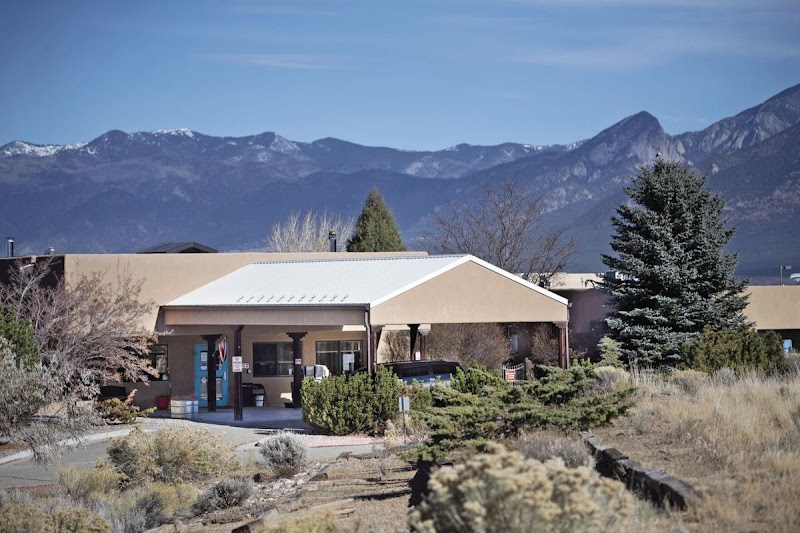

Taos Healthcare

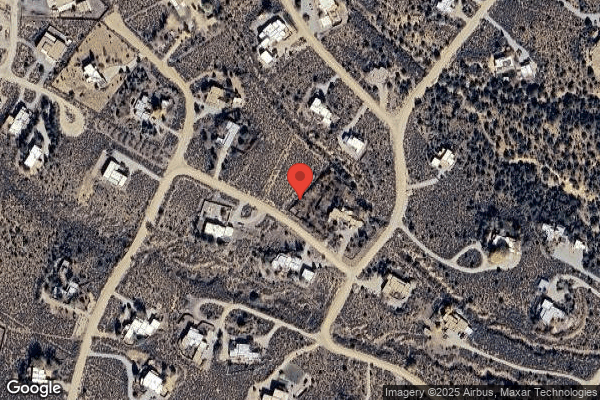
1340 Maestas Road, Taos, NM 87571 (575) 758-2300
For profit - Corporation 102 Beds OPCO SKILLED MANAGEMENT Data: November 2025
Trust Grade
50/100
#50 of 67 in NM
Last Inspection: September 2024

Within standard 12-15 month inspection cycle. Federal law requires annual inspections.

Overview

Taos Healthcare has a Trust Grade of C, which means it is considered average-neither great nor terrible. It ranks #50 out of 67 nursing homes in New Mexico, placing it in the bottom half, but it is the only facility in Taos County. The facility is showing improvement, with the number of issues decreasing from 43 in 2023 to 24 in 2024. Staffing is rated average, with a turnover rate of 42%, which is better than the state average, indicating that staff tend to stay longer and get to know the residents. However, there have been significant concerns, including failures in food handling and staff shortages that resulted in missed bathing schedules for residents, which could negatively impact their comfort and health. On a positive note, there have been no fines reported, which is encouraging.

Trust Score
C
50/100
In New Mexico
#50/67
Bottom 26%
Safety Record
Low Risk
No red flags
Inspections
Getting Better
43 → 24 violations
Staff Stability
○ Average
42% turnover. Near New Mexico's 48% average. Typical for the industry.
Penalties
✓ Good
No fines on record. Clean compliance history, better than most New Mexico facilities.
Skilled Nurses
○ Average
Each resident gets 34 minutes of Registered Nurse (RN) attention daily — about average for New Mexico. RNs are the most trained staff who monitor for health changes.
Violations
⚠ Watch
85 deficiencies on record. Higher than average. Multiple issues found across inspections.
★★☆☆☆
2.0
Overall Rating
★★★☆☆
3.0
Staff Levels
★★★★☆
4.0
Care Quality
★★☆☆☆
2.0
Inspection Score
Stable
2023: 43 issues
2024: 24 issues

The Good

  • 4-Star Quality Measures · Strong clinical quality outcomes
  • Full Sprinkler Coverage · Fire safety systems throughout facility
  • No fines on record
  • Staff turnover below average (42%)

    6 points below New Mexico average of 48%

Facility shows strength in quality measures, fire safety.

The Bad

2-Star Overall Rating

Below New Mexico average (2.9)

Below average - review inspection findings carefully

Staff Turnover: 42%

Near New Mexico avg (46%)

Typical for the industry

Chain: OPCO SKILLED MANAGEMENT

Part of a multi-facility chain

Ask about local staffing decisions and management

The Ugly 85 deficiencies on record

Dec 2024 7 deficiencies
CONCERN (D) 📢 Someone Reported This

A family member, employee, or ombudsman was alarmed enough to file a formal complaint

Potential for Harm - no one hurt, but risky conditions existed

Notification of Changes (Tag F0580)

Could have caused harm · This affected 1 resident

Based on record review and interview, the facility failed to notify the Providers (Physicians and Nurse Practitioners) of a change in condition in which a resident began to have behaviors for 1 (R #1)...

Read full inspector narrative →
Based on record review and interview, the facility failed to notify the Providers (Physicians and Nurse Practitioners) of a change in condition in which a resident began to have behaviors for 1 (R #1) of 1 (R #1) residents reviewed for change of condition. If the physician is not notified of changes in residents status then residents are likely to not get the care needed. The findings are: A. Record review of R #1's face sheet, dated 11/25/24, revealed the following: - admission date of 09/12/24. - Other drug induced secondary Parkinsonism (symptoms that may occur due to the side effects of taking certain medications.) - Dementia In other diseases classified elsewhere, mild, with other behavioral disturbance (a disease that causes loss of memory, language, problem-solving and other thinking abilities.) - Disorganized schizophrenia (a mental disorder characterized by speech, emotional expressions, thoughts, and actions that are disorganized or not in tune with what is expected or appropriate.) - Cognitive communication deficit (difficulty understanding and speaking with other people.) - Other symptoms and signs involving cognitive (how people think) functions and awareness. B. Record review of R #1's care plan, dated 09/12/24, revealed the following: - R #1 had a behavior problem related to schizophrenia, with no problems listed, no interventions and no goals. - R #1 had a potential communication problem related to not always being able to communicate clearly and related to Parkinson's (a condition that effects muscle control, balance and movement) diagnosis. - R #1 had impaired cognitive function related to his diagnosis of dementia. C. Record review of R #1's Minimum Data Set (MDS; a federally mandated assessment instrument completed by facility staff), dated 09/17/24, revealed staff documented R #1 did not have any behaviors exhibited to include physical behavioral symptoms directed toward others (hitting, kicking, pushing, scratching, grabbing, abusing others sexually). D. Record review of R #1's behavior charting, dated 10/24/24, revealed R #1 tried to encourage a female resident to come to his room or he tried to enter their rooms. Resident held hands with female residents and kissed their hands. Interventions attempted: Reminded resident he may not touch other resident without their permission, he may not enter female resident rooms without their permission, and he may not encourage female residents to come to his room. Effectiveness of the interventions: Resident will remember in the moment but needed to be redirected and reminded on a regular basis. E. Record review of R #1's Nursing progress notes, dated 10/29/24 , revealed R #1 tried to touch a resident in an inappropriate manner, touching, and wanting to kiss. R #1's one-to-one sitter stopped the resident and redirected him to room. Resident was inappropriate with others last week. Review of progress notes in R #1's medical record did not indicate R #1's physician had been notified of R #1's behaviors. F. On 11/27/24 at 12:41 PM during an interview with MD #1, she stated the expectation was for the facility to notify her when there were resident behaviors. MD #1 stated she did not expect staff to notify her of a one time incident, but she did expect them to call her if it was an ongoing behavior. She stated she expected staff to notify her so they could have a discussion and see what other interventions need to be implemented. MD #1 stated one-to-one supervision was appropriate for R #1's behavior. MD #1 stated the facility did not notify her regarding R #1's behaviors, but htey should have. G. On 12/4/24 at 11:10 AM during an interview with the Director of Nursing (DON), she stated R #1's record did not contain any documentation regarding communication with the provider.
CONCERN (D) 📢 Someone Reported This

A family member, employee, or ombudsman was alarmed enough to file a formal complaint

Potential for Harm - no one hurt, but risky conditions existed

Investigate Abuse (Tag F0610)

Could have caused harm · This affected 1 resident

**NOTE- TERMS IN BRACKETS HAVE BEEN EDITED TO PROTECT CONFIDENTIALITY** Based on record review and interview, the facility failed to complete and document a thorough investigation had been done for 1 ...

Read full inspector narrative →
**NOTE- TERMS IN BRACKETS HAVE BEEN EDITED TO PROTECT CONFIDENTIALITY** Based on record review and interview, the facility failed to complete and document a thorough investigation had been done for 1 (R #1) of 2 (R #1 and #8) residents reviewed for an allegation of abuse. If the facility fails to complete thorough investigations residents are likely to feel frustrated and unsafe. The findings are: R #1 and R #8 A. Record review of the facility's Follow Up Report to the State Agency, dated 10/29/24 at 5:19 pm, revealed the following: 1. R #1 was in the dining room with R #8 and waited for meal service. 2. Both residents held hands and kissed each other's hands. 3. R #1 leaned in and kissed R #8 on the lips as R #8's husband entered the dining room. 4. R #8's husband became upset and alerted staff to what happened. B. Record review of R #1's behavior charting, dated 10/24/24, revealed R #1 tried to encourage a female resident to come to his room or he tried to enter their rooms. Resident held hands with female residents and kissed their hands. Interventions attempted: Reminded resident he may not touch other resident without their permission, he may not enter female resident rooms without their permission, and he may not encourage female residents to come to his room. Effectiveness of the interventions: Resident will remember in the moment but needed to be redirected and reminded on a regular basis. C. Record review of R #1's nursing progress notes, dated 10/29/24, revealed R #1 tried to touch a resident in an inappropriate manner, touching, and wanting to kiss. R #1's one-to-one sitter stopped the resident and redirected him to room. Resident was inappropriate with others last week. D. Record review of Administrator (ADM) note for R #1, dated 10/29/24 at 2:35 pm, revealed the ADM spoke to R #1's daughter on 10/29/24, and the daughter stated she would come get R #1 and take him home. E. On 12/4/24 at 11:30 AM during an interview with the Administrator, she stated she filed the report based on the statements made by R #8's husband. She did not verify if other residents or staff witnessed the incident and she did not investigate if the incident occurred. The ADM stated she should have done a better job at documenting the incident. The ADM confirmed she went solely off the statement that R #8's husband provided, because he was so upset. The ADM stated R #8 discharged home on [DATE] after the incident.The ADM stated the incident happened in the dining room during mealtime on 10/24/24. The Administrator did not provide any documentation regarding investigations into R #1's behaviors noted on 10/24/24 and 10/29/24. F. On 12/02/24 at 12:19 pm during an interview with Registered Nurse (RN) #1, he stated he remembered R #1 was caught twice being inappropriate with the ladies. The RN stated one incident was at the nurses station. He stated R #8's husband said R #1 kissed his wife on the cheek while the husband was with her. RN #1 stated R #8's husband was upset and told R #1 he could not do that. RN #1 stated R #8 was not upset, because she had dementia (disease that causes loss of memory, language, problem-solving and other thinking abilities.) RN #1 stated R #8's husband took her home. RN #1 stated the other incident was in the dining room with another resident, but he was not sure what happened since he did not witness the incident. RN #1 stated R #1 was discharged for inappropriate behaviors, because he needed one-to-one staffing.
CONCERN (D) 📢 Someone Reported This

A family member, employee, or ombudsman was alarmed enough to file a formal complaint

Potential for Harm - no one hurt, but risky conditions existed

Transfer Requirements (Tag F0622)

Could have caused harm · This affected 1 resident

**NOTE- TERMS IN BRACKETS HAVE BEEN EDITED TO PROTECT CONFIDENTIALITY** Based on record review and interview, the facility failed to include required information in the residents medical record for tr...

Read full inspector narrative →
**NOTE- TERMS IN BRACKETS HAVE BEEN EDITED TO PROTECT CONFIDENTIALITY** Based on record review and interview, the facility failed to include required information in the residents medical record for transfer or discharge for 1 (R #1) of 1 (R #1) residents reviewed for discharges. This deficient practice is likely to result in resident and residents family being unable to locate an appropriate placement putting the residents at risk of an unsafe discharge. The findings are: A. Record review of R #1's face sheet, dated 11/25/24, revealed the following: - admission date of 09/12/24. - Other drug induced secondary Parkinsonism (symptoms that may occur due to the side effects of taking certain medications.) - Dementia In other diseases classified elsewhere, mild, with other behavioral disturbance (a disease that causes loss of memory, language, problem-solving and other thinking abilities.) - Disorganized schizophrenia (a mental disorder characterized by speech, emotional expressions, thoughts, and actions that are disorganized or not in tune with what is expected or appropriate.) - Cognitive communication deficit (difficulty understanding and speaking with other people.) - Other symptoms and signs involving cognitive (how people think) functions and awareness. B. Record review of R #1's Minimum Data Set (MDS; a federally mandated assessment instrument completed by facility staff), dated 9/17/24, revealed R #1 did not display physical or verbal behaviors toward others. C. Record review of R #1's Recapitulation of Stay Resident Discharge summary, dated [DATE], revealed the resident was discharged home per administration's discretion. There was no other documentation in R #1's medical record identifying behaviors prior to the discharge MDS dated [DATE]. D. Record review of R #1's discharge MDS dated [DATE] revealed under section E, Question E0200/ A. - Physical behavior symptoms directed toward others ( e.g., hitting, kicking, scratching, grabbing, abusing others sexually) Answer- Behavior of this type occurred 1 to 3 days. E. On 11/25/24 at 11:37 AM during interview with R #1's daughter/Power of Attorney (POA), she stated the Administrator (ADM) called her on 10/29/24. The daughter stated the Administrator said her father was being transferred to a facility in Colorado, because the facility could not provide a one-to-one (staff member providing support, care,or supervision specifically to one individual) sitter for her father due to sexual behaviors. The daughter stated the ADM told her that was the facility's final decision, and he would be transferred. The daughter stated the facility did not provide a 30 day discharge letter to her or her father, and it would have been nice to have that time to find another place for her father. The daughter went to pick up her father, because she felt had no other choice. She stated, she [Administrator] forced me. The daughter stated she felt overwhelmed and feared her father would be transferred without her knowledge since the ADM looked for another place for him without her consent. The ADM began looking for another facility and sending referrals on 10/24/24 the date of the incident in the dining room when the husband was upset. F. On 11/25/24 at 4:22 pm during an interview with the Director of Nursing (DON), she stated there were concerns about R #1 kissing another man's wife. He [ R #1] touched other residents and held hands with residents in the dining room. The DON stated R #1 had dementia. The DON stated the facility tried for two days to get a hold of the daughter to let her know what was going on with her father. The DON stated they asked R #1's daughter what she wanted to do, and she asked for a referral to another facility. The DON stated they had R #1 on a one-to-one, and staff kept an eye on him. One on one care started on 10/24/24 and ended on 10/29/24 when R #1 discharged . The DON stated they informed the daughter the facility was not able to continue the one-to-one staff with her father because the facility was not staffed for that kind of care. She stated the facility started looking at other options, and they found a couple facilities for the resident. One referral was in Southern New Mexico and the other in Colorado. The daughter was informed and communicated to the facility that she did not want her father transferred to Colorado or to the Southern part of New Mexico. The DON stated she had several conversations with the resident and the daughter, but she did not document any of the conversation. The DON stated she was not able to verify when those conversation occurred. G. On 11/25/24 at 4:22 pm during an interview with the ADM, she stated she had concerns about R #1's behaviors of kissing and touching other residents. The ADM stated she had conversations with the facility's Regional staff about discharging R #1. The ADM stated they did not give R #1 or R #1's family a 30 day notice, because R #1's daughter came and picked him up. The ADM stated she did not document any of the conversations with the daughter, and she did not document any conversations or recommendations that were made by the facility's Regional staff or R #1's daughter. The ADM stated she should have documented the conversations. ADM was aware of the behaviors going on with R #1, but she had not documented the issues. R #1 was on a 1:1 staffing for approximately 5 days prior to leaving the facility. ADM stated that the facility was unable to provide the care needed to for R #1 (1:1 staffing) and were looking for alternate placement and had communicated that with R #1's daughter. Daughter came and picked R #1 up and took him home, after the discussion of having him moved to another facility. ADM also confirmed that no other interventions had been put into place other then 1:1 staffing and no discharge plan had been documented. ADM felt that there was no other choice but to transfer to another facility or to be discharged with daughter home.
CONCERN (D) 📢 Someone Reported This

A family member, employee, or ombudsman was alarmed enough to file a formal complaint

Potential for Harm - no one hurt, but risky conditions existed

Deficiency F0761 (Tag F0761)

Could have caused harm · This affected 1 resident

Based on interview, record review, and an observation of the [NAME] Unit, the facility failed to ensure a medication cart remained locked when not in use. This deficient practice is likely to result i...

Read full inspector narrative →
Based on interview, record review, and an observation of the [NAME] Unit, the facility failed to ensure a medication cart remained locked when not in use. This deficient practice is likely to result in residents having access to the medications in the unlocked medication cart. The findings are: A. Record review of the facility's Security of Medication Cart Policy, dated April 2007, revealed medication carts must be securely locked at all times when out of the nurse's view. B. On 12/02/24 at 12:18 pm during an observation of the [NAME] Unit, the medication cart was unlocked and unattended. Further observation revealed nursing personnel were not present, and residents walked around and sat close to the unlocked medication cart. C. On 12/02/24 at 12:19 pm during an interview with Registered Nurse (RN) #1, he confirmed the medication cart should be locked at all times when not in use. RN #1 further stated he stepped away to assist another resident and was aware he should have locked the cart.
CONCERN (E) 📢 Someone Reported This

A family member, employee, or ombudsman was alarmed enough to file a formal complaint

Potential for Harm - no one hurt, but risky conditions existed

Deficiency F0559 (Tag F0559)

Could have caused harm · This affected multiple residents

Based on record review and interview, the facility failed to give written notice for a room change, including the reason for the change, before the residents were moved for 2 (R #1 and R #3) of 2 (R #...

Read full inspector narrative →
Based on record review and interview, the facility failed to give written notice for a room change, including the reason for the change, before the residents were moved for 2 (R #1 and R #3) of 2 (R #1 and R #3) residents. This deficient practice is likely to result in frustration and confusion for residents. The findings are: Findings for R #1: A. Record review of R #1's face sheet, dated 11/25/24, revealed the following: - admission date of 09/12/24. - Other drug induced secondary Parkinsonism (symptoms that may occur due to the side effects of taking certain medications.) - Dementia, mild, with other behavioral disturbance (a disease that causes loss of memory, language, problem-solving and other thinking abilities.) - Disorganized schizophrenia (a mental disorder characterized by speech, emotional expressions, thoughts, and actions that are disorganized or not in tune with what is expected or appropriate.) - Cognitive communication deficit (difficulty understanding and speaking with other people.) - Other symptoms and signs involving cognitive functions and awareness. B. Record review of R #1's Minimum Data Set (MDS; a federally mandated assessment instrument completed by facility staff), dated 9/17/24, revealed R #1 had a Brief Interview for Mental Status (BIMS; a screening tool used to assess cognition) score of 6, severe cognitive impairment. C. Record review of R #1's electronic medical record (EMR) revealed R #1 was moved from the [NAME] Unit to the [NAME] Unit on 09/27/24. The record did not contain notes to show the facility notified the resident's family. D. On 12/04/24 at 10:16 am during an interview, R #1's daughter stated she was not made aware that R #1 was going to be moved to another unit. She stated she found out he moved when she went to visit him and was unable to locate him in his room. She stated his room on the [NAME] Unit was empty of all personal belongings, and staff told her that he was now residing on the [NAME] Unit. R #1's daughter stated she would have expected the facility to notify her of R #1's move. Findings for R #3: E. On 12/04/24 at 9:50 am during an interview with R #3, she stated she moved rooms, and she was not notified of the room change. R #3 stated she wondered why they moved her when she did not want to be moved. R #3 stated all her clothing and belongings were not move into her new room, and she did not know where her personal belongings were being kept. F. On 12/04/24 at 10:01 during an interview, Certified Nurse Aide (CNA) #3 confirmed R #3 was moved to the [NAME] Unit and prior to the move the resident was on the [NAME] Unit. CNA #3 stated R #3 was moved, because her room was being painted. The CNA stated she was not sure if staff notified R #3 that she was moving to a new room and why. CNA #3 stated R #3's belongings remained in her old room. G. On 12/04/24 at 12:15 pm during an interview with the Director of Nursing (DON), she stated the protocol was to notify housekeeping, dining services, and nurses station when moving residents from one room to another and to document the move in the resident's medical record. The DON stated staff should also notify the resident's family, and that should also be documented in the medical record. The DON was unable to provide any documentation for R #1's or R #3's room change. H. On 12/04/24 at 12:20 pm during an interview with the Administrator, she stated R #3's room change was temporary, because staff were painting her room. The Administrator stated the facility will let the families and the resident know a couple of days in advance that their loved one was going to be moved to another room. The Administrator was unable to provide any documentation as to when staff notified R #1 and R #3 of the room changes or that staff notified the residents' family members.
CONCERN (E) 📢 Someone Reported This

A family member, employee, or ombudsman was alarmed enough to file a formal complaint

Potential for Harm - no one hurt, but risky conditions existed

Respiratory Care (Tag F0695)

Could have caused harm · This affected multiple residents

Based on record review, observation, and interview, the facility failed to ensure 3 (R #5, #6 and #7) of 3 (R #5, #6 and #7) residents reviewed had a working portable concentrator. This deficient prac...

Read full inspector narrative →
Based on record review, observation, and interview, the facility failed to ensure 3 (R #5, #6 and #7) of 3 (R #5, #6 and #7) residents reviewed had a working portable concentrator. This deficient practice is likely to have a resident become hypoxic (having too little oxygen in the blood). The findings are: R #5 A. Record review of physicians orders for R #5, dated 12/16/23, revealed oxygen (O2) administered at 2 liters per minute (LPM) continuous per nasal cannula (a medical device that consists of a small, flexible tube with two prongs that sit inside a patient's nostrils), face mask, or facial tent via O2 concentrator or tank. B. On 11/25/24 at 12:15 pm during an observation, Certified Nurse Aide (CNA) #1 checked R #5's portable O2 concentrator and stated there was not any oxygen coming out of the concentrator and not functioning. CNA #1 asked Minimum Data Set (MDS) Director #1 to check R #5's oxygen saturations, and R #5's oxygen saturation measured 82 percent (%; ideal oxygen saturations 95% to 100%). CNA #1 and MDS director were unsure as to how long R #5's concentrator had not been working. CNA #1 further stated that O2 concentrator should be checked before taking residents to the dining room and throughout the day. C. On 11/25/24 at 12:16 during an interview, R #5 stated he had trouble breathing and could not confirm how long it had been that he was having trouble breathing. R #6 D. Record review of physicians orders for R #6, dated 11/03/23, revealed oxygen at 1 to 4 LPM per nasal cannula via O2 concentrator or tank. E. On 11/25/24 at 12:17 pm during an observation, CNA #1 checked R #6's O2 concentrator and stated there was not any oxygen coming out of the portable concentrator. CNA #1 checked R #6's O2 level, and the oximeter (a device that measures your blood oxygen levels and pulse) was unable to read R #6's O2 level. CNA #1 left to locate a working portable O2 concentrator. F. On 11/25/24 at 12:19 pm during an observation and interview, MDS Director #1 checked the oxygen saturation for R #6 and stated he was a little cyanotic (bluish-purple color of the skin due to deficient oxygenation of the blood). This observation was also observed by the surveyor. The MDS Director proceed to ask R #6 to take deep breaths. The MDS Director confirmed R #6's portable oxygen was not working. R #6 was unable to answer the MDS Director when she asked him if he was having trouble breathing. R #6 was confused and unable to communicate effectively. R #6 appeared to be lethargic (a state of reduced activity and mental alertness) and not very responsive when aide was trying to assist him in eating his meal. MDS Director stated he was less alert than usual. R #7 G. Record review of R #7's physicians orders, dated 10/23/24, revealed 4 liters per nasal cannula continuously. H. On 11/25/24 at 12:20 pm during an observation and interview, CNA #1 checked R #7's oxygen concentrator and stated there was not any oxygen coming out of the portable concentrator. CNA #1 checked R #7's oxygen level and was not able to get a reading. MDS #1 asked R #7 to take a deep breath and was able to get a reading. The resident's oxygen saturation measured 89%. MDS #1 stated all the oxygen concentrators should be in working order and able to deliver the ordered amount of oxygen needed. MDS #1 stated the oxygen concentrators for R #5, R #6, and R #7 were not working . I. On 11/25/24 at 7:30 pm during a phone interview with an anonymous caller stated that the portable oxygen concentrator for R #5, #6, and #7 did not work and they let the Director of Nursing know. The caller stated the DON did not do anything about it. J. On 12/04/24 at 10:39 am during an interview with CNA #1, he stated all resident should have working O2 concentrator, and they should be getting the oxygen that was ordered. K. On 12/04/24 at 12:15 pm during an interview with the Director of Nursing, she stated her expectation was that all residents had working O2 concentrators. DON stated all portable concentrator are checked throughout the day by the CNA's. Vitals which include checking oxygen levels is done twice a day and as needed.
CONCERN (F) 📢 Someone Reported This

A family member, employee, or ombudsman was alarmed enough to file a formal complaint

Potential for Harm - no one hurt, but risky conditions existed

Food Safety (Tag F0812)

Could have caused harm · This affected most or all residents

Based on record review, observation, and interview, the facility failed to store and serve food under sanitary conditions when staff failed to: 1. Ensure opened food items in the refrigerator, freezer...

Read full inspector narrative →
Based on record review, observation, and interview, the facility failed to store and serve food under sanitary conditions when staff failed to: 1. Ensure opened food items in the refrigerator, freezer, and dry storage room were dated and labeled. 2. Ensure staff utilized a sanitizing solution when cleaning various food related surfaces. 3. Ensure eggs and cheese were stored in a manner to prevent food borne pathogen growth when not in the refrigerator. 4. Ensure all storage areas are kept clean and free of debris. 5. Ensure kitchen staff wore their face mask appropriately. These deficient practices are likely to affect all 85 residents listed on the resident census list and are likely lead to foodborne illnesses if food is not being stored properly and safe food handling practices are not adhered to. The findings are: A. On 12/05/24 at 8:40 am, an observation of the facility kitchen revealed the following: - Eight eggs and a small package of sliced cheese sat on a cart next to the kitchen stove. The eggs and cheese sat for one hour and were not on ice. The eggs were warm to touch, and the cheese started to change color. - The Dietary Aide cleaned food service areas and counter tops with the same dish cloth. The Dietary Aide did not use a sanitizing solution between wiping the different surfaces. - A tray of glasses with an unidentified orange liquid sat on the top shelf of the refrigerator unlabled and undated. - A bag of cut red onions were in the refrigerator, losing their form, turning liquidy, and were unlabeled and undated. - A bag of round pastries were in the refrigerator and open to air, - A bag of unidentified items were in the refrigerator and open to air. - The dry storage room floor had dirt and debris under the food shelves. - The water wells on the steam table had calcium build-up and food particles. - A tray containing five salads were in the facility refrigerator unlabeled and undated. B. On 11/25/24 at 1:45 pm during interview, Dietary Aide (DA) #2 confirmed there was a bag of unidentified substance in the refrigerator, and it was not dated. He also confirmed there were five tossed salads not dated in kitchen refrigerator. C. On 11/25/24 at 4:40 pm during an interview with the DM, he confirmed all the above findings. He stated staff could not clean the wells in steam table any better. Facemasks D. On 11/25/24 at 1:40 pm during observation, DA #1 wore his mask below his nose on chin while helping prepare food in the facility kitchen, DA #1 stated it should be covering his nose and not on his chin. He confirmed that all staff are required to wear masks at all times while in the facility due to a respiratory virus outbreak in the building. E. On 11/25/24 at 4:40 pm during an interview with the DM, he stated staff should always were face masks appropriately and at all times while in the facility.
Sept 2024 15 deficiencies
CONCERN (D)

Potential for Harm - no one hurt, but risky conditions existed

Resident Rights (Tag F0550)

Could have caused harm · This affected 1 resident

Based on observation, record review, and interview, the facility failed to promote care with dignity and respect for 1 (R #19) of 1 (R #19) residents reviewed for residents' rights by placing a Wander...

Read full inspector narrative →
Based on observation, record review, and interview, the facility failed to promote care with dignity and respect for 1 (R #19) of 1 (R #19) residents reviewed for residents' rights by placing a WanderGuard (a bracelet that sets off an alarm when the person wearing it attempts to exit the building) on a resident who did not attempt to leave the facility grounds. This deficient practice is likely to result in residents feeling as if they were kept in the facility against their will. The findings are: A. On 9/22/24 at 5:12 PM during a random observation, R #19 wore a wander guard. B. Record review of R #19's physicians orders revealed the resident did not have an order for a wander guard. C. Record review of #19's care plan, dated 07/25/24, revealed staff did not care plan the resident's wander guard. D. Record review of R #19's Elopement Risk Evaluation, dated 7/25/24, revealed the following: - Score of 6, moderate risk; - No Risk section: If yes to question A1 or A2, the assessment is complete. - Section A1: Resident was able to make decisions regarding task of daily living? Staff answered no. - Section A2: Resident was unable to ambulate or mobilize wheelchairs? Staff answered yes. - Moderate Risk section: Resident was cognitive impaired and staff entered the following information: - Resident ambulated or propelled self; - Resident may go outdoors on occasion but did not make an attempt to leave grounds. - Action: Implement Elopement Risk Care Plan. - Imminent Risk section: Staff did not enter any information. - Additional Information section: Care Plan. - Focus: Resident was at risk for elopement related to Elopement Evaluation risk score. - Approach: Discuss and educate resident/family regarding risk of elopement and addition risk reduction strategies. Engage resident in activities of choice. Report to the doctor risk factors for potential elopement. Supervise closely and make regular compliance rounds whenever resident was in room. - The section did not contain any information regarding a wander guard. E. On 09/26/24 at 2:08 PM during an interview with Director of Nursing (DON), she stated R #19 says she was going home every day, but the resident was easily redirected. The DON stated R #19 did not attempt to leave the building, but the resident wore a wander guard as a preventative measure. F. On 09/26/24 at 7:32 PM during an interview with Regional Registered Nurse (RRN), she stated R #19 was not a risk for elopement, and staff should reassess R #19. The RRN stated if the resident was not an elopement risk then she should not wear a wander guard.
CONCERN (D) 📢 Someone Reported This

A family member, employee, or ombudsman was alarmed enough to file a formal complaint

Potential for Harm - no one hurt, but risky conditions existed

Accident Prevention (Tag F0689)

Could have caused harm · This affected 1 resident

**NOTE- TERMS IN BRACKETS HAVE BEEN EDITED TO PROTECT CONFIDENTIALITY** Based on observation, record review, and interview, the facility failed to prevent an accident for 1 (R #75) of 1 (R #75) reside...

Read full inspector narrative →
**NOTE- TERMS IN BRACKETS HAVE BEEN EDITED TO PROTECT CONFIDENTIALITY** Based on observation, record review, and interview, the facility failed to prevent an accident for 1 (R #75) of 1 (R #75) residents reviewed for falls: 1. When the facility failed to routinely assess R #75 to check for injuries following the first fall. 2. When the facility failed to follow post-fall protocols after R #75's first and second falls. These deficient practices likely resulted in R #75 having falls with injuries that required treatment at the hospital. The findings are: A. Record review of the facility's Response to Fall policy, undated, revealed guidance for staff regarding post-fall assessment and monitoring: Following each resident fall, the licensed nurse to complete an incident report and perform a post-fall assessment and investigation. B. Record review of the facility's neurological assessment policy, dated 02/2019, revealed nursing staff should complete a neurological assessment after a resident fall as follows: - Every 30 minutes four times; - Every hour four times; - Every four hours four times; - Every shift; - Combined total of 72 hours. C. Record review of R #75's face sheet revealed R #75 was admitted into the facility on [DATE] and was discharged to the hospital on [DATE]. D. Record review of R #75's care plan, dated 10/30/23, revealed the following: - Focus: R #75 was at risk for falls related to spastic movement (disruption in muscle movement patterns) and muscle weakness. He ambulated (to move from place to place) by wheelchair only, was not always aware of his own limitations, and had episodes of incontinence (loss of bladder or bowel control). He had a history of refusing help at times as evident by diagnoses of cerebral palsy (group of disorders that affect movement, muscle tone, balance, and posture) and muscle disorder. His fall risk assessment was high risk. - Interventions: Give R #75 reminders as needed not to transfer or ambulate without assistance. Falls to be reviewed by the fall team (Nursing, therapy). May implement new interventions beyond routine interventions to reduce risk of potential injury to resident. E. Record review of R #75's nursing progress notes, dated 09/05/24 at 7:33 am, revealed R #75 yelled out during morning care. The resident was frustrated, because no one understood him when he verbalized his needs. Resident stated he needed someone to listen to him who understood English. F. Record review of R #75's nursing progress notes, dated 09/06/24 at 4:36 pm, revealed R #75 experienced an unwitnessed fall, and the bridge of his nose remained red after the fall. (This indicated R #75 potentially hit his face during the fall.) G. Record review of R #75's assessments tab located in the Electronic Health Record (EHR) revealed staff did not complete post-fall neurological assessments for R #75 after the resident's first fall on 09/06/24 at 4:36 pm. H. Record review of R #75's nursing progress notes, dated 09/06/24 at 6:06 pm, revealed R #75 experienced a second fall that re-opened a laceration above his left eye, but R #75 denied pain. Provider, Administrator (ADM), and Director of Nursing (DON) were notified. I. Record review of R #75's assessments page located in the EHR revealed nursing staff completed one neurological assessment for R #75 after the resident's fall on 09/06/24 at 6:10 pm. J. Record review of R #75's nursing progress notes, dated 09/06/24 at 7:30 pm, revealed R #75 experienced a third fall, and R #75 stated his neck hurt. R #75 was sent to the emergency room (ER) after the third fall. K. Record review of R #75's nursing progress notes, dated 09/06/24 at 10:10 pm, revealed the facility was notified by the hospital that R #75 experienced a neck fracture located in C1 and C2 (first two vertebrae located at the top of cervical spine). L. On 09/25/24 at 11:04 am during an interview with R #75's Power of Attorney (POA; legal authorization for a designated person to make decisions about another person's property, finances, or medical care), she stated R #75 experienced three falls on 09/06/24, and the third fall resulted in R #75's neck fracture. R #75's POA stated R #75 was out of it since he experienced the fracture. M. On 09/25/24 at 11:13 am during an observation of R #75, he lay in bed sleeping and wore a cervical collar (neck brace used to support the neck and spine). N. On 09/25/24 at 1:17 pm during an interview with Licensed Practical Nurse (LPN) #2, she stated R #75 experienced three falls on 09/06/24, which resulted in R #75 fracturing his neck after the third fall. LPN #2 also stated she assessed R #75 after the first two falls, but she was not there when R #75 fell for the third time that day. LPN #2 stated a post-fall neurological assessment should have been completed every 15 to 30 minutes after a resident falls. LPN #2 stated R #75 will often try an assist himself with a self transfer, because he gets mad that he cannot communicate to the staff. O. On 09/26/24 at 3:42 pm during an interview with LPN #1, he stated R #75 had a tendency to self-transfer, and staff knew to keep an eye on him. LPN #1 stated nursing staff will immediately complete a post-fall neurological assessment when a resident falls. He stated they will send the resident to the ER right away if they have a head or face injury, even if the resident denied pain. LPN #1 stated post-fall neurological assessments should be completed for 72 hours, with the initial assessments occurring every 15 minutes during the first few hours and the intervals increasing as time passes. P. On 09/26/24 at 7:32 pm during an interview with the DON, she stated the nursing staff should have assessed R #75 every 15 minutes, then every 30 minutes, and then every two hours after the first fall on 09/26/24. The DON stated staff did not complete post-fall neurological assessments as frequently as they should have for R #75 after his first and second falls on 09/06/24.
CONCERN (D)

Potential for Harm - no one hurt, but risky conditions existed

Deficiency F0691 (Tag F0691)

Could have caused harm · This affected 1 resident

**NOTE- TERMS IN BRACKETS HAVE BEEN EDITED TO PROTECT CONFIDENTIALITY** Based on observation, interview, and record review, the facility failed to ensure that ileostomy [a surgical procedure in which ...

Read full inspector narrative →
**NOTE- TERMS IN BRACKETS HAVE BEEN EDITED TO PROTECT CONFIDENTIALITY** Based on observation, interview, and record review, the facility failed to ensure that ileostomy [a surgical procedure in which the last part of the small intestine (ileum) is connected to the abdominal wall and an opening (stoma) is created in the abdominal wall to allow waste to leave the body] care was consistent with professional standards of practice for 1 (R #13) of 1 (R #13) resident when the ostomy bag and the abdominal binder (wide compression belt that encircles the abdomen) was not consistently offered/applied per physician order. This deficient practice could likely result in skin breakdown/infection around the ostomy opening. The findings are: A. Record review of R #13''s face sheet revealed she was admitted to the facility on [DATE]. B. Record review of R #13's physician's orders revealed the following: 1. Dated 12/21/23, change ileostomy bag per wound orders. When resident refused ostomy (ileostomy) bag or continually removed bag, cleanse skin surrounding ostomy two times per shift daily. Cleanse with saline and apply barrier cream to areas of erythema (redness) and excoriation (skin breakdowns) surrounding stoma. Apply abdominal pad over stoma and barrier cream to protect skin from stool. 2. Dated 12/21/23, ostomy care: Reinforce the need to always keep ostomy bag in place. Crusting and pasting technique: With each application of new ostomy bag, cleanse peristomal area define with mild soap and water and pat dry. Spray No-Sting Skin Prep to peristomal area. Lightly apply stoma powder to peristomal area, lightly dust. Wait one minute in between application, then repeat. Repeat process at series of three times and end with No-Sting Prep spray. Apply ostomy bag and duoderm thin to secure. 3. Dated 01/25/24, clean stoma and surrounding area. Use stoma skin barrier. Place loose abdominal binder around waist with sewn on tubes or buttons to distract resident. C. Record review of R #13's Care Plan, dated 06/29/23, revealed the following: 1. R #13 had potential for skin breakdown related to thin, fragile skin and ostomy. 2. R #13 should be checked every two hours, or more often, as needed or requested for incontinence, soiling, wetness, or any skin breakdown. D. Record review of R #13's Grievance Report, dated 09/15/23, revealed the resident felt the nursing staff did not apply the ostomy bag correctly, and the bags continued to fall off or leak. R #13 felt she never had this problem at home and wanted to change the bags herself. The DON responded that the resident repeatedly removed the ostomy bag, and staff would carry out the order [physician order for care]. E. On 9/24/24 at 2:02 pm during random observation, R #13 stood by nurses station, and the front of her pants were soiled. F. On 9/24/24 at 2:15 pm during an interview with R #13 she stated, The nurse is supposed to help me. My pants are soiled, and I have poop on my skin. I try to eat less so that it [poop] doesn't come out [points to opening of stoma]. If they [nurses] put a bag [ostomy bag; a collection bag which attaches to the stoma]. It would be better than them putting a brief over it [stoma opening]. R #13 stated confirmed that she would remove the bag when it was full or hurting. She stated it would become uncomfortable, and she would remove it. She stated she did not like to be soiled. G. On 09/24/24 at 2:16 pm during an interview with Wound Care Nurse (WCN), she stated R #13 refused to wear the ostomy bag and the abdominal pad (large wound dressing). She stated R #13 would remove the pads herself and cover the area with tissue paper. The WCN stated R #13 was referred to a Specialist for the stoma towards end of last year (2023) The WCN stated the Specialist said no to reversing the stoma and to putting the stoma in a different location on the resident's body. The WCN stated the resident had an order to change the ostomy bag twice a day. She stated the nursing staff usually changed R #13's clothing multiple times a day. H. On 09/24/24 at 2:34 pm, an observation of R #13's room and R #13's stoma care and an interview revealed the resident's bed linens and privacy curtain were soiled with urine and stool. RN #1 and the WCN provided stoma care for R #13 and confirmed the observation. Further observations revealed urine and stool ran down R #13's legs from the stoma opening. RN #1 stated the area around the resident's stoma was very red, and R #13 took Keflex (antibiotic medication used to treat skin infections) a few times due to cellulitus (a bacterial skin infection that can spread rapidly and cause serious complications) on the stoma area. Further observations revealed R #13's stoma was red, swollen, and inflamed. The skin around the stoma opening was excoriated (damaged or removed). R #13 expressed pain to the area during wound care and stated, Ouch. It burns. During observation, RN #1 or the WCN never attached or offered to attach the ostomy bag, nor was the abdominal binder applied. I. On 09/25/24 at 11:46 am during an interview with LPN #1, he stated R #13 often removed her ostomy dressing. He stated the staff continually checked on the resident to ensure she did not remove the dressing. LPN #1 stated staff will clean the stoma and check the ostomy if they observe R #13 try to remove the dressing. He further stated R #13 had a history of skin infection in the stoma area, but R #13 did not have a current infection. J. On 09/26/24 at 2:26 pm during an interview with the Director of Nursing (DON), she stated the staff should attempt to apply an ostomy bag, and they should apply the abdominal pad (binder) if R #13 removed the ostomy bag. The DON stated she was aware R #13 expressed pain to the stoma, and staff did not attempt new interventions to keep R #13 from removing the wound dressing.
CONCERN (D)

Potential for Harm - no one hurt, but risky conditions existed

Medical Records (Tag F0842)

Could have caused harm · This affected 1 resident

Based on record review and interview, the facility failed to ensure the Elopement Risk Evaluation was accurate for 1 (R #19) of 1 ( R #19) residents reviewed when staff did not accurately complete R #...

Read full inspector narrative →
Based on record review and interview, the facility failed to ensure the Elopement Risk Evaluation was accurate for 1 (R #19) of 1 ( R #19) residents reviewed when staff did not accurately complete R #19's evaluation to reflect the resident's elopement risk. This deficient practice is likely to result in resident not receiving the appropriate care and treatment he may need. The findings are: A. Record review of R #19's Elopement Risk Evaluation, dated 7/25/24, revealed the following: - Score of 6, moderate risk; - No Risk section: If yes to question A1 or A2, the assessment is complete. - Section A1: Resident was able to make decisions regarding task of daily living? Staff answered no. - Section A2: Resident was unable to ambulate or mobilize wheelchairs? Staff answered yes. - Moderate Risk section: Resident was cognitive impaired and staff entered the following information: - Resident ambulated or propelled self; - Resident may go outdoors on occasion but did not make an attempt to leave grounds. - Action: Implement Elopement Risk Care Plan. - Imminent Risk section: Staff did not enter any information. - Additional Information section: Care Plan. - Focus: Resident was at risk for elopement related to Elopement Evaluation risk score. - Approach: Discuss and educate resident/family regarding risk of elopement and addition risk reduction strategies. Engage resident in activities of choice. Report to the doctor risk factors for potential elopement. Supervise closely and make regular compliance rounds whenever the resident was in room. B. On 09/26/24 at 2:08 PM during an interview with Director of Nursing (DON), she stated R #19 says she was going home every day, but the resident was easily redirected. The DON stated R #19 did not attempt to leave the building. F. On 09/26/24 at 7:32 PM during an interview with Regional Registered Nurse, she stated R #19 was not a risk for elopement.
CONCERN (D)

Potential for Harm - no one hurt, but risky conditions existed

Safe Environment (Tag F0921)

Could have caused harm · This affected 1 resident

Based on observation and interview, the facility failed to ensure the bedroom for 1 of (R#3) of 1 (R #3) residents was clean, without food debris and used medical equipment on the floor. This deficien...

Read full inspector narrative →
Based on observation and interview, the facility failed to ensure the bedroom for 1 of (R#3) of 1 (R #3) residents was clean, without food debris and used medical equipment on the floor. This deficient practice is likely to make the resident feel as if he was not important and he did not matter to the facility. The findings are: A. On 09/23/24 at 11:03 am during an observation and interview, R #3's room floor was dirty and sticky. There were food crumbs present by R #3, who sat in a wheelchair by the television, and there was an unknown yellow colored liquid on the floor next to R #3. Two of R #3's urinals lay on the nightstand, and the other one urinal lay on the floor near his bed. R #3's roommates side of the room was clean. R #3 stated the staff cleaned his room every now and then when they get a chance. R #3 stated there were times when his room was not cleaned by housekeeping staff. B. On 09/23/24 at 11:07 am during an interview with Licensed Practical Nurse (LPN) #3, she stated R #3's room was dirty and should be cleaned. LPN #3 stated she did not know why R #3's room was so dirty. She said the housekeeping staff should clean each resident's room at least one time every day, but R #3's room should not have been that dirty with multiple urinals present on the floor. C. On 09/26/24 at 2:48 pm during an interview with the Administrator (ADM), she stated the residents' rooms should be swept and mopped daily and as needed. The ADM confirmed food debris and used medical equipment should not have been left throughout R #3's room and floor.
CONCERN (E) 📢 Someone Reported This

A family member, employee, or ombudsman was alarmed enough to file a formal complaint

Potential for Harm - no one hurt, but risky conditions existed

Deficiency F0561 (Tag F0561)

Could have caused harm · This affected multiple residents

**NOTE- TERMS IN BRACKETS HAVE BEEN EDITED TO PROTECT CONFIDENTIALITY** Based on record review and interview, the facility failed to promote resident choices for 2 (R #72 and #175) of 2 (R #72 and #17...

Read full inspector narrative →
**NOTE- TERMS IN BRACKETS HAVE BEEN EDITED TO PROTECT CONFIDENTIALITY** Based on record review and interview, the facility failed to promote resident choices for 2 (R #72 and #175) of 2 (R #72 and #175) residents reviewed for choices when staff failed to: 1. Accommodate R #72's choice to have his pacemaker (a device that stimulates the heart rate when it is beating too slowly) monitor present in the facility. 2. Offer R #175 showers per his preference. These deficient practices are likely to result in the resident's personal choices not being honored. The findings are: R #72: A. Record review of R #72's face sheet revealed R #72 was admitted on [DATE] with a diagnosis of atrial fibrillation (an irregular and often very rapid heart rhythm). B. Record review of R #72's Care Plan Conference notes, dated 09/11/24, revealed R #72 had a pacemaker (a device surgically implanted in the body to deliver electrical pulses to the heart to help the heart beat in a regular rhythm) implanted in December, 2023 and had a pacemaker monitor at home. Family will bring it in and let them know to have his name on it. C. On 09/23/24 at 1:18 PM during an interview with R #72's power of attorney (POA; legal authorization for a designated person to make decisions about another person's property, finances, or medical care)/daughter, she stated her father had a monitor for his pacemaker at home and would like it to be with him at the facility. She further stated they asked if the pacemaker monitor could be brought into the facility when her father was admitted , but staff told them to wait until a staff member contacted them. R #72's daughter stated the monitor sent a report to the doctor's office daily. She stated if her father had heart issues then the doctor would see it and call them. She stated the monitor also notified them if the pacemaker worked incorrectly. D. On 09/26/24 at 7:35 PM during interview with the Director of Nursing (DON), she stated R #72 should have his monitor in the facility if that was what he wanted. She further stated the monitor had important information on who to call if something happened to the pacemaker. The DON stated it was important to have the pacemaker monitor, because the monitor tracked if the resident's heart started to beat slowly. R #175: E. Record review of R #175's face sheet revealed R #175 was admitted to the facility on [DATE] and discharged on 08/30/24. F. Record review of R #175's care plan revealed the following: - Dated 09/23/23: Focus: Resident's family stated a shower preference three times a week. Interventions: Offer resident a shower three times a week and as needed (PRN). - Dated 03/22/24: Focus: Resident has an ADL self care performance deficit. Interventions: R #175 is totally dependent on two staff to provide bath and showers. G. Record review of R #175's concern/grievance reports revealed the following: - On 04/08/24: Grievance filed by R #175's spouse and stated the resident did not receive a shower on Sunday, Monday, or today. - On 06/26/24: Grievance filed by R #175's spouse and stated R #175 was not bathed on 06/26/24 and 06/27/24. Grievance also stated, Getting him [R #175] showers on a regular basis is an ongoing challenge. H. Record review of R #175's documentation survey report (Activities of Daily Living- ADL tracking form), dated 06/14/24 through 06/30/24, revealed staff did not offer and give R #175 any baths or showers out of six opportunities. Staff did not document the resident refused any baths or showers during the month. I. Record review of R #175's shower sheets, dated 06/14/24 through 06/30/24, revealed the facility did not provide any shower sheets for R #175. J. Record review of R #175's documentation survey report, dated 07/01/24 through 07/31/24, revealed staff offered and gave R #175 four baths or showers out of 14 opportunities. Staff did not document the resident refused any baths or showers during the month. K. Record review of R #175's shower sheets, dated 07/01/24 through 07/31/24, revealed staff offered and gave R #175 five baths or showers out of 14 opportunities. L. Record review of R #175's documentation survey report, dated 08/01/24 through 08/30/24, revealed staff offered and gave R #175 eight baths or showers out of 13 opportunities. Staff did not document the resident refused any baths or showers during the month. M. Record review of R #175's shower sheets, dated 08/01/24 through 08/30/24, revealed staff offered and gave R #175 10 baths or showers out of 13 opportunities. R #175 refused two baths/showers for the month. N. On 09/25/24 at 1:14 pm during an interview with Licensed Practical Nurse (LPN) #2, she stated she remembered R #175 missed showers when he was in the facility, and he and his family complained about that. O. On 09/25/24 at 3:31 pm during an interview with Certified Nursing Assistant (CNA) #1, she stated R #175 would not refuse baths or showers, and he liked a bath or shower three times a week. P. On 09/25/24 at 3:59 pm during an interview with CNA #2, she stated R #175 enjoyed taking baths or showers, but he frequently did not get three baths or showers a week. Q. On 09/26/24 at 1:47 pm during an interview with the Director of Nursing (DON), she stated R #175 and his family wanted R #175 to be offered and given three showers a week. She stated staff should have done that, but they did not.
CONCERN (E)

Potential for Harm - no one hurt, but risky conditions existed

Deficiency F0576 (Tag F0576)

Could have caused harm · This affected multiple residents

Based on interview, the facility failed to ensure residents received mail on Saturdays for all 77 residents who resided at the facility. This deficient practice is likely to result in residents not re...

Read full inspector narrative →
Based on interview, the facility failed to ensure residents received mail on Saturdays for all 77 residents who resided at the facility. This deficient practice is likely to result in residents not receiving timely communication which could result in feelings of isolation. The findings are: A. On 09/24/24 at 1:15 PM during the Resident Council meeting, the residents stated staff did not deliver mail to them on the weekends, but they thought staff should. B. On 09/26/24 at 9:06 AM during an interview with the Activities Director, she stated staff did not deliver mail on the weekends to the residents. She stated if the Post Office delivered mail to the front office on the weekend, then staff put it in the activities mail box for her to deliver on Monday. C. On 09/26/24 at 2:16 PM during an interview with the Administrator, she stated the expectation was for residents to get their mail on the weekends if that was when the Post Office delivered it to the facility.
CONCERN (E)

Potential for Harm - no one hurt, but risky conditions existed

Deficiency F0657 (Tag F0657)

Could have caused harm · This affected multiple residents

**NOTE- TERMS IN BRACKETS HAVE BEEN EDITED TO PROTECT CONFIDENTIALITY** R #72: O. Record review of R #72's face sheet revealed the resident was admitted on [DATE] with the following diagnoses: - Atri...

Read full inspector narrative →
**NOTE- TERMS IN BRACKETS HAVE BEEN EDITED TO PROTECT CONFIDENTIALITY** R #72: O. Record review of R #72's face sheet revealed the resident was admitted on [DATE] with the following diagnoses: - Atrial fibrillation (an irregular and often very rapid heart rhythm), - Metabolic encephalopathy (change in how your brain works due to an underlying condition), - Unspecified dementia (when confusion or mild cognitive impairment cannot be clearly diagnosed as a specific type of dementia), - Spinal stenosis (narrowing of the space surrounding the spinal cord causing pressure and pain), cervical region, - Acute kidney failure (when your kidneys stop working suddenly), - Benign prostatic hyperplasis (a non-cancerous increase in size of the prostate gland). P. On 09/23/24 at 2:00 PM, during an observation and interview, a fall mat lay in front of R #72's bed. The resident stated the fall mat was put there after one of his falls. Q. On 09/23/24 at 2:58 PM during an interview with R #72's Power of Attorney (POA; legal authorization for a designated person to make decisions about another person's property, finances, or medical care), she stated she was concerned because her father had a couple of falls since his admission. R. Record review of R #72's progress notes revealed the resident had a fall without injury on 9/11/24 and a fall with injury on 9/18/24. He was sent to the emergency room for x-rays and a computed tomography (CT scan; an imaging test that allows doctors to see inside your body with more detail than a regular X-ray) The resident returned to the facility on the same day. The CT scan results returned with no findings (nothing on the scan that is urgent, needs quick treatment, or is life threatening) . S. Record review of R #72's care plan revealed staff did not care plan the resident's fall mat. T. On 09/26/24 at 2:16 PM during an interview with the Director of Nursing (DON), she stated R #72 had a couple of falls since admission, but he did not have any injuries. She stated staff did not care plan the resident fall mat, but they should have. Based on observation, record review, and interview, the facility failed to ensure staff revised the care plan for 4 (R #19, #39, #71, and #72) of 4 (R #19, #39, #71, and #72) residents reviewed when staff failed to: 1. Update the care plan to include a wander guard (wearable technology used to keep residents from wandering or eloping from the facility unattended) use for R #19 and #39. 2. Update the care plan to include family assistance with activities of daily living (ADL; activities related to personal care such as bathing, showering, dressing, walking, toileting, and eating) care for R #71. 3. Update the care plan to include the use of a fall mat for R #72. These deficient practices are likely to result in residents' care and needs not being addressed if care plans are not updated. The findings are: R #19: A. On 9/22/24 at 5:12 PM during a random observation, R #19 wore a wander guard. B. Record review of R #19's care plan, dated 07/25/24, revealed staff did not care plan R #19's use of a wander guard. C. On 09/26/24 at 7:06 pm during an interview with the Director of Nursing (DON), she confirmed R # 19 wore a wander guard. She further stated staff did not care plan R #19's wander guard, but they should have. R #39: D. Record review of R #39's face sheet revealed R #39 was admitted into the facility on [DATE]. E. Record review of R #39's physician orders, dated 09/09/24, revealed an order for a wander guard. F. Record review of R #39's care plan, dated 09/24/24, revealed R #39 was at risk for elopement related to impaired safety awareness, but the use of a wander guard was not present in the care plan. G. On 09/26/24 at 7:06 pm during an interview with the DON, she stated staff did not care plan R #19's wander guard, but they should have. The DON confirmed R #39 wore a wander guard device. R #71: H. Record review of R #71's face sheet revealed R #71 was admitted into the facility on [DATE]. I. Record review of R #71's shower sheet, dated 09/10/24, revealed R #71 wanted to wait for her sister to bathe her. J. Record review of R #71's care plan, dated 09/18/24, revealed R #71 required ADL care assistance related to decreased mobility. R #71 required partial assistance while bathing, but the resident's care plan did not indicate R #71's family provided assistance with bathing. K. On 09/23/24 at 11:29 am during an interview with R #71, she stated her sister helped her take baths or showers per her preference. L. On 09/25/24 at 3:31 pm during an interview with Certified Nursing Assistant (CNA) #1, she stated R #71 preferred to be assisted with bathing by her sister. M. On 09/26/24 at 2:31 pm during an interview with Licensed Practical Nurse (LPN) #3, she stated R #71 stated not like staff to bathe her and preferred for her sister to help her. LPN #3 stated the facility nursing staff were aware of this. N. On 09/26/24 at 2:35 pm during an interview with the DON, she stated staff should care plan that R #71 preferred her sister's assistance with bathing, but they did not.
CONCERN (E)

Potential for Harm - no one hurt, but risky conditions existed

ADL Care (Tag F0677)

Could have caused harm · This affected multiple residents

**NOTE- TERMS IN BRACKETS HAVE BEEN EDITED TO PROTECT CONFIDENTIALITY** Based on record review and interview, the facility failed to provide activities of daily living (ADL; activities related to pers...

Read full inspector narrative →
**NOTE- TERMS IN BRACKETS HAVE BEEN EDITED TO PROTECT CONFIDENTIALITY** Based on record review and interview, the facility failed to provide activities of daily living (ADL; activities related to personal care such as bathing, showering, dressing, walking, toileting, and eating) assistance for baths and showers by the facility staff for 1 (R #58) of 1 (R #58) residents reviewed for ADL care. This deficient practice is likely to affect the dignity and health of the residents. The findings are: A. Record review of R #58's face sheet revealed R #58 was admitted into the facility on [DATE]. B. Record review of R #58's care plan, dated 03/05/24, revealed the following: - Focus: R #58 had an ADL self-care deficit related to a history of fractures. - Interventions: Shower at least once a week and as needed. - R #58 was dependent on staff for bathing. C. Record review of the facility's bath and shower schedule revealed R #58 was scheduled to bathe or shower on Wednesdays and Saturdays. D. Record review of R #58's documentation survey report (Activities of Daily Living - ADL tracking form), dated 08/01/24 through 08/31/24, revealed staff offered and gave R #58 nine baths or showers out of nine opportunities. E. Record review of R #58's shower sheets, dated 08/01/24 through 08/31/24, revealed staff offered and gave R #58 four baths or showers out of nine opportunities. F. Record review of R #58's documentation survey report, dated 09/01/24 through 09/26/24, revealed staff offered and gave R #58 twelve baths or showers out of six opportunities. G. Record review of R #58's shower sheets, dated 09/01/24 through 09/26/24, revealed staff offered and gave R #58 four baths or showers out of six opportunities. H. On 09/23/24 at 9:58 am during an interview with R #58, she stated staff told her there was not enough staff to bathe her, and her baths and showers have significantly reduced. R #58 also stated she would take a bath or shower once a day if they would let her. I. On 09/25/24 at 3:34 pm during an interview with CNA #1, she stated R #58 did not refuse baths or showers, and R #58 wanted a bath or shower every day. CNA #1 also stated staff document baths and showers on the shower sheets and nowhere else. CNA #1 confirmed R #58 missed showers due to staffing issues. J. On 09/25/24 at 4:31 pm during an interview with Certified Medication Aide (CMA) #1, he stated R #58 liked to take a lot of baths and showers, and she would take one every day if she could. K. On 09/26/24 at 1:49 pm during an interview with the Director of Nursing (DON), she stated resident's baths and showers should be documented on shower sheets and in the electronic health record. The DON confirmed staff did not offer and give R #58 enough baths and showers.
CONCERN (E)

Potential for Harm - no one hurt, but risky conditions existed

Deficiency F0688 (Tag F0688)

Could have caused harm · This affected multiple residents

**NOTE- TERMS IN BRACKETS HAVE BEEN EDITED TO PROTECT CONFIDENTIALITY** Based on observation, record review, and interview, the facility failed to provide restorative physical therapy service devices ...

Read full inspector narrative →
**NOTE- TERMS IN BRACKETS HAVE BEEN EDITED TO PROTECT CONFIDENTIALITY** Based on observation, record review, and interview, the facility failed to provide restorative physical therapy service devices as recommended by the therapy department for 1 (R #37) of 1 (R #37) residents. This deficient practice is likely to result in residents having pain and a decrease in mobility, causing psychosocial harm and despair. The findings are: A. Record review of R #37's face sheet revealed R #37 was admitted into the facility on [DATE] with the following diagnoses: 1. Encephalopathy (a disease that affects brain structure or function and causes altered mental state and confusion). 2. Muscle weakness. 3. Quadriplegia (paralysis of all four limbs). B. Record review of R #37's care plan, dated 06/23/23, revealed R #37 required assistance to meet basic activities of daily living (ADL; activities related to personal care such as bathing, showering, dressing, walking, toileting, and eating) care due to quadriplegia to include assistance with transfers and ensuring R #37's call light was in reach for use. C. Record review of R #37's Occupational Therapy (OT) assessment summary, dated 07/09/24, revealed R #37 would benefit from upper extremity (arms) and neck passive range of motion (movement caused when an outside force, such as a therapist causes movement of a joint) restorative nursing program. D. On 09/23/24 at 3:22 pm during an observation and interview with R #37, she lay in bed with her head positioned near her left shoulder and visible contractures (muscle tightening deformity that makes flexibility and movement difficult) of both of hands. R #37 stated she thought she was supposed to receive range of motion exercises from the nursing staff. She stated she did not receive it, but she would like to. E. On 09/25/24 at 1:14 pm during an interview with Licensed Practical Nurse (LPN) #2, she stated the facility used to have a restorative nursing aide, but they did not have one anymore. LPN #2 stated she did not see therapy or therapy services offered to R #37 in awhile. F. On 09/25/24 at 3:59 pm during an interview with Certified Nursing Assistant (CNA) #2, she stated she did not offer range of motion or restorative nursing services to R #37. G. On 09/25/24 at 4:27 pm during an interview with Certified Medication Aide (CMA) #1, he stated the facility used to have a restorative nursing aide, but they did not have one now. H. On 09/26/24 at 2:37 pm during an interview with the Director of Rehabilitation (DOR), she stated R #37 would benefit from range of motion therapy and restorative nursing, but the facility did not offer those services. I. On 09/26/24 at 5:18 pm during an interview with the Director of Nursing (DON), she stated they should have offered R #37 restorative nursing services when OT referred the resident in July, 2024, but they did not.
CONCERN (E)

Potential for Harm - no one hurt, but risky conditions existed

Deficiency F0740 (Tag F0740)

Could have caused harm · This affected multiple residents

**NOTE- TERMS IN BRACKETS HAVE BEEN EDITED TO PROTECT CONFIDENTIALITY** Based on observation, record review, and interview, the facility failed to ensure 2 (R #12 and #62) of 2 (R #12 and #62) residen...

Read full inspector narrative →
**NOTE- TERMS IN BRACKETS HAVE BEEN EDITED TO PROTECT CONFIDENTIALITY** Based on observation, record review, and interview, the facility failed to ensure 2 (R #12 and #62) of 2 (R #12 and #62) residents reviewed for behavioral health concerns received necessary behavioral health care to meet their needs when staff failed to ensure effective communication between the facility and psychiatric providers and provide consistent psychiatric services to meet R #12 and #62 psychiatric service needs. These deficient practices are likely to result in the residents not receiving the behavioral or mental health care and assistance needed to improve mood and reduce depression and anxiety. The findings are: R #12: A. Record review of R #12's face sheet revealed R #12 was admitted into the facility on [DATE]. B. Record review of R #12's care plan, dated 09/15/22, revealed R #12 had a diagnoses of depression, and facility staff should monitor R #12 for any signs of depression. C. Record review of R #12's nursing progress notes, dated 07/13/24, revealed Psychiatric Services Provider (PSP) #1 saw R #12 for medication management. Further review of the progress notes revealed PSP #1 did not see R #12 after that date. D. Record review of R #12's nursing progress notes, dated 08/15/24, revealed R #12's Patient Health Questionnaire (PHQ) 2 Evaluation (a screening tool used to diagnose depression) stated R #12 was feeling down, depressed, or hopeless for two to six days. E. On 09/23/24 at 1:10 pm during an interview with R #12, he stated he experienced depression. He stated he has not been able to talk to someone about that, but he would like to. F. On 09/25/24 at 11:18 am during an interview with the Social Services Director (SSD), she stated R #12 would benefit from psychiatric talk therapy services, and she did not know why R #12 saw the psychiatric service provider. G. On 09/26/24 at 6:18 pm during an interview with PSP #1, she stated they did not offer talk therapy services to residents in the facility. She stated they visit the residents for psychiatric medication management when needed and not on a regular basis. PSP #1 also stated she assessed each resident she visited, but she did not follow-up with them often or on a regular basis. R #62: H. Record review of R #62's face sheet revealed R #62 was admitted into the facility on [DATE]. I. Record review of R #62's care plan, dated 03/05/24, revealed R #62 was diagnosed with depression, and staff should assist R #62 in developing more appropriate methods of coping. J. Record review of R #62's nursing progress notes, dated 08/23/24, revealed R #62's PHQ 2 Evaluation stated R #62 was feeling down, depressed, or hopeless for two to six days. K. Record review of R #62's nursing progress notes, dated 09/07/24, revealed PSP #1 saw R #62 for medication management. Further review of the progress notes revealed, The patient reports feeling sad, difficulty sleeping, lack of appetite, loss of interest, and is evasive when asked about suicidal thoughts .Plan: Continue bupropion [medication used to treat depression], continue to monitor for increased signs of depression/anxiety, and encourage the patient to participate in group activities. The progress notes did not reveal if talk therapy was offered to the resident. L. On 09/23/24 at 1:29 pm during an observation and interview, R #62 lay in bed and stared at the ceiling. The resident was not interested in conversation and had an overall sad, depressed attitude while he talked. R #62 stated he had a lot of depression, and the facility did not offer him any talk therapy to help with that. R #62 also stated, It's easier to watch a person die than it is to be that person dying. M. On 09/24/24 at 11:23 am during an interview with the SSD, she stated R #62 had depression that was getting worse for the past three weeks. The SSD also stated R #62 would benefit from talk therapy services, but she was unaware of what psychiatric services were offered to R #62.
CONCERN (E)

Potential for Harm - no one hurt, but risky conditions existed

Deficiency F0883 (Tag F0883)

Could have caused harm · This affected multiple residents

Based on record review and interview, the facility failed to ensure 4 (R #13, #21, #48, and #6) out of 5 residents (R #13, #21, #48, #6 and #14) reviewed for immunizations had completed and signed con...

Read full inspector narrative →
Based on record review and interview, the facility failed to ensure 4 (R #13, #21, #48, and #6) out of 5 residents (R #13, #21, #48, #6 and #14) reviewed for immunizations had completed and signed consent/refusal forms on file to show they consented to or declined the pneumococcal (for pneumonia, an infection in one or both lungs) and influenza (flu) vaccines. If residents are not vaccinated as appropriate against pneumonia and influenza they have a higher likelihood of contracting that illness and spreading it to other residents and staff in the facility. The findings are: A. Record review of facility's Policies and Procedures for Pneumococcal and Influenza Prevention and Control, revised on 06/2020, revealed the resident's medical record should include documentation to indicate, at minimum, the resident consented or refused vaccinations. Findings for R #13 B. Record review of R #13's immunization record revealed the resident received the flu vaccination on 09/30/23, but the medical record did not contain documentation of the provision of education regarding the benefits and potential side effects of immunizations. Findings for R #21 C. Record review of R #21's immunization record revealed the resident received the flu vaccination on 09/29/23, but the medical record did not contain documentation of the provision of education regarding the benefits and potential side effects of immunizations. Further review revealed the resident declined the pneumococcal vaccination, undated, but the medical record did not contain documentation of the provision of education regarding the benefits and potential side effects of immunizations, refusal of the immunization, or the medical contraindication of the immunization. Findings for R #48 D. Record review of R #48's immunization record revealed the resident refused the flu and pneumococcal vaccinations, undated, but the medical record did not contain documentation of the provision of education regarding the benefits and potential side effects of immunizations, refusal of the immunization, or the medical contraindication of the immunization. Findings for R # 6 E. Record review of R #6's immunization record revealed the resident received the flu vaccination on 09/29/23, but the medical record did not contain documentation of the provision of education regarding the benefits and potential side effects of immunizations. Further review revealed the resident declined the pneumococcal vaccination (undated), but the medical record did not contain documentation of the provision of education regarding the benefits and potential side effects of immunizations, refusal of the immunization, or the medical contraindication of the immunization. F. On 09/26/24 at 8:05 am during an interview with Infection Preventionist (IP), she stated residents sign a form to designate whether or not they want to receive the flu and pneumococcal vaccinations, and staff scan that form into the resident's medical record. She further stated it was a collaborative effort between herself and the Director of Nursing (DON). G. On 09/26/24 at 1:38 pm during an interview with DON, she stated she did not know where the residents' missing consent/refusal forms were. She stated she helped administer the vaccinations, but she did not handle the paperwork. She stated the missing consent forms should be scanned into the residents' medical records, but they were not in the records. H. On 09/26/24 at 2:59 pm during an interview with the IP and the DON, they stated the consent/refusal forms were not in the residents' medical charts, and they should be for all residents. .
CONCERN (E)

Potential for Harm - no one hurt, but risky conditions existed

Deficiency F0947 (Tag F0947)

Could have caused harm · This affected multiple residents

Based on record review and interview, the facility failed to ensure Certified Nurse Aides (CNAs) received the required in-service training of at least 12 hours per year for 2 (CNAs #3 and #4) of 5 (CN...

Read full inspector narrative →
Based on record review and interview, the facility failed to ensure Certified Nurse Aides (CNAs) received the required in-service training of at least 12 hours per year for 2 (CNAs #3 and #4) of 5 (CNAs #3,#4, #5, #6, and #7) CNAs randomly reviewed for required in-service training. This deficient practice is likely to result in the nurses aides not receiving the necessary training to meet the care needs of the residents. The findings are: CNA #3: A. Record review of the facility staffing list revealed CNA #3 was hired on 06/17/19. B. Record review of CNA #3's annual in-service training, dated 06/17/23 through 06/17/24, revealed CNA #3 did not complete at least 12 hours of required in-service training. C. Record review of the facility staffing schedule, dated 08/01/24 through 08/31/2,4 revealed CNA #3 worked seven CNA shifts in the facility during that timeframe. D. On 09/26/24 at 3:28 pm during an interview with the Administrator (ADM), she confirmed CNA #3 did not complete the required 12 hours of in-service training but should have. CNA #4: E. Record review of the facility staffing list revealed CNA #4 was hired on 04/05/21. F. Record review of CNA #4's annual in-service training, dated 04/05/23 through 04/05/24, revealed CNA #4 did not complete at least 12 hours of required in-service training. G. Record review of the facility staffing schedule, dated 09/01/24 through 09/26/24, revealed CNA #4 worked 11 CNA shifts in the facility during that timeframe. H. On 09/26/24 at 3:29 pm during an interview with the ADM, she confirmed CNA #4 did not complete the required 12 hours of in-service training but should have.
CONCERN (F) 📢 Someone Reported This

A family member, employee, or ombudsman was alarmed enough to file a formal complaint

Potential for Harm - no one hurt, but risky conditions existed

Deficiency F0725 (Tag F0725)

Could have caused harm · This affected most or all residents

Based on record reviews and interviews, the facility failed to ensure the facility had sufficient staff to meet the needs of all 77 residents who resided in the facility when staff failed to: 1. Offe...

Read full inspector narrative →
Based on record reviews and interviews, the facility failed to ensure the facility had sufficient staff to meet the needs of all 77 residents who resided in the facility when staff failed to: 1. Offer baths or showers to residents as scheduled and per resident preference. 2. Effectively communicate with residents to meet their needs. These deficient practices are likely to negatively impact resident comfort. The findings are: Resident Baths and Showers: A. Refer to F561 and F677 for related findings. B. On 09/25/24 at 1:23 pm during an interview with an anonymous staff member (ASM), they stated the facility did not have enough staff which resulted in resident baths or showers being missed often. C. On 09/25/24 at 3:34 pm during an interview with CNA #1, she stated sometimes the facility will experience short staffing, and resident baths and showers get missed when that happens. D. On 09/25/24 at 4:02 pm during an interview with CNA #2, she stated there was not enough staff to clean up resident beds and give residents baths and showers. CNA #2 also stated there is not any staff to respond to call lights when the CNAs need two people to assist a a resident with a bath or shower, due to low staffing. Communicate to Meet the Needs of Residents: E. Record review of R #75's nursing progress notes, dated 09/05/24 at 7:33 am, revealed R #75 yelled out during morning care. The resident was frustrated, because no one understood him when he verbalized his needs. Resident stated he needed someone to listen to him who understood English. F. On 09/23/24 at 3:15 pm during an interview with R #37, she stated sometimes the staff did not speak English to her during care, and she did not understand them. G. On 09/24/24 at 1:44 pm during an interview with the anonymous staff member (ASM), they stated multiple residents and staff have complained, because they were unable to communicate with CNAs and nursing staff. H. On 09/25/24 at 3:37 pm during an interview with CNA #1, CNA #1 stated she can understand English, but she has a difficult time speaking English. CNA #1 required a translator during this interview. I. On 09/25/24 at 4:04 pm during an interview with CNA #2, she stated she can understand a little English, but she needed the assistance of a translator to communicate with residents and staff. CNA #2 required a translator during this interview. J. On 09/25/24 at 9:48 am during an interview with the Administrator (ADM), she stated the majority of the staff was able to communicate with each resident, but not the entire facility. The ADM also stated the nursing staff that was not able to communicate with a resident should get a translator to assist as soon as possible to ensure care was not delayed.
CONCERN (F)

Potential for Harm - no one hurt, but risky conditions existed

Food Safety (Tag F0812)

Could have caused harm · This affected most or all residents

Based on observation, interview, and record review, the facility failed to maintain the kitchen in a sanitary manner when staff failed to: - Store food in a manner that prevented cross contamination w...

Read full inspector narrative →
Based on observation, interview, and record review, the facility failed to maintain the kitchen in a sanitary manner when staff failed to: - Store food in a manner that prevented cross contamination when staff did not label and date open food items. - Utilize hair restraints and beard guards in a manner which restrained all hair while in the kitchen. - Test the sanitizer level in a sanitizing bucket. - Failure to store ice scoop appropriately. These failures have the potential to result in cross contamination, the growth of foodborne pathogens, and foodborne illness. This failure had the potential to affect all residents who ate food from the kitchen. The findings are: Unlabeled and Undated Food Items: A. On 09/22/24 at 3:55 pm, observation of the Dietary Department refrigerators and freezers revealed the following: - One 6 ounce (oz) bowl of ice cream not labeled or dated. - One tray of 16 glasses of 8 oz. clear liquid not labeled or dated. - One 5 pound (lb) bag of radishes open to air, not dated. - One tray of unidentified food not labeled or dated. - One tray of 6 oz. glasses of yellow liquid not labeled or dated. - One zip lock bag of sliced lunch meat open to air, not labeled or dated. - One 5 lb. bag of ground beef, bulk roll was not dated and sat directly on open shelving without a drip pan - One foam plate of unknown food items not labeled or dated. - One tray of 6 oz. glasses of liquid not labeled or dated. - Six plastic 6 oz. bowls of orange sections not dated. B. On 09/22/24 at 3:55 pm during an interview with the Dietary Manager (DM), he stated all food items should be labeled, dated and protected from air. Hair Restraints C. On 09/22/24 at 3:45 pm during an observation of the kitchen, Dietary Aide (DA) #1 did not wear a hairnet while in the kitchen. Dietary Aide's #1 hair measured over 1 in length. D. On 09/22/24 at 3:45 pm during an observation of the kitchen, DA #2 did not wear a hairnet or a beard guard to restrain his hair while in the kitchen. DA #2's hair measured over 1 in length on head and face. E. On 09/22/24 at 3:55 pm during an interview with the Dietary Manager (DM), he stated all Dietary Staff should wear hair nets and beard guards to restrain all their hair while in the kitchen. Sanitizing Buckets F. On 9/22/24 at 3:46 pm during random observation of kitchen, a sanitizing bucket sat on the three compartment sink. Dietary staff used the sanitizing bucket throughout meal preparation. G. On 09/22/24 at 3:50 pm during an observation and interview, DA #2 did not know how to check the strength of the sanitizing solution in the sanitizer bucket. DA #2 did not use the proper test strips to test the sanitizer in the bucket. DA #2 stated he did not perform the task before and was unaware of what the sanitizer level should be. He stated he was responsible to fill the buckets with the sanitizing solution, but he was not aware the strength of the sanitizing solution should be tested. H. On 9/22/24 at 3:50 pm during interview with Dietary Manager, he stated that all employees should know how to test sanitizing buckets. Ice Scoop Storage G. On 09/22/24 at 3:53 pm during random observation, two scoops sat unprotected on top of a dusty ice machine. Dietary staff utilized the scoops during meal preparation. H. On 09/22/24 at 3:55 pm during an interview with Dietary Manager (DM), he stated staff should store the scoops properly and not on top of the dusty ice machine.
May 2024 2 deficiencies
CONCERN (D) 📢 Someone Reported This

A family member, employee, or ombudsman was alarmed enough to file a formal complaint

Potential for Harm - no one hurt, but risky conditions existed

Deficiency F0657 (Tag F0657)

Could have caused harm · This affected 1 resident

**NOTE- TERMS IN BRACKETS HAVE BEEN EDITED TO PROTECT CONFIDENTIALITY** Based on record review and interview, the facility failed to revise the care plan for 1 (R #1) of 3 (R #1, 2, 3) residents revie...

Read full inspector narrative →
**NOTE- TERMS IN BRACKETS HAVE BEEN EDITED TO PROTECT CONFIDENTIALITY** Based on record review and interview, the facility failed to revise the care plan for 1 (R #1) of 3 (R #1, 2, 3) residents reviewed for falls. If the facility is not updating the care plan to reflect the resident's current care needs and treatments, then the facility may not be providing the appropriate care to meet the resident's needs. The findings are: A. Record review of R #1's face sheet revealed he was admitted to the facility on [DATE] with multiple diagnoses to include: - Urinary tract infection. - Personal history of transient ischemic attack (small minor stroke of unknown cause with short duration). - Cerebral infarction (a blood vessel located in the brain that is blocked reducing or stopping blood flow to that area) without residual deficits (no lasting effects). - Unspecified fall. - Cognitive communication deficit (inability to effectively speak with and understand others). B. Record review of R #1's daily care notes revealed staff documented the following: - On 10/04/23, a Certified Nurses Aide (CNA) found R #1 sitting on the floor in front of bed. No injuries noted. - On 10/07/23, Interdisciplinary Team (IDT; a group of individuals with varied professional skills that meet to discuss resident concerns and treatments) note: IDT reviewed R #1's care plan focus, goals, and interventions for increased safety and decreased risk for major injury. Staff to monitor more frequently. - On 10/26/23, R #1 found on the floor on stomach, stated he fell, and did not have injuries noted upon assessment. Staff obtained the resident's neurological's (a measure of a persons nervous system response by observation of eye/pupil responses, facial strength, speech patterns, muscle strength of legs and arms and ability to walk and maintain balance) and vitals (measure of a persons blood pressure, heart rate, breathing rate and body temperature). Care and monitoring continued. - On 10/29/23, IDT note: IDT reviewed R #1's care plan focus, goals, and interventions for increased safety and decreased risk for major injury. Staff to monitor more frequently. - On 11/17/23, R #1 found sitting on the floor next to his bed, denied pain, denied hitting head. Staff obtained the resident's neurological's and vitals. Staff notified the Medical Doctor (MD), Director of Nursing (DON), and family of the incident. Care and monitoring continued. - On 11/20/23, IDT note IDT reviewed R #1's care plan focus, goals, and interventions for increased safety and decreased risk for major injury. Staff to monitor more frequently. - On 12/04/23, CNA found R #1 on the floor on floor near bathroom with wheelchair nearby and reported to Registered Nurse (RN). CNA and RN picked R #1 up off floor after the RN assessed R #1 for range of motion (ROM; the ability to move limbs about without pain or discomfort), pain, and fractures (broken bones). R #1 stated he was trying to walk to bathroom. - On 12/09/23, a visitor who was walking down the hall observed R #1 on the floor in his room. The visitor alerted the nurse who went to R #1's room to assess the resident. R #1 had full ROM of all four extremities (both legs and both arms) and denied pain. Staff notified the MD and made the family aware of the incident. - On 12/11/23, IDT note: IDT reviewed R #1's care plan focus, goals, and interventions for increased safety and decreased risk for major injury. Staff to monitor more frequently. - On 12/11/23, R #1 was found lying on the floor of his room, on his back, in front of his walker. R #1 denied pain and was able to move all four extremities. Staff notified the MD, DON, and family notified. - On 12/11/23, IDT note: Intervention to have Physical Therapy (PT) evaluate and treat R #1. The resident to use his walker during ambulation and to remember to call for help. Staff to monitor more frequently. - On 12/14/23, IDT note: Intervention to have PT evaluate and treat R #1. The resident to use his walker during ambulation and to remember to call for help. Staff to monitor more frequently. - On 12/22/23, Change of condition noted regarding falls. Staff did not document any other description of the change of condition. - On 12/22/23, IDT note: staff educated R #1 on safety awareness and need to use call light. - On 12/25/23, IDT note: R #1 to have PT continue to treat, to teach the importance of locking his wheelchair before sitting or standing, to use walker during walking. Resident placed on bowel/bladder program (a program to frequently monitor and assist to bathroom). The residents current Brief Interview for Mental Status (BIMS; a simple test that provides a basic assessment of a persons basic memory abilities, scored 0 to 15, with 0 being very impaired and 15 being minimal to no impairment) was 3, severe impairment. R #1 needed to try to remember to call for help. Staff to monitor more frequently. - On 12/27/23, R #1 found on floor. Staff completed an assessment and did not find injuries. Staff notified the MD notified but could not contact family. - On 12/30/24, IDT note: Staff to monitor more frequently. - On 01/02/24, a CNA passed the resident's doorway and found R #1 sitting on floor. Staff obtained the resident's vitals, did not note any injuries, but noted redness. - On 01/02/24, R #1 was very lethargic after fall. The resident's vital signs were within normal limits. Staff completed neurological's. Staff notified the MD, and the MD advised staff to send the resident to the emergency room. C. Record review of R #1's baseline care plan, dated 10/03/23, revealed the following: - R #1 was a high risk for falls. - Plan: Monitor frequently, evaluate, and treat as ordered or as needed (PRN). - Outcome: Resident will be free of major injury through the review date. - The plan did not report any recent falls and did not make changes in care needs for R #1. D. Record review of R #1's care plan, dated 05/10/24, revealed the following: - R #1 was a high risk for falls. - Approach: Monitor frequently, evaluate, and treat as ordered or PRN. - The plan did not report any recent falls and did not make changes in care needs for R #1. E. On 05/10/24 at 12:55 pm during interview, the facility Administrator (ADM) and the Director of Nursing (DON) stated R #1's care plan did not reflect his needs from 10/03/23 to 01/03/24. They stated they could not explain why his care plan for falls was dated 05/10/24, except that someone must have reviewed the care plan and caused the date of the plan to change to the current date. The ADM stated the care plan did not provide any updates or interventions that were discussed in the IDT meetings and reported in the daily notes. The ADM stated R #1 had multiple falls during his stay in the facility. She stated staff should have reviewed each fall with the interventions and updated R #1's care plan when each fall occurred. The ADM stated the care plan was not updated and did not reflect the resident's changing needs.
CONCERN (E) 📢 Someone Reported This

A family member, employee, or ombudsman was alarmed enough to file a formal complaint

Potential for Harm - no one hurt, but risky conditions existed

Deficiency F0561 (Tag F0561)

Could have caused harm · This affected multiple residents

**NOTE- TERMS IN BRACKETS HAVE BEEN EDITED TO PROTECT CONFIDENTIALITY** Based on record review and interview, the facility failed to promote residents' choices for 2 (R #4 and #5) of 2 (R #4 and #5) r...

Read full inspector narrative →
**NOTE- TERMS IN BRACKETS HAVE BEEN EDITED TO PROTECT CONFIDENTIALITY** Based on record review and interview, the facility failed to promote residents' choices for 2 (R #4 and #5) of 2 (R #4 and #5) residents reviewed for choices when staff placed a bladder control pad (products made for incontinence control to pull moisture away from your skin) in the briefs of residents. These deficient practices are likely to result in the resident's personal choices, needs, and preferences not being honored. The findings are: A. On 05/09/24 at 2:58 pm during an interview with an anonymous former staff member, they stated Certified Nursing Assistants (CNAs) sometimes put a bladder control pad in the resident's brief so it did not leak. The former staff stated residents wear bladder control pads in their briefs a lot, because the CNAs did not want to change the residents as often. The former staff also stated CNAs would utilize the bladder control pads without asking for the residents' permission sometimes. B. On 05/10/24 at 10:24 am during an interview with CNA #2, she stated the facility did not use double briefs (wearing two briefs at the same time). She stated they used a bladder control pad in the resident's brief when the resident had a lot of urine or diarrhea, because it was a protector for the brief. CNA #2 also stated she asked residents if she could add a bladder control pad to their brief, but she was unsure if any other staff asked before they used the pads. C. On 05/10/24 at 10:40 am during an interview with CNA #3, he stated he did not use bladder control pads, but he saw other CNAs use them. He stated the CNAs put the bladder control pads on residents, and the pads are designed to prevent the residents from getting urine all over the bed. D. On 05/10/24 at 11:07 am during an interview with Registered Nurse (RN) #1, she stated she was not familiar with a bladder control pad. RN #1 stated she was unaware that CNAs used bladder control pads in residents' briefs. E. On 05/10/24 at 12:56 pm during an interview with the Director of Nursing (DON), she stated she did not know why the facility had bladder control pads. She stated she has never seen the bladder control pads. The DON stated staff may have ordered the bladder control pads by mistake. The DON stated the CNAs should just use one brief on the residents. The DON stated CNAs should not use bladder control pads in addition to briefs for residents. F. On 05/10/24 at 2:08 pm during an interview with CNA #4, he stated that he has multiple residents that wear a brief, but he does not use bladder control pads in resident's briefs. CNA #4 stated he used a mattress protector pad instead for resident comfort. G. On 05/10/24 at 2:13 pm during an interview with CNA #1, he stated he used bladder control pads inside the briefs for residents who urinate a lot to prevent leaking from the brief. CNA #1 stated R #5 currently wore a bladder control pad in her brief. R #5: H. Record review of R #5's face sheet revealed R #5 was admitted into the facility on [DATE] with the following diagnoses: 1. Hemiplegia (one-sided paralysis) and Hemiparesis (weakness of half of the body) following a stroke affecting right side, 2. Need for assistance with personal care, 3. Aphasia [a comprehension and communication disorder (reading, speaking, or writing) disorder resulting from damage or injury to the specific area in the brain]. I. Record review of R #5's care plan, dated 05/08/24, revealed the following: - Focus: R #5 had bladder incontinence related to impaired cognition and mobility. - Interventions: Encourage fluids during the day to promote prompted voiding responses. Incontinent: Check as required for incontinence. Wash, rinse and dry perineum J. On 05/10/24 at 2:57 pm during an interview with R #5, she stated she did not like when CNAs put the bladder control pad in her brief, because it did not feel good. She said sometimes it took the staff a while to change her soiled brief. R #5 stated she told the nursing staff before that she did not like to wear bladder control pads in her brief. R #5 also stated she was currently wearing a bladder control pad in her brief. R #4: K. Record review of R #4's face sheet revealed R #4 was admitted into the facility on [DATE] with the following diagnoses: 1. Anoxic brain damage (occurs when the brain is deprived of oxygen), 2. Aphasia. L. Record review of R #4's care plan, dated 04/19/24, revealed the following: - Focus: R #4 had bladder incontinence related to impaired mobility and poor cognition. - Interventions: Encourage fluids during the day to promote prompted voiding responses. Incontinent: Check as required for incontinence. Wash, rinse and dry perineum (the area between the anus and the scrotum or vulva). Change clothing as needed (PRN) after incontinence episodes. M. On 05/10/24 at 2:33 pm during an interview, R #4 nodded his head Yes to indicate the CNAs put a bladder control pad in his brief. R #4 shook his head No and grimaced to indicate he did not like having the bladder control pads placed in his brief. R #4 was unable to state which staff he told that he did not like wearing the bladder control pads, but R #4 nodded his head Yes to indicate he told staff he did not like wearing bladder control pads in his brief.
Sept 2023 10 deficiencies
CONCERN (D) 📢 Someone Reported This

A family member, employee, or ombudsman was alarmed enough to file a formal complaint

Potential for Harm - no one hurt, but risky conditions existed

Deficiency F0558 (Tag F0558)

Could have caused harm · This affected 1 resident

Based on record review, observation, and interview, the facility failed to provide accommodation of residents needs for 1(R #4) of 4 (R #2, 4, 8 and 13) residents reviewed for call lights within reach...

Read full inspector narrative →
Based on record review, observation, and interview, the facility failed to provide accommodation of residents needs for 1(R #4) of 4 (R #2, 4, 8 and 13) residents reviewed for call lights within reach and during random observation, when the call light/pressure pad call light was not within resident's reach. This deficient practice is likely to result in residents being unable to request assistance, such as needing help with transferring, after falling, or other acute distress. The findings are: A. Record review of R #4's Hospice RN (Registered Nurse) Assessment, dated 09/13/23, identified limited mobility/ROM (range of motion), quadriplegia (loss of motor functioning and sensation from the neck down), chair bound and painful to be up in wheelchair, stayed in bed for meals. under the Skilled Observation Musculoskeletal (the human body system that provides our body with movement, stability, shape, and support) section. B. Record review of R #4's Care Plan, dated 06/23/23, revealed [Name of R #4] requires assistance to meet basic ADL (activities of daily living) self care and performance r/t (related to) dx (diagnosis) of quadriplegia. Interventions included, Be sure call light is within reach and encourage to use it for assistance. Respond promptly to all requests for assistance. C. On 09/20/23 at 12:17 pm, during observation and interview, R #4 laid in bed. Her right and left arm were contracted (permanent tightening of the muscles, tendons, skin and surrounding tissue that causes the joints to be shorten and stiffen) and bent in a fixed position at the wrist, with fingers bent inward. R #4 stated she wanted to take her pressure relieving boots (used to relieve pressure from specific areas of the foot affected by injuries or wounds) and blanket off. A flat call pad, approximately 3-4 inches in diameter, laid across R #4's chest. R #4 attempted to press the call pad and stated, I can't, I can't. R #4 was unable to press the call light pad. D. On 09/20/23 at 6:15 pm, during interview, Hospice RN #1 confirmed R #4 was able to use her call light pad. She stated, You do have to position [call pad] towards the one hand [right]. E. On 09/21/23 at 9:57 am during observation and interview, R #4's call pad laid on the left side of the resident. When asked if she could reach her call light, she attempted to grab it with her right hand but was unable to reach it.
CONCERN (D) 📢 Someone Reported This

A family member, employee, or ombudsman was alarmed enough to file a formal complaint

Potential for Harm - no one hurt, but risky conditions existed

Notification of Changes (Tag F0580)

Could have caused harm · This affected 1 resident

Based on record review and interview, the facility failed to notify the resident representative of resident change in conditions which required hospital transfer for 2 (R #1 and 8) of 2 (R #1 and 8) r...

Read full inspector narrative →
Based on record review and interview, the facility failed to notify the resident representative of resident change in conditions which required hospital transfer for 2 (R #1 and 8) of 2 (R #1 and 8) residents reviewed for wound care and during random observations. This deficient practice could likely result in the resident representative unable to provide advocacy and make medical decision when needed. The findings are: Findings for R #1: A. On 09/20/23 at 10:23 am during interview, R #1 reported she was recently sent to the emergency room due to pain in her foot and later flown to another hospital. B. Record review of Nursing Progress Notes for R #1 revealed: 1. 08/23/23, At approx. 10 am, [Name of Physician #1] examined pts (patients) right foot and found it cold to the touch and requested her to be sent to the [Name of Hospital ER]. Report called to ER and ambulance called. 10:40 transferred [Initials of Hospital]. Note did not identify that R #1's POA (Power of Attorney) was notified. 2. 08/30/23 She was sent out 8/23/23 with severe right foot pain, right foot was cold and painful. She was transferred from [Name of local hospital] to [Name of Heart Hospital] with ischemic foot (blood flow is severely reduced), after CT angiogram (imaging test to look at arteries) and arterial Doppler's (non-invasive diagnostic test to measure blood flow) showed no significant blood flow at her right anterior (front) and posterior (back) tibial (lower leg bones) arteries. 3. 09/15/23 Resident transferred to [Initials of Hospital ER] via EMS (Emergency medical services). Resident been having nose bleeds since 1800 (6:00 pm). Asked resident if she wanted to got to [initials of local hospital]. She didn't want to go. Showered and continued to have nose bleeds. Finally at 2300 (11:00 pm) she says she wants to got to ER stating bleeding from nose has not stopped. Note did not identify that R #1's POA was notified. C. On 09/20/23 at 3:56 pm, during interview, R #1's daughter stated her mother was recently sent to the hospital and later flown to another hospital. R #1's daughter stated no one from the facility called her. R #1's daughter described that she was notified of R #1's hospitalization when R #1 called her from the other hospital. Findings for R #8: D. On 09/21/23 at 12:43 pm, during interview, R #8 stated he was sent to the emergency room recently, and the facility did not notify his wife until he returned. He stated he liked for staff to inform his wife about his care, because she is a retired pharmacist and knows about medical conditions. E. Record review of progress note for R #8, dated 09/12/23 at 17:35 (3:35 pm), revealed Note Text: Resident went to [initials of local hospital] ER at 1715 (3:15 pm) in accordance to MD (Medical Director) order from [Name of Physician]. Per [Name of Physician] resident had critically low calcium levels that required ER visit to receive infusion and heart monitor while receiving infusion (a procedure in which medications are delivered directly into the bloodstream). Resident left facility via stretcher. Resident alert with some confusion at time of ambulance pickup. The note did not identify that R #8's wife was notified of his transfer. F. On 09/21/23 at 2:16 pm, during interview with the Assistant Director of Nursing (ADON) and Clinical Regional Nurse, they both confirmed that resident families should be notified anytime residents are sent to the ER.
CONCERN (D) 📢 Someone Reported This

A family member, employee, or ombudsman was alarmed enough to file a formal complaint

Potential for Harm - no one hurt, but risky conditions existed

Free from Abuse/Neglect (Tag F0600)

Could have caused harm · This affected 1 resident

Based upon record review, observation, and interview the facility failed to ensure that 1 (R #4) of 1 (R #4) resident observed during random observation was free from neglect when facility staff faile...

Read full inspector narrative →
Based upon record review, observation, and interview the facility failed to ensure that 1 (R #4) of 1 (R #4) resident observed during random observation was free from neglect when facility staff failed to respond to R #4's cries/yelling out. This deficient practice could likely result in residents going without the assistance, care, or treatment needed and/or experiencing feelings of helplessness and not being cared for, resulting in mental anguish (a degree of mental pain and suffering that arises from another person's negligence - failure to exercise the care that a reasonably sensible person would exercise in like circumstances). The findings are: A. On 09/19/23 at 4:00 pm, during interview, State Ombudsman (SO) reported that during recent onsite visits at the facility, she observed R #4 laid in bed and slept throughout the visit. SO reported she asked the Director of Nursing (DON) to move R #4 closer to the nurse's station so staff could watch her more closely. B. Record review of R #4's Hospice RN (Registered Nurse) Assessment, dated 09/13/23, identified limited mobility/ROM (range of motion), quadriplegia (loss of motor functioning and sensation from the neck down), chair bound and painful to be up in wheelchair, stayed in bed for meals. under the Skilled Observation Musculoskeletal (the human body system that provides our body with movement, stability, shape, and support) section. C. Record review of R #4's Care Plan, dated 06/23/23, revealed [Name of R #4] requires assistance to meet basic ADL self care and performance r/t (related to) dx (diagnosis) of quadriplegia. Interventions included Be sure call light is within reach and encourage to use it for assistance. Respond promptly to all requests for assistance. The Care Plan did not have any interventions listed to address R #4's behaviors (yelling). D. On 09/20/23 at 12:12 pm, during interview, R #4 stated sometimes she pressed the call light and no one came. R #4 stated she did not always get the care she needed in a timely manner. E. On 09/20/23 at 12:17 pm, during observation and interview, R #4 laid in bed, her right and left arms were contracted (permanent tightening of the muscles, tendons, skin and surrounding tissue that causes the joints to be shorten and stiffen) and in a bent, fixed position at the wrist, with fingers bent inward. R #4 stated she wanted to take her pressure relieving boots (used to relieve pressure from specific areas of the foot affected by injuries or wounds) and blanket off. A flat call pad, approximately 3-4 inches in diameter, laid across R #4's chest. R #4 attempted to press the call pad and stated, I can't. I can't. R #4 was unable to press the call light pad. F. On 09/20/23 at 4:58 pm, during observation and interview, R #4 moaned and cried out constantly, which surveyors heard down the resident's hallway. R #4's room was located at the end of the hallway, and she did not have a roommate. Surveyor walked to the nurse's station and informed Registered Nurse (RN) #2 and Licensed Practical Nurse (LPN) #2 that R #4 was yelling out. LPN #1 stated, It's [yelling] a behavior. I'm about to bring her medication to her. RN #2 did not respond. G. Observation on 09/20/23 between 4:58 and 5:08 pm, staff did not check on R #4, as she continued to cry out. H. On 09/20/23 at 5:08 pm, LPN #1 walked down the hallway towards R #4's room with medications in a cup. She stated R #4 was on a lot of pain medication, and I can't give her any more meds (medication). LPN #1 stated R #4 called out for attention. She stated, She likes when somone sits with her, but we don't have the staff to do that. R #4 stopped crying out when LPN #1 went into her room. I. On 09/20/23 at 6:15 pm during interview with Hospice Registered Nurse (HRN) #1 regarding R #4, she stated I believe overall she is being taken care of. I believe she could be assessed more frequently for pain. She stated that she had just checked on R #4, and She was hungry earlier when she was having the pain. [Name of CNA #1] was feeding her just now. She was no longer having anxiety, and pain was decreasing. HRN #1 confirmed that she has heard R #4 yell or cry out. She stated usually when someone is yelling out, they want something. I would consider it [yelling or moaning] as anxiety or pain and I would expect the nurse and staff to administer anxiety medication. When asked how HRN #1 assess R #4 needs. she stated 'I listen to her. She will tell you exactly what she wants. HRN #1 stated she assessed R #4's needs by listening to her, She will tell you exactly what she wants. J. On 09/21/23 at 10:34 am during interview with CNA #2 regarding R #4, she confirmed R #4 yelled out sometimes, and she does use her call light. She stated R#4 yelled out usually when she is wet and it's [pressure wound on sacrum (triangular bone between the hipbones)] burning. CNA #2 confirmed she can hear at the nurses' station when R #4 yelled out. K. On 09/21/23 at 1:30 pm, during interview, the interim Administrator confirmed he would expect staff to check on a resident that was heard yelling out from their room.
CONCERN (D) 📢 Someone Reported This

A family member, employee, or ombudsman was alarmed enough to file a formal complaint

Potential for Harm - no one hurt, but risky conditions existed

Deficiency F0774 (Tag F0774)

Could have caused harm · This affected 1 resident

**NOTE- TERMS IN BRACKETS HAVE BEEN EDITED TO PROTECT CONFIDENTIALITY** Based on record review and interview, the facility failed to transport residents to physician appointments for 1 (R #8) of 1 (R ...

Read full inspector narrative →
**NOTE- TERMS IN BRACKETS HAVE BEEN EDITED TO PROTECT CONFIDENTIALITY** Based on record review and interview, the facility failed to transport residents to physician appointments for 1 (R #8) of 1 (R #8) resident reviewed for follow up appointments. This deficient practice could likely cause delays in needed care and/or treatment prolonging the healing process. The findings are: A. Record review of R #8's face sheet revealed he was admitted to the facility on [DATE]. B. Record review of R #8's History and Physical Note, dated 09/13/23, revealed, New admission to facility 9/9/2023 .Admitting diagnosis: aftercare following right knee prosthetic explant (devices or tissues that are placed inside or on the surface of the body) and an articulating antibiotic spacer implant (device used to treat infection after a total knee replacement). Chronic septic arthritis (infection of the joint). C. On 09/21/23 at 12:45pm, during an interview, R #8 stated, These people (the facility) cancelled my post op (operation) appointment for my knee (right) on Tuesday (09/19/23). D. On 09/21/23 at 2:43pm, during an interview, the Medical Records Personnel (MRP) stated staff canceled R #8's post op appointment scheduled for 09/19/23 due to the facility not having transportation available. E. On 09/22/23 at 2:26pm, during an interview, [name of Surgeon] Surgery Scheduler (SS) stated R #8 was a no show for the post op appointment scheduled on 09/19/23, and the MRP told the SS that they did not have transportation available to take him to his appointment on 09/19/23.
CONCERN (E) 📢 Someone Reported This

A family member, employee, or ombudsman was alarmed enough to file a formal complaint

Potential for Harm - no one hurt, but risky conditions existed

Grievances (Tag F0585)

Could have caused harm · This affected multiple residents

Based on interview, the facility failed to ensure that residents and resident representatives have a right to voice grievances to the facility without fear of discrimination or retaliation (the act of...

Read full inspector narrative →
Based on interview, the facility failed to ensure that residents and resident representatives have a right to voice grievances to the facility without fear of discrimination or retaliation (the act of hurting someone or doing something harmful to someone, because they have done or said something harmful to you) for 7 (Anonymous residents/representatives) identified during random review. This deficient practice could likely result in residents not getting the care and assistance needed or feel like they must discharge from the facility to get the care needed/desired which may be further away from family support. The findings are: A. During interview, Anonymous Family (AF) Member #1 stated there have been several issues with their family member regarding showers, wound care, and food while at the facility. However, when she brought her concerns to the former Head Nurse, he/she was told they could take their family member somewhere else. B. During interview, AF #2 stated they had concerns about their family member's/resident's care regarding wounds, showers, feeding assistance, pain, and dental care. The family member stated they have not brought their concerns to the administration, because I have to be careful about complaining. Careful about what I say and how I say it due to fear of them discharging their family member. C. During interview, Anonymous Resident (AR) #5 stated when he/she informed the former Administrator about concerns related to wound care, the former administrator told him/her that he/she was welcomed to leave. AR #1 stated, I am in a wheelchair, and it was cold outside. AR #1 stated he/she felt the former Administrator implied that he/she could leave the facility that minute. D. During interview, AF #3 stated they had concerns with the care their family member/resident received at the facility related to care, getting assistance with eating, and supervision. The family member stated they were afraid of retaliation if they complained too often. E. During interview, AF #4 stated they had concerns about their family member/residents care related to oxygen, bed sores, feeding assistance, hydration, and getting information from staff nurses regarding family member. The family member stated they have not brought their concerns to the administration, because I hold back, and I am afraid it will happen. There is no one to care for [resident] at home. AF #4 confirmed he/she does not feel they can make complaints. F. During an interview, AR #4 stated they had pain, and staff did not always respond when they pressed the call button. The resident stated they are afraid of retaliation by the staff at the facility if they complain. G. During an interview, AR #6 stated, We (Residents) are all scared to say anything when something is wrong, because they (staff) will get mad at us and not talk to us. H. On 09/21/23 at 12:57 pm, during interview, the Social Services Director confirmed residents and family have expressed fear of retaliation regarding voicing grievances. SSD confirmed grievances went directly to the Director of Nursing and Administrator, and she was unaware how or if those grievance were resolved. I. On 09/21/23, during interview, the interim Administrator confirmed residents and resident representatives have a right to voice grievances without fear of being discharged or retaliated against. The interim Admin stated that he was not aware that the residents/RPs had expressed fear of retaliation.
CONCERN (E) 📢 Someone Reported This

A family member, employee, or ombudsman was alarmed enough to file a formal complaint

Potential for Harm - no one hurt, but risky conditions existed

Deficiency F0657 (Tag F0657)

Could have caused harm · This affected multiple residents

**NOTE- TERMS IN BRACKETS HAVE BEEN EDITED TO PROTECT CONFIDENTIALITY** Based on observation, record review, and interview, the facility failed to ensure staff updated the care plan to reflect the cur...

Read full inspector narrative →
**NOTE- TERMS IN BRACKETS HAVE BEEN EDITED TO PROTECT CONFIDENTIALITY** Based on observation, record review, and interview, the facility failed to ensure staff updated the care plan to reflect the current conditions for 2 (R #5 ad 14) of 2 (R #5 and 14) residents reviewed during random observation. If the care plan is not updated to reflect the residents current conditions, then residents may not get the care and assistance needed. The findings are: Findings related to R #5 A. On 09/19/23 at 4:00 pm, during interview, the State Ombudsman (SO) reported that during a recent onsite visit on 09/08/23, she observed R #5 was on the edge of the bed, leaning and ready to fall over. She said staff told her this [leaned over at edge of bed] was the way R #5 preferred to sleep. The SO verified that it [position of sleeping] was not in the resident's care plan. B. Record review of R #5's face sheet revealed she was admitted to the facility on [DATE] and had the following diagnosis: - Unspecified dementia (a group of symptoms that affects memory, thinking and interferes with daily life) - Cerebral infraction (stroke: death of brain tissue), - Muscle wasting and atrophy, - Difficulty walking, - Unsteadiness on feet. C. On 09/20/23 at 4:58 pm, during observation, R #5 sat at the edge of her bed, feet on the ground, and leaned over to the left side asleep. Personal items, shoe boxes, a radio, and a toy horse sat on the bed, against the wall, behind R #5. D. Record review of the Care Plan for R #5 revealed the following: 1. Resident prefers bed to be placed against the wall. dated initiated 01/11/23 2. [Name of R #5] prefers to sleep with her belongings on the bed with her. date initiated 09/10/23 3. The care plan did not identify the position R #5 preferred to sleep [on edge of bed feet hanging and slumped to the side]. E. On 09/20/23 at 2:15 pm, during interview, the Director of Nursing (DON) confirmed she was familiar with R #5's sleeping position but confirmed that it should be on the care plan. Findings related to R #14 F. Record review of R #14's Care Plan, revised 08/14/23, revealed, Functional ability to feed self (limited x 1 staff assist). G. On 09/20/23 at 5:17 pm, during an interview, Certified Nurse Aide (CNA) #4 confirmed she fed R #14 even though the meal ticket did not identify R #14 as needing total assistance with feeding.
CONCERN (E) 📢 Someone Reported This

A family member, employee, or ombudsman was alarmed enough to file a formal complaint

Potential for Harm - no one hurt, but risky conditions existed

Deficiency F0679 (Tag F0679)

Could have caused harm · This affected multiple residents

A. On 09/20/23 at 10:23 am, during an interview, R #1 stated, I like to play bingo, but we have not played BINGO in about 3 weeks and they don't offer any other activities. B. On 09/20/23 at 10:45 ...

Read full inspector narrative →
A. On 09/20/23 at 10:23 am, during an interview, R #1 stated, I like to play bingo, but we have not played BINGO in about 3 weeks and they don't offer any other activities. B. On 09/20/23 at 10:45 am, during observation, Today's Activities Schedule, posted on bulletin board in Dining Room Hallway, was dated 9/7/23. C. On 09/21/23 at 12:14 pm, Please clarify the time during an interview, R #13 stated, I like to draw and paint and play bingo, but no activities were offered yesterday or today. D. On 09/21/23 at 12:17 pm, during an interview, Certified Nurse Aide (CNA) #2 stated, There are no activities planned today. I asked, and they said no one is here (from the Activities Dept.) to do that today. E. On 09/21/23 at 1:01 pm, during an interview, R #11 stated, They had no activities (planned for residents) yesterday. We were supposed to play bingo yesterday and then today we were supposed to have live music, but I heard we are not having that either. F. On 09/21/23 at 1:09 pm, during an interview, R #1 stated, It's so sad. They don't come around with activities for us to do. G. On 09/21/23 at 1:18 pm, during an interview, R #12 stated, They don't have any group activities here (at the facility), and I want to play bingo. They didn't have anything for us yesterday or today. H. On 09/21/23 at 1:30 pm, during interview with the interim Administrator regarding activities, he stated the Activities Director started vacation last week, and the Assistant Director got sick this week (week of 09/18/23). He confirmed staff have not provided activities over the last few days; however, during the recent covid outbreak, staff took newspapers to residents and offered various activities to residents in their rooms. Findings related to R #4 I. Record review of R #4's Hospice RN (Registered Nurse) Assessment, dated 09/13/23, identified limited mobility/ROM (range of motion), quadriplegia (loss of motor functioning and sensation from the neck down), chair bound and painful to be up in wheelchair, stayed in bed for meals. under the Skilled Observation Musculoskeletal (the human body system that provides our body with movement, stability, shape, and support) section. J. Record review of the Activity Quarterly Assessment, dated 06/14/23, identified the following: 1. R #4 was unable to participate in group activity, 2. R #4 required assistance to attend activities and was a passive participant, 3. R #4 was unresponsive to one-to-one programs, 4. R #4 preferd to be alone, had difficulty in making friends, rarely initiated conversation, 5. R #4 communicated verbally and was able to make needs known, 6. R #4's vision and hearing was adequate, 7. R #4's psychosocial needs are one-on-one interaction. K. Record review of R #4's Care Plan, dated 06/15/23, identified: 1. Resident displays feelings of sadness and depression as characterized by a lack of acceptance to current condition and to return home. Interventions include Provide the resident with recreational activities of their choice. 2. Sometimes I tire easily and prefer shorter or less active activities related to : being on hospice Tiring easily. resident will try to participate in group activities when she is feeling better. Interventions include Staff will continue to encourage and deliver daily activity calendar and chronicle. Staff will assist with taking activity materials to room if she is unable to attend group activities. L. On 09/20/21 at 12:39 pm, during interview with CNA #3 regarding R #4, he stated sometimes staff transferred R #4 to her wheelchair, but she did not like to be in a wheelchair very long. It was uncomfortable for her. M. On 09/21/23 at 9:57 am, during an interview, R #4 stated the staff did not offer her any activities to do. Throughout the interview, observation revealed, R #4's televising was on a channel with a still image of a surveillance image, without sound. R #4 asked for assistance to turn volume on and change the channel. N. On 09/21/23 at 10:39 am, during an interview, CNA #2 stated R #4 did not do any activities, because she does not get up out of bed. O. Record review of the Activity Sheets for R #4, provided by the interim Administrator, revealed staff documented: 1. One-on-One visits from 08/29/23 to 09/17/23: 3 times identified resting, 9 times identified room visits with hydration, and 5 times identified Afternoon treats/refreshments. No other one-to one activities were identified. 2. Self-directed/Independent activities from 08/22/23 to 09/15/23: (19) times identified TV and (1) identified newspaper. No other self directed activities were identified. 3. Group activities from 08/22/23 to 09/17/23: (15) identified refused, (1) time identified not available, and (9) times identified Not Applicable P. On 09/20/21 at 6:15 pm, during interview with the Hospice registered Nurse (HRN) #1 regarding R #4, she stated, She loves it when someone comes visits her. She is a social person. HRN #1 stated she assessed R #4's needs by listening to her, She will tell you exactly what she wants. HRN #1 stated she was unsure if R #4 participated in any activities but thought R #4 would benefit from visits from activity staff. Q. On 09/21/23 at 1:30 pm, during interview, the interim Administrator was unsure if bed bound (unable to leave bed) residents received one-to-one activities. Based on observation, record review, and interview, the facility failed to provide an ongoing activity program to meet the residents' interests and support residents' psychosocial well-being for 5 (R #1, 4, 11, 12 and 13) of 5 (R #1, 4, 11, 12 and 13) residents reviewed for activities and during random observation. If the facility is not providing engaging activities to residents then residents are at risk of boredom, depression, and decrease in quality of life. The findings are:
CONCERN (E) 📢 Someone Reported This

A family member, employee, or ombudsman was alarmed enough to file a formal complaint

Potential for Harm - no one hurt, but risky conditions existed

Medication Errors (Tag F0758)

Could have caused harm · This affected multiple residents

**NOTE- TERMS IN BRACKETS HAVE BEEN EDITED TO PROTECT CONFIDENTIALITY** Based on record review and interview, the facility failed to ensure that staff monitor anxiety symptoms and the effectiveness of...

Read full inspector narrative →
**NOTE- TERMS IN BRACKETS HAVE BEEN EDITED TO PROTECT CONFIDENTIALITY** Based on record review and interview, the facility failed to ensure that staff monitor anxiety symptoms and the effectiveness of anxiety medications being administered for 1(R #4) of 1(R #4) resident identified during random observation. If the facility is not monitoring for the use of psychotropic medications then resident may not be getting adequate relief and treatment from symptoms. The findings are: A. Record review of R #4's face sheet identified she was admitted to the facility on [DATE] and had the following diagnoses: - Encephalopathy (disease that affects brain structure and functioning causing altered mental state and confusion), - Epilespy (neurological disorder that causes seizures or unusual sensation and behaviors), - Quadriplegia (loss of motor functioning and sensation from the neck down) and chronic pain. - This is not all inclusive. B. Record review of the Medication Administration Record (MAR) for R #4, dated September 2023, identified R #4 has available Lorazepam (antianxiety) medication, 0.5 mg (milligrams), for anxiety, nausea, seizures, dyspnea (shortness of breath) every 4 hours as needed. Staff administered the following days: 1. 09/02/23: administered at 2100 (9:00 pm) and documented as effective. 2. 09/03/23: administered at 4:00 am and 4:55 am and documented as effective for both administrations. 3. 09/05/23: administered at 9:09 pm and documented as effective. 4. 09/06/23: administered at 7:56 am, 2:28 pm and 9:39 pm and was documented as effective for all three administrations. 5. 09/11/23: administered at 9:30 pm and documented as effective. 6. 09/12/23: administered at 8:30 am and documented as effective, 3:55 pm and documented as unknown, and 9:31 pm and documented as effective. 7. 09/13/23: administered at 9:08 am and 6:13 pm and documented as unknown both administrations. 8. 09/14/23: administered at 9:00 am and documented as unknown. 9. 09/15/23 : administered at 4:22 pm and documented as effectiv.e 10. 09/16/23: administered at 11:55 am and documented as effective. 11. 09/19/23: administered at 9:19 pm and documented as effective. C. Record review of r #4's Treatment Administration Record (TAR) for September 2023, revealed, Monitor for behaviors of anxiety M/B (behavior) q (every) shift for use of lorazepam. Interventions included 1. offer activities of choice, 2 offer emotional support 3. redirect resident 4). provide quiet environment every shift. and the TAR entries revealed the following: 1. From 09/01/23 to 09/20/23, for (2) shift each day, staff documented R #4 had anxiety 16 out of 39 opportunities. 2. Comparing the MAR and TAR: staff documented R #4 had anxiety on 09/07/23 to 09/09/23 and on 09/20/23; however, staff did not administer Lorazepam to the resident. Staff administered Lorazepam to R #4 on 09/07/23, 09/08/23, 09/11/23, and 09/15/23; however, staff did not document R #4 had anxiety on the TAR. 3. No interventions were identified as being attempted. D. On 09/20/23 at 6:15 pm during interview with Hospice Registered Nurse (HRN) #1 regarding R #4, she stated, I believe overall she is being taken care of. I believe she could be assessed more frequently for pain. HRN #1 stated that she had just checked on R #4, and She was hungry earlier when she was having pain. [Name of CNA #1] was feeding her just now. She was no longer having anxiety and pain was decreasing. HRN #1 confirmed she has heard R #4 yell or cry out. She stated, Usually when someone is yelling out, they want something. I would consider it [yelling or moaning] as anxiety or pain, and I would expect the nurse and staff to administer anxiety medication. HRN #1 stated she assessed R #4's needs by listening to her, She will tell you exactly what she wants. E. On 09/21/23 at 1:54 pm during interview, the Director of Nursing (DON) reviewed the MAR and TAR for R #4. She confirmed staff did not accurrately track the resident's behaviors, after they administered medication, to determine if the medication was effective and what interventions, if any,staff used to treat R #4's anxiety.
CONCERN (E) 📢 Someone Reported This

A family member, employee, or ombudsman was alarmed enough to file a formal complaint

Potential for Harm - no one hurt, but risky conditions existed

Medical Records (Tag F0842)

Could have caused harm · This affected multiple residents

**NOTE- TERMS IN BRACKETS HAVE BEEN EDITED TO PROTECT CONFIDENTIALITY** Based on record review, observation, and interview the facility failed to ensure the medical record accurately reflected residen...

Read full inspector narrative →
**NOTE- TERMS IN BRACKETS HAVE BEEN EDITED TO PROTECT CONFIDENTIALITY** Based on record review, observation, and interview the facility failed to ensure the medical record accurately reflected resident's level of assistance and advanced directives for 6 (R #2, 7, 9, 14, 15 and 16) of 16 (R #1-16) residents reviewed for feeding assistance and during random observation. If resident medical records are not accurate, then there is not an accurate history of residents care. The findings are: Findings related to Advanced Directives: A. Record review of R #7's face sheet revealed she was admitted to the facility on [DATE]. B. Record review of R #7's progress notes, dated 08/10/23 at 1:00 pm, revealed Code Status: DNR (Do Not Resuscitate) - No CPR (Cardio Pulmonary Resuscitation) Do Not Attempt Resuscitation (allow natural death). C. Record review of R #7's New Mexico Medical Orders For Scope of Treatment (MOST) form, dated 06/03/22, also known as an advanced directives (a written statement of a person's wishes regarding medical treatment created to ensure those wishes are carried out should the person be unable to communicate them), revealed Attempt Resuscitation/CPR. D. Record review of R #7's Electronic Medical Record (EMR) banner revealed Code Status: DNR (Do Not Resuscitate). E. On 09/21/23 at 2:17pm, during an interview, the Regional Clinical Nurse stated that the code status information listed on the EMR banner and the MOST form should match. Findings related to feeding assistance: F. Record review of list provided by interim Administrator that identified residents who need staff assistance with eating revealed R #2 and R #9 required total assistance with eating. R #14, R #15, and R #16 were not identified on this list. G. On 09/20/23 at 5:15 pm, during interview, Certified Nurse Aide (CNA) #1 stated staff know what level of feeding assistance residents need, because it is identified on the meal ticket. H. On 09/21/23 at 10:10 am, during interview, the Dietary Manager stated the meal tickets, that identify the level of assistance a resident needs with eating, are generated from the same list provided by the Administrator. R #2: I. Record review of R #2's Care Plan, revised 06/30/22, revealed, Functional ability to self-feed (limited to extensive assistance). J. Record review of R #2's Nutrition Assessment, dated 08/09/23, revealed [First name of R #2] is receiving a regular diet, pureed texture, in Total Assist. K. On 09/20/23 at 12:01 pm, during observation, R #2 sat in a wheelchair, and a tray table sat in front of him during the lunch meal service in the dining room. R #2 was observed feeding himself. L. On 09/21/23 at 12:11 pm, during an interview and observation, R #2 fed himself lunch in the dining room and stated that he can feed himself. R #9: M. Record review of R #9's Care Plan, revised 08/26/22, revealed, Functional ability to self feed (set up). N. Record review of R #9's Nutrition Assessment, dated 09/14/23, revealed, [First name of R #9] continues to receive a regular diet, regular texture, in Total Assist. O. On 09/20/23 at 12:03 pm, during observation of the lunch meal service in the dining room, R #9 was feeding herself. P. On 09/20/23 at 5:37 pm, during an interview, R #9 stated she does not need help with eating. R #14: Q. Record review of R #14's Care Plan, revised 08/14/23, revealed, Functional ability to feed self (limited x 1 staff assist). R. On 09/20/23 at 5:17 pm, during obsrvation and interview, Certified Nurse Aide (CNA) #4 was feeding R #14 dinner and confirmed the meal ticket did not identify R #14 as needing assistance with feeding. R #15: S. Record review of R #15's Care Plan revised 08/08/23, revealed, Requires extensive assistance to eat. T. Record review of R #15's Nutrition Assessment, dated 07/18/23, revealed [First name of R #15] receiving a regular diet, mech (mechanical) soft [chopped, ground and pureed foods) with pureed meat texture (smooth with no lumps), in Total Assist. U. Record review of R #15's meal ticket did not identfy that R #15 needed assistance with feeding. V. On 09/20/23 at 5:19 pm, during observation and interview, CNA #5 was feeding R #15 dinner and confirmed R #15 needed assistance with feeding. R #16: W. Record review of R #16's Care Plan, revised 05/16/22, revealed, Move to total assist dining to encourage increase intake. X. Record review of R #16's Nutrition assessment dated [DATE] revealed [First name of R #16] is receiving a regular diet, pureed texture, mildly thick liquids in Total Assist. Y. Record review of R #16's meal ticket did not identify that R #16 needed assistance with feeding. Z. On 09/20/23 at 5:21 pm, during an observation and interview CNA #1 fed R #16 and confirmed she (R #16) needed total assistance with feeding. He (CNA #1) confirmed that total assistance should be identified on the meal ticket, but it was not. He stated I've been here for years. I just know (that R #16 is total assistance with feeding).
CONCERN (E) 📢 Someone Reported This

A family member, employee, or ombudsman was alarmed enough to file a formal complaint

Potential for Harm - no one hurt, but risky conditions existed

Deficiency F0919 (Tag F0919)

Could have caused harm · This affected multiple residents

Findings for R #8: D. Record review of the Care plan for R #8, dated 09/12/23, revealed, Be sure call light is within reach and encourage to use it for assistance. Respond promptly to all requests f...

Read full inspector narrative →
Findings for R #8: D. Record review of the Care plan for R #8, dated 09/12/23, revealed, Be sure call light is within reach and encourage to use it for assistance. Respond promptly to all requests for assistance. E. On 09/21/23 12:45pm, an observation of R #8's call light revealed the call light did not light up when pressed by R #8. F. On 09/21/23 12:47pm, during an interview, R #8 stated he pressed his call light about an hour ago, because he needed assistance due to having poor eyesight. He also wanted to find out what time his lunch would be delivered to his room. G. On 09/21/23 at 1:19pm, during an interview, Maintenance Director (MD) stated he was not aware that R #8's call light was not functioning. The MD walked to R #8's room, tested the call light, and confirmed it was not working. Based on observation, record review, and interview, the facility failed to ensure the call light functioned for 2 (R #4 and R #8) of 4 (R #2, #4, #8 and #13) resident reviewed for call lights within reach and during random observation. If residents are unable to request staff assistance when needed then residents are likely not able to get their needs met. The findings are: Findings related to R #4: A. Record review of R #4's Care Plan, dated 06/23/23, revealed, [Name of R #4] requires assistance to meet basic ADL self care and performance r/t (related to) dx (diagnosis) of quadriplegia. Interventions included Be sure call light is within reach and encourage to use it for assistance. Respond promptly to all requests for assistance. B. On 09/20/23 at 12:17 pm, during observation and interview, R #4 laid in bed. Her right and left arm were contracted (permanent tightening of the muscles, tendons, skin and surrounding tissue that causes the joints to be shorten and stiffen) and bent in a fixed position at the wrist, with fingers bent inward. R #4 stated she wanted to take her pressure relieving boots (used to relieve pressure from specific areas of the foot affected by injuries or wounds) and blanket off. A flat call pad, approximately 3-4 inches in diameter, laid across R #4's chest. R #4 attempted to press the call pad and stated, I can't, I can't. R #4 was unable to press the call light pad. Surveyor pressed the resident's call light pad. The call light did not make a sound and was not lit in the hallway outside the resident's room. Surveyor pressed the call light reset button on wall next to R #4's bed, pressed the call pad another time, and then the call light was lit in the hallway. C. On 09/21/23 at 1:19 pm, during interview, the Maintenance Director (MD) stated he checked the call light in R #4's room, and the call light needed to be reset by the CNA's (Certified Nuring Aide) for it to work properly. He said he trained the CNA's to reset it.
Aug 2023 20 deficiencies
CONCERN (D)

Potential for Harm - no one hurt, but risky conditions existed

Deficiency F0561 (Tag F0561)

Could have caused harm · This affected 1 resident

Based on interview and record review, the facility failed to provide reasonable accommodations of resident needs and preferences for 2 (R #7 and 66) of 2 (R #7 and 66) residents reviewed by: 1. Not ac...

Read full inspector narrative →
Based on interview and record review, the facility failed to provide reasonable accommodations of resident needs and preferences for 2 (R #7 and 66) of 2 (R #7 and 66) residents reviewed by: 1. Not accommodating R #7's preference for what time she gets up in the morning; 2. Not accommodating R #66's preference of using pull-up's (disposable underwear) for incontinence (loss of bladder control). If facility is not honoring resident preferences then residents are not able to make choices about aspects of their lives which are important to them. This deficient practice is likely to result in the resident's life style, personal choices, needs, and preference not being met. The findings are: R #7 A. On 08/08/23 at 1:54 PM, during an interview with R #7, when asked if she is able to make choices about when she gets up in the morning and when she goes to bed at night, she stated, No, I'm told when to get up. I would like to get up at 7:00 am, and staff get me up between 5:00 AM and 5:30 AM. B. On 08/15/23 at 11:11 AM, during an interview with Registered Nurse (RN) #1, he stated R #7 complained about the time she gets up in the morning. She likes to get up later in the morning. C. On 08/15/23 at 1:58 PM, during interview with Certified Nurse Aide (CNA) #2, he confirmed they (CNAs) start getting residents up for the day between 5:00 AM and 5:30 AM. D. On 08/15/23 at 02:13 PM, during an interview with the Regional Clinical Nurse, she stated the facility should accommodate residents preferences. R #66 E. On 08/07/23 at 3:24 PM, during an interview with R #66, she stated staff told her they do not have enough pull ups, and she would have to wear a brief (disposable incontinence product that look like a diaper with tabs that refasten). R #66 stated she currently wore a brief. F. On 08/10/23 at 1:43 PM, during interview with R #66, she stated she preferred pull ups, because they are like underwear. She further stated she can use the toilet if staff assist her in time, and she is able to use pull ups as underwear. R #66 stated she is unable to un-fasten and re-fasten a brief. R #66 stated with a pull up she feels more independent and not like a child. G. Record review of quarterly Minimum Data Set (MDS) (an assessment of each resident's functional capabilities), Sections G-Functional status and H-Bladder and Bowel, dated 07/05/23, revealed the resident was occasionally incontinent and required supervision with one person physical assist for toilet use. H. On 08/15/23 at 9:30 AM during interview, Director of Nursing stated the facility has pull ups available for residents when they are requested by the resident. The expectation is the staff would give the resident pull ups, if that is her preference. The DON confirmed R #66 wore a brief, and she did not wear a pull up.
CONCERN (D)

Potential for Harm - no one hurt, but risky conditions existed

Notification of Changes (Tag F0580)

Could have caused harm · This affected 1 resident

**NOTE- TERMS IN BRACKETS HAVE BEEN EDITED TO PROTECT CONFIDENTIALITY** Based on record review and interview, the facility failed to notify the resident's Power of Attorney (POA) when an accident occu...

Read full inspector narrative →
**NOTE- TERMS IN BRACKETS HAVE BEEN EDITED TO PROTECT CONFIDENTIALITY** Based on record review and interview, the facility failed to notify the resident's Power of Attorney (POA) when an accident occurred for 1 (R #1) of 1 (R #1) residents reviewed for falls. If the facility does not notify the POA when the resident has a fall then the POA is unable to make decisions related to treatment and advocate for the resident's care. The findings are: A. Record review of progress note, dated 9/22/22, RN #2 wrote R #1 had an unwitnessed fall with injury. RN #2 did not document the POA was notified. B. On 08/07/23 at 4:06 PM, during an interview, R #1's POA stated R #1 had a fall a few months ago (unsure of the date), and the staff did not notify her. She found out about the fall when she went to visit R #1 and saw a bump on her forehead. C. On 08/15/23 at 12:15 PM, during an interview, Registered Nurse (RN) #1 stated R #1 had a fall a few months ago, and she obtained a bump on her forehead. She stated, It was not on my shift, but all falls should be documented in her progress notes. D. On 08/15/23 at 1:58 PM during an interview, the Director of Nursing (DON) stated she did not remember a fall for R #1. She further stated it is expected staff would notify the POA as soon as the resident is evaluated and is safe. E. On 08/15/23 at 2:21 PM, during an interview, RN # 2 stated R #1 has not had a fall since she was admitted on [DATE]. RN #2 further stated she would have noticed a bump or bruise, but she has not seen any.
CONCERN (D)

Potential for Harm - no one hurt, but risky conditions existed

Deficiency F0660 (Tag F0660)

Could have caused harm · This affected 1 resident

Based on interview, observation, and record review, the facility failed to develop a discharge plan that focused on the resident's individualized discharge goals and needs for 3 (R #'s 35, #88 and #89...

Read full inspector narrative →
Based on interview, observation, and record review, the facility failed to develop a discharge plan that focused on the resident's individualized discharge goals and needs for 3 (R #'s 35, #88 and #89) of 3 (R #'s 35, #88 and #89) residents reviewed for discharge planning. This deficient practice is likely to prevent a safe transition from the facility to the resident's post-discharge setting. The findings are: Findings for R #88 and R #89 A. On 08/08/23 at 10:40 AM, during an interview, R #88 and R #89 (husband and wife residing in facility) stated they wanted to go home, and the facility was not allowing them to go home. R #89 stated they had a meeting the week prior (08/02/23), and at that time, they voiced they would like to discharge home. R #89 further stated she did not feel the facility was making any effort to assist them in making the transition. R #89 stated the facility told them they would have to leave AMA (Against Medical Advice), because they received therapy services and had not been discharged from therapy. B. On 08/09/23 at 10:58 am, during an interview, the Facility Administrator and Director of Nursing (DON) stated they had met with [name of R #89] on 08/09/23, and R #89 expressed she and her husband (R #88) would like to go home. They educated the resident on medical discharge vs. (versus) AMA. Resident agreed to medical discharge. Staff consulted with the physician, and the physician agreed to discharge. The Social Services Director made home health and DME (Durable Medical Equipment) referrals. C. On 08/09/23 at 1:43 pm, during observation and interview, R #88 and R#89 were observed sitting at the front door of the facility. R #89 stated they were leaving, and the facility told them they had to leave AMA. R #89 further stated the facility would not assist them in getting a ride home, and they had to find their own ride to their home. R #89 stated they did not have orders to discharge so they would go home without medications or any type of home health services. D. Record review of Physicians orders, dated 08/09/23, revealed Resident request to cut his own benefits and discharge home AMA on 08/09/23. E. On 08/09/23 at 4:11 pm, during an interview, the Social Services Director (SSD) stated the staff had a care plan meeting on 08/02/23, and they discussed discharge for R #88 and R #89. The SSD did not have any record or documentation of the meeting, but she was aware the residents wanted to go home. On 08/02/23, staff also discussed what things the residents may need set up when they discharged . The nephew discussed signing POA (Power of Attorney) paperwork with them, but the residents refused to sign the paperwork. The SSD further stated she called APS (Adult Protective Services) to inform them R #88 and R #89 discharged home. The SSD confirmed she did not start the discharge process and was aware R #88 and R #89 wanted to discharge home. The SSD was aware R #88 and R #89 had discharged from the facility on 08/09/23 AMA. F. On 08/09/23 at 5:08 pm, during an interview, the facility Administrator stated R #89 requested to leave the facility. She said the staff reached out to the Physician, and to her knowledge, the Physician was writing an order for their discharge so the staff could make the appropriate referrals. Administrator stated she did not know the Physicians note stated that they had left AMA and without medications or orders. G. Record review of Summary of Events, dated 08/10/23, revealed [Name of facility Physician] stated she didn't feel comfortable sending them (R #88 and 89) home without medications, and she would write discharge orders for them. H. On 08/14/23 at 4:15 pm, during a phone interview, R #88's and 89's nephew stated he took his aunt and uncle home, and they were doing ok. They were discharged from the facility without medications and home health services, and it was a concern to him. He further stated he attempted to call their primary Physician to see if he could get them some medications. He also stated he installed cameras throughout the home to observe them until he was able to get a hold of some home health services to assist his aunt and uncle. I. On 08/17/23 at 9:20 am, during a phone call, R #88's and 89's nephew stated he was unable to reach the facility to retrieve his aunt's and uncle's medications and to get any information on home health agencies available. He further stated he was unable to speak to the facility Administrator about the services the facility stated they would contact to provide assistance. J. On 08/09/23 at 5:08 pm, during an interview, the Regional Clinical Nurse (RCN) stated staff did not give R #88 and R #89 a notice of Medicare non-coverage two (2) days prior to discharge, but the staff should have given R #88 and R #89 the notice since the residents had not been discharged from therapies. RCN further stated a discharge should have been started as soon as the facility was aware the residents wanted to discharge. Findings for R #35 K. On 08/08/23 at 1:48 pm, during an interview, R #35 expressed he would like to be closer to home and to his family. He further stated the staff told him there was not a place for him in [name of city]. He missed being close to home and the support from his family. L. On 08/09/23 at 4:11 pm during an interview, the SSD stated R #35 had expressed an interest in moving to another facility in [name of city] to be closer to his family. SSD stated she sent out referrals to the facility's sister facilities, and they were not able to take the resident since they were at capacity. The SSD stated. I have not (looked into other facilities). We talked about it last week sometime, and I have not reached out to any other facility. I don't have a reason for not reaching out. I was just focusing on [names of 2 sister facilities in that area]. I have not followed up, and I do not have any notes as to when I reached out to them documented. I have not had the time to call anyone else. SSD stated R #35 voiced to her that he would like to move closer to his family so he could get some family support.
CONCERN (D)

Potential for Harm - no one hurt, but risky conditions existed

Accident Prevention (Tag F0689)

Could have caused harm · This affected 1 resident

**NOTE- TERMS IN BRACKETS HAVE BEEN EDITED TO PROTECT CONFIDENTIALITY** Based on record review and interview, the facility failed to ensure that 1 (R #50) of 1 (R #50) resident, reviewed during random...

Read full inspector narrative →
**NOTE- TERMS IN BRACKETS HAVE BEEN EDITED TO PROTECT CONFIDENTIALITY** Based on record review and interview, the facility failed to ensure that 1 (R #50) of 1 (R #50) resident, reviewed during random observation, received the appropriate supervision to prevent or minimize the risk of elopement (an unauthorized departure of a patient from an around-the-clock care setting) when the facility failed to notify facility leadership of an elopement attempt and revise the elopement risk assessment and the plan of care. This deficient practice could likely put residents at risk of unsafe situations. The findings are: A. Record review of R #50's face sheet revealed R #50 was admitted into the facility on [DATE]. B. Record review of R #50's elopement risk assessment, dated 06/17/23, revealed R #50 was a Moderate Risk (an identified concern, without mitigation is likely to cause the resident to experience injury) for elopement. C. Record review of R #50's care plan, dated 06/29/23, revealed, Focus: At Risk for elopement r/t [related to] (specify): Disoriented to place, Impaired safety awareness, Resident wanders aimlessly. Interventions: [Name of R #50] is not exit seeking. Distract resident from wandering by offering pleasant diversions, structured activities, food, conversation, television, and books. If resident attempts to ambulate in and out of residents rooms. Re-direct ambulation to hallway to promote safety. There were no additional revisions added to the plan of care. D. On 08/08/23 at 9:15 am, during an interview, R #46 stated, She [R #50] went to the end of the sidewalk, but thank goodness there was a worker that was coming in [to the facility]. I said that lady [R #50] just left [on 08/06/23]. He [staff member] went and he got her [R #50], otherwise she [R #50] would go out on the street. R #46 confirmed she witnessed R #50 elope from the facility on 08/06/23, and staff bring her back in. E. Record review of R #50's progress notes, dated 08/06/23, revealed staff did not document R #50's elopement. F. Record review of R #50's progress notes, dated 08/08/23 at 6:59 pm, revealed, Was notified by receptionist [Name of Receptionist (REC) #1] that she watched patient [R #50] going outside and attempting to get into the facility van. She [REC #1] brought patient [R #50] back in and nurse took her to her nurses' station to be closely observed. Administrator, family, and provider notified. G. On 08/10/23 at 12:44 pm, during an interview, Registered Nurse (RN) #1 stated, Elopement attempts, yes she [R #50] has [had elopement attempts in the past]. She's [R #50] a confused resident and always speaking that she's going home. She's [R #50] a wanderer [throughout the facility]. H. On 08/10/23 at 1:45 pm, during an interview, REC #1 stated, I was sitting at the receptionist desk [on 08/06/23], and she [R #50] was going on all morning that she wanted to see her daughter. I was sitting there [at the receptionist desk] and next thing I know, she [R #50] was at the van. I ran out the door and pulled her [R #50] back in the facility. This [R #50's elopement attempt] was on Sunday [08/06/23]. The staff member [Name of Assistant Director of Nursing (ADON) #1] came out. She [ADON #1] was with me. REC #1 stated R #50's elopement attempt occurred on 08/06/23, and ADON #1 was present. I. On 08/10/23 at 2:12 pm, during an interview, the ADON # 1 stated R #50 eloped from the facility on 08/06/23, and she let the ADM (administrator) know of the incident. ADON #1 also confirmed staff did not document R #50's elopement attempt until two days later (08/08/23), and they should have documented it sooner. J. On 08/10/23 at 2:23 pm, during an interview, the ADM stated, I don't remember her [ADON #1] calling me [after R #50's elopement attempt on 08/06/23]. [Name of REC #1] kept eyes on her [R #50]. I don't know why she [ADON #1] didn't do that [notify her about R #50's elopement attempt on 08/06/23]. I found out [about R #50's elopement attempt on 08/06/23] when [Name of Regional Clinical Nurse (RCN) talked to me about it. ADM stated staff did not immediately informed her about R #50's elopement attempt on 08/06/23, and they should have notified her or the Director of Nursing (DON) immediately. K. On 08/10/23 at 2:24 pm, during an interview, the RCN stated the staff should have notified the ADM or DON of R #50's elopement attempt on 08/06/23 immediately. RCN also stated R #50's elopement attempt on 08/06/23 should have been documented sooner than two days later. L. Record review of R #50's elopement risk assessment, dated 08/08/23, revealed R #50 was an Imminent Risk (there is a significant risk of something bad happening) for elopement. Care Plan updates include supervise closely and make regular compliance rounds whenever resident is in room.
CONCERN (D)

Potential for Harm - no one hurt, but risky conditions existed

Respiratory Care (Tag F0695)

Could have caused harm · This affected 1 resident

**NOTE- TERMS IN BRACKETS HAVE BEEN EDITED TO PROTECT CONFIDENTIALITY** Based on record review and interview, the facility failed to maintain oxygen (O2) equipment according to professional standards ...

Read full inspector narrative →
**NOTE- TERMS IN BRACKETS HAVE BEEN EDITED TO PROTECT CONFIDENTIALITY** Based on record review and interview, the facility failed to maintain oxygen (O2) equipment according to professional standards for 2 (R #'s 59 and 76) of 2 (R #'s 59 and 76) residents reviewed for respiratory care by applying R #59's O2 saline and concentrator on R #76 in error. This deficient practice could likely result in oxygen tubing not being changed according to the date of install or the previous replacement and using humidifier bottles without physician instruction. The findings are: A. Record review of R #59's face sheet revealed R #59 was admitted into the facility on [DATE]. B. Record review of R #59's physician orders, dated 08/10/22, revealed, Oxygen via NC [nasal cannula- tubing device used to deliver O2 to a patient's face] @ [at] 2L [liters]/min [minute]. Titrate to keep 02 sats [SA, saturations] > [greater than] 88% [percent]. C. Record review of R #76's face sheet revealed R #76 was admitted into the facility on [DATE]. D. Record review of R #76's physician orders, dated 06/22/23, revealed, Oxygen as needed to maintain SA O2 > 90%. E. On 08/07/23 at 3:29 pm, during an interview, R #59 stated I probably should be on it [O2] right now. My machine [O2 concentrator] is that one, the black one [O2 concentrator]. He's [R #76] connected to my machine [O2 concentrator]. F. On 08/07/23 at 3:37 pm during an interview, Certified Nursing Assistant (CNA) #1 stated, The black one [O2 concentrator] is supposed to be his [R #59's]. He's [R #76] is hooked up to the wrong one [O2 concentrator]. CNA #1 stated R #76 was using R #59's O2 saline concentrator and should not have been. G. On 08/15/23 at 9:24 am, during an interview, the Director of Nursing (DON) stated, That [R #76 being connected to R #59's O2 saline concentrator] should not have happened.
CONCERN (D)

Potential for Harm - no one hurt, but risky conditions existed

Food Safety (Tag F0812)

Could have caused harm · This affected 1 resident

Based on observation and interview, the facility failed to: 1. Ensure safe serving temperatures (cold foods: equal to or less than 40 degrees Fahrenheit and hot foods: equal to or greater than 135 deg...

Read full inspector narrative →
Based on observation and interview, the facility failed to: 1. Ensure safe serving temperatures (cold foods: equal to or less than 40 degrees Fahrenheit and hot foods: equal to or greater than 135 degrees Fahrenheit) were maintained for room trays awaiting to be distributed to the residents; 2. Ensure cups of milk were maintained temperature below 40 degrees. These deficient practices are likely to cause resident to suffer from food borne illnesses if food is not served at the proper temperature. The findings are: A. On 08/15/23 at 12:34 pm, during a meal time observation of the 600 unit room tray food cart, the following temperatures were observed: Chicken tortilla soup was 130 degrees (°) Fahrenheit (F), Spanish rice was 120° F, broccoli was 120° F, Jell-O (lemon) was 45° F, and lemonade drink was 52° F. B. On 08/15/23 at 12:42 pm, during observation and interview, Dietary Manager (DM) used a food grade thermometer to take the temperatures of the food on trays. DM confirmed the temperature of food items and stated the food items were not at the appropriate temperatures. C. On 08/08/23 at 7:43 am, during an breakfast meal time observation, a tray of approximately 18 cups of milk were observed to be left out on the kitchen counter (amount of time unknown) waiting to be served to residents.
CONCERN (D)

Potential for Harm - no one hurt, but risky conditions existed

Infection Control (Tag F0880)

Could have caused harm · This affected 1 resident

**NOTE- TERMS IN BRACKETS HAVE BEEN EDITED TO PROTECT CONFIDENTIALITY** Based on observation, record review, and interview the facility failed to maintain proper infection prevention measures for 1(R ...

Read full inspector narrative →
**NOTE- TERMS IN BRACKETS HAVE BEEN EDITED TO PROTECT CONFIDENTIALITY** Based on observation, record review, and interview the facility failed to maintain proper infection prevention measures for 1(R #59) of 1(R #59) resident reviewed during random observation by: 1. Facility staff storing R #59's Oxygen (O2) tubing non-covered and on a chair and R #59's O2 tubing being on the floor. The findings are: A. Record review of R #59's face sheet revealed R #59 was admitted into the facility on [DATE]. B. Record review of R #59's physician orders dated 08/10/22 revealed, Oxygen via NC [nasal cannula- tubing device used to deliver O2 to a patient's face] @ [at] 2L [liters]/min [minute]. Titrate to keep 02 sats > [greater than] 88% [percent]. C. On 08/07/23 at 3:29 pm during an interview, R #59, confirmed he wears O2 daily. R #59 was not currently wearing O2. O2 tubing including prongs (end of tubing that goes in the patient's nose) was also on the floor. R #59's back up O2 tubing was observed to be stored on a chair and not sealed. D. On 08/07/23 at 3:37 pm during an interview, Certified Nursing Assistant (CNA) #1 stated, It's [R #59's O2 tubing] supposed to be in a bag and not on the floor. I don't know why his [R #59's O2 tubing] is on the floor. E. On 08/15/23 at 9:23 am during an interview, the Director of Nursing (DON) stated, It [R #59's O2 tubing] should not be stored on the floor and preferably in the bag it came in when he's [R #59] not using it. If it [R #59's O2 tubing] does fall [on the floor], they [nursing staff] need to get another one.
CONCERN (E)

Potential for Harm - no one hurt, but risky conditions existed

Grievances (Tag F0585)

Could have caused harm · This affected multiple residents

Based on interview and observation, the facility failed to respond to resident grievances, regarding another resident yelling and cussing, for 1 (R #61) of 1 (R #61) resident reviewed. If the facility...

Read full inspector narrative →
Based on interview and observation, the facility failed to respond to resident grievances, regarding another resident yelling and cussing, for 1 (R #61) of 1 (R #61) resident reviewed. If the facility fails to respond to residents' grievances then residents are likely to feel uncomfortable and could exacerbate (make worse) health issues. The findings are: A. On 08/08/23 at 10:35 AM, during an interview, R #61 stated her neighbor yells and uses foul language all day and night, and it is very disturbing. She further stated she has complained to nursing staff and filed a grievance (unsure of date) and nothing has been done. B. On 08/08/23 at 10:40 AM, during observation and interview with R #6, this writer heard R #61's neighbor yell in a very loud voice, and R #61 stated That's what I'm talking about. C. On 08/15/23 at 9:30 AM, during interview, the Director of Nursing (DON) stated she was familiar with R #61's neighbor. She stated he had behaviors and yelled. She further stated staff could move R #61's neighbor, but staff had not initiated the move. The DON confirmed she was unaware if R #61 had filed a grievance. D. On 08/15/23 at 09:46 AM, during an interview, Registered Nurse (RN) #1 stated R #61 complained about her neighbor's yelling and cussing. RN #1 stated he attempted to redirect R #61's neighbor whenever R #61 complained about him.
CONCERN (E)

Potential for Harm - no one hurt, but risky conditions existed

Deficiency F0657 (Tag F0657)

Could have caused harm · This affected multiple residents

**NOTE- TERMS IN BRACKETS HAVE BEEN EDITED TO PROTECT CONFIDENTIALITY** Based on record review and interview, the facility failed to ensure the care plan was revised for 4 (R #'s 14, 37, 59 and 91) ou...

Read full inspector narrative →
**NOTE- TERMS IN BRACKETS HAVE BEEN EDITED TO PROTECT CONFIDENTIALITY** Based on record review and interview, the facility failed to ensure the care plan was revised for 4 (R #'s 14, 37, 59 and 91) out of 5 (R #'s 1, 14, 37, 59, and 91) residents reviewed by: 1. Not conducting quarterly care plan meetings as required for R #'s 14, 37, and 59; 2. Not updating a care plan to reflect oxygen (O2) use for R #59 and hospice (health care that focuses on the palliation of a terminally ill patient's pain and symptoms and attending to their emotional and spiritual needs at the end of life) services for R #91. These deficient practices are likely to result in staff not being aware of residents care needs and preferences, and residents not receiving the needed care. The findings are: Findings for R #14: A. Record review of R #14's face sheet revealed R #14 was admitted into the facility on [DATE]. B. Record review of R #14's Care Conference Assessment revealed R #14's last care conference occurred on 08/31/22. C. On 08/08/23 at 12:48 pm, during an interview, R #14 stated, It's been a long time [since care conference]. R #14 stated he had not attended a care conference in awhile. D. On 08/09/23 at 4:47 pm, during an interview, the Social Services Director (SSD) stated, He's [R #14] been a minute [since last care conference]. If I'm correct it [R #14's last care conference] was in 2022. I have not had one [care conference] with him [R #14]. Findings for R #37: E. Record review of R #37's face sheet revealed R #37 was admitted into the facility on [DATE]. F. Record review of R #37's Care Conference Assessment revealed R #37's last care conference occurred on 08/24/22. G. On 08/07/23 at 2:44 pm, during an interview,R #7 stated she only had a care conference after she arrived in the facility. H. On 08/09/23 at 4:51 pm, during an interview, the SSD stated, I have not done one [care conference] on her [R #37] yet. Her's [R #37's care conference] was done before I was in this position. It [R #37's last care conference] was on 08/24/22. Findings for R #59: I. Record review of R #59's face sheet revealed R #59 was admitted into the facility on [DATE]. J. On 08/07/23 at 4:08 pm, during an interview, R #59 stated, I haven't had one of those [care conferences]. K. On 08/09/23 at 4:48 pm, during an interview, the SSD stated, [Name of R #59] had one [care conference] scheduled. The family was supposed to come, but he [R #59] declined. He [R #59] didn't come in, and the family didn't come in. I don't know that date [when R #59's care conference was scheduled]. SSD said R #59 did not have a care, but he should have. Updated Care Plan Findings: Findings for R #59: L. Record review of R #59's Physician Orders, dated 08/10/22, revealed, Oxygen via NC [nasal cannula (tubing device used to deliver O2 to a patients face) @ [at] 2L [liters]/[per] min [minute]. Titrate to keep 02 sats [saturations] > [greater than] 88% [percent]. M. Record review of R #59's Care Plan, dated 07/02/23, revealed the care plan did not contain documentation R #59 received oxygen. N. On 08/15/23 at 9:27 am, during an interview, the Regional Clinical Nurse (RCN) stated R #59's O2 use was not care planned and should have been. Findings for R #91: O. Record review of R #91's face sheet revealed R #91 was admitted into the facility on [DATE]. P. Record review of R #91's Physician Orders, dated 06/20/23, revealed, Admit to [Name of Local Hospice Company] DX [Diagnosis]: Unspecified severe protein-calorie, malnutrition, COPD [Chronic Obstructive Pulmonary Disease-disease that is characterized by persistent respiratory symptoms like progressive breathlessness and cough] unspecified. Q. Record review of R #91's Care Plan, dated 06/28/23, revealed the care plan did not contain documentation for R #91 hospice services. R. On 08/15/23 at 10:06 am, during an interview, the RCN stated, No, there's not a care plan [for R #91 being on hospice] and there should be.
CONCERN (E)

Potential for Harm - no one hurt, but risky conditions existed

Deficiency F0658 (Tag F0658)

Could have caused harm · This affected multiple residents

**NOTE- TERMS IN BRACKETS HAVE BEEN EDITED TO PROTECT CONFIDENTIALITY** Based on observation, record review, and interview, the facility failed to meet professional standards of quality for 2 (R #'s 5...

Read full inspector narrative →
**NOTE- TERMS IN BRACKETS HAVE BEEN EDITED TO PROTECT CONFIDENTIALITY** Based on observation, record review, and interview, the facility failed to meet professional standards of quality for 2 (R #'s 57 and 59) of 2 (R #'s 57 and 59) residents by not 1. Changing R #57's oxygen (O2) weekly as ordered; 2. Labeling, dating, and changing O2 for R #59. If the facility is not changing and labeling oxygen tubing then residents are likely to not receive the therapeutic benefits and care needed. The findings are: Findings for R #57: A. Record review of R #57's face sheet revealed R #57 was admitted into the facility on [DATE]. B. Record review of R #57's physician orders, dated 11/29/22, revealed, 2L [liters] NC [nasal cannula- device used to deliver O2 to the patients face] to keep sats [saturations] > [greater than] 88% [percent]. Sats daily and PRN [as needed] for dyspnea [shortness of breath]. C. On 08/07/23 at 3:03 pm, during an interview and observation, R #57 confirmed she wore O2 daily. R #57 was observed wearing O2 with the tubing, dated 07/28/23, connected to a concentrator. D. On 08/07/23 at 3:06 pm during an interview, Certified Nursing Assistant (CNA) #2 stated, It [R #57's O2 concentrator and O2 tubing] should be changed once a week. CNA #2 stated R #57's O2 concentrator and tubing was not changed, but it should have been. E. On 08/15/23 at 9:25 am, during an interview, the Director of Nursing (DON) stated R #57's O2 tubing should be changed weekly and labeled. Findings for R #59: F. Record review of R #59's face sheet revealed R #59 was admitted into the facility on [DATE]. G. Record review of R #59's physician orders, dated 08/10/22, revealed, Oxygen via NC @ [at] 2L /min [minute]. Titrate to keep 02 sats > 88%. H. On 08/07/23 at 3:29 pm, during observation and interview, R #59 stated he wears O2 daily. R #59 was not currently wearing O2. O2 tubing including prongs (end of tubing that goes in the patients nose) were observed to be on the floor. R #59's back up O2 tubing was observed to be stored on a chair and not sealed. The O2 was not labeled with a date of when it was last changed. I. On 08/07/23 at 3:37 pm, during an interview, CNA #1 stated R #59's O2 was not changed or labeled, but it should have been. J. On 08/15/23 at 9:25 am, during an interview, the DON stated R #59's O2 tubing should be changed weekly and labeled.
CONCERN (E)

Potential for Harm - no one hurt, but risky conditions existed

ADL Care (Tag F0677)

Could have caused harm · This affected multiple residents

**NOTE- TERMS IN BRACKETS HAVE BEEN EDITED TO PROTECT CONFIDENTIALITY** Based on record review and interview, the facility failed to provide ADL (Activities of Daily Living) assistance for 2 (R #'s 1 ...

Read full inspector narrative →
**NOTE- TERMS IN BRACKETS HAVE BEEN EDITED TO PROTECT CONFIDENTIALITY** Based on record review and interview, the facility failed to provide ADL (Activities of Daily Living) assistance for 2 (R #'s 1 and 32) of 2 (R #'s 1 and 32) residents reviewed for ADL care by not: 1. Changing R #1's wet brief; 2. Providing baths/showers for R #32. These deficient practices are likely to affect the dignity and health of the residents if they are left in wet briefs or are not offered a bath or shower on a regular basis. The findings are: R #1: A. On 08/07/23 at 4:59 PM, during an interview, R #1's Power of Attorney (POA) stated she came to visit and found R #1 sitting in a wet brief. She reported it to the nurse on duty, and the nurse sent the Certified Nursing Assistant (CNA) to change R#1. The POA stated she will change the resident if they take too long. POA stated this has happened multiple times. B. On 08/15/23 at 12:17 PM, during interview, Registered Nurse (RN) #1 stated the POA for R #1 complained about finding the resident in a wet brief. He further stated he will check the resident and sometimes she was wet. RN #1 stated he then has the CNA change the resident, or if he can not find the CNA then he will change the resident. C. On 08/15/23 at 2:00 PM, during interview, the Director of Nursing (DON) stated her expectation is staff check and change, if needed, all residents during rounds (every 2 hours) and at resident or POA's request. R #32: D. Record review of R #32's face sheet revealed R #32 was admitted into the facility on [DATE]. E. Record review of R #32's care plan, dated 06/13/23, revealed, [Name of R #32's] inability to shower herself independently is r/t [related to] her uncontrolled tremors and general weakness as evident by her dx [diagnoses] of Parkinson's [a brain disorder that causes unintended or uncontrollable movements, such as shaking, stiffness, and difficulty with balance and coordination] and her bathing ADL score. Interventions: Resident needs extensive assistance with her Showers. F. Record review of the facility shower schedule revealed R #32 should be offered a bath/shower on Monday's and Wednesday's each week. G. Record review of R #32's shower sheets, dated 07/01/23 to 07/31/23, revealed R #32 was given 5 baths/showers out of 9 opportunities. H. Record review of R #32's shower sheets, dated 08/01/23 to 8/15/23, revealed R #32 was given 3 baths/showers out of 4 opportunities. I. On 08/07/23 at 4:42 pm, during an interview, R #32 stated, I barely get one [shower a week]. I'd like at least two [showers a week]. I feel neglected for not getting a shower. J. On 08/15/23 at 12:57 pm, during an interview, CNA #3 stated CNA's documented baths/showers on shower sheets only. R #32 went extended periods of time without being offered a bath/shower and should not have. K. On 08/15/23 at 1:53 pm, during an interview, the Regional Clinical Nurse (RCN) stated, [Residents should receive] at least one [bath/shower] a week, if not more for her [R #32's] preference. RCN confirmed staff did offer or give R #32 enough baths/showers as expected, and they should have.
CONCERN (E)

Potential for Harm - no one hurt, but risky conditions existed

Drug Regimen Review (Tag F0756)

Could have caused harm · This affected multiple residents

**NOTE- TERMS IN BRACKETS HAVE BEEN EDITED TO PROTECT CONFIDENTIALITY** Based on record review and interview, the facility failed to assure physicians responded to the pharmacist's recommendations sub...

Read full inspector narrative →
**NOTE- TERMS IN BRACKETS HAVE BEEN EDITED TO PROTECT CONFIDENTIALITY** Based on record review and interview, the facility failed to assure physicians responded to the pharmacist's recommendations submitted during the pharmacist's monthly medication review and obtain physician rational, specific to the resident, which agreed or disagreed with the pharmacist's recommendations for 1 (R #2) of 6 (R #'s 1, 2, 6, 14, 35, and 79) residents reviewed for unnecessary medications. This deficient practice is likely to cause resident medication regimen to not be properly evaluated resulting in possible over medication. The findings are: A. Record review of R #2's face sheet revealed R #2 was admitted into the facility on [DATE]. B. Record review of R #2's physician orders, dated 03/30/21, revealed, Clonazepam tablet, 0.5 MG [milligrams], *Controlled Drug,* Give 0.5 mg by mouth two times a day for anxiety. C. Record review of R #2's note to attending physician/prescriber (Pharmacy Review), dated 03/21/23, revealed, This resident [R #2] has been taking the anxiolytic Clonazepam 0.5 mg twice daily for anxiety since 03/30/21. Please evaluate the current dose and consider a dose reduction. R #2's gradual dose reduction (GDR) request was not acknowledged nor signed by a facility provider. D. Record review of R #2's Medication Administration Record (MAR), dated April 2023, revealed R #2 was administered Clonazepam 0.5 mg twice daily for anxiety for the entire month. E. Record review of R #2's MAR, dated May 2023,, revealed R #2 was administered Clonazepam 0.5 mg twice daily for anxiety for the entire month. F. Record review of R #2's MAR, dated June 2023, revealed R #2 was administered Clonazepam 0.5 mg twice daily for anxiety for the entire month. G. Record review of R #2's MAR, dated July 2023, revealed R #2 was administered Clonazepam 0.5 mg twice daily for anxiety for the entire month. H. Record review of R #2's MAR, dated August 01-14, 2023, revealed R #2 was administered Clonazepam 0.5 mg twice daily for anxiety for the specified timeframe. I. On 08/15/23 at 9:16 am, during an interview, the Regional Clinical Nurse (RCN) confirmed a GDR should have been attempted/acknowledged for R#2's Clonazepam use, but it was not.
CONCERN (E)

Potential for Harm - no one hurt, but risky conditions existed

Medication Errors (Tag F0758)

Could have caused harm · This affected multiple residents

**NOTE- TERMS IN BRACKETS HAVE BEEN EDITED TO PROTECT CONFIDENTIALITY** Based on record review and interview, the facility failed to ensure psychotropic medication (medication used to treat mental hea...

Read full inspector narrative →
**NOTE- TERMS IN BRACKETS HAVE BEEN EDITED TO PROTECT CONFIDENTIALITY** Based on record review and interview, the facility failed to ensure psychotropic medication (medication used to treat mental health conditions) consent forms were signed by the resident or resident representative prior to medication administration for 5 (R #'s 6, 9, 45, 52, and 56) of 5 (R #'s 6, 9, 45, 52, and 56) residents reviewed for unnecessary psychotropic drugs. This deficient practice is likely to put residents at an increased risk for undesirable side effects (increased thoughts of suicide, insomnia, fatigue, sexual dysfunction) associated with the use of these medications. The findings are: Findings for R #6: A. Record review of R #6's face sheet revealed R #6 was admitted into the facility on [DATE]. B. Record review of R #6's physician orders, dated 06/28/23, revealed, Escitalopram Oxalate oral tablet, 5 MG [milligrams]. Give 5 mg by mouth one time a day for depression/anxiety. C. Record review of R #6's pharmacist recommendations, dated 07/18/23, revealed, The resident [R #6] has an order for Escitalopram. I was unable to locate a psychotropic medication consent form for this medication. Please verify. Pharmacist comments were not acknowledged by facility provider. D. Record review of R #6's psychotropic medication consent assessment page, located in the Electronic Health Record (EHR), revealed R #6 did not have a psychotropic medication consent for Escitalopram. E. Record review of R #6's Medication Administration Record (MAR), dated July 2023, revealed R #6 was administered 5 mg Escitalopram once daily for the entire month. F. Record review of R #6's MAR, dated August 1-14, 2023, revealed R #6 was administered 5 mg Escitalopram once daily for the specified time frame. G. On 08/15/23 at 9:17 am, during an interview, the Regional Clinical Nurse (RCN) stated, He [R #6] has everything [psychotropic medication consent forms] for everything but that one [Escitalopram use]. RCN stated R #6 did not have a psychotropic medication consent form for Escitalopram use, but R #6 should have one. Findings for R #9: H. Record review of R #9's face sheet revealed R #9 was admitted into the facility on [DATE]. I. Record review of R #9's physician orders, dated 06/29/23, revealed, bupropion HCl ER (XL), oral tablet extended release, 24 hour, 150 MG. Give 150 mg by mouth one time a day for depression. J. Record review of R #9's pharmacist recommendations, dated 07/18/23, revealed, The resident [R #9] has an order for Bupropion. I was unable to locate a psychotropic medication consent form for this medication. Please verify. Pharmacist comments were not acknowledged by facility provider. K. Record review of R #9's psychotropic medication consent assessment page, located in the EHR, revealed R #9 did not have a psychotropic medication consent for Bupropion use. L. Record review of R #9's MAR, dated July 2023, revealed R #9 was administered 150 mg Bupropion once daily for the entire month. M. Record review of R #9's MAR, dated August 1-14, 2023, revealed R #9 was administered 150 mg Bupropion once daily for the specified time frame. N. On 08/15/23 at 9:19 am, during an interview, the RCN stated R #9 did not have a psychotropic medication consent form for Bupropion use, but R #9 should have one. Findings for R #45: O. Record review of R #45's face sheet revealed R #45 was admitted into the facility on [DATE]. P. Record review of R #45's physician orders, dated 07/06/23, revealed, Risperidone oral tablet, 1 MG. Give 1 tablet by mouth two times a day for schizophrenia, agitation. Q. Record review of R #45's pharmacist recommendations, dated 07/18/23, revealed, The resident [R #45] has an order for Risperidone. I was unable to locate a psychotropic medication consent form for this medication. Please verify. Pharmacist comments were not acknowledged by facility provider. R. Record review of R #45's psychotropic medication consent assessment page, located in the EHR, revealed R #45 did not have a psychotropic medication consent for Risperidone use. S. Record review of R #45's MAR, dated July 2023, revealed R #45 was administered 1 mg Risperidone once daily for the entire month. T. Record review of R #45's MAR, dated August 1-14, 2023, revealed R #45 was administered 1 mg Risperidone once daily for the specified time frame. U. On 08/15/23 at 9:21 am, during an interview, RCN stated R #45 did not have a psychotropic medication consent form for Risperidone use, but R #45 should have one. Findings for R #52: V. Record review of R #52's face sheet revealed R #52 was admitted into the facility on [DATE]. W. Record review of R #52's physician orders, dated 05/18/23, revealed, Sertraline HCl Tablet, 25 MG. Give 1 tablet by mouth one time a day for depression. X. Record review of R #52's pharmacist recommendations dated 07/18/23 revealed, The resident [R #52] has an order for Sertraline. I was unable to locate a psychotropic medication consent form for this medication. Please verify. Pharmacist comments were not acknowledged by facility provider. Y. Record review of R #52's psychotropic medication consent assessment page, located in the EHR, revealed R #52 did not have a psychotropic medication consent for Sertraline use. Z. Record review of R #52's MAR, dated July 2023, revealed R #52 was administered 25 mg Sertraline once daily for the entire month. AA. Record review of R #52's MAR, dated August 1-14, 2023, revealed R #52 was administered 25 mg Sertraline once daily for the specified time frame. BB. On 08/15/23 at 9:18 am, during an interview, the RCN stated R #52 did not have a psychotropic medication consent form for Sertraline use, but R #52 should have one. Findings for R #56: CC. Record review of R #56's face sheet revealed R #56 was admitted into the facility on [DATE]. DD. Record review of R #56's physician orders, dated 05/18/23, revealed, Escitalopram Oxalate tablet, 10 MG. Give 1 tablet by mouth one time a day for depression. EE. Record review of R #56's pharmacist recommendations, dated 07/18/23, revealed, The resident [R #56] has an order for Escitalopram. I was unable to locate a psychotropic medication consent form for this medication. Please verify. Pharmacist comments were not acknowledged by facility provider. FF. Record review of R #56's psychotropic medication consent assessment page, located in the EHR, revealed R #56 did not have a psychotropic medication consent for Escitalopram. GG. Record review of R #56's MAR dated July 2023 revealed R #56 was administered 10 mg Escitalopram once daily for the entire month. HH. Record review of R #6's MAR, dated August 1-14, 2023, revealed R #56 was administered 10 mg Escitalopram once daily for the specified time frame. II. On 08/15/23 at 9:18 am, during an interview, RCN stated R #56 did not have a psychotropic medication consent form for Escitalopram use, and R #56 should have one.
CONCERN (E)

Potential for Harm - no one hurt, but risky conditions existed

Deficiency F0761 (Tag F0761)

Could have caused harm · This affected multiple residents

Based on observation and interview, the facility failed to: 1. Ensure expired medications are discarded and not stored in the cart; 2. Ensure expired medications were not stored with unexpired medicat...

Read full inspector narrative →
Based on observation and interview, the facility failed to: 1. Ensure expired medications are discarded and not stored in the cart; 2. Ensure expired medications were not stored with unexpired medications; 3. Ensure medications, stored on medication cart for 200 and 300 halls, were kept in their original labeled packaging and in a manner that maintains the sterility of the product. These deficient practices are likely to negatively impact the health of residents if they received expired, potentially ineffective/compromised, or contaminated medications and medical supplies due to inappropriate storage. The findings are: A. On 08/08/23 at 9:21 AM, during observation of the medication cart for the 200 and 300 halls,one half pill was loose on the bottom of the second drawer. B. On 08/08/23 at 9:34 AM, during observation of the medication storage room for the 100 and 200 units', the following expired medications were located on the wound cart; 1. One tube containing Tretinoin Cream 0.025, which expired on 07/23 and belonged to R # 54; 2. One tube containing Diclofenac Sodium 1% (percent) gel, 100 g (grams-unit of measurement), which expired on 06/23 and belonged to R #32; 3. One container of disposable Sani Cloths (disposable wipes used to clean), which expired on 06/23. C. On 08/08/23 at 9:21 AM, during an interview, Certified Medication Aide (CMA) #1 stated the half pill found on the medication cart for the 200 and 300 hall should not have been removed from its original, labeled packaging and left in the cart. D. On 08/08/23 at 9:34 AM, during interview, CMA #2 stated the expired medications, located on the wound cart inside the medication room for the 100 and 200 units, were expired and should be discarded.
CONCERN (E)

Potential for Harm - no one hurt, but risky conditions existed

Deficiency F0947 (Tag F0947)

Could have caused harm · This affected multiple residents

Based on record review and interview, the facility failed to ensure Certified Nurse Aides (CNA's) received the required in-service training of not less than 12 hours per year for 7 (CNA #13, CNA #14, ...

Read full inspector narrative →
Based on record review and interview, the facility failed to ensure Certified Nurse Aides (CNA's) received the required in-service training of not less than 12 hours per year for 7 (CNA #13, CNA #14, CNA #15, CNA, #16, CNA #17, CNA #18, and CNA #19) of 7 (CNA #13, CNA #14, CNA #15, CNA, #16, CNA #17, CNA #18, and CNA #19) CNA's randomly reviewed for required in-service training. This deficient practice is likely to result in the nurses aides not receiving the necessary training to meet the care needs of the residents. The findings are: A. Record review of the facility personnel files revealed the following: 1. CNA #13 was hired on 06/17/19. 2. CNA #14 was hired on 02/27/07. 3. CNA #15 was hired on 09/04/20. 4. CNA #16 was hired on 07/21/17. 5. CNA #17 was hired on 08/18/22. 6. CNA #18 was hired on 01/17/08. 7. CNA #19 was hired on 08/23/22. B. Record review of the facility staffing schedule, dated July 2023, revealed the following: 1. CNA #13 worked on 07/03-07/07 and 07/24-07/28. 2. CNA #14 worked on 07/03-07/07 and 07/24-07/28. 3. CNA #15 worked on 07/24-07/28. 4. CNA #17 worked on 07/24-07/28. 5. CNA #19 worked on 07/24-07/28. C. Record review of the facility staffing schedule, dated August 2023, revealed the following: 1. CNA #13 worked on 08/01-08/11. 2. CNA #14 worked on 08/01-08/11. 3. CNA #15 worked on 08/01-08/11. 4. CNA #16 worked on 08/01-08/11. 5. CNA #17 worked on 08/01-08/11. 6. CNA #18 worked on 08/01-08/11. 7. CNA #19 worked on 08/01-08/11. D. On 08/09/23 at 3:27 pm, during an interview, Regional Clinical Nurse (RCN) stated, I don't have documentation the 12 hours [trainings] have been completed (by the CNAs). RCN stated CNA #'s 13-19 did not have the required 12 hour training, but they should have. E. On 08/09/23 at 3:46 pm, during an interview, Director of Nursing (DON) stated CNA #'s 13-19 worked the dates listed, and those CNA's did not have the 12 hour required training.
CONCERN (F)

Potential for Harm - no one hurt, but risky conditions existed

Deficiency F0725 (Tag F0725)

Could have caused harm · This affected most or all residents

F. On 08/13/23 at 11:04 AM, during interview, Assistant Director of Nursing (ADON) stated water/hydration was not provided to the residents last night [08/12/23] or this morning [08/13/23], because th...

Read full inspector narrative →
F. On 08/13/23 at 11:04 AM, during interview, Assistant Director of Nursing (ADON) stated water/hydration was not provided to the residents last night [08/12/23] or this morning [08/13/23], because they were short on staff. G. On 08/15/23 during an interview, Dietary Manager stated they have a delay on getting the meals served on time to the residents, because CNA's are not available. C. On 08/07/23 at 4:59 PM, during an interview, R #1's Power of Attorney (POA) stated she has come to visit and has found R #1 sitting in a wet brief. She reported it to the nurse on duty. After I complain the nurse will send the Certified Nursing Assistant (CNA) to change her. If they take too long I'll change her myself. D. On 08/15/23 at 12:17 PM during interview, Registered Nurse (RN) #1 stated that the POA for R#1 has complained about finding the resident in a wet brief. He further stated that he will go check the resident himself and sometimes she was wet. He has the CNA change her, or if he can't find the CNA for that hall then he will change the resident himself. E. On 08/15/23 at 2:00 PM during interview, Director of Nursing stated that her expectation is all residents be checked and changed if needed during rounds and at resident or POA's request. Based on interviews the facility failed to ensure that they had sufficient staff to guarantee the needs of all 88 residents residing in the facility. 1. Offering baths/showers to residents; 2. Changing residents briefs timely; 3. Having enough facility staff to meet the needs of the residents. These deficient practices are likely to negatively impact resident safety, comfort, and to impede processes such as timely incontinence care (assisting residents to the bathroom or changing adult briefs), regular turning schedules (moving or turning residents that need assistance and are unable to move on their own), timely showers and appropriate assistance with meals. Baths/Showers Findings: A. On 08/09/23 at 10:30 PM, during an interview, Certified Nurse Assistant (CNA) #5 stated sometimes it is tough with the showers. Sometimes they do not get finished with showers, because the facility does not have enough CNA's. B. On 08/09/23 at 10:35 PM, during an interview, CNA #4 stated there are many times there is not enough staff to complete all the tasks that need to get done. (For example showers, toileting, removing food trays in a timely manner, passing out hydration).
CONCERN (F)

Potential for Harm - no one hurt, but risky conditions existed

Menu Adequacy (Tag F0803)

Could have caused harm · This affected most or all residents

Based on record review and interview, the facility failed to ensure the nutritional needs and preferences were met for all 88 residents, listed on the resident census provided on 08/07/23. If staff do...

Read full inspector narrative →
Based on record review and interview, the facility failed to ensure the nutritional needs and preferences were met for all 88 residents, listed on the resident census provided on 08/07/23. If staff do not follow the menu and do not have the specified menu items on hand to meet this requirement then residents are not likely to not receive the appropriate nutrition. The findings are: A. On 08/07/23 at 5:10 PM, during observation of the dinner meal, staff served the residents a bologna and cheese sandwich. B. Record review of the menu for 08/07/23 identified ham and cheese sandwiches to be served for dinner. C. On 08/07/23 at 5:13 PM, during an interview, the Dietary Manager (DM) stated bologna was served instead of ham, because the ham was not available. D. Record review of the facility menu for 08/13/23 revealed staff to serve scrambled eggs and bacon for breakfast and taco salad for dinner. E. On 08/13/23 at 11:08 AM, during an interview, Kitchen [NAME] (KC) #1 stated, We had no coffee and no scrambled eggs. Sometimes we do not have ingredients, and we run out of food for Sundays and Mondays. (KC) #1 stated there was not any bacon available to serve with the breakfast meal. He further stated sometimes they run out of food and are not able to follow the facility menu. He stated they did not have the ingredient to prepare the dinner items listed on the menu (taco soup), and staff served a taco salad and a side salad instead . KC #1 stated the side salad was to have turkey and ham, but the turkey and ham were not available. F. On 08/13/23 at 11:15 am, during an interview, the DM stated there was a shortage of food for the breakfast meal. She stated, the Menu should have been changed yesterday due to items not available for meal. DM stated there are times that [Food Distributor] does not have the items we order and do not replace them so we do not have the items to complete the facility menu. G. On 08/15/23 at 12:57 PM during an interview, Registered Dietician stated I have noticed since [name of facility owners] took over we order different than the previous company. [Name of facility owner] prefers concise orders that covers only one week at time. RN confirmed menu items are not always followed due to food being unavailable. H. Record review of the facility's Menus Policy, revised 08/08/23, revealed: 1. Menus are planned to meet the nutritional requirements of patient/residents served in accordance with the recommended daily dietary allowances. 2. Menus are reviewed and revised, as needed, and approved by the Dietary Manager (DM) and the Registered Dietitian. 3. Patient/resident satisfaction is used to ensure menu changes meet patient/resident requirements.
CONCERN (F)

Potential for Harm - no one hurt, but risky conditions existed

Deficiency F0807 (Tag F0807)

Could have caused harm · This affected most or all residents

Based on interviews, the facility failed to: 1. Provide hydration between meals; 2. Provide coffee during breakfast meal. These deficient practices are likely affect all 88 residents listed on the c...

Read full inspector narrative →
Based on interviews, the facility failed to: 1. Provide hydration between meals; 2. Provide coffee during breakfast meal. These deficient practices are likely affect all 88 residents listed on the census as provided by the Director of Nursing (DON) on 08/07/23 and likely result in residents becoming at increased risk for dehydration. The findings are: A. On 08/07/23 02:38 PM, during an interview, R #37 stated, There is no fresh water, and it is 4:00 in the afternoon. R #37 stated staff had not delivered fresh water on 08/07/23, and it was late into the day. B. On 08/08/23 at 9:11 AM, during Resident Council Meeting, R #2 stated, We have not been getting water between meals for a while now, especially on weekends. C. On 08/08/23 at 2:23 pm, during an interview, R #35 stated she had not been getting water between meals. D. On 08/13/23 at 11:04 AM, during interview, Assistant Director of Nursing (ADON) stated staff had not provided water/hydration to the residents last night [08/12/23] or this morning [08/13/23], because they were short on staff. E. On 08/13/23 at 10:57 AM during an interview, R #2 stated staff did not prepare coffee this morning, and staff did not serve ice water yesterday [08/12/23]. F. On 08/13/23 at 11:08 AM during interview, Kitchen [NAME] (KC) #1 stated there was no coffee available to be served until the food order was delivered. G. On 08/15/23 at 10:18 am, during an interview, the Dietary Manager (DM) stated. We get the water pitchers ready. We will wash them and get them ready for the CNAs (Certified Nurse Assistants) to pass out. We only wash them when they bring them to us.
CONCERN (F)

Potential for Harm - no one hurt, but risky conditions existed

Deficiency F0809 (Tag F0809)

Could have caused harm · This affected most or all residents

Based on observation, interview, and record review the facility failed to deliver meals consistently and timely for all 88 residents in the facility. This deficient practice could potentially lead to ...

Read full inspector narrative →
Based on observation, interview, and record review the facility failed to deliver meals consistently and timely for all 88 residents in the facility. This deficient practice could potentially lead to frustration and hunger. The findings are: A. Record review of meal times revealed: - Breakfast scheduled at 7:30 AM - Lunch scheduled at 11:30 AM - Dinner scheduled at 5:00 PM B. On 08/07/23 at 12:30 PM, during dining observation of lunch meal, residents were observed sitting at tables and had not received their meal. C. On 08/09/23 at 8:33 AM, during dining observation of the breakfast meal, staff began to pass hall trays to the residents at 8:30 AM, and they passed the last hall tray at 8:49 AM. D. On 08/15/23 , during an interview, Dietary Manager stated they have a delay on getting the meals served on time to the residents, because CNA's (Certified Nurse Assistants) are not available.
CONCERN (F)

Potential for Harm - no one hurt, but risky conditions existed

Antibiotic Stewardship (Tag F0881)

Could have caused harm · This affected most or all residents

Based on record review and interview, the facility failed to ensure staff implemented a comprehensive antibiotic stewardship program (a set of commitments and actions designed to optimize the treatmen...

Read full inspector narrative →
Based on record review and interview, the facility failed to ensure staff implemented a comprehensive antibiotic stewardship program (a set of commitments and actions designed to optimize the treatment of infections while reducing the adverse events associated with antibiotic use). This deficient practice has the potential to affect any of the 88 residents identified on the census provided by the Director of Nursing (DON) on 08/07/23, and who might be placed on antibiotics, which could result in the inappropriate use of antibiotics and that can lead to resistance of multi-drug resistant organisms. The findings are: A. Record review of the facility's Antibiotic Stewardship Program Policies and Procedures, dated 06/2020, revealed, Leadership: The facility's leadership team will identify an Infection Preventionist (IP) who will collaborate with the Medical Director to oversee the Antibiotic Stewardship Program (ASP) for the facility. 1. The facility's leadership team will communicate the mission, goals, and expectations of the ASP with attending physicians and staff. 2. If indicated, this program will be discussed with residents and/or responsible parties during care plan meetings or the resident/family council meetings. 3. The facility's leadership team will create awareness and culture to promote education regarding appropriate use of antibiotics, implement quality assurance validation, and monitor the goals of the ASP. B. On 08/15/23 at 1:59 pm, during an interview, Regional Clinical Nurse (RCN) stated, No [facility does not have an antibiotic stewardship program], but we are working on it. We have an infection control log, and we haven't been as good as we should have been with the antibiotic stewardship program. C. On 08/15/23 at 1:59 pm, during an interview, the Director of Nursing (DON) stated the facility did not have an antibiotic stewardship program.
Jul 2023 4 deficiencies
CONCERN (D) 📢 Someone Reported This

A family member, employee, or ombudsman was alarmed enough to file a formal complaint

Potential for Harm - no one hurt, but risky conditions existed

Notification of Changes (Tag F0580)

Could have caused harm · This affected 1 resident

**NOTE- TERMS IN BRACKETS HAVE BEEN EDITED TO PROTECT CONFIDENTIALITY** Based on record review and interview, the facility failed to notify the Power of Attorney (POA) or Emergency Contact (EC) for 1 ...

Read full inspector narrative →
**NOTE- TERMS IN BRACKETS HAVE BEEN EDITED TO PROTECT CONFIDENTIALITY** Based on record review and interview, the facility failed to notify the Power of Attorney (POA) or Emergency Contact (EC) for 1 (R #4) of 1 (R #4) resident reviewed for significant changes and/or death. If the facility is not notifying the POA or EC when the resident experiences a significant change, then it is likely the POA or EC are unable to make decisions related to treatment and advocate for the resident's care. The findings are: A. Record review of R #4's Face Sheet revealed R #4 was admitted into the facility on [DATE] and listed the following: 1. R #4's personal phone number. 2. R #4's wife was listed as EC #1 but without a contact phone number documented. 3. R #4 was discharged on [DATE]. B. Record review of R #4's Hospital Face Sheet located in R #4's Electronic Health Record (EHR) dated [DATE] revealed R #4's wife's correct contact information listed. C. Record review of R #4's Progress Notes dated [DATE] at 12:10 pm revealed, Found pt [patient] unresponsive at 1058 [am], verified full code and began CPR [Cardiopulmonary Resuscitation- an emergency lifesaving procedure performed when the heart stops beating]. 911 contacted and upon arrival paramedics continued CPR. [ .] Notified management, attempting to reach the wife. D. Record review of R #4's facility Record of Death dated [DATE] revealed, Name of Person Notified, Date, Time, and Relationship to Patient/Resident was not completed and left blank. E. On [DATE] at 9:34 am during an interview with R #4's wife, she stated, That's ridiculous, they [facility] said they tried to call me [on [DATE] when R #4 was unresponsive], but they never did. I thought they would have had it [R #4's wife's contact information]. They should have contacted me. [Name of local hospital] contacted me. I was shocked and screaming, nobody talked to me [after the R #4's death]. F. On [DATE] at 10:05 am during an interview with the Social Services Director (SSD), she stated, He [R #4] passed on a Sunday [[DATE]]. I got a call from the nurses and they couldn't find the number for her [R #4's wife]. I had them [nursing staff] find the discharge paperwork. I don't know the details from there. SSD confirmed facility staff contacted her trying to find R #4's wife's contact information because they could not locate it when R #4 was found unresponsive. G. On [DATE] at 11:42 am during an interview with the Assistant Director of Nursing (ADON) #1, she stated, We had a little bit of trouble [contacting R #4's wife on [DATE]]. I had to go through his [R #4's] admission paper work to find her number. ADON #1 confirmed she was unable to contact R #4's wife on [DATE] due to the facility not documenting her contact information, and that should not have happened. H. On [DATE] at 12:25 pm during an interview with the Director of Nursing (DON), she stated, I expect them [facility staff] to take down numbers for the POA and family members [of residents].
CONCERN (D) 📢 Someone Reported This

A family member, employee, or ombudsman was alarmed enough to file a formal complaint

Potential for Harm - no one hurt, but risky conditions existed

Transfer Requirements (Tag F0622)

Could have caused harm · This affected 1 resident

**NOTE- TERMS IN BRACKETS HAVE BEEN EDITED TO PROTECT CONFIDENTIALITY** Based on record review and interview, the facility failed to prepare and document accurate discharge information for 1 (R #5) of...

Read full inspector narrative →
**NOTE- TERMS IN BRACKETS HAVE BEEN EDITED TO PROTECT CONFIDENTIALITY** Based on record review and interview, the facility failed to prepare and document accurate discharge information for 1 (R #5) of 1 (R #5) residents reviewed for facility discharges. This deficient practice is likely to cause an unsafe discharge due to a lack of information or documentation on where the resident is discharged to. The findings are: A. Record review of R #5's face sheet revealed R #5 was admitted into the facility on [DATE] and discharged on 01/30/23. B. Record review of R #5's physician orders dated 01/16/23 revealed, Discharge 1/17/2023 with all medications and narcotics to [Name of another Long Term Care Facility in a different city]. C. Record review of R #5's Discharge summary dated [DATE] revealed R #5 was discharged to an Assisted Living facility. R #5's discharge summary was incomplete. R #5 was not discharged to an Assisted Living facility on 01/17/23 as the discharge summary indicated. R #5 remained in the facility. D. Record review of R #5's progress notes dated 01/26/23 at 5:31 pm revealed, Regional Administrator caught resident [R #5] actively smoking on facility grounds. Resident agreed to discharge to a hotel paid by facility. E. Record review of R #5's progress notes dated 01/29/23 at 2:26 pm revealed, Per report Rd [resident] is scheduled for discharge tomorrow morning. Needs to be at the front lobby by 0610 [am], with clothes, personal belongings and medication. This information will be passed on to night shift nurse. CNA's [Certified Nursing Assistant's] informed and will assist Rsd with packing. F. Record review of R #5's progress notes dated 01/30/23 at 4:10 pm revealed, Called [Name of R #5's Power of Attorney (POA)] regarding [Name of R #5] being in [Name of local city] with no money. Phone went to voicemail and it was busy so I'll try again later. R #5's progress note indicated R #5 was discharged from the facility on 01/30/23 and in a different city. G. On 07/20/23 at 10:04 am during an interview with the SSD, she stated, I think that a formal discharge [for R #5] happened when he [R #5] was supposed to go to [Name of another Long Term Care Facility in a different city on 01/17/23]. I guess there was no formal discharge for him [R #5's 01/30/23 discharge]. SSD confirmed a discharge summary/plan was not completed for R #5's 01/30/23 discharge and should have been.
CONCERN (D) 📢 Someone Reported This

A family member, employee, or ombudsman was alarmed enough to file a formal complaint

Potential for Harm - no one hurt, but risky conditions existed

Deficiency F0624 (Tag F0624)

Could have caused harm · This affected 1 resident

**NOTE- TERMS IN BRACKETS HAVE BEEN EDITED TO PROTECT CONFIDENTIALITY** Based on record review and interview, the facility failed to properly prepare, inform, and accurately document a discharge for 1...

Read full inspector narrative →
**NOTE- TERMS IN BRACKETS HAVE BEEN EDITED TO PROTECT CONFIDENTIALITY** Based on record review and interview, the facility failed to properly prepare, inform, and accurately document a discharge for 1 (R #5) of 1 (R #5) residents prior to discharging from the facility. This deficient practice is likely to result in a resident's anxiety, confusion, and despair when being transferred to another facility or discharged home. The findings are: A. Record review of R #5's face sheet revealed R #5 was admitted into the facility on [DATE] and discharged on 01/30/23. B. Record review of R #5's physician orders dated 01/16/23 revealed, Discharge 1/17/2023 with all medications and narcotics to [Name of another Long Term Care Facility in a different city]. C. Record review of R #5's Discharge summary dated [DATE] revealed R #5 was discharged to an Assisted Living facility. R #5's discharge summary was incomplete. R #5 was not discharged to an Assisted Living facility on 01/17/23 as the discharge summary indicated. R #5 remained in the facility. D. Record review of R #5's progress notes dated 01/26/23 at 5:31 pm revealed, Regional Administrator caught resident [R #5] actively smoking on facility grounds. Resident agreed to discharge to a hotel paid by facility. E. Record review of R #5's progress notes dated 01/29/23 at 2:26 pm revealed, Per report Rd [resident] is scheduled for discharge tomorrow morning. Needs to be at the front lobby by 0610 [am], with clothes, personal belongings and medication. This information will be passed on to night shift nurse. CNA's [Certified Nursing Assistant's] informed and will assist Rsd with packing. F. Record review of R #5's progress notes dated 01/30/23 at 4:10 pm revealed, Called [Name of R #5's Power of Attorney (POA)] regarding [Name of R #5] being in [Name of local city] with no money. Phone went to voicemail and it was busy so I'll try again later. R #5's progress note indicated R #5 was discharged from the facility on 01/30/23 and in a different city. G. On 07/18/23 at 4:25 pm during an interview with the Administrator (ADM), she stated, I never got a bill for a hotel [for R #5]. I remember there was a smoker discharged who wanted to go to [name of different city]. He [R #5] had a credit card. ADM confirmed the facility did not pay for a hotel room for R #5. H. On 07/18/23 at 4:34 pm during an interview with the Social Services Director (SSD), she stated, From what I know, he [R #5] did do that [get a hotel for a night paid for by the facility after being discharged ]. I was aware he [R #5] had a credit card. What happened was, [Name of Regional Administrator (RA) ] got the room for the night and [Name of R #5] said he [R #5] had a credit card. It was the hotel in [name of local city] that said that his [R #5's] credit card wasn't working. SSD confirmed the facility was contacted by the hotel R #5 was staying in after discharge because R #5's credit card was not working to pay the bill. SSD also confirmed she thought the facility paid for R #5's hotel room. I. On 07/18/23 at 4:49 pm during an interview with the Regional Administrator (RA), she stated, I would have done that [paid for a hotel room for R #5], it would have probably only been for one night. I want to say he [R #5] used his credit card [for a hotel room]. We have a contract where we use [the name of local hotel]. I think he [R #5] wanted to go to [name of nearby city]. He [R #5] wanted to make his own [hotel] reservation. I told him [R #5] we could help him figure it out. I never said the facility would pay [for a hotel room]. There was nothing on the purchase card. I'd assume he wanted to set up his own reservation. RA confirmed the facility did not pay for R #5's discharge hotel stay per R #5's 01/26/23 progress note (which indicated the facility would pay for R #5's hotel room).
CONCERN (F) 📢 Someone Reported This

A family member, employee, or ombudsman was alarmed enough to file a formal complaint

Potential for Harm - no one hurt, but risky conditions existed

Safe Environment (Tag F0921)

Could have caused harm · This affected most or all residents

Based on observation and interview, the facility failed to provide a safe, functional, and comfortable environment for all 78 residents as identified by the facility census provided by the Administrat...

Read full inspector narrative →
Based on observation and interview, the facility failed to provide a safe, functional, and comfortable environment for all 78 residents as identified by the facility census provided by the Administrator (ADM) on 07/17/2023 by: 1. Not ensuring R #1 and R #2's room was free from cobwebs. 2. Not ensuring resident hallway handrails were clean. 3. Not ensuring floor, bed frame walls, window seals were free of stains and debris for R #3 These deficient practices are likely to expose residents to unsanitary and/or uncomfortable environment. The finding are: A. On 07/18/23 at 4:11 PM, during an interview with R #3's, family member, he stated, when he visited the facility after his mother in law was admitted , I noticed blood stains on floor of the bedroom, bed frame, walls, window seals, underneath air conditioning unit, wheelchair handles and feces on wheels of wheelchair as well as cobwebs on ceiling spaces. I brought my concerns to administration which they stated would be addressed and training inservice would be held for staff. When I returned the next weekend the blood stains were still present in room and bathroom. The family then decided to have resident transferred back to hospital due to facilities lack of attention to cleanliness of facility as well as the families dissatisfaction of how they were caring for their mother. B. On 07/18/23 at 4:38 pm, during record review, R #3's family member provided several photos of what appeared to be bloodstains on bed frame, wheelchair, walls and underneath air conditioning unit, as well as photos of wheelchair in poor condition. Photos were taken by family member when R #3 was admitted . C. On 07/25/23 at 11:34 AM, during an observation of R #1 and R #2's room. Two large cobwebs were observed on the ceiling. D. On 07/20/23 at 11:42 AM, during an observation of residents hallway railing, it was observed that the hallway railing appeared to be unclean, stained, (stick substance) and have straw wrappers and debris build up in railings. E. On 07/20/23 at 11:50 AM, during interview with HKS (Housekeeping Staff) HKS stated. Every resident's room is cleaned everyday, HKS were recently provided with dusters that extend out so they are able to reach and clean higher up spaces. When asked who is responsible for ensuring facility hallways and hand railings are clean and intact, she stated. Maintenance staff are responsible for upkeeping those areas. F. On 07/20/23 at 12:05 PM, interview with HKD (Housekeeping Director) he stated. The facility has two housekeeping staff members on each unit everyday. Housekeeping staff are expected to clean every room on their assigned unit. Residents rooms are deep cleaned upon discharge in preparation of new admissions. HKD stated that his staff were recently provided with dusters that are able to reach higher up spaces. HKD further stated he does expect that resident rooms are free of cobwebs. When asked about facility hallways and hand railings he stated that maintenance and housekeeping work in conjunction with each other to ensure that facility hallways and hand railings are clean and intact.
Mar 2023 9 deficiencies
CONCERN (D) 📢 Someone Reported This

A family member, employee, or ombudsman was alarmed enough to file a formal complaint

Potential for Harm - no one hurt, but risky conditions existed

Deficiency F0558 (Tag F0558)

Could have caused harm · This affected 1 resident

Based on observation, record review, and interview, the facility failed to provide reasonable accommodations of resident needs and preferences for 1 (R #3) of 1 (R #3) residents reviewed by not ensuri...

Read full inspector narrative →
Based on observation, record review, and interview, the facility failed to provide reasonable accommodations of resident needs and preferences for 1 (R #3) of 1 (R #3) residents reviewed by not ensuring R #3 was dressed in her own clothing and not in a hospital gown. This deficient practice is likely to result in residents feeling embarrassed and that their preferences are not important to the facility. The findings are: A. Record review of R #3's Care Plan dated 05/09/22 revealed, Focus- [Name of R #3] has an ADL [Activities of Daily Living] self-care performance deficit r/t [related to] Musculoskeletal impairment and requires right palm guard to be worn as tolerated. May remove for hygiene. Approaches- DRESSING: [Name of R #3] requires Extensive assistance by 1-2 staff to dress. B. On 03/15/23 at 3:31 pm during observation and an interview with R #3, R #3 was observed wearing a yellow hospital gown. R #3 stated she does not like wearing gowns and prefers wearing clothes. C. On 03/15/23 at 3:36 pm during an interview with Certified Nursing Assistant (CNA) #1, she stated, That's [R #3's preference to wear regular clothes than hospital gowns] never been communicated to me. I dress her everyday. D. On 03/17/23 at 12:34 pm during an interview with Registered Nurse (RN) #2, she stated, It [R #3 wearing a gown or regular clothes] kind of depends if she's [R #3] in a lot of pain and doesn't want to be handled a lot. On the days when she [R #3] seems to be feeling better, the CNA's will put her in regular clothes. You can tell with her [R #3] grimacing and whether or not you can dress her. RN #2 confirmed R #3 should be wearing regular clothes if she wants to and does not have pain. E. On 03/17/23 at 1:22 pm during an interview with the Director of Nursing (DON), he stated, My expectation is the staff put them [residents] in the clothes that they choose. She [R #3] should have been in her clothes. Resident choice is priority. DON confirmed R #3 should not have been wearing a hospital gown if she did not want to.
CONCERN (D) 📢 Someone Reported This

A family member, employee, or ombudsman was alarmed enough to file a formal complaint

Potential for Harm - no one hurt, but risky conditions existed

Notification of Changes (Tag F0580)

Could have caused harm · This affected 1 resident

Based on record review and interview, the facility failed to notify on-call physician, Director of Nursing (DON), and nurse management team, until the following day after R #1's fall with injury. If t...

Read full inspector narrative →
Based on record review and interview, the facility failed to notify on-call physician, Director of Nursing (DON), and nurse management team, until the following day after R #1's fall with injury. If the facility is not notifying the Physician when there is a change of condition (fall with injury), then the Physician is unable to make decisions related to treatment and advocate for the resident's care. The findings are: A. Refer to F0684 for pertinent findings. B. On 03/17/23 at 1:19 pm during an interview with the DON, he stated the Facility Medical Doctor (FMD) should have been notified of R #1's fall with injury immediately and the FMD was not. DON also stated, As nurses, we are not allowed to make an MD [Medical Doctor] decision.
CONCERN (D) 📢 Someone Reported This

A family member, employee, or ombudsman was alarmed enough to file a formal complaint

Potential for Harm - no one hurt, but risky conditions existed

Deficiency F0658 (Tag F0658)

Could have caused harm · This affected 1 resident

Based on record review and interview, the facility failed to ensure that 1 (R #2) of 1 (R #2) resident reviewed for mobility was provided with the mobility bars [side rails] on the bed. This deficient...

Read full inspector narrative →
Based on record review and interview, the facility failed to ensure that 1 (R #2) of 1 (R #2) resident reviewed for mobility was provided with the mobility bars [side rails] on the bed. This deficient practice is likely to result in resident not having the support needed to get out of bed and development of facility acquired pressure ulcers due to lack of bed mobility [the ability to turn self from side to side or to reposition in bed.] A. Record review of R #2's face sheet revealed that R #2 was admitted to facility on 01/03/23 with the following diagnosis which place her at an increased risk for falls. 1. Low back pain [can range from a muscle aching to a shooting, burning or stabbing sensation. Standing or walking can make it worse.] 2. Muscle Weakness(Generalized) [overall reduced muscle strength] 3. Type 2 Diabetes Mellitus [DM 2] with Diabetic Neuropathy [nerve damage caused by diabetes] 4. Type 2 DM Foot Ulcer [open sores that can develop on the feet of people with poorly controlled diabetes] 5. Unsteadiness on Feet [an abnormality in walking that can be caused by diseases of or damage to the legs and feet such as DM 2] 6. Chronic Obstructive Pulmonary Disease [COPD, a chronic inflammatory lung disease that causes obstructed airflow from the lungs.] 7. Anemia [a condition in which you lack enough healthy red blood cells to carry adequate oxygen to your body's tissues.] B. Record review of R #2's Care plan dated 01/17/23 revealed: Bed Mobility: Requires extensive assist 1-2 staff participation to reposition or turn in bed. Transfer: Requires extensive assistance 1-2 staff participation with transferring. C. Record review of Facility Incident Report #1137 dated 01/07/23 at 9:09 pm stated Informed by Certified Nurse Assistant (CNA) that resident [R #2] was on the floor in her room on her belly. R #2 stated I rolled off the bed. D. Record review of Therapy Communication Form dated 01/16/23, R #2 has coccyx (tailbone) & sacral pressure [wounds to the back and lower back side] injuries and is unable to turn self in bed. Needs handrails to grab. Response from physical therapist dated 01/17/23 stated will request bedside rails on bed as they might facilitate bed mobility and provide some safety with transfers. E. Record review of Therapy Communication Form dated 01/17/23, R #2 has nearly fallen out of bed by rolling out of the bed-once reported and second time witnessed and assisted by this nurse. Have requested grab bars. Response from physical therapist dated 01/18/23 stated put in order for bed rails. F. Record review of Maintenance Work Order dated 01/19/23 indicated: Type of repair needed: Right side grab bars. Signed by Director of Physical Therapy [DPT] G. Record review of Maintenance Work Order dated 01/19/23 indicated response from Director of Maintenance [DM] which stated No rail for this bed. Need to change bed. Let PT [Physical Therapy] know. This information was to be communicated to PT, however it had not been communicated to PT. H. On 03/17/23 at 2:49 pm during interview with DPT in regards to mobility bars for R #2 DPT stated R #2 was evaluated and they were ordered. Not sure if they were placed on the bed or not. I. On 03/17/23 at 3:00 pm during interview with DM, he stated I received the request however, the type of bed R #2 had was not compatible with mobility bars, I let PT know. J. On 03/17/23 at 3:10 pm during interview with DPT, she stated I was not made aware that R #2's bed was not compatible with the mobility bars. Had I been made aware, I would have advised to switch out the bed. K. On 03/17/23 at 3:15 pm during interview with the facility administrator she stated there was a breakdown in the communication process. Staff should have informed us [administration] of the situation that way a determination could have been made as to weather or not to switch out the bed.
CONCERN (D) 📢 Someone Reported This

A family member, employee, or ombudsman was alarmed enough to file a formal complaint

Potential for Harm - no one hurt, but risky conditions existed

Deficiency F0697 (Tag F0697)

Could have caused harm · This affected 1 resident

Based on observation, record review, and interview, the facility failed to administer pain medication to ensure pain management for 1 (R #3) of 3 (R #2, 3, and 11) residents reviewed for pain manageme...

Read full inspector narrative →
Based on observation, record review, and interview, the facility failed to administer pain medication to ensure pain management for 1 (R #3) of 3 (R #2, 3, and 11) residents reviewed for pain management. Failure to provide medication for pain is likely to result in resident experiencing increased discomfort and pain. The findings are: A. On 03/16/23 at 10:29 am during random observation of wound care [cleaning of wound and placement of new bandage in accordance with physician's orders] for R #3 the following was observed:Treatment Registered Nurse (TRN) #1 and TRN #2 administering wound care to R #3's Right heel when R #3 expressed pain by facial griminess and verbally stating Eyee, Eyee, Hurts, Hurts and shaking her head No. In response to R #3's expression of pain TRN #1 stated it's ok, we will be done soon, your doing good. TRN #2 continued with the procedure. B. Record review of physician's order dated 04/28/22, revealed the following order: Acetaminophen [known as Tylenol a medication used to relieve mild or chronic pain and reduce fever] Tablet 325 mg [milligrams]. Give 2 tablets by mouth every 6 hours PRN [as needed] for pain. C. On 03/16/23 at 10:35 am during an interview with TRN #1 and TRN #2, TRN #1 and TRN #2 were asked if they had medicated [given PRN Acetaminophen, pain medication prior to treatment of wound] R #3 before doing wound care, TRN #2 stated. No, I know she had had her morning medications. E. On 03/16/23 at 12:41 pm during an interview Registered Nurse (RN) #1 was asked What would be your expectation if R #3 expressed pain during wound care treatment? RN #1 stated I would expect TRN #1 and TRN #2 to tell me. When asked: Did they (TRN) tell you if R #3 had any pain today? RN #1 replied No. I was not informed of R #3 having any pain today. RN #1 was then asked: How would you respond if R #3 was having pain during wound care treatment? RN #1 replied I would give her the PRN Tylenol because it does not conflict with any of the other medications I gave her this morning. F. On 03/16/23 at 1:15 pm during an interview with the Director of Nursing (DON), when asked, what her expectation was if a resident were to express having pain during a wound care treatment? DON, stated. Stop the treatment and pursue pain management. Pain interventions are an expectation with wound care. I would expect the treatment nurse to stop and tell the floor nurse so that the resident could be medicated.
CONCERN (D) 📢 Someone Reported This

A family member, employee, or ombudsman was alarmed enough to file a formal complaint

Potential for Harm - no one hurt, but risky conditions existed

Deficiency F0742 (Tag F0742)

Could have caused harm · This affected 1 resident

Based on record review and interview, the facility failed to ensure that the mental health needs of 1 [R #1] of 1 [R #1] resident was assessed and care was offered/provided to ensure their highest pra...

Read full inspector narrative →
Based on record review and interview, the facility failed to ensure that the mental health needs of 1 [R #1] of 1 [R #1] resident was assessed and care was offered/provided to ensure their highest practicable well being. This deficient practice is likely to negatively impact the health and well being of residents The findings are: A. Record review of care plan, dated 04/08/22 revealed R #1 was admitted to facility on 07/10/2018 with the following diagnosis: 1. History of TBI [Traumatic Brain Injury a head injury causing damage to the brain by external force or mechanism. Mental illnesses connected to TBIs and head injuries include bipolar disorder, schizophrenia, and depression.] 2. Recurrent Depressive Disorders [when a person has a persistently low or depressed mood, decreased interest in pleasurable activities, feelings of guilt or worthlessness, lack of energy, poor concentration, appetite changes, psychomotor retardation or agitation, sleep disturbances, or suicidal thoughts.] 3. Dysarthia and Anarthria [Anarthria is a severe form of dysarthria. Dysarthria is a motor speech disorder that occurs when someone can't control the muscles used for speaking. People with dysarthria usually have slurred or slowed speech. People with anarthria, however, can't speak at all.] B. Record review of care plan dated 04/08/22 revealed R #1 has depression [a mood disorder that causes a persistent feeling of sadness and loss of interest] administer Sertraline [Medication used to help treat depression] as ordered and monitor for medication side effects [an undesirable secondary effect which occurs in addition to the desired therapeutic effect of a drug or medication.]. Care plan also stated Monitor/document/report PRN [as needed] any s/sx [signs and symptoms] of depression, including: hopelessness, anxiety, sadness, insomnia, anorexia, verbalizing negative statements, repetitive anxious or health related complaints, tearfulness. C. Record review of care plan dated 01/16/19 indicated R #1 is at risk for side effects r/t [related to] taking antidepressant Sertraline for dx [diagnosis] of depression. Monitor resident's target, mood changes, less active, isolating, lack of interest, easily upset, not able to sleep. D. Record review of Progress notes dated 01/16/23 revealed IDT [interdisciplinary team is a group of healthcare providers from different fields who work together or toward the same goal to provide the best care or best outcome for a patient or group of patients.] R #1's apparent decline that has been observed was reviewed and a new discovery of 7 close family members passing in recent weeks may be contributing to R #1's current mental status of refusal of cares and becoming less interactive. Family agreed that sad emotions could be affecting R #1. E. Record review of Progress Notes dated 01/16/23 revealed Social Services Note revealed End of October is when he [R #1] started changing and showed how he was not cooperative even though he can sit up and do things on his own. Resistant to care and no participation in therapy. F. On 03/16/23 at 11:15 am during interview with facility Administrator [ADM] and Director of Social Services [SSD] when asked what mental health services were being offered to R #1. ADM responded I cannot recall. I do not know if any referrals were sent out. When asked what the expectation of the facility would be in this situation ADM stated IDT identified that he was showing some emotional distress. G. On 03/16/23 at 11:20 am during interview with ADM and Director of Social Services [SSD] when asked what would be the expectation of social services in this situation the SSD replied I would speak with R #1 one on one and then make a referral.' When asked should R #1 have been refereed for psychiatric services, SSD replied Based on the progress note [IDT note dated 01/16/23] yes. SSD further stated it would be my expectation that this information be shared with me and that he [R #1] be refereed [for psychiatric evaluation]. H. On 0316/23 at 11:58 am during interview with Director of Nursing [DON] DON stated He (R #1) was experiencing a health decline. Should we have some psychiatric follow up? Yes. We should definitely be doing that.
CONCERN (E) 📢 Someone Reported This

A family member, employee, or ombudsman was alarmed enough to file a formal complaint

Potential for Harm - no one hurt, but risky conditions existed

Deficiency F0561 (Tag F0561)

Could have caused harm · This affected multiple residents

**NOTE- TERMS IN BRACKETS HAVE BEEN EDITED TO PROTECT CONFIDENTIALITY** Based on record review and interview, the facility failed to promote resident choices for 1 (R #5) of 2 (R #'s 1 and 5) resident...

Read full inspector narrative →
**NOTE- TERMS IN BRACKETS HAVE BEEN EDITED TO PROTECT CONFIDENTIALITY** Based on record review and interview, the facility failed to promote resident choices for 1 (R #5) of 2 (R #'s 1 and 5) residents reviewed for choices by not assisting residents showers per their requested schedule and preference. This deficient practice is likely to result in the resident's personal choices, poor hygiene, needs and preference not being honored. The findings are: A. Record review of R #5's face sheet revealed R #5 was admitted into the facility on [DATE] and discharged on 02/07/23. B. Record review of R #5's physician orders dated 01/23/23 revealed, May shower 01/23/23 Do NOT bathe or submerge wound in Water. C. Record review of R #5's care plan dated 01/30/23 revealed, Focus- [Name of R #5] requires assistance to meet basic ADL [Activities of Daily Living] self care and performance. Approaches- Bathing: Requires extensive assistance x [times] 1-2 staff participation with bathing. D. Record review of R #5's skin log dated 01/18/23 to 01/31/23 revealed R #5 was given a shower or bed bath on 01/18/23 and 01/25/23. No other showers or bed baths were documented as being given to R #5 during January 2023. E. Record review of R #5's Documentation Survey Report dated 01/18/23 to 01/31/23 revealed 0 showers or bed baths given to R #5. F. Record review of R #5's skin log dated 02/01/23 to 02/07/23 revealed R #5 was given a shower or bed bath on 02/02/23 and 02/06/23. No other showers or bed baths were documented as being given to R #5 during February 2023. G. Record review of R #5's Documentation Survey Report dated 02/01/23 to 02/07/23 revealed 0 showers or bed baths given to R #5. H. On 03/16/23 at 2:26 pm during an interview with R #5 and R #5's Wife, R #5's Wife stated, Two times he [R #5] got a shower in 21 days. I had to ask them [facility] to shower him [R #5] the day we took him out [of the facility]. R #5 confirmed he was not given many showers/bed baths and he wanted more than one shower/bed bath a week. I. On 03/16/23 at 4:46 pm during an interview with the Director of Nursing (DON), he stated Showers as a process is a problem. It's [resident showers/bed baths] a work in progress. We've in-serviced the staff on it. We do have some documentation on [Name of Electronic Health Record (EHR), but at this second, the shower sheets are the authority. J. On 03/17/23 at 12:46 pm during an interview with Certified Nursing Assistant (CNA) #2, he stated, I remember him [R #5] here, but I don't remember that [R #5 refusing showers/bed baths]. K. On 03/17/23 at 1:26 pm during an interview with the DON, he stated, The expectation is a minimum a bath or shower is given is once a week and resident's choice. Once a week [for showers/bed baths] should be scheduled and I encourage interaction with my resident's. [Staff should] ask the resident if they want a shower. DON confirmed R #5 should have been given more showers/bed baths to R #5's preference and was not.
CONCERN (E) 📢 Someone Reported This

A family member, employee, or ombudsman was alarmed enough to file a formal complaint

Potential for Harm - no one hurt, but risky conditions existed

Quality of Care (Tag F0684)

Could have caused harm · This affected multiple residents

Based on record review and interview, the facility failed to ensure that 1 (R #1) of 1 (R #1) resident received treatment and care in accordance with professional standards of practice by: Failing to ...

Read full inspector narrative →
Based on record review and interview, the facility failed to ensure that 1 (R #1) of 1 (R #1) resident received treatment and care in accordance with professional standards of practice by: Failing to send R #1 to the emergency room (ER) following a fall on 01/13/23, where it was identified that R #1 had hit his head as evidenced by a large raised area to right cheek bone and verbal expression of pain to touch upon nurse assessment. This deficient practice is likely to result in residents not receiving the appropriate medical care as desired, leading to an exacerbation (to make worse) of current medical conditions, and resident's experiencing delayed treatment and/or a change in condition. The findings are: A. Record review of R #1's SBAR [Situation, Background, Assessment, Recommendation] Communication Form dated 01/13/23 revealed R #1 was admitted into facility on 07/10/18 with the following diagnosis:: 1. History of TBI (Traumatic Brain Injury- A head injury causing damage to the brain by external force or mechanism. Affects how the brain works). 2. Generalized Muscle Weakness (Muscle weakness is a lack of strength in the muscles.) 3. Difficulty Walking (sometimes known as an unsteady or abnormal gait, such as a shuffling gait or jerking movements). 4. Lack of coordination (usually results from damage to the part of the brain that controls muscle coordination. It affects a person's coordination, speech, and balance. It can also make it hard to swallow and walk). 5. Unsteadiness on Feet (abnormality in walking that can be caused by diseases of or damage to the nervous system that controls the movements necessary for walking). 6. Muscle Wasting and Atrophy (Loss of muscle leading to its shrinking and weakening). 7. Unspecified Convulsions (a sudden, violent, irregular movement of a limb or of the body, caused by involuntary contraction of muscles and associated especially with brain disorders such as TBI). 8. Hemiplegia and Hemiparesis following unspecified Cerebrovascular disease affecting right dominant side (Hemiplegia is paralysis of one side [Right] of the body. Hemiparesis is a mild or partial weakness or loss of strength on one side of the body [Right]). B. Record review of Care plan dated 01/16/19 revealed [Name of R#1] is at risk for falls r/t [related to] RUE [right upper extremity/Arm] flaccid [soft and hanging loosely or limply]. Right hand contracted [A permanent tightening of the muscles, tendons, skin, and nearby tissues that causes the joints to shorten and become very stiff.] R #1 has limited mobility with spastic movements. Poor safety awareness, poor muscle control. Fall interventions listed: Frequent checks [by staff] for care with emphasis on toileting, referral to OT [Occupational Therapy] for toilet transfer skills with standby assist [staff stands by to offer assistance as needed]. Any changes in cognition and mobility notify MD (Medical Doctor), do not leave wheelchair on floor mat when resident [R #1] is in bed, falls are reviewed by fall team [Nursing and Therapy], may implement new interventions beyond routine interventions to reduce risk of potential injury to resident [R #1] C. Record review of Nursing Notes on 01/14/23 revealed the following timeline of events following R #1's fall on 01/13/23 at 11:00 pm: 1. On 01/14/23 at 1:50 am : Resident was found laying facedown on the floor of his bedroom between WC [wheelchair] and bed. Skin assessment revealed large raised area to right cheekbone area. Accompanied by some bruising under right eye. Rsd [Resident] also complaining of pain to touch to right facial area. Rsd also complaining of pain to touch & [and] with movement to RUE [Right Upper Extremity/Right Arm]. Neuro checks were initiated and ice pack was provided for swelling for right cheekbone area. Nothing noted for pain to RUE. No treatment was provided for pain. 2. On 01/14/23 at 6:16 am Throughout shift, swelling & bruising to right facial area continues. On call provider notified of fall. New Order given to send Rsd to emergency room if swelling worsens or any changes noted. No treatment for pain was ordered. 3. On 01/14/23 at 12:30 pm 11:14 am Rsd sent to ER for evaluation and x-rays following fall with injury on 01/13/23 at 2300 hours [11:00 pm]. Rsd's right cheek and eye orbital [join to form different parts of the eye socket] swollen and bruised, Rsd reporting pain in RUE and LUE [left upper extremity/left arm]. D. Record review of Health Facility Incident Report dated 01/13/23 at 11:00 pm revealed that Plans for Further Actions in Response to the Incident revealed, The nurse on duty was suspended pending investigation for failure to notify the provider in a timely manner, Failure to notify the DON (Director of Nursing) or designee. E. Record review of Facility Investigation Summary dated 01/13/23 for R #1 indicated Ice packs and Neuro checks [nurse should watch for signs of deterioration: a headache, change in the level of consciousness, amnesia, vomiting, or weakness. Vital signs and neurological observations should be performed hourly for 4 hours and then every 4 hours for 24 hours, then as required.] were initiated by the nurse on duty, PCP [name of Primary Care Physician] and nurse management team [DON, Charge Nurse] were not notified. The report further states Interviews with nurse management team confirmed they had not been contacted regarding the fall. Chart review confirmed that the PCP on call, was not notified until 6:07 am on 01/14/23. Chart review also revealed that there were no notification in risk management or the elinteract system. F. Record review of R #1's emergency room note dated 01/14/23 at 1:08 pm reveled R #1 was transported to the emergency department by EMS (Emergency Medical Services) and arrived at 11:20 am for a reported fall that occurred at 11:30 pm on 01/13/23. Note stated, The patient [R #1] has an obvious large contusion to the right side of his face, reports neck pain and right sided shoulder pain. G. Record review of R #1's Disposition Summary shows R #1 was discharged from emergency room back to facility on 01/14/23 with the following diagnoses: 1. Fall from chair, 2. Contusion [an injury that causes bleeding and tissue damage underneath the skin, usually without breaking the skin.], other head part, 3. Sprain [a stretching or tearing of ligaments - the tough bands of fibrous tissue that connect two bones together in your joints.] Right shoulder joint, unspecified. Other instructions include: Patient [R#1] is a high fall risk considering he is unable to right himself in a chair. Patient [R#1] should be under constant observation unless secured in a chair. H. Record review of progress note from Nursing dated 01/14/23 at 2:30 pm indicated Patient [R#1] returned to facility with no new orders. X-rays [Painless test which produces images of structures in body, especially bones.] and CT [allows doctors to see inside your body. It uses a combination of X-rays and a computer to create pictures of your organs, bones, and other soft tissues] scan were clear and labs unremarkable. I. Record review of progress note labeled Summary for Providers dated 01/14/23 at 7:24 pm indicated new fall intervention order from PCP fall mat for floor next to bed, pummel chair cushion [foam cushion designed to stabilize seating postures and promote proper positioning.] to wheelchair. J. Record review of Health Follow Up Note from PCP dated 01/24/23 revealed the following assessment and plan for R #1Therapies [Physical Therapy] evaluation. Seating and positioning as well as other assistive devices to improve wheelchair safety. Patient [R #1] is in room closest to nurses station. Possible improvement in call activation notices may be possible. K. On 03/17/23 at 1:15 pm during interview with DON, he stated The nurse on duty felt comfortable addressing his [R #1's] care. If I was that nurse, I would not have taken that judgement. I would have sent [R #1] to [the] ER immediately. I felt there was a lack of clinical judgement. I felt the nurse should have made a better clinical judgment. She made a poor judgment.
CONCERN (E) 📢 Someone Reported This

A family member, employee, or ombudsman was alarmed enough to file a formal complaint

Potential for Harm - no one hurt, but risky conditions existed

Deficiency F0685 (Tag F0685)

Could have caused harm · This affected multiple residents

Based on record review and interview, the facility failed to ensure that 2 (R #'s 1 and 6) of 2 (R #'s 1 and 6) residents reviewed for timely transport to vision appointments, received adequate and ti...

Read full inspector narrative →
Based on record review and interview, the facility failed to ensure that 2 (R #'s 1 and 6) of 2 (R #'s 1 and 6) residents reviewed for timely transport to vision appointments, received adequate and timely transportation to each vision appointment. If the facility is not assisting residents in accessing treatment to maintain their vision, then residents are likely to lose their ability to see, which will compromise their quality of life. The findings are: A. Record review of a Complaint/Grievance Report dated 07/25/22 revealed, Communicated to: Resident Council Mtg [Meeting]. Describe concern in detail: Aren't getting notified when it's time for appointment, they [residents are] missing appointments because they [residents] don't have transport. Findings for R #1: B. Record review of a Complaint/Grievance Report dated 02/02/23 revealed, Communicated to: Medical Records. Describe concern in detail: [Name of R #1] missed eye appt. [appointment] next door. Needs glasses. If unable to make appt, family will try and take [Name of R #3]. Findings of investigation: No transport employees- missed appt. Plan to resolve complaint/grievance: Contact family and communicate appt's to resolve future transport issues. C. On 03/15/23 at 1:34 pm during an interview with R #1's sister, she confirmed R #1 missed his eye appointment due to there not being a transport driver available. D. On 03/16/23 at 5:35 pm during an interview with the Social Services Director (SSD), she confirmed R #1 missed his eye appointment due to the facility not having a transport driver at that time. Findings for R #6: E. Record review of R #6's face sheet revealed R #6 was admitted into the facility with the following vision diagnoses: 1. UNSPECIFIED CATARACT (Clouding of the normally clear lens of the eye). 2. UNSPECIFIED MACULAR DEGENERATION (A degenerative condition affecting the central part of the retina and resulting in distortion or loss of central vision). F. Record review of R #6's care plan dated 07/11/22 revealed, Focus: [Name of R #6] has limited physical mobility r/t [related to] Alzheimer's [a progressive disease that destroys memory and other important mental functions], Weakness. Approaches: AMBULATION: [Name of R #6] was non-ambulatory during last lookback period, MOBILITY [Name of R #6] requires limited to extensive 1 staff participation for mobility using a wheelchair, and Provide supportive care, assistance with mobility as needed. Document assistance as needed. G. On 03/17/23 at 9:10 am during an interview with R #6, she stated, Yeah I remember that [being late to an eye doctor appointment in January 2023 due to the facility not having a van driver] and now I have to usually go by ambulance. H. On 03/17/23 at 11:41 am during an interview with R #6's Power of Attorney (POA), she stated, That [R #6's eye appointment] was in January [2023]. It was about 6:30 [am] in the morning and she [R #6] was still sound asleep. We had to help and get her [R #6] ready. They [facility] hired a new [van] driver, but she [facility van driver] quit that day. She [facilities new van driver] kept saying there was something wrong [with the facility van] and they couldn't open the van. We [family] had to take her [R #6]and it was very unsafe and we were very late. It [R #6's eye appointment in January 2023] was a nightmare for us. R #6's POA confirmed the family was late getting to R #6's eye appointment in January 2023 and the family had to take R #6 themselves to the eye appointment, due to the facility not providing adequate transportation. I. On 03/17/23 at 12:03 pm during an interview with the SSD, she stated, In January [2023], she [R #6] was late to her appointment [due to no transportation by the facility] and the one [R #6's eye appointment] in February [2023], we [facility] used [Name of Transport Provider], but she [R #6] was late because she wasn't ready [when transport company arrived at the facility]. J. On 03/17/23 at 1:28 pm during an interview with the Director of Nursing (DON), he stated, Yes, we did have a very large challenge with transport [which resulted in residents missing appointments]. It is my expectation that I am providing transport for my residents.
CONCERN (F) 📢 Someone Reported This

A family member, employee, or ombudsman was alarmed enough to file a formal complaint

Potential for Harm - no one hurt, but risky conditions existed

Menu Adequacy (Tag F0803)

Could have caused harm · This affected most or all residents

**NOTE- TERMS IN BRACKETS HAVE BEEN EDITED TO PROTECT CONFIDENTIALITY** Based on observation, record review, and interview, the facility failed to ensure the nutritional needs and preferences were met...

Read full inspector narrative →
**NOTE- TERMS IN BRACKETS HAVE BEEN EDITED TO PROTECT CONFIDENTIALITY** Based on observation, record review, and interview, the facility failed to ensure the nutritional needs and preferences were met for all 77 residents listed on the facility census provided by the Director of Nursing (DON) on 03/15/23 by: 1. Not providing meals that are listed on the menu. 2. Not changing the menu and informing residents of meal changes. These deficient practices are likely to result in resident weight loss, frustration, and not meeting their nutritional needs. The findings are: A. Record review of the facility weekly menu dated Thursday (03/16/23) revealed, Lunch: Arroz con [NAME] [rice with chicken], Black Beans, Sauteed Fresh Zucchini, Cornbread/Margarine, Mandarin Oranges, Beverage, and Water. B. On 03/16/23 at 12:15 pm during a lunch observation, residents in the main dining area were observed being served rice with chunks of turkey, sliced hotdog's, and white rolls. C. On 03/16/23 at 12:19 pm during an interview with R #10, he was observed being served the rice with turkey chunks, sliced hotdog's, and white roll. R #10 stated, They [facility] never serve us what they are supposed to. R #10 confirmed he was not told of meal substitution. D. On 03/16/23 at 12:20 pm during an interview with R #8, she was observed being served the rice with turkey chunks, sliced hotdog's, and white roll. R #8 stated, There was supposed to be chicken in this. The food never matches the menu. R #8 confirmed she was not told of meal substitution. E. On 03/16/23 at 12:24 pm during an interview with Registered Nurse (RN) #1, she stated, That [residents meals] kind of looks like [NAME] [chicken]. That [resident white rolls] just looks like regular bread. RN #1 also confirmed sliced hotdog's was present in the rice. F. On 03/16/23 at 12:33 pm during an interview with the Dietary Manager (DM), she stated, Our [food] order didn't come in. He [Cook] used turkey and he [Cook] added hotdog's. We were expecting it [food shipment] this morning. I'm going to have change the menu for the weekend. DM confirmed residents were not served chicken, cornbread, and black beans. DM also confirmed the menu that is available for residents to see was not changed to reflect meal changes. G. On 03/16/23 at 5:47 pm during an interview with the Administrator (ADM), she stated, There was an issue with order from the vendor state wide and [Name of DM] used our emergency food supply, and she [DM] used facility funds to buy extra groceries. The vendor said they had a glitch in their system. When she [DM] makes substitutions, she [DM] may not always post it [substitution/meal change], but she [DM] goes around and informs residents residents what substitutions were made. H. On 03/17/23 at 10:59 am during an interview with the Registered Dietitian (RD), she stated, So, we do have occasional substitutions. Usually it's when they're [facility kitchen] out of a vegetables or meat. Usually they will switch the day. They will have to notify resident's if there's changes. RD confirmed resident's should have been made aware of meal changes for lunch on 03/16/23 and the menu should have been changed to reflect these changes.
May 2022 18 deficiencies
CONCERN (D)

Potential for Harm - no one hurt, but risky conditions existed

Deficiency F0554 (Tag F0554)

Could have caused harm · This affected 1 resident

**NOTE- TERMS IN BRACKETS HAVE BEEN EDITED TO PROTECT CONFIDENTIALITY** Based on record review and interview, the facility failed to have the Interdisciplinary Team (IDT) (a facility team composed of ...

Read full inspector narrative →
**NOTE- TERMS IN BRACKETS HAVE BEEN EDITED TO PROTECT CONFIDENTIALITY** Based on record review and interview, the facility failed to have the Interdisciplinary Team (IDT) (a facility team composed of various professionals who review and determine resident needs and abilities) determine if residents could self-administer medication for 1 (R #11) of 1 (R #11) residents viewed for pain management. If the facility is not assessing residents to determine if a resident is capable of self-administering medications, then this deficient practice is likely to result in residents self-administering medications inappropriately and/or incorrectly, causing harm. The findings are: A. Record review of R #11's face sheet revealed R #11 was admitted into the facility on [DATE]. B. Record review of R #11's physician orders dated 12/07/21 revealed, May self administer 500 mg [milligram] Acetaminophen Q pm [every time as needed]. May keep bedside. C. On 05/10/22 at 11:40 am during an interview with R #11, she stated, I've got my own [trade name of Acetaminophen]. It [receiving pain medication from staff] takes at least two hours and they charge 4 dollars for one [trade name of Acetaminophen]. The doctor knows [R #11 self-administers Acetaminophen]. D. On 05/11/22 at 10:41 am during an interview with Registered Nurse (RN) #2, she stated, Yes, she [R #11] does [self-administer Acetaminophen]. Sometimes she [R #11] says she has body aches or headaches and she [R #11] just takes it [Acetaminophen] when she needs it. RN #2 confirmed R #11 self-administers Acetaminophen. E. Record review of R #11's Standard Assessments Page located in R #11's Electronic Health Record (EHR) dated 05/12/22 revealed no Medication Self-Administration Evaluation was present. F. On 05/12/22 at 10:47 am during an interview with the Regional Registered Nurse (RRN), she stated, We [facility] should do an assessment first to see if she's [R #11] capable of making that decision [to self-administer Acetaminophen]. That [medication self-administration assessment] should be done quarterly. I do not see one [medication self-administration assessment]. RRN confirmed R #11 was not assessed to self-administer Acetaminophen and R #11 should have been. G. On 05/12/22 at 12:51 pm during an interview with the Director of Nursing (DON), he stated, A safe medication assessment [for medication self-administration] is supposed to be completed and done before a patient can complete [medication] self-administration and there should be an order for that. I do not recall completing the [medication self-administration] assessment [for R #11]. There was only one [medication] self-administration evaluation completed today [05/12/22], but nothing before. She [R #11] will say she takes her own [trade name for Acetaminophen], but the [medication self-administration] assessment should have been completed.
CONCERN (D)

Potential for Harm - no one hurt, but risky conditions existed

Report Alleged Abuse (Tag F0609)

Could have caused harm · This affected 1 resident

Based on record review and interview, the facility failed to provide an incident or a follow-up report to the State Survey Agency, for 1 (R #11) of 1 (R #11) residents reviewed for abuse. If the facil...

Read full inspector narrative →
Based on record review and interview, the facility failed to provide an incident or a follow-up report to the State Survey Agency, for 1 (R #11) of 1 (R #11) residents reviewed for abuse. If the facility fails to report incidents and/or abuse allegations to the State Agency, then the State Agency is unable to ensure residents have a safe and hazard-free environment. The findings are: A. Record review of R #11's Complaint/Grievance Report dated 09/20/21 revealed, Sat [Saturday] night/early Sunday morning (graveyard) worked with her with 'attitude'. Stormed out of room and slammed door. States his name was [first name of staff member allegation was against]. B. On 05/10/22 at 11:18 am during an interview with R #11, she stated, I was trying to get help for my roommate. The night nurse started yelling at me that I was a trouble maker. He [night shift nurse] blocked me from getting into my room. They [facility] never apologized. I don't go out at all now. R #11 stated the facility never followed-up with her after she reported the incident. C. On 05/12/22 at 10:27 am during an interview with the Social Services Director (SSD), she stated, I'd be lying if I said I do remember that [R #11 incident on 09/20/21]. I assigned it [grievance report] to the ADON [Assistant Director of Nursing] at the time. SSD confirmed she did not know the outcome of R #11's 09/20/21 grievance report. D. On 05/12/22 at 11:13 am during an interview with Registered Nurse (RN) #4, she stated, I haven't worked with her [R #11] in a long time. I don't really remember this [R #11 abuse grievance dated 09/20/21] to well. Whatever I wrote down [on R #11's abuse grievance dated 09/20/21] is what I'm going to have to go with. I don't know where the paperwork [R #11 abuse grievance report investigation] is to be honest with you. One of them [previous Director of Nursing (DON) and/or Administrator (ADM)] could have done it [R #11's abuse grievance investigation and follow-up report]. RN #4 confirmed she was the former ADON and she did not report R #11's abuse grievance as an incident report to the state agency. E. On 05/12/22 at 1:32 pm during an interview with the ADM, he stated, We [facility] called [Name of former ADM] and he [former ADM] couldn't remember the incident [R #11's abuse grievance report], but he [former ADM] said whatever investigation was done would be on his computer. We called IT [Information Technology] in and we searched the residents name and date, but nothing was found. ADM confirmed he did not know if R #11's abuse grievance was sent to the state agency as an incident report, but it should have been sent to the state agency.
CONCERN (D)

Potential for Harm - no one hurt, but risky conditions existed

Investigate Abuse (Tag F0610)

Could have caused harm · This affected 1 resident

Based on record review and interview, the facility failed to complete a thorough investigation regarding allegations of abuse for 1 (R #11) of 1( R #11) residents reviewed for abuse allegation grievan...

Read full inspector narrative →
Based on record review and interview, the facility failed to complete a thorough investigation regarding allegations of abuse for 1 (R #11) of 1( R #11) residents reviewed for abuse allegation grievances. If the facility is not completing an accurate and thorough investigation for allegation of abuse and submitting the summary of the facility's investigation to the State Agency, then the State Agency is unable to appropriately triage (review) the allegation for further investigation. The findings are: A. Refer to F0609 for record review findings pertinent to this citation. B. On 05/12/22 at 11:13 am during an interview with Registered Nurse (RN) #4, she stated, I haven't worked with her [R #11] in a long time. I don't really remember this [R #11 abuse grievance dated 09/20/21] to well. Whatever I wrote down [on R #11's abuse grievance dated 09/20/21] is what I'm going to have to go with. I don't know where the paperwork [R #11 abuse grievance report investigation] is to be honest with you. One of them [previous Director of Nursing (DON) and/or Administrator (ADM)] could have done it [R #11's abuse grievance investigation and follow-up report]. RN #4 confirmed she was the former ADON and she did not report R #11's abuse grievance as an incident report to the state agency. RN #4 also stated she did not complete a thorough investigation of the incident and is unaware if the former DON or ADM completed the investigation. C. On 05/12/22 at 1:33 pm during an interview with the Administrator (ADM), he stated, Verbal abuse is still abuse and an investigation should have been done. ADM stated he did not know if an abuse investigation was completed for R #11's abuse grievance on 09/20/21 by the former ADM, but he confirmed an investigation should have been completed.
CONCERN (D)

Potential for Harm - no one hurt, but risky conditions existed

Comprehensive Care Plan (Tag F0656)

Could have caused harm · This affected 1 resident

Based on record review the facility failed to develop and implement a comprehensive person-centered care plan for 1 (R #11) of 4 (R #4, 7, 11, 75) residents reviewed for care plans. Failure to develop...

Read full inspector narrative →
Based on record review the facility failed to develop and implement a comprehensive person-centered care plan for 1 (R #11) of 4 (R #4, 7, 11, 75) residents reviewed for care plans. Failure to develop and implement a person centered care plan may result in staff's failure to understand and implement the needs and treatments of residents possibly resulting in decline in abilities and a failure to thrive. The findings are: A. Record review of R#11 care plan dated 02/26/22 revealed there was no care plan specific to R#11's activities preferences and goals. B. On 05/11/22 at 3:55 pm during an interview with the Activities Assistant, she stated that she has not been updating or creating care plans. She is just doing the best she can conducting and documenting the daily activities. She further stated that she has not gotten any training in the activity program.
CONCERN (D)

Potential for Harm - no one hurt, but risky conditions existed

ADL Care (Tag F0677)

Could have caused harm · This affected 1 resident

Based on record review and interview, the facility failed to provide ADL (Activities of Daily Living) assistance for baths/showers for 1(R #4) of 2 (R #'s 4 and 5) residents reviewed for ADL care. Thi...

Read full inspector narrative →
Based on record review and interview, the facility failed to provide ADL (Activities of Daily Living) assistance for baths/showers for 1(R #4) of 2 (R #'s 4 and 5) residents reviewed for ADL care. This deficient practice is likely to affect the dignity and health of the residents. The findings are: A. Record review of R #4's care plan dated 02/04/22 revealed, Focus: [Name of R #4] has an ADL self-care performance deficit r/t [related to] severe Alzheimer's disease [progressive mental deterioration that can occur in middle or old age]. Approaches: BATHING/SHOWERING: Provide sponge bath when a full bath or shower cannot be tolerated. B. Record review of R #4's care plan dated 02/24/22 revealed, Focus: [Name of R #4] inability to shower herself independently r/t general weakness,cognitive deficits as evident by dx's [diagnoses]advanced Dementia. Approaches: Discuss bathing schedule with family if needed, and document resident's current level of physical bathing function after each shower, notify nursing of any decline or refusals. C. Record Review of R #4's March 2022 Documentation Survey Report revealed resident was given a shower on 03/09/22 and 03/19/22. No other showers were documented as being given. D. Record Review of R #4's March 2022 Facility Shower Sheets revealed resident was given a shower on 03/05/22, 03/09/22, 03/16/22, 03/19/22, 03/23/22, and 03/30/22. Shower sheets indicated R #4 was given 6 showers out of 10 opportunities. No shower refusals were documented. E. Record Review of R #4's April 2022 Documentation Survey Report revealed resident was given a shower on 04/13/22, 04/20/22, and 04/27/22. No other showers were documented as being given. F. Record Review of R #4's April 2022 Facility Shower Sheets revealed resident was given a shower on 04/02/22, 04/13/22, 04/16/22, 04/27/22, and 04/30/22. Shower sheets indicated R #4 was given 6 showers out of 8 opportunities. No shower refusals were documented. G. Record Review of R #4's May 2022 Documentation Survey Report revealed resident was given a shower on 05/04/22 and 05/11/22. No other showers were documented as being given. H. Record Review of R #4's May 2022 Facility Shower Sheets revealed resident was given a shower on 05/04/22 and 05/07/22. Shower sheets indicated R #4 has been given 2 showers out of 3 opportunities. No shower refusals were documented. I. On 05/09/22 at 3:43 pm during an interview with R #4's Power of Attorney (POA), she stated, That's one of my biggest concerns is she's [R #4] not showered enough. R #4 is observed to have slightly messy hair, but no obvious odors. J. On 05/11/22 at 3:16 pm during an interview with Certified Nursing Assistant (CNA) #1, she stated, She [R #4] should be given one [shower] twice a week. K. On 05/12/22 at 1:25 pm during an interview with the Director of Nursing (DON), he stated, [Residents given a shower] Once a week is the expectation without a doubt, the ideal is twice a week or three times a week [for residents to be offered a shower]. I monitor for once a week [resident shower completion] on my side. The expectation is to do what the resident requests. DON confirmed that he monitors residents showers and expects residents to be given at least one shower per week. DON also stated, Her [R #4] granddaughter works here so that [R #4 not given enough showers] should not be happening.
CONCERN (D)

Potential for Harm - no one hurt, but risky conditions existed

Deficiency F0697 (Tag F0697)

Could have caused harm · This affected 1 resident

Based on record review and interview, the facility failed to provide the necessary care to effectively manage pain for 1 (R # 11) of 1 (R # 11) residents reviewed for pain by not documenting and track...

Read full inspector narrative →
Based on record review and interview, the facility failed to provide the necessary care to effectively manage pain for 1 (R # 11) of 1 (R # 11) residents reviewed for pain by not documenting and tracking pain medication self-administered by a resident. This deficient practice is likely The findings are: A. Refer to F0554 for record review pertinent to this citation. B. Record review of R #11's Medication Administration Record (MAR) dated April 2022 revealed no documentation for R #11's Acetaminophen self-administration. C. Record review of R #11's Medication Administration Record (MAR) dated May 2022 revealed no documentation for R #11's Acetaminophen self-administration. D. On 05/12/22 at 10:48 am during an interview with the Regional Registered Nurse (RRN), she stated, It [R #11's Acetaminophen self-administration] would be tracked. She [R #11] should notify that she's [R #11] taking this medication [Acetaminophen] and it would be documented on the MAR. RRN confirmed R #11's Acetaminophen self-administration should be documented and tracked in R #11's MAR and was not. E. On 05/12/22 at 12:52 pm during an interview with the Director of Nursing (DON), he stated, As for [R #11 Acetaminophen self-administration] tracking, especially for [Trade Name for Acetaminophen], the nurse when they do the med pass should ask if she [R #11] took the [Trade Name for Acetaminophen]. DON confirmed R #11's Acetaminophen self-administration should be tracked and documented to ensure proper pain management and to ensure R #11 is taking a safe amount of Acetaminophen, and it was not documented or tracked.
CONCERN (D)

Potential for Harm - no one hurt, but risky conditions existed

Pharmacy Services (Tag F0755)

Could have caused harm · This affected 1 resident

Based on observation, record review and interview, the facility failed to ensure that 1 (R #10 ) of 2 (R #10 and R #20) resident's medications counts were accurate. Failure to accurately document when...

Read full inspector narrative →
Based on observation, record review and interview, the facility failed to ensure that 1 (R #10 ) of 2 (R #10 and R #20) resident's medications counts were accurate. Failure to accurately document when medications are dispensed and administered is likely to cause medication errors likely resulting in over-dosing or under-dosing residents. The findings are: A. On 05/11/22 at 4:31 pm during record review of the controlled substance record, observation of the medication cart and interview with Certified Medication Aide (CMA) #1 the following was observed upon review of the controlled substance record and controlled substance locked box. R #10's record revealed the blister pack (a card that packages doses of medication within small, clear, or light-resistant, amber-colored plastic bubbles or blisters. Each pack is secured by a strong, paper-backed foil that protects the pills until dispensed) for the medication Clonazepam 0.5 mg (Milligrams) tablets (a medication used to reduce anxiety) should contain 5 tablets upon review of the blister card it contained only 4 does. CMA confirmed that according to the controlled substance record there should have been 5 tablets and that the controlled substance record did not match the medication blister pack and they should always match (record and blister pack).
CONCERN (D)

Potential for Harm - no one hurt, but risky conditions existed

Unnecessary Medications (Tag F0759)

Could have caused harm · This affected 1 resident

Based on observation, interview, and record review, the facility failed to ensure the medication error rate did not exceed 5% by performing 2 medication errors out of 28 opportunities for 2 (R #37 and...

Read full inspector narrative →
Based on observation, interview, and record review, the facility failed to ensure the medication error rate did not exceed 5% by performing 2 medication errors out of 28 opportunities for 2 (R #37 and 181) of 9 (R #36, 37, 51, 53, 59, 65, 70, 74, 180, 181) residents reviewed during medication administration. This resulted in a medication error rate of 7.14%. This deficient practice is likely to result in residents experiencing unanticipated negative effects and failure to secure their maximal wellness potential. The findings are: Findings for R #37: A. On 05/10/22 at 8:21 pm during observation of Licensed Practical Nurse (LPN) #1 as he administered medications to R #37, he was noted to pour all medications except Baclofen (medication used to prevent or reduce muscle spasm). B. Record review of R #37's medication administration record (MAR) (a daily documentation of medications to be administered) dated May 2022 indicated that she [R #37] was to receive Baclofen twice daily. C. On 05/10/22 at 8:21 pm during interview with LPN #1, he stated that Baclofen could not be found in the medication cart and that he would have to reorder the medication. He confirmed he would not be able to administer the medication to R #37, as scheduled. Findings for R #181: D. On 05/10/22 at 9:11 pm during observation of Registered Nurse (RN) #1 as she administered medications to R #181, she was noted to pour all medications except Lispro (an antidiabetic medication used to reduce blood sugars over long period of time) E. Record review of R #181's MAR dated May 2022 revealed she was to receive Lispro each evening. F. On 05/10/22 at 9:11 pm during interview with RN #1 she stated that the Lispro medication was not available in the medication cart. She then went to the unit medication room and looked in the refrigerator of the medication room. She stated that R #181's Lispro was not available either in the medication cart or in the medication room. She confirmed she would not be able to administer the medication as scheduled. G. On 05/11/22 at 9:37 am during interview with the Director of Nursing (DON) he confirmed that R #37 had not been administered Baclofen as ordered. He stated the medication was available within the facility but the nurse had failed to obtain and administer the medication. DON then confirmed that R #181 had not been administered Lispro as ordered. He stated the medication was available within the medication cart, but, RN #1 failed to locate the medication.
CONCERN (D)

Potential for Harm - no one hurt, but risky conditions existed

Infection Control (Tag F0880)

Could have caused harm · This affected 1 resident

Based on observation and interview, the facility failed to maintain proper infection control and prevention measures for 2 (R #31 and R #38) of 2 (R #31 and R #38) residents reviewed for infection con...

Read full inspector narrative →
Based on observation and interview, the facility failed to maintain proper infection control and prevention measures for 2 (R #31 and R #38) of 2 (R #31 and R #38) residents reviewed for infection control, by not properly securing a Foley catheter bag (a bag that helps to drain urine from the bladder into a urine collection bag) to R #31's wheelchair, and by not properly cleaning a nasal cannula (a flexible tube used to deliver oxygen with two prongs that are placed inside the nostrils) before reinserting into R #38's nose. Failure to adhere to an infection control program is likely to cause the spread of infections and illness. Findings for R #31: A. On 05/12/22 at 9:17 am, during an observation of R #31 revealed that his Foley catheter bag was dragging on the ground. B. On 05/12/22 at 9:22 am during an interview with the [NAME] President (VP), who also observed R #31's Foley catheter bag dragging the ground stated, the expectation is that they (Foley catheter bags) do not drag the floor. Though what happens is that they fill up and get heavier but, yes they should not be allowed to drag the floor. Findings for R #38: C. On 05/09/22 at 3:03 pm, during observation of R #38, his (R #38's) nasal cannula was off and lying on the floor. D. On 05/09/22 at 3:09 pm during observation of CNA #1 entering R #38's room, CNA#1 was observed stepping on his [R #38] nasal cannula and the nasal cannula tubing on the floor (flexible tubing that connects the nasal cannula to the oxygen source). E. On 05/09/22 at 3:19 pm during an observation of CNA #1 was observed to pick up R #38's nasal canula from that floor (had been observed to be on the floor for 16 minutes) and placed in on R #38's nose. The tubing was never cleaned. F. On 05/09/22 at 3:20 pm, during an Interview with CNA #1, CNA #1 stated, sometimes he (R #38) refuses the oxygen. Sometimes he (R #38) takes the oxygen off. But no, I (CNA #1) don't clean it. G. On 05/11/22 at 9:27 am during interview with DON, he stated, If a nasal cannula falls off a resident, it should be cleaned before it (the nasal cannula) is placed back on the resident. Of course, it (the nasal cannula) should be cleaned to start with, then placed on the resident. The cleaning process would involve alcohol swabs and waiting a few seconds before it is reinserted. Staff should take care to avoid stepping on a nasal cannula and the oxygen tubing, that is the expectation.
CONCERN (E)

Potential for Harm - no one hurt, but risky conditions existed

Resident Rights (Tag F0550)

Could have caused harm · This affected multiple residents

Findings related to residents served at the same time: G. On 05/09/22 at 12:20 pm during observation of the facility dining room it was observed that residents were seated in the dining room waiting...

Read full inspector narrative →
Findings related to residents served at the same time: G. On 05/09/22 at 12:20 pm during observation of the facility dining room it was observed that residents were seated in the dining room waiting to be served lunch. R's #9, #39, #64 and #69 were all seated at one table. R #64 was served meal tray at 12:25 pm, R #39 was served meal tray at 12:41 pm, R #69 was meal tray served at 12:48 pm and R #9's meal tray was served at 12:51 pm. H. On 05/09/22 at 12:53 pm during an interview with Nursing Aide (NA) #1, he confirmed R #9 was not served her meal until approximately 26 minutes after R #64. I. On 05/09/22 during dining room observation R #36 served his lunch tray at 12:31 and his tablemate R #49 was served her lunch tray at 12:51 pm. R #49 kept repeating Is that my food, is that mine every time a facility staff passed by her table with a lunch tray. J. On 05/11/22 at 8:48 am, during an interview with the Dietary Director (DD), when asked why residents at one table were not served at the same time he stated. There is only three staff, we are doing the best we can. He further stated that his time expectation on trays being served to one table, was within 5 to 10 minutes. DD reiterated that he was short on staff and they (kitchen staff) were doing the best they could and sometimes meals were late and preferences could not be honored because of the short staffing. K. On 05/11/22 at 9:26 am during an interview with the Director of Nursing (DON) he was asked what his expectation were for passing out meal trays during mealtimes. He stated, that his expectation was for all residents seated at one table be served at the same time, so that the other residents sitting at the table did not have to watch their tablemate's eat. DON confirmed that R #9 should not have been served 26 minutes after R #64. R #9 should have gotten a tray shortly after tablemate's received their tray. Findings related to R #11 shower preferences: L. Record review of R #11's care plan dated 02/18/22 revealed, Focus: [Name of R #11] has an ADL [Activities of Daily Living] self-care performance deficit r/t [related to] generalized weakness and impaired mobility. Approaches: BATHING/SHOWERING: [Name of R #11] is totally dependent on 1 staff to provide bath/shower 2 times weekly and as necessary. M. Record Review of R #11's March 2022 Documentation Survey Report revealed R #11 was given a shower on 03/04/22. No other showers were documented as being given. N. Record Review of R #11's March 2022 Facility Shower Sheets revealed R #11 was given a shower on 03/01/22, 03/04/22, 03/08/22, 03/15/22, 03/18/22, 03/25/22, and 03/29/22. R #11's shower sheets indicated R #11 was only given 7 showers for the month out of 10 opportunities. O. Record Review of R #11's April 2022 Documentation Survey Report revealed R #11 was given a shower on 04/08/22, 04/19/22, and 04/26/22. No other showers were documented as being given. P. Record Review of R #11's April 2022 Facility Shower Sheets revealed R #11 was given a shower on 04/02/22, 04/12/22, 04/19/22, and 04/26/22. Shower sheets indicated R #11 was only given 5 showers for the month out of 8 opportunities. Q. Record Review of R #11's May 2022 Documentation Survey Report reviewed on 05/11/22 revealed R #11 was given a shower on 05/03/22 and 05/06/22. No other showers were documented. R. Record Review of R #11's May 2022 Facility Shower Sheets revealed resident was given a shower on 05/03/22 and 05/06/22. Shower sheets indicated R #11 was only given 2 showers for the month out of 3 opportunities. S. On 05/10/22 at 11:10 am during an interview with R #11, she stated, I don't get a shower. I'd like at least once a week, if not more, but I've gone two weeks without a shower. I felt icky, you lay in a wet bed all day. R #11 confirmed she would prefer more than one shower a week, but the facility is unable to provide at least one shower to her per week. T. On 05/11/22 at 3:13 pm during an interview with Certified Nursing Assistant (CNA) #1, she stated, We document it [completed showers] in the computer and in the shower sheets. CNA #1 confirmed R #11 does not refuse showers. U. On 05/11/22 at 6:15 pm during an interview with CNA #4, he stated, They're [residents] scheduled two [showers] a week. She [R #11] has told me in the past that she has gone without showers for awhile. If she [R #11] wants more than one [shower per week], we can do that. CNA #4 confirmed R #11 has gone periods of time without being showered. V. On 05/12/22 at 1:25 pm during an interview with the Director of Nursing (DON), he stated, [Residents given a shower] Once a week is the expectation without a doubt, the ideal is twice a week or three times a week [for residents to be offered a shower]. I monitor for once a week [resident shower completion] on my side. The expectation is to do what the resident requests. DON confirmed that he monitors residents showers and expects residents to be given at least one shower per week. Based on observation and interview, the facility failed to treat 4 (R# 8,11,14, and 15) of 4 (R #8,11,14 and 15) residents reviewed for choices with respect, dignity and care by not: 1. Ensuring Always Available (Hamburger basket, Loaded Baked Potato, Chili Cheese Dog, Chef Salad, Ham and Cheese, French fries, chips, crackers) menu items were available for residents to request 2. Ensuring an alternate meal is available to residents 3. Ensuring residents are served at the same time as their tablemates 4. Ensuring residents are getting showers according to their preferences for R#11 These deficient practices are likely to result in residents feeling embarrassed, ashamed, and as if their feelings and preferences are unimportant to the facility staff. Findings for Always Available: A. On 05/09/22 at 11:00 am during an initial tour of the facility, posted on the wall next to the dining room door was a sign with an Always Available menu which consisted of a Hamburger Basket, Loaded Baked Potato, Chili Cheese Dog, Chef Salad, Ham and Cheese. B. On 05/10/22 at 2:05 pm during an interview with R #14, he stated that he had ordered a hamburger the day before [05/09/22] in the morning for his dinner meal. When his dinner was delivered he was brought a Chef Salad and he asked why he did not receive the hamburger as ordered and he stated he was told by facility staff that a hamburger was not available. He further stated that items on the menu are often not available and there is not alternative menu other than items listed on the Always Available menu. C. On 05/11/22 at 8:48 am during an interview with the Dietary Manager (DM), when asked if the list posted on the wall was the menu for Always Available items residents we able to order if they did not like what was being served on the regular menu. DM stated, Yes, that is the always available menu but, we have not had some of the items available on the menu because now that the new company has taken over the facility, the vendor has changed and we have not been able to get some of the items listed on the Always Available menu. We have not had hamburgers all week or ice cream or fresh fruit. We cannot always offer all the items mentioned on the menu. Findings related to alternate meals: D. On 05/10/22 at 5:05 pm during interview and observation of dinner meal, R #15 meal ticket is noted dislike/intolerance spicy foods, pasta, rice. R #15 was served pork posole, refried beans, and chips. R #15 stated she often gets spicy food and she asks for a different meal and she is told the alternate is a dinner salad. She further stated that she has talked to DM and has asked if she could have an alternate meal. R #15 asked for fresh fruit and was told they were out of fruit and was brought a dinner salad. R #15 stated, I have given up on sending items back to the kitchen because of being told she doesn't have a choice and that there is not always an alternate meal available. Please move this finding before finding D, time is 5:05 E. On 05/10/22 at 5:15 pm during interview and observation of dinner meal, R #8's meal ticket it is noted dislike/intolerance juice, spicy foods the dinner meal was pork posole, tortilla chips, refried beans, mandarin oranges, and pineapple. R#8 was unable to eat the pork posole because he stated it was to spicy and he requested an alternate meal. He was brought a Chef Salad which he stated he was unable to eat because he had no teeth and was unable to chew the lettuce. He was then brought a bowl of cold cereal. He was not offered any other alternative meal. F. On 05/10/22 at 5:18 pm during interview and observation of dinner meal, R #4 meal ticket is noted dislike/intolerance's spicy food, pizza and healthy shakes R #4 was served only beans and no healthshake. Rehab Director confirmed that R #4 was not served a healthshake with his meal and was not offered an alternate meal.
CONCERN (E)

Potential for Harm - no one hurt, but risky conditions existed

Deficiency F0565 (Tag F0565)

Could have caused harm · This affected multiple residents

Based on interview and record review, the facility failed to give the resident council feedback on their concerns for 8 (R #10, 21, 27, 43, 48, 51, 56, and 69) of 8 (R# 10, 21, 27, 43, 48, 51, 56, and...

Read full inspector narrative →
Based on interview and record review, the facility failed to give the resident council feedback on their concerns for 8 (R #10, 21, 27, 43, 48, 51, 56, and 69) of 8 (R# 10, 21, 27, 43, 48, 51, 56, and 69) residents reviewed in the Resident Council Meeting. If the facility is not ensuring that the Resident Council grievances are responded to and resolved, then residents are likely to feel that their issues/concerns are not taken seriously. The findings are: A. On 05/10/22 at 2:05 PM during Resident Council Meeting, when asked if the facility responded and acted promptly to grievances/issues and recommendations, the response from the members present (R #10, 21, 27, 43, 48, 51, 56, and 69) was that they don't know who to file a grievance with or how to file a grievance. R #10 stated that many of the residents will come to her with issues and she will let staff know but there is never a response in writing letting them know the issue has been resolved. B. On 05/10/22 at 2:15 pm during an interview with R #48, he stated. One example I can give you is an issue that I have been asking for results about whether the one computer that has Word (Microsoft word- computer software used to create documents) and Internet (global computer network providing a variety of information and communication) is operable. It is the one computer that is kept in the activities department and we were told that the cord had been lost and they would be replacing it because the battery is always dead. I have never gotten a response, and that is the one means I have of communication with friends and family. I have asked several staff and also the girl that is in activities now. This issue was brought up with the last Activity Director that was employed at the facility and has been brought up currently with the Activity Assistant that is currently conducting activities. Resident council has not been happening since the Activities Director resigned (approx 3 months earlier) C. On 05/10/22 at 8:49 am during an interview with the Social Services Director (SSD) when asked how grievances were being handled when a resident has an issue. SSD stated, There is not a process in place at this time. Grievances were handled by the Activities Director and she would deliver them to the proper departments. There have not been many grievances that I know of since we have not had an Activities Director. SSD confirmed she was not aware of how grievances were responded to and how residents were conveyed the message of the outcome of issues/grievances.
CONCERN (E)

Potential for Harm - no one hurt, but risky conditions existed

Grievances (Tag F0585)

Could have caused harm · This affected multiple residents

Based on interview the facility failed to ensure that all 74 residents that reside in the facility were aware of how to file a grievance when they have concerns within the facility. This deficient pra...

Read full inspector narrative →
Based on interview the facility failed to ensure that all 74 residents that reside in the facility were aware of how to file a grievance when they have concerns within the facility. This deficient practice is likely to result in residents not getting the care and assistance they need. The findings are: A. On 05/10/22 at 8:49 am during an interview with the Social Services Director, she stated that resident council meetings have not been happening since they did not currently have an Activities Director and she was not sure if the Cavities assistant was conducting the Resident Council Meetings but, because most of the grievances come from the resident council she is seeing less grievances come through her office. She is not sure if the residents are aware of the process of filing a grievance on their own. There are forms throughout the facility but she was not sure residents knew they were available. B. On 05/10/22 at 2:05 pm during a Resident Council Meeting with facility residents, several residents present in the meeting conducted by the State Agency, stated that they do not know how to file a grievance and were unaware that there was any kind of a process. When asked if they knew there were forms available to file a grievance the response was The activities director would file grievances for us. Since she's been gone we haven't filed any grievances.
CONCERN (E)

Potential for Harm - no one hurt, but risky conditions existed

Deficiency F0658 (Tag F0658)

Could have caused harm · This affected multiple residents

**NOTE- TERMS IN BRACKETS HAVE BEEN EDITED TO PROTECT CONFIDENTIALITY** Based on observation, record review, and interview, the facility failed to meet professional standards of care for 3 (R #24, 25,...

Read full inspector narrative →
**NOTE- TERMS IN BRACKETS HAVE BEEN EDITED TO PROTECT CONFIDENTIALITY** Based on observation, record review, and interview, the facility failed to meet professional standards of care for 3 (R #24, 25, and 61) of 3 (R #24, 25, and 61) residents reviewed by: 1. Not completing or documenting a post fall assessment/treatment after R #24 experienced a fall. 2. Not labeling and dating oxygen (O2) tubing for R #25 and R #61. 3. Administering O2 without physician orders for R #61 If the facility is not performing or documenting post fall assessments/treatments, administering O2 without physician orders, and not labeling and dating O2 tubing, then residents are likely to not get the therapeutic results of medication/treatments needed. The findings are: Findings for R #24: A. Record review of R #24's face sheet revealed R #24 was admitted into the facility on [DATE]. B. Record review of R #24's care plan dated 03/14/22 revealed, Focus: [Name of R #24] has an ADL [Activities of Daily Living] self-care performance deficit r/t [related to] Parkinson's disease [a progressive disease of the nervous system marked by tremor, muscular rigidity, and slow imprecise movement) and pressure wounds. Approaches: TRANSFER: [Name of R #24] requires extensive assistance by 2 staff to move between surfaces as necessary. C. On 05/10/22 at 8:21 pm during observation of Licensed Practical Nurse (LPN) #1 prepare to pass medications, R#24 was observed sitting in his wheelchair by the nurses station attempting to stand. LPN#1 stated the unit was short staffed and had only himself and one CNA (Certified Nurses Aide) to manage care for all residents in the 100, 200 and 300 units. He stopped, locked his medication cart and went to redirect R#24 then returned to his medication cart. R#24 was then observed as CNA #2 came and pushed R#24 in his wheelchair from the nurses station to his room in the 200 hallway. LPN #1 continued to pour medications. As he finished, CNA #2 opened R #24's door and stated that R #24 had just fallen. LPN #1 then returned his medications to a drawer in the cart, locked the cart and went to assist CNA #2. D. Record review of R #24's progress notes revealed no documentation of R #24 fall that occurred on 05/10/22. E. Record review of R #24's Electronic Health Record (EHR) dated 05/11/22 revealed no documentation or assessments related to R #24's fall on 05/10/22. F. On 05/11/22 at 5:55 pm during an interview with Certified Nursing Assistant (CNA) #1, she stated, It takes two people to move him [R #24]. When the staff is short, the med [medication] techs [technicians] help the CNA's. Somebody told me he [R #24] tried to get up from his wheelchair and he fell [during night of 05/10/22]. G. On 05/11/22 at 7:12 pm during an interview with LPN #1, he stated, [Name of R #24] was assisted to the floor by [Name of CNA #2]. At least that's what he [CNA #2] told me. I believe his [CNA #2] words were 'he's [R #24] on the floor.' He [R #24] was lying on his right side next to the bed. [Name of CNA #2] was going to get him [R #24] into bed. [Name of R #24] is a big guy and it's hard to stop him. I'm not sure if it's two or one [staff required to assist R #24 during transfers], obviously two [staff members] is better. I didn't do any vitals or anything, but I did look at his [R #24] head. I do the daily skilled charting and only mentioned the wounds on his [R #24] hip, but not the fall. I didn't mention the fall. I went through the skilled check list. I didn't consider it a fall because [Name of CNA #2] said he [CNA #2] assisted him [R #24] to the floor. LPN #1 confirmed he did not complete a post fall assessment with vitals for R #24 after R #24 fell and should have. LPN #1 also confirmed he did not document R #24's fall and should have. H. On 05/11/22 at 7:24 pm during an interview with the Director of Nursing (DON), he stated, In either circumstances, the CNA or whoever reports it [resident fall] is to report it [resident fall] to the nurse immediately. The nurse will go and do an assessment right away. The CNA is responsible for reporting that to the next shift CNA, so they can expect skin changes [in the resident that fell]. The nurse would be expected to chart there is a fall. A fall is a change in level. It is the absolute expectation that those things [resident falls] are reported. The nurse should help with the transfer if that is needed. If that is not a possibility, then the other CNA's [from other unit] are to come over and assist with a two person transfer. It is unacceptable and we have had in-services and that is not the standard. He [R #24] should be a two person transfer. DON confirmed a post fall assessment, including documentation, should have been completed by the nurse after R #24's fall on 05/10/22 and was not completed. Findings for R #25: I. Record review of R #25's physician orders dated 07/22/21 revealed, O2 AT 2 LITER. TITRATE TO KEEP SATS ABOVE 88% [percent]. J. On 05/09/22 at 12:34 pm during an observation with R #25, R #25 is observed wearing O2. R #25's O2 tubing was not labeled or dated. K. On 05/09/22 at 12:35 pm during an interview with CNA #3, she stated, They [nursing staff] should label it [R #25's O2 tubing] and date it [R #25's O2 tubing]. CNA #3 confirmed R #25's O2 tubing was not labeled and dated and should have been. L. On 05/12/22 at 12:48 pm during an interview with the DON, he stated, That [O2 tubing labeled and dated] should be done when the O2 tubing is changed. DON confirmed his expectation is for all O2 tubing to be labeled and dated when changed. Findings for R #61: M. On 05/09/22 at 12:58 pm during an observation and interview with R #61, R #61's O2 tubing is observed to not be labeled or dated. R #61 stated, I wear oxygen everyday and I'm alive because of it. I especially wear it at night. R #61 confirmed he wears O2 everyday. N. On 05/09/22 at 1:03 pm during an interview with the Activities Assistant (AA), she stated, Yes, it [R #61's O2 tubing] should be [labeled and dated] and it's not. AA confirmed R #61's O2 tubing was not labeled or dated and should have been. O. Record review of R #61's physician orders reviewed on 05/09/22 revealed no physician order for O2 use. P. On 05/11/22 at 7:07 pm during an interview with Registered Nurse (RN) #1, she stated, He [R #61] should be wearing it [O2] every day. RN #1 confirmed R #61 was wearing O2. Q. On 05/12/22 at 12:48 pm during an interview with the DON, he stated, Oxygen is a medication by definition and it should have orders for its [O2] use. I do not see an order [for O2 use] in his [R #61's]file. DON confirmed there was no order for O2 use for R #61 and there should have been.
CONCERN (E)

Potential for Harm - no one hurt, but risky conditions existed

Deficiency F0679 (Tag F0679)

Could have caused harm · This affected multiple residents

**NOTE- TERMS IN BRACKETS HAVE BEEN EDITED TO PROTECT CONFIDENTIALITY** Based on observation, record review, and interview, the facility failed to provide an ongoing program of activities designed to ...

Read full inspector narrative →
**NOTE- TERMS IN BRACKETS HAVE BEEN EDITED TO PROTECT CONFIDENTIALITY** Based on observation, record review, and interview, the facility failed to provide an ongoing program of activities designed to meet the interests and well being for 4 (R #4, 7, 11 and 75) of 4 (R #4, 7, 11 and 75) residents reviewed for activities by: 1. Not providing meaningful individualized activities based upon residents' interests as identified on their individual care plans. 2. Not encouraging residents to participate/attend or providing assistance to residents who are unable to ambulate themselves to activities. If residents are not provided or encouraged to attend/participate in activities that meet their interests, are enjoyable, and enhance their social and emotional well-being, then they are likely to experience an increase in boredom, isolation, and depression. The findings are: Findings for R #4: A. Record review of R #4's Activity Quarterly assessment dated [DATE] revealed, [Name of R #4], attends activities in order to be around people and have social stimulation. She does not participate but observes. B. Record review of R #4's care plan dated 05/10/22 revealed, Focus: [Name of R #4] is HOH [hard of hearing]. She has a very difficult time w [with] verbal communication as evidenced by a dx [diagnosis] of Alzheimer's [progressive mental deterioration that can occur in middle or old age]. [Name of R #4] is a Veteran. She has good family support, video chatting w/ them weekly. She accepts 1:1 [one to one] visits. Her family stated that she enjoys the outdoors. She is Catholic. C. Record review of R #4's Activity Participation Record dated 03/01/22-03/21/22 revealed the following: 1. Music- 2 R (Refusals) and 29 D (Total Dependence) 2. Small Groups- 2 R and 29 D 3. 1:1- 1 R and 30 D 4. Staff Walks- 31 D 5. Social Time- 31 D 6. TV- 31 S (Supervision) 7. Bingo- 31 D 8. Happy Hour- 1 R and 30 D Activity Participation Record indicated R #4 only participated in activities with her Power of Attorney (POA). D. Record review of R #4's Activity Participation Record dated 04/01/22-04/31/22 [sic] revealed the following: 1. Family Visit- 31 D 2. TV- 31 D 3. Prayer- 31 D 4. Music- 31 D Activity Participation Record indicated R #4 only participated in activities with her POA. E. Record review of R #4's Activity Participation Record dated 05/01/22-05/11/22 revealed the following: 1. Family Visits- 11 D 2. Music- 11 D 3. Prayer- 11 D 4. TV- 10 D Activity Participation Record indicated R #4 only participated in activities with her POA. F. On 05/09/22 at 3:41 pm during an interview with R #4's Power of Attorney (POA), she stated, When we have meetings, they [facility] say they include her [R #4], but she's [R #4] always in her room. R #4's POA confirmed R #4 is in her room often when she arrives and R #4's POA performs activities with R #4 alone due to R #4 being alone in her room often. R #4's POA also stated she would like to see R #4 participate or be invited to more activities. G. On 05/11/22 at 9:57 am during an interview with the Director of Nursing (DON), he stated, We lost our Activities Director without notice. [Name of Activities Assistant] is taking that [Activities] over now. [Name of Administrator (ADM) is overseeing that [activities] as well. We've been 6 weeks [without an Activities Director]. I would think the activities person would have a paper assessment on a residents activities. DON confirmed the only person conducting activities currently is the Activities Assistant (AA). H. On 05/11/22 at 3:09 pm during an activity observation, multiple residents are observed participating in an ice cream social located in the main dining room. R #4 was observed sitting in a wheel chair in her room. I. On 05/11/22 at 4:41 pm during an interview with the Activities Assistant (AA), she stated, Nobody has trained me. I've been doing it [activities] on my own and I thought I was doing it right. She [R #4] likes to stay in her room and she can't really communicate. Her daughter [R #4 POA] comes to do more one on ones with her and do her nails, or she'll [R #4's POA] read her [R #4] the Bible. We [staff] will bring her [R #4] out to do socials to get out a little bit. She [R #4] likes to go out and be around people. Pretty much her daughter [R #4 POA] does all of her [R #4] activities with her [R #4]. AA also stated the D on R #4's activity participation record stands for Dependence on Daughter. AA confirmed R #4's POA performs most of R #4's activities and not the AA. Findings for R #7: J. On 05/09/22 at 1:40 pm during observation of the 500 unit, R #7 was observed sitting in a wheelchair in the hall near the nurses station. During approximately 1.5 hours of observation and meeting with other residents, she [R #7] sat alone, she was not observed to interact with other residents or staff and no staff or residents were seen interacting with her. Nursing staff occasionally asked R #7 if she was alright. K. On 05/10/22 at 11:48 pm during observation of R #7 in her room, she was observed to be sitting alone as she received nourishment via a feeding tube (a tube that is surgically placed through the outer wall of the stomach into the small intestine-used to allow nutritional fluids directly into the small intestine). She responded to verbal interaction by looking up but she did not speak. Her room was noted to be clean, the blinds drawn, it was quiet, there was a television-it was not turned on and no remote control could be found on her bed or table. L. On 05/11/22 at 4:20 pm during observation of R #7, she was observed sitting in a wheelchair sitting in the hall near the nurses station. During approximately 20 minutes R #7 was observed to be sitting quietly, she did not interact with staff or residents and no staff or resident was observed to interact with her. M. Record review of daily activities sheets provided by the Activities Assistant (AA) failed to find an activities sheet for R #7. N. Record review of R #7 medical record revealed a Activity Quarterly Assessment which stated R #7 participates in less than one activity a week, is unable to participate in group activities and chooses not to participate in group activities. It does not indicate any particular activities which she might be interested in participating in either as a group or as an individual. O. On 05/10/22 at 11:52 am during an observation, R #11 was observed laying in bed with her daughter present. P. On 05/11/22 at 3:55 pm during interview with AA, she stated that she provided daily activities for all residents. AA stated that she meets with all residents daily to do 1:1 interaction including with R #7. She stated that R #7 chooses to not participate in group activities; but, AA stated that all residents including R #7 can turn on their television and watch activities that are provided on closed circuit television including daily religious devotions and daily movies. Findings for R#11: Q. Record review of daily activities sheets provided by AA dated May 2022 revealed R#11 daily activities are reading, TV, family visits, 1:1. Each activity was indicated as being completed independently each day. R. Record review of R #11 medical record revealed a Activity Quarterly assessment dated [DATE] stated R #11 participates in 1 activity per week, is unable to participate in group activities, chooses not to participate in group activities, participates in independent activities of choice, participates in one to one programs, participates in one to one visits. Her individual preferences are not indicated. S. On 05/11/22 at 3:55 PM during interview with AA, she stated that R #11 prefers to stay in her room. AA stated R #11's daughter comes to visit and the daughter will do her nails or she'll read R #11 the bible. AA stated R #11's daughter reads to her, they watch tv or listen to music. AA stated R #11's daughter likes to come in and do things for her. Findings for R #75: T. On 05/09/22 at 1:40 pm during observation of the 500 unit, R#75 was observed in his room lying in bed. His roommate was present and watching television. R #75 was asleep. At the foot of his table was a television that was turned off. Next to his bed was a table with several personal items. A dresser was across the room with additional personal items. U. On 05/10/22 at 11:48 pm during observation of the 500 unit R #75 was observed in his room lying in bed. He was awake and responsive. His conversation was disjointed (pieced together not making sense) and confused. V. Record review of daily activities sheets provided by AA revealed an activities sheet for R #75 dated May 2022. His listed activities: Praying, Staff Chats, 1:1, TV and Mass. Each activity was indicated as being completed independently each day. The daily activity sheet also indicated comments that R #75 is bed-bound and prefers his activities in his room. W. On 05/11/22 at 3:55 pm during interview with AA, she stated she provides daily activity to R #75 by broadcasting over closed circuit TV a daily devotional. She says he reads his bible daily. She says she assists R #75 in getting his bible and turning on his television for mass. General Observation, Record Review and Interviews X. Record review of the monthly activities calendars dated April 2022 and May 2022 revealed the calendars to be identical with the same activities on the same days. Y. On 05/10/22 at 5:15 pm during observation through out the facility it was noted that there were no residents that could be observed to be in their room with their television tuned to the nightly movie. Observation of the common room revealed the television was turned on but not to a movie. Z. On 05/11/22 at 3:55 pm during interview with AA, she stated the activity schedule is based on input from residents in resident council. AA stated that last resident council meeting occurred on March 2022. AA stated that since then, she has been meeting with the resident council president on occasion to discuss activities. AA stated that she provides many of the daily activities by broadcasting over channel 9 (a facility wide closed circuit television channel).
CONCERN (F)

Potential for Harm - no one hurt, but risky conditions existed

Deficiency F0725 (Tag F0725)

Could have caused harm · This affected most or all residents

Based on record review and interview the facility failed to ensure that they had sufficient staff to guarantee the needs of all 74 residents residing in the facility by not: 1. Answering call lights ...

Read full inspector narrative →
Based on record review and interview the facility failed to ensure that they had sufficient staff to guarantee the needs of all 74 residents residing in the facility by not: 1. Answering call lights in a timely manner 2. Providing showers per residents preference and expectations 3. Having enough night facility staff to eet the needs of the residents 4. Administering medications in a timely manner. These deficient practices are likely to negatively impact resident safety, comfort, and to impede processes such as timely incontinence care (assisting residents to the bathroom or changing adult briefs), regular turning schedules (moving or turning residents that need assistance and are unable to move on their own), timely showers and appropriate assistance with meals. The findings are: Findings related to call lights: A. On 05/10/22 at 2:05 pm during Resident Council meeting, R #48 stated. Some nights the call lights don't work, the staff will help you to the bathroom, leave, they go help other residents and you sit on the toilet for forty five minutes. He further stated that you can ask for a shower on a day you are not on the schedule but you won't get it. There is just not enough staff. Findings related to resident showers: B. Refer to F0550 and F0677 for pertinent findings related to this finding. C. On 05/11/22 at 6:15 pm during an interview with Certified Nursing Assistant (CNA) #4, he stated, People [staff] are calling off a lot more and that makes it difficult to do all your assisgned tasks. We are assigned a hall [for resident care] and when someone calls in or does not show up for work we have to take on more responsibilities and more duties and more residents to care for. I think showers is the biggest things we can't get to. D. On 05/12/22 at 1:15 pm during an interview with the Director of Nursing (DON), he stated, Our showers do get impacted when short staff and call offs occur. We focus on resident preference when we can. Clean, safe, and dry is the standard. I have gotten reports of residents being wet and soiled for extended periods of time. I have not seen that trend per se. It affects efficiency and timing. I've noticed an increase in near misses and addressing resident needs is affected for sure. Findings related to night shift staffing: E. On 05/10/22 at 8:31 pm during an interview with Licensed Practical Nurse (LPN) #1, he stated, We're short staffed like all facilities. People call off and have emergencies. Right now, I have one CNA [on the unit for the rest of the night shift] . It's just me and him for now [for the 100, 200, 300 units]. We're scheduled for two but [Name of a CNA] did not come in. I called the DON [Director of Nursing] and he's [DON] trying to fill that spot. Having three [CNA's for the unit] is ideal, but we can get by with two. It's tough in the morning because we have to get people up and ready. It's tough because I can't commit to one hall, because I have to be available for all the halls. It's frustrating, to be honest. The schedule looks good on paper, but not in real life. I work three nights a week and this happens at least once. Everywhere you go is short staffed. F. On 05/11/22 at 10:41 am during an interview with Registered Nurse (RN) #2, she stated, We're pretty much short everywhere, but we're short on night shift right now. Now that they've shifted people around it may not be the case. Sometimes people call in. I work Friday, Saturday, and Sunday and sometimes people don't want to work the weekends. G. On 05/11/22 at 7:03 pm during an interview with RN #1, she stated, We were scheduled three CNA's on this side [400, 500, and 600 units], but none [CNA's] have shown up. The other [100, 200, and 300 units] side both CNA's are there and we had to pull one [CNA] to this side. We have one nurse and one CNA on each side. Our biggest issue is the staffing. RN #1 confirmed that units 400, 500 and 600 should have 3 CNA's working and there were none. There were 2 CNA's in the building to cover all units in the facility. H. On 05/12/22 at 1:16 pm during an interview with the DON, he stated, Our issues are call offs, which occurred that night you spoke of [05/10/22]. Disciplinary actions is the route we are taking now with call offs. We've called staff to get them a custom schedule that works for them.
CONCERN (F)

Potential for Harm - no one hurt, but risky conditions existed

Deficiency F0802 (Tag F0802)

Could have caused harm · This affected most or all residents

Based on observation and interview, the facility failed to provide sufficient dietary support staff to carry out the functions of food and nutrition services. This deficient practice is likely to affe...

Read full inspector narrative →
Based on observation and interview, the facility failed to provide sufficient dietary support staff to carry out the functions of food and nutrition services. This deficient practice is likely to affect all 74 residents residing in the facility who receive prepared meals from the facility kitchen. The findings are: A. On 05/09/22 at 12:20 pm during observation of the facility dining room, it was observed that residents were seated in the dining room waiting to be served lunch. R's #9, #39, #64 and #69 were all seated at one table. R #64 was served meal tray at 12:25 pm, R #39 was served meal tray at 12:41 pm, R #69 was meal tray served at 12:48 pm and R #9's meal tray was served at 12:51 pm. B. On 05/09/22 during dining observation, R #36 was served his lunch tray at 12:31 pm and his tablemate R #49 was served her lunch tray at 12:51 pm. R #49 kept repeating Is that my food, is that mine, every time a facility staff passed by her table with a lunch tray. C. On 05/11/22 at 8:48 am, during an interview with the Dietary Director (DD), when asked why residents at one table were not served at the same time, he stated, There are only three staff, we are doing the best we can. He further stated that his time expectation on trays being served to one table, was within 5 to 10 minutes. DD reiterated that he was short on staff and they (kitchen staff) were doing the best they could and sometimes meals were late and preferences could not be honored because of the short staffing. D. On 05/11/22 at 9:26 am during an interview with the Director of Nursing, (DON) he was asked what his expectations were for passing out meal trays during mealtimes. He stated, that his expectation was for all residents seated at one table be served at the same time so that the other residents sitting at the table did not have to watch their tablemates eat. DON confirmed that R #9 should not have been served 26 minutes after R #64. R #9 should have gotten a tray shortly after tablemates received their tray.
CONCERN (F)

Potential for Harm - no one hurt, but risky conditions existed

Deficiency F0806 (Tag F0806)

Could have caused harm · This affected most or all residents

Based on observation, record review and interview the facility failed to provide food that accommodates resident allergies, intolerance's, and preferences for 5 (R #4, 8,14, 15 and 51) of 5 (R #4, 8,1...

Read full inspector narrative →
Based on observation, record review and interview the facility failed to provide food that accommodates resident allergies, intolerance's, and preferences for 5 (R #4, 8,14, 15 and 51) of 5 (R #4, 8,14, 15 and 51) resident's observed for food preferences. This deficient practice is likely to result in weight loss due to resident's not eating. The findings are: A. On 05/10/22 at 2:05 pm during an interview with R #14, he stated that he had ordered a hamburger the day before [05/09/22] in the morning for his dinner meal. When his dinner was delivered he was brought a Chef Salad and he asked why he did not receive the hamburger as ordered and he stated he was told by facility staff that a hamburger was not available. He further stated that items on the menu are often not available and there is not an alternative menu other than items listed on the Always Available menu. B. On 05/10/22 at 5:15 pm during interview and observation of dinner meal, R #8's meal ticket it was noted dislike/intolerance, juice, spicy foods the dinner meal was pork posole, tortilla chips, refried beans, mandarin oranges and pineapple. R #8 was unable to eat the pork posole because he stated it was too spicy and he requested an alternate meal. He was brought a Chef Salad which he stated he was unable to eat because he had no teeth and was unable to chew the lettuce. He was then brought a bowl of cold cereal. He was not offered any other alternative meal. C. On 05/10/22 at 5:05 pm during interview and observation of dinner meal, R #15 meal ticket was noted dislike/intolerance, spicy foods, pasta, rice. R #15 was served pork posole, refried beans, and chips. R #15 stated she often gets spicy food and she asks for a different meal and she is told the alternate is a dinner salad. She further stated that she has talked to DM (Dietary Manager) and has asked if she could have an alternate meal. she asked for fresh fruit and was told they were out of fruit and was brought a dinner salad. R #15 stated, I have given up on sending items back to the kitchen because of being told she doesn't have a choice and that there is not always an alternate meal available. D. On 05/10/22 at 5:18 pm during interview and observation of dinner meal, R #4 meal ticket revealed health shakes. R #4 was served only beans and no health shake. Rehab Director confirmed that R #4 was not served a health shake with his meal and was not offered an alternate meal. E. On 05/10/22 at 8:20 pm during observation and interview with R #51 and CNA #2. R #51's meal ticket revealed, 2 soft boiled eggs, gluten free toast and fresh fruit. R #51 was served scrambled eggs, no fruit and whole wheat toast. R #51 stated she would like soft boiled eggs and fruit but it is not given to her, she is often told that it is not available. CNA #2 verified that he just delivers what is put on the tray and does not verify the items or review the meal ticket for accuracy. F. On 05/11/22 at 8:42 am during an interview with DM, he stated. Notes that are on the meal tickets are preferences and are given when available. DM was asked why R #51 was given scrambled eggs and not the soft boiled she preferred. DM stated, that it (soft boiled eggs) would only be honored on days that they had fried eggs on the menu, scrambled eggs were not considered to be part of the fried eggs day menu and she would not have been served the soft boiled eggs, and as far as serving fresh fruit we have not had any will not have any until the truck comes in on Thursday (05/12/22) and the fresh fruit goes bad fast. DM further stated that since the new company has taken over the facility the vendor used to purchase food items has changed and they do not always have the items ordered available. We are not always able to honor preferences because we do not always have the items available.
CONCERN (F)

Potential for Harm - no one hurt, but risky conditions existed

Food Safety (Tag F0812)

Could have caused harm · This affected most or all residents

Based on observation and interview, the facility failed to store and serve food under sanitary conditions by not: 1. Ensuring facility kitchen/refrigerators/freezer were free of dirt and grime. 2. En...

Read full inspector narrative →
Based on observation and interview, the facility failed to store and serve food under sanitary conditions by not: 1. Ensuring facility kitchen/refrigerators/freezer were free of dirt and grime. 2. Ensuring food is not stored on the bare floor. 3. Ensuring measuring utensils were not stored in the bulk bins. 4. Ensuring refrigerator/freezer logs were current and up-to-date. 5. Ensuring expired residents supplements (a substance used to add to a person's diet to make sure they get all the nutrients they need) are not kept in the nourishment room for use to a resident. 6. Ensuring facility ice machine is kept clean and a cleaning log is available. These deficient practices are likely to affect all 74 residents listed on the resident census list provided by the Director of Nursing (DON) on 05/09/22, and is likely to cause foodborne illnesses in residents if food is not being stored properly and safe food handling practices are not adhered to. The findings are: A. On 05/09/22 at 11:00 am during initial tour of the facility kitchen the following was observed: 1. 2 -5 gallon buckets of Problend sanitizer (product used to disinfect) were sitting on the bare floor 2. unlabeled/undated bag of chips and bagels in the small refrigerator located in the kitchen area 3. 2 boxes of various cup lids on the bare floor 4. Juice station hoses on the bare floor, tray holding the serving nozzle was dirty, grimy and sticky. 5. Overall appearance of kitchen, refrigerator/freezer were dirty and grimy, debris (trash) on floor everywhere. (under serving station plastic ware, plastic lid, pieces of torn paper, under stove and prep tables) 6. Ice machine had calcium buildup (minerals that harden and accumulate) on both sides, no cleaning schedule posted for review. 7. Shelving above serving table was sticky, dirty and had trash and dry cereal sitting on top 8. 1 box/case of milk on bare floor in walk in refrigerator 9. 1 box/case of unlabeled meat on bare floor in walk in freezer 10. During observation of the dry storage room, the following was observed: 1 case [NAME] brand foam plates, 4 cases Hormel Thickened water and apple juice, 1 can Chiefmate cornbeef hash,1 case Ellenton applesauce, 1 case diced peaches, 1 case Elite World crushed pineapple, 1 case Bellorto crushed tomatoes, 1 case rotini were all sitting on the bare floor. There was debris on the floor, pieces of paper, plastic dinnerware, and pieces of cardboard. 11. Plastic bins containing Thicket (used to thicken liquids), sugars (brown and white) and flour all had serving scoops sitting inside of them. 12. Food temperature logs had several missing temperatures and dates. 13. Refrigerator/freezer temperature logs had missing information (no temperatures and dates) B. On 05/09/22 at 11:16 am during an interview with Dietary Director (DD), he stated, Temperature logs did have missing temperatures and dates and he was working on it (trying to get his dietary staff to complete the logs) but, there was only so much that could be done with the few staff that he had working in the kitchen. He also stated that he was ok with the scoops to be left in the bins for future use. DD confirmed that items sitting on the bare floors was not acceptable, but again we are short staffed and they were working on preparing meals and they would put items away and clean as they had time. Cleaning schedules could not be produced. C. On 05/11/22 at 5:43 pm during a final walk through of the facility kitchen and interview with the facility Registered Dietitian (RD), the following was observed: A. Measuring scoops in the the flour, thicket, brown and white sugar B. 2 -5 gallon buckets of Problend sanitizer were sitting on the bare floor. C. Food temperature logs not complete, refrigerator/freezer temperature logs not complete. D. Ice machine had calcium buildup on both sides, no cleaning schedule posted for review E. Refrigerator/freezer were dirty and grimy, debris on floor RD confirmed the above findings and stated We are not up to par. We will be working on fixing the items identified.
Understanding Severity Codes (click to expand)
Life-Threatening (Immediate Jeopardy)
J - Isolated K - Pattern L - Widespread
Actual Harm
G - Isolated H - Pattern I - Widespread
Potential for Harm
D - Isolated E - Pattern F - Widespread
No Harm (Minor)
A - Isolated B - Pattern C - Widespread

Questions to Ask on Your Visit

  • "Can I speak with families of current residents?"
  • "What's your RN coverage like on weekends and overnight?"

Our Honest Assessment

Strengths
  • • No major safety red flags. No abuse findings, life-threatening violations, or SFF status.
  • • No fines on record. Clean compliance history, better than most New Mexico facilities.
  • • 42% turnover. Below New Mexico's 48% average. Good staff retention means consistent care.
Concerns
  • • 85 deficiencies on record. Higher than average. Multiple issues found across inspections.
  • • Grade C (50/100). Below average facility with significant concerns.
Bottom line: Mixed indicators with Trust Score of 50/100. Visit in person and ask pointed questions.

About This Facility

What is Taos Healthcare's CMS Rating?

CMS assigns Taos Healthcare an overall rating of 2 out of 5 stars, which is considered below average nationally. Within New Mexico, this rating places the facility higher than 0% of the state's 100 nursing homes. A rating at this level reflects concerns identified through health inspections, staffing assessments, or quality measures that families should carefully consider.

How is Taos Healthcare Staffed?

CMS rates Taos Healthcare's staffing level at 3 out of 5 stars, which is average compared to other nursing homes. Staff turnover is 42%, compared to the New Mexico average of 46%. This relatively stable workforce can support continuity of care.

What Have Inspectors Found at Taos Healthcare?

State health inspectors documented 85 deficiencies at Taos Healthcare during 2022 to 2024. These included: 85 with potential for harm. While no single deficiency reached the most serious levels, the total volume warrants attention from prospective families.

Who Owns and Operates Taos Healthcare?

Taos Healthcare is owned by a for-profit company. For-profit facilities operate as businesses with obligations to shareholders or private owners. The facility is operated by OPCO SKILLED MANAGEMENT, a chain that manages multiple nursing homes. With 102 certified beds and approximately 92 residents (about 90% occupancy), it is a mid-sized facility located in Taos, New Mexico.

How Does Taos Healthcare Compare to Other New Mexico Nursing Homes?

Compared to the 100 nursing homes in New Mexico, Taos Healthcare's overall rating (2 stars) is below the state average of 2.9, staff turnover (42%) is near the state average of 46%, and health inspection rating (2 stars) is below the national benchmark.

What Should Families Ask When Visiting Taos Healthcare?

Based on this facility's data, families visiting should ask: "Can I visit during a mealtime to observe dining assistance and food quality?" "How do you handle medical emergencies, and what is your hospital transfer rate?" "Can I speak with family members of current residents about their experience?"

Is Taos Healthcare Safe?

Based on CMS inspection data, Taos Healthcare has a clean safety record: no substantiated abuse findings (meaning no confirmed cases of resident harm), no Immediate Jeopardy citations (the most serious violation level indicating risk of serious injury or death), and is not on the Special Focus Facility watch list (a federal program monitoring the lowest-performing 1% of nursing homes). The facility has a 2-star overall rating and ranks #100 of 100 nursing homes in New Mexico. While no facility is perfect, families should still ask about staff-to-resident ratios and recent inspection results during their visit.

Do Nurses at Taos Healthcare Stick Around?

Taos Healthcare has a staff turnover rate of 42%, which is about average for New Mexico nursing homes (state average: 46%). Moderate turnover is common in nursing homes, but families should still ask about staff tenure and how the facility maintains care continuity when employees leave.

Was Taos Healthcare Ever Fined?

Taos Healthcare has no federal fines on record. CMS issues fines when nursing homes fail to meet care standards or don't correct problems found during inspections. The absence of fines suggests the facility has either maintained compliance or corrected any issues before penalties were assessed. This is a positive indicator, though families should still review recent inspection reports for the full picture.

Is Taos Healthcare on Any Federal Watch List?

Taos Healthcare is not on any federal watch list. The most significant is the Special Focus Facility (SFF) program, which identifies the bottom 1% of nursing homes nationally based on persistent, serious quality problems. Not being on this list means the facility has avoided the pattern of deficiencies that triggers enhanced federal oversight. This is a positive indicator, though families should still review the facility's inspection history directly.