OZANAM HALL OF QUEENS NURSING HOME INC
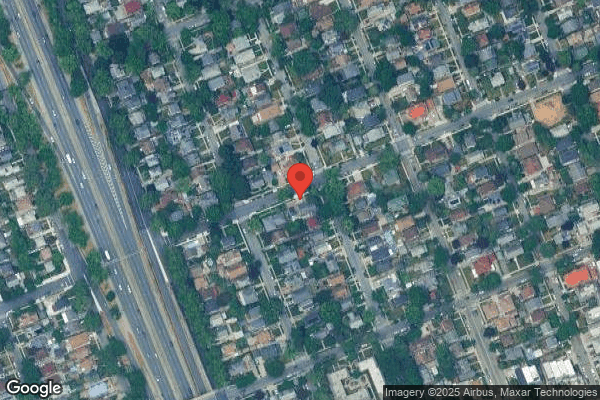
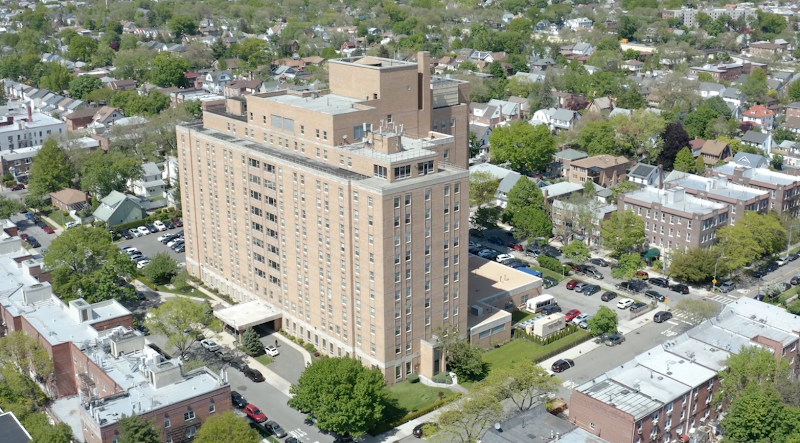
42 41 201ST STREET, BAYSIDE, NY 11361 (718) 423-2000
Non profit - Corporation 432 Beds CARMELITE SISTERS FOR THE AGED AND INFIRMED Data: November 2025
Trust Grade
63/100
#311 of 594 in NY
Last Inspection: October 2024

Within standard 12-15 month inspection cycle. Federal law requires annual inspections.

Overview

Ozanam Hall of Queens Nursing Home Inc has a Trust Grade of C+, which indicates it is slightly above average but not exceptional. In the state ranking, it is #311 out of 594, placing it in the bottom half of New York facilities, and #36 out of 57 in Queens County, meaning there are better local options available. The facility's trend is worsening, having increased from 5 issues in 2022 to 7 in 2024. Staffing is a strength here with a rating of 4 out of 5 stars and a turnover rate of 35%, lower than the state average, indicating that staff generally remain long enough to build relationships with residents. However, there are concerns, including incidents where residents did not receive personal care and meals timely, and care planning meetings were not adequately communicated to residents, highlighting areas where the facility needs improvement.

Trust Score
C+
63/100
In New York
#311/594
Bottom 48%
Safety Record
Low Risk
No red flags
Inspections
Getting Worse
5 → 7 violations
Staff Stability
○ Average
35% turnover. Near New York's 48% average. Typical for the industry.
Penalties
✓ Good
$5,944 in fines. Lower than most New York facilities. Relatively clean record.
Skilled Nurses
✓ Good
Each resident gets 53 minutes of Registered Nurse (RN) attention daily — more than average for New York. RNs are trained to catch health problems early.
Violations
⚠ Watch
17 deficiencies on record. Higher than average. Multiple issues found across inspections.
★★★☆☆
3.0
Overall Rating
★★★★☆
4.0
Staff Levels
★★★★☆
4.0
Care Quality
★★★☆☆
3.0
Inspection Score
Stable
2022: 5 issues
2024: 7 issues

The Good

  • 4-Star Staffing Rating · Above-average nurse staffing levels
  • 4-Star Quality Measures · Strong clinical quality outcomes
  • Full Sprinkler Coverage · Fire safety systems throughout facility
  • No fines on record
  • Staff turnover below average (35%)

    13 points below New York average of 48%

Facility shows strength in staffing levels, quality measures, fire safety.

The Bad

3-Star Overall Rating

Near New York average (3.1)

Meets federal standards, typical of most facilities

Staff Turnover: 35%

11pts below New York avg (46%)

Typical for the industry

Federal Fines: $5,944

Below median ($33,413)

Minor penalties assessed

Chain: CARMELITE SISTERS FOR THE AGED AND

Part of a multi-facility chain

Ask about local staffing decisions and management

The Ugly 17 deficiencies on record

Oct 2024 7 deficiencies
CONCERN (D)

Potential for Harm - no one hurt, but risky conditions existed

Resident Rights (Tag F0550)

Could have caused harm · This affected 1 resident

2. On 09/26/24 at 01:02 PM, Resident #166 was observed sitting at the table with another resident who had been served their lunch meal and was already eating, Resident #166 became angry after watching...

Read full inspector narrative →
2. On 09/26/24 at 01:02 PM, Resident #166 was observed sitting at the table with another resident who had been served their lunch meal and was already eating, Resident #166 became angry after watching the other resident complete their meal while Resident #166 had still not been served their meal. Resident #166 stated that they had been waiting for their tray since 12 o'clock and had not yet been served so wanted to be taken out of the Dining Room. On 09/26/24 at 01:05 PM, Licensed Practical Nurse #2 was interviewed and stated that they were not aware that Resident #166 had not been served before they started feeding other residents in the dining room. On 09/26/24 at 01:10 PM, Registered Nurse #8 was interviewed and stated that they did not know what happened to Resident #166's ticket, but they will call for another ticket to ensure Resident #166 receives the correct meal. Registered Nurse #8 also stated that they did not observe that Resident #166 had not been served their meal while Registered Nurse #8 was monitoring the dining room. On 10/02/24 at 10:03 AM, the Director of Nursing was interviewed and stated that staff should not be standing up feeding residents and they have been trained that it is a matter of dignity to be at the same level with the resident to interact with them while feeding them. The Director of Nursing also stated that it is the responsibility of the nurses on the unit to ensure that staff are monitored to give appropriate care to the residents. There are also supervisors that make rounds to check them- The Director of Nursing stated that they were not sure why Resident #166's ticket was missing, but the staff could have removed Resident #166 from the dining room while their tray was being prepared. On 10/03/24 at 12:38 PM, the Administrator was interviewed and stated that they hold the dignity of the residents very high, and staff should not be standing when feeding the resident. The administrator stated that both agency staff and facility staff were given training when hired on how to respect the dignity of the resident. 10 NYCRR 415.5(a) Based on observations, and interviews conducted during the Recertification survey from 09/26/2024 to 10/03/2024, the facility did not ensure that residents are treated with respect and dignity and cared for in a manner and in an environment that promotes maintenance or enhancement of his or her quality of life, recognizing each resident's individuality. This was evident for 6 (Residents #239, 106, 164, 160, 245 & 166) residents observed during the Dining Observation Task on Unit 6 and Unit 4. Specifically, 1). staff members were observed feeding residents (Residents #239, 106, 164, 160 & 245 ) while standing, and 2.) a resident (Resident #166) was observed in the dining room sitting at a table where another resident was served their lunch, and they were not served for an additional 30 minutes while the other resident ate at the table. The findings are: The facility policy titled Resident Rights-Promoting and Maintaining Resident Dignity During Mealtimes dated 03/16/2023, updated 03/21/2024 documented that it is the practice of this home to treat each resident with respect and dignity and care for each resident in a manner and in an environment that maintains or enhances his or her quality of life, recognizing each resident's individuality and protecting the rights of each resident. The policy also stated that all staff members involved in providing feeding assistance to residents promote and maintain resident dignity during mealtimes; residents should be served one table at a time and all staff will be seated, if possible, while feeding a resident. 1.On 09/26/24 between 12:00 PM and 12:48 PM, on Unit 6, Resident #239 was observed seated in a Geri-chair in the hallway. Registered Nurse #3 was observed standing over Resident #239 while feeding them their lunch in the hallway. On 09/26/24 at 12:11 PM, Resident #106 was seated in a wheelchair in the Dining Room and Certified Nursing Assistant #1 was observed standing while feeding Resident #106. In addition, Certified Nursing Assistant #2 was also observed standing while feeding Residents #164 who was also seated in a wheelchair in the Dining Room. On 09/26/24 at 12:30 PM, Certified Nursing Assistant #3 was observed feeding Resident #160 while standing, and the Registered Nurse #3 was also observed standing and feeding Resident #245 in the Dining Room. On 09/26/24 at 12:35 PM, an interview was conducted with Certified Nursing Assistant #1 who stated that they always stand while feeding residents because the resident's chairs are too high. Certified Nursing Assistant #1 also stated that standing while feeding the residents will enable them to see the residents in case they are experiencing choking. On 09/26/24 12:43 PM, an interview conducted with Certified Nursing Assistant #2 who stated that they were aware that they have to sit to feed the residents, however they cannot sit because the resident's chairs are too high, and some of those chairs cannot be lowered. Certified Nursing Assistant #2 concluded by saying that maybe the facility needs to provide them higher chairs. Certified Nursing Assistant #2 could not recall if they had asked for another chair or complained to anyone at the facility about the chairs. On 09/26/24 at 12:48 PM, an interview was conducted with Registered Nurse #1 who stated that they have to elevate the resident's head and they supposed to sit down to feed residents. Registered Nurse #1 also stated that when elevating the head of the resident's chair they sometimes found it difficult to reach the residents. Registered Nurse #1 further stated that they did not see this as a concern as all the other staff was doing it.
CONCERN (D)

Potential for Harm - no one hurt, but risky conditions existed

Deficiency F0553 (Tag F0553)

Could have caused harm · This affected 1 resident

**NOTE- TERMS IN BRACKETS HAVE BEEN EDITED TO PROTECT CONFIDENTIALITY** Based on observations, record review, and interviews conducted during the Recertification survey from 09/26/2024 to 10/03/2024, ...

Read full inspector narrative →
**NOTE- TERMS IN BRACKETS HAVE BEEN EDITED TO PROTECT CONFIDENTIALITY** Based on observations, record review, and interviews conducted during the Recertification survey from 09/26/2024 to 10/03/2024, the facility did not ensure that residents were afforded the opportunity to participate in their care planning process This was evident for 1 (Resident #103) of 2 residents reviewed for Care Planning out of 38 total sampled residents. Specifically, Resident #103 or their representative were not invited to attend care planning meetings. The findings are: The facility policy titled Comprehensive Care Plan dated 02/09/2024, updated 03/21/2024 stated that the home will provide the resident and resident representative, when applicable, with advance notice of care planning conferences to enable resident/resident representative participation. Resident #103 was admitted with diagnoses that included Non-Alzheimer's Dementia, Malnutrition, and Psychotic disorder. The Quarterly Minimum Data Set assessment dated [DATE] documented the resident had severe impairment in cognition and was dependent on staff for Activities of Daily Living. The Minimum Data Set assessment also documented that resident and family participated in assessment and goal setting. On 09/26/24 at 12:52 PM, Resident #103's representative was interviewed and stated that they had not been invited to any care plan meetings after the initial meeting in December 2023. On 10/02/24 at 09:37 AM, Registered Nurse #8 was interviewed and stated that the Social Worker is responsible for inviting residents and family members to the care plan meetings. On 10/02/24 at 11:42 AM, an interview was conducted with Social Worker #1who stated that they meet with residents and their family members only during initial, significant change and annual care plan meetings, and that residents and their family members are not invited to the quarterly meetings. Social Worker #1 also stated that they meet with the resident only during their quarterly review, and do not invite residents and their family for the quarterly care plan meeting. On 10/02/24 at 11:42 AM, the Director of Social Work was interviewed and stated that they invite resident and the family to initial, Significant change, annual, and discharge care plan meetings if it is separate from initial care plan meetings. The Director of Social Work stated that they only speak with the family over the phone for the quarterly review. On 10/03/24 at 12:10 PM, an interview was conducted with the Director of Nursing who stated that resident's care plan meetings are usually handled by Social Services, and when the resident's care plan meeting is due Social Services staff will notify the resident and the family members. The Director of Nursing stated that they do not know which care plan meetings the residents and their family members are invited to as it is the Social Services department that handles and organizes the meetings. The Director of Nursing further stated that they were of the impression that resident and resident family are invited to all care meetings, and they did not know that they were not being invited for the quarterly meetings. On 10/03/24 at 12:23 PM, the Administrator was interviewed and stated that resident and their families are invited for the initial, significant change and annual care plan meetings, but they have been having conversations with them for the quarterly assessment review since the COVID-19 pandemic. The Administrator also stated that they thought that family members would prefer this option, and they would meet with the residents and family if that is what they wanted. 10 NYCRR 415.3(f)(1)
CONCERN (D) 📢 Someone Reported This

A family member, employee, or ombudsman was alarmed enough to file a formal complaint

Potential for Harm - no one hurt, but risky conditions existed

Report Alleged Abuse (Tag F0609)

Could have caused harm · This affected 1 resident

**NOTE- TERMS IN BRACKETS HAVE BEEN EDITED TO PROTECT CONFIDENTIALITY** Based on staff interview, observation and record review during the Recertification and Complaint Survey (NY00349107) conducted f...

Read full inspector narrative →
**NOTE- TERMS IN BRACKETS HAVE BEEN EDITED TO PROTECT CONFIDENTIALITY** Based on staff interview, observation and record review during the Recertification and Complaint Survey (NY00349107) conducted from 09/26/2024 to 10/03/2024, the facility did not ensure that injuries of unknown origin are reported immediately, but not later than 2 hours after the allegation is made to the New York State Department of Health. This was evident for 1 (Resident #148) of 5 residents reviewed for Falls out of a sample 38 residents. Specifically, Resident #148 was observed with discoloration of the chin and mouth of unknown origin which was not reported to New York State Department of Health. The finding is: Resident #148 was admitted to the facility with diagnoses which included Non-Alzheimer's' Dementia, Traumatic Brain Dysfunction, and Fracture of Nasal Bones. The Significant Change Minimum Data Set assessment dated [DATE] identified Resident #148 as severely cognitively impaired and able to make needs known, needed supervision of staff with Activities of Daily Living, including ambulation. The Nursing Progress note dated 08/18/2024 documented Resident #148 was visited by their child who noted discoloration of the resident's face. Resident #148 informed their child that they had had a fall. The note also documented that the Licensed Professional Nurse observed Resident #148 with discoloration to the lower lip measuring 2 centimeter by 1 centimeter and under the chin injury measuring 3 centimeter by 2.5 centimeter. The Quality Assurance Fall Investigation Statement Form dated 08/18/2024 documented that Resident #148's child reported that Resident #148 had fallen. The Summary of Investigation dated August 23, 2024, documented that Resident #148 was alert and oriented to person only, and had light reddish discoloration to the lower lip measuring 2cm x 1 cm and purplish discoloration under Resident #148's chin measuring 3 cm x 2.5 cm. The summary also documented that Resident #148, nor their child was able to state when and where a fall had occurred. The summary also documented that other nursing aides were interviewed and were unaware that Resident #148 had fallen. There was no documented evidence that the injury of unknown origin for Resident #148 was reported to the Department of Health as required. On 10/01/2024 at 4:24 PM, during an interview the Director of Nursing stated that the incident involving Resident #148 on 08/18/2024 was not called in because they did not consider that Resident #148 had experienced an injury. The Director of Nursing acknowledged that the Accident/Incident report documented that Resident #148 had discoloration to their lip and chin and could not explain how this had occurred, however the Director of Nursing did not think this incident needed to be reported as an injury of unknown origin. 10 NYCRR 415.4 (b)(2)
CONCERN (D)

Potential for Harm - no one hurt, but risky conditions existed

ADL Care (Tag F0677)

Could have caused harm · This affected 1 resident

**NOTE- TERMS IN BRACKETS HAVE BEEN EDITED TO PROTECT CONFIDENTIALITY** Based on observation, record review, and interviews conducted during the recertification survey from 09/26/24 to 10/03/24 the fa...

Read full inspector narrative →
**NOTE- TERMS IN BRACKETS HAVE BEEN EDITED TO PROTECT CONFIDENTIALITY** Based on observation, record review, and interviews conducted during the recertification survey from 09/26/24 to 10/03/24 the facility failed to ensure residents who are unable to carry out activities of daily living received the necessary services to maintain grooming, and personal hygiene. This was evident for 1 (Resident #43) of 6 residents reviewed for Activities of Daily Living out of 38 sampled residents. Specifically, Resident #43 was observed unkempt with brown, dirty looking clothing and also noted with a strong urine odor. The finding is: The facility policy and procedure titled Completing the Activity of Daily Living Support created 5/6/2022 stated that residents will be provided with care, treatment, and services as appropriate to maintain or improve their ability to carry out activities of daily living. The policy also stated that residents who are unable to carry out activities of daily living independently will receive the services necessary to maintain good nutrition, grooming, personal and oral hygiene. Resident #43 had diagnoses which included Dementia, Anxiety Disorder and Depression. The Minimum Data Set assessment dated [DATE] documented Resident #43 had impaired cognition and required partial or moderate assistance during shower/bathe, and also required supervision assistance during toileting. The Minimum Data Set assessment further documented that Resident #43 was incontinent of bowel and bladder. The Comprehensive Care Plan related to self-care performance deficit(s) limited mobility, communication deficits, Dementia with impaired cognition last updated on 08/06/2024, documented that the resident required partial and moderate assistance with bathing/showering, personal hygiene, and toileting. Interventions included bathing/showering and as necessary. The Registered Nurse progress note dated 07/20/24 documented that Resident #43 was alert and verbally responsive, assisted with some activity of daily living, refused shower this morning despite some encouragement from staff. The Registered Nurse Plan of Care progress note dated 08/06/24 documented that Resident #43 was confused, had activity of daily living functional deficit(s) related to limited mobility and unsteady gait. The progress notes also documented that Resident #43 refused showers. The Certified Nursing Assistant Task dated 09/01/24 to 10/02/24 documented that showers were provided two times a week. The Certified Nursing Assistant Task also documented Showering/Bathing prefers shower; Tuesday and Friday on 7-3 shift including fingernail care and shaving as needed. There was no documentation on the Certified Nursing Assistant Task that Resident #43 had refused shower. On 09/26/24 at 11:21 AM, during the initial tour of Unit 6, Resident #43 was observed in the room, unkempt with brown, dirty looking clothing and also noted with a strong urine odor. Resident #43's room was also noted with strong, stale smelling urine odor. Resident #43 was confused and unable to answer questions. On 09/26/24 at 12:08 PM, Resident #43 was also observed in a wheelchair in the hallway, and a strong urine odor was detected as Resident #43 passed by. The assigned Certified Nursing Assistant #5 was also passing by and was asked about Resident #43's strong odor. Certified Nursing Assistant #5 stated that Resident #43 always refused shower and would not let anyone enter their room. Certified Nursing Assistant #5 also stated that Resident #43 was last showered on Friday 09/20/24, and that the family member is aware of this behavior. Certified Nursing Assistant #5 further stated and there is nothing they can do about it when Resident #43 refuses to shower. On 09/27/24 at 09:53 AM, Resident #43 was observed in their room. The room was clean, and Resident #43 was observed to be wearing clean clothes. There was no urine odor detected. On 09/27/24 at 10:00 AM, a follow-up interview was conducted with Certified Nursing Assistant #5 and stated Resident #43 received shower this morning after they encouraged them to shower. Certified Nursing Assistant #5 also stated that they brought Resident #43 out of the room and had housekeeping staff clean the room. Certified Nursing Assistant #5 further stated that Resident #43 is scheduled to shower twice per week during the day shift, however Resident #43 had not been receiving shower due to Resident #43 refusing to shower. On 09/27/24 at 10:01 AM, an interview was conducted with Certified Nursing Assistant #9 who stated that they had been assigned to care for Resident #43 in the past and Resident #43 always refused care, especially showers. Certified Nursing Assistant #9 also stated that when Resident #43 was showered and given clean clothes, Resident #43 would remove clothing and put back on dirty clothing. The Certified Nursing Assistant #9 further stated that Resident #43 is very aggressive and always does not want people in their room. On 09/27/24 at 11:45 AM, an interview was conducted with Registered Nurse #2 who stated that Resident #43 refused care, and their child was aware of this behavior. Registered Nurse #2 also stated that Resident #43 will not let anyone in the room, has some psychiatric issues and is being followed up by the psychiatrist. Registered Nurse #2 further stated that Resident #43 will not cooperate with staff attempts to shower them despite all efforts. On 09/30/24 at 10:20 AM, Resident #43 was again observed in their room; the room was clean, and Resident #43 was also observed wearing clean clothes. On 10/01/24 at 12:23 PM, an interview was conducted with the Director of Nursing who stated that they were not aware that Resident #43 was not receiving showers as scheduled. The Director of Nursing also stated that Certified Nursing Assistants need to communicate and notify nursing supervisor if activity of daily living care cannot be provided. The Director of Nursing further stated that it is the unit nursing supervisor's responsibility to ensure that care is provided in accordance with the plan of care. 10 NYCRR 415.12(a)(3)
CONCERN (D)

Potential for Harm - no one hurt, but risky conditions existed

Deficiency F0679 (Tag F0679)

Could have caused harm · This affected 1 resident

**NOTE- TERMS IN BRACKETS HAVE BEEN EDITED TO PROTECT CONFIDENTIALITY** Based on observation, record review and staff interview conducted during the Recertification survey from 09/26/2024 to 10/03/20...

Read full inspector narrative →
**NOTE- TERMS IN BRACKETS HAVE BEEN EDITED TO PROTECT CONFIDENTIALITY** Based on observation, record review and staff interview conducted during the Recertification survey from 09/26/2024 to 10/03/2024, the facility did not provide an ongoing program to support residents in their choice of activities based on the comprehensive assessment and care plan and the preferences of each resident, designed to meet the interest of and support the physical, mental, and psychosocial well-being of each resident. This was evident for 2 (Resident #347 and Resident #408) reviewed for Activities out of a sample of 38 residents. Specifically, Resident #347 and Resident #408 were observed on multiple occasions not engaged in any activity programs. The findings are: The facility policy and procedure titled Recreational Activities with a revision date of November 2022 stated that it is the policy of the facility to provide a comprehensive recreational program as part of the multidisciplinary care approach. The policy also stated that the programming, both facility-sponsored group and individual activities and independent activities is geared for the enhancement of the social, emotional, intellectual, physical, creative, and spiritual well-being of the resident population, in accordance with the psychosocial assessment of the resident. The policy further stated that activities are individualized and customized based on the resident's previous lifestyle. 1. Resident #347 was admitted to the facility with diagnoses that included Non-Alzheimer's Dementia and Cataracts. The Significant Change Minimum Data Set assessment dated [DATE] documented that Resident #347 had moderately impaired cognition and was dependent on staff for most activities of daily living and used a wheelchair for mobility. Section F Preferences for Customary Routine and Activities documented that it was very important for Resident #347 to listen to music they like and be around pets, and not very important to participate in religious services or practices. On 09/27/2024 at 10:15 AM, Resident # 347 was observed seated in a wheel chair asleep, positioned against the wall facing the Nursing station in on open hallway along with four other residents. A television on the wall on was playing a Catholic mass service. On 09/30/2024 at 2:30 PM, Resident #347 was observed in the Activity room seated on a wheel chair positioned against the wall facing the Nurses station, with no clear view of the program playing on the television. On 10/01/24 at 11:47 AM, Resident #347 was observed in the Activity Room seated in a wheel chair with several other residents watching news on the television. Resident #347 was positioned behind a wall which blocked the view of the television. In addition, the television volume was lowered making it difficult for anyone to hear or understand what was being said in the program. The Activities admission assessment dated [DATE] documented that Resident #347 was interested in music, television movies and does not participate in spiritual activities. The Comprehensive Care Plan with focus resident is independent on staff for meeting emotional, intellectual, and social needs initiated 7/15/2024 included a goal of Resident will attend and participate in activities of choice when not in therapy. Interventions included invite the resident to scheduled activities and provide a program of activities that is of interest and empowers the resident by encouraging, allowing choice, self-expression, and responsibility. There was no documented evidence that Resident #347 had been engaged in any activities on the unit or provided with 1:1 visits from Recreation staff. 2. Resident #409 was admitted to the facility with diagnoses that include Atrial Fibrillation, Renal Insufficiency and Non -Alzheimer's Dementia. The admission Minimum Data Set assessment dated [DATE] identified Resident #409 with moderately impaired cognition and required supervision and assistance from staff for Activities of Daily Living. The admission Minimum Data Set assessment also documented in Section F Preferences for Customary Routine and Activities that it was very important for Resident #409 to have books, newspapers, and magazines to read, to listen to music they like, to do things with groups of people and do their favorite activities. On 09/27/2024 at 12:01 PM, Resident #409 was observed on Contact Isolation in a single bedded room. Resident #409 was observed seated in a Geri chair facing a television set on the wall that was not turned on. There was no radio available in the room. On 09/30/2024 at 01:37 PM, Resident #409 was interviewed and stated that they would like to receive newspapers, magazines, or books to read. Resident #409 also stated that no one had visited them or offered them newspapers or books to read. The television in the room was observed to be turned on at this time. The Activity admission assessment initiated on 08/28/2024 documented that Resident #409 wishes to participate in activities in the facility, including group and independent activities. The Comprehensive Care Plan related to resident is independent for meeting emotional, intellectual, and social needs but dependent on staff for physical needs dated 09/02/2024 included a goal of resident will attend/participate in activities of choice when not in therapy. Interventions included introduce to other residents with similar background, interest and encourage and facilitate interaction, invite the resident to scheduled activities, provide a program of activities that is of interest and empowers the resident by encouraging, allowing choice, self-expression, and responsibility. There was no documented evidence that Resident #409 had been engaged in any activities on the unit or provided with 1:1 visits from Recreation staff. The Activity Calendars dated July 2024, August 2024, September 2024, and October 2024 included no activity program scheduled to occur on the 10th floor. On 10/01/2024 at 12:18PM, the Activity Director was interviewed and stated that the unit has no activity leader because this is a Rehabilitation unit, and residents are independent and can go to other units, stay in their rooms, or go to in the activity room on the unit where there is a television on. The Activity Director also stated that residents on this unit are asked if they want to attend any ongoing activities on other units. The Activity Director was asked for and was not able to provide any documentation that Resident #347 and Resident #409 had attended or participated in any activity programs. On 10/01/2024 at 12:40 PM, Registered Nurse #9 was interviewed and stated that there were no structure activities on Unit 10 and no recreational leader comes to the unit. Registered Nurse #9 also stated that this is a rehabilitation unit, and residents go to therapy and when they return they either stay in the Activity room and watch television, go to their rooms, or family members may visit, and they may bring them downstairs to the garden. On 10/02/2024 at 02:10 PM, Certified Nursing Assistant #13 was interviewed and stated that there are no activities on this floor; residents go to therapy in the morning and stay in the activity room when they come back to the unit. Certified Nursing Assistant #13 also stated that there is a television on all day for residents to watch if they so desire and there is a radio, but it is not always on. 10 NYCRR 415.5(f)(1)
CONCERN (D)

Potential for Harm - no one hurt, but risky conditions existed

Deficiency F0685 (Tag F0685)

Could have caused harm · This affected 1 resident

**NOTE- TERMS IN BRACKETS HAVE BEEN EDITED TO PROTECT CONFIDENTIALITY** Based on observations, record reviews and interviews conducted during the Recertification Survey-09/26/2024 to 10/03/2024 facili...

Read full inspector narrative →
**NOTE- TERMS IN BRACKETS HAVE BEEN EDITED TO PROTECT CONFIDENTIALITY** Based on observations, record reviews and interviews conducted during the Recertification Survey-09/26/2024 to 10/03/2024 facility did not ensure that residents received proper treatment and assistive devices to maintain hearing abilities. This was evident for 1 (Resident #287) of 1 resident reviewed for Communication/Sensory out of a sample of 38 residents. Specifically, Resident #287 with a hearing impairment did not receive an audiology consultation or assistive devices to improve hearing ability. The finding is: Upon request, the Director of Nursing stated that the facility does not have a policy and procedure related to consultation, and that resident care is based on an individual plan of care. Resident #287 was admitted to the facility with diagnoses that included End Stage Renal Disease, Hypertension, benign prostatic hyperplasia. The Quarterly Minimum Data Set assessment dated [DATE] documented Resident #287 was moderately cognitively impaired, does not have hearing problems and no hearing aid or other hearing appliance was used. On 09/26/24 at 11:17 AM, Resident #287 was met in the room, alert and awake. Resident #287 was greeted repeatedly but was not able to hear the surveyor's questions and asked the surveyor to repeat self. Resident #287 stated they were not able to hear because they had an impairment to their left ear. Resident #287 was unable to recall if they had a hearing aid and asked the surveyor to speak to their child. The Comprehensive Care Plan titled Communication Problem dated 11/11/22, last updated 11/03/23 documented that the resident had a communication problem related to being hard of hearing. Interventions included staff need to increase speaking volume when talking to the resident, anticipate and meet resident's needs, speak on an adult level, speaking clearly and slower than normal, and validate resident's message by repeating aloud. The Physician orders since Resident #287's admission contained no documented evidence that an audiology consult was provided, or that Resident #287 had been seen by an audiologist. On 10/02/24 at 10:56 AM, an interview was conducted with the assigned Certified Nursing Assistant #5 who stated they have been taking care of the resident for over 5 months. Certified Nursing Assistant #5 also stated that Resident #287 is hard of hearing, and they need to speak louder when talking to them. Certified Nursing Assistant #5 further stated that Resident #287 has never had a hearing aide. On 10/02/24 at 11:28 AM, an interview was conducted with Resident #287's child who stated that Resident #287 used to have hearing problems when they were at home before being admitted into the nursing home. Resident #287's child also stated that they could not recall if anyone at the facility had ever discussed any hearing concerns of their parent or whether their parent had been seen by an audiologist. On 10/02/24 at 11:55 AM, an interview conducted with the Director of Minimum Data Set assessments who stated that they reviewed the previous Minimum Data Set assessments and found that the hearing problem of Resident #287 was not identified however it was identified on the upcoming assessment dated [DATE] that was not yet submitted. On 10/02/24 at 12:42 PM, an interview was conducted with the Attending Physician who stated that all resident care needs should be followed up during their visits. The Attending Physician also stated that a resident with a hearing impairment should be accommodated to ensure that assistive devices, such as hearing aids are provided if required. The Attending Physician further stated that Resident #287 should have been seen since the audiologist comes regularly to the facility and as needed. On 10/02/24 at 02:18 PM, an interview was conducted with the Director of Nursing who stated that residents with hearing problems will first have their ears cleaned of any wax. If the hearing problem persists, then they will be referred to the audiologist who comes to the facility frequently. The Director of Nursing also stated that they were not aware that Resident #287 was hard of hearing. The Director of Nursing further stated that the audiologist comes a couple of times a month, and the nurses are supposed to identify a problem and get an order for the resident to be seen by the audiologist if needed. 10 NYCRR 415.12(3)(b)(1-3)
CONCERN (D)

Potential for Harm - no one hurt, but risky conditions existed

Respiratory Care (Tag F0695)

Could have caused harm · This affected 1 resident

**NOTE- TERMS IN BRACKETS HAVE BEEN EDITED TO PROTECT CONFIDENTIALITY** Based on observations, record review and interviews conducted during the Recertification Survey from 9/26/2024 to 10/03/2024, th...

Read full inspector narrative →
**NOTE- TERMS IN BRACKETS HAVE BEEN EDITED TO PROTECT CONFIDENTIALITY** Based on observations, record review and interviews conducted during the Recertification Survey from 9/26/2024 to 10/03/2024, the facility did not ensure that residents who needed respiratory care was provided such care consistent with professional standards of practice. This was identified for 2 of 4 Residents (Resident #58 and Resident #127) reviewed for Respiratory Care out of a sample of 36 total sampled residents. Specifically, Resident #58 and Resident #127 who received continuous oxygen did not have pulse oxygen saturations appropriately monitored and there was no date on their nasal cannula/ tubing date indicating when the tubing was last changed. The findings are: The facility policy titled Oxygen Administration dated 02/27/2024 states that it is the policy to change oxygen tubing and mask/cannula weekly and as needed if it becomes soiled or contaminated, date tubing when changed. The policy also stated that staff shall document the initial and ongoing assessment of the resident's condition warranting oxygen and the response to oxygen therapy. 1. Resident #127 was admitted to the facility with diagnoses that included Heart Failure, Hypertension, and Shortness of breath. The Quarterly Minimum Data Set assessment dated [DATE] documented that Resident #127 was cognitively intact and was receiving oxygen therapy. The Physician orders dated 01/08/2024 stated Oxygen inhalation per nasal cannula at 2 liters per minute every shift every day. On 09/30/2024 at 10:17 AM, Resident #127 was interviewed and stated that it had been more than a week since oxygen tubing was last changed. On 09/30/2024 at 10:17 AM, Resident #127 was observed receiving 2 liters of oxygen via nasal cannula. There was no date observed on the tubing. On 09/30/2024 at 12:03 PM and on 10/01/24 at 10:05 AM, Resident #127 was observed receiving 2 liters of oxygen via nasal cannula. There was no date observed on the tubing. The Vitals Summary documented that an Oxygen saturation of 97% was last recorded on 06/11/2024. A Nursing progress note dated 07/15/2024 documented that Resident #127 had an Oxygen saturation of 96%. A Nursing Progress Note dated 08/02/2024 documented that Resident #127 refused to have their oxygen saturation assessed. Review of the Electronic Medical Record contained no documented evidence that Resident #127's oxygen saturation had been recorded after 08/02/2024. There was no documented evidence of when oxygen tubing was last changed for Resident #127. 2. Resident #58 was admitted with diagnoses that included Pneumonia and Chronic Obstructive Pulmonary Disease. The Quarterly Minimum Data Set assessment dated [DATE] documented that Resident #58 was cognitively intact, was admitted with oxygen therapy and was receiving oxygen currently. The Physician orders dated 07/01/2024 stated oxygen inhalation per nasal cannula at 2-3 liters per minute every shift for shortness of breath. On 09/27/2024 at 10:50 AM, Resident #58 was interviewed and stated that oxygen tubing was last changed weeks ago. On 09/27/2024 at 10:50 AM, Resident #58 was observed receiving oxygen 2 liters via nasal cannula. There was no date on the oxygen tubing. On 09/30/2024 at 12:03 PM, Resident #58 was observed resting in bed with nasal cannula in place, oxygen running at 2 liters per minute. There was no date on the oxygen tubing. On 10/01/2024 at 10:40 AM, Resident #58 was observed with Registered Nurse #8 receiving 2 liters of oxygen. There was no date on the nasal cannula tubing. The Vital Signs Summary last documented an oxygen saturation of 97% was recorded for Resident #58 on 07/26/2024. Review of the Electronic Medical Record contained no documented evidence that Resident #58's oxygen saturation had been recorded after 07/26/2024. There was no documented evidence of when oxygen tubing was last changed for Resident #58. On 10/02/2024 at 10:58 AM, Licensed Practical Nurse #5 was interviewed and stated that Licensed Practical Nurses on the units usually change the oxygen tubing twice a week, if it is dirty or noted to be on the floor. Licensed Practical Nurse #5 also stated that the tubing must have a label with a date to indicate when it was last changed. If there is no date on the tubing, then it poses a risk of infection control. Licensed Practical Nurse #5 stated that Oxygen saturation level should be recorded under vital signs and while the nurses check the oxygen saturation for residents on oxygen, it is not being recorded appropriately. Licensed Practical Nurse #5 also stated that they could not locate any documentation for the past couple of weeks regarding oxygen saturation levels for Resident #58 and Resident #127, and there was no other oxygen monitoring system in place for them. Licensed Practical Nurse #5 further stated that if oxygen levels are not monitored continuously there is risk of residents going into respiratory distress. On 10/01/2024 at 10:12 AM, Registered Nurse #8 was interviewed and stated that oxygen tubing is supposed to be changed weekly, is done mostly on the overnight shift, and staff are supposed to place a piece of tape on the tubing with the date that the tubing was changed. Registered Nurse #8 also stated that if the tubing is not changed it creates an infection control risk and the tubing also gets harder and is not as patent. Registered Nurse #8 was unable to locate a date on the tubing indicating when it was last changed and stated that there are no notes documenting when it was last changed either. Registered Nurse #8 stated that the charge nurses are responsible for monitoring oxygen saturation adequately as residents can go into respiratory distress if it is not properly monitored. On 10/02/2024 at 02:32 PM, the Registered Nurse #1 was interviewed and stated that if a resident is on continuous oxygen the pulse oxygen saturation should be monitored every shift. Registered Nurse #1 also stated that oxygen saturation levels had not been checked today for Resident #127 and Resident #58, both Licensed Practical and Registered nurses are responsible for checking the pulse oxygen saturation of residents. Registered Nurse #1 stated that they were not sure why this had not been or documented for several weeks. Registered Nurse #1 also stated that they are not sure how often nasal cannula tubing should be changed and did not know why there were no dates on the tubing. On 10/02/2024 at 03:05 PM, the Director of Nursing Service was interviewed and stated that there should be an order for oxygen saturation to be checked once a shift and typically it should be checked once ever shift. Monitoring needs to be done for resident on continuous oxygen to ensure that they are on the right concentration of oxygen and licensed staff should be monitoring oxygen use. The Director of Nursing Service also stated that the nasal cannula tubing should be changed weekly as per protocol as this creates an infection control issue if not changed appropriately. The protocol is that night shift nurses are supposed to change tubing every Tuesday night and label it with the date it was changed. The Director of Nursing Services stated that there are supervisors on each floor who are supposed to oversee staff and identify issues that required correction or education, however, these two issues were not noted to be a concern and is something that should have been followed by all staff as it is normal protocol. The Director of Nursing also stated that all nursing staff on been inserviced on the protocol regarding oxygen use. 10 NYCRR 415.12(K)(6)
Jul 2022 5 deficiencies
CONCERN (D)

Potential for Harm - no one hurt, but risky conditions existed

MDS Data Transmission (Tag F0640)

Could have caused harm · This affected 1 resident

**NOTE- TERMS IN BRACKETS HAVE BEEN EDITED TO PROTECT CONFIDENTIALITY** Based on record review and staff interview, the facility did not ensure that the Minimum Data Set 3.0 (MDS) assessment(s) were e...

Read full inspector narrative →
**NOTE- TERMS IN BRACKETS HAVE BEEN EDITED TO PROTECT CONFIDENTIALITY** Based on record review and staff interview, the facility did not ensure that the Minimum Data Set 3.0 (MDS) assessment(s) were electronically transmitted to the Centers of Medicare/Medicaid Services Data System (CMSDS) within 14 days of completion. This was evident for 1 (Resident #4) out of 1 residents reviewed for Resident Assessment. Specifically, the MDS for Resident # 4 was scheduled for submission on [DATE] and was not submitted. The findings are: The policy titled MDS & Coding Integrity dated 10/19 documented discharge assessment for deaths in the facility will be transmitted within 7 days of death. The Death Certificate for Resident # 4 documented the resident expired in the facility on [DATE]. There was no documented evidence a MDS assessment for Resident #4's death in the facility was submitted to the CMSDS. On [DATE] at 10:48 AM, the MDS Coordinator was interviewed and stated Resident #4's MDS reporting the resident's death in the facility was not submitted on [DATE] as scheduled. The facility has a computer program that tracks the submission of MDS assessments. The computer program did not alert the MDS Coordinator that Resident #4's MDS assessment was scheduled for submission and did not alert them when the MDS was not submitted. 415.11
CONCERN (D)

Potential for Harm - no one hurt, but risky conditions existed

Assessment Accuracy (Tag F0641)

Could have caused harm · This affected 1 resident

**NOTE- TERMS IN BRACKETS HAVE BEEN EDITED TO PROTECT CONFIDENTIALITY** Based on record review, and interview during the recertification survey, the facility did not ensure that the Minimum Data Set 3...

Read full inspector narrative →
**NOTE- TERMS IN BRACKETS HAVE BEEN EDITED TO PROTECT CONFIDENTIALITY** Based on record review, and interview during the recertification survey, the facility did not ensure that the Minimum Data Set 3.0 (MDS) assessment accurately reflected a resident's status. This was evident for 1 (Resident #314) of 38 sampled residents (Resident #314). Specifically, the MDS assessment for Resident #314 did not accurately reflect the resident's discharge to the community. The findings are: The facility policy titled MDS Process and Coding Integrity last revised October 2019 documented accurate MDS coding is based on documentation in the medical record. Resident #314 had diagnoses of right tibia fracture and difficulty walking. The Discharge Care Plan dated 4/14/022 documented resident planned to be discharged home. The Nursing note dated 4/29/2022 documented resident was discharged to the community. The MDS assessment dated [DATE] documented Resident #314 was discharged to the hospital. On 07/15/2022 at 12:37PM, an interview was conducted with MDS Coordinator #2 who stated Resident #314 was discharged to the community, but the discharge MDS documents the resident went to the hospital. On 07/15/2022 at 12:41PM, an interview was conducted with the MDS Coordinator #1 who stated Resident #314 was discharged to the community and it was an oversite that the MDS documented the resident went to the hospital. The MDS Coordinator #1 will correct the mistake in the MDS. 415.11(b)
CONCERN (D)

Potential for Harm - no one hurt, but risky conditions existed

ADL Care (Tag F0677)

Could have caused harm · This affected 1 resident

**NOTE- TERMS IN BRACKETS HAVE BEEN EDITED TO PROTECT CONFIDENTIALITY** 2) Resident # 42 had diagnoses of Parkinson's disease and generalized weakness. The Minimum Data Set 3.0 (MDS) dated [DATE] doc...

Read full inspector narrative →
**NOTE- TERMS IN BRACKETS HAVE BEEN EDITED TO PROTECT CONFIDENTIALITY** 2) Resident # 42 had diagnoses of Parkinson's disease and generalized weakness. The Minimum Data Set 3.0 (MDS) dated [DATE] documented Resident #42 was cognitively intact and was totally dependent on 1 person for assistance with bathing. On 07/12/22 at 09:43 AM, Resident #42 was interviewed and stated they have not received a shower within the past 3 weeks. Staff report they are unable to provide Resident #42 with a shower because they are short of staff. Resident #42 stated their Certified Nursing Assistant (CNA) uses a washcloth to clean them daily, but this is not enough, and they still feel dirty. Resident #42 s scheduled to have a shower twice a week on the evening shift. The CNA Accountability Record (CNAAR) from 6/01/22 through 7/18/22 documented Resident #42 is scheduled to have showers every Tuesday and Friday on the evening shift. There were no CNA initials or signatures documented in the shower section of the CNAAR from 6/27/22 through 7/18/22. There was no documented evidence Resident #42 refused to have showers or bed baths. There was no documented evidence Resident #42 received showers or bed baths from 6/27/22 through 7/18/22. On 07/15/22 at 03:05 PM, CNA #7 was interviewed and stated they are assigned to Resident #42 and provides Resident #42 with bed baths. Resident #42 last received a bed bath on 7/1/22 and CNA #7 does not have time to complete their documentation because they were assigned 17 residents and the unit needed more CNAs. CNA #7 stated they balance their work when scheduled to provide multiple showers to residents that require the assistance of 2 people to take showers. On 07/15/22 at 03:00 PM, CNA #8 was interviewed and stated they were assigned to care for Resident #42 on the evening shift. CNA #8 provided Resident #42 with showers, but the unit was short of staff and CNA #8 did not have time to document giving Resident #42 showers in their CNAAR. On 07/15/22 at 03:34 PM, Registered Nurse (RN) #3 was interviewed and stated Resident #42 was confused and did not report to RN #3 that they were not receiving showers. The CNAs did not report to RN #3 that they were unable to complete their documentation because they were short of staff. RN #3 could not recall when Resident #42 last received a shower and could not provide documented evidence a shower was given to the resident. an interview was conducted with Registered Nurse (RN#3). On 07/15/22 at 10:40 AM, the RN Supervisor (RNS) was interviewed and stated they were not aware Resident #42 was not receiving showers according to their shower schedule. CNAs document in the CNAAR when they provide residents with showers and/or bed baths. CNAs are expected to complete the CNAAR despite being short of staff. The RNS stated Resident #42 received a shower on 7/5/22 and 7/08/22 but was unable to provide documented evidence that showers were given to the resident. On 07/19/22 at 10:50 AM, the Assistant Director of Nursing (ADON) was interviewed and stated staff are required to document in the resident's medical record when residents are provided with a shower. Staff document when a resident refuses to shower or prefers bed baths. The ADON stated the CNAs must have forgotten to document giving showers to residents. If there is no documentation that showers were given, then it was not done. On 07/18/22 at 12:49 PM and 7/19/22 at 01:48 PM, the Director of Nursing was interviewed and stated they have not received complaints from residents that they were not receiving showers. Each unit has a different shower schedule and residents may not receive a shower because they changed units. CNAs forgot to document giving showers and/or bed baths and a quality assurance assessment will be done to ensure that residents receive showers. The CNAs are required to report to the nurse when they are unable to complete their assignment and the staff must work together to ensure residents receive showers. The nursing department is short of staff and CNAAR monthly documentation has not been checked for completion as it should have. 415.12(a)(3) Based on observations, interviews, and record review conducted during the Recertification Survey, the facility did not ensure residents were provided with care and interventions to carry out Activities of Daily Living (ADL) in accordance with their needs and preferences. This was evident for 2 (Resident #283 and #42) of 5 residents reviewed for ADLs out of a sample of 38 total residents. Specifically, 1) Resident #283 and 2) Resident #42 were not provided with the ADL assistance to receive showers or bed baths in accordance with their needs and preferences. The findings are: The facility policy titled Certified Nursing Assistant Accountability Record (CNAAR) last revised January 2018, documented the Certified Nursing Assistant (CNA) will initial in the appropriate column, date, and shift at the completion of care each day, signifying that care listed on the CNAAR has been performed and will inform the nurse if unable to perform care. 1) Resident # 283 had diagnoses of cancer and decreased mobility. The Minimum Data Set 3.0 (MDS) assessment dated [DATE] documented Resident #283 was cognitively intact and required the physical assistance of 2 people for bathing. On 7/18/22 at 09:46 am, Resident # 283 was interviewed and stated they wanted to be showered but have not received a shower or bed bath within the past 2 weeks. CNAAR from 6/01/22 through 7/18/22 documented Resident #283 was scheduled to receive showers on Monday and Thursday evenings. There were no CNA initials or signatures documented in the shower section of the CNAAR from 6/27/22 through 7/18/22. There was no documented evidence Resident #283 refused to have showers or bed baths. There was no documented evidence Resident #283 received showers or bed baths from 6/27/22 through 7/18/22. On 07/18/22 at 09:59 AM, CNA #1 was interviewed and stated they are assigned up to 16 residents making it difficult to care for the residents. There are 3 to 6 residents who require a shower each day and, at times, CNA #1 can only assist with 1 shower. CNA #1 ensures their assigned residents are washed daily. The CNAs provide bed baths when they are unable to provide showers. Bed baths are not documented on the CNAAR. On 07/18/22 at 12:05 PM, CNA #2 was interviewed and stated they are assigned up to 17 residents daily and it is impossible to assist in showering residents according to their shower schedules. There is a shortage in staff and residents receive bed baths when they are not showers. Bed baths are not documented on the CNAAR. On 07/18/22 at 03:00 PM, CNA #3 was interviewed and stated if residents do not receive a shower, the CNAs do not document on the CNAAR and the CNAAR does not get filled out. On 07/18/22 at 03:05PM, Registered Nurse (RN) #1 was interviewed and residents are scheduled for showers twice a week. Residents'' showers are rescheduled when the facility is short of staff and showers cannot be given. CNAs do not document in the CNAAR when showers are not given to a resident.
CONCERN (D)

Potential for Harm - no one hurt, but risky conditions existed

Infection Control (Tag F0880)

Could have caused harm · This affected 1 resident

Based on observation, record review, interviews conducted during the recertification survey, the facility did not ensure infection control practices were maintained during meals. This was evident for ...

Read full inspector narrative →
Based on observation, record review, interviews conducted during the recertification survey, the facility did not ensure infection control practices were maintained during meals. This was evident for 1 (Unit 4) of 7 Units observed during dining. Specifically, Certified Nursing Assistants (CNA) did not perform hand hygiene in between sanitizing residents' hands prior to meal service. The findings are: The facility policy titled Infection Control: Handwashing: revised 4/1/2022 documented hand hygiene prevents the spread of infections and personnel follow the handwashing/hand hygiene procedures. On 07/15/2022 at 12:06 PM, CNA #2 was observed in the Unit 4 dining room donning gloves and using sanitizer wipes to assist residents with hand hygiene prior to meal service. CNA #4 used a wipe to sanitize the hand of Resident #273, took a new wipe and sanitized the hands of Resident #261, took a new wipe and sanitized Resident #463's hands, and took another wipe and sanitized Resident #243's hands. CNA #4 was not observed performing hand hygiene in between sanitizing each residents' hands. On 07/15/2022 at 01:05PM, CNA #2 was interviewed and stated they sanitize residents' hands prior to meal service and CNA #2 did perform hand hygiene in between each resident. On 07/15/2022 at 01:01 PM, Registered Nurse #5 was interviewed and stated residents are provided with baby wipes to wash their hands prior to meal services. Staff are required to perform hand hygiene in between residents as part of infection control. On 07/18/2022 at 12:57PM, the Infection Preventionist was interviewed and stated they do rounds to observe staff during meal service. Hand hygiene is performed in between each resident when sanitizing the resident's hands. 415.19 (a)(1)(b)(4)
CONCERN (E)

Potential for Harm - no one hurt, but risky conditions existed

Deficiency F0725 (Tag F0725)

Could have caused harm · This affected multiple residents

**NOTE- TERMS IN BRACKETS HAVE BEEN EDITED TO PROTECT CONFIDENTIALITY** Based on observation, record review, and interviews conducted during a Recertification and Complaint (#NY00298552) survey, the f...

Read full inspector narrative →
**NOTE- TERMS IN BRACKETS HAVE BEEN EDITED TO PROTECT CONFIDENTIALITY** Based on observation, record review, and interviews conducted during a Recertification and Complaint (#NY00298552) survey, the facility did not ensure that there was sufficient staff available to meet the residents' needs in a manner that promotes each resident's rights, physical, mental, and psychosocial well-being, as determined by resident assessments and individual plans of care. This was evident for 2 (Resident #42 and Resident #238) of 5 residents reviewed for Activities of Daily Living (ADLs) out of a total sample of 38 residents, the Resident Council facility task, and the Sufficient and Competent Nurse Staffing facility task. Specifically, (1) Residents #42 and #238 did not receive showers for a 3-week period from 6/27/22 to 7/14/22. (2) The facility nurse staffing assignments were consistently less than the projected staffing needs specified in the Facility Assessment. The findings include but are not limited to: 1) Resident #42 was admitted to the facility with diagnosis which include Non-Alzheimer's Dementia, Parkinson's Disease, and Depression. The Quarterly Minimum Data Set (MDS) assessment dated [DATE] documented Resident #42 had a Brief Interview for Mental Status (BIMS) score of 15 out of 15, indicating intact cognition. The MDS further documented Resident #42 required the total assist of two or more persons for transfers and bathing. During an interview on 07/12/22 at 09:43 AM, Resident #42 stated they did not have a shower in the past three weeks. Resident #42 stated the staff uses a cloth, soap, and water to clean him/her daily, but this was not enough. Resident #42 stated he/she feels dirty when he/she cannot take shower. Resident #42 stated he/she is supposed to have shower on the evening shift twice per week on Tuesdays and Fridays, but when Resident #42 asks for the shower, the staff always say they are short staffed. Resident #42 stated they do not want to get anyone in trouble; they just need a shower. Resident #42 stated it is just two showers per week, and they cannot get that. The Certified Nursing Assistant Accountability Records (CNAARs) from 6/1/22 to 7/18/22 documented Resident #42 was scheduled to receive showers on Tuesday and Friday evenings. The CNAAR documented Resident #42's last shower was provided on 6/24/22. There was no documented evidence Resident #42 received a shower or bed bath from 6/25/22 to 07/14/22. During an interview on 07/15/22 at 03:05 PM, CNA#7 stated he/she is assigned to Resident #42 on a regular basis, and Resident #42's shower days are Tuesdays and Fridays. CNA#7 stated he/she gave Resident #42 a bed bath on 7/1/22, but it was not documented. CNA #7 stated there were 3 CNAs on the floor, and they were assigned 17 residents, including 6 who required a lift for transfer, making it hard to have time for documentation. CNA #7 stated he/she is affected physically from working multiple doubles, and the facility needs more staff. During an interview on 07/15/22 at 03:34 PM, the Registered Nurse (RN#3) stated they worked the day and evening shifts in the last month. RN #3 stated Resident #42 was alert and oriented but confused at times. RN #3 stated Resident #42 did not report any shower concerns, and the assigned CNA did not report that they were unable to provide a shower. RN #3 stated the CNAs must document care provided even when they ware working with less staff. RN #3 stated staff have stayed as late as 3 and 4am to complete documentation. RN #3 stated they see the CNAs giving showers, but they were unable to recall the last time they saw Resident #42 receive a shower. During an interview on 07/15/22 at 10:30 AM, the day shift Registered Nurse Supervisor (RN #4) stated this is the worst staffing they have ever seen. RN #4 stated they start calling staff from home to get shifts covered before reporting to work. He/she checks in with the night shift nursing supervisor in an attempt to replace staff. RN #4 stated they need at least 4 CNAs on the unit. RN #4 is the only supervisor on the day shift, and the evening shift has two supervisors. The night shift has one to two supervisors. The staff are diligent and work very hard and she often signs off for CNAs to get paid when they do not get a break. RN #4 stated when there are 3 CNAs, the staff get the work done, and he/she encourages them to do the best they can. RN #4 stated the nurses stay late to complete documentation and care plans. RN #4 was not aware staff were not giving showers or documenting what is required in the CNAAR. RN #4 stated he/she spoke with CNA #7 and CNA #8, and they reported Resident #42 received a shower on 7/5/22. RN #4 stated all showers and bed baths should be documented in the CNAAR despite the short staffing. 2) Resident #283 was admitted with diagnoses of Cancer, decreased mobility, and depression. The Quarterly MDS dated [DATE] documented Resident #238 was cognitively intact and required the extensive assist of two persons for bed mobility, transfer, and bathing. During interviews on 7/14/22 at 9:43 AM and 7/18/22 at 09:46 AM, Resident #283 stated he/she had not received a shower for the past two weeks. Resident #283 stated the staff work hard, but they do not always have time to provide showers due to short staffing. The CNAARs from 6/1/22 to 7/18/22 documented Resident #238 was scheduled to receive showers on Monday and Thursday evenings. The CNAAR documented Resident #238's last shower was provided on 6/23/22. There was no documented evidence Resident #238 received a shower or bed bath from 6/27/22 to 07/14/22. During an interview on 07/18/22 at 03:00 PM, CNA #3, assigned to Resident #238's unit, stated that there are usually three to four CNAs on the unit, and he/she can be assigned up to 17 residents. If there are only three CNAs on the unit, we are not able to give showers to all the residents scheduled for showers. CNA#3 stated that he/she usually explains the reason to the residents if they are not able to get their scheduled showers. CNA #3 stated the CNAs document if a shower was given in the CNAAR, and the CNAAR is not filled out if the shower was not given. 3) During an interview on 07/14/22 at 12:56 PM, an anonymous complainant stated the facility is severely understaffed. They visited the facility two weeks ago on a Sunday, and there were 2 CNAs assigned to care for 50 residents. The complainant stated this facility is clearly understaffed and needs more CNAs. 4) The facility did not have a policy for Staffing, and the Facility Assessment was provided as the document that addressed staffing in lieu of a policy and procedure. The Facility Assessment, last updated 7/1/2021, documented unpredictable events may influence the staff available, but the facility strives to ensure necessary staffing based on the following model for direct care staff: 11-7 shift =10 nurses and 25 CNAs, 7-3 shift =19 nurses and 41 CNAs, and 3-11 shift = 18 nurses and 34 CNAs. The Facility Assessment further documented Unit 3 was closed, and Units 4 and 5 are offered dementia programs. Units 5, 6, and 8 have residents with impaired cognition, behaviors and elopement risk; these are locked units with wander guards. Unit 10 is a short term rehab unit. The facility currently has seven (7) active units. The Facility Staffing Sheets from 6/24/2022 to 7/14/2022 documented the CNA staffing levels were consistently below the par levels with resident census ranging from 295 to 320 residents. The facility staffing sheets documented the following regarding the Assigned, Facility Required, and Actual CNAs who worked: 6/24/2022: Census 305 Day shift = CNA Total Assigned: 30, Total Required: 39, Actual worked: 26 Evening shift = CNA Total Assigned: 28, Total Required: 32, Actual worked: 28. 6/25/2022: Census: 307 Day Shift = CNA Total Assigned: 30, Total Required: 40, Actual worked: 28 Evening shift = CNA Total Assigned: 28, Total Required: 32, Actual worked: 27 Night shift = CNA Total Assigned: 20, Total Required: 24, Actual worked: 21 6/26/2022: Census: 309 Day Shift = CNA Total Assigned: 28, Total Required: 40, Actual worked: 25 Evening shift = CNA Total Assigned 27, Total Required: 32, Actual worked:2 Night shift = CNA Total Assigned: 16, Total Required: 24, Actual worked: 17 6/27/2022: Census: 309 Day Shift = CNA Total Assigned: 30, Total Required: 39, Actual worked: 29 Evening shift = CNA Total Assigned: 25, Total Required: 32, Actual worked: 25 Night shift = CNA Total Assigned: 20, Total Required: 24, Actual worked: 19 6/28/2022: Census: 307 Day Shift = CNA Total assigned: 36, Total Required: 41, Actual worked: 28 Evening shift = CNA Total assigned: 27, Total required: 32, Actual worked: 27 Night shift = CNA Total Assigned: 21, Total Required: 21, Actual worked: 21 6/29/2022: Census: 311 Day Shift = CNA Total assigned: 28, Total Required: 40, Actual worked: 24 Evening shift = CNA Total assigned: 21, Total Required: 32, Actual worked: 21 Night shift = CNA Total assigned: 20, Total Required: 23, Actual worked: 19 6/30/2022: Census: 312 Day Shift = CNA Total assigned: 31, Total Required: 41, Actual worked: 26 Evening shift = CNA Total assigned: 25, Total Required: 32, Actual worked: 24 Night shift = CNA Total assigned: 23, Total Required: 14, Actual worked: 26 7/1/2022: Census: 314 Day Shift = CNA Total Assigned: 29, Total Required: 39, Actual worked: 26 Evening shift = CNA Total Assigned: 24, Total Required: 32, Actual worked: 25 Night shift = CNA Total Assigned: 19, Total Required: 24, Actual worked:20 7/2/2022: Census: 313 Day Shift = CNA Total Assigned: 25, Total Required: 39, Actual worked: 23 Evening = CNA Total Assigned: 25, Total Required: 32, Actual worked: 25 Night shift = CNA Total Assigned: 19, Total Required: 24, Actual worked: 17 7/3/2022: Census: 315 Day Shift = CNA Total Assigned: 22, Total Required: 39, Actual worked: 21 Evening shift = CNA Total Assigned: 20, Total Required: 32, Actual worked: 23 Night shift = CNA Total Assigned: 16, Total Required: 24, Actual worked: 15 7/4/2022: Census: 314 Day Shift = CNA Total Assigned: 31, Total Required: 40, Actual worked: 27 Evening shift = CNA Total Assigned: 21, Total Required: 32, Actual worked: 21 Night shift = CNA Total Assigned: 18, Total Required: 24, Actual worked: 17 7/5/2022: Census: 313 Day Shift = CNA Total Assigned: 33, Total Required: 41, Actual worked: 29 Evening shift = CNA Total Assigned: 26, Total Required: 32, Actual worked: 26 Night shift = CNA Total Assigned: 16, Total Required: 24, Actual worked: 17 7/6/2022: Census: 314 Day Shift = CNA Total Assigned: 33, Total Required: 39, Actual worked: 31 Evening shift = CNA Total Assigned: 30, Total Required: 32, Actual worked: 30 Night shift = CNA Total Assigned: 27, Total Required: 40, Actual worked:19 7/7/2022: Census: 320 Day Shift = CNA Total Assigned: 31, Total Required: 38, Actual worked: 28 Evening shift = CNA Total Assigned: 24, Total Required: 32, Actual worked: 25 Night shift = CNA Total Assigned: 19, Total Required: 24, Actual worked: 18 7/8/2022: Census: 318 Day Shift = CNA Total Assigned: 29, Total Required: 40, Actual worked: 26 Evening shift = CNA Total Assigned: 26, Total Required: 32, Actual worked: 24 Night shift = CNA Total Assigned: 22, Total Required: 24, Actual worked: 20 7/9/2022: Census: 318 Day Shift = CNA Total Assigned: 27, Total Required: 40, Actual worked: 22 Evening shift = CNA Total Assigned: 25, Total Required: 32, Actual worked: 26 Night shift = CNA Total Assigned: 19, Total Required: 24, Actual worked: 20 7/10/2022: Census: 316 Day Shift = CNA Total Assigned: 24, Total Required: 40, Actual worked: 23 Evening shift = CNA Total Assigned: 22, Total Required: 32, Actual worked: 25 7/11/2022: Census: 315 Day Shift = CNA Total Assigned: 31, Total Required: 40, Actual worked: 25 Evening shift = CNA Total Assigned: 19, Total Required: 32, Actual worked: 21 Night shift = CNA Total Assigned: 16, Total Required: 24, Actual worked: 13 7/12/2022: Census: 314 Day Shift = CNA Total Assigned: 34, Total Required: 38, Actual worked: 33. Evening shift = CNA Total Assigned: 23, Total Required: 32, Actual worked: 21 Night shift = CNA Total Assigned: 19, Total Required:24, Actual worked:16 7/13/2022 Census: 311 Day Shift = CNA Total Assigned: 33, Total Required: 40, Actual worked: 27. Evening shift = CNA Total Assigned: 28, Total Required: 32, Actual worked: 28 Night shift = CNA Total Assigned: 19, Total Required: 24, Actual worked: 20. Review of the actual staffing sheet compared with the facility Assessment have no documented evidence that any unit in the facility from the period of 6/14/2022 to 7/14/2022 met staffing require for the units. During an interview on 07/18/22 at 12:05 PM, CNA #2 stated they can be assigned to as many as 17 residents. CNA # 2 the unit has a capacity of 50, and there used to be 6 CNAs assigned to the unit. Now, there are usually three CNAs, sometimes less, assigned to the unit most of the time. CNA #2 stated that it is impossible to shower all residents scheduled to receive one each day due to the extreme short staffing. Some residents require two-person assist for showers, which adds to the issue. The staff ensure bed baths are provided if showers cannot be given, but bed baths are not documented in the CNAAR. During an interview on 07/18/22 at 11:19 AM, CNA #10 stated this is the worst staffing they have seen at the facility. On Monday, they were assigned 16 residents and could not take a break. On Saturday and Sunday, CNA #10 worked on the 6th floor, and there were three CNAs to care for 50 residents. CNA #10 stated at times they have had to care for 17 to 20 residents, and they do the best they can. CNA #10 stated they do not give showers, but they give bed baths. Many of the residents require a lift to get out of bed. CNA #10 stated they do not have time to document care given in the CNAAR due to the heavy workload, and they rush to get everything done, sometimes skipping lunch and breaks. CNA #10 reported they have spoken to the DNS and Administrator, but nothing has changed. During an interview on 07/15/22 at 03:52 PM, CNA#11 stated they work the 3-11 and 11-7 shifts. CNA #11 stated every weekend there are 2 CNAs assigned to care for 50 residents. CNA #11 stated there is no time to give residents attention or stay and talk like you normally would, but they give the best care they can. CNA #11 stated sometimes they are very tired, but they come to work no matter what. Staff call out sick when they are overtired. CNA #11 stated it used to be a pleasure to come to work. When CNA #11 has 17 residents assigned, they go room to room providing care and may give a bed bath instead of a shower. CNA #11 stated they give the shower another day when there is adequate staffing. CNA #11 stated staff rush to get everyone out of bed and clean, and it is hard work. During an interview on 07/14/22 at 04:52 PM, LPN#2 stated, at times there are 2 CNAs on the unit, and they are they only nurse. LPN #2 stated they will assist the CNAs by delaying medications for one hour to get residents into bed. LPN #2 is sometimes mandated to work an extra shift after working alone. LPN #2 is aware the facility is trying to recruit people. LPN #2 stated staff do their jobs well, but the facility needs more staff. During an interview on 07/14/22 at 04:37 PM, RN #5 stated the facility is understaffed. RN #5 stated the staffing is 1 Nurse and 3 CNAs for 49 to 50 residents, and the workload is incredible. CNAs also work late, sometimes past midnight, to complete their work. RN#5 stated staff are tired and they feel rushed. During an interview on 07/18/22 at 12:10 PM, the Staffing Coordinator for Nurses (SCN) stated they is responsible for scheduling the nurses in the facility. If there is an increase in census on the 10th floor, they increase staff to two nurses at night. With the current staffing, the facility is not able to meet the projected staffing requirement, but the staffing for the nurses has improved. The SCN stated it is hard to cover the nurses' vacation leave. The SCN stated the facility has four per diem nurses from the agency, who work when available. The SCN stated they makes the schedule one month in advance and calls the Per Diem nurses to check availability. The SCN stated the scheduled staff does not meet the required number because the facility does not have the number of staff needed. The Administrator and DNS have been aware of the staffing issues since last year, and they are trying to hire more nurses. The facility is contacting agencies, but is is very difficult to get staff. During an interview on 07/18/22 at 12:49 PM, the Director of Nursing Services (DNS) stated they did receive any specific complaints about residents not receiving showers. The DNS stated they heard some complaints about showers in general that were caused by unit changes. Each unit has a different shower schedule. During survey, the DNS has become aware that CNAs forgot to document showers and/or bed baths, and they will do a Quality Assessment investigation to close the gaps and ensure residents get showers. The DNS stated the lack of shower documentation should be picked up during the monthly CNAAR review done by the supervisors, nurse managers, and DNS. The DNS stated the facility is short staffed re: supervisors and nurse managers, but nursing staff try their best to complete the review. The DNS stated staffing the facility is an issue. Sometimes, up to four CNAs will call out on one unit, and it is impossible to replace them. They do not believe resident care is compromised by the inadequate staffing. Staff have been mandated to work extra time in order to maintain minimum staffing. The DNS contacted multiple agencies, but the agencies do not provide the staff they promised. Administrative staff assist with feeding and serving trays during lunch, especially on the units with 3 CNAs. Families have emailed, called, and complained to the DNS and the families are informed of the staffing issues and facility efforts to obtain staff. The DNS has responded to all concerns. Management meets weekly to discuss the staffing issues, and staff have been offered money as an incentive. During an interview on 07/18/22 at 12:49 PM, the Administrator stated the facility is looking to secure a new contract with another staffing agency outside of New York. The facility is exploring every avenue to assist with the staffing issue. The Administrator stated the facility never relied on agencies for staffing before the COVID-19 pandemic because the facility was well staffed. The facility identified a critical staffing issue in late 2021 that continued to present day. The residents are receiving adequate care. The Administrator stated the staff in other department cannot be used to assist with resident care because they are part of a union. Families of long-term residents who have resided in the facility a long time are aware of the staffing change and miss the extra staff, but newer residents from other facilities and their families report the care at the facility is better. The Administrator stated all staff answer call lights and understands some residents are anxious. All management meets weekly to discuss the staffing concerns and any progress. Administrator stated two units are closed, and the facility is trying their best. 415.13(a)(1)(i-iii)
Oct 2019 5 deficiencies
CONCERN (D)

Potential for Harm - no one hurt, but risky conditions existed

MDS Data Transmission (Tag F0640)

Could have caused harm · This affected 1 resident

**NOTE- TERMS IN BRACKETS HAVE BEEN EDITED TO PROTECT CONFIDENTIALITY** Based on record review and staff interviews conducted during the re-certification survey, the facility did not ensure Minimum Da...

Read full inspector narrative →
**NOTE- TERMS IN BRACKETS HAVE BEEN EDITED TO PROTECT CONFIDENTIALITY** Based on record review and staff interviews conducted during the re-certification survey, the facility did not ensure Minimum Data Set (MDS) 3.0 non-comprehensive assessments were electronically transmitted to the Quality Improvement Evaluation System (QIES) Assessment Submission and Processing (ASAP) system in a timely manner. Specifically, a quarterly assessment was not transmitted within 14 days after the completion date. This was evident for 1 of 5 residents reviewed for the Resident Assessment task out of a sample size of 38 residents. (Resident # 6) The finding is: The facility policy and procedure titled MDS/RAI Process and Coding Integrity revised in October 2019 documented it is the policy of this facility to provide an interdisciplinary approach in conducting and completing the Resident Assessment Instrument (RAI), including both OBRA and Prospective Payment System Assessments. All MDS activities are conducted in accordance with RAI Manual and Center for Medicare and Medicaid (CMS) guidelines. The policy also documented MDS completion timing-the MDS is to be completed within maximum 14 days of the Assessment Reference Date (ARD). Resident # 6 was admitted to the facility on [DATE]. The quarterly MDS assessment dated [DATE] was completed and transmitted on 10/15/2019. The assessment should have been completed and transmitted on 08/30/2019 meeting the 14 days requirement as per CMS guidelines. On 10/17/2019 at 3:00 PM, an interview was conducted with the Director of MDS. The Director of MDS stated there is an MDS calendar that will list all residents due for renewal between 60 days to 90 days. Notification is then sent out to all the different disciplines involved with the resident care to complete their respective sections. Once the MDS is completed, it is then signed off by the MDS coordinator and or by the Director and transmitted to CMS. The Director of MDS further stated the MDS was missed and she was not sure how this occurred. 415.11
CONCERN (D)

Potential for Harm - no one hurt, but risky conditions existed

Assessment Accuracy (Tag F0641)

Could have caused harm · This affected 1 resident

**NOTE- TERMS IN BRACKETS HAVE BEEN EDITED TO PROTECT CONFIDENTIALITY** Based on observation, record review, and interview, the facility did not ensure the resident's assessment accurately reflected t...

Read full inspector narrative →
**NOTE- TERMS IN BRACKETS HAVE BEEN EDITED TO PROTECT CONFIDENTIALITY** Based on observation, record review, and interview, the facility did not ensure the resident's assessment accurately reflected the resident's status. Specifically, 1) a resident was coded as receiving Invasive Mechanical Ventilator care while a resident in the facility which the resident did not receive, and 2) weight loss of 10% or more in last six months was not captured for a resident who experienced a weight loss of 13.6%. This was evident for 2 of 4 residents reviewed for Resident Assessment Facility Task. (Resident # 51 and #220) The findings are: The facility policy titled MDS /RAI Process and Coding Integrity revised October 2019 documented accurate MDS coding is based on documentation in the medical record including but not limited to: disciplines notes and assessments; clinical assessments and flow sheets including CNA floor sheets, therapy assessment and progress notes; physician notes and orders; laboratory and other tests results; observations of the resident; communication with resident/patient and family members; CNA's and staff; and resident interviews. 1. Resident # 51 was admitted to the facility on [DATE]. On 10/16/19 at 11:33 AM, resident was observed in the activities room in a wheelchair, verbal, no evidence of distress noted. Resident was not observed receiving Tracheostomy or ventilator care. Physician's order dated 2/23/2019 to October 2019 contained no documentation that resident had ever received ventilator or Tracheostomy care. Multidisciplinary Plan of Notes dated 2/23/2019 to October 2019 contained no documentation that received had ever received ventilator or Tracheostomy care. On 10/21/19 at 1:05 PM, an interview was conducted with the MDS Coordinator #3. MDS Coordinator #3 stated that no residents received ventilator care at the facility. Completion of MDS is based on observation and interview of the resident or family members, and review of the medical record. MDS Coordinator #3 stated she is responsible for completing section O of the MDS and must have coded it in error as the resident is not maintained on a ventilator. MDS Coordinator #3 further stated the MDS director verifies MDS for accuracy before submission. On 10/21/19 at 01:13 PM, an interview was conducted with the MDS Director. The MDS Director stated once the MDS is completed, she reviews all data and runs a verification inquiry for any issues. All disciplines are responsible for all sections completed. When they sign the MDS, they are signifying its accuracy. The MDS Director also stated that she only verifies if sections are completed and does not confirm MDS accuracy. 2. Resident # 220 was admitted to facility on 11/20/2018 with diagnoses that included Non-Alzheimer's Dementia, Depression, and Dysphagia. The Quarterly MDS dated [DATE] documented resident had severely impaired cognition. Section K- Swallowing/Nutritional Status documented resident had not had a weight loss of 10% or more in last 6 months. Dietary notes dated 8/13/2019 documented that resident had lost 17.8 lbs. in 6 months which was a weight loss of 11.3 % in 6 months. Nutrition Comprehensive assessment dated [DATE] documented a weight of 150 lbs. in March 2019 however this weight was not reflected on the Weights and Vitals Summary located in the EMR. The assessment also documented resident had a weight loss of 9/3% between March 2019 and August 2019. Weights and Vitals Summary located in the Point Click Electronic Medical Record (EMR) documented resident with a weight of 136 lbs. on 9/3/19 (sitting/chair) and a weight of 157.4 lbs. on 3/12/19 (sitting/chair) which was a weight loss of 13.6%. The facility did not ensure the resident's assessment accurately reflected the resident's weight status. On 10/21/19 at 12:22 PM, an interview was conducted with MDS Coordinator #2 who stated that Section K is completed by the dietician. MDS Coordinator #2 also stated that significant weight changes should have triggered a verification prompting a look back at weights however since the MDS had already been submitted there was no way to confirm this had occurred. MDS assessments are verified by the MDS Director before it is submitted. On 10/21/19 at 12:41 PM, an interview was conducted with the Registered Dietician (RD). The RD stated completes the MDS based on previous nutritional assessments. Weight loss had been identified for this resident and interventions put in place. The RD also stated that weights recorded on paper and in the EMR and she may have used different weights from the handwritten weights in completing the assessment. The RD was unable to provide the State Agent with the other weight record. The RD was not able to explain why she failed to capture the resident's weight loss on the MDS assessment and stated that the MDS would be modified. 415.11 (b)
CONCERN (D)

Potential for Harm - no one hurt, but risky conditions existed

Deficiency F0657 (Tag F0657)

Could have caused harm · This affected 1 resident

**NOTE- TERMS IN BRACKETS HAVE BEEN EDITED TO PROTECT CONFIDENTIALITY** Based on record review and interview, the facility did not ensure that person-centered comprehensive care plan were revised and ...

Read full inspector narrative →
**NOTE- TERMS IN BRACKETS HAVE BEEN EDITED TO PROTECT CONFIDENTIALITY** Based on record review and interview, the facility did not ensure that person-centered comprehensive care plan were revised and updated to reflect the current resident condition. Specifically, care plan was not revised to reflect that resident had a left heel pressure ulcer on admission that worsened. This was evident for 1 of 2 resident reviewed for Pressure Ulcer out of a sample size of 38 residents. (Resident #261) Complaint # NY 00244009 The findings are: The facility policy and procedure titled, Comprehensive Care Planning -Interdisciplinary Team dated October 2010 documented the duties and responsibilities of the Care Planning/Interdisciplinary Team include, but are not limited to 2. reviewing Care Plans to assure that a). they reflect the resident's medical and nursing assessment and 4. reviewing and revising the Care Plan as the resident's status changes. Resident #261 was admitted to the facility 07/24/19 with diagnoses that included Peripheral Vascular Disease, Diabetes Mellitus, Arthritis, Alzheimer's Disease and Depression. The admission Minimum Data Set (MDS) dated [DATE] documented resident with severely impaired cognition and dependent on staff for Activities of Daily Living. The MDS also documented the resident was at risk for pressure ulcers and did not have any unhealed pressure ulcers. The Significant Change in Status MDS dated [DATE] documented the resident had moderate impairment in cognition. The MDS documented that resident had 1 unhealed Stage 3 pressure ulcer. Nursing Progress Note Health Status Note dated 7/24/2019 documented: Body assessment done. Pressure ulcer noted on sacral area, and left heel. Comprehensive Care Plan CCP for Skin Integrity initiated 7/24/19 and last updated on 10/5/19 documented: The resident has actual impairment to skin integrity of the coccyx area r/t (related to) incontinence of bowel and bladder and limited bed mobility. Physician Order dated 7/24/19 documented foam dressing Pad -apply to left heel wound topically every 8 hours as needed for wound healing. Cleanse with NSS or NTWC, pat dry with gauze, skin prep to periwound. Change apply MEPILEX dressing and apply to left heel topically every shift for wound. Monitor MEPILEX dressing placement and saturation and apply to left heel wound topically one time a day every 3 days for wound. The Carmelites Wound-Weekly Observation Tool dated 7/29/19 and 8/5/19 referenced a wound on the sacrum and contained no documented evidence that resident had a wound on the left heel. Weekly Progress Note Structured progress note - Wound #2 (Weekly Observation Tool), dated 8/26/19, documented left heel pressure ulcer acquired 08/20/2019; Stage 3 with Serous drainage. Wound Measurements: Length: 4.0. Width: 5.0. Depth: 0.3. Treatment plan: Medihoney/Mepilex . The Skin Integrity CCP was revised on 9/22/19 to include resident has Stage-3- left heel. Goals documented: The resident will maintain or develop clean and intact skin by the review date and Left heel stage-3- pressure ulcer will be healed without any infection through date x 20 days. Interventions documented included: Administer tx (treatment) as ordered, observe for effectiveness. Encourage good nutrition and hydration in order to promote healthier skin. Follow facility protocols for treatment of injury. Pillows and cushion for offloading/positioning heels. Weekly treatment documentation to include measurement of each area of skin breakdown's width, length, depth, type of tissue and exudate and any other notable changes or observations. There was no documented evidence that weekly assessment of the resident's wound was conducted between 7/24/19 and 8/20/19 when the wound was identified by the Wound Care Team as a Stage 3 left heel pressure ulcer. There was no documented evidence that Skin Integrity care plan was updated to reflect the presence of a left heel Stage 3 pressure ulcer until 9/22/19. On 10/17/19 at 10:55 AM, an interview was conducted with the Registered Nurse (RN #1). RN #1 stated that the care plan is expected to be updated by the unit charge nurse as needed, and to monitor the staff that the interventions are carried out and implemented as per the plan of care. On 10/17/19 at 12:05 PM, an interview was conducted with the Unit Charge Nurse/Registered Nurse RN #2. The RN stated that the admission nurse is responsible for the initial care plan while the charge nurse is to update the care plan. RN #2 stated that she started updating the care plan from 9/22/19 and did not know why the nurse on the unit before (from 7/24/19 to 9/22/19), was not updating the care plan. On 10/17/19 at 12:15 PM, an interview was conducted with MDS RN, RN #3. RN #3 stated that the progress notes, updated care plan, doctor's order and wound care notes are reviewed when documenting for MDS. RN #3 stated that she does not know why the resident's documented pressure ulcers are not captured in the admission assessment by the RN that did the assessment. RN #3 also stated that it is the responsibility of the charge nurse to make sure that the care plan is updated and to check for the accuracy. RN #3 stated that the resident's pressure ulcer and interventions were not updated in the care plan from 7/24/19 to 9/22/19. On 10/21/19 at 09:34 AM, an interview was conducted with the Assistant Director of Nursing (ADON). ADON stated that resident came in July 24, 2019 with sacral pressure ulcer and left heel pressure ulcer as per nursing admission note which was not really staged on admission. ADON stated that the wound consultant comes in every week, saw the resident on Monday, July 29, coded the resident's sacral pressure ulcer as MASD but the left heel pressure ulcer was not coded as it was assessed to be healed. ADON stated that dry protective dressing was initiated for the left heel as per wound protocol. The ADON also stated that the wound nurse and the nurses on the unit are expected to monitor the resident's skin, document the assessment, initiate and update the care plan as may be needed and the MDS RN's are expected to monitor and check that the care plan is done and updated properly. ADON further stated that there was initial care plan meeting with the resident's family members where the family expressed their concerns regarding the resident's diet, feeding and skin conditions. ADON stated that the concerns were being addressed by the facility. 415.11(c)(2) (i-iii)
CONCERN (D)

Potential for Harm - no one hurt, but risky conditions existed

Deficiency F0761 (Tag F0761)

Could have caused harm · This affected 1 resident

4. On 10/18/19 at 12:30 PM, the medication room on the 6th Floor was checked with the Licensed Practical Nurse (LPN #1). Two vials of Lantus Glargine were observed with a label indicating an opened da...

Read full inspector narrative →
4. On 10/18/19 at 12:30 PM, the medication room on the 6th Floor was checked with the Licensed Practical Nurse (LPN #1). Two vials of Lantus Glargine were observed with a label indicating an opened date of 9/17 and a discard date of 10/15. In addition, one vial of Levemir and one vial of Novolog Insulin was observed opened with no label indicating open or discard dates. Pharmacy instructions on the vials and pen documented the medications should be discarded 28 days after opening. LPN#1 was interviewed immediately after the observation. LPN #1 stated that she floats to different units and is not responsible for checking medication on the medication cart or in the medication room. LPN #1 also stated someone from the pharmacy comes to the facility once a week, and they are responsible for checking and discarding expired medications. LPN#1 further stated that the medication was delivered the day prior, but she was not the nurse who received the medication. In-service on medication storage was done earlier in the month. On 10/18/19 at 12:45 PM, Registered Nurse (RN) #6 was interviewed. RN #6 stated it is the responsibility of whoever is doing medication pass to check labels and expiration dates. Nurses labels the open date on multi-use medications and looks at what the date is 28 days from the open date to decipher what the discard date is and are responsible for discarding on the right day. RN#6 further stated that she only checks medication if she is going to be administering medications if the LPN is not available. On 10/18/19 at 1:07 PM, the RN Supervisor (RNS) for Unit 6 was interviewed. The RNS stated it is the responsibility of all nurses giving medication to check for discontinued medications, expiration dates, and medication open dates. The RNS also stated supervisors make regular audits every week as the facility has a Quality Assurance project regarding medication storage and she checked medications last week. Nurses are supposed to check medications instructions and when instructions are to refrigerate, the medication should be placed in the refrigerator as soon as they have checked it. 415.18 (d) and (e) (1-4) 3. On 10/18/19 at 12:25 PM, during the Medication Storage task, a plastic bag containing 4 unopened vials of Epogen 10,000 U/ml was observed stored in the medication cart on Unit 6. The pharmacy label attached to the bag documented that the medication should be refrigerated. Based on observation, record review and staff interviews conducted during the recertification survey, the facility did not ensure that medications and biological were stored under proper temperature controls, were not dated when first accessed and were not discarded within 28 days of opening. This was evident during the Medication Storage Task on 2 of 10 units. The findings are: The facility policy Storage of Medications revised in December 2017 documented store drugs requiring refrigeration in the refrigerator specified for medication or medication administration supplies only, located in the medication room. The policy also documented drugs will not be kept on hand after the expiration date on the label. 1. On 10/16/2019 at 10:20 am, during the Medication Storage task an unopened bottle of Calcitonin Salmon Nasal Solution 3.7 ml was observed inside its box, stored in the top drawer of the medication cart on Unit 8, A label affixed to the packaging documented Calcitonin-Salmon refrigerate prior to use. Instructions in the pane on the box documented store unopened bottle in refrigerator at 2°C to 8°C (36° F to 46° F) until ready to use. Labeling on the box also documented REFRIGERATE UNTIL OPENED. 2. During the observation on 10/16/2019 at 10:20 am, an opened bottle of Calcitonin Salmon Nasal Solution was observed with no label indicating opened or discard dates. A label affixed to the box documented the medication had been dispensed from the pharmacy on 08/09/2019. The label also documented after 1st use store in upright position. Discard after 35 days. The Licensed Practical Nurse (LPN) # 2 was immediately interviewed and stated I was not here yesterday, and I did not receive it from the pharmacy. LPN #2 stated that she checks medication on the cart in the morning before passing out medications, however had not checked it that morning. The LPN also stated that she was not aware that this medication needed to be refrigerated.
MINOR (C)

Minor Issue - procedural, no safety impact

Deficiency F0577 (Tag F0577)

Minor procedural issue · This affected most or all residents

Based on observations, record review, and staff interviews conducted during the recertification survey, the facility did not ensure that the survey results were posted in a place readily accessible to...

Read full inspector narrative →
Based on observations, record review, and staff interviews conducted during the recertification survey, the facility did not ensure that the survey results were posted in a place readily accessible to residents, resident representatives or legal representatives without having to ask for them. In addition, the facility did not post notice of the availability of the survey results in areas of the facility that are prominent and accessible to the public. Specifically, the survey results were located in a closed wooden credenza drawer in the corridor that housed administrative offices. The finding is: The facility policy and procedure titled Resident Right- Right to Survey Results/Advocate Agency Information effective Sep 2010 and revised August 2017 documented the facility will: 1. Post in a place readily accessible to resident/representatives/family members/visitors the result of the most recent survey of the facility and 3. Post the availability of such reports in areas of the facility that are prominent and accessible to the public. During multiple observations of prominent areas and resident units in the facility, the survey results or information about the whereabouts of the survey results could not be located. On 10/17/19 at 10:15 AM, a sign was observed on top of a credenza in the hallway that led to the Administrative offices which indicated that survey results were located in the top drawer of the credenza. On 10/17/2019 at 2:27 PM, State Agent (SA) asked the staff member at the front desk on the first floor where the survey results could be located. The SA was escorted to the hallway where the survey results were located. The staff member opened the middle drawer of the wooden credenza and the results were contained in a red binder. On 10/17/2019 at 2:29 PM an interview was conducted with the Administrator. The Administrator stated that everyone travels this hallway and survey results are accessible to everyone. On 10/21/19 at 09:31 AM, the Assistant Administrator was interviewed. The Assistant administrator stated that the survey results are located on the 1st floor and anyone who wants to access can go into that drawer to see results. She stated that someone moved the sign for where the survey results are located. During a follow-up interview at 12:30 PM, the Assistant Administrator stated visitors can ask at front desk for the survey results. 415.3(1)(c)(1)(v)
Understanding Severity Codes (click to expand)
Life-Threatening (Immediate Jeopardy)
J - Isolated K - Pattern L - Widespread
Actual Harm
G - Isolated H - Pattern I - Widespread
Potential for Harm
D - Isolated E - Pattern F - Widespread
No Harm (Minor)
A - Isolated B - Pattern C - Widespread

Questions to Ask on Your Visit

  • "Can I speak with families of current residents?"
  • "What's your RN coverage like on weekends and overnight?"

Our Honest Assessment

Strengths
  • • No major safety red flags. No abuse findings, life-threatening violations, or SFF status.
  • • 35% turnover. Below New York's 48% average. Good staff retention means consistent care.
Concerns
  • • 17 deficiencies on record. Higher than average. Multiple issues found across inspections.
Bottom line: Mixed indicators with Trust Score of 63/100. Visit in person and ask pointed questions.

About This Facility

What is Ozanam Hall Of Queens Inc's CMS Rating?

CMS assigns OZANAM HALL OF QUEENS NURSING HOME INC an overall rating of 3 out of 5 stars, which is considered average nationally. Within New York, this rating places the facility higher than 0% of the state's 100 nursing homes. This mid-range rating indicates the facility meets federal standards but may have areas for improvement.
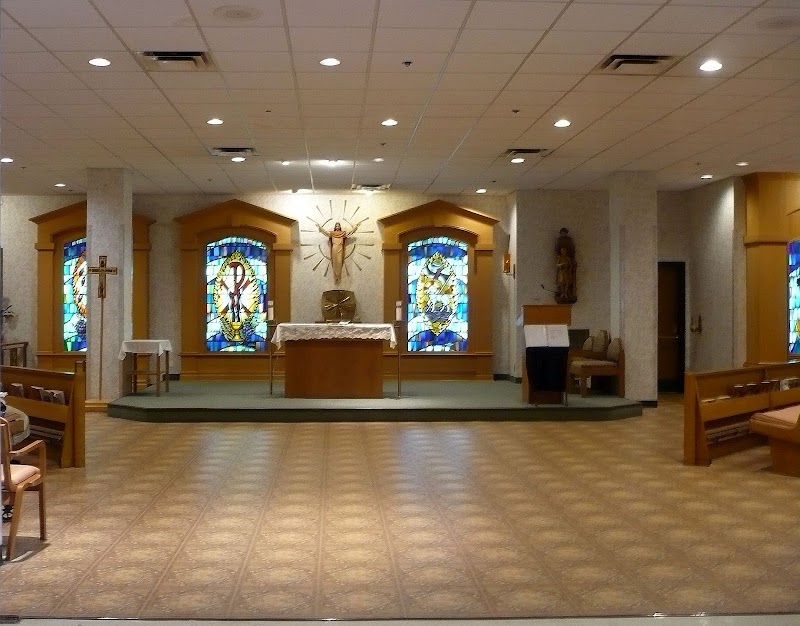
How is Ozanam Hall Of Queens Inc Staffed?

CMS rates OZANAM HALL OF QUEENS NURSING HOME INC's staffing level at 4 out of 5 stars, which is above average compared to other nursing homes. Staff turnover is 35%, compared to the New York average of 46%. This relatively stable workforce can support continuity of care.

What Have Inspectors Found at Ozanam Hall Of Queens Inc?

State health inspectors documented 17 deficiencies at OZANAM HALL OF QUEENS NURSING HOME INC during 2019 to 2024. These included: 16 with potential for harm and 1 minor or isolated issues.
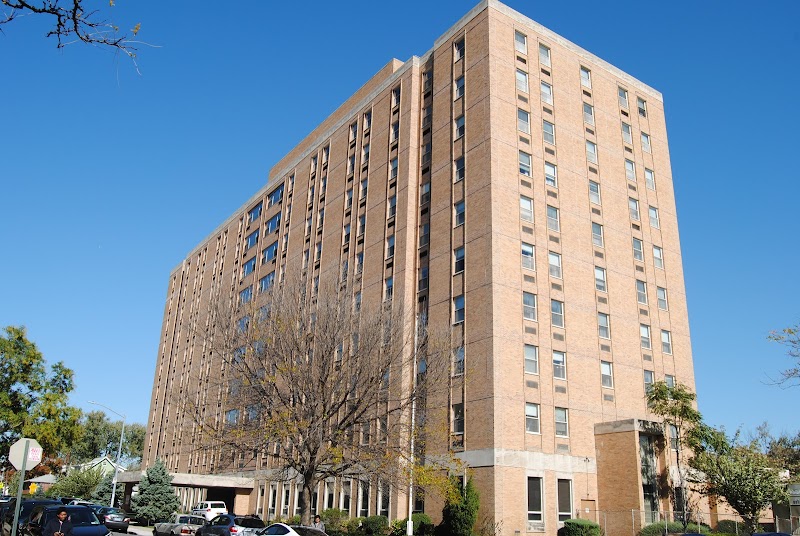
Who Owns and Operates Ozanam Hall Of Queens Inc?

OZANAM HALL OF QUEENS NURSING HOME INC is owned by a non-profit organization. Non-profit facilities reinvest revenue into operations rather than distributing to shareholders. The facility is operated by CARMELITE SISTERS FOR THE AGED AND INFIRMED, a chain that manages multiple nursing homes. With 432 certified beds and approximately 365 residents (about 84% occupancy), it is a large facility located in BAYSIDE, New York.
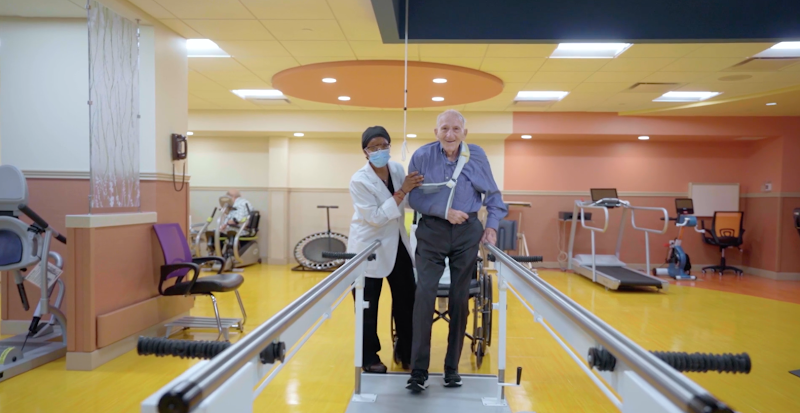
How Does Ozanam Hall Of Queens Inc Compare to Other New York Nursing Homes?

Compared to the 100 nursing homes in New York, OZANAM HALL OF QUEENS NURSING HOME INC's overall rating (3 stars) is below the state average of 3.1, staff turnover (35%) is significantly lower than the state average of 46%, and health inspection rating (3 stars) is at the national benchmark.

What Should Families Ask When Visiting Ozanam Hall Of Queens Inc?

Based on this facility's data, families visiting should ask: "Can I visit during a mealtime to observe dining assistance and food quality?" "How do you handle medical emergencies, and what is your hospital transfer rate?" "Can I speak with family members of current residents about their experience?"

Is Ozanam Hall Of Queens Inc Safe?

Based on CMS inspection data, OZANAM HALL OF QUEENS NURSING HOME INC has a clean safety record: no substantiated abuse findings (meaning no confirmed cases of resident harm), no Immediate Jeopardy citations (the most serious violation level indicating risk of serious injury or death), and is not on the Special Focus Facility watch list (a federal program monitoring the lowest-performing 1% of nursing homes). The facility has a 3-star overall rating and ranks #100 of 100 nursing homes in New York. While no facility is perfect, families should still ask about staff-to-resident ratios and recent inspection results during their visit.

Do Nurses at Ozanam Hall Of Queens Inc Stick Around?

OZANAM HALL OF QUEENS NURSING HOME INC has a staff turnover rate of 35%, which is about average for New York nursing homes (state average: 46%). Moderate turnover is common in nursing homes, but families should still ask about staff tenure and how the facility maintains care continuity when employees leave.

Was Ozanam Hall Of Queens Inc Ever Fined?

OZANAM HALL OF QUEENS NURSING HOME INC has been fined $5,944 across 1 penalty action. This is below the New York average of $33,138. While any fine indicates a compliance issue, fines under $50,000 are relatively common and typically reflect isolated problems that were subsequently corrected. Families should ask what specific issues led to these fines and confirm they've been resolved.

Is Ozanam Hall Of Queens Inc on Any Federal Watch List?

OZANAM HALL OF QUEENS NURSING HOME INC is not on any federal watch list. The most significant is the Special Focus Facility (SFF) program, which identifies the bottom 1% of nursing homes nationally based on persistent, serious quality problems. Not being on this list means the facility has avoided the pattern of deficiencies that triggers enhanced federal oversight. This is a positive indicator, though families should still review the facility's inspection history directly.