BRIARCLIFF MANOR CENTER FOR REHAB AND NURSING CARE
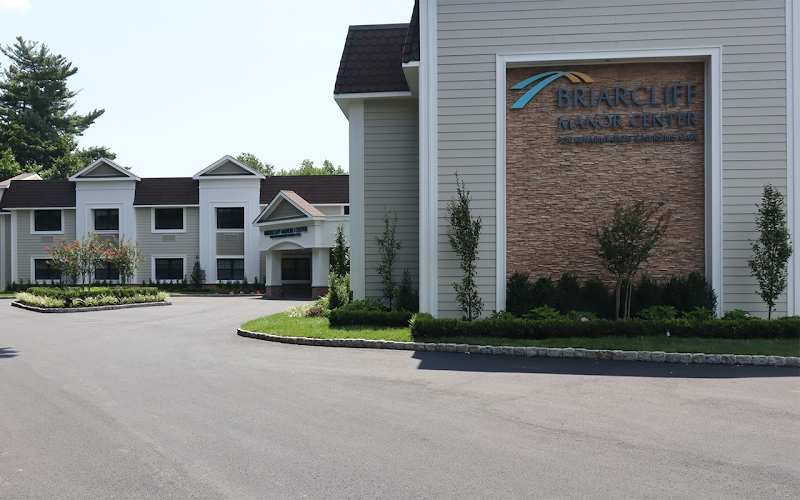
620 SLEEPY HOLLOW ROAD, BRIARCLIFF MANOR, NY 10510 (914) 941-5100
For profit - Partnership 120 Beds EXCELSIOR CARE GROUP Data: November 2025 1 Immediate Jeopardy citation
Trust Grade
0/100
#480 of 594 in NY
Last Inspection: March 2025

Within standard 12-15 month inspection cycle. Federal law requires annual inspections.

Overview

Briarcliff Manor Center for Rehab and Nursing Care received a Trust Grade of F, indicating poor performance with significant concerns about care quality. Ranked #480 out of 594 facilities in New York, they are in the bottom half, and #35 out of 42 in Westchester County, meaning there are only a few local options that are better. The facility's situation is worsening, with issues increasing from 11 in 2024 to 14 in 2025. Staffing is a major concern, as they received a 1-star rating with a high turnover rate of 53%, which is above the state average. The facility has also faced substantial fines totaling $60,206, higher than 91% of other New York facilities, suggesting ongoing compliance problems. Specific incidents of concern include a failure to administer critical anti-seizure medications for two residents, leading to a seizure and hospitalization for one of them, which signifies immediate jeopardy to resident safety. There was also a report of physical abuse where a resident was hit by a staff member, resulting in psychosocial harm. Additionally, multiple residents reported inadequate staffing levels, which hindered timely assistance with their daily needs. While the facility has some good quality measures, these serious issues highlight significant weaknesses that families should consider.

Trust Score
F
0/100
In New York
#480/594
Bottom 20%
Safety Record
High Risk
Review needed
Inspections
Getting Worse
11 → 14 violations
Staff Stability
⚠ Watch
53% turnover. Above average. Higher turnover means staff may not know residents' routines.
Penalties
✓ Good
$60,206 in fines. Lower than most New York facilities. Relatively clean record.
Skilled Nurses
○ Average
Each resident gets 38 minutes of Registered Nurse (RN) attention daily — about average for New York. RNs are the most trained staff who monitor for health changes.
Violations
⚠ Watch
37 deficiencies on record. Higher than average. Multiple issues found across inspections.
★☆☆☆☆
1.0
Overall Rating
★☆☆☆☆
1.0
Staff Levels
★★★★☆
4.0
Care Quality
★☆☆☆☆
1.0
Inspection Score
Stable
2024: 11 issues
2025: 14 issues

The Good

  • 4-Star Quality Measures · Strong clinical quality outcomes
  • Full Sprinkler Coverage · Fire safety systems throughout facility
  • No fines on record

Facility shows strength in quality measures, fire safety.

The Bad

1-Star Overall Rating

Below New York average (3.0)

Significant quality concerns identified by CMS

Staff Turnover: 53%

Near New York avg (46%)

Higher turnover may affect care consistency

Federal Fines: $60,206

Above median ($33,413)

Moderate penalties - review what triggered them

Chain: EXCELSIOR CARE GROUP

Part of a multi-facility chain

Ask about local staffing decisions and management

The Ugly 37 deficiencies on record

1 life-threatening 1 actual harm
Jun 2025 1 deficiency 1 Harm
SERIOUS (G) 📢 Someone Reported This

A family member, employee, or ombudsman was alarmed enough to file a formal complaint

Actual Harm - a resident was hurt due to facility failures

Free from Abuse/Neglect (Tag F0600)

A resident was harmed · This affected 1 resident

Based on observation, interview, and record review conducted during the abbreviated survey (NY00383393), the facility did not ensure a resident remained free from physical abuse. This was evident for ...

Read full inspector narrative →
Based on observation, interview, and record review conducted during the abbreviated survey (NY00383393), the facility did not ensure a resident remained free from physical abuse. This was evident for one (1) (Resident #1) of four (4) total sampled residents. Specifically, Resident #1 reported they were hit in their groin by Certified Nurse Aide #3 on 6/11/2025 at approximately 1:30 AM. This resulted in psychosocial harm that did not rise to level of Immediate Jeopardy. The findings are: The facility policy titled Abuse Prevention & Reporting, dated 1/3/2025, documented any employee involved in abuse will be disciplined appropriately. Resident #1 had diagnoses of hydrocephalus (fluid on the brain) and major depressive disorder. The Minimum Data Set 3.0 assessment (an assessment tool) dated 5/16/2025 documented Resident #1 presented with mild cognitive impairment with a Brief Interview for Mental Status score of 14 out of 15. The Comprehensive Care Plan related to victimization, initiated 5/10/2025 and last reviewed on 6/16/2025, documented Resident #1 would verbalize feeling safe. Documented interventions included encouraging Resident #1 to verbalize their feelings and report to staff if feeling threatened. The Social Work Note dated 6/11/2025 documented Resident #1 reported a Certified Nurse Aide (later identified as Certified Nurse Aide #3) on the night shift struck them in the groin. Resident #1's roommate, Resident #3, was present and witnessed the incident. The Nurse Practitioner note dated 6/11/2025 documented Resident #1 reported being hit in the groin by a Certified Nurse Aide. There were no visible injuries to Resident #1's groin area and an incident investigation was initiated. The Physician Orders documented Resident #1 was ordered to receive psychiatry and psychology consults on 6/11/2025. A Psychology Consult dated 6/12/2025 documented Resident #1 was previously evaluated for psychological services upon admission to the facility and declined ongoing services because they were adequately coping. Resident #1 was evaluated by the psychologist on 6/12/2025 after reporting they were punched in the groin by a Certified Nurse Aide on 6/11/2025. Resident #1 endorsed sadness/frustration when describing the incident, became teary at times, and stated everything was going well, and then this had to happen. The Social Work Note dated 6/13/2025 documented the Director of Social Work followed up with Resident #1 regarding their abuse complaint and the resident did not express any negative concerns; however, they continued to request discharge home. The facility Investigation Form, initiated 6/11/2025 and completed 6/18/2025, documented Resident #1 and Resident #3 provided consistent and detailed statements that Resident #1 was by their bed in their room on 6/11/2025 at 1:30 AM when Certified Nurse Aide #3 pushed Resident #1 onto the bed and punched them in the groin. Resident #1 and Resident #3 picked Certified Nurse Aide #3 out of a photo lineup of facility staff. The facility investigation documented there was reasonable cause to believe that resident abuse occurred. Certified Nurse Aide #3 was suspended pending investigation and terminated as of 6/17/2025. On 6/16/2025 at 1:38 PM, Resident #1 was interviewed and stated they recalled being hit in the groin by Certified Nurse Aide #3. They reported the incident to the Director of Social Work and wanted to be discharged from the facility. Resident #1 stated their physical pain subsided, but they were emotionally affected and distraught by the experience. Resident #1 became tearful and wept during the interview. On 6/17/2025 at 11:45 AM, the Director of Social Work was interviewed and stated they arrived at work on 6/11/2025 and were informed by the unit manager that Resident #1 requested to speak with them. The Director of Social Work stated Resident #1 reported the Certified Nurse Aide from the night shift pushed them onto their bed and struck them in the groin. The Director of Social Work corroborated Resident #1's allegation by interviewing Resident #3 and immediately informed the Administrator, who was responsible for reporting the allegation to the New York State Department of Health. On 6/17/2025 at 1:56 PM, in a phone interview Certified Nurse Aide #3 stated they recalled working with Resident #1 on 6/11/2025 but denied hitting the resident in the groin. On 6/17/2025 at 2:46 PM the Administrator was interviewed and stated the facility determined abuse occurred and Certified Nurse Aide #3 will be terminated. In-services regarding abuse prevention were ongoing. On 6/17/2025 at 1:21 PM, the Director of Nursing was interviewed and stated they were made aware of Resident #1's abuse allegation on 6/11/2025 and determined Certified Nurse Aide #3's involvement through staffing sheets and a photo lineup presented to Resident #1 and Resident #3. The Director of Nursing stated the facility determined that abuse did occur and would terminate the Certified Nursing Aide #3. On 6/16/2025 at 12:26 PM and 6/17/2025 at 2:46 PM, the Administrator was interviewed and stated the Director of Social Work informed them Resident #1 alleged a Certified Nurse Aide hit them on 6/11/2025. It was determined through investigation that Certified Nurse Aide #3 was the alleged perpetrator. The police were notified, came to the facility, and met with Resident #1. The Nurse Practitioner and Resident #1's family were made aware of Resident #1's allegation and facility's pending investigation. All staff, including Certified Nurse Aide #3, had been in serviced on abuse prevention in 5/2025 and 6/2025, and abuse prevention in-services were ongoing in relation to Resident #1's allegation. The facility had until 6/18/2025 to complete their investigation and the summary of investigative findings will be sent to the New York State Department of Health once completed. The Administrator stated Certified Nurse Aide #3 would be terminated from facility employment because the abuse did occur. During a telephone interview on 6/17/2025 at 2:32 PM, the Medical Director stated they were aware of the incident that occurred on 6/11/2025 between Resident #1 and Certified Nurse Aide #3. The Medical Director stated Resident #1 was assessed and did not present with ongoing pain or injury to the groin area. The Medical Director stated they agreed with the facility's decision to report the incident, was informed by the facility Certified Nurse Aide #3 was removed from direct patient care, and believed the facility decided to terminate Certified Nurse Aide #3. 10 NYCRR 415.4(b)(1)(i)
Mar 2025 12 deficiencies
CONCERN (D)

Potential for Harm - no one hurt, but risky conditions existed

Resident Rights (Tag F0550)

Could have caused harm · This affected 1 resident

Based on observation, interview, and record review during the recertification survey from 3/5/25 to 3/12/25, the facility did not ensure residents had the right to a dignified experience for 1 of 4 re...

Read full inspector narrative →
Based on observation, interview, and record review during the recertification survey from 3/5/25 to 3/12/25, the facility did not ensure residents had the right to a dignified experience for 1 of 4 residents (Resident #24) reviewed for dignity. Specifically, Resident #24 was observed multiple times after meals with food/crumbs on their chin and their gown. The findings include: Resident #24 had diagnoses including cerebral infarction (stroke), hemiplegia affecting left non dominant side, and dementia. A Resident Care Plan dated 3/30/21 titled Activities of Daily Living documented the resident required a one person assist with bathing, partial/moderate assistance for upper body dressing, and supervision or touching assistance for eating and personal /general hygiene. The Quarterly Minimum Data Set (an assessment tool) dated 12/26/24 documented Resident #24 had moderate cognitive impairment, upper and lower extremity impairment on one side and required supervision/touching assistance with eating and hygiene. During an observation on 3/05/25 at 10:35 AM, Resident #24 was observed in bed with dried food/crumbs on their chin and on their gown. During an observation on 03/05/25 at 11:48 AM , Resident #24 was observed in bed with dried food /crumbs on chin and on their gown. During an observation on 3/07/25 at 10:04 AM, Resident #24 was observed in bed with food/cereal on their gown. During an observation on 03/07/25 at 01:30 PM, Resident #24 was observed in the day room after lunch with food residue on their face. During an interview on 03/11/25 at 10:51 AM, Certified Nurse Aide #3 stated Resident #24 was independent when eating but. They stated when their meal was finished, the tray would be removed and activities of daily living, including bathing and change of clothes was usually done a little later. They stated the expectation was the residents face and hands were to be cleaned after meals if needed. They stated when working with Resident #24, they cleaned the resident's face, hands, clothing as needed after meals. During an interview on 03/11/25 at 11:27 AM, the Director of Nursing stated when resident meals were completed, tray/food and clothing protector/napkins should be removed and the resident should have their hands and face cleaned as needed. The Director of Nursing stated residents should not have food remains on their clothing or face/hands after meals. 10 NYCRR 415.3 (d)(i)(i)
CONCERN (D)

Potential for Harm - no one hurt, but risky conditions existed

Deficiency F0578 (Tag F0578)

Could have caused harm · This affected 1 resident

Based on record review, observations, and interviews conducted during a recertification survey from 03/05/2025 to 03/12/2025, the facility did not ensure that the residents' advance directives were ac...

Read full inspector narrative →
Based on record review, observations, and interviews conducted during a recertification survey from 03/05/2025 to 03/12/2025, the facility did not ensure that the residents' advance directives were accurate for 1 (Resident # 82) of 24 residents reviewed. Specifically, Resident #82's Medical Orders for Life Sustaining Treatment form was changed from Do Not Resuscitate (allow a natural death if the heart stops beating or resident stops breathing) to Full Code (perform Cardio-Pulmonary Resuscitation) and the physician orders and facility identifiers (system used to alert staff the resident's code status) were not updated to reflect the resident's wishes. The findings include: The facility policy, Advanced Directives, with a 12/13/2024 review date, documented the individual's wishes on advance directives will be identified and honored by the facility. All Do Not Resuscitate orders must align with the corresponding Medical Orders for Life Sustaining Treatment documentation to maintain accuracy in the resident's care preferences. A Do Not Resuscitate alert will be placed in the resident's Electronic Medical Record for immediate visibility to all relevant staff. A red sticker will be placed as a visual indicator on the resident's armband or next to the resident's name on the door. Resident's Advance Directives will reviewed upon admission, and re-admission from the hospital, quarterly, and annually. Resident # 82 had diagnoses including Chronic Obstructive Pulmonary Disease, Asthma and Major Depressive disorder. The Medical Orders for Life Sustaining Treatment form dated 9/05/2023 documented a Do Not Resuscitate Order (allow natural death). The quarterly Minimum Data Set (an assessment tool) dated 12/05/2024 documented the resident was cognitively intact. The social services note dated 12/19/2024 documented that during the 12/19/2024 quarterly care plan meeting, Resident #82 was present and updated the Medical Orders for Life Sustaining Treatment form to a Cardio-Pulmonary Resuscitation order (full code). The 12/19/2024 Medical Order for Life Sustaining Treatment was signed by the physician on 12/26/2024. The physician orders for Advance Directives, last renewed on 2/19/25, documented Do Not Resuscitate, Do Not Intubate, no feeding tube, a trial period of IV fluids, use antibiotics to treat infections if medically indicated. During a review of Resident #82's electronic medical record on 3/6/2025 at 11:20 AM, a Do Not Resuscitate alert was visible. During an observation on 3/06/2025 at 3:26 PM, a red sticker was seen on Resident #82's door name plate. During an observation on 3/06/2025 at 3:29 PM, a facility binder, containing Medical Orders Life Sustaining Treatment forms for all the residents on the unit, had the 09/05/2023 Medical Order for Life Sustaining Treatment for Resident #82. During an interview on 03/06/2025 at 3:36 PM, the facility Social Work Director stated when an advanced directive change was known, a new Medical Orders for Life Sustaining Treatment form was started and given to the Nurse Practitioner or Physician to sign. Then it was updated in the electronic medical record and the updated copy was placed in the binder in the unit. They stated usually the Nurse Practitioner or Physician put the orders in or would ask the nurses to put the changed orders in. During the quarterly care meeting on 12/19/2024, Resident #82 changed their Medical Orders for Life Sustaining Treatment from Do Not Resuscitate to Full Code. The Social Worker Director stated they did not know why Residents #82's physician orders or electronic medical record were not updated. During an interview on 03/10/2025 at 11:25 AM, Licensed Practical Nurse #1 stated staff identified residents who had advanced directives by the red dot on the door, red dot in computer and red dot on the wrist band. When a resident had to leave the facility to go to the hospital, the nurse made a copy of Medical Orders for Life Sustaining Treatment, resident's face sheet, and medication list to send with the emergency medical system team. They stated nurses checked for new orders in the computer when coming on duty. Licensed Practical Nurse #1 stated there was no formal reporting if advance directives changed unless a new order was put in place. Licensed Practical Nurse #1 stated they thought Resident #82's Medical Orders for Life Sustaining Treatment was Do Not Resuscitate and was not aware of the change from Do Not Resuscitate to Full Code. During an interview on 03/10/2025 at 4:10 PM, the Director of Nursing stated social workers made changes to the advance directives after being told by resident or family. The social worker was supposed to notify nursing after a new Medical Orders for Life Sustaining Treatment form was signed by the physician. The nurse was responsible for updating orders in the computer. The Director of Nursing did not know why Residents #82's orders were not updated. 10 NYCRR 415.3(e)(1)(ii)
CONCERN (D) 📢 Someone Reported This

A family member, employee, or ombudsman was alarmed enough to file a formal complaint

Potential for Harm - no one hurt, but risky conditions existed

Safe Environment (Tag F0584)

Could have caused harm · This affected 1 resident

Based on observation and interview conducted during the recertification survey conducted from 3/5/25 to 3/12/25, the facility did not ensure that a clean, comfortable, and homelike environment was pro...

Read full inspector narrative →
Based on observation and interview conducted during the recertification survey conducted from 3/5/25 to 3/12/25, the facility did not ensure that a clean, comfortable, and homelike environment was provided. Specifically, room C-19-B had broken window clips, room C-9-B had a broken radiator cover, a window shade that was stained, and black scuff marks on the wall between the window and resident dresser, room A-17 had a faulty window unit and faulty sealed Packaged Terminal Air Conditioner unit which allowed cold outside air to enter the room. The findings include: The facility policy titled Maintenance/Engineering policy dated 7/24/24 documented provide a safe, functional and effective environment for residents, staff and all individuals who provide care to residents and all individuals who visit the facility. During an observation on 03/06/25 at 12:08 PM of room C-19-B, a hand-written sign was observed on the lower left side of the window stating Do not open this window. A piece of the broken window opening latch was observed on the windowsill. During an observation on 03/06/25 at 12:12 PM of room C-9-B, the radiator cover was observed hanging/broken on the right side below the vents. The window shade was observed stained on the left and right lower sides. The wall between the resident's dresser and radiator/window area was observed with black scuff marks. During an interview on 03/12/25 at 12:23 PM the Director of Maintenance stated they were not aware of the sign posted on room C-19-B window and was not aware who wrote the sign. They stated the broken latches on the top of the window allowed for windows to be opened for cleaning purposes. They stated they have not received a work order request for repairs. The Director of Maintenance stated radiator cover bases frequently fall out if hit with a wheelchair or mechanical lift and can be snapped or drilled back in place. They stated window shades that are dirty or broken will need to be replaced. They stated they were not aware of concerns in room C-9-B and had not received a work order for repairs. They stated the facility currently has an order pending (document observed) for replacement shades for building. The Director of Maintenance stated staff members should report all environment concerns to their unit manager who should enter a work order into facility maintenance software program for repairs to be completed or call/page/e-mail environmental staff with concerns. During an interview on 03/11/25 at 11:35 AM, the Director of Maintenance stated the facility had three windows that were installed incorrectly which allows outside air to enter rooms and room A-17 was one of the three rooms with the faulty windows. They stated it is known that the Packaged Terminal Air Conditioner unit requires a correct seal to not allow outside air into the room. They stated the facility did receive a complaint on 12/10/25 from the resident in room A-17 that cold air was coming in through the Packaged Terminal Air Conditioner unit. The Director of Maintenance stated the facility was working with the window manufacture to determine if the repairs will be covered by the warranty. In addition, the facility is waiting for warmer weather to complete the repairs to the Packaged Terminal Air Conditioner unit. During an observation on 03/11/25 at 11:50 AM, room A-17 window panes could be moved back and forth allowing outside air to enter the room. 10 NYCRR 415.5(h)(2)
CONCERN (D)

Potential for Harm - no one hurt, but risky conditions existed

Report Alleged Abuse (Tag F0609)

Could have caused harm · This affected 1 resident

**NOTE- TERMS IN BRACKETS HAVE BEEN EDITED TO PROTECT CONFIDENTIALITY** Based on observations, interviews and record reviews conducted during a recertification survey from 3/5/25 to 3/12/25 it was det...

Read full inspector narrative →
**NOTE- TERMS IN BRACKETS HAVE BEEN EDITED TO PROTECT CONFIDENTIALITY** Based on observations, interviews and record reviews conducted during a recertification survey from 3/5/25 to 3/12/25 it was determined that for 1 of 1 residents (Resident #10) reviewed for skin conditions the facility did not ensure that injuries of unknown origin were reported to the state agency. Specifically, the state department was not notified after the 3/4/25 Accident/Incident Report documented Resident #10 was observed with discoloration that suddenly appeared on the right side of the resident's face. The findings include: Resident #10 was admitted with diagnoses including Congestive Heart Failure, Non-Alzheimer's Dementia, and Seizure Disorder. The Quarterly Minimum Data Set (MDS) assessment dated [DATE] documented Resident #10 had severely impaired cognition, required partial to moderate assist for bed mobility and transfer; it further documented and had no falls. The 2/18/25 Accident/Incident report documented the resident was being given care by the certified nurse aide when the resident was playing/fidgeting with bed controls, and it suddenly swung into the resident's face. It further documented a nurse was notified and no injury noted. Abuse ruled out. There was no documented evidence of right eye/face bruising in the electronic medical record between 2/18/25 and 3/4/25. The 3/4/25 Accident/Incident documented Resident #10 was observed with discoloration that suddenly appeared on the right side of the resident's face. Resident alert and at baseline. Statements were taken from of all the staff on the unit. There were no recent falls or seizure activity. Resident was noted with movements that are somewhat erratic with control. Resident noted with recent incident with the bed controls swung towards their face per review of records causing injury at the time however it's reasonable to presume that this is the cause of the old nature of the bruise. Certified Nurse Aide #7 stated they were providing care, and resident was fidgeting with bed controls and the remote accidentally hit the resident in the face. The physician was made aware and had no new orders. The documented recommendation was for the bed remote cord to be stretched out as needed. The 3/4/25 medical progress note documented the resident was seen for what appeared to be an old right eye bruise.The area is showing signs of healing different stages of bruising. There were no signs of vision impairment. No further injury observed. Continue to monitor. On 3/05/25 at 2:15 PM, Resident #10 was observed with a yellowish bruise on the right cheek. During interview on 3/12/25 at 12:16 PM the Director of Nursing stated they were not aware Resident #10 had bruising until the 3/4/25 incident report was initiated. They stated they did not feel it was an injury of unknown origin as they attributed the bruising to the incident on 2/18/24. The Director of Nursing stated time had passed from the previous incident and should have considered the 3/4/25 reported bruising to be an injury of unknown origin. During interview on 3/12/25 at 12:25 PM, Licensed Practical Nurse #5 stated they were surprised when they received a call from the facility on 3/4/25 inquiring about the bruise on Resident #10's face. They stated they told the caller they did not see a bruise on the residents face from 2/18/25-3/4/25 and were not sure the bruise on Resident #10 right cheek was from the 2/18/25 incident. During interview on 3/12/25 at 12:46 PM, the Nurse Practitioner stated on 3/4/25 when they assessed the resident and wrote their note, it was the first time bruising was reported to them. They further stated prior to that date they had no knowledge of Resident #10 having a bruise. The Nurse Practitioner stated the bruise on Resident #10's right cheek was of unknown origin. The Nurse Practitioner stated staff were unable to explain what happened to Resident #10. During interview on 3/12/25 at 12:47 PM, the Director of Nursing stated prior to the nurse practitioner conducting an assessment of Resident #10, they did not know where the bruising came from. The Director of Nursing stated when they started collecting statements for the 3/4/25 incident report staff told them the bruise was already there. The Director of Nursing stated an injury of unknown origin should have been reported within 2 hours and further stated Incident Reporting In-Service had not been done. NYCRR 415.4(b)(2) .
CONCERN (D) 📢 Someone Reported This

A family member, employee, or ombudsman was alarmed enough to file a formal complaint

Potential for Harm - no one hurt, but risky conditions existed

Deficiency F0657 (Tag F0657)

Could have caused harm · This affected 1 resident

**NOTE- TERMS IN BRACKETS HAVE BEEN EDITED TO PROTECT CONFIDENTIALITY** Based on record review and interview conducted during recertification and abbreviated survey (NY00365960) from 03/05/2025 to 03/...

Read full inspector narrative →
**NOTE- TERMS IN BRACKETS HAVE BEEN EDITED TO PROTECT CONFIDENTIALITY** Based on record review and interview conducted during recertification and abbreviated survey (NY00365960) from 03/05/2025 to 03/12/2025, the facility did not ensure that the resident's care plan was reviewed and revised timely for 1 of 2 residents (Resident #164) reviewed for falls. Specifically, Resident #164's care plan was not reviewed or updated to reflect new interventions after a medical assessment on 11/29/24 and a fall on 12/2/24. The findings include: Resident #164 was admitted to the facility with diagnoses including intracranial injury, benign prostatic hyperplasia, and weakness. The admission assessment dated [DATE] documented Resident #164 had three or more falls in the last three months and had balance problem while standing, balance problem while walking, decreased muscular coordination, change in gait pattern when walking through doorway, and jerking or unstable when making turns resulting in a Fall Risk Assessment score of 21 (High Risk for falls). The 11/26/24 Care Plan Report documented risk for falls, orient to surroundings and routine on unit, introduce to roommate and staff. The Medical Progress Note dated 11/29/2024 documented deficits in mobility and activities of daily living due to weakness, balance impairment and debility. Continue with physical therapy/occupational therapy focusing on improving balance, increasing endurance and tolerance to exercise. Continue reviewing blood pressures and discuss with therapy to monitor of orthostatic hypotension limiting functional therapy progress and falls. High risk of falls if hypotension develops. This could result in injuries requiring readmission to the hospital and possible surgical intervention. The Incident Report dated 12/02/2024 documented that the resident had an unwitnessed fall in their room with complaints of pelvic pain. The resident was sent to a hospital emergency room for examination. The facility physician ordered x-rays of bilateral hips and pelvis. The x-rays were negative for fractures. There was no documented evidence in the electronic medical record that care plan interventions were updated after the 12/2/24 fall. The Incident Report dated 12/08/2024 documented the resident had an unwitnessed fall in their room resulting in injuries. The resident had a laceration to their head and bruises on both knees. The resident was sent to a hospital emergency room for examination. The facility physician ordered x-rays of the residents' knees. The x-rays were negative for fractures. During an interview on 03/12/25 at 11:25 AM, the Director of Nursing stated the Care Plan Report had two fall interventions dated 11/26/2024. The Director of Nursing stated the Care Plan Report should have been reviewed and updated with new interventions after the 12/2/24 fall but, that had not been done. During an interview on 03/12/2025 at 1:43 PM, Licensed Practical Nurse #1 stated care plan interventions are added over the course of a residents stay. All care plans are supposed to be reviewed after a fall or change of condition and new interventions are added if necessary. 10 NYCRR 415.11 (c)(2)(i-iii)
CONCERN (D)

Potential for Harm - no one hurt, but risky conditions existed

ADL Care (Tag F0677)

Could have caused harm · This affected 1 resident

**NOTE- TERMS IN BRACKETS HAVE BEEN EDITED TO PROTECT CONFIDENTIALITY** Based on observation, record review, and interview conducted during the recertification survey from 3/5/25-3/12/25, the facility...

Read full inspector narrative →
**NOTE- TERMS IN BRACKETS HAVE BEEN EDITED TO PROTECT CONFIDENTIALITY** Based on observation, record review, and interview conducted during the recertification survey from 3/5/25-3/12/25, the facility did not ensure each Resident who was unable to carry out activities of daily living received the necessary care and services to maintain good personal hygiene for 2 (Residents #52 and #57) of 3 Residents reviewed for Activities of a Daily Living. Specifically, Resident #52 and #57 who required dependent assistance with Activities of Daily Living, were observed during multiple observations with fingernails that were long and ungroomed. The findings include: The facility policy titled Activities of Daily Living, reviewed 7/28/24, documented: It is the policy of this center to provide activity of daily living care to all Residents based on assessment of needs. 1) Resident #52 was admitted [DATE]. Diagnoses included quadriplegia, abnormalities of gait and mobility, and major depressive disorder. The Annual Minimum Data Set (a resident assessment tool) dated 1/2/25 documented Resident #52 was cognitively intact, was dependent on staff for toileting, bathing and lower body dressing, and required substantial/maximal assistance for personal hygiene. A Resident care plan dated 10/20/20 titled Activities of Daily Living Functional/Rehabilitation Potential documented they required a one-person physical assist for hygiene. A physician order dated 12/18/24 documented for the nurse to check the condition of skin on shower days. During an observation and interview on 3/5/25 at 11:05 AM, Resident #52 was in bed with bilateral hand contractures and fingernails that were long and ungroomed. Resident #52 stated their fingernails were rarely cut and the last time was a while ago. During an observation on 03/06/25 at 08:43 AM, bilateral fingernails were observed long and ungroomed. During an observation on 03/10/25 at 01:25 PM, Resident was observed in wheelchair. Bilateral fingernails were long and ungroomed. During a follow-up interview on 3/12/25 at 12:26 PM, Resident #52 stated they had reported long nails to Certified Nurse Aides in the past. Resident #52 stated sometimes they would be cut but they frequently had to wait. 2) Resident #57 was admitted on [DATE]. Diagnoses include: metabolic encephalopathy, sepsis, iron deficiency anemia. The admission Minimum Data Set (a Resident assessment tool) dated 1/27/25 documented Resident #57 had moderately impaired cognition. The resident's care plan dated 1/14/25 titled Nursing Activities of Daily Living documented the resident required one person assistance for bathing and partial/moderate assistance for hygiene. A physician order dated 2/19/25 documented for the nurse to check the condition of skin on shower days. During an observation on 03/07/25 at 10:20 AM, Resident #57 was resting in bed with bilateral long, ungroomed fingernails. During an observation on 03/10/25 at 11:55 AM, Resident #57 was in main dining room with bilateral long, ungroomed fingernails. During an observation on 03/11/25 at 9:06 AM, Resident #57 was in bed with bilateral long, ungroomed fingernails. During an interview on 03/10/25 at 11:37 AM, Certified Nurse Aide #10 stated they provided activities of daily living cares to residents on the unit. They stated personal hygiene was provided daily. They stated Certified Nurse Aides were responsible for cutting and grooming nails for non-diabetic residents. During an interview on 03/11/25 at 11:06 AM, Registered Nurse Unit Manager #11 stated that the expectation was that Certified Nurse Aides provided nail care (cutting and grooming) for all non-diabetic residents. They stated that Nurses and Nurse Managers on the unit were responsible for supervision to ensure tasks were completed. They stated residents should not have long and ungroomed nails. During an interview on 03/11/25 at 11:24 AM, the Director of Nursing stated that residents' nails should be kept short and well-groomed with no sharp edges. Nail care should be completed as needed during cares. On shower days, a full skin assessment including nail care should be conducted. They stated Certified Nurse Aides were responsible for resident hand nail care except for diabetics. 10 NYCRR 415.12(a)(2)
CONCERN (D)

Potential for Harm - no one hurt, but risky conditions existed

Quality of Care (Tag F0684)

Could have caused harm · This affected 1 resident

**NOTE- TERMS IN BRACKETS HAVE BEEN EDITED TO PROTECT CONFIDENTIALITY** Based on observation, interview, and record review during the recertification survey from 3/5/25 to 3/12/25, the facility did no...

Read full inspector narrative →
**NOTE- TERMS IN BRACKETS HAVE BEEN EDITED TO PROTECT CONFIDENTIALITY** Based on observation, interview, and record review during the recertification survey from 3/5/25 to 3/12/25, the facility did not ensure appropriate care was provided in accordance with professional standards of practice for 1 of 1 residents (Resident #10) reviewed for Skin Conditions. Specifically, on 2/18/25 the registered nurse was not made aware, and there was no documented evidence that a registered nurse assessment was conducted after Resident #10 was hit in the face with the bed control while cares were being provided by Certified Nurse Aide #7. The findings include: Resident #10 was admitted to the facility with diagnoses including Congestive Heart Failure, Non-Alzheimer's Dementia, and Seizure Disorder. The 2/18/25 Accident/Incident Report documented Resident #10 was being given care by the Certified Nurse Aide when the resident was playing/fidgeting with the bed controls, and it suddenly swung into the resident's face. It further documented a nurse was notified and no injury was noted. Resident #10 received blood thinners. The documented plan was to detangle the bed control cord as needed. Abuse was ruled out. There was no documented evidence in the 2/18/25 progress notes after Resident #10 was hit in the face with the bed control while receiving cares. There was no documented evidence that Resident #10 was assessed by a Registered Nurse after they were hit in the face with the bed control on 2/18/25. The Quarterly Minimum Data Set, dated [DATE] documented Resident #10 had severely impaired cognition, and required partial to moderate assistance with bed mobility and transfers. During interview on 3/12/25 at 12:16 PM during an interview, the Director of Nursing stated on 2/18/25 Certified Nurse Aide #7 told Licensed Practical Nurse #5 that while they were providing care the bed remote swung and hit Resident #10 in the face. Licensed Practical Nurse # 5 went to see the resident and stated they did not see anything and endorsed it to oncoming Licensed Practical Nurse #6. The Director of Nursing stated both Licensed Practical Nurse #5 and Licensed Practical Nurse #6 did not report the incident to the nursing supervisor and did not document the incident in the electronic medical record. The Director of Nursing stated a Registered Nurse should have assessed Resident #10. During interview on 3/12/25 at 12:25 PM Licensed Practical Nurse #5 stated on 2/18/25 Certified Nurse Aide #7 was taking care of resident and while providing care, they stated the bed remote hit the resident in the face. Licensed Practical Nurse #5 stated they looked at Resident #10 and did not see any bruising. Licensed Practical Nurse #5 stated they should have reported it to the nursing supervisor but did not and instead told the oncoming nurse (Licensed Practical Nurse #6) at change of shift. Licensed Practical Nurse #5 stated they usually documented in progress notes regarding resident incident/s but did not write a note. On 3/12/25 at 12:37 PM during an interview, Licensed Practical Nurse #6 stated they were informed by Licensed Practical Nurse #5 that Certified Nurse Aide #7 was providing care and the bed remote hit the resident in the face. Licensed Practical Nurse #6 stated when they went to see Resident #10, they did not have any marks on their face. They further stated at some time during the next couple of weeks, there was some bruising showing. Licensed Practical Nurse #6 stated they did not document anything in the progress notes about the bruise on the resident's face. Licensed Practical Nurse #6 stated they normally would have documented but the bruising did not appear right away. Licensed Practical Nurse #6 stated they did not report it to anybody. Licensed Practical Nurse #6 stated they should have reported it to nursing supervisor so the resident could be assessed. On 3/12/25 at 2:42 PM, Certified Nurse Aide #7 stated while they were providing care, Resident #10 had the bed control in their hand and was struggling to unravel the cord and pulled it and it snapped back and accidentally hit the resident in the face. Certified Nurse Aide #7 stated they notified Licensed Practical Nurse #5 and stated that nobody asked them about the incident until now. Certified Nurse Aide #7 stated after the incident there was no redness or bruising on Resident #10's face. 10NYCRR 415.4(b)(3)
CONCERN (D) 📢 Someone Reported This

A family member, employee, or ombudsman was alarmed enough to file a formal complaint

Potential for Harm - no one hurt, but risky conditions existed

Accident Prevention (Tag F0689)

Could have caused harm · This affected 1 resident

Based on observation, record review, and interview conducted during the recertification and abbreviated survey (NY00365646) from 3/5/24 to 3/12/24, it was determined the facility did not ensure reside...

Read full inspector narrative →
Based on observation, record review, and interview conducted during the recertification and abbreviated survey (NY00365646) from 3/5/24 to 3/12/24, it was determined the facility did not ensure residents received adequate supervision to prevent accidents for 1 of 6 residents (Resident #165) reviewed for accidents. Specifically, a two (2) person assist was not provided as per care plan resulting in Resident #165 rolling to the floor from the bed and sustaining a laceration/abrasion to their forehead, bridge of nose, and left hip. The findings include: Resident #165 was admitted to the facility with diagnoses including hypotension, pneumonia, and malnutrition. The November 2024 Certified Nurse Aide Instructions documented resident required one- person physical assistance for bed mobility and bathing. The Activities of Daily Living Care Plan with a revision date of 11/28/24 documented dependent for bathing and required 2-person physical assist for bathing and bed mobility, half side rails to be used as enablers for bed mobility. The December 2024 Certified Nurse Aide Instructions documented the resident was changed (undated) from a one-person physical assist to a 2-person physical assist for bathing and bed mobility. The 12/5/24 admission 5-day Minimum Data Set Resident #165 was cognitively intact was dependent for bed mobility and transfers, used a wheelchair and was dependent for propelling wheelchair and further documented the resident was on the rehabilitation program and received occupational therapy and physical therapy for 120 minutes each. The 12/18/24 Accident/Incident Report documented in the conclusion, Resident #165 was receiving care by Certified Nurse Aide #8 at bedside, when they turned to get a fresh wash cloth from the bedside table to clean the body, the resident was rolling off the bed. Certified Nurse Aide #8 attempted to hold the resident, but the resident was already on the floor. The fall was witnessed, caused by resident intent or behavior. The resident was sent to hospital for Cat Scan and returned in stable condition. No treatment necessary to areas. Will observe for signs and symptoms of infection. Referred to rehabilitation. Resident's care was changed to 2 -person assistance with care. No evidence of abuse, neglect or mistreatment. The 12/19/24 Fall Assessment documented resident was unable to recall details of the incident. Resident was extensive assist of 1 person and uses a wheelchair for mobility, unable to lock and unlock wheelchair. Resident was alert but confused and able to follow simple directions. Recommend close supervision. Resident screened status post fall on 12/18/24. Resident noted with small laceration to anterior forehead on the bridge of nose; small, closed abrasion to left hip/pelvic and left trochanter. Resident hospitalized and returned on the same day. CAT scan of the brain is negative for any acute bleeding. The CAT of the bones does not show any fractures. Resident will be reassessed for possible side rails. Resident recommended to have low bed and floor mats for fall prevention. Resident requires frequent supervision due to fall decreased safety awareness. Resident will continue occupational therapy program in order to facilitate participation in functional activities and decrease caregiver burden. During interview on 3/11/25 at 1:37 PM Certified Nurse Aide #8 stated when they were providing care, they turned to get the towel to wash the resident, and the resident rolled onto floor. Certified Nurse Aide #8 stated the resident was able to move around in bed and was able to move onto their side when asked. Certified Nurse Aide #8 stated Resident #165 was a 1- person assist for bed mobility and bathing and stated they never saw any Certified Nurse Aides providing a 2- person assist for care of Resident #165 before or after the falls. Certified Nurse Aide #8 stated the only time they asked for assistance from another aide was to help move the resident up toward the head of the bed. Certified Nurse Aide #8 stated the nursing staff are not good with communication, and they don't tell the Certified Nurse Aides of changes with the resident's care. During interview on 3/12/25 at 5:54 PM during an interview, Physical Therapist #9 stated Resident #165 required 2-person extensive assist on 11/26/24 status post hospitalization. Resident was not making any more progress, so they discharged the resident on 12/6/24 and the resident continued to require extensive assist of 2 person for transfers and bed mobility. 10 NYCRR 415.12(h)(2)
CONCERN (D)

Potential for Harm - no one hurt, but risky conditions existed

Respiratory Care (Tag F0695)

Could have caused harm · This affected 1 resident

Based on observations, record review and interviews conducted during the Recertification survey from 3/5/2025 to 3/12/25, the facility did not ensure that 1 of 2 residents (Resident #34) reviewed for ...

Read full inspector narrative →
Based on observations, record review and interviews conducted during the Recertification survey from 3/5/2025 to 3/12/25, the facility did not ensure that 1 of 2 residents (Resident #34) reviewed for Respiratory Care was provided with such care, consistent with the professional standards of practice. Specifically, Resident #34, had a physician's order for oxygen to be administered via nasal cannula at 3 liters per minute, and was observed multiple times with the oxygen rate not consistent with the physicians' order. Additionally, there was no signage present indicating oxygen was being utilized in Resident #34's room. The findings include: The facility policy titled Oxygen Administration last revised on 10/29/24 documented to verify that there is a physician's order; place an oxygen in use sign on the outside of the room entrance door; and turn on the oxygen on at the prescribed rate. Resident #34 had diagnoses including shortness of breath, depression, acute and chronic respiratory infarction. The Quarterly Minimum Data Set (a resident assessment tool) dated 12/19/24 documented Resident #34 had moderately impaired cognition, required supervision for toileting, dressing and transfers and set up assistance for eating. A physician order dated 9/27/24, documented oxygen at 3 liters/minute continuous via nasal cannula. A resident care plan, updated 12/2/24, documented to administer of oxygen per physician order. During observations on 3/05/25 at 12:03 PM, 3/06/25 at 8:51 AM, and 3/07/25 at 1:34 PM, Resident #34 was receiving oxygen via nasal cannula and the concentrator was observed running at 2.5 liters/minute. There was no oxygen use signage observed on door/entrance to the resident's room. During an interview and observation on 3/07/25 at 2:10 PM, the oxygen concentrator was at 2.5 liters/minute. Licensed Practical Nurse #1, observed the concentrator and stated the oxygen concentrator was running between 2.5 and 3 Liters. They stated that Resident #34's oxygen administration rate could fluctuate between 2 and 3 liters and that they were aware the physician order was for the resident to receive 3 Liters continuously. They also stated that the facility did not require a physician order for oxygen running at 2 liters. During an interview and observation on 03/07/25 at 2:18 PM, Registered Nurse Supervisor #2, stated that oxygen use signage should have been posted on / near the doorway of Resident #34's room. They also stated that all residents in the building needed an order for oxygen use and that the oxygen should have been administered at prescribed rate. During an interview on 3/10/25 at 2:21 PM, the Director of Nursing stated physician orders were required for all oxygen use except in an emergency and then the order would be obtained. Signage should be in place by door of a resident's room when using oxygen. Physician orders for liter administration rate were expected to be followed as written. Correct oxygen level settings should be monitored by the Nursing Supervisor on the unit and/or the Director of Nursing. 10 NYCRR 415.12
CONCERN (D)

Potential for Harm - no one hurt, but risky conditions existed

Deficiency F0725 (Tag F0725)

Could have caused harm · This affected 1 resident

Based on interview, and record review conducted during a recertification survey from 3/5/25 to 3/12/25, the facility did not ensure that sufficient staff was available to meet the needs of all residen...

Read full inspector narrative →
Based on interview, and record review conducted during a recertification survey from 3/5/25 to 3/12/25, the facility did not ensure that sufficient staff was available to meet the needs of all residents on 30 days reviewed. Specifically, actual staffing levels were below minimum levels on the following dates (2/2/2/25, 2/3/25, 2/4/25, 2/8/25, 2/9/25, 2/10/25, 2/12/25, 2/16/25, 2/17/25, 2/24/25, 2/25/25, 3/1/25, and 3/3/25). The findings include: The Minimum Par Levels for Nursing Sheets documented the 7AM -3PM shift for unit A should have at least 4 Certified Nurse Aides, Unit B should have at least 3 Certified Nurse Aides, and unit C should have at least 3 Certified Nurse Aides, the 3PM-11PM shift for unit A should have at least 3 Certified Nurse Aides, unit B should have at 3 Certified Nurse Aides, and unit C should have at least 2 Certified Nurse Aides, and the 11PM-7AM shift for unit A, unit B and unit C should have at least 2 Certified Nurse Aides. The February 2025 daily staffing sheets documented 2/2/25 11AM - 7PM 1 Certified Nurse Aides on Unit B when the minimum requirement for the night shift was 2 Certified Nurse Aides. 2/3/25 7AM-3 PM 2 Certified Nurse Aides for Unit B and 2 Certified Nurse Aides for Unit C, when the minimum requirement for Unit B and Unit C was 3 Certified Nurse Aides.2/4/25 7 AM -3PM 3 Certified Nurse Aides on Unit A when the minimum requirement was 4 Certified Nurse Aides. 2/8/25 3 PM-11PM 1 Certified Nurse Aide on Unit A when the minimum requirement was 3 Certified Nurse Aides. 2/9/25 11PM-7AM 1 Certified Nurse Aide for Unit C when the minimum requirement was 2 Certified Nurse Aides. 2/10/25 11PM -7AM 1 Certified Nurse Aide for unit B when the minimum requirement was 2 Certified Nurse Aides. 2/12/25 11PM-7AM 1 Certified Nurse Aide for unit B when the minimum requirement was 2 Certified Nurse Aides. 2/16/25 11PM -7AM 1 Certified Nurse Aide for unit B and 1 Certified Nurse Aide for unit C when the minimum requirement was 2 Certified Nurse Aides. 2/17/25 11PM-7AM 1 Certified Nurse Aide for unit B and 1 Certified Nurse Aide for unit C when the minimum requirement was 2 Certified Nurse Aides. 2/24/25 7AM- 3PM 2 Certified Nurse Aides on unit B and when the minimum requirement was 3 Certified Nurse Aides. 2/24/25 11PM- 7AM 1 Certified Nurse Aides for Unit B when the minimum requirement was 2 Certified Nurse Aides. 2/25/25 11PM-7AM 1 Certified Nurse Aide for Unit C when the minimum requirement was 2 Certified Nurse Aides. The March 2025 daily staffing documented 3/1/25 11PM-7AM 1 Certified Nurse Aide for Unit C when the minimum requirement was 2 Certified Nurse Aides. 3/3/25 11PM-7AM 1 Certified Nurse Aide for Unit B when the minimum requirement was 2 Certified Nurse Aides. During an interview on 3/12/25 at 5:12 PM, the Director of Human Resources and Staffing stated they received the minimum staffing requirement from the regional administration. The Director of Human Resources and Staffing stated sometimes they do not have enough Certified Nurse Aides. The Director of Human Resources and Staffing stated the weekends can be tougher to fill, they have a pool or contact list for the call outs, or they ask night shift to stay on for the next shift. The Director of Human Resources and Staffing stated overtime is offered and they do have incentives and bonuses to encourage new hires and stated that the overall staffing is getting better. The Director of Human Resources and Staffing stated they had a high turnover rate for the Certified Nurse Aides but feels it has improved. The Director of Human Resources and Staffing stated when they are short staffed, they will take a Certified Nurse Aide from another unit with a lower census to replace if they cannot get a Certified Nurse Aides to come in. The Director of Human Resources and Staffing stated the staffing was short on the following dates (2/2/25, 2/3/25, 2/4/25, 2/8/25, 2/9/25, 2/10/25, 2/12/25, 2/16/25, 2/17/25, 2/24/25, 2/25/25 3/1/25, and 3/3/25) but could not say if staffing shortages directly affected resident care. NYCRR 415.13(a)(1)(i-iii)
CONCERN (D)

Potential for Harm - no one hurt, but risky conditions existed

Deficiency F0730 (Tag F0730)

Could have caused harm · This affected 1 resident

Based on interview and record review during a recertification survey from 3/5/25 to 3/12/25, the facility did not ensure that 5 of 5 randomly selected Certified Nurse Aides (Certified Nurse Aides #17,...

Read full inspector narrative →
Based on interview and record review during a recertification survey from 3/5/25 to 3/12/25, the facility did not ensure that 5 of 5 randomly selected Certified Nurse Aides (Certified Nurse Aides #17, 18, 19, 20 and 21) received at least 12 hours per year of in-service education. Specifically, Certified Nurse Aides #17, 18, 19, 20, and 21 received only 10 of the 12-hours mandatory in-service training. The findings include: During an interview on 3/11/25 at 3:33 PM, the Director of Nursing was requested to provide the training records of 5 Certified Nurse Aides. Certified Nurse Aide #17 was hired 3/15/23 and received 10 of the 12 hours of required annual in servicing, that did not include abuse or resident's rights. Certified Nurse Aide #18 was hired 8/5/14 and received 10 of the 12 hours of required annual in servicing, that did not include abuse or resident's rights. Certified Nurse Aide #19 was hired 3/17/09 and received 10 of the 12 hours of required annual in servicing, that did not include abuse or resident's rights. Certified Nurse Aide #20 was hired 10/24/23 and received 10 of the 12 hours of required annual in servicing, that did not include abuse or resident's rights. Certified Nurse Aide #21 was hired 5/14/19 and received 10 of the 12 hours of required annual in servicing, that did not include abuse or resident's rights. During an interview on 3/12/25 at 5:26 PM, the Administrator stated they were aware that that the five sampled Certified Nurse Aides did not meet the 12-hour in-service requirement, and only received 10 hours. The Administrator stated it is the Assistant Director of Nursing's responsibility to monitor the 12-hour annual in-service requirement for the Certified Nurse Aides. During the past year, they had two Assistant Directors of Nursing who did not remain employed at the facility, therefore the Certified Nurse Aide in-service monitoring had lapsed. They stated they were now aware that the Certified Nurse Aides only had 10 hours of in-service education and did not complete the mandatory topics such as abuse and resident rights. During an interview on 3/12/25 at 5:33 PM, the Director of Nursing stated they were now aware that the facility only provided 10 of 12 hours annual in-service required for the Certified Nurse Aides, and that the mandatory topics such as abuse, and residents' rights were not included in the annual in services provided to the 5 sampled Certified Nurse Aides. 10 NYCRR 415.26(c)(2)(iii)
CONCERN (D)

Potential for Harm - no one hurt, but risky conditions existed

Deficiency F0883 (Tag F0883)

Could have caused harm · This affected 1 resident

**NOTE- TERMS IN BRACKETS HAVE BEEN EDITED TO PROTECT CONFIDENTIALITY** Based on record review and interviews during the recertification survey conducted 03/05/25-03/12/25, the facility did not ensure...

Read full inspector narrative →
**NOTE- TERMS IN BRACKETS HAVE BEEN EDITED TO PROTECT CONFIDENTIALITY** Based on record review and interviews during the recertification survey conducted 03/05/25-03/12/25, the facility did not ensure each resident was offered pneumococcal immunizations and education regarding the benefits and potential side effects of the immunizations for 2 of 5 residents (Residents #1, #24) reviewed. Specifically, there was no documented evidence that Resident's #1 and #24 were offered, declined, or received education regarding the pneumococcal immunization. The findings include: The facility policy titled Pneumococcal vaccinations (last reviewed 7/3/24) documented: In order to prevent the spread of infectious disease and to mitigate the risk of morbidity and mortality associated with pneumococcal pneumonia, the facility will offer pneumococcal vaccinations to all residents and staff. Resident #1 had diagnoses including cerebral palsy, osteoporosis, and heart disease. The Quarterly Minimum Data Set (a resident assessment tool) dated 1/2/25 documented Resident #1 had intact cognition. There was no documented evidence that the resident/resident representative received education, was offered the pneumococcal vaccinations, or declined the vaccinations. Resident #1's previous pneumococcal vaccination was documented as last received 10/21/2001. Resident #24 was admitted [DATE] with diagnoses including a history of cerebral infarction, hemiplegia and chronic obstructive pulmonary disease. The Quarterly Minimum Data Set, dated [DATE] did not include documented evidence the resident/resident representative received education, was offered the vaccination, or declined the pneumococcal vaccine since their last documented pneumococcal vaccination on 8/23/2012. During an interview on 3/11/25 at 12:06 PM, the Administrator stated they did not have any documentation for Resident #1 and Resident #24 being offered and receiving education for the pneumococcal vaccination. They stated the facility has had nursing staffing shortages and turnover which could be the reason resident vaccinations were not completed or kept up to date. During an interview on 3/12/25 at 1:48 PM, the Director of Nursing stated if a resident refused a vaccination, a declination form would be signed and uploaded to the electronic medical record system. They stated that the pneumococcal vaccination should have been offered to all eligible Residents at admission and/or every five years. 10NYCRR 415.19 (a) (1-3)
Jan 2025 1 deficiency
CONCERN (D) 📢 Someone Reported This

A family member, employee, or ombudsman was alarmed enough to file a formal complaint

Potential for Harm - no one hurt, but risky conditions existed

Deficiency F0559 (Tag F0559)

Could have caused harm · This affected 1 resident

**NOTE- TERMS IN BRACKETS HAVE BEEN EDITED TO PROTECT CONFIDENTIALITY** Based on record review and interviews during an abbreviated survey (#NY00344591), the facility did not ensure the residents' rig...

Read full inspector narrative →
**NOTE- TERMS IN BRACKETS HAVE BEEN EDITED TO PROTECT CONFIDENTIALITY** Based on record review and interviews during an abbreviated survey (#NY00344591), the facility did not ensure the residents' right to receive written notice, including the reason for the change, before the resident's room or roommate in the facility was changed. This was evidence for 1 (Resident #1) of 3 reviewed. Specifically, the facility changed Resident #1's rooms without providing the residents with advanced written notification. The findings are: The facility Policy entitled Room Change Policy and Procedure last reviewed 12/20/24, documented that the social worker will 2. Give the resident, designated representative/family member notification prior to changing their room. 7. Will document room changes and transfers in the resident's medical record. This Policy does not reflect that the resident has the right to receive written notification before being transferred to another room. Resident #1 was admitted with diagnoses that included Aftercare following joint replacement surgery, obesity, essential hypertension and Unilateral primary osteoarthritis. The admission Minimum Data Set, dated [DATE] documented the resident had a BIMS score of 15/15, indicating the resident was cognitively intact. A Review of the Facility Admission, Discharge and Transfer (ADT) Activity Detail Report revealed the following room changes for Resident #1: Bed Change 4/26/24 to Unit A Room A-20-A to Room A-11-A Bed Change 5/24/24 to Unit A Room A-11-A to Room A-26-A Bed Change 6/4/24 to Unit A Room A-26-A to A-26-B Bed Change 6/6/24 to Unit A Room A-26-b to Unit B-9-A There was no evidence that a written notice was provided to Resident #1 or their representative. During an interview on 1/17/25 at 9:51 AM, Resident #1 stated that staff would come into their room and just tell them they need to move to a different room. Resident #1 stated they could recollect at least 3 times when they their room was changed. Resident #1 denied signing or receiving any written documentation or being notified prior to the move. Resident #1 stated when they would ask the staff why they had to move they would ignore their questions or just say we need the room. Resident #1 stated they were never given the choice to agree to move or not. They would just be told you are moving. During an Interview on 1/17/25 at 10:21 PM, the Social Worker stated they spoke to the resident or the resident's family prior to moving rooms to see if they agree with the move. The Social Worker stated they will normally write a note regarding the agreement and move change in the resident's record. SW stated they do not provide residents with a written notice that she is aware of. SW stated if a resident or family does not agree with the move then they will bring it back to the interdisciplinary team and see if there are other options available. The Social Worker stated they were not employed at the time of the incident. During an Interview on 1/17/25 at 11:33AM, the Director of Nursing stated social services initiate room changes and then nursing is notified when it is acceptable to move the resident. The Director of Nursing stated the social workers and nurses are both expected to document any residents room changes in the residents' record. During a follow up interview conducted on 01/21/25, Resident #1 stated they never requested to move rooms, they were always told they had to move. 10 NYCRR 415.5(e)(2)
Apr 2024 1 deficiency
CONCERN (D) 📢 Someone Reported This

A family member, employee, or ombudsman was alarmed enough to file a formal complaint

Potential for Harm - no one hurt, but risky conditions existed

Accident Prevention (Tag F0689)

Could have caused harm · This affected 1 resident

**NOTE- TERMS IN BRACKETS HAVE BEEN EDITED TO PROTECT CONFIDENTIALITY** Based on observation, interview, and record review during an abbreviated survey (NY00335256) conducted on 4/5/24, the facility d...

Read full inspector narrative →
**NOTE- TERMS IN BRACKETS HAVE BEEN EDITED TO PROTECT CONFIDENTIALITY** Based on observation, interview, and record review during an abbreviated survey (NY00335256) conducted on 4/5/24, the facility did not ensure the environment remained as free of accident hazards as possible for 1of 3 residents reviewed for accidents. Specifically, the certified nursing assistant providing caring to Resident #1 did not request the assistance of another staff member during transfers from the toilet to the wheelchair to ensure safety. Resident #1 fell to the floor. No injuries documented upon assessment post fall. Findings include: The Resident #1 was admitted with the following diagnoses including nontraumatic intracerebral hemorrhage, Hypertension, Type 2 Diabetes, and peripheral vascular disease. The Minimum Data Set (an assessment tool) dated 3/8/24, revealed the resident had severely impaired cognition, had an impairment on one side of the body for the upper and lower extremities, required substantial/maximum assistance with toileting, transfers, and bathing. Review of the certified nurse aide [NAME] revealed Resident #1 required extensive assistance with a 2-person physical assist for toileting. The comprehensive care plan titled Elimination, dated 1/22/24, documented that Resident #1 required extensive assistance with a 2-person physical assist for toilet use. Review of the Accident and Incident report dated 3/4/24 documented Resident #1 was lowered to floor, no injuries noted. The report documented that as per the Certified Nursing Assistant, Resident #1 was being transferred from toilet to wheelchair, the resident's legs became weak, and wife came to assist on resident's weak side and resident was lowered to the floor. Body assessment done with no visible injuries. Resident denied pain. Range of motion to upper/ lower extremities at baseline. Assisted back to chair with 2-person assist. Physician notified. During an interview conducted on 4/5/24 at 4:10pm with Resident #1's representative, they stated that the incident occurred when the certified nurse aide attempted to transfer Resident #1 from the toilet to the wheelchair by themselves. Resident #1's representative stated that the certified nurse assistant asked them to provide assistance to transfer Resident #1. The representative stated they told the certified nurse aide that Resident #1 is supposed to be assisted by 2 people, and that they were not trained for this. The representative stated they told the certified nurse aide to get another staff member. The certified nurse aide asked the family representative to grab one arm while they grabbed the other arm. Resident #1 became unsteady and fell to the floor. The family representative stated the facility needs more staff and the staff need to be trained on how to properly transfer residents. During an interview conducted on 4/5/24 at 4:25pm with the Assistant Director of Nursing regarding resident care and transfers. Stated that resident #1 required extensive assistance when transferred to and from the toilet. If a resident requires more than one person to transfer them, the staff caring for the resident should ask for assistance from another staff member. During an interview conducted on 4/19/24 at 3:15pm with the Assistant Director of Nursing regarding resident care and transfers, they stated that Resident #1 required extensive assistance when transferred to and from the toilet. If any resident requires more than one person to transfer them, the staff caring for the resident should ask for assistance from another staff member. Attempts to contact Certified nurse assistant who cared for Resident #1 was unsuccessful. Certified Nurse Assistant no longer works for the facility. 10 NYCRR 415.12(h)(1)(2)
Feb 2024 10 deficiencies
CONCERN (D)

Potential for Harm - no one hurt, but risky conditions existed

Resident Rights (Tag F0550)

Could have caused harm · This affected 1 resident

Based on observation, interview, and record review during the recertification survey from 1/28/24 to 2/2/24, the facility did not ensure that care was provided in a manner that maintained dignity for ...

Read full inspector narrative →
Based on observation, interview, and record review during the recertification survey from 1/28/24 to 2/2/24, the facility did not ensure that care was provided in a manner that maintained dignity for 1 of 2 residents (Resident #78) reviewed for dignity. Specifically, Resident #78's urinary catheter drainage bag was not concealed to prevent direct observation by others. The findings are: The facility policy, 'Indwelling Urinary Catheter Care' last reviewed 12/28/23 documented that the facility would provide catheter care to all residents with indwelling urinary catheters, and that for dignity purposes all residents would have a privacy bag or use a leg bag. Resident #78 had diagnoses which included neurogenic bladder, quadriplegia, and injury to the spinal cord. The 9/6/23 care plan titled Activities of Daily Living documented: provide dependent assistance with bathing, bed mobility, dressing, toilet use, transfers. The 9/6/23 care plan titled Elimination documented neurogenic bladder. Interventions included foley catheter care as ordered. The 12/4/23 physician order documented ensure indwelling catheter/perineal care is performed by the certified nurse aide every shift and as needed. The 12/10/23 admission Minimum Data Set (an assessment tool) documented Resident #78 had intact cognition, required 2-person extensive assistance with bed mobility and personal hygiene, 2-person dependent assistance with transfers and toilet use and dressing and had an indwelling catheter. The January 2024 certified nurse aide care guide documented foley catheter care every day at 7:00AM-3:00 PM, 3:00PM-11:00PM, 11:00-7:00 AM, daily care every shift. The January 2024 certified nurse aide accountability documented foley care every shift. During an observation on 1/30/24 at 9:20 AM, Resident # 78 was observed in bed. The resident's urinary catheter drainage bag was observed uncovered, 3/4 full of yellow urine, hanging from the resident's bed, visible from hallway. A dignity bag was observed lying on the resident's bed. During an interview on 1/30/24 at 9:39 AM Staff #1 (Certified Nurse Aide) stated the resident's urinary catheter drainage bag should always be covered with a dignity bag. Staff #1 stated it is their responsibility to cover the urinary drainage bag. Staff #1 stated they did not not put the dignity bag on the resident's bed. Staff #1 stated they assisted the resident with eating breakfast this morning, but they did not notice that the urinary catheter drainage bag was uncovered. Staff #1 stated they should have assured that the resident's urinary drainage bag was covered. During an interview on 1/30/24 at 9:44 AM Staff #2 (Licensed Practical Nurse) stated that resident's urinary catheter drainage bags should always be covered with a dignity bag, and that is the responsibility of the primary aide or any staff who empties the urinary bag or changes the urinary catheter to cover the drainage bag. Staff #2 stated they did not know who left the dignity bag on the resident's bed. During an interview on 2/1/24 at 8:32 AM the Director of Nursing stated that they were unaware that the resident's urinary catheter drainage bag was uncovered. The Director of Nursing stated that it is basic nursing knowledge that urinary catheter drainage bags should be covered. The Director of Nursing stated the charge nurse and the unit manager are responsible for doing rounds to be sure all resident's care is appropriate, and to oversee the certified nurse aides. 10NYCRR 415.5
CONCERN (D)

Potential for Harm - no one hurt, but risky conditions existed

Deficiency F0582 (Tag F0582)

Could have caused harm · This affected 1 resident

**NOTE- TERMS IN BRACKETS HAVE BEEN EDITED TO PROTECT CONFIDENTIALITY** Based on record review and interview during the recertification survey conducted from 1/28/24-2/2/24, the facility did not ensur...

Read full inspector narrative →
**NOTE- TERMS IN BRACKETS HAVE BEEN EDITED TO PROTECT CONFIDENTIALITY** Based on record review and interview during the recertification survey conducted from 1/28/24-2/2/24, the facility did not ensure they provided the appropriate liability and appeal notices to Medicare beneficiaries at the termination of Medicare coverage. This was evident for 3 (Resident #5, #64, #91) of 3 residents reviewed for beneficiary protection notification rights. Specifically, Resident #5 was discharged from the facility to home and did not receive a written Notice of Medicare Non-Coverage for Medicare Part A as required. And the facility was unable to provide documented evidence that Residents #64, and #91 or their representatives received the Notice of Medicare Non-Coverage for Medicare Part A at least two calendar days before Medicare covered services ended as required. Findings include: The facility policy titled Notice of Non-Medicare Coverage dated 6/12/18 documented the Notice of Non-Medicare Coverage must be delivered at least two calendar days before Medicare covered services end or the second to last day of service if care was not being provided daily. The purpose was to provide an opportunity for the resident/concerned parties to appeal the appeal decision to terminate Medicare coverage, if desired. The Notice of Non-Medicare Coverage Policy also documented that if a provider was unable to deliver a Notice of Non-Medicare Coverage to a person acting on behalf of an enrollee, then the provider should telephone the representative to advise when the enrollee's services were no longer covered. Furthermore, the date of the conversation was the date of the receipt of the notice and must be confirmed the telephone contact by written notice mailed on that same date. When direct phone contact could not be made, send notice to the representative to advise him or her when the enrollee's services were no longer needed. Resident # 5 was admitted to the facility on [DATE]. Review of the Notice of Non-Medicare Coverage form dated 7/6/23, documented the last covered day for Medicare Part A service was 7/6/23. As per the Notice of Non-Medicare Coverage form, the family representative received the notice from the social worker/designee on 7/6/23. The notice was not provided to the family at least two calendar days before Medicare covered services ended as required. Resident # 64 was admitted to the facility on [DATE]. Review of the Notice of Non-Medicare Coverage form dated 12/7/23, documented the last covered day for Medicare Part A service was 12/8/23. As per the Notice of Non-Medicare Coverage form, the family was given notice from the social worker/designee on 12/7/23 via telephone. The form was not provided to the family at least two calendar days before Medicare covered services ended as required, and there was no documented evidence that designee received a copy by mail. Resident # 91 was admitted to the facility on [DATE]. Review of the Notice of Non-Medicare Coverage form dated 10/18/23, documented the last covered day for Medicare Part A service was 10/20/23. As per the Notice of Non-Medicare Coverage form, the social worker/designee received a verbal consent from the family on 10/18/23. There was no documented evidence that a Notice of Non-Medicare Coverage form was sent by mail or certified mail to retain signature of resident or resident's designated representative, informing them of their potential liability for payment or their right to appeal. When interviewed on 02/01/24 at 12:47 PM Staff #32 (Social Worker) stated that they are responsible for giving the Notice of Non-Medicare Coverage to the resident and/or resident representative at least 2 calendar days prior to the discharge date from Medicare to allow the resident and/or resident representative enough time to appeal the decision. Staff #32 stated that Resident #5's last date of Medicare Part A skilled services was on 7/6/23 and that they gave the Notice of Non-Medicare Coverage to the resident representative on 7/6/23 and confirmed that the notice was not given within the regulatory timeframe of two calendar days. When interviewed on 02/01/24 at 12:47 PM Staff #32 stated that the last date of Medicare Part A Service for Resident #64 was on 12/8/23 and that the Notice of Non-Medicare Coverage was given on 12/7/23 via telephone and confirmed that the notice was not given within two calendar days and was unable to provide any documentation, that the resident or resident representative received a paper copy via mail. When interviewed on 02/02/24 at 01:43 PM, Staff # 32 stated that they did not provide Resident #91 and/or their representative with a written copy of the skilled nursing advanced beneficiary notice of non-coverage via mail and that only a verbal consent was given by telephone. Staff # 32 stated that they only wrote a progress note and did not know the policy about mailing notices home by mail or certified mail with a return receipt for patient/representative records. When interviewed on 02/02/24 at 02:36 PM, Staff #32 stated that they only mail Notice of Medicare Non-Coverage to family members of residents who are long term, and that if a resident is short term, they will give the letter to the resident and/or family member in person when they visit. Staff #32 was unable to provide a date of when or any documentation in progress notes, that neither Resident #5 nor Resident #91's designated representative received a paper copy via mail. 10NYCRR 415.3(g)(2)(iii)
CONCERN (D) 📢 Someone Reported This

A family member, employee, or ombudsman was alarmed enough to file a formal complaint

Potential for Harm - no one hurt, but risky conditions existed

Investigate Abuse (Tag F0610)

Could have caused harm · This affected 1 resident

**NOTE- TERMS IN BRACKETS HAVE BEEN EDITED TO PROTECT CONFIDENTIALITY** 2) Resident #267 had diagnoses including cancer, heart failure and depression. The Quarterly Minimum Data Set (an assessment too...

Read full inspector narrative →
**NOTE- TERMS IN BRACKETS HAVE BEEN EDITED TO PROTECT CONFIDENTIALITY** 2) Resident #267 had diagnoses including cancer, heart failure and depression. The Quarterly Minimum Data Set (an assessment tool) dated 8/13/22 documented the resident was cognitively intact and had major depression. Review of a facility reported incident to the New York State Department of Health on 7/21/2022 documented Resident #267 was on the phone with a family member present and stated a little over a month ago he was pushed by a Certified Nurse Aide. Resident #267 did not remember when it happened or who the Certified Nurse Aide was. The resident was not able to give an exact time frame and the description given did not fit any of the staff that the Director knew of but would contact Human Relations The resident was informed the police could be called but did not want to file with the police. A 5 day investigation was not received by the New York State Department of Health. During an interview on 1/29/24 at 12:30 PM, the Director of Nursing stated that there were no documented incident reports found for Resident #267. During an interview on 1/29/24 at 1:08 PM, the Director of Nursing stated they reached out to the last 2 previous Directors of Nursing and they stated there was no documentation of any incidents occurring with Resident #267. During an interview on 1/29/24 at 1:20 PM, Regional Nurse #1 stated they called the last 3 Directors of Nursing for the facility to inquire about the incident with Resident #267 and 2 of the 3 Directors of Nursing had no recollection of the incident and the 3rd was not available. Regional Nurse #1 state they also reached out to 2 previous Administrators and they were unaware of any incidents regarding Resident #267. On 1/30/24 at 12:56 PM the Director of Nursing delivered a Summary of the investigation report for Resident #267. During an interview on 1/31/24 at 11:29 AM the Director of Nursing stated they went as far back as they could and found no documentation regarding the incident. Stated they received the report via an email to the Regional Nurse #1, and it was not signed. Stated as far as they know there were no other reports or statements attached to the email received. Stated they would have kept a copy of the report in the facility in a folder with the required documentation, the NY complaint number and any correspondence regarding the need of further documents. Stated reportable incidents were previously stored in file folders in the Director of Nursing office. During an interview on 1/31/24 at 11: 45 AM the Regional Nurse #1 stated they received the Summary of Investigation email from Regional Nurse #2. Stated they were the only one who had memory or information regarding the incident. On 1/30/24 the Regional Nurse #1, received an email from Regional Nurse #2 containing the Summary of the investigation for Resident#267. The Summary of the investigation did not include who the investigator was and was not signed or dated. During an interview on 1/31/24 at 1:20 pm the Administrator stated when there was a reported allegation of abuse and neglect, the Department of Health was notified within 2 hours. The facility kept the reportable incidents in a soft file in the office, they also kept an electronic file. The facility would conduct interviews and obtain statements from staff and keep them in a soft file in office as well. A report is written after an investigation is completed and they and the Director of Nursing keeps a copy of the report in a file, if it is a nursing issue. If it is a non-nursing issue, they complete the investigation and keep a file of the report. After the investigations are completed, they submit the conclusion to the Department of Health within 5 days as required. During an interview on 2/2/24 at 10:48 AM the Regional Nurse #2 stated they were present, with the Director of Nursing at that time, during the incident. Stated Resident #267 informed them they were shoved to the bed by a staff member. Stated they informed the resident it would be reported to the Department of Health right away, the resident then asked to finish the investigation later. They returned later and spoke with the resident to complete the interview for the investigation. Stated the resident described a staff member had shoved him to the bed. Stated they questioned all staff and there was no who fit the description on the staff roster. Stated the resident kept stating they did not want to go further with this, and that it was not a big deal. Stated the resident did not want to make a police report, but they called the police anyway. Stated the Officers name and badge number are on the investigative summary. Stated they were informed by the Officer; the resident did not want to make a police report. Stated there would be no documentation in the resident's record about the incident, as it would be on the incident report. Stated the investigative summary was in their computer from the date of the occurrence, and they sent it out to the Director of Nursing the day it was documented. Stated they forwarded the original email to the Regional Nurse #1. Stated they are certain that an incident report was done, that statements were obtained, and the investigation was completed. Stated the facility administration has changed several times, so they are not sure if the documentation was misfiled or misplaced. 415.3(c)(1)(ii) Based on record review and interviews during the recertification and abbreviated surveys (NY00299405, NY00332134, and NY00332265) from 1/28/24 to 2/2/24 the facility did not thoroughly investigate all allegation of abuse for 2 out of 3 residents (Resident #267 and Resident #273), reviewed for abuse. Specifically, on 1/24/24 the facility reported to the New York State Department of Health that Resident #273's family member threatened to call the New York State Department of Health to say Resident #273 was sexually assaulted, however on 1/25/24 the facility sent Resident #273 to the hospital for an allegation of sexual abuse and the facility did not notify the New York State Department of Health and did not complete a thorough investigation or suspend the accused during the investigation. Statements were not obtained from all witnesses including the alleged perpetrator and the alleged perpetrator continued to work while the investigation was ongoing. 2) The facility reported an allegation of staff to resident abuse to the New York State Department of Health on 7/21/22 for Resident #267 and was unable to provide the completed investigation, and did not submit the 5 day investigative conclusion to the Department of Health. Findings include: The policy and procedure titled Accident Incident Report Completion, revised on 11/15/23, documented that the facility would ensure that all accidents/incidents are investigated properly, to determine if any abuse occurred and to determine possible cause and interventions to prevent the accidents/incidents from reoccurring. The Abuse policy and procedure dated 11/3/23 documented upon the receipt of the resident's accident/incident report the Director of Nursing will continue the investigation if there is any suspicion of abuse or mistreatment. The investigation should include: a) statements from all parties involved including but limited to the resident involved, family members, other residents and staff; b) the investigation should also include a thorough assessment of the environment and precluding conditions related to the incident; c) findings from the incident should be documented and collected for a formal comprehensive review; d) such findings will be discussed with the Administrator and/or designee for final determination of substantiation. 1) Resident #273 was admitted to the facility on [DATE] with a diagnosis of Cerebral Vascular Accident, Type 2 Diabetes and Vascular Dementia. The admission Minimum Data Set (MDS) dated [DATE] documented the resident had moderate cognition, could usually understand others, and could make herself understood. Resident transfer with total dependence and two-person physical assist, toilet use extensive assist and one-person physical assist dressing extensive assist and one-person physical assist. On 1/24/2024 at 8:21 PM, the facility Administrator submitted a report to the New York State Department of Health and reported an incident that happened that day. The incident (NY00332134) was reported as follows: At approximately 10:30 AM the Director of Social Work (Staff #32) responded to Resident #273's room when they heard someone yelling. The door was closed, and the Director of Social Work knocked, introduced themselves and entered the room. The resident's family member was on FaceTime (video phone call) while the Certified Nurse Aide was attempting to render care. The family member was yelling that they did not want a male Certified Nurse Aide rendering care for the resident. The Director of Social Work then informed the resident's family member that they were putting the phone down and would adjust the resident's careplan to reflect the personal preference of no male Certified Nurse Aide. The Director of Social Work immediately informed the Administrator and the Director of Nursing of what they had overheard. The male Certified Nurse Aide was immediately removed from the assignment and the careplan and nurse instructions were updated to reflect the resident's preferences. -At approximately 11:00 AM, the Unit Supervisor (Licensed Practical Nurse Unit Manager, Staff #3) received a phone call from the family member asking for the name of the Certified Nurse Aide assigned to the resident. The Administrator picked up the phone and explained that they did not have that information and would get back to the family member. The Administrator acknowledged they were aware of the preference and the careplan and nursing instructions were already updated to reflect the preference of no male Certified Nurse Aide. -At approximately 12:00 PM the police arrived at the facility at the request of the resident's family member for a wellness check. The Police spoke privately with the resident and after approximately 10-15 minutes the police exited and notified the Director of Nursing and the Administrator that there was no concern. The investigation findings documented the family member had set up a phone in the resident's room to FaceTime the resident without the resident having to answer it. At approximately 6:25 PM, the Administrator spoke to the family member to reiterate the policy of no video camera in the resident rooms for concerns of privacy for the resident's roommate as well as the resident. An Interdisciplinary Team meeting was planned for the next day and the Administrator would discuss the policy in person, and until that time the phone would be placed face down and the resident could answer the phone if they wished. At that time, the family member threatened to call Department of Health to say the resident was sexually assaulted. The family member never said anyone touched the resident but rather that they would report it to the Department of Health. The family member then hung up without providing any further information. The New York State Department of Health did not receive any further correspondence from the facility after the facility reported incident (NY00332134) on 1/24/2024. Review of the resident's electronic medical record revealed no nursing progress notes dated 1/24/2024. A social services progress note, dated 1/25/24 at 12:28 AM by Staff #32, documented a Certified Nurse Aide complained to the Staff #32 that they were providing care to the resident when suddenly the phone rang and a video came on, it was the resident's family member and they started screaming and cursing about a male Certified Nurse Aide providing care. The social worker took the phone and turned it on its face and immediately informed the Interdisciplinary Team. The police came for a wellness check and the Director of Nursing and Administrator spoke to the police. The family member was told repeatedly no cameras were allowed and a meeting was set up for 3 PM on 1/25/24. The social services progress note dated 1/25/2024 at 4:22 PM and 4:24 PM by Staff #32, documented that during the Interdisciplinary Team meeting, the resident's family member verbalized that they believed the resident was being sexually abused at the facility. Staff #32 informed the medical doctor that the family member made an allegation of sexual abuse and called the police on 1/24/25. The medical doctor requested the resident to be sent to the emergency department for a sexual abuse evaluation immediately. The nursing progress note dated 1/25/2024 at 6:27 PM by Staff #3 documented the resident was sent to the hospital for a change of condition. The resident's family member alleged the resident was sexually abused by staff however did not indicate by whom, how or when. The facility was sending the resident to be evaluated for possible abuse, although the resident denied it. The facility wanted a rape kit done to determine if abuse occurred. The nursing progress note dated 1/25/24 at 11:55 PM by Staff #29 (Licensed Practical Nurse), documented the resident was transferred around 7:30 PM, and the Supervisor spoke to the family member and made them aware of the transfer. Review of the New York State Department of Health complaint database revealed the facility did not report that there was an actual allegation of sexual abuse or that the resident went to the hospital for an evaluation. During the unannounced recertification survey beginning on 1/28/2024, it was revealed the resident was no longer at the facility. Review of the facility investigation documented the resident's family member accused the nursing staff of sexually abusing resident #273 on 1/24/2024 and a thorough investigation was conducted. Immediate Action included: removing the male staff from the resident's care on 1/24/24 and reassigning a female staff; updating the careplan for according to resident's family's preference; reporting to the Department of Health on 1/24/24; and ensuring no other resident was negatively impacted by the allegation on 1/24/24. The investigation also documented an Interdisciplinary Team meeting was held with the resident's family member on 1/25/24 and while the Administrator was explaining the facility's policy on cameras and recording apparatus, the family member became aggressive and left abruptly. The facility conducted a thorough investigation and was satisfied no sexual abuse took place, however due to the nature of the allegation the medical doctor ordered the resident to be transferred to the Emergency Room. The investigation was signed by the Director of Nursing and not dated. Further review of the investigation did not include a statement from the Certified Nurse Aide that was accused and did not identify the Certified Nurse Aide that was accused. There also was no written statement from the Social Worker (Staff #32). The investigation, progress notes, and 1/24/24 report to the New York State Department of Health were inconsistent as to when the actual allegation of sexual abuse occurred. When requested on 1/31/2024, the Director of Nursing was unable to provide written statements. During an interview on 1/31/24 at 10:00 AM Staff # 32 stated on 1/24/24 they discovered the family member had set up a cell phone to go to FaceTime any time someone walked into the room. The family member did not want a male Certified Nurse Aide and an interdisciplinary meeting was set up do to discuss the facility policies on having camera in the resident room especially a shared room. During the meeting on 1/25/24, the family member threaten to call the Department of Health and made an allegation of abuse, the physician was made aware, and the resident was sent to the emergency room for evaluation. When interviewed on 2/2/2024 at 11:30 AM, Staff #33 (Certified Nurse Aide) stated they were doing cares on resident and was in the middle of changing the upper body when the phone rang, it automatically switched to FaceTime and the resident's family member was yelling. Staff #33 stated they left the resident in a safe and comfortable position, walked to the door and called for help. Staff #3 and the Director of Nursing came in, then another call came in and the staff spoke to the family member. Staff #33 stated he completed cares on the resident and then left the room. Staff #33 stated they were not asked to write a statement and continued to work their regular schedule without the Resident #273 on their assignment. During an interview on 2/2/2024 at 11:51 AM, Staff #3 stated the family member called and wanted to know why a male was providing care to Resident #273 and they did not want a male caregiver. Staff #3 stated the family member made an allegation of sexual abuse the doctor was updated, and new orders were received to transfer to the to the emergency room for evaluation and the resident was transferred the family was updated. During an interview on 2/2/2024 at 3:00PM, the Administrator stated he first heard of the sexual abuse in the interdisciplinary meeting on 1/25/24 when the resident's family threatened to call the Department of Health and threaten sexual abuse. The physician was updated and since there was allegation of sexual abuse, the physician wanted the resident evaluated at the emergency room. The incident with the Camera in the room occurred on 1/24/24. The Administrator stated they reported the incident to the Department of Health on 1/24/25 and did not needed to report it again.
CONCERN (D)

Potential for Harm - no one hurt, but risky conditions existed

Accident Prevention (Tag F0689)

Could have caused harm · This affected 1 resident

Based on observation, interview, and record review during a Recertification survey from 1/28/24 to 2/2/24, the facility did not ensure the environment remained as free of accident hazards as possible ...

Read full inspector narrative →
Based on observation, interview, and record review during a Recertification survey from 1/28/24 to 2/2/24, the facility did not ensure the environment remained as free of accident hazards as possible for 1 (Resident #365) of 4 residents reviewed for accidents. Specifically, the cable wire in the Resident #365's room was not secured, encased, and out the resident walkway to prevent accidents. Findings include: Review of the facility policy and procedure titled Accidents, Assessments, Preventions and Interventions dated 7/1/10 and last reviewed on 12/18/23, documented the purpose was to ensure that all residents were properly assessed, and appropriate interventions were put in place to prevent falls, and that nursing staff was to check that the room was clutter free in walkway and to remove any obstacles. Resident #365 had diagnoses including chronic obstructive pulmonary disease, emphysema, and schizoaffective disorder-bipolar type. The Minimum Data Set (an assessment tool) dated 1/11/24, revealed the resident had severely impaired cognition, required moderate assistance with eating and transfers, and extensive assist with toileting and bed mobility. Physician orders dated 1/7/24 documented the resident was to utilize a wheelchair in and about the unit with extensive assistance of 1 staff, and out of bed to wheelchair by standing and pivoting with their rolling walker with extensive assist of 1 staff. The comprehensive care plan (CCP) titled Falls, dated 1/6/24, documented Resident #365 would be free from significant injury related to falls with interventions that included maintaining a clutter free environment. On 01/28/24 at 05:39 PM, a long white unsecured cable wire connecting two televisions was observed on floor in the walkway, and Resident #365's rolling walker was entangled in the wires. On 01/28/24 at 06:50 PM, a long white unsecured cable wire connecting two televisions was observed on floor in the walkway, and Resident #365 was observed attempting to try and get their rolling walker that was entangled in the wires. When interviewed on 01/28/24 at 06:58 PM, Staff #15 (Registered Unit Nurse Manager) stated that the cable wire should have been secured for safety because the resident could fall. They stated that they were not aware of the cable wire being on the floor and that if any observations of wiring visible and unsafe, that staff should report it and it was the policy that all resident rooms remain clutter free to prevent accidents and falls. When interviewed on 02/01/24 at 01:12 PM, Staff # 20 (Maintenance Director) stated they were unaware of the cable wires bulging out, and that cable wires must always be encased and not on the floor. The Maintenance Director stated the Nursing Department was supposed to inform them of loose wires and they did not receive a work order. They also stated that they did environmental rounds monthly to check equipment and wires. 10 NYCRR 415.12(h)(1)(2)
CONCERN (D) 📢 Someone Reported This

A family member, employee, or ombudsman was alarmed enough to file a formal complaint

Potential for Harm - no one hurt, but risky conditions existed

Deficiency F0692 (Tag F0692)

Could have caused harm · This affected 1 resident

**NOTE- TERMS IN BRACKETS HAVE BEEN EDITED TO PROTECT CONFIDENTIALITY** Based on interview and record review during the recertification and abbreviated (NY00324842) surveys conducted 1/28/2024-2/2/202...

Read full inspector narrative →
**NOTE- TERMS IN BRACKETS HAVE BEEN EDITED TO PROTECT CONFIDENTIALITY** Based on interview and record review during the recertification and abbreviated (NY00324842) surveys conducted 1/28/2024-2/2/2024, the facility did not ensure a resident was provided with adequate fluids to maintain proper hydration and health for 1 of 5 residents (Resident #272) reviewed for nutrition/hydration. Specifically, Resident #272, was not administered intravenous fluids as ordered. Findings include: Resident # 272 was admitted to the facility on [DATE] with diagnoses including cancer, malnutrition and dehydration. The admission Minimum Data Set ( an assessment tool) dated 9/14/2023 documented the resident's cognition was moderately impaired and the resident required limited assistance with eating. Nurse Practitioner #2's progress note dated 9/21/2023, documented the resident was seen lying in bed for follow up on poor oral intake and questionable dehydration. The resident complained of dry mouth and ate about 25% of breakfast and lunch and reported poor fluid intake. The plan was intravenous (IV) fluids, 0.9% sodium chloride at 75 cubic centimeters (cc) per hour for 3 days. The physician order dated 9/21/2023 at 2:06 PM by Nurse Practitioner #2, documented to administer Sodium Chloride 0.9% IV (intravenous) to infuse at 75 cubic centimeters (cc) per hour for 3 days. The September 2023 Medication Administration Record documented Sodium Chloride 0.9% intravenous solution to infuse at 75 cubic centimeters (cc) per hour every shift for 3 days with a start date of 9/21/2023 at 2:06 PM. The MAR documented on 9/21/23, 7 AM to 3 PM shift it was not administered and there was no IV line. There was no documentation for the 3 PM to 11 PM shift or the 11 PM to 7 AM shift. There was no documented evidence in the resident's record, on 9/21/2023, of an attempt to start an intravenous line. The nurse progress note dated 9/22/2023 at 7:07 AM by Staff #9 (Licensed Practical Nurse) documented the resident had an order for IV fluids and no IV access. The Supervisor was informed, and the provider was notified but did not respond. The information would be passed to the oncoming nurse for follow-up. Review of the September 2023 Medication Administration Record documented: - on 9/22/2023: 7 AM - 3 PM no IV line; 3 PM - 11 PM resident refused IV line; 11PM - 7 AM administered. - on 9/23/2023: 7 AM - 3 PM no IV line; 3 PM - 11 PM no IV line; 11PM - 7 AM no line, medical doctor notified, oral fluids being encouraged. A physician order dated 9/24/2023 at 7:10 PM documented a to have an outside agency insert a Midline catheter (venous access device) and intravenous fluids. The registered nurse (RN) progress note dated 9/25/2023 at 12:10 AM, documented the resident was transferred to the hospital to be evaluated at the family's request. The registered nurse (RN) progress note dated 2/25/2023 at 1:18 AM, documented the physician was made aware of the situation and family demands. The registered nurse (RN) progress note dated 9/25/2023 at 2:52 AM, as a late entry for 9/24/2023, documented the resident was in bed, and complained of nausea. The resident was noted with poor oral intake. The nurse practitioner was made aware and ordered intravenous fluids. Two attempts were made to start an IV without success and an order was placed for IV insertion via an outside agency. The oncoming supervisor was made aware. Further review of the resident's record revealed no documentation by a registered nurse and no attempts to start an intravenous line between 9/21 and 9/24/2023. During an interview on 02/01/24 at 02:38 PM Staff #13 (Licensed Practical Nurse), stated they did not remember the resident and if they signed in the MAR that the IV was not given, the supervisor and provider should have been notified and a progress note written. Staff #13 was responsible for the IV fluid administration on 9/22/2023 for 3 PM -11 PM. During an interview on 02/01/24 at 02:50 PM Staff #9 (Licensed Practical Nurse), stated they did not remember he resident or why they did not get the IV fluids. They stated if they could not give any medication, they would call the supervisor and notify the physician. They also stated there was an outside company that could be called to put a line in. Staff #9 signed the resident's Medication Administration Record for the 7 AM - 3 PM shift on 9/21, 9/22, and 9/23 documenting no IV line. During an interview on 02/01/24 at 03:05 PM with the Director of Nursing, stated they were not working at the facility at that time but would expect the physician and the supervisor to be notified if intravenous fluids were not given. They stated they would call an outside agency to come in and place the intravenous line. During an interview on 02/01/24 at 03:29 PM Nurse Practitioner #2, stated they did not remember the resident and no longer worked at the facility. They stated they would have expected to be notified if staff could not get an intravenous line in. They stated they would have staff encourage fluids and they could call an outside company to insert the line, or they could send them out for insertion. During an interview on 02/02/24 at 11:20 AM, the Medical Director stated If they had a resident with IV fluids ordered and they were not getting the fluids for any reason, they would expect to be notified. In summary, intravenous fluid were ordered on 9/21/2023 and there were no documented attempts to start an intravenous line until 9/24/2023. The resident did not receive IV fluids as ordered and was transferred to the hospital. 10NYCRR 415.12(i)(1)
CONCERN (D) 📢 Someone Reported This

A family member, employee, or ombudsman was alarmed enough to file a formal complaint

Potential for Harm - no one hurt, but risky conditions existed

Medical Records (Tag F0842)

Could have caused harm · This affected 1 resident

Based on interviews and record review during the recertification and abbreviated surveys (NY00331117) from 1/28/24 to 2/2/24, the facility did not ensure that medical records were maintained, complete...

Read full inspector narrative →
Based on interviews and record review during the recertification and abbreviated surveys (NY00331117) from 1/28/24 to 2/2/24, the facility did not ensure that medical records were maintained, complete and accurately documented for each resident in accordance with accepted professional standards and practices. Specifically, nursing staff documented in the Treatment Administration Record on one occasion 'intact' and on three occasions 'skin intact' between two dates that the wound doctor had documented an open wound, and on one occasion on the same date the resident went for a consult to evaluate the open wound. This was evident for 1 of 8 residents (Resident # 269) reviewed for Pressure Ulcers. The finding is: Resident #269 was admitted with diagnoses including surgical wound post laminectomy, spinal stenosis, and vascular dementia. The 11/9/23 admission Minimum Data Set (an assessment tool) documented Resident #269 had severely impaired cognition, and had a surgical wound present on admission. The 11/13/23 wound consult note documented mid lower back is a partial thickness surgical site and has received a status of not healed. Wound encounter measurements 13 cm length x 0 cm width with no measurable depth. The 11/20/23 wound consult note documented mid lower back full thickness surgical site and has received a status of not healed. Wound encounter measurements 6 cm length x 0.3 cm width x 0.1 cm depth. The 11/21/23, 11/22/23, 11/24/23, and 11/26/23, Treatment Administration Record 'Additional Documentation Information documented 'Comment: skin intact'. The 11/26/23 nurse's note documented Resident #269 with an opening to the old surgical scar with moderate drainage, supervisor made aware. The 11/27/23 wound consult note documented mid lower back is a Full Thickness surgical site and has received a status of not healed. Wound encounter measurements 4.5 cm length x 0.5 cm width x 0.5 cm depth. The 11/30/23 Treatment Administration Record 'Additional Documentation Information comments' documented 'Comment: skin intact. On 1/31/24 at 5:40 PM during an interview, Staff #13 (Licensed Practical Nurse) who wrote the nurse's note dated 11/26/23 stated they remember the resident's family asked them to look at the resident's wound. Staff #13 stated the old wound had opened and they notified the nursing supervisor who measured the wound and notified the physician. On 2/01/24 at 06:25 PM during an interview, the Wound Doctor (Consultant #1), stated that on 11/20/23 the wound had dehisced (opened) slightly, was 6 cm length and 0.3 cm width and 0.1 cm depth, and on 11/27/23 the wound was continuing to dehisce, measured 4.5 cm long, 0.5 cm wide and 0.5 cm deep. On 2/2/24 at 4:58 PM during an interview, Staff # 27 (Nurse) stated that on 11/19/23 when they documented in the Treatment Administration Record for the 7:00 a-3:00 p shift, 'skin intact' they meant the surgical site had no broken skin, the skin was not open, the skin was closed. 10NYCRR 415.22(a) (1-4)
CONCERN (E) 📢 Someone Reported This

A family member, employee, or ombudsman was alarmed enough to file a formal complaint

Potential for Harm - no one hurt, but risky conditions existed

Deficiency F0725 (Tag F0725)

Could have caused harm · This affected multiple residents

Based on observation, interviews and record review conducted during the recertification and abbreviated survey (00325156) from 1/28/24 to 2/2/24, the facility did not ensure that sufficient nursing st...

Read full inspector narrative →
Based on observation, interviews and record review conducted during the recertification and abbreviated survey (00325156) from 1/28/24 to 2/2/24, the facility did not ensure that sufficient nursing staff was consistently provided to meet the needs of residents on all shifts. Specifically, 1) multiple residents reported during confidential interviews and the group meeting (Resident Council) a of lack of staff to respond to call bells and provide assistance with activities of daily living; 2) multiple nursing staff members reported a lack of sufficient staffing; and 3) analysis of the actual staffing schedule showed that on multiple occasions during the month of January 2024, the facility was below the minimum levels documented on the Facility Assessment. Findings include: During a Resident Council meeting on 1/30/24 at 10:11 AM, most of the 10 residents complained that when administration left in the evening, the aides did not care about them. They reported the staff did not respond to call bells and one resident stated they tested the call bell system and it took 2 hours for the call bell to be answered. When they call for assistance, some of the Certified Nurse Aides would tell them they were not on their assignment and would not provide assistance. Another resident stated they had to sit in feces and learned to change their own incontinence brief. Another resident stated when they requested assistance with incontinence care, they were told they had to wait until after meal trays were picked up. Several residents stated the night shift staff was poor with responding to call bells, and the facility was very short staffed especially at night and on weekends. When interviewed during the initial screening: - On 1/29/24 at 4:38 PM, Resident #93 stated that it takes a while for the staff to respond to his call light. - On 1/30/24 at 11:07 AM, Resident #415 stated when they used the call light, they had to wait forever for the staff to respond. - On 01/30/24 at 11:32 AM, Resident #111's family member stated they hired a private aide because the facility staff was not available to provide care for the resident. - On 1/30/24 at 11:39 AM, Resident #416 stated they had to wait for a long time for the staff to come and help them when they rang the call light. Review of January 2024 staffing sheets and the Facility Assessment for resident to staff ratios, revealed the 7 AM-3 PM shift was understaffed 14 of 31 days; the 3 PM-11 PM shift was understaffed 15 of 31 evenings; and the 11 PM-7 AM shift was understaffed 10 of 31 nights. When interviewed on 2/2/24 at 1:40 PM, Staff #26 (Certified Nurse Aide) stated that sometimes they did not have enough staff, especially on weekends and tried to do their best. When interviewed on 2/2/24 at 2:11PM, Staff #25 (Certified Nurse Aide) stated they did not feel staffing was adequate. Staff #25 stated that when they were short it could be challenging to complete their assignments. Staff #25 stated the quality of care would be better for the residents if there were more staff. Staff #25 stated that weekends were rough, as there were 2 Certified Nurse Aides for each of the 2 units and about 18-20 residents were assigned to each Certified Nurse Aide. Staff #25 stated the facility used a lot of agency staff, and only about 5 regular full time Certified Nurse Aides worked at the facility. Staff #25 stated that when they work with only 2 Certified Nurse Aides on the 7 AM-3 PM shift, they did not have time to take a break or a lunch, and they were asked daily to stay late and to do overtime. 10NYCRR 415.13 (A)(1)(i-iii)
CONCERN (E)

Potential for Harm - no one hurt, but risky conditions existed

Food Safety (Tag F0812)

Could have caused harm · This affected multiple residents

**NOTE- TERMS IN BRACKETS HAVE BEEN EDITED TO PROTECT CONFIDENTIALITY** Based on observations and interviews conducted during the recertification survey from 1/28/24-2/2/24, the facility did not ensur...

Read full inspector narrative →
**NOTE- TERMS IN BRACKETS HAVE BEEN EDITED TO PROTECT CONFIDENTIALITY** Based on observations and interviews conducted during the recertification survey from 1/28/24-2/2/24, the facility did not ensure that food was stored, prepared, distributed, and served in accordance with professional standards for food service safety. Specifically, the metal shelves in a deep freezer that stores food was peeling, there was unlabeled and undated roast beef in a large metal pan located in the walk in refrigerator, there was 20 pounds of undated ground beef in the walk in freezer, the metal shelves in the reach in refrigerator had brownish crusty peelings where desserts, juices, and sandwiches were stored, a metal container in the reach in refrigerator containing mixed fruit was not completely covered, the cook on the tray line was not wearing a beard covering, one food service staff did not follow safe food handling practices while recording food temperatures, dishware was not clean and dry, 1 of 2 nourishment refrigerators were not maintained at safe temperatures for food safety, and 2 of 2 nourishment refrigerators had unlabeled and undated food Finding include: The facility policy Food Receiving and Storage effective 7/2008, documented refrigerator storage of potentially hazardous foods or time/temperature control for safety foods, required time/temperature control for safety to limit the growth of pathogens or toxin formation. All opened items would be labeled and dated and discarded after three days once opened. All non potentially hazardous foods/time/temperature control food items would be labeled and dated and discarded after five days once opened. The facility policy titled Equipment maintenance dated 11/1/18 documented it is the policy to maintain all equipment in a clean and safe operating order. The facility policy titled Kitchen: Labeling and Dating dated 11/1/18 documented it is the policy to label and date food items in accordance with Department of Health ad Centers for Disease Control guidelines to prevent foodborne illnesses. Additionally, refrigerator products must be received and stored between 33-degree Fahrenheit and 40 degrees Fahrenheit. The facility policy titled Hair nets/Beard Nets dated 11/1/18 documented ensure all staff and or visitors entering the kitchen shall effectively restrain hair by wearing hair restraints such as hat, hair coverings or nets, beard restraints and clothing hat covers body hair that are designed and worn effectively keep their hair from contacting exposed food. Additionally, all persons with facial hair must wear beard nets, During an initial tour of the kitchen on 01/28/24 at 04:42 PM, 9 metal shelves in the freezer were peeling with plastic coming off, there was large metal pan containing roast beef that was undated and unlabeled, the covering on 12 metal rack shelves in walk in fridge was peeling off, and build up of dirty hair and yellowish/whitish debris. Tthe reach in fridge that contained desserts, juices and sandwiches had brownish crusty racks that were peeling, mixed fruit in a metal pan in the reach in refrigerator did not have plastic fully covering the container to prevent exposure, and Staff #18 was observed with a beard and not wearing a beard covering while preparing food on the tray line. During an observation on 01/29/24 at 04:22 PM, Staff #22 (Food Service Director) was observed not wearing gloves while checking food temperatures and using the same alcohol wipe to sanitize the thermometer after each food item was being checked for temperatures. During an observation on 01/30/24 at 03:47 PM, 3 small square pans and 2 long rectangular pans had food particles, moisture, and greasy substances within the inside of the pans. During an observation on 02/01/24 at 09:22 AM of pantry A the Freezer Refrigerator temp was 30 F, there was unlabeled and undated thick-it powder, an undated and unlabeled cup of ice in the freezer with no lid, and heavy dust accumulation on the wall to floor junctions and around the refrigerator. During an observation on 02/01/24 at 09:37 AM of B&C pantry, there were (3) 4oz undated orange juice in the refrigerator, food in the refrigerator that was dated 1/28/24 with no name, a bag with and 4 undated/unlabeled Activa yogurts in the refrigerator, One unlabeled and undated 16.9 ounce bottle of a opened water bottle in the refrigerator, a [NAME] ice cream dated 1/28/24 in the freezer, and an undated and unlabeled small container of light fit yogurt in the refrigerator. When interviewed on 01/29/24 at 04:25 PM, Staff # 22 stated that all dietary staff must wear gloves and use different wipe to sanitize thermometer after each food item is check and that it is not sanitary or appropriate practice to not wear gloves or use the same wipe to keep sanitizing the thermometer while dipping it into the different food items.Staff #22 stated the temperature on the thermometer in the refrigerator read 30 degrees Fahrenheit, and that the temp should be above 33 degrees Fahrenheit and below 40 degrees Fahrenheit as per facility policy. Staff # 22 stated that maybe thermometer was malfunctioning, and they will switch it up. Staff #22 also stated that all items in the refrigerator and freezer must be dated and labeled. When interviewed on 01/28/24 at 04:42 PM, Staff #16 (Dietary Supervisor) stated that the pan of roast beef should have been dated and label, and that it slipped by them. Staff #16 stated that all items in the walk-in refrigerator must be dated and labeled. When interviewed on 01/28/24 at 05:08 PM, Staff #18 (Cook) stated that they are aware that they should be wearing a beard covering for their beard but didn't think they had any in storage, so they didn't ask for one. Staff #18 stated that they were educated a long time ago that all dietary staff with facial hair must wear beard coverings. When interviewed on 01/28/24 at 05:10 PM, Staff # 19 stated that they were unaware that the roast beef was unlabeled and undated, and that any item received in the kitchen must be dated and labeled. When interviewed on 01/30/24 at 03:39, the Regional Dietary Director stated that the metal rack with 9 shelves in reach in freezer is rusty with the plastic coming off and needs to be replaced. The Regional Dietary Director also stated that it not sanitary to store food on the rusty shelves and that they will replace it and replace the 12 metal rack shelves in walk in fridge because the covering is peeling off, and dirty with hair and debris build up. They stated that it's a problem and there is a risk a resident can get sick because the plastic can fall into food. The Regional Dietary Director further stated that the shelves are not sanitary and cleaning them would not help, and the shelves need to be replaced in which they will call the company to have them replaced. The Regional Dietary Director stated that they come to the facility once a month to do tours of the kitchen, and the issues in the freezers and refrigerator with the rusty shelving, undated/unlabeled items was an oversight. When interviewed on 02/01/24 at 09:22 AM, Staff #22 stated the temperature on the thermometer in the refrigerator read 30 degrees Fahrenheit, and that the temp should be above 33 degrees Fahrenheit and below 40 degrees Fahrenheit as per facility policy. Staff # 22 stated that maybe thermometer was malfunctioning, and they will switch it up. Staff #22 also stated that all items in the refrigerator and freezer must be dated and labeled. When interviewed on 02/01/24 at 09:37 AM, Staff # 22 stated that a family member probably brought in the yogurt and that it is the responsibility of staff to label and sate all food items that go into the pantry. Staff #22 stated that the individual containers of 4-ounce orange juice shouldn't be in the fridge and that the kitchen brings pitchers of juice. Staff # 22 further stated that all items in the fridge and freezer must be labeled and dated and discarded after 72 hours or if unlabeled and undated. 10NYCRR 415.14(h)
CONCERN (E)

Potential for Harm - no one hurt, but risky conditions existed

Garbage Disposal (Tag F0814)

Could have caused harm · This affected multiple residents

Based on observation and staff interview during the recertification survey from 1/28/24 - 2/2/24, the facility did not ensure that garbage was contained and disposed of in an appropriate manner. Speci...

Read full inspector narrative →
Based on observation and staff interview during the recertification survey from 1/28/24 - 2/2/24, the facility did not ensure that garbage was contained and disposed of in an appropriate manner. Specifically, there was garbage on the ground surrounding the compactor, and the area was not maintained in a sanitary condition to prevent harborage and feeding of pest. Findings include: The facility policy titled Garbage Disposal dated 11/1/18 documented all facility garbage will be handled in the same manner through use of trash compactor. Garbage should never be overfilled and must always have an appropriate fitting cover. All garbage will be place into the trash compactor for disposal. During an observation on 01/30/24 at 02:38 PM garbage was observed on the ground surrounding (front, sides, and back of) the garbage compactor. There were clear plastic cups and utensils, one coca cola can, an empty 4 ounce chocolate ice cream container, multiple 4 ounce empty juice cups, multiple pairs of used blue and clear gloves, straws, plastic cellophane wrap and bags, ripped cardboard, Wendy's sandwich wrapper, 2-four ounce chocolate milk cartons, an n95 mask, aluminum foil, a medication cup, a razor blade cap, dried debris on the compacter, a small empty bottle of normal saline, and multiple unidentified Items under the compactor. During an observation on 01/30/24 on 03:22 PM of the garbage compactor, there was a ripped-up paper, multiple cigarettes, and a 4-ounce carton of fat free milk observed on the ground surrounding the garbage compactor. When interviewed on 01/30/24 at 02:49 PM, Staff #21(Maintenance Worker) stated that they clean the garbage compactor area 2-3 times a day and that garbage should not be on ground. Staff #21 stated that they can't clean under the compactor because its low. Staff #21 stated that it's been an issue with garbage falling out of the compactor onto the ground because staff put untied bags in the compactor, resulting in the bags breaking and then spilling out onto the ground. When interviewed on 01/30/24 at 03:05 PM, Staff #20 (Maintenance Director) stated that there should not be garbage on the ground by the compacter and that the area must be kept clean to prevent pests. Staff # 20 stated that if staff doesn't tie the garbage bag, then garbage comes out, and has asked staff to push button twice to make sure garbage is compacted. Staff #20 stated that the only time to clean underneath compactor is when they get another compacter, which comes every 7 days. Staff #20 stated that they have grabbers, but they don't bend, and that it's difficult to get underneath the compactor. Staff #20 stated that maintenance does do rounds in the morning by 8:15 AM which is supposed to documented in the computer but was unable to provide documentation that rounds were being done. When interviewed on 01/30/24 03:15 PM, Staff #21 stated that they do not walk around the back of the compactor every day to clean, and that they only clean directly around the compactor. Staff #21 stated that on 1/30/24 at approximately 7am, they only cleaned the front of the compactor, and didn't walk around the back of the compactor to clean. Staff # 21 stated that they clean the back of compactor every other day and demonstrated how he used the grabber to pick up garbage. When interviewed on 01/30/24 at 03:16 PM, Staff # 20 stated that every morning the maintenance workers should check by the front of and by the door of garbage compactor. Staff # 20 stated they do not expect the maintenance workers to check around the back of trash compactor every day because Staff #21 has been cleaning around the back of the compactor every other day since they started working, they and they don't want to change their routine. Staff #20 stated that they been complaining about staff not putting the garbage in the compactor and throwing garbage on the ground. 10 NYCRR 415.14(h)
CONCERN (E)

Potential for Harm - no one hurt, but risky conditions existed

Infection Control (Tag F0880)

Could have caused harm · This affected multiple residents

Based on record review and interview during the recertification survey from 1/28/24 to 2/2/24, the facility did not ensure that staff maintained an infection prevention and control program designed to...

Read full inspector narrative →
Based on record review and interview during the recertification survey from 1/28/24 to 2/2/24, the facility did not ensure that staff maintained an infection prevention and control program designed to provide a safe, sanitary, and comfortable environment and to help prevent the development and transmission of communicable diseases and infections. Specifically, 1., The facility 'COVID positive resident line list' documented the date of the first COVID positive resident (Resident #100) inaccurately, and 2. Physician orders for transmission based precaution-contact/droplet precaution were not obtained timely for five residents (Resident #215, #216, #92, #218, #18) with 2/1/24 positive COVID test results. The findings are: The facility policy, 'It is the policy of this facility to identify and manage individuals with suspected or confirmed SARS COVID 19 infection. The Transmission Based Precautions for COVID-19- contact and droplet precautions. 1. The 1/31/24 nurses note for Resident #100 documented COVID swab result positive. The COVID positive resident line list documented that Resident #100 was COVID positive on 1/29/24. On 2/1/24 at 10:35 AM the Director of Nursing stated that Resident #100 tested positive for COVID on 1/31/24 at approximately 11:30 PM. 2. The 2/2/24 nurse practitioner notes documented Resident #215, #216, #092, #218, and #018 was positive COVID rapid test. There was no documented evidence in the medical record of physician orders for Residents # 215, #216, #092, #218 and #018 that transmission based precautions-contact precautions/droplet precautions were immediately put in place when the positive COVID rapid test results were obtained. On 2/2/24 at 11:30 AM during an interview, the Director of Nursing stated that five (5) additional residents (Residents #215, #216, #92, #218, #18) were swabbed for COVID yesterday on the evening shift with reported positive test results at approximately 10:00 PM on 02/01/23. The Director of Nursing stated they would give the surveyor a copy of the COVID positive resident line list which documented the names and dates of each COVID positive test result. On 2/2/24 at 12:59 PM during an interview, Staff #24 (Licensed Practical Nurse) stated that orders for transmission based precautions- contact/droplet precautions should have been entered for each resident when the residents had positive COVID test results. Staff #24 stated that when they came in at 8:00 AM this morning, they received report from the night nursing supervisor that six (6) residents were currently COVID positive and that all orders had been entered. Staff #24 stated they were not aware that orders for transmission based precautions- contact/droplet precautions had not been entered. Staff #24 stated that any nurse can place orders for transmission based precautions- contact/droplet precautions. On 2/2/24 at 3:29 PM during an interview, the Director of Nursing stated the nurses on duty at the time the residents were swabbed for COVID and had positive test results should have called the physician and placed orders for transmission based precautions- contact/droplet precautions. The Director of Nursing stated that a licensed practical nurse or registered nurse could enter orders. On 2/2/24 at 6:54 PM during an interview, Staff # 30 (Licensed Practical Nurse) stated they worked the evening shift on the A- unit on 2/1/24. Staff #30 stated the nurse or the nursing supervisor who swabbed the residents and called the physician with their positive COVID test results should have entered the orders for transmission based precautions- contact/droplet precautions. 10NYCRR 415.19(b)(1)
Sept 2023 2 deficiencies 1 IJ
CRITICAL (J) 📢 Someone Reported This

A family member, employee, or ombudsman was alarmed enough to file a formal complaint

Immediate Jeopardy (IJ) - the most serious Medicare violation

Deficiency F0760 (Tag F0760)

Someone could have died · This affected 1 resident

**NOTE- TERMS IN BRACKETS HAVE BEEN EDITED TO PROTECT CONFIDENTIALITY** Based on interviews, and record review during an abbreviated survey (NY00324542), the facility failed to ensure that residents w...

Read full inspector narrative →
**NOTE- TERMS IN BRACKETS HAVE BEEN EDITED TO PROTECT CONFIDENTIALITY** Based on interviews, and record review during an abbreviated survey (NY00324542), the facility failed to ensure that residents were free of significant medication errors for 2 of 5 residents (Resident #1 and Resident #2) reviewed for anti-seizure medications. Specifically, Resident #1 had a physician's order for Vimpat (controlled antiseizure medication) 200 milligrams (mg) 1 tab every 12 hours at 9AM and 9PM daily, and over three days in 08/2023 and four days in 09/2023. A total of 12 doses of Vimpat were not administered to Resident #1. Resident #2 had a physician's order for Keppra (anti-seizure medication) 1000 mg 1 tab every 12 hours at 9AM and 9PM daily, and over six dates a total of 7 doses of Keppra were not administered to Resident #2. Subsequently, Resident #1 suffered a seizure on 9/17/23 at 3:45 PM and was transferred to the hospital. This resulted in actual harm for Resident #1 which was Immediate Jeopardy and Substandard Quality of care with the likelihood of risk for harm to the health and safety of Resident # 2. The findings are: The Facility Policy and Procedures titled Medication Reordering effective 4/1/2017 and last reviewed on 3/22/2023 documented that the facility is to reorder medications when supply is running low (2 days prior). The physician/Nurse Practitioner (NP) orders medications in the electronic medical record (EMAR). The pharmacy delivers a 28-day supply of all medications unless ordered for a specific amount of time. The licensed nurse receives the medication and verifies the appropriate medication. If a medication is not received in a timely manner, licensed nurse calls the pharmacy to obtain estimated delivery time and notifies the Nursing Supervisor, Manager, Director of Nursing Services (DNS) and Assistant Director of Nursing Service (ADNS). Resident #1 Resident #1 had diagnoses that included diabetes, seizure disorder, and quadriplegia (a form of paralysis that affects all four limbs and the torso). The admission Minimum Data Set (MDS, an assessment tool) dated 7/20/2023 documented Resident #1 had severely impaired cognitive function and was totally dependent on 2 staff for transfer and dressing, total dependence on 1 staff for bed mobility, eating and personal hygiene: and extensive assist of 1 staff for toileting. Resident #1's Seizure Care Plan dated 7/16/2023 documented the goal was that Resident #1 would maintain therapeutic levels of seizure medication. Interventions included notifying the physician if drug levels were out of range, administering medications as ordered and monitoring response, and monitoring for seizures. The Physician order dated 7/14/2023, documented Resident #1 had an order for Vimpat 200mg 1 tab every 12 hours at 9AM and 9PM daily. A review of the EMAR revealed that Resident #1 did not receive a total of 12 doses of Vimpat 200mg as follows: On 8/27/2023-9PM-dose administered on EMAR-(Narcotic sheet final dose was signed out on 8/27/2023 9AM). There was no more medications to administer 8/28/2023-9AM -dose not administered-pending pharmacy (Narcotic sheet final dose was signed out on 8/27/2023 9AM) 8/28/2023-9PM-dose not administered-pending pharmacy 8/29/2023-9AM- dose not administered-pending pharmacy 9/13/2023-9PM-dose administered-(Narcotic sheet final dose was signed out on 9/13/2023 at 9AM, no doses available) 9/14/2023-9AM-dose administered-LPN #1 stated they did not have any doses to administer but clicked administered on the EMAR) 9/14/2023-9PM-dose administered on EMAR-(There were no doses in the facility to administer) 9/15/2023-9AM-dose administered on EMAR-(No doses available but documented as administered in error per LPN #4) 9/15/2023-9PM dose administered; borrowed from Resident #4-per LPN #2 9/16/2023 at 9AM-documented not administered pharmacy pending-LPN #1 9/16/2023-9PM-documented not administered pharmacy pending-LPN #2 9/17/2023 at 9AM-documented not administered pharmacy pending-LPN #1 Review of the Narcotic sheets from 8/27/2023 9PM to 8/30/2023 9AM and from 9/13/2023 9PM to 9/17/2023 9PM revealed Vimpat 200mg tablet for Resident #1 was not in stock. Review of Resident #1's nursing notes from 7/13/2023 to 9/17/2023 revealed no documented evidence of the missing medication and no documented evidence that the physician the, NP or the DNS were notified that the Vimpat was not administered. Resident #1's nursing notes were reviewed from 7/13/23 to 9/17/23. There was no documented evidence that the physician or NP #1 were notified about the missed Vimpat doses or that the delivery of Vimpat was not received. Review of the 24-hour Report (shift to shift communication) from 9/16/2023 to 9/17/2023 revealed no documented evidence that Resident #1 did not receive Vimpat 200mg as ordered or that the medication was not available for administration. Review of Resident #1's nursing progress notes dated 9/17/2023 at 5:36PM documented writer was notified at 3:40PM by a Certified Nursing Assistant (CNA) that Resident #1 was observed having a seizure activity. Resident #1 was observed with facial tics, tremors, and scant blood in their mouth. Resident #1 was placed on their side and oxygen was administered. The Physician (Physician #1) was notified, and an order was received to give an injection of Ativan 1mg and repeat in 5 minutes if seizure activity continued. The first dose of Ativan 1mg was administered at 3:45PM, the next dose was administered at 3:50PM. Physician #1 was notified at 3:56PM that seizure activity continued. Physician #1 ordered Resident #1 to be transferred to the Emergency Room. Emergency Medical Service (EMS) arrived at 4:16PM and administered Ativan 5mg x 2 doses then transported Resident #1 to the hospital at 4:30PM. Resident #2 Resident # 2 had diagnoses that included stroke, non-traumatic brain injury, traumatic brain dysfunction and progressive neurological condition. The Quarterly MDS dated [DATE] documented Resident #2 had intact cognitive function. Resident #2 required extensive assist of 1 staff for personal hygiene, limited assist of 1 staff for toileting, and dressing. Supervision set-up help only for bed mobility, eating and locomotion on and off the unit. Resident #2's Seizure Care Plan dated 11/28/2023 documented Resident #2 would be free from seizures, would have medications administered as ordered and the resident's response to medications would be monitored. A review of the EMAR revealed that on 5/8/2023, 7/26/2023, 7/28/2023, 8/24/2023 and 9/10/2023, Resident #2 did not receive Keppra 1000mg dose at 9:00 AM as ordered. The EMAR further revealed that on 9/10/2023 and 9/11/2023 the resident did not receive Keppra 1000mg at 9:00 PM as ordered. Resident #2's nursing notes from 5/8/2023, 7/26/2023, 7/28/2023, 8/24/2023, 9/10/2023, and 9/11/2023 were reviewed and revealed no documented evidence documentation of that Resident #2 was not administered their medication. There was no documented evidence that the physician, NP or DON were notified the resident was not administered their prescribed medication. Interviews During an interview on 9/21/2023 at 10:45AM, Licensed Practical Nurse (LPN) #1 stated they worked on 9/13/2023, 9/14/2023, 9/16/2023, and 9/17/2023 and was assigned to administer medications to Resident #1. LPN #1 stated on 9/13/2023 they submitted an order for renewal of the Vimpat to the NP to sign after the last dose was administered at 9AM. LPN #1 stated on 9/14/2023 when their shift began, and they found that the Vimpat 200mg supply did not arrive from the pharmacy. LPN #1 submitted another request to the NP, and they texted the NP to sign the request. LPN #1 stated they called the pharmacy on 9/14/2023 and were told the medication would be delivered. LPN #1 stated on 9/16/2023 at 8AM they tried to contact the Physician #1 by phone because there was no Vimpat 200mg available for Resident #1, but there was no response. LPN #1 called the pharmacy again on the 9/17/2023 around 1PM during their shift with Resident #1's representative present. LPN #1 stated they were informed by the pharmacist that Resident #1's insurance would not approve the medication order. The pharmacist rechecked and said the Vimpat would be delivered by the evening. During a subsequent interview on 9/22/2023 at 2:33PM, LPN #1 stated that they never gave Vimpat 200mg to Resident #1 on 9/16/2023 at 9AM and 9/17/2023 at 9AM. LPN #1 stated they were coached to say that they received an emergency delivery of 4 Vimpat tablets on 9/16/2023 and 9/17/2023, but there was no emergency Vimpat 200mg delivered by the pharmacy for Resident #1 on those dates. During a follow-up interview on 9/26/2023 at 3:25PM, LPN #1 stated there was no Vimpat available for Resident #1 on 9/14/2023 at 9AM, and they did not administer Vimpat 200mg to Resident # 1. LPN #1 stated they reported to the oncoming nurse that there was no Vimpat 200mg available for Resident #1. LPN #1 also stated they did not administer Vimpat 200mg on 8/28/2023 and 8/29/2023, but they could not recall why it was not administered. During an interview on 9/21/2023 at 5:35PM, LPN #3 stated they worked the 3PM-11PM shift on 9/13/2023 and 9/14/2023 and was assigned to Resident #1. LPN #3 stated they did not place an order for a refill of the Vimpat 200mg for Resident#1, did not call the pharmacy and did not notify the Physician or NP. LPN #3 was asked, but they did not provide a reason why. During an interview on 9/21/2023 at 6:10PM, LPN #4 stated they worked the day shift on 9/15/2023 and there was no Vimpat for Resident #1's 9AM dose so they notified the LPN Supervisor (LPNS) #2. LPN #4 stated they submitted the prescriptions for the physician to sign but could not verify whether the order was signed by the physician or NP or whether the signed order was received by the pharmacy as they did not have access to view information sent to the pharmacy. LPN #4 stated LPNS #2 never followed-up with them and no medication was delivered during their shift. During an interview on 9/22/2023 at 10:31AM, Physician #1 stated when the nurses queued a medication for refill it appeared electronically on their screen that displays communication from staff and dashboard of the EMAR for signature. Nurses were to submit electronic refills for needed medications when the resident's supply had a 2-3-day supply left. The physician stated that NP #1 shared the dashboard and signed off on refills when requested. The physician was unable to indicate when the Vimpat order for Resident #1 was signed. The physician did not recall if they received any calls about missing medications on 9/16/2023 and 9/17/2023 or any of the other days when medications were not administered. The physician stated they expected nurses to call when there were issues with medications. During an interview on 9/22/2023 at 11:45AM, the Pharmacy Supervisor (PS) stated they received a new prescription for Vimpat from the facility on 9/8/2023 but it was too soon to be filled and dispensed to the facility. The PS stated they waited for the facility to request the medication, The date of the request by the facility was 9/16/2023 at 11:44AM. The PS stated the refill was rejected because there was a Medicaid billing issue and the calls to Medicaid to resolve it were unanswered so the representative could not resolve the issue. The PS stated Medicaid had the scheduled refill date as 9/18/2023 but on 9/17/2023 they received the approval from Medicaid to override and they dispensed 28 Vimpat tablets one day early on 9/17/2023. During an interview on 9/26/2023 at 6:40PM, LPN #2 stated on 9/15/2023 they notified LPNS #1 that there was no 9PM dose of Vimpat to be administered to Resident #1. LPN #2 stated LPNS #1 directed them to borrow the medication from another resident on a different unit. LPN #2 stated they borrowed the Vimpat from Resident #4 and administered it to Resident #1. LPN #2 did not call the pharmacy, did not notify the Physician or NP, and did not request an electronic refill. On 9/16/2023, LPN #2 stated at approximately 8PM, they notified LPNS #1 that Resident #1 still had no Vimpat available to be administered at 9PM. LPNS #1 checked the EMAR and told LPN #2 there was nothing they could do so Resident #1 missed the 9PM dose on 9/16/2023. During an interview on 9/26/2023 at 10:02AM, the Medical Director (MD) stated their role is to oversee the medical providers' activities and ensure there was medical coverage in the facility. The medical providers had the responsibility to order medications, and to sign off electronic refill requests for the residents. The MD stated electronic refills are submitted by the nurses through the EMAR, and nurses are responsible for notifying the medical providers when medications are not available. The MD stated that when the medical providers are notified by the nurses that medications are not available, the medical providers would order a substitute or in extreme cases send the resident to the emergency room (ER). The MD stated if Vimpat was not available for Resident #1, the medical providers should have been made aware to discuss other options such including administering a substitute medication. The MD stated Vimpat was not kept in the emergency supply stock (E-Box). During a subsequent interview on 9/26/2023 at 11:35AM, LPN #4 stated on 9/15/2023 they were assigned to Resident #1 and there was no blister pack for the Vimpat, so they submitted an electronic request for refill and notified LPNS #2 that there was no Vimpat for Resident #1. LPNS #2 instructed LPN #4 to borrow from another resident. LPN #4 stated they were told by LPNS #2 that there was nothing they could do. LPN #4 stated they did not contact the DNS regarding the Vimpat being unavailable. During an interview on 9/26/2023 at 12:01PM, the Registered Nurse Supervisor (RNS #1) stated they spoke to LPN #1 on 9/16/2023 and LPN #1 did not notify them that Vimpat for Resident #1 was out of stock and was not delivered. RNS #1 stated on 9/16/2023, they left the facility at 6:30PM, while LPN #2 was on duty, and LPN #2 did not notify them that the Vimpat was not available or delivered. RNS #1 stated they were not notified that the 9AM dose of Vimpat was not administered or available. RNS #1 stated they did not run an EMAR medication administration shift report on 9/16/2023 or 9/17/2023. RNS #1 added that the report is not run every shift because sometimes they don't get the chance to do so. During an interview on 9/22/2023 at 1:03PM, the DNS stated nurses complete medication competencies upon hire and periodically. The last medication competencies for all nurses were completed May 2023. The DNS stated they were not notified by the nurses or the RNS that there was no Vimpat available for Resident #1. The DNS stated the report given by RNS #1 from the weekend only indicated that Resident #1 was transferred to the hospital. The DNS stated the report did not include any information about Resident #1's unavailable anti-seizure medication. The DNS stated they expect the supervisors to ensure that the nurses complete their assignments and sign off their administered medications/treatments. The DNS stated they/supervisors are responsible to run the EMAR medication administration report which will indicate which medications were not administered. The DNS could not provide any medication administration reports when they were requested and could not provide a date when this report was last run. Surveyor requested a medication error investigation report for the Vimpat omissions, but none was provided by the DNS. During an interview on 9/26/2023 at 8:35AM, LPNS #1 stated they worked 9/15/2023 during the 3pm-11pm shift. LPNS #1 stated they received report from LPNS #2 and was not informed that Resident #1's Vimpat was out of stock and unavailable. LPNS #1 stated they were informed by LPN #2 that Resident #1 had no Vimpat for the 9PM dose. LPNS #1 stated they instructed LPN #2 to borrow from another resident. LPNS #1 stated that on 9/16/2023 they checked the EMAR refill request and saw that the Vimpat was already requested and told LPN #2 there was nothing they could do. The unavailable Vimpat was not documented on the 24hr report. LPNS #1 stated that on 9/17/2023 at 10:04 AM, they texted the physician to sign for the Vimpat refill request. LPNS #1 stated there is not enough supervisory coverage to check the administration report every shift. LPNS #1 stated they did not run the report that weekend. During another interview on 9/26/2023 at 3:25PM, LPN #1 stated they were assigned to Resident #2 on 7/13/2023, 7/28/2023, and 8/24/2023. LPN #1 could not recall administering Keppra 1000mg to Resident #2 on these dates. LPN #1 did not provide a reason for the absence of documentation in the EMAR. LPN #1 did not recall any issues regarding delivery of Resident #2's anti-seizure medication. LPN #1 stated they did not know why they did not sign out the medication as administered on the EMAR. 10 NYCRR 415.12(m)(2)
CONCERN (D) 📢 Someone Reported This

A family member, employee, or ombudsman was alarmed enough to file a formal complaint

Potential for Harm - no one hurt, but risky conditions existed

Pharmacy Services (Tag F0755)

Could have caused harm · This affected 1 resident

**NOTE- TERMS IN BRACKETS HAVE BEEN EDITED TO PROTECT CONFIDENTIALITY** Based on interviews and record review during an abbreviated survey (NY00324542), the facility did not provide pharmaceutical ser...

Read full inspector narrative →
**NOTE- TERMS IN BRACKETS HAVE BEEN EDITED TO PROTECT CONFIDENTIALITY** Based on interviews and record review during an abbreviated survey (NY00324542), the facility did not provide pharmaceutical services, including procedures that assure accurate acquiring, receiving, dispensing, and administering of all drugs and biologicals, to meet the needs of each resident for 2 of 5 residents (Resident #1 and Resident #2) reviewed for pharmaceutical services. Specifically, Resident #1 had a physician's order for Vimpat (controlled antiseizure medication) 200 milligrams (mg) 1 tab every 12 hours at 9AM and 9PM daily, and over three days in 08/2023 and four days in 09/2023 a total of 12 doses of Vimpat were not administered to Resident #1. Resident #2 had a physician's order for Keppra (anti-seizure medication) 1000 mg 1 tab every 12 hours at 9AM and 9PM daily, and over six dates a total of 7 doses of Keppra were not administered to Resident #2. Subsequently, Resident #1 suffered a seizure on 9/17/2023 at 3:45PM and was transferred to the hospital. . The findings include: The facility policy and procedure titled 1.0 Medication Shortages/Unavailable Medications effective 10/1/2018 documented when medications are not received or are unavailable for the residents, the licensed nurse will urgently initiate action in cooperation with the attending physician and the pharmacy provider. If a medication shortage is noted during normal pharmacy hours a licensed nurse notifies the pharmacy and speaks to a registered pharmacist to determine the status of the order. If the medication is unavailable a registered pharmacist informs the licensed nurse and attending physician of the expected date of availability and/or a therapeutically equivalent alternative medication. Pharmacist should 1) obtain alternate physician orders, as necessary; and 2) if unable to obtain a response from the attending physician in a timely manner, notifying nursing supervisor and contact the Medical Director for orders/direction. Resident #1 Resident #1 had diagnoses that included but were not limited to diabetes, seizure disorder, and quadriplegia (a form of paralysis that affects all four limbs and the torso). The admission Minimum Data Set (MDS, an assessment tool) dated 7/20/2023 documented Resident #1 had severely impaired cognitive function and was totally dependent on 2 staff for transfer and dressing, total dependence on 1 staff for bed mobility, eating and personal hygiene: and extensive assist of 1 staff for toileting. Resident #1's Seizure Care Plan dated 7/16/2023 documented a goal that Resident #1 would maintain therapeutic levels of seizure medication. Interventions included notifying the physician if drug levels were out of range, administering medications as ordered and monitoring response, and monitor for seizures. The Physician order dated 7/14/2023 documented Resident #1 had an order for Vimpat 200mg 1 tab every 12 hours at 9AM and 9PM daily. A review of the Electronic Medical Administration Record (EMAR) from 7/13/2023 through 9/17/2023 revealed Resident #1 did not receive a total of 12 doses of Vimpat 200mg with nursing notation on EMAR pending pharmacy delivery. A review of the narcotic sheets from 8/27/2023 at 9PM to 8/30/2023 at 9AM and from 9/13/2023 at 9PM to 9/17/2023 at 9PM revealed the Vimpat 200mg tablet for Resident #1 was not in stock. Review of Resident #1's nursing notes from 7/13/2023 to 9/17/2023 revealed no documented evidence of the missing medication and no documented evidence that the physician, the NP, or the DNS were notified that the Vimpat was not administered. Resident #2 Resident # 2 had diagnoses that included stroke, non-traumatic brain injury, traumatic brain dysfunction and progressive neurological condition. The Quarterly MDS dated [DATE] documented Resident #2 had a Brief Interview for Mental Status (BIMS) score of 15/15 denoting intact cognition. Resident #2's Seizure Care Plan dated 11/28/2022 documented Resident will be free from seizures, would have medications administered as ordered and the resident' response to medications would be monitored. A review of the EMAR revealed that on 5/8/2023, 7/26/2023, 7/28/2023, 8/24/2023 and 9/10/2023, Resident #2 did not receive the 1000mg of Keppra at 9:00AM as ordered. The EMAR further revealed that on 9/10/2023 and 9/11/2023 Resident #2 did not receive Keppra 1000 mg at 9:00PM as ordered. Resident #2's Nursing Notes reviewed from 5/8/2023, 7/26/2023, 7/28/2023, 8/24/2023, 9/10/2023, and 9/11/2023 revealed no documented evidence that Resident #2 was not administered their medication. There was no documented evidence that the physician, NP, or DON were notified the resident was not administered their prescribed medication. Interviews During an interview on 9/21/2023 at 10:45AM, Licensed Practical Nurse (LPN) #1 stated they worked on 9/13/2023, 9/14/2023, 9/16/2023, and 9/17/2023 and was assigned to administer medications to Resident #1. LPN #1 stated on 9/13/2023 they submitted an order for renewal of the Vimpat to the NP to sign after the last dose was administered at 9AM. LPN #1 stated on 9/14/2023 when their shift began, and they found that the Vimpat 200mg supply did not arrive from the pharmacy. LPN #1 submitted another request to the NP, and they texted the NP to sign the request. LPN #1 stated they called the pharmacy on 9/14/2023 and were told the medication would be delivered. LPN #1 stated on 9/16/2023 at 8AM they tried to contact the Physician #1 by phone because there was no Vimpat 200mg available for Resident #1, but there was no response. LPN #1 called the pharmacy again on the 9/17/2023 around 1PM during their shift with Resident #1's representative present. LPN #1 stated they were informed by the pharmacist that Resident #1's insurance would not approve the medication order. The pharmacist rechecked and said the Vimpat would be delivered by the evening. During an interview on 9/21/2023 at 12:22PM, the Nurse Practitioner (NP) stated they were not notified about Resident #1 running out of their medication (Vimpat). The NP stated the nurses should have notified the NP or the Physician that the Vimpat was not available for Resident #1. The NP stated if they were contacted by phone about residents running out of medication, they would have given a verbal order to use the supply in the E-box (Emergency medication box) and to notify the pharmacy for replacement. The NP stated they were not notified about the need for Vimpat for Resident #1. The NP stated the nurses should have notified the NP or the doctor to obtain the medication. During an interview on 9/22/2023 at 10:31AM, Physician #1 stated when the nurses queued a medication for refill it appeared electronically on their screen that displays communication from staff and dashboard of the EMAR for signature. Nurses were to submit electronic refills for needed medications when the resident's supply had a 2-3-day supply left. The physician stated that NP #1 shared the dashboard and signed off on refills when requested. The physician was unable to indicate when the Vimpat order for Resident #1 was signed. The physician did not recall if they received any calls about missing medications on 9/16/2023 and 9/17/2023 or any of the other days when medications were not administered. The physician stated they expected nurses to call when there were issues with medications. During an interview on 9/22/2023 at 11:45AM, the Pharmacy Supervisor (PS) stated they received a new prescription for Vimpat from the facility on 9/8/2023 but it was too soon to be filled and dispensed to the facility. The PS stated they waited for the facility to request the medication, The date of the request by the facility was 9/16/2023 at 11:44AM. The PS stated the refill was rejected because there was a Medicaid billing issue and the calls to Medicaid to resolve it were unanswered so the representative could not resolve the issue. The PS stated Medicaid had the scheduled refill date as 9/18/2023 but on 9/17/2023 they received the approval from Medicaid to override and they dispensed 28 Vimpat tablets one day early on 9/17/2023. During an interview on 9/22/2023 at 1:03PM, the DNS stated nurses complete medication competencies upon hire and periodically. The last medication competencies for all nurses were completed May 2023. The DNS stated they were not notified by the nurses or the RNS that there was no Vimpat available for Resident #1. The DNS stated the report given by RNS #1 from the weekend only indicated that Resident #1 was transferred to the hospital. The DNS stated the report did not include any information about Resident #1's unavailable anti-seizure medication. The DNS stated they expect the supervisors to ensure that the nurses complete their assignments and sign off their administered medications/treatments. The DNS stated they/supervisors are responsible to run the EMAR medication administration report which will indicate which medications were not administered. The DNS could not provide any medication administration reports when they were requested and could not provide a date when this report was last run. Surveyor requested a medication error investigation report for the Vimpat omissions, but none was provided by the DNS. During an interview on 9/26/2023 at 10:02AM, the Medical Director (MD) stated their role is to oversee the medical providers' activities and ensure there was medical coverage in the facility. The medical providers had the responsibility to order medications, and to sign off electronic refill requests for the residents. The MD stated electronic refills are submitted by the nurses through the EMAR, and nurses are responsible for notifying the medical providers when medications are not available. The MD stated that when the medical providers are notified by the nurses that medications are not available, the medical providers would order a substitute or in extreme cases send the resident to the emergency room (ER). The MD stated if Vimpat was not available for Resident #1, the medical providers should have been made aware to discuss other options such including administering a substitute medication. The MD stated Vimpat was not kept in the emergency supply stock (E-Box). During an interview on 9/26/2023 at 12:01PM, the Registered Nurse Supervisor (RNS #1) stated they spoke to LPN #1 on 9/16/2023 and LPN #1 did not notify them that Vimpat for Resident #1 was out of stock and was not delivered. RNS #1 stated on 9/16/2023, they left the facility at 6:30PM, while LPN #2 was on duty, and LPN #2 did not notify them that the Vimpat was not available or delivered. RNS #1 stated they were not notified that the 9AM dose of Vimpat was not administered or available. RNS #1 stated they did not run an EMAR medication administration shift report on 9/16/2023 or 9/17/2023. RNS #1 added that the report is not run every shift because sometimes they don't get the chance to do so. During an interview on 9/26/2023 at 12:57PM, the Pharmacist In Charge (PIC) stated their records showed that the facility staff requested a refill of the Vimpat on 9/16/2023 at 11:44 AM. When asked again by the Surveyor if there were any other requests for Vimpat, the PIC then stated there was also a request from the facility on 9/13/2023 at 5:39PM but there was no notation for that call. The PIC stated it was too soon to refill the Vimpat for both requests from the facility, so the requests were placed in the pending bin. The PIC stated the pharmacy process in place if a medication request could not be filled was to notify the facility by calling the nurses station and speaking with the nurse in charge of the resident. The PIC stated they did not notify the facility and they did not call the Physician, NP, MD, or the DNS. The PIC stated if there was an insurance rejection issue the facility administration, the DNS or the Administrator should have been contacted. They could have issued an email override to dispense the medication. 10 NYCRR 415.18(a)
May 2023 2 deficiencies
CONCERN (D) 📢 Someone Reported This

A family member, employee, or ombudsman was alarmed enough to file a formal complaint

Potential for Harm - no one hurt, but risky conditions existed

Quality of Care (Tag F0684)

Could have caused harm · This affected 1 resident

**NOTE- TERMS IN BRACKETS HAVE BEEN EDITED TO PROTECT CONFIDENTIALITY** Based on interview and record review conducted during an Abbreviated Survey (NY00314943) the facility did not ensure that each r...

Read full inspector narrative →
**NOTE- TERMS IN BRACKETS HAVE BEEN EDITED TO PROTECT CONFIDENTIALITY** Based on interview and record review conducted during an Abbreviated Survey (NY00314943) the facility did not ensure that each resident received treatment and care in accordance with professional standards of practice for one of three residents (Resident #1) reviewed for weight loss. Specifically, the Medication Administration Record (MAR) for Resident #1 revealed the physician ordered supplement intake amount and daily weights were not documented as per order. The findings are: The 1/15/23 facility Policy and Procedure titled Medication Administration documented medications are administered in a safe and timely manner and as prescribed. The individual administering the medication initials the residents MAR on the appropriate line after giving each medication and before administering the next ones. Resident #1 was admitted to the facility on [DATE] and had diagnoses including but not limited to Alzheimer Disease, Protein-Calorie Malnutrition and Vitamin Deficiency. The 8/2/22 admission Minimum Data Set (MDS) Assessment documented Resident #1 had sever cognitive impairment, received extensive assist for eating, and weighed 125 pounds. The 8/8/22 Physician Orders documented Dietary Supplement Nepro every day at 2:00PM and 8:00PM for resident at risk for Malnutrition, document intake 30 minutes after administration and weights daily. The 11/27/22 Quarterly MDS documented Resident #1 had moderately impaired cognition, received extensive assist for eating, weighed 115 pounds, had a 5% or more weight loss in the last month or 10% or more weight loss in the last 6 months, and was not on a prescribed weight loss regimen. The 7/30/22 Care Plan titled Malnutrition documented Unspecified Protein-Calorie Malnutrition. 10/1/22 interventions included provide supplements as needed to increase nutritional intake. The 8/4/22 Care Plan titled Nutrition documented additional details dated 11/29/22 documented Significant weight loss x 1 month and x 3 months, edema, use of diuretics, lung cancer, COVID 19, chronic kidney disease stage 4, altered lab values, Dementia/Alzheimer and 12/13/22 Significant weight loss 7.4 pounds (6.8%) x 1 month and weight loss 19.6 pounds (18%) x 3 months. 8/4/22 Interventions included diet supplemented with Nepro twice daily, and 9/30/22 daily weights. There was no documented evidence for Nepro intake amount in the August 2022 MAR. There was no documented evidence in the September 2022 MAR for Nepro intake amount on 27 of 30 days. There was no documented evidence in the October 2022 MAR for Nepro intake amount on 29 of 31 days and no documented evidence of daily weights 27 of 31 days There was no documented evidence in the November 2022 MAR for Nepro intake amount on 27 of 30 days and no documented evidence of daily weights 22 of 30 days. There was no documented evidence in the December 2022 MAR for Nepro intake amount and no documented evidence of daily weights 18 of 31 days During an interview on 5/30/23 at 2:43PM Licensed Practical Nurse (LPN) #1 stated they were responsible to document all administration in the MAR but did not know how to document the Nepro intake amount. LPN #1 further stated they did not always receive weights from the Certified Nursing Assistants (CNA) therefore they did not add that information to the MAR. During an interview on 5/30/23 at 3:09PM the Director of Nursing (DON) stated the nurses are responsible for documenting all administration in the MAR and if the resident does not receive a prescribed medication/treatment it should be reported to the Nurse Manager or Physician. The DON stated the Nurse Managers are responsible for checking that all administration is documented to ensure no omissions, and if there are any issues with medication or supplement availability or if a resident is refusing, they should report to the physician. During an interview on 5/30/23 at 3:35PM the Registered Dietician (RD) stated that documentation of a supplement intake amount is helpful to assess if the supplement is effective and/or if another intervention is needed.
CONCERN (D) 📢 Someone Reported This

A family member, employee, or ombudsman was alarmed enough to file a formal complaint

Potential for Harm - no one hurt, but risky conditions existed

Accident Prevention (Tag F0689)

Could have caused harm · This affected 1 resident

**NOTE- TERMS IN BRACKETS HAVE BEEN EDITED TO PROTECT CONFIDENTIALITY** Based on record review and interview conducted during an abbreviated survey (NY00314943), the facility did not provide adequate ...

Read full inspector narrative →
**NOTE- TERMS IN BRACKETS HAVE BEEN EDITED TO PROTECT CONFIDENTIALITY** Based on record review and interview conducted during an abbreviated survey (NY00314943), the facility did not provide adequate supervision to ensure that the appropriate interventions and means of mitigating the risk of an accident/fall were in place, were understood by and were followed by the facility staff for 1 of 3 residents (Resident # 1) reviewed for accidents. Specifically, for Resident #1 the planned 1:1 supervision every 30 minutes to maintain resident safety was not clearly defined or maintained. Resident #1 fell out of bed on 4/11/2023. Resident #1 was transferred to the hospital and was diagnosed with Subarachnoid Hemorrhage (bleeding in between the brain tissues). The findings are: The Facility Policy on Accident Assessment, Prevention, and Interventions last reviewed 11/18/2022 documented it is the responsibility of the nursing staff to assist residents with tasks if appropriate and ensure all interventions are in place and functioning. Resident was admitted to the facility on [DATE] with diagnoses including but not limited to Alzheimer's Disease, Agitation, and Schizophrenia. The Quarterly Minimum Data Set (MDS; a resident assessment tool) dated 02/18/2023 documented Resident #1 had severe cognition impairment. The resident required supervision with bed mobility and ambulation, and one-person physical assistance with transfers. The Fall Risk Assessments documented that the resident was high risk for fall (a score above 10 represents a high risk). The resident was assessed with the following score: 14 on 08/29/2022; 11 on 11/21/2022 and 02/12/2023; 15 on 03/11/2023; and 16 on 03/16/2023. The Falls Care Plan effective 07/26/2022 documented resident was at risk for falls based on fall risk score of 16. Interventions dated 03/11/2023 included for staff to take turns with resident 1:1 every 30 minutes to maintain safety. If staff have to attend to any other resident, escort resident to the nursing station where they can be monitored. The Physician's Orders dated 02/11/2023 documented Transfer Out of Bed to Standard Chair with Limited Assistance using hand-held assistance, hand-held assistance in and out of the unit. The CNA Accountability Record for the month of April 2023 documented that the resident required and was provided set-up/independent with bed mobility, one-person limited physical assistance with transfers and ambulation. The Resident Care Profile (CNA Instructions) dated 04/30/2023 documented that the resident required set-up/independent with bed mobility, and one-person limited physical assistance with transfers and ambulation. Under 'Safety Notes' dated 03/11/2023 documented Staff instructed to maintain resident safety, take turns with resident 1:1 every 30 minutes. If staff must attend to any other resident, escort resident to the nursing station where they can be monitored every 30-minute-check. The Facility Occurrence Report dated 04/11/2023 documented that the CNA assigned to provide 1:1, had moved toward the resident's door and turned toward the nurse to ask the nurse a question and heard a sound from the resident, turned to see the resident rolling off the left side of the bed, the CNA rushed to the resident in an attempt to catch the resident but was unable to catch them. During an interview conducted with the Licensed Practical Nurse (LPN #1) on 05/26/2023 at 9:21 am, LPN #1 stated they were the regular day nurse on the unit and were very familiar with Resident #1. LPN #1 stated staff rotated in providing 1:1 supervision of the resident. LPN #1 stated that a CNA, or a nurse, or the supervisor would rotate supervising the resident 1:1, which meant they would observe the resident to assure they were not wandering. LPN #1 stated that on the day of the resident's fall (04/11/2023), they worked 7-3 and 3-11 shifts, and that when they left at the end of their shift, a staff member was assigned to monitor the resident. During an interview conducted with the Director of Nursing (DON) on 05/26/2023 at 9:55 am, the DON stated they were notified on 04/12/2023 at approximately 1:10 am of the fall, the resident's condition after the fall, the resident's change in condition, and the Physician's order to transfer the resident to the hospital for evaluation. The DON stated that they were informed that at approximately 11:10 pm the resident was sleeping in bed and CNA #3. had been standing in the resident's doorway to ask the nurse a question, and observed the resident fall out of bed on the left side of the bed. CNA #3 tried to catch the resident's fall but couldn't get to the resident quickly enough. The LPN supervisor called the Physician and checked the resident, the resident had no visible injuries, no pain, and they started neuro-checks. The DON stated that they were notified at approximately 1:10 am that the resident was noted with mild left periorbital swelling, the Physician was notified and ordered for the resident to be transferred to the emergency room (ER) for evaluation. During an interview conducted with LPN #2 on 05/26/2023 at 12:26 pm, LPN#2 stated they worked the (11-7 shift) on 04/12/2023 and Resident #1 was assigned to them. LPN #2 stated CNA #3 had been directed by the LPN Supervisor to provide 1:1 supervision to the resident (prior to the beginning of the 11pm shift) until the 1:1 supervision rotation was completed. LPN #2 stated they were counting narcotics at the beginning of the shift when they were called by CNA #3 from the resident's doorway. As they approached CNA #3, CNA #3 ran towards the resident's bed. LPN #2 stated they followed CNA #3 into the resident's room and observed the resident on the floor beside the bed. LPN #2 stated they called the Supervisor, and the Supervisor checked the resident for injuries while speaking with the Physician on the phone. LPN #2 stated they checked the resident's vital signs and per resident's request they walked with the resident to the nurse's station and back to bed. LPN #2 stated they initiated neuro-checks per protocol, every 15 minutes X 4, then every 30 minutes X 2. LPN #2 stated that while doing neuro-checks at 12:55 am, they observed the resident's left eye swollen and called the supervisor. During an interview conducted on 05/26/2023 at 2:20 pm, with CNA #3 (the assigned CNA providing 1:1 supervision on the day of the incident), CNA #3 stated the supervisor asked them to provide 1:1 supervision of the resident as soon as they arrived on the unit at 11:00pm. CNA #3 stated they were standing in the room while the resident was asleep in bed. CNA #3 stated that a few minutes later, they moved to the resident's doorway to ask the nurse when they will be relieved. They heard a shuffling sound from the resident's bed. CNA #3 stated they turned towards the resident and observed the resident attempting to get up from the bed and they went to assist the resident, but they observed the resident fall off the left side of the bed before they could get to them. CNA #3 stated they did not observe the resident hit his head. CNA #3 stated they did not observe any injuries at the time of the fall. During an interview conducted with the LPN Supervisor (LPNS) on 05/26/2023 at 4:05 pm, LPNS stated the Physician was called at 11:10 pm when the resident had the fall, and again 1:00am when the resident was observed with swelling to the left eye during monitoring. The Physician ordered to transfer the resident to the emergency room for further evaluation. The LPNS stated that on 04/11/23 at 11:00pm, they assigned CNA #3 to provide 1:1 supervision of the resident and directed LPN#2 to complete the CNA. assignment which would include the 1:1 supervision rotation. During a follow up interview conducted with LPN#1 on 6/12/23 at 3:00pm, LPN#1 stated they were not aware of the intervention staff instructed to take turns with resident 1:1 Q 30 minutes in the resident's Falls Care Plan. During a follow up interview conducted with LPN#2 on 6/12/23 at 3:20 pm, LPN#2 stated the resident was not on 1:1 monitoring. LPN#2 stated that when a staff was not busy, they would check on the resident, by looking at the resident from the doorway or by sitting in the resident's doorway. LPN#2 stated they were not aware of the resident's Falls care plan intervention which documented staff instructed to maintain resident safety, take turns with resident 1:1 Q 30 minutes. If staff have to attend to any other resident, escort resident to the nursing station where he can be monitored. When questioned, LPN #2 stated the intervention is confusing because 1:1 should be constant monitoring, but the intervention documented Q 30 minutes 415.12 (h) (2)
Dec 2022 2 deficiencies
CONCERN (D) 📢 Someone Reported This

A family member, employee, or ombudsman was alarmed enough to file a formal complaint

Potential for Harm - no one hurt, but risky conditions existed

Comprehensive Care Plan (Tag F0656)

Could have caused harm · This affected 1 resident

**NOTE- TERMS IN BRACKETS HAVE BEEN EDITED TO PROTECT CONFIDENTIALITY** Based on observation, interviews and record review conducted during an abbreviated survey (NY00294863), the facility did not ens...

Read full inspector narrative →
**NOTE- TERMS IN BRACKETS HAVE BEEN EDITED TO PROTECT CONFIDENTIALITY** Based on observation, interviews and record review conducted during an abbreviated survey (NY00294863), the facility did not ensure that a Comprehensive Care Plan (CCP) that included measurable objectives and timeframes was developed to address residents' wandering behavior for 1 of 3 residents reviewed for elopement. Specifically, Resident #1 who was cognitively impaired and difficult to redirect had no updated risk assessment or elopement care plan. Resident #1 exited the facility on 04/25/2022 at 5:30 AM through an emergency exit door on Unit A. The findings are: The policy and procedure titled Comprehensive Care Planning revised 4/2/2022 documented the facility will develop and implement a comprehensive person-centered care plan for each resident consistent with rights set forth 483.10 (c) and 483.10 (c) that includes measurable objectives and time frames to meet a resident medical, nursing, mental and psychosocial needs that are identified in the comprehensive assessment. Resident #1 was admitted to the facility on [DATE] with diagnoses that included Parkinson's disease, altered mental status and residual schizophrenia. The Minimum Data Set (MDS, an assessment tool) dated 04/15/2022 documented that the resident had a Brief Interview for Mental Status (BIMS, used to determine attention, orientation, and ability to recall information) score of 11/15, associated with moderate cognitive impairment. An Elopement assessment created on 4/15/2022 and completed on 4/25/2022 documented Resident #1 at risk for elopement. There was no Elopement/Wandering Care Plan developed for Resident #1 until after the elopement on 04/25/2022. A review of the Physician Order Activity Report dated 4/1/2022 - 4/30/2022 revealed no order for monitoring or placemen of wander guard. An interview was conducted on 12/7/2022 at 2:03 PM with Registered Nurse Manager (RNM). RNM stated that the Nurse Supervisor or any nurse on the floor can update a resident's care plan as needed. RNM stated elopement/wander assessments are completed upon admission, readmission, and when there are significant changes, within 24 hours. RNM stated whoever completes the elopement assessment is responsible for following up with the appropriate interventions needed for completion of the assessment. An interview was conducted on 12/27/2022 at 2:26 PM with Director of Nursing (DON). The DON stated the admitting nurse is responsible for initiating comprehensive care plans upon admission. DON stated the Registered Nurse Supervisor or Nurse Manager on duty is responsible to update care plans as needed or upon significant change. The DON stated if a resident refused to wear a wander guard, the expectation will be for the resident to be placed on some sort of monitoring to ensure they are safe. The DON stated that all admitting assessments must be completed within 24 to 72 hours from the time of admission. 415.11 (c)(1)
CONCERN (D) 📢 Someone Reported This

A family member, employee, or ombudsman was alarmed enough to file a formal complaint

Potential for Harm - no one hurt, but risky conditions existed

Accident Prevention (Tag F0689)

Could have caused harm · This affected 1 resident

**NOTE- TERMS IN BRACKETS HAVE BEEN EDITED TO PROTECT CONFIDENTIALITY** Based on observation, interviews and record review conducted during an abbreviated survey (NY00294863), the facility failed to e...

Read full inspector narrative →
**NOTE- TERMS IN BRACKETS HAVE BEEN EDITED TO PROTECT CONFIDENTIALITY** Based on observation, interviews and record review conducted during an abbreviated survey (NY00294863), the facility failed to ensure adequate supervision/monitoring to prevent an actual elopement for 1 of 3 residents (Resident #1) reviewed for accidents. Specifically, Resident #1 who was cognitively impaired with history of confusion and exit seeking behaviors on 04/23/2022 exited the facility on 04/25/2022 at 5:30 AM through an emergency exit door. Resident #1 was found outside at the back of building and returned to facility around 6:00 AM. Resident #1 did not have an alert bracelet in place. The findings are: Review of the facility's policy and procedure titled Elopement of a Resident: Code [NAME] dated 12/20/2017, documented the facility will assess all residents on admission, readmission or with any significant change to their health or mental status to determine if elopement risks are present. Utilizing the facility elopement risk assessment tool, any resident determined to be at risk for unsafe wandering/elopement will immediately have a secure care bracelet applied and individualized care plan developed. Review of the Accident/Incident Occurrence Report dated 4/25/2022 documented Resident #1 exited the unit through an emergency exit door and was found at the back of the building. The alarm sounded and staff were alerted. Resident #1 was found by facility staff who was reporting for their shift. Staff convinced the resident to return to the unit. No injuries were noted upon assessment. Resident #1 was brought back into the facility at 6:00 AM. Resident #1 was admitted to the facility on [DATE] with diagnoses that included Parkinson's disease, altered mental status and residual schizophrenia. The Minimum Data Set (MDS, an assessment tool) dated 04/15/2022 documented that the resident had a Brief Interview for Mental Status (BIMS, used to determine attention, orientation, and ability to recall information) score of 11/15, associated with moderate cognitive impairment. An Elopement assessment created 4/15/2022 and completed on 4/25/2022 documented that Resident #1 was at risk for elopement but there was no elopement/wandering care plan with interventions developed for Resident #1 until the day of elopement-4/25/2022. The Physician Order Activity Report from 4/01/2022 to 4/30/2022 revealed no documented order for monitoring and/or placement of wander guard. A Communication Care Plan dated 4/15/2022 documented that Resident #1 refused to wear ID bracelet and refused wander guard. Resident #1 stated they did not want it. There was no documented interventions addressing resident's refusal to wear ID bracelet. Review of a Nursing Progress Note dated 4/23/2022 at 3:23 AM documented Problem-Behavior as Wanders. The section titled describe event: was blank and incomplete with Interventions that included to provide calm structured environment, check resident for unmet needs and address accordingly, redirect and engage in diversional activities and provide direction in a positive manner. No other supervision/monitoring was indicated on care plan. No supervision or monitoring was indicated on the Certified Nurse Aide accountability form. A review of Nursing progress Note dated 4/23/2022 at 7:10 AM documented Resident #1 is alert but confused. Resident #1 attempted to abscond x1. Close observation in progress but there was no care plan indicating close observation. A Nursing Progress Note dated 4/23/2022 at 3:13 PM documented Resident #1 with confusion and not easily redirected by wife or staff. No documented evidence of monitoring was noted on the resident's care plan or CNA accountability form. During an interview conducted with Maintenance Worker (MW) on 12/7/2022 at 12:46 AM, MW stated they came to work a half an hour early on 4/25/2022 around 6:00 AM. MW stated when they pulled into the parking lot and parked, they saw Resident #1 coming from the back of the building. MW stated they walked up to Resident #1, and tried to were very resistant and trying to fight. MW stated Resident #1 kept trying to walk towards the exit of the parking lot and they placed themselves between the resident and the street. MW stated it took them about 6 minutes to convince Resident #1 to walk into the building. MW stated when they were walking into the building other staff were walking about and the Supervisor was right there. MW stated the supervisor completed an assessment, but they could not recall if there were any injuries. MW stated Resident #1 kept stating he was going home, and he did not want to stay at the facility. An Interview was conducted with Registered Nurse Manager (RNM) on 12/7/2022 at 2:03 PM RNM stated they were not in the facility when the incident occurred but when an alarm sounds everyone is supposed to look to ensure no resident is missing. RNM stated if a resident is missing the code [NAME] is called and they start the telephone tree. RNM stated the supervisor gives instructions and notifies the administrator and emergency staff. Elopement/wander assessments are to be done upon admission, readmission, and significant change. admission assessments are to be completed withing 24 hours. RNM stated whoever completes the elopement assessment is responsible to implement the appropriate interventions or indicate steps needed to be put in place following completion of the assessment. An interview was conducted with Certified Nursing Aide (CNA #1) on 12/7/2022 at 2:30 PM. CNA #1 stated they worked the 11 PM to 7 AM shift the day Resident #1 exited the facility. CNA #1 stated the alarm sounded and the supervisor announced code [NAME]. As they were walking with the supervisor out the front door, MW was walking in with Resident #1. CNA #1 stated the resident was sometimes alert and oriented and sometimes confused. CNA #1 stated Resident #1 went out on pass with family frequently and they did not know the resident to be an elopement or wander risk An interview was conducted with Regional Nurse (RN#1) on 12/7/2022 at 2:43 PM. RN#1 revealed elopement assessments are done upon admission. RN#1 stated if a section of the assessment is not completed it will remain incomplete in the Electronic medical Record until all sections have been done. RN#1 confirmed Resident #1's assessment was not completed until 4/25/2022. RN#1 stated they were not sure of the time frame that admission assessments should be completed. RN#1 stated if a resident refuses to wear a wander guard, then the facility will initiate frequent monitoring. RN#1 never confirmed if Resident #1 was placed on frequent monitoring. An interview was conducted on 12/27/2022 at 2:26 PM with Director of Nursing (DON). The DON stated the admitting nurse is responsible for initiating comprehensive care plans upon admission. DON stated the Registered Nurse Supervisor or Nurse Manager on duty is responsible to update care plans as needed or upon significant change. The DON stated if a resident refused to wear a wander guard, the expectation will be for the resident to be placed on some sort of monitoring to ensure they are safe. The DON stated that all admitting assessments must be completed within 72 hours from the time of admission. 415.12(h)(2)
Nov 2020 6 deficiencies
CONCERN (D)

Potential for Harm - no one hurt, but risky conditions existed

ADL Care (Tag F0677)

Could have caused harm · This affected 1 resident

**NOTE- TERMS IN BRACKETS HAVE BEEN EDITED TO PROTECT CONFIDENTIALITY** Based on observations, record reviews and interviews conducted during the Recertification Survey, it could not be ensured that t...

Read full inspector narrative →
**NOTE- TERMS IN BRACKETS HAVE BEEN EDITED TO PROTECT CONFIDENTIALITY** Based on observations, record reviews and interviews conducted during the Recertification Survey, it could not be ensured that the facility provided necessary services to maintain good oral hygiene for 1 of 1 resident (Resident #58) reviewed for Oral Hygiene. Specifically, Resident #58 was observed to have substantial residue on her tongue during several observations. The finding is: 1. Review of Resident #58's 2/27/2020 MDS showed that Resident #58 was admitted on [DATE] with diagnoses including Gastric Hemorrhage, Ulcerative Colitis with Rectal Bleeding, Malnutrition and Other Artificial Openings of the Gastrointestinal Tract. The MDS also showed that Resident #58 was moderately cognitively impaired and required a gastrostomy tube to sustain life. Furthermore, the MDS showed that Resident #58 requires extensive assistance of 1 staff for eating and personal hygiene. Review of the Quarterly MDS dated [DATE] showed that the resident's need for assistance with ADLs has remained unchanged. Resident #58's 2/20/2020 care plan for Dehydration included interventions to provide good oral care and to monitor for signs and symptoms of dehydration, such as dry oral mucosa. Review of the Certified Nurse Assistant (CNA) Dental care plan effective 2/20/2020 showed that staff are to provide mouth care twice daily (BID) and as needed (PRN). During observations on 11/4/2020 at 11:57AM, Resident #58 was asked to open her mouth and a white crusty substance was noted on her tongue. The resident was asked if that bothered her and she indicated that it did. On 11/5/2020 at 8:40AM, LPN #1 confirmed that the facility has oral care sponges on a stick to assist with oral hygiene. On 11/5/2020 at 11:16AM Resident #58 was observed with her tube feeding in progress. Her skin appeared dry and ashy. When requested to open her mouth, Resident #58's tongue was noted to have a pasty white substance on it. At 11:46AM on 11/5/2020, Resident #58 was observed again and the pasty white substance was observed on her tongue. During interview with CNA #2, she explained that she planned to perform oral care shortly. Resident #58 was observed on 11/6/2020 at 10:45AM while asleep in bed. It was noted that she had white pasty residue in the corners of her mouth. On 11/9/2020 at 12:21PM, Resident #58 was observed lying in bed. She was requested to open her mouth and her tongue was coated with a white pasty film. During interview with Resident #58, she expressed that staff do not clean her tongue. During interview with LPN #2 on 11/09/2020 at 12:28PM, she stated that the facility does have toothettes (applicators with a sponge tip noted for preforming oral care). She also directed the CNA assigned to Resident #58 to perform oral care with the resident. On 11/9/2020 at 12:32PM, CNA #2 explained that she was not aware that the facility had toothettes available for cleaning residents' teeth and mouth. CNA #3 was interviewed on 11/9/2020 at 12:40PM and explained that Resident #58 usually has a toothbrush and she uses it. CNA #3 stated that should a resident not have a toothbrush, a spongy stick (toothette) can be used to clean inside the resident's mouth and teeth. 415.12(a)(3)
CONCERN (E)

Potential for Harm - no one hurt, but risky conditions existed

Comprehensive Care Plan (Tag F0656)

Could have caused harm · This affected multiple residents

**NOTE- TERMS IN BRACKETS HAVE BEEN EDITED TO PROTECT CONFIDENTIALITY** Based on observations, record reviews and interviews conducted during a Recertification Survey, it could not be ensured that the...

Read full inspector narrative →
**NOTE- TERMS IN BRACKETS HAVE BEEN EDITED TO PROTECT CONFIDENTIALITY** Based on observations, record reviews and interviews conducted during a Recertification Survey, it could not be ensured that the facility developed and/or followed a plan of care with measurable goals, timeframes and interventions for 2 of 6 residents (Residents #74 and #92) reviewed for Pressure Ulcers, 1 of 5 residents reviewed (Resident #89) for Unnecessary Medications and 1 of 1 resident (Resident #58) reviewed for Activities of Daily Living (ADLs). Specifically, 1) heel booties and/or offloading of feet was not provided for Resident #74, 2) heel booties were not applied for Resident #92, 3) care plans including diagnoses and medications were not developed for Resident #89, and 4) staff did not provide mouth cares as per the ADL plan of care for Resident #58. The findings are: Review of the facility Policy and Procedure dated 4/2/2020 related to Comprehensive Care Planning showed that the facility will develop and implement a comprehensive person-centered care plan for each resident that includes measurable objectives and timeframes in an effort to meet the resident's medical needs as identified in the comprehensive assessment. 1. Review of the Annual Minimum Data Set (MDS; a resident assessment tool) dated 10/3/2020 showed that Resident #74 was admitted to the facility on [DATE] with diagnoses including but not limited to Cancer, Obstructive Uropathy, and Diabetes Mellitus. Further review showed that Resident #74 was severely cognitively impaired, received total staff assistance with bed mobility, total cares with completion of ADLs, was at risk for skin breakdown, and had one Stage 4 pressure ulcer which was not present upon admission. Review of the 10/28/2019 Physician's Orders directed Resident #74 to keep both feet off loaded at all times. Review of care plans including a Skin Left Ankle Stage 3 Pressure Ulcer Due to Inability to Move on Own, Decreased Functional Ability dated 10/29/2019, revised 11/4/2019 and 11/18/2019 included interventions of having two staff to provide assistance with bed mobility as Resident #74 was totally dependent. The 11/4/2020 update added that bed mobility requires total dependence on 2 staff for assistance, resident is to be positioned in the center of bed and is to have a heel float device in place. The 11/18/2019 update added to apply heel booties while the resident is in bed/chair. Resident #74 was seen to be in bed during observations on 11/4/2020 at 10:25AM, 11/6/2020 at 9:00AM, 11/6/2020 at 12:56PM and on 11/9/2020 at 1:32PM. During none of the observations did Resident #74 have the heel booties/heel float devices or pillows in place to allow the bilateral feet to be in an offloaded position. An interview was conducted on 11/9/2020 at 1:35PM with a Certified Nursing Assistant (CNA#1). CNA #1 indicated that the heel booties are supposed to be applied daily, but when he arrives on shift most days, the heel booties are not consistently applied to Resident #74. CNA #1 explained that between 7:15AM and 7:20AM on 11/9/2020 he saw that the heel booties were not on Resident #74's feet. He further indicated that he did not put the booties on or offload Resident #74's feet at the time because he was waiting until he provided cares. An interview was conducted on 11/10/2020 at 10:37AM with Registered Nurse (RN #1). RN #1 indicated that Resident #74 had a wound on his left ankle. After checking the Physician's Orders, she indicated that Resident #74 was always to have his heels off loaded. When asked how Resident #74's heels remain off loaded at all times, she indicated that the staff could use booties or use pillows. She explained that at one point Resident #74 had booties but RN #1 had not recently observed him wearing the heel booties. RN #1 further indicated that the 11/4/2020 care plan intervention for the use of heel float devices when in bed did not have a Physician's Order. 2. Resident #92 was readmitted to the facility on [DATE] and had diagnoses including but not limited to Seizures, Mental Retardation and Aphasia. Review of an MDS dated [DATE] showed that Resident #92 had moderately impaired cognition, received extensive assistance of 2 staff for bed mobility and had two unstageable deep tissue injuries to the right and left heels upon admission. Review of the 11/4/2020 Physician's Orders detailed that Resident #92 is to wear heel boots while in bed. Review of the current Treatment Administration Record (11/2020) and the 3/27/2020 care plan titled, Actual Impaired Skin Integrity revealed that neither included directives for the use of the heel booties. During observations on 11/10/2020 at 11:30AM and again at 1:07PM, Resident #92 was seen resting in bed without the heel booties as prescribed by the Physician. An interview was conducted on 11/10/2020 at 1:50PM with a Licensed Practical Nurse (LPN #2). LPN #2 confirmed that Resident #92 was not wearing the boots as ordered. She indicated that the boots may be in the closet. After checking the closet, she stated that she usually does not work with Resident #92 and that she would put the boots on. An interview was conducted on 11/10/2020 at 2:15PM with Certified Nursing Assistant (CNA #3). CNA #3 indicated that this was the first time she had cared for Resident #92. She further explained that she was unaware that Resident #92 was to wear heel booties. An interview was conducted on 11/10/2020 at 2:35PM with the Corporate Nurse. He confirmed that the order for the heel booties was not on the TAR. He explained that it may have been entered into the system incorrectly and therefore did not appear on the TAR. 3. Resident #89 was admitted to the facility on [DATE] with diagnoses including Neurogenic Bladder, Non-Alzheimer Dementia, and Hypertension. The 7/13/2020 admission MDS and 10/13/2020 Quarterly MDS indicated that Resident #89 was mildly cognitively impaired. Review of the 8/24/2020 Physician's Orders included Atorvastatin 80mg, daily; Colace 20ml, 200mg daily; Labetolol 100mg, daily; Senna 8.6, 2 tabs at bedtime; Losartan 100mg, daily; and Fanatodine 10mg, 2 tabs daily. Review of Resident #89's current care plans revealed that care plans were not in place to address the diagnoses of Hyperlipidemia, Hypertension, Constipation and Gastroesophageal Reflux Disease (GERD). Furthermore, no care plans were available to review for the related medication regimen (Atorvastatin, Colace, Labetolol, Senna, Losartan and Fanatodine). An interview was conducted on 11/10/2020 at 11:30AM with Registered Nurse (RN #1). RN #1 indicated that she had recently started completing care plans for the residents. When asked why the diagnoses and medications care plans were not included in Resident #89's Electronic Medical record (EMR) she indicated that they were probably missed. 4. Review of Resident #58's 2/27/2020 MDS showed that Resident #58 was admitted on [DATE] with diagnoses including Gastric Hemorrhage, Ulcerative Colitis with Rectal Bleeding, Malnutrition and Other Artificial Openings of the Gastrointestinal Tract. The MDS also showed that Resident #58 was moderately cognitively impaired and required a gastrostomy tube to sustain life. Furthermore, the MDS showed that Resident # 58 requires extensive assistance of 1 staff for eating and personal hygiene. Review of the Quarterly MDS dated [DATE] showed that the resident's need for assistance with ADLs has remained unchanged. Resident #58's 2/20/2020 care plan for Dehydration included interventions to provide good oral care and to monitor for signs and symptoms of dehydration, such as dry oral mucosa. Review of the Certified Nurse Assistant (CNA) Dental care plan effective 2/20/2020 showed that staff are to provide mouth care twice daily (BID) and as needed (PRN). During observations on 11/4/2020 at 11:57AM, Resident #58 was asked to open her mouth and a white crusty substance was noted on her tongue. The resident was asked if that bothered her and she indicated that it did. On 11/5/2020 at 8:40AM, LPN #1 confirmed that the facility has oral care sponges on a stick to assist with oral hygiene. On 11/5/2020 at 11:16AM Resident #58 was observed with her tube feeding in progress. Her skin appeared dry and ashy. When requested to open her mouth, Resident #58's tongue was noted to have a pasty white substance on it. At 11:46AM on 11/5/2020, Resident #58 was observed again and the pasty white substance was observed on her tongue. During interview with CNA #2, she explained that she planned to perform oral care shortly. Resident #58 was observed on 11/6/2020 at 10:45AM while asleep in bed. It was noted that she had white pasty residue in the corners of her mouth. On 11/9/2020 at 12:21PM, Resident #58 was observed lying in bed. She was requested to open her mouth and her tongue was coated with a white pasty film. During interview with Resident #58, she expressed that staff do not clean her tongue. During interview with LPN #2 on 11/09/2020 at 12:28PM, she stated that the facility does have toothettes (applicators with a sponge tip noted for preforming oral care). She also directed the CNA assigned to Resident #58 to perform oral care with the resident. On 11/9/2020 at 12:32PM, CNA #2 explained that she was not aware that the facility had toothettes available for cleaning residents' teeth and mouth. 483.21(b)(1)
CONCERN (E)

Potential for Harm - no one hurt, but risky conditions existed

Pressure Ulcer Prevention (Tag F0686)

Could have caused harm · This affected multiple residents

**NOTE- TERMS IN BRACKETS HAVE BEEN EDITED TO PROTECT CONFIDENTIALITY** Based on observation, interview and record review conducted during a recertification survey the facility did not ensure that 2 o...

Read full inspector narrative →
**NOTE- TERMS IN BRACKETS HAVE BEEN EDITED TO PROTECT CONFIDENTIALITY** Based on observation, interview and record review conducted during a recertification survey the facility did not ensure that 2 of 6 residents (#74 and #92) reviewed for pressure ulcer was provided the appropriate care to promote healing of an existing pressure ulcer. Specifically, for resident #74 [NAME] feet were not off loaded at all times as per physician order and heel float devices were not applied as per the plan of care and 2) for resident #92 heel booties were not applied as per physician orders. The findings are: Review of a 7/14/2020 facility Policy and Procedure showed that all residents will be assessed for potential or development of decubitus ulcers or skin conditions. All residents who have an actual break in skin will have an appropriate plan of care developed to promote optimal skin integrity. 1. Review of the Annual Minimum Data Set (MDS; a resident assessment tool) dated 10/3/2020 showed that Resident #74 was admitted to the facility on [DATE] with diagnoses including but not limited to Cancer, Obstructive Uropathy, and Diabetes Mellitus. Further review showed that Resident #74 was severely cognitively impaired, received total staff assistance with bed mobility, total cares with completion of ADLs, was at risk for skin breakdown, and had one Stage 4 pressure ulcer which was not present upon admission. Review of Resident #74's Physician's Orders showed that the Physician recommended: a. 10/28/2019 - keep both feet off loaded at all times b. 1/29/2020 - Weekly Wound Consult c. 6/16/2020 - Hibiclens 4% apply topically to left ankle pressure ulcer prior to dressing daily d. 8/23/2020 - Kaltostat wound dressing apply daily e. 11/6/2020 - Skin Prep wipes to stage 4 pressure ulcer left ankle daily Review of care plans including a Skin Left Ankle Stage 3 Pressure Ulcer Due to Inability to Move on Own, Decreased Functional Ability dated 10/29/2019, revised 11/4/2019 and 11/18/2019 included interventions of having two staff to provide assistance with bed mobility as Resident #74 was totally dependent. The 11/4/2020 update added that bed mobility requires total dependence on 2 staff for assistance, resident is to be positioned in the center of bed and is to have a heel float device in place. The 11/18/2019 update added to apply heel booties while the resident is in bed/chair. Resident #74 was seen to be in bed during observations on 11/4/2020 at 10:25AM, 11/6/2020 at 9:00AM, 11/6/2020 at 12:56PM and on 11/9/2020 at 1:32PM. During none of the observations did Resident #74 have the heel booties/heel float devices or pillows in place to allow the bilateral feet to be in an offloaded position. An interview was conducted on 11/9/2020 at 1:35PM with a Certified Nursing Assistant (CNA#1). CNA #1 indicated that the heel booties are supposed to be applied daily, but when he arrives on shift most days, the heel booties are not consistently applied to Resident #74. CNA #1 explained that between 7:15AM and 7:20AM on 11/9/2020 he saw that the heel booties were not on Resident #74's feet. He further indicated that he did not put the booties on or offload Resident #74's feet at the time because he was waiting until he provided cares. An interview was conducted on 11/9/2020 at 1:46PM with Licensed Practical Nurse (LPN #1) where she indicated that when she went into Resident #74's room to apply the dressing to the left ankle on 11/9/2020 in the morning, Resident #74 did not have heel booties applied and his feet were not offloaded. She further indicated that she did not apply the heel booties because she thought they were applied at night. She also stated that she had not offloaded the residents feet at that time. An interview was conducted on 11/10/2020 at 10:37AM with Registered Nurse (RN #1). RN #1 indicated that Resident #74 had a wound on his left ankle. After checking the Physician's Orders, she indicated that Resident #74 was always to have his heels off loaded. When asked how Resident #74's heels remain off loaded at all times, she indicated that the staff could use booties or use pillows. She explained that at one point Resident #74 had booties but RN #1 had not recently observed him wearing the heel booties. RN #1 further indicated that the 11/4/2020 care plan intervention for the use of heel float devices when in bed did not have a Physician's Order. 2. Resident #92 was readmitted to the facility on [DATE] and had diagnoses including but not limited to Seizures, Mental Retardation and Aphasia. Review of an MDS dated [DATE] showed that Resident #92 had moderately impaired cognition, received extensive assistance of 2 staff for bed mobility and had two unstageable deep tissue injuries to the right and left heels upon admission. Review of the 11/4/2020 Physician's Orders detailed that Resident #92 is to wear heel boots while in bed. Review of the current Treatment Administration Record (11/2020) and the 3/27/2020 care plan titled, Actual Impaired Skin Integrity revealed that neither included directives for the use of the heel booties. During observations on 11/10/2020 at 11:30AM and again at 1:07PM, Resident #92 was seen resting in bed without the heel booties as prescribed by the Physician. An interview was conducted on 11/10/2020 at 1:50PM with a Licensed Practical Nurse (LPN #2). LPN #2 confirmed that Resident #92 was not wearing the boots as ordered. She indicated that the boots may be in the closet. After checking the closet, she stated that she usually does not work with Resident #92 and that she would put the boots on. An interview was conducted on 11/10/2020 at 2:15PM with Certified Nursing Assistant (CNA #3). CNA #3 indicated that this was the first time she had cared for Resident #92. She further explained that she was unaware that Resident #92 was to wear heel booties. An interview was conducted on 11/10/2020 at 2:35PM with the Corporate Nurse. He confirmed that the order for the heel booties was not on the TAR. He explained that it may have been entered into the system incorrectly and therefore did not appear on the TAR. 415.12(c)(1)
CONCERN (E)

Potential for Harm - no one hurt, but risky conditions existed

Infection Control (Tag F0880)

Could have caused harm · This affected multiple residents

**NOTE- TERMS IN BRACKETS HAVE BEEN EDITED TO PROTECT CONFIDENTIALITY** Based on observations, record reviews and interviews conducted during the Recertification Survey, it could not be ensured that t...

Read full inspector narrative →
**NOTE- TERMS IN BRACKETS HAVE BEEN EDITED TO PROTECT CONFIDENTIALITY** Based on observations, record reviews and interviews conducted during the Recertification Survey, it could not be ensured that the facility maintained infection prevention and control to provide a safe and sanitary environment and to help prevent the development and transmission of communicable diseases and infections. Specifically, 1) for 1 of 1 resident (Resident #74) reviewed for Urinary Catheter, staff did not ensure a foley catheter bag and tubing were placed to prevent contamination, 2) laundry was not handled and transported to prevent contamination and 3) staff did not perform hand hygiene after contact with potentially contaminated surfaces. The findings are: 1. Review of an untitled 3/5/2018, last revised 6/15/2020 facility Policy and Procedure documented that the facility has procedures to prevent catheter associated Urinary Tract Infections and included a directive for keeping the catheter tubing and drainage bag off the floor. Resident #74 was admitted to the facility on [DATE] with diagnoses including Cancer, Obstructive Uropathy, and Diabetes Mellitus. The 10/3/2020 Annual Minimum Data Set (MDS; a resident assessment tool) indicated that Resident #74 was severely cognitively impaired, received total assistance for toileting needs and had an indwelling catheter. Review of the 11/24/2019 Physician's Orders detailed that staff are to monitor the foley catheter in place and the foley catheter may be changed if it is leaking out or plugged. The subsequent Physician's Orders dated 2/14/2020 instructed staff to utilize a foley catheter 20French with a 10cc balloon. Staff are to change the foley catheter monthly, on the last day of each month. Furthermore, the Physician's Order noted that staff may irrigate Resident #74's foley catheter with 50ml of sterile water as needed (PRN) if plugged or leaking. During observations on 11/4/2020 at 10:25AM, the foley catheter bag and catheter tubing were found resting on the floor next to the bed of Resident #74. During observations on 11/6/2020 at 9:00AM and again at 12:56PM, the foley catheter bag was seen in a catheter privacy bag while resting on the floor on the right side of Residents #74's bed. During observations on 11/9/2020 at 1:32PM, the foley catheter bag was seen partially enclosed inside of a catheter privacy bag. The privacy bag, tubing and exposed portion of the foley catheter bag were resting on the floor next to Resident #74's bed. An interview was conducted on 11/9/2020 at 1:35PM with a Certified Nursing Assistant (CNA #1). CNA #1 indicated that the foley catheter bag and tubing were resting on the floor because Resident #74's bed was kept in a low position. CNA #1 further indicated that he knew the catheter bag and tubing should not be on the floor because that could cause an infection. He further indicated he had reported to the nurse that the bag was frequently on the floor. An interview was conducted on 11/9/2020 at 1:46PM with a Licensed Practical Nurse (LPN #1). LPN #1 indicated that the foley catheter bag and tubing should not be on the floor. She indicated that staff have been inserviced on infection control as well as the care of the foley catheter, at least annually. An interview was conducted on 11/10/2020 at 10:37AM with a Registered Nurse (RN#1). RN #1 indicated that the foley catheter bag and tubing should not be on the floor as an infection control precaution. She indicated that Resident #74's bed was kept in a low position and that she did not know what other options could be put in place to prevent the foley catheter bag and tubing from resting on the floor. She indicated that the staff were inserviced annually on infection control and care of foley catheters. 2. The 6/12/2018 Infection Control Safe Handling of Linen and Laundry facility Policy and Procedure, revised on 3/13/2020, indicated that resident laundry will be transported in a covered cart or rack and distributed to the residents' closet. Additionally, handwashing will occur before distribution of linen and any time hands become contaminated. An observation on 11/06/2020 at 11:57AM showed Laundry Staff (LS #1) on unit 1 with an uncovered laundry cart which contained clean laundry hanging on hangers. LS #1 removed clothing from the cart and carried the laundry which was leaning against her clothing to a resident room. LS #1 opened the resident closet and placed the clothing in the closet, removed empty hangers from the closet and placed the hangers on the clean laundry cart. LS #1 then proceeded to a second resident room, removed clothing from the cart and carried the laundry which was leaning against her clothing to a resident room. LS #1 opened the resident closet, placed the clean laundry in the closet, removed hangers from the resident's closet and placed them on the laundry cart with the clean laundry. During the observation, LS #1 did not perform hand hygiene after coming in contact with the residents' closet and hangers. An interview was conducted on 11/9/2020 at 2:04PM with LS #1 where she indicated that she took clothes off the laundry rack, placed them in the resident's closet, took empty hangers out of the resident's closet and placed the hangers on the clean laundry cart. She indicated that the clean laundry cart should have been covered. She went on to explain that she was not supposed to allow the clean laundry to have contact with her clothing and that she was supposed to clean her hands after delivering laundry to each room. She indicated she did not place a cover on the laundry cart prior to arriving on the unit and did not wash her hands between resident rooms because she was busy. She stated that she was not aware that the clean laundry had been leaning against her uniform. LS #1 noted that her supervisor had provided her with an infection control inservice, which included washing hands and proper transport of the clean laundry. An interview was conducted on 11/9/2020 at 2:10PM with the Supervisor of Central Supply/Housekeeping where she indicated that the staff should not let clean laundry rest against their clothing. She further stated that the staff should wash their hands between each resident room. She further indicated that whenever the laundry was taken to the units, it should be covered to prevent contamination. 3. During observation on 11/4/2020 at 11:55PM, CNA #3 was seen removing a breakfast tray from the room of Resident #36 and placed the tray on a cart in the corridor. CNA #3 then proceeded to the meal cart, opened the doors and removed the meal tray for Resident #26. CNA #3 delivered the meal tray to Resident #26 and then assisted another CNA with positioning Resident #11. At no time during the observation did CNA #3 perform hand hygiene. An interview was conducted on 11/4/2020 at 12:25PM with CNA #3. CNA #3 indicated that she should have washed her hands but she forgot. She indicated that she had received an infection control inservice. 415.19(a)(1-3) (b)(4)(c)
MINOR (B)

Minor Issue - procedural, no safety impact

Resident Rights (Tag F0550)

Minor procedural issue · This affected multiple residents

**NOTE- TERMS IN BRACKETS HAVE BEEN EDITED TO PROTECT CONFIDENTIALITY** Based on observations, record reviews and interviews during a Recertification Survey, it could not be ensured that the facility ...

Read full inspector narrative →
**NOTE- TERMS IN BRACKETS HAVE BEEN EDITED TO PROTECT CONFIDENTIALITY** Based on observations, record reviews and interviews during a Recertification Survey, it could not be ensured that the facility provided residents with a dignified dining experience. Specifically, staff were observed feeding residents while standing and the residents were seated. The finding is: Review of the facility Policy and Procedure revised on 1/6/2020 showed that the facility is committed to assuring the rights and protection of its residents to be treated with respect, dignity and self-determination. 1. Review of the 8/19/2020 Minimum Data Set (MDS; a resident assessment tool) showed that Resident #79 was admitted on [DATE] with diagnoses including Bipolar Disorder, Metabolic Encephalopathy and Chronic Kidney Disease. Further review of the MDS showed that Resident #79 is moderately cognitively impaired, requires extensive assistance of 1 person for bed mobility, transfers, toilet use and personal hygiene. Resident #79 requires physical assistance of one person for eating. During observation on 11/5/2020 at 12:05pm, Resident #79 was seated in the dining room while LPN #1 was standing adjacent to her while providing feeding assistance. 2. Review of the MDS dated [DATE] showed that Resident #87 was admitted on [DATE] and has diagnoses including Heart Failure, Hypertension, Diabetes Mellitus, Cerebrovascular Accident, Anxiety Disorder, Psychotic Disorder as well as Schizophrenia. Review of the MDS dated [DATE] showed that Resident #87 is severely cognitively impaired and requires physical assistance of one staff for eating. During observation on 11/5/2020 at 11:58am, Resident #87 was seated in the dining room while LPN #1 was standing adjacent to him while providing feeding assistance. During an interview on 11/5/2020 at 1:00pm with LPN #1, she indicated that she usually provides feeding assistance from a seated position. However, she stated that her legs are bothering her, so she felt that she had to stand. Of note, this interview was conducted while LPN #1 was seated at the nurse's station. 3. Review of the MDS dated [DATE] showed that Resident #74 was admitted on [DATE] and has diagnoses including Heart Failure, Hypertension, Diabetes Mellitus, Hyperlipidemia, Cerebrovascular Accident, Anxiety Disorder, Psychotic Disorder as well as Schizophrenia. Further review of the MDS showed that Resident #74 is severely cognitively impaired and requires physical assistance of one staff for eating. During observation on 11/5/2020 at 12:10pm, Resident #74 was in bed and being feed while CNA #1 was standing adjacent to the bed providing feeding assistance. During an interview with CAN #1 at 1:05pm, he indicated that he usually works night shifts so he doesn't provide feeding assistance often. He went on to confirm that he should have been in a seated position while providing feeding assistance. 415.5(a)
MINOR (B)

Minor Issue - procedural, no safety impact

Deficiency F0558 (Tag F0558)

Minor procedural issue · This affected multiple residents

**NOTE- TERMS IN BRACKETS HAVE BEEN EDITED TO PROTECT CONFIDENTIALITY** Based on observations, interviews and record reviews during the Recertification Survey, it could not be confirmed that the facil...

Read full inspector narrative →
**NOTE- TERMS IN BRACKETS HAVE BEEN EDITED TO PROTECT CONFIDENTIALITY** Based on observations, interviews and record reviews during the Recertification Survey, it could not be confirmed that the facility ensured that the call bell system was accessible for 4 of 8 residents reviewed for Environment. Specifically, the facility did not ensure that Residents #40, #46, #47 and #74 either had a call bell and/or that the residents' call bell was within reach. The findings are: Review of an untitled facility Policy and Procedure dated 2/12/2020 described that call bells for each resident will be provided; a call bell next to the bed and always available. Furthermore, a manual call bell will be provided for each resident in the event their electronic call bell is not functioning. 1. Resident # 40 was readmitted to the facility on [DATE] with diagnoses including Diabetes Mellitus, Non-Alzheimer's Dementia and Psychotic Disorder. The 10/21/20 Quarterly Minimum Data Set (MDS; a resident assessment tool) indicated that Resident #40 was severely cognitively impaired. Several observations from 11/4/2020 through 11/10/2020 revealed that Resident #40's room did not have a call bell. During interview with the facility Administrator and the Director of Nursing (DON) interviewed on 11/10/2020 at 5:00PM, they both indicated that Resident #40 did not have a wall mounted call bell due to risk factors. They did however indicate that Resident #40 should have been provided a tap bell as an alternative. 2. Resident #46 was admitted to the facility with diagnoses of Heart Failure, Stroke, and End Stage Renal Disease. The Quarterly MDS dated [DATE] indicated that Resident #46 is moderately cognitively impaired. Observations on 11/4/2020 at 10:35AM, 11/5/2020 at 10:34AM, 11/10/2020 at 2:34PM and 11/10/2020 at 5:15PM showed that the call bell was not within reach or sight of Resident #46. The call bell was observed to be either on the floor, behind the roommate's bed or clipped to the Resident #46's curtain. Certified Nursing Assistant (CNA #2) was interviewed on 11/10/2020 at 5:23PM and stated the she works frequently with Resident #46 and that the call bell should be within his reach. Licensed Practical Nurse (LPN #2) was interviewed on 11/10/2020 at 5:25PM and could not explain why the call bell was not within reach of Resident #46. LPN #2 also stated that Resident #46 can use the bell and it should always be within reach. 3. Resident #47 was admitted to the facility on [DATE] with diagnoses including but not limited to Multiple Sclerosis, Parkinson's Disease and Psychotic Disorder. Review of the 9/12/2020 Quarterly MDS indicated that Resident #47 is severely cognitively impaired Observations on 11/4/2020 at 12:00PM, 11/5/2020 at 10:30AM and 11/6/2020 at 12:00PM revealed that Resident #47 remained in bed. The call bell was observed hanging on the wall, not within the resident's reach. LPN #2 was interviewed on 11/9/2020 at 2:00PM and indicated that all residents should have a call bell within reach. She did not know why the call bell was not within reach for Resident #47. 4. Resident #74 was admitted to the facility on [DATE] with diagnoses including but not limited to Cancer, Obstructive Uropathy, and Diabetes Mellitus. Review of the 10/3/2020 Annual MDS indicated that Resident #74 was severely cognitively impaired. Observations on 11/04/2020 at 10:30AM, 11/5/2020 at 12:37PM and 11/9/2020 at 1:37PM showed Resident #74 was in bed with the call bell hanging from the wall at the head of the bed. The call bell was not within reach of Resident #74. LPN #2 was interviewed on 11/9/2020 at 2:00PM and indicated that all residents should have a call bell within reach. She did not know why the call bell was not within reach for Resident #74. 415.5(e)(1)
Understanding Severity Codes (click to expand)
Life-Threatening (Immediate Jeopardy)
J - Isolated K - Pattern L - Widespread
Actual Harm
G - Isolated H - Pattern I - Widespread
Potential for Harm
D - Isolated E - Pattern F - Widespread
No Harm (Minor)
A - Isolated B - Pattern C - Widespread

Questions to Ask on Your Visit

  • "What changes have you made since the serious inspection findings?"
  • "What safeguards are in place to prevent abuse and neglect?"
  • "Can I speak with families of current residents?"
  • "What's your RN coverage like on weekends and overnight?"

Our Honest Assessment

Strengths
  • • Licensed and certified facility. Meets minimum state requirements.
Concerns
  • • Multiple safety concerns identified: Federal abuse finding, 1 life-threatening violation(s), 1 harm violation(s), $60,206 in fines. Review inspection reports carefully.
  • • 37 deficiencies on record, including 1 critical (life-threatening) violation. These warrant careful review before choosing this facility.
  • • $60,206 in fines. Extremely high, among the most fined facilities in New York. Major compliance failures.
  • • Grade F (0/100). Below average facility with significant concerns.
Bottom line: This facility has a substantiated abuse finding. Extreme caution advised. Explore alternatives.

About This Facility

What is Briarcliff Manor Center For Rehab And Nursing Care's CMS Rating?

CMS assigns BRIARCLIFF MANOR CENTER FOR REHAB AND NURSING CARE an overall rating of 1 out of 5 stars, which is considered much below average nationally. Within New York, this rating places the facility higher than 0% of the state's 100 nursing homes. A rating at this level reflects concerns identified through health inspections, staffing assessments, or quality measures that families should carefully consider.
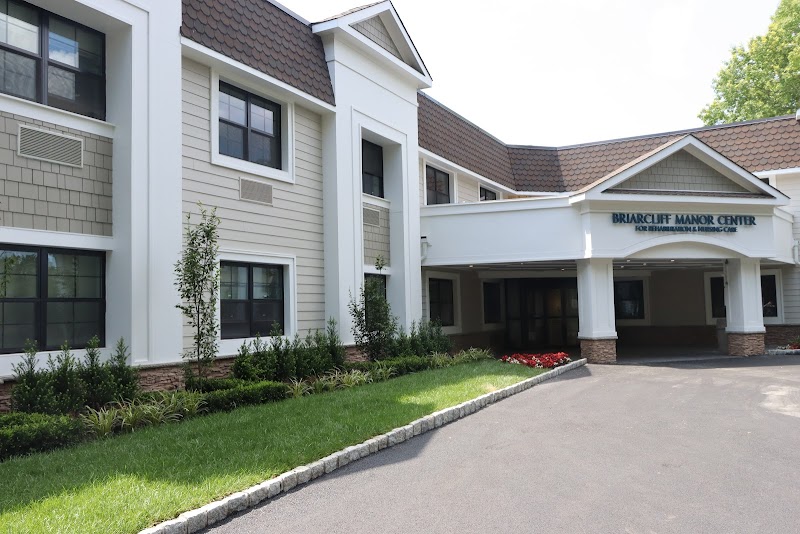
How is Briarcliff Manor Center For Rehab And Nursing Care Staffed?

CMS rates BRIARCLIFF MANOR CENTER FOR REHAB AND NURSING CARE's staffing level at 1 out of 5 stars, which is much below average compared to other nursing homes. Staff turnover is 53%, compared to the New York average of 46%. RN turnover specifically is 65%, which is notably high. RNs provide skilled clinical oversight, so turnover in this role can affect medical care quality.

What Have Inspectors Found at Briarcliff Manor Center For Rehab And Nursing Care?

State health inspectors documented 37 deficiencies at BRIARCLIFF MANOR CENTER FOR REHAB AND NURSING CARE during 2020 to 2025. These included: 1 Immediate Jeopardy (the most serious level, indicating potential for serious harm or death), 1 that caused actual resident harm, 33 with potential for harm, and 2 minor or isolated issues. Immediate Jeopardy findings are rare and represent the most serious regulatory concerns. They require immediate corrective action.

Who Owns and Operates Briarcliff Manor Center For Rehab And Nursing Care?

BRIARCLIFF MANOR CENTER FOR REHAB AND NURSING CARE is owned by a for-profit company. For-profit facilities operate as businesses with obligations to shareholders or private owners. The facility is operated by EXCELSIOR CARE GROUP, a chain that manages multiple nursing homes. With 120 certified beds and approximately 123 residents (about 102% occupancy), it is a mid-sized facility located in BRIARCLIFF MANOR, New York.
How Does Briarcliff Manor Center For Rehab And Nursing Care Compare to Other New York Nursing Homes?

Compared to the 100 nursing homes in New York, BRIARCLIFF MANOR CENTER FOR REHAB AND NURSING CARE's overall rating (1 stars) is below the state average of 3.0, staff turnover (53%) is near the state average of 46%, and health inspection rating (1 stars) is much below the national benchmark.

What Should Families Ask When Visiting Briarcliff Manor Center For Rehab And Nursing Care?

Based on this facility's data, families visiting should ask: "What changes have been made since the serious inspection findings, and how are you preventing similar issues?" "What safeguards and monitoring systems are in place to protect residents from abuse or neglect?" "Can you walk me through typical staffing levels on day, evening, and night shifts?" "Can I visit during a mealtime to observe dining assistance and food quality?" These questions are particularly relevant given the facility's Immediate Jeopardy citations, the substantiated abuse finding on record, and the below-average staffing rating.

Is Briarcliff Manor Center For Rehab And Nursing Care Safe?

Based on CMS inspection data, BRIARCLIFF MANOR CENTER FOR REHAB AND NURSING CARE has documented safety concerns. The facility has 1 substantiated abuse finding (meaning confirmed case of resident harm by staff or other residents). Inspectors have issued 1 Immediate Jeopardy citation (the most serious violation level indicating risk of serious injury or death). The facility has a 1-star overall rating and ranks #100 of 100 nursing homes in New York. Families considering this facility should ask detailed questions about what corrective actions have been taken since these incidents.

Do Nurses at Briarcliff Manor Center For Rehab And Nursing Care Stick Around?

BRIARCLIFF MANOR CENTER FOR REHAB AND NURSING CARE has a staff turnover rate of 53%, which is 7 percentage points above the New York average of 46%. Moderate turnover is common in nursing homes, but families should still ask about staff tenure and how the facility maintains care continuity when employees leave.

Was Briarcliff Manor Center For Rehab And Nursing Care Ever Fined?

BRIARCLIFF MANOR CENTER FOR REHAB AND NURSING CARE has been fined $60,206 across 1 penalty action. This is above the New York average of $33,681. Fines in this range indicate compliance issues significant enough for CMS to impose meaningful financial consequences. Common causes include delayed correction of deficiencies, repeat violations, or care failures affecting resident safety. Families should ask facility leadership what changes have been made since these penalties.

Is Briarcliff Manor Center For Rehab And Nursing Care on Any Federal Watch List?

BRIARCLIFF MANOR CENTER FOR REHAB AND NURSING CARE is not on any federal watch list. The most significant is the Special Focus Facility (SFF) program, which identifies the bottom 1% of nursing homes nationally based on persistent, serious quality problems. Not being on this list means the facility has avoided the pattern of deficiencies that triggers enhanced federal oversight. This is a positive indicator, though families should still review the facility's inspection history directly.