Elderwood of Lakeside at Brockport
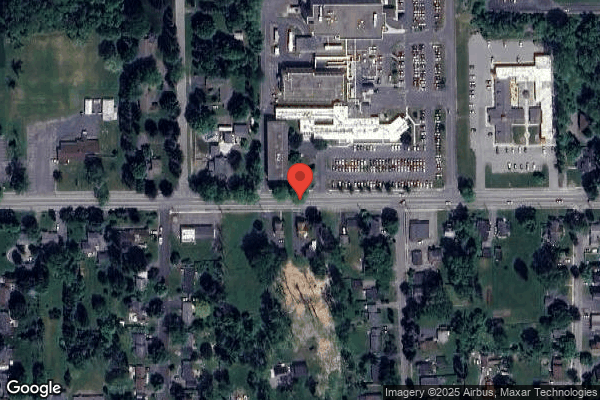
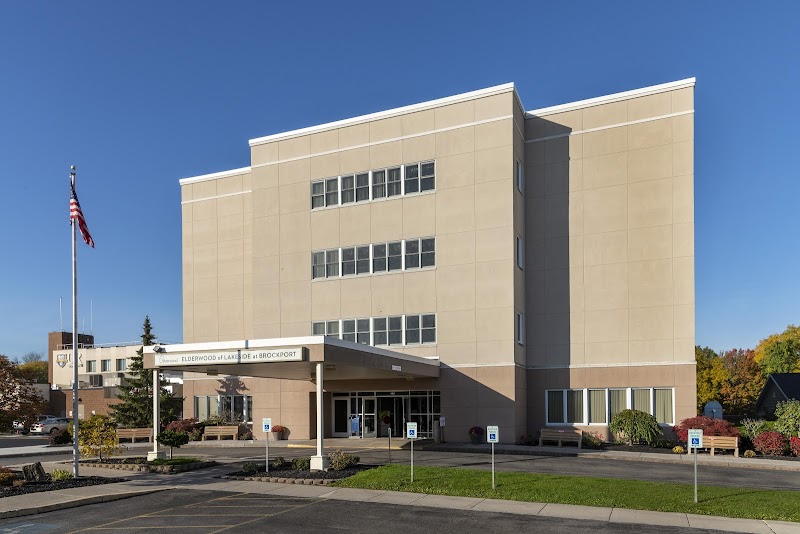
170 West Avenue, Brockport, NY 14420 (585) 395-6095
For profit - Limited Liability company 120 Beds ELDERWOOD Data: November 2025
Trust Grade
75/100
#167 of 594 in NY
Last Inspection: April 2025

Within standard 12-15 month inspection cycle. Federal law requires annual inspections.

Overview

Elderwood of Lakeside at Brockport has a Trust Grade of B, indicating it is a good choice for care, though not without its issues. It ranks #167 out of 594 facilities in New York, placing it in the top half, while locally in Monroe County, it stands at #12 out of 31, meaning only 11 other facilities are better. Unfortunately, the facility is trending worse, with issues doubling from 2 in 2023 to 4 in 2025. Staffing is a concern, rated 2 out of 5 stars with a turnover rate of 66%, significantly higher than the state average, but it has good RN coverage, exceeding that of 76% of facilities in New York. While there have been no fines, recent inspections revealed serious deficiencies, including two residents not receiving showers for weeks, posing risks to their hygiene and well-being, and medications being stored unsafely in an unlocked area, raising concerns about resident safety.
Trust Score
B
75/100
In New York
#167/594
Top 28%
Safety Record
Low Risk
No red flags
Inspections
Getting Worse
2 → 4 violations
Staff Stability
⚠ Watch
66% turnover. Above average. Higher turnover means staff may not know residents' routines.
Penalties
✓ Good
No fines on record. Clean compliance history, better than most New York facilities.
Skilled Nurses
○ Average
Each resident gets 37 minutes of Registered Nurse (RN) attention daily — about average for New York. RNs are the most trained staff who monitor for health changes.
Violations
○ Average
6 deficiencies on record. Average for a facility this size. Mostly minor or procedural issues.
★★★★☆
4.0
Overall Rating
★★☆☆☆
2.0
Staff Levels
★★★★☆
4.0
Care Quality
★★★★☆
4.0
Inspection Score
Stable
2023: 2 issues
2025: 4 issues

The Good

  • 4-Star Quality Measures · Strong clinical quality outcomes
  • Full Sprinkler Coverage · Fire safety systems throughout facility
  • No fines on record

Facility shows strength in quality measures, fire safety.

The Bad

Staff Turnover: 66%

20pts above New York avg (46%)

Frequent staff changes - ask about care continuity

Chain: ELDERWOOD

Part of a multi-facility chain

Ask about local staffing decisions and management

Staff turnover is elevated (66%)

18 points above New York average of 48%

The Ugly 6 deficiencies on record

Apr 2025 4 deficiencies
CONCERN (D)

Potential for Harm - no one hurt, but risky conditions existed

Quality of Care (Tag F0684)

Could have caused harm · This affected 1 resident

**NOTE- TERMS IN BRACKETS HAVE BEEN EDITED TO PROTECT CONFIDENTIALITY** Based on observations, interviews, and record review conducted during the Recertification Survey from 03/27/2025 to 04/02/2025, ...

Read full inspector narrative →
**NOTE- TERMS IN BRACKETS HAVE BEEN EDITED TO PROTECT CONFIDENTIALITY** Based on observations, interviews, and record review conducted during the Recertification Survey from 03/27/2025 to 04/02/2025, the facility did not ensure residents received care in accordance with professional standards of practice for 1 (Residents #55) of 21 residents reviewed. Specifically, Resident #55 had edema (swelling in the legs) to both legs and did not receive compression therapy per physician order and their comprehensive care plan did not include goals and interventions related to the resident's diagnosis of diabetes, chronic kidney disease, or edema. This is evidenced by the following: 1. Resident #55 had diagnoses that included chronic kidney disease (a gradual loss of kidney function that can cause swelling in the feet and legs), hypertension (high blood pressure), and diabetes. The Minimum Data Set (a resident assessment tool) dated 01/16/2025 included the resident was cognitively intact and had active diagnoses including but not limited to hypertension, renal failure, and diabetes. During an observation and interview on 03/27/2025 at 9:33 AM, Resident #55 had moderate swelling (edema) to both lower extremities and stated they were supposed to wear elastic stockings. They said staff did not consistently assist with putting on the elastic stockings and had not put the stockings on that day. A physician order, dated 08/29/2024, included to apply tubigrips (elastic compression bandages used to reducing swelling) to both lower extremities (from toes to knees) daily in the morning and remove at bedtime. The current comprehensive care plan and [NAME] (care plan used by the certified nursing assistants for daily care), reviewed on 03/28/2025, revealed no information, including measurable goals or interventions, related to Resident #55's edema, or diagnoses of chronic kidney disease and diabetes. During observations on 03/28/2025 at 3:17 PM and 03/31/2025 at 9:56 AM, Resident #55 had moderate swelling to both lower extremities and tubigrips were hanging on the footboard of the bed. Review of the Treatment Administration Record revealed the following: a. In January 2025, for 6 of 31 opportunities, there was no documented evidence the tubigrips were put on. For three (3) additional opportunities, documentation revealed the tubigrips were not applied due to the resident sleeping. b. In February 2025, for 4 of 31 opportunities there was no documented evidence the tubigrips were put on. For nine (9) additional opportunities, documentation revealed the tubigrips were not applied due to the resident sleeping. c. In March 2025, for 8 of 31 opportunities there was no documented evidence the tubigrips were put on. For seven (7) additional opportunities, documentation revealed the tubigrips were not applied due to the resident sleeping. During an interview on 03/31/2025 at 11:24 AM, Certified Nursing Assistant #1 stated tubigrips were put on by the nurse. During an interview on 03/31/2025 at 11:45 AM, Licensed Practical Nurse #1 stated Resident #55 was supposed to wear tubigrips daily and instructions for applying the tubigrips should be on the resident's care plan. They stated tubigrips were placed and removed by the nurse and documented in the electronic health record. Most tubigrips are put on by the night shift nurse, removed by the evening shift, and were not checked for placement by the day shift nurse. Licensed Practical Nurse #1 stated they were not sure if Resident #55's tubigrips had been applied that day and if the tubigrips had not been put on, the night shift nurse should have reported it to them during shift report. During an interview on 03/31/2025 at 12:59 PM, the Registered Nurse Minimum Data Set Coordinator stated tubigrips were ordered by the physician and should be put on as prescribed. If the tubigrips were not put on, the information should be passed to the next shift to attempt to apply them. Registered Nurse Minimum Data Set Coordinator stated Resident #55 was prescribed tubigrips for their edema and not wearing them could cause skin breakdown or worsening edema. During an interview on 04/02/2025 at 11:58 AM, the Director of Nursing stated all physician orders should be completed as prescribed, including tubigrips. A blank box in the treatment administration record meant there was missed documentation, and the treatment would be considered not completed. The Director of Nursing stated if tubigrips were not put on it should be documented in the electronic health record, passed along in shift report, and discussed with the physician to update orders as needed. They stated if a resident was asleep and did not want to be woken up for the tubigrips to be applied, the time should be adjusted to their awake/preferred time to ensure they are put on. 10 NYCRR 415.12
CONCERN (D)

Potential for Harm - no one hurt, but risky conditions existed

Deficiency F0685 (Tag F0685)

Could have caused harm · This affected 1 resident

Based on interviews and record review conducted during the Recertification Survey from 03/27/2025 to 04/02/2025, for one (1)(Resident #55) of three (3) residents reviewed the facility did not provide ...

Read full inspector narrative →
Based on interviews and record review conducted during the Recertification Survey from 03/27/2025 to 04/02/2025, for one (1)(Resident #55) of three (3) residents reviewed the facility did not provide proper treatment and assistive devices to maintain vision. Specifically, the facility did not ensure Resident #55 was seen by the facility medical provider in a timely manner after reporting changes in vision, did not make an appointment with the resident's eye doctor per medical provider recommendation, and did not ensure the resident made it to a scheduled eye doctor appointment. This is evidenced by the following: The facility policy Optometry and Eye Care dated 06/18/2018 included eye examinations and other consultant optometry services will be obtained as ordered by the attending physician. The resident or legally designated representative and/or responsible party will be contacted by the nursing staff to obtain approval for service and transportation arrangements. When the Attending Physician orders optometry care for a resident, or the nursing staff determines that an optometry evaluation may be necessary, the resident or legally designated representative and/or responsible party is contacted by the nursing staff to make arrangements for services at the facility or through the specialist of the resident's choice, and to obtain transportation preferences. 1. Resident #55 had diagnoses that included diabetes, macular degeneration (a progressive disease that causes blurred or distorted central vision and/or blind spots), and glaucoma (eye disease that can cause vision loss and blindness). The Minimum Data Set (a resident assessment tool) dated 01/16/2025 documented the resident was cognitively intact, wore glasses, and had adequate vision (able to see fine detail). During an interview on 03/27/2025 at 9:42 AM, Resident #55 stated they had changes in their eyesight starting in December 2024 but had not seen the eye doctor yet. They stated they reported their vision changes to facility staff. In a progress note dated 09/18/2024, Certified Nursing Assistant #2 documented Resident #55 had a follow up appointment with the eye doctor scheduled for 03/17/2025. In a progress note dated 12/05/2024, Registered Nurse Minimum Data Set Coordinator documented Resident #55 had complained of eye heaviness and irritation and their concerns were placed in the medical book (a book used by nurses to communicate resident issues and concerns to the medical providers). In a progress note dated 12/06/2025, Certified Nursing Assistant #2 stated they called the eye doctor to schedule an earlier (before 03/17/2025) appointment for Resident #55 due to complaints of eye changes. In a progress note dated 12/30/2024 Nurse Practitioner #1 documented they saw Resident #55 for changes in eyesight and glaucoma and they needed to follow up with their eye doctor. During an interview on 03/31/2025 at 10:44 AM, Certified Nursing Assistant Unit Clerk #1 stated they were responsible for scheduling medical consult or specialist appointments and arranging transportation for appointments. They stated Resident #55 saw an outpatient (provider not affiliated with the facility) eye doctor and per the electronic health record was last seen in August 2024. Certified Nursing Assistant Unit Clerk #1 stated they did not know Resident #55 needed to be seen for changes in their eyesight, and did not know they had an appointment scheduled on 03/17/2025. They had not arranged transportation and Resident #55 missed the scheduled appointment. Certified Nursing Assistant Unit Clerk #1 stated they often had to work in a direct resident care capacity and was not able to complete their unit clerk responsibilities, as a result, Resident #55 was not scheduled for an earlier appointment and also missed their scheduled appointment on 03/17/2025. During an interview on 04/01/2025 at 3:03 PM, Registered Nurse Minimum Data Set Coordinator stated if a resident reports a concern, they should be seen timely by the facility medical provider. They stated outpatient appointments and transportation were arranged by the unit clerk, Resident #55's eye appointment should have been moved up per the facility medical provider, and the unit clerk should have ensured transportation was set up for Resident #55's appointment on 03/17/2025. During an interview on 04/02/2025 at 11:58 AM, the Director of Nursing stated all follow up appointments and consult appointments are made per medical provider recommendations and are made timely. They stated there was a 25-day gap (12/05/2025 to 12/30/2025) and Resident #55 was not seen timely between their complaint of eye changes and visit with the facility medical provider. The Director of Nursing stated the unit clerk or nurse manager should have followed up with the eye doctor in December 2024 to make an appointment for Resident #55 to be seen and transportation should have been arranged, so they did not miss their appointment on 03/17/2025. 10 NYCRR 415.12(a)(3)(b)(1-3)
CONCERN (D)

Potential for Harm - no one hurt, but risky conditions existed

Infection Control (Tag F0880)

Could have caused harm · This affected 1 resident

Based on observations, interviews, and record review conducted during a Recertification Survey from 03/27/2025 to 04/02/2025, it was determined for one (1) (Resident #78) of seven (7) residents review...

Read full inspector narrative →
Based on observations, interviews, and record review conducted during a Recertification Survey from 03/27/2025 to 04/02/2025, it was determined for one (1) (Resident #78) of seven (7) residents reviewed, the facility did not establish and maintain an infection prevention and control program designed to provide a safe, sanitary, and comfortable environment to help prevent the development and transmission of infection. Specifically, Resident #78 was on Enhanced Barrier Precautions (infection control measures used to reduce the spread of multidrug-resistant organisms and involves the use of gowns and gloves during high-contact resident care activities) due to having a wound, a nurse did not perform hand hygiene prior to entering the resident's room, did not wear gloves while handling a sterile wound dressing, and did not change gloves or perform hand hygiene after handling a soiled dressing and before applying a clean dressing to the wound. This is evidenced by the following: Review of the facility policy Pressure Ulcer, Pressure Injury & Other Skin Conditions: Initial Assessment, Care Planning, Ongoing Evaluation and Management Skilled Nursing Facility dated 02/27/2023 included the facility will ensure that every resident receives care consistent with professional standards of practice and those residents with pressure ulcers, injuries or skin conditions will receive treatment and services to promote healing and prevent infection. Resident #78 had diagnoses that included a stage three (3) (full thickness tissue loss) pressure ulcer of the sacral region (base of the spine), diabetes, and Parkinson's disease (a movement disorder of the nervous system). The Minimum Data Set (a resident assessment tool) dated 01/16/2025 revealed the resident was cognitively intact and had a stage three (3) pressure ulcer. Review of the Comprehensive Care Plan dated 01/28/2025 revealed Resident #78 had an alteration in skin integrity related to a current wound. Interventions included, but were not limited to, apply treatments per provider orders, monitor the wound for signs and symptoms of infection, and Enhanced Barrier Precautions in place. Review of a physician order, dated 03/24/2025, included but was not limited to apply calcium alginate (wound dressing) to the sacral wound daily and as needed. During an observation on 03/31/2025 at 2:03 PM, Licensed Practical Nurse #2 was performing wound care for Resident #78. Licensed Practical Nurse #2 did not perform hand hygiene prior to entering the residents room and did not apply gloves prior to handling the sterile calcium alginate dressing. Licensed Practical Nurse #2 then put on gloves, removed the soiled dressing and applied the clean dressing without changing their gloves or performing hand hygiene in between. During an interview on 03/31/2025 at 3:23 PM, Licensed Practical Nurse #2 said they did not have gloves on while handling the sterile wound dressing, did not change gloves or perform hand hygiene after removing the soiled dressing and before applying the clean dressing but should have. During an interview on 04/01/2025 at 11:17 AM, the Director of Nursing said there were two missed opportunities to prevent contamination of Resident #78's wound. They stated Licensed Practical Nurse #2 should have worn gloves while handling sterile wound care supplies and should have changed gloves and performed hand hygiene in between handling the soiled and clean wound dressings. 10 NYCRR 415.19(a)(1-3) (b)(4)
CONCERN (E) 📢 Someone Reported This

A family member, employee, or ombudsman was alarmed enough to file a formal complaint

Potential for Harm - no one hurt, but risky conditions existed

ADL Care (Tag F0677)

Could have caused harm · This affected multiple residents

**NOTE- TERMS IN BRACKETS HAVE BEEN EDITED TO PROTECT CONFIDENTIALITY** Based on observations, interviews, and record review conducted during a Recertification Survey and complaint investigation (NY00...

Read full inspector narrative →
**NOTE- TERMS IN BRACKETS HAVE BEEN EDITED TO PROTECT CONFIDENTIALITY** Based on observations, interviews, and record review conducted during a Recertification Survey and complaint investigation (NY00365495) from 03/28/2025 to 04/02/2025, for two (2) (Resident #55 and #59) of nine (9) residents, the facility did not ensure residents who were unable to carry out activities of daily living (basic self-care tasks people perform regularly to maintain their well-being, such as bathing and nail care) received the necessary services to maintain good grooming and personal hygiene. Specifically, Resident #55 had not received a shower in four (4) weeks, had unshaved facial hair, and unclean hair and fingernails. Resident #59 had not received a shower in three (3) weeks, was unshaven, and was observed using their hands to eat with debris underneath their fingernails. This is evidenced by the following: The facility policy Activity of Daily Living Assistance and Supervision dated 01/08/2018 included the nursing assistant provides activity of daily living assistance to assigned residents and assists other nursing assistants in giving care as needed. The Unit Manager/designee and Team Leader monitors the activity of daily living assistance provided for residents throughout the shift and gives appropriate guidance and assistance to nursing staff. The facility policy Bath, Tub/Shower dated 08/07/2021 included a shower or tub bath will be given by an appropriately trained nursing assistant or licensed nurse once a week and/or as deemed necessary to all residents (unless contraindicated due to illness) or per the resident's preference. The facility policy Shaving a Female Resident dated 05/08/2018 included a nursing assistant will shave the face of a female resident as needed to remove extraneous facial hair. The facility policy Hand and Nail Care dated 01/25/2019 included residents will receive nail care for cleanliness and to prevent infection. Appropriately trained nursing assistants will provide nail care for all residents except those with diabetes or severe peripheral vascular disease. 1. Resident #55 had diagnoses that included diabetes, hypertension (high blood pressure), and depression. The Minimum Data Set (a resident assessment tool) dated 01/16/2025 included the resident was cognitively intact and required assistance with showers. Review of the active Comprehensive Care Plan and [NAME] (care plan used by certified nursing assistants to guide care) reviewed on 03/28/2025 revealed Resident #55 required staff assistance with lower body bathing and was independent with personal hygiene. During an observation and interview on 03/27/2025 at 9:27 AM, Resident #55 had facial hair growing on their chin, their hair was greasy and stringy, and there was dark debris under multiple fingernails on both hands. When interviewed at that time, Resident #55 stated they should receive a shower once a week but had not received a shower in approximately four (4) weeks. They were annoyed they had not received a shower and wanted one. Resident #55 stated they used to take care of shaving and fingernail care on their own but was now unable to do so. They stated they wanted their hair washed, facial hair shaved, and fingernails cleaned and trimmed. Review of the facility document Shower Assignment last updated 02/28/2025 revealed Resident #55's shower was scheduled on Friday, day (7:00 AM to 3:00 PM) shift. Review of the Certified Nursing Assistant Documentation Survey Report (a portion of the electronic health record where baths and showers were documented) revealed Resident #55's last documented shower was on 02/28/2025. During observations on 03/28/2025 at 3:17 PM (Friday) and 03/31/2025 at 9:56 AM, Resident #55's hair remained greasy and stringy, facial hair was unshaven, and fingernails on both hands had debris underneath. During an interview on 03/31/2025 at 11:24 AM, Certified Nursing Assistant #1 stated shaving, nail care, and hair washing was completed during showers and as needed. Resident #55 was on their assignment and required assistance with shaving and nail care. Certified Nursing Assistant #1 stated they did not notice if Resident #55 was unshaven or had unclean hair and fingernails. During an interview and observation on 03/31/2025 at 11:45 AM, Licensed Practical Nurse #1 stated they were responsible for nail care of diabetic residents and the certified nursing assistants would tell the nurses when nail care was needed. They stated hair, shaving, and nails were observed during skin checks on shower day and if something needed to be done, they would make sure it was completed. When observed at that time, Resident #55's hair, facial hair, and fingernails were unchanged. Licensed Practical Nurse #1 stated it did not look like Resident #55 had a shower in a while and needed to have their hair washed, facial hair shaved, and fingernails cleaned and trimmed. Licensed Practical Nurse #1 stated in the past year they had to provide more direct resident care due to short staffing. 2. Resident #59 had diagnoses that included dementia, diabetes, and heart failure. The Minimum Data Set, dated [DATE] included the resident had moderately impaired cognition and required assistance with showers and personal hygiene. The active Comprehensive Care Plan, last revised on 09/30/2024 and [NAME] reviewed on 03/31/2025 included Resident #59 required staff assistance with showers and personal hygiene, fingernails were to be trimmed and cleaned twice weekly and assisted with shaving on their shower day. During an observation and interview on 03/27/2025 (Thursday) at 1:54 PM, Resident #59 had a full beard and long jagged fingernails with dark debris underneath. They were eating watermelon with their hands. Resident #59 stated their face was itchy and they wanted to be shaved. Review of the facility document Shower Assignment last updated 02/28/2025 revealed Resident #59's shower was scheduled Wednesday, day shift. Review of the Certified Nursing Assistant Documentation Survey Report revealed Resident #55's last documented shower was on 03/05/2025 (no documented shower in three (3) weeks). During observations on 03/28/2025 at 3:32 PM and 03/31/2025 at 9:28 AM, Resident #59's facial hair and fingernails were unchanged. During an interview on 03/31/2025 at 10:44 AM, Certified Nursing Assistant Unit Clerk #1 stated they had a direct care assignment today. They stated showers, shaving, and nail care were unable to be completed due to short staffing. During an interview and observation on 03/31/2025 at 12:59 PM, Registered Nurse Minimum Data Set Coordinator stated activities of daily living should be completed per the resident's care plan and showers should be completed on the resident's scheduled day. When observed at that time, Resident #59's facial hair was long and unshaven, and their fingernails were jagged with dark debris underneath. Registered Nurse Minimum Data Set Coordinator stated it did not look like Resident #59 had a shower or their nails trimmed or cleaned in a while and should have their nails cleaned and trimmed twice weekly. During an interview on 04/02/2025 at 11:58 AM, the Director of Nursing stated activities of daily living including showers, hair care, shaving, and nail care should be completed per the resident's plan of care, as needed, and per resident preference. The Director of Nursing stated residents should not go multiple weeks without a shower, should not go unshaven, and should not have long, jagged, or dirty fingernails. The Director of Nursing stated the inability to complete activities of daily living, including showers, was due to ongoing staffing issues and not completing activities of daily living could negatively impact the residents' self-esteem and mood. 10 NYCRR 415.12(a)(3)
Jul 2023 2 deficiencies
CONCERN (D) 📢 Someone Reported This

A family member, employee, or ombudsman was alarmed enough to file a formal complaint

Potential for Harm - no one hurt, but risky conditions existed

Accident Prevention (Tag F0689)

Could have caused harm · This affected 1 resident

**NOTE- TERMS IN BRACKETS HAVE BEEN EDITED TO PROTECT CONFIDENTIALITY** Based on observations, interviews and record review conducted during the Recertification Survey 7/6/23 to 7/13/23, it was determ...

Read full inspector narrative →
**NOTE- TERMS IN BRACKETS HAVE BEEN EDITED TO PROTECT CONFIDENTIALITY** Based on observations, interviews and record review conducted during the Recertification Survey 7/6/23 to 7/13/23, it was determined that for one (Resident #51) of three residents reviewed for accidents, the facility did not ensure that the resident's environment remained as free of accident hazards as possible. Specifically, Resident #51, who was observed to have multiple medications left on their bedside table, had not been assessed, and care planned for safe self-administration of medication. This is evidenced by the following: The facility policy Medications Administration dated modified 7/12/22 documented that a medication must never be left at bedside or be out of sight of the nurse administering the medication. The nurse must watch each resident take the medication, and ensure the medication is swallowed, unless the resident has an order for self-administration of medications. The facility policy Self- Administration of Medication dated modified 4/10/18, documented those residents who desire to self-administer medication are permitted to do so upon review and approval by the inter-disciplinary care planning team members and with an order from the attending physician. Over-the-counter medications will be stored in a locked drawer in the resident's room. The use of self-administered medication will be monitored by licensed nursing staff. Resident #51 had diagnoses including dementia, diabetes, and dysphagia (difficulty swallowing). The Minimum Data Set assessment dated [DATE], documented that Resident #51 was cognitively intact, had impaired vision and required set up help for eating. Review of the Comprehensive Care Plan revealed no documented evidence that Resident #51 had been assessed and care planned for safe self-administration of medications. Review of current physician orders did not include orders for self-administration of medications for Resident #51. During an observation and interview on 7/6/23 at 9:34 AM approximately 19 pills were observed on Resident #51's bedside table and included but not limited to multiple torsemide (diuretic that removes excess fluid from the heart and lungs) tablets, diltiazem (cardiac medication) tablet and a losartan (high blood pressure medication) tablet. There was no nurse in sight of the open and unlabeled cup of pills. The resident stated at the time that they did not know exactly what the pills were for. During an observation on 7/10/23 at 2:04 PM, another resident (wheelchair bound) was observed wheeling themselves into Resident #51's room appearing confused and asking if someone could tell them where they should be. A staff member (notified by the surveyor) came in the room and redirected the resident. During an observation on 07/11/23 at 9:38 AM approximately 19 pills were again observed on Resident #51's bedside table in an open unsupervised medicine cup. At approximately 9:55 AM all the pills remained at the bedside unsupervised. During an interview on 7/12/23 at 10:32 AM, Resident #51 said it takes them a long time to take their medication, so the nurses leave the medication with them (at the bedside). When asked if other residents frequently wander into their room, Resident #51 said the resident in the wheelchair often does and that it takes staff a long time to come and redirect the resident. During an interview on 7/12/23 at 11:43 AM Licensed Practical Nurse (LPN) #1 stated the unit had four residents who wander, three of who do wander into other residents' rooms. LPN #1 said none of the residents on the unit had been assessed to self- administer medication or have medication left at their bedside unsupervised. During an interview on 7/12/23 at 12:38 PM, the Director of Nursing (DON) stated that the nurses have a liberalized medication schedule (extended period of time) to pass medications so that they do not have to rush their medication pass and they can spend adequate time with each resident. The DON said they would expect that in order for a resident to have medications left at their bedside for the purpose of self- administering, the resident would have to have a locked box in their room in the event of residents who wander. The DON said that under no circumstance should any pills, or non- pill form medication be left at the bedside unsupervised. The DON said that a resident who takes 19 pills would not be appropriate for self- medication administration due to the amount of medication involved. During an interview on 7/12/23 at 1:03 PM, the Regional Nurse Consultant stated that in order for a resident to have medication left at the bedside for self- administration, there needs to be a physician's order, the resident care planned for self-administration, an observation of the resident self- administering their medications and a locked box in their room to properly secure the medication. During an interview on 7/12/23 at 2:34 PM, LPN #2 stated that there were three residents who wander on the unit and that medications should never be left unsupervised at a resident's bedside. LPN #2 said that in the event the nurse had to step away, the medication should be locked inside the medication cart. LPN #2 said that they left medication unsupervised at Resident #51's bedside on 7/11/23 because there was an overhead page for a code blue (emergency situation that could be life threatening). LPN #2 said they also left medication unsupervised at Resident #51's bedside on 7/6/23 but that there had not been an emergency that day and they did not know why they left the medication. 10 NYCRR415.12(h)(2)
CONCERN (E) 📢 Someone Reported This

A family member, employee, or ombudsman was alarmed enough to file a formal complaint

Potential for Harm - no one hurt, but risky conditions existed

Deficiency F0761 (Tag F0761)

Could have caused harm · This affected multiple residents

**NOTE- TERMS IN BRACKETS HAVE BEEN EDITED TO PROTECT CONFIDENTIALITY** Based on observations, interviews, and record reviews conducted during the Recertification Survey from [DATE] to [DATE], it was ...

Read full inspector narrative →
**NOTE- TERMS IN BRACKETS HAVE BEEN EDITED TO PROTECT CONFIDENTIALITY** Based on observations, interviews, and record reviews conducted during the Recertification Survey from [DATE] to [DATE], it was determined that for three of three residential units the facility did not ensure that drugs and biologicals were securely stored. Specifically, multiple medications were observed stored in an unlocked and unsupervised charting room. This is evidenced by the following: The facility policy Medication Rooms on Nursing Units dated [DATE], included that medication rooms on the nursing units of the facility will be the areas where medications for residents are stored. The rooms will have included but not limited to adequate means for security. In an observation on [DATE] at 12:15 PM Resident #67 (identified by the facility as being severely impaired of cognitive function) was observed self-propelling their wheelchair behind the 4th floor unit clerks' desk near the charting room. There was no staff in the area at the time and the resident was verbalizing what am I supposed to do? Where should go? In observations and interview on [DATE] at 1:27 PM and again at 2:49 PM on the 4th floor residential unit in the charting room located behind the unit clerk's desk, the door to the room was fully open and underneath the counter was a clear plastic container that contained multiple clear packets of prescription medications and included but not limited to insulin vials, injectable medications, antipsychotic medications, cardiac medications, and multiple loose pills in the bottom of the container. Directly across from the charting room was a locked door labeled medication preparation room. When interviewed at 2:52 PM, the 4th floor unit Licensed Practical Nurse (LPN)/Nurse Manager (NM) #1 stated that non-narcotic medications are put in this container and are taken downstairs when full (to be picked up by pharmacy). LPN/NM #1 stated that generally just nurses come in the room and that the door is sometimes left open. LPN/NM #1 stated that the unit does have several residents who wander. During an observation and interview on [DATE] at 3:06 PM on the 3rd floor residential unit, the charting room door was open, and staff were observed coming in and out of the room leaving the door open. There was another clear plastic container in the room under the counter that contained numerous packets of prescription medications and loose pills. When interviewed at this time the Registered Nurse Manager (RNM) stated that when medications are discontinued, or a resident is discharged or expired the unit nurses place the remaining medications in the container to be returned to pharmacy weekly. The RNM stated that the charting room door is not always closed, that all staff have access to the room and that there are residents on the unit who wander throughout. During observation on the 2nd floor residential unit on [DATE] at 3:22 PM the charting room door was open, and a clear container located under countertop contained multiple medications of prescriptions medications. During an interview on [DATE] at 3:20 PM LPN #2 stated that medications are put in a container under the nurse's station desk in the charting room until they get sent back to pharmacy. LPN #2 said that both nurses and aides have access to the room and the door is kept open. LPN #2 said that there are residents on the unit that wander everywhere. During an interview [DATE] at 3:27 PM Registered Nurse #1 (2nd floor covering NM) stated that the former Director of Nursing (DON) instructed us to put the medication bin here (in the charting room) as no one other than staff usually comes into the chart room. RN #1 said that there is mostly someone is in the room on days but did not know about evenings. RN #1 said that they would not consider it a secure place to store medications. During an interview on [DATE] at 10:15 AM the DON stated they were not aware of the process for disposing non-narcotic medications or that the containers were being kept in the charting room. The DON stated that certified nursing assistants should not have access to medications and did not consider the charting room to be a secured area. 10 NYCRR 415.18(e)(1-4)
Understanding Severity Codes (click to expand)
Life-Threatening (Immediate Jeopardy)
J - Isolated K - Pattern L - Widespread
Actual Harm
G - Isolated H - Pattern I - Widespread
Potential for Harm
D - Isolated E - Pattern F - Widespread
No Harm (Minor)
A - Isolated B - Pattern C - Widespread

Questions to Ask on Your Visit

  • "Why is there high staff turnover? How do you retain staff?"
  • "Can I speak with families of current residents?"
  • "What's your RN coverage like on weekends and overnight?"

Our Honest Assessment

Strengths
  • • No major safety red flags. No abuse findings, life-threatening violations, or SFF status.
  • • No fines on record. Clean compliance history, better than most New York facilities.
Concerns
  • • 66% turnover. Above average. Higher turnover means staff may not know residents' routines.
Bottom line: Generally positive indicators. Standard due diligence and a personal visit recommended.

About This Facility

What is Elderwood Of Lakeside At Brockport's CMS Rating?

CMS assigns Elderwood of Lakeside at Brockport an overall rating of 4 out of 5 stars, which is considered above average nationally. Within New York, this rating places the facility higher than 99% of the state's 100 nursing homes. This rating reflects solid performance across the metrics CMS uses to evaluate nursing home quality.
How is Elderwood Of Lakeside At Brockport Staffed?

CMS rates Elderwood of Lakeside at Brockport's staffing level at 2 out of 5 stars, which is below average compared to other nursing homes. Staff turnover is 66%, which is 20 percentage points above the New York average of 46%. High turnover can affect care consistency as new staff learn residents' individual needs. RN turnover specifically is 56%, which is notably high. RNs provide skilled clinical oversight, so turnover in this role can affect medical care quality.

What Have Inspectors Found at Elderwood Of Lakeside At Brockport?

State health inspectors documented 6 deficiencies at Elderwood of Lakeside at Brockport during 2023 to 2025. These included: 6 with potential for harm.
Who Owns and Operates Elderwood Of Lakeside At Brockport?

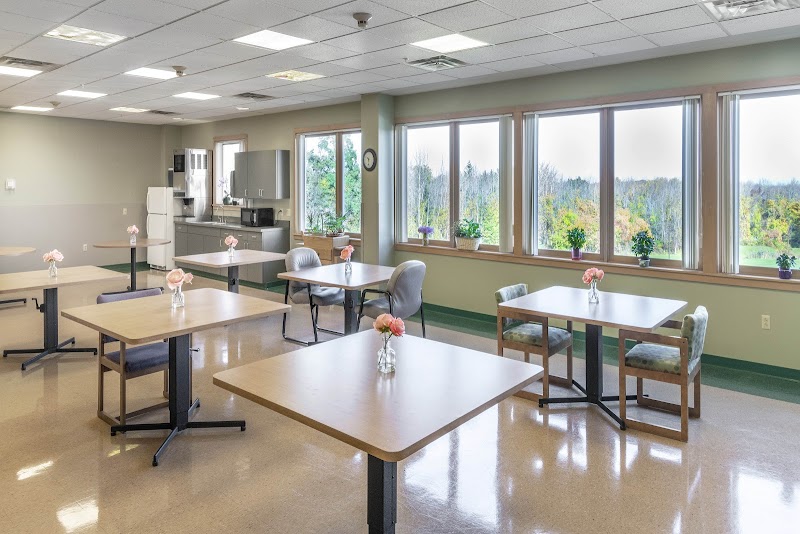
Elderwood of Lakeside at Brockport is owned by a for-profit company. For-profit facilities operate as businesses with obligations to shareholders or private owners. The facility is operated by ELDERWOOD, a chain that manages multiple nursing homes. With 120 certified beds and approximately 101 residents (about 84% occupancy), it is a mid-sized facility located in Brockport, New York.

How Does Elderwood Of Lakeside At Brockport Compare to Other New York Nursing Homes?

Compared to the 100 nursing homes in New York, Elderwood of Lakeside at Brockport's overall rating (4 stars) is above the state average of 3.1, staff turnover (66%) is significantly higher than the state average of 46%, and health inspection rating (4 stars) is above the national benchmark.

What Should Families Ask When Visiting Elderwood Of Lakeside At Brockport?

Based on this facility's data, families visiting should ask: "How do you ensure continuity of care given staff turnover, and what is your staff retention strategy?" "Can you walk me through typical staffing levels on day, evening, and night shifts?" "Can I visit during a mealtime to observe dining assistance and food quality?" "How do you handle medical emergencies, and what is your hospital transfer rate?" These questions are particularly relevant given the facility's high staff turnover rate and the below-average staffing rating.

Is Elderwood Of Lakeside At Brockport Safe?

Based on CMS inspection data, Elderwood of Lakeside at Brockport has a clean safety record: no substantiated abuse findings (meaning no confirmed cases of resident harm), no Immediate Jeopardy citations (the most serious violation level indicating risk of serious injury or death), and is not on the Special Focus Facility watch list (a federal program monitoring the lowest-performing 1% of nursing homes). The facility has a 4-star overall rating and ranks #1 of 100 nursing homes in New York. While no facility is perfect, families should still ask about staff-to-resident ratios and recent inspection results during their visit.

Do Nurses at Elderwood Of Lakeside At Brockport Stick Around?

Staff turnover at Elderwood of Lakeside at Brockport is high. At 66%, the facility is 20 percentage points above the New York average of 46%. Registered Nurse turnover is particularly concerning at 56%. RNs handle complex medical decisions and coordinate care — frequent RN changes can directly impact care quality. High turnover means new staff may not know residents' individual needs, medications, or preferences. It can also be disorienting for residents, especially those with dementia who rely on familiar faces. Families should ask: What is causing the turnover? What retention programs are in place? How do you ensure care continuity during staff transitions?

Was Elderwood Of Lakeside At Brockport Ever Fined?

Elderwood of Lakeside at Brockport has no federal fines on record. CMS issues fines when nursing homes fail to meet care standards or don't correct problems found during inspections. The absence of fines suggests the facility has either maintained compliance or corrected any issues before penalties were assessed. This is a positive indicator, though families should still review recent inspection reports for the full picture.

Is Elderwood Of Lakeside At Brockport on Any Federal Watch List?

Elderwood of Lakeside at Brockport is not on any federal watch list. The most significant is the Special Focus Facility (SFF) program, which identifies the bottom 1% of nursing homes nationally based on persistent, serious quality problems. Not being on this list means the facility has avoided the pattern of deficiencies that triggers enhanced federal oversight. This is a positive indicator, though families should still review the facility's inspection history directly.