CARTHAGE CENTER FOR REHABILITATION AND NURSING
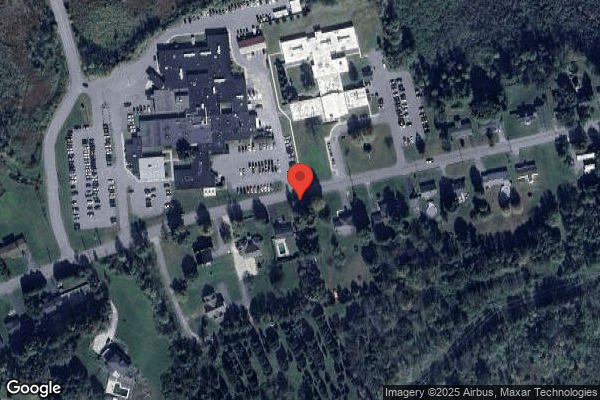
1045 WEST STREET, CARTHAGE, NY 13619 (315) 493-3220
For profit - Corporation 90 Beds CENTERS HEALTH CARE Data: November 2025
Trust Grade
35/100
#488 of 594 in NY
Last Inspection: September 2024

Within standard 12-15 month inspection cycle. Federal law requires annual inspections.

Overview

Carthage Center for Rehabilitation and Nursing has received a Trust Grade of F, indicating significant concerns regarding care and management. Ranking #488 out of 594 facilities in New York places it in the bottom half, and #2 out of 3 in Jefferson County suggests that there is only one local option that is better. While the facility is showing an improving trend, reducing issues from 14 to 13, it still has a concerning staffing rating of 1 out of 5 stars and a very high turnover rate of 65% compared to the state average of 40%. Notably, there were no fines reported, which is a positive aspect, but the facility has less RN coverage than 98% of state facilities, raising concerns about the quality of care. Specific incidents highlighted by inspectors included a dirty and unsafe environment with stained carpets and poor food quality, with residents reporting that meals were often served cold and unappetizing. Overall, while there are some improvements and no fines, the facility's substantial weaknesses in staffing, cleanliness, and food quality make it a concerning choice for families.

Trust Score
F
35/100
In New York
#488/594
Bottom 18%
Safety Record
Low Risk
No red flags
Inspections
Getting Better
14 → 13 violations
Staff Stability
⚠ Watch
65% turnover. Above average. Higher turnover means staff may not know residents' routines.
Penalties
✓ Good
No fines on record. Clean compliance history, better than most New York facilities.
Skilled Nurses
⚠ Watch
Each resident gets only 14 minutes of Registered Nurse (RN) attention daily — below average for New York. Fewer RN minutes means fewer trained eyes watching for problems.
Violations
⚠ Watch
35 deficiencies on record. Higher than average. Multiple issues found across inspections.
★☆☆☆☆
1.0
Overall Rating
★☆☆☆☆
1.0
Staff Levels
★★★☆☆
3.0
Care Quality
★☆☆☆☆
1.0
Inspection Score
Stable
2023: 14 issues
2024: 13 issues

The Good

  • Full Sprinkler Coverage · Fire safety systems throughout facility
  • No fines on record

Facility shows strength in fire safety.

The Bad

1-Star Overall Rating

Below New York average (3.0)

Significant quality concerns identified by CMS

Staff Turnover: 65%

19pts above New York avg (46%)

Frequent staff changes - ask about care continuity

Chain: CENTERS HEALTH CARE

Part of a multi-facility chain

Ask about local staffing decisions and management

Staff turnover is elevated (65%)

17 points above New York average of 48%

The Ugly 35 deficiencies on record

Sept 2024 12 deficiencies
CONCERN (D) 📢 Someone Reported This

A family member, employee, or ombudsman was alarmed enough to file a formal complaint

Potential for Harm - no one hurt, but risky conditions existed

Deficiency F0582 (Tag F0582)

Could have caused harm · This affected 1 resident

Based on record review and interview during the recertification survey conducted 9/23/2024-9/26/2024, the facility did not provide the appropriate liability and appeal notices to Medicare beneficiarie...

Read full inspector narrative →
Based on record review and interview during the recertification survey conducted 9/23/2024-9/26/2024, the facility did not provide the appropriate liability and appeal notices to Medicare beneficiaries for 1 of 3 residents (Resident #72) reviewed. Specifically, Resident #72 remained in the facility after discontinuation of Medicare Part A services and the facility did not provide the resident with a Skilled Nursing Facility Advanced Beneficiary Notice of Non-Coverage (Centers for Medicare and Medicaid Services-10055) for Medicare Part A as required. Findings include: The facility policy, Notice- Advances Beneficiary Notice, dated 7/2019 documented the Advance Beneficiary Notice of Non-coverage was to be issued by the facility where Medicare payment was expected to be denied. The notice must be provided within enough time to provide the beneficiary enough time to make an informed decision on whether or not to continue to receive services and accept potential financial liability not covered by Medicare. The notice must give a brief explanation why the beneficiary's needs did not meet Medicare coverage guidelines. The Center for Medicare and Medicaid Services form instructions for the Skilled Nursing Facility Advanced Beneficiary Notice of Non-coverage Center for Medicare and Medicaid Services-10055, expiration date 1/31/26, documented a Skilled Nursing Facility Advanced Beneficiary Notice of Non-coverage (form 10055) must be issued by providers to beneficiaries in situations where Medicare payment was expected to be denied. The Skilled Nursing Facility Advanced Beneficiary Notice of Non-coverage must be delivered far enough in advance that the beneficiary or representative had time to consider the options and make an informed choice prior to services ending. Resident #72 had diagnoses including muscle weakness, anxiety, and traumatic brain injury. The 9/17/2024 Minimum Data Set assessment documented it was a Skilled Nursing Facility PPS (Prospective Payment System) Part A Discharge (end of stay) assessment with a start date of 7/1/2024 and an end date of 9/17/2024. The Skilled Nursing Facility Advanced Beneficiary Notice of Non-coverage Center for Medicare and Medicaid Services-10055 letter documented Resident #72's effective end date of services was 9/17/2024. Business Office Manager #16's handwritten note documented the form was mailed to the resident's representative as the resident was unable to sign for themselves (no date documented when the form was mailed). The letter was not dated. The United States Postal Service Certified Mail Receipt addressed to the resident's representative did not document a date the letter was mailed by the facility. During an interview on 9/25/2024 at 4:21 PM, Business Office Manager #16 stated they sent the beneficiary letters as soon as the insurance company or therapy notified them of a pending cut from therapy. They should have put a date on the letter and certified mail forms when it was sent by the facility. There was no tracking mechanism by the facility. The resident remained in the facility and the facility charges were back dated and covered by Medicaid. The manager stated they should have documented when the letter was sent as it was to be sent at least 2 days prior to termination of services. During a telephone interview on 9/25/2024 at 4:30 PM, Resident #72's representative stated they received the beneficiary letter on 9/23/2024 from the post office and signed that the letter was received. The representative stated they would have appealed the non-coverage if they were aware earlier. They made numerous attempts to contact the facility regarding the reason for the discontinuation of services, and the facility had not called them back or given them an explanation as to why the resident was cut from therapy. 10 NYCRR 483.10 (g) (18)
CONCERN (D)

Potential for Harm - no one hurt, but risky conditions existed

Deficiency F0660 (Tag F0660)

Could have caused harm · This affected 1 resident

Based on observation, record review, and interview during the recertification survey conducted 9/23/2024-9/26/2024, the facility did not ensure the discharge needs of each resident were identified and...

Read full inspector narrative →
Based on observation, record review, and interview during the recertification survey conducted 9/23/2024-9/26/2024, the facility did not ensure the discharge needs of each resident were identified and resulted in the development of a discharge plan for 1 of 1 resident (Resident #54) reviewed. Specifically, Resident #54 expressed the intention to be discharged to an assisted living facility and was not assisted with discharge planning or updated on the status of their discharge plan. Findings include: The facility policy, Discharge-Planning, revised 12/2019, documented the discharge planning process ensured residents had a discharge plan of continuing care that met their post-discharge needs and a goal of a safe and successful transition to the community, a lower level of care, or alternate healthcare facility. The Social Worker was responsible for the duties of Discharge Coordinator. The Discharge Coordinator developed a discharge plan that began on admission for each resident, initiated all necessary referral for post discharge care and needs, and documented the steps taken for discharge planning in the resident's medical record. Resident #54 was admitted to the facility with diagnoses including chronic obstructive pulmonary disease (lung disease), respiratory failure, and dependence on supplemental oxygen. The 7/8/2024 Minimum Data Set assessment documented the resident was cognitively intact, had no behavioral symptoms, required supervision or set-up assistance with most activities of daily living, was independent with transfers and ambulation, and active discharge planning was not occurring. The comprehensive care plan initiated 7/28/2024 documented the resident's placement was long-term care and the resident did not wish to be asked about returning to the community on all assessments. Interventions included participation in social/ recreational activities to promote well-being and support and encouragement were provided. The 4/26/2024 Physical Therapist #12 discharge progress note documented the resident had reached their goals upon discharge. The discharge recommendations were assistance with instrumental activities of daily living (preparing meals, managing medications, cleaning, getting around with transportation and managing money). The 4/26/2024 Occupational Therapist #13 discharge progress note documented the resident had reached maximum potential with skilled services and made consistent progress with skilled interventions. The 6/4/2024 Director of Social Work Social Services Assessment documented the resident was responsible for themself, and their goal was to be discharged to another facility/ institution. The resident was re-admitted to the facility, and they were to remain long-term care and work on their well-being. There was no documented evidence the Director of Social Work discussed discharge goals and the need for long-term placement with the resident. The resident's Notice of Medicare Non-Coverage documented Medicare covered Skilled Nursing Facility Services would end on 6/20/2024. The resident signed the notice on 6/18/2024. The 8/5/2024 Psychiatric Mental Health Nurse Practitioner #10 progress note documented the resident reported they were waiting for assisted living placement. The 8/6/2024 Physician #9 progress note documented the resident was at their treatment and care plan goals and was to be discharged to assisted living if possible. The 8/24/2024 Psychiatric Mental Health Nurse Practitioner #10 progress note documented the resident reported that they continued to wait for assisted living placement. There was no documented evidence the possibility of discharge to an assisted living facility was discussed with the resident or if referrals were made. During an interview on 9/23/2024 at 10:08 AM, the resident stated they were trying to find somewhere else to live. During an interview on 9/25/2024 at 8:58 AM, the resident stated they went out with family yesterday. They went shopping, out to eat, and got a new cellular phone. Their social worker was supposed to be helping them get to an assisted living facility for the past 4-6 months. They asked their social worker every day, and their social worker told them they had not heard anything. When they talked to their social worker a couple of days ago, the social worker said they were going to call some facilities. They did not know if they had made any calls yet or to what facilities. They wanted to move closer to where they lived prior to coming to the facility. During an interview on 9/25/2024 at 12:59 PM, Certified Nurse Aide #15 stated the Director of Social Work was responsible for and assisted residents with discharge planning. Resident #54 did not need any assistance from the certified nurse aides. The resident bathed, brushed their teeth, washed their face, and dressed themselves independently. They thought the resident could probably live in an assisted living facility. During an interview on 9/25/2024 at 1:29 PM, Licensed Practical Nurse #14 stated the resident was independent with activities of daily living. It was important the resident went to a lower level of care to facilitate independence and it would be beneficial for mood and lifestyle. The resident spent their days either in their room or the dining room and if they were at an assisted living facility, they could go for a walk or do many different things. The Director of Social Work was responsible for assisting residents with discharges. During an interview on 9/25/2024 at 1:54 PM, the Director of Social Work stated the discharge process started on their first visit within 3 days of admission. They were the only social worker for the facility. Prior to discharge the resident had to be cleared by the physician, medical staff, and therapy. If a resident was appropriate to be discharged to assisted living, they sent out referral packets via facsimile. They then waited for call backs and followed up periodically if they had not heard anything back. When Resident #54 was discharged from therapy, discharge to assisted living was discussed. The resident wanted to go somewhere close to where they lived before, but they were not familiar with the facilities in that area. They stated the resident would do great in an assisted living setting. For the past 2 weeks the resident came to their office every morning and asked about moving to an assisted living facility and they told the resident they had not forgotten about them and that the process took time. It was important that progress of the process was communicated with the resident. They could not remember how long it was since the resident first approached them about moving to an assisted living facility but at that time there were long wait lists. They had not yet sent out any referral packets for Resident #54. The resident's family came to them today and asked about a transfer to another facility as well. 10NYCRR 415.11(d)(3)
CONCERN (D) 📢 Someone Reported This

A family member, employee, or ombudsman was alarmed enough to file a formal complaint

Potential for Harm - no one hurt, but risky conditions existed

ADL Care (Tag F0677)

Could have caused harm · This affected 1 resident

Based on observation, record review, and interviews during the recertification and abbreviated (NY00348460 and NY00345485) surveys conducted 9/23/2024-9/26/2024, the facility did not ensure residents ...

Read full inspector narrative →
Based on observation, record review, and interviews during the recertification and abbreviated (NY00348460 and NY00345485) surveys conducted 9/23/2024-9/26/2024, the facility did not ensure residents who were unable to carry out activities of daily living received the necessary services to maintain good nutrition, grooming, and personal and oral hygiene for 2 of 7 residents (Resident #15 and #43) reviewed. Specifically, Resident #43 was not assisted with removing unwanted facial hair, and Resident #15 had unkept hair and unclean and untrimmed fingernails. Findings include: The facility policy, Activities of Daily Living Care and Support, revised 3/13/2024, documented activities of daily living care and support would be provided for residents who were unable to carry out activities of daily living independently, in accordance with the resident's assessed needs, personal preferences, and individualized plan of care, that included but was not limited to supervision and assistance with: hygiene, mobility, elimination, dining, and communication. Nail care would be provided as needed for residents and facial hair would be groomed as per residents' preference and/or assessed needs. 1) Resident #43 had diagnoses including cerebral palsy (disorder that affects movement, muscle tone, and posture), muscle weakness, and repeated falls. The 7/8/2024 Minimum Data Set assessment documented the resident was cognitively intact, was dependent with toileting hygiene, shower/bathing, and lower body dressing, required setup or clean-up assistance with eating and oral hygiene, and did not refuse care. The comprehensive care plan initiated 6/14/2024 documented the resident required assistance with self-care and mobility related to impaired balance and limited mobility. Interventions included partial assistance with personal hygiene and substantial assistance with showering/bathing. The 9/2024 certified nurse aide care record documented the resident received personal care during the day and evening shift on 9/23/2024-9/25/2024. Resident #43 was observed at the following times: - on 9/23/2024 at 12:10 PM, in their room seated in their wheelchair. They had thick brown hair covering their upper lip and long gray/white hair under their chin. The resident stated they did not want facial hair. - on 9/24/2024 at 9:10 AM, in their room seated in their wheelchair. They had thick brown hair covering their upper lip and long gray/white hair covering their chin. - on 9/25/2024 at 9:38 AM, in their room seated in their wheelchair. They had thick brown hair covering their upper lip and long gray/white hair covering their chin. The resident stated they hoped staff had time to shave them because they did not want facial hair when they attended the Fall Festival activity. During an interview on 9/25/2024 at 1:10 PM, Certified Nurse Aide #34 stated they looked at the resident's care instructions to know how to properly care for each resident. Personal hygiene consisted of cleaning the resident head to toe, nail care, oral care, and shaving. They stated after they completed all personal hygiene, they documented the care was completed. If a resident refused, they would document the refusal and notify the nurse so they could reapproach the resident. They were familiar with Resident #43, they did not refuse care, and they assisted with their care that day. The stated they shaved the resident because they had a lot of facial hair, and they thought another certified nurse aide should have done it earlier that week when they were not working. It was important for the certified nurse aides to offer shaving whenever facial hair was present to maintain resident dignity. During an interview on 9/25/2024 at 3:42 PM, Licensed Practical Nurse #14 stated staff looked at a resident's care plan or care instructions to tell them how to properly care for the resident. Personal hygiene was completed each shift and consisted of washing a resident's face and body, nail care, hair care, shaving, and oral care. If a resident refused care, the certified nurse aides would notify the nurse so they could reapproach the resident. They had not been notified of any refusals by Resident #43. They stated it was important for the certified nurse aides to shave Resident #43 for their self-image and to maintain their dignity. During an interview on 9/26/2024 at 9:26 AM, Certified Nurse Aide #36 stated residents received showers twice a week and they would shave resident's when they were in the shower. They gave Resident #43 a shower on 9/23/2024 and they could not recall if they shaved the resident, but they normally would during a shower. Resident #43 never refused care but if they had, they would have notified the nurse. They stated it was important to shave Resident #43 whenever they had facial hair to maintain their dignity. During an interview on 9/26/2024 at 10:25 AM, the Assistant Director of Nursing stated personal hygiene consisted of oral care, bathing, dressing, nail care, and shaving. They stated personal hygiene should be offered and completed daily for each resident. The electronic documentation system only asked certified nurse aides if all care was completed, and they would answer yes or no. If a resident refused care, they should notify the nurse so they could reapproach the resident. It was important for the certified nurse aides to offer shaving whenever Resident #43 had facial hair to boost their self-esteem and to maintain their dignity. 2) Resident #15 had diagnoses including dementia, weakness, and need for assistance with personal care. The 6/30/2024 Minimum Data Set assessment documented the resident required modified independence for daily decision making, did not refuse care, and required maximum assistance for hygiene care. The comprehensive care plan initiated 3/4/2021 documented the resident required assistance with activities of daily living and was at risk for impaired skin integrity. Interventions included keep fingernails short to prevent scratches, showers on Tuesday and Friday evenings, and substantial assistance of one for personal hygiene tasks. The September 2024 Documentation Survey Report documented the resident received a shower on 9/24/2024 (Tuesday) by Certified Nurse Aide #25. There was no documentation the resident received a shower on 9/20/2024 (Friday). Resident #15 was observed in their room with long, jagged nails with brown debris and unkempt, matted hair on 9/23/2024 at 11:14 AM, 9/24/2024 at 8:34 AM, and 9/25/2024 at 9:08 AM. The resident stated their nails were too long, their hair had not been washed in 2 weeks, and they did not receive a shower on 9/24/2024. During an interview on 9/25/2024 at 11:13 AM, Certified Nurse Aide #25 stated showers were given twice a week and were documented in the bathing task. Bed baths were given in place of a shower if a resident requested. Hair washing was included in both showers and bed baths. If the shower task documentation stated yes then it meant a shower was given which included hair washing. Nail care was provided whenever needed and could be performed by aides if the resident was not a diabetic. Hair combing was completed every day. Any refusal of care was reported to the nurse. They gave Resident #15 a bed bath last evening at the resident's request but did not wash their hair because they received a bed bath and not a shower. They did not report to the nurse that hair washing was not completed. If residents did not receive their showers or have their hair washed it could cause that resident to feel uncomfortable, moody, or grumpy. Nail care was important because dirty nails could spread bacteria which could cause illness. During an interview on 9/25/2024 at 1:00 PM, Licensed Practical Nurse #6 stated residents received showers twice a week that included hair washing and nail care. Certified nurse aides should provide nail care anytime there was a need unless the resident was a brittle diabetic. Daily morning care should include hair combing. Any refusals of showers, nail care, or hair care should be reported to and documented by the nurse. Resident #15 usually received a shower or a bed bath. They had not noticed the resident's nails, but they should be clean and not jagged. No one had reported to them that Resident #15 refused any care. During an interview on 9/26/2024 at 10:08 AM, Licensed Practical Nurse Manager #22 stated they expected showers were given according to the shower schedule and included nail care and hair washing. If a bed bath was given, hair should still be washed. Nail care was done anytime they were long, jagged or debris was present, and hair combing was provided daily. Resident #15 required substantial assistance with hygiene care. If a shower was signed for by the aide, then it implied that hair was washed as well. During an interview on 9/26/2024 at 10:25 AM, the Assistant Director of Nursing stated showers were provided twice a week and were documented by the certified nurse aides in the electronic record. Personal care included nail care and should be offered daily. It was important to clean and clip nails whenever they were dirty or long to prevent cuts and infections. If nail care or hair care was needed, it should not wait until shower days to be provided. Residents should not have greasy hair and should be offered to have hair washed even if it was not their shower day. Not providing good hygiene could be a dignity and self-esteem issue. 10NYCRR 415.12(a)(3)
CONCERN (D) 📢 Someone Reported This

A family member, employee, or ombudsman was alarmed enough to file a formal complaint

Potential for Harm - no one hurt, but risky conditions existed

Quality of Care (Tag F0684)

Could have caused harm · This affected 1 resident

Based on observation, record review, and interviews during the recertification survey conducted 9/23/2024-9/26/2024, the facility did not ensure residents received treatment and care in accordance wit...

Read full inspector narrative →
Based on observation, record review, and interviews during the recertification survey conducted 9/23/2024-9/26/2024, the facility did not ensure residents received treatment and care in accordance with professional standards of practice, the comprehensive person-centered care plan, and the resident's choices for 1 of 1 resident (Resident #178) reviewed. Specifically, Resident #178's urinary catheter (tube that drains urine) drainage bag was observed above the level of the bladder. Findings include: The facility policy, Urinary Catheter Guidelines, revised 9/11/2023, documented care was provided to residents with indwelling urinary catheters to prevent, reduce the reoccurrence, manage, and resolve urinary tract infections. The urinary catheter drainage bag should be positioned below the level of the bladder and should not touch the floor. Resident #178 had diagnoses including urinary tract infections and chronic kidney disease. The 9/19/2024 Minimum Data Set assessment documented the resident was cognitively intact, had an indwelling urinary catheter, and had a urinary tract infection within the last 30 days. The comprehensive care plan initiated on 9/14/2024 documented the resident had an indwelling urinary catheter. Interventions included maintaining the urinary drainage bag below the level of the bladder, monitor/record/report signs and symptoms of a urinary tract infection, change catheter as ordered, and urology consult as ordered. The 9/12/2024 physician orders documented: - Ciprofloxacin (antibiotic) 500 milligram, 1 tablet daily for 5 days for urinary tract infection. - Indwelling urinary catheter: size16 with a 5-milliliter balloon to down drain, change as needed. The following observations of Resident #178 were made: - on 9/24/2024 at 11:13 AM, 12:31 PM, and 12:43 PM sitting in their wheelchair in their room. Their urinary catheter tubing was observed coming out of the bottom of their left pant leg, under the wheelchair, and the drainage bag was clipped to the top of the wheelchair's backrest that was level with the resident's shoulders and above the bladder. At 12:59 PM, self-propelling their wheelchair down the hallway. The urinary catheter drainage bag was clipped to the bottom of the wheelchair. The resident stated one of the nurses approached them a few minutes ago, moved the drainage bag to the bottom of the wheelchair, and told them it should not have been put on the back of the wheelchair. During an interview on 9/25/2024 at 1:26 PM, Certified Nurse Aide #35 stated urinary catheter bags should always be clipped to the side of the bed or the bottom of a wheelchair. They stated the resident was self-propelling their wheelchair in the hallway when they noticed their catheter drainage bag was clipped to the top of the wheelchair's backrest. They moved it to the bottom of the wheelchair so the urine would be able to flow better. They stated catheter drainage bags should always be placed below the level of the bladder so the urine would not backup in the tubing and cause an infection. During an interview on 9/26/2024 at 9:17 AM, Licensed Practical Nurse #20 stated they noticed Resident #178's catheter drainage bag dragging on the floor under their wheelchair on 9/24/2024, so they moved it to the top of the wheelchair's backrest. They stated they forgot to move it back because they got busy, and by the time they remembered someone had already moved it to the bottom of the wheelchair. They stated it was important to keep catheter drainage bags below the level of the bladder to prevent backflow and urinary tract infections. During an interview on 9/26/2024 at 10:25 AM, Assistance Director of Nursing #3 stated urinary catheter drainage bags should be hung on the side of the bedframe or on the bottom of a wheelchair. They stated it was important for Resident #178's catheter drainage bag to be below the level of the bladder to prevent urinary tract infections. 10 NYCRR 415.12
CONCERN (D)

Potential for Harm - no one hurt, but risky conditions existed

Pressure Ulcer Prevention (Tag F0686)

Could have caused harm · This affected 1 resident

Based on observation, record review, and interviews during the recertification survey conducted 9/23/2024-9/26/2024, the facility did not ensure residents with pressure ulcers received the necessary t...

Read full inspector narrative →
Based on observation, record review, and interviews during the recertification survey conducted 9/23/2024-9/26/2024, the facility did not ensure residents with pressure ulcers received the necessary treatment and services, consistent with professional standard of practice, to promote wound healing, prevent infection, and prevent new ulcers from developing for 2 of 2 residents (Residents #66 and #369) reviewed. Specifically, Resident #66 developed three facility acquired pressure ulcers, one vascular wound (caused by poor blood circulation) and had a low loss air mattress (specialty mattress used to relieve pressure and provide airflow) that was not accurately set to the resident's weight, and the resident was not turned and repositioned as care planned. Resident #379 had a foot wound and did not have their foot offloaded as planned. Findings include: The facility policy, Support Surfaces- Air mattress, created 2/2019, documented the facility provided an environment of care that promoted the highest quality of care and comfort for the residents. This included the treatment and prevention of pressure ulcers with the use of support surfaces. The motor was set to the appropriate settings per the resident assessment. For example, weight for weight. Depending on mattress type, a turning and repositioning schedule was determined. The facility policy, Skin and Pressure Injury Prevention, revised 6/27/2024, documented the facility assessed residents for risk in the development of pressure injuries and implemented preventative measures in accordance with current standards of practice. Once the assessment was conducted and risk factors were identified and characterized, a resident-centered care plan was developed and addressed the modifiable risks for pressure injuries and skin protection interventions. For a person in bed, position was changed frequently, and a pressure relieving/ redistribution device was on the bed. When in bed, every attempt was made to off load pressure to heels and interventions included placement of pillows, heel boots, or other devices as recommended by provider. 1) Resident #66 had diagnoses including hemiplegia and hemiparesis (weakness or paralysis of one side of the body) following cerebral infarction (stroke) affecting left non-dominant side, osteomyelitis (bone infection) of the sacrococcygeal (tailbone) region, and severe protein-calorie malnutrition. The 9/4/2024 Minimum Data Set assessment documented the resident had severely impaired cognition, had upper extremity impairment on one side, lower extremity impairment on both sides, was dependent for assistance with toileting, bathing, dressing, bed mobility, and transfers, was at risk for developing pressure ulcers, had 4 unstageable (full thickness, depth unknown) pressure ulcers that were not present on admission, received daily pressure ulcer care, applications of ointments/ medications other than to feet, had a pressure relieving device for the bed, and did not reject care. The Comprehensive Care Plan initiated 4/26/2024 documented the resident had alteration in skin integrity with an actual unstageable pressure injury to the sacrum and left buttocks and a vascular wound to the left lower extremity. Interventions included weekly wound evaluations, dressings were monitored to ensure they were clean, dry, and intact, and the wound was monitored for changes and signs/ symptoms of infection. There were no documented interventions for pressure relief. The undated care instructions documented the resident was provided with a pressure relieving/ redistribution device on the bed and the resident was dependent on one to turn and reposition every 1-2 hours as indicated and as needed. The 8/20/2024 physician orders documented low loss air mattress: check setting closest to resident's current weight and mattress functionality every shift. The 9/18/2024 Nurse Practitioner #38 progress note documented the resident was being seen as requested by nursing to evaluate their wounds. The left posterior leg vascular wound measured 5.0 centimeters x 3.2 centimeters with a pink base. The sacrum wound with undermining measured 12.1 centimeters x 10 centimeter x 4 centimeters. The new unstageable left buttocks ulcer measured 1.2 centimeters x 1.1 centimeters with 100 percent yellow base. There was also a left buttock skin abrasion, no measurements were documented. Interventions included continued use of an air mattress and signs and symptoms of wound infection were monitored. Pressure ulcers were unavoidable as the resident was comfort care, bed bound, and had poor nutrition. The 9/25/2024 Registered Nurse #39 weekly wound evaluation documented the wounds were evaluated by the wound care provider and refer to the wound care provider documentation. Interventions included turning and repositioning, heels off loaded with pillow or heel boots, and pressure relieving/ reducing device on bed. The 9/25/2024 Nurse Practitioner #38 progress note documented the resident was being seen as requested by nursing to evaluate their wounds. The left posterior leg vascular wound measured 5.3 centimeters x 3 centimeters with a pink base. The sacrum wound with undermining measured 9 centimeters x 10.4 centimeters x 2 centimeters with 2 centimeter undermining at 7 o'clock. The unstageable left buttocks ulcer measured 0.5 centimeters x 1.1 centimeters with 100 percent yellow base. The left buttock skin abrasion measured 1 centimeter x 1 centimeter. Pressure ulcers were unavoidable as the resident was comfort care, bed bound, and had poor nutrition. The September 2024 Certified Nurse Aide activities of daily living tasks did not document the resident was turned and repositioned during their shift on 9/1/2024 day shift, 9/4/2024 night shift, 9/5/2024 day shift, 9/15/2024 night shift, 9/17/2024 day shift, and 9/18/2024 night shift. The resident's medical record contained no documentation for the appropriate settings for the pressure relieving air mattress. The Weights and Vital Summary Report documented the resident was not weighed on 9/4/2024 comfort measures-no weights. The last documented weight was 123 pounds on 8/14/2024. Resident #66 was observed; - On 9/23/2024 at 10:29 AM, 12:19 PM, and 2:08 PM, lying in bed with the low air loss mattress set to 380 pounds with the mattress pump upside down on the floor under the bed. - On 9/24/2024 during a continuous observation from 9:07 AM until 11:11 AM, lying in bed with the low air loss air mattress set to 380 pounds with the pump upside down on the floor under the bed. At 1:03 PM the low air loss mattress was set to 230 pounds. - On 9/25/2024 at 9:07 AM, lying in bed with the low air loss mattress set to 230 pounds, the pump was on the foot end of the bed with a pillow over it. At 12:03 PM, 1:19 PM, and 3:28 PM, lying in bed with the low air loss mattress set to 230 pounds and signed as checked by Licensed Practical Nurse #14. - On 9/26/2024 at 9:25 AM, sleeping in bed on their back with the low air loss mattress set to 230 pounds with the pump on the foot end of the bed. During an interview on 9/25/2024 at 1:03 PM, Certified Nurse Aide #15 stated the care instructions told them the frequency a resident needed to be turned and repositioned. The documentation did not include the frequency of turning and repositioning, just that it was completed on their shift. If there was a refusal, it would be documented as a refusal. Turning and repositioning meant they rotated what side the resident was lying on and was important for skin breakdown and discomfort. Resident #66 had wounds and it was important they were repositioned every 2 hours. The air mattress was set by the nurse per the resident's weight. During an interview on 9/26/2024 at 9:27 AM, Certified Nurse Aide #41 stated residents were turned and repositioned every few hours. This meant the resident was in different positions for wound prevention, to keep off pressure points or for wound improvement if wounds were already present. Turning and repositioning meant residents were rotated from side to back and then to the other side. Resident #66 was supposed to be repositioned every 2 hours as they had wounds. They tried to reposition the resident as often as possible, but it was often difficult due to staffing shortages so they just did the best they could. The air mattress was set to the resident's weight but as a certified nurse aide, they did not touch or even look at the settings. They reported it to the nurse if the mattress was not inflated or they noticed a problem with it. During an interview on 9/26/2024 at 9:35 AM, Licensed Practical Nurse #28 stated air mattresses were set to the weight of the resident. The setting was checked at least once per shift. They did not think it was documented anywhere. Documentation meant the settings were checked. If a resident was no longer being weighed, they would not know what the mattress should be set to. They just pushed down on Resident #66's mattress and adjusted the dial per their feeling of too soft or too hard. Resident #66 was tiny, 300 pounds was probably too hard for them, and they were not sure if the mattress set inappropriately could lead to worsening pressure. They thought if the air mattress was set to the resident's weight it would be too soft. They adjusted the setting to 180 pounds a couple days ago by going with their gut. The pump was currently set at 210ish, was missing clips to hang it on the bed frame, and it should not be in the resident's bed. They did not think the weight setting was important, just what the mattress felt like to touch. The low-pressure light was blinking so they would have to have maintenance look at it. They confirmed the air mattress was documented in the Treatment Administration record but just that the air mattress existed, not what setting they set it to. During an interview on 9/26/2024 at 10:19 AM, Licensed Practical Nurse Unit Manager #22 stated turning and repositioning meant the resident was rotated from left side to right or to their back. The purpose was to prevent skin breakdown or worsening breakdown. It was documented per shift and if it was documented, it was expected it was done at the frequency indicated on the care instructions. If a resident had an air mattress, they needed an order for it and part of the order was the setting and to check functionality. If the air mattress was not set to the resident's weight it should be fixed. Resident #66 was comfort measures only and it should be set closest to the weight last documented. Nurses should not be self-selecting settings based upon whether they thought the mattress was too hard or too soft. The resident's last documented weight was 123 pounds on 8/14/2024 and their air mattress set at 380 pounds could make their pressure worse. During an interview on 9/26/2024 at 11:28 AM, the Assistant Director of Nursing stated the certified nurse aides documented turning and repositioning every shift, not every occurrence. There was no way of knowing if the resident was turned and repositioned as care planned because there was no way to document it. It was also not known when the next turn and reposition was due. It was important for frequent turning and repositioning for wound healing and could make the wound worse if not done. Air mattresses were set to the resident's closest weight. It was important it was set appropriately so the resident did not sink into the mattress, or the mattress was not too hard. It was documented by the nurses in the Treatment Administration Record every shift. If it was documented, it meant the settings were verified and if it was not documented, it was not checked. Resident #66 had pressure sores and should be turned and repositioned. The resident's last documented weight was 123 pounds and if their air mattress was set to 380 pounds it would not help with wound healing, they would be on a very hard surface. Nurses were expected to follow orders, they had recently done a training on air mattresses. Nurses were expected to look at the dial and adjust accordingly, pushing on the air mattress was not an appropriate way to set the dial. Resident #66 would not be on their back all day if they were appropriately turned and repositioned. 2) Resident #379 had diagnoses including spinal stenosis (narrowing of the spinal canal), diabetes, and osteomyelitis of the left foot and ankle (bone infection). The Minimum Data Set assessment was not yet completed as the resident was a new admission. The 9/20/2024 at 7:16 PM Registered Nurse #39 Nursing admission Evaluation documented the resident was admitted to the facility for osteomyelitis of the left foot. The Comprehensive Care Plan dated 9/21/2024 documented Resident #379 was at risk for skin breakdown due to obesity and disease processes. Interventions included skin observations, compression dressing was applied, and adaptive equipment was removed when skin integrity was checked. The undated care instructions documented Resident #379's heels were offloaded with heel boots as tolerated. Resident #379 was observed on 9/24/2024: - at 9:19 AM with a heel bootie hanging from the left side of the bed and their foot resting directly on the bed, the left foot was not offloaded. - at 11:27 AM in bed and the left foot was not offloaded. The boot was on the floor at the end of the bed. The resident stated they wore the boots at home and they made their foot more comfortable. - at 2:43 PM in bed with the boot on the left foot with the foot dangled over the footboard which applied pressure to the left foot. The Certified Nurse Aide Documentation Survey Report documented heel protection: offload with pillow/heel boots/heel suspension boots as tolerated and was completed every shift on 9/24/2024 and 9/25/2024. During an interview on 9/25/2024 at 8:40 AM, Certified Nurse Aide #37 stated Resident #379 came into the facility with a heel boot because they had a wound on their left foot and continued with the heel boot after admission. The heel boot was old, worn, and dirty so they received a new one from physical therapy after admission. If they did not have the heel boot on, the wound could get worse. During an interview on 9/25/2024 at 12:29 PM, Licensed Practical Nurse #31 stated offloading boots removed pressure from areas, prevented wounds from worsening, and provided comfort. They stated Resident #379 was supposed to wear an offloading heel boot to the left foot when they were in bed as they had a wound and required staff assistance to apply the boot. During an interview on 9/25/2024 at 12:53 PM, Licensed Practical Nurse Unit Manager #32 stated care plans were individualized for each resident and completed by a registered nurse on admission. They stated offloading boots were documented on the certified nurse aide instructions. They stated an offloading boot did not require a physician order and could be applied by any nursing staff. They stated if the offloading boot was not worn, the resident could have increased pain and decreased wound healing and Resident #379 had a significant wound. They expected the boot to be on at all times unless the resident refused. Resident #379 did not refuse the boot. During an interview on 9/26/2024 at 10:54 AM, the Assistant Director of Nursing #3 stated care plans were individualized for each resident and ensured the care needs for each resident were met. They did not expect heel boots to be hanging over the bed or on the floor. If the boot was not worn the resident could have decreased healing to a wound or a worsening wound. They stated Resident #379 utilized an offloading left heel boot. 10NYCRR 415.12(c)(1)
CONCERN (D)

Potential for Harm - no one hurt, but risky conditions existed

Deficiency F0688 (Tag F0688)

Could have caused harm · This affected 1 resident

**NOTE- TERMS IN BRACKETS HAVE BEEN EDITED TO PROTECT CONFIDENTIALITY** Based on observation, record review, and interviews, during the recertification survey conducted 9/23/2024-9/26/2024, the facili...

Read full inspector narrative →
**NOTE- TERMS IN BRACKETS HAVE BEEN EDITED TO PROTECT CONFIDENTIALITY** Based on observation, record review, and interviews, during the recertification survey conducted 9/23/2024-9/26/2024, the facility did not ensure residents with limited range of motion received appropriate treatment and services to prevent further decrease in range of motion for 2 of 2 residents (Resident #7 and #15) reviewed. Specifically, Residents #15 and #7 resting palm (hand) guards were not applied appropriately as recommended by occupational therapy for hand and finger contractures (shortening of muscle or tendons preventing normal movement). Findings include: The facility policy, Appliances- Splints, Braces, Slings, revised 4/2019 documented to protect the safety and well-being of residents, and to promote quality care, the facility used appropriate techniques and devices for appliances, splints, braces, and slings; nursing would ensure certified nurse aide staff knew the proper application and removal of appliances; and nursing would ensure the appropriate sign off of appliance task options. 1) Resident #15 had diagnoses including dementia, weakness, and need for assistance with personal care. The 6/30/2024 Minimum Data Set documented the resident had impaired cognition, functional limitation of the upper extremity, did not refuse care, and required maximum assistance for most activities of daily living. The Comprehensive Care Plan initiated 3/4/2021 documented the resident had limited physical mobility related to gait and mobility abnormalities. Interventions included a left palm protector on at all times except during functional tasks. The resident's [NAME] (care instructions) documented left palm protector on at all times except for functional tasks. The 7/30/2024 Occupational Therapy Evaluation and Plan of Treatment by Occupational Therapist #13 documented Resident #15 had a left-hand contracture and during prior therapy sessions from 6/12/2024-7/3/2024 the resident received services to decrease the contracture in their left hand that included a palm protector splint. The resident was observed in their room without a left palm protector on 9/23/2024 at 11:14 AM, 9/24/2024 at 8:34 AM, 9/24/2024 at 12:48 PM, and 9/25/2024 at 9:08 AM. During an interview on 9/25/2024 at 11:13 AM, Certified Nurse Aide #25 stated certified nurse aides applied splints and documented in the task section of the electronic record. If splints were missing or the resident refused, it was reported to the nurse. Resident #15's resident care instructions listed a left palm guard at all times but was not listed as a task they could sign off on. Splints were important to prevent contractures. If a splint or guard was recommended but not used, the resident's contractures could worsen. During an interview on 9/25/2024 at 1:00PM, Licensed Practical Nurse #6 stated certified nurse aides applied splints and if there was a problem applying them it should be reported to the nurse and documented. Splints required an order and were on the treatment administration record for signatures. They were not aware Resident #15 had a recommendation for palm guards. The 9/2024 Treatment Administration Record did not document the use of a palm protector splint. During an interview on 9/25/2024 at 3:13 PM, Licensed Practical Nurse Manager #22 stated therapy evaluated residents for contractures. If a splint was recommended, nursing was informed so the resident's care instructions and care plan could be updated and a task for the aides to document created. Certified nurse aides applied splints and palm guards and any issues or refusals were reported to the nurse and documented. Palm guards were used for hand contractures and should be worn as recommended. If not, open areas, worsening of contractures, and pain could occur. Resident #15 had contractures of their hands and should have a left palm guard on at all times except during functional tasks. This was listed on the resident's care instructions and as a task, however, the task did not allow the certified nurse aides to sign off on. During an interview on 9/26/2024 at 9:14 AM, Physical Therapist #23 stated the therapy department evaluated residents and when splints were recommended, they informed nursing so the care plan could be updated. They expected their recommendations to be implemented and any issues should be reported to them. Resident #15 had hand contractures and a hand guard was recommended. Palm guards were effective in maintaining current range of motion, keeping hands clean, and preventing skin integrity issues that could be caused by fingernails coming into contact with palms. During an interview on 9/26/2024 at 11:42 AM, the Director of Nursing stated therapy made recommendations for splints and palm guards and anyone who had a recommendation should have a task associated with the splints allowing the certified nurse aides to document in the electronic record. Any refusals should be reported to nursing to verify and document. Resident #15 had a left palm guard listed in their care instructions and as a task, however the task had not been activated properly resulting in the certified nurse aides being able to see the task, but not being able to document the task. They felt staff should have asked and verified whether the guards should be put on or not. If palm guards were not applied per recommendations contractures could worsen and skin breakdown could occur. 2) Resident #7 had diagnoses including dementia and Huntington's disease (a progressive neurological disease). The 7/17/2024 Minimum Data Set documented the resident had severe cognitive impairment, did not refuse care, had functional limitation in range of motion in both arms, and was dependent for most activities of daily living. The Comprehensive Care Plan initiated 4/26/2021 documented the resident had limited physical mobility related to deconditioning, Huntington's disease, and functional quadriplegia (inability to move arms and legs). Interventions included bilateral palm guards at all times except during hygiene care. The 10/16/2023 Occupational Therapy Evaluation and Plan of Treatment by Occupational Therapist #13 documented Resident #7 had impaired range of motion in the wrists, hands, and all fingers and recommended that finger separators and a [NAME] guard was worn on both hands at all times except during bathing and exercise. The 11/3/2023 Occupational Therapy Discharge Summary by Occupational Therapist #13 documented the resident's goal of maintaining tolerance for bilateral palm protectors 24 hours a day with periodic skin assessment was met on 10/27/2023. Resident #7's [NAME] (care instructions) documented bilateral palm guards on at all times, remove for hygiene. Resident #7 was observed in their room without palm guards on their right and left hands on 9/23/2024 at 11:08 AM, 9/24/2024 at 8:34 AM, and 9/24/2024 at 1:29 PM. During an interview on 9/25/2024 at 11:13AM, Certified Nurse Aide #25 stated Resident #7 had contractures but did not believe the resident wore splints because they had never seen the resident with them. The resident's care instructions included bilateral palm guard at all times but was not listed as a task for the aides to sign for. During an interview on 9/25/2024 at 1:00PM, Licensed Practical Nurse #6 stated they were not aware Resident #7 had a recommendation for palm guards. During an interview on 9/25/2024 at 3:13 PM, Licensed Practical Nurse Manager #22 stated Resident #7 was very stiff and had bilateral palm guards listed in their care plan, in their resident care instructions, and as a task. The task did not allow the certified nurse aides to document in the electronic record. During an interview on 9/26/2024 at 9:14 AM, Physical Therapist #23 stated Resident #7 had hand contractures and palm guards were recommended. The only compliance issue they were aware of occurred 3 months ago when the guards were reported missing and was resolved when they were found in the laundry. During an interview on 9/26/2024 at 11:42 AM, the Director of Nursing stated Resident #7 had hand contractures and bilateral palm guards listed in their care instructions and as a task, however the task had not been activated properly resulting in the certified nurse aides being able to see the task, but not being able to document the task. Staff should have asked and verified whether the guards should be put on or not. Residents that were ordered palm guards and did not wear them could have worsening of contractures and skin breakdown. 10NYCRR 415.12(e)(2)
CONCERN (D) 📢 Someone Reported This

A family member, employee, or ombudsman was alarmed enough to file a formal complaint

Potential for Harm - no one hurt, but risky conditions existed

Accident Prevention (Tag F0689)

Could have caused harm · This affected 1 resident

**NOTE- TERMS IN BRACKETS HAVE BEEN EDITED TO PROTECT CONFIDENTIALITY** Based on observation, record review, and interviews during the recertification and abbreviated (NY00321293 and NY00321801) surve...

Read full inspector narrative →
**NOTE- TERMS IN BRACKETS HAVE BEEN EDITED TO PROTECT CONFIDENTIALITY** Based on observation, record review, and interviews during the recertification and abbreviated (NY00321293 and NY00321801) surveys conducted 9/23/2024-9/26/2024, the facility did not ensure each resident received adequate supervision for 1 of 2 residents (Resident #1) reviewed for falls. Specifically, Resident #1 was transferred without the use of a lift device as planned. The facility policy, Therapy Services, created 10/12/2021, documented therapy services would conduct a comprehensive patient centered evaluation which included the development of a plan of care with appropriate interventions to reach specified resident goals. The facility policy, Lift-Full Body Mechanical Lift, last reviewed 8/20/2023, documented at a minimum, two trained staff members were needed to safely move a resident with a floor based full body mechanical lift. Resident #1 had diagnoses included a left femur (thigh bone) fracture and frequent falls. The 8/2/2024 Minimum Data Set assessment documented the resident had moderately impaired cognition, was dependent on staff for all transfers, and had one fall. The comprehensive care plan initiated 7/7/2021 documented the resident required assistance with activities of daily living and was at risk for falls. Interventions included use of a sit to stand mechanical lift for all transfers. The 6/28/2024 Physical Therapist #12 Physical Therapy Discharge Summary documented the resident used the stand pivot disc for bed to wheelchair transfers. The [NAME] (care instructions) documented the resident required a sit to stand mechanical lift for transfers. During an observation on 9/24/2024 at 2:00 PM Resident #1 was in their wheelchair in their room calling out for assistance. Certified Nurse Aide #24 stopped outside their door and asked the resident what they needed. When the resident stated they needed to be changed, Certified Nurse Aide #24 entered the room without any lift device and closed the door. At 2:06 PM, Certified Nurse Aide #24 exited room without a lift and the resident was lying in their bed. There was no lift device observed in the resident's room. During an observation on 9/25/2024 at 10:50 AM a lift device was not observed in Resident #1's room. Resident #1's visitor informed Licensed Practical Nurse #6 the resident was sitting in their wheelchair and needed to be changed. Licensed Practical Nurse #6 asked for the assistance of a certified nurse aide. Both Licensed Practical Nurse #6 and the certified nurse aide entered the room without a lift device. At 10:57 AM, Licensed Practical Nurse #6 brought the resident out of their room in their wheelchair followed by the certified nurse aide. Neither brought a lift device out of the room and there was not one observed in the resident's room. During an observation on 9/25/2024 at 12:52 PM, a visitor returned Resident #1 to their room in their wheelchair. At 1:30 PM the resident's family requested the resident be changed. Certified Nurse Aide #15 entered the resident's room without a lift device. The resident was in bed, Certified Nurse Aide #15 was in the bathroom, and there was no lift device in the room. During an interview on 9/24/2024 at 2:27 PM, Certified Nurse Aide #24 stated the transfer status of a resident was found in the computer kiosk and was checked every shift before they started working. A mechanical lift transfer always required the assistance of two staff for safety of the residents and to prevent falls. One person was needed to hold the lift and the other to hold the resident. Staff should only transfer residents according to what was documented on their care instructions. Resident #1 was independent with transfers a couple months ago, but after a fall and a broken hip they were changed to assist of 1 for transfers. During an interview on 9/25/2024 at 10:20AM, Resident #1 stated staff did not use a lift device to transfer them in and out of bed but used the resident's arms to transfer. During an interview on 9/25/2024 at 1:00 PM, Licensed Practical Nurse #6 stated resident's transfer status was documented in the care plan and on the task list. Therapy determined the transfer status of the residents. Transfer status was checked every day for changes and should always be followed. If a recommendation was for a sit to stand, it would not be appropriate to transfer a resident without the use of it. The facility had Hoyer lifts (a brand of a mechanical lift) and a mechanical sit to stand. The use of any lifting device required the assistance of two people. Resident #1 required assistance of two to stand pivot transfer, but a lift could be used if the resident was having difficulty. It was important that therapy's transfer recommendations were followed as the resident and staff could get hurt. During an interview on 9/25/2024 at 3:13 PM, Licensed Practical Nurse Manager #22 stated therapy determined a resident's transfer status. Those recommendations were communicated to nursing, who then updated the care tasks and care instructions. They expected the nurse aides to check the care instructions every time prior to the start of their shift. The facility had a Hoyer and a stand pivot disc, but not a mechanical sit to stand. All three devices required the assistance of two when used. Staff was allowed to use more assistance than required in the care plan, however, could not use less assistance than was documented in the care plan. Resident #1's therapy recommendation from 4/19/2024, indicated the resident required the use of a mechanical sit to stand lift. There was a handwritten notation to use stand pivot disc for transfers. Staff should use the stand pivot disk when transferring the resident. If therapy recommendations were not followed a resident could be injured. During an interview on 9/26/2024 at 9:14 AM, Physical Therapist #23 stated the facility currently used Hoyer lifts and a stand pivot disc. There was a mechanical sit to stand that was not functioning and had been in the basement for about six months. The mechanical sit to stand provided more assistance to the resident than the stand pivot disc. The stand pivot disk could be used on the unit by the certified nurse aides and required the assistance of 1 or 2 people and a gait belt. Physical therapy's transfer recommendations should be followed to provide consistency and to prevent falls or injuries. Resident #1 once used a four wheeled walker, but after a fall, therapy's recommendation changed to stand pivot disc with gait belt assistance of two. There had been no recent changes in the resident's status that had been reported to them and it was not safe to transfer the resident with assistance of one. During an interview on 9/26/2024 at 11:42 AM, the Director of Nursing stated transfer status was in the care plan and care instructions and should always be followed unless changed by therapy. The facility had Hoyer lifts and a stand pivot disk and staff were educated on their use. There was not a mechanical stand lift in the building. The stand pivot disk required assistance of two and provided less support than the mechanical sit to stand. The two were not interchangeable. Resident #1's had a history of falls and their care task stated they were a mechanical lift sit to stand however, the clarified instructions documented a stand pivot disc. They expected staff to verify this because the mechanical sit to stand lift was not available. If the resident was care planned for a lift device, staff should be using it. It was not okay to transfer the resident with assistance of one or without the recommended device as falls, shoulder injuries, and staff injuries could occur. 10 NYCRR 415.12(h)(1)(2)
CONCERN (D)

Potential for Harm - no one hurt, but risky conditions existed

Deficiency F0698 (Tag F0698)

Could have caused harm · This affected 1 resident

Based on observation, record review, and interviews during the recertification survey conducted 9/23/2024-9/26/2024, the facility did not ensure that residents who required dialysis services (filtrati...

Read full inspector narrative →
Based on observation, record review, and interviews during the recertification survey conducted 9/23/2024-9/26/2024, the facility did not ensure that residents who required dialysis services (filtration of blood when the kidneys do not work) received such services consistent with professional standards of practice for 1 of 1 resident (Resident #17) reviewed. Specifically, Resident #17 received hemodialysis treatments at a community-based dialysis center and did not have on-going assessments and oversight before and after dialysis treatments. Additionally, staff documented the resident had an arteriovenous fistula (surgical connection between an artery and a vein often used for dialysis access) which the resident did not have. Findings include: The facility policy, Dialysis Access Care, revised 5/2019, documented the central catheter (a tube inserted into a large, central vein) site was kept clean and dry at all times and bathing and showering were not permitted with this device. Catheter lumens (outside ends of the catheter) were capped and clamped when not in use. The general medical nurse documented in the resident's medical record every shift the location of the catheter, condition of the dressing, if dialysis was done during the shift, and any report from dialysis nurse post-dialysis and observations post dialysis. The facility policy, Dialysis Management, revised 5/2019, documented residents that received hemodialysis treatments were assessed and monitored and ensured quality of life and well-being. The access site was observed for function and signs and symptoms of infection. Orders were obtained for monitoring of the site and interventions as appropriate. Permacaths (a central catheter used for long-term access) were observed for bleeding and placement. The nurse would evaluate the resident post dialysis for access site condition and document in the nurse's notes. Resident #17 had diagnoses including end stage renal (kidney) disease, dependence on renal dialysis, and cerebral infarction (stroke). The 7/19/2024 Minimum Data Set assessment documented the resident had moderately impaired cognition, did not reject care, had end stage renal disease, and required hemodialysis treatments. The Comprehensive Care Plan initiated 5/22/2024 documented the resident needed hemodialysis related to end stage renal disease. Interventions included the check the access site dressing daily; change dressing only if ordered by the physician; document condition and complications; monitor for signs of infection such as redness, swelling, warmth, or drainage and document; and monitor the Permacath to the right upper chest for bleeding and placement. The resident received dialysis on Monday, Wednesday, and Friday with a 6:00 AM pick up time and a 7:00 AM chair time. The 8/12/2024 physician order documented monitor the Permacath for bleeding and placement every shift. If bleeding was noted, pressure was to be applied, and the physician was to be notified. If dislodged, pressure was applied and 911 was to be called. The order did not specify the location of the Permacath. The dialysis communication book documented the resident attended dialysis on 9/2/2024, 9/4/2024, 9/6/2024, 9/9/2024, 9/11/2024, 9/13/2024, 9/16/2024, 9/18/2024, 9/20/2024, 9/23/2024 and 9/25/2024. There was no documented evidence of pre-dialysis evaluations on 9/2/2024, 9/13/2024, 9/18/2024, 9/20/2024, and 9/23/2024. There was no documented evidence of post-dialysis evaluations on 9/4/2024, 9/6/2024, 9/13/2024, and 9/20/2024. During an observation and interview on 9/23/2024 at 12:21 PM, Resident #17 stated they attended dialysis on Monday, Wednesday, and Friday at a community-based dialysis center and they had just gotten back. The resident had a right chest dual lumen Permacath for dialysis covered with a white dressing that was clean, dry, and intact. They did not recall if the facility obtained vital signs or weights before or after dialysis treatments. There was a binder that went with them back and forth from dialysis. The 9/23/2024 Licensed Practical Nurse #28 post dialysis evaluation documented the resident had a Permacath and their arteriovenous fistula bruit (swooshing sound that indicates the fistula is working) was audible, and thrill (a vibration that can be felt when placing fingers over the arteriovenous fistula indicating blood flow) was present. No site changes of the arteriovenous fistula. There was no documented evidence in the resident's medical record of an arteriovenous fistula. The 9/25/2024 Licensed Practical Nurse #14 post dialysis evaluation documented the resident had a Permacath and the arteriovenous bruit was audible, and thrill was present. No site changes of the arteriovenous fistula. During an interview on 9/25/2024 at 1:35 PM, Licensed Practical Nurse #14 stated pre and post dialysis assessments were documented electronically. Resident #17 had a Permacath, but they did not remember where their access site was located. They had completed the resident's post dialysis assessment today around 11:30 AM when the resident returned from dialysis. They looked at the access site with that assessment. They checked the electronic medical record and confirmed they completed the post dialysis assessment at 11:37 AM but was not sure where the access site was located. It was important the site was monitored because the resident could bleed out. During an interview on 9/25/2024 at 3:29 PM, Licensed Practical Nurse #28 stated Resident #17 had a Permacath to their left chest for dialysis. The dressing was supposed to be clean, dry, intact and without signs of infection. They were not sure if the site should be monitored for anything else. The pre and post dialysis assessments were documented and if they were not documented, they were not done. During a follow up interview on 9/26/2024 at 9:46 AM, Licensed Practical Nurse #28 stated the resident had a right chest Permacath only and did not have an arteriovenous fistula. They showed the surveyor the electronic charting of the post dialysis note. They documented on an arteriovenous fistula because not applicable was not an option. It was not appropriate to document on an arteriovenous fistula because Resident #17 did not have one. During an interview on 9/26/2024 at 10:35 AM, Licensed Practical Nurse Unit Manager #22 stated pre and post dialysis assessments were completed and contained information about the site appearance and type of access site. An arteriovenous fistula should not be documented if the resident did not have that type of access site. It was important the site was monitored for bleeding and signs of infection. It was also monitored every shift and documented in the Treatment Administration Record and if it was documented, it meant the nurse looked at the site. Resident #17 received dialysis and the site should be monitored. During an interview on 9/26/2024 at 11:18 AM, the Assistant Director of Nursing stated the pre-dialysis assessment documented either a Permacath access site or an arteriovenous fistula. The nursing staff checked the dialysis site for bleeding, if the Permacath was intact, and not pulled out. If it was not documented, it was not done. The site was monitored every shift for displacement, bleeding, and signs of infection. If the site was monitored staff should know where the site was located. Resident #17 received dialysis and had a right chest Permacath. They checked the resident's electronic medical record and the pre and post dialysis assessments were not being consistently done but should have been. It was especially important the site was monitored after dialysis because there could be a medical emergency. It was important that any changes to the site appearance or the resident's vital signs were communicated to dialysis and without the appropriate assessments, changes were not monitored. 10NYCRR 415.12(k)
CONCERN (D)

Potential for Harm - no one hurt, but risky conditions existed

Deficiency F0805 (Tag F0805)

Could have caused harm · This affected 1 resident

Based on observation, record review, and interviews during the recertification survey conducted 9/23/2024-9/26/2024, the facility did not ensure each resident received and the facility provided food p...

Read full inspector narrative →
Based on observation, record review, and interviews during the recertification survey conducted 9/23/2024-9/26/2024, the facility did not ensure each resident received and the facility provided food prepared in a form designed to meet individual needs for 1 of 1 resident (Resident #383) reviewed. Specifically, Resident #383 had a physician order for a nectar thick consistency for all liquids and was served thin liquids. Findings include: The facility policy, Modified Food Consistency Policy, reviewed 2/2023, documented diets were individualized with modifications made by the speech/language pathologist and physician in conjunction with the registered dietitian or designee and Director of Food Services. A written order was required. The food and nutritional services department was responsible for preparing and serving the diet texture and fluid consistency as ordered. The facility diet manual documented nectar thick liquids consistency was syrup like and coated a spoon. Resident #383 had diagnosis of Parkinson's disease (a progressive neurological disease) and dysphagia (difficulty swallowing). The resident was admitted during the evening on 9/23/2024. The 9/23/2024 hospital discharge summary documented Resident #383 was evaluated by a speech language pathologist for ongoing dysphagia which was present prior to admission. The resident was mostly nonverbal at baseline secondary to Parkinson's disease and a traumatic subdural hematoma (collection of blood between the brain and skull) following a fall in February 2024. The resident underwent a modified barium swallow study (evaluates swallowing ability) on 9/23/2024 which showed moderately severe oropharyngeal dysphagia consistent with Parkinson's disease. Their swallow was severely delayed, and their pharyngeal musculature was very weak. It was recommended to continue a pureed and nectar thick diet. The physician #9 9/23/2024 admission orders documented a heart healthy puree texture and nectar thick consistency diet. During an observation on 9/24/2024 at 8:24 AM, Resident #383 was in their room in bed with their breakfast tray. Their family member asked Physical Therapist #17 who was in the hall, why Resident #383 had thin liquids when they had nectar thick liquids in the hospital until their discharge yesterday evening. Physical Therapist #17 stated they would look into it and get back to the family member. The meal ticket documented a pureed diet only. There was no documentation of nectar thick liquids. Physical Therapist #17 returned and stated they checked with the nurse and Resident #383 was ordered nectar thick liquids and they removed all the thin liquids from the resident's tray before the resident drank. The resident's breakfast meal ticket dated 9/24/2024 documented nectar thick orange juice, nectar thick skim milk, nectar thick coffee, and nectar thick water. During an interview on 9/24/2024 at 8:56 AM, Resident #383's family member stated the resident was in the hospital following a tractor rollover, they were recovering from multiple broken bones, and they underwent a swallowing evaluation before being admitted to the facility. After the swallowing evaluation the family member was told Resident #383 was silently aspirating (inhaling food or liquids in the lungs). They visited the resident last evening after dinner was served and did not observe the meal served to the resident. During an interview on 9/24/2024 at 9:40 AM, Certified Nurse Aide #30 stated the wrong tray was given to Resident #383 that morning. During an interview on 9/25/2024 at 12:29 PM, Licensed Practical Nurse #31 stated when there was a new admission, orders were sent from the hospital to the facility for review and the orders were entered before the resident arrived. Orders were entered by the admitting licensed practical nurse which included diet orders. After the diet was ordered they thought the order went to the kitchen and the registered dietitian, and the meal ticket was printed by the front desk attendant and given to the kitchen staff. During an interview on 9/25/2024 at 12:53 PM, Licensed Practical Nurse Unit Manager #32 stated they were notified of the pending admissions every morning. The hospital called report to the unit nurse and the admission assessment was completed by them or the unit licensed practical nurse and a diet was ordered. Director of Food Services #33 picked up the diet order and ensured each resident received the correct diet. They stated Resident #383 arrived at the facility on 9/23/2024 at approximately 5:00 PM and was ordered a pureed nectar thick diet because they had swallowing problems at the hospital. They were unsure what diet consistency Resident #383 received for dinner on 9/23/202 or how the resident received the wrong fluid consistency for breakfast on 9/24/2024. They stated it was important for the resident to get the right consistency because they could choke and get pneumonia. During an interview on 9/25/2024 at 3:16 PM, Physical Therapist #17 stated they were working in the morning on 9/24/2024 when they were notified by a family member that Resident #383 had the wrong fluid consistency on their tray. They looked at the meal ticket which documented regular pureed. If the resident was on nectar thick liquids the meal ticket would document puree/nectar, however the ticket did not document nectar thick liquids. They asked Licensed Practical Nurse #14 who confirmed the resident was ordered nectar thick liquids. Physical Therapist #17 stated they removed all the thin liquids which included coffee, orange juice, and milk from the resident's tray. They stated if a resident received the wrong consistency they could aspirate and get pneumonia. During an interview on 9/26/2024 at 9:30 AM, Food Service Director #33 stated they were notified of new admissions during their morning meeting. After residents arrived at the facility, they were notified by the receptionist in an email. They stated Resident #383 arrived at the facility at approximately 5:00 PM, and there was no diet order in the system, so they asked a nurse on the unit for the diet order. They were unsure what nursed told them the resident was on a pureed diet. They stated the nurse did not tell them the resident was on nectar thick liquids, they did not ask, but they should have. They stated Resident #383 received thin liquids on their 9/23/2024 dinner tray and on their 9/24/2024 breakfast tray. They stated the resident could have choked if they consumed the wrong consistency liquids. During an interview on 9/26/2024 at 10:54 AM, Assistant Director of Nursing #3 stated nurses were responsible for checking the meal ticket to ensure the resident had the correct consistency. They stated they expected all residents to receive the correct consistency on their meal tray and if they did not, the resident could choke and get pneumonia. 10NYCRR 415.14 (d-e)
CONCERN (E) 📢 Someone Reported This

A family member, employee, or ombudsman was alarmed enough to file a formal complaint

Potential for Harm - no one hurt, but risky conditions existed

Safe Environment (Tag F0584)

Could have caused harm · This affected multiple residents

**NOTE- TERMS IN BRACKETS HAVE BEEN EDITED TO PROTECT CONFIDENTIALITY** Based on record review, observation, and interviews during the recertification and abbreviated (NY00348460) surveys conducted 9/...

Read full inspector narrative →
**NOTE- TERMS IN BRACKETS HAVE BEEN EDITED TO PROTECT CONFIDENTIALITY** Based on record review, observation, and interviews during the recertification and abbreviated (NY00348460) surveys conducted 9/23/2024-9/26/2024, the facility did not ensure residents had the right to a safe, clean, comfortable, and homelike environment for 2 of 2 resident units (North and South units) reviewed. Specifically, the South unit common area had a stained carpet, four burned out lights, a broken light fixture, the unit shower was missing floor and wall tiles, and the dining room countertop was damaged; the North unit resident room [ROOM NUMBER] had a dirty floor mat that smelled of mildew and cobwebs on the wall. Findings include: The facility policy, Cleaning/Disinfecting Resident Care Items and Equipment, revised 3/13/2024, documented reusable resident care items and equipment would be cleaned and disinfected according to the current Center for Disease Control and Prevention recommendations for disinfection of healthcare facilities. The facility policy, Environmental Services: Vacuuming Carpets, revised May 2018, documented if there was a stain on a carpet it was cleaned according to the carpet cleaning procedure in order to maintain a safe and sanitary environment. The following observations were made on the North unit: - on 9/23/2024 at 11:03 AM, resident room [ROOM NUMBER]'s floor mat was dirty with dried debris and crumbs. When the mat was lifted there was a smell of mildew. There was a cobweb on the wall in the corner of the room. - on 9/24/24 at 8:31 AM, resident room [ROOM NUMBER]'s floor mat had dried debris. When the mat was lifted it smelled of mildew and the floor tiles were stained. There were cobwebs in the upper and lower corner of the wall above the mat. The following observations were made on the South unit: - on 9/24/2024 at 9:56 AM, the dining room countertop was damaged/chipped and the drawers under the countertop were loose and not aligned. - on 9/24/2024 at 10:08 AM, the unit shower room had multiple missing floor and wall tiles. - on 9/24/2024 at 10:26 AM, the unit hall bathroom had a broken wall tile at the bottom of the door. - on 9/24/2024 at 10:42 AM, the unit common area had several large, stained areas in the carpet, four burned out lights, and a broken light fixture. During an interview on 9/24/2024 at 01:31 PM, Housekeeper #5 stated resident rooms should be mopped daily but they could not always be done because of short staffing. They stated floor mats were cleaned every day. If a resident was not in their room the mat was wiped down, set upright to dry, and the floor was mopped. If the resident was in their room the mat was wiped down but left in place. They stated it was important to clean the rooms and floor mats to prevent the spread of infection. During an interview on 9/25/2024 at 1:00 PM Licensed Practical Nurse #6 stated floor mats were ordered from maintenance and cleaned daily by housekeeping. If there was a small spill nursing staff should clean it, however if the floor mat required additional cleaning it was sent for a power washing. During an interview on 9/26/2024 at 10:38 AM Housekeeper #8 stated the day room rug was very stained and had not been shampooed in over one year because the porter was responsible for shampooing the rug and that position had been vacant for approximately one year. They stated the rooms had not been painted in nearly nine years. They stated the rooms and common areas were not homelike. During an interview on 9/26/2024 at 12:55 PM Maintenance Director #7 stated they were aware of the lights being out in the South unit common area. They were not aware of the other environmental concerns as there were no work orders for the shower tiles or countertops. They stated it was important to keep the environment homelike for the safety of both residents and staff. 10 NYCRR 415.29(j)(1)
CONCERN (E)

Potential for Harm - no one hurt, but risky conditions existed

Deficiency F0804 (Tag F0804)

Could have caused harm · This affected multiple residents

Based on observation and interviews during the recertification survey conducted 9/23/2024-9/26/2024, the facility did not ensure each resident received food and drink that was palatable, flavorful, an...

Read full inspector narrative →
Based on observation and interviews during the recertification survey conducted 9/23/2024-9/26/2024, the facility did not ensure each resident received food and drink that was palatable, flavorful, and at an appetizing temperature for 3 of 3 meals (the 9/24/2024 lunch meal, the 9/25/2024 special Fall festival meal, and the 9/25/2024 lunch meal) reviewed; for 7 of 7 anonymous residents present at the Resident Council meeting; and for 2 additional residents interviewed (Residents #178 and #180). Specifically, the 9/24/2024 and 9/25/2024 lunch meals were not flavorful; the 9/25/2024 Fall festival meal was not served at palatable and appetizing temperatures; 7 of 7 anonymous residents at the Resident Council meeting stated the food was often not appetizing and served cold; and 2 residents (Resident #178 and #180) stated the food was not flavorful and was served cold. Findings include: The facility policy, Rapid Cooling of Food, revised 1/2023, documented temperature control for food safety would be maintained at a temperature greater than 135 degrees Fahrenheit or cooled to a temperature of 40 degrees Fahrenheit. During an interview on 9/23/2024 at 11:25 AM, Resident #178 stated the food was bland, did not taste good, and was served cold. During an interview on 9/23/2024 at 11:42 AM, Resident #180 stated the food had an unpleasant taste and texture and was usually served cold. During a resident group interview on 9/23/2024 at 1:32 PM, 7 anonymous residents stated the food did not taste good and was not served hot. During an interview on 9/24/2024 at 9:40 AM, Certified Nurse Aide #30 stated residents complained the food did not taste good and was not served hot. During a lunch meal observation in the main dining room on 9/24/2024 at 12:04 PM, a lunch meal tray was tested. The beef stroganoff was measured at 135 degrees Fahrenheit, and the beef tasted bland and was difficult to chew due to a rubbery texture. During a Fall festival lunch meal observation in the main dining room on 9/25/2024 at 12:08 PM, a lunch meal was tested. The corn dog was measured at 100 degrees Fahrenheit, the sweet potato fries were measured at 99 degrees Fahrenheit, and the corn on the cob was bland, chewy, and mushy. During a lunch meal observation on 9/25/2024 at 12:32 PM, Resident #72's meal tray was tested, and a replacement tray was ordered. The barbeque chicken was bland, and the barbeque sauce tasted like plain ketchup. The corn on the cob was bland, chewy, and mushy. During an interview on 9/26/2024 at 9:27 AM, Activities Aide #42 stated there was miscommunication during the Fall festival meal regarding who was supposed to take the temperatures of the food that was being served. The activities department obtained the food from the kitchen, and they served it to the residents. They stated they should have taken the temperature of the food that was being served even though they used a portable stove to keep the food hot. During an interview on 9/26/2024 at 9:46 AM, the Food Service Director stated the activities and dietary department cooked the food for the Fall festival. The cook should have taken temperatures of the food but there was miscommunication between the departments, they were short staffed, and the cook was doing other jobs and not just cooking. They were unsure when the last test tray was done. The registered dietitian used to do test trays, but they were working remotely so the test trays were not being done regularly. They stated they planned to start doing them again. They usually tasted the food while it was being cooked. The cooks had recipes to follow and were not able to add salt, but used spices like garlic and pepper, and they would add salt and pepper on resident trays if they were allowed to have it. The corn dogs and sweet potato fries were not hot enough and should have been served at a minimum of 140 degrees Fahrenheit and the food served to the residents should always be palatable. During an interview on 9/26/2024 at 10:13 AM, the Director of Activities stated the food for the Fall festival was reheated using a portable stove after it was cooked. The cook took the food temperatures when it came out of the oven and told them the temperatures were okay. They were unsure what temperature the food should have been kept at and normally the kitchen staff would have helped, but they were short staffed. 10NYCRR 415.14(d)(1)(2)
CONCERN (E)

Potential for Harm - no one hurt, but risky conditions existed

Food Safety (Tag F0812)

Could have caused harm · This affected multiple residents

Based on observation, record review, and interviews during the recertification survey conducted 9/23/2024-9/26/2024, the facility did not ensure food was stored, prepared, distributed, and served in a...

Read full inspector narrative →
Based on observation, record review, and interviews during the recertification survey conducted 9/23/2024-9/26/2024, the facility did not ensure food was stored, prepared, distributed, and served in accordance with professional standards for food service safety for 1 of 1 main kitchen. Specifically, in the main kitchen food was not maintained at proper temperatures, there was outdated food, and the dishwasher was not in proper working order. Findings include: The facility policy, Cleaning Standards, revised 1/2023, documented high standards of cleanliness and sanitation would be defined and maintained. Cleaning was defined as the use of water, chemicals, and elbow grease to remove all food and debris from equipment and work services. Sanitizing was the use of chemicals or temperature to kill microorganisms remaining on surfaces after they have been cleaned. The facility policy, Food Storage, revised 5/10/2024 documented sufficient food storage facilities were provided to keep foods safe, wholesome, and appetizing. Food would be stored in an area that was clean, dry, and free from contaminants. Food would be stored at appropriate temperatures and by methods designed to prevent contamination or cross contamination. The facility policy, Rapid Cooling of Food, revised 1/2023 documented time/temperature for food safety would be maintained at temperatures >135 or cooled to temperatures 40 degrees or below. Time/temperature control for food safety including meats, eggs, poultry, seafood, cut melon, milk, yogurt, and cottage cheese pose a risk for growth of harmful pathogens when kept in temperature danger zones for greater than 4 hours. The procedure documented the following: - do not cover until cooled - measure temperature of product at final temperature then record; record time reached to 135 degrees. After 60 minutes record temperature. At the second hour product should have been at or below 70 degrees, if not obtained, product must be discarded. Record time, temperature and initial for each hour up to the 6th hour or until the product reached 40 degrees or below. Scrambled Eggs: During an observation on 9/24/2024 at 11:42 AM scrambled eggs in a closed one-gallon plastic container were in the reach in cooler and were labeled with the date of 9/24. The eggs were measured at 94 degrees Fahrenheit. During an interview on 9/24/2024 at 12:10 PM, [NAME] #44 stated the cooked scrambled eggs were put into the reach in cooler right after breakfast which was between 8:30 AM and 9:00 AM. The stated they did not check the temperature of the eggs or monitor them after they were put into the cooler. The leftovers were usually used for the pureed option on the next day's meal service. Meat could be left out after it was cooked to cool down slowly for about 2 hours, but they did not remember the cooling requirements after that. They did not document the cooling process and they were not aware the eggs needed to be cooled properly. During an observation and interview on 9/24/2024 at 12:16 PM, the scrambled eggs were measured by the surveyor and [NAME] #44 at 87 degrees Fahrenheit. [NAME] #44 stated the scrambled eggs were not cooled properly and they would voluntarily discard the eggs. During an interview at 9/24/2024 at 12:26 PM, Food Service Director stated cooling was done by cutting in half large roasts or icing it down to get to a temperature or below 41 degrees Fahrenheit. They stated the cooling time was completed within four hours; however, they were not sure. They stated the scrambled eggs that were measured over 90 degrees Fahrenheit and were in the cooler for over three hours, did not meet the cooling requirements, and should have been discarded. Improper cooling/cold holding turkey salad: During an observation and interview on 9/24/2024 at 11:46 AM, there was a large bowl of turkey salad located in the walk-in cooler covered with multiple layers of plastic wrap which measured at 49.6 degrees Fahrenheit. The Food Service Director stated it was made by [NAME] #44. During an interview on 9/24/2024 at 12:04 PM, [NAME] #44 stated they made the turkey salad approximately 30 minutes ago. They ground the turkey in a food processor, added mayonnaise from the walk-in cooler, mixed it together in a bowl, covered it with plastic wrap, and returned it to the walk-in cooler. They stated it should be cooled to the proper temperature, and the proper temperature was the walk-in cooler temperature, but they were not sure what that numerical temperature was. They stated they took and documented food temperatures during and after cooking, but they did not document or measure a temperature of the turkey salad. When food needed to be cooled down quickly, they used an ice bath, however, they were not sure the time limit required to properly cool food. During an observation and interview on 9/24/2024 at 12:22 PM, the temperature of the turkey salad was remeasured with [NAME] #44 and measured at 49.5 degrees Fahrenheit. [NAME] #44 stated the turkey salad was not cooling properly. The product was uncovered and moved to the walk-in freezer to rapidly cool the product for today's dinner meal. During an interview and observation at 9/24/2024 at 12:26 PM, the Food Service Director stated the turkey salad was not cooled properly because it did not change temperatures after being in the cooler for nearly one hour. During an observation on 9/24/2024 at 1:33 PM, the temperature of the turkey salad was measured with [NAME] #44 at 40 degrees Fahrenheit. Corporate Registered Dietitian #45 was showing [NAME] #44 how to complete a cooling log sheet. Outdated food in the kitchen: During an observation on 9/24/2024 at 11:42 AM, a closed one-gallon plastic container located in the reach in cooler located opposite the walk-in cooler contained cooked rice that was labeled with the date 9/20/2024. During an interview on 9/24/2024 at 12:18 PM, [NAME] #44 stated the leftover rice had been in there for more than three days and should have been discarded. During an interview at 9/24/2024 at 12:26 PM, the Food Service Director stated leftovers were discarded after three days and the rice should have been discarded. They stated they were responsible for checking the coolers along with the cooks, and this process was not documented. Unclean and uncleanable surfaces/ steam table in disrepair/ dishwasher out of service: During an observation and interview on 9/23/2024 at 10:34 AM the main kitchen steam table had no lights to signify that it was functioning, and the front service rail bars of the steam table were taped in the corners (not smooth and easily cleanable). The front of the oven doors had dried debris on them, the handles on the sink were dripping, the basement dry food storage area had a box with folded boxes in an area near the entry door, and there was an unsanded and unpainted dry wall patch on the left wall near the hallway entrance approximately 1-foot by 1-foot. The Food Service Director stated they recently discussed concerns about the steam table to maintenance and Administration about it needing to be fixed or replaced. During an interview on 9/25/2024 at 3:22 PM the Administrator stated they were aware the dishwasher was broken, and disposable plates and utensils were used during that time. They called 3 different contractors, and one was able to get the parts needed to repair it. Additionally, the steam table lights not working were not a major concern if staff was taking temperatures of food prior to, during, and after meal services. The surgical and duct tape and zip ties holding together the tray line bars were not cleanable surfaces and would be corrected soon. During an interview on 9/26/2024 at 10:09 AM the Director of Food Services #33 stated when the dishwashing system was not functioning properly, they notified maintenance and the Administrator. 10NYCRR 415.14(h)
Feb 2024 1 deficiency
CONCERN (D) 📢 Someone Reported This

A family member, employee, or ombudsman was alarmed enough to file a formal complaint

Potential for Harm - no one hurt, but risky conditions existed

Deficiency F0624 (Tag F0624)

Could have caused harm · This affected 1 resident

**NOTE- TERMS IN BRACKETS HAVE BEEN EDITED TO PROTECT CONFIDENTIALITY** Based on record review and interview during the abbreviated survey (NY00312672), the facility did not provide and document suffi...

Read full inspector narrative →
**NOTE- TERMS IN BRACKETS HAVE BEEN EDITED TO PROTECT CONFIDENTIALITY** Based on record review and interview during the abbreviated survey (NY00312672), the facility did not provide and document sufficient preparation and orientation to residents to ensure safe and orderly transfer or discharge from the facility for 1 of 6 residents (Resident #6) reviewed. Specifically, Resident #6 was discharged without a documented discharge plan. Additionally, there were recommendations for equipment and post-discharge services there were not established by the facility prior to discharge. Findings include: The Discharge Planning policy revised 12/2019 documented the facility will develop a comprehensive discharge plan for all residents being discharged . The social worker will be responsible for the duties of discharge coordinator including: - participate in an interdisciplinary team discharge meeting with the resident and/or their representative. - Initiate all necessary referrals for all necessary post-discharge care and needs, including primary care physician, medical equipment, in-home services, transportation, and referral for additional medical follow-ups as needed. - Coordinate all discharge plans with the interdisciplinary team and the resident/representative. - Document the steps taken for discharge planning in the resident's medical record. The Discharge-Transfer/Discharge Process revised 12/2019 documented: - if a resident is being discharged to the community, the social worker, in conjunction with the interdisciplinary team will coordinate all necessary medical, physical, mental, and psychosocial service for the resident to ensure a safe transition to the community. - This includes, but not limited to the arrangement of home health aide services, other needed in-home services, ordering durable medical equipment as needed, and scheduling follow-up appointments with the resident's primary care physician and other medical specialists in the community. - If the resident is being discharge to the community, their Discharge Instructions will include a list of all the resident's medications and dosages, as well as a summary of any treatments/therapies at the facility and will also include the contact information for any services the resident will be receiving in the community. Resident #6 had diagnoses including anxiety disorder, non-pressure chronic ulcer of the left heel and right heel and midfoot, and muscle weakness. The 2/19/2023 Minimum Data Set assessment documented the resident had moderate cognitive impairment. There was no documentation in the assessment related to discharge planning. The resident's Face Sheet documented the resident's relative was their healthcare proxy, designated representative, and responsible party. The relative's address was listed and it was not the same as the address noted for the resident. The comprehensive care plan, initiated 2/13/2023, did not contain documentation related to discharge planning. The resident's comprehensive care plan was resolved/discontinued on 3/10/2023 with no updates related to discharge planning. The 2/14/2023 physician's orders documented: - a treatment to the wound on the right heel: cleanse with wound cleanser, pat dry, apply collagen (wound treatment) then alginate AG (antimicrobial treatment), and cover with bordered gauze, every day. - A treatment to the right posterior (back) ankle: cleanse with wound cleanser, pat dry, apply collagen then alginate AG, and cover with an absorbent dressing and wrap with kerlix (gauze wrap). - Medication orders: Melatonin (sleep aid), Pantoprazole sodium (antacid), Trazadone (sleep aid/anti-depressant), and [NAME] external lotion. The 3/7/2023 physician #12's progress note documented the resident's medications included Pantoprazole, Trazadone, [NAME] lotion, and oxycodone (narcotic pain medication). The resident completed short-term rehabilitation, was to continue with current medications and wound care, and was to have follow-up appointments with their primary care provider and wound management. There was no documented evidence an appointment was established for the resident's primary care provider or for a wound care provider. Written prescriptions dated 3/7/2023, signed by physician #12 documented: - home physical and occupational therapy evaluation and treatment, for mobility impairment. - Home health aide, for the diagnosis of mobility impairment, under the diagnosis on the bottom of the prescription was written wound care. There was no documented evidence home health aide or physical/occupational therapy agencies were contacted for referrals. There were no documented social services progress notes in the resident's medical record from 2/13/2023-3/10/2023. There was no documented evidence a discharge planning meeting occurred to identify the resident's discharge needs and discharge plan. The 3/10/2023 occupational therapy discharge summary documented the resident was being discharged to live alone in a private residence. Equipment prior to onset included a standard walker. Discharge recommendations included a two-wheeled walker and offloading heel boot for functional mobility. The 3/10/2023 physical therapy discharge summary documented the resident could walk 250 feet with modified independence (stand-by assistance) using a two-wheeled walker on level surfaces. Discharge recommendations included a rolling walker for all ambulation. There was no documented evidence a two-wheeled walker or offloading heel boot were ordered or obtained for the resident. The 3/10/2023 Discharge Instructions documented: - the discharge date was 3/10/2023 and the discharge location was the resident's home address. - There were no community medical provider or upcoming appointments noted. - There was no home care referral agency or other community referrals documented. - There were no follow-up specialist appointments and no current clinical needs noted (including wound care). - Two medications were listed (pantoprazole and acetaminophen) and were reviewed with the resident. - The resident had a right heel wound, left foot excoriation (reddened areas), and right ankle pressure wound the treatment was reviewed with the resident and/or their representative and the form was electronically signed by registered nurse #9. - There was no documentation related to the pharmacy order for medications, the directions for wound care, or wound care supplies. - In the therapy discharge instructions section, equipment recommended for discharge included a rolling walker and an offloading heel boot, electronically signed by occupational therapist #7. - The resident and registered nurse #9 signed the form, dated 3/10/2023. The 3/10/2023 Transfer/Discharge Notice documented the resident was to be discharged [DATE]; their representative named was their relative/healthcare proxy (medical decision maker); the discharge location was the resident's home address; the resident signed the form, dated 3/10/2023; the representative's signature was noted as unable to sign, and registered nurse #9 signed the form on 3/10/2023. The Trip Confirmation form dated 3/10/2023 documented the resident was to be picked up at the facility at 2:45 PM and transported to an address that was not listed as the resident's home address (per the Face Sheet and discharge instructions). The address shown was noted as the resident's relative's address in the same city. The transportation contact name was medical records staff #10. There was no documented evidence the resident was to be transported to their relative's home upon discharge or of the reason the discharge address was the relative's home. A fax cover sheet, dated 3/14/2023, documented 26 pages were sent to an unidentified (first name only) person, from medical records staff #10 regarding the resident. The pages following the fax cover sheet included facility wound consultant progress notes from 3/7/2023, physician #12's 3/7/2023 progress/discharge note, the 3/7/2023 Discharge Instructions, physician's orders as of 3/10/2023, and 2 written prescriptions dated 3/7/2023, completed by physician #12 for therapy, home health aide, and wound care. During an interview with the Director of Therapy on 2/21/2024 at 12:58 PM, they stated they only use wheeled walkers in the facility. The resident was noted to have a standard walker at home, and that was the reason they did not order a walker for them. They stated a standard walker had no wheels, and the resident would have to pick it up and place it as they walked. The facility did not use walkers without wheels and the Director of Therapy stated they considered the wheeled walkers they used as standard. They had not questioned if the resident's walker had wheels and just assumed it did. The offloading heel boot was to help protect the resident's foot when walking, due to the wound on their heel. The discharge recommendations included the rolling walker and offloading heel boot. The walker was not ordered due to the resident having one at home, and the Director of Therapy was unaware of who would order an offloading heel boot, as the therapy department did not. During an interview with medical records staff #10 on 2/22/2024 at 1:56 PM, they stated when Resident #6 was discharged , the social worker was on leave, and they were asked to help. The medical records staff would sometimes assist the therapy department with ordering medical equipment and they did not order anything for Resident #6. The medical records staff sent the resident records and prescriptions to their primary care provider via fax on 3/14/2023, per their provider's request. They were asked to get the information and referral for the home health care, therapy services, and wound care. The medical records staff was unsure of any agencies or services for the resident due to them residing in another county. They also set up the transportation for the resident when they were discharged . They were unsure of the reason the resident went to their relative's address and could not recall who asked them to use that address. During an interview with the Director of Nursing on 2/23/2024 at 11:21 AM, they stated typically discharge planning involved care plan meetings, identification of discharge goals, and a discharge meeting with the family and/or resident. The discharge meeting would include discussion of any services or equipment needed at home, and if any services were needed in the community. The social worker was responsible for coordination of services needed for discharge. When Resident #6 was discharged , social worker #8 was new in their position, had not worked very much, and left the position within a few weeks. The Director of Nursing was unable to locate any discharge meeting notes where the resident's discharge needs were reviewed. The discharge instructions should include medical provider names and contacts, follow-up appointments, and any agency names and contact numbers for needed services. The Director of Nursing was unaware if the resident's standard walker they had at home was the same as the recommended rolling (wheeled) walker and there was documentation related to this being clarified. The therapy department was responsible to coordinate the order for the recommended offloading heel boot and they typically notified the social worker for the order. The prescriptions for wound care, home health aides, and therapy services were intended to assist the resident in setting up the needed services. The facility typically set up these services and the Director of Nursing was unaware if the family may have stated they would take care of it. There were no agency names or referrals on the discharge instructions for the resident to set up the services in the community. When registered nurse #9 reviewed the discharge instructions, they should have noted if there were any changes, such as in discharge destination or if the family agreed to set up services on their own. The lacking information was not clarified and should have been reviewed upon discharge. 10NYCRR415.11(d)(3)
Dec 2023 2 deficiencies
CONCERN (D) 📢 Someone Reported This

A family member, employee, or ombudsman was alarmed enough to file a formal complaint

Potential for Harm - no one hurt, but risky conditions existed

Deficiency F0836 (Tag F0836)

Could have caused harm · This affected 1 resident

Based on record review and interview during the abbreviated survey (NY00328705) the facility did not operate and provide services in compliance with Federal, State, and Local Laws and Professional Sta...

Read full inspector narrative →
Based on record review and interview during the abbreviated survey (NY00328705) the facility did not operate and provide services in compliance with Federal, State, and Local Laws and Professional Standards for 1 of 2 nursing units (South Unit) reviewed. Specifically, the heat stopped working on the South Unit on 11/22/2023 and was not restored until 11/24/2023 and the facility did not report the outage to the New York State Department of Health (NYS DOH) as required. Findings include: On 11/24/2023, a call was received to the nursing home complaint hotline from Resident #1 who reported the heat had been off in their wing for 3 days and they overheard staff say the heat would not be fixed until Monday (11/27/2023). During an interview on 11/26/2023 at 6:45 PM, the Administrator stated the heat stopped working during the evening of 11/23/2023 and it was fixed by mid-afternoon on 11/24/2023 on the South Unit. The facility's TimeLine of Event completed by the Administrator documented the date of the event was 11/24/2023 and type of event was a Heating Issue - Problem with Boiler - Cold Weather Protocol. The timeline further documented: - on 11/23/2023 after 9 PM, they were made aware there were issues with the heat going on and off. - On 11/24/2023 at 4:30 PM, heat restored on the South Unit. The Air Temperature log (received by the surveyor on 11/28/2023) contained documentation for 11/24/2023 only and documented times hourly from 7 AM through 1 PM. Temperatures were recorded once per hour on the South Unit and ranged from 62.9 Fahrenheit to 66 Fahrenheit and the form was signed by Maintenance Assistant #1. During an interview on 12/1/2023 at 5:27 PM, certified nurse aide #5 stated they worked all day on 11/23/2023 and the heat was out all day and it started to go out around 7 PM on 11/22/2023. They noticed it when residents started complaining of being cold. On 11/23/2023, they gave residents extra blankets. The heat was back on fully on 11/24/2023. During an interview on 12/6/2023 at 2:09 PM, Maintenance Assistant #1 stated: - the heat started acting up at night on 11/22/2023. - When they came to work in the morning on 11/23/2023, there was no heat. There was an issue with one of the boilers that occurred the night before. A vendor came and serviced the boiler on 11/24/2023. During an interview on 12/8/2023 at 3:28 M, the Administrator stated they did not report the outage to the NYS DOH. They stated they were aware of the heat going out in the evening on 11/23/2023 and they were getting it fixed on 11/24/2023 but then it was taking longer than expected because it came on and went out again. They stated it should have been reported at that time. 10NYCRR 400.2
CONCERN (E) 📢 Someone Reported This

A family member, employee, or ombudsman was alarmed enough to file a formal complaint

Potential for Harm - no one hurt, but risky conditions existed

Safe Environment (Tag F0921)

Could have caused harm · This affected multiple residents

Based on record review and interview during the abbreviated survey (NY00328705) the facility did not provide a safe, functional, sanitary, and comfortable environment for residents, staff, and the pub...

Read full inspector narrative →
Based on record review and interview during the abbreviated survey (NY00328705) the facility did not provide a safe, functional, sanitary, and comfortable environment for residents, staff, and the public for 1 of 2 nursing units (South Unit) reviewed. Specifically, the heat stopped working on the South Unit on 11/22/2023 and was not restored until 11/24/2023. During the time the heat was not functional, there was no documented evidence the facility routinely monitored and addressed cold air temperatures and no documented evidence a consistent plan was implemented to ensure resident comfort was maintained. Findings include: On 11/24/2023, a call was received to the nursing home complaint hotline from Resident #1 who reported the heat had been off in their wing for 3 days and they overheard staff say the heat would not be fixed until Monday (11/27/2023). During an interview on 11/26/2023 at 6:45 PM, the Administrator stated the heat stopped working during the evening of 11/23/2023. Maintenance staff tried to fix it and could not so a vendor came onsite and fixed it by mid-afternoon on 11/24/2023. The boiler that controlled the South Unit was affected. The North Unit did not have any issues. The facility's TimeLine of Event completed by the Administrator documented the date of the event was 11/24/2023 and type of event was a Heating Issue - Problem with Boiler - Cold Weather Protocol. The timeline further documented: - on 11/23/2023 after 9 PM, they were made aware there were issues with the heat going on and off. - On 11/23/2023 after 10 PM, a call to the boiler company yielded an automated response Thanksgiving. - On 11/24/2023, 7 AM to 9 AM, monitored temperature. - On 11/24/2023, 9:30 AM and 10:30 AM, worked with Maintenance Assistant #1 and the Corporate Director of Maintenance to try to fix the issue. - On 11/24/2023 at 11:30 AM, call to boiler company who arrived at 1:30 PM. - On 11/24/2023 at 4:30 PM, heat restored on the South Unit. The Air Temperature log (received by the surveyor on 11/28/2023) contained documentation for 11/24/2023 only and documented times hourly from 7 AM through 1 PM. Temperatures were recorded once per hour on the South Unit and ranged from 62.9 Fahrenheit to 66 Fahrenheit and the form was signed by Maintenance Assistant #1. A second copy of the Air Temperature Log (received by the surveyor on 12/8/2023) contained the information sent previously with notations for 11/25/2023 documented below 11/24/2023. On 11/25/2023, temperatures were taken hourly between 7 AM and 3 PM and ranged from 62.3 Fahrenheit to 66.8 Fahrenheit. The form was initialed by Maintenance Assistant #1. During an interview on 12/1/2023 at 9 AM, certified nurse aide #2 stated the heat was not working all day on 11/23/2023. They did not know what the temperature was but it was so cold that they wore a zip up sweatsuit jacket with the hood up while working. The facility ran out of blankets for residents so they went to their car and got 2 blankets to give to residents. The residents complained all day about being freezing. A family member brought in 2 space heaters for a resident but the Administrator stated they could not use them. They stated they worked yesterday and the building was very cold that day. They left yesterday at 2:15 PM to go to an appointment with a resident and it was cold in the building. Most residents had 4-6 blankets on when the heat was out on 11/23/2023. During an interview on 12/1/2023 at 3 PM, licensed practical nurse #3 stated they worked 11 PM to 7 AM on 11/23/2023 into 11/24/2023. On that shift, the facility was cold. The residents were freezing and they ran out of blankets. While working they wore an extra sweatshirt. To their knowledge, no one from management assisted with getting extra blankets for residents but families brought in space heaters and heated blankets. When the heat was out, they heard there was a missing part that would be there 11/27/2023. They stated they worked yesterday and it was cold in the facility yesterday too. During an interview on 12/1/2023 at 5:10 PM, certified nurse aide #4 stated they recalled the heat not working last week and the residents thought it was too cold. They gave residents extra blankets and some had space heaters in their rooms. They did not move any residents out of their rooms and when they came to work 11/24/2023 at night the heat was fixed. During an interview on 12/1/2023 at 5:27 PM, certified nurse aide #5 stated they worked all day on 11/23/2023 and the heat was out all day and it started to go out around 7 PM on 11/22/2023. They noticed it when residents started complaining of being cold. On 11/23/2023, they gave residents extra blankets. The heat was back on fully on 11/24/2023. They used shower blankets for residents and did not move anyone from their rooms. During an interview on 12/6/2023 at 2:09 PM, Maintenance Assistant #1 stated: - the heat started acting up at night on 11/22/2023. - When they came to work in the morning on 11/23/2023, there was no heat. There was an issue with one of the boilers that occurred the night before. A vendor came and serviced the boiler on 11/24/2023. - On 11/23/2023 at 7 AM, they started monitoring temperatures. They only checked temperature when there was an issue and did not do routine checks. - They logged temperatures from 7 AM to 3 PM on 11/23/2023 when then left for the day. They were not aware of anyone monitoring temperatures after they left on 11/23/2023 until the heat was fixed on 11/24/2023. - They thought the lowest temperature they measured on 11/23/2023 was 63 Fahrenheit. - Residents were given blankets and space heaters. The facility had space heaters to give out. - They were not aware of any residents bring moved to an area with heat. During an interview on 12/7/2023 at 4:15 PM, Activity Aide #6 stated they worked 11/22/2023 and the South Unit was cold. The employees such as nurses, aides, and housekeeping complained and reported the problem to maintenance. They were not aware of anyone taking temperatures. They gave blankets to residents who were complaining it was cold. During an interview on 12/8/2023 at 2:45 PM, Maintenance Assistant #1 was asked why the second temperature log provided had temperatures noted on 11/24/2023 and 11/25/2023 when they stated the heat went out on 11/22/2023 and was fixed on 11/24/2023. Maintenance Assistant #1 stated the first set of temperatures written on the top of the form and noted as 11/24/2023 were from 11/23/2023 and the ones on the bottom of the form were from 11/24/2023. On 11/23/2023, they left work at 1 PM so that was when the temperature monitoring was stopped. They checked temperatures on the South Unit in the hallway. They did not check temperatures in any resident rooms. They stated they did not know how the facility was monitoring the temperature in resident rooms during that time period. During an interview on 12/8/2023 at 3:28 M, the Administrator stated: - they were aware of the heat going out on 11/23/2023. - Prior to that they did not take the air conditioner units out of windows and there could have been a draft associated with those units. - The facility did not provided space heaters to residents but some families brought them in. They were evaluated by staff and used for the night, and removed the next day when the heat was restored. - The facility did not routinely monitor air temperatures but did so when there was an issue including in resident rooms. - They found out about the heat not working late at night and then alerted maintenance so they could start taking temperatures. The temperatures started in the morning. 10 NYCRR 415.29 f (6)
Apr 2023 3 deficiencies
CONCERN (D) 📢 Someone Reported This

A family member, employee, or ombudsman was alarmed enough to file a formal complaint

Potential for Harm - no one hurt, but risky conditions existed

Investigate Abuse (Tag F0610)

Could have caused harm · This affected 1 resident

Based on interview and record review during an abbreviated survey (NY00292846), the facility failed to have evidence that all alleged violations of abuse, neglect, exploitation, or mistreatment were t...

Read full inspector narrative →
Based on interview and record review during an abbreviated survey (NY00292846), the facility failed to have evidence that all alleged violations of abuse, neglect, exploitation, or mistreatment were thoroughly investigated for 1 of 3 residents (Resident #6) reviewed. Specifically, Resident #6 had bruising of unknown origin that was not thoroughly investigated to rule out abuse, neglect, or mistreatment and when direct care staff identified the injuries of unknown origin, there was no documented evidence they reported them to Administration immediately. Findings include: The facility policy Accidents - Incidents revised 7/2020 documented an incident was any occurrence which could include a skin tear or bruise. The Incident Form should include the type of injury and diagram of the location of the injury, any corrective actions or interventions immediately put into place to prevent further incidents, follow up information, and signature and title of the person completing the report. The Director of Nursing (DON) and Administrator were responsible to review the Incident/Investigation and conclusion to determine if the incident required reporting to outside agencies. Resident #6 was admitted to the facility with diagnoses including visual loss and dementia. The 9/22/21 Minimum Data Set (MDS) assessment documented the resident had severely impaired cognition and required extensive assistance for bed mobility, transferring, walking in their room, toileting, and personal hygiene. The 5/20/21 comprehensive care plan (CCP) documented the resident required assistance with activities of daily living (ADL). Staff were to inspect the resident's skin for redness, open areas, scratches, cuts, or bruises, and were to report any changes to the nurse. The resident exhibited behavioral symptoms including verbal and physical aggression towards others, fidgeting, throwing items around the room, pulling out drawers, agitation, restlessness, and aggressive behaviors. Updates to the CCP included on 7/1/21, leave the resident alone during a period of agitation and reapproach at a different time; on 9/7/21, allow the resident to call their family during periods of agitation, and on 10/1/21, remove the resident from unsafe situations and redirect. The Grievance Form documented occupational therapist (OT) #31 observed the resident with reddened areas to the periorbital eye and ear during a session on 10/1/21 and reported this to former Director of Nursing (DON) #23. Former DON #23 documented they assessed and interviewed the resident, interviewed staff, and a physician and psych evaluation was ordered. The form documented there was no evidence of abuse or neglect found upon investigation. The 10/1/21 at 11:43 AM, former DON #23's progress note documented the resident had new skin alterations including left ear redness and right antecubital (inner elbow) ecchymosis (discoloration of the skin usually caused by bruising). Last blood draw on 9/28/21 and left periorbital eye redness. The resident denied pain or discomfort. The 10/1/21 Incident Report documented the resident had a bruise on their left ear and a puffy left eye, which was discovered at 11:20 AM. The report was initiated by licensed practical nurse (LPN) Supervisor #16. Statements included with the Incident Report documented: - LPN Supervisor #16 documented they were were notified by former DON #23 the resident had a new skin impairment. The resident's left eye was puffy with pink under the eye. The left side was also pink, and their left ear was pink to red in color. Prior to the incident, the resident was sleeping. The resident stated someone beat me up. - LPN #30 documented they were notified by the certified nurse aides (CNA) that the resident's left eye was bruised when they were getting the resident out of bed. LPN #30 observed the resident's left eye to be bruised. The resident was lying in bed sleeping prior to the incident and the resident stated they did not know what happened. - Temporary nurse aide (TNA) #33 documented they and CNA #32 saw the resident's eye when they were getting the resident up on 10/1/21. CNA #32 and TNA #33 got the resident washed, dressed, in their chair, and toileted; then CNA #32 walked the resident down for their appointment. A second statement by TNA #33 documented they were approached by former DON #23 for their statement. - CNA #34 documented at the beginning of the shift (shift not identified), the resident was sitting at the nurse's station. At 9:00 PM, they assisted the resident to bed. At 10:00 PM, CNA #34 helped the resident back to bed after they walked in the hallway. CNA #34 ended their shift with nothing observed on the resident's face. The date CNA #34 worked with the resident was not documented. - OT #31 documented at the beginning of a treatment session on 10/1/21 at 11:00 AM, the resident was observed with redness on the left eye and ear which was not present the day before. - CNA #35 documented on 10/1/21 at 1:25 AM, they observed the resident to have 2 large bruises. One bruise was on the inner arm (side not documented) and the other was on the left tricep (outer upper arm). There was no documentation whether the facility determined a cause of the bruising or if the facility determined whether the CCP was followed when the injuries occurred. There was no documentation if the arm bruising identified by CNA #35 was investigated. During an interview on 4/13/23 at 11:31 AM, LPN Supervisor #16 stated if a new bruise or skin tear was reported, they would look a the resident and initiate an investigation to determine how they got the bruise. A registered nurse (RN) would update the CCP and close out the Incident Report. LPNs reviewed statements and put them with the Incident Reports. If they saw a statement that documented arm bruising when reviewing an Incident Report for eye bruising, they would ask more questions. The vaguely recalled the resident; they did not know what interventions the resident had in place. The resident was blind and very mobile; they could get around but would forget that they were unable to see. The resident was dangerous to themselves due to their mobility and impaired vision. During an interview on 4/14/23 at 2:08 PM, current DON #1 stated they would complete an Incident Report if a resident had an injury of unknown origin. An investigation was completed to make sure no abuse happened. If a resident had an injury, an investigation was completed to determine what happened, and interventions would be put in place to prevent recurrence. DON #1 reviewed the 10/1/21 Incident Report and stated CNA #35's statement did not seem to be related to the incident being investigated. DON #1 stated the investigation was inconclusive and there was no determination of what could have occurred or interventions put into place. The DON stated the CNAs who got the resident up and transported them to therapy should have reported the skin impairment to the nurse or Supervisor immediately, rather than taking the resident to therapy. The statements were inconsistent; some documented the area was pink or puffing, others documented there was bruising or a darkened color. Usually the Incident Report documented what the active CCP was at the time of the incident, and none was available. The DON stated that the bruising on the arm should have had a separate investigation. The DON would also complete an assessment themselves to determine what skin alterations the resident had. They stated they did not think the 10/1/21 Incident Report was thorough. 10NYCRR 415.4(b)(3)
CONCERN (D) 📢 Someone Reported This

A family member, employee, or ombudsman was alarmed enough to file a formal complaint

Potential for Harm - no one hurt, but risky conditions existed

Incontinence Care (Tag F0690)

Could have caused harm · This affected 1 resident

Based on interview and record review during an abbreviated survey (NY00294593), the facility failed to ensure a resident who was incontinent of bladder received the appropriate treatment and services ...

Read full inspector narrative →
Based on interview and record review during an abbreviated survey (NY00294593), the facility failed to ensure a resident who was incontinent of bladder received the appropriate treatment and services to prevent urinary tract infections (UTI) for 1 of 4 residents (Resident #4) reviewed. Specifically, Resident #4 had an order for a urinalysis which was not followed through timely. The urinalysis was completed 9 days after the original order date and when the results were received, the resident required antibiotics to treat an infection. Findings include: A policy related to urinalysis was requested and one was not received at the time of survey exit. Resident #4 was admitted to the facility with diagnoses including dementia. The 6/8/21 Minimum Data Set (MDS) assessment documented the resident had severely impaired cognition, required extensive assistance for most activities of daily living (ADL), and was frequently incontinent of their bladder. The 6/8/21 physician's order documented urinalysis one time only and it was documented as completed. The 6/8/21 physician's order documented may straight cath (catheterize, insert tube into the bladder to obtain urine) for urine sample if needed, which was a one time order for a urine specimen. The prescriber was the attending physician and the order was confirmed by former Director of Nursing (DON) #13. This order was signed on the Treatment Administration Record (TAR) as completed on 6/8/21 at 9:49 PM, by licensed practical nurse (LPN) #8. There was no documentation in the nursing progress notes regarding the 6/8/21 urinalysis and there were no results available. The 6/16/21 physician's order documented to straight cath for a urine specimen. The prescriber was the attending physician and the order was confirmed by former DON #13. The 6/17/21 at 7:28 AM, LPN #20's progress note documented they obtained a urine sample via straight catheterization and the sample was sent to the laboratory. The 6/17/21 Laboratory Results documented the resident's urinalysis resulted at 4:12 PM. There was a handwritten note on the report that the physician was updated on 6/19/21 at 9:30 AM. The 6/18/21 nephrology consult documented the resident's urinalysis was suspicious for a urinary tract infection (UTI). A urine culture was sent to the hospital that day and they would call with orders when culture and sensitivities were available. The 6/19/21 at 9:31 AM, LPN #21's progress note documented the physician was updated on the urinalysis results and ordered Ciprofloxacin (antibiotic) 500 milligrams (mg) twice a day for 5 days. The 6/21/21 Hospital Emergency Department progress notes documented the resident had sepsis due to a UTI. During an interview on 3/29/23 at 10:29 AM, lab technician #22 stated they had no lab orders or results for the resident from 6/8/21. During an interview on 4/5/23 at 7:50 AM, former DON #13 stated they were the staff member who entered orders in 6/2021. The floor LPN would be responsible for obtaining the sample, putting it in the refrigerator, and a staff member would walk the sample over to the hospital lab which was across the parking lot. The LPN Unit Manager would be responsible for checking to ensure orders followed through. If there was an order with no results, the Unit Manager should have followed up; they could call the lab to see if the sample was obtained or check the refrigerator to see if the sample was still there. If the lab did not receive the sample, a new sample would have to be obtained. During an interview on 4/14/23 at 1:23 PM, the attending physician stated that if there was a physician order, they expected the order to be completed. 10NYCRR 415.12(d)(1)
CONCERN (E) 📢 Someone Reported This

A family member, employee, or ombudsman was alarmed enough to file a formal complaint

Potential for Harm - no one hurt, but risky conditions existed

Deficiency F0773 (Tag F0773)

Could have caused harm · This affected multiple residents

Based on interview and record review during an abbreviated survey (NY00306536, NY00293811, NY00292846, and NY00282762), the facility failed to promptly notify the ordering physician or nurse practione...

Read full inspector narrative →
Based on interview and record review during an abbreviated survey (NY00306536, NY00293811, NY00292846, and NY00282762), the facility failed to promptly notify the ordering physician or nurse practioner (NP) of laboratory results that fall outside of clinical reference ranges in accordance with facility polices and procedures for notification of a practioner of per the ordering physician's orders for 4 of 4 residents reviewed (Residents #2, 5, 6, and 7). Specifically, Residents #2, 5, 6, and 7 had laboratory values that resulted and there was no documented evidence the medical provider was notified of those results timely. Findings include: The facility policy titled Lab/Test Results- Reporting revised 9/2019 documented the lab would send written results upon completion of the test. The lab would identify any critical values so the nurse would immediately notify the physician. The nurse would call or fax the abnormal results to the physician. When the nurse called or faxed the results to the physician, the nurse would document on lap slip which would include the date, time, and who the results were reported to. 1) Resident #2 was admitted to the facility with diagnoses including chronic obstructive pulmonary disease (COPD) and multiple sclerosis. The 10/17/22 Minimum Data Set (MDS) assessment documented the resident was cognitively intact, and required limited or extensive assistance for most activities of daily living (ADL). The 10/27/22 Laboratory Report documented the resident's potassium was low at 3.1 mEq/L (milliequivalent per liter, normal range 3.6 to 5.0 mEq/L). The resident's white blood cell count (WBC, laboratory level which indicates an infection) was high at 12.9 per microliter (normal 4.2 to 11.0). Licensed practical nurse (LPN) #7 documented on the lab results, 10/31/22 noted. Reported to NP (nurse practioner), who ordered BMP (basic metabolic panel, blood work that checks levels such as potassium) and CBC (complete blood cell count) on 11/1/22, UA/culture (urinalysis and culture, laboratory test that checks for a urinary tract infection). It was okay to straight cath (urine sample obtained by placing a catheter into the bladder). The 10/31/22 at 10:26 PM, LPN #7's progress note documented labs were reported to the NP, new order for BMP and CBC for the next day, and UA due to elevated WBC. The resident was straight catheterized for the urine sample. The 11/1/22 Laboratory Report documented the resident's potassium was low at 3.1 mEq/L. The labs were noted by LPN #7. There was a handwritten note to give KCl (potassium chloride, supplement to replace low potassium levels in the blood) 30 mEq (milliequivalent) daily for 3 days then 10 mEq daily and to check BMP in 1 week. The 11/1/22 at 2:24 PM, LPN #7 documented the NP reviewed the UA and ordered Macrobid. The 11/1/22 physician order documented Macrobid (antibiotic) 100 mg twice a day for 7 days due to abnormal urinalysis and leukocytosis. KCl 30 mEq once a day for 2 days then 10 mEq daily. The 11/3/22 NP #27 progress note documented the resident's labs from last week were available on 11/1/22. The resident's potassium was 3.1 noted, however a few days had passed by, and I did not replace it because I did not know if K (potassium) was normal. The resident's UA came back positive for bacteria and a white blood cell count; the resident was empirically started on Macrobid pending the urine culture. The 11/5/22 attending physician's Discharge Summary documented the resident had just been started on Macrobid for a UTI. Later, the resident's oxygen saturations dropped to 82% and they transferred the resident to the emergency room. They were admitted with pneumonia and UTI. 2) Resident #5 was admitted to the facility with diagnoses including urinary retention. The 3/4/22 Minimum Data Set (MDS) assessment documented the resident had severely impaired cognition and required supervision and/or limited assistance for activities of daily living (ADL). The 3/8/22 Laboratory Report documented the labs resulted at 8:41 AM and the resident's sodium (electrolyte which can relate to hydration) was 132 mEq/L (milliequivalent per liter, normal 134 to 153, low), potassium (electrolyte) was 4.2 mEq/L (normal 3.6 to 5.0, normal), chloride (can measure hydration) was 90 mEq/L (normal 97 to 107, low), carbon dioxide was 32 mEq/L (normal 22-30, high), blood urea nitrogen (BUN, measures hydration and kidney function) was 47 mg/dl (milligrams per deciliter, normal 7-21, high), and Creatinine (measures hydration and kidney function) was 2.3 mg/dl (normal 0.7-1.5). Licensed practical nurse (LPN) #17 documented the labs were noted on 3/11/23. The attending physician wrote a note dated 3/11/22 which documented to discontinue spironolactone (diuretic), add potassium chloride (potassium supplement) 10 mEq daily, and BMP (basic metabolic panel, blood test) in 2 weeks. The 3/11/22 LPN #17's progress note documented labs were reviewed by the physician with a new order to discontinue Aldactone (spironolactone, diuretic), start K-Dur (potassium chloride supplement) 10 mEq daily, and recheck BMP in 2 weeks. The 3/11/22 physician order documented KCl, 10 mEq once a day. Spironolactone was discontinued. 3) Resident #6 was admitted to the facility with diagnoses including visual loss, dementia, and systemic lupus erythematous. The 2/12/22 Minimum Data Set (MDS) assessment documented the resident had severely impaired cognitive skills, and required extensive assistance or total dependence for activities of daily living (ADL). The 3/8/22 Laboratory Report documented the lab resulted at 8:37 AM, and the resident's blood urea nitrogen (BUN, measures hydration and kidney function) was 22 mg/dl (milligrams per deciliter, normal range 7 to 21, high), and Creatinine (measures hydration and kidney function) was 0.5 mg/dl (normal range 0.7 to 1.5, low). The resident's BUN/Cr of 44 was circled (normal range 8 to 27). LPN #17 signed they reviewed the labs on 3/11/22 and they would encourage the resident to eat and drink by mouth. During an interview on 3/31/23 at 3:47 PM, LPN #7 stated when labs resulted, they would be faxed to 2 facility fax machines and the LPN would call the physician with the results. The LPN was unsure why Resident #2's labs were not reviewed from 10/27/22 to 10/31/22. Labs usually resulted on the same day. The LPN stated if the floor nurse did not see the results, the Unit Manager or the Supervisor would assist. The lab would sometimes send results one day, and then a duplicate later in the week or the fax machine would be down. The floor LPNs would also be expected to follow up if results for labs were still pending. The LPN stated it was the Unit Manager's overall responsibility to follow-up on lab results and they would ask the floor LPN to follow up if they were unable to. During an interview on 4/4/23 at 10:15 AM, LPN #2 stated lab results were faxed from the lab to the nurse Supervisor's office and the Unit Manager would go through the results. The Unit Manager would put the labs in the physician communication book, and they would review and write orders as needed. The LPN did not do much with laboratory results as a medication nurse unless asked or if they were working alone on the evening shift when the labs resulted. They were unsure why Resident #5 and 6's labs were not reviewed from 3/8/22 to 3/11/22. During an interview on 4/5/23 at 9:07 AM, LPN #17 stated that when they worked as a LPN Unit Manager or Supervisor, it was their responsibility to check lab results. Labs were usually drawn on two days of the week and the results would come in. LPN #7 stated that management had stated it was everyone's responsibility to check for laboratory results. The LPN's process was to check the printer for labs, review for any abnormal results and then to contact the provider. There were times they would notify the physician, who would state they had already been notified and had made recommendations, which was not documented in the electronic medical record. The lab also sent duplicate results to the printer in the nursing office as well as the front office. The LPN stated that if they reviewed the lab results on 3/11/22 after they had resulted on 3/8/22, they were likely the one to pull them off the fax machine. If the physician had made changes or written orders, it was a delay in care from 3/8/22 to 3/11/22 for Residents #5 and #6. During an interview on 4/13/23 at 11:31 AM, LPN #16 stated the physician was to be notified right away if a resident's laboratory results had anything abnormal. The results were faxed to the printer in the nursing office, then placed in a bin for the Supervisor or Unit Manager to pick them up. The process for following up with pending labs had not been consistent, so the facility was utilizing a lab book to document when labs were ordered and if they had resulted. For Resident #5, the resident's labs should have been reviewed on the day they had resulted and should not have gone 3 days before they were reported. With Resident #6, the LPN stated that the resident's labs should have been reviewed with their previous results and documented that the laboratory results were reviewed. Ultimately, labs should be reviewed on the day they were resulted to check for anything abnormal and it was best practice to document that the results were reviewed. When asked about Resident #2 and having the labs redrawn or the resident with a high WBC and possible UTI without intervention, the LPN stated it would be best practice to report the labs on that day. A high WBC was indicative of an infection, and if the resident had a high WBC and UTI, there was potential for the infection to get worse if it was untreated. During an interview on 4/14/23 at 10:55 AM, NP #27 stated the facility did not have labs which automatically uploaded into the electronic medical record and the NP could not directly access the laboratory portal to review lab results so the NP relied on the facility nurses to receive and review the labs first, then notify them of any abnormal results. The NP expected to be notified the same day of any abnormal results. The NP stated potassium could vary and the NP did not feel comfortable replacing potassium based on a level from 4 days prior, so they requested the labs be redrawn. Had they been notified that day or the day after, the NP would have provided potassium supplementation at that time and checked again the next week. The fax machine was in an office which was sometimes locked and not everyone had access to the lab portal to review them electronically. The NP worked at different facilities which allowed them to have direct access to the laboratory results which allowed for better follow up. During an interview on 4/14/23 at 1:23 PM, the attending physician stated they expected the nursing staff to call as soon as abnormal lab results came in. The physician had been at the facility that day and had labs they were reviewing from 4/6/23. The physician stated they could not recall the residents. 10NYCRR 415.21(b)(1)
Mar 2023 9 deficiencies
CONCERN (D)

Potential for Harm - no one hurt, but risky conditions existed

Deficiency F0558 (Tag F0558)

Could have caused harm · This affected 1 resident

Based on observation, interview, and record review during the recertification survey conducted 3/12/23-3/16/23, the facility failed to ensure the right to reside and receive services with reasonable a...

Read full inspector narrative →
Based on observation, interview, and record review during the recertification survey conducted 3/12/23-3/16/23, the facility failed to ensure the right to reside and receive services with reasonable accommodation of resident needs and preferences for 1 of 1 resident (Resident #385) reviewed. Specifically, Resident #385 was observed on multiple occasions lying in a bed that was too short for their height with both of their heels pressed up against the footboard of the bed. Findings include: The facility policy Assistive Devices revised 8/2019 documented requests or the need for special equipment should be referred to the appropriate department to obtain equipment for the resident. Resident #385 was admitted to the facility with diagnoses including unstageable (full thickness tissue loss in which the base of the ulcer is unable to be visualized) pressure ulcers of the left and right heels and diabetes mellitus (DM). The 3/2/23 Minimum Data Set (MDS) assessment documented the resident had moderately impaired cognition, required total assistance of 2 for bed mobility and transfers, and had eight unstageable suspected deep tissue injuries (DTI, purple or maroon localized areas of intact skin due to damage of underlying tissue). The comprehensive care plan (CCP) initiated 2/25/23 documented the resident had alterations in skin integrity including actual pressure ulcers to the sacrum and left and right heels. Interventions included to monitor wounds weekly, report signs of infection and refer to the wound care specialist. A 2/24/23 admission progress note by registered nurse (RN) #5 documented Resident #385 had a deep tissue injury DTI to their left heel that measured 7 cm (centimeters) by 7 cm, and a right heel DTI that measured 6 cm by 7 cm. On 3/13/23 at 9:03 AM, Resident #385 was observed lying in bed on their back in a bed that was too short. The resident's feet were touching the footboard. Resident #385's representative was at the bedside and removed the resident's socks. The resident had areas of black eschar (dead tissue) on both heels. Resident #385 stated their bed was too short, they were 6 foot 7 inches tall, and they had requested a longer bed since they were admitted . They stated the wounds on their heels were not healing well due to their heels pressing up against the footboard. During an interview on 3/13/23 at 1:24 PM, the resident's representative stated they had asked registered nurse (RN) #5 for a bed extender during the first week of Resident #385's admission and they had not been provided an extender. There was no bed extender observed on Resident #385's bed. During an interview on 3/14/23 at 1:39 PM, licensed practical nurse (LPN) #4 stated if a resident requested a bed extender they would tell the Unit Manager, put an order in the maintenance book at the desk if needed, or sometimes just tell maintenance when they saw them. LPN #4 stated they knew Resident #385 would benefit from a longer bed because the resident was tall. During an interview on 3/15/23 at 9:45 AM, certified nursing assistant (CNA) #3 stated Resident #385 had requested a longer bed several times. CNA #3 notified the Unit Manager and maintenance of the request. CNA #3 stated they had never seen paper order requests for maintenance and only verbally told maintenance about requests. They stated Resident #385 had sores on their heels and the resident's bed was too short. During an observation on 3/15/23 at 9:33 AM, Resident #385 was moved from their window side bed to the door side bed in the same room. The new bed was the same size as the previous bed and there was no bed extender observed on the bed. During an interview on 3/15/23 at 12:26 PM, RN #5 stated they learned of the resident's bed extender request on 2/27/23, it was discussed in morning meeting, and the supervisor was aware. The resident could be uncomfortable in a shorter bed. RN #5 stated Resident #385 had pressure ulcers on their heels and would benefit from a longer bed. Resident #385's pressure ulcers could get worse if the resident remained in a bed that was not long enough. During an interview on 3/15/23 at 12:41 PM, the Director of Maintenance stated work orders were done on a slip of paper and placed in the maintenance box in the front office. They stated they received a verbal request for a bed extender the first day Resident #385 was admitted , talked to nursing and Resident #385's representative, and emailed the request to the corporate purchaser on 2/27/23 at 12:01 PM. They included the Administrator in the emails to keep them advised. The Director of Maintenance stated the bed extenders only fit certain beds and Resident #385 had the correct bed to fit an extender. During an interview on 3/15/23 at 2:34 PM, occupational therapist (OT) #7 stated they worked with Resident #385. OT #7 stated they had communicated with RN #5 about getting bed extenders. Resident #385 would benefit from a bed extender because they were tall, and the heel wounds were pressed against the footboard. During an interview on 3/15/23 at 2:34 PM, the Administrator stated the corporate purchaser had ordered a bed extender for Resident #385, they did not know how long it took to receive a bed extender and was unsure how to get a purchase order receipt. 10NYCRR 415.5(e)(1)
CONCERN (D)

Potential for Harm - no one hurt, but risky conditions existed

Deficiency F0577 (Tag F0577)

Could have caused harm · This affected 1 resident

Based on observation and interview during the recertification survey conducted 3/12/23-3/16/23, the facility failed to post in a place readily accessible to residents, family members, and to legal rep...

Read full inspector narrative →
Based on observation and interview during the recertification survey conducted 3/12/23-3/16/23, the facility failed to post in a place readily accessible to residents, family members, and to legal representatives of residents, the results of the most recent survey of the facility conducted by Federal or State surveyors and any plan of correction with respect to the facility. Specifically, the survey results and plan of correction for the most recent Life Safety Code Federal survey conducted on 6/24/21 were not available for examination. Findings include: During an observation on 3/14/23 at 9:15 AM, the survey result binder located in the main lobby included the results from the 6/24/21 Federal Health Recertification Survey. The results from the 6/24/21 federal Life Safety Code Survey and the corresponding plan of correction were not included in the binder. During an interview on 3/14/23 at 9:15 PM, the Administrator stated the plan of corrections for the Health Recertification Survey and the Life Safety Code Survey from the last federal survey in 2021 were required to be publicly posted for residents and resident families. The Administrator stated that they were not sure who had taken the Life Safety Code Survey results out of the binder. 10NYCRR 415.3 (c)(v)
CONCERN (D) 📢 Someone Reported This

A family member, employee, or ombudsman was alarmed enough to file a formal complaint

Potential for Harm - no one hurt, but risky conditions existed

Accident Prevention (Tag F0689)

Could have caused harm · This affected 1 resident

**NOTE- TERMS IN BRACKETS HAVE BEEN EDITED TO PROTECT CONFIDENTIALITY** Based on observation, record review, and interview during the recertification and abbreviated surveys (NY00283545 and NY00271814...

Read full inspector narrative →
**NOTE- TERMS IN BRACKETS HAVE BEEN EDITED TO PROTECT CONFIDENTIALITY** Based on observation, record review, and interview during the recertification and abbreviated surveys (NY00283545 and NY00271814) conducted 3/12/23-3/16/23, the facility failed to ensure the resident environment remained as free of accident hazards as possible and residents received adequate supervision to prevent accidents for 2 of 5 residents (Residents #11 and 25) reviewed. Specifically, Resident #11 had a physician order for nectar thick liquids and aspiration (inhaling food/fluid into lungs) precautions and was observed with thin liquids at their bedside and was not supervised during meals; Resident #29 was on aspiration precautions with altered diet consistency and was observed eating unsupervised in bed in their room and required assistance of 2 for transfers and was observed being transferred by one. Findings include: The facility policy Aspiration Precautions revised 2/2019, documented residents must be supervised for all intake, solid or liquid. The facility policy Modified Food Consistency updated 2/28/18, documented the food and nutrition services department would be responsible for preparing and serving the diet texture and fluid consistency as ordered. Care should be taken to serve the foods and fluids as ordered on the consistency-altered diet or fluids. The facility policy ADL Support revised 10/2019 documented a resident's ability to perform ADLs would be measured using clinical tools, including the MDS (Minimum Data Set). 1) Resident #11 was admitted to the facility with diagnoses including anemia and cancer of the colon. The 3/10/23 Minimum Data Set (MDS) assessment did not include the resident's cognition. The resident required extensive assistance of two for eating and drinking, did not have a swallowing disorder, and received a mechanically altered diet. The 2/6/23 physician order documented the resident was to receive advanced mechanical soft/bite size texture with nectar thick/mild thick consistency; and precautions: aspiration risk. The 3/15/21 comprehensive care plan (CCP) documented the resident was at risk for a nutritional problems related to diabetes, gastro-enteral reflux disease, and colon cancer. On 2/3/23 interventions included the resident's diet and consistency was downgraded to advance mechanical soft/bite size and nectar thick liquids. The undated [NAME] (care instructions) documented to avoid distractions during meals, avoid the use of straws with modified liquids, diet consistency mechanical/soft bite size/nectar thick liquids, set-up and supervision for meals, observe all eating/drinking for safety, keep/maintain upright position when assisting the resident with meals and at least 30 minutes after a meal to help decrease aspiration pneumonia, and monitor the resident for signs and symptoms of aspiration and sudden changes in swallowing ability such as coughing and pocketing of food during meals. The 3/11/23 Speech Language Pathologist (SLP) discharge summary documented they recommended that Resident #11 have distant supervision by staff for all oral intakes. The 3/11/23 registered dietitian (RD) #26 progress note documented the resident was on advance mechanical soft/bite size diet, with nectar thick liquids per speech language pathologist (SLP) recommendations. The resident was able to feed themself with set-up and supervision. During an observation on 3/12/23 at 12:30 PM, Resident #11 was sitting up in their bed with the head of the bed raised and leaning slightly to the right side. The resident was eating their lunch alone without staff supervision. During an observation on 3/13/23 at 9:06 AM, Resident #11 was sitting in their wheelchair in their room eating their breakfast alone, out of direct view of staff. There was a Styrofoam cup with a straw and thin water on the resident's bedside table. The resident stated they drank some of the thin water in the Styrofoam cup but could not identify where they obtained the water from. During an interview on 3/15/23 at 1:43 PM, certified nurse aide (CNA) #11 stated the [NAME] would alert the staff to a resident on thickened liquids. They stated a resident who had an order for nectar thick liquids should not have thin liquids because they could not swallow correctly and could choke. If they noticed a resident that had an order for thickened liquids with thin liquids, they would tell the resident they were not supposed to have them, offer to get them the correct consistency to drink, educate the resident, and inform the nurse. They stated Resident #11 was on thickened liquids and this should be checked daily with each meal, to ensure correct consistency. During an interview on 3/15/23 at 1:56 PM, CNA #19 stated they knew what care to provide the residents based on the [NAME] (care instructions). When the [NAME] did not list the resident's diet they would always ask the nurse. A resident on nectar thick liquid should not have thin liquids because they could choke or aspirate. They were not aware of anyone on thickened liquids on their assignment. They stated they tried to check on each resident in their room two to three times a day. They stated sometimes the night shift staff would pass out water. During an interview on 3/15/23 at 2:10 PM, licensed practical nurse (LPN) #4 stated a resident on nectar thick liquids should not receive thin liquids because they could choke, aspirate, and/or get pneumonia. LPN #4 stated that Resident #11 usually ate in the hallway with their tray table or in the activity dining room for supervision. They were unaware Resident #11 had thin liquids and was unsupervised during lunch. If they saw this, they would take the water away and notify the Unit Manager. During a telephone interview on 3/15/23 at 2:40 PM, SLP #25 stated the resident was trialed on thin liquids two weekends ago and coughed heavily. The resident was to receive thickened liquids. If they received thin liquids, they could aspirate which could lead to pneumonia. The resident would not be able to get the water for themselves. During an interview on 3/16/23 at 10:17 AM, LPN Unit Manager #10 stated when a resident was on nectar thick liquids, they should not be given any thin liquids as this was a choking hazard and could cause aspiration pneumonia. Staff should be checking the room every time they gave care to ensure the resident had not been given items they should not have. They stated that the resident normally ate in the hallway or parked in their room doorway. They stated the resident would not be able to get their own drinks. During an interview on 3/16/23 at 11:23 AM, the Director of Nursing (DON) stated they had three residents on thickened liquids. Staff could find the diet order in the tasks section of the resident record. The record would read altered consistency and the meal ticket would also state the altered consistency. A resident on nectar thick liquids should not be provided thin liquids because this could cause them to aspirate and get pneumonia or choke. 2) Resident #29 was admitted to the facility with diagnoses of cerebral infarction (stroke) with right side hemiplegia (paralysis of one side of the body) and osteoporosis (brittle bones). The 9/30/22 MDS assessment documented the resident had severely impaired cognition. The 1/3/23 MDS assessment documented the resident required extensive assistance of one for transfers, extensive assistance of two for toilet use with transfer on and off the toilet, and limited assistance of one person for eating. The undated comprehensive care plan (CCP) documented the resident required assistance with ADLs related to impaired balance, limited mobility, and stroke with right sided hemiplegia. Interventions included limited assistance of one for eating and extensive assist of 2 for transfers. The resident was at risk for pathological fractures related to diagnosis of osteoporosis. Interventions included to transfer the resident gently to prevent spontaneous fractures due to brittle bones. The resident had a potential nutritional problem related to a past stroke. Interventions included regular mechanical soft diet with thin liquids and refer the resident to speech therapy for speech and swallowing evaluation. The undated [NAME] (care instructions) documented the resident required extensive assistance of 2 for transfers and limited assistance with eating. The physician order recap report dated 11/1/22-3/31/23 did not include a diet order or an order for aspiration precautions. During an observation on 3/12/23 at 1:01 PM, the resident's lunch tray was delivered while they were lying in their bed. The resident's meal ticket documented aspiration precautions- out of bed for meals and to remain upright for 30 minutes following meals. There were no staff in the room to assist the resident with their meal. The lunch and dinner meal tickets dated 3/13/23-3/16/23 documented the resident was on a regular mechanical soft diet. Additional meal instructions documented: follow aspiration precautions, out of bed for all meals and remain upright for 30 minute after eating. During an observation on 3/14/23 at 1:22 PM, CNA #23 assisted the resident back to their room in their wheelchair and closed the resident's door. There were no additional staff members with CNA #23 in the room. CNA #23 exited the room and stated they transferred Resident #29 by themself by stand pivot and provided incontinence care. They stated they had never used two staff to transfer the resident and the care plan should be updated. They stated they charted exactly what type of care was provided and eventually someone would look at it and update the care plan. They were supposed to look at the care plan for updates but that was sometimes impossible when they only had 1 CNA on the floor. They stated the resident was a fall risk. The CNA stated there were residents on the floor who required assistance with meals but would not get assisted due to poor staffing. Resident #29 should not be left in bed for meals because they were at risk for choking. During an interview on 3/14/23 at 1:33 PM, CNA #11 stated resident care information was found on the [NAME] (care instructions). This included how a resident transferred, bed positioning, and all personal hygiene information. CNA #11 stated when they delivered a meal to a resident, they should ensure the resident was positioned sitting up, all food items were opened, and make sure the meal ticket and the food matched for safety reasons. Aspiration precautions meant the resident was at risk for choking and they should not eat in bed. They stated on 3/12/23 the resident was not feeling well and was sitting up in bed, but they should not have eaten their meal in bed alone. During an interview on 3/15/23 at 10:42 AM, LPN #22 stated Resident #29 required two person assistance for transfers. The resident had a stroke and had right sided weakness. If one person transferred the resident, they could cause injury to the resident or to the staff. If the care plan documented the resident required 2 staff for transfers, then it was not acceptable to transfer the resident with one person. 10 NYCRR 415.12(h)(1)
CONCERN (D)

Potential for Harm - no one hurt, but risky conditions existed

Deficiency F0800 (Tag F0800)

Could have caused harm · This affected 1 resident

Based on observation, record review, and interview during the recertification survey conducted 3/12/23 - 3/16/23 the facility failed to provide each resident with a nourishing, palatable, well-balance...

Read full inspector narrative →
Based on observation, record review, and interview during the recertification survey conducted 3/12/23 - 3/16/23 the facility failed to provide each resident with a nourishing, palatable, well-balanced diet that meets their daily nutritional and special dietary needs for 2 of 2 meals observed. Specifically, Resident #19 was not provided with a nutritional supplement for 2 lunch meals as planned. Findings include: Resident #19 was admitted to the facility with diagnoses including dementia, anemia, and depression. The 1/6/23 Minimum Data Set (MDS) assessment documented the resident had severely impaired cognition and required limited assistance at meals. The comprehensive care plan (CCP) initiated 11/11/20 documented the resident had a nutritional problem related to malnutrition and a low BMI (body mass index, a measure of weight compared to height). Interventions added on 3/15/21 included Magic Cup at lunch and ice cream at dinner (Magic Cup at dinner was not documented). A progress note by registered dietitian (RD) #26 dated 1/9/23 documented the resident was to receive a Magic Cup (nutritional supplement) at lunch and dinner which provided an additional 580 calories and 18 grams of protein. The resident weighed 105.8 pounds and consumed 51-75% of their supplement. The resident had a beneficial weight gain this month. There was an overall weight gain from the 90s-100s since admission. An electronic mail from the contracted food service company dated 3/2/23 and sent to the Food Service Director documented item #78638 (4 ounce Magic Cup vanilla) was out of stock and they were asked if they would like to substitute with Item #78757 (Snack Magic cup vanilla). On 3/9/23 a second electronic email sent to the Food Service Director documented there was no adequate replacement for Item #78638 (4 ounce Magic Cup vanilla). There was no documented evidence the resident's meal supplements were adjusted to accommodate the unavailable Magic Cups. During an observation on 3/14/23 at 12:22 PM, the resident's meal ticket documented 4 ounce Magic Cup. There was no Magic Cup or nutritional supplement provided on the resident's lunch tray. During an observation on 3/15/23 at 12:40 PM, the resident's meal ticket documented 4 ounce Magic Cup. There was no Magic Cup or nutritional supplement provided on the resident's lunch tray. During an interview on 3/15/23 at 12:58 PM, certified nurse aide (CNA) #21 stated they called the kitchen to get the Magic Cup for the resident's lunch and was told they were all out. During an interview on 3/16/23 at 9:25 AM, the Food Service Director stated they were responsible for ordering the food for facility. Trays were checked for accuracy in the kitchen by staff on the serving line. Nursing staff was also supposed to check the tray before they passed it to the resident. The Magic Cups were not available from the food company and had not been available for a couple of months. They did not change Resident #19's ticket hoping the Magic Cups would come in. There was no alternative or substitution provided to the resident. The Magic Cup was recommended by the RD for the resident's weight loss. It was important to have a replacement to meet the resident's nutritional needs. RD #26 was aware the Magic Cups were not available. During an interview on 3/16/23 at 9:40 AM, RD #26 stated supplements ordered were determined by the resident assessment process. Magic Cups were used as a fortified supplement for extra calories and protein. They were not aware the Magic Cup was not available and was not notified that the facility was unable to obtain them. They would expect to be notified and would make appropriate substitutions. The supplements were recommended for the resident due to poor intake, weight loss, and wounds. The RD stated it was not acceptable to not offer a substitute for the Magic Cup when it was not available. During an interview on 3/16/23 at 10:23 AM, the Director of Nursing (DON) stated the RD was responsible for supplement recommendations. If the facility did not have Magic Cups the RD should be made aware so they could recommend a substitution for the Magic Cup. 10NYCRR 415.14
CONCERN (E)

Potential for Harm - no one hurt, but risky conditions existed

Safe Environment (Tag F0584)

Could have caused harm · This affected multiple residents

**NOTE- TERMS IN BRACKETS HAVE BEEN EDITED TO PROTECT CONFIDENTIALITY** Based on record review, observation, and interview during the recertification survey conducted 3/12/23-3/16/23, the facility fai...

Read full inspector narrative →
**NOTE- TERMS IN BRACKETS HAVE BEEN EDITED TO PROTECT CONFIDENTIALITY** Based on record review, observation, and interview during the recertification survey conducted 3/12/23-3/16/23, the facility failed to provide a safe, clean, comfortable, and homelike environment for 33 of 50 resident rooms (rooms 101, 102, 103, 104, 105, 106, 107, 108, 109, 110, 111, 112, 113, 114, 115, 116, 117, 118, 119, 120, 121, 122, 208, 209, 211, 215, 216, 218, 219, 221, 222, 223, and 228) and for 3 resident common areas (north unit shower room, smoke door near resident room [ROOM NUMBER], and the corridor between the main kitchen access door and the dining room). Specifically, there were unclean and/or damaged floors and walls in 33 resident rooms, and in 3 common areas. Findings include: The following observations were made on 3/12/23: - at 12:00 PM the north unit shower room door frame was damaged and was not secured to the wall. There was a 2 foot x 6 inch damaged area at the bottom of the wall near the shower room. - at 12:39 PM, both windows in resident room [ROOM NUMBER] had a blanket taped over them. - at 12:53 PM, one of the windows in resident room [ROOM NUMBER] had a blanket taped over it. There were rolled blankets along the bottom of the window and the windowsill. A window screen was laying against the wall behind the television of the B side resident area. - at 1:18 PM, the smoke door near resident room [ROOM NUMBER] was damaged with a large crack. - at 2:20 PM the door frames for resident rooms 120, 119, 118, 117, 116, 115, 114, and 113 were chipped. - at 2:40 PM the door frames for resident rooms 101, 102, 103, 104, 105, 106, 107, 108, 109, 110, 111, and 112 were chipped. - at 2:55 PM, the south unit shower room door had a vertical molding strip near the bottom of the door frame that was loose and broken. - at 3:00 PM, a vertical section of wood trim on the door to resident room [ROOM NUMBER] was damaged. - at 3:01 PM, a vertical section of wood trim on the door to resident room [ROOM NUMBER] was damaged. - at 3:10 PM, the ice machine in the corridor between the main kitchen access door and the dining room had a damaged section of plastic near the water collection area. During an observation and concurrent interview on 3/12/23 at 3:35 PM, the Maintenance Director stated that they were not aware of the taped up blankets in the windows and the rolled up blankets on the windowsill in resident room [ROOM NUMBER]. There were no obvious drafts coming from the window. The following observations were made on 3/13/23: - at 9:50 AM, resident room [ROOM NUMBER] had an 8 inch x 2 inch section of wall under an outlet near the bed that was scraped and damaged. - at 9:54 AM, resident room [ROOM NUMBER] had rolled blankets along the bottom of the window and windowsill. - at 10:00 AM, the wall over the entrance/exit door to resident room [ROOM NUMBER] had a 2 inch long crack in it. - between 10:12 AM and 10:55 AM resident room [ROOM NUMBER] B side had a window screen laying against a wall behind the TV and there was a 2 foot x 2 foot section of heaved/cracked floor in the corner of the room; resident room [ROOM NUMBER] B had a hole in the window screen and the window screen rectangular access hatch for the window crank was missing; resident room [ROOM NUMBER] had a section of wall near resident bed B that was damaged; resident room [ROOM NUMBER] had broken window blinds that would not fully open, and there were rolled blankets along the bottom of the windows and window sills; Resident rooms [ROOM NUMBER] had a holes in the window screens and the window screen rectangular access hatch for the window cranks were missing; resident room [ROOM NUMBER] had rolled blankets along the bottom of the window and window sill and one of the window screens was missing; and resident room [ROOM NUMBER] had a hole in the window screen and the window screen rectangular access hatch for window crank was missing. During an observation on 3/13/23 at 12:10 PM, resident room [ROOM NUMBER] had a strong urine odor, and the floor was sticky. The Environmental Service (EVS) Department Unit Routine Cleaning Checklists dated 2/27/23, 3/1/23 and 3/8/23 documented resident room [ROOM NUMBER] was deep cleaned weekly. During observations on 3/14/23 from 12:20 PM-12:26 PM, resident rooms 112, 111, 109 and 102 had damaged vertical wood dividers between the inactive leaf and entrance door to the rooms. During an interview on 3/16/23 at 10:20 AM, the Maintenance Director stated that they were not aware of any of the concerns observed during tours of the facility. The Director could not find any work orders for those concerns, and staff had been trained to fill out work orders if they see something that required maintenance. They stated they were aware of the broken plastic on the ice machine, and that this had been fixed once already. The Maintenance Director stated that there were no drafts in any of the resident rooms that had the blankets blocking the windows and was not sure why the blankets had been placed there. They stated staff had mentioned that the south unit shower room door had been sticking to the floor and they were not aware the door frame was moving every time the door opened and closed. The Maintenance Director stated that they were aware that one of the smoke doors separating the north unit and south unit had been patched up and was not home-like but was not aware of the large crack in the door. During an interview on 3/16/23 at 11:18 AM, the Maintenance Director stated that resident room [ROOM NUMBER] was deep cleaned weekly by the housekeeping staff and was last done on 3/8/23. They stated the room was mopped twice a day. They were not aware of a policy for resident room deep cleaning, but the procedure would include stripping the resident bed, sanitizing all parts of the bed, sanitizing all other surfaces in the room, and scrubbing the floor. During an interview in 3/16/23 at 11:30 AM, housekeeper #9 stated that the floor in resident room [ROOM NUMBER] was mopped once or twice a day, was not documented, and they thought the floor cleaner was starting to damage the floor. They stated that a resident room deep clean included spraying/wiping down the surfaces in the bathrooms (toilets, sinks, call light, etc.), then changing gloves and spraying/wiping down the surfaces of the room (doorknobs, call bells, nightstands, windowsills, etc.), mopping the floor with a liquid cleaner, and then scrubbing the floor using a floor scrubber. 10 NYCRR 415.29(j)(1)
CONCERN (E) 📢 Someone Reported This

A family member, employee, or ombudsman was alarmed enough to file a formal complaint

Potential for Harm - no one hurt, but risky conditions existed

ADL Care (Tag F0677)

Could have caused harm · This affected multiple residents

**NOTE- TERMS IN BRACKETS HAVE BEEN EDITED TO PROTECT CONFIDENTIALITY** Based on observation, record review and interview during the recertification and abbreviated (NY00271814, NY00301775, and NY0028...

Read full inspector narrative →
**NOTE- TERMS IN BRACKETS HAVE BEEN EDITED TO PROTECT CONFIDENTIALITY** Based on observation, record review and interview during the recertification and abbreviated (NY00271814, NY00301775, and NY00288954) surveys conducted 3/12/23-3/16/23, the facility failed to ensure residents who were unable to carry out activities of daily living (ADLs) received the necessary services to maintain good nutrition, grooming, and personal and oral hygiene for 2 of 18 residents (Residents #6 and 73) reviewed and an additional 7 residents (Residents #14, 18, 19, 25, 29, 37, and 58) observed. Specifically, Resident #73 was not assisted with incontinence care, was not provided oral care, and was not provided a shower as scheduled; Resident #6 was not assisted with placement of their dentures for eating; and Residents #14, 18, 19, 25, 29, 37, and 58 were observed in bed wearing hospital gowns during the lunch meal. Findings include: The facility policy, ADL Support revised 10/2019 documented appropriate care and services would be provided to residents who were unable to carry out activities of daily living (ADLs) independently, with the consent of the resident and in accordance with the plan of care, including appropriate support and assistance with hygiene (bathing, dressing, grooming and oral care); mobility (transfer and ambulation, including walking); elimination (toileting); Dining (meals and snacks) and communication (speech, language and any functional communication systems). The facility policy ADL-Personal Hygiene revised 10/2021 documented toileting and incontinence care for a resident would be provided as needed for each individual resident per care plan and [NAME] (resident care instructions). The facility policy ADL- Oral Care revised 7/2019 documented the purpose of oral care was to keep the mouth in good condition by preventing sores, infections, and ulceration. Residents in hospital gowns in bed during lunch: On 3/12/23 from 11:36 AM to 1:45 PM, the following observations were made of residents who were in bed in hospital gowns during the lunch meal: - At 12:24 PM, Resident #18 had severely impaired cognition and required extensive assistance of 1 for dressing. - At 12:24 PM, Resident #58's cognition was unable to be assessed and required extensive assistance of 2 staff persons for dressing. - At 12:37 PM, Resident #14, had severely impaired cognition and required extensive assistance of 2 for dressing. - At 1:28 PM, Resident #18 was in bed with a gown on and had not touched their lunch. - At 12:49 PM, Resident #19 had severely impaired cognition and required extensive assistance of 1 for dressing. - At 12:39 PM, Resident #25 had moderately impaired cognition and required extensive assistance of 1 for dressing. - At 12:43 PM, Resident #29 had severely impaired cognition and required extensive assistance of 1 for dressing. - At 12:50 PM, Resident #37 had severely impaired cognition and required extensive assistance of 2 for dressing. During an interview on 3/14/23 at 1:59 PM, certified nurse aides (CNAs) #3 and 19 stated they still had several assigned residents that were not out of bed and had not been provided care because they were short staffed. They stated they were still trying to get people washed and changed from the previous night shift. They stated the facility had been routinely short staffed. During an interview on 3/15/23 at 10:50 AM, licensed practical nurse (LPN) #22 stated there were only 2 CNAs and 2 LPNs on the North unit day shift and usually there were 3 CNAs. Several residents were not dressed and were in bed at lunch because the unit did not have enough staff to get the residents out of bed. LPN #22 stated it was important to get residents out of bed during the day for socialization. Residents should eat in the dining room so staff could assist and monitor them. During an interview on 3/15/23 at 2:06 PM, CNA #11 stated on Sunday 3/12/23 they were short staffed. There were only 3 CNAs in the building after lunch. There was not enough staff to get the residents out of bed. The residents that required assistance of 2 did not get washed and out of bed because there was not enough help. ADL CARE 1) Resident #73 was admitted with diagnoses including dementia, congestive heart failure (CHF, the heart does not pump efficiently), and diabetes. The 2/24/23 Minimum Data Set (MDS) assessment documented the resident had severely impaired cognition, required extensive assistance of 2 for personal hygiene and toileting, was frequently incontinent of urine and always incontinent of stool, and did not reject care. The comprehensive care plan (CCP) initiated on 8/30/22 documented the resident required assistance with ADL care related to dementia. The resident required extensive assistance of two for bed mobility, personal hygiene, and toileting. The resident was totally dependent on staff for bathing. The undated care instructions documented the resident was totally dependent for bathing and their shower was planned for Tuesdays during the day shift. The resident was to be assisted with hand hygiene, oral hygiene, and they should use a soft bristle brush for oral hygiene. During an interview on 3/12/23 at 11:29 AM, licensed practical nurse (LPN) #15 stated they had 2 LPNs and 1 CNA for 39 residents working on the South unit on this day. During an observation on 3/12/23 at 1:11 PM Resident #73 was in their room sitting in their wheelchair, wearing a blue t-shirt and black sweatpants. The room smelled of urine. The resident had a visitor who stated the resident's hair was unwashed and they were wearing the same outfit as the day before. When they arrived for visits, the resident was frequently not cleaned up or dressed and their bed was not made. During an interview on 3/14/23 at 8:30 AM, LPN #14 stated the South unit had 2 LPNs and 2 CNAs working during the day shift on this day. The following observations were made of Resident #73 on 3/14/23: - at 9:47 AM, the resident's room door was cracked open, they were sitting on the edge of their bed looking out the window. The room had a strong urine odor. There was a ripped, soiled adult brief in the middle of the floor. The resident's wheelchair cushion was on the floor near the brief. The resident was wearing only a teal-colored t-shirt. - At 10:09 AM, an unknown staff walked by and closed the resident's room door. - At 10:14 AM, the resident's room smelled of urine and a soiled brief was on the floor. The resident was walking around the room wearing a teal t-shirt that was wet on the bottom front. The resident was not clothed from the waist down. - At 10:42 AM, the resident's door was closed, a laundry staff knocked and entered the room and left the room door open with the resident visible from the hallway. The resident was sitting on the edge of the bed, wearing a teal colored t-shirt, and unclothed from the waist down. The soiled brief remained on the floor. Housekeeper #20 looked in the room from the doorway, shook their head and went across the hall to clean room [ROOM NUMBER]. - At 11:25 AM, certified nurse aide (CNA) #19 cracked the resident's door open and then closed it. - At 11:42 AM, CNA #19 and physical therapy aide #16 entered the resident's room. The resident appeared confused and was walking around the room with a wet teal colored t-shirt and unclothed from the waist down. The bed linen was saturated with urine through to the mattress and the soiled brief remained on the floor. CNA #19 told the resident they were going to get them cleaned up for the day. Physical therapy aide #16 stated the bed linen was soaked with urine, the mattress would need to be washed down, and the resident's shirt was wet in the front. CNA #19 and physical therapy aide #16 said the room always smelled of urine and housekeeping would come in and mop and wash the mattress. Physical therapy aide #16 stated they were helping CNA #16 with care because CNA #16 was the only CNA on that side of the unit and had 21 residents to care for. The resident's groin was observed to be red and irritated. CNA #16 said the residents groin was all red and raw and would need to have cream applied. CNA #16 said the resident frequently urinated on the floor and would soak the bed linens. When CNA #16 provided care to Resident #73, the resident said, it hurts. CNA #16 placed a clean brief, a clean dry shirt, and sweatpants on the resident. The resident was cooperative with care, was not offered a shower or oral care and did not have their hair combed. During an interview on 3/14/23 at 12:15 PM, CNA #19 stated they were assigned to care for Resident #73. They usually worked the night shift and was behind in their AM care. They stated they had 22 assigned residents for this day shift. They were short staffed today and thought someone called in for the north side and they floated a CNA to that unit. They stated AM care should be done by 11 AM which was possible when they had 3 CNAs but not 2. Resident #73 required total care and was combative sometimes, so the resident required 2 staff to assist with care. The resident was incontinent of urine and should be checked on more frequently. The resident's bed must have been wet for a while, but they did not want to go in the room until they had some help. CNA #16 stated they had started at 6:45 AM and the resident appeared to be sleeping at that time and they did not want to wake them. They stated the resident did not have their brief changed and it was important to check and change residents that were incontinent because their skin could breakdown. The CNA stated Resident #73's groin was very red and irritated. The resident's room always had a strong odor of urine because the resident would sometimes urinate on the floor. On 3/15/23 at 9:41 AM the South unit shower book for Tuesday 3/14/23 was unsigned and there were no staff signatures or resident names. During an interview on 3/15/23 at 10:11 AM, registered nurse (RN) Unit Manager #5 stated AM care should be provided to residents before lunch. Resident #73 was frequently incontinent and would rip off their briefs. Resident #73 required 2 staff to provide AM care which included combing hair, oral care, washing up or a shower if the resident was scheduled. Nursing staff should let housekeeping know if the resident's room floor needed to be mopped. They were not aware the resident had not received their shower on Tuesday. If a resident refused a shower, staff should notify the nurse and the nurse would reapproach the resident and document the refusal in the record. It was important for staff to check on the resident more frequently for resident safety, and good personal hygiene. 2) Resident #6 was admitted to the facility with diagnoses including a fracture of the greater trochanter of the right femur (a break in the top of the thigh bone), and dementia. The 1/31/23 Minimum Data Set (MDS) assessment documented the resident was rarely/never understood, did not have a cognitive assessment, and was totally dependent on one for personal hygiene The comprehensive care plan (CCP) initiated 1/26/23 documented the resident required assistance with ADLS related to dementia. Interventions included oral care (did not document level of assistance required) and extensive assistance with eating and personal hygiene. The resident had oral/dental health problems. Interventions included upper dentures, apply in the morning, and remove them at night. The 2/1/23 physician order documented the resident was to receive a mechanical soft texture diet. The 3/2023 [NAME] (care instructions) documented the resident required extensive assistance of 1 for hand hygiene. Apply upper dentures in the morning and remove them at night. The following observations of Resident #6 were made: - on 3/13/23 at 9:58 AM, sitting in front of the nursing station. An unidentified occupational therapy staff was giving the resident Ensure (a nutritional supplement) and commented the resident had not eaten any breakfast. At 10:00 AM, the resident's dentures were observed on their nightstand in a denture cup. - on 3/13/23 at 12:42 PM, sitting in front of the nursing station for lunch. At 12:47 PM the resident dentures were observed on their nightstand soaking in a denture cup. - on 3/14/23 at 9:44 AM, asleep in front of the nursing station. The resident's mouth was open with their head leaning back. The resident did not have their upper denture in place. At 9:45 AM, the resident's dentures were observed on their nightstand soaking in a denture cup. - on 3/14/23 at 1:08 PM, certified nurse aide (CNA) #19 was assisting the resident with lunch and the resident dentures remained in a cup on their nightstand. - on 3/15/23 at 8:45 AM, CNA #19 was assisting the resident with eating breakfast in front of the nursing station. CNA #19 stated the resident had an upper denture but did not want to wear them because they bothered them. The personal care tasks documented the resident's upper dentures were applied in the morning and removed at night from 3/1/23 through 3/15/23. During an interview on 3/15/23 at 9:12 AM, CNA #13 stated they were assigned to Resident #6 on 3/12/23 and 3/13/23 and was not sure if the resident wore dentures. They stated they signed for putting in the resident's dentures, but it was very busy, and they thought they put the dentures in. During an interview on 3/15/23 at 12:23 PM, registered nurse (RN) Unit Manager #5 stated CNAs were responsible for putting a resident's dentures in. CNAs should offer to put dentures in before a meal. During an interview on 3/15/23 at 12:26 PM, Resident #6's spouse stated the resident had upper dentures and should have them in and would be able to eat better if they had their upper denture in place. During an interview on 3/16/23 at 10:23 AM, the Director of Nursing (DON) stated all residents were encouraged to be out of bed for their meals and all AM care should be completed by 11:30 AM daily. Daily morning care should include washing their face and brushing their teeth, putting in dentures if required, and brushing/combing hair. Residents should be checked on every 2 hours and as needed for toileting needs and repositioning. This was important for skin care, socialization, to prevent aspiration, and to promote dignity and over all well-being for the residents. Call bells should be responded to within 5 minutes and all residents should have a call bell within their reach. They stated on Sunday, 3/12/23 staffing levels were not sufficient to meet the needs of the residents. There was an RN supervisor who should have assisted with resident care or passed medications. The residents not being out of bed and dressed at 11:30 AM was due to an insufficient number of staff. 10NYCRR 415.12(a)(3)
CONCERN (E) 📢 Someone Reported This

A family member, employee, or ombudsman was alarmed enough to file a formal complaint

Potential for Harm - no one hurt, but risky conditions existed

Deficiency F0725 (Tag F0725)

Could have caused harm · This affected multiple residents

Based on observation, record review, and interview during the recertification and abbreviated (NY00288954) surveys conducted 3/12/23-3/16/23 the facility failed to have sufficient nursing staff to pro...

Read full inspector narrative →
Based on observation, record review, and interview during the recertification and abbreviated (NY00288954) surveys conducted 3/12/23-3/16/23 the facility failed to have sufficient nursing staff to provide nursing and related services to attain or maintain the highest practicable physical, mental, and psychosocial well-being for 3 of 10 residents (Residents #6, 19, and 73) reviewed for activities of daily living (ADLs). Specifically, Residents #6, 19, and 73 did not have their ADL needs addressed timely. During a confidential group meeting (resident council) residents stated they had to wait 3-4 hours in the morning for assistance with ADLs. This was a result of insufficient staff to care for all 88 residents in the facility. Findings include: Cross reference to citation F 677 (Activities of Daily Living) The facility policy Staffing Hours revised on 4/2019 documented the facility provided adequate staffing to meet the needed care and services for their resident population. Certified Nurse Assistants (CNAs) were available on each shift to provide the needed care and services to each resident as outlined on their comprehensive care plan (CCP). Resident council meeting minutes dated 10/2022-2/2023 documented the residents mentioned concerns about staffing related to not getting their showers and their ADL care not being completed. The 12/2022 meeting included 15 residents in attendance who all mentioned their call lights were not answered timely and showers were denied. On 3/12/23 the facility census was 88 residents. Actual nurse staffing scheduled for 3/12/23 documented 1 registered nurse (RN) supervisor from 11:00 AM- 3:00 PM; 3 (certified nurse aides) CNAs and 3 (licensed practical nurses) LPNs from 7:00 AM-3:00 PM; and 1 LPN from 7:00 AM-11:15 AM. The actual bed report of residents provided on 3/12/23 at 3:35 PM documented the North Unit had 39 residents and the South Unit had 49 residents, for a total of 88 residents. During observations of the South unit on 3/12/23 from 11:36 AM to 1:45 PM, there were 7 residents still in their beds, wearing hospital gowns, and eating lunch. There was 2 CNAs passing trays and 2 LPNs stationed at the medication carts. During an interview on 3/12/23 at 11:29 AM, on the North Unit, LPN #15 stated the unit had 2 LPNs and 1 CNA for 39 residents on this day. During an interview on 3/12/23 at 1:31 PM Resident #19 stated they were not offered help to get washed up or to get out of bed. They liked to get out of bed for lunch, but staff did not offer to get them up. The resident had not eaten their lunch. During an interview on 3/12/23 at 12:50 PM, an anonymous visitor stated they thought the facility was short staffed. They stated last week they asked for assistance for their family member to have incontinence care and a staff member said they were the only CNA, it was dinner time, and the resident would have to wait. The 3/13/23 facility assessment documented the average daily census was 85 residents with a capacity of 90 residents. 62 of those residents required 1- 2 staff members for dressing; 69 residents required 1-2 staff for bathing; 65 residents required 1-2 staff for transfers; 66 residents required 1-2 staff for eating; and 62 residents required 1-2 staff for toileting. The actual staffing for 3/13/23 for the 7:00 AM- 3:00 PM shift documented: - North Unit- 1 LPN Unit Manager, 2 LPNs, 4 CNAs; - South Unit- 1 RN Unit Manager, 2 LPNs, 3 CNAs-with 1 CNA orientee. During a resident council meeting on 3/13/23 at 10:11 AM, 10 residents reported they routinely waited 3-4 hours for assistance with care in the morning and sometimes they did not receive care at all. When they requested assistance to go the bathroom the response was not timely. They were routinely told to wait until the staff person could get additional assistance. This wait could be 30-90 minutes and they would sometimes have toileting accidents. The actual staffing for 3/14/23 for the 7:00 AM- 3:00 PM shift was: - North Unit- 1 LPN Unit Manager, 2 LPNs, and 3 CNAs; - South Unit- 1 RN Unit Manager, 2 LPNs and 2 CNAs. During an interview on 3/14/23 at 8:30 AM, LPN #14 stated the South Unit had 2 LPNs and 2 CNAs working that day shift. During an interview on 3/15/23 at 10:50 AM, LPN #22 stated there were only 2 CNAs and 2 LPNs on the North Uni for the day shift. The usual scheduled staff would include 3 CNAs. Several residents were not dressed and were in bed at lunch because they did not have enough staff to get the residents out of bed. Several residents required assistance of 2 to get up. They stated it was important to get residents out of bed during the day for socialization. Residents should be in the dining room for meals so staff could assist the residents and monitor those residents on aspiration precautions. During a joint interview on 3/14/23 at 1:59 PM, CNAs #3 and #19 stated they still had several residents that were not out of bed and had not received care because they were short staffed. They stated they were still trying to get people washed and changed from the previous night shift. They stated the facility had been routinely short staffed. The actual staffing for 3/15/23 for the 7:00 AM- 3:00 PM shift documented: - North Unit- 1 LPN Unit Manager, 2 LPNs, and 3 CNAs; - South Unit- 1 RN Unit Manager, 2 LPNs, and 2 CNAs with 2 CNA orientees. During an interview on 3/15/23 at 9:11 AM, CNA #13 stated on 3/12/23 and 3/13/23 they were the only CNA working on the South Unit during the day. During an interview on 3/15/23 at 9:12 AM, LPN #15 stated they worked the day shift but were frequently asked to work double shifts due to short staffing. They were scheduled to work the 7:00 AM- 3:00 PM shift only, but when they arrived for work, they were asked to stay and work the 3:00 PM-11:00 PM shift. They agreed to work but had to leave for an appointment in the afternoon which would leave 1 LPN for both medication carts. During an interview on 3/15/23 at 10:11 AM, RN Unit Manager #5 (South Unit) stated they had 2 LPNs on their unit and an RN in the building to assist with care during the day shift. They stated there was one CNA on the South Unit. During an interview on 3/15/23 at 1:53 PM, CNA #11 stated they were called to come in to work at 11:00 PM on 3/14/23 and had been on duty since then. They stated on Sunday 3/12/23 there were only 3 CNAs in the building until after lunch. That was not enough staff to get all the residents out of bed. The residents that were still in bed after lunch were the residents that required 2 staff to transfer. During an interview on 3/16/23 at 10:21 AM, the Director of Nursing (DON) stated they were actively looking to hire CNAs, LPNs, and RNs. Staffing retention and recruitment was a challenge. They felt having enough staff available was important for the other staff and residents to feel supported. They stated they have worked nights and weekend shifts to help with care. On Sunday, 3/12/23 the staffing was not sufficient to meet the needs of the residents. There was no extra help to call into the facility. There was an RN supervisor, and they should have assisted with resident care or passing medications. The residents not being out of bed and dressed at 11:30 AM was due to insufficient staff. All residents should be up and dressed by 11:30 AM to create a sense of dignity and well-being for the residents. This also provided the residents the opportunity to socialize. During an interview on 3/16/23 at 12:05 PM, the Administrator stated the nurse staffing was based on facility size. The day shift should have 2 RNs, 2 LPNs, and 4-5 CNAs; the evening shift should have 1 RN, 2 LPNs, and 3-4 CNAs; and the night shift should have 1 RN, 2 LPNS, and 2 CNAs on each side. The projected weekly staffing was met. The staffing coordinator was responsible to cover staff absences and sometimes incentives were used. They stated sometimes the absences were covered by management. The goal was for care to be provided to all residents. During an interview with Staffing Coordinator #18 on 3/16/23 at 12:09 PM, they stated they had a set staffing guide for each shift: 7:00 AM- 3:00 PM shift should have 4 LPNs, 9 CNAs and two Unit Managers (LPN or RN); the 3:00 PM-11:00 PM shift should have 4 LPNs and 7 CNAs, 1 community RN Supervisor; and the 11:00 PM-7:00 AM shift should have 2 LPNs, 4 CNAs and an RN Supervisor who would sometimes be required to pass medications. The staffing numbers were determined by Administration based on the resident census. They stated lately they had been short staffed and lost some staff due to negative background check or poor attitudes. They stated the weekends, Mondays, and Tuesdays were routinely the days with less than ideal number of staff. 10NYCRR 415.13(a)(1)(i-iii)
CONCERN (E)

Potential for Harm - no one hurt, but risky conditions existed

Deficiency F0804 (Tag F0804)

Could have caused harm · This affected multiple residents

**NOTE- TERMS IN BRACKETS HAVE BEEN EDITED TO PROTECT CONFIDENTIALITY** Based on record review, observation, and interview during the recertification survey conducted 3/12/23-3/16/23, the facility fa...

Read full inspector narrative →
**NOTE- TERMS IN BRACKETS HAVE BEEN EDITED TO PROTECT CONFIDENTIALITY** Based on record review, observation, and interview during the recertification survey conducted 3/12/23-3/16/23, the facility failed to ensure each resident received and the facility provided food and drink that was palatable, attractive, and at a safe and appetizing temperature for 3 of 3 meals reviewed (3/13/23, 3/14/23, and 3/15/23 lunch meal trays). Specifically, lunch meals test trays on 3/13/23, 3/14/23, and 3/15/23 were not served at palatable and appetizing temperatures. Findings include: The facility policy Food Temperatures reviewed 1/2023, documented that all hot food was required to be served at 140 degrees Fahrenheit (F) or higher. During an observation on 3/13/23 at 12:28 PM, a meal tray arrived to resident room [ROOM NUMBER]. The tray was tested and a replacement tray for the resident was requested. At 12:30 PM the food temperatures were measured and included: French fries 115 F and corn 117 F. The French fries and corn were not served at palatable temperatures. The French fries were soft and tasted bland. During an observation on 3/14/23 at 12:30 PM, a meal tray arrived to resident room [ROOM NUMBER]. The tray was tested and a replacement tray for the resident was requested. At 12:33 PM the food temperatures were measured and included: beef stroganoff 128 F and wax beans 118 F. The beef stroganoff and wax beans were not served at palatable temperatures. During an observation on 3/15/23 between 12:15 PM and 12:30 PM, during meal service after approximately 1/2 the residents had been served their meals, the temperatures of the hot food items located in the main kitchen steam table were measured. A hamburger was measured at 118 F and French fries were measured at 118 F. During an observation on 3/15/23 at 12:55 PM, a meal tray arrived to a resident in the dining room. The tray was tested and a replacement tray for the resident was requested. At 12:57 PM the food temperatures were measured and included: baked barbeque chicken 128 F and French fries 109 F. The barbecue chicken and French fries were not served at palatable temperatures. The chicken tasted dry, the French fries were bland, and the cauliflower was mushy and soft. During an observation on 3/15/23 at 1:00 PM, with the Food Service Director present, temperatures of the following food items were measured with the facility thermometer and the State thermometer. Temperature of the chicken measured with the facility thermometer was 119 F, and the State thermometer measured at 116 F. The milk was measured at 49 F for both the facility and State thermometer. During an interview on 3/15/23 at 1:10 PM, the Food Service Director stated that during the last month resident council meeting the residents said the French fries were not flavorful and possibly undercooked and not crispy. They stated that the French fries that measured under 140 F in the steam table had been served to residents. The Food Service Director stated food under 140 F should not be plated and served to residents because it was not at a palatable temperature. They stated that the food on the steam table had been measured around 11:30 AM and all hot foods were at 180 F or higher. The Food Service Director was not sure how often water was added to each of the five steam table basins during food service, and a lower water level could drop the holding temperature within each steam table basin. They stated that hot food items were required to be served at 140 F or higher and cold food items were required to be served at 41 F or lower. The Food Service Director stated that they last did a test tray on 1/26/23. They had tried to do weekly test trays but were not able to do weekly tests due to other assigned tasks such as cooking food, plating, and serving the food due to the kitchen being short staffed. They stated that the hot food items served at less than 140 F were not acceptable. The plates used for serving food were heated prior to use, and all food was kept in upper and lower insulated covers prior to serving. The Food Service Director stated that vegetables may have been properly cooked in the steamer to achieve the right consistency, it was possible for the same vegetables to become overcooked and mushy if they were sitting in the steam table for over 45 minutes, and mushy vegetables were not acceptable. 10NYCRR 415.14(d)(2)
CONCERN (E)

Potential for Harm - no one hurt, but risky conditions existed

Deficiency F0919 (Tag F0919)

Could have caused harm · This affected multiple residents

**NOTE- TERMS IN BRACKETS HAVE BEEN EDITED TO PROTECT CONFIDENTIALITY** Based on observation, record review and interview during the recertification survey conducted 3/12/23-3/16/23, the facility fail...

Read full inspector narrative →
**NOTE- TERMS IN BRACKETS HAVE BEEN EDITED TO PROTECT CONFIDENTIALITY** Based on observation, record review and interview during the recertification survey conducted 3/12/23-3/16/23, the facility failed to ensure they were adequately equipped to allow residents to call for staff assistance through a communication system which relayed the call directly to a staff member for 16 of 50 resident rooms (rooms 101, 105, 106, 108, 110, 113, 119, 121, 207, 214, 221, 223, 224, 225, 226, and 227); and for 13 of 28 residents (Resident #11, 14, 17, 19, 25, 30, 36, 37, 41, 58, 69, 236, and 387) reviewed. Specifically, resident rooms 101, 105, 106, 108, 110, 113, 119, 121, 207, 214, 221, 223, 224, 225, 226, and 227 call bells were not properly installed and/or not long enough for resident use; and Residents #11, 14, 17, 19, 25, 30, 36, 37, 41, 58, 69, 236, and 387 were observed with call bells that were not in reach. Findings include: The facility policy Call Bells revised 8/2019 documented providing timely response to residents in need was essential to ensuring high quality resident outcomes. Staff were to ensure call lights were always plugged in, and within easy reach of the resident. During an observation on 3/12/23 at 12:04 PM, Resident #30 was lying in bed, without a call light cord. The resident stated that it had been broken for a while and they did not have a way to call for staff assistance. On 3/12/23 the following observations were made: - at 12:30 PM, Resident #11 was in bed with their call bell out of reach on the floor between the head of the bed and their nightstand. - at 12:35 PM, Resident #41 was lying in bed eating their lunch with their call bell out of reach on the floor. - at 12:37 PM, Resident #14 was lying in bed with their call bell out of reach on the floor between the wall and the bed. - at 12:49 PM and 1:31 PM, Resident #19 was in bed with a call bell cord that was too short, (approximately 2 feet long) and the resident was not able to reach the cord. - at 12:50 PM, Resident #37 was lying in bed with their call bell out of reach on the floor. On 3/13/23 at 9:10 AM, Resident #387 was observed in bed with their call bell out of on the floor. On 3/13/23 between 9:15 AM and 10:00 AM, the following observations were made on the South Unit: - resident rooms 110 A and B side, the call bell cord was too short and was missing the bedsheet clip and plastic knob at the end of the cord. - resident room [ROOM NUMBER] A, the call bell cord was missing the bedsheet clip and the plastic knob at the end of cord. - resident room [ROOM NUMBER] A, the call bell cord was tied to the bedsheet clip and was missing the plastic knob at the end of the cord. - resident room [ROOM NUMBER] B, the call bell cord was tucked underneath the nightstand. - resident room [ROOM NUMBER], the call bell cord was missing. - resident rooms [ROOM NUMBERS] B, the call bell cords were missing the bedsheet clips and the plastic knobs at the end of the cords. - Resident #236's call bell cord was too short and not within reach. - Resident #36's call bell cord was on the floor and not within reach. - Resident #19 was in bed and stated they were not able to reach their call bell. The call bell cord was too short to reach the resident. - Resident #58 was lying in bed with the call bell out of reach at the foot of their bed. On 3/13/23, between 10:12 AM and 10:50 AM, the following observations were made on the North Unit: - resident room [ROOM NUMBER] B, the call bell cord was missing the bedsheet clip and the plastic knob at the end of the cord. - resident room [ROOM NUMBER] B, the call bell cord was 1 inch long (too short). - resident rooms 221 B and 224 B, the call bell cords were missing the bedsheet clips and the plastic knobs at end of cords. - Resident #17's call bell cord was missing, and a tap bell was not within reach out the resident. - Resident #69's call bell cord was out of reach behind the resident's bed. - Resident #14's call bell cord was out of reach on the floor next to the bed. During interviews on 3/13/23 at 1:30 PM, 3/14/23 at 10:14 AM, and 3/15/23 at 9:14 AM and 12:15 PM, Resident #19 stated they were unable to reach their call bell because the cord was too short. During an observation on 3/14/23 at 12:25 PM, Resident #25 was lying in bed and their call bell was out of reach on the floor near the head of the bed. During an observation and interview on 3/15/23 at 10:01 AM, Resident #30 stated they were given a tap bell. The tap bell was observed under a pile of items on their nightstand located at the head of the resident's bed and not within reach of the resident. Resident #30 stated they never used the tap bell because the sound was annoying, and the staff would not respond to it. During an interview on 3/15/23 10:58 AM, licensed practical nurse (LPN) #22 stated they had not noticed Resident #19's call bell was too short and not within reach. During an interview on 3/15/23 at 12:58 PM, certified nurse aide (CNA) #21 stated all residents' call bells should be within reach. Resident #19's call bell was too short for them to reach. The resident needed a call bell because their room was too far from the nursing station to call out for help if they needed assistance. During an interview on 3/15/23 at 2:16 PM, LPN Unit Manager #10 stated call bells should be within reach of the resident so they could get staff assistance when needed. The LPN stated they were not aware there were residents that were not able to reach their call bells or rooms that had call bell cords that were too short. The call bells should always be within resident reach and should have a clip or a weight to attach to the resident. If the call bell was too short, staff should notify maintenance. During an interview on 3/16/23 at 10:23 AM, the Director of Nursing (DON) stated all call bells should be within reach of the residents. All call bells should have clips and be long enough for the resident to reach it to call for assistance. Staff received call bell education during orientation. If staff noticed a call bell was too short or broken, the staff member should notify maintenance. During an interview on 3/16/23 at 10:55 AM, the Maintenance Director stated that they were not aware of the identified call bell concerns. They stated there were no current work orders for call bell concerns. They stated that if a call bell cord was broken or missing, staff should submit a work order to the maintenance department so the call bell cords could be repaired. The Maintenance Director stated work order tickets were located at both nursing stations in the maintenance books, and in the main office. They stated that all call bell cords in resident rooms should be within reach of the residents. The Maintenance Director stated that each resident room was inspected monthly, and there were a dozen call bell concerns identified during the last monthly inspection. They did not have a specific in-service or training about call bells. 10NYCRR 415.29
Nov 2022 1 deficiency
CONCERN (D) 📢 Someone Reported This

A family member, employee, or ombudsman was alarmed enough to file a formal complaint

Potential for Harm - no one hurt, but risky conditions existed

Investigate Abuse (Tag F0610)

Could have caused harm · This affected 1 resident

Based on interview and record review during the abbreviated survey (NY00302920), the facility failed to thoroughly investigate all allegations of abuse, neglect, exploitation, or mistreatment for 1 of...

Read full inspector narrative →
Based on interview and record review during the abbreviated survey (NY00302920), the facility failed to thoroughly investigate all allegations of abuse, neglect, exploitation, or mistreatment for 1 of 3 residents (Resident #4) reviewed. Specifically, when Resident #4 had a fall, there was no documentation the resident was assessed by a qualified professional before being moved from the floor to the bed, the facility's investigation did not identify that both floor mats were not in place at the time of the fall, and new care planned interventions were not completed timely. Additionally, the incident was not reported to the New York State Department of Health (NYSDOH) as required. Findings include: The facility Abuse Policy revised 2/2019 documented the Administrator and Director of Nursing (DON) were responsible for investigating and reporting. The investigation should be thorough with witness statements from staff, residents, visitors, and family members who may be interviewable and have information regarding the allegation. The conclusion must include whether the allegation was substantiated or not and what information supported the decision. The conclusion/summary must take into account an objective overview of the facts and a reason or basis for the decision, to substantiate or not substantiate the allegation. Notify the legal guardian, spouse, or responsible family members/significant other of the alleged or suspected abuse, neglect, mistreatment, and/or misappropriation of property immediately. Should the investigation reveal that abuse occurred, the Administrator should report such findings to the local police department, the Ombudsman, and the state licensing certification agency within 2 hours of the results of the completion of the investigation, as indicated, and to the state survey and certification agency within five (5) days of the completion of the investigation. The facility Accident-Incidents Policy revised 7/2020 documented regardless of how minor an accident or incident might be, it must be reported to the Nurse Manager or Nursing Supervisor. Immediate assistance must be rendered. Do not move the victim until they have been examined by a nurse for possible injuries. If assistance was needed, summon help. If the employee could not leave the victim, ask someone to report to the nurse's station that help was needed. Report the incident to the physician and the family, any corrective actions taken or put into place to prevent further incidents, and all environmental factors reviewed. The Director of Nursing (DON) and Administrator were responsible to review Incident/Investigation and conclusions to determine if the incident required reporting to outside agencies. The team discussed and determined from the investigation the root causes, made recommendations for additional interventions, education, and concluded the investigation. The resident had diagnoses including stroke and dementia. The 7/19/22 Minimum Data Set (MDS) assessment documented the resident had severely impaired cognition, required extensive assistance of 2 with bed mobility, transfers, and toileting, limited assistance of 1 with locomotion on the unit, had functional limitation in range of motion of one side on upper and lower extremities, had 1 fall with no injury, and 2 falls with injury. The 7/6/22 comprehensive care plan (CCP) documented the resident required assistance with activities of daily living (ADLs) and was at risk of falling related to immobility, incontinence, and poor safety awareness and cognitive impairments. Interventions included the resident required extensive assistance of 1 for bed mobility and transfers, frequent visual safety checks, and a low bed (a bed in lowest position) and floor mats (two). The 9/10/22 nursing schedule documented for the night shift the following staffing: - on the south unit: licensed practical nurse (LPN) #9, certified nurse aide (CNA) #7 and CNA #8. - on the north unit: the former Director of Nursing (DON, a registered nurse, RN) was listed as the nurse on the unit. 2 CNAs were circled (indicating they did not work). There were no additional CNAs documented as scheduled. The 9/11/22 at 6:30 AM LPN #9 nursing note documented while doing rounds, they found Resident #4 on the floor face down with their upper torso under their bed. A 9/11/22 at 6:30 AM a Nursing Clinical Evaluation entered by LPN #9 documented while doing rounds LPN #9 found the resident on the floor with their upper torso under the bed in a prone (lying face down) position. The resident was awake and alert but confused. The resident was unable to recall how they got on the floor. The resident had redness and swelling above their right eyebrow, and a bruise on the right side of the right knee and on their scapula (shoulder blade). Staff assisted the resident up to a standing position and placed them in their bed. The PCP (primary care physician), DON, and family were notified. EMS (emergency medical services) was notified and transported the resident to the ER (emergency room). There was no documented evidence the resident was assessed by a qualified professional prior to moving them from the floor to the bed. The 9/11/22 at 6:30 AM Incident Report, completed by LPN #9 documented they found the resident face down in their room, they exhibited signs of pain and they were moaning and groaning. Injuries included a bruised right eye, a bruised right knee, and a bruised upper left back. The bed was in low position, the call light was in reach and a mat was on the floor. The resident was placed in bed, referred to therapy, and neuro checks were initiated. The physician was notified, and an order was given to send the resident to the hospital. Interventions included assessment/documentation, monitor further behaviors, neuro checks and therapy referral. The report concluded the resident had an unwitnessed fall with injury to the right eye, the physician and family were notified, and the resident was sent to the hospital. The resident had a history of placing themselves on the floor, was confused and required frequent redirection. Statements attached to the report documented: - by LPN #9, the resident was observed face down with their upper torso and head on the floor and partially under the bed. The last time they saw the resident they were resting in bed during rounds at 4 AM and there were no environmental factors that contributed to the event. The statement did not include the number of mats on the floor when the resident was found. - by CNA #8, they worked on the south unit the night of the resident's fall. The nurse came down to the south unit and asked for assistance with the resident. They helped get the resident up and cleaned and changed the resident prior to sending them to the hospital. - by CNA #7 they worked on the south unit the night of the resident's fall. The nurse from the north unit asked if they or CNA #8 could assist with the resident. CNA #8 went to assist, and they stayed on the south unit. The Incident Report did not document how abuse and neglect was ruled out when the resident was care planned for two fall mats and did not document how the facility determined the incident was not reportable to the NYSDOH. There was no documentation in the medical record of an assessment by a qualified professional prior to moving the resident off the floor. The 9/11/22 hospital report documented that per the facility, the resident was found to have crawled under the bed and had a bruise on the right forehead. A 2-inch sized contusion was observed on the right forehead and a CAT Scan (CT, specialized x-ray) of the head was negative. The 9/11/22 Task Record (documents care provided) had missing documentation that floor mats were in place on the night shift. Additionally, all other care on the Task Record had missing documentation for the night shift. The 9/13/22 updated CCP documented the resident was at risk of complications related to fall with injury (periorbital hematoma/bruise). Interventions included assess for pain and administer as needed pain meds, be gentle when washing resident's face, monitor hematoma on right periorbital/forehead region/notify physician of sudden changes in mental status. The 9/28/22 Physical Therapy (PT) Evaluation and Plan of Treatment completed by physical therapist #11 (15 days after referral made) documented the resident was referred to PT due to a recent fall. They had no significant change in current level of function compared to previous therapy that was discontinued on 3/10/22. The resident was still a maximum assist with transfers. The resident would be seen in short term rehab. On 10/3/22 at 5:42 PM and 7:29 PM, the resident was observed in their room in a Scoot chair (a low chair with wheels for easier mobility) with a large dark purple bruised area on their left eye. The resident's room had a low bed and two floor mats rolled up leaning against the wall. On 11/4/22 at 11:50 AM, the former DON stated in a telephone interview they worked the night shift on 9/11/22 because of typical staffing challenges with only one licensed staff scheduled on the night shift for 80 patients. LPN #9 covered the north unit that night and they covered the south. An LPN came in at 5 AM to relieve them, they went home, and they were not in the building when the resident fell. On 11/8/22 at 12:30 PM, CNA #8 stated in a telephone interview, they worked a double shift on evenings and nights on the south unit on 9/10/22. They recalled 2 CNAs who worked the evening shift on the north unit were scheduled to also do doubles and were to work the night shift. When the night shift started, one of the CNAs walked off shift and the other CNA refused to work alone and also walked off shift. This left no CNAs working on the north unit and there was also no LPN assigned to the north unit. The former DON came in and worked the south unit and LPN #9 floated to the north unit. The resident fell in the early morning hours of 9/11/22. That morning, LPN #9 came to the south unit and asked for assistance with the resident. CNA #8 stated when they got to the resident's room, they observed the resident wedged under the bed. LPN #9 evaluated the resident and they and LPN #9 helped get the resident up and put them back in bed. They did not see anyone assess the resident and did not see the nurse call the physician before getting the resident up. The resident had a large hematoma on their head and a cut on their leg and they were eventually sent to the hospital. On 11/9/22 at 8:16 AM and 11/22/22 at 10:04 PM, LPN #9 stated in a telephone interview: - When a resident fell, they were responsible to notify the registered nurse (RN) and the RN would assess the resident before they could get them off the floor. The RN typically did neuro checks and checked the resident's active range of motion, - Occasionally, there was not a supervisor on duty and when that happened, they were responsible for calling the on-call physician service. The on-call service would assess the resident over the phone before they could get the resident off the floor. - On 9/11/22, they worked alone on the north unit. There were only 2 CNAs on duty for around 80 residents. The DON did come in and was helping between both units until another nurse arrived around 5 AM and the DON left. - The resident was a fall risk and had interventions in place such as a low bed and 2 fall mats. The resident also had behaviors such as yelling, frequent self-transfer attempts, and they typically brought the resident out to the nursing station to keep an eye on them when they had behaviors. - On 9/11/22 during the night shift, the resident was yelling in their room, and they did not bring them out to the nursing station because of COVID-19 concerns in the building. They noticed after they provided care to the resident earlier in the shift, the resident only had 1 fall mat in place. They did not place a second fall mat because there were not enough fall mats in the facility that night and the facility sometimes did not have enough fall mats for all residents. - They found the resident had fallen while doing rounds later in the shift. CNA #7 and 8 were not on the unit at the time of the fall. The resident had fallen on the side of the bed with the missing fall mat and they somehow managed to get under the bed, face down, and was trying to push themselves upward with their back against the mattress trying to get out from under the bed. - They immediately removed the resident from under the bed because it was not safe to leave them there. They called the on-call physican service and left a message to have the physician call back. The physician called back within 10 minutes and advised them to send the resident to the hospital. They did not get the resident off the floor until the on-call service called back and assessed the resident over the phone. - CNA #8 came to the room and assisted getting the resident off the floor and got them ready to go to the hospital. - They reported their concern with lack of fall mats to someone that morning but could not recall who they reported to. -They must have forgotten to document they called the on-call service to get permission to move the resident off the floor. They did not recall which on-call physician they spoke with. - It was a hectic night due to short staffing. They were the only staff on the unit with 40 residents. They were responsible to pass medications; provide care and they were not able to provide care to all the residents on the unit that night. They believed lack of staffing contributed to the resident's fall that night. On 11/10/22 at 11:37 AM, the former DON stated in a telephone interview: - frequent visual checks were listed on the CNA task record and there was no standard for the frequency of the checks other than doing the check frequently throughout the shift - When a registered nurse (RN) was not on duty and a resident fell, the on-call physician service was to be called for an assessment before moving the resident off the floor. - When there was an incident, they determined if the care plan was followed by looking at the CNA task record and reviewing the incident report and statements. - After a fall, new interventions should be implemented immediately. When a therapy referral was made, they expected it to be completed by the next business day. - An order was needed for a therapy referral and when that order was entered in the computer, it was transmitted to therapy for notification the referral was needed. - They were not aware the resident's therapy evaluation was not completed for 15 days and was not done timely. - They were not aware there was no documentation of an assessment from the on-call physician service. The on-call service was known to be slow to document after they were called. They expected the resident's assessment should have been in the record by now as it had been 2 months since the resident's fall. - They reviewed the resident's incident report for the fall on 9/11/22 and determined at that time the care plan was followed. They were not aware only one floor mat was in place at the time of the fall, the investigation was not complete and thorough and should have been reported to the NYSDOH for a care plan violation. - Staffing levels on the night shift typically included 1 LPN and 2 CNAs on both north and south units for a total of 6 staff. - They tried to get more staff to come in to cover the night shift on 9/11/22 but was not able to find anyone. 4 staff on duty on 9/11/22 was enough to provide supervision and care to 80 residents and the resident's frequent visual checks could not be done as care planned with 1 staff on the unit. On 11/14/22 at 11:44 AM, the Regional Director of Clinical Services stated in a telephone interview the facility DON determined if abuse and neglect were ruled out and corporate participated in a rapid response call to determine if an incident was reportable. Reportable incidents included allegations of abuse/neglect, major injuries with injury of unknown origin, failure to follow the care plan, resident to resident abuse and elopements. On 11/14/22 at 12:54 PM, PT #11 stated in a telephone interview the Director of Therapy received referrals from nursing through the electronic medical record (EMR) and when a referral was made, the assessment should be completed within a few days of receiving it. They completed the assessment on the resident after their fall and could not recall why it took so long to complete. On 11/14/22 at 2:45 PM, the Director of Therapy stated in a telephone interview they tried to check the EMR daily for referrals. How soon the assessment was completed after receiving a referral was dependent on staffing and how many new admissions they got, and the resident's therapy assessment was delayed due to short staffing in the therapy department. They recalled discussing the resident after the referral was made. The resident fell frequently and had interventions in place and felt they needed to prioritize other residents. They stated if they had the proper staffing, the referral would have been done timelier. 15 days for the assessment to be completed was not timely. On 11/21/22 at 9:30 AM, LPN #10 stated in a telephone interview when a resident fell, they were to be assessed by a RN before the resident could be moved off the floor. If a RN was not in the building, they were to call the on-call physician service who would assess the resident over the phone. The resident was care planned for 2 fall mats and a low bed. When they came on duty on 9/11/22 at 5 AM, they worked the south unit. They did not assist LPN #9 with the resident's fall and did not learn of the fall until the resident was leaving with EMS. They were very short staffed when the resident fell and there were only 2 CNAs and 2 LPNs in the facility. On 11/30/22 at 2:29 PM, physician #16 stated in a telephone interview they provided on-call services to the facility. When a resident fell, some facilities called for an assessment over the phone prior to getting the resident up and then they would document their note in the electronic record afterwards. They were on call from 9/10/22 into the morning of 9/11/22 and stated they did not receive a call from the facility that night and had no record they assessed the resident after a fall. 10NYCRR 415.4(b)(3)
Jun 2021 7 deficiencies
CONCERN (D)

Potential for Harm - no one hurt, but risky conditions existed

Deficiency F0635 (Tag F0635)

Could have caused harm · This affected 1 resident

**NOTE- TERMS IN BRACKETS HAVE BEEN EDITED TO PROTECT CONFIDENTIALITY** Based on record review and interview during the recertification and abbreviated surveys (NY00276793) conducted on 6/22/21-6/24/2...

Read full inspector narrative →
**NOTE- TERMS IN BRACKETS HAVE BEEN EDITED TO PROTECT CONFIDENTIALITY** Based on record review and interview during the recertification and abbreviated surveys (NY00276793) conducted on 6/22/21-6/24/21, the facility did not ensure physician orders for the resident's immediate care were in place on admission for 1 of 7 (Resident #279) residents reviewed. Specifically, Resident #279 arrived to the facility from the hospital and did not have admission orders, including medication and dietary orders, obtained and implemented timely after admission. Findings include: The 8/2019 Admission/readmission Policy documents prior to or at the time of admission, the facility must be provided with the following information for the immediate care of the resident, including orders covering at least: diet, medications, including a medical condition or problem associated with each medication, and routine care orders to maintain or improve the resident's function until the physician and the IDT (Interdisciplinary Team) Care Planning team can conduct a comprehensive assessment and develop a more detailed Interdisciplinary Care Plan. Resident #279 had diagnoses including altered mental status, stroke, and diabetes. The 6/4/21 Minimum Data Set (MDS) assessment was documented as an entry tracking record with no other information documented. An e-mail from the facility admission specialist on 6/4/21 at 8:51 AM, documented the resident was leaving the hospital at 2:00 PM and would arrive at the facility at 4:30 PM. The e-mail documents the notice was sent to the facility's Admit group which included nursing, social services, dietary, and therapy. The 6/4/21 hospital discharge paperwork documented the resident was discharged from the hospital with diagnoses including Lateral Medullary Syndrome (a neurological disorder that affects the brain stem), a prior stroke, diabetes, chronic kidney disease, and hypertension. The resident had discharge orders for multiple medications that were to be given more than once a day. Registered nurse (RN) #34's progress note on 6/4/21 at 5:00 PM, documented the resident was alert and oriented to person, place, and time, and was admitted for skilled rehabilitation services. The resident needed extensive assistance from one person with activities of daily living (ADL) to progress towards being able to discharge to home. The 6/4/21 Medication Administration Record (MAR) documented medications were entered for the resident between 12:23 PM-1:23 PM. The resident's gabapentin (Neuronic, medication for nerve pain) was scheduled to be given at 4:00 PM and potassium chloride was scheduled between 7:00 PM to 9:00 PM, and neither were documented as administered as scheduled on 6/4/21. The nursing order administration progress note documented on 6/4/21 at 11:29 PM, the resident was administered Epherenone 50 milligrams (mg) for heart failure and Amiloride Hydochloride (HCL) 5 mg for fluid retention in the extremities. The 6/21 MAR documented those medications were to be administered between 7:00 PM and 9:00 PM. The 6/5/21 at 1:31 AM, nursing admission evaluation, co-signed by the Director of Nursing (DON), staff RN #34, and licensed practical nurse (LPN) #14, documented the resident was admitted to the facility on [DATE] with no documented specific time on arrival. The resident was accompanied by the driver of the medical transport van. The resident was admitted from the hospital, had intact cognition, spoke English, had no issues with mood or behavior, vital signs were stable, and the resident was a full code (perform cardiopulmonary resuscitation, CPR, in the event the heart stopped). Documented in the assessment was a skin assessment which specified the resident had trace edema (swelling) and unequal hand grasps in upper extremities. The note included vital signs and documented the vital signs were taken between 1:41 AM and 1:43 AM on 6/5/21. There was no documentation in the assessment of the resident's diet order. The comprehensive care plan (CCP), initiated on 6/7/21, noted the resident was at risk for falls and elopement and required assistance with activities of daily living (ADL). The physician's orders documented a diet order of ground mechanical soft solids with nectar thickened liquids, was implemented on 6/8/21. The 6/19/21 facility investigation documented the resident was admitted to the facility on [DATE]. The receptionist brought the resident inside and weighed the resident. The resident notified the receptionist they wanted to wait outside for their family member's arrival. The resident then went outside to wait. The receptionist placed the admission paperwork on the nurse's medication cart. Per the investigation, the evening LPN was aware the resident was on the patio, but thought they were visiting with family so they did not complete admission information. The oncoming night LPN saw the resident sitting outside (did not specify if family was still present) and stated they did not know there was a newly admitted resident to the facility. The night LPN notified the physician of the resident's admission, located food for the resident, and obtained medications from the facility's back-up pharmacy (times not specified). The investigation noted education to staff; however, the education did not include the involved receptionist or evening LPN. When interviewed on 6/23/21 at 11:29 AM, the resident stated they were transported from the hospital to the facility by a transportation company. They were brought to the front desk by the driver and the person behind the front desk asked them who they were. The resident stated they waited several hours for medications and several hours for a nurse to come and introduce themselves. The resident stated they saw a nurse and received medications for the first time around 11:30 PM that night to 12:00 AM the next morning. The resident stated the staff did not know they were supposed to be there and could not find any of their paper work from the hospital. The resident stated they were hungry after admission and did not get any meals that night so their family member brought them food to eat. When interviewed on 6/23/21 at 5:32 PM, the DON stated the resident was brought to the facility by a transportation company at the time of admission. They stated when an admission was expected, corporate emailed the facility staff and informed them of the new admission. Upon admission, the Nurse Managers were supposed to enter admission orders, take report, make sure the medications were ordered, go over the history of the resident, and the medications with the provider at facility, and then input telephone orders. The DON stated the e-mail informing the facility of new admissions was sent to the Nurse Managers, therapy, dietary, and the social worker. The DON stated after this resident's admission, the facility looked into the admission process and found the resident arrived at 5:00 PM and went into the living room. The resident's family member brought them fast food for dinner. The DON stated they did not know the resident was in the building until 11:00 PM on 6/4/21 when the resident was seen outside by a nurse. The orders showed that they were inputted in the computer but they had not been entered into their admission system. The Nurse Manager or admitting nurse would have been responsible to do that. The DON did not know when the resident's assigned Nurse Manager, LPN #6, left the facility that date and the resident's information was not entered into the system until 12:00 AM on the following day (6/5/21) and that was when the resident received their first medications. The DON stated they were not sure if the resident received all of their medications that night. The night Supervisor, LPN #14, retrieved food from the kitchen for the resident during the night shift. During an interview with LPN #14 on 6/23/21 at 5:52 PM, they stated when they came to the facility at the start of their shift on 6/4/21, they heard another nurse on the phone saying a person called looking for the resident, but the resident was nowhere to be found. LPN #14 went to the front room and found the resident sitting there. At that time, the resident said they were not seen by anyone yet. LPN #14 stated the resident was not on the Admission/Discharge/Transfer list, nor were they entered into the computer system. They were able to see the resident had orders in place, but they were inactive in the computer. LPN #14 reviewed their medication list, called pharmacy, and obtained some medications out of the medication stock, and administered those. They stated the resident was hungry and had a diet order of mechanical soft/ground with honey thickened liquids. On 6/24/21 at 9:05 AM, during an interview with LPN Manager #6, they stated on 6/4/21 they left the facility at 5:00 PM and the resident had not arrived to the facility yet. LPN #6 stated they recalled calling the physician and reviewing the medication list and entering the medications into the computer prior to the resident's arrival. If a resident did not arrive prior to their shift ending, the next shift nurse would complete the admission process. They stated they did not know who the next nurse was that came in after they left but LPN #14 completed the resident's assessment and signed for the admission at 1:31 AM on 6/5/21. On 6/24/21 at 10:52 AM, during an interview with LPN #15, they stated when they arrived for duty on 6/4/21 at 10:30 PM for their 11:00 PM to 7:00 AM shift, they walked past the resident who was sitting outside. LPN #15 stated they did not know the person they saw was a resident at that time. LPN #15 stated a little while later, the telephone rang and it was a family member of the resident looking for them and asking how they were adjusting. LPN #15 looked the resident up in the computer and did not find them. LPN #15 checked with other staff on duty and no one was aware the resident was a new admission. On 6/24/21 at 11:21 AM, during an interview with LPN #16, they stated they normally worked the day shift but stayed into the evening shift on 6/4/21. When the resident arrived, they came into the facility with their family member. LPN #16 stated the family member asked to see the room the resident was going to stay in and staff explained to the family member they were not allowed into the facility related to visitor restrictions due to COVID-19. The resident and the family member then went to sit on the patio. LPN #16 continued to administer medications to other residents and when they were ready to leave at the end of their shift, the resident came to them and said they ate food outside with their family member. LPN #16 stated that it was the responsibility of the Nurse Manager to do the admission since LPN #16 had not done an admission before. On 6/24/21 at 4:27 PM, during an interview with receptionist #17, they stated the resident arrived in a medical transport van around 4:30 PM and immediately wanted to go outside to wait for their family member. The family member arrived around 6:00 PM. Receptionist #17 stated they told LPN #16 the resident arrived to the facility but was not aware when LPN #16 saw the resident. Receptionist #17 stated the resident was alone in the living room at 8:30 PM when the receptionist left to go home. 10NYCRR 415.11
CONCERN (D)

Potential for Harm - no one hurt, but risky conditions existed

Pressure Ulcer Prevention (Tag F0686)

Could have caused harm · This affected 1 resident

Based on observation, record review and interview during the recertification survey conducted on 6/22/21-6/24/21, the facility did not develop and implement a comprehensive person-centered care plan f...

Read full inspector narrative →
Based on observation, record review and interview during the recertification survey conducted on 6/22/21-6/24/21, the facility did not develop and implement a comprehensive person-centered care plan for each resident that included measurable objectives and timeframes to meet a resident's medical nursing, mental and psychosocial needs that are identified in the comprehensive assessment for 1 of 3 residents (Resident #329) reviewed. Specifically, Resident #329 was at low risk for skin impairments, developed a reddened area, was not reassessed, and pressure injury prevention interventions were not re-evaluated. Findings include: The 4/2019 Wound Ulcer policy documented all caregivers were responsible for preventing, caring for, and providing treatment for skin alterations. Staff will institute a plan for any resident who has potential for skin breakdown or whose condition is deteriorating. This may include floating areas of concern such as heels when appropriate. Nurse aides will compete body audits at least weekly, but preferable with every bathing opportunity. The facility's 10/2019 Care Plans-Comprehensive policy documented a comprehensive person centered care plan that includes measurable objectives and timetables to meet the resident's physical, functional and psychosocial needs is developed and implemented for each resident. The person-centered care plan will describe the services that are to be furnished to attain or maintain the resident's highest practicable physical, mental and psychosocial well-being. Resident #329 had diagnoses including stroke, right calf embolism (clot), and reduced mobility. The 6/12/21 admission Minimum Data Set (MDS) assessment was not complete. The 6/12/21 baseline care plan documented the resident was cognitively intact and required physical assistance of one or two staff members for most activities of daily living (ADL), and extensive assistance of two staff members for bed mobility. The resident had skin integrity issues of bruises to their abdomen, left and right iliac crest (hip bone), and the left and right lower legs from previous medication injections and falls. The 6/13/21 Admission/readmission nursing evaluation, completed by licensed practical nurse (LPN) #21, documented the resident did not walk and was completely dependent on two staff for bed mobility, toileting, transfers out of bed, and locomotion on or off the unit. The 6/13/21 Admission/readmission Braden scale (used for measuring risk of pressure ulcer/injury development), completed by registered nurse (RN) #22, documented the resident scored low risk for pressure ulcer development. The 6/25/21 comprehensive care plan (CCP) documented the resident was risk for impaired skin integrity related to fragile skin, cellulitis of left hand and steroid use. Interventions included apply treatment per physician order, refer to appropriate medical specialist as needed for evaluation and treatment. There were no interventions to relieve pressure. The certified nurse aide (CNA) care instructions, active in 6/2021, documented pressure relief boots to both feet when in bed and to support under knees with a pillow. The 6/20/21 physician's order documented skin checks weekly to be done on Sunday on the 3:00 PM -11:00 PM shift. The 6/2021 treatment administration record (TAR) documented the skin check for 6/20/21 was completed by LPN #20. There were no skin issues documented. The 6/15/21 physical therapy (PT) evaluation documented the resident was seen and was willing to participate. They spoke to the nurse to clarify weight bearing (WB) status and activity restrictions related to a clot in the right leg, they would treat as non-weight bearing (NWB) until clarified. The 6/16/21 therapy progress note documented the resident complained of new onset left calf pain and throbbing that was tender to palpation and with ankle pumps. The licensed practical nurse (LPN) was made aware; the plan was to attempt use of heel relief boots as tolerated. The 6/16/21 Director of Nursing (DON) progress note documented the resident had a blanchable area (no measurements documented) to the left heel. Boots were noted on both feet. The 6/17/21 therapy progress note documented heel pressure relief boots were in place. On 6/22/21 at 11:59 AM, the resident was observed lying in bed positioned on their back. The resident's family member was present and stated the resident was not active because they already had a clot in their right leg and now she was worried the resident also had a clot in their left leg. The resident's right heel was resting on the mattress. The left foot was in a foam pressure relief boot. The family member stated the resident had a new red area on her heel so they put it in the boot. The family member removed the boot and a red area approximately the size of a quarter was visible on the inner left heel. The resident was observed on 6/23/21 at 10:50 AM and 6/24/21 at 9:23 AM in bed positioned on their back. There was no pressure relief boot on either foot, and the heels were in direct contact with the mattress. The red area was still present on the inner left heel. The pressure relief boot was lying in the windowsill. The resident stated they were told they no longer needed the boot. The 6/24/21 skin assessment, completed by the DON on 6/24/21, documented the resident had a blanchable area on their left heel that measured 2 centimeters (cm) x 2 cm. Interventions were to apply skin prep and float the heels off the mattress. When interviewed on 6/24/21 at 10:06 AM, CNA #1 stated they were a new CNA and were taking care of the resident that day. The CNA stated they would know what care a resident needed if the CNA that was assigned to the resident before them told them. They knew that information was in the resident's record but they did not know where. The CNA stated when they changed or cleaned a resident, they looked at their skin and if something was found they notified the nurse. They did not look at the resident's heels that morning. The CNA did not know if the heel pressure relief boot was supposed to be used or not. When interviewed on 6/24/21 at 10:59 AM, RN #5 stated they worked at the facility for 3 weeks and when they worked, they passed medications, did treatments, and if there was time they helped the CNAs provide care. They knew what care a resident required because it was listed on the resident's medication administration record (MAR). RN #5 stated they were not aware of the heel protectors for Resident #329 and did not recall being told the resident had any pressure relieving devices, was not aware the resident had a red area on their heel, and had not been told by the CNA of any red areas. On 6/24/21 at 1:45 PM, LPN Unit Manager #6 observed the resident's left heel with the surveyor. The resident was resting in bed positioned on their back. Both calves had pillows positioned lengthwise under them and the resident's heels were in contact with the pillows. The reddened area was visible on the inner side of the left heel and LPN #6 stated the area did not feel spongy and blanched when pressure was applied. The LPN stated the area was not something they would be too concerned about. LPN #6 did not assess residents and would have the DON look at it. LPN #6 stated the DON implemented the resident CCPs and they updated any tasks for the CNAs. Concurrently, the resident stated they did not want the pressure relief boots on, they made their foot puffy. LPN #6 stated if the resident refused the boot, the pillow would keep the heels off the mattress and they turned the pillows sideways, floating the heels off the mattress. At 2:51 PM, LPN #6 stated to the surveyor the RN/DON assessed the resident's left heel and they did not call the red area a stage I pressure ulcer. They were going to watch the area. When interviewed on 6/24/21 at 4:10 PM, LPN #6 stated Resident #329 ate and drank well, but as far as their mobility, the resident was in bed a lot so was risk for skin breakdown that way. Their feet and other areas were at risk. The LPN stated they would have to look at the resident's CCP to see if they had any pressure relieving interventions, but the resident refused the pressure relief boot. LPN #6 stated someone in the resident's condition would have interventions for pressure relief. If they were at risk, they could use a special air mattress or a cushion for their wheelchair or turn the resident on their side if they would stay. The staff also used a protective skin barrier cream when they cleaned the residents. But the cream was used for all the residents so that would not be in their CCPs. The LPN stated they were not familiar with the CCPs but it was not up to just one person to initiate a CCP. All disciplines contributed. When interviewed on 6/24/21 at 5:00 PM, the DON stated a care area was added a resident's care plan based on the resident's needs, their diagnoses, and their risks after they've been assessed. The RN would do the admission assessment and initiate the care plan. The LPN was able to add tasks but did not initiate any care areas in the care plan. The DON was familiar with Resident #329 and considered the resident high risk for skin integrity issues/pressure development. The DON did not know if the resident had any interventions for pressure prevention but interventions might have included having their heels floated, a repositioning schedule, moisture management or possibly an air mattress. If the resident required any of these, they should be added to their care plan. The unit managers could bring any resident concern to the morning meeting and they could tell the DON and they would decide as a team what interventions were appropriate for their residents. There are many avenues that they had to get the information to the care plan. 10NYCRR 415.12(c)(1)
CONCERN (D)

Potential for Harm - no one hurt, but risky conditions existed

Deficiency F0688 (Tag F0688)

Could have caused harm · This affected 1 resident

Based on observation, record review and interview during the recertification survey conducted on 6/22-6/24/21, the facility did not ensure a resident with limited range of motion (ROM) received approp...

Read full inspector narrative →
Based on observation, record review and interview during the recertification survey conducted on 6/22-6/24/21, the facility did not ensure a resident with limited range of motion (ROM) received appropriate services, equipment, and assistance to maintain or improve mobility with the maximum practicable independence unless a reduction in mobility was demonstrably unavoidable for 1 of 2 residents (Resident #52) reviewed. Specifically, Resident #52 was provided rehabilitation and gained the ability to walk, and the facility did not ensure a plan was implemented to maintain the resident's mobility. Findings include: The 10/2015 Assistive Devices policy documented devices and equipment that assist with resident mobility, safety and independence are provided for residents. These include, but are not limited to: wheelchairs, walkers and canes. Recommendations for the use of the equipment are based on comprehensive assessment and documented in the resident's plan of care. Resident #52 had diagnoses including stroke, right sided hemiplegia (paralysis), and bone infection of the right ankle and foot. The 5/8/21 Minimum Data Set (MDS) assessment documented the resident was cognitively intact, was dependent on staff for transfers out of bed, and did not walk or move from a seated to standing position. The resident used a wheelchair. The 4/9/21 physical therapy (PT) evaluation and plan of treatment documented the resident had good rehabilitation potential. Prior to admission, the resident lived at home and used a lift chair due to very limited hip flexion on the left side. The resident was able to walk using a rolling walker and without skilled intervention was risk for falls, immobility, muscle atrophy (wasting) and contractures. A 5/14/21 physician progress note documented the resident wanted to be discharged to home, but was unable to get out of bed on their own. The 5/27/21 PT discharge summary documented the resident was unable to ambulate at start of PT and was able to ambulate up to 300 feet with staff set-up at the time of discharge from therapy. The resident's prognosis was good with consistent staff follow through. The resident needed to be successful with donning orthotics and ambulation before being discharged . During therapy, the resident was unable to do these independently. There was no further information in therapy notes related to the type and location of the orthotic. The 6/18/21 comprehensive care plan (CCP) documented the resident required assistance with activities of daily living (ADL) related to deconditioning from recent hospitalization for right ankle fusion and endocarditis. The resident was to be in a geri chair when out of bed. There was no further documentation on a plan for ambulation or maintaining ambulation ability. The CCP noted the resident was to wear non-slip socks when out of bed; had a recent surgery; and was non-weight bearing on right. The resident had also had a left toe amputation. There was no documentation the resident's ambulation status was updated in the CCP or information pertaining to the use of an orthotic as specified in PT discharge summary. Physician progress notes between 5/28-6/22/21, documented to continue rehabilitation as per OT/PT and goal remained to discharge to home. The certified nurse aide (CNA) care instructions, active in 6/2021, documented the resident required total assistance of 1 staff member for locomotion off the unit and total dependence with use of Hoyer lift (mechanical lift) for transfers. For ambulation, the instructions documented resident unable to ambulate. Activity did not occur. The correlating CNA ADL documentation noted ambulation and locomotion activities did not occur in 6/2021. The CNA instructions had no documentation regarding the use of any orthotics. During an interview with PT #25 on 6/22/21 at 11:26 AM, they stated they felt the resident was going backwards and the resident had not received PT for the last month. The CNAs did not have time to walk the resident and the resident wanted to get up twice a day. The resident had previously been walking 300 feet five times a week in the morning and afternoon. The resident stated to surveyor on 6/22/21 at 11:37 AM, they would not be able to get up if they did not have their boots on, and they were not able to get out of bed to get them on their own. At that time the resident was in his room in bed, and their foot drop boots were in the corner of the resident's room. The resident was observed in their room in bed eating dinner at 5:30 PM. There was not a walker or wheelchair in the room. On 6/24/21 at 12:15 PM, the resident stated in an interview, PT notified them they met their goals and took the walker they used back. The resident stated they would love to get out of bed and walk with the CNAs. The resident was observed laying in bed on 6/24/21 at 9:44 AM. There was not a walker or wheelchair in the room. During an interview with licensed practical nurse (LPN) #8 on 6/24/21 at 11:22 AM, they stated the resident had not walked in a while. The resident was walking with PT, then it was decided the resident was not able to go home and they then refused any additional therapy. During an interview with CNA #7 on 6/24/21 at 12:48 PM, they stated the resident's legs did not bend and they were unable to get out of bed into a chair. During an interview with LPN Manager #6 on 6/24/21 at 1:32 PM, they stated the resident refused to get out of bed. LPN #6 stated they were not aware the resident had a desire to get out of bed. The LPN stated the care plan documented the resident required the use of a Hoyer. In a follow up interview at 3:44 PM, the LPN Manager stated the resident had a geri chair and they usually sat in that chair next to their bed. They stated the CNA instructions documented the resident was unable to ambulate and that staff did not provide this activity because PT was the only staff that could ambulate the resident. During an interview with the Director of Nursing (DON) on 6/24/21 at 4:07 PM, they stated the resident always wanted to stay in bed, never asked to get out of bed or walk. The resident would get up in PT only and they did not realize PT had stopped until today. 10NYCRR 415.12(e)(1)
CONCERN (D)

Potential for Harm - no one hurt, but risky conditions existed

Incontinence Care (Tag F0690)

Could have caused harm · This affected 1 resident

Based on observation, record review and interview during the recertification and abbreviated surveys (NY00275702) conducted on 6/22/21-6/24/21, the facility did not ensure a resident with an indwellin...

Read full inspector narrative →
Based on observation, record review and interview during the recertification and abbreviated surveys (NY00275702) conducted on 6/22/21-6/24/21, the facility did not ensure a resident with an indwelling catheter received the necessary services and treatment for catheter use for 1 of 2 (Resident #63) residents reviewed. Specifically, Resident #63 did not have an order in place for a catheter, the resident's catheter leaked frequently and the leaking was not addressed timely by the facility. Findings include: The Catheter Care policy, updated 5/2019, documented it was in place to prevent catheter associated urinary tract infections and provided required care of residents who have an indwelling Foley catheter. The 8/2019 Catheter Guidelines policy documents if breaks in aseptic technique, disconnection, or leakage occur replace the catheter and collecting system using aseptic technique and sterile equipment as ordered. The facility's policy does not document restrictions on types of catheters used by residents in the facility nor the facility's inability to change certain catheters. Resident #63 had diagnoses including dementia and benign prostatic hyperplasia (BPH, enlarged prostate). The 4/22/21 Minimum Data Set (MDS) assessment documented the resident was severely cognitively impaired; required extensive assistance by staff for most activities of daily living (ADL), and had an indwelling catheter. The initial 4/2021 baseline care plan had no documentation the resident had a catheter in place. The 4/18/21 physician's progress note had no mention of catheter use. The physician's orders active during the residents stay between 4/2021 and 5/2021 had no documentation related to an indwelling catheter or consult for urology. The comprehensive care plan (CCP), active between 4/2021 and 5/2021, had no documentation pertaining to the use of a catheter. The certified nurse aide (CNA) activities of daily living (ADL) log documented Catheter Care/Bowel Continence was intiiated on 4/28/21. There was no documentation catheter care was implemented prior to this date. A 4/22/21 medical records progress note documented the resident had a scheduled urology appointment for 5/5/21. A 4/28/21 nursing progress note documented the resident was not having urinary output, physician was contacted, bladder scan completed. A 4/29/21 nursing progress note documented the hospital called and reported the resident had not had output, catheter was changed and there was immediate output of urine. A 5/1/21 nursing progress note documented the residnet was noted to have hematuria (blood in the urine) and moderate amount of blood clots in catheter tubing and bag. The oncoming shift was made aware and the physician was updated with no new orders at this time. The plan was to monitor and continue with 5/5/21 urology appointment. The facility's 24-hour report book noted the resident's catheter was leaking on 5/4/21 and the resident had a scheduled urology appointment on 5/5/21. There was no documentation related to the urology consult in the resident's record scheduled for 5/5/21. The 5/10/21 social services progress note documented the plan was to discharge the resident the next week and it was discussed if the catheter could be discontinued prior to discharge. The social worker referred the family member to discuss the catheter with nursing. During an interview with social worker #29 on 6/24/21 at 10:28 AM, they stated they spoke with the resident's family member often as the resident was confused. The family often had questions pertaining to the resident's catheter and why it had not been removed. The social worker stated they referred the family to the urologist as that would be urology's decision to discontinue the catheter. Just prior to the resident's discharge, the family stated they could care for the catheter at home and the resident was discharged with a referral for home care services. During an interview with the Director of Nursing (DON) on 6/24/21 at 10:42 AM, they stated they spoke to one of the resident's family members and they wanted the catheter removed. The DON explained that would require a physician's order as it was not a type of catheter they could remove at the facility. The resident was going to have an consult appointment with urology. The resident had dementia and often manipulated the catheter. The catheter leaked a lot around the sides of where it was inserted. The staff would have to change the resident's bed linen often because of the leaking. The family had requested several times for the catheter to be removed and asking why the resident had the catheter. During an interview with medical records staff #30 on 6/24/21 at 10:54 AM, they stated they were responsible for scheduled outside consults for the residents. They arranged an appointment and transportation for a visit with urology. They were on medical leave when the resident's appointment was scheduled and when they returned, they learned the resident had not seen urology. They had been told by staff it had been canceled but did not specify if it was urology or the facility that canceled the appointment. During an interview with the urologist's office representative on 6/24/21 at 11:56 AM, they stated the resident had been initially referred to their office on 4/6/21 as a new catheter placement. An appointment was in place for 5/5/21. The resident was noted as a no show to their 5/5/21 appointment. They stated if an appointment had been canceled by urology it would specify as such, but this appointment was labeled as a no show, which meant the resident had not canceled the appointment and did not arrive at their scheduled time. They sent the family member a letter that the resident did not show for their appointment and the family family contacted them and set up an appointment for 6/29/21. During an interview with licensed practical nurse (LPN) #28 on 6/24/21 at 2:25 PM, they stated the resident's catheter was always leaking. The family was vocal and did not want the catheter in place. The resident did have a hospital stay where it was replaced and they had thought they had went to their urology appointment. The resident had constantly been tugging on the catheter tubing. The LPN stated that a RN would have to change the type of catheter the resident had however, the facility did not have supplies on-site for that type of catheter. The resident's catheter leaked and the sheets would be soaked. The LPN had notified the Nurse Manager and Supervisors about the catheter continuing to leak and they would be told in return they were awaiting a urology appointment. During an interview with CNA #27 on 6/24/21 at 2:46 PM, they stated the resident had a catheter in place that leaked a lot into the brief and then the brief would have to be changed. During an interview with LPN Manager #26 on 6/24/21 at 3:06 PM, they stated they had not been working at facility long prior to the resident's discharge. If they had know the catheter was leaking they would have checked the balloon, connections, tubing, bag, reposition, and if still leaking would have notified the physician and get an order to change the catheter or send the resident to urology. During an interview with physician #33 on 6/24/21 at 4:42 PM, they stated that a leaking catheter should be addressed. They would initially refer to urology to change it, but if urology was not available a resident should go to the emergency room to have it replaced/addressed. The physician would expect to be notified if a catheter leaked as it could lead to infection. The catheter should have a physician order in place for it's use, with a plan to change it every 4 weeks. 10NYCRR 415.12(d)(2)
CONCERN (D)

Potential for Harm - no one hurt, but risky conditions existed

Deficiency F0810 (Tag F0810)

Could have caused harm · This affected 1 resident

Based on observation, record review, and interview during the recertification survey conducted on 6/22/21-6/24/21, the facility did not provide special eating equipment and utensils for residents who ...

Read full inspector narrative →
Based on observation, record review, and interview during the recertification survey conducted on 6/22/21-6/24/21, the facility did not provide special eating equipment and utensils for residents who need them and appropriate assistance to ensure that the resident can use the assistive devices when consuming meals and snacks for 1 of 2 residents (Resident #329) reviewed. Specifically, Resident #329's adaptive cup(s) were not provided at meals. Findings include: The facility's 8/2019Assistive Devices policy documented the facility provides, maintains, trains and supervises the use of assistive devices and equipment for the residents. Resident #329 had diagnoses including stroke, reduced mobility, and dysphagia (difficulty swallowing). The 6/18/21 Minimum Data Set (MDS) assessment documented the resident was mildly impaired cognitively and did not lose fluids from their mouth when eating but held food in mouth/cheeks after meals and complained of difficult or painful swallowing. The 6/14/21 physician's order documented speech language pathology (SLP) for 3-5 days a week for up to 4 weeks to provide dysphagia treatment; regular diet, puree texture, honey thick liquids. The 6/14/21 SLP evaluation and treatment plan documented the goal of therapy was to determine the least restrictive diet, the clinical bedside swallowing assessment section documented the resident's swallowing abilities were severe, and the resident used a spouted cup they brought with them from the hospital but required assistance due to positioning concerns. The spouted cup was not included in the recommendations made by SLP #2. The 6/15/21 therapy recommendation sheet documented spouted mugs for beverages for Resident #329. The 6/16/21 registered dietician (RD) #23 note documented the resident had impaired swallowing and chewing problems and did not use adaptive feeding devices. The certified nurse aide (CNA) care instructions, active 6/22/21, documented the resident needed extensive assistance of 1 for eating, and received a regular diet with pureed consistency and honey thick liquids. The instructions did not document spouted cups for liquids. The 6/25/21 comprehensive care plan (CCP) documented the resident had a potential nutrition problem related to chewing problems and need for modified food consistency. Interventions included pureed solids, honey thick liquids, encourage to eat in the dining room to promote socialization, encourage meal intake and completion, honor food preferences, observe for chewing and swallowing problems, provide diet and consistency per order, and refer to speech language pathologist (SLP) as needed. The resident was risk for aspiration (inhalation of food/fluids into the lungs). Interventions included to keep upright when assisting the resident with meals and at least 30 minutes after a meal and monitor for signs/symptoms of aspiration. The spouted cup was not listed on the care plan. On 6/22/21 at 11:59 AM, the resident was observed in bed. Their lunch meal tray was on the overbed table and the resident had eaten. The resident's left side of their mouth and cheek had a visible droop. There was a spouted cup containing a thickened orange drink on the table and regular cups containing thickened fluids on the meal tray. The resident stated they used the spouted cup at the hospital and brought it with them to this facility. The resident stated that when they drank from a regular cup, liquids dripped out of their mouth and that did not happen when they used the spouted cup. The resident's family member was present and stated the resident only had the one spouted cup and they did not think it was ever cleaned. On 6/23/21 at 8:32 AM, the resident was observed in bed eating their breakfast. The spouted cup was on the bedside table and the breakfast tray had thickened liquids in regular cups with lids on them. At 10:48 AM, the resident's spouted cup was no longer on their table. The resident stated the staff took the cup to the kitchen with the breakfast tray and they were afraid the cup would not be returned. A regular cup of thickened drink remained on their table. On 6/24/21 at 9:18 AM, the resident was observed in bed. There was a glass of thickened juice 1/3 full that had a straw in it, and a glass full of a white thickened liquid with no straw in it on the overbed table. The spouted cup was not present. The resident stated they asked for their spouted cup and the CNA was unable to find it. The resident demonstrated taking a drink from the cup full of white liquid. They put the cup to their lips, slightly off-center to the right side of their mouth, and took a drink. [NAME] liquid remained on their upper lip after and they wiped it away. The resident drank juice from the straw and did not have liquids on their mouth after. The resident stated they did not drink the white liquid through the straw; it was too thick. The SLP worked with them but they had not discussed the spouted cup and the resident wanted it back. When interviewed on 6/24/21 at 11:22 AM, SLP #2 stated they completed the resident's initial evaluation and worked with occupational therapy (OT) to determine the resident's needs. They stated during the initial evaluation, the resident demonstrated fluid loss from the left side of their mouth and had a hard time staying upright because the resident leaned to their weakened left side. The resident was admitted from the hospital with a spouted cup and the kitchen was going to order more because the resident did well with them. Because of the resident's weakness, the spouted cup was easier for the resident to seal their lips around so that liquids did not spill out. OT usually ordered assistive supplies and SLP #2 deferred to OT for the final recommendation for the use of the spouted cup. They discussed the spouted cup with OT and the Food Services Director and did not feel it was a safety issue to use it. SLP #2 stated they felt the resident did better with the cup; if they drank out of the regular cups, the resident would have more loss of liquids from their mouth, would not be able to swallow as much and then there would be a concern about getting enough hydration. OT was responsible to update the careplan. When interviewed on 6/24/21 at 11:49 AM, OT #3 stated they worked with the SLP when residents were admitted . OT provided residents with mechanical assistance for eating and drinking and SLP provided support with food consistencies. Resident #329 had the spouted cup when they were admitted from the hospital and SLP #2 made OT #3 aware the resident had a cup they preferred. OT #3 discussed the cup with the kitchen so the cup would be brought to the kitchen for cleaning and also so they could order more. Both OT#3 and SLP #2 were able to recommend the cup become part of the resident's care plan. OT #3 filled out the purple recommendation sheet and gave it to the Food Service Director. The recommendation sheet listed any special instructions for any assistive devices that were to go on a resident's meal tray. OT #3 was uncertain who determined the resident was able to use other cups, but they knew the kitchen ordered more spouted cups because there were not enough. When interviewed on 6/24/21 at 12:06 PM, the Food Services Director stated they were aware Resident #329 required thickened liquids and was to have a spouted cup. The cup was to be washed and given back to the resident. They were unaware if the resident was able to use other regular cups, but they did receive the recommendation from therapy for the spouted cup on 6/15/21 and if that was the recommendation, that was what the resident should have. On 6/15/21, they ordered more spouted lids to put on the regular cups and these were expected to arrive on 6/24/21. The Food Service Director thought that not having the spouted cups would be a safety concern for the resident and was not timely. They stated the spouted cup was not added to the resident's meal ticket yet so the staff did not know the resident needed the spouted cup. Therapy was responsible to update the resident's plan of care. 10NYCRR 415.14(g)
CONCERN (D)

Potential for Harm - no one hurt, but risky conditions existed

Medical Records (Tag F0842)

Could have caused harm · This affected 1 resident

Based on observation, record review and interview during the recertification survey conducted on 6/22/21-6/24/21, the facility did not maintain medical records on each resident that were complete and ...

Read full inspector narrative →
Based on observation, record review and interview during the recertification survey conducted on 6/22/21-6/24/21, the facility did not maintain medical records on each resident that were complete and accurately documented in accordance with accepted professional standards and practices for 1 of 23 residents (Resident #39) reviewed. Specifically, Resident #39's plan of care documented to provide an edema glove to the resident's left hand, the glove was no longer required, was not removed from the plan of care, and staff continued to document the glove was provided when it was unavailable for use. Findings include: The facility's 10/2019 Charting and Documentation policy documented all services provided to the resident, progress toward the care plan goals, or any changes in the resident's condition shall be documented in the resident's medical record. The medical record should facilitate communication between the interdisciplinary team regarding the resident's condition and response to care. Resident #39 had diagnoses including cerebral infarct (stroke), aphasia (loss of ability to express speech) and hemiplegia (paralysis on one side of the body) affecting the right dominant side. The 5/3/21 Minimum Data Set (MDS) assessment documented the resident was cognitively intact, required extensive assistance of one or two staff members for most activities of daily living (ADL), and had impairment in the upper extremity (arm) on one side of the body. The 9/25/20 occupational therapy (OT) evaluation and treatment plan documented a referral was received for Resident #39 due to increased swelling and bruising to the left hand that was painful. The 9/29/20 therapy status change form documented the resident was to use a left hand edema glove. The 4/7/21 comprehensive care plan (CCP) documented the resident required assistance with ADLs related to musculoskeletal impairment and right sided paralysis. The CCP did not address resident positioning or assistive devices. The 5/1/21-6/30/21 physician's orders did not document to use a left hand edema glove. The certified nurse aide (CNA) care instructions, active 6/22/21, documented an adaptive device of a left hand edema glove. The 6/2021 CNA tasks list documentation for 6/1/21 through 6/24/21 documented the resident's edema glove was used 62 times and was not used once, on 6/11/21 at 2:38 AM. On 6/22/21 at 11:07 AM, Resident #39 was observed lying on their bed. The resident's right arm and hand were flaccid (hanging limply) and the fingers curled under. The resident was able to move and bend the left hand and fingers. There was no swelling observed on either hand. The resident had speech that was not understandable but answered yes or no questions. The resident nodded yes when asked if they were supposed to have a brace for their hands. When asked where it was, the resident shrugged. With permission, the surveyor observed the resident's room and did not locate a brace or edema glove on the resident's overbed table or in their nightstand. The resident was observed on 6/23/21 at 8:19 AM and 8:34 AM lying in bed eating breakfast and on 6/24/21 at 8:57 AM moving about the unit in their electric wheelchair and they were not wearing an edema glove. When asked where the edema glove was, the resident shrugged. When interviewed on 6/24/21 at 10:17 AM, CNA #7 stated they provided Resident #39's care on 6/23/21 and 6/24/21 and asked the other CNAs what care the residents were to receive. They had not seen the resident's care instructions, but the information was also in the computer. The resident usually did not have a glove on when they started their shift and CNA #7 heard the resident was supposed to have some kind of arm thing, but they had not put one on the resident. CNA #7 stated if the resident had an arm device, it would go on the resident's right arm because that was the side of their stroke. If one was used, they would document that in the computer under the care area. At 11:20 AM, CNA #7 stated the resident's glove was in the laundry and put they obtained one and put it on the resident's right hand. When interviewed on 6/24/21 at 12:50 PM, Director of Therapy #12 stated Resident #39 had a blood draw for laboratory work that had caused swelling in their left hand, the hand that still functioned, but that resolved and the edema glove was no longer needed. When therapy made a recommendation, a form was sent to nursing and nursing updated the care instructions and CCP. The Director stated a second form should have been completed to discontinue the glove. In a follow-up interview with CNA #7 on 6/24/21 at 1:58 PM, CNA #7 stated they reviewed the tasks documentation. They stated that if their documentation was incorrect, they were able to strike it out of the record. They stated they asked the nurse about the resident's glove and was told the resident wore the glove on their right hand and they put the glove on the resident's right hand. The resident's glove was usually in the resident's room so they had documented it was used on the CNA documentation. When interviewed on 6/24/21 at 2:05 PM, licensed practical nurse (LPN) #8 reviewed the tasks documentation for 6/2021. They stated the entries were checked yes for the edema glove so it was their understanding that the glove was put on the resident as ordered but the CNA had put the glove on the resident's wrong hand. LPN #8 stated if the glove was not applied to the resident, the CNAs should not be documenting it was used. When interviewed on 6/24/21 at 3:18 PM, CNA #9 stated they provided care for Resident #39 on 6/22/21 and 6/23/21 on the evening shift. They stated they never saw any type of brace on the resident. They thought the resident had an edema glove back in 8/2020 and they saw the glove once or twice on the resident's dresser but never put the glove on the resident. CNA #9 stated that if the glove was available, even if the resident did not wear it, they were to document it was used in the computer because it was still part of the resident's plan of care. CNA #9 stated they documented they applied the resident's edema glove as ordered on 6/22/21 and 6/23/21. When interviewed on 6/24/21 at 3:34 PM, CNA #10 stated they were assigned to provide Resident #39's care on the 6/22/21 on the day shift. The resident had a brace for their hand that looked like a black glove, and they thought it was for the right hand. They could not remember if they had put the glove on the resident on 6/22/21. CNA #10 stated the glove was not on the resident when they gave them a shower. They did not remember if there was a place in the computer to document the use of the glove, but if the resident was supposed to wear it they should document it. CNA #10 stated if they documented they applied the glove to the resident that meant they applied the glove. When interviewed on 6/24/21 at 4:10 PM, LPN Manager #6 stated Resident #39 was supposed to have a glove on the left hand but the resident took it off. LPN #6 stated they never saw the glove on the resident. They stated if the resident refused the glove, the staff were to document the refusal. LPN #6 reviewed the task documentation for 6/2021 and stated the task documentation says was the device used as ordered? The staff were to document no or the resident refused, not yes when the glove was not used. LPN #6 stated the staff were to document the care as they gave it, and not document it if they did not provide the care. When interviewed on 6/24/21 at 5:00 PM, the Director of Nursing (DON) stated Resident #39 had a glove and did not refuse to have the glove put on but once on, the resident would remove it. If the resident refused, the DON expected staff to notify the nurse so the glove could be discontinued. The therapy department would have been the one to discontinue the task in the CNA documentation. Therapy sent a form to nursing to discontinue a device; the Nurse Manager removed the item from the task list, then the DON signed off on the form that the item was removed. If staff were not putting the glove on the resident, they were not to document yes in the task list that they applied the glove as ordered. 10NYCRR 415.22(a)(1-4)
CONCERN (E)

Potential for Harm - no one hurt, but risky conditions existed

ADL Care (Tag F0677)

Could have caused harm · This affected multiple residents

**NOTE- TERMS IN BRACKETS HAVE BEEN EDITED TO PROTECT CONFIDENTIALITY** Based on observation, record review, and interview during the recertification and abbreviated surveys (NY00275626, NY00275702, a...

Read full inspector narrative →
**NOTE- TERMS IN BRACKETS HAVE BEEN EDITED TO PROTECT CONFIDENTIALITY** Based on observation, record review, and interview during the recertification and abbreviated surveys (NY00275626, NY00275702, and NY00276385) conducted on 6/22/21-6/24/21, the facility did not ensure residents who were unable to carry out activities of daily living (ADL) received the necessary services to maintain good grooming for 3 of 8 residents (Residents #7, 39, and 329) reviewed. Specifically, Resident #7 was not assisted with dressing, oral hygiene, and eye wear cleaning. Resident #329 was not assisted with nail care and Resident #39 was not provided with facial grooming or nail care. Findings include: The activity of daily living (ADL)/Personal Hygiene Policy, updated 10/2019, documented the purpose of the procedure is to direct nursing staff and meet the resident's individual needs per the plan of care and [NAME] (care instructions) on a daily basis. 1) Resident #7 had diagnoses of multiple sclerosis, adult failure to thrive, and dysphagia (difficulty swallowing). The 5/27/21 Minimum Data Set (MDS) assessment documented the resident had not been assessed for cognition and was dependent on staff for personal hygiene and dressing. The MDS noted the resident wore corrective lenses. The comprehensive care plan (CCP), active in 6/2021, noted the resident was dependent on staff for dressing and personal hygiene, including mouth care. The CCP documented the resident was to receive oral care twice daily as initiated on 5/12/20. There was no documentation on the CCP pertaining to denture care or eyewear. The certified nurse aide (CNA) care instructions, active in 6/2021, documented the resident was dependent on staff for personal and oral hygiene. The instructions documented the resident was to receive oral care twice daily, once in the morning and once at bedtime. There was no documentation specific to denture care or eyewear. The activities of daily living (ADL) task record documented oral care was provided once from 6/13-6/17/21 and oral care was not provided on 6/19 and 6/20/21. On 6/22/21 at 1:30 PM, the resident was observed in their room in bed, wearing a hospital gown. The resident did not have their upper dentures in and there was a significant amount of food debris and build-up visible around the front bottom teeth. The resident stated they would prefer to be dressed in clothing and said there were boxes of clothes in their closet. At that time, the surveyor opened the closet and observed several unopened boxes stacked inside the closet and one shirt hanging on a hanger. The resident said they thought their clothing was in those boxes and would like to have the boxed unpacked. The resident's dresser drawers contained undergarments and pajamas. They stated staff helped them brush their teeth once a day and they were unable to brush their teeth on their own. On 6/23/21 at 12:24 PM, the resident was observed in their room in bed. They were wearing a hospital gown that was falling off the right shoulder. The resident had glasses on and under the right nose pad there was an oval green circle on the resident's nose where the nose pad had been. The bottom of the lenses and left and right nose pads showed significant green build up. The resident stated the staff did not clean their glasses. The resident had significant build-up of food debris on bottom teeth. On 6/23/21 at 1:44 PM, the resident as observed sitting in a geri chair going to an activity in the common area. The resident was wearing a hospital gown. During an interview with certified nurse aide (CNA) #13 on 6/24/21 at 11:01 AM, they stated the resident was dependent on staff for ADLs. They stated the resident liked to wear hospital gowns and they had gauze sticks to use to clean the resident's mouth. The CNA cleaned the resident's mouth each day they were assigned to care for the resident. The CNA stated the family brought the resident gowns and the gowns were easier to put on the resident than other clothing. The resident did not wear pants. The resident wanted their glasses off at times and they would assist in putting them back on for the resident. They had not had to clean the resident's nose pads to the glasses. Immediately following interview at 11:13 AM, CNA #13 and the surveyor went to the resident's room. The resident was in bed and wearing a gown. CNA #13 removed the resident's glasses, with permission from the resident. The glasses left an oval indentation on the nose where the nose pads had been. The lenses were smeared and the CNA said they needed to be cleaned. The surveyor then pointed out the significant dark green build up around bottom of lenses and on nose pads. The CNA said they had not noticed it and had not cleaned that before. The rubber-like casing on the left ear piece of their glasses was sliding off/torn. The CNA said they had not noticed that and they then brought the glasses into the bathroom to be cleaned. During an interview with licensed practical nurse (LPN) #28 on 6/24/21 at 2:25 PM, they stated the resident had been wearing gowns for some time and that they used to get dressed in day to day clothing before they had a G-Tube (feeding tube) inserted. The LPN did not know what was in the boxes in the closet, it was probably clothing, and the resident had been in that room some time now. The LPN provided biotine (mouthwash) to the resident at the end of the shift, but the CNAs were responsible for doing mouth care on their shift. During an interview with CNA #27 on 6/24/21 at 2:46 PM, the CNA stated the resident used to have moleskin on the nose pads of their glasses related to them creating marks on the nose, and they did not know where they were currently. The resident was always wearing a gown. CNA #17 offered a t-shirt to the resident and the resident had opted for a gown. The CNA had never assisted the resident with oral care. During an interview with LPN Manager #26 on 6/24/21 at 3:06 PM, they stated the resident should have their glasses cleaned and oral care done. They would expect for the resident's belongings to be taken out of boxes and put away at this point. The resident was very contracted and in pain. The LPN did not know what the resident would find comfortable, but staff were able to open the boxes and go through the clothing to see what the resident would want to wear. 2) Resident #329 had diagnoses including cerebral infarct (stroke) and reduced mobility. The 6/18/21 admission Minimum Data Set (MDS) assessment was not complete. The 6/12/21 baseline care plan documented the resident was alert, cognitively intact, depended on staff for mobility, and required one or two staff for most activities of daily living (ADL). The certified nurse aide (CNA) care card (care instructions) active at the time of survey documented shower/bath Mondays 3-11 shift, extensive assistance from two staff for personal hygiene, dressing and toileting. The care instructions did not document interventions for nail care. The resident was observed on 6/22/21 at 2:12 PM lying in their bed. The resident's fingernails were long and had dark matter under them. The resident's family member was present and stated the resident's nails were starting to annoy the resident. On 6/23/21 at 10:44 AM, the resident was observed in bed and their fingernails had dark matter under them. The resident stated they wanted them cleaned. When interviewed on 6/24/21 at 10:06 AM, CNA #1 stated they had cared for Resident #329 on 6/23 and 6/24/21 on the day shift. They knew what care a resident needed if the CNA that was assigned to the resident before them told them. They stated resident care information was in the chart but they did not know where. In general, if a resident had long nails, if they were dirty, the CNA asked the nurse if the resident was diabetic and then tried to clean their nails if they had time and they were not diabetic. They did not clean the resident's nails on 6/23/21 on their shift. When interviewed on 6/24/21 at 10:59 AM, registered nurse (RN) #5 stated they were able to know the care a resident needed because it was listed in the medication administration record (MAR). RN #5 stated the resident's nails were long and dirty and the resident did not want them cut. One of the CNAs could have cleaned under their nails but none had told RN #5 they had not cleaned the resident's nails. RN #5 stated it was up to them or the Nurse Manager to follow-up and make sure the resident's tasks were completed. 3) Resident #39 had diagnoses including cerebral infarct (stroke) and hemiplegia (paralysis) of the right dominant side. The 5/3/21 Minimum Data Set (MDS) assessment documented the resident was cognitively intact and required extensive assistance of one or two staff for their activities of daily living (ADL). The 4/7/21 comprehensive care plan (CCP) documented the resident was risk for bleeding secondary to anticoagulant use and required assistance with ADLs. Interventions were to use electric razor only, handle gently during care, extensive physical assistance of one or two staff for bathing, dressing, toileting and bed mobility. The certified nurse aide (CNA) care instructions active during the recertification survey, documented the shower/bath was Fridays, day shift. There were no interventions listed for shaving or nail care. On 6/22/21 at 11:05 AM, the resident was observed lying on their bed. They had whiskers on their face and neck and had dark matter under their fingernails. When asked if the resident preferred to be shaved every day, they nodded yes. The resident was observed with dark matter under their nails and unshaven on 6/23/21 at 8:19 AM and 8:57 AM, and on 6/24/21 at 8:56 AM. When interviewed on 6/24/21 at 10:17 AM, CNA #7 stated they provided the resident's care on 6/23 and 6/24/21 and they asked other CNAs what care the residents needed or they could look it up in the computer. Resident #39 was shaved when they needed it. CNA #7 stated the resident had whiskers but did not tell the CNA they wanted to be shaved. The resident's nails were cleaned when the activities staff took the residents to the activity area and cleaned them. If CNA #7 had time, they cleaned the residents' nails. The CNA did notice Resident #39's nails that morning but did not know where the clippers were kept. When interviewed on 6/24/21 at 4:10 PM, licensed practical nurse (LPN) Manager #6 stated personal hygiene included taking care of a resident's entire body from head to toe. Shaving was to be done every day if the resident wanted it and nails were to be clipped unless the resident was diabetic. If so, the staff were still able to clean under the nails and were to do so daily. LPN #6 did not know Resident #39 liked to be shaved daily and was unsure if the had an electric razor available to use. The LPN had not looked at Resident #329's nails. Shaving and nail care were not on the care instructions, this was just part of their everyday cleaning. They expected the staff to clean the residents' nails and to shave the resident if the resident allowed. 10NYCRR 415.12(a)(3)
Understanding Severity Codes (click to expand)
Life-Threatening (Immediate Jeopardy)
J - Isolated K - Pattern L - Widespread
Actual Harm
G - Isolated H - Pattern I - Widespread
Potential for Harm
D - Isolated E - Pattern F - Widespread
No Harm (Minor)
A - Isolated B - Pattern C - Widespread

Questions to Ask on Your Visit

  • "Why is there high staff turnover? How do you retain staff?"
  • "Can I speak with families of current residents?"
  • "What's your RN coverage like on weekends and overnight?"

Our Honest Assessment

Strengths
  • • No major safety red flags. No abuse findings, life-threatening violations, or SFF status.
  • • No fines on record. Clean compliance history, better than most New York facilities.
Concerns
  • • 35 deficiencies on record. Higher than average. Multiple issues found across inspections.
  • • Grade F (35/100). Below average facility with significant concerns.
  • • 65% turnover. Above average. Higher turnover means staff may not know residents' routines.
Bottom line: Trust Score of 35/100 indicates significant concerns. Thoroughly evaluate alternatives.

About This Facility

What is Carthage Center For Rehabilitation And Nursing's CMS Rating?

CMS assigns CARTHAGE CENTER FOR REHABILITATION AND NURSING an overall rating of 1 out of 5 stars, which is considered much below average nationally. Within New York, this rating places the facility higher than 0% of the state's 100 nursing homes. A rating at this level reflects concerns identified through health inspections, staffing assessments, or quality measures that families should carefully consider.
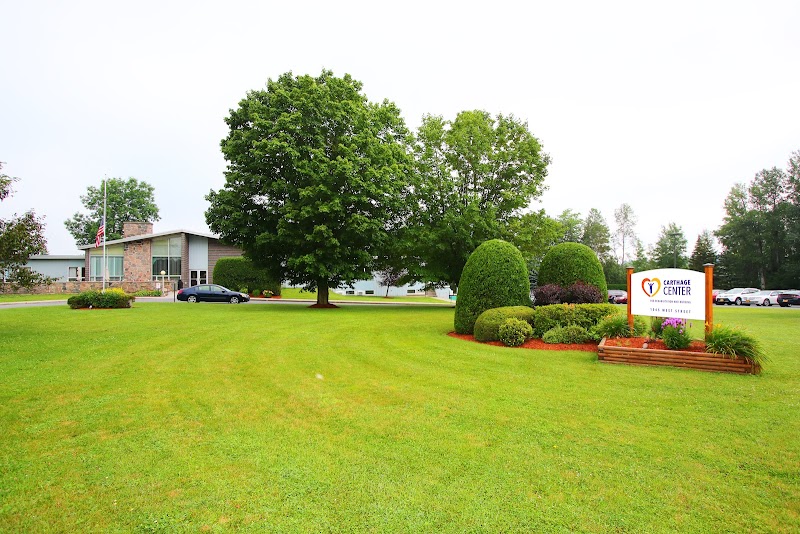
How is Carthage Center For Rehabilitation And Nursing Staffed?

CMS rates CARTHAGE CENTER FOR REHABILITATION AND NURSING's staffing level at 1 out of 5 stars, which is much below average compared to other nursing homes. Staff turnover is 65%, which is 19 percentage points above the New York average of 46%. High turnover can affect care consistency as new staff learn residents' individual needs.

What Have Inspectors Found at Carthage Center For Rehabilitation And Nursing?

State health inspectors documented 35 deficiencies at CARTHAGE CENTER FOR REHABILITATION AND NURSING during 2021 to 2024. These included: 35 with potential for harm.
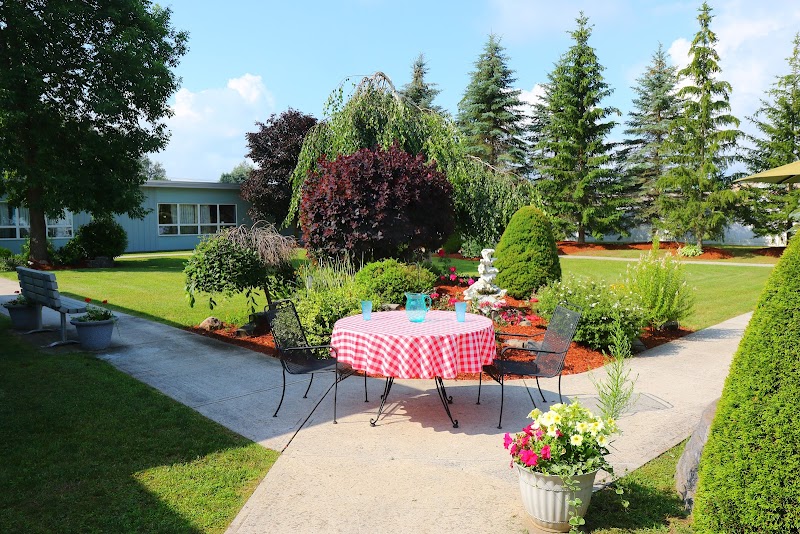
Who Owns and Operates Carthage Center For Rehabilitation And Nursing?

CARTHAGE CENTER FOR REHABILITATION AND NURSING is owned by a for-profit company. For-profit facilities operate as businesses with obligations to shareholders or private owners. The facility is operated by CENTERS HEALTH CARE, a chain that manages multiple nursing homes. With 90 certified beds and approximately 86 residents (about 96% occupancy), it is a smaller facility located in CARTHAGE, New York.
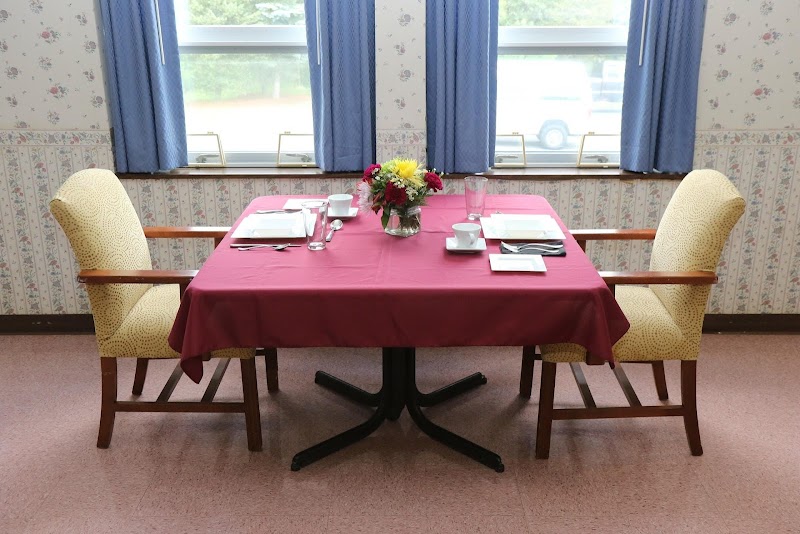
How Does Carthage Center For Rehabilitation And Nursing Compare to Other New York Nursing Homes?

Compared to the 100 nursing homes in New York, CARTHAGE CENTER FOR REHABILITATION AND NURSING's overall rating (1 stars) is below the state average of 3.0, staff turnover (65%) is significantly higher than the state average of 46%, and health inspection rating (1 stars) is much below the national benchmark.

What Should Families Ask When Visiting Carthage Center For Rehabilitation And Nursing?

Based on this facility's data, families visiting should ask: "How do you ensure continuity of care given staff turnover, and what is your staff retention strategy?" "Can you walk me through typical staffing levels on day, evening, and night shifts?" "Can I visit during a mealtime to observe dining assistance and food quality?" "How do you handle medical emergencies, and what is your hospital transfer rate?" These questions are particularly relevant given the facility's high staff turnover rate and the below-average staffing rating.

Is Carthage Center For Rehabilitation And Nursing Safe?

Based on CMS inspection data, CARTHAGE CENTER FOR REHABILITATION AND NURSING has a clean safety record: no substantiated abuse findings (meaning no confirmed cases of resident harm), no Immediate Jeopardy citations (the most serious violation level indicating risk of serious injury or death), and is not on the Special Focus Facility watch list (a federal program monitoring the lowest-performing 1% of nursing homes). The facility has a 1-star overall rating and ranks #100 of 100 nursing homes in New York. While no facility is perfect, families should still ask about staff-to-resident ratios and recent inspection results during their visit.

Do Nurses at Carthage Center For Rehabilitation And Nursing Stick Around?

Staff turnover at CARTHAGE CENTER FOR REHABILITATION AND NURSING is high. At 65%, the facility is 19 percentage points above the New York average of 46%. High turnover means new staff may not know residents' individual needs, medications, or preferences. It can also be disorienting for residents, especially those with dementia who rely on familiar faces. Families should ask: What is causing the turnover? What retention programs are in place? How do you ensure care continuity during staff transitions?

Was Carthage Center For Rehabilitation And Nursing Ever Fined?

CARTHAGE CENTER FOR REHABILITATION AND NURSING has no federal fines on record. CMS issues fines when nursing homes fail to meet care standards or don't correct problems found during inspections. The absence of fines suggests the facility has either maintained compliance or corrected any issues before penalties were assessed. This is a positive indicator, though families should still review recent inspection reports for the full picture.

Is Carthage Center For Rehabilitation And Nursing on Any Federal Watch List?

CARTHAGE CENTER FOR REHABILITATION AND NURSING is not on any federal watch list. The most significant is the Special Focus Facility (SFF) program, which identifies the bottom 1% of nursing homes nationally based on persistent, serious quality problems. Not being on this list means the facility has avoided the pattern of deficiencies that triggers enhanced federal oversight. This is a positive indicator, though families should still review the facility's inspection history directly.