SKY VIEW REHABILITATION & HEALTH CARE CENTER L L C
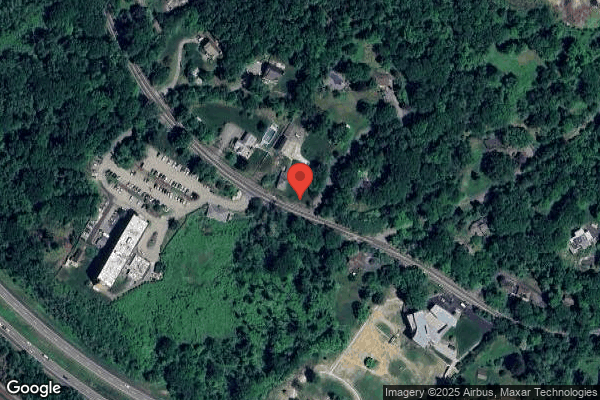

1280 ALBANY POST RD, CROTON ON HUDSON, NY 10520 (914) 271-5151
For profit - Partnership 192 Beds Independent Data: November 2025
Trust Grade
85/100
#228 of 594 in NY
Last Inspection: November 2023

Within standard 12-15 month inspection cycle. Federal law requires annual inspections.

Overview

Sky View Rehabilitation & Health Care Center has a Trust Grade of B+, indicating that it is above average and recommended for families considering care options. In New York, it ranks #228 out of 594 facilities, placing it in the top half, and #12 out of 42 in Westchester County, meaning only 11 facilities in the county are better. The facility is improving, having reduced its issues from 4 in 2019 to 2 in 2023. Staffing is a concern, with a rating of 2 out of 5 stars and only 21% turnover, which is below the state average. Importantly, there have been no fines, indicating compliance with regulations. However, there are significant weaknesses, including less RN coverage than 84% of New York facilities, which could impact the quality of care. Specific incidents noted by inspectors include failure to maintain food safety standards, such as storing expired food and not ensuring proper hygiene practices during food preparation. Additionally, one resident did not receive a prescribed splint to aid their function, and privacy concerns were raised when drainage bags were not concealed for several residents. Families should weigh these strengths and weaknesses carefully when making their decision.

Trust Score
B+
85/100
In New York
#228/594
Top 38%
Safety Record
Low Risk
No red flags
Inspections
Getting Better
4 → 2 violations
Staff Stability
✓ Good
21% annual turnover. Excellent stability, 27 points below New York's 48% average. Staff who stay learn residents' needs.
Penalties
✓ Good
No fines on record. Clean compliance history, better than most New York facilities.
Skilled Nurses
⚠ Watch
Each resident gets only 20 minutes of Registered Nurse (RN) attention daily — below average for New York. Fewer RN minutes means fewer trained eyes watching for problems.
Violations
⚠ Watch
11 deficiencies on record. Higher than average. Multiple issues found across inspections.
★★★★☆
4.0
Overall Rating
★★☆☆☆
2.0
Staff Levels
★★★★☆
4.0
Care Quality
★★★★☆
4.0
Inspection Score
Stable
2019: 4 issues
2023: 2 issues

The Good

  • 4-Star Quality Measures · Strong clinical quality outcomes
  • Low Staff Turnover (21%) · Staff stability means consistent care
  • Full Sprinkler Coverage · Fire safety systems throughout facility
  • No fines on record
  • Staff turnover is low (21%)

    27 points below New York average of 48%

Facility shows strength in quality measures, staff retention, fire safety.

The Bad

No Significant Concerns Identified

This facility shows no red flags. Among New York's 100 nursing homes, only 1% achieve this.

The Ugly 11 deficiencies on record

Nov 2023 2 deficiencies
CONCERN (D)

Potential for Harm - no one hurt, but risky conditions existed

Deficiency F0688 (Tag F0688)

Could have caused harm · This affected 1 resident

**NOTE- TERMS IN BRACKETS HAVE BEEN EDITED TO PROTECT CONFIDENTIALITY** Based on observations, record review, and staff interviews during the recertification survey on 10/26/2023-11/2/2023, the facili...

Read full inspector narrative →
**NOTE- TERMS IN BRACKETS HAVE BEEN EDITED TO PROTECT CONFIDENTIALITY** Based on observations, record review, and staff interviews during the recertification survey on 10/26/2023-11/2/2023, the facility did not ensure that needed services, care and equipment were provided to assure that a resident with limited range of motion and mobility maintained or improved function based on the resident's clinical condition for one of four residents (Resident #158) reviewed for range of motion. Specifically, Resident #158 was not provided with bilateral hand splint device as ordered by the physician to improve the resident's contractures. The findings are: A review of the Policy & Procedure titled Contracture Prevention and Management last revised on 5/26/2022, documented all departments would work in conjunction to apply preventative measures such as range of motion, positioning and splinting to prevent and manage contractures in the resident population. Resident #158 had diagnoses including pulmonary embolus, functional quadriplegia, and diabetes. The Quarterly Minimum Data Set (MDS, an assessment tool) dated 10/6/2023 documented the resident had severely impaired cognition and was dependent on staff for all activities of daily living. The resident's functional limitation for range of motion was documented as impairment on both sides. A review of the current physician orders dated 10/18/2023, documented bilateral hand rolls to be worn at all times. A review of the Certified Nurse Aide (CNA) [NAME] (care instructions) dated October 2023, documented bilateral hand rolls to be worn at all times. A review of the Activities of Daily Living care plan dated 6/9/2023, documented bilateral hand rolls to be worn at all times. During observations on 10/26/2023 at 10:12 AM, 10/27/2023 at 11:06 AM, and 10/30/2023 at 1:13 PM, the resident had bilateral hand contractures and had a hand roll in left hand and nothing in the right hand. During an interview on 10/31/23 at 10:12 AM, CNA #1 stated they looked at the [NAME] for care instructions and the [NAME] documented the resident had bilateral hand rolls. CNA #1 stated that meant the resident should have the roll in their hand but was not sure which hand. During an interview on 10/31/2023 at 11:00 AM, the Director of Rehabilitation stated they were informed the resident did not have the hand rolls in both hands and corrected the situation. The Director of Rehab stated if the resident did not receive the hand rolls as ordered, the resident could suffer further contracture, poor hygiene and possibly pain. During an interview on 10/31/23 at 01:21 PM, the Director of Nursing (DON) stated directions for hand rolls was written on the care plan and on the resident's [NAME], and Resident #158 should have the hand rolls in both hands. 415.12 (e)(2)
CONCERN (E)

Potential for Harm - no one hurt, but risky conditions existed

Food Safety (Tag F0812)

Could have caused harm · This affected multiple residents

Based on observation, interview, and record review conducted during the recertification survey 10/26/2023 - 11/2/2023, the facility did not ensure that foods were stored, prepared, distributed, and se...

Read full inspector narrative →
Based on observation, interview, and record review conducted during the recertification survey 10/26/2023 - 11/2/2023, the facility did not ensure that foods were stored, prepared, distributed, and served in accordance with professional standards for food service safety. Specifically, 1) Equipment used for food service preparation, storage, and service was not maintained in a sanitary condition, 2) 1 of 4 nourishment refrigerators contained expired and undated food, and 3) Food was contaminated by server/cook's ID tag during prep and this server did not perform hand hygiene between glove changes. The findings are: 1) The initial tour of the kitchen was conducted on 10/26/2023 at 11:13 AM with the Food Service Director (FSD) in attendance. The following were observed: A large, standing flour bin was observed in the dry storage room. The external surfaces of the flour bin, including the sliding lid used to access the flour, were heavily soiled with dirt and yellow-ish colored and brown-ish colored accumulations of grime. In an interview at that time, the FSD stated there was no cleaning schedule for the flour bin. The FSD stated the bin could use a cleaning. The FSD stated that the risk to the residents was contamination of the flour. An opened, 5-pound container of peanut butter was stored on dry storage room shelf. The lid of the peanut butter was soiled with peanut butter, jelly, and black-ish colored areas of unknown origin. In an interview at that time, the FSD stated that the lid on the peanut butter should have been wiped down and clean. The FSD stated that the risks to the resident were contamination of the peanut butter and illness, and they discarded the peanut butter. A 3-shelf rack in the pot washing area was in use for storage of cleaned and sanitized pots, pans, cutting boards, an immersion blender, a beater for a mixer, a meat-tenderizer tool, and 2 large strainers. All shelves of the rack were heavily soiled with an accumulation of grime, dried debris of unknown origin, dried, sticky-to-the-touch spills, and dust. In an interview at that time, the FSD stated the rack definitely needed to be cleaned. The FSD stated there is a scheduled monthly deep clean for the racks. The FSD was asked the risk to residents when clean, sanitized food equipment is stored on a soiled rack, and stated there was a risk is for contamination of the equipment and illness to the residents. In a follow up interview on 10/26/23 at 12:03 PM, the FSD was asked for documentation of scheduled cleaning, and was unable to produce documentation that cleaning tasks were being completed. 2) On 11/2/2023 at 11:15 AM an inspection of the four nourishment refrigerators was conducted with the FSD in attendance. The following were noted: The fourth-floor nourishment refrigerator contained two food items with a resident's name. The items were an undated bowl of hot turkey, mashed potatoes, cranberry, and stuffing, and an expired container of fresh fruit dated 10/28/2023. During an interview at that time the FSD stated that foods brought in must be labeled, dated, and discarded within 3 days. The FSD stated that that all staff were responsible for checking dates and discarding outdated items. The FSD discarded the two food items. 3) On 10/26/23 at 12:30 PM, food server/cook #1 was observed prepping a lunch plate for a resident when the identification tag, hanging from server/cook #1's neck, touched the resident's food. During this lunch observation, server/cook #1 removed their gloves, left the area, return to continue serving food without performing hand hygiene and then put on another pair of gloves and then began to serve and prepare resident food plates. When interviewed on 10/26/23 at 12:40 PM, food server/cook #1 stated he was not aware his ID touched food that they was preparing and was unable to say why they did not perform hand hygiene. 10NYCRR 415.14(h)
Dec 2019 4 deficiencies
CONCERN (D)

Potential for Harm - no one hurt, but risky conditions existed

Resident Rights (Tag F0550)

Could have caused harm · This affected 1 resident

Based on observation, record review and interview conducted during a recertification survey the facility did not ensure that care was provided in a manner that maintained dignity for 3 of 4 residents ...

Read full inspector narrative →
Based on observation, record review and interview conducted during a recertification survey the facility did not ensure that care was provided in a manner that maintained dignity for 3 of 4 residents (#27, #61,158). Specifically, residents' drainage bags were not concealed to prevent direct observation by others. The findings are: Review of the facility Ostomy Care Policy and Catheter Care Policy revised on 07/26/2014 included a procedure to provide privacy covers over the drainage bags only when residents leave the room. Resident # 27 had diagnoses that included Malignant Carcinoid Tumor, Ileostomy Status and Epilepsy. The resident's ileostomy care plan included an intervention to provide dignity by applying a cover over the ileostomy drainage bag when the resident is out of their room. Observations on 12/11/2019 at 11:16 AM, on 12/13/19 at 10:33 AM and 12/16/2019 at 10:52 AM revealed that Resident #27 was in bed with the ileostomy drainage bag and tubing in clear view from the door with no privacy bag. Resident #61 had diagnoses that included Recurrent Urinary Tract Infection and Major Depressive Disorder. The 10/12/2019 Quarterly Minimum Data Set (MDS, an assessment tool) revealed that the resident had an indwelling catheter. The resident's urinary catheter care plan included an intervention to maintain the resident's dignity at all times. Observations on 12/12/2019 at 07:50 AM and 12/12/2019 at 11:50 AM as well as on 12/19/2019 at 08:59 AM revealed Resident #61's urinary drainage bag to be uncovered and in clear view of others in the hallway. Resident #158 had diagnoses that included Myasthenia Gravis, Chronic Respiratory Failure and Urinary Retention. The 11/08/2019 MDS revealed that the resident had an indwelling urinary catheter. The resident's urinary catheter care plan included an intervention to apply a privacy bag whenever the resident is out of bed. Observation on 12/18/2019 at 10:19 AM revealed Resident #158's urinary drainage bag hanging on the left side of the bed without a privacy bag and visible from the hallway. In an interview with the Certified Nursing Assistant (CNA) #1 on 12/19/2019 at 11:21 AM she stated that they were trained to cover the resident's drainage bags only when they are outside of their room. In an interview with the Registered Nurse Manager #2 on 12/16/2019 at 10:52 AM she stated that based on facility policy they only use a privacy bag when a resident is outside of their room. 415.5(a)
CONCERN (D)

Potential for Harm - no one hurt, but risky conditions existed

Deficiency F0692 (Tag F0692)

Could have caused harm · This affected 1 resident

**NOTE- TERMS IN BRACKETS HAVE BEEN EDITED TO PROTECT CONFIDENTIALITY** Based on observation, interview, and record review conducted during the most recent recertification survey, the facility did not...

Read full inspector narrative →
**NOTE- TERMS IN BRACKETS HAVE BEEN EDITED TO PROTECT CONFIDENTIALITY** Based on observation, interview, and record review conducted during the most recent recertification survey, the facility did not ensure that 1 resident (Resident #211) reviewed for hydration was provided the necessary care to prevent dehydration and complications related to insufficient fluids. Specifically, the resident who was being treated for a urinary tract infection had ongoing inadequate food and fluid intake at meal times. Further, no measures were developed and implemented to supplement the resident's intake between meals and to monitor the resident's total daily fluid consumption. The findings are: Resident #211 is an [AGE] year-old female admitted to the facility on [DATE]. The resident's diagnoses and medical conditions include cerebrovascular accident, aphasia and hemiplegia. The Minimum Data Set (MDS-an assessment instrument) dated 12/10/19 revealed that the resident had moderate impairment for decision making, was depressed, fed self with extensive assistance and had poor appetite. The nutrition assessment dated [DATE] noted that the resident's food and fluid intake was 25 to 50 per cent (%) daily, weighed 145 lbs. and required 1548 cc of fluids daily. The assessment also noted a commercial dietary supplement (2 Cal HN) would be recommended. The comprehensive care plan (CCP) in place at the time of this assessment noted that the goal for the resident was to mange and minimize potential for dehydration. The interventions to achieve this goal; encourage fluids, monitor labs and vital signs per MD order, provide and offer fluids to meet estimated needs of 1548-1860 ml and provide supplemental nourishments. Physician's orders and the evaluation sections of the CCP showed that on 12/10/19 the resident was hydrated intravenously related to BUN (blood urea nitrogen) and sodium levels of 55 and 146 consecutively (normal values-BUN 7-21 and sodium 135 to 145 ). The evaluation section of the CCP also noted that a health shake was added on 12/10/19 to meal trays to increase fluid intake and that additional intravenous fluid (IV) was provided on 12/13/19. A review of the Resident CNA Documentation Record for December 2019 showed that the resident's fluid intakes at meal times were as follows from 12/1/19 to 12/13/19: Breakfast - 9 times at or below 25% Lunch - 8 times at or below 25% Dinner- 5 times at or below 25% After the completion of the IV fluids the resident's fluid intake remained poor as evidenced by the data on the Resident CNA Documentation Record for 12/14/19 to 12/18/19: Breakfast - 4 of 5 recorded meals at 25% or less Lunch - 3 of 4 meals recorded at 25% or less Dinner - 3 of 4 recorded meals at 25% or less A nurses note stated that on 12/16/19 the resident was diagnosed with a urinary tract infection. (Adequate fluids are necessary to treat and to prevent reoccurrence.) Also, on 12/16/19 the dietitian documented the result of a calorie count, which showed that the resident was consuming about 382 calories and was taking fluids poorly. This documentation further stated that artificial nutrition was to be discussed with the family as a possibility. A review of the resident's clinical record to include care plan and dietary and nurses notes revealed no plan, offering and/or monitoring of supplemental fluids between meals to adequately supplement the fluid intake at meal times. On 12/18/19 at 12:06 PM the meal observation revealed that the resident was offered 4 oz juice, 4 oz health shake, 8 oz milk, 8 oz tea and a bowl of broth. She consumed 2 oz juice and 2 oz health shake and refused the other fluids and most of the solids (pureed foods). The registered Dietitian was interviewed on 12/18/19 at 12:50 PM. She stated that nursing should offer extra fluids between meals and that the amount of supplements consumed at meal times was included in the total amount of fluids recorded for the meals. The Registered Nurse Manager (RNM)(#3) was interviewed on 12/18/19 at 1:10 PM. This interview revealed no evidence of a plan and monitoring of the resident's fluid intake between meals. The RNM stated that all residents were offered fluids between meals. 415.12(i)(1)(j)
CONCERN (D)

Potential for Harm - no one hurt, but risky conditions existed

Respiratory Care (Tag F0695)

Could have caused harm · This affected 1 resident

Based on observations, interviews and record review conducted during the recent recertification survey, the facility did not ensure that emergency equipment was readily available for 1 of 2 residents ...

Read full inspector narrative →
Based on observations, interviews and record review conducted during the recent recertification survey, the facility did not ensure that emergency equipment was readily available for 1 of 2 residents screened for respiratory care. Specifically, a resident with a tracheostomy did not have an Ambu bag (a hand-held device that provides positive pressure to residents who are not breathing) at the bedside. (Resident #158). The findings are: Resident #158 was admitted with diagnoses including myasthenia gravis, respiratory failure and Type 2 diabetes. The resident had a tracheostomy tube with 3 liters of continuous oxygen via a tracheostomy collar. The resident was observed for tracheostomy care on 12/18/19 at 10:00 AM with Licensed Practical Nurse (LPN) #1 and the Unit Manager. The ambu bag was not observed at the bedside. After a thorough search of the room neither staff could locate the equipment. The nursing care plan for tracheostomy care initiated on 12/15/19 listed interventions that include; ensure emergency kit with secondary airway, ambu bag and suction machine are present in room. The LPN and the Unit manager could not state whose responsibility it is to check the room for the necessary equipment and ensure it is always in the room. 415.12(k)(6)
CONCERN (D)

Potential for Harm - no one hurt, but risky conditions existed

Deficiency F0761 (Tag F0761)

Could have caused harm · This affected 1 resident

Based on observation, interview and record review conducted during the recertification survey the facility did not ensure that drugs were stored under proper temperature controls. Specifically, one of...

Read full inspector narrative →
Based on observation, interview and record review conducted during the recertification survey the facility did not ensure that drugs were stored under proper temperature controls. Specifically, one of four refrigerators had temperatures below the manufacturers' specifications for the drugs stored inside (36 degrees Fahrenheit). The findings are: On 12/16/19 at 11:30 AM the fourth-floor refrigerator was observed with Registered Nurse (RN) #1 and Nurse Manager #1. The temperature was between 35 degrees Fahrenheit (F) and 36 F. The refrigerator was storing: - Tuberculin solution - Affluria flu virus vaccine - Humalog insulin vials and pre-filled injection pens - Latanoprost eye drops - Aranesp vials Review of the drug manufactures' published information for storage documented the drugs were to be stored at 36 F to 46 F and discard if they became frozen. The Refrigerator Temperature Log had temperatures below 36 F on 13 out of 15 days. - 12/01/19 - 28 F at 5:00 AM; 31 F at 5:00 PM - 12/02/19 - 32 F at 5:00 AM; 26 F at 5:00 PM - 12/03/19 - 28 F at 5:00 PM - 12/04/19 - 32 F at 5:00 AM; 28 F at 5:00 PM - 12/05/19 - 32 F at 5:00 AM; 32 F at 5:00 PM - 12/06/19 - 30 F at 5:00 AM; 32 F at 5:00 PM - 12/07/19 - 30 F at 5:00 PM - 12/08/19 - 28 F at 5:00 AM; 28 F at 5:00 PM - 12/09/19 - 30 F at 5:00 AM; 29 F at 5:00 PM - 12/10/19 - 28 F at 5:00 AM - 12/11/19 - 20 F at 5:00 AM - 12/14/19 - 32 F at 5:00 AM - 12/15/19 - 30 F at 5:00 AM The Log included the following directions: Acceptable temperature: Upon opening door, below 41 degrees F. If temperature is above 41 degrees F upon opening, notify maintenance. It did not include directions for low temperatures. In interviews on 12/16/19 at 11:30 AM RN #1, the Nurse Educator and the Nurse Manager #1 stated they did not know what the temperature range should be. Nurse Manager #1 stated she was not aware staff had noted temperatures below 36 F on her unit. In an interview on 12/16/19 at 2:45 PM with Licensed Practical Nurse (LPN) #2 she stated she saw and logged temperatures below 36 F from 12/4/19 to 12/9/19. She did not notify the Nurse Manager. On 12/16/19 at 03:15 PM LPN #1 stated she saw the temperature was 32 F on 12/2/19 and 31 F on 12/1/19. She did not tell Maintenance or the Nurse Manager because the Log did not say what to do if the temperature was low. During an interview on 12/16/19 at 3:00 PM with the Assistant Maintenance Director he stated he was not aware there were issues with the refrigerator. The facility's Medication Refrigerator Temperature Log policy dated 3/10/13 revealed the following; 1. The nurse checks the temperature daily by looking at the thermometer inside of the medication refrigerator. 2. Records the current temperature on the medication refrigerator temperature log. 3. Informs the Supervisor and Maintenance Department if the temperature is not between 36 and 46 degrees Fahrenheit. 415.18(3)(1-4)
Mar 2018 5 deficiencies
CONCERN (D)

Potential for Harm - no one hurt, but risky conditions existed

Deficiency F0657 (Tag F0657)

Could have caused harm · This affected 1 resident

Based on observation, record review, and interview conducted during a recertification survey, the facility did not ensure the care plan for nutrition was reviewed and revised based on comprehensive as...

Read full inspector narrative →
Based on observation, record review, and interview conducted during a recertification survey, the facility did not ensure the care plan for nutrition was reviewed and revised based on comprehensive assessment to address weight loss for 1 of 7 residents (Resident #75) reviewed for nutrition. Specifically no new interventions were initiated to address the resident's continued unplanned weight loss. The findings are: Resident #75 has diagnoses and conditions including Non-Insulin Dependent Diabetes Mellitus, Hypertension, and Depression. The Annual Minimum Data Set (MDS; a resident screening and assessment tool) of 3/25/17 was reviewed. The assessment indicated the resident has severely impaired cognition; is totally dependent on one person for eating, has no swallowing problem, height was 60 inches and weight was 135 lbs., at the time of the assessment. There was no known significant weight loss/gain, and the nutrition approach was mechanically altered/ therapeutic diet. According to the weights (in pounds) recorded on the subsequent MDS assessments completed on the following dates revealed: - 03/25/17 - 135 - 07/16/17 - 131 - 10/26/17 - 128 - 11/10/17 - 123 - 02/07/18 - 121 The dietary supplement order history documented in the electronic medical record indicated Glucerna (nutritional supplement) 4 oz. twice daily had been ordered since 3/8/17. The weight monitoring record indicated the resident's weight was 135.2 lbs at that time. and the resident had since lost 14 lbs with no new interventions to prevent further weight loss. The nutrition care plan last updated on 2/18/18 indicated that the resident was at nutrition risk due to therapeutic low concentrated sweet (LCS) diet, mechanically altered (pureed) with nectar thick liquids. Interventions included, but are not limited to, provide LCS, pureed, nectar thick liquids diet per physician's order, serve meals on the unit, hand feed, monitor weights per policy, monitor for difficulty chewing/swallowing and provide Glucerna 4 oz. twice daily. The dietary progress note dated 11/10/17 indicated that the resident had been hospitalized for sepsis on 10/26/17 - 11/6/17. During the hospital stay, the resident lost 5 lbs. (a total of 11 lbs. since June 2017). The dietary progress note of 11/15/17 indicated that the resident continued to lose weight slowly and would consider increasing Glucerna if any further weight loss occurred. The Dietetic Technician (DTR) and the Registered Dietitian were interviewed on 3/6/18 at 2:29 PM and stated that there have been no new dietary interventions to prevent further weight loss. The DTR stated that they put a sugar-free Health Shake on her tray in the morning but the resident was not drinking it so it was discontinued. The resident was observed during lunch on 3/5/18 at 12:25 PM in the unit dining room. The resident ate a small amount of the pureed Brussels sprouts and chili and ate most of the mashed potato. Further observation of the resident eating lunch on 3/6/18 at 12:15PM revealed she had to be fed by staff. The resident had eaten all the mashed potatoes, a small amount of the pureed turkey and all her soup. Following surveyor intervention on 3/6/18, a 3-day calorie count was initiated and fortified mashed potatoes and super cereal were added to prevent further weight loss. 415.11(c)(2)(i-iii)
CONCERN (D)

Potential for Harm - no one hurt, but risky conditions existed

Deficiency F0658 (Tag F0658)

Could have caused harm · This affected 1 resident

**NOTE- TERMS IN BRACKETS HAVE BEEN EDITED TO PROTECT CONFIDENTIALITY** Based on record review and interviews conducted during a recertification survey, the facility did not provide the care and treat...

Read full inspector narrative →
**NOTE- TERMS IN BRACKETS HAVE BEEN EDITED TO PROTECT CONFIDENTIALITY** Based on record review and interviews conducted during a recertification survey, the facility did not provide the care and treatment in accordance with professional standards of practice for 1 of 6 residents reviewed for falls (Resident #368). It was determined that x-rays were not performed in a timely manner as ordered by the physician to establish diagnosis or to rule out fracture following the resident's fall. The resident was sent to the hospital for evaluation and management 12 hours after the incident occurred. The hospital x-ray revealed a fracture of the left femur. The finding is: Complaint #NY00211628 Resident #368 is a [AGE] year old female and has diagnoses and conditions including muscle weakness, spinal stenosis of the cervical region, and unspecified dementia with behavioral disturbance. The Significant Change MDS (Minimum Data Set; a comprehensive resident assessment and screening tool) of 5/9/17 indicated that the resident scored 3 out of 15 on the BIMS (Brief Interview for Mental Status; used to test memory recall and orientation) which indicated that the resident had severely impaired cognition; required extensive assistance of two persons with bed mobility, transfer, dressing, toilet use and personal hygiene and was totally dependent on one person with locomotion on and off the unit. The comprehensive care plan for Risk for Falls initiated on 6/29/17 documented that the resident was a fall risk secondary to history of falls, impaired functional mobility, visual impairment, environmental hazards and pain. Interventions included, but were not limited to, maintain a well-lit, uncluttered environment, maintain bed in lowest position, observe resident for restlessness, and provide required staff assistance. The care plan for ADL Functioning updated on 6/29/17 had interventions including to provide the resident extensive assistance of two persons with bed mobility, transfer to and from bed to chair, dressing, toilet use and personal hygiene. The CNA Care Plan and Accountability Record initiated on September 2017 and remained current, had instructions that the resident required extensive assistance of two persons with bed mobility, transfer to and from the bed and to the chair, dressing and personal hygiene. The facility investigation report documented that on 9/3/17 at 11:30 PM, the resident was found sitting on the floor next to her bed. The resident was unable to state why she fell or what she was trying to do when she attempted to get out of bed. The unit Licensed Practical Nurse (LPN #1) notified the Registered Nurse supervisor (RN #1). RN #1 assessed the resident while the resident was on the floor and determined that the resident had pain and limited movement of the left hip and thigh. After assessing the resident, RN #1 gave directions to the unit nursing staff to move the resident back to bed. The physician was notified by RN #1 at 11:55 PM and ordered to do an x-ray in the morning. According to this report, a stat (as soon as possible) x-ray was entered into the radiology services company at that time to rule out fracture and pain of the left hip. A review of the radiology services policy and procedure dated 2/16/17 stated that x-rays requested on a stat basis, will be done in 4 hours, from time of schedule until the service is performed. The nursing progress notes of 9/4/17 documented that the resident's representative was notified of the resident's fall at 8:15 AM. The x-ray company was called at 8:30 AM to confirm the request. At 11:30 AM, the resident complained of increased pain and was medicated with Tylenol 650 mg with little effect. The pain level remained a 10 on a scale of 0-10 on the verbal pain scale. A slight external rotation to the left lower extremity was noted with swelling present. (External rotation of the lower extremity following a fall or injury usually suggests fracture of the affected extremity). This progress notes further documented that the day shift RN supervisor (RN #2) notified the attending physician regarding the fall and ordered to transfer the resident to the medical center for evaluation. The resident was transferred by ambulance to the medical center at 12:00 PM on 9/4/17, approximately 12 hours after the incident. The medical center's Discharge Summary report dated 9/4/17 documented that the resident had a mechanical fall in the nursing home and x-ray of the hip revealed a fracture of the left femur. In a signed statement dated 9/4/17 by the assigned day shift CNA (#2), it was revealed that while she was applying anti-embolic stockings (part of dressing activity) without assistance, the resident complained of pain on the legs but did not specify which leg. After finishing care, CNA #2 then transferred the resident from the bed to the wheelchair without assistance, and wheeled the resident to the hallway near the nursing station. (At this that time, x-rays have not been done to rule out fracture of the hip.) CNA #2 stated that the resident was then taken to the dining room by another staff member for breakfast. CNA #2's statement further documented that she was instructed by the day shift LPN #2 to put the resident back in bed because the resident will be getting an x-ray. In a signed Employee Statement of CNA #2 on the Confidential Quality Assurance Document dated 9/12/17, provided by the facility and without having to request this record, on 9/4/17 CNA #2 was educated for not following the CNA care guide for the resident's ADLs and for not obtaining reports from the nurse prior to providing cares to the resident. Following review of the investigation report, it was determined that the facility and the radiology services company did not adhere to the stat x-ray time frame as outlined on the above radiology services policy and procedure timeline grid to ensure that the resident received timely evaluation and management to rule out fracture of the left femur. The attending physician was interviewed on 3/09/18 at 12:55 PM and stated that he was informed on the evening of 9/3/17 that the resident had a fall and that the resident did not complain of pain. The physician further stated that he never received a call back from nursing that the resident was in pain. He stated that he does not mind the staff calling him back anytime, day or night, and should have sent the resident out (to the hospital) if he knew the resident was in pain. RN #1 was interviewed on 3/09/18 at 1:06 PM and stated that on the night of 9/3/17, she called the doctor and reported that the resident had a fall and had pain on the left hip area. RN #1 further stated that the doctor ordered to do an x-ray in the morning which was contrary to the investigation report of 9/3/17 that a stat x-ray request was put into the radiology services company. RN#1 stated that the resident was medicated with Tylenol after the resident complained of pain on her left hip area with good effect and instructed the nursing staff on the night shift to keep the resident in bed. 415.11(c)(3)(i)
CONCERN (D)

Potential for Harm - no one hurt, but risky conditions existed

Deficiency F0659 (Tag F0659)

Could have caused harm · This affected 1 resident

**NOTE- TERMS IN BRACKETS HAVE BEEN EDITED TO PROTECT CONFIDENTIALITY** Based on record review and interviews conducted during a recertification survey, the facility did not provide the care and treat...

Read full inspector narrative →
**NOTE- TERMS IN BRACKETS HAVE BEEN EDITED TO PROTECT CONFIDENTIALITY** Based on record review and interviews conducted during a recertification survey, the facility did not provide the care and treatment in accordance with the comprehensive person-centered care plan for 1 of 6 residents reviewed for falls (Resident #368). It was determined that the level of assistance with regards to transfer and mobility, was not provided in accordance with the resident's comprehensive assessment and care plan for activities of daily living (ADL). Specifically, the assigned Certified Nursing Aide (CNA #1) dressed, transferred and moved the resident from bed to chair without assistance. The finding is: Complaint #NY00211628 Resident #368 is a [AGE] year old female and has diagnoses and conditions including muscle weakness, spinal stenosis of the cervical region, and unspecified dementia with behavioral disturbance. The Significant Change MDS (Minimum Data Set; a comprehensive resident assessment and screening tool) of 5/9/17 indicated that the resident scored 3 out of 15 on the BIMS (Brief Interview for Mental Status; used to test memory recall and orientation) which indicated that the resident had severely impaired cognition; required extensive assistance of two persons with bed mobility, transfer, dressing, toilet use and personal hygiene and was totally dependent on one person with locomotion on and off the unit. The comprehensive care plan for Risk for Falls initiated on 6/29/17 documented that the resident was a fall risk secondary to history of falls, impaired functional mobility, visual impairment, environmental hazards and pain. Interventions included, but were not limited to, maintain a well-lit, uncluttered environment, maintain bed in lowest position, observe resident for restlessness, and provide required staff assistance. The care plan for ADL Functioning updated on 6/29/17 had interventions including to provide the resident extensive assistance of two persons with bed mobility, transfer to and from bed to chair, dressing, toilet use and personal hygiene. The CNA Care Plan and Accountability Record initiated on September 2017 and remained current, had instructions that the resident required extensive assistance of two persons with bed mobility, transfer to and from the bed and to the chair, dressing and personal hygiene. The facility investigation report documented that on 9/3/17 at 11:30 PM, the resident was found sitting on the floor next to her bed. The resident was unable to state why she fell or what she was trying to do when she attempted to get out of bed. The unit Licensed Practical Nurse (LPN #1) notified the Registered Nurse supervisor (RN #1). RN #1 assessed the resident while the resident was on the floor and determined that the resident had pain and limited movement of the left hip and thigh. RN #1 then gave instructions to the unit staff to move the resident back to bed. RN #1 then notified the physician at 11:55 PM and ordered to do an x-ray in the morning. A request for stat (as soon as possible) x-ray was then requested to the radiology services at that time to rule out fracture of the left hip. Further review of the facility's Detailed Incident Investigation report dated 9/3/17 indicated that the resident stayed in bed during the night shift. According to this report, the resident complained of discomfort on the left hip area and was medicated with Tylenol with good effect. The resident remained in bed and was frequently rounded by LPN #1, CNA #1 and RN #1 throughout the night and the resident did not complain of further pain and discomfort. The nursing progress notes of 9/4/17 documented that the resident's representative was notified of the resident's fall at 8:15 AM. the representative arrived approximately an hour later and noted a change in the resident's left lower extremity. The x-ray company was then called at 8:30 AM to confirm the request. At 11:30 AM, the resident complained of increased pain and was medicated with Tylenol 650 mg with little effect and the pain level remained a 10 on a scale of 0-10 on the verbal pain scale. The day shift RN #2 assessed the resident and noted a slight external rotation to the left lower extremity with swelling present. This progress notes further documented that RN #2 notified the attending physician regarding the fall and the pain and to request to transfer the resident to the medical center for evaluation. The resident was transferred by ambulance to the medical center at 12:00 PM on 9/4/17, approximately more than 12 hours after the incident. The medical center's Discharge Summary report dated 9/4/17 documented that the resident had a mechanical fall in the nursing home and x-ray of the hip revealed a left femoral fracture. Following review of the facility investigation report, it was determined that the facility and the radiology services company did not adhere to the Stat x-ray time frame as outlined on the above radiology services policy and procedure to ensure that the resident received timely evaluation and management to rule out fracture of the left femur. In a signed statement dated 9/4/17 by the assigned day shift CNA (#2), it was revealed that while she was applying anti-embolic stockings (part of dressing activity) by herself, the resident complained of pain on the legs but did not specify which leg. After finishing care, CNA #2 then transferred the resident from the bed to the wheelchair without assistance, and wheeled the resident to the hallway near the nursing station. (At this that time, the x-rays have not been done to rule out fracture of the hip. The resident should have been kept in bed until all the x-rays were completed and the diagnosis of fracture of the left hip was ruled out). CNA #2 stated that the resident was then taken to the dining room by another staff member for breakfast. CNA #2's statement further documented that she was instructed by the day shift LPN #2 to put the resident back to bed because the resident will be getting an x-ray. In a signed Employee Statement of CNA #2 on the Confidential Quality Assurance Document dated 9/12/17, provided by the facility and without having to request this record, CNA #2 was educated for not following the CNA care guide for the resident's ADLs and for not obtaining reports from the nurse prior to providing cares to the resident. CNA #2 was called by phone for an interview on 3/9/18, left a message, but did not return the call up to the time of the survey exit. RN #1 was interviewed on 3/9/18 at 1:06 PM and stated that on the night of 9/3/17, she called the doctor and reported that the resident had a fall and had pain on the left hip area. RN #1 further stated that the doctor ordered to do an x-ray in the morning. She stated that the resident was medicated with Tylenol after the resident complained of pain on her left hip area with good effect and instructed the nursing staff on the night shift to keep the resident in bed. 415.11(c)(3)(ii)
CONCERN (D)

Potential for Harm - no one hurt, but risky conditions existed

Medication Errors (Tag F0758)

Could have caused harm · This affected 1 resident

**NOTE- TERMS IN BRACKETS HAVE BEEN EDITED TO PROTECT CONFIDENTIALITY** Based on observation, record review and interview conducted during a recertification survey, the facility did not ensure that ea...

Read full inspector narrative →
**NOTE- TERMS IN BRACKETS HAVE BEEN EDITED TO PROTECT CONFIDENTIALITY** Based on observation, record review and interview conducted during a recertification survey, the facility did not ensure that each resident's medication regimen was free from unnecessary medications for 1 of 6 residents reviewed for unnecessary medications and psychotropic medications (Resident # 51). Specifically, trial gradual dose reduction (GDR) was not attempted in the presence of documented evidence that the resident's behavior had improved and that non-pharmacological interventions including redirection were documented as effective in addressing the resident's behavior. The finding is: Resident #51 was admitted to the facility on [DATE] with diagnoses and conditions including dementia with behaviors and major depressive disorder. The admission Minimum Data Set (MDS; a resident assessment and screening tool) of 7/28/17 indicated that the resident has severely impaired cognition; showed physical behavioral symptoms directed toward others (staff) and other behaviors including combativeness during cares, hitting and scratching staff and resisting cares occurring 1 to 3 days; and received antipsychotic medications for 6 days during this assessment period. The physician's orders of 7/21/17 revealed an order for Risperdal 0.5 mg three times daily (TID) and was renewed on 2/27/18. The evaluation section / monitoring notes of the care plan to address behavior and psychotropic drug use initiated on 8/28/17 revealed that on 10/12/17, the resident displayed rejection of care and was scratching staff which occurred sometimes; 11/15/17, the resident scratched the staff during care; 11/21/17, it was documented in this evaluation section that the resident's behavior had improved; and on 12/6/17- scratching the staff during care and was restless. During these episodes, the staff successfully redirected the resident. The Quarterly MDS dated [DATE] and indicated that the resident remained severely cognitively impaired and did not show any behavioral problems. This MDS further documented that the resident received antipsychotic medications for 7 days during this assessment period. A medication regimen review was conducted on 12/6/17 and the consultant pharmacist recommended to the physician to consider a plan for trial GDR and discontinuation of the atypical antipsychotic medication used for dementia, Risperdal 0.5mg TID. A notation written by the physician on the medication review form stated that he disagreed with the recommendation as this medication helped with the resident's agitation. The psychiatric nurse practitioner (NP) progress notes dated 12/12/17 documented the following: no observed symptoms of mania, delusions, psychosis or paranoia; had a good sleep/hygiene; fair appetite; calm; no evidence of a movement disorder or disturbance. The resident's moods and behaviors were generally stable with episodic agitation. Further review of the behavior monitoring notes of 2/13/18 documented that the resident's behavior had improved, will continue to monitor the resident and continue the plan of care. Effective interventions to address the resident's behaviors included redirection, 1:1 care and a backrub. Resident #51 was observed for five days (3/1, 3/5, 3/6, 3/8 and 3/9) at various times during the recertification survey to display a persistent, sad facial expression. At no time were physical aggression and other behaviors directed toward self and other residents were manifested. The resident did not appear to be in any distress. The resident appeared to be well-nourished and well-hydrated. The psychiatric Nurse Practitioner (NP) was interviewed on 3/9/18 at 3:30 PM as to why GDR for Risperdal was not conducted per the pharmacist's recommendation and in the presence of documented evidence that the resident's behavior had improved. The NP stated that the resident has unspecified psychosis as documented on her progress notes. The Licensed Practical Nurse Unit Manager was interviewed on 3/9/18 at 2:00 PM and stated that the resident's behavior had improved significantly since admission in July 2017. 415.12(l)(2)(i)(ii)
CONCERN (D)

Potential for Harm - no one hurt, but risky conditions existed

Deficiency F0849 (Tag F0849)

Could have caused harm · This affected 1 resident

**NOTE- TERMS IN BRACKETS HAVE BEEN EDITED TO PROTECT CONFIDENTIALITY** Based on record review and interview conducted during a recertification survey, the facility did not ensure that ongoing communi...

Read full inspector narrative →
**NOTE- TERMS IN BRACKETS HAVE BEEN EDITED TO PROTECT CONFIDENTIALITY** Based on record review and interview conducted during a recertification survey, the facility did not ensure that ongoing communication of the amount and type of hospice care were coordinated with the facility for 1 of 1 resident reviewed for hospice and end of life (Resident #145). The finding is: Resident #145 was admitted to the facility on [DATE] with diagnosis including Gastrointestinal Cancer with Metastases to the Lungs. The physician orders of 8/9/17 indicated to provide hospice care. Review of the Hospice Plan of Care initiated on 8/9/17 included the following entry: Aide 3-5 week 13 and bath, personal care, toileting, assist with ambulation, transfers, meal prep, laundry, housekeeping as determined by assessed by psychosocial needs and self-care deficits. The Quarterly Minimum Data Set (MDS; a resident assessment and screening tool) dated 12/9/17 indicated the resident was receiving hospice care. The facility care plan for Hospice Care initiated on 12/27/17 and updated on 1/3/18, identified goals were to provide pain management, maintain the resident's dignity and respect the family's wishes regarding care. Interventions included, but are not limited to, assess for comfort and provide calm environment, ensure preferences for end of life by encouraging discussion, encourage family involvement, ensure the physician/physician assistant provide pain management, hospice nurse visits, play Spanish music, hospice care services for 1:1 support and companionship. The Registered Nurse (RN) Unit Manager was interviewed on 3/05/18 at 1:32 PM regarding when the hospice aide comes to the facility. She stated that the aide usually comes two times per week for a few hours each time. When asked what days the aide comes in, the RN unit manager stated she was not sure and was unaware if there was a schedule as to when the aide would come. The Social Worker was interviewed on 3/05/18 01:35 PM regarding the schedule of the hospice aide and stated that she was unaware of the aide's schedule. During further interview with the Social Worker on 3/05/18 at 2:06 PM, she stated she reviewed the hospice service contract and it indicated they would provide aides 5 days per week 4 hours per day. She further stated they reported the reason they could not provide the services as they claim, was because they have difficulty getting aides. Observation of the resident 03/05/18 at 2:22 PM revealed he was sleeping in bed. There was no music playing. His roommate's TV was on but the roommate was out of the room. He had a small CD player next to him on his over bed table. The RN unit manager was further interviewed on 3/6/18 at 9:30 AM and she stated the hospice aide reports to her and communicates with her. When shown the hospice aide's attendance sheet, she stated she was unaware that the aide was not signing in and out and not documenting what she does each time she comes. The hospice aide was interviewed on 3/6/18 at 12:00PM and stated that she comes mostly twice per week for 1.5 to 2 hrs. per day. While she is here, she changes the bed, bathes the resident, and feeds him. She stated her schedule varies depending on what is going on with the other residents she cares for. She stated that the hospice agency tells her when and where she needs to go and that she doesn't have a set schedule for coming to the facility. When asked if she signs in and out and documents what she does, she stated she documents on a form that hospice keeps and she signs in and out on the touch pad at the reception desk (in the facility). Review of those documents, received from the hospice agency, indicated that between 8/14/17 and 10/18/17, the hospice aide was coming 4 times per week for 4 hours. There was no documentation of a hospice aide care between 10/18/17 and 11/21/17. From 11/21/17 through 2/8/18, the aide was coming between 1 to 3 times per week, mostly twice per week. There was a week when she came in 3 times for 1.5 hours each time. The time spent varied between 1.5 and 3.5 hours. The facility Director of Nursing (DON) was interviewed on 3/06/18 at 10:39 AM regarding discussions with hospice about the contract and the plan of care to provide a hospice aide 3-5 times per week. The DON stated she was unaware that the hospice aide had not been signing in and out of the facility and not documenting what she does while she is here with the resident. 415.12
Understanding Severity Codes (click to expand)
Life-Threatening (Immediate Jeopardy)
J - Isolated K - Pattern L - Widespread
Actual Harm
G - Isolated H - Pattern I - Widespread
Potential for Harm
D - Isolated E - Pattern F - Widespread
No Harm (Minor)
A - Isolated B - Pattern C - Widespread

Questions to Ask on Your Visit

  • "Can I speak with families of current residents?"
  • "What's your RN coverage like on weekends and overnight?"

Our Honest Assessment

Strengths
  • • Grade B+ (85/100). Above average facility, better than most options in New York.
  • • No major safety red flags. No abuse findings, life-threatening violations, or SFF status.
  • • No fines on record. Clean compliance history, better than most New York facilities.
  • • 21% annual turnover. Excellent stability, 27 points below New York's 48% average. Staff who stay learn residents' needs.
Concerns
  • • 11 deficiencies on record. Higher than average. Multiple issues found across inspections.
Bottom line: Generally positive indicators. Standard due diligence and a personal visit recommended.

About This Facility

What is Sky View Rehabilitation & Health L L C's CMS Rating?

CMS assigns SKY VIEW REHABILITATION & HEALTH CARE CENTER L L C an overall rating of 4 out of 5 stars, which is considered above average nationally. Within New York, this rating places the facility higher than 99% of the state's 100 nursing homes. This rating reflects solid performance across the metrics CMS uses to evaluate nursing home quality.

How is Sky View Rehabilitation & Health L L C Staffed?

CMS rates SKY VIEW REHABILITATION & HEALTH CARE CENTER L L C's staffing level at 2 out of 5 stars, which is below average compared to other nursing homes. Staff turnover is 21%, compared to the New York average of 46%. This relatively stable workforce can support continuity of care.

What Have Inspectors Found at Sky View Rehabilitation & Health L L C?

State health inspectors documented 11 deficiencies at SKY VIEW REHABILITATION & HEALTH CARE CENTER L L C during 2018 to 2023. These included: 11 with potential for harm.
Who Owns and Operates Sky View Rehabilitation & Health L L C?

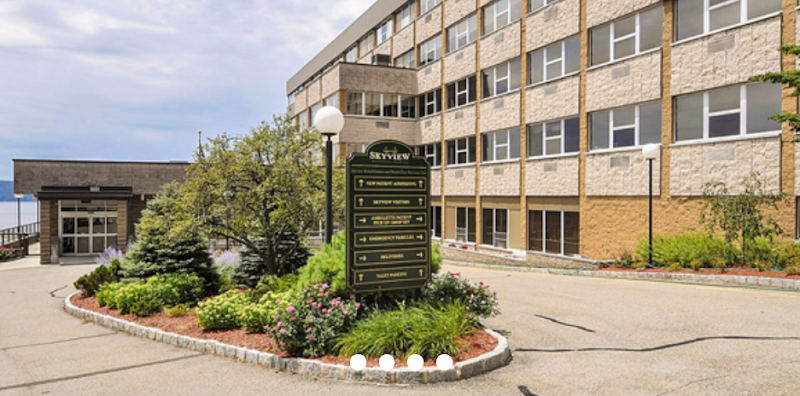
SKY VIEW REHABILITATION & HEALTH CARE CENTER L L C is owned by a for-profit company. For-profit facilities operate as businesses with obligations to shareholders or private owners. The facility operates independently rather than as part of a larger chain. With 192 certified beds and approximately 176 residents (about 92% occupancy), it is a mid-sized facility located in CROTON ON HUDSON, New York.
How Does Sky View Rehabilitation & Health L L C Compare to Other New York Nursing Homes?

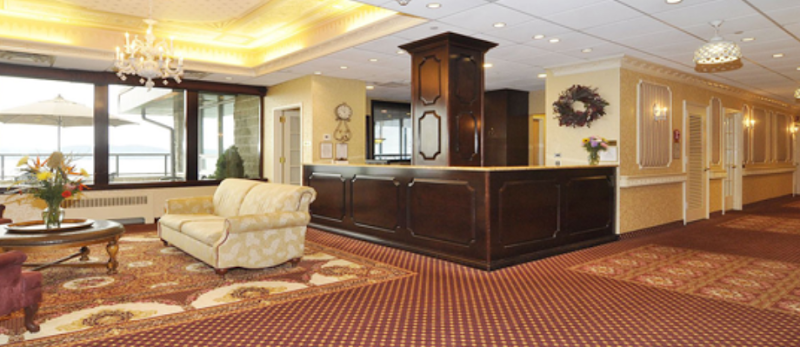
Compared to the 100 nursing homes in New York, SKY VIEW REHABILITATION & HEALTH CARE CENTER L L C's overall rating (4 stars) is above the state average of 3.1, staff turnover (21%) is significantly lower than the state average of 46%, and health inspection rating (4 stars) is above the national benchmark.

What Should Families Ask When Visiting Sky View Rehabilitation & Health L L C?

Based on this facility's data, families visiting should ask: "Can you walk me through typical staffing levels on day, evening, and night shifts?" "Can I visit during a mealtime to observe dining assistance and food quality?" "How do you handle medical emergencies, and what is your hospital transfer rate?" "Can I speak with family members of current residents about their experience?" These questions are particularly relevant given the below-average staffing rating.

Is Sky View Rehabilitation & Health L L C Safe?

Based on CMS inspection data, SKY VIEW REHABILITATION & HEALTH CARE CENTER L L C has a clean safety record: no substantiated abuse findings (meaning no confirmed cases of resident harm), no Immediate Jeopardy citations (the most serious violation level indicating risk of serious injury or death), and is not on the Special Focus Facility watch list (a federal program monitoring the lowest-performing 1% of nursing homes). The facility has a 4-star overall rating and ranks #1 of 100 nursing homes in New York. While no facility is perfect, families should still ask about staff-to-resident ratios and recent inspection results during their visit.

Do Nurses at Sky View Rehabilitation & Health L L C Stick Around?

Staff at SKY VIEW REHABILITATION & HEALTH CARE CENTER L L C tend to stick around. With a turnover rate of 21%, the facility is 25 percentage points below the New York average of 46%. Low turnover is a positive sign. It means caregivers have time to learn each resident's needs, medications, and personal preferences. Consistent staff also notice subtle changes in a resident's condition more quickly. Registered Nurse turnover is also low at 14%, meaning experienced RNs are available to handle complex medical needs.

Was Sky View Rehabilitation & Health L L C Ever Fined?

SKY VIEW REHABILITATION & HEALTH CARE CENTER L L C has no federal fines on record. CMS issues fines when nursing homes fail to meet care standards or don't correct problems found during inspections. The absence of fines suggests the facility has either maintained compliance or corrected any issues before penalties were assessed. This is a positive indicator, though families should still review recent inspection reports for the full picture.

Is Sky View Rehabilitation & Health L L C on Any Federal Watch List?

SKY VIEW REHABILITATION & HEALTH CARE CENTER L L C is not on any federal watch list. The most significant is the Special Focus Facility (SFF) program, which identifies the bottom 1% of nursing homes nationally based on persistent, serious quality problems. Not being on this list means the facility has avoided the pattern of deficiencies that triggers enhanced federal oversight. This is a positive indicator, though families should still review the facility's inspection history directly.