SPRINGVALE NURSING & REHABILITATION CENTER

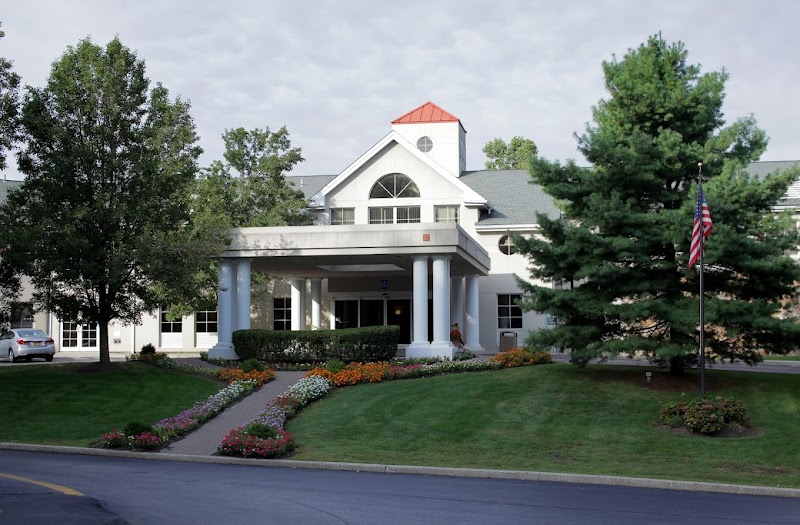
67 SPRINGVALE ROAD, CROTON ON HUDSON, NY 10520 (914) 739-6700
For profit - Limited Liability company 200 Beds Independent Data: November 2025
Trust Grade
63/100
#330 of 594 in NY
Last Inspection: June 2023

Over 2 years since last inspection. Current conditions may differ from available data.

Overview

Springvale Nursing & Rehabilitation Center has a Trust Grade of C+, indicating it is slightly above average but still has room for improvement. In New York, it ranks #330 out of 594 facilities, placing it in the bottom half, while in Westchester County, it is #21 out of 42, meaning only a few local options are better. The facility's performance is stable, with the same number of concerns reported in both 2024 and 2025. Staffing is a strong point, earning a 4-star rating with a turnover rate of 28%, which is lower than the state average, suggesting experienced staff who know the residents well. While there have been no fines, there are notable concerns, such as residents not having accessible call bells in bathrooms, potentially putting them at risk if they fall, and instances where staff did not respond promptly to residents' needs, impacting their dignity during meals.

Trust Score
C+
63/100
In New York
#330/594
Bottom 45%
Safety Record
Low Risk
No red flags
Inspections
Holding Steady
6 → 6 violations
Staff Stability
✓ Good
28% annual turnover. Excellent stability, 20 points below New York's 48% average. Staff who stay learn residents' needs.
Penalties
✓ Good
No fines on record. Clean compliance history, better than most New York facilities.
Skilled Nurses
○ Average
Each resident gets 41 minutes of Registered Nurse (RN) attention daily — about average for New York. RNs are the most trained staff who monitor for health changes.
Violations
⚠ Watch
34 deficiencies on record. Higher than average. Multiple issues found across inspections.
★★★☆☆
3.0
Overall Rating
★★★★☆
4.0
Staff Levels
★★★★★
5.0
Care Quality
★★☆☆☆
2.0
Inspection Score
Stable
2024: 6 issues
2025: 6 issues

The Good

  • 4-Star Staffing Rating · Above-average nurse staffing levels
  • 5-Star Quality Measures · Strong clinical quality outcomes
  • Low Staff Turnover (28%) · Staff stability means consistent care
  • Full Sprinkler Coverage · Fire safety systems throughout facility
  • No fines on record
  • Staff turnover is low (28%)

    20 points below New York average of 48%

Facility shows strength in staffing levels, quality measures, staff retention, fire safety.

The Bad

3-Star Overall Rating

Near New York average (3.1)

Meets federal standards, typical of most facilities

The Ugly 34 deficiencies on record

Aug 2025 6 deficiencies
CONCERN (D) 📢 Someone Reported This

A family member, employee, or ombudsman was alarmed enough to file a formal complaint

Potential for Harm - no one hurt, but risky conditions existed

Notification of Changes (Tag F0580)

Could have caused harm · This affected 1 resident

**NOTE- TERMS IN BRACKETS HAVE BEEN EDITED TO PROTECT CONFIDENTIALITY** Based on interviews and record review conducted during the recertification and abbreviated (NY00359686) survey from 8/11/2025 to...

Read full inspector narrative →
**NOTE- TERMS IN BRACKETS HAVE BEEN EDITED TO PROTECT CONFIDENTIALITY** Based on interviews and record review conducted during the recertification and abbreviated (NY00359686) survey from 8/11/2025 to 8/15/2025, the facility did not ensure the resident's representative was notified when there was a need to alter the resident's treatment and transfer the resident from the facility. This was evident for 1 (Resident #194) of 4 residents reviewed for notification of change. Specifically, Resident #194's representative was not notified when the resident received intravenous hydration and was transferred to the hospital. The findings are: The facility policy titled Change in Condition dated 5/2025 documented the facility will notify the resident representative of changes in the resident's condition. Documentation of a change in the resident's condition is encouraged. Resident #194 had diagnoses of cerebral infarction (stroke) and colon neoplasm (cancer). The Minimum Data Set 3.0 assessment dated [DATE] documented Resident #194 was moderately cognitively impaired. The Nursing Note dated 10/17/2024 documented Resident #194 had an episode of emesis and a stat abdominal x-ray was ordered. The Nurse Practitioner Note dated 10/17/2024 documented Resident #194 was administered zofran to address their nausea and vomiting and was started on intravenous hydration. The Nursing Note dated 10/18/2024 documented Resident #194 received an intravenous hydration infusion and antibiotic for a urinary tract infection. There was no documented evidence Resident #194's Representative was notified of the resident's need for intravenous hydration or antibiotic therapy. The Nursing Note dated 11/27/2024 documented Resident #194 was sluggish, had a change in mental status, and was transferred to the hospital for evaluation. There was no documented evidence Resident #194's Representative was notified of the resident's need for hospitalization. On 8/12/2025 at 11:33 AM, a telephone interview was conducted with the resident's representative who stated Resident #194 had several changes in condition and was hospitalized during their stay in the facility in 10/2024 and 11/2024. Resident #194's representatives were not informed of all the changes that occurred with the resident while at the facility. On 8/15/2025 at 9:32 AM, Licensed Practical Nurse #3 was interviewed and stated the Licensed Practical Nurses, Registered Nurses, Nurse Practitioner, and/or Medical Doctor were responsible for contacting a resident's representative and/or next of kin when there were changes in a resident's condition or was hospitalized . Resident representatives were also informed if a resident was sluggish and lethargic or had a change in vital signs. Any changes in medication orders and new orders of antibiotic therapy were also communicated to a resident's representative. The nursing staff who informed a resident's representative of changes or hospitalization were responsible for writing a note documenting the notification in the resident's medical record. On 8/14/2025 at 3:46 PM, the Medical Director was interviewed and stated the nursing staff were responsible for contacting a resident's representative and informing them of a change in the resident's condition or hospitalization. The Medical Director stated the Nurse Practitioner or Medical Doctors communicated with and notified resident representatives of changes in a resident's condition if there was a complicated or serious issue to address. On 8/15/2025 at 11:32 AM, the Director of Nursing was interviewed and stated they began working for the facility approximately 2 months ago and implemented chart auditing to improve staff documentation in the medical records. The licensed nurses, Medical Doctors, and Nurse Practitioners were all responsible for notifying a resident's representative when there were changes in a resident's condition and documenting in the medical record upon communication with the representative. 10 NYCRR 415.3(f)(2)(ii)(c-d)
CONCERN (D) 📢 Someone Reported This

A family member, employee, or ombudsman was alarmed enough to file a formal complaint

Potential for Harm - no one hurt, but risky conditions existed

Safe Environment (Tag F0584)

Could have caused harm · This affected 1 resident

**NOTE- TERMS IN BRACKETS HAVE BEEN EDITED TO PROTECT CONFIDENTIALITY** Based on interviews and record review conducted during the recertification and abbreviated (NY00359686) survey from 8/11/2025 to...

Read full inspector narrative →
**NOTE- TERMS IN BRACKETS HAVE BEEN EDITED TO PROTECT CONFIDENTIALITY** Based on interviews and record review conducted during the recertification and abbreviated (NY00359686) survey from 8/11/2025 to 8/15/2025, the facility did not ensure a safe environment with protection of a resident's property from loss or theft. This was evident for 1 (Resident #194) of 6 residents reviewed for personal property. Specifically, Resident #194's personal cell phone went missing and was unable to be found during their stay at the facility. The findings are: The facility policy titled Inventory/Personal Belongings dated 1/2025 documented each resident will be offered/provided a locked drawer or equivalent with a key for small valuables. Resident #194 had diagnoses of cerebral infarction and schizoaffective disorder. The Minimum Data Set 3.0 assessment dated [DATE] documented Resident #194 was moderately cognitively impaired. The Social Work Note dated 10/14/2024 documented Resident #194 reported their phone went missing while being charged. The note documented the Director of Social Work discussed the matter with Resident #194's family member. There was no documented evidence Resident #194's cell phone was protected from loss and/or theft in 10/2024. On 8/12/2025 at 11:33 AM, a telephone interview was conducted with the Complainant who stated Resident #194's cell phone and clothing went missing at the facility in 10/2024. There was direct communication with the Administrator regarding the facility's investigation into matter. On 8/14/2025 at 10:15 AM, the Director of Social Work (and Grievance Official) was interviewed and stated they began working for the facility in 7/2024. Clothing brought to the facility was labeled by Housekeeping and documented on an inventory checklist form. A copy of the form was kept on file in the Housekeeping Department and a copy was given to the resident and/or resident's family. The forms were kept at the front desk for easy access to resident families. The Director of Social Work stated, if a resident lacked capacity, the nursing staff would take possession of a resident's valuables for safekeeping and sometimes gave the valuables to the Director of Social Work for safekeeping. Some residents and their families were adamant about a resident maintaining possession of their valuables, i.e. a cell phone. The Director of SOcial Work stated they were able to offer residents access to their cell phone kept locked in the Social Work Office on a limited basis. The Director of Social Work stated they were unaware whether Resident #194 was offered a personal storage area or lockbox for their cell phone in 10/2024 and would check with the Housekeeping Department for copies of Resident #194's inventory checklists. On 8/15/2025 at 9:32 AM, Licensed Practical Nurse #3 was interviewed and stated some residents had a bedside dresser drawer equipped with a lock for valuables and the Maintenance Department could be contacted to obtain a lockable dresser drawer for residents without one in their room. The residents were able to hold onto the keys for these drawers, or the licensed nurses could hold onto the keys if the residents were unable to do so. On 8/15/2025 at 11:13 AM, the Administrator was interviewed and stated residents were allowed to maintain possession of their cell phones and had their possessions documented on a personal property inventory checklist. The Administrator stated they could not recall the details of Resident #194's missing cell phone. Each resident had access to a lockable dresser drawer in their room to keep their valuables safe. 10 NYCRR 415.29(c)(4)
CONCERN (D) 📢 Someone Reported This

A family member, employee, or ombudsman was alarmed enough to file a formal complaint

Potential for Harm - no one hurt, but risky conditions existed

Report Alleged Abuse (Tag F0609)

Could have caused harm · This affected 1 resident

**NOTE- TERMS IN BRACKETS HAVE BEEN EDITED TO PROTECT CONFIDENTIALITY** Based on interviews and record review during the recertification and abbreviated surveys (2564017) from 08/11/2025-08/15/2025, t...

Read full inspector narrative →
**NOTE- TERMS IN BRACKETS HAVE BEEN EDITED TO PROTECT CONFIDENTIALITY** Based on interviews and record review during the recertification and abbreviated surveys (2564017) from 08/11/2025-08/15/2025, the facility did not ensure that all alleged violations involving abuse or mistreatment, were reported to the Administrator of the facility immediately or within two (2) hours after the allegation was made for one of five (1 of 5) residents reviewed for abuse. Specifically, Resident #200's daughter made an allegation of verbal mistreatment/abuse by a staff member, but staff did not report the allegation to the Administrator or State Agency. Findings include:The facility Abuse Policy-Prevention and Management last reviewed 08/2025 documented that the facility has designed and implemented processes, which strive to ensure the prevention and reporting of suspected or alleged resident/patient abuse, neglect, mistreatment, and/or misappropriation/exploitation of property. Oral, written, or gestured language, that willfully includes disparaging and derogatory terms, to the resident/patient or their families, or within their hearing distance, to describe resident/patient, regardless of their age, ability to comprehend or disability. The Shift Supervisor/Charge Nurse is identified as responsible for immediate initiation of the reporting process. The Administrator, Director of Nursing, and Risk Manager, if applicable are responsible for investigation and reporting.Resident #200 had diagnoses that included, but were not limited to, cancer, renal insufficiency, and diabetes mellitus. The Five Day Minimum Data Set, dated [DATE] documented moderately impaired cognition and no behaviors. There was no documented evidence of any grievances from Resident #200 or their family in the 2025 grievance log/book.There was no documented evidence of any incident reports for Resident #200 or their family in 02/2025 or 03/2025.There was no documented evidence of a progress note describing the incident. During a telephone interview on 08/14/2025 at 9:36 AM, Resident #200's family member stated that there was an incident involving Licensed Practical Nurse #5 when their mother, Resident #200, was a resident at the facility from 02/2025-03/2025. They stated Licensed Practical Nurse #5 was verbally insulting and used foul and inappropriate language that was directed toward them and Resident #200. They stated that they did attempt to speak with multiple staff about the incident and there were two (2) staff witnesses to the event. The facility never addressed the issues or responded to them when they asked what was being done. During an interview on 08/14/2025 at 3:23PM, the Director of Human Resources, reviewed the employee file for Licensed Practical Nurse #5 with this surveyor. Their performance reviews dated 05/15/2024 and 03/13/2025 documented that they passed their evaluations. There were no documented disciplinary actions in their file. They stated if a resident, family member, or staff witness mistreatment or receive an allegation of abuse, they had multiple avenues to report the occurrence, such as social services, human resources, and administration. Staff received education on abuse, allegations of abuse, and reporting any misconduct. During an interview on 08/15/2025 at 9:26 AM, Registered Nurse Unit Manager #2 stated that they were the covering Unit Manager on 1 [NAME] once a week. If there was an allegation of abuse, they would stop the incident, report the incident, and complete the necessary documentation. They were mandated to report all allegations of abuse. They were not witness to, or aware of, any inappropriate verbal interaction between staff and Resident #200 or their family. If there was an allegation, they would document something in the progress notes and report the incident. During an interview on 08/15/2025 at 10:15 AM, Licensed Practical Nurse #5 stated they did remember Resident #200 and the incident in question. They stated that they were passing Resident #200's room that day and made a comment to fellow staff members in the hallway about a conversation they were having about women being crazy. The staff were joking with each other. The family member thought the comment was directed at them. The family member followed them and argued with them in the hallway. Registered Nurse Unit Manager #10 advised them (Licensed Practical Nurse #5) to walk away from the family member. They completed a statement and gave it to Registered Nurse Unit Manager #10. They did not remember ever discussing the incident with Administration. During an interview on 08/15/2025 at 10:52 AM, the Director of Nursing stated they were not employed at the facility when Resident #200 was at the facility. They had not had any interaction or conversations with the family member since they started and were not aware of any incidents involving Resident #200 and staff. During an interview on 08/15/2025 at 11:10 AM, the Director of Social Work stated Resident #200's family member did report the incident in question to them involving Licensed Practical Nurse #5. They did not know that the family member felt it was directed at the resident as well. They did discuss the event with the family member, and they thought it was resolved. However, when the family member returned to the facility after Resident #200 passed away, they brought up the incident again and wanted to know what was done about it. They stated they relayed the family member's concern to Administration. They were not certain what happened after that. If there was an allegation of abuse, it should have been reported. During an interview on 08/15/2025 at 11:35 AM, the Administrator stated that they never received any reports of any incidents between Licensed Practical Nurse #5 and Resident #200 or their family. They should have been notified so they could have investigated the allegation and reported if necessary.10 NYCRR 415.4(b)(2)
CONCERN (D) 📢 Someone Reported This

A family member, employee, or ombudsman was alarmed enough to file a formal complaint

Potential for Harm - no one hurt, but risky conditions existed

ADL Care (Tag F0677)

Could have caused harm · This affected 1 resident

**NOTE- TERMS IN BRACKETS HAVE BEEN EDITED TO PROTECT CONFIDENTIALITY** Based on interviews and record review during the recertification and abbreviated surveys (2564017 and 781248/NY00353892) from 08...

Read full inspector narrative →
**NOTE- TERMS IN BRACKETS HAVE BEEN EDITED TO PROTECT CONFIDENTIALITY** Based on interviews and record review during the recertification and abbreviated surveys (2564017 and 781248/NY00353892) from 08/11/2025-08/15/2025, the facility did not ensure that residents who were unable to carry out activities of daily living received the necessary services to maintain good grooming and personal hygiene for two of seven (2 of 7) residents (Resident #199 and Resident #200) reviewed for Activities of Daily Living. Specifically, 1) Resident #199 required assistance with activities of daily living and the certified nurse aide documentation was inconsistent; 2) Resident #200 required assistance with activities of daily living and the certified nurse aide documentation was inconsistent. The facility policy Activities of Daily Living Care Supporting Resident, last reviewed 03/2025, documented residents who are unable to carry out activities of daily living independently will receive the services necessary to maintain good nutrition, grooming, and personal and oral hygiene. Activities of Daily Living documentation will be completed by the Certified Nurse Aide that provided the assistance (and other licensed nursing personnel that provide assistance) by the end of each shift. If an activity was not attempted, it should be documented with a reason. 1)Resident #199 had diagnoses that included, but not limited to, dementia, depression, and anxiety.The Five-Day Minimum Data Set, dated [DATE] documented resident with severely impaired cognition, no behaviors including refusals of care, and required maximal assistance with toileting and dressing.The Quarterly Minimum Data Set, dated [DATE] documented severely impaired cognition, no behaviors including refusals of care, required supervision assist with toileting and dressing.The Functional Abilities Care Plan initiated 06/21/2024 documented resident required moderate assistance for personal hygiene and upper body dressing and maximal assistance for toileting and lower body dressing. The certified nurse aide documentation for 07/2024 documented 135 omissions for certified nurse aide care, toileting, and dressing.The certified nurse aide documentation for 08/2024 documented 70 omissions for certified nurse aide care, toileting, and dressing. During an interview on 08/13/2025 at 12:34PM, Resident #199's family member stated Resident #199 was a resident at the facility and passed away there on 09/23/2024. Resident #199 was often found soiled or wet when the resident's spouse arrived to visit and was not dressed in their own clothing. During an interview on 08/14/2025 at 10:36 AM, Certified Nurse Aide #6 stated activities of daily living documentation was completed each shift. They also sign if there was a refusal, or if the task was not completed with a reason for why it was not performed. There should not be omissions on the record. During an interview on 08/14/2025 at 11:11 AM Registered Nurse Unit Manager #15 stated there should not be any omissions on the certified nurse aide documentation. An omission indicates the care was not rendered. 2)Resident #200 was admitted with diagnoses that included, but not limited to, cancer, renal insufficiency, and diabetes mellitus. The Five-Day Minimum Data Set, dated [DATE] documented moderately impaired cognition, no behaviors including refusals of care, and required maximal assistance for toileting and moderate personal hygiene. The Functional Abilities Care Plan re-initiated 02/26/2025 documented resident required moderate assistance with personal hygiene and maximal assistance with toileting and transfers.A nursing note dated 03/01/2025 documented resident incontinent of bowel and bladder.A medical note dated 03/06/25 documented groin rash complaint, skin assessment no lesions, intact, rash, nystatin order. Nursing notes dated 03/07-03/08/2025 documented malodorous loose stool. Nursing notes dated 03/10-03/12/2025 documented persistent loose stool. The certified nurse aide documentation from 02/27-03/15/2025 documented 35 omissions for certified nurse aide care, toileting, and personal hygiene During an interview on 08/14/2025 at 9:36 AM, Resident #200's family member stated they had personally provided incontinence care for Resident #200 during their stay there. There was a day when another family member called them to report that Resident #200 was covered in feces. They went to the facility to change Resident #200, and the staff were upset that they soiled the sheets in the process. They stated that Resident #200 was dying, and they just wanted them clean and comfortable. During an interview on 08/15/2025 at 9:26 AM, Registered Nurse Unit Manager #2 stated that the certified nurse aides document the care provided for the activities of daily living. If a task was not completed, they should document not performed with a reason. There should not be any omissions on the certified nurse aide documentation. If it was not documented, it was not done. During an interview on 08/15/2025 at 10:33 AM, Certified Nurse Aide #7 stated that Resident #200 did need to be provided frequent incontinence care. They signed the activities of daily living for all areas including cares not provided with a reason. There should not be any blanks or omissions because if it was not documented it was not done. 10NYCRR 415.12(a)(3)
CONCERN (D) 📢 Someone Reported This

A family member, employee, or ombudsman was alarmed enough to file a formal complaint

Potential for Harm - no one hurt, but risky conditions existed

Infection Control (Tag F0880)

Could have caused harm · This affected 1 resident

**NOTE- TERMS IN BRACKETS HAVE BEEN EDITED TO PROTECT CONFIDENTIALITY** Based on observations, interviews, and record reviews conducted during the recertification survey from August 11, 2025, through ...

Read full inspector narrative →
**NOTE- TERMS IN BRACKETS HAVE BEEN EDITED TO PROTECT CONFIDENTIALITY** Based on observations, interviews, and record reviews conducted during the recertification survey from August 11, 2025, through August 15, 2025, the facility did not maintain an infection prevention and control program designed to prevent the development and transmission of communicable diseases and infection. Specifically,1) Licensed Practical Nurse #13, did not don a gown while providing wound care to Resident #165, who was on enhanced barrier precautions; 2) Home Health Aide #4 did not perform proper hand hygiene during meal service and assistance with feeding Resident #183; and 3) Home Health Aide #8 did not perform hand hygiene after feeding Resident #157 and then fed another resident during a breakfast meal. Findings include: 1) The policy and procedure titled Enhanced Barrier Precautions, last revised April 2025, directed staff to maintain enhanced barrier precautions, requiring the use of personal protective equipment, including gowns and gloves, during high-contact resident care activities such as nursing care, dressing changes, and handling medical devices. Resident #165 had diagnoses of dementia, pressure ulcer of the right heel, and peripheral vascular disease. The Quarterly Minimum Data Set, dated [DATE], documented that the resident had severe cognitive impairment and one unhealed venous ulcer. The comprehensive care plan for enhanced barrier precautions, last updated 4/28/2025, directed staff to use gowns and gloves during high-contact resident care activities, to don a gown before beginning care, and to remove the gown before leaving the patient environment. A review of the personal protective equipment competency dated 2/25/2025, revealed Licensed Practical Nurse #13 was deemed competent in using personal protective equipment. The physician’s order dated 7/14/2025, documented to maintain enhanced barrier precautions for the wound on the resident’s right heel. The physician’s order dated 7/16/2025, documented to cleanse the resident’s right heel with Dakins solution, apply collagen particles and calcium alginate to the wound base, and secure the wound with a bordered foam dressing. During an observation on 8/14/2025 at 10:00 AM. Licensed Practical Nurse#13 performed wound care on the resident’s right heel. An enhanced precaution sign was posted on the door, personal protective equipment was readily available, and a red garbage can was outside the bathroom door. At no time during the treatment did the nurse wear a gown. During an interview on 8/14/2025 at 10:15 AM, Licensed Practical Nurse#13 stated they did not wear a gown during the treatment. The nurse acknowledged that they were required to wear a gown because the resident was on enhanced barrier precautions and confirmed that they had previously been educated on the different precautions. During an interview with Registered Nurse Unit Manager#2 confirmed they were responsible for ensuring staff compliance with facility policy. The unit manager stated that all staff had been educated on enhanced barrier precautions and acknowledged that Licensed Practical Nurse#13 should have worn a gown during the treatment. 2) During an observation on 08/13/2025 at 12:34 PM, Unit 2 North nursing staff including the registered nurse unit manager, licensed practical nurse, certified nurse aides, and home health aides were serving residents lunch meal without using hand sanitizer, hand sanitizing wipes or hand washing between tray pass and set up among residents. At 12:42 PM Home Health Aide #4 was observed picking up a chair by the arms to move with bare hands, picked up Resident #6's personal bag from the floor with bare right hand, pushed Resident #183's chair to the table and touched the arm rests with bare hands. Home health aide #4 then sat to feed Resident #183 without washing or sanitizing hands. During an interview on 08/13/2025 at 12:55 PM Home Health Aide #4 acknowledged being aware of hand hygiene and removed a small bottle of hand sanitizer from their pocket to show they had sanitizer but shook head no that they did not use it at any time of passing trays or assisting feeding resident #183. During an interview on 08/14/2025 at 9:05 AM, the Assistant Director of Nursing #2 stated they conducted random audits to check that hand hygiene was completed and provided in-servicing to staff at least quarterly. During an interview on 08/14/2025 at 11:47 AM, Licensed Practical Nurse #14 stated most staff feeding training was learned as school curriculum. Assistant Director of Nursing #2 provided education on hand hygiene requirements during meals and the Unit Managers monitored to see it was followed. During an interview on 08/14/2025 at 12:26 PM Registered Nurse Unit Manager #15 stated staff should sanitize hands when passing trays from one table to the next and before assisting a resident with feeding. They monitored staff for hand hygiene during meal service. 3) During an observation on 8/11/25 at 8:45 AM in the 2 East Dining Room, Home Health Aide #8 was feeding Resident #157. They did not perform hand hygiene when finished, then went to another resident’s tray and touched items to give to that resident. (straw and milk container). During an interview on 8/11/2025 at 8:50 AM, Home Health Aide # 8 stated they did not perform hand hygiene after feeding the resident, but they did wash their hands in the sink before feeding the resident. Home Health Aide #8 also stated that they had been trained on infection control. During an interview on 08/14/2025 at 8:54 AM the Assistant Director of Nursing #2 stated that In-servicing was done with all Home Health Aides on proper hand hygiene with a return demonstration. Assistant Director of Nursing #2 stated that hand hygiene audits were done in the mornings using the annual in-service check list. §415.19(b)(4).
CONCERN (D) 📢 Someone Reported This

A family member, employee, or ombudsman was alarmed enough to file a formal complaint

Potential for Harm - no one hurt, but risky conditions existed

Deficiency F0919 (Tag F0919)

Could have caused harm · This affected 1 resident

**NOTE- TERMS IN BRACKETS HAVE BEEN EDITED TO PROTECT CONFIDENTIALITY** Based on interviews and record review during the recertification and abbreviated surveys (NY00382686) from 8/11/2025-8/15/2025, ...

Read full inspector narrative →
**NOTE- TERMS IN BRACKETS HAVE BEEN EDITED TO PROTECT CONFIDENTIALITY** Based on interviews and record review during the recertification and abbreviated surveys (NY00382686) from 8/11/2025-8/15/2025, the facility did not ensure residents were adequately equipped to call for assistance through a communication system that relays the call directly to a staff member or to a centralized staff work area for 1 (Unit 2 East) of 5 residential units. Specifically, on Unit 2 East, the call bell system was not functioning correctly on 8/13/2025, 8/07/2025, 8/01/2025, 5/07/2025, 3/16/2025, 1/11/2025, 1/08/2025, 10/16/2024, 6/19/2024, and 2/22/2024. The findings include:During an interview and observation on 08/13/2025 at 10:44 AM, Certified Nurse Aide #16 stated the audible portion of the Unit 2 East call bell system was not working. Certified Nurse Aide #16 was observed to activate the call bell system from room [ROOM NUMBER]. It was observed that the light illuminated outside the door, but no sound was heard on the unit floor or at the centralized nurse station.During an interview on 08/13/25 at 11:20 AM, Registered Nurse Unit 2 East Manager stated the call bell system sound was not working. The sound occasionally went out. The staff was to look for call bell lights and give care to the residents. During an interview and observation on 08/13/2025 at 11:42 AM, Maintenance Worker #11 was observed working on the Unit 2 East call bell system at the nurse's station. They stated the call bell system had no sound coming from system speakers. The light above each room illuminates, the nurses station call bell system monitor indicates a call bell has been activated but no audible sound could be heard. They stated the Unit 2 East call bell system sometime required the computer to be reset to work correctly. The call bell system on Unit 2 East was upgraded to a different system than the rest of the facility several months ago.During an interview and record review on 8/14/2025 at 03:00 PM, the Director of Maintenance stated all maintenance issues for the facility were entered into The Equipment Lifecycle System (TELS) which was a building management platform designed for senior living communities. Every computer in the facility had the TELS application installed on it and all staff members could enter a maintenance issue into the system. TELS will notify all maintenance staff members that a maintenance issue has been entered. Any call bell system maintenance issue is given a high priority for repair. The Unit 2 East has had call bell system issues in the past. The module for the call bell system was not working correctly and a new call bell system was installed in Unit 2 East in May 2025. The new system required a new monitor and laptop to be installed in the centralized nurse's station. For the 8/14/2025 call bell system maintenance issue, maintenance staff determined that the speakers located at the centralized nurse's station on Unit 2 East were not working and a new set of speakers were installed. A review of the TELS work order report documents that the call bell system on Unit 2 East was not working correctly and required maintenance on the following days: 8/07/2025, 8/01/2025, 5/07/2025, 1/11/2025, 1/08/2025, 10/16/2024, 6/19/2024, and 2/22/2024. During an interview on 08/15/2025 at 12:46 PM, Assistant Director of Nursing # 2 stated they were not aware of any call bell system sound problem on Unit 2 East. They expected the staff to look for call bell lights that were on and respond as soon as possible. 10 NYCRR 415.29
Dec 2024 1 deficiency
CONCERN (D) 📢 Someone Reported This

A family member, employee, or ombudsman was alarmed enough to file a formal complaint

Potential for Harm - no one hurt, but risky conditions existed

Deficiency F0838 (Tag F0838)

Could have caused harm · This affected 1 resident

Based on record review and interviews conducted during an Abbreviated survey (NY00339167 & NY00345633) completed on 12/30/24, the facility did not ensure that their facility assessment included an eva...

Read full inspector narrative →
Based on record review and interviews conducted during an Abbreviated survey (NY00339167 & NY00345633) completed on 12/30/24, the facility did not ensure that their facility assessment included an evaluation of the overall number of facility staff that are needed to ensure that each resident's needs are met. Findings include: The Facility Assessment last updated on 10/10/24 has a section on page six titled the staffing plan where it documents the facility nursing levels are based on an average daily census of 185. This section further states that continued efforts are being made to maintain adequate staffing levels while experiencing a state of emergency in the state of NY regarding the health care worker shortage. This is the only section that documents staffing plans and it does not indicate any actual staffing minimum numbers. During an interview on 12/27/24 at 11:45 am the Staffing Coordinator stated that the staffing requirements are as follows: Day time shift 7:00 am to 3:00 pm there should be 1 Nurse Manager for each unit, and a Licensed Practical Nurse and/or a Registered Nurse and 4 Certified Nursing Assistants on all units; Evening shift from 3:00 pm to 11:00 pm there should be 1 Supervisor for the building, and 1 Registered Nurse and 1 other nurse (Licensed Practical Nurse or Registered Nurse) and 4 Certified Nursing Assistants on each unit; and Overnight shift from 11:00 pm to 7:00 am there should be 1 Supervisor for the building, and 1 Registered Nurse and 1 other nurse (Licensed Practical Nurse or Registered Nurse) and 2 Certified Nursing Assistants on each unit. During an interview on 12/30/24 at 1:30 pm the Administrator admitted that staffing is a challenge, but that they are doing as much as possible to retain the staff they have. The Administrator mentioned that the facility has Home Health Aides. The surveyor pointed out to the Administrator that Home Health Aides are not listed in the Facility Assessment or in any of the staffing assignments. The Administrator stated that they were not aware that the Facility Assessment had to indicate par levels and or minimum staffing levels or that Home Health Aides needed to be included in their Facility Assessment.
Jul 2024 2 deficiencies
CONCERN (D) 📢 Someone Reported This

A family member, employee, or ombudsman was alarmed enough to file a formal complaint

Potential for Harm - no one hurt, but risky conditions existed

Comprehensive Care Plan (Tag F0656)

Could have caused harm · This affected 1 resident

**NOTE- TERMS IN BRACKETS HAVE BEEN EDITED TO PROTECT CONFIDENTIALITY** Based on record review and interviews conducted during an abbreviated survey (NY00340395, NY00339018) the facility did not ensur...

Read full inspector narrative →
**NOTE- TERMS IN BRACKETS HAVE BEEN EDITED TO PROTECT CONFIDENTIALITY** Based on record review and interviews conducted during an abbreviated survey (NY00340395, NY00339018) the facility did not ensure comprehensive care plans included measurable objectives and timeframes to meet a resident's medical, nursing, and mental and psychosocial needs that are identified in the comprehensive assessment or discharge plans for 2 out of 3 (Resident #2, Resident #4) residents reviewed for discharge planning. Specifically, Resident #2 had no discharge care plan initiated for the resident on admission and they were discharged from the facility on 4/1/2024. Resident #4 was discharged from the facility on 4/15/2024 and there was no documented evidence of a discharge care plan initiated on admission for the resident. Findings include: The facility care planning/process and care conference dated 7/2017 and last revised 7/3/2023 documented an interdisciplinary baseline care plan will be initiated upon admission by the admitting nurse and competed within 48 hours. Social service, dietician, therapy and activities will also initiate a baseline care plan with 48 hours. The resident centered care plan will include the development of discharge planning focusing on mutually agreed upon and attainable resident discharge goals that prepare residents to be an active partner in post discharge care, in effective transitions, and to assist in reduction of factors leading to preventable hospital readmissions. Documented each care plan need/problem must have a goal and interventions to address the need of the resident. The facility discharge planning-interdisciplinary discharge summary and discharge plan of care dated 8/10/2021 and last revised 4/9/2024 documented discharge planning is a service and process that, with resident participation, identifies and evaluates the resident's needs and assists them in moving from one environment to another. A discharge plan of care will indicate education and training necessary for the resident to be discharged safely. 1)Resident #2 was admitted to the facility on [DATE] with diagnosis including but not limited to Alzheimer's disease, Dementia, and muscle weakness. An admission Minimum Data Set, dated [DATE] documented the resident had a Brief Interview for Mental Status (BIMS, used to determine attention, orientation, and ability to recall information) score of 7/15, associated with severe cognition impairment (00-07 severe impairment, 08-12 moderate impairment and 13-15 cognitively intact). Resident #2 had limited range of motion in both upper extremities and required maximal assistance with eating and bed mobility and was dependent for toileting and transfers. The Resident was always incontinent of bladder and bowel, had a stage 3 pressure ulcer and 2 deep tissue injuries requiring skin/wound care. There was no documented evidence of a social service discharge planning care plan being initiated upon Resident #2's admission. There was no documented evidence of an interdisciplinary team meeting being held regarding the resident's discharge prior to their departure from the facility. Review of a social worker progress note dated 3/25/2024 documented Resident #2's family requested discharge with the managed long term care company. Documented Resident #2's case manager confirmed the resident had 69 hours weekly of home care service which will be supplemented by help from the family with a discharge date of 4/1/2024. Review of Resident #2's admission/discharge/transfer report dated 4/1/2024 at 11:30AM documented a scheduled discharge to an unspecified location. Review of Resident #2's admission/discharge/transfer report dated 4/1/2024 at 2:30 PM documented Resident #2 will be discharged home. Additionally, review of an elimination bowel incontinence care plan dated 3/7/2024 documented the resident is incontinent of bowel requiring incontinence care. There was no documented interventions noted on the care plan. Review of an elimination urinary incontinence care plan dated 3/7/2024 documented Resident #2 was incontinent of bladder function. There are no documented interventions noted on the care plan. Review of a skin integrity presence of skin breakdown care plan dated 3/7/2024 documented the resident had skin breakdown as evidenced by a sacral area stage 3 pressure ulcer and bilateral heel deep tissue injuries. There were no documented interventions noted on the care plan. 2)Resident # 4 was readmitted to the facility on [DATE] and last readmitted on [DATE] with diagnosis including but not limited to disorientation, muscle weakness and other lack of coordination. A 5-day Minimum Data Set, dated [DATE] documented the resident had a Brief Innterview for Mental (BIMS score of 13/15 associated with intact cognition.The resident required supervision for eating and bed mobility, moderate assistance for toileting and maximal assistance for transfers. There was no documented evidence of a social service discharge planning care plan being initiated upon the resident admission. There was no documented evidence of an interdisciplinary team meeting being held regarding the resident's discharge prior to their departure from the facility. Review of a social worker progress note dated 4/12/2024 documented the resident received a Notice of Medicare Non-Coverage with last coverage date 4/14/2024 and the resident does not want to appeal and wants to be discharged Monday 4/15/2024. Resident's sister will transport home. Review of the admission/discharge/transfer report dated 4/15/2024 at 12:00 AM documented Resident #4 is scheduled for discharge to resident's home. Review of the admission/discharge/transfer report dated 4/15/2024 at 11:54 PM documented Resident #4 was discharged home. During an interview on 6/25/2024 at 1:05 PM, the Director of Nursing stated before discharge they conduct a discharge care plan meeting with the social worker, the resident, the family, rehab therapy department, and the interdisciplinary team including the Nurse Practitioner. The social worker is responsible for initiating the care plan and setting up the discharge planning meeting. During a telephone interview on 7/2/2024 at 9:50 AM the social worker stated the discharge care plans are initiated at least a week ahead of discharge, and a discharge care plan meeting is scheduled with the interdisciplinary team. The social worker stated if a Notice of Medicare Non-Coverage is received then the meeting would have to be rescheduled due to 48-hour notification regarding Notice of Medicare Non-Coverage. The social worker stated discharge care plans are initiated upon admission. The Social worker stated discharge care plans for Residents #2 & #4 were initiated. The Social Worker could not provide copies of the care plans upon request during the site visit. A follow up phone call to the social worker was placed on 7/9/2024 and no call back received. 10 NYCRR 415.11(c)(1)
CONCERN (D) 📢 Someone Reported This

A family member, employee, or ombudsman was alarmed enough to file a formal complaint

Potential for Harm - no one hurt, but risky conditions existed

Accident Prevention (Tag F0689)

Could have caused harm · This affected 1 resident

**NOTE- TERMS IN BRACKETS HAVE BEEN EDITED TO PROTECT CONFIDENTIALITY** Based on record review and interviews during an abbreviated survey (NY00340395, NY00339018) the facility did not ensure that the...

Read full inspector narrative →
**NOTE- TERMS IN BRACKETS HAVE BEEN EDITED TO PROTECT CONFIDENTIALITY** Based on record review and interviews during an abbreviated survey (NY00340395, NY00339018) the facility did not ensure that the resident environment remained free of accident hazards and that each resident received adequate supervision and assistance devices to prevent accidents for 3 (Resident #3, Resident #4, Resident #5) out of 3 residents reviewed for accidents. Specifically, Resident #3 who had a history of falls had a total of 3 falls in a month (3/3/2024, 3/19/2024, 3/24/2024) and a 4th fall on 4/3/2024. Resident #3 sustained acute left femoral neck fracture with slight varus angulation. There was no documented evidence of timely updates/interventions after each fall to prevent reoccurrence. The resident's fall risk care plan was not updated after each fall and no new interventions were put in place. Findings include: The facility Falls Prevention and Management policy dated 3/1/2016 and last revised 1/12/2023 documented the interdisciplinary team identifies and implements appropriate interventions to reduce the risk of falls or injuries while maximizing dignity and independence. Determining casual factors leading to a resident fall is necessary to provide consistent intervention to help further occurrences. A Fall Risk Evaluation will determine fall risk factors. Fall evaluation will be completed on admission/readmission, quarterly, annually, with significant changes and post fall event. An effective way for the facility to avoid accidents is to develop a culture of safety and commit to implementing systems that address resident risk and environmental hazards to minimize the likelihood of accidents. Resident #3 admitted to the facility on [DATE] with diagnosis including but not limited to Dementia, Alzheimer's disease, and chronic pain. An admission Minimum Data Set, dated [DATE] documented the resident had a Brief Interview for Mental Status score of 06/15 (BIMS, used to determine attention, orientation, and ability to recall information) score of associated with severe cognition impairment, required maximal assistance for eating and is dependent for toileting, transfers and bed mobility. Uses wheelchair for locomotion. Review of a risk for falls care plan dated 2/28/2024 documented interventions: nursing/ rehab as ordered, maintain individual toileting schedule, floor mat, anticipate resident's needs, transfer with Hoyer lift and escort resident to activities. There was no other updates or new interventions after the fall on 3/3/2024, 3/19/2024, 3/24/2024. Review of an Activities of Daily Living Care Plan dated 2/28/2024 documented the resident has a self-care deficit as evidenced by bed mobility, transfer, walk in room, walk in corridor, dressing, eating, toileting, personal hygiene, bathing and locomotion on an off unit. There were no documented interventions noted on the daily living care plan. Review of a physical therapy evaluation dated 2/29/2024 documented Resident #3 is alert and oriented x1 and the resident is full weight bearing on bilateral lower extremities. Resident #3 is bedbound and required extensive assistance with mobility. The resident current status was documented as follows: requires 100% physical assistance x2 for bed mobility, full weight bearing to lower extremities but unable to stand. Resident #3 was a high risk for fall and exhibited poor balance. Review of an accident/incident report dated 3/24/2024 documented the resident was observed on the floor mat on the right side of the bed. The report documented the resident's vital signs were stable, no overt sign and symptoms of injury, bruising or open areas, and the resident was unable to give details as to why they got up without assistance. The certified nurse assistant statement documented the resident was last seen when they fed them lunch at 1 pm, and the resident did not have a floor mat in place and there were no side rails on the resident's bed. Review of an accident/incident report dated 4/3/2024 documented the resident was observed on floor next to their bed on their right side at 1:10 PM. The Registered Nurse assessment documented the resident had no apparent injury and redness to right hip. The Nurse Practitioner was notified, and an x-ray of the right hip was ordered. Immediate intervention to prevent further occurrence included to have resident spend more time in the dayroom with staff and recreation. Review of x-ray results dated 4/4/24 of left hip unilateral, with pelvis documented findings of an acute fracture of the left femoral neck, with slight varus angulation. A right hip replacement is in place. The remainder of the bony pelvis is unremarkable. Soft tissues are unremarkable. Impression acute left femoral neck fracture. During an interview on 6/26/2024 at 1:20 PM, Certified Nurse Assistant #1 stated when they arrived on their shift, they were informed Resident #3 was on the floor. Certified Nurse assistant #1 stated they got Certified Nurse Assistant #2 to assist them to get Resident #3 dressed and placed them in the wheelchair. Certified nurse assistant #1 stated they went down the hall to dispose of the linen, while Certified Nurse Assistant #2 took Resident #3 to the dining room. Certified Nurse Assistant #2 then called out to them and stated Resident #3 was on the floor again. Certified Nurse Assistant #1 stated this incident occurred in the morning around 9 AM. Certified nurse assistant #1 stated Resident could not stand up on their own and could barely turn from side to side in bed on their own. Certified nurse assistant #1 stated Resident #3 was fidgety and sometimes would scoot their self-down in their wheelchair and that morning the resident was very fidgety. Certified nurse assistant #1 stated Resident #3 did have a floor mat. During an interview on 6/26/2024 at 1:40 PM Registered Nurse Manager/Supervisor #1 stated Resident #3 did not have side rails, because they did not meet the criteria to have them. They stated a resident need to be able to cognitively understand that the side rails are used for mobility to have them, and Resident #3 could not do that. During an interview on 6/26/2024 at 3:30 PM the Director of Nursing stated Resident #3 had an intervention implemented to engage the resident and get them out of their room, because majority of their falls were in their room. During an interview with the facility administrator on 6/26/24 at 4:35PM the administrator stated they have now instituted a new protocol in the facility around march or April 2024. After a fall, a quality assurance form will be completed by each department and the interdisciplinary team will review weekly. Each department will document what intervention each discipline is implementing to prevent the falls. The completed form will be kept in the Director of Nursing's office. The Administrator stated Resident #3's falls occurred before this new protocol was instituted. There were no specific interventions documented on the care plan to prevent falls. 10 NYCRR 415.12(h)(2)
Feb 2024 3 deficiencies
CONCERN (D) 📢 Someone Reported This

A family member, employee, or ombudsman was alarmed enough to file a formal complaint

Potential for Harm - no one hurt, but risky conditions existed

Deficiency F0655 (Tag F0655)

Could have caused harm · This affected 1 resident

**NOTE- TERMS IN BRACKETS HAVE BEEN EDITED TO PROTECT CONFIDENTIALITY** Based on interviews and record reviews conducted during the Abbreviated Survey, ( NY00333646) it was determined for 1 of 5 resid...

Read full inspector narrative →
**NOTE- TERMS IN BRACKETS HAVE BEEN EDITED TO PROTECT CONFIDENTIALITY** Based on interviews and record reviews conducted during the Abbreviated Survey, ( NY00333646) it was determined for 1 of 5 residents (Resident #1) reviewed for Quality of Care, the facility did not ensure a Baseline Care Plan was developed and implemented for each newly admitted resident that included the instructions needed to provide effective care within 48 hours of a resident's admission and that a summary of the Baseline Care Plan was provided to the resident and/or their representative. Specifically Resident #1's baseline care plan was not developed by nursing to provide direction for diabetic care and there was no documented evidence the plan was provided to the resident's representative. Findings include: The facility policy and procedure Admission dated 7/1/2023 documented a Baseline Care Plan would be developed within 48 hours of a resident's admission. Resident #1 was admitted on [DATE] with diagnoses of Diabetes, Cerebrovascular disease, and Alzheimer's disease. The Minimum Data Set (MDS, an assessment tool) dated 2/4/24 documented the resident had moderately impaired cognition, required moderate assistance with toileting and transfers, supervision with eating and bed mobility, and received insulin. A review of the baseline care plan dated 1/31/2024 with no completion date in the electronic medical, lacked completion of the nurse's section and lacked documentation that it was presented to the representative. The facility presented a paper copy of an undated baseline care plan which did not document the representative receipt. When interviewed on 2/21/24 at 9:19 AM, the resident's family member stated they knew what a baseline care plan was and did not receive one from the facility. When interviewed on 2/21/2024 at 11:35 AM with Staff # 6 (Social Worker) stated they called the family and reported the information from the base line care plan. They stated they were aware the baseline care plan was incomplete and they were unable to provided documented evidence that the baseline care plan was presented to the family. When interviewed on 2/21/2024 at 11:45AM the Director of Nursing stated the baseline care plan was completed by each department and reviewed in morning report. If the baseline care plan was not complete, it would be completed on paper. The Director of Nursing stated they were aware it was not in the electronic medical record and stated the social worker was responsible for providing a copy to the resident and or the family. 10 NYCRR 415.11
CONCERN (D) 📢 Someone Reported This

A family member, employee, or ombudsman was alarmed enough to file a formal complaint

Potential for Harm - no one hurt, but risky conditions existed

Quality of Care (Tag F0684)

Could have caused harm · This affected 1 resident

**NOTE- TERMS IN BRACKETS HAVE BEEN EDITED TO PROTECT CONFIDENTIALITY** Based on record review and interview conducted during an Abbreviated survey (#NY00333646) the facility did not ensure 1 of 5 res...

Read full inspector narrative →
**NOTE- TERMS IN BRACKETS HAVE BEEN EDITED TO PROTECT CONFIDENTIALITY** Based on record review and interview conducted during an Abbreviated survey (#NY00333646) the facility did not ensure 1 of 5 residents (Resident #1) received treatment and care in accordance with professional standards of practice. Specifically, Resident #1's hospital discharge orders for blood glucose monitoring and insulin were not reviewed or clarified. Findings include: The facility policy titled admission Process dated 07/2016 and last review 02/2024, documented residents will be provided with care, treatment, and services as appropriate to maintain or improve their ability to achieve the highest practicable level of function. The facility will obtain the appropriate physician orders from the discharge facility, if applicable. The Registered Nurse/Licensed Practical Nurse will verify the admission orders with the attending physician. The Registered Nurse/Licensed Practical Nurse will reconcile medications orders with the physician based on the discharge instructions from the transferring facility. Resident #1 was admitted to facility on 01/31/24 with diagnoses including type 2 diabetes mellitus, cerebrovascular disease, and Alzheimer's disease. The Hospital Discharge summary dated [DATE] documented a discharge diagnosis of diabetes mellitus with hyperglycemia. The discharge instructions and plan were to increase Lantus from 20 units to 22 units with 4 units of premeal insulin, continue Accucheck with sliding scale insulin coverage, and check Accucheck fingerstick before meals and at bedtime. However other instructions in the discharge information documented to administer 20 units of Lantus daily for 7 days and 3 units of Insulin Lispro 3 times a day with each meal for 7 days Physician phone orders dated 1/31/24 at 6:18 PM, and received by Staff #1 (Registered Nurse) documented to inject 20 units of Lantus Solostar U-100 insulin 100 unit/ml subcutaneous pen daily, and to inject 3 units of Novolog Flex pen U-100 insulin Aspart 100 unit/ml subcutaneously three times a day before meals. There was no order for Accucheck with sliding scale insulin coverage or for finger sticks before meals and at bedtime as documented in the hospital discharge orders. Review of the nursing progress notes revealed no documentation regarding clarification of the conflicting orders in the discharge summary or communication with the physician for the phone orders taken on 1/31/24 by Staff #1. The Nursing admission assessment dated [DATE] documented Resident #1 had diagnoses of diabetes, new cardiovascular accident, and hypertension. The resident was cognitively impaired and medications included hypoglycemic agents. The medical progress note dated 2/1/24 documented an admission assessment with diagnoses including type 2 diabetes mellitus and a plan to administer Lantus Solostar U-100 Insulin 100 unit/mL (3 mL) subcutaneous pen, inject 20 units subcutaneously daily, for 7 days and Novolog FlexPen U-100 Insulin Aspart 100 unit/mL (3 mL) subcutaneous, 3 units three times a day before meals, for 7 days, and monitor complete blood count/basic metabolic panel weekly. The February 2024 Medication Administration Record documented Resident #1 received Novolog FlexPen U-100 Insulin Aspart 100 unit/mL (3 mL) subcutaneous at 7:30 AM, 12 PM and 5 PM; and received Lantus Solostar U-100 Insulin 100 unit/mL (3 mL) subcutaneous pen, 20 units subcutaneously daily at 9 AM. The resident's blood glucose was documented daily at 9 AM and was 162 mg/dL on 2/1/24, 133 mg/dL on 2/2/24, 168 mg/dL on 2/3/24, and 142 mg/dL on 2/4/24. The nursing progress noted dated 2/4/24 at 5:57 PM documented Resident #1's family called the paramedics to transport the resident to the hospital and the resident's fingerstick blood sugar was 577 mg/dL prior to transport. When interviewed on 2/20/24 at 1:14 PM, Staff #7 (Nursing Supervisor) stated they were the Nursing Supervisor on 2/4/24 when they were called to Resident #1's room and the family had called 911. The resident's blood sugar was checked at the family's request and was 577 mg/dL. Staff #7 stated Resident #1 did not have orders of sliding scale and coverage, and only had order to check the blood sugar once a day in the morning. Staff #7 stated that the nurse doing the admission was supposed to communicate and review the hospital discharge orders with the physician. When interviewed on 2/20/24 at 2:30 pm, the Assistant Director of Nursing stated when a resident was admitted , two nurses reviewed the physician orders to ensure that all medications and treatments were in place, and the next business day, the nurse practitioner reviewed the hospital discharge summary along with the orders put into the electronic health record by the nurse. The Assistant Director of Nursing stated a sliding scale with coverage should have been clarified. When interviewed on 2/21/24 at 10:09 AM, Nurse Practitioner #1 stated the physicians were to be notified of all orders by the admission nurse and the hospital discharge summary was to be reviewed and reconciled. Nurse Practitioner #1 stated they were supposed to review the discharge summary the next morning, and was unaware of the hospital discharge recommendation for the sliding scale with coverage before meals and at hour of sleep. Nurse Practitioner #1 stated and that the admission nurse should have called the hospital to clarify sliding scale and coverage, that the nurse practitioner and physician should have also reviewed the instructions. 415.12
CONCERN (D) 📢 Someone Reported This

A family member, employee, or ombudsman was alarmed enough to file a formal complaint

Potential for Harm - no one hurt, but risky conditions existed

Deficiency F0725 (Tag F0725)

Could have caused harm · This affected 1 resident

**NOTE- TERMS IN BRACKETS HAVE BEEN EDITED TO PROTECT CONFIDENTIALITY** Based interview and record review conducted during an Abbreviated survey (NY 00333646), the facility did not ensure sufficient s...

Read full inspector narrative →
**NOTE- TERMS IN BRACKETS HAVE BEEN EDITED TO PROTECT CONFIDENTIALITY** Based interview and record review conducted during an Abbreviated survey (NY 00333646), the facility did not ensure sufficient staff with the appropriate competencies and skill sets to provide nursing related services for the residents on 1 of 6 units (Unit 1 West) reviewed for staffing. Specifically, on 2/04/24 the facility did not have a licensed nurse on Unit 1 [NAME] from 3 PM to 6 PM when Resident #1 suffered a medical emergency requiring the resident's family to call 911 for assistance. Findings include: A review of the Policy and Procedure titled Staffing dated 11/29/22, and revised 7/1/23, documented the facility will provide sufficient staffing to meet needed care. Resident #1 was admitted on [DATE] with diagnoses of Diabetes, Cerebrovascular disease, and Alzheimer's disease. The Minimum Data Set (MDS, an assessment tool) dated 2/4/24 documented the resident had moderately impaired cognition, required moderate assistance with toileting and transfers, supervision with eating and bed mobility, and received insulin. The nursing progress noted written by Staff #7 (Registered Nurse Supervisor), dated 2/4/24 at 5:57 PM, documented Resident #1's family called the paramedics to transport the resident to the hospital and the resident's fingerstick blood sugar was 577 mg/dL prior to transport. A review of the census/staffing for February 4, 2024, revealed the Unit 1 West's census for the 3 PM - 11 PM shift was 26 residents, and the staffing was 2 Certified Nurse Aides and one Licensed Practical Nurse (LPN) scheduled for the evening shift from 6 PM-11PM. There was not a licensed nurse scheduled on the unit from 3 PM-6 PM. A review of undated form titled the Daily Staffing documented minimum staffing for the 3PM to 11 PM shift on Unit 1 [NAME] was 2 Certified Nurse Aides and 1 nurse, as well as a Registered Nurse Supervisor for the facility. When interviewed on 2/20/23 @ 10:13 AM, the resident's family stated that on 2/4/2024 between 4:45 PM and 5:00 PM when they visited Resident #1, they found Resident #1 lying in bed, and nonresponsive (unable to answer questions). The resident's family stated that they immediately went out of room to try and get assistance from staff who were passing meal trays. The resident's family stated that when Staff #2 (Certified Nurse Aide) was unable to arouse Resident #1, they left room to go get more help. The resident's family stated that when the two staff members came back into the room, they were unsuccessful in arousing Resident # 1 and stated that they would go get the Nursing Supervisor. The resident's family stated that the staff members did not come back right way, therefore they went into the hallway themselves to try locating some help. The resident's family stated that they could not locate anyone in the hallway, therefore they called 911. When interviewed on 2/20/24 at 1:14 PM, Staff # 7 (Nursing Supervisor) stated they were covering Unit 1 [NAME] and doing house supervision due to a call in. Staff #7 stated the resident's family said the resident did not look right and when the residents blood sugar was checked at approximately 5 PM upon the request of Resident #1's family member, the result was 577. Staff #7 stated that the resident's family informed them that they had already called 911 because they were unable to find a nurse. When interviewed on 2/20/2024 at 4:00PM Staff #2 (Certified Nurse Aide) stated they were assigned to provide care for Resident #1 on the 3-11 shift on 2/4/24. They stated the day nurse had gone home, and the Nursing Supervisor was covering the house as well Unit 1 [NAME] until another nurse came in. When interviewed on 2/21/2024 at 10:30AM the Director of Nursing stated the minimum staffing on the 3-11 shift was 1 licensed nurse per unit and a Registered Nurse Supervisor for the facility. When interviewed on 2/21/2024 at 10:30 AM, the Administrator stated the minimum staffing level for the building included at least 1 nurse (Licensed Practical Nurse) per unit and 1 Registered Nurse Supervisor for the building. They stated they were not aware the Supervisor was covering Unit 1 [NAME] on the 3-11 shift on 2/4/2024 as well as being the Supervisor. They stated they thought the Assistant Director of Nursing was covering house supervision and the Supervisor was covering the unit. They were unaware the Licensed Practical Nurse did not arrive until 6 PM. 415.13(a)(1)(i)
Jun 2023 6 deficiencies
CONCERN (D) 📢 Someone Reported This

A family member, employee, or ombudsman was alarmed enough to file a formal complaint

Potential for Harm - no one hurt, but risky conditions existed

Report Alleged Abuse (Tag F0609)

Could have caused harm · This affected 1 resident

Based on record review and interviews conducted during the recertification and abbreviated surveys (#NY00304291) from 6/26/23-6/30/23, the facility did not ensure all alleged incidents involving injur...

Read full inspector narrative →
Based on record review and interviews conducted during the recertification and abbreviated surveys (#NY00304291) from 6/26/23-6/30/23, the facility did not ensure all alleged incidents involving injuries of unknown origin were reported to the New York State Department of Health (NYSDOH) immediately, but no later than two hours after the time of the incident occurrence. This was evident for 1 of 1 resident (Resident #94) reviewed for abuse. Specifically, Resident #94 sustained an injury of unknown origin resulting in a fracture to their left humorous (upper arm) bone, and there was no evidence the incident was reported to the NYSDOH in the required time frame. The findings include: A facility policy last revised 9/8/2022 titled Abuse Policy- Prevention and Management, documented after a resident sustains an injury of unknown source, the facility Administrator, Director of Nursing (DON), or designee shall notify the appropriate Agency/State office according to State specific guidelines for timeliness of reporting as applicable. Resident #94 was admitted to the facility with diagnoses including dementia, major depressive disorder and hypothyroidism. The admission Minimum Data Set (MDS- a resident assessment tool) dated 7/13/22, documented Resident #94 was rarely/never understood, and required the extensive assistance of 2 or more persons for toileting and hygiene. A facility Accident/Incident Report dated 10/21/22 documented Resident #94 was discovered by staff in a puddle of urine on the bathroom floor with noted bruising to their left arm. A physician noted dated 10/21/22 documented Resident #94's x-rays revealed an acute fracture of their left proximal humorous bone, and Resident #94 was transferred to the emergency department for further evaluation and treatment. There was no documented evidence the facility reported Resident #94's injury of unknown origin to the NYSDOH until 10/25/22. During an interview on 6/30/23 at 9:54 AM, the DON stated the facility should have reported Resident #94's injury of unknown origin to the NYSDOH within 2 hours of the incident that occurred on 10/21/22. During an interview on 6/28/23 at 2:31 PM, the facility's Administrator stated they were responsible for reporting resident incidents to the NYSDOH. The Administrator stated that although they were not employed by the facility at the time of the event, the facility should have reported Resident #94's injury of unknown origin within 2 hours of the incident that occurred on 10/21/22. §483.12(c)(1)
CONCERN (D)

Potential for Harm - no one hurt, but risky conditions existed

Comprehensive Care Plan (Tag F0656)

Could have caused harm · This affected 1 resident

Based on observation, record review, and interviews during the recertification survey from 6/26/23-6/30/23, the facility did not ensure that a resident's comprehensive person-centered care plan was im...

Read full inspector narrative →
Based on observation, record review, and interviews during the recertification survey from 6/26/23-6/30/23, the facility did not ensure that a resident's comprehensive person-centered care plan was implemented. This was evident for 1 of 4 residents (Resident #84) reviewed for Nutrition. Specifically, Resident #84's care plan documented the need for a weighted mug, and on three observations the weighted mug was not provided on Resident #84's meal tray. Findings include: Resident #84 had diagnoses including Parkinson's disease, encephalopathy and Alzheimer's disease. The Policy and Procedure titled Care Plan, dated 7/2017, documented resident care and interventions must be carried out per the care plan. The Annual Minimum Data Set (MDS, an assessment tool) dated 4/24/23 documented the resident was severely cognitively impaired and required extensive assistance with eating. Physician orders dated June 2023 documented an order for dietary adaptive assistive device including a weighted mug. The Nutrition care plan dated June 2023 documented interventions included assistance with eating and the use of a weighted mug. Meal observations conducted on 6/26/23 at 12:17 PM, 6/27/23 at 1:17 PM and 6/28/23 at 9:18 AM revealed the resident's meal ticket documented a weighted mug, however the weighted mug was not provided on Resident #84's meal tray. During an interview on 6/28/23 at 9:19 AM, Certified Nurse Aide (CNA) #2 stated the meal ticket said the resident needed a weighted mug, the kitchen did not send it, and they did not call the kitchen for the weighted mug. During an interview on 6/27/23 at 10:30 AM, the Food Service Director (FSD) stated the weighted mug assistive device was ordered by rehabilitation; the dietitian entered the assistive device order into the food service meal ticket software, and the kitchen staff was responsible for putting assistive devices on residents' meal trays. The FSD stated they expected the CNA to call food service if an assistive device was not on a resident's tray. During an interview on 6/28/23 at 9:44 AM, the Director of Nursing (DON) stated assistive devices were ordered by the medical provider based on recommendations of the interdisciplinary team. The feeding assistive devices were provided by the kitchen and placed on resident meal trays. The DON stated the type of device was printed on the meal ticket, and if an assistive device was not on the meal tray, the nurse or CNA should have called the kitchen to send it. 415.11(c)(1)
CONCERN (D)

Potential for Harm - no one hurt, but risky conditions existed

Deficiency F0692 (Tag F0692)

Could have caused harm · This affected 1 resident

Based on record review and interview conducted during the recertification survey from 6/26/23-6/30/23, it was determined for 1 of 4 residents (Resident # 76) reviewed for Nutrition, the facility did n...

Read full inspector narrative →
Based on record review and interview conducted during the recertification survey from 6/26/23-6/30/23, it was determined for 1 of 4 residents (Resident # 76) reviewed for Nutrition, the facility did not ensure the resident was provided the necessary care to maintain, to the extent possible, acceptable body weight. Specifically, Resident #75 had a weight loss of 8.5% in 3 months, the physician was not notified and new interventions were not initiated. Findings include: The Policy and Procedure titled Weight Policy, dated 12/2022, documented the Registered Dietitian (RD) will review the medical record of residents with significant weight changes (i.e. 7.5% loss in 3 months), dietary interventions will be recommended as needed, and all weight changes will be reported to the physician. Resident #76 was admitted to facility with diagnoses including multiple sclerosis, dementia, and anxiety disorder. The 5/9/2023 Minimum Data Set (MDS, a resident assessment tool) annual assessment, documented Resident #76 had intact cognition and received extensive assist of 1 person with eating. The 3/15/2023 weight report documented Resident #76 weighed 206.8 pounds. The 6/9/2023 weight report documented Resident #76 weighed 189.2 pounds. The 6/11/2023 Dietary Annual Review Assessment documented Resident #76's weight on 3/15/23 was 206.8 pounds, and current weight on 6/9/2023 was 189.2 pounds; a weight loss of 8.5% (-17.6 pounds) in 3 months. There was no documentation that the physician was notified of the weight loss or that interventions to address the weight loss were considered. The 6/4/2023 Nutritional Status care plan was not updated with any new interventions to address the significant weight loss noted on 6/11/23 by the RD. During an interview on 6/28/23 at 10:50 AM, the RD stated Resident #76 had an 8.5% weight loss in 3 months and they did not initiate any new interventions or notify the physician of the weight loss. The RD stated they should have notified the physician in case the physician wanted to place any orders. During an interview on 6/28/23 at 5:15 PM, the Director of Nursing (DON) stated that the RD was responsible for reviewing resident weights and if a weight change was noted, the RD was expected to update the resident's representatives and the physician or nurse practitioner. During an interview on 6/28/23 at 4:00 PM, the physician stated they were not made aware of Resident #76's most recent weight loss. The physician stated they would have considered ordering additional supplements. During an interview on 6/28/23 at 12:00 PM, the Corporate DON stated that when weight loss was noted, new interventions must be initiated, and the physician must be notified. 415.12
CONCERN (D)

Potential for Harm - no one hurt, but risky conditions existed

Infection Control (Tag F0880)

Could have caused harm · This affected 1 resident

Based on observation, interview, and record review during the recertification survey from 6/26/23-6/30/23, the facility did not ensure that Infection Control practices and procedures were maintained. ...

Read full inspector narrative →
Based on observation, interview, and record review during the recertification survey from 6/26/23-6/30/23, the facility did not ensure that Infection Control practices and procedures were maintained. Specifically, Resident #90's Foley (indwelling) catheter bag was observed on the floor without the use of a barrier, and was observed on a soiled floor mat covered with a towel. Findings include: Resident #90 had diagnoses including obstructive and reflux uropathy, other urinary incontinence, and malignant neoplasm of the brain. The facility policy for Foley Catheter, dated 4/25/22, documented infection control considerations including do not allow catheter bag or tubing to lay on floor, and if resident in low bed place catheter bag and tubing in dignity bag and or wash basin to avoid lying on floor. During observation on 6/27/23 at 9:18 AM Resident #90 was in bed, and the indwelling catheter bag was observed uncovered on the floor. During observation on 6/29/23 at 9:21 AM Resident #90 was in bed, and the indwelling catheter bag was observed on a soiled floor mat covered with a cloth towel. During an interview on 6/30/23 at 12:26 PM, licensed practical nurse (LPN) #2 stated the indwelling catheter bag should not have been on a soiled floor mat covered with a towel because that was an infection control issue. LP) #2 stated that bacteria and viruses could get into the indwelling catheter bag and valve, go up the tubing into the bladder, cause a urinary tract infection (UTI), and place the resident at risk for sepsis. During an interview on 6/30/23 at 12:39 PM, the Director of Nursing (DON) stated that the indwelling catheter bag should be attached to the bedside and always covered with a privacy bag. The DON stated that an indwelling catheter bag, not properly managed, was an infection control issue and the resident would be at risk for a possible UTI.
CONCERN (D)

Potential for Harm - no one hurt, but risky conditions existed

Safe Environment (Tag F0921)

Could have caused harm · This affected 1 resident

Based on observations, record review and interviews conducted during the recertification survey from 6/26/23 - 6/30/23, the facility did not provide a safe, functional, sanitary, and comfortable envir...

Read full inspector narrative →
Based on observations, record review and interviews conducted during the recertification survey from 6/26/23 - 6/30/23, the facility did not provide a safe, functional, sanitary, and comfortable environment for residents, staff, and the public. This was evident for one resident (Resident #90) on the 1 [NAME] unit. Specifically, Resident #90 was not provided a long enough bed and the control unit for the resident's alternating mattress was soiled and on the floor. An undated policy and procedure titled Resident Room Cleaning documented Daily cleaning will ensure optimum levels of cleanliness and sanitation, prohibit the spread of infection and bacteria, and maintain the outward appearance of the facility. Steps in the daily cleaning included to clean and dust all vertical and horizontal surfaces using a clean cloth soaked in or sprayed with disinfectant cleaner. Findings include: On 6/27/23 at 9:07 AM, Resident #90 was observed sitting up in a bed without a footboard, and their heels and feet extended past the end of their mattress without support. The control unit for the resident's alternating mattress was on the floor, was in use, and was soiled with dirt. Resident #90 stated they were 6'4 tall and thought they could use a longer bed. On 6/28/23 at 9:42 AM Resident #90 was observed sleeping in a bed without a footboard, and their right foot was extended off the end of the mattress without support. The control unit for the resident's alternating mattress was on the floor, was in use, and was soiled with dirt. On 6/29/23 at 9:05 AM Resident #90 was awake and sitting up in bed. The residents' heels were resting on the end of their mattress, and their feet extended beyond the mattress without support. Two bed side floor mats were in use and observed to be soiled with dried debris, dust, and dried spills of unknown origin. Resident #90 stated they were as comfortable as they could be with their feet hanging off of the mattress. The control unit for the resident's alternating mattress was on the floor, was in use, and was soiled with dirt. On 6/29/23 at 9:21 AM the Administrator observed the resident's bedroom environment with surveyor and stated: 1. The control unit for the alternating air mattress should not have been on the floor, it should have been attached to the resident's bed, and it needed to be cleaned. 2. The bed would be assessed for appropriate sizing. 3. The floor mats needed to be cleaned. 4. Housekeeping was responsible for keeping resident care equipment clean. 5. Nursing and rehabilitation were responsible for recommending an appropriately sized bed. 6. Maintenance was responsible for providing the appropriately sized bed according to the recommendations of nursing and rehabilitation. On 06/29/23 at 9:46 AM, housekeeping staff (Housekeeper) #1 observed the resident's bedroom environment with surveyor present and stated: 1. The floor mats were old, recycled mattresses, some of the mats were stained, they usually clean the dry debris and dust off the mats but they did not work yesterday, and the mats were supposed to be thrown out. 2. Housekeeper #1 reported that the control unit for the resident's alternating mattress should not have been on the floor, and they were going to clean the control unit. On 6/29/2023 at about 10:00 AM, the Director of Housekeeping observed the resident's bedroom environment with surveyor and stated: 1. The floor mats needed to be cleaned and sanitized, one of the two floor mats needed to be replaced, the control unit for the alternating mattress unit needed to be properly attached to the resident's bed, and the floor mats and control unit should be cleaned every day. 2. The policy is that the room, floor mats, furniture and other necessary equipment are to be cleaned and sanitized daily. 3. They conduct environmental rounds on one unit ever Wednesday, rounds were not done yesterday as they were very busy, and they last did rounds on the 1 [NAME] unit 2 weeks ago. 415.29
CONCERN (E)

Potential for Harm - no one hurt, but risky conditions existed

Deficiency F0919 (Tag F0919)

Could have caused harm · This affected multiple residents

**NOTE- TERMS IN BRACKETS HAVE BEEN EDITED TO PROTECT CONFIDENTIALITY** Based on observation, interview, and record review during the recertification survey from 6/26/23-6/30/23, the facility did not ...

Read full inspector narrative →
**NOTE- TERMS IN BRACKETS HAVE BEEN EDITED TO PROTECT CONFIDENTIALITY** Based on observation, interview, and record review during the recertification survey from 6/26/23-6/30/23, the facility did not ensure that residents were adequately equipped to call for assistance through a communication system that relays the call directly to a staff member or to a centralized staff work area. Specifically, resident bathrooms were observed to have call bells without pull strings, making the call bell inaccessible if resident was on the floor. This was evident for 2 of 2 residential floors. The findings include but are not limited to: 1. On 6/26/23 at 11:35 AM, it was observed that the call bell located in the bathroom of resident room [ROOM NUMBER], was activated by pushing button in toward the wall, however no pull string was attached to be accessible from the floor. 2. On 6/26/23 at 12:25 PM, it was observed that the call bell located in the bathroom of resident room [ROOM NUMBER], was activated by pushing button in toward the wall, however no pull string was attached to be accessible from the floor. 3. On 6/26/23 at 3:20 PM, it was observed that the call bell located in the bathroom of resident room [ROOM NUMBER], was activated by pushing button in toward the wall, however no pull string was attached to be accessible from the floor. At the time of the observations, the Director of Maintenance stated that pull strings would be added as needed. At the time of exit conference, Corporate Director of Facilities acknowledged the need for call bells to be accessible if a resident were on the floor. 483.90(g)(1)(2)
Oct 2020 4 deficiencies
CONCERN (D)

Potential for Harm - no one hurt, but risky conditions existed

Deficiency F0578 (Tag F0578)

Could have caused harm · This affected 1 resident

**NOTE- TERMS IN BRACKETS HAVE BEEN EDITED TO PROTECT CONFIDENTIALITY** Based on interview and record review conducted during the Recertification survey, it cannot be ensured that the facility provide...

Read full inspector narrative →
**NOTE- TERMS IN BRACKETS HAVE BEEN EDITED TO PROTECT CONFIDENTIALITY** Based on interview and record review conducted during the Recertification survey, it cannot be ensured that the facility provided Advanced Directives services. Specifically, no evidence was available to verify that staff periodically reassessed residents' desires regarding Advanced Directives or that facility staff communicated residents' wishes to the physician. This was evident for 1 of 3 residents (Resident #30) reviewed for Advanced Directives. The facility Policy and Procedure titled, Advance Directives/Advance Care Planning dated 11/5/2005 and revised 5/2015 revealed the facility's Social Work Department leads ongoing education to all residents regarding their right to execute advance directives during care planning. Furthermore, on an individual basis, advance directives include a Health Care Proxy. Any advanced directives obtained or executed during a residents' stay will be placed in the advance directive section of the medical record, and existing advance directives will be reviewed as part of the comprehensive care planning process. The findings are: Resident #30 is an [AGE] year-old female admitted to the facility on [DATE] with diagnoses including Irritable Bowel Syndrome, Unspecified Protein / Calorie Malnutrition, Hypertension, and Anxiety Disorder. The most recent Minimum Data Set (MDS; an assessment tool) dated 7/15/2020 indicated that Resident #30 was cognitively intact for decision making, participated in the assessment and had a Health Care Proxy (HCP) as of 2/18/2020. Review of the October 2020 Physician Order Sheet showed that No Relevant Advance Directives Entered. There was no Comprehensive Care Plan that addressed Advanced Directives. Review of the Social Services Notes dated 7/24/2020, 7/28/2020 and 10/1/2020 did not document that Advanced Directives had been reviewed or revised with the resident. The Director of Social Work (DSW) was interviewed on 10/13/2020 at 12:06PM. At that time the DSW reviewed the residents Comprehensive Care Plan (CCP) and reported the resident does not have a CCP for the HCP. The Social Worker (SW) responsible for the resident was interviewed on 10/13/2020 at 12:53PM and reported that Resident #30 is full code status (resuscitation techniques will be used should they be needed). She also explained that Resident #30's status should be documented in both the CCP and the medical orders. SW further reported that Resident #30's full code status is not in the CCP nor has she discussed it with the residents' Medical Doctor or Nurse Practitioner.
CONCERN (E)

Potential for Harm - no one hurt, but risky conditions existed

Resident Rights (Tag F0550)

Could have caused harm · This affected multiple residents

**NOTE- TERMS IN BRACKETS HAVE BEEN EDITED TO PROTECT CONFIDENTIALITY** F550 Based on observation, interviews and record review conducted during a recertification survey, it could not be ensured that ...

Read full inspector narrative →
**NOTE- TERMS IN BRACKETS HAVE BEEN EDITED TO PROTECT CONFIDENTIALITY** F550 Based on observation, interviews and record review conducted during a recertification survey, it could not be ensured that the facility residents were treated with respect and dignity. Specifically, for 3 of 3 residents (Residents #41, #72 and #108) reviewed for dignity, 1) Resident #41 was interviewed in a common area in proximity of other residents and staff, 2) staff did not respond in a timely manner to a meal request for Resident #72, and 3) staff did not assist Resident #108 with her meal at the same time as her tablemates. The findings are: 1. Resident #41 is [AGE] year-old who was initially admitted to the facility on [DATE] with diagnoses including but not limited to Non-Traumatic Intra-Cerebral Hemorrhage, Anxiety and Depression. The Quarterly Minimum Data Set (MDS; an assessment tool) dated 7/24/2020 documented Resident #41 had intact cognition and requires physical assistance of one person for activities of daily living. During an observation on 10/13/2020 at 9:10 AM, Resident #41 was observed next to a facility Social Worker (SW #1), seated in a wheelchair while in an open common area adjacent to the nurse's station and common dining area. SW #1 was observed and heard asking Resident #41 personal questions that could be heard by other residents and staff. For example, do you ever feel suicidal? and do you ever feel depressed? On 10/13/2020 at 9:45 AM, an interview was conducted with Resident #41. He stated that SW #1 had asked if he could give her a few minutes. He did not know what the social worker would be asking about when she sat down. Resident #41 stated that he did not notice if anyone was nearby during the interview with SW #1. He went on to explain that he thought it would have been better to talk someplace private. On 10/13/20, at 11:00 AM, an interview was conducted with SW #1. She stated that she was completing Resident #41's mood section of the MDS. She explained that she thought since Resident #41 is always in and out of his room it was a convenience for the resident. She stated she did not ask about or seek out a private area to conduct the interview. The facility's 9/30/2009, last revision date 10/19/2000, Policy and Procedure titled Resident Meal Pass noted that residents able to feed themselves are to be served first. Nursing staff is to distribute meals according to table seating and those residents in need of set up, assistance or feeding will be facilitated by the nursing staff. 2. Resident #72 was admitted to the facility on [DATE] with diagnoses including but not limited to Non-Alzheimer's Dementia, Osteoarthritis, and Osteoporosis. The 12/13/2019 admission Minimum Data Set indicated that Resident #72 has severe cognitive impairment and requires supervision for eating. Review of Care Plans revealed that Resident #72 has ADL self-care deficits. An 8/31/2020 update noted that Resident #72 can feed herself with some reminders and encouragement to eat. Observation on 10/06/2020 between 12:30PM-12:45PM revealed that lunch trays were being distributed to residents in the 2 North dining room. Resident #72 was at the table waiting for her tray at 12:35PM. At 12:45PM unit staff were observed to be providing feeding assistance to several residents. At 12:45PM, Resident #72 was saying loudly, I am starving. They are all eating, I am hungry. If they do not have food, they should just let me know. This is not right. Look at all of the people, they are almost all done with their meals and I have not gotten my food yet. At 12:55PM, a lunch meal was delivered to Resident #72. An interview on 10/6/2020 at 1:00PM with the Registered Nurse Unit Manager (RNUM #1) indicated that Resident #72 was able to feed herself and should have received her meal tray sooner. She indicated there had been an unexplained delay in delivering the residents meal. An interview on 10/6/2020 at 1:05PM with unit Certified Nursing Assistant #1 (CNA #1) indicated that Resident #72 should not have had to wait for her tray this long. She stated she did not know why the tray was not served sooner. 3. Resident #108 was admitted to the facility on [DATE] with diagnoses including but not limited to Depression, Alzheimer's Disease, and Thyroid Disorder. The 9/11/2020 Annual MDS indicated that Resident #108 had severely impaired cognition and required extensive assistance with eating. Observation on 10/7/20 between 12:30PM and 1:00PM revealed the lunch meal dome tray was placed on the table in front of Resident #108 at 12:30PM. At 12:35PM the Occupational Therapy Assistant designated to feed residents began assisting a tablemate of Resident #108. At 1:00PM, after the Occupational Therapy Assistant was done assisting Resident #108's tablemate, she began feeding Resident #108. An interview was conducted on 10/7/2020 at 1:00PM with the Occupational Therapy Assistant. She indicated that she was not allowed to feed more than one resident at a time. An interview was conducted on 10.7/20 at 1:10PM with the Registered Nurse Unit Manager (RNUM #1). She indicated that the unit had several residents requiring assistance with feeding. She further indicated that all residents could not be fed at the same time despite the unit staff receiving assistance from other staff members during meals. An interview was conducted on 10/13/2020 at 03:32 PM with the Director of Nursing (DON). She indicated that the staff should have left Resident #108's meal tray on the cart until they were ready to provide assistance with the meal. 415.5
CONCERN (E)

Potential for Harm - no one hurt, but risky conditions existed

Food Safety (Tag F0812)

Could have caused harm · This affected multiple residents

Based on observation, record review and interview conducted during the recertification survey it could not be ensured that the facility properly stored perishable foods and maintain food storage equip...

Read full inspector narrative →
Based on observation, record review and interview conducted during the recertification survey it could not be ensured that the facility properly stored perishable foods and maintain food storage equipment in accordance with standards for food service safety. Specifically, several items of perishable foods were not properly dated and 3 of 3 refrigerators used to store items brought in by residents' families were not maintained in sanitary condition. The findings are: 1. The facility Policy and Procedure dated 5/14/2018 and titled, Labeling and Dating stated that all foods must be labeled with either a manufacturers label or handwritten label, all food items must be dated with a received date preceded by an R or the word Received, all pulled/defrosting bulk products will be labeled with a pull date preceded by a P and utilized within the number of days noted on the package or on the Quick Reference Shelf Life List provided by the food service vendor. Furthermore, the dining services manager on duty will check perishables for proper labeling and dating twice per day. The initial tour of the kitchen was conducted on 10/6/2020 at 9:20 AM with a representative of the food service vendor in attendance. An observation of the walk-in refrigerator unit revealed: a. A box labeled fine ground beef, product date 9/10, and use by 9/30/2020, contained an unopened ten (10) pound package of uncooked fine ground beef. The box was further dated 9/22. The vendor's representative revealed that 9/22 was the received date. b. An opened package containing approximately five (5) pounds of uncooked ground beef dated 10/2/2020. The vendor's representative revealed that the opened ground beef should have been used by 10/4. c. An opened box labeled uncooked individually frozen chicken leg quarters, dated 10/1, contained approximately six (6) pounds of defrosted, uncooked chicken leg quarters. The vendor's representative revealed that 10/1 was the received date. There was no freezer pull date on the box. The morning cook was interviewed on 10/6/2020 at about 9:40AM and reported that foods pulled from the freezer should be dated. 2. The facility Policy and Procedure (P/P) dated 12/11/2019 and titled, Cleaning of Unit Refrigerator revealed that the Environmental Services Department is responsible for cleaning and sanitizing all resident unit refrigerators. It notes that the outside of the refrigerators will be wiped with disinfectant daily, and in collaboration with nursing and dietary, unit refrigerators will be emptied out and wiped down with a disinfectant solution monthly. On 10/9/2020 refrigerator inspections on unit 1 East (12:05PM), unit 2 East (12:13PM) and unit 2 North (1:55PM) were conducted. The following was observed: a. 1 East: Soiling with sticky-to-touch, yellowish colored spills and dried food residue on refrigerator shelves, bottom of refrigerator, and door shelves. b. 2 East: Soiling with sticky-to-touch tannish-colored and pinkish-colored spills on refrigerator shelves and door shelves. A large, clear plastic storage container was soiled on the outside and the interior held an accumulation of dust and a dead insect adhered to dried residue on the bottom of the container. The bottom refrigerator shelf had 2 pieces of hair adhering to a dried spill. c. 2 North: The bottom of the freezer compartment was soiled with light beigeish and yellowish colored spills. The top refrigerator shelf was soiled with clear, sticky-to-touch residue. The FSM was interviewed at 12:15PM and revealed that Housekeeping is responsible for cleaning the nourishment refrigerators. The Housekeeping Director was interviewed at 1:55PM and reported that he spot checks the unit refrigerators. He explained that housekeeping staff should be visually monitoring the refrigerators at least weekly and when observing the need to clean the units, should inform nursing staff so that items can be removed to allow for cleaning. He added that a full cleaning of the units is to completed monthly. No documentation was available for review to verify that these actions had taken place. 415.14(h)
CONCERN (E)

Potential for Harm - no one hurt, but risky conditions existed

Infection Control (Tag F0880)

Could have caused harm · This affected multiple residents

F880 Based on observation and staff interview during the recertification survey, it cannot be ensured that the facility practiced proper infection control. Specifically, an observation of 5 of 5 resid...

Read full inspector narrative →
F880 Based on observation and staff interview during the recertification survey, it cannot be ensured that the facility practiced proper infection control. Specifically, an observation of 5 of 5 residents (# 6, #20, #35, #103 and #108) revealed did not clean the pulse oximeter before and after each use, did not place a barrier between the pulse oximeter and table and staff did not perform hand hygiene after each use of the pulse oximeter. Furthermore, one staff did not perform hand hygiene after each resident contact for 3 of 3 residents (#4, #6, and #103) observed during dining . Findings include: The 4/14/2004 and last revised 9/10/2019 Policy and Procedure titled, Hand Hygiene indicated that a pathogen can contaminate the hands of staff during contact with residents or contact with contaminated equipment. Review of October 2020 Physician's Orders showed that Residents #6, #20, #35, #103 and #108 are to have pulse oximeter checks every shift. During observation on 10/6/2020 at 11:05AM, a facility Home Health Aide (HHA #1) was performing pulse oximeter checks in the 2 North dayroom. HHA #1, while donning gloves, placed the pulse oximeter on the index finger of Resident #6, removed the pulse oximeter and placed the pulse oximeter without a barrier on the table in front of Resident #20. HHA #1 then placed the pulse oximeter on the index finger of Resident #20, removed the pulse oximeter and then placed the pulse oximeter without a barrier on the table in front of Resident #35. HHA #1 then placed the pulse oximeter on the index finger of resident #35, removed the pulse oximeter, and placed the pulse oximeter without a barrier on the table in front of Resident #103. HHA #1 then placed the pulse oximeter on the index finger of Resident #103, removed the pulse oximeter, and placed the pulse oximeter without a barrier on the table in front of Resident #108. HHA #1 then placed the pulse oximeter on the index finger of Resident #108, removed the pulse oximeter, and placed it on the table in front of Resident #108. During the observation HHA #1 did not perform hand hygiene between residents nor did she clean the pulse oximeter after each use. An interview was conducted on 10/6/2020 at 11:15AM with HHA #1. When asked if she knew she should perform hand hygiene after each resident contact, clean the pulse oximeter between residents and use a barrier between the pulse oximeter and table she indicated no one had ever instructed her that she needed to do any of that. She indicated she had received infection control and pulse oximeter training by the agency she worked for. She further indicated that the residents were not sick and that if they were, she would have done things differently. An interview was conducted on 10/6/2020 at 11:20AM with Licensed Practical Nurse #1 (LPN #1). She indicated that the nurses routinely put out the pulse oximeter daily for the HHA to check the residents' blood oxygen. LPN #1 indicated that the HHA was supposed to wipe down the pulse oximeter after each use, place a protective barrier between the equipment and table. She also noted that the HHA should perform hand hygiene and change gloves after each resident contact. An interview was conducted on 10.6/2020 at 11:25AM with the Registered Nurse Unit Manager (RNUM #1). She indicated that the HHA should have cleaned the pulse oximeter between each resident, placed a barrier on the table and should have performed hand hygiene after each resident contact. An interview was conducted on 10/6/2020 at 3:02PM with the Director of Nursing (DON). She indicated the pulse oximeter should be cleaned and hand hygiene should be performed after each use. 415.19 (b)(4)
Aug 2018 12 deficiencies
CONCERN (D)

Potential for Harm - no one hurt, but risky conditions existed

Deficiency F0554 (Tag F0554)

Could have caused harm · This affected 1 resident

**NOTE- TERMS IN BRACKETS HAVE BEEN EDITED TO PROTECT CONFIDENTIALITY** Based on observation, record review and interview conducted during a recertification survey, the facility did not ensure that a ...

Read full inspector narrative →
**NOTE- TERMS IN BRACKETS HAVE BEEN EDITED TO PROTECT CONFIDENTIALITY** Based on observation, record review and interview conducted during a recertification survey, the facility did not ensure that a resident was assessed by the interdisciplinary team to determine the resident's ability to safely administer his own medications when clinically appropriate. This was evident for 1 of 1 resident (#34) reviewed for self-administration of medications. Specifically, multiple blister packs and stock bottles of medications including vitamins and bottle of an oral solution (chlorhexadine gluconate) used to treat gum disease were stored at the resident's bedside intended for the resident to administer his own medications. The facility Policy and Procedure revised on December 2006 stated that the facility initially evaluates the resident to determine if criteria for participation in self-administration program are met and evaluates continual participation of the resident on a quarterly basis. The finding is: Resident #34 was admitted to the facility on [DATE] with a diagnosis of Peripheral Vascular or Peripheral Arterial Disease. The admission MDS (Minimum Data Set; a resident assessment and screening tool) of 4/13/17 indicated that the resident had no cognitive impairment and had no mood or behavior problems. Observation of the resident's room was conducted on 8/24/18 at 10:30 AM. A bottle of chlorhexadine gluconate used to treat gum disease and multiple blister packs and stock bottles of medications including vitamins were found on top of the resident's bedside table and in the resident's unlocked closet. The Physician Orders of 4/9/18 included Ferrous Sulfate 325mg one tablet daily for Iron Deficiency Anemia, Tab A Vite one tab daily for Iron Deficiency for Anemia, Chlorhexedine Gluconate 0.12% mouthwash 30ml orally daily for Chronic Gingivitis, and an order 7/26/17 to include Calcium Citrate 250mg 2 tabs daily for supplement. A physician's order entry dated 4/9/18 had a note stating that as per MD resident may keep 15-day supply of medication in room and self administer medication. There was no documented evidence that an assessment was conducted by the interdisciplinary team to determine if the resident could safely administer his own medications prior to the above order. Review of the resident's comprehensive care plan revealed no documented evidence that a care plan with measurable objectives, time frames and interventions was initiated for self administration of medications. The Medication Administration Record of August 2018 indicated the medications were signed by the nursing staff with notes including that the medications were either not administered (self administered) or that the resident refused. Review of the resident's clinical record revealed that a self-medication administration assessment was not initiated. The resident was interviewed on 8/24/18 at 10:30 AM and he stated that his physician allowed him to keep his own medications in his room. He stated that he does not take much of the medications because they contain gluten and he could not tolerate gluten. The resident stated he uses the oral rinse (chlorhexadine gluconate) two times a day. He further stated he had a small drawer with a lock but the medications did not fit so he placed them on top of the drawer and he does not remember the nursing staff checking to see if the medications were in the locked drawer or not. The unit RN #1 was interviewed on 8/24/18 at 11:20 AM and she stated that the physician had given special orders for the resident to keep all of his medications in his room. She stated they were not kept in a locked drawer or closet. RN #1 stated that she assumed the nurses were responsible for checking the medication supply kept in the resident's room. She further stated she was not aware of the policy regarding residents administering their own medications. When requested, RN #1 was unable to locate a care plan addressing medication self administering in the electronic medical record. At that time, RN #1 showed the surveyor, with the resident's permission, the location of the 15-day supply of medications that were stored in the resident's closet. There was no documented evidence that reconciliation of the amount of the medications was being conducted to ensure that the resident was taking the right medications as ordered by the physician. The unit LPN #2 was interviewed on 8/24/18 at 11:25 AM and she stated she believed all medications were kept in the resident's room and that she did not administer any medications to this resident during her shift. During a follow up interview on 8/28/18 at 3:00 PM with the resident, he stated the staff had removed all the medications from his room and that they told him they had not properly assessed him for medication self administration. He said that a psychiatrist came in over the weekend and did an assessment and that the staff had placed a lock on his bed side table. The Director of Nursing (DON) was interviewed on 8/30/18 at 3:06 PM and she stated the interdisciplinary team had not done a self medication administration assessment and she knew there would not be a care plan in place. She further stated that on 8/25/18 (after surveyor intervention) they had completed a Self Medication Audit Questionnaire for the resident and had a Psychiatric Evaluation for Competency. The DON stated she did not think the resident was a candidate for self administration due to his on going non-compliance. 415.3(e)(l)(vi)
CONCERN (D)

Potential for Harm - no one hurt, but risky conditions existed

Deficiency F0558 (Tag F0558)

Could have caused harm · This affected 1 resident

**NOTE- TERMS IN BRACKETS HAVE BEEN EDITED TO PROTECT CONFIDENTIALITY** Based on observation, interview and record review conducted during a recertification survey, the facility did not assess or re-e...

Read full inspector narrative →
**NOTE- TERMS IN BRACKETS HAVE BEEN EDITED TO PROTECT CONFIDENTIALITY** Based on observation, interview and record review conducted during a recertification survey, the facility did not assess or re-evaluate the resident's ability to use a call bell or other form of device to call for staff assistance if needed based on the resident's functional ability in a timely manner. This was evident for 1 of 1 resident (#57) reviewed for communication. The findings are: Resident #57 was admitted to the facility on [DATE] with diagnoses including Multiple Sclerosis (MS), Diabetes Mellitus, Depression and Psychosis. The Quarterly Minimum Data Set (MDS; a resident assessment and screening tool) of 5/11/18 and 8/10/18 both indicated the resident had moderately-impaired cognitive skill for daily decision making; was totally dependent on 1-2 person assistance for most aspects of activities of daily living (ADL); had functional limitation in range of motion on both sides of the upper and lower extremities; and was not on any form of therapies or restorative nursing programs. This MDS further documented that the resident's speech was unclear (defined in MDS as slurred or mumbled words). The current care plan for Communication indicated the resident has difficulty communicating his needs secondary to muscle weakness, MS, and unclear speech at times. Interventions included but are not limited to allow adequate time for comprehension daily, assign a consistent caregiver when possible; ongoing assessment of level of understanding and cognition, provide adequate time for resident to initiate or respond to communication daily, speech therapy or audiology consult as needed per physician's order and using short direct phrases. The current care plan for decreased ADL functioning indicated impairment due to muscle weakness secondary to MS. Interventions included to anticipate and provide ADL cares, encourage resident to make decision and choices regarding time of cares, routine activities, PT/OT/ST (Physical Therapy, Occupational Therapy and provide ST (Speech Therapy) evaluation as needed when any change is noted. The resident was observed on 8/24/18 at 10:00 AM. He was lying in bed with copious amounts of secretions coming from his mouth. At that time, an LPN (Licensed Practical Nurse) came in to the resident's room to assist him. The LPN was asked if the resident can use the call bell and she stated that he could not. When asked about how the resident calls for assistance if he needs it, as in this case, she stated he can't. The LPN stated we go in and check on him frequently. The Occupational Therapist who works with the resident was interviewed on 8/31/18 at 9:00 AM and he stated the resident was able to use the call bell until his last hospitalization at the end of July 2018. He stated he would evaluate the resident and try a different type of call bell, a kind that is sensitive to very light touch to see if the resident can use that. The Director of Rehabilitation was interviewed on 8/31/18 at 10:00 AM regarding how they would be notified of a resident who needed an evaluation. She stated that an order would be submitted through the electronic medical record (EMR) and if there was a change requiring an evaluation, the nurse would send a request to the rehabilitation department who in turn would request and obtain an order from either the physician or the Nurse Practitioner (NP). There was no documented evidence that the resident was evaluated or assessed in order to determine the resident's ability to use a call ball or other assistive devices. The LPN Treatment Nurse was interviewed on 8/31/18 at 10:15 AM regarding if there was an order in for the resident to be evaluated regarding call bell use, she stated there was none. She stated that if any nursing and rehab staff noticed any changes in the resident that required an evaluation, they would inform the nurse and a request would be put in. She stated that the resident was evaluated and was able to move his left arm and hand so a touch sensitive call bell might work for him. She further stated the NP put in an order earlier at 9:02 that morning. The Certified Nurse Aide (CNA) who cares for the resident on a regular basis was interviewed on 8/31/18 at 10:30 AM and stated the resident has not been able to use the call bell as long as she has been on the unit which is over a year. Review of other orders in the EMR since 7/31/17 revealed there was no order for the resident to be assessed for a different type of call bell. The referral orders in the EMR since 7/31/17 revealed no order for OT consult until 8/31/18, following surveyor intervention, when an order was written to begin skilled OT services 5 times a week for 4 weeks including wheelchair setup, ADL, range of motion, splinting as needed, and use of call bell. 415.5(e)(1)
CONCERN (D)

Potential for Harm - no one hurt, but risky conditions existed

Deficiency F0625 (Tag F0625)

Could have caused harm · This affected 1 resident

Based on interview and record review conducted during a recertification survey, the facility did not ensure that 1 of 6 residents (#77) reviewed for hospitalization that the resident's representative ...

Read full inspector narrative →
Based on interview and record review conducted during a recertification survey, the facility did not ensure that 1 of 6 residents (#77) reviewed for hospitalization that the resident's representative was given written notice of the facility's bed hold policy upon transfer to the hospital. The finding is: Resident #77 was admitted to the facility with diagnoses including Dementia, Anxiety and Depression. The Quarterly Minimum Data Set (MDS; a resident assessment and screening tool) of 7/7/18 documented that the resident had moderately impaired cognition for daily decision making. The nurses' note of 7/5/18 documented that the resident was transferred to the hospital related to increased lethargy and vomiting and that the resident's daughter was notified of the transfer. The resident returned from the hospital following this hospital visit as documented on the nurses' note of 7/7/18. Review of the clinical records revealed no documented evidence that the facility provided a written notice to the resident's daughter which specified the duration of the facility bed hold policy prior to the resident's transfer to the hospital. The Director of Social Service (DSS) was interviewed on 8/31/18 at 12:55 PM and stated that she did not provide the resident or his daughter with a written notice of discharge regarding bed hold policy. The DSS stated that this was an oversight and that a written notice should have been sent to the daughter on the first business day after the resident went to the hospital. 415.3(h)(4)(i)(a)
CONCERN (D)

Potential for Harm - no one hurt, but risky conditions existed

Deficiency F0657 (Tag F0657)

Could have caused harm · This affected 1 resident

Based on observation, interview and record review conducted during a recertification survey, the facility did not ensure for 1 of 7 residents (#62) reviewed for activities that the plan of care for ac...

Read full inspector narrative →
Based on observation, interview and record review conducted during a recertification survey, the facility did not ensure for 1 of 7 residents (#62) reviewed for activities that the plan of care for activities was revised to reflect a change in status that had a direct effect on the resident's ability to attend and participate in activities. The findings are: Resident #62 has diagnoses and conditions including Peripheral Vascular Disease, Osteoporosis, Alzheimer's Disease, and Depression, The Annual Minimum Data Set (MDS; a resident assessment and screening tool) of 12/22/17 revealed that the resident had no cognitive impairment and required extensive assistance of one person with most aspects of activities of daily living. This MDS further documented that it was very important for the resident to listen to music, to be around animals as pets, to keep up with the news, do things with groups of people, to be able to go outside to get fresh air when the weather is good, and to participate in religious services. The activity care plan last updated on 6/3/18 indicated the resident was at risk for decreased participation in activities as evidenced by dementia. The goal of this care plan included the resident will establish her own daily activities and will participate in group programs 4-7 times per week in 90 days. Interventions to accomplish these goals included to assess sensory and physical abilities and limitations, identify spiritual needs, encourage family involvement, encourage involvement in activities of interest specifically worship, bingo, musical programs, parties and special entertainment, introduce resident to peers and encourage socialization, invite to religious services, one to one visits by recreation staff as needed for support and socialization. The resident was subsequently assessed on the Quarterly MDS of 6/5/18 which indicated the resident has moderately impaired cognition; totally dependent on one person for bed mobility; and required supervision with transfer, walking in the room, locomotion, eating, dressing, and toilet use. Review of the Incident/Accident report dated 7/27/18 revealed the resident had a fall with an injury while walking from the bathroom to her bed. The resident was observed and interviewed on 8/24/18 at 12:41 PM. The resident was lying in bed with a bandage on her right hand and index finger. When asked what happened, she stated she was coming out of the bathroom and thought she was about to sit on the bed but missed the bed and landed on the floor. She stated she broke her finger in three places and hurt her right hip. The resident stated she was very active in the facility but now she is confined to bed and there was no activity for her. She stated she has many friends in the facility and would love to have visitors. Review of the above care plan for activities revealed that it has not been revised with measurable goals, timeframes with appropriate interventions in light of the fact that the resident became bed bound following a fall with an injury since 7/27/18. The activities director (AD) was interviewed on 8/29/18 11:23 AM and was asked how the care plan was updated to reflect the resident's current status. She stated that the care plan will be updated when the MDS is due. The AD stated they do not write daily notes and as far as she knows recreation is not required to document on the falls even if they have an effect on a resident's ability to attend activities. The resident's activities attendance sheet for July - August 2018 indicated the resident attended 11 activities, 6 of which were 1:1 visits and 5 were group activities. In July, prior to the resident's fall, the resident attended 20 group activities. The resident did not attend any activities between 7/27 and 7/31/18. Between 8/1 and 8/10/18, there were three 1:1 room visits and one music therapy visit Following surveyor review, the resident was interviewed again on 8/30/18 at 10:30 AM and stated that she has been going to more activities now that she can get into her wheelchair and be able to move around. She stated there are activities in the day room like movies, music and cards, and downstairs like bingo and word games. 415.11(c)(2)(i-iii)
CONCERN (D)

Potential for Harm - no one hurt, but risky conditions existed

Quality of Care (Tag F0684)

Could have caused harm · This affected 1 resident

**NOTE- TERMS IN BRACKETS HAVE BEEN EDITED TO PROTECT CONFIDENTIALITY** 3. Resident # 175 is a long term resident and had diagnoses and conditions including Bipolar Disorder, Alzheimers disease, depre...

Read full inspector narrative →
**NOTE- TERMS IN BRACKETS HAVE BEEN EDITED TO PROTECT CONFIDENTIALITY** 3. Resident # 175 is a long term resident and had diagnoses and conditions including Bipolar Disorder, Alzheimers disease, depressive and mood disorders. The resident's advance directive of 6/13/16, which was in the admission section of the medical record, had a Do Not Resuscitate (DNR) form in place for: Part 1: Adult Resident without Capacity and with a Surrogate, and Steps 1-III were completed and signed by the Physician dated 12/13/16; Part II: DNR Form for Adult Capacity without Capacity and with a Surrogate; Step IV: Concurring Physicians Statement signed and dated 12/13/16 to concur with the attending physician's determination of the lack of Adult Capacity. Step V: Surrogate's Consent signed and dated 12/13/16, resident's son. Step VI: Witness to Surrogate's Consent: Signed and dated 12/13/16. The August 2018 Physician's Orders form for Advance Directives documented an order for a Full Code. The Clinical Notes Report by the unit social worker, dated 8/14/18 after the Quarterly Assessment, documented that the resident's Advance Directive remained a Full Code status indicating that the resident will require resuscitation in case of cardio-pulmonary arrest which was contrary to the resident's advance directives of 6/13/16. The resident #175 was observed on 8/28/18 at 10:45 AM and revealed the resident had a wrist band in place. During an interview with the Director of Social Work on 8/28/18 immediately following this observation, she stated a pink dot placed on the wrist band meant the resident has a DNR status. The Director of Social worker had no explanation as to why the resident was not properly identified as to her DNR status. The unit Social Worker (SW) was interviewed on 8/28/18 at 1:05 PM and she stated that during the admission process, the DNR stated is identified with the alert and oriented residents and documentation is provided by family or sent with documents from the hospitals. The SW stated that if the documentation is not forthcoming, the facility SW would contact the health care proxy (HCP) and any one new resident with a DNR is added to the list which is revised weekly and a new list is generated to the unit where the residents reside. Following this interview, the SW called the resident's son, who was the HCP, to determine if the resident remains to have a DNR status. The SW stated that the resident remains on a DNR according to the son. The SW immediately contacted the physician, the Full Code order was discontinued and the DNR list was updated. Multiple interviews with the clinical staff including a unit LPN #8 and three Certified Nurse Aides #6, #7, and #8 on 8/28/18 at 2:00 PM revealed that a lavender dot signified DNR for any resident identified on the DNR list which is placed at the front desk of each unit. 415.12 Based on observation, interviews and record review conducted during the most recent recertification survey, the facility did not ensure that 5 of 5 residents reviewed for quality of care issues were provided the necessary care and treatment based on the person-centered care plan. It was determined that (1.) Resident #2 was administered insulin which was not in accordance with the physician's order, (2.) individualized measures were not implemented to address bowel irregularity for Residents #81 and #122, (3.) the system in place to identify the Do Not Resuscitation (DNR) status of Resident #175 was not implemented; and (4.) proper positioning was not maintained for resident #97 while seated in a wheelchair. The findings include but are not limited to: 1. Resident #2 had diagnoses of Diabetes Mellitus (DM), Schizophrenia and Dementia. The admission physician's orders of 8/9/18 for the management of the resident's DM included Novolin 70/30 8 units 4 times daily with meals and at bedtime. The Medication Administration Record (MAR) for August 2018 showed that from the day admission on [DATE] to 8/22/18, Novolin was being administered based on a sliding scale (that is the amount of insulin in units given based on the resident's actual blood sugar at the time of administration) instead of what was prescribed by the physician as above. The Nurse Practitioner (NP) and a unit Registered Nurse (RN #3) were interviewed on 8/31/18 at 4:02 PM. The NP stated that Novolin 70/30 is an intermediate insulin and should not be administered based on a sliding scale. RN #3 stated that he was the one who identified the error on 8/22/18 by comparing the MAR with the physician's orders. RN #3 further stated that the order was initially picked up by a nurse supervisor on 8/9/18 and was entered on the MAR. 2. Resident #122 was admitted to the facility on [DATE] with diagnoses of Dementia and Anxiety. The physician's orders since admission included MOM (milk of magnesia) if no bowel movements (BM) in 8 shifts and Docusate Calcium (stool softener) 240 mg for constipation. In July 2018, Docusate was discontinued and Miralax 17 gm was ordered. The initial comprehensive care plan developed on May 2018 and currently in effect noted that the resident had constipation due to the use of psychoactive medications and impaired mobility. The interventions to address this problem included to monitor for signs and symptoms of constipation, provide medications as ordered if no BM in 3 days, encourage fluids, and implement bowel protocol per facility policy. The Certified Nurse Aide (CNA) electronic care guide for June 2018 and July 2019 showed no recorded BM as follows from 6/22- 6/30, 7/1 - 7/9, and 7/12 - 7/16. There no documented evidence presented by the facility to validated the accuracy of this data. The Medication Administration Records (MARs) for June 2018 and July 2019 showed that the resident refused the Docusate Calcium on 6/19, 22, 24. The MOM was administered on 6/29/18 and no result was documented on the MAR. As previously noted, the CNA care guide showed no BM on 6/29/18. There was no documented evidence that any attempts were made in July 2018 to initiate the bowel protocol. The day shift unit Licensed Practical Nurse (LPN #5) was interviewed on 8/31/18 in the afternoon and stated that the night shift supervisor was responsible for reviewing the BM record and determining the need for initiating the bowel protocol, which included the use of MOM, then a suppository is given if the MOM was not effective, and then an enema if the suppository was not effective.
CONCERN (D)

Potential for Harm - no one hurt, but risky conditions existed

Incontinence Care (Tag F0690)

Could have caused harm · This affected 1 resident

**NOTE- TERMS IN BRACKETS HAVE BEEN EDITED TO PROTECT CONFIDENTIALITY** Based on record review and interview conducted during a recertification survey, the facility did not ensure for 1 of 1 residents...

Read full inspector narrative →
**NOTE- TERMS IN BRACKETS HAVE BEEN EDITED TO PROTECT CONFIDENTIALITY** Based on record review and interview conducted during a recertification survey, the facility did not ensure for 1 of 1 residents (Resident #110) reviewed for bladder and bowel incontinence that care and treatment were provided to restore as much bladder and bowel continency to the extent possible. The finding is: Resident #110 was admitted to the facility on [DATE] with diagnoses and conditions including fall, pain left shoulder, difficulty walking, generalized muscle weakness, and Bipolar disorder. The bladder assessment record dated 7/10/18 documented the resident was continent of bowel and bladder. The admission Minimum Data Set (MDS; a resident assessment and screening tool) dated 7/17/18 documented that the resident had moderately impaired cognitive skills for daily decision making; required extensive assistance of one person for toilet use; was frequently incontinent of bladder and occasionally incontinent of bowel; and was not on a bladder or bowel toileting program. A subsequent MDS dated [DATE] documented a decline in bladder incontinence to always incontinent, was occasionally incontinent of bowel; and was not on a bladder or bowel toileting program. The person-centered care plan for incontinence dated 7/10/18 documented the resident was incontinent of bowel and/or bladder. Interventions included to investigate possible causes related to incontinence and implement interventions to resolve incontinence, if possible. This care plan did not indicate the possible root cause of the incontinence as a risk factor in developing an effecting care plan in order to promote or maintain the resident's highest level of bladder or bowel continency level to the extent possible. The current Certified Nurse's Aide (CNA) care guide dated 7/10/18 documented that the resident was continent of bowel and bladder and received limited assistance of one person for toileting. The CNA records of 8/24 to 8/30/18 revealed the resident was occasionally incontinent of bladder and frequently incontinent of bowel. The resident was interviewed on 8/24/18 at 1:28 PM and she stated she has bladder accidents which started a year ago and denied bowel incontinence. The resident stated she does not know why she is incontinent of urine. When asked, she stated she is dry during the daytime and most of the time dry through the night. The resident stated she rings for help and staff come and take her to bathroom. She stated she has not had a bladder re-training program in the facility. The MDS Registered Nurse (RN) coordinator was interviewed on 8/30/18 at 5:14 PM and was asked about the MDS assessments dated 7/17/18 and 8/5/18 that indicated a decline in urinary incontinence from frequent to always. At that time the MDS coordinator reviewed the CNA documentation for bowel and bladder incontinence for the MDS look back periods and stated that the resident had remained frequently incontinent of urine. The MDS RN Coordinator stated that the MDS dated [DATE] had been improperly coded to reflect the resident's current bladder continency level. The unit RN Manager (RN #2) responsible for residents' comprehensive care plan development(CCP) was interviewed on 8/31/18 at 8:52 AM. She stated that the bladder assessment was incomplete and there was no assessment completed for bowel continence. RN #2 stated that she obtained the bladder assessment information of 7/10/18 from a gentleman accompanying resident on admission and that she based the care plan on that information. RN #2 stated she assumed that the residents' incontinence was due to dementia as the resident was confused when she saw her on the day of admission. RN #2 further stated that no toileting program or other interventions were tried and the resident was not placed on a toileting schedule. RN #2 was asked further as to how the residents' incontinence is being managed at the present time. RN #2 responded that she thinks staff are toileting the resident with assistance of one person. At that time, RN #2 reviewed the CNA care guide dated 7/10/18 and stated that she is going to observe the resident's abilities during toileting, assess the root cause of incontinence, and update the care plan and the CNA care guide as needed, following surveyor intervention. 415.12(d)(1)(2)
CONCERN (D)

Potential for Harm - no one hurt, but risky conditions existed

Deficiency F0692 (Tag F0692)

Could have caused harm · This affected 1 resident

Based on observation, interview and record review conducted during a recertification survey, the facility did not ensure for 1 of 5 residents reviewed for unnecessary medications that the resident was...

Read full inspector narrative →
Based on observation, interview and record review conducted during a recertification survey, the facility did not ensure for 1 of 5 residents reviewed for unnecessary medications that the resident was provided and consumed adequate fluids to prevent electrolyte imbalance and dehydration. Specifically, the resident's intake was assessed to be inadequate at meal times while taking 40 mg of furosemide (Lasix; a diuretic) every two days. There was no documented evidence of ongoing monitoring of the adequacy of the resident's total daily fluid intake. The finding is: Resident #2 has diagnoses including Diabetes Mellitus, Chronic Kidney Disease and Congestive Heart Failure (CHF). The admission physician's orders of 8/9/18 which is currently in effect, included Furosemide (a diuretic that may cause fluid depletion) 40 mg. to be given every two days for CHF. The dietary assessment done on 8/10/18 documented that the resident's appetite was poor and that the resident needed 1625 -1950 cc of fluids daily. The actual amount of fluid being consumed was not reflected in this assessment. On 8/16/18, a physician's order was written for the resident to be placed on intravenous fluids for two days at 60 cc per hour due to complaint of nausea and a blood urea nitrogen level of 51 (normal 9- 20). The resident was also placed on a dietary supplement, Ensure Clear, 240 cc daily. The plan of care in effect for August 2018 noted that one of the goals for the resident was to maintain hydration status. The interventions to achieve this goal were to evaluate labs, monitor for poor oral intake and fluid, observe for signs and symptoms of dehydration, provide and encourage to drink, and provide pitcher of water. A review of the Certified Nurse Aide electronic care guide for August 2018 revealed that the resident's intake was usually not more than 240 cc at meal times. This amount would account for about 44% of the resident's minimum daily requirement. In light of the ongoing use of a diuretic and poor appetite and the diagnoses of CHF and CKD, the resident's record was reviewed to determine if the total daily fluid intake was being monitored and assessed. There was no documented evidence that this was being done or was done since admission to the facility. The resident was observed in bed on 8/30/18 at 1:15 PM with his eyes closed and his meal, to include fluids, were placed on his over bed table and was not consumed. This was immediately brought to the attention of the Licensed Practical Nurse (LPN #8). LPN #8 then went to investigate and stated to the surveyor that the resident did not want the meal. The dietitian was interviewed on 8/31/18 in the afternoon. This interview revealed that the liquid dietary supplement was being monitored but the other liquids consumed between meals were not being monitored to determine if the resident's total daily fluid intake was adequate. 415.12(j)
CONCERN (D)

Potential for Harm - no one hurt, but risky conditions existed

Pharmacy Services (Tag F0755)

Could have caused harm · This affected 1 resident

Based on observation, interview and record review conducted during a recertification survey, the facility did not ensure that medications were available in a timely manner to meet the residents' needs...

Read full inspector narrative →
Based on observation, interview and record review conducted during a recertification survey, the facility did not ensure that medications were available in a timely manner to meet the residents' needs. Specifically, 2 of 6 residents (#123 and #130) observed during a medication pass, on units 2 East and 2 North, did not have medications available to be administered as ordered by the physician. The findings are: 1. Resident #130 has diagnoses including Hypertension, Major Depression, and Osteoporosis. A medication observation was conducted on 8/27/18 at 10:26 AM on the 2 North unit. The Licensed Practical Nurse (LPN #5) administered the resident's morning medications and did not include the Oyster Shell Calcium 500 mg (1,250 mg)/ 200 Vitamin D3 unit tablet. During the medication pass, LPN #5 stated that the medication was unavailable. She stated that she ordered the medication on 8/24/18, three days prior to this observation, and it did not arrive at the facility. LPN #5 stated further that she would re-order the medication on 8/27/18 and endorse it to the oncoming evening shift nurse. The physician order dated 7/21/18 had instructions to administer Oyster Shell Calcium-Vitamin D3 500 mg (1,250 mg)/ 200 unit tablet orally two times a day for Osteoporosis. A follow up visit and review of the Medication Administration Record (MAR) was conducted on 8/28/18 at 10:45 AM to determine if the medication was received and administered. Review of the MAR and inspection of the blister pack label with dispense date 8/27/18 revealed that the resident did not receive the medication on 8/27/18 as ordered by the physician. LPN #6 was interviewed on 8/28/18 at 10:47 AM and stated the 8/27/18 medication blister pack showed that one tablet was removed, which was the one she administered to the resident along with the resident's other morning medications and not until that morning on 8/28/18. LPN #7 was interviewed on 8/31/18 at 10 AM and stated that she worked as the medication nurse on the evening shift of 8/27/18. She stated that the Oyster Shell Calcium medication was not administered on 8/27/18 at 5 PM due to the unavailability of the medication. LPN #7 stated that the outgoing LPN #5 reported to her on 8/27/18 that the medication was on hold because it was not available. The vendor Pharmacist (VP) was interviewed on 8/29/18 at 1:44 PM and stated that the Oyster Shell Calcium medication was ordered on 8/27/18 at 10:46 AM and was delivered on 8/27/18 before midnight. In a follow up interview with the VP on 8/30/18 at 10:59 AM she stated that they received an electronic request for the Oyster Shell medication on 8/24/18 but had a delay in reviewing the orders that delayed the delivery of the medication. 2. Resident # 123 has diagnoses including Anemia. A medication observation was conducted on 8/27/18 at 10:46 AM on 2 East unit. LPN #2 administered the resident's morning medication and did not include the Ferrous Gluconate 324 mg tablet. LPN #2 stated that the medication was unavailable for administration and that she would order the medication that day. There was no documented evidence provided upon request that the medication was re-ordered prior to 8/27/18 in order to ensure timely delivery and administration of medications. LPN #2 stated that the medication should have been reordered when 5 tablets remained on hand. The physician's order dated 8/10/18 had instructions to administer Ferrous Gluconate 324 mg (38 mg Iron) tablet daily for anemia. A follow up visit was conducted on 8/28/2018 at 10:37 AM to determine if the medication was received and administered. Review of the medication blister pack label with dispense date 8/27/18 revealed that the resident did not receive the medication on 8/27/18 as ordered by the physician. LPN #2 was interviewed on 8/28/18 at 10:38 AM and stated that the resident did not receive the Ferrous Gluconate tablets on 8/27/18 and she gave the first dose from the new blister pack that was delivered on 8/27/18. The VP was interviewed on 8/29/18 at 1:44 PM and stated that the Ferrous Gluconate was ordered on 8/27/18 at 2:06 PM and was delivered at 10:44 PM on the same day. The VP stated there was no prior re-order of the medication received by the pharmacy from the facility. 415.18(a)
CONCERN (E)

Potential for Harm - no one hurt, but risky conditions existed

Comprehensive Care Plan (Tag F0656)

Could have caused harm · This affected multiple residents

**NOTE- TERMS IN BRACKETS HAVE BEEN EDITED TO PROTECT CONFIDENTIALITY** Based on observation, record review and interview conducted during a recertification survey, the facility did not develop and im...

Read full inspector narrative →
**NOTE- TERMS IN BRACKETS HAVE BEEN EDITED TO PROTECT CONFIDENTIALITY** Based on observation, record review and interview conducted during a recertification survey, the facility did not develop and implement comprehensive person-centered care plan with measurable objectives, time frames and interventions for 2 of 11 residents reviewed for care plans. Specifically, there were no care plans to address dialysis/anticoagulant treatment and other medical conditions for Resident #117 and pain monitoring for Resident #115. The findings are: 1. Resident #117 had diagnoses and conditions including acute post hemorrhagic anemia, thrombosis due to vascular prosthetic device and Atrial Fibrillation. The admission MDS (Minimum Data Set; a resident assessment dated [DATE] indicated that the resident had no cognitive impairment, was on anticoagulant medication during the last 7 days of the assessment period; and was receiving dialysis treatment. The physicians orders form dated 8/6/18 included to administer Warfarin 2 mg. one tablet daily (a blood thinner), hemodialysis (HD) 3 days a week on Mondays/ Wednesdays/ Friday, Sevelamer carbonate 800 mg tablet 2 times day with breakfast and dinner for End Stage Renal Disease (helps prevent low levels of calcium in the body), Prothrombin Time/International Normalized Ratio (to determine clotting time), renal/ no concentrated salt diet, and 1200 cc daily fluid restriction. The medical notes of 8/8/18 documented that the resident had complications with an arterio-venous graft (AVG; a dialysis venous access device) following thrombectomy with acute and chronic anemia due to blood loss; that the resident had a temporary perma-catheter inserted on the chest (a perma-cath is a catheter placed through a vein into or near your right atrium and is used for dialysis in an emergency or until a long-term device is ready to use); and a new revised arterio-venous fistula (AVF) was inserted on the right arm. The medical plan of care included Physical Therapy, dialysis as scheduled, and blood monitoring for PT/INR and adjust dose of Coumadin as ordered, and discontinue Eliquis because the resident had a bad gastrointestinal (GI) bleed. There was no documented evidence that a person-centered care plan with measurable objectives, time frames and appropriate interventions was initiated to address anemia, dialysis treatment, and use of an anti-coagulant medication. The resident was interviewed on 8/29/18 at 1:45 PM and stated he goes to dialysis three days a week and the fistula on his right arm was not working so he receives dialysis through an intravenous on his neck. The Licensed Practical Nurse (LPN #3) responsible for the resident's care was interviewed on 8/29/18 at 2:00 PM and was asked what care she provides when resident returns from dialysis. LPN #3 stated that she asks the resident how he feels, checks the communication book, monitors the resident and the fistula site for bleeding. LPN #3 stated he did not know that the resident was not using the fistula for dialysis at that time. The unit Registered Nurse manager (RN #1) responsible for resident care and development of the person-centered care plan was interviewed on 8/29/18 at 2:33 PM. RN #1 stated there should be orders in place for the care of the perma-cath and fistula site. RN #1 further stated there was no care plan to address the conditions documented on the above medical notes and there was no care plan in place for anemia. The Medical Doctor (MD) responsible for resident care was interviewed on 8/29/18 at 3:05 PM. The MD stated that the acute blood loss was due to surgery for arterio-venous fistula which was resolved. He stated that the blood count for hemoglobin/hematocrit (H/H) is being monitored monthly, the fistula will be monitored for a couple of weeks, and the resident will be referred to the surgeon. At that time, the MD was made aware by the surveyor that no order was written for the H/H. Following surveyor intervention, the MD stated he will inform the nurse to order the H/H. MD further stated that regarding the Perm cath, it is a given thing that nurses should be monitoring for infection every shift. RN #1 was further interviewed on 8/29/18 at 4:03 PM regarding the resident's plan of care for anticoagulant therapy. At that time, RN #1 reviewed the residents' care plan and stated there was no care plan in place for anticoagulant use. 2. Resident #115 had diagnoses and conditions including muscle weakness, Diabetes Mellitus, bilateral lower extremity amputation. The admission MDS dated [DATE] documented that the resident had no cognitive impairment. The Physicians Orders form for July - August 2018 included to assess the resident for pain every shift. This order included instructions for cleansing of the amputation stumps on both lower extremities, orders for antibiotic therapy and care of the venous access device. This order form revealed no order for pain medication. The care plan for At Risk for Pain of June 2018 related to bilateral wounds and infection had interventions including to ask resident and to quantify pain level at least every shift, request pain medication as needed and attempt alternative measures such as repositioning and therapy. The Treatment Administration Reports (TAR) for June 2018 to August 2018 were reviewed and revealed that pain monitoring was not conducted. The nursing notes starting on admission documented intermittent notes addressing pain or discomfort. The unit RN (RN #3) responsible for resident care was interviewed on 8/31/18 at 2:23 PM and at that time, RN #3 reviewed the TAR for pain documentation. RN #3 did not find any evidence of pain monitoring. RN #3 then checked the physician orders and stated that no frequency was included with the pain monitoring order and pain monitoring was not included on the TAR. She further stated that on the day shift he does ask resident if he is having pain. RN #3 was unable to present any documentation that this was done. The unit RN manager (RN #2) was interviewed on 8/31/18 at 4:46 PM and at that time she reviewed the record and stated that pain monitoring was not done because when a new order is placed on the electronic medical record, it would require monitoring of the pain level which will be reflected in the MAR or the TAR. When asked if any pain assessments had been completed, the NM reviewed the record and stated she did not see any pain assessments which should have been done during admission. 415.11(c)(1)
CONCERN (E)

Potential for Harm - no one hurt, but risky conditions existed

Deficiency F0725 (Tag F0725)

Could have caused harm · This affected multiple residents

Based on interviews and record review conducted during a recertification and abbreviated (#NY00218510) survey, the facility did not ensure that sufficient nursing staff was available to meet the resid...

Read full inspector narrative →
Based on interviews and record review conducted during a recertification and abbreviated (#NY00218510) survey, the facility did not ensure that sufficient nursing staff was available to meet the residents' needs on 3 of 5 units (1 East, 1 [NAME] and 2 West). Specifically, adequate staffing was not available to complete all scheduled activities of daily living for residents needing assistance. The findings include: 1. A resident group meeting was held on 8/27/18 at 1:30 PM. Six (6) of 10 residents in attendance reported that showers were not done as scheduled when the facility was short of staff. 2. During confidential interviews, two residents reported the following in response to questions related to sufficient staffing. On 8/24/18 at 9:55 AM , a resident stated it takes 15-30 minutes to answer call bells during lunch time and sometimes had to wait to be changed during mid-morning. On 8/24/18 at 10:04 AM, another resident stated there is shortage of staff and sometimes and have to wait a long time to be changed. 3. The July 26, 2018 Resident Council minutes revealed that residents were not getting showered 2 times weekly as scheduled. 4. Four of six Certified Nurse Aides (CNAs) assigned on the day shift in unit 1 East, 1 [NAME] and 2 [NAME] interviewed on 8/31/18 between 10:21 AM and 12:00 PM reported the following. CNA #1 on 1 East stated that this unit was supposed to have 4 CNAs. When there are three CNAs some residents may have to be left in bed until after 11:00 AM and some may not be able to be showered as scheduled; the residents usually have to wait until the next shower day. - CNA #2 on 2 East stated at times when there were only 3 CNAs, beds were not made, and showers were not be done as scheduled and toileting was delayed. - CNA #3 on 2 East stated when there are only 3 CNAs on the unit, beds are not made, and it takes a longer time to get residents out of bed and s Showers may have to be done the following day. - CNA #4 on 2 [NAME] stated when there are 3 aides on the unit, this CNA is usually assigned to 12 12- 13 residents. She stated that showers may have to wait to the next day. She stated further that some residents get upset when morning showers are scheduled to the afternoon and will refuse. 5. The nursing schedules for the months of June through August 2018 were reviewed. The facility has 5 nursing units, 1 East (1E), 2 East (2E), 1 [NAME] (1W, Short-Term Rehab unit), 2 [NAME] (2W) and 2 North (2N; Dementia unit). The CNA staffing par level for the day shift was 20. More specifically, this would be 4 CNAs for 1E, 1W, 2W and 2N. Unit 1W census averaged about 50 per cent of capacity. This unit would require less than 4 CNAs. The July 2018 schedule revealed that for units 1E, 1W and 2W, there were 3 CNAs, a total of 30 out of 93 (3 units x 31 days) possible occurrences. unit 2N always had more than 3 CNAs. The Administrator was interviewed on 8/31/18 at 4:40 PM and stated there was a lot of nursing staff calling out in July 2018. The Administrator stated the facility recently hired 18 part-time CNAs to help cover weekends and minimize the use of per diems. He was not aware of any complaints from the CNAs about insufficient staffing. He stated he was aware of the complaints about the residents not being showered as scheduled. 415.13(a)(1)(i-iii)
MINOR (B)

Minor Issue - procedural, no safety impact

Comprehensive Assessments (Tag F0636)

Minor procedural issue · This affected multiple residents

**NOTE- TERMS IN BRACKETS HAVE BEEN EDITED TO PROTECT CONFIDENTIALITY** Based on record review and interview conducted during a recertification survey, the facility did not ensure that a comprehensive...

Read full inspector narrative →
**NOTE- TERMS IN BRACKETS HAVE BEEN EDITED TO PROTECT CONFIDENTIALITY** Based on record review and interview conducted during a recertification survey, the facility did not ensure that a comprehensive MDS (Minimum Data Set; a federally mandated process for clinical assessments of residents in the Medicare or Medicaid certified nursing homes) was completed for each resident in accordance with the guidelines of the CMS (Centers for Medicare and Medicaid Services) for 2 of 5 residents (#21 and #34) reviewed for resident assessments. Specifically, (1.) Resident #21 did not have an admission MDS completed within 14 days of admission to the facility and (2.) Resident #34 did not have an Annual MDS completed no later than 14 days after the assessment reference date (ARD; the last day of the observation/look back period). According to MDS 3.0 RAI (Resident Assessment Instrument) User's Manual, comprehensive admission assessments must be completed no later than 14 days from the admission date (the admission date plus 13 calendar days) and the Annual comprehensive assessments must be completed no later than 14 days after the ARD (the ARD plus 14 calendar days). The findings are: 1. Resident #21 was admitted to the facility on [DATE]. The admission MDS dated [DATE] indicated that the ARD had an observation end date of 7/27/18. Review of the resident's MDS records revealed that the comprehensive admission MDS was not completed until 8/20/18, which was more than 14 days of the required time period for completion of this MDS. 2. Resident #34 was originally admitted to the facility on [DATE]. The comprehensive Annual MDS with an ARD of 3/28/18 was not completed until 5/27/18. The Annual assessment is a comprehensive assessment for a resident that must be completed on an annual basis, at least 366 days, unless a significant change assessment in status or significant correction prior to comprehensive assessment has been completed between the annual assessments. The MDS Registered Nurse Coordinator was interviewed on 8/31/18 at 2:00 PM regarding the MDS assessments of both residents #21 and #34. At that time the MDS records were reviewed with this coordinator and she stated that the above MDS assessments were not completed in a timely manner. She further stated that they were behind with the timely completion of the MDS assessments. 415.11(a)(3)(i) .
MINOR (B)

Minor Issue - procedural, no safety impact

Deficiency F0638 (Tag F0638)

Minor procedural issue · This affected multiple residents

Based on record review and interview conducted during a recertification survey, the facility did not ensure that 3 of 5 residents (#1, #10, and #16,) reviewed for resident assessments that the require...

Read full inspector narrative →
Based on record review and interview conducted during a recertification survey, the facility did not ensure that 3 of 5 residents (#1, #10, and #16,) reviewed for resident assessments that the required Quarterly review assessment tool utilizing the Minimum Data Set (MDS is a resident assessment and screening tool) was completed no less than once every 3 months between comprehensive and non-comprehensive assessments. The Quarterly MDS is a required, non-comprehensive assessment that must be completed at least every 92 days following the previous assessment of any type. It is used to track a resident's status between comprehensive assessments to ensure critical indicators of gradual change in a resident's status were monitored. The findings are: -Resident #1 had a Quarterly MDS review scheduled on 3/6/18 which was not completed until 4/5/18 and batched/submitted on 4/5/18. -Resident #10 had a Quarterly MDS review scheduled on 2/1/18 which was not completed until 4/18/18 and batched/ submitted on 4/18/18. -Resident #16 had a Quarterly MDS review scheduled on 3/5/18 which was not completed until 5/2/18 and batched/submitted on 5/9/18. The MDS Registered Nurse coordinator was interviewed on 8/31/18 at 2:30 PM and she stated they were behind with completing the MDS assessments and that they should have been completed sooner. 415.11(a)(4)
Understanding Severity Codes (click to expand)
Life-Threatening (Immediate Jeopardy)
J - Isolated K - Pattern L - Widespread
Actual Harm
G - Isolated H - Pattern I - Widespread
Potential for Harm
D - Isolated E - Pattern F - Widespread
No Harm (Minor)
A - Isolated B - Pattern C - Widespread

Questions to Ask on Your Visit

  • "Can I speak with families of current residents?"
  • "What's your RN coverage like on weekends and overnight?"

Our Honest Assessment

Strengths
  • • No major safety red flags. No abuse findings, life-threatening violations, or SFF status.
  • • No fines on record. Clean compliance history, better than most New York facilities.
  • • 28% annual turnover. Excellent stability, 20 points below New York's 48% average. Staff who stay learn residents' needs.
Concerns
  • • 34 deficiencies on record. Higher than average. Multiple issues found across inspections.
Bottom line: Mixed indicators with Trust Score of 63/100. Visit in person and ask pointed questions.

About This Facility

What is Springvale Nursing & Rehabilitation Center's CMS Rating?

CMS assigns SPRINGVALE NURSING & REHABILITATION CENTER an overall rating of 3 out of 5 stars, which is considered average nationally. Within New York, this rating places the facility higher than 0% of the state's 100 nursing homes. This mid-range rating indicates the facility meets federal standards but may have areas for improvement.
How is Springvale Nursing & Rehabilitation Center Staffed?

CMS rates SPRINGVALE NURSING & REHABILITATION CENTER's staffing level at 4 out of 5 stars, which is above average compared to other nursing homes. Staff turnover is 28%, compared to the New York average of 46%. This relatively stable workforce can support continuity of care.

What Have Inspectors Found at Springvale Nursing & Rehabilitation Center?

State health inspectors documented 34 deficiencies at SPRINGVALE NURSING & REHABILITATION CENTER during 2018 to 2025. These included: 32 with potential for harm and 2 minor or isolated issues.
Who Owns and Operates Springvale Nursing & Rehabilitation Center?

SPRINGVALE NURSING & REHABILITATION CENTER is owned by a for-profit company. For-profit facilities operate as businesses with obligations to shareholders or private owners. The facility operates independently rather than as part of a larger chain. With 200 certified beds and approximately 189 residents (about 94% occupancy), it is a large facility located in CROTON ON HUDSON, New York.
How Does Springvale Nursing & Rehabilitation Center Compare to Other New York Nursing Homes?

Compared to the 100 nursing homes in New York, SPRINGVALE NURSING & REHABILITATION CENTER's overall rating (3 stars) is below the state average of 3.1, staff turnover (28%) is significantly lower than the state average of 46%, and health inspection rating (2 stars) is below the national benchmark.

What Should Families Ask When Visiting Springvale Nursing & Rehabilitation Center?

Based on this facility's data, families visiting should ask: "Can I visit during a mealtime to observe dining assistance and food quality?" "How do you handle medical emergencies, and what is your hospital transfer rate?" "Can I speak with family members of current residents about their experience?"

Is Springvale Nursing & Rehabilitation Center Safe?

Based on CMS inspection data, SPRINGVALE NURSING & REHABILITATION CENTER has a clean safety record: no substantiated abuse findings (meaning no confirmed cases of resident harm), no Immediate Jeopardy citations (the most serious violation level indicating risk of serious injury or death), and is not on the Special Focus Facility watch list (a federal program monitoring the lowest-performing 1% of nursing homes). The facility has a 3-star overall rating and ranks #100 of 100 nursing homes in New York. While no facility is perfect, families should still ask about staff-to-resident ratios and recent inspection results during their visit.

Do Nurses at Springvale Nursing & Rehabilitation Center Stick Around?

Staff at SPRINGVALE NURSING & REHABILITATION CENTER tend to stick around. With a turnover rate of 28%, the facility is 18 percentage points below the New York average of 46%. Low turnover is a positive sign. It means caregivers have time to learn each resident's needs, medications, and personal preferences. Consistent staff also notice subtle changes in a resident's condition more quickly. Registered Nurse turnover is also low at 26%, meaning experienced RNs are available to handle complex medical needs.

Was Springvale Nursing & Rehabilitation Center Ever Fined?

SPRINGVALE NURSING & REHABILITATION CENTER has no federal fines on record. CMS issues fines when nursing homes fail to meet care standards or don't correct problems found during inspections. The absence of fines suggests the facility has either maintained compliance or corrected any issues before penalties were assessed. This is a positive indicator, though families should still review recent inspection reports for the full picture.

Is Springvale Nursing & Rehabilitation Center on Any Federal Watch List?

SPRINGVALE NURSING & REHABILITATION CENTER is not on any federal watch list. The most significant is the Special Focus Facility (SFF) program, which identifies the bottom 1% of nursing homes nationally based on persistent, serious quality problems. Not being on this list means the facility has avoided the pattern of deficiencies that triggers enhanced federal oversight. This is a positive indicator, though families should still review the facility's inspection history directly.