Aaron Manor Rehabilitation and Nursing Center

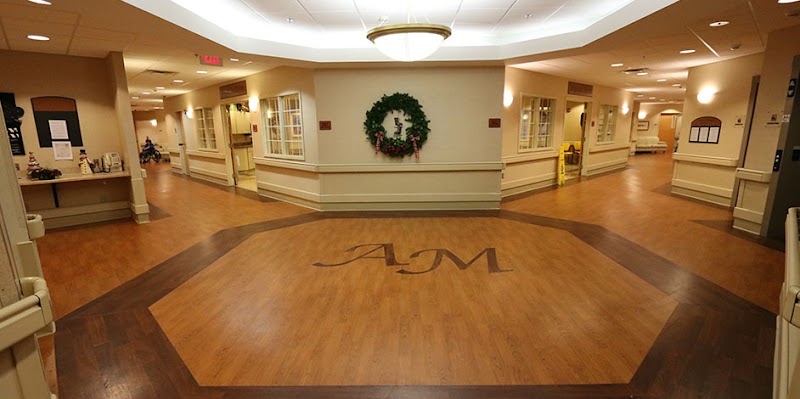
100 St. Camillus Way, Fairport, NY 14450 (585) 377-4000
For profit - Limited Liability company 140 Beds Independent Data: November 2025
Trust Grade
70/100
#136 of 594 in NY
Last Inspection: October 2024

Within standard 12-15 month inspection cycle. Federal law requires annual inspections.

Overview

Aaron Manor Rehabilitation and Nursing Center has received a Trust Grade of B, indicating it is a good facility and a solid choice for care. It ranks #136 out of 594 nursing homes in New York, placing it in the top half of facilities statewide, and #10 out of 31 in Monroe County, meaning there are only nine local options rated higher. The facility’s performance trend is stable, with five issues reported in both 2023 and 2024. However, staffing is a concern with a rating of 2 out of 5 stars and a high turnover rate of 65%, significantly above the state average of 40%. While there have been no fines recorded, which is a positive aspect, the facility has been noted for specific incidents such as not properly assessing residents for the safe use of bed rails and allowing a higher-than-acceptable medication error rate, indicating areas that need improvement despite its overall good standing.
Trust Score
B
70/100
In New York
#136/594
Top 22%
Safety Record
Low Risk
No red flags
Inspections
Holding Steady
5 → 5 violations
Staff Stability
⚠ Watch
65% turnover. Above average. Higher turnover means staff may not know residents' routines.
Penalties
✓ Good
No fines on record. Clean compliance history, better than most New York facilities.
Skilled Nurses
⚠ Watch
Each resident gets only 19 minutes of Registered Nurse (RN) attention daily — below average for New York. Fewer RN minutes means fewer trained eyes watching for problems.
Violations
⚠ Watch
14 deficiencies on record. Higher than average. Multiple issues found across inspections.
★★★★☆
4.0
Overall Rating
★★☆☆☆
2.0
Staff Levels
★★★★☆
4.0
Care Quality
★★★★☆
4.0
Inspection Score
Stable
2023: 5 issues
2024: 5 issues

The Good

  • 4-Star Quality Measures · Strong clinical quality outcomes
  • Full Sprinkler Coverage · Fire safety systems throughout facility
  • No fines on record

Facility shows strength in quality measures, fire safety.

The Bad

Staff Turnover: 65%

19pts above New York avg (46%)

Frequent staff changes - ask about care continuity

Staff turnover is elevated (65%)

17 points above New York average of 48%

The Ugly 14 deficiencies on record

Oct 2024 5 deficiencies
CONCERN (D)

Potential for Harm - no one hurt, but risky conditions existed

Safe Environment (Tag F0584)

Could have caused harm · This affected 1 resident

Based on observations, interviews, and record review conducted during a Recertification Survey from 10/17/2024 to 10/24/2024, for one of one kitchen, the facility did not provide housekeeping and main...

Read full inspector narrative →
Based on observations, interviews, and record review conducted during a Recertification Survey from 10/17/2024 to 10/24/2024, for one of one kitchen, the facility did not provide housekeeping and maintenance services necessary to maintain a clean, comfortable, and homelike environment. Specifically, there was wall damage that was previously identified but not repaired. The findings are: The facility policy Healthcare Services Group, Inc. and its subsidiaries HCSG Policy 028, revised 09/2017, included all food preparation areas, food service areas, and dining areas will be maintained in a clean and sanitary condition. The Dining Service Director will ensure that the kitchen in maintained in a clean and sanitary manner, including floors, walls, ceilings, lighting, and ventilation. During observations on 10/17/2024 at 9:06 AM, there was an approximately 8-inch hole through the base of the wall behind the dish machine that was in disrepair. During an interview at this time, the Food Service Director stated the baseboard hole had been like that for a year. During an interview on 10/17/2024 at 2:50 PM, the Maintenance Director stated the wall behind the dish machine had been an issue for some time. There were quotes out to get it repaired and there was water damage inside the wall. During an interview on 10/18/2024 at 12:29 PM, the Food Service Director stated it had been six months since the wall was broken through by water damage, and the wall behind the kitchen also had damage. The Food Service Director also stated there were quotes and work orders out, and there had been fruit flies at times in that area. 10 NYCRR: 415.29, 415.29(j)(1), 10 NYCRR: 415.14(h), Subpart 14-1.171
CONCERN (D)

Potential for Harm - no one hurt, but risky conditions existed

Unnecessary Medications (Tag F0759)

Could have caused harm · This affected 1 resident

Based on observations, interviews, and record review conducted during the Recertification Survey from 10/17/2024 to 10/24/2024, for two (Resident #73 and #96) of five residents reviewed, the facility ...

Read full inspector narrative →
Based on observations, interviews, and record review conducted during the Recertification Survey from 10/17/2024 to 10/24/2024, for two (Resident #73 and #96) of five residents reviewed, the facility did not ensure a medication error rate of five percent or less. There were two medication errors for 27 opportunities resulting in a medication error rate of 7.4 percent. Specifically, a narcotic pain medication was signed for but not administered until eight hours after its scheduled time. A second medication was pre-poured that was not labeled as to what it was or who it was for and the medication nurse was not aware of what the medication for for or where to apply it. This is evidenced by the following: The facility policy Medication Administration, revised on 08/12/2024, documented the individual administering the medication shall verify the medication selected for administration is the correct medication based on the medication order and the medication product label. The individual administering a medication shall be aware of the following information concerning each medication before administration: route and frequency of administration and the appropriate timing of medication administration. 1. Resident #96 had diagnoses that included a right femur fracture, multiple rib fractures, spinal fractures, and dementia. The Minimum Data Set Resident Assessment, dated 09/25/2024, documented the resident had moderately impaired cognition and received scheduled pain medications. Review of a physician's order, dated 10/07/2024, included hydrocodone 20 milligrams every morning for pain. During a medication administration observation on 10/21/2024 at 11:14 AM, hydrocodone 20 milligrams was not included with the medications Licensed Practical Nurse Manager #1 administered to Resident #96. Review of the October 2024 Medication Administration Record revealed the hydrocodone dose scheduled on 10/21/2024 at 8:00 AM was signed as administered. During an interview on 10/21/2024 at 2:17 PM, Licensed Practical Nurse Manager #1 stated they had not administered the hydrocodone dose because they did not see it on the Medication Administration Record but may have accidentally signed as administered prior. 2. Resident #73 had diagnoses including rosacea (a condition that causes facial redness), multiple sclerosis, and depression. The Minimum Data Set Resident Assessment, dated 10/16/2024, documented the resident was cognitively intact. Review of current physician orders included clobetasol external cream 0.05% apply to the labia (vaginal area) topically two times daily (initiated 09/25/2024), and ketoconazole external cream 2% apply to the face topically twice daily (initiated 09/12/2024). During an observation and interview on 10/21/2024 at 11:31 AM, in a drawer of the medication cart in the 300 resident hall there was a medication cup that contained a pre-poured cream. The cup was unlabeled as to what was in it or who it was for. During an interview at the time, Licensed Practical Nurse Manager #1 stated they had already given Resident #73 their pills, that the cream had been pre-poured and signed as administered, but they intended to administer it later. Licensed Practical Nurse Manager #1 stated the cream was ketoconazole 2% for Resident #73's face. Licensed Practical Nurse Manager #1 provided the original container for the medication, which was clobetasol 0.05% cream and was ordered for the resident's labia. During an interview on 10/21/2024 at 2:57 PM, the Director of Nursing stated narcotic pain medications should be given on time (one hour before or after the scheduled time) and the electronic medication administration record was programmed to indicate when medications were late to avoid missed opportunities to administer a medication. The Director of Nursing stated all medications should remain in their original packaging until the time it was administered, and nurses should only sign that a medication had been administered at the time it was being administered. 10 NYCRR 415.12(m)(1)
CONCERN (D)

Potential for Harm - no one hurt, but risky conditions existed

Deficiency F0761 (Tag F0761)

Could have caused harm · This affected 1 resident

Based on observations, interviews, and record review conducted during the Recertification Survey from 10/17/2024 to 10/24/2024, for one (3-400 Unit) of two medication storage rooms reviewed, the facil...

Read full inspector narrative →
Based on observations, interviews, and record review conducted during the Recertification Survey from 10/17/2024 to 10/24/2024, for one (3-400 Unit) of two medication storage rooms reviewed, the facility did not ensure that all drugs and biologicals were properly stored in accordance with State and Federal Laws. Specifically, the 3-400 Unit controlled medication (medications whose possession and use of are regulated by the government due to their potential for serious side effects) cabinet, contained several blister packs of controlled medications that were secured with one locked door (versus two). The exterior door of the cabinet was unlocked. This is evidenced by the following: The undated facility policy Center Medication Storage Policy included that schedule II-controlled medications are maintained within a separately locked permanently affixed compartment. They are stored in a double-locked environment such as a locked medication room in a locked narcotic cabinet, or locked narcotic box in a locked medication cart in use. The facility policy Controlled Drug Management, dated February 2024, included the controlled substances storage area on each resident care unit must be kept double locked and secured at all times when not in use. During an observation on 10/17/2024 at 12:16 PM in the 3-400 Unit medication storage room, the outer controlled cabinet door was unlocked, and several blister packs of controlled medications were secured only by the locked interior door. During an interview on 10/17/2024 at 12:18 PM, Licensed Practical Nurse #2 stated they must have forgotten to lock the exterior cabinet door. During an interview on 10/23/2024 at 11:24 AM, the Director of Nursing stated controlled medications should not be stored in a cabinet that is not double-locked. All controlled cabinets in the facility had two locks and they would expect the cabinets to be double-locked at all times. 10 NYCRR 415.18(e)(1-4)
CONCERN (D)

Potential for Harm - no one hurt, but risky conditions existed

Infection Control (Tag F0880)

Could have caused harm · This affected 1 resident

Based on observations, interviews, and record review conducted during the Recertification Survey from 10/17/2024 to 10/24/2024, for four (Residents #11, #13, #51 and #61) of 11 residents reviewed, the...

Read full inspector narrative →
Based on observations, interviews, and record review conducted during the Recertification Survey from 10/17/2024 to 10/24/2024, for four (Residents #11, #13, #51 and #61) of 11 residents reviewed, the facility did not establish and maintain an infection prevention and control program designed to provide a safe, sanitary, and comfortable environment and to help prevent the development and transmission of communicable disease and infections. Specifically, two Certified Nursing Assistants did not wear the appropriate personal protective equipment (equipment used to prevent or minimize exposure and transmission of diseases/infections) when transferring a resident on enhanced barrier precautions (an infection control practice that involves wearing gloves and gowns during high-contact patient care activities). One of the Certified Nursing Assistants did not wash their hands after transferring the resident prior to assisting another resident with care. Additionally, a used insulin (medication used to treat diabetes) syringe was observed on a resident's bedside table, nasal cannula (device used to deliver extra oxygen) prongs were inserted into a resident's nose by a staff member after being found on the floor and prior to cleaning (or changing), and an unattached used indwelling urinary catheter (a tube that drains urine from the bladder into a drainage bag) tubing filled with uring was lying on the floor. A yellow urine looking liquid was on the floor underneath it. This is evidenced by the following: The facility policy Enhanced Barrier Precautions, dated 07/02/2024, documented enhanced barrier precautions involved gown and glove use during high-contact resident care activities for residents that were known to be colonized or infected with a Multidrug-Resistant Drug Organism (MDRO) and for residents with wounds or indwelling medical devices. Staff should perform hand hygiene when switching care from one resident to another. 1. Resident #61 had diagnoses including klebsiella pneumoniae (a bacterial infection) urinary tract infection, acute kidney failure with obstructive uropathy (obstructed urinary flow), and sepsis (infection that can lead to tissue damage or organ failure). The Minimum Data Set Resident Assessment, dated 10/08/2024, documented the resident was cognitively intact and had a urinary catheter or urinary ostomy (an opening in the abdomen to divert urine away from a non-functioning bladder). Review of a physician's order, dated 10/18/2024, documented enhanced barrier precautions and to ensure gloves and gown are worn with care or any other extended duration of close contact care to include, but not limited to, transfers. Review of Resident #61's Comprehensive Care Plan, dated 10/02/2024, revealed Resident #61 was at risk for a Multidrug-Resistant Organism transmission or infection related to having a chronic (long term) indwelling urinary catheter and nephrostomy tube. Interventions included, but were not limited to, enhanced barrier precautions and staff to wear gown and gloves with all direct close contact care including transfers. During an observation on 10/22/2024 at 11:11 AM, Certified Nursing Assistants #4 and #5 were rolling Resident #61 in bed to put a transfer sling under the resident's body. A yellow gown magnet was stuck to the resident's door frame. There was no sign indicating the resident was on Transmission Based Precautions. Both Certified Nursing Assistants were wearing gloves, neither were wearing a gown. Certified Nursing Assistant #4 removed their gloves, did not cleanse their hands, and left the room returning a few minutes later with a mechanical lift. Certified Nursing #4 did not wear gloves while assisting the resident into the mechanical lift or maneuvering the resident into the Geri-chair. Resident #61 was assisted across the hall into the sunroom and Resident #15 requested assistance at that time. Certified Nursing Assistant #4 pushed Resident #15's wheelchair into their bathroom and closed the bathroom door. Certified Nursing Assistant #4 did not perform hand hygiene after completing Resident #61's care or before assisting Resident #15. During an interview on 10/22/2024 at 11:20 AM, Certified Nursing Assistant #4 stated they knew the resident was on enhanced barrier precautions but did not think they had to wear a gown when transferring the resident. Certified Nursing Assistant #4 stated they did not wash their hands in between assisting Residents #61 and #15, but did wash them while in Resident #15's room. 2. Resident #51 had diagnoses including cerebral vascular accident (stroke), diabetes, and hypertension. The Minimum Data Set Resident Assessment, dated 10/10/2024, documented the resident had moderately impaired cognition and received insulin injections. During an observation on 10/17/2024 at 9:21 AM, there was a used insulin syringe with the needle capped on Resident #51's bedside table next to their breakfast tray. 3. Resident #13 had diagnoses including dementia, heart failure, and hypoxemia (low levels of oxygen in the blood). The Minimum Data Set Resident Assessment, dated 09/10/2024, documented the resident had moderately impaired cognition and received oxygen therapy. The facility policy Oxygen Administration, dated 07/12/2023, documented all oxygen tubing and cannulas used to deliver oxygen should be changed weekly, when visibly soiled, or as needed. Physician orders, initiated 6/17/2024 included Resident #13 required continuous oxygen via nasal cannula for low oxygen levels and for staff to change the tubing weekly. During an observation on 10/21/2024 at 12:35 PM, Resident #13 was sitting up in bed, the oxygen concentrator was on, and the nasal cannula prongs were lying directly on the floor. At 12:39 PM, Licensed Practical Nurse Manager #2 put the nasal cannula prongs that had been lying on the floor into Resident #13's nose. 4. Resident #11 had diagnoses including obstructive uropathy, congestive heart failure, and diabetes. The Minimum Data Resident Assessment, dated 08/23/2024, documented the resident was cognitively intact and had an indwelling catheter. The facility policy Catheter Care, dated 01/19/2024, included but not limited to that the positioning of the catheter tubing and urinary drainage was very important and should never touch the floor. During an observation on 10/17/2024 at 10:40 AM, Resident #11 was in bed. The unattached urine collection bag was hanging on the bed frame and the urinary tubing extending from the collection bag was lying on the floor The tubing contained urine and there was urine like yellow liquid on the floor. During an interview on 10/23/2024 at 11:01 AM, the Infection Control Nurse stated staff should wear gown and gloves when in close contact with a resident on enhanced barrier precautions, including transfers. An insulin syringe should be disposed of in a sharps container (a receptacle for safe disposal of sharp objects, including syringes, to limit exposure and spread of bloodborne pathogens) and not left on the resident's bedside table. The Infection Control Nurse also stated the urine collection bag and tubing should have been disposed of and not lying on the floor. The Infection Control Nurse stated nasal prongs should not be inserted into a resident's nose after coming in contact with the floor, and all of these issues were infection control concerns. During an interview on 10/23/2024 at 10:47 AM, the Director of Nursing stated staff should wear a gown and gloves when transferring a resident on enhanced barrier precautions as they would have to be in close contact with the resident to put the sling underneath them. Handwashing should be performed in between caring for one resident and another. The Director of Nursing stated the insulin syringe should have been disposed of in the sharps container immediately after use and a urine collection bag and tubing should never be in contact with the floor. The Director of Nursing stated these issues were infection control concerns due to the potential for contamination and spreading of germs and infectious diseases. 10 NYCRR 415.19(a)(1-3) (b)(4)
CONCERN (E)

Potential for Harm - no one hurt, but risky conditions existed

Deficiency F0700 (Tag F0700)

Could have caused harm · This affected multiple residents

**NOTE- TERMS IN BRACKETS HAVE BEEN EDITED TO PROTECT CONFIDENTIALITY** Based on observations, interviews, and record review conducted during the Recertification Survey from 10/17/2024 to 10/24/2024, ...

Read full inspector narrative →
**NOTE- TERMS IN BRACKETS HAVE BEEN EDITED TO PROTECT CONFIDENTIALITY** Based on observations, interviews, and record review conducted during the Recertification Survey from 10/17/2024 to 10/24/2024, the facility did not ensure residents were assessed for safe use of bed (side) rails prior to installation, did not review the risks and benefits of bed rails with the resident or resident representative, and did not obtain informed consent prior to the installation of bed rails for 6 of 12 residents (Resident #13, #42, #49, #107, #112 and #128) reviewed for accidents. Specifically, the residents were observed, in bed with bed rails of different types in use and no evidence that assessments had been completed or updated to ensure the safety of the bed rails, that the risks and benefits of the bed rails had been provided to the resident or their representative, or that consent had been obtained physician orders obtained prior to installation. In addition, the residents were not care planned for the bed rails in use. The evidence includes but not limited to the following: The undated facility policy Assist Rails included the purpose of the guidelines is to ensure the safe use of side rails as resident mobility aids and to prohibit the use of side rails as restraints unless necessary to treat a resident's medical symptoms. An assessment will be made to determine the resident's symptoms and reason for using side rails, an assessment will include a review of the resident's bed mobility, ability to transfer between positions, education to resident or representative on risk versus benefit, and risk for injury or ability to use safely. The use of assist rails as an assistive device will be addressed in the resident care plan. Resident and/or designated representative will be informed of Interdisciplinary Team recommendations. The procedure includes a therapy evaluation for bed mobility, therapy will determine the type and use of assist rail based on evaluation, update care plan to reflect assist rail use, and reevaluate appropriateness of use when or if the resident has a change in condition. 1. Resident #13 had diagnoses including dementia, essential tremor (a neurological disorder that causes involuntary rhythmic shaking), and anxiety. The Minimum Data Set Resident Assessment, dated 09/10/2024, included the resident was moderately cognitively impaired, required substantial/maximal assistance to roll left and right in bed and was dependent on staff for transfers. Review of Resident #13's Side Rail Assessment, completed 05/04/2023, revealed that side rails were indicated and Resident #13 was able to demonstrate safe use of the bed rails. Review of Resident #13's current (prior to surveyor intervention) Comprehensive Care Plan last revised on 05/03/2024, revealed the resident had a self-care performance deficit for activities of daily living related to dementia and that the resident may use one half upper bed rail. On 09/19/2024, the Comprehensive Care Plan was revised to include the resident was dependent on two staff for transfers using a mechanical lift. During observations on 10/17/2024 at 4:09 PM, 10/18/2024 at 8:10 AM, and 10/21/2024 at 6:48 AM, the resident was in bed with bilateral half bed rails in use on the bed. During an observation on 10/21/2024 at 12:35 PM, the resident was in bed with two half bed rails in place. The resident's oxygen tubing was wrapped within one of the half bed rails and the oxygen nasal prongs (delivers the oxygen via the nares) were dislodged. The facility was unable to provide any further assessments completed since 05/04/2023 that risks and benefits were reviewed with the resident and/or their representative, or that consent was obtained. 2. Resident #128 had diagnoses including dementia, cerebral infarction (stroke), and peripheral neuropathy (nerve damage that affects the hands and feet). The Minimum Data Set Resident Assessment, dated 09/01/2024, included the resident was severely impaired cognitively, required partial/moderate assistance to roll left and right in bed, and was dependent on staff for transfers. Review of Resident #128's current (undated) Comprehensive Care Plan revealed the resident had a self-care performance deficit for activities of daily living related to confusion, dementia, fatigue, impaired balance, limited mobility, and stroke. Interventions included that the resident was independent to roll left and right in bed and required substantial/maximal assistance of staff for transfers. During observations on 10/18/2024 at 8:00 AM and 10/21/2024 at 11:34 AM Resident #128 was in bed. Bilateral enabler bars were in use on the bed. Review of Resident #128's electronic health record revealed no assessments for the safe use of any type of bed rail or risk of entrapment, no evidence that the risks and benefits of bed rails had been reviewed with the resident or resident representative, or consent obtained. 3. Resident #112 had diagnoses including dementia, psychosis, and anxiety. The Minimum Data Set Resident Assessment, dated 08/09/2024, included the resident was severely impaired cognitively, was independent to roll left and right in bed and required supervision or touching assistance for transfers. Review of Resident #112's current (undated) Comprehensive Care Plan revealed the resident had a self-care performance deficit for activities of daily living related to dementia. Use of bed rails was not included on the care plan. During observations on 10/18/2024 at 8:30 AM and on 10/21/24 at approximately 6:38 AM Resident #112 was in bed. Two enabler bars were in use on the bed. Review of Resident #112's electronic health record revealed no assessments for the safe use of bed rails or risk of entrapment, no evidence that the risks and benefits of bed rails had been reviewed with the resident or resident representative, or consent obtained. 4. Resident #107 had diagnoses including cerebral infarction (stroke), dementia, and anxiety. The Minimum Data Set Resident Assessment, dated 09/09/2024, included the resident was severely impaired cognitively, had impairment in range of motion on both sides of the lower extremities (hip, knee, ankle, foot), and was dependent on staff to roll left and right in bed and for transfers. Review of Resident #107's Side Rail Assessment, completed 05/01/2024, revealed that the resident could not demonstrate safe use of the bed rails and that bed rails were not indicated. Review of Resident #107's current (undated) Comprehensive Care Plan revealed the resident had a self-care performance deficit for activities of daily living. Interventions included that the resident was dependent on staff for rolling right and left in bed and for transfers using a mechanical lift. The care plan also included effective 08/22/2024, the resident used one half upper bed rail. Review of Resident #107's electronic health record revealed no updated assessments for the safe use of bed rails or risk of entrapment, no evidence that the risks and benefits of bed rails had been reviewed with the resident or resident representative, or consent or physician order obtained. During observations on 10/17/2024 at 10:10 AM, 10/18/2024 at 8:22 AM, and 10/21/2024 at approximately 6:58 AM, Resident #107 was in bed. Bilateral half bed rails were in use on the bed and there were no staff in the room. During an interview on 10/18/2024 at 9:23 AM, Certified Nursing Assistant #6 stated the bed rails were on Resident #107's bed so they could help us (facility staff) turn the resident. During an interview on 10/23/2024 at 10:36 AM, Licensed Practical Nurse Manager #2 stated that residents were assessed by therapy to make sure they were appropriate for bed rails, and all residents who have bed rails should have a bed rail assessment done quarterly. The facility only uses bed rails for bed mobility and residents would have to be able to understand the use of bed rails. Licensed Practical Nurse Manager #2 stated Resident #107 was not cognitively intact, staff should lower the bed rails for the resident, and only utilize the bed rails while staff were in the room providing care so the resident can participate. Bed rails were not used at night or when staff were not in the room with the residents. During an interview on 10/22/2024 at 11:49 AM, Licensed Practical Nurse #3 stated therapy has to approve a bed rail and a physician order would be needed. Licensed Practical Nurse #3 said staff could have the bed rail up for residents to use during care but then it should be lowered. Staff should look at the [NAME] (care plan used by the Certified Nursing Assistants for daily care) to see if bed rails should be used. Licensed Practical Nurse #3 stated that the staff may have put them up to let the resident use them and then forgot to put them back down. During an interview on 10/22/2024 at 12:11 PM, Licensed Practical Nurse Manager #3 stated that a resident should be able to use bed rails for mobility, they should be assessed, and care planned for and have a physician order. Licensed Practical Nurse #3 said that many bed rails were recently put down as some of the residents had not been assessed correctly. During an interview on 10/23/2024 at 10:05 AM, Maintenance Supervisor #1 stated they had calls about some of the bed rails being up and residents not knowing how to release them. During an interview on 10/23/2024 at 10:11 AM, Physical Therapist Assistant #1 stated that bed rail assessments were in the assessment tab (in the resident's electronic health record) and were completed by therapy quarterly. During an interview on 10/23/2024 at 10:13 AM, Director of Rehabilitation stated if there was no bed rail assessment in the resident's assessment tab then a bed rail (including enabler bars) had not been assessed by therapy. They also stated it had recently been brought to the attention of the therapy department that multiple residents had bed rails. The Director of Rehabilitation stated that they did a building-wide audit to ensure residents were appropriately care planned for bed rails and stated to their knowledge residents must be assessed for safety prior to using bed rails or the enablers. Staff should not raise them for a resident to use if not assessed. During an interview on 10/23/2024 at 10:47 AM, the Director of Nursing stated bed rails, side rails, and enablers were used for mobility only, an assessment should be done by therapy and added to the resident's care plan. A resident should not have them up if an assessment had not been completed. The Director of Nursing stated education should be provided to ensure that a resident was capable of using it for mobility and it was safe. During an interview on 10/23/2024 at 11:19 AM, the Administrator stated therapy should complete an assessment and staff should take their guidance if it was going to be useful for a resident or not. They also stated it is not our standard practice for a resident to have one up (bed rail) if they had not been assessed and deemed appropriate. The Administrator stated if a resident was not assessed the resident could be at risk for injury or entrapment; our process was that residents required a therapy assessment prior to use and on the care plan. Staff should not raise the bed rails to use and put back down. 10 NYCRR 415.12(h)(1)
Sept 2023 1 deficiency
CONCERN (D) 📢 Someone Reported This

A family member, employee, or ombudsman was alarmed enough to file a formal complaint

Potential for Harm - no one hurt, but risky conditions existed

Medical Records (Tag F0842)

Could have caused harm · This affected 1 resident

Based on interviews and record review conducted during an Abbreviated Survey (#s NY00323049, NY00316578 & NY00311666), it was determined that for one (Resident #1) of three residents reviewed, the fac...

Read full inspector narrative →
Based on interviews and record review conducted during an Abbreviated Survey (#s NY00323049, NY00316578 & NY00311666), it was determined that for one (Resident #1) of three residents reviewed, the facility did not ensure resident records were accurately documented in accordance with professional standards of practice. Specifically, both agency Licensed Practical Nurses (LPNs) and Certified Nursing Assistants (CNAs) were not appropriately identifying themselves in the resident's electronic medical record (EMR) following administration of medications, documenting progress notes and providing personal care. All were signing care provided using a common generic title. The finding is: The facility policy Medication Administration, dated February 2012, documented that each dose of medication administered shall be properly recorded in the resident's medical record. The facility undated policy Electronic Medical Record (EMR) documented that contract staff are provided a generic log in the facility's EMR specific to their agency to use for their assigned shift by the nursing scheduler. Resident #1 had diagnosis that included squamous cell anal cancer, diabetes, and adult failure to thrive. Review of the August 2023 Medication Administration Record (MAR) for Resident #1 revealed that on 10 of 31 days the nurse who administered the resident's medications on the day and/or evening shifts, signed off as KML. The Staff Administration Legend (the facility form that identifies each nurse's full name versus just their initials for each medication) for August 2023 identified KML as Kare Nurse and Kare Licensed Practical Nurse (LPN). Review of the September 2023 Follow up Question Report (the facility report documenting personal care provided and by whom) revealed that on September 2nd and 3rd staff providing personal care to Resident #1 was documented as being provided by Kare, CNA. Review of nursing progress notes, from 8/15/23 through 9/5/23, in Resident #1's EMR revealed that on eight days, the progress notes were documented as authored by Kare, LPN versus the LPN's legal name. During an interview on 9/5/23 at 1:07 PM the Director of Nursing (DON) stated that KML on the MAR stood for Kare, Nurse and that the nurse who administered the medications was from an agency and that each agency has a generic login (same login for each nurse at that agency). The DON stated the only way to identify the actual nurse's name would be to review the schedule and the assignment sheet. During an interview on 9/6/23 at approximately 10:00 AM both the DON and the Administer stated that all agency nurses and all agency CNAs documented in the EMR using a generic name such as Kare, Nurse and Kare, CNA. This would include documenting in resident's progress notes, medications administered, and the care provided by the CNAs. The DON stated that the nursing schedules and the assignment sheets are not part of the resident record. 10 NYCRR 415.22 (a)(1-4)
Jan 2023 4 deficiencies
CONCERN (D)

Potential for Harm - no one hurt, but risky conditions existed

Deficiency F0583 (Tag F0583)

Could have caused harm · This affected 1 resident

Based on observations, and interviews, conducted during the Recertification Survey, completed on 1/27/23, it was determined that the facility did not ensure residents' rights to privacy and confidenti...

Read full inspector narrative →
Based on observations, and interviews, conducted during the Recertification Survey, completed on 1/27/23, it was determined that the facility did not ensure residents' rights to privacy and confidentiality were maintained for ten residents. Specifically, a copy of a facility email, which included ten residents' names, room numbers and health information was posted on a bulletin board in a common area that all staff, residents, and visitors had access to. This is evidenced by the following: During an observation on 1/25/23 at 12:58p.m., a copy of an intra-facility email, dated 1/8/23 at 3:01 p.m., was seen hanging from a green bulletin board located in a common area alcove on the first floor. The posted email was located near the posted daily nursing staffing and New York State Department of Health annual survey results (posted in an area accessible to residents and families per the regulation) and near the facility's Suggestion Box. The email contained the names and room numbers of ten residents that had been identified to be COVID-19 positive. During an interview on 1/25/23 at 1:10 p.m., the Director of Nursing (DON) stated that everyone (residents, staff, and visitors) had access to the alcove and included, but not limited to, daily nursing staffing numbers and information staff should be aware of, such as available vaccine clinics. The DON observed the posted intra-facility email and stated that it should not be posted, since it contained residents' names and medical information but was unaware of who posted it. During an interview of 1/25/23 at 1:13 p.m., the Administrator stated that the intra-facility email (which included resident names and health information) should not be posted in the common area and removed it. 10 NYCRR 415.3 (e)(1)(ii)
CONCERN (D)

Potential for Harm - no one hurt, but risky conditions existed

Safe Environment (Tag F0584)

Could have caused harm · This affected 1 resident

**NOTE- TERMS IN BRACKETS HAVE BEEN EDITED TO PROTECT CONFIDENTIALITY** Based on observation, interviews, and record review during the Recertification Survey, completed on 1/27/23, the facility did no...

Read full inspector narrative →
**NOTE- TERMS IN BRACKETS HAVE BEEN EDITED TO PROTECT CONFIDENTIALITY** Based on observation, interviews, and record review during the Recertification Survey, completed on 1/27/23, the facility did not ensure all residents had a safe, clean, comfortable home-like environment for one (Resident #40) of 25 resident investigations. Specifically, the floors, walls, and equipment used for resident care were not maintained in a safe, clean, comfortable, and homelike environment. The finding is: Resident is a [AGE] year-old with diagnoses that include cerebral infarction (stroke), vascular dementia, major depressive disorder, anxiety disorder and unspecified visual loss in both eyes. The Minimum Data Set assessment dated [DATE] documented that the resident had severe cognitive impairment and that their vision was severely impaired-no vision or sees only light, colors or shapes and eyes do not appear to follow objects. Review of the resident's comprehensive care plan dated 10/21/22, revealed that the resident had impaired visual function with multiple interventions including but not limited to, for staff to ensure appropriate visual aids are available, explain where personal items are, and that the resident prefers to have room and things arranged consistently to promote independence. During multiple observations of Resident #40's room on 1/23/23 at 9:30 a.m., on 1/24/23 at 3:00 p.m., and again on 1/25/23 at 1:00 p.m., the following was observed on each observation: a. A dark black dried substance and debris on the bed frame. b. A green mucous-like smear approximately 24 long on the bottom of the residents fitted sheet. c. Crumbs and debris all around the resident's bed, floor, tray table legs and bathroom. d. A sticky yellow substance on the floor next to the bed. e. A curled veneer on the resident's nightstand and the top was covered in a sticky unknown liquid and exposed particle board. In an interview on 1/25/23 at 2:00 p.m. Maintenance Director stated they expected staff to clean the rooms thoroughly and that they would order a deep clean of the room that day. The Maintenance Director stated that they did not know the resident was visually impaired. When observed on 1/26/23 at 10:00 a.m. Resident #40's bedframe had been cleaned and the sheets changed but the room had a sticky brown substance on the floor next to the resident's bed and debris and crumbs under the resident's and their roommates' beds. In addition, the door handle to the bathroom, the light switches, the floor and the resident's wheelchair were dirty. In an interview on 1/26/23 at 10:45 am the Maintenance Director stated that the resident's room was unacceptable. The Maintenance Director stated there was not a housekeeper available after 3 pm so any mess that happens after that time does not get cleaned until the next morning. The Maintenance Director acknowledged the debris on the door handle, the floor, the beds and said they would have the room re-cleaned and that they expected staff to do a 5-step method cleaning daily. In an interview on 1/27/23 at 10:00 a.m. Resident #40 stated they liked that the room was clean now and that they did not like it when the floor was sticky, and the nightstand dirty. In an interview on 1/27/23 at 10:30 am Housekeeper #1 stated that the 600 hall resident rooms had already been cleaned. In an interview on 1/27/23 at 10:45 am the Maintenance Director stated they had not yet requested staff to clean the resident's room more often and more thoroughly. In an interview on 1/27/23 at 11:00 a.m., the Registered Nurse Manager (RNM) stated they expected housekeeping to keep the resident's room clean. The RNM said that Resident #40 was visually impaired which makes it harder to keep the room clean (due to frequent spills) and that they have requested housekeeping to come more frequently and that sometimes they do and sometimes they do not. When requested the facility was unable to provide a policy on resident room cleaning. 10 NYCRR: 415.5(h)(2)
CONCERN (D) 📢 Someone Reported This

A family member, employee, or ombudsman was alarmed enough to file a formal complaint

Potential for Harm - no one hurt, but risky conditions existed

Unnecessary Medications (Tag F0759)

Could have caused harm · This affected 1 resident

Based on observations, interviews and record review conducted during the Recertification Survey completed on 1/27/23, it was determined that for one (Resident #27) of two residents observed during med...

Read full inspector narrative →
Based on observations, interviews and record review conducted during the Recertification Survey completed on 1/27/23, it was determined that for one (Resident #27) of two residents observed during medication pass, the facility did not ensure that it was free of medication error rate of 5 percent (%) or greater. There were 3 medication errors for 25 opportunities resulting in a 12% medication error rate. The issues involved not administering the correct dose of eye drops, not mixing a medication in the correct amount of liquid, and not administering a medication on an empty stomach and without other medications. The findings are: Resident #27 had diagnoses including hypothyroid, constipation, and macular degeneration. The Minimum Data Set (MDS - a resident assessment tool) dated 12/23/22, documented the resident had severe cognitive impairment. Current physician orders included, but were not limited to, the following medications: - Levothyroxine Sodium Tablet 100 mcg (microgram). Give 1 tablet by mouth in the morning for hypothyroidism, give on an empty stomach and without other medications. - Polyethylene Glycol 3350 Powder. Give 17 grams by mouth in the morning for constipation. Mix in 8 oz (ounce) fluid of choice. - Refresh Tears Solution 0.5%. Instill 2 drops in both eyes every morning and at bedtime for dry eyes. During an observation of medication administration on 1/25/23 at 7:41 a.m., Licensed Practical Nurse (LPN) #1 administered multiple medications (8) to Resident #27, including, but not limited to, the levothyroxine. LPN #1 mixed the polyethylene glycol, with water, in a 5 oz cup and administered to Resident #27. Additionally, LPN #1 was instilled 1 drop of Refresh tears solution into each of Resident #27 eyes. The 1/1/23 through 1/31/23 Medication Administration Record for Resident #27 documented on 1/25/23, the levothyroxine was signed as administered with all other medications; the polyethylene glycol was signed as administered in 8 oz fluid of choice; and the Refresh eye drops were signed as 2 drops administered to both eyes. During an interview on 1/25/23 at 8:47 a.m., LPN #1 stated they administered the levothyroxine with all other medications, used a 5 oz cup to mix the polyethylene glycol secondary to larger cups not available, and instilled 1 drop of Refresh tears into each of Resident #27's eyes. During an interview on 1/26/23 at 8:13 a.m., LPN #2 Unit Manager stated medications should be administered as per the physician orders. During an interview on 1/26/23 at 8:25 a.m., Nurse Practitioner #1 stated the expectation is medications be administered per the physician orders. 10 NYCRR: 415.12(m)(1)
MINOR (B) 📢 Someone Reported This

A family member, employee, or ombudsman was alarmed enough to file a formal complaint

Minor Issue - procedural, no safety impact

Deficiency F0655 (Tag F0655)

Minor procedural issue · This affected multiple residents

**NOTE- TERMS IN BRACKETS HAVE BEEN EDITED TO PROTECT CONFIDENTIALITY** Based on observations, interviews, and record reviews conducted during a Recertification Survey completed on 1/27/23, it was det...

Read full inspector narrative →
**NOTE- TERMS IN BRACKETS HAVE BEEN EDITED TO PROTECT CONFIDENTIALITY** Based on observations, interviews, and record reviews conducted during a Recertification Survey completed on 1/27/23, it was determined that for 10 (Residents #65, #270, #110, #30, #59, #54, #379, #67, #370, and #113) of 16 residents reviewed, the facility did not ensure that a Baseline Care Plan (BCP) was developed and implemented within 48 hours of admission that included the minimum healthcare information necessary to properly care for the immediate needs of the resident and that a written summary of the care plan, that they were able to understand, was provided and reviewed with the resident and/or their representative in a timely manner per the regulations. This was evidenced by, but not limited to, the following: The facility policy, Baseline Care Plans dated as last revised 3/24/22, included that, completion and implementation of the BCP within 48 hours of a resident's admission is intended to promote continuity of care and communication among nursing home staff, increase resident safety, and safeguard against adverse events that are most likely to occur right after admission, and to ensure the residents and representative, if applicable are informed of the initial plan for delivery of care and services by receiving a written summary of the BCP. The policy included that BCP are required to address, at a minimum, the following: Initial goals based on admission orders, reflect the resident's stated goals and objectives, interventions that address current needs, Physician orders, dietary orders, therapy orders and social services. 1. Resident #54 was admitted to the facility on [DATE], with diagnoses of stage 3 kidney disease, vascular dementia, and a transient ischemic accident (TIA-mini stroke). The Minimum Data Set (MDS) assessment dated [DATE], included that Resident #54 was cognitively intact. Review of Resident #54's Electronic Medical Record (EMR) revealed a form titled, Baseline Care Plan/Discharge Rehab/Short Term Assessment, dated 11/29/22 (one day prior to admission) that did not contain the required information. There was no BCP summary related to the goals and care of the resident following admission and no documented evidence that a BCP or a summary had been provided to or reviewed with Resident #54 or their representative. 2. Resident #59 was admitted to the facility on [DATE], with diagnoses of cardiomyopathy and an acute kidney injury. The MDS assessment dated [DATE], included that Resident #59 was cognitively intact. Review of Resident #59's Electronic Medical Record (EMR) revealed a form titled, Baseline Care Plan/Discharge Rehab/Short Term Assessment, dated as reviewed with the resident on 8/23/22. The form did not include the resident's current assist needed, dietary information, current medications, therapy needs if any or goals for long term care. There was no documented evidence that a summary of the BCP was reviewed with the resident or their representative. 3. Resident #110 was admitted to the facility on [DATE] with diagnoses including Parkinson's disease, dementia, and diabetes. The MDS assessment dated [DATE] included that Resident #110 had moderately impaired cognition. Review of Resident #110's EMR revealed a form titled, Baseline Care Plan/Discharge Rehab/Short Term Assessment revealed that the form did not contain the required information such as current goals for long term care, assist needed, medications, dietary orders and therapy if needed. There was no documented evidence that a summary of the BCP was reviewed with the resident or their representative. During an interview on 1/26/23 at 11:00 a.m., the admitting Registered Nurse (RN) stated that they were given the Baseline Care Plan/Discharge Rehab/Short Term Assessment, form and were filling it out with what the resident was able to do prior to their hospitalization. The admitting RN stated that they were not given instructions on how to fill out the form and that they use it for all residents in the facility (both residents for long term care and for rehabilitation). The admitting RN stated that the form does not include most of the information that is needed and that they were given a new form to use for baseline care plans earlier in the morning (after surveyor interventions). During an interview on 1/27/23 at 11:21 a.m., The Director of Nursing (DON) stated that they were unaware that the admitting RN was using information pertaining to the residents' status prior to admission. The DON stated that the Baseline Care Plan/Discharge Rehab/Short Term Assessment, form was developed for residents admitted for rehabilitation to assist with their discharge home. The DON stated that the purpose of the baseline care plans is to include the care the facility is providing for each resident after their admission. The DON stated that they believed the residents were receiving a copy of their medication lists. The DON stated that the Baseline Care Plan/Discharge Rehab/Short Term Assessment, form was more of a discharge summary and not a BCP. 10 NYCRR: 415.11
May 2021 4 deficiencies
CONCERN (D)

Potential for Harm - no one hurt, but risky conditions existed

Respiratory Care (Tag F0695)

Could have caused harm · This affected 1 resident

**NOTE- TERMS IN BRACKETS HAVE BEEN EDITED TO PROTECT CONFIDENTIALITY** Based on observations, interviews, and record reviews conducted during the Recertification Survey completed on 5/11/21, for one ...

Read full inspector narrative →
**NOTE- TERMS IN BRACKETS HAVE BEEN EDITED TO PROTECT CONFIDENTIALITY** Based on observations, interviews, and record reviews conducted during the Recertification Survey completed on 5/11/21, for one (Resident #37) of three residents reviewed, the facility did not ensure that a resident who needed respiratory care was provided such care consistent with professional standards of practice, the comprehensive person-centered care plan and the resident's goals and preferences. Specifically, the facility did not consistently monitor the resident's oxygen liter flow or oxygen saturation levels (amount of oxygen in the blood stream) according to physician orders. This is evidenced by the following: Resident #37 had diagnoses including chronic obstructive pulmonary disease (COPD) dependent on oxygen, respiratory failure, and congestive heart failure (CHF). The Minimum Data Set Assessment, dated 3/10/21, revealed the resident had moderately impaired cognition and received oxygen therapy. Review of the Comprehensive Care Plan, dated 6/19/19, and the current Bedside [NAME] (directs daily care) revealed Resident #37 was on oxygen therapy of 3 liters (L) per minute continuously for COPD, CHF and ineffective gas exchange and for staff to ensure the resident was wearing their oxygen at all times. Review of physician orders, initiated 4/8/20, included oxygen at 3L per minute via nasal cannula, daily, at all times, for shortness of breath. A physician order, dated 2/22/21, instructed the nurse to take oxygen saturation levels once daily for COVID-19 screening and to report to medical any oxygen saturation levels of 91% or less. Review of Treatment Administration Records (TAR) from 3/1/21 through 5/10/21 included oxygen at 3L per minute via nasal cannula daily at all times and to monitor it every shift. The TAR revealed missing documentation that it was done on 38 of 93 opportunities in March 2021, on 30 of 90 opportunities in April 2021 and on 16 of 30 opportunities in May 2021. Review of the TAR for this time period included for the nurse to check oxygen saturation levels once daily and report to medical any level of 91% or less revealed no documentation that the saturation levels were checked. Review of the Weight and Vitals Summary revealed that no oxygen saturation had been documented between 1/5/21 and 4/22/21. The last documented oxygen saturation level was recorded on 4/23/21 at 2:53 p.m. Review of a medical visit note, dated 4/27/21, revealed Resident #37 had recently been reporting increased shortness of breath and continued on chronic oxygen therapy. The medical assessment and plan included that the resident's COPD was advanced with comfort goals which included continuous oxygen. When observed on 5/10/21 at 4:17 p.m., Resident #37 was observed wearing oxygen via nasal cannula at 3L per minute and seen backing their wheelchair up and hitting their oxygen concentrator with the wheelchair. During an interview on 5/10/21 at 4:20 p.m., the Licensed Practical Nurse (LPN) Manager stated that the nurses needed to check the residents oxygen liter flow as ordered because the resident is fragile, decompensates (oxygen level drops) quickly and that they require 3L of oxygen. She said Resident #37 does self-propel their wheelchair around and could run into the concentrator. During an interview on 5/11/21 at 10:52 a.m., the LPN stated that if the TAR is not signed off as completed, for instance to check the resident's oxygen level, it should be reported to the Nurse Manager. [10 NYCRR 415.12(k)(2)]
CONCERN (D)

Potential for Harm - no one hurt, but risky conditions existed

Deficiency F0698 (Tag F0698)

Could have caused harm · This affected 1 resident

**NOTE- TERMS IN BRACKETS HAVE BEEN EDITED TO PROTECT CONFIDENTIALITY** Based on observations, interviews and record reviews conducted during the Recertification Survey, completed on 5/11/21, it was d...

Read full inspector narrative →
**NOTE- TERMS IN BRACKETS HAVE BEEN EDITED TO PROTECT CONFIDENTIALITY** Based on observations, interviews and record reviews conducted during the Recertification Survey, completed on 5/11/21, it was determined that for one of one resident (Resident #95) the facility did not ensure that dialysis services provided were consistent with professional standards of practice, the comprehensive person-centered care plan, and the resident's goals and preferences. Specifically, medical orders to monitor the bruit and thrill (the flow of blood) of the resident's left arm fistula (a surgical graft used for dialysis) was not consistently documented as completed as ordered and there was no documentation that a fluid restriction was being monitored as ordered. This is evidenced by the following: Resident #95 had diagnoses including end stage renal disease requiring dialysis three times per week, a new arterial venous fistula in the left arm and Parkinson's disease. The Minimum Data Set Assessment, dated 4/14/21, revealed the resident was cognitively intact, independent in eating and received dialysis. Current Physician orders included the following: a. Check bruit and thrill to left arm fistula and to notify medical of any complications. b. A fluid restriction of 1200 milliliters (mls) per day, that the resident prefers to manage their own fluid restriction and to ask the resident to report their fluid intake. c. To allow 300 mls of fluid for nursing, 100 mls with medication pass and may have an extra 100 mls as resident chooses. The current Comprehensive Care Plan (CCP) and Bedside [NAME] (directs daily care) included Resident #95 was at risk for dehydration, was on 1200 mls fluid restriction daily and directed dietary to provide 900 mls per day and nursing 300 mls per day, to monitor for hypovolemia (too little fluid) or hypervolemia (too much fluid), and that the resident prefers to manage their fluid restriction. The CCP also included for nursing to check the resident's fistula for bruit and thrill every shift and to monitor intake and output. An Annual Nutrition note, dated 4/22/21, included that the resident was on a regular diet with a 1200 mls fluid restriction. Review of Treatment Administration Records (TAR) revealed no documentation that Resident #95 bruit and thrill was assessed on 17 of 62 opportunities in March 2021, on 10 of 60 opportunities in April 2021 and on 8 of 9 opportunities in May 2021. In an interview on 5/10/21 at 12:02 p.m., Certified Nursing Assistant (CNA) #1 said Resident #95 can tell staff what they had to drink and then she records it (i.e. as 76-100 percent (%) because the resident had two drinks which they drank). CNA #1 said she only enters percentages, not actual volume consumed because the system does not allow it. In an observation and interview on 5/10/21 at 12:56 p.m., Resident #95 said they are on a fluid restriction but could not state how much. Resident #95 said staff gives them a limited amount and they drink it. The resident added that sometimes staff ask how much they drank but not always. At 1:04 p.m., Resident #95 was eating lunch and the tray ticket read regular diet with 1200 fluid restriction. The tray had four ounces (120 mls) of juice on it. In an interview on 5/10/21 at 1:38 p.m., Licensed Practical Nurse (LPN)#1 said the kitchen provides a certain amount of fluids and nurses provide 300 mls (resident gets three medication passes a day). She said the resident can also have an extra 100 mls twice a day and if that is given, there should be a note in the progress notes. LPN #1 said just percentages of fluids consumed are entered into the computer, no actual mls and she does not know who reviews the total fluid intake in 24 hours. In an observation and interview on 5/10/21 at 1:45 p.m., CNA#1 retrieved Resident #95 lunch tray. She said there was only had one 4-ounce drink on the tray and that the resident only took a little of it so she will document 0-25% fluid consumed. CNA#1 did not ask the resident about drinking any other fluids at lunch. In an interview on 5/10/21 at 1:51 p.m., LPN Nurse Manager (NM) said Resident #95 is aware they are on a fluid restriction and that dietary and nursing collaborate on the division of fluids from each department. She said that nursing should monitor how much is being given total. The NM said regarding the resident's fistula, that she expects the nurses to check the bruit and thrill as ordered and if the incoming nurse notes an omission on the TAR then they should report that to the NM. In an interview on 5/10/21 at 2:47 p.m., the Diet Technician (DT) said if a fluid restriction is ordered, she talks to nursing to determine what is needed for medication pass and then the remaining amount is provided on trays. She said that the computer program only asks for percentages of fluid consumed and that there is no report to track what exactly the resident drank. The DT said that nursing staff should monitor the total fluid intake somewhere. In an interview on 5/11/21 at 12:30 p.m., the Registered Dietitian said nursing staff document the fluids given with medications but dietary can only document the percentage of fluids consumed, not the exact amount and that nursing reviews the daily fluid intake. [10 NYCRR 415.12]
CONCERN (D)

Potential for Harm - no one hurt, but risky conditions existed

Deficiency F0761 (Tag F0761)

Could have caused harm · This affected 1 resident

Based on observation, interview and record review during the Recertification Survey, completed on 5/11/21, it was determined that for one (unit one) of three medication carts and one (unit one) of two...

Read full inspector narrative →
Based on observation, interview and record review during the Recertification Survey, completed on 5/11/21, it was determined that for one (unit one) of three medication carts and one (unit one) of two medication rooms reviewed, the facility did not ensure that all medications and biologicals were properly labeled and stored according to state and federal laws. Specifically, opened, unlabeled or undated medications were observed in a medication cart and a medication room was observed unlocked and unattended. Additionally, narcotic counts were not documented as being done consistently in one (unit 3) of two medications rooms. This is evidenced by the following: 1. During observation of medication storage on 5/7/21 at 8:55 a.m., the Unit One medication room door was unlocked and unattended allowing the surveyor easy entry into the medication room and easy access to the medications. When interviewed at this time the Administrator (touring with the surveyor) and a nurse who was in another room on the unit stated that the door to the medication room should be locked. 2. During review of medication storage on 5/10/21 at 12:36 p.m. for the Unit One medication cart, the following was observed: a. A plastic cup containing approximately 35 white pills was sitting in a drawer in the medication cart. The cup was uncovered, unlabeled and undated. b. An opened vial of tuberculin serum was in the medication drawer and was undated as to when it was opened. c. There were six open medication patches sitting in the drawer that were unlabeled as to what they were. When interviewed at this time the Licensed Practical Nurse (LPN) stated she was not sure why the pills were in the cup and was unsure of how long the tuberculin serum had been in the drawer. When interviewed on 5/10/21 at 2:34 p.m., the Registered Nurse (RN) Manager stated that if unlabeled medications are found they should be disposed of. The RN Manager said tuberculin serum needs to be refrigerated and not left in the medication cart. 3. During observation on 5/10/21 at 9:25 a.m., of the Unit 5 medication room and review of the narcotic count reconciliation reports revealed multiple missing signatures to verify that the controlled substances were counted and reconciled appropriately. Review of the narcotic sheets for April 2021 and May 2021 revealed that on 23 of 126 opportunities there was no documentation that the shift to shift narcotic counts were completed. During an interview on 5/10/21 at 9:55 a.m., the LPN stated that the count sheet should be signed by both nurses counting the narcotics at every change of shift. During an interview on 5/11/21 10:12 a.m., the Director of Nursing (DON) stated that nurses are expected to sign the shift to shift documentation form verifying that the count is correct. The DON stated that the Nurse Managers on the unit are responsible to monitor the narcotic count sheet and to contact staff involved immediately to resolve any issues. The DON stated that they conduct weekly or monthly audits but have not been able to do so in the past few months. The facility policy, Controlled Substances dated March 2017 documented that nursing staff must count controlled medications at the end of each shift and at every exchange of keys. The nurse coming on duty and the nurse going off duty must make the count together. Discrepancies must be documented and reported to the Director of Nursing or designee as soon as possible. [10 NYCRR 483.45(g)(h), 415.18 (e) (1-4)]
CONCERN (D)

Potential for Harm - no one hurt, but risky conditions existed

Food Safety (Tag F0812)

Could have caused harm · This affected 1 resident

Based on observations, interviews, and record review conducted during the Recertification Survey, completed on 5/11/21, it was determined that for one of one main kitchen, the facility did not store, ...

Read full inspector narrative →
Based on observations, interviews, and record review conducted during the Recertification Survey, completed on 5/11/21, it was determined that for one of one main kitchen, the facility did not store, prepare, distribute and serve food under sanitary conditions. The issue included potentially hazardous food that was not cooled properly. This is evidenced by the following: Review of a facility policy (undated), Cooling Potentially Hazardous Foods, directs to chill food rapidly using an appropriate cooling method, separate food into smaller or thinner portions, place food in shallow containers no more than four inches deep and uncovered on the top shelf in the back of the walk-in or reach-in cooler. Cooked hot food should be chilled from 140 degrees Fahrenheit (°F) to 70°F within two hours. Take corrective action immediately if food is not chilled from 140°F to 70°F within two hours. Cool from 70°F to 41°F or below in remaining time. The total cooling process from 140°F to 41°F may not exceed six hours. Take corrective action immediately if food is not chilled from 140°F to 41°F within the six-hour cooling process. Use a clean, sanitized and calibrated probe thermometer to measure the internal temperature of the food during the cooling process. Monitor temperatures of products every hour throughout the cooling process by inserting a probe thermometer into the center of the food and at various locations in the product. Observations and interviews conducted on 5/6/21 in the main kitchen with the Director of Food Service (DFS) and the [NAME] were as follows: a. At 9:51 a.m. in the walk-in cooler, there was a stainless-steel pan, roughly twelve inches long by ten inches deep, containing a whole turkey breast covered with plastic wrap. The DFS said the turkey had been cooked on-site. The [NAME] said at this time that he had cooked the turkey breasts on 5/4/21 for use that day and put the remaining solid breast in a deep pan covered with plastic wrap into the walk-in cooler. The [NAME] said he usually does use cooling log sheets but did not with this turkey breast. He said the breast was about 14 pounds (lbs.) and had been cooked to 178°F and that he was getting ready to slice the meat for sandwiches. b. At 10:04 a.m., the DFS and surveyor used their thermometers to measure the temperature of the turkey breast, which registered 37.5°F on both digital thermometers. The DFS said that the purchase invoice for the turkey included that it was received raw and weighted about 13 lbs. c. At 10:07 a.m., the [NAME] said to cool meat, he checks the temperature every two hours, until the temperature is below 140°F which should occur within four hours. If 140°F is not reached, he would reheat the turkey to 165°F and start the cooling process all over. The [NAME] added that he cools the turkey as a complete piece of muscle meat and does not cut it into smaller pieces. In an interview on 5/6/21 at 10:17 a.m., the [NAME] clarified that he actually checks temperatures every two hours and wants to get the temperature down to 40°F in four hours. In an interview on 5/6/21 at 10:24 a.m., the DFS said turkey sandwiches were on as the main lunch entrée tomorrow. He said the meat had not been reduced (in size) and the cooling process not logged and volunteered to throw out the turkey breast. [10 NYCRR Subpart 14-1.40 (b)]
Understanding Severity Codes (click to expand)
Life-Threatening (Immediate Jeopardy)
J - Isolated K - Pattern L - Widespread
Actual Harm
G - Isolated H - Pattern I - Widespread
Potential for Harm
D - Isolated E - Pattern F - Widespread
No Harm (Minor)
A - Isolated B - Pattern C - Widespread

Questions to Ask on Your Visit

  • "Why is there high staff turnover? How do you retain staff?"
  • "Can I speak with families of current residents?"
  • "What's your RN coverage like on weekends and overnight?"

Our Honest Assessment

Strengths
  • • No major safety red flags. No abuse findings, life-threatening violations, or SFF status.
  • • No fines on record. Clean compliance history, better than most New York facilities.
Concerns
  • • 14 deficiencies on record. Higher than average. Multiple issues found across inspections.
  • • 65% turnover. Above average. Higher turnover means staff may not know residents' routines.
Bottom line: Mixed indicators with Trust Score of 70/100. Visit in person and ask pointed questions.

About This Facility

What is Aaron Manor Rehabilitation And Nursing Center's CMS Rating?

CMS assigns Aaron Manor Rehabilitation and Nursing Center an overall rating of 4 out of 5 stars, which is considered above average nationally. Within New York, this rating places the facility higher than 99% of the state's 100 nursing homes. This rating reflects solid performance across the metrics CMS uses to evaluate nursing home quality.
How is Aaron Manor Rehabilitation And Nursing Center Staffed?

CMS rates Aaron Manor Rehabilitation and Nursing Center's staffing level at 2 out of 5 stars, which is below average compared to other nursing homes. Staff turnover is 65%, which is 19 percentage points above the New York average of 46%. High turnover can affect care consistency as new staff learn residents' individual needs.

What Have Inspectors Found at Aaron Manor Rehabilitation And Nursing Center?

State health inspectors documented 14 deficiencies at Aaron Manor Rehabilitation and Nursing Center during 2021 to 2024. These included: 13 with potential for harm and 1 minor or isolated issues.
Who Owns and Operates Aaron Manor Rehabilitation And Nursing Center?

Aaron Manor Rehabilitation and Nursing Center is owned by a for-profit company. For-profit facilities operate as businesses with obligations to shareholders or private owners. The facility operates independently rather than as part of a larger chain. With 140 certified beds and approximately 128 residents (about 91% occupancy), it is a mid-sized facility located in Fairport, New York.

How Does Aaron Manor Rehabilitation And Nursing Center Compare to Other New York Nursing Homes?

Compared to the 100 nursing homes in New York, Aaron Manor Rehabilitation and Nursing Center's overall rating (4 stars) is above the state average of 3.1, staff turnover (65%) is significantly higher than the state average of 46%, and health inspection rating (4 stars) is above the national benchmark.

What Should Families Ask When Visiting Aaron Manor Rehabilitation And Nursing Center?

Based on this facility's data, families visiting should ask: "How do you ensure continuity of care given staff turnover, and what is your staff retention strategy?" "Can you walk me through typical staffing levels on day, evening, and night shifts?" "Can I visit during a mealtime to observe dining assistance and food quality?" "How do you handle medical emergencies, and what is your hospital transfer rate?" These questions are particularly relevant given the facility's high staff turnover rate and the below-average staffing rating.

Is Aaron Manor Rehabilitation And Nursing Center Safe?

Based on CMS inspection data, Aaron Manor Rehabilitation and Nursing Center has a clean safety record: no substantiated abuse findings (meaning no confirmed cases of resident harm), no Immediate Jeopardy citations (the most serious violation level indicating risk of serious injury or death), and is not on the Special Focus Facility watch list (a federal program monitoring the lowest-performing 1% of nursing homes). The facility has a 4-star overall rating and ranks #1 of 100 nursing homes in New York. While no facility is perfect, families should still ask about staff-to-resident ratios and recent inspection results during their visit.

Do Nurses at Aaron Manor Rehabilitation And Nursing Center Stick Around?

Staff turnover at Aaron Manor Rehabilitation and Nursing Center is high. At 65%, the facility is 19 percentage points above the New York average of 46%. High turnover means new staff may not know residents' individual needs, medications, or preferences. It can also be disorienting for residents, especially those with dementia who rely on familiar faces. Families should ask: What is causing the turnover? What retention programs are in place? How do you ensure care continuity during staff transitions?

Was Aaron Manor Rehabilitation And Nursing Center Ever Fined?

Aaron Manor Rehabilitation and Nursing Center has no federal fines on record. CMS issues fines when nursing homes fail to meet care standards or don't correct problems found during inspections. The absence of fines suggests the facility has either maintained compliance or corrected any issues before penalties were assessed. This is a positive indicator, though families should still review recent inspection reports for the full picture.

Is Aaron Manor Rehabilitation And Nursing Center on Any Federal Watch List?

Aaron Manor Rehabilitation and Nursing Center is not on any federal watch list. The most significant is the Special Focus Facility (SFF) program, which identifies the bottom 1% of nursing homes nationally based on persistent, serious quality problems. Not being on this list means the facility has avoided the pattern of deficiencies that triggers enhanced federal oversight. This is a positive indicator, though families should still review the facility's inspection history directly.