PECONIC LANDING AT SOUTHOLD

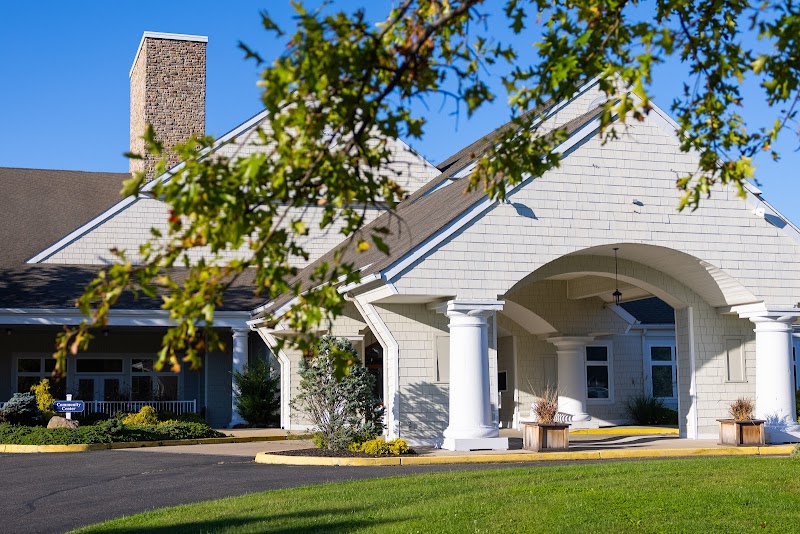
1500 BRECKNOCK ROAD, GREENPORT, NY 11944 (631) 477-3800
Non profit - Corporation 66 Beds Independent Data: November 2025
Trust Grade
90/100
#84 of 594 in NY
Last Inspection: April 2025

Within standard 12-15 month inspection cycle. Federal law requires annual inspections.

Overview

Peconic Landing at Southold has earned a Trust Grade of A, indicating it is an excellent facility that is highly recommended for families considering care options. It ranks #84 out of 594 nursing homes in New York, placing it in the top half of facilities statewide, and #10 out of 41 in Suffolk County, where only nine local options are better. However, the facility is facing a worsening trend, with the number of issues increasing from 3 in 2023 to 4 in 2025. Staffing is a strong point, with a perfect 5/5 rating and RN coverage that exceeds 80% of other facilities in the state, although turnover is around 42%, which is average. On the downside, recent inspections revealed several concerns, including a staff member not providing appropriate dignity during meal assistance and improper medication administration practices, which could affect residents' safety and care quality.

Trust Score
A
90/100
In New York
#84/594
Top 14%
Safety Record
Low Risk
No red flags
Inspections
Getting Worse
3 → 4 violations
Staff Stability
○ Average
42% turnover. Near New York's 48% average. Typical for the industry.
Penalties
✓ Good
No fines on record. Clean compliance history, better than most New York facilities.
Skilled Nurses
✓ Good
Each resident gets 70 minutes of Registered Nurse (RN) attention daily — more than 97% of New York nursing homes. RNs are the most trained staff who catch health problems before they become serious.
Violations
○ Average
8 deficiencies on record. Average for a facility this size. Mostly minor or procedural issues.
★★★★★
5.0
Overall Rating
★★★★★
5.0
Staff Levels
★★★★★
5.0
Care Quality
★★★★☆
4.0
Inspection Score
Stable
2023: 3 issues
2025: 4 issues

The Good

  • 5-Star Staffing Rating · Excellent nurse staffing levels
  • 5-Star Quality Measures · Strong clinical quality outcomes
  • Full Sprinkler Coverage · Fire safety systems throughout facility
  • No fines on record
  • Staff turnover below average (42%)

    6 points below New York average of 48%

Facility shows strength in staffing levels, quality measures, fire safety.

The Bad

Staff Turnover: 42%

Near New York avg (46%)

Typical for the industry

The Ugly 8 deficiencies on record

Apr 2025 4 deficiencies
CONCERN (D)

Potential for Harm - no one hurt, but risky conditions existed

Resident Rights (Tag F0550)

Could have caused harm · This affected 1 resident

**NOTE- TERMS IN BRACKETS HAVE BEEN EDITED TO PROTECT CONFIDENTIALITY** Based on observations, record review, and interviews during the Recertification Survey initiated on 4/8/2025 and completed on 4/...

Read full inspector narrative →
**NOTE- TERMS IN BRACKETS HAVE BEEN EDITED TO PROTECT CONFIDENTIALITY** Based on observations, record review, and interviews during the Recertification Survey initiated on 4/8/2025 and completed on 4/11/2025, the facility did not ensure that each resident was treated with respect and dignity and cared for in a manner that promoted maintenance or enhancement of their quality of life. This was identified for one (Resident #35) of one resident reviewed for Dignity. Specifically, during a lunch meal observation on 4/8/2025, Registered Charge Nurse #1 was observed standing over Resident #35 while they assisted the resident with their lunch meal. The finding is: The facility's policy titled Meal Services, last reviewed in January 2025, documented the food shall be served in a manner that meets the individual needs of each resident. Residents who are unable to feed themselves shall be fed with attention to safety, comfort, and dignity. Nursing personnel will provide assistance to those residents who cannot feed themselves independently. The staff member should sit across from the resident at eye level. Resident #35 was admitted with diagnoses including Dementia, Alzheimer's Disease, and Hypothyroidism. The Minimum Data Set assessment dated [DATE] documented a Brief Interview for Mental Status score of 99, indicating the resident was unable to complete the interview and had severe cognitive impairment. The Minimum Data Set documented that the resident consumed meals with supervision or touching assistance. The Activities of Daily Living Comprehensive Care Plan, last reviewed on 3/11/2025, documented Resident #35 eats independently with assistance as needed. During a lunch meal dining observation in the [NAME] Unit on 4/8/2025 at 12:07 PM, Registered Charge Nurse #1 was observed assisting Resident #35 with their meal and feeding the resident their soup while standing next to the resident's chair. During an interview on 4/8/2025 at 12:07 PM, Registered Charge Nurse #1 stated the resident normally feed themselves; however, sometimes need staff assistance in completing their meals. Registered Charge Nurse #1 stated they should sit down while assisting a resident with their meal. Registered Charge Nurse #1 proceeded to get a chair to sit down and continued to assist Resident #35 with their lunch. During an interview on 4/10/2025 at 11:29 AM, the Director of Nursing Services stated nursing staff should sit with the resident to assist with a meal. 10 NYCRR 415.3(d)(1)(i)
CONCERN (D)

Potential for Harm - no one hurt, but risky conditions existed

Deficiency F0658 (Tag F0658)

Could have caused harm · This affected 1 resident

**NOTE- TERMS IN BRACKETS HAVE BEEN EDITED TO PROTECT CONFIDENTIALITY** Based on observation, record review, and interviews during the Recertification Survey initiated on 4/8/2025 and completed on 4/1...

Read full inspector narrative →
**NOTE- TERMS IN BRACKETS HAVE BEEN EDITED TO PROTECT CONFIDENTIALITY** Based on observation, record review, and interviews during the Recertification Survey initiated on 4/8/2025 and completed on 4/11/2025, the facility did not ensure that services provided or arranged by the facility meet the current professional standards of quality. This was identified for one (Resident # 3) of seven residents during the Medication Administration Task. Specifically, Licensed Practical Nurse #3 did not administer the Physician-ordered 6:00 PM and 9:00 PM scheduled medications to Resident #3 at the resident's refusal and left the medications at Resident #3's bedside in a souffle cup covered with tape for the resident to consume the medications on their own at a later time. The finding is: The Facility's Policy for Medication Administration dated 11/2024 documented Medications may not be prepared in advance and must be administered within one hour of their prescribed time (before and after the prescribed time). For the safety of the resident, medications being administered to the resident shall be in the presence of the nurse administering the medication, and confirmation of successful administration to the resident shall be performed before documentation of medication administration. The resident was admitted with diagnoses of Low Back Pain, Neuropathy, and Dementia. The Quarterly Minimum Data Set, dated [DATE] documented the resident had a Brief Interview for Mental Status score of 15, which indicated the resident had intact cognition. The physician's orders dated 03/27/2025 documented Acetaminophen 325 milligrams tablet, give 2 tablets (650 milligrams) by oral route three times per day Every Day at 9:00 AM; 2:00 PM; 9:00 PM for Low back pain and Gabapentin 400 milligram capsule give three capsules (1200 milligram) by oral route daily at 9:00 PM for Neuropathy, Gabapentin 400 milligrams capsule give 2 capsules (800 milligrams) by oral route twice daily at 9:00 AM and 6:00 PM. The Medication Administration Record for April 2025 documented Licensed Practical Nurse #3 administered all the Physician-ordered medications at 6:00 PM and 9:00 PM on 4/8/2025. During an observation on 4/9/2025 at 8:15 AM, Resident#3's room was observed with a medication cup that was covered with surgical tape and had two white tablets and two orange-colored capsules in it. During an interview on 4/9/2025 at 8:25 AM, Resident #3 stated they were not aware that there was a medication cup on their bedside table. Resident#3 stated they do not take their medications themselves, nurses administered the medications to them. During an interview on 4/09/2025 at 8:28 AM, Licensed Practical Nurse #1 stated they did not place the medication cup on the resident's bedside table. Licensed Practical Nurse#1 was able to identify the white round medications as Tylenol 325 milligrams tablets and orange capsule medications as Gabapentin 400 milligrams capsules. Licensed Practical Nurse#1 stated that the medications should not be left in the resident's room. Licensed Practical Nurse#1 stated Resident #3 did not have a Physician's order to administer medications themselves and the medications should not be left in the resident's room. During an interview on 4/11/2025 at 11:04 AM, Licensed Practical Nurse #3 stated on 4/08/2025 they worked as the Medication Administration Nurse and were assigned to Resident#3. The resident was very alert and did not want to take their 6:00 PM Gabapentin (two capsules) medication, therefore they left the medications in the resident's room. Licensed Practical Nurse #3 stated when they went to administer the 9:00 PM medications, the resident told them to add the Tylenol (two) tablets to the medication cup which was previously left in the room at 6:00 PM. Licensed Practical Nurse #3 stated after they put the Tylenol tablets in the medication cup, they covered the medication cup with surgical tape. They then left the medication cup at the resident's bedside table as per Resident #3's request. Licensed Practical Nurse#3 stated they should not have left any medication in the resident's room. Licensed Practical Nurse #3 acknowledged that it was not safe to leave the medications in Resident #3's room because another resident could have consumed the medications. During an interview on 4/11/2025 at 11:25 AM, the Director of Nursing Services stated the staff should not leave medications in resident rooms without supervision. During an interview on 4/01/2025 at 11:35 AM, Medical Doctor #1 stated the nurses should not leave the medications unattended in the resident's room for safety reasons. 10 NYCRR 415.11(c)(3)(i)
CONCERN (D)

Potential for Harm - no one hurt, but risky conditions existed

Deficiency F0761 (Tag F0761)

Could have caused harm · This affected 1 resident

**NOTE- TERMS IN BRACKETS HAVE BEEN EDITED TO PROTECT CONFIDENTIALITY** Based on observation, record review, and interviews during the Recertification Survey initiated on 4/8/2025 and completed on 4/1...

Read full inspector narrative →
**NOTE- TERMS IN BRACKETS HAVE BEEN EDITED TO PROTECT CONFIDENTIALITY** Based on observation, record review, and interviews during the Recertification Survey initiated on 4/8/2025 and completed on 4/11/2025, the facility did not ensure that all drugs and biologicals were stored in locked compartments. This was identified for one (Resident # 3) of seven residents during the Medication Administration Task. Specifically, Resident #3's room was observed with a medication cup containing medications (two tablets and two capsules) and an eye drop bottle at the resident's bedside. The finding is: The facility policy and procedure for Storage of Medications, last revised on 1/2025 documented that all Drugs are stored in an orderly manner in cabinets, drawers, or carts. These compartments are of sufficient size to prevent crowding. Each resident was assigned a cubicle or drawer to prevent the possibility of a drug for one resident being given to another resident. The Facility Policy for Medication Administration dated 11/2024 documented Medications may not be prepared in advance and must be administered within one hour of their prescribed time (before and after the prescribed time. For the safety of the resident, medications being administered to the resident shall be in the presence of the nurse administering the medication, and confirmation of successful administration to the resident shall be performed before documentation of medication administration. Resident #3 was admitted with diagnoses of Low Back Pain, Neuropathy, and Dementia. The Quarterly Minimum Data Set, dated [DATE] documented the resident had a Brief Interview for Mental Status score of 15, which indicated the resident had intact cognition. The physician's orders dated 03/27/2025 documented Acetaminophen 325 milligrams tablet, give 2 tablets (650 milligrams) by oral route three times per day Every Day at 9:00 AM; 2:00 PM; 9:00 PM for Low back pain; Gabapentin 400 milligram capsule give three capsules (1200 milligram) by oral route daily at 9:00 PM for Neuropathy; Gabapentin 400 milligrams capsule, give two capsules (800 milligrams) by oral route twice daily at 9:00 AM and 6:00 PM; and Refresh Relieva 0.5 %-0.9 % eye drops, instill one drop in each eye at 9:00 PM and 4 times daily as needed for bilateral Conjunctival Xerosis (dryness and roughness of conjunctiva). During an observation on 4/9/2025 at 8:15 AM, Resident#3's room was observed with a medication cup that was covered with surgical tape and had two white tablets and two orange-colored capsules in it. Additionally, there was an eye drop bottle of Refresh Relieva 0.5 %-0.9 % was observed on the left bedside table. During an interview on 4/9/2025 at 8:25 AM, Resident #3 stated they were not aware that there was an eye drop and a medication cup on their bedside table. Resident#3 stated they do not take their medications themselves, nurses administered the medications to them. During an interview on 4/09/2025 at 8:28 AM, Licensed Practical Nurse #1 stated they did not place the medication cup and the eye drops on the resident's bedside table. Licensed Practical Nurse#1 was able to identify the white round medications as Tylenol 325 milligrams tablets and orange capsule medications as Gabapentin 400 milligrams capsules. Licensed Practical Nurse#1 stated that the medications should not be left in the resident's room. Licensed Practical Nurse#1 stated Resident #3 did not have a Physician's order to administer medications themselves and the medications should not be left in the resident's room. During an interview on 4/09/2025 at 8:45 AM, Licensed Practical Nurse #2, the Unit Manager, stated the medications should not be left unattended in a resident's room for safety reasons. During an interview on 4/11/2025 at 11:04 AM, Licensed Practical Nurse #3 stated on 4/08/2025 they worked as the Medication Administration Nurse and were assigned to Resident#3. The resident was very alert and did not want to take their 6:00 PM Gabapentin (two capsules) medication, therefore they left the medications in the resident's room. Licensed Practical Nurse #3 stated when they went to administer the 9:00 PM medications, the resident told them to add the Tylenol (two) tablets to the medication cup which was previously left in the room at 6:00 PM. Licensed Practical Nurse #3 stated after they put the Tylenol tablets in the medication cup, they covered the medication cup with surgical tape. They then left the medication cup at the resident's bedside table as per Resident #3's request. Licensed Practical Nurse #3 stated they also accidentally left the resident's eye drops in the resident's room and forgot to place them in the medication cart. Licensed Practical Nurse#3 stated they should not have left any medication in the resident's room. Licensed Practical Nurse #3 acknowledged that it was not safe to leave the medications in Resident #3's room because another resident could have consumed the medications. During an interview on 4/11/2025 at 11:25 AM, the Director of Nursing Services stated the staff should not leave medications in resident rooms without supervision. During an interview on 4/01/2025 at 11:35 AM, Medical Doctor #1 stated the nurses should not leave the medications unattended in the resident's room for safety reasons. 10 NYCRR 415.18(e)(1-4)
MINOR (B)

Minor Issue - procedural, no safety impact

Deficiency F0838 (Tag F0838)

Minor procedural issue · This affected multiple residents

**NOTE- TERMS IN BRACKETS HAVE BEEN EDITED TO PROTECT CONFIDENTIALITY** Based on record review and staff interviews during the Recertification Survey initiated on 4/8/2025 and completed on 4/11/2025 t...

Read full inspector narrative →
**NOTE- TERMS IN BRACKETS HAVE BEEN EDITED TO PROTECT CONFIDENTIALITY** Based on record review and staff interviews during the Recertification Survey initiated on 4/8/2025 and completed on 4/11/2025 the facility did not ensure its Facility Assessment considered specific staffing needs for each resident unit (Rehabilitation unit and Long-Term Care unit) in the facility for each shift such as day, evening, and night. This was identified during the Sufficient and Competent Nurse Staffing Review Task. Specifically, the Facility Assessment last updated on 7/10/2024 did not consider staffing needs for each of the facility's two units for each shift such as day, evening, and night. The finding is: A review of the Facility assessment dated [DATE] was conducted during the sufficient staffing task. The Facility Assessment included the total number of nursing staff available for the entire facility for each shift. The Facility Assessment documented that staffing levels are adjusted as needed to meet the care needs and acuity of the member population (residents). The Facility Assessment further documented the staffing needs of the entire facility for each shift as follows: -For the 7:00 AM - 3:00 PM nursing shift the facility required two Registered Nurses for the entire facility. -For the 3:00 PM - 11:00 PM nursing shift the facility required two Registered Nurses for the entire facility. -For the 11:00 PM - 7:00 AM shift the facility required one Registered Nurse for the entire facility. -For the 7:00 AM - 3:00 PM nursing shift the facility required three Licensed Practical Nurses for the entire facility. -For the 3:00 PM - 11:00 PM nursing shift the facility required 2.5 Licensed Practical Nurses for the entire facility. -For the 11:00 PM - 7:00 AM shift the facility required one Licensed Practical Nurse for the entire facility. -For the 7:00 AM - 3:00 PM nursing shift the facility required eight Certified Nursing Assistants for the entire facility. -For the 3:00 PM - 11:00 PM nursing shift the facility required seven Certified Nursing Assistants for the entire facility. -For the 11:00 PM - 7:00 AM shift the facility required four Certified Nursing Assistants for the entire facility. The facility assessment did not include a breakdown of Registered Nurses, Licensed Practical Nurses, and Certified Nursing Assistants needed for each of the two units (Rehabilitation unit and Long-Term Care unit). During an interview on 4/10/2025 at 11:40 AM, the Staffing Coordinator stated the facility has one Long Term Care unit and one Rehabilitation unit, and they were responsible for staffing both units. The Staffing Coordinator stated the Director of Nursing Service provides them with final instruction regarding the staffing levels for each unit. During an interview on 4/11/2025 at 9:40 AM, the Director of Nursing Service stated that they have been employed at the facility since 12/2024 and have not had the opportunity to review the Facility Assessment. The Director of Nursing Service stated that the numbers presented in the staffing portion of the Facility Assessment reflected staffing levels for the entire facility. The Director of Nursing Service stated that the Facility Assessment must include staffing needs for each unit and each shift; however, they were not involved with updating the Facility assessment dated [DATE] as they were not employed at the time the assessment was reviewed. During an interview on 4/11/2025 at 10:00 AM, the Administrator stated the Facility Assessment is updated annually by the Assistant Administrator and themselves. The Administrator stated the staffing levels documented in the Facility Assessment are based on the facility's 60 beds [the entire facility]. The Administrator stated they were not aware that the staffing levels should be broken down per unit per shift and that they would update the Facility Assessment to reflect the staffing lever for each unit. 10 NYCRR 415.26
Dec 2023 3 deficiencies
CONCERN (D)

Potential for Harm - no one hurt, but risky conditions existed

Deficiency F0658 (Tag F0658)

Could have caused harm · This affected 1 resident

**NOTE- TERMS IN BRACKETS HAVE BEEN EDITED TO PROTECT CONFIDENTIALITY** Based on observation, record review and staff interviews conducted during the Recertification survey initiated on 12/7/2023 and ...

Read full inspector narrative →
**NOTE- TERMS IN BRACKETS HAVE BEEN EDITED TO PROTECT CONFIDENTIALITY** Based on observation, record review and staff interviews conducted during the Recertification survey initiated on 12/7/2023 and completed on 12/13/2023, the facility did not ensure that services provided by the facility as outlined in the Comprehensive Care Plan (CCP) must meet professional standards of quality. This was identified for two (Resident # 9, Resident # 33) of seven residents observed during the Medication Administration Task. Specifically, 1) Resident # 9 was receiving Lovenox (an anticoagulant medication) subcutaneously (under the skin). The Nursing staff were not rotating the Subcutaneous (sq) injection sites. and; 2) Licensed Practical Nurse (LPN) #2 was observed administering medications from the medication cart that were pre-poured into a medication cup for Resident # 33. The findings are: The Policy and Procedure for Injection Site Rotation dated February 2019 documented to record the site when subcutaneous injections are given. 1). Resident # 9 was admitted with diagnoses that included Respiratory Failure and Acute Embolism and Thrombosis of left Femoral Vein. The Minimum Data Set (MDS) assessment dated [DATE] documented the resident had a Brief Interview for Mental Status (BIMS) score of 99 which indicated severe cognitive impairment. The resident received 7 days of anticoagulants and 7 days of injections during the MDS look-back period. The physician's order dated 10/31/2023 documented to administer Enoxaparin (Lovenox) 80 milligrams (mg)/0.8 miliLiter(mL) subcutaneous syringe- inject 0.8 milliliter (80 mg) by subcutaneous route every 12 hours for an unspecified diagnosis. On 12/8/2023 at 9:20 AM, during a medication administration observation, Resident #9's abdomen was observed with multiple ecchymosis (bruising) to the abdomen. A review of the Medication Administration Record (MAR) from November 1, 2023, to December 10, 2023 revealed the injection site of Enoxaparin was not documented except on December 8, 2023 at 8 AM. The Medication Nurse, Licensed Practical Nurse (LPN) # 1 from the 7AM - 3PM nursing shift, was interviewed on 12/11/2023 at 2:13 PM. LPN #1 stated that the Lovenox is given subcutaneously, the site should be documented on the MAR, and injections should be rotated. The site was not documented on the MAR as it should have been. LPN #1 further stated that they would not know where the previous shift had administered the Lovenox subcutaneous medication because the injection site was not documented on the MAR. The Director of Nursing Services (DNS) was interviewed on 12/11/2023 at 2:50 PM and stated the site of Lovenox administration should be documented and rotated. The medication should not be given to the same site on consecutive days to prevent bruising and injuries to the resident. The resident's Physician was interviewed on 12/13/2023 at 1:03 PM and stated if the subcutaneous injection of Lovenox is not rotated bleeding, pain, and tissue damage can occur. 2) The policy and procedure for Administering Medications dated 12/7/2023 documented medications may not be administered in advance. Resident #33 has diagnoses that include Dementia and Hypertension. The Minimum Data Set (MDS) assessment dated [DATE] documented the resident had a Brief Interview for Mental Status (BIMS) score of 99 which indicated severe cognitive impairment. The resident was receiving a diuretic and antipsychotic medications. The physician orders dated 3/23/2022 documented -May Crush Meds Together as Manufacturer Allows and Mix with applesauce or pudding. On 12/08/2023 at 10:33 AM, Licensed Practical Nurse (LPN) # 2 was observed administering scheduled morning medications from a souffle cup stored in the top drawer of the medication cart. LPN #2 was asked why the medications were pre-poured/dispensed into the souffle cup. LPN #2 did not provide a comment and shrugged their shoulders. LPN #2 stated they were poured previously on their shift. The LPN stated the medications should have been given after being poured. All the medications were crushed together and mixed with applesauce. The Medication Administration Record (MAR) for December 2023 documented on December 8, 2023, the morning medications included Seroquel (antipsychotic medication) 25 milligrams (mg) tablet; Tylenol (pain and fever reducer) 325 mg x 2 tablets (650 mg); Senna (bowel medication) 8.6 mg tablet x 2 tablets (17.2 mg); Namenda (cognition-enhancing medication) 10 mg x 1 tablet; Multi vitamin with minerals- 1 tablet; Lasix (diuretic) 20 mg 1 tablet; and Depakote sprinkles (anti-epileptic medication) 125 micrograms (mcg) 1 capsule. The Director of Nursing Services (DNS) was interviewed on 12/13/2023 at 2:43 PM and stated LPN #2 should have administered the medications immediately to the resident after the medication is dispensed from the blister packs or bottles. Medications should not be poured and then stored in the medication cart to be given at a later time. This can contribute to a Medication error. The Physician was interviewed on 12/13/2023 at 12:47 PM and stated that Nurses should administer medications immediately after it is dispensed from the bottle or packets. Medications should not be dispensed and stored in the cart to be administered at a later time to minimize the risk for errors. 10 NYCRR 415.11(c)(3)(i)
CONCERN (D)

Potential for Harm - no one hurt, but risky conditions existed

Accident Prevention (Tag F0689)

Could have caused harm · This affected 1 resident

**NOTE- TERMS IN BRACKETS HAVE BEEN EDITED TO PROTECT CONFIDENTIALITY** 2) The facility policy titled Self-Medication dated January 2023 documented that should the interdisciplinary team determine tha...

Read full inspector narrative →
**NOTE- TERMS IN BRACKETS HAVE BEEN EDITED TO PROTECT CONFIDENTIALITY** 2) The facility policy titled Self-Medication dated January 2023 documented that should the interdisciplinary team determine that the resident is safe to administer their own medications, and the resident wishes to do so, the resident will be provided with a locked receptacle to store the medications. The interdisciplinary team will assess each resident's mental, physical, and visual ability to determine if the resident is capable of self-administration of medications, and until a decision is made by the interdisciplinary team, medications will continue to be administered in accordance with facility policies governing the administration of medications. Resident #19 was admitted with diagnoses including Vitamin B12 Deficiency Anemia, Vitamin D Deficiency, Calcium Deficiency, and Dry Eye Syndrome. The Minimum Data Set (MDS) assessment dated [DATE] documented the resident's Brief Interview for Mental Status (BIMS) score was 15 which indicated the resident had intact cognition. During an observation on 12/7/2023 at 12:26 PM, the following was observed on Resident #19's windowsill: -A bottle of Calcium 600 + D (3) 600 milligrams-5 micrograms (200 unit) tablet. -A bottle of an Eye Health Plus Lutein 300 micrograms-200 milligrams-27 milligrams-2 milligrams tablet. -A bottle of Vitamin B-12 Extended Release 1,000 micrograms tablet, -A bottle of the Lubricating eye drops 0.5 %. Resident #19 was interviewed on 12/07/2023 immediately after the observation of the multiple bottles placed on their windowsill. Resident #19 stated they lived independently in an apartment on the grounds of this facility prior to being admitted to the facility after a fall. Resident #19 stated they self-administered their medications at home, and they continue to do so since admission to the facility on [DATE]. Resident #19 stated they have been keeping these medications on the windowsill in their room and self-administering them daily since admission on [DATE]. Resident #19 stated that facility staff have not spoken to them about these medications at all. The medical record was reviewed and there were no physicians' orders for the supplements and eye drops found on the windowsill. Registered Nurse (RN) #1, the charge nurse, was interviewed on 12/13/2023 at 1:50 PM and stated the facility policy is to call the resident's doctor upon identifying medications in the resident's personal possession. RN #1 states, they were unaware that Resident #19 was self-administering medications and storing them in their room. Physician #1 was interviewed on 12/13/2023 at 12:30 PM and stated they were unaware that Resident #19 was storing medications or eye drops on the windowsill in their room or that they were self-administering the medications prior to today (12/7/2023). Physician #1 stated that it is the facility's policy that the Physician should be made aware of all medications, including supplements and eye drops, that a Resident is taking. 10 NYCRR 415.12(h)(1) Based on record review, observation, and interviews during the Recertification Survey from 12/7/23 to 12/13/23 and Abbreviated Survey (Complaint #NY 00327126), the facility did not ensure each resident received adequate supervision and assistance according to the plan of care to prevent accidents. This was identified for two (Resident #5 and Resident #19) of three residents reviewed for Accidents. Specifically, 1) Resident #5's care plan documented the resident required floor mats at their bedside to prevent injuries. Resident # 5 had a fall on 12/5/2023 and the Certified Nursing Assistant (CNA) # 1 did not apply the bilateral floor mats as per the Comprehensive Care Plan (CCP). 2) Resident #19 was observed with multiple bottles of supplements and an eye drop bottle on their windowsill. Resident #19 did not have a physician's order for the identified supplements and the eye drops and was not assessed to safely self-administer the medications and supplements. The findings are: The floor mats policy dated 9/1/2023 documented it is the policy of the facility to provide and use floor mats as per the physician's request to prevent injury of residents who might migrate out of the bed. The use of floor mats will be documented in residents' Plan of Care and CNA care plan. 1) Resident # 5 has diagnoses that include unspecified Dementia with behavioral disturbance and Hypertension. The Minimum Data Set (MDS) assessment dated [DATE] documented the resident had a Brief Interview for Mental Status (BIMS) score of 99 which indicated the resident's Cognitive Skills for daily decision-making skills were severely impaired. The Physician Order dated 11/21/2023 document to place floor mats to both sides of the bed. The Fall/Injury CCP dated 06/17/2020 documented the resident had a potential for falls and injuries as evidenced by a history of falls, secondary to impaired mobility, and Dementia. Interventions included to apply bilateral floor mats when the resident was in bed. The Certified Nursing Assistant (CNA) care plan dated December 2023 documented to place floor mats on the right and the left side of the bed every day 7:00 AM to 3:00 PM, 3:00 PM to 11:00 PM, and 11:00 PM to 7:00 AM. The Incident/ Accident report dated 12/5/2023 documented that at approximately 4:15 PM the resident was found lying on their back on the floor in their room next to the bed. The resident is care planned to have the bed in the lowest position and have floor mats placed next to the bed in the event he would migrate from the bed. When the CNA placed the resident to the bed, the CNA did not place the floor mats down next to the bed. The CNA (CNA #1) was called immediately and admitted that they had forgotten to place the floor mats in position. CNA #1 was interviewed on 12/13/2023 at 11:48 AM and stated on 12/5/2023 they were the assigned CNA during the 7 AM to 3 PM for Resident # 5 and forgot to put the floor mats down. CNA #1 stated I made a mistake, I forgot to put them down. I didn't follow the care plan. The Director of Nursing Services (DNS) was interviewed on 12/13/2023 at 12:25 PM and stated the investigation concluded that the CNA did not follow the CCP. CNA #1 should have followed the CCP to prevent injuries to the resident. The Physician was interviewed on 12/13/2023 at 1:00 PM and stated that the resident requires floor mats to prevent an injury in the event that a fall happens.
CONCERN (D)

Potential for Harm - no one hurt, but risky conditions existed

Infection Control (Tag F0880)

Could have caused harm · This affected 1 resident

**NOTE- TERMS IN BRACKETS HAVE BEEN EDITED TO PROTECT CONFIDENTIALITY** Based on observations, record review, and staff interviews during the Recertification Survey initiated on 12/7/2023 and complete...

Read full inspector narrative →
**NOTE- TERMS IN BRACKETS HAVE BEEN EDITED TO PROTECT CONFIDENTIALITY** Based on observations, record review, and staff interviews during the Recertification Survey initiated on 12/7/2023 and completed on 12/13/2023, the facility did not ensure that an Infection Prevention and Control Program (IPCP) designed to help prevent the development and transmission of infection was maintained. This was identified for two (Resident # 5 and Resident # 16) of seven residents observed during the Medication Administration Task. Specifically, during observation of the Medication Administration, Licensed Practical Nurse (LPN) #2 did not wash their hands according to the Center for Disease Control (CDC) guidance after rendering care to Resident # 5. Additionally, LPN #2 touched the medication tablet using their bare hands to pick up medication for Resident # 16. The findings are: The facility's policy for Hand Washing dated November 2017 documented hand washing shall be regarded as the single most important means of preventing the spread of infection. Employees must perform appropriate (20) second hand washing procedure under the following conditions including but not limited to before preparing and handling medications. Resident # 5 had diagnoses that include unspecified Dementia with Behavioral Disturbance and Hypertension. The Minimum Data Set (MDS) assessment dated [DATE] documented the resident had a Brief Interview for Mental Status (BIMS) score of 99 which indicated the resident had severely impaired cognitive skills for daily decision making. Resident # 16 had diagnoses that include Hypertension, Hyponatremia, and Bipolar Disorder. The Minimum Data Set (MDS) assessment dated [DATE] documented the resident had a Brief Interview for Mental Status (BIMS) score of 15 which indicated the resident had intact cognition. Licensed Practical Nurse (LPN) # 2 was observed washing their hands, after a medication pass, in Resident # 5's bathroom on 12/8/2023 at 10 AM. LPN #2 performed hand washing for less than 7 seconds. After washing their hands LPN #2 turned the faucet off by using their bare hands and then used a paper napkin to dry their hands. LPN #2 then proceeded to leave the bathroom to render care to the next resident. LPN #2 was interviewed on 12/8/2023 immediately after the observation and stated that they are supposed to wash their hands for at least 30 seconds while singing a song. LPN #2 was not able to state why they did not wash their hands for a full 30 seconds. LPN #2 did not comment when they were informed of the observation of them not using a barrier to turn off the faucet after washing their hands. LPN #2 was observed on 12/12/2023 at 9:10 AM administering a Calcium Carbonate tablet to Resident # 16. The tablet fell directly onto the surface of the medication cart. LPN #2 picked up the medication tablet with their bare hands and then administered the medication to Resident #16. LPN #2 was interviewed on 12/12/2023 immediately after the observation of them picking up a medication with their hands. LPN #2 did not comment on the observation. The Director of Nursing Services (DNS), who was also the Infection Preventionist, was interviewed on 12/13/2023 at 1:26 PM and stated LPN #2 should have washed their hands for a minimum of 15 to 20 seconds. LPN #2 should have turned off the faucet using a paper towel instead of using their bare hands. LPN #2 should not have used their bare hands to touch medications and should have disposed of the medication if the medication came in contact with the surface of the medication cart because the medication cart could be dirty. The Attending physician was interviewed on 12/13/2023 at 1:20 PM and stated not washing hands properly can cause the spread of infection. If the nurse does not wash their hands properly and do not dispense medications properly, this can contribute to a spread of germs and or viruses. 10 NYCRR 415.19(b)(1-4)
Dec 2022 1 deficiency
CONCERN (D)

Potential for Harm - no one hurt, but risky conditions existed

Infection Control (Tag F0880)

Could have caused harm · This affected 1 resident

**NOTE- TERMS IN BRACKETS HAVE BEEN EDITED TO PROTECT CONFIDENTIALITY** Based on observation, record review, and interviews during a Focused Infection Control Survey conducted on 12/28/2022 the facili...

Read full inspector narrative →
**NOTE- TERMS IN BRACKETS HAVE BEEN EDITED TO PROTECT CONFIDENTIALITY** Based on observation, record review, and interviews during a Focused Infection Control Survey conducted on 12/28/2022 the facility failed to maintain an infection prevention and control program (IPCP) designed to help prevent the development and transmission of communicable diseases and COVID-19 infection. Specifically, Certified Nursing Assistant (CNA) #1 did not utilize appropriate Personal Protective Equipment (PPE) when entering a COVID-19 positive resident's room. The finding is: The facility Infection Control policy and procedure last updated 8/8/2022 documented for Standard, Contact, and Droplet Precautions, eye protection will be used by Healthcare Personnel (HCP) who enters the room of a resident who is either confirmed or suspected of having COVID-19. The policy further documented when available, HCP will use an N95 filtering facepiece respirator before entering the room or care area of a Person Under Investigation (PUI) or confirmed COVID-19 positive resident. Resident #1 has diagnoses that include COVID-19 infection, Coronary Artery Disease, and Hypertension. An annual Minimum Data Set (MDS) assessment dated [DATE] documented the resident had short and long-term memory problems and required assistance for all Activities of Daily Living (ADL). A Physician's order dated 12/21/2022 documented that Resident #1 was placed on droplet precautions for 10 days. A Comprehensive Care Plan dated 12/21/2022 for Actual Viral Infection documented Resident #1 was positive for COVID-19 infection. Interventions included to implement precautions and utilize proper PPE as indicated. The CCP note section documented the resident was positive for COVID-19 infection by Polymerase Chain Reaction (PCR) testing and to implement Droplet precautions for 10 days. During a tour of the [NAME] unit on 12/28/2022 at 1:57 PM, CNA #1 was observed walking down the hall toward Resident #1's room wearing a surgical mask. A sign was observed on Resident #1's door that documented Contact and Droplet Precautions. CNA #1 donned (put on) a gown and a pair of gloves outside the resident's room and then entered Resident #1's room. CNA #1 did not put on eye protection and an N95 mask before entering Resident #1's room. Prior to leaving the resident's room CNA #1 doffed (took off) the gown and gloves and then exited the room wearing a surgical mask. CNA #1, who worked on the 7:00 AM - 3:00 PM shift and cared for Resident #1 on 12/28/2022, was interviewed on 12/28/2022 at 2:05 PM. CNA #1 stated that they (CNA #1) were informed during the morning report that Resident #1 was COVID-19 positive, and they (CNA #1) observed the precaution sign on the resident's door prior to entering the resident's room. CNA #1 stated that they also received in-service education regarding the use of proper PPE when caring for a COVID-19 positive resident. CNA #1 was unable to state why they (CNA #1) were not wearing eye protection and an N95 mask prior to entering Resident #1's room. The Registered Nurse (RN) Staff Educator was interviewed on 12/28/2022 at 2:23 PM. The RN Staff Educator stated all staff were in-serviced on the use of appropriate PPE for residents who are on Transmission Based Precautions (TBP) such as residents who are on Droplet and Contact Precautions. The in-service education was conducted in November 2022 and remains ongoing. The RN Staff Educator stated that full PPE is required when caring for a COVID-19 positive resident. The RN Staff Educator further stated that CNA #1 should have put on an N95 mask and eye protection prior to entering Resident #1's room. The Assistant Director of Nursing Services (ADNS) was interviewed on 12/28/2022 at 2:52 PM and stated that N95 masks are kept at the nurse's station for staff use. The ADNS stated staff were educated to don an N95 with a surgical mask, face shield or goggles, gown, and gloves prior to entering the room of a COVID-19 positive resident. The ADNS further stated that CNA #1 should have been wearing an N95 mask and eye protection prior to entering Resident #1's room. The Administrator was interviewed on 12/28/2022 at 3:16 PM. The Administrator stated all staff were educated on the appropriate PPE to be worn when going into a COVID-19 positive resident's room. The Administrator stated extra N95 masks are kept at the nurse's station and on the PPE cart. The Administrator further stated CNA #1 should not have entered Resident #1's room without an N95 mask and eye protection. NYCRR 415.19(a)(1-3)
Understanding Severity Codes (click to expand)
Life-Threatening (Immediate Jeopardy)
J - Isolated K - Pattern L - Widespread
Actual Harm
G - Isolated H - Pattern I - Widespread
Potential for Harm
D - Isolated E - Pattern F - Widespread
No Harm (Minor)
A - Isolated B - Pattern C - Widespread

Questions to Ask on Your Visit

  • "Can I speak with families of current residents?"
  • "What's your RN coverage like on weekends and overnight?"

Our Honest Assessment

Strengths
  • • Grade A (90/100). Above average facility, better than most options in New York.
  • • No major safety red flags. No abuse findings, life-threatening violations, or SFF status.
  • • No fines on record. Clean compliance history, better than most New York facilities.
  • • 42% turnover. Below New York's 48% average. Good staff retention means consistent care.
Concerns
  • • No significant concerns identified. This facility shows no red flags across CMS ratings, staff turnover, or federal penalties.
Bottom line: Generally positive indicators. Standard due diligence and a personal visit recommended.

About This Facility

What is Peconic Landing At Southold's CMS Rating?

CMS assigns PECONIC LANDING AT SOUTHOLD an overall rating of 5 out of 5 stars, which is considered much above average nationally. Within New York, this rating places the facility higher than 99% of the state's 100 nursing homes. This rating reflects solid performance across the metrics CMS uses to evaluate nursing home quality.

How is Peconic Landing At Southold Staffed?

CMS rates PECONIC LANDING AT SOUTHOLD's staffing level at 5 out of 5 stars, which is much above average compared to other nursing homes. Staff turnover is 42%, compared to the New York average of 46%. This relatively stable workforce can support continuity of care. RN turnover specifically is 56%, which is notably high. RNs provide skilled clinical oversight, so turnover in this role can affect medical care quality.

What Have Inspectors Found at Peconic Landing At Southold?

State health inspectors documented 8 deficiencies at PECONIC LANDING AT SOUTHOLD during 2022 to 2025. These included: 7 with potential for harm and 1 minor or isolated issues.

Who Owns and Operates Peconic Landing At Southold?

PECONIC LANDING AT SOUTHOLD is owned by a non-profit organization. Non-profit facilities reinvest revenue into operations rather than distributing to shareholders. The facility operates independently rather than as part of a larger chain. With 66 certified beds and approximately 49 residents (about 74% occupancy), it is a smaller facility located in GREENPORT, New York.
How Does Peconic Landing At Southold Compare to Other New York Nursing Homes?

Compared to the 100 nursing homes in New York, PECONIC LANDING AT SOUTHOLD's overall rating (5 stars) is above the state average of 3.1, staff turnover (42%) is near the state average of 46%, and health inspection rating (4 stars) is above the national benchmark.

What Should Families Ask When Visiting Peconic Landing At Southold?

Based on this facility's data, families visiting should ask: "Can I visit during a mealtime to observe dining assistance and food quality?" "How do you handle medical emergencies, and what is your hospital transfer rate?" "Can I speak with family members of current residents about their experience?"

Is Peconic Landing At Southold Safe?

Based on CMS inspection data, PECONIC LANDING AT SOUTHOLD has a clean safety record: no substantiated abuse findings (meaning no confirmed cases of resident harm), no Immediate Jeopardy citations (the most serious violation level indicating risk of serious injury or death), and is not on the Special Focus Facility watch list (a federal program monitoring the lowest-performing 1% of nursing homes). The facility has a 5-star overall rating and ranks #1 of 100 nursing homes in New York. While no facility is perfect, families should still ask about staff-to-resident ratios and recent inspection results during their visit.

Do Nurses at Peconic Landing At Southold Stick Around?

PECONIC LANDING AT SOUTHOLD has a staff turnover rate of 42%, which is about average for New York nursing homes (state average: 46%). Moderate turnover is common in nursing homes, but families should still ask about staff tenure and how the facility maintains care continuity when employees leave.

Was Peconic Landing At Southold Ever Fined?

PECONIC LANDING AT SOUTHOLD has no federal fines on record. CMS issues fines when nursing homes fail to meet care standards or don't correct problems found during inspections. The absence of fines suggests the facility has either maintained compliance or corrected any issues before penalties were assessed. This is a positive indicator, though families should still review recent inspection reports for the full picture.

Is Peconic Landing At Southold on Any Federal Watch List?

PECONIC LANDING AT SOUTHOLD is not on any federal watch list. The most significant is the Special Focus Facility (SFF) program, which identifies the bottom 1% of nursing homes nationally based on persistent, serious quality problems. Not being on this list means the facility has avoided the pattern of deficiencies that triggers enhanced federal oversight. This is a positive indicator, though families should still review the facility's inspection history directly.