THE GRAND REHABILITATION AND NURSING AT MOHAWK

99 SIXTH AVENUE, ILION, NY 13357 (315) 895-4050
For profit - Partnership 120 Beds THE GRAND HEALTHCARE Data: November 2025 1 Immediate Jeopardy citation
Trust Grade
23/100
#573 of 594 in NY
Last Inspection: June 2025

Inspected within the last 6 months. Data reflects current conditions.

Overview

The Grand Rehabilitation and Nursing at Mohawk has received a Trust Grade of F, indicating significant concerns and a very poor overall standing. It ranks #573 out of 594 facilities in New York, placing it in the bottom half, and #4 out of 4 in Herkimer County, meaning there are no local facilities rated higher. Unfortunately, the trend is worsening, with issues increasing from 1 in 2024 to 10 in 2025, suggesting a deteriorating situation. Staffing is rated poorly with a score of 1 out of 5, and while the turnover rate of 48% is about average for New York, it still indicates instability among staff. Additionally, the facility has accrued $26,685 in fines, which is concerning and suggests ongoing compliance issues. There is average registered nurse coverage, which is essential for catching problems that other staff may miss. Specific incidents include critical failures to provide necessary respiratory care for residents with tracheostomies and a lack of proper infection control measures, including positive Legionella testing in the facility's water system. Overall, while there are some aspects of care, the numerous deficiencies and troubling trends raise serious concerns for families considering this nursing home.

Trust Score
F
23/100
In New York
#573/594
Bottom 4%
Safety Record
High Risk
Review needed
Inspections
Getting Worse
1 → 10 violations
Staff Stability
⚠ Watch
48% turnover. Above average. Higher turnover means staff may not know residents' routines.
Penalties
✓ Good
$26,685 in fines. Lower than most New York facilities. Relatively clean record.
Skilled Nurses
⚠ Watch
Each resident gets only 28 minutes of Registered Nurse (RN) attention daily — below average for New York. Fewer RN minutes means fewer trained eyes watching for problems.
Violations
⚠ Watch
31 deficiencies on record. Higher than average. Multiple issues found across inspections.
★☆☆☆☆
1.0
Overall Rating
★☆☆☆☆
1.0
Staff Levels
★★★☆☆
3.0
Care Quality
★★☆☆☆
2.0
Inspection Score
Stable
2024: 1 issues
2025: 10 issues

The Good

  • Full Sprinkler Coverage · Fire safety systems throughout facility
  • No fines on record

Facility shows strength in fire safety.

The Bad

1-Star Overall Rating

Below New York average (3.0)

Significant quality concerns identified by CMS

Staff Turnover: 48%

Near New York avg (46%)

Higher turnover may affect care consistency

Federal Fines: $26,685

Below median ($33,413)

Moderate penalties - review what triggered them

Chain: THE GRAND HEALTHCARE

Part of a multi-facility chain

Ask about local staffing decisions and management

The Ugly 31 deficiencies on record

1 life-threatening
Jun 2025 10 deficiencies
CONCERN (D)

Potential for Harm - no one hurt, but risky conditions existed

Deficiency F0582 (Tag F0582)

Could have caused harm · This affected 1 resident

Based on record review and interviews during the recertification survey conducted 6/23/2025 to 6/30/2025, the facility did not provide the appropriate liability and appeal notices to Medicare benefici...

Read full inspector narrative →
Based on record review and interviews during the recertification survey conducted 6/23/2025 to 6/30/2025, the facility did not provide the appropriate liability and appeal notices to Medicare beneficiaries for two (2) of three (3) residents (Residents #89 and #271) reviewed. Specifically, Resident #89 remained in the facility after discontinuation of Medicare Part A services and the facility did not provide the resident with timely Notice of Medicare Non-Coverage (Centers for Medicare and Medicaid Services-10123) when Medicare Part A coverage was ending and a Skilled Nursing Facility Advanced Beneficiary Notice of Non-Coverage (Centers for Medicare and Medicaid Services-10055) for Medicare Part A as required; and Resident #89 had a planned discharge from the facility and was not provided with a timely Notice of Medicare Non-Coverage. Findings include: The facility policy Cut Notices, last reviewed 5/2025, documented Minimum Data Set employees would issue or inform the resident and/or their family and follow the rules for a resident's right to appeal for Managed Medicare and Medicare A residents. The rehabilitation department would issue for Medicare and Managed Medicare part B residents. All notices were to be uploaded to the electronic medical record for the resident. Medicare cut notices were to be issued timely. If a resident could not sign their own notice, the Health Care Proxy or designated representative was to be contacted. The notice could be given verbally with a witness present on the call. The witness and the person signing the cut letter were to sign the cut letter. The person who the letter was issued to, the acceptance of the notice, and the date and time of the notice given. The notice should then be mailed to the proxy. The Center for Medicare and Medicaid Services form instructions for the Skilled Nursing Facility Advanced Beneficiary Notice of Non-coverage Center for Medicare and Medicaid Services-10055, expiration date 1/31/26, documented a Skilled Nursing Facility Advanced Beneficiary Notice of Non-coverage (form 10055) must be issued by providers to beneficiaries in situations where Medicare payment was expected to be denied. The Skilled Nursing Facility Advanced Beneficiary Notice of Non-coverage must be delivered far enough in advance that the beneficiary or representative had time to consider the options and make an informed choice prior to services ending. 1) Resident #89 had diagnoses including dementia, anxiety, and muscle weakness. The 5/29/2025 Minimum Data Set assessment documented it was a Skilled Nursing Facility Part A Prospective Payment System (a method of reimbursement used by Medicare that pays a predetermined amount for a service) discharge assessment and the resident had a Medicare-covered stay with a start date of 5/1/2025 and an end date of 5/29/2024. The resident had severely impaired cognitive skills for daily decision making. Resident #89's Health Care Proxy documented the resident's adult male child was their health care proxy. Resident #89's Durable Power of Attorney documented the resident's adult male child and adult female were co-power of attorneys and needed to make decisions together. The Notice of Medicare Non-Coverage for Centers for Medicare and Medicaid Services-10123 letter documented Resident #89's effective end date of services was 5/29/2025. The handwritten note on the Skilled Nursing Facility Advanced Beneficiary Notice of Non-Coverage documented the Notice of Non-coverage Center for Medicare and Medicaid Services-10055 were unable to be provided as the resident was unable to sign for themselves, they were unable to reach the resident's adult female child, and did not have a mailing address for the resident's adult female child. The resident was removed from Medicare part A services on 5/30/2025. 2) Resident #271 had diagnoses including ataxia (lack of muscle coordination), history of traumatic brain injury, and legal blindness. The 1/30/2025 Minimum Data Set assessment documented it was a discharge assessment and the resident had a Medicare covered stay with a start date of 1/1/2025 and an end date of 1/30/2025. The resident had severely impaired cognitive skills for daily decision making. The 1/27/2025 Discharge and Care Summary documented the resident was discharging home with home health and 24-hour care assistance. The information in the discharge and care plan summary guide was reviewed and a copy provided to the resident. The Skilled Nursing Facility Beneficiary Protection Notice form documented a handwritten note by facility staff that a Notice of Medicare Non-coverage had not been issued to the resident because they were discharged home. During a phone interview on 6/27/2025 at 11:08 AM, Minimum Data Set Nurse #14 stated they assisted with issuing Notices of Medicare Non-Coverage this year until the Director of Rehabilitation took over. The issuance of Notices of Medicare Non-Coverage was discussed in their utilization review meetings. If a resident was determined to not meet skilled nursing care needs, a resident was issued a 48-hour notice prior to the discontinuation of services. The notice was issued to the resident unless they were not cognitively intact. If the resident was not cognitively intact, they contacted the power of attorney or contact person in the resident's chart. When the notice was issued, they made sure the resident or resident representative understood the notice and the appeal process. If the contact with the resident representative was made over phone, a certified letter would be sent that contained the Notice of Medicare Non-coverage. If a resident had a facility planned discharge, they should receive a Notice of Medicare Non-coverage. Resident #271 had a planned discharge and should have been issued a Notice of Medicare Non-coverage. During a phone interview on 6/27/2025 at 12:20 PM, the Director of Rehabilitation stated they just recently took over the issuance of Notice of Medicare Non-coverages for the facility. They stated they believed they were the person who issued the Notice of Medicare Non-coverage to Resident #89. They attempted to notify the responsible party if they could not issue the notice to the resident. If they could not notify the responsible party, the Notice of Medicare Non-coverage was issued anyway. They stated in the past the facility attempted to obtain an address if they did not have one. If the resident was unable to sign for themselves, they did not always call the secondary contact on the list if they could not get a hold of the first contact. They stated they did not have the electronic medical record access to be able to see who the healthcare proxies or power of attorneys were. During an interview on 6/27/2025 at 12:41 PM, the Administrator stated the responsibility of issuing Medicare cut letters recently switched from the Minimum Data Set department to the Director of Rehabilitation. If a resident was not able to be issued the Notice of Medicare Non-coverage due to their cognition and the facility was unable to get ahold of the responsible party, a certified letter should be sent. If they did not have an address to send a certified letter to, they reached out to Corporate for further guidance. Resident #89 should not have been taken off Medicare Part A without a notice being issued to the appropriate party. They attended the Utilization Review meeting where Notices of Medicare Non-coverage was discussed. Prior to the meeting end, they discussed when the notice would be issued and who the notice would be issued to, so everyone knew what was going to happen. If a resident was discharged to home and it was planned by the facility, a Notice of Medicare Non-coverage should be issued. Resident #271 should have been issued a Notice of Medicare Non-coverage as it was a planned discharge. It was important for the Notice of Medicare Non-coverage to be issues appropriately so the resident and their representative were informed of their right to appeal. 10 NYCRR 483.10 (g) (18)
CONCERN (D)

Potential for Harm - no one hurt, but risky conditions existed

Deficiency F0637 (Tag F0637)

Could have caused harm · This affected 1 resident

Based on record review and interview during the recertification survey conducted 6/23/2025 to 6/30/2025, the facility failed to ensure each resident who experienced a significant change in status was ...

Read full inspector narrative →
Based on record review and interview during the recertification survey conducted 6/23/2025 to 6/30/2025, the facility failed to ensure each resident who experienced a significant change in status was comprehensively assessed using the Centers for Medicare and Medicaid Services specified Resident Assessment Instrument for one (1) of two (2) residents (Resident #55) reviewed. Specifically, a Significant Change Minimum Data Set assessment was not completed as required for Resident #55 following enrollment in a hospice program. Additionally, the resident did not have an individualized care plan including the most recent hospice plan of care and a description of the services furnished by the facility to attain or maintain the resident's highest practicable physical, mental, and psychosocial well-being. Findings include: The undated facility policy Agreement for Hospice Care for Skilled Nursing Facility Residents and Respite Care Services documented the responsibility of the skilled nursing facility was to participate in ongoing interdisciplinary comprehensive assessments. The facility policy Care Plans, Comprehensive Person-Centered, revised 1/2025, documented care plans were revised as information about the resident and the resident's condition changed; described the services furnished to attain or maintain the resident's highest practicable physical, mental, and psychosocial well-being; and reflected the resident's wishes regarding care and treatment goals. The facility policy Comprehensive Minimum Data Set Policy, reviewed 6/13/2025, documented the Minimum Data Set would be completed upon admission, quarterly, with a significant change, and annually. Resident #55 had diagnoses including adult failure to thrive and malignant neoplasm (cancer) of the right kidney. The 5/7/2025 Minimum Data Set assessment documented severely impaired cognition and dependence for most activities of daily living. There was no documentation related to the resident receiving hospice services. The hospice consultant plan of care documented the resident was enrolled in hospice services on 4/29/2025. The 4/29/2025 Social Worker #19's progress note documented hospice did an initial intake for Resident #55 and the family accepted hospice services. There was no documented evidence a Significant Change Minimum Data Set assessment was initiated or completed when the resident was enrolled in hospice services. The facility's Comprehensive Care Plan for Resident #55 did not include enrollment in hospice services and collaboration with the hospice plan of care. Hospice recorded progress notes in Resident #55's medical record on 4/28/2025, 5/8/2025, 5/12/2025, 6/16/2025, and 6/26/2025. During an interview on 6/27/2025 at 11:08 AM, the Minimum Data Set Registered Nurse #14 stated significant changes were discussed during morning report. It was a team collaboration with all departments in determining who qualified. Resident #55 was not scheduled for a significant change assessment. There was confusion with the daughter as to whether the resident was going to go on hospice. They stated they were not always notified when hospice services were initiated for a resident and if a resident was newly placed on hospice a significant change Minimum Data Set should be completed. During an interview on 6/27/2025 at 1:03PM, Registered Nurse Unit Manager #7 stated registered nurses created the care plans and licensed practical nurses updated them. Resident #55 was on hospice. Hospice should be included in their care plan, so staff knew how to provide care. They were not aware the resident did not have a hospice care plan. During an interview on 6/30/2025 at 1:17 PM, the Assistant Director of Nursing stated the comprehensive care plan should have reflected end of life interventions, including hospice recommendations. 415.11(a)(3)(ii)
CONCERN (D)

Potential for Harm - no one hurt, but risky conditions existed

Deficiency F0679 (Tag F0679)

Could have caused harm · This affected 1 resident

Based on observations, record review, and interviews during the recertification survey conducted 6/23/2025-6/30/2025, the facility did not provide ongoing programs to support each resident in their ch...

Read full inspector narrative →
Based on observations, record review, and interviews during the recertification survey conducted 6/23/2025-6/30/2025, the facility did not provide ongoing programs to support each resident in their choice of activities for one (1) of one (1) resident (Resident #37) reviewed. Specifically, Resident #37 was not offered meaningful activities that included their interests and preferences. Findings include: The facility policy Activities Attendance, last reviewed 1/2025, documented the activity department was to record the activity attendance and participation for all residents. The attendance records were reviewed on a regular basis, at least quarterly, to determine any changes in resident participation that may indicate a change in condition and lead to reassessment and care plan review. A resident's attendance record was used when completing a resident's progress notes to determine their participation as it related to their activity plan. Resident #36 had diagnoses including dementia with other behavioral disturbance, bipolar II disorder, and major depressive disorder. The 4/13/2025 Minimum Data Set documented the resident had severe cognitive impairment, did not isolate themselves from others, had physical and behavioral symptoms that disrupted or impacted their participation in social activities and care or the living environment 1 to 3 days, and wandered. It was important for the resident to listen to music they liked, and somewhat important to do things with groups of people and do their favorite activities. The resident's Comprehensive Care Plan documented: - 5/27/2025, the resident would be monitored by social services and be offered emotional support as needed. Interventions included to provide support and reassurance, encourage participation in activities offered, and encourage the resident to remain social with staff and peers. - 5/28/2025, the resident was a readmission and had limited involvement in group activities due to their behaviors and short attention span. Interventions included to assist the resident in finding programs of interest and encourage resident suggestions regarding program choices. The resident liked music and to walk on the unit. Staff should encourage individual activities, invite /escort the resident to activities, special events, and parties of choice/interest, and provide appropriate cognitive/sensory activities. - 6/6/2025 and revised 6/23/2025, the resident exhibited behavior symptoms such as being socially inappropriate, wandering behavior, cognitive impairment, and had poor safety awareness. The resident preferred lying on the floor on floor mats. Interventions included to distract the resident with activities of interest and distract from wandering by offering pleasant diversions. The 4/15/2025 Recreation Assessment by the Activities Director documented the resident's interests were crafts and music. The resident's preferred activity setting was self-directed/independent and small groups. The resident needed reminders and escort assistance to activities and assistance with group activities. The resident's response to group activities was positive, the resident was alert but confused and enjoyed music and doing crafts with assistance. The 5/28/2025 Recreation Assessment by the Activities Director documented the resident's interests were music, movies, and television/radio. The resident participated in small group situations and self-directed/independent pursuits. The resident preferred their own room for an activity setting. It was important the resident could do their favorite activities. The resident was alert with confusion, had a very short attention span, and could have behaviors daily. The staff were to attempt activities with the resident. The resident liked music, and the staff were to encourage group activity as tolerated. A daily activity calendar was provided and the resident's right to refuse was respected. The resident needed to be told of the time of an activity and required close supervision. The resident's activity log dated 6/20/2025-6/27/2025 documented the resident had a personal visit every day, except 6/20/2025 when they did an independent activity and 6/25/2025 when they attended the music activity. The June 2025 facility Activities calendar documented: - on Monday 6/23/2025 morning visits at 8:00 AM, 10:00 AM Patio Put Put, 1:30 PM Mail delivery, 2:00 PM discussion ball, and 3:30 PM personal visits. - on Tuesday 6/24/2025 morning visits at 8:00 AM, 10:00 AM Bingo, 1:30 PM Mail delivery, 2:00 PM bowlers practice, and 3:30 PM personal visits. - on Wednesday 6/25/2025 morning visits at 8:00 AM, 10:30 AM Live Music, 1:30 PM Mail delivery, 2:00 PM movie/popcorn or outside, and 3:30 PM personal visits. - on Thursday 6/26/2025 morning visits at 8:00 AM, 10:00 AM Music Group, 12:00 PM Birthday Luncheon, 1:30 PM Mail delivery, 2:00 PM Pokeno, and 3:30 PM personal visits. The resident was observed on: - 6/24/2025 at 1:02 PM walking down the hallway and was redirected down the hallway by a staff member. At 1:10 PM, they tried to open a door on the unit, shaking it vigorously four times before continuing to wander down the hallway. At 1:13 PM, they were redirected out of another resident's room, wandered down to the nurses' station and played with the computer mouse at the nurses' station, then was attempting to get into the trashcan at the nurses' cart. The resident was provided with a pudding by Certified Nurse Aide #35. From 1:23 PM to 2:08 PM, the resident wandered up and down both North and South hallways and was only redirected to keep walking the hallway if they went into another resident's room. At 1:46 PM Activities Aide #39 came up to get three residents for bingo, signed them out and took them off the unit. - 6/25/2025 at 9:37 AM, Assistant Activities Director #36 documented they attempted to talk to the resident but walked away when the resident did not respond. At 10:17 AM, there was a live music entertainer, the resident was not invited to the music activity. From 10:50 AM to 11:20 AM, the resident continuously walked up and down the North and South hallway without redirection or offered distraction. At 11:22 AM, they walked into the dining room with the music entertainer, sat down, and then left again. - 6/26/2025 at 10:24 AM, the resident was not invited to the music activity Activities Aide #39 was playing in the dining room. At 1:35 PM, the resident was wandering up and down both North and South hallway. At 3:35 PM, the resident attempted to enter another resident's room and was redirected by Certified Nurse Aide #37. During an interview on 6/27/2025 at 12:10 PM, Activities Aide #39 stated they tried to visit with residents every day, but some resident one-to-ones were a few times a week as opposed to daily. They stated they visited with the resident if they were having a good day. A one-to-one visit consisted of talking to the resident, hand massages, lotion, and interaction with them about their life/family. Resident #36 liked to walk up and down the hallways so they would do that with the resident and try to have a conversation. The resident did not always answer the questions. The resident came to music as the fourth floor was very much a music floor. Everyone was invited to music activities, and everyone had the right to refuse. Refusals were documented on the activities log. It was important for residents to have activities to keep them active, keep them up to date on what was going on, and engaged. During an interview on 6/30/2025 at 12:38 PM, Assistant Activities Director #36 stated most of the dementia unit activities revolved around music because music is a part of everyone's life. Resident #36 got a mixture of one-to-one visits and personal visits. They stated the resident liked music activities, like on 6/25/2025 the resident came and went from the music activity. The resident had a short attention span and on a bad day if you tried to engage the resident, they walked away. They stated the activity staff attempted to bring the resident into an activity, and if they did not want to stay, they walked out. The resident liked to do crafts but sometimes needed assistance with finishing them. One-to-one visits were based on personal preferences. They stated they walked up and down the hallway with the resident and talked to them. During an interview on 6/30/2025 at 12:38 PM, the Activities Director stated when a personal visit was marked on a resident's activity log, that meant checking in with the resident, seeing if they needed anything and offering independent leisure activities. A one-on-one was 15 minutes or more and was different from a personal visit. Resident #36 was happiest when they were walking and could just be with a person. The resident should always be invited to music activities even if they sometimes walked in and out. 10NYCRR 415.5(f)(1)
CONCERN (D)

Potential for Harm - no one hurt, but risky conditions existed

Quality of Care (Tag F0684)

Could have caused harm · This affected 1 resident

Based on observations, record review, and interviews during the recertification survey conducted 6/23/2025-6/30/2025, the facility did not ensure residents received treatment and care in accordance wi...

Read full inspector narrative →
Based on observations, record review, and interviews during the recertification survey conducted 6/23/2025-6/30/2025, the facility did not ensure residents received treatment and care in accordance with professional standards of practice and the comprehensive person-centered care plan for one (1) of one (1) resident (Resident #24) reviewed. Specifically, Resident #24 required dialysis (used to filter waste products from the blood) at a community based dialysis center, did not have orders for on-going assessments and oversight before and after dialysis treatments including assessment of the dialysis access site, and their comprehensive care plan did not reflect the resident received dialysis. Additionally, the resident did not have a rolled washcloth in their hand as planned and their nails were long with a dark substance underneath. Findings include: The facility policy End Stage Renal Disease Coordination of Care, revised 1/2020 documented the interdisciplinary team, and the end stage renal disease facility would coordinate, develop, and implement an individualized care plan based on the patient's assessment. Both the nursing home staff and end stage renal disease facility staff were responsible for monitoring and addressing any medical or non-medical needs identified. The facility policy Care of Fingernails/ Toenails, last reviewed 1/2025, documented proper nail care included daily cleaning and regular trimming. If a resident refused nail care a supervisor was to be made aware. Resident #24 had diagnoses including chronic kidney disease stage 3 (the kidneys have mild to moderate damage) and dependence on renal dialysis. The 3/24/2025 Minimum Data Set assessment documented the resident had intact cognition, did not reject care, had no functional limitation to the upper extremities, required partial/ moderate assistance with personal hygiene, substantial/ maximum assistance with upper body dressing, and did not receive hemodialysis. Dialysis: The 6/19/2025 Comprehensive Care Plan documented the resident had a potential for nutritional related problems. The resident had end stage renal disease and recently started routine hemodialysis treatments. Interventions included to provide diet as ordered and monitor food and fluid intakes. The care plan did not include nursing interventions for monitoring. The 4/30/2025 at 3:00 PM, Licensed Practical Nurse #17 progress note documented the resident was seen by nephrology (kidney specialist), had severe chronic kidney disease, needed to start dialysis, and had an appointment scheduled for the placement of a tunneled hemodialysis catheter (for dialysis access). The 5/6/2025 at 9:42 AM, Licensed Practical Nurse #17 progress note documented the resident was seen for a port insertion and their implanted venous access device (a device used to carry medications into the bloodstream, also known as a port or central line) was ready for use. The 5/8/2025 Dialysis Communication Form documented it was the resident's first day receiving dialysis. The dialysis center documented the resident tolerated the treatment. There were no documented facility pre/ post dialysis evaluation/ assessments of the resident's condition and monitoring for complications. The 5/9/2025 Nurse Practitioner #24 late entry progress note documented the resident went to dialysis as scheduled, but did not receive their morning medication prior to leaving. Their chart was reviewed, and they advised the nurse to obtain vital signs upon return from dialysis and to notify the provider if their blood pressure or heart rate was elevated. Dialysis Communication forms included: - on 5/10/2025 the form was completed by the facility, there was no documented pre or post dialysis evaluation/ assessments. - on 5/13/2025 the form was blank and not completed by the facility with no documented communication from the dialysis center and no pre- dialysis evaluation/ assessment. - on 5/15/2025 there was no documented pre-dialysis evaluation/ assessment. - on 5/17/2025 there was no form. - on 5/22/2025, 5/24/2025, 5/27/2024, 5/29/2025, and 5/31/2025 there was no documented pre or post dialysis evaluation/ assessments. On 6/3/2025 at 12:05 PM, Licensed Practical Nurse #16 completed a post dialysis evaluation/ assessment. There was no Dialysis Communication Form completed by the facility. There was no documented pre- dialysis evaluation/ assessment. On 6/5/2025, there was no Dialysis Communication Form completed by the facility. The 6/6/2025 Physician orders documented the resident went to dialysis 3 times a week on Monday, Wednesday, and Friday. Additionally, there was no orders for staff to monitor their dialysis access cite. Dialysis Communication forms included: - on 6/7/2025, there was no form completed by the facility. - on 6/10/2025, 6/12/2025, and 6/14/2025, there were no documented pre or post dialysis evaluation/ assessments. - on 6/17/2025, 6/19/2025, and 6/21/2025 there were no documented pre or post dialysis evaluation/ assessments. HANDS/NAILS: The 4/3/2025 Comprehensive Care Plan documented the resident was at risk for functional decline in mobility and self-care related to decreased activity tolerance and strength. Interventions included partial/ moderate assistance with personal hygiene The 4/17/2025 Occupational Therapy Discharge Summary completed by Assistant Director of Therapy/ Occupational Therapist #4 documented staff should assist with activities of daily living, mobility, and transfers. Staff was educated on placing a small cloth for the resident's right hand to decrease risk of developing pressure sores. The undated care instructions documented to place a rolled washcloth in the resident's right hand due to 4th/ 5th fingers being in a fixed position; the washcloth should be in place at all times except during bathing/ hygiene tasks; and the resident required partial/ moderate assistance with personal hygiene. The following observations of the resident were made: - on 6/23/2025 at 11:30 AM, seated in their wheelchair. Their right hand was contracted (shortening of muscles) and their nails had a brown substance underneath them. They did not have any devices in their hand. At 12:35 PM, in the dining room eating their lunch without a device in their hand. - on 6/24/2025 at 2:14 PM, 6/25/2025 at 12:36 PM, and 6/26/2025 at 11:43 PM, their right hand was contracted without any device in place. - on 06/27/2025 at 11:11 AM, seated in their wheelchair in their room. Their right hand was contracted, their nails were long, with a dark substance underneath, and their nails were touching their palm. There was a dark area on their palm where the nails were touching their skin. The resident could not open their hand fully and stated it hurt when they attempted to do so. The June 2025 activities of daily living record documented a rolled washcloth was placed in the resident's right hand due to their 4th/5th finger being in a fixed position: - on 6/23/2025 at 1:59 PM, by Certified Nurse Aide #27. - on 6/25/2025 at 11:45 AM, by Certified Nurse Aide #28. During an interview on 6/27/25 at 11:31 AM, Certified Nurse Aide #31 stated the resident's care instructions documented the level of assistance they required with care. Certified nurse aides cleaned and cut resident's nails as needed and on shower days. Resident #24 did not like to have the rolled washcloth in their hand and sometimes removed it after staff put it in their hands. The resident refused to have the rolled washcloth placed in their hand today and they did not alert the nurse the resident refused. The resident's right hand was difficult to open which made it difficult to cut and clean their nails. They did not look at the resident's nails today and never saw them pressing into the palm of their hand. During an interview on 6/27/25 at 12:12 PM, Licensed Practical Nurse #17 stated Resident #24 received dialysis on Tuesdays, Thursdays, and Saturdays at 6:15 AM. The nurse who worked the 10:00 PM - 6:00 AM shift should obtain the resident's vital signs, complete the pre-dialysis evaluation/ assessment, and fill out the dialysis communication form. When the resident came back from dialysis the nurse should take the resident's vital signs, complete the post-dialysis evaluation/ assessment, and review the dialysis center's communication. The resident's dialysis access site should be monitored to ensure there were no issues. A registered nurse needed to start the care plans, and the licensed practical nurse could update the care plans after they were created. Resident #24's fingers on their right hand were in a fixed position and they should have a rolled washcloth in their hand. If the resident refused, the certified nurse aide should tell the nurse so they could approach the resident to attempt placement again. They were not aware the resident refused the rolled washcloth. The nurse aides should clean and cut the resident's nails as needed. They should be made aware if Resident #24 refused nail care because their fingers were in a fixed position and if their nails were long it could lead to skin breakdown. During an interview on 6/27/2025 at 1:03 PM, Registered Nurse Unit Manager #7 stated care plans were started by a registered nurse and should be resident specific. If a resident was on dialysis, they should have a care plan, so staff knew what to monitor and how to care for the resident. Staff should monitor the resident's dialysis site to ensure it was working and there were no issues. Nursing staff should complete the pre/post dialysis evaluation/ assessments, pre-dialysis communication forms, and review the post dialysis communication forms after each dialysis session. They were unaware the resident did not have a dialysis care plan, and nursing staff were not consistently completing the pre/post dialysis evaluations/ assessments, and pre-dialysis communication. The resident's nails should be checked daily to ensure they were clean and the certified nurse aides should cut the resident's nails at least weekly. If the resident refused, they should let a nurse know. They should also let the nurse know if the resident refused their rolled washcloth as it aided to prevent skin breakdown in their hand. On 6/27/2025 at 2:43 PM, during an interview the Assistant Director of Therapy stated Resident #24 was last seen by therapy in April 2025. They recommended a rolled washcloth be placed in the resident's right hand to decrease the risk of pressure ulcers. The resident tolerated the rolled washcloth and they educated staff on how to apply the washcloth and the importance of its use. If the resident was refusing staff should let therapy know so they could re-evaluate the resident. Resident #24 had long nails, and it was important for staff to clean and cut their nails as tolerated to prevent skin breakdown. On 6/30/2025 at 1:07 PM, the Assistant Director of Nursing stated nail care should be completed on shower days and as needed. Staff should follow the care plans and apply any devices recommended by therapy. If a resident refused, they should alert the nurse so they could re-approach the resident. Nursing staff should check the resident's dialysis access site daily to ensure there were no issues. Additionally, staff should have been completing the dialysis communication form and pre/ post evaluations. Any registered nurse could have started a dialysis care plan, and each care plan should be resident specific and include refusal of care and any specific treatments they received including dialysis. 10NYCRR 415.12
CONCERN (D)

Potential for Harm - no one hurt, but risky conditions existed

Pressure Ulcer Prevention (Tag F0686)

Could have caused harm · This affected 1 resident

Based on observations, record review, and interviews during the recertification survey conducted 6/23/2025 to 6/30/2025, the facility did not ensure residents received care, consistent with profession...

Read full inspector narrative →
Based on observations, record review, and interviews during the recertification survey conducted 6/23/2025 to 6/30/2025, the facility did not ensure residents received care, consistent with professional standards of practice, to prevent pressure ulcers and promote healing of pressure ulcers for one (1) of three (3) residents (Residents #35) reviewed. Specifically, Licensed Practical Nurse #12 did not adhere to the physician orders for Resident #35's pressure ulcer treatment and applied a different dressing than what was ordered. Additionally, Resident #35's pressure relieving devices for their heels were not consistently implemented as planned. Findings include: The facility policy Wound Care, revised 1/2025, documented the licensed staff were to verify the order for wound care, gather the required materials, and perform wound care and dressing as ordered. Resident #35 had diagnoses including left side weakness and paralysis. The 5/9/2025 Minimum Data Set assessment documented the resident's cognition was severely impaired, had no behaviors, and required maximum assist for most activities of daily living including bed mobility. The resident was at risk for pressure ulcers, had a Stage 3 pressure ulcer (full-thickness skin loss extending into fatty tissue), received pressure ulcer care, and had a pressure relieving device for their bed and wheelchair. The 4/23/2024 comprehensive care plan, revised 6/5/2025, documented the resident had an alteration in skin integrity related to impaired mobility with a Stage 3 pressure ulcer on the left lateral heel. Interventions included weekly wound assessments, diabetic socks, offloading shoe to the left foot while out of bed and both feet raised with heel floats while in bed. The undated resident's Kardex (care card) documented to apply heel float boots and heel protector boots while the resident was in bed to help off load heels and to wear DARCO boots to bilateral feet as an adaptive device. The 6/18/2025 Wound Evaluation by Wound Physician #3 documented the resident had a Stage 3 pressure ulcer on the left lateral heel. Approaches included offloading the heel. The pressure ulcer measured 0.9 centimeters by 0.3 centimeters by 0.1 centimeters with an overall surface area of 0.27 centimeters. There were no signs of infection, and the treatment plan was changed to apply honey hydrogel (wound treatment), apply skin prep to the peri-wound area and cover with border gauze island dressing daily. The 6/19/2025 physician order documented wound care to the left lateral heel: cleanse with wound cleanser, apply honey hydrogel to the wound bed, and cover with border gauze every dayshift. The 6/25/2025 Wound Evaluation by Wound Physician #3 documented the resident had a Stage 3 pressure ulcer on the left lateral heel. Approaches included offloading the heel. The pressure ulcer measured 0.9 centimeters by 0.7 centimeters by 0.1 centimeters with an overall surface area of 0.63 centimeters. There were no signs of infection, and the treatment plan was changed to apply alginate calcium with silver, apply skin prep to the peri-wound area and cover with an abdominal absorbent pad and wrap with 3.4-inch gauze roll daily. During an observation on 6/25/2025 at 1:26 PM, 1:40 PM, and 4:56 PM, the resident was lying in bed with their heels directly on the bed with no floating boots or a pillow for pressure relief. During an observation on 6/26/2025 at 9:25 AM and 9:57 AM, the resident was lying in bed with their feet directly on their mattress without their heels being elevated or wearing heel float boots. During an observation and interview on 6/26/2025 at 11:02 AM with Licensed Practical Nurse #12, Resident #35 was lying in bed with their heels directly on the bed without heel floats. Licensed Practical Nurse #12 entered the room and prepared for the resident's dressing change to the left lateral heel. They placed a towel under the resident's heels on the bed and prepared to remove the dressing currently in place. Licensed Practical Nurse #12 stated the treatment order in the electronic medical record was border gauze but the dressing on the resident's heel was an abdominal pad and kerlix gauze dressing. They stated the wound team must have changed the treatment recommendations and they would have to go get an abdominal pad and kerlix gauze dressing from the supply room, as they only brought in the supplies that were documented in the current physician order. Licensed Practical Nurse #12 left the room to retrieve the abdominal pad and kerlix gauze and when they returned they cleansed the wound, placed honey hydrogel on the wound, placed the abdominal pad over the wound and wrapped it with Kerlix gauze. Licensed Practical Nurse #12 placed resident's heels directly on the bed prior to exiting the room. The 6/26/2025 at 11:53 PM physician order documented to discontinue the treatment of honey hydrogel to the wound, and cover with border gauze every dayshift. The treatment order was changed, with a start date of 6/27/2025 to cleanse the left lateral heel with wound cleanser, apply alginate calcium with silver, apply skin prep to the peri-wound area and cover with an abdominal absorbent pad and wrap with 3.4-inch gauze roll daily. During an observation on 6/27/2025 at 10:33 AM the resident was lying in bed with their heels directly resting on the mattress, without heel floats on. At 10:52 AM, and 11:54 AM the resident was again observed without heel floats and heels lying directly on the mattress. During a phone interview on 6/27/2025 at 3:02 PM, Licensed Practical Nurse #12 stated a resident's wound care orders were listed in the resident's Treatment Administration Record. The resident's wound care order should be followed as written. They should have utilized the dressing that was ordered as opposed to the dressing they saw when they completed Resident #35's wound care. They stated if a resident required skin prep to the peri-wound area it would be in the order. If a resident was care planned to have offloading boots in bed, they should be applied if available. They believed Resident #35's boots were in the wash due to drainage from the wound but was unsure when they went to laundry. During an interview on 6/27/2025 at 10:37 AM, Certified Nurse Aide #15 stated they knew how to care for a resident by their Kardex. If a resident was supposed to have their heels floated or to wear offloading boots, it would be on a resident's Kardex. Resident #35 had put themselves back to bed after they had been gotten up for breakfast. Certified Nurse Aide #15 stated they had gone in after the resident had put themself back to bed to change the resident and get them back up for lunch. The resident did not have offloading boots in their room. The resident was also supposed to have special shoes when they're out of bed, but they did not see them in the resident's room either. They stated since the resident's boots were not in their room, they put slipper socks on the resident and would ask therapy when they came to the floor about the missing boots. During an interview on 6/27/2025 at 11:57 AM, Licensed Practical Nurse #16 stated they knew what treatment to provide a resident's wound by the order in their Treatment Administration Record in the electronic medical record. Wound care orders were supposed to be followed as the order was written. They stated if they went to do a resident's wound care and noticed the dressing done by the wound team the day before was different than the order, they would call the supervisor for clarification on the order. If a resident was to have skin prep to their peri-wound area, there was supposed to be an order. Residents who were supposed to have their heels offloaded or having offloading boots would have it on their Kardex, and they should be applied as planned. Resident #35 did not have an order for offloading boots, but they should have them as they had a heel wound. They stated they knew the resident did not have boots on this morning when they did their wound care. If the resident did not have the offloading boots in their room, the certified nurse aides were to check the stock room or call laundry. During an interview on 6/27/2025 at 1:20 PM, Assistant Director of Nursing/Registered Nurse stated it was her responsibility to put the new wound treatment orders in the electronic medical record and would try to get the order in before the next treatment was due. If the orders were not updated by the next wound care, they expected the nurse to follow the wound care in the computer. They stated if a nurse noticed the dressing done by the wound team was different than they order, the nurse was expected to follow the current order. Resident #35's wound care order was not updated until after the resident's wound care was completed on 6/26/2025 so the nurse should have followed the order that was in the electronic medical record. The nursing staff should be applying offloading boots if that was care planned for the resident If the resident did not have the offloading boots, the certified nurse aides were to contact the team lead or supervisor so they can be gotten from the stock room or clean utility. 10NYCRR 415.12(c)(1)
CONCERN (D)

Potential for Harm - no one hurt, but risky conditions existed

Accident Prevention (Tag F0689)

Could have caused harm · This affected 1 resident

Based on observations, record review, and interviews during the recertification survey conducted 6/23/2025-6/30/2025, the facility did not ensure the resident environment remained free of accident haz...

Read full inspector narrative →
Based on observations, record review, and interviews during the recertification survey conducted 6/23/2025-6/30/2025, the facility did not ensure the resident environment remained free of accident hazards for one (1) of three (3) resident floors (Floor 4) reviewed. Specifically, Floor 4, a locked dementia care unit had an unlocked treatment cart accessible to residents, containing medicated creams and other potentially hazardous items. Findings include: The facility policy Storage of Medications, revised 6/2025, documented the facility would store all drugs and biologicals in a safe, secure, and orderly manner. The nursing staff was responsible for maintaining medication storage and preparation areas in a clean, safe, and sanitary manner. Compartments, including, but not limited to, drawers, cabinets, rooms, refrigerators, carts, and boxes, containing drugs and biologicals were to be locked when not in use, and trays or carts used to transport such items shall not be left unattended if open or otherwise potentially available to others. During an observation on 6/26/2025 at 9:41 AM, the Floor 4 treatment cart outside the dining room was unlocked and unattended with residents in the immediate area. The first drawer in the treatment card contained Silvsorb gel (antimicrobial used for wounds), antifungal ointment and powder, zinc oxide 20% cream (medicated skin cream), alcohol prep pads, antimicrobial skin wound gel, and clotrimazole-betamethasone cream (topical antifungal cream). The second drawer contained povidone-iodine swabs (antiseptic), gauze pads, lemon glycerin sticks, medicated shampoos, calcitriol ointment (used to treat psoriasis), wound gel, antifungal topical powder, and iodoform packing strips (wound dressing). The third drawer contained blue foam dressings, abdominal pads, gauze squares, and hydrogel saturated gauze. The fourth drawer contained surgical tape, gauze sponges, xeroform petrolatum dressing, superabsorbent dressings, and calcium alginate dressings. The fifth drawer contained wound cleanser spray, a bag of Epsom salt (contains magnesium sulfate), Medi grip tube bandages, wound drapes, and opticell chitosan based gelling fiber (wound dressing). During an observation and interview on 6/26/2025 at 9:42 AM, Licensed Practical Nurse #12 approached the unlocked treatment cart and stated it was supposed to be locked. They stated another nurse was assisting with treatments that morning and they must have left the cart unlocked. During a follow up interview on 6/27/2025 at 3:02 PM, Licensed Practical Nurse #12 stated the treatment cart should be locked when not in use and attended by a nurse. The cart needed to be locked so no one, including residents, was able to get into it. There was the potential for an accident or hazard with the treatment cart being left unlocked as residents could get into it. During an interview on 6/30/2025 at 11:53 AM, Registered Nurse Interventional Care Nurse #32 stated the treatment cart should be locked when not in use. There were residents on the unit who opened cabinets and drawers and took things causing the potential for an accident hazard. During an interview on 6/30/2025 at 1:58 PM the Assistant Director of Nursing stated that treatment carts should never be left unlocked. The fourth floor was a specialized locked unit, and it was important for the treatment carts to be locked for safety. 10 NYCRR 415.12(h)(1)(2)
CONCERN (D)

Potential for Harm - no one hurt, but risky conditions existed

Deficiency F0700 (Tag F0700)

Could have caused harm · This affected 1 resident

Based on observations, record review, and interviews during the recertification survey conducted 6/23/2025-6/30/2025, the facility did not review the risks and benefits of bed rails with the resident ...

Read full inspector narrative →
Based on observations, record review, and interviews during the recertification survey conducted 6/23/2025-6/30/2025, the facility did not review the risks and benefits of bed rails with the resident or resident representative and obtain informed consent prior to installation of bed rails for two (2) of two (2) residents (Resident #106 and #102) reviewed. Specifically, there was no documented evidence informed consent was obtained for the use of the side rails for Resident #106 and the informed consent for Resident #102 was not done timely. Findings include: The facility policy Proper Use of Side Rails, reviewed 1/2025 documented the purpose of the guidelines were to ensure the safe use of side rails as resident mobility aids and to prohibit the use of side rails as restraints unless necessary to treat a resident's medical symptoms. Guidelines for use included consent for side rail use would be obtained from the resident or legal representative, after presenting potential benefits and risks. 1) Resident #106 had diagnoses including morbid obesity. The 5/14/2025 Minimum Data Set assessment documented the resident was cognitively intact, required substantial/maximal assistance with bed mobility, was dependent with transfers, and did not use bed rails. On 6/11/2025 the Assistant Director of Nursing documented a bed rail/restraint evaluation for Resident #106. Bilateral bed rails were placed on the resident's bed to aide independence with bed mobility. On 6/11/2025 a physician order documented bilateral bed rails. On 06/11/2025 the use of the bilateral bed rails was added the resident's Comprehensive Care Plan. Interventions included discussing and recording the risks and benefits of bed rails with the resident, family/caregivers, ensuring valid consent on the chart prior to initiating restraint, and ensuring safety was maintained while utilizing bed rails. During an observation on 6/23/2025 at 2:07 PM, Resident #106 had bed rails on each side of their bed. There was no documented evidence in the medical record informed consent was obtained from the resident or resident representative related to the use of bed rails. During an interview on 6/27/2025 at 11:00 AM, Assistant Director of Therapy #4 stated Resident #106 had bilateral bed rails for bed mobility, and they were unsure if they had a signed consent because nursing was responsible for obtaining them. During an interview on 6/27/2025 at 11:30 AM, Registered Nurse Unit Manager #5 stated Resident #106 had bilateral bed rails for bed mobility so they should have had a consent form completed when they were installed, but they did not. They were recently notified Resident #106 did not have a signed consent, so they had obtained one that week, but it was in a pile somewhere and had not been put into the resident's electronic medical record yet. During an interview on 6/30/2025 at 1:07 PM, the Assistant Director of Nursing stated side rails required a physician order, and quarterly assessments were completed by nursing and therapy to ensure they were still safe for the resident. Consents should be obtained by the nurse managers prior to the side rail instillation. Resident #106 had bed rails, and they were unsure if they had a signed consent. 2) Resident #102 had diagnoses including fracture of the right tibia (shin bone), muscle weakness, reduced mobility. The 6/6/2025 Minimum Data Set assessment documented the resident was cognitively intact, required partial/moderate assistance with bed mobility, was dependent with transfers, and did not use bed rails. On 4/17/2025 a physician order documented bilateral bed rails. On 04/17/2025 the use of the bilateral bed rails were added the resident's Comprehensive Care Plan. Interventions included discuss and record with the resident, family/caregivers, the risks and benefits of bilateral bed rails . On 6/3/2025 the Assistant Director of Nursing documented a bed rail/restraint evaluation for Resident #102. Bilateral bed rails were placed on the resident's bed to aide independence with bed mobility. The physical restraint/assistive device informed consent form was signed by Resident #102 on 6/14/2025. There was no documented evidence informed consent was obtained prior to 6/14/2025. During an observation on 6/23/2025 at 11:50 AM, Resident #102 had bilateral bed rails on their bed. They stated the bed rails had been on their bed since their admission to the facility. During an interview on 6/27/2025 at 11:00 AM, Assistant Director of Therapy #4 stated therapy would evaluate a resident and if they thought they needed assistance with bed mobility they would reach out to nursing and recommend bed rails. Nursing would obtain medical clearance, obtain signed consent from the resident, and complete restraint/side rail evaluations. Resident #102 had bilateral bed rails for bed mobility, and they were unsure if they had a signed consent because nursing was responsible for obtaining them. During an interview on 6/27/2025 at 11:30 AM, Registered Nurse Unit Manager #5 stated therapy evaluated the need for side rails and would notify them when they were recommended. They would obtain consent from the resident before the side rails were placed, reach out to maintenance for placement, and complete a side rail evaluation form that was done quarterly. Resident #102 had bilateral bed rails for bed mobility. They thought the resident already had a signed consent because they were not told they needed one. During an interview on 6/30/2025 at 1:07 PM, the Assistant Director of Nursing stated side rails required a physician order, and quarterly assessments were completed by nursing and therapy to ensure they were still safe for the resident. Consents should be obtained by the nurse managers prior to the side rail instillation. Resident #102 had bed rails, and they were unsure if they had a signed consent. 10NYCRR 415.12(h)(1)(2)
CONCERN (D)

Potential for Harm - no one hurt, but risky conditions existed

Deficiency F0726 (Tag F0726)

Could have caused harm · This affected 1 resident

Based on observations, record review, and interviews during the recertification survey conducted 6/23/2025-6/30/2025 the facility did not ensure licensed nurses had specific competencies and skills se...

Read full inspector narrative →
Based on observations, record review, and interviews during the recertification survey conducted 6/23/2025-6/30/2025 the facility did not ensure licensed nurses had specific competencies and skills sets necessary to care for residents' needs for two (2) of two (2) licensed staff (Registered Nurse Manager #7 and Licensed Practical Nurse #6) reviewed. Specifically, Resident #51 had a tracheostomy (an opening in the neck into the windpipe to provide an airway) and Registered Nurse Manager #7 and Licensed Practical Nurse #6 had insufficient training and knowledge of emergency procedures for accidental decannulation (tracheostomy tube removed in error). Additionally, the Minimum Data Set did not accurately reflect the resident's respiratory status. Findings included: The facility policy Tracheostomy Care, last reviewed 8/27/2021, documented in the event of an emergency and the tracheostomy was dislodged, cover the site with a 4 x 4 gauze and call 911 to have the resident sent to the hospital for a replacement. The facility policy Emergency Tracheostomy Procedure, revised 8/27/2021, documented the emergency response when a tracheostomy was dislodged was nursing staff should initiate a code blue (facility wide emergency response), contact a supervisor and call 911, administer oxygen as needed over the mouth and nose, and if the resident was not breathing the use of a non-rebreather mask or a bag mask device would be used. Resident #51 had diagnoses including intracerebral hemorrhage (bleeding in the brain), tracheostomy, and bronchiectasis (a lung condition where mucus clogs the airway). The 5/8/2025 Minimum Data Set assessment documented the resident had severely impaired cognition, received oxygen, and did not receive suctioning or tracheotomy care. The Comprehensive Care Plan, revised 6/27/2025, documented Resident #51 had a tracheostomy. Interventions included: supplies were kept at the bedside and included a spare tracheostomy tube and an ambu bag (an emergency breathing assistance device); 28 percent oxygen via their tracheostomy collar at 5 liters continuously to maintain an oxygen saturation of 90 percent or greater; critical supplies included an oxygen tank, humidification for the tracheostomy, tracheostomy care supplies, spare cannulas, a specialized wheelchair, and medications. The 11/15/2024 physician orders documented keep an ambu bag at the bedside at all times, attempt cardiopulmonary resuscitation, keep a spare tracheostomy tube at the bedside, and administer continuous oxygen at 2 Liters via tracheostomy. During an observation and interview on 6/26/2025 at 9:01 AM, Licensed Practical Nurse #6 stated Resident #51's tracheostomy care was completed earlier in the morning. They accurately described the steps involved in tracheostomy care. The resident was observed with a tracheostomy with 2 Liters of oxygen via tracheostomy collar. Licensed Practical Nurse #6 stated in the event of an accidental tracheostomy dislodgment they would not replace the tube. They would call the Supervisor or the Nurse Manager and follow their instructions. During an interview on 6/26/2025 at 9:15 AM, Registered Nurse Unit Manager/Supervisor #7 stated if there was a tracheostomy decannulation they would call the Nurse Educator for further instruction on what steps needed to be taken. The skills evaluation checklist Tracheostomy Care Competency documented areas of care reviewed included preparation and assessment; cleaning of the trach; and site and stoma care. The competency did not include emergency procedures for accidental decannulation. Completed staff competencies documented Licensed Practical Nurse #6 and Registered Nurse Educator #8 signed the evaluation checklist for tracheostomy care competency on 5/30/2025. Registered Nurse Manager #7's competency dated 6/2/2025 documented only their signature. The competency was not signed by the instructor. During an interview on 6/26/2025 at 9:20 AM, Registered Nurse Educator #8 stated the Nurse Manager/Supervisor was responsible for the management of emergent situations involving tracheostomy dislodgment. They expected all nursing supervisors to have the knowledge base to manage an emergent decannulation. They reviewed trach care with licensed staff but would defer to the respiratory therapy department for accurate instruction during a tracheostomy decannulation emergency. During an observation on 6/27/2025 at 9:45 AM, Resident #51's bedside had an emergency supply checklist of items present for emergencies. Written instructions documented if the tube fell out, the site should be covered with Vaseline gauze and the resident would be sent, with their supplies, to the hospital for tube replacement. During a telephone interview on 6/27/2025 at 10:00 AM, Respiratory Therapist #9 stated time was crucial in a decannulation instance, and a rapid decline was highly possible. All licensed staff should react to decannulation with prompt and competent actions. Items such as the petroleum gauze was no longer recommended due to its flammability and should be removed from the checklist and from the bedside. An emergency response procedure for decannulation depended on whether the tracheostomy was cuffed (has a balloon like feature at the end of the tube) or uncuffed, and all staff should know the difference. All licensed nursing staff competencies were completed by the in-facility education department. During an interview at on 6/30/2025 at 12:45 PM, Registered Nurse Unit Manager #5 stated training was done yearly for tracheostomy care and as needed. All licensed staff was clinically prepared for tracheostomy related emergencies. They recently re-educated all licensed staff after realizing there was a lack of clarity related to emergency tracheostomy situations. They stated it was important for all licensed nurses to have the knowledge and skills to manage emergency situations. During an interview on 6/30/2025 at 1:20 PM, the Assistant Director of Nursing stated all nurses completed their competencies yearly. Nurses who worked with high acuity residents like those with tracheostomies should be competent with the skill prior to working with that resident. A registered nurse supervisor used to be in the building 24 hours a day but that was no longer the case. The Assistant Director of Nurses stated a dislodged tracheostomy should have the stoma covered with gauze, place oxygen nasally if needed, and call 911 and the supervisor. During a follow-up interview on 6/30/2025 at 2:03 PM, Registered Nurse Educator #8 stated all nursing staff should be able recite the process related to tracheostomy emergency care. It was not acceptable for any licensed staff to lack the knowledge and skills necessary to act in an emergent airway situation. Death of a resident could have resulted if there was not proper process in place during an emergency. 10 NYCRR 415.26(c)(2)
CONCERN (E) 📢 Someone Reported This

A family member, employee, or ombudsman was alarmed enough to file a formal complaint

Potential for Harm - no one hurt, but risky conditions existed

ADL Care (Tag F0677)

Could have caused harm · This affected multiple residents

Based on observations, record review, and interviews during the recertification and abbreviated (NY00340946 and NY00374215) surveys conducted 6/23/2025-6/30/2025, the facility did not ensure residents...

Read full inspector narrative →
Based on observations, record review, and interviews during the recertification and abbreviated (NY00340946 and NY00374215) surveys conducted 6/23/2025-6/30/2025, the facility did not ensure residents who were unable to carry out activities of daily living received the necessary services to maintain good nutrition, grooming, and personal and oral hygiene for five (5) of eight (8) residents (Residents #7, #23, #55, #57, and #75) reviewed. Specifically, Residents #23 was not provided with shaving and showers as planned; Resident #75 did not receive assistance at meals as planned; Residents #57 and #7 had unclean fingernails; and Resident #55 was not offered a lunch meal. Findings include: The facility policy Assistance with Meals, last reviewed 1/2025, documented residents would receive assistance with meals in a manner that met the individual needs of the resident. Facility staff would serve residents meal trays and help residents who required assistance with eating. The facility policy Shower/Tub Bath, last reviewed 1/2025 documented the date and time the shower was performed, the name and title of the individual who assisted the resident would be recorded on the resident's activities of daily living record. If the resident refused the shower the reason why and interventions taken would be recorded. The facility policy Care of Fingernails/Toenails, reviewed 1/2025 documented nail care included daily cleaning and regular trimming. 1) Resident #23 had diagnoses including fracture of the left hand and wrist. The 6/4/2025 Minimum Data Set assessment documented the resident was cognitively intact, required substantial/maximal assistance for showering/bathing, supervision or touching assistance with personal hygiene, and did not reject care. The Comprehensive Care Plan initiated 2/26/2025 documented the resident was at risk for functional decline in mobility and self-care related to a fractured left wrist. Interventions included substantial/maximal assistance with showering/bathing, and partial/moderate assistance with personal hygiene. The Unit 2 shower schedule documented Resident #23 was to receive a shower on Tuesdays during the day shift. During an observation and interview on 6/23/2025 at 1:11 PM, Resident #23 was lying in their bed with thick, long white hair covering their chin. The resident stated they would like to have their facial hair trimmed or shaved. Staff did not often help them, they did not receive weekly showers, and they were unsure when they last received a shower. The June 2025 activities of daily living record documented: - the resident did not receive a shower on Tuesday during the day shift on 6/3/2025, 6/10/2025, and 6/17/2025. - the resident received supervision or touching assistance with personal hygiene during the day shift on 6/11/2025 by Certified Nurse Aide #44, 6/16/2025 by Certified Nurse Aide #45, and 6/26/2025 by Certified Nurse Aide #46. There was no provision of care documented 6/1/2025-6/10/2025, 6/12/2025-6/15/2025, and 6/18/2025-6/25/2025. During an interview on 6/27/2025 at 11:58 AM, Certified Nurse Aide #15 stated certified nurse aides were responsible for completing personal hygiene care in the morning and at night. Personal hygiene consisted of oral care, dressing, hair care, shaving, and a bed bath since showers were usually completed weekly. At the end of the day, they documented in the computer all care that was provided throughout their shift and if a resident refused any care, they documented the refusal. If the care documentation was left blank it could mean it was not completed. They cared for Resident #23 on 6/24/2025 during the day shift. They noticed how long and thick the resident's facial hair was and the resident told them they had not been shaved or received a shower in a while. During an interview on 6/27/2025 at 11:50 AM, Registered Nurse Unit Manager #5 stated showers were completed weekly on the resident's shower day and personal hygiene was completed by certified nurse aide's multiple times throughout the day. When staff signed off that personal hygiene was completed it meant they provided oral care, shaving, dressing, grooming, and they washed the resident. If a resident refused any care during the shift the certified nurse aide should document the refusal and let the nurse know so they could follow up with the resident. If care documentation was left blank there was no way to prove it was completed. They were not made aware of Resident #23 not receiving showers, refusing any care, and they did not notice their long facial hair. It was important for all residents to receive showers and personal hygiene care to maintain their dignity. During an interview on 6/27/2025 at 1:19 PM, Licensed Practical Nurse #22 stated certified nurse aides provided personal hygiene care multiple times throughout the day, but it was always done in the morning and at night. Showers were done weekly, and the certified nurse aides were expected to complete resident showers on their scheduled shower day. If a resident refused a shower or personal hygiene care they should be notified so they could approach the resident. The certified nurse aides were expected to document all refusals if care was not completed. They were not made aware of Resident #23 refusing personal care or showers. It was important for Resident #23 to receive their scheduled showers for infection control reasons and to be shaved for their dignity. 2) Resident #57 had diagnoses including congestive heart failure, anxiety, and depression. The 4/11/2025 Minimum Data Set assessment documented the resident had intact cognition, did not reject care, and required supervision/ touching assistance with personal hygiene. The Comprehensive Care Plan initiated 10/2/2023 documented the resident required assistance with self-care related to limited mobility. Interventions included supervision/ touching assistance with personal hygiene. The current care instructions documented the resident required supervision/ touching assistance with personal hygiene and with bathing. The resident was to receive a shower/ bath on Mondays during the 2:00 PM-10:00 PM shift. The June 2025 activities of daily living log documented the resident received supervision or touching assistance with personal hygiene during the day shift: - on 6/23/2025 at 1:59 PM, by Certified Nurse Aide #41. - on 6/24/2025 at 10:47 AM, by Certified Nurse Aide #42. - on 6/25/2025 at 1:59 PM, by Certified Nurse Aide #43. - on 6/26/2025 at 11:14 AM, by Certified Nurse Aide #33. Resident #57 was observed with a dark substance under their fingernails: - on 6/23/2025 at 10:39 AM. - on 6/24/2025 at 2:10 PM. - on 6/25/2025 9:27 AM, 11:53 AM, and at 12:58 PM while eating a hot dog. - on 6/26/25 at 11:00 AM, and 12:37 PM in the main dining room eating a hamburger. During an interview on 6/26/2025 at 1:04 PM, Certified Nurse Aide #33 stated each resident had care instructions detailing the level of assistance they required. They were supposed to look at the resident's nails each day to ensure they were clean and not sharp. If the resident's nails were unclean, they should clean them and cut and file them if needed. They were assigned to Resident #57 at 11 AM today after the unit assignments were reassigned. They did not observe the resident's nails and did not provide any hand hygiene to the resident as they weren't assigned to the at the start of their shift. They were supposed to complete hand hygiene and look at the resident's nails to ensure they were clean and not sharp daily. It was important for the resident's nails to be clean for hygiene purposes. During an interview on 6/27/2025 at 1:03 PM, Registered Nurse Unit Manager #7 stated nail care should be completed weekly on shower days and as needed. It was important for the residents to have clean nails as it was an infection control, safety, and a dignity issue. 3) Resident #75 had diagnoses including dementia and failure to thrive (overall decline in health). The 6/9/2025 Minimum Data Set assessment documented the resident had severely impaired cognition and required maximum assistance with eating. The 2/25/2025 Comprehensive Care Plan documented the resident was at risk for functional decline in self-care and had potential nutritional problems related to progression of dementia. Interventions included full assistance at meals; out of bed for meals; ensure upright position during intake; aspiration precautions, encourage modification of bolus size; and alternate between solids and liquids during meals. Resident #75 was observed at the following times: - on 6/23/2025 at 12:46 PM at the dining room table. The resident had a meal tray placed in front of them but could not access the tray due to positioning at the table. The resident received no assistance with eating. - on 6/24/2025 at 12:42 PM seated at the table approximately 5 feet from their plate. The resident attempted to reach their food but was not able to reposition themselves effectively. The resident dragged their plate to the edge of the table using their finger to catch the lip of the adapted plate. The resident began eating their meal with the plate in their lap and used their fingers as a scoop. The resident attempted to reach their three drinks near the middle of the table but was unable. There were no staff assisting residents at the table during the meal. Certified Nurse Aide #27 removed the resident from the table without asking if they were done. Three full drinks were left untouched. During an interview and observation on 6/30/2025 at 12:20 PM License Practical Nurse #16 stated they were not aware of any specific instructions regarding mealtime assistance for the resident. The resident was poorly positioned and eating their mashed potatoes with a butterknife. License Practical Nurse stated that was unacceptable and the resident was not assigned to the table for the residents who required help. License Practical Nurse stated the resident did not usually require any queuing despite their cognitive impairment. During an interview and observation 6/30/2025 at 12:40 PM Registered Nurse # 5 stated staff should follow the resident's care plan which documented they required full assistance with meals. During an interview on 6/30/2025 at 1:04 PM Certified Nurse Aide #27 stated the resident usually fed themselves and they often ate with their plate in their hand. They stated all they needed was a spoon and they could feed themself. They would have helped them if they noticed they needed assistance. They stated they did not refer to the care plan as a guide as they just knew the resident. 10NYCRR 415.12(a)(3)
CONCERN (E)

Potential for Harm - no one hurt, but risky conditions existed

Infection Control (Tag F0880)

Could have caused harm · This affected multiple residents

Based on observations, record review, and interviews during the recertification survey conducted from 6/23/2025-6/30/2025, the facility did not establish and maintain an infection prevention and contr...

Read full inspector narrative →
Based on observations, record review, and interviews during the recertification survey conducted from 6/23/2025-6/30/2025, the facility did not establish and maintain an infection prevention and control program designed to provide a safe, sanitary and comfortable environment and to help prevent the development and transmission of communicable diseases and infections for three (3) of seven (7) residents (Residents #24, #32 and #51) reviewed. Specifically, Licensed Practical Nurse #6 administered medications through Resident #51's gastrostomy tube (a tube placed into the stomach to provide nutrition) without wearing required personal protective equipment; Resident #32 had a gastrostomy tube and staff did not utilize required personal protective equipment while providing a shower; and Resident #24 received hemodialysis (medical procedure to filter the kidneys) through a catheter and was not placed on enhanced barrier precautions. Findings include: The facility policy Enhanced Barrier Precautions, revised 1/2025, documented enhanced barrier precautions expanded the use of personal protective equipment and designated the use of gown and gloves during high-contact resident care activities that posed opportunities for the transfer of multidrug-resistant organisms. High contact resident care activities include, but not limited to dressing, bathing/showering, transferring residents that required extensive hands on assistance, changing linens, changing briefs or assisting with toileting that requires extensive hands on assistance, device care or use, and wound care (chronic wounds rather than skin tears and abrasions). Signage would be placed on the outside of the resident room with an isolation cart on the outside of the resident room. Residents were allowed to participate in group activities. The Enhanced Barrier Precautions were intended to be in place for the duration of the wound or discontinuation of the indwelling medical device that placed them at higher risk. 1) Resident #51 had diagnoses including gastrostomy tube and a tracheostomy. The 5/8/2025 Minimum Data Set assessment documented the resident had significantly cognitive impairment, was dependent with activities of daily living, and had a gastrostomy tube. The 6/27/2025 resident care instructions documented to implement isolation precautions when indicated, and enhanced barrier precautions every shift. The 1/23/2025 Physician Order documented to maintain enhanced barrier precautions every shift for tracheostomy and gastrostomy tubes. During an observation and interview on 6/26/2025 at 9:01 AM, Licensed Practical Nurse #6 administrated medications to Resident #51 through their feeding tube wearing gloves. Licensed Practical Nurse #6 did not wear a gown. Licensed Practical Nurse #6 stated the only time a gown was worn was if there was an open wound. They stated they were unclear of the parameters of enhanced barrier precautions. 2) Resident #32 had diagnoses including disorder of the esophagus, dementia, and malnutrition. The 4/4/2025 Minimum Data Set assessment documented the resident was cognitively intact, required supervision/touching assistance with showers, and had a gastrostomy tube. The Comprehensive Care Plan, initiated 9/17/2024, documented the resident was at risk for infection related to the gastrostomy tube site. Interventions included implement isolation precautions if indicated. The resident care instructions documented the resident required supervision or touching assistance for showering/bathing. During an observation on 6/23/2025 at 10:45 AM, Certified Nurse Aides #27 and #31 were in Resident #32's room and were not wearing personal protective equipment. At 10:47 AM, Certified Nurse Aides #27 and #31 entered the shower room with Resident #32 and closed the door without wearing personal protective equipment. At 10:48 AM, the door to the shower room opened, the water in the shower was running, and Certified Nurse Aides #27 and #31 were not wearing personal protective equipment while showering the resident. During an observation on 6/23/2025 at 10:49 AM, there was an orange sign outside of Resident #32's room, that documented enhanced barrier precautions, providers and staff must wear gloves and gowns for high-contact resident care activities, such as bathing/showering and dressing. During an interview on 6/27/2025 at 2:08 PM, Registered Nurse Manager #7 stated personal protective equipment was not necessary while showering a resident on enhanced barrier precautions but would be required when dressing a resident. Registered Nurse Manager #7 stated enhanced barrier precautions were important for the prevention of the spread of bacteria and infection. During an interview on 6/27/2025 at 2:10 PM, Certified Nurse Aide #31 stated Resident #32 only required supervision in the shower, so they did not think they had to wear personal protective equipment. 3) Resident #24 had diagnoses including kidney failure and hepatitis C (viral infection of the liver). The 3/24/2025 Minimum Data Set assessment documented the resident was cognitively intact and was dependent with most activities of daily living. A 5/5/2025 hospital consult documented the resident had a totally implantable venous access device (used to supply long-term venous access) and the device was ready for use. The 5/6/2025 at 3:20 PM Licensed Practical Nurse Unit Manager #17 progress note documented the resident was seen for a port insertion, progress note states (does not indicate what progress note) implantable venous access device ready for use. The Comprehensive Care Plan did not include enhanced barrier precautions. The physician orders did not include enhanced barrier precautions. During an observation on 6/23/2025 at 11:30 AM there was no enhanced barrier precautions signage or personal protective equipment bin near the resident's room. During an interview on 6/30/2025 at 12:45 PM, Registered Nurse Unit Manager #5 stated all staff were educated on infection control. Staff should wear personal protective equipment when showering a resident on any type of precaution. The signs on the resident's door described exactly what should have been done in every situation. During an interview on 6/30/2025 at 1:36 PM, Infection Control Registered Nurse #8 stated they tracked all residents that were on precautions along with any new infections that occurred. They ensured signage was placed and proper personal protective equipment was available for all direct care staff. Staff were educated yearly and as needed on infection control and knew how to identify a resident on precautions and what personal protective equipment was necessary. Personal protective equipment should be worn during any direct care of residents on precautions. 10 NYCRR 415.19(a)(b)
May 2024 1 deficiency
CONCERN (E) 📢 Someone Reported This

A family member, employee, or ombudsman was alarmed enough to file a formal complaint

Potential for Harm - no one hurt, but risky conditions existed

Safe Environment (Tag F0584)

Could have caused harm · This affected multiple residents

**NOTE- TERMS IN BRACKETS HAVE BEEN EDITED TO PROTECT CONFIDENTIALITY** Based on record review, observation, and interview during the abbreviated survey (NY00341788), the facility did not ensure resid...

Read full inspector narrative →
**NOTE- TERMS IN BRACKETS HAVE BEEN EDITED TO PROTECT CONFIDENTIALITY** Based on record review, observation, and interview during the abbreviated survey (NY00341788), the facility did not ensure residents had the right to a safe, clean, comfortable, and homelike environment for 3 of 3 resident floors (second, third, and fourth floors). Specifically, the second and third floors had hot water that was not maintained at acceptable temperatures and the second, third, and fourth floors had clean linen supplies that were stained. Findings include: 1) Hot Water Not Maintained The facility's Safety of Water Temperature policy, reviewed 1/2024, documented maintenance was responsible for conducting periodic tap water temperature checks and recording the water temperatures in a safety log. The policy did not include any concerns for a lack of hot water. The Daily Water Readings form for 5/2024 documented each morning the hot water of a random room would be measured. For 5/2024, all of the hot water temperatures documented were within the acceptable temperature range of 90 degrees Fahrenheit to 120 degrees Fahrenheit. The form did not include the actual room where the hot water temperature check was made, or what resident floor the temperature was taken. The facility's Maintenance Request log documented: - on 3/27/2024, the sink in room [ROOM NUMBER] would not turn on, and that was corrected on 3/27/2024. - On 4/15/2024, the bathroom in room [ROOM NUMBER] had barely any water pressure on the hot side, and that was corrected on 4/18/2024. No other issues related to water were noted on the second or third floor for 4/2024 and 5/2024. On 5/14/2024, between 11:45 AM and 12:20 PM, the following hot water temperatures were taken on the third floor: - shower room [ROOM NUMBER], hot water was 78 degrees Fahrenheit. - Resident room [ROOM NUMBER], hot water was 67 degrees Fahrenheit. - Resident room [ROOM NUMBER], hot water was 75 degrees Fahrenheit. On 5/14/2024, between 12:20 PM and 12:35 PM, the following hot water temperatures were taken on the second floor: - shower room [ROOM NUMBER], hot water was 78 degrees Fahrenheit. - Resident room [ROOM NUMBER], hot water was 82 degrees Fahrenheit. - Resident room [ROOM NUMBER], hot water was 82 degrees Fahrenheit. On 5/14/2024, between 2:45 PM and 3:00 PM, the following hot water temperatures were taken on the third floor: - resident room [ROOM NUMBER], hot water was 74 degrees Fahrenheit. - Resident room [ROOM NUMBER], hot water was 76 degrees Fahrenheit. During an interview on 5/14/2024 at 3:34 PM, the Administrator stated the acceptable hot water temperature range was 90 degrees Fahrenheit to 120 degrees Fahrenheit. They stated they were not aware that the hot water on the second floor and third floor was below 90 Fahrenheit, and it was not acceptable. The Administrator stated after being made aware of unacceptable water temperatures, they adjusted the cold-water valve that had fed the town water into the facility steam water mixing system. They stated staff would contact the maintenance department if there was a water temperature issue and the maintenance department would adjust the water system. The Administrator stated they were not aware the daily temperature recordings from 5/2024 did not document the room in which the hot water was tested, or which floor the room was located. They stated it was important that the facility hot water was maintained between 90 degrees Fahrenheit to 120 degrees Fahrenheit for the safety of residents and staff. During an interview on 5/15/2024 at 9:15 AM, Registered Nurse Manager #7 stated acceptable hot water temperatures ranged from 90 degrees Fahrenheit to 120 degrees Fahrenheit. They were aware of prior hot water issues at the facility, and as the second-floor Unit Manager they had previously contacted the maintenance department about the hot water not being maintained. During an interview on 5/16/2024 at 2:34 PM, Maintenance Technician #3 stated they completed the daily water temperature checks and filled out the Daily Water Readings form. They completed the checks at around 6:30 AM every day by checking the boiler and then working their way down from the roof which took about an hour to complete. They stated the Tempered Water was two gauges on the pipe in the boiler room, the Utility Water was a gauge in the boiler room, and the Dual Temp was also a gauge in the boiler room. They stated they did not record the temperatures that they measured on the resident floors and those were usually the same readings as the Tempered Water. Maintenance Technician #3 stated they only received complaints about the hot water when they had had issues with the boiler, and they would adjust accordingly. Those issues and adjustments were not documented, they just looked to see if it went to the normal temperature. During an observation and interview on 5/16/2024 at 2:40 PM, with the Administrator, Director of Maintenance, and Maintenance and Engineering Coordinator #4 present, the boiler system plumbing was reviewed. The boiler had two lines that split to two mixing valves, with two cold water lines that connected at the mixing valves. One cold water line came from the water softener, the other came from the main water line. The Administrator, Director of Maintenance, and Maintenance and Engineering Coordinator #4 each stated they did not know why only a portion of the water that fed into the building was treated by the water softener. During an interview on 5/16/2024 at 3:55 PM, Certified Nurse Aide #5 stated they had issues with the hot water in the past and were unable to provide care as a result. The lack of hot water prevented them from giving residents their showers and nighttime care at times. The hot water had gotten slightly better recently but had been a problem for several months. The water temperature seemed to be better after 8:00 PM than at 3:00 PM. They stated they would not shower in the facility's water because it was too cold and would not shower a resident either because it was too cold, and they had rescheduled showers or proceeded with other bathing care options such as dry wipes when the water was cold. During an interview on 5/16/2024 at 4:05 PM, Certified Nurse Aide #6 stated they have had issues with the hot water for the past two years. Sometimes it took 10-15 minutes to get hot water, and others times, hot water would not come, and they would have to use a basin and mix water from the coffee machine to give a resident a bed bath instead of a shower. They stated that typically happened about once a week. They stated they would not shower in the water from the facility because it was too cold, and as a result had to resort to other means available to provide care to the residents. Certified Nurse Aide #6 stated they reported the lack of hot water to the other aides and nurses, who would have documented that in the log and relayed that to maintenance. During an interview on 5/16/2024 at 4:12 PM, Registered Nurse Manager #7 stated they received complaints about the hot water a couple of times and those were reported to administration and maintenance. They stated they preferred the water to be hot, did not think the water at the facility was hot enough for themselves to shower, but it was within the regulations. When the residents stated the water was too cold, they were offered to shower at another time or were provided with a bed bath. During an interview on 5/16/2024 at 4:20 PM, Resident #3 stated they were not able to wash their personal care device due to the lack of hot water at the facility. They stated about 2 or every 3 attempted showers would be cancelled due to the lack of hot water. The laundry had also been impacted and at one time had to be sent out because the facility did not have any hot water, or it was delayed about a week due to the lack of hot water. During an interview on 5/16/2024 at 4:58 PM, Certified Nurse Aide #9 stated they have had problems with the hot water every day and that had prevented them from providing care to the residents. They stated they would verbally report that they were not able to provide care due to the lack of hot water to their Supervisor and wrote it in the maintenance logbook. It could take hours to get hot water on the Unit, or it did not come at all which was not right for the residents to wait for care. They would not shower in the water at the facility because it was always cold and never hot. During an interview on 5/16/2024 at 5:06 PM, Certified Nurse Aide #10 stated they have had problems with the hot water on average 3 times a week which had resulted in them looking for alternate methods to provide care to the residents. They stated they would start with hot water, but that would run out and go completely cold after a couple minutes. They would let that go 15 to 20 minutes to see if it warmed up again to resume care, which was not right to have the residents wait. They stated they would report that to the nurse and asked them to call maintenance because the residents needed showers. They stated the hot water was better after 7:00 PM, but they were typically trying to give showers between 2:00 and 3:00 PM and the water was too cool then. They stated they would not shower in the facility's water because it was too cold for them. During an interview on 5/16/2024 at 5:16 PM, Resident #4 stated the facility had been having trouble with the hot water, they were unable to get a shower, and the facility had been providing a bed bath instead. During an interview on 5/16/2024 at 5:39 PM, Licensed Practical Nurse #11 stated they had received complaints from residents about the water temperature almost every time they attempted to provide care with the hot water because it was too cold. They stated they wrote those complaints in the maintenance book and attempted to get ahold of maintenance, but those staff left at 3 PM so nothing would be done until those staff came in the next morning. They stated they were told not to let the hot water run because it would run out. If they had hot water, it only stayed hot for about 5 minutes. Licensed Practical Nurse #11 stated they would not shower in the water at the facility because it was uncomfortably cold. The lack of hot water had prevented them from providing care at least once a week, sometimes more. During an interview on 5/16/2024 at 6:00 PM, the Administrator stated they had replaced both mixing valves a few months ago. Today, a seized valve on a line that fed one mixing valve was replaced and they hoped that would fix the problem. To assist the issue in the building, they had moved the laundry services to an overnight shift so there would be less competition with the hot water. They stated there were not aware of any issues with the hot water that prevented the laundry from having been completed or delayed. 2) Clean Linen Supplies Looked Unclean On 5/14/2024, between 12:53 PM and 1:15 PM, the following rooms were fully stocked with clean linen supplies, and there were clean linens that were stained and looked unclean: the fourth floor north clean linen room; the fourth floor south clean utility room; the third floor north clean linen room; the third floor south clean utility room; the second floor north clean linen room, and the second floor south clean utility room. During an interview on 5/14/2024 at 1:20 PM, the Director of Housekeeping and Laundry stated they had been employed as Director for 3 years and had noticed that the town water would turn the white clean linens into an ivory yellow color when washed. They stated they told the previous Administrator about this but had not told the current Administrator. The Director of Housekeeping and Laundry stated they had not mentioned the discolored clean linens during the quarterly quality assurance meetings. They stated all clean linen supplies would get washed prior to bringing them to the resident floors. During an interview on 5/14/2024 at 3:27 PM, the Administrator stated they had never been told that the town water was staining the clean linen supplies, and that there has always been plenty of clean linen supplies for the residents. They stated it was important that all clean linen supplies look clean so residents would not complain that the linens were unclean. The Administrator stated they had not heard of any staff or resident family members complaining of missing linens or that the existing clean linens did not look clean. During an observation and interview on 5/16/2024 at 2:40 PM, with the Administrator, Director of Maintenance, and Maintenance and Engineering Coordinator #4 present, the boiler system plumbing was reviewed. The boiler had two lines that split to two mixing valves, with two cold water lines that connected at the mixing valves. One cold water line came from the water softener, the other came from the main water line. The Administrator, Director of Maintenance, and Maintenance and Engineering Coordinator #4 each stated they did not know why only a portion of the water that fed into the building was treated by the water softener. 10 NYCRR 415.29(j)(1)
Nov 2023 13 deficiencies
CONCERN (D) 📢 Someone Reported This

A family member, employee, or ombudsman was alarmed enough to file a formal complaint

Potential for Harm - no one hurt, but risky conditions existed

Resident Rights (Tag F0550)

Could have caused harm · This affected 1 resident

Based on observation, interview, and record review during the recertification and abbreviated (NY00315912 and NY00323441) surveys conducted 10/30/2023-11/7/2023 the facility did not ensure each reside...

Read full inspector narrative →
Based on observation, interview, and record review during the recertification and abbreviated (NY00315912 and NY00323441) surveys conducted 10/30/2023-11/7/2023 the facility did not ensure each resident was treated with respect and dignity and cared for in a manner and in an environment that promoted maintenance or enhancement of their quality of life for 1 of 2 residents (Residents #26) reviewed. Specifically, Resident #26 received an item they ordered online, the facility did allow the resident to use the item and did not give the resident sufficient time to return the item within the required vendor time frame. Findings include: The facility policy Resident Rights, reviewed 1/2023, documented employees shall treat all residents with kindness, respect, and dignity. The facility policy also documented residents can retain and use personal possessions to the maximum extent that space and safety permits. Residents will be supported by the facility in exercising their rights. The facility policy Personal Property, reviewed 1/2023, documented residents are permitted to retain and use personal possessions and appropriate clothing, as space permits. Resident #26 was admitted to the facility with diagnoses including diabetes, heart failure, and chronic obstructive pulmonary disease (COPD, a lung disease). The 8/21/2023 Minimum Data Set (MDS) assessment documented the resident had intact cognition and required extensive assistance for most activities of daily living (ADLs). The comprehensive care plan (CCP) dated 6/1/2023 documented the resident had diabetes and did not want to take prescribed diabetic medications due to the resident's independent research indicated risk for thyroid complications and requested use of CBD (cannabidiol, a chemical found in marijuana) gummies. The facility incident and accident investigative summary dated ongoing documented: - on 5/13/2023, the resident received the item, CBD gummies, and the facility confiscated the item. Resident #26 was informed the provider would be in to speak with them on the following Monday 5/15/2023. - on 5/15/2023, the resident informed the nurse practitioner they wanted to take the ordered item for diabetic management as opposed to current medications. - on 5/15/2023, staff met with the resident and the resident stated they were informed they could speak with the attending doctor that week to determine if orders for the CBD could be written. The facility continued to secure the ordered item until a decision was made. - on 6/1/2023, staff met with the resident and discussed the status of the resident being able to utilize their item. The resident was informed by staff the doctor would be approached writing an order for the item to be administered by nursing staff and that the process was still ongoing. - on 6/2/2023, the resident was informed that the doctor was willing to write orders if a facility protocol was in place and the facility was in contact with the pharmacy to see if the item could be supplied through them. - on 6/23/2023, the resident expressed the desire to use the item, a staff note documented the item was researched and determined to not be Federal Drug Administration (FDA) approved as a dietary supplement or regulated. The staff would inform the resident. - on 6/27/2023, the provider note documented the resident wanted to utilize the item every time the provider talked to them but there was no protocol for ordering CBD gummies at the facility. - on 6/29/2023, the resident was provided by the Assistant Director of Nursing (ADON) and registered nurse (RN) Unit Manager (UM) #32 with FDA printed information on the lack of approval as a dietary supplement. - on 8/7/2023, the resident asked for reimbursement of the CBD gummies they purchased and could not use. The resident was informed that they could not store or manage the product on their own and staff could not administer the product without a medical order. Staff informed the resident they would contact the company about a return. - on 8/10/2023, the company the item was ordered from was spoken to and the item was unable to be returned as it was past the 30-day return policy. The facility would inform the resident and their item would be stored in the nursing office until the resident released it to family or the resident was discharged . During an interview on 10/30/2023 at 11:19 AM, Resident #26 stated staff confiscated the CBD gummies in May, and they did not physically see the item again until six weeks ago. The resident stated they were under the impression the pharmacy sent jackets for the CBD bottles to be placed in and that the lawyers had to write a policy prior to the resident being able to receive the gummies. They stated they were informed by the Administrator and the DON that the gummies were not approved by the FDA, and they could not receive them. Resident #26 stated they wanted to be reimbursed for the cost of the gummies which was why they called the police. During an interview on 11/2/2023 at 10:17 AM, licensed practical nurse (LPN) #24 stated Resident #26 had ordered over-the-counter medications in the past and the protocol was to alert the Unit Manager for further guidance. LPN #24 stated they or the Unit Manager would take away the medication from the resident and would explain why the medication was taken. During an interview on 11/2/2023 at 11:41 AM, registered nurse (RN) Unit Manager (RN UM) #32 stated Resident #26 had been observed ordering items that were not allowed due to protocol. RN UM #32 stated any medications ordered by the resident were kept in the medication room until family could pick them up. During an interview on 11/02/2023 at 4:43 PM, the Director of Nursing (DON) stated whenever Resident #26 received an item, staff would assist with the packages due to the resident's arthritis. When the CBD gummies arrived, staff confiscated them until the provider and management staff were in the following Monday 11/15/2023, and the resident agreed. The DON stated there was no policy for CBD gummies and there was no intent to put one in place. The DON stated they were unsure of the time frame between the CBD gummies being confiscated and the answer on their use. The DON stated they were informed CBD items would not be something that would be considered in the facility at that time as they were not FDA approved. The DON stated the CBD gummies were locked in the Administrator's office. During an interview on 11/3/2023 at 11:39 AM, the Administrator stated that they had just started when Resident #26 received the CBD gummies and was not involved. The Administrator confirmed the CBD gummies were in their office until Resident #26 allowed for them to be released to family or they were discharged . 10NYCRR 415.5(a)
CONCERN (D) 📢 Someone Reported This

A family member, employee, or ombudsman was alarmed enough to file a formal complaint

Potential for Harm - no one hurt, but risky conditions existed

Grievances (Tag F0585)

Could have caused harm · This affected 1 resident

Based on observation, record review and interview during the recertification and abbreviated (NY00315912 and NY00323441) surveys conducted 10/31/2023-11/07/2023, the facility did not make prompt effor...

Read full inspector narrative →
Based on observation, record review and interview during the recertification and abbreviated (NY00315912 and NY00323441) surveys conducted 10/31/2023-11/07/2023, the facility did not make prompt efforts to resolve grievances the resident may have for 1 of 1 resident (Resident #53) reviewed. Specifically, grievances regarding Resident #53's eyeglasses and missing wheelchair were not addressed timely by the facility and the resident/representative were not updated timely on the outcome of the grievances. Findings include: The facility policy Personal Property, reviewed 1/2023, documented the facility will promptly investigate any complaints of misappropriation or mistreatment of resident property. The facility policy Resident Rights, reviewed 1/2023, documented the resident has the right to have the facility respond to their grievances. The facility policy Filing Grievance Complaints, reviewed 1/2023, documented any resident, the resident's representative, family member, or appointed advocate may file a grievance and/or complaint. Grievances and/or complaints can be submitted orally or in written form. Within three working days, the Director or Nursing, or designee, or the Director of Social Work, or designee, will investigate the complaint or grievance. Resident #53 was admitted to the facility with diagnoses which included cerebral infarction (stroke) and flaccid hemiplegia affecting left side (one side of the body is weak or paralyzed and has reduced muscle tone). The 5/19/2023 Minimum Data Set (MDS) documented the resident was moderately impaired cognition and saw adequately with corrective lenses (glasses). The personal inventory for Resident #53 dated 2/5/2021 documented the resident had glasses. There was no documentation on the inventory sheet that the resident had a personal wheelchair or any electronic devices/appliances. The comprehensive care plan (CCP), revised 12/15/2022, documented Resident #53 had impaired visual function. Interventions included Resident #53 wore glasses, to verify the glasses were in good repair, and that the glasses were labeled. A social services progress note written by social worker (SW) #48 dated 6/23/2023 documented Resident #53's adult child informed the social worker that the resident was missing their glasses and an electric wheelchair. The note documented the social worker informed the resident's adult child they would investigate the status of the wheelchair and the glasses. During an interview on 10/30/2023 at 12:01 PM, Resident #53 stated they had an electric wheelchair downstairs in therapy. They stated they had to wait for the head of physical therapy to show them how to use the wheelchair, as they had never used one before. During an interview on 10/31/2023 at 3:13 PM, Resident #53 stated they informed the staff their glasses were missing, and the glasses were brown with cream and gold tips. The certified nurse aide (CNA) looked for the glasses but could not located them. Resident #53 stated they also informed the nurse, but no one had spoken to them about replacement or reimbursement. They said the glasses had been missing for about a month and they have to get a new pair because they were unable to read and do their puzzles without them. Missing item reports for the resident were requested and one report was received dated 5/18/2023. The reports did not include the resident's missing glasses or electric wheelchair. During an interview on 11/1/2023 at 9:47 AM, CNA #39 stated if a resident reported missing property they would inform the unit secretary, the nurse, or write a note. They were not aware of any official facility forms to fill out related to missing items. During an interview on 11/1/2023 at 9:49 AM, Unit Secretary #45 stated inventory sheets were completed for residents' personal items. When a resident moved rooms, floors, or came back from the hospital, another inventory would be completed. This included electric wheelchairs. On 11/02/2023 at 9:12 AM, an observation of Resident #53's room was completed and included the locked drawer. There were no glasses in Resident #53's possession. During an interview on 11/2/2023 at 9:29 AM, CNA #9 stated if an item was missing, they would inform the nurse. CNA #9 stated they were aware Resident #53 was missing glasses. CNA #9 believed they were broken, and the facility was going to get the resident another pair. During an interview on 11/2/2023 at 9:43 AM, Registered Nurse (RN) Manager #28 stated if an item was reported missing, they would inform social work who would fill out a missing item form. RN #28 stated they would also inform the Assistant Director of Nursing (ADON) and check the inventory form. RN #28 stated if staff were aware of a missing item they expected to be notified. RN #28 stated Resident #53's electric wheelchair was in storage as it did not work upon arrival to the facility. They did not inform Resident #53's adult child of the wheelchair as once it was reported as missing, the social worker and the ADON handled the follow-up. During an interview on 11/2/2023 at 11:47 AM, Director of Social Work (DSW) #11 stated if a resident reported an item was missing to them, they obtained a description and filled out a missing item form. The Director of Nursing (DON) and ADON would be notified to start an investigation. When the investigation was complete, the form was returned to DSW #11. DSW #11 stated missing item investigations were typically closed within 48-72 hours and the Administrator, DON, or ADON informed the resident and/or family of the outcome. DSW #11 stated they were not aware of any current missing items for Resident #53, nor that Resident #53 had an electric wheelchair. During an interview on 11/2/2023 at 12:07 PM, the ADON stated they, in addition to the DON and Administrator, usually received the missing item forms from social work once they were filled out. There was usually a 2-3 day turn around for investigations and the ADON stated they kept a log of all missing items. The ADON stated they were aware there was a matter regarding Resident #53 and an electric wheelchair but could not recall the specifics. During an interview on 11/2/2023 at 12:20 PM, the DON stated when an item was reported missing, a search was conducted. If the item was not located, a missing item form was completed by social work. After the form was completed, it was a multi-disciplinary investigation. When the investigation was completed, the ADON and DON sign off on the form and return it to the social worker and Administrator as they would inform the resident and/or family of the outcome. The DON stated they were not aware the resident was missing any items and did not recall the resident ever using an electric wheelchair. During an interview on 11/3/2023 at 11:39 AM, the Administrator stated if an item was reported missing, social work would complete the missing item form and then the facility would try to locate the item. The social worker, Administrator or DON would inform the party who reported the item missing of the outcome. The Administrator stated they were unaware of Resident #53 missing glasses or an electric wheelchair. 10NYCRR 415.3(c)(1)(i)
CONCERN (D) 📢 Someone Reported This

A family member, employee, or ombudsman was alarmed enough to file a formal complaint

Potential for Harm - no one hurt, but risky conditions existed

ADL Care (Tag F0677)

Could have caused harm · This affected 1 resident

**NOTE- TERMS IN BRACKETS HAVE BEEN EDITED TO PROTECT CONFIDENTIALITY** Based on observations, record review, and interviews conducted during the recertification and abbreviated (NY00315912, NY0031698...

Read full inspector narrative →
**NOTE- TERMS IN BRACKETS HAVE BEEN EDITED TO PROTECT CONFIDENTIALITY** Based on observations, record review, and interviews conducted during the recertification and abbreviated (NY00315912, NY00316983, NY00323441, and NY00326912) surveys conducted 10/30/2023-11/7/2023, the facility did not ensure residents who were unable to carry out activities of daily living (ADLs) received the necessary services to maintain grooming, and personal and oral hygiene for 4 of 8 residents (Residents #51, #53, #74, and #90) reviewed. Specifically, Resident #90 was not assisted with toenail care; Residents #51 and #53 were observed with their call bells out of reach; Resident #53 was not bathed/showered as planned; and Resident #74 was not provided oral hygiene and was not assisted out of bed to a chair daily as planned. Findings include: The facility policy Nursing Care of the Resident with Diabetes Mellitus revised 1/2023, documented skin and foot care included bathing feet in warm water as necessary to keep clean, toenails should only be trimmed by qualified personnel (this can be regular associates and does not have to be a podiatrist), and care of corns and/or calluses should be referred to qualified individuals (which may require health care provider or podiatrist intervention). The facility policy Care of Fingernails/Toenails revised 1/2023, documented resident nails were to be kept trimmed to prevent infections. The facility policy Shower/Tub Bath revised 1/2023 documented staff should document when the shower/tub bath had been completed and if the resident refused the shower/tub bath notify the supervisor. The facility policy Answering the Call Light revised 1/2023 documented staff should be sure that the call light was plugged in, working, and within easy reach to the resident, while in chair, bed, or bathroom. If residents were unable to use the call light system, these residents should be checked on frequently. Staff should answer call lights as soon as possible. The facility policy Mouth Care revised 1/2023 documented mouth care was necessary to keep the resident's lips and oral tissues moist, to cleanse and freshen the resident's mouth, and to prevent infections of the mouth. After cleaning the mouth and teeth and drying the face and chin area, staff should moisten the inside of the residents' mouth, tongue, and lips. Staff should use a prepared swab or water-soluble lubricant. This should be documented when completed and a supervisor notified if the resident refused. 1)Resident #90 was admitted to the facility with diagnoses including diabetes, morbid obesity, and peripheral vascular disease (poor circulation). The 7/30/2023 Minimum Data Set (MDS) assessment documented the resident was cognitively intact, required supervision and set up with bathing, dressing, eating and personal hygiene, and did not have foot problems. The comprehensive care plan (CCP) initiated 7/24/2023 documented the resident was at risk for impaired skin integrity related to diabetes, peripheral vascular disease, and chronic rash. Interventions included skin observations. The 10/2/2023 CCP documented the resident required assistance with self-care related to confusion, impaired balance, and limited mobility. The CCP did not include interventions for diabetic footcare. During an observation and interview on 10/31/2023 at 9:23 AM, the resident was observed to have long fingernails with black matter underneath all the nails on both hands. The resident was observed to have long, thick toenails on both feet. The resident stated they had asked for their toenails to be cut for a while. The resident stated they had never had their toenails cut while living in the facility. During an observation and interview on 11/2/2023 at 10:19 AM, the resident was observed to have very long toenails and scattered thick calluses on both feet. The resident stated they asked for their toenails to be cut many times, but they were not cut. The resident stated they cut their own fingernails yesterday. The resident stated they would cut their toenails if they could reach them. During an interview on 11/2/2023 at 11:09 AM certified nurse aide (CNA) #7, stated that a CNA was not allowed to cut the resident's fingernails or toenails because they were diabetic. During an interview on 11/2/2023 at 11:26 AM licensed practical nurse (LPN) #17, stated they could cut the resident's fingernails but not the toenails. They stated the resident's toenails must be cut by a podiatrist. During an interview on 11/2/2023 at 11:33AM, Unit Clerk #15 stated the podiatrist would see any resident placed on the podiatrist list if the resident was in their room when the podiatrist made rounds. The unit staff would make a list of residents that needed to be seen by the podiatrist. The list was then returned to the Director of Appointments. The Unit Clerk was not certain if the resident had been seen by the podiatrist at any time since admission. During an interview on 11/3/2023 at 10:24AM LPN #10 stated they noticed the resident had long toenails. They stated they could cut the resident's toenails but has not had time to do so. During an interview on 11/3/2023 at 1:38PM, the Director of Appointments stated all new admissions were scheduled to see the podiatrist. The podiatrist came to the facility every 3 or 4 months but would come sooner for an emergent need. The resident had not refused to see the podiatrist. They stated they did not know why the resident was not scheduled to see the podiatrist. They stated if there was no documentation in the record, the resident was not seen by the podiatrist. 2) Resident #74 was admitted to the facility with diagnoses including intracerebral hemorrhage (brain bleed, stroke) and paraplegia (inability to move the lower limbs of the body). The Minimum Data Set (MDS) assessment dated [DATE], documented the resident had severely impaired cognition, did not reject care, required extensive assistance of two for most ADLs, and had functional limitation in range of motion for both arms. The comprehensive care plan (CCP) initiated 8/2/2021 documented the resident required assistance with ADLs related to complete immobility, and inability to complete or comprehend ADL tasks, Interventions included a total mechanical lift with assistance of 2 or more for transfers and total dependence for hygiene. The CCP was updated on 7/25/2022 and included AM routine to get up in the morning and into chair. The resident had oral/dental health problems related to missing teeth and inability to control secretions. Interventions included apply lip balm/ointment as needed and provide mouth care as per ADL personal hygiene The undated care instructions documented the resident was dependent for oral hygiene and required oral care twice daily and as needed (prn). The resident was dependent for bed to chair transfers and required a mechanical lift. The following observations of Resident #74 were made: - on 10/30/2023 at 12:25 PM, lying in bed with scaly, parched lips. - on 10/31/2023 at 8:27 AM and 10:05 AM, lying in bed with scaly, parched lips. - on 11/1/2023 at 9:40 AM and 11:05 AM, lying in bed with scaly, parched lips. - on 11/2/2023 at 9:22 AM and 11:36 AM, lying in bed. - on 11/3/2023 at 9:09 AM, lying in bed. During an interview on 11/2/2023 at 4:44 PM, registered nurse (RN) Unit Manager #28 stated that Resident #74 should be receiving oral care when needed. Staff were expected to provide needed care every 1-2 hours including oral care. They stated the resident should be out of their bed into their chair daily and they had not been out of bed this week. The resident enjoyed watching staff and other residents, and it was not good for them to stay in bed all day. During an interview on 11/3/2023 at 9:48 AM, licensed practical nurse (LPN) #27 stated that CNAs did not get the resident out of bed into their chair because they were not staffed appropriately, and this would lead to them skipping a task like oral hygiene. During an interview on 11/3/2023 at 10:34 AM, CNA #30 stated the resident had not been assisted out of bed into their chair this week. They stated they just finished personal care and repositioned the resident but was not able to get the resident out of bed with just 2 aides on the floor. They stated there were no lift sheets available, they were short staffed, and could not complete their assignments. During an interview on 11/3/2023 at 11:44 AM, CNA #31 stated that they were unable to complete their assignments as ordered and Resident #74 did not get out of bed today or at all this week. They stated they were short staffed and could not complete their assignments. During an interview on 11/3/2023 at 1:21 PM, the Director of Nursing (DON) stated that CNAs would know about residents' individual needs from the care instructions. If a task was not done, the CNA should let someone know. Resident #74 could not express concerns, needs, or discomforts. The resident had depression, so not getting up in a chair could make them even more depressed or sad. They expected staff to provide care for residents as listed on the care instructions and or care plan. They were not aware that Resident #74 was not getting out of bed or receiving oral hygiene on a regular basis. 3) Resident #53 was admitted to the facility with diagnoses including stroke and flaccid hemiplegia (severe or complete loss of motor function on one side of the body). The 8/19/23 Minimum Data Set (MDS) documented the resident had moderately impaired cognition, required extensive assistance of two for most ADLs, used a wheelchair, and felt it was very important to choose between a bath, shower, and a bed bath. The undated care instructions documented the resident required extensive assistance of 2 with bathing and 2 for a bed bath, and 1 to assist with a shower. The resident preferred a bath and was to receive a bath on Fridays during the 2:00 PM-10:00 PM shift. The resident required a mechanical lift with assistance of 2 for transfers. Be sure call light is within reach and encourage to use it for assistance as needed. The CCP initiated 10/12/2023 documented the resident required assistance with self-care and mobility related to fatigue, impaired balance, and limited mobility. Interventions included 2 person care at all times due to increased physical assistance required for routine care; encourage resident to use call bell for assistance; partial/moderate assistance of 2 for shower/bathing activity, resident preferred bath, and their shower/bath was scheduled for Thursday day shift. The October 2023 CNA flowsheet documented an X from 10/5/2023-11/1/2023 for bathing. There were no staff initials or time stamp to indicate if the task was completed or refused. The 10/25/2023 at 7:27 PM registered nurse (RN) #42's progress noted documented the resident's family member called the facility to express their concern with the facility not having the call bell within reach of the resident. The call bell was documented to have been out of physical reach for this resident. Staff were educated on the importance of the resident always having the call light within reach when remaining in their room. The 10/26/2023 at 11:30 AM RN Unit Manager #28's nursing progress note documented that during a conversation with the resident's family member, they expressed concern the resident was not receiving their showers. During an observation and interview on 10/30/2023 at 11:55 AM, Resident #53 was seated in their wheelchair with a contracted (bent with restricted movement) left arm. The call bell was located on the floor under their bed and out of reach of the resident. Resident #53 stated they only get their shower once a month. The water was always cold in the morning, and they missed their showers on Mondays because the water was too cold. During an observation on 10/31/2023 at 3:20 PM, Resident #53 was lying in bed with the call light at the top, left side of their mattress, near their head, and out of reach of the resident. During an interview on 11/02/2023 at 9:29 AM, CNA #9 stated that Resident #53 needed their call bell, and they would use it to notify staff they needed assistance. The call bell should be secured within reach for the resident to use. Bath/shower activities were documented when completed. If the task was not completed, then it would be left blank. During an interview on 11/02/2023 at 9:43 AM, registered nurse (RN) Unit Manager #28 stated that the facility had 2 shower rooms on the unit and residents should be receiving their showers as scheduled. The documentation from the CNA staff would indicate that it was complete and if left blank then it was not completed. They stated that if a bath/shower was not provided then CNA staff were expected to document a refusal for that task. 10NYCRR 415.12(a)(3)
CONCERN (D) 📢 Someone Reported This

A family member, employee, or ombudsman was alarmed enough to file a formal complaint

Potential for Harm - no one hurt, but risky conditions existed

Quality of Care (Tag F0684)

Could have caused harm · This affected 1 resident

Based on observation, interview, and record review for the recertification and abbreviated (NY00315912, NY00322422, and NY00323441) surveys conducted 10/30/2023-11/7/2023, the facility did not ensure ...

Read full inspector narrative →
Based on observation, interview, and record review for the recertification and abbreviated (NY00315912, NY00322422, and NY00323441) surveys conducted 10/30/2023-11/7/2023, the facility did not ensure residents received treatment and care in accordance with professional standards of practice for 1 of 1 resident (Resident #90) reviewed. Specifically, Resident #90 had a skin condition on admission that was not re-evaluated by the medical provider, and the resident did not receive the prescribed treatment for the skin condition. Additionally, the resident had not received a shower in one month. The facility policy Administering Topical medications revised 1/2023 documented the guidelines for the safe administration of topical medications. The steps included: review of the medication administration record (MAR), maintain infection control measures, medication application with the use of a tongue blade and gloved hands, and document the medication provided in the MAR. The facility policy Shower/Tub Bath revised 1/2023 documented the purpose was to promote cleanliness, provide comfort to the resident and observe the condition of the resident's skin. If the resident refused a shower, the reason for the refusal and the intervention made was to be documented, and the supervisor was to be notified. The physician was to be notified if any skin areas needed treatment. Resident #90 was admitted to the facility with diagnoses including diabetes, peripheral vascular disease (poor circulation), and scabies (a contagious intensely itchy skin condition caused by a burrowing mite). The 7/30/2023 Minimum Data Set (MDS) assessment documented the resident was cognitively intact, required supervision/set up for bathing and personal hygiene, required assistance of 1 for lower extremity dressing, did not reject care, and did not have skin problems. The comprehensive care plan (CCP) initiated on 7/24/2023 documented the resident was at risk for impaired skin integrity due to diabetes mellitus, peripheral vascular disease, history of bed bugs, and scabies. Interventions included skin observation and to report any signs of deterioration or significant change to the medical provider. On 10/2/2023, the CCP was updated to include the resident's need for assistance with self-care. Interventions included assistance of 1 for putting on/taking off footwear, and supervision or touch assistance with shower every Thursday. On 10/31/2023, the CCP was updated to include the resident refused care, showers, housekeeping, and/or clothing changes. Interventions included respect for the resident's wishes and notify the medical provider of negative behaviors or activity. The 7/24/2023 medical order by nurse practitioner (NP) #33 documented a weekly skin evaluation was to be completed on Monday every week. The order was discontinued on 7/31/2023. The 7/25/2023 at 6:58 PM, physician #3 progress note documented the resident was admitted to an acute care hospital after they acquired scabies at a homeless shelter. The resident was hospitalized and treated for scabies for 11 days. Following the hospitalization, the resident was admitted to the facility. The resident's skin was documented as dry with a scabies rash. The plan was to treat and eliminate scabies with permethrin cream 5% to be applied to the entire body daily. A 7/25/2023 at 10:54 AM, registered nurse (RN) Unit Manager (RN UM) #1 progress note documented the nursing staff reported to RN UM #1 that the resident was complaining of itching and requested another treatment be done for scabies. They contacted the medical provider and obtained a new order to treat the condition with permethrin 5% cream. The resident was placed on contact precautions. The 8/7/2023 medical order by NP #33 documented weekly skin evaluation to be completed on Wednesday every week. The order was discontinued on 10/5/2023. An 8/7/2023 at 3:16PM by RN UM #1 progress note documented the resident completed treatment for scabies and no longer required contact isolation. The 9/12/2023 weekly skin checks were documented by LPN #17 as completed and the resident's skin was intact. The 10/5/2023 medical order by NP #33 documented weekly skin evaluation to be completed on Thursday every week. There were no orders from 7/24/2023-10/5/2023 entered in the electronic medical record for permethrin cream. The 10/11/2023 weekly skin checks were documented by LPN #17 as completed and included the resident's skin was intact. A 10/12/2023 at 11:47 AM LPN #16 progress note documented the resident had a rash on their bilateral lower extremities and complained of itch around the rash. LPN #16 documented the rash resembled scabies. The resident had been scratching both legs and there was a small amount of bleeding noted. New orders were obtained from NP #33 to treat with permethrin cream. The 10/12/2023 medical order by NP #33 documented treatment for scabies with permethrin external cream 5% daily to the entire body from 10/12/2023-10/26/2023. The 10/18/2023 weekly skin checks were documented as completed by LPN #17 and included the resident's skin was intact. During observation and interview with the resident on 10/31/2023 at 9:28 AM, they stated that the rash on their lower legs had been ongoing for close to a year. The rash was observed to the bilateral lower extremities and localized to the shins. There were scattered raised vesicular areas, other areas were scabbed over, some areas were red and flat. The area appeared irritated. The resident stated the itch was unbearable and when they scratched the area it started to burn. The resident's fingernails were long and jagged with a black substance underneath every nail. The resident stated they do not think the rash was being addressed as they had brought the concern to the attention of the staff, and nothing was being done. The 10/31/2023 medical order by NP #33 documented ammonium lactate external cream 12% to bilateral lower extremities topically one time a day for itching/burning rash. A 10/31/2023 at 11:03 AM RN UM #1 progress note documented the provider was made aware of the resident's continued complaint of itching/burning to the bilateral lower extremities. A new order for ammonium lactate cream was ordered by NP #33. A 11/1/2023 progress note by RN UM #1 documented the medical order for ammonium cream 12% to bilateral lower extremities was omitted. They contacted the on call medical provider to report the incident. There were no additional medical provider notes documented in the electronic record. The 11/2/2023 weekly skin checks were documented by LPN #17 as completed and include the resident's skin was intact. During a follow up interview on 11/2/2023 at 10:19 AM, the resident stated their legs were unchanged from 10/31/2023. The resident stated the staff had not put any cream on their legs in the past 2 days. The resident stated they could not recall the last time they showered/bathed. The resident stated the water in their bathroom shower was cold and they would not take a cold shower. They also stated they would not walk to the other end of the hall partially dressed to shower. They stated the shower in the hall located outside of their room had been out of service for 3 weeks. During an interview on 11/2/2023 at 11:26 AM LPN #17 stated they treated the resident's lower extremities with the prescribed cream on 11/1/2023 and 11/2/2023. LPN #17 stated they cleaned the resident's legs with a washcloth and applied the cream on both legs. LPN #17 removed the prescribed cream, ammonium lactate 12%, from the treatment cart. When the top was removed from the cream, the sealed protective film was intact. LPN #17 stated that was the tube of cream that was used for the resident's treatment on 11/1/2023 and 11/2/2023. They stated there was no other ammonium lactate 12% cream on the unit. During an interview on 11/2/2023 at 12:55 PM RN UM#1 stated the resident often refused care. They reviewed the electronic record documentation and stated the documentation indicated the resident refused all showers for the past 30 days. They were unable to locate the last date the resident received a shower. They stated it was their expectation that the resident would be reapproached by the CNA on the same day they refused a shower. The CNA should report the refusal to the charge nurse on the unit and document the refusal. The charge nurse should approach the resident on the same day to discuss a shower. They stated the ordered ammonium lactate cream 12%, appeared to be unopened and unused despite documentation in the TAR that it was administered. 10NYCRR415.12
CONCERN (D) 📢 Someone Reported This

A family member, employee, or ombudsman was alarmed enough to file a formal complaint

Potential for Harm - no one hurt, but risky conditions existed

Accident Prevention (Tag F0689)

Could have caused harm · This affected 1 resident

Based on observations, record review and interview during the recertification and abbreviated (NY00304868 and NY00322422) surveys conducted 10/30/2023-11/7/2023, the facility did not ensure that each ...

Read full inspector narrative →
Based on observations, record review and interview during the recertification and abbreviated (NY00304868 and NY00322422) surveys conducted 10/30/2023-11/7/2023, the facility did not ensure that each resident received adequate supervision and assistance devices to prevent accidents for 1 of 3 residents (Resident #98) reviewed. Specifically, Resident #98 had a history of falls with injury and the facility did not update the resident's environment or comprehensive care plan to incorporate planned safety measures. Findings include: The facility policy Falls Prevention Program revised on 1/2023 documented as part of the initial assessment, the interdisciplinary team (IDT) will help identify individuals with a history of falls and risk factors for falling. The staff will evaluate, and document falls that occur while the individual was in the facility. The staff will seek to identify environmental factors that may contribute to falling. The IDT will identify pertinent interventions to try to prevent falls. If the individual continues to fall, the staff and physician will consider other possible reasons for the resident's falling. The staff, with the input of the physician, will identify appropriate interventions to reduce the risk of falls. In conjunction with the physician, the staff will identify and implement relevant interventions to try to minimize serious consequences of falling. If a resident continues to fall despite attempted interventions, the nursing staff will discuss the situation with the IDT. The facility policy Falling Star Program revised 1/2023 documented the program identifies the highest risk for falls and then aggressively works to monitor, prevent, and minimize injury related to falls. Falling stars designation may be initiated by any member of the care plan team who feels that because of unsafe behaviors and/or repeated falls, the resident would benefit from staff having increased awareness of the potential for falls. The resident will have a star placed next to their name by the name plate outside their room. A star will be placed on all the resident's devices (walker and/or wheelchair). Staff will be informed of residents on the falling star program during shift to shift report and rounding. Resident #98 was admitted to the facility with diagnoses including dementia, Parkinson's disease (a progressive neurological disease), and frequent falls. The 10/27/2023 Minimum Data Set (MDS) assessment documented the resident had moderate cognitive impairment, had no behavioral symptoms, required partial assistance with self-care, was independent with mobility, assistance of 1 or 2 with toileting, personal hygiene, and dressing, and had a history of falls. The comprehensive care plan (CCP) initiated on 8/22/2023 and revised on 9/14/2023 documented the resident was at risk for falls. Interventions included call bell in reach, medication review, safe secure clutter free area, not to be left alone in the dining room, motion sensor, provide a mirror at the bedside and keep in reach of the resident, provide a reacher/grabber tool, dycem to the wheelchair, and antiroll back device to the wheelchair. The care plan also documented that the resident required assistance with activities of daily living. Interventions included extensive assist of 1 person with ambulation, transfers, bed mobility, toileting, and personal hygiene. An 8/22/2023 physician #3 progress note documented the resident was a fall risk. The resident had recently fallen and sustained a left subdural hematoma (a pool of blood between the brain and the outermost covering of the brain). The resident's medications did not contribute to resident's fall risk. The recommendation was for physical therapy (PT) for gait and balance, supportive and protective care from nursing, and avoid further falls. Resident #98 fell on the following dates: - on 8/25/2023 at 6:25 PM, in the dining room when they tried to stand unassisted. The care plan was updated to include intervention to not allow resident in the dining room unsupervised. There was no injury documented. - on 8/26/2023 at 5:30 AM, in their room, witnessed by their roommate. The resident suffered a skin tear to the left elbow that required transfer to the emergency department of a local hospital. The resident required sutures to close the wound. The care plan was updated to include intervention for a motion sensor while in their room. - on 8/26/2023 at 6:00 PM, in the dining room when they tried to adjust their urinary catheter. The investigation determined the resident was in the dining room unsupervised. The care plan was updated to include an intervention to remove the resident from the dining room when the meal was completed. There was no injury. - on 8/31/2023 at 1:00 AM, found in their bed with a laceration to the elbow. The investigation determined the resident was cut by a broken piece of their eyeglasses found under the resident in bed. The investigation documented the resident was unable to state the cause of the injury. The resident was sent to the emergency department for sutures to close the wound. The resident told the emergency department staff that they fell out of bed at the facility. The care plan was updated to include mats on both sides of the bed. - on 9/12/2023 at 9:05 AM, found on the floor in the bathroom. The resident reported they got up from the wheelchair to look in the mirror and fell. The care plan was updated to include placing a mirror at the resident's bedside in easy reach for the resident. There was no injury. - on 9/14/2023 at 9:50 AM, found on the floor in their room between their wheelchair and walker with their head on the heater. The resident was unable to describe how they fell. The resident placed themself back in the wheelchair as staff entered the room. The care plan was updated to include an intervention of antiroll back brakes for the resident's wheelchair. There was no injury. - on 9/14/2023 at 11:30 AM, observed by staff reaching forward in their wheelchair, the wheelchair slid out from under the resident, and the resident fell on their knees. The care plan was updated to include the addition of Dycem (anti-slip material) to the wheelchair seat. There was no injury. - on 9/15/2023 at 5:00 AM, found on the floor in their room. The resident reported they tried to ambulate to the bathroom but fell and hit their head. The facility investigation concluded with the recommendation to place the resident in the Falling Stars Program. The care plan was not updated to include the recommendation. The resident sustained a bump to the back of their head. - on 10/9/2030 at 5:30 PM, found on the floor in their room leaning against the bathroom door. The resident said they lost their balance. The facility investigation concluded, since the resident fell twice in the bathroom, to include the recommendation to place a STOP sign on the resident's bathroom door. The care plan was not updated to include the recommendation. There was no injury. - on 10/11/2023 at 2:40 PM, found on the floor in their room, and was observed by staff to return to their wheelchair unassisted before the staff could intervene. The resident stated they attempted to stand up from the wheelchair to reach for an item and forgot to use the wheelchair brakes. The resident was given a reacher tool. The care plan was not updated to include the intervention. There was no injury. - on 10/13/2023 at 8:10 AM, found on the floor lying on their right side next to the bed. The resident's right arm was bent behind them. Their head was partially under the bed. The resident suffered a hematoma (bruise) to the right side of their head, their right eye was swollen, the right cheek was red, the right arm was swollen, and the resident had slurred speech. The resident was sent to the emergency department of a local hospital where it was discovered by computed tomography (CT) of the head that they suffered a traumatic subdural hematoma from the fall. The resident required an eleven day acute care hospital stay, and neurosurgery intervention to drain the blood pooled on their brain. There were no updates made to the care plan - on 10/29/2023 at 8:45 PM, found on the floor in front of their closet. The resident stated they were looking for clothes for bed. The facility investigation concluded with a recommendation to offer the resident nighttime care and assistance at 7:00 PM. The care plan was not updated to reflect the recommendation. There was no injury. - on 10/31/2023 at 5:10 PM, found on the floor in their room. The resident stated they were reaching for their urinary collection device that fell under the bed. The care plan was not updated to include the incident. The resident was provided a clean urinary collection device and instructed to call for assistance when needed. During an observation and interview on 10/31/2023 at 9:56 AM, the resident stated they recently returned from the hospital because they fell at the facility and hit their head. The resident had a surgical wound to the left side of their head in the healing process. The resident stated they had experienced more than one fall while a resident of the facility. The resident described another incident where they fell out of bed and required sutures to their arm. The resident stated, well yes I've had more than one fall in this place. During an observation of the resident's room on 11/1/2023 at 7:53 AM, there was no mirror on the bedside tray table or the bedside nightstand as care planned. During an observation of the resident's room on 11/3/2023 at 9:21 AM, the bedside mats were folded and placed at the entrance to the room. The nightstand on the right side of the bed was cluttered and there was a reacher tool located in the far corner of the nightstand, behind the clutter, out of the reach of the resident. The STOP sign banner used for the resident's bathroom door, for safety, was hanging from the frame of the bathroom door onto the floor. The sign was not placed across the bathroom entrance as planned. During an interview on 11/2/2023 at 11:18 AM, certified nurse aide (CNA) #7 stated the resident would not follow staff 's request to call for help before they transferred from their wheelchair or their bed. They stated the resident required assistance of 1 with dressing, showers, and transferring. The resident was a fall risk and was categorized as a Falling Star which meant the resident should be checked every 30 minutes. They stated they did not have to document the checks were happening. They stated the resident had falls with injuries. They stated the resident had floor mats for the sides of the bed and a motion sensor alarm when they were in their room. During an interview on 11/2/2023 at 12:45 PM, registered nurse (RN) Unit Manager (RN/UM) #1 stated the resident recently sustained a head injury when they fell. They stated the resident was a fall risk. They stated the resident's family notified the facility on admission that the resident had several falls prior to admission to the facility. They described the Falling Stars program as an intervention for the safety of the resident. Their expectation was the resident was checked on hourly for safety. There was no requirement for the staff to document the hourly check. They stated without documentation. there was no way to know if hourly checks were provided. They stated further safety interventions for the resident included floor mats for both sides of the bed, a motion sensor for the room, antiroll back brakes for the wheelchair, and early evening care for bed. They stated the resident has had multiple falls while in the facility. During an interview on 11/3/2023 at 10:32 AM, LPN #10 stated they were not sure if the resident was a fall risk. They stated that changes in care requirements of the residents were discussed by staff talking to each other. They stated they did not check the care plan regularly and was made aware of changes to the care plan when a new order appeared on the medication or treatment administration record. They stated they did not have time to read the care plans. They stated the resident was not on frequent checks for safety and the resident had a few falls since they started working at the facility. They stated the only safety measure they were aware of for the resident were fall mats at the bedside. During a follow up interview on 11/6/2023 at 1:26PM, RN/UM #1 stated the resident was discharged on 11/4/2023 to the resident's family member. They stated it was a planned discharge. They stated since the resident was discharged , all the resident's records were closed, and they could not provide specific information about the resident. They stated that all staff members were educated on the Falling Stars program upon hire to the facility and re-educated any time a resident on the unit was placed on the program. They stated the care plan was updated whenever there was a need based on a resident's status. They stated changes to the care plan automatically populated the CNA care card. They stated staff received resident information, including any changes, during shift report. 415.12(h)(2)
CONCERN (D)

Potential for Harm - no one hurt, but risky conditions existed

Respiratory Care (Tag F0695)

Could have caused harm · This affected 1 resident

Based on observation, record review, and interview during the recertification survey conducted 10/30/2023-11/7/2023, the facility did not ensure that residents who needed respiratory care were provide...

Read full inspector narrative →
Based on observation, record review, and interview during the recertification survey conducted 10/30/2023-11/7/2023, the facility did not ensure that residents who needed respiratory care were provided such care, consistent with professional standards of practice for 2 of 2 residents (Residents #5 and #74) reviewed. Specifically, Residents #5 and #74 received oxygen (O2) at flow rates that were not consistent with physician orders, and Resident #5's oxygen nasal cannula was observed on the floor. Findings include: The facility policy Oxygen Administration last reviewed on 1/2023 documented that oxygen was to be administered as ordered. 1) Resident #5 was admitted to the facility with diagnoses including emphysema (lung disease) and obstructive sleep apnea (a disorder that causes repeated pauses in breathing during sleep due to blocked airways). The 8/25/2023 Minimum Data Set (MDS) assessment documented the resident had intact cognition, required extensive assistance for most activities of daily living (ADLs), and required oxygen therapy. The comprehensive care plan (CCP) initiated 7/18/2023 documented the resident had an alteration in respiratory system related to emphysema and sleep apnea. Interventions included provide O2 per physician orders and maintain/change tubing per protocol. Physician orders dated 8/19/2023 documented oxygen at 2 liters (liters per minute) via nasal cannula at bedtime. The following observations of Resident #5 were made: - on 10/30/2023 at 10:15 AM the oxygen tubing and nasal cannula were on the floor next to the bed. - on 10/31/23 at 2:15 PM wearing a nasal cannula with the oxygen concentrator on and set at 3 liters per minute. - on 11/01/23 at 12:10 PM wearing a nasal cannula with the oxygen concentrator on and set between 3-4 liters per minute. - on 11/02/23 at 10:45 AM and 11:34 AM wearing a nasal cannula with the oxygen concentrator on and set at 4 liters per minute. The October 2023 treatment administration record (TAR) documented oxygen at 2 liters vis nasal cannula at HS (hour of sleep). The TAR documented the resident received 2 liters of O2 on 10/30/2023 and 10/21/2023 from 2:00 PM- 6:00 AM. The November 2023 TAR documented the resident received 2 liters of O2 on 11/1/2023 and 11/2/2023 from 2:00 PM- 6:00 AM. During interview on 11/2/2023 at 11:41 AM, register nurse (RN) Unit Manager (RN UM) #32 stated the oxygen on the unit was mainly worn at night or when in bed. Anyone on oxygen should have oxygen checks every shift. RN UM stated if an order was for a resident to be on O2 at 2 LPM, the oxygen concentrator should be set at 2 LPM. If an oxygen concentrator was set to the wrong liter per minute, a CNA should alert the LPN and the LPN should take the resident's oxygen saturation, turn the concentrator down to the appropriate level, and take the oxygen saturation level again. RN UM #32 stated that Resident #5's oxygen orders were for 2 LPM at bedtime. During an interview on 11/02/2023 at 9:38 AM, certified nurse aide (CNA) #23 stated they made sure the oxygen was on the resident when they went to bed. Everything else with the oxygen, including tube changing, was done by the nurse. During interview on 11/02/2023 at 10:17 AM, licensed practical nurse (LPN) #24 stated the orders for the oxygen are on the medication administration record and the nurses were responsible to put the oxygen on and take it off the resident. LPN #24 stated the goal was to keep the oxygen tubing as clean as possible and it should be stored in a bag at the bedside. During the day if a resident had their oxygen on because they were in bed or asleep, the nurse should check the liters per minute rate to ensure it was accurate. 2) Resident #74 had diagnoses including non-traumatic intracerebral hemorrhage (brain bleed) and tracheostomy (surgically created airway). The 7/22/2023 MDS documented the resident had severely impaired cognition and required tracheostomy care and oxygen 7 of 7 days. The CCP initiated 8/2/2021 documented the resident had an alteration in respiratory system related to tracheostomy. Interventions included administer oxygen and provide humidification per physician orders. The 1/19/2022 nurse practitioner (NP) #25 medical order documented oxygen via trach collar at 5 liters per minute (LPM) for humidification, monitor every shift. An 8/23/2023 at 10:10 AM physician #3 progress note documented oxygen delivery was at 4 LPM via trach mask. The plan was to continue oxygen at 4 LPM via trach mask to maintain saturation levels greater than 92%. There was no subsequent physician order for O2 at 4 LPM. Resident #74 was observed: - on 10/30/2023 at 12:25 PM with their oxygen concentrator was set at 2.5 LPM. - on 10/31/2023 at 8:27 AM with their oxygen concentrator set at 2.75 LPM. - on 11/01/2023 at 9:40 AM with their oxygen concentrator set at 2.75 LPM. During an observation and interview on 11/01/2023 at 9:42 AM, registered nurse (RN) Unit Manager (RN/ UM) #28 stated the resident's oxygen was ordered for 5 LPM for humidification and the concentrator would not adjust higher than 3 LPM. During an observation and interview on 11/01/2023 at 10:10 AM LPN #26 reviewed the orders for Resident #74 and stated the oxygen order read 5 LPM and the oxygen concentrator was registering below 3 LPM. At 11:16 AM a new oxygen concentrator was delivered to Resident #74's room, LPN #26 immediately connected the oxygen assembly and the concentrator then displayed 4 LPM. The LPN #26 stated the oxygen concentrator would not deliver oxygen at 5 LPM as ordered. During an interview on 11/3/2023 at 9:41 AM LPN #27 stated the resident's O2 order was oxygen via trach collar 5 LPM for humidification and they signed for that on 10/31/2023. They stated they should have looked at the oxygen concentrator to verify. Resident #74 was not in distress and the concentrator was running, so they did not look at the display. They stated if the resident did not receive the ordered amount of oxygen, they could have respiratory distress, become short of breath, or desaturate. During an interview on 11/3/2023 at 10:08 AM RN UM #28 stated the order for O2, and amount delivered should match. If they did not match, they expected staff to alert them or the supervisor. Resident #74 required oxygen and if the amount was incorrect it could result in respiratory distress or respiratory failure. During an interview on 11/3/2023 at 10:31AM, LPN #26 stated that they signed for oxygen delivery at 5 LPM because the bubbler has a dial on the collar that was marked 5 L/28% and they thought that it was correct. Resident #74 was monitored including oxygen saturation levels, they were always middle to high 90's and everything was good. During an interview on 11/03/2023 at 12:11 PM, physician #3 stated all orders should be followed as written by the provider. If the resident did not receive the oxygen as ordered they could desaturate, have a dry airway, leading to respiratory tract decompensation and or respiratory failure. During an interview on 11/03/2023 at 1:21 PM, the DON stated Resident #74's oxygen should be administered as ordered at 5 LPM. The nurses should not have signed that it was being delivered at 5 LPM if it was not. The nurses should have relayed to the RNUM or RN supervisor that the concentrator was not able to reach the ordered rate of 5 LPM. If a resident did not receive the ordered amount of oxygen they could desaturate or have respiratory distress because of their inability to maintain a moist airway. 10 NYCRR 415.12(k)(6)
CONCERN (D)

Potential for Harm - no one hurt, but risky conditions existed

Deficiency F0698 (Tag F0698)

Could have caused harm · This affected 1 resident

**NOTE- TERMS IN BRACKETS HAVE BEEN EDITED TO PROTECT CONFIDENTIALITY** Based on record review and interview during the recertification survey conducted 10/30/2023-11/7/2023, the facility did not ensu...

Read full inspector narrative →
**NOTE- TERMS IN BRACKETS HAVE BEEN EDITED TO PROTECT CONFIDENTIALITY** Based on record review and interview during the recertification survey conducted 10/30/2023-11/7/2023, the facility did not ensure that a resident who required dialysis received such services consistent with professional standards of practice for 1 of 1 resident (Resident #56) reviewed. Specifically, Resident #56 received hemodialysis (a process of purifying the blood when the kidneys do not work properly) treatments at a community based dialysis center and did not have ongoing monitoring before/after the dialysis treatments, and there was no evidence of ongoing communication, service coordination, or collaboration between the facility and the dialysis staff. Findings include: The facility policy Dialysis Communication revised 1/2023, documented the facility would maintain a communication book between the facility and the dialysis center treating the resident. On the scheduled dialysis days, the nurse would take vital signs, document relevant labs and pre-dialysis weight into the communication book, as well as the resident's medical chart. Any relevant events, as well as diagnostic tests, or changes in condition will be documented in the book for the dialysis center review. Abnormal vital signs prior to dialysis must be reported to the facility's medical professional. The resident will be transported with the communication book. Upon return from dialysis, the nurse will review the book for communication from the dialysis center regarding the resident's treatment, labs taken at dialysis, vital signs, and post dialysis weight. The nurse will document pertinent information in the medical record and relay resident's condition upon return to a medical professional if not within the resident's baseline. All nursing staff will be educated on the location of the dialysis books. All adverse effects reported by the dialysis center must be followed up with a call to the center to confirm details. The facility policy Dialysis revised 1/2023, documented the facility will maintain a communication log with the respective centers on all residents who go out for dialysis. Interfacility communications will be tracked and followed up on. Resident #56 was admitted to the facility with a diagnosis of chronic kidney disease stage 4 and was dialysis dependent. The Minimum Data Set (MDS) assessment dated [DATE], documented the resident had a moderate cognitive deficit, required set up assistance with eating, supervision, and assistance of 1 with toileting, shower, and personal hygiene, and required hemodialysis. The comprehensive care plan (CCP) initiated on 9/27/2023, and revised on 10/19/2023, documented the resident required hemodialysis three times weekly. Interventions included encourage attendance at dialysis as scheduled, monitor and report signs or symptoms of infection to the medical provider, and obtain vital signs and weight per protocol and report any significant changes immediately. Medical orders dated 9/27/2023 by nurse practitioner (NP) #33 documented the need to monitor the dialysis catheter to the right upper chest for bleeding or infection every shift. Monitor for any drainage from the site, keep the dressing in place per dialysis instruction. Report any concerns to the supervisor/manager. Resident to attend dialysis three times a week on Tuesday, Thursday, and Saturday. During an interview on 10/30/2023 at 11:51 AM, the resident stated they receive dialysis on Tuesday, Thursday, and Saturday. They were not aware of a communication book. There was no documented evidence of communication between the facility and the dialysis facility. During a telephone interview on 11/1/2023 at 11:16 AM dialysis facility RN #19 stated the facility did not send any communication of resident's status to the dialysis center on scheduled dialysis days. They stated the dialysis center sends back a communication report with the resident. The report included the resident's vital signs and weight after the dialysis session. The report also included any pertinent medical information. They stated there was no verbal communication between the facility and the dialysis center on the resident's dialysis day. During an interview on 11/2/2023 at 9:51 AM licensed practical nurse (LPN) #13 stated they sent the resident to dialysis 6 or 7 times. They stated they were not required to check the resident's vital signs before departure to dialysis and were not aware of a communication book and have never completed any documentation for the resident to take to dialysis. They stated they have never had any communication with the dialysis center on the resident's dialysis day and did not know what dialysis center the resident received their treatment. They stated the resident left the building around 9:00 AM and sometimes did not return before the end of their scheduled shift. During an interview on 11/2/2023 at 10:37AM RN Unit Manager (RNUM) #1 stated they were unsure of where the resident went to dialysis. They stated there was a communication book that was sent with the resident to dialysis and included dialysis communication forms to be completed by the nurse before the resident left the facility. The form also has an area to be completed by the dialysis center before the resident returned to the facility. They stated the resident did not require vital signs when they returned from dialysis. They stated if the communication form was not completed by the dialysis center, they expected the facility nurse to call for a verbal report of the dialysis session. They stated the completed dialysis form was placed in the medical provider book for review and sign off and was scanned into the facility electronic medical record (EMR). They stated it was important to communicate with the dialysis center to be certain the resident received the treatment and to be made aware of any concerns during/after the treatment. They stated the nurses were required to check the resident's dialysis catheter every shift. During an interview on 11/2/2023 at 4:18 PM RN #2 showed a black three ring binder with facility communication forms inside. There was a communication form in the binder from the dialysis session held on this date and the facility completed their part of the communication sheet, but the dialysis center did not. RN #2 stated the facility nurse did not call the dialysis center for a report. They stated the resident returned to the facility at 2:00 PM. There was only one communication sheet in the binder, and they stated the completed forms were removed from the binder after every dialysis session. They stated previous communication forms were in the scanned section of the resident's EMR. A review of the scanned documents in the EMR dated 9/27/2023 to 11/3/2023 included two dialysis communication forms. During a telephone interview on 11/3/2023 at 8:55 AM dialysis facility LPN #21 stated the resident arrived at dialysis with a black binder, but the facility never completed their part of the communication form. They stated the dialysis center sent back a computer generated report with the resident after the dialysis session. During an interview on 11/3/2023 at 10:09 AM LPN #14 stated the resident had a book that was sent with them to dialysis. They stated the facility nurse completed the communication form before the resident left for dialysis. They stated the completed communication forms remained in the binder and when the resident returned from dialysis there were no special care requirements. 10NYCRR415.12(k)
CONCERN (D) 📢 Someone Reported This

A family member, employee, or ombudsman was alarmed enough to file a formal complaint

Potential for Harm - no one hurt, but risky conditions existed

Room Equipment (Tag F0908)

Could have caused harm · This affected 1 resident

Based on observation and interview during the recertification and abbreviated (NY00323441) surveys conducted 10/30/2023-11/7/2023, the facility did not ensure facility equipment was maintained in prop...

Read full inspector narrative →
Based on observation and interview during the recertification and abbreviated (NY00323441) surveys conducted 10/30/2023-11/7/2023, the facility did not ensure facility equipment was maintained in proper operating condition for 2 of 3 units (Units 3 and 4) and the main kitchen. Specifically, the dispensing ice machines were not functional on Unit 3 and Unit 4, Unit 4's kitchenette had a convection toaster with a damaged plug, and the main kitchen's three bay sink had a leak. Findings include: Ice Machines: During an observation on 10/30/2023 at 12:30 PM, the ice machine in Unit 3's ice machine room did not dispense ice when pressed. During an observation on 10/31/2023 at 9:13 AM, there was a large cooler in the Unit 3 ice machine room with ice in it and a plastic scoop. A resident aide was in this room scooping ice and filling water pitchers. During an interview on 11/1/2023 at 9:52 AM, licensed practical nurse (LPN) #40 stated the ice for the medication pitchers had come from a cooler in the room across from the nursing station, and they believed that the Unit 3 ice machine was not working. They stated that the water for the residents would come from the large 5 gallon containers in the corner of the Unit 3 dining room. During an interview on 11/1/2023 at 9:54 AM, certified nurse aide (CNA) #39 stated they got water for the residents to drink from 5 gallon water cooler jugs that were in the third floor dining room. During an observation on 11/01/2023 at 9:55 AM, there were two 5 gallon jugs of water in the corner of the Unit 3 dining room and another one on top of a dispenser. During an observation on 11/2/2023 at 10:16 AM, the Unit 4 ice machine had two signs stating, out of use. There was a cooler full of ice in the room. During an observation on 11/2/2023 at 9:17 AM, a maintenance worker delivered two 5 gallon jugs of sealed water to Unit 3. During an interview on 11/2/2023 at 4:30 PM, dietary aide #38 stated that ice water and ice was brought up from the main kitchen. They stated that there was no functioning ice dispenser on Unit 3 and the ice for unit use other than mealtime was from the cooler in the ice machine room. During an interview on 11/3/2023 at 10:00 AM, dietary aide #34 stated that the ice machines on Unit 3 and Unit 4 were not working. They stated the Unit 3 ice machine did work yesterday or today. During an interview on 11/3/2023 at 11:22 AM, the Food Service Director stated that they did not have anything to do with the ice machines on the resident units, and that sometimes staff would come down to the main kitchen and collect ice and bring it back to the resident unit. They stated that the ice machines had been repaired 5 to 6 months ago. Convection Toaster: During observations on 10/31/2023 at 12:06 PM, and 11/2/2023 at 10:06 AM, the Unit 4 kitchenette convection toaster electrical wire near the plug was damaged. During an interview on 11/3/2023 at 1:35 PM, the Assistant Maintenance Director stated that they were not aware that the convection toaster had a damaged cord. During an interview on 11/3/2023 at 2:05 PM, the Food Service Director stated the convection toaster cord had been inspected annually by the maintenance department. They expected kitchen staff to tell them, and then would send a work order to the maintenance department. They stated that if an item needed be repaired or replaced, they would send a request to corporate. Main Kitchen Three Bay Sink: During an observation on 11/2/2023 at 9:59 AM, the main kitchen three bay sanitizer sink had a leak underneath when the water drained. During an interview on 11/2/2023 at 9:59 AM, The Food Service Director stated that they were not aware of this leak, and this sink may have been used three times since being hired a little over a year ago. 10NYCRR 415.29
CONCERN (E) 📢 Someone Reported This

A family member, employee, or ombudsman was alarmed enough to file a formal complaint

Potential for Harm - no one hurt, but risky conditions existed

Safe Environment (Tag F0584)

Could have caused harm · This affected multiple residents

**NOTE- TERMS IN BRACKETS HAVE BEEN EDITED TO PROTECT CONFIDENTIALITY** Based on observation, record review, and interview during the recertification and abbreviated (NY00316983, NY00323441, NY0032691...

Read full inspector narrative →
**NOTE- TERMS IN BRACKETS HAVE BEEN EDITED TO PROTECT CONFIDENTIALITY** Based on observation, record review, and interview during the recertification and abbreviated (NY00316983, NY00323441, NY00326912) surveys conducted 10/30/2023-11/7/2023, the facility did not ensure residents had the right to a safe, clean, comfortable, and homelike environment for 3 of 3 resident floors (Units 2, 3, and 4), and the main kitchen. Specifically, the Unit 2 dining room had unclean curtains; Unit 3 had a strong urine odor, unclean fall mats, shower nozzles, shower chair, and floors and walls near the elevator in the kitchenette; Unit 4 had unclean walls and floors in the kitchenette, and a strong urine odor; the main kitchen had unclean walls and equipment; and Units 2, 3, and 4 had hot water that was not maintained between 90 degrees Fahrenheit (F) and 120 degrees F. Finding include: The facility policy Cleaning and Disinfection of Environment Surfaces revised 1/2023 documented housekeeping surfaces (e.g., floors and tabletops) would be cleaned on a regular basis, when spills occurred, and when these surfaces were visibly soiled. Environmental surfaces would be disinfected (or cleaned) on a regular basis, when spills occurred, and when the surfaces were visibly soiled. Walls, blinds, and window curtains in resident areas would be cleaned when these surfaces were visibly contaminated or soiled. The undated Units 2, 3, and 4 Daily Housekeeping Checklist for resident rooms documented daily cleaning on the unit included: empty all trash, wipe down handrails, clean toilets, dust mop and spot mop floor messes, clean dining room, and clean Hoyer/sit to stands. CLEAN and HOME LIKE ENVIRONMENT The following observations were made on 10/30/2023: - at 9:50 AM, there was a strong urine odor on Unit 4 near the elevator area. - at 10:01 AM on Unit 3 there was a strong urine odor in resident rooms [ROOM NUMBERS] and urine soaked briefs in the bathroom trash can. The shower room was unclean and had a shower chair with a yellow stained towel placed on it. The floor mat in resident room [ROOM NUMBER] was ripped with exposed soiled foam. - at 11:27 AM, the Unit 3 elevator floor was unclean. - at 11:47 AM, the cabinets in the Unit 3 kitchenette had condiment containers with dried liquid stains on them and the edges of the floor were layered with dirt and debris. - at 1:35 PM, the 3042 shower room spray nozzle was on the ground. - at 1:57 PM, there was a strong urine odor on Unit 4 from the elevator area to resident room [ROOM NUMBER]. - at 2:38 PM, the Unit 2 dining room window curtains were unclean. During observations on 10/31/2023 at 9:00 AM there was a strong urine odor in the Unit 4 dining room. At 12:05 PM, the Unit 4 kitchenette walls and floor was not clean. The following observations were made on 11/2/2023: - at 8:21 AM, the Unit 3 elevator floor was coated with dried dirt and debris. - at 9:32 AM in the main kitchen the wall behind the oven was not clean; there was duct tape covering a hole in the exhaust vent over the oven; the front, sides, and tops of the two deep fryers were not clean; and the wall behind the dish machine was not clean. - at 10:39 AM, the Unit 2 dining room wall near the kitchenette was not clean. There was a 1 foot x 1 foot section of the wall that was damaged. During an interview on 11/03/2023 at 8:56 AM, housekeeping aide #41 stated they cleaned the dining room after every meal and had swept and scraped any food remnants off the floors and walls. They stated they cleaned the nurse's station, swept, and mopped the staff bathrooms, and cleaned resident rooms starting with the south wing of Unit 3. They stated dietary staff was responsible for keeping the refrigerator and cabinets clean. Housekeeping aide #41 stated that a resident room would be terminally cleaned when a resident would leave a room. They stated resident room cleaning included cleaning the dresser drawers inside and out and moving all items away from the walls before cleaning the walls and floor. During an interview on 11/3/2023 at 9:09 AM, the Housekeeping and Laundry Director stated there was one housekeeper for each resident unit, one night shift worker, and one person assigned to trash collecting during the day. They stated that the housekeeper assigned to a unit would clean the resident rooms, the dining room, the kitchenette, the shower rooms, the clean and dirty utility rooms, and the resident bathrooms daily. They stated the housekeeping staff would never leave their unit without completing all their tasks. The floors were cleaned daily, and the walls were cleaned weekly and as needed. They stated the floors in resident rooms with urine odors should be checked and cleaned twice a day, the urine odor was caused by residents urinating on the floor, and dirty briefs should be thrown in the soiled utility room to eliminate odors. They stated the housekeeping staff was responsible for cleaning the kitchenette, cleaning the dining room floors, walls, windows, and tables. They stated that every resident should have a clean living space to ensure their health, dignity, and safety was maintained. They stated they rounded the facility every day and was not aware of the unclean areas. During an interview on 11/3/2023 at 1:35 PM, the Assistant Maintenance Director stated there were maintenance logbooks located at each resident floor nursing station, and that sometimes staff would log an issue but not include specific room numbers or specific resident names. They stated that they would go to a floor to correct an issue, and then be asked to do other tasks. They stated they were aware of the unclean floors and walls, and that there was room for improvement. They were not aware of any urine odors on the resident floors, or of the dirty window curtains in the facility. During an interview on 11/3/2023 at 2:30 PM, the Administrator stated that the housekeeping department was responsible for cleaning the floors, walls, window curtains, and other surfaces within the facility. They stated they had previously mentioned dirty window curtains to the housekeeping staff. The Administrator stated that if a resident had incontinence issues, the housekeeping department would be made aware to get to the root cause on how the urine odor could be minimized. They stated that resident rooms were on a daily cleaning schedule and deep cleaning of resident rooms was done when the resident left the facility. HOT WATER During an observation on 10/30/2023 at 10:01 AM, the water in resident room [ROOM NUMBER] did not get hot. During an observation on 10/30/2023 at 10:16 AM, the water in resident room [ROOM NUMBER] bathroom did not get hot. During an interview on 10/31/2023 at 9:23 AM, Resident #90 stated they had not taken a shower in weeks. They stated there was no hot water in the shower and they would not take a shower in cold water. Resident #90's comprehensive care plan (CCP) revised on 10/2/2023, documented the resident was scheduled for a shower or bath every Thursday on the evening shift. During a subsequent interview on 11/2/2023 at 10:19 AM, Resident #90 stated they had not taken a shower because the water was cold in their personal room shower. They stated the shower in the hall, near the resident's room had been out of service for weeks and they would not go down the hall to the other side of the unit for a shower, partially dressed. They stated they had not been offered a shower in weeks, they felt dirty, and could not recall the last time they showered. During an observation on 11/2/2023 at 10:26 AM, Resident #90's shower hot water was turned on and the water was cold and progressed to lukewarm only after several minutes. During an interview on 11/2/2023 at 11:09 AM, certified nurse aide (CNA) #7 stated Resident #90 was independent with personal hygiene. They stated that Resident #90 refused to take a shower because the water was cold and had refused to walk to the shower on the north side of the unit. CNA #7 stated that the shower on the south side of the unit, closer to Resident #90's room, had been out of order for two or three weeks. They stated they were unsure of the last time that Resident #90 showered. During an interview on 11/2/2023 at 12:55 PM, registered nurse (RN) Unit Manager #1 stated Resident#90 had refused to shower and based on review of the electronic medical record (EMR), and they had not showered in over one month. During an observation on 11/02/2023 at 12:53 PM in the basement boiler room the water temperature as the water passed through the mixing valves could not be checked as there were no ports to release and check the temperature of the water. The water temperature gauge in the boiler room was set at 112 degrees F. The hot water in the basement bathroom, located next to the boiler room temperature measured at 121 degrees F. During an interview at the time of the observation, the Assistant Maintenance Director stated that the hot water pipe would go from the basement to each floor in between resident rooms [ROOM NUMBERS], resident rooms [ROOM NUMBERS], and resident rooms [ROOM NUMBERS]. There was a short water loop on the south wing and a longer water loop on the north wing. On 11/2/2023, between 1:20 PM and 1:40 PM, Unit 4 had the following measured hot water temperatures: - resident room [ROOM NUMBER] 88 degrees F. - room [ROOM NUMBER] (south shower room) 85 degrees F. - resident room [ROOM NUMBER] 67 degrees F. The water was resampled nine minutes later, and measured 95 degrees F. On 11/2/2023, between 1:45 PM and 2:00 PM, Unit 3 had the following measured hot water temperatures: - resident room [ROOM NUMBER] 126 degrees F. - resident room [ROOM NUMBER] 121 degrees F. - resident room [ROOM NUMBER] 84 degrees F. - resident room [ROOM NUMBER] 86 degrees F. - resident room [ROOM NUMBER] 84 degrees F. On 11/2/2023, between 2:10 PM and 2:22 PM, Unit 2 had the following measured hot water temperatures: - resident room [ROOM NUMBER] 83 degrees F. - resident room [ROOM NUMBER] 89 degrees F. During an interview on 11/3/2023 at 10:30 AM, the Administrator stated that the facility hot water was required to be between 90 degrees F and 120 degrees F. They stated after reviewing the water temperatures measured on 11/2/2023, between 1:20 PM and 2:22 PM, the water temperatures under 90 degrees F and the water temperatures over 120 degrees F were not acceptable. The Administrator stated that it was not acceptable for the water temperatures in resident room [ROOM NUMBER] to fluctuate from 67 degrees F to 95 degrees F within 9 minutes, or for the water temperatures on Unit 3 to fluctuate from 84 degrees F on the north wing to 126 degrees F on the south wing. They stated that the residents may have preferences for certain hot water temperatures and the facility may not be able to provide it. The Administrator stated that the facility had tried to maintain the hot water at 115 degrees F. 10 NYCRR 415.29(j)(1)
CONCERN (E) 📢 Someone Reported This

A family member, employee, or ombudsman was alarmed enough to file a formal complaint

Potential for Harm - no one hurt, but risky conditions existed

Deficiency F0725 (Tag F0725)

Could have caused harm · This affected multiple residents

Based on observation, record review, and interviews during the recertification and abbreviated (NY00322422 and NY00315912) surveys conducted 10/30/2023-11/7/2023 the facility did not ensure sufficient...

Read full inspector narrative →
Based on observation, record review, and interviews during the recertification and abbreviated (NY00322422 and NY00315912) surveys conducted 10/30/2023-11/7/2023 the facility did not ensure sufficient nursing staff to provide nursing care to assure resident safety and attain or maintain the highest practicable physical, mental, and psychosocial well-being for 9 of 9 residents who expressed concerns regarding lack of sufficient staffing and not receiving care in a timely manner. Specifically, during a confidential group meeting (resident council) residents stated their call bell may be answered but there were not always staff available to assist with activities of daily living (ADLs) such as going to the bathroom. Additionally, deficiencies related to staffing levels were identified in the areas of ADL Care Provided for Dependent Residents (Residents #51, #53, #74, and #90). Finding include: The facility policy Staffing last revised on 1/2023 documented the facility would provide adequate staffing to meet the needed care and services for their resident population. Licensed registered nursing staff and licensed nursing staff were available to provide and monitor the delivery of resident care services and certified nursing assistants were available on each shift to provide the needed care and services of each resident as outlined on the resident's comprehensive care plan. The Facility Assessment last updated 9/2022 documented the facility had a total of 120 beds, and the population served was long term care, sub- acute, and unit 2 was primarily infection control step down and rehabilitation unit. Staffing levels documented: staff schedules were maintained in a staffing computer program, and staffing levels were reviewed by facility and corporate and were determined based on census and case mix index. The assessment documented on page 10 was blank for the acuity determination process and documented the typical staffing breakdowns were per acuity and describe above. There was no documentation of the number of residents who required assistance of 1- 2 staff for dressing, bathing, transfers, eating, or toileting. During a resident council meeting on 10/30/23 at 2:00 PM, 9 residents reported that their call bell would be answered timely, but it was usually not a staff person who was able to assist them with their needs. They mentioned that a resident assistant (RA, staff not trained to provide ADL care) would turn off their call bell and there would be no follow up by a certified nurse aide (CNA) or licensed staff. During a telephone interview on 10/30/2023 at 4:02 PM, the facility Ombudsman stated the residents complained to them about missing their showers due to staffing issues. Actual staffing for 10/30/23-11/3/2023 documented the following: - on 10/30/2023 facility census was 103; 7 AM- 3 PM shift 4 registered nurse (RNs); 6 AM- 2 PM 5 CNAs; 6 AM- 9:30 AM 1 CNA; 11 AM- 2 PM 1 CNA; 6 AM- 2 PM 6 licensed practical nurse (LPNs); 2 PM- 10 PM 2 RN supervisors, 8 CNAs and 6 LPNs; 10 PM- 6 AM 1 RN Supervisor, 3 LPNs and 6 CNAs; 4 AM- 6 AM 1 LPN. - on 10/31/2023 facility census was 103; 6 AM - 2 PM shift 7 CNAs with 1 LPN working as a CNA, 6 LPNs, and 3 RNs, 8 AM- 4 PM 6 RAs; 12 PM- 3 PM 1 RA; 2 PM-10 PM 6 CNAs, 4 LPNs, 1 RN; 7 PM - 11 PM 2 RNs; 10 PM -6 AM 4 CNAs, 3 LPNs; 11 PM- 7 AM 2 RN supervisors; - on 11/1/2023 facility census was 103; 6 AM- 2 PM 7 CNAs; 6 AM- 9:30 AM 1 CNA; 11:30 AM- 2 PM 1 CNA 8 AM- 4 PM 5 RAs; 12 PM- 3 PM 1 RA; 7 AM- 3 PM 2 RAs, 6 LPNs and 4 RNs 2 PM-10 PM 5 CNAs, 3 LPNs; 2 PM- 5 PM 1 CNA; 5 PM- 10 PM 1 CNA; 6 PM- 10 PM 1 CNA; 3:30 PM- 8:30 PM 1 CNA; 2 PM - 10 PM 3 LPNs; 4 PM- 9 PM 1 LPN; 6 PM - 10 PM 1 LPN; 2 PM - 6 PM 1 LPN; 2 PM - 8 PM 1 LPN; 2 PM- 10 PM 1 RN supervisor; 5 PM- 9 PM 1 RN supervisor; 7 PM - 11 PM 1 RN; 10 PM- 6 AM 6 CNAs, 3 LPNs, 1 RN. - on 11/2/2023 facility census was 102; 6 AM- 2 PM 5 CNAs with 1 LPN working as a CNA; 7 AM- 3 PM 1 CNA; 6 AM- 7 AM 1 CNA; 8 AM- 4 PM 4 RAs; 7 AM - 3 PM 3 RAs, 6 LPNs and 5 RNs; 2 PM-10 PM 5 CNAs; 6 PM- 10 PM 1 CNA; 2 PM- 8 PM 1 CNA; 3 PM - 10 PM 1 CNA, 7 LPNs with 2 LPNs working 4 hours, and 1 RN supervisor; 10 PM -6 AM 5 CNAs with 1 CNA working 4 hours, 4 LPNs with 1 LPN working 4 hours 11 PM- 7 AM 1 RN supervisor. - on 11/3/20/23 facility census was 102; 6 AM- 2 PM 4 CNAs and 1 LPN working as a CNA, 3 CNAs working a partial shift of 4 hours; 8 AM- 4 PM 5 RAs; 7 AM- 3 PM 3 RAs, 6 LPNs, and 5 RNs. An undated resident roster for Unit 3 documented that 14 of 40 residents required assistance of 2 for ADLs, and 1 resident required assistance of 3. During an observation on 10/30/2023 at 1:55 PM, an unidentified staff was in the elevator complaining to another unidentified staff about being called in on their day off to float to another unit that was short staffed. During an interview on 11/1/2023 at 9:21 AM CNA #39 stated they routinely worked with only 2 CNAs for 40 residents. There was a night shift get up list but if they only have 1 CNA, they were unable to get anyone up. They stated they would get the residents that required assistance of 2 up first and then get the residents that required assistance of 1 up. There were RAs on the unit, but they could not do personal care. CNA #39 stated they were the only permanent full-time CNA, and they worked with a lot of floats or per diem staff which made providing care harder. During an interview on 11/2/2023 at 10:06 AM, CNA #30 stated it was very stressful to have only 2 CNAs on the floor to provide care. They stated they had one entire side which included 20 residents. They felt the resident care was always rushed. They stated nurses did not answer the call bells and they expected the CNAs to always answer them. They stated they felt rushed to get people up to eat. Residents needed to be checked and changed before getting them up for breakfast. They stated the unit did not regularly have 3 RAs assigned. They stated the weekend staffing was horrible, there was usually only 2 CNAs and 1 nurse on the floor with RN supervisors. They stated typically during a regular week there would be 2 CNAs and 1 nurse. During an interview on 11/3/2023 at 9:48 AM, LPN #27 stated the CNAs did their jobs, but when they only had 2 CNAs, they ended up skipping shaving, nail care, or mouth care on the residents that were unable to ask to have it done. They stated Resident #74 had not been out of bed into their chair the entire week because the resident required two staff to get out of bed. During an interview on 11/3/23 at 11:44 AM, CNA #31 stated they did not have time to get all the resident care done. Some residents scheduled for showers were switched to bed baths to get the care done. There had been times on the weekends when there was only 1 CNA. Resident #74 did not get out of bed this past Monday. They stated there had been times when they left for the day and did not turn and position all their residents. During an interview on 11/3/2023 at 12:45 PM Staffing Coordinator #47 stated they were responsible for coordinating schedules for the licensed nursing staff, CNAs, and RAs. They stated the RA could not provide direct care but was available to assist the CNA with passing trays, answering call bells, and sitting with residents. They stated they determined the staffing needs based on the electronic scheduling system. They stated the minimum number was 2 CNAs per unit and 2 LPNs per unit and an RN must always be in the building. They stated no matter what unit or shift there should be 2 CNAs on. Sometimes on the night shift, there might be only one CNA. The units had 40 residents, and 2 CNA was not enough. They stated a unit should not be staffed with one CNA because some of the residents required assistance of 2 and the care would not be able to get done with 1 CNA and one nurse. They stated they tried to staff the units with heavier census with more staff. They tried to schedule 4 CNAs during the day shift, but most of the time 3 CNAs and 2 nurses were only available. They stated the facility did not use agency staff. They stated they had worked as a CNA and having 2 CNAs for 40 residents meant the staff would have to rush care and it would be difficult to give good care to the residents. During an interview on 11/3/2023 at 1:21 PM, the Director of Nursing (DON) stated RAs assisted with phone calls, answered call lights, and relayed messages to CNAs and LPNs. They stated optimal staffing would be 3-4 CNAs on the day shift, 3 CNAs on the evening shift, and 2 CNAs on the night shift. They stated they had been running with 3 CNAs on days, 3 CNAs on evenings, and 2 CNAs on nights. They just raised the pay rates for nursing staff and had a recruiter. The DON stated there were 2 LPNs on days and evenings and 1 on nights. They were not aware that Resident #74 had not been out of bed on a regular basis as care planned and this should have been reported to upper-level nursing. During a telephone interview on 11/6/2023 at 2:02 PM, with the DON and the Administrator, the DON stated they did not have a minimum requirement for CNAs on the units, but never fell below 2 CNAs on a unit. This was not the preferred number of CNAs. The staffing was determined by unit census and acuity. They sometimes had an issue with low weekend staffing especially in the summer. The RA was hired to answer call bells, bring residents to activities, make beds, clean rooms, and sit with residents and they did not provide direct personal care. They stated they felt the facility was staffed adequately to meet the needs of the residents. They stated it was important to have adequate staffing to adequately implement the residents plan of care. The Administrator stated the facility assessment was last reviewed on 9/2022, they were not aware the acuity determination for resident care was blank and said they were probably responsible to complete this and would have to review it. 415.(a)(1)(i-iii)
CONCERN (E) 📢 Someone Reported This

A family member, employee, or ombudsman was alarmed enough to file a formal complaint

Potential for Harm - no one hurt, but risky conditions existed

Deficiency F0804 (Tag F0804)

Could have caused harm · This affected multiple residents

**NOTE- TERMS IN BRACKETS HAVE BEEN EDITED TO PROTECT CONFIDENTIALITY** Based on observation and interview during the recertification and abbreviated (NY00323441, NY00322422, and NY00326912) surveys c...

Read full inspector narrative →
**NOTE- TERMS IN BRACKETS HAVE BEEN EDITED TO PROTECT CONFIDENTIALITY** Based on observation and interview during the recertification and abbreviated (NY00323441, NY00322422, and NY00326912) surveys conducted 10/30/2023-11/7/2023, the facility did not ensure each resident received and the facility provided food and drink that was palatable, and at an appetizing temperature for 2 of 2 meals reviewed (10/30/2023 and 10/31/2023 lunch meals). Specifically, food was not served at palatable and appetizing temperatures. Findings include: During an observation on 10/30/2023 at 12:49 PM, a lunch tray was delivered to Resident #51 in the Unit 4 dining room. The tray was tested, and a replacement was ordered for the resident. At 12:51 PM, the food temperatures were measured with the following results: the chicken was 103 degrees Fahrenheit (F), the vegetables were 116 degrees F, and the potatoes were 121 degrees F. The chicken was chewy, overcooked and not hot, the potatoes were not palatable and were not hot, and the mixed vegetables were not hot. During an observation on 10/31/2023 at 12:00 PM, a server was taking the temperatures of the food in the steam table with a stick thermometer, then wiping that thermometer with a paper towel, then temping another food item. There were no appropriate sanitizer wipes in the Unit 4 kitchenette. At 12:12 PM, after all the food temperatures had been measured in the steam table, the thermometer was placed in an empty cup, and the outer sleeve for the thermometer was missing. During an interview on 10/31/2023 at 12:12 PM, The Food Service Director stated the stick thermometer should be disinfected between food items with a sanitizer wipe and was not aware that there were no wipes in the fourth floor kitchenette. During an interview on 10/31/2023 at 12:25 PM, the Food Service Director stated they tried to do ten test trays a month, and that food items on the steam table were required to have their temperatures taken prior to being served to the residents. During an observation on 10/31/2023 at 12:34 PM, a lunch tray was delivered to resident room [ROOM NUMBER]. The tray was tested, and a replacement was ordered for the resident. At 12:36 PM, the food temperatures were measured with the following results: the tuna casserole was 105 degrees F, and the potatoes were 118 degrees F. The tuna casserole was not flavorful or hot, and the meatballs were not hot. During an interview on 10/31/2023 at 12:34 PM, the Food Service Director stated that tuna casserole at 94 degrees F was not acceptable, and hot food items should be served at 135 F or hotter. During an interview on 11/3/2023 at 11:22 AM, the Food Service Director stated that the hot food items were prepared and then placed into hot holding carts, brought upstairs to the resident units, and then transferred from the hot holding carts to the kitchenette steam tables. They stated that hot food item temperatures should be at least 135-140 degrees, and each individual item could vary but that is the temperature danger zone. The Food Service Director stated that the test tray forms were not detailed, that the test tray form was a basic meal observation audit, and that test trays would be completed by the Administrator and other managers. 10NYCRR 415.14(d)(2)
CONCERN (E) 📢 Someone Reported This

A family member, employee, or ombudsman was alarmed enough to file a formal complaint

Potential for Harm - no one hurt, but risky conditions existed

Deficiency F0925 (Tag F0925)

Could have caused harm · This affected multiple residents

**NOTE- TERMS IN BRACKETS HAVE BEEN EDITED TO PROTECT CONFIDENTIALITY** Based on observation and interview during the recertification survey conducted 10/30/2023-11/7/2023, the facility did not mainta...

Read full inspector narrative →
**NOTE- TERMS IN BRACKETS HAVE BEEN EDITED TO PROTECT CONFIDENTIALITY** Based on observation and interview during the recertification survey conducted 10/30/2023-11/7/2023, the facility did not maintain an effective pest control program so that the facility was free of pests for 2 of 3 nursing floors (Units 3 and 4) and the main kitchen. Specifically, Unit 3, Unit 4, and the main kitchen had house flies and fruit flies. Findings include: The following observations were made: - on 10/30/2023 at 10:28 AM, there was 1 house fly in resident room [ROOM NUMBER] that was flying around and landing on the resident. - on 10/30/2023 at 11:47 AM, there were 3 fruit flies in the Unit 3 dining room near a garbage can. - on 10/30/2023 at 12:46 PM, there were 3 dead house flies and 1 dead fruit fly on the Unit 4 dining room windowsill. - on 10/30/2023 at 1:33 PM, there was a house fly at Unit 3 nursing station that was flying around and landing on a resident. - on 10/31/2023 at 8:37 AM, there were 3 dead house flies and 1 dead fruit fly on the Unit 4 dining room windowsill. - on 11/2/2023 at 9:37 AM, there were approximately 50 fruit flies located on the walls and ceiling tiles of the main kitchen. - on 11/2/2023 at 4:28 PM, there were 2 fruit flies in the Unit 3 dining room near a garbage can. During an interview on 11/3/2023 at 10:00 AM, dietary aide #34 stated that there had been a couple of fruit flies in the Unit 3 dining room, and they would keep the food trays clean in the kitchenette to minimize the flies. They stated they would tell the maintenance department if they saw fruit flies in the kitchenette. During an interview on 11/3/2023 at 9:09 AM, the Housekeeping and Laundry Director stated if staff were to see flies, they should notify the maintenance department, and the maintenance department would contact the pest control vendor. They stated that dead fruit flies should not have been on the wall near the hand sanitizer. During an interview on 11/3/2023 at 11:22 AM, the Food Service Director stated that the pest control vendor came to the facility routinely every two weeks and was documented in a book. They stated that the maintenance department or the housekeeping department was responsible for keeping the main kitchen ceiling tiles clean to prevent fruit flies. They stated they would let the maintenance department know when the ceiling tiles had to be cleaned. 10NYCRR 415.29(j)(5)
CONCERN (F) 📢 Someone Reported This

A family member, employee, or ombudsman was alarmed enough to file a formal complaint

Potential for Harm - no one hurt, but risky conditions existed

Infection Control (Tag F0880)

Could have caused harm · This affected most or all residents

Based on record review and interview during the recertification and abbreviated (NY00326912) surveys conducted 10/30/2023-11/7/2023, the facility did not maintain an infection prevention and control p...

Read full inspector narrative →
Based on record review and interview during the recertification and abbreviated (NY00326912) surveys conducted 10/30/2023-11/7/2023, the facility did not maintain an infection prevention and control program designed to provide a safe, sanitary, and comfortable environment and to help prevent the development and transmission of communicable diseases and infections. Specifically, the facility's water Legionella (a type of bacteria usually found in water causing Legionnaires' disease) quarterly testing had positive Legionella results for the second quarter of 2023 and the facility water was not resampled. Also, Legionella testing had not been completed for the third quarter of 2023. Findings include: The facility Legionella Water Management Program: last reviewed 1/2021 documented part of the infection prevention and control program, the facility has a water management program which was overseen by the water management team. The team consists of the Infection Preventionist (IP), the Administrator, the Medical Director, the Director of Maintenance, and the Director of Environmental services. The purpose of the program was to identify areas in the water system where Legionella bacteria would grow and spread, and to reduce the risk of Legionnaire's disease. The Water Management Program will be reviewed at least once a year if the control limits were not consistently met. The facility Legionella Management Plan, last reviewed in 4/2023 documented: - samples were collected and tested through a qualified Center for Disease Control (CDC) - Elite laboratory. This work was carried out quarterly, by a Program Team Leader. - This document covered routine and emergency/remediation procedures to be used when Legionella counts exceed 30% positive. Legionella testing will be used to drive any remediation actions. The second quarter of 2023 Legionella testing was completed on 3/21/2023 and 8 of 16 water samples were positive for Legionella. Additional water testing was completed on 4/3/2023 and 7 of 16 water samples were positive for Legionella. The facility could not produce documentation verifying that the water was retested for the second quarter of 2023. The facility could not provide documentation the water had been quarterly tested for the third quarter of 2023. During an interview on 11/1/2023 at 8:40 AM, the Administrator stated that they could not find the Legionella testing results for third quarter of 2023, and the facility water was required to be tested quarterly for Legionella. They stated that there should have been retesting done after the 4/2023 water samples were found to have positive Legionella results. During an interview on 11/3/2023 at 12:10 PM, the Assistant Maintenance Director stated they were not aware the water samples in 4/2023 had been positive for Legionella and that the previous Maintenance Director was the one who had taken these water samples. During an interview on 11/1/2023 at 8:49 AM, the IP registered nurse (RN) #20 stated they were aware of water testing as it was discussed during the quality assurance (QA) meetings. The most recent QA meeting was 4 weeks ago but they could not recall if water was discussed then. They followed all infections in the facility and documented them on a spread sheet line list. They started in the role of IP one year ago and were told to wait for an all clear regarding water and Legionella but they did not have any part in the testing of the water for Legionella. There were currently no residents that were Legionella positive in the facility. They were not aware of the testing requirements and were not familiar with a policy or plan regarding Legionella. They were not aware of Legionella in the water but stated they had not been given the all clear, so they had to test residents that were positive for pneumonia for Legionella, and this was completed by testing the urine. 10NYCRR 415.19(a)
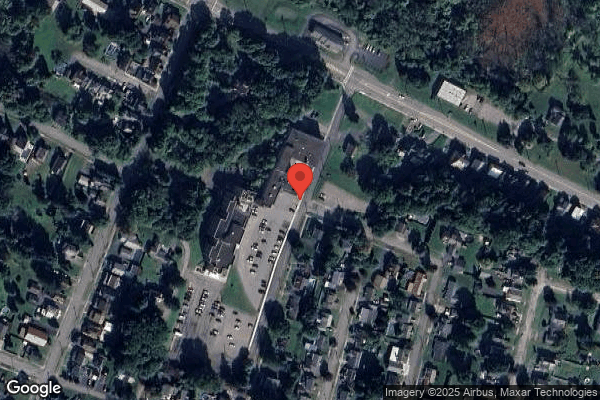
Aug 2023 2 deficiencies
CONCERN (E) 📢 Someone Reported This

A family member, employee, or ombudsman was alarmed enough to file a formal complaint

Potential for Harm - no one hurt, but risky conditions existed

Food Safety (Tag F0812)

Could have caused harm · This affected multiple residents

Based on observation and interview during the abbreviated survey (NY00318712), the facility did not ensure utensils, equipment, and floors were maintained sanitary and clean in accordance with profess...

Read full inspector narrative →
Based on observation and interview during the abbreviated survey (NY00318712), the facility did not ensure utensils, equipment, and floors were maintained sanitary and clean in accordance with professional standards for food service safety for 3 of 3 nursing unit (4th, 3rd, and 2nd floors) kitchenettes and the main kitchen. Specifically, the ice scoops within the 4th, 3rd and 2nd floor kitchenettes were not stored and maintained in a clean and sanitary manner and the kitchen hood and floors were soiled and unclean. Findings include: The facility's Weekly Cleaning Checklist documented all surfaces and equipment were to be cleaned weekly. Deep cleaning would take place on Fridays. Ice in the Kitchenettes: During an observation on 7/14/23 at 12:18 PM, there was a metal ladle stored in the ice bucket with the handle in contact with ice within the 4th floor kitchenette. The ladle was used as an ice scoop. During an interview on 7/14/23 at 12:18 PM, Dietary Aide #5 stated there was an ice pan in the freezer. The nursing staff used the ice to fill up drink cups for residents. They were not aware of how they stored the ice or scoops. During an observation on 7/14/23 at 12:32 PM, there was a metal ladle used as an ice scoop that was laying in the freezer within the 3rd floor kitchenette. The handle was laying in the ice and in contact with the unclean freezer surfaces. During an interview on 7/14/23 at 12:32 PM, certified nurse aide (CNA) #6 stated they got ice for resident drinks and used the metal ladle to hit the bag of ice to break it up. The ice scoop had been stored in the freezer with the ice. During an observation on 7/14/23 at 12:42 PM, there was a metal ladle used as an ice scoop face down on the unclean and soiled countertop next to the sink within the 2nd floor kitchenette. During an interview on 7/14/23 at 12:42 PM, Dietary Aide #7 stated they typically did not use the ice in the freezers. It was often stuck together. They stated if needed, ice scoops should be clean and not stored in the ice. During an interview on 7/14/23 at 1:00 PM, the Food Service Director stated ice scoops on the units were normally ladles and spoodles. They should be stored outside the ice bag/container. All three kitchenettes should not have ice scoops stored in the freezers, in the ice itself or out on the unclean surfaces. That could be cross contamination when not storing ice scoops clean and separate from the ice as the handle should not be in the ice or unclean. Main Kitchen: During an observation on 7/14/23 at 12:52 PM, the floors were unclean and sticky with food debris and spillage under equipment and on the floors throughout the kitchen. Kitchen hoods were soiled and unclean with build up of grease over the stove top. Vendor hood cleaning stickers indicated the vendor had last cleaned the hoods on 12/16/22 and the next service was due 7/2023. During an interview on 7/14/23 at 1:00 PM, the Food Service Director stated the kitchen hood could be cleaned better. They could take them down and soaked them in degreaser to clean them. There was nothing set up to have the facility clean the hood and they relied on their vendor. They stated the floors could be cleaner. They usually clean floors weekly by floor technicians who use floor machines. The general cleaning and mopping gets done by the night cook, usually on Thursdays. They were not cleaned with the scrubbing machines this week and were only mopped. The deep cleanings were usually done by the Food Service Director when it needed to be done. 10NYCRR 415.14(h)
CONCERN (E) 📢 Someone Reported This

A family member, employee, or ombudsman was alarmed enough to file a formal complaint

Potential for Harm - no one hurt, but risky conditions existed

Room Equipment (Tag F0908)

Could have caused harm · This affected multiple residents

Based on observation, interview, and record review during the abbreviated survey (NY00318712), the facility did not ensure facility equipment was maintained in proper operating condition for 3 of 3 (4...

Read full inspector narrative →
Based on observation, interview, and record review during the abbreviated survey (NY00318712), the facility did not ensure facility equipment was maintained in proper operating condition for 3 of 3 (4th, 3rd and 2nd floors) nursing units. Specifically, dispensing ice machines in the kitchenettes on the nursing units were not functional. In addition, the 2 water softener units for the facility were past due for maintenance and replacement of internal materials which attributed to the ice machines not being non-functional. Findings include: Review of water treatment vendor quote dated 3/29/21, documented the resin and gravel was in need of replacement as it is affecting brine draw. It was last done 8 years ago and again done 8 years before. The recommendation included remove of 30 feet of resin and gravel subfill from both water softeners and replace with new. Review of service repair order dated 10/25/22, documented ice dispensing machines were not producing ice. The unit 2 ice machine was made operational again after service. Review of email communication dated 2/15/23, documented vendor repaired ice machines. The specific ice machines were not identified in the communication. The 4th floor ice machine was not able to be repaired and needed to be replaced. Review of correspondence dated 4/4/23, documented the prior Assistant Maintenance Director communicated with the Corporate office they were continuing to have water issues here because of this system not being maintained properly by professionals when needed. This system has needed service for the past 2 years and has been neglected. A quote was received in 2021, The resin and gravel need to be replaced because it was affecting the brine draw. It was last done 8 years ago and 8 years before that as scheduled. Th Assistant Maintenance Director documented this should be addressed and requested approval to make an appointment to have this addressed. Review of service repair order dated 4/14/23, documented ice machines not producing ice. Unit operational again after service. The specific ice machines were not identified in the repair order. Review of water treatment vendor quote dated 5/9/23, documented the resin and gravel was in need of replacement. Recommended remove of 30 feet of resin and gravel subfill from both water softener and replace with new. During an interview on 7/14/23 at 9:45 AM, the Director of Nursing (DON) stated the ice dispensing machines on the units had been an issue and they used coolers on the units for ice that were refilled. The use of coolers had been for quite a while. During an observation on 7/14/23 at 10:46 AM, the 4th floor ice dispensing machine was not functional when tested and there was a large 120 quart cooler with ice in it within the kitchenette. During an interview on 7/14/23 at 10:46 AM, the Director of Plant Operations stated the ice machines on the units have been an issue for 6 months. The hard water was affecting the lines in the system and to the ice machines. All the scale builds up from the hard water not being addressed caused the ice machines to stop making ice and they overheated. They reset them and they might work for a day but stopped again. Daily coolers were filled with ice from the ice machine in the main kitchen within the other building and were brought to each floor. The coolers were usually filled once a day by morning staff and last the day. If more was needed, staff came to the kitchen to get more ice. The ice machines in the kitchenettes were turned off and water lines shut off, so they would not be used. They obtained a quote to replace the water softener units and were awaiting approval from the Corporate office for the repair. Replacement of the resin and gravel in the units should be done every 8 years and it was last done 10 years ago. During an observation on 7/14/23 at 10:55 AM, the ice dispensing machine was not functional when tested in the 3rd floor kitchenette. There was a large 120 quart cooler filled with ice in place. During an observation on 7/14/23 at 11:10 AM, the ice dispensing machine was not functional when tested in the 2nd floor kitchenette. There was a large 120 quart cooler filled with ice in place. During an interview on 7/14/23 at 11:44 AM, the Administrator stated they were aware the ice dispensing machines on the units were an issue for a while and the coolers were being used since May 2023. They were not aware of the severity of the issues with the ice machines as it had been an issue prior to them taking the position. During an interview on 7/14/23 at 11:45 AM, the DON stated there was nothing documented on the use or filling of the coolers with ice. If nurses needed ice, the unit clerks and resident assistants refilled the coolers. Typically, the ice in the coolers lasted a full day. The coolers were used temporarily until the ice machines could be addressed. During an interview on 7/14/23 at 1:00 PM, the Food Service Director stated the ice dispensing machines on the nursing units were down for a couple months. Nursing staff usually filled coolers with ice from the kitchen to use on the units. Usually, coolers make it 24 hrs before needing to be refilled. They were not sure if or when the ice machines on the units would be functional. During an interview on 8/4/23 at 1:20 PM, the Administrator stated someone from the Corporate office came to the facility last week to look at the dispensing ice machines. They got the ice machines on 2nd and 3rd floor working. Today they are replacing lines going to the ice machines on 2nd and 3rd floor. They were hoping that would keep them functioning. The 4th floor ice machine was not functional and needed replacement. They were not aware of the recommendation for the water softeners to be replaced. They stated the 3rd floor ice machine has an error code so those lines were being replaced. 10NYCRR 415.29
Sept 2021 5 deficiencies 1 IJ (1 affecting multiple)
CRITICAL (K)

Immediate Jeopardy (IJ) - the most serious Medicare violation

Respiratory Care (Tag F0695)

Someone could have died · This affected multiple residents

**NOTE- TERMS IN BRACKETS HAVE BEEN EDITED TO PROTECT CONFIDENTIALITY** Based on observation, record review, and interview during the recertification and extended survey conducted from 8/24/21- 9/1/21...

Read full inspector narrative →
**NOTE- TERMS IN BRACKETS HAVE BEEN EDITED TO PROTECT CONFIDENTIALITY** Based on observation, record review, and interview during the recertification and extended survey conducted from 8/24/21- 9/1/21, the facility failed to ensure that residents who need respiratory care, including tracheostomy care and tracheal suctioning, were provided with such care, consistent with professional standards of practice, the comprehensive person-centered care plan, the residents' goals, and preferences for 2 of 2 residents (Residents #92 and 320) reviewed. Specifically, the facility failed to have emergency equipment available for two residents with tracheostomies and staff were unaware of the location of emergency equipment, and their role in performing routine and emergency tracheostomy care. - Resident #320 had a tracheostomy tube size 7 millimeters (mm), the suction cart lacked appropriate suction catheters and appropriately sized inner cannulas (fits into outer tube, size 8 cannulas were present), and staff were unaware an emergency tracheostomy kit was not readily available at the bedside. - Resident #92 had no readily available emergency equipment including a back-up tracheostomy kit and suction equipment on 8/26/21 at 9:03 AM when care was observed in the resident's room. Staff were unaware of the size and type of the tracheostomy required, or if suitable emergency tracheostomy supplies were available in the building for this resident. At 5:11 PM, there was still no emergency back-up tracheostomy kit or suction equipment at the resident's bedside. The facility's failure to provide appropriate respiratory care placed Residents #92 and #320 who had tracheostomies at immediate risk for serious harm or death if their airways were not maintained. This resulted in Immediate Jeopardy and Substandard Quality of Care. Findings include: The undated facility policy Tracheostomy Care documented tracheostomy tubes should be changed as ordered and as needed (at least monthly). Tracheostomy care should be provided as often as needed, at least once daily for old, established tracheostomies, and at least every eight hours for residents with unhealed tracheostomies. A replacement tracheostomy tube must be available at the bedside at all times. A suction machine, supply of suction catheters, exam and sterile gloves, and flush solution, must be available at the bedside at all times. On 8/26/21, the policy was updated to include in the event of an emergency and the tracheostomy is dislodged, cover with 4x4 gauze and call 911 to have the resident sent out for a replacement. The facility policy Emergency Trach Replacement dated 1/2021 documented the facility will ensure that emergent tracheostomy replacement will be performed by licensed nursing staff. Always keep a spare trach tube with obturator (assists in inserting the trach tube into the airway) the same size as what the resident has on hand in case the tube is accidentally coughed out. The undated facility policy Suctioning Lower Airway documented to verify that there is a physician's order for this procedure. Review the physician's orders or facility protocol for suctioning. Review the resident's care plan to assess for any special needs of the resident. 1) Resident #92 had diagnoses including nontraumatic intracerebral hemorrhage (stroke, bleeding in the brain) and hypertension. The 8/6/21 Minimum Data Set (MDS) admission assessment did not document the resident's cognitive patterns. The resident was totally dependent with assistance of 1-2 persons for all activities of daily living (ADL) and required oxygen therapy, suctioning and tracheostomy care. The admission note dated 7/30/21 and signed by the Director of Nursing (DON) and licensed practical nurse (LPN) Unit Manager #8 at 12:29 PM documented the resident had respiratory concerns including oxygen per orders and a tracheostomy. There was no documentation of the tracheostomy (trach) size, required care, or an assessment of the tracheostomy. The comprehensive care plan (CCP) initiated 8/2/21 documented the resident had an alteration in respiratory system related to tracheostomy status. Interventions included administer treatments (nebulizers) and medications per physician orders. There was no documentation of the care required for the resident's tracheostomy. The electronic [NAME] (care instructions) reviewed and dated 8/26/21 did not include documentation referencing the resident's tracheostomy or respiratory status. The 7/30/21 After Visit Summary from the rehabilitation facility the resident was discharged from did not include orders for the tracheostomy or care of the tracheostomy. The 7/30/21 order by nurse practitioner (NP) #15 documented oxygen via trach collar 28% humidification every shift. There was no documentation of a tracheostomy size or required care for the tracheostomy. The 7/30/21 NP #15 admission progress note documented a physical exam included a trach with trach collar in place. The plan was to suction the trach to maintain the airway. There was no documentation of the size of the tracheostomy or required care for the tracheostomy. The 8/16/21 NP #15 progress note documented lung sounds were clear, respirations were unlabored, and trach with trach collar in place. There was no documentation of the size of the tracheostomy or required care for the tracheostomy instructions. The 8/20/21 order by NP #15 documented tracheostomy care every shift and as needed (PRN). During an observation on 8/26/21 at 9:03 AM, LPN #14 performed daily tracheostomy care on Resident #92. LPN #14 stated the trach was a disposable one. LPN #14 removed one new inner cannula from a box on the resident's nightstand labeled Shiley #8 DIC 7.6 mm 79 mm (Shiley, a brand of tracheostomy tubes). The inner cannula did not fit the resident. LPN #14 stated there were no specific orders for the trach size, care and/or treatment frequency. The LPN stated they were not sure what size trach the resident had. The LPN stated they would look at the resident's hospital orders to see what size trach the resident should have. LPN #14 stated that they had experience with trach care from a previous job but had not received any training at this facility. During the observation a staff member from central supply brought up a Shiley #6. The LPN attempted to insert the Shiley #6 and this fit the resident. LPN #14 stated the resident's trach site was clean, the skin was dry and intact, there was no irritation, and the resident was on 28 % humidification and there was an order for that. No suction (used to clear secretions from the airway) or ambu bag (used to manually ventilate) were observed in the resident room. The LPN stated there was not an extra trach at the bedside for emergency purposes. The August 2021 medication administration record (MAR) documented complete respiratory evaluation and if outside of the resident's baseline notify medical and document in progress notes. The August 2021 treatment administration record (TAR) documented trach care every shift and as needed. There were no documented required trach care details for the size of the inner cannula, cleaning/removing trach ties, or oxygen. During an interview on 8/26/21 at 10:56 AM with registered nurse Unit Manager (RNUM) #13 they stated the resident was admitted to the 4th floor one week ago. The RNUM stated a resident with a tracheostomy should have orders that include the type and size of the trach and how to care for the tracheostomy. The RNUM #13 confirmed via the electronic record there were no orders for Resident #92's tracheostomy. The RN said they did not think there was suction at the resident's bedside. The RNUM stated they did not think that it was standard to have suction at the bedside if there were no issues with the tracheostomy. During an observation of Resident #92's room on 8/26/21 at 11:11 AM there was no suction machine, ambu bag or extra tracheostomy supplies at the bedside. At 11:13 AM, LPN #14 confirmed there was not an extra trach at the resident's bedside. The LPN stated it was there yesterday and it was not there today. On 8/26/21 at 11:15 AM during an observed phone conversation between LPN #14 and Central Supply, LPN #14 requested an extra cannula and Central Supply stated they did not have one. During an interview on 8/26/21 at 12:38 PM, speech language pathologist (SLP) #16 stated they have had 8 or 10 residents with trachs. The SLP stated they thought Resident #92 had a Shiley #6 but would have to double check the orders. SLP #16 stated that when residents were admitted with a tracheostomy, they were supposed to have suction at the bedside. The SLP stated there was also a respiratory therapist (RT) available to consult for respiratory issues. During an interview on 8/26/21 at 12:50 PM, LPN #17 stated they had not received training at the facility related to tracheostomy care. The LPN stated it was standard of care for a resident with a tracheostomy to have suction at the bedside, and there should be an extra trach taped on the wall or in a drawer. If a resident had a trach there should be orders that included the size of the trach, care and how often and suction if needed. The orders would be listed on the MAR or the TAR so the nurse would know how to care for a resident. During an observation on 8/26/21 at 12:57 PM, RNUM #13 searched Resident #92 room for an extra trach and was unable to locate one. The RN said it should be taped to the wardrobe closet or wall. During an interview on 8/26/21 at 1:04 PM, RNUM #13 stated if the resident had a trach dislodged or if there was a mucus plug, they would call Central Supply to a get spare trach tube at the bedside as soon as possible. The RNUM stated that it would be an emergency and they would try to maintain the airway the best way they could, cover the area with the humidified oxygen, call 911 and get the patient to hospital, and call the RT. During an interview on 8/26/21 at 2:52 PM RNUM #13 stated the resident was discharged to the facility without any specific orders for trach size and type. The RN stated if the resident decannulated accidently, they would call 911 and notify the facility RT. Nurses were not supposed to reinsert the cannula but they would need an extra trach at the bedside. RNUM #13 stated they read the facility tracheostomy care policy and that there should be an extra tracheostomy tube at the bedside. RNUM #13 received a copy of the hospital discharge summary when the resident was released from the rehabilitation center and stated the resident's trach was changed on 5/31/21 and downsized to a 6 Shiley. During observation on 8/26/21 at 4:45 PM, Resident #92 did not have suction equipment or an extra tracheostomy at the bedside. 2) Resident #320 had diagnoses including acute and chronic respiratory failure, chronic obstructive pulmonary disease (COPD) and a tracheostomy. The 8/23/21 Minimum Data Set (MDS) assessment documented the resident was cognitively intact and required extensive assistance of one for most activities of daily living (ADLs), received oxygen therapy and tracheostomy care. The 8/19-8/20/21 physician orders documented trach care twice a day and as needed, change inner cannula daily with morning trach care and oxygen via trach at 8 liters per minute. There was no order for suctioning needs, trach securement (trach ties) changes, or oxygen tubing and trach collar cleaning or changes. The comprehensive care plan (CCP) initiated 8/23/21 documented the resident had alteration in respiratory status related to COPD, trach status, pneumonia, and respiratory failure. Interventions included administer treatments and medications per physician order and oxygen. There was no documented evidence for required interventions for tracheostomy size and care. The 8/26/21 physician order documented trach-Shiley disposable inner cannula XLT 70XLTIN. On 8/26/21 at 11:42 AM, Resident #320 was observed sitting in a chair. A communication board was available. The resident wrote that their trach was a size 7. The resident's trach had a drain sponge around the opening and was receiving oxygen via a trach collar (a plastic device that cups the trach opening and is secured around the neck.) There was a small amount of thick tan secretions in the inner cannula tubing and trach collar that the resident wiped away with a tissue. A cart containing a suction machine was at the foot of the bed. The cart contained an empty box for size 7 inner cannulas, 2 individual size 8 inner cannulas, and sterile water in individual small bottles and had no required suction kits in the cart. Resident #320 wrote that they told the staff to order more size 7 cannulas. There was no extra trach visible at the bedside. When interviewed on 8/26/21 at 12:40 PM, licensed practical nurse (LPN) #7 stated they had provided care for residents with trachs in the past and had received training at a previous employer but not at this facility. The LPN stated they did not do suctioning but called a registered nurse (RN) if suction was needed. PN #7 stated that in an emergency, they would need a suction machine, an inner cannula, sterile water, and oxygen. The LPN stated that there should be an extra trach in the resident's room. LPN #7 stated that if the trach became dislodged, the resident's airway could close. The LPN asked the resident if there were more supplies, and the resident pointed to their closet. An extra trach kit size 7 was found in the bottom of a grocery bag in the bottom of the closet and was placed on the suction cart. When interviewed on 8/26/21 at 12:43 PM, supply room aide #1 stated the only trach supplies they had were those left over from previous residents. If needed, the nurse would send the aide an email when they needed more ordered. The aide stated they had ordered more size 7 supplies that morning at 10:53 to be sent overnight. The supply aide stated they were unaware how to obtain the supplies in an emergency. They would call a sister facility to see who had the item in stock and go pick it up. The 8/26/21 at 10:53 AM supply aide #1 email documented they requested an order for 21 Shiley disposable inner cannulas size 7 ASAP (as soon as possible.) The following trach supplies were observed in the supply room: 3 boxes size 8 Shiley complete trach kits; 2 boxes size 6 Shiley complete trach kits; 2 boxes size 4 Shiley complete trach kits; 14 boxes size 6 Shiley disposable inner cannulas; and 245 individual size 14 French (Fr.-the tubing circumference) trach suction kits. There were no supplies for size 7 trachs required for Resident #320, and no documentation in the record that Resident #92 had a size 6 trach. When interviewed on 8/26/21 at 12:57 PM, LPN Unit Manager (LPNUM) #8 stated that when a resident with a trach was admitted from the hospital, the hospital sent enough supplies to last until the facility could obtain their own supply. Resident #320 had a size 7 trach, and supply aide #1 was responsible for ordering the trach supplies. The Admissions department emailed the supply aide to let them know what size to order on admission. The LPNUM stated to care for a resident with a trach, they would have suction, trach kits for cleaning, and since the inner cannulas were disposable, they would need new inner cannulas. LPNUM #8 stated that there should always be an extra trach at the bedside in case the trach became dislodged. The LPNUM stated they were unsure if Resident #320 had an extra one. Staff were required to be educated on trach care every year and that was done by the Staff Education RN #10. LPNUM #8 stated they had their education a year ago, and the LPNUM stated they were not told if their staff had completed the education. LPNUM #8 stated they did not know if the staff currently working had trach competencies completed; someone else did the schedule for their unit, and the LPNUM did not ask. When interviewed on 8/26/21 at 3:00 PM, RN Director of Education #10 stated they were unsure how the suction carts were set up. That was left to the Unit Managers. The RN did not know what education was provided to the staff regarding trachs. RN#10 said they thought the online education program the facility used might have some competencies. If staff were due to complete education, the system sent them an email alerting them the education was due. LPNs did not perform deep suctioning so there was always an RN in the building. The RN stated they had not completed the online trach courses so was unsure if the course included what to do if the trach became dislodged. RN#10 stated that they had not seen the facility policy but there was usually a spare trach kit at the bedside and a set of clamps so one could open the airway and put the trach back in. RN #10 was not sure if the facility RNs were expected to re-insert a trach if one became dislodged but stated the Director of Nursing (DON) would know. RN#10 stated they were unsure how often staff were to complete trach competencies, but thought it was once a year. RN #10 stated they were unsure how many nurses were trained in trach care, but they would eventually be the one to keep track of that. RN#10 stated they had not received any trach care education at the facility and had not been told what to teach. When interviewed on 8/26/21 at 3:58 PM, the DON stated when residents with trachs were admitted , Admissions used a checklist that lists any specialty equipment the resident needed. That list is given to the concierge who sets up the room for the resident. A nurse-to-nurse report was completed with the hospital, but the hospital staff did not typically know the trach brands or sizes. Staff got the trach size after the resident arrived. The trach sizes for Residents #320 and #92 were not in their charts so they were able to obtain that information from the respective hospitals on 8/26/21. The DON expected staff to be aware of a resident's trach size at admission, and there was to be at least one back-up trach, an ambu-bag (device to deliver breaths) and inner cannulas. If the facility did not have an extra trach, the DON notified the corporate DON, and the sister facilities were checked. If those facilities had none, one would be ordered and sent by overnight mail. The Unit Manager was responsible for putting in the orders for trach care. There was a unit manager admission follow-up checklist that was to be used to verify any additional needed information such as the size of the trach, or size of the catheter for example. Medication orders were reviewed monthly but other care orders did not have a scheduled review; those were reviewed at the resident care conferences. The unit manager checklist review would have been completed the morning following admission. If there were no orders for trach care, it should have been caught on their admission review. In-services on trach care were recently completed. RN #10 did checklist competencies for trachs for the LPNs and RNs. The DON stated all RNs had been trained by RN #10 to re-insert a trach if one became dislodged and RN #10 would have records of that training. RN #10 assigned the educational material for the staff in the online education program. There were some topics that were automatically assigned in the system by title, but RN #10 was supposed to know what in-services employees were supposed to have based on their job titles. Staff were to have their trach care competencies completed annually and were re-educated if there was an incident. The RN supervisors were to check the suction carts and the equipment that went with them. There should be an extra trach available when a resident was admitted , and it was the expectation that the concierge and the Unit Manager were to ensure this. -------------------------------------------------------------------------------------------------------------- Immediate Jeopardy was identified, and the facility Administrator was notified on 8/26/21 at 7:21 PM. The Immediate Jeopardy was removed on 8/27/21 at 1:52 PM based upon the following corrective actions taken: - The facility's regional respiratory therapist (RT) arrived onsite on the evening of 8/26/21 after the IJ was called and began to provide expert education to staff on tracheostomy care for use in the corrective plan. - Newly obtained Physician orders were reviewed and deemed appropriate by the RT. Emergency equipment and tracheostomy supplies were obtained and located at the residents' bedsides. - The facility updated their tracheostomy care policy, including clarification that if accidental decannulation occurred, nursing would not attempt re-cannulation; the airway would be protected to maintain a patent airway, the resident would be oxygenated, and 911 would be called. - By the next morning 8/27/21, 35 nurses (RNs and LPNs) had been educated on tracheostomy care using PowerPoint classroom training presented by the regional RT. Training was continuing through 10:00 PM that evening. As other nurses presented for work, they also received this training on emergency management and response to maintaining a tracheostomy and airway, prior to providing resident care. 10NYCRR 415.12(k)(5)(4)
CONCERN (D)

Potential for Harm - no one hurt, but risky conditions existed

ADL Care (Tag F0677)

Could have caused harm · This affected 1 resident

Based on observation, record review and interview during the recertification and abbreviated surveys (NY00258153, NY00271122, NY00275226 and NY00273295) conducted from 8/24/21-9/1/21, the facility to ...

Read full inspector narrative →
Based on observation, record review and interview during the recertification and abbreviated surveys (NY00258153, NY00271122, NY00275226 and NY00273295) conducted from 8/24/21-9/1/21, the facility to ensure a resident who is unable to carry out activities of daily living receives the necessary services to maintain good nutrition, grooming, and personal and oral hygiene for 2 of 4 residents (Residents #108 and #92) reviewed. Specifically, Residents #108 and 92 were not provided with showers and shampoos and were not dressed in their regular clothing. Findings include: The facility policy Dressing and Undressing the Resident reviewed on 1/2021, documented residents shall be assisted with dressing and undressing to promote cleanliness. Dress the resident in his or her own clothing. Residents who may need assistance with dressing include a resident with limited mobility and a disabled resident who may be bedfast. The facility policy Shower/Tub Bath, reviewed on 1/2021, documented the purpose of the procedure is to promote cleanliness, to provide comfort to the resident and to observe the resident's skin. The date and time the shower was performed should be recorded on the resident's activity of daily living (ADL) record and/or in the resident's medical record. 1) Resident #108 had diagnoses including dementia. The 8/12/21 Minimum Data Set (MDS) assessment documented the resident had severe cognitive impairment, required extensive assistance with personal hygiene and did not reject care. The comprehensive care plan (CCP), initiated 8/9/21, documented the resident required assistance with activities of daily living (ADL) related to confusion. Interventions included encourage resident to participate to the fullest extent possible and monitor for changes in status. The CCP did not document the resident's preference for shower days or hair washing. The 8/9/21 care instructions documented the resident required extensive assistance of 1 for personal hygiene and bathing. There was no documentation about the resident's preference for hair washing or showering. Interdisciplinary progress notes between 8/11-8/24/21 did not document the resident refused assistance with care or showers. During an interview on 08/24/21 at 1:59 PM, the resident's health care proxy (HCP, a person appointed to make decisions for the resident) stated the resident was not always cleaned for the day and the resident's hair was often dirty. The resident was observed in the dining room dressed with unclean and greasy appearing hair on 8/24/21 at 12:13 PM, 8/26/21 at 8:47 AM, and 8/30/21 at 10:19 AM. During an interview on 8/31/21 at 11:33 AM, certified nurse aide (CNA) #18 stated the resident was washed and dressed every morning and placed in their wheelchair for meals. The resident was scheduled for a shower once a week in the evening. CNA #18 stated morning care included washing the resident's entire body, but not their hair. The CNA stated the resident's hair was washed on shower day. The CNA referred to the unit shower book. which did not include the resident. The CNA said that the shower book would need to be updated. CNA #18 stated there were 3 CNAs working instead of the usual 4 CNAs and it was difficult to complete all the resident care. During interview on 8/31/21 at 11:35 AM, CNA #19 stated the shower day for Resident #108 was just changed and the resident was scheduled for a 2 PM to 10 PM shift shower. The last documented shower for Resident #108 was on 7/27/21 on the 2 PM to 10 PM shift. The CNA said if a resident's hair needed to be washed, they should wash it. CNA#19 observed the resident, and the CNA stated the resident's hair was greasy. CNA #19 stated they were working with 3 CNAs instead of the usual 4 CNAs and it was difficult to complete all resident care. During an interview on 8/31/21 at 1:20 PM, registered nurse (RN) Unit Manager #13 stated staff were expected to document completion of showers in the task list in the electronic record. The resident had an order to sign for their shower and the resident's hair should be washed on shower days. 2) Resident #92 had diagnoses including nontraumatic intracerebral hemorrhage (bleeding in the brain) and high blood pressure. The 8/6/21 Minimum Data Set (MDS) assessment did not document the resident's cognitive status. The resident was dependent on 2 staff for all activities of daily living (ADL). The comprehensive care plan (CCP), initiated 8/2/21, documented the resident required assistance with ADLs related to complete immobility and inability to complete or comprehend ADL tasks. Interventions included total dependence with assistance of 2 staff with bathing. The certified nurse aide (CNA) care instructions active on 8/25/21 documented the resident required total assistance with personal hygiene and was totally dependent on 2 staff members for dressing and bathing. There was no documentation of the resident's preference of dressing in regular clothing or in a hospital gown. Interdisciplinary progress notes between 7/30/21 through 8/26/21, had no documentation the resident refused to get dressed or should not get dressed for medical treatments. The CNA activities of daily living (ADL) record documented provision of personal hygiene and dressing with extensive assistance from 8/1/21 through 8/29/21. On 8/24/21 at 11:15 AM, the resident was observed being transported in a wheelchair to sit in front of the nursing station. The resident was wearing a hospital gown and was covered with a blanket. The resident was observed sitting in the wheelchair in a hospital gown, covered with a blanket on 8/24/21 at 11:45 AM and 1:00 PM; and on 8/25/21 at 9:49 AM and 11:11 AM. During an interview on 8/26/21 at 9:03 AM, licensed practical nurse (LPN) #14 stated the CNA staff did morning cares and dressing. The LPN was not sure why the assigned CNA had not dressed the resident. LPN #14 opened the resident wardrobe closet and there were clean clothes available. During an interview on 08/26/21 at 9:40 AM, CNA #20 stated Resident #92 normally got up before breakfast, but they were short of staff and that day each CNA had 13 or14 residents to care for. CNA #20 first tried to dress the residents that needed to be in the dining room for breakfast. The CNA was unsure if Resident #92 was supposed to be up and dressed for breakfast. The CNA stated they thought they were not supposed to dress the resident because the resident had a feeding tube and a tracheostomy. The CNA stated to be sure of the required care for the resident, they would review the care card for that resident. 10NYCRR 415.12(a)(3)
CONCERN (D)

Potential for Harm - no one hurt, but risky conditions existed

Medication Errors (Tag F0758)

Could have caused harm · This affected 1 resident

Based on observation, record review and interview during the recertification survey conducted from 8/24/21-9/1/21, the facility failed to ensure that residents who use psychotropic drugs are not given...

Read full inspector narrative →
Based on observation, record review and interview during the recertification survey conducted from 8/24/21-9/1/21, the facility failed to ensure that residents who use psychotropic drugs are not given these drugs unless the medication is necessary to treat a specific condition as diagnosed and documented in the clinical record; and receive gradual dose reductions, and behavioral interventions, unless clinically contraindicated, in an effort to discontinue these drugs for 1 of 6 residents (Resident #25) reviewed. Specifically, Resident #25 received an antipsychotic medication without an appropriate diagnosis and there was no documented evidence the resident received a gradual dose reduction (GDR) while receiving the medication. Findings include: Resident #25 had diagnoses including chronic kidney disease, hypertension (HTN), and anxiety disorder. The 6/1/21 Minimum Data Set (MDS) assessment documented the resident had intact cognition; did not exhibit inattention or disorganized thinking; did not have presence of behavioral symptoms; required extensive assistance to total dependence for most activities of daily living (ADLs) and received an antipsychotic 7 of 7 days during the assessment period. Physician orders documented the following: - 4/29/21 olanzapine (antipsychotic) 5 milligrams (mg) one tablet in the evening for HTN. The order was discontinued on 5/18/21 due to hospitalization. - 5/25/21 olanzapine 5 mg give one tablet one time a day for HTN. The order end date was documented as 7/12/21. - 7/12/21 olanzapine 5 mg 1 tablet at bedtime for mood disorder. The comprehensive care plan (CCP) initiated on 11/10/20 documented the resident exhibited behaviors such as being verbally abusive and was non-compliant with care at times. Interventions included document all behaviors, attempt to identify a pattern to target interventions; modify the environment to reduce episodes of negative behavior and risk for fall or injury; notify physician of negative behavior or activity. The 5/25/21 CCP documented the resident used psychotropic medications related to mood disorder and anxiety. Interventions included give medications ordered by physician and monitor/document side effects and effectiveness. The 5/1/21 physician admission progress note documented the resident was receiving Zyprexa (olanzapine). Review of systems under psychiatric documented the resident was alert and oriented and was non-complaint with wound care despite education. The plan was to continue olanzapine for anxiety/depression. Nursing progress notes dated 5/1-5/7, 5/18, 5/26 and 5/27/21 documented the resident had a diagnosis of metabolic encephalopathy (a chemical imbalance causing disturbed brain function). Behaviors were currently being exhibited. There was no documentation what the behaviors were or what interventions were in place. A 5/13/21 social services progress note documented a care plan meeting was held and the care plan was reviewed and updated. There was no documentation regarding antipsychotic use. Medical progress notes from 5/2/21 through 5/26/21 did not document diagnoses or behavioral symptoms related to the use of an antipsychotic and plans for a GDR of olanzapine. A 5/26/21 social services progress note documented the resident was seen for readmission from the hospital. The resident exhibited behavior symptoms such as verbal abuse and non-compliance with care at times. The resident would often refuse to follow appropriate diet or comply with ordered IV (intravenous) medications, refused out of bed activities, or allow wound VAC (vacuum assisted closure for wound healing) to be changed when ordered. There was no documentation regarding the use of antipsychotic medications. A 6/3/21 pharmacist progress note documented based on the information available at the time of the review, the resident's medication regimen contained no new irregularities. There were no documented notes to the attending physician/prescriber regarding antipsychotic use. A Consultant Pharmacist's Medication Regimen Review Recommendations Pending a Final Response for outcomes entered between 7/1/21 and 7/8/21 documented the resident was receiving the antipsychotic agent olanzapine but lacked an allowable diagnosis to support its use. It was entered as hypertension. The appropriate diagnoses/conditions were listed on the form and did not include mood disorder. The form requested indication and criteria for which olanzapine was used and was routed to the physician. On 8/24/21 1:50 PM, Resident #25 was observed in their room in bed. The resident was able to answer questions appropriately and was cooperative. During an interview on 8/30/21 at 10:10 AM with licensed practical nurse (LPN) Unit Manager #6, the LPN stated pharmacy recommendation sheets were reviewed by the nurse practitioner (NP) or physician. If changes were made on the pharmacy sheet nursing would write a note in the computer stating whether the order was changed or not. During an interview with NP #15 on 8/30/21 at 10:21 AM, the NP stated they were not sure why the resident was on olanzapine. The NP stated maybe the psychiatric nurse, or the resident would know why. During an interview with certified nurse aide (CNA) #21 on 8/30/21 at 10:37 AM, the CNA stated the resident did not have any behaviors. If there were behavioral issues the CNA stated, they would look at the care instructions to see what would help with redirection. Behaviors would also be documented in the medical record. The CNA stated the resident preferred to stay in bed and watch television all day. During an interview with LPN #22 on 8/30/21 at 10:47 AM, the LPN stated the resident had a joking personality and they had never seen the resident angry. If a resident had behaviors the LPN stated, they would try to discuss it with the social worker and document in a progress note. During a second interview with LPN Unit Manager #6 on 8/30/21 at 10:57 AM, the LPN stated they had never heard of any behavioral issues with the resident. The resident refused care and was non-complaint but those were not behaviors. The resident was currently very compliant and good natured. The LPN stated they were aware of appropriate diagnoses for residents to receive antipsychotics and the resident did not have any of those diagnoses. Residents on antipsychotics were discussed at a medication and drug meeting with the interdisciplinary team. The LPN stated they were aware the resident was on olanzapine and the diagnosis had been changed from hypertension to mood disorder. There was no appropriate diagnosis listed in the resident's chart. The NP and the physician would be involved in a GDR. An antipsychotic would be reflected in the CCP. During an interview on 8/30/21 at 11:15 AM with NP #15, the NP stated the resident's current diagnosis for olanzapine was mood disorder. The NP would recommend staff use alternative interventions prior to medication use. When a psychotropic medication was given to a resident from the hospital the NP stated they would not change the medication and would make a referral to the psychiatric NP. The NP stated the resident would know why they were on the medication and suggested the surveyor ask the resident. The NP stated they thought the resident may have had a schizophrenia diagnosis but was not sure. The NP stated they went to the GDR meetings. The NP stated every 60 days they reviewed resident medications and would document in a progress note. The resident had behaviors such as anger with not wanting to do things and would also refuse treatments. During an interview on 8/30/21 at 1:07 PM with pharmacist #23 they stated they had reviewed the medications for the resident. The pharmacist stated they had requested an appropriate diagnosis for the antipsychotic medication on 6/01/21. The pharmacist stated they did not hear back from the facility and sent a second request for the appropriate diagnosis again on 7/05/21. The pharmacist stated they still had not heard back from the facility. The pharmacist stated mood disorder was not an appropriate diagnosis for olanzapine. 10 NYCRR 415.12(l)(1)
CONCERN (D)

Potential for Harm - no one hurt, but risky conditions existed

Deficiency F0761 (Tag F0761)

Could have caused harm · This affected 1 resident

Based on observation and interview during the recertification survey conducted 8/24/21-9/1/21, the facility failed to label drugs and biologicals in accordance with currently accepted professional pri...

Read full inspector narrative →
Based on observation and interview during the recertification survey conducted 8/24/21-9/1/21, the facility failed to label drugs and biologicals in accordance with currently accepted professional principles, and include the appropriate accessory and cautionary instructions, and the expiration date when applicable for 1 of 3 nursing unit medication carts and medication rooms (Unit 3) reviewed. Specifically, the facility had expired stock medications and biologicals in the 3rd floor medication cart, medication room, and medication storage refrigerator. Findings include: The facility policy Storage of Medications dated 1/2021 documented the facility should not use discontinued, outdated, or deteriorated drugs or biologicals. All such drugs shall be returned to the dispensing pharmacy or destroyed. During a medication storage observation on 8/25/21 at 3:27 PM with licensed practical nurse (LPN) #5, the 3rd Floor North medication cart contained an opened bottle of Geri-Tussin (cough suppressant) with a handwritten date of 5/10/20 and a manufacturer expiration date of 11/20 and an open bottle of Geri-Lanta (antacid) with a handwritten date of 6/18/21 on the top of the bottle and a manufacturer expiration of 7/21. During a medication storage observation on 8/25/21 at 3:35 PM with LPN #5, the 3rd floor medication storage room cabinet contained an open bottle of Aleve (anti-inflammatory) 220 milligrams (mg) with a handwritten date of 3/2/21 and a manufacturer expiration date of 5/21. In the 3rd floor medication storage room refrigerator, there was an unopened box of 10 prefilled Afluria (flu vaccine) syringes with a manufacturer expiration date of 6/30/21 and 9 single unopened boxes of Afluria with a manufacturer expiration date of 6/23/21. When interviewed on 8/25/21 at 3:48 PM, LPN #5 stated they had not administered the Geri Tussin DM to any resident and did not check the medication cart for expired medications. The LPN stated they did not know how the bottles got in the medication cart as they were not there the previous day. The LPN stated the overnight shift was responsible for checking the medication storage areas for expired medications. The LPN stated they were not sure the frequency of the checks or if the checks were documented. The LPN stated each nurse should check expiration dates prior to the administration of each medication. When interviewed on 8/25/21 at 3:51 PM, LPN Unit Manager #6 stated the Unit Manager was supposed to check the unit's medication carts, refrigerator, and storage room monthly for expired medications. The Unit Manager stated they did not know how the Geri Tussin DM got in the medication cart as the cart was checked in the end of July and it was not there. The Unit Manager sated the medication storage checks were to be documented monthly on the medication cart audit forms and turned in for QAPI (Quality Assurance and Performance Improvement). The checks were done on every medication cart, medication room and medication refrigerators within the facility. When interviewed on 8/31/21 at 2:31 PM, the Director of Nursing (DON) stated the medication nurse was responsible for checking the medication cart daily for expired medications. The DON stated each unit manager was expected to check the medication carts, medication room, and medication refrigerator weekly for expired medications. The DON stated they were to document those checks on audit forms. The DON stated the expired meds should have been caught and disposed of properly. The DON stated all nurses and managers were aware of the policy. 10NYCRR 415.18(d)(e)(2-4)
CONCERN (D)

Potential for Harm - no one hurt, but risky conditions existed

Infection Control (Tag F0880)

Could have caused harm · This affected 1 resident

Based on observation, interview and record review during the recertification and extended survey conducted from 8/24/21-9/1/21, the facility failed to maintain an infection prevention and control prog...

Read full inspector narrative →
Based on observation, interview and record review during the recertification and extended survey conducted from 8/24/21-9/1/21, the facility failed to maintain an infection prevention and control program designed to provide a safe, sanitary, and comfortable environment and to help prevent the development and transmission of communicable diseases and infections for 1 of 2 residents (Resident #90) reviewed. Specifically, Resident #90's urinary catheter collection bag and catheter tubing were observed laying directly on the floor and the bag did not have a non-permeable covering (dignity bag). Findings include: The 1/2021 revised Catheter Care policy documented the purpose of this procedure is to prevent catheter-associated urinary tract infections. The policy documented to be sure the catheter and tubing are kept off the floor. Resident #90 had diagnoses including stroke and benign prostatic hypertrophy (BPH, enlarged prostate). The 8/5/21 Minimum Data Set (MDS) assessment documented the resident had intact cognition; required limited assistance of 1 with bed mobility; extensive assistance of 2 with transfers, dressing, toilet use, hygiene, and bathing; used a walker and wheelchair; and had an indwelling urinary catheter. The 8/2/21 physician orders documented indwelling catheter 16 French (Fr, catheter size) with 10 milliliter (ml) balloon to down drain, catheter care every shift, and change monthly and as needed. The 8/2/21 comprehensive care plan (CCP) documented the resident had an indwelling catheter related to a neurogenic (dysfunctional) bladder. Interventions included 16 Fr with 10 ml balloon, catheter care as ordered, change urine collection bag weekly, maintain urine collection bag below the level of the bladder, monitor and document intake and output per policy, and monitor for discomfort due to catheter. The current care instructions documented 16 Fr with 10 ml balloon catheter, extensive assist of 2 with toileting, catheter care, and provide perineal care after each incontinent episode. During an observation on 8/24/21 at 2:17 PM, the resident was in bed visiting with family. The catheter drainage bag was laying on the floor and was not in a non-permeable dignity bag. The drainage bag clamp was in contact with the bare floor. During observations on 8/25/21 at 9:25 AM, 8/26/21 at 8:14 AM, 8/30/21 at 11:13 AM, and 8/31/21 at 11:26 AM, the resident was lying in bed and the resident's catheter drainage bag was laying on the floor and not in a non-permeable dignity bag. The drainage tubing and the drainage bag clamp was in contact with the bare floor. When interviewed on 8/31/21 at 1:04 PM, certified nurse aide (CNA) #12 stated the catheter drainage bag was emptied prior to lunch. Catheter training was done yearly through an on-line course. The CNA stated the catheter tubing should not be kinked and should hang off the side of the bed below bladder level. The catheter bag and tubing should not be touching the floor to prevent contamination with germs. The CNA stated the bed was too low after resident care. The CNA stated the drainage bag should be placed in a non-permeable dignity bag to prevent contamination and infections. When interviewed on 9/01/21 at 12:14 PM, licensed practical nurse (LPN) Unit Manager #8 stated staff received infection control training in orientation and yearly via an on-line resource. This training included catheter care. The LPN stated catheter care should be done daily and the LPN expected the catheter drainage bag and tubing to not touch the floor and be below bladder level. The drainage bag should be changed weekly and covered by a non-permeable dignity bag. The LPN stated dignity bags were given to every resident with a catheter last week. The LPN stated staff could also put a non-permeable barrier between the drainage bag and the floor if a dignity bag was unavailable. This would prevent infections and dignity concerns. When interviewed on 9/01/21 at 12:34 PM, the Infection Control registered nurse (RN) #11 stated staff were provided with infection control training, including catheter care, at orientation and on a yearly basis. The infection control in-services were given via on-line computer training and competencies. Computer training included how to clean, cover, and store the catheter drainage bags and tubing. The Infection Control RN expected the drainage bags and tubing to be below bladder level and off the floor to prevent infections. The RN stated staff should place a non-permeable barrier between the floor and the drainage bags and tubing. 10NYCRR 415.19(a)(1 - 3)
Understanding Severity Codes (click to expand)
Life-Threatening (Immediate Jeopardy)
J - Isolated K - Pattern L - Widespread
Actual Harm
G - Isolated H - Pattern I - Widespread
Potential for Harm
D - Isolated E - Pattern F - Widespread
No Harm (Minor)
A - Isolated B - Pattern C - Widespread

Questions to Ask on Your Visit

  • "What changes have you made since the serious inspection findings?"
  • "Can I speak with families of current residents?"
  • "What's your RN coverage like on weekends and overnight?"

Our Honest Assessment

Strengths
  • • Licensed and certified facility. Meets minimum state requirements.
Concerns
  • • Multiple safety concerns identified: 1 life-threatening violation(s), $26,685 in fines. Review inspection reports carefully.
  • • 31 deficiencies on record, including 1 critical (life-threatening) violation. These warrant careful review before choosing this facility.
  • • $26,685 in fines. Higher than 94% of New York facilities, suggesting repeated compliance issues.
  • • Grade F (23/100). Below average facility with significant concerns.
Bottom line: Trust Score of 23/100 indicates significant concerns. Thoroughly evaluate alternatives.

About This Facility

What is The Grand Rehabilitation And Nursing At Mohawk's CMS Rating?

CMS assigns THE GRAND REHABILITATION AND NURSING AT MOHAWK an overall rating of 1 out of 5 stars, which is considered much below average nationally. Within New York, this rating places the facility higher than 0% of the state's 100 nursing homes. A rating at this level reflects concerns identified through health inspections, staffing assessments, or quality measures that families should carefully consider.

How is The Grand Rehabilitation And Nursing At Mohawk Staffed?

CMS rates THE GRAND REHABILITATION AND NURSING AT MOHAWK's staffing level at 1 out of 5 stars, which is much below average compared to other nursing homes. Staff turnover is 48%, compared to the New York average of 46%.

What Have Inspectors Found at The Grand Rehabilitation And Nursing At Mohawk?

State health inspectors documented 31 deficiencies at THE GRAND REHABILITATION AND NURSING AT MOHAWK during 2021 to 2025. These included: 1 Immediate Jeopardy (the most serious level, indicating potential for serious harm or death) and 30 with potential for harm. Immediate Jeopardy findings are rare and represent the most serious regulatory concerns. They require immediate corrective action.

Who Owns and Operates The Grand Rehabilitation And Nursing At Mohawk?

THE GRAND REHABILITATION AND NURSING AT MOHAWK is owned by a for-profit company. For-profit facilities operate as businesses with obligations to shareholders or private owners. The facility is operated by THE GRAND HEALTHCARE, a chain that manages multiple nursing homes. With 120 certified beds and approximately 117 residents (about 98% occupancy), it is a mid-sized facility located in ILION, New York.

How Does The Grand Rehabilitation And Nursing At Mohawk Compare to Other New York Nursing Homes?

Compared to the 100 nursing homes in New York, THE GRAND REHABILITATION AND NURSING AT MOHAWK's overall rating (1 stars) is below the state average of 3.0, staff turnover (48%) is near the state average of 46%, and health inspection rating (2 stars) is below the national benchmark.

What Should Families Ask When Visiting The Grand Rehabilitation And Nursing At Mohawk?

Based on this facility's data, families visiting should ask: "What changes have been made since the serious inspection findings, and how are you preventing similar issues?" "Can you walk me through typical staffing levels on day, evening, and night shifts?" "Can I visit during a mealtime to observe dining assistance and food quality?" "How do you handle medical emergencies, and what is your hospital transfer rate?" These questions are particularly relevant given the facility's Immediate Jeopardy citations and the below-average staffing rating.

Is The Grand Rehabilitation And Nursing At Mohawk Safe?

Based on CMS inspection data, THE GRAND REHABILITATION AND NURSING AT MOHAWK has documented safety concerns. Inspectors have issued 1 Immediate Jeopardy citation (the most serious violation level indicating risk of serious injury or death). The facility has a 1-star overall rating and ranks #100 of 100 nursing homes in New York. Families considering this facility should ask detailed questions about what corrective actions have been taken since these incidents.

Do Nurses at The Grand Rehabilitation And Nursing At Mohawk Stick Around?

THE GRAND REHABILITATION AND NURSING AT MOHAWK has a staff turnover rate of 48%, which is about average for New York nursing homes (state average: 46%). Moderate turnover is common in nursing homes, but families should still ask about staff tenure and how the facility maintains care continuity when employees leave.

Was The Grand Rehabilitation And Nursing At Mohawk Ever Fined?

THE GRAND REHABILITATION AND NURSING AT MOHAWK has been fined $26,685 across 1 penalty action. This is below the New York average of $33,346. While any fine indicates a compliance issue, fines under $50,000 are relatively common and typically reflect isolated problems that were subsequently corrected. Families should ask what specific issues led to these fines and confirm they've been resolved.

Is The Grand Rehabilitation And Nursing At Mohawk on Any Federal Watch List?

THE GRAND REHABILITATION AND NURSING AT MOHAWK is not on any federal watch list. The most significant is the Special Focus Facility (SFF) program, which identifies the bottom 1% of nursing homes nationally based on persistent, serious quality problems. Not being on this list means the facility has avoided the pattern of deficiencies that triggers enhanced federal oversight. This is a positive indicator, though families should still review the facility's inspection history directly.