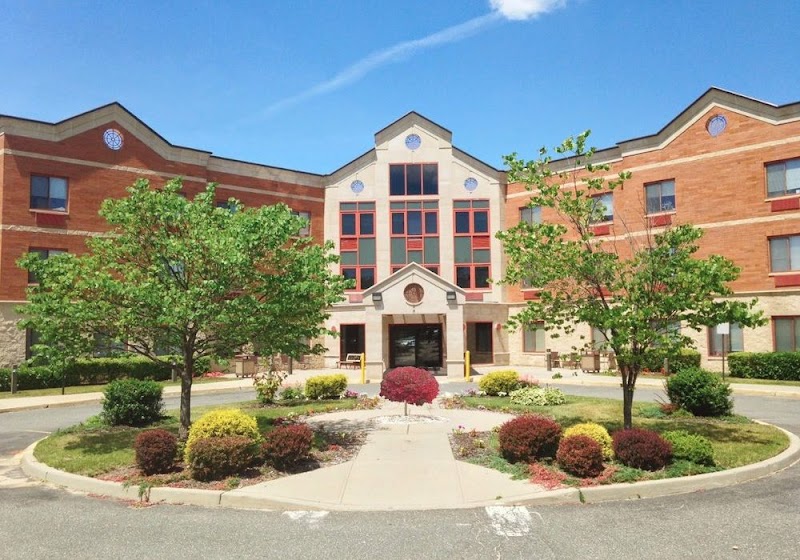
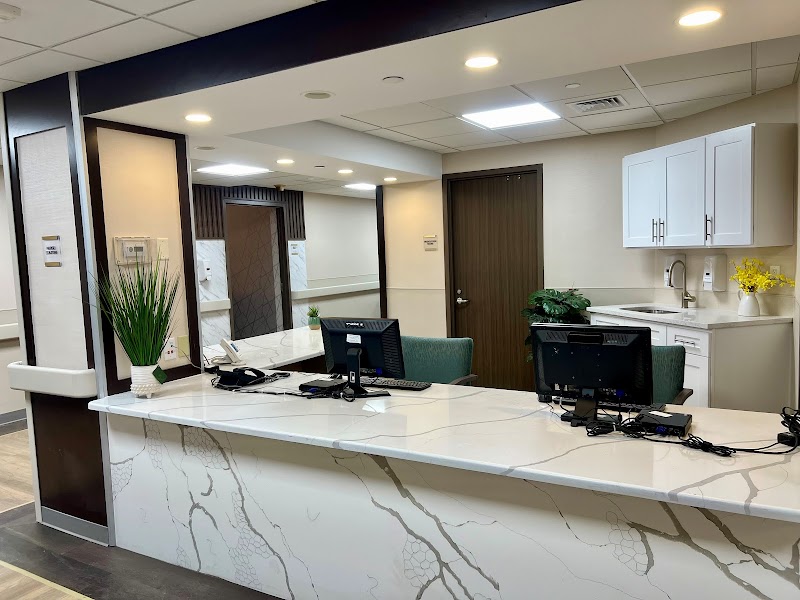
Medford Multicare Center For Living

3115 HORSEBLOCK ROAD, MEDFORD, NY 11763 (631) 730-3000
For profit - Corporation 320 Beds Independent Data: November 2025 2 Immediate Jeopardy citations
Trust Grade
1/100
#532 of 594 in NY
Last Inspection: February 2025

Within standard 12-15 month inspection cycle. Federal law requires annual inspections.

Overview

Medford Multicare Center For Living has received a Trust Grade of F, indicating significant concerns about the quality of care provided. It ranks #532 out of 594 nursing homes in New York, placing it in the bottom half of facilities statewide, and #40 out of 41 in Suffolk County, meaning there is only one local option that is better. Although the facility is improving-reducing issues from 11 in the previous year to 5 this year-its poor overall rating of 1 out of 5 stars for staffing and health inspections raises serious red flags. Staffing turnover is relatively low at 34%, which is better than the state average, but the facility has incurred substantial fines totaling $134,713, indicating ongoing compliance problems. Specific incidents include failures to promptly report and investigate allegations of sexual abuse and inadequate medication management, highlighting both significant weaknesses in resident safety and care.

Trust Score
F
1/100
In New York
#532/594
Bottom 11%
Safety Record
High Risk
Review needed
Inspections
Getting Better
11 → 5 violations
Staff Stability
○ Average
34% turnover. Near New York's 48% average. Typical for the industry.
Penalties
⚠ Watch
$134,713 in fines. Higher than 96% of New York facilities. Major compliance failures.
Skilled Nurses
○ Average
Each resident gets 32 minutes of Registered Nurse (RN) attention daily — about average for New York. RNs are the most trained staff who monitor for health changes.
Violations
⚠ Watch
29 deficiencies on record. Higher than average. Multiple issues found across inspections.
★☆☆☆☆
1.0
Overall Rating
★☆☆☆☆
1.0
Staff Levels
★★★☆☆
3.0
Care Quality
★☆☆☆☆
1.0
Inspection Score
Stable
2024: 11 issues
2025: 5 issues

The Good

  • Full Sprinkler Coverage · Fire safety systems throughout facility
  • No fines on record
  • Staff turnover below average (34%)

    14 points below New York average of 48%

Facility shows strength in fire safety.

The Bad

1-Star Overall Rating

Below New York average (3.0)

Significant quality concerns identified by CMS

Staff Turnover: 34%

12pts below New York avg (46%)

Typical for the industry

Federal Fines: $134,713

Well above median ($33,413)

Significant penalties indicating serious issues

The Ugly 29 deficiencies on record

2 life-threatening
Feb 2025 5 deficiencies
CONCERN (D)

Potential for Harm - no one hurt, but risky conditions existed

Deficiency F0655 (Tag F0655)

Could have caused harm · This affected 1 resident

**NOTE- TERMS IN BRACKETS HAVE BEEN EDITED TO PROTECT CONFIDENTIALITY** Based on observations, record review, and interviews during the Recertification Survey initiated on 2/24/2025 and completed on 2...

Read full inspector narrative →
**NOTE- TERMS IN BRACKETS HAVE BEEN EDITED TO PROTECT CONFIDENTIALITY** Based on observations, record review, and interviews during the Recertification Survey initiated on 2/24/2025 and completed on 2/28/2025 the facility did not ensure that a Baseline Care Plan for each resident included instructions needed to provide effective person-centered care that meets professional standards of quality care. This was identified for one (Resident #519) of three residents reviewed for Infection Control. Specifically, Resident #519 was admitted with Coronavirus (COVID-19) positive infection and had a physician's order for Droplet and Contact Precautions for ten days. There was no care plan developed and implemented for the Droplet and Contact Precautions. The finding is: The facility's policy, titled Person-Centered Care Plan last reviewed 10/2024 documented upon admission the facility shall conduct a comprehensive Person-Centered Care Plan, including an accurate assessment of each resident's functional capacity. All care planning begins upon admission. The care of each resident will be delivered according to the identified goals and interventions of the Comprehensive Care Plan. The Care Plan is developed within seven (7) calendar days from the admission date after completing the comprehensive assessment. Resident #519 was admitted with diagnoses including Coronavirus (COVID-19) infection, Rhabdomyolysis (medical condition where skeletal muscles break down), and Alzheimer's Disease. Resident #519 was recently admitted to the facility and did not have a Minimum Data Set assessment completed. The admission physician's order dated 2/20/205 documented Droplet/Contact precautions during every shift for Coronavirus (COVID-19) infection for 10 days. The order was discontinued on 2/27/2025. The Social Work admission assessment dated [DATE] documented a Brief Interview for Mental Status score of 8, indicating the resident had moderate cognitive impairment. A review of Resident #519's electronic medical record revealed there was no documented evidence of a care plan for Droplet and Contact Precautions. During an observation on 2/24/2025 at 8:23 AM, Resident #519 was observed in bed unable to answer interview questions. A Droplet and Contact Precautions sign and a cart with Personal Protective Equipment was placed outside the resident's room door. During an interview on 2/27/2025 at 10:10 AM, Registered Nurse Clinical Care Coordinator #1 stated the Infection Preventionist removed the contact sign today because Resident #519's isolation was discontinued. Registered Nurse Clinical Care Coordinator #1 stated today was day 11 since the resident had a positive Coronavirus (COVID-19) test result. Registered Nurse Clinical Care Coordinator #1 stated they were not aware that Resident #519 did not have a care plan for Droplet and Contact Precautions, and they should have initiated the care plan when the resident was first admitted . Registered Nurse Clinical Care Coordinator #1 stated the admission nurse, the Infection Preventionist, or themselves could have developed the care plan. During an interview on 2/27/2025 at 10:49 AM, Registered Nurse Infection Preventionist #1 stated when a resident is placed on Droplet and Contact Precautions, a care plan should be developed with individualized goals and interventions. Registered Nurse Infection Preventionist #1 stated they were unsure why Resident #519 did not have a care plan for Droplet and Contact Precautions. Resident #519 was placed on Droplet and Contact precautions because they (the resident) came from the hospital with Coronavirus (COVID-19) infection. The facility discontinues the Droplet and Contact precautions after 10 days based on the hospital diagnosis from 2/15/2025. During an interview on 2/28/2025 at 1:29 PM, the Director of Nursing Services stated care plans should be developed timely and accurately. The Director of Nursing Services stated the admission nurse should have created a care plan upon admission because Resident #519 was admitted with a positive Coronavirus infection and was placed on Contact and Droplet Precautions. 10 NYCRR 415.11
CONCERN (D)

Potential for Harm - no one hurt, but risky conditions existed

Deficiency F0694 (Tag F0694)

Could have caused harm · This affected 1 resident

**NOTE- TERMS IN BRACKETS HAVE BEEN EDITED TO PROTECT CONFIDENTIALITY** Based on observations, record review, and interviews during the Recertification Survey initiated on 2/24/2025 and completed on 2...

Read full inspector narrative →
**NOTE- TERMS IN BRACKETS HAVE BEEN EDITED TO PROTECT CONFIDENTIALITY** Based on observations, record review, and interviews during the Recertification Survey initiated on 2/24/2025 and completed on 2/28/2025 the facility did not ensure parenteral fluids were administered consistent with current professional standards of practice, physician orders, and the comprehensive person-centered care plan. This was identified for one (Resident #242) of three residents reviewed for Hydration. Specifically, Resident #242 was admitted to the facility with a Peripheral Inserted Central Catheter (PICC) in their right arm from the hospital. There was no documentation the facility was Monitoring the Peripheral Inserted Central Catheter (PICC) site or measuring the length of the external catheter. The finding is: The facility's policy titled Peripheral Inserted Central Catheter (PICC) line last reviewed 6/2024, documented to assess the insertion site and surrounding tissue for any inflammation, tenderness, or drainage and if observed, report the findings to the physician. The policy did not include guidance for measuring the external catheter for the Peripheral Inserted Central Catheter (PICC). Resident #242 was admitted with diagnoses that include Kidney Stones and Sepsis. The Minimum Data Set assessment dated [DATE] documented a Brief Interview for Mental Status score of 8, which indicated the resident had moderate cognitive impairment. The Minimum Data Set assessment documented Resident #242 had intravenous access and received intravenous antibiotics. The Patient Review Instrument (an assessment tool used to determine patient placement) dated 1/31/2025 documented Resident #242 had a Peripheral Inserted Central Catheter (PICC) placed in their right arm on 1/29/2025. A physician's order dated 1/31/2025 documented to flush the Peripheral Inserted Central Catheter (PICC) with 10 milliliters of Normal Saline every shift **RN ONLY.** A physician's order dated 2/01/2025 documented Cefepime Intravenous Solution (an antibiotic) use 2 grams intravenously every 12 hours for Sepsis due to Serratia & Pseudomonas infection until 3/02/2025. The Comprehensive Care Plan dated 2/12/2025, developed after 12 days the resident was admitted to the facility, documented Resident #242 had a Peripheral Inserted Central Catheter (PICC) for intravenous antibiotics administration. Interventions included monitoring the site every shift and as needed. A physician's order dated 2/25/2025 documented to monitor the Peripheral Inserted Central Catheter (PICC) line site each shift, and notify the Physician of any redness, tenderness, edema, or excessive bleeding. The order did not include measuring the Peripheral Inserted Central Catheter (PICC) line length externally to monitor the migration of the catheter. The Medication Administration Record for February 2025 indicated no documented evidence that the Peripheral Inserted Central Catheter (PICC) was assessed or measured each shift from 2/1/2025 to 2/24/2025. The Treatment Administration Record for February 2025 indicated no documented evidence that the Peripheral Inserted Central Catheter (PICC) was assessed or measured each shift from 2/1/2025 to 2/24/2025. During an observation and interview on 2/25/2025 at 8:50 AM, Resident #242 was sitting in bed having breakfast. A Peripheral Inserted Central Catheter (PICC) line was observed on the right arm. Resident #242 stated the Peripheral Inserted Central Catheter (PICC) line was for administering the antibiotics. During an interview on 2/26/2025 at 2:25 PM Registered Nurse Clinical Care Coordinator #1 stated this resident came from the hospital with the Peripheral Inserted Central Catheter (PICC) in place. They stated there was no order to measure the Peripheral Inserted Central Catheter (PICC) external catheter or for the assessment of the Peripheral Inserted Central Catheter (PICC) daily. The Peripheral Inserted Central Catheter (PICC) line should be monitored each shift, and the external catheter should be measured weekly to ensure the catheter did not migrate causing infiltration, or the medication not being delivered. The nurse who admitted the resident should have made sure the order was in place. Clinical Care Coordinator #1 stated they should have made sure that a care plan was in place. During an interview on 2/28/2025 at 8:39 AM, the Registered Nurse Educator stated the order should state the nurse should measure the external catheter length during a dressing change and document the length in the Medication Administration Record or the Treatment Administration Record. During an interview on 2/28/2025 at 12:35 PM, Licensed Practical Nurse #1 stated they do not provide Peripheral Inserted Central Catheter (PICC) line care. The Registered Nurses are responsible for completing the task including flushing the Peripheral Inserted Central Catheter (PICC) line, and hanging the antibiotic medications on the Peripheral Inserted Central Catheter (PICC). Licensed Practical Nurse #1 stated when the Registered Nurse completes their task they (Licensed Practical Nurse #1) then document on the Medication Administration Record that the task was completed. During an interview on 2/28/2025 at 1:26 PM, the Director of Nursing stated the facility policy did not include measuring the external catheter length for the Peripheral Inserted Central Catheter (PICC). The staff should have monitored and documented their findings each shift. 10 NYCRR 415.12(k)(2)
CONCERN (D)

Potential for Harm - no one hurt, but risky conditions existed

Respiratory Care (Tag F0695)

Could have caused harm · This affected 1 resident

**NOTE- TERMS IN BRACKETS HAVE BEEN EDITED TO PROTECT CONFIDENTIALITY** Based on observations, record review, and interviews during the Recertification Survey initiated on 2/24/2025 and completed on 2...

Read full inspector narrative →
**NOTE- TERMS IN BRACKETS HAVE BEEN EDITED TO PROTECT CONFIDENTIALITY** Based on observations, record review, and interviews during the Recertification Survey initiated on 2/24/2025 and completed on 2/28/2025, the facility did not ensure that each resident who needs respiratory care is provided such care consistent with professional standards of practice and the comprehensive person-centered care plan. This was identified for one (Resident #32) of three residents reviewed for Respiratory Care. Specifically, Resident #32 was observed receiving oxygen therapy without a Physician's order. The finding is: The facility's policy titled Oxygen Administration dated February 2024 documented to ensure adequate oxygenation of the body's vital organs. Residents with a clinical diagnosis or clinical indication will receive concentrations of oxygen in doses higher than those found in the atmosphere. Oxygen [therapy] is administered by licensed nursing staff on the written order of the attending Physician. The Physician writes an order for oxygen therapy with a rationale. Resident #32 was admitted with diagnoses including Cerebral Infarction, Heart Failure, and Diabetes Mellitus. The Minimum Data Set assessment dated [DATE] documented the resident had severely impaired cognition and was rarely or never understood. The Minimum Data Set (MDS) assessment documented the resident received oxygen therapy. A review of the medical record indicated there was no care plan developed for the oxygen therapy. A Physician's order dated 1/20/2025 documented to obtain a Pulmonary consultation for Resident #32 related to shortness of breath. The Pulmonary Consultant note dated 1/23/2025 documented that Resident #32 was referred for an evaluation due to shortness of breath and Hypoxia (lack of oxygen to the tissues). The Pulmonologist's recommendations included to monitor the oxygen saturation level while on room air and to provide oxygen therapy as needed to maintain an oxygen saturation level above 92%. A review of Resident #32's medical record revealed there was no evidence of a physician's order for oxygen therapy and to monitor the resident's oxygen saturation level. The Pulmonary Consultant note dated 2/18/2025 documented that at the time of the evaluation, Resident #32 received oxygen therapy at a flow rate of 2 liters per minute via nasal cannula. The Pulmonologist recommended titrating oxygen supplementation as needed to keep the oxygen saturation above 92%. During an observation on 2/24/2025 at 9:56 AM, Resident #32 was lying in bed receiving oxygen therapy via nasal cannula from an oxygen concentrator set to a flow rate of 2 liters per minute. During an observation on 2/27/2025 at 10:00 AM, Resident #32 was lying in bed receiving oxygen therapy via nasal cannula from an oxygen concentrator set to a flow rate of 2 liters per minute. During an observation on 2/28/2025 at 11:00 AM, Resident #32 was lying in bed receiving oxygen therapy via nasal cannula from an oxygen concentrator set to a flow rate of 2 liters per minute. During an interview on 2/28/2025 at 9:35 AM, Licensed Practical Nurse #9 stated all nurses are responsible for oxygen therapy administration. Licensed Practical Nurse #9 stated Resident #32 has been receiving oxygen therapy at 2 liters per minute via nasal cannula since October 2024. Licensed Practical Nurse #9 stated they did not realize there was no physician's order for oxygen therapy and there should have been an order in place. Licensed Practical Nurse #9 stated they check Resident #32's vital signs, including the oxygen saturation level, once a week. During an interview on 2/28/2025 at 9:56 AM, Registered Nurse Manager #1 stated the resident returned from the hospital in October 2024 and has been receiving oxygen therapy at 2 liters per minute via nasal cannula since then. Registered Nurse Manager #1 stated they did not know that there was no physician's order for oxygen therapy. Registered Nurse Manager #1 stated the resident needed oxygen therapy because they (the resident) had shortness of breath. During an interview on 2/28/2025 at 10:44 AM, Physician #1 stated Resident #32 received oxygen therapy at 2 liters per minute since October 2024. Physician #1 stated oxygen therapy administration requires a Physician's order. Physician #1 stated they were unaware there was no physician's order in place. Physician #1 stated they entered the Physician's order on 2/28/2025 after the facility informed them that the resident received oxygen therapy without a physician's order. During an interview on 2/28/2025 at 12:55 AM, the Director of Nursing Services stated they were not aware the resident received oxygen therapy without a physician's order. The Director of Nursing Services stated oxygen therapy administration requires a physician's order. 10 NYCRR 415.12(k)(6)
CONCERN (D)

Potential for Harm - no one hurt, but risky conditions existed

Deficiency F0711 (Tag F0711)

Could have caused harm · This affected 1 resident

**NOTE- TERMS IN BRACKETS HAVE BEEN EDITED TO PROTECT CONFIDENTIALITY** Based on observation, record review, and interview during the Recertification survey initiated on 2/24/2024 and completed on 2/2...

Read full inspector narrative →
**NOTE- TERMS IN BRACKETS HAVE BEEN EDITED TO PROTECT CONFIDENTIALITY** Based on observation, record review, and interview during the Recertification survey initiated on 2/24/2024 and completed on 2/28/2025, the facility did not ensure the Physician reviewed the resident's total program of care, including medications and treatments, at each visit. This was identified for one (Resident #32) of five residents reviewed for Respiratory care. Specifically, Resident #32 received Oxygen therapy without a physician's evaluation and physician's order. The finding is: The facility's policy titled Oxygen Administration dated February 2024 documented to ensure adequate oxygenation of the body's vital organs. Residents with a clinical diagnosis or clinical indication will receive concentrations of oxygen in doses higher than those found in the atmosphere. Oxygen [therapy] is administered by licensed nursing staff on the written order of the attending Physician. The Physician writes an order for oxygen therapy with a rationale. Resident #32 was admitted with diagnoses including Cerebral Infarction, Heart Failure, and Diabetes Mellitus. The Minimum Data Set assessment dated [DATE] documented the resident had severely impaired cognition and was rarely or never understood. The Minimum Data Set (MDS) assessment documented the resident received oxygen therapy. A review of the medical record indicated there was no care plan developed for the oxygen therapy. A Physician's order dated 1/20/2025 documented to obtain a Pulmonary consultation for Resident #32 related to shortness of breath. The Pulmonary Consultant note dated 1/23/2025 documented that Resident #32 was referred for an evaluation due to shortness of breath and Hypoxia (lack of oxygen to the tissues). The Pulmonologist's recommendations included to monitor the oxygen saturation level while on room air and to provide oxygen therapy as needed to maintain an oxygen saturation level above 92%. A review of Resident #32's medical record revealed there was no evidence of a progress note or a physician's order for the use of oxygen therapy and to monitor the resident's oxygen saturation level. The Pulmonary Consultant note dated 2/18/2025 documented that at the time of the evaluation, Resident #32 received oxygen therapy at a flow rate of 2 liters per minute via nasal cannula. The Pulmonologist recommended titrating oxygen supplementation as needed to keep the oxygen saturation above 92%. A review of Resident #32's medical record revealed there was no evidence of a progress note or a physician's order for the use of oxygen therapy and to monitor the resident's oxygen saturation level. During an observation on 2/24/2025 at 9:56 AM, Resident #32 was lying in bed receiving oxygen therapy via nasal cannula from an oxygen concentrator set to a flow rate of 2 liters per minute. During an observation on 2/27/2025 at 10:00 AM, Resident #32 was lying in bed receiving oxygen therapy via nasal cannula from an oxygen concentrator set to a flow rate of 2 liters per minute. During an observation on 2/28/2025 at 11:00 AM, Resident #32 was lying in bed receiving oxygen therapy via nasal cannula from an oxygen concentrator set to a flow rate of 2 liters per minute. During an interview on 2/28/2025 at 9:56 AM, Registered Nurse Manager #1 stated the resident returned from the hospital in October 2024 and has been receiving oxygen therapy at 2 liters per minute via nasal cannula since then. Registered Nurse Manager #1 stated they did not know that there was no physician's order for oxygen therapy. Registered Nurse Manager #1 stated the resident needed oxygen therapy because they (the resident) had shortness of breath. During an interview on 2/28/2025 at 10:44 AM, Physician #1 stated Resident #32 received oxygen therapy at 2 liters per minute since October 2024. Physician #1 stated oxygen therapy administration requires a Physician's order. Physician #1 stated they were unaware there was no physician's order in place and did not realize there were recommendations provided by the Pulmonologist. Physician #1 stated they entered the Physician's order on 2/28/2025 after the facility informed them that the resident received oxygen therapy without a physician's order. During an interview on 2/28/2025 at 12:55 AM, the Director of Nursing Services stated they were not aware the resident received oxygen therapy without a physician's order. The Director of Nursing Services stated oxygen therapy administration requires a physician's order. 10 NYCRR415.15(b)(1)(i)(ii)
CONCERN (D)

Potential for Harm - no one hurt, but risky conditions existed

Infection Control (Tag F0880)

Could have caused harm · This affected 1 resident

**NOTE- TERMS IN BRACKETS HAVE BEEN EDITED TO PROTECT CONFIDENTIALITY** 2) The Centers for Disease Control (CDC) Multidrug-Resistant Organisms (MDRO) Management Guidelines dated 3/18/2024 documented t...

Read full inspector narrative →
**NOTE- TERMS IN BRACKETS HAVE BEEN EDITED TO PROTECT CONFIDENTIALITY** 2) The Centers for Disease Control (CDC) Multidrug-Resistant Organisms (MDRO) Management Guidelines dated 3/18/2024 documented to use of masks according to Standard Precautions when performing splash-generating procedures (e.g., wound irrigation, oral suctioning, intubation) and when caring for patients with open tracheostomies and the potential for projectile secretions. Resident #147 was admitted with diagnoses including Multidurg-Resistant Organism (MDRO) Pneumonia. The Minimum Data Set assessment dated [DATE] did not include a Brief Interview for Mental Status because the resident was rarely/never understood. The resident received tracheostomy care and was ventilator-dependent. A Comprehensive Care Plan titled Pseudomonas (bacteria) in the sputum evidenced by positive wound culture effective 1/2/2025 documented the resident had an active infection requiring universal [standard] precautions when providing resident care. Interventions included administering antibiotics as per the physician's orders and maintaining universal precautions when providing resident care. The hospital infectious disease consult dated 2/10/2025 documented the resident was positive for Pseudomonas of the Sputum. The Patient Review instrument ( an assessment tool to determine patient placement) dated 2/17/2025 documented the resident required Contact Isolation Precautions secondary to Pseudomonas Multidrug-Resistant Organisms (MDRO) infection. A medical readmission note dated 2/18/2025 documented the resident was seen on telemedicine for readmission medication reconciliation. The patient's chart, discharge papers, and the discharge medication lists were reviewed Ventilator-associated pneumonia. A Physician's order dated 2/18/2025 documented Contact Precautions. A Physician's order dated 2/18/2025 documented a Tracheostomy Tube, Uncuffed; provide tracheal suctioning as needed; tracheostomy tube change every 12 weeks and as needed; change the Ventilator Circuit monthly and as needed; ensure ventilator tubing is off the floor. A medical progress note dated 2/20/2025 documented sputum culture with Pseudomonas. During an observation and interview on 2/27/2025 at 2:13 PM, Resident #147 was lying in bed in their room. A sign outside the resident's room documented Contact Precaution: Put on gloves and a gown before entering the room. The Respiratory Therapist #1 was observed wearing a gown and gloves. Respiratory Therapist #1 set up their equipment on the bedside table, then proceeded to suction the resident via tracheostomy tube through a closed suction system. The resident was observed coughing during suctioning. Respiratory Therapist #1 then cleansed the tracheostomy stoma area and applied a clean tracheostomy stoma dressing. Respiratory Therapist #1 performed hand hygiene and donned (put on) new gloves, disconnected the ventilator tubing from the tracheostomy, and removed the old inner cannula from the tracheostomy. Respiratory Therapist #1 then applied a new inner cannula, and re-attached the ventilator tubing. Respiratory Therapist #1 was not wearing a mask or eye protection while the ventilator tubing was disconnected and the tracheostomy inner cannula was being changed. Respiratory Therapist #1 was immediately interviewed and stated that the resident had a closed tracheostomy system connected to the ventilator and therefore they were not required to wear a mask. During an interview on 2/27/2025 at 2:43 PM, the Infection Control Registered Nurse #1 stated they reviewed the resident's Patient Review instrument with the admission nurse and the resident's Physician. The Physician only ordered Contact precautions and under Contact precautions, the Respiratory Therapist is only supposed to wear gloves and a gown. During an interview on 2/28/2025 at 9:51 AM, the Infectious Disease Physician stated the Respiratory Therapist caring for the resident with Multidrug-Resistant Organisms should have worn a mask. The Infectious Disease Physician stated a face shield and a surgical mask should be worn to prevent the spread of the infection while performing procedures that have the potential to generate aerosolized particles. Not wearing a mask or face shield increases the likelihood of the caregiver's exposure to oral secretions and sputum. During an interview on 2/28/2025 at 9:54 AM, the Medical Director stated Respiratory Therapist #1 should have worn a mask and a face shield when changing the tracheostomy inner cannula due to the risk of exposure to the Pseudomonas, Multidrug-Resistant Organisms in the sputum. 10 NYC RR 415.19(a)(1-3) Based on observations, record review, and interviews during the Recertification Survey initiated on 2/24/2025 and completed on 2/28/2025, the facility did not establish and maintain an infection prevention and control program designed to help prevent the development and transmission of communicable diseases and infections. This was identified for one (Resident #521) of three residents reviewed for the Infection Control Task, and one (Resident #147) of five residents reviewed for Respiratory Care. Specifically, 1) Resident #521 had a physician's order for Contact Precautions due to Clostridium difficile infection. On 2/25/2025 at 8:09 AM, Certified Nursing Assistant #3 was observed coming out of Resident#521's room carrying two meal trays without wearing any Personal Protective Equipment including a gown or gloves. 2) Specifically, Resident #147 was ventilator dependent and was re-admitted to the facility on [DATE] from the hospital with a Multidrug-Resistant Organism (MDRO) Pneumonia infection. On 2/27/2025, Respiratory therapist #1 was observed changing the tracheostomy inner cannula without wearing a face mask or face shield. The findings are: The facility's policy titled Transition Based Isolation last reviewed 9/2024, documented each infectious disease is considered individually so that only those precautions (private rooms, masks, gowns, and gloves) that are indicated to interrupt transmission for that disease is recommended. All isolation procedures will be in accordance with recommendations for isolation precautions as required by the Centers for Disease Control. 1) Resident #521 was admitted with diagnoses that include Enterocolitis (inflammation in both intestines at once) due to Clostridium difficile, End Stage Renal Disease, and Malignant Neuroendocrine Tumors. The Minimum Data Set assessment dated [DATE] documented a Brief Interview for Mental Status score of 12, indicating Resident #521 had moderately impaired cognition. The Minimum Data Set documented Resident #521 had a Multidrug-Resistant Organism. A physician's order dated 1/25/2025 documented Contact Precautions (Clostridium difficile) every shift. This order was discontinued on 2/25/2025 at 8:33 AM. The Comprehensive Care Plan for Diagnosis of Colitis with a history of Clostridium difficile dated 1/25/2025 documented interventions that included Contact Isolation and staff to wear gowns and gloves. During an observation on 2/25/2025 at 8:09 AM, a Contact Precaution sign was outside Resident #521's room which documented that everyone must clean their hands before entering the room and after exiting the room. Providers and staff must put on gowns and gloves before entering the room. Certified Nursing Assistant #3 was observed walking out of Resident #521's room carrying two meal trays that were used by Resident #521 and their roommate for their breakfast meal. Certified Nursing Assistant #3 was not wearing any Personal Protective Equipment including a gown or gloves. Certified Nursing Assistant #3 placed the used meal trays on the meal truck with other used meal trays, cleansed their hands with a hand sanitizer, and did not use soap and water. During an interview on 2/25/2025 at 8:09 AM, Certified Nursing Assistant #3 stated they were told that the resident was no longer on Contact Precautions and the signage should have been taken down. Certified Nursing Assistant #3 stated they were not sure who told them that the resident was no longer on contact precautions. They stated they should have put on Personal Protective Equipment and followed the Contact Precaution signage on the door for Contact Precautions. During an interview on 2/27/2025 at 10:49 AM, the Registered Nurse/Infection Preventionist stated the staff should have followed the Contact Precautions signage and should have put on appropriate Personal Protective Equipment as indicated on the sign. During an interview on 2/28/2025 at 1:32 PM, the Director of Nursing Services stated staff should have followed the Contact Precaution signage and put on appropriate Personal Protective Equipment.
Apr 2024 11 deficiencies 2 IJ
CRITICAL (J)

Immediate Jeopardy (IJ) - the most serious Medicare violation

Report Alleged Abuse (Tag F0609)

Someone could have died · This affected 1 resident

**NOTE- TERMS IN BRACKETS HAVE BEEN EDITED TO PROTECT CONFIDENTIALITY** Based on interviews and record review during a Recertification Survey initiated on 4/17/2024 and completed on 4/26/2024, the fac...

Read full inspector narrative →
**NOTE- TERMS IN BRACKETS HAVE BEEN EDITED TO PROTECT CONFIDENTIALITY** Based on interviews and record review during a Recertification Survey initiated on 4/17/2024 and completed on 4/26/2024, the facility failed to ensure that allegations of sexual abuse were reported to the Administrator or other officials immediately (or within two hours) after the allegations were made. This was identified for one (Resident #26) of seven residents reviewed for abuse. Specifically, on 3/30/2024 Resident #26, with intact cognition, reported to Licensed Practical Nurse #1 they were sexually abused by Certified Nursing Assistant #1. Licensed Practical Nurse #1 failed to report the allegations to the facility Administrator/designee or other officials. Resident #26 again reported the same allegation of sexual abuse to Certified Nursing Assistant #3 on 4/01/2024. Certified Nursing Assistant #3 informed Registered Nurse #1 of the allegation. Registered Nurse #1 failed to report the allegation to the facility Administrator/designee, or other officials. Certified Nursing Assistant #1 continued to be assigned to the same unit where Resident #26 resided and had access to the resident through 4/18/2024. This resulted in Immediate Jeopardy for Resident #26 with the potential for serious injury, serious harm, serious impairment, or death to 40 other residents who resided on Resident #26's unit. The finding is: The facility policy and procedure titled, Requirements for Reporting Suspected Case of Abuse, Neglect or Mistreatment, revised February 2024, documented mandatory reporters are required to report when they have a reasonable cause to believe that a person receiving care or services in a residential health care facility has been physically abused, mistreated, or neglected. When a suspicious incident occurs, it is the policy of this facility that the administrator and director of nursing or designee be made aware immediately by the staff reporting it. Employees are in-serviced on this policy upon hire, annually, and as needed to ensure compliance. The occurrence must be reported immediately to the Administrator, Director of Nursing Services, or designee, and to the New York State Department of Health but not later than 2 hours after the allegation is made. Resident #26 was admitted with diagnoses that included Major Depressive Disorder, Bipolar Disorder (a mental illness that causes unusual shifts in a person's mood, energy, activity levels, and concentration), and Anxiety Disorder. The annual Minimum Data Set assessment dated [DATE] documented the resident's Brief Interview for Mental Status score was 14 which indicated intact cognition. The Minimum Data Set documented the resident had no behavioral or mood symptoms at the time of assessment. A Comprehensive Care Plan dated 4/18/2024, initiated after the allegation was brought to the facility's attention by the surveyor, documented the resident was at risk of being a victim due to dependence on caregivers for activities of daily living. The resident has a history of accusatory and physically abusive behaviors. Interventions included to assess the resident for signs and symptoms of abuse and or neglect and report to appropriate resources; investigate all allegations of abuse and neglect promptly; provide support and ensure the resident is free from abuse. During an initial tour on 4/18/2024 Resident #26 was interviewed at 1:15 PM. Resident #26 stated approximately two months ago Certified Nursing Assistant #1 inserted their finger into their vagina while providing care. Resident #26 stated they reported the incident to Licensed Practical Nurse #1. The facility's Grievance Reports and Accident and Incident Reports for February 2024, March 2024, and April 2024 were reviewed on 4/19/2024. There was no documented evidence that a report was initiated for the allegation of sexual abuse made by Resident #26. During an interview on 4/18/2024 at 2:05 PM Certified Nursing Assistant #1 stated they worked at the facility as a part-time employee during the 7:00 AM - 3:00 PM shift. They usually covered Certified Nursing Assistant #3's assignment when Certified Nursing Assistant #3 was off. Certified Nursing Assistant #1 stated the assignment included providing care to Resident #26, who required two staff members for activities of daily living. Resident #26 was a two-staff approach (two staff required to interact with the resident) because the resident had accusatory behavior towards staff. Certified Nursing Assistant #1 stated on 3/31/2024 they provided daily care for Resident #26 including washing the resident's buttocks and perineal (genital) area. Certified Nursing Assistant #1 stated a second Certified Nursing Assistant was present during care. Certified Nursing Assistant #1 could not recall the name of the Certified Nursing Assistant who assisted them with Resident #26. Certified Nursing Assistant #1 stated when they returned to work on Tuesday (4/2/2024) they were told that Resident #26 had accused them of massaging their back, rubbing their buttocks, and sticking their finger in the resident's vagina (could not recall who notified them of the allegation). Certified Nursing Assistant #1 stated that at no time did their finger enter the resident's vagina. Certified Nursing Assistant #1 stated that even after the allegation was made, they were still assigned to provide care for Resident #26. Certified Nursing Assistant #1 stated they questioned Licensed Practical Nurse #1 as to why they were still assigned to Resident #26 after they were accused of sexual abuse. Certified Nursing Assistant #1 stated Licensed Practical Nurse #1 told them Resident #26 was a two-person approach and that Certified Nursing Assistant #1 had to care for the resident. A review of the Daily Assignment Sheets from 3/30/2024 to 4/18/2024 documented Certified Nursing Assistant #1 was assigned to Resident #26 on 3/30/24, 3/31/24, 4/2/24, 4/4/24, 4/11/2024, 4/13/2024, 4/14/2024, 4/16/2024 and 4/18/2024. During an interview with Registered Nurse #1 on 4/18/2024 at 4:06 PM they stated they were the Clinical Care Coordinator during the 7:00 AM - 3:00 PM shift on 4/1/2024. Registered Nurse #1 stated on 4/1/2024, Certified Nursing Assistant #3 reported to them, Resident #26 had made an allegation of sexual abuse against Certified Nursing Assistant #1. Registered Nurse #1 stated they went to speak with the resident and reminded the resident they had been accusatory towards the staff in the past. Registered Nurse #1 stated they did not assess the resident at the time but should have. Registered Nurse #1 stated they did not report the allegation to the administration and did not initiate an investigation because the resident told them they made up the allegation, as they wanted Certified Nursing Assistant #1 to be taken off their assignment. Registered Nurse #1 stated they were aware when an allegation of abuse is reported to them, they are responsible for initiating an investigation, interviewing the resident, and escalating as needed. Registered Nurse #1 stated they were supposed to report the allegation of abuse to the Director of Nursing and the Assistant Director of Nursing Services. During an interview on 4/19/2024 at 10:09 AM, Certified Nursing Assistant #3 stated they worked the 7:00 AM to 3:00 PM shift and were regularly assigned to Resident #26. Certified Nursing Assistant #3 stated they had no issues with Resident #26 and the resident was cooperative with care. Certified Nursing Assistant #3 stated approximately a month ago Resident #26 told them Certified Nursing Assistant #1 stuck their finger into their vagina. Certified Nursing Assistant#3 stated they did not recall the exact date the resident made the allegation. Certified Nursing Assistant #3 stated they reported this information to Licensed Practical Nurse #1 because Registered Nurse #1 was not available. Certified Nursing Assistant #3 stated they did not receive any instructions or updates from Licensed Practical Nurse #1 after they reported the allegation. Certified Nursing Assistant #3 stated approximately a week after they reported the allegation to Licensed Practical Nurse #1, the resident again reported the incident to Certified Nursing Assistant #3 on 4/1/2024. Certified Nursing Assistant #3 then reported the incident to Registered Nurse #1 on 4/1/2024. Registered Nurse #1 asked them to be a witness and to accompany Registered Nurse #1 to Resident #26's room when they spoke with Resident #26 because the resident was a two-person approach. Certified Nursing Assistant #3 stated Registered Nurse #1 asked Resident #26 if Certified Nursing Assistant #1 had stuck their finger into their (Resident #26's) vagina. Certified Nursing Assistant #3 stated the resident did not retract their allegation during the interview. Certified Nursing Assistant #3 stated they were in-serviced on abuse, and reporting, and knew to immediately report the allegation of sexual abuse to Registered Nurse #1. During an interview on 4/19/2024 at 9:39 AM, the Director of Nursing Services stated that Registered Nurse #1 did not notify them of the sexual abuse allegation made by Resident #26 until 4/18/2024 at approximately 2:30 PM. The Director of Nursing Services stated that once Registered Nurse #1 was made aware of the allegations, they were responsible for immediately notifying the Director of Nursing Services or the facility Administrator, and for initiating the investigation. The Director of Nursing Services stated that as soon as the allegation was made, Registered Nurse #1 should have assessed the resident and removed the alleged Certified Nursing Assistant #1 from the unit. The physician and the resident's designated representative should have been notified; statements from all staff involved, and any potential witnesses should have been obtained. The Director of Nursing Services stated Registered Nurse #1 should have also documented the assessment in the medical record and updated the resident's care plan regarding the allegation. During an interview on 4/19/2024 at 10:12 AM, the Administrator stated they were first made aware of Resident #26's allegation of sexual abuse on 4/18/2024 at 5:10 PM. The Administrator stated they expected the facility staff to notify them of any abuse allegations immediately after the resident first reported the occurrence. The Administrator stated that the resident should have been assessed for physical injuries, and psychological changes reflected in the resident's behavior, and the assessment should have been documented in the resident's medical record. The Administrator stated if they were notified of the allegations, they would have instructed staff to remove Certified Nursing Assistant #1 from the schedule immediately; ensured that an assessment was completed, the physician was notified, the resident was provided emotional support along with the psychological services and would have reported the incident to the New York State Department of Health. During an interview on 4/19/2024 at 12:35 PM, Licensed Practical Nurse #1 stated they were regularly assigned to Resident #26's unit during the 7:00 AM-3:00 PM. Licensed Practical Nurse #1 stated that no one reported any sexual abuse allegations to them. During an interview on 4/26/2024 at 12:47 PM, the Medical Director stated that the Director of Nursing Services first made them aware of Resident #26's allegation of sexually inappropriate behavior by staff on 4/18/2024. The Medical Director stated that they expect inappropriate behaviors toward the residents should not occur; however, when the resident made such an allegation, the accused staff should have been removed from the daily schedule and the allegation should have been investigated and reported promptly. The Medical Director stated regardless of the resident's accusatory behavior, any allegation of abuse of any kind should be fully investigated. The Medical Director stated that residents who have accusatory behaviors are at higher risk for abuse because they are not taken seriously and can often be taken advantage of because of this behavior. The Medical Director stated Registered Nurse #1 should have reported the allegations of sexual abuse to the Director of Nursing Services, and it was not Registered Nurse #1's decision to decide not to investigate the allegation. 10 NYCRR 415.4(b)(2)
CRITICAL (J)

Immediate Jeopardy (IJ) - the most serious Medicare violation

Investigate Abuse (Tag F0610)

Someone could have died · This affected 1 resident

**NOTE- TERMS IN BRACKETS HAVE BEEN EDITED TO PROTECT CONFIDENTIALITY** Based on interviews and record review during a Recertification Survey initiated on 4/17/2024 and completed on 4/26/2024, the fac...

Read full inspector narrative →
**NOTE- TERMS IN BRACKETS HAVE BEEN EDITED TO PROTECT CONFIDENTIALITY** Based on interviews and record review during a Recertification Survey initiated on 4/17/2024 and completed on 4/26/2024, the facility failed to ensure that all allegations of abuse, neglect, and mistreatment were thoroughly investigated. This was identified for one (Resident #26) of seven residents reviewed for abuse. Specifically, on 3/30/2024 Resident #26 reported to Licensed Practical Nurse #1 that they were sexually abused by Certified Nursing Assistant #1. There was no documented evidence Licensed Practical Nurse #1 took steps to initiate an investigation into the allegation. On 4/1/2024, Resident #26 reported the same allegation to Certified Nursing Assistant #3. Certified Nursing Assistant #3 informed Registered Nurse #1 of the allegation. There was no documented evidence Registered Nurse #1 took steps to initiate an investigation into the allegation. Through 4/18/2024, Certified Nursing Assistant #1 continued to be assigned to and worked on the same unit where Resident #26 resided. As of 4/18/2024, the facility had failed to provide documented evidence that it had conducted and completed a thorough investigation within 5 days of the allegations of sexual abuse. This resulted in Immediate Jeopardy for Resident #26, with the potential for serious injury, serious harm, serious impairment, or death to 40 other residents who resided on Resident #26's unit. The finding is: The facility Investigation Policy and Procedure on Resident Accidents and Incidents with a revision date of 4/2024, directed that within 24 hours of the reported incident or accident, the risk manager or nurse supervisor must complete the Resident Accident & Incident Summary Report to determine if there is reason to believe that abuse, neglect, mistreatment, or misappropriation has occurred, and to determine the underlying cause of the reported accident or incident. The facility has 2 hours to report abuse to the New York State Department of Health. The policy further documented to thoroughly investigate every accident/incident for potential abuse, neglect, mistreatment, or misappropriation. If there is a cause to believe abuse, neglect or mistreatment has occurred, or that an accident and incident meets the New York State Department of Health reporting requirements (injury of unknown origin, choking, burn, suicide attempt, care plan violation, etc.), the risk manager or reporting Registered Nurse must inform the Director of Nursing Services or the Administrator immediately. Any employee suspected of abuse, neglect, or mistreatment must immediately be removed from the work schedule pending the results of the investigation by facility administration. Resident #26 was admitted with diagnoses that included Major Depressive Disorder, Bipolar Disorder (a mental illness that causes unusual shifts in a person's mood, energy, activity levels, and concentration), and Anxiety Disorder. The annual Minimum Data Set assessment dated [DATE] documented the resident's Brief Interview for Mental Status score was 14 which indicated intact cognition. The resident had no behavioral or mood symptoms at the time of assessment. A Comprehensive Care Plan dated 4/18/2024, initiated after the allegation was brought to the facility's attention by the surveyor, documented the resident was at risk of being a victim due to dependence on caregivers for activities of daily living. The resident has a history of accusatory and physically abusive behaviors. Interventions included to assess the resident for signs and symptoms of abuse and or neglect and report to appropriate resources; investigate all allegations of abuse and neglect promptly; provide support and ensure the resident is free from abuse. During an initial tour on 4/18/2024, Resident #26 was interviewed at 1:15 PM. Resident #26 stated approximately two months ago Certified Nursing Assistant #1 inserted their finger into their (Resident #26's) vagina while providing care. Resident #26 stated they reported the incident to Licensed Practical Nurse #1. The facility's Grievance Reports and Accident and Incident Reports for February 2024, March 2024, and April 2024 were reviewed on 4/19/2024. There was no documented evidence that a report was initiated for the allegation of sexual abuse for Resident #26. There was no documented evidence that an investigation was initiated related to the sexual abuse allegation made by Resident #26. During an interview on 4/18/2024 at 2:05 PM, Certified Nursing Assistant #1 stated they worked at the facility as a part-time employee during the 7:00 AM - 3:00 PM shift. They usually covered Certified Nursing Assistant #3's assignment when Certified Nursing Assistant #3 was off. Certified Nursing Assistant #1 stated the assignment included providing care to Resident #26, who required two staff members for activities of daily living. Resident #26 was a two-staff approach (two staff required to interact with the resident) because the resident had accusatory behavior towards staff. Certified Nursing Assistant #1 stated on 3/31/2024 they provided daily care for Resident #26, including washing the resident's buttocks and perineal (genital) area. Certified Nursing Assistant #1 stated a second Certified Nursing Assistant was present during care. Certified Nursing Assistant #1 could not recall the name of the Certified Nursing Assistant who assisted them with Resident #26. Certified Nursing Assistant #1 stated when they returned to work on Tuesday (4/2/2024) they were told Resident #26 had accused them of massaging their back, rubbing their buttocks, and sticking their finger in the resident's vagina (could not recall who notified them of the allegation). Certified Nursing Assistant #1 stated that at no time did their finger enter the resident's vagina. Certified Nursing Assistant #1 stated that even after the allegation was made, they were still assigned to provide care for Resident #26. Certified Nursing Assistant #1 stated they questioned Licensed Practical Nurse #1 as to why they were still assigned to Resident #26 after they were accused of sexual abuse. Certified Nursing Assistant #1 stated Licensed Practical Nurse #1 told them Resident #26 was a two-person approach. and that Certified Nursing Assistant #1 had to care for the resident. During an interview with Registered Nurse #1 on 4/18/2024 at 4:06 PM, they stated they were the Clinical Care Coordinator during the 7:00 AM - 3:00 PM shift on 4/1/2024. Registered Nurse #1 stated on 4/1/2024 Certified Nursing Assistant #3 reported the resident had made an allegation of sexual abuse against Certified Nursing Assistant #1. Registered Nurse #1 stated they went to speak with the resident and reminded the resident they had been accusatory towards the staff in the past. Registered Nurse #1 stated they did not assess the resident at the time but should have. Registered Nurse #1 stated they did not report the allegation to the administration and did not initiate an investigation because the resident told them they (Resident #26) made up the allegation as they wanted Certified Nursing Assistant #1 to be taken off their assignment. Registered Nurse #1 stated they were aware that when an allegation of abuse is reported to them, they are responsible for initiating an investigation, interviewing the resident, and escalating as needed. Registered Nurse #1 stated they were supposed to report the allegation of abuse to the Director of Nursing and the Assistant Director of Nursing Services. During an interview on 4/19/2024 at 10:09 AM, Certified Nursing Assistant #3 stated they worked the 7:00 AM to 3:00 PM shift and were regularly assigned to Resident #26. Certified Nursing Assistant #3 stated they had no issues with Resident #26 and the resident was cooperative with care. Certified Nursing Assistant #3 stated approximately a month ago Resident #26 told them that Certified Nursing Assistant #1 stuck their finger into their vagina. Certified Nursing Assistant#3 stated they did not recall the exact date the resident made the allegation. Certified Nursing Assistant #3 stated they reported this information to Licensed Practical Nurse #1 because Registered Nurse #1 was not available. Certified Nursing Assistant #3 stated they did not receive any instructions or updates from Licensed Practical Nurse #1 after they reported the allegation. Certified Nursing Assistant #3 stated approximately a week after they reported the allegation to Licensed Practical Nurse #1, the resident again reported the incident to Certified Nursing Assistant #3 on 4/1/2024. Certified Nursing Assistant #3 then reported the incident to Registered Nurse #1 on 4/1/2024. Registered Nurse #1 asked them (Certified Nursing Assistant #3) to be a witness and to accompany Registered Nurse #1 to Resident #26's room when they spoke with Resident #26 because the resident was a two-person approach. Certified Nursing Assistant #3 stated Registered Nurse #1 asked Resident #26 if Certified Nursing Assistant #1 had stuck their finger into their (Resident #26) vagina. Certified Nursing Assistant #3 stated the resident did not retract their allegation during the interview. Certified Nursing Assistant #3 stated that they were in-serviced on abuse and reporting and knew to immediately report the allegation of sexual abuse to Registered Nurse #1. During an interview on 4/19/2024 at 9:39 AM, the Director of Nursing Services stated that Registered Nurse #1 did not notify them of the sexual abuse allegation made by Resident #26 until 4/18/2024 at approximately 2:30 PM. The Director of Nursing Services stated that once Registered Nurse #1 was made aware of the allegations, they were responsible for immediately notifying them (Director of Nursing Services) or the facility Administrator and for initiating the investigation. The Director of Nursing Services stated that as soon as the allegation was made, Registered Nurse #1 should have assessed the resident and removed the alleged Certified Nursing Assistant #1 from the unit. The physician and the resident's designated representative should have been notified; statements from all staff involved, and any potential witnesses should have been obtained. The Director of Nursing Services stated Registered Nurse #1 should have also documented the assessment in the medical record and updated the resident's care plan regarding the allegation. During an interview on 4/19/2024 at 10:12 AM, the Administrator stated they were first made aware of Resident #26's allegation of sexual abuse on 4/18/2024 at 5:10 PM. The Administrator stated they expected the facility staff to notify them of any abuse allegations immediately after the resident first reported the occurrence. The Administrator stated that the resident should have been assessed for physical injuries, and psychological changes reflected in the resident's behavior, and the assessment should have been documented in the resident's medical record. The Administrator stated if they were notified of the allegations, they would have instructed staff to remove Certified Nursing Assistant #1 from the schedule immediately; ensured that an assessment was completed, the physician was notified, and the resident was provided emotional support along with the psychological services; and they would have reported the incident to the New York State Department of Health. During an interview on 4/26/2024 at 12:47 PM, the Medical Director stated the Director of Nursing Services first made them aware of Resident #26's allegation of sexually inappropriate behavior by staff on 4/18/2024. The Medical Director stated they expect inappropriate behaviors toward the residents should not occur; however, when the resident made such an allegation, the accused staff should have been removed from the daily schedule and the allegation should have been investigated and reported promptly. The Medical Director stated regardless of the resident's accusatory behavior, any allegation of abuse of any kind should be fully investigated. The Medical Director stated that residents who have accusatory behaviors are at higher risk for abuse because they are not taken seriously and can often be taken advantage of because of this behavior. The Medical Director stated that Registered Nurse #1 should have reported the allegations of sexual abuse to the Director of Nursing Services, and it was not Registered Nurse #1's decision to decide not to investigate the allegation. 10 NYCRR 415.4(b)(3)
CONCERN (D)

Potential for Harm - no one hurt, but risky conditions existed

Resident Rights (Tag F0550)

Could have caused harm · This affected 1 resident

**NOTE- TERMS IN BRACKETS HAVE BEEN EDITED TO PROTECT CONFIDENTIALITY** Based on observation, interviews, and record review during the Recertification Survey initiated on 4/17/2024 and completed on 4/...

Read full inspector narrative →
**NOTE- TERMS IN BRACKETS HAVE BEEN EDITED TO PROTECT CONFIDENTIALITY** Based on observation, interviews, and record review during the Recertification Survey initiated on 4/17/2024 and completed on 4/26/2024 the facility did not ensure that each resident is treated with respect and dignity and cared for in a manner that promotes or enhances the resident's quality of life. Specifically, on two separate occasions, Resident #92 was observed in bed from the hallway with their urinary bag attached to the bed frame. The urinary bag had no privacy bag and was observed to contain urine. The finding is: The facility policy and procedure on Resident Privacy revised 4/2024 documented the goal of the policy is to ensure that all residents' right to privacy is respected and maintained in all aspects of care delivery and that all staff members respect the privacy and dignity of residents at all times. Resident #92 was admitted with diagnoses that included Hypertension, Renal Insufficiency, and Renal Failure. The Minimum Data Set assessment dated [DATE] documented the resident's Brief Interview for Mental Status score was 15 which indicated intact cognition. The resident was dependent on staff for toileting and had an indwelling Foley catheter. A Comprehensive Care Plan dated 4/4/2024 documented the resident had a Foley Catheter secondary to Obstructive Uropathy and Chronic Kidney Disease. Interventions included to change the catheter as needed, and to position the catheter bag and tubing below the level of the bladder and away from the entrance room door. A Physician's order dated 3/28/2024 documented to maintain a Foley catheter: size 16 French with the 10-centimeter balloon for diagnoses of Chronic Kidney Disease. Resident #92 was observed on 4/18/2024 at 11:00 AM in bed from the hallway. The resident's Foley drainage bag was observed hanging from the bed frame and was half filled with urine. There was no privacy bag in place. Resident #92 was observed on 4/18/2024 at 1:20 PM in bed from the hallway. The resident Foley drainage bag was observed hanging from the bed frame half filled with urine without a privacy bag in place. Certified Nursing Assistant #9 was interviewed immediately on 4/18/2024 at 1:20 PM and stated that they were assigned to Resident #92. Certified Nursing Assistant #9 stated that they provided care to the resident and knew that the resident's Foley bag did not have a privacy bag. Certified Nursing Assistant #9 stated that they should have asked the Registered Nurse in charge for a privacy bag. Registered Nurse #5 was interviewed on 4/18/2024 at 1:25 PM and stated that Certified Nursing Assistant #9 should have informed the medication nurse that they needed a privacy bag for Resident #92's Foley bag. Registered Nurse #5 stated that the resident's Foley drainage bag should have been covered with a privacy bag. The Director of Nursing Services was interviewed on 4/23/2024 at 2:24 PM and stated that during care the resident's Foley drainage bag did not need a privacy bag; however, after the care was provided Certified Nursing Assistant #9 should have ensured a privacy bag was in place to cover the Foley bag. The Director of Nursing Services stated that if the resident's Foley drainage bag was in full view from the hallway, then a privacy bag should have been in place. 10 NYCRR 415.3(d)(1)(i)
CONCERN (D)

Potential for Harm - no one hurt, but risky conditions existed

Deficiency F0554 (Tag F0554)

Could have caused harm · This affected 1 resident

**NOTE- TERMS IN BRACKETS HAVE BEEN EDITED TO PROTECT CONFIDENTIALITY** Based on observations, interviews, and record review during the Recertification Survey initiated on 4/17/2024 and completed on 4...

Read full inspector narrative →
**NOTE- TERMS IN BRACKETS HAVE BEEN EDITED TO PROTECT CONFIDENTIALITY** Based on observations, interviews, and record review during the Recertification Survey initiated on 4/17/2024 and completed on 4/26/2024, the facility did not ensure that the interdisciplinary team had determined that self-administration of medications was clinically appropriate for each resident. This was identified for one (Resident #186) of five residents reviewed for choices. Specifically, resident #186 was observed with multiple inhalers (Ventolin, Atrovent, Breo Ellipta) medications, on top of their room dresser. There was no documented assessment by the interdisciplinary team to determine if the resident could safely self-administer and store these medications in their room. The finding is: A facility policy and procedure titled, Medication: General Administration Guidelines last revised in October 2023, documented the facility maintains clinical records on all residents and assures that all Medication Administration Records note residents identifying information. Only physicians or licensed nurses may administer medication unless the resident is permitted to administer her/his own medications on the recommendation of the comprehensive care plan team and subsequent written order of the physician. Resident #186 was admitted with diagnoses of Chronic Obstructive Pulmonary Disease, Hypertension, and Depression. A quarterly Minimum Data Set, dated [DATE] documented the resident's Brief Interview of Mental Status score was 14, indicating intact cognition. A quarterly Minimum Data Set, dated [DATE] documented the resident's Brief Interview of Mental Status score was 11, indicating moderately impaired cognition. Resident #186 required set-up assistance for eating and supervision for bed mobility and transfer. Resident #186 received antidepressant, hypnotic, anticoagulant, and diuretic medications. A current physician's order documented to administer Breo Ellipta Aerosol Powder Breath Activated 200-25 MCG/INH (Fluticasone Furoate-Vilanterol) 1 puff inhale orally one time a day at 0900 for Chronic Obstructive Pulmonary Disease, administered by Clinician. A current physician's order documented to administer Albuterol Sulfate hydrofluoroalkane. Inhalation Aerosol Solution 108 (90 Base) micrograms/activation, two puff inhale orally every 4 hours as needed for Chronic Obstructive Pulmonary Disease, administered by Clinician. A physician's order dated 4/25/2024, Ipratropium Bromide hydrofluoroalkane. Aerosol Solution 17 micrograms/activation, one puff inhale orally every 12 hours for Chronic Obstructive Pulmonary Disease, administered by Clinician. During an observation on 4/17/2024 at 10:57 AM Resident #186 was observed in their room. Three different inhalers (Ventolin, Atrovent, Breo Ellipta), were observed on the top of the resident's dresser. The observation, the resident stated that they use the medications by themselves. During an observation on 4/18/2024 at 11:58 AM, Resident #186 was observed in their room. Three different inhalers (Ventolin, Atrovent, Breo Ellipta), were observed on the top of the resident's dresser. The observation, the resident stated that they use the medications by themselves. The medical record lacked documented evidence of a physician's order for self-administration of medications including the inhalers. Licensed Practical Nurse #2 was interviewed on 4/18/2024 at 12:30 PM and stated that the doctor must write an order for the resident to self-administer medications. Licensed Practical Nurse #2 stated they did not know who had left the inhalers in the resident's room. When they were administering medication to Resident #186 this morning they observed using the inhalers. Licensed Practical Nurse #2 stated the nurse must ensure that the resident is oriented enough to self-administer the medication. Resident #182 only self-medicates inhalers. Registered Nurse Manager #2 was interviewed on 4/18/2024 at 12:35 PM and stated to self-medicate, there needs to be a physician's order and a care plan in place. Registered Nurse Manager #2 did not know what should be done if medication is observed in a room. Primary Care Physician #1 was interviewed on 4/26/2024 at 9:44 AM and stated the physician should assess the resident's ability to self-administer their medication. Primary Care Physician #1 was not sure if Resident #186 was assessed or not. Nurse Practitioner #2 was interviewed on 4/26/2024 at 10:06 AM and stated that they are not aware of any formal facility policy for a resident to self-administer medications. Nurse Practitioner # 2 stated for a resident to self-administer the medication the type of medication and the resident's ability to administer the medications has to be considered. 10 NYCRR 415.3 (f)(1) (vi)
CONCERN (D)

Potential for Harm - no one hurt, but risky conditions existed

Deficiency F0657 (Tag F0657)

Could have caused harm · This affected 1 resident

**NOTE- TERMS IN BRACKETS HAVE BEEN EDITED TO PROTECT CONFIDENTIALITY** Based on observation, record review, and interviews during the Recertification Survey initiated on 4/17/2024 and completed on 4/...

Read full inspector narrative →
**NOTE- TERMS IN BRACKETS HAVE BEEN EDITED TO PROTECT CONFIDENTIALITY** Based on observation, record review, and interviews during the Recertification Survey initiated on 4/17/2024 and completed on 4/26/2024, the facility did not ensure a person-centered comprehensive care plan was reviewed and revised to address each resident's needs. This was identified for 1) one (Resident #114) of two residents reviewed for rehabilitation and restorative services; 2) one (Resident #227) of four residents reviewed for respiratory care; and 3) one (Resident #186) of five residents reviewed for unnecessary medications. Specifically, there was no documented evidence that the comprehensive care plans for Resident #114, Resident #227, and Resident #186 were reviewed and revised by the interdisciplinary team after each comprehensive and quarterly review assessment. The finding is: The facility's policy and procedure titled, Comprehensive Care Planning: Initial/Interim Care Plan effective 6/1/2002 and last reviewed in 4/2024, documented that an assessment will be completed on each newly admitted resident; the assessment information will be the basis of an Initial/Interim Care Plan, designed to guide caregivers until such time as the Comprehensive Care Planning Team can complete the formal care plan. The facility policy and procedure did not include that the comprehensive care plans are reviewed and revised by the interdisciplinary team after each assessment, including both the comprehensive and quarterly review assessments. 1) Resident #114 was admitted with diagnoses that included Diabetes Mellitus with diabetic neuropathy, vitamin-dependent Rickets, and generalized Osteoarthritis. The quarterly Minimum Data Set assessment dated [DATE] documented a Brief Interview for Mental Status score of 15 indicating the resident was cognitively intact. The resident required partial/moderate assistance for eating and was dependent on staff for bed mobility and transfer. The quarterly Minimum Data Set assessment dated [DATE] documented a Brief Interview for Mental Status score of 13 indicating the resident had intact cognition; the resident required partial/moderate assistance for eating and was dependent for bed mobility and transfer. A comprehensive care plan titled Limited Physical Mobility related to difficulties with hands was created on 3/8/2023, with the last revision date of 9/19/2023. The comprehensive care plan documented the resident has been prescribed palm guards. The interventions included palm guards to be utilized as per the physician's order; providing a gentle range of motion as tolerated with daily care; and assistance with mobility as needed. There was no documented evidence that the comprehensive care plan was reviewed and or revised with the Minimum Data Set assessment schedule dated 11/3/2023 and 2/13/2024. Licensed Practical Nurse #3 was interviewed on 4/26/2024 at 12:35 PM and stated that the Licensed Practical Nurses are not allowed to initiate a care plan, but they are able to maintain/update and ensure that the plan of care is being followed. Licensed Practical Nurse #3 stated that the Registered Nurses are responsible to complete the quarterly care plan updates. Registered Nurse #4 was interviewed on 4/26/2024 at 12:54 PM and stated the care plans are reviewed and revised quarterly, annually, with significant change, and on an as-needed basis. The care plan review corresponds with the Minimum Data Set schedule. Registered Nurse #4 stated that the Minimum Data Set department is responsible for ensuring that all care plans are updated before the assessment is submitted to the Centers for Medicare and Medicaid Services. 2) Resident #227 was admitted with the diagnoses of Parkinson's Disease, Dementia, and Heart Failure. The 5-day Minimum Data Set assessment dated [DATE] documented a Brief Interview for Mental Status score of 10 which indicated the resident had moderately impaired cognition. The resident was dependent on staff for eating. The resident received oxygen and occupational and physical therapies. The quarterly Minimum Data Set, dated [DATE] documented a Brief Interview for Mental Status score of five which indicated the resident had severely impaired cognition. The resident required partial/moderate assistance with eating. The resident received speech-language and occupational therapies. The physician's orders dated 4/25/2024 Apixaban 5 milligrams every 12 hours for Atrial Fibrillation; Ceftriaxone (antibiotic medication) 1 gram intravenously every 24 hours for pulmonary infection for one week; and Ipratropium-Albuterol Solution 3 milliliter inhaler every six hours as needed for shortness of breath. A comprehensive care plan titled, Respiratory created 12/2/2023 with no revision date, documented the resident had altered respiratory status related to Chronic Obstructive Pulmonary Disease. The interventions included but were not limited to administering medication/puffers as ordered, monitoring for effectiveness and side effects, monitoring for signs and symptoms of respiratory distress, and reporting to the physician as needed. There was no documented evidence that the comprehensive care plan was reviewed and revised in accordance with the scheduled Minimum Data Set assessment dated [DATE]. Registered Nurse #2 was interviewed on 4/25/2024 at 12:25 PM and stated they are responsible for initiating and revising the residents' care plans. Registered Nurse #2 stated that the registered nurse on duty at the time of admission would initiate the care plans. Registered Nurse #2 stated that the comprehensive care plans are reviewed and revised at the care plan meetings, which correspond to the Minimum Data Set assessment schedule. Registered Nurse #2 stated they would also update the care plan if there were changes at the care plan meeting. 3) Resident #186 was admitted to the facility on [DATE] with diagnoses of Chronic Obstructive Pulmonary Disease, Hypertension, and Depression. A quarterly Minimum Data Set assessment dated [DATE] documented the resident's Brief Interview of Mental Status was 14 which indicated the resident had intact cognition. Resident #186 required set-up assistance for eating and supervision for bed mobility and transfer. Resident #186 received antidepressant and anticoagulant medications. A quarterly Minimum Data Set assessment dated [DATE] documented the resident's Brief Interview of Mental Status was 11 which indicated the resident had moderately impaired cognition. Resident #186 required set-up assistance for eating and supervision for bed mobility and transfer. Resident #186 received antidepressant, hypnotic, anticoagulant, and diuretic medications. A comprehensive care plan titled, Respiratory created on 6/14/2023 documented the resident was at risk for impaired gas exchange related to a history of Pneumonia and Chronic Obstructive Pulmonary Disease. The interventions included administering aerosol or bronchodilators as ordered, monitoring/documenting any side effects and effectiveness, monitoring for difficulty breathing (Dyspnea) on exertion, monitoring vital signs as per order, and supplemental oxygen as per physician orders. There was no documented evidence that the comprehensive care plan was reviewed and revised in accordance with the scheduled assessment of 11/3/2023 and 2/3/2024. A comprehensive care plan titled, Anticoagulant Therapy, created on 6/12/2023 documented the resident was on anticoagulant therapy, Eliquis related to Atrial Fibrillation. The interventions included administering anticoagulant medications as ordered by the physician, and monitoring for side effects and effectiveness every shift. There was no documented evidence that the comprehensive care plan was reviewed and revised in accordance with the scheduled assessment of 11/3/2023 and 2/3/2024. The Director of the Minimum Data Set was interviewed on 4/25/2024 at 12:41 PM and stated that the Minimum Data Set assessment is done by the Minimum Data Set coordinator and that nurses are responsible to initiate and review the care plans. The Director of the Minimum Data Set stated the registered nurse manager should be reviewing the care plan episodically (acute illness), if there is a change in status/medication, then the care plan should be updated. The Director of the Minimum Data Set stated that the care plans are reviewed and updated at each care plan meeting. An interview was conducted with the Director of Nursing Services on 4/25/2024 at 2:07 PM and stated that a Minimum Data Set assessment is completed on admission, quarterly, and annually. The Director of Nursing Services stated that at a minimum, the care plan should be reviewed with the Minimum Data Set schedule. 10 NYCCR 415.11(c)(2) (i-iii)
CONCERN (D)

Potential for Harm - no one hurt, but risky conditions existed

Accident Prevention (Tag F0689)

Could have caused harm · This affected 1 resident

**NOTE- TERMS IN BRACKETS HAVE BEEN EDITED TO PROTECT CONFIDENTIALITY** Based on observations, record review, and interviews during the Recertification Survey initiated on 4/17/2024 and completed on 4...

Read full inspector narrative →
**NOTE- TERMS IN BRACKETS HAVE BEEN EDITED TO PROTECT CONFIDENTIALITY** Based on observations, record review, and interviews during the Recertification Survey initiated on 4/17/2024 and completed on 4/26/2024 the facility did not ensure each resident's environment was free from accident hazards and each resident received adequate supervision and assistance devices to prevent accidents. This was identified for one (Resident #226) of four residents reviewed for accident hazards. Specifically, Resident #226 was assessed as at risk for falls and had a history of falls. The resident's comprehensive care plan indicated a high floor mat as an intervention and a Dycem non-slip mat under the floor mat to prevent the high floor mat from slipping away from the resident's bed. During multiple observations, the Dycem non-slip mat was not observed under the high floor mats in Resident #226's room as indicated in the resident's comprehensive care plan. The finding is: The facility's policy titled, Resident Incidents and Accidents dated 2/2024 documented that the safety of the residents we serve is the facility's priority. The purpose of this policy is to maintain a proactive safety program congruent with the quality of life in which each resident is provided with a safe environment. Resident #226 was admitted with diagnoses that included Cerebral Infarction (a stroke), Hemiplegia (paralysis of one side of the body), and Hemiparesis (a weakness or the inability to move on one side of the body) affecting the Right Dominant Side, and Dementia. The Quarterly Minimum Data Set assessment dated [DATE] documented a Brief Interview for Mental Status score was not completed because the resident was rarely or never understood. A Comprehensive Care Plan for falls initiated on 5/8/2023 documented that Resident #226 was at risk for falls and injury due to a history of falls, impulsive behavior, and decreased range of motion. Interventions included but were not limited to floor mats to be placed on both sides of the bed and Dycem mats to be placed underneath both floor mats. A Nursing Progress Note dated 6/11/2023 documented Resident #226 was observed on the floor between the bedframe and high mat. A Nursing Progress Note dated 10/31/2023 documented Resident #226 was found lying on the floor by their bed. A Nursing Progress Note dated 11/15/2023 documented at approximately 4:00 AM Resident #226 was found sitting in between the bed and floor mat with their buttocks on the floor and their left leg under the floor mat. A Nursing Progress Note dated 11/21/2023 documented the resident was observed sitting upright with buttocks on the floor and their back against the bed with their extremities in front of them. The high mat was pushed away from the bed. A Comprehensive Care Plan for behavior initiated on 11/23/2023 documented Resident #226 had a behavior problem as evidenced by resident intentionally sliding and wiggling their way out of bed to the floor. An intervention was put in place for floor mats at the bedside with the addition of a Dycem mat to prevent sliding and wedging between the bed and the mat. A Nursing Progress Note dated 12/2/2023 documented Resident #226 was observed sitting next to the bed with their back against the bed and the high mats were pushed out to the side. On 4/17/2024 at 10:46 AM Resident #226 was observed in bed and to the right and left side of the resident's bed high floor mats were in place. On 4/24/2024 at 11:15 AM Resident #226 was observed in bed and high floor mats were placed to the right and left side of the bed. The floor mat on the left side of the bed was placed between the wall and the bed and did not move when pushed. There was no Dycem mat beneath the high floor mat. The high floor mat on the right side of the bed easily slipped out of place and there was no Dycem non-slip mat beneath the floor mat. On 4/24/2024 at 1:03 PM, an observation was made in the presence of Licensed Practical Nurse #11. Resident #226 was observed in bed with high floor mats in place and there were no Dycem mats beneath the high floor mats. Licensed Practical Nurse #11 was interviewed on 4/24/2024 immediately after the observation and stated they had observed Resident #226 suspended between the bed and the high floor mat. Licensed Practical Nurse #11 could not recall the day or time of this observation and stated they did not document the occurrence because the resident was not on the floor. Licensed. Licensed Practical Nurse #11 stated they were aware that Dycem mats had to be placed beneath the high floor mats to prevent the high floor mats from sliding away from the bed. Licensed Practical Nurse #11 looked in Resident #226's nightstand and located non-slip rug pads but Dycem mats were not located. Licensed Practical Nurse #11 placed the non-slip rug pads beneath the high floor mats. Certified Nursing Assistant #12 was interviewed on 4/24/2024 at 1:51 PM. Certified Nursing Assistant #12 stated they had never witnessed Resident #226 on the floor. Certified Nursing Assistant #12 stated the high floor mats were always in place and they have seen the non-slip rug pads beneath the high floor mats but have never seen Dycem mats in place. Certified Nursing Assistant #12 stated they do not recall the last time they saw the non-slip rug pads beneath the high mats. Certified Nursing Assistant #12 stated they did not document whether or not the Dycem mats were in place. Registered Nurse #7 was interviewed on 4/24/2024 at 2:04 PM and stated Resident #226 has a history of falls and the Dycem mats should be in place beneath the high mats to prevent the high mats from sliding away from the bed. The Director of Nursing Services was interviewed on 4/26/2024 at 4:43 PM and stated it was not acceptable to put the non-slip rug pads in place of the Dycem mats and that the Dycem mat should always be in place and checked by the Certified Nursing Assistants. The Certified Nursing Assistants were responsible for reporting missing Dycem mats to the charge nurse and the charge nurse would place a request in the maintenance log or if a safety concern call the maintenance department directly. 10 NYCRR 483.25(d)(1)(2)
CONCERN (D) 📢 Someone Reported This

A family member, employee, or ombudsman was alarmed enough to file a formal complaint

Potential for Harm - no one hurt, but risky conditions existed

Tube Feeding (Tag F0693)

Could have caused harm · This affected 1 resident

**NOTE- TERMS IN BRACKETS HAVE BEEN EDITED TO PROTECT CONFIDENTIALITY** Based on observations, record review, and interviews during the Recertification Survey initiated on 4/17/2024 and completed on 4...

Read full inspector narrative →
**NOTE- TERMS IN BRACKETS HAVE BEEN EDITED TO PROTECT CONFIDENTIALITY** Based on observations, record review, and interviews during the Recertification Survey initiated on 4/17/2024 and completed on 4/26/2024 the facility did not ensure that a resident who is fed by enteral means receives the appropriate treatment, care, and services to prevent complications of enteral feeding. This was identified for two (Resident #148 & Resident #69) of three residents reviewed for Tube Feeding. Specifically, 1) on 4/17/2024 at 10:49 AM and again on 4/25/2024 at 12:05 PM Resident # 148's tube feeding bottles were not labeled including nursing's initials, date, and time the feeding was initiated. 2) Certified Nursing Assistant #7 was observed providing care to Resident #69 while the resident was lying flat on their back in the bed. The resident was receiving the tube feeding while the lying flat. The findings are: 1) The facility policy titled, Enteral Feeding Via Gastrostomy Tube last reviewed February 2024 documented to replace disposable formula bottles, tubing sets, and syringes every 24 hours and label each item with date and time. Resident #148 was admitted with diagnoses of Cerebral Infarction, Dysphagia (difficulty swallowing), and Aphasia (speech impairment). The Annual Minimum Data Set assessment dated [DATE] documented that Resident #148 rarely or never understood and a Brief Interview for Mental Status score was not conducted. Resident #148 has a feeding tube and receives more than 51 percent of their total calories and 501 cubic centimeters or more fluid through tube feeding per day. The physician's orders dated 3/6/2024 documented to administer Glucerna 1.2 (tube feeding formula) at 75 milliliters per hour via the feeding tube with a water flush of 75 milliliters every hour during feeding. The amount of fluid to be administered in 24 hours (formula and the water flush) is 3000 milliliters. The Tube Feeding Comprehensive Care Plan last revised on 3/7/2024 documented that Resident #148 has the potential for alteration in tube feeding. Resident #148 required tube feeding as the primary source of nourishment and hydration and received pureed, honey/moderately thick consistency pleasure food three times a day. Interventions included monitoring for gastric complications, caloric intake, and estimated needs, and to make recommendations for changes to tube feeding as needed. During an observation on 4/17/2024 at 10:49 AM Resident #148 was observed in a Geri-lounge chair next to their bed. The tube feeding and hydration bottles were observed hanging on a feeding pole and the tube feeding was being administered to the resident via a feeding pump. The feeding and hydration bottles did not have a label, including the nurse's initials, date, and time the feeding was initiated. During an observation on 4/25/2024 at 12:05 PM, Resident #148 was observed in bed. The tube feeding and hydration bottles were observed hanging on a feeding pole and the tube feeding was being administered to the resident via a feeding pump. The feeding and hydration bottles were dated 4/24/2024 and were labeled with the resident's room number. The label did not include the nurse's initials and the time the feeding was initiated. The tube feeding label was observed again on 4/25/2024 with Licensed Practical Nurse #6 at 12:08 PM who stated that the bottle should have a start time and the flow rate so that it can be compared against the flow rate on the monitor to ensure the feeding is running at the accurate rate. Licensed Practical Nurse #6 was interviewed on 4/26/2024 at 11:11 AM and stated that they worked on the 3:00 PM - 11:00 PM shift on 4/16/2024 and initiated tube feeding for Resident #148 at 5:00 PM as per the physician's order. Licensed Practical Nurse #6 stated they hung a 1500 milliliter bottle of tube feed and labeled the bottle with the resident's information as indicated. Licensed Practical Nurse #7 who administered the resident's feeding tube on 4/24/2024 in the evening shift (3:00 PM- 11:00 PM) was contacted on 4/25/2024 and 4/26/2024 and was unavailable for an interview. Registered Nurse Supervisor #5 was interviewed on 4/26/2024 at 11:23 AM and stated the nurse who administered the tube feeding should label the bottle with the date and time the tube feeding bottle was hung. The Director of Nursing Services was interviewed on 4/26/2024 at 4:29 PM and stated the nursing staff should have labeled the tube feeding bottle. The nursing staff should verify the feeding bottle with the physician's orders, and date, and indicate the time when the feeding bottle was hung to be able to monitor if the resident is receiving the total feed according to the prescribed order. 2) The policy and procedure for Enteral tube feedings dated 2/2024 documented the resident's head of the bed should be elevated at 30 to 45 degrees unless contraindicated while [the tube feeding] formula is running. Resident #69 was admitted with diagnoses including Cerebral Infarction and Gastrostomy (feeding tube). The Quarterly Minimum Data Set (MDS) assessment dated [DATE] documented the resident was rarely/never understood. The Minimum Data Set also documented the resident utilized a feeding tube. The Comprehensive Care Plan (CCP) for Feeding Tubes dated 9/15/2023 last reviewed on 4/12/2024 documented interventions that include the head of the bed to be elevated at 45 degrees during feedings and thirty minutes after the tube feed; monitor, document, and report any signs of aspiration, fever, tube dislodgement, infection at the tube site and tube dysfunction or malfunction. The Physician's orders dated 4/8/2024 documented to administer Jevity 1.5 (calorically dense, fiber-fortified therapeutic nutritional tube feeding formula) 1000 milliliters at 50 milliliters/hour and automatic flush with 50 milliliters per hour during feeds. Elevate HOB at 30-45 degrees position every shift for aspiration precaution. On 4/23/2024 at 9:52 AM, Resident #69 was observed in bed. Certified Nurse Assistant #7 was providing morning care to the resident and Certified Nursing Assistant #8 was assisting. The resident was lying flat on their back in a supine position (lying horizontally with the face and torso facing up) and the tube feeding formula was observed running at 50 cubic centimeters/hour. Certified Nursing Assistant #7 was interviewed on 4/23/2024 immediately after the observation and stated they were aware that the resident's tube feeding was running. Certified Nursing Assistant # 7 stated they had notified Licensed Practical Nurse (LPN) #8 to turn off the tube feeding formula prior to providing care to the resident. Certified Nurse Assistant #8 was interviewed on 4/25/2024 at 8:00 AM and stated they did not realize the resident's tube feeding was attached. They were not assigned to Resident #69 and were only there to assist Certified Nurse Assistant #7. Certified Nurse Assistant #8 stated they were aware that the resident should not be lying flat when the tube feeding is running because of the risk of aspiration. Licensed Practical Nurse # 8 was interviewed on 4/25/2024 at 8:02 AM and stated the resident should not be lying flat in bed during the tube feeding; the feeding has to be stopped and disconnected by the nurse prior to providing care to the resident to prevent aspiration. Licensed The Licensed Practical Nurse stated they were not called to disconnect the tube feeding before Certified Nursing Assistant #7 started to provide morning care to Resident #69. The Director of Nursing Services (DNS) was interviewed on 4/25/2024 at 8:28 AM and stated the resident cannot be in a flat in bed while the tube feed is running as this may cause the resident to aspirate. The Certified Nursing Assistant #7 should have notified a nurse to pause the tube feed before providing care to the resident. Medical Doctor #2 was interviewed on 4/25/2024 at 8:53 AM and stated the tube feeding formula should have been paused if the head of the bed was below 45 degrees to avoid aspiration. 10 NYCRR 415.12(g)(1-7)
CONCERN (D)

Potential for Harm - no one hurt, but risky conditions existed

Deficiency F0698 (Tag F0698)

Could have caused harm · This affected 1 resident

**NOTE- TERMS IN BRACKETS HAVE BEEN EDITED TO PROTECT CONFIDENTIALITY** Based on observations, interviews, and record reviews conducted during the Recertification Survey initiated on 4/17/2024 and com...

Read full inspector narrative →
**NOTE- TERMS IN BRACKETS HAVE BEEN EDITED TO PROTECT CONFIDENTIALITY** Based on observations, interviews, and record reviews conducted during the Recertification Survey initiated on 4/17/2024 and completed on 4/26/2024, the facility did not ensure that residents who require dialysis receive such services, consistent with professional standards of practice and the comprehensive person-centered care plan. This was identified for one (Resident #152) of two residents reviewed for dialysis. Specifically, the dialysis center recommended holding Resident #152's blood pressure medications before the dialysis treatments. The facility staff did not follow the recommendations made by the dialysis center and did not notify the resident's Physician of the recommendations. The finding is: The Policy and Procedure for Hemodialysis: Transporting the Resident, last revised in January 2022 documented the Licensed Nurse sends a communication book to the dialysis center with the resident and includes requests for blood tests and any other pertinent information in the communication book. The Licensed Nurse reviews the communication book for pertinent information that needs a follow-up, notifies the Physician, and obtains orders as needed. The Licensed Nurse writes/picks up telephone orders as per Facility protocol. Resident #152, was admitted with diagnoses that include End Stage Renal Disease (ESRD) and Hypertension. The Minimum Data Set (MDS) assessment dated [DATE] documented the resident's Brief Interview for Mental Status (BIMS) score was not completed because the resident was rarely/never understood. The Minimum Data Set assessment also documented that the resident received dialysis treatment. The Physician orders dated 2/8/2024 include dialysis treatment every Tuesday/Thursday/Saturday at an offsite Kidney Center. The physician orders dated 3/16/2024 documented to administer Lasix (diuretic) Tablet 20 milligrams- give 1 tablet via feeding tube one time a day for Congestive Heart Failure (CHF) and to administer Metoprolol Tartrate Tablet 25 milligrams - Give 2 tablets via feeding tube every 8 hours for Hypertension. The Dialysis Comprehensive Care Plan (CCP) last revised on 4/19/2024 documented the resident receives dialysis treatment due to right Renal Cancer, status post right Nephrectomy, and a diagnosis of End Stage Renal Failure. Interventions include to monitor the left atrioventricular Fistula (a procedure that connects an artery to a vein in preparation for dialysis) for Bruit (whooshing sound)/Thrill (vibrations caused by blood flowing through the fistula) every shift and to monitor for signs and symptoms of bleeding infection to the left atrioventricular Fistula every shift. A review of the resident's Dialysis Communication book revealed that on 4/16/2024 the dialysis center staff gave instructions to the facility to hold the resident's blood pressure medications before dialysis treatments. These instructions were not addressed by the facility staff. A review of the resident's medical record revealed that the instructions to hold the blood pressure medications from the dialysis center were not communicated to the resident's physician. A review of the Medication Administration Record revealed that Lasix and Metoprolol medications were not held for Resident #152 on 4/18/2024 and 4/20/2024 prior to the resident's dialysis treatments. Licensed Practical Nurse # 1, who was assigned to the resident on 4/16/2024, was not available for interview. The Director of Nursing Services was interviewed on 4/23/2024 at 11:30 AM and stated that Licensed Practical Nurse #1 should have acknowledged the dialysis center's communication upon the resident's return from the dialysis center on 4/16/2024 and should have contacted the resident's Physician for directions. The Director of Nursing Services stated that the blood pressure medications were administered to Resident #152 on 4/18/2024 and 4/20/2024 and the recommendations made by the dialysis center were not followed. Physician Assistant # 1 for Resident #152 was interviewed on 4/25/2024 at 2:55 PM and stated if the dialysis center made changes to the resident's treatment regimen or provided any recommendations, the Physician, Physician Assistant, or the Nurse Practitioner should have been made aware. Physician Assistant #1 stated they were not aware of the recommendations made by the dialysis center on 4/16/2024. Physician Assistant #1 further stated that they may not have necessarily held the blood pressure medications because of the resident's Atrial Fibrillation diagnosis; however, would have ordered to monitor the blood pressure and provided the parameters regarding when to hold the resident's blood pressure medications. 10 NYCRR 415.12
CONCERN (D)

Potential for Harm - no one hurt, but risky conditions existed

Deficiency F0760 (Tag F0760)

Could have caused harm · This affected 1 resident

**NOTE- TERMS IN BRACKETS HAVE BEEN EDITED TO PROTECT CONFIDENTIALITY** Based on observation, interviews and record review conducted during the Recertification Survey initiated on 4/17/24 and complete...

Read full inspector narrative →
**NOTE- TERMS IN BRACKETS HAVE BEEN EDITED TO PROTECT CONFIDENTIALITY** Based on observation, interviews and record review conducted during the Recertification Survey initiated on 4/17/24 and completed on 4/26/24, the facility did not ensure that residents are free of any significant medication errors. This was identified for two (Resident #79 and Resident #143 ) of seven residents reviewed for choices. Specifically, 1) Resident #79 did not receive their physician-ordered Insulin injection timely 2) Resident #143 had a physician's order to check blood sugar via a fingerstick before meals. The blood sugar via a fingerstick was not performed in the ordered time frame, and Insulin was not administered according to the Physician's order before meals. The finding is: 1) Resident #79 was admitted with diagnoses that included Type II Diabetes Mellitus and Hypertension. A Quarterly Minimum Data Set assessment dated [DATE] documented Resident #79 had a Brief Interview for Mental Status score of 15, which indicated intact cognition. The Minimum Data Set assessment documented that Resident #79 received an Insulin injection daily during the assessment period. The facility policy and procedure for Use of Insulin Sliding Scale Orders and Blood Sugar Fingerstick Testing, revised on 4/2024, documented the nurse shall administer sliding scale Insulin in accordance with the written prescriber's order and shall advise the practitioner of any critical value immediately. Resident #79's Physician's order dated 8/1/2023 and last updated on 4/20/2024 documented to administer Basaglar Kwik-Pen (a long-acting basal insulin used to control high blood sugar) Subcutaneous Solution Pen-injector 100 Unit per milliliter, Inject 10 unit subcutaneously one time a day for Diabetes Mellitus. Hold for blood sugar level below 70 milligrams per deciliter. A Comprehensive Care Plan dated 6/19/2023 documented Resident #79 had altered endocrine functioning related to Diabetes Mellitus. The interventions included to monitor, document, and to report signs and symptoms of hyperglycemia. Resident #79's Medication Administration Record dated 4/18/2024 documented to inject Basaglar Insulin Kwik-Pen 10 units subcutaneously at 9:00 AM. The Medication Administration Record revealed the actual administration time of the Insulin was at 10:58 AM, an hour and 58 minutes after the scheduled administration time which was 9:00 AM. 2) Resident #143 was admitted with diagnoses that included Diabetes Mellitus and Hypertension. The Annual Minimum Data Set assessment dated [DATE] documented Resident #143's Brief Interview for Mental Status score was 15, which indicated intact cognition. The Minimum Data Set assessment documented Resident #143 received Insulin injections daily during the assessment period. Resident #143's Physician's order dated 1/15/2024 and last updated on 4/22/2024 documented Novolog (Insulin) Injection Solution 100 Units per milliliter, Inject as per sliding scale subcutaneously before meals for Diabetes. The resident's insulin coverage based on the blood glucose levels was as follows: -70 milligrams per deciliter to 100 milligrams per deciliter inject 0 units of insulin; -101 milligrams per deciliter to 150 milligrams per deciliter inject 100 units of insulin; -151 milligrams per deciliter to 200 milligrams per deciliter inject 12 units of insulin -201 milligrams per deciliter - 250 milligrams per deciliter inject 14 units of insulin -251 milligrams per deciliter - 300 milligrams per deciliter inject 16 units of insulin -301 milligrams per deciliter - 350 milligrams per deciliter inject 18 units of insulin -351 milligrams per deciliter - 400 milligrams per deciliter inject 20 units of insulin -401 milligrams per deciliter - 999 milligrams per deciliter inject 22 units of insulin -Call the Physician if the blood sugar is below 60 milligrams per deciliter or above 400 milligrams per deciliter. Resident #143's Comprehensive Care Plan dated 3/1/2023 and last updated on 6/14/2023 documented that Resident #143 had altered endocrine status related Diabetes Mellitus. Interventions included to administer Diabetes medication as ordered by the doctor, to monitor, and to document side effects and effectiveness. Resident #143's Medication Administration Record dated 4/2024 documented Resident #143's blood sugar level was 204 milligrams per deciliter and 14 units of insulin were administered. A Review of the Administration Record Audit Report dated 4/18/2024 documented that 14 units of Novolog Injection Solution were administered to Resident #143 after their breakfast meal at 10:18 AM. Licensed Practical Nurse #12 was interviewed on 4/18/2024 at 1:15 PM and stated that they were late with medication administration because they were very busy. Registered Nurse #1 was interviewed on 4/19/2024 at 1:05 PM and stated both Resident #79 and Resident #143 received their insulin late because they were expecting the second nurse by 8:00 AM who did not arrive until approximately 9:00 AM. Registered Nurse #1 stated when there is one medication nurse on the unit the nurse is responsible for administering medication for the whole unit including obtaining blood sugar levels via finger sticks and they (Registered Nurse #1) were responsible for completing the treatments for the high side of the unit. Registered Nurse #1 stated that they did not instruct Licensed Practical Nurse #13 to do the finger stick for Resident #79 and #143; however, when there is one medication nurse the process is for that nurse (Licensed Practical Nurse #13) to complete all the fingersticks on the unit. Registered Nurse #1 stated that they (Registered Nurse #1) should have completed the fingerstick until the second medication nurse (Licensed Practical Nurse #12) arrived on the unit. Licensed Practical Nurse #13 was interviewed on 4/26/2024 at 1:30 PM and stated they were the assigned medication nurse on the high side of the unit on 4/18/2024. Licensed Practical Nurse #13 stated there were supposed to be two nurses scheduled for the medication administration on the unit; however, the second medication nurse (Licensed Practical Nurse #12), who was assigned to the low side, did not arrive on the unit until 8:50 AM. Licensed Practical Nurse #13 stated they started the medication administration on their assigned high side at 9:00 AM but did not complete the blood sugar checks for the residents on the low side because the second medication nurse was expected to arrive earlier than 8:50 AM. Licensed Practical Nurse #13 stated the second medication nurse arrived on the unit at 8:50 AM while they (Licensed Practical Nurse #13) were in the process of reviewing the Medication Administration Record to check if any blood sugar checks and early medication administration were needed for residents on the low side of the unit. Licensed Practical Nurse #13 stated that they asked Registered Nurse #1 for assistance with taking the residents' vitals on the low side but did not ask for assistance in completing the fingersticks Physician #3 was interviewed on 4/26/2024 at 3:43 PM and stated that it was important that the blood sugar of a diabetic resident should be strictly monitored and insulin should be administered according to the Physician's order. The Physician stated when blood sugar is not monitored as ordered and Insulin is not administered as ordered by the Physician, serious complications such as Ketoacidosis (a serious complication of diabetes) can occur. The Physician stated that the nurse should ensure the resident's blood sugar is monitored and insulin is administered according to the Physician's order. The Director of Nursing Services was interviewed on 4/26/2024 at 4:08 PM and stated that they expect the staff to follow the physician's order including obtaining the fingerstick blood glucose levels and administering insulin according to the Physician's orders. The Director of Nursing Services stated that the Physician should be made aware when insulin was not administered as ordered and an assessment should be completed by the Registered Nurse to ensure there are no signs or symptoms of Hyperglycemia. The Director of Nursing Services stated they expected Registered Nurse #1 to assist with ensuring the residents' fingersticks were completed and insulin was administered. 10 NYCRR 415.12(m)(2)
CONCERN (D)

Potential for Harm - no one hurt, but risky conditions existed

Deficiency F0914 (Tag F0914)

Could have caused harm · This affected 1 resident

**NOTE- TERMS IN BRACKETS HAVE BEEN EDITED TO PROTECT CONFIDENTIALITY** Based on observations, record review, and interviews during the Recertification Survey initiated on 4/17/2024 and completed on 4...

Read full inspector narrative →
**NOTE- TERMS IN BRACKETS HAVE BEEN EDITED TO PROTECT CONFIDENTIALITY** Based on observations, record review, and interviews during the Recertification Survey initiated on 4/17/2024 and completed on 4/26/2024 the facility did not ensure each resident in a semi-private room had ceiling suspended curtains, which extend around the bed to provide total visual privacy. This was identified for two (Resident #108 and Resident #111) of two residents reviewed for privacy. Specifically, Resident #108 and Resident #111 shared a semi-private room. The privacy curtain separating Resident #108 and Resident #111 was not long enough to allow full visual privacy. The finding is: The facility's policy titled, Privacy Curtains effective 4/2024 documented the purpose of this policy is to establish guidelines for the use and maintenance of privacy curtains in our nursing facility to ensure the privacy and dignity of our residents. The curtains should cover the entire length of the resident's bed area and provide full privacy. Resident #108 was admitted with diagnoses that included Cerebral Vascular Accident (stroke), Congestive Heart Failure, and Hypertension (high blood pressure). The Quarterly Minimum Data Set assessment dated [DATE] documented the resident's Brief Interview for Mental Status score was 12 indicating the resident had moderately impaired cognition. Resident #108 was interviewed on 4/17/2024 at 11:32 AM and stated their roommate (Resident #111) played with [themselves] and it is gross and it made them (Resident #108) uncomfortable. Resident #108 stated that they told staff members; however, could not recall the names or when they reported to the staff. On 4/26/2024 at 5:42 PM Resident #108 was observed in bed and the privacy curtain was pulled between Resident #108's and Resident #111's beds. A gap was observed between the bottom of the privacy curtain and the floor. Resident #111 was in bed, and they could be visualized from Resident #108's bed through the gap. A second interview was conducted with Resident #108 on 4/26/2024 at 5:42 PM. Resident #108 stated they could see Resident #111 while they were lying in their bed because the privacy curtain was too short. Resident #108 stated Resident #111 regularly placed their hand under their clothing and moved their hand back and forth and it made them (Resident #108) feel uncomfortable and it is gross. Resident #108's Comprehensive Care Plan was reviewed and there was no documented evidence that a concern with Resident #111 was identified or addressed. Resident #111 was admitted with diagnoses that included Respiratory Failure, Aphasia (the inability to speak well), and Encephalopathy (a disease that affects the brain). The Quarterly Minimum Data Set assessment dated [DATE] documented the resident's Brief Interview for Mental Status score was 9 indicating the resident had moderately impaired cognition. Resident #111's Comprehensive Care Plan was reviewed and there was no documented evidence that Resident #111's behavior of touching their genitals was identified or addressed. Certified Nursing Assistant #10 was interviewed on 4/26/2024 at 9:51 AM and stated that Resident #111 did play with themselves and was not aware that the behavior made Resident #108 uncomfortable. Certified Nursing Assistant #11 was interviewed on 4/26/2024 at 9:55 AM and stated Resident #111 did play with themselves, and Resident #108 reported to Certified Nursing Assistant #11 that Resident #111's behavior made them uncomfortable. Certified Nursing Assistant #11 stated they reported Resident #108's concern to the charge nurse. Licensed Practical Nurse #10 was interviewed on 4/26/2024 at 10:04 AM and stated Resident #111 played with himself; however Licensed Practical Nurse #10 did not know that Resident #108 was uncomfortable with Resident #111's behavior. Social Worker #2 was interviewed on 4/26/2024 at 2:28 PM and stated they were not aware that Resident #108 was uncomfortable sharing a room with Resident #111. Social Worker #2 stated a Care Plan Meeting took place with Resident #108 on 4/11/2024 and Resident #108 did not state a concern with Resident #111. Social Worker #2 stated if they had been made aware Resident #108 had a concern with Resident #111 they would have interviewed both residents, documented any concerns, updated the comprehensive care plan, and developed interventions. Registered Nurse #3, the unit manager, was interviewed on 4/26/2024 at 3:41 PM and stated they were not aware that Resident #108 was uncomfortable with Resident #111 behavior. Registered Nurse #3 stated if the issue had been reported to them, they would inform the Social Worker and update the resident's comprehensive care plan. A second interview was conducted with Certified Nursing Assistant #10 on 4/26/2024 at 5:48 PM. Certified Nursing Assistant #10 stated the privacy curtain between Resident #108 and Resident #111's beds has always been short and they (Certified Nursing Assistant #10) did not realize Resident #108 could see Resident #111 from their (Resident #108's) bed. Registered Nurse #6 was interviewed on 4/26/2024 at 5:56 PM. Registered Nurse #6 stated she was the Registered Nurse Supervisor on the unit. Registered Nurse #6 observed the curtain length and stated the curtain was too short because Resident #108 was able to see Resident #111 through the gap in the bottom of the curtain. Registered Nurse #6 stated the curtain should be replaced because it does not give the residents privacy. The Director of Environmental Services was interviewed on 4/26/24 at 6:07 PM. The Director of Environmental Services stated they were not aware that the curtain in Resident #108's room was too short and did not provide privacy to the residents who resided in that room. The Director of Environmental Services stated the maintenance staff are responsible for hanging up the privacy curtains and they should make sure that the curtain provided privacy. The Director of Nursing Services was interviewed on 4/26/2024 at 6:19 PM. The Director of Nursing Services stated the privacy curtain should ensure full privacy to each resident in their room when sharing a room and the facility staff should know that each resident has a right to privacy. The Director of Nursing Services stated that during care the staff person should ensure the resident's privacy. 10 NYCRR 415.29
CONCERN (E)

Potential for Harm - no one hurt, but risky conditions existed

Pharmacy Services (Tag F0755)

Could have caused harm · This affected multiple residents

**NOTE- TERMS IN BRACKETS HAVE BEEN EDITED TO PROTECT CONFIDENTIALITY** 2) Resident #170 was admitted with diagnoses including Dementia with Anxiety, Major Depressive Disorder, and Altered Mental Stat...

Read full inspector narrative →
**NOTE- TERMS IN BRACKETS HAVE BEEN EDITED TO PROTECT CONFIDENTIALITY** 2) Resident #170 was admitted with diagnoses including Dementia with Anxiety, Major Depressive Disorder, and Altered Mental Status. The admission Minimum Data Set assessment dated [DATE] documented that Resident #170 had a Brief Interview for Mental Status score of 8 which indicated moderately impaired cognition. Resident #170 did not receive any Anti-Anxiety medication at admission. A physician's order dated 4/11/2024 documented to administer Xanax (a controlled substance used to reduce Anxiety) 0.25-milligram tablet, one tablet by mouth every 12 hours as needed for anxiety. During an observation of Unit 3C's medication room on 4/26/2024 at 10:24 AM, the low side unit's daily control drug count sheet was reviewed for the period of 4/21/2024 to 4/27/2024. Licensed nurses' signatures were noted to be missing at the beginning of the shift for the 11:00 PM-7:00 AM count on 4/24/2024, the 3:00 PM-11:00 PM count on 4/25/2024, and the 7:00 AM-3:00 PM count on 4/26/24. Licensed Practical Nurse #9, who was the assigned nurse to work on the low side of Unit 3C on 4/26/2024, was interviewed at on 4/26/2024 10:26 AM. Licensed Practical Nurse #9 stated they had counted and reconciled the narcotic count sheet with the outgoing nurse at the beginning of their shift today (4/26/2024). Licensed Practical Nurse #9 stated they forgot to initial the daily control drug count sheet after completing the count and it was an oversight. Licensed Practical Nurse #9 stated the daily control drug count sheet should be initialed by both nurses after the count is completed. During the observation, the unit's high-side daily control drug count sheet was reviewed on 4/26/2024 at 10:31 AM. A manual count of Resident #170's controlled medications was conducted with Licensed Practical Nurse #6. Resident #170's blister pack of Xanax 0.25 milligram had 32 remaining tablets and the Controlled Drug Record form for Resident #170's Xanax documented 32 tablets remaining; however, the daily control drug count sheet that was reconciled by Licensed Practical Nurse #6 indicated 31 tablets were remaining. Licensed Practical Nurse #6 was interviewed on 4/26/2024 immediately after the observation and stated that they counted and reconciled all residents' controlled drugs with the outgoing nurse at the beginning of their shift (7:00 AM-3:00 PM) today, 4/26/2024. Licensed Practical Nurse #6 stated they saw the number of tablets remaining on the Controlled Drug Record form matched the actual count in the blister pack and that is why they initialed the daily control drug count sheet. Licensed Practical Nurse #6 stated they did not notice the daily control drug count sheet documented an inaccurate count of Resident #170's Xanax. Licensed Practical Nurse #6 stated that the daily control drug count sheet should document 32 tablets of Xanax instead of 31 tablets. The Director of Nursing Services was interviewed on 4/26/2024 at 4:26 PM and stated that both outgoing nurses and incoming nurses at the beginning of each shift must conduct a count of all narcotic medications together. The Director of Nursing Services stated that nurses must ensure the blister pack, the Controlled Drug Record form, and the daily control drug count sheet should reflect the accurate count of each narcotic available on the unit. The Director of Nursing Services further stated that each nurse must initial the daily control drug count sheet together. 3) During an observation of Unit 3B's medication room on 4/26/2024 at 10:26 AM, the low side unit's daily control drug count sheet was reviewed for the period of 4/21/2024 to 4/27/2024. Licensed nurse signatures were noted to be missing at the beginning of the shift for the 3:00 PM-11:00 PM count on 4/21/2024, the 11:00 PM- 7:00 AM count on 4/21/2024, and the 7:00 AM-3:00 PM count on 4/26/2024. Licensed Practical Nurse #10, who was the assigned nurse to work on the low side of Unit 3B on 4/26/2024, was interviewed on 4/26/2024 at 10:29 AM. Licensed Practical Nurse #10 stated they had counted and reconciled the daily control drug count sheet with the outgoing nurse at the beginning of their shift on 4/26/2024. Licensed Practical Nurse #10 stated they did not sign the unit's daily control drug count sheet that morning because they normally sign the book at the end of their shift. Licensed Practical Nurse #10 stated they were never trained or in-serviced on how the count was supposed to be done and when they should sign for it. The Inservice Coordinator/Staff Educator was interviewed on 4/26/2024 at 10:43 AM. The Inservice Coordinator/Staff Educator stated that during training, the licensed nurses should have been trained to sign off on the unit's daily control drug count sheet at the beginning of their shift when they conducted the count. The Inservice Coordinator/Staff Educator stated when a Licensed Practical Nurse is new to the facility they initially work with a mentor nurse on the unit who trains the new nurse and the training includes the procedure for the narcotic drug count. The Director of Nursing Services was interviewed on 4/26/2024 at 4:21 PM and stated that both the outgoing nurse and the incoming nurse must conduct a count of all narcotic medications together. The Director of Nursing Services stated once the count is completed both licensed nurses should sign the unit's daily control drug count sheet. 10 NYCRR 415.18(b)(1)(2)(3) Based on observations, record review, and interviews during the Recertification Survey initiated on 4/17/2024 and completed on 4/26/2024, the facility did not ensure that drug records were in order and accounted for all controlled drugs. This was identified in three (Unit 1C, Unit 3C, and Unit 3B) of seven nursing units reviewed for Medication Storage. Specifically, 1) the daily control drug count sheet on Unit 1C was not signed by two Licensed Nurses to reflect a physical count of the available controlled medications. Additionally, the daily control drug count sheet was not reconciled to reflect the available controlled medications in the medication blister pack for Resident #130 (Unit 1C). 2) the daily control drug count sheet on Unit 3C was not signed by two licensed nurses to reflect a physical count of the available controlled medications. Additionally, the Controlled Drug Record form on Unit 3C was not reconciled to reflect the available controlled medications in the medication blister pack for Resident #170 (Unit 3C). 3) the daily control drug count sheet on Unit 3B was not signed by two licensed nurses to reflect a physical count of the available controlled medications. The findings are: 1) Resident #130 was admitted with diagnoses including Cerebral Palsy, Chronic Pain Syndrome, and Aphasia. The 4/9/2024 Quarterly Minimum Data Set assessment documented Resident #130 had a short/long term memory problem and severely impaired cognition for daily decision making. A physician's order effective 4/11/2024 documented to administer Oxycodone (a controlled substance used to treat pain) 5-milligram tablet, one tablet via Gastrointestinal Tube every 12 hours for generalized pain for seven days. During an observation of Unit 1C's medication room, with Licensed Practical Nurse #5, on 4/25/2024 at 2:50 PM, the daily control drug count sheet was reviewed for the period of 4/21/2024 to 4/27/2024. Licensed Nurses' signatures were noted to be missing at the beginning of the shift for the 7:00 PM-7:00 AM count on 4/21/2024, the 7:00 AM-7:00 PM count on 4/22/2024, the 7:00 PM-7:00 AM count on 4/22/2024, and the 7:00 AM-7:00 PM count on 4/25/2024. A manual count of Resident #130's controlled medications was performed by Licensed Practical Nurse #5 in the presence of one of the registered nurse surveyors. Resident #130's daily control drug count sheet for Oxycodone documented 29 tablets of Oxycodone were remaining; however, the blister pack for Oxycodone had 30 tablets. Licensed Practical Nurse #5 was interviewed on 4/25/2024 immediately after the observation. Licensed Practical Nurse #5 stated they may have taken the Oxycodone tablet from Resident #130's other blister pack and recorded the count inaccurately in the record. Licensed Practical Nurse #5 stated that they forgot to sign the drug control sheet at the beginning of their shift on 4/25/2024. Licensed Practical Nurse #5 stated that the error was an oversight and that the drug control sheet should have been signed in the presence of another nurse to reflect an accurate count of the controlled substance at hand. An observation was conducted immediately after the interview with Licensed Practical Nurse #5 on 4/25/2024 related to the remaining Oxycodone blister packs for Resident #130. The count was found to be accurate as documented for the other blister packs. The Medical Director was interviewed on 4/26/2024 at 1:10 PM and stated that reconciliation of controlled substances by licensed nurses is necessary at the change of every shift to keep track of controlled substances. The Director of Nursing Services was interviewed on 4/26/2024 at 1:15 PM and stated that a manual count and signing of the daily control drug count sheet must be done by two licensed nurses at the commencement of every shift because reconciliation of the daily control drug count sheet is necessary to keep track of controlled substances.
Jun 2022 13 deficiencies
CONCERN (D)

Potential for Harm - no one hurt, but risky conditions existed

Deficiency F0559 (Tag F0559)

Could have caused harm · This affected 1 resident

**NOTE- TERMS IN BRACKETS HAVE BEEN EDITED TO PROTECT CONFIDENTIALITY** Based on record review and interviews during the Recertification Survey and Abbreviated Survey (NY00290701) initiated on 5/31/20...

Read full inspector narrative →
**NOTE- TERMS IN BRACKETS HAVE BEEN EDITED TO PROTECT CONFIDENTIALITY** Based on record review and interviews during the Recertification Survey and Abbreviated Survey (NY00290701) initiated on 5/31/2022 and completed on 6/8/2022 the facility did not ensure that each resident's right to receive written notice, including the reason, before the resident's room was changed. This was identified for one (Resident #396) of four residents reviewed for Choices. Specifically, Resident #396 had five documented room changes from 12/10/2021 to 2/9/2022 and there was no documented evidence the resident was given prior written notification, including the reason for the room transfers for two of five room changes. The finding is: The facility Room Changes Policy and Procedure effective 6/2002 and last reviewed 6/2022, documented all residents will be notified upon admission and periodically during their stay that they could possibly be transferred to a different room/unit for medical necessity, such infection control precaution. The Social Worker and RN Clinical Care Coordinator/ designee meet with the resident and/or designated representative to discuss the recommendation for transfers, address any concerns and generate an agreed-upon action plan to facilitate the continued accommodations of the residents needs. The facility policy does not document that a resident must be provided written notification, including the reason for the room change, before the resident's room or roommate in the facility is changed. Resident #396 was admitted to the facility with diagnoses that included Quadriplegia, Atrial Fibrillation, and Anxiety Disorder. A Quarterly Minimum Data Set (MDS) assessment dated [DATE] documented the resident's Brief Interview for Mental Status (BIMS) score was 15 which indicated the resident had intact cognition. The resident had no behavioral symptoms and did not reject care. A review of Resident #396's Admission, Discharge, and Transfer information documented the following room changes: -12/10/2021 bed change on Unit 2C from one room to another. -12/27/2021 the resident was discharged to the Hospital and readmitted on [DATE] to a room on Unit 2B -1/28/2022 bed change from Unit 2B to Unit 3C -2/3/2022 bed change on Unit 3C from one room to another. -2/5/2022 bed change on Unit 3C from one room to another. -2/9/2022 bed change on Unit 3C from one room to another. The resident was discharged home on 2/25/2022. There was no documentation in the resident's medical record that the resident or the designated representative was given prior written notification or a reason for the room change on 12/10/2021. A Social Work Note dated 1/28/2022 documented the resident's room was changed on this date from unit 2B room to Unit 3C. Resident #396 and their family member who was at bedside was made aware. A Comprehensive Care Plan (CCP) for room change dated 1/28/2022 documented the resident had a potential for Anxiety and anger secondary to the room change. Interventions included to discuss room change with the resident/designated representative prior to the room change. The CCP was updated on 1/28/2022 at 11:36 AM and documented the resident's room was changed on this date [1/28/2022] from unit 2B to unit 3C and that the resident and the designated representative were made aware. There was no documentation in the resident's medical record that the resident was given prior written notification or a reason for the room change on 2/3/2022 or 2/5/2022. A CCP for room change dated 2/7/202 documented to discuss room change with resident/designated representative prior to the room change. The CCP was updated on 2/7/22 and documented Late entry: Resident is happy with room change made on 2/3/2022. The resident's family member was made aware. The CCP was updated on 2/10/22 and documented Late entry: Resident is happy with room change made on 2/9/2022 and the family member was made aware. A Social Work note dated 2/9/2022 documented the Social Worker and nurse met with the resident and the resident's family member and the resident agreed to change their room. Social Worker (SW) #1 was interviewed on 6/8/2022 at 9:19 AM and stated that they (SW#1) were not given a reason why Resident # 396 needed to change rooms and that Resident # 396 did not voice any concerns regarding the multiple room changes. Social Worker (SW) #1 was re-interviewed on 6/8/2022 at 1:50 PM. SW #1 stated that they (SW #1) were aware of the room change on 2/3/2022 but did not document that they (SW #1) spoke to Resident # 396 about the room change. SW #1 stated that they (SW #1) should have documented their discussion with the resident about the room change. The SW #1 further stated that they (SW #1) were not aware of the room change on 2/5/22. The Director of Admissions was interviewed on 6/8/2022 at 11:57 AM. The Director of Admissions stated that they (Director of Admissions) works in conjunction with the Social Work department and Nursing Administration regarding room changes. The Director of Admissions stated the exception would be if the RN Supervisors on the evening or night shift have moved a resident because of roommate conflicts. The Director of Admissions stated they (Director of Admissions) did not know why Resident #396 was moved so many times. The Director of Admissions stated that they (Director of Admissions) usually do not know the reason for a room change, and that they would just be notified that the resident had a room change. The Director of Social Services (DSS) #1 was interviewed on 6/8/2022 at 4:41 PM. The DSS #1 stated if a room change is initiated by Admissions that they (Admissions) would contact the SW to facilitate the transfer. DSS #1 stated if the resident's cognition was intact, the SW would speak with the resident, however, if the resident was confused the family would be contacted by the SW. DSS #1 stated if a room change is needed for medical necessity the same process applies, and the SW should be informed. The DSS #1 stated when the room change was completed the SW would document in the progress note and the room change CCP. DSS #1 stated that the note should include the need for room change, the room the resident was moved from and to, who the room change was discussed with, and if the resident agreed to the room change. 415.5(e)(2)
CONCERN (D)

Potential for Harm - no one hurt, but risky conditions existed

Free from Abuse/Neglect (Tag F0600)

Could have caused harm · This affected 1 resident

**NOTE- TERMS IN BRACKETS HAVE BEEN EDITED TO PROTECT CONFIDENTIALITY** Based on observations, interviews and record review during the Recertification Survey initiated on 5/31/2022 and completed on 6/...

Read full inspector narrative →
**NOTE- TERMS IN BRACKETS HAVE BEEN EDITED TO PROTECT CONFIDENTIALITY** Based on observations, interviews and record review during the Recertification Survey initiated on 5/31/2022 and completed on 6/8/2022, the facility did not ensure the resident rights to be free from neglect. This was identified for one (Residents #113) of four Residents reviewed for Activities of Daily Living (ADLs). Specifically, Resident #113 was ventilator dependent, required tube feeding and was receiving nothing by mouth (NPO). Resident #113 was not provided mouth care from the resident's admission to the facility on 4/5/2022 through 6/2/2022, approximately two months. The resident verbalized feeling disgusting, unwanted and embarrassed due to bad odor of their mouth and also complained of pain in their mouth. Additionally, Resident #113 had a Dental consult ordered on 4/5/2022; however, the resident has not been seen by the Dentist. The finding is: The facility policy entitled Ventilator Acquired Pneumonia ([NAME]) Bundle dated September 2021 documented that the nursing staff were responsible for the aggressive oral hygiene The policy documented that aggressive oral hygiene was necessary for patients who are at risk for micro aspiration (particularly tracheostomized and /or mechanically ventilated). Such patients should have chlorhexidine (antiseptic antibacterial agent) 0.12.% ordered and aggressive mouth care performed to reduce bacterial buildup and reduce the risk of micro aspiration of high concentrations of bacteria. The policy documented that aggressive mouth care should further prevent the risk of [NAME] in tracheostomized patients. The facility policy entitled The Activity of Daily Mouth Care via Suction Swab dated June 2011 and last reviewed on 6/2022 documented Residents of this facility who are not able to perform oral hygiene independently will be assisted by Staff to assure the cleanliness of the resident's mouth, prevent dental caries, stimulate salivation, and prevent halitosis. Mouth care promotes the resident's comfort, improve the appetite, and prevent the loss of social interactions due to poor mouth care. The policy documented that mouth care was the responsibility of the Licensed Nurse. Resident # 113 was admitted to the facility on [DATE] with the diagnoses of Paralysis of Vocal Cords and Larynx, Dysphagia, Dependence on Respirator [Ventilator], Quadriplegia, Generalized Anxiety Disorder and Infection in Sputum. The Minimum Data Set (MDS) assessment dated [DATE] documented Resident #113 had a Brief Interview for Mental Status (BIMS) score of 14 which indicated the resident had intact cognition and did not reject care. Resident #113 was totally dependent on two staff members for bed mobility, transfers, locomotion on and off unit, dressing, and personal hygiene. Resident #113 required total assistance of one staff member for eating. Resident #113 had functional limitations in range of motion of both the upper and lower extremities. The MDS also documented that Resident #113 was on a Ventilator. The primary Physician admission orders dated on 4/5/2022 documented Resident #113 was receiving Gastrostomy Tube (GT) feedings, was NPO, and to receive a Dental Consult on admission and Yearly. There were no physician orders for mouth/oral care. The Comprehensive Care Plan (CCP) titled Risk for Ventilator Related Pneumonia/Aspiration Pneumonia dated 4/5/2022 documented interventions including to provide mouth care every (Q) shift. The CCP for Dental Care titled At Risk for Actual Impairment dated 4/15/2022 documented interventions including to assist Resident #113 with or provide oral hygiene to prevent infection and oral cavities, conduct an oral assessment on admission or as needed (PRN), and to notify the Physician and the Dentist of any abnormalities in the oral cavity. Resident #113 was observed on 5/31/2022 at 11:46 AM seated in a recliner chair next to their bed. Resident #113 was observed with poor mouth hygiene; their lips were stuck together with dried whitish/yellowish thick secretions and Resident #113 had difficulty opening their mouth due to the dried secretions. Resident #113 opened their mouth with effort and showed that their teeth and tongue had a yellow accumulation of debris and plaque-like substance. Resident #113 stated they did not receive mouth care since their admission. Resident #113 was observed on 6/2/2022 at 2:20 PM in their bed. Resident #113 stated that they never received mouth care since their admission on [DATE]. Resident #113 stated they had discomfort, pain in their mouth, and a bad odor. Resident #113 stated their mouth tasted bad and it felt so dry from the dried secretions. Resident #113 stated they felt disgusting and embarrassed and felt unwanted. Resident #113 stated the oral care should be the nurse's job and since they (Resident #113) did not receive it, they felt unwanted. Resident #113 stated they were able to suction their secretions but had difficulty raising their hands to their mouth. Resident #113 stated that they told the nurses to do oral hygiene care for them but did not receive the oral care. Resident #113 stated that someone cleaned their lips once since 4/5/2022 but they do not remember the person who cleaned their mouth or the date. They stated it felt so good the one time their mouth was cleaned. Certified Nursing Assistant (CNA) #12 was interviewed on 6/2/2022 at 2:30 PM and stated that only the nurses could provide oral care to the ventilator dependent residents. CNA #12 stated they (CNA#12) signed the CNA accountability record (CNA documentation record) at the end of their shift for Resident #113, but they (CNA #12) did not provide oral care to the resident. CNA #9, who provides care to the resident, was interviewed on 6/2/2022 at 3:29 PM. CNA #9 stated that CNAs do not do mouth care for ventilator dependent residents. CNA #9 stated oral care and any nursing care related to the ventilator such as medication and treatments are done by the nurses. CNA #9 stated they signed for ADLs including the oral care on the CNA Accountability Record and indicated that the oral care was not provided (NP) to Resident #113. CNA#11 was interviewed on 6/06/2022 at 3:42 PM and stated that the CNAs are not allowed to do any oral or mouth care for the ventilator dependent residents. CNA #11 stated it was the nurses' responsibility to complete oral care since it needed special training. CNA#11 stated that they sign the CNA accountability at the end of their shift to indicate they were the CNA assigned to the resident, but they do not do the oral care task. The Resident Certified Nursing Assistant (CNA) Documentation Record for the month of April 2022 revealed the following under the oral/dental status section: -On 7AM-3PM shift- of the 25 days there were 7 occasions the CNA did not sign for the oral care. On one of the 18 signed occasions the CNA documented NP indicating the care was not performed. -On 3PM-11PM shift- of the 25 days there were 7 occasions the CNA did not sign for the oral care. On five of the 18 signed occasions the CNA documented NP indicating the care was not performed. -On 11PM- 7AM shift- of the 25 days there were 20 occasions the CNA did not sign for the oral care. On one of the 6 signed occasions the CNA documented NP indicating the care was not performed. The Resident Certified Nursing Assistant (CNA) Documentation Record for the month of May 2022 revealed the following under the oral/dental status: -On 7AM-3PM shift- of the 31 days there were 8 occasions the CNA did not sign for the oral care. On 10 signed occasion the CNA documented NP indicating the care was not performed. -On 3PM-11PM shift- of the 31 days there were 6 occasions the CNA did not sign for the oral care. -On 11PM- 7AM shift- of the 31 days there were 12 occasions the CNA did not sign for the oral care. On one of the 19 signed occasions the CNA documented NP indicating the care was not performed. Respiratory Therapist (RT) #2 was interviewed on 6/2/2022 at 3:31 PM. RT #2 stated that they do not do mouth care routinely unless it was an emergency. RT #2 stated mouth care is done by the nurses. The Director of Respiratory Therapy (DRT) was interviewed on 6/2/2022 at 4:04 PM. The DRT stated that mouth care for residents on ventilators was completed by the nurses. The DRT further stated that oral care for ventilator residents, like Resident #113, must be done with using the chlorohexidine 0.12 percent cleanser with a mouth sponge every shift. Resident #113's mouth must be suctioned throughout and after oral care. The DRT stated they could not believe that Resident #113 did not have routine oral care as part of the nurse's treatment. The DRT stated that this increases Resident #113 chances of getting a Ventilator Acquired Pneumonia. The DRT stated that Ventilator Acquired Pneumonia was the number one reason for mortality and hospitalization for Long-Term Care Ventilator residents. The DRT stated that bacteria could build up in a resident's mouth and travel to their lungs quickly if the oral care was not done. The oral care orders for Resident #113 was supposed to be initiated on admission [DATE]) as part of the ventilator orders. The DRT stated that the missing orders must be an oversight. The DRT stated that Resident #113 could suction themselves but suctioning was not a replacement for oral care. Licensed Practical Nurse (LPN) #8, who was assigned to care for Resident #113, was interviewed on 6/3/2022 at 10:08 AM. LPN #8 stated that they (LPN #8) did not provide oral care to Resident #113 because there was no Physician's order for the oral care. LPN #8 stated that only the nurses could complete the oral hygiene task after they were trained. LPN #8 stated they were educated and trained on providing oral care for ventilator dependent residents. LPN #8 stated that CNAs were not allowed to complete mouth care for the ventilator dependent residents. LPN #8 further stated Resident #113 did not reject any treatments, medications, or care. Registered Nurse (RN) #12, the regular day shift manager on Unit 1C, was interviewed on 6/7/2022 at 11:43 AM. RN #12 stated that oral care is done only by the nurses and Respiratory Therapists. RN #12 stated that oral care was done by the nurses if a resident had was on a ventilator. RN #12 stated Resident#113 did not have a Physician's order for oral care but should have. RN #12 further stated the Resident #113 could have developed Ventilator Acquired Pneumonia because oral care was not provided. Resident #113's Primary Medical Doctor (MD) #3 was interviewed on 6/8/2022 at 4:36 PM. MD#3 stated that every resident on a ventilator had to have an order for oral care. MD #3 stated that it was unusual to be questioned about oral care and that they have more important things to worry about like managing Strokes, Diabetes, and Hypertension. MD#3 stated that they did not care about Resident #113's oral care and that was not their priority. MD#3 stated they did not know that Resident #113 did not have an order for oral care. MD #3 asked why they were being called for a stupid oral care question. MD#3 further stated that they do not care if the Dentist did not see Resident #113 and that was the facility's problem. The Medical Director (MD) was interviewed on 6/8/2022 at 4:55 PM. The MD stated that because Resident #113 had an infection in the sputum, oral care should have done diligently. The MD stated that it was not acceptable for Resident#113 not to receive oral care since they were admitted to the facility. The MD stated that oral care should be included in the Physician orders upon admission and implemented. The MD stated the nursing staff were responsible for carrying out the oral care orders. The MD further stated they would be worried about Ventilator Acquired Pneumonia and sepsis without oral care for Resident #113. The Director of Nursing Services (DNS) was interviewed on 6/8/2022 at 5:02 PM. The DNS stated they did not know how the oral care order was missed for Resident #113. The DNS stated that residents on ventilators had to have oral care every shift provided by only the nurses. The DNS further stated that the nurses forgot to initiate the order for mouth care and therefore the resident did not receive mouth care. The CNA are not allowed to provide mouth care to the ventilator dependent residents. 415.4 (b)(1)(i)
CONCERN (D)

Potential for Harm - no one hurt, but risky conditions existed

Comprehensive Care Plan (Tag F0656)

Could have caused harm · This affected 1 resident

**NOTE- TERMS IN BRACKETS HAVE BEEN EDITED TO PROTECT CONFIDENTIALITY** Based on observation, interviews and record review during the Recertification Survey and Abbreviated Surveys (NY00293224 and NY0...

Read full inspector narrative →
**NOTE- TERMS IN BRACKETS HAVE BEEN EDITED TO PROTECT CONFIDENTIALITY** Based on observation, interviews and record review during the Recertification Survey and Abbreviated Surveys (NY00293224 and NY00285838) initiated on 5/31/2022 and completed on 6/8/2022, the facility did not ensure that a comprehensive person-centered care plan for each resident was developed and implemented that includes measurable objectives and time frames to meet a resident's medical and nursing needs that are identified in the Comprehensive Care Plan (CCP). This was identified for one (Resident #270) of six residents reviewed for Accidents and for one (Resident #10) of one resident reviewed for skin conditions. Specifically, 1) Resident #270 padded siderail was not in place to prevent an injury from involuntary movements as indicated in the resident's individualized CCP and 2) Resident # 10 the facility did not have a CCP developed to address the resident's right elbow bursitis (inflammation of the bursa) and the antibiotic therapy use. The findings are: 1) The facility person centered care planning policy and procedure dated 2/2022 documented that the care of each resident will be delivered according to the identified goals and interventions of the Comprehensive Care Plan. Resident #270 was admitted with diagnoses of Cerebral Palsy, Seizure Disorder and Legal Blindness. The Annual Minimum Data Set (MDS) assessment dated [DATE] documented that Resident #270 had a Brief Interview for Mental Status (BIMS) assessment score of 3 indicating severely impaired cognition. Resident #270 required extensive assistance of one person for Bed Mobility, Transfer and Toilet Use. Resident #270 had no impairment of the upper and lower extremities. Resident #270's care profile (Certified Nursing Assistant (CNA) Accountability Record), documented under Bed Mobility- positioning device: the resident required two padded half side rails due to seizure precautions. The CCP for Activities of Daily Living dated 3/12/2019 documented Resident #270 required two half sized padded side rails due to seizure precautions. The Accident and Incident (A/I) report dated 3/22/2022 at 11:45 PM documented that Resident #270 was sleeping in bed and CNA #3 observed Resident #270's lips were swollen and bruised. The upper portion of Resident #270's lips were slightly swollen as per RN #4 and a small bruise to the left upper lip was observed measuring 0.5 inch wide by 0.5 inch in length. Resident #270 had padded 1/2 side rails in the care plan and the preventative measure of padding was not in place. Resident #270 was observed in the dining room seated in a wheelchair with their eyes closed. Resident #270 did not respond to greeting during the observation. Resident #270's room was observed while Resident #270 was in the dining room. The side rails were lowered, and the padding was observed laying on a chair adjacent to the bed. CNA #5, who was assigned to Resident #270 on 3/22/2022 during the 7 AM-3PM shift, was interviewed on 6/3/2022 at 2:08 PM. CNA #5 stated that they (CNA #5) are the regularly assigned daytime CNA for Resident #270. CNA #5 stated that they remove the padding to lower the siderails every day when they prepare the Resident #270 to get out of bed. The 3PM-11 PM shift CNA is responsible to place the padding back on the siderails when assisting Resident #270 back to bed. CNA #5 stated that the instruction for the padding is on the CNA accountability record. CNA #4, who was assigned to Resident #270 on 3/22/2022 during the 3PM-11 PM shift, was interviewed on 6/3/2022 at 2:58 PM. CNA #4 stated that they (CNA #4) have worked with Resident #270 since February 2022 and was familiar with the resident's care requirements. CNA #4 stated that they have to put the siderail padding in place when placing Resident #270 in bed. CNA #4 stated that on 3/22/2022, they recalled putting the padding in place. CNA #5 also stated that the instructions for the padded siderails were on the CNA accountability record. CNA #3, who was assigned to Resident #270 on 3/22/2022 during the 11 PM-7 AM shift, was interviewed on 6/4/2022 at 11:30 PM. CNA #3 stated that Resident #270 was not on their regular assignment. On 3/22/2022 and Resident #270's regularly assigned overnight CNA was late. While waiting for the assigned CNA to come to work, CNA #3 made rounds on the unit to do a head count. CNA #3 observed Resident #270 sleeping in bed with bruising to the face and reported the observation to RN #4. CNA #3 did not recall if they saw the padding on the siderail when they observed the bruises on Resident #270. RN #6, who investigated the 3/22/2022 incident, was interviewed on 6/6/2022 at 10:13 AM. RN #6 stated that RN #4 reported to them (RN #6) that the padding on the siderails was not present at the time of the incident. RN #4, who was the supervisor at time of 3/22/2022 incident, was interviewed on 6/6/2022 at 4:13 PM. RN #4 stated that they (RN #4) were informed by CNA #3 that Resident #270 had bruising on the lip on 3/22/2022 during the beginning of the 11 PM-7 AM shift. RN #4 stated that the siderail padding was not in place and CNA #3 was in-serviced to place the side rail padding to prevent injury. Resident #270 has Seizure Disorder, is legally blind and has thrashing behavior. Resident #270 is unable to remove the padding. The Director of Nursing Services (DNS) was interviewed on 6/7/2022 at 3:25 PM. The DNS stated that CNA #3 was expected to check for the siderails for padding as per the CCP even at the beginning of the shift before care is provided. The DNS stated that it was an oversight on the CNA's behalf. CNA #3 was verbally educated to ensure that the siderail padding was in place. 2) Resident #10 has diagnoses which include Atherosclerotic Heart Disease (ASHD) and Hypertension (HTN). The quarterly Minimum Data Set (MDS) assessment dated [DATE] documented that the resident had severely impaired cognitive skills for daily decision making. The resident was totally dependent on two staff members for personal hygiene and was totally dependent on one staff member for eating. The Medical Progress Note dated 5/20/2022, written by Nurse Practitioner (NP) #1, documented that they (NP #1) were called to evaluate the resident's right elbow skin impairment. Resident #10 was assessed as having right elbow bursitis and was ordered to receive Doxycycline (an antibiotic) 100 milligrams (mg) every 12 hours for 7 days. The Physician's Order dated 5/20/2022 documented for the resident to receive Doxycycline Hyclate 100 mg tablet, give 1 tablet by oral route every 12 hours. The Nursing Progress Note dated 5/31/2022 written by the Unit 1B Clinical Care Coordinator (CCC) Registered Nurse (RN) #8, documented that Doxycycline was started for swelling of the resident's right elbow. The Physician's Order dated 5/31/2022 documented for the resident to have X-rays taken stat (immediately) of their right elbow. The Nursing Progress Note dated 5/31/2022 at 6:35 PM documented that the resident refused the right elbow X-rays after many attempts. The Physician's Orders dated 5/31/2022 documented for the resident to receive an Infectious Disease (ID) consultation due to persistent right elbow edema (swelling) status post (s/p) antibiotic. Review of the resident's entire Comprehensive Care Plan (CCP) revealed no CCPs were developed to address the resident's right elbow bursitis and antibiotic treatment. RN #8 was interviewed on 6/7/2022 at 3:00 PM and stated that they (RN #8) were not working when the Antibiotic was ordered. When they (RN #8) came back to work they saw Resident #10 was receiving antibiotics. RN #8 stated that they asked the NP why the resident was receiving antibiotics and the NP told them (RN #8) that the resident had bursitis. RN #8 stated they did not have time to develop a CCP to address the resident's bursitis and antibiotic treatment. The Director of Nursing Services (DNS) was interviewed on 6/7/2022 at 4:05 PM and stated that they (DNS) would have expected a CCP to be developed for the resident's bursitis and the antibiotic treatment. 415.11(c)(1)
CONCERN (D)

Potential for Harm - no one hurt, but risky conditions existed

ADL Care (Tag F0677)

Could have caused harm · This affected 1 resident

**NOTE- TERMS IN BRACKETS HAVE BEEN EDITED TO PROTECT CONFIDENTIALITY** Based on observations, record review and interviews conducted during the Recertification Survey initiated on 5/31/2022 and compl...

Read full inspector narrative →
**NOTE- TERMS IN BRACKETS HAVE BEEN EDITED TO PROTECT CONFIDENTIALITY** Based on observations, record review and interviews conducted during the Recertification Survey initiated on 5/31/2022 and completed on 6/8/2022, the facility did not ensure that all residents who were unable to carry out Activities of Daily Living (ADLs) received the necessary services to maintain oral hygiene. This was identified for one (Residents #113) of four residents reviewed for ADLs. Specifically, Resident #113, who had a tracheostomy, was ventilator dependent, and was tube fed with nothing by mouth (NPO) was not provided oral care from admission on [DATE] through 6/02/2022 approximately two months. Additionally, the Physician ordered dental consult which was ordered upon admission on [DATE] was not completed. The resident verbalized feeling disgusting, unwanted, and embarrassed due to bad odor of their mouth, and also complained of pain in their mouth. The finding is: The facility policy entitled Ventilator Acquired Pneumonia ([NAME]) Bundle dated September 2021 documented that the nursing staff were responsible for the aggressive oral hygiene. The policy documented that aggressive oral hygiene was necessary for patients who are at risk for micro aspiration (particularly tracheostomized and /or mechanically ventilated). Such patients should have chlorhexidine (antiseptic antibacterial agent) 0.12.% ordered and aggressive mouth care performed to reduce bacterial buildup and reduce the risk of micro aspiration of high concentrations of bacteria. The policy documented that aggressive mouth care should further prevent the risk of [NAME] in tracheostomized patients. The facility policy entitled The Activity of Daily Mouth Care via Suction Swab dated June 2011 and last reviewed on 6/2022 documented Residents of this facility who are not able to perform oral hygiene independently will be assisted by Staff to assure the cleanliness of the resident's mouth, prevent dental caries, stimulate salivation, and prevent halitosis. Mouth care promotes the resident's comfort, improve the appetite, and prevent the loss of social interactions due to poor mouth care. The policy documented that mouth care was the responsibility of the Licensed Nurse. Resident # 113 was admitted to the facility on [DATE] with the diagnoses of Paralysis of Vocal Cords and Larynx, Dysphagia, Dependence on Respirator [Ventilator], Quadriplegia, Generalized Anxiety Disorder and Infection in Sputum. The Minimum Data Set (MDS) assessment dated [DATE] documented Resident #113 had a Brief Interview for Mental Status (BIMS) score of 14 which indicated the resident had intact cognition and did not reject care. Resident #113 was totally dependent on two staff members for bed mobility, transfers, locomotion on and off unit, dressing, and personal hygiene. Resident #113 required total assistance of one staff member for eating. Resident #113 had functional limitations in range of motion of both the upper and lower extremities. The MDS also documented that Resident #113 was on a Ventilator. The primary Physician admission orders dated on 4/5/2022 documented Resident #113 was receiving Gastrostomy (GT) tube feedings, was NPO, and to receive a Dental Consult on admission and Yearly. There were no physician orders for mouth/oral care. The Physician's order dated 4/7/2022 renewed on 5/2/2022, 5/17/2022, and 5/30/2022 documented Contact Precautions for Pseudomonas/Methicillin Resistant Staphylococcus Aureus (MRSA) of sputum. The Comprehensive Care Plan (CCP) titled Risk for Ventilator Related Pneumonia/Aspiration Pneumonia dated 4/5/2022 documented interventions including to provide mouth care every (Q) Shift. The CCP for Dental Care titled At Risk for Actual Impairment dated 4/15/2022 documented interventions including to assist Resident #113 with or provide oral hygiene to prevent infection and oral cavities, conduct an oral assessment on admission or as needed (PRN), and to notify the Physician and the Dentist of any abnormalities in the oral cavity. Resident #113 was observed on 5/31/2022 at 11:46 AM seated in a recliner chair next to their bed. Resident #113 was observed with poor mouth hygiene; their lips were stuck together with dried whitish/yellowish thick secretions and Resident #113 had difficulty opening their mouth due to the dried secretions. Resident #113 opened their mouth with effort and showed that their teeth and tongue had a yellow accumulation of debris and plaque like substance. Resident #113 stated they did not receive mouth care since their admission. Resident #113 was observed on 6/2/2022 at 2:20 PM in their bed. Resident #113 stated that they never received mouth care since their admission on [DATE]. Resident #113 stated they had discomfort, pain in their mouth, and a bad odor. Resident #113 stated their mouth tasted bad and it felt so dry from the dried secretions. Resident #113 stated they felt disgusting and embarrassed and felt unwanted. Resident #113 stated the oral care should be the nurse's job and since they (Resident #113) did not receive it, they felt unwanted. Resident #113 stated they were able to suction their secretions but had difficulty raising their hands to their mouth. Resident #113 stated that they told the nurses to do oral hygiene care for them but did not receive the oral care. Resident #113 stated that someone cleaned their lips once since 4/5/2022 but they do not remember the person who cleaned their mouth or the date. They stated it felt so good the one time their mouth was cleaned. Certified Nurse Assistant (CNA) #12 was interviewed on 6/2/2022 at 2:30 PM and stated that only the nurses could provide oral care to the ventilator dependent residents. CNA #12 stated they (CNA#12) signed the CNA accountability (CNA documentation record) at the end of their shift for Resident #113, but they (CNA #12) did not provide oral and dental care to the resident. CNA #9, who provides care to the resident, was interviewed on 6/2/2022 at 3:29 PM. CNA #9 stated that CNAs do not do mouth care for ventilator dependent residents. CNA #9 stated oral care and any nursing care related to the ventilator such as medication and treatments are done by the nurses. CNA #9 stated they signed for ADLs including the oral care on the CNA Accountability Record and indicated that the oral care was not provided (NP) to Resident #113. CNA#11 was interviewed on 6/06/2022 at 3:42 PM and stated that the CNAs are not allowed to do any oral or mouth care for the ventilator dependent residents. CNA #11 stated it was the nurses' responsibility to complete oral care since it needed special training. CNA#11 stated that they sign the CNA accountability at the end of their shift to indicate they were the CNA assigned to the resident, but they do not do the oral care task. The Resident Certified Nursing Assistant (CNA) Documentation Record for the month of April 2022 revealed the following under the oral/dental status section: -On 7AM-3PM shift- of the 25 days there were 7 occasions the CNA did not sign for the oral care. On one of the 18 signed occasions the CNA documented NP indicating the care was not performed. -On 3PM-11PM shift- of the 25 days there were 7 occasions the CNA did not sign for the oral care. On five of the 18 signed occasions the CNA documented NP indicating the care was not performed. -On 11PM- 7AM shift- of the 25 days there were 20 occasions the CNA did not sign for the oral care. On one of the 6 signed occasions the CNA documented NP indicating the care was not performed. The Resident Certified Nursing Assistant (CNA) Documentation Record for the month of May 2022 revealed the following under the oral/dental status: -On 7AM-3PM shift- of the 31 days there were 8 occasions the CNA did not sign for the oral care. On 10 signed occasion the CNA documented NP indicating the care was not performed. -On 3PM-11PM shift- of the 31 days there were 6 occasions the CNA did not sign for the oral care. -On 11PM- 7AM shift- of the 31 days there were 12 occasions the CNA did not sign for the oral care. On one of the 19 signed occasions the CNA documented NP indicating the care was not performed. Respiratory Therapist (RT) #2 was interviewed on 6/2/2022 at 3:31 PM. RT #2 stated that they do not do mouth care routinely unless it was an emergency. RT #2 stated mouth care is done by the nurses. The Director of Respiratory Therapy (DRT) was interviewed on 6/2/2022 at 4:04 PM. The DRT stated that mouth care for residents on ventilators was completed by the nurses. The DRT further stated that oral care for ventilator residents, like Resident #113, must be done with using the chlorohexidine 0.12 percent cleanser with a mouth sponge every shift. Resident #113's mouth must be suctioned throughout and after oral care. The DRT stated they could not believe that Resident #113 did not have routine oral care as part of the nurse's treatment. The DRT stated that this increases Resident #113 chances of getting a Ventilator Acquired Pneumonia. The DRT stated that Ventilator Acquired Pneumonia was the number one reason for mortality and hospitalization for Long-Term Care Ventilator residents. The DRT stated that bacteria could build up in a resident's mouth and travel to their lungs quickly if the oral care was not done. The oral care orders for Resident #113 was supposed to be initiated on admission [DATE]) as part of the ventilator orders. The DRT stated that the missing orders must be an oversight. The DRT stated that Resident #113 could suction themselves but suctioning was not a replacement for oral care. Licensed Practical Nurse (LPN) #8, who was assigned to care for Resident #113, was interviewed on 6/3/2022 at 10:08 AM. LPN #8 stated that they (LPN #8) did not provide oral care to Resident #113 because there was no Physician's order for the oral care. LPN #8 stated that only the nurses could complete the oral hygiene task after they were trained. LPN #8 stated they were educated and trained on providing oral care for ventilator dependent residents. LPN #8 stated that CNAs were not allowed to complete mouth care for the ventilator dependent residents. LPN #8 further stated Resident #113 did not reject any treatments, medications, or care. Registered Nurse (RN) #12, the regular dayshift manager on Unit 1C, was interviewed on 6/7/2022 at 11:43 AM. RN #12 stated that oral care is done only by the nurses and Respiratory Therapists. RN #12 stated that oral care was done by the nurses if a resident was on a ventilator. RN #12 stated Resident #113 did not have a Physician's order for oral care but should have. RN #12 further stated Resident #113 could have developed Ventilator Acquired Pneumonia because oral care was not provided. Resident #113's Primary Medical Doctor (MD) #3 was interviewed on 6/8/22 at 4:36 PM. MD#3 stated that every resident on a ventilator had to have an order for oral care. MD #3 stated that it was unusual to be questioned about oral care and that they have more important things to worry about like managing Strokes, Diabetes, and Hypertension. MD#3 stated that they did not care about Resident #113's oral care and that was not their priority. MD#3 stated they did not know that Resident #113 did not have an order for oral care. MD #3 asked why they were being called for a stupid oral care question. MD#3 further stated that they do not care if the Dentist did not see Resident #113 and that was the facility's problem. The Medical Director (MD) was interviewed on 6/8/2022 at 4:55 PM. The MD stated that because Resident #113 had an infection in the sputum, oral care should have done diligently. The MD stated that it was not acceptable for Resident#113 not to receive oral care since they were admitted to the facility. The MD stated that oral care should be included in the Physician orders upon admission and implemented. The MD stated the nursing staff were responsible for carrying out the oral care orders. The MD further stated they would be worried about Ventilator Acquired Pneumonia and sepsis without oral care for Resident #113. The Director of Nursing Services (DNS) was interviewed on 6/8/2022 at 5:02 PM. The DNS stated they did not know how the oral care order was missed for Resident #113. The DNS stated that residents on ventilators had to have oral care every shift provided by only the nurses. The DNS further stated that the nurses forgot to initiate the order for mouth care and therefore the resident did not receive mouth care. The CNA are not allowed to provide mouth care to the ventilator dependent residents. 415.12 (a)(3)
CONCERN (D)

Potential for Harm - no one hurt, but risky conditions existed

Deficiency F0685 (Tag F0685)

Could have caused harm · This affected 1 resident

**NOTE- TERMS IN BRACKETS HAVE BEEN EDITED TO PROTECT CONFIDENTIALITY** Based on record review and staff interview during the Recertification Survey and Abbreviated Survey (Complaint #NY00285838) init...

Read full inspector narrative →
**NOTE- TERMS IN BRACKETS HAVE BEEN EDITED TO PROTECT CONFIDENTIALITY** Based on record review and staff interview during the Recertification Survey and Abbreviated Survey (Complaint #NY00285838) initiated on 5/31/2022 and completed on 6/8/2022, the facility did not ensure that residents receive proper treatment and assistive devices to maintain their vision. This was identified for one (Resident #10) of one resident reviewed for Personal Property. Specifically, Resident #10 had lost their eyeglasses since returning from the hospital on [DATE] and the eyeglasses were not replaced. The finding is: The facility's policy titled Optometrist Services last revised on 10/2017 documented that the Attending Physician provides a written order for Optometrist services at the time of the resident's admission or as necessary. The Charge Nurse completes a consultation request form and forwards it to the scheduling department, who will forward the consultation to the Optometrist. Resident #10 has diagnoses which include Atherosclerotic Heart Disease (ASHD) and Hypertension (HTN). The quarterly Minimum Data Set (MDS) assessment dated [DATE] documented that the resident had severely impaired cognitive skills for daily decision making with long-and short-term memory problems. The resident was totally dependent on two staff members for personal hygiene and was totally dependent on one person for eating. The resident needed extensive physical assistance of two staff members for transfers, dressing and bathing and extensive physical assistance of one person for bed mobility, walking in their room or corridor, locomotion off their unit, and toilet use. The resident had impaired vision and used corrective lenses. The Nursing admission Assessment/Baseline Care Plan dated 5/14/2021 documented that the resident had glasses for reading and distance. On 6/3/2022 at 4:05 PM, the resident was seated in the hallway of Unit 1B in his wheelchair with no glasses. The Physician's Order dated 12/29/2021 (when the resident was readmitted from the hospital) and recently renewed on 4/19/2022 documented Vision: follow up in 4 months and PRN. The Visual Function Comprehensive Care Plan (CCP) dated 1/7/2022 documented under Notes on 1/7/2022 that the resident's designated representative informed this nurse (Registered Nurse (RN) #13) that the resident has not had their glasses or dentures since hospitalized . A Consultation request was submitted to the dentist for dentures and optometry for glasses. The Social Worker was notified. The Social Work Progress Note dated 1/7/2022 documented that the writer (Director of Social Services) was made aware by the unit RN that the resident's family reported missing glasses and dentures from the hospital. Consults were initiated by the unit nurse for glasses and denture replacement. A review of the resident's medical record revealed no documented evidence that the resident was seen by the Optometrist since 11/18/2021 when the resident was seen for a follow-up consultation for Cataracts, Diabetes Mellitus, and Seroquel Treatment. The resident's regularly assigned 3:00 PM - 11:00 PM Certified Nursing Assistant (CNA #8) was interviewed on 6/03/2022 at 4:40 PM and stated that they had not seen the resident's glasses in at least 2-3 weeks. RN #13 was called on two occasions and was not available for an interview. The Director of Social Services (DSS) was interviewed on 6/03/2022 at 3:40 PM and stated that they were aware that Resident #10 had lost their glasses and dentures when the resident returned from the hospital in December 2021. The DSS stated that the optometry and dental consults were ordered. The DSS stated that normally they (DSS) would follow up if the resident's concerns were not resolved, however, the DSS stated that they had no further information on what happened to Resident #10's glasses or dentures. The Unit 1B Clinical Care Coordinator (CCC) (RN #8) was interviewed on 6/6/2022 at 3:25 PM and stated that they had filled out a couple of consults for Resident #10 to be seen by the Optometrist and they (RN #8) are still waiting for the resident to be seen. RN #8 also stated that they had told the Director of Nursing Services (DNS) of the difficulty in having Resident #10 seen by the Optometrist and was told by the DNS that they (DNS) would look into getting the consults done. RN #8 was re-interviewed on 6/6/2022 at 4:15 PM and stated that they did not document any of the times they contacted the Optometrist, but they should have. The DNS was interviewed on 6/6/2022 at 4:30 PM and stated that the Optometrist comes to the facility regularly every three weeks or if there is an emergency. The DNS stated that RN #8 never told them of the difficulty in obtaining an Optometry consult for Resident #10. The DNS stated that the resident should have been seen by the Optometrist by now. The DNS was re-interviewed on 6/7/2022 at 10:40 AM and stated that they had checked their emails and found an eye exam for the resident conducted on 3/28/2022 that was never put in the resident's medical records. The DNS stated that either they or the Assistant DNS prints out the consults and put them in the CCCs' mail boxes to be put in the residents' medical record. The DNS stated that they did not know why this Optometry consult was never placed in the resident's medical record. The Optometry Limited Exam Form dated 3/28/2022 documented that the resident was being seen for their annual exam. The form documented that the resident had no glasses or readers. 415.12(3)(b)
CONCERN (D)

Potential for Harm - no one hurt, but risky conditions existed

Deficiency F0698 (Tag F0698)

Could have caused harm · This affected 1 resident

Based on observations, record review, and interviews during the Recertification Survey initiated on 5/31/2022 and completed on 6/8/2022 the facility did not ensure that each resident who required dial...

Read full inspector narrative →
Based on observations, record review, and interviews during the Recertification Survey initiated on 5/31/2022 and completed on 6/8/2022 the facility did not ensure that each resident who required dialysis received such services, consistent with professional standards of practice, the comprehensive person-centered care plan, and the residents' goals and preferences for one (Resident #191) of two residents reviewed for Dialysis. Specifically, Resident #191 had physician orders to check for bruit (a rumbling sound) and thrill (a rumbling sensation) and to monitor for signs and symptoms of bleeding and infection for a left-arm arteriovenous (AV) fistula (shunt for dialysis) each shift; however, there were multiple shifts throughout the month of May 2022 with no documentation that these orders were followed. The finding is: The facility policy titled Hemodialysis: Care of the Resident, revised 9/2021, documented the licensed nursing staff auscultates (listens for) the dialysis access site for bruit and palpates the dialysis access site for the thrill; observes for infection every shift; monitors for signs and symptoms of infection/bacteremia/septic shock and report to the physician immediately. Resident #191 was admitted with diagnoses including End-Stage Renal Disease, Diabetes Mellitus, and Dependence on Renal Dialysis. The 4/26/2022 Quarterly Minimum Data Set (MDS) assessment documented a Brief Interview for Mental Status (BIMS) score of 5, indicating the resident had severe cognitive impairment. The MDS documented that the resident received dialysis services. A physician's order effective 2/19/2022 and last renewed on 5/31/2022 documented to receive Dialysis every Monday, Tuesday, Thursday, and Friday; Location: In-House Dialysis/Dialysis Den; chair time 8 AM; Diagnosis: Dependence on renal dialysis. A physician's order effective 12/13/2021 and last renewed on 5/31/2022 documented to monitor the left upper extremity bruit and thrill every shift. A physician's order effective 4/28/2022 and last renewed 5/31/2022 documented to monitor the Left AV graft/fistula every shift for signs and symptoms of bleeding/infection. A Comprehensive Care Plan (CCP) titled Endocrine/Metabolic dated 12/31/2021 and last reviewed on 4/25/2022, documented interventions to monitor the shunt for bruit and thrill as per the physician orders, monitor the shunt for signs and symptoms of swelling, redness, abnormal discoloration, and changes in temperature. A review of the May 2022 Treatment Administration Record (TAR) on 6/2/2022 revealed the following: For the order, Monitor for signs and symptoms of bleeding/infection to Left AV graft/fistula every shift there were 44 of 93 shifts with no documented evidence that the AV graft/fistula was monitored for signs and symptoms of infection or bleeding. For the order, Monitor left upper extremity bruit and thrill every shift there were 43 of 93 shifts with no documented evidence that the AV graft/fistula was monitored for the presence of bruit and thrill every shift as per the physician's orders. Resident #191 was observed on Unit 2C receiving dialysis at the in-facility dialysis center on 6/2/2022 at 8:22 AM. The dialysis was being provided through Resident #191's left upper arm AV fistula. Resident #191 was observed back in their (Resident #191) room on 6/2/2022 at 1:24 PM. The left AV fistula had a dressing in place. There was no drainage noted and the resident had no complaints. The 7 AM-3 PM shift Licensed Practical Nurse (LPN) #4 (unit nurse for Resident #191) was interviewed concurrently with Registered Nurse #2 (RN #2 Unit Supervisor) on 6/2/2022 at 1:35 PM. LPN #4 and RN #2 stated that checking for bruit and thrill and monitoring for infection and bleeding are treatments and should be documented on the TAR. LPN #4 stated that if they (LPN #4) did not document on days they (LPN #4) worked, that means they (LPN #4) did not check for bruit and thrill and monitor for bleeding and infection and that the wound treatment nurse must have done it. RN #3 (wound treatment nurse) was interviewed on 6/2/2022 at 1:59 PM. RN #3 stated checking bruit and thrill and monitoring for infection and bleeding are the unit nurse's responsibilities. RN #3 stated they (RN #3) do not monitor bruit and thrill and do not monitor the dialysis site for bleeding or infection. LPN #5 who is a regularly assigned 3 PM-11 PM unit nurse, was interviewed on 6/2/2022 at 3:17 PM. LPN #5 stated they (LPN #5) monitor for bruit and thrill but do not document it in the TAR because they (LPN #5) were not sure where bruit and thrill should be documented. LPN #5 stated the wound treatment nurse takes off the dressing from the AV fistula site and checks for bleeding and infection. The Director of Nursing Services (DNS) was interviewed on 6/3/2022 at 8:51 AM and stated it is the unit nurse's responsibility to check for bruit and thrill and to monitor for bleeding and infection. The DNS stated the unit nurses are required to document the monitoring of the dialysis site including the bruit and thrill, signs of infection, and bleeding in the TAR. 415.12
CONCERN (D)

Potential for Harm - no one hurt, but risky conditions existed

Deficiency F0712 (Tag F0712)

Could have caused harm · This affected 1 resident

**NOTE- TERMS IN BRACKETS HAVE BEEN EDITED TO PROTECT CONFIDENTIALITY** Based on record review and interview during the Recertification Survey, initiated on 5/31/2022 and completed on 6/8/2022, the fa...

Read full inspector narrative →
**NOTE- TERMS IN BRACKETS HAVE BEEN EDITED TO PROTECT CONFIDENTIALITY** Based on record review and interview during the Recertification Survey, initiated on 5/31/2022 and completed on 6/8/2022, the facility did not ensure that each resident was were seen by a Physician at least once every 30 days for the first 90 days after being admitted to the facility. This was identified for one (Resident #262) of two residents reviewed for Dialysis. Specifically, Resident #262 was admitted on [DATE] and there was no documented evidence in the resident's medical record of a Physician Initial Comprehensive Visit by a Physician, including subsequent monthly Physician visits for the first 90 days after the resident was admitted to the facility. The finding is: The facility's policy titled Physician Visits effective June 2022 documented that Physician documentation will meet legal and regulatory requirements for content and timeliness. Resident #262 who has diagnoses which include End Stage Renal Disease (ESRD) and Benign Prostatic Hyperplasia (BPH), was admitted to the facility on [DATE]. The quarterly Minimum Data Set (MDS) assessment dated [DATE] documented that the resident had a Brief Interview for Mental Status (BIMS) score of 4 which indicated that the resident had severely impaired cognitive skills for daily decision making. The Medical Progress Note dated 11/1/2021, written by Nurse Practitioner (NP) #1, documented that they (NP #1) were called to review the resident's admission. Further review of the resident's electronic medical record (EMR) revealed no subsequent monthly medical reviews by a Physician or the NP. The EMR contained only episodic medical progress notes. The resident's Primary Physician, who was also the facility's Medical Director, was interviewed on 6/2/2022 at 3:50 PM and stated that they (Medical Director) write all resident assessments in a Word document first and then upload them (resident assessments) as a Medical Progress Note in the EMR. The Medical Director stated that they (Medical Director) could not find any resident assessments for Resident #262 in the EMR and that they would have to look into the issue. The Medical Director was re-interviewed on 6/6/2022 at 9:35 AM and stated that they (Medical Director) knew that a resident has to be seen every 30 days for the first 90 days after their admission. The Medical Director stated that they (Medical Director) knew they did assess the resident but could not account for what happened to the written assessments for Resident #262. 415.15(b)(2)(ii)
CONCERN (D)

Potential for Harm - no one hurt, but risky conditions existed

Pharmacy Services (Tag F0755)

Could have caused harm · This affected 1 resident

Based on record review and staff interviews during the Recertification Survey and the Abbreviated Survey (NY00296223) initiated on 5/31/2022 and completed on 6/8/2022, the facility did not ensure phar...

Read full inspector narrative →
Based on record review and staff interviews during the Recertification Survey and the Abbreviated Survey (NY00296223) initiated on 5/31/2022 and completed on 6/8/2022, the facility did not ensure pharmaceutical services (including procedures that assure the accurate acquiring, receiving, dispensing, and administering of all drugs and biologicals) were provided to meet the needs of each resident. This was identified for one (Resident #190) of four residents reviewed for Choices. Specifically, Resident #190 had a physician's order for Suboxone (a medication used to treat opioid dependence) to be administered twice a day. However, the medication was not available for administration on 5/18/2022 and 5/19/2022, a total of four doses. The finding is: Resident #190 was admitted with diagnoses including End Stage Renal Disease, Diabetes Mellitus, and Anxiety Disorder. The 4/25/2022 Quarterly Minimum Data Set (MDS) assessment documented a Brief Interview for Mental Status (BIMS) score of 15, indicating the resident was cognitively intact. The MDS documented that in the seven-day look back period the resident had received anti-anxiety, anti-depressant, and hypnotic medications. A physician's order effective 1/30/2022 and renewed on 5/31/2022 documented Buprenorphine 2 mg-naloxone 0.5 mg (Suboxone) sublingual film, place 1 film by sublingual route 2 times per day, Every Day at 5:00 AM and 5:00 PM for the diagnosis of Opioid dependence with withdrawal. A nursing note dated 5/18/2022 at 6:57 AM documented, This nurse reached out to MD [physician] to get Suboxone prescription signed off for pharmacy delivery. Resident made aware and understands. Oncoming nursing to be notified as well. Review of the Suboxone prescription revealed that it was dated 5/18/2022 and signed by the physician. A nursing note dated 5/19/2022 at 1:00 PM, documented the resident came down to the nursing office very upset, demanding that the medication Suboxone be given to them (Resident #190) right away. The medication was not available. The Pharmacy was called, and the medications were to be delivered in the afternoon. The resident was very adamant that they get the medication right now or give them (Resident #190) something else. The Nurse Practitioner (NP) was notified and ordered to administer Ativan (anti-anxiety medication) 0.5 mg to be given as a one-time dose. Review of the Medication Administration Record (MAR) for May 2022 for Suboxone sublingual film documented that the medication was not administered as follows: 5/18/2022, 5 AM, waiting on physician approval; 5/18/2022, 5 PM, awaiting pharmacy delivery; 5/19/2022, 5 AM, refused; 5/19/2022, 5 PM, awaiting pharmacy delivery. Review of the medication delivery receipt revealed that the Suboxone sublingual film was delivered and signed for at the facility on 5/19/2022 at 5:04 PM. The name of the staff member who accepted the delivery was the Human Resources Director. Review of the Controlled Substance Log revealed that Registered Nurse (RN) #4 logged in receipt of the Suboxone sublingual films on 5/20/2022. Nurse Practitioner (NP) #2 was interviewed on 6/3/2022 at 10:20 AM and stated the resident missed Suboxone for a few days in May of 2022. NP #2 stated the script was faxed to the pharmacy on 5/18/2022 when the nursing staff requested the script. NP #2 stated they (NP #2) hand-delivered the script to the facility after it was signed by the physician because the Suboxone prescription must be signed by the physician and not the NP. NP #2 stated going forward we (NP #2 and Physician #2) requested that the nursing staff notify us (NP #2 and Physician #2) a week before the medication is due to be completed so that the medication can be ordered before it runs out. RN #5 (unit supervisor) was interviewed on 6/3/2022 at 12:22 PM and stated on 5/18/2022 they (RN #5) faxed the script to the pharmacy but there were problems with the pharmacy receiving the fax and finally the script had to be emailed. RN #5 stated this caused a further delay. RN #5 stated the Suboxone requires a hard copy script signed by the doctor and cannot be ordered electronically. RN #5 stated that they (RN #5) spoke to Physician #2 and NP #2 and going forward there should be a week's supply left of the Suboxone when it is re-ordered. RN #5 further stated that the documentation of refusal of the Suboxone in the MAR on 5/19/2022 at 5 AM was an error because the medication was not available in the facility. The Pharmacy Representative was interviewed on 6/3/2022 at 1:25 PM and stated the pharmacy received the Suboxone prescription on 5/18/2022 in the evening at about 8 PM. The Pharmacy Representative stated there was a processing error by a technician in the pharmacy, which caused a further delay. The Pharmacy Representative stated the medication was processed on 5/19/2022 and signed for delivery by the facility on 5/19/2022 at 5:04 PM. Physician #2 was interviewed on 6/6/2022 at 8:57 AM and stated the facility nursing staff must let them (Physician #2) know beforehand when the medication is about to run out to prevent this from happening again. The Human Resources Director was interviewed on 6/6/2022 at 11:05 AM and stated they (Human Resources Director) did not receive the Suboxone on 5/19/2022 and never receives medications from the Pharmacy. The Human Resources Director maintained the signature on the medication delivery receipt was not theirs (Human Resources Director). The Director of Nursing Services (DNS) was interviewed on 6/6/2022 at 11:53 AM and stated nurses will have to communicate sooner with the physician to get the prescription for the controlled substance medication. The DNS stated if the medication came into the facility on 5/19/2022 at 5:04 PM, the resident should have gotten the evening dose that night. The DNS stated the Human Resources Director absolutely does not receive medications from the pharmacy driver, and this will have to be investigated. RN #4 was interviewed on 6/6/2022 at 1:30 PM. RN #4 stated that they (RN #4) entered the medication on the narcotic log sheet on 5/20/2022 when they (RN #4) received the medication. RN #4 stated if the medication was received in the facility on 5/19/2022 in the late afternoon, the medication should have been administered that night. 415.18(a)
CONCERN (D)

Potential for Harm - no one hurt, but risky conditions existed

Dental Services (Tag F0791)

Could have caused harm · This affected 1 resident

**NOTE- TERMS IN BRACKETS HAVE BEEN EDITED TO PROTECT CONFIDENTIALITY** Based on record review and staff interview during the Recertification Survey and Abbreviated Survey (Complaint #NY00285838) init...

Read full inspector narrative →
**NOTE- TERMS IN BRACKETS HAVE BEEN EDITED TO PROTECT CONFIDENTIALITY** Based on record review and staff interview during the Recertification Survey and Abbreviated Survey (Complaint #NY00285838) initiated on 5/31/2022 and completed on 6/8/2022, the facility did not ensure that dental services were provided to meet the needs of each resident including promptly referring residents with lost or damaged dentures within 3 days for dental services. This was identified for one (Resident #10) of one resident reviewed for Personal property and one (Resident #113) of four residents reviewed for Activities of Daily Living (ADLs). Specifically, 1) Resident #113 who is ventilator dependent, Gastrostrostomy Tube (GT) fed, and received nothing by mouth (NPO) had a Physician's Order on admission for a dental consult dated 4/5/2022. Resident #113 had not been seen by a dentist as of 6/8/2022. 2) Resident #10 was readmitted to the facility on [DATE] following a hospitalization without his upper dentures. The resident was not seen for a dental examination until 1/14/2022, 16 days after their readmission. On 2/4/2022, the Dental Progress Note documented that the upper denture was found. The resident's denture was lost again after the 2/4/2022 consult and the resident was not seen by the Dentist for the replacement denture as of 6/6/2022. The findings are: The facility's policy titled Dental Services last revised on 10/2017 documented that the Attending Physician provides a written order for dental services at the time of the resident's admission or as necessary. The Charge Nurse completes a consultation request form and forwards it to the scheduling department, who will forward the consultation to the dental office. Emergency dental services will be supplied through the local hospital services based on the resident's needs. 1) Resident # 113 was admitted to the facility on [DATE] with the diagnoses of Paralysis of Vocal Cords and Larynx, Dysphagia, Dependence on Respirator [Ventilator], Quadriplegia, Generalized Anxiety Disorder, and Infection in Sputum. The Minimum Data Set (MDS) assessment dated [DATE] documented Resident #113 had a Brief Interview for Mental Status (BIMS) score of 14 which indicated the resident had intact cognition and did not reject care. Resident #113 was totally dependent on two staff members for bed mobility, transfers, locomotion on and off unit, dressing, and personal hygiene. Resident #113 required total assistance of one staff member for eating. Resident #113 had functional limitations in range of motion of both the upper and lower extremities. The MDS also documented that Resident #113 was on a Ventilator. The primary Physician admission orders dated on 4/5/2022 documented Resident #113 was receiving Gastrostomy Tube (GT) feedings, was NPO, and to receive a Dental Consult on admission and Yearly. The CCP for Dental Care titled At Risk for Actual Impairment dated 4/15/2022 documented interventions including to assist Resident #113 with or provide oral hygiene to prevent infection and oral cavities, conduct an oral assessment on admission or as needed (PRN), and to notify the Physician and the Dentist of any abnormalities in the oral cavity. Resident#113's medical records were reviewed on 6/07/2022 at 2:00PM and there was no documented evidence that Resident #113 was examined by a Dentist since their admission on [DATE]. The Dentist was interviewed on 6/08/2022 at 1:20 PM and stated that they come into the facility to examine the residents every Friday. The Dentist stated that they receive a list of residents either for follow up from the previous visit or for an initial admission assessment. The Dentist further stated that they would not have known who to see if they were not notified. The Dentist stated nursing staff are responsible to notify them (Dentist). The Dentist stated if they knew Resident#113 needed a dental examination they would have done a complete examination. The Dentist further stated that it was especially important that a ventilator dependent resident be evaluated since these residents could have bacteria or plaque buildup which could lead to decay or periodontal disease and infection. 2) Resident #10 who had diagnoses that include Atherosclerotic Heart Disease (ASHD) and Hypertension (HTN), was originally admitted to the facility on [DATE]. The quarterly Minimum Data Set (MDS) assessment dated [DATE] documented that the resident had severely impaired cognitive skills for daily decision-making with long and short-term memory problems. The resident was totally dependent on two people for personal hygiene and totally dependent on one person for eating. The Physician's Order dated 12/29/2021 (when the resident was readmitted from the hospital) and renewed on 4/19/2022 documented to obtain dental consult annually and as needed. The Nursing admission Assessment/Baseline Care Plan dated 12/29/2021 documented under Dental Screen that the resident had natural teeth and partial loss of teeth. The screen also documented that the resident had no dentures. The Dental Care Comprehensive Care Plan (CCP) dated 1/7/2022 documented under the Notes section on 1/7/2022 that the resident's designated representative informed this nurse (Registered Nurse (RN) #13) that the resident has not had their glasses or dentures since the resident was hospitalized . A consultation request was submitted to the Dentist for dentures. The social worker was notified. The Social Work Progress Note dated 1/7/2022 documented that the writer (Director of Social Services) was made aware by the unit RN that the resident's family reported missing glasses and dentures from the hospital. A consult was initiated by the unit nurse for denture replacement. The Dental Initial Exam (IE) dated 1/14/2022 documented the resident stated that they (Resident #10) had existing dentures, but when asked to see the dentures, the resident stated that they could not find them. The IE also documented that the RN was spoken to and would confirm if the resident's dentures were lost. The Dental Progress Note dated 2/4/2022 documented that the RN reported that the upper denture was found. The Consult was done with the resident. The upper denture had good retention. The resident reports that they are functioning well with the upper denture. The Resident Certified Nursing Assistant (CNA) Documentation Records dated 1/15/2022, 2/17/2022, 2/22/2022, 2/28/2022, and 3/16/2022 documented that the resident had dentures. Resident CNA Documentation Records dated 4/2022, 5/2022, and 6/2022 revealed no documentation of the resident having dentures. On 6/3/2022 at 4:05 PM, the resident was seated in the hallway of Unit 1B in his wheelchair without their upper denture. The regularly assigned 3:00 PM-11:00 PM Licensed Practical Nurse (LPN #7) was interviewed on 6/3/2022 at 4:05 PM and stated that they had never seen the resident with dentures and that they (resident) only eat pureed foods. The resident's regularly assigned 3:00 PM-11:00 PM Certified Nursing Assistant (CNA #8) was interviewed on 6/3/2022 at 4:10 PM and stated that they had never seen the resident with dentures. The Director of Social Services (DSS) was interviewed on 6/03/2022 at 3:40 PM and stated that the (DSS) did not write a follow-up note about the resident's missing dentures. The DSS stated that they (DSS) had no further information on what happened to the resident's dentures or eyeglasses. The Unit 1B Clinical Care Coordinator (CCC), who was Registered Nurse (RN) #8, was interviewed on 6/6/2022 at 3:25 PM and stated that they had just put in another dental consult today (6/6/2022) for the Dentist to see the resident. RN #8 stated that they (RN #8) did not see any dental consult regarding the resident's missing upper denture that must have been lost again after the resident was seen by the Dentist on 2/4/2022 and that was why they (RN #8) made out another dental consult request form today (6/6/2022). The Director of Nursing Services (DNS) was interviewed on 6/6/2022 at 4:30 PM and stated that the Dentist comes to the facility monthly and the resident should have been seen by the Dentist for their missing upper denture. 415.17(a-d)
CONCERN (D)

Potential for Harm - no one hurt, but risky conditions existed

Deficiency F0838 (Tag F0838)

Could have caused harm · This affected 1 resident

**NOTE- TERMS IN BRACKETS HAVE BEEN EDITED TO PROTECT CONFIDENTIALITY** Based on record review and interview the facility did not ensure that the facility assessment was updated for any change that wo...

Read full inspector narrative →
**NOTE- TERMS IN BRACKETS HAVE BEEN EDITED TO PROTECT CONFIDENTIALITY** Based on record review and interview the facility did not ensure that the facility assessment was updated for any change that would require a substantial modification to any part of the assessment. Specifically, the facility assessment did not address the staffing needs of Licensed Practical Nurses (LPNs) on the Day shift and the Certified Nurse Assistant (CNA) coverage on the Ventilator Unit (1C). The finding is: The facility assessment dated [DATE] documented that the facility is licensed to provide care for 320 residents. Key service areas include long-stay residential care for 180 residents, short-stay care and rehabilitation for 60 residents, ventilator unit care for 40 residents and dementia unit care for 40 residents. The facility assessment documented that the average daily census ranges from 250-275 residents, demonstrating greater than 80% occupancy rate. The facility is a skilled nursing facility striving for consistent staffing to ensure resident quality of care and quality of life and build retention of competent staff. The staffing plan documented that staff are assigned based on the resident population and their needs for care and support. The general staffing plan is developed by the leadership team to ensure sufficient staff are scheduled to meet the needs of the residents at any given time. The staffing plan documented Clinical Care Coordinators: 8 Registered Nurses assigned to each unit for 24 hours/365 days a year for unit management; Supervisors: 3 RNs per evening and 3 RNs at night for oversight; Charge Nurse: 1.5 LPN per evening and 1 LPN night coverage for each unit; Direct Care Staff: 5 during Days, 4 during Evenings, 2.5 during Nights. The Director of Nursing Services (DNS) was interviewed on 6/7/2022 at 2:22 PM. The DNS stated that each unit requires 2 LPNs for the day shift and the facility assessment does not reflect that need. The DNS stated that the facility currently does not have 2 LPNs per unit, and they (DNS) have been working on staffing the units accordingly. The DNS stated that Unit 1C should have 6 CNAs because the ventilator unit requires 2-person assistance, and each CNA should have another CNA available to provide care. The DNS stated that 5 CNAs would not be sufficient for Unit 1C. The DNS stated that the Facility Assessment did not reflect the increased staffing need for Unit 1C. The DNS stated that they (DNS) identified the need for these changes in September 2021 when they first became the DNS at the facility. The DNS stated that May 2022 Facility Assessment should have included the changes. The DNS stated that they (DNS) will review the changes with the administrative team and revise the Facility Assessment. 415.26
CONCERN (D)

Potential for Harm - no one hurt, but risky conditions existed

Infection Control (Tag F0880)

Could have caused harm · This affected 1 resident

Based on observations, record review and interviews during the Recertification Survey initiated on 5/31/2022 and completed on 6/08/2022, the facility did not maintain an infection prevention and contr...

Read full inspector narrative →
Based on observations, record review and interviews during the Recertification Survey initiated on 5/31/2022 and completed on 6/08/2022, the facility did not maintain an infection prevention and control program designed to provide a safe, sanitary, and comfortable environment and to help prevent the development of communicable disease and infections. Specifically, facility staff, including Certified Nursing Assistants (CNA) #2, #13, #9, and #14 and a Respiratory Monitor (#1) did not utilize Personal Protective Equipment (PPE) correctly to prevent the spread of infection on one of eight nursing units. The finding is: The Center of Disease Control and Prevention's Interim Guidance on Infection Prevention and Control Recommendations for Healthcare Personnel During the Coronavirus Disease 2019 (COVID-19) Pandemic updated February 2022 recommended facilities to implement source control (use of respirators or well-fitting facemasks to cover a person's mouth and nose to prevent spread of respiratory secretions when they are breathing, talking, sneezing, or coughing) and physical distancing for everyone in a healthcare setting. The facility policy titled Covid-19 Outbreak/Respiratory Pandemic, dated 4/2020 and last revised on 5/2022, documented that masks were available to wear while in the facility. The facility policy titled, Source Control for Staff: Face Masks, dated June 2022 documented that all staff must don a clean face mask before entering the facility. Face masks must be worn at all times while on duty. The face mask must cover the nose and mouth while in use. The face mask is to be adjusted close to the face and along the bridge of the nose. The face mask must fit under the chin. Observations were made on Unit 1C on 6/02/2022 between 3:10 PM and 3:32 PM. Certified Nursing Assistant (CNA) #2 was observed wearing a surgical mask under their nose while walking in the hallway. CNA#2 was interviewed on 6/02/2022 at 3:10 PM and stated that they (CNA#2) do not go to the residents' rooms with the face mask under their chin. CNA#2 stated the surgical face mask slid down from their nose and they could not help it. CNA#13 was observed on 6/02/2022 at 3:16 PM wearing a surgical face mask under their nose while walking in the hallway by the nurse's station. CNA #13 was interviewed on 6/02/2022 at 3:16 PM and stated that the metal strip on the nose piece of the mask was not strong enough to keep the mask in place. CNA #13 stated they (CNA#13) received in-service education on wearing a surgical mask and the mask is supposed to cover their nose and mouth. CNA#9 was observed on 6/02/2022 at 3:32 PM standing by the nurses' station wearing a surgical face mask under their nose. CNA#9 was interviewed on 6/2/2022 at 3:32PM and stated the face mask was too big to stay on their (CNA #9) face. CNA#9 stated they (CNA#9) had to bend the metal pieces at the top of the mask so the face mask would hold onto their face. CNA #9 stated and demonstrated that they (CNA#9) put the face mask above their nose by using their elbows. CNA # 9 further stated they do this when they enter a resident's room to render care. CNA#14 was observed on Unit 1C on 6/03/2022 at 11:18 AM wearing a face mask under their (CNA#14) nose in the hallway. CNA #14 was immediately interviewed on 6/03/2022 at 11:18 AM and stated they knew the surgical face mask supposed to cover their nose and mouth. CNA #14 further stated that wearing the face mask incorrectly was not done on purpose. Infection Preventionist (IP #1) a Registered Nurse (RN) who is also the Assistant Director of Nursing (ADNS), was interviewed on 6/07/2022 at 3:49 PM and stated they (IP #1) created an inservice lesson and educated for all staff on how to apply a face mask correctly. The IP #1 further stated they (IP #1) monitored staff for compliance, and ensured the facility had adequate supplies. They (IP#1) stated to minimize the risk of transmission of COVID-19 infection; even if the staff members are asymptomatic they could be still tested positive for COVID -19, the staff must wear a mask. They (IP #1) stated they periodically provided education on how to use a face mask for the staff. They (IP#1) stated that it was not acceptable to wear the mask under their nose and this was a compliance issue. The In-Service lesson plan entitled Source control Surgical Mask documented to wear a clean surgical mask before entering the facility and for the duration of the employee's shift. Replace surgical mask whenever soiled. The mask must cover the nose and the mouth when in use. The mask must fit under the employee's chin. The mask must be snug to the employee's face. Perform hand hygiene before donning and after removing the mask. Remind others to properly wear their mask to prevent the spread of infection. Remember to socially distance especially during times when mask is removed. Respiratory Monitor#1 was observed on 6/08/2022 at 9:58 AM sitting by the nurse's station, wearing a face mask under their (Respiratory Monitor #1) nose. Respiratory Monitor #1 was interviewed on 6/08/2022 at 9:58 AM and stated the mask slipped under their nose and they forgot to fix it. Respiratory Monitor#1 stated that they did not feel the mask was under their nose. Respiratory Monitor#1 stated they were educated on how to use a facemask and it was not acceptable that the face mask was under their nose. The Director of Nursing Services (DNS) was interviewed on 6/08/2022 at 5:09 PM and stated that all staff received education on correct mask wearing. The DNS stated it is not acceptable, and staff should put on and wear the mask as they were educated. 415.19(a)(1-3)
CONCERN (D)

Potential for Harm - no one hurt, but risky conditions existed

Deficiency F0888 (Tag F0888)

Could have caused harm · This affected 1 resident

Based on observations, record review and interviews during the Recertification Survey initiated on 5/31/2022 and completed on 6/8/2022, the facility failed to implement policies and procedures to ensu...

Read full inspector narrative →
Based on observations, record review and interviews during the Recertification Survey initiated on 5/31/2022 and completed on 6/8/2022, the facility failed to implement policies and procedures to ensure that one unvaccinated staff member (Respiratory Therapist, RT #1) of 435 staff members adhered to additional precautions intended to mitigate the transmission and spread of COVID-19. In addition, the facility failed to obtain documentation from a licensed practitioner that specifies which authorized or licensed COVID-19 vaccine is clinically contraindicated for RT #1 and the recognized clinical reasons for contraindication. Specifically, the facility did not ensure a medically exempt staff member, RT #1, followed additional CDC- recommended precautions, such as utilizing a NIOSH- approved N95 mask or equivalent or higher- level respirator for source control when interacting with residents; and the facility did not acquire documentation by a licensed physician that specified clinical reasons for the vaccine contraindication for RT #1. The finding is: As per Centers for Medicare and Medicaid Services (CMS) QSO 22-07-ALL Attachment A for Long Term Care and Skilled Nursing Facility dated 12/28/2021 requires facilities to ensure those staff who are not yet fully vaccinated, or who have a pending or been granted an exemption, or who have a temporary delay as recommended by the CDC, adhere to additional precautions that are intended to mitigate the spread of COVID-19. There are a variety of actions or job modifications a facility can implement to potentially reduce the risk of COVID-19 transmission including, but not limited to: Requiring staff who have not completed their primary vaccination series to use a NIOSH-approved N95 or equivalent or higher-level respirator for source control, regardless of whether they are providing direct care to or otherwise interacting with patients. The facility's policy, titled, COVID-19 Outbreak/ Respiratory Pandemic dated 2/2022 documented that employee with increased risk for occupational exposure, including those with medical exemptions, will follow transmission-based precautions including but not limited to, facemasks, N95 respirators, gowns, eye protection and social distancing. Review of the facility's COVID-19 staff vaccination matrix, received on 6/1/2022, revealed that two staff members: RT #1 and a dietician, had medical exemptions for the COVID-19 vaccine. A medical exemption letter for RT #1 dated 9/7/2021 and signed by a physician, documented RT #1 is not advised to get the COVID-19 vaccine at this time due to medical reasons. The medical exemption letter did not specify which of the authorized COVID-19 vaccines are clinically contraindicated for the staff member to receive and the recognized clinical reasons for the contraindications. Additionally, the medical exemption letter did not include a statement by the authenticating practitioner recommending that the staff member be exempted from the facility's COVID-19 vaccination requirements for RT #1 based on the recognized clinical contraindications. The Infection Preventionist (IP #1), who is also the Assistant Director of Nursing Services (ADNS), was interviewed on 6/1/2022 at 1:32 PM. IP #1 stated that two staff members have medical exemptions to the COVID-19 vaccine, a Dietician and RT #1. IP #1 stated the dietician is a part-time employee and rarely works at the facility. IP #1 stated RT #1 uses a surgical mask in the facility, including when providing direct care to residents. RT #1 was interviewed on 6/1/2022 at 2:15 PM. RT #1 was observed on Unit 1C (the ventilator unit) wearing a blue surgical mask and was within 6 feet distance from residents and colleagues. RT #1 stated that they (RT #1) wear a surgical mask upon entering the facility and when providing care for the residents. RT #1 stated that they only use an N95 mask, gown, goggles, and gloves when providing direct care to residents with a positive COVID-19 diagnosis. RT #1 stated that they (RT #1) mainly work on Unit 1C; however, if there is a respiratory code elsewhere in the building, they (RT #1) would respond to it. On 6/7/2022 at 8:15 AM RT #1 was observed at the nursing station on Unit 1C wearing a surgical mask. RT #1 was re-interviewed on 6/7/2022 at 1:23 PM. RT #1 stated they (RT #1) only wear a surgical mask but will wear an N95 mask if a resident has Tuberculosis (TB) or a COVID-19 infection. RT #1 stated we are not mandated to wear an N95 mask. IP #1 was re-interviewed on 6/7/2022 at 1:45 PM. IP #1 stated they (IP #1) were not aware that an N95 mask was needed for unvaccinated staff members. IP #1 stated they (IP #1) were aware that RT #1's medical exemption was not specific and just documented medical reasons. IP #1 stated they (IP #1) will have to reach out to the doctor for more specificity. The Director of Nursing Services (DNS) was interviewed on 6/8/2022 at 11:49 AM. The DNS stated that their (DNS) expectation was that a surgical mask was acceptable for unvaccinated staff. 415.19(a) (1-3)
CONCERN (E)

Potential for Harm - no one hurt, but risky conditions existed

Deficiency F0725 (Tag F0725)

Could have caused harm · This affected multiple residents

**NOTE- TERMS IN BRACKETS HAVE BEEN EDITED TO PROTECT CONFIDENTIALITY** 4) Resident #266, who resides on Unit 1C, was admitted with diagnosis including Demyelinating disease of the Central Nervous Sys...

Read full inspector narrative →
**NOTE- TERMS IN BRACKETS HAVE BEEN EDITED TO PROTECT CONFIDENTIALITY** 4) Resident #266, who resides on Unit 1C, was admitted with diagnosis including Demyelinating disease of the Central Nervous System, Metabolic Encephalopathy, Dependence on Respiratory Ventilator, and Seizure Disorder. The Minimum Data Set (MDS) assessment dated on 3/26/22022 documented Resident #266 had severely impaired cognitive function and did not have rejection of care behaviors. The MDS documented the Resident #266 required total care with two-person assistance with dressing, personal hygiene, toilet use and transfers. The Activity of Daily Living (ADLs) Care Plan dated 3/19/2022 documented to provide Resident #266 with a bath two times per week and as needed. The 3PM-11PM shower list documented Resident #266 was to receive a shower on Tuesdays and Fridays. Review of the CNA Accountability Record for June 2022 revealed that Bathing was not documented on 6/3/2022. The staffing sheet dated 6/3/2022 during the 3PM-11PM shift documented Unit 1C had 4 CNAs. CNA #8 was interviewed on 6/7/2022 at 4:16 PM. CNA #8 stated that they were assigned to Unit 1B until 6:00 PM and they were sent to Unit 1C on 6/3/2022 at 6 PM. CNA #8 stated when they went to Unit 1C there was one CNA for each of the two wings. CNA #8 stated there was a third CNA sitting by the desk to monitor the ventilator alarms. CNA #8 stated that they started working on their assignments at 6:30 PM. They (CNA# 8) stated around 6:00 PM to 6:30 PM the respiratory monitor came to take over the desk so that the third CNA could start their work. CNA#8 stated they (CNA#8) started working on their regular assignment since all their (CNA#8) residents required two persons for assistance and that until 6:30 PM they (CNA#8) were only checking on the residents. CNA #8 stated that since each resident was a two person assist with hygiene and toileting it was impossible to do their regular tasks such as giving a shower as scheduled. CNA #8 stated they did not give a shower to any resident they were assigned to, including Resident #266. CNA #8 stated that nobody was showered or washed on 6/3/2022 during 3PM to 11PM shift because Unit 1C was short staffed. CNA #8 stated that the facility is often short staffed, and every department knew about the staffing shortage. CNA #11 was interviewed on 6/7/2022 at 4:18 PM. CNA #11 they stated they were assigned to the Unit 1C on 6/3/2022 for 3PM to 11PM shift. CNA #11 stated they (CNA#11) started working on their shift with three CNAs. One of the three CNAs was assigned to the ventilator monitoring task until the ventilator monitor came in at 6:30 PM. CNA #11 stated they (CNA #11) worked with one other CNA who covered one wing until CNA #8 came in around 6 PM. CNA #11 stated there were 4 CNAs at around 6:30 PM and the residents did not receive a shower as scheduled because they were short of staff. CNA #11 stated each resident was a two person assist with most care and there was no way of completing all the tasks that they were assigned to. CNA #11 stated this happens often and that residents do not get showered because they are short of staff. The Director of Nursing (DNS) was interviewed on 6/8/2022 at 6:03PM. The DNS stated that all the residents on Unit 1C require 2-person assistance and there should be 6 CNAs assigned to Unit 1C. The DNS stated that CNAs are expected to at least give a bed bath instead of the shower if they do not have the time to do a shower. 415.13(a)(1)(i-iii) Based on record review and interviews during the Recertification Survey initiated on 5/31/2022 and completed on 6/8/2022, the facility did not ensure that there was sufficient nursing staff to provide nursing and related services to assure resident safety and to attain or maintain the highest practicable physical, mental, and psychosocial wellbeing of each resident as determined by resident assessment and individual plans of care. This was identified through staff interviews, resident council task, review of facility assessment and staffing assignments. Specifically, 1) The facility nursing staffing assignments did not reflect the staffing needs as indicated in the facility assessment for the Certified Nursing Assistants (CNA), the Licensed Practical Nurses (LPN), and the Registered Nurses (RN); 2) during the resident council meeting held on 6/1/2022, 6 (Resident #35, #67, #71, #100, #128, and #132) of 9 Resident Council members indicated delay in call bell response, late medication administration, late meal tray dissemination and skipped showers due to staffing shortage. 3) Resident #60 received 9 AM medications at 10:54AM on 6/6/2022 due to short staffing and 4) Resident #266 did not receive a shower due to short staffing. The findings include but are not limited to: 1) The facility assessment dated [DATE] documented that the facility is licensed to provide care for 320 residents. Key service areas include long-stay residential care for 180 residents, short-stay care and rehabilitation for 60 residents, ventilator unit care for 40 residents and dementia unit care for 40 residents. The facility assessment documented that the average daily census ranges from 250-275 residents, demonstrating greater than 80% occupancy rate. The facility is a skilled nursing facility striving for consistent staffing to ensure resident quality of care and quality of life and build retention of competent staff. The staffing plan documented that staff are assigned based on the resident population and their needs for care and support. The general staffing plan is developed by the leadership team to ensure sufficient staff are scheduled to meet the needs of the residents at any given time. The staffing plan documented Clinical Care Coordinators: 8 Registered Nurses assigned to each unit for 24 hours/365 days a year for unit management; Supervisors: 3 RNs per evening and 3 RNs at night for oversight; Charge Nurse: 1.5 LPN per evening and 1 LPN night coverage for each unit; Direct Care Staff: 5 during Days, 4 during Evenings, 2.5 during Nights. The facility census on the resident Units was reviewed and was as follows: -Unit 1C (Bed Capacity of 40) maintained a census between 34 to 39 residents from 4/8/2022 to 6/6/2022 -Unit 1B (Bed Capacity of 40) had a full census of 40 residents on 5/31/2022 and 6/6/2022. -Unit 2A (Bed Capacity of 40) had a full census of 39 to 40 residents from 4/8/2022 to 6/6/2022. -Unit 3A (Bed Capacity of 40) had a full census of 39 to 40 residents from 4/8/2022 to 6/6/2022. -Unit 3B (Bed Capacity of 40) had a full census of 39 to 40 residents from 4/8/2022 to 6/6/2022. The facility staffing sheets for weekends during April 2022 and May 2022 were reviewed. Additionally, staffing sheets throughout the survey, 5/31/2022 to 6/8/2022, were reviewed. The staffing sheets revealed that the facility was understaffed on the following days: Unit 1B 7AM-3PM shift: On 6/4/2022 and 6/5/2022 the unit had one less CNA and one less Clinical Care Coordinator RN than indicated in the facility assessment. Unit 1B 3PM-11PM shift: On 5/31/2022, 6/1/2022, 6/3/2022, 6/4/2022, 6/5/2022, 6/6/2022, 6/7/2022 and 6/8/2022 the unit had one less Clinical Care Coordinator RN than indicated in the facility assessment. Unit 1C 7AM-3PM shift: On 4/9/2022, 4/23/2022, 5/7/2022, 5/8/2022, and 5/28/2022 the unit had one less CNA than indicated in the facility assessment. On 4/24/2022, 5/21/2022, and 5/29/2022 the unit had two less CNAs than indicated in the facility assessment. On 4/23/2022, 4/24/2022, 5/7/2022, 5/8/2022, 5/29/2022 and 6/5/2022 the unit had one Clinical Care Coordinator RN less than indicated in the facility assessment. Unit 1C 3PM-11PM shift: On 5/7/2022 (from 3PM-7PM and 5/29/2022 the unit had one less CNA than indicated in the facility assessment. On 4/23/2022, 4/24/2022, 5/7/2022, 5/8/2022, 5/2022/2022, 5/29/2022, 5/30/2022, 5/31/2022, 6/1/2022, 6/2/2022, 6/5/2022, 6/6/2022, and 6/7/2022 the unit had one Clinical Care Coordinator RN less than indicated in the facility assessment. Unit 2A 7AM-3PM Shift: On 4/8/2022, 4/23/2022, 4/24/2022, 5/28/2022, 5/30/2022, 6/4/2022, 6/5/2022, and 6/6/2022 the unit had one less CNA than indicated in the facility assessment. On 5/7/2022, 5/8/2022, and 5/29/2022 the unit had two less CNAs than indicated in the facility assessment. On 5/21/2022 the unit had three less CNAs than indicated in the facility assessment. On 4/9/2022, 4/23/2022, 4/24/2022, 5/7/2022, 5/8/2022, 5/21/2022, 5/2022/2022, 5/28/2022, and 5/29/2022 the unit had one Clinical Care Coordinator RN less than indicated in the facility assessment. Unit 2A 3PM-11PM Shift: On 4/8/2022, 4/23/2022, 4/24/2022, 5/7/2022, 5/8/2022, 5/21/2022, 5/28/2022, 5/29/2022, and 6/5/2022 the unit had one less CNA than indicated in the facility assessment. On 4/8/2022, 4/9/2022, 4/23/2022, 4/24/2022, 5/7/2022, 5/8/2022, 5/21/2022, 5/2022/2, 5/28/2022, 5/29/2022, 5/30/2022, 5/31/2022, 6/1/2022, 6/2/2022, 6/3/2022, 6/4/2022, 6/5/2022, 6/6/2022, and 6/7/2022 the facility had one Clinical Care Coordinator RN less than indicated in the facility assessment. Unit 3A 7AM-3PM shift: On 4/8/2022, 4/9/2022, 4/23/2022, 4/24/2022, 5/29/2022, 5/30/2022, 5/31/2022, 6/4/2022, and 6/5/2022 the unit had one CNA less than indicated in the facility assessment. On 5/7/2022, 5/22/2022 and 5/28/2022 the unit had two CNAs less than indicated in the facility assessment. On 5/8/2022 the unit had three CNAs less than indicated in the facility assessment. On 4/9/2022, 4/23/2022, 4/24/2022, 5/7/2022, 5/8/2022, 5/21/2022, 5/28/2022, 5/29/2022, 5/30/2022 the unit had one Clinical Care Coordinator RN less than indicated in the facility assessment. Unit 3A 3PM-11PM shift: On 4/9/2022, 4/23/2022, 4/24/2022, 5/7/2022, 5/8/2022, 5/21/2022, 5/22/2022, 5/28/2022, 5/29/2022, 5/30/2022, 5/31/2022, 6/1/2022, 6/2/2022, 6/3/2022, 6/4/2022, 6/7/2022 and 6/8/2022 the unit had one Clinical Care Coordinator RN less than indicated in the facility assessment. On 4/23/2022, 4/24/2022, 5/7/2022, 5/21/2022, 5/22/2022, 5/28/2022,5/29/2022, 5/30/2022, 6/4/2022, 6/5/2022 and 6/8/2022 the unit had one CNA less than indicated in the facility assessment. Unit 3B 7AM-3PM shift: On 4/8/2022, 4/9/2022, 4/23/2022, 4/24/2022, 5/30/2022, 6/3/2022, 6/4/2022, 6/5/2022 and 6/6/2022 the unit had one CNA less than indicated in the facility assessment. On 5/7/2022, 5/8/2022, 5/21/2022, 5/28/2022 and 5/29/2022 the unit had two CNAs less than indicated in the facility assessment. On 4/9/2022, 4/23/2022, 4/24/2022, 5/7/2022, 5/8/2022, 5/21/2022, 5/22/2022, 5/28/2022, 5/29/2022, 6/4/2022 and 6/5/2022 the unit had one Clinical Care Coordinator RN less than indicated in the facility assessment. Unit 3B 3PM-11PM shift: On 4/8/2022, 5/7/2022, 5/8/2022, 5/21/2022, 5/22/2022, 5/28/2022, 5/29/2022, 5/31/2022 and the unit had one CNA less than indicated in the facility assessment. On 4/8/2022, 4/9/2022, 4/23/2022, 4/24/2022, 5/7/2022, 5/8/2022, 5/21/2022, 5/22/2022, 5/28/2022, 5/29/2022, 5/30/2022, 5/31/2022, 6/1/2022, 6/2/2022, 6/3/2022, 6/4/2022, 6/5/2022, and 6/6/2022 the unit had one Clinical Care Coordinator RN less than indicated in the facility assessment. The Staffing Coordinator was interviewed on 6/8/2022 at 5:13 PM. The staffing coordinator stated that they (staffing coordinator) have been responsible for scheduling the nursing staff since November 2021. The Staffing Coordinator stated that they were instructed by the Director of Nursing Services (DNS) to ensure that the units with 40 residents had 5 CNAs on the day shift, 4 CNAs on the evening shift and 3 CNAs on the night shift. The Staffing Coordinator stated that when census drops down to 30 residents, they would staff the unit with 3-4 CNAs. The Staffing Coordinator stated that the DNS' goal is to increase CNAs to 6 on the dayshift, 5 on the evenings and 4 on the nights. The Staffing Coordinator stated that each unit should have 1 LPN per unit and the DNS has set the goal to get two LPNs per unit with a census of 40 residents. The Staffing Coordinator stated that the goal on the ventilator unit, 1C, is to get four LPNs. The Staffing Coordinator stated that they are generally able to staff 2-3 LPNs on the ventilator unit. The Staff Coordinator stated that the facility does not staff Clinical Care Coordinator RNs on the weekends or evenings. The Staffing Coordinator stated that they reviewed the staffing assignments from 4/8/2022 to 6/8/2022 and counted the total RNs, LPNs and CNAs. The Staffing Coordinator stated that the facility is understaffed, and the weekend staffing is especially difficult. The Staffing Coordinator stated that staffing on Saturdays is bad and a lot of call outs occur on Saturdays. The Staffing Coordinator stated that the facility is not getting enough CNAs and when they do get new staff, they leave. On the weekends, the RN Supervisors are responsible for staffing. The Staffing Coordinator stated that they are also available to assist on the weekends if the RN supervisors are unable to fill in understaffed spots. The DNS was interviewed on 6/8/2022 at 6:03 PM. The DNS stated that they wish they had the staff to meet the facility assessment staffing plan. The facility has had challenges with recruiting and retaining staff members. The DNS stated that there is not a Clinical Care Coordinator on every shift for every unit every day. The DNS stated that it has also been challenging to fill in staff when there are sick calls. The DNS stated they started to take measures to close Unit 2A by stopping admissions for the whole facility. The DNS stated that the facility stopped taking new admissions for the whole facility as of 5/23/2022 but they are still getting the readmissions back to the facility. 2) The Resident Council meeting minutes dated 5/18/2022 documented that Residents expressed that there is not as much nursing staff available on the weekends. The Director of Recreation will relay to Director of Nursing Services for response. The Resident Council Grievance dated 5/23/2022, the response to the concern identified during the Resident Council at the 5/18/22, documented the complaint of low staffing on weekends. The response to the grievance documented the facility has been very challenged in staffing during the weekends. The facility was active in recruiting and advertisement of hiring, offering incentives for nurses to come on board and paying CNAs for training. The Resident Council Meeting task was held on 6/1/2022 at 11:00 AM. During the meeting, 6 of 9 Residents had concerns about short staffing. Resident #35 stated that staffing is particularly bad on the weekends. Resident #35 stated that 5/21/2022 and 5/22/2022 the facility was understaffed and there were only 2 CNAs on the units when there should be 5 on Unit 3B. Resident #35 stated that they (Resident #35) speak to residents throughout the facility and was told that staffing was chronically short on Unit 1C which is a ventilator unit. Resident #35 stated that they are concerned about the residents on Unit 1C. Resident #35 stated that the LPNs are late with medications. New staff are not familiar with the care and do not get support to pass out the medications. Resident #35 stated that call bells are answered by staff and instead of providing assistance, they say they will look for the assigned aide. This causes further delay in assistance. Resident #35 stated that weekend showers are not happening because of staffing. Resident #67 stated that the medications are passed several hours late due to short staffing. Resident #67 stated that sometimes there are 3 CNAs for the whole unit when there are supposed to be 5 on the day shift. Resident #67 stated they do not understand why there are less staff when the number of residents and their needs are the same on the weekends. The available CNAs do not assist when the residents need help and turn off the call bell. Resident #67 stated that the CNAs say they will get the assigned CNA to assist but never do. Resident #67 stated that showers are skipped for those who are dependent when the facility is short of CNAs. Resident #67 stated that the food gets cold because the food trays sit on the unit too long due to short staffing. Resident #71 stated that the facility is short staffed on their unit as well. Medications are late and Resident #71 must correct the nurses when they are administering medications to Resident #71. Resident #71 stated that they (Resident #71) are alert and know their medications but there are other residents who are not alert. Resident #71 stated showers are skipped when the CNAs are shorthanded. Resident #71 stated that those residents who cannot speak up end up having their showers skipped. Resident #100 stated that they have gotten pain medications late because of short staffing. Resident #128 stated that they observed medications passed out late as well. Resident #128 stated that showers are skipped on the weekends because of short staffing. Resident #132 stated that the facility is short staffed. Resident #132 has observed 1 LPN for a whole unit and medications are given out more than an hour late. Resident #132 stated that call bells are not answered for a long time, beyond 30 minutes. Resident # 35 was admitted with diagnoses of Anxiety, Depression and Heart Failure. The Quarterly Minimum Data Set (MDS) assessment dated [DATE] documented that Resident #35 had a Brief Interview for Mental Status (BIMS) score of 15 indicating intact cognition. Resident # 67 was admitted with diagnoses of Cerebrovascular accident, Hemiplegia and Multiple Sclerosis. The Quarterly MDS assessment dated [DATE] documented that Resident #67 had a BIMS score of 15 indicating intact cognition. Resident # 71 was admitted diagnoses of Diabetes Mellitus, Peripheral Vascular Disease and Malnutrition. The Quarterly MDS assessment dated [DATE] documented that Resident #71 had a BIMS score of 15 indicating intact cognition. Resident # 100 was admitted with diagnoses of Cerebrovascular accident, Chronic Obstructive Pulmonary Disease and Anxiety. The Quarterly MDS assessment dated [DATE] documented that Resident #100 had a BIMS score of 13 indicating intact cognition. Resident # 128 was admitted with diagnoses of Arthritis, Chronic Obstructive Pulmonary Disease and Coronary Artery Disease. The Quarterly MDS assessment dated [DATE] documented that Resident #67 had a BIMS score of 15 indicating intact cognition. Resident # 132 was admitted with diagnoses of Heart Failure, Chronic Obstructive Pulmonary Disease and Depression. The Annual MDS assessment dated [DATE] documented that Resident #132 had a BIMS score of 15 indicating intact cognition. The Director of Therapeutic Recreation (DTR) was interviewed on 6/8/2022 at 9:30 AM. The DTR stated that during the 5/18/2022 meeting the Resident Council members reported that there were not many staff available on the weekends. An individual complained about call bell response being untimely. The overall concern was that the staff were too busy and not available to the residents. The DTR informed the residents that the facility is actively recruiting and advertising to get more staff members. The DNS was informed right after the meeting on 5/18/2022. The DNS's response was documented on the grievance response sheet. The DTR stated that no one complained about showers being skipped. The Director of Nursing Services (DNS) was interviewed on 6/8/2022 at 6:03 PM. The DNS stated that they were aware of the Resident Council concerns from the 5/18/2022 meeting. The DNS stated that they (DNS) had responded with a grievance response and spoke with the Resident Council President. The DNS stated that they wish they had the staffing needed for the weekends. The DNS stated that they will meet with the Resident Council on 6/9/2022 to inform the residents about the measures the DNS plans to take including closing unit 2A. The DNS stated that they stopped taking new admissions as of 5/23/2022 but they are still getting the readmissions back to the facility. 3) Resident #60, who resides on Unit 3A, was admitted with diagnoses of Heart Failure, Diabetes Mellitus and Chronic Obstructive Pulmonary Disease. The Quarterly Minimum Data Set (MDS) assessment dated [DATE] documented that Resident #60 had a Brief Interview for Mental Status Score (BIMS) score of 15, indicating intact cognition. Resident #60 received insulin injections 7 of 7 days and Diuretic medication 7 of 7 days during the look back period. The Physician's order last renewed on 5/30/2022 documented Basaglar KwikPen U-100 Insulin 100 unit/milliliter (mL) (3 mL) subcutaneous to be administered every day at 9:00 am and 9:00 pm. The Physician's order last renewed on 5/30/22 documented Torsemide (diuretic) 100 milligrams 9mg) tablet give 0.5 tablet (50 mg) by oral route once daily at 9:00 AM. The medication administration history in the electronic medical record system documented that Resident #60 was administered Basaglar KwikPen U-100 Insulin 100 unit/mL (3 mL) subcutaneous and Torsemide 50 mg at 10:54 AM on 6/6/2022. The Medication Administration Record for June 2022 documented that Resident #60 had a blood sugar level of 269 mg/deciliter (dL) before breakfast at 6:30 AM. The facility census documented that there were 39 out of 40 residents on Unit 3A on 6/6/2022. The facility Nursing Daily Staffing Sheet dated 6/6/2022 documented that there was 1 Registered Nurse (RN) and 1 Licensed Practical Nurse (LPN). The scheduled LPN was crossed out and LPN #6 was moved from Unit 2B to Unit 3A. Resident #60 was observed sitting in bed watching television on 6/6/2022 at 10:30 AM. Resident #60 stated that there are not enough nurses on the Unit 3A. Today, there is 1 Licensed Practical Nurse on the unit, and they are late in administering medications. Resident #60 stated that they receive multiple medications, but it is important to receive the insulin and the water pills timely. Resident #60 stated that they have erratic sugar levels that needs to be controlled with insulin administered consistently. Resident #60 stated that when they get the water pills late, the incontinence persists until a later time. Resident #60 stated that they should have gotten their medications at 9:00 AM and was still waiting for the medication an hour and half later. Licensed Practical Nurse (LPN) #6 was interviewed on 6/6/2022 at 10:40 AM and stated that they are the only LPN on the unit, and they are one and a half hours late because there is only 1 LPN for 39 residents. LPN #6 stated that 3A is not their usual unit, they (LPN #6) were reassigned from 2B because of a staff call out. LPN #6 stated that they did not get to Resident #60 yet because they (LPN #6) are running behind on medications and will get to Resident #60 soon. LPN #6 stated that the RN supervisor is at the morning report meeting. On 6/6/2022 at 10:45 AM RN #3 was observed approaching the nurse's station. RN #3 stated that they were pulled from the unit to attend the morning report and was unavailable to assist LPN #6. RN #3 stated that the unit often times have just 1 LPN to do treatments and medication pass for 39-40 residents. RN #3 stated that ideally, there should be 2 LPNs to do the work. RN #3 stated that they will assist the LPNs when they are not doing administrative tasks and attending meetings. RN #3 stated that LPN #6 is new to the unit and is not familiar with the residents and they usually run behind when the LPN is new. The Director of Nursing Services (DNS) was interviewed on 6/8/2022 at 6:03 PM. The DNS stated that all the RNs are in the morning meeting, and they (DNS) will propose to change the meeting time so that medication administrations are not interrupted. The DNS stated that presently, there are not enough nurses to cover those who are pulled to the morning meeting. The DNS stated that the morning meeting should not take more than 15 minutes and RN #3 should have been available to assist LPN #6 with administering medications on time.
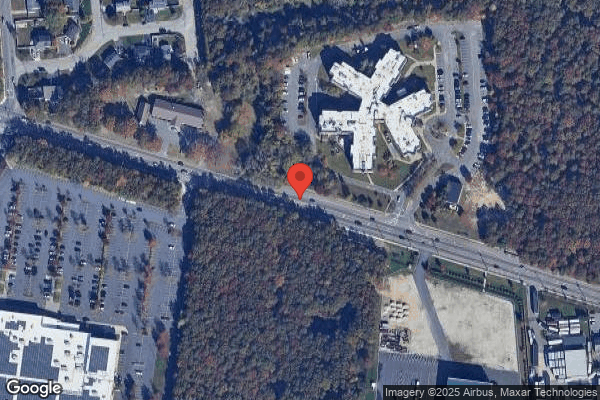
Understanding Severity Codes (click to expand)
Life-Threatening (Immediate Jeopardy)
J - Isolated K - Pattern L - Widespread
Actual Harm
G - Isolated H - Pattern I - Widespread
Potential for Harm
D - Isolated E - Pattern F - Widespread
No Harm (Minor)
A - Isolated B - Pattern C - Widespread

Questions to Ask on Your Visit

  • "What changes have you made since the serious inspection findings?"
  • "Can I speak with families of current residents?"
  • "What's your RN coverage like on weekends and overnight?"

Our Honest Assessment

Strengths
  • • 34% turnover. Below New York's 48% average. Good staff retention means consistent care.
Concerns
  • • Multiple safety concerns identified: 2 life-threatening violation(s), $134,713 in fines. Review inspection reports carefully.
  • • 29 deficiencies on record, including 2 critical (life-threatening) violations. These warrant careful review before choosing this facility.
  • • $134,713 in fines. Extremely high, among the most fined facilities in New York. Major compliance failures.
  • • Grade F (1/100). Below average facility with significant concerns.
Bottom line: Trust Score of 1/100 indicates significant concerns. Thoroughly evaluate alternatives.

About This Facility

What is Medford Multicare Center For Living's CMS Rating?

CMS assigns Medford Multicare Center For Living an overall rating of 1 out of 5 stars, which is considered much below average nationally. Within New York, this rating places the facility higher than 0% of the state's 100 nursing homes. A rating at this level reflects concerns identified through health inspections, staffing assessments, or quality measures that families should carefully consider.

How is Medford Multicare Center For Living Staffed?

CMS rates Medford Multicare Center For Living's staffing level at 1 out of 5 stars, which is much below average compared to other nursing homes. Staff turnover is 34%, compared to the New York average of 46%. This relatively stable workforce can support continuity of care.

What Have Inspectors Found at Medford Multicare Center For Living?

State health inspectors documented 29 deficiencies at Medford Multicare Center For Living during 2022 to 2025. These included: 2 Immediate Jeopardy (the most serious level, indicating potential for serious harm or death) and 27 with potential for harm. Immediate Jeopardy findings are rare and represent the most serious regulatory concerns. They require immediate corrective action.

Who Owns and Operates Medford Multicare Center For Living?

Medford Multicare Center For Living is owned by a for-profit company. For-profit facilities operate as businesses with obligations to shareholders or private owners. The facility operates independently rather than as part of a larger chain. With 320 certified beds and approximately 265 residents (about 83% occupancy), it is a large facility located in MEDFORD, New York.

How Does Medford Multicare Center For Living Compare to Other New York Nursing Homes?

Compared to the 100 nursing homes in New York, Medford Multicare Center For Living's overall rating (1 stars) is below the state average of 3.0, staff turnover (34%) is significantly lower than the state average of 46%, and health inspection rating (1 stars) is much below the national benchmark.

What Should Families Ask When Visiting Medford Multicare Center For Living?

Based on this facility's data, families visiting should ask: "What changes have been made since the serious inspection findings, and how are you preventing similar issues?" "Can you walk me through typical staffing levels on day, evening, and night shifts?" "Can I visit during a mealtime to observe dining assistance and food quality?" "How do you handle medical emergencies, and what is your hospital transfer rate?" These questions are particularly relevant given the facility's Immediate Jeopardy citations and the below-average staffing rating.

Is Medford Multicare Center For Living Safe?

Based on CMS inspection data, Medford Multicare Center For Living has documented safety concerns. Inspectors have issued 2 Immediate Jeopardy citations (the most serious violation level indicating risk of serious injury or death). The facility has a 1-star overall rating and ranks #100 of 100 nursing homes in New York. Families considering this facility should ask detailed questions about what corrective actions have been taken since these incidents.

Do Nurses at Medford Multicare Center For Living Stick Around?

Medford Multicare Center For Living has a staff turnover rate of 34%, which is about average for New York nursing homes (state average: 46%). Moderate turnover is common in nursing homes, but families should still ask about staff tenure and how the facility maintains care continuity when employees leave.

Was Medford Multicare Center For Living Ever Fined?

Medford Multicare Center For Living has been fined $134,713 across 1 penalty action. This is 3.9x the New York average of $34,426. Fines at this level are uncommon and typically indicate a pattern of serious deficiencies, repeated violations, or failure to correct problems promptly. CMS reserves penalties of this magnitude for facilities that pose significant, documented risk to resident health or safety. Families should request specific documentation of what issues led to these fines and what systemic changes have been implemented.

Is Medford Multicare Center For Living on Any Federal Watch List?

Medford Multicare Center For Living is not on any federal watch list. The most significant is the Special Focus Facility (SFF) program, which identifies the bottom 1% of nursing homes nationally based on persistent, serious quality problems. Not being on this list means the facility has avoided the pattern of deficiencies that triggers enhanced federal oversight. This is a positive indicator, though families should still review the facility's inspection history directly.