QUANTUM REHABILITATION AND NURSING L L C
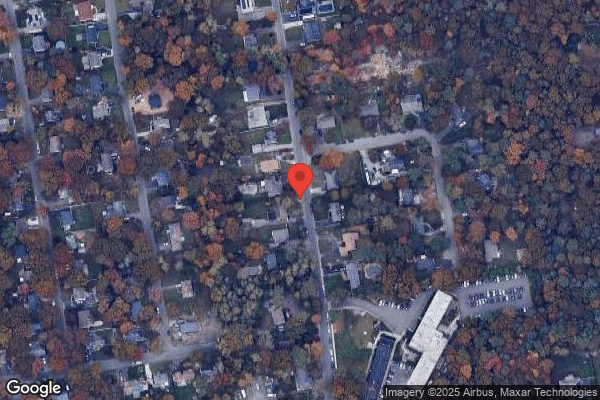
63 OAKCREST AVENUE, MIDDLE ISLAND, NY 11953 (631) 924-8830
For profit - Limited Liability company 120 Beds PARAGON HEALTHNET Data: November 2025
Trust Grade
90/100
#89 of 594 in NY
Last Inspection: July 2024

Within standard 12-15 month inspection cycle. Federal law requires annual inspections.

Overview

Quantum Rehabilitation and Nursing LLC has received an excellent Trust Grade of A, indicating a high level of quality and care. They rank #89 out of 594 facilities in New York, placing them in the top half of all nursing homes in the state, and #11 out of 41 in Suffolk County, meaning only a few local options are better. The facility's trend is stable, with 2 issues reported in both 2023 and 2024, and they have no fines, which is a positive sign. However, staffing is below average at 2 out of 5 stars, with a turnover rate of 41%, which is about average for New York. Specific incidents include a failure to properly maintain medical records for a resident who was hospitalized, and another resident did not have a comprehensive care plan established for their antibiotic treatment, indicating areas for improvement. Overall, while Quantum Rehabilitation has strong health inspection and quality measures, families should consider the staffing concerns and specific care plan issues when evaluating their options.

Trust Score
A
90/100
In New York
#89/594
Top 14%
Safety Record
Low Risk
No red flags
Inspections
Holding Steady
2 → 2 violations
Staff Stability
○ Average
41% turnover. Near New York's 48% average. Typical for the industry.
Penalties
✓ Good
No fines on record. Clean compliance history, better than most New York facilities.
Skilled Nurses
○ Average
Each resident gets 41 minutes of Registered Nurse (RN) attention daily — about average for New York. RNs are the most trained staff who monitor for health changes.
Violations
○ Average
7 deficiencies on record. Average for a facility this size. Mostly minor or procedural issues.
★★★★★
5.0
Overall Rating
★★☆☆☆
2.0
Staff Levels
★★★★★
5.0
Care Quality
★★★★★
5.0
Inspection Score
Stable
2023: 2 issues
2024: 2 issues

The Good

  • 5-Star Quality Measures · Strong clinical quality outcomes
  • Full Sprinkler Coverage · Fire safety systems throughout facility
  • No fines on record
  • Staff turnover below average (41%)

    7 points below New York average of 48%

Facility shows strength in quality measures, fire safety.

The Bad

Staff Turnover: 41%

Near New York avg (46%)

Typical for the industry

Chain: PARAGON HEALTHNET

Part of a multi-facility chain

Ask about local staffing decisions and management

The Ugly 7 deficiencies on record

Dec 2024 1 deficiency
CONCERN (D) 📢 Someone Reported This

A family member, employee, or ombudsman was alarmed enough to file a formal complaint

Potential for Harm - no one hurt, but risky conditions existed

Medical Records (Tag F0842)

Could have caused harm · This affected 1 resident

**NOTE- TERMS IN BRACKETS HAVE BEEN EDITED TO PROTECT CONFIDENTIALITY** Based on observation, interview and record review conducted during the Complaint survey dated 12/17/2024, the facility did not e...

Read full inspector narrative →
**NOTE- TERMS IN BRACKETS HAVE BEEN EDITED TO PROTECT CONFIDENTIALITY** Based on observation, interview and record review conducted during the Complaint survey dated 12/17/2024, the facility did not ensure the each resident's medical record was maintained in accordance with accepted professional standards and practices, the facility must maintain medical records on each resident that are Complete; Accurately documented; Readily accessible; and Systematically organized. Specifically, one Resident (Resident #1) of three residents reviewed for medical records accuracy reflected documentation for neurological checks (an assessment to determine residents level of conciousness, neurological status and vital signs) dated 11/17/2024 at 6:30 AM thru 11/18/2024 at 2PM. Resident #1 was transferred to the hospital dated 11/17/2024 at 4:40PM via 911. The findings are: The review of the Facility Policy for Neurological Checks dated 9/2018 documented Neurological checks will be completed for 24 hours, unless otherwise indicated by the attending physician. Immediately following a head trauma, the physician shall be immediately notified, and neurological checks should be instituted. The time frame for neurological checks was documented in the policy. A brain MRI/CAT scan will be ordered at the discretion of the physician. Observe for symptoms of increased drowsiness, difficulty arousing the resident, increased confusion, and other symptoms. Resident#1, was admitted to the facility on [DATE] with diagnoses that included metabolic encephalopathy, (a disease that affects brain structure or function. It causes altered mental state and confusion.) esophageal varices with bleeding, status post respiratory failure. The review of the admission Minimum Data Set assessment dated [DATE] documented a Brief Interview for Mental Status (BIMS) score- 9-indicating moderately impaired for decision making. Functional limitation in range of motion-upper extremity/lower extremity-none, toileting-maximum assistance walk 10 feet with maximum assist. The review of the Comprehensive Care Plan (CCP) documented dated 10/9/2024 Falls / Accidents / Incidents, Potential, at Risk for Falls / Injury, the interventions documented, keep bed in lowest position, frequent rounds while resident in bed. Call bell within reach. Updated for the 11/17/2024 incident dated 11/17/2024 at 7:51AM Resident #1 was crying out this morning, bedside table thrown over, was flipping around in bed screaming, stated they were having a bad dream. Noted bleeding from back of head, small laceration noted. The review of the Progress Note dated 11/17/2024 at 7:51AM documented Resident #1 was observed crying out, bedside table thrown over, Resident #1 was flipping around in bed screaming, states they were having a bad dream. Noted bleeding from back of head, small laceration noted. Psychological services ordered. The review of the Facility Investigation dated 11/17/2024 at 6:45AM documented at 6:45AM the assigned Certified Nurses Aide entered the resident's room heard the resident calling for help. Resident #1 was in bed in low position, with bedside tabletop next to right side of head with red drainage. The Registered Nurse Supervisor assessed the Resident. Full range of motion upper and lower extremities. Pressure dressing applied by the Registered Nurse. Neurological Checks in place. The Medical Doctor was made aware of 1.0CM open area to right occipital scalp, and the Next of Kin aware. The staff was interviewed. The Medical Doctor ordered to monitor neurological status of the Resident. The investigation concluded no cause to believe any abuse. The review of the progress note dated 11/17/2024 at 7:59PM documented at 4:15PM the next of kin asked the nurse to assess Resident #1. Neurological checks performed. Resident #1 had a strong grip with left hand, not able to move left arm or left leg. Pupils equal and reactive and included vital signs. The Medical Doctor was made aware and ordered to have Resident #1 sent to hospital for further evaluation. 911 was called and they arrived at about 4:40PM. The review of the Progress Notes dated 11/18/2024 at 7:20AM documented Resident #1 was admitted to the hospital for left sided weakness. The review of the Neurological Observation sheet dated 11/17/2024 documented neurological checks were documented by various staff at 6:30AM, 6:45AM, 7:15AM, 8:15AM, 10:15AM, 12:15AM, 2:15PM,4:15PM and 6:15PM, 8:15PM, 10:15PM 12:15AM 2:15AM 4:14AM 6:15AM and on day 2, (not dated) at 2:00PM. The neurological assessments documented positive response for the assessment despite the 4:15PM nursing progress note documenting Resident #1 had a change in condition requiring hospitalization, The Resident #1 was no longer present in the facility as of 11/27/2024 4:40PM. During and interview conducted with the Director of Nursing on 12/16/2024 at 3:30PM they stated Resident #1 was found flailing both arms in the air, while lying in low bed, in room at a time not recalled. They stated it was reported that the bedside table was lying on the floor on its side, the Resident was assessed to have a small open area on the right side back of head, not actively bleeding. The Registered Nurse Supervisor#2 assessed the resident, called the Next of Kin and also spoke with the Attending Medical Doctor #1, who stated the Resident was alert with eyes reactive to light, alert and not drowsy and the plan was for neurological checks on the set schedule. They further stated they are aware that the staff was documenting Neurological checks on the Neurological Observation Sheet dated 11/17/2024 starting at 6:30AM through 11/18/2024 at 2 :00PM but the Resident transferred out of the facility dated 11/17/2024 at 4:40PM. The staff performing Neurological checks should not have documented anything about Resident #1 if a Resident is not in the facility at the times that are scheduled for those checks. The Director of Nursing stated all of the Nursing staff will be retrained on the Neurological Check Policy starting at this time. 483.20[f](5)
Jul 2024 1 deficiency
CONCERN (D)

Potential for Harm - no one hurt, but risky conditions existed

Deficiency F0657 (Tag F0657)

Could have caused harm · This affected 1 resident

**NOTE- TERMS IN BRACKETS HAVE BEEN EDITED TO PROTECT CONFIDENTIALITY** Based on record review and interviews, during the recertification survey initiated on 7/8/2024 to 7/15/2024, the facility did no...

Read full inspector narrative →
**NOTE- TERMS IN BRACKETS HAVE BEEN EDITED TO PROTECT CONFIDENTIALITY** Based on record review and interviews, during the recertification survey initiated on 7/8/2024 to 7/15/2024, the facility did not ensure a comprehensive person-centered care plan was developed with measurable objectives and timeframes to meet a resident's medical, nursing, and mental and psychosocial needs that are identified in the comprehensive assessment. This was identified for one (Resident #58) of four residents reviewed for Antibiotics. Specifically, Resident #58 was prescribed Minocycline (an Antibiotic medication) 100 milligrams capsule in February 2024; however, a Comprehensive Care Plan addressing the long-term use of Antibiotic therapy was not developed. The finding is: The undated policy and procedure for Comprehensive Care Plans documented a Comprehensive Care Plan for a resident's needs should be developed by 14 days of admission and no later than 21 days. Comprehensive Care Plans will be revised or new care plans will be developed quarterly, annually, and as needed. Resident # 58 was admitted with diagnoses that include Paraplegia and Type 2 Diabetes Mellitus. The Quarterly Minimum Data Set Assessment (MDS) dated [DATE] documented a Brief Interview for Mental Status score of 13, which indicated the resident had intact cognition. The Minimum Data Set assessment documented the resident received Antibiotic therapy during the assessment period. A review of the physician's order dated 2/27/2024 documented to administer Minocycline (an Antibiotic) 100 milligrams capsule, give one capsule by oral route every 12 hours for Klebsiella Pneumoniae (a common type of bacteria found in the intestines). There was no stop date indicated for this order. A progress note dated 2/27/2024, written by Registered Nurse #1, documented Resident #58 returned from an Orthopedic Spine Specialist for a biopsy of a mass. The mass was likely to be chronic Vertebral Osteomyelitis (bone infection in the spine). Resident #58 was scheduled to follow up with an Infectious Disease Specialist for long-term Antibiotic therapy and to observe for signs and symptoms of infection. An Infectious Disease consult dated 2/28/2024 documented the resident was seen and evaluated for a right femur Abscess (a painful, swollen lump filled with pus in the thigh bone). The wound incision was dry with minimum serosanguinous (blood-tinged) drainage at this time. The wound improved significantly with the Intravenous Antibiotics with Ertapenem (Antibiotic medication) one gram for 4 weeks. The Infectious Disease Specialist recommended initiating Minocycline 100 milligrams by mouth route every 12 hours. A review of Resident #58's Comprehensive Care Plans revealed there was no care plan developed for the long-term use of Antibiotic therapy. Registered Nurse #2 was interviewed on 7/15/2024 at 12:00 PM and stated any resident on long-term Antibiotic therapy should have a care plan in place with individual goals and interventions for the use of the antibiotics. The Infection Control Preventionist, Registered Nurse # 3, was interviewed on 7/10/2024 at 2:40 PM and stated Resident #58 was on Antibiotic therapy due to infected hardware which was recommended by the Infectious Disease Specialist. Resident #58 should have a care plan in place for long-term Antibiotic therapy. The Director of Nursing Services was interviewed on 7/15/2024 at 12:40 PM and stated any resident on long-term Antibiotics should have a care plan in place. The Comprehensive Care Plan should list interventions for monitoring the use of Antibiotics. The interventions should also include monitoring for signs and symptoms of adverse reactions to the long-term use of Antibiotic therapy. 10 NYCRR 415.11(c)(2)(i-iii)
Jun 2023 2 deficiencies
CONCERN (D)

Potential for Harm - no one hurt, but risky conditions existed

Quality of Care (Tag F0684)

Could have caused harm · This affected 1 resident

**NOTE- TERMS IN BRACKETS HAVE BEEN EDITED TO PROTECT CONFIDENTIALITY** Based on observation, record review and interviews conducted during the Recertification Survey initiated on 6/20/2023 and comple...

Read full inspector narrative →
**NOTE- TERMS IN BRACKETS HAVE BEEN EDITED TO PROTECT CONFIDENTIALITY** Based on observation, record review and interviews conducted during the Recertification Survey initiated on 6/20/2023 and completed on 6/27/2023, the facility did not ensure that each resident receive treatment and care in accordance with professional standards of practice and the comprehensive person-centered care plan. This was identified for one (Resident #30) of three residents reviewed for positioning. Specifically, Resident #30 was observed on multiple occasions sitting in a wheelchair improperly positioned with their body leaning to the left side. The finding is: The Rehabilitation Referral and Recommendations to Nursing Policy dated 1/2023 documented all residents will be screened/evaluated by Physical Therapy (PT), Occupational Therapy (OT), and Speech Therapy (ST). The rehabilitation department will provide nursing with a rehabilitation recommendations to nursing communication form to establish the residents' functional status. Functional categories include bed mobility, transfer status, ambulation, wheelchair locomotion, dressing, feeding, toileting, personal hygiene, bathing, wheelchair positioning, splints/braces, and out of building (on facility grounds) status. As a resident's functional status changes, the nursing team may send a referral to the rehabilitation department. The Rehabilitation Department will screen and evaluate the resident and will update their status by providing nursing with a new rehabilitation recommendation. Resident #30 was readmitted to facility on 11/24/2021 with diagnoses of Lack of coordination, Muscle wasting and Atrophy (decreased muscle mass), Dementia and Alzheimer's disease. The Annual Minimum Data Set (MDS) assessment dated [DATE] documented Resident #30 had Brief Interview for Mental Status (BIMS) score of two which indicated Resident #30 had severely impaired cognition. Resident #30 required extensive assistance of one person for bed mobility. The MDS documented the resident had no limitations in range of motion. The resident utilized a wheelchair as a mobility device. The Comprehensive Care Plan (CCP) for Activity of Daily Living (ADL) Functional Rehabilitation Potential dated 1/17/2018 and last updated on 6/1/2023 documented the resident required assistance with ADLs. The interventions included to anticipate and meet all needs, encourage participation, and utilize a standard wheelchair and cushion with bilateral elevating leg rest. Resident #30 was observed sitting in their wheelchair in the activity room on 6/20/2023 at 11:12 AM. The resident's head and body were observed leaning to the left side in the wheelchair. Resident #30 was observed on 6/23/2023 at 3:45 PM in the activity room. The resident was observed leaning to their left side and was trying to re-position themself to sit straight in the wheelchair; however, was unable to do so. Resident #30 was observed again in the activity room on 6/23/2023 at 4:00 PM sitting in their wheelchair leaning to their left side. Certified Nursing Assistant (CNA) #2 repositioned the resident in the wheelchair. Three minutes later at 4:03 PM, the Director of Rehabilitation Services was also observed attempting to reposition the resident in the wheelchair while in the activity room. The CNA #2 was interviewed on 6/26/2023 at 11:56 AM and stated they were assigned to Resident #30 three times a week during the 7 AM to 3 PM shift and on Fridays from 7 AM to 11 PM. CNA #2 stated they repositioned Resident #30 on 6/23/2023 at 4:00 PM because Resident #30 was leaning in their wheelchair. CNA #2 stated they often have to reposition Resident #30 as the resident always leans to their left side when sitting in their wheelchair. CNA #2 stated Resident #30 told CNA#2 that they were not comfortable in the wheelchair and CNA#2 reported this to Licensed Practical Nurse (LPN) #2. LPN #2 then instructed CNA #2 to reposition the resident. CNA #2 could not recall the date when they had notified LPN #2 of Resident #30 being uncomfortable in their wheelchair. LPN #2 was interviewed on 6/26/2023 at 12:00 PM and stated they reposition Resident #30 at least twice a day when the resident is in a wheelchair to make Resident #30 comfortable. LPN #2 stated they are supposed to notify the Physical Therapy department regarding poor positioning, but they did not remember if they ever notified the Rehabilitation department of Resident #30's poor positioning. LPN #3 was interviewed on 6/26/2023 at 3:15 PM and stated they are the regularly assigned 3 PM to 11 PM shift nurse for Resident #30. LPN #3 stated they were aware of Resident #30's poor positioning and used a pillow to support and position the resident in the wheelchair. LPN#3 stated they are supposed to notify the Nurse Manager about the resident's poor positioning; however, they never did. Resident #30 was interviewed on 6/26/2023 at 4:00 PM and stated they were not comfortable in their wheelchair because they were leaning to their left side and could not reposition themself. Resident #30 stated they liked the new arm rest on the left side of the wheelchair that was given to them on 6/24/2023. The Director of Nursing Services (DNS) was interviewed on 6/27/2023 at 1:05 PM and stated the staff should have notified the Rehabilitation Department of the resident's poor positioning and to request an evaluation of Resident #30's positioning in the wheelchair for the resident's safety and comfort. The Director of Physical Therapy was interviewed on 6/27/2023 at 1:22 PM and stated they observed Resident #30 in the wheelchair, in the activity room on 6/23/2023 at 4:03 PM. The Director of Physical Therapy stated they observed that the resident was leaning to the left. The Director of Physical Therapy stated they did a full assessment to evaluate the resident and implemented a lateral support with an arm trough on the left side of the chair. The resident was able to sit up and was better positioned with the use of the new interventions. The Director of Physical Therapy further stated they should have been made aware of the resident's poor positioning by nursing staff. 10 NYCRR 415.12
CONCERN (D)

Potential for Harm - no one hurt, but risky conditions existed

Administration (Tag F0835)

Could have caused harm · This affected 1 resident

**NOTE- TERMS IN BRACKETS HAVE BEEN EDITED TO PROTECT CONFIDENTIALITY** Based on observation, record review, and interviews during the Recertification Survey initiated on 6/20/2023 and completed on 6/...

Read full inspector narrative →
**NOTE- TERMS IN BRACKETS HAVE BEEN EDITED TO PROTECT CONFIDENTIALITY** Based on observation, record review, and interviews during the Recertification Survey initiated on 6/20/2023 and completed on 6/27/2023, the facility did not ensure that the facility was administered in a manner that enables it to use its resources effectively and efficiently to attain or maintain the highest practicable, physical, mental, and psychosocial wellbeing. This was identified on one (Unit 3) of two resident units. Specifically, Unit #3 did not have an adequate supply of linens on the nursing unit to address the resident's Activities of Daily Living (ADL) needs. The finding is: Resident #62, who was admitted with diagnoses that include Type II Diabetes Mellitus and Morbid Obesity, resided on Unit 3. The Minimum Data Set (MDS) assessment dated [DATE] documented the resident's Brief Interview for Mental Status (BIMS) score was 15, which indicated the resident had intact cognition. The resident had no behavioral symptoms and no rejection of care. The resident required extensive assistance of one staff member for toilet use, was frequently incontinent of urine, and was always incontinent of bowel. The Bowel Bladder Incontinence Comprehensive Care Plan (CCP) dated 05/20/2022 documented Impaired sphincter control. The interventions included but were not limited to perform incontinence care every two to four hours and as needed. During an observation on 6/20/2023 at 1:10 PM Resident #62 was observed in their room sitting on the side of their bed. The beds in the room were made with chucks (a kind of ultra-absorbent incontinence product that are designed to be placed on the top of a bed, wheelchair, or any surface you want to protect) placed underneath the resident. Resident #62 was interviewed on 6/20/2023 at 1:10 PM regarding care provided by staff. The resident stated that staff runs out of chucks and use sheets instead. Resident #62 stated that since their admission the lack of chucks has been an issue. Unit 3 was observed on 6/23/2023 between 12 PM and 1 PM. The main Linen Cart contained no chucks. The cart serving the hallway for the resident had no chucks. There was a cart serving another hallway that had six chucks. Certified Nursing Assistant (CNA) # 2 was interviewed on 06/23/2023 at 12:34 PM and stated that there are times when chucks are not available on the unit. CNA #2 stated that when the chucks are not available, they notify the Charge Nurse or the Nursing supervisor. CNA #2 stated when chucks are not available, they fold the bedsheet to double it up and use the bed sheet in place of the chuck. Licensed Practical Nurse (LPN) # 1 and Registered Nurse (RN) #3 were interviewed concurrently on 6/23/2023 at 12:40 PM. They both stated they were never made aware that there were not enough chucks during the morning shift. They both stated if there was a shortage of chucks, they would call the Laundry Supervisor to bring more chucks to the floor. A subsequent observation was made on 6/23/2023 at 2:30 PM on Unit 3. One package of chucks containing 25 chucks was observed on the main linen cart. Another package was opened that contained approximately 14 chucks. Laundry Supervisor #1 was interviewed on 6/23/2023 at 3:30 PM and stated they send two packets of chucks that contains 50 chucks each to every nursing unit daily. The CNAs are expected to divide the chucks amongst two linen carts. The Laundry Supervisor stated that they were just made aware that the one packet of chucks did not contain 50 chucks each, rather each packet had 25 chucks. Laundry Supervisor #1 stated that they now realized that the units were only receiving half of the supply that was needed. Director of Housekeeping # 1 was interviewed on 06/27/2023 at 12:25 PM and stated the Laundry Supervisor should have checked the number of chucks contained in the packets. Director of Housekeeping #1 stated that the facility recently changed Vendors and the new Vendor supplies 25 chucks in each package instead of the 50 chucks per package supplied by the previous Vendor. Director of Housekeeping #1 stated that a minimum of 100 chucks are required per unit per shift and having half the supply would not be enough for resident care. The Director of Nursing Services (DNS) was interviewed on 6/27/2023 at 12:23 PM and stated if there is a shortage of chucks on the unit, the CNAs could call the Laundry Supervisor to request chucks. There are sufficient chucks in the facility and the CNAs should not be doubling the linen to replace the chucks as this can contribute to skin breakdown. The Administrator was interviewed on 6/27/2023 at 2:46 PM and stated they were not aware that there was a concern with chuck availability. The Administrator stated if they were made aware of the concern regarding the supply of chucks they would have looked into the concern. 10 NYCRR 415.26
Apr 2021 3 deficiencies
CONCERN (D)

Potential for Harm - no one hurt, but risky conditions existed

Accident Prevention (Tag F0689)

Could have caused harm · This affected 1 resident

Based on observations, interviews, and record review during the Recertification Survey completed on 4/22/2021, the facility did not ensure that the resident environment remained as free of accident ha...

Read full inspector narrative →
Based on observations, interviews, and record review during the Recertification Survey completed on 4/22/2021, the facility did not ensure that the resident environment remained as free of accident hazards as possible. Specifically, a patio exit door, situated in the 1st floor dining room was not secured with a properly functioning alarm or door hardware to prevent unauthorized entry and exit. The findings are: The Policy and Procedure for Identifying Residents at Risk for Elopement/Wandering, dated August 2013, was reviewed. The facility policy documented under item #14 Environmental Services is responsible to check for functionality daily at exits and maintain a log. During an observation on 04/20/2021 at 4:00 PM, the patio exit door, situated in the dining room, was observed to have opened on its own due to a draft which caused the door alarm to sound. The alarm reset (stopped sounding) within 15 seconds without any intervention from facility staff. The door had a keypad situated immediately to the right of the exit door which displayed red led lights indicating that the alarm is activated. The red lights no longer remained illuminated after 15 seconds when the alarm stopped sounding. On 04/20/2021, at 4:10 PM, the Administrator was called to observe the exit door alarm at which time surveyor opened the door with no mechanical resistance. The alarm immediately sounded and reset itself without intervention from facility staff. The door was examined and appeared to have the latch hardware removed and the panic bar disabled thus making it possible to open the door from the inside or the outside without any physical resistance. At 4:12 PM the Administrator stated that his understanding was that the door could not be opened from the outside and that the alarm had to be reset via a code entry by staff. He was not aware of the keypad re-setting itself or the absence of the latch hardware. He stated that the 1st floor dining room has not been in use since the outbreak of Covid in March 2020, however, stated the 1st floor was accessible to residents for the purpose of visiting the bakery or attending rehabilitation sessions. On 04/20/21, at 4:15 PM, the door alarm was triggered again in the presence of the Administrator to confirm that the alarm and door were not functioning properly. The alarm reset itself within 15 seconds of triggering without intervention from staff and the door opened without any mechanical resistance. On 04/20/21 at 4:40 PM, two maintenance workers entered the dining room and examined the door. Maintenance Worker # 1 and # 2 stated that they did not know how the alarm should function regarding resetting itself without staff intervention. They both were unaware of who removed the latch hardware or disabled the panic bar. On 04/20/2021, at 5:30 PM, an outside vendor (electrical contractor) was called to assess the door alarm. A review of the contractor's invoice documented that he was unable to reprogram the door alarm and would have to order a replacement to make proper adjustments. He documented that the room would have to be on staff access only until proper repair can take place. On 04/20/2021, at 5:35 PM, the Administrator stated that a new alarm keypad/alarm hardware was on order and that the facility would ensure that the room would remain locked and secured, with door closed until the device was repaired. A letter dated 4/20/2021 was provided by the Administrator to the surveyor which documented the 1st floor dining room will remain locked and residents will not have access to this room. A copy of the Door Lock Test Log for the period of January 2021-April 2021 was reviewed. The log indicated that daily checks of the Dining Room were completed. On 04/21/2021, at 08:15 AM, the 1st floor dining room door was observed to be open and unsecured upon arrival by a surveyor. No staff were observed in the local vicinity supervising the room. The Director of Engineering was interviewed on 04/21/2021 at 11:00 AM. He stated that he checks the different areas, including the 1st floor dining room daily and documents his findings in the log- book. He stated that the door hardware was likely removed because staff were getting locked out when going onto the patio but could not recall by whom or when it was removed. He was not aware that the alarm was resetting itself after 15 seconds. He stated that the alarm should require staff intervention to reset. A locksmith was observed on 4/21/2021, at 1:00 PM to remove a defective panic bar and install a new device. The surveyor observed a new panic bar and latch hardware. The alarm keypad/alarm was not repaired. The Director of Recreation was interviewed on 4/21/2021, at 4:30 PM and stated that residents of both the 2nd and 3rd floor were permitted to go to the first floor, except the residents who were on contact and droplet precautions. The Director of Recreation stated that it was common for residents to come to the 1st floor bakery and request snacks and beverages. She further stated that residents of the 3rd floor did have access to the first floor, via the elevator, up until 4/18/2021, at which time the unit was placed on contact and droplet precautions. On 4/22/2021, at 3:00 PM, the Director of Nursing Services confirmed that the residents on the third floor were not on droplet/contact precautions until 4/18/21 as identified by the Recreation Director. 415.12(h)(1)
CONCERN (D)

Potential for Harm - no one hurt, but risky conditions existed

Deficiency F0757 (Tag F0757)

Could have caused harm · This affected 1 resident

**NOTE- TERMS IN BRACKETS HAVE BEEN EDITED TO PROTECT CONFIDENTIALITY** Based on observation, record review, and staff interviews during the Recertification Survey, the facility did not ensure that ea...

Read full inspector narrative →
**NOTE- TERMS IN BRACKETS HAVE BEEN EDITED TO PROTECT CONFIDENTIALITY** Based on observation, record review, and staff interviews during the Recertification Survey, the facility did not ensure that each residents' drug regimen was free from unnecessary medication. This was identified for one (Resident #63) of 5 residents reviewed for unnecessary medications. Specifically, Resident #63 has diagnoses of Dementia and Depression and was started on an Antipsychotic medication without proper indication for the use of the medication. The finding is: Resident #63 was admitted to the facility with diagnoses that include Dementia without Behavior Disorder and Major Depressive Disorder. A Significant change Minimum Data Set (MDS) assessment dated [DATE] documented the resident's Brief Interview for Mental Status (BIMS) Score as 6, which indicated severe cognitive impairment. The resident had no behavior problems and required extensive assistance of one to two staff members for all activities of daily living. The resident received Antipsychotic and Antidepressant medications during seven of seven assessment days. A Physician's order dated 5/30/2020 documented Perphenazine 2 milligrams (mg), give 0.5 tablet (1mg) by oral route 2 times daily for Major Depressive Disorder The Physician Desk Reference documented a Boxed Warning: Phenothiazine- Antipsychotic are not approved for the treatment of Dementia related Psychosis in geriatric patients and the use of Phenothiazines should be avoided if possible due to an increase in morbidity and mortality in elderly patients with Dementia receiving antipsychotics. Resident #63 was observed in bed on 4/16/2021 at 11:49 AM. The resident was awake and responsive. No behaviors were observed A Second observation was made on 4/19/2021 at 3:05 PM. Resident #63 was observed sitting in a wheelchair in the resident's room. No behaviors were identified. A Comprehensive Care Plan (CCP) for Cognition dated 11/6/2019 documented the resident had cognitive loss and Dementia. The resident had a BIMS Score of 8 (moderately impaired cognitive status), difficulty making decisions, and was disoriented to time and situation. A CCP dated 8/14/2018 for Psychotropic Drug use related to Major Depressive Disorder as evidence by altered mood state (Depression/Anxiety/Mania) documented the resident was on Antipsychotic medications as Adjunct treatment of Depression per the Psychiatrist. Interventions included to assess the effectiveness of the medications and monitor for side effects and to attempt non-pharmacological interventions An Interdisciplinary Team Conference Note dated 3/4/2021 documented the resident is pleasant, cooperates but is withdrawn, and remains on medication for Depression. The resident interacts with staff, relates well with roommate, and selectively participates in activities. The resident has no behavior issues but does have episodes of restlessness. Social worker visits for support, monitors mood and behavior, reviews Advance Directives and remains available for issues or concerns. A Psychiatry Consult dated 4/2/2020 documented the resident was seen for regular scheduled follow up visit and current medication was Lexapro 20 mg by mouth daily. The resident was delusional with poor judgement. Diagnoses include Major Depressive Disorder and a recommendation was made to add Perphenazine (antipsychotic) 1 mg twice daily. A Progress note dated 4/2/2020 at 3:02 PM documented the resident was seen on rounds by the Psychiatrist and new orders to start Perphenazine 1 mg every 12 hours. A Progress note dated 4/2/2020 at 4:03 PM documented the resident was seen on rounds by the attending Psychiatrist and recommended to start Perphenazine 1mg twice daily for Moderate Depression. The Attending Physician was made aware and in agreement with the recommendations. A review of the nurse's notes dated 3/26/2020 to 4/2/2020 was conducted and there was no documented evidence of behaviors except the nursing progress note dated 3/30/2020 when the resident refused a shower. The staff offered a bed bath and the resident agreed. A Psychiatry Consult dated 5/21/2020 documented the resident was depressed, sad, very fearful, needed a lift to get out of bed. Current medication: Lexapro 20 mg daily and Perphenazine 1 mg twice daily. Diagnoses were Depression with Psychotic symptoms, Major Depressive Disorder and Psychosis. Recommendations was made to increase Perphenazine to 2 mg twice daily. A Progress note dated 5/21/2020 documented the resident was seen by phone visit with Psychiatrist who is aware of the resident's fearful behavior. The resident voiced the same to the Physician who recommended to increase Perphenazine to 2 mg twice daily from 1 mg. The Progress notes dated 5/21/2020 to 5/28/2020 documented increase Perphenazine was in progress due to Depression with no adverse reaction. A Progress note dated 5/28/2020 at 5:04 PM documented the resident was seen by Psychiatrist on rounds today on the 7:00 AM-3:00 PM shift and ordered to discontinue Perphenazine 2mg and to give Perphenazine 1 mg twice daily. A Progress note dated 5/29/2020 at 1:25 PM documented the resident was followed up by the Psychiatrist on 5/28/2020 and the resident was noted with Extrapyramidal Symptom (EPS) with the increased Perphenazine 2 mg dose. Recommendation to resume 1 mg twice daily A Pharmacy recommendation dated 6/15/2020 at 4:21 PM recommended to taper Trilafon (Perphenazine) then discontinue and indicate use for Depression. The recommendation was denied by the Physician due to behavioral symptoms. A Psychiatry Evaluation dated 6/18/20 documented the resident wants to leave the unit with the roommate and was even more confused than previously and was more depressed. The current medications were Lexapro 20 mg daily and Perphenazine 1 mg twice daily. A Progress note dated 6/18/2020 documented the resident had a facetime follow-up with the Psychiatrist due to anxiety, accusatory behavior, and elopement attempts. The resident was to start Zyprexa at 5:00 PM. The day shift Certified Nursing Assistant (CNA) was interviewed on 4/20/21 at 2:54 PM and stated that she has cared for the resident for the past three years. The CNA stated that the resident is confused and voiced she was afraid today. The CNA stated during care that the resident was not combative and that she has never seen the resident being combative with the roommate. The CNA stated the resident does not have a happy personality and was not tearful. The CNA stated occasionally the resident tries to leave the unit but does not seek out exit doors. The CNA further that stated for the past several months the resident has not tried to get on the elevator. The 7:00 AM-3:00 PM shift Licensed Practical Nurse (LPN) was interviewed on 4/20/21 at 3:08 PM and stated the LPN has cared for the resident for years. The LPN stated the resident is cooperative and was not combative with staff or other residents. The LPN stated that the resident was started on the Psychotic medication because she was more depressed. The LPN stated that the resident was not coming out of the resident's room as much and had a decrease in appetite. The LPN further stated that the resident was usually pleasant and cooperative. The 3:00 PM - 11:00 PM shift LPN was interviewed on 4/20/21 at 3:36 PM and stated that they have cared for the resident for about a year and a half. The LPN stated normally the resident is docile and very quiet, and that sometimes the resident would ask staff to talk to the resident. The LPN stated after talking and reassurance the resident was okay. The LPN stated the resident was not confrontational and did not have altercations with the roommate. The LPN stated that the resident never exhibits any aggressive behavior during care and staff did not report any resident behaviors to the LPN. The LPN stated that the resident is very fearful at times and always ask if staff was mad at the resident. The 3:00 PM - 11:00 PM CNA was interviewed on 4/20/21 at 3:58 PM and stated when the regularly assigned CNA was not working then she was assigned to care for the resident. The CNA stated the resident was on the quiet side, mostly stays in the room and would propel the wheelchair around the room. The CNA further stated that the resident was not combative with care. The 3:00 PM-11:00 PM Registered Nurse (RN) Supervisor was interviewed on 4/20/21 at 4:07 PM and stated she was familiar with the resident. The resident was very calm. The RN stated the resident would ask the staff if they were mad at the resident and that after the staff reassurance the resident would be okay. The RN stated that there were no reports of combative behavior regarding the resident. The resident's Physician was interviewed on 4/22/21 at 2:00 PM. The physician stated that he does not start residents on Psychotropic medications, and that he defers the start of all Antipsychotic medications and the evaluation of the medication to the Psychiatrist, who are the experts. The Physician stated when the resident developed EPS from the use of Perphenazine, that the medication was discontinued. The Physician stated that he respects recommendations made by the consultant Psychiatrist and that the Psychiatrist would be the person to answer questions regarding the use of the Antipsychotic medication. The Physician stated that at the time of the Pharmacy recommendation he did not feel the resident was ready for a reduction as the resident was upset and crying all the time. An attempt was made to interview the current Psychiatrist on 4/22/21 at 1:59 PM, no response, unable to leave message as the mailbox was full. The Director of Nursing Services (DNS) was interviewed on 4/22/2021 at 4:39 PM and stated that the resident did not have a Psychotic diagnosis and before the start of an Antipsychotic medication, there should be behaviors that warranted the start of the medication. The DNS further stated that non-pharmacological interventions should be attempted prior to the start of an Antipsychotic medication. The DNS further stated that behaviors that warranted the start of the medication should be documented. 415.12(l)(1)
CONCERN (D)

Potential for Harm - no one hurt, but risky conditions existed

Safe Environment (Tag F0921)

Could have caused harm · This affected 1 resident

Based on observations, interviews, and record review during the Recertification Survey completed on 4/22/2021, the facility did not ensure that a safe, functional, sanitary, and comfortable environmen...

Read full inspector narrative →
Based on observations, interviews, and record review during the Recertification Survey completed on 4/22/2021, the facility did not ensure that a safe, functional, sanitary, and comfortable environment for residents, staff and the public was provided. Specifically, a patio exit door, situated in the 1st floor dining room was not secured with a properly functioning alarm or door hardware to secure authorized entry and exit. The findings are; The Policy and Procedure for Identifying Residents at Risk for Elopement/Wandering, dated August 2013, was reviewed. The facility policy documented under item #14 Environmental Services is responsible to check for functionality daily at exits and maintain a log. During an observation on 04/20/2021 at 4:00 PM, the patio exit door, situated in the dining room, was observed to have opened on its own due to a draft which caused the door alarm to sound. The alarm reset (stopped sounding) within 15 seconds without any intervention from facility staff. On 04/20/2021, at 4:10 PM, the Administrator was called to observe the exit door alarm at which time surveyor opened the door with no mechanical resistance. The alarm immediately sounded and reset itself without intervention from facility staff. The door was examined and appeared to have the latch hardware removed and the panic bar disabled thus making it possible to open the door from the inside or the outside without any physical resistance. At 4:12 PM the Administrator stated that his understanding was that the door could not be opened from the outside and that the alarm had to be reset via a code entry by staff. He was not aware of the keypad re-setting itself or the absence of the latch hardware. On 04/20/21, at 4:15 PM, the door alarm was triggered again in the presence of the Administrator to confirm that the alarm and door were not functioning properly. The alarm reset itself within 15 seconds of triggering without intervention from staff and the door opened without any mechanical resistance. On 04/20/21 at 4:40 PM, two maintenance workers entered the dining room and examined the door. Maintenance Worker # 1 and # 2 stated that they did not know how the alarm should function regarding resetting itself without staff intervention. They both were unaware of who removed the latch hardware or disabled the panic bar. On 04/20/2021, at 5:30 PM, an outside vendor (electrical contractor) was called to assess the door alarm. A review of the contractor's invoice documented that he was unable to reprogram the door alarm and would have to order a replacement to make proper adjustments. On 04/20/2021, at 5:35 PM, the Administrator stated that a new alarm keypad/alarm hardware was on order and that the facility would ensure that the room would remain locked and secured, with door closed until the device was repaired. On 04/21/21, at 08:15 AM, the 1st floor dining room door was observed to be open and unsecured upon arrival by surveyor. No staff were observed in the local vicinity supervising the room. The Director of Engineering was interviewed on 04/21/2021 at 11:00 AM. He stated that he checks the different areas, including the 1st floor dining room daily and documents his findings in the logbook. He stated that the door hardware was likely removed because staff were getting locked out when going onto the patio but could not recall by whom or when it was removed. He was not aware that the alarm was resetting itself after 15 seconds. He stated that the alarm should require staff intervention to reset. A locksmith was observed on 4/21/2021, at 1:00 PM to remove a defective panic bar and install a new device. The surveyor observed a new panic bar and latch hardware. The alarm keypad/alarm was not repaired. On 04/22/2021, at 11:22 AM, the Administrator demonstrated that a Sti-Exit alarm device was installed on the dining room / patio exit door. 415.29
Understanding Severity Codes (click to expand)
Life-Threatening (Immediate Jeopardy)
J - Isolated K - Pattern L - Widespread
Actual Harm
G - Isolated H - Pattern I - Widespread
Potential for Harm
D - Isolated E - Pattern F - Widespread
No Harm (Minor)
A - Isolated B - Pattern C - Widespread

Questions to Ask on Your Visit

  • "Can I speak with families of current residents?"
  • "What's your RN coverage like on weekends and overnight?"

Our Honest Assessment

Strengths
  • • Grade A (90/100). Above average facility, better than most options in New York.
  • • No major safety red flags. No abuse findings, life-threatening violations, or SFF status.
  • • No fines on record. Clean compliance history, better than most New York facilities.
  • • 41% turnover. Below New York's 48% average. Good staff retention means consistent care.
Concerns
  • • No significant concerns identified. This facility shows no red flags across CMS ratings, staff turnover, or federal penalties.
Bottom line: Generally positive indicators. Standard due diligence and a personal visit recommended.

About This Facility

What is Quantum Rehabilitation And Nursing L L C's CMS Rating?

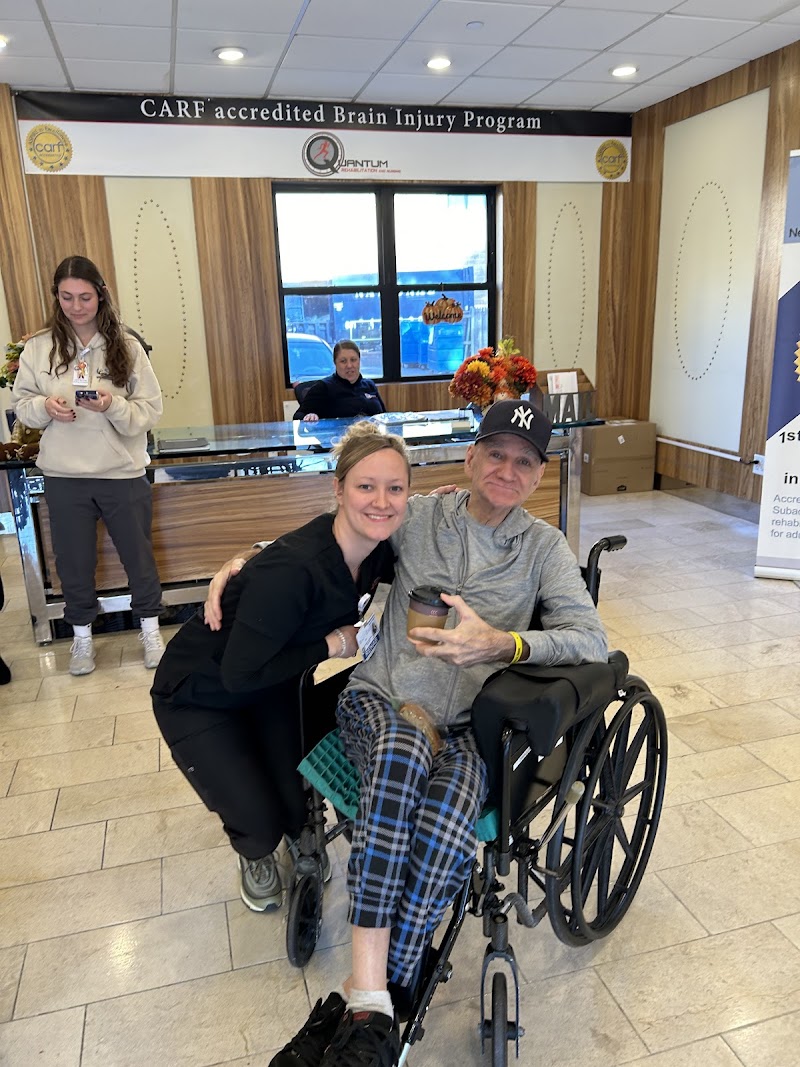
CMS assigns QUANTUM REHABILITATION AND NURSING L L C an overall rating of 5 out of 5 stars, which is considered much above average nationally. Within New York, this rating places the facility higher than 99% of the state's 100 nursing homes. This rating reflects solid performance across the metrics CMS uses to evaluate nursing home quality.
How is Quantum Rehabilitation And Nursing L L C Staffed?

CMS rates QUANTUM REHABILITATION AND NURSING L L C's staffing level at 2 out of 5 stars, which is below average compared to other nursing homes. Staff turnover is 41%, compared to the New York average of 46%. This relatively stable workforce can support continuity of care.

What Have Inspectors Found at Quantum Rehabilitation And Nursing L L C?

State health inspectors documented 7 deficiencies at QUANTUM REHABILITATION AND NURSING L L C during 2021 to 2024. These included: 7 with potential for harm.
Who Owns and Operates Quantum Rehabilitation And Nursing L L C?

QUANTUM REHABILITATION AND NURSING L L C is owned by a for-profit company. For-profit facilities operate as businesses with obligations to shareholders or private owners. The facility is operated by PARAGON HEALTHNET, a chain that manages multiple nursing homes. With 120 certified beds and approximately 113 residents (about 94% occupancy), it is a mid-sized facility located in MIDDLE ISLAND, New York.

How Does Quantum Rehabilitation And Nursing L L C Compare to Other New York Nursing Homes?

Compared to the 100 nursing homes in New York, QUANTUM REHABILITATION AND NURSING L L C's overall rating (5 stars) is above the state average of 3.1, staff turnover (41%) is near the state average of 46%, and health inspection rating (5 stars) is much above the national benchmark.

What Should Families Ask When Visiting Quantum Rehabilitation And Nursing L L C?

Based on this facility's data, families visiting should ask: "Can you walk me through typical staffing levels on day, evening, and night shifts?" "Can I visit during a mealtime to observe dining assistance and food quality?" "How do you handle medical emergencies, and what is your hospital transfer rate?" "Can I speak with family members of current residents about their experience?" These questions are particularly relevant given the below-average staffing rating.

Is Quantum Rehabilitation And Nursing L L C Safe?

Based on CMS inspection data, QUANTUM REHABILITATION AND NURSING L L C has a clean safety record: no substantiated abuse findings (meaning no confirmed cases of resident harm), no Immediate Jeopardy citations (the most serious violation level indicating risk of serious injury or death), and is not on the Special Focus Facility watch list (a federal program monitoring the lowest-performing 1% of nursing homes). The facility has a 5-star overall rating and ranks #1 of 100 nursing homes in New York. While no facility is perfect, families should still ask about staff-to-resident ratios and recent inspection results during their visit.

Do Nurses at Quantum Rehabilitation And Nursing L L C Stick Around?

QUANTUM REHABILITATION AND NURSING L L C has a staff turnover rate of 41%, which is about average for New York nursing homes (state average: 46%). Moderate turnover is common in nursing homes, but families should still ask about staff tenure and how the facility maintains care continuity when employees leave.

Was Quantum Rehabilitation And Nursing L L C Ever Fined?

QUANTUM REHABILITATION AND NURSING L L C has no federal fines on record. CMS issues fines when nursing homes fail to meet care standards or don't correct problems found during inspections. The absence of fines suggests the facility has either maintained compliance or corrected any issues before penalties were assessed. This is a positive indicator, though families should still review recent inspection reports for the full picture.

Is Quantum Rehabilitation And Nursing L L C on Any Federal Watch List?

QUANTUM REHABILITATION AND NURSING L L C is not on any federal watch list. The most significant is the Special Focus Facility (SFF) program, which identifies the bottom 1% of nursing homes nationally based on persistent, serious quality problems. Not being on this list means the facility has avoided the pattern of deficiencies that triggers enhanced federal oversight. This is a positive indicator, though families should still review the facility's inspection history directly.