NIAGARA REHABILITATION AND NURSING CENTER
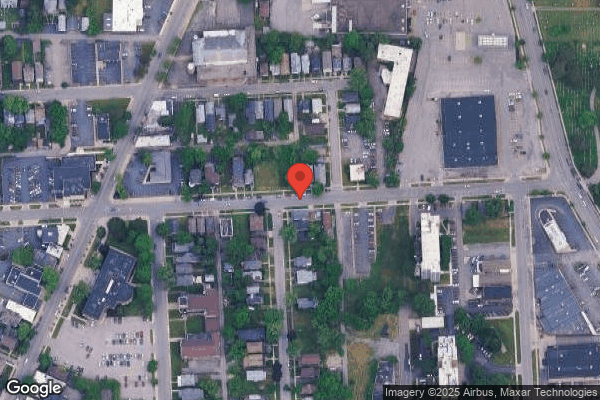
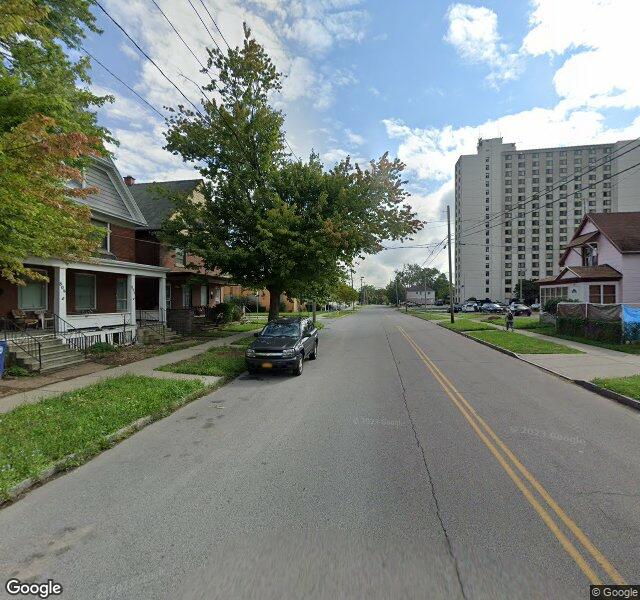
822 CEDAR AVENUE, NIAGARA FALLS, NY 14301 (716) 282-1207
For profit - Corporation 160 Beds THE SHERMAN FAMILY Data: November 2025
Trust Grade
45/100
#537 of 594 in NY
Last Inspection: July 2024

Within standard 12-15 month inspection cycle. Federal law requires annual inspections.

Overview

Niagara Rehabilitation and Nursing Center has received a Trust Grade of D, indicating below average performance with significant concerns for families considering this facility. They rank #537 out of 594 in New York, placing them in the bottom half of nursing homes in the state, and #10 out of 10 in Niagara County, meaning there are no better local options available. Unfortunately, the facility is worsening, with issues increasing from 1 in 2023 to 9 in 2024, highlighting a troubling trend. Staffing is a major weakness, receiving only 1 out of 5 stars, and the turnover rate is 42%, which is average but concerning given the low staffing quality. Although there have been no fines, which is a positive note, the facility suffers from insufficient RN coverage, being lower than 85% of New York facilities, which can impact the quality of care. Specific incidents include staff members working as nurse aides for more than four months without proper certification and multiple cleanliness issues throughout the facility, such as dirty windows and poorly maintained resident rooms. Overall, while there are no fines and the facility has some average quality measures, the significant staffing concerns and cleanliness problems are serious red flags for families.

Trust Score
D
45/100
In New York
#537/594
Bottom 10%
Safety Record
Low Risk
No red flags
Inspections
Getting Worse
1 → 9 violations
Staff Stability
○ Average
42% turnover. Near New York's 48% average. Typical for the industry.
Penalties
✓ Good
No fines on record. Clean compliance history, better than most New York facilities.
Skilled Nurses
⚠ Watch
Each resident gets only 18 minutes of Registered Nurse (RN) attention daily — below average for New York. Fewer RN minutes means fewer trained eyes watching for problems.
Violations
⚠ Watch
20 deficiencies on record. Higher than average. Multiple issues found across inspections.
★☆☆☆☆
1.0
Overall Rating
★☆☆☆☆
1.0
Staff Levels
★★★☆☆
3.0
Care Quality
★★☆☆☆
2.0
Inspection Score
Stable
2023: 1 issues
2024: 9 issues

The Good

  • Full Sprinkler Coverage · Fire safety systems throughout facility
  • No fines on record
  • Staff turnover below average (42%)

    6 points below New York average of 48%

Facility shows strength in fire safety.

The Bad

1-Star Overall Rating

Below New York average (3.0)

Significant quality concerns identified by CMS

Staff Turnover: 42%

Near New York avg (46%)

Typical for the industry

Chain: THE SHERMAN FAMILY

Part of a multi-facility chain

Ask about local staffing decisions and management

The Ugly 20 deficiencies on record

Nov 2024 1 deficiency
CONCERN (E) 📢 Someone Reported This

A family member, employee, or ombudsman was alarmed enough to file a formal complaint

Potential for Harm - no one hurt, but risky conditions existed

Deficiency F0728 (Tag F0728)

Could have caused harm · This affected multiple residents

Based on observation, interview, and record review conducted during an Abbreviated survey (Complaint #NY00354751), the facility did not ensure any individual working in the facility as a nurse aide on...

Read full inspector narrative →
Based on observation, interview, and record review conducted during an Abbreviated survey (Complaint #NY00354751), the facility did not ensure any individual working in the facility as a nurse aide on a full time basis for more than 4 months was competent to provide nursing and nursing related services and that individual has completed a training and competency evaluation program or a competency evaluation program approved by the State meeting the requirements for two (certified nurse aide trainee #1 and #2) of seven staff members reviewed for training. Specifically Certified Nurse Aide Trainee #1 and #2 had been employed by the facility and functioned in the role of a nurse aide for greater than 4 months without receiving a nurse aide certification. The finding is: Review of the policy and procedure titled Nurse Aide Qualifications and Training Requirements dated October 2017, documented the facility will not employ any individual as a nurse aide for more than 4 months full time, temporary, per diem, or otherwise, unless that individual is competent to provide designated nursing care and nursing related services, and has completed a training program and competency evaluation program approved by the state. Additionally, the policy documented that nursing assistants failing to successfully complete the required training program within the first 4 months of their date of employment may be terminated or may be reassigned to non-nursing related services. Review of the Certified Nursing Assistant Trainee job description dated 4/1/98, documented the qualifications included that the trainee would complete the approved 100-hour Nurse Aide Trainee program, clinical, and written competency examination within 120 days from the date of hire. Review of Certified Nurse Aide Trainee #1's employee file documented that they had transitioned from the dietary department to the nursing department on 6/2/24 and was a full-time employee. Review of Certified Nurse Aide Trainee #1's CNA Training Program Checklist, revealed they had enrolled in the training program on 6/3/24 and had completed training on 6/24/24. There was no documented evidence in the employees file of exam scheduling attempts, success, or failed exam attempts. Review of Certified Nurse Aide Trainee #2's employee file, documented that their date of hire was 5/30/24 and that they were a full-time employee. Review of Certified Nurse Aide Trainee #2's CNA Training Program Checklist, revealed that they had enrolled in the training program on 6/3/24 and had completed training on 6/24/24. There was no documented evidence of exam scheduling attempts, success, or failed exam attempts. During an interview on 11/18/24 at 10:05 AM, Certified Nurse Aide Trainee #1 stated they had completed their training in June 2024 and had not yet been scheduled for testing. Certified Nurse Aide Trainee #1 stated they did not have another staff member overseeing the care they provided to residents. They provided care to residents that were a one assist level of care which included toileting, dressing and transfers. Certified Nurse Aide Trainee #1 stated that at times they had been given a full assignment due to staffing shortages. During an interview on 11/18/24 at 10:31 AM, Licensed Practical Nurse #1 stated the nurse aide trainees should not get full assignments, would assist the certified nurse assistants with their assignment and could provide care to residents that required only a one-assist level of care. During an interview on 11/19/24 at 3:23 PM, Certified Nurse Aide Trainee #2 stated that they had completed their nurse aide training at the end of June 2024 and had not yet been scheduled for testing. They stated while working as a trainee they did not get a full assignment, would be assigned 7 or 8 residents that were independent and would oversee their care, which included answering call lights, passing meal trays, and assisting with toileting. During an interview on 11/20/24 at 10:15 AM, Licensed Practical Nurse #2 stated they believed the nurse aid trainees worked alongside the certified nursing assistants. They stated they were unsure what duties they could perform independently and they did not have to sign off for the care the nurse aide trainees had provided to residents. During an interview on 11/20/24 at 10:50 AM, Licensed Practical Nurse Care Coordinator #1 stated certified nurse aide trainee's job duties included cleaning rooms, passing trays, and grooming. They stated they could not provide any hands-on care without another certified nurse assistant present. Licensed Practical Nurse Care Coordinator stated there was no documentation for the nurses or certified nurse assistants to sign off for supervision of the trainees. During a telephone interview on 11/20/24 at 1:34 PM, the Senior Nurse Aide Evaluator for (name of educational testing service) stated they had just spoke to the facility's Director of Quality Assurance and had forwarded documentation from the New York State Nursing Home Nurse Aide Training Program and Certification dated January 2017. Review of the email documentation provided by (name of educational testing service) Senior Nurse Aide Evaluator on 11/20/24 at 1:42 PM, included the New York State Nursing Home Aide Training Program and Certification manual dated January 2017 that documented if an individual had not passed the certification examination within three attempts and /or within 120 days of their first day of training or employment, the individual may no longer work as a nurse aide trainee in the nursing home. During an interview on 11/20/24 at 1:45 PM, the Director of Nursing stated they had been the previous Certified Nurse Aide Trainer and were responsible to submit all nurse aide trainee's testing applications to (name of testing site for nurse aide certification examinations) and would have been responsible to schedule their test dates. The Director of Nursing stated testing applications were submitted when the nurse aid trainee class was completed and that they would need to have at least four trainees available to schedule testing. They stated they currently had five trainees in the facility that were waiting to test. The Director of Nursing stated they were under the impression nurse aide trainees had up to 24 months to obtain their certification and could continue working as a trainee up until that time. They stated they were just informed as of 11/20/24 that the nurse aide trainees should have completed testing within 120 days of their training. The Director of Nursing stated that both Certified Nurse Aide Trainee #1 and Certified Nurse Aide Trainee #2 had finished their training on 6/24/24 and had not completed their certification testing within the required timeframe. During an interview on 11/20/24 at 2:17 PM, the Director of Quality Assurance, stated they were not previously aware that the nurse aide trainees needed to complete testing within 120 days of their training. They stated that Certified Nurse Aide Trainee #1 and Certified Nurse Aide Trainee #2 should have been removed from the nursing department and assigned to another department with nonresident contact duties after they passed the timeframe required to test. During an interview on 11/20/24 at 2:27 PM, the Administrator stated based on the (name of the educational testing service) guidelines they were under the impression that nurse aide trainees had 24 months to complete their certification testing. They stated if they had been aware nurse aide trainees needed to completed testing within 120 days of training they would have expected testing to have been scheduled and completed. 10NYCRR 415.13 (d)(2)(iii)
Jul 2024 7 deficiencies
CONCERN (D)

Potential for Harm - no one hurt, but risky conditions existed

Report Alleged Abuse (Tag F0609)

Could have caused harm · This affected 1 resident

**NOTE- TERMS IN BRACKETS HAVE BEEN EDITED TO PROTECT CONFIDENTIALITY** Based on interview and record review conducted during a Standard Survey completed on 7/15/24, the facility did not ensure that a...

Read full inspector narrative →
**NOTE- TERMS IN BRACKETS HAVE BEEN EDITED TO PROTECT CONFIDENTIALITY** Based on interview and record review conducted during a Standard Survey completed on 7/15/24, the facility did not ensure that all alleged violations including abuse, neglect, exploitation, or mistreatment were reported immediately, but not later than two hours after the allegation was made to the facility's Administrator for two (Resident #26 and Resident #107) of nine residents reviewed. Specifically, Resident #26 was found to have an injury of unknown origin and Resident #107 had a resident to staff altercation which were not reported to the administrator immediately. The findings are: The policy and procedure titled Abuse Prevention Program revised December 2016 documented the facility develops and implements policies and procedures to aid the facility in preventing abuse, neglect, or mistreatment of residents. As part of the resident abuse prevention, the administration will require staff training/orientation programs that include such topics as abuse prevention, identification and reporting of abuse, stress management, and handling verbally or physically aggressive resident behavior. Identify and assess all possible incident of abuse and investigate and report any allegations of abuse within timeframes as required by federal requirements. The policy and procedure titled Accidents and Incidents - Investigating and Reporting revised July 2017 documented all accidents and incidents involving residents, employees, visitors, vendors, etc., occurring on our premises shall be investigated and reported to the Administrator. The Nurse Supervisor/Charge Nurse and/or the department director or supervisor shall promptly initiate and document investigation of the accident or incident. The policy and procedure titled Abuse Investigating and Reporting revised July 2017 documented all reports of resident abuse, neglect, exploitation, misappropriation of resident property, mistreatment and/or injuries of unknown source (abuse) shall be promptly reported to local, state, and federal agencies (as defined by current regulations) and thoroughly investigated by facility management. Findings of abuse investigations will also be reported. An alleged violation of abuse, neglect, exploitation, or mistreatment (including injuries of unknown source and misappropriation of resident property) will be reported immediately, but not later than two hours if the alleged violation involves abuse or resulted in serious bodily injury or 24 hours if the alleged violation does not involve abuse AND has not resulted in serious bodily injury. 1. Resident #26 had diagnoses that include vascular dementia, rheumatoid arthritis, and post-traumatic stress disorder. The minimum data set (a resident assessment tool) dated 12/23/23 documented the resident usually understood, usually understands and was severely cognitively impaired. The Comprehensive Care Plan dated 11/16/18, documented that Resident #26 was at risk for falls and had a history of falls related to dementia with interventions added on 2/13/24 to include resident is known to lower self to floor and get themself back up into bed and to keep environment safe and free of clutter. Review of the 2603 Injury of dated 2/12/24 at 9:45 AM prepared by the Director of Nursing revealed writer was notified in morning report that Resident #26 had a bruise on their forehead. Writer assessed Resident #26's injuries and noted a bruise on the left side of their forehead, elbow, and lateral hands. A statement obtained on 2/12/24 from Certified Nursing Assistant #9 documented they worked on the 11th of February and noticed Resident #26 had a bruise on the side of the head. Certified Nurse Aide #9 reported it to Licensed Practical Nurse #6. A statement from Licensed Practical Nurse #5 on 2/12/24 documented they were informed by Certified Nursing Assistant #6 that morning (2/12/24) that there was a bump and bruise on the left side of Resident #26's head. The Certified Nursing Assistant also found more bruising around the left temple, left wrist, and elbow. A statement obtained from Licensed Practical Nurse #6 on 2/16/24 revealed Licensed Practical Nurse #6 was told by Certified Nursing Assistant #9 sometime on the elevator that Resident #26 had a bruise on the side of their head that they had not noticed the day before. When Licensed Practical Nurse #6 got back to the unit they checked over Resident #26 and then reported it to the next shift coming on and put them on the report sheet. Review of facility staffing sheet titled Niagara Rehabilitation and Nursing Center dated 2/11/24 documented Licensed Practical Nurse #6 worked 7 AM to 8 PM, Certified Nursing Assistant #9 worked 7 AM to 3 PM, and Licensed Practical Nurse #5 worked 11 PM to 7 AM. Facility staffing sheet dated 2/12/24 documented Certified Nursing Assistant #9 worked 7 AM to 3 PM. Licensed Practical Nurse #6 was not on the scheduled for 2/12/24. During a telephone interview on 7/11/24 at 10:19 AM Licensed Practical Nurse #6 stated they were told about the bruise on Resident #26's head in the elevator by Certified Nursing Assistant #9. They stated they reported it to Licensed Practical Nurse #5 the next morning. During an interview on 7/11/24 at 10:39 AM Licensed Practical Nurse #5 stated they were informed about the bruise the next morning (2/12/24) by Certified Nursing Assistant #9 and then reported it to the Director of Nursing. An accident and investigation were then completed. During an interview on 7/11/24 at 10:59 AM Certified Nursing Assistant #9 stated they could not recall who they reported the bruise to but knows they reported it right away. Certified Nursing Assistant #9 stated it is important to report anything right away so that they can find out what happened. During an interview on 7/11/24 at 11:48 AM the Director of Nursing stated the incident involving Resident #26 was reported to them on the morning of 2/12/24 by Licensed Practical Nurse #5. They did not know who reported it to Licensed Practical Nurse #5. The Director of Nursing stated they believed Licensed Practical Nurse #5 was made aware of the finding when they came in to work on 2/12/24. The Director of Nursing stated Licensed Practical Nurse #6 should have reported the finding to the supervisor on duty on 2/11/24 right after they were made aware of it. It is important to report findings right away so that they can be proactive and prevent circumstances from happening. The Director of Nursing stated their expectations would be that an assessment would have been done right away, and it should have been reported right away. During an interview on 7/12/24 at 11:48 AM the Administrator stated that they expect any findings to be reported right away to the Director of Nursing or someone in Administration so that an investigation can be started right away. The Administrator stated that if there was an allegation or accusation of abuse made, they would expect a thorough investigation to be completed right away to ensure compliance. 2. Resident #107 had diagnoses which included chronic obstructive pulmonary disease, anxiety disorder, and major depressive disorder. The Minimum Data Set, dated [DATE] documented that the resident understood, understands, and was cognitively intact. The Comprehensive Care Plan dated 8/15/23 documented that Resident #107 had a focus added on 11/14/23 to say the residents' strengths were that they had no cognitive deficits with an intervention to provide a safe and structured environment and enhance or support short term memory using calendars and verbal cues. During an interview on 7/9/24 at 8:34 AM Resident #107 stated there was an incident that occurred recently that they reported. Certified Nursing Assistant #16, while working on the overnight shift, refused to give them another soda and during the argument about the soda Certified Nursing Assistant #16 grabbed Resident #107's wrist. Resident #107 stated they grabbed Certified Nursing Assistant #16's wrist back and then they let go. Resident #107 stated there was no mark left on their wrist This incident was also witnessed by Resident #107s' roommate, Resident #114. Resident #114 was in the room during this interview and confirmed that Certified Nursing Assistant #16 grabbed Resident #107's wrist during this argument. Resident #114 stated they wanted to jump out of the bed and beat the Certified Nursing Assistant's explicit word stated. Resident #107 stated they reported the incident to Licensed Practical Nurse #5 the next morning. During an interview on 7/11/24 at 8:59 AM Licensed Practical Nurse #5 stated they were informed about the incident involving Resident #107 and the soda about a month ago. They were told Certified Nursing Assistant #16 would not give Resident #107 a soda because they pee a lot. Resident #107 did report to them that Certified Nursing Assistant #16 grabbed their wrist during this incident. Licensed Practical Nurse #5 stated they forgot to report that part when they reported the incident to the Director of Nursing. Licensed Practical Nurse #5 stated they did an assessment of Resident #107 directly after the incident was reported to them and saw no redness or bruising and the resident did not complain of any pain at the time. Licensed Practical Nurse #5 stated Certified Nursing Assistant #16 did not deny the incident occurred but said it happened differently than how Resident #107 reported it. Certified Nursing Assistant #16 wrote a statement regarding the incident and was told they could not take care of Resident #107. During a telephone interview on 7/11/24 at 9:22 AM Certified Nursing Assistant #16 stated they remembered the incident. They were caring for Resident #107 on the overnight shift and the resident had requested another soda after having two bottles that night already. Certified Nursing Assistant #16 stated they told Resident #107 they could not have another bottle because they were going to be getting their breakfast soon. Certified Nursing Assistant #16 stated they did not grab Resident #107's wrist, only refused to give them more soda. They stated they were given a write up to sign and was not allowed to take care of Resident #107 for a couple days. During an interview on 7/11/24 at 11:40 AM The Director of Nursing stated they were made aware of the incident that occurred on 6/20/24 by Licensed Practical Nurse #5 that morning. The Director of Nursing stated they were told the incident involved Certified Nursing Assistant #16 refusing to give Resident #107 a soda. The Director of Nursing stated Licensed Practical Nurse #5 did not report to them that there was a physical component involved in the incident so there was no investigation started. Certified Nursing Assistant #16 was given a write up for being discourteous and unprofessional. The Director of Nursing stated they would expect to be made aware immediately of any altercation or possible altercation/accusation, or as soon as staff is made aware. The Director of Nursing stated it is important to report these types of things to administration so that corrective actions can be made to prevent reoccurrence and to get notification out to the proper entities. The Director of Nursing stated any type of physical altercation or accusation of physical altercation should be submitted within 2 hours to the state after it's reported to staff. During an interview on 7/12/24 at 11:48 AM the Administrator stated that if there was an allegation or accusation of abuse made, they would expect a thorough investigation to be completed and the employee be suspended pending investigation to ensure compliance. The Administrator stated this incident should have been reported to the Director of Nursing and then the Administrator so that an investigation could have occurred. On 7/11/24 all accident and incidents involving Resident #107 were requested from the Director of Quality Assurance. The Director of Quality Assurance was unable to produce an accident or incident form and/or investigation for this incident that occurred on 6/20/24. 10 NYCRR 415.4(b)(4)
CONCERN (D)

Potential for Harm - no one hurt, but risky conditions existed

ADL Care (Tag F0677)

Could have caused harm · This affected 1 resident

**NOTE- TERMS IN BRACKETS HAVE BEEN EDITED TO PROTECT CONFIDENTIALITY** Based on observation, interview, and record review conducted during a Standard survey completed on 7/15/24, the facility did not...

Read full inspector narrative →
**NOTE- TERMS IN BRACKETS HAVE BEEN EDITED TO PROTECT CONFIDENTIALITY** Based on observation, interview, and record review conducted during a Standard survey completed on 7/15/24, the facility did not ensure that a resident who was unable to carry out activities of daily living received the necessary services to maintain good grooming and personal hygiene for one (Resident #9) of six residents reviewed. Specifically, Resident #9 who was dependent on staff for hygiene was not assisted with removing unwanted facial hair. The finding is: The policy and procedure titled Activities of Daily Living (ADL) dated March 2018 documented appropriate care and services will be provided for residents who are unable to carry out activities of daily living independently, with the consent of the resident and in accordance with the plan of care. Resident #9 had diagnoses that included metabolic encephalopathy (disease of the brain), diabetes, and schizoaffective disorder (a mental health condition that changes a person's thoughts, mood, and behavior). The Minimum Data Set (MDS - a resident assessment tool) dated 6/26/24 documented Resident #9 was understood, understands, and had moderate cognitive impairment. The Minimum Data Set documented Resident #9 required set-up/clean up assistance for personal hygiene and had no behaviors to include refusals of care. The comprehensive care plan with a revision date of 6/23/22, documented Resident #9 had an Activity of Daily Living self-care performance deficit. Interventions included limited assistance of one staff member for personal hygiene. The Visual/Bedside [NAME] Report (a guide for staff to provide care) dated 7/15/24 documented Resident #9 required limited assist of one staff member for personal hygiene. The Treatment Administration Record dated July 2024, documented that weekly skin monitoring one time a day every Monday was completed on 7/1/24 and 7/8/24. Review of Nursing Progress Notes dated 7/1/24 through 7/15/24 revealed there was no documented evidence that Resident #9 refused to be shaved. During an observation and interview on 7/9/24 at 9:06 AM, Resident #9 had multiple dark grey and white facial hairs (0.25 - 0.5 inches) on their upper lip and multiple long white hairs 0.5 - 1 inch present on chin and neck. Resident #9 stated they did not like the facial hair and had asked staff for razors in the past. During intermittent observations made on 7/10/24 at 10:31 AM, 7/11/24 at 11:43 AM, and 7/12/24 at 9:51 AM Resident #9 continued to have long facial hairs to their upper lip, chin, and neck. During an observation and interview on 7/12/24 at 9:51 AM, Resident #9 stated they had a bed bath and was not offered or provided with assist to remove their unwanted facial hair. During further observation on 7/12/24 at 9:59 AM, Resident #9 had their call light on, and a staff member answered the call light. Resident #9 was observed asking the staff member for a razor and stated they wanted to shave. During an observation of morning care on 7/15/24 at 8:54 AM, Resident #9 stated to Certified Nurse Aide #7 and Certified Nurse Aide #18 that they used to shave every two days, the hair on their upper lip would grow fast, and that they did not like having facial hair. During the observation Resident #9 verbalized to Certified Nurse Aide #7 that they needed their facial hair removed. Certified Nurse Aide #7 gathered the soiled linen bags and left the room without offering or providing assist to remove Resident #9's facial hair. Certified Nurse Aide #7 completed Resident # 9's morning care and left their room. During an interview on 7/15/24 at 9:48 AM, Certified Nurse Aide #7 stated they had completed morning care with Resident #9. Certified Nurse Aide #7 stated Resident #9 had long facial hairs and they should have been removed during morning care. Certified Nurse Aide #7 stated residents should be shaved on shower days or when facial hair was present. They stated it was important so the residents would feel more confident. During an interview on 7/15/24 at 9:54 AM, Licensed Practical Nurse #4 stated residents should be shaved/have facial hair removed on shower days and when needed. They stated Resident #9 had facial hair present to upper lip, chin, and neck with some length and it should have been removed. During an interview on 7/15/24 at 9:57 AM, Licensed Practical Nurse Care Coordinator #5, stated they expected their staff to shave residents on their shower days and when it was needed. They stated the Certified Nurse Aides were responsible to shave residents and expected the nurses to complete their shower checks. Licensed Practical Nurse Care Coordinator #5 stated it would be important to the resident's self-esteem and for them to feel good about themselves. During an interview on 7/15/24 at 10:41 AM, the Director of Nursing stated they expected staff to shave both male and female residents regularly and at minimum once a week on shower days. They stated the Certified Nurse Aide assigned to the resident would be responsible. The Director of Nursing stated it was a dignity issue for a resident to not be clean shaven if that was their preference. 10 NYCRR 415.5(a)
CONCERN (D)

Potential for Harm - no one hurt, but risky conditions existed

Pressure Ulcer Prevention (Tag F0686)

Could have caused harm · This affected 1 resident

**NOTE- TERMS IN BRACKETS HAVE BEEN EDITED TO PROTECT CONFIDENTIALITY** Based on observation, interview, and record review conducted during the Standard survey completed on 7/15/24, the facility did n...

Read full inspector narrative →
**NOTE- TERMS IN BRACKETS HAVE BEEN EDITED TO PROTECT CONFIDENTIALITY** Based on observation, interview, and record review conducted during the Standard survey completed on 7/15/24, the facility did not ensure residents with pressure ulcers received necessary treatment and services, consistent with professional standards of practice, to promote healing, and prevent new ulcers from developing for one (Resident #68) of two residents reviewed. Specifically, Resident #68 was not provided with an air mattress (a mattress that provides air flow to relieve pressure) as ordered by the physician. Additionally, nursing staff were inaccurately documenting that the air mattress was provided. The finding is: The policy and procedure titled Pressure Ulcers/Skin Breakdown dated March 2014, documented the nursing staff and attending physician will assess and document an individual's significant risk factors for developing pressure sores, for example, immobility, weight loss, and a history of pressure ulcers. The physician will authorize pertinent orders related to wound treatments and will help identify medical interventions related to wound management. Resident #68 had diagnoses that included arthritis (pain and inflammation of the joints), chronic obstructive pulmonary disease (lung disease), and left fibula (bone in the lower leg) fracture. The Minimum Data Set (a resident assessment tool) dated 4/19/24, documented Resident #68 was cognitively intact, was understood and understands. The Minimum Data Set documented, Resident #68 required substantial/maximal assistance (helper does more than half the effort) for bed mobility. Additionally, it was documented that Resident #68 was at risk of developing pressure ulcers, had one Stage 2 (partial thickness skin loss) pressure ulcer, one Stage 4 (full thickness tissue loss with exposed bone, tendon, or muscle) pressure ulcer, and moisture associated skin damage. The comprehensive care plan (identified as current) dated 10/30/23 with a revision date of 1/5/24 documented Resident #68 had limited physical mobility, was non ambulatory and required extensive assist of two staff members for bed mobility. The resident had an actual pressure ulcer on the left foot. Interventions included heel booties, weekly skin assessment, and protect skin from moisture. The comprehensive care plan was not care revised to include pressure ulcer development, history, and/ or resolution except to the heel and did not include the use of an air mattress. Review of the current Visual/Bedside [NAME] Report (a guide for staff to provide care) documented Resident #68 required extensive assist of two staff members for bed mobility, incontinent care was to be provided every 2-3 hours, barrier cream to be applied with incontinent care, and staff was to report any areas of breakdown to nurse. The [NAME] did not include the use of an air mattress. Review of the Electronic Medical Record order created on 4/12/24 by the Assistant Director of Nursing documented an air mattress was ordered for skin integrity and was to be in place at all times to promote skin integrity. Review of the Order Summary Report dated 7/12/24, revealed the air mattress ordered 4/12/24 was still in place. Review of the most recent Braden Scale (a tool for predicting pressure ulcer risk) dated 4/16/24, documented Resident #68 had slightly limited sensory perception (ability to respond to pressure-related discomfort), skin was very moist, activity level was chairfast, had very limited mobility, and that there was a potential problem with friction and shear. The nursing progress note dated 6/17/24, completed by the Assistant Director of Nursing documented Resident #68's wounds were healed, remained incontinent, and was at high risk to continuously break down. Additionally, the Assistant Director of Nursing documented Resident #68 was put on a turn and positioning schedule along with monitoring for incontinence every 2-3 hours. Review of the Skin and Wound Evaluation dated 6/17/24, revealed Resident #68 had an in-house Stage 2 (partial-thickness skin loss) pressure ulcer that was documented as resolved. Further review of the Physician wound consultant notes documented Resident #68 was seen on 6/6/24, 6/11/24, and 6/17/24 for skin related concerns which included pressure ulcers and moisture associated skin damage. During intermittent observations made on 7/8/24 at 3:19 PM, and 7/12/24 at 11:23 AM, Resident #68 was in bed and did not have an air mattress in place as ordered to promote skin integrity. Further observations made on 7/10/24 at 10:27 AM and 7/11/24 at 11:35 AM, Resident #68 was out of bed in wheelchair and no air mattress was present on bed. Review of the Treatment Administration Record from 7/1/24 through 7/12/24 revealed the nursing staff had initialed (documented) the air mattress was in place every shift. There was no documented evidence in the Treatment Administration Record Resident #68 refused the air mattress. During an observation and interview on 7/12/24 at 12:10 PM, Licensed Practical Nurse #4 stated Resident #68 had chronic pressure ulcers to the right and left buttocks that would frequently open and close. They stated preventative measures used for Resident #68 were barrier creams, powders, wheelchair cushion, and heel booties. Licensed Practical Nurse #4 entered Resident #68's room and stated resident did not have an air mattress in place. Licensed Practical Nurse #4 stated Resident #68 should have had an air mattress due to high risk for skin breakdown as they would refuse incontinent care and turn and positioning. During an interview on 7/15/24 at 10:34 AM, the Assistant Director of Nursing stated they were responsible for completing weekly wound rounds. They stated Resident #68's pressure ulcers were healed and that there was a daily treatment in place to maintain skin integrity. The Assistant Director of Nursing stated Resident #68 remained high risk for skin breakdown, had limited mobility and was incontinent. They stated residents that were high risk for skin breakdown should have an air mattress in place and would be documented on the care plan. They stated Resident #68 did not have an air mattress. During an interview on 7/15/24 at 10:41 AM, the Director of Nursing stated they would expect any resident that was at high risk for skin breakdown would have an air mattress and would expect the care plan to be updated by the nurse manager. The Director of Nursing viewed Resident #68's treatment administration record and stated that the order for the air mattress was being signed off every shift as present. They stated they would have expected the nurses to notify their nurse manager, Director of Nursing, Assistant Director of Nursing, or maintenance that Resident #68 did not have an air mattress in place per the physician order. 10NYCRR 415.12 (c) (1)
CONCERN (D)

Potential for Harm - no one hurt, but risky conditions existed

Medication Errors (Tag F0758)

Could have caused harm · This affected 1 resident

Based on observation, interview, and record review conducted during a Standard survey completed on 7/15/24, the facility did not ensure that residents who receive a psychotropic medication have gradua...

Read full inspector narrative →
Based on observation, interview, and record review conducted during a Standard survey completed on 7/15/24, the facility did not ensure that residents who receive a psychotropic medication have gradual dose reductions, unless clinically contraindicated, in an effort to discontinue these drugs for one (Resident #63) of five residents reviewed for psychotropic medication use. Specifically, Resident #63 had no attempted gradual dose reductions since Prozac (antidepressant medication) was ordered on 3/3/23 and there was a lack of adequate supporting evidence for its continued use. The finding is: The policy and procedure titled Tapering Medications and Gradual Drug Dose Reduction, revised date 7/22 documented residents who use psychotropic medications shall receive gradual dose reductions and behavioral interventions, unless clinically contraindicated, in an effort to discontinue these drugs. The staff and practitioner will consider tapering of medications as one approach to finding an optimal dose or determining whether continued use of a medication is benefiting the resident. The policy documented that the staff and the practitioner will consider tapering medications under circumstances when the residents' clinical condition has improved or stabilized; the underlying causes of the original target symptoms has resolved, or non-pharmacological interventions have been effective. For any individual who is receiving a psychotropic medication the staff and practitioner shall attempt a gradual dose reduction for psychotropic medications in two separate quarters within the first year of admission or new order, with at least one month between attempts unless contraindicated. After the 1st year, the facility shall attempt a gradual dose reduction at least annually, unless clinically contraindicated. The policy documented that the tapering may be considered clinically contraindicated if the physician has documented the clinical rationale for why any attempted dose reduction would be likely to impair the resident's function or cause psychiatric instability. Resident #63 had diagnoses including cerebral infarction (stroke), diabetes mellitus type 2 and major depressive disorder. The Minimum Data Set (a resident assessment tool) dated 5/31/24, documented Resident #63 was cognitively intact, understands and was understood. The assessment documented that resident had mild depression, no behaviors were exhibited and received an antidepressant medication. The comprehensive care plan initiated on 6/5/18 documented that Resident #63's communication was a strength, and they were able to make needs known. The care plan documented the resident used antidepressant medication due to major depressive disorder. Interventions included to administer antidepressant medications as ordered and evaluate and monitor for gradual dose reductions per pharmacy and medical doctor's reviews. The Order Summary Report dated 7/15/24 documented that Resident #63 had an active order for Prozac 20 mg daily for depression with start date of 3/4/23. The Order Summary Report revealed no attempted gradual dose reduction of Prozac since the start date of 3/4/23. Review of the physician Progress Notes from 7/2/23 to 7/12/24 contained no documented evidence of a clinical rationale for the gradual dose reduction of Resident #63's Prozac being clinically contraindicated. There was no documented evidence that Resident #63 was having depression symptoms, and it was documented that the resident had appropriate mood and affect. Review of Resident #63's interdisciplinary Progress Notes dated 2/1/24-7/15/24 contained no documented evidence that Resident #63 was displaying any behaviors or depressive signs or symptoms. During intermittent observations on 7/8/24 to 7/12/24 from 10:35 AM to 3:03 PM, Resident #63 displayed no negative behaviors, was pleasant, calm, and appeared well groomed. During an interview and observation on 7/12/24 at 12:00 PM, Resident #63 was sitting in the main dining room. The resident was pleasant and well-kempt. Resident #63 stated that they were doing good and were not having any depressive symptoms. Resident #63 stated that the medical provider had not reduced the dosage of their Prozac in over a year and would be agreeable to have a dose reduction if asked. During an interview on 7/12/24 at 2:52 PM, Licensed Practical Nurse #4 stated that Resident #63 has had no recent signs of depression. They stated Resident #63 enjoyed reading the paper and spent their days socializing with other facility residents on the first floor in the main dining room. During a telephone interview on 7/12/24 at 3:52 PM, Medical Provider #1 stated that Resident #63 was seen for a provider visit last week and was stable and did not have any signs of depression. Medical Provider #1 stated they do not recall when the last time Resident #63 had a gradual dose reduction of their Prozac but one should have been attempted within the last year. Medical Provider #1 stated that they attempt a gradual dose reduction of psychotropic medications so that the resident would be on the lowest effective dose possible and are unsure why they did not attempt a reduction or discontinuation of Resident #63 Prozac. During a telephone interview on 7/15/24 at 9:37 AM, Consultant Pharmacist #2 stated that the consultant pharmacist would request the medical providers attempt a gradual dose reduction of psychotropic medications per federal regulations unless the resident has a medical diagnosis of major depressive disorder. Consultant Pharmacist #2 stated that Consultant Pharmacist #1 did not send the medical provider a request a gradual dose reduction for Resident #63 Prozac probably because Resident #63 had a diagnosis of major depressive disorder. During an interview on 7/15/24 at 10:59 AM, Licensed Practical Nurse #5 (Resident Care Coordinator for the 3rd floor) stated that Resident #63 did not demonstrate any signs and symptoms of depression and did not have any behaviors. Licensed Practical Nurse #5 stated they had not participated in any interdisciplinary meeting for Resident #63 to discuss a gradual dose reduction of their Prozac that was ordered on 3/4/23. They stated the reason a resident should have a gradual dose reduction was so that they were on the least amount of medication possible because the body gets used to the medication and the medication doesn't work anymore. During an interview on 7/15/24 at 11:04 AM, Social Worker #1 stated that Resident #63 did not present with any negative behaviors and a times would grieve the losses they have had in the past couple years. Social Worker #1 stated that the interdisciplinary team would meet quarterly to discuss resident's behaviors, the dosages of psychotropic medications and if a gradual dose reduction was needed. They stated the last time Resident #63 was reviewed at an interdisciplinary meeting was maybe at the beginning of 2024. Social Worker #1 stated that if a resident was at their baseline or their behaviors had improved then the team would start a gradual dose reduction of their psychotropic medications. Social Worker #1 stated that Resident #63 was at their baseline, and they should have had a dose reduction attempted of their Prozac within the last year. During a telephone interview on 7/15/24 at 11:24 AM, Nurse Practitioner #1 stated that they took over Resident #63 care about four months ago and is unsure why the resident has not had a gradual dose reduction in their Prozac. The Nurse Practitioner #1 stated they reviewed the medical provider's documentation for Resident #63 and that the resident did not have a gradual dose reduction attempt of Prozac in the past year and the documentation did not include a contraindication for a gradual dose reduction. During an interview on 7/15/24 at 11:48 AM, the Director of Nursing stated that the facility reviewed resident psychotropic medication in an interdisciplinary meeting every quarter with the consultant pharmacist, social worker, administrator, and therapy. The Director of Nursing stated they started working at the facility in December 2023 and Resident #63 was not reviewed during a psychotropic interdisciplinary meeting since then and the resident had no behaviors or signs/symptoms of depression. The Director of Nursing stated that a gradual dose reduction of a resident's psychotropic medication should be attempted quarterly to meet federal regulations. During an interview on 7/15/24 at 12:05 PM, the Director of Quality stated that the facility should be performing monthly gradual dose reduction meetings that would be documented in the electronic medical record. The Director of Quality stated that Resident #63 was ordered Prozac in March of 2023 and there were no psychoactive medication review notes documented in the past year in their electronic medical record. They stated that the resident's Prozac dose should had been reviewed with the pharmacist and interdisciplinary team for a possible gradual dose reduction. The Director of Quality stated the federal guidance for a reduction of a psychotropic medication would be an attempted reduction twice within the first year of admission or a new order and then annually or a medical provider should document the reason a reduction was contraindicated. 10 NYCRR 415.12(I)(2)(ii)
CONCERN (E) 📢 Someone Reported This

A family member, employee, or ombudsman was alarmed enough to file a formal complaint

Potential for Harm - no one hurt, but risky conditions existed

Safe Environment (Tag F0584)

Could have caused harm · This affected multiple residents

**NOTE- TERMS IN BRACKETS HAVE BEEN EDITED TO PROTECT CONFIDENTIALITY** Based on observation, interview, and record review conducted during a Complaint investigation (NY00344362 and NY00345636) conduc...

Read full inspector narrative →
**NOTE- TERMS IN BRACKETS HAVE BEEN EDITED TO PROTECT CONFIDENTIALITY** Based on observation, interview, and record review conducted during a Complaint investigation (NY00344362 and NY00345636) conducted during a Standard survey completed on 7/15/24, the facility did not ensure that housekeeping and maintenance services necessary to maintain a sanitary, orderly, and comfortable interior for three (Second, Third, and Fourth Floors) of three resident units and one of one main dining room. Specifically, multiple windows had dried leaves, dead insects, spider webs white and grey colored debris on the inside and outside on windowpanes and brown/black debris on the window sash in between the panes of glass; privacy curtains with reddish brown stains; tan stains and cracks on the ceilings; water dripping from the ceiling into a resident's room on the Third Floor; bathroom lights were dim and not in proper working order; resident room walls were in disrepair; and window shades had brownish reddish stains. The findings are: The policy and procedure titled Cleaning and Disinfecting of Environmental Surfaces dated 6/09 documented that housekeeping surfaces such as floors will be cleaned on a regular basis, when spills occur, or when visibly soiled. The policy documented that walls, blinds, and curtains in resident areas would be cleaned when surfaces were visibly soiled or contaminated. An undated facility document titled Housekeeping Cleaning Check List documented that staff were to wipe tables and windows in the dining room. An undated facility document titled Housekeeping Deep Cleaning Check List documented that resident windows were to be cleaned with Blue (a window cleaner) and the window seal to be cleaned with [NAME] (a multi surface disinfectant cleaner). The facility job description for a Housekeeper dated 4/23/12 documented that the responsibilities of a Housekeeper include cleaning a resident's room, other interior and exterior facility areas, and assisting in maintaining a clean and attractive environment for residents. The facility job description for Maintenance Assistant dated 4/23/12 documented that the responsibilities of a Maintenance Assistant include assisting in maintaining the physical plant, grounds, equipment, and assists in coordination of repairs. Observation on the Third Floor on 7/8/24 at 12:56 PM, revealed in Resident room [ROOM NUMBER] the light over the sink did not function properly. The light was dim, and the sink area was not fully illuminated. Observation on 7/11/24 at 8:03 AM revealed the light over the sink area was not fully illuminated. During this observation, an interview with the Maintenance Assistant stated that the light needed to be fixed and they were not aware of the issue. Observation on the Third Floor on 7/8/24 at 3:14 PM, revealed Resident room [ROOM NUMBER] walls were in disrepair with one hole measuring four inches by three inches deep with exposed yellow insulation, a three-inch-deep gouge into the wall and another hole measuring two feet by six and a half inches and three inches deep with exposed yellow insulation. The resident stated that the staff knew about the wall for a month, and it bothered them. Observation on the Fourth Floor on 7/9/24 at 11:55 AM, revealed the privacy curtain in the center of Resident room [ROOM NUMBER] had brown and reddish-brown stains throughout, and each stain was approximately one inch in diameter. At the time of the observation, the Maintenance Director stated the curtain needed to be taken down and washed. Observation on the Second Floor on 7/9/24 at 12:22 PM, revealed the textured solid ceiling of Resident room [ROOM NUMBER] had water stains that were various shades of tan in an area that measured approximately two feet long by two feet wide, above the sink. The area appeared cracked, patched, and re-cracked. The Maintenance Director stated it looked as if it was an old water leak. Observation on the Second Floor on 7/9/24 at 12:25 PM, revealed the textured solid ceiling of Resident room [ROOM NUMBER] had five water stains that were various shades of tan. The Maintenance Director stated it looked as if it was an old water leak. Observations on the Third Floor on 7/11/24 from 8:00 AM to 8:15 AM, revealed in Resident rooms [ROOM NUMBER], multiple windows had grey and white debris on the inside and outside of the windowpanes; multiple spider webs with dead insects on the webs; dried leaves, dead insects, brown and black debris. During these observations, the residents who resided in the rooms stated the windows were dirty and needed to be cleaned. The residents also stated the windows had been dirty for a long period of time and that the window shade was also dirty, and they would like it cleaned. Observation on the Third Floor on 7/11/24 at 8:20 AM, revealed in Resident room [ROOM NUMBER] the window had spider webs with dead insects. During this observation, the resident stated that the window didn't bother them anymore because they got used to it. Observation on the Third Floor on 7/11/24 at 8:30 AM, revealed Resident room [ROOM NUMBER] had a six-inch spider web from one wall to another outside the bathroom door, six areas on the ceiling with tan brownish colored stains, windowpanes with white and grey debris on the inside and outside with brown debris on the window sash, and floor tiles that were in disrepair with one floor tile off the floor and black debris on top of the tiles. During this observation, the resident stated that the windows had not been cleaned since they have stayed in that room for two years. The resident pointed to the ceilings at the tan brownish colored stains and stated it looked like they painted a smiley face there. During an interview on 7/11/24 at 8:52 AM with Housekeeper #1, they stated that room [ROOM NUMBER]'s floor was dirty and needed to be cleaned. Housekeeper #1 also stated that they could clean the inside of the windows, that spider webs should not be there, and they were not sure who was responsible for cleaning the window shades. Observation on the Third Floor on 7/11/24 at 9:55 AM, revealed Resident room [ROOM NUMBER] had water dripping from the ceiling onto the windowsill. During this observation, the Housekeeping Director stated that the air conditioner on the Fourth floor was leaking and leaked into room [ROOM NUMBER]. The Housekeeping Director stated that this should not be happening, and it should be fixed. During an interview on 7/11/24 at 9:55 AM with the Housekeeping Director, they stated that the floors should be cleaned on a regular basis. They stated that window cleaning contractors had come to the facility for estimates, but no one was hired. Observations of the main dining room on 7/11/24 at 12:31 PM, revealed multiple windows with grey and white debris on the inside and outside of the panes of windows; multiple spider webs with dead insects on the webs; dried leaves, dead insects, brown and black debris. Observations of the main dining room on 7/12/24 at 8:23 AM, revealed multiple windows with grey and white debris on the inside and outside of the panes of windows; multiple spider webs with dead insects on the webs; dried leaves, dead insects, brown and black debris. During this observation, Resident #17 stated that there's spider webs all over the windows in the dining room and they needed to be cleaned. During an interview on 7/12/24 at 11:02 AM with Housekeeper #2, they stated that sometimes they cleaned the windows, and the windows were dirty. Housekeeper #2 stated that they were not sure who was responsible for cleaning the windows. During an interview on 7/12/24 at 12:40 PM with the Maintenance Director, they stated that Maintenance and Housekeeping were responsible for cleaning and maintaining the resident rooms. The Maintenance Director stated that the facility could clean the inside of the window, but the outside of the windows had to be cleaned by a window cleaning contractor due to safety reasons. The Maintenance Director stated that window cleaning contractors were contacted for estimates by the former Housekeeping Director approximately two or three years ago. The Maintenance Director stated that the air conditioners will leak due to condensation from staff opening windows while running the air conditioner. They stated that they needed to do an education with staff about keeping windows closed when running the air conditioners. The Maintenance Director stated that staff can contact them through the computer-based system to report any maintenance issues. They also stated that staff can also have them paged for any maintenance issues. During an interview on 7/12/24 at 1:16 PM with the Administrator, they stated that they expected the staff to clean the resident rooms. They also stated that they expected staff to report any maintenance issues to the maintenance department. 10 NYCRR 415.5(h)(2)
CONCERN (E)

Potential for Harm - no one hurt, but risky conditions existed

Deficiency F0658 (Tag F0658)

Could have caused harm · This affected multiple residents

Based on interview and record review conducted during the Standard survey completed on 7/15/24, the facility did not ensure that services provided by the facility as outlined in the comprehensive care...

Read full inspector narrative →
Based on interview and record review conducted during the Standard survey completed on 7/15/24, the facility did not ensure that services provided by the facility as outlined in the comprehensive care plan, met professional standards of quality for one of (Resident #23) of six residents reviewed. Specifically, medications were known to be transcribed erroneously which resulted in duplicate orders. The medication orders were not clarified or reported to a medical provider. In addition, the nursing staff signed both of the medications as being administered on multiple occasions. The finding is: The policy and procedure titled Medication and Treatment Orders with revised date July 2016, documented that orders for medications and treatments would be consistent with principles of safe and effective order writing. Resident #23 had diagnoses that included end stage renal disease, dependence of renal dialysis and hypertension. The Minimum Data Set (a resident assessment tool) dated 6/13/24 documented the resident was understood, understands, and was cognitively intact. Review of the Comprehensive Care Plan with date initiated 6/12/24, documented that Resident #23 had hypertension. Interventions include to give antihypertensive medications as ordered and obtain blood pressure readings. Review of the Order Summary report dated 7/15/24 documented that Resident #23 had an order for: Isosorbide mononitrate extended release 30 milligrams in the morning for hypertension with order date of 5/30/24. -Additionally, there was a second order for Isosorbide mononitrate extended release 30 milligrams in the morning for hypertension with order date of 5/30/24. labetalol HCL 200 milligrams every 12 hours for hypertension -Additionally, there was second order for labetalol HCL 200 milligrams every morning and at bedtime for hypertension with order date of 5/30/24. The medication administration records from 5/30/24-7/11/24 documented that Resident #23 had the following orders: -Isosorbide mononitrate extended release 30 milligrams daily at 7:00 AM -Isosorbide mononitrate extended release 30 milligrams daily at 9:00 AM -labetalol 200 milligrams every 12 hours at 9:00 AM and 9:00 PM -labetalol 200 milligrams in the morning and at bedtime at 7:00 AM and 7:00 PM Nursing staff erroneously signed off both medications as being administered for a total of 99 doses. Review of Interdisciplinary Notes from 5/29/24 through 7/15/24 revealed there was no documented evidence the medical provider was notified of duplicate orders and need for clarification for isosorbide mononitrate and labetalol HCL. During an interviews on 7/11/24 between 3:20 PM and 3:42 PM, Licensed Practical Nurse #8, Licensed Practical Nurse #9 Resident Care Coordinator, and Licensed Practical Nurse #1 all stated they knew Resident #23 had two orders (duplicative) for the isosorbide and labetalol. They stated they did not notify anyone to clarify the medication orders but should have. They also stated they may have signed for the administration of the second doses, but they did not actually administer the second doses. Additional in person and telephone interviews: 7/12/24 at 1:29 PM, Licensed Practical Nurse #10 stated they did not notify the medical provider or supervisor for clarification of Resident #23 duplicate orders but should have. They stated that there was a potential of nursing staff to administer two doses of isosorbide and labetalol but everyone should know it was a duplicate order. 7/15/24 at 3:03 PM, Licensed Practical Nurse #6 stated double orders on the medication administration record had happened before because there must be a glitch in the system. They stated they did not notify the supervisor or medical provider for order clarification but should have. Licensed Practical Nurse #6 stated there could be a potential for other nurses to administer double doses but hoped they would know it was just glitch in the system. 7/15/24 at 10:01 AM, Licensed Practical Nurse #12 Nursing Supervisor stated they did not notify the medical provider for clarification of the duplicative medication orders but should have. Licensed Practical Nurse #12 stated no residents should have orders like that and the order should contain blood pressure parameters. 7/15/24 at 10:49 AM, Licensed Practical Nurse #2 stated they did not administer two doses of isosorbide and labetalol. They stated that residents have duplicate orders at times, and when that happens, they only administer one dose. Licensed Practical Nurse #2 stated they did not notify the medical provider for clarification. They stated that duplicate orders could cause confusion for other nursing staff and if they were to administer two doses it could result in Resident #23's blood pressure going too low. During a telephone interview on 7/15/24 at 10:18 AM, Consultant Pharmacist #2 stated on 5/31/24 and 6/18/24 the Consultant Pharmacist #1 sent the Director of Nursing Nursing Referral Findings notification via email about Resident #23 duplicate orders for isosorbide and labetalol. Consultant Pharmacist #2 stated it was a clerical error in transcription of the orders. During a telephone interview on 7/15/24 at 11:38 AM, Medical Provider #1 stated they were never notified of the transcription error/duplicative orders for Resident #23 and should have been as soon as the nursing staff were aware of the error. Medical Provider #1 stated there was a potential for Resident #23 to receive double doses of the medications. They further stated there should have been a double check so these types of errors would not occur. During an interview on 7/15/24 at 12:01 PM, the Director of Nursing stated they could not locate the Nursing Referral Findings that Consultant Pharmacist #1 sent on 5/31/24 and 6/18/24 to discontinue Resident #23's duplicate orders for isosorbide and labetalol. The Director of Nursing stated that they had entered the initial order for Resident #23's labetalol and isosorbide on admission. Later that day, Licensed Practical Nurse #12 re-entered another order for labetalol and isosorbide. The staff nurses should have notified them or the nursing supervisor as soon as the double order was noted. The Director of Nursing stated that the nurses could have administered a double dose where the adverse effects to Resident #23 would not be good. During an interview on 7/15/24 at 12:14 PM, the Director of Quality stated Resident #23's labetalol and isosorbide orders were transcribed twice upon admission. They stated their expectation was that the medical provider would be notified for order verification. The Director of Quality stated that there was a potential for Resident #23 to be overdosed causing negative health outcomes and low blood pressures. 10 NYCRR 415.11(c)(3)(i)
CONCERN (E)

Potential for Harm - no one hurt, but risky conditions existed

Food Safety (Tag F0812)

Could have caused harm · This affected multiple residents

Based on observation, interview, and record review conducted during a Standard survey completed on 7/15/24, the facility did not store, prepare, distribute, and serve food in accordance with professio...

Read full inspector narrative →
Based on observation, interview, and record review conducted during a Standard survey completed on 7/15/24, the facility did not store, prepare, distribute, and serve food in accordance with professional standards for food service safety. Specifically, two (Unit 2 and Unit 4) of three unit nourishment refrigerators, one of one main kitchen observed had issues. The nourishment room refrigerators contained undated, unlabeled, and out of date food and drink items. The kitchen walk-in, beverage reach-in and tray line coolers contained undated and unlabeled items. The beverage reach-in cooler contained potentially hazardous beverages that exceeded the safe holding temperature for cold beverages. The findings are: The policy and procedure titled Food Preparation and Service revised October 2017 documented the danger zone for food temperatures is between 41 degrees Fahrenheit and 135 degrees Fahrenheit and that this temperature range promotes the rapid growth of pathogenic microorganisms that cause foodborne illness. Potentially hazardous foods include seafood, milk, yogurt, and cottage cheese. The policy and procedures titled Food Receiving and storage revised October 2017 documented all foods stored in the refrigerator or freezer will be covered, labeled, and dated (use by date) and refrigerated foods must be stored below 41 degrees Fahrenheit and food items and snacks kept in the nursing units must be kept below 41 degrees Fahrenheit and labeled with a use by date. All foods belonging to residents must be labeled with the resident's name, the item and the use by date. The policy and procedure titled Foods brought by Family/Visitors revised October 2017 documented food that is left with the resident to consume later will be labeled and stored in a manner that is clearly distinguishable from facility-prepared food and perishable foods must be stored in re-sealable containers with tightly fitting lids in a refrigerator. Containers will be labeled with the resident's name, the item and the use by date. The nursing and/or food service staff will discard any foods prepared for the resident that show obvious signs of potential foodborne danger (for example, past due package expiration dates). 1. An observation of the main kitchen on 7/8/24 at 10:02 AM revealed the beverage reach-in cooler in the alcove between the dining area and the kitchen displayed an internal temperature of 48 degrees Fahrenheit, and a thermometer placed inside the cooler displayed a temperature of 51 degrees Fahrenheit. There was a temperature log on the outside of the cooler. The cooler contained 7 unopened half gallons of whole milk, a box of single serve coffee creamers, a 22-quart white food grade square bucket with an orange liquid and a plastic 2-cup measuring cup floating in the liquid. The bucket was not covered. Review of the 2024 Fridge/Freezer/Cooler Temps log on the door of the cooler revealed that from 5/1/24 to 7/8/24 the temperature documented once daily exceeded 40 degrees Fahrenheit on 11 of the 69 days, there were 10 blank days, and the temperature documented on 7/8/24 was 44 degrees Fahrenheit. At the bottom of the log, it stated Refrigerator 40* or lower. During an interview and observation on 7/8/24 at 10:07 AM, Dietary Director #1 stated the milk and creamers were potentially hazardous foods and was not sure how long the temperature of the cooler had been above 41 degrees Fahrenheit. Dietary Director #1 used a facility food thermometer to obtain the temperature of the milk. The temperature of the milk was 47.5 degrees Fahrenheit. Dietary Director #1 stated the cooler temperature was documented once daily first thing in the morning by the dietary supervisor upon their arrival at the facility. Dietary Director #1 stated they were not aware this cooler had operated at a temperature exceeding 40 degrees Fahrenheit. During an interview on 7/9/24 at 10:54 AM, Dietary Supervisor #1 stated they arrived at the facility at 4:00 AM on their workdays and had worked on 7/8/24. They stated the cook arrived at 5:00 AM and either they or the cook took responsibility of documenting the temperatures of coolers and freezers first thing in the morning. They stated that they documented the temperature of the outside display at that time and if the temperature exceeded 40 degrees Fahrenheit, they were supposed to notify Dietary Director #1 but did not. Dietary Supervisor #1 stated that the orange liquid in the bucket observed in the cooler on 7/8/24 should not have had a measuring cup floating in it, the measuring cup should have been washed and hung up. 2. An observation of the main kitchen on 7/8/24 at 10:10 AM revealed the French door fridge/freezer near the tray line contained an opened package of bologna inside a zipped plastic bag that was not labeled or dated. The walk-in cooler contained a food grade clear square container that was covered with clear plastic wrap and contained a light-yellow powdery substance that was labeled Cheese 6/26. There was an opened 46-ounce container of thicken lemon water with no lid and an opened 46-ounce container of thickened apple juice. Both containers were not dated/labeled with use by date and the instructions printed on the containers documented they may be kept up to 7 days under refrigeration after opening. During an interview at the time of this observation, Dietary Director #1 stated the cheese was expired and should not be in the cooler. They stated opened items of food should not be kept more than 3 days past the date they were opened. 3. An observation in the Unit 4 nourishment room on 7/8/24 at 9:25 AM revealed one fish, cut into pieces, including the head, in a zipped plastic bag, a plastic container of about 1 cup of cooked rice, a plastic grocery bag with three plastic containers of food (macaroni and cheese, French fries, and fried chicken), and opened 16.9 ounce bottled water about two-thirds full, one commercially packaged burrito within manufacturer's best by date. All off these items were not labeled with a resident's name and identification of food item and were not dated. The freezer contained at least three flattened and misshapen popsicles with their packaging stuck to the bottom and sides of the freezer that could not be moved. A sign posted on the front of the nourishment refrigerator titled Refrigerator Rules documented no staff items were to be stored in this refrigerator, resident items were to be dated and labeled with their name, and any item that was in the refrigerator not dated, not labeled with a name, or was more than three days old would be discarded. During an interview and observation on 7/8/24 at 1:10 PM of the Unit 4 nourishment room, Certified Nurse Aide #15 stated resident food needs to be labeled, dated, and only kept up to three days in the nourishment refrigerator. If food items had no names and dates on them, staff would not know whose food it was, and they stated they had no idea who the fish belonged to and how long it had been in this refrigerator. During an interview and observation on 7/8/24 at 4:35 PM of the Unit 4 nourishment room, Dietary Director #1 stated the Refrigerator Rules were standard practice and should be followed. They stated the nourishment refrigerators were for resident food only. They assumed the fried chicken, macaroni and cheese, and French fries belonged to a resident, and they needed to ask the nurses if anyone knew who this food belonged to. If they thought it was greater than three days old or if it could not be identified with a date, it must be thrown out. Additionally, they stated the fish should have been labeled with a name and date and should be thrown out at this time. Dietary Director #1 stated they personally checked nourishment refrigerators each morning around 7:00 AM for a quick glance to guide the dietary staff for the day, and a dietary staff member checked these refrigerators at 7:00 PM each night to add nourishments. Dietary Director #1 stated, if a resident's family members brought in food for a resident, it must be labeled, but they were not certain whose responsibility it was to label it. During an interview and observation on 7/8/24 at 4:45 PM of the Unit 4 nourishment room, Certified Nurse Aide #10 stated staff food did not belong in the nourishment room refrigerators. Resident food should be labeled with a name, room number, and date. They further stated the food must always be labeled with a date because if the food was more than a couple of days old residents should not eat it. Certified Nurse Aide #10 stated they had not previously noticed the whole fish in the zipped plastic bag in this refrigerator, it looked raw to them, and they believed a resident should not eat raw fish for their safety. 4. An observation in the Unit 2 nourishment room on 7/8/24 at 10:40 AM revealed the nourishment refrigerator contained a 64-ounce bottle of coffee creamer, one quarter full with a manufacturer's best by date stamp of 5/13/24, several individual 2 ounce cups of a white creamy liquid and a clear brown liquid, one opened commercially packaged pudding cup, half full, two commercially packaged freezer meals (labeled with a room number), an opened 15.2 ounce bottle of brand-name orange juice, three quarters full, and one bag of .75 pounds of grapes. There were no names or dates on any of these items. At the time of this observation, Plant Operations Technician #1 stated the pudding cup needed to be thrown away and placed it in the trash. During an interview and observation on 7/8/24 at 4:50 PM in the Unit 2 nourishment room, Dietary Director #1 stated the commercially packaged freezer meals documented Keep Frozen on the packages, therefore they should not be in the refrigerator. They also stated they expected a name and date opened on the bottle of orange juice and the individual cups of white creamy and clear brown liquid and the coffee creamer needed to be thrown out. Additionally, they stated they expected the grapes to be labeled with a date and resident name. During an interview on 7/8/24 at 4:50 PM, Certified Nurse Aide #14 stated both Certified Nurse Aides and residents themselves could place food in this refrigerator and whoever placed the food in the refrigerator should label it. During an interview on 7/15/24 at 10:09 AM, the Administrator stated they were the person who wrote the Refrigerator Rules and placed them on the unit refrigerators in the nourishment kitchens. They stated they expected Certified Nurse Aides and Nurses to label food placed in these refrigerators and toss items over three days old. The Administrator stated dietary staff check the unit fridges for temperatures and it was important to label food items, date them, and discard them after three days, so no residents get sick from eating expired foods. NYCCR 415.14 (h) Subpart 14-1 Food Service Establishments 14-1.31(c), 14-1.40, 14-1.43(e)
Feb 2024 1 deficiency
CONCERN (D) 📢 Someone Reported This

A family member, employee, or ombudsman was alarmed enough to file a formal complaint

Potential for Harm - no one hurt, but risky conditions existed

Pharmacy Services (Tag F0755)

Could have caused harm · This affected 1 resident

**NOTE- TERMS IN BRACKETS HAVE BEEN EDITED TO PROTECT CONFIDENTIALITY** Based on observation, interview, and record review conducted during a Complaint Investigation (#NY00329637) completed on 2/22/24...

Read full inspector narrative →
**NOTE- TERMS IN BRACKETS HAVE BEEN EDITED TO PROTECT CONFIDENTIALITY** Based on observation, interview, and record review conducted during a Complaint Investigation (#NY00329637) completed on 2/22/24, the facility did not provide pharmaceutical services including procedures that assure the accurate acquiring, receiving, dispensing, and administration of all drugs and biologicals to meet the needs of each resident for three (Resident #1, 2 and 3) of nine residents reviewed. Specifically, the facility did not obtain regularly scheduled medications from the pharmacy for Residents #1, 2 and 3 as ordered by the physician which resulted in multiple missed doses. The findings are: The policy and procedure titled Pharmacy Services - Role of the Consultant Pharmacist dated April 2007, documented the Consultant Pharmacist shall provide consultation on all aspects of pharmacy services in the facility, including evaluating process of receiving and interpreting prescribers' orders, acquiring, receiving, storing, controlling, reconciling, compounding, dispensing, packaging, labeling, distributing, administering, monitoring responded to, and using and or disposing of all medications, biologicals, and chemicals. In addition, helping the nursing staff identify and evaluate medication related issues, advising about the coordination of pharmaceutical services, helping the nursing staff evaluate and optimize their medication administration and documentation process, helping the facility establish and implement effective quality assurance activities to identify, resolve, and prevent medication related problems. The Consultant Pharmacist should assist the facility in education and inform staff, practitioners, residents, and staff about medications and pharmacy services and participate on the interdisciplinary team to address and resolve medication related needs or problems. Appropriate communication of information to prescribers and facility leadership about potential or actual problems related to any aspect of medications and pharmacy services, including medication irregularities, and pertinent resident -specific documentation in the medical record, as indicated. 1. Resident #1 had diagnoses of anxiety, Guillain-Barre Syndrome (a disorder of the immune system where the nerves are attacked by immune cells that causes weakness and tingling in arms and legs) and major depressive disorder. The Minimum Data Set (a resident assessment tool) dated 12/30/23 documented Resident #1 was cognitively intact. Review of the Order Summary Report dated 11/1/23-2/29/24 revealed an order for Duloxetine of 60 milligrams daily depression with a start date of 12/8/23. Review of Resident #1's Medication Administration Record dated November 2023 revealed that Duloxetine HCI (antidepressant) 60 milligrams was not documented as administered on 11/24/23,11/25/23, 11/27/23, 11/28/23 and 11/29/23. Review of a nursing progress note dated 11/28/23 revealed Licensed Practical Nurse #1 documented the medication (Duloxetine HCI) was out of stock. During an interview on 2/21/24 at 9:48 AM, Licensed Practical Nurse #2 stated the facility used a pharmacy in Rochester and that sometimes there was a delay in medications being delivered on time. During an interview on 2/21/24 at 11:25 AM, Licensed Practical Nurse #1 stated they were administering medications on 11/24/23, 11/26/23, & 11/28/23 and that Resident #1 did not receive their Duloxetine as prescribed by their physician. Licensed Practical Nurse #1 could not recall why the resident did not receive their medication. During an interview on 2/21/24 at 1:32 PM, Pharmacist #1 stated that Resident #1's Duloxetine was reordered on 10/28/23 and the facility received 30 pills, and that should have been enough medication until 11/28/23. Pharmacist #1 stated the Duloxetine was received by the facility on 12/1/2023. During an interview on 2/21/24 at 3:40 PM, the Director of Nursing stated they were unsure why Resident #1 did not receive their Duloxetine. The Director of Nursing stated they were not working at the facility at the time but stated it was horrible and the nurse should have notified the Supervisor and the Physician. 2. Resident #2 had diagnoses of multiple sclerosis (an autoimmune disease that affects the central nervous system by attacking the protective layer around the nerve fibers), psychoactive substance-induced disorder, and depression. The Minimum Data Set, dated [DATE] documented that Resident #2 was cognitively intact. The Comprehensive Care Plan dated 1/24/24 documented Resident #2 used antidepressant medication. Interventions included to administer antidepressant medications as ordered by physician. Review of the Order Summary Report printed 2/21/24 revealed an order for Prozac 20 milligrams give 3 capsules (60 milligrams) daily for depression. Review of Resident #2's Medication Administration Record dated February 2024 revealed that Prozac (antidepressant) oral capsule of 20 milligrams, give 3 capsules (60 milligrams) daily was not administered on 2/12/24, 2/13/24, 2/14/24 and 2/16/24. Review of Resident #2's Progress Notes dated 2/12/24- 2/16/24 revealed the following: Licensed Practical Nurse #4 on 2/12/24 documented the medication (Prozac) was pending pharmacy. Licensed Practical Nurse #1 2/13/24 documented the medication (Prozac) was out of stock. Licensed Practical Nurse #2 documented on 2/14/24 documented the medication (Prozac) was pending pharmacy. Licensed Practical Nurse #5 on 2/16/24 did not document a reasoning as to why the medication (Prozac) was not administered. During an interview on 2/16/24 at 10:22 AM, Resident #2 stated they had missed 5 days of their Prozac because the facility did not have it. During an interview on 2/21/24 at 12:52 PM, Licensed Practical Nurse #6 stated they reorder medications directly on the medication administration record through the computer system. There could be multiple reasons for delays, such as insurance issues or pending pharmacy physicians' signatures. Licensed Practical Nurse #6 stated Resident #2 medications came in on 2/16/24. Licensed Practical Nurse #6 was unable to state when the Prozac was ordered. During an interview on 2/21/24 at 1:32 PM, Pharmacist #1 stated that Resident #2's Prozac 20 milligrams was ordered on 2/16/24 at 9:15 AM and sent out the same evening and received on 2/17/24 at 1:00 AM. Pharmacist #1 stated that Resident #2's medications were not reordered on 2/12/24, 2/13/24, 2/14/24, or 2/15/24. During an interview on 2/21/24 at 3:40 PM, the Director of Nursing stated they did not know the reason for the delay in receiving Resident #2's Prozac and stated they had contacted the pharmacy for delivery. They stated they expected the medication nurse to reorder medications when there was a week's supply left on their cart. 3. Resident #3 had diagnoses of end stage renal disease dependence on renal dialysis, diabetes mellitus type 2, and benign prostatic hyperplasia (BPH, prostate gland enlargement). The Minimum Data Set, dated [DATE] documented Resident #3 was severely cognitively impaired. Review of Resident #3's physician Order Summary Report identified as current by the Director of Nursing dated 2/21/24 documented active orders for Tamsulosin HCl (medication used to treat BPH) 0.8 milligrams by mouth at bedtime with a start date of 12/4/23 and Rosuvastatin Calcium (medication used to treat high cholesterol) 20 milligrams daily with a start date of 12/4/23. Review of Resident #3's Medication Administration Record dated February 2024 revealed Tamsulosin HCl capsule 0.8 milligrams at bedtime documented a code 9 on the following dates: February 2nd, 3rd, 4th, 6th, 7th, 9th, 13th, 16th, 17th, 18th, and 20th. In addition, Rosuvastatin Calcium 20 milligrams had a code 9 documented on the 19th, 20th and 1st. The Medication Administration Record Chart Codes documented Code #9 = other/see nurse notes. Review of Resident #3's Progress Notes dated 2/1/24 - 2/21/24 revealed the following: Licensed Practical Nurse #1 documented that Tamsulosin HCl 0.8 milligram capsule was out of stock on February 2nd, 3rd, 4th, 6th, 9th, and 13th. Licensed Practical Nurse #10 documented February 7th the Tamsulosin HCl was pending from pharmacy and on February 6th was coming from pharmacy. Licensed Practical Nurse #4 documented Rosuvastatin Calcium was pending from pharmacy on February 19th and 21st. During an interview on 2/21/24 at 11:25 AM, Licensed Practical Nurse #1 stated they administered medications on February 2nd, 3rd, 4th, 6th, 7th, 9th, 13th, 17th, 18th, and 20th and Resident #3 had not received Tamsulosin HCL and had not received Rosuvastatin Calcium on February 20th. They stated if a medication was not available, they document the number 9 on the administration record indicating they were unable to provide the resident with their medication and they were to enter a progress note in the resident's medical record of the reason why the medication was not available. Licensed Practical Nurse #1 stated they don't always enter a progress note. Licensed Practical Nurse #1 stated they don't review past documentation to determine if the medication had already been ordered or how long a medication had not been available. Licensed Practical Nurse #1 stated they should have notified their nursing supervisor or a physician when they identified the medication was not available to administer as ordered. During an interview and observation on 2/21/24 at 12:56 PM, Licensed Practical Nurse #4 stated Resident #3 does not have any Tamsulosin on the medication cart. They stated they do not know how long the medication had been out because they are unable to view the prior dates of the Medication Administration Record. Licensed Practical Nurse #4 stated it was the responsibility of the nurses' passing medications to recorder the medications timely. If the medication was not available, they were to notify the Nursing Supervisor and Physician. Licensed Practical Nurse #4 stated they were unable to administer Rosuvastatin Calcium on February 19th and 21st because it was not available. They stated they did not notify the Physician or the Nursing Supervisor and should have. During an interview on 2/21/24 at 1:07 PM, Registered Nurse #1 stated they had noticed Licensed Practical Nurse #1 documented that Resident #3's Tamsulosin was out of stock. Registered Nurse #1 stated they educated Licensed Practical Nurse #1 to let the Nursing Supervisor know when a medication was not available and to call the pharmacy. Registered Nurse #1 stated they had not notified the pharmacy or Physician that Resident #3's Tamsulosin HCl was not available and that they should have. Registered Nurse #1 stated that all residents should be receiving their medications as ordered and nurses passing medications were responsible to ensure medications were ordered timely. During an interview on 2/21/24 at 1:32 PM, Pharmacist #1 stated Resident #3's Tamsulosin HCl was last sent on 12/16/23 and Rosuvastatin Calcium last sent on 1/15/24 and according to their records Resident #3 was discharged on 1/21/24. Therefore, Resident #3's orders were discontinued in their system and not reordered. They stated the process was that when a resident was sent to the hospital the facility was to discontinue the orders and reorder the medications upon their readmission. During an interview on 2/21/24 at 3:40 PM, the Director of Nursing reviewed Resident #3's medical record census information and stated it looked like the resident may have gone to the hospital and returned on the same day 1/20/24 and believed there was a glitch on the pharmacy side. The Director of Nursing stated they were unaware pharmacy discontinued medications based on a census report. Upon review of February 2024 Medication Administration Record the Director of Nursing stated it looked like Resident #3 had not received their Tamsulosin as ordered. During an interview on 2/21/24 at 4:48 PM, the Medical Director stated if Resident #3 was not given Tamsulosin for an extended period they may suffer from the inability to urinate. During an interview on 2/21/24 at 1:23 PM, Medical Doctor #1 stated it was imperative all residents receive their medications as ordered and would have expected the nurses to reorder medications timely and inform them if a medication was not available. They stated if a medication was not available, they could either consider a different medication or ask the nurse to contact the pharmacy to determine why it isn't available. During an interview on 2/21/24 at 2:47 PM, Consultant Pharmacist #2 stated they reviewed physician orders, and the medication administration records. Pharmacist #2 stated they were not aware of any pharmacy delivery issues or that medications were not being administered as ordered. They would have expected the nurses to inform their Supervisor, the Director of Nursing and to call the pharmacy. During an interview on 2/21/24 at 3:40 PM, the Director of Nursing stated that they have had informal meetings with staff nurses concerning medication reordering and the expectations for documentation in the resident's chart. The Director of Nursing stated they expected the Pharmacy Consultant #2 to review the resident's orders and medication administration records and to identify if a resident's medication was not being administered; determine why and would have expected them to contact them. The Director of Nursing stated the residents should have received their medications as ordered. During an interview on 2/21/24 at 3:52 PM, the Administrator they stated they expected the nurses to reorder medications timely, and if medications were not available, they should be notifying their Unit Manager, Nursing Supervisor or Director of Nursing, contacting the physician and pharmacy. The Administrator stated they would have expected Pharmacist #2 to have identified that medications were not being provided as ordered and notified them or the Director of Nursing immediately. During an interview on 2/22/24 3:47 PM, the Director of Quality and Assurance stated they do not have a written policy on how to re-order medications. 10 NYCRR 415.18(a)(b)(3)
Feb 2023 1 deficiency
CONCERN (D) 📢 Someone Reported This

A family member, employee, or ombudsman was alarmed enough to file a formal complaint

Potential for Harm - no one hurt, but risky conditions existed

Accident Prevention (Tag F0689)

Could have caused harm · This affected 1 resident

**NOTE- TERMS IN BRACKETS HAVE BEEN EDITED TO PROTECT CONFIDENTIALITY** Based on interview, and record review conducted during a Complaint investigation survey (NY00302192) started on 2/2/23 completed...

Read full inspector narrative →
**NOTE- TERMS IN BRACKETS HAVE BEEN EDITED TO PROTECT CONFIDENTIALITY** Based on interview, and record review conducted during a Complaint investigation survey (NY00302192) started on 2/2/23 completed on 2/6/23, the facility did not ensure residents environment remained as free from accident hazards as possible for two (Resident #1 & 2) of three residents reviewed for smoking. Specifically, incidents of unsafe smoking were not investigated to determine adequate interventions to prevent recurrence, the residents did not have smoking assessments completed, and the comprehensive care plan (CCP) did not include safety measures or planned interventions to address residents smoking in their rooms. The findings are: Undated facility policy and procedure (P&P) titled Smoking Policy-Residents documented the following: -The facility shall establish and maintain a smoke free environment. -The resident will be evaluated on admission to determine if he or she is a smoker or non-smoker and their desire to quit smoking, if a current smoker. -Residents are not permitted to give smoking articles to other residents and may not have or keep any smoking articles, including cigarettes, tobacco, etc. Undated facility P&P titled Safety and Supervision of Residents documented the facility strives to make the environment as free from accident hazards as possible. Resident safety and supervision and assistance to prevent accidents are facility wide priorities. Our individualized, resident-centered approach to safety addresses safety and accident hazards for individual residents. The care team shall target interventions to reduce individual risks related to hazards in the environment, including adequate supervision. Undated facility P&P titled Accidents and Incidents-Investigating and Reporting documented all accidents or incidents involving residents, employees, visitors, etc., occurring on our premises shall be investigated and reported to the Administrator. The following data, as applicable, shall be included on the Report of Incident/Accident (a/i) form: -The date and time the accident or incident took place. -The nature of, circumstances surrounding, and where the a/i took place. -The name(s) of witnesses, including the involved/injured person, and their accounts of the a/i. -The time the involved person's physician was notified and his or her instructions. -The disposition of the injured/involved; any corrective action taken; follow-up information; other pertinent data as necessary or required; and the signature/title of the person completing the report. -The Nurse Supervisor/Charge Nurse and/or department director or supervisor shall complete a Report of Incident/Accident (a/i) form and submit original to the Director of Nursing (DON) within 24 hours of the a/i. -A/I reports will be reviewed by the Safety Committee for trends related to accident or safety hazards in the facility and any individual resident vulnerabilities. Undated facility P&P titled Care Plan, Comprehensive Person-Centered documented a comprehensive, person -centered care plan that includes measurable objectives and timetables to meet the resident's physical, psychosocial and functional needs is developed and implemented for each resident. The CCP will: -Incorporate identified problems areas; incorporate risk factors associated with identified problems. -Identify problem areas and their causes; and develop interventions that are targeted and meaningful to the resident. -CCP interventions are chosen only after careful data gathering, proper sequencing of events, careful consideration of the relationship between the resident's problem areas and their causes, and relevant clinical decision making. -Assessments of resident are ongoing and care plans are revised as information about the resident and the resident's conditions change. 1. Resident #1 was admitted with diagnoses including chronic obstructed pulmonary disease, congestive hear failure and diabetes. The Minimum Data Set (MDS-resident assessment tool) dated 11/17/22 documented the resident was understood, able to understand others with mild cognitive impairment. They required supervision to limited assistance of one staff for activities of daily living. Current tobacco use was not assessed or answered with yes or no. Review of Smoking Screen dated 7/28/22 documented the resident utilized oxygen and no smoking was allowed. The screen lacked further additional documentation regarding resident smoking status. Review of the Baseline Care Plan (BCP) dated 7/29/22 documented the resident did not smoke. The CCP dated 7/29/22 lacked a focus area for the resident's smoking status. Review of physician Nursing Home Visit Date of Service dated 7/30/22 and 8/2/22 documented resident #1 smoking a few cigs per day. Review of the Admit/Readmit Screen effective 8/19/22 lacked documented evidence of resident #1 smoking status. Review of Nurse Report Sheets dated 11/2/22 through 11/26/22 documented the following: -11/11/22 Resident #1 suspected of smoking in their room. Claims it was not them. -11/20/22 Resident #1 smoking in room. Educated patient on danger of smoking. Patient understood. -11/21/22 Monitor resident #1 for smoking in room. Review of resident #1 Progress Notes dated August 2022 through 11/28/22 documented the following: -11/21/22 at 6:48 AM Licensed Practical Nurse (LPN) #1 documented patient admitted to smoking in their room. Tried to confiscate paraphernalia but did not recover, supervisor aware and will continue to monitor. -11/26/22 at 11:19 AM Social Worker (SW) #1 documented SW called to facility on this day as resident was found smoking in room with 02 on causing injury to resident. SW reached out to hospital and expressed despite being educated on several occasions on the dangers of smoking with 02 and that smoking is prohibited in facility, resident continued to put themselves and others at risk due to their behavior. -11/26/22 at 12:32 AM Registered Nurse Supervisor (RNS) #3 documented at 8:45 AM Resident #1 calling out for help, smoke noted in hallway outside of their room. Resident found upset, 02 nasal cannula lying on floor black with soot having burned. Resident right (R) lower lip blistered, beard of R side of face and neck singed. Fingers of R hand singed with soot. Resident upset stating I didn't do it, I'm going home. Resident sent to ER for evaluation. Medical Doctor (MD), family and DON notified. The Progress Notes dated August 2022 through 11/25/22 lacked documented evidence the facility assessed Resident #1 for smoking, provided adequate supervision to prevent smoking incidents, investigated incidents of unsafe smoking, or addressed the resident's unsafe smoking with revised care plan interventions. Review of facility investigation dated 11/26/22, signed by the former DON, documented smoke was seen in the hallway by Certified Nurse Aide (CNA) #5 who went to Resident #1 room where the smoke seemed to be coming from. No flames but a lot of smoke and a panicked resident #1 who admitted to smoking while wearing 02 via nasal cannula. The resident had black soot and singed beard, CNA #5 called for assistance. LPN #3 called the Supervisor, who then notified administration. Resident was assessed. Right lower lip appeared swollen, and beard and face had black soot on it. Nasal cannula tubing was noted to be completely melted. The floor and a towel were blackened and noted to be on the floor next to resident wheelchair. Resident sent to hospital for further evaluation. Review of written statement of Assistant Director of Nursing (ADON), dated 11/28/22, documented there have been multiple occasions upon rounding or in the hallway where teaching and reminders discussed facility is non -smoking campus, dangers and health risks associated with smoking, especially with 02. We have explained Resident #1 puts self and others at risk for injury or death. Resident verbalizes understanding but remains non- compliant. 2. Resident #2 was admitted with diagnoses including lung cancer, schizophrenia, and diabetes. The MDS dated [DATE] documented the resident was cognitively intact. They were independent to limited assistance of one staff for activities of daily living. Current tobacco use was answered no. Review of Smoking Screen dated 11/10/22 documented the resident was a current smoker and wished to continue smoking. Review of the Baseline Care Plan (BCP) dated 11/10/22 documented the resident did not smoke. Review of the Admit/Readmit Screen effective 8/19/22 lacked documented evidence of resident #1 smoking status. The CCP dated 11/14/22 lacked a focus area for the resident's smoking status. Review of medical provider/NP Progress Notes dated 11/29/22 through 1/6/23 documented resident was a heavy smoker. Review of Nurse Report Sheets dated 11/11/22 through 12/31/22 documented the following: -11/11/22 Monitor smoking in room. Lighters taken. -11/12/22 Monitor smoking in room. -11/14/22 Monitor smoking in room. -12/20/22 Monitor smoking in room. -Undated Possible smoking in room with patient on 02. Reported. Monitor. -12/29/22 Monitor smoking in room -12/30/22 Monitor smoking in room. -12/31/22 Monitor smoking in room. Review of resident #2 Progress Notes dated 11/11/22 through 2/6/22 documented the following: -11/11/22 at 3: 05 PM Resident smoking in room, lighters taken. -12/21/22 at 9:46 PM Writer was walking into another patient's room when it smelled like smoke. Writer entered patient's room where there was a heavy smell of cigarette smoke. Patient asked if they were smoking. Patient denied any smoking and stated that was the other day, not today. I don't have anything on me. Writer educated patient on seriousness of smoking inside the building especially with roommate being on 02. Writer immediately notified supervisor. The Progress Notes dated 11/11/22 through 2/5/22 lacked documented evidence the facility assessed Resident #2 for smoking, provided adequate supervision to prevent smoking incidents, investigated incidents of unsafe smoking, or addressed the resident's unsafe smoking with revised care plan interventions. During interview on 2/3/23 at 11:40, the front desk Receptionist stated there was no list of smokers and no resident's go out of the building, to smoke, that they were aware of. During interview on 2/3/23 at 11:45 AM, CNA #1 and #2, stated Resident #1 was known to smoke in their room, but was never caught red handed. The CNA's stated if they found a resident, smoking, they would notify the nurse right away and get a Supervisor. SW and nurses would do room searches if a resident was found smoking, but they kept their eyes open for smoking materials in independent resident's rooms. They stated they were not aware of Resident #2 smoking in the building. During an interview on 2/2/23 at 3:33 PM, LPN #1 stated they were working the evening and night shift of 11/20/22 when resident #1 was suspected of smoking in their room. I educated the resident. They were very apologetic. They told me they only had one cigarette. They wouldn't give me their lighter. I couldn't search them, but I told the Supervisor. I can't remember who that was. LPN # 1 stated they were also aware of Resident #2 smoking within a couple weeks of Resident #1 but Resident #2 never did it again. During telephone interview on 2/3/23 at 11:46 AM, LPN #2 stated they were familiar with Resident #1 and would find ashes in the bathroom, on the toilet seat, and cigarettes in their drawer that I would crumple up and throw in the garbage. I never actually caught Resident #1 smoking. I would tell the SW and educate and tell the resident that 02 tanks would blow up. I told the Supervisor or probably RN #2 UM, at the time. I am not sure if they put any interventions in place, the RN#2 UM and SW#1 told them they couldn't smoke in the building. During follow up interview on 2/3/23 at 3:24 PM, LPN #1 stated when resident #1 was suspected of smoking, on 11/21/22, the resident said they only had one smoke and no lighter. The room smelled like smoke. I don't remember what Supervisor was working or who I told, but they would be the one to complete an a/I not the LPN's. I was doing frequent checks on the resident, but it wasn't documented anywhere separately, looking back it probably should have been. When Resident #2 was suspected of smoking their roommate, at the time, was wearing 02. During interview, via telephone, on 2/3/23 at 10:04 AM, RNS #1 stated they remembered hearing Resident #1 had been caught smoking, but did not remember what date(s) prior to the incident on 11/26/22. If I am notified or smell smoke I will check to see if someone is smoking, search their room, but they will usually tell me they are not smoking. I do not recall if I put any measures into place for Resident #1. I would leave a note for the day shift, oncoming Supervisors, ADON, DON, or Unit Managers. During interview on 2/3/22 at 12:05 PM, SW #1 stated they were aware of Resident #1 smoking in their room on 11/21/22, prior to the incident on 11/26/22. Staff will inform me, I go speak with the resident, educate on risks and consequences. We do a room search. Notify the MD and offer the resident smoking cessation aides. We didn't find anything, I probably forgot to document all of that on Resident #1, but I should have. Additionally, SW #1 stated the CP should have been updated regarding the resident being a smoker and non-compliance with smoking rules. During interview on 2/3/23 at 1:30 PM, RNS #6 stated they had never witnessed anyone smoking in the building, but around 9:00 PM a day in December, checked Resident #2 room, where it smelled like it was coming from and didn't find anything. I searched the room and couldn't find anything. The resident stated that it was not them and they weren't smoking so I didn't notify anyone. During telephone interview on 2/6/23 at 10:58 AM, RN #2 former Second Floor UM stated they were aware of Resident #1 being suspected of smoking. The Resident always denied it. There should be a couple of progress notes written about it. There was process in place to do a room search but we never found any of their paraphernalia. The CP should have been updated, but I cannot recall if it was or not. We didn't have it documented anywhere like 15 min checks or 1:1 monitoring, but we did extra checks on Resident #1. If we could have done 24 hour, 1:1, monitoring it probably would have prevented the incident when the resident got burned. During interview on 2/3/23 at 8:05 AM, the DON stated there were no additional investigations regarding Resident #1 or #2 smoking in the facility/room prior to 11/26/22. I gave you everything we have. We caught them smoking multiple times. I would expect that it be documented, it should be. Additionally, the DON stated they would have to look to see if any additional measures or CP revisions were put in to place to prevent further smoking incidents. A lot of times we would smell smoke, they would deny it and we don't find any items. So, it's hard to say. I would have to say we put something into place. During interview on 2/6/23 at 2:45 PM, the DON stated they do not remember being notified when Resident #1 or #2 was suspected of smoking but would have been present at morning meeting when it was discussed, if it was on the 24 -hour nursing report. I don't think there was an actual sighting of the resident smoking, but I would expect progress notes to be written, at the very least, if a resident is suspected of smoking in the building. There should be a smoking focus on the CP. Resident #1 nor #2 have one. I would have expected staff to update the CP so staff could familiarize themselves with the Resident's care and history of non -compliance. During telephone interview on 2/6/23 at 12:05 PM, the Nurse Practitioner (NP) stated they were aware of Resident #1 being suspected of smoking in the facility. The NP stated the resident was educated about the danger of smoking with 02. They were offered patches and gum. It's hard to say if preventative measures were put in place, can't remember, but now that I think of it, in retrospect, probably could have done more. I don't know if Resident #1 ever got caught red handed it was more of a suspicion. During interview on 2/6/23 at 2:50 PM, the Regional QA RN stated they were not aware of Resident #1 smoking or suspicion of smoking prior to the incident on 11/26/22. Smoking or suspicion of smoking is considered an incident and they would expect an investigation so interventions could be put in place. The resident's CP should be reviewed and updated because that it what guides the resident's care. We are already working on education. 10 NYCRR 415.4(a)(2-7)
Jun 2022 5 deficiencies
CONCERN (D)

Potential for Harm - no one hurt, but risky conditions existed

Quality of Care (Tag F0684)

Could have caused harm · This affected 1 resident

**NOTE- TERMS IN BRACKETS HAVE BEEN EDITED TO PROTECT CONFIDENTIALITY** Based on observation, interview and record review conducted during the Standard survey started 6/9/22 and completed 6/16/22, the...

Read full inspector narrative →
**NOTE- TERMS IN BRACKETS HAVE BEEN EDITED TO PROTECT CONFIDENTIALITY** Based on observation, interview and record review conducted during the Standard survey started 6/9/22 and completed 6/16/22, the facility did not ensure that residents receive treatment and care in accordance with professional standards of practice, the comprehensive person-centered care plan, and the residents' choices for one (Resident #117) of one resident reviewed for quality of care related to skin conditions. Specifically, the facility did not address suture removal timely, and there was a lack documented evidence in the medical record regarding the suture removal. The finding is: Review of the facility policy and procedure titled admission Criteria dated 12/2016 revealed residents will be admitted to this facility as long as their nursing and medical needs can be met adequately by the facility. Examples of nursing/medical needs that can be met adequately are post-operative care needs. 1. Resident #117 was admitted to the facility with diagnoses which included peripheral vascular disease (PVD), left femoral to posterior tibial bypass (surgery to bypass diseased blood vessels in the lower leg), and hypertension (HTN). The Minimum Data Set (MDS - a resident assessment tool) dated 5/22/22 documented Resident #117 had moderate cognitive impairment, understands, and was understood. The MDS further documented surgical wound care. The Hospital and Community Patient Review Instrument dated 5/16/22 documented a follow up appointment was scheduled at the vascular surgical clinic on 5/23/22 at 11:40 AM. The Hospital Discharge summary dated [DATE] documented Resident #117 was to follow up with vascular surgery as an outpatient. There were no instructions provided on suture removal to the left lower extremity. The History and Physical (H&P) signed by the Medical Director on 5/19/22 documented Resident #117 had left femoral to posterior tibial bypass surgery and was followed by vascular. The H&P did not include that Resident #117 had sutures in place or instructions for removal. The Order Summary Report dated 5/18/22 through 6/16/22 revealed there were no physician's orders for suture removal. The Comprehensive Care Plan (CCP) dated 6/3/22 documented Resident #117 had surgical and vascular wound. The documented planned interventions included weekly skin assessments, administer treatments as ordered and report any changes to the nurse. The 2nd floor Nurse Report Sheets from 5/18/22 through 5/31/22 had no documented evidence reflecting that Resident #117 had sutures to their left lower extremity. During observation and interview on 6/15/22 at 12:25 PM, Resident #117 was lying in bed with the left lower extremity exposed. Resident #117 had thirteen sutures located on their left lower extremity (leg) with a 10-inch healing incision. During an interview at the time of the observation, Resident #117 stated the sutures were in for weeks and was concerned when the sutures were going to be removed. Resident #117 stated that the scheduled vascular appointment on 5/23/22 had been canceled and they did not know why. Review of the Nursing Progress Notes dated 5/18/22 through 6/15/22 revealed there was no documented evidence that Resident #117 had been seen for a vascular follow up. During an interview on 6/16/22 at 9:39 AM, Registered Nurse (RN) #1 Unit Manager was aware Resident #117 had thirteen sutures in their left lower extremity. RN# 1 stated sutures were in place for 7-14 days, then removed by the surgeon at the follow up visit. RN #1 could not locate any documentation in the medical record regarding the sutures and if Resident #117 was seen by the vascular surgeon for a follow up appointment. RN #1 stated they were unable to follow up with new admissions as they had worked the night shift the last 3 weeks. RN #1 stated Resident #117 had the sutures in place for at least 30 days. During interview on 6/16/22 at 9:54 AM, the second floor Unit Clerk stated Resident #117 missed their follow up appointment on 5/23/22 and was unsure of the reason. RN #3, Nursing Supervisor did the admission and RN #3 should have documented the appointment on the Appointments That Need to Be Made form. Then the appointment form should have been given to the Unit Clerk, who in turn writes the appointment on the calendar. The second floor Unit Clerk reviewed the calendar on the second floor and could not confirm any scheduled appointments for Resident #117 for May and stated there was one appointment documented for June 23rd. The second floor Unit Clerk stated RN #3 never completed the Appointments That Need to Be Made form, therefore could not confirm any vascular appointment. Surveyor attempted to contact RN #3 on 6/16/22 at 10:00 AM with no response. During further interview on 6/16/22 at 10:02 AM, RN #1 Unit Manager stated that Resident #117's follow up appointment was scheduled for 5/23/22 and was missed. The provider should have removed the sutures. The Nursing Supervisor should have followed up with the suture removal. During an interview on 6/16/22 at 10:03 AM, the Nurse Practioner (NP), stated vascular sutures remained in place for 10 days and was aware the resident had thirteen sutures in the left lower extremity. The NP didn't have a physician order to remove them, Or else I would have taken them out. The NP stated they never clarified the suture removal. During a telephone interview on 6/16/22 at 10:19 AM, the Physician's Assistant (PA) at the vascular clinic stated the facility canceled the appointment. The sutures should have been removed in the clinic on 5/23/22. During an interview on 6/16/22 at 1:08 PM, the Director of Nurses (DON) stated the providers should have identified there was no order for suture removal and sought clarification. There was no reason the sutures were not removed after 7 days in the facility. Sutures should be removed between 7 to 14 days. Leaving the sutures in too long could cause them to embed into the skin and increase the risk of infection. The DON stated the Unit Clerks were responsible for making follow up appointments for new admissions if it is documented in the discharge summary. During a telephone interview on 6/16/22 at 2:15 PM, the Medical Director, stated any foreign body in the skin for any length of time had the potential to cause infection. Suture removal was left up to the surgeon and typically removed at the follow up appointment. The expectation would be for the facility to follow up with the vascular clinic and to clarify orders for suture removal; obtain a physician's order and have a facility provider remove them. 415.12
CONCERN (D)

Potential for Harm - no one hurt, but risky conditions existed

Deficiency F0757 (Tag F0757)

Could have caused harm · This affected 1 resident

**NOTE- TERMS IN BRACKETS HAVE BEEN EDITED TO PROTECT CONFIDENTIALITY** Based on observation, interview and record review conducted during the Standard survey started 6/9/22 and completed 6/16/22, the...

Read full inspector narrative →
**NOTE- TERMS IN BRACKETS HAVE BEEN EDITED TO PROTECT CONFIDENTIALITY** Based on observation, interview and record review conducted during the Standard survey started 6/9/22 and completed 6/16/22, the facility did not ensure that each resident's drug regime is free from unnecessary drugs. An unnecessary drug is any drug when used in excessive dose or duration, without adequate monitoring, without adequate indication, in the presence of adverse consequences and in any combination of reasons as stated. Specifically, two (Resident #230 and #82) of five residents reviewed for unnecessary medications had issues. Resident #230 received Flagyl (antibiotic medication) for an excessive duration without adequate indications for its continued use and Resident #82 did not have adequate monitoring of blood sugars as ordered by physicians. The findings are: The facility policy titled Medication and Treatment Orders revised July 2016 documented orders for medication must include number of doses, start and stop date, and/or specific duration of therapy. Review of the facility Policy & Procedure (P&P) titled Nursing Care of the Resident with Diabetes Mellitus dated December 2015 documented prevention of hyperglycemia (high blood sugar) or hypoglycemia (low blood sugar) and help the resident control their diabetes with diet, exercise and insulin. 1. Resident #230 had diagnoses acute hypoxic respiratory failure (absence of enough oxygen in the tissues to sustain bodily functions, secondary to aspiration (taking foreign matter into the lungs), pneumonia, and dementia. The Minimum Data Set (MDS-a resident assessment tool) dated 6/1/22 documented Resident #230 was moderately impaired cognitively, was understood by others, and understood others. Review of a hospital Discharge summary dated [DATE] documented Resident #230 had aspiration pneumonia and was to continue antibiotics. Discharge medications and Flagyl 500mg 1 tab (tablet) po q (every) 12h (hours). Review of a hospital Medication Display (ordered medications) printed on 5/24/22 Flagyl 500 mg with a start date of 5/24/22 and a stop date of 5/31/22 for pneumonia. Review of Consultant Pharmacist Note To Attending Physician/Prescriber New Admit Review dated 5/26/22 documented that Flagyl 500 mg q12H was entered with no stop date. The Pharmacist recommended to verify the stop date and update the Flagyl order accordingly. Review of a new admission H&P (history and physical) dated 5/27/22 completed by MD (medical doctor), documented Flagyl Tablet 500 mg give 1 tablet po q 12 hr for pneumonia. No duration or stop date documented. Review of the current comprehensive care plan (CCP) printed 6/14/22 revealed a care plan was not developed to address Resident #230's use of antibiotic medication. Review of a physicians Order Recap Report printed 6/14/22 documented Resident #230 had an order for Flagyl 500 mg tablet q12h for PNA ordered 5/25/22 and discontinued 6/14/22 at 15:07 (3:07 PM). Review of the Medication Administration Record's (MARs) dated June 2022 stated that Resident #230 received Flagyl q12hrs as ordered through 6/11/22. Medication was coded 9=Other/See Nurse Notes on 6/12/22 at 9:00 AM and 9:00 PM, 6/13/22 at 9:00 AM, and on 6/14/22 at 9:00 AM. Review of interdisciplinary (IDT) Progress Notes dated 5/25/22 through 6/14/22 revealed there was no documented evidence to address the excessive duration and rationale for the continued use of Flagyl. During an interview on 6/14/22 at 2:53 PM, Registered Nurse (RN) #1 stated that upon a resident's admission medication were reviewed and ABT's should have a stop date or duration for their use. If the discharge summary does not indicate a discontinue (d/c) date, then it should be reviewed with the MD. The RN stated the Flagyl should have been stopped. During an interview on 6/14/22 at 3:04 PM, Nurse Practitioner (NP) stated they did not know Resident #230 was on Flagyl. Upon review of MAR and hospital discharge summary, NP stated that the Flagyl should have been completed the day after admission. During an interview on 6/14/22 at 3:22 PM, the Assistant Director of Nursing (ADON)/Infection Control Preventist (IP) stated they were responsible to track antibiotic use. The ADON stated they probably didn't have knowledge that Resident #230 was receiving Flagyl because it was not brought to their attention, and they did not see it. The ADON/IP stated they don't want to overuse antibiotics, as this encourages antibiotic resistance and can be expensive. During an interview on 6/14/22 at 3:31 PM, RN #5 stated Flagyl should have been discontinued on 5/31/22. During an interview on 6/14/22 at 3:45 PM, the Director of Nursing (DON) stated the antibiotic should have had a stop date. During a telephone interview on 6/15/22 at 3:08 PM, Pharmacist stated they do not want anyone on an ABT longer than they need to be as that place's residents at risk for resistance to [NAME]. Appropriate use of Flagyl would have a 7-10 day stop date. It would have been inappropriate for Resident #230 to have received Flagyl through 6/14/22. 2. Resident #82 was admitted to the facility with a diagnosis of diabetes mellitus. The MDS documented that the resident was cognitively intact, was understood by others, and understood others. The MDS documented that Resident #82 received seven injections of insulin in the last seven days. The Comprehensive Care Plan (CCP) initiated on 4/6/22 documented that Resident #82 that a fasting serum blood sugar (determines how much sugar or glucose in a blood sample after an overnight fast) was to be taken as ordered by the physician. The physician's orders dated 6/3/22 documented orders for Lantus (a long-acting insulin), 13 units subcutaneously (underneath the skin) at bedtime and Metformin (a blood sugar lowering medication) 500 milligrams twice a day. Additionally, there was an order documenting Resident #82 was to have their blood glucose level checked before breakfast daily. The facility Weights and Vitals Summary from 4/6/22 to 6/3/22 documented Resident #82's blood glucose level. After 6/3/22 there were no documented blood glucose levels. Suring an interview on 6/15/22 at 8:57 AM, Licensed Practical Nurse (LPN) #6 stated that if there was an order to do the resident's blood sugar, they would check the resident's blood sugar. They would let supervisor know if it wasn't done. During this interview, an observation of the Electronic Medical Record (EMR) revealed there was no order in the EMR for a blood glucose in the morning. During an an interview on 6/15/22 at 9:03 AM, Resident Care Coordinator (RCC) #1 stated that they expect their staff to come to them and tell them there was no order. They also stated that without the morning blood sugar checks the resident could become hyper or hypoglycemic (high or low blood sugar) and they wouldn't know without a blood sugar check. During an interview on 6/15/22 at 9:10 AM, the Nurse Practitioner (NP) stated that someone should have come and asked why we weren't checking blood sugars. The NP also stated Resident #82 had hypoglycemic episodes and that it was important for the nursing staff to test the resident's blood sugar. 415.12(I)(1)
CONCERN (E)

Potential for Harm - no one hurt, but risky conditions existed

Accident Prevention (Tag F0689)

Could have caused harm · This affected multiple residents

**NOTE- TERMS IN BRACKETS HAVE BEEN EDITED TO PROTECT CONFIDENTIALITY** Based on observation, interview, and record review conducted during the Standard survey started on 6/9/22 and completed on 6/16/...

Read full inspector narrative →
**NOTE- TERMS IN BRACKETS HAVE BEEN EDITED TO PROTECT CONFIDENTIALITY** Based on observation, interview, and record review conducted during the Standard survey started on 6/9/22 and completed on 6/16/22, the facility did not ensure that the residents' environment remains as free from accident hazards as is possible. Specifically, three (Units 2, 3, and 4) of three resident care units had issues with water temperatures exceeding 120 degrees Fahrenheit (°F) in resident rooms and care areas. The findings are: Review of the undated facility policy and procedure (P&P) titled Water Temperatures, Safety of, provided by the Maintenance Supervisor on 6/9/2022, documented tap water in the facility will be kept within a temperature range to prevent scalding of residents. Water heaters that service resident rooms, bathrooms, common areas, and tub/shower areas shall be set to temperatures no more than 110 °F (degrees Fahrenheit). During an observation on 6/9/22 at 10:08 AM, in Resident room [ROOM NUMBER] the sinks hot water was checked , and the surveyor could not leave their hand under the running water because it was too hot. The resident stated that the water gets very hot, too hot. Observations on 6/9/22 between 10:21 AM and 10:59 AM, revealed the following hot water temperatures were obtained in resident rooms and care areas using a digital stem-type thermometers: Unit 2 Resident room [ROOM NUMBER] - 122.5 °F Resident room [ROOM NUMBER] - 124.4 °F Resident room [ROOM NUMBER] - 125.8 °F Resident room [ROOM NUMBER] - 123.7 °F Resident room [ROOM NUMBER] - 121.0 °F Unit 2 Shower Room Sink - 120.4°F Unit 2 Shower Room Tub - 122.2 °F Unit 3 Resident room [ROOM NUMBER] - 123.1 °F Resident room [ROOM NUMBER] - 122.1 °F Resident room [ROOM NUMBER] - 121.3 °F Unit 3 Shower Room Sink - 122.4 °F During an interview on 6/9/22 at 10:59 AM, Resident #230 stated the water gets too hot and I get out of the way. An observation of the facility boiler room on 6/9/22 at 11:01 AM, with the Maintenance Supervisor present, revealed there were three boilers, one was dedicated to the laundry and kitchen areas and was set to 158 °F. The two other boilers were dedicated for resident rooms and common areas. The boiler that was running and had a digital screen that was set to 121 °F. The other boiler was not running during the observation. The holding tank had an external digital thermometer that read 115 °F. The Maintenance Supervisor stated they monitored temperatures every day at resident room sinks and shower rooms on the resident units. The Maintenance Supervisor stated they completed the temperature check that morning, liked to see the temperatures between 115-125 °F inside the resident rooms and showers, and had no complaints from residents or staff that the water was too hot. The Maintenance Supervisor provided the water temperature audit completed that morning (6/9/22) which showed temperatures in shower rooms and resident rooms exceeded 120 °F. The Maintenance Supervisor stated the water goes from the large holding tank directly up to the resident units and didn't know why the holding tank temperature was 115 °F and that they got temperatures above 120 °F upstairs on the units. The Maintenance Supervisor stated they were told that 115-125 °F was an acceptable temperature range by the last person that inspected the boiler or their previous boss. During an interview on 6/09/22 at 11:03 AM, Certified Nurse Aide (CNA) # 5 stated the hot water can get hot, they had used the hot and cold water together. CNA #5 stated sometimes the residents say it's too hot and the CNA would report it to maintenance . Observations on 6/9/22 between 11:29 AM and 11:46 AM with the Maintenance Supervisor, revealed the following hot water temperatures were obtained using the facility's laser type thermometer: Unit 2 Resident room [ROOM NUMBER] - 123.8 °F Resident room [ROOM NUMBER] - 122.0 °F Resident room [ROOM NUMBER] - 121.6 °F Resident room [ROOM NUMBER] - 123.3 °F Unit 2 shower room sink - 121.8 °F Unit 2 shower room shower head - 121.5 °F Unit 3 Resident room [ROOM NUMBER] - 123.4 °F Resident room [ROOM NUMBER] 120.6 °F Unit 4 Resident room [ROOM NUMBER] - 122.2 °F Review of the Daily Maintenance Checklist dated 5/1/22-6/9/22 revealed on 27 occasions water temperatures in their sampled resident rooms and shower rooms exceeded 120 °F. During an interview on 6/9/22 at 3:12 PM, the Maintenance Supervisor stated they reviewed the facility policy and decreased the boilers to 110 °F and would check more water temperatures that evening. During further interview on 6/10/22 at 3:05 PM, the Maintenance Supervisor stated the two domestic hot water boilers were newly installed in early 2021 and they knew of no problems with the boilers, the thermometers on the boilers, or the thermometer in the holding tank. There was no mixing valve in the system, and they could not explain why hot water temperatures trended higher after leaving the holding tank but stated that was always the case. The Maintenance Supervisor stated they found out yesterday that the facility's policy and procedure indicated a maximum hot water temperature of 110 °F, and before that, they thought 115 - 120 ° F was appropriate, and up to 128 °F was acceptable, especially during winter, when residents sometimes complained the hot water was too cold. The Maintenance Supervisor further stated no one had ever complained to them that the hot water was too hot. Additionally, the Maintenance Supervisor also stated that no one had told them what the maximum hot water temperature should be or when to alert the Administrator. During an interview on 6/15/22 at 2:40 PM, the Administrator stated the facility's hot water policy and procedure indicated hot water should not exceed 110 °F, but they were not aware that the hot water boilers were set above 110 °F. The Administrator further stated the Maintenance Supervisor did not share water temperature logs, only if there was an issue, so they assumed the hot water temperatures on the resident units were below 110 °F because no issues were brought to their attention. The Administrator also stated hot water temperatures were not discussed at Quality Assurance (QA) meetings because no concerns about hot water were voiced. Additionally, the Administrator stated the boilers were newer, and they had discussed water temperatures with the Maintenance Supervisor in the past regarding Legionella prevention, and they could not explain why hot water temperatures trended higher after leaving the holding tank. During an interview on 6/15/22 at 3:22 PM, the Director of Nursing (DON) stated they were not aware of any existing issues with hot water and the maximum hot water temperature was the responsibility of the Maintenance staff. The DON stated they would only get involved personally if a resident complained and there had been no resident complaints about hot water. 415.12 (h)(1)
CONCERN (E)

Potential for Harm - no one hurt, but risky conditions existed

Deficiency F0698 (Tag F0698)

Could have caused harm · This affected multiple residents

**NOTE- TERMS IN BRACKETS HAVE BEEN EDITED TO PROTECT CONFIDENTIALITY** Based on observation, interview, and record review during a Complaint Investigation (Complaint #NY00257807) completed during a S...

Read full inspector narrative →
**NOTE- TERMS IN BRACKETS HAVE BEEN EDITED TO PROTECT CONFIDENTIALITY** Based on observation, interview, and record review during a Complaint Investigation (Complaint #NY00257807) completed during a Standard survey started [DATE] and completed [DATE], the facility did not ensure that residents who require dialysis, received services consistent with professional standards of practice for two (Resident #51 and 280) of three residents reviewed for dialysis. Specifically, the issues involved the lack of physician orders for dialysis (#51, #280); the lack of transporting a resident to hemodialysis (HD) causing resident to miss scheduled dialysis appointments ([DATE], [DATE], [DATE], and [DATE]) and the physician was not notified (5/23-[DATE]) of missed dialysis treatments (#280); lack of monitoring the vascular access site (a tube or device surgically implanted to create an artificial connection between an artery and a vein- used for HD) (#280). In addition, the baseline care plan (plan of care developed and implemented for each resident within 48 hours of admission) was not developed to include dialysis (#280) and the comprehensive care plan (CCP) was not developed to include resident was independent with scheduling own appointments and transportation to HD (#51). The findings are: An undated facility Nursing Home Dialysis Transfer Agreement documented the facility shall have the responsibility for arranging suitable transportation of the Designated Resident to and from Center, including the selection of the mode of transportation. The facility policy and procedure (P&P) titled Dialysis-Policy revised [DATE] documented treatment may be ordered by the attending physician and provided on an outpatient basis at a site independent from the facility. Resident's pre, post, and interim dialysis condition will be monitored by licensed nurses at the facility. Check and monitor vascular access site. Resident dialysis treatment will be scheduled and arrangements for transportation made by the facility based upon physician order and/or individual assessment criteria identified by the provider. Monitor and evaluate concomitant medical conditions which may impact the diagnosis of renal failure. Stability and control of underlying disease process may affect timing of dialysis treatment. Document and report pertinent information to provider as required per provider guidelines. The facility P&P Change in a Resident's Condition or Status revised [DATE] documented the facility shall promptly notify his or her Attending Physician, of changes in the resident's medical/mental condition and/or status changes. The P&P Care Plans, Comprehensive Person-Centered revised [DATE] documented a comprehensive person-centered care plan to meet the resident's physical, psychosocial, and functional needs is developed and implemented for each resident. The care planning process will include an assessment of the resident's needs and incorporate the resident's personal and cultural preferences in developing goals of care. 1. Resident #280 was admitted to the facility with diagnoses including diabetes, end stage renal disease (ESRD) with dependence on renal dialysis (process of purifying the blood of a person whose kidneys are not working normally), and congestive heart failure. The Minimum Data Set (MDS - a resident assessment tool) dated [DATE] documented Resident #280 was severely cognitively impaired and was on dialysis. Review of hospital Discharge summary dated [DATE] documented a discharge diagnosis of ESRD on HD with indwelling hemodialysis catheter (a tube or device surgically implanted to create an artificial connection between an artery and a vein- used for HD). The plan documented a HD schedule Tuesday, Thursday, and Saturdays. Discharge instructions documented to follow up with Nephrologist (doctor who specializes in conditions that affect the kidney) as directed with HD. Review of the physician Order Recap Report documented an order for HD Monday, Wednesday, Friday (MWF), up out of bed (OOB) to lobby by 5:45 AM every night shift every MWF entered on [DATE] to start [DATE]. The orders did not include HD vascular access type, location, or pre/post/interim dialysis monitoring guidance. There were no physician orders for dialysis from [DATE] as per the hospital discharge summary until [DATE]. Review of nursing Admit/Readmit Screen dated [DATE] documented the resident had a right permcath (HD catheter). There was no documentation regarding dialysis orders, appointments scheduled, or Nephrology follow up. Review of Skilled Note-ABS dated [DATE] at 4:10 PM under Clinical Evaluation revealed the note lacked documentation to address the questions is resident on dialysis, type/location of dialysis access, access assessment and if resident received dialysis in the last 48hrs. Review of the BCP dated [DATE] electronically signed by former Registered Nurse (RN) Assistant Director of Nursing (ADON) #10 revealed the BCP lacked documented evidence Resident #280 had ESRD and was on HD, dialysis orders, appointments scheduled, or Nephrology follow up. The BCP lacked guidance for access assessment/monitoring, and pre/post/interim dialysis monitoring guidance. There was no BCP developed within 48 hours of the resident's admission to address dialysis. The Visual/Bedside Kardex (guide used by staff to provide care did not document until [DATE] that Resident #280 should be up OOB (out of bed) 5-5:30 AM MWF (Monday , Wednesday, Friday) and down to lobby by 5:45 AM for transport. Receives dialysis MWF. The Medication and Treatment Administration Records (MAR/TAR) [DATE] did not documented an order for dialysis until of [DATE]. The MAR/TAR did not include HD catheter type, location, or pre/post/interim dialysis monitoring guidance. Review of the Progress Notes documented the following: -[DATE] at 3:30 PM Resident has right permcath intact. Quiet, but alert and oriented x3 (person, place, and time). -[DATE] at 11:17 AM Swallowing evaluation completed. Res very weak. Res reported as not to dialysis since [DATE]. -[DATE] at 12:45 PM Reported resident had four bouts of loose stool. Medical Director contacted. New orders for labs and stool sample. -[DATE] at 8:34 PM Medical Director notified of elevated white blood cell (WBC) count (indicator body may be fighting an infection). New orders received. Pt was showing increased shortness of breath (sob) and placed on oxygen for comfort. Unable to obtain pulse ox (measurement taken of fingertip of amount of oxygen saturation in the blood) as hands are too cold. Report to oncoming staff for further monitoring. Repeat labs ordered for the AM. -[DATE] at 10:00 PM (late entry for Physician Assistant (PA) visit at 8:05 PM) resident complaint of body wide pain unable to elaborate specific details. Resident denies fever, chest pain, SOB, or cough. Per nursing report resident has missed multiple dialysis sessions. Resident found to be complaint of back pain on exam and elevation of WBC count was discussed with Medical Director. -[DATE] at 2:00 AM Supervisor assessment note. Resident alert and awake, resting quietly. Fingernail beds cyanotic (bluish color resulting from poor circulation or inadequate oxygenation of the blood). Oxygen in place. MD aware. -[DATE] at 4:54 AM Resident expired at 4:54 AM. No heart rate, blood pressure, respirations. No pulse ox. Resident spouse and MD notified. -[DATE] 7:48 AM Resident resting in bed, unable to get pulse ox. Fingernail beds cyanotic and responds to very light voice or shake of head that they understand. Supervisor aware and up to assess. Decision made to keep resident here until HD. In room every hour attempting to get pulse ox reading. Resident reminded they had HD early AM and they shook head they understood. Around 4:25 AM resident with no breathing, code blue called. CPR initiated, 911 called and continued CPR until they arrived. Supervisor pronounced dead and gave face sheet to driver. Body prepared for transport to funeral home. The Progress Notes lacked documented evidence of collaboration with dialysis facility regarding appointments getting scheduled and/or rescheduled, dialysis orders, access assessment/monitoring, Nephrology follow up, or pre/post/interim dialysis monitoring. Review of facility Investigation Summary/QA Privilege, including witness statements, dated 5/29-[DATE] and signed by the Nurse Educator/(former) Director of Nursing (DON) documented the following: -[DATE] Resident #280 was a new admission to the facility and scheduled for HD on [DATE]. Medical Records screener confirmed resident HD appointment with RN #10 former ADON at 6:16 PM [DATE]. -[DATE] RN #10 former ADON received call from dialysis center stating there was no chair available [DATE]. HD appointment changed to [DATE]. -[DATE] Dialysis center called back and spoke with RN #10 ADON that a chair opened, and resident was scheduled for HD on [DATE] at 9:45 AM. -[DATE] facility van driver arrived at facility to transport unknown resident to HD. Van driver asked around facility for approximately one hour. Van driver texted Medical Records screener for assistance with no response. -[DATE] RN #11 Supervisor worked night shift and reported to RN #7 Supervisor in training, who was awaiting RN #8 dayshift Supervisor, that Resident #280 needed to be up and ready for transport by 8:45 AM [DATE] for HD. RN #8 dayshift Supervisor reported they had no knowledge of any resident needing to go out for HD, nor were they told by RN #7 Supervisor in training, when they arrived for their shift. -[DATE] RN #11 Supervisor communicated need for HD, yet information was not given to the Fourth floor nor placed on 24hr report. -[DATE] Facility van driver was in facility to transport resident #280 to HD. RN #9, night shift Supervisor noted no order for HD in EMR, no progress notes in the EMR and no paperwork that HD was scheduled for [DATE] AM. -[DATE] RN #6 former ADON received call at facility from HD Center stating resident missed appointment. Dialysis scheduled confirmed with HD Center of MWF, but resident was scheduled to report for HD on [DATE] due to missing appointments on 5/23 & [DATE]. Then resume regular schedule of MWF on [DATE]. RN #6 former ADON put a post- it note to the Fourth floor and scheduled the appointments with the facility van driver. -[DATE] Facility van driver arrived, and resident was not ready for HD. Certified Nurse Aide (CNA) #9 attempting to get resident ready, but it was deemed too late by someone, and resident did not go to HD. RN #9 night shift Supervisor noted no order for HD in EMR, no directives, no information on report of HD appointment date/time. -[DATE] PA assessed resident at 8:05 PM as above progress note documentation. -[DATE] Miscommunication present and lack of notification to staff. DON and facility Administrator not notified of issues getting resident to dialysis. -[DATE] Resident coded as above progress note documentation. DON discussed with Medical Director who deemed resident hemodynamically stable noted death was from other comorbidities. -RN #10 ADON suspended due to not placing order in EMR. Verbal education to medical records and van driver. All licensed staff provided with education on facility protocol with dialysis residents. During interview on [DATE] at 7:51 AM, CNA #9 stated Resident #280 was on their assignment but couldn't remember the date. CNA #9 stated they were not aware the resident was due for HD. The nurses couldn't find Resident #280's paperwork or something. The (former) van driver was willing to wait. Not sure why the resident didn't go. I was willing to get them ready. I think they rescheduled him, not really sure. That would be the nurses. Telephone calls were placed to former employees no longer employed at the facility with no return calls as follows: -[DATE] at 9:15 AM to RN #10 former ADON. -[DATE] at 9:29 AM to RN #11 former Supervisor. -[DATE] at 9:33 AM to former Medical Records screener. -[DATE] at 9:49 AM to RN #7 former Supervisor in training. -[DATE] at 9:50 AM to RN #8 former dayshift Supervisor. -[DATE] at 9:51 AM to former facility van driver. -[DATE] at 9:51 AM to RN #9 former nightshift Supervisor. During interview on [DATE] at 3:02 PM, Nurse Educator/(former DON) was reviewing the facility Investigation Summary/QA Privilege, including witness statements and Resident #280 EMR. The Nurse Educator/(former DON) stated RN #10 ADON was on call [DATE] that is why RN #7 Supervisor in training was on the phone with them prior to RN #8 dayshift Supervisor arriving [DATE] morning. RN #10 ADON got the resident rescheduled for Monday [DATE], when they missed [DATE]. That was not communicated and documented in the EMR. The Nurse Educator/(former DON) stated they would have, initially, expected the facility van driver to call the Supervisor on duty regarding the transportation and resident they were to be transporting on [DATE]. When the van driver arrived to transport on [DATE], RN #9 nightshift Supervisor found no order, location, date/time or documentation in the EMR that the resident was to go to HD, or that it had been rescheduled. The Nurse Educator/(former DON) stated they would have expected RN #9 nightshift Supervisor to call the HD Center, themselves, or RN #10 ADON. At 3:20 PM, the Nurse Educator/(former) DON stated that same day RN #6 ADON received a call from the HD center Resident #280 did not come for their scheduled appointment. RN #6 ADON confirmed the resident's HD schedule, with the HD Center, which was MWF at 6:45 AM, Resident #280 was rescheduled for [DATE] due to missing appointments on 5/23 & [DATE]. Then resume regular schedule of MWF on [DATE]. This was communicated with a post- it note to the Fourth floor. When the van driver arrived [DATE] the staff was getting Resident #280 ready but someone decided it was too late for the resident to go to HD. RN #9 night shift Supervisor noted no order, documentation regarding HD or rescheduling in the EMR. On [DATE] the order for HD was entered into the EMR by RN #6 ADON. On Continued interview [DATE] at 3:28 PM, the Nurse Educator/(former) DON stated there was a lot of, unfortunate, miscommunication with this issue. Plus, it was the start of the COVID-19 Pandemic. They would have expected there to be an order for HD in the resident's EMR and documentation regarding missed and rescheduled HD appointments. The DON and/or Administrator should have been notified of issues the staff were having with getting the resident to HD. I would have expected the Supervisor's and ADON's (RN #6, #10) involved to have called the HD center when the driver was there to transport the resident. I would have expected the staff to update the MD regarding the missed HD appointments each time. The resident was seen by the PA [DATE] at 8:05 PM and the assessment was discussed with the Medical Director. We couldn't determine who made the decision to keep the resident here, when they had a change in condition, until [DATE] HD appointment. We identified this and suspended RN #10 ADON that didn't enter the order when the resident was admitted or document about rescheduling the appointment. We started educating the staff, we didn't want just one person responsible we wanted more accountability across the board. During interview on [DATE] at 10:10 AM, the PA stated they have not worked at the facility since late 2021 and did not have access to any documentation. The PA stated they vaguely remembered, thought they sent the resident to the hospital, but could not recall, exactly. The PA deferred to the Attending Physician, facility Medical Director. During a telephone interview on [DATE] at 10:29 AM, RN #6 former ADON stated they could vaguely recall Resident #280. RN #6 stated they put the information about the HD rescheduling/or appointment on a post- it note. I'm sure I verbally passed it along to the charge nurse and staff on duty so they would have known. I do know the facility transportation was notified. RN #6 former ADON could not recall details as to why the resident missed the HD appointment. Normally, the MD would be updated with something like that, it's possible they were verbally informed, too. If I didn't document it, I should have. I cannot completely recall. Maybe, I should have put a one- time order for the rescheduled treatment, but I didn't I just put the regular schedule the resident was supposed to have for HD for MWF. During interview on [DATE] at 10:57 AM, the current DON stated when they started, at the facility, they were not using 24- hour paper report documentation, so I brought those back. I would expect if a resident missed HD that the MD be notified, get the HD rescheduled, and also, notify the family. If it happened again on the rescheduled appointment, I would expect the process to be repeated and documented so other staff could look in the EMR and know what was going on with the resident. During interview on [DATE] at 2:20 PM, the Medical Director stated they could not recall if they were notified as it was a long time ago. However, they would absolutely expect a resident on HD to have an order in the EMR. I would expect to be notified if a resident missed their HD appointment, but my response would be to be in touch with the HD Center and make arrangements to reschedule. 2. Resident #51 was admitted to the facility with diagnoses of end stage renal (kidney) disease and diabetes mellitus. The MDS dated [DATE] documented Resident #51 was cognitively intact, was understood by others, and understands others. The MDS documented Resident #51 received dialysis. The resident's most recent physician's orders documented physician's orders to check for thrill (a vibration that can be felt when the fistula is touched) and bruit (a whooshing sound when a stethoscope is placed on the fistula) on the residents AV fistula (a surgical connection between an artery and vein for dialysis) on every-day shift. There were no orders for the resident to receive dialysis. The Comprehensive Care Plan (CCP) dated [DATE] documented Resident #51 had chronic renal failure and the resident had a fistula (access) for dialysis. The care plan did not address that Resident #51 schedule their own dialysis appointments and made their own transportation arrangements. During an interview on [DATE] at 2:11 PM, the current DON stated Resident #51 should have an order for dialysis, they schedule their own dialysis appointments, and make their own arrangements for transportation to and from dialysis. The DON stated Resident #51 should be care planned for this. 415.12
CONCERN (E)

Potential for Harm - no one hurt, but risky conditions existed

Deficiency F0919 (Tag F0919)

Could have caused harm · This affected multiple residents

**NOTE- TERMS IN BRACKETS HAVE BEEN EDITED TO PROTECT CONFIDENTIALITY** Based on observation, interview, and record review during the Standard survey completed 6/9/22 through 6/16/22, the facility did...

Read full inspector narrative →
**NOTE- TERMS IN BRACKETS HAVE BEEN EDITED TO PROTECT CONFIDENTIALITY** Based on observation, interview, and record review during the Standard survey completed 6/9/22 through 6/16/22, the facility did not maintain the resident call bell system in working order. Specifically, call bells in resident rooms and resident bathrooms did not activate the calls light above the residents' room doors and did not activate the central station at the Nurses' Station. This affected one (Third Floor) of three resident units. The findings are: According to the facility's policy and procedure titled, Policy and Procedure for Maintenance of Electrical Equipment Including Test and Intervals for Patient Care Electrical Equipment, effective 2/22/17, all facility electrical equipment including patient care electrical equipment will be maintained in accordance with manufacturer's instructions. A) Observation on the Third Floor on 6/13/22 at 12:30 PM revealed when two of two resident call bell stations near the bedsides of Resident room [ROOM NUMBER] were activated, neither call light was illuminated at the station above the corridor door or at the wall panel at the Nurses' Station. During an interview at the time of the observation, the Maintenance Supervisor stated they were not aware of the nonfunctioning resident call bell stations in Resident room [ROOM NUMBER] but were aware of the nonfunctioning call bell stations in Resident room [ROOM NUMBER], which was kept vacant until repairs could be made by an outside contractor. B) Observation on the Third Floor on 6/13/22 at 1:05 PM revealed Resident #88 was in bed and calling out, Nurse, Nurse. The call bell was within reach of this resident and the resident was able to press the button, which did not activate the call light above the door. During an interview at the time of the observation, Resident #68 stated both call bell stations in the room had not worked for about two weeks. C) Observation at the Third Floor Nurses' Station on 6/13/22 at 2:40 PM revealed there was a resident call bell system panel on the wall which had one small light bulb for each resident room. Additionally, at this time, the bulb for resident room, 333, was lit, and the panel produced an audible ring once every twelve to fourteen seconds. D) Observations on the Third Floor on 6/13/22 from 2:40 PM until 3:05 PM revealed the call bell stations in the following resident rooms (13 rooms) did not illuminate the call light above the doorframe when activated: 301, 309, 311, 312, 313, 315, 319, 320, 324, 325, 326, 330, 331. At the same time, the call bell stations in the following resident rooms (29 rooms) did not illuminate the indicator light at the Nurses' Station when activated: 300, 302, 303, 304, 306, 307, 308, 309, 310, 311, 312, 313, 314, 315, 316, 318, 319, 320, 321, 322, 323, 324, 326, 327, 329, 330, 332, 334, 335. During an interview on 6/13/22 at 2:46 PM, the Assistant Director of Nursing (ADON) stated they were aware that the resident call bell stations in Resident room [ROOM NUMBER] did not work. The ADON stated the room vacant. During this interview, the indicator light bulb for Resident room [ROOM NUMBER] was still illuminated at the Nurses' Station wall panel. The ADON stated they had already checked on the residents in that room, and the ADON reported that the residents stated they had not touched their call bell buttons, and the ADON had already reset the buttons. The ADON did not know why the bulb for Resident room [ROOM NUMBER] was still lit at the Nurses' Station panel. The DON additionally stated they were not aware of any nonfunctioning or malfunctioning resident call stations at this time, other than Resident room [ROOM NUMBER]. E) During an observation and interview on 6/13/22 at 2:42 PM, Resident #1's call light was not working, and the resident stated it hadn't been working for about a month. During an interview on 6/13/22 at 2:50 PM, Resident #32 stated the call bell in their room never works, and they must yell at night for assistance. Staff then come into their room to say the resident can't yell out, but that is the only way to get assistance when the call light doesn't work. Additionally, Resident #32 stated Maintenance staff have come and looked at the call bell in their room, and it will work for a little bit, then mess up again. The last time Maintenance staff tried to fix it was two weeks ago. Resident #32 also stated they would like a tap bell, but the facility told the resident they don't have them. F) Observation on the Third Floor on 6/13/22 at 3:00 PM revealed when the Maintenance Supervisor tested the resident call bells in Resident room [ROOM NUMBER], the lights above the door did not illuminate. At that time, the Maintenance Supervisor stated the light bulbs were loose in the light fixture above the door and needed to be tightened. G) During continuous observation of the resident call bell panel on the wall at the Third Floor Nurses' Station on 6/13/22 from 2:40 PM until 3:05 PM revealed an audible ring occurred once every twelve to fourteen seconds, regardless of whether any of the light bulbs on the panel were illuminated. During an interview on 6/13/22 at 3:05 PM, the Maintenance Supervisor stated the audible ringing should stop when no bulbs were lit at the panel, and they were not sure why it continued to ring even when no bulbs were illuminated. The Maintenance Supervisor stated when they started working at this facility four years ago, the resident call bell systems on the Second and Fourth Floors had been replaced with updated systems, but the Third Floor had not. They further stated the facility obtained a quote from an outside contractor to replace the resident call bell system on the Third Floor, but the system had not been replaced. The Maintenance Supervisor did not have a manufacturer's manual for the nurse call system and replacement parts were hard to locate. The Maintenance Supervisor also stated an audit of the resident call bell system on the Third Floor was conducted during February 2022. H) During an interview on 6/13/22 at 3:39 PM - 3:55 PM, Registered Nurse (RN) #5 stated the only call light that they were aware of that wasn't working was Resident room [ROOM NUMBER]. RN #5 stated that room [ROOM NUMBER] was taken out of service two weeks to a month ago. Through individual room checks, RN #5 verified through demonstration (pushing call light button) that rooms 309, 319 window, 320 door, 324 door and window, 325, 330, and 331 call lights were not functioning. RN #5 stated if the call light wasn't working, staff wouldn't see the light on the desk and the light wouldn't turn on in the hallway letting staff know a resident required something. Additionally, RN #5 stated that all current residents on the Third Floor were physically capable of using their call lights. During an interview on 6/13/22 at 3:46 PM, CNA #6 stated that they knew some call lights didn't work on the unit (Third Floor) and Maintenance had tried to fix them. CNA #6 stated it changed from day to day whether the call lights worked and didn't know how long it had been happening. During an interview on 6/13/22 at 3:51 PM, the Maintenance Assistant stated that everyone had the ability to enter work orders into a facility software program. Additionally, the Maintenance Assistant stated that they have received work orders at least weekly for a Third Floor call light issue. During an interview on 6/13/22 at 4:25 PM, the Maintenance Supervisor stated the M on the Nurse Call line on the checklists meant that it needed Maintenance and a work order was entered into the facility's automated Maintenance work order system for each of the nine rooms identified as M during the February 2022 audit. Additionally, they stated the February 2022 audit only included checking the resident call bell system lights at each door frame and did not include checking the resident call bell system panel located at the Nurses' Station. The Maintenance Supervisor stated to their knowledge, all work orders had been fulfilled by Maintenance staff and all resident call bell stations were operational, with the exception of Resident room [ROOM NUMBER], which was kept vacant. They stated they were unsure why the Nurse Call line on four rooms' checklists were left blank and could not recall if the stations in those rooms worked at the time of the audit or not. The Maintenance Supervisor also stated call lights always need to be repaired right away because it is a high priority. Review of the facility's audit document titled, Room Checklist for Maintenance and Housekeeping revealed the most recent room checklists for the Third Floor were dated 2/21/22. Of the 36 rooms audited, nine rooms had the letter M on the line called, Nurse Call, four rooms had a blank Nurse Call line, and the remainder were listed as good on the Nurse Call line. I) Observations on the Third Floor on 6/14/22 from 9:50 AM until 10:35 AM revealed the call bell stations in the following shared resident bathrooms (six bathrooms) did not illuminate the light above the doorframe when activated: 311/312, 313/314, 315/316, 323/324, 325/326, 327/328 At the same time, the call bell stations in the following shared resident bathrooms (9 bathrooms) did not illuminate the indicator light at the Nurses' Station when activated: 302/303, 304/305, 306/307, 308/309, 313/314, 315/316, 317/318 lit as room [ROOM NUMBER], 323/324 lit as room [ROOM NUMBER], 327/328. J) During an interview on 6/14/22 at 10:35 AM, CNA #9 stated they tried twice in the last few minutes to re-set the call bell station in the bathroom of Resident room [ROOM NUMBER], which had been lit continuously since 10:20 AM, but could not get it to re-set. CNA #9 further stated they had worked at this facility off and on for many years and when a nurse call station does not work, they inform Maintenance staff by putting a work order in their automated work order system. Sometimes, Maintenance staff can fix it quickly and sometimes it takes longer to fix. CNA #9 also stated if the Maintenance staff cannot fix the problem, the resident is given a tap bell to use. Additionally, CNA #9 stated they were unaware of any issues with the call bell station in Resident room [ROOM NUMBER], but at this time, because the light would not re-set, the light and the ring sound at the Nurses' Station was not helpful. During an interview on 6/14/22 at 10:39 AM, CNA #11 stated that when they are at the Nurses' Station, they can see what call lights are on by looking at the dash (call lighting system) on the wall. Additionally, CNA #11 stated they are unable to visualize lights from call light system above resident doors from the Nurses' Station, expect for the rooms (325, 326 and 327) directly in view at the Nurses' Station. During an interview on 6/14/22 at 10:50 AM, the Maintenance Supervisor stated on 6/13/22, they gave out tap bells to all residents that had a non-functioning call bell but did not know the exact number. The Maintenance Supervisor also stated there had never been a shortage of available tap bells in the facility. During an interview on 6/14/22 at 1:30 PM, the Administrator stated they had worked at this facility for three years and in that time, there had never been a resident call bell system failure. The Administrator further stated the resident call bell systems on the Second and Fourth Floors had been replaced and the facility did obtain a quote from an outside contractor to replace the Third Floor resident call bell system because they knew that the system was getting old. The Administrator further stated they did not move forward with the quote because the system on the Third Floor still worked, and before 6/13/22, they were unaware of any nonfunctional resident call bell system components, with the exception of one resident room, which was discovered during a recent audit and had been kept vacant. The Administrator stated the nurse call system was designed to light up at each door frame and at the panel on the wall at the Nurses' Station, the facility did not have the manufacturer's maintenance manual for the system, and the facility did not have a policy and procedure that addressed the operation and maintenance of the resident call bell system. The Administrator stated providing tap bells to residents when their resident call bell station does not function was an acceptable temporary measure when coupled with added visual checks on the residents, but tap bells were not a permanent fix. Additionally, the Administrator stated a satisfaction survey was given to all residents last month, and no residents mentioned call bell system problems in their survey. Review of two quotes to replace the Third Floor resident call bell system revealed they were dated 4/20/21 and 4/5/22. During an interview on 6/15/22 at 3:25 PM, the Director of Nursing (DON) stated they were not aware of any pre-existing problems with the Third Floor resident call bell system, and no residents approached the DON with any concerns about it. The DON further stated if a member of the Nursing staff noticed a problem with the resident call bell system, they would notify Maintenance staff in the automated work order system and give the affected resident a tap bell, along with extra rounding. The frequency of the extra rounding would be decided on a case by case basis. Additionally, the DON stated all decisions about fixing or replacing the system go through the Maintenance staff and the Administrator. 415.29
Feb 2020 5 deficiencies
CONCERN (D)

Potential for Harm - no one hurt, but risky conditions existed

Resident Rights (Tag F0550)

Could have caused harm · This affected 1 resident

**NOTE- TERMS IN BRACKETS HAVE BEEN EDITED TO PROTECT CONFIDENTIALITY** Based on observation, interview, and record review conducted during the Standard survey completed on 2/28/20, the facility did n...

Read full inspector narrative →
**NOTE- TERMS IN BRACKETS HAVE BEEN EDITED TO PROTECT CONFIDENTIALITY** Based on observation, interview, and record review conducted during the Standard survey completed on 2/28/20, the facility did not treat each resident with respect and dignity and care for each resident in a manner and in an environment, that promotes maintenance or enhancement of his or her quality of life for one (Residents #39) of two residents reviewed for dignity. Specifically, Resident #39's breakfast tray was served/ placed on soiled bed linens while the resident sat naked from the waist down in a stationary chair. There was no over the bed table and there was a soiled incontinence brief on the floor next to the resident. The finding is: The facility policy titled Quality of Life-Dignity dated 2009 revealed each resident shall be cared for in a manner that promotes and enhances quality of life, dignity, respect, and individuality. Residents shall be treated with dignity and respect at all times. Treated with dignity means the resident will be assisted in maintaining and enhancing his/ her self-esteem and self-worth. 1. Resident #39 had diagnoses which included adult failure to thrive, schizophrenia, and intellectual disabilities. The Minimum Data Set (MDS - a resident assessment tool) dated 12/4/19 documented the resident was severely cognitively impaired. Review of Resident #39's Visual/ Bedside [NAME] Report dated 2/28/20 revealed Resident #39 received a regular diet and required supervision while eating. During an observation of breakfast on 2/24/20 at 8:40 AM, Resident #39 was heard yelling from their room that he/she had no pants or underwear. Resident #39 was observed sitting in a stationary chair naked from the waist down, eating from their meal from a tray which had been placed directly on the bed. The bed linens were soiled with a brown substance. Additionally, there was a soiled incontinence brief on the floor next to Resident #39. During an interview on 2/26/20 at 1:25 PM, Registered Nurse (RN) Unit Manager #1 stated she was in the main dining room on the first floor but heard about the issue and stated it was disgraceful. The aide should clean and dress the resident and put the meal tray on an over the bed table; directly in front of the resident. During an interview on 2/28/20 at 7:55 AM, the Administrator stated the expectation would be not to put the tray on the bed. The resident should have been cleaned, dressed and the meal tray should have been placed on an over the bed table. During a telephone interview on 2/28/20 at 10:44 AM, Certified Nurse Aide (CNA) #2 stated he set the breakfast tray down on the bed and went to go find a tray table, got distracted and forgot about it. 415.5(a)
CONCERN (D)

Potential for Harm - no one hurt, but risky conditions existed

Deficiency F0561 (Tag F0561)

Could have caused harm · This affected 1 resident

Based on interview and record review conducted during a complaint investigation (Complaint #NY00249229) during the Standard survey completed on 2/28/20, the facility did not ensure the resident's righ...

Read full inspector narrative →
Based on interview and record review conducted during a complaint investigation (Complaint #NY00249229) during the Standard survey completed on 2/28/20, the facility did not ensure the resident's right to choose activities, schedules, and health care consistent with his or her interests, assessments, and plans of care; and make choices about aspects of his or her life in the facility that are significant to the resident. Specifically, one (Resident #44) of four residents reviewed for choices had an issue involving showers that were not provided in accordance with a resident's wishes. The finding is: 1. Resident #44 had diagnoses including Parkinson's disease, major depressive disorder, and muscle weakness. The Minimum Data Set (MDS - a resident assessment tool) dated 12/7/19 documented the resident was cognitively intact and needed physical help in part of bathing activity. Review of the NRSNG (nursing): Resident Preferences dated 11/14/19 revealed Resident #44 preferred a shower once per week in the morning. Review of the undated Second Floor shower schedule revealed they schedule showers by rooms and the resident's room number was scheduled for Thursday, day shift. Review of the comprehensive care plan dated 11/15/19 and revised on 12/17/19 revealed Resident #44 was independent with set up for bathing/ showering of upper body and required limited assist for lower body. There was no documented evidence the resident refuses care. Review of the report titled ADLs (activities of daily living): All dated 1/1/20 to 1/31/20 revealed in the bathing section there are N/A (not applicable) entries on the night shift on 1/2/20, 1/8/20, 1/16/20, 1/22/20, and 1/29/20. From 2/1/20 to 2/28/20 the bathing section was blank. There was no documented evidence Resident #44 received or refused a shower from 1/1/20 to 2/28/20. Review of Progress Notes dated 1/1/20 to 2/28/20 revealed no there was documentation regarding Resident's #44 showers. During an interview on 2/24/20 at 9:30 AM, Resident #44 stated the last shower they received was on Christmas day and was supposed to get two showers per week on Tuesday and Thursday. Resident #44 stated, I wash myself up in the sink and had a meeting last week where a lot of residents were complaining about not getting their showers. During an interview on 2/28/20 at 8:56 AM, Resident #44 stated there was no shower yesterday (Thursday), and nobody offered it. During an interview on 2/28/20 at 9:14 AM, Certified Nurse Aide (CNA) #7 stated they only worked with two CNAs the day before and that yesterday the resident didn't want a shower. When a resident refuses their shower, we document it in the computer and then tell the nurse. The CNA stated the reason the resident refused was because the resident washed self-up already. During an interview on 2/28/20 at 9:05 AM, the Licensed Practical Nurse (LPN) #2 stated she worked yesterday (Thursday) and she was not sure if Resident #44 refused their shower. The CNAs chart on that in their part of the electronic health record. During an interview on 2/28/20 at 11:20 AM, the Director of Nursing (DON) stated Resident #44 has a history of refusing showers but she did not see any documentation of recent refusals. The staff are expected to still offer a shower and if residents refuse, they can offer a bed bath. There was a process if a resident refuses a shower and staff should document it. 415.5(b)(1)(3)
CONCERN (D)

Potential for Harm - no one hurt, but risky conditions existed

Deficiency F0660 (Tag F0660)

Could have caused harm · This affected 1 resident

**NOTE- TERMS IN BRACKETS HAVE BEEN EDITED TO PROTECT CONFIDENTIALITY** Based on observation, interview and record review conducted during the Standard survey completed on 2/28/20, the facility did no...

Read full inspector narrative →
**NOTE- TERMS IN BRACKETS HAVE BEEN EDITED TO PROTECT CONFIDENTIALITY** Based on observation, interview and record review conducted during the Standard survey completed on 2/28/20, the facility did not develop and implement an effective discharge planning process that focuses on the resident's discharge goals, the preparation of residents to be active partners and effectively transition them to post-discharge care for two (Residents #120, 123) of four residents reviewed for discharge planning. Specifically, the facility did not implement a discharge plan for Resident #120 who completed subacute rehab (SAR) and wished for a lateral transfer to another SNF and for Resident #123 who expressed wishes to return to the community. The findings are: Review of the Admissions Agreement dated 12/16 documented under area of voluntary discharge: If the Resident no longer requires the services provided by the facility, or voluntarily wishes to be discharged , the Resident, Designated Representative and Sponsor will cooperate with the facility in the development and implementation of a safe, appropriate, and timely discharge plan. Review of an undated facility policy and procedure titled Resident Transfer and Discharge Policy and Procedure documented its purpose was to ensure that residents being transferred or discharged are subject to a standardized process which ensures regulatory compliance and ethics as well as maintenance of the resident's quality of care. 1. Resident #120 had diagnoses which include diabetes mellitus (DM), hypothyroidism, and anxiety. The Minimum Data Set (MDS - a resident assessment tool) dated 1/24/20 documented the resident was cognitively intact. Review of a progress note for Resident #120 dated 1/23/20 revealed a family meeting was held with Social Work. Residents #120's daughter (HCP) expressed wishes for Resident #120 to be transferred to an alternate facility closer to her. The daughter stated she had contacted the alternate facility and requested Social Work (SW #2) forward the paperwork (PRI (patient review instrument), Screen, medication list etc.) needed. Review of Resident #120's comprehensive care plan revealed there was no evidence of a plan for discharge or Long-Term Care placement. During an interview on 2/24/20 at 11:30 AM, Resident #120 stated they were unsure about discharge planning. Resident #120 had completed therapy and did not think that he/she could go home and take care of him/her self, but they had a plan of moving closer to daughter so they he/she could visit more. During an interview on 2/26/20 at 1:30 PM, SW #2 stated she had faxed the information to the alternate facility but hadn't heard back from them. During a telephone interview on 2/26/20 at 1:45 PM, the admission Coordinator of the alternate facility stated the SW #2 never faxed her the PRI. During an interview on 2/28/20 at 10:15 AM, the Administrator stated SW #2 was suspended for not following through on multiple requests for transfers and discharges. 2. Resident #123 had diagnoses including DM, myocardial infarction (heart attack), and contusion (bruise) of the head. The MDS dated [DATE] documented moderate cognitive impairment. The MDS documented the resident was independent to independent with set up with activities of daily living (ADL's). Section Q of the MDS documented there was no active discharge plan to return to the community, the resident would like to talk to someone about returning to the community, and a referral to the local contact agency was not made. The admission MDS dated [DATE] documented the resident expected to be discharged to the community, would like to talk to someone about returning to the community, and a referral to the local contact agency was not made. During an interview on 2/24/20 at 11:22 AM Resident #123 stated, I am trying to get out of here, I have had no help. My case worker isn't helping me at all. I think she is getting up there in age and due to retire, no offense. I am trying to switch to another one in the facility, but she has not responded. I want to get out of here. Review of Resident #123's the comprehensive care plan revised on 2/3/20 documented a focus area that resident wishes to find a home/ apt to be discharged to with interventions that included establish a pre-discharge plan with the resident and evaluate progress and revise plan. Make necessary referrals when and if needed. Review of the Social Work (SW) Progress Notes dated 8/13/19 through 2/4/20 revealed: - 8/13/19 resident arrived yesterday afternoon via wheelchair van from the hospital for sub- acute rehab (SAR) to possible long- term care (LTC). Resident told writer that they were homeless and needs help finding a place to live. Is alert and oriented, able to make needs known. Their brother who usually helps Resident #123 was very ill and in a nursing home in Canada for respite while his sons are on vacation till 8/17/19. Discussed personal items policy and marking of clothes. - 8/16/19 resident asked to speak with SW regarding their discharge and when their SW would return. SW informed Resident #123 their SW would return Tuesday and would discuss with them any details and to answer any questions regarding future discharge plans. - 8/20/19 writer spoke with resident per their request as he/she was worried about their home that was being sold and wanted to know what was going to happen to him/her as she only had until next Friday to remove belongings. This writer explained that before they were discharged a suitable apt or assisted living facility (ALF) would be found. Writer called Resident 123's great nephews to arrange a discharge planning meeting for 8/23/19. Resident 123 was updated on meeting by SW. - 8/23/19 Resident 123's great nephews came to see this writer this afternoon to get an update on resident and what the plans were for discharge. This writer explained that because the Resident 123 was homeless their options would be to stay at the facility long term or to find assisted living. The nephews said neither could take the resident to where they live so they were hoping for Resident #123 to stay at the facility if needed or whatever she/he wishes. They came to town to clean out the house as Resident #123 was evicted and needed to have her/his stuff out by 8/30/19. Did ask to be updated as needed on the resident's care and writer agreed. - 9/23/19 Resident great nephew called this writer this morning as he had questions about how the resident was doing and her long- term placement. Writer updated him that resident was doing well and adjusting to LTC. - 10/22/19 Interdisciplinary team (IDT) meeting held this afternoon to review resident care plan (CP) which is current and appropriate. No family attended the meeting and neither did the resident. Resident stable and can make needs known. - 11/12/19 IDT meeting held today to review resident CP which is current and appropriate. Remains stable. - 2/4/19 IDT meeting was held today to review resident CP which is current and appropriate. Attends activities of interest. Can be verbally aggressive at times but is usually pleasant. Review of Resident #123's electronic medical record (EMR) dated 8/12/19 through 2/4/19 revealed there was no documentation of any referrals made to address the resident's desire to return to the community. During an interview on 2/25/20 at 12:25 PM, Resident #123 stated they had not heard anything from anyone about discharge so, I just sit and wait until I do. During an interview on 2/26/20 at 11:37 AM, SW stated the resident has no plans for discharge. The resident may indicate desire to go home, but there are no plans. We have a meeting; family can't provide any assistance. We made referrals to home health, but they can only offer four hour blocks of time. We did it in the beginning and didn't feel the resident was safe for discharge. The resident doesn't usually talk about discharge unless someone brings it up. During an interview on 2/28/20 at 10:59 AM, the Administrator stated the facility SW had been suspended for not following policy and procedure and following through adequately with residents. He stated the a per diem SW just started at the facility and would be checking with the residents inquiring about discharge. He stated he just started at the facility in November 2019 and they are working on outside community resources available for residents who are detailed or difficult to place. He would expect SW to talk about discharge planning with residents that express the desire for discharge and make referrals for community agencies to screen the residents. If they deny that is a different story. Review of a facility Employee Warning Notice dated 2/27/20 revealed the facility SW was given a written notice for not following policy and procedures, lack of completion of work, and inadequate follow through. Review of facility Employee Warning Notice dated 2/27/20 revealed SW was suspended from the facility for insubordination, two patients requesting transfer paperwork not completed, and stated never received the request. During an interview on 2/28/19 at 2:19 PM, the Director of Nursing stated when a resident is first admitted there is a family meeting to determine discharge plans. SW makes referrals for outside community agencies to assist residents. She would expect SW to make referrals and if she did not that is not how discharge planning works. 415.11(d)(3)
CONCERN (D)

Potential for Harm - no one hurt, but risky conditions existed

ADL Care (Tag F0677)

Could have caused harm · This affected 1 resident

**NOTE- TERMS IN BRACKETS HAVE BEEN EDITED TO PROTECT CONFIDENTIALITY** Based on observation, interview, and record review conducted during a Standard survey completed on 2/28/20, it was determined th...

Read full inspector narrative →
**NOTE- TERMS IN BRACKETS HAVE BEEN EDITED TO PROTECT CONFIDENTIALITY** Based on observation, interview, and record review conducted during a Standard survey completed on 2/28/20, it was determined that the facility did not ensure that a resident who was unable to carry out activities of daily living receives the necessary services to maintain good grooming, and personal hygiene. Specifically, one (Resident #21) of three residents reviewed for activities of daily living (ADLs) had issues with poor oral hygeine observed on multiple days and the CNA (Certified Nurse Aide) did not provide oral care during morning care. The finding is: 1. Resident #21 had diagnoses including cerebral infarction (stroke), dysphagia (difficulty swallowing), and traumatic brain injury (TBI). The Minimum Data Set (MDS - a resident assessment tool) dated 2/19/20 documented the resident had severe cognitive impairment and required extensive assistance with hygiene. Review of an undated [NAME] (guide used by staff to direct care) revealed Resident #21 required total assistance with oral care and oral care was to be provided in the morning and evening. Review of the comprehensive care plan dated 12/18/19 and revised 1/14/20 revealed Resident #21 required total assist with personal hygiene/ oral care. During an observation on 2/24/20 at 9:02 AM Resident #21 had white debris between their bottom teeth and along the bottom gumline. During an interview on 2/24/20 at 11:32 AM, Resident #21's friend stated the resident has white stuff between their bottom teeth and was not sure if Resident #21's teeth were getting brushed. During observation of morning care on 2/26/20 at 9:02 AM CNA #6 was completing the residents care. At 9:24 AM the unit clerk/ CNA assisted CNA #6 with transfering Resident #21 into a chair from bed with a mechanical lift. CNA #6 asked the unit clerk/ CNA if they swab the resident's mouth for oral care, the unit clerk/ CNA responded yes. The resident was up in the chair and CNA #6 put supplies away/ gathered soiled linens and left the room but did not complete the resident's oral care. At 9:30 AM therapy staff took the resident downstairs to therapy. Further observation revealed the following: - 2/26/20 at 11:02 AM the resident had white debris between bottom teeth and along gumline - 2/28/20 at 10:04 AM the resident had white debris between bottom teeth and along gumline During an interview on 2/28/20 at 10:06 AM, CNA #6 stated she knows she didn't do the resident's oral care the other day, she was nervous about being watched. At 10:10 AM surveyor and CNA #6 observed the resident's room which did not have any oral care supplies. During an interview on 2/28/20 at 10:15 AM, Registered Nurse Resident Care Coordinator (RN, RCC) #2 stated the resident needs some severe dental cleaning and she would expect the aide to provide oral care with morning care. During an interview on 2/28/20 at 11:16 AM, the Director of Nursing (DON) stated she expects staff to offer and provide oral care with morning care. 415.12(a)(3)
CONCERN (E)

Potential for Harm - no one hurt, but risky conditions existed

Safe Environment (Tag F0584)

Could have caused harm · This affected multiple residents

**NOTE- TERMS IN BRACKETS HAVE BEEN EDITED TO PROTECT CONFIDENTIALITY** Based on observation, interview, and record review conducted during an Complaint Investigation (Complaint NY00252067) during the...

Read full inspector narrative →
**NOTE- TERMS IN BRACKETS HAVE BEEN EDITED TO PROTECT CONFIDENTIALITY** Based on observation, interview, and record review conducted during an Complaint Investigation (Complaint NY00252067) during the Standard survey completed on 2/28/20, it was determined that the facility did not provide housekeeping and maintenance services necessary to maintain a sanitary, orderly, and comfortable interior. Specifically, three (Units 2, 3, 4) of three resident units observed for sanitary and comfortable environment had issues involving damaged and soiled walls, damaged ceilings, soiled floors, a missing shower curtain, a soiled chair, soiled privacy curtains, dust-laden surfaces, damaged window sills, soiled and ripped floor mats and pads, a toilet tank missing its cover, wall-mounted night lights missing covers, improper garbage storage, and foul odors. This involves residents The findings are: An undated facility policy and procedure (P&P) titled Resident Room Cleaning documented the purpose was to ensure the complete daily cleaning of each resident's room, which is to include a dust mopping and a damp mopping, and edges and corners are to be clean. An undated facility P&P titled Shower Room Cleaning documented the purpose was to ensure the shower is clean for resident use, which is to include wiping down shower tiles in each shower stall and to look at shower curtains and make note if they need replacement or cleaning. A facility P&P titled Bathrooms dated April 2006 documented daily bathroom cleaning is to include cleaning walls, partitions, wash basins, commodes, and sweeping, mopping, and scrubbing floors. 1. Intermittent observations on Unit 2 on 2/23/20 from 8:45 AM to 3:30 PM and 2/24/20 from 8:00 AM to 3:45 PM revealed the following: Shower Room - wall to the left of the first shower stall had drywall patch without paint, and brown streaks, approximately three 36 inches high by five inches wide, over the drywall patch, first shower stall had a blanket hanging over the rod and the second shower stall was open, the toilet stall had no door or curtain for privacy, a stationary high-back chair had a smear of a brown substance Resident room [ROOM NUMBER] - privacy curtain between the two resident beds had a dark brown stain, approximately 18 inches wide by 12 inches high, bathroom wall vent coated in lint/dust, brown ring around base of toilet, visible layer of dust on television stand Resident room [ROOM NUMBER] - strong urine odor present, and black ring around base of toilet, up to one inch wide Resident Room# 228 - ceiling damage in bathroom, area approximately two feet long by two feet wide, appeared brown and bubbled Resident room [ROOM NUMBER] - strong urine odor, two areas of wall damage over drywall patch, each area measured approximately six inches long by six inches wide Intermittent observations on Unit 3 on 2/23/20 from 8:45 AM to 3:30 PM and 2/24/20 from 8:00 AM to 3:45 PM revealed the following: Shower Room - strong fecal odor, one Housekeeping cart with full uncovered trash bag attached, one fecal-soiled disposable brief on the floor, over-filled garbage totes with garbage spilling onto floor, and a smear of feces on the wall that was approximately four inches long by one inch wide, and the smear was observed on both 2/23/20 and 2/24/20 Nourishment Room - wall to the left of the sink was damaged, area approximately three inches long by one inch high Day Room - wallpapered wall by circular table had various sized brown dried splatters, the area measured approximately seven feet long by six feet high Resident room [ROOM NUMBER] - insect glue strip hanging above sink with three dead flies stuck to it, various brown splatters on wall behind the television, area approximately three feet wide by four feet high, yellow substance on wall at the head of the bed, approximately two inches in diameter, and blue streaks on wall below light fixture, area approximately two feet wide by two feet high Resident room [ROOM NUMBER] - wall damage with hole, area approximately six inches wide by six inches high, brown fecal splatter on bathroom floor and walls behind toilet, also open garbage bag on bathroom floor with garbage overflowing out onto the floor Resident room [ROOM NUMBER] - floor mat under sink had a black-colored film over the entire mat which measured approximately 60 inches long by 18 inches wide, the mat also had several ripped areas, a wheelchair cushion on the floor was ripped in two corners, the bathroom ceiling had damage in an area approximately two feet wide by two feet long and was patched with drywall patch and had brown stains over the drywall patch, the wall along the bed had brown streaks in an area approximately three feet long by one foot high Resident room [ROOM NUMBER] - brown and red splatter on wall along the window side bed in an area approximately three feet long by two feet high, privacy curtain between the two beds was stained across the entire length, concentrated on the bottom half, bathroom wall vent was coated in lint/dust, inside of toilet bowl stained yellowish/ brown, the bathroom floor had brown film over the tiles at each entrance and each area of film was approximately two feet long by one foot wide, and the bathroom had a strong urine odor Resident room [ROOM NUMBER] - bathroom wall vent was coated in lint/ dust, the toilet seat and the plastic seat over the toilet both had brown splatter, toilet bowl and base had dark brown/black spotted debris, bathroom ceiling was peeled in an area approximately four inches in diameter Resident room [ROOM NUMBER] - bathroom wall cove base tile missing to the left of the toilet for a distance of approximately ten inches, bathroom ceiling damaged and had drywall patch in an area approximately 18 inches by 30 inches long and was stained brown on top of the patch in a 14-inch diameter area, the window shade had brown stains on both sides, each stained area approximately two inches wide for the entire length of the shade Resident room [ROOM NUMBER] - bathroom floor had black film over the tiles at each entrance and each area of film was approximately 30 inches long by eight inches wide, bathroom wall vent was coated in lint/dust, windowsill damaged Resident room [ROOM NUMBER] - three wall tiles missing behind the sink, each tile measured approximately three inches wide by three inches long Resident room [ROOM NUMBER] - wall cove base fallen off of wall for a distance of approximately twelve feet Resident room [ROOM NUMBER] - bathroom ceiling damage in an area approximately two feet wide by two feet long, cubical curtain soiled, bilateral footrests and footrest calf pads had splattered white and brown debris Intermittent observations on Unit 4 on 2/23/20 from 8:45 AM to 3:30 PM and 2/24/20 from 8:00 AM to 3:45 PM revealed the following: Shower Room - floor around perimeter of first shower stall had blackish/ gray substance Resident room [ROOM NUMBER] - toilet tank cover missing, and two of two wall-mounted night light covers missing, windowsill damaged, and water leak from sink During an interview on 2/23/20 at 9:57 AM, Resident I stated the Shower Room on the Second Floor has no shower curtain, the residents have to put a sheet over themselves plus a sheet on the floor because the water runs toward the hall. During an interview on 2/23/20 at 11:37 AM, Resident A stated anything the Housekeepers have to move to dust, they don't touch, and they are using a blanket for a shower curtain. During an interview on 2/23/20 at 11:40 AM, Resident B stated Housekeepers do not clean the floors in this room every day, but they should. During an interview on 2/23/20 at 12:00 PM, Resident C stated she has lived in this room for about two months and the bathroom ceiling has been damaged the whole time. During an interview on 2/23/20 at 1:43 PM, Resident D stated the building is not clean, the hallway floors and walls are dirty, and the Day Room walls and tables are dirty. During an interview on 2/23/20 at 2:19 PM, Resident E stated, Overall the building is not clean, my room gets cleaned, but my bathroom and toilet really need to be cleaned better. During an interview on 2/24/20 at 10:20 AM, Resident F stated, The facility looks clean, but it is not clean, there is mold in my bathroom, I can smell the dust on the fan, it's disgusting. During an interview on 2/24/20 at 12:06 PM, Resident G stated this building is filthy, and the Third Floor is the nastiest floor in the building. During an interview on 2/24/20 at 12:15 PM, Resident H stated the facility has a strong urine odor. During an interview on 2/25/20 at 10:26 AM during a Resident Council Meeting, multiple residents stated floors throughout the facility are not cleaned properly. Additionally, multiple residents stated garbage and dirty linens should not be stored in the Shower Rooms because it is gross, and residents do not want to shower with garbage and dirty linens. During an interview on 2/28/20 at 9:05 AM, Resident #I stated, My bathroom is disgusting, we should not have to clean our own bathrooms. Review of Resident Council Meeting Minutes, dated 1/29/20, revealed residents complained of cleanliness of the facility, especially on the living units. Additionally, Ad Hoc Resident Council Meeting Minutes, dated 2/20/20, stated the group grievance regarding cleanliness of the facility was reviewed. During an interview on 2/24/20 at 11:40 AM, the Director of Environmental Services stated the resident room windowsills are made of pressboard and when they get wet, they absorb the water and expand. He additionally stated when they are in that condition, they must be replaced. During an interview on 2/24/20 at 11:45 AM, the Director of Environmental Services stated the black film on some bathroom floors has accumulated over a long period of time. He also stated each resident room should get dry swept and wet mopped daily, and the black film will not likely come up with the wet mop but would need a strip and scrub. Further interview revealed the facility created a floor care team approximately one to two months ago that consisted of three full-time employees. The floor care team has completed all floors on Unit 4 and have started to work on Unit 3. At this time, the Director of Environmental Services added that cleaning each bathroom wall vent is a daily task that has obviously not been done. During an interview on 2/24/20 at 12:20 PM, the Director of Environmental Services stated when a resident's toilet overflows, after eliminating the cause of the leak, the only way to repair the ceiling below is to cut out the entire area of drywall and install new drywall, patch, sand, and paint. He added that it was possible that new leaks occurred before the drywall was fully replaced from a prior leak. During an interview on 2/24/20 at 12:40 PM, the Director of Environmental Services stated the urine odor in Resident Room # 202 was overpowering and that new holes in the wall appear to have been made after prior holes were patched, but not painted. A second observation of Resident room [ROOM NUMBER] on 2/26/20 at 9:38 AM revealed brown debris was splattered on the toilet seat, the commode seat, and around the base of the toilet. During a second observation of the Unit 4 Shower Room, on 2/26/20 at 12:45 PM, the Director of Environmental Services stated the black substance around the perimeter of the shower stall was moisture that must have gotten under the caulk, and the caulk must be removed, and the area must be cleaned and grouted. A second observation on the Unit 3 Shower Room on 2/26/20 at 12:55 PM revealed the room had a strong foul odor and there were two mop buckets in the room and one of them was full of dirty mop water. At the time of the observation, the Director of Environmental Services stated the room's foul odor was probably coming from the garbage cans and the mop buckets should not be stored in the Resident Shower Room but should be kept in the Housekeeping Closet next door. A second observation of the Unit 3 Day Room on 2/26/20 at 12:56 PM revealed the brown dried splatters remained on the wall and at this time, the Director of Environmental Services stated walls need to be wiped daily. A second observation of Resident room [ROOM NUMBER] on 2/26/20 at 1:05 PM revealed the insect glue strip and wall splatters and streaks remained, and at this time, the Director of Environmental Services stated walls need to be wiped daily, with a focus on any visible spills or splatters. A second observation of Resident room [ROOM NUMBER] on 2/26/20 at 1:10 PM revealed the hole in the wall was patched with drywall patch, the open garbage bag was no longer present, but an area of brown fecal splatter remained on the bathroom wall, around the wall-mounted night light, approximately six inches high by three inches wide. A second observation of Resident room [ROOM NUMBER] on 2/26/20 at 1:15 PM revealed the discolored and ripped floor mat remained under the sink. At the time of the observation, the Director of Environmental Services stated the floor mat near the bed was replaced within the last week and the floor mat under the sink should have been replaced at that time too. He further stated the floor mat under the sink needs to be thrown out due to the rips. During an interview on 2/26/20 at 1:30 PM, the Director of Environmental Services stated currently, the facility does perform deep cleaning of resident rooms, called Pull Rooms, but it is unstructured. He added that the facility has been working on a new system for scheduling Pull Rooms which will be closely tracked by himself and the Director of Maintenance, and the new system will hold Housekeepers responsible for their areas. He further stated he expects the new system to be implemented next week. On 2/28/20 at 12:28 PM, the Director of Environmental Services added that he was not aware of the missing shower curtain, and if he was, he would have replaced it immediately. During an interview on 2/26/20 at 2:10 PM, the Administrator stated he started working at this facility in November 2019, and housekeeping services has been a priority from the start. He added that the facility has recently hired new Housekeepers and Floor Care Technicians and is currently working on a new system for housekeeping services that involves audits, education, updated task scheduling, and competencies, and it should be fully implemented next week. Observation in the Second Floor Shower Room on 2/28/20 at 8:42 AM revealed the blue garbage tote in the room was full and a garbage bag that contained various garbage and used briefs was located on the floor. Additionally, the toilet in this room appeared plugged with brown debris and the room had a strong foul odor. Shower curtains were not present, but a blanket remained hanging over the shower curtain rod in the first shower stall. During an interview on 2/28/20 at approximately 10:00 AM, Licensed Practical Nurse (LPN) #2 stated she does not know why the garbage cans are stored in the Shower Rooms, but they should not be. LPN #2 also stated shower stalls should have shower curtains, not a blanket hanging up. 415.5(h)(2)
Understanding Severity Codes (click to expand)
Life-Threatening (Immediate Jeopardy)
J - Isolated K - Pattern L - Widespread
Actual Harm
G - Isolated H - Pattern I - Widespread
Potential for Harm
D - Isolated E - Pattern F - Widespread
No Harm (Minor)
A - Isolated B - Pattern C - Widespread

Questions to Ask on Your Visit

  • "Can I speak with families of current residents?"
  • "What's your RN coverage like on weekends and overnight?"

Our Honest Assessment

Strengths
  • • No major safety red flags. No abuse findings, life-threatening violations, or SFF status.
  • • No fines on record. Clean compliance history, better than most New York facilities.
  • • 42% turnover. Below New York's 48% average. Good staff retention means consistent care.
Concerns
  • • 20 deficiencies on record. Higher than average. Multiple issues found across inspections.
  • • Grade D (45/100). Below average facility with significant concerns.
Bottom line: Trust Score of 45/100 indicates significant concerns. Thoroughly evaluate alternatives.

About This Facility

What is Niagara Rehabilitation And Nursing Center's CMS Rating?

CMS assigns NIAGARA REHABILITATION AND NURSING CENTER an overall rating of 1 out of 5 stars, which is considered much below average nationally. Within New York, this rating places the facility higher than 0% of the state's 100 nursing homes. A rating at this level reflects concerns identified through health inspections, staffing assessments, or quality measures that families should carefully consider.

How is Niagara Rehabilitation And Nursing Center Staffed?

CMS rates NIAGARA REHABILITATION AND NURSING CENTER's staffing level at 1 out of 5 stars, which is much below average compared to other nursing homes. Staff turnover is 42%, compared to the New York average of 46%. This relatively stable workforce can support continuity of care.

What Have Inspectors Found at Niagara Rehabilitation And Nursing Center?

State health inspectors documented 20 deficiencies at NIAGARA REHABILITATION AND NURSING CENTER during 2020 to 2024. These included: 20 with potential for harm.

Who Owns and Operates Niagara Rehabilitation And Nursing Center?

NIAGARA REHABILITATION AND NURSING CENTER is owned by a for-profit company. For-profit facilities operate as businesses with obligations to shareholders or private owners. The facility is operated by THE SHERMAN FAMILY, a chain that manages multiple nursing homes. With 160 certified beds and approximately 143 residents (about 89% occupancy), it is a mid-sized facility located in NIAGARA FALLS, New York.

How Does Niagara Rehabilitation And Nursing Center Compare to Other New York Nursing Homes?

Compared to the 100 nursing homes in New York, NIAGARA REHABILITATION AND NURSING CENTER's overall rating (1 stars) is below the state average of 3.0, staff turnover (42%) is near the state average of 46%, and health inspection rating (2 stars) is below the national benchmark.

What Should Families Ask When Visiting Niagara Rehabilitation And Nursing Center?

Based on this facility's data, families visiting should ask: "Can you walk me through typical staffing levels on day, evening, and night shifts?" "Can I visit during a mealtime to observe dining assistance and food quality?" "How do you handle medical emergencies, and what is your hospital transfer rate?" "Can I speak with family members of current residents about their experience?" These questions are particularly relevant given the below-average staffing rating.

Is Niagara Rehabilitation And Nursing Center Safe?

Based on CMS inspection data, NIAGARA REHABILITATION AND NURSING CENTER has a clean safety record: no substantiated abuse findings (meaning no confirmed cases of resident harm), no Immediate Jeopardy citations (the most serious violation level indicating risk of serious injury or death), and is not on the Special Focus Facility watch list (a federal program monitoring the lowest-performing 1% of nursing homes). The facility has a 1-star overall rating and ranks #100 of 100 nursing homes in New York. While no facility is perfect, families should still ask about staff-to-resident ratios and recent inspection results during their visit.

Do Nurses at Niagara Rehabilitation And Nursing Center Stick Around?

NIAGARA REHABILITATION AND NURSING CENTER has a staff turnover rate of 42%, which is about average for New York nursing homes (state average: 46%). Moderate turnover is common in nursing homes, but families should still ask about staff tenure and how the facility maintains care continuity when employees leave.

Was Niagara Rehabilitation And Nursing Center Ever Fined?

NIAGARA REHABILITATION AND NURSING CENTER has no federal fines on record. CMS issues fines when nursing homes fail to meet care standards or don't correct problems found during inspections. The absence of fines suggests the facility has either maintained compliance or corrected any issues before penalties were assessed. This is a positive indicator, though families should still review recent inspection reports for the full picture.

Is Niagara Rehabilitation And Nursing Center on Any Federal Watch List?

NIAGARA REHABILITATION AND NURSING CENTER is not on any federal watch list. The most significant is the Special Focus Facility (SFF) program, which identifies the bottom 1% of nursing homes nationally based on persistent, serious quality problems. Not being on this list means the facility has avoided the pattern of deficiencies that triggers enhanced federal oversight. This is a positive indicator, though families should still review the facility's inspection history directly.