SCHOELLKOPF HEALTH CENTER
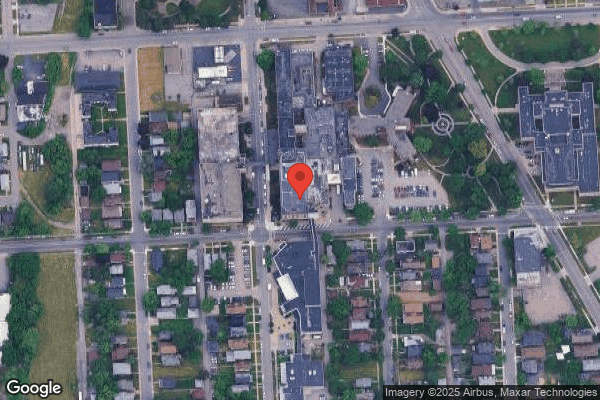
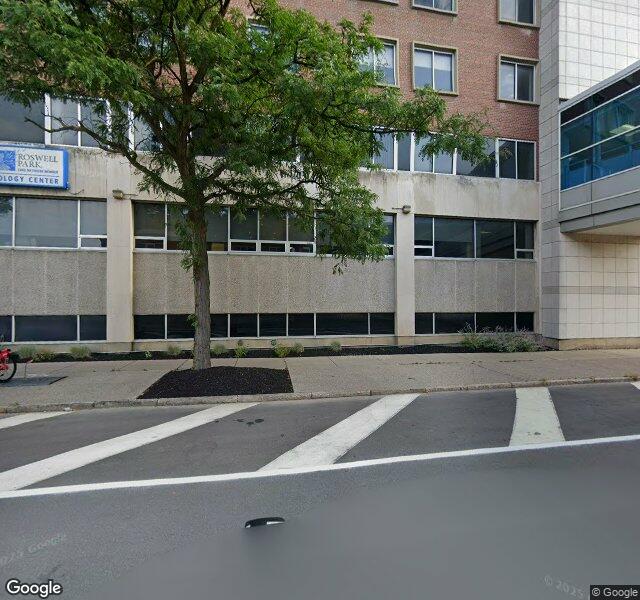
621 TENTH STREET, NIAGARA FALLS, NY 14302 (716) 278-4578
Non profit - Corporation 120 Beds Independent Data: November 2025
Trust Grade
48/100
#446 of 594 in NY
Last Inspection: August 2023

Over 2 years since last inspection. Current conditions may differ from available data.

Overview

Schoellkopf Health Center has a Trust Grade of D, indicating below-average quality with some concerning issues. It ranks #446 out of 594 facilities in New York, placing it in the bottom half, and #9 out of 10 in Niagara County, meaning only one local facility is rated worse. The facility's situation is worsening, with the number of issues increasing from 1 in 2024 to 4 in 2025. Staffing has an average rating of 3/5, but the 61% turnover rate is troubling compared to the state average of 40%. Additionally, there have been concerns about pest control; multiple inspections reported evidence of rodents and droppings in resident rooms, which poses health risks. Although quality measures received a perfect score of 5/5, the overall health inspection rating is poor at 1/5, indicating significant room for improvement.

Trust Score
D
48/100
In New York
#446/594
Bottom 25%
Safety Record
Low Risk
No red flags
Inspections
Getting Worse
1 → 4 violations
Staff Stability
⚠ Watch
61% turnover. Above average. Higher turnover means staff may not know residents' routines.
Penalties
✓ Good
$9,318 in fines. Lower than most New York facilities. Relatively clean record.
Skilled Nurses
⚠ Watch
Each resident gets only 26 minutes of Registered Nurse (RN) attention daily — below average for New York. Fewer RN minutes means fewer trained eyes watching for problems.
Violations
⚠ Watch
15 deficiencies on record. Higher than average. Multiple issues found across inspections.
★★☆☆☆
2.0
Overall Rating
★★★☆☆
3.0
Staff Levels
★★★★★
5.0
Care Quality
★☆☆☆☆
1.0
Inspection Score
Stable
2024: 1 issues
2025: 4 issues

The Good

  • 5-Star Quality Measures · Strong clinical quality outcomes
  • Full Sprinkler Coverage · Fire safety systems throughout facility
  • No fines on record

Facility shows strength in quality measures, fire safety.

The Bad

2-Star Overall Rating

Below New York average (3.1)

Below average - review inspection findings carefully

Staff Turnover: 61%

15pts above New York avg (46%)

Frequent staff changes - ask about care continuity

Federal Fines: $9,318

Below median ($33,413)

Minor penalties assessed

Staff turnover is elevated (61%)

13 points above New York average of 48%

The Ugly 15 deficiencies on record

Aug 2025 1 deficiency
CONCERN (F) 📢 Someone Reported This

A family member, employee, or ombudsman was alarmed enough to file a formal complaint

Potential for Harm - no one hurt, but risky conditions existed

Deficiency F0925 (Tag F0925)

Could have caused harm · This affected most or all residents

**NOTE- TERMS IN BRACKETS HAVE BEEN EDITED TO PROTECT CONFIDENTIALITY** Based on observation, interview and record review conducted during the Standard survey completed on 08/22/2025, the facility did...

Read full inspector narrative →
**NOTE- TERMS IN BRACKETS HAVE BEEN EDITED TO PROTECT CONFIDENTIALITY** Based on observation, interview and record review conducted during the Standard survey completed on 08/22/2025, the facility did not maintain a pest- free environment and an effective pest control program. Specifically, there was of evidence of rodents (dead rodents, rodent droppings) and complaints of rodent sightings in resident rooms. The findings are:The policy and procedure titled Pest Control, revised 11/2024, documented pests can present significant health risks, including the spread of disease, contamination of supplies, and deterioration of hospital infrastructure. The Environmental Services Department is responsible for daily cleaning and maintenance of facilities to minimize conditions conducive to pest infestations. Facilities Management will ensure the physical infrastructure is secure and free of entry points for pests. Food Service will implement sanitation and food handling procedures to prevent pest attraction and contamination in food storage, preparation, and service areas. When an infestation is suspected or confirmed, immediate measures will be taken to address the situation. This may involve the use of pest control specialists, who will assess the infestation and recommend appropriate actions. Review of Pest Sighting Log from 07/07/2025-08/22/2025 provided by the Director of Environmental Services documented pest concerns of mice or a mouse, with vague description of specific location of concern and action taken. On 7/7/25 removed eight (8) dead mice from dietary; 7/8/25 removed mouse from dietary office; 7/10 and 7/11 caught mouse removed, new trap; 8/4 inspected mouse citing in dietary; and 8/22 removed dead mouse, replaced trap in room [ROOM NUMBER] nursing home.Review of Pest Company Service Inspection Reports 07/02/2025 through 08/18/2025 completed by Licensed Exterminator documented: -07/14/2025 one (1) catch in resident room [ROOM NUMBER] that was disposed of.-08/13/2025 one (1) catch was found in resident room [ROOM NUMBER].During the Resident Council Meeting on 08/19/2025 at 2:36 PM, Resident #8 stated that they had seen a mouse a couple of nights ago (over the weekend), and their family member brought in a plug-in device to distract the mice. Observations and interviews on the first floor were as follows: -08/18/2025 at 10:45 AM, revealed a black plastic enclosed box trapper pest monitor on floor next to air conditioning/heat unit under window inside resident room [ROOM NUMBER]. Dry rodent droppings and dust was noted along the outside wall. The resident residing in the room stated a few months ago they had mice in their room and that mice were gross, and they did not want them in their room.-08/18/2025 at 11:45 AM, Resident #45 stated they had seen two (2) mice, one (1) early that morning and one (1) late last night in their room. They stated they saw the mice run across the floor from their closet, and one (1) of them went behind a bag positioned on the floor next to their dresser. Rodent droppings were observed along outside wall in room, and on floor behind the headboard of the bed. A black plastic enclosed box trapper pest monitor was present in room under the window. -08/20/2025 at 9:15 AM, Resident #45 stated they had not seen any mice since 08/18/2025 in their room. They stated maintenance has been to their room, pulled the closet out to check for holes in the wall and that occasionally someone will come into their room to check the bait box. -08/21/2025 at 8:49 AM and 08/22/2024 at 8:25 AM, revealed four (4) black trays with a clear substance were noted in resident room [ROOM NUMBER], three (3) along the walls and one (1) in front of the closet. The resident in the room stated a family member placed the mice traps down on the evening of 08/20/2025 because they complained to them about seeing mice and droppings in their room. The resident stated mice were nasty and it was not homelike and that they should not have to live with mice. During an interview on 08/21/2025 at 4:42 PM, Certified Nurse Aide #11 stated about two (2) weeks ago while providing care in resident room [ROOM NUMBER] during the night shift they saw a mouse run towards the door. They stated they reported the sighting to Registered Nurse #3. During an interview on 08/21/2025 at 4:49 PM, Licensed Practical Nurse #8 stated they have not observed any mice but had heard rumors from staff about mice. If they observed any mice they would call the supervisor immediately. They stated it was an infection control concern to have mice in the facility, was unsanitary and they would not want mice in their home.-08/22/2025 at 8:34 AM, revealed a white cardboard trap between the wall and the side of the closet in resident room [ROOM NUMBER] with a dead mouse present inside of it. -08/22/2025 at 9:23 AM, Registered Nurse #3 stated they were notified of mouse activity on the first floor in room [ROOM NUMBER] or 1008 by a Certified Nurse Aide on the night shift of 08/13/2025-08/14/2025. They stated they did not observe the mouse and notified the Director of Nursing and left a voicemail for the Director of Environmental Services regarding the sighting. Registered Nurse #3 stated there should not be mice in resident rooms due to infection control, mice carry diseases, and it is unsanitary. Registered Nurse #3 observed the dead mouse in resident room [ROOM NUMBER] and stated they would notify the Director of Environmental Services to remove and replace the trap. Review of first (1) floor pest logbook documented on 7/10 in hallway near resident room [ROOM NUMBER], ran to resident room [ROOM NUMBER] or #1037; 7/27/25 at 10:30 a mouse ran out of the bathroom went behind door; 8/14/25 mouse droppings on windowsill in activities room; and 8/21/25 6 PM, mouse ran out bathroom over my shoe. Observations and interviews on the second floor were as follows:-8/20/25 at 11:45 AM revealed a dead mouse was inside a black plastic enclosed box ( trapper pest monitor) inside resident room [ROOM NUMBER], which was occupied. At the time of the observation, the resident stated the last time they saw a rodent was about two to three weeks ago and it was in the hallway near their room. Review of second (2) floor pest logbook documented: 7/11/25 mice in resident room [ROOM NUMBER]; 7/14/25 mouse in resident room [ROOM NUMBER] ran across the floor; 7/20/25 resident saw mice running in to their room; 8/10/25 resident in room [ROOM NUMBER] saw mouse running down hallway; 8/11/25 resident in room [ROOM NUMBER] saw a mouse run across their floor; 8/12 9:30 PM resident in room [ROOM NUMBER] saw a mouse in their room, the mouse came out of wardrobe closet headed toward the door; 8/17 resident in room [ROOM NUMBER] saw mouse in their bathroom.Observations and interviews on the third floor were as follows: -8/20/25 at 12:18 PM revealed a dead mouse inside a black plastic enclosed box ( trapper pest monitor) inside resident room [ROOM NUMBER]. -8/21/25 at 1:40 PM, [NAME] #1 stated there was an approximate three inch wide by two-inch-high piece of vinyl cove base glued to the wall to the right of the door inside resident room [ROOM NUMBER]. At the time of the observation, [NAME] #1 stated they did not personally glue the piece of cove base to the wall, but it appeared as if it was a temporary fix and they would need to schedule a time to return to the room and do complete drywall repair to several areas in this room, including the area behind the resident bed and to the right of the door. During an interview on 8/21/25 at 4:55 PM, Licensed Practical Nurse #9 stated there was a rodent sighting in the high side hallway (north hallway) about one or two weeks ago. They stated they did not personally add it to the exterminator's communication notebook at the Nurses' Station, but there were multiple staff members present at the time of the sighting. During an interview on 08/22/2025 at 8:43 AM, Certified Nurse Aide #9 stated there have been resident complaints of mice in the facility, most recent was on 08/16/2025 while working on the third floor. They stated mice should not be in the resident's home. During an interview on 8/22/25 at 9:59 AM, Housekeeping Staff #1 stated they have seen mice a few times in the facility and residents have complained to them. They inform their supervisor, and the supervisor put mice traps in the resident's room. They stated it was hard to control the mice because the residents were always eating in their rooms and leaving droppings that attract mice. During an interview on 8/22/25 at 10:44 AM, the Licensed Exterminator stated they had just completed an inspection in resident room [ROOM NUMBER]. They stated they found an open sugar packet and a jelly packet on the floor under the resident's bed with mice droppings beside it. They stated some resident's family members brought in plug in devices that send off a scent to keep the mice away but felt they did not work. They stated they cannot use rodenticide in the interior of the building. During an interview on 8/22/25 at 10:48 AM, Resident #8 stated they used to have a parade of mice and now they only see one or two occasionally. Review of third (3) floor pest logbook documented on 7/12/25 mice in resident room [ROOM NUMBER]; 7/17 mouse in resident room [ROOM NUMBER]; 7/24 two (2) mice in resident room [ROOM NUMBER]; 8/2 ceiling tile in hallway near resident room [ROOM NUMBER] moved out of place and heard scrambling footsteps in ceiling; 8/6 mouse in resident room [ROOM NUMBER]; 8/19 mouse in resident room [ROOM NUMBER] in bathroom; 8/21/25 at 3:50 AM mouse in resident bathroom room [ROOM NUMBER] and ran under recliner; 8/21/25 resident in room [ROOM NUMBER] stated they saw a rat. During an interview on 8/20/25 at 3:15 PM, the Licensed Exterminator stated they were on-site at the facility three times per week. They stated they personally checked the containerized traps inside each resident room during the last week of each month and disposed of any catches. The Licensed Exterminator stated there had been progress with this issue and the Administrator and Director of Nursing were responsive to their requests and concerns, but there was still an outstanding issue in resident room [ROOM NUMBER]. They stated they informed the facility of a breakthrough hole in the wall of resident room [ROOM NUMBER] and maintenance staff placed a temporary patch over it, but they were advised a more permanent fix was needed. During an interview on 08/22/2025 at 9:41 AM, the Director of Environmental Services stated they oversaw pest control for the facility. They stated environmental staff, housekeeping, try to monitor mouse traps as much as possible and report finding to them. They stated the exterminator, with the pest control company, comes to the facility three (3) times per week, reviews pest logbooks on each floor, checks mouse traps and addresses concerns documented in the logbooks. They stated resident rooms have cardboard traps that were started with first by the exterminator and then in addition the black trapper pest monitor were added to resident rooms to catch mice. They stated it was important to maintain pest control for resident, staff safety because mice carried diseases and was not homelike. Additionally, the Director of Environmental Services stated ninety (90) percent of pest issues had been addressed since June/July, except for exterior issues, such as exterior doors not closing flush, exterior doors with opening at bottom, and holes in walls. During an interview on 08/22/2025 at 10:40 AM, the Administrator stated rodents were an ongoing, standing issue that has significantly improved. They stated the exterminator was there three (3) days a week, containers had been provided to the residents for food, issues have been discussed with environmental services and rodent traps were in place. They stated they do not know what else they can do. During an interview on 08/22/2025 at 11:30 AM, the Director of Facilities stated they have nothing to do with pest control. During an interview on 08/22/2025 at 12:35 PM, the Director of Nursing #1 stated mice should not be present in resident rooms; it was a sanitary issue having rodents in the facility as they can carry diseases. During an interview on 08/22/2025 at 1:15 PM, Social Worker #1 stated they were aware there was a problem with mice in the facility. They had no residents complain, but family members had complained that it was gross. They did not have any formal grievances regarding the mice, it was strictly verbal complaints. Social Worker #1 stated that rodents in the facility had a negative effect on the residents' quality of life. 10NYCRR 415.29 (j)(5)
May 2025 1 deficiency
CONCERN (F) 📢 Someone Reported This

A family member, employee, or ombudsman was alarmed enough to file a formal complaint

Potential for Harm - no one hurt, but risky conditions existed

Deficiency F0925 (Tag F0925)

Could have caused harm · This affected most or all residents

**NOTE- TERMS IN BRACKETS HAVE BEEN EDITED TO PROTECT CONFIDENTIALITY** Based on observation, interview, and record review during a Complaint Investigation (Complaint #NY00370870), the facility did no...

Read full inspector narrative →
**NOTE- TERMS IN BRACKETS HAVE BEEN EDITED TO PROTECT CONFIDENTIALITY** Based on observation, interview, and record review during a Complaint Investigation (Complaint #NY00370870), the facility did not maintain an effective pest control program for two (second and third floors) of four resident use floors and the Main Kitchen. Issues included observations of evidence of rodents (dead rodents and rodent droppings) and complaints of rodent sightings in resident rooms. Additionally, on the exterior of the building, used kitchen grease was stored in a manner that had the potential to attract rodents. Residents A, B, C, D, E, F, G, H, I, J, and K were involved. The findings are: The policy and procedure titled Pest Control, effective 11/2024, documented pests can present significant health risks, including the spread of disease, contamination of supplies, and deterioration of hospital infrastructure. The Environmental Services Department is responsible for daily cleaning and maintenance of facilities to minimize conditions conducive to pest infestations. Facilities Management will ensure the physical infrastructure is secure and free of entry points for pests. Food Service will implement sanitation and food handling procedures to prevent pest attraction and contamination in food storage, preparation, and service areas. When an infestation is suspected or confirmed, immediate measures will be taken to address the situation. This may involve the use of pest control specialists, who will assess the infestation and recommend appropriate actions. 1a. Observations and interviews on the third floor were as follows: During an interview on 5/6/25 at 8:20 AM, Resident A stated they saw rodents all of the time in their room and in the hallway. They stated, I see them every day, everywhere. They stated they had observed rodents and rodent droppings inside the dining room, where they ate their meals. At this time, approximately ten rodent droppings were observed in Resident A's room inside their tall wardrobe. During an interview on 5/6/25 at 8:28 AM, Resident B stated they had two small mice in their room at different times and the last one was observed about one and a half weeks ago. Resident B stated a male Certified Nurse Aide tried to get it, but they could not. The first one was seen by a nurse under their bed. They stated, I can't sleep at night thinking its crawling around. At this time, a cardboard box was observed behind the dresser in Resident B's room. The box contained two snap traps and one of the snap traps had a dead mouse in it. During an interview on 5/6/25 at 8:32 AM, Licensed Practical Nurse #1 stated the facility was battling mice and an exterminator came in regularly. They stated there had been no resident complaints recently. On 5/6/25 at 11:37 AM, Licensed Practical Nurse #1 was shown the dead mouse in Resident B's room. They stated they needed to call Housekeeping to get someone to pick it up. They stated they were not aware of the dead mouse in this room, and no one should live with mice in their room, this needed to be taken care of right away. Observation in the third floor Dining Room on 5/6/25 at 8:35 AM revealed rodent droppings along the wall under the window. During an interview on 5/6/25 at 8:43 AM, Housekeeper #1 stated they had seen rodent droppings multiple times in resident rooms [ROOM NUMBERS]. They stated when they saw droppings, they always told their supervisor. Some residents stored food in containers, but the containers weren't always covered, and that could be a problem. Housekeeper #1 stated they swept and mopped the floors of each resident room in their assignment daily. During an interview on 5/6/25 at 8:44 AM, Housekeeping Supervisor #1 stated the radiators in each room in the nursing home were re-caulked and steel wool was used to seal around them. They stated this was done by the exterminating company to eliminate rodent entry points. They stated the exterminator visited the facility every Monday, Wednesday, and Friday and nurses tried to educate residents to not keep open food in their rooms. During an interview on 5/6/25 at 11:19 AM, Resident C stated they had seen rodents all over their room. They stated they last saw a mouse yesterday and the mice did not bother them. At this time, rodent droppings were observed in the bathroom behind the metal garbage can in Resident C's room. Also, rodent droppings were observed on the floor to the left of the tall wardrobe in Resident C's room. Observation on 5/6/25 at 11:26 AM revealed rodent droppings were observed around the black plastic containerized rodent trap under the window in Resident room [ROOM NUMBER]. Observation on 5/6/25 at 11:30 AM revealed the lower cover was off the radiator in Resident room [ROOM NUMBER] and there were rodent droppings on the floor under the radiator, and the area was very dusty. During an interview on 5/6/25 at 11:35 AM, Certified Nurse Aide #1 stated they saw a couple of rodents when they first started working at this facility around January 2025, but not much since then. They stated they had just seen the ones stuck in traps, maybe two. Certified Nurse Aide #1 stated residents would tell them if there was something that they were seeing, and the last time a resident said something to them was about a month ago or longer. During an interview on 5/6/25 at 11:44 AM, Resident D's spouse stated they had not seen a rodent in Resident D's room in a few weeks. They stated their spouse did get all excited about the rodents, but it did not bother them personally. At this time, rodent droppings were observed on the floor behind the dresser in Resident D's room. During an interview on 5/6/25 at 12:00 PM, Resident E stated they had caught two mice in their room in food containers a couple of months ago. The resident stated they were blind. At this time, rodent droppings were observed behind the dresser and droppings were behind the nightstand in Resident E's room. In the top drawer of nightstand, there were rodent droppings. Also, the nightstand had two open shelves, and each had rodent droppings. Resident E had three plastic food containers with lids, which were loosely sitting on the containers, and rodent droppings were on the floor around the plastic food containers, which were to the left of the resident's chair. Additional observation revealed there was a black plastic containerized rodent trap on the floor near the window. There were droppings on floor around the trap and two dead mice were in the trap. Resident E stated, Rodents do not scare me, but it was a pain in the neck if they get into my food, a couple were in my cookies, and I had to throw my cookies away. Resident E stated they could not recall the exact time of that incident. On 5/6/25 at 3:27 PM, Resident E added that it was a while ago that a mouse crawled into their cookie container, and they heard the mouse rustling around the wrapper in the container, which was how they knew it was trapped in there. They stated they were alone in their room when it occurred, but everybody knew about it and staff took pictures of it. They stated they were happy it was caught. On 5/6/25 at 12:10 PM, Licensed Practical Nurse #1 was shown the dead mice and droppings in Resident E's room. Licensed Practical Nurse #1 stated the nightstand drawer needed to be cleaned out and the trap needed to be emptied. They stated the mice and droppings could be old, but that would not be a good thing either. They stated if the droppings were old, that meant they should have been cleaned up by now. Observation on 5/6/25 at 1:31 PM revealed rodent droppings were on the floor between the wall and the brown leather chair inside Resident room [ROOM NUMBER]. During an interview on 5/6/25 at 1:34 PM, a family member of Resident F stated they had noted improvement in the rodent situation, with no sightings for a long time, but around a month ago, the rodents popped up again. They stated the rodents did not scare Resident F, but Resident F will report when they had seen one. The family member stated they personally supplied Resident F's room with two snap traps and one glue board trap. They stated they caught one rodent on their glue board trap about one month ago. At this time, rodent droppings were observed on the floor to the right of the radiator, near a small box of rodent bait. Review of the third-floor pest control logbook located at the Nurses' Station revealed entries stated there were rodent sightings on 4/25/25 in Resident room [ROOM NUMBER] at 11:00 PM, in Resident room [ROOM NUMBER], and on 5/6/25 in Resident room [ROOM NUMBER] at 5:00 AM. 1b. Observations and interviews on the second floor were as follows: During an interview on 5/6/25 at 8:50 AM, Resident G stated the mice were still around, and they just saw one the other day. It was alive on the top of their dresser. During an interview on 5/6/25 at 8:58 AM, Licensed Practical Nurse #2 stated they had not seen any rodents recently, which was a great improvement. They stated they last saw a rodent in the second floor Dining Room in December 2024. They stated occasionally, residents would make a complaint about a rodent sighting in their room, and they would enter the information into the logbook that served as communication between the staff and the exterminator. During an interview on 5/6/25 at 9:00 AM, Resident H stated it had been a few weeks since they last saw a rodent in their room. At this time, a few dusty rodent droppings were observed on a shelf behind several empty soda cans. During an interview on 5/6/25 at 9:10 AM, Resident I stated they last saw a rodent in their room a couple of weeks ago, and it was on their chair and pillow. During an interview on 5/6/25 at 9:03 AM, Resident J stated they saw a large rodent in their room about three weeks ago and a man came in and stated they would take care of it. Resident J also stated it was unnerving to witness a rodent in their room. During an interview on 5/6/25 at 9:28 AM, Certified Nurse Aide #2 stated the last time they saw a rodent in the building was three weeks ago. They stated when they worked nights, they would see them in the hallways, but it had improved in the last couple of weeks. During an interview on 5/6/25 at 1:25 PM, a family member of Resident K stated they last saw rodent droppings in Resident K's room on 4/27/25 and the last time they saw a rodent in the room was about one month ago. The family member stated someone blocked holes around the radiator in Resident K's room a few days ago. They stated during football season, they brought in their own snap trap and caught a mouse in Resident K's room in the trap. At this time, no rodent droppings were observed in Resident K's room. Review of the second-floor pest control logbook located at the Nurses' Station revealed on 5/1/25, two entries stated a mouse was running in Resident room [ROOM NUMBER]. Also in Resident room [ROOM NUMBER], a sighting occurred in the radiator on 4/27/25. 1c. Observations and interviews in the Main Kitchen were as follows: During an interview on 5/6/25 at 10:10 AM, the Food Service Director stated the rodent situation was much improved, there were still occasional rodent sightings in the kitchen, and an exterminator came three times per week to maintain the traps. They stated deep cleaning behind all racks was done on a weekly basis. The Food Service Director stated all condiments, bread, and soup bowls were stored in the cooler and multiple openings in kitchen walls and ceilings were patched. Observation in the kitchen on 5/6/25 at 10:15 AM revealed rodent droppings on the floor on the right-side corner of the three-bay sink and droppings on the white painted area where water jugs were stored. Additionally, in the large dry storage room, there was one small pile of droppings behind the closed bin with packaged cookies. In this room, all food was stored in covered plastic bins. No droppings were observed inside the bins, but the two bins had one dropping each on top of their lids. Inside the tray line room revealed rodent droppings on the floor near the side wall with windows and droppings around containerized rodent box #32, which was also close to the windows. Rodent droppings were observed on the floor of the tray line room between the cooler and the handwash sink. 1d. Observations and interviews at the exterior grease storage area were as follows: Observation on the exterior of the facility on 5/6/25 at 10:30 AM revealed the dumpster for used kitchen grease had a greasy substance that covered about one-quarter of its lid. The substance was heavily streaked down the left vertical wall of the dumpster and appeared lighter on the right vertical wall. At the time of the observation, the Food Service Director stated the grease dumpster and the area around it were thoroughly scraped, degreased, and cleaned last Monday, and it was spotless at that time. The Food Service Director stated facility staff poured used grease into this dumpster around two times per week and an outside contractor pumped the grease out. 1e. Observations and interviews at the loading dock were as follows: Observation from the inside of the loading dock on 5/6/25 at 10:37 AM revealed there were two garage doors. The door on left had two small areas of daylight on each side at the base, one inch wide each. The door on right had two small areas of daylight at the base, one at the end and one in middle, about one-half of an inch wide each. During an interview on 5/6/25 at 10:53 AM, the Director of Environmental Services stated the facility identified potential rodent entry points under the radiator covers. The facility had exterminators remove every radiator cover in the nursing home and seal all holes. This was completed around February 2025. The Director of Environmental Services further stated for about six weeks after completion of project, there were no new complaints of rodent sightings. They stated sweeping and mopping all rooms was an everyday task. Housekeepers were able to do a detailed cleaning of five to six additional rooms each day. The Director of Environmental Services stated a detailed cleaning included cleaning all surfaces and moving and cleaning behind all furniture. They stated if any rodent droppings were sighted, they or the Housekeeping Supervisor would be notified, and the housekeeping staff would be assigned to perform a detailed cleaning of that room. Additionally, on 5/6/25 at 1:08 PM, the Director of Environmental Services stated the exterminator provided the black plastic containerized rodent traps that were placed in most rooms throughout the nursing home. They stated the exterminator checked the boxes when there was a sighting or report, but they did not check every box every time they visited the facility. They stated the cardboard boxes with snap traps were provided by the facility, they were used by facility staff if they heard of something, and the exterminator was not there. On 5/6/25 at 2:46 PM, the Director of Environmental Services stated they were not aware that Resident E claimed to have caught a rodent in a cookie container, and they were not aware of any rodent sightings in Resident E's room. They added that the issue was not 100 percent eradicated yet, and the building was old, which could be a contributing factor. During a telephone interview on 5/6/25 at 3:02 PM, the Administrator stated the exterminator came to the facility three times per week and there had been significant improvement, but the rodent issue was still a work in progress with on-going audits and checks. The Administrator stated exclusion work around every radiator in the nursing home was done and an outside contractor deep cleaned the kitchen over the course of several nights. They stated the exterminator monitored the sighting logbooks at each Nurses' Station and issues identified by the exterminator were forwarded to the Environmental Services or Maintenance departments and were handled promptly, which led to a decrease in sightings. The Administrator stated they had very few resident or staff complaints regarding rodents lately. The age of the building and its geographic location were factors, according to the Administrator. They stated some of the residents who stored food in their rooms were more compliant than others. The facility provided plastic or metal bins for food storage to any resident and the facility kept extras on-hand and would purchase additional bins as needed. The Administrator stated Activities staff reminded residents at Dining Committee meetings about the importance of proper food storage and that containers were available for anyone that wanted one. They stated the grease dumpster was cleaned weekly, and garbage that was stuck on the top of the grease dumpster could contribute to splattering when grease was poured into it. The Detailed Cleaning Rooms Third Floor Nursing Home report documented Resident A's room was deep cleaned on 5/2/25, Resident B's room was deep cleaned on 4/28/25 and 5/3/25, Resident D's room was deep cleaned on 4/17/25, and Resident E's room was deep cleaned on 4/26/25. The exterminator's Service Inspection Report dated 5/5/25 documented two catches in Dietary were disposed of, and sanitation conditions continued to be maintained. The exterminator's Service Inspection Report dated 4/30/25 documented three catches in Dietary were disposed of. rooms [ROOM NUMBERS] had catches. The exterminator's Service Inspection Report dated 4/28/25 documented four catches in Dietary were disposed of. The exterminator's Service Inspection Report dated 4/24/25 documented heavy rodent pressure was observed on the exterior of the building. The report documented concerns over doors that were left open and trash outside of the receiving dock. The exterminator's Service Inspection Report dated 4/23/25 documented one catch in Dietary was disposed of. The report documented that room [ROOM NUMBER] had one catch that was disposed of, and food debris was noted in that room. 10 NYCRR 415.29(j)(5)
Feb 2025 2 deficiencies
CONCERN (D) 📢 Someone Reported This

A family member, employee, or ombudsman was alarmed enough to file a formal complaint

Potential for Harm - no one hurt, but risky conditions existed

Incontinence Care (Tag F0690)

Could have caused harm · This affected 1 resident

Based on observation, interview, and record review completed during a Complaint (#NY00339959) investigation, the facility did not ensure that each resident received adequate treatment and services for...

Read full inspector narrative →
Based on observation, interview, and record review completed during a Complaint (#NY00339959) investigation, the facility did not ensure that each resident received adequate treatment and services for a Foley catheter (tube that drains urine) for one (Resident #2) of two residents reviewed for catheter care. Specifically, staff did not keep the urine collection bag below the level of Resident #2's bladder during care and the resident had a history of frequent urinary tract infections. The finding is: Review of the policy titled Catheter Care, Urinary obtained from the Med-Pass Nursing Services Policy and Procedure Manual for Long-Term Care dated 2001, provided by the Director of Nursing, revealed staff are required to always position the drainage bag lower than the bladder to prevent urine flowing back into the urinary bladder. The purpose of this procedure is to prevent urinary catheter-associated complications, including urinary tract infections. Resident #2 had diagnoses including hydronephrosis (enlargement of the kidney) with obstructive uropathy (obstruction in urinary tract), post right ureteral stent (small flexible tube inserted in kidney duct) placement and urinary tract infection. The Minimum Data Set (a resident assessment tool), dated 11/23/24, documented Resident #2 had moderate cognitive impairment, was usually understood, usually understands, and had an indwelling catheter. Review of the Comprehensive Care Plan initiated on 12/2/24 revealed Resident #2 had obstructive uropathy and required the use of a foley catheter with directions for catheter care according to established policy and to keep the catheter bag below the resident's bladder. Review of the current Closet Care Plan (used by staff to guide care) dated 11/14/24 documented Resident #2 under continence had a Foley catheter. Review of the Operative Report dated 2/4/25 revealed the resident had a cystoscopy (medical procedure to examine the bladder and urethra) for a right ureteral (thin tube that carries urine from kidney to the bladder) exchange and removal of kidney stones in the right ureter. Surgical aftercare remained the use of a Foley catheter and treatment with Levofloxacin (antibiotic medication used to treat infections) 500 mg (milligram) tablets daily. Review of Medication Orders dated 2/4/25 directed the use of Levofloxacin 500 mg (milligrams) tablet daily for seven days for prophylaxis (measure taken to prevent disease or infection) treatment. Review of the Physician's Progress note dated 2/6/25 revealed the resident has a history of obstructive uropathy with frequent urinary tract infections and had a cystoscopy, with plans to continue the use of a Foley and for the resident to complete a course of Levofloxacin. During an observation on 2/10/25 at 11:52 AM, Certified Nurse Aide #1 was at the resident's bedside preparing to provide hands on care. The resident was lying flat in bed with the urine collection bag on the bed mattress. The resident remained lying flat during the bed bath and brief change. The Certified Nurse Aide #1 emptied the urinary collection bag full of clear yellow urine by lifting the bag approximately a foot above the resident's torso; the urine was visibly backflowing towards Resident #2's bladder. Certified Nurse Aide #1 placed the urinary collection bag through the pant leg while dressing the resident in bed and left the urinary collection bag on the mattress with the resident still lying flat in bed at 12:09 PM. During an interview on 2/10/25 at 12:27 PM, Certified Nurse Aide #1 stated the urine collection bag the resident had after recent surgery several days ago did not reach below the resident's bladder and was reported to nursing staff. Certified Nurse Aide #1 said they always emptied the urine collection bag in the same manner and was aware that the bag is supposed to remain below the resident's bladder to prevent infection. During an interview on 2/10/25 at 2:20 PM, the Registered Nurse Nurse Manager #1 stated it was unacceptable to empty a urinary catheter bag by raising it above the resident's bladder to prevent infections. The Registered Nurse #1 Nurse Manager also stated when the resident returned from surgery last week, staff had informed them that the urinary catheter bag placed in surgery had shorter tubing. The Registered Nurse Nurse Manager #1 stated they would call the surgeon today to determine how to proceed with this issue. During a telephone interview on 2/11/25 at 9:39 AM, the Surgeon/Physician stated that staff did not inform them of a problem with Resident #2's urinary catheter bag until 2/10/25 after the surveyor's observation. The Physician/Surgeon stated that it is important to keep the bag below the bladder to decrease risk of infection especially for this resident who was at high risk for urinary tract infections. During an interview on 2/10/25 at 12:26 PM, the Registered Nurse #3 Infection Control Preventionist stated they were aware that Resident #2 went to surgery last week and was sent back to the facility with a different urine collection bag that was shorter and did not have clips for hanging the bag. Registered Nurse #3 Infection Control Preventionist stated they do not change devices placed by surgery until there is surgical follow up and stated they did not report the problem to anyone else. During the interview an observation of the urinary drainage bag was performed at the resident's bedside with Registered Nurse #3 Infection Control Preventionist who viewed that the bag was able to reach slightly below the resident's bladder and the urinary drainage bag had slits at the top to accommodate clips and/or straps to secure the urinary drainage bag below the resident's bladder. 10 NYCRR 415.12(d)(1)
CONCERN (D) 📢 Someone Reported This

A family member, employee, or ombudsman was alarmed enough to file a formal complaint

Potential for Harm - no one hurt, but risky conditions existed

Infection Control (Tag F0880)

Could have caused harm · This affected 1 resident

Based on observation, interview, and record review completed during a Complaint (# NY00339959) investigation, the facility did not ensure provision of a safe, sanitary, and comfortable environment to ...

Read full inspector narrative →
Based on observation, interview, and record review completed during a Complaint (# NY00339959) investigation, the facility did not ensure provision of a safe, sanitary, and comfortable environment to help prevent the development and transmission of communicable diseases and infections for one (Resident #2) of three residents reviewed for infection control practices. Specifically, Resident #2 was on enhanced barrier precautions (interventions designed to reduce transmission of multi-drug-resistant organisms including mask, gown and glove use during high contact resident care activities) and staff did not wear proper personal protective equipment during care while emptying a urine drainage bag. The finding is: Review of the policy titled Infection Prevention dated 12/2024 revealed procedures for isolation and universal precautions will be placed for residents suspected or confirmed to have a contagious or infectious disease. Masks, gowns and gloves should be used as protective barriers when needed to reduce the risk of exposure of the health care worker's skin or mucous membranes to potentially infectious material. Enhanced Barrier Precautions are used in conjunction with standard precautions and expand the use of personal protective equipment to donning (putting on) of gown and gloves during high-contact resident care activities that provide opportunities for transfer of multi-drug-resistant organisms to staff hands and clothing including dressing, bathing/showering, transferring, changing linens, changing briefs, wound care, and contact with a urinary catheter. Resident #2 had diagnoses including hydronephrosis (enlargement of the kidney) with obstructive uropathy (obstruction in urinary tract), post right ureteral stent (small flexible tube inserted in kidney duct) placement and urinary tract infection. The Minimum Data Set (a resident assessment tool), dated 11/23/24, documented Resident #2 had moderate cognitive impairment, was usually understood, usually understands. Resident #2 required maximal assistance for personal hygiene, was totally dependent on staff for toilet hygiene and dressing, and moderate assistance for bed mobility. Review of the Comprehensive Care Plan initiated on 12/2/24 revealed Resident #2 required assistance with transfers and activities of daily living due to decreased balance and strength and required Foley catheter care. Review of the current Closet Care Plan (used by staff to guide care) dated 11/14/24 revealed the resident had a Foley catheter for continence and required extensive to maximal assistance for bathing and extensive assistance for bed mobility. Review of Physician Orders dated 11/14/24 revealed Foley catheter related to diagnosis of obstructive uropathy, standard precautions. Review of the Physician's Progress note dated 2/6/25 revealed the resident has a history of obstructive uropathy with frequent urinary tract infections and had a cystoscopy, with plans to continue the use of a Foley and for the resident to complete a course of Levofloxacin (antibiotic medication to treat infections). During an observation on 2/10/25 at 11:52 AM, a sign for enhanced barrier precautions was posted on Resident #2's door and directed staff to use a mask, gowns, and gloves for hands on care. Certified Nurse Aide #1 was observed at the resident's bedside wearing gloves, but no mask or gowns. Certified Nurse Aide #1 performed a bed bath that included assisting the resident with bed mobility, emptied the urinary collection, changed the resident's clothing, and handled soiled linens while wearing the same pair of gloves; the resident care activities performed were completed at 12:09 PM. During an interview on 2/10/25 at 12:27 PM, Certified Nurse Aide #1 stated yes, they should have had a gown and mask on in Resident #2's room to prevent infection, they forgot. During an interview on 2/10/25 at 12:26 PM, Registered Nurse #3 Infection Control Preventionist stated Resident #2 is on enhanced barrier precautions because of the use of the Foley catheter in accordance with the facility's nursing standard of practice. Staff are required to wear a gown, mask, and gloves for residents on enhanced barrier precautions to prevent the spread of infections. During an interview on 12/10/25 at 1:27 PM, the Director of Nursing stated that the resident is on enhanced barrier precautions for the use of the Foley catheter and staff are required to wear a mask, gown and gloves during hands on care to prevent infections. 10 NYCRR 415.19(a)(2)
Nov 2024 1 deficiency
CONCERN (F) 📢 Someone Reported This

A family member, employee, or ombudsman was alarmed enough to file a formal complaint

Potential for Harm - no one hurt, but risky conditions existed

Deficiency F0925 (Tag F0925)

Could have caused harm · This affected most or all residents

**NOTE- TERMS IN BRACKETS HAVE BEEN EDITED TO PROTECT CONFIDENTIALITY** Based on observation, interview, and record review during a Complaint Investigation (Complaint #NY00351197), the facility did no...

Read full inspector narrative →
**NOTE- TERMS IN BRACKETS HAVE BEEN EDITED TO PROTECT CONFIDENTIALITY** Based on observation, interview, and record review during a Complaint Investigation (Complaint #NY00351197), the facility did not maintain an effective pest control program for three (First, Second, and Third Floors) of four resident use floors and the Main Kitchen. Issues included observations of evidence of rodents (droppings) and complaints of rodent sightings in resident rooms. Additionally, on the exterior of the building, garbage and used kitchen grease were stored in a manner that had the potential to attract rodents. Residents A, B, C, D, E, F, G, H, I, J, K, L, M, N, O, and P were involved. The findings are: The policy and procedure titled Pest Control, effective 10/1/14, documented efforts will be made to ensure that pests are controlled throughout the facility, including the food service department. Regular inspections will be performed by a pest management professional. The inspector will note situations that are conducive to pest populations and recommend repairs, sealing of pest entry points, clutter reduction, improved sanitation, and monitoring procedures. Repairs will be performed as needed to prevent pest access to buildings or to hiding spaces in walls and equipment. Proper sanitation will be maintained, and clutter reduced to prevent food and harborage for pests. Additionally, in food service areas, all exterior openings are to be closed tightly, and garbage containers are to be kept clean, in good condition, and tightly covered in all indoor and outdoor areas. Garbage containers will be washed, rinsed, and sanitized regularly. During a telephone interview on 10/3/24 at 2:45 PM, the Administrator stated there had been an uptick in rodent sightings since late August or early September 2024. They stated the facility recently changed exterminator companies and increased the frequency of exterminating services from weekly to two times per week. The Administrator further stated the facility bought containers for residents' snacks in their rooms, did a thorough cleaning of the dining rooms. The condiments packets from the hutches in the dining rooms were moved to the steel cabinetry in the kitchenettes. Residents who like to keep snacks in their room and who had a heavy amount of belongings were identified and the Environmental Services staff increased terminal cleaning in those resident rooms. The Administrator stated Maintenance staff went around the building patching any identified holes. The Administrator stated there was a walk-through of the Main Kitchen last month, and the Food Service Director made changes to food storage methods and added more frequent deep cleaning at that time. The used kitchen grease outside of the hospital was last cleaned out two weeks ago as well a deep clean of the inside of the Main Kitchen, specifically focused on the stoves and areas with grease build up. 1a. Observations and interviews on the Third Floor were as follows: During an interview on 11/12/24 at 8:40 AM, Certified Nurse Aide/ Unit Clerk #1 stated they had seen rodents in the hallways on the resident units. They had observed a mouse inside a resident room on the Third Floor, which was now vacant, and had heard residents on the Third Floor complaining about mice. They stated they had seen improvement lately when a new exterminator started coming to the facility. Observation inside Resident room [ROOM NUMBER] on 11/12/24 at 8:45 AM revealed a black plastic enclosed box and a white cardboard glue trap were present on the floor. There were approximately eight rodent droppings on the floor between the edge of the bed and the corner wall closest to the window, under the resident's cane. During an interview on 11/12/24 at 8:49 AM, the Licensed Exterminator stated they visited the facility two times per week. They stated the black plastic enclosed boxes and the white cardboard glue traps were set and monitored by their company. The Licensed Exterminator stated the black plastic enclosed boxes, referred to as containerized traps, were locked and had a sheet of glue paper inside. There was a containerized trap in every resident bedroom in the nursing home. They stated they did not use poison indoors, but did use bait boxes that contained poison on the exterior of the property. At this time, the Licensed Exterminator looked at the rodent droppings on the floor inside Resident room [ROOM NUMBER] and stated they could not tell if the droppings were old or new. During an interview on 11/12/24 at 9:03 AM, Certified Nurse Aide #2 stated the last time they saw a mouse in the nursing home was about one month ago. During an interview on 11/12/24 at 9:05 AM, Resident A stated they had seen a couple of rodents in their room. The last time they saw a rodent in their room was about one month ago. Resident A stated they were also concerned about Resident B's room, where they had seen a few mice. They stated they observed mice running over Resident B's feet. Resident A stated staff did not clean under residents' beds. During an interview on 11/12/24 at 9:12 AM, Registered Nurse Unit Manager #1 stated they had seen rodents on the Third Floor. Originally, the problem was pervasive, with complaints all the time, and there was evidence of rodents that they discovered in their office. They stated lately they had noticed some improvement, with fewer resident complaints, but about one to two weeks ago, they personally observed a rodent running behind a chair inside Resident room [ROOM NUMBER]. Registered Nurse Unit Manager #1 stated they encouraged residents who liked to keep snacks in their rooms to utilize plasticware for storage and they provided plasticware to residents who needed it. During an interview on 11/12/24 at 9:23 AM, Resident C stated they saw a mouse in their room a couple of days ago, it ran across the floor and under the chair. During an interview on 11/12/24 at 1:50 PM, Resident D stated they used to live in the country, and mice did not bother them, but they found mice to be unnerving. Resident D stated mice came into their bedroom from the hallway, and they were very fast. They stated about three to four months ago, there were major rodent problems in the facility, and they had noticed some improvement, but the facility still needed a cat to capture the mice. Resident D stated the last time they saw a rodent in their room was two months ago, but they've heard staff screaming when they've discovered a rodent elsewhere on the unit. During an interview on 11/12/24 at 1:55 PM, Resident E's family member, who was visiting the facility, stated the last time they personally observed a rodent in their family member's room was about two weeks ago, but Resident E reported to them that they saw mice more frequently. The visitor stated Resident E told them they saw a mouse in their room the night before last. The visitor stated they personally brought in rodent traps and placed them in Resident E's room. They had seen rodent droppings in the room and had cleaned them up. They added that the mice were very little, and they had seen them stuck on their traps. Over the last six months, there had been at least six caught on the traps. Observation on 11/12/24 at 2:00 PM revealed six rodent droppings were on the floor to the left of the heat register inside Resident room [ROOM NUMBER]. During an interview on 11/12/24 at 2:03 PM, Resident F stated they observed one rodent last night on their bed while they were sitting on a chair beside the bed. Resident F stated they let the nurses know, and they screamed, and the whole floor probably heard it. They stated a couple of weeks ago, they had seen two rodents at the same time on the floor in their room. They stated they had lived here about one year, rodents had been an issue for the last three months, and Resident F further stated, It was scary, I don't care for them. During an interview on 11/12/24 at 2:11 PM, Resident G stated they saw one mouse about one week ago in their room. Resident G described the mouse as little and stated it ran across the room. They stated they first noticed mice in their room about four months ago, total at least ten observed in this room. Resident G stated the mice usually went under the heat register. They stated more recently, they started seeing itty bitty ones, which were probably the babies. When a new extermination company started, they stated they could hear mice in the walls of their room, which sounded like the mice were fighting, but lately, they had not heard any mice in the walls. Resident G stated they had only seen a few rodent droppings in their room since then, and they were probably old droppings that were leftover. They stated they had crackers in a basket in their room, and rodents tore a mayonnaise packet and ate the crackers, but their room had been cleaned out since then. 1b. Observations and interviews on the Second Floor were as follows: During an interview on 11/12/24 at 9:35 AM, Resident H stated everybody had seen mice in this building. Mice were going from one side of the room to the other under the heating vent. Resident H stated it had been about a month since they saw a rodent in their room, but they recently heard noises in the ceiling that they believed were mice scattering. They further described the noises as three to five mice running back and forth mostly at night. During an interview on 11/12/24 at 9:45 AM, Resident I stated they had seen and heard mice in their room, and stated, There are too many mice in here. Resident I stated they asked Environmental Services staff to move their chair while cleaning their room on Sunday, and there were rodent droppings under the chair. Resident I stated they observed a mouse in their room the other day and their family brought in their own rodent traps. Observation on 11/12/24 at 9:48 AM revealed eight to ten rodent droppings were observed on the floor in Resident room [ROOM NUMBER], to the right of the heat register. Two three-tier plastic bins were in this room. One of the three-tier plastic bins had approximately 30 rodent droppings in the bottom drawer. This drawer contained several ripped bags of Ramen noodles. One bag of Ramen noodles contained no noodles but contained approximately 50 rodent droppings. In the bottom drawer was a sealed can of soda and six to seven rodent droppings were observed on the top rim of the can. The other three-tier plastic bin had food in hard sealed containers in the bottom drawer, with one rodent dropping on top of a metal food tin. Also observed in this room were three rodent bait boxes (small plastic boxes that contained a solid brick of poison) on the floor. One of the three rodent bait boxes had poison that was partially consumed, as observed through the clear lid. Additional observation revealed one of the bait boxes had eight to ten rodent droppings on the floor around it. During an interview on 11/12/24 at 9:51 AM, Licensed Practical Nurse #1 stated they had personally seen rodents on the Second Floor. They stated residents complained frequently they were seeing rodents in their rooms. They stated food had been placed in sealed containers and mass deep cleaning was done a few weeks ago, with a focus on rooms where the residents kept snacks and candy. At this time, Licensed Practical Nurse #1 observed the three-tier bins inside Resident room [ROOM NUMBER] and stated a rodent got into these drawers. They stated they must notify the Unit Manager, clean the area, throw the food out, and get some more containers for this resident's food. During an interview on 11/12/24 at 10:03 AM, Resident J stated rodents had been running around off and on and the last time they saw a rodent in the facility was last week. During an interview on 11/12/24 at 10:10 AM, Resident K stated they had found three mice recently, but could not recall the exact date. They stated they told the nurses and the aides about it. They stated a couple of days ago, their family member visited and found rodent droppings inside the locked drawer of their nightstand. Resident K stated their family member cleaned the drawer and threw out the candy that was in it. Resident K stated, This place is infested with rats and mice, agh get them out of here. Observation on 11/12/24 at 10:12 AM revealed the nightstand inside Resident room [ROOM NUMBER] had two open shelves. There were rodent droppings on both shelves, inside two open-top boxes and on top of papers that were on these shelves. There was a box of chocolates on one of the shelves with six rodent droppings on top of the box. During an interview on 11/12/24 at 10:15 AM inside Resident room [ROOM NUMBER], Registered Nurse Unit Manager #2 stated those were rodent droppings on the shelves of the nightstand. They stated the chocolates must be thrown out and the area washed. Registered Nurse Unit Manager #2 stated they would inform the Director of Environmental Services, who kept track of pest sightings. Additionally, they stated they had not personally seen a rodent in the facility in about a year but had heard complaints from residents. During an interview on 11/12/24 at 2:24 PM, Resident L stated baby mice ran up and down the hall, and if their door was open, the mice popped in, and it was all very fast. They stated they last saw a mouse about a week ago. Resident L stated, baby mice don't bother me, I used to have a pet mouse, they don't scare me, but I don't like them unexpectedly, they can jump. 1c. Observations and interviews on the First Floor were as follows: During an interview on 11/12/24 at 10:38 AM, Resident M stated they had seen mice two different times a couple of weeks ago. They stated they could not say for sure if it was two different mice, but they reported it to staff. They added the mice ran across their room both times, ran under the bed to under the chair. Resident M stated they did not like mice, and they were uncomfortable that mice were around. They added that there was nothing they could do, except report it. Observation on 11/12/24 at 10:48 AM revealed a small number of rodent droppings were observed on the windowsill and behind a tan storage cube to the left of the window inside Resident room [ROOM NUMBER]. During an interview on 11/12/24 at 10:51 AM, Resident N stated they had seen mice in their bedroom, most recently three days ago. Resident N reported the mice had been observed running on the floor between the dresser, the chair, the bed, and the nightstand, and they were very quick. They stated the dresser was their own personal furniture and no one had ever moved it to clean underneath it. At this time, Resident N stated they heard mice in the walls at night. They stated they were afraid to get up to walk at night because they might step on a mouse and were afraid of sitting with their feet on the floor during the day. They stated the mice showed up indiscriminately, and they didn't know when they would show up next. Resident N stated they were worried because they had a weak immune system and they did not want to get some sort of disease from having mice around. Additionally, Resident N stated, I never had mice in my own home, I wouldn't stand for it. During an interview on 11/12/24 at 11:02 AM, Certified Nurse Aide #3 stated they had not personally seen any rodents on the First Floor but saw a live mouse in the Second Floor Dining Room about a month and a half ago. During an interview on 11/12/24 at 11:13 AM, Environmental Services Aide #1 stated they had not observed a rodent in the nursing home but had seen rodent droppings in the resident rooms at the ends of the halls in the north and south halls. They stated when they saw rodent droppings, they swept, mopped, and informed the Director of Environmental Services. During an interview on 11/12/24 at 11:16 AM, Certified Nurse Aide/ Unit Clerk #4 stated they had seen rodents in the facility. They stated about one month ago, they heard a mouse in a trap making noise inside a resident room, but the resident was not in their room at that time. They stated the room had been deep cleaned and was vacant at this time. They further stated they once observed a rodent running from one side of the hallway to the other but could not recall when. During an interview on 11/12/24 at 2:25 PM, Resident O stated they had been at the facility for three weeks and in that time, they had observed one small gray mouse and a baby brown rat. Both times, they came out of their bathroom and followed the wall over to the heat register. Resident O stated they used to live in the country and at their home in the country, they occasionally had mice in the garage, but not in the house. They added that mice don't scare them, but they don't like living with them. During an interview on 11/12/24 at 2:40 PM, Resident P stated they had seen mice in the building, but it had been about three to four months since they saw one. The mice usually came into their room through the hallway door and ran along the baseboard. Resident P stated, I'd like to keep them out, I don't like them in here. 1d. Observations and interviews in the Main Kitchen were as follows: During an interview on 11/12/24 at 11:23 AM, the Food Service Director stated there had been a rodent issue in the kitchen for a couple of months, it had improved greatly recently, but they were still struggling a little bit with it. They stated Maintenance staff had sealed up possible entry points at the loading dock and condiments and bread were now kept in coolers overnight. Despite the changes made, dry storage remained an issue. The Food Service Director stated staff cleaned under equipment and under shelving at least once per week for dry storage and about every other week under the cooking equipment located under the extinguishment hood. Observation in the Main Kitchen on 11/12/24 at 11:30 AM revealed a cardboard box of rice pilaf was located on the floor on the left side in the smaller dry storeroom. At this time, the Food Service Director picked up the box and observed it had a hole in it that was approximately one-eighth of an inch in diameter. There were approximately 25 rodent droppings on the floor around where the box was located. The Food Service Director stated the hole in the rice pilaf box was likely caused by rodent chewing, especially because of the rodent droppings on the floor around it. Additionally, on the left side of the room on the floor were empty plastic crates. When the plastic crates were moved, approximately 25 rodent droppings were observed underneath them. The Food Service Director stated they could not tell if the rodent droppings were old or new, but this room should be swept daily, and it was possible that staff were not moving the crates when they swept. Additional observation revealed on the floor under the shelving on the right side of the smaller dry storeroom was approximately 30 rodent droppings, from one end of the room to the other. Observation in the Main Kitchen on 11/12/24 at 11:40 AM revealed approximately ten older, dusty-looking rodent droppings were observed on the floor behind the door in the main dry storeroom. Near the door of the main dry storeroom were boxes of plastic utensil packets sitting on plastic crates. Under one of the crates, approximately 25 rodent droppings were observed. At this time, the Food Service Director stated staff should be moving the crates when they mopped and swept. The miscellaneous shelf in the corner near the door had approximately ten rodent droppings near its rear wheel. Additional observation in the main dry storeroom revealed there was a large, canned goods rack that was stationary. Approximately 40 rodent droppings were observed under the canned goods rack. The Food Service Director stated staff should clean as often as necessary under this rack, perhaps weekly, and it needed to be cleaned now. The Food Service Director added that the main dry storeroom was where they noted the greatest amount of rodent activity, and they relayed the information about rodent sightings to the exterminator. At the entrance of this room was a stainless-steel rack with oats, syrup, and spices. On this rack, there was one opened box, with sealed syrup bottles inside, with approximately five rodent droppings in the box. There was an unopened box of syrups bottles, with four rodent droppings on top of unopened box. Additional observation revealed there were approximately 20 rodent droppings under this rack at both rear wheels. On this rack was a tipped-over red bucket with a dry white rag inside. The white rag had approximately 30 rodent droppings on it. At this time, the Food Service Director stated the red bucket was for sanitizing solution, and they were not sure why it would be on this shelf. Additional observation in the graham cracker corner of the main dry storeroom revealed there was a white cardboard glue trap on the floor with a large bug in it. The trap was dated 10/25/24 with marker. The Food Service Director stated the glue traps should be checked more frequently because they had been seeing that bug for a while. There were two plastic bin lids located in the graham cracker corner, light blue and light pink, that each had approximately ten rodent droppings on top. There were also rodent droppings observed on the floor under the graham cracker corner. Additional observation in the graham cracker corner of the main dry storeroom revealed a plastic cole slaw container was on the floor with a hole cut in the center and pink sand-looking material in it. Rodent droppings were observed in the pink sand-looking material and on the floor around the container. The Food Service Director stated the Director of Environmental Services made it and they were not sure what the sand-looking material was. There were two rodent boxes on the floor in the catering trays corner of the main dry storeroom. Approximately 30 rodent droppings were observed around these rodent boxes. At this time, the Food Service Director stated there was no poison in the boxes and they were aware of the droppings near the boxes and did not sweep it on purpose so the exterminator could see the rodent activity. At this time, the Food Service Director stated the situation was frustrating. Observation in the Main Kitchen on 11/12/24 at 12:06 PM revealed the floor under the disposal across from the three-bay sink had a large amount of black debris, mostly under a plastic crate. The Food Service Director stated they were not sure what it was, but the area needed to be cleaned. On the floor under the three-bay sink was a thick tan substance. The Food Service Director stated the floor under the three-bay sink needed to be cleaned. On the bottom shelf of the stainless-steel rack to the left of the disposal was a single ketchup packet. The ketchup packet had a small hole in it, approximately one-eighth of an inch in diameter. Additional observation revealed under the ketchup packet on the floor were approximately 25 rodent droppings. At this time, the Food Service Director stated areas with food had been their focus, and this area of the Main Kitchen was not used at all. They stated rodents liked condiment packets, which was why they recently began storing them in the cooler overnight and a rodent likely moved this ketchup packet, as it would not normally be in this area of the kitchen. Additional observation revealed the floor under the two-bay sink had approximately 20 rodent droppings and an empty cheese box on the floor with two rodent droppings on top of the box. To the right of the two-bay sink was a bucket with a white towel over it. The bucket contained a layer of grease on the bottom and sides, and the towel had approximately ten rodent droppings on it. The Food Service Director stated someone probably just left the bucket there and should not have, as it needed to be cleaned. To the right of the two-bay sink was a storage alcove. There were approximately eight rodent droppings observed on the floor in the storage alcove. There was a three-door cooler in the vicinity of the two-bay sink. The area behind this three-door cooler was split into two sections. Observation revealed one section had tan and black debris on the floor that could not be identified, and the other section had approximately ten rodent droppings on the floor. The Food Service Director stated they could not say the last time someone cleaned behind this three-door cooler. Observation in the belt line room, off the Main Kitchen, revealed there were approximately 30 rodent droppings on the floor under stainless-steel racks of single service utensils. On the floor under stainless-steel racks of nutritional shakes were approximately ten rodent droppings located under an empty plastic crate. In the belt line room, there was a white cardboard glue trap on the floor under the cereal rack with a large bug in it. The trap was dated 10/25/24 with marker. The Food Service Director stated the bug had been in this trap for over a week and the exterminator needed to address this. In this same area of the belt line room was an opened box of garbage bag liners with six rodent droppings on the box. Further observation revealed the belt line was in the center of the room and under it at one end was a black substance on the floor. The Food Service Director stated they had cleaned this floor last week with a scraper, it was clean then, and they were not sure what the black substance was. Behind cooler #10 in the belt line room, several small butter containers and small scrap pieces of debris were observed. The floor to the left of cooler #10 had a concentrated area of approximately 15 rodent droppings in a three-inch diameter space, and more droppings were scattered in the general area, which was under the hand wash sink. The Food Service Director stated cooler #10 could not be moved and staff didn't normally clean behind it. They stated the butter containers and scraps were likely dragged behind the cooler by rodents because there was no other way the items would get back there. Additional observation in the belt line room revealed the floor behind the miscellaneous cart in the corner had approximately ten rodent droppings. The Food Service Director stated the cart did not get moved. Additional observation in the Main Kitchen revealed approximately ten rodent droppings on the floor between the blender table and the white refrigerator. Behind the white refrigerator, there were several drink lids and straws and one butter container. On the floor to the left of the white refrigerator was one ripped ketchup packet. In the Main Kitchen, there was a white cardboard glue trap behind the rolling bins of flour. The glue trap was undated and contained a mix of rodent droppings and bugs. At this time, the Food Service Director stated the trap had been there for a while and the exterminator should be replacing it. Additional observation revealed the far corner of the Main Kitchen had black debris on the floor around the ice machine that could not be identified. 1e. Observations and interviews at the loading dock were as follows: Observation at the loading dock on 11/12/24 at 11:57 AM revealed the back door was propped open with piece of wood, and it was open two inches wide for the length of the door. The screen door did not fit tightly into the door frame and had a gap of one inch wide at the opening edge for the length of the door. There was no one was in the vicinity at this time. 1f. Observations and interviews at the exterior grease storage area were as follows: Observation outside of the loading dock area on 11/12/24 at 12:00 PM revealed used kitchen grease was stored in an enclosed grease dumpster. The top ledge of the grease dumpster had a layer of greasy debris on half of it. Three of four sides of the grease dumpster had greasy surfaces and appeared wet. Continued observation revealed the left side had grease build-up than the other sides. The Food Service Director stated Maintenance staff power washed the grease dumpster as needed, and it needed another power washing now. Observation of the ground around the grease dumpster revealed the area downstream of grease dumpster appeared wet in an area that measured four feet long by three feet wide. At this time, the area was in full sun and the surrounding area appeared dry. 1g. Observations and interviews at the exterior garbage storage area were as follows: Observation outside of the building on 11/12/24 at 3:03 PM revealed there was a garbage compactor, two recycling dumpsters, and one open-top construction dumpster. The open-top construction dumpster was completely filled with bagged garbage. At the time of the observation, the Director of Environmental Services stated normally, the open-top dumpster was only for construction and large items, but this morning, the garbage compactor was not working, and staff had to place regular garbage in the open-top dumpster. They further stated the compactor was again operational at this time and a call had already been placed to the garbage collection contractor, and the open-top dumpster was scheduled to be picked up by tomorrow morning. The Director of Environmental Services further stated the garbage compactor had not functioned a few times recently and although it was not ideal, the open-top dumpster had to be used for regular garbage while the compactor was down. During an interview on 11/12/24 at 2:46 PM, the Director of Environmental Services stated rodent sightings started around June 2024 with resident complaints and staff spotting them. They stated each complaint was logged in the Pest Sighting Log for communication with the exterminator. The facility had also placed their own cardboard glue traps in some areas for extra coverage. The exterminator was coming once per week, but the problem was not getting better, so the facility switched exterminating companies around September 2024. Exterminator visits were later increased to two times per week. They stated they were not sure of the cause of the issue, but holes in the structure of the building could act as rodent entry points. Maintenance staff addressed the holes and the exterminator continued to address the exterior of the building with bait boxes. The Director of Environmental Services stated the situation with the rodents was starting to get under control over the last month, as complaints from staff and residents had lessened. They stated constant reinforcement was needed to ensure residents' personal food was protected and properly disposed of. The Director of Environmental Services stated only Dietary staff cleaned the kitchen, Environmental Services staff were not assigned to kitchen areas. The home-made rodent trap in the main dry storeroom was created as an extra effort, as they were at wit's end with this issue. They stated the substance was a mixture of cocoa powder, mashed potato flakes, and baking soda. The mixture was supposed to attract mice and kill them if they ate it but would not harm people. They placed the home-made trap in the main dry storeroom two weeks ago. They stated when they checked it last week, there were no droppings in or around it, and they had yet to check it this week. The Director of Environmental Services stated floors in the nursing home were cleaned everyday by Environmental Services staff, with a dust mop then a wet mop. Environmental Services staff should be cleaning behind furniture at least once per week. They stated each Environmental Services Aide could pull five to six rooms per day, and pull meant moving furniture and cleaning around all furniture. The Director of Environmental Services stated the rodent issue was wide-spread and affected the entire neighborhood. During an interview on 11/12/24 at 3:32 PM, the Administrator stated the exterminator continued to come to the facility two times per week Rodent traps were recently changed in all resident rooms to the black box type, and all bait boxes outside were updated. There have been fewer sightings that they had been notified of recently, with no sightings reported to them since last week. The Administrator further stated they were not aware of the situation with the compactor, garbage should be in the
Aug 2023 5 deficiencies
CONCERN (D)

Potential for Harm - no one hurt, but risky conditions existed

Deficiency F0561 (Tag F0561)

Could have caused harm · This affected 1 resident

Based on interview and record review conducted during the Standard survey completed on 8/22/23, the facility did not ensure that it promoted and facilitated resident self-determination through the sup...

Read full inspector narrative →
Based on interview and record review conducted during the Standard survey completed on 8/22/23, the facility did not ensure that it promoted and facilitated resident self-determination through the support of resident choice for one (Resident #29) of one resident reviewed. Specifically, the preferred number of showers per week were not obtained and not provided in accordance with Resident #29's wishes. The finding is: The policy and procedure titled Resident Choice and Preference revised 12/2016 documented each resident's personal preferences would be honored to maintain quality of life, dignity and maintain a comfortable living environment. Staff will inquire with residents and/or their representative as to residents' personal preferences regarding daily routine such as frequency of showers/baths. Unit Managers or designee will ensure that each resident's preference and choices are included in the development of the Comprehensive Person-Centered Care Plan. 1.Resident #29 had diagnoses including bipolar affective disorder, depression, and diabetes mellitus. The Minimum Data Set (MDS, a resident assessment tool) dated 4/25/23 documented Resident #29 was cognitively intact, required extensive assist of two or more staff members with bathing, and there was no rejection of care. The MDS further documented it was very important for the resident to choose between a tub bath, shower, bed bath, or sponge bath. During an interview on 8/16/23 at 10:56 AM, Resident #29 stated they would like two or three showers per week. The resident stated staff never asked them their preferred shower day, time, nor frequency of showers per week and that showers were given according to their room number. The Closet Care Plan (tool used by staff to guide care) dated 5/4/23 documented Resident #29's scheduled shower day was on Thursdays on the evening shift. During an interview on 8/18/23 at 12:41 PM, Registered Nurse (RN) #2, Unit Manager (UM), stated the facility policy reflected showers were given once weekly according to the resident's room number. RN #2 UM stated they never asked residents how many showers they preferred. If a resident requested additional showers, they were expected to notify the staff and their preference would be honored. During an interview on 8/21/23 at 8:02 AM, the Director of Activities stated resident preferences were completed with comprehensive assessments, annually, and significant changes in status. Preferences included whether the resident preferred a shower, tub bath, or bed bath. Unit Managers were responsible and asked residents their preferred frequency of showers per week. During an interview on 8/22/23 at 8:31 AM, RN #1 UM stated bathing schedules were based on the resident room number. Residents were scheduled for one shower or bath weekly. When a resident wanted an additional bath, residents were responsible to ask for more showers and there was no process in place to routinely ask a resident their shower frequency preference. During an interview on 8/22/23 at 12:21 PM, the Director of Nursing (DON) stated showers were scheduled weekly unless the resident requested more. Preferences were updated on the care plan on admission, quarterly and as needed by the Unit Manager. The DON stated they expected the UM to ask the resident's shower preferences quarterly during care plan review. During an interview on 8/22/23 at 1:15 PM, the Administrator stated showers were offered weekly. Unit Managers were expected to ask the residents quarterly and update the resident's preferences including frequency on the plan of care to reflect the resident preferences. 10 NYCRR 415.5(e)(1)
CONCERN (D)

Potential for Harm - no one hurt, but risky conditions existed

Drug Regimen Review (Tag F0756)

Could have caused harm · This affected 1 resident

Based on interview and record review conducted during the Standard survey completed on 8/22/23, the facility did not ensure that the pharmacist reported irregularities to the attending physician, the ...

Read full inspector narrative →
Based on interview and record review conducted during the Standard survey completed on 8/22/23, the facility did not ensure that the pharmacist reported irregularities to the attending physician, the facility's Medical Director and Director of Nursing (DON), and that these reports were acted upon for one (Resident #85) of five residents reviewed for drug regimen reviews. Specifically, the Consultant Pharmacist did not identify the continued use of a PRN (as needed) Ativan (a psychotropic antianxiety medication) for two months and report the irregularity. The finding is: The policy and procedure (P&P) titled Use of Psychoactive Medications dated 12/2021 documented each resident's drug regimen must be free from unnecessary drugs. These guidelines shall illustrate the processes in long term care to ensure that each resident is free from unnecessary psychoactive drugs while maintaining his or her optimal physical and mental health. A psychoactive medication is defined as any medication whose primary function is to treat disorders of thought process, mood, behavior, or sleep. The P&P titled Medication Regimen Review (MRR), Drug Regimen Review (DRR) dated 10/2018 documented the consultant Pharmacist identifies irregularities through Medication Administration Records (MARs), prescribers' orders; progress notes of prescriber; nurses, and or consultants; behaviors monitoring information; and the attending physician. The consultant pharmacist's evaluation includes but is not limited to reviewing a written diagnosis, indication, or documented objective findings that support each medication order; as needed (PRN) orders including indications for use; documentation by the physician, nurse, and consultants. Psychotropic drugs include any drug that effects brain activities associated with mental processes and behavior. PRN orders for psychotropic drugs should be limited to 14 days unless the primary care provider reviews and evaluates and documents the rationale for extension. 1.Resident #85 had diagnoses including dementia with behavioral disturbances, hypertension (high blood pressure), and prostate cancer. The Minimum Data Set (MDS-a resident assessment tool) dated 6/8/23 documented Resident #85 had severe impaired cognition and had no behavioral symptoms. The Medication Orders dated 8/18/23 revealed an active order for Ativan 0.5mg (milligram) every 12 hours prn for agitation. The start date was 6/23/23. The stop date was 8/22/23. The Medication Administration Record (MAR) printed on 8/21/23 at 9:20 AM, revealed Ativan 0.5mg Q 12 hours PRN was administered on the following dates: 6/27/23, 7/4/23, 7/6/23, 7/7/23, 7/8/23, 7/19/23,7/23/23, 7/27/23, and 8/5/23. The progress note dated 5/17/23, written by Psychiatric Nurse Practitioner (NP) #1, documented Resident #85 had no anxiety or depression and no need for pharmacological interventions. There were no further psychiatric progress notes in the medical record from 5/18/23 to 8/22/23. The Psychotropic Medication Review dated 6/25/23 at 11:01 AM, completed by the DON, revealed no documentation that Resident #85 was ordered PRN Ativan or that they had any behavior issues. The Monthly Medication Regimen reviews dated 6/27/23 and 7/26/23 revealed the Consultant Pharmacist documented no clinical interventions were required, and a provider response was not required. There was no documentation the Consultant Pharmacist identified the resident was ordered PRN Ativan beyond 14 days or that this was discussed with a medical provider. The Medical Director's Progress Notes revealed the following: -6/27/23 at 4:34 PM, documented no psychotropic drug use or behaviors. -8/13/23 at 5:48 PM, documented no psychotropic drug use or behaviors. There was no rationale documented by the medical provider for the continued use of the Ativan beyond 14 days and they did not indicate the duration for the PRN order. During a telephone interview on 8/22/23 at 10:20 AM, the Consultant Pharmacist stated Resident #85's monthly reviews were done on 6/27/23 and 7/26/23. The PRN Ativan order was appropriate on 6/23/23 for agitation. The Consultant Pharmacist stated the PRN Ativan was discussed with NP #1 during monthly BMARC (Behavior Modifying Agent Review Committee) on 7/19/23 and the decision was made to continue the PRN Ativan, therefore they did not document any irregularities. The Pharmacy Consultant stated they did not document this discussion in the medical record. During an interview on 8/22/23 at 12:05 PM, the DON stated the Consultant Pharmacist should have identified and sent a recommendation to the provider that the duration of the PRN Ativan for Resident #85 was beyond 14 days. It should have been forwarded to the Unit Manager, the DON, and the Medical Director and was not, therefore it may have not been missed. During an interview on 8/22/23 at 1:25 PM, the Administrator stated there was no justification documented for the continued use of PRN Ativan for Resident #85. The Administrator stated they would have expected the Consultant Pharmacist to catch something like this during the monthly reviews. 10 NYCRR 415.18(c)(2)
CONCERN (D)

Potential for Harm - no one hurt, but risky conditions existed

Medication Errors (Tag F0758)

Could have caused harm · This affected 1 resident

Based on observation, interview, and record review conducted during the Standard survey completed on 8/22/23, the facility did not ensure that PRN (as needed) orders for psychotropic drugs are limited...

Read full inspector narrative →
Based on observation, interview, and record review conducted during the Standard survey completed on 8/22/23, the facility did not ensure that PRN (as needed) orders for psychotropic drugs are limited to 14 days except if the attending physician or prescribing practitioner believes that it is appropriate for the PRN order to be extended beyond 14 days, they should document their rationale in the resident's medical record and indicate the duration for the PRN order for one (Resident #85) of five residents reviewed for unnecessary medications. Specifically, PRN Ativan (a psychotropic antianxiety medication) was ordered longer than 14 days and there was no documented provider rationale to extend the order or the duration of the order. The finding is: The policy and procedure (P&P) titled Use of Psychoactive Medications dated 12/2021 documented each resident's drug regimen must be free from unnecessary drugs. These guidelines shall illustrate the processes in long term care to ensure that each resident is free from unnecessary psychoactive drugs while maintaining his or her optimal physical and mental health. A psychoactive medication is defined as any medication whose primary function is to treat disorders of thought process, mood, behavior, or sleep. The P&P titled Medication Regimen Review (MRR), Drug Regimen Review (DRR) dated 10/2018 documented Psychotropic drugs include any drug that effects brain activities associated with mental processes and behavior. PRN orders for psychotropic drugs should be limited to 14 days unless the primary care provider reviews and evaluates and documents the rational for extension. 1.Resident # 85 had diagnoses including dementia with behavioral disturbances, hypertension (high blood pressure), and prostate cancer. The Minimum Data Set (MDS-a resident assessment tool) dated 6/8/23 documented Resident #85 had severe impaired cognition and had no behavioral symptoms. The Comprehensive Care Plan (CCP) revised 6/26/23 documented Resident #85 had behaviors that consisted of verbal aggression, refused care, and was resistive to redirection. The CCP documented the resident was socially inappropriate at times. Ativan was started on 6/23/23 Q (every) 12 hours PRN (as needed) for agitation. The progress note dated 5/17/23, written by Psychiatric Nurse Practitioner (NP) #1 documented Resident #85 had no anxiety or depression and no need for pharmacological interventions. There were no further psychiatric progress notes in the medical record from 5/18/23 to 8/22/23. The Nursing Progress Notes dated 6/23/23 at 5:25 PM, Registered Nurse (RN) #1 Unit Manager (UM) documented Resident #85 was agitated, verbally aggressive, difficult to redirect and refused activities. Ativan 0.5mg (milligrams) Q (every) 12 hours was ordered. The Medication Orders dated 8/18/23 revealed an active order for Ativan 0.5 mg every 12 hours prn for agitation. The start date was 6/23/23. The stop date was 8/22/23. The Medication Administration Record (MAR) printed on 8/21/23 at 9:20 AM, revealed Ativan 0.5mg Q 12 hours PRN was administered on the following dates: 6/27/23, 7/4/23, 7/6/23, 7/7/23, 7/8/23, 7/19/23,7/23/23, 7/27/23, and 8/5/23. The Monthly Medication Regimen reviews dated 6/27/23 and 7/26/23 revealed the Consultant Pharmacist documented no clinical interventions were required, and a provider response was not required. There was no documentation the Consultant Pharmacist identified the resident was ordered PRN Ativan beyond 14 days or that this was discussed with a medical provider. The Medical Directors Progress Notes revealed the following: -6/27/23 at 4:34 PM, documented no psychotropic drug use or behaviors. -8/13/23 at 5:48 PM, documented no psychotropic drug use or behaviors. There was no rationale documented by the medical provider for the continued use of the Ativan beyond 14 days and they did not indicate the duration for the PRN order. During intermittent observations from 8/16/23 to 8/18/22 between the hours of 9:00 AM and 3:00 PM, and 8/21/23 to 8/22/23 between the hours of 9:00 AM and 3:00 PM, Resident #85 was observed self-propelling in their wheelchair and had no behaviors. During an interview on 8/22/23 at 8:31 AM, RN #1 UM stated Resident #85 called out, screamed and was difficult to redirect. PRN Ativan was ordered on 6/23/23 for agitation for 60 days. RN #1 UM stated there was no documentation by the Medical Director or NP #1 that reflected the use of the PRN Ativan. RN #1 UM stated the Ativan should have been ordered for no more than 14 days. During an interview on 8/22/23 at 9:01 AM, the Medical Director stated they had no recollection of Resident #85 having aggression and could not recall documentation from the IDT (interdisciplinary team). PRN psychotropic medications should be ordered for a 14-day duration then must be reevaluated and they must have overlooked it. The Medical Director stated they relied on information received from the Unit Manager. The Medical Director stated the UM never told them that the 14-day duration had been exceeded or that the PRN Ativan needed to be re-evaluated for the appropriateness. During a telephone interview on 8/22/23 at 10:20 AM, the Consultant Pharmacist stated Resident #85's monthly reviews were done on 6/27/23 and 7/26/23. The PRN Ativan should have been reviewed by the provider, reevaluated, or discontinued after 14 days. The Consultant Pharmacist stated there was no documentation from NP #1 or the Medical Director and that's the missing piece. During a telephone interview on 8/22/23 at 10:35 AM, NP #1 stated the PRN Ativan was for verbal aggression and that Resident #85 was distressed. NP #1 stated they would normally order the PRN Ativan for 14 days, but somehow it was entered incorrectly. There was no written rationale or evaluation on my part. NP #1 stated Resident #85's behaviors improved, the PRN Ativan was unnecessary, and should have been discontinued after 14 days. The NP #1 stated the requirements (for PRN psychotropic medications) were not discussed and they were new to the process. During an interview on 8/22/23 at 12:05 PM, the Director of Nursing (DON) stated PRN psychotropic medications were reviewed after 14 days. The medical provider determined the benefit, and the appropriate use of the medication. A rationale from the ordering physician should have been documented in the medical record on 6/23/23. The PRN Ativan should have been reevaluated by the ordering physician on 7/9/23 and was not done. During an interview on 8/22/23 at 1:25 PM, the Administrator stated the PRN Ativan was discussed during BMARC, the Medical Director or NP #1 should have documented in the resident medical record. The Consultant Pharmacist should have identified the timeframe during the monthly review for Resident #85. 10 NYCRR 415.12(l)(2)
CONCERN (E)

Potential for Harm - no one hurt, but risky conditions existed

Abuse Prevention Policies (Tag F0607)

Could have caused harm · This affected multiple residents

Based on interview and record review during the Standard survey completed on 8/22/23, the facility did not implement written policies and procedures for screening employees that would prohibit and pre...

Read full inspector narrative →
Based on interview and record review during the Standard survey completed on 8/22/23, the facility did not implement written policies and procedures for screening employees that would prohibit and prevent abuse, neglect, and exploitation of residents and misappropriation of resident property. Specifically, the facility did not provide documentation that verified seven (three Housekeeping Attendants, one Diet Technician, one Registered Nurse, one Social Worker, and one Activities Leader) of eleven employees that worked in the facility and were subject to the New York State (NYS) Nurse Aide Registry, had been screened through the NYS Nurse Aide Registry prior to their employment. The finding is: Per Part 415 - Nursing Homes - Minimum Standards: Nursing home shall develop and implement written policies and procedures that prohibit mistreatment, neglect or abuse of residents and misappropriation of resident property. The facility shall not employ individuals who have had a finding entered into the NYS Nurse Aide Registry concerning abuse, neglect or mistreatment of residents or misappropriation of their property. The policy and procedure called, Employment, General, revised 1/2022, documented the placement process included: reference checks, credentialing and background checks, including criminal background checks, fingerprinting, and NYS Office of Children and Family Services Statewide Central Register Database check. The NYS Criminal History Record Check, where required, was completed by the Human Resources Department. The policy and procedure called, Licensure/ Certification, revised 2/2022, documented Human Resources will verify and keep a record for all employees who are required to have licensure/ certification and evidence of disciplinary action at the time of employment. This verification will be documented in the employee file with the date and name of the person who completed the verification. This will be performed for all licensed/ certified/ registered categories listed on the NYS website. During an interview on 8/18/23 at 1:15 PM, the Payroll/ Human Resources Coordinator stated they checked the NYS Office of Professional Development website to verify license information before interviewing a potential licensed candidate. They further stated they did not check the NYS Nurse Aide Registry for new hires, other than Certified Nurse Aides (CNAs), prior to employment. The Payroll/ Human Resources Coordinator stated they had been performing this job since January 2023 and they were trained to check the NYS Nurse Aide Registry for CNAs only. On 8/18/23 between 1:15 PM and 2:05 PM, documentation of NYS Nurse Aide Registry verification was requested for the following employees: -Activities Leader hired 6/8/23 -Diet Technician hired 5/25/23 -Housekeeping Attendant hired 5/9/23 -Social Worker hired 5/8/23 -Registered Nurse hired 4/18/23 -Housekeeping Attendant hired 8/2/22 -Housekeeping Attendant hired 6/23/22 During an interview on 8/18/23 at 2:10 PM, the Payroll/ Human Resources Coordinator stated they had no documentation of a NYS Nurse Aide Registry verification for any of the requested employees. During an interview on 8/18/23 at 2:45 PM, the Administrator stated the NYS Nurse Aide Registry was checked for CNAs only, and not checked for any other job title. 415.4(b)(1)(ii)(a)(b)
CONCERN (E)

Potential for Harm - no one hurt, but risky conditions existed

Infection Control (Tag F0880)

Could have caused harm · This affected multiple residents

Based on observation, interview, and record review conducted during the Standard survey completed on 8/22/23, the facility did not ensure maintenance of an infection prevention and control program des...

Read full inspector narrative →
Based on observation, interview, and record review conducted during the Standard survey completed on 8/22/23, the facility did not ensure maintenance of an infection prevention and control program designed to provide a safe, sanitary, and comfortable environment and to help prevent the development and transmission of communicable diseases and infection for one (Resident #15) of two residents reviewed for infection control practices during personal care and one of one facility water management system. Specifically, staff did not perform adequate hand hygiene and change gloves after touching Resident #15's colostomy (an artificial connection of the bowel to the skin surface) bag and urine collection bag, then proceeded to wash the resident's face and touch items in the environment. Additionally, for facility water samples that were positive for Legionella, the facility did not notify New York State Department of Health (NYS DOH) and institute short-term control measures when control limits were not met. Also, staff that administered the facility's Potable Water Sampling and Management Plan did not notify the facility's Registered Nurse (RN) Infection Preventionist (IP) or Administrator of the positive Legionella water sample test results. The findings are: 1.The facility Potable Water Sampling and Management Plan, dated September 2017, documented the skilled nursing facility was associated with a private, full service, general medical and surgical hospital, and there was one potable water system that serviced the facility. The Potable Water Sampling and Management Plan also documented the skilled nursing facility will complete sampling and analysis in accordance with the frequencies identified in Appendix 4-B of the regulation, in response to required actions to Legionella culture analysis results, and following the specific time frames identified in Appendix 4-B. New York State Title 10 Subpart 4-2, Appendix 4-B, documented when the percentage of positive Legionella test sites is equal to or greater than 30%, the facility must immediately institute short-term control measures in accordance with the direction of a qualified professional and notify the department. Short-term measures may include, but are not limited to, heating and flushing the water system, hyperchlorination (temporarily increase the free chlorine residual in a water distribution system, or the temporary installation of treatment such as copper silver ionization (a process that destroys biofilms that can harbor Legionella). Additionally, the water system shall be re-sampled no sooner than seven days and no later than four weeks after disinfection to determine the efficacy of the treatment. Review of the facility documents titled Infection Prevention Committee meeting minutes dated 11/29/22, 1/17/23, and 2/21/23, revealed there was no documentation that Legionella water samples were discussed or reviewed. Review of the facility's Legionella sampling records revealed 23 water samples were collected from the facility on 10/28/21 and the outside contracted laboratory report dated 11/8/21 revealed ten of 23 water samples tested positive for Legionella. Further review revealed nine of the 23 water samples were taken from the skilled nursing facility and three of the nine skilled nursing facility samples (30%) tested positive for Legionella. Ten water samples were re-tested, and the outside contracted laboratory report dated 12/10/21 revealed four of ten water samples tested positive for Legionella. Review of the facility's Legionella sampling records revealed 23 water samples were collected from the facility on 12/16/22 and the outside contracted laboratory report dated 12/30/22 revealed thirteen of 23 water samples tested positive for Legionella. Further review revealed nine of the 23 water samples were taken from the skilled nursing facility and six of the nine skilled nursing facility samples (67%) tested positive for Legionella. Twelve water samples were re-tested, and the outside contracted laboratory report dated 2/7/23 revealed one of twelve water samples tested positive for Legionella. Review of an email from the Chief Engineer dated 8/17/23 at 8:37 AM, revealed they were the facilitator of the Legionella Sampling Plan and there had been no changes to the plan since its inception in 2017. During a telephone interview on 8/22/23 at 11:50 AM, the Chief Engineer stated in December 2022, they reported the positive water samples to a representative of the local county health department, who referred them to someone else, and they left a voicemail message for that person, but never heard back. At that time, they flushed the system with water for a while and did not use hot water for the flush. The Chief Engineer stated they did not have an exact amount of time that they waited before re-testing, but re-tested samples after the water lines were flushed and ice machine filters were changed. They stated they only re-sampled the locations that tested positive in December 2022. Additionally, they stated they did not have any correspondence with nursing staff about the positive water samples and they did not take instruction from anyone regarding their remediation and re-testing activities, as flushing the water was the standard. The Chief Engineer also stated the same thing happened in 2021 with more than 30% of the water samples testing positive for Legionella, but they could not recall specific details from that time. During an interview on 8/22/23 at 12:10 PM, the RN IP stated they did not know there was a positive Legionella test in the facility in December 2022. The RN IP stated Maintenance collected water samples and would have expected them to inform the RN IP of Legionella in the water system. They stated that 6 of 9 positive samples was very concerning and they should have been informed. They also stated they did not know what the procedure was for the Legionella positive water samples. The RN IP stated they needed to research this issue then stated if they had known about the Legionella positive tests, they would obtain urine tests, and culture any residents with pneumonia. During an interview on 8/22/23 at 12:16 PM, the Administrator #1 stated they were the facility Administrator since March of 2023 but expected maintenance to notify them of positive legionella results in the water. During an interview on 8/22/23 at 2:08 PM, the Infectious Disease Doctor (who consults with the SNF) stated the hospital infection committee meets every other month and stated they were not notified and not aware of the positive water samples from the hospital or the SNF and should have been notified because they were the infectious disease doctor and would have ensured protocols were put in place for residents. The Infectious Disease Doctor stated if they had been consulted, then they would have ensured urine and pneumonia legionella testing was completed. The Infectious Disease Doctor stated there was no specific clinical policy, but they would test everyone and would have expected the facility to ensure corrective actions were completed by maintenance for water management. During an interview on 8/22/23 at 2:20 PM, the Director of Facilities stated there had been no recent changes in the facility's water system. The Director of Facilities also stated the Chief Engineer was licensed by the city as a Stationary Engineer and worked for the facility on a per-diem basis. The Director of Facilities stated the Chief Engineer gave them the Legionella test results after the re-testing was done, and they shared with the Safety Committee in May or June of 2023 that the annual Legionella testing was done and the results were good, because by that time, the re-testing had occurred and only one water sample had Legionella detected, which was less than 30% positive. During further interview on 8/22/23 at 2:24 PM, the Administrator #1, stated the SNF and the hospital met together at the infection prevention committee meetings and the SNF did not hold their own meetings. During a telephone interview on 8/22/23 at 2:30 PM, the prior Administrator #2 stated they were the facility's Administrator from 12/10/22 through end of February, into March of 2023. They stated they would need to refer the measurements of water testing to the Director of Facilities, and would expect to be notified of results, and then have notified the county health department, the IP, and the medical director to inform them on what needed to be done for residents. 2.The policy and procedure (P&P) titled Standard Precautions and Respiratory Hygiene dated 9/2018 documented studies have shown that hand washing is the single most important aspect of infection control and prevention. Hand washing must be practiced faithfully by all personnel without exception. Gloves must be worn whenever exposure to excretions, secretions, urine, or feces. Disposable (single use) gloves must be replaced as soon as practical when contaminated. Resident #15 had diagnoses including multiple sclerosis (MS - a disease of the brain and spinal cord), neurogenic bladder (a bladder with diminished sensation), and a history of urinary tract infections (UTI). The Minimum Data Set (MDS - a resident assessment tool) dated 6/19/23 documented Resident #15 was cognitively intact, required extensive assistance for hygiene, had an indwelling catheter (a tube inserted into the bladder to drain urine) and a colostomy. The Plan of Care (POC) with dated 6/23/23 documented Resident #15 required assistance with self-care due to the diagnosis of MS and lower extremity weakness. Interventions included extensive assistance for grooming. The POC documented Resident #15 had an alteration in elimination related to suprapubic catheter, history of UTI and colostomy. Interventions included colostomy care daily. During an observation of morning care on 8/18/23 at 9:52 AM, Certified Nurse Aide (CNA) #1 donned (put on) gloves and set up a clean barrier with supplies on a tray table next to Resident #15's bed. CNA #1 removed Resident #15's gown and burped (a process of letting air out) Resident #15's colostomy bag by partially removing the colostomy bag, letting the air escape and then placed the bag back onto the site. There was a medium amount of brown matter scattered all around the inside of the colostomy bag. CNA #1 then touched the urine collection bag. Without changing their gloves, CNA #1 submerged a washcloth into the basin of water and proceeded to wash Resident #15's face starting with their eyes and mouth. CNA #1 dried Resident #15's face. CNA #1 repeated the process of washing each body part with a new washcloth and drying the resident with a towel. CNA #1 placed a new gown on Resident #15, stated they needed to get more washcloths, then used their gloved hand to open the door. CNA #1 removed their gloves and did not perform hand hygiene, then exited the room. CNA #1 reentered the room with more linens and donned new gloves and provided catheter care to the resident. LPN #1 knocked on the door and entered the room. LPN #1 donned gloves and applied powder to Resident #15's groin area, then removed their gloves, sanitized their hands, and left the room. CNA #1 washed and dried the resident's backside and repositioned them then gave them their call light. CNA #1 emptied the wash basin, gathered the soiled linen, opened the resident's door with the same gloves used during care, and took the linens to the soiled room, where they touched the door handle to enter. CNA #1 then removed gloves and washed their hands. During an interview on 8/18/23 at 10:30 AM, CNA #1 stated they only completed hand hygiene at the beginning and end of care. CNA #1 stated they never take off their gloves when giving care. CNA #1 stated there was feces in Resident #15's colostomy bag. CNA #1 stated by not changing their gloves during care, there could be a problem. During an interview on 8/18/23 at 10:31 AM, Licensed Practical Nurse (LPN) #1 stated they saw Resident #15's colostomy bag during care and there was some stool in it. LPN #1 stated CNA #1 should have removed their gloves and performed hand hygiene after burping the colostomy bag. LPN #1 stated CNA#1 should not have touched the door handle with their gloves on. During an interview on 8/18/23 at 10:41 AM, Registered Nurse (RN) #1 stated CNA #1 should have washed their hands after burping the colostomy bag. RN#1 stated that was considered cross contamination and could result in pink eye. RN #1 stated even if gloves were not visibly soiled, there would be fecal particles on the gloves and that would lead to an infection. During an interview on 8/21/23 at 10:34 AM, Nurse Practitioner (NP) #2 stated Resident #15 had a high risk for infection because of a history of UTI and diagnosis of MS. NP #2 stated CNA #1 should have changed their gloves and performed hand hygiene after burping the colostomy bag. NP #2 stated even though the gloves were not visibly soiled, there was still a potential for infection because the gloves were contaminated. During an interview on 8/22/23 at 9:05 AM, the RN IP stated the colostomy bag was considered a point of contact and a line of infection. The RN IP stated CNA #1 should have changed their gloves and washed their hands after burping the colostomy bag. The RN IP stated it did not matter if the gloves were visibly soiled or not. The RN IP stated the gloves were still contaminated with bacteria after opening the colostomy bag. RN IP stated CNA #1 placed Resident #15 at risk for infection. RN IP stated because of Resident #15's diagnoses of MS, neurogenic bladder and history of UTI, Resident #15 was more prone to infection. During an interview on 8/22/23 at 9:15 AM, the Director of Nursing (DON) stated it was expected that CNAs knew to change their gloves and perform hand hygiene before, during and after care. The DON stated glove changes when moving from one part of the body to another were part of the basic training for CNAs. 10 NYCRR 415.19(a)(1) 10 NYCRR Subpart 4-2.3, 4-2.4, Appendix 4-B
Nov 2021 2 deficiencies
CONCERN (D)

Potential for Harm - no one hurt, but risky conditions existed

Investigate Abuse (Tag F0610)

Could have caused harm · This affected 1 resident

Based on interviews and record review conducted during a Complaint investigation (Complaint NY#00278522) during the Standard survey completed on 11/23/21, the facility did not ensure that all allegati...

Read full inspector narrative →
Based on interviews and record review conducted during a Complaint investigation (Complaint NY#00278522) during the Standard survey completed on 11/23/21, the facility did not ensure that all allegations of abuse, neglect, exploitation, or mistreatment were thoroughly investigated for one (Resident #1) of two residents reviewed for abuse. Specifically, there was an incomplete investigation completed by the facility to rule out abuse, neglect or mistreatment for a reported allegation that Resident #25 was handled roughly by staff. The finding is: The facility policy and procedure (P&P) titled, Abuse, Neglect, Exploitation, misappropriation revised 10/19, documented reports of abuse (mistreatment, neglect, or abuse, including injuries of unknown source, exploitation, and misappropriation of property) were promptly and thoroughly investigated. The investigation would try to determine what happened and designated personnel would begin the investigation immediately. The investigation would include resident's statements, involved staff and witness statements of events, observation of resident and staff behaviors during the investigation. 1. Resident #25 had diagnoses including paraplegia (paralysis of legs/lower body), anxiety, and depression. The Minimum Data Set (MDS-a resident assessment tool) dated 6/21/21 documented Resident #25 had moderately impaired cognition Review of a Nursing Progress Note written by Registered Nurse (RN) Supervisor #2, dated 6/26/21 at 11:01 AM revealed Resident #25 was upset that morning, stated they had a rough night and morning. Expressed they wanted to get up every day and not go to bed at 3:00 PM. The resident was assured by the RN (#2) they would follow up with staff to ensure the resident's wishes were honored. The resident had some other concerns with staff, was offered a room change and the resident declined. Complaints were forwarded to the Administrator. Review of an email from RN Supervisor #2 to the Administrator dated 6/26/21 at 11:35 AM, revealed Resident #25 was upset that morning and wanted to get out of bed. The resident stated the aides told the resident they were short staffed and today wasn't the resident's day to get up. The resident stated the aide grabbed them by the arm to turn them in bed and was rough. The RN assured the resident the staff would get them up, but the resident didn't want the supervisor to tell the aide because the resident was afraid. The RN Supervisor then called the Administrator. The RN documented that they offered the resident a room change, but they declined. Review of the HERDS: NH Incident Form-NH dated 6/26/21 at 1:00 PM (provided by the Administrator), revealed Resident #25 was fearful to the RN Supervisor #2 on day shift, stating they wanted to get out of bed, but was told 'no' by one of the aides. Resident #25 could not recall specific names of staff members. The resident showed signs of anxiety, fearfulness in regard to their care, and answering call lights. The RN Supervisor offered the resident a room change to have different staff members care for them and the resident declined. The investigation was on-going. There were no staff statements included. Review of the Progress Note - Nurse, written by the Administrator, dated 6/28/21 at 10:30 AM, revealed they spoke with Resident #25 and discussed preferences regarding when they would like to get out of bed. Discussed the concerns resident expressed with the supervisor on 6/26. The resident stated there were no issues with staff, they were all friendly. Sometimes the resident's call light was not answered timely, no reports of abuse/retaliation per the resident. During an interview on 11/19/21 at 2:00 PM, the Administrator stated the RN Supervisor called on a weekend to let them know about some concerns the resident had and the Administrator reported it (to DOH) right away, but when the Administrator talked to the resident on Monday, there was nothing to investigate. The resident brought up bedtimes and call light wait, but no abuse. During an interview on 11/22/21 at 11:34 AM, Certified Nurse Aide (CNA) #5 stated they didn't remember any incident with Resident #25 from June 2021 and was not asked to write a statement about anything. During a telephone interview on 11/22/21 at 12:09 PM, the RN Supervisor #2 stated when they (RN Supervisor #2) passed medications to Resident #25 on 6/26/21, the resident was upset and stated they wanted to get out of bed. The resident stated the aides wouldn't get them up because they were short staffed that day. The resident said they were afraid the aides would be upset that the resident reported it. RN Supervisor #2 stated they offered the resident a room change but the resident declined. The RN Supervisor #2 stated they let the Administrator know about the resident's concerns and that the Administrator did not direct them to get staff statements or other resident's statements. The RN did not get staff statements about being rough with the resident, the RN talked to the assigned aide about getting the resident out of bed. The RN Supervisor #2 stated once they told the Administrator about the resident's concerns, it was the Administrator's responsibility to complete the investigation. The RN Supervisor #2 stated the resident was afraid of retaliation. The RN stated the resident said their assigned aide grabbed their arm to turn the resident in bed and was rough. RN Supervisor #2 stated CNA #5 was assigned to the resident that day. During an interview on 11/22/21 at 3:24 PM, the Director of Nursing (DON) stated they would complete investigations for anything out of the ordinary and that staff and resident interviews should be included in their investigation. Also, any physical findings, resident assessment, room etc. The DON stated an allegation of rough handling would be considered mistreatment and they were not involved in the situation with Resident #25 in June. During an interview on 11/22/21 at 3:35 PM, the Administrator stated they got an email and call from RN Supervisor #2 saying that Resident #25 didn't get up at their normal time and felt fear of retaliation. The RN Supervisor provided comfort, reassurance. The Administrator stated when they talked to Resident #25 on Monday (6/28/21) the administrator didn't feel it was much of an issue because the resident didn't recall what they reported to the RN Supervisor #2. The Administrator stated they didn't direct the RN Supervisor #2 to get staff statements on 6/26/21 because they weren't needed due to the resident's past medical history. The Administrator stated they didn't feel like they needed to do anything else once they talked to Resident #25 on 6/28/21. The Administrator stated grabbing of an arm would be considered mistreatment and that they didn't follow facility policy which included staff statements. 415.4(b)(3)
CONCERN (D)

Potential for Harm - no one hurt, but risky conditions existed

Medication Errors (Tag F0758)

Could have caused harm · This affected 1 resident

Based on observation, interview, and record review conducted during the Standard survey completed on 11/23/21 the facility did not ensure that residents who use psychotropic drugs received gradual dos...

Read full inspector narrative →
Based on observation, interview, and record review conducted during the Standard survey completed on 11/23/21 the facility did not ensure that residents who use psychotropic drugs received gradual dose reductions (GDR), and behavioral interventions, unless clinically contraindicated, in an effort to discontinue these drugs for one (Resident #35) of five residents reviewed for unnecessary medications. Specifically, the resident received Seroquel (antipsychotic medication) 50 milligrams (mg) every 12 hours since 1/13/2020 without GDR attempts or a documented reason why a GDR was clinically contraindicated. Also, there was lack of documented behaviors for the ongoing use of the antipsychotic medication. The finding is: The facility policy and procedure (P&P) titled Antipsychotic Drugs revised 2/19 documented residents who use antipsychotic drugs receive gradual dose reduction and behavioral interventions, unless clinically contraindicated, in an effort to discontinue these drugs. Within the first year when an antipsychotic ordered the facility will attempt a GDR in two separate quarters. After the first year, GDR must be attempted annually unless clinically contraindicated. Clinically contraindicated for antipsychotics prescribed for dementia with behaviors is defined by: target symptoms returned or worsened after the most recent attempt at a GDR and the physician has documented a rationale why additional GDRs would be likely to impair the resident's function, increase distressed behavior, or cause psychiatric instability. 1. Resident #35 had diagnoses including dementia, history of stroke, and aphasia (loss of ability to understand or express speech). The Minimum Data Set (MDS-a resident assessment tool) dated 9/20/21 documented Resident #35 had severe cognitive impairment, received antipsychotic medication on a routine basis and no GDR had been attempted. The MDS also documented Resident #35 had no behavior symptoms, including hallucinations or delusions. Review of the Plan of Care dated 9/21/21 revealed Resident #35 was started on Seroquel 25 mg at bedtime on 8/29/19 due to visual and auditory hallucinations. On 9/26/19 the neurologist increased Seroquel to every 12 hours for dementia with hallucinations. On 1/13/2020 the Seroquel was increased to 50 mg every 12 hours due to increased visual and auditory hallucinations. Interventions included staff were to observe behavior and monitor for any adverse effects, review at BMARC (Behavior Management and Recommendation Committee) periodically, and per MD a GDR was contraindicated due to intractable condition (history of stokes). Goals included to explore GDRs per NYSDOH (New York State Department of Health) guidelines. Review of the LTC All Orders -All Statuses (physician's orders) dated 1/1/2020 revealed on 1/13/2020 Seroquel 25 mg was discontinued, and Seroquel 50 mg every 12 hours was started. Review of the Behavior Detailed Entry Report (CNA documentation of behaviors) from 11/1/2020 through 11/22/2021 revealed there was one instance of the resident hitting staff on 11/19/2020 at 9:30 AM. There were no other behaviors documented. Review of nursing progress notes dated 5/1/21 through 11/23/21 revealed there was no documentation of hallucination behaviors. Review of the physician Progress Note dated 12/14/2020 through 11/3/2021 revealed there was no documentation a GDR would be clinically contraindicated for Resident #35. Review of the Nurse Practitioner (NP) progress notes dated 11/10/2020 through 11/15/21 revealed the resident had vascular dementia without behavioral disturbance. On 2/26/21 the resident was appropriately tearful and sad that their mother passed away two days ago. There was no documentation the resident had auditory or visual hallucinations. The resident was continued on Seroquel and there was no documentation that a GDR was clinically contraindicated. Review of the Psychotropic Medication Review dated 6/22/21 at 2:22 PM revealed the resident received Quetiapine (Seroquel) 50 mg every 12 hours since 1/13/2020. There was a pending psychiatric consult secondary to the increase in Seroquel in 1/2021, consult with neurology, interdisciplinary team was to follow up. The provider agreed with the recommendations. Review of the Psychiatric NP progress notes dated 9/20/21 and 10/25/21 revealed Resident #35 was seen for follow up psychiatric evaluation and medication management. The resident had been doing well with no behavior issues. Medication changes included to discontinue the morning dose of Seroquel if needed. During an observation of personal care on 11/19/21 at 11:45 AM, two staff members ambulated Resident #35 to the bathroom using a rolling walker with a slow, steady gait. The resident was toileted and incontinence care was provided. The resident was pleasant and exhibited no behaviors or hallucinations. During an interview on 11/22/21 at 9:49 AM, Certified Nurse Aide (CNA #1) stated Resident #35 was never resistive with care and had no behaviors. During an interview on 11/22/21 at 9:52 AM, the Registered Nurse Unit Manager (RN UM) #1 stated Resident #35 was started on Seroquel for hallucinations and that a neurologist saw the resident and increased the dosage. The RN UM #1 stated it was pre-pandemic since a neurologist saw the resident and they have not tried a GDR due to visitation restrictions. The RN UM stated there was documentation that the resident had an intractable condition due to a history of strokes and that they didn't have to do a GDR and the physician agreed. The RN UM #1 stated it had been a while since the resident had any behaviors or hallucinations. The RN UM #1 stated the Resident #35 was seen by a psychiatric NP but didn't know if there had been any recommendations made. The RN UM #1 reviewed the psych NP notes from 9/2021 and 10/2021 and stated the Psychiatric NP had not communicated any recommended changes and didn't know what the if needed part of the recommendation meant. The RN UM #1 stated they usually read any consultant's notes but didn't know about the recommendations. The RN UM #1 stated that a GDR wasn't done because the resident had intermittent hallucinations and they didn't want to change anything during the COVID-19 pandemic. During an interview on 11/22/21 at 2:50 PM, the Consultant Pharmacist stated Resident #35 received Seroquel 50 mg every 12 hours since 1/2020 for vascular dementia. The resident had been seen by a neurologist who made the recommendation and felt it was beneficial that the resident used the medication for hallucinations. The Consultant Pharmacist stated the resident got routine psychiatric services for paranoia and hallucinations. The Consultant Pharmacist stated they had recently made a recommendation to nursing to document evidence of psychosis and behaviors that were a danger to the resident or others and were persistent regardless of non-pharmacological interventions, to ensure the indication for the medication remained appropriate, and to make sure the resident's behaviors met that criteria. If the resident had no symptoms, they were compelled to try a GDR or document why it wasn't done. The Consultant Pharmacist stated they thought a GDR would be detrimental due to the intractable condition, wouldn't want the resident distressed. During an interview on 11/23/21 at 9:36 AM, the attending Physician stated they relied on the BMARC committee to let them know what needed to be done when it came to GDRs and there's a pharmacist on that committee. The Physician stated they didn't remember if staff reported the resident needed a GDR. The Physician stated an intractable condition was not a diagnosis and that their usual protocol was if a resident was stable with their symptoms, they would try to reduce the psychotropic medication. The attending Physician stated maybe this resident slipped through the cracks. During an interview on 11/23/21 at 10:58 AM, the Psychiatric Nurse Practitioner (NP) stated they made recommendations on psychiatric medications and the facility usually followed their recommendations. The NP stated with the elderly population they always recommended to decrease antipsychotic medications. Resident #35 wasn't agitated during their visits and was pretty stable, so they made the recommendation to decrease the morning dose. The NP stated they usually communicated with the nurse manager on the unit with any recommendations they made. During an interview on 11/23/21 at 11:14 AM, the Director of Nursing (DON) stated they were not routinely involved in BMARC meetings and would expect that a provider be notified of any recommendations made by a consultant. The DON stated the providers should document why a GDR was clinically contraindicated. The DON also stated that the documentation wasn't what it should be regarding resident's behaviors. During an interview on 11/23/21 at 12:21 PM, the Nurse Practitioner stated they had been following Resident #35 for about nine months and the lack of a GDR was my fault as they had lost track of the fact that no GDRs had been done in a while. The NP stated they were not aware of any recommendations made by the Psychiatric NP and relied on staff to be notified of any recommendations. The NP stated they didn't know any reason why Resident #35 should not have had a GDR and didn't know of any distressing behaviors from the resident. 415.12 (1)(2)(c) (ii)
Apr 2019 3 deficiencies
CONCERN (D)

Potential for Harm - no one hurt, but risky conditions existed

Menu Adequacy (Tag F0803)

Could have caused harm · This affected 1 resident

Based on observation, interview, and record review conducted during a Standard Survey completed on 4/9/19 the facility did not meet the nutritional needs of residents in accordance with established na...

Read full inspector narrative →
Based on observation, interview, and record review conducted during a Standard Survey completed on 4/9/19 the facility did not meet the nutritional needs of residents in accordance with established national guidelines as the menus were not followed. Specifically, 10 of 12 residents on purred diets did not receive the menu as planned. The planned lunch menu was for residents on pureed diets were to receive 8 ounces (oz.) of goulash and residents received only 4 oz. The finding is: Review of the Week 1 Menu documented the Monday lunch menu was goulash (8 oz), dinner roll (1 each), and peas (4 oz). During an observation of tray line service on 4/8/19 from 11:45 AM to 12:15 PM, in the presence of the Food Service Director (FSD) and the Registered Dietitian (RD) #1, revealed the Dietary Supervisor was observed plating the goulash. The Supervisor was observed putting one #8 scoop of pureed goulash on the plate. Review of the Scoop Size chart showed a #8 scoop will have a gray handle and was equal to 4 oz. During an interview on 4/8/19 at 12:15 PM, the Registered Dietitian #1 stated they should have been using two #8 scoops to provide the planned 8 ounces of goulash. Following Surveyor intervention, the last two puree diets received two scoops of the pureed goulash as planned. During an interview on 4/9/19 at 9:50 AM, the Dietary Supervisor stated it was her mistake, and she knew there should have been two scoops of goulash served to those residents on pureed diets. She was distracted with new procedures on the tray line. 415.14 (c)(1-3)
CONCERN (D)

Potential for Harm - no one hurt, but risky conditions existed

Food Safety (Tag F0812)

Could have caused harm · This affected 1 resident

Based on observation, interview, and record review conducted during a Standard Survey completed on 4/9/19, the facility did not store, prepare, distribute and serve food in accordance with professiona...

Read full inspector narrative →
Based on observation, interview, and record review conducted during a Standard Survey completed on 4/9/19, the facility did not store, prepare, distribute and serve food in accordance with professional standards for food service safety. Specifically, one (Unit1) of three unit nourishment refrigerators had temperatures outside of acceptable parameters. Specifically, one compartment of the fridge had a thermometer reading as high as 55 degrees with resident food items stored inside, a freezer compartment's thermometer read 30 degrees with mushy ice cream stored inside, and no temperature log was mainteined for either the resident food compartment or the freezer compartment. Also, contrary to facility policy, food items stored in the refrigerators were not dated. Additionally, there was an automatic dishwasher that did not meet temperature or sanitizing standards, affecting one of one Activities room. The findings are: 1. Review of an undated facility Policy entitled Small Kitchen Refrigerator/Freezer Audit and cleaning procedure, the Certified Nurse Aide (CNA) on midnights will check the refrigerator/freezer daily for the following: - All items shall be dated - All items provided by families shall have room number/date/resident name - All items provided by families shall be discarded after 24 hours - All items out dated/not labeled shall be discarded. - Wipe up spills - Date and initial below when temperature of the temperature log. If temperature is not between 32-40 degrees corrective action must be taken. a) During an observation on the locked Unit 1 nourishment room on 4/3/19 at 9:50 AM, a three compartment Fridge/Freezer was observed with 3 compartments and the following contents were observed: -The large compartment contained a container of soup and a container of salad with a resident's name and room number. These food items were not dated per facility policy. The temperature on the external thermometer read 55 degrees. -The freezer compartment's external temperature gauge read 29 degrees, however the ice cream and ice cream sandwiches inside the compartment were not frozen and were mushy. -The third compartment contained nourishments, sandwiches and beverages. The external thermometer read 32 degrees b) During an observation on the locked Unit 1 nourishment room on 4/4/19 at 9:40 AM the three compartment Fridge/Freezer was observed with the following: -The large compartment still contained the undated, resident specific food items. The temperature on the external thermometer read 44 degrees. -The freezer had ice cream and ice cream sandwiches were mushy and the external thermometer read 9 degrees. -The third compartment contained, nourishments, sandwiches and beverages. The external thermometer read 40 degrees c) During an observation on the locked Unit 1 nourishment room on 4/5/19 at 12:30 PM the Fridge/Freezer was observed with the following contents: - The large compartment still contained the undated container of soup and container of salad with a resident's name and room number. The temperature on the external thermometer read 44 degrees. - The freezer and the nourishment compartments had temperatures within acceptable parameters. d) During an observation on the locked Unit 1 nourishment room on 4/8/19 at 10:25 AM the Fridge/Freezer was observed with the following contents: - The large compartment still had a container of soup and a container of salad with a resident's name and room number (no date). The temperature on the external thermometer read 44 degrees. - The freezer contained ice cream and ice cream sandwiches that were soft and mushy. The external thermometer read 30 degrees. - The third compartment had temperatures within acceptable parameters. Review of the temperature logs for March 2019 revealed only one of the three compartments of the refrigerator/freezer unit were being documented. During an interview on 4/8/19 at 8:50AM, the Registered Nurse (RN) Unit Manager stated the 11pm-7am shift staff were supposed to document the temperature of the fridge/freezer. During an interview on 4/8/19 at 9:00AM the Director of Nursing (DON) on stated staff were not supposed to use the large compartment of the refrigerator. Additionally, the DON stated there should have been thermometers in each compartment of the fridge/freezer. The thermometers were put in the compartment because facility staff didn't think the external temperature gauges were working right. During an observation of the compartments at this time, no internal thermometers were in the freezer and nourishment compartments. 2. A review of a facility Policy and Procedure (P&P) dated 3/2013 revealed that dish machines and rinse water should be maintained at temperatures not less than those established by the Food and Drug Administration. Further review of the P&P revealed that the final rinse temperature should be 180 degrees Fahrenheit for heat sanitizing. An observation on the Ground Floor on 4/3/19 at 10:20 AM revealed a residential style automatic dishwasher was running in the Activities Room. During an interview on 4/3/19 at 12:05 PM, an Activities Aide stated they use Cascade detergent in the machine and she is not aware of any monitoring or maintenance of the machine. An observation of the automatic dishwasher in the Activities Room on 4/5/19 at 10:05 AM revealed the dishwasher was not running at the time, but contained clean utensils, mugs, plates, an ice cream scoop, and a large stainless-steel bowl. During an interview at the time of this observation, the Director of Facilities Management stated the maintenance department has nothing to do with this machine. An interview on 4/9/19 at 9:00AM with the Infection Control Registered Nurse #2 revealed that she was not aware that the dishwasher was not sanitizing the residents' dishes and utensils. An observation on 4/9/19 at 10:00AM revealed that the dishwasher did not have a chemical sanitizing rinse feature on the inside of the dishwasher. An interview on 4/9/19 at 10:05AM with the Director of Activities revealed that the facility bought and installed the dishwasher in February 2018 and has been used once a week to wash resident's dishes and utensils. A review of the manufacturer's User Guide revealed that the dishwasher's Sani Rinse sanitation cycle raises the water temperature to 156 degrees Fahrenheit. Further review of the User Guide revealed that there were no chemical sanitizing features on this dishwasher. 415.14(h) 14-1.40, 14-1.44, 14-1.112, 14-1.113,
MINOR (C)

Minor Issue - procedural, no safety impact

Deficiency F0836 (Tag F0836)

Minor procedural issue · This affected most or all residents

Based on observation and interview during the Standard survey completed on 4/9/19, the facility was not in compliance with all applicable state codes. Specifically, the facility was not in compliance ...

Read full inspector narrative →
Based on observation and interview during the Standard survey completed on 4/9/19, the facility was not in compliance with all applicable state codes. Specifically, the facility was not in compliance with section 915 of the 2015 edition of the International Fire Code, as adopted by New York State, which requires carbon monoxide detection in buildings with fuel-burning appliances. The findings are: 1. Observation on the Ground Floor on 4/3/19 at 10:10 AM revealed the facility's emergency generator was located in the Generator Room. Additional observation throughout the Ground Floor on 4/3/19 revealed carbon monoxide detection was not installed. During an interview on 4/4/19 at 3:00 PM, the Director of Facilities Management stated there is no carbon monoxide detection in the skilled nursing facility. He stated the city required carbon monoxide detection to be placed in their new building on the campus in 2016, but at that time, the city did not advise the facility to add carbon monoxide detectors to existing buildings on the campus. Additionally, on 4/8/19 at 3:20 PM, the Director of Facilities Management stated the only fuel-burning appliance in the skilled nursing facility is the emergency generator, which runs on diesel fuel. He stated the skilled nursing facility's heat and hot water are powered by steam, which is created in the boiler room on the hospital side of the campus and all kitchen and laundry equipment are also located on the hospital side of the campus. 483.70(b) 2015 International Fire Code, Section 915 2017 New York State Supplement to the 2015 International Fire Code: 915.2.3.3.2.3
Understanding Severity Codes (click to expand)
Life-Threatening (Immediate Jeopardy)
J - Isolated K - Pattern L - Widespread
Actual Harm
G - Isolated H - Pattern I - Widespread
Potential for Harm
D - Isolated E - Pattern F - Widespread
No Harm (Minor)
A - Isolated B - Pattern C - Widespread

Questions to Ask on Your Visit

  • "Why is there high staff turnover? How do you retain staff?"
  • "Can I speak with families of current residents?"
  • "What's your RN coverage like on weekends and overnight?"

Our Honest Assessment

Strengths
  • • No major safety red flags. No abuse findings, life-threatening violations, or SFF status.
Concerns
  • • 15 deficiencies on record. Higher than average. Multiple issues found across inspections.
  • • Grade D (48/100). Below average facility with significant concerns.
  • • 61% turnover. Above average. Higher turnover means staff may not know residents' routines.
Bottom line: Trust Score of 48/100 indicates significant concerns. Thoroughly evaluate alternatives.

About This Facility

What is Schoellkopf's CMS Rating?

CMS assigns SCHOELLKOPF HEALTH CENTER an overall rating of 2 out of 5 stars, which is considered below average nationally. Within New York, this rating places the facility higher than 0% of the state's 100 nursing homes. A rating at this level reflects concerns identified through health inspections, staffing assessments, or quality measures that families should carefully consider.

How is Schoellkopf Staffed?

CMS rates SCHOELLKOPF HEALTH CENTER's staffing level at 3 out of 5 stars, which is average compared to other nursing homes. Staff turnover is 61%, which is 15 percentage points above the New York average of 46%. High turnover can affect care consistency as new staff learn residents' individual needs.

What Have Inspectors Found at Schoellkopf?

State health inspectors documented 15 deficiencies at SCHOELLKOPF HEALTH CENTER during 2019 to 2025. These included: 14 with potential for harm and 1 minor or isolated issues.

Who Owns and Operates Schoellkopf?

SCHOELLKOPF HEALTH CENTER is owned by a non-profit organization. Non-profit facilities reinvest revenue into operations rather than distributing to shareholders. The facility operates independently rather than as part of a larger chain. With 120 certified beds and approximately 108 residents (about 90% occupancy), it is a mid-sized facility located in NIAGARA FALLS, New York.

How Does Schoellkopf Compare to Other New York Nursing Homes?

Compared to the 100 nursing homes in New York, SCHOELLKOPF HEALTH CENTER's overall rating (2 stars) is below the state average of 3.1, staff turnover (61%) is significantly higher than the state average of 46%, and health inspection rating (1 stars) is much below the national benchmark.

What Should Families Ask When Visiting Schoellkopf?

Based on this facility's data, families visiting should ask: "How do you ensure continuity of care given staff turnover, and what is your staff retention strategy?" "Can I visit during a mealtime to observe dining assistance and food quality?" "How do you handle medical emergencies, and what is your hospital transfer rate?" "Can I speak with family members of current residents about their experience?" These questions are particularly relevant given the facility's high staff turnover rate.

Is Schoellkopf Safe?

Based on CMS inspection data, SCHOELLKOPF HEALTH CENTER has a clean safety record: no substantiated abuse findings (meaning no confirmed cases of resident harm), no Immediate Jeopardy citations (the most serious violation level indicating risk of serious injury or death), and is not on the Special Focus Facility watch list (a federal program monitoring the lowest-performing 1% of nursing homes). The facility has a 2-star overall rating and ranks #100 of 100 nursing homes in New York. While no facility is perfect, families should still ask about staff-to-resident ratios and recent inspection results during their visit.

Do Nurses at Schoellkopf Stick Around?

Staff turnover at SCHOELLKOPF HEALTH CENTER is high. At 61%, the facility is 15 percentage points above the New York average of 46%. High turnover means new staff may not know residents' individual needs, medications, or preferences. It can also be disorienting for residents, especially those with dementia who rely on familiar faces. Families should ask: What is causing the turnover? What retention programs are in place? How do you ensure care continuity during staff transitions?

Was Schoellkopf Ever Fined?

SCHOELLKOPF HEALTH CENTER has been fined $9,318 across 1 penalty action. This is below the New York average of $33,172. While any fine indicates a compliance issue, fines under $50,000 are relatively common and typically reflect isolated problems that were subsequently corrected. Families should ask what specific issues led to these fines and confirm they've been resolved.

Is Schoellkopf on Any Federal Watch List?

SCHOELLKOPF HEALTH CENTER is not on any federal watch list. The most significant is the Special Focus Facility (SFF) program, which identifies the bottom 1% of nursing homes nationally based on persistent, serious quality problems. Not being on this list means the facility has avoided the pattern of deficiencies that triggers enhanced federal oversight. This is a positive indicator, though families should still review the facility's inspection history directly.