Blossom Health Care Center Inc.
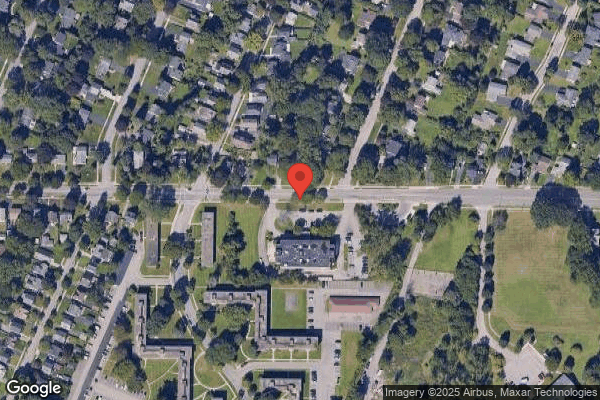
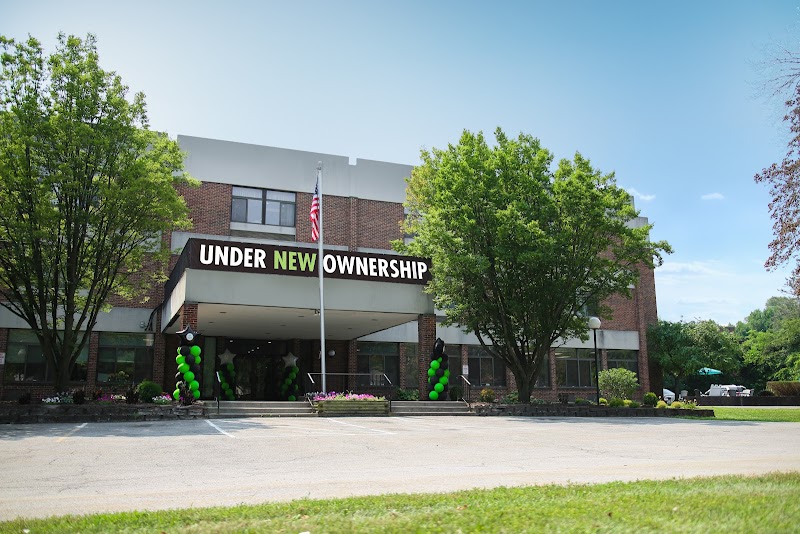
989 Blossom Road, Rochester, NY 14610 (585) 482-3500
For profit - Corporation 80 Beds Independent Data: November 2025
Trust Grade
35/100
#486 of 594 in NY
Last Inspection: October 2024

Within standard 12-15 month inspection cycle. Federal law requires annual inspections.

Overview

Blossom Health Care Center Inc. has a Trust Grade of F, indicating significant concerns about its operations and care quality. With a state ranking of #486 out of 594 and a county ranking of #25 out of 31, it is in the bottom half of facilities in New York and has limited local competition. The facility is worsening, with issues increasing from 3 in 2023 to 9 in 2024, and a concerning staff turnover rate of 58%, higher than the state average. While there have been no fines recorded, which is positive, the staffing rating is poor at 1 out of 5 stars, and there are significant deficiencies in infection control protocols. Specific incidents raised during inspections include a failure to implement an effective Infection Prevention and Control Program and improper storage of controlled medications, which could pose risks to residents' safety.
Trust Score
F
35/100
In New York
#486/594
Bottom 19%
Safety Record
Low Risk
No red flags
Inspections
Getting Worse
3 → 9 violations
Staff Stability
⚠ Watch
58% turnover. Above average. Higher turnover means staff may not know residents' routines.
Penalties
✓ Good
No fines on record. Clean compliance history, better than most New York facilities.
Skilled Nurses
⚠ Watch
Each resident gets only 27 minutes of Registered Nurse (RN) attention daily — below average for New York. Fewer RN minutes means fewer trained eyes watching for problems.
Violations
⚠ Watch
38 deficiencies on record. Higher than average. Multiple issues found across inspections.
★☆☆☆☆
1.0
Overall Rating
★☆☆☆☆
1.0
Staff Levels
★★☆☆☆
2.0
Care Quality
★☆☆☆☆
1.0
Inspection Score
Stable
2023: 3 issues
2024: 9 issues

The Good

  • Full Sprinkler Coverage · Fire safety systems throughout facility
  • No fines on record

Facility shows strength in fire safety.

The Bad

1-Star Overall Rating

Below New York average (3.0)

Significant quality concerns identified by CMS

Staff Turnover: 58%

12pts above New York avg (46%)

Frequent staff changes - ask about care continuity

Staff turnover is elevated (58%)

10 points above New York average of 48%

The Ugly 38 deficiencies on record

Oct 2024 9 deficiencies
CONCERN (D)

Potential for Harm - no one hurt, but risky conditions existed

Report Alleged Abuse (Tag F0609)

Could have caused harm · This affected 1 resident

**NOTE- TERMS IN BRACKETS HAVE BEEN EDITED TO PROTECT CONFIDENTIALITY** Based on observations, interviews and record reviews conducted during the Recertification Survey 09/25/2024 to 10/01/2024, for o...

Read full inspector narrative →
**NOTE- TERMS IN BRACKETS HAVE BEEN EDITED TO PROTECT CONFIDENTIALITY** Based on observations, interviews and record reviews conducted during the Recertification Survey 09/25/2024 to 10/01/2024, for one (Resident #29) of four residents reviewed, the facility did not ensure that all alleged violations involving potential abuse, neglect, exploitation, or mistreatment were reported to the New York State Department of Health in accordance with state law. Specifically, the facility did not report an incident to the state agency regarding a care plan violation where Resident #29 fell out of bed while getting care by a staff member sustaining a major injury. This is evidenced by the following: The facility policy Abuse, Neglect, Exploitation and Misappropriation-Reporting and Investigating, reviewed January 2024, documented all reports of resident abuse and neglect are reported to local, state, and federal agencies and thoroughly investigated by facility management. Resident #29 had diagnoses including Parkinson's disease, respiratory failure, and asthma. The Minimum Data Set Resident Assessment, dated 08/14/2024, included the resident was cognitively intact, has upper (shoulder, elbow, wrist, hand) and lower extremity (hip, knee, ankle, foot) impairment on both sides, was dependent for toileting hygiene and transfers, and required maximal assistance for rolling left and right. Review of the Comprehensive Care Plan and [NAME] (used by the Certified Nursing Assistant to direct care) revealed Resident #29 required assistance with self-care and mobility and was at risk for falls related to immobility, fatigue, and impaired balance, a history of falls, and a neurologic disorder. Interventions included, but were not limited to, to provide the resident with two persons assist for rolling left and right (bed mobility), transfers, and toileting hygiene. Review of the document titled '#245 Fall' (identified by the facility as an Incident and Accident form), dated 09/11/2024 and signed by Registered Nurse Manager #1, revealed Resident #29 had a witnessed fall in their room. Injuries observed at the time of incident were bruising to the face and a skin tear on the left elbow. Resident #29's mental status was oriented to place, time, person, and situation, and Resident #29 was sent to the hospital and returned with a fracture of the left wrist. The form included that Certified Nursing Assistant #4 was educated on proper positioning when checking for incontinence and the resident's care plan was updated to ensure proper positioning in bed when checking for incontinence. Review of statements/description, dated 09/11/2024, obtained by the facility included the following: 1. In a statement, dated 09/11/2024, Licensed Practical Nurse #2 stated they were notified by Certified Nursing Assistant #4 that Resident #29 was on the floor. Licensed Practical Nurse #2 entered room and observed the resident on the floor next to the bed face down, was assisted back into the bed, first aid was administered to open areas, and the resident was sent to the emergency department. Licensed Practical Nurse #2's statement was a written progress note taken from the electronic health record. 2. In a statement, dated 09/11/2024, obtained from Certified Nursing Assistant #4 by the Director of Nursing in an in-person interview, Certified Nursing Assistant #4 stated they went into the room, Resident #29 was lying on their side, Certified Nursing Assistant #4 was checking for incontinence when the resident made a sudden move and fell off the opposite side of the bed. Certified Nursing Assistant #4 stated they tried to stop the resident from falling but were unable to. 3. Under resident description, the form included that the resident stated they fell off the bed. During observations on 09/25/2024 at 1:25 PM, Resident #29 had facial bruising on the corner of their right eye, left side of the neck, and left cheek, and their left wrist was in a cast. Resident #29 stated the bruises were from the fall and their left wrist was broken in the fall. When asked about the fall at this time, Resident #29 said they were in bed with their face towards the right side of the bed and Certified Nursing Assistant #4 was trying to change their sheets by themselves. As Certified Nursing Assistant #4 was tucking the sheet up under them, they fell off the bed. During an interview on 09/30/2024 at 1:08 PM, the Director of Nursing stated a fall with major injury and a break in care plan would be considered a state reportable incident to the New York State Department of Health. The Director of Nursing stated abuse and neglect were ruled out after gathering Certified Nursing Assistant #4's statement. The Director of Nursing said that Certified Nursing Assistant #4 was not actually providing care at the time of Resident #29's fall and that abuse, neglect, or mistreatment did not occur. The Director of Nursing said checking for incontinence was not providing care as they were only moving the brief not the person, and that was why they did not report it to the Department of Health. The Director of Nursing stated if Certified Nursing Assistant #4 had been making the bed, then they would consider that providing care to the resident. During an interview on 09/30/2024 at 1:36 PM, Certified Nursing Assistant #5 (Resident #29's primary Certified Nursing Assistant for this day) stated Resident #29 was a two assist and they wait for another staff member before going into the room even if it was to check the resident for incontinence care. Certified Nursing Assistant #5 stated Resident #29 stays in bed during linen changes and required two staff assistance while checking for incontinence. Additionally, Certified Nursing Assistant #5 stated Resident #29 was factual in their stories and they would believe them. During an interview on 09/30/2024 at 3:07 PM, the Administrator stated to their understanding Certified Nursing Assistant #4 was not providing care to Resident #29 because they do not consider checking for incontinence as providing care. The Administrator said they were not aware that Resident #29 had a different recollection of the fall in which Resident #29 stated their linen was being changed on their bed or that the resident required two staff assistance (with bed mobility). Certified Nursing Assistant #4 was not available for interview. The facility was unable to provide any additional information such as Resident #29's detailed statement or if abuse, neglect, and mistreatment had been ruled out related to Resident #29's fall with major injury. 10 NYCRR 415.4
CONCERN (D)

Potential for Harm - no one hurt, but risky conditions existed

Investigate Abuse (Tag F0610)

Could have caused harm · This affected 1 resident

**NOTE- TERMS IN BRACKETS HAVE BEEN EDITED TO PROTECT CONFIDENTIALITY** Based on observations, interviews, and record reviews conducted during the Recertification Survey from 09/25/2024 to 10/01/2024,...

Read full inspector narrative →
**NOTE- TERMS IN BRACKETS HAVE BEEN EDITED TO PROTECT CONFIDENTIALITY** Based on observations, interviews, and record reviews conducted during the Recertification Survey from 09/25/2024 to 10/01/2024, the facility did not ensure all alleged violations involving abuse, neglect, or mistreatment were thoroughly investigated for one (Resident #29) of four residents reviewed. Specifically, the facility did not thoroughly investigate the resident's witnessed fall that resulted in a major injury and a care plan violation. This is evidenced by the following: The facility policy Investigating Resident Injuries, reviewed January 2024, included that all resident injuries are investigated, the director of nursing services or a designee will assess all resident injuries and document findings in the medical record, and descriptions in the medical record must be objective and sufficiently detailed. The facility policy Abuse-Prohibition Protocol, Types of Abuse, Response/Reporting, reviewed January 2024, documented all reports of alleged mistreatment, neglect, or abuse will be responded to immediately and an intervention shall be initiated. Events to be investigated may include, but not limited to, allegation of mistreatment, abuse, or neglect. Resident interviews are conducted to identify issues relating to mistreatment, neglect, or abuse. Investigations shall include, but not limited to re-enactments and written statements from the applicable staff members and residents. Statements must be dated and signed clearly indicating the name of the person giving the statement, their title, must be specific to the investigation, and must be a complete and accurate account of the incident. Resident #29 had diagnoses including Parkinson's disease, respiratory failure, and asthma. The Minimum Data Set Resident Assessment, dated 08/14/2024, included the resident was cognitively intact, has upper (shoulder, elbow, wrist, hand) and lower extremity (hip, knee, ankle, foot) impairment on both sides, was dependent for toileting hygiene and transfers, and requires maximum assistance for rolling left and right. Review of the Comprehensive Care Plan and [NAME] (used by the Certified Nursing Assistant to direct care) revealed Resident #29 required assistance with self-care and mobility and was at risk for falls related to immobility, fatigue, impaired balance, history of falls, and neurologic disorder. Interventions included, but were not limited to, to provide the resident with two persons assist for transfers, rolling left and right (bed mobility), and toileting hygiene. Review of the document titled '#245 Fall' (identified by the facility as an Incident and Accident form in the electronic medical record), dated 09/11/2024, revealed Resident #29 had a witnessed fall in their room. Injuries observed at the time of incident were bruising to the face and a skin tear on the left elbow. Resident #29's mental status was oriented to place, time, person, and situation. Resident #29 was sent to the hospital and returned with a fracture to the left wrist. The form included that Certified Nursing Assistant #4 was educated on proper positioning when checking for incontinence and the resident's care plan was updated to ensure proper positioning in bed when checking for incontinence. Review of statements/description of the incident, dated 09/11/2024, obtained by the facility and documented in the electronic medical record included the following: 1. In a statement, dated 09/11/2024 obtained from Certified Nursing Assistant #4 by the Director of Nursing during an in-person interview, Certified Nursing Assistant #4 stated they went into the room, Resident #29 was lying on their side, and that they were checking for incontinence when the resident made a sudden move and fell off the opposite side of the bed. Certified Nursing Assistant #4 stated they tried to stop the resident from falling but were unable to. 2. In a statement, dated 09/11/2024, and written in a progress note in Resident #29's electronic medical record, Licensed Practical Nurse #2 stated they were notified by Certified Nursing Assistant #4 that Resident #29 was on the floor. Licensed Practical Nurse #2 entered room and observed the resident on the floor next to the bed face down, they were assisted back into the bed, first aid was administered, and the resident was sent to the emergency department. 3. Under 'resident description' on the electronic form, it included that the resident stated they fell off the bed. There was no further information regarding Resident #29's account of the fall. The Incident/Accident form did not include any information related to any potential care plan violation related to one staff assist for bed mobility. During observations on 09/25/2024 at 1:25 PM, Resident #29 had facial bruising on the corner of their right eye, left side of the neck, and left cheek, and their left wrist was in a cast. During an interview at this time, Resident #29 stated the bruises were from the fall and their left wrist was broken in the fall. When asked about the fall, Resident #29 said they were in bed with their face towards the right side of the bed and Certified Nursing Assistant #4 was trying to change their sheets by themselves. As Certified Nursing Assistant #4 was tucking the sheet up under them, they fell off the bed. During an interview on 09/30/2024 at approximately 12:20 PM, Registered Nurse Manager stated they opened the Accident and Incident report in the electronic health records risk management module and instructed the nurse they needed to document the fall. The Director of Nursing conducted the investigation and spoke to Certified Nursing Assistant #4 and Resident #29. During an interview on 09/30/2024 at 1:08 PM, the Director of Nursing stated the facility recently switched to using the electronic health record module for completing Incident and Accident reports and that there were different questions to answer than the previous forms such as abuse, neglect, or mistreatment, and additional questions to prompt the investigation. The Director of Nursing said that they ruled out abuse during morning report while gathering the Certified Nurse Assistant's statement and did not believe there was a break in the care plan as the Certified Nursing Assistant was not actually providing care while checking the brief. The Director of Nursing stated that if the Certified Nurse Assistant had been making the bed they would consider that providing care. During an interview on 09/30/2024 at 3:07 PM, the Administrator stated they felt the incident was thoroughly investigated since the report contained a resident statement, a nurses' statement, a Certified Nursing Assistant statement, and the provider had been made aware and the Resident #29 had been sent out for further evaluation. The Administrator stated the person who conducted the investigation should have been more specific when asking Certified Nursing Assistant #4 questions regarding checking the resident for incontinence, specifically how they performed that task. The facility was unable to provide any additional information such as the resident's detailed statement, a thorough statement from Certified Nursing Assistant #4 regarding following the care plan, or any conclusion including if abuse, neglect, and/or mistreatment had been ruled out related to Resident #29's fall with major injury. 10 NYCRR 415.4(b)(3)
CONCERN (D) 📢 Someone Reported This

A family member, employee, or ombudsman was alarmed enough to file a formal complaint

Potential for Harm - no one hurt, but risky conditions existed

Pressure Ulcer Prevention (Tag F0686)

Could have caused harm · This affected 1 resident

Based on observations, interviews, and record review conducted during a Recertification Survey and complaint investigation (ACTS Reference number: NY00337359), for one (Resident #53) of two resident's...

Read full inspector narrative →
Based on observations, interviews, and record review conducted during a Recertification Survey and complaint investigation (ACTS Reference number: NY00337359), for one (Resident #53) of two resident's reviewed for pressure ulcers, the facility did not ensure that the resident received the necessary treatment and services consistent with professional standards of practice to promote healing, prevent infection, and prevent new ulcers from developing. Specifically, Resident #53 did not receive treatment for multiple wounds as prescribed by the Physician. This was evidenced by the following: Resident #53 had diagnoses including multiple stage three (full thickness tissue loss involving damage of the subcutaneous tissue) pressure ulcers (left buttock, right buttock, and sacrum), diabetes, and congestive heart failure. The Minimum Data Set Resident Assessment, dated 06/21/2024, documented that the resident was severely impaired cognitively, was at risk for developing pressure ulcers, and had no pressure ulcers at that time. Physician's orders, dated 09/19/2024, included for sacral wound care, staff were to cleanse the open sites on the buttocks with normal saline, pat dry, and apply Critic-Aid clear cream to all aspects of sacrum and buttocks thoroughly. The orders also included to apply Triad Hydrophilic cream once daily to the open wound sites only and to leave the wound sites open to air to prevent further moisture damage. The September 2024 Treatment Administration Record, dated 09/20/2024, documented that nursing staff signed off the wound care as not completed as ordered on 09/20/2024 to 09/27/2024 due to other-see nurses note and on 09/28/2024-09/30/2024 as on hold by the Physician. Review of interdisciplinary team progress notes, dated 09/20/2024 to 09/30/2024, did not include any information related to why the Triad Hydrophilic cream had not been administered or was on hold. In a wound progress note, dated 09/23/2024, Physician #1 documented to change the orders for the right buttock, left buttock, and sacral area wounds to cleanse the wounds with sterile water, apply xeroform gauze to wound bed, and cover with a border gauze (a wound dressing) once daily and as needed. The facility was unable to provide documentation that this order had ever been placed in their electronic health record or administered to the resident from 09/23/2024 to 09/30/2024. During an observation and interview on 09/27/2024 at 1:08 PM, Registered Nurse #2 stated the facility did not have the ordered Triad Hydrophilic cream and they would need to call the Physician to obtain a one-time order for the wound care. Registered Nurse #2 applied the new one-time order to the wounds using zinc oxide. Registered Nurse #2 stated that they were unable to find any Triad Hydrophilic cream for Resident #53 and was unsure as to why the cream was not available. During an interview on 09/30/2024 at 9:00 AM, Registered Nurse Manager #1 stated that when a resident returns from the hospital, the Physician should be notified, the medications reviewed, and entered in the electronic health system, and the orders sent to pharmacy to be filled. They stated that if there were any issues with the pharmacy not being able to fill prescriptions, then the pharmacy will notify the facility via phone. Registered Nurse Manager #1 stated they were not aware that the Triad Hydrophilic cream had never been filled or that Resident #53 had not been receiving the treatments as ordered. During an interview on 09/30/2024 at 9:44 AM, Pharmacist #1 stated that they do not provide Triad Hydrophilic cream and they have it noted that the facility has it as a stock cream. Pharmacist #1 stated that insurance is not an issue since the resident is all inclusive. They stated that they have not sent any of the Triad Hydrophilic cream to the facility except for the one time courtesy last Friday (09/272024 following the observation of wound care by the surveyor). During an interview on 09/30/2024 at 1:07 PM, Physician #1 revealed that their expectation was that when there are changes in orders or new orders are given that they are carried out in a timely manner. Physician #1 stated that they examined Resident #53's wounds on 09/23/2024 and gave new orders for the wounds. Physician #1 stated that they were just notified that Resident #53 had not been receiving the treatments ordered on 09/23/2024 due an error that the new orders had not been entered into the electronic medical record. During an interview on 09/30/2024 at 12:55 PM, Registered Nurse #3 stated they perform weekly wound rounds with the wound care Physician on all residents that have wounds and they accompany the wound care Physician when they assess the wounds. Registered Nurse #3 stated that they did perform wound care on Resident #53 recently but was unable to recall if Triad Hydrophilic cream was available. They stated that if the resident did not have the ordered wound supplies, then staff should contact the medical provider and get a different order. During an interview on 09/20/2024 at 2:37 PM, the Director of Nursing stated the nurse should contact the provider and inform them that the ordered wound care supplies were not available and request a new order. The Director of Nursing stated that the Triad Hydrophilic cream has not been ordered on a regular basis, is not a stock cream, and must come from the pharmacy. The Director of Nursing stated that when the wound care Physician does their weekly rounds with the nurse, any changes or new orders should be checked with pharmacy and if it is not something that they provide then someone in Administration should be notified. They stated that they were not aware Resident #53 did not have the Triad Hydrophilic cream to complete the ordered wound care. 10 NYCRR 415.12(c)(2)
CONCERN (D)

Potential for Harm - no one hurt, but risky conditions existed

Deficiency F0688 (Tag F0688)

Could have caused harm · This affected 1 resident

**NOTE- TERMS IN BRACKETS HAVE BEEN EDITED TO PROTECT CONFIDENTIALITY** Based on observations, interviews, and record reviews conducted during the Recertification Survey from 09/25/2024 to 10/01/2024,...

Read full inspector narrative →
**NOTE- TERMS IN BRACKETS HAVE BEEN EDITED TO PROTECT CONFIDENTIALITY** Based on observations, interviews, and record reviews conducted during the Recertification Survey from 09/25/2024 to 10/01/2024, for one (Resident #3) of one resident reviewed, the facility did not ensure that residents with limited mobility received the appropriate services, equipment, and assistance to maintain mobility and prevent complications. Specifically, Resident #3 did not consistently receive a hand device (rolled washcloth or gauze pad) for a hand contracture (a shortening of muscles, tendons, and skin) to prevent complications per Occupational Therapy's recommendations and as ordered by the physician. This is evidenced by the following: Resident #3 had diagnoses including cerebral infarction (stroke) with hemiplegia (paralysis on one side of the body) and aphasia (absence or difficulty with speech). The Minimum Data Set Resident Assessment, dated 07/18/2024, included the resident was severely impaired of cognitive function, had rejected care on one to three days in the previous seven days, and required substantial/maximal assistance for upper body dressing and personal hygiene. Review of Resident #3's Comprehensive Care Plan and [NAME] (used by the Certified Nursing Assistant to direct care) revealed Resident #3 required a rolled washcloth or gauze pad to be applied to their right hand in the morning and removed at bedtime, to monitor the skin daily during care, and to notify the Registered Nurse for any redness or open areas to the hand. Physician's orders, dated 02/26/2024, included to place a rolled washcloth or gauze pad in the right hand in the morning, remove it at bedtime, and to notify the Registered Nurse for any redness or open areas to hand. In an Occupational Therapy Discharge summary, dated [DATE], Occupational Therapist #1 documented that Resident #3 received Occupational Therapy skilled interventions for a right-hand contracture to manually stretch (right hand) and increase palm guard tolerance. Discharge recommendations included to continue wearing a palm guard or rolled washcloth in their right hand to increase tolerance and reduce tone. During observations on 09/27/2024 at 11:21 AM, Resident #3 did not have a rolled washcloth or gauze pad in their right hand and the inside palm was reddened with dry and scaly skin that was peeling. During observations on 9/30/2024 at 9:43 AM and on 10/01/2024 at 10:11 AM and 12:32 PM, Resident #3 did not have a rolled washcloth or gauze pad in their right hand. Resident #3's skin integrity was unable to be observed due to the tightness of the contracture. During an interview on 10/01/2024 at 12:56 PM, Registered Nurse Manager #1 stated that at one time Resident #3 had a palm guard and sometimes they have a rolled washcloth in their palm. During an interview on 10/01/2024 at 1:00 PM, Certified Nursing Assistant #6 stated Resident #3's [NAME] included to put a rolled washcloth or gauze pad in their right hand in the morning and off at bedtime. Certified Nursing Assistant #6 stated they did not know Resident #3 required a rolled washcloth only lotion (to the right hand). During an interview on 10/01/2024 at 1:07 PM, Physical Therapist #1 stated that Resident #3 needed the rolled washcloth or gauze pad for their right-hand contracture and if Resident #3 did not have the rolled washcloth or gauze pad in place, the resident could get skin breakdown. Physical Therapist #1 said the hand device would help to maintain their current range of motion and skin integrity of their hand. During an interview on 10/01/2024 at 2:51 PM, the Director of Nursing stated the Certified Nursing Assistants should follow and provide care to the residents using their care cards ([NAME]). 10 NYCRR 415.12(e)(2)
CONCERN (D)

Potential for Harm - no one hurt, but risky conditions existed

Respiratory Care (Tag F0695)

Could have caused harm · This affected 1 resident

Based on observations, interviews, and record reviews conducted during the Recertification Survey 09/25/2024 to 10/01/2024, for one (Resident #29) of three residents reviewed, the facility did not pro...

Read full inspector narrative →
Based on observations, interviews, and record reviews conducted during the Recertification Survey 09/25/2024 to 10/01/2024, for one (Resident #29) of three residents reviewed, the facility did not provide specialized care needs for the provision of respiratory care in accordance with professional standard of practice, and the resident's care plan, goals, and preferences. Specifically, Resident #29 was observed wearing oxygen via nasal cannula (a device that delivers oxygen through a person's nose). There was not a physician's order in place for oxygen use or documentation in the Medication Administration and Treatment Administration Records that reflected the use and care of the oxygen. Additionally, the facility did not develop a comprehensive person-centered care plan related to Resident #29's respiratory needs. This is evidenced by the following: The facility policy Oxygen Administration, reviewed January 2024, documented for staff to verify that there is a physician's order for this procedure and review the residents' care plan to assess for any special needs for the resident. Resident #29 had diagnoses that included respiratory failure, asthma, and obstructive sleep apnea (disorder in which breathing stops and starts repeatedly during sleep). The Minimum Data Set Resident Assessment, dated 08/14/2024, included the resident was cognitively intact, had shortness of breath when lying flat, and was not receiving oxygen therapy. Review of the Resident #29's Comprehensive Care Plan did not include that the resident had a compromised respiratory diagnosis requiring continuous oxygen via nasal cannula, person-centered interventions, or desired outcomes. Review of the current physician's orders did not include the use of oxygen. Review of the Medication Administration and Treatment Administration Records from 08/01/2024 to 08/31/2024 and 09/01/2024 to 09/30/2024 did not include documentation reflecting Resident #29's continuous use of oxygen via nasal cannula. During several observations on 09/25/2024 at 1:37 PM, 09/27/2024 at 11:36 AM, and 09/30/2024 at 12:14 PM, Resident #29 was in their room, wearing a nasal cannula with oxygen set at 2.5 liters per minute administered through an oxygen concentrator. During an interview on 09/30/204 at 12:17 PM, Licensed Practical Nurse #2 stated Resident #29 was on continuous oxygen and last they knew it was at 3 liters. Licensed Practical Nurse #2 reviewed Resident #29's current orders for oxygen administration at this time and stated they could not see any. During an interview on 09/30/2024 at approximately 12:20 PM, the Registered Nurse Manager #1 stated Resident #29 used oxygen continuously via nasal cannula at a rate fluctuating between 2-3 liters, but usually kept at 2 liters, through an oxygen concentrator. Registered Nurse Manager #1 reviewed Resident #29's current orders for oxygen at this time and stated there was no order and there should be. Registered Nurse Manager #1 stated there was nothing in the resident's care plan for oxygen use and there should be along with a supporting diagnosis for the need for the oxygen. During an interview on 10/01/2024 at 2:51 PM, when asked if oxygen should be administered without a physician's order, the Director of Nursing stated it should not and that there should be a person-centered comprehensive care plan for the oxygen, including the respiratory diagnoses (associated with the need for oxygen). 10 NYCRR 415.12(k)(6)
CONCERN (D)

Potential for Harm - no one hurt, but risky conditions existed

Room Equipment (Tag F0908)

Could have caused harm · This affected 1 resident

Based on observations and interview during the Recertification Survey from 09/25/2024 to 10/01/2024, for two (second and third floors) of three resident-use floors, the facility did not ensure essenti...

Read full inspector narrative →
Based on observations and interview during the Recertification Survey from 09/25/2024 to 10/01/2024, for two (second and third floors) of three resident-use floors, the facility did not ensure essential equipment was properly maintained in operating condition. Specifically, handwash sinks in soiled utility rooms did not function and were not operational when tested. The findings are: Durinb observations in the presence of the Director of Maintenance on 09/25/2024 at 10:40 AM, the handwashing sink in the 3rd floor soiled utility room was not functional and did not discharge water when the hot- and cold-water handles were turned. During an interview at this time, the Director of Maintenance stated the faucet had not been operational for some time, at least a year. During observations in the presence of the Director of Maintenance on 09/25/2024 at 10:57 AM, the handwashing sink in the 2nd floor soiled utility room was not functional and did not discharge water when the hot and cold-water handles were turned. 10NYCRR: 415.29, 415.29(b), 415.29(d)
CONCERN (E)

Potential for Harm - no one hurt, but risky conditions existed

Deficiency F0761 (Tag F0761)

Could have caused harm · This affected multiple residents

Based on observations and interviews conducted during a Recertification Survey from 09/25/2024 to 10/01/2024, the facility did not ensure that all drugs and biologicals were properly stored in accorda...

Read full inspector narrative →
Based on observations and interviews conducted during a Recertification Survey from 09/25/2024 to 10/01/2024, the facility did not ensure that all drugs and biologicals were properly stored in accordance with State and Federal Laws for two of four narcotic (controlled medications) cabinets reviewed. Specifically, numerous controlled medications (drugs that are regulated by law due to their potential for abuse or addiction), including narcotics and opioids (pain relievers), were secured with one lock rather than double-locked per the regulations. This is evidenced by the following: The facility policy Storage of Medications, dated January 2024, included that controlled medications are stored in separately locked, permanently affixed compartments. Access to controlled medication is separate from access to non-controlled medications. The policy did not include that controlled substances were required to be double-locked behind two separate doors with two separate locks per the regulation. During observations on 09/25/2024 at 1:08 PM, the first door of the controlled medication cabinet (Third Floor Medication Room) labeled even was unlocked and open. During an interview at this time, Registered Nurse #1 stated they were not sure why the door was unlocked. They knew there were problems with it in the past and it did not lock easily. Registered Nurse #1 was unable to lock the cabinet door with the key when requested. During observations on 09/27/2024 at 8:53 AM, the first door of the controlled medication cabinet (Second Floor Medication Room) was unlocked and open. The first door of the cabinet had a hole where the lock should have been. The cabinet contained several blister packs of controlled substances including pain medications, narcotics, opioids, anti-seizure, and anti-anxiety medications. During an interview at this time, Licensed Practical Nurse #1 stated the first door of the cabinet had been broken for a long time. During an interview on 10/01/2024 at 9:18 AM, Licensed Practical Nurse Manager #1 stated controlled substances should be double locked in a cabinet and should have two different keys to open it. They were not aware a controlled cabinet lock was broken. During observations at this time, the first door of the controlled cabinet (Second Floor Medication Room) was unlocked and open. Licensed Practical Nurse #1 verified there had not been a lock on the door the previous week and maintenance had fixed the lock, but they forgot to lock the door. Licensed Practical Nurse #1 had difficulty turning the lock with the key. Licensed Practical Nurse Manager #1 stated they were aware the cabinet door did not have a lock a few months ago, but thought maintenance had fixed it. Licensed Practical Nurse Manager #1 stated the cabinet needed a new door and lock. During an interview on 10/01/2024 at 9:47 AM, the Director of Maintenance stated they were notified late last week that the second-floor controlled medication cabinet needed a new lock, but they did not have the correct size barrel and it was too long for that lock. The Director of Maintenance was not aware the third-floor medication room also had a controlled medication cabinet that did not lock properly. During an interview on 10/01/2024 at 9:49 AM, the Director of Nursing stated they were not aware there were controlled medication cabinets that were not double-locked. They were made aware of concerns with the cabinet locks in the past but thought they had been repaired. The Director of Nursing stated all controlled medications should be stored in the double lock cabinets. 10 NYCRR 415.18(e)(1-4)
CONCERN (E)

Potential for Harm - no one hurt, but risky conditions existed

Deficiency F0813 (Tag F0813)

Could have caused harm · This affected multiple residents

Based on observations, interviews, and record review during the Recertification Survey from 09/25/2024 to 10/01/2024, the facility did not ensure there was a policy and procedure regarding use and sto...

Read full inspector narrative →
Based on observations, interviews, and record review during the Recertification Survey from 09/25/2024 to 10/01/2024, the facility did not ensure there was a policy and procedure regarding use and storage of foods brought to residents by family and other visitors to ensure safe and sanitary storage, handling, and consumption. Specifically, staff were not aware or educated on facility policies and procedures to label, date, and measure temperatures of resident food brought in from outside the facility, and items were not properly labeled and dated. The findings are: The facility policy Foods Brought by Families/Visitors, dated January 2024, documented that food brought by family/visitors that is left with the resident to be consumed later will be labeled and stored in a manner that is clearly distinguished from facility-prepared food. The nursing and/or food service staff will discard any foods prepared for the resident that show obvious signs of potential food borne danger (for example mold growth, foul odor, past due package expiration dates). During obseravations on 09/25/2024 at 10:34 AM, there was no policy and procedure for how to store, label, and reheat food for resident consumption within the 3rd floor kitchenette. Additionally, there were no thermometers present for staff use to measure reheated food temperatures for resident consumption. During observations on 09/25/2024 and 09/26/2024 between 11:00 AM and 4:00 PM, there were undated and improperly labeled resident food items within the refrigerator of the 2nd floor kitchenette. There were three plastic containers of resident food items, two of which were containers displaying a resident name and room number with no date, and one container with no labeling at all. In addition, there were two reusable shopping bags with unidentified food items in them with no dates on the foods or containers. There was no policy and procedure for how to store, label, and reheat food for resident consumption within the 2nd floor kitchenette. Additionally, there were no thermometers present for staff use to measure reheated food temperatures for resident consumption. During an interview on 09/26/2024 at 12:32 PM, the Food Service Director stated nursing staff was responsible for the labeling and dating resident of food in the kitchenettes. The Food Service Director also stated that they were not sure if nursing staff was trained on how to reheat food for residents or if there was a procedure or thermometer available for nursing staff to use to reheat food. The Food Service Director further stated there was no microwave available on the nursing units so staff might have to come down to the first-floor breakroom to use the microwave. During an interview on 09/27/2024 at 11:35 AM, Licensed Practical Nurse #1 (3rd floor) stated nursing staff should be labeling food items for residents that are brought into the facility with name, room, and date. Licensed Practical Nurse #1 also stated that if food was not dated, they would discard it, and reheating of resident food would be the responsibility of nursing staff. Licensed Practical Nurse #1 further stated there was no training they received on how to reheat food for residents and they did not have microwaves or thermometers to reheat food. During an interview on 09/27/2024 at 11:50 AM, Certified Nursing Aide #5 (2nd floor) stated nursing staff was responsible for labelling and dating resident food from outside the facility with room number and name. Certified Nursing Aide #1 also stated they were not allowed to reheat food and had no way to do so as there was no microwave on the unit. Certified Nursing Aide #1 further stated they were not trained on how to reheat food and would take in ready to eat food, so they did not have to reheat anything. 10 NYCRR: 415.1(b)(1), 415.14(d), (h)
CONCERN (E)

Potential for Harm - no one hurt, but risky conditions existed

Deficiency F0836 (Tag F0836)

Could have caused harm · This affected multiple residents

Based on observations and interview during the Recertification Survey from 09/25/2024 to 10/01/2024, for three (first, second, and third floors) of three resident-use floors, the facility did not ensu...

Read full inspector narrative →
Based on observations and interview during the Recertification Survey from 09/25/2024 to 10/01/2024, for three (first, second, and third floors) of three resident-use floors, the facility did not ensure compliance with all applicable State codes. Specifically, the facility was not in compliance with section 915 of the 2015 edition of the International Fire Code as adopted by New York State, which requires the use of carbon monoxide detection and testing in a building that has fuel-burning appliances. The findings are: During observations on 09/25/2024 between 9:00 AM and 4:00 PM, battery operated carbon monoxide detectors were affixed to the walls on the first, second, and third floors. A battery-operated carbon monoxide detector was observed within the generator room that contained a natural gas generator, and another battery-operated carbon monoxide detector was observed within the main mechanical room on the first floor that contained fuel burning furnaces and boilers. During an interview on 09/25/2024 at 11:45 AM, the Director of Maintenance stated they were not aware the carbon monoxide detectors needed to be tested and did not know how often they should be tested. The Director of Maintenance further stated there was no documentation as they had never tested the detectors throughout the building. The 2015 edition of the International Fire Code, requires carbon monoxide detection to be provided in an approved location between the fuel burning appliance and the dwelling unit, sleeping unit, or classroom; or on the ceiling of the room containing the fuel-burning appliance. Additionally, carbon monoxide alarms shall be maintained in accordance with National Fire Protection Agency (NFPA) 720. The 2012 Edition of NFPA 720, Standard for the Installation of Carbon Monoxide Detection and Warning Equipment, requires that single-station carbon monoxide alarms shall be inspected and tested in accordance with the manufacturer's published instructions at least monthly. 10 NYCRR: 415.29(a)(2), 711.2(a)(1); 42 CFR: 483.70(b), 2015 IFC: Section 915, 915.1, 915.1.4, 915.6, Section 1103.9, 2012 NFPA 720: 8.7.1
Feb 2023 3 deficiencies
CONCERN (D) 📢 Someone Reported This

A family member, employee, or ombudsman was alarmed enough to file a formal complaint

Potential for Harm - no one hurt, but risky conditions existed

Deficiency F0727 (Tag F0727)

Could have caused harm · This affected 1 resident

Based on record review and interviews conducted during the Abbreviated Survey (#NY00309103, NY00310033, NY00310062, NY00310414, NY00309529) completed on 2/16/23 the facility did not use the services o...

Read full inspector narrative →
Based on record review and interviews conducted during the Abbreviated Survey (#NY00309103, NY00310033, NY00310062, NY00310414, NY00309529) completed on 2/16/23 the facility did not use the services of a Registered Nurse (RN) for at least 8 hours/7 days/week. Specifically, two of two resident care units reviewed for staffing revealed an RN was not present and available for 8 hours/7 days/week on nine days between 1/15/23 through 2/13/23. The finding is: Review of the facility nurse Daily Staffing forms dated 1/15/23 through 2/13/23 revealed no documented evidence that an RN was present and available for eight consecutive hours on 9 of the 30 days reviewed. During an interview on 2/6/23 at 9:36 a.m., the Director of Nursing (DON) stated there should be RN coverage eight hours a day, seven days a week. The DON stated they work at least eight hours per day, Monday through Friday and occasionally on the weekends if there is no other RN coverage. At 4:45 p.m., the DON stated they were not aware that they were supposed to ensure RN coverage and thought the Administrator was taking care of it. During an interview on 2/6/23 at 10:03 a.m., the Administrator stated it is the staffing coordinator's responsibility to ensure there is proper RN coverage at a minimum of eight hours a day, weekends included. The Administrator stated they were aware of the days the facility had no RN coverage. Review of phone call logs from the Administrator to the DON on 1/21/23 revealed the Administrator had attempted to reach the DON nine times with no return calls. During an interview on 2/7/23 at 12:30 p.m. the Staffing Coordinator stated it is their responsibility to staff the facility to the best of their ability. The Staffing Coordinator stated their work hours are 8:00 a.m. to 4:30 p.m. and if there are staffing issues after they leave the nurse on duty is to call the DON and the Administrator. The Staffing Coordinator stated they are not always made aware of staffing issues in the evening and that only themselves, the DON and the Administrator are allowed to use the online system to attain agency staff. In an interview on 2/6/23 the RN/Regional Clinical Director stated it is their expectation that staff notify them if they have no RN coverage and that they had not been aware of no RN in the facility on several of those days and on one of those days (2/5/23) they were not informed that the nurse did not show. 415.13 (b)(1)
CONCERN (E) 📢 Someone Reported This

A family member, employee, or ombudsman was alarmed enough to file a formal complaint

Potential for Harm - no one hurt, but risky conditions existed

Deficiency F0725 (Tag F0725)

Could have caused harm · This affected multiple residents

Based on observations, record review and interviews conducted during the Abbreviated Survey (# NY00310033, NY00310062, NY00310414, NY00309529, NY00309103), completed on 2/16/23 it was determined that ...

Read full inspector narrative →
Based on observations, record review and interviews conducted during the Abbreviated Survey (# NY00310033, NY00310062, NY00310414, NY00309529, NY00309103), completed on 2/16/23 it was determined that the facility did not ensure sufficient staffing to provide nursing services to all residents to attain or maintain the highest practical physical, mental and psychosocial well-being. Specifically, there was insufficient nursing staff on two of two resident units, to ensure residents remained free of significant medication errors and received all activities of daily living. The findings include the following: For additional information see Centers for Medicare/Medicaid Services (CMS) Form 2567: F760-Residents are Free of Significant Medication Errors and F727-lack of Registered Nurse coverage 8 hours/7 days/week that were also cited during this survey. The facility Staffing Policy, dated January 2022, documented the facility budgeted staffing plan included for the two 40-bed units each unit would have for day shift- one Licensed Practical Nurse (LPN) and three Certified Nursing Assistants (CNAs), Evening shift- one LPN and three CNAs, and night shift- one LPN and 2 CNAs. The Facility Emergency Staffing Plan did not include emergency nursing staffing policies and procedures. During an observation on 2/6/23 at 6:00 a.m., there was one LPN and three CNAs for the whole facility (approximately 73 residents with 35-40 on each unit). During observations on 2/11/23 at 6:00 a.m. there was one LPN and three CNAs for the whole facility. The staffing sheets for the past 2 weeks from 1/5/23 through 2/6/23 for the facility with approximately 73 residents included, but not limited, to the following: 1/5/23 one LPN 7:00 a.m.- 5:00 p.m. 1/21/23 one LPN from 4:00 p.m. to 12:00 a.m. 1/22/23 no LPNs 12:00 a.m.-7:00 a.m. 1/29/23 one LPN 4:00 p.m.-7:00 a.m. 1/31/23 one LPN 6:00 p.m.-7:00a.m. During an interview on 2/6/23 at 9:30 a.m. Resident #1 stated they have not been getting their medications consistently because there are often no nurses working on the evening shift and that it is happening more and more frequently. Resident #1 stated their neighbor fell out of bed and had to lay there for a while because there was no nurse to come help and they went up to the 3rd floor unit to alert staff that the resident fallen out of bed. During an interview on 2/6/23 at 9:50 a.m. Resident #3 stated they have not been getting their medications for heart failure or their blood thinners or their eye drops that were prescribed after cataract surgery regularly because there are never enough nurses on staff. Resident #3 stated they are worried that not getting their eye drops are going to mess up their eye. During an interview on 2/6/23 at 10:00 a.m., Resident #5 stated they haven't been getting their heart medications and are concerned there will be no one to call if something happens. Resident #5 stated they have told the Director of Nursing (DON) and the Administrator that there were no nurses at night, but nothing has been done. During an interview on 2/7/23 at 10:30 a.m., the LPN/Nurse Manager (NM) stated they typically have 2 nurses to give out medications but the day prior (2/6/23) they did not, and they could not get the medications passed in the allowable time frame despite asking the DON and the scheduler for help. The LPN/NM stated the Nurse Practitioner came in around 3:30 p.m. to approve all the late medication administrations, especially the insulins and heart medications. The LPN/NM stated their nursing staffing is horrible and that they are not informed when staff calls off and no nurses on the unit until the next morning when they come in and see the report that there were no medications given or when residents come to the desk to say that they didn't get their medications the night before. During an interview on 2/7/23 at 11:47 a.m., LPN #1 stated when they came on shift yesterday at 2:00 p.m. they were the only nurse as the previous nurse had to leave early. LPN #1 stated many residents told them that they had gotten their medications. During an interview on 2/7/23 at 2:50 p.m. the DON stated they are responsible for staffing and that they did receive phone calls on 1/20/23 and 2/5/23 about lack of coverage with only one nurse in the facility and they reached out to the scheduler and other nurses to fill in and finally did find someone later in the day. During an interview on 2/11/23 at 6:06 a.m. LPN #2 stated stated they were the only nurse in the building (approximately 75 residents) as the other nurse was sick and they did not have keys to the 3rd floor medications. During an interview on 2/11/23 at 6:25 a.m., Resident # 7 stated they have been in pain all night and did not receive any pain medications due to only one nurse in the facility and they did not have keys to their unit's medications. Resident #8 (Resident #7's roommate) stated at this time they had been incontinent at 11:00 p.m. and did not get changed until 5:00 a.m. During an interview on 2/6/23 at 10:03 a.m. and again on 2/7/23 at 11:25 a.m., the Administrator stated that if fully staffed there should be 2 LPNs per unit but at a minimum staffing on the day and evening shifts should be one nurse with three CNAs for each 40-bed unit and one nurse with two CNAs on the night shift. The Administrator stated they should be notified if the facility is at minimum staffing, and they were notified on 1/21/23, 2/4/23 and 2/5/23 because of lack of nurses. The Administrator stated that their recruitment procedures were on-going, and that they are working with QAPI to address recruitment, current staffing and need for accountability for staff who do not show up. The Administrator stated they were aware of nurses working 20 hours and are aware of residents not receiving their medications due to lack of nurse coverage. 415.13(a)(1)(i-iii)
CONCERN (E) 📢 Someone Reported This

A family member, employee, or ombudsman was alarmed enough to file a formal complaint

Potential for Harm - no one hurt, but risky conditions existed

Deficiency F0760 (Tag F0760)

Could have caused harm · This affected multiple residents

**NOTE- TERMS IN BRACKETS HAVE BEEN EDITED TO PROTECT CONFIDENTIALITY** Based on record review and interviews conducted during the Abbreviated Survey (# NY00310033, NY00310062, NY00310414, NY00309529,...

Read full inspector narrative →
**NOTE- TERMS IN BRACKETS HAVE BEEN EDITED TO PROTECT CONFIDENTIALITY** Based on record review and interviews conducted during the Abbreviated Survey (# NY00310033, NY00310062, NY00310414, NY00309529, NY00309103), it was determined for 6 (Residents #1, 2, 3, 4, 5, 6) of 6 residents reviewed for medication administration, the facility did not ensure residents were free of significant medication errors. Specifically, the residents were not administered their medications consistently as ordered. This is evidenced by but not limited to the following: The facility policy Administering Medications dated January 2023 documented medications must be administered in accordance with physician orders, including any required time frame. Medications must be administered within one hour of their prescribed time, unless otherwise specified (for example, before and after meal orders). 1.Resident # 1 was admitted to the facility on [DATE] with diagnosis that included pain in the right hip, heart failure, thrombocytopenia (blood disorder), anemia, and acute embolism (blood clot) of the left lower extremity. The Minimum Data Set (MDS) assessment dated [DATE] documented that the resident was cognitively intact. Review of physician (MD) orders dated 5/4/22 included: a. Aldactone 12.5 milligrams (mg) daily in the morning for heart failure. b. Atorvastatin Calcium 80 mg daily in the evening for heart failure. c. Carvedilol 3.125 mg twice daily for heart failure. d. Entresto 24-26 mg give .5 tablet twice daily for heart failure. e. Lasix 40 mg in the morning for heart failure. Review of the Medication Administration Audit Report for missed documentation for 1/15/23 through 2/6/23 revealed the following: a. Aldactone was not signed off as administered on 2 of 23 opportunities. b. Atorvastatin Calcium was not signed off as administered on 7 of 23 opportunities. c. Carvedilol was not signed off as administered on 5 of 46 opportunities. d. Entresto was not signed off as administered on 5 of 46 opportunities. e. Lasix was not signed off as administered on 2 of 23 opportunities. In an interview on 2/6/23 at 9:30 a.m., Resident #1 stated they had not been getting their medications consistently because there are no nurses working the evening shift and that it has happened more frequently lately. Resident #1 stated they were scared that something could happen at night and there would not be anyone there to help. 2.Resident #3 was admitted to the facility on [DATE] with diagnosis that include lupus (an inflammatory disease of the immune system), schizophrenia, chronic obstructive pulmonary disease (COPD), diabetes and recent cataract surgery. The MDS assessment dated [DATE] documented the resident was cognitively intact. Review of MD orders dated 1/19/23 to 2/9/23 included: a. Ketorolac Tromethamine Ophthalmic Solution 5% 1 drop in right eye four times a day for right eye surgery. b. Prednisolone Acetate Ophthalmic suspension 1% 1 drop in right eye four times a day for right eye surgery. c. Ofloxacin ophthalmic solution .3% 1 drop in right eye four times a day for right eye surgery. d. Novolog (insulin) injection 24 unit subcutaneously before meals for diabetes. Hold and notify the MD for a blood glucose less than 70 or greater than 400. e. Levemir (insulin) inject 60 unit subcutaneously at bedtime for diabetes. f. Ativan tablet .5 mg at bedtime for anxiety. g. Eliquis tablet 5 mg twice daily for blood clot prevention. h. Olanzapine 10 mg at bedtime for schizophrenia. i. Gabapentin 200 mg twice daily for right hip pain. Review of the Medication Administration Audit Report for missed documentation for 1/15/23 through 2/6/23 revealed the following: a. Ketorolac Tromethamine Ophthalmic Solution was not signed off as administered on 12 of 92 opportunities. b. Prednisolone Acetate Ophthalmic suspension was not signed off as administered on 16 of 92 opportunities. c. Ofloxacin ophthalmic eye drops were not signed off as administered on 16 of 92 opportunities. d. Novolog insulin was not signed off as administered on 14 f 69 opportunities. e. Levemir insulin was not signed off as administered on 4 times of 23 opportunities. f. Ativan was not signed off as administered on 4 of 23 opportunities. g. Eliquis was not signed off as administered on 4 of 46 opportunities. h. Olanzapine was not signed off as administered 2 times 23 opportunities. i. Gabapentin was not off signed off as administered on 2 of 46 opportunities. In an interview on 2/6/23 at 9:50 a.m., Resident #3 stated they have not been regularly getting their eye drops after their cataract surgery or many of their other medications. Resident #3 stated there are never enough nurses on staff and that they are worried that lack of medication is going to 'mess up their eye' or cause problems with their heart. 3. Resident #6 was admitted to the facility on [DATE] with diagnosis that include congestive heart failure (CHF), cardiogenic shock, cardiomyopathy (disease of the heart muscle), diabetes, asthma, and depression. The MDS assessment dated [DATE] documented that the resident was cognitively intact. Resident #6 was discharged to the hospital on 2/8/23 where they remained at the time of the survey. Review of MD orders dated 1/19/23 to 2/9/223 included: a. Torsemide (water pill) 100 mg daily for fluid retention. b. Amiodarone (heart medication) 200 mg daily for cardiomyopathy c. Metoprolol ER 75 mg daily for high blood pressure. Hold if pulse is less than 60, or systolic blood pressure is less than 100 and notify the MD d. Atorvastatin calcium 80 mg daily for CHF heart failure e. Apixaban Tablet 2.5 mg twice daily for anticoagulation (to prevent blood clots) f. Trazodone (antidepressant) 25 mg at bedtime for insomnia/agitation g. Symbicort Aerosol 160-4.5 mcg/act-2 puffs inhalation twice daily for shortness of breath or wheezing. Review of the Medication Administration Audit Report for missed documentation for 1/15/23 through 2/6/23 revealed following: a. Torsemide, amiodarone, metoprolol ER, trazodone and atorvastatin were not signed off as administered on 2 of 23 opportunities. b. Apixaban was not signed off as administered on 2 of 46 opportunities. c. Symbicort inhaler was not signed off as administered on 4 of 46 opportunities. In an interview on 2/7/23 at 10:30 a.m., the Licensed Practical Nurse (LPN)/Nurse Manager (NM) stated are only responsible to pass medications for the medication cart that they count out (count medications and receive the keys from previous shift) at the beginning of the shift (half the unit). The LPN/NM stated medications had not been passed to the whole unit on 2/6/23 because they only had one nurse to pass the medications. The LPN/NM stated they did inform the Director of Nursing (DON) via a text (verified sent on 2/6/23 at 9:04 a.m.) that there were not enough nurses to pass medications for the whole floor and informed the nurse scheduler that they only had one nurse on the floor (for approximately 35 residents). In an interview on 2/7/23 at 11:02 a.m., Registered Nurse (RN)/Nurse Educator they were told that the facility was short staffed but that they had not been instructed to pass medications. In an interview on 2/7/23 at 11:25 a.m., the Administrator stated they were aware that they were not enough nurses and that some medications had been missed due to lack of nursing staff. The Administrator stated they were not aware of how many medications had been missed and that they had not informed the medical director. In an interview on 2/7/23 at 11:47 a.m., Licensed Practical Nurse #1 stated that when they came to work on 2/6/23, most residents on one side of the unit informed them that they had not received their medications the evening before. LPN #1 stated if they are the only nurse on the unit (approximately 35 residents) they would administer medications for the whole unit and prioritize the medications and blood glucoses for both sides. LPN #1 stated that they had been told by higher than them (supervisors) that if they do not count for both sides of the unit, they are not responsible for both sides. In an interview on 2/7/23 at 1:00 p.m. RN/Regional Clinical Director stated they should be notified if there were staffing issues such as no nurse coverage in the building to pass medications. The RN/Regional Clinical Director stated they were aware of missed medications and that they made the DON aware that they needed to notify the physician, write up medication errors and ensure no harm had come to any residents. The RN/Regional Clinical Director stated they had not informed the nurses that they were responsible for only half of the unit regardless of who counted medications from the previous shift. In an interview on 2/7/23 at 2:50 p.m., the DON stated they had received the missed medication report from the RN/Regional Clinical Director but had not reviewed yet. The DON stated they pull that report daily and review it in their morning meeting where they ask staff to investigate whether the medications were not administered or just not signed as administered but had not followed up on the issue. The DON stated they were unaware of why a nurse would only pass medications on half of the unit. In an interview on 2/9/23 at 12:16 p.m. the Medical Director stated their expectation was for staff to notify the provider (medical) group if medications were not given as prescribed as is their protocol and to provide the medications as soon as staff are available. The Medical Director stated that they were made aware of the missed medications by the RN/Regional Clinical Director due to lack of staff and stated it has been an ongoing issue for the last several weeks. The Medical Director stated they was a policy that should be followed on missed medications. Regarding Resident #6's Medication Administration Audit Report recent discharge to the hospital, the Medical Director stated they had not been aware of the resident missed medications and that it could have possibly contributed to their discharge to the hospital. 10NYCRR 415.12(m)(2)
Dec 2022 15 deficiencies
CONCERN (D)

Potential for Harm - no one hurt, but risky conditions existed

Deficiency F0558 (Tag F0558)

Could have caused harm · This affected 1 resident

**NOTE- TERMS IN BRACKETS HAVE BEEN EDITED TO PROTECT CONFIDENTIALITY** Based on observation, interview and record review conducted during the Recertification Survey, completed on 12/5/22, it was dete...

Read full inspector narrative →
**NOTE- TERMS IN BRACKETS HAVE BEEN EDITED TO PROTECT CONFIDENTIALITY** Based on observation, interview and record review conducted during the Recertification Survey, completed on 12/5/22, it was determined that for one (Resident #13) of eleven residents reviewed for Activities of Daily Living (ADLs), the facility did not ensure that residents received services with reasonable accommodation of resident's needs. Specifically, the resident was not provided a call bell based on the resident's functional needs and preferences. Additionally, the call bell was observed out of the resident's reach on multiple occasions. This is evidenced by the following: The facility policy Answering the Call Light, dated last reviewed and revised January 2022, documented that when the resident is in bed or is confined to a chair be sure the call light is within easy reach of the resident. The policy included that staff are to ask the resident to return demonstration of use of the call bell, so they will be sure that the resident can operate it. Resident #13 was admitted to the facility on [DATE], with diagnoses including a stroke, arthrogryposis multiplex congentia (limited movement of two or more joints), and fibromyalgia (widespread muscle pain). The Minimum Data Set Assessment, dated 8/14/22, documented that Resident #13 was cognitively intact, was frequently incontinent of bladder and bowel and required assist of staff for toileting. The facility admission Evaluation dated 3/15/22, documented Resident #13 had contractures or restricted range of motion to both upper extremities, and hand grasps were Not Applicable with a comment unable due to birth defect. Review of the current Comprehensive Care Plan documented that Resident #13 required assistance with ADLs. Interventions included, but not limited to, encouraging the resident to use the bell to call for assistance. Review of a physician progress note dated 11/21/22, documented that on physical exam, under musculoskeletal, that Resident #13 had decreased ability with ADLs due to right-sided weakness. During an observation and interview on 11/28/22 at 9:57 a.m., Resident #13 had a push call button (joystick-looking device with red button in the center, connected by a cord to the wall). Resident #13 stated that the provided call bell was difficult to use and they had asked for a touch pad call bell that they had used during previous hospitalizations. During an observation and interview on 11/30/22 at 9:05 a.m., Resident #13 was sitting up on the side of the bed. The push call bell rested behind the resident on the bed. When asked if they could reach the call bell, Resident #13 said they could not reach it and that it was supposed to be next to them. Resident #13 stated that they had asked the facility for a touch pad call bell a while ago. Resident #13 stated that when they need help, they yell out. During an observation on 11/30/22 at 10:15 a.m., Resident #13 was sitting in bed, with the call bell clipped to the fitted sheet at the resident's shoulder level. Resident #13 attempted to change position and move closer but was unable to reach the call bell. When interviewed on 11/30/22 at 10:32 a.m., Certified Nursing Assistant (CNA) #1 stated that Resident #13 would just yell out when they needed help. CNA #1 stated that Resident #13 had a different type of call button when they were in another room. CNA #1 stated that they had never seen Resident #13's call button ring as the resident just yells for help. CNA #1 stated they did not think that Resident #13 could use the call bell in their room. During observations on 12/1/22 at 8:27 a.m., and at 8:33 a.m., Resident #13 was heard yelling out for help and saying they were in bad pain. During an interview with Resident #13 and CNA #1 on 12/2/22 at 1:58 p.m., Resident #13 stated they would use a flat (touch pad) call button if they had one, instead of yelling out for help. During an interview on 12/2/22 at 2:13 p.m., Licensed Practical Nurse (LPN) #1 stated that Resident #13 does not use the call button and yells out for help. During an interview on 12/2/22 at 3:50 p.m., the Director of Nursing (DON) stated that they were familiar with Resident #13 and that the resident had contractures to the hands. The DON stated that they have heard Resident #13 calling out and that staff reported that the resident does this instead of using the call bell. The DON stated that they have two call bell options and will look into the other option for Resident #13. 10 NYCRR 415.5(e)(1)
CONCERN (D)

Potential for Harm - no one hurt, but risky conditions existed

Deficiency F0645 (Tag F0645)

Could have caused harm · This affected 1 resident

**NOTE- TERMS IN BRACKETS HAVE BEEN EDITED TO PROTECT CONFIDENTIALITY** Based on record reviews and interviews conducted during the Recertification survey, completed 12/5/22, it was determined that fo...

Read full inspector narrative →
**NOTE- TERMS IN BRACKETS HAVE BEEN EDITED TO PROTECT CONFIDENTIALITY** Based on record reviews and interviews conducted during the Recertification survey, completed 12/5/22, it was determined that for two of (Resident #5 and #28) of 18 residents reviewed, the facility did not ensure that each resident was screened for a mental illness (MI) or intellectual disability (ID) prior to admission to the facility and that individuals identified with MI or ID were evaluated and received care and services in the most integrated setting to meet their needs. Specifically, for Resident #28, there was no evidence that a Pre-admission Screening and Resident Review (PASARR) was completed and for Resident #5, the PASARR was incomplete. Both resident had been admitted to the facility with a significant MI diagnosis. This is evidenced by the following: 1. Resident #28 was initially admitted to the facility on [DATE], and was readmitted on [DATE], with diagnoses of schizophrenia and anxiety. The Minimum Data Set (MDS) Assessment, dated 10/1/22, documented that Resident #28 rarely or never understood others, had short-term and long-term memory problems, and received antipsychotic medications on a routine basis. The facility could not provide documented evidence that a Preadmission Screening and Resident Review (PASARR) was performed for Resident #28 prior to or on admission to the facility. 2. Resident #5 was admitted to the facility on [DATE] with diagnoses that included paranoid schizophrenia and major depression. The MDS Assessment, dated 9/17/22, documented that the resident was cognitively intact. Review of the Resident's Electronic Medical Record and their paper chart included an incomplete PASARR that was missing the information related to the resident's MI and potential need for further screening and possible need for services related to their MI. During an interview on 12/1/22 at 9:23 a.m., the Director of admission stated that they were new to the facility but were aware that a PASARR was a required document that should be received prior to admission of the resident. During an interview on 12/2/22 1:20 p.m., the Director of Social Work (DSW) stated they did not currently play a role in the PASARR but had discovered they should be part of the process. The DSW stated they were new to the facility and still training. 10NYCRR 415.11(e)
CONCERN (D) 📢 Someone Reported This

A family member, employee, or ombudsman was alarmed enough to file a formal complaint

Potential for Harm - no one hurt, but risky conditions existed

Deficiency F0658 (Tag F0658)

Could have caused harm · This affected 1 resident

**NOTE- TERMS IN BRACKETS HAVE BEEN EDITED TO PROTECT CONFIDENTIALITY** Based on observations, interviews, and record reviews conducted during the Recertification Survey and complaint investigations (...

Read full inspector narrative →
**NOTE- TERMS IN BRACKETS HAVE BEEN EDITED TO PROTECT CONFIDENTIALITY** Based on observations, interviews, and record reviews conducted during the Recertification Survey and complaint investigations (#NY00291558 and #NY00291712), completed on 12/5/22, it was determined that for two (Resident #8 and Resident #26) of three residents reviewed for pressure ulcers, the facility did not ensure the services provided or arranged by the facility as outlined in the Comprehensive Care Plan (CCP) met professional standards of quality. Specifically, there was incomplete documentation that the residents wound care treatments were administered as ordered by the medical team. This is evidenced by the following: 1. Resident #8 had diagnoses that included paraplegia, osteomyelitis (infection in the bones), and mild protein calorie malnutrition. The Minimum Data Set (MDS) assessment dated [DATE], documented that Resident #8 was cognitively intact, had skin and ulcer/injury treatments, application of nonsurgical dressings, ointments and/or medications, and was at risk for developing pressure ulcers. Review of the current CCP revealed that Resident #8 had alteration in skin integrity from a non-healing abscesses of the left ischium (hip/buttock area), impaired mobility, and paraplegia. Interventions included weekly wound assessments, monitoring of daily dressings, and reporting any changes in the skin to the provider. The CCP also included that Resident #8 bathed independently. Review of active physician orders for October 2022 and November 2022 included multiple order changes to Resident #8 upper and lower buttock/hip abscesses, all to be changed daily and as needed. Review of the Treatment Administration Record for October 2022 and November 2022 revealed for the two wounds: no documentation the wound treatments to the lower buttocks abscess were completed on 12 of 61 opportunities and no documentation the wound treatments to the upper buttocks abscess were completed on 10 of 61 opportunities. During an observation on 11/29/22 at 9:00 a.m., and 9:15 a.m., Resident #8 was lying in bed on their left side with both wounds being open to air. Resident #8 stated that staff did not change their buttock dressings yesterday and motioned to multiple dressing supplies on the bedside tray table (despite the wound treatments being signed off as completed). Resident #8 stated that they shower daily and that the dressing changes are usually done after their shower. During an interview on 11/29/22 at 1:24 p.m., Licensed Practical Nurse (LPN) #1 stated that they were familiar with Resident #8, and that the resident had two wounds. LPN #1 stated Resident #8 showered daily on day shift, would remove the dressings and would tell the staff when he removed it. LPN #1 stated that Resident #8 did not get their dressings changed yesterday because the resident had said they were not ready so they reported this to the next shift. 2. Resident #26 had diagnoses including a stroke and sepsis (serious infection of the blood stream). The MDS assessment dated [DATE], documented that Resident #26 was moderately impaired cognitively, required extensive assistance with all activities of daily living, and had a stage three (full thickness tissue loss involving damage to subcutaneous tissue) pressure ulcer and two arterial and venous ulcers. Review of the resident's CCP, dated 9/14/22, revealed Resident #26 had impaired skin integrity with interventions that included to monitor and document skin integrity, and apply treatments as ordered by provider. Review of current physician orders included, but not limited to dressing changes to the left hip once daily and to a left ankle wound twice daily. Review of the October 2022 TAR revealed no documentation that the prescribed wound treatments for the left hip and a left ankle ulcers were completed on 18 of 93 opportunities. During an interview on 12/2/22 at 2:09 p.m., the Director of Nursing (DON) and the Corporate Clinical Registered Nurse (CCRN), the CCRN stated that no documentation on the TAR indicated that the treatment had not been signed for or had not been done. The CCRN stated that all medications and treatments should be administered and documented. If a treatment cannot be completed, then the provider (medical team) should be notified, it should be documented on the 24-hour report and the interdisciplinary care team notified during the daily meetings. 10 NYCRR 415.11(c)(3)(i)
CONCERN (D) 📢 Someone Reported This

A family member, employee, or ombudsman was alarmed enough to file a formal complaint

Potential for Harm - no one hurt, but risky conditions existed

ADL Care (Tag F0677)

Could have caused harm · This affected 1 resident

**NOTE- TERMS IN BRACKETS HAVE BEEN EDITED TO PROTECT CONFIDENTIALITY** Based on observations, interviews, and record reviews conducted during the Recertification Survey and complaint investigation (#...

Read full inspector narrative →
**NOTE- TERMS IN BRACKETS HAVE BEEN EDITED TO PROTECT CONFIDENTIALITY** Based on observations, interviews, and record reviews conducted during the Recertification Survey and complaint investigation (#NY00291558, #NY00297274, #NY00287526), completed on 12/5/22, it was determined that for one (Resident #53) of eleven residents reviewed the facility did not ensure that Activities of Daily Living (ADLs) care was provided for dependent residents. Specifically, the resident was not provided incontinence care in a timely manner. Resident #53 had diagnoses including a stroke, chronic pulmonary obstructive disease (COPD) and anxiety. The Minimum Data Set assessment dated [DATE], documented that the resident was moderately impaired cognitively, was always incontinent of bladder (urine) and bowel (stool) and required extensive assistance with personal hygiene. Review of the current Comprehensive Care Plan (CCP) revealed that Resident #53 required assistance with ADLs. Interventions included encouragement of the resident to use the call bell for assistance, extensive assist of two staff members for personal hygiene, and total dependence of two staff members for toileting. The CCP documented that Resident #53 was at risk for pressure ulcer development related to incontinence. Interventions included minimizing extended exposure of skin to moisture by providing frequent incontinence care and prompt removal of wet/damp clothing and sheets as needed. The CCP documented that Resident #53 did not want to be woken up between 11:30 p.m. and breakfast for care and would use the call bell if the resident needed assistance. Observations and interviews on 11/30/22 included the following: a. At 10:13 a.m., Resident #53's call bell light was on, and the resident verbalized needing to be changed (incontinent of urine or stool). b. At 10:17 a.m., Certified Nursing Aide (CNA) #1 responded to Resident #53's room leaving within two minutes. c. At 10:19 a.m., Resident #53 stated that CNA #1 told them they would get additional staff to help and return. d. At 11:12 a.m., Resident #53 stated that they had not yet been changed and no one had returned. e. At 11:13 a.m., CNA #1 stated that they had not been able to find a second staff member to assist. f. At 11:26 a.m., Resident #53 was assisted with incontinence care by CNA #1 and CNA #2. When observed the resident's brief and both bed sheets under them were saturated with urine. Resident #53's buttocks were reddened but without skin breakdown. During an interview on 12/2/22 at 11:00 a.m., Licensed Practical Nurse (LPN) #1 stated that staff are expected to respond to call bells within five minutes and if additional assistance is needed, they should ask another CNA or nurse for help. LPN #1 stated that with recent staffing challenges, they could see where it would take an hour to provide incontinence care to a resident. During an interview on 12/2/22 at 1:30 p.m., the Administrator stated that an incontinent resident waiting one hour for care to be provided is a problem. The Administrator stated that they would encourage staff to leave the resident's call light on if more help was needed. The Administrator stated that they had talked to staff about how all staff should answer a call bell. During an interview on 12/2/22 at 3:50 p.m., the Director of Nursing (DON) stated Resident #53 was a two person-assist, and the CNA could not help the resident because they could not find a second staff member to assist. The DON stated that they would expect the nurses to assist when necessary. 10NYCRR 415.12 (a)(3)
CONCERN (D)

Potential for Harm - no one hurt, but risky conditions existed

Deficiency F0685 (Tag F0685)

Could have caused harm · This affected 1 resident

**NOTE- TERMS IN BRACKETS HAVE BEEN EDITED TO PROTECT CONFIDENTIALITY** Based on observations, interviews and record reviews conducted during the Recertification Survey, completed on 12/5/22, it was d...

Read full inspector narrative →
**NOTE- TERMS IN BRACKETS HAVE BEEN EDITED TO PROTECT CONFIDENTIALITY** Based on observations, interviews and record reviews conducted during the Recertification Survey, completed on 12/5/22, it was determined that for one (Resident #28) of one resident reviewed for vision and hearing, the facility did not ensure that the resident received treatment and/or assistive devices to maintain hearing. Specifically, an audiology (ear) evaluation was not obtained for Resident #28, who was identified to be hard of hearing. This is evidenced by the following: Resident #28 was initially admitted to the facility on [DATE] with diagnoses including schizophrenia, chronic obstructive pulmonary disease (COPD), and anxiety. The Minimum Data Set (MDS) assessment dated [DATE], documented that Resident #28 was moderately impaired of cognitive skills for daily decision making, had adequate hearing ability, was able to understand others and did not have hearing aids. Under preferred language the MDS Assessment was blank. When attempting to interview Resident #28 on 11/28/22 at 12:38 p.m., the resident said they had difficulty hearing the Surveyor and had problem with their ears. Review of current Physician orders, dated 9/13/22, revealed an Audiology Consult as needed. Review of the current Comprehensive Care Plan, initiated 9/13/22, revealed that Resident #28 had difficulty communicating with others due to a language barrier, with interventions including but not limited to that the resident understood and could read English but was hard of hearing, to provide a pen/pencil and paper, provide a translator as necessary to communicate, and to monitor for problems such as hearing impairment. Review of Resident Inventory lists for Resident #28's belongings, dated 6/24/21, 7/2/21, 8/30/21, 12/14/21, 12/23/21, 1/22/22 and 1/28/22, did not include that Resident #28 had any hearing aids. A medical progress note (prior to admission)w, dated 6/21/21 documented that Resident #28 was very hard of hearing. Review of a Social Work (SW) progress note dated 6/25/21, revealed that Resident #28 was extremely hard of hearing, for which the writer wrote questions on paper for the resident. The SW note included that the resident could read, speak, and understand English very well and that the writer will question if Resident #28 had hearing aids and if not, an appointment request would be made. Review of a dietary progress note dated 6/25/21 at 3:01 p.m., revealed that Resident #28 had a hard time hearing the writer due to a hearing impairment. The dietary progress note documented that Resident #28 showed the writer that they could not hear, so the writer communicated with the resident by writing questions on a piece of paper, and Resident #28 answered them appropriately. Review of medical provider progress notes dated 5/31/22 to 11/23/22, did not include any mention of a hearing impairment for Resident #28. During a telephone interview on 11/30/22 at 2:28 p.m., Resident #28's representative stated that the resident does understand English and had hearing aids. During an observation and interview on 12/1/22 at 10:30 a.m., Resident #28 again stated that they had a problem with their ears and pointed to their right ear. During an interview on 11/30/22 at 2:28 p.m., the resident representative stated that the resident used to have hearing aides but they were lost. During an interview on 12/2/22 at 10:12 a.m., Licensed Practical Nurse (LPN) #1 stated that Resident #28 understood English but preferred to speak Spanish. LPN #1 stated that they were not aware that Resident #28 had issues with hearing and did not recall that the resident ever wore hearing aids. LPN #1 explained that if a resident were found to have a hearing problem, they would put a note in the medical provider book to be assessed and an audiology consult ordered if needed. During an interview on 12/2/22 at 10:17 a.m., Certified Nursing Aide (CNA) #1 stated that Resident #28 was heard of hearing, could hear some in the left ear but nothing in the right ear. CNA #1 stated that Resident # 28 understood English but liked to speak Spanish. CNA #1 stated that everyone knew, including the nurses, that Resident #28 had a hearing problem. CNA #1 stated that they had never seen Resident #28 with hearing aids but had seen people write things down when communicating with Resident #28. During an interview on 12/2/22 at 11:20 a.m., the LPN Nurse Manager (covering for Resident #28's Nurse Manager who was not available for interview) explained that generally several things that can be done when communicating with a resident who is hard of hearing, included speaking slowly, at a low pitch and at the resident's eye level, offer paper for writing and using a picture board. The LPN Nurse Manager stated that if there were difficulties communicating with a resident, staff should contact the medical provider. Other treatments may include ear drops or an audiology evaluation. During an interview on 12/2/11 at 1:17 p.m., the Director of Social Work (DSW) stated that they noticed that Resident #28 was not hearing well and thought the resident may have had selective hearing. The DSW stated that options for an audiologist could include having the provider come into the facility or sending the resident out for evaluation. During an interview on 12/2/22 at 1:58 p.m., CNA #2 stated that Resident #28 was very hard of hearing and that everyone knew this as it was written on the [NAME] (care plan used by the CNAs for daily care). CNA #2 stated that they used hand gestures when communicating with the resident. During an interview on 12/2/22 at 3:50 p.m., the Director of Nursing (DON) stated that Resident #28 had mental health issues and if the resident did not hear you, they would not respond. When asked if attempts have been made to get Resident #28 an audiology appointment, the DON could not recall. When requested, the facility was unable to provide documentation of any audiology evaluations for Resident #28. 10 NYCRR 415.12(3)(b)
CONCERN (D) 📢 Someone Reported This

A family member, employee, or ombudsman was alarmed enough to file a formal complaint

Potential for Harm - no one hurt, but risky conditions existed

Accident Prevention (Tag F0689)

Could have caused harm · This affected 1 resident

Based on record reviews and interviews conducted during a Recertification Survey and complaint investigation (#NY00297130) completed 12/5/22, it was determined that for one of nine residents reviewed ...

Read full inspector narrative →
Based on record reviews and interviews conducted during a Recertification Survey and complaint investigation (#NY00297130) completed 12/5/22, it was determined that for one of nine residents reviewed for accidents, the facility did not ensure that the resident's environment remained free from accident hazards as possible. Specifically, the facility transportation vehicle did not have a lap belt resulting in Resident #332 sliding out of the wheelchair and onto the floor of the vehicle during transport. This is evidenced by the following: The undated facility policy: 'Transportation Policy and Procedure' included: Daily checks of vehicle safety measures including but not limited to the following: seat belt checks, lift operation checks, headlight check, hazard light check, wiper check. Under the heading 'Protocols for transporting residents', the policy included that if the resident is in a wheelchair, the driver will use the lift to raise the resident onto the bus and securely fasten the resident using the appropriate anchors and then securely fasten the seat belt. Resident #332 had diagnoses including end stage renal disease (kidney failure), diabetes, and below the knee amputation of both legs. The Minimum Data Set (MDS) assessment dated , 4/28/22, documented that the resident was cognitively intact, did not walk, required limited assist of one staff for transfers and extensive assist of staff for locomotion of their unit. The Comprehensive Care Plan dated 4/28/22, documented that the resident was at risk for falls. The Certified Nursing Assistant (CNA) care plan dated 6/28/22, documented that the resident did not walk. The facility 'Accident/Incident Report' dated 6/6/22 and signed by Licensed Practical Nurse #1, documented that Resident #332 stated they had slipped out of their wheelchair onto the van floor while being transported to dialysis and that the driver helped them back into their wheelchair. Under 'Recommended steps to prevent recurrence', the Report documented proper fitting wheelchair seatbelt during all transportation. The unsigned 'Incident and Accident Statement Form: Supervisor Statement/Summary of Investigation', dated 6/6/22 at 4:00 p.m. documented that contributing factors included that Resident #332 did not have their prosthetic legs on at time of occurrence and that a shoulder seatbelt was on. The 'Employee Statement Sheet' dated 6/9/22 documented that the staff member was transporting Resident #332 when the lift strap slid off the resident's wheelchair making it difficult to stay in their wheelchair. Resident #332 slipped out of the wheelchair during a routine stop. The 'Employee Statement Sheet' included that the resident was not wearing a waist safety belt and without their legs (prosthetics) it was difficult for the resident to remain secure in their wheelchair. During an interview on 11/30/22 at 8:53 a.m., the current facility driver, stated that they have been working in medical transportation for 10 years and that there is usually a shoulder and lap belt that is applied to the resident so that that if the van came to an abrupt stop the resident would be secure. During a telephone interview on 11/30/22 at 1:47p.m., the driver of the van during the incident stated that the van did not have a belt for the waist and the resident slipped out of the chair when they were moving around in the chair. The driver stated they had spoken to the administrator about getting a belt for the waist and they were told to continue to transport residents. During an interview on 12/1/22 at 12:35 p.m., the acting Director of Nursing stated that after the incident the vehicle was taken out of service and a lap belt was installed. 10NYCRR. 415.12(h)(1)
CONCERN (D)

Potential for Harm - no one hurt, but risky conditions existed

Tube Feeding (Tag F0693)

Could have caused harm · This affected 1 resident

**NOTE- TERMS IN BRACKETS HAVE BEEN EDITED TO PROTECT CONFIDENTIALITY** Based on observations, interviews and record reviews conducted during the Recertification Survey completed on 12/5/22, it was de...

Read full inspector narrative →
**NOTE- TERMS IN BRACKETS HAVE BEEN EDITED TO PROTECT CONFIDENTIALITY** Based on observations, interviews and record reviews conducted during the Recertification Survey completed on 12/5/22, it was determined that for one of two residents reviewed for feeding tubes, the facility did not provide appropriate treatment and services to prevent complications for a resident with a tube feeding. Specifically, the tube feeding for Resident #34 was not consistently monitored to ensure the accurate amount of daily nutrition via the feeding tube was administered as ordered by the physician. Additionally, the daily amount of free water was not consistently documented to ensure the resident received the adequate amount per physician orders. This is evidenced by: Resident #34 was admitted to the facility on [DATE] with diagnoses including a stroke, adult failure to thrive, dysphagia (difficulty swallowing) and dementia. The Minimum Data Set (MDS) assessment dated [DATE], indicated the resident had severely impaired cognition, received 51% or more of daily calories via a feeding tube, received 501 milliliters (mls) or more of daily fluids via a feeding tube and weighed 82 pounds (lbs.) at the time. The MDS Assessments dated 9/7/22 indicated the resident weighed 84 lbs. and on 5/14/22 weighed 90 lbs. (8 lb weight loss over 6 months). The Comprehensive Care Plan (CCP) included the resident was at risk for malnutrition and received tube feedings and flushes per physician order. Physician orders, dated 10/5/22, included Jevity tube feeding of 55 mls an hour for a total of 960 mls/day and to start at 6:00 a.m. Physician orders for free water included 65 mls every four hours via the feeding tube. Review of the Medication Administration Record (MAR) 10/5/22 through 10/31/22 revealed 47 of 186 opportunities for documentation of the free water administered were either incomplete or documented entries that included zero to 1822 mls of water had been administered at that time as opposed to the ordered amount of 65 mls. The Jevity tube feeding scheduled for 55 mls an hour for 18 hours had no total daily amounts documented and on 7 of 27 days the tube feeding documentation was blank or listed that the resident was out of the facility for the whole 24 hours (but had received other medications that day). There were no documentation to explain where the resident was or why they had not received any tube feeding for the whole day. A hospital Discharge summary, dated [DATE], indicated Resident #34 had been admitted to the hospital on [DATE] with severe hypernatremia (higher than normal sodium level often occurs when people do not get enough water) and received an increase of free water flushes via their feeding tube for the water deficit. The resident was discharged back to the facility with an order to continue free water flushes of 250cc every 6 hours (1000 mls/day) in bold print to avoid hypernatremia. Review of the MAR dated 11/10/22 through 11/13/22 following the 11/9/22 hospital discharge revealed the resident received 50 mls every 4 hours for a total of 300 mls/day as opposed to 1000 mls/day as recommended by the hospital. A hospital Discharge summary dated [DATE], indicated Resident #34 had been re-admitted to the hospital again on 11/13/22 with a diagnosis of hypernatremia and a clogged feeding tube. Physician orders, dated 11/17/22, following the hospital discharge included Jevity 55 mls an hour for a total of 990 mls/day and on 11/21/22 the order was changed with an increase to 70 mls an hour for a total of 1260 mls/day. Review of the MAR for November 2022 revealed that the resident was at the facility for 19 days in November. The total daily amount of actual Jevity tube feeding administered per day while in the facility ranged from no documentation on several occasions, between 125 mls/day and 1154 mls/day on several occasions, and on just one occasion 1260 mls (the amount ordered) was documented as administered. Review of the MAR for November 2022 revealed that of 84 entries for water flushes, eleven of the entries were either blank, marked non-applicable, or were for different amounts than ordered with no documented reason for the resident not receiving the amount ordered. When observed on 12/1/22 at 10:22 a.m., Resident #34 was seated in a reclined Geri chair with Jevity tube feed running at 70 mls/hour with a total of 983 mls. infused at the time. The bottle was not labeled or dated as to when it was started. During an interview on 12/1/22 at 12:14 p.m., the Corporate Registered Nurse stated that they had reviewed the MAR for Resident #34 and that the total volume of tube feed had been inconsistently documented. When interviewed on 12/1/22 at approximately 12:45 p.m., the Licensed Practical Nurse (LPN)/ Nurse Manager (NM) stated that the expectation is for nurses to follow physician orders for tube feed and flushes. The LPN/NM stated that the amount of water flush and tube feeding must be input into machine manually and the total amounts administered should be documented on the MAR. When interviewed on 12/2/22 at 12:41 p.m., the Diet Technician stated that they do not play any role in the monitoring of tube feedings. When interviewed via telephone on 12/2/22 at 1:48 p.m., the Regional Corporate Dietician (RCD) stated that the expectation for staff documentation is that the staff document the total amounts administered and that someone should monitor the documentation for the actual amounts received. The RCD stated that the dietician's role is to check the MAR and communicate if anything is awry but mostly the role is monitoring weights and lab values to determine if the current plan is appropriate, and this should be reviewed on a monthly basis. The RCD stated that the current daily totals of tube feeding should be recorded as 1260 mls/day and water flushes of 125 mls every four hours. 10 NYCRR 415.12(g)(2)
CONCERN (E) 📢 Someone Reported This

A family member, employee, or ombudsman was alarmed enough to file a formal complaint

Potential for Harm - no one hurt, but risky conditions existed

Safe Environment (Tag F0584)

Could have caused harm · This affected multiple residents

**NOTE- TERMS IN BRACKETS HAVE BEEN EDITED TO PROTECT CONFIDENTIALITY** Based on observations and interviews conducted during the Recertification Survey completed on 12/5/22, it was determined that fo...

Read full inspector narrative →
**NOTE- TERMS IN BRACKETS HAVE BEEN EDITED TO PROTECT CONFIDENTIALITY** Based on observations and interviews conducted during the Recertification Survey completed on 12/5/22, it was determined that for three (first, second, and third floors) of three resident use floors, the facility did not provide housekeeping and maintenance services necessary to maintain a safe, clean, comfortable, and homelike environment. Specifically: an exhaust ventilation system was not working, walls were in disrepair or dirty, floors were stained and dirty, resident handwash sinks were stained, privacy curtains were in disrepair or dirty, resident furniture was in disrepair, medical supplies were stored on the floor, a toilet seat was in disrepair, dead insects were present in a light fixture, a resident bed was not functioning properly, and kitchen equipment was not clean. The findings are: On 12/1/22 at 11:46 a.m. the administrator provided the surveyor with the facility policy 'Physical Homelike Environment, effective 1/2022', which included that it is the policy of the facility to have defined procedures to provide a safe, clean, comfortable, and homelike environment for their residents. The Maintenance/Housekeeping team will ensure: a. Privacy curtains will be changed between room changes, discharges, and new admissions. b. All resident area floors will be cleaned in corner and next to wall on an as needed basis. c. All scrape marks and holes in walls will be repaired on a as needed basis; and d. All resident furniture is in good repair. 1. Observations and interviews on 11/28/22 from 8:40 a.m. to 2:16 p.m. included the following: a. Several floor tiles near the foot of the B-bed in resident room [ROOM NUMBER] had brown circular stains. b. The privacy curtain in resident room [ROOM NUMBER] was coming off the ceiling tract and the middle drawer of the dresser was missing the cover. During an interview at this time, Resident #48 stated that they should not have to live with furniture falling apart. c. There were black stains and chipping paint on the wall behind the A-bed in resident room [ROOM NUMBER]. Additionally, the middle drawer of the dresser was missing the front cover. During an interview at this time, Resident #45 stated it's disgusting and they don't like it. d. The handwash sink in the soiled utility room across from room [ROOM NUMBER] did not work. During an interview at this time, a licensed Practical Nurse (LPN) stated that they were unsure how anyone does hand hygiene in the soiled utility room. e.There were 3 green chairs in the 2nd floor dining room that were wobbly when touched (not sturdy). f. In the 2nd floor clean utility room there were Jevity nutrition drinks and an open box of nasal cannulas stored on the floor. g. In the 1st floor clean linen room there were 3 stacks of briefs stored on the floor. h. The bed controls for the A-bed in resident room [ROOM NUMBER] did not work properly. When the button for 'head up' was pressed the foot of the bed raised, and when the 'foot up' button was pressed nothing happened. When interviewed at this time, Resident #63 stated that it has been like this for weeks and no one has fixed it. Resident #63 stated that they told the CNA's who said they told maintenance. 2. On 11/29/22 at 2:45 p.m. it was observed that wall next to the bed in resident room [ROOM NUMBER] was damaged and there were brown stains on the floor near the foot of the bed. 3. Observations and interviews on 11/30/22 from 8:03 a.m. to 11:43 a.m. included the following: a. The toilet seat in the women's lobby restroom had 3 sections of approximately one- inch by ½-inch sections peeling off. b. The sinks in resident rooms [ROOM NUMBERS] had brown stains. c. The ceiling light fixture in the shared bathroom between resident rooms #208 and #206 had dozens of dead insects within. Additionally in this room were several holes in the wall. During an interview at this time, Resident #10 stated that the holes were from a toilet paper holder that fell off the wall approximately 3-4 months ago. Resident #10 also stated that they told staff about it but nothing has been done and it was inconvenient to reach around to the back of the toilet so they keep the toilet paper on their wheelchair. d.The privacy curtain in resident room [ROOM NUMBER] had two brown stains that were approximately 12-inches long by 1-inch wide, with multiple other smaller brown stains. 4. During an interview on 12/1/22 at 8:13 a.m., a housekeeper stated that the black circles on the floors in resident rooms are from fluids that come from the resident beds and they can only get the stains out if they strip the floors. 5. During an interview on 12/1/22 at 8:32 a.m. the Corporate Engineering Coordinator (CEC) stated that they looked at the exhaust ventilation on the roof and discovered two or three of the 7 roof exhausts were not working. 6. On 12/1/22 from 8:53 a.m. to 8:59 a.m. it was observed that the exhaust ventilation was not working (drawing air out) at the following locations: shared bathroom between resident rooms #309 and #307, shared bathroom between resident rooms #206 and #208, the bathing suite across from resident room [ROOM NUMBER], the bathing suite across from resident room [ROOM NUMBER], the 3rd floor dirty utility room, the 2nd floor dirty utility room across from resident room [ROOM NUMBER], and the 1st floor women's restroom. When a piece of paper was placed against the exhaust grates in each of the aforementioned rooms, there was insufficient air draw to keep the paper in place. 7. The undated facility policy, 'Sanitation Procedures', included equipment would be cleaned and sanitized as often as necessary. Observations during a follow-up visit to the main kitchen on 12/1/22 from 12:15 p.m. to 1:15 p.m. included the following: a. The bottom of the ice machine and sides were covered in dried white and brown drips. b. The commercial floor mixer was covered with a black bag and had a large, dried, multicolored food piece in bottom. The cook stated they did not know what it was. c. The oven, grill top, exposed piping and adjacent side of this equipment was covered in thick, dark brown residue. d. A stainless-steel shelving unit holding a plastic tub of onions and steamer machine was covered with a thick layer of tan and white dried debris and brown dust. During an interview on 12/1/22 at 1:00 p.m., the Director of Food Service (DFS) stated that there was a weekly equipment cleaning schedule and they try to stick to it. The DFS stated that the company who cleans the kitchen hoods, offered to clean the exposed piping, however because there was extra charge, the facility has declined thus far. The DFS also stated that they stored the onions in the plastic tub because the shelving was dirty. 10NYCRR: 415.29, 415.29(b), 415.29(d), 415.29(h)(1)(2), 415.29(i)(1), 415.29 (j)(1), 10NYCRR: Subpart 14-1.110(b)(c)(d)
CONCERN (E)

Potential for Harm - no one hurt, but risky conditions existed

Room Equipment (Tag F0908)

Could have caused harm · This affected multiple residents

Based on observations, record review, and interview conducted during the Standard Recertification Survey completed on 12/1/22, it was determined that for one (Elevator 1) of two elevators, and two of ...

Read full inspector narrative →
Based on observations, record review, and interview conducted during the Standard Recertification Survey completed on 12/1/22, it was determined that for one (Elevator 1) of two elevators, and two of three laundry dryers the facility did not maintain all mechanical, electrical, and patient care equipment in safe operating condition. Specifically, an elevator serving resident sleeping floors and two resident laundry dryers were out of service, and repairs had not been made. The findings are: 1. On 11/28/22 at 8:30 a.m., it was observed that the right elevator in the lobby was marked with a sign that indicated out of order. During an interview on 11/28/22 at 10:25 a.m. the Director of Maintenance stated that about 2 weeks ago the elevator service company was called in and they took the whole motherboard to try and swap out, but they were waiting on a transistor for the elevator which is on back order. 2. On 11/28/22 at 2:18 p.m. it was observed that there were 3 dryers in the first- floor laundry room. Additionally, the 'Electrolux and 'Wasomat' dryers were observed to be out of order. When interviewed at this time, a member of the housekeeping staff stated that the dryers have not been working for about 4-5 months. 3. On 11/30/22 at 11:10 a.m. the Corporate Engineering Coordinator (CEC) provided the surveyor with email correspondence regarding elevator repairs. The email from the vendor dated 8/3/22 included that they were waiting on a new motor. During an interview at this time the CEC stated that was all they had. 4. Record review on 11/30/22 at 12:47 p.m. revealed the elevator recall testing log included that elevator one has been 'out of order' from July 2022 through present date. 10NYCRR: 415.29, 415.29(b), 415.29(j)(1)
CONCERN (E) 📢 Someone Reported This

A family member, employee, or ombudsman was alarmed enough to file a formal complaint

Potential for Harm - no one hurt, but risky conditions existed

Deficiency F0919 (Tag F0919)

Could have caused harm · This affected multiple residents

**NOTE- TERMS IN BRACKETS HAVE BEEN EDITED TO PROTECT CONFIDENTIALITY** Based on observations and interviews conducted during the Standard Recertification Survey completed on 12/1/22 and complaint inv...

Read full inspector narrative →
**NOTE- TERMS IN BRACKETS HAVE BEEN EDITED TO PROTECT CONFIDENTIALITY** Based on observations and interviews conducted during the Standard Recertification Survey completed on 12/1/22 and complaint investigation (#NY00287526), it was determined that for two (second and third floors) of two resident sleeping floors the facility did not properly maintain the resident nurse call system. Specifically, elements of the nurse call system were not functioning. The findings are: 1. Observations and interviews on 11/28/22 from 8:40 a.m. to 2:10 p.m. included the following: a) The nurse call system including wall mounted stations in resident rooms marked as 'Executone' and a corresponding console with lights and room numbers at the nurse stations. b) Two nurse call stations at the bed sides in resident room [ROOM NUMBER] did not illuminate above the door or at the nurse station when pressed. During an interview at this time, resident #25 stated that they were given a tap bell about 5-6 weeks ago and doesn't like it because staff do not come. c) The nurse call station in resident room [ROOM NUMBER] did not illuminate above the door or at the nurse station when pressed. d) the nurse call station behind the A-bed in resident room [ROOM NUMBER] was marked as 'bad station' in marker, and the call light did not illuminate above the door when pressed. During an interview at this time, a Licensed Practical Nurse stated that the call bell in room [ROOM NUMBER] has been broken for a while. e) The nurse call station for the B-bed in resident room [ROOM NUMBER] did not illuminate above the door or at the nurse station when pressed. 2. Observations and interviews on 11/29/22 from 2:42 p.m. to 3:06 p.m. included the following: a) The nurse call station in resident room [ROOM NUMBER] did not illuminate above the door when pressed. During an interview at this time a Certified Nursing Assistant (CNA #1) stated that they know some call bells are not working on both floors and they put it in the maintenance book. b) The nurse call station in resident room [ROOM NUMBER] did not activate at the console at the 3rd floor nurse station when pressed. c) The nurse call station in resident room [ROOM NUMBER] (window bed) did not activate the light above the door or at the nurse station when pressed. d) The nurse call station in resident room [ROOM NUMBER] (door side bed) did not activate the light above the door or at the nurse station when pressed. e) The nurse call station in resident room [ROOM NUMBER] did not activate the light above the door. 3. During an interview on 11/30/22 at 9:44 a.m. CNA #2 stated that they know a lot of the call bells are not working and it has been reported to maintenance, and some have been that way for about a year. 4. During and interview on 11/30/22 at 1:10 p.m. the Corporate Engineering Coordinator (CEC) stated that they can't find anything on the nurse call system including maintenance or repairs. 10NYCRR: 415.29, 415.29(b), 415.29(j)(1)
MINOR (B)

Minor Issue - procedural, no safety impact

Deficiency F0575 (Tag F0575)

Minor procedural issue · This affected multiple residents

Based on observations, interviews, and record review conducted during the Recertification Survey completed 12/5/22, for two (2nd floor and 3rd floor) of two units reviewed for Resident Council, the fa...

Read full inspector narrative →
Based on observations, interviews, and record review conducted during the Recertification Survey completed 12/5/22, for two (2nd floor and 3rd floor) of two units reviewed for Resident Council, the facility did not ensure that residents were informed orally and in writing about their right to file a complaint concerning any suspected violation of state or federal nursing facility regulations, or contact information for State regulatory and local advocacy organizations including but not limited to the State Survey Agency (New York State Department of Health or NYSDOH) and the State Long-Term Care Ombudsman Program. Specifically, neither the contact information for the NYSDOH or the Ombudsman was posted in a place easily accessible to residents. This is evidenced by the following: During an observation of the facility entrance vestibule on 12/2/22 at 9:30 a.m., there was no posting of the Ombudsman contact or NYSDOH complaint hotline contact information. During observations on 12/2/22 at 10:00 a.m., and at 2:20 p.m., the Ombudsman contact information was located on the 3rd floor resident care unit, on a wall in the hallway near the dining room. The contact information was posted up high above wheelchair level. There was no posting of the NYSDOH complaint hotline contact information. In an interview on 12/1/22 at 3:25 p.m., Resident #8 (admitted to the facility in 2016 and identified by the facility as the resident to speak with regarding Resident Council information) stated that they were new to this (Resident Council) and was not aware of what an Ombudsman was. During an interview on 12/2/22 at 1:17 p.m., the Director of Social Work (DSW) stated that the complaint hotline and Ombudsman contact information were posted on the resident floors near the kiosks (areas in resident hallways where Certified Nursing Assistants (CNAs) document resident care in the electronic medical record). The DSW stated that the contact information is also posted on a bulletin board by the kitchen, which some of the residents could access. DSW stated that they had the contact information in their office. During an observation of the 2nd floor resident unit on 12/2/22 at 2:23 p.m., neither the Ombudsman or NYSDOH complaint hotline contact information postings could be located. when interviewed at this time, CNA #1 stated that the ombudsman and state complaint hotline contact information should be posted in the elevator. When observed at this time there was no Ombudsman, or NYSDOH complaint hot line information posted in the elevator (2nd elevator was out of commission) or near either elevator or anywhere else on the unit. CNA #1 stated that they must have taken them down. During an interview on 12/2/22 at 3:50 p.m., the Director of Nursing (DON) stated that the Ombudsman and state complaint hotline contact information should be posted by the elevator. 10 NYCRR 415.3
MINOR (B)

Minor Issue - procedural, no safety impact

Transfer Notice (Tag F0623)

Minor procedural issue · This affected multiple residents

**NOTE- TERMS IN BRACKETS HAVE BEEN EDITED TO PROTECT CONFIDENTIALITY** Based on record review and interviews conducted during the Recertification Survey completed on 12/5/22, it was determined that f...

Read full inspector narrative →
**NOTE- TERMS IN BRACKETS HAVE BEEN EDITED TO PROTECT CONFIDENTIALITY** Based on record review and interviews conducted during the Recertification Survey completed on 12/5/22, it was determined that for two (Resident #5 and #48) of three residents reviewed for hospitalizations, the facility did not ensure that the resident or the resident's representative were notified in writing of the reason for the transfer/discharge to the hospital and in a language that they understand per the regulations. Specifically, Resident #5 and Resident #48 were transferred to the hospital and the facility could not provide evidence that a written notice of transfer/discharge was provided to the resident or the resident's representative. This was evidenced by the following: The current facility policy, 'Transfer or Discharge Documentation', revision date January 2022, included that if a resident was being transferred or discharged from the facility, documentation should include the appropriate notice to the resident and/or legal representative. 1. Resident #5 was admitted to the facility on [DATE] with diagnoses that included paranoid schizophrenia, major depression and gastro-esophageal reflux disease. The Minimum Data Set (MDS) Assessment, dated 9/17/22, documented that the resident was cognitively intact. Review of the resident's electronic medical record (EMR) revealed that Resident #5 was hospitalized from [DATE] through 8/22/22 for nausea and vomiting. The facility was unable to provide documented evidence that Resident #5 or their representative had been notified in writing of the resident's transfer/discharge from the facility and the reason for the transfer/discharge. 2. Resident #48 was admitted to the facility on [DATE] with diagnoses that included a right foot fracture, dementia and depression. The MDS Assessment, dated 9/26/22, documented that the resident was moderately impaired cognitively. Review of the resident's EMR revealed that Resident #48 was hospitalized from [DATE] through 9/15/22 for right foot fractures. The facility was unable to provide documented evidence that Resident #48 or their representative was notified in writing of the resident's transfer/discharge from the facility and the reason for transfer/discharge. During an interview on 12/1/22 at 1:45 p.m., and again on 12/2/22 at 1:30 p.m., the Administrator stated the required written transfer/discharge notices were the responsibility of Social Work. During an interview on 12/2/22 at 1:20 p.m., the Director of Social Work (DSW) stated that there was not any facility document available for issuing a notice of transfer/discharge. The DSW stated that if they were at the facility at the time they would communicate with the family via text message. During an interview on 12/5/22 at approximately 7:30 a.m., the Administrator stated the transfer/discharge notices were unable to be located. 10NYCRR 415.3((h)(1)
MINOR (B)

Minor Issue - procedural, no safety impact

Deficiency F0625 (Tag F0625)

Minor procedural issue · This affected multiple residents

**NOTE- TERMS IN BRACKETS HAVE BEEN EDITED TO PROTECT CONFIDENTIALITY** Based on interviews and record review conducted during the Recertification Survey completed on 12/5/22, it was determined that f...

Read full inspector narrative →
**NOTE- TERMS IN BRACKETS HAVE BEEN EDITED TO PROTECT CONFIDENTIALITY** Based on interviews and record review conducted during the Recertification Survey completed on 12/5/22, it was determined that for two (Resident #5 and #48) of three residents reviewed for hospitalizations, the facility did not ensure a written notification, which specifies the duration of the bed-hold policy, was provided to the resident and/or the resident representative at the time of transfer to the hospital. Specifically, Residents #5 and #48 were transferred to the hospital and the facility could not provide evidence that a written notice of information regarding the facility's bed-hold policy was provided to the residents' or the resident's representatives at the time of transfer or soon after per the regulation. This was evidenced by the following: When requested the facility was unable to provide a policy on bed hold notices. 1. Resident #5 was admitted to the facility on [DATE] with diagnoses that included paranoid schizophrenia, major depression and gastro-esophageal reflux. The Minimum Data Set (MDS) Assessment, dated 9/17/22, documented that the resident was cognitively intact. Review of the resident electronic medical record (EMR) revealed that Resident #5 was hospitalized from [DATE] through 8/22/22 for nausea and vomiting. The facility was unable to provide documented evidence that Resident #5 had been notified in writing of the facility's bed-hold policy at the time of transfer or soon after. 2. Resident #48 was admitted to the facility on [DATE] with diagnoses that included paranoid schizophrenia, major depression and gastro-esophageal reflux. The MDS Assessment, dated 9/26/22, documented that the resident was moderately impaired cognitively. Review of the resident's EMR revealed that Resident #48 was hospitalized from [DATE] through 9/15/22 for right foot fractures. The facility was unable to provide documented evidence that Resident #48 had been notified in writing of the facility's bed-hold policy at the time of transfer or soon after. During an interview on 12/1/22 at 1:45 p.m., and again on 12/2/22 at 1:30 p.m., the Administrator stated the written bed-hold notices were unable to be located and that the required notices were the responsibility of Social Work (SW). During an interview on 12/2/22 at 1:20 p.m., the Director of SW stated that Admissions Office handled bed-hold notices. During an interview on 12/2/22 at 3:02 p.m., the Director of Admissions stated they did not issue bed-hold information and that SW does. The Director of Admissions stated bed-hold information may be in their admissions packet but was not sure. 10 NYCRR 415.3(h)(4)(i)(a)
MINOR (B)

Minor Issue - procedural, no safety impact

Staffing Information (Tag F0732)

Minor procedural issue · This affected multiple residents

Based on observations and interviews conducted during the Recertification Survey completed on 12/5/22, it was determined that the facility did not ensure that the daily posting of licensed and unlicen...

Read full inspector narrative →
Based on observations and interviews conducted during the Recertification Survey completed on 12/5/22, it was determined that the facility did not ensure that the daily posting of licensed and unlicensed nursing staff was posted in a prominent place readily accessible to residents and visitors per regulation. This was evidenced by: During an observation on 12/1/22 at 9:23 a.m., the nurse staffing sheet was located in a non-resident use hallway (hallway with offices and conference room) behind closed doors. When interviewed on 12/1/22 at 9:23a.m., the staffing coordinator stated that they were not aware that the daily nurse staffing sheet had to be posted in a prominent place. The staffing coordinator stated that after they do rounds in the morning, they print and post the staffing information for the day. The staffing coordinator stated that they do not update the staffing reports to reflect any changes to evenings and nights staffing to reflect actual staffing. The staffing coordinator stated that under the heading: Number of Assistants/Techs, the number includes Resident Assistants who do not perform any care for residents. The staffing coordinator stated that they would remove the Resident Assistants from the posting and change where the information is posted. 10 NYCRR 415.13
MINOR (B)

Minor Issue - procedural, no safety impact

Pharmacy Services (Tag F0755)

Minor procedural issue · This affected multiple residents

Based on observations, interviews and record review conducted during the Recertification Survey, completed on 12/5/22, it was determined that for two (2nd floor and 3rd floor) of two units reviewed fo...

Read full inspector narrative →
Based on observations, interviews and record review conducted during the Recertification Survey, completed on 12/5/22, it was determined that for two (2nd floor and 3rd floor) of two units reviewed for medication storage, the facility did not ensure that an accurate reconciliation of all controlled substances was maintained. Specifically, the narcotic count sheets which included reconciliation of narcotic medications and the signatures of staff members for each shift-to-shift count were not completed to validate the correct controlled substance count. This was evidenced by the following: The facility policy titled Controlled Substance/Narcotic Management Protocol, dated last reviewed and revised in January 2022, documented that all narcotics will be counted and reconciled at the beginning of every shift with the outgoing and oncoming nurse. Both must sign the controlled substance log attesting to the presence of the narcotic as stated from the previous shift. Staff responsible for narcotic administration will not leave the shift until the narcotic count is reconciled. An observation of medication storage on 12/1/22 at 9:51 a.m., on the 3rd floor resident care unit for both even and odd hallways included a review of the Narcotic Books (book used to reconcile the correct number of narcotics in storage), dated 11/27/22 at 3:00 p.m. to 12/2/22 at 7:00 a.m. and revealed that there were missing dates and times, missing signatures and missing narcotic counts on multiple days and shifts. This included no signatures for the 12/1/22 7:00 a.m. shift to shift count in order to verify the correct number of narcotics being stored at the beginning of the shift. During an interview on 12/1/22 at 9:51 a.m., Licensed Practical Nurse (LPN) #1, stated that the process for counting narcotics should be for staff to count all narcotics when coming in for a shift, sign with the nurse leaving, and count and sign again for all narcotics when leaving. LPN #1 did not provide an answer for the blanks or why they did not sign that morning for their shift to shift count with the out-going nurse. An observation of medication storage on 12/1/22 at 10:19 a.m., on the 2nd floor resident care unit for both even and odd hallways included a review of both Narcotic Books, dated 11/18/22 at 3:00 p.m. to 12/2/22 at 7:00 a.m. and 11/28/22 to 12/1/22 at 7:00 a.m., respectively revealed that there were missing dates and times, missing signatures and missing narcotic counts on multiple days and shifts. This included no signatures for either the on-coming nurse or the out-going for the 12/1/22 7:00 a.m. shift to shift count in order to verify the correct number of narcotics being stored at the beginning of the shift. During an interview on 12/1/22 at 10:19 a.m., LPN #2 stated that when coming in for a shift, the process is to count narcotics with the off-going nurse and then document the date and time of counting, and how many medication pills were present. LPN #2 stated that they did count at the beginning of their shift on 12/1/22 but did not document it. During an interview on 12/2/22 at 3:30 p.m., the Director of Nursing (DON) stated that the expectation is that the on-coming and off-going nurses count the narcotics together and sign-off on the sheet. The DON stated that they have done education with the nurses and that if they don't do the counts because they are rushing, then the oncoming nurse is responsible for the narcotic medications until the next person takes over. The DON stated that they were aware of the missing documentation on the narcotic count sheets. NYCRR 415.18(b)(1)(2)(3)
Nov 2020 11 deficiencies
CONCERN (D)

Potential for Harm - no one hurt, but risky conditions existed

Deficiency F0553 (Tag F0553)

Could have caused harm · This affected 1 resident

Based on interviews and record reviews during the Recertification Survey, it was determined for two (Residents #14 and #17) of two residents reviewed, the facility did not ensure that each resident wa...

Read full inspector narrative →
Based on interviews and record reviews during the Recertification Survey, it was determined for two (Residents #14 and #17) of two residents reviewed, the facility did not ensure that each resident was given the right, along with their representative, to participate in the care planning process with their interdisciplinary team members. Specifically, there was no evidence that the residents or their representatives were notified of and provided an opportunity to participate in interdisciplinary care plan meetings. This is evidenced by the following: 1. Resident #14 has diagnoses including diabetes, chronic pain syndrome and neurogenic bowel with colostomy. The Minimum Data Set (MDS) Assessment, dated 10/16/20, revealed the resident was cognitively intact. The 6/12/20 Social Services progress note documented that on 6/10/20, the interdisciplinary care team met that day to review the resident's comprehensive care plan. The care plan problems, strength and weaknesses, goals and interventions were reviewed. The resident/family/friend/ responsible party did not attend the meeting due to the pandemic. The 11/3/20 Social Services note documented on 10/27/20, the interdisciplinary care team met that day for a review of the resident's care plan. There was no documentation in the progress notes of any discussion with the resident. During an interview on 11/4/20 at 1:21 p.m., the resident stated that they have not been invited to a care planning meeting. The resident said if they had been invited, they would have shared that they need help with bathing especially with washing their feet and back. The resident said that staff have not been putting on their compression stockings. 2. Resident #17 has diagnoses including diabetes, status post cerebral vascular accident and chronic obstructive pulmonary disease. The MDS Assessment, dated 7/18/20, revealed the resident was cognitively intact. The 7/31/20 Social Services note documented the interdisciplinary team met on 7/28/20 to review the resident's care plan. The care plan problems, strength and weakness, goals and interventions were reviewed. The resident/family/friend responsible party did not attend the meeting due to the pandemic. When interviewed on 11/4/20 at 3:15 p.m., the resident stated that they had not been invited to a care planning meeting and that no one talked to them about their care plan. In an interview on 11/4/20 at 1:25 p.m., the Social Worker stated that she has been in her position since the end of April 2020. The Social Worker stated that some care plan meetings are held by utilizing phone conferencing. She said that residents have not been invited to or participated in their care plan meetings due to COVID-19. During an interview on 11/6/20 at 10:42 a.m., the Director of Nursing said residents are invited to care planning meetings, but a lot of them do not attend unless their family attends. She said with COVID-19, families have been phoning in or offered phone conferences. She said that Social Work was responsible for inviting and setting up the phone conferences. She said if for some reason the resident cannot leave their unit or room, staff could go to them. [10 NYCRR 415.3(e)(v)]
CONCERN (D)

Potential for Harm - no one hurt, but risky conditions existed

Investigate Abuse (Tag F0610)

Could have caused harm · This affected 1 resident

Based on observations, interviews and record review during the Recertification Survey and Complaint Investigation (#NY00260114), the facility did not ensure that all alleged violations of abuse are th...

Read full inspector narrative →
Based on observations, interviews and record review during the Recertification Survey and Complaint Investigation (#NY00260114), the facility did not ensure that all alleged violations of abuse are thoroughly investigated for two (Residents #6 and #187) of three residents reviewed. Specifically, the facility did not initiate or complete a thorough investigation for allegations of abuse. This evidenced by the following: The facility policy, Abuse, Neglect and Misappropriation, dated as revised 2/8/12, included the facility requires reporting of any potential or actual violations to administration, who will take immediate action to address the incident, and ensure documentation to support the conclusion staff comes to when investigating the incident. 1. Resident #6 had diagnoses including end stage renal disease, diabetes and anxiety. The Minimum Data Set (MDS) Assessment, dated 7/29/20, revealed the resident was cognitively intact and had no difficulties with hearing. When interviewed on 11/3/20 at 8:36 a.m. the resident stated a staff person called them a heifer and identified the person by name. The resident stated they had reported the incident to the Administrator. When interviewed 11/5/20 at 11:39 a.m., the Administrator stated the resident reported a concern with a staff person the previous week. He said the resident overheard the staff talking at the nurses' station and was offended and upset by the conversation. He said he spoke with the resident and staff person. He said he did not complete an investigation or have any documentation of the resident's report or interviews with the resident and or staff because he did not see it as abuse. He stated he did not have any documentation that ruled out abuse, neglect, or mistreatment. 2. Resident #187 has diagnoses including diabetes, depression and arthritis. The MDS Assessment, dated 6/24/20, revealed the resident was cognitively intact. A concern was called into the New York State Nursing home hotline on 6/25/20 alleging that staff removed the resident's gown and took photographs. The facility was unable to provide any documentation regarding the allegation. When interviewed on 11/6/20 at 11:39 a.m., the Director of Social Work (DSW) stated the resident reported the incident on 6/22/20. She said there was no investigation into the resident's complaint of staff taking off her clothes and taking pictures because the resident said it had occurred two weeks prior to the date it was reported. The DSW stated the resident had a history of unsubstantiated abuse complaints and was retaliating against the facility at the time the resident made the report of abuse. [10 NYCRR 415.4(b)(3)]
CONCERN (D)

Potential for Harm - no one hurt, but risky conditions existed

Comprehensive Care Plan (Tag F0656)

Could have caused harm · This affected 1 resident

Based on observations, interviews and record reviews conducted during the Recertification Survey for 3 of 23 residents reviewed, the facility did not develop and implement a person-centered Comprehens...

Read full inspector narrative →
Based on observations, interviews and record reviews conducted during the Recertification Survey for 3 of 23 residents reviewed, the facility did not develop and implement a person-centered Comprehensive Care Plan to meet the resident's medical, nursing, mental, and psychosocial needs and included goals, desired outcomes and preferences. Specifically, Resident #14 did not have compression stockings in place, Resident #18 was not wearing a palm protector on their left hand, and Resident #31 did not have a care plan developed to include interventions related to accident hazards. This is evidenced by the following: 1. Resident #14 had diagnoses including chronic pain syndrome, congestive heart failure and edema. The Minimum Data Set (MDS) Assessment, dated 10/16/20, revealed the resident was cognitively intact and required assistance with dressing. Review of the physician orders, from 8/1/20 through 11/4/20, included orders for Certified Nursing Assistants (CNA) to apply TEDS (compression stockings) in the morning and remove in the evening. The current Comprehensive Care Plan (CCP) and the CNA Assignment Summary included for staff to apply the TEDS to both lower legs in the morning, to remove at bedtime and that the resident needs assistance to apply. The Treatment Administration Record (TAR) for November 2020 included to ensure the CNA applies the TEDS in the morning and removes at bedtime and was signed off by the Licensed Practical Nurse (LPN) as completed 11/1/20 through 11/4/20. During observations on 11/2/20 at 10:53 a.m., 11/3/20 at 12:46 p.m., and 11/4/20 at 9:56 a.m., the resident was in their room and was not wearing TEDS for any of the observations. When interviewed on 11/2/20 at 10:53 a.m., the resident stated that they need help to get their TEDS on. The resident said that the TEDS help their legs not hurt so bad. In an interview on 11/3/20 at 12:46 p.m., the resident said that staff did not put their TEDS on that morning and could not remember the last time staff applied them. When interviewed on 11/5/20 at 9:25 a.m., LPN #1 said that she initaled the TAR on 11/2/20 and 11/3/20 indicating the resident was wearing thier TEDS. LPN #1 said the resident was wearing thier TEDS. She said she should have noted a refusal on the TAR and written a progress note. In an interview on 11/5/20 at 9:33 a.m., LPN #2, who initialed the TAR on 11/4/20, stated that she did not check the resident on 11/4/20 to ensure that the TEDS were in place before initialing the TAR. When interviewed on 11/5/20 at 10:02 a.m., the Director of Nursing (DON) stated that CNAs can put TEDS on residents. He said that because there was a physician order, the nurse needs to ensure the resident is wearing the TEDS. The DON said if the resident refuses to wear the TEDS, he would expect to see a refusal documented on the TAR and a progress note. He said if there were frequent refusals, the doctor should be notified. 2. Resident #18 has diagnoses including cerebral infarction (stroke), hemiplegia (paralysis of one side of the body), and depression. The MDS Assessment, dated 7/1/20, revealed that the resident was cognitively intact, required extensive assist of one staff for dressing, had functional limitation in range of motion of both the upper and lower extremity on one side and had no refusals of care at the time. Splint use was coded as not used or used less than 15 minutes a day. Review of a facility policy, Adaptive and Positioning Equipment, dated April 2007, directs that nursing staff and CNAs are responsible for the application of adaptive and positioning equipment. Current physician orders directed a palm protector to be worn on the left hand during the day and off at night. Review of the current CNA care card and CCP included to apply a left-hand palm protector during the day and remove at night. The care plans did not include any refusals of care. Review of an Administration Documentation History Detail Report, dated October 2020, revealed 15/31 days were documented as refusals or not documented at all. Review of the TAR, dated 11/1/20 through 11/5/20, revealed four of five days were documented as refusals to wear the palm protector and one day had no documentation. In an observation on 11/2/20 at 12:12 p.m., the resident was eating lunch in bed. There was no palm protector in the left hand. In an observation and interview on 11/3/20 at 9:31 a.m., the resident was not wearing the palm protector. The resident stated that they wear a palm protector in the left hand. The resident said they have not had the palm pretector for weeks since the move from the second floor to the third floor. When interviewed on 11/5/20 at 7:58 a.m., the LPN said the resident was supposed to have a palm protector in place. He said he has not seen the palm protector since the resident moved to the third floor about three weeks ago. The LPN said he reported the missing device to therapy, but they had not brought up a new one yet. When interviewed on 11/5/20 at 8:03 a.m., primary CNA #1 and CNA #2 both said they have not seen a palm protector since the resident came to Unit 3. In an observation on 11/5/20 at 8:12 a.m., two palm protectors were observed in a plastic bag on the top of the closet. When interviewed at 8:18 a.m. and at 8:55 a.m., the Director of Therapy said the palm protector was to be worn during the day and off at night and for cares. She said the device had been replaced several times, including recently when the LPN reported it missing to therapy. The Director of Therapy found a third palm protector in the resident's room at that time. She said that they send the splints to the unit, but staff are not applying it and it gets lost. The palm protector was applied at that time without issue. 3. Resident #31 was admitted to the facility with diagnoses including dementia, neurogenic bowel requiring a colostomy and glaucoma. The MDS Assessment, dated 8/12/20, revealed the resident had moderately impaired cognition, was independent with ambulation in their room, had impaired vision and required extensive assist of staff for managing their colostomy. The current CCP revealed that the resident was care planned for wandering and required assist to care for their colostomy. The CCP did not include any history of accidents/incidents of ingesting poisonous products while wandering or any goals or interventions to prevent further occurrence. In a nursing progress note, dated 8/17/20, the Registered Nurse (RN) documented that the resident's roommate had reported that the resident had drank a small white bottle of blue liquid at approximately 3:15 a.m. The RN added that the resident was weak, pale, shaky, cold to touch and complained that they felt like their body was jumping all over. The Nurse Practitioner was notified, assessed the resident and gave orders to send the resident to the hospital for evaluation of a possible ingestion of M9 (an odor reducing agent used in colostomies and potentially hazardous if ingested). In an observation on 11/3/20 at 9:08 a.m., the resident was seated on the side of their bed with their breakfast tray on an overbed table. At that time, a box of colostomy supplies was observed on top of the resident's dresser with two 4-ounce bottles of peri-wash in the box. At 12:56 p.m., the resident was observed in the dining room with their lunch tray in front of them. The resident stated that they had a hard time seeing what was on their plate. When interviewed on 11/5/20 at 3:48 p.m., the DON stated that he was unable to find any investigation, or care plan that was developed after the 8/17/20 incident of the resident ingesting the M9 fluid. He said there should be a care plan to prevent further accidents. [10 NYCRR 415.11(c)(1)(3)]
CONCERN (D)

Potential for Harm - no one hurt, but risky conditions existed

Tube Feeding (Tag F0693)

Could have caused harm · This affected 1 resident

Based on observations, interviews, and record reviews during the Recertification Survey, it was determined that for one (Resident #137) of two residents reviewed, the facility did not provide appropri...

Read full inspector narrative →
Based on observations, interviews, and record reviews during the Recertification Survey, it was determined that for one (Resident #137) of two residents reviewed, the facility did not provide appropriate treatment and services to prevent potential complications for a resident with a tube feeding (tube inserted directly into the stomach to administer fluid nutrition). Specifically, physician orders were not clarified to ensure accuracy, daily tube feeding amounts were not observed being administered as ordered, and the amount of tube feeding and water flushes were not consistently documented or monitored. This is evidenced by the following: Resident #137 has diagnoses including chronic obstructive pulmonary disease, chronic respiratory failure and shortness of breath. The Minimum Data Set Assessment, dated 10/10/20, revealed that the resident was cognitively intact and received 51 percent or more of total calories and 501 cubic centimeters (cc) or more of fluids per day via a feeding tube. Physician orders, dated as renewed 10/12/20, included that the resident received nothing by mouth, to give 1,560 cc daily of Jevity 1.2 (high calorie high protein liquid feeding) via the feeding tube at 65 cc per hour continuously, ProMod (liquid protein supplement) twice a day followed by 120 cc water (240 cc daily); 60 cc water flush before and after each med pass three times a day (360 cc daily) and 200 cc free water flush every four hours (1,200 cc daily). The orders included to monitor intake every shift, night shift to total, and a total fluid volume of 3,060 cc daily (despite the total fluid volume ordered equaled 3,360 cc). The most recent Registered Dietitian (RD) note, dated 7/13/20, included that the resident's weight was stable and that they received the feeding tube as ordered. The note did not include any mention of daily water flushes or total fluid volumes as documented or reviewed. In an observation on 11/3/20 at 8:51 a.m., Resident #137 was asleep in bed. A 1,000 cc bottle of Jevity 1.2 was labeled 11/3/20 and hung at 7:00 a.m. The bottle contained 975 cc ( indicating the resident had received 25 cc over two hours). The feeding tube pump was on and set at a rate of 65 cc per hour. In an observation on 11/4/20 at 1:20 p.m., a 1000 cc bottle of Jevity 1.2 was infusing at 65 cc per hour and was labeled as hung on 11/4/20 at 1:45 a.m. The bottle contained 950 cc (indicating the resident received 50 cc over the past 11.5 hours). When interviewed on 11/4/20 at 5:10 p.m., a Licensed Practical Nurse (LPN) /Manager said the 24-hour tube feeding volume was recorded on a Clinical Monitoring Information Report in the electronic medical record. She said the night shift reviews the report for 24-hour volume given. In an interview on 11/5/20 at 7:58 a.m., LPN #1 said he had just given morning medications and 60 cc of water before and after each medication for a total of 840 cc water (as opposed to 120 cc total per physician orders). LPN #1 stated he did not read the order correctly. The Director of Nursing (DON) was notified at that time of the extra fluids administered. When interviewed on 11/5/20 at 8:35 a.m., the DON, with the surveyor, reviewed the Clinical Monitoring Information Report from 10/1/20 through 11/4/20. He stated that the report was used to document daily amounts of tube feeding and water administered but it did not show a 24-hour total because there was no area on the form where staff could document that. A review of the report revealed the total volume of tube feeding and water as documented ranged from 1,440 cc to 7,407 cc per day. The DON also reviewed the order for the water flush following the medication pass and said the resident should have been given 60 cc of water before and after each medication pass for a total of 120 cc as opposed to the 840 cc given by LPN #1. When interviewed at 9:36 a.m., LPN #1 said the night nurse had hung a new bottle of tube feeding and should have reset the pump to zero at 7:00a.m. to 7:30 a.m. He said the pump display now read 656 cc had been delivered and that was incorrect. He said he uses the pump display to document the volume fed for his shift. When interviewed on 11/5/20 at 12:00 p.m., the Dietary Technician said she did not know where in the Electronic Medical Record staff were documenting the fluids or tube feeding intake. She said she had suggested the use of a different form that included 24 hour volumes for both tube feeding and water but that has not been done. When interviewed on 11/6/20 at 9:35 a.m., the Registered Dietician stated that she had not been informed by the Dietary Technician of any concerns with monitoring of fluids. She said that they were supposed to have corrected the monitoring of 24-hour totals last year. She said she was not aware that there were issues with documenting fluids. She said that nursing was responsible for documenting the 24-hour totals but did not say who was responsible for reviewing them. [10 NYCRR 415.12(g)(2)]
CONCERN (D)

Potential for Harm - no one hurt, but risky conditions existed

Deficiency F0698 (Tag F0698)

Could have caused harm · This affected 1 resident

Based on observations, interviews and record reviews during the Recertification Survey, it was determined that for one (Resident #6) of one resident reviewed, the facility did not ensure that resident...

Read full inspector narrative →
Based on observations, interviews and record reviews during the Recertification Survey, it was determined that for one (Resident #6) of one resident reviewed, the facility did not ensure that residents who require dialysis received services consistent with professional standards of practice. Specifically, there was no evidence that the facility consistently monitored the resident's fluid intake per physician orders. This is evidenced by the following: Resident #6 had diagnoses that included end stage renal disease with hemodialysis, diabetes and anxiety. The Minimum Data Set Assessment, dated 7/28/20, revealed the resident was cognitively intact and received dialysis. The undated facility policy, Intake and Output Monitoring and the policy, Fluid Intake Monitoring, dated 3/1/12, instructed that staff record the total number of cubic centimeters (cc) of fluid in the first half of the meal box. The total intake is completed by the night nurse at the end of each day. Each resident has a fluid goal established and if the goal is not met, the night nurse will notify the Nurse Manager. Review of the current physician orders and the current Comprehensive Care Plan included a fluid restriction of 1,500 cc daily with nursing to provide 120 cc of water three times a day (total of 360 cc daily) with medication pass and dietary to provide 1,140 cc daily and to monitor intake every shift. Review of the current Certified Nursing Assistant (CNA) Care Card did not include any instructions related to a fluid restriction. Review of the Fluid Intake for Meals Report in the Electronic Medical Record (EMR), from 10/21/20 through 11/3/20, revealed that total fluid intake for three meals per day was less than 1,000 cc on 8 of 14 days. The report revealed no documentation of fluid intake for 16 of 42 meals. Review of the Medication Administration Record, from 11/1/20 through 11/3/20, revealed that the daily totals of fluid given for medication pass was 540 cc, 420 cc and 240 cc respectively. Review of the Intake and Output Summary Report in the EMR, from 10/21/20 through 11/3/20, revealed total fluid intakes for a 24 hour period ranged from 180 cc on four days, 240 cc on two days, 300 cc on three days, 420 cc on three days and 540 cc on one day. Review of the Registered Dietician progress notes, dated 10/9/20 and 11/3/20, revealed a review of the resident's weights and range of intakes at meals but did not include a review of the daily fluid totals documented in relation to the fluid restriction as ordered. During an observation on 11/4/20 at 8:50 a.m., the resident was in bed and the overbed table had a 120 cc cup of juice and a 12 ounce (355 cc) white Styrofoam cup half full of water. There was nothing in the resident's room or outside the door to show the resident was on a fluid restriction. In an observation on 11/6/20 at 8:47 a.m., the overbed table had a 120 cc cup of juice and an empty white 12 ounce Styrofoam cup. In an interview on 11/4/20 at 1:44 p.m., the License Practical Nurse (LPN) stated the dialysis care provided to the resident included monitoring the resident's fluid intake. The LPN stated she did not know who if anyone was responsible for monitoring the resident's 24 hour fluid intake total. When interviewed on 11/5/20 at 9:34 a.m., the Director of Nursing (DON) stated that both nursing and dietary monitor the fluid intakes for residents on a fluid restriction. He said the night nurse would probably tally the 24 hour fluid intake total and document in the EMR. The DON said he did not know where in the EMR the fluid intakes would be located. He stated he would expect that the fluid restriction order was followed, and it did not exceed the amount ordered by the physician. He said ice water was passed once a shift to the residents in a white Styrofoam cup. In an interview on 11/5/20 at 12:11 p.m., the Diet Technician (DT) stated the CNA document fluids consumed at meals. She said she was not aware of any meal report in the EMR. The DT stated she had not completed a review for the resident's fluid compliance. During an interview on 11/6/20 at 8:52 a.m., the Dialysis Registered Nurse stated it was the expectation that the nursing staff would monitor the residents 24 fluid totals to ensure compliance with the 1,500 cc fluid restriction. In an interview on 11/6/20 at 12:10 p.m., the CNA stated that if a resident was on a fluid restriction they would be identified by a dot or something outside the room door. The CNA stated a resident on a fluid restriction should not be given a Styrofoam cup with water. [10 NYCRR 415.12]
CONCERN (D)

Potential for Harm - no one hurt, but risky conditions existed

Medication Errors (Tag F0758)

Could have caused harm · This affected 1 resident

**NOTE- TERMS IN BRACKETS HAVE BEEN EDITED TO PROTECT CONFIDENTIALITY** Based on observations, interviews and record reviews during the Recertification Survey, it was determined that for one of five r...

Read full inspector narrative →
**NOTE- TERMS IN BRACKETS HAVE BEEN EDITED TO PROTECT CONFIDENTIALITY** Based on observations, interviews and record reviews during the Recertification Survey, it was determined that for one of five residents reviewed, the facility did not ensure that each resident's medication regimen was free from unnecessary medications. Specifically, Resident #9 did not receive any attempts of a gradual dose reduction of an anti-depressant medication within the first year following admission to the facility. This is evidenced by the following: Resident #9 was admitted to the facility on [DATE] with diagnoses including major depressive disorder, single episode, diabetes and congestive heart failure. The Minimum Data Set Assessment, dated 7/24/20, revealed that the resident had moderately impaired cognition, and scored a 5 of 27 on the PHQ-9 test (test used to determine depression) for feeling depressed and having little interest in doing things at that time, and used an antidepressant daily. Physician orders, dated 10/12/20, included Sertraline (antidepressant) 75 milligrams (mgs) once a day. The current Comprehensive Care Plan revealed the resident was on psychotropic medications for depression to provide medical and psychiatric management per orders, and assess effectiveness of medication and behavior patterns. In observations on 11/3/20 at 8:47 a.m., and on 11/4/20 at 3:48 p.m., the resident was watching television and smiling at the program or up in their wheelchair sitting in the dining room. When asked the resident smiled and stated they were fine. At no time was the resident observed with any signs of depression (i.e. sadness or crying) or behaviors but was observed frequently dozing off. When interviewed on 11/6/20 at 9:06 a.m., the Consultant Pharmacist said the resident had remained on 75 mgs of Sertraline since admission. He said he recommended an attempt at a Gradual Dose Reduction (GDR) twice, on 12/18/19 and again on 6/25/20. He said that he did not receive a response back from any medical staff. He said he expects the physician or the Nurse Practitioner to review the recommendations and to respond to agree with the GDR or to document a rationale for not attempting a GDR. The pharmacist said that no attempts to reduce the psychotropic medication have been done. In an interview on 11/6/20 at 10:41 a.m., and at 11:21 a.m., the Licensed Practical Nurse (LPN) said the resident does not have any observed behaviors, like crying or weeping. He said they do sleep a lot. After a review of nursing progress notes back to 9/1/20, the LPN said that there was no documentation related to any resident behaviors. When interviewed on 11/6/20 at 10:45 a.m., the Certified Nursing Assistant said the resident does not have any behaviors like crying, but they are often sleepy. In an interview on 11/6/20 at 11:45 a.m., the Medical Director said he has not seen any pharmacy recommendations for a GDR of the Sertraline. He said the Nurse Practitioner was the one who works most closely with the pharmacist and reviews the recommendations. He said the Nurse Practitioner would follow up with him if there were any questions. When interviewed on 11/6/20 at 12:14 p.m. and at 1:10 p.m., the Nurse Practitioner said she has not seen any pharmacy recommendations regarding a GDR attempt of the antidepressant. She later said that she thought she had ordered a GDR of the antidepressant (Sertraline). In an interview on 11/6/20 at 1:11 p.m., the Director of Nursing stated after a review of the resident's medical orders, an order to decrease the Sertraline (antidepressant) dose had never been implemented. [10 NYCRR 415.12 (l)(1)(2)]
CONCERN (D)

Potential for Harm - no one hurt, but risky conditions existed

Deficiency F0801 (Tag F0801)

Could have caused harm · This affected 1 resident

Based on observations, interviews and record review conducted during the Recertification Survey, it was determined that the facility did not ensure that a qualified dietician carried out the functions...

Read full inspector narrative →
Based on observations, interviews and record review conducted during the Recertification Survey, it was determined that the facility did not ensure that a qualified dietician carried out the functions of the food and nutrition services. Specifically, the consultant Registered Dietician has not been in the facility since March 2020. Physical nutritional assessments were not completed, and the non-clinical Dietetic Food Supervisor was not provided frequently scheduled consultations. This is evidenced by the following: During interviews on 11/2/20 at 11:27 a.m., 11/4/20 at 2:18 p.m., and 11/5/20 at 11:21 a.m., the Dietetic Service Supervisor said the Registered Dietician works remotely offsite and has not been in the building since the pandemic started in March 2020. She said there has not been any direction or involvement from the Registered Dietician. When interviewed on 11/5/20 at 11:45 a.m., the Diet Technician said the Registered Dietician has not provided on-site visits since March 2020. In an interview by telephone on 11/6/20 at 9:35 a.m., the Registered Dietician said that the previous administrative staff said she could work remotely offsite due to the pandemic. She said registered dietitians are considered essential health care personnel. She said she has not been able to physically assess any residents and did not realize that virtual visits could be implemented. [10 NYCRR 415.14(a)(1)(2)]
CONCERN (D)

Potential for Harm - no one hurt, but risky conditions existed

Menu Adequacy (Tag F0803)

Could have caused harm · This affected 1 resident

Based on observations, interviews and record reviews conducted during the Recertification Survey, it was determined that for 8 of 42 residents, the facility did not correctly follow a recipe to prepar...

Read full inspector narrative →
Based on observations, interviews and record reviews conducted during the Recertification Survey, it was determined that for 8 of 42 residents, the facility did not correctly follow a recipe to prepare modified consistency diets (ground and pureed). Specifically, facility staff did not weigh cooked chicken, prior to grinding or pureeing, to ensure accuracy of portion size and did not follow a recipe for preparation of pureed meat. This is evidenced by the following: The facility policy, Blending of Pureed Food, dated 2020, directs to cook meat according to menu cycle, see daily production sheet for the number of portions needed and weigh the meat. During an observation and interview on 11/4/20 at 10:50 a.m. and 10:57 a.m., the Chef said there were a total of eight servings needed for the modified consistency diets (five grounds and three pureed) for the lunch meal of fried chicken that day. He said the individual protein requirement was 3 ounces and he would be using cooked chopped chicken. The Chef said he uses a 3-ounce scoop to measure the meat and does not use a scale. The Chef was asked by the surveyor to weigh the chopped chicken. The Dietetic Service Supervisor provided him with a scale. The Chef weighed the chopped chicken and then said, This only weighs two and one half (2.5) ounces, that is not enough. The Dietetic Service Supervisor said a larger scoop needs to be used. The Chef then produced a recipe for pureed meat with bread and milk for 15 servings. The Chef said he does not use bread or milk to puree the meat. He said the recipe needs to be updated. He said he uses chopped chicken, plus a couple pieces of fried chicken, and then will puree with gravy. He said the Registered Dietician was responsible for developing recipes. In an interview by telephone on 11/6/20 at 9:35 a.m., the Registered Dietician said she creates recipes and expects that staff will follow them. [10 NYCRR 415.14(c)(1-3)]
CONCERN (F)

Potential for Harm - no one hurt, but risky conditions existed

Infection Control (Tag F0880)

Could have caused harm · This affected most or all residents

Based on observations, interviews and record reviews conducted during the Recertification Survey, it was determined that the facility did not establish and maintain an Infection Prevention and Control...

Read full inspector narrative →
Based on observations, interviews and record reviews conducted during the Recertification Survey, it was determined that the facility did not establish and maintain an Infection Prevention and Control Program (IPCP) designed to provide a safe, sanitary, comfortable environment and to help prevent the development and transmission of communicable diseases and infections. Specifically, the facility was unable to provide evidence of an IPCP that consistently identified, tracked, investigated, monitored and analyzed surveillance data to prevent infections in the facility. This is evidenced by the following: Review of the facility policy, Infection Control Program, dated 1/29/20, revealed that the facility will establish and maintain an IPCP to help prevent the development and transmission of disease to the extent possible. The Infection Preventionist will establish an Infection Control Committee and create the IPCP, which will be reviewed annually, and include surveillance, data collection and an individual infection profile monthly that is reportable to the Administration and to the Quality Assurance team. During an interview on 11/6/20 at 9:12 a.m., the Director of Nursing (DON) stated he was the current Infection Preventionist. He said that he was unable to find any information on the tracking of infections from May 2020 through September 2020. He said the facility did not have an Infection Control Committee. He said the facility received the flu vaccine, but it has not been administered to residents or staff yet. He said he was not aware of the facility policy regarding immunizations. During an interview on 11/6/20 at 10:58 a.m., the Administrator stated he was aware that the IPCP was not up to date including the tracking of infections. He said it has not been brought to the Quality Assurance team yet. [10 NYCRR 415.19(a)(1-3)]
CONCERN (F)

Potential for Harm - no one hurt, but risky conditions existed

Antibiotic Stewardship (Tag F0881)

Could have caused harm · This affected most or all residents

Based on observations, interviews and record review during the Recertification Survey, it was determined the facility did not ensure the Infection Prevention and Control Program included antibiotic us...

Read full inspector narrative →
Based on observations, interviews and record review during the Recertification Survey, it was determined the facility did not ensure the Infection Prevention and Control Program included antibiotic use protocols and a system to monitor antibiotic use. Specifically, the facility did not implement an Antibiotic Stewardship Program. This is evidenced by the following: The facility policy, Infection Control Program, dated 1/29/20, included a general approach to prevention and control of infections including a system for antibiotic review and control to include data reports from the Consultant Pharmacist. Review of the facility policy, Antibiotic Therapy, dated 1/4/19, revealed antibiotic therapy will be prescribed by the medical team as needed and will include fluid monitoring, cultures, indications for use, and pharmacy review. The binder labeled, Antibiotic Stewardship Program provided by the facility, included an index which documented policy and procedures, staff education materials, treatment guidelines, and antibiotic use reports. The binder included a template for an Antibiotic Stewardship Program and an education outline for antibiotic use. The monthly infection control tracking report, dated 5/2/20, for the month of April 2020, revealed the total number of infections, the type of infection, the resident and the antibiotic ordered. The form was signed by the Registered Nurse, Infection Preventionist at that time, and was the most recent report submitted. During an interview on 11/6/20 at 9:48 a.m., the Director of Nursing (DON) stated he was now responsible for the facility's Infection Prevention and Control Program. The DON stated antibiotic use was monitored through physician orders and laboratory reports. He said the nursing staff had a form that was supposed to be completed when a resident started an antibiotic, or a new infection was identified. The DON could not provide any completed forms. He said he could not provide any other documentation related to antibiotic use, tracking, or pharmacy data reports.
MINOR (C)

Minor Issue - procedural, no safety impact

Deficiency F0882 (Tag F0882)

Minor procedural issue · This affected most or all residents

Based on interviews during the Focused Infection Control Survey and the Recertification Survey, the facility did not designate one or more individuals as the Infection Preventionist who would be respo...

Read full inspector narrative →
Based on interviews during the Focused Infection Control Survey and the Recertification Survey, the facility did not designate one or more individuals as the Infection Preventionist who would be responsible for the facility's Infection Prevention and Control Program (IPCP). Specifically, the facility could not provide documented evidence that the designated individuals had completed a specialized training in infection prevention and control. This is evidenced by the following: When interviewed on 11/2/20 at 9:33 a.m., the Administrator stated the Director of Nursing was responsible for the IPCP. In an interview on 11/3/20 at 12:28 p.m. and 11/6/20 at 9:48 a.m., the Director of Nursing (DON) stated that the Infection Preventionist role was shared by the DON and the staff educator. The DON stated that he did not have any specialized training in infection control nor did the staff educator. The DON said that he had recently started the Infection Preventionist training. When interviewed on 11/3/20 at 12:28 p.m. and 11/6/20 at 12:47 p.m., the Administrator stated that he was aware the facility did not have a qualified Infection Preventionist for at least two months. The Administrator stated he obtained the information for Infection Preventionist training on 11/5/20.
Understanding Severity Codes (click to expand)
Life-Threatening (Immediate Jeopardy)
J - Isolated K - Pattern L - Widespread
Actual Harm
G - Isolated H - Pattern I - Widespread
Potential for Harm
D - Isolated E - Pattern F - Widespread
No Harm (Minor)
A - Isolated B - Pattern C - Widespread

Questions to Ask on Your Visit

  • "Why is there high staff turnover? How do you retain staff?"
  • "Can I speak with families of current residents?"
  • "What's your RN coverage like on weekends and overnight?"

Our Honest Assessment

Strengths
  • • No major safety red flags. No abuse findings, life-threatening violations, or SFF status.
  • • No fines on record. Clean compliance history, better than most New York facilities.
Concerns
  • • 38 deficiencies on record. Higher than average. Multiple issues found across inspections.
  • • Grade F (35/100). Below average facility with significant concerns.
  • • 58% turnover. Above average. Higher turnover means staff may not know residents' routines.
Bottom line: Trust Score of 35/100 indicates significant concerns. Thoroughly evaluate alternatives.

About This Facility

What is Blossom Health Care Center Inc.'s CMS Rating?

CMS assigns Blossom Health Care Center Inc. an overall rating of 1 out of 5 stars, which is considered much below average nationally. Within New York, this rating places the facility higher than 0% of the state's 100 nursing homes. A rating at this level reflects concerns identified through health inspections, staffing assessments, or quality measures that families should carefully consider.
How is Blossom Health Care Center Inc. Staffed?
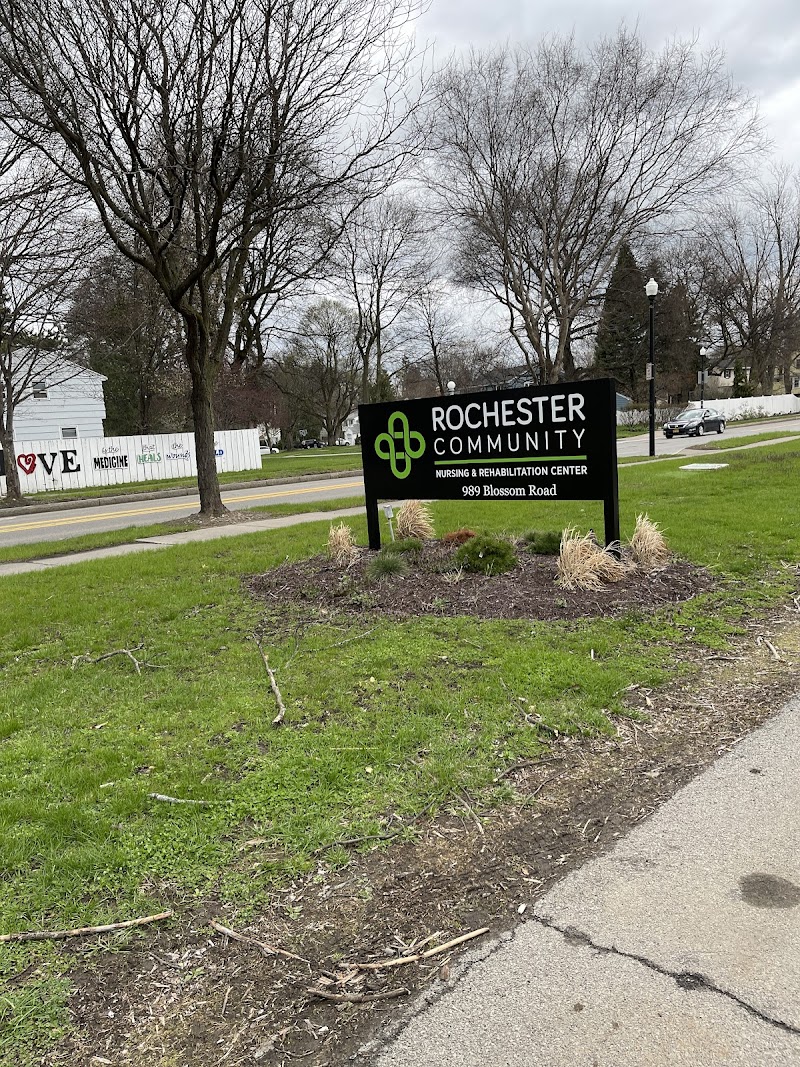
CMS rates Blossom Health Care Center Inc.'s staffing level at 1 out of 5 stars, which is much below average compared to other nursing homes. Staff turnover is 58%, which is 12 percentage points above the New York average of 46%. High turnover can affect care consistency as new staff learn residents' individual needs.

What Have Inspectors Found at Blossom Health Care Center Inc.?

State health inspectors documented 38 deficiencies at Blossom Health Care Center Inc. during 2020 to 2024. These included: 32 with potential for harm and 6 minor or isolated issues.

Who Owns and Operates Blossom Health Care Center Inc.?

Blossom Health Care Center Inc. is owned by a for-profit company. For-profit facilities operate as businesses with obligations to shareholders or private owners. The facility operates independently rather than as part of a larger chain. With 80 certified beds and approximately 75 residents (about 94% occupancy), it is a smaller facility located in Rochester, New York.

How Does Blossom Health Care Center Inc. Compare to Other New York Nursing Homes?

Compared to the 100 nursing homes in New York, Blossom Health Care Center Inc.'s overall rating (1 stars) is below the state average of 3.0, staff turnover (58%) is significantly higher than the state average of 46%, and health inspection rating (1 stars) is much below the national benchmark.

What Should Families Ask When Visiting Blossom Health Care Center Inc.?

Based on this facility's data, families visiting should ask: "How do you ensure continuity of care given staff turnover, and what is your staff retention strategy?" "Can you walk me through typical staffing levels on day, evening, and night shifts?" "Can I visit during a mealtime to observe dining assistance and food quality?" "How do you handle medical emergencies, and what is your hospital transfer rate?" These questions are particularly relevant given the facility's high staff turnover rate and the below-average staffing rating.

Is Blossom Health Care Center Inc. Safe?

Based on CMS inspection data, Blossom Health Care Center Inc. has a clean safety record: no substantiated abuse findings (meaning no confirmed cases of resident harm), no Immediate Jeopardy citations (the most serious violation level indicating risk of serious injury or death), and is not on the Special Focus Facility watch list (a federal program monitoring the lowest-performing 1% of nursing homes). The facility has a 1-star overall rating and ranks #100 of 100 nursing homes in New York. While no facility is perfect, families should still ask about staff-to-resident ratios and recent inspection results during their visit.

Do Nurses at Blossom Health Care Center Inc. Stick Around?

Staff turnover at Blossom Health Care Center Inc. is high. At 58%, the facility is 12 percentage points above the New York average of 46%. High turnover means new staff may not know residents' individual needs, medications, or preferences. It can also be disorienting for residents, especially those with dementia who rely on familiar faces. Families should ask: What is causing the turnover? What retention programs are in place? How do you ensure care continuity during staff transitions?

Was Blossom Health Care Center Inc. Ever Fined?

Blossom Health Care Center Inc. has no federal fines on record. CMS issues fines when nursing homes fail to meet care standards or don't correct problems found during inspections. The absence of fines suggests the facility has either maintained compliance or corrected any issues before penalties were assessed. This is a positive indicator, though families should still review recent inspection reports for the full picture.

Is Blossom Health Care Center Inc. on Any Federal Watch List?

Blossom Health Care Center Inc. is not on any federal watch list. The most significant is the Special Focus Facility (SFF) program, which identifies the bottom 1% of nursing homes nationally based on persistent, serious quality problems. Not being on this list means the facility has avoided the pattern of deficiencies that triggers enhanced federal oversight. This is a positive indicator, though families should still review the facility's inspection history directly.